US10840837B2 - Power seat system for sensing motor reverse rotation and method thereof - Google Patents

Power seat system for sensing motor reverse rotation and method thereof Download PDF

Info

Publication number
US10840837B2
US10840837B2 US16/223,618 US201816223618A US10840837B2 US 10840837 B2 US10840837 B2 US 10840837B2 US 201816223618 A US201816223618 A US 201816223618A US 10840837 B2 US10840837 B2 US 10840837B2
Authority
US
United States
Prior art keywords
motor
reverse rotation
power seat
pulse signal
detected
Prior art date
Legal status (The legal status is an assumption and is not a legal conclusion. Google has not performed a legal analysis and makes no representation as to the accuracy of the status listed.)
Active, expires
Application number
US16/223,618
Other versions
US20190123667A1 (en
Inventor
Ho Cheoul LEE
Deuk Kyu BYUN
Jin Woo Lee
Min Jin Kim
Current Assignee (The listed assignees may be inaccurate. Google has not performed a legal analysis and makes no representation or warranty as to the accuracy of the list.)
Hyundai Transys Inc
Original Assignee
Hyundai Dymos Inc
Priority date (The priority date is an assumption and is not a legal conclusion. Google has not performed a legal analysis and makes no representation as to the accuracy of the date listed.)
Filing date
Publication date
Application filed by Hyundai Dymos Inc filed Critical Hyundai Dymos Inc
Assigned to HYUNDAI DYMOS INCORPORATED reassignment HYUNDAI DYMOS INCORPORATED ASSIGNMENT OF ASSIGNORS INTEREST (SEE DOCUMENT FOR DETAILS). Assignors: BYUN, DEUK KYU, KIM, MIN JIN, LEE, HO CHEOUL, LEE, JIN WOO
Publication of US20190123667A1 publication Critical patent/US20190123667A1/en
Application granted granted Critical
Publication of US10840837B2 publication Critical patent/US10840837B2/en
Active legal-status Critical Current
Adjusted expiration legal-status Critical

Links

Images

Classifications

    • BPERFORMING OPERATIONS; TRANSPORTING
    • B60VEHICLES IN GENERAL
    • B60NSEATS SPECIALLY ADAPTED FOR VEHICLES; VEHICLE PASSENGER ACCOMMODATION NOT OTHERWISE PROVIDED FOR
    • B60N2/00Seats specially adapted for vehicles; Arrangement or mounting of seats in vehicles
    • B60N2/02Seats specially adapted for vehicles; Arrangement or mounting of seats in vehicles the seat or part thereof being movable, e.g. adjustable
    • B60N2/0224Non-manual adjustments, e.g. with electrical operation
    • B60N2/02246Electric motors therefor
    • HELECTRICITY
    • H02GENERATION; CONVERSION OR DISTRIBUTION OF ELECTRIC POWER
    • H02PCONTROL OR REGULATION OF ELECTRIC MOTORS, ELECTRIC GENERATORS OR DYNAMO-ELECTRIC CONVERTERS; CONTROLLING TRANSFORMERS, REACTORS OR CHOKE COILS
    • H02P8/00Arrangements for controlling dynamo-electric motors rotating step by step
    • H02P8/32Reducing overshoot or oscillation, e.g. damping
    • BPERFORMING OPERATIONS; TRANSPORTING
    • B60VEHICLES IN GENERAL
    • B60NSEATS SPECIALLY ADAPTED FOR VEHICLES; VEHICLE PASSENGER ACCOMMODATION NOT OTHERWISE PROVIDED FOR
    • B60N2/00Seats specially adapted for vehicles; Arrangement or mounting of seats in vehicles
    • B60N2/02Seats specially adapted for vehicles; Arrangement or mounting of seats in vehicles the seat or part thereof being movable, e.g. adjustable
    • BPERFORMING OPERATIONS; TRANSPORTING
    • B60VEHICLES IN GENERAL
    • B60NSEATS SPECIALLY ADAPTED FOR VEHICLES; VEHICLE PASSENGER ACCOMMODATION NOT OTHERWISE PROVIDED FOR
    • B60N2/00Seats specially adapted for vehicles; Arrangement or mounting of seats in vehicles
    • B60N2/02Seats specially adapted for vehicles; Arrangement or mounting of seats in vehicles the seat or part thereof being movable, e.g. adjustable
    • B60N2/0224Non-manual adjustments, e.g. with electrical operation
    • B60N2/02246Electric motors therefor
    • B60N2/02258Electric motors therefor characterised by the mounting of the electric motor for adjusting the seat
    • B60N2/0232
    • BPERFORMING OPERATIONS; TRANSPORTING
    • B60VEHICLES IN GENERAL
    • B60NSEATS SPECIALLY ADAPTED FOR VEHICLES; VEHICLE PASSENGER ACCOMMODATION NOT OTHERWISE PROVIDED FOR
    • B60N2/00Seats specially adapted for vehicles; Arrangement or mounting of seats in vehicles
    • B60N2/02Seats specially adapted for vehicles; Arrangement or mounting of seats in vehicles the seat or part thereof being movable, e.g. adjustable
    • B60N2/0224Non-manual adjustments, e.g. with electrical operation
    • B60N2/0244Non-manual adjustments, e.g. with electrical operation with logic circuits
    • BPERFORMING OPERATIONS; TRANSPORTING
    • B60VEHICLES IN GENERAL
    • B60NSEATS SPECIALLY ADAPTED FOR VEHICLES; VEHICLE PASSENGER ACCOMMODATION NOT OTHERWISE PROVIDED FOR
    • B60N2/00Seats specially adapted for vehicles; Arrangement or mounting of seats in vehicles
    • B60N2/02Seats specially adapted for vehicles; Arrangement or mounting of seats in vehicles the seat or part thereof being movable, e.g. adjustable
    • B60N2/0224Non-manual adjustments, e.g. with electrical operation
    • B60N2/0244Non-manual adjustments, e.g. with electrical operation with logic circuits
    • B60N2/0272Non-manual adjustments, e.g. with electrical operation with logic circuits using sensors or detectors for detecting the position of seat parts
    • BPERFORMING OPERATIONS; TRANSPORTING
    • B60VEHICLES IN GENERAL
    • B60NSEATS SPECIALLY ADAPTED FOR VEHICLES; VEHICLE PASSENGER ACCOMMODATION NOT OTHERWISE PROVIDED FOR
    • B60N2/00Seats specially adapted for vehicles; Arrangement or mounting of seats in vehicles
    • B60N2/02Seats specially adapted for vehicles; Arrangement or mounting of seats in vehicles the seat or part thereof being movable, e.g. adjustable
    • B60N2/04Seats specially adapted for vehicles; Arrangement or mounting of seats in vehicles the seat or part thereof being movable, e.g. adjustable the whole seat being movable
    • B60N2/06Seats specially adapted for vehicles; Arrangement or mounting of seats in vehicles the seat or part thereof being movable, e.g. adjustable the whole seat being movable slidable
    • BPERFORMING OPERATIONS; TRANSPORTING
    • B60VEHICLES IN GENERAL
    • B60NSEATS SPECIALLY ADAPTED FOR VEHICLES; VEHICLE PASSENGER ACCOMMODATION NOT OTHERWISE PROVIDED FOR
    • B60N2/00Seats specially adapted for vehicles; Arrangement or mounting of seats in vehicles
    • B60N2/02Seats specially adapted for vehicles; Arrangement or mounting of seats in vehicles the seat or part thereof being movable, e.g. adjustable
    • B60N2/22Seats specially adapted for vehicles; Arrangement or mounting of seats in vehicles the seat or part thereof being movable, e.g. adjustable the back-rest being adjustable
    • BPERFORMING OPERATIONS; TRANSPORTING
    • B60VEHICLES IN GENERAL
    • B60NSEATS SPECIALLY ADAPTED FOR VEHICLES; VEHICLE PASSENGER ACCOMMODATION NOT OTHERWISE PROVIDED FOR
    • B60N2/00Seats specially adapted for vehicles; Arrangement or mounting of seats in vehicles
    • B60N2/90Details or parts not otherwise provided for
    • B60N2/995Lower-leg-rests, e.g. calf-rests
    • HELECTRICITY
    • H02GENERATION; CONVERSION OR DISTRIBUTION OF ELECTRIC POWER
    • H02PCONTROL OR REGULATION OF ELECTRIC MOTORS, ELECTRIC GENERATORS OR DYNAMO-ELECTRIC CONVERTERS; CONTROLLING TRANSFORMERS, REACTORS OR CHOKE COILS
    • H02P29/00Arrangements for regulating or controlling electric motors, appropriate for both AC and DC motors
    • H02P29/02Providing protection against overload without automatic interruption of supply
    • H02P29/024Detecting a fault condition, e.g. short circuit, locked rotor, open circuit or loss of load
    • HELECTRICITY
    • H02GENERATION; CONVERSION OR DISTRIBUTION OF ELECTRIC POWER
    • H02PCONTROL OR REGULATION OF ELECTRIC MOTORS, ELECTRIC GENERATORS OR DYNAMO-ELECTRIC CONVERTERS; CONTROLLING TRANSFORMERS, REACTORS OR CHOKE COILS
    • H02P29/00Arrangements for regulating or controlling electric motors, appropriate for both AC and DC motors
    • H02P29/02Providing protection against overload without automatic interruption of supply
    • H02P29/024Detecting a fault condition, e.g. short circuit, locked rotor, open circuit or loss of load
    • H02P29/0241Detecting a fault condition, e.g. short circuit, locked rotor, open circuit or loss of load the fault being an overvoltage
    • HELECTRICITY
    • H02GENERATION; CONVERSION OR DISTRIBUTION OF ELECTRIC POWER
    • H02PCONTROL OR REGULATION OF ELECTRIC MOTORS, ELECTRIC GENERATORS OR DYNAMO-ELECTRIC CONVERTERS; CONTROLLING TRANSFORMERS, REACTORS OR CHOKE COILS
    • H02P8/00Arrangements for controlling dynamo-electric motors rotating step by step
    • H02P8/14Arrangements for controlling speed or speed and torque
    • H02P8/20Arrangements for controlling speed or speed and torque characterised by bidirectional operation
    • HELECTRICITY
    • H02GENERATION; CONVERSION OR DISTRIBUTION OF ELECTRIC POWER
    • H02PCONTROL OR REGULATION OF ELECTRIC MOTORS, ELECTRIC GENERATORS OR DYNAMO-ELECTRIC CONVERTERS; CONTROLLING TRANSFORMERS, REACTORS OR CHOKE COILS
    • H02P8/00Arrangements for controlling dynamo-electric motors rotating step by step
    • H02P8/34Monitoring operation
    • AHUMAN NECESSITIES
    • A47FURNITURE; DOMESTIC ARTICLES OR APPLIANCES; COFFEE MILLS; SPICE MILLS; SUCTION CLEANERS IN GENERAL
    • A47CCHAIRS; SOFAS; BEDS
    • A47C31/00Details or accessories for chairs, beds, or the like, not provided for in other groups of this subclass, e.g. upholstery fasteners, mattress protectors, stretching devices for mattress nets
    • A47C31/12Means, e.g. measuring means, for adapting chairs, beds or mattresses to the shape or weight of persons
    • A47C31/126Means, e.g. measuring means, for adapting chairs, beds or mattresses to the shape or weight of persons for chairs
    • BPERFORMING OPERATIONS; TRANSPORTING
    • B60VEHICLES IN GENERAL
    • B60NSEATS SPECIALLY ADAPTED FOR VEHICLES; VEHICLE PASSENGER ACCOMMODATION NOT OTHERWISE PROVIDED FOR
    • B60N2/00Seats specially adapted for vehicles; Arrangement or mounting of seats in vehicles
    • B60N2/02Seats specially adapted for vehicles; Arrangement or mounting of seats in vehicles the seat or part thereof being movable, e.g. adjustable
    • B60N2/0224Non-manual adjustments, e.g. with electrical operation
    • B60N2/0244Non-manual adjustments, e.g. with electrical operation with logic circuits
    • B60N2/0268Non-manual adjustments, e.g. with electrical operation with logic circuits using sensors or detectors for adapting the seat or seat part, e.g. to the position of an occupant
    • B60N2002/0268
    • BPERFORMING OPERATIONS; TRANSPORTING
    • B60VEHICLES IN GENERAL
    • B60NSEATS SPECIALLY ADAPTED FOR VEHICLES; VEHICLE PASSENGER ACCOMMODATION NOT OTHERWISE PROVIDED FOR
    • B60N2210/00Sensor types, e.g. for passenger detection systems or for controlling seats
    • B60N2210/10Field detection presence sensors
    • B60N2210/14Inductive; Magnetic field

Definitions

  • the present invention relates to a power seat system and a method of detecting a motor reverse rotation in the power seat system, and more particularly, to a power seat system and a method of detecting a motor reverse rotation in the power seat system, which are capable of detecting a reverse rotation of a power seat motor by using a simpler structure.
  • examples of auxiliary devices provided in a vehicle to provide convenience to a driver include a power seat that automatically adjusts a position of a seat so that even persons having different body conditions may drive the vehicle under the best condition every time the persons drive the vehicle.
  • the basic purpose of adjusting the position of the power seat is to enable the driver to drive the vehicle in a comfortable posture at a position most suitable for his/her height and thus to contribute to safe driving because people typically have different height or sitting postures.
  • Korean Patent Application Laid-Open No. 10-2004-0049373 discloses a means for detecting a motor rotation direction by applying two Hall sensors and using a phase difference between two pulses.
  • the two Hall sensors needs to be necessarily provided, which causes manufacturing costs to increase.
  • One or more embodiments of the present invention provide a power seat system which may be implemented by using a single Hall sensor and provide a method of detecting a motor reverse rotation in the power seat system.
  • One or more embodiments of the present invention provide a power seat system and a method of detecting a motor reverse rotation in the power seat system, which are capable of enabling a more accurate and precise analysis based on a motor current generation pattern and a pulse signal generation pattern.
  • the present invention is not limited to the aforementioned embodiments.
  • One or more embodiments of the present invention provide a power seat system including: a motor which changes a position of a power seat by performing a rotational operation; a Hall sensor which senses a change in Hall voltage according to the rotation of the motor and creates and outputs a pulse signal; and a motor reverse rotation detection unit which monitors outputs from the motor and the Hall sensor and detects and notifies an occurrence of a reverse pulse according to a motor reverse rotation when a motor current overshooting interval and a change in pulse signal value are simultaneously detected in accordance with stop of the motor.
  • a motor position may be increased each time the pulse signal value is changed, and the power seat system may further include a motor control unit which decreases the motor position when the motor control unit is notified of the occurrence of the reverse pulse according to the motor reverse rotation.
  • the motor control unit may further include a function of controlling a rotation direction and a rotational speed of the motor in order to move the position of the power seat.
  • One or more embodiments of the present invention provide a method of detecting a motor reverse rotation in a power seat system having a motor, and a Hall sensor which senses a change in Hall voltage according to a rotation of the motor and creates and outputs a pulse signal, the method including: monitoring outputs from the motor and the Hall sensor; checking, when the motor is requested to stop, whether a motor current overshooting interval and a change in pulse signal value are simultaneously detected in accordance with the stop of the motor, and detecting an occurrence of a reverse pulse according to a motor reverse rotation; and decreasing a motor position when the occurrence of the reverse pulse according to the motor reverse rotation is detected, or otherwise increasing the motor position each time the pulse signal value is changed.
  • the method may further include maintaining a previously calculated motor position when the motor current overshooting interval according to the stop of the motor is detected and no change in pulse signal value is detected.
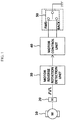
  • FIG. 1 is a view illustrating a power seat system according to one or more embodiments of the present invention.
  • FIG. 2 is a view illustrating an equivalent circuit of a motor according to one or more embodiments of the present invention.
  • FIG. 3A is a view illustrating examples of a motor current and a pulse signal which are detected according to one or more embodiments of the present invention.
  • FIG. 3B is a view illustrating examples of a motor current and a pulse signal which are detected according to one or more embodiments of the present invention.
  • FIG. 4 is a view for explaining a method of detecting a motor reverse rotation in the power seat system according to one or more embodiments of the present invention.
  • FIGS. 5 and 6 are views illustrating an example in which the power seat system according to one or more embodiments of the present invention is applied.
  • FIG. 1 is a view illustrating a power seat system according to one or more embodiments of the present invention.
  • the power seat system may include a motor 10 (M), a Hall sensor 20 (H) which corresponds to the motor 10 , a motor reverse rotation detection unit 30 , a motor control unit 40 , and a switch module 50 . That is, in one or more embodiments of the present invention, only the single Hall sensor 20 is provided, and based on a pulse signal generation pattern of the Hall sensor 20 and a current generation pattern of the motor 10 , a reverse pulse caused by a motor reverse rotation, which occurs when the motor is stopped, may be detected.
  • the motor 10 is rotated by being controlled by the motor control unit 40 to change a position of a power seat.
  • the Hall sensor 20 is positioned outside the motor 10 and outputs, in the form of a pulse, a change in Hall voltage that occurs due to a rotation of the motor.
  • FIG. 2 is a view illustrating an equivalent circuit of the motor according to one or more embodiments of the present invention.
  • the motor 10 may be expressed as an equivalent circuit including inductance L, resistance R, and motor voltage VEMF which are connected in series to VC both ends of a power source unit.
  • a motor current flows toward the motor voltage VEMF from a drive power source VC, as illustrated in FIG. 2A , while the motor is rotated.
  • both ends of the drive power source VC are short-circuited, as illustrated in FIG. 2B , and back electromotive force (Back EMF) is generated in the motor, such that the motor current flows toward the drive power source VC from the motor voltage VEMF. That is, when the motor stop is requested, the motor current, which has a direction opposite to a direction when the motor rotates, flows for a moment and then is dissipated gradually.
  • Back EMF back electromotive force
  • the overshooting interval may be defined as an interval in which a current, which flows in a direction identical to the direction when the motor operates, is temporarily generated.
  • a motor reverse rotation which occurs when the motor is stopped, is simply detected based on a motor current change pattern after the motor is stopped.
  • the motor reverse rotation detection unit 30 monitors a generation pattern of the pulse signals as well as the motor current change pattern, and detects and notifies the reverse pulse caused by the motor reverse rotation as well as the motor reverse rotation.
  • the motor control unit 40 is configured to perform an operation of calculating the motor position in consideration of the generation of the reverse pulse caused by the motor reverse rotation, thereby ensure accuracy of the operation of the system. That is, the motor position is increased each time the pulse signal value is changed, but when the generation of the reverse pulse caused by the motor reverse rotation is ascertained, the motor position is decreased to enable the motor position to be accurately calculated.
  • the motor control unit 40 determines whether to operate the motor 10 , a rotation direction, and a speed based on a user control value acquired through the switch module 50 , and controls an operation of the motor, thereby enabling the power seat to have a position value requested by the user.
  • FIG. 4 is a view for explaining a method of detecting a motor reverse rotation in the power seat system according to one or more embodiments of the present invention.
  • the Hall sensor 20 When the motor rotates (S 1 ), the Hall sensor 20 generates and outputs a pulse signal according to the rotation of the motor, and the motor control unit 40 increases the motor position each time the pulse signal value is changed (S 2 ).
  • the motor control unit 40 When the motor stop is requested during the rotation of the motor (S 3 ), the motor control unit 40 immediately cuts off a supply of drive voltage to the motor 10 , and the motor reverse rotation detection unit 30 detects whether the motor reverse rotation occurs based on the motor current generation pattern in response to the operation of the motor control unit 40 . That is, the motor reverse rotation detection unit 30 detects the occurrence of the motor reverse rotation caused by the stop of the motor by checking whether the motor current value is rapidly changed from a + value to a ⁇ value and then converges on the “0” value after passing the overshooting interval (S 4 ).
  • the motor reverse rotation detection unit 30 detects the occurrence of the reverse pulse caused by the motor reverse rotation by additionally checking whether the pulse signal value is changed while the motor current overshooting is detected (S 5 ).
  • the motor control unit 40 decreases the motor position (S 6 ). If only the motor reverse rotation is detected, the motor control unit 40 maintains the previously calculated motor position (S 7 ).
  • the motor control unit 40 determines that the motor is being normally stopped, and then increases the motor position each time the pulse signal value is changed (S 8 ).
  • the power seat system which has the single motor 10 , the single Hall sensor 20 , and the single motor reverse rotation detection unit 30 and moves the power seat in one direction, has been described for convenience of description.
  • N is a natural number equal to or more than 2
  • the N motors 10 , the N Hall sensors 20 , and the N motor reverse rotation detection units 30 in FIG. 1 are provided, as illustrated in FIG. 6 , so as to be able to detect, for each direction, the occurrence of the reverse pulse according to the motor reverse rotation and perform an operation of correcting the position and the movement.
  • the N motor reverse rotation detection units 30 may of course be integrated into a single device to simplify the structure.

Landscapes

  • Engineering & Computer Science (AREA)
  • Aviation & Aerospace Engineering (AREA)
  • Transportation (AREA)
  • Mechanical Engineering (AREA)
  • Power Engineering (AREA)
  • Control Of Direct Current Motors (AREA)
  • Control Of Electric Motors In General (AREA)
  • Seats For Vehicles (AREA)

Abstract

A power seat system includes: a motor that changes a position of a power seat by performing a rotational operation; a Hall sensor that senses a change in Hall voltage according to the rotation of the motor and outputs a pulse signal; and a motor reverse rotation detection unit that monitors outputs from the motor and the Hall sensor, and detects an occurrence of a reverse pulse according to a motor reverse rotation when a motor current overshooting section and a change in pulse signal value are simultaneously detected in accordance with stop of the motor.

Description

TECHNICAL FIELD
The present invention relates to a power seat system and a method of detecting a motor reverse rotation in the power seat system, and more particularly, to a power seat system and a method of detecting a motor reverse rotation in the power seat system, which are capable of detecting a reverse rotation of a power seat motor by using a simpler structure.
BACKGROUND
Typically, examples of auxiliary devices provided in a vehicle to provide convenience to a driver include a power seat that automatically adjusts a position of a seat so that even persons having different body conditions may drive the vehicle under the best condition every time the persons drive the vehicle.
The basic purpose of adjusting the position of the power seat is to enable the driver to drive the vehicle in a comfortable posture at a position most suitable for his/her height and thus to contribute to safe driving because people typically have different height or sitting postures.
It is necessary to accurately detect a rotational speed, a rotation amount, a rotation direction, and the like of a power seat motor in order to adjust the position of the power seat, and to this end, a Hall sensor is applied.
However, most power seats, which are being currently developed for mass production, each adopt a single Hall sensor, and the power seat having the single Hall sensor has a drawback in that switching of a moto rotation direction cannot be recognized. Since the motor rotation direction cannot be detected, the presence or absence of a motor reverse rotation, which occurs when the motor is stopped, cannot be ascertained. For this reason, it is difficult to attain good results in a position reproducibility test for the power seat.
Korean Patent Application Laid-Open No. 10-2004-0049373 discloses a means for detecting a motor rotation direction by applying two Hall sensors and using a phase difference between two pulses. However, the two Hall sensors needs to be necessarily provided, which causes manufacturing costs to increase.
SUMMARY
One or more embodiments of the present invention provide a power seat system which may be implemented by using a single Hall sensor and provide a method of detecting a motor reverse rotation in the power seat system.
One or more embodiments of the present invention provide a power seat system and a method of detecting a motor reverse rotation in the power seat system, which are capable of enabling a more accurate and precise analysis based on a motor current generation pattern and a pulse signal generation pattern.
The present invention is not limited to the aforementioned embodiments.
One or more embodiments of the present invention provide a power seat system including: a motor which changes a position of a power seat by performing a rotational operation; a Hall sensor which senses a change in Hall voltage according to the rotation of the motor and creates and outputs a pulse signal; and a motor reverse rotation detection unit which monitors outputs from the motor and the Hall sensor and detects and notifies an occurrence of a reverse pulse according to a motor reverse rotation when a motor current overshooting interval and a change in pulse signal value are simultaneously detected in accordance with stop of the motor.
A motor position may be increased each time the pulse signal value is changed, and the power seat system may further include a motor control unit which decreases the motor position when the motor control unit is notified of the occurrence of the reverse pulse according to the motor reverse rotation.
The motor control unit may further include a function of controlling a rotation direction and a rotational speed of the motor in order to move the position of the power seat.
One or more embodiments of the present invention provide a method of detecting a motor reverse rotation in a power seat system having a motor, and a Hall sensor which senses a change in Hall voltage according to a rotation of the motor and creates and outputs a pulse signal, the method including: monitoring outputs from the motor and the Hall sensor; checking, when the motor is requested to stop, whether a motor current overshooting interval and a change in pulse signal value are simultaneously detected in accordance with the stop of the motor, and detecting an occurrence of a reverse pulse according to a motor reverse rotation; and decreasing a motor position when the occurrence of the reverse pulse according to the motor reverse rotation is detected, or otherwise increasing the motor position each time the pulse signal value is changed.
The method may further include maintaining a previously calculated motor position when the motor current overshooting interval according to the stop of the motor is detected and no change in pulse signal value is detected.
According to one or more embodiments of the present invention as described above, it is possible to ascertain an erroneous operation of the motor by using the single Hall sensor based on a motor current, and as a result, it is possible to minimize costs and efforts for implementing the power seat system.
In addition, it is possible to detect whether the motor reverse rotation occurs when the motor is stopped and whether the reverse pulse is generated during the motor reverse rotation based on the motor current generation pattern and the pulse signal generation pattern, and as a result, it is possible to enable a more accurate and precise analysis.
BRIEF DESCRIPTION OF THE DRAWINGS
FIG. 1 is a view illustrating a power seat system according to one or more embodiments of the present invention.
FIG. 2 is a view illustrating an equivalent circuit of a motor according to one or more embodiments of the present invention.
FIG. 3A is a view illustrating examples of a motor current and a pulse signal which are detected according to one or more embodiments of the present invention.
FIG. 3B is a view illustrating examples of a motor current and a pulse signal which are detected according to one or more embodiments of the present invention.
FIG. 4 is a view for explaining a method of detecting a motor reverse rotation in the power seat system according to one or more embodiments of the present invention.
FIGS. 5 and 6 are views illustrating an example in which the power seat system according to one or more embodiments of the present invention is applied.
DETAILED DESCRIPTION
The present invention and technical configurations will be clear with reference to one or more embodiments described in detail below together with the accompanying drawings. In the description of embodiments of the present invention, the specific descriptions of publicly known functions or configurations will be omitted when it is determined that the specific descriptions may unnecessarily obscure the subject matter of the present invention.
Further, the terms used in the following description are defined considering the functions in one or more embodiments of the present invention and may vary depending on the intention or usual practice of a user or an operator.
However, the present invention is not limited to embodiments disclosed below, and may be embodied in various other forms. The embodiments are provided so that the present invention is completely disclosed, and a person of ordinary skilled in the art can fully understand the scope of the present invention. Therefore, the present invention will be defined only by the scope of the appended claims. Therefore, the definitions thereof should be made based on the entire contents of the present specification.
FIG. 1 is a view illustrating a power seat system according to one or more embodiments of the present invention.
Referring to FIG. 1, the power seat system according to one or more embodiments of the present invention may include a motor 10 (M), a Hall sensor 20 (H) which corresponds to the motor 10, a motor reverse rotation detection unit 30, a motor control unit 40, and a switch module 50. That is, in one or more embodiments of the present invention, only the single Hall sensor 20 is provided, and based on a pulse signal generation pattern of the Hall sensor 20 and a current generation pattern of the motor 10, a reverse pulse caused by a motor reverse rotation, which occurs when the motor is stopped, may be detected.
The motor 10 is rotated by being controlled by the motor control unit 40 to change a position of a power seat. The Hall sensor 20 is positioned outside the motor 10 and outputs, in the form of a pulse, a change in Hall voltage that occurs due to a rotation of the motor.
FIG. 2 is a view illustrating an equivalent circuit of the motor according to one or more embodiments of the present invention. Referring to FIG. 2, the motor 10 may be expressed as an equivalent circuit including inductance L, resistance R, and motor voltage VEMF which are connected in series to VC both ends of a power source unit.
A motor current flows toward the motor voltage VEMF from a drive power source VC, as illustrated in FIG. 2A, while the motor is rotated. When the motor stop is requested, both ends of the drive power source VC are short-circuited, as illustrated in FIG. 2B, and back electromotive force (Back EMF) is generated in the motor, such that the motor current flows toward the drive power source VC from the motor voltage VEMF. That is, when the motor stop is requested, the motor current, which has a direction opposite to a direction when the motor rotates, flows for a moment and then is dissipated gradually.
However, when a reverse rotation occurs as the motor is stopped, a current, which has a direction identical to the direction when the motor operates, flows again.
Therefore, as illustrated in FIG. 3A, when the motor is normally stopped without the reverse rotation, a motor current value is rapidly changes from a + value to a − value and then gradually converges on a “0” value without separate overshooting. However, as illustrated in FIG. 3B, when the motor reverse rotation occurs as the motor is stopped, the motor current value is rapidly changed from a + value to a − value and then gradually converges on the “0” value through an overshooting interval. Here, the overshooting interval may be defined as an interval in which a current, which flows in a direction identical to the direction when the motor operates, is temporarily generated.
Therefore, in one or more embodiments of the present invention, a motor reverse rotation, which occurs when the motor is stopped, is simply detected based on a motor current change pattern after the motor is stopped.
Further, there occurs no particular miscalculation when calculating a motor position if a pulse caused by the motor reverse rotation is not sensed. However, if the pulse caused by the motor reverse rotation is sensed, an error occurs when calculating the motor position. In other words, the motor control unit 40 merely calculates that the position of the motor is increased each time a pulse is generated, but the motor control unit 40 cannot consider directionality of the motor. As a result, there occurs an error which calculates that the motor position is unconditionally increased even in a case in which the reverse pulse is generated due to the motor reverse rotation.
Accordingly, the motor reverse rotation detection unit 30 according to one or more embodiments of the present invention monitors a generation pattern of the pulse signals as well as the motor current change pattern, and detects and notifies the reverse pulse caused by the motor reverse rotation as well as the motor reverse rotation.
Further, the motor control unit 40 is configured to perform an operation of calculating the motor position in consideration of the generation of the reverse pulse caused by the motor reverse rotation, thereby ensure accuracy of the operation of the system. That is, the motor position is increased each time the pulse signal value is changed, but when the generation of the reverse pulse caused by the motor reverse rotation is ascertained, the motor position is decreased to enable the motor position to be accurately calculated.
In addition, the motor control unit 40 according to one or more embodiments of the present invention determines whether to operate the motor 10, a rotation direction, and a speed based on a user control value acquired through the switch module 50, and controls an operation of the motor, thereby enabling the power seat to have a position value requested by the user.
FIG. 4 is a view for explaining a method of detecting a motor reverse rotation in the power seat system according to one or more embodiments of the present invention.
When the motor rotates (S1), the Hall sensor 20 generates and outputs a pulse signal according to the rotation of the motor, and the motor control unit 40 increases the motor position each time the pulse signal value is changed (S2).
When the motor stop is requested during the rotation of the motor (S3), the motor control unit 40 immediately cuts off a supply of drive voltage to the motor 10, and the motor reverse rotation detection unit 30 detects whether the motor reverse rotation occurs based on the motor current generation pattern in response to the operation of the motor control unit 40. That is, the motor reverse rotation detection unit 30 detects the occurrence of the motor reverse rotation caused by the stop of the motor by checking whether the motor current value is rapidly changed from a + value to a − value and then converges on the “0” value after passing the overshooting interval (S4).
When the motor current overshooting is detected in step S4, the motor reverse rotation detection unit 30 detects the occurrence of the reverse pulse caused by the motor reverse rotation by additionally checking whether the pulse signal value is changed while the motor current overshooting is detected (S5).
If the reverse pulse caused by the motor reverse rotation is detected, the motor control unit 40 decreases the motor position (S6). If only the motor reverse rotation is detected, the motor control unit 40 maintains the previously calculated motor position (S7).
Meanwhile, if neither motor reverse rotation nor reverse pulse caused by the motor reverse rotation is detected, the motor control unit 40 determines that the motor is being normally stopped, and then increases the motor position each time the pulse signal value is changed (S8).
The aforementioned steps S4 to S8 are repeatedly performed until the motor is completely stopped, and the operation is stopped when the motor is completely stopped (S9).
However, as described above, the power seat system, which has the single motor 10, the single Hall sensor 20, and the single motor reverse rotation detection unit 30 and moves the power seat in one direction, has been described for convenience of description.
However, in a case in which the power seat is positioned and moved in N (N is a natural number equal to or more than 2) directions as illustrated in FIG. 5, the N motors 10, the N Hall sensors 20, and the N motor reverse rotation detection units 30 in FIG. 1 are provided, as illustrated in FIG. 6, so as to be able to detect, for each direction, the occurrence of the reverse pulse according to the motor reverse rotation and perform an operation of correcting the position and the movement.
In addition, in some instances, the N motor reverse rotation detection units 30 may of course be integrated into a single device to simplify the structure.
The above description is simply given for illustratively describing the technical spirit of the present invention, and those skilled in the art will appreciate that various modifications and changes are possible, without departing from the essential characteristic of the present invention. Therefore, embodiments of the present invention are provided for illustrative purposes only but not intended to limit the technical concept of the present invention. The scope of the technical concept of the present invention is not limited thereto. The protective scope of the present invention should be construed based on the following claims, and all the technical spirit in the equivalent scope thereto should be construed as falling within the scope of the present invention.
Although the disclosure has been described with respect to only a limited number of embodiments, those skilled in the art, having benefit of this disclosure, will appreciate that various other embodiments may be devised without departing from the scope of the present invention. Accordingly, the scope of the invention should be limited only by the attached claims.

Claims (3)

The invention claimed is:
1. A power seat system comprising: a motor that changes a position of a power seat by performing a rotational operation; a Hall sensor that senses a change in Hall voltage according to a rotation of the motor and outputs a pulse signal; a motor reverse rotation detection unit that monitors outputs from the motor and the Hall sensor, and detects an occurrence of a reverse pulse according to a motor reverse rotation when a motor current overshooting interval and a change in pulse signal value are simultaneously detected in accordance with stoppage of the motor; and a motor control unit that decreases a motor position upon being notified, by the motor reverse rotation detection unit, of the occurrence of the reverse pulse according to the motor reverse rotation, wherein the motor control unit increases the motor position each time the pulse signal value is changed but no motor current overshooting interval is detected, and the motor control unit maintains a previously calculated motor position when the motor current overshooting interval according to the stoppage of the motor is detected but no change in pulse signal value is detected.
2. The power seat system according to claim 1, wherein the motor control unit further controls a rotation direction and a rotational speed of the motor to move the position of the power seat.
3. A method of detecting a motor reverse rotation in a power seat system having a motor and a Hall sensor that senses a change in Hall voltage according to a rotation of the motor and outputs a pulse signal, the method comprising: monitoring outputs from the motor and the Hall sensor; detecting an occurrence of a reverse pulse according to a motor reverse rotation when a motor current overshooting-interval and a change in pulse signal value are simultaneously detected in accordance with stoppage of the motor; decreasing a motor position when the occurrence of the reverse pulse according to the motor reverse rotation is detected; increasing the motor position each time the pulse signal value is changed but no motor current overshooting interval is detected; and maintaining a previously calculated motor position when the motor current overshooting interval according to the stoppage of the motor is detected but no change in pulse signal value is detected.
US16/223,618 2016-07-19 2018-12-18 Power seat system for sensing motor reverse rotation and method thereof Active 2037-07-30 US10840837B2 (en)

Applications Claiming Priority (3)

Application Number Priority Date Filing Date Title
KR1020160091668A KR101818358B1 (en) 2016-07-19 2016-07-19 Powerseat system and method for detecting reverse rotation of motor thereof
KR10-2016-0091668 2016-07-19
PCT/KR2017/006595 WO2018016752A1 (en) 2016-07-19 2017-06-22 Power seat system and motor reverse rotation sensing method thereof

Related Parent Applications (1)

Application Number Title Priority Date Filing Date
PCT/KR2017/006595 Continuation WO2018016752A1 (en) 2016-07-19 2017-06-22 Power seat system and motor reverse rotation sensing method thereof

Publications (2)

Publication Number Publication Date
US20190123667A1 US20190123667A1 (en) 2019-04-25
US10840837B2 true US10840837B2 (en) 2020-11-17

Family

ID=60992483

Family Applications (1)

Application Number Title Priority Date Filing Date
US16/223,618 Active 2037-07-30 US10840837B2 (en) 2016-07-19 2018-12-18 Power seat system for sensing motor reverse rotation and method thereof

Country Status (5)

Country Link
US (1) US10840837B2 (en)
KR (1) KR101818358B1 (en)
CN (1) CN109311414B (en)
DE (1) DE112017003637B4 (en)
WO (1) WO2018016752A1 (en)

Cited By (1)

* Cited by examiner, † Cited by third party
Publication number Priority date Publication date Assignee Title
US12503012B2 (en) 2022-07-25 2025-12-23 Hyundai Motor Company System and method for controlling a seat for a vehicle

Families Citing this family (5)

* Cited by examiner, † Cited by third party
Publication number Priority date Publication date Assignee Title
KR102163437B1 (en) 2018-04-24 2020-10-08 현대트랜시스 주식회사 Method for controlling motor in power seat system
KR102236326B1 (en) * 2019-11-21 2021-04-05 현대트랜시스 주식회사 System for setting the operating range of the seat
KR102445332B1 (en) * 2021-06-14 2022-09-23 주식회사 다스 Integrated control method of the power seat
CN115817289B (en) * 2022-09-28 2024-08-09 东风汽车集团股份有限公司 Electric seat control system and method with protection function
CN119705233B (en) * 2024-12-25 2025-12-05 上汽通用五菱汽车股份有限公司 A method, device and medium for recognizing the status of an electric seat

Citations (8)

* Cited by examiner, † Cited by third party
Publication number Priority date Publication date Assignee Title
JP2001277909A (en) 2000-03-30 2001-10-10 Aisin Seiki Co Ltd Electric seat device
KR20040049373A (en) 2002-12-05 2004-06-12 현대자동차주식회사 Moter control method for adjusting seat height
US20090055055A1 (en) * 2006-02-17 2009-02-26 Brose Fahrzeugteile Gmbh & Co. Kommanditgesellscha Seat Control Electronic System and Method for a Motor-Driven Motor Vehicle Adjusting Device
KR20100059274A (en) 2008-11-26 2010-06-04 대성전기공업 주식회사 Position control apparatus of memory power seat for a car
KR20130021559A (en) 2011-08-23 2013-03-06 현대자동차주식회사 Position control system of seat using hall sensor
KR20130039104A (en) 2011-10-11 2013-04-19 한국오므론전장주식회사 Apparatus and method for preventing seat jam in seat position controller for vehicle
US20130154534A1 (en) * 2011-12-20 2013-06-20 Aisin Seiki Kabushiki Kaisha Vehicle seat apparatus
US20140265978A1 (en) * 2013-03-15 2014-09-18 Honda Motor Co., Ltd. Motor control devices and methods

Family Cites Families (3)

* Cited by examiner, † Cited by third party
Publication number Priority date Publication date Assignee Title
US5816653A (en) * 1997-03-17 1998-10-06 Schukra Of North America Ltd. Apparatus and method for adjusting the position of a supporting element in a seat
WO2011074297A1 (en) * 2009-12-17 2011-06-23 トヨタ車体株式会社 Vehicle seat
EP2657091B1 (en) * 2012-04-23 2019-06-12 Autoliv Development AB A drive arrangement

Patent Citations (9)

* Cited by examiner, † Cited by third party
Publication number Priority date Publication date Assignee Title
JP2001277909A (en) 2000-03-30 2001-10-10 Aisin Seiki Co Ltd Electric seat device
KR20040049373A (en) 2002-12-05 2004-06-12 현대자동차주식회사 Moter control method for adjusting seat height
US20090055055A1 (en) * 2006-02-17 2009-02-26 Brose Fahrzeugteile Gmbh & Co. Kommanditgesellscha Seat Control Electronic System and Method for a Motor-Driven Motor Vehicle Adjusting Device
KR20100059274A (en) 2008-11-26 2010-06-04 대성전기공업 주식회사 Position control apparatus of memory power seat for a car
KR20130021559A (en) 2011-08-23 2013-03-06 현대자동차주식회사 Position control system of seat using hall sensor
KR20130039104A (en) 2011-10-11 2013-04-19 한국오므론전장주식회사 Apparatus and method for preventing seat jam in seat position controller for vehicle
US20130154534A1 (en) * 2011-12-20 2013-06-20 Aisin Seiki Kabushiki Kaisha Vehicle seat apparatus
JP2013129251A (en) 2011-12-20 2013-07-04 Aisin Seiki Co Ltd Vehicle seat apparatus
US20140265978A1 (en) * 2013-03-15 2014-09-18 Honda Motor Co., Ltd. Motor control devices and methods

Non-Patent Citations (1)

* Cited by examiner, † Cited by third party
Title
International Search Report issued in corresponding International Application No. PCT/KR2017/006595 dated Sep. 6, 2017, with translation (5 pages).

Cited By (1)

* Cited by examiner, † Cited by third party
Publication number Priority date Publication date Assignee Title
US12503012B2 (en) 2022-07-25 2025-12-23 Hyundai Motor Company System and method for controlling a seat for a vehicle

Also Published As

Publication number Publication date
CN109311414A (en) 2019-02-05
CN109311414B (en) 2021-04-06
DE112017003637B4 (en) 2021-11-04
DE112017003637T5 (en) 2019-04-11
US20190123667A1 (en) 2019-04-25
WO2018016752A1 (en) 2018-01-25
KR101818358B1 (en) 2018-02-21

Similar Documents

Publication Publication Date Title
US10840837B2 (en) Power seat system for sensing motor reverse rotation and method thereof
EP3153346B1 (en) A seat system for autonomous vehicles
JP5398920B2 (en) Opening / closing section pinching determination device, vehicle equipped with the apparatus, and opening / closing section pinching determination method
US8355817B2 (en) Robot system
JP6753836B2 (en) Robot and its collision detection method
JP6441841B2 (en) Opening and closing body opening and closing device
KR102024550B1 (en) Fail Safe Control Apparatus For Electric Power Steering System And Method Thereof
KR20170113449A (en) Systems and methods for calculating motor position, inertia and rest position in sensorless brushed dc motor control systems
US20090030578A1 (en) Method and device for detecting and classifying the position of an occupant of a vehicle seat
FR2874572A1 (en) DIRECTION SYSTEM WITH ELECTROMOTORIAL ASSISTANCE
CN114435194A (en) Apparatus and method for controlling detection of pinch prevention of power seat in vehicle
US20040130281A1 (en) Motor actuator with torque control
US20190073256A1 (en) Electronic control device and operation control method therefor
US20060021450A1 (en) Encoder failure detection
CN108729795A (en) The vehicle window control device and vehicle window control method of vehicle
KR102556931B1 (en) Method and apparatus for protecting circuit
CN109484472A (en) Method and apparatus for error protection electric power steering
US7676311B2 (en) Method for controlling a safety device in a motor vehicle
KR20200078195A (en) Pinch Detecting Method for Vehicle Seat and Appratus using the same
CN111891274A (en) Balance vehicle control method, device and storage medium
KR101827132B1 (en) Powerseat system and method for detecting reverse rotation of motor thereof
KR101338590B1 (en) Method and apparatus for controlling a sunroof for prevention safety accident
WO2021033514A1 (en) Seat control device
KR101716979B1 (en) Automatic height adjustable headrest and method for controlling the same
JP7657079B2 (en) Mobile control device

Legal Events

Date Code Title Description
FEPP Fee payment procedure

Free format text: ENTITY STATUS SET TO UNDISCOUNTED (ORIGINAL EVENT CODE: BIG.); ENTITY STATUS OF PATENT OWNER: LARGE ENTITY

AS Assignment

Owner name: HYUNDAI DYMOS INCORPORATED, KOREA, REPUBLIC OF

Free format text: ASSIGNMENT OF ASSIGNORS INTEREST;ASSIGNORS:LEE, HO CHEOUL;BYUN, DEUK KYU;LEE, JIN WOO;AND OTHERS;REEL/FRAME:047855/0203

Effective date: 20181210

STPP Information on status: patent application and granting procedure in general

Free format text: APPLICATION DISPATCHED FROM PREEXAM, NOT YET DOCKETED

STPP Information on status: patent application and granting procedure in general

Free format text: DOCKETED NEW CASE - READY FOR EXAMINATION

STPP Information on status: patent application and granting procedure in general

Free format text: NON FINAL ACTION MAILED

STPP Information on status: patent application and granting procedure in general

Free format text: RESPONSE TO NON-FINAL OFFICE ACTION ENTERED AND FORWARDED TO EXAMINER

STPP Information on status: patent application and granting procedure in general

Free format text: NOTICE OF ALLOWANCE MAILED -- APPLICATION RECEIVED IN OFFICE OF PUBLICATIONS

STPP Information on status: patent application and granting procedure in general

Free format text: PUBLICATIONS -- ISSUE FEE PAYMENT VERIFIED

STCF Information on status: patent grant

Free format text: PATENTED CASE

MAFP Maintenance fee payment

Free format text: PAYMENT OF MAINTENANCE FEE, 4TH YEAR, LARGE ENTITY (ORIGINAL EVENT CODE: M1551); ENTITY STATUS OF PATENT OWNER: LARGE ENTITY

Year of fee payment: 4