US10835447B2 - Personal care tool for cooling and treating skin - Google Patents

Personal care tool for cooling and treating skin Download PDF

Info

Publication number
US10835447B2
US10835447B2 US15/887,581 US201815887581A US10835447B2 US 10835447 B2 US10835447 B2 US 10835447B2 US 201815887581 A US201815887581 A US 201815887581A US 10835447 B2 US10835447 B2 US 10835447B2
Authority
US
United States
Prior art keywords
applicator head
heat absorbing
absorbing core
cooling tool
tool
Prior art date
Legal status (The legal status is an assumption and is not a legal conclusion. Google has not performed a legal analysis and makes no representation as to the accuracy of the status listed.)
Active, expires
Application number
US15/887,581
Other versions
US20190240108A1 (en
Inventor
Matthew Chateauvert
Heidi Reuter
Joyce Kassouf
David Wilson
Jennifer Palmer Quintano
Current Assignee (The listed assignees may be inaccurate. Google has not performed a legal analysis and makes no representation or warranty as to the accuracy of the list.)
ELC Management LLC
Original Assignee
ELC Management LLC
Priority date (The priority date is an assumption and is not a legal conclusion. Google has not performed a legal analysis and makes no representation as to the accuracy of the date listed.)
Filing date
Publication date
Application filed by ELC Management LLC filed Critical ELC Management LLC
Priority to US15/887,581 priority Critical patent/US10835447B2/en
Assigned to ELC MANAGEMENT LLC reassignment ELC MANAGEMENT LLC ASSIGNMENT OF ASSIGNORS INTEREST (SEE DOCUMENT FOR DETAILS). Assignors: PALMER QUINTANO, Jennifer, KASSOUF, Joyce, TENNANT, Heidi, CHATEAUVERT, MATTHEW, WILSON, DAVID
Priority to AU2019216342A priority patent/AU2019216342B2/en
Priority to JP2020542146A priority patent/JP7043612B2/en
Priority to CA3090245A priority patent/CA3090245C/en
Priority to ES19747207T priority patent/ES2980414T3/en
Priority to PCT/US2019/016026 priority patent/WO2019152635A1/en
Priority to EP19747207.9A priority patent/EP3746016B1/en
Priority to KR1020207024451A priority patent/KR102454712B1/en
Priority to BR112020015721-0A priority patent/BR112020015721A2/en
Priority to CN201980023320.XA priority patent/CN111885985B/en
Publication of US20190240108A1 publication Critical patent/US20190240108A1/en
Publication of US10835447B2 publication Critical patent/US10835447B2/en
Application granted granted Critical
Active legal-status Critical Current
Adjusted expiration legal-status Critical

Links

Images

Classifications

    • AHUMAN NECESSITIES
    • A61MEDICAL OR VETERINARY SCIENCE; HYGIENE
    • A61FFILTERS IMPLANTABLE INTO BLOOD VESSELS; PROSTHESES; DEVICES PROVIDING PATENCY TO, OR PREVENTING COLLAPSING OF, TUBULAR STRUCTURES OF THE BODY, e.g. STENTS; ORTHOPAEDIC, NURSING OR CONTRACEPTIVE DEVICES; FOMENTATION; TREATMENT OR PROTECTION OF EYES OR EARS; BANDAGES, DRESSINGS OR ABSORBENT PADS; FIRST-AID KITS
    • A61F7/00Heating or cooling appliances for medical or therapeutic treatment of the human body
    • A61F7/02Compresses or poultices for effecting heating or cooling
    • AHUMAN NECESSITIES
    • A61MEDICAL OR VETERINARY SCIENCE; HYGIENE
    • A61FFILTERS IMPLANTABLE INTO BLOOD VESSELS; PROSTHESES; DEVICES PROVIDING PATENCY TO, OR PREVENTING COLLAPSING OF, TUBULAR STRUCTURES OF THE BODY, e.g. STENTS; ORTHOPAEDIC, NURSING OR CONTRACEPTIVE DEVICES; FOMENTATION; TREATMENT OR PROTECTION OF EYES OR EARS; BANDAGES, DRESSINGS OR ABSORBENT PADS; FIRST-AID KITS
    • A61F7/00Heating or cooling appliances for medical or therapeutic treatment of the human body
    • A61F7/02Compresses or poultices for effecting heating or cooling
    • A61F7/0241Apparatus for the preparation of hot packs, hot compresses, cooling pads, e.g. heaters or refrigerators
    • AHUMAN NECESSITIES
    • A61MEDICAL OR VETERINARY SCIENCE; HYGIENE
    • A61HPHYSICAL THERAPY APPARATUS, e.g. DEVICES FOR LOCATING OR STIMULATING REFLEX POINTS IN THE BODY; ARTIFICIAL RESPIRATION; MASSAGE; BATHING DEVICES FOR SPECIAL THERAPEUTIC OR HYGIENIC PURPOSES OR SPECIFIC PARTS OF THE BODY
    • A61H7/00Devices for suction-kneading massage; Devices for massaging the skin by rubbing or brushing not otherwise provided for
    • A61H7/002Devices for suction-kneading massage; Devices for massaging the skin by rubbing or brushing not otherwise provided for by rubbing or brushing
    • A61H7/003Hand-held or hand-driven devices
    • AHUMAN NECESSITIES
    • A61MEDICAL OR VETERINARY SCIENCE; HYGIENE
    • A61FFILTERS IMPLANTABLE INTO BLOOD VESSELS; PROSTHESES; DEVICES PROVIDING PATENCY TO, OR PREVENTING COLLAPSING OF, TUBULAR STRUCTURES OF THE BODY, e.g. STENTS; ORTHOPAEDIC, NURSING OR CONTRACEPTIVE DEVICES; FOMENTATION; TREATMENT OR PROTECTION OF EYES OR EARS; BANDAGES, DRESSINGS OR ABSORBENT PADS; FIRST-AID KITS
    • A61F7/00Heating or cooling appliances for medical or therapeutic treatment of the human body
    • A61F2007/0001Body part
    • A61F2007/0002Head or parts thereof
    • A61F2007/0003Face
    • AHUMAN NECESSITIES
    • A61MEDICAL OR VETERINARY SCIENCE; HYGIENE
    • A61FFILTERS IMPLANTABLE INTO BLOOD VESSELS; PROSTHESES; DEVICES PROVIDING PATENCY TO, OR PREVENTING COLLAPSING OF, TUBULAR STRUCTURES OF THE BODY, e.g. STENTS; ORTHOPAEDIC, NURSING OR CONTRACEPTIVE DEVICES; FOMENTATION; TREATMENT OR PROTECTION OF EYES OR EARS; BANDAGES, DRESSINGS OR ABSORBENT PADS; FIRST-AID KITS
    • A61F7/00Heating or cooling appliances for medical or therapeutic treatment of the human body
    • A61F2007/0001Body part
    • A61F2007/0052Body part for treatment of skin or hair
    • AHUMAN NECESSITIES
    • A61MEDICAL OR VETERINARY SCIENCE; HYGIENE
    • A61FFILTERS IMPLANTABLE INTO BLOOD VESSELS; PROSTHESES; DEVICES PROVIDING PATENCY TO, OR PREVENTING COLLAPSING OF, TUBULAR STRUCTURES OF THE BODY, e.g. STENTS; ORTHOPAEDIC, NURSING OR CONTRACEPTIVE DEVICES; FOMENTATION; TREATMENT OR PROTECTION OF EYES OR EARS; BANDAGES, DRESSINGS OR ABSORBENT PADS; FIRST-AID KITS
    • A61F7/00Heating or cooling appliances for medical or therapeutic treatment of the human body
    • A61F2007/0087Hand-held applicators
    • AHUMAN NECESSITIES
    • A61MEDICAL OR VETERINARY SCIENCE; HYGIENE
    • A61FFILTERS IMPLANTABLE INTO BLOOD VESSELS; PROSTHESES; DEVICES PROVIDING PATENCY TO, OR PREVENTING COLLAPSING OF, TUBULAR STRUCTURES OF THE BODY, e.g. STENTS; ORTHOPAEDIC, NURSING OR CONTRACEPTIVE DEVICES; FOMENTATION; TREATMENT OR PROTECTION OF EYES OR EARS; BANDAGES, DRESSINGS OR ABSORBENT PADS; FIRST-AID KITS
    • A61F7/00Heating or cooling appliances for medical or therapeutic treatment of the human body
    • A61F7/02Compresses or poultices for effecting heating or cooling
    • A61F2007/0244Compresses or poultices for effecting heating or cooling with layers
    • A61F2007/0246Compresses or poultices for effecting heating or cooling with layers with a layer having high heat transfer capability
    • A61F2007/0247Using a substance with high conductivity
    • AHUMAN NECESSITIES
    • A61MEDICAL OR VETERINARY SCIENCE; HYGIENE
    • A61HPHYSICAL THERAPY APPARATUS, e.g. DEVICES FOR LOCATING OR STIMULATING REFLEX POINTS IN THE BODY; ARTIFICIAL RESPIRATION; MASSAGE; BATHING DEVICES FOR SPECIAL THERAPEUTIC OR HYGIENIC PURPOSES OR SPECIFIC PARTS OF THE BODY
    • A61H2201/00Characteristics of apparatus not provided for in the preceding codes
    • A61H2201/01Constructive details
    • A61H2201/0157Constructive details portable
    • AHUMAN NECESSITIES
    • A61MEDICAL OR VETERINARY SCIENCE; HYGIENE
    • A61HPHYSICAL THERAPY APPARATUS, e.g. DEVICES FOR LOCATING OR STIMULATING REFLEX POINTS IN THE BODY; ARTIFICIAL RESPIRATION; MASSAGE; BATHING DEVICES FOR SPECIAL THERAPEUTIC OR HYGIENIC PURPOSES OR SPECIFIC PARTS OF THE BODY
    • A61H2201/00Characteristics of apparatus not provided for in the preceding codes
    • A61H2201/02Characteristics of apparatus not provided for in the preceding codes heated or cooled
    • A61H2201/0214Characteristics of apparatus not provided for in the preceding codes heated or cooled cooled
    • AHUMAN NECESSITIES
    • A61MEDICAL OR VETERINARY SCIENCE; HYGIENE
    • A61HPHYSICAL THERAPY APPARATUS, e.g. DEVICES FOR LOCATING OR STIMULATING REFLEX POINTS IN THE BODY; ARTIFICIAL RESPIRATION; MASSAGE; BATHING DEVICES FOR SPECIAL THERAPEUTIC OR HYGIENIC PURPOSES OR SPECIFIC PARTS OF THE BODY
    • A61H2201/00Characteristics of apparatus not provided for in the preceding codes
    • A61H2201/02Characteristics of apparatus not provided for in the preceding codes heated or cooled
    • A61H2201/0221Mechanism for heating or cooling
    • AHUMAN NECESSITIES
    • A61MEDICAL OR VETERINARY SCIENCE; HYGIENE
    • A61HPHYSICAL THERAPY APPARATUS, e.g. DEVICES FOR LOCATING OR STIMULATING REFLEX POINTS IN THE BODY; ARTIFICIAL RESPIRATION; MASSAGE; BATHING DEVICES FOR SPECIAL THERAPEUTIC OR HYGIENIC PURPOSES OR SPECIFIC PARTS OF THE BODY
    • A61H2201/00Characteristics of apparatus not provided for in the preceding codes
    • A61H2201/02Characteristics of apparatus not provided for in the preceding codes heated or cooled
    • A61H2201/0221Mechanism for heating or cooling
    • A61H2201/0242Mechanism for heating or cooling by a fluid circulating in the apparatus
    • AHUMAN NECESSITIES
    • A61MEDICAL OR VETERINARY SCIENCE; HYGIENE
    • A61HPHYSICAL THERAPY APPARATUS, e.g. DEVICES FOR LOCATING OR STIMULATING REFLEX POINTS IN THE BODY; ARTIFICIAL RESPIRATION; MASSAGE; BATHING DEVICES FOR SPECIAL THERAPEUTIC OR HYGIENIC PURPOSES OR SPECIFIC PARTS OF THE BODY
    • A61H2201/00Characteristics of apparatus not provided for in the preceding codes
    • A61H2201/12Driving means
    • A61H2201/1253Driving means driven by a human being, e.g. hand driven
    • AHUMAN NECESSITIES
    • A61MEDICAL OR VETERINARY SCIENCE; HYGIENE
    • A61HPHYSICAL THERAPY APPARATUS, e.g. DEVICES FOR LOCATING OR STIMULATING REFLEX POINTS IN THE BODY; ARTIFICIAL RESPIRATION; MASSAGE; BATHING DEVICES FOR SPECIAL THERAPEUTIC OR HYGIENIC PURPOSES OR SPECIFIC PARTS OF THE BODY
    • A61H2201/00Characteristics of apparatus not provided for in the preceding codes
    • A61H2201/16Physical interface with patient
    • A61H2201/1602Physical interface with patient kind of interface, e.g. head rest, knee support or lumbar support
    • A61H2201/1604Head
    • AHUMAN NECESSITIES
    • A61MEDICAL OR VETERINARY SCIENCE; HYGIENE
    • A61HPHYSICAL THERAPY APPARATUS, e.g. DEVICES FOR LOCATING OR STIMULATING REFLEX POINTS IN THE BODY; ARTIFICIAL RESPIRATION; MASSAGE; BATHING DEVICES FOR SPECIAL THERAPEUTIC OR HYGIENIC PURPOSES OR SPECIFIC PARTS OF THE BODY
    • A61H2201/00Characteristics of apparatus not provided for in the preceding codes
    • A61H2201/16Physical interface with patient
    • A61H2201/1657Movement of interface, i.e. force application means
    • A61H2201/1664Movement of interface, i.e. force application means linear
    • AHUMAN NECESSITIES
    • A61MEDICAL OR VETERINARY SCIENCE; HYGIENE
    • A61HPHYSICAL THERAPY APPARATUS, e.g. DEVICES FOR LOCATING OR STIMULATING REFLEX POINTS IN THE BODY; ARTIFICIAL RESPIRATION; MASSAGE; BATHING DEVICES FOR SPECIAL THERAPEUTIC OR HYGIENIC PURPOSES OR SPECIFIC PARTS OF THE BODY
    • A61H2201/00Characteristics of apparatus not provided for in the preceding codes
    • A61H2201/16Physical interface with patient
    • A61H2201/1657Movement of interface, i.e. force application means
    • A61H2201/1664Movement of interface, i.e. force application means linear
    • A61H2201/1666Movement of interface, i.e. force application means linear multidimensional
    • AHUMAN NECESSITIES
    • A61MEDICAL OR VETERINARY SCIENCE; HYGIENE
    • A61HPHYSICAL THERAPY APPARATUS, e.g. DEVICES FOR LOCATING OR STIMULATING REFLEX POINTS IN THE BODY; ARTIFICIAL RESPIRATION; MASSAGE; BATHING DEVICES FOR SPECIAL THERAPEUTIC OR HYGIENIC PURPOSES OR SPECIFIC PARTS OF THE BODY
    • A61H2201/00Characteristics of apparatus not provided for in the preceding codes
    • A61H2201/16Physical interface with patient
    • A61H2201/1683Surface of interface
    • A61H2201/169Physical characteristics of the surface, e.g. material, relief, texture or indicia
    • A61H2201/1692Enhanced rubbing effect
    • AHUMAN NECESSITIES
    • A61MEDICAL OR VETERINARY SCIENCE; HYGIENE
    • A61HPHYSICAL THERAPY APPARATUS, e.g. DEVICES FOR LOCATING OR STIMULATING REFLEX POINTS IN THE BODY; ARTIFICIAL RESPIRATION; MASSAGE; BATHING DEVICES FOR SPECIAL THERAPEUTIC OR HYGIENIC PURPOSES OR SPECIFIC PARTS OF THE BODY
    • A61H2205/00Devices for specific parts of the body
    • A61H2205/02Head
    • A61H2205/022Face
    • AHUMAN NECESSITIES
    • A61MEDICAL OR VETERINARY SCIENCE; HYGIENE
    • A61HPHYSICAL THERAPY APPARATUS, e.g. DEVICES FOR LOCATING OR STIMULATING REFLEX POINTS IN THE BODY; ARTIFICIAL RESPIRATION; MASSAGE; BATHING DEVICES FOR SPECIAL THERAPEUTIC OR HYGIENIC PURPOSES OR SPECIFIC PARTS OF THE BODY
    • A61H2205/00Devices for specific parts of the body
    • A61H2205/02Head
    • A61H2205/022Face
    • A61H2205/024Eyes

Definitions

  • the invention is in the field of personal care tools that provide a cooling effect, and are used to treat puffiness, inflammation and the appearance of the skin.
  • Handheld cooling implements for drawing heat away from the surface of the skin are known.
  • One type of device makes use of a removable reservoir of liquid coolant that acts as a heat sink to draw heat away from a skin-contact surface. The removal of heat from the skin surface provides a cooling effect.
  • the reservoir must be removed from the device, chilled, and reinserted into the device at the time of use. Opportunities to damage or misplace the reservoir of coolant make this type of device less than ideal.
  • a simpler, more reliable device would not use a reservoir of liquid coolant, and would not require a user to disassemble and reassemble the device.
  • Other known devices may use a phase change material, a material that transitions from solid to liquid, as the heat sink to receive heat from the user's skin. However, since the phase change material is initially frozen, the tool incorporating the material is too cold for personal care facial applications.
  • a personal care cooling tool ( 10 ) provides a cooling sensation. Upon contact with a surface, the tool removes thermal energy from the surface.
  • the tool may be used to treat areas of the face, such as under-eye, forehead, cheeks, and jowls to improve the appearance of the skin by reducing inflammation, puffiness, blood pooling and other undesirable skin imperfections.
  • the tool may also be used to massage other parts of the body to sooth and relax the muscles, and reduce swelling in cutaneous tissues.
  • a personal care tool according to the present may also be used to lower the temperature of solid surfaces and fluid materials without chemically altering or diluting the constituents.
  • the cooling tool ( 10 ) comprises an applicator head ( 2 ) that has a relatively higher thermal conductivity, a grasping surface ( 1 ) that has a relatively lower thermal conductivity, and a heat absorbing core ( 3 ) that has a thermal capacity above a certain minimum value.
  • these components are permanently assembled so that from a user perspective, the tool is a one-piece construction, and does not need to be disassembled and reassembled by the user. This is unlike some cooling devices that require have a removable reservoir of coolant. In those embodiments, the reservoir of coolant must be removed from the device, chilled, and reinserted into the device at the time of use.
  • the permanent assembly described herein is easier to use, and makes for a very robust hand tool that stands up to consumer usage and environmental factors that could lead to damage and diminished functionality.
  • the tool can also be manufactured at a lower price point.
  • FIG. 1 depicts a personal care tool ( 10 ) for cooling and treating skin according to the present invention.
  • FIG. 2 depicts a cross section of the tool ( 10 ) of FIG. 1 .
  • FIGS. 3A, 3B and 3C depict the body ( 1 ) of the cooling tool ( 10 ).
  • FIG. 4 depicts the applicator head ( 2 ).
  • FIG. 5 depicts the connection of the applicator head ( 2 ) to the body ( 1 ).
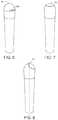
  • FIGS. 6, 7 and 8 depict various embodiments of the applicator head ( 2 ).
  • FIG. 9 depicts a cooling tool ( 10 ) reposed in a charging base ( 6 ).
  • FIGS. 10, 11 and 12 show some common areas of the face where the cooling tool ( 10 ) may be applied for an expected benefit.
  • FIGS. 13A and 13B show an embodiment of the invention with a control for adjusting the rate at which the cooling tool ( 10 ) cools the skin.
  • a cooling tool ( 10 ) according to the present invention comprises a body ( 1 ) that supports an applicator head ( 2 ) and houses a heat absorbing core ( 3 ).
  • the applicator head is thermally connected to the heat absorbing core.
  • An optional spring ( 5 ) is provided between the applicator head and body. The construction of these elements is intended to facilitate substantial heat transfer from the skin to the core of the tool in a short amount of time.
  • the body ( 1 ) is a hollow, elongated member that serves as a handle.
  • the body has a proximal end ( 1 a ) (that may be opened or closed), an opened distal end ( 1 b ), and a central longitudinal axis ( 1 c ).
  • the body is sized to be comfortably grasped in the hand of a user.
  • a body may typically be from 5 to 20 cm in length.
  • the cross sectional shape of the body is preferably circular, but may be some other shape. The cross section will have largest dimension (a diameter, for example) of about 1 to 5 cm.
  • the body supports the applicator head ( 2 ) and houses the heat absorbing core ( 3 ).
  • the inner surface of the distal end ( 1 b ) of the body may be provided with a groove ( 1 d ; see detail section shown in FIG. 3C ) that interacts with the applicator head as described below.
  • the body ( 1 ) is a relatively poor conductor of heat. This isolates the user's hand from the applicator head ( 2 ), so that the efficiency of the applicator head is not compromised by heat from the user's hand. Specifically, since the body is a poor conductor of heat, the heat that emanates from the hand of a user cannot easily pass through the body and into the heat absorbing core ( 3 ) or applicator head, which would decrease the efficiency of the tool by decreasing the heat transfer from the applicator head into the heat absorbing core. Also, as we will see, the body has minimal contact with the applicator head and the heat absorbing core, which further limits the movement of thermal energy.
  • the body is fashioned of plastic, such as varieties of polyethylene (PET, PETG, etc.), and not metal.
  • PET polyethylene
  • the body will have a low thermal conductivity, which we define as less than about 0.5 W/m-K, to prevent heat transfer from the user's hand. For aesthetic reasons, the body may be clear or opaque.
  • the applicator head ( 2 ) comprises a skin contact surface ( 2 c ).
  • the skin contact surface is that part of the cooling tool ( 10 ) that contacts the skin of a user, to draw heat away from the user's skin.
  • the applicator head is connected to the body ( 1 ) and the heat absorbing core ( 3 ).
  • the applicator head that is retained in the opened distal end ( 1 b ) of the body and protrudes from the distal end so that it may contact the skin of a user. There are various useful means for achieving the connection to the body.
  • the base ( 2 a ) of the applicator head may be sized to fit into the opened distal end ( 1 b ) of the body, and retained there by a snap fitting, or by a screw threaded engagement, or by adhesive (preferably an adhesive that does not conduct heat very well).
  • the snap fitting may comprise an annular ring ( 2 d ) on the base of the applicator head that fits snuggly into the groove ( 1 d ) of the body. Since the body ( 1 ) is plastic, the opening at the distal end ( 1 b ) of the body will flex to enlarge slightly, and allow the annular ring of the applicator head to slide down into the groove.
  • a slot ( 2 b ) is located in the applicator head, sized to receive a distal end ( 3 b ) of the heat absorbing core ( 3 ) (see FIG. 5 ).
  • a gasket ( 4 ) may be situated in between the applicator head and body to prevent water or other contaminants from getting into the body (see FIG. 4 ).
  • connection between the applicator head ( 2 ) and body ( 1 ) is rigid and permanent from a consumer-use perspective. This prevents a lose connection between the applicator head and body, which would lead to an inconsistent experience for the consumer.
  • a resilient component such as a spring ( 5 ; see FIG. 5 ) may be disposed between the body ( 1 ) and the applicator head ( 2 ).
  • the applicator head, with the heat absorbing core attached ( 3 ) would be capable of moving between a first position and a second position relative to the body, while still remaining connected to the body.
  • an annular ring ( 2 d ′) on the base ( 2 a ) of the applicator head contacts a stop ( 1 d ′) located on the inner surface of the body (as shown in FIG. 5 ).
  • the applicator head moves toward a second position.
  • the annular ring ( 2 d ′) is below the stop ( 1 d ′).
  • the spring expands to return the applicator head to first position.
  • the primary benefit of the spring is to provide a consistent application pressure between the skin and applicator head, as a user moves the tool around her face.
  • the heat transfer rate from the skin to the applicator head has minimal variation, so that the tool gives a more consistent performance.
  • the use of a sprung applicator head also provides a softer tactile experience for the user, which is more comfortable and more elegant.
  • the applicator head ( 2 ) must have a relatively high thermal capacity and be a good conductor of heat. This will allow for substantial heat transfer away from the skin, and into the heat absorbing core.
  • the thermal conductivity of the applicator head must be large, which we define as greater than about 10 W/m-K.
  • the most efficient applicator head will be of unitary, of single construction.
  • the preferred material for the applicator head is metal, which, through polishing, can be provided with a specified surface finish.
  • a smooth surface is not only more comfortable for the user, but provides the most physical contact between the skin and applicator head.
  • a rougher surface would trap air between the skin and applicator, which would decrease heat transfer, since air is a relative poor conductor of heat.
  • the temperature at which a user intends to use the tool should be considered when designing the surface finish of the applicator head.
  • a rougher surface texture is preferred to prevent the metal applicator head from sticking to the facial tissue.
  • a preferred surface roughness is between 0.4 ⁇ m and 70 ⁇ m. While the rougher surface will trap air between the skin and applicator causing a decrease in heat transfer, the very cold temperature of the applicator head will more than make up for that. On the other hand, for warmer temperatures such as 5° C.
  • a finer surface texture is preferred to maximize the heat transfer rate, and to provide the user with a comfortable experience.
  • the preferred surface roughness is between 0.012 ⁇ m and ⁇ 2.0 ⁇ m.
  • Suitable materials for the applicator head include aluminum, brass, copper, cast iron, gold, silver, and steel.
  • a preferred metal is stainless steel, which can accept a high degree of polishing and will resist corrosion.
  • the shape of the skin contact surface ( 2 c ) will also determine how efficiently heat is transferred away from the skin. In general, the more contact between the skin and the skin contact surface, the more quickly heat will be drawn away from the skin, and the temperature of the skin will be lowered. However, consumer comfort is also a factor, and the ability to easily glide the applicator head over the skin. Thus, applicator heads with sharp angles and straight edges should be avoided, as these may scratch the skin, or otherwise be uncomfortable. Therefore, preferred skin contact surfaces are preferably shaped as spherical domes ranging from hemi-spherical ( FIG. 6 ) to something less than hemi-spherical ( FIGS. 7 and 8 ). They have no sharp angles or straight edges. Note FIG.
  • the applicator head may be positioned off center, that is, not symmetric with respect to the central longitudinal axis ( 1 c ) of the body ( 1 ).
  • this off center positioning provides the user with a more comfortable angle at which to hold the tool.
  • the domed applicator head ( 2 ) is characterized by a radius ( 2 e ) and an apex ( 2 f ).
  • the radius of the skin contact surface ( 2 c ) of the applicator head typically ranges from 0.5 cm to 30 cm.
  • an applicator head with a larger radius will be used on the forehead and cheekbones, and an applicator head with a smaller radius will be used around the eyes and nose.
  • a radius of between about 1.0 cm and 1.5 cm proved useful for under eye treatment, while between 1.1 cm and 1.2 cm proved to be ideal for under eye treatment; small enough to work the tight areas near the canthus of the eye, but large enough to allow coverage of the area in just a few strokes.
  • a radius between about 1.0 cm and 2.0 cm was very useful for a full-face application, while a radius greater than about 2.0 cm and up to 30 cm can be used to serve broad, flat areas of the body, like the arms, legs, bottoms of the feet, etc.
  • the heat absorbing core ( 3 ) is a metallic mass having a distal end ( 3 b ) and a proximal end ( 3 a ).
  • the distal end of the heat absorbing core is inserted into the slot ( 2 b ) of the applicator head ( 2 ), while the proximal end of the heat absorbing core extends down into the hollow body ( 1 ).
  • the heat absorbing core is a heat sink, designed to efficiently accept the heat that is coming through the applicator head from that portion of a user's skin that is being treated, but not so efficiently from the hand of a user coming through the body.
  • the heat absorbing core and the applicator head are both metallic. They may be made of the same metal (stainless steel, for example) or different metals.
  • the heat absorbing core should have a higher thermal capacity than the applicator head, so that heat is continuously drawn away from the user's skin during the intended use of the tool.
  • Thermal capacities of the applicator head and heat absorbing core are determined by the respective thermal capacitances of each member and the mass of each member. In general, the mass of the heat absorbing core is much larger than that of the applicator head, but it is also preferable if the thermal capacitance of the heat absorbing core is equal to or greater than the thermal capacitance of the applicator head. Most preferably, the thermal capacitance of the heat absorbing core is significantly greater than the thermal capacitance of the applicator head.
  • the heat absorbing core By having both a greater mass and a greater thermal capacitance, the heat absorbing core will efficiently draw heat form the applicator head.
  • the heat absorbing core has a relatively high thermal capacitance; at least 25 J/K and preferably greater.
  • the core extends almost the entire length of the interior of the body, which allows the core to be as large as possible, and therefore, a better heat sink.
  • the mass of the core is from about 40 g to about 150 g, more preferably, from 50 g to 125 g, and most preferably about 60 g to 100 g.
  • the distance from the applicator head to the center of mass ( 3 e ) of the heat absorbing core is as large as possible. This allows the absorbed heat to travel as far away from the applicator head as possible. Therefore, it is preferable if the distance from the applicator head to the center of mass ( 3 e ) of the heat absorbing core is at least one-third the of the length of the body ( 1 ).
  • the heat absorbing core ( 3 ) may be a cylindrical mass, the distal end ( 3 b ) of which is permanently inserted into the slot ( 2 b ) in the applicator head ( 2 ).
  • the core may be retained in the slot of the applicator head by a friction fit, snap fit or threaded engagement.
  • a heat conductive adhesive ( 1 e ) may be disposed between the applicator head and the heat absorbing core. When a heat conductive adhesive is used, it should have a thermal conductivity of at least 1 W/m-K, to ensure adequate overall heat transfer rate.
  • the heat absorbing core and the applicator head may be fashioned as a unitary structure.
  • the heat absorbing core is moveable with respect to the applicator head, the distal end ( 3 b ) of the heat absorbing core being able to slide proximally and distally within the slot ( 2 b ) of the applicator head.
  • the heat absorbing core ( 3 ) has minimal contact with the body ( 1 ) to limit the amount of heat that is transferred from a user's hand, through the body, and into the core. Therefore, although the heat absorbing core extends the length of the interior of the body, an air gap ( 1 f ) separates the two. If it is necessary to add additional support for the heat absorbing core, then there may be minimal contact between the core and the body. Minimal contact means that less than 1% of the surface of the heat absorbing core is in contact with the body. For example, FIGS.
  • the distal end ( 3 b ) of the heat absorbing core is supported in the slot ( 2 b ) of the applicator head ( 2 ) by a spring ( 12 ).
  • the cooling tool ( 10 ) has an overall length that is measured from the apex ( 2 f ) of the skin contact surface ( 2 c ) of the applicator head ( 2 ) to the proximal end ( 1 a ) of the body ( 1 ).
  • the cooling tool is significantly heavier than most cosmetic and personal care implements. Therefore, for optimal control by a user, the center of mass ( 10 e ) of the cooling tool ( 10 ) should be located a distance from the apex of the skin contact surface of the applicator head that is between 25% and 75% of the length of the tool, preferably between 25% and 50% of the length of the tool.
  • the center of mass will be between 2.5 cm and 7.5 cm from the apex of the skin contact surface, or more preferably, between 2.5 cm and 5.0 cm from the skin contact surface of the applicator head.
  • the center of mass of the tool will be between 1.25 cm and 3.75 cm from the skin contact surface ( 2 c ) of the applicator head, or more preferably, between 1.25 cm and 2.5 cm from the apex of the skin contact surface of the applicator head.
  • a personal care tool ( 10 ) for cooling and treating skin as described herein should be chilled before use.
  • the tool will be placed in any environment whose ambient temperature is lower than about 15° C., and remain there long enough to equilibrate. More preferably, the ambient temperature is about 5° C.-10° C. Such temperatures are common in household refrigerators.
  • a cooling tool for cooling and treating skin as described herein can also be stored in an environment having an ambient temperature below 0° C., but when the applicator head is that cold, it may be uncomfortable for some users.
  • a user grasps the body ( 1 ) of the tool ( 10 ) and contacts the applicator head to the surface of her skin where treatment is desired. This may mean that the applicator head is drawn across the surface of the skin (as depicted in FIGS. 11 and 12 ) or held on a single spot for a period of time (as depicted in FIG. 10 ) or a combination of the two.
  • the cold applicator head removes heat from the skin surface, which pass through the applicator head, and into the heat absorbing core. The transfer of heat is fast, and the cooling effect can be maintained for a significant period of time, such as, at least 5 minutes, for example.
  • the tool may be used to treat areas of the face, such as under-eye, forehead, cheeks, and jowls to improve the appearance of the skin by reducing inflammation, puffiness, blood pooling and other undesirable skin imperfections.
  • the tool may also be used to massage other parts of the body to sooth and relax the muscles, and reduce swelling in cutaneous tissues.
  • a personal care cooling tool as claimed herein, the inventors repeatedly observed that the tool is effective to treat the skin by reducing skin temperature, and that the effect remains for a substantial period of time (more than 5 minutes) after the treatment has ended.
  • the cooling effect not only lasts longer than the cooling effect of a control group, but the magnitude of the effect is also greater than the effect of the control group. The observed effect was definitely attributable to the use of the cooling tool as claimed herein.
  • the charging base ( 6 ) comprises housing ( 6 a ) and a heat sink ( 6 b ).
  • the charging base will remain in a cold environment, like a refrigerator, so that it is always ready for use.
  • the principle, here, is similar to how the heat absorbing core ( 3 ) draws heat away from the applicator head ( 2 ). Only now, the heat sink ( 6 b ) of the charging base will draw heat away from the heat absorbing core ( 3 ) of the cooling tool ( 10 ), which allows the heat absorbing core and the applicator head to cool more rapidly.
  • the charging base ( 6 ) comprises a plastic housing ( 6 a ) that houses the heat sink ( 6 b ), and into which the personal care cooling tool ( 10 ) can be reposed.
  • the heat sink is a mass of metal, at least a portion ( 6 c ) of which protrudes from the plastic housing ( 6 a ) so that it can contact the proximal end ( 3 a ) of the heat absorbing core ( 3 ) of the cooling tool.
  • the proximal end ( 1 a ) of the body ( 1 ) of the cooling tool is opened, so that when the cooling tool is reposed in the charging base, then the protruding portion ( 6 c ) of the heat sink passes into the proximal end of the body ( 1 ) and makes physical contact with the heat absorbing core. It is the physical contact between the heat sink ( 6 b ) and the heat absorbing core ( 3 ) that forces the applicator head to cool more rapidly than if the tool is placed in a refrigerator without the charging base.
  • the heat sink has a thermal capacity that is at least as large as the thermal capacity of the heat absorbing core, although this is not strictly necessary to see a benefit.
  • the heat sink ( 6 b ) of the charging base has a thermal capacitance of at least 25 J/K, and preferably greater, and a mass of 50 g, and preferably greater. Specifically, it is more preferable if the heat sink ( 6 b ) has a thermal capacity that is at least twice as large as the thermal capacity of the heat absorbing core.
  • some embodiments of the present invention may comprise a control for adjusting the rate at which the cooling tool cools the skin.
  • the control allows a user to move the heat absorbing core with respect to the applicator head, thereby adjusting the rate of heat transfer from the applicator head to the heat absorbing core.
  • FIGS. 13A and 13B The concept is illustrated in FIGS. 13A and 13B .
  • a first portion ( 11 b ) of a flexible enclosure ( 11 ) is disposed in the slot ( 2 b ) between the applicator head ( 2 ) and the distal end ( 3 b ) of the heat absorbing core ( 3 ).
  • a second portion ( 11 c ) of the flexible enclosure is disposed between the heat absorbing core and the body ( 1 ).
  • a fluid ( 11 a ) is disposed in the flexible enclosure ( 11 ).
  • a spring ( 12 ) is disposed between the proximal end ( 3 a ) of the heat absorbing core and the proximal end ( 1 a ) of the body, such that the heat absorbing core is able to move longitudinally as more or less fluid is moved into or out of the slot ( 2 b ) of the applicator head.
  • a switch ( 13 ) passes through the wall of the body ( 1 ), and is able to slide longitudinally between a first position and a second position. When moved into the first position, the switch compresses the flexible enclosure ( 11 ), and when moved toward second position, the switch allows the flexible enclosure to relax. As the flexible enclosure is compressed by the switch, some of the fluid ( 11 a ) moves into the first portion ( 11 b ) of a flexible enclosure, which forces the heat absorbing core ( 3 ) to move proximally, compressing the spring ( 12 ).

Landscapes

  • Health & Medical Sciences (AREA)
  • Life Sciences & Earth Sciences (AREA)
  • Veterinary Medicine (AREA)
  • Public Health (AREA)
  • General Health & Medical Sciences (AREA)
  • Animal Behavior & Ethology (AREA)
  • Physical Education & Sports Medicine (AREA)
  • Rehabilitation Therapy (AREA)
  • Pain & Pain Management (AREA)
  • Epidemiology (AREA)
  • Dermatology (AREA)
  • Physics & Mathematics (AREA)
  • Thermal Sciences (AREA)
  • Engineering & Computer Science (AREA)
  • Biomedical Technology (AREA)
  • Heart & Thoracic Surgery (AREA)
  • Vascular Medicine (AREA)
  • Thermotherapy And Cooling Therapy Devices (AREA)

Abstract

A handheld massage tool that provides a cooling effect, intended to treat and improve the appearance of the skin, especially of the face.

Description

FIELD OF THE INVENTION
The invention is in the field of personal care tools that provide a cooling effect, and are used to treat puffiness, inflammation and the appearance of the skin.
BACKGROUND OF THE INVENTION
Handheld cooling implements for drawing heat away from the surface of the skin are known. One type of device makes use of a removable reservoir of liquid coolant that acts as a heat sink to draw heat away from a skin-contact surface. The removal of heat from the skin surface provides a cooling effect. In those embodiments that use a reservoir of coolant, the reservoir must be removed from the device, chilled, and reinserted into the device at the time of use. Opportunities to damage or misplace the reservoir of coolant make this type of device less than ideal. A simpler, more reliable device would not use a reservoir of liquid coolant, and would not require a user to disassemble and reassemble the device. Other known devices may use a phase change material, a material that transitions from solid to liquid, as the heat sink to receive heat from the user's skin. However, since the phase change material is initially frozen, the tool incorporating the material is too cold for personal care facial applications.
SUMMARY
A personal care cooling tool (10) according to the present invention provides a cooling sensation. Upon contact with a surface, the tool removes thermal energy from the surface. The tool may be used to treat areas of the face, such as under-eye, forehead, cheeks, and jowls to improve the appearance of the skin by reducing inflammation, puffiness, blood pooling and other undesirable skin imperfections. The tool may also be used to massage other parts of the body to sooth and relax the muscles, and reduce swelling in cutaneous tissues. In a laboratory environment, a personal care tool according to the present may also be used to lower the temperature of solid surfaces and fluid materials without chemically altering or diluting the constituents.
The cooling tool (10) comprises an applicator head (2) that has a relatively higher thermal conductivity, a grasping surface (1) that has a relatively lower thermal conductivity, and a heat absorbing core (3) that has a thermal capacity above a certain minimum value. Preferably, these components are permanently assembled so that from a user perspective, the tool is a one-piece construction, and does not need to be disassembled and reassembled by the user. This is unlike some cooling devices that require have a removable reservoir of coolant. In those embodiments, the reservoir of coolant must be removed from the device, chilled, and reinserted into the device at the time of use. In contrast, the permanent assembly described herein is easier to use, and makes for a very robust hand tool that stands up to consumer usage and environmental factors that could lead to damage and diminished functionality. The tool can also be manufactured at a lower price point.
DESCRIPTION OF THE FIGURES
FIG. 1 depicts a personal care tool (10) for cooling and treating skin according to the present invention.
FIG. 2 depicts a cross section of the tool (10) of FIG. 1.
FIGS. 3A, 3B and 3C depict the body (1) of the cooling tool (10).
FIG. 4 depicts the applicator head (2).
FIG. 5 depicts the connection of the applicator head (2) to the body (1).
FIGS. 6, 7 and 8 depict various embodiments of the applicator head (2).
FIG. 9 depicts a cooling tool (10) reposed in a charging base (6).
FIGS. 10, 11 and 12 show some common areas of the face where the cooling tool (10) may be applied for an expected benefit.
FIGS. 13A and 13B show an embodiment of the invention with a control for adjusting the rate at which the cooling tool (10) cools the skin.
DETAILED DESCRIPTION
Referring to FIGS. 1 and 2, a cooling tool (10) according to the present invention comprises a body (1) that supports an applicator head (2) and houses a heat absorbing core (3). The applicator head is thermally connected to the heat absorbing core. An optional spring (5) is provided between the applicator head and body. The construction of these elements is intended to facilitate substantial heat transfer from the skin to the core of the tool in a short amount of time.
The Body
Referring to FIGS. 3A, 3B and 3C, the body (1) is a hollow, elongated member that serves as a handle. The body has a proximal end (1 a) (that may be opened or closed), an opened distal end (1 b), and a central longitudinal axis (1 c). The body is sized to be comfortably grasped in the hand of a user. For example, a body may typically be from 5 to 20 cm in length. The cross sectional shape of the body is preferably circular, but may be some other shape. The cross section will have largest dimension (a diameter, for example) of about 1 to 5 cm. The body supports the applicator head (2) and houses the heat absorbing core (3). To support the applicator head, the inner surface of the distal end (1 b) of the body may be provided with a groove (1 d; see detail section shown in FIG. 3C) that interacts with the applicator head as described below.
The body (1) is a relatively poor conductor of heat. This isolates the user's hand from the applicator head (2), so that the efficiency of the applicator head is not compromised by heat from the user's hand. Specifically, since the body is a poor conductor of heat, the heat that emanates from the hand of a user cannot easily pass through the body and into the heat absorbing core (3) or applicator head, which would decrease the efficiency of the tool by decreasing the heat transfer from the applicator head into the heat absorbing core. Also, as we will see, the body has minimal contact with the applicator head and the heat absorbing core, which further limits the movement of thermal energy. Preferably, the body is fashioned of plastic, such as varieties of polyethylene (PET, PETG, etc.), and not metal. Also, the body will have a low thermal conductivity, which we define as less than about 0.5 W/m-K, to prevent heat transfer from the user's hand. For aesthetic reasons, the body may be clear or opaque.
Applicator Head
Referring to FIG. 4, the applicator head (2) comprises a skin contact surface (2 c). The skin contact surface is that part of the cooling tool (10) that contacts the skin of a user, to draw heat away from the user's skin. The applicator head is connected to the body (1) and the heat absorbing core (3). The applicator head that is retained in the opened distal end (1 b) of the body and protrudes from the distal end so that it may contact the skin of a user. There are various useful means for achieving the connection to the body. For example, the base (2 a) of the applicator head may be sized to fit into the opened distal end (1 b) of the body, and retained there by a snap fitting, or by a screw threaded engagement, or by adhesive (preferably an adhesive that does not conduct heat very well). The snap fitting may comprise an annular ring (2 d) on the base of the applicator head that fits snuggly into the groove (1 d) of the body. Since the body (1) is plastic, the opening at the distal end (1 b) of the body will flex to enlarge slightly, and allow the annular ring of the applicator head to slide down into the groove. A slot (2 b) is located in the applicator head, sized to receive a distal end (3 b) of the heat absorbing core (3) (see FIG. 5). Optionally, a gasket (4) may be situated in between the applicator head and body to prevent water or other contaminants from getting into the body (see FIG. 4).
In some embodiments, the connection between the applicator head (2) and body (1) is rigid and permanent from a consumer-use perspective. This prevents a lose connection between the applicator head and body, which would lead to an inconsistent experience for the consumer. Optionally, however, a resilient component, such as a spring (5; see FIG. 5), may be disposed between the body (1) and the applicator head (2). In this embodiment, the applicator head, with the heat absorbing core attached (3), would be capable of moving between a first position and a second position relative to the body, while still remaining connected to the body. For example, in first position, an annular ring (2 d′) on the base (2 a) of the applicator head contacts a stop (1 d′) located on the inner surface of the body (as shown in FIG. 5). When a user presses the applicator head against her skin, the applicator head moves toward a second position. In second position, the annular ring (2 d′) is below the stop (1 d′). When the user removes the applicator head from her skin, the spring expands to return the applicator head to first position. The primary benefit of the spring is to provide a consistent application pressure between the skin and applicator head, as a user moves the tool around her face. By maintaining a consistent application pressure, the heat transfer rate from the skin to the applicator head has minimal variation, so that the tool gives a more consistent performance. The use of a sprung applicator head also provides a softer tactile experience for the user, which is more comfortable and more elegant.
The applicator head (2) must have a relatively high thermal capacity and be a good conductor of heat. This will allow for substantial heat transfer away from the skin, and into the heat absorbing core. The thermal conductivity of the applicator head must be large, which we define as greater than about 10 W/m-K. In general, the most efficient applicator head will be of unitary, of single construction. The preferred material for the applicator head is metal, which, through polishing, can be provided with a specified surface finish. In general, a smooth surface is not only more comfortable for the user, but provides the most physical contact between the skin and applicator head. In contrast, a rougher surface would trap air between the skin and applicator, which would decrease heat transfer, since air is a relative poor conductor of heat. However, there are other considerations, so that the temperature at which a user intends to use the tool should be considered when designing the surface finish of the applicator head. For example, at temperatures below the freezing point of water (such as might be found in a consumer freezer), a rougher surface texture is preferred to prevent the metal applicator head from sticking to the facial tissue. In this case, a preferred surface roughness is between 0.4 μm and 70 μm. While the rougher surface will trap air between the skin and applicator causing a decrease in heat transfer, the very cold temperature of the applicator head will more than make up for that. On the other hand, for warmer temperatures such as 5° C. (as might be found in a consumer refrigerator) up to room temperature, a finer surface texture is preferred to maximize the heat transfer rate, and to provide the user with a comfortable experience. In this case, the preferred surface roughness is between 0.012 μm and −2.0 μm. Suitable materials for the applicator head include aluminum, brass, copper, cast iron, gold, silver, and steel. A preferred metal is stainless steel, which can accept a high degree of polishing and will resist corrosion.
The shape of the skin contact surface (2 c) will also determine how efficiently heat is transferred away from the skin. In general, the more contact between the skin and the skin contact surface, the more quickly heat will be drawn away from the skin, and the temperature of the skin will be lowered. However, consumer comfort is also a factor, and the ability to easily glide the applicator head over the skin. Thus, applicator heads with sharp angles and straight edges should be avoided, as these may scratch the skin, or otherwise be uncomfortable. Therefore, preferred skin contact surfaces are preferably shaped as spherical domes ranging from hemi-spherical (FIG. 6) to something less than hemi-spherical (FIGS. 7 and 8). They have no sharp angles or straight edges. Note FIG. 8, where the applicator head may be positioned off center, that is, not symmetric with respect to the central longitudinal axis (1 c) of the body (1). When the applicator is less than hemi-spherical, this off center positioning provides the user with a more comfortable angle at which to hold the tool.
The domed applicator head (2) is characterized by a radius (2 e) and an apex (2 f). In general, the radius of the skin contact surface (2 c) of the applicator head typically ranges from 0.5 cm to 30 cm. Ideally, an applicator head with a larger radius will be used on the forehead and cheekbones, and an applicator head with a smaller radius will be used around the eyes and nose. For example, in tests, a radius of between about 1.0 cm and 1.5 cm proved useful for under eye treatment, while between 1.1 cm and 1.2 cm proved to be ideal for under eye treatment; small enough to work the tight areas near the canthus of the eye, but large enough to allow coverage of the area in just a few strokes. Even smaller radii proved useful for treating crow's feet where sustained targeted cooling is beneficial. A radius between about 1.0 cm and 2.0 cm was very useful for a full-face application, while a radius greater than about 2.0 cm and up to 30 cm can be used to serve broad, flat areas of the body, like the arms, legs, bottoms of the feet, etc.
Heat Absorbing Core
The heat absorbing core (3) is a metallic mass having a distal end (3 b) and a proximal end (3 a). The distal end of the heat absorbing core is inserted into the slot (2 b) of the applicator head (2), while the proximal end of the heat absorbing core extends down into the hollow body (1). The heat absorbing core is a heat sink, designed to efficiently accept the heat that is coming through the applicator head from that portion of a user's skin that is being treated, but not so efficiently from the hand of a user coming through the body. The heat absorbing core and the applicator head are both metallic. They may be made of the same metal (stainless steel, for example) or different metals. Either way, the heat absorbing core should have a higher thermal capacity than the applicator head, so that heat is continuously drawn away from the user's skin during the intended use of the tool. Thermal capacities of the applicator head and heat absorbing core are determined by the respective thermal capacitances of each member and the mass of each member. In general, the mass of the heat absorbing core is much larger than that of the applicator head, but it is also preferable if the thermal capacitance of the heat absorbing core is equal to or greater than the thermal capacitance of the applicator head. Most preferably, the thermal capacitance of the heat absorbing core is significantly greater than the thermal capacitance of the applicator head. By having both a greater mass and a greater thermal capacitance, the heat absorbing core will efficiently draw heat form the applicator head. In general, the heat absorbing core has a relatively high thermal capacitance; at least 25 J/K and preferably greater. Preferably, the core extends almost the entire length of the interior of the body, which allows the core to be as large as possible, and therefore, a better heat sink. Preferably, the mass of the core is from about 40 g to about 150 g, more preferably, from 50 g to 125 g, and most preferably about 60 g to 100 g.
We can also speak of the thermal capacity of the combined applicator head and heat absorbing core. As a unit, a combined thermal capacity of about 25 to 35 J/K has proven to be very effective when the use time is 4 to 5 minutes for a tool charged in a household refrigerator.
In preferred embodiments, the distance from the applicator head to the center of mass (3 e) of the heat absorbing core is as large as possible. This allows the absorbed heat to travel as far away from the applicator head as possible. Therefore, it is preferable if the distance from the applicator head to the center of mass (3 e) of the heat absorbing core is at least one-third the of the length of the body (1).
The heat absorbing core (3) may be a cylindrical mass, the distal end (3 b) of which is permanently inserted into the slot (2 b) in the applicator head (2). The core may be retained in the slot of the applicator head by a friction fit, snap fit or threaded engagement. Alternatively, a heat conductive adhesive (1 e) may be disposed between the applicator head and the heat absorbing core. When a heat conductive adhesive is used, it should have a thermal conductivity of at least 1 W/m-K, to ensure adequate overall heat transfer rate. Alternatively, the heat absorbing core and the applicator head may be fashioned as a unitary structure. Alternatively, in some embodiments to be discussed below, the heat absorbing core is moveable with respect to the applicator head, the distal end (3 b) of the heat absorbing core being able to slide proximally and distally within the slot (2 b) of the applicator head.
It is preferable if the heat absorbing core (3) has minimal contact with the body (1) to limit the amount of heat that is transferred from a user's hand, through the body, and into the core. Therefore, although the heat absorbing core extends the length of the interior of the body, an air gap (1 f) separates the two. If it is necessary to add additional support for the heat absorbing core, then there may be minimal contact between the core and the body. Minimal contact means that less than 1% of the surface of the heat absorbing core is in contact with the body. For example, FIGS. 2 and 3 show a spline or rib (1 g) located near the proximal end (1 a) of the body (1), to support the weight of the heat absorbing core. However, in this case, the amount of contact between the body and heat absorbing core is minimal (i.e. less than 1% of the heat absorbing core is in contact with the body) and has no detrimental effect on the use of the tool to cool the skin. In some embodiments to be discussed below, the distal end (3 b) of the heat absorbing core is supported in the slot (2 b) of the applicator head (2) by a spring (12).
The cooling tool (10) has an overall length that is measured from the apex (2 f) of the skin contact surface (2 c) of the applicator head (2) to the proximal end (1 a) of the body (1). The cooling tool is significantly heavier than most cosmetic and personal care implements. Therefore, for optimal control by a user, the center of mass (10 e) of the cooling tool (10) should be located a distance from the apex of the skin contact surface of the applicator head that is between 25% and 75% of the length of the tool, preferably between 25% and 50% of the length of the tool. For example, if the cooling tool is 10 cm long, then the center of mass will be between 2.5 cm and 7.5 cm from the apex of the skin contact surface, or more preferably, between 2.5 cm and 5.0 cm from the skin contact surface of the applicator head. Or, if the tool is 5 cm long, then the center of mass of the tool will be between 1.25 cm and 3.75 cm from the skin contact surface (2 c) of the applicator head, or more preferably, between 1.25 cm and 2.5 cm from the apex of the skin contact surface of the applicator head.
Use
Generally, a personal care tool (10) for cooling and treating skin as described herein, should be chilled before use. Preferably, the tool will be placed in any environment whose ambient temperature is lower than about 15° C., and remain there long enough to equilibrate. More preferably, the ambient temperature is about 5° C.-10° C. Such temperatures are common in household refrigerators. A cooling tool for cooling and treating skin as described herein can also be stored in an environment having an ambient temperature below 0° C., but when the applicator head is that cold, it may be uncomfortable for some users.
Once the applicator head (2) is cooled, a user grasps the body (1) of the tool (10) and contacts the applicator head to the surface of her skin where treatment is desired. This may mean that the applicator head is drawn across the surface of the skin (as depicted in FIGS. 11 and 12) or held on a single spot for a period of time (as depicted in FIG. 10) or a combination of the two. The cold applicator head removes heat from the skin surface, which pass through the applicator head, and into the heat absorbing core. The transfer of heat is fast, and the cooling effect can be maintained for a significant period of time, such as, at least 5 minutes, for example. During this time, the tool may be used to treat areas of the face, such as under-eye, forehead, cheeks, and jowls to improve the appearance of the skin by reducing inflammation, puffiness, blood pooling and other undesirable skin imperfections. The tool may also be used to massage other parts of the body to sooth and relax the muscles, and reduce swelling in cutaneous tissues.
In development of a personal care cooling tool, as claimed herein, the inventors repeatedly observed that the tool is effective to treat the skin by reducing skin temperature, and that the effect remains for a substantial period of time (more than 5 minutes) after the treatment has ended. The cooling effect not only lasts longer than the cooling effect of a control group, but the magnitude of the effect is also greater than the effect of the control group. The observed effect was definitely attributable to the use of the cooling tool as claimed herein.
Optional Charging Base
As described above, prior to use, the personal care cooling tool is placed in a cold environment, and allowed to equilibrate to the ambient temperature. The length of time for this to happen can be shortened by the use of a charging base, as now described. Referring to FIG. 9, the charging base (6) comprises housing (6 a) and a heat sink (6 b). In use, the charging base will remain in a cold environment, like a refrigerator, so that it is always ready for use. The principle, here, is similar to how the heat absorbing core (3) draws heat away from the applicator head (2). Only now, the heat sink (6 b) of the charging base will draw heat away from the heat absorbing core (3) of the cooling tool (10), which allows the heat absorbing core and the applicator head to cool more rapidly.
In the embodiment of FIG. 9, the charging base (6) comprises a plastic housing (6 a) that houses the heat sink (6 b), and into which the personal care cooling tool (10) can be reposed. The heat sink is a mass of metal, at least a portion (6 c) of which protrudes from the plastic housing (6 a) so that it can contact the proximal end (3 a) of the heat absorbing core (3) of the cooling tool. In this embodiment, the proximal end (1 a) of the body (1) of the cooling tool is opened, so that when the cooling tool is reposed in the charging base, then the protruding portion (6 c) of the heat sink passes into the proximal end of the body (1) and makes physical contact with the heat absorbing core. It is the physical contact between the heat sink (6 b) and the heat absorbing core (3) that forces the applicator head to cool more rapidly than if the tool is placed in a refrigerator without the charging base. Preferably, the heat sink has a thermal capacity that is at least as large as the thermal capacity of the heat absorbing core, although this is not strictly necessary to see a benefit. Therefore, it is preferable if the heat sink (6 b) of the charging base has a thermal capacitance of at least 25 J/K, and preferably greater, and a mass of 50 g, and preferably greater. Specifically, it is more preferable if the heat sink (6 b) has a thermal capacity that is at least twice as large as the thermal capacity of the heat absorbing core.
When a consumer wants to use the cooling tool, she opens her refrigerator, removes the tool from the charging base, leaving the charging base in the refrigerator. After use, the tool is returned to the charging base, in the refrigerator.
Optional Variable Cooling Rate Control
Optionally, some embodiments of the present invention may comprise a control for adjusting the rate at which the cooling tool cools the skin. The control allows a user to move the heat absorbing core with respect to the applicator head, thereby adjusting the rate of heat transfer from the applicator head to the heat absorbing core. The concept is illustrated in FIGS. 13A and 13B. A first portion (11 b) of a flexible enclosure (11) is disposed in the slot (2 b) between the applicator head (2) and the distal end (3 b) of the heat absorbing core (3). A second portion (11 c) of the flexible enclosure is disposed between the heat absorbing core and the body (1). A fluid (11 a) is disposed in the flexible enclosure (11). A spring (12) is disposed between the proximal end (3 a) of the heat absorbing core and the proximal end (1 a) of the body, such that the heat absorbing core is able to move longitudinally as more or less fluid is moved into or out of the slot (2 b) of the applicator head.
As shown, a switch (13) passes through the wall of the body (1), and is able to slide longitudinally between a first position and a second position. When moved into the first position, the switch compresses the flexible enclosure (11), and when moved toward second position, the switch allows the flexible enclosure to relax. As the flexible enclosure is compressed by the switch, some of the fluid (11 a) moves into the first portion (11 b) of a flexible enclosure, which forces the heat absorbing core (3) to move proximally, compressing the spring (12). As a result, less of the distal end (3 b) of the heat absorbing core is in the slot (2 b) of the applicator head, and the rate of heat transfer from the applicator head to the heat absorbing core is decreased. Thus, the rate of cooling is decreased. This is shown in FIG. 13B. Likewise, as the switch moves from first position to second position, the spring (12) expands forcing the heat absorbing core to move distally (that is, further into the slot of the applicator head) and moving some of the fluid into the second portion (11 c) of the flexible enclosure. As a result, the heat absorbing core more efficiently removes heat from the applicator head. Thus, the rate of cooling is increased. This is shown in FIG. 13A.

Claims (14)

What is claimed is:
1. A handheld cooling tool (10) for drawing thermal energy away from a skin surface, the cooling tool comprising:
a hollow, elongated body (1) that has a thermal conductivity less than 0.5 W/m-K, the elongated body having:
a proximal end (1 a),
an opened distal end (1 b); and
a central longitudinal axis (1 c);
a metallic applicator head (2) that is retained in and protrudes from the opened distal end (1 b) of the body, the applicator head is a single piece, the applicator head having:
a skin contact surface (2 c) that has a roughness between 0.4 μm and 70 μm;
a slot (2 b), and
a thermal conductivity greater than 10 W/m-K; and
a metallic heat absorbing core (3) that extends from the slot (2 b) of the applicator head (2), down into the hollow body (1), the heat absorbing core having:
a thermal capacitance of at least 25 J/K; and
a mass of 50 g to 150 g; and
the heat absorbing core (3) contacts the body (1), wherein an air gap separates the heat absorbing core (3) and the body (1), such that less than 1% of the surface of the heat absorbing core (3) is in contact with the body.
2. The handheld cooling tool (10) of claim 1 further comprising a heat conductive adhesive (1 e) disposed between the applicator head (2) and the heat absorbing core (3), wherein the heat conductive adhesive has a thermal conductivity of at least 1 W/m-K.
3. The handheld cooling tool (10) of claim 1 wherein the heat absorbing core (3) and the applicator head (2) are fashioned as a unitary structure.
4. The handheld cooling tool (10) of claim 1 further comprising a gasket (4) situated in between the applicator head (2) and body (1).
5. The handheld cooling tool (10) of claim 1 further comprising a spring (5) disposed between the body (1) and the applicator head (2), such that the applicator head is able to move between a first position and a second position relative to the body, while still remaining connected to the body.
6. The handheld cooling tool (10) of claim 1 wherein the roughness of the skin contact surface (2 c) is between 0.012 μm and −2.0 μm.
7. The handheld cooling tool (10) of claim 1 wherein the skin contact surface (2 c) is shaped as a spherical dome ranging from hemi-spherical to something less than hemi-spherical, and a radius of the skin contact surface ranges from 0.5 cm to 30 cm.
8. The handheld cooling tool (10) of claim 7 wherein the radius of the skin contact surface ranges from 2.0 cm to 30 cm.
9. The handheld cooling tool (10) of claim 7 wherein the radius of the skin contact surface ranges from 1.0 cm and 2.0 cm.
10. The handheld cooling tool (10) of claim 7 wherein a position of the applicator head (2) is not symmetric with respect to the central longitudinal axis (1 c) of the body (1).
11. The handheld cooling tool (10) of claim 1 wherein the center of mass (10 e) of the cooling tool is located a distance from an apex (2 f) of the skin contact surface (2 c) of the applicator head (2) that is between 25% and 50% of the length of the cooling tool.
12. The handheld cooling tool (10) of claim 1 wherein the thermal capacity of the combined applicator head (2) and heat absorbing core (3) is 25 J/K to 35 J/K.
13. In combination, a handheld cooling tool (10) according to claim 1 and a charging base (6) for the handheld cooling tool, wherein the proximal end (1 a) of the body (1) of the cooling tool is opened, and wherein the charging base comprises:
a housing (6 a) that houses a metallic heat sink (6 b);
wherein, at least a portion (6 c) of the metallic heat sink (6 b) protrudes from the housing (6 a) and passes into the proximal end (1 a) of the body (1), to contact the heat absorbing core when the cooling tool is reposed in the charging base (6); and
wherein the heat sink has a thermal capacity that is at least as large as the thermal capacity of the heat absorbing core (3) of the cooling tool (10).
14. The handheld cooling tool (10) of claim 1 further comprising:
a spring (12) disposed between a proximal end (3 a) of the heat absorbing core (3) and the proximal end (1 a) of the body (1);
a first portion (11 b) of a flexible enclosure (11) disposed in the slot (2 b), between the applicator head (2) and a distal end (3 b) of the heat absorbing core (3);
a second portion (11 c) of the flexible enclosure (11) disposed between the heat absorbing core (3) and the body (1);
a fluid (11 a) disposed in the flexible enclosure (11);
a switch (13) that passes through a wall of the body (1), such that in a first position the switch compress the flexible enclosure (11) and in a second position the flexible enclosure is allowed to relax;
wherein, when the flexible enclosure (11) is compressed by the switch (13), some of the fluid (11 a) moves into the first portion (11 b) of a flexible enclosure, which forces the heat absorbing core to move proximally, compressing the spring (12); and
as the switch (13) moves from first position to second position, the spring (12) expands forcing the heat absorbing core to move distally, and moving some of the fluid (11 a) into the second portion (11 c) of the flexible enclosure (11).
US15/887,581 2018-02-02 2018-02-02 Personal care tool for cooling and treating skin Active 2038-07-06 US10835447B2 (en)

Priority Applications (10)

Application Number Priority Date Filing Date Title
US15/887,581 US10835447B2 (en) 2018-02-02 2018-02-02 Personal care tool for cooling and treating skin
EP19747207.9A EP3746016B1 (en) 2018-02-02 2019-01-31 Personal care tool for cooling and treating skin
BR112020015721-0A BR112020015721A2 (en) 2018-02-02 2019-01-31 PERSONAL CARE TOOL TO COOL AND TREAT SKIN
CA3090245A CA3090245C (en) 2018-02-02 2019-01-31 Personal care tool for cooling and treating skin
ES19747207T ES2980414T3 (en) 2018-02-02 2019-01-31 Personal care tool for cooling and treating skin
PCT/US2019/016026 WO2019152635A1 (en) 2018-02-02 2019-01-31 Personal care tool for cooling and treating skin
AU2019216342A AU2019216342B2 (en) 2018-02-02 2019-01-31 Personal care tool for cooling and treating skin
KR1020207024451A KR102454712B1 (en) 2018-02-02 2019-01-31 Personal care tools for skin cooling and treatment
JP2020542146A JP7043612B2 (en) 2018-02-02 2019-01-31 Personal care tools for cooling and treating the skin
CN201980023320.XA CN111885985B (en) 2018-02-02 2019-01-31 Personal care tools for cooling and treating skin

Applications Claiming Priority (1)

Application Number Priority Date Filing Date Title
US15/887,581 US10835447B2 (en) 2018-02-02 2018-02-02 Personal care tool for cooling and treating skin

Publications (2)

Publication Number Publication Date
US20190240108A1 US20190240108A1 (en) 2019-08-08
US10835447B2 true US10835447B2 (en) 2020-11-17

Family

ID=67476219

Family Applications (1)

Application Number Title Priority Date Filing Date
US15/887,581 Active 2038-07-06 US10835447B2 (en) 2018-02-02 2018-02-02 Personal care tool for cooling and treating skin

Country Status (10)

Country Link
US (1) US10835447B2 (en)
EP (1) EP3746016B1 (en)
JP (1) JP7043612B2 (en)
KR (1) KR102454712B1 (en)
CN (1) CN111885985B (en)
AU (1) AU2019216342B2 (en)
BR (1) BR112020015721A2 (en)
CA (1) CA3090245C (en)
ES (1) ES2980414T3 (en)
WO (1) WO2019152635A1 (en)

Cited By (2)

* Cited by examiner, † Cited by third party
Publication number Priority date Publication date Assignee Title
USD924421S1 (en) * 2019-06-19 2021-07-06 Dewei Luo Eye massager
EP4205708A1 (en) * 2021-09-24 2023-07-05 Shenzhen Ulike Smart Electronics Co., Ltd. Skin care assembly

Families Citing this family (2)

* Cited by examiner, † Cited by third party
Publication number Priority date Publication date Assignee Title
US12011078B2 (en) 2020-02-12 2024-06-18 Toly Management Ltd. Cosmetic applicator with rotatable application surface
US11412832B2 (en) 2020-02-12 2022-08-16 Toly Management Ltd. Cosmetic applicator with rotatable application surface

Citations (18)

* Cited by examiner, † Cited by third party
Publication number Priority date Publication date Assignee Title
US20030009116A1 (en) * 2001-07-03 2003-01-09 Luettgen Harold A. Vibrating personal massager
US20080139981A1 (en) * 2006-12-08 2008-06-12 Gary Walquist Trigger point therapy device
US20080300529A1 (en) * 2007-06-04 2008-12-04 Farr Laboratories, Llc Skin Care Method and Kit Using Peltier Thermoelectric Device
US20100002841A1 (en) * 2008-07-01 2010-01-07 Ali Jaafar Field emission x-ray apparatus, methods, and systems
US20110040361A1 (en) * 2009-08-12 2011-02-17 Elizabeth Joyce Levy Cosmetic and Dermatological Cryotherapy Device
US20110103879A1 (en) * 2009-06-04 2011-05-05 Neuner Charles P Metal Clad Ceramic Cosmetic Applicator
US7955016B2 (en) * 2005-12-09 2011-06-07 L'oreal Cosmetic or dermatological treatment method and devices for application of such a method
US20120209363A1 (en) * 2011-02-10 2012-08-16 R2T2 Solutions Llc Hot and cold therapy device
US20130085422A1 (en) * 2011-09-30 2013-04-04 Ronald J. Gillespie Handheld device with thermal body-care element
US20130197409A1 (en) * 2006-10-04 2013-08-01 Amy L. Baxter Devices and Methods for Increased Blood Flow and Pain Control
US20160184173A1 (en) * 2014-12-29 2016-06-30 Kuang-Hou Chen Kneading moxibustion device
US20160206470A1 (en) * 2013-09-18 2016-07-21 L'oreal Peltier effect device for creating a cooling or heating feeling
US20170172837A1 (en) * 2014-06-30 2017-06-22 Koninklijke Philips N.V. A bodycare device
US9855187B2 (en) * 2012-03-29 2018-01-02 Trudell Medical International Oral device and method for the use thereof
US20190167915A1 (en) * 2017-12-06 2019-06-06 Becton, Dickinson And Company Topical cooling device
US10405637B2 (en) * 2013-02-19 2019-09-10 Hct Asia Ltd. Applicator device or dispenser with stone tip
US20190290531A1 (en) * 2016-08-05 2019-09-26 Koninklijke Philips N.V. Thermal skin treatment device
US10473093B2 (en) * 2016-08-26 2019-11-12 Daegu Gyeongbuk Institute Of Science And Technology Soft actuator using thermoelectric effect

Family Cites Families (17)

* Cited by examiner, † Cited by third party
Publication number Priority date Publication date Assignee Title
JPS63222760A (en) * 1987-03-11 1988-09-16 上村 豪 Rhintis cooling remedy device
AU5787799A (en) * 1998-09-09 2000-03-27 Dante International Consulting, Inc. Facial iron
JP2001190586A (en) * 2000-01-11 2001-07-17 Ohiro Seisakusho:Kk Facial treatment implement
US20070213698A1 (en) * 2006-03-10 2007-09-13 Palomar Medical Technologies, Inc. Photocosmetic device
FR2894460A1 (en) * 2005-12-09 2007-06-15 Oreal COSMETIC OR DERMATOLOGICAL TREATMENT PROCESS AND DEVICES FOR IMPLEMENTING SUCH A METHOD
WO2008010117A2 (en) * 2006-06-26 2008-01-24 Koninklijke Philips Electronics N.V. Epilating apparatus and cooling/heating pad for the same apparatus
WO2010017477A2 (en) * 2008-08-07 2010-02-11 The General Hospital Corporation Method and apparatus for dermatological hypopigmentation
KR100925778B1 (en) 2009-02-20 2009-11-11 주식회사 클라인 Massage equipment with built-in ice cartridge for skin massage
US8267605B2 (en) * 2010-03-26 2012-09-18 Elc Management Llc Capacitor powered personal care devices
KR101440075B1 (en) * 2011-06-22 2014-09-17 구성민 Comb for cold massage.
CN102573424B (en) * 2012-01-17 2015-05-20 长沙力元新材料有限责任公司 Wick material for heat sink device for electronic component, heat sink device and preparation method of heat sink device
CN110960775B (en) * 2013-03-15 2022-09-06 瑞思迈私人有限公司 Humidifier reservoir
US20160030233A1 (en) * 2014-08-01 2016-02-04 Empire Technology Development Llc Apparatuses and methods for cooling a surface
WO2016030707A1 (en) * 2014-08-26 2016-03-03 Laboratoires Urgo Device intended to be applied to the skin
CN204192847U (en) 2014-11-12 2015-03-11 优顿生物科技(上海)有限公司 A kind of novel skin cold compress instrument
CN205515131U (en) 2016-01-20 2016-08-31 曹思佳 Stick is treated in ice compress cold
CN205402626U (en) * 2016-03-01 2016-07-27 王念忠 Heat dissipation device

Patent Citations (18)

* Cited by examiner, † Cited by third party
Publication number Priority date Publication date Assignee Title
US20030009116A1 (en) * 2001-07-03 2003-01-09 Luettgen Harold A. Vibrating personal massager
US7955016B2 (en) * 2005-12-09 2011-06-07 L'oreal Cosmetic or dermatological treatment method and devices for application of such a method
US20130197409A1 (en) * 2006-10-04 2013-08-01 Amy L. Baxter Devices and Methods for Increased Blood Flow and Pain Control
US20080139981A1 (en) * 2006-12-08 2008-06-12 Gary Walquist Trigger point therapy device
US20080300529A1 (en) * 2007-06-04 2008-12-04 Farr Laboratories, Llc Skin Care Method and Kit Using Peltier Thermoelectric Device
US20100002841A1 (en) * 2008-07-01 2010-01-07 Ali Jaafar Field emission x-ray apparatus, methods, and systems
US20110103879A1 (en) * 2009-06-04 2011-05-05 Neuner Charles P Metal Clad Ceramic Cosmetic Applicator
US20110040361A1 (en) * 2009-08-12 2011-02-17 Elizabeth Joyce Levy Cosmetic and Dermatological Cryotherapy Device
US20120209363A1 (en) * 2011-02-10 2012-08-16 R2T2 Solutions Llc Hot and cold therapy device
US20130085422A1 (en) * 2011-09-30 2013-04-04 Ronald J. Gillespie Handheld device with thermal body-care element
US9855187B2 (en) * 2012-03-29 2018-01-02 Trudell Medical International Oral device and method for the use thereof
US10405637B2 (en) * 2013-02-19 2019-09-10 Hct Asia Ltd. Applicator device or dispenser with stone tip
US20160206470A1 (en) * 2013-09-18 2016-07-21 L'oreal Peltier effect device for creating a cooling or heating feeling
US20170172837A1 (en) * 2014-06-30 2017-06-22 Koninklijke Philips N.V. A bodycare device
US20160184173A1 (en) * 2014-12-29 2016-06-30 Kuang-Hou Chen Kneading moxibustion device
US20190290531A1 (en) * 2016-08-05 2019-09-26 Koninklijke Philips N.V. Thermal skin treatment device
US10473093B2 (en) * 2016-08-26 2019-11-12 Daegu Gyeongbuk Institute Of Science And Technology Soft actuator using thermoelectric effect
US20190167915A1 (en) * 2017-12-06 2019-06-06 Becton, Dickinson And Company Topical cooling device

Non-Patent Citations (2)

* Cited by examiner, † Cited by third party
Title
Atlas Steels, "Stainless Steel Grade Datasheets", Aug. 2013 (Year: 2013). *
Epoxy Technology, "EPO-TEK® H20E Technical Data Sheet", Feb. 2010 (Year: 2010). *

Cited By (2)

* Cited by examiner, † Cited by third party
Publication number Priority date Publication date Assignee Title
USD924421S1 (en) * 2019-06-19 2021-07-06 Dewei Luo Eye massager
EP4205708A1 (en) * 2021-09-24 2023-07-05 Shenzhen Ulike Smart Electronics Co., Ltd. Skin care assembly

Also Published As

Publication number Publication date
JP7043612B2 (en) 2022-03-29
CA3090245C (en) 2023-02-21
KR20200105529A (en) 2020-09-07
AU2019216342B2 (en) 2021-01-28
CA3090245A1 (en) 2019-08-08
KR102454712B1 (en) 2022-10-14
EP3746016A1 (en) 2020-12-09
US20190240108A1 (en) 2019-08-08
AU2019216342A1 (en) 2020-09-03
ES2980414T3 (en) 2024-10-01
CN111885985B (en) 2023-07-21
CN111885985A (en) 2020-11-03
WO2019152635A1 (en) 2019-08-08
EP3746016B1 (en) 2024-04-10
JP2021511910A (en) 2021-05-13
EP3746016A4 (en) 2021-04-07
BR112020015721A2 (en) 2020-12-08

Similar Documents

Publication Publication Date Title
CA3090245C (en) Personal care tool for cooling and treating skin
US1947042A (en) Massage device
US11622910B2 (en) Ball roller assemblies with thermal components
US20100274162A1 (en) Thermal Massager
US4770171A (en) Cryogenic surgical tool
US10004535B2 (en) Abrasive skin treatment device
US20150265457A1 (en) Thermal massage apparatus
JP2017518842A (en) Body care device
CA2662940A1 (en) Dermatological device for providing therapeutic heat treatment
TW201616700A (en) Apparatuses and methods for cooling a surface
WO2017142756A1 (en) Abrasive skin treatment device
HK40040314A (en) Personal care tool for cooling and treating skin
HK40040314B (en) Personal care tool for cooling and treating skin
US20020111573A1 (en) Massage therapy device
GB2262237A (en) Skin treatment instrument
EP3378349A1 (en) Dome applicator
CN212853791U (en) Skin cooling instrument with cold compress and hot compress functions
KR101898415B1 (en) Skin Massager
GB2570142A (en) Ball supported massage instrument
WO2020005355A1 (en) Cosmetic tool with rolling applicator
US20170224578A1 (en) Therapeutic Massager for Managing Swelling and Pain
GB2640675A (en) Thermoelectric cooling device for enhanced human exercise performance
KR200448381Y1 (en) Handpiece for injecting drugs with cold / hot function
JP4338092B2 (en) Beauty tools
CN109674571A (en) It is a kind of can be by the refrigeration and heating device that human body contour outline shape freely converts

Legal Events

Date Code Title Description
FEPP Fee payment procedure

Free format text: ENTITY STATUS SET TO UNDISCOUNTED (ORIGINAL EVENT CODE: BIG.); ENTITY STATUS OF PATENT OWNER: LARGE ENTITY

AS Assignment

Owner name: ELC MANAGEMENT LLC, NEW YORK

Free format text: ASSIGNMENT OF ASSIGNORS INTEREST;ASSIGNORS:CHATEAUVERT, MATTHEW;TENNANT, HEIDI;KASSOUF, JOYCE;AND OTHERS;SIGNING DATES FROM 20180522 TO 20180731;REEL/FRAME:047816/0174

STPP Information on status: patent application and granting procedure in general

Free format text: NON FINAL ACTION MAILED

STPP Information on status: patent application and granting procedure in general

Free format text: RESPONSE TO NON-FINAL OFFICE ACTION ENTERED AND FORWARDED TO EXAMINER

STPP Information on status: patent application and granting procedure in general

Free format text: NOTICE OF ALLOWANCE MAILED -- APPLICATION RECEIVED IN OFFICE OF PUBLICATIONS

STPP Information on status: patent application and granting procedure in general

Free format text: PUBLICATIONS -- ISSUE FEE PAYMENT VERIFIED

STCF Information on status: patent grant

Free format text: PATENTED CASE

MAFP Maintenance fee payment

Free format text: PAYMENT OF MAINTENANCE FEE, 4TH YEAR, LARGE ENTITY (ORIGINAL EVENT CODE: M1551); ENTITY STATUS OF PATENT OWNER: LARGE ENTITY

Year of fee payment: 4