US10766814B2 - Artificial marble composition and production method for artificial marble using same - Google Patents
Artificial marble composition and production method for artificial marble using same Download PDFInfo
- Publication number
- US10766814B2 US10766814B2 US15/762,049 US201615762049A US10766814B2 US 10766814 B2 US10766814 B2 US 10766814B2 US 201615762049 A US201615762049 A US 201615762049A US 10766814 B2 US10766814 B2 US 10766814B2
- Authority
- US
- United States
- Prior art keywords
- resin
- weight
- parts
- artificial marble
- resin mixture
- Prior art date
- Legal status (The legal status is an assumption and is not a legal conclusion. Google has not performed a legal analysis and makes no representation as to the accuracy of the status listed.)
- Active, expires
Links
- 239000000203 mixture Substances 0.000 title claims abstract description 152
- 239000002928 artificial marble Substances 0.000 title claims abstract description 62
- 238000004519 manufacturing process Methods 0.000 title abstract description 17
- 239000011347 resin Substances 0.000 claims abstract description 179
- 229920005989 resin Polymers 0.000 claims abstract description 179
- 239000013008 thixotropic agent Substances 0.000 claims abstract description 36
- 239000011256 inorganic filler Substances 0.000 claims abstract description 22
- 229910003475 inorganic filler Inorganic materials 0.000 claims abstract description 22
- 239000000178 monomer Substances 0.000 claims description 20
- 239000004575 stone Substances 0.000 claims description 18
- PPBRXRYQALVLMV-UHFFFAOYSA-N Styrene Chemical compound C=CC1=CC=CC=C1 PPBRXRYQALVLMV-UHFFFAOYSA-N 0.000 claims description 12
- VTYYLEPIZMXCLO-UHFFFAOYSA-L Calcium carbonate Chemical compound [Ca+2].[O-]C([O-])=O VTYYLEPIZMXCLO-UHFFFAOYSA-L 0.000 claims description 10
- NIXOWILDQLNWCW-UHFFFAOYSA-N acrylic acid group Chemical group C(C=C)(=O)O NIXOWILDQLNWCW-UHFFFAOYSA-N 0.000 claims description 10
- WNROFYMDJYEPJX-UHFFFAOYSA-K aluminium hydroxide Chemical compound [OH-].[OH-].[OH-].[Al+3] WNROFYMDJYEPJX-UHFFFAOYSA-K 0.000 claims description 9
- 239000003999 initiator Substances 0.000 claims description 9
- 239000004925 Acrylic resin Substances 0.000 claims description 8
- VYPSYNLAJGMNEJ-UHFFFAOYSA-N Silicium dioxide Chemical compound O=[Si]=O VYPSYNLAJGMNEJ-UHFFFAOYSA-N 0.000 claims description 8
- 239000003054 catalyst Substances 0.000 claims description 8
- 239000002245 particle Substances 0.000 claims description 6
- 229910052751 metal Inorganic materials 0.000 claims description 5
- 239000002184 metal Substances 0.000 claims description 5
- OZAIFHULBGXAKX-UHFFFAOYSA-N 2-(2-cyanopropan-2-yldiazenyl)-2-methylpropanenitrile Chemical group N#CC(C)(C)N=NC(C)(C)C#N OZAIFHULBGXAKX-UHFFFAOYSA-N 0.000 claims description 4
- 239000000440 bentonite Substances 0.000 claims description 4
- 229910000278 bentonite Inorganic materials 0.000 claims description 4
- SVPXDRXYRYOSEX-UHFFFAOYSA-N bentoquatam Chemical compound O.O=[Si]=O.O=[Al]O[Al]=O SVPXDRXYRYOSEX-UHFFFAOYSA-N 0.000 claims description 4
- 229910000019 calcium carbonate Inorganic materials 0.000 claims description 4
- ZQMIGQNCOMNODD-UHFFFAOYSA-N diacetyl peroxide Chemical group CC(=O)OOC(C)=O ZQMIGQNCOMNODD-UHFFFAOYSA-N 0.000 claims description 4
- 150000002148 esters Chemical class 0.000 claims description 4
- 239000003921 oil Substances 0.000 claims description 4
- 235000019198 oils Nutrition 0.000 claims description 4
- 239000000377 silicon dioxide Substances 0.000 claims description 4
- 239000004593 Epoxy Substances 0.000 claims description 3
- 239000004793 Polystyrene Substances 0.000 claims description 3
- 150000001412 amines Chemical class 0.000 claims description 3
- 239000002131 composite material Substances 0.000 claims description 3
- 229920000728 polyester Polymers 0.000 claims description 3
- 229920001225 polyester resin Polymers 0.000 claims description 3
- 229920002223 polystyrene Polymers 0.000 claims description 3
- ZVBFXRWQTYTMRU-UHFFFAOYSA-N (1-butylcyclohexyl) carboxyoxy carbonate Chemical group OC(=O)OOC(=O)OC1(CCCC)CCCCC1 ZVBFXRWQTYTMRU-UHFFFAOYSA-N 0.000 claims description 2
- MJYQFWSXKFLTAY-OVEQLNGDSA-N (2r,3r)-2,3-bis[(4-hydroxy-3-methoxyphenyl)methyl]butane-1,4-diol;(2r,3r,4s,5s,6r)-6-(hydroxymethyl)oxane-2,3,4,5-tetrol Chemical compound OC[C@H]1O[C@@H](O)[C@H](O)[C@@H](O)[C@@H]1O.C1=C(O)C(OC)=CC(C[C@@H](CO)[C@H](CO)CC=2C=C(OC)C(O)=CC=2)=C1 MJYQFWSXKFLTAY-OVEQLNGDSA-N 0.000 claims description 2
- BLKRGXCGFRXRNQ-SNAWJCMRSA-N (z)-3-carbonoperoxoyl-4,4-dimethylpent-2-enoic acid Chemical group OC(=O)/C=C(C(C)(C)C)\C(=O)OO BLKRGXCGFRXRNQ-SNAWJCMRSA-N 0.000 claims description 2
- AKUNSTOMHUXJOZ-UHFFFAOYSA-N 1-hydroperoxybutane Chemical group CCCCOO AKUNSTOMHUXJOZ-UHFFFAOYSA-N 0.000 claims description 2
- XMNIXWIUMCBBBL-UHFFFAOYSA-N 2-(2-phenylpropan-2-ylperoxy)propan-2-ylbenzene Chemical group C=1C=CC=CC=1C(C)(C)OOC(C)(C)C1=CC=CC=C1 XMNIXWIUMCBBBL-UHFFFAOYSA-N 0.000 claims description 2
- 239000004342 Benzoyl peroxide Chemical group 0.000 claims description 2
- OMPJBNCRMGITSC-UHFFFAOYSA-N Benzoylperoxide Chemical group C=1C=CC=CC=1C(=O)OOC(=O)C1=CC=CC=C1 OMPJBNCRMGITSC-UHFFFAOYSA-N 0.000 claims description 2
- YIVJZNGAASQVEM-UHFFFAOYSA-N Lauroyl peroxide Chemical group CCCCCCCCCCCC(=O)OOC(=O)CCCCCCCCCCC YIVJZNGAASQVEM-UHFFFAOYSA-N 0.000 claims description 2
- 229920003171 Poly (ethylene oxide) Polymers 0.000 claims description 2
- 239000004952 Polyamide Substances 0.000 claims description 2
- XSQUKJJJFZCRTK-UHFFFAOYSA-N Urea Chemical compound NC(N)=O XSQUKJJJFZCRTK-UHFFFAOYSA-N 0.000 claims description 2
- PNEYBMLMFCGWSK-UHFFFAOYSA-N aluminium oxide Inorganic materials [O-2].[O-2].[O-2].[Al+3].[Al+3] PNEYBMLMFCGWSK-UHFFFAOYSA-N 0.000 claims description 2
- 235000019400 benzoyl peroxide Nutrition 0.000 claims description 2
- XFWJKVMFIVXPKK-UHFFFAOYSA-N calcium;oxido(oxo)alumane Chemical compound [Ca+2].[O-][Al]=O.[O-][Al]=O XFWJKVMFIVXPKK-UHFFFAOYSA-N 0.000 claims description 2
- 239000004202 carbamide Substances 0.000 claims description 2
- 239000004359 castor oil Substances 0.000 claims description 2
- 235000019438 castor oil Nutrition 0.000 claims description 2
- YQHLDYVWEZKEOX-UHFFFAOYSA-N cumene hydroperoxide Chemical group OOC(C)(C)C1=CC=CC=C1 YQHLDYVWEZKEOX-UHFFFAOYSA-N 0.000 claims description 2
- 235000014113 dietary fatty acids Nutrition 0.000 claims description 2
- 239000000194 fatty acid Substances 0.000 claims description 2
- 229930195729 fatty acid Natural products 0.000 claims description 2
- 150000004665 fatty acids Chemical class 0.000 claims description 2
- 235000004426 flaxseed Nutrition 0.000 claims description 2
- ZEMPKEQAKRGZGQ-XOQCFJPHSA-N glycerol triricinoleate Natural products CCCCCC[C@@H](O)CC=CCCCCCCCC(=O)OC[C@@H](COC(=O)CCCCCCCC=CC[C@@H](O)CCCCCC)OC(=O)CCCCCCCC=CC[C@H](O)CCCCCC ZEMPKEQAKRGZGQ-XOQCFJPHSA-N 0.000 claims description 2
- VTHJTEIRLNZDEV-UHFFFAOYSA-L magnesium dihydroxide Chemical compound [OH-].[OH-].[Mg+2] VTHJTEIRLNZDEV-UHFFFAOYSA-L 0.000 claims description 2
- 239000000347 magnesium hydroxide Substances 0.000 claims description 2
- 229910001862 magnesium hydroxide Inorganic materials 0.000 claims description 2
- 229920002647 polyamide Polymers 0.000 claims description 2
- 229940088417 precipitated calcium carbonate Drugs 0.000 claims description 2
- 150000003839 salts Chemical class 0.000 claims description 2
- CIHOLLKRGTVIJN-UHFFFAOYSA-N tert‐butyl hydroperoxide Chemical group CC(C)(C)OO CIHOLLKRGTVIJN-UHFFFAOYSA-N 0.000 claims description 2
- 235000015112 vegetable and seed oil Nutrition 0.000 claims description 2
- 239000008158 vegetable oil Substances 0.000 claims description 2
- 239000000539 dimer Substances 0.000 claims 1
- 239000004579 marble Substances 0.000 abstract description 6
- 238000002156 mixing Methods 0.000 description 13
- 230000000052 comparative effect Effects 0.000 description 9
- 238000002360 preparation method Methods 0.000 description 7
- 238000000034 method Methods 0.000 description 6
- SOGAXMICEFXMKE-UHFFFAOYSA-N Butylmethacrylate Chemical compound CCCCOC(=O)C(C)=C SOGAXMICEFXMKE-UHFFFAOYSA-N 0.000 description 4
- 150000001875 compounds Chemical class 0.000 description 4
- VVQNEPGJFQJSBK-UHFFFAOYSA-N Methyl methacrylate Chemical compound COC(=O)C(C)=C VVQNEPGJFQJSBK-UHFFFAOYSA-N 0.000 description 3
- OKKRPWIIYQTPQF-UHFFFAOYSA-N Trimethylolpropane trimethacrylate Chemical compound CC(=C)C(=O)OCC(CC)(COC(=O)C(C)=C)COC(=O)C(C)=C OKKRPWIIYQTPQF-UHFFFAOYSA-N 0.000 description 3
- 230000006866 deterioration Effects 0.000 description 3
- 230000000694 effects Effects 0.000 description 3
- 230000000704 physical effect Effects 0.000 description 3
- 238000006116 polymerization reaction Methods 0.000 description 3
- 229920001296 polysiloxane Polymers 0.000 description 3
- 239000000843 powder Substances 0.000 description 3
- AZQWKYJCGOJGHM-UHFFFAOYSA-N 1,4-benzoquinone Chemical compound O=C1C=CC(=O)C=C1 AZQWKYJCGOJGHM-UHFFFAOYSA-N 0.000 description 2
- WDQMWEYDKDCEHT-UHFFFAOYSA-N 2-ethylhexyl 2-methylprop-2-enoate Chemical compound CCCCC(CC)COC(=O)C(C)=C WDQMWEYDKDCEHT-UHFFFAOYSA-N 0.000 description 2
- DBCAQXHNJOFNGC-UHFFFAOYSA-N 4-bromo-1,1,1-trifluorobutane Chemical compound FC(F)(F)CCCBr DBCAQXHNJOFNGC-UHFFFAOYSA-N 0.000 description 2
- QIGBRXMKCJKVMJ-UHFFFAOYSA-N Hydroquinone Chemical compound OC1=CC=C(O)C=C1 QIGBRXMKCJKVMJ-UHFFFAOYSA-N 0.000 description 2
- OAICVXFJPJFONN-UHFFFAOYSA-N Phosphorus Chemical compound [P] OAICVXFJPJFONN-UHFFFAOYSA-N 0.000 description 2
- HVVWZTWDBSEWIH-UHFFFAOYSA-N [2-(hydroxymethyl)-3-prop-2-enoyloxy-2-(prop-2-enoyloxymethyl)propyl] prop-2-enoate Chemical compound C=CC(=O)OCC(CO)(COC(=O)C=C)COC(=O)C=C HVVWZTWDBSEWIH-UHFFFAOYSA-N 0.000 description 2
- 239000000654 additive Substances 0.000 description 2
- 230000000996 additive effect Effects 0.000 description 2
- 230000008901 benefit Effects 0.000 description 2
- YCIMNLLNPGFGHC-UHFFFAOYSA-N catechol Chemical compound OC1=CC=CC=C1O YCIMNLLNPGFGHC-UHFFFAOYSA-N 0.000 description 2
- 239000003086 colorant Substances 0.000 description 2
- 238000004040 coloring Methods 0.000 description 2
- 239000000805 composite resin Substances 0.000 description 2
- 230000007423 decrease Effects 0.000 description 2
- 238000013461 design Methods 0.000 description 2
- SUPCQIBBMFXVTL-UHFFFAOYSA-N ethyl 2-methylprop-2-enoate Chemical compound CCOC(=O)C(C)=C SUPCQIBBMFXVTL-UHFFFAOYSA-N 0.000 description 2
- STVZJERGLQHEKB-UHFFFAOYSA-N ethylene glycol dimethacrylate Substances CC(=C)C(=O)OCCOC(=O)C(C)=C STVZJERGLQHEKB-UHFFFAOYSA-N 0.000 description 2
- 238000005259 measurement Methods 0.000 description 2
- 238000012986 modification Methods 0.000 description 2
- 230000004048 modification Effects 0.000 description 2
- 150000002978 peroxides Chemical group 0.000 description 2
- ZQBAKBUEJOMQEX-UHFFFAOYSA-N phenyl salicylate Chemical compound OC1=CC=CC=C1C(=O)OC1=CC=CC=C1 ZQBAKBUEJOMQEX-UHFFFAOYSA-N 0.000 description 2
- 239000011574 phosphorus Substances 0.000 description 2
- 229910052698 phosphorus Inorganic materials 0.000 description 2
- 238000012546 transfer Methods 0.000 description 2
- RNFJDJUURJAICM-UHFFFAOYSA-N 2,2,4,4,6,6-hexaphenoxy-1,3,5-triaza-2$l^{5},4$l^{5},6$l^{5}-triphosphacyclohexa-1,3,5-triene Chemical compound N=1P(OC=2C=CC=CC=2)(OC=2C=CC=CC=2)=NP(OC=2C=CC=CC=2)(OC=2C=CC=CC=2)=NP=1(OC=1C=CC=CC=1)OC1=CC=CC=C1 RNFJDJUURJAICM-UHFFFAOYSA-N 0.000 description 1
- FIHBHSQYSYVZQE-UHFFFAOYSA-N 6-prop-2-enoyloxyhexyl prop-2-enoate Chemical compound C=CC(=O)OCCCCCCOC(=O)C=C FIHBHSQYSYVZQE-UHFFFAOYSA-N 0.000 description 1
- NIXOWILDQLNWCW-UHFFFAOYSA-M Acrylate Chemical compound [O-]C(=O)C=C NIXOWILDQLNWCW-UHFFFAOYSA-M 0.000 description 1
- 229920000178 Acrylic resin Polymers 0.000 description 1
- 229920000877 Melamine resin Polymers 0.000 description 1
- ISWSIDIOOBJBQZ-UHFFFAOYSA-N Phenol Chemical compound OC1=CC=CC=C1 ISWSIDIOOBJBQZ-UHFFFAOYSA-N 0.000 description 1
- BLRPTPMANUNPDV-UHFFFAOYSA-N Silane Chemical compound [SiH4] BLRPTPMANUNPDV-UHFFFAOYSA-N 0.000 description 1
- 235000021355 Stearic acid Nutrition 0.000 description 1
- NINIDFKCEFEMDL-UHFFFAOYSA-N Sulfur Chemical compound [S] NINIDFKCEFEMDL-UHFFFAOYSA-N 0.000 description 1
- RTAQQCXQSZGOHL-UHFFFAOYSA-N Titanium Chemical compound [Ti] RTAQQCXQSZGOHL-UHFFFAOYSA-N 0.000 description 1
- DAKWPKUUDNSNPN-UHFFFAOYSA-N Trimethylolpropane triacrylate Chemical compound C=CC(=O)OCC(CC)(COC(=O)C=C)COC(=O)C=C DAKWPKUUDNSNPN-UHFFFAOYSA-N 0.000 description 1
- 239000002253 acid Substances 0.000 description 1
- 239000002518 antifoaming agent Substances 0.000 description 1
- 239000003963 antioxidant agent Substances 0.000 description 1
- 230000003078 antioxidant effect Effects 0.000 description 1
- 238000013459 approach Methods 0.000 description 1
- RWCCWEUUXYIKHB-UHFFFAOYSA-N benzophenone Chemical compound C=1C=CC=CC=1C(=O)C1=CC=CC=C1 RWCCWEUUXYIKHB-UHFFFAOYSA-N 0.000 description 1
- 239000012965 benzophenone Substances 0.000 description 1
- QRUDEWIWKLJBPS-UHFFFAOYSA-N benzotriazole Chemical compound C1=CC=C2N[N][N]C2=C1 QRUDEWIWKLJBPS-UHFFFAOYSA-N 0.000 description 1
- 239000012964 benzotriazole Substances 0.000 description 1
- AOJOEFVRHOZDFN-UHFFFAOYSA-N benzyl 2-methylprop-2-enoate Chemical compound CC(=C)C(=O)OCC1=CC=CC=C1 AOJOEFVRHOZDFN-UHFFFAOYSA-N 0.000 description 1
- 230000015572 biosynthetic process Effects 0.000 description 1
- 238000005266 casting Methods 0.000 description 1
- 239000004568 cement Substances 0.000 description 1
- 239000003795 chemical substances by application Substances 0.000 description 1
- 239000007822 coupling agent Substances 0.000 description 1
- 239000011439 engineered stone Substances 0.000 description 1
- 239000003822 epoxy resin Substances 0.000 description 1
- -1 etc. Substances 0.000 description 1
- 238000011156 evaluation Methods 0.000 description 1
- 230000001747 exhibiting effect Effects 0.000 description 1
- 239000003063 flame retardant Substances 0.000 description 1
- 239000010438 granite Substances 0.000 description 1
- 230000005484 gravity Effects 0.000 description 1
- 229910052736 halogen Inorganic materials 0.000 description 1
- 150000002367 halogens Chemical class 0.000 description 1
- 239000003112 inhibitor Substances 0.000 description 1
- 229910010272 inorganic material Inorganic materials 0.000 description 1
- 239000011147 inorganic material Substances 0.000 description 1
- 229910052500 inorganic mineral Inorganic materials 0.000 description 1
- 239000000463 material Substances 0.000 description 1
- JDSHMPZPIAZGSV-UHFFFAOYSA-N melamine Chemical compound NC1=NC(N)=NC(N)=N1 JDSHMPZPIAZGSV-UHFFFAOYSA-N 0.000 description 1
- 239000011707 mineral Substances 0.000 description 1
- 150000002815 nickel Chemical class 0.000 description 1
- QIQXTHQIDYTFRH-UHFFFAOYSA-N octadecanoic acid Chemical compound CCCCCCCCCCCCCCCCCC(O)=O QIQXTHQIDYTFRH-UHFFFAOYSA-N 0.000 description 1
- OQCDKBAXFALNLD-UHFFFAOYSA-N octadecanoic acid Natural products CCCCCCCC(C)CCCCCCCCC(O)=O OQCDKBAXFALNLD-UHFFFAOYSA-N 0.000 description 1
- ZDHCZVWCTKTBRY-UHFFFAOYSA-N omega-Hydroxydodecanoic acid Natural products OCCCCCCCCCCCC(O)=O ZDHCZVWCTKTBRY-UHFFFAOYSA-N 0.000 description 1
- 229960000969 phenyl salicylate Drugs 0.000 description 1
- 239000000049 pigment Substances 0.000 description 1
- 229920000647 polyepoxide Polymers 0.000 description 1
- 239000002516 radical scavenger Substances 0.000 description 1
- 239000011342 resin composition Substances 0.000 description 1
- 229910000077 silane Inorganic materials 0.000 description 1
- 238000005507 spraying Methods 0.000 description 1
- 239000008117 stearic acid Substances 0.000 description 1
- 239000011593 sulfur Substances 0.000 description 1
- 229910052717 sulfur Inorganic materials 0.000 description 1
- 229920003002 synthetic resin Polymers 0.000 description 1
- 239000000057 synthetic resin Substances 0.000 description 1
- YUYCVXFAYWRXLS-UHFFFAOYSA-N trimethoxysilane Chemical compound CO[SiH](OC)OC YUYCVXFAYWRXLS-UHFFFAOYSA-N 0.000 description 1
- 239000006097 ultraviolet radiation absorber Substances 0.000 description 1
- 229920006337 unsaturated polyester resin Polymers 0.000 description 1
Images


Classifications
-
- C—CHEMISTRY; METALLURGY
- C04—CEMENTS; CONCRETE; ARTIFICIAL STONE; CERAMICS; REFRACTORIES
- C04B—LIME, MAGNESIA; SLAG; CEMENTS; COMPOSITIONS THEREOF, e.g. MORTARS, CONCRETE OR LIKE BUILDING MATERIALS; ARTIFICIAL STONE; CERAMICS; REFRACTORIES; TREATMENT OF NATURAL STONE
- C04B24/00—Use of organic materials as active ingredients for mortars, concrete or artificial stone, e.g. plasticisers
- C04B24/24—Macromolecular compounds
- C04B24/26—Macromolecular compounds obtained by reactions only involving carbon-to-carbon unsaturated bonds
- C04B24/2641—Polyacrylates; Polymethacrylates
-
- C—CHEMISTRY; METALLURGY
- C04—CEMENTS; CONCRETE; ARTIFICIAL STONE; CERAMICS; REFRACTORIES
- C04B—LIME, MAGNESIA; SLAG; CEMENTS; COMPOSITIONS THEREOF, e.g. MORTARS, CONCRETE OR LIKE BUILDING MATERIALS; ARTIFICIAL STONE; CERAMICS; REFRACTORIES; TREATMENT OF NATURAL STONE
- C04B26/00—Compositions of mortars, concrete or artificial stone, containing only organic binders, e.g. polymer or resin concrete
- C04B26/02—Macromolecular compounds
- C04B26/04—Macromolecular compounds obtained by reactions only involving carbon-to-carbon unsaturated bonds
-
- B—PERFORMING OPERATIONS; TRANSPORTING
- B29—WORKING OF PLASTICS; WORKING OF SUBSTANCES IN A PLASTIC STATE IN GENERAL
- B29C—SHAPING OR JOINING OF PLASTICS; SHAPING OF MATERIAL IN A PLASTIC STATE, NOT OTHERWISE PROVIDED FOR; AFTER-TREATMENT OF THE SHAPED PRODUCTS, e.g. REPAIRING
- B29C67/00—Shaping techniques not covered by groups B29C39/00 - B29C65/00, B29C70/00 or B29C73/00
- B29C67/24—Shaping techniques not covered by groups B29C39/00 - B29C65/00, B29C70/00 or B29C73/00 characterised by the choice of material
- B29C67/242—Moulding mineral aggregates bonded with resin, e.g. resin concrete
- B29C67/243—Moulding mineral aggregates bonded with resin, e.g. resin concrete for making articles of definite length
-
- B—PERFORMING OPERATIONS; TRANSPORTING
- B44—DECORATIVE ARTS
- B44F—SPECIAL DESIGNS OR PICTURES
- B44F9/00—Designs imitating natural patterns
- B44F9/04—Designs imitating natural patterns of stone surfaces, e.g. marble
-
- C—CHEMISTRY; METALLURGY
- C04—CEMENTS; CONCRETE; ARTIFICIAL STONE; CERAMICS; REFRACTORIES
- C04B—LIME, MAGNESIA; SLAG; CEMENTS; COMPOSITIONS THEREOF, e.g. MORTARS, CONCRETE OR LIKE BUILDING MATERIALS; ARTIFICIAL STONE; CERAMICS; REFRACTORIES; TREATMENT OF NATURAL STONE
- C04B14/00—Use of inorganic materials as fillers, e.g. pigments, for mortars, concrete or artificial stone; Treatment of inorganic materials specially adapted to enhance their filling properties in mortars, concrete or artificial stone
- C04B14/02—Granular materials, e.g. microballoons
- C04B14/04—Silica-rich materials; Silicates
- C04B14/06—Quartz; Sand
-
- C—CHEMISTRY; METALLURGY
- C04—CEMENTS; CONCRETE; ARTIFICIAL STONE; CERAMICS; REFRACTORIES
- C04B—LIME, MAGNESIA; SLAG; CEMENTS; COMPOSITIONS THEREOF, e.g. MORTARS, CONCRETE OR LIKE BUILDING MATERIALS; ARTIFICIAL STONE; CERAMICS; REFRACTORIES; TREATMENT OF NATURAL STONE
- C04B14/00—Use of inorganic materials as fillers, e.g. pigments, for mortars, concrete or artificial stone; Treatment of inorganic materials specially adapted to enhance their filling properties in mortars, concrete or artificial stone
- C04B14/02—Granular materials, e.g. microballoons
- C04B14/26—Carbonates
- C04B14/28—Carbonates of calcium
-
- C—CHEMISTRY; METALLURGY
- C04—CEMENTS; CONCRETE; ARTIFICIAL STONE; CERAMICS; REFRACTORIES
- C04B—LIME, MAGNESIA; SLAG; CEMENTS; COMPOSITIONS THEREOF, e.g. MORTARS, CONCRETE OR LIKE BUILDING MATERIALS; ARTIFICIAL STONE; CERAMICS; REFRACTORIES; TREATMENT OF NATURAL STONE
- C04B14/00—Use of inorganic materials as fillers, e.g. pigments, for mortars, concrete or artificial stone; Treatment of inorganic materials specially adapted to enhance their filling properties in mortars, concrete or artificial stone
- C04B14/02—Granular materials, e.g. microballoons
- C04B14/30—Oxides other than silica
- C04B14/303—Alumina
-
- C—CHEMISTRY; METALLURGY
- C04—CEMENTS; CONCRETE; ARTIFICIAL STONE; CERAMICS; REFRACTORIES
- C04B—LIME, MAGNESIA; SLAG; CEMENTS; COMPOSITIONS THEREOF, e.g. MORTARS, CONCRETE OR LIKE BUILDING MATERIALS; ARTIFICIAL STONE; CERAMICS; REFRACTORIES; TREATMENT OF NATURAL STONE
- C04B14/00—Use of inorganic materials as fillers, e.g. pigments, for mortars, concrete or artificial stone; Treatment of inorganic materials specially adapted to enhance their filling properties in mortars, concrete or artificial stone
- C04B14/02—Granular materials, e.g. microballoons
- C04B14/30—Oxides other than silica
- C04B14/304—Magnesia
-
- C—CHEMISTRY; METALLURGY
- C04—CEMENTS; CONCRETE; ARTIFICIAL STONE; CERAMICS; REFRACTORIES
- C04B—LIME, MAGNESIA; SLAG; CEMENTS; COMPOSITIONS THEREOF, e.g. MORTARS, CONCRETE OR LIKE BUILDING MATERIALS; ARTIFICIAL STONE; CERAMICS; REFRACTORIES; TREATMENT OF NATURAL STONE
- C04B18/00—Use of agglomerated or waste materials or refuse as fillers for mortars, concrete or artificial stone; Treatment of agglomerated or waste materials or refuse, specially adapted to enhance their filling properties in mortars, concrete or artificial stone
- C04B18/02—Agglomerated materials, e.g. artificial aggregates
- C04B18/022—Agglomerated materials, e.g. artificial aggregates agglomerated by an organic binder
-
- C—CHEMISTRY; METALLURGY
- C04—CEMENTS; CONCRETE; ARTIFICIAL STONE; CERAMICS; REFRACTORIES
- C04B—LIME, MAGNESIA; SLAG; CEMENTS; COMPOSITIONS THEREOF, e.g. MORTARS, CONCRETE OR LIKE BUILDING MATERIALS; ARTIFICIAL STONE; CERAMICS; REFRACTORIES; TREATMENT OF NATURAL STONE
- C04B22/00—Use of inorganic materials as active ingredients for mortars, concrete or artificial stone, e.g. accelerators or shrinkage compensating agents
- C04B22/06—Oxides, Hydroxides
- C04B22/062—Oxides, Hydroxides of the alkali or alkaline-earth metals
- C04B22/064—Oxides, Hydroxides of the alkali or alkaline-earth metals of the alkaline-earth metals
-
- C—CHEMISTRY; METALLURGY
- C04—CEMENTS; CONCRETE; ARTIFICIAL STONE; CERAMICS; REFRACTORIES
- C04B—LIME, MAGNESIA; SLAG; CEMENTS; COMPOSITIONS THEREOF, e.g. MORTARS, CONCRETE OR LIKE BUILDING MATERIALS; ARTIFICIAL STONE; CERAMICS; REFRACTORIES; TREATMENT OF NATURAL STONE
- C04B22/00—Use of inorganic materials as active ingredients for mortars, concrete or artificial stone, e.g. accelerators or shrinkage compensating agents
- C04B22/06—Oxides, Hydroxides
- C04B22/066—Magnesia; Magnesium hydroxide
-
- C—CHEMISTRY; METALLURGY
- C04—CEMENTS; CONCRETE; ARTIFICIAL STONE; CERAMICS; REFRACTORIES
- C04B—LIME, MAGNESIA; SLAG; CEMENTS; COMPOSITIONS THEREOF, e.g. MORTARS, CONCRETE OR LIKE BUILDING MATERIALS; ARTIFICIAL STONE; CERAMICS; REFRACTORIES; TREATMENT OF NATURAL STONE
- C04B24/00—Use of organic materials as active ingredients for mortars, concrete or artificial stone, e.g. plasticisers
- C04B24/24—Macromolecular compounds
- C04B24/28—Macromolecular compounds obtained otherwise than by reactions only involving carbon-to-carbon unsaturated bonds
- C04B24/283—Polyesters
-
- C—CHEMISTRY; METALLURGY
- C04—CEMENTS; CONCRETE; ARTIFICIAL STONE; CERAMICS; REFRACTORIES
- C04B—LIME, MAGNESIA; SLAG; CEMENTS; COMPOSITIONS THEREOF, e.g. MORTARS, CONCRETE OR LIKE BUILDING MATERIALS; ARTIFICIAL STONE; CERAMICS; REFRACTORIES; TREATMENT OF NATURAL STONE
- C04B26/00—Compositions of mortars, concrete or artificial stone, containing only organic binders, e.g. polymer or resin concrete
- C04B26/02—Macromolecular compounds
- C04B26/04—Macromolecular compounds obtained by reactions only involving carbon-to-carbon unsaturated bonds
- C04B26/06—Acrylates
-
- C—CHEMISTRY; METALLURGY
- C04—CEMENTS; CONCRETE; ARTIFICIAL STONE; CERAMICS; REFRACTORIES
- C04B—LIME, MAGNESIA; SLAG; CEMENTS; COMPOSITIONS THEREOF, e.g. MORTARS, CONCRETE OR LIKE BUILDING MATERIALS; ARTIFICIAL STONE; CERAMICS; REFRACTORIES; TREATMENT OF NATURAL STONE
- C04B26/00—Compositions of mortars, concrete or artificial stone, containing only organic binders, e.g. polymer or resin concrete
- C04B26/02—Macromolecular compounds
- C04B26/10—Macromolecular compounds obtained otherwise than by reactions only involving carbon-to-carbon unsaturated bonds
- C04B26/18—Polyesters; Polycarbonates
-
- C—CHEMISTRY; METALLURGY
- C04—CEMENTS; CONCRETE; ARTIFICIAL STONE; CERAMICS; REFRACTORIES
- C04B—LIME, MAGNESIA; SLAG; CEMENTS; COMPOSITIONS THEREOF, e.g. MORTARS, CONCRETE OR LIKE BUILDING MATERIALS; ARTIFICIAL STONE; CERAMICS; REFRACTORIES; TREATMENT OF NATURAL STONE
- C04B40/00—Processes, in general, for influencing or modifying the properties of mortars, concrete or artificial stone compositions, e.g. their setting or hardening ability
- C04B40/0028—Aspects relating to the mixing step of the mortar preparation
-
- C—CHEMISTRY; METALLURGY
- C04—CEMENTS; CONCRETE; ARTIFICIAL STONE; CERAMICS; REFRACTORIES
- C04B—LIME, MAGNESIA; SLAG; CEMENTS; COMPOSITIONS THEREOF, e.g. MORTARS, CONCRETE OR LIKE BUILDING MATERIALS; ARTIFICIAL STONE; CERAMICS; REFRACTORIES; TREATMENT OF NATURAL STONE
- C04B7/00—Hydraulic cements
- C04B7/32—Aluminous cements
-
- B—PERFORMING OPERATIONS; TRANSPORTING
- B29—WORKING OF PLASTICS; WORKING OF SUBSTANCES IN A PLASTIC STATE IN GENERAL
- B29C—SHAPING OR JOINING OF PLASTICS; SHAPING OF MATERIAL IN A PLASTIC STATE, NOT OTHERWISE PROVIDED FOR; AFTER-TREATMENT OF THE SHAPED PRODUCTS, e.g. REPAIRING
- B29C67/00—Shaping techniques not covered by groups B29C39/00 - B29C65/00, B29C70/00 or B29C73/00
- B29C67/24—Shaping techniques not covered by groups B29C39/00 - B29C65/00, B29C70/00 or B29C73/00 characterised by the choice of material
- B29C67/242—Moulding mineral aggregates bonded with resin, e.g. resin concrete
- B29C67/243—Moulding mineral aggregates bonded with resin, e.g. resin concrete for making articles of definite length
- B29C67/244—Moulding mineral aggregates bonded with resin, e.g. resin concrete for making articles of definite length by vibrating the composition before or during moulding
-
- C—CHEMISTRY; METALLURGY
- C04—CEMENTS; CONCRETE; ARTIFICIAL STONE; CERAMICS; REFRACTORIES
- C04B—LIME, MAGNESIA; SLAG; CEMENTS; COMPOSITIONS THEREOF, e.g. MORTARS, CONCRETE OR LIKE BUILDING MATERIALS; ARTIFICIAL STONE; CERAMICS; REFRACTORIES; TREATMENT OF NATURAL STONE
- C04B2103/00—Function or property of ingredients for mortars, concrete or artificial stone
- C04B2103/0068—Ingredients with a function or property not provided for elsewhere in C04B2103/00
- C04B2103/0085—Thixotropic agents
-
- C—CHEMISTRY; METALLURGY
- C04—CEMENTS; CONCRETE; ARTIFICIAL STONE; CERAMICS; REFRACTORIES
- C04B—LIME, MAGNESIA; SLAG; CEMENTS; COMPOSITIONS THEREOF, e.g. MORTARS, CONCRETE OR LIKE BUILDING MATERIALS; ARTIFICIAL STONE; CERAMICS; REFRACTORIES; TREATMENT OF NATURAL STONE
- C04B2111/00—Mortars, concrete or artificial stone or mixtures to prepare them, characterised by specific function, property or use
- C04B2111/54—Substitutes for natural stone, artistic materials or the like
- C04B2111/542—Artificial natural stone
- C04B2111/545—Artificial marble
-
- C—CHEMISTRY; METALLURGY
- C04—CEMENTS; CONCRETE; ARTIFICIAL STONE; CERAMICS; REFRACTORIES
- C04B—LIME, MAGNESIA; SLAG; CEMENTS; COMPOSITIONS THEREOF, e.g. MORTARS, CONCRETE OR LIKE BUILDING MATERIALS; ARTIFICIAL STONE; CERAMICS; REFRACTORIES; TREATMENT OF NATURAL STONE
- C04B2111/00—Mortars, concrete or artificial stone or mixtures to prepare them, characterised by specific function, property or use
- C04B2111/80—Optical properties, e.g. transparency or reflexibility
- C04B2111/82—Coloured materials
Definitions
- the present invention relates to an artificial marble composition and a production method for artificial marble using the same, and more particularly, to an artificial marble composition having a natural stone texture and a production method for artificial marble using the same.
- Artificial marble is an artificial composite in which a natural stone texture is implemented by blending an additive such as a natural stone powder, a mineral, and a resin chip, etc., into a base such as a synthetic resin such as an acrylic resin, an unsaturated polyester resin, and an epoxy resin, etc., or cement, and adding another additive such as pigment, etc., as needed.
- an additive such as a natural stone powder, a mineral, and a resin chip, etc.
- a base such as a synthetic resin such as an acrylic resin, an unsaturated polyester resin, and an epoxy resin, etc., or cement, and adding another additive such as pigment, etc., as needed.
- the artificial marble include acrylic artificial marble, polyester-based artificial marble, epoxy-based artificial marble, melamine-based artificial marble, and engineered stone (E-stone)-based artificial marble, etc.
- the artificial marble has a beautiful appearance and excellent workability, is lighter than natural marble, has excellent strength, and thus, the artificial marble is widely used as a counter table and various interior materials.
- the artificial marble as it is known to date, implements an appearance effect mainly through a combination of monochrome opaque chips. However, this approach has a limit to implement a pattern similar to that of natural marble, granite, or the like, in the artificial marble. Accordingly, many studies are underway to develop artificial marble having an appearance close to that of natural marble.
- a related prior art is Korean Patent Laid-Open Publication No. 10-2008-0041501 (published on May 13, 2008), which describes an artificial marble chip and a method for preparing the same.
- an artificial marble composition includes: a first resin mixture; and a second resin mixture added to the first resin mixture and having a viscosity different from that of the first resin mixture, wherein each of the first and second resin mixtures includes a base resin and an inorganic filler, and a thixotropic agent is further added to the second resin mixture.
- a production method for artificial marble includes: (a) putting and casting a first resin mixture including a base resin and an inorganic filler into a mold; (b) injecting or stacking a second resin mixture including a base resin, an inorganic filler, and a thixotropic agent into the mold into which the first resin mixture is cast; and (c) agitating the first and second resin mixtures with an agitator to form a pattern, followed by curing and sanding.
- the same kind of resin may be used as the first and second resin mixtures in order to have a pattern similar to that of natural stone, and the thixotropic agent may be added to only the second resin mixture to thereby impart the thixotropy in order to have the viscosity difference between the first and second resin mixtures, and thus, diffusing and mixing resistance between the first and second resin mixtures may be present due to the viscosity difference, thereby improving the pattern clarity.
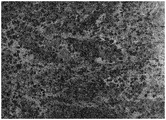
- FIG. 1 is an image showing a pattern of a sample produced according to Example 1.
- FIG. 2 is an image showing a pattern of a sample produced according to Example 2.
- FIG. 3 is an image showing a pattern of a sample produced according to Example 3.
- FIG. 4 is an image showing a pattern of a sample produced according to Example 4.
- FIG. 5 is an image showing a pattern of a sample produced according to Example 5.
- FIG. 6 is an image showing a pattern of a sample produced according to Comparative Example 1.
- the artificial marble composition according to an exemplary embodiment of the present invention includes a first resin mixture; and a second resin mixture added to the first resin mixture and having a viscosity different from that of the first resin mixture.
- each of the first and second resin mixtures includes a base resin and an inorganic filler, and a thixotropic agent is further added to the second resin mixture.
- the artificial marble composition according to an exemplary embodiment of the present invention is prepared by mixing mixtures each formed of the same kind of resin in order to have a pattern similar to natural stone, and adding the thixotropic agent with respect to only one resin mixture, thereby imparting thixotropy to bring a viscosity difference, and thus, the two mixtures having the viscosity difference may have excellent diffusing and mixing resistance, thereby implementing excellent pattern clarity.
- the viscosity of the second resin mixture to which the thixotropic agent is added is higher than the viscosity of the first resin mixture to which the thixotropic agent is not added.
- the viscosity is simply high, great pressure and stress are required to transfer or agitate the first and second resin mixtures.
- the thixotropic agent is added only to one resin mixture, the viscosity decreases as shear stress increases, and thus, additional facility capability is not required.
- the same kind of resin may be used as the first and second resin mixtures in order for the artificial marble composition according to the exemplary embodiment of the present invention to have a pattern similar to that of natural stone, and the thixotropic agent may be added to only the second resin mixture to thereby impart the thixotropy in order to have the viscosity difference between the first and second resin mixtures, and thus, diffusing and mixing resistance between the first and second resin mixtures may be present due to the viscosity difference, thereby improving the pattern clarity.
- the first and second resin mixtures are preferably mixed in a weight ratio of 1:1 to 10:1.
- the weight ratio of the first and second resin mixtures is less than 1:1, there is a problem in that an entire chip content is reduced, and thus, it is not similar to natural stone.
- the weight ratio of the first and second resin mixtures is more than 10:1, there is a problem in that it is not possible to implement a rich marble pattern.
- Each of the first and second resin mixtures includes 100 to 300 parts by weight of the inorganic filler based on 100 parts by weight of the base resin.
- each of the first and second resin mixtures may further include a chip to be added in an amount of 10 to 100 parts by weight, an initiator to be added in an amount of 0.1 to 1 part by weight, and a catalyst to be added in an amount of 1 part by weight or less, based on 100 parts by weight of the base resin.
- the thixotropic agent has an amount of 0.5 to 3.0 parts by weight based on 100 parts by weight of the second resin mixture.
- Each base resin to be added to the first and second resin mixtures includes 20 to 70 parts by weight of a polyacrylic resin, a polyester-based resin or a polystyrene-based resin, 30 to 80 parts by weight of an acrylic monomer, an ester-based monomer or a styrene-based monomer, and 0.1 to 5 parts by weight of a polyfunctional monomer.
- the acrylic monomer, the ester-based monomer and the styrene-based monomer may be used, and among them, the acrylic monomer is preferably used.
- the acrylic monomer acrylate-based monomers such as methyl methacrylate (MMA), ethyl methacrylate (EMA), butyl methacrylate (BMA), 2-ethylhexyl methacrylate (EHMA), benzyl methacrylate, etc., may be used, but the present invention is not limited thereto.
- ethylene glycol dimethacrylate (EGDMA), 1,6-hexanediol diacrylate (HDDA), pentaerythritol triacrylate (PETIA) and trimethylolpropane triacrylate (TMPTMA) may be used, but the present invention is not limited thereto.
- EGDMA ethylene glycol dimethacrylate
- HDDA 1,6-hexanediol diacrylate
- PETIA pentaerythritol triacrylate
- TMPTMA trimethylolpropane triacrylate
- any of inorganic powders such as calcium carbonate, aluminum hydroxide, silica, alumina, magnesium hydroxide, and calcium aluminate, etc., may be used alone or in combination of two or more thereof.
- An average particle size of the inorganic filler is preferably 1 to 100 ⁇ m. When the average particle size of the inorganic filler is less than 1 ⁇ m, viscosity of the resin mixture may be increase sharply, and when the average particle size thereof is more than 100 ⁇ m, an inorganic material may sink due to difference in specific gravity.
- the inorganic filler is preferably added in an amount of 100 to 300 parts by weight based on 100 parts by weight of the base resin.
- an appropriate viscosity may not be exhibited during the production process.
- the viscosity of the resin composition may be excessively high, resulting in deterioration of moldability and deterioration of heat processability.
- the thixotropic agent may be added only to one resin mixture, thereby imparting the thixotropy to bring the viscosity difference, and the two mixtures having the viscosity difference may have excellent diffusing and mixing resistance, thereby implementing excellent pattern clarity.
- the viscosity of the second resin mixture to which the thixotropic agent is added is higher than the viscosity of the first resin mixture to which the thixotropic agent is not added.
- great pressure and stress are required to transfer or agitate the first and second resin mixtures.
- the thixotropic agent is added only to one resin mixture, the viscosity decreases as shear stress increases, and thus, additional facility capability is not required.
- the same kind of resin may be used as the first and second resin mixtures, and the thixotropic agent may be added to only the second resin mixture to thereby impart the thixotropy in order to have the viscosity difference between the first and second resin mixtures, and thus, diffusing and mixing resistance between the first and second resin mixtures may be present due to the viscosity difference, thereby improving the pattern clarity.
- thixotropic agent at least one selected from an inorganic-based thixotropic agent including synthetic fine silica-based, bentonite-based, and very fine precipitated calcium carbonate, a composite-based thixotropic agent including organic bentonite-based and surface-treated calcium carbonate-based, and an organic-based thixotropic agent including urea-based, metal stone gum-based, hydrogenated castor oil, polyamide wax, polyethylene oxide-based, vegetable oil-based, polymeric oil-based, flaxseed polymeric oil, and a fatty acid dimmer may be used.
- an inorganic-based thixotropic agent including synthetic fine silica-based, bentonite-based, and very fine precipitated calcium carbonate
- a composite-based thixotropic agent including organic bentonite-based and surface-treated calcium carbonate-based
- an organic-based thixotropic agent including urea-based, metal stone gum-based, hydrogenated castor oil, polyamide wax, polyethylene
- the thixotropic agent preferably has an amount of 0.5 to 3.0 parts by weight based on 100 parts by weight of the second resin mixture.
- the amount of the thixotropic agent is less than 0.5 part by weight based on 100 parts by weight of the second resin mixture, thixotropy is not imparted and the viscosity difference is insignificant.
- the amount of the thixotropic agent is more than 3.0 parts by weight based on 100 parts by weight of the second resin mixture, the viscosity increases sharply, resulting in deterioration of workability and defoaming.
- the chip is added as coloring means to express a natural stone texture.
- the chip is preferably a fine powder of 1 to 100 meshes. Specifically, any one of an acrylic chip, an epoxy-based chip, a styrene-based chip and a polyester-based chip may be used.
- the chip is preferably added in an amount of 10 to 100 parts by weight based on 100 parts by weight of the base resin.
- the added amount of the chip is less than 10 parts by weight based on 100 parts by weight of the base resin, coloring of the natural stone texture may not be properly implemented since the added amount thereof is insignificant.
- the added amount of the chip is more than 100 parts by weight based on 100 parts by weight of the base resin, curing time may increase, and thus, physical properties may be deteriorated.
- the initiator may be used without limitation as long as it is used in polymerization of the polyacrylic resin, but is preferably a peroxide-based initiator.
- peroxide-based initiators including tertiary butylcyclohexyl peroxydicarbonate, benzoyl peroxide, dicumyl peroxide, butyl hydroperoxide, cumyl hydroperoxide, t-butyl peroxymaleic acid, t-butyl hydroperoxide, acetyl peroxide, lauroyl peroxide, azobisisobutyronitrile, and azobisdimethylvaleronitrile is preferably used.
- the initiator is preferably added in an amount of 1 to 10 parts by weight based on 100 parts by weight of the base resin.
- the catalyst is added for the purpose of accelerating a polymerization rate.
- an organic amine or an organic metal salt may be used as the catalyst.
- the catalyst is preferably added in an amount of 1 or less part by weight based on 100 parts by weight of the base resin.
- the added amount of the catalyst is more than 1 part by weight based on 100 parts by weight of the base resin, it is not economical since it may be a cause for raising the production cost only as compared to an increase in effect.
- each of the first and second resin mixtures may further include, in addition to the above-described components, at least one selected from the group consisting of silicone-based or non-silicone-based defoaming agent; silane-based, acid-based or titanate-based coupling agent such as trimethoxysilane, etc.; ultraviolet absorber such as phenyl salicylate-based, benzophenone-based, benzotriazole-based, nickel derivative-based or radical scavenger-based, etc.; halogen-based, phosphorus-based or inorganic metal-based flame retardant; stearic acid-based or silicone-based releasing agent; catechol-based or hydroquinone-based polymerization inhibitor; and phenol-based, amine-based, quinone-based, sulfur-based or phosphorus-based antioxidant may be further included within the range in which the physical properties of the present invention are not affected.
- a first resin mixture including a base resin and an inorganic filler is put and cast into a mold.
- a second resin mixture including a base resin, an inorganic filler, and a thixotropic agent is injected into or stacked in the mold into which the first resin mixture is cast.
- the first and second resin mixtures are agitated with an agitator to form a pattern, followed by curing and sanding to produce artificial marble.
- the sanding process is performed to flatten a surface of the artificial marble so that the pattern included in the artificial marble is more clearly expressed on the surface.
- a first resin mixture including a base resin and an inorganic filler is put and cast into a mold while aligning a nozzle in which a second resin mixture including a base resin, an inorganic filler, and a thixotropic agent is stored on an upper part of the first resin mixture.
- the second resin mixture stored in the nozzle is dropped onto the first resin mixture to form a pattern, followed by curing and sanding to produce artificial marble.
- an interval, a width, and a formation pattern of stripes may be freely adjusted by spraying the second resin mixture stored in the nozzle onto the first resin mixture.
- a first resin mixture including a base resin and an inorganic filler is mixed with a second resin mixture including a base resin, an inorganic filler, and a thixotropic agent to form a composite resin mixture.
- the composite resin mixture is put and cast into a mold, followed by curing and sanding to produce artificial marble.
- the same kind of resin may be used as the first and second resin mixtures in order to have a pattern similar to that of natural stone, and the thixotropic agent may be added to only the second resin mixture to thereby impart the thixotropy in order to have the viscosity difference between the first and second resin mixtures, and thus, diffusing and mixing resistance between the first and second resin mixtures may be present due to the viscosity difference, thereby improving the pattern clarity.
- a first resin mixture was prepared by mixing 30 wt % of a base resin, 55 wt % of aluminum hydroxide having an average particle size of 20 ⁇ m, and 15 wt % of an acrylic chip.
- the base resin was composed of 30 wt % of polyacrylic resin, 67 wt % of methyl methacrylate (MMA), and 3 wt % of TMPTMA.
- a second resin mixture was prepared by mixing 35 wt % of a base resin, 63.5 wt % of aluminum hydroxide having an average particle size of 20 ⁇ m, and 1.5 wt % of BYK A410.
- the base resin was composed of 30 wt % of polyacrylic resin, 67 wt % of methyl methacrylate (MMA), and 3 wt % of TMPTMA.
- the second resin mixture was injected into the mold into which the first resin mixture was cast, wherein a weight ratio of the first and second resin mixtures was 7:3.
- the first and second resin mixtures were agitated 15 times with a rod having a diameter of 6 mm to form a pattern, and cured at 80 ⁇ for 50 minutes, followed by sanding to produce artificial marble.
- Artificial marble was produced in the same manner as in Example 1, except that 35 wt % of the base resin, 62 wt % of the aluminum hydroxide, and 3 wt % of BYK A410 were mixed in the preparation of the second resin mixture.
- Artificial marble was produced in the same manner as in Example 1, except that 35 wt % of the base resin, 64.5 wt % of the aluminum hydroxide, and 0.5 wt % of BYK A410 were mixed in the preparation of the second resin mixture.
- Artificial marble was produced in the same manner as in Example 1, except that 35 wt % of the base resin, 63 wt % of the aluminum hydroxide, and 0.5 wt % of Garamite 1958 were mixed in the preparation of the second resin mixture.
- Artificial marble was produced in the same manner as in Example 1, except that 35 wt % of the base resin, 62.5 wt % of the aluminum hydroxide, and 1.5 wt % of Garamite 1958 were mixed in the preparation of the second resin mixture.
- Artificial marble was produced in the same manner as in Example 1, except that 35 wt % of the base resin and 65 wt % of the aluminum hydroxide were mixed without adding a thixotropic agent in the preparation of the second resin mixture.
- Table 1 shows results of measurement of TI values with respect to Examples 1 to 5 and Comparative Example 1.
- the TI values were measured with respect to the first resin mixtures and the second resin mixtures of Examples 1 to 5 and Comparative Example 1, respectively.
- the TI values were measured by using the Brookfield viscometer 64 spindle, and calculated by measuring the viscosities at 3 rpm and 30 rpm, respectively.
- Comparative Example 1 the TI value of the second resin mixture was measured to be 1.8, which was not different from the TI value of the first resin mixture, and thus, it was expected that it would be difficult to secure the clarity of the pattern.
- FIGS. 1 to 5 are images showing the patterns of the samples produced according to Examples 1 to 5, and FIG. 6 is an image showing a pattern of a sample produced according to Comparative Example 1.
Landscapes
- Chemical & Material Sciences (AREA)
- Engineering & Computer Science (AREA)
- Ceramic Engineering (AREA)
- Structural Engineering (AREA)
- Materials Engineering (AREA)
- Organic Chemistry (AREA)
- Chemical Kinetics & Catalysis (AREA)
- Inorganic Chemistry (AREA)
- Mechanical Engineering (AREA)
- Compositions Of Macromolecular Compounds (AREA)
- Civil Engineering (AREA)
Abstract
Description
| TABLE 1 | |||
| Viscosity (Ps) | |||
| Classification | 3 rpm | 30 rpm | Ti value | ||||
| Example 1 | First resin | 207 | 93 | 2.22 | — | ||
| mixture | |||||||
| Second resin | 300 | 77 | — | 3.9 | |||
| mixture | |||||||
| Example 2 | First resin | 207 | 93 | 2.22 | — | ||
| mixture | |||||||
| Second resin | 465 | 75 | — | 6.2 | |||
| mixture | |||||||
| Example 3 | First resin | 207 | 93 | 2.22 | — | ||
| mixture | |||||||
| Second resin | 222 | 79 | — | 2.8 | |||
| mixture | |||||||
| Example 4 | First resin | 207 | 93 | 2.22 | — | ||
| mixture | |||||||
| Second resin | 240 | 80 | — | 3.0 | |||
| mixture | |||||||
| Example 5 | First resin | 207 | 93 | 2.22 | — | ||
| mixture | |||||||
| Second resin | 308 | 75 | — | 4.1 | |||
| mixture | |||||||
| Comparative | First resin | 207 | 93 | 2.22 | — | ||
| Example 1 | mixture | ||||||
| Second resin | 142 | 80 | — | 1.8 | |||
| mixture | |||||||
Claims (8)
Applications Claiming Priority (3)
| Application Number | Priority Date | Filing Date | Title |
|---|---|---|---|
| KR1020150169666A KR101914447B1 (en) | 2015-12-01 | 2015-12-01 | Method of manufactuing artificial marble |
| KR10-2015-0169666 | 2015-12-01 | ||
| PCT/KR2016/013866 WO2017095107A1 (en) | 2015-12-01 | 2016-11-29 | Artificial marble composition and production method for artificial marble using same |
Publications (2)
| Publication Number | Publication Date |
|---|---|
| US20180282215A1 US20180282215A1 (en) | 2018-10-04 |
| US10766814B2 true US10766814B2 (en) | 2020-09-08 |
Family
ID=58797165
Family Applications (1)
| Application Number | Title | Priority Date | Filing Date |
|---|---|---|---|
| US15/762,049 Active 2037-07-06 US10766814B2 (en) | 2015-12-01 | 2016-11-29 | Artificial marble composition and production method for artificial marble using same |
Country Status (5)
| Country | Link |
|---|---|
| US (1) | US10766814B2 (en) |
| EP (1) | EP3385240B1 (en) |
| KR (1) | KR101914447B1 (en) |
| CN (2) | CN108137407A (en) |
| WO (1) | WO2017095107A1 (en) |
Cited By (1)
| Publication number | Priority date | Publication date | Assignee | Title |
|---|---|---|---|---|
| USD965827S1 (en) * | 2021-06-29 | 2022-10-04 | Guangdong Zhirong New Material Technology Co., Ltd. | Artificial marble board |
Families Citing this family (4)
| Publication number | Priority date | Publication date | Assignee | Title |
|---|---|---|---|---|
| KR101914447B1 (en) * | 2015-12-01 | 2018-11-05 | (주)엘지하우시스 | Method of manufactuing artificial marble |
| KR102264541B1 (en) * | 2019-08-02 | 2021-06-11 | 이현숙 | A composition for artificial marble having high transparency and natural pattern and a preparation method of artificial marble by using the composition |
| KR102312578B1 (en) * | 2019-10-07 | 2021-10-15 | (주) 웹스 | Artificial marble composition |
| KR102403145B1 (en) * | 2020-04-01 | 2022-05-27 | (주)엘엑스하우시스 | Artificial marble with marble resin region and manufacturing method thereof |
Citations (11)
| Publication number | Priority date | Publication date | Assignee | Title |
|---|---|---|---|---|
| US5218013A (en) * | 1988-09-23 | 1993-06-08 | Schock & Co. Gmbh | Component, in particular, built-in sink, and method for its manufacture |
| KR20060069323A (en) | 2004-12-17 | 2006-06-21 | 제일모직주식회사 | Artificial marble having a crack pattern and its manufacturing method |
| US20070004824A1 (en) * | 2005-06-29 | 2007-01-04 | Hang-Young Kim | Artificial marble having quartz effect using transparent chip and process for preparing the same |
| KR20070025445A (en) | 2005-09-02 | 2007-03-08 | 주식회사 엘지화학 | Artificial marble with natural patterns and manufacturing method thereof |
| KR20080041501A (en) | 2006-11-07 | 2008-05-13 | 주식회사 에스켐 | Artificial marble chip and its manufacturing method |
| WO2008084948A1 (en) | 2007-01-09 | 2008-07-17 | Lg Chem, Ltd. | Artificial marble and preparation process thereof |
| US20100016492A1 (en) * | 2007-02-27 | 2010-01-21 | Byk-Chemie Gmbh | Curable polymer concrete mixture |
| KR20100106756A (en) | 2009-03-24 | 2010-10-04 | (주)엘지하우시스 | Artificial marble and preparation method thereof |
| KR20150119596A (en) | 2014-04-16 | 2015-10-26 | (주)엘지하우시스 | Apparatus for making imitation marble and manufacturing method of imitation marble using the same |
| KR20150132956A (en) | 2014-05-19 | 2015-11-27 | (주)엘지하우시스 | The composition comprising different resins for artificial marble syrup and the manufacturing method thereof |
| US20180282215A1 (en) * | 2015-12-01 | 2018-10-04 | Lg Hausys, Ltd. | Artificial marble composition and production method for artificial marble using same |
Family Cites Families (4)
| Publication number | Priority date | Publication date | Assignee | Title |
|---|---|---|---|---|
| US3981951A (en) * | 1972-10-24 | 1976-09-21 | Rochester Button Company | Decorative rod making |
| US3973889A (en) * | 1974-10-07 | 1976-08-10 | Rochester Button Company | Decorative rod making equipment |
| JP2800583B2 (en) * | 1992-09-11 | 1998-09-21 | 東陶機器株式会社 | Manufacturing method of artificial marble |
| US6150009A (en) * | 1998-08-07 | 2000-11-21 | Surface Technologies, Inc. | Decorative structural panel |
-
2015
- 2015-12-01 KR KR1020150169666A patent/KR101914447B1/en active Active
-
2016
- 2016-11-29 CN CN201680055935.7A patent/CN108137407A/en active Pending
- 2016-11-29 US US15/762,049 patent/US10766814B2/en active Active
- 2016-11-29 WO PCT/KR2016/013866 patent/WO2017095107A1/en not_active Ceased
- 2016-11-29 CN CN202111037738.1A patent/CN113735490A/en active Pending
- 2016-11-29 EP EP16871003.6A patent/EP3385240B1/en active Active
Patent Citations (15)
| Publication number | Priority date | Publication date | Assignee | Title |
|---|---|---|---|---|
| US5218013A (en) * | 1988-09-23 | 1993-06-08 | Schock & Co. Gmbh | Component, in particular, built-in sink, and method for its manufacture |
| KR20060069323A (en) | 2004-12-17 | 2006-06-21 | 제일모직주식회사 | Artificial marble having a crack pattern and its manufacturing method |
| WO2006065106A1 (en) | 2004-12-17 | 2006-06-22 | Cheil Industries Inc. | Artificial marble having a crack pattern and method for preparing thereof |
| US20060267230A1 (en) * | 2004-12-17 | 2006-11-30 | Rha Do C | Artificial marble having a crack pattern and method for preparing thereof |
| US20070004824A1 (en) * | 2005-06-29 | 2007-01-04 | Hang-Young Kim | Artificial marble having quartz effect using transparent chip and process for preparing the same |
| WO2007001136A1 (en) | 2005-06-29 | 2007-01-04 | Lg Chem, Ltd. | Artificial marble having quartz effect using transparent chip and process for preparing the same |
| KR20070025445A (en) | 2005-09-02 | 2007-03-08 | 주식회사 엘지화학 | Artificial marble with natural patterns and manufacturing method thereof |
| KR20080041501A (en) | 2006-11-07 | 2008-05-13 | 주식회사 에스켐 | Artificial marble chip and its manufacturing method |
| WO2008084948A1 (en) | 2007-01-09 | 2008-07-17 | Lg Chem, Ltd. | Artificial marble and preparation process thereof |
| US20100029839A1 (en) * | 2007-01-09 | 2010-02-04 | Lg Chem, Ltd. | Artificial marble and preparation process thereof |
| US20100016492A1 (en) * | 2007-02-27 | 2010-01-21 | Byk-Chemie Gmbh | Curable polymer concrete mixture |
| KR20100106756A (en) | 2009-03-24 | 2010-10-04 | (주)엘지하우시스 | Artificial marble and preparation method thereof |
| KR20150119596A (en) | 2014-04-16 | 2015-10-26 | (주)엘지하우시스 | Apparatus for making imitation marble and manufacturing method of imitation marble using the same |
| KR20150132956A (en) | 2014-05-19 | 2015-11-27 | (주)엘지하우시스 | The composition comprising different resins for artificial marble syrup and the manufacturing method thereof |
| US20180282215A1 (en) * | 2015-12-01 | 2018-10-04 | Lg Hausys, Ltd. | Artificial marble composition and production method for artificial marble using same |
Non-Patent Citations (2)
| Title |
|---|
| European Search Report dated Nov. 19, 2018, issued in corresponding European Patent Application No. 16871003.6. |
| International Search Report for Application No. PCT/KR2016/013866 dated Mar. 9, 2017. |
Cited By (1)
| Publication number | Priority date | Publication date | Assignee | Title |
|---|---|---|---|---|
| USD965827S1 (en) * | 2021-06-29 | 2022-10-04 | Guangdong Zhirong New Material Technology Co., Ltd. | Artificial marble board |
Also Published As
| Publication number | Publication date |
|---|---|
| EP3385240B1 (en) | 2020-04-29 |
| CN108137407A (en) | 2018-06-08 |
| EP3385240A1 (en) | 2018-10-10 |
| CN113735490A (en) | 2021-12-03 |
| WO2017095107A1 (en) | 2017-06-08 |
| KR101914447B1 (en) | 2018-11-05 |
| EP3385240A4 (en) | 2018-12-19 |
| KR20170064579A (en) | 2017-06-12 |
| US20180282215A1 (en) | 2018-10-04 |
Similar Documents
| Publication | Publication Date | Title |
|---|---|---|
| EP3385240B1 (en) | Method for manufacturing artificial marble | |
| US9029436B2 (en) | Artificial silica marble having amorphous patterns and method for preparing the same | |
| KR101338626B1 (en) | Synthetic acrylic marble having granite pattern and method of preparing the same | |
| KR100796437B1 (en) | Artificial marble with quartz effect using transparent chip and its manufacturing method | |
| KR101270349B1 (en) | Synthetic acrylic marble having pearl-containing pattern and method of preparing the same | |
| EP2791075B1 (en) | Method of manufacturing a synthetic marble with high hardness | |
| CN102510844A (en) | Artificial marble and preparation method thereof | |
| KR100975380B1 (en) | Artificial marble and its manufacturing method | |
| US20080153964A1 (en) | Composition for artificial stone, an article including the same, and a method of forming the same | |
| KR101991685B1 (en) | Artificial marble composition and method of manufactuing artificial marble using the same | |
| KR101548342B1 (en) | Artificial Marble Chip, Artificial Marble Using Same, and Method for Preparing thereof | |
| KR101404426B1 (en) | Chips for Artificial Marble with Foam or Open Cell Structure, Artificial Marble Including the Same and Method for Preparing the Same | |
| KR101605584B1 (en) | Artificial Marble Chip and Artificial Marble including Same | |
| RU2360881C2 (en) | Composite product with hard surface containing ochre | |
| KR101727360B1 (en) | The composition comprising different resins for artificial marble syrup and the manufacturing method thereof | |
| KR102002938B1 (en) | Artificial marble composition, artificial marble using the same and method for manufacturing artificial marble | |
| KR101216219B1 (en) | Amorphous shape marble chip and manufacturing method thereof | |
| KR20240067908A (en) | artificial agglomerate stone | |
| KR102288019B1 (en) | A method and a device for manufacturing artificial marble having stripe pattern | |
| KR102180948B1 (en) | A composition for artificial marble chips, the artificial marble chips prepared by using the composition and the artificial marble comprising the artificial marble chips | |
| EP3339266B1 (en) | Artificial marble chip, method of preparing the same and artificial marble including the same | |
| KR20160052010A (en) | Manufacturing method of artificial marble having native pattern | |
| KR20180101819A (en) | Artificial marble composition for artificial marble and method of manufacturing artificial marble |
Legal Events
| Date | Code | Title | Description |
|---|---|---|---|
| FEPP | Fee payment procedure |
Free format text: ENTITY STATUS SET TO UNDISCOUNTED (ORIGINAL EVENT CODE: BIG.); ENTITY STATUS OF PATENT OWNER: LARGE ENTITY |
|
| AS | Assignment |
Owner name: LG HAUSYS, LTD., KOREA, REPUBLIC OF Free format text: ASSIGNMENT OF ASSIGNORS INTEREST;ASSIGNORS:NAM, HAE-RIM;YUE, SEONG-HOON;PARK, HWAN-SEOK;AND OTHERS;REEL/FRAME:045318/0016 Effective date: 20180226 |
|
| STPP | Information on status: patent application and granting procedure in general |
Free format text: DOCKETED NEW CASE - READY FOR EXAMINATION |
|
| STPP | Information on status: patent application and granting procedure in general |
Free format text: NON FINAL ACTION MAILED |
|
| STPP | Information on status: patent application and granting procedure in general |
Free format text: NON FINAL ACTION MAILED |
|
| STPP | Information on status: patent application and granting procedure in general |
Free format text: NOTICE OF ALLOWANCE MAILED -- APPLICATION RECEIVED IN OFFICE OF PUBLICATIONS |
|
| STCF | Information on status: patent grant |
Free format text: PATENTED CASE |
|
| MAFP | Maintenance fee payment |
Free format text: PAYMENT OF MAINTENANCE FEE, 4TH YEAR, LARGE ENTITY (ORIGINAL EVENT CODE: M1551); ENTITY STATUS OF PATENT OWNER: LARGE ENTITY Year of fee payment: 4 |