US10696695B2 - BODIPY dyes for biological imaging - Google Patents
BODIPY dyes for biological imaging Download PDFInfo
- Publication number
- US10696695B2 US10696695B2 US16/017,638 US201816017638A US10696695B2 US 10696695 B2 US10696695 B2 US 10696695B2 US 201816017638 A US201816017638 A US 201816017638A US 10696695 B2 US10696695 B2 US 10696695B2
- Authority
- US
- United States
- Prior art keywords
- compound
- formula
- difluoro
- bora
- indacene
- Prior art date
- Legal status (The legal status is an assumption and is not a legal conclusion. Google has not performed a legal analysis and makes no representation as to the accuracy of the status listed.)
- Active
Links
- 0 C*OBC Chemical compound C*OBC 0.000 description 45
- UORVGPXVDQYIDP-UHFFFAOYSA-N B Chemical compound B UORVGPXVDQYIDP-UHFFFAOYSA-N 0.000 description 18
- SAKFBURQXVKSDQ-UHFFFAOYSA-N CB[Y] Chemical compound CB[Y] SAKFBURQXVKSDQ-UHFFFAOYSA-N 0.000 description 13
- ZJCZQMDLQWEOAR-UHFFFAOYSA-N C[BH2-][OH+]S(C)(=O)=O Chemical compound C[BH2-][OH+]S(C)(=O)=O ZJCZQMDLQWEOAR-UHFFFAOYSA-N 0.000 description 6
- RIDOMTUUOQIJSD-UHFFFAOYSA-N [CH2+][BH2-]C Chemical compound [CH2+][BH2-]C RIDOMTUUOQIJSD-UHFFFAOYSA-N 0.000 description 6
- BTGVXPGHSIJVHQ-UHFFFAOYSA-N C#CCOC.COCC(=O)O.COCC(C)=O.COCC1=CC=C(C2=NN=C(C)N=N2)C=C1.COCC1=CC=C(C2=NN=CN=N2)C=C1.COCC1C(C)=C1[Si](C)(C)C.COCC1COC1.COCN.COCN1C(=O)C=CC1=O.COCN=[N+]=[N-].COCNC(=O)OCC1C=C1C.COCOCN.COCS Chemical compound C#CCOC.COCC(=O)O.COCC(C)=O.COCC1=CC=C(C2=NN=C(C)N=N2)C=C1.COCC1=CC=C(C2=NN=CN=N2)C=C1.COCC1C(C)=C1[Si](C)(C)C.COCC1COC1.COCN.COCN1C(=O)C=CC1=O.COCN=[N+]=[N-].COCNC(=O)OCC1C=C1C.COCOCN.COCS BTGVXPGHSIJVHQ-UHFFFAOYSA-N 0.000 description 4
- QEFKERVUKNZMKZ-UHFFFAOYSA-N C#CCC#CC.CC#CCC(=O)O.CC#CCC(C)=O.CC#CCC1=CC=C(C2=NN=C(C)N=N2)C=C1.CC#CCC1=CC=C(C2=NN=CN=N2)C=C1.CC#CCC1C(C)=C1[Si](C)(C)C.CC#CCC1COC1.CC#CCN.CC#CCN1C(=O)C=CC1=O.CC#CCN=[N+]=[N-].CC#CCNC(=O)OCC1C=C1C.CC#CCOCN.CC#CCS Chemical compound C#CCC#CC.CC#CCC(=O)O.CC#CCC(C)=O.CC#CCC1=CC=C(C2=NN=C(C)N=N2)C=C1.CC#CCC1=CC=C(C2=NN=CN=N2)C=C1.CC#CCC1C(C)=C1[Si](C)(C)C.CC#CCC1COC1.CC#CCN.CC#CCN1C(=O)C=CC1=O.CC#CCN=[N+]=[N-].CC#CCNC(=O)OCC1C=C1C.CC#CCOCN.CC#CCS QEFKERVUKNZMKZ-UHFFFAOYSA-N 0.000 description 2
- OBXVEMJRINBXGB-UHFFFAOYSA-N CC1=CC(C)=N2BN3C(C)=CC(C)=C3C(CCC(=O)ON3C(=O)CCC3=O)=C12.CC1=CC(C)=N2BN3C(C)=CC(C)=C3C=C12 Chemical compound CC1=CC(C)=N2BN3C(C)=CC(C)=C3C(CCC(=O)ON3C(=O)CCC3=O)=C12.CC1=CC(C)=N2BN3C(C)=CC(C)=C3C=C12 OBXVEMJRINBXGB-UHFFFAOYSA-N 0.000 description 2
- VTOHIDFZQWBJBR-UHFFFAOYSA-N CC1=CC(C)=N2C1=C(C)C1=C(C)C=C(C)N1B2(F)OCC(F)(F)F Chemical compound CC1=CC(C)=N2C1=C(C)C1=C(C)C=C(C)N1B2(F)OCC(F)(F)F VTOHIDFZQWBJBR-UHFFFAOYSA-N 0.000 description 2
- CIJUXRSUCYLZSC-UHFFFAOYSA-N CC1=CC(C)=N2C1=C(C)C1=C(C)C=C(C)N1B2(F)OCCCO Chemical compound CC1=CC(C)=N2C1=C(C)C1=C(C)C=C(C)N1B2(F)OCCCO CIJUXRSUCYLZSC-UHFFFAOYSA-N 0.000 description 2
- IQFWSKRHWITYQC-UHFFFAOYSA-N CC1=CC(C)=N2C1=C(C)C1=C(C)C=C(C)N1B2(F)OCCN Chemical compound CC1=CC(C)=N2C1=C(C)C1=C(C)C=C(C)N1B2(F)OCCN IQFWSKRHWITYQC-UHFFFAOYSA-N 0.000 description 2
- HKGIGUOGMHEYAM-UHFFFAOYSA-N CC1=CC(C)=N2C1=C(C)C1=C(C)C=C(C)N1B2(F)OCCO Chemical compound CC1=CC(C)=N2C1=C(C)C1=C(C)C=C(C)N1B2(F)OCCO HKGIGUOGMHEYAM-UHFFFAOYSA-N 0.000 description 2
- VYGJSOUHNIFIPG-UHFFFAOYSA-N COB1(F)N2C(C)=CC(C)=C2C(C)=C2C(C)=CC(C)=N21 Chemical compound COB1(F)N2C(C)=CC(C)=C2C(C)=C2C(C)=CC(C)=N21 VYGJSOUHNIFIPG-UHFFFAOYSA-N 0.000 description 2
- BEZVYIQMSFPCAQ-UHFFFAOYSA-N BC.[W] Chemical compound BC.[W] BEZVYIQMSFPCAQ-UHFFFAOYSA-N 0.000 description 1
- BVBRZOLXXOIMQG-UHFFFAOYSA-N BF.CS(=O)(=O)O Chemical compound BF.CS(=O)(=O)O BVBRZOLXXOIMQG-UHFFFAOYSA-N 0.000 description 1
- WPAGDTRGJGJEGD-UHFFFAOYSA-N C#CCCC#CB1(F)N2C(C)=CC(C)=C2C(C)=C2C(C)=CC(C)=N21.CC1=CC(C)=N2C1=C(C)C1=C(C)C=C(C)N1B2(F)C#CCC1C(C)=C1[Si](C)(C)C.CC1=CC(C)=N2C1=C(C)C1=C(C)C=C(C)N1B2(F)C#CCCCN.CC1=CC(C)=N2C1=C(C)C1=C(C)C=C(C)N1B2(F)C#CCCN.CC1=CC(C)=N2C1=C(C)C1=C(C)C=C(C)N1B2(F)C#CCCN1C(=O)C=CC1=O.CC1=CC(C)=N2C1=C(C)C1=C(C)C=C(C)N1B2(F)C#CCCOCCN.CC1=CC(C)=N2C1=C(C)C1=C(C)C=C(C)N1B2(F)C#CCCS Chemical compound C#CCCC#CB1(F)N2C(C)=CC(C)=C2C(C)=C2C(C)=CC(C)=N21.CC1=CC(C)=N2C1=C(C)C1=C(C)C=C(C)N1B2(F)C#CCC1C(C)=C1[Si](C)(C)C.CC1=CC(C)=N2C1=C(C)C1=C(C)C=C(C)N1B2(F)C#CCCCN.CC1=CC(C)=N2C1=C(C)C1=C(C)C=C(C)N1B2(F)C#CCCN.CC1=CC(C)=N2C1=C(C)C1=C(C)C=C(C)N1B2(F)C#CCCN1C(=O)C=CC1=O.CC1=CC(C)=N2C1=C(C)C1=C(C)C=C(C)N1B2(F)C#CCCOCCN.CC1=CC(C)=N2C1=C(C)C1=C(C)C=C(C)N1B2(F)C#CCCS WPAGDTRGJGJEGD-UHFFFAOYSA-N 0.000 description 1
- GEZSRPJKQXHEPO-UHFFFAOYSA-N C#CCCC#CB1(F)N2C(C)=CC(C)=C2C(C)=C2C(C)=CC(C)=N21.CC1=CC(C)=N2C1=C(C)C1=C(C)C=C(C)N1B2(F)C#CCCCN.CC1=CC(C)=N2C1=C(C)C1=C(C)C=C(C)N1B2(F)C#CCCN.CC1=CC(C)=N2C1=C(C)C1=C(C)C=C(C)N1B2(F)C#CCCN1C(=O)C=CC1=O.CC1=CC(C)=N2C1=C(C)C1=C(C)C=C(C)N1B2(F)C#CCCOCCN.CC1=CC(C)=N2C1=C(C)C1=C(C)C=C(C)N1B2(F)C#CCCS Chemical compound C#CCCC#CB1(F)N2C(C)=CC(C)=C2C(C)=C2C(C)=CC(C)=N21.CC1=CC(C)=N2C1=C(C)C1=C(C)C=C(C)N1B2(F)C#CCCCN.CC1=CC(C)=N2C1=C(C)C1=C(C)C=C(C)N1B2(F)C#CCCN.CC1=CC(C)=N2C1=C(C)C1=C(C)C=C(C)N1B2(F)C#CCCN1C(=O)C=CC1=O.CC1=CC(C)=N2C1=C(C)C1=C(C)C=C(C)N1B2(F)C#CCCOCCN.CC1=CC(C)=N2C1=C(C)C1=C(C)C=C(C)N1B2(F)C#CCCS GEZSRPJKQXHEPO-UHFFFAOYSA-N 0.000 description 1
- PAWOCBOOBBFCAF-UHFFFAOYSA-N C#CCCC#CC.CC#CC(C)=O.CC#CC1COC1.CC#CCC1=CC=C(C2=NN=C(C)N=N2)C=C1.CC#CCC1=CC=C(C2=NN=CN=N2)C=C1.CC#CCC1C(C)=C1[Si](C)(C)C.CC#CCCCC(=O)O.CC#CCCCN.CC#CCCCN=[N+]=[N-].CC#CCCN.CC#CCCN1C(=O)C=CC1=O.CC#CCCNC(=O)OCC1C=C1C.CC#CCCOCCN.CC#CCCS Chemical compound C#CCCC#CC.CC#CC(C)=O.CC#CC1COC1.CC#CCC1=CC=C(C2=NN=C(C)N=N2)C=C1.CC#CCC1=CC=C(C2=NN=CN=N2)C=C1.CC#CCC1C(C)=C1[Si](C)(C)C.CC#CCCCC(=O)O.CC#CCCCN.CC#CCCCN=[N+]=[N-].CC#CCCN.CC#CCCN1C(=O)C=CC1=O.CC#CCCNC(=O)OCC1C=C1C.CC#CCCOCCN.CC#CCCS PAWOCBOOBBFCAF-UHFFFAOYSA-N 0.000 description 1
- VKDDVOLKPPBORD-UHFFFAOYSA-N C#CCCOB1(F)N2C(C)=CC(C)=C2C(C)=C2C(C)=CC(C)=N21.CC1=CC(C)=N2C1=C(C)C1=C(C)C=C(C)N1B2(F)OCC1C(C)=C1[Si](C)(C)C.CC1=CC(C)=N2C1=C(C)C1=C(C)C=C(C)N1B2(F)OCCCN.CC1=CC(C)=N2C1=C(C)C1=C(C)C=C(C)N1B2(F)OCCN.CC1=CC(C)=N2C1=C(C)C1=C(C)C=C(C)N1B2(F)OCCN1C(=O)C=CC1=O.CC1=CC(C)=N2C1=C(C)C1=C(C)C=C(C)N1B2(F)OCCOCCN.CC1=CC(C)=N2C1=C(C)C1=C(C)C=C(C)N1B2(F)OCCS Chemical compound C#CCCOB1(F)N2C(C)=CC(C)=C2C(C)=C2C(C)=CC(C)=N21.CC1=CC(C)=N2C1=C(C)C1=C(C)C=C(C)N1B2(F)OCC1C(C)=C1[Si](C)(C)C.CC1=CC(C)=N2C1=C(C)C1=C(C)C=C(C)N1B2(F)OCCCN.CC1=CC(C)=N2C1=C(C)C1=C(C)C=C(C)N1B2(F)OCCN.CC1=CC(C)=N2C1=C(C)C1=C(C)C=C(C)N1B2(F)OCCN1C(=O)C=CC1=O.CC1=CC(C)=N2C1=C(C)C1=C(C)C=C(C)N1B2(F)OCCOCCN.CC1=CC(C)=N2C1=C(C)C1=C(C)C=C(C)N1B2(F)OCCS VKDDVOLKPPBORD-UHFFFAOYSA-N 0.000 description 1
- AKKBEBJXQJTXAJ-UHFFFAOYSA-N C#CCCOB1(F)N2C(C)=CC(C)=C2C(C)=C2C(C)=CC(C)=N21.CC1=CC(C)=N2C1=C(C)C1=C(C)C=C(C)N1B2(F)OCCCC(=O)O.CC1=CC(C)=N2C1=C(C)C1=C(C)C=C(C)N1B2(F)OCCCN.CC1=CC(C)=N2C1=C(C)C1=C(C)C=C(C)N1B2(F)OCCCN=[N+]=[N-].CC1=CC(C)=N2C1=C(C)C1=C(C)C=C(C)N1B2(F)OCCN.CC1=CC(C)=N2C1=C(C)C1=C(C)C=C(C)N1B2(F)OCCN1C(=O)C=CC1=O.CC1=CC(C)=N2C1=C(C)C1=C(C)C=C(C)N1B2(F)OCCOCCN.CC1=CC(C)=N2C1=C(C)C1=C(C)C=C(C)N1B2(F)OCCS Chemical compound C#CCCOB1(F)N2C(C)=CC(C)=C2C(C)=C2C(C)=CC(C)=N21.CC1=CC(C)=N2C1=C(C)C1=C(C)C=C(C)N1B2(F)OCCCC(=O)O.CC1=CC(C)=N2C1=C(C)C1=C(C)C=C(C)N1B2(F)OCCCN.CC1=CC(C)=N2C1=C(C)C1=C(C)C=C(C)N1B2(F)OCCCN=[N+]=[N-].CC1=CC(C)=N2C1=C(C)C1=C(C)C=C(C)N1B2(F)OCCN.CC1=CC(C)=N2C1=C(C)C1=C(C)C=C(C)N1B2(F)OCCN1C(=O)C=CC1=O.CC1=CC(C)=N2C1=C(C)C1=C(C)C=C(C)N1B2(F)OCCOCCN.CC1=CC(C)=N2C1=C(C)C1=C(C)C=C(C)N1B2(F)OCCS AKKBEBJXQJTXAJ-UHFFFAOYSA-N 0.000 description 1
- NGKSKVYWPINGLI-UHFFFAOYSA-N C#CCc1ccccc1 Chemical compound C#CCc1ccccc1 NGKSKVYWPINGLI-UHFFFAOYSA-N 0.000 description 1
- CIEHTTPWGFYSCI-UHFFFAOYSA-N C.C#CCC#CC.CC#CCC(=O)O.CC#CCC(C)=O.CC#CCC1=CC=C(C2=NN=C(C)N=N2)C=C1.CC#CCC1=CC=C(C2=NN=CN=N2)C=C1.CC#CCC1C(C)=C1[Si](C)(C)C.CC#CCC1COC1.CC#CCN.CC#CCN1C(=O)C=CC1=O.CC#CCN=[N+]=[N-].CC#CCNC(=O)OCC1C=C1C.CC#CCOCN.CC#CCS Chemical compound C.C#CCC#CC.CC#CCC(=O)O.CC#CCC(C)=O.CC#CCC1=CC=C(C2=NN=C(C)N=N2)C=C1.CC#CCC1=CC=C(C2=NN=CN=N2)C=C1.CC#CCC1C(C)=C1[Si](C)(C)C.CC#CCC1COC1.CC#CCN.CC#CCN1C(=O)C=CC1=O.CC#CCN=[N+]=[N-].CC#CCNC(=O)OCC1C=C1C.CC#CCOCN.CC#CCS CIEHTTPWGFYSCI-UHFFFAOYSA-N 0.000 description 1
- IQOLKGAONSHLPU-UHFFFAOYSA-N C.C#CCCOC.CCCCOC.COC(C)=O.COC1COC1.COCC1=CC=C(C2=NN=C(C)N=N2)C=C1.COCC1=CC=C(C2=NN=CN=N2)C=C1.COCC1C(C)=C1[Si](C)(C)C.COCCCC(=O)O.COCCCN.COCCN.COCCN1C(=O)C=CC1=O.COCCNC(=O)OCC1C=C1C.COCCOCCN.COCCS Chemical compound C.C#CCCOC.CCCCOC.COC(C)=O.COC1COC1.COCC1=CC=C(C2=NN=C(C)N=N2)C=C1.COCC1=CC=C(C2=NN=CN=N2)C=C1.COCC1C(C)=C1[Si](C)(C)C.COCCCC(=O)O.COCCCN.COCCN.COCCN1C(=O)C=CC1=O.COCCNC(=O)OCC1C=C1C.COCCOCCN.COCCS IQOLKGAONSHLPU-UHFFFAOYSA-N 0.000 description 1
- TXHALWKDCCUIFQ-UHFFFAOYSA-N C.C#CCOC.COCC(=O)O.COCC(C)=O.COCC1=CC=C(C2=NN=C(C)N=N2)C=C1.COCC1=CC=C(C2=NN=CN=N2)C=C1.COCC1C(C)=C1[Si](C)(C)C.COCC1COC1.COCN.COCN1C(=O)C=CC1=O.COCN=[N+]=[N-].COCNC(=O)OCC1C=C1C.COCOCN.COCS Chemical compound C.C#CCOC.COCC(=O)O.COCC(C)=O.COCC1=CC=C(C2=NN=C(C)N=N2)C=C1.COCC1=CC=C(C2=NN=CN=N2)C=C1.COCC1C(C)=C1[Si](C)(C)C.COCC1COC1.COCN.COCN1C(=O)C=CC1=O.COCN=[N+]=[N-].COCNC(=O)OCC1C=C1C.COCOCN.COCS TXHALWKDCCUIFQ-UHFFFAOYSA-N 0.000 description 1
- QHTKSTQQPQXILG-UHFFFAOYSA-N C.CC1=CC(C)=N2C1=C(C)C1=C(C)C=C(C)N1B2(C)F.CC1=CC(C)=N2C1=C(C)C1=C(C)C=C(C)N1B2(F)C#CCCCC(=O)O.CC1=CC(C)=N2C1=C(C)C1=C(C)C=C(C)N1B2(F)C#CCCCN=[N+]=[N-] Chemical compound C.CC1=CC(C)=N2C1=C(C)C1=C(C)C=C(C)N1B2(C)F.CC1=CC(C)=N2C1=C(C)C1=C(C)C=C(C)N1B2(F)C#CCCCC(=O)O.CC1=CC(C)=N2C1=C(C)C1=C(C)C=C(C)N1B2(F)C#CCCCN=[N+]=[N-] QHTKSTQQPQXILG-UHFFFAOYSA-N 0.000 description 1
- STSPOEICKTYWLM-UHFFFAOYSA-N CC#CCCC1=NN=C(C)N=N1.CC#CCCC1=NN=CN=N1.CC#CCCN1CCN(CCS(=O)(=O)O)CC1.CC#CCCNC(=O)CCCCC1SCC2NC(=O)NC21.CC#CCCOCCCCCCCl Chemical compound CC#CCCC1=NN=C(C)N=N1.CC#CCCC1=NN=CN=N1.CC#CCCN1CCN(CCS(=O)(=O)O)CC1.CC#CCCNC(=O)CCCCC1SCC2NC(=O)NC21.CC#CCCOCCCCCCCl STSPOEICKTYWLM-UHFFFAOYSA-N 0.000 description 1
- KYVJBOAGGCETQG-IYLZGHBKSA-N CC(=O)Cl.CC1=CC(C)=C(/C(C)=C2\N=C(C)C=C2C)N1.CC1=CC(C)=N2C1=C(C)C1=C(C)C=C(C)N1B2(F)F.CC1=CNC(C)=C1.Cl Chemical compound CC(=O)Cl.CC1=CC(C)=C(/C(C)=C2\N=C(C)C=C2C)N1.CC1=CC(C)=N2C1=C(C)C1=C(C)C=C(C)N1B2(F)F.CC1=CNC(C)=C1.Cl KYVJBOAGGCETQG-IYLZGHBKSA-N 0.000 description 1
- WNXODNZAZXGDCT-UHFFFAOYSA-N CC(=O)OB1(F)N2C(C)=CC(C)=C2C(C)=C2C(C)=CC(C)=N21.CC1=CC(C)=N2C1=C(C)C1=C(C)C=C(C)N1B2(F)F.ClC(Cl)Cl Chemical compound CC(=O)OB1(F)N2C(C)=CC(C)=C2C(C)=C2C(C)=CC(C)=N21.CC1=CC(C)=N2C1=C(C)C1=C(C)C=C(C)N1B2(F)F.ClC(Cl)Cl WNXODNZAZXGDCT-UHFFFAOYSA-N 0.000 description 1
- QZOCMDKKAGPNDL-UHFFFAOYSA-N CC1=CC(C)=N2B(F)N3C(C)=CC(C)=C3C(C)=C12.CS(=O)(=O)O Chemical compound CC1=CC(C)=N2B(F)N3C(C)=CC(C)=C3C(C)=C12.CS(=O)(=O)O QZOCMDKKAGPNDL-UHFFFAOYSA-N 0.000 description 1
- LINPNIYVKFGZIX-UHFFFAOYSA-N CC1=CC(C)=N2C1=C(C)C1=C(C)C=C(C)N1B2(C#CCC1=CC=CC=C1)C#CCC1=CC=CC=C1.CC1=CC(C)=N2C1=C(C)C1=C(C)C=C(C)N1B2(F)C#CCC1=CC=CC=C1.CC1=CC(C)=N2C1=C(C)C1=C(C)C=C(C)N1B2(F)F.[H]C#CCC1=CC=CC=C1 Chemical compound CC1=CC(C)=N2C1=C(C)C1=C(C)C=C(C)N1B2(C#CCC1=CC=CC=C1)C#CCC1=CC=CC=C1.CC1=CC(C)=N2C1=C(C)C1=C(C)C=C(C)N1B2(F)C#CCC1=CC=CC=C1.CC1=CC(C)=N2C1=C(C)C1=C(C)C=C(C)N1B2(F)F.[H]C#CCC1=CC=CC=C1 LINPNIYVKFGZIX-UHFFFAOYSA-N 0.000 description 1
- KOPPTNPLMQVIFE-UHFFFAOYSA-N CC1=CC(C)=N2C1=C(C)C1=C(C)C=C(C)N1B2(C#C[Si](C)(C)C)C#C[Si](C)(C)C.CC1=CC(C)=N2C1=C(C)C1=C(C)C=C(C)N1B2(F)C#C[Si](C)(C)C.CC1=CC(C)=N2C1=C(C)C1=C(C)C=C(C)N1B2(F)F.[H]C#C[Si](C)(C)C Chemical compound CC1=CC(C)=N2C1=C(C)C1=C(C)C=C(C)N1B2(C#C[Si](C)(C)C)C#C[Si](C)(C)C.CC1=CC(C)=N2C1=C(C)C1=C(C)C=C(C)N1B2(F)C#C[Si](C)(C)C.CC1=CC(C)=N2C1=C(C)C1=C(C)C=C(C)N1B2(F)F.[H]C#C[Si](C)(C)C KOPPTNPLMQVIFE-UHFFFAOYSA-N 0.000 description 1
- HDANZARRVOHNGT-UHFFFAOYSA-N CC1=CC(C)=N2C1=C(C)C1=C(C)C=C(C)N1B2(C)C.CC1=CC(C)=N2C1=C(C)C1=C(C)C=C(C)N1B2(C)F.CC1=CC(C)=N2C1=C(C)C1=C(C)C=C(C)N1B2(F)F.ClC(Cl)Cl Chemical compound CC1=CC(C)=N2C1=C(C)C1=C(C)C=C(C)N1B2(C)C.CC1=CC(C)=N2C1=C(C)C1=C(C)C=C(C)N1B2(C)F.CC1=CC(C)=N2C1=C(C)C1=C(C)C=C(C)N1B2(F)F.ClC(Cl)Cl HDANZARRVOHNGT-UHFFFAOYSA-N 0.000 description 1
- CVZYMOIWYPKISH-UHFFFAOYSA-N CC1=CC(C)=N2C1=C(C)C1=C(C)C=C(C)N1B2(F)C#CCC1=C(C)C1[Si](C)(C)C.CC1=CC(C)=N2C1=C(C)C1=C(C)C=C(C)N1B2(F)C#CCC1=CC=C(C2=NN=C(C)N=N2)C=C1.CC1=CC(C)=N2C1=C(C)C1=C(C)C=C(C)N1B2(F)C#CCC1=CC=C(C2=NN=CN=N2)C=C1.CC1=CC(C)=N2C1=C(C)C1=C(C)C=C(C)N1B2(F)C#CCC1=CC=CC=C1.CC1=CC(C)=N2C1=C(C)C1=C(C)C=C(C)N1B2(F)C#CCCNC(=O)OCC1C=C1C.CC1=CC(C)=N2C1=C(C)C1=C(C)C=C(C)N1B2(F)C#C[Si](C)(C)C Chemical compound CC1=CC(C)=N2C1=C(C)C1=C(C)C=C(C)N1B2(F)C#CCC1=C(C)C1[Si](C)(C)C.CC1=CC(C)=N2C1=C(C)C1=C(C)C=C(C)N1B2(F)C#CCC1=CC=C(C2=NN=C(C)N=N2)C=C1.CC1=CC(C)=N2C1=C(C)C1=C(C)C=C(C)N1B2(F)C#CCC1=CC=C(C2=NN=CN=N2)C=C1.CC1=CC(C)=N2C1=C(C)C1=C(C)C=C(C)N1B2(F)C#CCC1=CC=CC=C1.CC1=CC(C)=N2C1=C(C)C1=C(C)C=C(C)N1B2(F)C#CCCNC(=O)OCC1C=C1C.CC1=CC(C)=N2C1=C(C)C1=C(C)C=C(C)N1B2(F)C#C[Si](C)(C)C CVZYMOIWYPKISH-UHFFFAOYSA-N 0.000 description 1
- ZUXCZWREYYWMNP-UHFFFAOYSA-N CC1=CC(C)=N2C1=C(C)C1=C(C)C=C(C)N1B2(F)C#CCC1=CC=C(C2=NN=C(C)N=N2)C=C1.CC1=CC(C)=N2C1=C(C)C1=C(C)C=C(C)N1B2(F)C#CCC1=CC=C(C2=NN=CN=N2)C=C1.CC1=CC(C)=N2C1=C(C)C1=C(C)C=C(C)N1B2(F)C#CCC1=CC=CC=C1.CC1=CC(C)=N2C1=C(C)C1=C(C)C=C(C)N1B2(F)C#CCCNC(=O)OCC1C=C1C.CC1=CC(C)=N2C1=C(C)C1=C(C)C=C(C)N1B2(F)C#C[Si](C)(C)C.CC1=CC(C)=N2C1=C(C)C1=C(C)C=C(C)N1B2(F)OCCCC(=O)O.CC1=CC(C)=N2C1=C(C)C1=C(C)C=C(C)N1B2(F)OCCCN=[N+]=[N-] Chemical compound CC1=CC(C)=N2C1=C(C)C1=C(C)C=C(C)N1B2(F)C#CCC1=CC=C(C2=NN=C(C)N=N2)C=C1.CC1=CC(C)=N2C1=C(C)C1=C(C)C=C(C)N1B2(F)C#CCC1=CC=C(C2=NN=CN=N2)C=C1.CC1=CC(C)=N2C1=C(C)C1=C(C)C=C(C)N1B2(F)C#CCC1=CC=CC=C1.CC1=CC(C)=N2C1=C(C)C1=C(C)C=C(C)N1B2(F)C#CCCNC(=O)OCC1C=C1C.CC1=CC(C)=N2C1=C(C)C1=C(C)C=C(C)N1B2(F)C#C[Si](C)(C)C.CC1=CC(C)=N2C1=C(C)C1=C(C)C=C(C)N1B2(F)OCCCC(=O)O.CC1=CC(C)=N2C1=C(C)C1=C(C)C=C(C)N1B2(F)OCCCN=[N+]=[N-] ZUXCZWREYYWMNP-UHFFFAOYSA-N 0.000 description 1
- CMXAITVUFNSBPY-UHFFFAOYSA-N CC1=CC(C)=N2C1=C(C)C1=C(C)C=C(C)N1B2(F)C#CCC1=CC=CC=C1 Chemical compound CC1=CC(C)=N2C1=C(C)C1=C(C)C=C(C)N1B2(F)C#CCC1=CC=CC=C1 CMXAITVUFNSBPY-UHFFFAOYSA-N 0.000 description 1
- HQUMNKSHTREBMW-UHFFFAOYSA-N CC1=CC(C)=N2C1=C(C)C1=C(C)C=C(C)N1B2(F)C#C[Si](C)(C)C Chemical compound CC1=CC(C)=N2C1=C(C)C1=C(C)C=C(C)N1B2(F)C#C[Si](C)(C)C HQUMNKSHTREBMW-UHFFFAOYSA-N 0.000 description 1
- DRJHPEGNOPSARR-UHFFFAOYSA-N CC1=CC(C)=N2C1=C(C)C1=C(C)C=C(C)N1B2(F)F Chemical compound CC1=CC(C)=N2C1=C(C)C1=C(C)C=C(C)N1B2(F)F DRJHPEGNOPSARR-UHFFFAOYSA-N 0.000 description 1
- IREQMPCLZUZEEA-UHFFFAOYSA-N CC1=CC(C)=N2C1=C(C)C1=C(C)C=C(C)N1B2(F)F.CC1=CC(C)=N2C1=C(C)C1=C(C)C=C(C)N1B2(F)OC1COC1.CC1=CC(C)=N2C1=C(C)C1=C(C)C=C(C)N1B2(OC1COC1)OC1COC1.ClC(Cl)Cl.OC1COC1 Chemical compound CC1=CC(C)=N2C1=C(C)C1=C(C)C=C(C)N1B2(F)F.CC1=CC(C)=N2C1=C(C)C1=C(C)C=C(C)N1B2(F)OC1COC1.CC1=CC(C)=N2C1=C(C)C1=C(C)C=C(C)N1B2(OC1COC1)OC1COC1.ClC(Cl)Cl.OC1COC1 IREQMPCLZUZEEA-UHFFFAOYSA-N 0.000 description 1
- NFGKQGCFAFUZST-UHFFFAOYSA-N CC1=CC(C)=N2C1=C(C)C1=C(C)C=C(C)N1B2(F)F.CC1=CC(C)=N2C1=C(C)C1=C(C)C=C(C)N1B2(F)OCC1=CC=C(C2=NN=C(C)C3(C)C(C(=O)NCCO)C23)C=C1.CC1=CC(C)=N2C1=C(C)C1=C(C)C=C(C)N1B2(F)OCC1=CC=C(C2=NN=C(C)N=N2)C=C1.CC1=CC1C(=O)NCCO.CC1=NN=C(C2=CC=C(CO)C=C2)N=N1 Chemical compound CC1=CC(C)=N2C1=C(C)C1=C(C)C=C(C)N1B2(F)F.CC1=CC(C)=N2C1=C(C)C1=C(C)C=C(C)N1B2(F)OCC1=CC=C(C2=NN=C(C)C3(C)C(C(=O)NCCO)C23)C=C1.CC1=CC(C)=N2C1=C(C)C1=C(C)C=C(C)N1B2(F)OCC1=CC=C(C2=NN=C(C)N=N2)C=C1.CC1=CC1C(=O)NCCO.CC1=NN=C(C2=CC=C(CO)C=C2)N=N1 NFGKQGCFAFUZST-UHFFFAOYSA-N 0.000 description 1
- NRTAFOFQKDQIJP-XIWAPERMSA-N CC1=CC(C)=N2C1=C(C)C1=C(C)C=C(C)N1B2(F)OCC(F)(F)F.CC1=CC(C)=N2C1=C(C)C1=C(C)C=C(C)N1B2(F)OCCCN.CC1=CC(C)=N2C1=C(C)C1=C(C)C=C(C)N1B2(F)OCCCO.CC1=CC(C)=N2C1=C(C)C1=C(C)C=C(C)N1B2(F)OCCN.CC1=CC(C)=N2C1=C(C)C1=C(C)C=C(C)N1B2(F)OCCO.CC1=CC(C)=N2C1=C(C)C1=C(C)C=C(C)N1B2(F)OCCOCCN.CC1=CC(C)=N2C1=C(C)C1=C(C)C=C(C)N1B2(F)O[13CH3].COB1(F)N2C(C)=CC(C)=C2C(C)=C2C(C)=CC(C)=N21 Chemical compound CC1=CC(C)=N2C1=C(C)C1=C(C)C=C(C)N1B2(F)OCC(F)(F)F.CC1=CC(C)=N2C1=C(C)C1=C(C)C=C(C)N1B2(F)OCCCN.CC1=CC(C)=N2C1=C(C)C1=C(C)C=C(C)N1B2(F)OCCCO.CC1=CC(C)=N2C1=C(C)C1=C(C)C=C(C)N1B2(F)OCCN.CC1=CC(C)=N2C1=C(C)C1=C(C)C=C(C)N1B2(F)OCCO.CC1=CC(C)=N2C1=C(C)C1=C(C)C=C(C)N1B2(F)OCCOCCN.CC1=CC(C)=N2C1=C(C)C1=C(C)C=C(C)N1B2(F)O[13CH3].COB1(F)N2C(C)=CC(C)=C2C(C)=C2C(C)=CC(C)=N21 NRTAFOFQKDQIJP-XIWAPERMSA-N 0.000 description 1
- YHMXRWRGEPSKFJ-UHFFFAOYSA-N CC1=CC(C)=N2C1=C(C)C1=C(C)C=C(C)N1B2(F)OCC1=CC=C(C2=NN=C(C)N=N2)C=C1 Chemical compound CC1=CC(C)=N2C1=C(C)C1=C(C)C=C(C)N1B2(F)OCC1=CC=C(C2=NN=C(C)N=N2)C=C1 YHMXRWRGEPSKFJ-UHFFFAOYSA-N 0.000 description 1
- GOHMFDRDAIOAML-UHFFFAOYSA-N CC1=CC(C)=N2C1=C(C)C1=C(C)C=C(C)N1B2(F)OCC1=CC=C(C2=NN=C(C)N=N2)C=C1.CC1=CC(C)=N2C1=C(C)C1=C(C)C=C(C)N1B2(F)OCC1=CC=C(C2=NN=C(C)N=N2)C=C1.CC1=CC(C)=N2C1=C(C)C1=C(C)C=C(C)N1B2(F)OCC1=CC=C(C2=NN=CN=N2)C=C1.CC1=CC(C)=N2C1=C(C)C1=C(C)C=C(C)N1B2(F)OCCNC(=O)OCC1C=C1C.CC1=CC(C)=N2C1=C(CCC(=O)ON1C(=O)CCC1=O)C1=C(C)C=C(C)N1B2(F)OCCO Chemical compound CC1=CC(C)=N2C1=C(C)C1=C(C)C=C(C)N1B2(F)OCC1=CC=C(C2=NN=C(C)N=N2)C=C1.CC1=CC(C)=N2C1=C(C)C1=C(C)C=C(C)N1B2(F)OCC1=CC=C(C2=NN=C(C)N=N2)C=C1.CC1=CC(C)=N2C1=C(C)C1=C(C)C=C(C)N1B2(F)OCC1=CC=C(C2=NN=CN=N2)C=C1.CC1=CC(C)=N2C1=C(C)C1=C(C)C=C(C)N1B2(F)OCCNC(=O)OCC1C=C1C.CC1=CC(C)=N2C1=C(CCC(=O)ON1C(=O)CCC1=O)C1=C(C)C=C(C)N1B2(F)OCCO GOHMFDRDAIOAML-UHFFFAOYSA-N 0.000 description 1
- ZLTXVALQEGRARG-UHFFFAOYSA-N CC1=CC(C)=N2C1=C(C)C1=C(C)C=C(C)N1B2(F)OCC1=CC=C(C2=NN=C(C)N=N2)C=C1.CC1=CC(C)=N2C1=C(C)C1=C(C)C=C(C)N1B2(F)OCC1=CC=C(C2=NN=CN=N2)C=C1.CC1=CC(C)=N2C1=C(C)C1=C(C)C=C(C)N1B2(F)OCC1C(C)=C1[Si](C)(C)C.CC1=CC(C)=N2C1=C(C)C1=C(C)C=C(C)N1B2(F)OCCNC(=O)OCC1C=C1C.CC1=CC(C)=N2C1=C(CCC(=O)ON1C(=O)CCC1=O)C1=C(C)C=C(C)N1B2(F)OCCO Chemical compound CC1=CC(C)=N2C1=C(C)C1=C(C)C=C(C)N1B2(F)OCC1=CC=C(C2=NN=C(C)N=N2)C=C1.CC1=CC(C)=N2C1=C(C)C1=C(C)C=C(C)N1B2(F)OCC1=CC=C(C2=NN=CN=N2)C=C1.CC1=CC(C)=N2C1=C(C)C1=C(C)C=C(C)N1B2(F)OCC1C(C)=C1[Si](C)(C)C.CC1=CC(C)=N2C1=C(C)C1=C(C)C=C(C)N1B2(F)OCCNC(=O)OCC1C=C1C.CC1=CC(C)=N2C1=C(CCC(=O)ON1C(=O)CCC1=O)C1=C(C)C=C(C)N1B2(F)OCCO ZLTXVALQEGRARG-UHFFFAOYSA-N 0.000 description 1
- MWUDKGVSPUYPEQ-UHFFFAOYSA-N CC1=CC(C)=N2C1=C(C)C1=C(C)C=C(C)N1B2(F)OCC1=CC=C(C2=NN=C(C)N=N2)C=C1.CC1=CC(C)=N2C1=C(C)C1=C(C)C=C(C)N1B2(F)OCCCN.CC1=CC(C)=N2C1=C(C)C1=C(C)C=C(C)N1B2(F)OCCCO.CC1=CC(C)=N2C1=C(C)C1=C(C)C=C(C)N1B2(F)OCCN.CC1=CC(C)=N2C1=C(C)C1=C(C)C=C(C)N1B2(F)OCCO.CC1=CC(C)=N2C1=C(C)C1=C(C)C=C(C)N1B2(F)OCCOCCN Chemical compound CC1=CC(C)=N2C1=C(C)C1=C(C)C=C(C)N1B2(F)OCC1=CC=C(C2=NN=C(C)N=N2)C=C1.CC1=CC(C)=N2C1=C(C)C1=C(C)C=C(C)N1B2(F)OCCCN.CC1=CC(C)=N2C1=C(C)C1=C(C)C=C(C)N1B2(F)OCCCO.CC1=CC(C)=N2C1=C(C)C1=C(C)C=C(C)N1B2(F)OCCN.CC1=CC(C)=N2C1=C(C)C1=C(C)C=C(C)N1B2(F)OCCO.CC1=CC(C)=N2C1=C(C)C1=C(C)C=C(C)N1B2(F)OCCOCCN MWUDKGVSPUYPEQ-UHFFFAOYSA-N 0.000 description 1
- MGFISBJGSYREOB-UHFFFAOYSA-N CC1=CC(C)=N2C1=C(C)C1=C(C)C=C(C)N1B2(F)OCCO.CC1=CC(C)=N2C1=C(C)C1=C(C)C=C(C)N1B2(F)OCCOC(=O)NCC1=CC=CC=C1.NCC1=CC=CC=C1 Chemical compound CC1=CC(C)=N2C1=C(C)C1=C(C)C=C(C)N1B2(F)OCCO.CC1=CC(C)=N2C1=C(C)C1=C(C)C=C(C)N1B2(F)OCCOC(=O)NCC1=CC=CC=C1.NCC1=CC=CC=C1 MGFISBJGSYREOB-UHFFFAOYSA-N 0.000 description 1
- DRRNSSUGQBPQFF-UHFFFAOYSA-N CC1=CC(C)=N2C1=C(C)C1=C(C)C=C(C)N1B2(OC1COC1)OC1COC1.CC1=CC(C)=N2C1=C(CCC(=O)O)C1=C(C)C=C(C)N1B2(OC1COC1)OC1COC1 Chemical compound CC1=CC(C)=N2C1=C(C)C1=C(C)C=C(C)N1B2(OC1COC1)OC1COC1.CC1=CC(C)=N2C1=C(CCC(=O)O)C1=C(C)C=C(C)N1B2(OC1COC1)OC1COC1 DRRNSSUGQBPQFF-UHFFFAOYSA-N 0.000 description 1
- LXPMJDRZJXGOHV-UHFFFAOYSA-N CC1=CC(C)=N2C1=C(CCC(=O)O)C1=C(C)C=C(C)N1B2(F)F.CC1=CC(C)=N2C1=C(CCC(=O)O)C1=C(C)C=C(C)N1B2(F)OC1COC1.CC1=CC(C)=N2C1=C(CCC(=O)O)C1=C(C)C=C(C)N1B2(OC1COC1)OC1COC1.ClC(Cl)Cl.OC1COC1 Chemical compound CC1=CC(C)=N2C1=C(CCC(=O)O)C1=C(C)C=C(C)N1B2(F)F.CC1=CC(C)=N2C1=C(CCC(=O)O)C1=C(C)C=C(C)N1B2(F)OC1COC1.CC1=CC(C)=N2C1=C(CCC(=O)O)C1=C(C)C=C(C)N1B2(OC1COC1)OC1COC1.ClC(Cl)Cl.OC1COC1 LXPMJDRZJXGOHV-UHFFFAOYSA-N 0.000 description 1
- DTCKFOBYHWIKLA-UHFFFAOYSA-N CC1=CC(C)=N2C1=C(CCC(=O)ON1C(=O)CCC1=O)C1=C(C)C=C(C)N1B2(F)F.CC1=CC(C)=N2C1=C(CCC(=O)ON1C(=O)CCC1=O)C1=C(C)C=C(C)N1B2(F)OCCO.OCCO Chemical compound CC1=CC(C)=N2C1=C(CCC(=O)ON1C(=O)CCC1=O)C1=C(C)C=C(C)N1B2(F)F.CC1=CC(C)=N2C1=C(CCC(=O)ON1C(=O)CCC1=O)C1=C(C)C=C(C)N1B2(F)OCCO.OCCO DTCKFOBYHWIKLA-UHFFFAOYSA-N 0.000 description 1
- ARUHBAUZMXQASW-UHFFFAOYSA-N CC1=CC(C)=N2C1=C(CCC(=O)ON1C(=O)CCC1=O)C1=C(C)C=C(C)N1B2(F)OCCO Chemical compound CC1=CC(C)=N2C1=C(CCC(=O)ON1C(=O)CCC1=O)C1=C(C)C=C(C)N1B2(F)OCCO ARUHBAUZMXQASW-UHFFFAOYSA-N 0.000 description 1
- QPFLTRNHIXKEJM-UHFFFAOYSA-N COB1(C)N2C(C)=CC(C)=C2C(C)=C2C(C)=CC(C)=N21 Chemical compound COB1(C)N2C(C)=CC(C)=C2C(C)=C2C(C)=CC(C)=N21 QPFLTRNHIXKEJM-UHFFFAOYSA-N 0.000 description 1
- QSAZLZPXNPGWRO-UHFFFAOYSA-N COCCC(=O)N1CC2=C(C#CC3=C1C=CC=C3)C=CC=C2 Chemical compound COCCC(=O)N1CC2=C(C#CC3=C1C=CC=C3)C=CC=C2 QSAZLZPXNPGWRO-UHFFFAOYSA-N 0.000 description 1
- HKDALLWYCNNVAJ-UHFFFAOYSA-N Cc1nnc(-c2ccc(CO)cc2)nn1 Chemical compound Cc1nnc(-c2ccc(CO)cc2)nn1 HKDALLWYCNNVAJ-UHFFFAOYSA-N 0.000 description 1
Images


Classifications
-
- C—CHEMISTRY; METALLURGY
- C07—ORGANIC CHEMISTRY
- C07F—ACYCLIC, CARBOCYCLIC OR HETEROCYCLIC COMPOUNDS CONTAINING ELEMENTS OTHER THAN CARBON, HYDROGEN, HALOGEN, OXYGEN, NITROGEN, SULFUR, SELENIUM OR TELLURIUM
- C07F5/00—Compounds containing elements of Groups 3 or 13 of the Periodic Table
- C07F5/02—Boron compounds
-
- A—HUMAN NECESSITIES
- A61—MEDICAL OR VETERINARY SCIENCE; HYGIENE
- A61K—PREPARATIONS FOR MEDICAL, DENTAL OR TOILETRY PURPOSES
- A61K51/00—Preparations containing radioactive substances for use in therapy or testing in vivo
- A61K51/02—Preparations containing radioactive substances for use in therapy or testing in vivo characterised by the carrier, i.e. characterised by the agent or material covalently linked or complexing the radioactive nucleus
- A61K51/04—Organic compounds
- A61K51/041—Heterocyclic compounds
- A61K51/044—Heterocyclic compounds having nitrogen as a ring hetero atom, e.g. guanethidine, rifamycins
- A61K51/0446—Heterocyclic compounds having nitrogen as a ring hetero atom, e.g. guanethidine, rifamycins having five-membered rings with one nitrogen as the only ring hetero atom, e.g. sulpiride, succinimide, tolmetin, buflomedil
-
- C—CHEMISTRY; METALLURGY
- C07—ORGANIC CHEMISTRY
- C07D—HETEROCYCLIC COMPOUNDS
- C07D257/00—Heterocyclic compounds containing rings having four nitrogen atoms as the only ring hetero atoms
- C07D257/02—Heterocyclic compounds containing rings having four nitrogen atoms as the only ring hetero atoms not condensed with other rings
- C07D257/08—Six-membered rings
-
- C—CHEMISTRY; METALLURGY
- C07—ORGANIC CHEMISTRY
- C07F—ACYCLIC, CARBOCYCLIC OR HETEROCYCLIC COMPOUNDS CONTAINING ELEMENTS OTHER THAN CARBON, HYDROGEN, HALOGEN, OXYGEN, NITROGEN, SULFUR, SELENIUM OR TELLURIUM
- C07F5/00—Compounds containing elements of Groups 3 or 13 of the Periodic Table
- C07F5/02—Boron compounds
- C07F5/025—Boronic and borinic acid compounds
-
- G—PHYSICS
- G01—MEASURING; TESTING
- G01N—INVESTIGATING OR ANALYSING MATERIALS BY DETERMINING THEIR CHEMICAL OR PHYSICAL PROPERTIES
- G01N33/00—Investigating or analysing materials by specific methods not covered by groups G01N1/00 - G01N31/00
- G01N33/48—Biological material, e.g. blood, urine; Haemocytometers
- G01N33/50—Chemical analysis of biological material, e.g. blood, urine; Testing involving biospecific ligand binding methods; Immunological testing
- G01N33/53—Immunoassay; Biospecific binding assay; Materials therefor
- G01N33/531—Production of immunochemical test materials
- G01N33/532—Production of labelled immunochemicals
- G01N33/534—Production of labelled immunochemicals with radioactive label
Definitions
- This invention relates to water-soluble mono-alkoxy and mono-alkyne BODIPY derivatives, including methods for making the same. Also provided herein are methods of using the derivatives provided herein for biomedical imaging.
- a fluorophore for imaging in chemical biology has a particular ideal target profile and should possess a specific set of attributes. Of primary importance is the brightness of the dye. This is a quantifier that allows for side-by-side comparison of different fluorophores and is defined as the product of the quantum yield and the extinction coefficient. Additionally, the fluorophore should have good aqueous solubility while retaining a favorable partition coefficient (log P value).
- BODIPYs The difluoro-boron-dipyrromethene dyes
- BODIPYs are fluorescent because of a highly compact boron dipyrromethene core and boast admirably high quantum yields. They are non-ionizable which contributes to their robust stability and also allows for easy diffusion/passage across cell membranes. Importantly, their absorption and emission profiles can be tuned via accessible chemistry on the carbon core skeleton.
- the core fluorophore of these dyes is inherently lipophilic and causes the dye to engage in non-specific staining of membranes and intracellular organelles. In addition, these core fluorophores have the propensity to aggregate and precipitate out of aqueous solutions.
- mono-fluoro alkyloxy and mono-fluoro alkyne BODIPY derivatives and methods for making the same. These derivatives are highly water-soluble, possess low lipophilicity, and maintain the optical properties of the parent difluoro-BODIPY dye class. A diverse array of different derivatives can be easily accessed via a one-pot synthetic strategy that allows for the selective exchange of a fluorine on the boron core of the dye with a single alkoxy or alkyne bearing ligand.
- X is a halogen
- L is absent or a linker
- Z is selected from the group consisting of: a group reactive with a biologically active molecule and a detectable agent.
- the moiety O-L-Z is selected from the group consisting of:
- n and m are independently an integer from 1 to 20 and p is an integer from 0 to 20.
- X is a halogen
- L is absent or a linker
- Z is selected from the group consisting of: a group reactive with a biologically active molecule and a detectable agent.
- the moiety (C 2 )-L-Z is selected from the group consisting of:
- n and m are each independently an integer from 1 to 20 and p is an integer from 0 to 20.
- X can be fluorine. In some embodiments, X is 18 F.
- R 1 is a substituted or unsubstituted C 1-20 alkoxy or substituted or unsubstituted C 1-20 alkynyl; the method comprising: reacting a compound of Formula (IV):
- X is fluorine. In some embodiments, X and Y are the same. For example, X and Y can both be fluorine. In some embodiments, X is 18 F.
- R 1 is a substituted C 1-20 alkoxyl. In some embodiments, R 1 is a substituted C 1-20 alkynyl. In either case, R 1 can be substituted with a group reactive with a biologically active molecule or a detectable agent.
- a compound of Formula (I) can be prepared by reacting a compound of Formula (IV):
- X is a halogen
- L is absent or a linker
- Z is selected from the group consisting of: a group reactive with a biologically active molecule and a detectable agent; the method comprising: reacting a compound of Formula (IV):
- AC 2 -L-Z is (MgBr)C 2 -L-Z.
- a compound of Formula (II) can be prepared by reacting a compound of Formula (IV):
- FIGS. 1A-1B are line drawings illustrating the stability of mono-alkoxy BODIPY derivatives in aqueous buffer at room temperature over 80 hours.
- FIG. 1( a ) illustrates stability of mono-alkoxy BODIPY derivatives at a concentration of 10 ⁇ M in 1 ⁇ PBS (( ⁇ )Mg 2+ ; ( ⁇ )Ca 2+ ; pH 7.4);
- FIG. 1( b ) illustrates stability of mono-alkoxy BODIPY derivatives at a concentration of 1 ⁇ M in 1 ⁇ PBS (( ⁇ )Mg 2+ ; ( ⁇ )Ca 2+ ; pH 7.4).
- FIGS. 2A-2B are line drawings illustrating the stability of mono-alkoxy BODIPY derivatives in standard cell-imaging and growth media at room temperature over 80 hours.
- FIG. 2( a ) illustrates stability of mono-alkoxy BODIPY derivatives at a concentration of 10 ⁇ M in RPMI 1640 media; ( ⁇ ) phenol-red; (+) 10% FBS;
- FIG. 2( b ) illustrates stability of mono-alkoxy BODIPY derivatives at a concentration of 1 ⁇ M in RPMI 1640 media; ( ⁇ ) phenol-red; (+) 10% FBS.
- FIG. 3 shows the stability of mono-alkoxy BODIPY derivatives in aqueous solution at room temperature over 24 hours as monitored by LC/MS.
- FIG. 4 shows the stability of mono-alkoxy BODIPY derivatives in aqueous solution at 37° C. over 24 hours as monitored by LC/MS.
- FIG. 5 shows representative fluorescence imaging data of compounds AMC1028, AMC1029, and AMC1094 after removal of spent media and exchange with a thin layer of clear imaging media.
- FIG. 6 illustrates the representative fluorescence imaging data of compounds AMC1028, AMC1029, and AMC1094 following a short incubation and subsequent washing of the cells.
- alkyl includes straight-chain alkyl groups (e.g., methyl, ethyl, propyl, butyl, pentyl, hexyl, heptyl, octyl, nonyl, decyl, etc.) and branched-chain alkyl groups (e.g., isopropyl, tert-butyl, isobutyl, etc.).
- a straight chain or branched chain alkyl has twelve or fewer carbon atoms in its backbone (e.g., C 1-12 for straight chain; C 3-12 for branched chain).
- C 1-12 includes alkyl groups containing 1 to 12 carbon atoms.
- alkenyl includes aliphatic groups that may or may not be substituted, as described above for alkyls, containing at least one double bond and at least two carbon atoms.
- alkenyl includes straight-chain alkenyl groups (e.g., ethenyl, propenyl, butenyl, pentenyl, hexenyl, heptenyl, octenyl, nonenyl, and decenyl) and branched-chain alkenyl groups.
- a straight chain or branched chain alkenyl group has twelve or fewer carbon atoms in its backbone (e.g., C 2-12 for straight chain; C 3-12 for branched chain).
- C 2-12 includes alkenyl groups containing 2 to 12 carbon atoms.
- alkynyl includes unsaturated aliphatic groups analogous in length and possible substitution to the alkyls described above, but which contain at least one triple bond and two carbon atoms.
- alkynyl includes straight-chain alkynyl groups (e.g., ethynyl, propynyl, butynyl, pentynyl, hexynyl, heptynyl, octynyl, nonynyl, and decynyl) and branched-chain alkynyl groups.
- a straight chain or branched chain alkynyl group has twelve or fewer carbon atoms in its backbone (e.g., C 2-12 for straight chain; C 3-12 for branched chain).
- C 2-6 includes alkynyl groups containing 2 to 12 carbon atoms.
- cycloalkyl includes a cyclic aliphatic group which may be saturated or unsaturated.
- cycloalkyl groups include cyclopropyl, cyclopentyl, cyclohexyl, cycloheptyl, and cyclooctyl.
- cycloalkyls have from 3-8 carbon atoms in their ring structure, for example, they can have 3, 4, 5 or 6 carbons in the ring structure.
- aryl includes groups, including 5- and 6-membered single-ring aromatic groups, such as benzene and phenyl.
- aryl includes multicyclic aryl groups, e.g., tricyclic, bicyclic, such as naphthalene and anthracene.
- heteroaryl includes groups, including 5- and 6-membered single-ring aromatic groups, that have from one to four heteroatoms, for example, pyrrole, furan, thiophene, thiazole, isothiaozole, imidazole, triazole, tetrazole, pyrazole, oxazole, isooxazole, pyridine, pyrazine, pyridazine, and pyrimidine, and the like.
- heteroaryl includes multicyclic heteroaryl groups, e.g., tricyclic, bicyclic, such as benzoxazole, benzodioxazole, benzothiazole, benzoimidazole, benzothiophene, methylenedioxyphenyl, quinoline, isoquinoline, napthyridine, indole, benzofuran, purine, benzofuran, quinazoline, deazapurine, indazole, or indolizine.
- multicyclic heteroaryl groups e.g., tricyclic, bicyclic, such as benzoxazole, benzodioxazole, benzothiazole, benzoimidazole, benzothiophene, methylenedioxyphenyl, quinoline, isoquinoline, napthyridine, indole, benzofuran, purine, benzofuran, quinazoline, deazapurine, indazole, or indolizine.
- heterocycloalkyl includes groups, including but not limited to, 3- to 10-membered single or multiple rings having one to five heteroatoms, for example, piperazine, pyrrolidine, piperidine, or homopiperazine.
- substituted means that an atom or group of atoms replaces hydrogen as a “substituent” attached to another group.
- substituted refers to any level of substitution, namely mono, di, tri, tetra, or penta substitution, where such substitution is permitted.
- the substituents are independently selected, and substitution may be at any chemically accessible position. In some cases, two sites of substitution may come together to form a 3-10 membered cycloalkyl or heterocycloalkyl ring.
- Substituents include, but are not limited to, halo, C 1 -C 10 alkyl, C 2 -C 10 alkenyl, C 2 -C 10 alkynyl, C 1 -C 10 alkoxy, C 5 -C 12 aralkyl, C 3 -C 12 cycloalkyl, C 4 -C 12 cycloalkenyl, phenyl, substituted phenyl, toluoyl, xylenyl, biphenyl, C 2 -C 12 alkoxyalkyl, C 5 -C 12 alkoxyaryl, C 5 -C 12 aryloxyalkyl, C 7 -C 12 oxyaryl, C 1 -C 6 alkylsulfinyl, alkylsulfonyl, —(CH 2 ) m —O—(C 1 -C 10 alkyl) wherein m is from 1 to 8, aryl, substituted aryl, substituted al
- R 9 group in the preceding list independently includes, but is not limited to, H, alkyl or substituted alkyl, aryl or substituted aryl, or alkylaryl.
- substituent groups are specified by their conventional chemical Formulas, written from left to right, they equally encompass the chemically identical substituents that would result from writing the structure from right to left, for example, —CH 2 O— is equivalent to —OCH 2 —.
- one or more substituents can be a group reactive with a biologically active molecule or a detectable agent.
- biologically active molecule includes any molecule which can have a biological effect.
- biologically active molecules include therapeutic agents, small molecules, oligo- and polypeptides, oligonucleotides, coding DNA sequences, antisense DNA sequences, mRNAs, antisense RNA sequences, RNAis, and siRNAs, carbohydrates, lipids, growth factors, enzymes, transcription factors, toxins, antigenic peptides (as for vaccines), antibodies, and antibody fragments.
- chemical structures which contain one or more stereocenters depicted with dashed and bold bonds (i.e., ) are meant to indicate absolute stereochemistry of the stereocenter(s) present in the chemical structure.
- bonds symbolized by a simple line do not indicate a stereo-preference.
- chemical structures, which include one or more stereocenters, illustrated herein without indicating absolute or relative stereochemistry encompass all possible stereoisomeric forms of the compound (e.g., diastereomers, enantiomers) and mixtures thereof (e.g., racemic mixtures). Structures with a single bold or dashed line, and at least one additional simple line, encompass a single enantiomeric series of all possible diastereomers.
- An exemplary method includes fractional recrystallization using a chiral resolving acid which is an optically active, salt-forming organic acid.
- Suitable resolving agents for fractional recrystallization methods are, for example, optically active acids, such as the D and L forms of tartaric acid, diacetyltartaric acid, dibenzoyltartaric acid, mandelic acid, malic acid, lactic acid, or the various optically active camphorsulfonic acids such as camphorsulfonic acid.
- resolving agents suitable for fractional crystallization methods include stereoisomerically pure forms of methylbenzylamine (e.g., S and R forms, or diastereomerically pure forms), 2-phenylglycinol, norephedrine, ephedrine, N-methylephedrine, cyclohexylethylamine, 1,2-diaminocyclohexane, and the like.
- Resolution of racemic mixtures can also be carried out by elution on a column packed with an optically active resolving agent (e.g., dinitrobenzoylphenylglycine).
- an optically active resolving agent e.g., dinitrobenzoylphenylglycine
- Suitable elution solvent compositions can be determined by one skilled in the art.
- phrases “pharmaceutically acceptable” is employed herein to refer to those compounds, materials, compositions, and/or dosage forms which are, within the scope of sound medical judgment, suitable for use in contact with the tissues of human beings and animals without excessive toxicity, irritation, allergic response, or other problem or complication, commensurate with a reasonable benefit/risk ratio.
- salt includes any ionic form of a compound and one or more counter-ionic species (cations and/or anions). Salts also include zwitterionic compounds (i.e., a molecule containing one more cationic and anionic species, e.g., zwitterionic amino acids). Counter ions present in a salt can include any cationic, anionic, or zwitterionic species.
- Exemplary anions include, but are not limited to: chloride, bromide, iodide, nitrate, sulfate, bisulfate, sulfite, bisulfite, phosphate, acid phosphate, perchlorate, chlorate, chlorite, hypochlorite, periodate, iodate, iodite, hypoiodite, carbonate, bicarbonate, isonicotinate, acetate, trichloroacetate, trifluoroacetate, lactate, salicylate, citrate, tartrate, pantothenate, bitartrate, ascorbate, succinate, maleate, gentisinate, fumarate, gluconate, glucaronate, saccharate, formate, benzoate, glutamate, methanesulfonate, trifluoromethanesulfonate, ethanesulfonate, benzenesulfonate, p-toluenesulfonate,
- Exemplary cations include, but are not limited to: monovalent alkali metal cations, such as lithium, sodium, potassium, and cesium, and divalent alkaline earth metals, such as beryllium, magnesium, calcium, strontium, and barium. Also included are transition metal cations, such as gold, silver, copper and zinc, as well as non-metal cations, such as ammonium salts.
- pharmaceutically acceptable salts refers to derivatives of the disclosed compounds wherein the parent compound is modified by converting an existing acid or base moiety to its salt form.
- pharmaceutically acceptable salts include, but are not limited to, mineral or organic acid salts of basic residues such as amines; alkali or organic salts of acidic residues such as carboxylic acids; and the like.
- the pharmaceutically acceptable salts of the compounds provided herein include the conventional non-toxic salts of the parent compound formed, for example, from non-toxic inorganic or organic acids.
- the pharmaceutically acceptable salts of the compounds provided herein can be synthesized from the parent compound which contains a basic or acidic moiety by conventional chemical methods.
- such salts can be prepared by reacting the free acid or base forms of these compounds with a stoichiometric amount of the appropriate base or acid in water or in an organic solvent, or in a mixture of the two; in some embodiments, a non-aqueous media like ether, ethyl acetate, alcohols (e.g., methanol, ethanol, iso-propanol, or butanol) or acetonitrile (ACN) can be used.
- a non-aqueous media like ether, ethyl acetate, alcohols (e.g., methanol, ethanol, iso-propanol, or butanol) or acetonitrile (ACN)
- ACN acetonitrile
- essentially pure refers to chemical purity of a compound provided herein that may be substantially or essentially free of other components which normally accompany or interact with the compound prior to purification.
- a compound may be “essentially pure” when the preparation of the compound contains less than about 30%, less than about 25%, less than about 20%, less than about 15%, less than about 10%, less than about 5%, less than about 4%, less than about 3%, less than about 2%, or less than about 1% (by dry weight) of contaminating components.
- an “essentially pure” compound may have a purity level of about 70%, about 75%, about 80%, about 85%, about 90%, about 95%, about 96%, about 97%, about 98%, about 99% or greater.
- each L is independently absent or a linker; and each Z is independently selected from the group consisting of: a group reactive with a biologically active molecule and a detectable agent.
- a “BODIPY ligand system” as used herein refers to a substituted or unsubstituted dipyrromethene ligand complexed to boron.
- a BODIPY ligand system includes a compound of Formula (VI):
- each of R 2 , R 3 , R 4 , R 5 , R 6 , R 7 , and R 8 is independently selected from the group consisting of: H, hydroxyl, amino, halo, CF 3 , OCF 3 , CN, SO 2 R 9 , (CH 2 ) n OR 9 , C( ⁇ O)NR 9 R 10 , SO 2 NR 9 R 10 , NR 9 SO 2 R 10 , COOR 9 , NR 9 C( ⁇ O)R 10 , NR 9 C( ⁇ O)NR 10 , SO 2 R 9 , (CH 2 ) n C( ⁇ O)NR 9 R 10 , (CH 2 ) n SO 2 NR 9 R 10 , (CH 2 ) n NR 9 SO 2 R 10 , (CH 2 ) n COOR 9 , (CH 2 ) n NR 9 C( ⁇ O)R 10 , (CH 2 ) n NR 9 C( ⁇ O)NR 10 , (CH 2 ) n COOR
- At least one of R 2 , R 3 , R 4 , R 5 , R 6 , R 7 , and R 8 is independently selected from the group consisting of alkoxy, substituted or unsubstituted alkyl, substituted or unsubstituted alkenyl, substituted or unsubstituted alkynyl, substituted or unsubstituted cycloalkyl, substituted or unsubstituted heterocycloalkyl, substituted or unsubstituted aryl, substituted or unsubstituted heteroaryl, a group reactive with a biologically active molecule, and a detectable agent.
- R 5 is not H.
- R 5 can be a moiety comprising Z, wherein Z is a group reactive with a biologically active molecule or a detectable agent as defined herein.
- the group Z can be the same or different from that conjugated to the boron center.
- Non-limiting examples of a BODIPY ligand system include those found in the following BODIPY compounds:
- BODIPY ligand systems found on the BODIPY compounds described in Ulrich, G. et al., Angew. Chem. Int. Ed. 2008, 47: 1184-1201; Ziessel, R. et al., New J. Chem. 2007, 31: 496-501; and Loudet, A. and Burgess, K., Chem. Rev. 2007, 107: 4891-4932, all of which are incorporated by reference in their entirety herein.
- X is a halogen.
- X is selected from the group consisting of F, Cl, Br, and I.
- X is F.
- X is a radioactive halogen (e.g., 18 F.).
- linker refers to a group of atoms, (e.g., 1-500 atoms, 1-250 atoms, 1-100 atoms, and 1-50 atoms) and can be comprised of the atoms or groups of atoms such as, but not limited to, hydrogen and carbon, e.g., methylene (—CH 2 —), amino, amido, alkylamino, oxygen, polyethylene glycol (PEG), peptoid, sulfur, sulfoxide, sulfonyl, carbonyl, and imine.
- methylene —CH 2 —
- PEG polyethylene glycol
- peptoid sulfur, sulfoxide, sulfonyl, carbonyl, and imine.
- the linker can also comprise part of a saturated, unsaturated or aromatic ring, including polycyclic and heteroaromatic rings wherein the heteroaromatic ring is an aryl group containing from one to four heteroatoms, N, O or S. Specific examples include, but are not limited to, saturated C 1-20 alkanes, C 1-20 alkyl ethers, C 1-20 alkyl diamines, and C 1-20 alkyl chains having one or more peptide bonds.
- the linker must not interfere with the imaging methods or with the bioorthogonal conjugation reactions described herein.
- L is absent. In some embodiments, L is —(CH 2 ) n —, wherein n is an integer from 1 to 20 (e.g., 1 to 10, 1 to 5, and 1 to 3). In some embodiments, L is —(CH 2 ) n —O—(CH 2 ) m —, wherein n and m are independently an integer from 1 to 20 (e.g., 1 to 10, 1 to 5, and 1 to 3). In some embodiments, L is —(OCH 2 CH 2 ) n —, wherein n is an integer from 1 to 20 (e.g., 1 to 10, 1 to 5, and 1 to 3).
- group reactive with a biologically active molecule refers to a functional group that can be covalently bound to a functional group of a biologically active molecule.
- Non-limiting examples of a group reactive with a biologically active molecule include: hydroxyl, amine, amine glycol, thiol, carboxyl, aldehyde, glyoxal, dione, alkenyl, alkynyl, alkedienyl, azide, acrylamide, vinyl sulfone, hydrazide, aminoxy, maleimide, dithiopyridine, iodoacetamide, tetrazine, and cyclopropene.
- n and m are independently integers from 1 to 20 (e.g., 1, 2, 3, 4, 5, 6, 7, 8, 9, 10, 11, 12, 13, 14, 15, 16, 17, 18, 19, or 20); and p is an integer from 0 to 20 (e.g., 0, 1, 2, 3, 4, 5, 6, 7, 8, 9, 10, 11, 12, 13, 14, 15, 16, 17, 18, 19, or 20).
- n and m are independently integers from 1 to 10 (e.g., 1 to 8, 1 to 6, 1 to 5, and 1 to 3) and p is an integer from 0 to 10 (e.g., 0 to 8, 0 to 6, 0 to 5, and 0 to 3).
- n and m can independently be integers from 1 to 3 and p can be an integer from 0 to 3.
- the moiety —O-L-Z is selected from the group consisting of:
- n and m are independently integers from 1 to 20 (e.g., 1, 2, 3, 4, 5, 6, 7, 8, 9, 10, 11, 12, 13, 14, 15, 16, 17, 18, 19, or 20); and p is an integer from 0 to 20 (e.g., 0, 1, 2, 3, 4, 5, 6, 7, 8, 9, 10, 11, 12, 13, 14, 15, 16, 17, 18, 19, or 20).
- n and m are independently integers from 1 to 10 (e.g., 1 to 8, 1 to 6, 1 to 5, and 1 to 3) and p is an integer from 0 to 10 (e.g., 0 to 8, 0 to 6, 0 to 5, and 0 to 3).
- n and m can independently be integers from 1 to 3 and p can be an integer from 0 to 3.
- the moiety —O-L-Z is selected from the group consisting of:
- detectable agents include various organic small molecules, inorganic compounds, nanoparticles, enzymes or enzyme substrates, fluorescent materials, luminescent materials, bioluminescent materials, chemiluminescent materials, magnetic materials, radioactive materials, and contrast agents.
- the detectable agent is a radioactive material or a fluorescent material.
- fluorescent materials include boron-dipyrromethene (BODIPY®), 4,4-difluoro-5,7-dimethyl-4-bora-3a,4a-diaza-s-indacene-3-propionic acid (BODIPY® FL), 6-(((4,4-difluoro-1,3-dimethyl-5-(4-methoxyphenyl)-4-bora-3a,4a-diaza-s-indacene-2-propionyl)amino)hexanoic acid, succinimidyl ester (BODIPY® TRM-X), Oregon Green 88, 6-(((4,4-difluoro-5-(2-pyrrolyl)-4-bora-3a,4a-diaza-s-indacene-3-yl)styryloxy)acetyl)aminohexanoic acid, succinimidyl ester (BODIPY® 650/665-X),
- radioactive materials examples include 11 C, 13 N, 15 O, 18 F, 67 Ga, 81m Kr, 82 Rb, 86 Y, 89 Zr, 111 In, 123 I, 124 I, 133 Xe, 201 Tl, 125 I, 35 S, 14 C, or 3 H, 64 Cu, 99m Tc (e.g., as pertechnetate (technetate(VII), TcO 4 ⁇ ) either directly or indirectly, 123 I, or other radioisotope detectable by direct counting of radioemmission or by scintillation counting.
- pertechnetate technetate(VII), TcO 4 ⁇
- the radioactive material is complexed by a suitable ligand modality.
- a suitable ligand modality is well known in the art.
- a ligand can include DTPA, DTPE, DOTA, NOTA, DO3A, DDPE, and DOTAGA.
- a radioisotope is conjugated to the compound directly or indirectly via a linker (e.g., an alkyl or ether linker).
- contrast agents e.g., contrast agents for MRI or NMR, for X-ray CT, Raman imaging, optical coherence tomography, absorption imaging, ultrasound imaging, or thermal imaging can be used.
- contrast agents include gold (e.g., gold nanoparticles), gadolinium (e.g., chelated Gd), iron oxides (e.g., superparamagnetic iron oxide (SPIO), monocrystalline iron oxide nanoparticles (MIONs), and ultrasmall superparamagnetic iron oxide (USPIO)), manganese chelates (e.g., Mn-DPDP), barium sulfate, iodinated contrast media (iohexol), microbubbles, or perfluorocarbons can also be used.
- gold e.g., gold nanoparticles
- gadolinium e.g., chelated Gd
- iron oxides e.g., superparamagnetic iron oxide (SPIO), monocrystalline iron oxide nanoparticles (MIONs), and ultrasmall superparamagnetic iron oxide (USPIO)
- manganese chelates e.g., Mn-DPDP
- barium sulfate iodinated contrast
- the detectable agent is an MM contrast agent such as gadodiamide (OMNISCAN®), gadobenate (MULTIHANCE®), gadopentetate (MAGNEVIST®), gadoteridol (PROHANCE®), gadofosveset (ABLAVAR®, formerly VASOVIST®), gadoversetamide (OPTIMARK®), gadoxetate (EOVIST®), and gadobutrol (GADAVIST®).
- MM contrast agent such as gadodiamide (OMNISCAN®), gadobenate (MULTIHANCE®), gadopentetate (MAGNEVIST®), gadoteridol (PROHANCE®), gadofosveset (ABLAVAR®, formerly VASOVIST®), gadoversetamide (OPTIMARK®), gadoxetate (EOVIST®), and gadobutrol (GADAVIST®).
- the detectable agent is a non-detectable pre-cursor that becomes detectable upon activation.
- examples include fluorogenic tetrazine-fluorophore constructs (e.g., tetrazine-BODIPY FL, tetrazine-Oregon Green 488, or tetrazine-BODIPY TMR-X) or enzyme activatable fluorogenic agents (e.g., PROSENSE® (VisEn Medical))
- the enzymatic label is detected by determination of conversion of an appropriate substrate to product.
- Non-limiting examples of a compound of Formula (I) include:
- each n is independently an integer from 1 to 20; R is any reasonable moiety that does not interfere with the O-L-Z moiety, for example, R 5 as defined above.
- Each R 11 is independently selected from H and F (e.g., 18 F).
- Non-limiting examples of a compound of Formula (II) include:
- each n is independently an integer from 1 to 20; R is any reasonable moiety that does not interfere with the O-L-Z moiety, for example, R 5 as defined above.
- Each R 11 is independently selected from H and F (e.g., 18 F).
- the reactions for preparing the compounds provided herein can be carried out in suitable solvents which can be readily selected by one of skill in the art of organic synthesis.
- suitable solvents can be substantially non-reactive with the starting materials (reactants), the intermediates, or products at the temperatures at which the reactions are carried out, e.g., temperatures which can range from the solvent's freezing temperature to the solvent's boiling temperature.
- a given reaction can be carried out in one solvent or a mixture of more than one solvent.
- suitable solvents for a particular reaction step can be selected by the skilled artisan.
- Preparation of the compounds provided herein can involve the protection and deprotection of various chemical groups.
- the need for protection and deprotection, and the selection of appropriate protecting groups, can be readily determined by one skilled in the art.
- the chemistry of protecting groups can be found, for example, in Protecting Group Chemistry, 1 st Ed., Oxford University Press, 2000 ; March's Advanced Organic Chemistry: Reactions, Mechanisms, and Structure, 5 th Ed., Wiley-Interscience Publication, 2001; and Peturssion, S. et al., “ Protecting Groups in Carbohydrate Chemistry,” J. Chem. Educ., 74(11), 1297 (1997) (each of which is incorporated herein by reference in its entirety).
- Reactions can be monitored according to any suitable method known in the art.
- product formation can be monitored by spectroscopic means, such as nuclear magnetic resonance spectroscopy (e.g., 1 H or 13 C), infrared spectroscopy, spectrophotometry (e.g., UV-visible), mass spectrometry, or by chromatographic methods such as high performance liquid chromatography (HPLC), liquid chromatography-mass spectroscopy (LCMS), or thin layer chromatography (TLC).
- HPLC high performance liquid chromatography
- LCMS liquid chromatography-mass spectroscopy
- TLC thin layer chromatography
- Compounds can be purified by those skilled in the art by a variety of methods, including high performance liquid chromatography (HPLC) (“ Preparative LC - MS Purification: Improved Compound Specific Method Optimization ” K. F. Blom, et al., J. Combi. Chem. 6(6), 874 (2004), which is incorporated herein by reference in its entirety)
- R 1 is a substituted or unsubstituted C 1-20 alkoxy or a substituted or unsubstituted C 1-20 alkynyl.
- a compound of Formula (III) can be prepared as shown in Scheme I.
- a BODIPY compound of Formula (IV) can be reacted with a compound comprising a Lewis Base (W) to give a compound of Formula (V).
- the compound of Formula (V) can then be reacted with an alcohol or alkyne (HR 1 ) to result in the Formulation of a compound of Formula (III).
- a compound of Formula (IV) is a compound of Formula (VII):
- X and Y can be selected from the group consisting of: F, Cl, Br, and I.
- X and Y can be the same or different.
- X and Y can both be F.
- a compound of Formula (IV), including salts thereof, can be prepared using known organic synthesis techniques and can be synthesized according to any of numerous possible synthetic routes. See, for example, Scheme 2.
- a compound of Formula (IV) may be commercially available (see, e.g., Life Technologies (Grand Island, N.Y.); Molecular Probes (Eugene, Oreg.); ATDBio (Southampton, UK)).
- a Lewis base is any species that donates a pair of electrons to a Lewis acid to form a Lewis adduct.
- W is a compound comprising a Lewis Base.
- One portion of W should have a high affinity for the group Y to abstract it from the boron (e.g., abstract a fluorine atom from the boron center).
- the counter-ion i.e., the Lewis Base
- W can be trifluoromethylsilyl triflate.
- the trifluoromethylsilyl group can abstract a fluorine from the boron center, replacing it with the triflate anion.
- Non-limiting examples of a group W include: trifluoromethylsilyl triflate and DMAP.
- Non-limiting examples of Lewis Bases include: triflate, nonaflate, fluorosulfonate, tosylate, mesylate, DMAP, N,N-diisopropylethylamine (DIPEA), 1,8-diazabicycloundec-7-ene (DBU); N-methyl morpholine, N-methyl piperidine, pyridine, aniline, piperazine, piperidine, monoethanolamine (MEA), diethanolamine (DEA), 2-amino-2-methyl-1-propanol (AMP), 2-(2-aminoethylamino)ethanol (AEE), 1,5-diamino-3-oxapentane (DAOP), 1,5-bis(methylamino)-3-oxapentane (BMAP), 2-amino-2-hydroxymethyl-1,3-propanediol (Tris), diisopropanolamine (DIPA), diglycolamine (DGA), 2-n-propoxyethylamine,
- W is a trialkylsilyl triflate (e.g. trimethylsilyl triflate) or a dialkylaminopyridine (e.g. dimethylaminopyridine, DMAP).
- a trialkylsilyl triflate e.g. trimethylsilyl triflate
- a dialkylaminopyridine e.g. dimethylaminopyridine, DMAP
- Formula (V) can include, for example, the compound:
- a compound of Formula (V) can include the compound:
- a compound of Formula (V) can be prepared by reacting a compound of Formula (IV):
- a ratio of 1:1 equivalents of a compound W to a compound of Formula (IV) can be used (e.g., 1.5:1; 2:1; 2.5:1; 3:1; 3.5:1; 4:1; 4.5:1; 5:1; 5.5:1; 6:1, at least 7:1, at least 8:1, at least 9:1, and at least 10:1). In some embodiments, a ratio from about 1:1 to about 5:1 equivalents of a compound W to a compound of Formula (IV) is used.
- an excess of a compound W to a compound of Formula (IV) is used (e.g., at least about 1.5:1; at least about 2:1; at least about 2.5:1; at least about 3:1; at least about 3.5:1; at least about 4:1; at least about 4.5:1; at least about 5:1). In some embodiments, a ratio of about 5:1 equivalents of a compound W to a compound of Formula (IV) is used.
- the preparation of a compound of Formula (V) can be performed at any reasonable temperature.
- the reaction can be performed at temperatures which minimize acid-mediated degradation of the free pyrrole ligand.
- the reaction is performed at a temperature from about 40° C. to about ⁇ 80° C.
- the reaction is performed at a temperature from about 30° C. to about ⁇ 10° C. (e.g., about 25° C. to about ⁇ 10° C.; about 15° C. to about ⁇ 10° C.; about 10° C. to about ⁇ 10° C.; about 5° C. to about ⁇ 10° C.; about 0° C. to about ⁇ 10° C.; about 25° C.
- the reaction time of the preparation of a compound of Formula (V) can range from about 30 seconds to about 5 minutes (e.g., about 30 seconds to about 4 minutes; about 30 seconds to about 3.5 minutes; about 30 seconds to about 3 minutes; about 30 seconds to about 2.5 minutes; about 30 seconds to about 2 minutes; about 30 seconds to about 1.5 minutes; about 30 seconds to about 1 minute; about 1 minute to about 5 minutes; about 1.5 minutes to about 5 minutes; about 2 minutes to about 5 minutes; about 2.5 minutes to about 5 minutes; about 3 minutes to about 5 minutes; about 3.5 minutes to about 5 minutes; about 4 minutes to about 5 minutes; about 1 minute to about 4 minutes; about 1.5 minutes to about 3.5 minutes; about 2 minutes to about 3 minutes; and about 1 minute to about 3 minutes). In some embodiments, the reaction time is about 2.5 minutes.
- a ratio of about 5:1 equivalents of a compound W to a compound of Formula (IV) is reacted at a temperature ranging from about 5° C. to about ⁇ 5° C. for a time ranging from about 2 minutes to about 3 minutes to prepare a compound of Formula (V).
- a ratio of no more than about 5:1 equivalents of a compound W to a compound of Formula (IV) can be reacted at a temperature of about 0° C. for about 2.5 minutes to prepare a compound of Formula (V).
- a compound of Formula (V) can be used without further purification to prepare a compound of Formula (III).
- the compound of Formula (V) is isolated and/or purified using known methods. See, e.g., Hudnall, T. W.; Gabba ⁇ , F. P. Chem. Commun. 2008, 4596.
- R 1 is a BODIPY ligand system and X is a halogen as defined above; and R 1 is a substituted or unsubstituted C 1-20 alkoxy or a substituted or unsubstituted C 1-20 alkynyl. In some embodiments, R 1 is an unsubstituted C 1-20 alkyl (e.g., CH 3 ). In some embodiments, R 1 is a —O-L-Z moiety as described above. In other embodiments, R 1 is a —(C 2 )-L-Z moiety as described previously. In some embodiments, R 1 is a radiolabeled C 1-20 alkoxy (e.g., a 13 C labeled alkoxy compound such as O— 13 CH 3 ).
- the compound of Formula (III) includes a compound of Formula (I) or Formula (II):
- X is a halogen
- L is absent or a linker
- Z is selected from the group consisting of: a group reactive with a biologically active molecule and a detectable agent; as defined above.
- Non-limiting examples of a compound of Formula (III) include:
- a compound of Formula (III) (e.g., a compound of Formula (I) or Formula (II)) can be prepared by reacting a compound of Formula (V) with a compound HR 1 .
- a compound of Formula (V) can be reacted with any desired alcohol or alkyne compound to achieve substitution on the boron center of the BODIPY ligand system.
- an excess of a compound Hie is used in the reaction with a compound of Formula (V).
- a ratio of at least about 2:1 equivalents of HR 1 to a compound of Formula (V) e.g., at least about 3:1 equivalents; at least about 4:1 equivalents; at least about 5:1 equivalents; at least about 6:1 equivalents; at least about 7:1 equivalents; at least about 8:1 equivalents; at least about 9:1 equivalents; and at least about 10:1 equivalents).
- a compound HR 1 is used in the reaction with a compound of Formula (V) at a ratio no greater than 1:1 equivalents of HR 1 to a compound of Formula (V) (e.g., no greater than about 1:2 equivalents; no greater than about 1:3 equivalents; no greater than about 1:4 equivalents; no greater than about 1:5 equivalents; no greater than about 1:6 equivalents; no greater than about 1:7 equivalents; no greater than about 1:8 equivalents; no greater than about 1:9 equivalents; and no greater than about 1:10 equivalents.
- sub-stoichiometric amounts can be used with certain classes of alcohols, e.g., radiolabeled alcohols, high-boiling point alcohols, expensive alcohols, etc.
- a mild, non-nucleophilic base can be added to the reaction mixture.
- a mild, non-nucleophilic base include, N,N-diisopropylethylamine (DIPEA), 1,8-diazabicycloundec-7-ene (DBU); N-methyl morpholine, N-methyl piperidine, pyridine, aniline, piperazine, piperidine, monoethanolamine (MEA), diethanolamine (DEA), 2-amino-2-methyl-1-propanol (AMP), 2-(2-aminoethylamino)ethanol (AEE), 1,5-diamino-3-oxapentane (DAOP), 1,5-bis(methylamino)-3-oxapentane (BMAP), 2-amino-2-hydroxymethyl-1,3-propanediol (Tris), diisopropanolamine (DIPA), diglycolamine (DGA), 2-n-propoxyethylamine
- DIPEA
- an intermediate alcohol quench of the excess of a compound W can be performed using an alcohol that differs from HR 1 .
- Any sterically hindered alcohol can be used for the intermediate alcohol quench.
- the alcohol is relatively easy to remove from the reaction mixture (e.g., has a low boiling point).
- a tert-alcohol e.g., tert-butanol
- such a step can be used when using smaller amounts of HR 1 in the reaction are desirable (e.g., when HR 1 is radiolabeled, expensive, and/or unstable).
- the preparation of a compound of Formula (III) can be performed in a one-pot reaction.
- the compound HR 1 can be activated prior to reaction with a compound of Formula (V).
- the compound HR 1 can be activated through reaction with a Grignard Reagent (e.g., ethyl magnesium bromide).
- a compound of Formula (III) (e.g., a compound of Formula (I) or Formula (II)) can be prepared by reacting a compound of Formula (V) with an activated compound HR 1 .
- a compound of Formula (V) can be reacted with an activated alkyne compound to achieve substitution on the boron center of the BODIPY ligand system.
- an excess of an activated compound HR 1 is used in the reaction with a compound of Formula (V).
- a ratio of at least about 2:1 equivalents of an activated HR 1 to a compound of Formula (V) e.g., at least about 3:1 equivalents; at least about 4:1 equivalents; at least about 5:1 equivalents; at least about 6:1 equivalents; at least about 7:1 equivalents; at least about 8:1 equivalents; at least about 9:1 equivalents; and at least about 10:1 equivalents).
- a compound HR 1 is used in the reaction with a compound of Formula (V) at a ratio no greater than 1:1 equivalents of an activated HR 1 to a compound of Formula (V) (e.g., no greater than about 1:2 equivalents; no greater than about 1:3 equivalents; no greater than about 1:4 equivalents; no greater than about 1:5 equivalents; no greater than about 1:6 equivalents; no greater than about 1:7 equivalents; no greater than about 1:8 equivalents; no greater than about 1:9 equivalents; and no greater than about 1:10 equivalents.
- sub-stoichiometric amounts can be used with certain classes of alkynes, e.g., radiolabeled alkynes.
- the preparation of a compound of Formula (III) can be performed in a one-pot reaction.
- a compound of Formula (III) can be further modified using standard protocols.
- 1,1′-carbonyldiimidazole (CDI) can be coupled with a free primary alcohol of a compound of Formula (III).
- the modification can be performed as shown in Schemes 7-9.
- R can be any organic residue which does not react with the tetrazine moiety.
- compositions can include any of the compounds described previously, and can be Formulated as a pharmaceutical composition in accordance with routine procedures.
- pharmaceutical compositions can include pharmaceutically acceptable salts or derivatives thereof.
- “Pharmaceutically acceptable” means that the agent can be administered to an animal without unacceptable adverse effects.
- a “pharmaceutically acceptable salt or derivative” means any pharmaceutically acceptable salt, ester, salt of an ester, or other derivative of composition that, upon administration to a recipient, is capable of providing (directly or indirectly) a composition of the present disclosure.
- compositions or compositions of this disclosure include counter ions derived from pharmaceutically acceptable inorganic and organic acids and bases known in the art, e.g., sodium, calcium, N-methylglutamine, lithium, magnesium, potassium, etc.
- compositions can be administered by any route, including oral, intranasal, inhalation, or parenteral administration.
- Parenteral administration includes, but is not limited to, subcutaneous, intravenous, intraarterial, interstitial, intrathecal, and intracavity administration.
- pharmaceutical compositions may be given as a bolus, as two or more doses separated in time, or as a constant or non-linear flow infusion.
- compositions can be Formulated for any route of administration.
- compositions are administered by infusion, it can be dispensed with an infusion bottle containing sterile pharmaceutical grade “water for injection,” saline, or other suitable intravenous fluids.
- an ampule of sterile water for injection or saline may be provided so that the ingredients may be mixed prior to administration.
- Pharmaceutical compositions comprise the therapeutic or diagnostic compositions of the present disclosure and pharmaceutically acceptable salts thereof, with any pharmaceutically acceptable ingredient, excipient, carrier, adjuvant or vehicle.
- a pharmaceutical composition is preferably administered to the patient in the form of an injectable composition.
- the method of administering a therapeutic or diagnostic composition is preferably parenterally, meaning intravenously, intra-arterially, intrathecally, interstitially or intracavitarilly.
- Pharmaceutical compositions can be administered to mammals including humans in a manner similar to other diagnostic or therapeutic agents.
- the dosage to be administered, and the mode of administration will depend on a variety of factors including age, weight, sex, condition of the patient and genetic factors, and will ultimately be decided by medical personnel subsequent to experimental determinations of varying dosage followed by imaging as described herein.
- dosage required for diagnostic sensitivity or therapeutic efficacy will range from about 0.001 to 50,000 ⁇ g/kg, preferably between 0.01 to 25.0 ⁇ g/kg of host body mass.
- the optimal dose will be determined empirically following the disclosure herein.
- the compounds described herein can be imaged using methods known in the art.
- imaging can be achieved in living animals, organs, or tissues, using e.g. fluorescence, near infrared (NIR), MR imaging (MRI), positron emission tomography (PET), single photon computerized tomography (SPECT), or other whole body imaging modalities based on the compound and the detectable agents associated with the compound.
- a compound having a fluorescent detectable agent can be detected by traditional fluorescence imaging techniques allowing for the facile tracking of the compounds by fluorescence microscopy or flow cytometry using methods known in the art, e.g., as described in US 2005/0249668, the content of which is incorporated by reference in its entirety.
- a compound having a radioactive agent e.g., 18 F
- PET positron emission tomography
- Detection methods can include both imaging ex vivo and in vivo imaging methods, e.g., immunohistochemistry, bioluminescence imaging (BLI), Magnetic Resonance Imaging (MM), positron emission tomography (PET), Single-photon emission computed tomography (SPECT), electron microscopy, X-ray computed tomography, Raman imaging, optical coherence tomography, absorption imaging, thermal imaging, fluorescence reflectance imaging, fluorescence microscopy, fluorescence molecular tomographic imaging, nuclear magnetic resonance imaging, X-ray imaging, ultrasound imaging, photoacoustic imaging, lab assays, or in any situation where tagging/staining/imaging is required.
- one or more imaging techniques can be used in the methods provided herein. For example, fluorescence, PET and/or SPECT imaging can be used.
- a compound as provided herein is imaged in vivo using PET or SPECT imaging.
- PET or SPECT imaging permits the facile, real-time imaging and localization of cells or tissues labeled with a compound provided herein comprising a radioactive detectable agent.
- a compound provided herein is imaged in vivo using laparoscopy and/or endomiscroscopy.
- laparoscopy permits the facile, real-time imaging and localization of cells or tissues labeled with a compound provided herein.
- a compound can be imaged using fiber optic endomicroscopy.
- An exemplary in vitro imaging method comprises: contacting a sample, for example, a biological sample (e.g., a cell), with one or more compounds provided herein; allowing the compound to interact with a biological target in the sample; optionally, removing unbound agents; illuminating the sample with light of a wavelength absorbable by a fluorophore of the agents; and detecting a signal emitted from fluorophore thereby to determine whether the agent has been activated by or bound to the biological target.
- a sample for example, a biological sample (e.g., a cell)
- allowing the compound to interact with a biological target in the sample optionally, removing unbound agents
- illuminating the sample with light of a wavelength absorbable by a fluorophore of the agents and detecting a signal emitted from fluorophore thereby to determine whether the agent has been activated by or bound to the biological target.
- a compound After a compound has been designed, synthesized, and optionally Formulated, it can be tested in vitro by one skilled in the art to assess its biological and performance characteristics. For instance, different types of cells grown in culture can be used to assess the biological and performance characteristics of the compound. Cellular uptake, binding or cellular localization of the agent can be assessed using techniques known in the art, including, for example, fluorescent microscopy, fluorescence-activated cell sorting (FACS) analysis, immunohistochemistry, immunoprecipitation, in situ hybridization and Forster resonance energy transfer (FRET) or fluorescence resonance energy transfer.
- FACS fluorescence-activated cell sorting
- FRET Forster resonance energy transfer
- the compound can be contacted with a sample for a period of time and then washed to remove any free compound.
- the sample can then be viewed using an appropriate detection device such as a fluorescent microscope equipped with appropriate filters matched to the optical properties of a fluorescent agent. Fluorescence microscopy of cells in culture or scintillation counting is also a convenient means for determining whether uptake and binding has occurred. Tissues, tissue sections and other types of samples can also be used in a similar manner to assess the biological and performance characteristics of the compounds. Other detection methods including, but not limited to flow cytometry, immunoassays, hybridization assays, and microarray analysis can also be used.
- Reagents were purchased from Chem-Impex International, Aldrich, Fluka, and Sigma-Aldrich Co. and used without further purification unless otherwise noted. All solvents for syntheses were anhydrous. Thin layer chromatography was performed with precoated aluminum-backed TLC plates obtained from VWR: Aluminum Oxide 60, Neutral F254 & Silica Gel 60, Neutral F254. Visualization of TLC plates was performed with ninhydrin, iodine, or an UVGL-25 Compact UV Lamp 254/365 UV (UVP 115V-60 Hz/0.16 Amps).
- Analytical LC/MS was performed on a Waters HPLC/MS system (Waters 2545 Binary Gradient Module, 3100 Mass Detector, 2998 photodiode array detector, 2424 evaporative light scattering detector, 2475 multichannel fluorescence detector), operated by Masslynx software with Waters Xterra columns (C18, 5 um, 4.6 ⁇ 50 mm) using a binary solvent system (0.1% TFA in water and acetonitrile). Proton and carbon nuclear magnetic resonance ( 1 H and 13 C NMR spectra) were recorded on a Varian AS-400 (400 MHz) spectrometer.
- Waters HPLC/MS system Waters 2545 Binary Gradient Module, 3100 Mass Detector, 2998 photodiode array detector, 2424 evaporative light scattering detector, 2475 multichannel fluorescence detector
- Masslynx software with Waters Xterra columns (C18, 5 um, 4.6 ⁇ 50 mm) using a binary solvent system (0.1% TFA in water and acet
- AMC1094 1,3,5,7,8-Pentamethyl BODIPY
- AMC1106 di-methoxy BODIPY
- AMC1088 (4-(6-methyl-1,2,4,5-terazin-3-yl)phenyl)methanol
- AMC1088 were synthesized according to standard literature procedures (see, e.g., Tahtaoui, C.; Thomas, C.; Rohmer, F.; Klotz, P.; Duportail, G.; Mely, Y.; Bonnet, D.; Hibert, M. J. Org. Chem. 2007, 72, 269-272; and Yang, J.; S ⁇ ec ⁇ kute, J.; Cole, C. M.; Devaraj, N. K. Angew. Chem. Int. Ed. 2012, n/a-n/a).
- the crude reaction solution was quenched with 5 mL ddH 2 O and then partitioned between 100 mL 1:1 CH 2 Cl 2 : ddH 2 O.
- the organic layer was washed 3 ⁇ with 20 mL ddH 2 O+NaCl (sat).
- the organic layer was dried over Na 2 SO 4 , gravity filtered, and all solvents were removed in vacuo at room temperature.
- the stability of the mono-alkoxy derivatives were competitive with Fluorescein in aqueous buffer ( FIG. 1 ) and proved to be more stable in the cellular media ( FIG. 2 ).
- the dimethoxy BODIPY control compound AMC1106 initially tracks on par with our derivatives until eventually reaching worse fluorescence signal stability.
- MD-MBA 231 cells with an H2B mCherry fluorescent reporter to localize the nucleus
- Cells (MDA-MB-231 pLVX H2B-mCherry) lines were cultured using sterile technique in plastic dishes with standard cell-growth media [RPMI 1640 1 ⁇ (+) phenol red, (+) 10% FBS, (+) 1% Pen-Strep]. Culture incubation during and in between experiments was performed in a sterile incubator (37° C., 5% CO 2 ). All cultures used in imaging studies were confirmed to be mycoplasma-free prior to experimentation using a commercially available detection kit (MycoAlert, Lonza).
- FIG. 5 shows representative fluorescence imaging data of these compounds on live cells after removal of spent media and exchange with thin layer of clear imaging media.
- AMC1028 and AMC1029 show diffuse fluorescent signal as expected for cells treated with a core fluorophore lacking any targeting element.
- the difluoro analogue AMC1094 engages in significant non-specific staining of cellular compartments.
- Live-cell imaging was performed on a Zeiss Axiovert 100M inverted epifluorescence microscope with a 40 ⁇ objective. Per region of interest, a bright field view was acquired as well as GFP, TexasRed fluorescence channels.
- Pentamethyl-BODIPY 60 mg/0.23 mmol/1 eq was dissolved in 25 mL CHCl 3 (anhyd.).
- TMSOTf 206 ⁇ L/252 mg/1.15 mmol/5 eq was dissolved in 2 mL CHCl 3 (anhyd.) and carefully added to the BODIPY solution at room temperature. After 7 min, a mixture of DIPEA (400 ⁇ L/294 mg/2.28 mmol/10 eq) and 3-Hydroxyoxetane (300 ⁇ L/351 mg/4.74 mmol/20 eq) was added.
- Pentamethyl-BODIPY 60 mg/0.23 mmol/1 eq was dissolved in 20 mL CHCl 3 (anhyd.). The solution was stirred at 0° C. TMSOTf (68.7 ⁇ L/84 mg/0.38 mmol/5 eq) was dissolved in 700 ⁇ L CHCl 3 (anhyd.) and carefully added to the BODIPY solution under vigorous stirring. After 2:30 min, a mixture of DIPEA (174 ⁇ L/1.00 mmol/13 eq) and AcOH (87.4 ⁇ L/1.53 mmol/20 eq) was added quickly and the reaction mixture was allowed to warm to room temperature.
- DIPEA 174 ⁇ L/1.00 mmol/13 eq
- AcOH 87.4 ⁇ L/1.53 mmol/20 eq
- Pentamethyl-BODIPY 60 mg/0.23 mmol/1 eq was dissolved in 20 mL CHCl 3 (anhyd.). Solution was stirred at 0° C. TMSOTf (68.7 ⁇ L/84 mg/0.38 mmol/5 eq) was dissolved in 700 ⁇ L CHCl 3 (anhyd.) and carefully added to the BODIPY solution under vigorous stirring. After 2:30 min, 3M MeMgI in THF (333 ⁇ L/1.00 mmol/13 eq) was added and the reaction mixture was allowed to warm to room temperature. After 3 min, the reaction was quenched by adding 5 mL H 2 O.
Landscapes
- Chemical & Material Sciences (AREA)
- Organic Chemistry (AREA)
- Health & Medical Sciences (AREA)
- Life Sciences & Earth Sciences (AREA)
- Immunology (AREA)
- Engineering & Computer Science (AREA)
- Biomedical Technology (AREA)
- Medicinal Chemistry (AREA)
- General Health & Medical Sciences (AREA)
- Hematology (AREA)
- Physics & Mathematics (AREA)
- Molecular Biology (AREA)
- Urology & Nephrology (AREA)
- Biotechnology (AREA)
- Pathology (AREA)
- Microbiology (AREA)
- Analytical Chemistry (AREA)
- Biochemistry (AREA)
- Cell Biology (AREA)
- General Physics & Mathematics (AREA)
- Food Science & Technology (AREA)
- Proteomics, Peptides & Aminoacids (AREA)
- Optics & Photonics (AREA)
- Pharmacology & Pharmacy (AREA)
- Epidemiology (AREA)
- Animal Behavior & Ethology (AREA)
- Public Health (AREA)
- Veterinary Medicine (AREA)
- Medicines Containing Antibodies Or Antigens For Use As Internal Diagnostic Agents (AREA)
Abstract

or a pharmaceutically acceptable salt thereof, wherein:

is a BODIPY ligand system; X is a halogen; L is absent or a linker; and Z is selected from the group consisting of: a group reactive with a biologically active molecule and a detectable agent.
Description

or a pharmaceutically acceptable salt thereof,
wherein:

is a BODIPY ligand system;
X is a halogen;
L is absent or a linker; and
Z is selected from the group consisting of: a group reactive with a biologically active molecule and a detectable agent.

wherein n and m are independently an integer from 1 to 20 and p is an integer from 0 to 20.

or a pharmaceutically acceptable salt thereof,
wherein:

is a BODIPY ligand system;
X is a halogen;
L is absent or a linker; and
Z is selected from the group consisting of: a group reactive with a biologically active molecule and a detectable agent.

wherein n and m are each independently an integer from 1 to 20 and p is an integer from 0 to 20.

or a pharmaceutically acceptable salt thereof,
wherein:

is a BODIPY ligand system;
X is a halogen; and
R1 is a substituted or unsubstituted C1-20 alkoxy or substituted or unsubstituted C1-20 alkynyl;
the method comprising:
reacting a compound of Formula (IV):

wherein Y is a halogen; with a compound W, wherein W comprises a Lewis Base, to prepare a compound of Formula (V):

and
reacting the compound of Formula (V) with HR1 to prepare a compound of Formula (III), or a pharmaceutically acceptable salt thereof.

or a pharmaceutically acceptable salt thereof,
can be prepared by reacting a compound of Formula (IV):

wherein Y is a halogen; with trifluoromethyl triflate to prepare a compound of Formula (V):

and
reacting the compound of Formula (V) with HR1 to prepare a compound of Formula (III), or a pharmaceutically acceptable salt thereof.

or a pharmaceutically acceptable salt thereof,
wherein:

is a BODIPY ligand system;
X is a halogen;
L is absent or a linker; and
Z is selected from the group consisting of: a group reactive with a biologically active molecule and a detectable agent;
the method comprising:
reacting a compound of Formula (IV):

wherein Y is a halogen; with a compound W, wherein W comprises a Lewis Base, to prepare a compound of Formula (V):

and
reacting the compound of Formula (V) with HO-L-Z to prepare a compound of Formula (I), or a pharmaceutically acceptable salt thereof.

wherein Y is a halogen; with trifluoromethylsilyl triflate, to prepare a compound of Formula (V):

and
reacting the compound of Formula (V) with HO-L-Z to prepare a compound of Formula (I), or a pharmaceutically acceptable salt thereof.

or a pharmaceutically acceptable salt thereof,
wherein:

is a BODIPY ligand system;
X is a halogen;
L is absent or a linker; and
Z is selected from the group consisting of: a group reactive with a biologically active molecule and a detectable agent;
the method comprising:
reacting a compound of Formula (IV):

wherein Y is a halogen; with a compound W, wherein W comprises a Lewis Base, to prepare a compound of Formula (V):

and
reacting the compound of Formula (V) with AC2-L-Z, wherein A is H or a magnesium halide, to prepare a compound of Formula (I), or a pharmaceutically acceptable salt thereof.

wherein Y is a halogen; with trifluoromethylsilyl triflate, to prepare a compound of Formula (V):

and
reacting the compound of Formula (V) with AC2-L-Z, wherein A is H or a magnesium halide, to prepare a compound of Formula (I), or a pharmaceutically acceptable salt thereof.


wherein:

is a BODIPY ligand system;
X is a halogen;
L is absent or a linker; and
Z is selected from the group consisting of: a group reactive with a biologically active molecule and a detectable agent.

or a pharmaceutically acceptable salt thereof,
wherein:

is a BODIPY ligand system;
each L is independently absent or a linker; and
each Z is independently selected from the group consisting of: a group reactive with a biologically active molecule and a detectable agent.

wherein:
each of R2, R3, R4, R5, R6, R7, and R8 is independently selected from the group consisting of: H, hydroxyl, amino, halo, CF3, OCF3, CN, SO2R9, (CH2)nOR9, C(═O)NR9R10, SO2NR9R10, NR9SO2R10, COOR9, NR9C(═O)R10, NR9C(═O)NR10, SO2R9, (CH2)nC(═O)NR9R10, (CH2)nSO2NR9R10, (CH2)nNR9SO2R10, (CH2)nCOOR9, (CH2)nNR9C(═O)R10, (CH2)nNR9C(═O)NR10, (CH2)nOR9, alkoxy, substituted or unsubstituted alkyl, substituted or unsubstituted alkenyl, substituted or unsubstituted alkynyl, substituted or unsubstituted cycloalkyl, substituted or unsubstituted heterocycloalkyl, substituted or unsubstituted aryl, substituted or unsubstituted heteroaryl, a group reactive with a biologically active molecule, and a detectable agent; each n is an integer from 1 to 10;
each R9 and R10 is independently selected from the group consisting of: H, CF3, substituted or unsubstituted alkyl, substituted or unsubstituted alkenyl, substituted or unsubstituted alkynyl, substituted or unsubstituted cycloalkyl, substituted or unsubstituted heterocycloalkyl, substituted or unsubstituted aryl, substituted or unsubstituted heteroaryl, a group reactive with a biologically active molecule, and a detectable agent.
- 5,5-difluoro-1,3,7,9,10-pentamethyl-5H-dipyrrolo[1,2-c:2′,1′-f][1,3,2]diazaborinin-4-ium-5-uide;
- 4,4-Difluoro-1,3,5,7-Tetramethyl-4-Bora-3a,4a-Diaza-s-Indacene-8-Propionic Acid;
- 4,4-Difluoro-5,7-Dimethyl-4-Bora-3a,4a-Diaza-s-Indacene-3-Propionic Acid;
- 4,4-Difluoro-5,7-Dimethyl-4-Bora-3a,4a-Diaza-s-Indacene-3-Pentanoic Acid;
- 6-((4,4-Difluoro-5,7-Dimethyl-4-Bora-3a,4a-Diaza-s-Indacene-3-Propionyl)amino)hexanoic Acid;
- 4,4-Difluoro-5-Phenyl-4-Bora-3a,4a-Diaza-s-Indacene-3-Propionic Acid;
- 4,4-Difluoro-5,7-Diphenyl-4-Bora-3a,4a-Diaza-s-Indacene-3-Propionic Acid;
- 6-((4,4-Difluoro-1,3-Dimethyl-5-(4-Methoxyphenyl)-4-Bora-3a,4a-Diaza-s-Indacene-2-Propionyl)amino)hexanoic Acid;
- 4,4-Difluoro-5-(2-Thienyl)-4-Bora-3a,4a-Diaza-s-Indacene-3-Propionic Acid;
- 4,4-Difluoro-5-Styryl-4-Bora-3a,4a-Diaza-s-Indacene-3-Propionic Acid;
- 4,4-Difluoro-5-(2-Pyrrolyl)-4-Bora-3a,4a-Diaza-s-Indacene-3-Propionic Acid;
- 4,4-Difluoro-5-(4-Phenyl-1,3-Butadienyl)-4-Bora-3a,4a-Diaza-s-Indacene-3-Propionic Acid;
- 6-(((4-(4,4-Difluoro-5-(2-Thienyl)-4-Bora-3a,4a-Diaza-s-Indacene-3-yl)phenoxy)acetyl)amino)hexanoic Acid;
- 6-(((4,4-Difluoro-5-(2-Thienyl)-4-Bora-3a,4a-Diaza-s-Indacene-3-yl)styryloxy)acetyl)aminohexanoic Acid;
- 6-(((4,4-Difluoro-5-(2-Pyrrolyl)-4-Bora-3a,4a-Diaza-s-Indacene-3-yl)Styryloxy)Acetyl)Aminohexanoic Acid;
- 5-butyl-4,4-difluoro-4-bora-3a,4a-diaza-s-indacene-3-nonanoic acid;
- 5-decyl-4,4-difluoro-4-bora-3a,4a-diaza-s-indacene-3-propionic acid;
- 4,4-difluoro-5,7-dimethyl-4-bora-3a,4a-diaza-s-indacene-3-dodecanoic acid;
- 4,4-difluoro-5,7-dimethyl-4-bora-3a,4a-diaza-s-indacene-3-hexadecanoic acid;
- 4,4-difluoro-5,7-dimethyl-4-bora-3a,4a-diaza-s-indacene-3-pentanoic acid;
- 4,4-difluoro-5,7-dimethyl-4-bora-3a,4a-diaza-s-indacene-3-undecanoic acid;
- 4,4-difluoro-5,7-diphenyl-4-bora-3a,4a-diaza-s-indacene-3-dodecanoic acid;
- 4,4-difluoro-5-methyl-4-bora-3a,4a-diaza-s-indacene-3-dodecanoic acid;
- 4,4-difluoro-5-octyl-4-bora-3a,4a-diaza-s-indacene-3-pentanoic acid;
- 4,4-difluoro-5-(4-phenyl-1,3-butadienyl)-4-bora-3a,4a-diaza-s-indacene-3-pentanoic acid;
- 4,4-difluoro-5-(4-phenyl-1,3-butadienyl)-4-bora-3a,4a-diaza-s-indacene-3-undecanoic acid;
- 4,4-difluoro-5-(2-thienyl)-4-bora-3a,4a-diaza-s-indacene-3-dodecanoic acid;
- 2-(4,4-difluoro-5,7-dimethyl-4-bora-3a,4a-diaza-s-indacene-3-dodecanoyl)-1-hexadecanoyl-sn-glycero-3-phosphocholine;
- 2-(4,4-difluoro-5,7-dimethyl-4-bora-3a,4a-diaza-s-indacene-3-pentanoyl)-1-hexadecanoyl-sn-glycero-3-phosphocholine;
- 2-(4,4-difluoro-5-methyl-4-bora-3a,4a-diaza-s-indacene-3-dodecanoyl)-1-hexadecanoyl-sn-glycero-3-phosphocholine;
- 2-(4,4-difluoro-5-octyl-4-bora-3a,4a-diaza-s-indacene-3-pentanoyl)-1-hexadecanoyl-sn-glycero-3-phosphocholine;
- 2-(4,4-difluoro-5-(4-phenyl-1,3-butadienyl)-4-bora-3a,4a-diaza-s-indacene-3-pentanoyl)-1-hexadecanoyl-sn-glycero-3-phosphocholine;
- 2-(4,4-difluoro-5,7-dimethyl-4-bora-3a,4a-diaza-s-indacene-3-pentanoyl)-1-hexadecanoyl-sn-glycero-3-phosphate;
- N-(4,4-difluoro-5,7-dimethyl-4-bora-3a,4a-diaza-s-indacene-3-propionyl)-1,2-dihexadecanoyl-sn-glycero-3-phosphoethanolamine;
- N-(4,4-difluoro-5,7-dimethyl-4-bora-3a,4a-diaza-s-indacene-3-propionyl)-1,2-dihexanoyl-sn-glycero-3-phosphoethanolamine cholesteryl 4,4-difluoro-5,7-dimethyl-4-bora-3a,4a-diaza-s-indacene-3-dodecanoate;
- cholesteryl 4,4-difluoro-5-(4-methoxyphenyl)-4-bora-3a,4a-diaza-s-indacene-3-undecanoate;
- cholesteryl 4,4-difluoro-5-(2-pyrrolyl)-4-bora-3a,4a-diaza-s-indacene-3-undecanoate;
- 4,4-difluoro-1,3,5,7,8-pentamethyl-4-bora-3a,4a-diaza-s-indacene;
- 4,4-difluoro-1,3,5,7-tetramethyl-4-bora-3a,4a-diaza-s-indacene;
- N-(4,4-Difluoro-5,7-Dimethyl-4-Bora-3a,4a-Diaza-s-Indacene-3-yl)Methyl)Iodoacetamide;
- N-(4,4-Difluoro-1,3,5,7-Tetramethyl-4-Bora-3a,4a-Diaza-s-Indacene-2-yl)Iodoacetamide;
- 8-Bromomethyl-4,4-Difluoro-1,3,5,7-Tetramethyl-4-Bora-3a,4a-Diaza-s-Indacene
or pharmaceutically acceptable salts and/or ester derivatives thereof. In some embodiments, a pharmaceutically acceptable salt includes sodium, diammonium, and triethylammonium. In some embodiments, a pharmaceutically acceptable ester derivative includes succinimidyl ester and sulfosuccinimidyl ester derivatives.

wherein n and m are independently integers from 1 to 20 (e.g., 1, 2, 3, 4, 5, 6, 7, 8, 9, 10, 11, 12, 13, 14, 15, 16, 17, 18, 19, or 20); and p is an integer from 0 to 20 (e.g., 0, 1, 2, 3, 4, 5, 6, 7, 8, 9, 10, 11, 12, 13, 14, 15, 16, 17, 18, 19, or 20). In some embodiments, n and m are independently integers from 1 to 10 (e.g., 1 to 8, 1 to 6, 1 to 5, and 1 to 3) and p is an integer from 0 to 10 (e.g., 0 to 8, 0 to 6, 0 to 5, and 0 to 3). For example, n and m can independently be integers from 1 to 3 and p can be an integer from 0 to 3. In some embodiments, the moiety —O-L-Z is selected from the group consisting of:


wherein n and m are independently integers from 1 to 20 (e.g., 1, 2, 3, 4, 5, 6, 7, 8, 9, 10, 11, 12, 13, 14, 15, 16, 17, 18, 19, or 20); and p is an integer from 0 to 20 (e.g., 0, 1, 2, 3, 4, 5, 6, 7, 8, 9, 10, 11, 12, 13, 14, 15, 16, 17, 18, 19, or 20). In some embodiments, n and m are independently integers from 1 to 10 (e.g., 1 to 8, 1 to 6, 1 to 5, and 1 to 3) and p is an integer from 0 to 10 (e.g., 0 to 8, 0 to 6, 0 to 5, and 0 to 3). For example, n and m can independently be integers from 1 to 3 and p can be an integer from 0 to 3. In some embodiments, the moiety —O-L-Z is selected from the group consisting of:


wherein each n is independently an integer from 1 to 20; R is any reasonable moiety that does not interfere with the O-L-Z moiety, for example, R5 as defined above. Each R11 is independently selected from H and F (e.g., 18F).


wherein each n is independently an integer from 1 to 20; R is any reasonable moiety that does not interfere with the O-L-Z moiety, for example, R5 as defined above. Each R11 is independently selected from H and F (e.g., 18F).

or a pharmaceutically acceptable salt thereof.
Synthetic Methods

or a pharmaceutically acceptable salt thereof,
wherein:
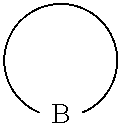
is a BODIPY ligand system;
X is a halogen; and
R1 is a substituted or unsubstituted C1-20 alkoxy or a substituted or unsubstituted C1-20 alkynyl.


wherein:
each of R2, R3, R4, R5, R6, R7, and R8 is independently selected from the group consisting of: H, hydroxyl, amino, halo, CF3, OCF3, CN, SO2R9, (CH2)nOR9, C(═O)NR9R10, SO2NR9R10, NR9SO2R10, COOR9, NR9C(═O)R10, NR9C(═O)NR10, SO2R9, (CH2)nC(═O)NR9R10, (CH2)nSO2NR9R10, (CH2)nNR9SO2R10, (CH2)nCOOR9, (CH2)nNR9C(═O)R10, (CH2)nNR9C(═O)NR10, (CH2)nOR9, alkoxy, substituted or unsubstituted alkyl, substituted or unsubstituted alkenyl, substituted or unsubstituted alkynyl, substituted or unsubstituted cycloalkyl, substituted or unsubstituted heterocycloalkyl, substituted or unsubstituted aryl, substituted or unsubstituted heteroaryl, a group reactive with a biologically active molecule, and a detectable agent;
each n is an integer from 1 to 10;
each R9 and R10 is independently selected from the group consisting of: H, CF3, substituted or unsubstituted alkyl, substituted or unsubstituted alkenyl, substituted or unsubstituted alkynyl, substituted or unsubstituted cycloalkyl, substituted or unsubstituted heterocycloalkyl, substituted or unsubstituted aryl, substituted or unsubstituted heteroaryl, a group reactive with a biologically active molecule, and a detectable agent.
- 5,5-difluoro-1,3,7,9,10-pentamethyl-5H-dipyrrolo[1,2-c:2′,1′-f][1,3,2]diazaborinin-4-ium-5-uide;
- 4,4-Difluoro-1,3,5,7-Tetramethyl-4-Bora-3a,4a-Diaza-s-Indacene-8-Propionic Acid;
- 4,4-Difluoro-5,7-Dimethyl-4-Bora-3a,4a-Diaza-s-Indacene-3-Propionic Acid;
- 4,4-Difluoro-5,7-Dimethyl-4-Bora-3a,4a-Diaza-s-Indacene-3-Pentanoic Acid;
- 6-((4,4-Difluoro-5,7-Dimethyl-4-Bora-3a,4a-Diaza-s-Indacene-3-Propionyl)amino)hexanoic Acid;
- 4,4-Difluoro-5-Phenyl-4-Bora-3a,4a-Diaza-s-Indacene-3-Propionic Acid;
- 4,4-Difluoro-5,7-Diphenyl-4-Bora-3a,4a-Diaza-s-Indacene-3-Propionic Acid;
- 6-((4,4-Difluoro-1,3-Dimethyl-5-(4-Methoxyphenyl)-4-Bora-3a,4a-Diaza-s-Indacene-2-Propionyl)amino)hexanoic Acid;
- 4,4-Difluoro-5-(2-Thienyl)-4-Bora-3a,4a-Diaza-s-Indacene-3-Propionic Acid;
- 4,4-Difluoro-5-Styryl-4-Bora-3a,4a-Diaza-s-Indacene-3-Propionic Acid;
- 4,4-Difluoro-5-(2-Pyrrolyl)-4-Bora-3a,4a-Diaza-s-Indacene-3-Propionic Acid;
- 4,4-Difluoro-5-(4-Phenyl-1,3-Butadienyl)-4-Bora-3a,4a-Diaza-s-Indacene-3-Propionic Acid;
- 6-(((4-(4,4-Difluoro-5-(2-Thienyl)-4-Bora-3a,4a-Diaza-s-Indacene-3-yl)phenoxy)acetyl)amino)hexanoic Acid;
- 6-(((4,4-Difluoro-5-(2-Thienyl)-4-Bora-3a,4a-Diaza-s-Indacene-3-yl)styryloxy)acetyl)aminohexanoic Acid;
- 6-(((4,4-Difluoro-5-(2-Pyrrolyl)-4-Bora-3a,4a-Diaza-s-Indacene-3-yl)Styryloxy)Acetyl)Aminohexanoic Acid;
- 5-butyl-4,4-difluoro-4-bora-3a,4a-diaza-s-indacene-3-nonanoic acid;
- 5-decyl-4,4-difluoro-4-bora-3a,4a-diaza-s-indacene-3-propionic acid;
- 4,4-difluoro-5,7-dimethyl-4-bora-3a,4a-diaza-s-indacene-3-dodecanoic acid;
- 4,4-difluoro-5,7-dimethyl-4-bora-3a,4a-diaza-s-indacene-3-hexadecanoic acid;
- 4,4-difluoro-5,7-dimethyl-4-bora-3a,4a-diaza-s-indacene-3-pentanoic acid;
- 4,4-difluoro-5,7-dimethyl-4-bora-3a,4a-diaza-s-indacene-3-undecanoic acid;
- 4,4-difluoro-5,7-diphenyl-4-bora-3a,4a-diaza-s-indacene-3-dodecanoic acid;
- 4,4-difluoro-5-methyl-4-bora-3a,4a-diaza-s-indacene-3-dodecanoic acid;
- 4,4-difluoro-5-octyl-4-bora-3a,4a-diaza-s-indacene-3-pentanoic acid;
- 4,4-difluoro-5-(4-phenyl-1,3-butadienyl)-4-bora-3a,4a-diaza-s-indacene-3-pentanoic acid;
- 4,4-difluoro-5-(4-phenyl-1,3-butadienyl)-4-bora-3a,4a-diaza-s-indacene-3-undecanoic acid;
- 4,4-difluoro-5-(2-thienyl)-4-bora-3a,4a-diaza-s-indacene-3-dodecanoic acid;
- 2-(4,4-difluoro-5,7-dimethyl-4-bora-3a,4a-diaza-s-indacene-3-dodecanoyl)-1-hexadecanoyl-sn-glycero-3-phosphocholine;
- 2-(4,4-difluoro-5,7-dimethyl-4-bora-3a,4a-diaza-s-indacene-3-pentanoyl)-1-hexadecanoyl-sn-glycero-3-phosphocholine;
- 2-(4,4-difluoro-5-methyl-4-bora-3a,4a-diaza-s-indacene-3-dodecanoyl)-1-hexadecanoyl-sn-glycero-3-phosphocholine;
- 2-(4,4-difluoro-5-octyl-4-bora-3a,4a-diaza-s-indacene-3-pentanoyl)-1-hexadecanoyl-sn-glycero-3-phosphocholine;
- 2-(4,4-difluoro-5-(4-phenyl-1,3-butadienyl)-4-bora-3a,4a-diaza-s-indacene-3-pentanoyl)-1-hexadecanoyl-sn-glycero-3-phosphocholine;
- 2-(4,4-difluoro-5,7-dimethyl-4-bora-3a,4a-diaza-s-indacene-3-pentanoyl)-1-hexadecanoyl-sn-glycero-3-phosphate;
- N-(4,4-difluoro-5,7-dimethyl-4-bora-3a,4a-diaza-s-indacene-3-propionyl)-1,2-dihexadecanoyl-sn-glycero-3-phosphoethanolamine;
- N-(4,4-difluoro-5,7-dimethyl-4-bora-3a,4a-diaza-s-indacene-3-propionyl)-1,2-dihexanoyl-sn-glycero-3-phosphoethanolamine
- cholesteryl 4,4-difluoro-5,7-dimethyl-4-bora-3a,4a-diaza-s-indacene-3-dodecanoate;
- cholesteryl 4,4-difluoro-5-(4-methoxyphenyl)-4-bora-3a,4a-diaza-s-indacene-3-undecanoate;
- cholesteryl 4,4-difluoro-5-(2-pyrrolyl)-4-bora-3a,4a-diaza-s-indacene-3-undecanoate;
- 4,4-difluoro-1,3,5,7,8-pentamethyl-4-bora-3a,4a-diaza-s-indacene;
- 4,4-difluoro-1,3,5,7-tetramethyl-4-bora-3a,4a-diaza-s-indacene;
- N-(4,4-Difluoro-5,7-Dimethyl-4-Bora-3a,4a-Diaza-s-Indacene-3-yl)Methyl)Iodoacetamide;
- N-(4,4-Difluoro-1,3,5,7-Tetramethyl-4-Bora-3a,4a-Diaza-s-Indacene-2-yl)Iodoacetamide;
- 8-Bromomethyl-4,4-Difluoro-1,3,5,7-Tetramethyl-4-Bora-3a,4a-Diaza-s-Indacene
or pharmaceutically acceptable salts and/or ester derivatives thereof. In some embodiments, a pharmaceutically acceptable salt includes sodium, diammonium, and triethylammonium. In some embodiments, a pharmaceutically acceptable ester derivative includes succinimidyl ester and sulfosuccinimidyl ester derivatives.


is a BODIPY ligand system and X are defined as above; and


with a compound W, as described above, to produce a compound of Formula (V).

or a pharmaceutically acceptable salt thereof,
wherein

is a BODIPY ligand system and X is a halogen as defined above; and R1 is a substituted or unsubstituted C1-20 alkoxy or a substituted or unsubstituted C1-20 alkynyl. In some embodiments, R1 is an unsubstituted C1-20 alkyl (e.g., CH3). In some embodiments, R1 is a —O-L-Z moiety as described above. In other embodiments, R1 is a —(C2)-L-Z moiety as described previously. In some embodiments, R1 is a radiolabeled C1-20 alkoxy (e.g., a 13C labeled alkoxy compound such as O—13CH3).

wherein:

is a BODIPY ligand system;
X is a halogen;
L is absent or a linker; and
Z is selected from the group consisting of: a group reactive with a biologically active molecule and a detectable agent; as defined above.


Pharmaceutical Compositions


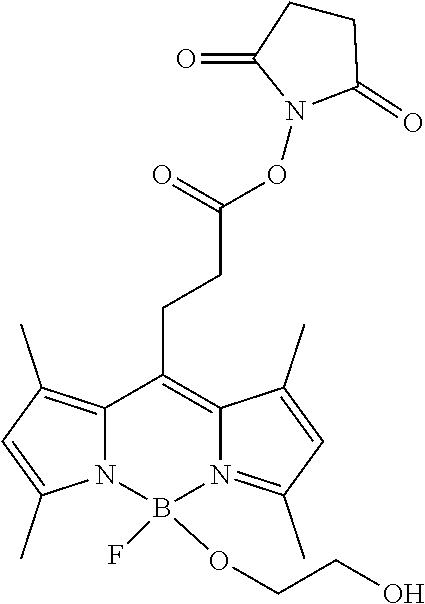


| TABLE 1 | ||||||
| Structure | LogP | Solubility | Φfl | λmaxem | λmaxabs | ε |
 |
1.4 | 24 μM | 0.327 | 520 nma | 492 nma | 70,905a |
 |
n/a | 3 | 510 nma 513 nmc | 491 nma 495 nmb | 54,758a 79,613b | |
 |
2.2 | 122 | 0.472 | 504 nma | 491 nma 495 nmb | 66,313a 77,175b |
 |
2.2 | 48 | 0.352 | 504 nma | 491 nma | 66,703a |
 |
0.32 | 450 | 492 nma | 50,624a | ||
 |
~2.4 | n/a | 0.349 | 506 nma | 491 nma | 71,280a |
 |
n/a | 3 | 513 nmc | 457 nma (broad) 494 nmc | 10,256a 86,549c | |
| aValue measured in ddH2O | ||||||
| bValue measured in methanol | ||||||
| cValue measured in DMSO | ||||||


Claims (12)


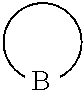


Priority Applications (1)
| Application Number | Priority Date | Filing Date | Title |
|---|---|---|---|
| US16/017,638 US10696695B2 (en) | 2012-10-01 | 2018-06-25 | BODIPY dyes for biological imaging |
Applications Claiming Priority (5)
| Application Number | Priority Date | Filing Date | Title |
|---|---|---|---|
| US201261708277P | 2012-10-01 | 2012-10-01 | |
| US201261708894P | 2012-10-02 | 2012-10-02 | |
| PCT/US2013/062850 WO2014055505A1 (en) | 2012-10-01 | 2013-10-01 | Bodipy dyes for biological imaging |
| US201514432567A | 2015-03-31 | 2015-03-31 | |
| US16/017,638 US10696695B2 (en) | 2012-10-01 | 2018-06-25 | BODIPY dyes for biological imaging |
Related Parent Applications (2)
| Application Number | Title | Priority Date | Filing Date |
|---|---|---|---|
| US14/432,567 Continuation US10005793B2 (en) | 2012-10-01 | 2013-10-01 | Bodipy dyes for biological imaging |
| PCT/US2013/062850 Continuation WO2014055505A1 (en) | 2012-10-01 | 2013-10-01 | Bodipy dyes for biological imaging |
Publications (2)
| Publication Number | Publication Date |
|---|---|
| US20190127394A1 US20190127394A1 (en) | 2019-05-02 |
| US10696695B2 true US10696695B2 (en) | 2020-06-30 |
Family
ID=50435364
Family Applications (2)
| Application Number | Title | Priority Date | Filing Date |
|---|---|---|---|
| US14/432,567 Active US10005793B2 (en) | 2012-10-01 | 2013-10-01 | Bodipy dyes for biological imaging |
| US16/017,638 Active US10696695B2 (en) | 2012-10-01 | 2018-06-25 | BODIPY dyes for biological imaging |
Family Applications Before (1)
| Application Number | Title | Priority Date | Filing Date |
|---|---|---|---|
| US14/432,567 Active US10005793B2 (en) | 2012-10-01 | 2013-10-01 | Bodipy dyes for biological imaging |
Country Status (2)
| Country | Link |
|---|---|
| US (2) | US10005793B2 (en) |
| WO (1) | WO2014055505A1 (en) |
Families Citing this family (11)
| Publication number | Priority date | Publication date | Assignee | Title |
|---|---|---|---|---|
| US20160272657A1 (en) | 2013-11-20 | 2016-09-22 | Christopher J. Ziegler | Highly fluorescent pyrrole-bf2 chromophores |
| US10055793B1 (en) | 2014-04-25 | 2018-08-21 | State Farm Mutual Automobile Insurance Company | Systems and methods for managing insurance for devices located within a property based on insurance-related events |
| US10515372B1 (en) | 2014-10-07 | 2019-12-24 | State Farm Mutual Automobile Insurance Company | Systems and methods for managing building code compliance for a property |
| EP3081616B1 (en) | 2015-04-17 | 2018-06-06 | Universidad de Castilla La Mancha | White light emitting zirconium-based mofs |
| CN105238092B (en) * | 2015-10-30 | 2017-06-23 | 东莞理工学院 | A kind of organic dye sensitized dose of BODIPY classes of 2,6 substitutions and preparation method thereof |
| US10590155B2 (en) | 2016-07-15 | 2020-03-17 | Arizona Board Of Regents On Behalf Of Arizona State University | Mitochondria-targeting fluorescent potassium+ sensor and method of making the same |
| GB2570055B (en) * | 2016-07-22 | 2021-07-21 | Synaptive Medical Inc | Method for multimodal tissue imaging based on resonance Raman effect on metal based MRI contrast agents and method for ionizing laser plumes |
| WO2018175628A1 (en) * | 2017-03-21 | 2018-09-27 | California Institute Of Technology | Biocatalytic synthesis of strained carbocycles |
| CN108997402A (en) * | 2018-08-31 | 2018-12-14 | 四川大学华西医院 | The preparation method of fluborofluorine-tetrazine bioorthogonal probe |
| JP7344982B2 (en) * | 2019-11-21 | 2023-09-14 | 富士フイルム株式会社 | Compounds and fluorescently labeled biological substances using them |
| WO2023250342A2 (en) * | 2022-06-22 | 2023-12-28 | Quantum-Si Incorporated | Cyclopropene phosphoramidites and conjugates thereof |
Citations (6)
| Publication number | Priority date | Publication date | Assignee | Title |
|---|---|---|---|---|
| JPH1143491A (en) | 1997-07-30 | 1999-02-16 | Mitsui Chem Inc | Pyromethene metal chelate compound and optical recording medium using the same |
| US6106999A (en) | 1997-08-12 | 2000-08-22 | Mitsui Chemicals | Photosensitizer, visible light curable resin composition using the same, and use of the composition |
| US20050249668A1 (en) | 2002-03-29 | 2005-11-10 | Ralph Weissleder | Nir-fluorescent cyanine dyes, their synthesis and biological use |
| US20090176313A1 (en) | 2006-04-28 | 2009-07-09 | Keio University | Fluorescent Compound and Labeling Agent Comprising the Same |
| US20110287473A1 (en) | 2008-12-29 | 2011-11-24 | Jean De Barry | Novel Fluorescent Boron-Substituted Dipyrromethenes and Use Thereof for Diagnosis |
| US10005703B2 (en) * | 2015-07-02 | 2018-06-26 | Saudi Arabian Oil Company | Propylene production using a mesoporous silica foam metathesis catalyst |
-
2013
- 2013-10-01 US US14/432,567 patent/US10005793B2/en active Active
- 2013-10-01 WO PCT/US2013/062850 patent/WO2014055505A1/en not_active Ceased
-
2018
- 2018-06-25 US US16/017,638 patent/US10696695B2/en active Active
Patent Citations (6)
| Publication number | Priority date | Publication date | Assignee | Title |
|---|---|---|---|---|
| JPH1143491A (en) | 1997-07-30 | 1999-02-16 | Mitsui Chem Inc | Pyromethene metal chelate compound and optical recording medium using the same |
| US6106999A (en) | 1997-08-12 | 2000-08-22 | Mitsui Chemicals | Photosensitizer, visible light curable resin composition using the same, and use of the composition |
| US20050249668A1 (en) | 2002-03-29 | 2005-11-10 | Ralph Weissleder | Nir-fluorescent cyanine dyes, their synthesis and biological use |
| US20090176313A1 (en) | 2006-04-28 | 2009-07-09 | Keio University | Fluorescent Compound and Labeling Agent Comprising the Same |
| US20110287473A1 (en) | 2008-12-29 | 2011-11-24 | Jean De Barry | Novel Fluorescent Boron-Substituted Dipyrromethenes and Use Thereof for Diagnosis |
| US10005703B2 (en) * | 2015-07-02 | 2018-06-26 | Saudi Arabian Oil Company | Propylene production using a mesoporous silica foam metathesis catalyst |
Non-Patent Citations (27)
| Title |
|---|
| Berge et al., "Pharmaceutical Salts," J Pharm Sci., Jan. 1977;66(1):1-19. |
| Blom, et al., "Preparative LC-MS Purification: Improved Compound-Specific Method Optimization," J Comb Chem. Nov.-Dec. 2004;6(6):874-83. |
| Devaraj and Weissleder, "Biomedical applications of tetrazine cycloadditions," Acc Chem Res., Sep. 20, 2011;44(9):816-27 (Author Manuscript). |
| Ehrenschwender et al. Nucleic Acids Symposium Series (2008), 52(1), 349-350; CA 150: 369191, 2008. CAPLUS Abstract provided. |
| Haun et al., "Bioorthogonal chemistry amplifies nanoparticle binding and enhances the sensitivity of cell detection," Nat Nanotechnol., 2010, 5(9):660-665 (Author Manuscript). |
| Hendricks et al., "Synthesis of [18F]BODIPY: bifunctional reporter for hybrid optical/positron emission tomography imaging," Angew Chem Int Ed Engl., May 7, 2012;51(19):4603-6 (Author Manuscript). |
| Hudnall and Gabbi, "A BODIPY boronium cation for the sensing of fluoride ions," Chem Commun. (Camb)., Oct. 14, 2008;(38):4596-7. |
| International Preliminary Report on Patentability in International Application PCT/US2013/062850, dated Apr. 7, 2015, 12 pages. |
| International Search Report and Written Opinion dated Feb. 27, 2014 in international application No. PCT/US2013/062850, 7 pgs. |
| JP 110434491,(H09-203662),Feb. 14, 1999; English Transaltion from JPO site provided. * |
| Lmai et al. JP 20000003038, Jan. 7, 2000; CA 132: 85909, 2000. CAPLUS Abstract provided. |
| Loudet and Burgess, "BODIPY dyes and their derivatives: syntheses and spectroscopic properties," Chem Rev., Nov. 2007;107(11):4891-932. |
| Nakagawa et al. JP 2002169275, Jun. 14, 2002; CA 137: 39315, 2002. CAPLUS Abstract provided. |
| Nishimoto et al. JP 11322744, Nov. 24, 1991; CA 132: 7580, 1999. CAPLUS Abstract provided. |
| Ogiso et al. JP 2002236360, Aug. 23, 2002; CA 137: 192756, 2002. CAPLUS Abstract provided. |
| Peturssion et al., "Protecting Groups in Carbohydrate Chemistry," J Chem. Educ., 74(11):1297-1303 (1997). |
| Pimlott SL., Nucl. Med. Commun. 26(3): 183-188, 2005; PubMed Abstract provided. |
| Ravin, "Performulation," Remington's Pharmaceutical Sciences, 17th ed., 1985, pp. 1409-1418. |
| Reiner et al., "Synthesis and in vivo imaging of a 18F-labeled PARP1 inhibitor using a chemically orthogonal scavenger-assisted high-performance method," Angew Chem Int Ed Engl., Feb. 18, 2011;50(8):1922-5 (Author Manuscript). |
| Sletten and Bertozzi, "Bioorthogonal chemistry: fishing for selectivity in a sea of functionality," Angew Chem Int Ed Engl., 2009;48(38):6974-98 (Author Manuscript). |
| Smithen et al. J. Org. Chem. 2012, 77, 3439-3453. |
| Tahtaoui et al., "Convenient method to access new 4,4-dialkoxy- and 4,4-diaryloxy-diaza-s-indacene dyes: Synthesis and spectroscopic evaluation," J Org Chem., Jan. 5, 2007;72(1):269-72. |
| Taizo et al. JP 2000029213, Jan. 28, 2000; CA 132: 130023, 2000. CAPLUS Abstract provided. |
| Ulrich et al., "The chemistry of fluorescent bodipy dyes: versatility unsurpassed," Angew Chem Int Ed Engl., 2008;47(7):1184-201. |
| Wang et al., "Small-molecule reagents for cellular pull-down experiments," Bioconjug Chem., Mar. 2008;19(3):585-7. |
| Yang et al., "Live-cell imaging of cyclopropene tags with fluorogenic tetrazine cycloadditions," Angew Chem Int Ed Engl., Jul. 23, 2012;51(30):7476-9 (Author Manuscript). |
| Ziessel et al., "The chemistry of Bodipy: A new El Dorado for fluorescence tools," New J Chem., 2007, 31:496-501. |
Also Published As
| Publication number | Publication date |
|---|---|
| US20150252061A1 (en) | 2015-09-10 |
| US10005793B2 (en) | 2018-06-26 |
| US20190127394A1 (en) | 2019-05-02 |
| WO2014055505A1 (en) | 2014-04-10 |
Similar Documents
| Publication | Publication Date | Title |
|---|---|---|
| US10005793B2 (en) | Bodipy dyes for biological imaging | |
| EP3755321B1 (en) | Chemical conjugates of evans blue derivatives and their use as radiotherapy and imaging agents for targeting prostate cancer | |
| Chansaenpak et al. | [18F]-Group 13 fluoride derivatives as radiotracers for positron emission tomography | |
| US11357873B2 (en) | Chiral cyclen compounds and their uses | |
| Carroll et al. | Bioorthogonal chemistry for pre-targeted molecular imaging–progress and prospects | |
| Vanasschen et al. | Novel CDTA-based, bifunctional chelators for stable and inert MnII complexation: synthesis and physicochemical characterization | |
| US20200188535A1 (en) | Bioorthogonal Turn-on Probes | |
| US20130189185A1 (en) | Boron-Based Dual Imaging Probes, Compositions and Methods for Rapid Aqueous F-18 Labeling, and Imaging Methods Using Same | |
| JP5709841B2 (en) | Labeled molecular imaging agent, production method and use method | |
| EP3215586B1 (en) | Selective cancer tracking eradicator and the uses thereof | |
| Chansaenpak et al. | Synthesis and in vivo stability studies of [18F]-zwitterionic phosphonium aryltrifluoroborate/indomethacin conjugates | |
| CN116271114B (en) | A lipid assembly loaded with 5-aminolevulinic acid, its preparation method and application | |
| Diana et al. | Two series of benzofuran and benzodifuran chelating chromophores with DR/NIR emission and anticancer activity | |
| Guillou et al. | Picolinate-appended tacn complexes for bimodal imaging: Radiolabeling, relaxivity, photophysical and electrochemical studies | |
| Bernhard et al. | Harnessing medically relevant metals onto water-soluble subphthalocyanines: towards bimodal imaging and theranostics | |
| Ramogida et al. | Novel “bi-modal” H2dedpa derivatives for radio-and fluorescence imaging | |
| CN117263829A (en) | A kind of fluorosulfonate compound and preparation method and application thereof | |
| Lo et al. | Radiolabelling Pt-based quadruplex DNA binders via click chemistry | |
| US20250152758A1 (en) | Probe for nuclear medical testing | |
| Baguet et al. | Radiosynthesis, in vitro and preliminary in vivo evaluation of the novel glutamine derived PET tracers [18F] fluorophenylglutamine and [18F] fluorobiphenylglutamine | |
| US20110021765A1 (en) | Fluorinated lanthanide probes for 19f magnetic resonance applications | |
| EP3831888B1 (en) | Drug that reacts with acrolein, use thereof and novel compound | |
| He et al. | Development of a multifunctional platform for near-infrared imaging and targeted radionuclide therapy for tumors | |
| US9840522B2 (en) | Multi-modal bioprobe for bladder cancer imaging and photodynamic therapy | |
| TWI888094B (en) | Pegylated boronotryptophan derivative and preparation process thereof, pharmaceutical composition comprising pegylated boronotryptophan derivative and use of pegylated boronotryptophan derivative for treating tumor and for pet scanning for assessing pharmacokinetics for boron neutron capture therapy of tumor and quantifying drug concentrations to calculate pharmacokinetics |
Legal Events
| Date | Code | Title | Description |
|---|---|---|---|
| FEPP | Fee payment procedure |
Free format text: ENTITY STATUS SET TO UNDISCOUNTED (ORIGINAL EVENT CODE: BIG.); ENTITY STATUS OF PATENT OWNER: SMALL ENTITY |
|
| FEPP | Fee payment procedure |
Free format text: ENTITY STATUS SET TO SMALL (ORIGINAL EVENT CODE: SMAL); ENTITY STATUS OF PATENT OWNER: SMALL ENTITY |
|
| STPP | Information on status: patent application and granting procedure in general |
Free format text: DOCKETED NEW CASE - READY FOR EXAMINATION |
|
| AS | Assignment |
Owner name: THE GENERAL HOSPITAL CORPORATION, MASSACHUSETTS Free format text: ASSIGNMENT OF ASSIGNORS INTEREST;ASSIGNORS:MAZITSCHEK, RALPH;COURTIS, ALEXANDRA M.;HENDRICKS, JAMES ADAM;SIGNING DATES FROM 20150623 TO 20150729;REEL/FRAME:048132/0445 |
|
| STPP | Information on status: patent application and granting procedure in general |
Free format text: NON FINAL ACTION MAILED |
|
| STPP | Information on status: patent application and granting procedure in general |
Free format text: NOTICE OF ALLOWANCE MAILED -- APPLICATION RECEIVED IN OFFICE OF PUBLICATIONS |
|
| STCF | Information on status: patent grant |
Free format text: PATENTED CASE |
|
| CC | Certificate of correction | ||
| MAFP | Maintenance fee payment |
Free format text: PAYMENT OF MAINTENANCE FEE, 4TH YR, SMALL ENTITY (ORIGINAL EVENT CODE: M2551); ENTITY STATUS OF PATENT OWNER: SMALL ENTITY Year of fee payment: 4 |