US10660340B2 - Complex of mutualistic microbes designed to increase plant productivity - Google Patents
Complex of mutualistic microbes designed to increase plant productivity Download PDFInfo
- Publication number
- US10660340B2 US10660340B2 US15/334,793 US201615334793A US10660340B2 US 10660340 B2 US10660340 B2 US 10660340B2 US 201615334793 A US201615334793 A US 201615334793A US 10660340 B2 US10660340 B2 US 10660340B2
- Authority
- US
- United States
- Prior art keywords
- strain
- bicolor
- composition
- spp
- populus
- Prior art date
- Legal status (The legal status is an assumption and is not a legal conclusion. Google has not performed a legal analysis and makes no representation as to the accuracy of the status listed.)
- Active, expires
Links
Images




Classifications
-
- C—CHEMISTRY; METALLURGY
- C12—BIOCHEMISTRY; BEER; SPIRITS; WINE; VINEGAR; MICROBIOLOGY; ENZYMOLOGY; MUTATION OR GENETIC ENGINEERING
- C12N—MICROORGANISMS OR ENZYMES; COMPOSITIONS THEREOF; PROPAGATING, PRESERVING, OR MAINTAINING MICROORGANISMS; MUTATION OR GENETIC ENGINEERING; CULTURE MEDIA
- C12N1/00—Microorganisms; Compositions thereof; Processes of propagating, maintaining or preserving microorganisms or compositions thereof; Processes of preparing or isolating a composition containing a microorganism; Culture media therefor
- C12N1/20—Bacteria; Culture media therefor
- C12N1/205—Bacterial isolates
-
- A—HUMAN NECESSITIES
- A01—AGRICULTURE; FORESTRY; ANIMAL HUSBANDRY; HUNTING; TRAPPING; FISHING
- A01N—PRESERVATION OF BODIES OF HUMANS OR ANIMALS OR PLANTS OR PARTS THEREOF; BIOCIDES, e.g. AS DISINFECTANTS, AS PESTICIDES OR AS HERBICIDES; PEST REPELLANTS OR ATTRACTANTS; PLANT GROWTH REGULATORS
- A01N63/00—Biocides, pest repellants or attractants, or plant growth regulators containing microorganisms, viruses, microbial fungi, animals or substances produced by, or obtained from, microorganisms, viruses, microbial fungi or animals, e.g. enzymes or fermentates
-
- A—HUMAN NECESSITIES
- A01—AGRICULTURE; FORESTRY; ANIMAL HUSBANDRY; HUNTING; TRAPPING; FISHING
- A01N—PRESERVATION OF BODIES OF HUMANS OR ANIMALS OR PLANTS OR PARTS THEREOF; BIOCIDES, e.g. AS DISINFECTANTS, AS PESTICIDES OR AS HERBICIDES; PEST REPELLANTS OR ATTRACTANTS; PLANT GROWTH REGULATORS
- A01N63/00—Biocides, pest repellants or attractants, or plant growth regulators containing microorganisms, viruses, microbial fungi, animals or substances produced by, or obtained from, microorganisms, viruses, microbial fungi or animals, e.g. enzymes or fermentates
- A01N63/20—Bacteria; Substances produced thereby or obtained therefrom
- A01N63/27—Pseudomonas
-
- A—HUMAN NECESSITIES
- A01—AGRICULTURE; FORESTRY; ANIMAL HUSBANDRY; HUNTING; TRAPPING; FISHING
- A01N—PRESERVATION OF BODIES OF HUMANS OR ANIMALS OR PLANTS OR PARTS THEREOF; BIOCIDES, e.g. AS DISINFECTANTS, AS PESTICIDES OR AS HERBICIDES; PEST REPELLANTS OR ATTRACTANTS; PLANT GROWTH REGULATORS
- A01N63/00—Biocides, pest repellants or attractants, or plant growth regulators containing microorganisms, viruses, microbial fungi, animals or substances produced by, or obtained from, microorganisms, viruses, microbial fungi or animals, e.g. enzymes or fermentates
- A01N63/30—Microbial fungi; Substances produced thereby or obtained therefrom
-
- C—CHEMISTRY; METALLURGY
- C05—FERTILISERS; MANUFACTURE THEREOF
- C05F—ORGANIC FERTILISERS NOT COVERED BY SUBCLASSES C05B, C05C, e.g. FERTILISERS FROM WASTE OR REFUSE
- C05F11/00—Other organic fertilisers
- C05F11/08—Organic fertilisers containing added bacterial cultures, mycelia or the like
-
- C—CHEMISTRY; METALLURGY
- C12—BIOCHEMISTRY; BEER; SPIRITS; WINE; VINEGAR; MICROBIOLOGY; ENZYMOLOGY; MUTATION OR GENETIC ENGINEERING
- C12N—MICROORGANISMS OR ENZYMES; COMPOSITIONS THEREOF; PROPAGATING, PRESERVING, OR MAINTAINING MICROORGANISMS; MUTATION OR GENETIC ENGINEERING; CULTURE MEDIA
- C12N1/00—Microorganisms; Compositions thereof; Processes of propagating, maintaining or preserving microorganisms or compositions thereof; Processes of preparing or isolating a composition containing a microorganism; Culture media therefor
- C12N1/14—Fungi; Culture media therefor
-
- C—CHEMISTRY; METALLURGY
- C12—BIOCHEMISTRY; BEER; SPIRITS; WINE; VINEGAR; MICROBIOLOGY; ENZYMOLOGY; MUTATION OR GENETIC ENGINEERING
- C12N—MICROORGANISMS OR ENZYMES; COMPOSITIONS THEREOF; PROPAGATING, PRESERVING, OR MAINTAINING MICROORGANISMS; MUTATION OR GENETIC ENGINEERING; CULTURE MEDIA
- C12N1/00—Microorganisms; Compositions thereof; Processes of propagating, maintaining or preserving microorganisms or compositions thereof; Processes of preparing or isolating a composition containing a microorganism; Culture media therefor
- C12N1/20—Bacteria; Culture media therefor
-
- C12R1/39—
-
- C—CHEMISTRY; METALLURGY
- C12—BIOCHEMISTRY; BEER; SPIRITS; WINE; VINEGAR; MICROBIOLOGY; ENZYMOLOGY; MUTATION OR GENETIC ENGINEERING
- C12R—INDEXING SCHEME ASSOCIATED WITH SUBCLASSES C12C - C12Q, RELATING TO MICROORGANISMS
- C12R2001/00—Microorganisms ; Processes using microorganisms
- C12R2001/01—Bacteria or Actinomycetales ; using bacteria or Actinomycetales
- C12R2001/38—Pseudomonas
- C12R2001/39—Pseudomonas fluorescens
Definitions
- the ectomycorrhizal (ECM) symbiosis is the most common association in forest under boreal and temperate climates. Plants harbor a diverse array of asymptomatic fungal foliar and root endosymbionts and have been recovered from all examined plant taxa to date.
- Concomitantly native bacterial isolates having a plant growth promoting effect and enhancing the fungal-plant beneficial interaction have been characterized as well.
- Populus is a dominant perennial component of temperate forests having the broadest geographic distribution of any North American tree genus, and is a woody perennial model with high value in pulp, paper and biofuel industries. Populus is cultivated worldwide for pulp and paper, veneer, packing material, engineered wood products (e.g., oriented strand board), lumber, and has recently emerged as the preeminent fast-growing woody crop for bioenergy research. Populus can be grown on economically marginal agricultural land thereby minimizing the competition between food and fuel production. Moreover, Populus is known to associate with a wide variety of root symbiotic microbes. Populus is also one of the few plants known to be colonized by both endo- and ectomycorrhizal fungi, making it a unique model system for the study of interactions between plants and microorganisms.
- Corn Zea mays , also known as maize
- Corn is the most widely grown grain crop throughout the Americas, and a food crop model for bioethanol production in the United States.
- the symbiotic fungus Laccaria bicolor is a member of Hydnangiaceae (Basidiomycota, Agaricomycotina, Agaricomycetes, Agaricomycetidae, Agaricales), a large family of ectomycorrhizal and saprotrophic basidiomycetes.
- Piriformospora indica is a cultivable endophyte that colonizes roots.
- the symbiotic fungus Hebeloma is a member of Hymenogastraceae (Basidiomycota, Agaricomycotina, Agaricomycetes, Agaricales, Hymenogastraceae), a large family of ectomycorrhizal and saprotrophic basidiomycetes with a wide range of tree-hosts, and can be found in most woodland ecosystems worldwide.
- the symbiotic fungus Cenoccocum is an ascomycetous fungus placed into the Dothideomycetes, where it represents the only known ectomycorrhizal species within this large and ecologically diverse class of Ascomycota. It is one of the most common and globally abundant genera of ectomycorrhizal fungi, forming black ectomycorrhizas with darkly pigmented hyphae. It has a broad host- and habitat range.
- Microbial pathogens like Atractiella (Atr) and Neonectria , are detrimental to plant growth. Effective and eco-friendly ways are needed to combat pathogenic microorganisms. Currently the chemical compounds to combat pathogens are also damaging to the environment and possibly human health. The current invention offers a solution with a composition made up of benign and natural microorganisms.
- Another important aspect of plant growth is the ability to adapt to arid or drought conditions, which is a trait known as drought tolerance/resistance.
- Arid conditions can lower the yield of many crops, causing great financial losses. Therefore, methods to increase drought tolerance/resistance in plants are needed.
- the symbiotic microorganism compositions disclosed herein help plants tolerate dry conditions better.
- FIG. 1 Root colonization rates of different L. bicolor strains on different Poplar genotypes.
- Different Poplar genotypes (particularly poplar genotype 52 225 ( P. deltoides ), poplar genotype D124 (hybrid TXD), poplar genotype ILL 101 (hybrid TXD) and poplar genotype 93 968 ( P. trichocarpa ) were treated with various L. bicolor strains (particularly Lb 445.79, Lb 559.96, Lb 594.96, Lb 560.89, Lb 669.97, Lb 561.97, and Lb S238N) and root colonization percent was measured.
- poplar genotype 52 225 P. deltoides
- poplar genotype D124 poplar genotype D124
- poplar genotype ILL 101 poplar genotype 93 968
- poplar genotype 93 968 P. trichocarpa
- Lb 445.79, Lb 559.96, Lb 594.96, Lb 560.89, Lb 669.97, Lb 561.97, and Lb S238N gave superior root colonization across all poplar genotypes tested.
- FIG. 2 Pseudomonas strain GM41 enhances plant growth when given with different L. bicolor strains. Populus trichocarpa was incubated either with different L. bicolor strains alone (particularly Lb 445.79, Lb 559.96, Lb 594.96, Lb 560.89, Lb 669.97, Lb 561.97, or Lb S238N) (left, labeled a-g) or in combination with Pseudomonas fluorescens strain GM41 (right, labeled a-g). Addition of GM41 significantly enhances the above-ground fresh biomass of P. trichocarpa.
- FIG. 3 Biomass production of corn plants treated with pathogenic or beneficial fungi. Bars from left to right represent biomasses of corn plants treated with Atractiella (Atr), Atractiella and P. indica (Pir), Atractiella and L. bicolor (Lac), Atractiella and P. indica (Pir) and L. bicolor (Lac), Control, and finally Neonectria . Control means not fungal inoculation occurred; Atractiella (Atr) and Neonectria are pathogenic to corn, while P. indica (Pir) and L. bicolor (Lac) significantly increase total plant biomass (roots and shoots) they also appear to rescue plants from colonization by a pathogenic fungus.
- Atractiella Atractiella and P. indica
- Lac Atractiella and L. bicolor
- FIG. 4 Metabolites affected by beneficial fungi Lac and Pir. Potential causal mechanisms for results found in FIG. 2 are identified in this table. When both Lac and Pir are present in combination with the pathogen metabolites responsible for increase pest resistance are up-regulated compared to control treatments. Interestingly these inhibitory metabolites are also involved in pathways leading to herbivore resistance and/or deterrence.
- FIG. 5 Corn growth in growth chamber, responding to inoculation with pathogenic or mutualistic fungi. Pathogenic fungal inoculations on left hand side of picture; mutualistic inoculation treatments on right hand side of picture.
- FIG. 6 Poplar growth in response to commensalistic, mutualistic, and pathogenic (antagonistic) fungi under greenhouse conditions. Plants treated with commensalistic, mutualistic or pathogenic fungi are grown in the green house. Plants are randomly arranged.
- FIGS. 7A-7C Effects of microbial inoculants in Populus grown over 3 months under well watered- and water-stressed ( ⁇ 1 MPa) conditions.
- P Populus control plant
- B helper bacteria ( Pseudomonas )
- F fungus Laccaria .
- ANOVA p ⁇ 0.05 4 replicates of inoculated non-inoculated Populus cuttings (ANOVA p ⁇ 0.05); a are significantly different, b are significantly different.
- FIG. 7A shows plant heights
- FIG. 7B shows above-ground fresh biomass
- FIG. 7C shows total leaf area of the Populus plants under different treatments.
- FIG. 8 Germination frequency of corn kernel in greenhouse. In each group of bars in the figure are observed percent germination frequency (left) and expected germination frequency (right) of corn kernels.
- C control (no inoculation);
- LP inoculation with Laccaria bicolor and Piriformispora indica ;
- P inoculation with Piriformispora indica ;
- L inoculation with Laccaria bicolor . * Significantly different ANOVA P ⁇ 0.05.
- FIG. 9 Aboveground biomass of corn grown after 6-weeks growth in greenhouse.
- the bars in the Figure, from left to right, are C: control no inoculation; P: inoculation with Piriformispora indica ; L: inoculation with Laccaria bicolor ; LP: inoculation with Laccaria bicolor and Piriformispora indica.
- FIG. 10 Germination frequency of corn kernel in field. In each group of bars in the figure are observed percent germination frequency (left) and expected germination frequency (right) of corn kernels.
- SAFE ⁇ No N inoculation with Laccaria bicolor, Piriformispora indica and no nitrogen fertilization
- SAFE ⁇ 1 ⁇ 2N inoculation with Laccaria bicolor, Piriformispora indica and nitrogen fertilization during half of the growing season
- SAFE ⁇ Full N inoculation with Laccaria bicolor, Piriformispora indica and nitrogen fertilization during the full growing season
- Buffer zones no inoculation and no nitrogen fertilization.
- FIG. 11 Average content of phosphorus, ammonia nitrogen and nitrate nitrogen in the soil (mg/kg) inoculated with SAFE microbial mix with no nitrogen fertilization.
- Phosphorus (P) first bar in each group
- ammonia nitrogen (NH4—N) second bar in each group
- nitrate nitrogen (NO 3 —N) third bar in each group
- the concentrations are measured in mg/kg.
- FIG. 12 Average height of corn plant (cm) at the end of the growing season in field.
- No SAFE No N no inoculation with SAFE microbial mix ( L. bicolor and P. indica ) and no nitrogen-fertilization (the first bar in the figure);
- SAFE No N inoculation with SAFE microbial mix ( L. bicolor and P. indica ) and no nitrogen-fertilization (the second bar in the figure);
- No SAFE +N no inoculation with SAFE microbial mix ( L. bicolor and P. indica ) and nitrogen-fertilization (the third bar in the figure);
- SAFE +N inoculation with SAFE microbial mix ( L. bicolor and P. indica ) and nitrogen-fertilization (the fourth bar in the figure).
- FIG. 13A-13B Photos of the corn experimental field deployment. A: Planting in June B: At harvest in September of the same year.
- FIG. 14A-14I Effect of Pseudomonas fluorescens GM41 on the growth of Laccaria bicolor, Cenococcum spp. PMI1 and Hebeloma spp. PMI1 in in vitro co-cultures.
- P. fluorescens GM41 co-culture has a positive effect on the growth of the three fungi included in the PMB microbial mixture.
- FIG. 14A Photo of in vitro cultured L. bicolor S238N
- FIG. 14B Diameter of L. bicolor S238N colonies cultured with (top curve) or without (bottom curve) GM41
- FIG. 14C Fungal dry weight of L.
- FIG. 14D Photo of in vitro cultured Cenococcum PMI1
- FIG. 14E Diameter of Cenococcum PMI1 colonies cultured with (top curve) or without (bottom curve) GM41
- FIG. 14F Fungal dry weight of Cenococcum PMI1 cultured with (top curve) or without (bottom curve) GM41
- FIG. 14G Photo of in vitro cultured Hebeloma spp. PMI1
- FIG. 14H Diameter of Hebeloma spp. PMI1 colonies cultured with (top curve) or without (bottom curve) GM41
- FIG. 14L Fungal dry weight of Hebeloma spp. PMI1 cultured with (top curve) or without (bottom curve) GM41.
- FIG. 15 Effects of microbial inoculants in Populus tremula X P. alba grown over 3 months in greenhouse. In each group of bars in the figure are, from left to right, aboveground fresh biomass, stem fresh biomass and leaf fresh biomass.
- P Populus control plant
- B helper bacteria ( Pseudomonas fluorescens GM41)
- F fungal mixture of Laccaria bicolor, Cenococcum spp. PMI1 and Hebeloma spp. PMI1.
- Experiments were performed using 4 replicates of inoculated or non-inoculated Populus cuttings; * significantly different ANOVA p ⁇ 0.05
- FIG. 16 Effects of microbial inoculants on the total leaf area in Populus tremula X P. alba grown over 3 months in greenhouse.
- P Populus control plant
- B helper bacteria ( Pseudomonas fluorescens GM41),
- F fungal mixture of Laccaria bicolor, Cenococcum spp. PMI1 and Hebeloma spp. PMI1.
- Experiments were performed using 4 replicates of inoculated or non-inoculated Populus cuttings; * significantly different ANOVA p ⁇ 0.05
- FIG. 17 Effects of SAFE inoculant on the aboveground biomass of Populus trichocharpa and P. deltoides under well-watered- and drought ( ⁇ 0.5 to ⁇ 1 MPa) conditions over 3 months in greenhouse.
- Pt P. trichocarpa
- Pd P. deltoides
- Pt +SAFE mixture of P. trichocarpa and Pseudomonas fluorescens GM41, Laccaria bicolor, Cenococcum spp. PMI1 and Hebeloma spp. PMI1.
- Pd +SAFE mixture of P.
- FIG. 18 Effects of SAFE inoculant on the total leaf area of Populus trichocharpa and P. deltoides under well-watered- and drought ( ⁇ 0.5 to ⁇ 1 MPa) conditions over 3 months in greenhouse.
- Pt P. trichocarpa
- Pd P. deltoides
- Pt +SAFE mixture of P. trichocarpa and Pseudomonas fluorescens GM41 , Laccaria bicolor, Cenococcum spp. PMI1 and Hebeloma spp. PMI1.
- Pd +SAFE mixture of P.
- FIG. 19 Effects of SAFE inoculant on the fresh root biomass of Populus trichocharpa and P. deltoides under well-watered- and drought ( ⁇ 0.5 to ⁇ 1 MPa) conditions over 3 months in greenhouse.
- Pt P. trichocarpa
- Pd P. deltoides
- Pt +SAFE mixture of P. trichocarpa and Pseudomonas fluorescens GM41, Laccaria bicolor, Cenococcum spp. PMI1 and Hebeloma spp. PMI1.
- Pd +SAFE mixture of P.
- FIG. 20A-20B Effects of SAFE inoculant on the Superoxide radical content of leaves ( FIG. 20A ) and roots ( FIG. 20B ) in Populus trichocharpa and P. deltoides under well-watered- and drought ( ⁇ 0.5 to ⁇ 1 MPa) conditions over 3 months in greenhouse.
- W well-watered condition
- D drought condition.
- SAFE mixture of Pseudomonas fluorescens GM41 , Laccaria bicolor, Cenococcum spp. PMI1 and Hebeloma spp. PMI1. Experiments were performed using 4 replicates of inoculated or non-inoculated Populus cuttings; *, ** significantly different ANOVA p ⁇ 0.05.
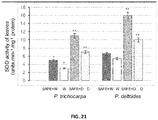
- FIG. 21 Effects of SAFE inoculant on the Superoxide Oxide Dismutase (SOD) activity of leaves in Populus trichocharpa and P. deltoides under well-watered- and drought ( ⁇ 0.5 to ⁇ 1 MPa) conditions over 3 months in greenhouse.
- W well-watered condition
- D drought condition.
- SAFE mixture of Pseudomonas fluorescens GM41 , Laccaria bicolor, Cenococcum spp. PMI1 and Hebeloma spp. PMI1.
- Experiments were performed using 4 replicates of inoculated or non-inoculated Populus cuttings; *, ** significantly different ANOVA p ⁇ 0.05.
- FIG. 22 Effects of SAFE inoculant on the Peroxidase (POD) activity of leaves in Populus trichocharpa and P. deltoides under well-watered- and drought ( ⁇ 0.5 to ⁇ 1 MPa) conditions over 3 months in greenhouse.
- W well-watered condition
- D drought condition.
- SAFE mixture of Pseudomonas fluorescens GM41, Laccaria bicolor, Cenococcum spp. PMI1 and Hebeloma spp. PMI1.
- Experiments were performed using 4 replicates of inoculated or non-inoculated Populus cuttings; *, ** significantly different ANOVA p ⁇ 0.05.
- FIG. 23 Effects of SAFE inoculant on the proline content of leaves in Populus trichocharpa and P. deltoides under well-watered- and drought ( ⁇ 0.5 to ⁇ 1 MPa) conditions over 3 months in greenhouse.
- W well-watered condition
- D drought condition.
- SAFE mixture of Pseudomonas fluorescens GM41, Laccaria bicolor, Cenococcum spp. PMI1 and Hebeloma spp. PMI1.
- Experiments were performed using 4 replicates of inoculated or non-inoculated Populus cuttings; *, ** significantly different ANOVA p ⁇ 0.05.
- FIG. 24A-24B Field deployment with or without SAFE inoculation of GreenWood Resources, Inc. commercial genotypes of Populus in Westport, Ore. A: beginning of the growing season in April; B: end of the growing season in October of the same year.
- FIG. 25A-25B Plant size ( FIG. 25A ) and survival ( FIG. 25B ) after one month of growth in field with or without SAFE inoculation. A total of 60 inoculated and 60 non-inoculated plants have been used for statistical analyses.
- FIG. 25A represents plant size after one month of growth in field with (left bar) and without (right bar) SAFE microbial mixture.
- FIG. 25B represents survival of the plants to natural pathogens after one month of growth in field with (left bar) and without (right bar) SAFE microbial mixture.
- FIG. 26 Plant height (in inch) after four months of growth in field with or without SAFE inoculation.
- the first bar (solid) in each group represents a Populus plant inoculated with SAFE mixture (S) and the second bar (empty) in each group represents a Populus plant that is not inoculated with SAFE mixture (NS).
- S Populus plant inoculated with SAFE mixture
- NS SAFE mixture
- a total of 60 inoculated and 60 non-inoculated plants have been used for statistical analyses. Experiments were performed using 12 replicates of inoculated or non-inoculated Populus cuttings of 5 commercial genotypes from GreenWood Resources, Inc.; *, ** significantly different ANOVA p ⁇ 0.05.
- FIG. 27 Stem diameter (in mm) of Populus plants after four months of growth in field with or without SAFE inoculation.
- the first bar in each group represents a Populus plant inoculated with SAFE mixture (S), and the second bar in each group represents a Populus plant that is not inoculated with SAFE mixture (NS).
- S Populus plant inoculated with SAFE mixture
- NS Populus plant that is not inoculated with SAFE mixture
- a total of 60 inoculated and 60 non-inoculated plants were used for statistical analyses. Experiments were performed using 12 replicates of inoculated or non-inoculated Populus cuttings of 5 commercial genotypes from GreenWood Resources, Inc.; *, ** significantly different ANOVA p ⁇ 0.05.
- FIG. 28 Root colonization rate by in situ soil microbes (and SAFE microbes when inoculated).
- the first bar in each group represents a Populus plant inoculated with SAFE mixture (S) and the second bar in each group represents a Populus plant that is not inoculated with SAFE mixture (NS).
- S Populus plant inoculated with SAFE mixture
- NS Populus plant that is not inoculated with SAFE mixture
- a total of 60 inoculated and 60 non-inoculated plants were used for statistical analyses. Experiments were performed using 12 replicates of inoculated or non-inoculated Populus cuttings of 5 commercial genotypes from GreenWood Resources, Inc.; *, ** significantly different ANOVA p ⁇ 0.05.
- PMB is a microbial composition including at least two beneficial fungi, or a mixture of one or more beneficial fungi with bacteria that have been categorized as Mycorrhiza Helper Bacteria (MHB), such as strains of Pseudomonas fluorescens .
- MLB Mycorrhiza Helper Bacteria
- beneficial microorganism helps establish the beneficial endo- or ectomycorrhizal (ECM) symbiosis when the beneficial microorganisms cooperate, and also provides redundancy in many different contexts, for example, where a single beneficial microorganism may be competed out by resident microorganisms in the soil.
- ECM ectomycorrhizal
- PMB can be formulated as liquid or solid formulations (such as granulated or powdered pellets, or prills), as well as in slow or controlled release formulations.
- PMBs can include binding agents such as pullulan, paraffin, pitch or calcium nitrate.
- PMB that contains at least two beneficial fungi, such as L. bicolor and P. indica , can prevent pathogen-induced growth suppression ( FIG. 3 ).
- Some embodiments of the PMB further contain at least one additional other beneficial fungal strain, such as Hebeloma spp. and Cenoccocum spp.
- beneficial fungi in PMB provides redundancy to the microbial blend and makes it useful in different soil conditions and with different plant varieties.
- PMB induces beneficial changes in host plant metabolite profile, which, without being bound in any one theory, may explain the increased pest and pathogen resistance by the host plant ( FIG. 4 ).
- Pseudomonas fluorescens strains including isolates GM21, GM25, GM30, GM48, GM49, GM50, GM55, GM60, GM67, GM74, GM78, GM79, GM80, GM84, GM102, GM18 and GM41, that display mycorrhizal helper effect when used with beneficial fungi.
- GM41 showed the most beneficial effect.
- Pseudomonas fluorescens GM41 strain was deposited at the American Type Culture Collection (ATCC, 10801 University Boulevard, Manassas, Va. 20110 USA) on Jan. 20, 2016. The deposit was made under the terms of the Budapest Treaty. GM41 has been assigned the Accession number PTA-122788.
- GM41 enhances the beneficial effect the fungal strain has on plant, further increasing plant yield and stress tolerance ( FIG. 7A-7D ).
- compositions comprising PMB and methods of using PMB for improving resistance to pests, increasing plant yields (biomass and fruit/grain), and improving resistance/tolerance to abiotic stresses such as salt and drought.
- this disclosure provides compositions useful for promoting plant growth and improving plant resistance to pests and to stress conditions.
- fungal inocula can be prepared in 1 L of sterile soil or 1 L of millet. After total fungal growth (i.e., growth to saturation), a fungal inoculum of 1 L is obtained. This inoculum is mixed with a plant soil to obtain a final soil used to grow plants.
- the term “volume to volume” refers to a ratio of the volume of an inoculum to the volume of final soil; e.g., 1 L inoculum soil with 9 L of plant soil makes 10% volume to volume.
- 5 to 20% volume to volume i.e., volume of inoculum soil vs. volume of final soil
- the final concentration range of fungi in the final soil is generally 5 to 20 fungal cells/g of final soil.
- fungal inocula can be prepared in 1 L of culture media (e.g., potato dextrose broth). After total fungal growth (i.e., growth to saturation), liquid culture are mixed with sterile water to until a concentration of 50 cells (per fungal species)/ml. This final fungal solution is mixed along with an alginic acic/alginate solution (10 grams/Liter).
- culture media e.g., potato dextrose broth
- This mixture can either 1) be poured into a 100 g/L-CaCl 2 solution with a burette and dropped as small pellets ( ⁇ 5 mm) to encapsulate the fungal solution in alginate beads; or 2) be poured on granulates or soil beads then transferred to a 100 g/L-CaCl 2 solution to coat the fungal solution on the granulates or soil beads.
- the final concentration range of fungi in the final soil is generally 5 to 20 fungal cells/g of final soil.
- 5 ml of a liquid bacterial culture at a concentration of 1 ⁇ 10 2 ⁇ 1.6 ⁇ 10 6 CFU/ml can be applied per L of final soil or culture media containing fungi as described above.
- the total soil volume is 10 L (1 L fungal inoculum+9 L of final soil)
- 50 ml of a liquid bacterial culture can be added to the soil.
- bacteria and fungi can be co-cultured in the same inoculum soil.
- a composition includes a mixture of a L. bicolor strain and a P. indica strain.
- the composition comprises a mixture of a L. bicolor strain and a P. indica strain at about 100 total fungal cells per gram of the composition, or about 100 fungal cells per strain per gram of the composition.
- the term “about 100” refers to any number falling within the range of 85-115, i.e., including 85, 90, 95, 100, 105, 110 and 115.
- the L. bicolor is of the strain S238N.
- a composition in another embodiment, includes a mixture of a L. bicolor strain and a P. indica strain, and further includes a strain of Pseudomonas fluorescens .
- the composition includes between 1 ⁇ 10 2 CFU and 1.6 ⁇ 10 6 CFU bacterial cells per milliliter of the composition.
- the composition includes a mixture of a L. bicolor strain and a P. indica strain, and a strain of Pseudomonas fluorescens at 5 ⁇ 10 2 CFU/mL of the composition.
- the strain of Pseudomonas fluorescens is selected from one of the following isolates: GM21, GM25, GM30, GM48, GM49, GM50, GM55, GM60, GM67, GM74, GM78, GM79, GM80, GM84, GM102, GM18, and pGM41.
- the strain of Pseudomonas fluorescens is GM41.
- a composition in still another embodiment, includes a mixture of L. bicolor strain and a strain of Pseudomonas fluorescens .
- the composition includes a mixture of a L. bicolor strain at about 100 fungal cells per gram of the composition and a liquid bacterial inoculum between 1 ⁇ 10 2 CFU/mL and 1.6 ⁇ 10 6 CFU/mL.
- the composition includes 5 ⁇ 10 2 CFU/mL of a Pseudomonas fluorescens strain.
- the strain of L is
- the strain of Pseudomonas fluorescens is selected from one of the following isolates: GM21, GM25, GM30, GM48, GM49, GM50, GM55, GM60, GM67, GM74, GM78, GM79, GM80, GM84, GM102, GM18 and GM41.
- the strain of Pseudomonas fluorescens is GM41.
- a composition in another embodiment, includes a mixture of a L. bicolor strain, a strain of Pseudomonas fluorescens and a strain of Cenoccocum spp.
- the composition includes a mixture of a L. bicolor strain at about 100 fungal cells per gram of the composition, a Cenoccocum spp. strain at about 100 fungal cells per gram of the composition and a liquid bacterial inoculum between 1 ⁇ 10 2 CFU/mL and 1.6 ⁇ 10 6 CFU/mL.
- the composition includes 5 ⁇ 10 2 CFU/mL of a Pseudomonas fluorescens strain.
- the strain of L includes
- the strain of Pseudomonas fluorescens is selected from one of the following isolates: GM21, GM25, GM30, GM48, GM49, GM50, GM55, GM60, GM67, GM74, GM78, GM79, GM80, GM84, GM102, GM18 and GM41.
- the strain of Pseudomonas fluorescens is GM41.
- the strain of Cenoccocum spp. is PMI1.
- a composition in even yet another embodiment, includes a mixture of a L. bicolor strain, a strain of Pseudomonas fluorescens , a strain of Cenoccocum spp. and a strain of Hebeloma spp.
- the composition includes a mixture of a L. bicolor strain at about 100 fungal cells per gram of the composition, a Hebeloma spp. strain at about 100 fungal cells per gram of the composition, a Cenoccocum spp. strain at about 100 fungal cells per gram of the composition and a liquid bacterial inoculum between 1 ⁇ 10 2 CFU/mL and 1.6 ⁇ 10 6 CFU/mL.
- the composition includes 5 ⁇ 10 2 CFU/mL of a Pseudomonas fluorescens strain.
- the strain of L. bicolor is S238N and the strain of Pseudomonas fluorescens is selected from one of the following isolates: GM21, GM25, GM30, GM48, GM49, GM50, GM55, GM60, GM67, GM74, GM78, GM79, GM80, GM84, GM102, GM18 and GM41.
- the strain of Pseudomonas fluorescens is GM41.
- the strain of Hebeloma spp. is PMI1.
- the strain of Cenoccocum spp. is PMI1.
- a composition in another embodiment, includes a mixture of a L. bicolor strain, a strain of Pseudomonas fluorescens and a strain of Hebeloma spp.
- the composition includes a mixture of a L. bicolor strain at about 100 fungal cells per gram of the composition, a Hebeloma spp. strain at about 100 fungal cells per gram of the composition and a liquid bacterial inoculum between 1 ⁇ 10 2 CFU/mL and 1.6 ⁇ 10 6 CFU/mL.
- the composition includes 5 ⁇ 10 2 CFU/mL of a Pseudomonas fluorescens strain.
- the strain of L includes a mixture of a L. bicolor strain, a strain of Pseudomonas fluorescens and a strain of Hebeloma spp.
- the composition includes a mixture of a L. bicolor strain at about 100 fungal cells per gram of the composition, a Hebeloma
- the strain of Pseudomonas fluorescens is selected from one of the following isolates: GM21, GM25, GM30, GM48, GM49, GM50, GM55, GM60, GM67, GM74, GM78, GM79, GM80, GM84, GM102, GM18 and GM41.
- the strain of Pseudomonas fluorescens is GM41.
- the strain of Hebeloma spp. is PMI1.
- a composition in yet another embodiment, includes a mixture of a P. indica strain and a strain of Pseudomonas fluorescens .
- the composition includes a mixture of a P. indica strain at about 100 fungal cells per gram of the composition and a liquid inoculum of a strain of Pseudomonas fluorescens at between 1 ⁇ 10 2 CFU/mL and 1.6 ⁇ 10 6 CFU/mL.
- the composition contains 5 ⁇ 10 2 CFU/mL of a strain of Pseudomonas fluorescens .
- the strain of Pseudomonas fluorescens is selected from one of the following isolates GM21, GM25, GM30, GM48, GM49, GM50, GM55, GM60, GM67, GM74, GM78, GM79, GM80, GM84, GM102, GM18, and GM41.
- the strain of Pseudomonas fluorescens is GM41.
- compositions disclosed herein can include, in addition to the desirable microorganisms, other components suitable for plant growth, including phosphorus and certain trace elements such as copper, iron, manganese, zinc, cobalt, molybdenum, and boron, as oxides or salts containing the elements in the cationic form.
- other components suitable for plant growth including phosphorus and certain trace elements such as copper, iron, manganese, zinc, cobalt, molybdenum, and boron, as oxides or salts containing the elements in the cationic form.
- compositions disclosed herein may also contain additional components suitable for agriculture or fertilizer use, such as a water-soluble material.
- Suitable water-soluble materials are starch, dextrin, gum arabic, gelatin, casein, glue, methylcellulose, carboxymethylcellulose, hydroxyalkylcellulose, alginic acid, polyvinylalcohol, polyacrylic acid, polyacrylamid, and a modified form thereof substituted partially by hydrophobic radicals in place of hydrophilic radicals.
- starch, dextrin, gum arabic, gelatin, casein, glue, methylcellulose, carboxymethylcellulose and hydroxyalkylcellulose are preferred.
- the additional incorporation of said water-soluble material is optional and the amount to be added is not limited, but is usually up to 50 parts by weight for 100 parts by weight of final composition.
- compositions disclosed herein may also contain a binding agent selected from the group consisting of pullulan, paraffin, pitch and calcium nitrate.
- a binding agent selected from the group consisting of pullulan, paraffin, pitch and calcium nitrate.
- the present molded composition may be manufactured by any shaping method; the customary granulation technique, customary compression molding technique or customary extrusion molding technique may be conveniently used.
- compositions disclosed herein can be in solid form, and can also be in liquid form; and can include, in addition to the desirable microorganisms, other components suitable for plant growth, including phosphorus and certain trace elements such as copper, iron, manganese, zinc, cobalt, molybdenum, and boron, as oxides or salts containing the elements in the cationic form in an agriculturally acceptable liquid carrier such as water.
- phosphorus and certain trace elements such as copper, iron, manganese, zinc, cobalt, molybdenum, and boron, as oxides or salts containing the elements in the cationic form in an agriculturally acceptable liquid carrier such as water.
- the soil in a field can be treated with a composition disclosed herein at 1 L/m 2 to 10 L/m 2 .
- a composition disclosed herein at 1 L/m 2 to 10 L/m 2 .
- One specific embodiment treats the soil in the field with 5 L/m 2 of a composition mixture (i.e. 5 liters of PMB per 1 m 2 of soil).
- a composition containing a fungal inoculum of about 100 fungal cells/gram is applied to a final soil at a 5 to 20% volume to volume ratio (i.e., volume of inoculum soil vs. volume of final soil) to achieve about 5 to 20 fungal cells/gram of the final soil.
- a composition additionally contains a bacterial strain at a concentration 1 ⁇ 10 2 CFU/mL ⁇ 1.6 ⁇ 10 6 CFU/mL is applied to a final soil at a 5 to 20% volume to volume dilution.
- the disclosure provides methods of treating plants with a microbial composition disclosed herein.
- the compositions disclosed herein can be applied to a wide array of crops (bioenergy, forage, and food), worldwide and are believed to increase nutrient availability in soils and soil quality, resulting in increased nutrient and moisture uptake by plant roots, leading to increased plant growth.
- Root Colonization Measurements The percentage of mycorrhizal colonization, as described by Tagu et al. (Variation in the ability to form ectomycorrhizas in the F1 progeny of an interspecific poplar ( Populus spp.) cross. Mycorrhiza 10:237-240, 2001) was determined three-and-a-half months after inoculation by eight observers. All the observers observed randomly the plants within eight blocks and block after block. Each root system was rinsed with tap water, cut in 1-cm pieces and analyzed under a dissecting microscope. For each root system, 100 apices were randomly examined and assessed as mycorrhizal or non-mycorrhizal.
- poplar genotypes were treated with various L. bicolor strains (particularly Lb 445.79, Lb 559.96, Lb 594.96, Lb 560.89, Lb 669.97, Lb 561.97, and Lb S238N) and root colonization percent was measured.
- GM41 increased the growth of P. trichocarpa plants in combination with all L. bicolor strains tested ( FIG. 2 ).
- Lb S238N strain promoted P. trichocarpa growth the most, both alone and in combination with GM41 ( FIG. 2 ).
- PMB Proprietary Microbial Blend
- PMB comprising a mixture of Piriformispora indica in combination with Laccaria bicolor at 5% volume to volume ratio, equivalent to 1 L/m 2 of inoculum at a concentration of 5 cells/g final soil, resulted in increased plant growth by corn regardless of present of pathogenic fungus. When pathogen was present in the absence of the mixture, plant growth was severely stunted (see FIG. 3 and FIG. 5 ).
- PMB Proprietary Microbial Blend
- Metabolite profiling Individual metabolites were analyzed by metabolite profiling using gas chromatography-mass spectrometry (GC-MS). Briefly, 50-75 mg of finely ground fresh tissue sample were repeatedly extracted with 2.5 ml of 80% ethanol, with the extracts then combined. A 1 ml aliquot was dried in a nitrogen stream. After dissolving the dried extracts in acetonitrile followed by trimethylsilylation, metabolite profiling was performed by GC-MS, as described elsewhere (Jung H W et al., “Priming in systemic plant immunity”, Science 2009, 324(5923):89-91.
- Metabolites were identified based on mass spectral fragmentation patterns of electron impact ionization (70 eV) and were quantified using peak areas of a characteristic mass-to-charge (m/z) ratio normalized to the internal standard (sorbitol) recovered and corrected for sample weight. Some of the unidentified metabolites were denoted by their retention time (RT) and key m/z ratio. The metabolite data were presented as fold changes of the transgenic line (average of 3 independent lines with 3 replicates for each line) vs. the average of the controls. Statistical significance was assessed using Student's t-test.
- PMB Proprietary Microbial Blend
- PMB Proprietary Microbial Blend
- Corn plants were treated with the microbial mixture comprising 50 cells/ml of Laccaria bicolor, 50 cells/ml of Piriformispora indica and 1.4 million of CFU/ml Pseudomonas fluorescens strain GM41. Germination frequencies of corn kernels were measured in corn plants with or without PMB inoculation.
- PMB Proprietary Microbial Blend
- Corn plants were treated with the microbial mixture comprising 50 cells/ml of Laccaria bicolor, 50 cells/ml of Piriformispora indica and 1.4 million of CFU/ml Pseudomonas fluorescens strain GM41.
- PMB Proprietary Microbial Blend
- Corn plants were treated with the microbial mixture comprising 50 cells/ml of Laccaria bicolor, 50 cells/ml of Piriformispora indica and 1.4 million of CFU/ml Pseudomonas fluorescens strain GM41.
- PMB Proprietary Microbial Blend
- Phosphorus, ammonia nitrogen and nitrate nitrogen levels were measured in a soil sample treated with PMB, but no nitrogen fertilization throughout the growing season (June through September).
- Pseudomonas fluorescens GM41 Enhances the Growth of Laccaria bicolor, Cenococum spp. PMI1 and Hebeloma spp. PMI1 in In Vitro Co-Cultures
- Colony diameters (cm) and fungal dry weights (g) of the beneficial fungi L. bicolor, Cenoccocum spp. and Hebeloma spp. have been measured with or without co-culturing with P. fluorescens GM41 in vitro.
- Populus plants Populus tremula X P. alba species were inoculated with mutualistic beneficial fungi such as Laccaria bicolor , the natural isolate Hebeloma spp. strain PMI1, the natural isolate of Cenoccocum spp. strain PMI, and Pseudomonas fluorescens strain GM41.
- the microbial mixture (PMB) used to treat Populus comprised 50 cells/ml of Laccaria bicolor, 50 cells/ml of Hebeloma spp. strain PMI1, 50 cells/ml of Cenoccocum spp. strain PMI1 and 1.4 million CFU/ml Pseudomonas fluorescens strain GM41. After 3 months of growth, aboveground fresh biomass, stem fresh biomass and leaf fresh biomass of the poplar were measured in plants treated with the microbial mixture and in non-treated control plants.
- the leaf area is a major determinant of photosynthesis assessing the growth potential of the plant. Therefore, the inventors wanted to measure the effect of PMB on total leaf area of Populus plants. Total surface area of all leaves per plant ( Populus tremula X P. alba ) were scanned and measured using WinRhizo/Winfolia scanner and software systems.
- the PMB microbial mixture SAFE mixture
- P. fluorescens GM41 and/or with the fungal mixture of Laccaria bicolor, Cenococcum spp. PMI1 and Hebeloma spp. PMI1 was found to increase the total leaf surface area increasing then the potential capacity of the plant to produce more biomass as compared to their counterparts not treated with the PMB mixture ( FIG. 16 ).
- PMB SAFE Inoculant Increases the Aboveground Biomass of P. trichocharpa and P. deltoides Under Well-Watered and Drought ( ⁇ 0.5 MPa to ⁇ 1 MPa) Conditions Over 3 Months in Greenhouse.
- the inventors also investigated the fresh root biomass of Populus plants under well-watered and drought conditions. Inoculation with PMB increased the growth of fresh biomass in well-watered condition as well as under drought stress ( FIG. 19 ).
- the PMB (SAFE) inoculant allowed the plant biomass increase observed in FIG. 16 by increasing root development and therefore allowing a better water supply under drought stress condition.
- the inventors confirmed the presence, and therefore the persistence of each microbial strain of the PMB mixture (SAFE) in soil and on plant roots after three months.
- the inventors To measure possible effects of PMB on the stress caused by radical oxygen species (ROS), the inventors first measured the superoxide content of P. trichocarpa and P. deltoides leaves ( FIG. 20A ) and roots ( FIG. 20B ) under normal (well-watered) or stress (drought) conditions as described above. It was found that the superoxide radical content in Populus leaves were higher in drought conditions as well as well watered conditions in PMB (SAFE) mixture treated plants. On the other hand, the superoxide content in the roots were decreased under well-watered condition as well as under drought stress ( FIG. 20A and FIG. 20B ).
- ROS radical oxygen species
- SOD Super Oxide Dismutase
- POD peroxidase
- Another plant defense mechanism against ROS damage is adjusting osmotic pressure by producing an osmoprotectant such as proline.
- the inventors measured proline levels in Populus leaves to see the effect of PMB in plant osmoprotection. As a result, it was found that inoculation the Populus plants with the PMB (SAFE) mixture in greenhouse increased the proline content in Populus leaves as compared to control plants, particularly under drought stress ( FIG. 23 ).
- Populus plants were planted in a field in Westport, Ore. ( FIG. 24 ), with or without PMB (SAFE) inoculation.
- SAFE PMB
- FIG. 25A It was observed that plants treated with the microbial mixture grew more in size ( FIG. 25A ) and better survival percentage ( FIG. 25B ) than their non-treated counterparts after one month in the field.
Landscapes
- Life Sciences & Earth Sciences (AREA)
- Health & Medical Sciences (AREA)
- Engineering & Computer Science (AREA)
- Zoology (AREA)
- Chemical & Material Sciences (AREA)
- Biotechnology (AREA)
- General Health & Medical Sciences (AREA)
- Wood Science & Technology (AREA)
- Organic Chemistry (AREA)
- Microbiology (AREA)
- Virology (AREA)
- Bioinformatics & Cheminformatics (AREA)
- Genetics & Genomics (AREA)
- Biochemistry (AREA)
- Tropical Medicine & Parasitology (AREA)
- General Engineering & Computer Science (AREA)
- Biomedical Technology (AREA)
- Medicinal Chemistry (AREA)
- Agronomy & Crop Science (AREA)
- Pest Control & Pesticides (AREA)
- Plant Pathology (AREA)
- Dentistry (AREA)
- Environmental Sciences (AREA)
- Mycology (AREA)
- Botany (AREA)
- Micro-Organisms Or Cultivation Processes Thereof (AREA)
- Agricultural Chemicals And Associated Chemicals (AREA)
Abstract
Description
Claims (9)
Priority Applications (3)
| Application Number | Priority Date | Filing Date | Title |
|---|---|---|---|
| US15/334,793 US10660340B2 (en) | 2015-10-26 | 2016-10-26 | Complex of mutualistic microbes designed to increase plant productivity |
| US16/854,154 US11708557B2 (en) | 2015-10-26 | 2020-04-21 | Complex of mutualistic microbes designed to increase plant productivity |
| US18/204,412 US20230323285A1 (en) | 2015-10-26 | 2023-06-01 | Complex of mutualistic microbes designed to increase plant productivity |
Applications Claiming Priority (3)
| Application Number | Priority Date | Filing Date | Title |
|---|---|---|---|
| US201562246394P | 2015-10-26 | 2015-10-26 | |
| US201662294048P | 2016-02-11 | 2016-02-11 | |
| US15/334,793 US10660340B2 (en) | 2015-10-26 | 2016-10-26 | Complex of mutualistic microbes designed to increase plant productivity |
Related Child Applications (1)
| Application Number | Title | Priority Date | Filing Date |
|---|---|---|---|
| US16/854,154 Division US11708557B2 (en) | 2015-10-26 | 2020-04-21 | Complex of mutualistic microbes designed to increase plant productivity |
Publications (2)
| Publication Number | Publication Date |
|---|---|
| US20170112137A1 US20170112137A1 (en) | 2017-04-27 |
| US10660340B2 true US10660340B2 (en) | 2020-05-26 |
Family
ID=58561538
Family Applications (3)
| Application Number | Title | Priority Date | Filing Date |
|---|---|---|---|
| US15/334,793 Active 2037-02-12 US10660340B2 (en) | 2015-10-26 | 2016-10-26 | Complex of mutualistic microbes designed to increase plant productivity |
| US16/854,154 Active 2038-03-12 US11708557B2 (en) | 2015-10-26 | 2020-04-21 | Complex of mutualistic microbes designed to increase plant productivity |
| US18/204,412 Pending US20230323285A1 (en) | 2015-10-26 | 2023-06-01 | Complex of mutualistic microbes designed to increase plant productivity |
Family Applications After (2)
| Application Number | Title | Priority Date | Filing Date |
|---|---|---|---|
| US16/854,154 Active 2038-03-12 US11708557B2 (en) | 2015-10-26 | 2020-04-21 | Complex of mutualistic microbes designed to increase plant productivity |
| US18/204,412 Pending US20230323285A1 (en) | 2015-10-26 | 2023-06-01 | Complex of mutualistic microbes designed to increase plant productivity |
Country Status (2)
| Country | Link |
|---|---|
| US (3) | US10660340B2 (en) |
| WO (1) | WO2017075023A1 (en) |
Families Citing this family (5)
| Publication number | Priority date | Publication date | Assignee | Title |
|---|---|---|---|---|
| CN107216201B (en) * | 2017-06-27 | 2020-07-03 | 长江大学 | Preparation method of medium for cultivating sorrel straw of lentinus edodes |
| CN113854318B (en) * | 2021-11-12 | 2023-05-12 | 中国农业科学院农业资源与农业区划研究所 | Application of Pityrosporum indicum in improving drought resistance of Mao She seeds |
| WO2024194829A1 (en) * | 2023-03-23 | 2024-09-26 | Natural Plant Protection Limited | A biofertilizer |
| WO2025030164A1 (en) * | 2023-08-03 | 2025-02-06 | The Regents Of The University Of California | Method for promoting plant growth and modulating plant architecture |
| GB202407533D0 (en) * | 2024-05-28 | 2024-07-10 | Iddon Daniel | Improvements in or relating to tree guards |
Citations (4)
| Publication number | Priority date | Publication date | Assignee | Title |
|---|---|---|---|---|
| US4045204A (en) * | 1975-02-24 | 1977-08-30 | Sumitomo Chemical Company, Limited | Fertilizer composition |
| IE922074A1 (en) * | 1991-06-26 | 1992-12-30 | Agronomique Inst Nat Rech | Means for improving the growth of plants |
| US20120015806A1 (en) | 2009-03-25 | 2012-01-19 | Sitaram Prasad Paikray | Novel formulation of microbial consortium based bioinoculant for wide spread use in agriculture practices |
| WO2015001575A1 (en) | 2013-07-05 | 2015-01-08 | Amity University | Plant growth promoting formulation of piriformospora indica and azotobacter chroococcum with talcum powder |
Family Cites Families (1)
| Publication number | Priority date | Publication date | Assignee | Title |
|---|---|---|---|---|
| CN104203871A (en) * | 2011-11-23 | 2014-12-10 | 康奈尔大学 | High-efficiency organic fertilizer and its components |
-
2016
- 2016-10-26 WO PCT/US2016/058816 patent/WO2017075023A1/en not_active Ceased
- 2016-10-26 US US15/334,793 patent/US10660340B2/en active Active
-
2020
- 2020-04-21 US US16/854,154 patent/US11708557B2/en active Active
-
2023
- 2023-06-01 US US18/204,412 patent/US20230323285A1/en active Pending
Patent Citations (4)
| Publication number | Priority date | Publication date | Assignee | Title |
|---|---|---|---|---|
| US4045204A (en) * | 1975-02-24 | 1977-08-30 | Sumitomo Chemical Company, Limited | Fertilizer composition |
| IE922074A1 (en) * | 1991-06-26 | 1992-12-30 | Agronomique Inst Nat Rech | Means for improving the growth of plants |
| US20120015806A1 (en) | 2009-03-25 | 2012-01-19 | Sitaram Prasad Paikray | Novel formulation of microbial consortium based bioinoculant for wide spread use in agriculture practices |
| WO2015001575A1 (en) | 2013-07-05 | 2015-01-08 | Amity University | Plant growth promoting formulation of piriformospora indica and azotobacter chroococcum with talcum powder |
Non-Patent Citations (10)
| Title |
|---|
| Deveau, A. et al., "The mycorrhiza helper Pseudomonas fluorescens BBc6R8 has a specific priming effect on the growtth, morphology and gene expression of the ectomycorrhizal fungus Laccaria bicolor S238N", New Phytologist, (2007), vol. 175, pp. 743-755. |
| Frey, P., Metabolic and Genotypic Fingerprinting of Fluorescent Pseudomonads Associated with the Douglas Fir-Laccaria bicolor Mycorrhizosphere, May 1997, Applied and Environmental Microbiology, vol. 63, No. 5, pp. 1852-1860. (Year: 1997). * |
| Frey-Klett, P., Dose effect in the dual inoculation of an ectomycorrhizal fungus and a mycorrhiza helper bacterium in two forest nurseries, 1999, Soil Biology and Biochemistry, vol. 31, pp. 1555-1562. * |
| International Search Report dated Feb. 27, 2017 issued in PCT/US16/58816. |
| Inviation to Pay Additional Fees dated Dec. 22, 2016 issed in PCT/US16/58816. |
| Labbe, J.L. et al., "Newly identified helper bacteria stimulate extomyocorrhizal formation in Populus", www.frontiersin.org, (Oct. 2014), vol. 5, Article 579, pp. 1-10. |
| Larsen, P., Experimental Systems to Model Nutrient and Carbon Exchange in Plant-Microbe Symbiosis, 2014, Genomic Science Contractor-Grantee Meeting XII, pp. 1-2. * |
| Meena, K. K. et a., "Co-inoculation of the endophytic fungus Piriformospora indica with the phosphate-solubilising bacterium Pseudomonas striata affects population dynamics and plant growth in chickpea", Biol Fertil Soils, (2009), 6 pages. |
| Swale, B., Establishment of Douglas Fir Plantations on Bare Ground, [online]. Caverock, 1998 [retrieved on Jun. 18, 2018]. Retrieved from the Internet:<URL:http://homepages.caverock.net.nz/˜bj/d-fir.htm>, 8 pages (Year: 1998). * |
| Zuccaro, A. et al., "Endophytic Life Strategies Decoded by Genome and Transcriptome Analyses of the Mutualistic Root Symbiont Piriformospora indica", PLoS Pathogens, (Oct. 2011), vol. 7, Issue 10, 26 pages. |
Also Published As
| Publication number | Publication date |
|---|---|
| US11708557B2 (en) | 2023-07-25 |
| US20170112137A1 (en) | 2017-04-27 |
| US20230323285A1 (en) | 2023-10-12 |
| US20200245629A1 (en) | 2020-08-06 |
| WO2017075023A1 (en) | 2017-05-04 |
Similar Documents
| Publication | Publication Date | Title |
|---|---|---|
| US20230323285A1 (en) | Complex of mutualistic microbes designed to increase plant productivity | |
| Hossain et al. | Application and mechanisms of plant growth promoting fungi | |
| CN114449895B (en) | Novel seed treatment methods and compositions for improving plant traits and yield | |
| CA2791478C (en) | Compositions and methods for increasing biomass, iron concentration, and tolerance to pathogens in plants | |
| Wei et al. | Ericoid mycorrhizal fungi as biostimulants for improving propagation and production of ericaceous plants | |
| Elad et al. | The biochar effect: plant resistance to biotic stresses | |
| Ansari et al. | A critical review on fungi mediated plant responses with special emphasis to Piriformospora indica on improved production and protection of crops | |
| WO2007107000A1 (en) | The production and use of endophytes as novel inoculants for promoting enhanced plant vigor, health, growth, yield reducing environmental stress and for reducing dependency on chemical pesticides for pest control | |
| CN103484384A (en) | Trichoderma atroviride preparation for preventing and controlling vegetable fungal diseases and preparation method of trichoderma atroviride preparation thereof | |
| López-López et al. | Compost from forest cleaning green waste and Trichoderma asperellum strain T34 reduced incidence of Fusarium circinatum in Pinus radiata seedlings | |
| Younis et al. | Use of organic substrates in sustainable horticulture | |
| Mazumder et al. | Rhizobacteria and Arbuscular Mycorrhizal Fungi (AMF) community in growth management and mitigating stress in millets: a plant-soil microbe symbiotic relationship | |
| Kabir et al. | A bio-sustainable approach for reducing Eucalyptus tree-caused agricultural ecosystem hazards employing Trichoderma bio-sustained spores and mycorrhizal networks | |
| CN105132296B (en) | A kind of hook-shaped trichoderma strain and its application | |
| Sethi | Utilization of beneficial fungal strain/bacterial strains in climate-resilient agriculture | |
| Bonaldi et al. | Streptomycetes as biological control agents against basal drop | |
| El-Sayed et al. | Fungal biopriming increases the resistance of wheat to abiotic stress | |
| Shi et al. | Plant microbiome and mycorrhizal fungi | |
| Sivakamasundari et al. | Effect of endophytic Pseudomonas fluorescens and Glomus fasciculatum on the maximization of growth and yield of maize (Zea mays L.) | |
| Mishra et al. | Genetic evaluation of cucumber (Cucumis sativus L.) genotypes for yield and yield contributing traits | |
| Rahman et al. | Trichoderma-fortified compost in controlling diseases and increasing yield of tomato | |
| Rodrigues et al. | Arbuscular mycorrhizal (AM) biotechnology and its applications | |
| Jayawardana et al. | Soil amendment with raw rice hull as a source of silicon in enhancing anthracnose disease resistance, plant growth and fruit qualities of chili pepper (Capsicum annuum L.) | |
| Valfrè et al. | Efficacy of biocontrol agents and biostimulants on soil-borne pathogens management and yield in tomato cultivation: a three-year field study in Italy | |
| Mathur et al. | Impact of pertinent endophytic fungal communities and their secondary metabolites on crops |
Legal Events
| Date | Code | Title | Description |
|---|---|---|---|
| AS | Assignment |
Owner name: UT-BATTELLE, LLC, TENNESSEE Free format text: ASSIGNMENT OF ASSIGNORS INTEREST;ASSIGNOR:OAK RIDGE ASSOCIATED UNIVERSITIES;REEL/FRAME:042162/0657 Effective date: 20170425 Owner name: OAK RIDGE ASSOCIATED UNIVERSITIES, TENNESSEE Free format text: ASSIGNMENT OF ASSIGNORS INTEREST;ASSIGNOR:HAMILTON, CYD E.;REEL/FRAME:042162/0605 Effective date: 20170315 Owner name: UT-BATTELLE, LLC, TENNESSEE Free format text: ASSIGNMENT OF ASSIGNORS INTEREST;ASSIGNORS:LABBE, JESSY L.;MUCHERO, WELLINGTON;PELLETIER, DALE A.;REEL/FRAME:042162/0746 Effective date: 20170302 |
|
| AS | Assignment |
Owner name: U.S. DEPARTMENT OF ENERGY, DISTRICT OF COLUMBIA Free format text: CONFIRMATORY LICENSE;ASSIGNOR:UT-BATTELLE, LLC;REEL/FRAME:042478/0027 Effective date: 20170522 |
|
| STPP | Information on status: patent application and granting procedure in general |
Free format text: FINAL REJECTION MAILED |
|
| STPP | Information on status: patent application and granting procedure in general |
Free format text: RESPONSE AFTER FINAL ACTION FORWARDED TO EXAMINER |
|
| STPP | Information on status: patent application and granting procedure in general |
Free format text: ADVISORY ACTION MAILED |
|
| STPP | Information on status: patent application and granting procedure in general |
Free format text: DOCKETED NEW CASE - READY FOR EXAMINATION |
|
| STPP | Information on status: patent application and granting procedure in general |
Free format text: NOTICE OF ALLOWANCE MAILED -- APPLICATION RECEIVED IN OFFICE OF PUBLICATIONS |
|
| STPP | Information on status: patent application and granting procedure in general |
Free format text: PUBLICATIONS -- ISSUE FEE PAYMENT VERIFIED |
|
| STCF | Information on status: patent grant |
Free format text: PATENTED CASE |
|
| MAFP | Maintenance fee payment |
Free format text: PAYMENT OF MAINTENANCE FEE, 4TH YR, SMALL ENTITY (ORIGINAL EVENT CODE: M2551); ENTITY STATUS OF PATENT OWNER: SMALL ENTITY Year of fee payment: 4 |