US10629527B2 - Method of manufacturing semiconductor device with multi wire structure - Google Patents
Method of manufacturing semiconductor device with multi wire structure Download PDFInfo
- Publication number
- US10629527B2 US10629527B2 US16/196,366 US201816196366A US10629527B2 US 10629527 B2 US10629527 B2 US 10629527B2 US 201816196366 A US201816196366 A US 201816196366A US 10629527 B2 US10629527 B2 US 10629527B2
- Authority
- US
- United States
- Prior art keywords
- conductive lines
- vias
- forming
- lower conductive
- lines
- Prior art date
- Legal status (The legal status is an assumption and is not a legal conclusion. Google has not performed a legal analysis and makes no representation as to the accuracy of the status listed.)
- Active
Links
Images
Classifications
-
- H10W20/42—
-
- H10W20/069—
-
- H—ELECTRICITY
- H01—ELECTRIC ELEMENTS
- H01L—SEMICONDUCTOR DEVICES NOT COVERED BY CLASS H10
- H01L23/00—Details of semiconductor or other solid state devices
- H01L23/52—Arrangements for conducting electric current within the device in operation from one component to another, i.e. interconnections, e.g. wires, lead frames
- H01L23/522—Arrangements for conducting electric current within the device in operation from one component to another, i.e. interconnections, e.g. wires, lead frames including external interconnections consisting of a multilayer structure of conductive and insulating layers inseparably formed on the semiconductor body
- H01L23/5226—Via connections in a multilevel interconnection structure
-
- H—ELECTRICITY
- H01—ELECTRIC ELEMENTS
- H01L—SEMICONDUCTOR DEVICES NOT COVERED BY CLASS H10
- H01L21/00—Processes or apparatus adapted for the manufacture or treatment of semiconductor or solid state devices or of parts thereof
- H01L21/70—Manufacture or treatment of devices consisting of a plurality of solid state components formed in or on a common substrate or of parts thereof; Manufacture of integrated circuit devices or of parts thereof
- H01L21/71—Manufacture of specific parts of devices defined in group H01L21/70
- H01L21/768—Applying interconnections to be used for carrying current between separate components within a device comprising conductors and dielectrics
- H01L21/76801—Applying interconnections to be used for carrying current between separate components within a device comprising conductors and dielectrics characterised by the formation and the after-treatment of the dielectrics, e.g. smoothing
- H01L21/76802—Applying interconnections to be used for carrying current between separate components within a device comprising conductors and dielectrics characterised by the formation and the after-treatment of the dielectrics, e.g. smoothing by forming openings in dielectrics
- H01L21/76807—Applying interconnections to be used for carrying current between separate components within a device comprising conductors and dielectrics characterised by the formation and the after-treatment of the dielectrics, e.g. smoothing by forming openings in dielectrics for dual damascene structures
-
- H—ELECTRICITY
- H01—ELECTRIC ELEMENTS
- H01L—SEMICONDUCTOR DEVICES NOT COVERED BY CLASS H10
- H01L21/00—Processes or apparatus adapted for the manufacture or treatment of semiconductor or solid state devices or of parts thereof
- H01L21/70—Manufacture or treatment of devices consisting of a plurality of solid state components formed in or on a common substrate or of parts thereof; Manufacture of integrated circuit devices or of parts thereof
- H01L21/71—Manufacture of specific parts of devices defined in group H01L21/70
- H01L21/768—Applying interconnections to be used for carrying current between separate components within a device comprising conductors and dielectrics
- H01L21/76801—Applying interconnections to be used for carrying current between separate components within a device comprising conductors and dielectrics characterised by the formation and the after-treatment of the dielectrics, e.g. smoothing
- H01L21/76802—Applying interconnections to be used for carrying current between separate components within a device comprising conductors and dielectrics characterised by the formation and the after-treatment of the dielectrics, e.g. smoothing by forming openings in dielectrics
- H01L21/76816—Aspects relating to the layout of the pattern or to the size of vias or trenches
-
- H—ELECTRICITY
- H01—ELECTRIC ELEMENTS
- H01L—SEMICONDUCTOR DEVICES NOT COVERED BY CLASS H10
- H01L23/00—Details of semiconductor or other solid state devices
- H01L23/52—Arrangements for conducting electric current within the device in operation from one component to another, i.e. interconnections, e.g. wires, lead frames
-
- H—ELECTRICITY
- H01—ELECTRIC ELEMENTS
- H01L—SEMICONDUCTOR DEVICES NOT COVERED BY CLASS H10
- H01L23/00—Details of semiconductor or other solid state devices
- H01L23/52—Arrangements for conducting electric current within the device in operation from one component to another, i.e. interconnections, e.g. wires, lead frames
- H01L23/522—Arrangements for conducting electric current within the device in operation from one component to another, i.e. interconnections, e.g. wires, lead frames including external interconnections consisting of a multilayer structure of conductive and insulating layers inseparably formed on the semiconductor body
- H01L23/528—Layout of the interconnection structure
-
- H—ELECTRICITY
- H01—ELECTRIC ELEMENTS
- H01L—SEMICONDUCTOR DEVICES NOT COVERED BY CLASS H10
- H01L23/00—Details of semiconductor or other solid state devices
- H01L23/52—Arrangements for conducting electric current within the device in operation from one component to another, i.e. interconnections, e.g. wires, lead frames
- H01L23/522—Arrangements for conducting electric current within the device in operation from one component to another, i.e. interconnections, e.g. wires, lead frames including external interconnections consisting of a multilayer structure of conductive and insulating layers inseparably formed on the semiconductor body
- H01L23/528—Layout of the interconnection structure
- H01L23/5283—Cross-sectional geometry
-
- H—ELECTRICITY
- H01—ELECTRIC ELEMENTS
- H01L—SEMICONDUCTOR DEVICES NOT COVERED BY CLASS H10
- H01L23/00—Details of semiconductor or other solid state devices
- H01L23/52—Arrangements for conducting electric current within the device in operation from one component to another, i.e. interconnections, e.g. wires, lead frames
- H01L23/522—Arrangements for conducting electric current within the device in operation from one component to another, i.e. interconnections, e.g. wires, lead frames including external interconnections consisting of a multilayer structure of conductive and insulating layers inseparably formed on the semiconductor body
- H01L23/532—Arrangements for conducting electric current within the device in operation from one component to another, i.e. interconnections, e.g. wires, lead frames including external interconnections consisting of a multilayer structure of conductive and insulating layers inseparably formed on the semiconductor body characterised by the materials
- H01L23/5329—Insulating materials
-
- H—ELECTRICITY
- H01—ELECTRIC ELEMENTS
- H01L—SEMICONDUCTOR DEVICES NOT COVERED BY CLASS H10
- H01L23/00—Details of semiconductor or other solid state devices
- H01L23/52—Arrangements for conducting electric current within the device in operation from one component to another, i.e. interconnections, e.g. wires, lead frames
- H01L23/522—Arrangements for conducting electric current within the device in operation from one component to another, i.e. interconnections, e.g. wires, lead frames including external interconnections consisting of a multilayer structure of conductive and insulating layers inseparably formed on the semiconductor body
- H01L23/532—Arrangements for conducting electric current within the device in operation from one component to another, i.e. interconnections, e.g. wires, lead frames including external interconnections consisting of a multilayer structure of conductive and insulating layers inseparably formed on the semiconductor body characterised by the materials
- H01L23/5329—Insulating materials
- H01L23/53295—Stacked insulating layers
-
- H10W20/031—
-
- H10W20/056—
-
- H10W20/084—
-
- H10W20/088—
-
- H10W20/089—
-
- H10W20/43—
-
- H10W20/435—
-
- H10W20/47—
-
- H10W20/48—
-
- H10W72/00—
-
- H—ELECTRICITY
- H01—ELECTRIC ELEMENTS
- H01L—SEMICONDUCTOR DEVICES NOT COVERED BY CLASS H10
- H01L21/00—Processes or apparatus adapted for the manufacture or treatment of semiconductor or solid state devices or of parts thereof
- H01L21/70—Manufacture or treatment of devices consisting of a plurality of solid state components formed in or on a common substrate or of parts thereof; Manufacture of integrated circuit devices or of parts thereof
- H01L21/71—Manufacture of specific parts of devices defined in group H01L21/70
- H01L21/768—Applying interconnections to be used for carrying current between separate components within a device comprising conductors and dielectrics
- H01L21/76838—Applying interconnections to be used for carrying current between separate components within a device comprising conductors and dielectrics characterised by the formation and the after-treatment of the conductors
- H01L21/76895—Local interconnects; Local pads, as exemplified by patent document EP0896365
-
- H—ELECTRICITY
- H01—ELECTRIC ELEMENTS
- H01L—SEMICONDUCTOR DEVICES NOT COVERED BY CLASS H10
- H01L23/00—Details of semiconductor or other solid state devices
- H01L23/52—Arrangements for conducting electric current within the device in operation from one component to another, i.e. interconnections, e.g. wires, lead frames
- H01L23/522—Arrangements for conducting electric current within the device in operation from one component to another, i.e. interconnections, e.g. wires, lead frames including external interconnections consisting of a multilayer structure of conductive and insulating layers inseparably formed on the semiconductor body
- H01L23/532—Arrangements for conducting electric current within the device in operation from one component to another, i.e. interconnections, e.g. wires, lead frames including external interconnections consisting of a multilayer structure of conductive and insulating layers inseparably formed on the semiconductor body characterised by the materials
- H01L23/53204—Conductive materials
- H01L23/53209—Conductive materials based on metals, e.g. alloys, metal silicides
-
- H—ELECTRICITY
- H01—ELECTRIC ELEMENTS
- H01L—SEMICONDUCTOR DEVICES NOT COVERED BY CLASS H10
- H01L23/00—Details of semiconductor or other solid state devices
- H01L23/52—Arrangements for conducting electric current within the device in operation from one component to another, i.e. interconnections, e.g. wires, lead frames
- H01L23/522—Arrangements for conducting electric current within the device in operation from one component to another, i.e. interconnections, e.g. wires, lead frames including external interconnections consisting of a multilayer structure of conductive and insulating layers inseparably formed on the semiconductor body
- H01L23/532—Arrangements for conducting electric current within the device in operation from one component to another, i.e. interconnections, e.g. wires, lead frames including external interconnections consisting of a multilayer structure of conductive and insulating layers inseparably formed on the semiconductor body characterised by the materials
- H01L23/53204—Conductive materials
- H01L23/53209—Conductive materials based on metals, e.g. alloys, metal silicides
- H01L23/53214—Conductive materials based on metals, e.g. alloys, metal silicides the principal metal being aluminium
-
- H—ELECTRICITY
- H01—ELECTRIC ELEMENTS
- H01L—SEMICONDUCTOR DEVICES NOT COVERED BY CLASS H10
- H01L23/00—Details of semiconductor or other solid state devices
- H01L23/52—Arrangements for conducting electric current within the device in operation from one component to another, i.e. interconnections, e.g. wires, lead frames
- H01L23/522—Arrangements for conducting electric current within the device in operation from one component to another, i.e. interconnections, e.g. wires, lead frames including external interconnections consisting of a multilayer structure of conductive and insulating layers inseparably formed on the semiconductor body
- H01L23/532—Arrangements for conducting electric current within the device in operation from one component to another, i.e. interconnections, e.g. wires, lead frames including external interconnections consisting of a multilayer structure of conductive and insulating layers inseparably formed on the semiconductor body characterised by the materials
- H01L23/53204—Conductive materials
- H01L23/53209—Conductive materials based on metals, e.g. alloys, metal silicides
- H01L23/53228—Conductive materials based on metals, e.g. alloys, metal silicides the principal metal being copper
-
- H—ELECTRICITY
- H01—ELECTRIC ELEMENTS
- H01L—SEMICONDUCTOR DEVICES NOT COVERED BY CLASS H10
- H01L23/00—Details of semiconductor or other solid state devices
- H01L23/52—Arrangements for conducting electric current within the device in operation from one component to another, i.e. interconnections, e.g. wires, lead frames
- H01L23/522—Arrangements for conducting electric current within the device in operation from one component to another, i.e. interconnections, e.g. wires, lead frames including external interconnections consisting of a multilayer structure of conductive and insulating layers inseparably formed on the semiconductor body
- H01L23/532—Arrangements for conducting electric current within the device in operation from one component to another, i.e. interconnections, e.g. wires, lead frames including external interconnections consisting of a multilayer structure of conductive and insulating layers inseparably formed on the semiconductor body characterised by the materials
- H01L23/53204—Conductive materials
- H01L23/53209—Conductive materials based on metals, e.g. alloys, metal silicides
- H01L23/53242—Conductive materials based on metals, e.g. alloys, metal silicides the principal metal being a noble metal, e.g. gold
-
- H—ELECTRICITY
- H01—ELECTRIC ELEMENTS
- H01L—SEMICONDUCTOR DEVICES NOT COVERED BY CLASS H10
- H01L23/00—Details of semiconductor or other solid state devices
- H01L23/52—Arrangements for conducting electric current within the device in operation from one component to another, i.e. interconnections, e.g. wires, lead frames
- H01L23/522—Arrangements for conducting electric current within the device in operation from one component to another, i.e. interconnections, e.g. wires, lead frames including external interconnections consisting of a multilayer structure of conductive and insulating layers inseparably formed on the semiconductor body
- H01L23/532—Arrangements for conducting electric current within the device in operation from one component to another, i.e. interconnections, e.g. wires, lead frames including external interconnections consisting of a multilayer structure of conductive and insulating layers inseparably formed on the semiconductor body characterised by the materials
- H01L23/53204—Conductive materials
- H01L23/53209—Conductive materials based on metals, e.g. alloys, metal silicides
- H01L23/53257—Conductive materials based on metals, e.g. alloys, metal silicides the principal metal being a refractory metal
-
- H10W20/0698—
-
- H10W20/4403—
-
- H10W20/4405—
-
- H10W20/4421—
-
- H10W20/4432—
-
- H10W20/4441—
Definitions
- the disclosure relates to semiconductor devices and particularly to via and metal wiring structures and methods for their fabrication.
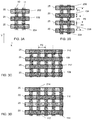
- FIG. 1A is an exemplary layout structure according to one embodiment of the present disclosure
- FIG. 1B is an exemplary cross sectional view of a semiconductor device corresponding to line X 1 -X 1 of FIG. 1A .
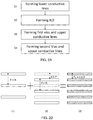
- FIG. 2A is an exemplary flowchart illustrating a method of fabricating a semiconductor device according to one embodiment of the present disclosure
- FIG. 2B shows an conceptual figure illustrating two separate patterning operations.
- FIGS. 3A, 3B, 3C and 3D are exemplary layout structures according to various aspects of the present disclosure.
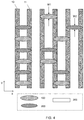
- FIG. 4 shows an exemplary plan view of a semiconductor device according to one embodiment of the present disclosure.
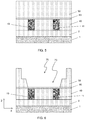
- FIGS. 5, 6, 7 and 8 show exemplary cross-sectional views of a semiconductor device at various fabrication stages of according to one embodiment of the present disclosure.
- first and second features are formed in direct contact
- additional features may be formed between the first and second features, such that the first and second features may not be in direct contact
- present disclosure may repeat reference numerals and/or letters in the various examples. This repetition is for the purpose of simplicity and clarity and does not in itself dictate a relationship between the various embodiments and/or configurations discussed.
- FIG. 1A is an exemplary layout structure according to one embodiment of the present disclosure
- FIG. 1B is an exemplary cross sectional view of a semiconductor device corresponding to line X 1 -X 1 of FIG. 1A .
- lower conductive lines 10 , 11 which are disposed over a semiconductor substrate (not shown), extend in the Y direction and are arranged in parallel with each other in the X direction.
- the lower conductive lines 10 , 11 are arranged in the X direction with a pitch P 0 , and in other embodiments, the lower conductive lines 10 , 11 are arranged with various pitches.
- the lower conductive lines 10 , 11 may be metal wirings or gate electrodes or source/drain electrodes of transistors, or any combination thereof, and made of, for example, one or more layers of conductive materials, such as aluminum, aluminum alloys, copper, copper alloys, nickel, nickel alloys, titanium, titanium alloys, tantalum, tantalum alloys, tungsten, tungsten alloys, tin, tin alloys, silver, silver alloys, gold, gold alloys, and combinations thereof.
- the lower conductive lines 10 , 11 are made of semiconductor material, such as polysilicon, crystalline silicon, SiGe or germanium.
- Upper conductive lines including first upper conductive lines 20 and second upper conductive lines 25 are arranged over the lower conductive lines with one or more layers of insulating (dielectric) materials interposed therebetween.
- the upper conductive lines are made of, for example, one or more layers of conductive materials, such as aluminum, aluminum alloys, copper, copper alloys, nickel, nickel alloys, titanium, titanium alloys, tantalum, tantalum alloys, tungsten, tungsten alloys, tin, tin alloys, silver, silver alloys, gold, gold alloys, and combinations thereof.
- first upper conductive lines 20 extend in the X direction and are arranged in parallel with each other with a pitch P 2
- the second upper conductive lines 25 also extend in the X direction and are arranged in parallel with each other with the pitch P 2
- a via 30 is also disposed.
- the via 30 connects at least two lines 10 , 11 of the lower conductive lines and one line (e.g., one first upper conductive line 20 ) of the upper conductive lines.
- the via 30 is filled with one or more layers of conductive materials, such as aluminum, aluminum alloys, copper, copper alloys, nickel, nickel alloys, titanium, titanium alloys, tantalum, tantalum alloys, tungsten, tungsten alloys, tin, tin alloys, silver, silver alloys, gold, gold alloys, and combinations thereof.
- the material for the via may be the same as or different from the materials for the lower conductive lines and/or the upper conductive lines.
- the length of the via 30 in the X direction ranges from about 25 nm to about 75 nm, and a width of the via 30 in the Y direction ranges from about 10 nm to about 30 nm in plan view, in some embodiments.
- the first upper conductive lines 20 and the second upper conductive lines 25 are fabricated not by the same step of patterning operations (e.g., lithography and etching) but by different steps of patterning operations. It is noted that the patterning conditions (e.g., recipes for the lithography and/or etching) may be the same for the first upper conductive lines 20 and the second upper conductive lines 25 , or different from each other.
- patterning conditions e.g., recipes for the lithography and/or etching
- the lower conductive lines 10 , 11 are formed and embedded in the first insulating layer 40
- the via 30 is formed and embedded in the second insulating layer 50 .
- a third insulating layer 60 which functions as an etching stop layer, is also disposed between the first insulating layer 40 and the second insulating layer 50 .
- the first insulating layer 40 and the second insulating layer 50 are respectively made of one or more layers of insulating material, such as silicon oxide-based material, silicon nitride-based material, fluorine-doped silicate glass (FSG), boron-fluorine-doped silicate glass (BPSG) and a low-K dielectric material.
- insulating material such as silicon oxide-based material, silicon nitride-based material, fluorine-doped silicate glass (FSG), boron-fluorine-doped silicate glass (BPSG) and a low-K dielectric material.
- FSG fluorine-doped silicate glass
- BPSG boron-fluorine-doped silicate glass
- a low-K dielectric material such as silicon oxide-based material, silicon nitride-based material, fluorine-doped silicate glass (FSG), boron-fluorine-doped silicate glass (BPSG) and a low-K
- the third insulating layer 60 is made of one or more layers of insulating material, such as silicon oxide-based material, silicon nitride-based material, fluorine-doped silicate glass (FSG), boron-fluorine-doped silicate glass (BPSG) and a low-K dielectric material.
- insulating material such as silicon oxide-based material, silicon nitride-based material, fluorine-doped silicate glass (FSG), boron-fluorine-doped silicate glass (BPSG) and a low-K dielectric material.
- one or more layers of silicon-oxide based material are used as the first insulating layer 40 and the second insulating layer 50 .
- the third insulating layer 30 is selected so that an etching electivity during the etching of the second insulating layer 50 is sufficiently high.
- one or more layers of silicon-nitride based material are used as the third insulating layer 60 .
- the lower conductive lines are metal wirings disposed in the n-th (n is a natural number) metal wiring layer
- the upper conductive lines are metal wirings disposed in the (n+1)-th metal wiring layer.
- the lower conductive lines include a line connected to a gate of a transistor and a line connected to a source or a drain of the transistor, and in such a case, the upper conductive line is connected to these lines through a via disposed in the first metal wiring layer and connected to a power supply line.
- FIG. 2A is an exemplary flowchart illustrating a method of fabricating a semiconductor device according to one embodiment of the present disclosure.
- the lower conductive lines 10 , 11 are formed over a semiconductor substrate.
- the lower conductive lines 10 , 11 may be formed by deposition of conductive layer and patterning the conductive layer.
- a damascene process may be employed to form the lower conductive lines.
- a first insulating layer (e.g., 40 ) as an interlayer dielectric (ILD) layer overlying the lower conductive lines is formed by using, for example, chemical vapor deposition (CVD).
- CVD chemical vapor deposition
- the first vias and the first upper conductive lines are formed.
- the first vias and the first upper conductive lines may be formed by using a dual damascene process, in which a second insulating layer is formed over the first insulating layer, the second insulating layer is patterned to form openings for the vias and the upper conductive lines, the openings are filled with a conductive material, and a planarization process, such as chemical mechanical polishing (CMP) is performed.
- CMP chemical mechanical polishing
- the second vias and the second upper conductive lines are formed by, for example, using a dual damascene process.
- the second openings at least part of two lines of the lower conductive lines may be exposed in at least one opening, so that at least one via connects the at least two lines of the lower conductive lines and one line of the first upper conductive lines.
- a second insulating layer is formed over the first and second vias and the first insulating layer, and then the first upper conductive lines and the second upper conductive lines are formed by separate patterning operations.
- At least one of the forming the first openings and forming the second openings at least part of two lines of the lower conductive lines are exposed in at least one opening, and at least one via connects the at least two lines of the lower conductive lines and one line of first or second upper conductive lines.
- the first vias (and the first upper conductive lines) and the second vias (and the second upper conductive lines) are fabricated by separate patterning operations including lithography and dry etching).
- the proximity (a minimum space) between two features (e.g., vias or lines) is limited by a resolution limit R of the lithography process, and the pitch of plural patterns is generally set close to R.
- the pitch P of the patterns is close to R and cannot be less than R (see, FIG. 2B ( 1 )).
- the pitch P of the patterns in each lithograph operation can be set closer to R.
- the resultant patterns can have a pitch P R closer to 0.5 R (see, FIGS. 2B ( 3 )). It is noted that because of alignment errors or some process variations, the resultant patterns may not have the exactly constant pitch P R .
- the variation (e.g., 3 ⁇ for 10 measurement points) of the pitch P R may be equal to or less than about 0.1 P, and if the variation of the pitch P R is equal to or less than about 0.1 P, the resultant patterns have a substantially equal pitch.
- FIGS. 3A-3D are exemplary layout structures according to various aspects of the present disclosure.
- the first vias 102 , 104 , 106 , 108 , 110 , 112 and 114 are formed by separate patterning operations from the second vias 202 , 204 , 206 , 208 , 210 , 212 and 214 .
- at least one of the first and/or second vias connects three or more lines of the lower conductive lines 10 to one upper conductive line.
- two or more vias of first vias or two or more vias of second vias can be arranged to one first upper conductive line or one second upper conductive line.
- one of the first and/or second vias connects only one line of the lower conductive lines and only one line of the upper conductive lines. At least one of the upper (or lower) conductive lines is not connected to the lower (or upper) conductive lines through any via in come embodiments.
- FIG. 4 shows an exemplary plan view of a semiconductor device according to one embodiment of the present disclosure.
- the first and second vias shown are all vias connected to two lower conductive lines 10 . Due to lithography and etching processes, the shape of the first and second vias becomes elongated or rounded rectangular or ellipsoid, even though the original design 300 is a rectangular. As set forth above, the first vias and the second vias are formed by separate patterning operations. Accordingly, due to process variations, even if the first vias and the second vias have the same design pattern 300 , an average width of the first vias 100 is different from an average width of the second vias 200 .
- the widths W 1 and W 2 are measured at the center of the vias, and the average width is calculated from more than 5 vias, which may be within a same field of view of a scanning electron microscope (SEM).
- SEM scanning electron microscope
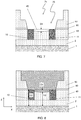
- FIGS. 5-8 show exemplary cross-sectional views of a semiconductor device at various fabrication stages of according to one embodiment of the present disclosure.
- FIGS. 5-8 illustrate operations for fabricating a first via and a first upper conductive line (or a second via and a second upper conductive line) using a dual damascene process.
- some layers/features are omitted for simplification. It is understood that additional operations can be provided before, during, and after processes shown by these figures, and some of the operations described below can be replaced or eliminated, for additional embodiments of the method. The order of the operations/processes may be interchangeable.
- lower conductive lines 10 , 11 are disposed over a semiconductor substrate 1 .
- An insulating layer 2 may be disposed between the substrate 1 and the lower conductive lines 10 , 11 .
- the substrate 1 and the insulating layer 2 are omitted in FIGS. 6 and 7 .
- a second insulating layer 50 is formed over the first insulating layer 40 and the lower conductive lines 10 , 11 . As shown in FIG. 5 , an etching stop layer 60 is interposed between the first and second insulating layers.
- an opening 70 for a via and an opening 75 for an upper conductive line is formed in the second insulating layer 50 by using, for example, lithography and dry etching operations.
- the etching of the second insulating layer 50 substantially stops at the etching stop layer 60 .
- the etching stop layer 60 exposed in the bottom of the opening 70 is removed by dry and/or wet etching. Due to the etching operations and/or cleaning operations after the etching operation and/or before forming a metal material, the bottom of the opening 70 (i.e., the upper surface 45 of the first insulating layer 40 ) is slightly etched.
- the depth D 1 measured at the lowest portion of the upper surface 45 from the level of the uppermost portion of the lower conductive lines 10 , 11 shown in FIG. 7 is in a range from about 3 nm to about 30 nm.
- one or more layers of metal material is formed in the openings 70 and 75 .
- the lowermost portion of the conductive material filled in the opening 70 (via) is closer to the semiconductor substrate 1 than the uppermost portion of the lower conductive lines 10 .
- the distance D 2 between the surface of the substrate 1 and the uppermost portion of the lower conductive lines 10 is larger than the distance D 3 between the surface of the substrate 1 and the lowermost portion of the via.
- the lowermost portion of the via is located between the two adjacent lower conductive lines connected to the via.
- the etching stop layer 60 does not exist under the via between the two adjacent lower conductive lines connected to the via.
- the uppermost portion of the lower conductive lines 10 is located at the portion covered by the etching stop layer 60 or the second insulating layer 50 .
- two separate patterning operations are employed for the first vias/upper conductive lines and the second vias/upper conductive lines.
- a method for manufacturing a semiconductor device includes the following operations.
- a plurality of lower conductive lines extending in a first direction are formed over a semiconductor substrate.
- An insulating layer overlying the plurality of lower conductive lines is formed.
- a plurality of first vias are formed by forming first openings in the insulating layer and filling the first openings with a conductive material.
- a plurality of second vias are formed by forming second openings in the insulating layer and filling the second openings with a conductive material.
- a plurality of first upper conductive lines are formed.
- the plurality of first upper conductive lines extend in a second direction crossing the first direction and are connected to the plurality of first vias.
- a plurality of second upper conductive lines are formed.
- the plurality of second upper conductive lines extend in the second direction and are connected to the plurality of second vias.
- the forming the plurality of first vias and forming the plurality of second vias are performed by separate pattering operations.
- at least one of the forming the first openings and forming the second openings at least a part of two lines of the plurality of lower conductive lines are exposed in at least one opening, so that at least one via connects the at least two lines of the plurality of lower conductive lines and one line of the plurality of first or second upper conductive lines.
- the plurality of first upper conductive lines and the plurality of second upper conductive lines are alternately arranged with a first pitch in the first direction.
- the plurality of first vias are disposed with a second pitch in the first direction, the second pitch being twice the first pitch.
- a semiconductor device includes a plurality of lower conductive lines overlying a semiconductor substrate and extending in a first direction, an insulating layer overlying the plurality of lower conductive lines, a plurality of upper conductive lines overlying the insulating layer and the first conductive lines and extending in a second direction crossing the first direction, and a plurality of vias filled with a conductive material formed in the insulating layer.
- the plurality of upper conductive lines are arranged in the first direction with a first pitch.
- the plurality of vias includes first vias and second vias. At least one via of the first vias connects at least two lines of the plurality of lower conductive lines and one line of the plurality of upper conductive lines. An average width in the first direction of the first vias is different from an average width in the first direction of the second vias.
- a semiconductor device includes a plurality of lower conductive lines overlying a semiconductor substrate and extending in a first direction, the plurality of lower conductive lines including a first lower conductive line and a second lower conductive line adjacent to the first lower conductive line in a second direction crossing the first direction, a first insulating layer overlying the plurality of lower conductive lines, a plurality of upper conductive lines overlying the first insulating layer and the first conductive lines and extending in the second direction, the plurality of upper conductive lines including a first upper conductive line, and a plurality of vias filled with a conductive material formed in the insulating layer, the plurality of vias including a first via.
- the first via connects the first and second lower conductive line and the first upper conductive line. A lowermost portion of the conductive material filled in the first via is closer to the semiconductor substrate than an uppermost portion of the first and second lower conductive lines.
Landscapes
- Engineering & Computer Science (AREA)
- Physics & Mathematics (AREA)
- Condensed Matter Physics & Semiconductors (AREA)
- General Physics & Mathematics (AREA)
- Computer Hardware Design (AREA)
- Microelectronics & Electronic Packaging (AREA)
- Power Engineering (AREA)
- Manufacturing & Machinery (AREA)
- Internal Circuitry In Semiconductor Integrated Circuit Devices (AREA)
- Geometry (AREA)
Abstract
Description
Claims (20)
Priority Applications (2)
| Application Number | Priority Date | Filing Date | Title |
|---|---|---|---|
| US16/196,366 US10629527B2 (en) | 2015-12-28 | 2018-11-20 | Method of manufacturing semiconductor device with multi wire structure |
| US16/811,873 US11177211B2 (en) | 2015-12-28 | 2020-03-06 | Method of manufacturing via structures of semiconductor devices |
Applications Claiming Priority (3)
| Application Number | Priority Date | Filing Date | Title |
|---|---|---|---|
| US201562272020P | 2015-12-28 | 2015-12-28 | |
| US15/061,627 US10269697B2 (en) | 2015-12-28 | 2016-03-04 | Semiconductor device and manufacturing method thereof |
| US16/196,366 US10629527B2 (en) | 2015-12-28 | 2018-11-20 | Method of manufacturing semiconductor device with multi wire structure |
Related Parent Applications (1)
| Application Number | Title | Priority Date | Filing Date |
|---|---|---|---|
| US15/061,627 Division US10269697B2 (en) | 2015-12-28 | 2016-03-04 | Semiconductor device and manufacturing method thereof |
Related Child Applications (1)
| Application Number | Title | Priority Date | Filing Date |
|---|---|---|---|
| US16/811,873 Division US11177211B2 (en) | 2015-12-28 | 2020-03-06 | Method of manufacturing via structures of semiconductor devices |
Publications (2)
| Publication Number | Publication Date |
|---|---|
| US20190109087A1 US20190109087A1 (en) | 2019-04-11 |
| US10629527B2 true US10629527B2 (en) | 2020-04-21 |
Family
ID=59087953
Family Applications (3)
| Application Number | Title | Priority Date | Filing Date |
|---|---|---|---|
| US15/061,627 Active 2036-10-05 US10269697B2 (en) | 2015-12-28 | 2016-03-04 | Semiconductor device and manufacturing method thereof |
| US16/196,366 Active US10629527B2 (en) | 2015-12-28 | 2018-11-20 | Method of manufacturing semiconductor device with multi wire structure |
| US16/811,873 Active US11177211B2 (en) | 2015-12-28 | 2020-03-06 | Method of manufacturing via structures of semiconductor devices |
Family Applications Before (1)
| Application Number | Title | Priority Date | Filing Date |
|---|---|---|---|
| US15/061,627 Active 2036-10-05 US10269697B2 (en) | 2015-12-28 | 2016-03-04 | Semiconductor device and manufacturing method thereof |
Family Applications After (1)
| Application Number | Title | Priority Date | Filing Date |
|---|---|---|---|
| US16/811,873 Active US11177211B2 (en) | 2015-12-28 | 2020-03-06 | Method of manufacturing via structures of semiconductor devices |
Country Status (5)
| Country | Link |
|---|---|
| US (3) | US10269697B2 (en) |
| KR (1) | KR101925685B1 (en) |
| CN (1) | CN107017198B (en) |
| DE (1) | DE102016116090B4 (en) |
| TW (1) | TWI651808B (en) |
Cited By (1)
| Publication number | Priority date | Publication date | Assignee | Title |
|---|---|---|---|---|
| US12293913B1 (en) * | 2021-12-22 | 2025-05-06 | Intel Corporation | Directed self-assembly enabled subtractive metal patterning |
Families Citing this family (4)
| Publication number | Priority date | Publication date | Assignee | Title |
|---|---|---|---|---|
| US10269697B2 (en) | 2015-12-28 | 2019-04-23 | Taiwan Semiconductor Manufacturing Co., Ltd. | Semiconductor device and manufacturing method thereof |
| CN109904111B (en) * | 2017-12-11 | 2021-08-06 | 中芯国际集成电路制造(北京)有限公司 | Interconnect structure and method of making the same |
| US12174212B2 (en) | 2018-12-20 | 2024-12-24 | Endress+Hauser Flowtec Ag | Coriolis mass flow meter |
| US11756876B2 (en) * | 2020-04-01 | 2023-09-12 | Taiwan Semiconductor Manufacturing Company Ltd. | Semiconductor devices having power rails and signal tracks arranged in different layer |
Citations (18)
| Publication number | Priority date | Publication date | Assignee | Title |
|---|---|---|---|---|
| TW200427073A (en) | 2003-05-22 | 2004-12-01 | Nec Electronics Corp | Semiconductor device, layout device and method, and the program thereof |
| US20090014796A1 (en) * | 2007-07-09 | 2009-01-15 | Jhon-Jhy Liaw | Semiconductor Device with Improved Contact Structure and Method of Forming Same |
| US20090152723A1 (en) | 2007-12-12 | 2009-06-18 | International Business Machines Corporation | Interconnect structure and method of making same |
| US20090321940A1 (en) | 2008-06-30 | 2009-12-31 | Gerhard Kunkel | Method for Manufacturing Contact Openings, Method for Manufacturing an Integrated Circuit, an Integrated Circuit |
| US20110001243A1 (en) * | 2009-07-01 | 2011-01-06 | Samsung Electronics Co., Ltd. | Semiconductor device including dummy |
| CN102187453A (en) | 2008-09-30 | 2011-09-14 | 先进微装置公司 | Formation of contacts and via holes for semiconductor elements with hard mask and double exposure |
| CN102623436A (en) | 2011-01-14 | 2012-08-01 | 台湾积体电路制造股份有限公司 | Distributed metal routing |
| CN102760693A (en) | 2011-04-29 | 2012-10-31 | 瑞萨电子株式会社 | Method of forming semiconductor device |
| TW201347193A (en) | 2012-05-01 | 2013-11-16 | 台灣積體電路製造股份有限公司 | Semiconductor device and method of manufacturing a semiconductor device |
| US20140035142A1 (en) | 2012-07-31 | 2014-02-06 | International Business Machines Corporation | Profile control in interconnect structures |
| TW201419447A (en) | 2012-11-15 | 2014-05-16 | 台灣積體電路製造股份有限公司 | Semiconductor die and method of forming interconnect structure on substrate via |
| TW201532146A (en) | 2013-12-18 | 2015-08-16 | 英特爾股份有限公司 | Self-aligned vias and embedding patterning for image storage buckets for back-end (BEOL) interconnects |
| US20160336264A1 (en) | 2015-05-13 | 2016-11-17 | Globalfoundries Inc. | Filling cavities in an integrated circuit and resulting devices |
| US20160351540A1 (en) | 2015-05-29 | 2016-12-01 | Kabushiki Kaisha Toshiba | Semiconductor device and manufacturing method of semiconductor device |
| US20160358851A1 (en) | 2015-06-03 | 2016-12-08 | GlobalFoundries, Inc. | Integrated circuits including organic interlayer dielectric layers and methods for fabricating the same |
| US20170186686A1 (en) | 2015-12-28 | 2017-06-29 | Taiwan Semiconductor Manufacturing Co., Ltd. | Semiconductor device and manufacturing method thereof |
| US20170194248A1 (en) | 2014-08-11 | 2017-07-06 | Massachusetts Institute Of Technology | Multi-Layer Semiconductor Structure and Methods for Fabricating Multi-Layer Semiconductor Structures |
| US20170194232A1 (en) | 2014-03-21 | 2017-07-06 | Taiwan Semiconductor Manufacturing Company, Ltd. | Semiconductor Structure and Method Making the Same |
Family Cites Families (8)
| Publication number | Priority date | Publication date | Assignee | Title |
|---|---|---|---|---|
| JPH11330431A (en) | 1998-05-18 | 1999-11-30 | Nec Corp | Manufacture for nonvolatile semiconductor memory device |
| US7538384B2 (en) | 2005-12-05 | 2009-05-26 | Taiwan Semiconductor Manufacturing Company, Ltd. | Non-volatile memory array structure |
| US8208305B2 (en) | 2009-12-23 | 2012-06-26 | Intel Corporation | Arrangement of pairs of NAND strings that share bitline contacts while utilizing distinct sources lines |
| US20130069170A1 (en) | 2011-09-19 | 2013-03-21 | Texas Instruments Incorporated | Illumination and design rule method for double patterned slotted contacts |
| US8813012B2 (en) * | 2012-07-16 | 2014-08-19 | Synopsys, Inc. | Self-aligned via interconnect using relaxed patterning exposure |
| US9461143B2 (en) | 2012-09-19 | 2016-10-04 | Intel Corporation | Gate contact structure over active gate and method to fabricate same |
| US9230854B2 (en) * | 2013-04-08 | 2016-01-05 | Taiwan Semiconductor Manufacturing Company, Ltd. | Semiconductor device and method |
| US9721956B2 (en) | 2014-05-15 | 2017-08-01 | Taiwan Semiconductor Manufacturing Company Limited | Methods, structures and devices for intra-connection structures |
-
2016
- 2016-03-04 US US15/061,627 patent/US10269697B2/en active Active
- 2016-08-30 DE DE102016116090.3A patent/DE102016116090B4/en active Active
- 2016-09-07 TW TW105128879A patent/TWI651808B/en active
- 2016-10-26 KR KR1020160140199A patent/KR101925685B1/en active Active
- 2016-11-29 CN CN201611073787.XA patent/CN107017198B/en active Active
-
2018
- 2018-11-20 US US16/196,366 patent/US10629527B2/en active Active
-
2020
- 2020-03-06 US US16/811,873 patent/US11177211B2/en active Active
Patent Citations (19)
| Publication number | Priority date | Publication date | Assignee | Title |
|---|---|---|---|---|
| TW200427073A (en) | 2003-05-22 | 2004-12-01 | Nec Electronics Corp | Semiconductor device, layout device and method, and the program thereof |
| US20090014796A1 (en) * | 2007-07-09 | 2009-01-15 | Jhon-Jhy Liaw | Semiconductor Device with Improved Contact Structure and Method of Forming Same |
| US20090152723A1 (en) | 2007-12-12 | 2009-06-18 | International Business Machines Corporation | Interconnect structure and method of making same |
| US20090321940A1 (en) | 2008-06-30 | 2009-12-31 | Gerhard Kunkel | Method for Manufacturing Contact Openings, Method for Manufacturing an Integrated Circuit, an Integrated Circuit |
| CN102187453A (en) | 2008-09-30 | 2011-09-14 | 先进微装置公司 | Formation of contacts and via holes for semiconductor elements with hard mask and double exposure |
| US20110001243A1 (en) * | 2009-07-01 | 2011-01-06 | Samsung Electronics Co., Ltd. | Semiconductor device including dummy |
| US9041069B2 (en) | 2011-01-14 | 2015-05-26 | Taiwan Semiconductor Manufacturing Company, Ltd. | Distributed metal routing |
| CN102623436A (en) | 2011-01-14 | 2012-08-01 | 台湾积体电路制造股份有限公司 | Distributed metal routing |
| CN102760693A (en) | 2011-04-29 | 2012-10-31 | 瑞萨电子株式会社 | Method of forming semiconductor device |
| TW201347193A (en) | 2012-05-01 | 2013-11-16 | 台灣積體電路製造股份有限公司 | Semiconductor device and method of manufacturing a semiconductor device |
| US20140035142A1 (en) | 2012-07-31 | 2014-02-06 | International Business Machines Corporation | Profile control in interconnect structures |
| TW201419447A (en) | 2012-11-15 | 2014-05-16 | 台灣積體電路製造股份有限公司 | Semiconductor die and method of forming interconnect structure on substrate via |
| TW201532146A (en) | 2013-12-18 | 2015-08-16 | 英特爾股份有限公司 | Self-aligned vias and embedding patterning for image storage buckets for back-end (BEOL) interconnects |
| US20170194232A1 (en) | 2014-03-21 | 2017-07-06 | Taiwan Semiconductor Manufacturing Company, Ltd. | Semiconductor Structure and Method Making the Same |
| US20170194248A1 (en) | 2014-08-11 | 2017-07-06 | Massachusetts Institute Of Technology | Multi-Layer Semiconductor Structure and Methods for Fabricating Multi-Layer Semiconductor Structures |
| US20160336264A1 (en) | 2015-05-13 | 2016-11-17 | Globalfoundries Inc. | Filling cavities in an integrated circuit and resulting devices |
| US20160351540A1 (en) | 2015-05-29 | 2016-12-01 | Kabushiki Kaisha Toshiba | Semiconductor device and manufacturing method of semiconductor device |
| US20160358851A1 (en) | 2015-06-03 | 2016-12-08 | GlobalFoundries, Inc. | Integrated circuits including organic interlayer dielectric layers and methods for fabricating the same |
| US20170186686A1 (en) | 2015-12-28 | 2017-06-29 | Taiwan Semiconductor Manufacturing Co., Ltd. | Semiconductor device and manufacturing method thereof |
Non-Patent Citations (2)
| Title |
|---|
| Taiwaniese Office Action issued in corresponding Taiwanese Application No. 105128879, dated Apr. 19, 2018. |
| Taiwaniese Office Action issued in corresponding Taiwanese Application No. 105128879, dated Oct. 27, 2017. |
Cited By (1)
| Publication number | Priority date | Publication date | Assignee | Title |
|---|---|---|---|---|
| US12293913B1 (en) * | 2021-12-22 | 2025-05-06 | Intel Corporation | Directed self-assembly enabled subtractive metal patterning |
Also Published As
| Publication number | Publication date |
|---|---|
| TW201735248A (en) | 2017-10-01 |
| TWI651808B (en) | 2019-02-21 |
| US20190109087A1 (en) | 2019-04-11 |
| KR20170077772A (en) | 2017-07-06 |
| US20170186686A1 (en) | 2017-06-29 |
| US20200211957A1 (en) | 2020-07-02 |
| DE102016116090B4 (en) | 2021-08-12 |
| CN107017198B (en) | 2020-01-14 |
| KR101925685B1 (en) | 2018-12-05 |
| US11177211B2 (en) | 2021-11-16 |
| CN107017198A (en) | 2017-08-04 |
| US10269697B2 (en) | 2019-04-23 |
| DE102016116090A1 (en) | 2017-06-29 |
Similar Documents
| Publication | Publication Date | Title |
|---|---|---|
| US11177211B2 (en) | Method of manufacturing via structures of semiconductor devices | |
| US11676895B2 (en) | Semiconductor device comprising air gaps having different configurations | |
| KR100902581B1 (en) | Stack Capacitors in Semiconductor Devices and Methods of Forming Them | |
| TW202016933A (en) | Memory element and its manufacturing method | |
| US9613903B2 (en) | Fine line space resolution lithography structure for integrated circuit features using double patterning technology | |
| CN112543996B (en) | Three-dimensional NAND memory device with novel dummy channel structure | |
| JP7503882B2 (en) | Coaxial Contacts for 3D Logic and Memory | |
| US12322651B2 (en) | Etching to reduce line wiggling | |
| CN111211109A (en) | Top electrode interconnect structure | |
| TWI588901B (en) | Self-aligned through hole flow | |
| CN108573917A (en) | Non- mandrel notch is formed | |
| CN112838070A (en) | Interconnection structure, interconnection layout structure and manufacturing method thereof | |
| CN109524348B (en) | Perfectly aligned vias in ground rule areas | |
| US10504914B2 (en) | Integrated circuit structure and manufacturing method thereof | |
| US20050112957A1 (en) | Partial inter-locking metal contact structure for semiconductor devices and method of manufacture | |
| JP6685945B2 (en) | Semiconductor device and manufacturing method thereof | |
| TWI681537B (en) | Semiconductor structure and method of fabricating wiring structure | |
| TW201735377A (en) | Capacitor structure of integrated circuit chip | |
| CN119340273A (en) | Method for making interconnection through-holes | |
| US12293970B2 (en) | Semiconductor structure and method for manufacturing thereof | |
| CN120933262A (en) | Semiconductor device including interconnection structure and method of manufacturing the same | |
| CN117334647A (en) | Semiconductor device including alignment pattern | |
| JP2013105988A (en) | Method of manufacturing semiconductor device, and semiconductor device | |
| KR20060001111A (en) | Semiconductor device and manufacturing method of semiconductor device | |
| KR20060072836A (en) | Metal wiring formation method of semiconductor element and its semiconductor element |
Legal Events
| Date | Code | Title | Description |
|---|---|---|---|
| AS | Assignment |
Owner name: TAIWAN SEMICONDUCTOR MANUFACTURING CO., LTD., TAIW Free format text: ASSIGNMENT OF ASSIGNORS INTEREST;ASSIGNORS:LIU, KUO-YEN;YEH, BOO;LIANG, MIN-CHANG;AND OTHERS;SIGNING DATES FROM 20160316 TO 20160420;REEL/FRAME:047554/0226 Owner name: TAIWAN SEMICONDUCTOR MANUFACTURING CO., LTD., TAIWAN Free format text: ASSIGNMENT OF ASSIGNORS INTEREST;ASSIGNORS:LIU, KUO-YEN;YEH, BOO;LIANG, MIN-CHANG;AND OTHERS;SIGNING DATES FROM 20160316 TO 20160420;REEL/FRAME:047554/0226 |
|
| FEPP | Fee payment procedure |
Free format text: ENTITY STATUS SET TO UNDISCOUNTED (ORIGINAL EVENT CODE: BIG.); ENTITY STATUS OF PATENT OWNER: LARGE ENTITY |
|
| STPP | Information on status: patent application and granting procedure in general |
Free format text: DOCKETED NEW CASE - READY FOR EXAMINATION |
|
| STPP | Information on status: patent application and granting procedure in general |
Free format text: NON FINAL ACTION MAILED |
|
| STPP | Information on status: patent application and granting procedure in general |
Free format text: NON FINAL ACTION MAILED |
|
| STPP | Information on status: patent application and granting procedure in general |
Free format text: RESPONSE TO NON-FINAL OFFICE ACTION ENTERED AND FORWARDED TO EXAMINER |
|
| STPP | Information on status: patent application and granting procedure in general |
Free format text: NOTICE OF ALLOWANCE MAILED -- APPLICATION RECEIVED IN OFFICE OF PUBLICATIONS |
|
| STCF | Information on status: patent grant |
Free format text: PATENTED CASE |
|
| MAFP | Maintenance fee payment |
Free format text: PAYMENT OF MAINTENANCE FEE, 4TH YEAR, LARGE ENTITY (ORIGINAL EVENT CODE: M1551); ENTITY STATUS OF PATENT OWNER: LARGE ENTITY Year of fee payment: 4 |