US10404699B2 - Facilitating third parties to perform batch processing of requests requiring authorization from resource owners for repeat access to resources - Google Patents
Facilitating third parties to perform batch processing of requests requiring authorization from resource owners for repeat access to resources Download PDFInfo
- Publication number
- US10404699B2 US10404699B2 US14/300,251 US201414300251A US10404699B2 US 10404699 B2 US10404699 B2 US 10404699B2 US 201414300251 A US201414300251 A US 201414300251A US 10404699 B2 US10404699 B2 US 10404699B2
- Authority
- US
- United States
- Prior art keywords
- time instance
- owner
- server
- access
- authorization
- Prior art date
- Legal status (The legal status is an assumption and is not a legal conclusion. Google has not performed a legal analysis and makes no representation as to the accuracy of the status listed.)
- Active, expires
Links
Images




Classifications
-
- H—ELECTRICITY
- H04—ELECTRIC COMMUNICATION TECHNIQUE
- H04L—TRANSMISSION OF DIGITAL INFORMATION, e.g. TELEGRAPHIC COMMUNICATION
- H04L63/00—Network architectures or network communication protocols for network security
- H04L63/10—Network architectures or network communication protocols for network security for controlling access to devices or network resources
-
- G—PHYSICS
- G06—COMPUTING OR CALCULATING; COUNTING
- G06F—ELECTRIC DIGITAL DATA PROCESSING
- G06F21/00—Security arrangements for protecting computers, components thereof, programs or data against unauthorised activity
- G06F21/30—Authentication, i.e. establishing the identity or authorisation of security principals
- G06F21/31—User authentication
- G06F21/33—User authentication using certificates
- G06F21/335—User authentication using certificates for accessing specific resources, e.g. using Kerberos tickets
-
- H—ELECTRICITY
- H04—ELECTRIC COMMUNICATION TECHNIQUE
- H04L—TRANSMISSION OF DIGITAL INFORMATION, e.g. TELEGRAPHIC COMMUNICATION
- H04L63/00—Network architectures or network communication protocols for network security
- H04L63/08—Network architectures or network communication protocols for network security for authentication of entities
- H04L63/0807—Network architectures or network communication protocols for network security for authentication of entities using tickets, e.g. Kerberos
Definitions
- the present disclosure relates to enterprise systems and more specifically to facilitating third parties to perform batch processing of requests requiring authorization from resource owners for repeat access to resources.
- a resource refers to any data item such as files, photos, user information, etc. Resources are often ‘owned’ by owners, but stored and managed by other/second parties. Ownership of a resource implies that the corresponding user (usually a human being) can control who is permitted or denied access to the resource managed by a second party. Such resources are referred to as “protected resources”.
- An owner can permit access of a resource to a third party by granting appropriate authorization. There is often a need to permit ‘repeat’ access to a resource, implying that a single authorization can be a basis for multiple accesses over time.
- OAuth protocol is one open standard, which allows for such authorization for repeat access of the resource on behalf of the owner, as is well known in the relevant arts.
- Batch processing implies that several requests are accumulated (by appropriate buffering), and processed in a batch (i.e., continue to process the accumulated requests until the processing of all requests is completed) at a later convenient time. Batch processing is generally helpful in large scale environments.
- aspects of the present disclosure facilitate third parties to perform batch processing of requests requiring authorization from resource owners for repeat access to resources.
- FIG. 1 is a block diagram illustrating an example environment in which several aspects of the present disclosure can be implemented.
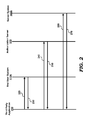
- FIG. 2 is a sequence diagram illustrating the manner in which authorization of protected resources is implemented in one embodiment.
- FIG. 3A is a flow chart illustrating the manner in which third parties are facilitated to perform batch processing of requests requiring authorization from resource owners for repeat access to resources according to an aspect of the present disclosure.
- FIG. 3B is a sequence diagram illustrating the manner in which the steps of FIG. 3A are implemented in one embodiment.
- FIG. 4A illustrates an example implementation of a server performing batch processing of requests requiring authorization from resource owners for repeat access to resources in one embodiment.
- FIGS. 4B and 4C depicts respective portions of credential data maintained at different time instances in one embodiment.
- FIG. 5 is a block diagram illustrating the details of a digital processing system in which various aspects of the present disclosure are operative by execution of appropriate executable modules.
- a batch server/third party receives multiple Srequests to be processed in a batch.
- the batch server selects a next request from the received requests, with the next request requiring a protected resource (hosted on a second party) owned by an owner/user (first party).
- the batch server checks whether an access token is present authorizing access of the protected resource by the batch server on behalf of the owner. If the access token is not present, the batch server communicates in an offline mode with the owner to receive the access token. The batch server then processes the next request by accessing the protected resource using the present/received access token.
- third parties/batch server are facilitated to perform batch processing of requests requiring authorization from resource owners for repeat access to resources.
- receiving of the access token from a owner in an offline mode is implemented by first sending a communication to the owner for asynchronous authorization of access to said first protected resource.
- the communication sent to the owner includes a Uniform Resource Locator (URL), which when selected by the owner causes said authorization grant to be forwarded to the batch server.
- URL Uniform Resource Locator
- the access token is obtained by sending the received authorization grant to an authorization server.
- the protected resource is hosted on a resource server, with the batch server, the authorization server and the resource server being implemented to support OAuth protocol for authorization of protected resources.
- the protected resource is hosted on a resource server, with the server system, the authorization server and the resource server being implemented to support OAuth protocol for authorization of protected resources.
- FIG. 1 is a block diagram illustrating an example environment in which several aspects of the present disclosure can be implemented.
- the block diagram is shown containing end user systems 110 A- 110 Z, Internet 120 , intranet 130 , server systems 140 A- 140 C, SOA (service-oriented architecture) server 150 , authorization server 170 , and data store 180 .
- SOA service-oriented architecture
- Intranet 130 represents a network providing connectivity between server systems 140 A- 140 C, SOA server 150 , authorization server 170 and data store 180 , all provided within an enterprise (shown with dotted boundaries).
- Internet 120 extends the connectivity of these (and other systems of the enterprise) with external systems such as end user systems 110 A- 110 Z.
- Each of intranet 140 and Internet 120 may be implemented using protocols such as Transmission Control Protocol (TCP) and/or Internet Protocol (IP), well known in the relevant arts.
- TCP Transmission Control Protocol
- IP Internet Protocol
- an IP packet is used as a basic unit of transport, with the source address being set to the IP address assigned to the source system from which the packet originates and the destination address set to the IP address of the destination system to which the packet is to be eventually delivered.
- a (IP) packet is said to be directed to a destination system when the destination IP address of the packet is set to the (IP) address of the destination system, such that the packet is eventually delivered to the destination system by network 110 .
- the packet contains content such as port numbers, which specifies the destination application, the packet may be said to be directed to such application as well.
- the destination system may be required to keep the corresponding port numbers available/open, and process the packets with the corresponding destination ports.
- Each of Internet 120 and intranet 130 may be implemented using any combination of wire-based or wireless mediums.
- Data store 180 represents a non-volatile (persistent) storage facilitating storage and retrieval of a collection of data by applications executing in other systems of the enterprise such as server systems 140 A- 140 C, SOA server 150 and authorization server 170 .
- Data store 180 may be implemented as a database server using relational database technologies and accordingly provide storage and retrieval of data using structured queries such as SQL (Structured Query Language).
- data store 180 may be implemented as a file server providing storage and retrieval of data in the form of files organized as one or more directories, as is well known in the relevant arts.
- Each of end user systems 110 A- 110 Z represents a system such as a personal computer, workstation, mobile station, mobile phones, computing tablets, etc., used by users to generate and send user requests directed to specific systems of the enterprise.
- the user requests may be generated using appropriate user interfaces (for example, web pages provided by applications executing in the enterprise).
- the users may send user requests for performing various tasks to applications executing in server systems 140 A- 140 C.
- users/owners may manage (create, remove, authorize/deny access to) various resources of interest by sending user requests to the systems of the enterprise over Internet 120 .
- Each of server systems 140 A- 140 C represents a server, such as a web/application server, capable of protecting and providing access to resources in the enterprise (and as such represents the second party).
- Some of the protected resources such as applications, web pages provided by the applications, etc. may be hosted on the server system.
- the protected resources e.g., personal data, media such as images or videos, etc. may be hosted on backend storage systems (not shown), with the access of such resources being controlled by the server systems.
- the protected resources are shown to be hosted within the enterprise (dotted boundary).
- the features of the present disclosure may be implemented in alternative embodiments where the protected resources may be hosted on systems (not shown) external to the enterprise (with the resources being accessed via the Internet 120 ), as will be apparent to one skilled in the relevant arts, by reading the disclosure herein.
- Application server 160 represents a server, such as a web/application server, capable of executing third party applications that may wish to access some of the protected resources (hosted within the enterprise).
- the third party applications may require access to the protected resource for processing user requests (for example, received from end user systems 110 A- 110 Z).
- the third party applications are designed to operate with authorization server 170 for performing authorization of the protected resources. Upon successful authorization, the third party applications may repeatedly access the authorized protected resource and process the user requests.
- Authorization server 170 represents a system such as a server, which facilitates authorization of protected resources (by owners/users), and thereby enables third parties/applications to process requests requiring repeated access to resources.
- authorization server 170 and other systems of the enterprise are implemented to perform the authorization of resources in accordance with OAuth protocol. The manner in which such authorization of protected resources may be performed is described below with examples.
- FIG. 2 is a sequence diagram illustrating the manner in which authorization of protected resources is implemented according to OAuth protocol in the environment of FIG. 1 in one embodiment.
- the description is continued assuming that third party application 210 executing in application server 160 requires access to a protected resource hosted in server system 140 B, the protected resource being owned by an owner/user using end user system 110 A. While the description is provided in accordance with OAuth protocol for illustration, it should be appreciated the features may be implemented with other similar authorization protocols, as suited in the corresponding environments.
- Third party application 210 is shown sending an authorization request to end user system 110 A used by the owner (event 220 ).
- the authorization request may indicate the details of the protected resource, the third party application requesting the resource, the number/duration of access required, etc.
- the user/owner may specify the access rights (view, modify, expiry period for the access, etc.) of the third party application (in general, authorize) for the requested protected resource and thereafter send a response indicating authorization grant (event 230 ).
- the authorization grant may indicate the rights specified by the user/owner.
- the user/owner may be required to authenticate himself/herself with a second party (such as server system 140 B that is protecting the resource) prior to providing authorization.
- the authentication of the user i.e., establishing the identity of the user
- the authentication of the user may be performed using an appropriate authentication technique such as using a combination of userid and password, as is well known in the arts.
- the user may specify the desired access rights as part of authorization grant.
- the authentication and authorization may be performed using appropriate user interfaces provided by the second party.
- Third party application 210 then sends the authorization grant to authorization server 170 (event 240 ), which in turn generates an access token corresponding to the authorization grant and sends the generated access token as a response to the authorization grant (event 250 ).
- the access token may indicate (typically, in an encrypted form) the details of the third party application requesting access, the protected resource, and the specific access rights (including any expiry period) specified by the owner of the resource.
- Third party application 210 thereafter sends the access token to server system 140 B, the resource server hosting the resource (event 260 ) and accordingly is provided access to the protected resource (event 270 ). It may be appreciated that after an access token is generated, the access token may be thereafter used for repeated access of the protected resource (assuming that the access token has not expired). Third party application 210 may store the access token received from authorization server in data store 180 for facilitating repeated access to the protected resource.
- third party software ( 210 ) is facilitated to repeatedly access a protected resource on behalf of an owner based on the authorization provided by the owner.
- the generation of the access token requires the active participation of the owner, that is, the owners are required to be “live/online” for providing the necessary authorization.
- SOA server 150 performs batch processing of requests requiring authorization from resource owners for repeat access to resources, while overcoming some of the drawbacks noted above.
- Such systems processing requests in batches are referred to as batch servers, with SOA server 150 representing a system that processes requests by execution of appropriate business flows.
- Some of the activities of the executed business flows are implemented as invocations to one or more web services (protected resources) exposed by server systems 140 A- 140 C, with the exposed web services belonging to different owners.
- the manner in which SOA server 150 performs batch processing of requests requiring access to such protected resources/web services is described below with examples.
- FIG. 3A is a flow chart illustrating the manner in which third parties are facilitated to perform batch processing of requests requiring authorization from resource owners for repeat access to resources according to an aspect of the present disclosure.
- the flowchart is described with respect to the systems of FIG. 1 , in particular, SOA server 150 , merely for illustration.
- the features can be implemented in other systems and environments also without departing from the scope and spirit of various aspects of the present disclosure, as will be apparent to one skilled in the relevant arts by reading the disclosure provided herein.
- step 301 begins in step 301 , in which control immediately passes to step 310 .
- SOA server 150 receives multiple requests for processing in a batch.
- the requests may be received from end user systems 110 A- 110 Z at different prior time instances spread over a substantially long duration (e.g., over a day), with the requests being buffered for processing starting at a later time instance.
- SOA server 150 selects a next request to be processed, the selected request requiring a protected resource (e.g. web service) owned by a owner.
- the selection of the next request may be performed in any convenient manner, for example, based on the received time instances, the priority of the requests, etc.
- the protected resources may be hosted and or protected by server systems 140 B- 140 C.
- SOA server 150 checks whether an access token authorizing access of the protected resource on behalf of the owner is present. The check may be performed by inspecting a credential data indicating the previously generated (and not yet expired/revoked) access tokens. The inspection operation is in accordance with the conventions of OAuth protocol, as the access token content is defined by the protocol. Control passes to step 380 if an access token for the required protected resource is present and to step 350 otherwise.
- SOA server 150 sends a communication to the owner for asynchronous authorization of access to the protected resource. Any necessary authentication, etc., as described above, may be performed as a part of such asynchronous authorization.
- asynchronous implies that the owner is not required to substantially immediately respond (as would be required in synchronous/online response modes) to the communication, but can respond at a later convenient time (e.g., in a few hours/days, etc.). While the communication is described as being a URL in the below described embodiments, alternative approaches can employ code snippets (e.g., applets), as will be apparent to a skilled practitioner by reading the disclosure provided herein.
- step 360 SOA server 150 receives authorization grant for the protected resource, upon the owner providing the asynchronous authorization.
- step 370 SOA server 150 obtains an access token by sending the authorization grant to authorization server 170 , similar to events 240 and 250 of FIG. 2 . It should be appreciated that the steps of 350 , 360 and 370 are performed in an offline mode, that is, without requiring the owner to be live/online.
- step 380 SOA server 150 processes the next request by accessing the protected resource using the previously present/obtained access token (similar to events 260 and 270 of FIG. 2 ).
- step 390 SOA server 150 determines whether more requests are required to be processed in the batch. Control passes to step 320 if more requests are present (and accordingly the next requests are processed), and to step 399 otherwise. The flow chart ends in step 399 .
- FIG. 3B is a sequence diagram illustrating the manner in which the steps of FIG. 3A are implemented in one embodiment. Specifically, the events of FIG. 3B correspond to processing of two different requests A and B of a batch according to the steps of FIG. 3A .
- T 1 , t 2 , t 3 , t 4 , and t 5 represent the different time instances at which the events occur.
- the events are shown with the same reference numbers as those shown for the steps of FIG. 3A , but with A or B appended to distinguish between the events for requests A and B respectively.
- SOA server 150 determines that no access token is present and accordingly obtains the access token in offline mode.
- Request A is accordingly shown having events 320 A, 330 A, 350 A, 360 A, 370 A and 380 A corresponding to similarly named steps in FIG. 3A .
- SOA server 150 determines that an access token is present and accordingly processes the request (events 320 B, 330 B and 380 B).
- SOA server 150 performs batch processing of requests requiring authorization from resource owners for repeat access to resources.
- the manner in which SOA server 150 may perform batch processing of request according to FIGS. 3A and 3B is illustrated below with examples.
- FIGS. 4A-4C together illustrate the manner in which third parties are facilitated to perform batch processing of requests requiring authorization from resource owners for repeat access to resources in one embodiment.
- FIGS. 4A-4C together illustrate the manner in which third parties are facilitated to perform batch processing of requests requiring authorization from resource owners for repeat access to resources in one embodiment.
- FIG. 4A illustrates an example implementation of a server (SOA server 150 ) performing batch processing of requests requiring authorization from resource owners for repeat access to resources in one embodiment.
- a front-end order application (not shown) generates orders for products and stores the generated orders in a non-volatile storage (e.g. orders data 410 in data store 180 ). The orders are then processed in a batch by a business flow (order processor 420 ) executing in SOA server 150 .
- One of the activities to be performed as part of processing an order is to periodically update, on behalf of the customer organization (who has placed the order), a personal website (e.g. TwitterTM) with the current status of the order (e.g., “Order received”, “Order processing started”, “Invoice generated”, etc.). It is assumed that the personal website allows users to create various accounts and to post messages on to such accounts. Other users (followers) may follow the desired accounts, whereby the followers automatically receive the messages of such desired accounts.
- a personal website e.g. TwitterTM
- TwitterTM TwitterTM
- the current status of the order e.g., “Order received”, “Order processing started”, “Invoice generated”, etc.
- SOA server 150 For SOA server 150 to be able to post the order status (and thus provide the requisite periodic update to followers of account of the customer organization), SOA server 150 needs to be provided authorization of the account of the customer organization. In other words, the account is viewed as a protected resource, which is to be accessed on behalf of the customer organization.
- OAuth described above is generally designed for providing such access to third parties.
- requests are processed in a batch, there are several challenges, some of which are noted above.
- SOA server 150 addresses at least some of such challenges, as described in detail below with respect to FIGS. 4A and 4B .
- Orders data 410 (maintained in data store 180 , in one embodiment) specifies the details of the requests/orders (generated and stored by the front-end order application) sought to be processed in a batch.
- Order processor 420 represents a business flow executing in SOA server 150 , and which is enabled to perform batch processing of orders. As part of the business flow, order processor 420 is designed to invoke target (web) service 480 exposed by server system 140 C to update the customer's account on the personal website with the current status of processing the order.
- order processor 420 in response to selecting an order/request from the received orders (maintained in orders data 410 ), first interfaces with credential checker 430 to determine whether an access token for target server 480 is already present.
- Credential checker 430 inspects credential data 460 to determine whether the access token (for enabling order processor 420 to access the customer's account on the personal website) is present. The manner in which credential data may be maintained and used for obtaining the access token in an offline mode is described below with examples.
- FIGS. 4B and 4C depicts respective portions of credential data ( 460 ) maintained at different time instances in one embodiment.
- the credential data is also (along with orders data 410 ) stored in data store 180 , implemented as a database server.
- credential data 460 is shown maintained in the form of a table in a database in the database server.
- the credential data may be maintained using other data structures (such as trees, associative arrays, etc.) and/or in any other format such as XML (Extensible Markup Language), as will be apparent to one skilled in the relevant arts by reading the disclosure herein.
- XML Extensible Markup Language
- credential data/table 460 is shown containing five columns with column “User ID” specifying a unique identifier of the user/owner, column “Access Token” specifying the access token that has been generated for the user/owner, column “Expiry Date” indicating the date until which the access token is valid, column “Request Date” indicating the date on which a communication for obtaining the access token in an offline mode was sent (to the owner/user by SOA server 150 ) and column “Status” indicating the current status (“Active”, “Expired”, “Revoked”, “Pending” etc.) of the access token.
- Each of the rows of table 460 specifies the details of the access token received from a corresponding user/owner.
- the access token specifies (in an encrypted form) the details of the third party application requesting access, the protected resource, and the specific access rights (including any expiry period) specified by the owner of the resource.
- An access token is deemed to be present when the status is “Active” and the corresponding value in column “Access Token” is not blank.
- credential data ( 460 ) for different users/owners of protected resources is maintained by SOA server 150 .
- credential checker 430 checks whether an access token of the customer is present in table 460 .
- credential checker 430 forwards the access token to order processor 420 .
- Order processor 420 then access target service 480 using the provided access token, thereby updating the customer's account on the personal website with the current status.
- credential checker 430 first stores the details of the order such as the owner/user from whom the authorization is to be obtained, the date on which the request for authorization is sent, the status as “Pending”, etc., in table 460 (as shown in row 490 ). Credential checker 430 then sends an indication (along with other data such as the user ID) to URL generator 440 that the owner of target service 480 is to be communicated with in an offline mode to obtain the access token.
- URL generator 440 in response to the indication, generates and sends to the owner (determined based on the received user ID), an URL which when selected asynchronously by the owner causes an authorization grant for the protected resource to be forwarded to callback service 450 .
- Such an URL may be generated in any convenient manner.
- domain-name is the domain of the enterprise hosting the third party application
- “authrequest” is the name of the service (e.g. provided by server system 140 C or authorization server 170 ) used to generate the authorization grant and which is invoked upon the user/owner selecting the URL;
- “callbackuri” is a keyword indicating that the authorization grant is to be forwarded to the URI (universal resource identifier) specified as the value (“http://domain-name/CredentialCallbackService”) of the keyword;
- “CredentialCallbackService” is the identify of the call back service ( 450 ).
- “user-id” is a keyword indicating the user/owner ID (e.g. 578578) for whom the access token is generated.
- the URL may then be delivered to the owner in a known way, for example, as part of an email message sent to the inbox of the owner, in the form of a short message service (SMS) message sent to the mobile device (e.g., 110 A) of the owner, etc.
- SMS short message service
- the URL may thereafter be selected by the owner at a later time instance (asynchronously), for example (potentially after several days), when accessing the email from the inbox using end user system 110 A, while viewing the SMS message in the mobile device, etc.
- the owner selects the URL, performs any necessary authentication with server system 140 C (hosting the protected resource), and then creates an authorization grant (indicating the specific authorizations specified by the owner) for target service 480 . Due to the format of the URL, the newly created authorization grant is forwarded to callback service 450 .
- order processor 420 does not wait for the reply to the communication (as would be required in synchronous communications), but continues with the processing of the selected order and/or other orders in the batch.
- Callback service 450 receives the authorization grant, and then obtains an access token by sending the authorization grant to authorization server 170 , similar to events 240 and 250 of FIG. 2 .
- Callback service 450 then stores the newly obtained access token as part of credential data 460 (row 495 of FIG. 4C ), and then notifies order processor 420 that the access token is present.
- Order process 420 may thereafter interface with credential checker 430 to retrieve the newly obtained access token from credential data 460 and processes the orders requiring accesses to target service 480 .
- the third party order processor 420 is facilitated to perform batch processing of orders/requests requiring authorization from resource owners (first party) for repeat access to resources/web services (hosted/protected by second parties such as server systems 140 A- 140 C).
- FIG. 5 is a block diagram illustrating the details of digital processing system 500 in which various aspects of the present disclosure are operative by execution of appropriate executable modules.
- Digital processing system 500 may correspond to SOA server 150 .
- Digital processing system 500 may contain one or more processors such as a central processing unit (CPU) 510 , random access memory (RAM) 520 , secondary memory 530 , graphics controller 560 , display unit 570 , network interface 580 , and input interface 590 . All the components except display unit 570 may communicate with each other over communication path 550 , which may contain several buses as is well known in the relevant arts. The components of FIG. 5 are described below in further detail.
- processors such as a central processing unit (CPU) 510 , random access memory (RAM) 520 , secondary memory 530 , graphics controller 560 , display unit 570 , network interface 580 , and input interface 590 . All the components except display unit 570 may communicate with each other over communication path 550 , which may contain several buses as is well known in the relevant arts. The components of FIG. 5 are described below in further detail.
- CPU 510 may execute instructions stored in RAM 520 to provide several features of the present disclosure.
- CPU 510 may contain multiple processing units, with each processing unit potentially being designed for a specific task. Alternatively, CPU 510 may contain only a single general-purpose processing unit.
- RAM 520 may receive instructions from secondary memory 530 using communication path 550 .
- RAM 520 is shown currently containing software instructions constituting operating environment 525 and/or other user programs 526 (such as database software, etc.).
- RAM 520 may contain other software programs such as device drivers, virtual machines, etc., which provide a (common) run time environment for execution of other/user programs.
- Graphics controller 560 generates display signals (e.g., in RGB format) to display unit 570 based on data/instructions received from CPU 510 .
- Display unit 570 contains a display screen to display the images defined by the display signals.
- Input interface 590 may correspond to a keyboard and a pointing device (e.g., touch-pad, mouse) and may be used to provide inputs.
- Network interface 580 provides connectivity to a network (e.g., using Internet Protocol), and may be used to communicate with other systems connected to the network ( 120 and 130 of FIG. 1 ).
- Secondary memory 530 may contain hard drive 535 , flash memory 536 , and removable storage drive 537 . Secondary memory 530 may store the data (for example, portions of the URL) and software instructions (for implementing the steps of FIGS. 3A and 3B ), which enable digital processing system 500 to provide several features in accordance with the present disclosure.
- the code/instructions stored in secondary memory 530 may either be copied to RAM 520 prior to execution by CPU 510 for higher execution speeds, or may be directly executed by CPU 510 .
- Secondary memory 530 may contain hard drive 535 , flash memory 536 , and removable storage drive 537 . Some or all of the data and instructions may be provided on removable storage unit 540 , and the data and instructions may be read and provided by removable storage drive 537 to CPU 510 .
- Removable storage unit 540 may be implemented using medium and storage format compatible with removable storage drive 537 such that removable storage drive 537 can read the data and instructions.
- removable storage unit 540 includes a computer readable (storage) medium having stored therein computer software and/or data.
- the computer (or machine, in general) readable medium can be in other forms (e.g., non-removable, random access, etc.).
- computer program product is used to generally refer to removable storage unit 540 or hard disk installed in hard drive 535 .
- These computer program products are means for providing software to digital processing system 500 .
- CPU 510 may retrieve the software instructions, and execute the instructions to provide various features of the present disclosure described above.
- Non-volatile media includes, for example, optical disks, magnetic disks, or solid-state drives, such as storage memory 530 .
- Volatile media includes dynamic memory, such as RAM 520 .
- storage media include, for example, a floppy disk, a flexible disk, hard disk, solid-state drive, magnetic tape, or any other magnetic data storage medium, a CD-ROM, any other optical data storage medium, any physical medium with patterns of holes, a RAM, a PROM, and EPROM, a FLASH-EPROM, NVRAM, any other memory chip or cartridge.
- Storage media is distinct from but may be used in conjunction with transmission media.
- Transmission media participates in transferring information between storage media.
- transmission media includes coaxial cables, copper wire and fiber optics, including the wires that comprise bus 550 .
- transmission media can also take the form of acoustic or light waves, such as those generated during radio-wave and infra-red data communications.
Landscapes
- Engineering & Computer Science (AREA)
- Computer Security & Cryptography (AREA)
- General Engineering & Computer Science (AREA)
- Computer Hardware Design (AREA)
- Signal Processing (AREA)
- Computer Networks & Wireless Communication (AREA)
- Computing Systems (AREA)
- Theoretical Computer Science (AREA)
- Software Systems (AREA)
- Physics & Mathematics (AREA)
- General Physics & Mathematics (AREA)
- Storage Device Security (AREA)
- Telephonic Communication Services (AREA)
- Information Transfer Between Computers (AREA)
- Management, Administration, Business Operations System, And Electronic Commerce (AREA)
Priority Applications (4)
| Application Number | Priority Date | Filing Date | Title |
|---|---|---|---|
| CN201580002703.0A CN105765944B (zh) | 2014-02-18 | 2015-02-04 | 第三方批处理授权重复访问资源的请求的方法及系统 |
| EP15705380.2A EP3108634B1 (en) | 2014-02-18 | 2015-02-04 | Facilitating third parties to perform batch processing of requests requiring authorization from resource owners for repeat access to resources |
| JP2016534218A JP6514699B2 (ja) | 2014-02-18 | 2015-02-04 | リソースへの繰返しアクセスについてリソースオーナーから認可を要求する要求のバッチ処理の、サードパーティによる実行の容易化 |
| PCT/IB2015/050845 WO2015125038A1 (en) | 2014-02-18 | 2015-02-04 | Facilitating third parties to perform batch processing of requests requiring authorization from resource owners for repeat access to resources |
Applications Claiming Priority (2)
| Application Number | Priority Date | Filing Date | Title |
|---|---|---|---|
| IN758/CHE/2014 | 2014-02-18 | ||
| IN758CH2014 | 2014-02-18 |
Publications (2)
| Publication Number | Publication Date |
|---|---|
| US20150237053A1 US20150237053A1 (en) | 2015-08-20 |
| US10404699B2 true US10404699B2 (en) | 2019-09-03 |
Family
ID=53799169
Family Applications (1)
| Application Number | Title | Priority Date | Filing Date |
|---|---|---|---|
| US14/300,251 Active 2034-11-16 US10404699B2 (en) | 2014-02-18 | 2014-06-10 | Facilitating third parties to perform batch processing of requests requiring authorization from resource owners for repeat access to resources |
Country Status (5)
| Country | Link |
|---|---|
| US (1) | US10404699B2 (enExample) |
| EP (1) | EP3108634B1 (enExample) |
| JP (1) | JP6514699B2 (enExample) |
| CN (1) | CN105765944B (enExample) |
| WO (1) | WO2015125038A1 (enExample) |
Cited By (2)
| Publication number | Priority date | Publication date | Assignee | Title |
|---|---|---|---|---|
| US10956972B2 (en) * | 2018-12-26 | 2021-03-23 | Paypal, Inc. | Account access system |
| US20220158992A1 (en) * | 2020-11-13 | 2022-05-19 | Cyberark Software Ltd. | Native remote access to target resources using secretless connections |
Families Citing this family (25)
| Publication number | Priority date | Publication date | Assignee | Title |
|---|---|---|---|---|
| US10404699B2 (en) | 2014-02-18 | 2019-09-03 | Oracle International Corporation | Facilitating third parties to perform batch processing of requests requiring authorization from resource owners for repeat access to resources |
| WO2016040744A1 (en) | 2014-09-12 | 2016-03-17 | Id. Me, Inc. | Systems and methods for online third-party authentication of credentials |
| EP3070901A1 (en) * | 2015-03-16 | 2016-09-21 | Alcatel Lucent | Communication device authentication in small cell network |
| DE102016221270B4 (de) | 2015-11-30 | 2019-03-21 | Ford Global Technologies, Llc | Mobile Transportvorrichtung, Fahrzeug und Verfahren zum Bewegen einer mobilen Transportvorrichtung |
| DE102015223739A1 (de) | 2015-11-30 | 2017-06-01 | Ford Global Technologies, Llc | Mobile Transportvorrichtung |
| DE202015106647U1 (de) | 2015-11-30 | 2016-01-15 | Ford Global Technologies, Llc | Mobile Transportvorrichtung |
| EP3529735B1 (en) * | 2016-10-24 | 2020-10-07 | Rovi Guides, Inc. | Systems and methods for controlling access to media assets using two-factor authentication |
| US10554564B2 (en) * | 2017-02-27 | 2020-02-04 | Ebay Inc. | Rate limiter |
| GB2561822B (en) * | 2017-04-13 | 2020-02-19 | Arm Ip Ltd | Reduced bandwidth handshake communication |
| US10581909B2 (en) | 2017-06-26 | 2020-03-03 | Oath Inc. | Systems and methods for electronic signing of electronic content requests |
| CN109428869B (zh) * | 2017-08-31 | 2021-04-27 | 中国电信股份有限公司 | 钓鱼攻击防御方法和授权服务器 |
| US10742651B2 (en) * | 2017-09-07 | 2020-08-11 | The Toronto-Dominion Bank | Digital identity network interface system |
| US10785211B2 (en) | 2017-12-27 | 2020-09-22 | Microsoft Technology Licensing, Llc | Authorization and authentication for recurring workflows |
| EP3815401B1 (en) | 2018-06-29 | 2025-04-23 | Nokia Technologies Oy | Security management for service access in a communication system |
| EP3641259A1 (de) * | 2018-10-15 | 2020-04-22 | Siemens Aktiengesellschaft | Vorrichtung und verfahren zur prüfung von eigenschaften von ressourcen |
| WO2020086101A1 (en) * | 2018-10-27 | 2020-04-30 | Visa International Service Association | Biometric and behavior analytics platform |
| JP7406086B2 (ja) | 2020-01-28 | 2023-12-27 | 富士通株式会社 | データアクセス制御プログラム、データアクセス制御方法、及び認可サーバ |
| CN111898144A (zh) * | 2020-07-16 | 2020-11-06 | 广东金宇恒软件科技有限公司 | 一种集体经济公开查询系统 |
| CN114697056B (zh) * | 2020-12-28 | 2024-10-25 | 航天信息股份有限公司 | 开票系统的登录方法、装置、存储介质和电子设备 |
| US11716325B2 (en) * | 2021-01-20 | 2023-08-01 | International Business Machines Corporation | Limiting scopes in token-based authorization systems |
| EP4047899A1 (en) * | 2021-02-19 | 2022-08-24 | Nagravision S.A. | Methods and systems for controlling access to sensor data |
| JP7698048B2 (ja) * | 2021-08-17 | 2025-06-24 | 株式会社Nttドコモ | 認証サーバ及び通信方法 |
| US20230104970A1 (en) * | 2021-10-05 | 2023-04-06 | Bank Of America Corporation | System for implementing continuous authentication in ambient resource transfers |
| US11695772B1 (en) * | 2022-05-03 | 2023-07-04 | Capital One Services, Llc | System and method for enabling multiple auxiliary use of an access token of a user by another entity to facilitate an action of the user |
| CN115174162B (zh) * | 2022-06-17 | 2023-10-24 | 青岛海尔科技有限公司 | 基于OAuth协议的授权方法、装置、系统及存储介质 |
Citations (14)
| Publication number | Priority date | Publication date | Assignee | Title |
|---|---|---|---|---|
| JPS606533B2 (ja) | 1980-01-19 | 1985-02-19 | 松下電器産業株式会社 | 金属化フィルムコンデンサ |
| US20100100952A1 (en) * | 2008-10-21 | 2010-04-22 | Neal Sample | Network aggregator |
| US20100212004A1 (en) | 2009-02-18 | 2010-08-19 | Nokia Corporation | Method and apparatus for providing enhanced service authorization |
| US20120144501A1 (en) | 2010-12-03 | 2012-06-07 | Salesforce.Com, Inc. | Regulating access to protected data resources using upgraded access tokens |
| US20120216268A1 (en) * | 2011-02-17 | 2012-08-23 | Ebay Inc. | Identity assertion framework |
| US20130019295A1 (en) | 2011-07-11 | 2013-01-17 | Samsung Electronics Co., Ltd. | Method and system for open authentication |
| US20130091171A1 (en) | 2011-10-05 | 2013-04-11 | Salesforce.Com, Inc, | Just-in-time user provisioning framework in a multitenant environment |
| US20130139241A1 (en) | 2011-11-29 | 2013-05-30 | Michael Leeder | Methods, systems, and computer readable media for bridging user authentication, authorization, and access between web-based and telecom domains |
| WO2013107403A1 (zh) | 2012-01-20 | 2013-07-25 | 华为技术有限公司 | Oauth api的使用、调用方法、设备及系统 |
| JP2013246655A (ja) | 2012-05-25 | 2013-12-09 | Canon Inc | 認可サーバー及びクライアント装置、サーバー連携システム、トークン管理方法 |
| US20140006930A1 (en) * | 2012-06-15 | 2014-01-02 | Investinghouse, Inc. | System and method for internet publishing |
| US20140373099A1 (en) * | 2013-06-17 | 2014-12-18 | Cable Television Laboratories, Inc. | Asynchronous user permission model for applications |
| US20150150110A1 (en) * | 2013-11-27 | 2015-05-28 | International Business Machines Corporation | Identifying and destroying potentially misappropriated access tokens |
| EP3108634A1 (en) | 2014-02-18 | 2016-12-28 | Oracle International Corporation | Facilitating third parties to perform batch processing of requests requiring authorization from resource owners for repeat access to resources |
Family Cites Families (7)
| Publication number | Priority date | Publication date | Assignee | Title |
|---|---|---|---|---|
| JP2001249821A (ja) * | 2000-03-07 | 2001-09-14 | Hitachi Ltd | ジョブスケジューリング方法 |
| JP4715323B2 (ja) * | 2005-06-17 | 2011-07-06 | コニカミノルタビジネステクノロジーズ株式会社 | 画像処理装置、データ管理プログラムおよびデータ管理方法 |
| CN103067338B (zh) * | 2011-10-20 | 2017-04-19 | 上海贝尔股份有限公司 | 第三方应用的集中式安全管理方法和系统及相应通信系统 |
| US8819841B2 (en) * | 2012-06-26 | 2014-08-26 | Google Inc. | Automated accounts for media playback |
| US8806595B2 (en) * | 2012-07-25 | 2014-08-12 | Oracle International Corporation | System and method of securing sharing of resources which require consent of multiple resource owners using group URI's |
| CN103581140B (zh) * | 2012-08-03 | 2018-02-27 | 腾讯科技(深圳)有限公司 | 授权控制方法及装置和系统、授权请求方法及装置 |
| US8813206B2 (en) * | 2012-11-27 | 2014-08-19 | Hong Kong Applied Science and Technology Research Institute Company Limited | Anonymous personal content access with content bridge |
-
2014
- 2014-06-10 US US14/300,251 patent/US10404699B2/en active Active
-
2015
- 2015-02-04 WO PCT/IB2015/050845 patent/WO2015125038A1/en not_active Ceased
- 2015-02-04 JP JP2016534218A patent/JP6514699B2/ja active Active
- 2015-02-04 CN CN201580002703.0A patent/CN105765944B/zh active Active
- 2015-02-04 EP EP15705380.2A patent/EP3108634B1/en active Active
Patent Citations (18)
| Publication number | Priority date | Publication date | Assignee | Title |
|---|---|---|---|---|
| JPS606533B2 (ja) | 1980-01-19 | 1985-02-19 | 松下電器産業株式会社 | 金属化フィルムコンデンサ |
| US20100100952A1 (en) * | 2008-10-21 | 2010-04-22 | Neal Sample | Network aggregator |
| US20100212004A1 (en) | 2009-02-18 | 2010-08-19 | Nokia Corporation | Method and apparatus for providing enhanced service authorization |
| US20120144501A1 (en) | 2010-12-03 | 2012-06-07 | Salesforce.Com, Inc. | Regulating access to protected data resources using upgraded access tokens |
| US20120216268A1 (en) * | 2011-02-17 | 2012-08-23 | Ebay Inc. | Identity assertion framework |
| US20130019295A1 (en) | 2011-07-11 | 2013-01-17 | Samsung Electronics Co., Ltd. | Method and system for open authentication |
| US20130091171A1 (en) | 2011-10-05 | 2013-04-11 | Salesforce.Com, Inc, | Just-in-time user provisioning framework in a multitenant environment |
| US8667579B2 (en) | 2011-11-29 | 2014-03-04 | Genband Us Llc | Methods, systems, and computer readable media for bridging user authentication, authorization, and access between web-based and telecom domains |
| US20130139241A1 (en) | 2011-11-29 | 2013-05-30 | Michael Leeder | Methods, systems, and computer readable media for bridging user authentication, authorization, and access between web-based and telecom domains |
| WO2013107403A1 (zh) | 2012-01-20 | 2013-07-25 | 华为技术有限公司 | Oauth api的使用、调用方法、设备及系统 |
| JP2013246655A (ja) | 2012-05-25 | 2013-12-09 | Canon Inc | 認可サーバー及びクライアント装置、サーバー連携システム、トークン管理方法 |
| US20140230020A1 (en) | 2012-05-25 | 2014-08-14 | Canon Kabushiki Kaisha | Authorization server and client apparatus, server cooperative system, and token management method |
| US9571494B2 (en) | 2012-05-25 | 2017-02-14 | Canon Kabushiki Kaisha | Authorization server and client apparatus, server cooperative system, and token management method |
| US20140006930A1 (en) * | 2012-06-15 | 2014-01-02 | Investinghouse, Inc. | System and method for internet publishing |
| US20140373099A1 (en) * | 2013-06-17 | 2014-12-18 | Cable Television Laboratories, Inc. | Asynchronous user permission model for applications |
| US20150150110A1 (en) * | 2013-11-27 | 2015-05-28 | International Business Machines Corporation | Identifying and destroying potentially misappropriated access tokens |
| EP3108634A1 (en) | 2014-02-18 | 2016-12-28 | Oracle International Corporation | Facilitating third parties to perform batch processing of requests requiring authorization from resource owners for repeat access to resources |
| EP3108634B1 (en) | 2014-02-18 | 2018-01-03 | Oracle International Corporation | Facilitating third parties to perform batch processing of requests requiring authorization from resource owners for repeat access to resources |
Non-Patent Citations (14)
| Title |
|---|
| Choosing an SSO Strategy: SAML vs OAuth2, http://www.mutuallyhuman.com/blog/2013/05/09/choosing-an-sso-strategy-saml-vs-oauth2/, Downloaded circa Sep. 23, 2013, pp. 1-6. |
| Communication about intention to grant a European patent dated Jul. 28, 2017 in corresponding European patent application No. 15705380.2. |
| D. Hardt, ED., The OAuth 2.0 Authorization Framework, Internet Engineering Task Force (IETF), Request for Comments: 6749, date Oct. 2012, pp. 1-71, ISSN: 2070-1721. |
| Decision to grant a European patent dated Dec. 7, 2017 in corresponding European patent application No. 15705380.2. |
| E. Hammer-Lahav, The OAuth 1.0 Protocol, Internet Engineering Task Force (IETF), Request for Comments: 5849, date Apr. 2010, pp. 1-38, ISSN: 2070-1721. |
| G. Fletcher, T. Lodderstedt, Z. Zeltsan, OAuth Use Cases draft-ietf-oauth-use-cases-01, OAuth WG Internet-Draft, date Jul. 16, 2012, pp. 1-23. |
| International Preliminary Report on Patentability Chapter II of the International Application No. PCT/IB2015/050845, dated Jan. 19, 2016, pp. 1-15, International Bureau. |
| Lodderstedt et al, OAuth 2.0 Threat Model and Security Considerations, Internet Engineering Task Force (IETF) Request for Comments: 6819, Internet Engineering Task Force (IETF, date Jan. 2013, pp. 1-71, ISSN: 2070-1721. |
| OAuth 2.0 Authentication (Facebook, Google MSN, etc), https://wikis.forgerock.org/confluence/pages/viewpage.action?pageId=14942413, Downloaded circa Sep. 23, 2013, pp. 1-3. |
| Obtaining Facebook page access tokens: The 4 step program, http://aseriesoftubes.com/articles/obtaining-facebook-page-access-tokens-the-4-step-program/, Downloaded circa Sep. 23, 2013, pp. 1-5. |
| Salesforce Single Sign-On Implementation Guide, http://login.salesforce.com/help/doc/en/salesforce_single_sign_on.pdf, Date Aug. 30, 2013, pp. 1-43. |
| Single Sign-On for Desktop and Mobile Applications using SAML and OAuth, http://wiki.developerforce.com/page/Single_Sign-On_for_Desktop_and_Mobile_Applications_using_SAML_and_OAuth, Downloaded circa Sep. 23, 2013, pp. 1-14. |
| The International Search Report, dated May 27, 2015, pp. 1-4, International Bureau. |
| Written Opinion of the International Searching Authority, pp. 1-6, International Bureau. |
Cited By (4)
| Publication number | Priority date | Publication date | Assignee | Title |
|---|---|---|---|---|
| US10956972B2 (en) * | 2018-12-26 | 2021-03-23 | Paypal, Inc. | Account access system |
| US20220158992A1 (en) * | 2020-11-13 | 2022-05-19 | Cyberark Software Ltd. | Native remote access to target resources using secretless connections |
| US11552943B2 (en) * | 2020-11-13 | 2023-01-10 | Cyberark Software Ltd. | Native remote access to target resources using secretless connections |
| US12289308B2 (en) | 2020-11-13 | 2025-04-29 | Cyberark Software Ltd. | Native remote access to target resources using secretless connections |
Also Published As
| Publication number | Publication date |
|---|---|
| JP6514699B2 (ja) | 2019-05-15 |
| EP3108634A1 (en) | 2016-12-28 |
| CN105765944B (zh) | 2020-03-03 |
| WO2015125038A1 (en) | 2015-08-27 |
| JP2017509936A (ja) | 2017-04-06 |
| EP3108634B1 (en) | 2018-01-03 |
| US20150237053A1 (en) | 2015-08-20 |
| CN105765944A (zh) | 2016-07-13 |
Similar Documents
| Publication | Publication Date | Title |
|---|---|---|
| EP3108634B1 (en) | Facilitating third parties to perform batch processing of requests requiring authorization from resource owners for repeat access to resources | |
| US11848936B2 (en) | Method, apparatus, and computer program product for selectively granting permissions to group-based objects in a group-based communication system | |
| US10708252B2 (en) | Configuring credentials to faciltate sharing data in a secure manner | |
| US11521176B2 (en) | Service flow system and service data processing method and apparatus | |
| US11799841B2 (en) | Providing intercommunication within a system that uses disparate authentication technologies | |
| US10643149B2 (en) | Whitelist construction | |
| US8898765B2 (en) | Signing off from multiple domains accessible using single sign-on | |
| CN106664323B (zh) | 企业系统中的设备上的应用的统一供应 | |
| US9413750B2 (en) | Facilitating single sign-on (SSO) across multiple browser instance | |
| US8844013B2 (en) | Providing third party authentication in an on-demand service environment | |
| US20120144501A1 (en) | Regulating access to protected data resources using upgraded access tokens | |
| US8433896B2 (en) | Simplifying addition of web servers when authentication server requires registration | |
| CN105659558B (zh) | 计算机实现的方法、授权服务器以及计算机可读存储器 | |
| US10270753B2 (en) | Background authentication refresh | |
| US20120317238A1 (en) | Secure cross-domain communication | |
| US12174978B2 (en) | Systems and methods to provide temporary document access for secure file sharing | |
| US12015606B2 (en) | Virtual machine provisioning and directory service management | |
| US20190147178A1 (en) | Systems and methods for generating previews of content protected by authentication protocols | |
| US10650153B2 (en) | Electronic document access validation | |
| US10440100B2 (en) | Information processing apparatus, information processing method, and non-transitory computer readable medium | |
| US11095448B2 (en) | HASSH profiling mechanism |
Legal Events
| Date | Code | Title | Description |
|---|---|---|---|
| AS | Assignment |
Owner name: ORACLE INTERNATIONAL CORPORATION, CALIFORNIA Free format text: ASSIGNMENT OF ASSIGNORS INTEREST;ASSIGNORS:DUGGANA, SATISH;JHUNJHUNWALA, AMIT;MISRA, SRIMANT;REEL/FRAME:033062/0273 Effective date: 20140610 |
|
| STPP | Information on status: patent application and granting procedure in general |
Free format text: RESPONSE TO NON-FINAL OFFICE ACTION ENTERED AND FORWARDED TO EXAMINER |
|
| STPP | Information on status: patent application and granting procedure in general |
Free format text: NOTICE OF ALLOWANCE MAILED -- APPLICATION RECEIVED IN OFFICE OF PUBLICATIONS |
|
| STPP | Information on status: patent application and granting procedure in general |
Free format text: PUBLICATIONS -- ISSUE FEE PAYMENT VERIFIED |
|
| STCF | Information on status: patent grant |
Free format text: PATENTED CASE |
|
| MAFP | Maintenance fee payment |
Free format text: PAYMENT OF MAINTENANCE FEE, 4TH YEAR, LARGE ENTITY (ORIGINAL EVENT CODE: M1551); ENTITY STATUS OF PATENT OWNER: LARGE ENTITY Year of fee payment: 4 |