US10374167B2 - Compound with novel six-membered ring structure for use in organic electronic devices - Google Patents
Compound with novel six-membered ring structure for use in organic electronic devices Download PDFInfo
- Publication number
- US10374167B2 US10374167B2 US15/036,311 US201415036311A US10374167B2 US 10374167 B2 US10374167 B2 US 10374167B2 US 201415036311 A US201415036311 A US 201415036311A US 10374167 B2 US10374167 B2 US 10374167B2
- Authority
- US
- United States
- Prior art keywords
- group
- groups
- aromatic
- substituted
- atoms
- Prior art date
- Legal status (The legal status is an assumption and is not a legal conclusion. Google has not performed a legal analysis and makes no representation as to the accuracy of the status listed.)
- Active, expires
Links
- 0 C*Cc(cc1)ccc1-c(cc1c2c3ccc(C(C)(C)C)c2)ccc1[n]3-c(c(C#N)c1C#N)c(C(CC2(F)F)(F)F)c2c1-[n]1c(ccc(-c2ccccc2)c2)c2c2cc(C(C)(C)C)ccc12 Chemical compound C*Cc(cc1)ccc1-c(cc1c2c3ccc(C(C)(C)C)c2)ccc1[n]3-c(c(C#N)c1C#N)c(C(CC2(F)F)(F)F)c2c1-[n]1c(ccc(-c2ccccc2)c2)c2c2cc(C(C)(C)C)ccc12 0.000 description 21
- HHUKFJQVGQJMRB-UHFFFAOYSA-N CC1(C)C2=C(C(Br)=C(C#N)C(C#N)=C2Br)C(C)(C)C1(C)C Chemical compound CC1(C)C2=C(C(Br)=C(C#N)C(C#N)=C2Br)C(C)(C)C1(C)C HHUKFJQVGQJMRB-UHFFFAOYSA-N 0.000 description 4
- AQHWGKWAXOTWQW-UHFFFAOYSA-N CC1(C)C2=C(C(Br)=C(F)C(F)=C2Br)C(C)(C)C1(C)C Chemical compound CC1(C)C2=C(C(Br)=C(F)C(F)=C2Br)C(C)(C)C1(C)C AQHWGKWAXOTWQW-UHFFFAOYSA-N 0.000 description 3
- RLQKRUMXEQBQBU-UHFFFAOYSA-N CC1(C)C2=C(C(C#N)=C(F)C(F)=C2C#N)C(C)(C)C1(C)C Chemical compound CC1(C)C2=C(C(C#N)=C(F)C(F)=C2C#N)C(C)(C)C1(C)C RLQKRUMXEQBQBU-UHFFFAOYSA-N 0.000 description 3
- HEZABXMINXYJBJ-UHFFFAOYSA-N CC1(C)C2=C(C=C(C#N)C(C#N)=C2)C(C)(C)C1(C)C Chemical compound CC1(C)C2=C(C=C(C#N)C(C#N)=C2)C(C)(C)C1(C)C HEZABXMINXYJBJ-UHFFFAOYSA-N 0.000 description 3
- INDORAOLZUYASV-UHFFFAOYSA-N CC1(C)OC(C)(C)C2=C1C=C(N)C(N)=C2 Chemical compound CC1(C)OC(C)(C)C2=C1C=C(N)C(N)=C2 INDORAOLZUYASV-UHFFFAOYSA-N 0.000 description 3
- XVSVGIRMJVHKHM-UHFFFAOYSA-N CC1(C)OC(C)(C)C2=C1C=CC=C2 Chemical compound CC1(C)OC(C)(C)C2=C1C=CC=C2 XVSVGIRMJVHKHM-UHFFFAOYSA-N 0.000 description 3
- CXYONLFMMJYECS-UHFFFAOYSA-N FC1=C(\Br)C2=C(\C(Br)=C/1F)C1CCC2CC1 Chemical compound FC1=C(\Br)C2=C(\C(Br)=C/1F)C1CCC2CC1 CXYONLFMMJYECS-UHFFFAOYSA-N 0.000 description 3
- LCQLJWDCQORLHT-UHFFFAOYSA-N N#C/C1=C(F)/C(F)=C(/C#N)C2=C1C1CCC2CC1 Chemical compound N#C/C1=C(F)/C(F)=C(/C#N)C2=C1C1CCC2CC1 LCQLJWDCQORLHT-UHFFFAOYSA-N 0.000 description 3
- XEIMBIKLKVPYSU-UHFFFAOYSA-N NC1=C/C2=C(\C=C/1N)C1CCC2CC1 Chemical compound NC1=C/C2=C(\C=C/1N)C1CCC2CC1 XEIMBIKLKVPYSU-UHFFFAOYSA-N 0.000 description 3
- YOZDIIWLNQIOFN-UHFFFAOYSA-N NC1=CC2=C(C=C1N)C1CCC2C1 Chemical compound NC1=CC2=C(C=C1N)C1CCC2C1 YOZDIIWLNQIOFN-UHFFFAOYSA-N 0.000 description 3
- MGRKGUUBLUFOTO-UHFFFAOYSA-N [H]C(C)(C)C1=C(C([H])(C)C)C(Br)=C(F)C(F)=C1Br Chemical compound [H]C(C)(C)C1=C(C([H])(C)C)C(Br)=C(F)C(F)=C1Br MGRKGUUBLUFOTO-UHFFFAOYSA-N 0.000 description 3
- PMTZEAHIPHRPNM-UHFFFAOYSA-N BrC1=C/C2=C(\C=C/1Br)C1CCC2CC1 Chemical compound BrC1=C/C2=C(\C=C/1Br)C1CCC2CC1 PMTZEAHIPHRPNM-UHFFFAOYSA-N 0.000 description 2
- ORCQJRXQASSNAQ-UHFFFAOYSA-N C1=C\C2=C(\C=C/1)C1CCC2CC1 Chemical compound C1=C\C2=C(\C=C/1)C1CCC2CC1 ORCQJRXQASSNAQ-UHFFFAOYSA-N 0.000 description 2
- BDGAKZXCCBXLQW-UHFFFAOYSA-N CC1(C)C2=C(C=C(F)C(F)=C2)C(C)(C)C1(C)C Chemical compound CC1(C)C2=C(C=C(F)C(F)=C2)C(C)(C)C1(C)C BDGAKZXCCBXLQW-UHFFFAOYSA-N 0.000 description 2
- ZFYWKAOSFPSCLU-UHFFFAOYSA-N CC1(C)C2=C(C=C(N)C(N)=C2)C(C)(C)C1(C)C Chemical compound CC1(C)C2=C(C=C(N)C(N)=C2)C(C)(C)C1(C)C ZFYWKAOSFPSCLU-UHFFFAOYSA-N 0.000 description 2
- CBZXWAAJTKBNHJ-UHFFFAOYSA-N CC1(C)CC(C)(C)C2=C1C=C(Br)C(Br)=C2 Chemical compound CC1(C)CC(C)(C)C2=C1C=C(Br)C(Br)=C2 CBZXWAAJTKBNHJ-UHFFFAOYSA-N 0.000 description 2
- JNCRVWKJBRKINB-UHFFFAOYSA-N CC1(C)CC(C)(C)C2=CC([N+](=O)[O-])=C([N+](=O)[O-])C=C21 Chemical compound CC1(C)CC(C)(C)C2=CC([N+](=O)[O-])=C([N+](=O)[O-])C=C21 JNCRVWKJBRKINB-UHFFFAOYSA-N 0.000 description 2
- ZMBHYLHDIYWACD-UHFFFAOYSA-N CC1(C)OC(C)(C)C2=C1C(Br)=C(C#N)C(C#N)=C2Br Chemical compound CC1(C)OC(C)(C)C2=C1C(Br)=C(C#N)C(C#N)=C2Br ZMBHYLHDIYWACD-UHFFFAOYSA-N 0.000 description 2
- ODASJBPHJNMMTF-UHFFFAOYSA-N CC1(C)OC(C)(C)C2=C1C(Br)=C(F)C(F)=C2Br Chemical compound CC1(C)OC(C)(C)C2=C1C(Br)=C(F)C(F)=C2Br ODASJBPHJNMMTF-UHFFFAOYSA-N 0.000 description 2
- ZVOKQQZYRDUWRG-UHFFFAOYSA-N CC1(C)OC(C)(C)C2=C1C(C#N)=C(F)C(F)=C2C#N Chemical compound CC1(C)OC(C)(C)C2=C1C(C#N)=C(F)C(F)=C2C#N ZVOKQQZYRDUWRG-UHFFFAOYSA-N 0.000 description 2
- NONROSNEZXUTBO-UHFFFAOYSA-N CC1(C)OC(C)(C)C2=C1C(N(C1=CC=C(C3=CC=CC=C3)C=C1)C1=CC=C3C(=C1)C(C)(C)C1=C3C=CC=C1)=C(C#N)C(C#N)=C2N(C1=CC=C(C2=CC=CC=C2)C=C1)C1=CC=C2C(=C1)C(C)(C)C1=C2C=CC=C1 Chemical compound CC1(C)OC(C)(C)C2=C1C(N(C1=CC=C(C3=CC=CC=C3)C=C1)C1=CC=C3C(=C1)C(C)(C)C1=C3C=CC=C1)=C(C#N)C(C#N)=C2N(C1=CC=C(C2=CC=CC=C2)C=C1)C1=CC=C2C(=C1)C(C)(C)C1=C2C=CC=C1 NONROSNEZXUTBO-UHFFFAOYSA-N 0.000 description 2
- XBIKDSRFJBZLHR-UHFFFAOYSA-N CC1(C)OC(C)(C)C2=C1C=C(Br)C(Br)=C2 Chemical compound CC1(C)OC(C)(C)C2=C1C=C(Br)C(Br)=C2 XBIKDSRFJBZLHR-UHFFFAOYSA-N 0.000 description 2
- HCMPFTPLNHZZGJ-UHFFFAOYSA-N CC1(C)OC(C)(C)C2=C1C=C(C#N)C(C#N)=C2 Chemical compound CC1(C)OC(C)(C)C2=C1C=C(C#N)C(C#N)=C2 HCMPFTPLNHZZGJ-UHFFFAOYSA-N 0.000 description 2
- ZKEXDFYJLIERLE-UHFFFAOYSA-N CC1(C)OC(C)(C)C2=C1C=C(F)C(F)=C2 Chemical compound CC1(C)OC(C)(C)C2=C1C=C(F)C(F)=C2 ZKEXDFYJLIERLE-UHFFFAOYSA-N 0.000 description 2
- YBCAWCRRPORMHS-UHFFFAOYSA-N FC1=C(Br)C2=C(C(Br)=C1F)C1CCC2C1 Chemical compound FC1=C(Br)C2=C(C(Br)=C1F)C1CCC2C1 YBCAWCRRPORMHS-UHFFFAOYSA-N 0.000 description 2
- WKFGSDAHWVKUFU-UHFFFAOYSA-N FC1=C/C2=C(\C=C/1F)C1CCC2CC1 Chemical compound FC1=C/C2=C(\C=C/1F)C1CCC2CC1 WKFGSDAHWVKUFU-UHFFFAOYSA-N 0.000 description 2
- UQQMZQBGTIRVDC-UHFFFAOYSA-N FC1=CC2=C(C=C1F)C1CCC2C1 Chemical compound FC1=CC2=C(C=C1F)C1CCC2C1 UQQMZQBGTIRVDC-UHFFFAOYSA-N 0.000 description 2
- RBIOBGNXHTZKIE-UHFFFAOYSA-N N#CC1=C(Br)C2=C(C(Br)=C1C#N)C1CCC2C1 Chemical compound N#CC1=C(Br)C2=C(C(Br)=C1C#N)C1CCC2C1 RBIOBGNXHTZKIE-UHFFFAOYSA-N 0.000 description 2
- YFKVBHOKBFLHLT-UHFFFAOYSA-N N#CC1=C(F)C(F)=C(C#N)C2=C1C1CCC2C1 Chemical compound N#CC1=C(F)C(F)=C(C#N)C2=C1C1CCC2C1 YFKVBHOKBFLHLT-UHFFFAOYSA-N 0.000 description 2
- RMURDKVWJHRSNC-UHFFFAOYSA-N N#CC1=C(\Br)C2=C(\C(Br)=C/1C#N)C1CCC2CC1 Chemical compound N#CC1=C(\Br)C2=C(\C(Br)=C/1C#N)C1CCC2CC1 RMURDKVWJHRSNC-UHFFFAOYSA-N 0.000 description 2
- NHKKTEUMAAMTNQ-UHFFFAOYSA-N N#CC1=C/C2=C(\C=C/1C#N)C1CCC2CC1 Chemical compound N#CC1=C/C2=C(\C=C/1C#N)C1CCC2CC1 NHKKTEUMAAMTNQ-UHFFFAOYSA-N 0.000 description 2
- MNDQGTIALQATFX-UHFFFAOYSA-N N#CC1=CC2=C(C=C1C#N)C1CCC2C1 Chemical compound N#CC1=CC2=C(C=C1C#N)C1CCC2C1 MNDQGTIALQATFX-UHFFFAOYSA-N 0.000 description 2
- WHQPNWCZJIIKIE-UHFFFAOYSA-N [H]C(C)(C)C1=C(C([H])(C)C)C(Br)=C(C#N)C(C#N)=C1Br Chemical compound [H]C(C)(C)C1=C(C([H])(C)C)C(Br)=C(C#N)C(C#N)=C1Br WHQPNWCZJIIKIE-UHFFFAOYSA-N 0.000 description 2
- UYJFFCKRMUVJOS-UHFFFAOYSA-N [H]C(C)(C)C1=C(C([H])(C)C)C(C#N)=C(F)C(F)=C1C#N Chemical compound [H]C(C)(C)C1=C(C([H])(C)C)C(C#N)=C(F)C(F)=C1C#N UYJFFCKRMUVJOS-UHFFFAOYSA-N 0.000 description 2
- WDLPIXJDHXHDPQ-UHFFFAOYSA-N [H]C(C)(C)C1=C(C([H])(C)C)C=C(Br)C(Br)=C1 Chemical compound [H]C(C)(C)C1=C(C([H])(C)C)C=C(Br)C(Br)=C1 WDLPIXJDHXHDPQ-UHFFFAOYSA-N 0.000 description 2
- QWDDDRXWZSTTMS-UHFFFAOYSA-N [H]C(C)(C)C1=C(C([H])(C)C)C=C(C#N)C(C#N)=C1 Chemical compound [H]C(C)(C)C1=C(C([H])(C)C)C=C(C#N)C(C#N)=C1 QWDDDRXWZSTTMS-UHFFFAOYSA-N 0.000 description 2
- GGCMSEHRVAYDRK-UHFFFAOYSA-N [H]C(C)(C)C1=C(C([H])(C)C)C=C(F)C(F)=C1 Chemical compound [H]C(C)(C)C1=C(C([H])(C)C)C=C(F)C(F)=C1 GGCMSEHRVAYDRK-UHFFFAOYSA-N 0.000 description 2
- ZHFZNIWMLXWUET-UHFFFAOYSA-N [H]C(C)(C)C1=C(C([H])(C)C)C=C(N)C(N)=C1 Chemical compound [H]C(C)(C)C1=C(C([H])(C)C)C=C(N)C(N)=C1 ZHFZNIWMLXWUET-UHFFFAOYSA-N 0.000 description 2
- OKIRBHVFJGXOIS-UHFFFAOYSA-N [H]C(C)(C)C1=C(C([H])(C)C)C=CC=C1 Chemical compound [H]C(C)(C)C1=C(C([H])(C)C)C=CC=C1 OKIRBHVFJGXOIS-UHFFFAOYSA-N 0.000 description 2
- UAVZDBIKIOWDQF-UHFFFAOYSA-N [H]N1C2=C(C=C3C(=C2)C(C)(C)C2=C3C=CC=C2)C2=C1/C=C\C=C/2 Chemical compound [H]N1C2=C(C=C3C(=C2)C(C)(C)C2=C3C=CC=C2)C2=C1/C=C\C=C/2 UAVZDBIKIOWDQF-UHFFFAOYSA-N 0.000 description 2
- IKXSQGYLHMGILI-UHFFFAOYSA-N [H]N1C2=CC=C(C3=CC=CC=C3)C=C2C(C)(C)C2=C1C=CC(C1=CC=CC=C1)=C2 Chemical compound [H]N1C2=CC=C(C3=CC=CC=C3)C=C2C(C)(C)C2=C1C=CC(C1=CC=CC=C1)=C2 IKXSQGYLHMGILI-UHFFFAOYSA-N 0.000 description 2
- SHEAFWLCXQBEBT-UHFFFAOYSA-N BrC1=CC2=C(C=C1Br)C1CCC2C1 Chemical compound BrC1=CC2=C(C=C1Br)C1CCC2C1 SHEAFWLCXQBEBT-UHFFFAOYSA-N 0.000 description 1
- QIJYFPCPZIPWOA-UHFFFAOYSA-N C.C.C.C.C.C.C.[C-]#[N+]C1=C(N2C3=C(C=C(C(C)(C)C)C=C3)OC3=C2C=C2C(=C3)OC3=C2C=CC=C3)C2=C(C(N3C4=C(C=C(C(C)(C)C)C=C4)OC4=C3C=C3C(=C4)OC4=C3C=CC=C4)=C1C#N)C(C)(C)CCC2(C)C.[C-]#[N+]C1=C(N2C3=C(C=C(C4=CC=CC=C4)C=C3)OC3=C2C=C2C(=C3)OC3=C2C=CC=C3)C2=C(C(N3C4=C(C=C(C5=CC=CC=C5)C=C4)OC4=C3C=C3C(=C4)OC4=C3C=CC=C4)=C1C#N)C(C)(C)CCC2(C)C.[C-]#[N+]C1=C(N2C3=C(C=C(C4=CC=CC=C4)C=C3)OC3=C2C=CC(C2=C(C4=CC=CC=C4)C=CC=C2)=C3)C2=C(C(N3C4=C(C=C(C5=CC=CC=C5)C=C4)OC4=C3C=CC(C3=CC=CC=C3C3=CC=CC=C3)=C4)=C1C#N)C(C)(C)N(C1=CC=CC=C1)C2(C)C.[C-]#[N+]C1=C(N2C3=C(C=C(C4=CC=CC=C4)C=C3)OC3=C2C=CC(C2=CC=CC=C2)=C3)C2=C(C(N3C4=C(C=C(C5=CC=CC=C5)C=C4)OC4=C3C=CC(C3=CC=CC=C3)=C4)=C1C#N)C(C)(C)N(C)C2(C)C.[C-]#[N+]C1=C(N2C3=C(C=C(C4=CC=CC=C4)C=C3)OC3=C2C=CC(C2=CC=CC=C2)=C3)C2=C(OC(C)(C)C(C)(C)O2)C(N2C3=C(C=C(C4=CC=CC=C4)C=C3)OC3=C2C=CC(C2=CC=CC=C2)=C3)=C1C#N.[C-]#[N+]C1=C(N2C3=C(C=C(C4=CC=CC=C4)C=C3)OC3=C2C=CC(C2=CC=CC=C2)=C3)C2=C(OC(C)(C)O2)C(N2C3=C(C=C(C4=CC=CC=C4)C=C3)OC3=C2C=CC(C2=CC=CC=C2)=C3)=C1C#N Chemical compound C.C.C.C.C.C.C.[C-]#[N+]C1=C(N2C3=C(C=C(C(C)(C)C)C=C3)OC3=C2C=C2C(=C3)OC3=C2C=CC=C3)C2=C(C(N3C4=C(C=C(C(C)(C)C)C=C4)OC4=C3C=C3C(=C4)OC4=C3C=CC=C4)=C1C#N)C(C)(C)CCC2(C)C.[C-]#[N+]C1=C(N2C3=C(C=C(C4=CC=CC=C4)C=C3)OC3=C2C=C2C(=C3)OC3=C2C=CC=C3)C2=C(C(N3C4=C(C=C(C5=CC=CC=C5)C=C4)OC4=C3C=C3C(=C4)OC4=C3C=CC=C4)=C1C#N)C(C)(C)CCC2(C)C.[C-]#[N+]C1=C(N2C3=C(C=C(C4=CC=CC=C4)C=C3)OC3=C2C=CC(C2=C(C4=CC=CC=C4)C=CC=C2)=C3)C2=C(C(N3C4=C(C=C(C5=CC=CC=C5)C=C4)OC4=C3C=CC(C3=CC=CC=C3C3=CC=CC=C3)=C4)=C1C#N)C(C)(C)N(C1=CC=CC=C1)C2(C)C.[C-]#[N+]C1=C(N2C3=C(C=C(C4=CC=CC=C4)C=C3)OC3=C2C=CC(C2=CC=CC=C2)=C3)C2=C(C(N3C4=C(C=C(C5=CC=CC=C5)C=C4)OC4=C3C=CC(C3=CC=CC=C3)=C4)=C1C#N)C(C)(C)N(C)C2(C)C.[C-]#[N+]C1=C(N2C3=C(C=C(C4=CC=CC=C4)C=C3)OC3=C2C=CC(C2=CC=CC=C2)=C3)C2=C(OC(C)(C)C(C)(C)O2)C(N2C3=C(C=C(C4=CC=CC=C4)C=C3)OC3=C2C=CC(C2=CC=CC=C2)=C3)=C1C#N.[C-]#[N+]C1=C(N2C3=C(C=C(C4=CC=CC=C4)C=C3)OC3=C2C=CC(C2=CC=CC=C2)=C3)C2=C(OC(C)(C)O2)C(N2C3=C(C=C(C4=CC=CC=C4)C=C3)OC3=C2C=CC(C2=CC=CC=C2)=C3)=C1C#N QIJYFPCPZIPWOA-UHFFFAOYSA-N 0.000 description 1
- SSEMJSPYIXGLPF-UHFFFAOYSA-N C.C.C.C.C.C.C.[C-]#[N+]C1=C(N2C3=C(C=C(C4=CC=CC=C4)C=C3)C(C)(C)C3=C2C=CC2=C3OC3=C2C=CC=C3)C2=C(C(N3C4=C(C=C(C5=CC=CC=C5)C=C4)C(C)(C)C4=C3C=CC3=C4OC4=C3C=CC=C4)=C1C#N)C1C3=C(C=CC=C3)C2C2=C1C=CC=C2.[C-]#[N+]C1=C(N2C3=C(C=CC=C3)OC3=C2C=CC=C3)C2=C(C(N3C4=C(C=CC=C4)OC4=C3C=CC=C4)=C1C#N)C1CCC2C2=C1C=CC=C2.[C-]#[N+]C1=C([N+]#[C-])C(C(C)(C)C)=C(C(C)(C)C)C(N(C2=CC=C(C3=CC=CC=C3)C=C2)C2=CC=C(C3=CC=CC=C3)C=C2)=C1C#N.[C-]#[N+]C1=C([N+]#[C-])C(C(C)C)=C(C(C)C)C(N2C3=C(C=CC=C3)C(C)(C)C3=C2C=CC=C3)=C1C#N.[C-]#[N+]C1=C([N+]#[C-])C2=C(C(N3C4=C(C=C(C5=CC=CC=C5)C=C4)C4=C3C=CC(C3=CC=CC=C3)=C4)=C1C#N)C(F)(F)C(C)(C)C2(F)F.[C-]#[N+]C1=C([N+]#[C-])C2=C(C(N3C4=C(C=CC=C4)C(C)(C)C4=C3C=CC=C4)=C1C#N)C(C)(C)C(C)(C)C2(C)C Chemical compound C.C.C.C.C.C.C.[C-]#[N+]C1=C(N2C3=C(C=C(C4=CC=CC=C4)C=C3)C(C)(C)C3=C2C=CC2=C3OC3=C2C=CC=C3)C2=C(C(N3C4=C(C=C(C5=CC=CC=C5)C=C4)C(C)(C)C4=C3C=CC3=C4OC4=C3C=CC=C4)=C1C#N)C1C3=C(C=CC=C3)C2C2=C1C=CC=C2.[C-]#[N+]C1=C(N2C3=C(C=CC=C3)OC3=C2C=CC=C3)C2=C(C(N3C4=C(C=CC=C4)OC4=C3C=CC=C4)=C1C#N)C1CCC2C2=C1C=CC=C2.[C-]#[N+]C1=C([N+]#[C-])C(C(C)(C)C)=C(C(C)(C)C)C(N(C2=CC=C(C3=CC=CC=C3)C=C2)C2=CC=C(C3=CC=CC=C3)C=C2)=C1C#N.[C-]#[N+]C1=C([N+]#[C-])C(C(C)C)=C(C(C)C)C(N2C3=C(C=CC=C3)C(C)(C)C3=C2C=CC=C3)=C1C#N.[C-]#[N+]C1=C([N+]#[C-])C2=C(C(N3C4=C(C=C(C5=CC=CC=C5)C=C4)C4=C3C=CC(C3=CC=CC=C3)=C4)=C1C#N)C(F)(F)C(C)(C)C2(F)F.[C-]#[N+]C1=C([N+]#[C-])C2=C(C(N3C4=C(C=CC=C4)C(C)(C)C4=C3C=CC=C4)=C1C#N)C(C)(C)C(C)(C)C2(C)C SSEMJSPYIXGLPF-UHFFFAOYSA-N 0.000 description 1
- GTNWABRUFIQBDP-UHFFFAOYSA-N C.C.C.C.C.C.C.[C-]#[N+]C1=C(N2C3=C(C=C(C4=CC=CC=C4)C=C3)N(C3=CC=C(C4=CC=CC=C4)C=C3)C3=C2C=CC(C2=CC=CC=C2)=C3)C2=C(C(N3C4=C(C=C(C5=CC=CC=C5)C=C4)N(C4=CC=C(C5=CC=CC=C5)C=C4)C4=C3C=CC(C3=CC=CC=C3)=C4)=C1C#N)C(F)(F)CC2(F)F.[C-]#[N+]C1=C(N2C3=C(C=C(C4=CC=CC=C4)C=C3)OC3=C2C=CC(C(C)(C)C)=C3)C2=C(C(N3C4=C(C=C(C5=CC=CC=C5)C=C4)OC4=C3C=CC(C(C)(C)C)=C4)=C1C#N)C1(CCCC1)CC21CCCC1.[C-]#[N+]C1=C(N2C3=C(C=CC=C3)B(C3=C(C)C=CC=C3C)C3=C2C=CC=C3)C2=C(C(N3C4=C(C=CC=C4)B(C4=C(C)C=CC=C4C)C4=C3C=CC=C4)=C1C#N)C(C)(C)C(F)(F)C2(C)C.[C-]#[N+]C1=C(N2C3=C(C=CC=C3)C(C)(C)C3=C2C=CC=N3)C2=C(C(N3C4=C(C=CC=C4)C(C)(C)C4=C3C=CC=N4)=C1C#N)C(C)(C)C1(C3=CC=CC=C3C3=C1C=CC=C3)C2(C)C.[C-]#[N+]C1=C(N2C3=C(C=CC=C3)N(C3=C(C)C=CC=C3C)C3=C2C=CC=C3)C2=C(C(N3C4=C(C=CC=C4)N(C4=C(C)C=CC=C4C)C4=C3C=CC=C4)=C1C#N)C(C)(C)C(C1=CC=CC=C1)(C1=CC=CC=C1)C2(C)C.[C-]#[N+]C1=C(N2C3=C(C=CC=C3)N(C3=CC=CC=C3)C3=C2C=CC=C3)C2=C(C(N3C4=C(C=CC=C4)N(C4=CC=CC=C4)C4=C3C=CC=C4)=C1C#N)C(F)(F)CC2(F)F.[C-]#[N+]C1=C(N2C3=C(C=CC=C3)OC3=C2C=CC2=CC=CC=C23)C2=C(C(N3C4=C(C=CC=C4)OC4=C3C=CC3=CC=CC=C34)=C1C#N)C1(CCCCC1)CC21CCCCC1 Chemical compound C.C.C.C.C.C.C.[C-]#[N+]C1=C(N2C3=C(C=C(C4=CC=CC=C4)C=C3)N(C3=CC=C(C4=CC=CC=C4)C=C3)C3=C2C=CC(C2=CC=CC=C2)=C3)C2=C(C(N3C4=C(C=C(C5=CC=CC=C5)C=C4)N(C4=CC=C(C5=CC=CC=C5)C=C4)C4=C3C=CC(C3=CC=CC=C3)=C4)=C1C#N)C(F)(F)CC2(F)F.[C-]#[N+]C1=C(N2C3=C(C=C(C4=CC=CC=C4)C=C3)OC3=C2C=CC(C(C)(C)C)=C3)C2=C(C(N3C4=C(C=C(C5=CC=CC=C5)C=C4)OC4=C3C=CC(C(C)(C)C)=C4)=C1C#N)C1(CCCC1)CC21CCCC1.[C-]#[N+]C1=C(N2C3=C(C=CC=C3)B(C3=C(C)C=CC=C3C)C3=C2C=CC=C3)C2=C(C(N3C4=C(C=CC=C4)B(C4=C(C)C=CC=C4C)C4=C3C=CC=C4)=C1C#N)C(C)(C)C(F)(F)C2(C)C.[C-]#[N+]C1=C(N2C3=C(C=CC=C3)C(C)(C)C3=C2C=CC=N3)C2=C(C(N3C4=C(C=CC=C4)C(C)(C)C4=C3C=CC=N4)=C1C#N)C(C)(C)C1(C3=CC=CC=C3C3=C1C=CC=C3)C2(C)C.[C-]#[N+]C1=C(N2C3=C(C=CC=C3)N(C3=C(C)C=CC=C3C)C3=C2C=CC=C3)C2=C(C(N3C4=C(C=CC=C4)N(C4=C(C)C=CC=C4C)C4=C3C=CC=C4)=C1C#N)C(C)(C)C(C1=CC=CC=C1)(C1=CC=CC=C1)C2(C)C.[C-]#[N+]C1=C(N2C3=C(C=CC=C3)N(C3=CC=CC=C3)C3=C2C=CC=C3)C2=C(C(N3C4=C(C=CC=C4)N(C4=CC=CC=C4)C4=C3C=CC=C4)=C1C#N)C(F)(F)CC2(F)F.[C-]#[N+]C1=C(N2C3=C(C=CC=C3)OC3=C2C=CC2=CC=CC=C23)C2=C(C(N3C4=C(C=CC=C4)OC4=C3C=CC3=CC=CC=C34)=C1C#N)C1(CCCCC1)CC21CCCCC1 GTNWABRUFIQBDP-UHFFFAOYSA-N 0.000 description 1
- QYQYBUNANANGFH-UHFFFAOYSA-N C.C.C.C.[C-]#[N+]C1=C(N2C3=C(C=CC(C4=CC=CC=C4)=C3)OC3=C2C=CC2=CC=CC=C23)C2=C(C(N3C4=C(C=CC(C5=CC=CC=C5)=C4)OC4=C3C=CC3=CC=CC=C34)=C1C#N)C1CCC2CC1.[C-]#[N+]C1=C(N2C3=C(C=CC(F)=C3)OC3=C2C=C(C2=CC=CC=C2)C=C3)C2=C(C(N3C4=C(C=CC(F)=C4)OC4=C3C=C(C3=CC=CC=C3)C=C4)=C1C#N)C1CCC2CC1.[C-]#[N+]C1=C(\N2C3=C(C=C(C4=CC=CC=C4)C=C3)OC3=C2C=C2C(=C3)OC3=C2C=CC=C3)C2=C(\C(N3C4=C(C=C(C5=CC=CC=C5)C=C4)OC4=C3C=C3C(=C4)OC4=C3C=CC=C4)=C/1C#N)C1CCC2O1.[C-]#[N+]C1=C(\N2C3=C(C=CC=C3)[Si]3(C4=C(C=CC=C4)OC4=C3C=CC=C4)C3=C2C=CC=C3)C2=C(\C(N3C4=C(C=CC=C4)[Si]4(C5=C(C=CC=C5)OC5=C4C=CC=C5)C4=C3C=CC=C4)=C/1C#N)C1CCC2C1.[C-]#[N+]C1=C(\N2C3=C(C=NC=C3)N(C3=C(C)C=CC=C3C)C3=C2C=CC(C2=CC=CC=C2)=C3)C2=C(\C(N3C4=C(C=NC=C4)N(C4=C(C)C=CC=C4C)C4=C3C=CC(C3=CC=CC=C3)=C4)=C/1C#N)C1(C)CCC2(C)C1.[C-]#[N+]C1=CC2=C(C=C1)N(/C1=C([N+]#[C-])/C(C#N)=C(/N3C4=C(C=C(C#N)C=C4)OC4=C3C=CC(C(C)(C)C)=C4)C3=C1C1CCC3N1C1=CC=CC=C1)C1=C(C=C(C(C)(C)C)C=C1)O2 Chemical compound C.C.C.C.[C-]#[N+]C1=C(N2C3=C(C=CC(C4=CC=CC=C4)=C3)OC3=C2C=CC2=CC=CC=C23)C2=C(C(N3C4=C(C=CC(C5=CC=CC=C5)=C4)OC4=C3C=CC3=CC=CC=C34)=C1C#N)C1CCC2CC1.[C-]#[N+]C1=C(N2C3=C(C=CC(F)=C3)OC3=C2C=C(C2=CC=CC=C2)C=C3)C2=C(C(N3C4=C(C=CC(F)=C4)OC4=C3C=C(C3=CC=CC=C3)C=C4)=C1C#N)C1CCC2CC1.[C-]#[N+]C1=C(\N2C3=C(C=C(C4=CC=CC=C4)C=C3)OC3=C2C=C2C(=C3)OC3=C2C=CC=C3)C2=C(\C(N3C4=C(C=C(C5=CC=CC=C5)C=C4)OC4=C3C=C3C(=C4)OC4=C3C=CC=C4)=C/1C#N)C1CCC2O1.[C-]#[N+]C1=C(\N2C3=C(C=CC=C3)[Si]3(C4=C(C=CC=C4)OC4=C3C=CC=C4)C3=C2C=CC=C3)C2=C(\C(N3C4=C(C=CC=C4)[Si]4(C5=C(C=CC=C5)OC5=C4C=CC=C5)C4=C3C=CC=C4)=C/1C#N)C1CCC2C1.[C-]#[N+]C1=C(\N2C3=C(C=NC=C3)N(C3=C(C)C=CC=C3C)C3=C2C=CC(C2=CC=CC=C2)=C3)C2=C(\C(N3C4=C(C=NC=C4)N(C4=C(C)C=CC=C4C)C4=C3C=CC(C3=CC=CC=C3)=C4)=C/1C#N)C1(C)CCC2(C)C1.[C-]#[N+]C1=CC2=C(C=C1)N(/C1=C([N+]#[C-])/C(C#N)=C(/N3C4=C(C=C(C#N)C=C4)OC4=C3C=CC(C(C)(C)C)=C4)C3=C1C1CCC3N1C1=CC=CC=C1)C1=C(C=C(C(C)(C)C)C=C1)O2 QYQYBUNANANGFH-UHFFFAOYSA-N 0.000 description 1
- IQMPTDUKNORFCC-UHFFFAOYSA-N C.C.C.CC1(C)C2=C(C=CC(C3=CC=CC=C3)=C2)N(C2=C(C#N)C(N3C4=C(C=C(C5=CC=CC=C5)C=C4)C(C)(C)C4=C3C=CC(C3=CC=CC=C3)=C4)=C(N3C4=C(C=C(C5=CC=CC=C5)C=C4)C(C)(C)C4=C3C=CC(C3=CC=CC=C3)=C4)C3=C2C(F)(F)C(C)(C)C3(F)F)C2=C1C=C(C1=CC=CC=C1)C=C2.CC1(C)CC(C)(C)C2=C1C(N1C3=C(C=C(C4=CC=CC=C4)C=C3)C(C)(C)C3=C1C=CC(C1=CC=CC=C1)=C3)=C(C#N)C(N1C3=C(C=C(C4=CC=CC=C4)C=C3)C(C)(C)C3=C1C=CC(C1=CC=CC=C1)=C3)=C2N1C2=C(C=C(C3=CC=CC=C3)C=C2)C(C)(C)C2=C1C=CC(C1=CC=CC=C1)=C2.CC1(C)CC(C)(C)C2=C1C(N1C3=C(C=C(C4=CC=CC=C4)C=C3)C3=C1C=CC(C1=CC=CC=C1)=C3)=C(C#N)C(N1C3=C(C=C(C4=CC=CC=C4)C=C3)C3=C1C=CC(C1=CC=CC=C1)=C3)=C2N1C2=C(C=C(C3=CC=CC=C3)C=C2)C2=C1C=CC(C1=CC=CC=C1)=C2.CC1(C)CC(C)(C)C2=C1C(N1C3=C(C=C(C4=CC=CC=C4)C=C3)C3=C1C=CC(C1=CC=CC=C1)=C3)=C(C(=O)C1=CC=CC=C1)C(N1C3=C(C=C(C4=CC=CC=C4)C=C3)C3=C1C=CC(C1=CC=CC=C1)=C3)=C2N1C2=C(C=C(C3=CC=CC=C3)C=C2)C2=C1C=CC(C1=CC=CC=C1)=C2.CC1(C)CC(C)(C)C2=C1C(N1C3=C(C=C(C4=CC=CC=C4)C=C3)OC3=C1C=CC(C1=CC=CC=C1)=C3)=C(C#N)C(N1C3=C(C=C(C4=CC=CC=C4)C=C3)OC3=C1C=CC(C1=CC=CC=C1)=C3)=C2N1C2=C(C=C(C3=CC=CC=C3)C=C2)OC2=C1C=CC(C1=CC=CC=C1)=C2.CC1=CC=CC(C)=C1B(C1=C(C)C=CC=C1C)C1=C(N2C3=C(C=C(C4=CC=CC=C4)C=C3)C3=C2C=CC(C2=CC=CC=C2)=C3)C2=C(C(N3C4=C(C=C(C5=CC=CC=C5)C=C4)C4=C3C=CC(C3=CC=CC=C3)=C4)=C1N1C3=C(C=C(C4=CC=CC=C4)C=C3)C3=C1C=CC(C1=CC=CC=C1)=C3)C(C)(C)CC2(C)C Chemical compound C.C.C.CC1(C)C2=C(C=CC(C3=CC=CC=C3)=C2)N(C2=C(C#N)C(N3C4=C(C=C(C5=CC=CC=C5)C=C4)C(C)(C)C4=C3C=CC(C3=CC=CC=C3)=C4)=C(N3C4=C(C=C(C5=CC=CC=C5)C=C4)C(C)(C)C4=C3C=CC(C3=CC=CC=C3)=C4)C3=C2C(F)(F)C(C)(C)C3(F)F)C2=C1C=C(C1=CC=CC=C1)C=C2.CC1(C)CC(C)(C)C2=C1C(N1C3=C(C=C(C4=CC=CC=C4)C=C3)C(C)(C)C3=C1C=CC(C1=CC=CC=C1)=C3)=C(C#N)C(N1C3=C(C=C(C4=CC=CC=C4)C=C3)C(C)(C)C3=C1C=CC(C1=CC=CC=C1)=C3)=C2N1C2=C(C=C(C3=CC=CC=C3)C=C2)C(C)(C)C2=C1C=CC(C1=CC=CC=C1)=C2.CC1(C)CC(C)(C)C2=C1C(N1C3=C(C=C(C4=CC=CC=C4)C=C3)C3=C1C=CC(C1=CC=CC=C1)=C3)=C(C#N)C(N1C3=C(C=C(C4=CC=CC=C4)C=C3)C3=C1C=CC(C1=CC=CC=C1)=C3)=C2N1C2=C(C=C(C3=CC=CC=C3)C=C2)C2=C1C=CC(C1=CC=CC=C1)=C2.CC1(C)CC(C)(C)C2=C1C(N1C3=C(C=C(C4=CC=CC=C4)C=C3)C3=C1C=CC(C1=CC=CC=C1)=C3)=C(C(=O)C1=CC=CC=C1)C(N1C3=C(C=C(C4=CC=CC=C4)C=C3)C3=C1C=CC(C1=CC=CC=C1)=C3)=C2N1C2=C(C=C(C3=CC=CC=C3)C=C2)C2=C1C=CC(C1=CC=CC=C1)=C2.CC1(C)CC(C)(C)C2=C1C(N1C3=C(C=C(C4=CC=CC=C4)C=C3)OC3=C1C=CC(C1=CC=CC=C1)=C3)=C(C#N)C(N1C3=C(C=C(C4=CC=CC=C4)C=C3)OC3=C1C=CC(C1=CC=CC=C1)=C3)=C2N1C2=C(C=C(C3=CC=CC=C3)C=C2)OC2=C1C=CC(C1=CC=CC=C1)=C2.CC1=CC=CC(C)=C1B(C1=C(C)C=CC=C1C)C1=C(N2C3=C(C=C(C4=CC=CC=C4)C=C3)C3=C2C=CC(C2=CC=CC=C2)=C3)C2=C(C(N3C4=C(C=C(C5=CC=CC=C5)C=C4)C4=C3C=CC(C3=CC=CC=C3)=C4)=C1N1C3=C(C=C(C4=CC=CC=C4)C=C3)C3=C1C=CC(C1=CC=CC=C1)=C3)C(C)(C)CC2(C)C IQMPTDUKNORFCC-UHFFFAOYSA-N 0.000 description 1
- HMRAMXSYJDSKKS-UHFFFAOYSA-N C.C.C.[C-]#[N+]C1=C(F)C2=C(C(N3C4=C(C=C(C5=CC=CC=C5)C=C4)OC4=C3C=CC(C3=CC=CC=C3)=C4)=C1C#N)C(C)(C)N(C)C2(C)C.[C-]#[N+]C1=C(S(=O)(=O)C2=CC=CC=C2)C2=C(C(N3C4=C(C=C(C5=CC=CC=C5)C=C4)C4(C5=C(C=CC=C5)OC5=C4C=CC=C5)C4=C3C=CC(C3=CC=CC=C3)=C4)=C1C#N)C(C)(C)OC2(C)C.[C-]#[N+]C1=C([N+]#[C-])C2=C(C(N(C3=CC=C(C4=CC=CC=C4)C=C3)C3=CC=C(C4=CC=CC=C4)C=C3)=C1C#N)C(F)(F)OC2(F)F.[C-]#[N+]C1=C([N+]#[C-])C2=C(C(N3C4=C(C=C(C5=CC=CC=C5)C=C4)C(C)(C)C4=C3C=CC(C3=CC=CC=C3)=C4)=C1C#N)C(C)(C)OC2(C)C.[C-]#[N+]C1=C([N+]#[C-])C2=C(C(N3C4=C(C=CC=C4)C4=C3C=C3C(=C4)N(C4=CC=CC=C4)C4=C3C=CC=C4)=C1C#N)C(C)(C)N(C1=CC=CC=C1)C2(C)C.[C-]#[N+]C1=C([N+]#[C-])C2=C(C(N3C4=C(C=CC=C4)OC4=C3C=CC3=C4C4=C(C=CC=C4)N3C3=CC=CC=C3)=C1C#N)C1(OC23C2=C(C=CC=C2)C2=C3C=CC=C2)C2=C(C=CC=C2)C2=C1C=CC=C2 Chemical compound C.C.C.[C-]#[N+]C1=C(F)C2=C(C(N3C4=C(C=C(C5=CC=CC=C5)C=C4)OC4=C3C=CC(C3=CC=CC=C3)=C4)=C1C#N)C(C)(C)N(C)C2(C)C.[C-]#[N+]C1=C(S(=O)(=O)C2=CC=CC=C2)C2=C(C(N3C4=C(C=C(C5=CC=CC=C5)C=C4)C4(C5=C(C=CC=C5)OC5=C4C=CC=C5)C4=C3C=CC(C3=CC=CC=C3)=C4)=C1C#N)C(C)(C)OC2(C)C.[C-]#[N+]C1=C([N+]#[C-])C2=C(C(N(C3=CC=C(C4=CC=CC=C4)C=C3)C3=CC=C(C4=CC=CC=C4)C=C3)=C1C#N)C(F)(F)OC2(F)F.[C-]#[N+]C1=C([N+]#[C-])C2=C(C(N3C4=C(C=C(C5=CC=CC=C5)C=C4)C(C)(C)C4=C3C=CC(C3=CC=CC=C3)=C4)=C1C#N)C(C)(C)OC2(C)C.[C-]#[N+]C1=C([N+]#[C-])C2=C(C(N3C4=C(C=CC=C4)C4=C3C=C3C(=C4)N(C4=CC=CC=C4)C4=C3C=CC=C4)=C1C#N)C(C)(C)N(C1=CC=CC=C1)C2(C)C.[C-]#[N+]C1=C([N+]#[C-])C2=C(C(N3C4=C(C=CC=C4)OC4=C3C=CC3=C4C4=C(C=CC=C4)N3C3=CC=CC=C3)=C1C#N)C1(OC23C2=C(C=CC=C2)C2=C3C=CC=C2)C2=C(C=CC=C2)C2=C1C=CC=C2 HMRAMXSYJDSKKS-UHFFFAOYSA-N 0.000 description 1
- XQTPXXMQLCORKS-UHFFFAOYSA-N C.CC(C)(C)C1=CC=C2C(=C1)C1(C3=C2C=CC(C(C)(C)C)=C3)C(C)(C)C2=C(C(N3C4=C(C=C(C5=CC=CC=C5)C=C4)SC4=C3C=CC(C3=CC=CC=C3)=C4)=C(N3C4=C(C=C(C5=CC=CC=C5)C=C4)SC4=C3C=CC(C3=CC=CC=C3)=C4)C(C#N)=C2N2C3=C(C=C(C4=CC=CC=C4)C=C3)SC3=C2C=CC(C2=CC=CC=C2)=C3)C1(C)C.CC1(C)C2=C(C(N3C4=C(C=C(C5=CC=CC=C5)C=C4)[Si](C4=CC=CC=C4)(C4=CC=CC=C4)C4=C3C=CC(C3=CC=CC=C3)=C4)=C(N3C4=C(C=C(C5=CC=CC=C5)C=C4)[Si](C4=CC=CC=C4)(C4=CC=CC=C4)C4=C3C=CC(C3=CC=CC=C3)=C4)C(C#N)=C2N2C3=C(C=C(C4=CC=CC=C4)C=C3)[Si](C3=CC=CC=C3)(C3=CC=CC=C3)C3=C2C=CC(C2=CC=CC=C2)=C3)C(C)(C)C12C1=CC(C3=CC=CC=C3)=CC=C1C1=C2C=C(C2=CC=CC=C2)C=C1.CC1(C)C2=C(C=CC(C3=CC=CC=C3)=C2)N(C2=C(C#N)C(N3C4=C(C=C(C5=CC=CC=C5)C=C4)C(C)(C)C4=C3C=CC=N4)=C(N3C4=C(C=C(C5=CC=CC=C5)C=C4)C(C)(C)C4=C3C=CC=N4)C3=C2C(C)(C)C2(C4=CC=CC=C4C4=C2C=CC=C4)C3(C)C)C2=C1N=CC=C2.CC1(C)CC(C)(C)C2=C1C(N1C3=C(C=C(C4=CC=CC=C4)C=C3)C3=C1C=CC(C1=CC=CC=C1)=C3)=C(N1C3=C(C=C(C4=CC=CC=C4)C=C3)C3=C1C=CC(C1=CC=CC=C1)=C3)C([N+](=O)[O-])=C2N1C2=C(C=C(C3=CC=CC=C3)C=C2)C2=C1C=CC(C1=CC=CC=C1)=C2.CC1(C)OC(C)(C)C2=C1C(N1C3=C(C=C(C4=CC=CC=C4)C=C3)C3(C4=C(C=CC=C4)OC4=C3C=CC=C4)C3=C1C=CC(C1=CC=CC=C1)=C3)=C(C#N)C(N1C3=C(C=C(C4=CC=CC=C4)C=C3)C3(C4=C(C=CC=C4)OC4=C3C=CC=C4)C3=C1C=CC(C1=CC=CC=C1)=C3)=C2N1C2=C(C=C(C3=CC=CC=C3)C=C2)C2(C3=C(C=CC=C3)OC3=C2C=CC=C3)C2=C1C=CC(C1=CC=CC=C1)=C2 Chemical compound C.CC(C)(C)C1=CC=C2C(=C1)C1(C3=C2C=CC(C(C)(C)C)=C3)C(C)(C)C2=C(C(N3C4=C(C=C(C5=CC=CC=C5)C=C4)SC4=C3C=CC(C3=CC=CC=C3)=C4)=C(N3C4=C(C=C(C5=CC=CC=C5)C=C4)SC4=C3C=CC(C3=CC=CC=C3)=C4)C(C#N)=C2N2C3=C(C=C(C4=CC=CC=C4)C=C3)SC3=C2C=CC(C2=CC=CC=C2)=C3)C1(C)C.CC1(C)C2=C(C(N3C4=C(C=C(C5=CC=CC=C5)C=C4)[Si](C4=CC=CC=C4)(C4=CC=CC=C4)C4=C3C=CC(C3=CC=CC=C3)=C4)=C(N3C4=C(C=C(C5=CC=CC=C5)C=C4)[Si](C4=CC=CC=C4)(C4=CC=CC=C4)C4=C3C=CC(C3=CC=CC=C3)=C4)C(C#N)=C2N2C3=C(C=C(C4=CC=CC=C4)C=C3)[Si](C3=CC=CC=C3)(C3=CC=CC=C3)C3=C2C=CC(C2=CC=CC=C2)=C3)C(C)(C)C12C1=CC(C3=CC=CC=C3)=CC=C1C1=C2C=C(C2=CC=CC=C2)C=C1.CC1(C)C2=C(C=CC(C3=CC=CC=C3)=C2)N(C2=C(C#N)C(N3C4=C(C=C(C5=CC=CC=C5)C=C4)C(C)(C)C4=C3C=CC=N4)=C(N3C4=C(C=C(C5=CC=CC=C5)C=C4)C(C)(C)C4=C3C=CC=N4)C3=C2C(C)(C)C2(C4=CC=CC=C4C4=C2C=CC=C4)C3(C)C)C2=C1N=CC=C2.CC1(C)CC(C)(C)C2=C1C(N1C3=C(C=C(C4=CC=CC=C4)C=C3)C3=C1C=CC(C1=CC=CC=C1)=C3)=C(N1C3=C(C=C(C4=CC=CC=C4)C=C3)C3=C1C=CC(C1=CC=CC=C1)=C3)C([N+](=O)[O-])=C2N1C2=C(C=C(C3=CC=CC=C3)C=C2)C2=C1C=CC(C1=CC=CC=C1)=C2.CC1(C)OC(C)(C)C2=C1C(N1C3=C(C=C(C4=CC=CC=C4)C=C3)C3(C4=C(C=CC=C4)OC4=C3C=CC=C4)C3=C1C=CC(C1=CC=CC=C1)=C3)=C(C#N)C(N1C3=C(C=C(C4=CC=CC=C4)C=C3)C3(C4=C(C=CC=C4)OC4=C3C=CC=C4)C3=C1C=CC(C1=CC=CC=C1)=C3)=C2N1C2=C(C=C(C3=CC=CC=C3)C=C2)C2(C3=C(C=CC=C3)OC3=C2C=CC=C3)C2=C1C=CC(C1=CC=CC=C1)=C2 XQTPXXMQLCORKS-UHFFFAOYSA-N 0.000 description 1
- NKAJGSAGOKBNDD-UHFFFAOYSA-N C.CC1(C)CCC(C)(C)C2=C1C(C#N)=C(N1C3=C(C=CC=C3)C3=C\1C1=C(\C=C/3)C3=C(C=CC=C3)N1C1=CC=CC=C1)C(N1C3=C(C=CC=C3)C3=C1C1=C(C=C3)C3=C(C=CC=C3)N1C1=CC=CC=C1)=C2N1C2=C(C=CC=N2)C2=C1N=CC=C2.CC1(C)OC(C)(C)C2=C1C(C#N)=C(N1C3=C(C=C(C4=CC=CC=C4)C=C3)C(C)(C)C3=C1C=CC(C1=CC=CC=C1)=C3)C(N1C3=C(C=C(C4=CC=CC=C4)C=C3)C(C)(C)C3=C1C=CC(C1=CC=CC=C1)=C3)=C2N1C2=C(C=C(C3=CC=CC=C3)C=C2)C(C)(C)C2=C1C=CC(C1=CC=CC=C1)=C2.N#C/C1=C(N2C3=C(C=C(C4=CC=CC=C4)C=C3)C3(C4=C(C=CC=C4)OC4=C3C=CC=C4)C3=C2C=CC(C2=CC=CC=C2)=C3)/C(N2C3=C(C=C(C4=CC=CC=C4)C=C3)C3(C4=C(C=CC=C4)OC4=C3C=CC=C4)C3=C2C=CC(C2=CC=CC=C2)=C3)=C(/N2C3=C(C=C(C4=CC=CC=C4)C=C3)C3(C4=C(C=CC=C4)OC4=C3C=CC=C4)C3=C2C=CC(C2=CC=CC=C2)=C3)C2=C1C1CCC2C1.N#C/C1=C(N2C3=C(C=C(C4=CC=CC=C4)C=C3)OC3=C2C=C2C(=C3)OC3=C2C=CC=C3)/C(N2C3=C(C=C(C4=CC=CC=C4)C=C3)OC3=C2C=C2C(=C3)OC3=C2C=CC=C3)=C(/N2C3=C(C=C(C4=CC=CC=C4)C=C3)OC3=C2C=C2C(=C3)OC3=C2C=CC=C3)C2=C1C1CCC2O1 Chemical compound C.CC1(C)CCC(C)(C)C2=C1C(C#N)=C(N1C3=C(C=CC=C3)C3=C\1C1=C(\C=C/3)C3=C(C=CC=C3)N1C1=CC=CC=C1)C(N1C3=C(C=CC=C3)C3=C1C1=C(C=C3)C3=C(C=CC=C3)N1C1=CC=CC=C1)=C2N1C2=C(C=CC=N2)C2=C1N=CC=C2.CC1(C)OC(C)(C)C2=C1C(C#N)=C(N1C3=C(C=C(C4=CC=CC=C4)C=C3)C(C)(C)C3=C1C=CC(C1=CC=CC=C1)=C3)C(N1C3=C(C=C(C4=CC=CC=C4)C=C3)C(C)(C)C3=C1C=CC(C1=CC=CC=C1)=C3)=C2N1C2=C(C=C(C3=CC=CC=C3)C=C2)C(C)(C)C2=C1C=CC(C1=CC=CC=C1)=C2.N#C/C1=C(N2C3=C(C=C(C4=CC=CC=C4)C=C3)C3(C4=C(C=CC=C4)OC4=C3C=CC=C4)C3=C2C=CC(C2=CC=CC=C2)=C3)/C(N2C3=C(C=C(C4=CC=CC=C4)C=C3)C3(C4=C(C=CC=C4)OC4=C3C=CC=C4)C3=C2C=CC(C2=CC=CC=C2)=C3)=C(/N2C3=C(C=C(C4=CC=CC=C4)C=C3)C3(C4=C(C=CC=C4)OC4=C3C=CC=C4)C3=C2C=CC(C2=CC=CC=C2)=C3)C2=C1C1CCC2C1.N#C/C1=C(N2C3=C(C=C(C4=CC=CC=C4)C=C3)OC3=C2C=C2C(=C3)OC3=C2C=CC=C3)/C(N2C3=C(C=C(C4=CC=CC=C4)C=C3)OC3=C2C=C2C(=C3)OC3=C2C=CC=C3)=C(/N2C3=C(C=C(C4=CC=CC=C4)C=C3)OC3=C2C=C2C(=C3)OC3=C2C=CC=C3)C2=C1C1CCC2O1 NKAJGSAGOKBNDD-UHFFFAOYSA-N 0.000 description 1
- ILOUYJDDJUESLL-UHFFFAOYSA-N C.CC1(C)CCC(C)(C)C2=C1C(N1C3=C(C=C(C4=CC=CC=C4)C=C3)OC3=C1C=C1C(=C3)OC3=C1C=CC=C3)=C(N1C3=C(C=C(C4=CC=CC=C4)C=C3)OC3=C1C=C1C(=C3)OC3=C1C=CC=C3)C(C#N)=C2N1C2=C(C=C(C3=CC=CC=C3)C=C2)OC2=C1/C=C1\C3=C(C=CC=C3)O\C1=C\2.CC1=CC=CC(C)=C1N1C2=C(C=CN=C2)N(/C2=C(C#N)/C(N3C4=C(C=NC=C4)N(C4=C(C)C=CC=C4C)C4=C3C=CC(C3=CC=CC=C3)=C4)=C(/N3C4=C(C=NC=C4)N(C4=C(C)C=CC=C4C)C4=C3C=CC(C3=CC=CC=C3)=C4)C3=C2C2(C)CCC3(C)C2)C2=C1C=C(C1=CC=CC=C1)C=C2.N#CC1=C(\N2C3=C(C=C(C4=CC=CC=C4)C=C3)C3(C4=C(C=CC=C4)OC4=C3C=CC=C4)C3=C2C=CC(C2=CC=CC=C2)=C3)C2=C(\C(N3C4=C(C=C(C5=CC=CC=C5)C=C4)C4(C5=C(C=CC=C5)OC5=C4C=CC=C5)C4=C3C=CC(C3=CC=CC=C3)=C4)=C/1N1C3=C(C=C(C4=CC=CC=C4)C=C3)C3(C4=C(C=CC=C4)OC4=C3C=CC=C4)C3=C1C=CC(C1=CC=CC=C1)=C3)C1CCC2C1 Chemical compound C.CC1(C)CCC(C)(C)C2=C1C(N1C3=C(C=C(C4=CC=CC=C4)C=C3)OC3=C1C=C1C(=C3)OC3=C1C=CC=C3)=C(N1C3=C(C=C(C4=CC=CC=C4)C=C3)OC3=C1C=C1C(=C3)OC3=C1C=CC=C3)C(C#N)=C2N1C2=C(C=C(C3=CC=CC=C3)C=C2)OC2=C1/C=C1\C3=C(C=CC=C3)O\C1=C\2.CC1=CC=CC(C)=C1N1C2=C(C=CN=C2)N(/C2=C(C#N)/C(N3C4=C(C=NC=C4)N(C4=C(C)C=CC=C4C)C4=C3C=CC(C3=CC=CC=C3)=C4)=C(/N3C4=C(C=NC=C4)N(C4=C(C)C=CC=C4C)C4=C3C=CC(C3=CC=CC=C3)=C4)C3=C2C2(C)CCC3(C)C2)C2=C1C=C(C1=CC=CC=C1)C=C2.N#CC1=C(\N2C3=C(C=C(C4=CC=CC=C4)C=C3)C3(C4=C(C=CC=C4)OC4=C3C=CC=C4)C3=C2C=CC(C2=CC=CC=C2)=C3)C2=C(\C(N3C4=C(C=C(C5=CC=CC=C5)C=C4)C4(C5=C(C=CC=C5)OC5=C4C=CC=C5)C4=C3C=CC(C3=CC=CC=C3)=C4)=C/1N1C3=C(C=C(C4=CC=CC=C4)C=C3)C3(C4=C(C=CC=C4)OC4=C3C=CC=C4)C3=C1C=CC(C1=CC=CC=C1)=C3)C1CCC2C1 ILOUYJDDJUESLL-UHFFFAOYSA-N 0.000 description 1
- ILMCRZOMKCLIFZ-UHFFFAOYSA-N C1=CC2=C(C=C1)C1CCC2C1 Chemical compound C1=CC2=C(C=C1)C1CCC2C1 ILMCRZOMKCLIFZ-UHFFFAOYSA-N 0.000 description 1
- VFUDMQLBKNMONU-UHFFFAOYSA-N C1=CC2=C(C=C1)N(C1=CC=C(C3=CC=C(N4C5=C(C=CC=C5)C5=C4/C=C\C=C/5)C=C3)C=C1)C1=C2C=CC=C1 Chemical compound C1=CC2=C(C=C1)N(C1=CC=C(C3=CC=C(N4C5=C(C=CC=C5)C5=C4/C=C\C=C/5)C=C3)C=C1)C1=C2C=CC=C1 VFUDMQLBKNMONU-UHFFFAOYSA-N 0.000 description 1
- LXCFSFDAHQLFAC-UHFFFAOYSA-N C1=CC=C(C2=CC(C3=CC=CC=C3)=CC(C3=NC(C4=CC(C5=CC=CC=C5)=CC(C5=CC=CC=C5)=C4)=NC(C4=C/C5=C(\C=C/4)C4=C(C=CC=C4)C54C5=C(C=CC=C5)C5=C4C=CC=C5)=N3)=C2)C=C1 Chemical compound C1=CC=C(C2=CC(C3=CC=CC=C3)=CC(C3=NC(C4=CC(C5=CC=CC=C5)=CC(C5=CC=CC=C5)=C4)=NC(C4=C/C5=C(\C=C/4)C4=C(C=CC=C4)C54C5=C(C=CC=C5)C5=C4C=CC=C5)=N3)=C2)C=C1 LXCFSFDAHQLFAC-UHFFFAOYSA-N 0.000 description 1
- MMNNWKCYXNXWBG-UHFFFAOYSA-N C1=CC=C(C2=CC=CC(C3=NC(C4=CC(C5=CC=CC=C5)=CC=C4)=NC(C4=CC(C5=CC=CC=C5)=CC=C4)=N3)=C2)C=C1 Chemical compound C1=CC=C(C2=CC=CC(C3=NC(C4=CC(C5=CC=CC=C5)=CC=C4)=NC(C4=CC(C5=CC=CC=C5)=CC=C4)=N3)=C2)C=C1 MMNNWKCYXNXWBG-UHFFFAOYSA-N 0.000 description 1
- IBHBKWKFFTZAHE-UHFFFAOYSA-N C1=CC=C(N(C2=CC=C(C3=CC=C(N(C4=CC=CC=C4)C4=C5/C=C\C=C/C5=CC=C4)C=C3)C=C2)C2=CC=CC3=CC=CC=C32)C=C1 Chemical compound C1=CC=C(N(C2=CC=C(C3=CC=C(N(C4=CC=CC=C4)C4=C5/C=C\C=C/C5=CC=C4)C=C3)C=C2)C2=CC=CC3=CC=CC=C32)C=C1 IBHBKWKFFTZAHE-UHFFFAOYSA-N 0.000 description 1
- ZKICCSWKWRHPCC-UHFFFAOYSA-N C1=CC=C(N2C3=CC=CC=C3N(C3=CC=CC=C3)[Si]23N(C2=CC=CC=C2)C2=C(C=CC=C2)N3C2=CC=CC=C2)C=C1 Chemical compound C1=CC=C(N2C3=CC=CC=C3N(C3=CC=CC=C3)[Si]23N(C2=CC=CC=C2)C2=C(C=CC=C2)N3C2=CC=CC=C2)C=C1 ZKICCSWKWRHPCC-UHFFFAOYSA-N 0.000 description 1
- LPIQUOYDBNQMRZ-UHFFFAOYSA-N C1=CCCC1 Chemical compound C1=CCCC1 LPIQUOYDBNQMRZ-UHFFFAOYSA-N 0.000 description 1
- ZCQSUQUARAIKJO-UHFFFAOYSA-N CC(C)(C(C(C)(C)c1c(c(C#N)c2C#N)-[n]3c(cc4[o]c5ccccc5c4c4)c4c4ccccc34)(F)F)c1c2-[n]1c(cc2[o]c(cccc3)c3c2c2)c2c2ccccc12 Chemical compound CC(C)(C(C(C)(C)c1c(c(C#N)c2C#N)-[n]3c(cc4[o]c5ccccc5c4c4)c4c4ccccc34)(F)F)c1c2-[n]1c(cc2[o]c(cccc3)c3c2c2)c2c2ccccc12 ZCQSUQUARAIKJO-UHFFFAOYSA-N 0.000 description 1
- GLRCBBNZSIXASL-UHFFFAOYSA-N CC(C)(C(C)(C)c1c(c(C#N)c2C#N)-[n]3c(ccc(C)c4)c4c4cc(C)ccc34)C(C)(C)c1c2-[n]1c2ccc(C)cc2c2c1ccc(C)c2 Chemical compound CC(C)(C(C)(C)c1c(c(C#N)c2C#N)-[n]3c(ccc(C)c4)c4c4cc(C)ccc34)C(C)(C)c1c2-[n]1c2ccc(C)cc2c2c1ccc(C)c2 GLRCBBNZSIXASL-UHFFFAOYSA-N 0.000 description 1
- MQVQTMDQPFLDPJ-UHFFFAOYSA-N CC(C)(C(c(c1c(c(C#N)c2C#N)-[n]3c(ccc(-c4ccccc4)c4)c4c4cc(-c5ccccc5)ccc34)c2-[n](c(ccc(-c2ccccc2)c2)c2c2c3)c2ccc3-c2ccccc2)(F)F)C1(F)F Chemical compound CC(C)(C(c(c1c(c(C#N)c2C#N)-[n]3c(ccc(-c4ccccc4)c4)c4c4cc(-c5ccccc5)ccc34)c2-[n](c(ccc(-c2ccccc2)c2)c2c2c3)c2ccc3-c2ccccc2)(F)F)C1(F)F MQVQTMDQPFLDPJ-UHFFFAOYSA-N 0.000 description 1
- QMIZEFGSRAZPRP-UHFFFAOYSA-N CC(C)(C)C1=C(C(C)(C)C)C(N(C2=CC=C(C3=CC=CC=C3)C=C2)C2=CC=C(C3=CC=CC=C3)C=C2)=C(N(C2=CC=C(C3=CC=CC=C3)C=C2)C2=CC=C(C3=CC=CC=C3)C=C2)C(C#N)=C1N(C1=CC=C(C2=CC=CC=C2)C=C1)C1=CC=C(C2=CC=CC=C2)C=C1.CC(C)C1=C(C(C)C)C(N2C3=C(C=CC=C3)C(C)(C)C3=C2C=CC=C3)=C(N2C3=C(C=CC=C3)C(C)(C)C3=C2C=CC=C3)C(C#N)=C1N1C2=C(C=CC=C2)C(C)(C)C2=C1C=CC=C2.CC1(C)C2=C(C=CC(C3=CC=CC=C3)=C2)N(C2=NC3=C(C(N4C5=C(C=C(C6=CC=CC=C6)C=C5)C(C)(C)C5=C4C=CC4=C5OC5=C4C=CC=C5)=C2C#N)C2C4=C(C=CC=C4)C3C3=C2C=CC=C3)C2=C1C1=C(C=C2)C2=C(C=CC=C2)O1.[C-]#[N+]/C1=C(N2C3=C(C=C(C4=CC=CC=C4)C=C3)OC3=C2C=C2C(=C3)OC3=C2C=CC=C3)/C(C#N)=C(/N2C3=C(C=C(C4=CC=CC=C4)C=C3)OC3=C2/C=C2\C4=C(C=CC=C4)O\C2=C\3)C2=C1C1CCC2O1.[C-]#[N+]C1=C(N2C3=C(C=C(C4=CC=CC=C4)C=C3)C3=C2C=CC2=C3OC3=C2C=CC=C3)C(C#N)=C(N2C3=C(C=C(C4=CC=CC=C4)C=C3)C3=C2C=CC2=C3OC3=C2C=CC=C3)C2=C1C1CCC2CC1.[C-]#[N+]C1=CC2=C(C=C1)N(C1=C(\P(=O)(C3=CC=CC=C3)C3=CC=CC=C3)C3=C(\C(N4C5=C(C=C(C#N)C=C5)OC5=C4C=CC(C(C)(C)C)=C5)=C/1C#N)C1CCC3N1C1=CC=CC=C1)C1=C(C=C(C(C)(C)C)C=C1)O2 Chemical compound CC(C)(C)C1=C(C(C)(C)C)C(N(C2=CC=C(C3=CC=CC=C3)C=C2)C2=CC=C(C3=CC=CC=C3)C=C2)=C(N(C2=CC=C(C3=CC=CC=C3)C=C2)C2=CC=C(C3=CC=CC=C3)C=C2)C(C#N)=C1N(C1=CC=C(C2=CC=CC=C2)C=C1)C1=CC=C(C2=CC=CC=C2)C=C1.CC(C)C1=C(C(C)C)C(N2C3=C(C=CC=C3)C(C)(C)C3=C2C=CC=C3)=C(N2C3=C(C=CC=C3)C(C)(C)C3=C2C=CC=C3)C(C#N)=C1N1C2=C(C=CC=C2)C(C)(C)C2=C1C=CC=C2.CC1(C)C2=C(C=CC(C3=CC=CC=C3)=C2)N(C2=NC3=C(C(N4C5=C(C=C(C6=CC=CC=C6)C=C5)C(C)(C)C5=C4C=CC4=C5OC5=C4C=CC=C5)=C2C#N)C2C4=C(C=CC=C4)C3C3=C2C=CC=C3)C2=C1C1=C(C=C2)C2=C(C=CC=C2)O1.[C-]#[N+]/C1=C(N2C3=C(C=C(C4=CC=CC=C4)C=C3)OC3=C2C=C2C(=C3)OC3=C2C=CC=C3)/C(C#N)=C(/N2C3=C(C=C(C4=CC=CC=C4)C=C3)OC3=C2/C=C2\C4=C(C=CC=C4)O\C2=C\3)C2=C1C1CCC2O1.[C-]#[N+]C1=C(N2C3=C(C=C(C4=CC=CC=C4)C=C3)C3=C2C=CC2=C3OC3=C2C=CC=C3)C(C#N)=C(N2C3=C(C=C(C4=CC=CC=C4)C=C3)C3=C2C=CC2=C3OC3=C2C=CC=C3)C2=C1C1CCC2CC1.[C-]#[N+]C1=CC2=C(C=C1)N(C1=C(\P(=O)(C3=CC=CC=C3)C3=CC=CC=C3)C3=C(\C(N4C5=C(C=C(C#N)C=C5)OC5=C4C=CC(C(C)(C)C)=C5)=C/1C#N)C1CCC3N1C1=CC=CC=C1)C1=C(C=C(C(C)(C)C)C=C1)O2 QMIZEFGSRAZPRP-UHFFFAOYSA-N 0.000 description 1
- VWBZBZOOIUUCBV-UHFFFAOYSA-N CC(C)(C)C1=C(C(C)(C)C)C(N(C2=CC=C(C3=CC=CC=C3)C=C2)C2=CC=C(C3=CC=CC=C3)C=C2)=C(N(C2=CC=C(C3=CC=CC=C3)C=C2)C2=CC=C(C3=CC=CC=C3)C=C2)C(N(C2=CC=C(C3=CC=CC=C3)C=C2)C2=CC=C(C3=CC=CC=C3)C=C2)=C1C#N.CC1(C)CC(C)(C)C2=C1C(C#N)=C(N1C3=C(C=C(C4=CC=CC=C4)C=C3)C(C)(C)C3=C1C=CC(C1=CC=CC=C1)=C3)C(N1C3=C(C=C(C4=CC=CC=C4)C=C3)C(C)(C)C3=C1C=CC(C1=CC=CC=C1)=C3)=C2N1C2=C(C=C(C3=CC=CC=C3)C=C2)C(C)(C)C2=C1C=CC(C1=CC=CC=C1)=C2 Chemical compound CC(C)(C)C1=C(C(C)(C)C)C(N(C2=CC=C(C3=CC=CC=C3)C=C2)C2=CC=C(C3=CC=CC=C3)C=C2)=C(N(C2=CC=C(C3=CC=CC=C3)C=C2)C2=CC=C(C3=CC=CC=C3)C=C2)C(N(C2=CC=C(C3=CC=CC=C3)C=C2)C2=CC=C(C3=CC=CC=C3)C=C2)=C1C#N.CC1(C)CC(C)(C)C2=C1C(C#N)=C(N1C3=C(C=C(C4=CC=CC=C4)C=C3)C(C)(C)C3=C1C=CC(C1=CC=CC=C1)=C3)C(N1C3=C(C=C(C4=CC=CC=C4)C=C3)C(C)(C)C3=C1C=CC(C1=CC=CC=C1)=C3)=C2N1C2=C(C=C(C3=CC=CC=C3)C=C2)C(C)(C)C2=C1C=CC(C1=CC=CC=C1)=C2 VWBZBZOOIUUCBV-UHFFFAOYSA-N 0.000 description 1
- NZPYJYFXGPPPFY-UHFFFAOYSA-N CC(C)(C)C1=CC2=C(C=C1)N(C1=C(C#N)C3=C(C(C#N)=C1N1C4=C(C=C(C(C)(C)C)C=C4)C4=C1/C=C\C(C1=CC=CC=C1)=C/4)C(C)(C)C(C)(C)C3(C)C)C1=C2C=C(C2=CC=CC=C2)C=C1 Chemical compound CC(C)(C)C1=CC2=C(C=C1)N(C1=C(C#N)C3=C(C(C#N)=C1N1C4=C(C=C(C(C)(C)C)C=C4)C4=C1/C=C\C(C1=CC=CC=C1)=C/4)C(C)(C)C(C)(C)C3(C)C)C1=C2C=C(C2=CC=CC=C2)C=C1 NZPYJYFXGPPPFY-UHFFFAOYSA-N 0.000 description 1
- QSQSIZPJOOMJKE-UHFFFAOYSA-N CC(C)(C)c(cc1Oc2c3ccc(C#N)c2)ccc1N3c(c(C#N)c(C(CCC12)N1c1ccccc1)c2c1P(c2ccccc2)(c2ccccc2)=O)c1N1c(ccc(C#N)c2)c2Oc2cc(C(C)(C)C)ccc12 Chemical compound CC(C)(C)c(cc1Oc2c3ccc(C#N)c2)ccc1N3c(c(C#N)c(C(CCC12)N1c1ccccc1)c2c1P(c2ccccc2)(c2ccccc2)=O)c1N1c(ccc(C#N)c2)c2Oc2cc(C(C)(C)C)ccc12 QSQSIZPJOOMJKE-UHFFFAOYSA-N 0.000 description 1
- DFAIJPALOWSLTR-UHFFFAOYSA-N CC(C)(C1C=CC=CC1(C)c1c2)c1cc1c2c2ccccc2[n]1-c(c(C#N)c1C#N)c(C(C(C2(F)F)(F)F)(F)F)c2c1-[n]1c(cc(C(C)(C)c2ccccc2-2)c-2c2)c2c2ccccc12 Chemical compound CC(C)(C1C=CC=CC1(C)c1c2)c1cc1c2c2ccccc2[n]1-c(c(C#N)c1C#N)c(C(C(C2(F)F)(F)F)(F)F)c2c1-[n]1c(cc(C(C)(C)c2ccccc2-2)c-2c2)c2c2ccccc12 DFAIJPALOWSLTR-UHFFFAOYSA-N 0.000 description 1
- OHZHSIAAVAIBSR-UHFFFAOYSA-N CC(C)(c1c2ccc(-c3ccccc3)c1)c(c1c(cc3)c4ccccc4[o]1)c3N2c(c(N(c(c(C1(C)C)c2)ccc2-c2ccccc2)c(cc2)c1c1c2c(cccc2)c2[o]1)nc(C1c2c3cccc2)c2C3c3c1cccc3)c2C#N Chemical compound CC(C)(c1c2ccc(-c3ccccc3)c1)c(c1c(cc3)c4ccccc4[o]1)c3N2c(c(N(c(c(C1(C)C)c2)ccc2-c2ccccc2)c(cc2)c1c1c2c(cccc2)c2[o]1)nc(C1c2c3cccc2)c2C3c3c1cccc3)c2C#N OHZHSIAAVAIBSR-UHFFFAOYSA-N 0.000 description 1
- FTXPGOIDDNVEKQ-UHFFFAOYSA-N CC(C)C1=C(C(C)C)C(N2C3=C(C=CC=C3)C(C)(C)C3=C2C=CC=C3)=C(N2C3=C(C=CC=C3)C(C)(C)C3=C2C=CC=C3)C(N2C3=C(C=CC=C3)C(C)(C)C3=C2C=CC=C3)=C1C#N.CC1(C)C2=C(C=CC(C3=CC=CC=C3)=C2)N(C2=C(C#N)C(N3C4=C(C=C(C5=CC=CC=C5)C=C4)C(C)(C)C4=C3C=CC3=C4OC4=C3C=CC=C4)=C(N3C4=C(C=CC=C4)C4=C3C=CC(C3=CC=CC=C3)=C4)C3=C2C2C4=C(C=CC=C4)C3C3=C2C=CC=C3)C2=C1C1=C(C=C2)C2=C(C=CC=C2)O1.N#CC1=C(N2C3=C(C=C(C4=CC=CC=C4)C=C3)C3=C2C=CC2=C3OC3=C2C=CC=C3)C2=C(C(N3C4=C(C=C(C5=CC=CC=C5)C=C4)C4=C3C=CC3=C4OC4=C3C=CC=C4)=C1N1C3=C(C=C(C4=CC=CC=C4)C=C3)C3=C1C=CC1=C3OC3=C1C=CC=C3)C1CCC2CC1.N#CC1=C(\N2C3=C(C=C(C4=CC=CC=C4)C=C3)OC3=C2/C=C2\C4=C(C=CC=C4)O\C2=C\3)C2=C(\C(N3C4=C(C=C(C5=CC=CC=C5)C=C4)OC4=C3C=C3C(=C4)OC4=C3C=CC=C4)=C/1N1C3=C(C=C(C4=CC=CC=C4)C=C3)OC3=C1C=C1C(=C3)OC3=C1C=CC=C3)C1CCC2O1.[C-]#[N+]C1=CC2=C(C=C1)N(/C1=C(N3C4=C(C=C([N+]#[C-])C=C4)OC4=C3C=CC(C(C)(C)C)=C4)/C(C#N)=C(/N3C4=C(C=C(C#N)C=C4)OC4=C3C=CC(C(C)(C)C)=C4)C3=C1C1CCC3N1C1=CC=CC=C1)C1=C(C=C(C(C)(C)C)C=C1)O2 Chemical compound CC(C)C1=C(C(C)C)C(N2C3=C(C=CC=C3)C(C)(C)C3=C2C=CC=C3)=C(N2C3=C(C=CC=C3)C(C)(C)C3=C2C=CC=C3)C(N2C3=C(C=CC=C3)C(C)(C)C3=C2C=CC=C3)=C1C#N.CC1(C)C2=C(C=CC(C3=CC=CC=C3)=C2)N(C2=C(C#N)C(N3C4=C(C=C(C5=CC=CC=C5)C=C4)C(C)(C)C4=C3C=CC3=C4OC4=C3C=CC=C4)=C(N3C4=C(C=CC=C4)C4=C3C=CC(C3=CC=CC=C3)=C4)C3=C2C2C4=C(C=CC=C4)C3C3=C2C=CC=C3)C2=C1C1=C(C=C2)C2=C(C=CC=C2)O1.N#CC1=C(N2C3=C(C=C(C4=CC=CC=C4)C=C3)C3=C2C=CC2=C3OC3=C2C=CC=C3)C2=C(C(N3C4=C(C=C(C5=CC=CC=C5)C=C4)C4=C3C=CC3=C4OC4=C3C=CC=C4)=C1N1C3=C(C=C(C4=CC=CC=C4)C=C3)C3=C1C=CC1=C3OC3=C1C=CC=C3)C1CCC2CC1.N#CC1=C(\N2C3=C(C=C(C4=CC=CC=C4)C=C3)OC3=C2/C=C2\C4=C(C=CC=C4)O\C2=C\3)C2=C(\C(N3C4=C(C=C(C5=CC=CC=C5)C=C4)OC4=C3C=C3C(=C4)OC4=C3C=CC=C4)=C/1N1C3=C(C=C(C4=CC=CC=C4)C=C3)OC3=C1C=C1C(=C3)OC3=C1C=CC=C3)C1CCC2O1.[C-]#[N+]C1=CC2=C(C=C1)N(/C1=C(N3C4=C(C=C([N+]#[C-])C=C4)OC4=C3C=CC(C(C)(C)C)=C4)/C(C#N)=C(/N3C4=C(C=C(C#N)C=C4)OC4=C3C=CC(C(C)(C)C)=C4)C3=C1C1CCC3N1C1=CC=CC=C1)C1=C(C=C(C(C)(C)C)C=C1)O2 FTXPGOIDDNVEKQ-UHFFFAOYSA-N 0.000 description 1
- IVHDVRDDNMPPEQ-UHFFFAOYSA-N CC(C1)C=CC=C1c(cc1)cc(C2C=C(c3ccccc3O3)C3=CC22C)c1N2c(c(C#N)c1C#N)c(CCCCCCCCCCCCC2)c2c1-[n]1c(cc2[o]c(cccc3)c3c2c2)c2c2cc(-c3ccccc3)ccc12 Chemical compound CC(C1)C=CC=C1c(cc1)cc(C2C=C(c3ccccc3O3)C3=CC22C)c1N2c(c(C#N)c1C#N)c(CCCCCCCCCCCCC2)c2c1-[n]1c(cc2[o]c(cccc3)c3c2c2)c2c2cc(-c3ccccc3)ccc12 IVHDVRDDNMPPEQ-UHFFFAOYSA-N 0.000 description 1
- XAPNQTUODTYJCH-UHFFFAOYSA-N CC(CC(C(C)(C)C)=C1)c2c1c(cc(C(C)(C)C)cc1)c1[n]2-c(c(C(C)(C)CC1(C)C)c1c(-[n](c(ccc(C1=CC=CCC1C)c1)c1c1c2)c1ccc2-c1ccccc1)c1C#N)c1C#N Chemical compound CC(CC(C(C)(C)C)=C1)c2c1c(cc(C(C)(C)C)cc1)c1[n]2-c(c(C(C)(C)CC1(C)C)c1c(-[n](c(ccc(C1=CC=CCC1C)c1)c1c1c2)c1ccc2-c1ccccc1)c1C#N)c1C#N XAPNQTUODTYJCH-UHFFFAOYSA-N 0.000 description 1
- PBFUSKNZPZHDDV-UHFFFAOYSA-N CC1(C)C2=C(C(C#N)=C(N3C4=C(C=C(C5=CC=CC=C5)C=C4)[Si](C4=CC=CC=C4)(C4=CC=CC=C4)C4=C3C=CC(C3=CC=CC=C3)=C4)C(N3C4=C(C=C(C5=CC=CC=C5)C=C4)[Si](C4=CC=CC=C4)(C4=CC=CC=C4)C4=C3C=CC(C3=CC=CC=C3)=C4)=C2F)C(C)(C)C12C1=CC(C3=CC=CC=C3)=CC=C1C1=C2C=C(C2=CC=CC=C2)C=C1.CC1(C)OC(C)(C)C2=C1C(C#N)=C(N1C3=C(C=C(C4=CC=CC=C4)C=C3)C3(C4=C(C=CC=C4)OC4=C3C=CC=C4)C3=C1C=CC(C1=CC=CC=C1)=C3)C(N1C3=C(C=C(C4=CC=CC=C4)C=C3)C3(C4=C(C=CC=C4)OC4=C3C=CC=C4)C3=C1C=CC(C1=CC=CC=C1)=C3)=C2S(=O)(=O)C1=CC=CC=C1.CC1=C(N2C3=C(C=C(C4=CC=CC=C4)C=C3)SC3=C2C=CC(C2=CC=CC=C2)=C3)C(N2C3=C(C=C(C4=CC=CC=C4)C=C3)SC3=C2C=CC(C2=CC=CC=C2)=C3)=C(C#N)C2=C1C(C)(C)C1(C3=CC(C(C)(C)C)=CC=C3C3=C1C=C(C(C)(C)C)C=C3)C2(C)C Chemical compound CC1(C)C2=C(C(C#N)=C(N3C4=C(C=C(C5=CC=CC=C5)C=C4)[Si](C4=CC=CC=C4)(C4=CC=CC=C4)C4=C3C=CC(C3=CC=CC=C3)=C4)C(N3C4=C(C=C(C5=CC=CC=C5)C=C4)[Si](C4=CC=CC=C4)(C4=CC=CC=C4)C4=C3C=CC(C3=CC=CC=C3)=C4)=C2F)C(C)(C)C12C1=CC(C3=CC=CC=C3)=CC=C1C1=C2C=C(C2=CC=CC=C2)C=C1.CC1(C)OC(C)(C)C2=C1C(C#N)=C(N1C3=C(C=C(C4=CC=CC=C4)C=C3)C3(C4=C(C=CC=C4)OC4=C3C=CC=C4)C3=C1C=CC(C1=CC=CC=C1)=C3)C(N1C3=C(C=C(C4=CC=CC=C4)C=C3)C3(C4=C(C=CC=C4)OC4=C3C=CC=C4)C3=C1C=CC(C1=CC=CC=C1)=C3)=C2S(=O)(=O)C1=CC=CC=C1.CC1=C(N2C3=C(C=C(C4=CC=CC=C4)C=C3)SC3=C2C=CC(C2=CC=CC=C2)=C3)C(N2C3=C(C=C(C4=CC=CC=C4)C=C3)SC3=C2C=CC(C2=CC=CC=C2)=C3)=C(C#N)C2=C1C(C)(C)C1(C3=CC(C(C)(C)C)=CC=C3C3=C1C=C(C(C)(C)C)C=C3)C2(C)C PBFUSKNZPZHDDV-UHFFFAOYSA-N 0.000 description 1
- ADOIAJZQIAZGPW-UHFFFAOYSA-N CC1(C)C2=C(C(C#N)=C(N3C4=C(C=CC=C4)C4=C3C=CC=C4)C(N3C4=C(C=CC=C4)C4=C3C=CC=C4)=C2C#N)C(C)(C)C1(C)C Chemical compound CC1(C)C2=C(C(C#N)=C(N3C4=C(C=CC=C4)C4=C3C=CC=C4)C(N3C4=C(C=CC=C4)C4=C3C=CC=C4)=C2C#N)C(C)(C)C1(C)C ADOIAJZQIAZGPW-UHFFFAOYSA-N 0.000 description 1
- ZQKOTZYZXKYFBE-UHFFFAOYSA-N CC1(C)C2=C(C(N3C4=C(C=C(C5=CC=CC=C5)C=C4)C4=C3/C=C\C(C3=CC=CC=C3)=C/4)=C(C#N)C(C#N)=C2N2C3=C(C=C(C4=CC=CC=C4)C=C3)C3=C2C=CC(C2=CC=CC=C2)=C3)C(C)(C)C1(C)C Chemical compound CC1(C)C2=C(C(N3C4=C(C=C(C5=CC=CC=C5)C=C4)C4=C3/C=C\C(C3=CC=CC=C3)=C/4)=C(C#N)C(C#N)=C2N2C3=C(C=C(C4=CC=CC=C4)C=C3)C3=C2C=CC(C2=CC=CC=C2)=C3)C(C)(C)C1(C)C ZQKOTZYZXKYFBE-UHFFFAOYSA-N 0.000 description 1
- OEQUPHPKYOFMCK-UHFFFAOYSA-N CC1(C)C2=C(C(N3C4=C(C=C(C5=CC=CC=C5)C=C4)[Si](C4=CC=CC=C4)(C4=CC=CC=C4)C4=C3C=CC(C3=CC=CC=C3)=C4)=C(C#N)C(N3C4=C(C=C(C5=CC=CC=C5)C=C4)[Si](C4=CC=CC=C4)(C4=CC=CC=C4)C4=C3C=CC(C3=CC=CC=C3)=C4)=C2F)C(C)(C)C12C1=CC(C3=CC=CC=C3)=CC=C1C1=C2C=C(C2=CC=CC=C2)C=C1.CC1(C)OC(C)(C)C2=C1C(N1C3=C(C=C(C4=CC=CC=C4)C=C3)C3(C4=C(C=CC=C4)OC4=C3C=CC=C4)C3=C1C=CC(C1=CC=CC=C1)=C3)=C(C#N)C(N1C3=C(C=C(C4=CC=CC=C4)C=C3)C3(C4=C(C=CC=C4)OC4=C3C=CC=C4)C3=C1C=CC(C1=CC=CC=C1)=C3)=C2S(=O)(=O)C1=CC=CC=C1.CC1=C(N2C3=C(C=C(C4=CC=CC=C4)C=C3)SC3=C2C=CC(C2=CC=CC=C2)=C3)C(C#N)=C(N2C3=C(C=C(C4=CC=CC=C4)C=C3)SC3=C2C=CC(C2=CC=CC=C2)=C3)C2=C1C(C)(C)C1(C3=CC(C(C)(C)C)=CC=C3C3=C1C=C(C(C)(C)C)C=C3)C2(C)C.[C-]#[N+]C1=C(N2C3=C(C=C(C4=CC=CC=C4)C=C3)C(C)(C)C3=C2C=CC(C2=CC=CC=C2)=C3)C(C#N)=C(N2C3=C(C=C(C4=CC=CC=C4)C=C3)C(C)(C)C3=C2C=CC(C2=CC=CC=C2)=C3)C2=C1C(C)(C)OC2(C)C.[C-]#[N+]C1=C(N2C3=C(C=C(C4=CC=CC=C4)C=C3)OC3=C2C=CC(C2=CC=CC=C2)=C3)C(F)=C(N2C3=C(C=C(C4=CC=CC=C4)C=C3)OC3=C2C=CC(C2=CC=CC=C2)=C3)C2=C1C(C)(C)N(C)C2(C)C.[C-]#[N+]C1=C(N2C3=C(C=CC=C3)C3=C2C=C2C(=C3)N(C3=CC=CC=C3)C3=C2C=CC=C3)C(C#N)=C(N2C3=C(C=CC=C3)C3=C2C=C2C(=C3)N(C3=CC=CC=C3)C3=C2C=CC=C3)C2=C1C(C)(C)N(C1=CC=CC=C1)C2(C)C Chemical compound CC1(C)C2=C(C(N3C4=C(C=C(C5=CC=CC=C5)C=C4)[Si](C4=CC=CC=C4)(C4=CC=CC=C4)C4=C3C=CC(C3=CC=CC=C3)=C4)=C(C#N)C(N3C4=C(C=C(C5=CC=CC=C5)C=C4)[Si](C4=CC=CC=C4)(C4=CC=CC=C4)C4=C3C=CC(C3=CC=CC=C3)=C4)=C2F)C(C)(C)C12C1=CC(C3=CC=CC=C3)=CC=C1C1=C2C=C(C2=CC=CC=C2)C=C1.CC1(C)OC(C)(C)C2=C1C(N1C3=C(C=C(C4=CC=CC=C4)C=C3)C3(C4=C(C=CC=C4)OC4=C3C=CC=C4)C3=C1C=CC(C1=CC=CC=C1)=C3)=C(C#N)C(N1C3=C(C=C(C4=CC=CC=C4)C=C3)C3(C4=C(C=CC=C4)OC4=C3C=CC=C4)C3=C1C=CC(C1=CC=CC=C1)=C3)=C2S(=O)(=O)C1=CC=CC=C1.CC1=C(N2C3=C(C=C(C4=CC=CC=C4)C=C3)SC3=C2C=CC(C2=CC=CC=C2)=C3)C(C#N)=C(N2C3=C(C=C(C4=CC=CC=C4)C=C3)SC3=C2C=CC(C2=CC=CC=C2)=C3)C2=C1C(C)(C)C1(C3=CC(C(C)(C)C)=CC=C3C3=C1C=C(C(C)(C)C)C=C3)C2(C)C.[C-]#[N+]C1=C(N2C3=C(C=C(C4=CC=CC=C4)C=C3)C(C)(C)C3=C2C=CC(C2=CC=CC=C2)=C3)C(C#N)=C(N2C3=C(C=C(C4=CC=CC=C4)C=C3)C(C)(C)C3=C2C=CC(C2=CC=CC=C2)=C3)C2=C1C(C)(C)OC2(C)C.[C-]#[N+]C1=C(N2C3=C(C=C(C4=CC=CC=C4)C=C3)OC3=C2C=CC(C2=CC=CC=C2)=C3)C(F)=C(N2C3=C(C=C(C4=CC=CC=C4)C=C3)OC3=C2C=CC(C2=CC=CC=C2)=C3)C2=C1C(C)(C)N(C)C2(C)C.[C-]#[N+]C1=C(N2C3=C(C=CC=C3)C3=C2C=C2C(=C3)N(C3=CC=CC=C3)C3=C2C=CC=C3)C(C#N)=C(N2C3=C(C=CC=C3)C3=C2C=C2C(=C3)N(C3=CC=CC=C3)C3=C2C=CC=C3)C2=C1C(C)(C)N(C1=CC=CC=C1)C2(C)C OEQUPHPKYOFMCK-UHFFFAOYSA-N 0.000 description 1
- UPHWEDRVFZACLY-UHFFFAOYSA-N CC1(C)C2=C(C(N3C4=C(C=CC=C4)C4=C3C=C3C(=C4)N(C4=CC=CC=C4)C4=C3C=CC=C4)=C(N3C4=C(C=CC=C4)C4=C3C=C3C(=C4)N(C4=CC=CC=C4)C4=C3C=CC=C4)C(C#N)=C2N2C3=C(C=CC=C3)C3=C2C=C2C(=C3)N(C3=CC=CC=C3)C3=C2C=CC=C3)C(C)(C)N1C1=CC=CC=C1.CC1(C)CCC(C)(C)C2=C1C(N1C3=C(C=CC=C3)C3=C1C1=C(C=C3)C3=C(C=CC=C3)N1C1=CC=CC=C1)=C(C#N)C(N1C3=C(C=CC=C3)C3=C1C1=C(C=C3)C3=C(C=CC=C3)N1C1=CC=CC=C1)=C2N1C2=C(C=CC=N2)C2=C1N=CC=C2.CC1(C)OC(C)(C)C2=C1C(N1C3=C(C=C(C4=CC=CC=C4)C=C3)C(C)(C)C3=C1C=CC(C1=CC=CC=C1)=C3)=C(C#N)C(N1C3=C(C=C(C4=CC=CC=C4)C=C3)C(C)(C)C3=C1C=CC(C1=CC=CC=C1)=C3)=C2N1C2=C(C=C(C3=CC=CC=C3)C=C2)C(C)(C)C2=C1C=CC(C1=CC=CC=C1)=C2.CN1C(C)(C)C2=C(C(N3C4=C(C=C(C5=CC=CC=C5)C=C4)OC4=C3C=CC(C3=CC=CC=C3)=C4)=C(N3C4=C(C=C(C5=CC=CC=C5)C=C4)OC4=C3C=CC(C3=CC=CC=C3)=C4)C(C#N)=C2N2C3=C(C=C(C4=CC=CC=C4)C=C3)OC3=C2C=CC(C2=CC=CC=C2)=C3)C1(C)C Chemical compound CC1(C)C2=C(C(N3C4=C(C=CC=C4)C4=C3C=C3C(=C4)N(C4=CC=CC=C4)C4=C3C=CC=C4)=C(N3C4=C(C=CC=C4)C4=C3C=C3C(=C4)N(C4=CC=CC=C4)C4=C3C=CC=C4)C(C#N)=C2N2C3=C(C=CC=C3)C3=C2C=C2C(=C3)N(C3=CC=CC=C3)C3=C2C=CC=C3)C(C)(C)N1C1=CC=CC=C1.CC1(C)CCC(C)(C)C2=C1C(N1C3=C(C=CC=C3)C3=C1C1=C(C=C3)C3=C(C=CC=C3)N1C1=CC=CC=C1)=C(C#N)C(N1C3=C(C=CC=C3)C3=C1C1=C(C=C3)C3=C(C=CC=C3)N1C1=CC=CC=C1)=C2N1C2=C(C=CC=N2)C2=C1N=CC=C2.CC1(C)OC(C)(C)C2=C1C(N1C3=C(C=C(C4=CC=CC=C4)C=C3)C(C)(C)C3=C1C=CC(C1=CC=CC=C1)=C3)=C(C#N)C(N1C3=C(C=C(C4=CC=CC=C4)C=C3)C(C)(C)C3=C1C=CC(C1=CC=CC=C1)=C3)=C2N1C2=C(C=C(C3=CC=CC=C3)C=C2)C(C)(C)C2=C1C=CC(C1=CC=CC=C1)=C2.CN1C(C)(C)C2=C(C(N3C4=C(C=C(C5=CC=CC=C5)C=C4)OC4=C3C=CC(C3=CC=CC=C3)=C4)=C(N3C4=C(C=C(C5=CC=CC=C5)C=C4)OC4=C3C=CC(C3=CC=CC=C3)=C4)C(C#N)=C2N2C3=C(C=C(C4=CC=CC=C4)C=C3)OC3=C2C=CC(C2=CC=CC=C2)=C3)C1(C)C UPHWEDRVFZACLY-UHFFFAOYSA-N 0.000 description 1
- YIXAFMUKCOJMCC-UHFFFAOYSA-N CC1(C)C2=C(C(N3C4=C(C=CC=C4)C4=C3C=CC=C4)=C(C#N)C(C#N)=C2N2C3=C(C=CC=C3)C3=C2C=CC=C3)C(C)(C)C1(C)C Chemical compound CC1(C)C2=C(C(N3C4=C(C=CC=C4)C4=C3C=CC=C4)=C(C#N)C(C#N)=C2N2C3=C(C=CC=C3)C3=C2C=CC=C3)C(C)(C)C1(C)C YIXAFMUKCOJMCC-UHFFFAOYSA-N 0.000 description 1
- ITLDRLRGWPXKBT-UHFFFAOYSA-N CC1(C)C2=C(C=C(Br)C(Br)=C2)C(C)(C)C1(C)C Chemical compound CC1(C)C2=C(C=C(Br)C(Br)=C2)C(C)(C)C1(C)C ITLDRLRGWPXKBT-UHFFFAOYSA-N 0.000 description 1
- JLCICXLTKISZJC-UHFFFAOYSA-N CC1(C)C2=C(C=CC(C3=CC=CC=C3)=C2)N(C2=C(C#N)C(C#N)=C(N3C4=C(C=C(C5=CC=CC=C5)C=C4)C(C)(C)C4=C3C=CC(C3=CC=CC=C3)=C4)C3=C2C2CCC3C2)C2=C1C=C(C1=CC=CC=C1)C=C2 Chemical compound CC1(C)C2=C(C=CC(C3=CC=CC=C3)=C2)N(C2=C(C#N)C(C#N)=C(N3C4=C(C=C(C5=CC=CC=C5)C=C4)C(C)(C)C4=C3C=CC(C3=CC=CC=C3)=C4)C3=C2C2CCC3C2)C2=C1C=C(C1=CC=CC=C1)C=C2 JLCICXLTKISZJC-UHFFFAOYSA-N 0.000 description 1
- LQOGLXSHYWRHKW-UHFFFAOYSA-N CC1(C)C2=C(C=CC(C3=CC=CC=C3)=C2)N(C2=C(C#N)C3=C(C(N4C5=C(C=C(C6=CC=CC=C6)C=C5)C(C)(C)C5=C4C=CC(C4=CC=CC=C4)=C5)=C2N2C4=C(C=C(C5=CC=CC=C5)C=C4)C(C)(C)C4=C2C=CC(C2=CC=CC=C2)=C4)C(F)(F)C(F)(F)C3(F)F)C2=C1C=C(C1=CC=CC=C1)C=C2.CC1=CC=CC(C)=C1B(C1=C(C)C=CC=C1C)C1=C(N2C3=C(C=C(C4=CC=CC=C4)C=C3)C(C)(C)C3=C2C=CC(C2=CC=CC=C2)=C3)C(N2C3=C(C=C(C4=CC=CC=C4)C=C3)C(C)(C)C3=C2C=CC(C2=CC=CC=C2)=C3)=C(N2C3=C(C=C(C4=CC=CC=C4)C=C3)C(C)(C)C3=C2C=CC(C2=CC=CC=C2)=C3)C2=C1C(C)(C)CC2(C)C Chemical compound CC1(C)C2=C(C=CC(C3=CC=CC=C3)=C2)N(C2=C(C#N)C3=C(C(N4C5=C(C=C(C6=CC=CC=C6)C=C5)C(C)(C)C5=C4C=CC(C4=CC=CC=C4)=C5)=C2N2C4=C(C=C(C5=CC=CC=C5)C=C4)C(C)(C)C4=C2C=CC(C2=CC=CC=C2)=C4)C(F)(F)C(F)(F)C3(F)F)C2=C1C=C(C1=CC=CC=C1)C=C2.CC1=CC=CC(C)=C1B(C1=C(C)C=CC=C1C)C1=C(N2C3=C(C=C(C4=CC=CC=C4)C=C3)C(C)(C)C3=C2C=CC(C2=CC=CC=C2)=C3)C(N2C3=C(C=C(C4=CC=CC=C4)C=C3)C(C)(C)C3=C2C=CC(C2=CC=CC=C2)=C3)=C(N2C3=C(C=C(C4=CC=CC=C4)C=C3)C(C)(C)C3=C2C=CC(C2=CC=CC=C2)=C3)C2=C1C(C)(C)CC2(C)C LQOGLXSHYWRHKW-UHFFFAOYSA-N 0.000 description 1
- TXTMSNRRIYXWNL-UHFFFAOYSA-N CC1(C)C2=C(C=CC(C3=CC=CC=C3)=C2)N(C2=NC3=C(C(C#N)=C2N2C4=C(C=C(C5=CC=CC=C5)C=C4)C(C)(C)C4=C2C=CC2=C4OC4=C2C=CC=C4)C2C4=C(C=CC=C4)C3C3=C2C=CC=C3)C2=C1C1=C(C=C2)C2=C(C=CC=C2)O1.N#CC1=C(N(C2=CC=C(C3=CC=CC=C3)C=C2)C2=C3OC4=C(C=CC=C4)C3=CC=C2)C(N2C3=C(C=CC=C3)C3=C2C=CC(C2=CC=CC=C2)=C3)=NC2=C1C1CCC2C2=C1C=CC=C2.[C-]#[N+]C1=C(N2C3=C(C=C(C4=CC=CC=C4)C=C3)OC3=C2C=CC2=CC=CC=C23)C(N2C3=C(C=C(C4=CC=CC=C4)C=C3)OC3=C2C=CC2=CC=CC=C23)=C(C#N)C2=C1C1CCC2CC1.[C-]#[N+]C1=C([N+]#[C-])C(C(C)(C)C)=C(C(C)(C)C)C(N(C2=CC=C(C3=CC=CC=C3)C=C2)C2=CC=C(C3=CC=CC=C3)C=C2)=C1N(C1=CC=C(C2=CC=CC=C2)C=C1)C1=CC=C(C2=CC=CC=C2)C=C1.[C-]#[N+]C1=C([N+]#[C-])C(N2C3=C(C=CC=C3)C(C)(C)C3=C2C=CC=C3)=C(N2C3=C(C=CC=C3)C(C)(C)C3=C2C=CC=C3)C(C(C)C)=C1C(C)C Chemical compound CC1(C)C2=C(C=CC(C3=CC=CC=C3)=C2)N(C2=NC3=C(C(C#N)=C2N2C4=C(C=C(C5=CC=CC=C5)C=C4)C(C)(C)C4=C2C=CC2=C4OC4=C2C=CC=C4)C2C4=C(C=CC=C4)C3C3=C2C=CC=C3)C2=C1C1=C(C=C2)C2=C(C=CC=C2)O1.N#CC1=C(N(C2=CC=C(C3=CC=CC=C3)C=C2)C2=C3OC4=C(C=CC=C4)C3=CC=C2)C(N2C3=C(C=CC=C3)C3=C2C=CC(C2=CC=CC=C2)=C3)=NC2=C1C1CCC2C2=C1C=CC=C2.[C-]#[N+]C1=C(N2C3=C(C=C(C4=CC=CC=C4)C=C3)OC3=C2C=CC2=CC=CC=C23)C(N2C3=C(C=C(C4=CC=CC=C4)C=C3)OC3=C2C=CC2=CC=CC=C23)=C(C#N)C2=C1C1CCC2CC1.[C-]#[N+]C1=C([N+]#[C-])C(C(C)(C)C)=C(C(C)(C)C)C(N(C2=CC=C(C3=CC=CC=C3)C=C2)C2=CC=C(C3=CC=CC=C3)C=C2)=C1N(C1=CC=C(C2=CC=CC=C2)C=C1)C1=CC=C(C2=CC=CC=C2)C=C1.[C-]#[N+]C1=C([N+]#[C-])C(N2C3=C(C=CC=C3)C(C)(C)C3=C2C=CC=C3)=C(N2C3=C(C=CC=C3)C(C)(C)C3=C2C=CC=C3)C(C(C)C)=C1C(C)C TXTMSNRRIYXWNL-UHFFFAOYSA-N 0.000 description 1
- WLALVCDHIGUUDM-UHFFFAOYSA-N CC1(C)C2=C(C=CC=C2)C(C)(C)C1(C)C Chemical compound CC1(C)C2=C(C=CC=C2)C(C)(C)C1(C)C WLALVCDHIGUUDM-UHFFFAOYSA-N 0.000 description 1
- JLKAFJKNPRBRFH-UHFFFAOYSA-N CC1(C)C2=CC3=C(C=C2C2=C1C=CC=C2)C1=C(C=CC=C1)N3C1=C(C#N)C(C#N)=C(N2C3=C(C=C4C(=C3)C(C)(C)C3=C4C=CC=C3)C3=C2/C=C\C=C/3)C2=C1C(C)(C)C(C)(C)C2(C)C Chemical compound CC1(C)C2=CC3=C(C=C2C2=C1C=CC=C2)C1=C(C=CC=C1)N3C1=C(C#N)C(C#N)=C(N2C3=C(C=C4C(=C3)C(C)(C)C3=C4C=CC=C3)C3=C2/C=C\C=C/3)C2=C1C(C)(C)C(C)(C)C2(C)C JLKAFJKNPRBRFH-UHFFFAOYSA-N 0.000 description 1
- NRHSZLBSOHETLH-UHFFFAOYSA-N CC1(C)CC(C)(C)C2=C1C(C#N)=C(N1C3=C(C=C(C4=CC=CC=C4)C=C3)C3=C1C=CC(C1=CC=CC=C1)=C3)C(N1C3=C(C=C(C4=CC=CC=C4)C=C3)C3=C1C=CC(C1=CC=CC=C1)=C3)=C2N1C2=C(C=C(C3=CC=CC=C3)C=C2)C2=C1C=CC(C1=CC=CC=C1)=C2.CC1(C)CC(C)(C)C2=C1C(N1C3=C(C=C(C4=CC=CC=C4)C=C3)C3=C1C=CC(C1=CC=CC=C1)=C3)=C(N1C3=C(C=C(C4=CC=CC=C4)C=C3)C3=C1C=CC(C1=CC=CC=C1)=C3)C(N1C3=C(C=C(C4=CC=CC=C4)C=C3)C3=C1C=CC(C1=CC=CC=C1)=C3)=C2[N+](=O)[O-] Chemical compound CC1(C)CC(C)(C)C2=C1C(C#N)=C(N1C3=C(C=C(C4=CC=CC=C4)C=C3)C3=C1C=CC(C1=CC=CC=C1)=C3)C(N1C3=C(C=C(C4=CC=CC=C4)C=C3)C3=C1C=CC(C1=CC=CC=C1)=C3)=C2N1C2=C(C=C(C3=CC=CC=C3)C=C2)C2=C1C=CC(C1=CC=CC=C1)=C2.CC1(C)CC(C)(C)C2=C1C(N1C3=C(C=C(C4=CC=CC=C4)C=C3)C3=C1C=CC(C1=CC=CC=C1)=C3)=C(N1C3=C(C=C(C4=CC=CC=C4)C=C3)C3=C1C=CC(C1=CC=CC=C1)=C3)C(N1C3=C(C=C(C4=CC=CC=C4)C=C3)C3=C1C=CC(C1=CC=CC=C1)=C3)=C2[N+](=O)[O-] NRHSZLBSOHETLH-UHFFFAOYSA-N 0.000 description 1
- UKOZKKOLXUZLJD-UHFFFAOYSA-N CC1(C)CC(C)(C)C2=C1C(C(=O)C1=CC=CC=C1)=C(N1C3=C(C=C(C4=CC=CC=C4)C=C3)C3=C1C=CC(C1=CC=CC=C1)=C3)C(N1C3=C(C=C(C4=CC=CC=C4)C=C3)C3=C1C=CC(C1=CC=CC=C1)=C3)=C2N1C2=C(C=C(C3=CC=CC=C3)C=C2)C2=C1C=CC(C1=CC=CC=C1)=C2.CC1(C)CC(C)(C)C2=C1C(N1C3=C(C=C(C4=CC=CC=C4)C=C3)C3=C1C=CC(C1=CC=CC=C1)=C3)=C(N1C3=C(C=C(C4=CC=CC=C4)C=C3)C3=C1C=CC(C1=CC=CC=C1)=C3)C(N1C3=C(C=C(C4=CC=CC=C4)C=C3)C3=C1C=CC(C1=CC=CC=C1)=C3)=C2S(=O)(=O)C1=CC=CC=C1 Chemical compound CC1(C)CC(C)(C)C2=C1C(C(=O)C1=CC=CC=C1)=C(N1C3=C(C=C(C4=CC=CC=C4)C=C3)C3=C1C=CC(C1=CC=CC=C1)=C3)C(N1C3=C(C=C(C4=CC=CC=C4)C=C3)C3=C1C=CC(C1=CC=CC=C1)=C3)=C2N1C2=C(C=C(C3=CC=CC=C3)C=C2)C2=C1C=CC(C1=CC=CC=C1)=C2.CC1(C)CC(C)(C)C2=C1C(N1C3=C(C=C(C4=CC=CC=C4)C=C3)C3=C1C=CC(C1=CC=CC=C1)=C3)=C(N1C3=C(C=C(C4=CC=CC=C4)C=C3)C3=C1C=CC(C1=CC=CC=C1)=C3)C(N1C3=C(C=C(C4=CC=CC=C4)C=C3)C3=C1C=CC(C1=CC=CC=C1)=C3)=C2S(=O)(=O)C1=CC=CC=C1 UKOZKKOLXUZLJD-UHFFFAOYSA-N 0.000 description 1
- ZGXAGTUWQRCZEB-UHFFFAOYSA-N CC1(C)CC(C)(C)C2=C1C=C(C#N)C(C#N)=C2 Chemical compound CC1(C)CC(C)(C)C2=C1C=C(C#N)C(C#N)=C2 ZGXAGTUWQRCZEB-UHFFFAOYSA-N 0.000 description 1
- IWIWGFMIKABCFO-UHFFFAOYSA-N CC1(C)CC(C)(C)C2=C1C=CC=C2 Chemical compound CC1(C)CC(C)(C)C2=C1C=CC=C2 IWIWGFMIKABCFO-UHFFFAOYSA-N 0.000 description 1
- PUYJYRHBMWLIKB-UHFFFAOYSA-N CC1(C)CC(C)(C)C2=CC(F)=C(F)C=C21 Chemical compound CC1(C)CC(C)(C)C2=CC(F)=C(F)C=C21 PUYJYRHBMWLIKB-UHFFFAOYSA-N 0.000 description 1
- FVFZOGNANBCNQU-UHFFFAOYSA-N CC1(C)CC(C)(C)C2=CC(N)=C(N)C=C21 Chemical compound CC1(C)CC(C)(C)C2=CC(N)=C(N)C=C21 FVFZOGNANBCNQU-UHFFFAOYSA-N 0.000 description 1
- LCEMHJBAYPJORC-UHFFFAOYSA-N CC1(C)OC(C)(C)C2=C1C(C#N)=C(N1C3=C(C=C(C4=CC=CC=C4)C=C3)C3=C1C=NC=C3)C(N1C3=C(C=CN=C3)C3=C1/C=C\C(C1=CC=CC=C1)=C/3)=C2C#N Chemical compound CC1(C)OC(C)(C)C2=C1C(C#N)=C(N1C3=C(C=C(C4=CC=CC=C4)C=C3)C3=C1C=NC=C3)C(N1C3=C(C=CN=C3)C3=C1/C=C\C(C1=CC=CC=C1)=C/3)=C2C#N LCEMHJBAYPJORC-UHFFFAOYSA-N 0.000 description 1
- PWVNUIKPDBYQES-UHFFFAOYSA-N CC1(C)OC2=C(OC1(C)C)C(C1=C(F)C(F)=C(F)C(F)=C1F)=C(N1C3=C(C=C(C4=CC=CC=C4)C=C3)OC3=C1C=CC(C1=CC=CC=C1)=C3)C(N1C3=C(C=C(C4=CC=CC=C4)C=C3)OC3=C1C=CC(C1=CC=CC=C1)=C3)=C2C#N.[C-]#[N+]/C1=C(N2C3=C(C=C(C4=CC=CC=C4)C=C3)[Si]3(C4=C(C=CC=C4)OC4=C3C=CC=C4)C3=C2C=CC(C2=CC=CC=C2)=C3)/C(N2C3=C(C=C(C4=CC=CC=C4)C=C3)[Si]3(C4=C(C=CC=C4)OC4=C3C=CC=C4)C3=C2C=CC(C2=CC=CC=C2)=C3)=C(/C#N)C2=C1C1CCC2C1.[C-]#[N+]C1=C(N2C3=C(C=C(C4=CC=CC=C4)C=C3)OC3=C2C=CC(C2=CC=CC=C2)=C3)C(N2C3=C(C=C(C4=CC=CC=C4)C=C3)OC3=C2C=CC(C2=CC=CC=C2)=C3)=C(C#N)C2=C1OC(C)(C)O2 Chemical compound CC1(C)OC2=C(OC1(C)C)C(C1=C(F)C(F)=C(F)C(F)=C1F)=C(N1C3=C(C=C(C4=CC=CC=C4)C=C3)OC3=C1C=CC(C1=CC=CC=C1)=C3)C(N1C3=C(C=C(C4=CC=CC=C4)C=C3)OC3=C1C=CC(C1=CC=CC=C1)=C3)=C2C#N.[C-]#[N+]/C1=C(N2C3=C(C=C(C4=CC=CC=C4)C=C3)[Si]3(C4=C(C=CC=C4)OC4=C3C=CC=C4)C3=C2C=CC(C2=CC=CC=C2)=C3)/C(N2C3=C(C=C(C4=CC=CC=C4)C=C3)[Si]3(C4=C(C=CC=C4)OC4=C3C=CC=C4)C3=C2C=CC(C2=CC=CC=C2)=C3)=C(/C#N)C2=C1C1CCC2C1.[C-]#[N+]C1=C(N2C3=C(C=C(C4=CC=CC=C4)C=C3)OC3=C2C=CC(C2=CC=CC=C2)=C3)C(N2C3=C(C=C(C4=CC=CC=C4)C=C3)OC3=C2C=CC(C2=CC=CC=C2)=C3)=C(C#N)C2=C1OC(C)(C)O2 PWVNUIKPDBYQES-UHFFFAOYSA-N 0.000 description 1
- FMSBKUILMRMGAH-UHFFFAOYSA-N CC1(C)c(cccc2)c2C(C=CC23C)=C1C2c1ccccc1N3c(c(C#N)c1C#N)c(C2(CC34CCCCC3)CCCCC2)c4c1-[n]1c(ccc-2c3C(C)(C)c4ccccc-24)c3c2ccccc12 Chemical compound CC1(C)c(cccc2)c2C(C=CC23C)=C1C2c1ccccc1N3c(c(C#N)c1C#N)c(C2(CC34CCCCC3)CCCCC2)c4c1-[n]1c(ccc-2c3C(C)(C)c4ccccc-24)c3c2ccccc12 FMSBKUILMRMGAH-UHFFFAOYSA-N 0.000 description 1
- VNTLFNPEEYXSQM-UHFFFAOYSA-N CC1=C(C)C(C(C)(C)C)(C(C)(C)C)C(C)(C)C1(C)C.CC1=C(C)C(C)(C)C(C(C)(C)C)(C(C)(C)C)C1(C)C.CC1=C(C)C(C)(C)C(C)(C)C1(C)C.CC1=C(C)C(C)(C)C2(CC2)C1(C)C.CC1=C(C)C(C)(C)C2(CCCC2)C1(C)C.CC1=C(C)C(C)(C)C2(CCCCC2)C1(C)C.CC1=C(C)C(C)(C)CC1(C)C.CC1=C(C)C(C)(C2=CC=CC=C2)CC1(C)C.CC1=C(C)C(C)(C2=CC=CC=C2)CC1(C)C1=CC=CC=C1.CC1=C(C)C(C)(C2=CC=CC=C2)CC1(C)C1=CC=CC=C1.CC1=C(C)C(C2=CC=CC=C2)(C2=CC=CC=C2)CC1(C)C.CC1=C(C)C2(CC1(C)C)C1=CC=CC=C1C1=C2C=CC=C1.CC1=C(C)C2(CC1(C)C)C1=CC=CC=C1OC1=C2C=CC=C1.CC1=C(C)C2(CC2)C(C)(C)C1(C)C.CC1=C(C)C2(CC2)CC1(C)C.CC1=C(C)C2(CC2)CC12CC2.CC1=C(C)C2(CCCC2)CC1(C)C.CCC1(CC)C(C)=C(C)C(C)(C)C1(C)C.CCC1(CC)C(C)=C(C)C(CC)(CC)C1(C)C Chemical compound CC1=C(C)C(C(C)(C)C)(C(C)(C)C)C(C)(C)C1(C)C.CC1=C(C)C(C)(C)C(C(C)(C)C)(C(C)(C)C)C1(C)C.CC1=C(C)C(C)(C)C(C)(C)C1(C)C.CC1=C(C)C(C)(C)C2(CC2)C1(C)C.CC1=C(C)C(C)(C)C2(CCCC2)C1(C)C.CC1=C(C)C(C)(C)C2(CCCCC2)C1(C)C.CC1=C(C)C(C)(C)CC1(C)C.CC1=C(C)C(C)(C2=CC=CC=C2)CC1(C)C.CC1=C(C)C(C)(C2=CC=CC=C2)CC1(C)C1=CC=CC=C1.CC1=C(C)C(C)(C2=CC=CC=C2)CC1(C)C1=CC=CC=C1.CC1=C(C)C(C2=CC=CC=C2)(C2=CC=CC=C2)CC1(C)C.CC1=C(C)C2(CC1(C)C)C1=CC=CC=C1C1=C2C=CC=C1.CC1=C(C)C2(CC1(C)C)C1=CC=CC=C1OC1=C2C=CC=C1.CC1=C(C)C2(CC2)C(C)(C)C1(C)C.CC1=C(C)C2(CC2)CC1(C)C.CC1=C(C)C2(CC2)CC12CC2.CC1=C(C)C2(CCCC2)CC1(C)C.CCC1(CC)C(C)=C(C)C(C)(C)C1(C)C.CCC1(CC)C(C)=C(C)C(CC)(CC)C1(C)C VNTLFNPEEYXSQM-UHFFFAOYSA-N 0.000 description 1
- QZVVVEGZSGXFAA-UHFFFAOYSA-N CC1=C(C)C(C)(C)C(=O)C1(C)C.CC1=C(C)C(C)(C)C(C)(C)O1.CC1=C(C)C(C)(C)C(C2=CC=CC=C2)(C2=CC=CC=C2)C1(C)C.CC1=C(C)C(C)(C)C(F)(F)C1(C)C.CC1=C(C)C(C)(C)C2(C3=CC=CC=C3C3=C2C=CC=C3)C1(C)C.CC1=C(C)C(C)(C)C2(C3=CC=CC=C3N(C3=CC=CC=C3)C3=C2C=CC=C3)C1(C)C.CC1=C(C)C(C)(C)C2(C3=CC=CC=C3OC3=C2C=CC=C3)C1(C)C.CC1=C(C)C(C)(C)CO1.CC1=C(C)C(C)(C)N(C(C)(C)C)C1(C)C.CC1=C(C)C(C)(C)N(C)C1(C)C.CC1=C(C)C(C)(C)N(C2=CC=CC=C2)C1(C)C.CC1=C(C)C(C)(C)OC1(C)C.CC1=C(C)C(C)(C)SC1(C)C.CC1=C(C)C(F)(F)C(F)(F)C1(F)F.CC1=C(C)C(F)(F)CC1(F)F.CC1=C(C)C2(CC1(C)C)C1=CC=CC=C1N(C1=CC=CC=C1)C1=C2C=CC=C1.CC1=CC=CC(C)=C1N1C(C)(C)C(C)=C(C)C1(C)C Chemical compound CC1=C(C)C(C)(C)C(=O)C1(C)C.CC1=C(C)C(C)(C)C(C)(C)O1.CC1=C(C)C(C)(C)C(C2=CC=CC=C2)(C2=CC=CC=C2)C1(C)C.CC1=C(C)C(C)(C)C(F)(F)C1(C)C.CC1=C(C)C(C)(C)C2(C3=CC=CC=C3C3=C2C=CC=C3)C1(C)C.CC1=C(C)C(C)(C)C2(C3=CC=CC=C3N(C3=CC=CC=C3)C3=C2C=CC=C3)C1(C)C.CC1=C(C)C(C)(C)C2(C3=CC=CC=C3OC3=C2C=CC=C3)C1(C)C.CC1=C(C)C(C)(C)CO1.CC1=C(C)C(C)(C)N(C(C)(C)C)C1(C)C.CC1=C(C)C(C)(C)N(C)C1(C)C.CC1=C(C)C(C)(C)N(C2=CC=CC=C2)C1(C)C.CC1=C(C)C(C)(C)OC1(C)C.CC1=C(C)C(C)(C)SC1(C)C.CC1=C(C)C(F)(F)C(F)(F)C1(F)F.CC1=C(C)C(F)(F)CC1(F)F.CC1=C(C)C2(CC1(C)C)C1=CC=CC=C1N(C1=CC=CC=C1)C1=C2C=CC=C1.CC1=CC=CC(C)=C1N1C(C)(C)C(C)=C(C)C1(C)C QZVVVEGZSGXFAA-UHFFFAOYSA-N 0.000 description 1
- CIEXIPCFQRHFJK-UHFFFAOYSA-N CC1=C(C)C(C)(C)C(C)(C)N1C.CC1=C(C)C(C)(C)C(C)(C)N1C(C)(C)C.CC1=C(C)C(C)(C)C(C)(C)N1C1=CC=CC=C1.CC1=C(C)C(C)(C)C(C)(C)S1.CC1=C(C)C(C)(C)C(F)(F)O1.CC1=C(C)C(C)(C)C2(CCCC2)O1.CC1=C(C)C(C)(C)C2(O1)C1=C(C=CC=C1)C1=C2C=CC=C1.CC1=C(C)C(C)(C)CN1C.CC1=C(C)C(C)(C)CN1C(C)(C)C.CC1=C(C)C(C)(C)CN1C1=CC=CC=C1.CC1=C(C)C(C)(C)CS1.CC1=C(C)C(C2=CC=CC=C2)(C2=CC=CC=C2)OC1(C)C.CC1=C(C)C(F)(F)C(F)(F)O1.CC1=C(C)C(F)(F)OC1(F)F.CC1=C(C)C2(CC2)OC1(C)C.CC1=C(C)C2(CC2)OC12CC2.CC1=C(C)C2(OC1(C)C)C1=CC=CC=C1N(C1=CC=CC=C1)C1=C2C=CC=C1.CC1=C(C)C2(OC1(C)C)C1=CC=CC=C1OC1=C2C=CC=C1.CC1=C(C)OC(C)(C)O1.CC1=C(C)OCO1.CC1=CC=CC(C)=C1N1C(C)=C(C)C(C)(C)C1(C)C Chemical compound CC1=C(C)C(C)(C)C(C)(C)N1C.CC1=C(C)C(C)(C)C(C)(C)N1C(C)(C)C.CC1=C(C)C(C)(C)C(C)(C)N1C1=CC=CC=C1.CC1=C(C)C(C)(C)C(C)(C)S1.CC1=C(C)C(C)(C)C(F)(F)O1.CC1=C(C)C(C)(C)C2(CCCC2)O1.CC1=C(C)C(C)(C)C2(O1)C1=C(C=CC=C1)C1=C2C=CC=C1.CC1=C(C)C(C)(C)CN1C.CC1=C(C)C(C)(C)CN1C(C)(C)C.CC1=C(C)C(C)(C)CN1C1=CC=CC=C1.CC1=C(C)C(C)(C)CS1.CC1=C(C)C(C2=CC=CC=C2)(C2=CC=CC=C2)OC1(C)C.CC1=C(C)C(F)(F)C(F)(F)O1.CC1=C(C)C(F)(F)OC1(F)F.CC1=C(C)C2(CC2)OC1(C)C.CC1=C(C)C2(CC2)OC12CC2.CC1=C(C)C2(OC1(C)C)C1=CC=CC=C1N(C1=CC=CC=C1)C1=C2C=CC=C1.CC1=C(C)C2(OC1(C)C)C1=CC=CC=C1OC1=C2C=CC=C1.CC1=C(C)OC(C)(C)O1.CC1=C(C)OCO1.CC1=CC=CC(C)=C1N1C(C)=C(C)C(C)(C)C1(C)C CIEXIPCFQRHFJK-UHFFFAOYSA-N 0.000 description 1
- RBMYZUXCNNBJFF-UHFFFAOYSA-N CC1=C(C)C(C)(C)C(C)=C(C)C1(C)C.CC1=C(C)C(C)(C)C2=C(C=CC=C2)C1(C)C.CC1=C(C)C(C)(C)C=CC1(C)C.CC1=C(C)C(C)(C)CCC1(C)C.CC1=C(C)C(F)(F)C2=C(C=CC=C2)C1(F)F.CC1=C(C)C(F)(F)C=CC1(F)F.CC1=C(C)C2(CCCC2)CCC12CCCC2.CC1=C(C)C2(CCCCC2)CCC12CCCCC2.CC1=C(C)N(C2=CC=CC=C2)C2=C(C=CC=C2)N1C1=CC=CC=C1.CC1=C(C)OC(C)=C(C)O1.CC1=C(C)OC2=C(C=CC=C2)O1.CC1=C(C)OC=CO1.CC1=C(C)OCCO1.CCC1(CC)CCC(CC)(CC)C(C)=C1C Chemical compound CC1=C(C)C(C)(C)C(C)=C(C)C1(C)C.CC1=C(C)C(C)(C)C2=C(C=CC=C2)C1(C)C.CC1=C(C)C(C)(C)C=CC1(C)C.CC1=C(C)C(C)(C)CCC1(C)C.CC1=C(C)C(F)(F)C2=C(C=CC=C2)C1(F)F.CC1=C(C)C(F)(F)C=CC1(F)F.CC1=C(C)C2(CCCC2)CCC12CCCC2.CC1=C(C)C2(CCCCC2)CCC12CCCCC2.CC1=C(C)N(C2=CC=CC=C2)C2=C(C=CC=C2)N1C1=CC=CC=C1.CC1=C(C)OC(C)=C(C)O1.CC1=C(C)OC2=C(C=CC=C2)O1.CC1=C(C)OC=CO1.CC1=C(C)OCCO1.CCC1(CC)CCC(CC)(CC)C(C)=C1C RBMYZUXCNNBJFF-UHFFFAOYSA-N 0.000 description 1
- MJWHYZUYLUHWDG-UHFFFAOYSA-N CC1=C(C)C(C)(C)C2CCC1(C)C2.CC1=C(C)C(C)(C)CCCC1(C)C.CC1=C(C)C2CC3CC(CC1C3)C2 Chemical compound CC1=C(C)C(C)(C)C2CCC1(C)C2.CC1=C(C)C(C)(C)CCCC1(C)C.CC1=C(C)C2CC3CC(CC1C3)C2 MJWHYZUYLUHWDG-UHFFFAOYSA-N 0.000 description 1
- PDKWOZLFFRGCBS-UHFFFAOYSA-N CC1=C(C)C2(C(C)(C)C)CCC1(C(C)(C)C)C2.CC1=C(C)C2(C(C)(C)C)CCC1(C(C)(C)C)O2.CC1=C(C)C2(C(C)(C)C)CCC1(C)C2.CC1=C(C)C2(C(C)(C)C)CCC1(C)O2.CC1=C(C)C2(C(C)(C)C)CCC1C2.CC1=C(C)C2(C(C)(C)C)CCC1O2.CC1=C(C)C2(C)CC1(C)C1=C2C=CC=C1.CC1=C(C)C2(C)CC1(C)C2.CC1=C(C)C2(C)CCC1(C)C2.CC1=C(C)C2(C)CCC1(C)C2(C)C.CC1=C(C)C2(C)CCC1(C)O2.CC1=C(C)C2(C)CCC1C2(C)C.CC1=C(C)C2(C)CCCC1C2.CC1=C(C)C2(F)CC1(F)C2.CC1=C(C)C2(F)CCC1(F)C2.CC1=C(C)C2(F)CCC1(F)O2.CC1=C(C)C2C=CC1C2.CC1=C(C)C2C=CC1O2.CC1=C(C)C2CC1C1=C2C=CC=C1.CC1=C(C)C2CC1C2.CC1=C(C)C2CCC1C2.CC1=C(C)C2CCC1O2.CC1=C(C)C2CCCC1C2.CC1=C(C)C2OC1C1=C2C=CC=C1 Chemical compound CC1=C(C)C2(C(C)(C)C)CCC1(C(C)(C)C)C2.CC1=C(C)C2(C(C)(C)C)CCC1(C(C)(C)C)O2.CC1=C(C)C2(C(C)(C)C)CCC1(C)C2.CC1=C(C)C2(C(C)(C)C)CCC1(C)O2.CC1=C(C)C2(C(C)(C)C)CCC1C2.CC1=C(C)C2(C(C)(C)C)CCC1O2.CC1=C(C)C2(C)CC1(C)C1=C2C=CC=C1.CC1=C(C)C2(C)CC1(C)C2.CC1=C(C)C2(C)CCC1(C)C2.CC1=C(C)C2(C)CCC1(C)C2(C)C.CC1=C(C)C2(C)CCC1(C)O2.CC1=C(C)C2(C)CCC1C2(C)C.CC1=C(C)C2(C)CCCC1C2.CC1=C(C)C2(F)CC1(F)C2.CC1=C(C)C2(F)CCC1(F)C2.CC1=C(C)C2(F)CCC1(F)O2.CC1=C(C)C2C=CC1C2.CC1=C(C)C2C=CC1O2.CC1=C(C)C2CC1C1=C2C=CC=C1.CC1=C(C)C2CC1C2.CC1=C(C)C2CCC1C2.CC1=C(C)C2CCC1O2.CC1=C(C)C2CCCC1C2.CC1=C(C)C2OC1C1=C2C=CC=C1 PDKWOZLFFRGCBS-UHFFFAOYSA-N 0.000 description 1
- NIUZPTXBJWXWFD-UHFFFAOYSA-N CC1=C(C)C2(C)CCC1(C)CC2.CC1=C(C)C2(C)CCC1CC2.CC1=C(C)C2C3=C(C=CC=C3)C1C1=C2C=CC=C1.CC1=C(C)C2CCC1C1=C2C=CC=C1.CC1=C(C)C2CCC1CC2 Chemical compound CC1=C(C)C2(C)CCC1(C)CC2.CC1=C(C)C2(C)CCC1CC2.CC1=C(C)C2C3=C(C=CC=C3)C1C1=C2C=CC=C1.CC1=C(C)C2CCC1C1=C2C=CC=C1.CC1=C(C)C2CCC1CC2 NIUZPTXBJWXWFD-UHFFFAOYSA-N 0.000 description 1
- IGKQQRFVWWBSAA-UHFFFAOYSA-N CC1=C(C)N(C)C(C)(C)N1C.CC1=C(C)N(C)C(C)(C)O1.CC1=C(C)N(C)CN1C.CC1=C(C)N(C)CO1.CC1=C(C)OC(C2=CC=CC=C2)(C2=CC=CC=C2)O1.CC1=C(C)OC(F)(F)O1.CC1=C(C)OC2(CCCC2)O1.CC1=C(C)OC2(CCCCC2)O1.CC1=C(C)OC2(O1)C1=C(C=CC=C1)C1=C2C=CC=C1.CC1=C(C)OC2(O1)C1=C(C=CC=C1)OC1=C2C=CC=C1.CC1=CC=CC(C)=C1N1C(C)=C(C)N(C2=C(C)C=CC=C2C)C1(C)C.CC1=CC=CC(C)=C1N1C(C)=C(C)OC1(C)C Chemical compound CC1=C(C)N(C)C(C)(C)N1C.CC1=C(C)N(C)C(C)(C)O1.CC1=C(C)N(C)CN1C.CC1=C(C)N(C)CO1.CC1=C(C)OC(C2=CC=CC=C2)(C2=CC=CC=C2)O1.CC1=C(C)OC(F)(F)O1.CC1=C(C)OC2(CCCC2)O1.CC1=C(C)OC2(CCCCC2)O1.CC1=C(C)OC2(O1)C1=C(C=CC=C1)C1=C2C=CC=C1.CC1=C(C)OC2(O1)C1=C(C=CC=C1)OC1=C2C=CC=C1.CC1=CC=CC(C)=C1N1C(C)=C(C)N(C2=C(C)C=CC=C2C)C1(C)C.CC1=CC=CC(C)=C1N1C(C)=C(C)OC1(C)C IGKQQRFVWWBSAA-UHFFFAOYSA-N 0.000 description 1
- DOXWJHHEJUGUIG-UHFFFAOYSA-N CC1=CC(C)=C2B(C3=C(N4C5=C(C=C(C6=CC=CC=C6)C=C5)C5=C4C=CC(C4=CC=CC=C4)=C5)C(C#N)=C(N4C5=C(C=C(C6=CC=CC=C6)C=C5)C5=C4C=CC(C4=CC=CC=C4)=C5)C4=C3C(C)(C)CC4(C)C)C3=C(C=C(C)C=C3C)OC2=C1.CC1=CC=CC(C)=C1B(C1=C(C)C=CC=C1C)C1=C(N2C3=C(C=C(C4=CC=CC=C4)C=C3)C3=C2C=CC(C2=CC=CC=C2)=C3)C(C#N)=C(N2C3=C(C=C(C4=CC=CC=C4)C=C3)C3=C2C=CC(C2=CC=CC=C2)=C3)C2=C1C(C)(C)CC2(C)C.CC1=CC=CC(C)=C1C1=CC2=C(C=C1)N(C1=C(C(=O)C3=CC=CC=C3)C3=C(C(N4C5=C(C=CC=C5)C5=C4C=CC(C4=CC=CC=C4)=C5)=C1C#N)C(F)(F)CC3(F)F)C1=C(C=C(C3=C(C)C=CC=C3C)C=C1)N2C1=CC=CC=C1.CC1=CC=CC(C)=C1C1=CC2=C(C=C1)N(C1=C([N+](=O)[O-])C3=C(C(N4C5=C(C=CC=C5)C5=C4C=CC(C4=CC=CC=C4)=C5)=C1C#N)C(F)(F)CC3(F)F)C1=C(C=C(C3=C(C)C=CC=C3C)C=C1)N2C1=CC=CC=C1.[C-]#[N+]C1=C(N2C3=C(C=C(C4=CC=CC=C4)C=C3)C(C)(C)C3=C2C=CC=N3)C(C#N)=C(N2C3=C(C=CC=C3)C(C)(C)C3=C2C=CC(C2=CC=CC=C2)=C3)C2=C1C(C)(C)C1(C3=CC=CC=C3C3=C1C=CC=C3)C2(C)C.[C-]#[N+]C1=C(N2C3=C(C=C(C4=CC=CC=C4)C=C3)OC3=C2C=CC(C2=CC=CC=C2)=C3)C(C#N)=C(N2C3=C(C=C(C4=CC=CC=C4)C=C3)OC3=C2C=CC(C2=CC=CC=C2)=C3)C2=C1C(C)(C)CC2(C)C Chemical compound CC1=CC(C)=C2B(C3=C(N4C5=C(C=C(C6=CC=CC=C6)C=C5)C5=C4C=CC(C4=CC=CC=C4)=C5)C(C#N)=C(N4C5=C(C=C(C6=CC=CC=C6)C=C5)C5=C4C=CC(C4=CC=CC=C4)=C5)C4=C3C(C)(C)CC4(C)C)C3=C(C=C(C)C=C3C)OC2=C1.CC1=CC=CC(C)=C1B(C1=C(C)C=CC=C1C)C1=C(N2C3=C(C=C(C4=CC=CC=C4)C=C3)C3=C2C=CC(C2=CC=CC=C2)=C3)C(C#N)=C(N2C3=C(C=C(C4=CC=CC=C4)C=C3)C3=C2C=CC(C2=CC=CC=C2)=C3)C2=C1C(C)(C)CC2(C)C.CC1=CC=CC(C)=C1C1=CC2=C(C=C1)N(C1=C(C(=O)C3=CC=CC=C3)C3=C(C(N4C5=C(C=CC=C5)C5=C4C=CC(C4=CC=CC=C4)=C5)=C1C#N)C(F)(F)CC3(F)F)C1=C(C=C(C3=C(C)C=CC=C3C)C=C1)N2C1=CC=CC=C1.CC1=CC=CC(C)=C1C1=CC2=C(C=C1)N(C1=C([N+](=O)[O-])C3=C(C(N4C5=C(C=CC=C5)C5=C4C=CC(C4=CC=CC=C4)=C5)=C1C#N)C(F)(F)CC3(F)F)C1=C(C=C(C3=C(C)C=CC=C3C)C=C1)N2C1=CC=CC=C1.[C-]#[N+]C1=C(N2C3=C(C=C(C4=CC=CC=C4)C=C3)C(C)(C)C3=C2C=CC=N3)C(C#N)=C(N2C3=C(C=CC=C3)C(C)(C)C3=C2C=CC(C2=CC=CC=C2)=C3)C2=C1C(C)(C)C1(C3=CC=CC=C3C3=C1C=CC=C3)C2(C)C.[C-]#[N+]C1=C(N2C3=C(C=C(C4=CC=CC=C4)C=C3)OC3=C2C=CC(C2=CC=CC=C2)=C3)C(C#N)=C(N2C3=C(C=C(C4=CC=CC=C4)C=C3)OC3=C2C=CC(C2=CC=CC=C2)=C3)C2=C1C(C)(C)CC2(C)C DOXWJHHEJUGUIG-UHFFFAOYSA-N 0.000 description 1
- NRRLFYXUNOENKU-UHFFFAOYSA-N CC1=CC(C)=C2B(C3=C(N4C5=C(C=C(C6=CC=CC=C6)C=C5)C5=C4C=CC(C4=CC=CC=C4)=C5)C(N4C5=C(C=C(C6=CC=CC=C6)C=C5)C5=C4C=CC(C4=CC=CC=C4)=C5)=C(C#N)C4=C3C(F)(F)CC4(F)F)C3=C(C=C(C)C=C3C)OC2=C1.CC1=CC=CC(C)=C1B(C1=C(C)C=CC=C1C)C1=C(N2C3=C(C=C(C4=CC=CC=C4)C=C3)C3=C2C=CC(C2=CC=CC=C2)=C3)C(N2C3=C(C=C(C4=CC=CC=C4)C=C3)C3=C2C=CC(C2=CC=CC=C2)=C3)=C(C#N)C2=C1C(F)(F)CC2(F)F.[C-]#[N+]C1=C(N2C3=C(C=C(C4=CC=CC=C4)C=C3)C3=C2C=CC(C2=CC=CC=C2)=C3)C(N2C3=C(C=C(C4=CC=CC=C4)C=C3)C3=C2C=CC(C2=CC=CC=C2)=C3)=C(C#N)C2=C1C(F)(F)C(C)(C)C2(F)F.[C-]#[N+]C1=C(N2C3=C(C=C(C4=CC=CC=C4C4=CC=CC=C4)C=C3)OC3=C2C=CC(C2=C(C4=CC=CC=C4)C=CC=C2)=C3)C(N2C3=C(C=C(C4=CC=CC=C4C4=CC=CC=C4)C=C3)OC3=C2C=CC(C2=C(C4=CC=CC=C4)C=CC=C2)=C3)=C(C#N)C2=C1C(C)(C)CC2(C)C Chemical compound CC1=CC(C)=C2B(C3=C(N4C5=C(C=C(C6=CC=CC=C6)C=C5)C5=C4C=CC(C4=CC=CC=C4)=C5)C(N4C5=C(C=C(C6=CC=CC=C6)C=C5)C5=C4C=CC(C4=CC=CC=C4)=C5)=C(C#N)C4=C3C(F)(F)CC4(F)F)C3=C(C=C(C)C=C3C)OC2=C1.CC1=CC=CC(C)=C1B(C1=C(C)C=CC=C1C)C1=C(N2C3=C(C=C(C4=CC=CC=C4)C=C3)C3=C2C=CC(C2=CC=CC=C2)=C3)C(N2C3=C(C=C(C4=CC=CC=C4)C=C3)C3=C2C=CC(C2=CC=CC=C2)=C3)=C(C#N)C2=C1C(F)(F)CC2(F)F.[C-]#[N+]C1=C(N2C3=C(C=C(C4=CC=CC=C4)C=C3)C3=C2C=CC(C2=CC=CC=C2)=C3)C(N2C3=C(C=C(C4=CC=CC=C4)C=C3)C3=C2C=CC(C2=CC=CC=C2)=C3)=C(C#N)C2=C1C(F)(F)C(C)(C)C2(F)F.[C-]#[N+]C1=C(N2C3=C(C=C(C4=CC=CC=C4C4=CC=CC=C4)C=C3)OC3=C2C=CC(C2=C(C4=CC=CC=C4)C=CC=C2)=C3)C(N2C3=C(C=C(C4=CC=CC=C4C4=CC=CC=C4)C=C3)OC3=C2C=CC(C2=C(C4=CC=CC=C4)C=CC=C2)=C3)=C(C#N)C2=C1C(C)(C)CC2(C)C NRRLFYXUNOENKU-UHFFFAOYSA-N 0.000 description 1
- LTUJKAYZIMMJEP-UHFFFAOYSA-N CC1=CC(N2C3=C(C=CC=C3)C3=C2/C=C\C=C/3)=CC=C1C1=C(C)C=C(N2C3=C(C=CC=C3)C3=C2C=CC=C3)C=C1 Chemical compound CC1=CC(N2C3=C(C=CC=C3)C3=C2/C=C\C=C/3)=CC=C1C1=C(C)C=C(N2C3=C(C=CC=C3)C3=C2C=CC=C3)C=C1 LTUJKAYZIMMJEP-UHFFFAOYSA-N 0.000 description 1
- UMZUBJYUGOFGAS-UHFFFAOYSA-N CC1=CC=CC(C)=C1C1=CC2=C(C=C1)N(C1=C(C#N)C(C#N)=C(N3C4=C(C=C(C5=C(C)C=CC=C5C)C=C4)C4=C3/C=C\C(C3=C(C)C=CC=C3C)=C/4)C3=C1C(C)(C)C(C)(C)C3(C)C)C1=C2C=C(C2=C(C)C=CC=C2C)C=C1 Chemical compound CC1=CC=CC(C)=C1C1=CC2=C(C=C1)N(C1=C(C#N)C(C#N)=C(N3C4=C(C=C(C5=C(C)C=CC=C5C)C=C4)C4=C3/C=C\C(C3=C(C)C=CC=C3C)=C/4)C3=C1C(C)(C)C(C)(C)C3(C)C)C1=C2C=C(C2=C(C)C=CC=C2C)C=C1 UMZUBJYUGOFGAS-UHFFFAOYSA-N 0.000 description 1
- FYZZCMOKZWBGCA-UHFFFAOYSA-N CC1=CC=CC(C)=C1C1=CC2=C(C=C1)N(C1=C(C#N)C3=C(C(C(=O)C4=CC=CC=C4)=C1N1C4=C(C=CC=C4)C4=C1C=CC(C1=CC=CC=C1)=C4)C(F)(F)CC3(F)F)C1=C(C=C(C3=C(C)C=CC=C3C)C=C1)N2C1=CC=CC=C1.CC1=CC=CC(C)=C1C1=CC2=C(C=C1)N(C1=C(C#N)C3=C(C([N+](=O)[O-])=C1N1C4=C(C=C(C5=C(C)C=CC=C5C)C=C4)N(C4=CC=CC=C4)C4=C1C=CC(C1=C(C)C=CC=C1C)=C4)C(F)(F)CC3(F)F)C1=C(C=C(C3=C(C)C=CC=C3C)C=C1)N2C1=CC=CC=C1.[C-]#[N+]C1=C(N2C3=C(C=C(C4=CC=CC=C4)C=C3)C(C)(C)C3=C2C=CC=N3)C(N2C3=C(C=C(C4=CC=CC=C4)C=C3)C(C)(C)C3=C2C=CC=N3)=C(C#N)C2=C1C(C)(C)C1(C3=CC=CC=C3C3=C1C=CC=C3)C2(C)C Chemical compound CC1=CC=CC(C)=C1C1=CC2=C(C=C1)N(C1=C(C#N)C3=C(C(C(=O)C4=CC=CC=C4)=C1N1C4=C(C=CC=C4)C4=C1C=CC(C1=CC=CC=C1)=C4)C(F)(F)CC3(F)F)C1=C(C=C(C3=C(C)C=CC=C3C)C=C1)N2C1=CC=CC=C1.CC1=CC=CC(C)=C1C1=CC2=C(C=C1)N(C1=C(C#N)C3=C(C([N+](=O)[O-])=C1N1C4=C(C=C(C5=C(C)C=CC=C5C)C=C4)N(C4=CC=CC=C4)C4=C1C=CC(C1=C(C)C=CC=C1C)=C4)C(F)(F)CC3(F)F)C1=C(C=C(C3=C(C)C=CC=C3C)C=C1)N2C1=CC=CC=C1.[C-]#[N+]C1=C(N2C3=C(C=C(C4=CC=CC=C4)C=C3)C(C)(C)C3=C2C=CC=N3)C(N2C3=C(C=C(C4=CC=CC=C4)C=C3)C(C)(C)C3=C2C=CC=N3)=C(C#N)C2=C1C(C)(C)C1(C3=CC=CC=C3C3=C1C=CC=C3)C2(C)C FYZZCMOKZWBGCA-UHFFFAOYSA-N 0.000 description 1
- BUTUTZQEFINPBC-UHFFFAOYSA-N CN(C1=CC=C2C=CC=CC2=C1)C1=C2C=CC=CC2=CC=C1.CN(C1=CC=C2C=CC=CC2=C1)C1=CC2=CC=CC=C2C=C1.CN(C1=CC=CC2=CC=CC=C21)C1=C2C=CC=CC2=CC=C1.CN(C1=CC=CC=C1)C1=CC=C2C=CC=CC2=C1.CN(C1=CC=CC=C1)C1=CC=CC2=CC=CC=C21.CN(C1=CC=CC=C1)C1=CC=CC=C1 Chemical compound CN(C1=CC=C2C=CC=CC2=C1)C1=C2C=CC=CC2=CC=C1.CN(C1=CC=C2C=CC=CC2=C1)C1=CC2=CC=CC=C2C=C1.CN(C1=CC=CC2=CC=CC=C21)C1=C2C=CC=CC2=CC=C1.CN(C1=CC=CC=C1)C1=CC=C2C=CC=CC2=C1.CN(C1=CC=CC=C1)C1=CC=CC2=CC=CC=C21.CN(C1=CC=CC=C1)C1=CC=CC=C1 BUTUTZQEFINPBC-UHFFFAOYSA-N 0.000 description 1
- YBNXUYJIGVHXNL-UHFFFAOYSA-N CN1C(C)(C)C2=C(C(C#N)=C(N3C4=C(C=C(C5=CC=CC=C5)C=C4)OC4=C3C=CC(C3=CC=CC=C3)=C4)C(N3C4=C(C=C(C5=CC=CC=C5)C=C4)OC4=C3C=CC(C3=CC=CC=C3)=C4)=C2F)C1(C)C.[C-]#[N+]C1=C(N2C3=C(C=C(C4=CC=CC=C4)C=C3)OC3=C2C=C2C(=C3)OC3=C2C=CC=C3)C(N2C3=C(C=C(C4=CC=CC=C4)C=C3)OC3=C2C=C2C(=C3)OC3=C2C=CC=C3)=C(C#N)C2=C1C(C)(C)CCC2(C)C.[C-]#[N+]C1=C(N2C3=C(C=CC=C3)C3=C2C2=C(C=C3)C3=C(C=CC=C3)N2C2=CC=CC=C2)C(N2C3=C(C=CC=C3)C3=C2C2=C(C=C3)C3=C(C=CC=C3)N2C2=CC=CC=C2)=C(C#N)C2=C1C(C)(C)CCC2(C)C.[C-]#[N+]C1=C(N2C3=C(C=CC=C3)C3=C2C=C2C(=C3)N(C3=CC=CC=C3)C3=C2C=CC=C3)C(N2C3=C(C=CC=C3)C3=C2C=C2C(=C3)N(C3=CC=CC=C3)C3=C2C=CC=C3)=C(C#N)C2=C1C(C)(C)N(C1=CC=CC=C1)C2(C)C Chemical compound CN1C(C)(C)C2=C(C(C#N)=C(N3C4=C(C=C(C5=CC=CC=C5)C=C4)OC4=C3C=CC(C3=CC=CC=C3)=C4)C(N3C4=C(C=C(C5=CC=CC=C5)C=C4)OC4=C3C=CC(C3=CC=CC=C3)=C4)=C2F)C1(C)C.[C-]#[N+]C1=C(N2C3=C(C=C(C4=CC=CC=C4)C=C3)OC3=C2C=C2C(=C3)OC3=C2C=CC=C3)C(N2C3=C(C=C(C4=CC=CC=C4)C=C3)OC3=C2C=C2C(=C3)OC3=C2C=CC=C3)=C(C#N)C2=C1C(C)(C)CCC2(C)C.[C-]#[N+]C1=C(N2C3=C(C=CC=C3)C3=C2C2=C(C=C3)C3=C(C=CC=C3)N2C2=CC=CC=C2)C(N2C3=C(C=CC=C3)C3=C2C2=C(C=C3)C3=C(C=CC=C3)N2C2=CC=CC=C2)=C(C#N)C2=C1C(C)(C)CCC2(C)C.[C-]#[N+]C1=C(N2C3=C(C=CC=C3)C3=C2C=C2C(=C3)N(C3=CC=CC=C3)C3=C2C=CC=C3)C(N2C3=C(C=CC=C3)C3=C2C=C2C(=C3)N(C3=CC=CC=C3)C3=C2C=CC=C3)=C(C#N)C2=C1C(C)(C)N(C1=CC=CC=C1)C2(C)C YBNXUYJIGVHXNL-UHFFFAOYSA-N 0.000 description 1
- PXANPPRKBDXYTC-UHFFFAOYSA-N CN1C2=C(C3=C(C=C2)C2=C(C=CC=C2)C3)C2=C/C=C/C=C\21.CN1C2=C(C3=C(C=C2)CC2=C3C=CC=C2)C2=C/C=C/C=C\21.CN1C2=C(C=C3CC4=C(C=CC=C4)C3=C2)C2=C\C=C/C=C\21 Chemical compound CN1C2=C(C3=C(C=C2)C2=C(C=CC=C2)C3)C2=C/C=C/C=C\21.CN1C2=C(C3=C(C=C2)CC2=C3C=CC=C2)C2=C/C=C/C=C\21.CN1C2=C(C=C3CC4=C(C=CC=C4)C3=C2)C2=C\C=C/C=C\21 PXANPPRKBDXYTC-UHFFFAOYSA-N 0.000 description 1
- SDNNCZYNSIRLTC-UHFFFAOYSA-N CN1C2=C(C3=CC=CC=C3C=C2)C2=C/C=C/C=C\21.CN1C2=C(C=C3C(=C2)CC2=C3C=CC=C2)C2=C/C=C/C=C\21.CN1C2=C(C=C3C=CC=CC3=C2)C2=C/C=C/C=C\21.CN1C2=C(C=CC3=C2C2=C(C=CC=C2)C3)C2=C/C=C/C=C\21.CN1C2=C(C=CC3=C2CC2=C3C=CC=C2)C2=C/C=C/C=C\21.CN1C2=C(C=CC3=CC=CC=C32)C2=C/C=C/C=C\21.CN1C2=C(C=CC3=CC=CC=C32)C2=C/C=C3\C=CC=C\C3=C\21.CN1C2=C(C=CC=C2)C2=C\C=C/C=C\21 Chemical compound CN1C2=C(C3=CC=CC=C3C=C2)C2=C/C=C/C=C\21.CN1C2=C(C=C3C(=C2)CC2=C3C=CC=C2)C2=C/C=C/C=C\21.CN1C2=C(C=C3C=CC=CC3=C2)C2=C/C=C/C=C\21.CN1C2=C(C=CC3=C2C2=C(C=CC=C2)C3)C2=C/C=C/C=C\21.CN1C2=C(C=CC3=C2CC2=C3C=CC=C2)C2=C/C=C/C=C\21.CN1C2=C(C=CC3=CC=CC=C32)C2=C/C=C/C=C\21.CN1C2=C(C=CC3=CC=CC=C32)C2=C/C=C3\C=CC=C\C3=C\21.CN1C2=C(C=CC=C2)C2=C\C=C/C=C\21 SDNNCZYNSIRLTC-UHFFFAOYSA-N 0.000 description 1
- VNPSDBDYHGQLDK-UHFFFAOYSA-N N#CC1=C(N(C2=CC=C(C3=CC=CC=C3)C=C2)C2=C3C(=CC=C2)OC2=C3C=CC=C2)C(N(C2=CC=C(C3=CC=CC=C3)C=C2)C2=C3C(=CC=C2)OC2=C3C=CC=C2)=C(C#N)C2=C1C1CCC2C1 Chemical compound N#CC1=C(N(C2=CC=C(C3=CC=CC=C3)C=C2)C2=C3C(=CC=C2)OC2=C3C=CC=C2)C(N(C2=CC=C(C3=CC=CC=C3)C=C2)C2=C3C(=CC=C2)OC2=C3C=CC=C2)=C(C#N)C2=C1C1CCC2C1 VNPSDBDYHGQLDK-UHFFFAOYSA-N 0.000 description 1
- JRQJJFRKYGKKRK-UHFFFAOYSA-N N#CC1=C(N2C3=C(C=C(C4=CC=CC=C4)C=C3)C3(C4=C(C=CC=C4)OC4=C3C=CC=C4)C3=C2C=CC(C2=CC=CC=C2)=C3)C2=C(C(N3C4=C(C=C(C5=CC=CC=C5)C=C4)C4(C5=C(C=CC=C5)OC5=C4C=CC=C5)C4=C3C=CC(C3=CC=CC=C3)=C4)=C1C#N)C1CCC2C1 Chemical compound N#CC1=C(N2C3=C(C=C(C4=CC=CC=C4)C=C3)C3(C4=C(C=CC=C4)OC4=C3C=CC=C4)C3=C2C=CC(C2=CC=CC=C2)=C3)C2=C(C(N3C4=C(C=C(C5=CC=CC=C5)C=C4)C4(C5=C(C=CC=C5)OC5=C4C=CC=C5)C4=C3C=CC(C3=CC=CC=C3)=C4)=C1C#N)C1CCC2C1 JRQJJFRKYGKKRK-UHFFFAOYSA-N 0.000 description 1
- LAVPRPGTZXRNRS-UHFFFAOYSA-N N#CC1=C(N2C3=C(C=C(C4=CC=CC=C4)C=C3)C3=C2C=CC2=C3OC3=C2C=CC=C3)C(N2C3=C(C=C(C4=CC=CC=C4)C=C3)C3=C2C=CC2=C3OC3=C2C=CC=C3)=C(N2C3=C(C=C(C4=CC=CC=C4)C=C3)C3=C2C=CC2=C3OC3=C2C=CC=C3)C2=C1C1CCC2CC1 Chemical compound N#CC1=C(N2C3=C(C=C(C4=CC=CC=C4)C=C3)C3=C2C=CC2=C3OC3=C2C=CC=C3)C(N2C3=C(C=C(C4=CC=CC=C4)C=C3)C3=C2C=CC2=C3OC3=C2C=CC=C3)=C(N2C3=C(C=C(C4=CC=CC=C4)C=C3)C3=C2C=CC2=C3OC3=C2C=CC=C3)C2=C1C1CCC2CC1 LAVPRPGTZXRNRS-UHFFFAOYSA-N 0.000 description 1
- GAEQFCIGPSENKQ-UHFFFAOYSA-N N#CC1=C(N2C3=C(C=CC=C3)C3=C2C=C2C(=C3)N(C3=CC=CC=C3)C3=C2C=CC=C3)C(N2C3=C(C=CC=C3)C3=C2/C=C2/C4=C(C=CC=C4)N(C4=CC=CC=C4)/C2=C/3)=C(C#N)C2=C1C1CCC2C1 Chemical compound N#CC1=C(N2C3=C(C=CC=C3)C3=C2C=C2C(=C3)N(C3=CC=CC=C3)C3=C2C=CC=C3)C(N2C3=C(C=CC=C3)C3=C2/C=C2/C4=C(C=CC=C4)N(C4=CC=CC=C4)/C2=C/3)=C(C#N)C2=C1C1CCC2C1 GAEQFCIGPSENKQ-UHFFFAOYSA-N 0.000 description 1
- WJXYZNZPEFSSHA-UHFFFAOYSA-N N#Cc(c(-[n](c(cc1)c2cc1-c1ccccc1)c(cc1)c2c2c1c1ccccc1[o]2)c1-[n](c(c2c3)ccc3-c3ccccc3)c(cc3)c2c2c3c3ccccc3[o]2)c(C2CCC3CC2)c3c1C#N Chemical compound N#Cc(c(-[n](c(cc1)c2cc1-c1ccccc1)c(cc1)c2c2c1c1ccccc1[o]2)c1-[n](c(c2c3)ccc3-c3ccccc3)c(cc3)c2c2c3c3ccccc3[o]2)c(C2CCC3CC2)c3c1C#N WJXYZNZPEFSSHA-UHFFFAOYSA-N 0.000 description 1
- NOOHUVOTZQLHFO-UHFFFAOYSA-N N#Cc(c(C1c2ccccc2C2CC1)c2nc1-[n](c(cccc2)c2c2c3)c2ccc3-c2ccccc2)c1N(c(cc1)ccc1-c1ccccc1)c1cccc2c1[o]c1ccccc21 Chemical compound N#Cc(c(C1c2ccccc2C2CC1)c2nc1-[n](c(cccc2)c2c2c3)c2ccc3-c2ccccc2)c1N(c(cc1)ccc1-c1ccccc1)c1cccc2c1[o]c1ccccc21 NOOHUVOTZQLHFO-UHFFFAOYSA-N 0.000 description 1
- BXNGPSGFXAZKRA-UHFFFAOYSA-N N#Cc(c(N1c(ccc2c3cccc2)c3Oc2cc(-c3ccccc3)ccc12)c1N2c(ccc3ccccc33)c3Oc3c2ccc(-c2ccccc2)c3)c(C2CCC3CC2)c3c1C#N Chemical compound N#Cc(c(N1c(ccc2c3cccc2)c3Oc2cc(-c3ccccc3)ccc12)c1N2c(ccc3ccccc33)c3Oc3c2ccc(-c2ccccc2)c3)c(C2CCC3CC2)c3c1C#N BXNGPSGFXAZKRA-UHFFFAOYSA-N 0.000 description 1
- FVZJTXBKHWVPKZ-UHFFFAOYSA-N [C-]#[N+]/C1=C(N2C3=C(C=C(C4=CC=CC=C4)C=C3)C3(C4=C(C=CC=C4)OC4=C3C=CC=C4)C3=C2C=CC(C2=CC=CC=C2)=C3)/C(C#N)=C(/N2C3=C(C=C(C4=CC=CC=C4)C=C3)C3(C4=C(C=CC=C4)OC4=C3C=CC=C4)C3=C2C=CC(C2=CC=CC=C2)=C3)C2=C1C1CCC2C1.[C-]#[N+]/C1=C(N2C3=C(C=NC=C3)N(C3=C(C)C=CC=C3C)C3=C2C=CC(C2=CC=CC=C2)=C3)/C(C#N)=C(/N2C3=C(C=NC=C3)N(C3=C(C)C=CC=C3C)C3=C2C=CC(C2=CC=CC=C2)=C3)C2=C1C1(C)CCC2(C)C1.[C-]#[N+]C1=C(N2C3=C(C=C(C4=CC=CC=C4)C=C3)OC3=C2C=C2C(=C3)OC3=C2C=CC=C3)C(C#N)=C(N2C3=C(C=C(C4=CC=CC=C4)C=C3)OC3=C2/C=C2\C4=C(C=CC=C4)O\C2=C\3)C2=C1C(C)(C)CCC2(C)C.[C-]#[N+]C1=C(N2C3=C(C=CC=C3)C3=C2C2=C(C=C3)C3=C(C=CC=C3)N2C2=CC=CC=C2)C(C#N)=C(N2C3=C(C=CC=C3)C3=C2C2=C(C=C3)C3=C(C=CC=C3)N2C2=CC=CC=C2)C2=C1C(C)(C)CCC2(C)C Chemical compound [C-]#[N+]/C1=C(N2C3=C(C=C(C4=CC=CC=C4)C=C3)C3(C4=C(C=CC=C4)OC4=C3C=CC=C4)C3=C2C=CC(C2=CC=CC=C2)=C3)/C(C#N)=C(/N2C3=C(C=C(C4=CC=CC=C4)C=C3)C3(C4=C(C=CC=C4)OC4=C3C=CC=C4)C3=C2C=CC(C2=CC=CC=C2)=C3)C2=C1C1CCC2C1.[C-]#[N+]/C1=C(N2C3=C(C=NC=C3)N(C3=C(C)C=CC=C3C)C3=C2C=CC(C2=CC=CC=C2)=C3)/C(C#N)=C(/N2C3=C(C=NC=C3)N(C3=C(C)C=CC=C3C)C3=C2C=CC(C2=CC=CC=C2)=C3)C2=C1C1(C)CCC2(C)C1.[C-]#[N+]C1=C(N2C3=C(C=C(C4=CC=CC=C4)C=C3)OC3=C2C=C2C(=C3)OC3=C2C=CC=C3)C(C#N)=C(N2C3=C(C=C(C4=CC=CC=C4)C=C3)OC3=C2/C=C2\C4=C(C=CC=C4)O\C2=C\3)C2=C1C(C)(C)CCC2(C)C.[C-]#[N+]C1=C(N2C3=C(C=CC=C3)C3=C2C2=C(C=C3)C3=C(C=CC=C3)N2C2=CC=CC=C2)C(C#N)=C(N2C3=C(C=CC=C3)C3=C2C2=C(C=C3)C3=C(C=CC=C3)N2C2=CC=CC=C2)C2=C1C(C)(C)CCC2(C)C FVZJTXBKHWVPKZ-UHFFFAOYSA-N 0.000 description 1
- SPTCRZJIBFUCCO-UHFFFAOYSA-N [C-]#[N+]/C1=C(N2C3=C(C=C(C4=CC=CC=C4)C=C3)OC3=C2C=C2C(=C3)OC3=C2C=CC=C3)/C(N2C3=C(C=C(C4=CC=CC=C4)C=C3)OC3=C2C=C2C(=C3)OC3=C2C=CC=C3)=C(/C#N)C2=C1C1CCC2O1.[C-]#[N+]/C1=C(N2C3=C(C=NC=C3)N(C3=C(C)C=CC=C3C)C3=C2C=CC(C2=CC=CC=C2)=C3)/C(N2C3=C(C=NC=C3)N(C3=C(C)C=CC=C3C)C3=C2C=CC(C2=CC=CC=C2)=C3)=C(/C#N)C2=C1C1(C)CCC2(C)C1.[C-]#[N+]C1=C(N2C3=C(C=C(C4=CC=CC=C4)C=C3)C3=C2C=CC2=C3OC3=C2C=CC=C3)C(N2C3=C(C=C(C4=CC=CC=C4)C=C3)C3=C2C=CC2=C3OC3=C2C=CC=C3)=C(C#N)C2=C1C1CCC2CC1.[C-]#[N+]C1=CC2=C(C=C1)N(C1=C(\C#N)C3=C(\C(P(=O)(C4=CC=CC=C4)C4=CC=CC=C4)=C/1N1C4=C(C=C(C#N)C=C4)OC4=C1C=CC(C(C)(C)C)=C4)C1CCC3N1C1=CC=CC=C1)C1=C(C=C(C(C)(C)C)C=C1)O2 Chemical compound [C-]#[N+]/C1=C(N2C3=C(C=C(C4=CC=CC=C4)C=C3)OC3=C2C=C2C(=C3)OC3=C2C=CC=C3)/C(N2C3=C(C=C(C4=CC=CC=C4)C=C3)OC3=C2C=C2C(=C3)OC3=C2C=CC=C3)=C(/C#N)C2=C1C1CCC2O1.[C-]#[N+]/C1=C(N2C3=C(C=NC=C3)N(C3=C(C)C=CC=C3C)C3=C2C=CC(C2=CC=CC=C2)=C3)/C(N2C3=C(C=NC=C3)N(C3=C(C)C=CC=C3C)C3=C2C=CC(C2=CC=CC=C2)=C3)=C(/C#N)C2=C1C1(C)CCC2(C)C1.[C-]#[N+]C1=C(N2C3=C(C=C(C4=CC=CC=C4)C=C3)C3=C2C=CC2=C3OC3=C2C=CC=C3)C(N2C3=C(C=C(C4=CC=CC=C4)C=C3)C3=C2C=CC2=C3OC3=C2C=CC=C3)=C(C#N)C2=C1C1CCC2CC1.[C-]#[N+]C1=CC2=C(C=C1)N(C1=C(\C#N)C3=C(\C(P(=O)(C4=CC=CC=C4)C4=CC=CC=C4)=C/1N1C4=C(C=C(C#N)C=C4)OC4=C1C=CC(C(C)(C)C)=C4)C1CCC3N1C1=CC=CC=C1)C1=C(C=C(C(C)(C)C)C=C1)O2 SPTCRZJIBFUCCO-UHFFFAOYSA-N 0.000 description 1
- KLCZMKJNQUNASW-UHFFFAOYSA-N [C-]#[N+]/C1=C([N+]#[C-])/C(C#N)=C(/N2C3=C(C=C(C4=CC=CC=C4)C=C3)OC3=C2C=C2C(=C3)OC3=C2C=CC=C3)C2=C1C1CCC2O1.[C-]#[N+]C1=C([N+]#[C-])C2=C(C(N3C4=C(C=C(C5=CC=CC=C5)C=C4)C4=C3C=CC3=C4OC4=C3C=CC=C4)=C1C#N)C1CCC2CC1.[C-]#[N+]C1=C([N+]#[C-])C2=C(C(N3C4=C(C=CC(C5=CC=CC=C5)=C4)OC4=C3C=CC3=CC=CC=C34)=C1C#N)C1CCC2CC1.[C-]#[N+]C1=C(\P(=O)(C2=CC=CC=C2)C2=CC=CC=C2)C2=C(\C(N3C4=C(C=C(C#N)C=C4)OC4=C3C=CC(C(C)(C)C)=C4)=C/1C#N)C1CCC2N1C1=CC=CC=C1.[C-]#[N+]C1=NC2=C(C(N(C3=CC=C(C4=CC=CC=C4)C=C3)C3=C4OC5=C(C=CC=C5)C4=CC=C3)=C1C#N)C1CCC2C2=C1C=CC=C2.[C-]#[N+]C1=NC2=C(C(N3C4=C(C=C(C5=CC=CC=C5)C=C4)C(C)(C)C4=C3C=CC3=C4OC4=C3C=CC=C4)=C1C#N)C1C3=C(C=CC=C3)C2C2=C1C=CC=C2 Chemical compound [C-]#[N+]/C1=C([N+]#[C-])/C(C#N)=C(/N2C3=C(C=C(C4=CC=CC=C4)C=C3)OC3=C2C=C2C(=C3)OC3=C2C=CC=C3)C2=C1C1CCC2O1.[C-]#[N+]C1=C([N+]#[C-])C2=C(C(N3C4=C(C=C(C5=CC=CC=C5)C=C4)C4=C3C=CC3=C4OC4=C3C=CC=C4)=C1C#N)C1CCC2CC1.[C-]#[N+]C1=C([N+]#[C-])C2=C(C(N3C4=C(C=CC(C5=CC=CC=C5)=C4)OC4=C3C=CC3=CC=CC=C34)=C1C#N)C1CCC2CC1.[C-]#[N+]C1=C(\P(=O)(C2=CC=CC=C2)C2=CC=CC=C2)C2=C(\C(N3C4=C(C=C(C#N)C=C4)OC4=C3C=CC(C(C)(C)C)=C4)=C/1C#N)C1CCC2N1C1=CC=CC=C1.[C-]#[N+]C1=NC2=C(C(N(C3=CC=C(C4=CC=CC=C4)C=C3)C3=C4OC5=C(C=CC=C5)C4=CC=C3)=C1C#N)C1CCC2C2=C1C=CC=C2.[C-]#[N+]C1=NC2=C(C(N3C4=C(C=C(C5=CC=CC=C5)C=C4)C(C)(C)C4=C3C=CC3=C4OC4=C3C=CC=C4)=C1C#N)C1C3=C(C=CC=C3)C2C2=C1C=CC=C2 KLCZMKJNQUNASW-UHFFFAOYSA-N 0.000 description 1
- HIHHVPWUZWLZHO-UHFFFAOYSA-N [C-]#[N+]/C1=C([N+]#[C-])/C(C#N)=C(/N2C3=C(C=CC=C3)[Si]3(C4=C(C=CC=C4)OC4=C3C=CC=C4)C3=C2C=CC=C3)C2=C1C1CCC2C1.[C-]#[N+]/C1=C([N+]#[C-])/C(C#N)=C(/N2C3=C(C=NC=C3)N(C3=C(C)C=CC=C3C)C3=C2C=CC(C2=CC=CC=C2)=C3)C2=C1C1(C)CCC2(C)C1.[C-]#[N+]C1=C(C2=C(F)C(F)=C(F)C(F)=C2F)C2=C(OC(C)(C)C(C)(C)O2)C(N2C3=C(C=C(C4=CC=CC=C4)C=C3)OC3=C2C=CC(C2=CC=CC=C2)=C3)=C1C#N.[C-]#[N+]C1=C([N+]#[C-])C2=C(C(N3C4=C(C=C(C5=CC=CC=C5)C=C4)OC4=C3C=C3C(=C4)OC4=C3C=CC=C4)=C1C#N)C(C)(C)CCC2(C)C.[C-]#[N+]C1=C([N+]#[C-])C2=C(C(N3C4=C(C=CC=C4)C4=C3C3=C(C=C4)C4=C(C=CC=C4)N3C3=CC=CC=C3)=C1C#N)C(C)(C)CCC2(C)C.[C-]#[N+]C1=C([N+]#[C-])C2=C(OC(C)(C)O2)C(N2C3=C(C=C(C4=CC=CC=C4)C=C3)OC3=C2C=CC(C2=CC=CC=C2)=C3)=C1C#N Chemical compound [C-]#[N+]/C1=C([N+]#[C-])/C(C#N)=C(/N2C3=C(C=CC=C3)[Si]3(C4=C(C=CC=C4)OC4=C3C=CC=C4)C3=C2C=CC=C3)C2=C1C1CCC2C1.[C-]#[N+]/C1=C([N+]#[C-])/C(C#N)=C(/N2C3=C(C=NC=C3)N(C3=C(C)C=CC=C3C)C3=C2C=CC(C2=CC=CC=C2)=C3)C2=C1C1(C)CCC2(C)C1.[C-]#[N+]C1=C(C2=C(F)C(F)=C(F)C(F)=C2F)C2=C(OC(C)(C)C(C)(C)O2)C(N2C3=C(C=C(C4=CC=CC=C4)C=C3)OC3=C2C=CC(C2=CC=CC=C2)=C3)=C1C#N.[C-]#[N+]C1=C([N+]#[C-])C2=C(C(N3C4=C(C=C(C5=CC=CC=C5)C=C4)OC4=C3C=C3C(=C4)OC4=C3C=CC=C4)=C1C#N)C(C)(C)CCC2(C)C.[C-]#[N+]C1=C([N+]#[C-])C2=C(C(N3C4=C(C=CC=C4)C4=C3C3=C(C=C4)C4=C(C=CC=C4)N3C3=CC=CC=C3)=C1C#N)C(C)(C)CCC2(C)C.[C-]#[N+]C1=C([N+]#[C-])C2=C(OC(C)(C)O2)C(N2C3=C(C=C(C4=CC=CC=C4)C=C3)OC3=C2C=CC(C2=CC=CC=C2)=C3)=C1C#N HIHHVPWUZWLZHO-UHFFFAOYSA-N 0.000 description 1
- SJSJQXUWRAFTKX-UHFFFAOYSA-N [C-]#[N+]/C1=C([N+]#[C-])/C(N2C3=C(C=C(C4=CC=CC=C4)C=C3)C3(C4=C(C=CC=C4)OC4=C3C=CC=C4)C3=C2C=CC(C2=CC=CC=C2)=C3)=C(/N2C3=C(C=C(C4=CC=CC=C4)C=C3)C3(C4=C(C=CC=C4)OC4=C3C=CC=C4)C3=C2C=CC(C2=CC=CC=C2)=C3)C2=C1C1CCC2C1.[C-]#[N+]/C1=C([N+]#[C-])/C(N2C3=C(C=C(C4=CC=CC=C4)C=C3)OC3=C2C=C2C(=C3)OC3=C2C=CC=C3)=C(/N2C3=C(C=C(C4=CC=CC=C4)C=C3)OC3=C2/C=C2\C4=C(C=CC=C4)O\C2=C\3)C2=C1C1CCC2O1.[C-]#[N+]/C1=C([N+]#[C-])/C(N2C3=C(C=NC=C3)N(C3=C(C)C=CC=C3C)C3=C2C=CC(C2=CC=CC=C2)=C3)=C(/N2C3=C(C=NC=C3)N(C3=C(C)C=CC=C3C)C3=C2C=CC(C2=CC=CC=C2)=C3)C2=C1C1(C)CCC2(C)C1.[C-]#[N+]C1=CC2=C(C=C1)N(C1=C(\N3C4=C(C=C(C#N)C=C4)OC4=C3C=CC(C(C)(C)C)=C4)C3=C(\C(P(=O)(C4=CC=CC=C4)C4=CC=CC=C4)=C/1[N+]#[C-])C1CCC3N1C1=CC=CC=C1)C1=C(C=C(C(C)(C)C)C=C1)O2 Chemical compound [C-]#[N+]/C1=C([N+]#[C-])/C(N2C3=C(C=C(C4=CC=CC=C4)C=C3)C3(C4=C(C=CC=C4)OC4=C3C=CC=C4)C3=C2C=CC(C2=CC=CC=C2)=C3)=C(/N2C3=C(C=C(C4=CC=CC=C4)C=C3)C3(C4=C(C=CC=C4)OC4=C3C=CC=C4)C3=C2C=CC(C2=CC=CC=C2)=C3)C2=C1C1CCC2C1.[C-]#[N+]/C1=C([N+]#[C-])/C(N2C3=C(C=C(C4=CC=CC=C4)C=C3)OC3=C2C=C2C(=C3)OC3=C2C=CC=C3)=C(/N2C3=C(C=C(C4=CC=CC=C4)C=C3)OC3=C2/C=C2\C4=C(C=CC=C4)O\C2=C\3)C2=C1C1CCC2O1.[C-]#[N+]/C1=C([N+]#[C-])/C(N2C3=C(C=NC=C3)N(C3=C(C)C=CC=C3C)C3=C2C=CC(C2=CC=CC=C2)=C3)=C(/N2C3=C(C=NC=C3)N(C3=C(C)C=CC=C3C)C3=C2C=CC(C2=CC=CC=C2)=C3)C2=C1C1(C)CCC2(C)C1.[C-]#[N+]C1=CC2=C(C=C1)N(C1=C(\N3C4=C(C=C(C#N)C=C4)OC4=C3C=CC(C(C)(C)C)=C4)C3=C(\C(P(=O)(C4=CC=CC=C4)C4=CC=CC=C4)=C/1[N+]#[C-])C1CCC3N1C1=CC=CC=C1)C1=C(C=C(C(C)(C)C)C=C1)O2 SJSJQXUWRAFTKX-UHFFFAOYSA-N 0.000 description 1
- CWQAECLEWLMXNI-UHFFFAOYSA-N [C-]#[N+]/C1=C([N+]#[C-])/C(N2C3=C(C=C(C4=CC=CC=C4)C=C3)OC3=C2C=C2C(=C3)OC3=C2C=CC=C3)=C(/C#N)C2=C1C1CCC2O1.[C-]#[N+]C1=C([N+]#[C-])C(N2C3=C(C=C(C4=CC=CC=C4)C=C3)C3=C2C=CC2=C3OC3=C2C=CC=C3)=C(C#N)C2=C1C1CCC2CC1.[C-]#[N+]C1=C([N+]#[C-])C(N2C3=C(C=CC(C4=CC=CC=C4)=C3)OC3=C2C=CC2=CC=CC=C23)=C(C#N)C2=C1C1CCC2CC1.[C-]#[N+]C1=CC2=C(C=C1)N(C1=C(\C#N)C3=C(\C(P(=O)(C4=CC=CC=C4)C4=CC=CC=C4)=C/1[N+]#[C-])C1CCC3N1C1=CC=CC=C1)C1=C(C=C(C(C)(C)C)C=C1)O2.[C-]#[N+]C1=NC2=C(C(C#N)=C1N(C1=CC=C(C3=CC=CC=C3)C=C1)C1=C3OC4=C(C=CC=C4)C3=CC=C1)C1CCC2C2=C1C=CC=C2.[C-]#[N+]C1=NC2=C(C(C#N)=C1N1C3=C(C=C(C4=CC=CC=C4)C=C3)C(C)(C)C3=C1C=CC1=C3OC3=C1C=CC=C3)C1C3=C(C=CC=C3)C2C2=C1C=CC=C2 Chemical compound [C-]#[N+]/C1=C([N+]#[C-])/C(N2C3=C(C=C(C4=CC=CC=C4)C=C3)OC3=C2C=C2C(=C3)OC3=C2C=CC=C3)=C(/C#N)C2=C1C1CCC2O1.[C-]#[N+]C1=C([N+]#[C-])C(N2C3=C(C=C(C4=CC=CC=C4)C=C3)C3=C2C=CC2=C3OC3=C2C=CC=C3)=C(C#N)C2=C1C1CCC2CC1.[C-]#[N+]C1=C([N+]#[C-])C(N2C3=C(C=CC(C4=CC=CC=C4)=C3)OC3=C2C=CC2=CC=CC=C23)=C(C#N)C2=C1C1CCC2CC1.[C-]#[N+]C1=CC2=C(C=C1)N(C1=C(\C#N)C3=C(\C(P(=O)(C4=CC=CC=C4)C4=CC=CC=C4)=C/1[N+]#[C-])C1CCC3N1C1=CC=CC=C1)C1=C(C=C(C(C)(C)C)C=C1)O2.[C-]#[N+]C1=NC2=C(C(C#N)=C1N(C1=CC=C(C3=CC=CC=C3)C=C1)C1=C3OC4=C(C=CC=C4)C3=CC=C1)C1CCC2C2=C1C=CC=C2.[C-]#[N+]C1=NC2=C(C(C#N)=C1N1C3=C(C=C(C4=CC=CC=C4)C=C3)C(C)(C)C3=C1C=CC1=C3OC3=C1C=CC=C3)C1C3=C(C=CC=C3)C2C2=C1C=CC=C2 CWQAECLEWLMXNI-UHFFFAOYSA-N 0.000 description 1
- VMDSFTSTBOLKND-UHFFFAOYSA-N [C-]#[N+]/C1=C([N+]#[C-])/C(N2C3=C(C=C(C4=CC=CC=C4)C=C3)[Si]3(C4=C(C=CC=C4)OC4=C3C=CC=C4)C3=C2C=CC(C2=CC=CC=C2)=C3)=C(/C#N)C2=C1C1CCC2C1.[C-]#[N+]/C1=C([N+]#[C-])/C(N2C3=C(C=NC=C3)N(C3=C(C)C=CC=C3C)C3=C2C=CC(C2=CC=CC=C2)=C3)=C(/C#N)C2=C1C1(C)CCC2(C)C1.[C-]#[N+]C1=C(C2=C(F)C(F)=C(F)C(F)=C2F)C2=C(OC(C)(C)C(C)(C)O2)C(C#N)=C1N1C2=C(C=C(C3=CC=CC=C3)C=C2)OC2=C1C=CC(C1=CC=CC=C1)=C2.[C-]#[N+]C1=C([N+]#[C-])C(N2C3=C(C=C(C4=CC=CC=C4)C=C3)OC3=C2C=CC(C2=CC=CC=C2)=C3)=C(C#N)C2=C1OC(C)(C)O2.[C-]#[N+]C1=C([N+]#[C-])C2=C(C(C#N)=C1N1C3=C(C=C(C4=CC=CC=C4)C=C3)OC3=C1C=C1C(=C3)OC3=C1C=CC=C3)C(C)(C)CCC2(C)C.[C-]#[N+]C1=C([N+]#[C-])C2=C(C(C#N)=C1N1C3=C(C=CC=C3)C3=C1C1=C(C=C3)C3=C(C=CC=C3)N1C1=CC=CC=C1)C(C)(C)CCC2(C)C Chemical compound [C-]#[N+]/C1=C([N+]#[C-])/C(N2C3=C(C=C(C4=CC=CC=C4)C=C3)[Si]3(C4=C(C=CC=C4)OC4=C3C=CC=C4)C3=C2C=CC(C2=CC=CC=C2)=C3)=C(/C#N)C2=C1C1CCC2C1.[C-]#[N+]/C1=C([N+]#[C-])/C(N2C3=C(C=NC=C3)N(C3=C(C)C=CC=C3C)C3=C2C=CC(C2=CC=CC=C2)=C3)=C(/C#N)C2=C1C1(C)CCC2(C)C1.[C-]#[N+]C1=C(C2=C(F)C(F)=C(F)C(F)=C2F)C2=C(OC(C)(C)C(C)(C)O2)C(C#N)=C1N1C2=C(C=C(C3=CC=CC=C3)C=C2)OC2=C1C=CC(C1=CC=CC=C1)=C2.[C-]#[N+]C1=C([N+]#[C-])C(N2C3=C(C=C(C4=CC=CC=C4)C=C3)OC3=C2C=CC(C2=CC=CC=C2)=C3)=C(C#N)C2=C1OC(C)(C)O2.[C-]#[N+]C1=C([N+]#[C-])C2=C(C(C#N)=C1N1C3=C(C=C(C4=CC=CC=C4)C=C3)OC3=C1C=C1C(=C3)OC3=C1C=CC=C3)C(C)(C)CCC2(C)C.[C-]#[N+]C1=C([N+]#[C-])C2=C(C(C#N)=C1N1C3=C(C=CC=C3)C3=C1C1=C(C=C3)C3=C(C=CC=C3)N1C1=CC=CC=C1)C(C)(C)CCC2(C)C VMDSFTSTBOLKND-UHFFFAOYSA-N 0.000 description 1
- GPTBNRTZDUKBAC-UHFFFAOYSA-N [C-]#[N+]C1=C(B(C2=C(C)C=CC=C2C)C2=C(C)C=CC=C2C)C2=C(C(C#N)=C1N1C3=C(C=C(C4=CC=CC=C4)C=C3)C3=C1C=CC(C1=CC=CC=C1)=C3)C(F)(F)CC2(F)F.[C-]#[N+]C1=C([N+]#[C-])C(C(C)(C)C)=C(C(C)(C)C)C(C#N)=C1N(C1=CC=C(C2=CC=CC=C2)C=C1)C1=CC=C(C2=CC=CC=C2)C=C1.[C-]#[N+]C1=C([N+]#[C-])C(N2C3=C(C=CC=C3)C(C)(C)C3=C2C=CC=C3)=C(C#N)C(C(C)C)=C1C(C)C.[C-]#[N+]C1=C([N+]#[C-])C2=C(C(C#N)=C1N1C3=C(C=C(C4=CC=CC=C4)C=C3)C(C)(C)C3=C1C=CC(C1=CC=CC=C1)=C3)C(C)(C)C(C)(C)C2(C)C.[C-]#[N+]C1=C([N+]#[C-])C2=C(C(C#N)=C1N1C3=C(C=C(C4=CC=CC=C4)C=C3)C3=C1C=CC(C1=CC=CC=C1)=C3)C(F)(F)C(C)(C)C2(F)F.[C-]#[N+]C1=C([N+]#[C-])C2=C(C(C#N)=C1N1C3=C(C=C(C4=CC=CC=C4C4=CC=CC=C4)C=C3)OC3=C1C=CC(C1=C(C4=CC=CC=C4)C=CC=C1)=C3)C(C)(C)CC2(C)C Chemical compound [C-]#[N+]C1=C(B(C2=C(C)C=CC=C2C)C2=C(C)C=CC=C2C)C2=C(C(C#N)=C1N1C3=C(C=C(C4=CC=CC=C4)C=C3)C3=C1C=CC(C1=CC=CC=C1)=C3)C(F)(F)CC2(F)F.[C-]#[N+]C1=C([N+]#[C-])C(C(C)(C)C)=C(C(C)(C)C)C(C#N)=C1N(C1=CC=C(C2=CC=CC=C2)C=C1)C1=CC=C(C2=CC=CC=C2)C=C1.[C-]#[N+]C1=C([N+]#[C-])C(N2C3=C(C=CC=C3)C(C)(C)C3=C2C=CC=C3)=C(C#N)C(C(C)C)=C1C(C)C.[C-]#[N+]C1=C([N+]#[C-])C2=C(C(C#N)=C1N1C3=C(C=C(C4=CC=CC=C4)C=C3)C(C)(C)C3=C1C=CC(C1=CC=CC=C1)=C3)C(C)(C)C(C)(C)C2(C)C.[C-]#[N+]C1=C([N+]#[C-])C2=C(C(C#N)=C1N1C3=C(C=C(C4=CC=CC=C4)C=C3)C3=C1C=CC(C1=CC=CC=C1)=C3)C(F)(F)C(C)(C)C2(F)F.[C-]#[N+]C1=C([N+]#[C-])C2=C(C(C#N)=C1N1C3=C(C=C(C4=CC=CC=C4C4=CC=CC=C4)C=C3)OC3=C1C=CC(C1=C(C4=CC=CC=C4)C=CC=C1)=C3)C(C)(C)CC2(C)C GPTBNRTZDUKBAC-UHFFFAOYSA-N 0.000 description 1
- JJQXEBHNKTXZNE-UHFFFAOYSA-N [C-]#[N+]C1=C(B(C2=C(C)C=CC=C2C)C2=C(C)C=CC=C2C)C2=C(C(N3C4=C(C=C(C5=CC=CC=C5)C=C4)C4=C3C=CC(C3=CC=CC=C3)=C4)=C1C#N)C(F)(F)CC2(F)F.[C-]#[N+]C1=C(B2C3=C(C=CC=C3)C(C)(C)C3=C2C=CC=C3)C2=C(C(N3C4=C(C=C(C5=CC=CC=C5)C=C4)C4=C3C=CC(C3=CC=CC=C3)=C4)=C1C#N)C(F)(F)CC2(F)F.[C-]#[N+]C1=C(C(=O)C2=CC=CC=C2)C2=C(C(N3C4=C(C=CC=C4)N(C4=CC=CC=C4)C4=C3C=CC=C4)=C1C#N)C(F)(F)CC2(F)F.[C-]#[N+]C1=C(C)C2=C(C(N3C4=C(C=CC=C4)SC4=C3C=CC=C4)=C1C#N)C(C)(C)C1(C3=CC(C(C)(C)C)=CC=C3C3=C1C=C(C(C)(C)C)C=C3)C2(C)C.[C-]#[N+]C1=C(F)C2=C(C(N3C4=C(C=CC=C4)[Si](C4=CC=CC=C4)(C4=CC=CC=C4)C4=C3C=CC=C4)=C1C#N)C(C)(C)C1(C3=CC(C4=CC=CC=C4)=CC=C3C3=C1C=C(C1=CC=CC=C1)C=C3)C2(C)C.[C-]#[N+]C1=C(OON)C2=C(C(N3C4=C(C=CC=C4)N(C4=C(C)C=CC=C4C)C4=C3C=CC=C4)=C1C#N)C(C)(C)C(C1=CC=CC=C1)(C1=CC=CC=C1)C2(C)C.[C-]#[N+]C1=C([N+]#[C-])C2=C(C(N3C4=C(C=CC=C4)C(C)(C)C4=C3C=CC=N4)=C1C#N)C(C)(C)C1(C3=CC=CC=C3C3=C1C=CC=C3)C2(C)C.[C-]#[N+]C1=C([N+]#[C-])C2=C(C(N3C4=C(C=CC=C4)OC4=C3C=CC=C4)=C1C#N)C(C)(C)CC2(C)C Chemical compound [C-]#[N+]C1=C(B(C2=C(C)C=CC=C2C)C2=C(C)C=CC=C2C)C2=C(C(N3C4=C(C=C(C5=CC=CC=C5)C=C4)C4=C3C=CC(C3=CC=CC=C3)=C4)=C1C#N)C(F)(F)CC2(F)F.[C-]#[N+]C1=C(B2C3=C(C=CC=C3)C(C)(C)C3=C2C=CC=C3)C2=C(C(N3C4=C(C=C(C5=CC=CC=C5)C=C4)C4=C3C=CC(C3=CC=CC=C3)=C4)=C1C#N)C(F)(F)CC2(F)F.[C-]#[N+]C1=C(C(=O)C2=CC=CC=C2)C2=C(C(N3C4=C(C=CC=C4)N(C4=CC=CC=C4)C4=C3C=CC=C4)=C1C#N)C(F)(F)CC2(F)F.[C-]#[N+]C1=C(C)C2=C(C(N3C4=C(C=CC=C4)SC4=C3C=CC=C4)=C1C#N)C(C)(C)C1(C3=CC(C(C)(C)C)=CC=C3C3=C1C=C(C(C)(C)C)C=C3)C2(C)C.[C-]#[N+]C1=C(F)C2=C(C(N3C4=C(C=CC=C4)[Si](C4=CC=CC=C4)(C4=CC=CC=C4)C4=C3C=CC=C4)=C1C#N)C(C)(C)C1(C3=CC(C4=CC=CC=C4)=CC=C3C3=C1C=C(C1=CC=CC=C1)C=C3)C2(C)C.[C-]#[N+]C1=C(OON)C2=C(C(N3C4=C(C=CC=C4)N(C4=C(C)C=CC=C4C)C4=C3C=CC=C4)=C1C#N)C(C)(C)C(C1=CC=CC=C1)(C1=CC=CC=C1)C2(C)C.[C-]#[N+]C1=C([N+]#[C-])C2=C(C(N3C4=C(C=CC=C4)C(C)(C)C4=C3C=CC=N4)=C1C#N)C(C)(C)C1(C3=CC=CC=C3C3=C1C=CC=C3)C2(C)C.[C-]#[N+]C1=C([N+]#[C-])C2=C(C(N3C4=C(C=CC=C4)OC4=C3C=CC=C4)=C1C#N)C(C)(C)CC2(C)C JJQXEBHNKTXZNE-UHFFFAOYSA-N 0.000 description 1
- YBNQUOPJWRYKDC-UHFFFAOYSA-N [C-]#[N+]C1=C(B(C2=C(C)C=CC=C2C)C2=C(C)C=CC=C2C)C2=C(C(N3C4=C(C=C(C5=CC=CC=C5)C=C4)C4=C3C=CC(C3=CC=CC=C3)=C4)=C1N1C3=C(C=C(C4=CC=CC=C4)C=C3)C3=C1C=CC(C1=CC=CC=C1)=C3)C(C)(C)CC2(C)C.[C-]#[N+]C1=C(B2C3=C(C)C=C(C)C=C3OC3=C2C(C)=CC(C)=C3)C2=C(C(N3C4=C(C=C(C5=CC=CC=C5)C=C4)C4=C3C=CC(C3=CC=CC=C3)=C4)=C1N1C3=C(C=C(C4=CC=CC=C4)C=C3)C3=C1C=CC(C1=CC=CC=C1)=C3)C(C)(C)CC2(C)C.[C-]#[N+]C1=C(C(=O)C2=CC=CC=C2)C2=C(C(N3C4=C(C=CC=C4)C4=C3C=CC(C3=CC=CC=C3)=C4)=C1N1C3=C(C=C(C4=C(C)C=CC=C4C)C=C3)N(C3=CC=CC=C3)C3=C1C=CC(C1=C(C)C=CC=C1C)=C3)C(F)(F)CC2(F)F.[C-]#[N+]C1=C([N+]#[C-])C2=C(C(N3C4=C(C=C(C5=CC=CC=C5)C=C4)C(C)(C)C4=C3C=CC(C3=CC=CC=C3)=C4)=C1N1C3=C(C=C(C4=CC=CC=C4)C=C3)C(C)(C)C3=C1C=CC(C1=CC=CC=C1)=C3)C(C)(C)CC2(C)C.[C-]#[N+]C1=C([N+]#[C-])C2=C(C(N3C4=C(C=C(C5=CC=CC=C5)C=C4)C(C)(C)C4=C3C=CC(C3=CC=CC=C3)=C4)=C1N1C3=C(C=C(C4=CC=CC=C4)C=C3)C(C)(C)C3=C1C=CC(C1=CC=CC=C1)=C3)C(F)(F)C(C)(C)C2(F)F.[C-]#[N+]C1=C([N+]#[C-])C2=C(C(N3C4=C(C=C(C5=CC=CC=C5)C=C4)OC4=C3C=CC(C3=CC=CC=C3)=C4)=C1N1C3=C(C=C(C4=CC=CC=C4)C=C3)OC3=C1C=CC(C1=CC=CC=C1)=C3)C(C)(C)CC2(C)C Chemical compound [C-]#[N+]C1=C(B(C2=C(C)C=CC=C2C)C2=C(C)C=CC=C2C)C2=C(C(N3C4=C(C=C(C5=CC=CC=C5)C=C4)C4=C3C=CC(C3=CC=CC=C3)=C4)=C1N1C3=C(C=C(C4=CC=CC=C4)C=C3)C3=C1C=CC(C1=CC=CC=C1)=C3)C(C)(C)CC2(C)C.[C-]#[N+]C1=C(B2C3=C(C)C=C(C)C=C3OC3=C2C(C)=CC(C)=C3)C2=C(C(N3C4=C(C=C(C5=CC=CC=C5)C=C4)C4=C3C=CC(C3=CC=CC=C3)=C4)=C1N1C3=C(C=C(C4=CC=CC=C4)C=C3)C3=C1C=CC(C1=CC=CC=C1)=C3)C(C)(C)CC2(C)C.[C-]#[N+]C1=C(C(=O)C2=CC=CC=C2)C2=C(C(N3C4=C(C=CC=C4)C4=C3C=CC(C3=CC=CC=C3)=C4)=C1N1C3=C(C=C(C4=C(C)C=CC=C4C)C=C3)N(C3=CC=CC=C3)C3=C1C=CC(C1=C(C)C=CC=C1C)=C3)C(F)(F)CC2(F)F.[C-]#[N+]C1=C([N+]#[C-])C2=C(C(N3C4=C(C=C(C5=CC=CC=C5)C=C4)C(C)(C)C4=C3C=CC(C3=CC=CC=C3)=C4)=C1N1C3=C(C=C(C4=CC=CC=C4)C=C3)C(C)(C)C3=C1C=CC(C1=CC=CC=C1)=C3)C(C)(C)CC2(C)C.[C-]#[N+]C1=C([N+]#[C-])C2=C(C(N3C4=C(C=C(C5=CC=CC=C5)C=C4)C(C)(C)C4=C3C=CC(C3=CC=CC=C3)=C4)=C1N1C3=C(C=C(C4=CC=CC=C4)C=C3)C(C)(C)C3=C1C=CC(C1=CC=CC=C1)=C3)C(F)(F)C(C)(C)C2(F)F.[C-]#[N+]C1=C([N+]#[C-])C2=C(C(N3C4=C(C=C(C5=CC=CC=C5)C=C4)OC4=C3C=CC(C3=CC=CC=C3)=C4)=C1N1C3=C(C=C(C4=CC=CC=C4)C=C3)OC3=C1C=CC(C1=CC=CC=C1)=C3)C(C)(C)CC2(C)C YBNQUOPJWRYKDC-UHFFFAOYSA-N 0.000 description 1
- HYFSLIDKPDUQFX-UHFFFAOYSA-N [C-]#[N+]C1=C(B2C3=C(C=CC=C3)C(C)(C)C3=C2C=CC=C3)C2=C(C(C#N)=C1N1C3=C(C=C(C4=CC=CC=C4)C=C3)C3=C1C=CC(C1=CC=CC=C1)=C3)C(F)(F)CC2(F)F.[C-]#[N+]C1=C(C(=O)C2=CC=CC=C2)C2=C(C(C#N)=C1N1C3=C(C=C(C4=C(C)C=CC=C4C)C=C3)N(C3=CC=CC=C3)C3=C1C=CC(C1=C(C)C=CC=C1C)=C3)C(F)(F)CC2(F)F.[C-]#[N+]C1=C(C)C2=C(C(C#N)=C1N1C3=C(C=C(C4=CC=CC=C4)C=C3)SC3=C1C=CC(C1=CC=CC=C1)=C3)C(C)(C)C1(C3=CC(C(C)(C)C)=CC=C3C3=C1C=C(C(C)(C)C)C=C3)C2(C)C.[C-]#[N+]C1=C(F)C2=C(C(C#N)=C1N1C3=C(C=C(C4=CC=CC=C4)C=C3)[Si](C3=CC=CC=C3)(C3=CC=CC=C3)C3=C1C=CC(C1=CC=CC=C1)=C3)C(C)(C)C1(C3=CC(C4=CC=CC=C4)=CC=C3C3=C1C=C(C1=CC=CC=C1)C=C3)C2(C)C.[C-]#[N+]C1=C([N+]#[C-])C2=C(C(C#N)=C1N1C3=C(C=C(C4=CC=CC=C4)C=C3)C(C)(C)C3=C1C=CC=N3)C(C)(C)C1(C3=CC=CC=C3C3=C1C=CC=C3)C2(C)C.[C-]#[N+]C1=C([N+](=O)[O-])C2=C(C(C#N)=C1N1C3=C(C=C(C4=C(C)C=CC=C4C)C=C3)N(C3=CC=CC=C3)C3=C1C=CC(C1=C(C)C=CC=C1C)=C3)C(F)(F)CC2(F)F Chemical compound [C-]#[N+]C1=C(B2C3=C(C=CC=C3)C(C)(C)C3=C2C=CC=C3)C2=C(C(C#N)=C1N1C3=C(C=C(C4=CC=CC=C4)C=C3)C3=C1C=CC(C1=CC=CC=C1)=C3)C(F)(F)CC2(F)F.[C-]#[N+]C1=C(C(=O)C2=CC=CC=C2)C2=C(C(C#N)=C1N1C3=C(C=C(C4=C(C)C=CC=C4C)C=C3)N(C3=CC=CC=C3)C3=C1C=CC(C1=C(C)C=CC=C1C)=C3)C(F)(F)CC2(F)F.[C-]#[N+]C1=C(C)C2=C(C(C#N)=C1N1C3=C(C=C(C4=CC=CC=C4)C=C3)SC3=C1C=CC(C1=CC=CC=C1)=C3)C(C)(C)C1(C3=CC(C(C)(C)C)=CC=C3C3=C1C=C(C(C)(C)C)C=C3)C2(C)C.[C-]#[N+]C1=C(F)C2=C(C(C#N)=C1N1C3=C(C=C(C4=CC=CC=C4)C=C3)[Si](C3=CC=CC=C3)(C3=CC=CC=C3)C3=C1C=CC(C1=CC=CC=C1)=C3)C(C)(C)C1(C3=CC(C4=CC=CC=C4)=CC=C3C3=C1C=C(C1=CC=CC=C1)C=C3)C2(C)C.[C-]#[N+]C1=C([N+]#[C-])C2=C(C(C#N)=C1N1C3=C(C=C(C4=CC=CC=C4)C=C3)C(C)(C)C3=C1C=CC=N3)C(C)(C)C1(C3=CC=CC=C3C3=C1C=CC=C3)C2(C)C.[C-]#[N+]C1=C([N+](=O)[O-])C2=C(C(C#N)=C1N1C3=C(C=C(C4=C(C)C=CC=C4C)C=C3)N(C3=CC=CC=C3)C3=C1C=CC(C1=C(C)C=CC=C1C)=C3)C(F)(F)CC2(F)F HYFSLIDKPDUQFX-UHFFFAOYSA-N 0.000 description 1
- CQWTYBSDSKCIRX-UHFFFAOYSA-N [C-]#[N+]C1=C(C)C2=C(C(N3C4=C(C=C(C5=CC=CC=C5)C=C4)SC4=C3C=CC(C3=CC=CC=C3)=C4)=C1N1C3=C(C=C(C4=CC=CC=C4)C=C3)SC3=C1C=CC(C1=CC=CC=C1)=C3)C(C)(C)C1(C3=CC(C(C)(C)C)=CC=C3C3=C1C=C(C(C)(C)C)C=C3)C2(C)C.[C-]#[N+]C1=C(F)C2=C(C(N3C4=C(C=C(C5=CC=CC=C5)C=C4)[Si](C4=CC=CC=C4)(C4=CC=CC=C4)C4=C3C=CC(C3=CC=CC=C3)=C4)=C1N1C3=C(C=C(C4=CC=CC=C4)C=C3)[Si](C3=CC=CC=C3)(C3=CC=CC=C3)C3=C1C=CC(C1=CC=CC=C1)=C3)C(C)(C)C1(C3=CC(C4=CC=CC=C4)=CC=C3C3=C1C=C(C1=CC=CC=C1)C=C3)C2(C)C.[C-]#[N+]C1=C(S(=O)(=O)C2=CC=CC=C2)C2=C(C(N3C4=C(C=C(C5=CC=CC=C5)C=C4)C4(C5=C(C=CC=C5)OC5=C4C=CC=C5)C4=C3C=CC(C3=CC=CC=C3)=C4)=C1N1C3=C(C=C(C4=CC=CC=C4)C=C3)C3(C4=C(C=CC=C4)OC4=C3C=CC=C4)C3=C1C=CC(C1=CC=CC=C1)=C3)C(C)(C)OC2(C)C.[C-]#[N+]C1=C([N+]#[C-])C2=C(C(N3C4=C(C=C(C5=CC=CC=C5)C=C4)C(C)(C)C4=C3C=CC(C3=CC=CC=C3)=C4)=C1N1C3=C(C=C(C4=CC=CC=C4)C=C3)C(C)(C)C3=C1C=CC(C1=CC=CC=C1)=C3)C(C)(C)OC2(C)C.[C-]#[N+]C1=C([N+]#[C-])C2=C(C(N3C4=C(C=C(C5=CC=CC=C5)C=C4)C(C)(C)C4=C3C=CC=N4)=C1N1C3=C(C=C(C4=CC=CC=C4)C=C3)C(C)(C)C3=C1C=CC=N3)C(C)(C)C1(C3=CC=CC=C3C3=C1C=CC=C3)C2(C)C.[C-]#[N+]C1=C([N+](=O)[O-])C2=C(C(N3C4=C(C=CC=C4)C4=C3C=CC(C3=CC=CC=C3)=C4)=C1N1C3=C(C=C(C4=C(C)C=CC=C4C)C=C3)N(C3=CC=CC=C3)C3=C1C=CC(C1=C(C)C=CC=C1C)=C3)C(F)(F)CC2(F)F Chemical compound [C-]#[N+]C1=C(C)C2=C(C(N3C4=C(C=C(C5=CC=CC=C5)C=C4)SC4=C3C=CC(C3=CC=CC=C3)=C4)=C1N1C3=C(C=C(C4=CC=CC=C4)C=C3)SC3=C1C=CC(C1=CC=CC=C1)=C3)C(C)(C)C1(C3=CC(C(C)(C)C)=CC=C3C3=C1C=C(C(C)(C)C)C=C3)C2(C)C.[C-]#[N+]C1=C(F)C2=C(C(N3C4=C(C=C(C5=CC=CC=C5)C=C4)[Si](C4=CC=CC=C4)(C4=CC=CC=C4)C4=C3C=CC(C3=CC=CC=C3)=C4)=C1N1C3=C(C=C(C4=CC=CC=C4)C=C3)[Si](C3=CC=CC=C3)(C3=CC=CC=C3)C3=C1C=CC(C1=CC=CC=C1)=C3)C(C)(C)C1(C3=CC(C4=CC=CC=C4)=CC=C3C3=C1C=C(C1=CC=CC=C1)C=C3)C2(C)C.[C-]#[N+]C1=C(S(=O)(=O)C2=CC=CC=C2)C2=C(C(N3C4=C(C=C(C5=CC=CC=C5)C=C4)C4(C5=C(C=CC=C5)OC5=C4C=CC=C5)C4=C3C=CC(C3=CC=CC=C3)=C4)=C1N1C3=C(C=C(C4=CC=CC=C4)C=C3)C3(C4=C(C=CC=C4)OC4=C3C=CC=C4)C3=C1C=CC(C1=CC=CC=C1)=C3)C(C)(C)OC2(C)C.[C-]#[N+]C1=C([N+]#[C-])C2=C(C(N3C4=C(C=C(C5=CC=CC=C5)C=C4)C(C)(C)C4=C3C=CC(C3=CC=CC=C3)=C4)=C1N1C3=C(C=C(C4=CC=CC=C4)C=C3)C(C)(C)C3=C1C=CC(C1=CC=CC=C1)=C3)C(C)(C)OC2(C)C.[C-]#[N+]C1=C([N+]#[C-])C2=C(C(N3C4=C(C=C(C5=CC=CC=C5)C=C4)C(C)(C)C4=C3C=CC=N4)=C1N1C3=C(C=C(C4=CC=CC=C4)C=C3)C(C)(C)C3=C1C=CC=N3)C(C)(C)C1(C3=CC=CC=C3C3=C1C=CC=C3)C2(C)C.[C-]#[N+]C1=C([N+](=O)[O-])C2=C(C(N3C4=C(C=CC=C4)C4=C3C=CC(C3=CC=CC=C3)=C4)=C1N1C3=C(C=C(C4=C(C)C=CC=C4C)C=C3)N(C3=CC=CC=C3)C3=C1C=CC(C1=C(C)C=CC=C1C)=C3)C(F)(F)CC2(F)F CQWTYBSDSKCIRX-UHFFFAOYSA-N 0.000 description 1
- ZKGVOVTXTQXPAD-UHFFFAOYSA-N [C-]#[N+]C1=C(CN2C3=C(C=CC=C3)C(C)(C)C3=C2C=CC=C3)C(N2C3=C(C=CC=C3)C(C)(C)C3=C2C=CC=C3)=C(C#N)C(C(C)C)=C1C(C)C.[C-]#[N+]C1=C(N(C2=CC=C(C3=CC=CC=C3)C=C2)C2=CC=C(C3=CC=CC=C3)C=C2)C(N(C2=CC=C(C3=CC=CC=C3)C=C2)C2=CC=C(C3=CC=CC=C3)C=C2)=C(C#N)C(C(C)(C)C)=C1C(C)(C)C.[C-]#[N+]C1=C(N2C3=C(C=C(C4=CC=CC=C4)C=C3)C(C)(C)C3=C2C=CC(C2=CC=CC=C2)=C3)C(N2C3=C(C=C(C4=CC=CC=C4)C=C3)C(C)(C)C3=C2C=CC(C2=CC=CC=C2)=C3)=C(C#N)C2=C1C(C)(C)C(C)(C)C2(C)C Chemical compound [C-]#[N+]C1=C(CN2C3=C(C=CC=C3)C(C)(C)C3=C2C=CC=C3)C(N2C3=C(C=CC=C3)C(C)(C)C3=C2C=CC=C3)=C(C#N)C(C(C)C)=C1C(C)C.[C-]#[N+]C1=C(N(C2=CC=C(C3=CC=CC=C3)C=C2)C2=CC=C(C3=CC=CC=C3)C=C2)C(N(C2=CC=C(C3=CC=CC=C3)C=C2)C2=CC=C(C3=CC=CC=C3)C=C2)=C(C#N)C(C(C)(C)C)=C1C(C)(C)C.[C-]#[N+]C1=C(N2C3=C(C=C(C4=CC=CC=C4)C=C3)C(C)(C)C3=C2C=CC(C2=CC=CC=C2)=C3)C(N2C3=C(C=C(C4=CC=CC=C4)C=C3)C(C)(C)C3=C2C=CC(C2=CC=CC=C2)=C3)=C(C#N)C2=C1C(C)(C)C(C)(C)C2(C)C ZKGVOVTXTQXPAD-UHFFFAOYSA-N 0.000 description 1
- LWYMMMKDLNYUMF-UHFFFAOYSA-N [C-]#[N+]C1=C(F)C2=C(C(C#N)=C1N1C3=C(C=C(C4=CC=CC=C4)C=C3)OC3=C1C=CC(C1=CC=CC=C1)=C3)C(C)(C)N(C)C2(C)C.[C-]#[N+]C1=C(S(=O)(=O)C2=CC=CC=C2)C2=C(C(C#N)=C1N1C3=C(C=C(C4=CC=CC=C4)C=C3)C3(C4=C(C=CC=C4)OC4=C3C=CC=C4)C3=C1C=CC(C1=CC=CC=C1)=C3)C(C)(C)OC2(C)C.[C-]#[N+]C1=C([N+]#[C-])C2=C(C(C#N)=C1N(C1=CC=C(C3=CC=CC=C3)C=C1)C1=CC=C(C3=CC=CC=C3)C=C1)C(F)(F)OC2(F)F.[C-]#[N+]C1=C([N+]#[C-])C2=C(C(C#N)=C1N1C3=C(C=C(C4=CC=CC=C4)C=C3)C(C)(C)C3=C1C=CC(C1=CC=CC=C1)=C3)C(C)(C)OC2(C)C.[C-]#[N+]C1=C([N+]#[C-])C2=C(C(C#N)=C1N1C3=C(C=CC=C3)C3=C1C=C1C(=C3)N(C3=CC=CC=C3)C3=C1C=CC=C3)C(C)(C)N(C1=CC=CC=C1)C2(C)C.[C-]#[N+]C1=C([N+]#[C-])C2=C(C(C#N)=C1N1C3=C(C=CC=C3)OC3=C1C=CC1=C3C3=C(C=CC=C3)N1C1=CC=CC=C1)C1(OC23C2=C(C=CC=C2)C2=C3C=CC=C2)C2=C(C=CC=C2)C2=C1C=CC=C2 Chemical compound [C-]#[N+]C1=C(F)C2=C(C(C#N)=C1N1C3=C(C=C(C4=CC=CC=C4)C=C3)OC3=C1C=CC(C1=CC=CC=C1)=C3)C(C)(C)N(C)C2(C)C.[C-]#[N+]C1=C(S(=O)(=O)C2=CC=CC=C2)C2=C(C(C#N)=C1N1C3=C(C=C(C4=CC=CC=C4)C=C3)C3(C4=C(C=CC=C4)OC4=C3C=CC=C4)C3=C1C=CC(C1=CC=CC=C1)=C3)C(C)(C)OC2(C)C.[C-]#[N+]C1=C([N+]#[C-])C2=C(C(C#N)=C1N(C1=CC=C(C3=CC=CC=C3)C=C1)C1=CC=C(C3=CC=CC=C3)C=C1)C(F)(F)OC2(F)F.[C-]#[N+]C1=C([N+]#[C-])C2=C(C(C#N)=C1N1C3=C(C=C(C4=CC=CC=C4)C=C3)C(C)(C)C3=C1C=CC(C1=CC=CC=C1)=C3)C(C)(C)OC2(C)C.[C-]#[N+]C1=C([N+]#[C-])C2=C(C(C#N)=C1N1C3=C(C=CC=C3)C3=C1C=C1C(=C3)N(C3=CC=CC=C3)C3=C1C=CC=C3)C(C)(C)N(C1=CC=CC=C1)C2(C)C.[C-]#[N+]C1=C([N+]#[C-])C2=C(C(C#N)=C1N1C3=C(C=CC=C3)OC3=C1C=CC1=C3C3=C(C=CC=C3)N1C1=CC=CC=C1)C1(OC23C2=C(C=CC=C2)C2=C3C=CC=C2)C2=C(C=CC=C2)C2=C1C=CC=C2 LWYMMMKDLNYUMF-UHFFFAOYSA-N 0.000 description 1
- QUNTUEUVZYCJNQ-UHFFFAOYSA-N [C-]#[N+]C1=C(F)C2=C(C(N3C4=C(C=C(C5=CC=CC=C5)C=C4)OC4=C3C=CC(C3=CC=CC=C3)=C4)=C1N1C3=C(C=C(C4=CC=CC=C4)C=C3)OC3=C1C=CC(C1=CC=CC=C1)=C3)C(C)(C)N(C)C2(C)C.[C-]#[N+]C1=C([N+]#[C-])C2=C(C(N3C4=C(C=C(C5=CC=CC=C5)C=C4)OC4=C3/C=C3\C5=C(C=CC=C5)O\C3=C\4)=C1N1C3=C(C=C(C4=CC=CC=C4)C=C3)OC3=C1C=C1C(=C3)OC3=C1C=CC=C3)C(C)(C)CCC2(C)C.[C-]#[N+]C1=C([N+]#[C-])C2=C(C(N3C4=C(C=CC=C4)C4=C3C3=C(C=C4)C4=C(C=CC=C4)N3C3=CC=CC=C3)=C1N1C3=C(C=CC=C3)C3=C\1C1=C(\C=C/3)C3=C(C=CC=C3)N1C1=CC=CC=C1)C(C)(C)CCC2(C)C.[C-]#[N+]C1=C([N+]#[C-])C2=C(C(N3C4=C(C=CC=C4)C4=C3C=C3C(=C4)N(C4=CC=CC=C4)C4=C3C=CC=C4)=C1N1C3=C(C=CC=C3)C3=C1C=C1C(=C3)N(C3=CC=CC=C3)C3=C1C=CC=C3)C(C)(C)N(C1=CC=CC=C1)C2(C)C Chemical compound [C-]#[N+]C1=C(F)C2=C(C(N3C4=C(C=C(C5=CC=CC=C5)C=C4)OC4=C3C=CC(C3=CC=CC=C3)=C4)=C1N1C3=C(C=C(C4=CC=CC=C4)C=C3)OC3=C1C=CC(C1=CC=CC=C1)=C3)C(C)(C)N(C)C2(C)C.[C-]#[N+]C1=C([N+]#[C-])C2=C(C(N3C4=C(C=C(C5=CC=CC=C5)C=C4)OC4=C3/C=C3\C5=C(C=CC=C5)O\C3=C\4)=C1N1C3=C(C=C(C4=CC=CC=C4)C=C3)OC3=C1C=C1C(=C3)OC3=C1C=CC=C3)C(C)(C)CCC2(C)C.[C-]#[N+]C1=C([N+]#[C-])C2=C(C(N3C4=C(C=CC=C4)C4=C3C3=C(C=C4)C4=C(C=CC=C4)N3C3=CC=CC=C3)=C1N1C3=C(C=CC=C3)C3=C\1C1=C(\C=C/3)C3=C(C=CC=C3)N1C1=CC=CC=C1)C(C)(C)CCC2(C)C.[C-]#[N+]C1=C([N+]#[C-])C2=C(C(N3C4=C(C=CC=C4)C4=C3C=C3C(=C4)N(C4=CC=CC=C4)C4=C3C=CC=C4)=C1N1C3=C(C=CC=C3)C3=C1C=C1C(=C3)N(C3=CC=CC=C3)C3=C1C=CC=C3)C(C)(C)N(C1=CC=CC=C1)C2(C)C QUNTUEUVZYCJNQ-UHFFFAOYSA-N 0.000 description 1
- WXOVGSXUWGNTFC-UHFFFAOYSA-N [C-]#[N+]C1=C(N(C2=C(C)C=CC=C2)C2=C/C=C3/C4=C(C=CC=C4)N(C4=CC=CC=C4)/C3=C\2)C2=C(C(N(C3=C(C)C=CC=C3)C3=C/C=C4\C5=C(C=CC=C5)N(C5=CC=CC=C5)\C4=C\3)=C1C#N)C(C)(C)C1(C3=CC(C(C)(C)C)=CC=C3C3=C1C=C(C(C)(C)C)C=C3)C2(C)C.[C-]#[N+]C1=C(N(C2=CC=C(C(C)(C)C)C=C2)C2=C(C3=CC=CC=C3)C=CC=C2)C2=C(C(N(C3=CC=C(C(C)(C)C)C=C3)C3=C(C4=CC=CC=C4)C=CC=C3)=C1C#N)C(C)(C)C1(C3=CC(C4=CC=CC=C4)=CC=C3C3=C1C=C(C1=CC=CC=C1)C=C3)C2(C)C.[C-]#[N+]C1=C(N(C2=CC=C(C3=CC=CC=C3)C=C2)C2=C/C=C/C3=C\2C2=C(C=CC=C2)C32C3=C(C=CC=C3)C3=C2C=CC=C3)C2=C(C(N(C3=CC=C(C4=CC=CC=C4)C=C3)C3=C\C=C/C4=C\3C3=C(C=CC=C3)C43C4=C(C=CC=C4)C4=C3C=CC=C4)=C1C#N)C(C1C3=C(C=CC=C3)C3=C1C=CC=C3)C(C)(C)C2C1C2=C(C=CC=C2)C2=C1C=CC=C2.[C-]#[N+]C1=C(N(C2=CC=C(C3=CC=CC=C3)C=C2)C2=C/C=C/C3=C\2C2=C(C=CC=C2)C32C3=C(C=CC=C3)C3=C2C=CC=C3)C2=C(C(N(C3=CC=C(C4=CC=CC=C4)C=C3)C3=C\C=C/C4=C\3C3=C(C=CC=C3)C43C4=C(C=CC=C4)C4=C3C=CC=C4)=C1C#N)C(C1C3=C(C=CC=C3)C3=C1C=CC=C3)CC2C1C2=C(C=CC=C2)C2=C1C=CC=C2.[C-]#[N+]C1=C(N(C2=CC=C(C3=CC=CC=C3)C=C2)C2=CC=CC(C3=CC=CC=C3)=C2)C2=C(C(N(C3=CC=C(C4=CC=CC=C4)C=C3)C3=CC=CC(C4=CC=CC=C4)=C3)=C1C#N)C(C)(C)C1(C3=CC=CC=C3C3=C1C=CC=C3)C2(C)C.[C-]#[N+]C1=C(N(C2=CC=CC=C2)C2=C/C=C3/C4=C(C=CC=C4)O/C3=C\2)C2=C(C(N(C3=CC=CC=C3)C3=C/C=C4\C5=C(C=CC=C5)O\C4=C\3)=C1C#N)C1(CCCC1)CC21CCCC1.[C-]#[N+]C1=C(N(C2=CC=CC=C2)C2=C3C(=C\C=C/2)/C2=C(C=CC=C2)C/3(C)C)C2=C(C(N(C3=CC=CC=C3)C3=C4C(=C/C=C/3)/C3=C(C=CC=C3)C/4(C)C)=C1C#N)C(C)(C)C(C1=CC=CC=C1)(C1=CC=CC=C1)C2(C)C.[C-]#[N+]C1=C(N(C2=CC=CC=C2)C2=C3\OC4=C(C=CC=C4)\C3=C\C=C\2)C2=C(C(N(C3=CC=CC=C3)C3=C4\OC5=C(C=CC=C5)\C4=C/C=C\3)=C1C#N)C1(CCCCC1)CC21CCCCC1 Chemical compound [C-]#[N+]C1=C(N(C2=C(C)C=CC=C2)C2=C/C=C3/C4=C(C=CC=C4)N(C4=CC=CC=C4)/C3=C\2)C2=C(C(N(C3=C(C)C=CC=C3)C3=C/C=C4\C5=C(C=CC=C5)N(C5=CC=CC=C5)\C4=C\3)=C1C#N)C(C)(C)C1(C3=CC(C(C)(C)C)=CC=C3C3=C1C=C(C(C)(C)C)C=C3)C2(C)C.[C-]#[N+]C1=C(N(C2=CC=C(C(C)(C)C)C=C2)C2=C(C3=CC=CC=C3)C=CC=C2)C2=C(C(N(C3=CC=C(C(C)(C)C)C=C3)C3=C(C4=CC=CC=C4)C=CC=C3)=C1C#N)C(C)(C)C1(C3=CC(C4=CC=CC=C4)=CC=C3C3=C1C=C(C1=CC=CC=C1)C=C3)C2(C)C.[C-]#[N+]C1=C(N(C2=CC=C(C3=CC=CC=C3)C=C2)C2=C/C=C/C3=C\2C2=C(C=CC=C2)C32C3=C(C=CC=C3)C3=C2C=CC=C3)C2=C(C(N(C3=CC=C(C4=CC=CC=C4)C=C3)C3=C\C=C/C4=C\3C3=C(C=CC=C3)C43C4=C(C=CC=C4)C4=C3C=CC=C4)=C1C#N)C(C1C3=C(C=CC=C3)C3=C1C=CC=C3)C(C)(C)C2C1C2=C(C=CC=C2)C2=C1C=CC=C2.[C-]#[N+]C1=C(N(C2=CC=C(C3=CC=CC=C3)C=C2)C2=C/C=C/C3=C\2C2=C(C=CC=C2)C32C3=C(C=CC=C3)C3=C2C=CC=C3)C2=C(C(N(C3=CC=C(C4=CC=CC=C4)C=C3)C3=C\C=C/C4=C\3C3=C(C=CC=C3)C43C4=C(C=CC=C4)C4=C3C=CC=C4)=C1C#N)C(C1C3=C(C=CC=C3)C3=C1C=CC=C3)CC2C1C2=C(C=CC=C2)C2=C1C=CC=C2.[C-]#[N+]C1=C(N(C2=CC=C(C3=CC=CC=C3)C=C2)C2=CC=CC(C3=CC=CC=C3)=C2)C2=C(C(N(C3=CC=C(C4=CC=CC=C4)C=C3)C3=CC=CC(C4=CC=CC=C4)=C3)=C1C#N)C(C)(C)C1(C3=CC=CC=C3C3=C1C=CC=C3)C2(C)C.[C-]#[N+]C1=C(N(C2=CC=CC=C2)C2=C/C=C3/C4=C(C=CC=C4)O/C3=C\2)C2=C(C(N(C3=CC=CC=C3)C3=C/C=C4\C5=C(C=CC=C5)O\C4=C\3)=C1C#N)C1(CCCC1)CC21CCCC1.[C-]#[N+]C1=C(N(C2=CC=CC=C2)C2=C3C(=C\C=C/2)/C2=C(C=CC=C2)C/3(C)C)C2=C(C(N(C3=CC=CC=C3)C3=C4C(=C/C=C/3)/C3=C(C=CC=C3)C/4(C)C)=C1C#N)C(C)(C)C(C1=CC=CC=C1)(C1=CC=CC=C1)C2(C)C.[C-]#[N+]C1=C(N(C2=CC=CC=C2)C2=C3\OC4=C(C=CC=C4)\C3=C\C=C\2)C2=C(C(N(C3=CC=CC=C3)C3=C4\OC5=C(C=CC=C5)\C4=C/C=C\3)=C1C#N)C1(CCCCC1)CC21CCCCC1 WXOVGSXUWGNTFC-UHFFFAOYSA-N 0.000 description 1
- IYOBOGGFTDGDAP-UHFFFAOYSA-N [C-]#[N+]C1=C(N(C2=C(C)C=CC=C2)C2=C/C=C3/C4=C(C=CC=C4)N(C4=CC=CC=C4)/C3=C\2)C2=C(C(N(C3=C(C)C=CC=C3)C3=C/C=C4\C5=C(C=CC=C5)N(C5=CC=CC=C5)\C4=C\3)=C1C#N)C(C)(C)SC2(C)C.[C-]#[N+]C1=C(N(C2=CC=C(C(C)(C)C)C=C2)C2=C(C3=CC=CC=C3)C=CC=C2)C2=C(C(N(C3=CC=C(C(C)(C)C)C=C3)C3=C(C4=CC=CC=C4)C=CC=C3)=C1C#N)C(C)(C)N(C1=CC=C(C3=CC=CC=C3)C=C1)C2(C)C.[C-]#[N+]C1=C(N(C2=CC=C(C3=CC=CC=C3)C=C2)C2=C3C(=C\C=C/2)/C2=C(C=CC=C2)C/3(C)C)C2=C(C(N(C3=CC=C(C4=CC=CC=C4)C=C3)C3=C4C(=C/C=C/3)/C3=C(C=CC=C3)C/4(C)C)=C1C#N)C(C)(C)N(C)C2(C)C.[C-]#[N+]C1=C(N(C2=CC=C(C3=CC=CC=C3)C=C2)C2=CC=CC(C3=CC=CC=C3)=C2)C2=C(C(N(C3=CC=C(C4=CC=CC=C4)C=C3)C3=CC=CC(C4=CC=CC=C4)=C3)=C1C#N)C(C)(C)N(C1=CC=CC=C1)C2(C)C.[C-]#[N+]C1=C(N(C2=CC=CC=C2)C2=C/C=C3/C4=C(C=CC=C4)O/C3=C\2)C2=C(C(N(C3=CC=CC=C3)C3=C/C=C4\C5=C(C=CC=C5)O\C4=C\3)=C1C#N)C(C)(C)OC2(C)C.[C-]#[N+]C1=C(N(C2=CC=CC=C2)C2=C/C=C3/C4=C(C=CC=C4)O/C3=C\2)C2=C(C(N(C3=CC=CC=C3)C3=C/C=C4\C5=C(C=CC=C5)O\C4=C\3)=C1C#N)C(F)(F)OC2(F)F.[C-]#[N+]C1=C(N(C2=CC=CC=C2)C2=C3\OC4=C(C=CC=C4)\C3=C\C=C\2)C2=C(C(N(C3=CC=CC=C3)C3=C4\OC5=C(C=CC=C5)\C4=C/C=C\3)=C1C#N)C(C)(C)OC2(C)C.[C-]#[N+]C1=C(N(C2=CC=CC=C2)C2=C3\OC4=C(C=CC=C4)\C3=C\C=C\2)C2=C(C(N(C3=CC=CC=C3)C3=C4\OC5=C(C=CC=C5)\C4=C/C=C\3)=C1C#N)C(C1C3=C(C=CC=C3)C3=C1C=CC=C3)OC2C1C2=C(C=CC=C2)C2=C1C=CC=C2 Chemical compound [C-]#[N+]C1=C(N(C2=C(C)C=CC=C2)C2=C/C=C3/C4=C(C=CC=C4)N(C4=CC=CC=C4)/C3=C\2)C2=C(C(N(C3=C(C)C=CC=C3)C3=C/C=C4\C5=C(C=CC=C5)N(C5=CC=CC=C5)\C4=C\3)=C1C#N)C(C)(C)SC2(C)C.[C-]#[N+]C1=C(N(C2=CC=C(C(C)(C)C)C=C2)C2=C(C3=CC=CC=C3)C=CC=C2)C2=C(C(N(C3=CC=C(C(C)(C)C)C=C3)C3=C(C4=CC=CC=C4)C=CC=C3)=C1C#N)C(C)(C)N(C1=CC=C(C3=CC=CC=C3)C=C1)C2(C)C.[C-]#[N+]C1=C(N(C2=CC=C(C3=CC=CC=C3)C=C2)C2=C3C(=C\C=C/2)/C2=C(C=CC=C2)C/3(C)C)C2=C(C(N(C3=CC=C(C4=CC=CC=C4)C=C3)C3=C4C(=C/C=C/3)/C3=C(C=CC=C3)C/4(C)C)=C1C#N)C(C)(C)N(C)C2(C)C.[C-]#[N+]C1=C(N(C2=CC=C(C3=CC=CC=C3)C=C2)C2=CC=CC(C3=CC=CC=C3)=C2)C2=C(C(N(C3=CC=C(C4=CC=CC=C4)C=C3)C3=CC=CC(C4=CC=CC=C4)=C3)=C1C#N)C(C)(C)N(C1=CC=CC=C1)C2(C)C.[C-]#[N+]C1=C(N(C2=CC=CC=C2)C2=C/C=C3/C4=C(C=CC=C4)O/C3=C\2)C2=C(C(N(C3=CC=CC=C3)C3=C/C=C4\C5=C(C=CC=C5)O\C4=C\3)=C1C#N)C(C)(C)OC2(C)C.[C-]#[N+]C1=C(N(C2=CC=CC=C2)C2=C/C=C3/C4=C(C=CC=C4)O/C3=C\2)C2=C(C(N(C3=CC=CC=C3)C3=C/C=C4\C5=C(C=CC=C5)O\C4=C\3)=C1C#N)C(F)(F)OC2(F)F.[C-]#[N+]C1=C(N(C2=CC=CC=C2)C2=C3\OC4=C(C=CC=C4)\C3=C\C=C\2)C2=C(C(N(C3=CC=CC=C3)C3=C4\OC5=C(C=CC=C5)\C4=C/C=C\3)=C1C#N)C(C)(C)OC2(C)C.[C-]#[N+]C1=C(N(C2=CC=CC=C2)C2=C3\OC4=C(C=CC=C4)\C3=C\C=C\2)C2=C(C(N(C3=CC=CC=C3)C3=C4\OC5=C(C=CC=C5)\C4=C/C=C\3)=C1C#N)C(C1C3=C(C=CC=C3)C3=C1C=CC=C3)OC2C1C2=C(C=CC=C2)C2=C1C=CC=C2 IYOBOGGFTDGDAP-UHFFFAOYSA-N 0.000 description 1
- CFMGIEBNLTTZRA-UHFFFAOYSA-N [C-]#[N+]C1=C(N(C2=C(C)C=CC=C2)C2=C/C=C3/C4=C(C=CC=C4)N(C4=CC=CC=C4)/C3=C\2)C2=C(OC(C)(C)C(C)(C)O2)C(N(C2=C(C)C=CC=C2)C2=C/C=C3\C4=C(C=CC=C4)N(C4=CC=CC=C4)\C3=C\2)=C1C#N.[C-]#[N+]C1=C(N(C2=CC=C(C(C)(C)C)C=C2)C2=C(C3=CC=CC=C3)C=CC=C2)C2=C(OCCO2)C(N(C2=CC=C(C(C)(C)C)C=C2)C2=C(C3=CC=CC=C3)C=CC=C2)=C1C#N.[C-]#[N+]C1=C(N(C2=CC=C(C3=CC=CC=C3)C=C2)C2=C/C=C/C3=C\2C2=C(C=CC=C2)C32C3=C(C=CC=C3)C3=C2C=CC=C3)C2=C(C(N(C3=CC=C(C4=CC=CC=C4)C=C3)C3=C/C=C\C4=C\3C3=C(C=CC=C3)C43C4=C(C=CC=C4)C4=C3C=CC=C4)=C1C#N)C(C1C3=C(C=CC=C3)C3=C1C=CC=C3)OC2C1C2=C(C=CC=C2)C2=C1C=CC=C2.[C-]#[N+]C1=C(N(C2=CC=C(C3=CC=CC=C3)C=C2)C2=C/C=C/C3=C\2C2=C(C=CC=C2)C32C3=C(C=CC=C3)C3=C2C=CC=C3)C2=C(C(N(C3=CC=C(C4=CC=CC=C4)C=C3)C3=C\C=C/C4=C\3C3=C(C=CC=C3)C43C4=C(C=CC=C4)C4=C3C=CC=C4)=C1C#N)C(C)(CC)CCC2(C)CC.[C-]#[N+]C1=C(N(C2=CC=C(C3=CC=CC=C3)C=C2)C2=C/C=C/C3=C\2C2=C(C=CC=C2)C32C3=C(C=CC=C3)C3=C2C=CC=C3)C2=C(C(N(C3=CC=C(C4=CC=CC=C4)C=C3)C3=C\C=C/C4=C\3C3=C(C=CC=C3)C43C4=C(C=CC=C4)C4=C3C=CC=C4)=C1C#N)C(C1C3=C(C=CC=C3)C3=C1C=CC=C3)C(=O)C2C1C2=C(C=CC=C2)C2=C1C=CC=C2.[C-]#[N+]C1=C(N(C2=CC=C(C3=CC=CC=C3)C=C2)C2=C/C=C3/C4=C(C=CC=C4)O/C3=C\2)C2=C(C(N(C3=CC=C(C4=CC=CC=C4)C=C3)C3=C/C=C4\C5=C(C=CC=C5)O\C4=C\3)=C1C#N)C(C)(C)CCC2(C)C.[C-]#[N+]C1=C(N(C2=CC=C(C3=CC=CC=C3)C=C2)C2=CC=CC(C3=CC=CC=C3)=C2)C2=C(C(N(C3=CC=C(C4=CC=CC=C4)C=C3)C3=CC=CC(C4=CC=CC=C4)=C3)=C1C#N)C(C)(C)C1=C(C=CC=C1)C2(C)C.[C-]#[N+]C1=C(N(C2=CC=CC=C2)C2=C3C(=C\C=C/2)/C2=C(C=CC=C2)C/3(C)C)C2=C(C(N(C3=CC=CC=C3)C3=C4C(=C/C=C/3)/C3=C(C=CC=C3)C/4(C)C)=C1C#N)C(F)(F)CCC2(F)F Chemical compound [C-]#[N+]C1=C(N(C2=C(C)C=CC=C2)C2=C/C=C3/C4=C(C=CC=C4)N(C4=CC=CC=C4)/C3=C\2)C2=C(OC(C)(C)C(C)(C)O2)C(N(C2=C(C)C=CC=C2)C2=C/C=C3\C4=C(C=CC=C4)N(C4=CC=CC=C4)\C3=C\2)=C1C#N.[C-]#[N+]C1=C(N(C2=CC=C(C(C)(C)C)C=C2)C2=C(C3=CC=CC=C3)C=CC=C2)C2=C(OCCO2)C(N(C2=CC=C(C(C)(C)C)C=C2)C2=C(C3=CC=CC=C3)C=CC=C2)=C1C#N.[C-]#[N+]C1=C(N(C2=CC=C(C3=CC=CC=C3)C=C2)C2=C/C=C/C3=C\2C2=C(C=CC=C2)C32C3=C(C=CC=C3)C3=C2C=CC=C3)C2=C(C(N(C3=CC=C(C4=CC=CC=C4)C=C3)C3=C/C=C\C4=C\3C3=C(C=CC=C3)C43C4=C(C=CC=C4)C4=C3C=CC=C4)=C1C#N)C(C1C3=C(C=CC=C3)C3=C1C=CC=C3)OC2C1C2=C(C=CC=C2)C2=C1C=CC=C2.[C-]#[N+]C1=C(N(C2=CC=C(C3=CC=CC=C3)C=C2)C2=C/C=C/C3=C\2C2=C(C=CC=C2)C32C3=C(C=CC=C3)C3=C2C=CC=C3)C2=C(C(N(C3=CC=C(C4=CC=CC=C4)C=C3)C3=C\C=C/C4=C\3C3=C(C=CC=C3)C43C4=C(C=CC=C4)C4=C3C=CC=C4)=C1C#N)C(C)(CC)CCC2(C)CC.[C-]#[N+]C1=C(N(C2=CC=C(C3=CC=CC=C3)C=C2)C2=C/C=C/C3=C\2C2=C(C=CC=C2)C32C3=C(C=CC=C3)C3=C2C=CC=C3)C2=C(C(N(C3=CC=C(C4=CC=CC=C4)C=C3)C3=C\C=C/C4=C\3C3=C(C=CC=C3)C43C4=C(C=CC=C4)C4=C3C=CC=C4)=C1C#N)C(C1C3=C(C=CC=C3)C3=C1C=CC=C3)C(=O)C2C1C2=C(C=CC=C2)C2=C1C=CC=C2.[C-]#[N+]C1=C(N(C2=CC=C(C3=CC=CC=C3)C=C2)C2=C/C=C3/C4=C(C=CC=C4)O/C3=C\2)C2=C(C(N(C3=CC=C(C4=CC=CC=C4)C=C3)C3=C/C=C4\C5=C(C=CC=C5)O\C4=C\3)=C1C#N)C(C)(C)CCC2(C)C.[C-]#[N+]C1=C(N(C2=CC=C(C3=CC=CC=C3)C=C2)C2=CC=CC(C3=CC=CC=C3)=C2)C2=C(C(N(C3=CC=C(C4=CC=CC=C4)C=C3)C3=CC=CC(C4=CC=CC=C4)=C3)=C1C#N)C(C)(C)C1=C(C=CC=C1)C2(C)C.[C-]#[N+]C1=C(N(C2=CC=CC=C2)C2=C3C(=C\C=C/2)/C2=C(C=CC=C2)C/3(C)C)C2=C(C(N(C3=CC=CC=C3)C3=C4C(=C/C=C/3)/C3=C(C=CC=C3)C/4(C)C)=C1C#N)C(F)(F)CCC2(F)F CFMGIEBNLTTZRA-UHFFFAOYSA-N 0.000 description 1
- GYWGLZNWEDCWMQ-UHFFFAOYSA-N [C-]#[N+]C1=C(N(C2=C3\OC4=C(C=CC=C4)\C3=C\C=C\2)C2=C/C=C3/C4=C(C=CC=C4)O/C3=C\2)C2=C(C(N(C3=C4\OC5=C(C=CC=C5)\C4=C/C=C\3)C3=C/C=C4\C5=C(C=CC=C5)O\C4=C\3)=C1C#N)C1(C)CCC2(C)C1.[C-]#[N+]C1=C(N(C2=C3\OC4=C(C=CC=C4)\C3=C\C=C\2)C2=C/C=C3\C4=C(C=CC=C4)C(C)(C)\C3=C\2)C2=C(OC3(O2)C2=C(C=CC=C2)C2=C3C=CC=C2)C(N(C2=C3\OC4=C(C=CC=C4)\C3=C/C=C\2)C2=C/C=C3/C4=C(C=CC=C4)C(C)(C)/C3=C\2)=C1C#N.[C-]#[N+]C1=C(N(C2=CC=C(C(C)(C)C)C=C2)C2=C3\OC4=C(C=CC=C4)\C3=C\C=C\2)C2=C(C(N(C3=CC=C(C4=CC=CC=C4)C=C3)C3=C4\OC5=C(C=CC=C5)\C4=C/C=C\3)=C1C#N)C(C)(C)CCCC2(C)C.[C-]#[N+]C1=C(N(C2=CC=C(C3=CC=CC=C3)C=C2)C2=C/C=C/C3=C\2C2=C(C=CC=C2)C32C3=C(C=CC=C3)C3=C2C=CC=C3)C2=C(C(N(C3=CC=C(C4=CC=CC=C4)C=C3)C3=C/C=C\C4=C\3C3=C(C=CC=C3)C43C4=C(C=CC=C4)C4=C3C=CC=C4)=C1C#N)C(C)(C)CO2.[C-]#[N+]C1=C(N(C2=CC=C(C3=CC=CC=C3)C=C2)C2=C/C=C/C3=C\2C2=C(C=CC=C2)C32C3=C(C=CC=C3)C3=C2C=CC=C3)C2=C(OC(C)(C)O2)C(N(C2=CC=C(C3=CC=CC=C3)C=C2)C2=C\C=C/C3=C\2C2=C(C=CC=C2)C32C3=C(C=CC=C3)C3=C2C=CC=C3)=C1C#N.[C-]#[N+]C1=C(N(C2=CC=C(C3=CC=CC=C3)C=C2)C2=C/C=C3/C4=C(C=CC=C4)O/C3=C\2)C2=C(OC(C3=CC=CC=C3)(C3=CC=CC=C3)O2)C(N(C2=CC=C(C3=CC=CC=C3)C=C2)C2=C/C=C3\C4=C(C=CC=C4)O\C3=C\2)=C1C#N.[C-]#[N+]C1=C(N(C2=CC=C(C3=CC=CC=C3)C=C2)C2=C3\OC4=C(C=CC=C4)\C3=C\C=C\2)C2=C(C(N(C3=CC(C4=CC=CC=C4)=CC(C4=CC=CC=C4)=C3)C3=C4\OC5=C(C=CC=C5)\C4=C/C=C\3)=C1C#N)C(C)(C)OC(C)(C)OC2(C)C.[C-]#[N+]C1=C(N(C2=CC=CC=C2C2=CC=CC=C2)C2=C3\OC4=C(C=CC=C4)\C3=C\C=C\2)C2=C(C(N(C3=CC=CC=C3C3=CC=CC=C3)C3=C4\OC5=C(C=CC=C5)\C4=C/C=C\3)=C1C#N)C1CCC2C1 Chemical compound [C-]#[N+]C1=C(N(C2=C3\OC4=C(C=CC=C4)\C3=C\C=C\2)C2=C/C=C3/C4=C(C=CC=C4)O/C3=C\2)C2=C(C(N(C3=C4\OC5=C(C=CC=C5)\C4=C/C=C\3)C3=C/C=C4\C5=C(C=CC=C5)O\C4=C\3)=C1C#N)C1(C)CCC2(C)C1.[C-]#[N+]C1=C(N(C2=C3\OC4=C(C=CC=C4)\C3=C\C=C\2)C2=C/C=C3\C4=C(C=CC=C4)C(C)(C)\C3=C\2)C2=C(OC3(O2)C2=C(C=CC=C2)C2=C3C=CC=C2)C(N(C2=C3\OC4=C(C=CC=C4)\C3=C/C=C\2)C2=C/C=C3/C4=C(C=CC=C4)C(C)(C)/C3=C\2)=C1C#N.[C-]#[N+]C1=C(N(C2=CC=C(C(C)(C)C)C=C2)C2=C3\OC4=C(C=CC=C4)\C3=C\C=C\2)C2=C(C(N(C3=CC=C(C4=CC=CC=C4)C=C3)C3=C4\OC5=C(C=CC=C5)\C4=C/C=C\3)=C1C#N)C(C)(C)CCCC2(C)C.[C-]#[N+]C1=C(N(C2=CC=C(C3=CC=CC=C3)C=C2)C2=C/C=C/C3=C\2C2=C(C=CC=C2)C32C3=C(C=CC=C3)C3=C2C=CC=C3)C2=C(C(N(C3=CC=C(C4=CC=CC=C4)C=C3)C3=C/C=C\C4=C\3C3=C(C=CC=C3)C43C4=C(C=CC=C4)C4=C3C=CC=C4)=C1C#N)C(C)(C)CO2.[C-]#[N+]C1=C(N(C2=CC=C(C3=CC=CC=C3)C=C2)C2=C/C=C/C3=C\2C2=C(C=CC=C2)C32C3=C(C=CC=C3)C3=C2C=CC=C3)C2=C(OC(C)(C)O2)C(N(C2=CC=C(C3=CC=CC=C3)C=C2)C2=C\C=C/C3=C\2C2=C(C=CC=C2)C32C3=C(C=CC=C3)C3=C2C=CC=C3)=C1C#N.[C-]#[N+]C1=C(N(C2=CC=C(C3=CC=CC=C3)C=C2)C2=C/C=C3/C4=C(C=CC=C4)O/C3=C\2)C2=C(OC(C3=CC=CC=C3)(C3=CC=CC=C3)O2)C(N(C2=CC=C(C3=CC=CC=C3)C=C2)C2=C/C=C3\C4=C(C=CC=C4)O\C3=C\2)=C1C#N.[C-]#[N+]C1=C(N(C2=CC=C(C3=CC=CC=C3)C=C2)C2=C3\OC4=C(C=CC=C4)\C3=C\C=C\2)C2=C(C(N(C3=CC(C4=CC=CC=C4)=CC(C4=CC=CC=C4)=C3)C3=C4\OC5=C(C=CC=C5)\C4=C/C=C\3)=C1C#N)C(C)(C)OC(C)(C)OC2(C)C.[C-]#[N+]C1=C(N(C2=CC=CC=C2C2=CC=CC=C2)C2=C3\OC4=C(C=CC=C4)\C3=C\C=C\2)C2=C(C(N(C3=CC=CC=C3C3=CC=CC=C3)C3=C4\OC5=C(C=CC=C5)\C4=C/C=C\3)=C1C#N)C1CCC2C1 GYWGLZNWEDCWMQ-UHFFFAOYSA-N 0.000 description 1
- BBDWLKSRHJROQT-UHFFFAOYSA-N [C-]#[N+]C1=C(N(C2=CC=C(C)C=C2)C2=CC=C(C)C=C2)C2=C(C(N(C3=CC=C(C)C=C3)C3=CC=C(C)C=C3)=C1C#N)C(C)(C)C(C)(C)C2(C)C.[C-]#[N+]C1=C(N(C2=CC=C(C3=CC=CC=C3)C=C2)C2=CC=C(C(C)(C)C)C=C2)C2=C(C(N(C3=CC=C(C4=CC=CC=C4)C=C3)C3=CC=C(C(C)(C)C)C=C3)=C1C#N)C(F)(F)CC2(F)F.[C-]#[N+]C1=C(N(C2=CC=C(C3=CC=CC=C3)C=C2)C2=CC=C(C3=CC=CC=C3)C=C2)C2=C(C(N(C3=CC=C(C(C)(C)C)C=C3)C3=CC=C(C(C)(C)C)C=C3)=C1C#N)C(C)(C)CC2(C)C.[C-]#[N+]C1=C(N(C2=CC=C(C3=CC=CC=C3)C=C2)C2=CC=C(C3=CC=CC=C3)C=C2)C2=C(C(N(C3=CC=C(C4=CC=CC=C4)C=C3)C3=CC=C(C4=CC=CC=C4)C=C3)=C1C#N)C(F)(F)C(C)(C)C2(F)F.[C-]#[N+]C1=C(N(C2=CC=CC=C2)C2=C/C=C3/C4=C(C=CC=C4)C(C)(C)/C3=C\2)C2=C(C(N(C3=CC=CC=C3)C3=C/C=C4\C5=C(C=CC=C5)C(C)(C)\C4=C\3)=C1C#N)C(F)(F)C(F)(F)C2(F)F.[C-]#[N+]C1=C(N(C2=CC=CC=C2)C2=C3C=CC=CC3=CC=C2)C2=C(C(N(C3=CC=CC=C3)C3=C4C=CC=CC4=CC=C3)=C1C#N)C(C)(C)C(F)(F)C2(C)C.[C-]#[N+]C1=C(N(C2=CC=CC=C2)C2=CC=CC=C2)C(C(C)(C)C)=C(C(C)(C)C)C(N(C2=CC=CC=C2)C2=CC=CC=C2)=C1C#N.[C-]#[N+]C1=C(N(C2=CC=CC=C2)C2=CC=CC=C2)C(C(C)C)=C(C(C)C)C(N(C2=CC=CC=C2)C2=CC=CC=C2)=C1C#N Chemical compound [C-]#[N+]C1=C(N(C2=CC=C(C)C=C2)C2=CC=C(C)C=C2)C2=C(C(N(C3=CC=C(C)C=C3)C3=CC=C(C)C=C3)=C1C#N)C(C)(C)C(C)(C)C2(C)C.[C-]#[N+]C1=C(N(C2=CC=C(C3=CC=CC=C3)C=C2)C2=CC=C(C(C)(C)C)C=C2)C2=C(C(N(C3=CC=C(C4=CC=CC=C4)C=C3)C3=CC=C(C(C)(C)C)C=C3)=C1C#N)C(F)(F)CC2(F)F.[C-]#[N+]C1=C(N(C2=CC=C(C3=CC=CC=C3)C=C2)C2=CC=C(C3=CC=CC=C3)C=C2)C2=C(C(N(C3=CC=C(C(C)(C)C)C=C3)C3=CC=C(C(C)(C)C)C=C3)=C1C#N)C(C)(C)CC2(C)C.[C-]#[N+]C1=C(N(C2=CC=C(C3=CC=CC=C3)C=C2)C2=CC=C(C3=CC=CC=C3)C=C2)C2=C(C(N(C3=CC=C(C4=CC=CC=C4)C=C3)C3=CC=C(C4=CC=CC=C4)C=C3)=C1C#N)C(F)(F)C(C)(C)C2(F)F.[C-]#[N+]C1=C(N(C2=CC=CC=C2)C2=C/C=C3/C4=C(C=CC=C4)C(C)(C)/C3=C\2)C2=C(C(N(C3=CC=CC=C3)C3=C/C=C4\C5=C(C=CC=C5)C(C)(C)\C4=C\3)=C1C#N)C(F)(F)C(F)(F)C2(F)F.[C-]#[N+]C1=C(N(C2=CC=CC=C2)C2=C3C=CC=CC3=CC=C2)C2=C(C(N(C3=CC=CC=C3)C3=C4C=CC=CC4=CC=C3)=C1C#N)C(C)(C)C(F)(F)C2(C)C.[C-]#[N+]C1=C(N(C2=CC=CC=C2)C2=CC=CC=C2)C(C(C)(C)C)=C(C(C)(C)C)C(N(C2=CC=CC=C2)C2=CC=CC=C2)=C1C#N.[C-]#[N+]C1=C(N(C2=CC=CC=C2)C2=CC=CC=C2)C(C(C)C)=C(C(C)C)C(N(C2=CC=CC=C2)C2=CC=CC=C2)=C1C#N BBDWLKSRHJROQT-UHFFFAOYSA-N 0.000 description 1
- AKLSZPAATMPKNE-UHFFFAOYSA-N [C-]#[N+]C1=C(N(C2=CC=C(C3=CC=CC=C3)C=C2)C2=C3\OC4=C(C=CC=C4)\C3=C\C=C\2)C2=C(C(N(C3=CC=C(C4=CC=CC=C4)C=C3)C3=C4\OC5=C(C=CC=C5)\C4=C/C=C\3)=C1C#N)C1(C)CC2(C)C2=C1C=CC=C2.[C-]#[N+]C1=C(N(C2=CC=C(C3=CC=CC=C3)C=C2)C2=C3\OC4=C(C=CC=C4)\C3=C\C=C\2)C2=C(C(N(C3=CC=C(C4=CC=CC=C4)C=C3)C3=C4\OC5=C(C=CC=C5)\C4=C/C=C\3)=C1C#N)C1(C)CC2(C)C2=C1C=CC=C2.[C-]#[N+]C1=C(N(C2=CC=C(C3=CC=CC=C3)C=C2)C2=C3\OC4=C(C=CC=C4)\C3=C\C=C\2)C2=C(C(N(C3=CC=C(C4=CC=CC=C4)C=C3)C3=C4\OC5=C(C=CC=C5)\C4=C/C=C\3)=C1C#N)C1(C)CCC2(C)CC1.[C-]#[N+]C1=C(N(C2=CC=C(C3=CC=CC=C3)C=C2)C2=C3\OC4=C(C=CC=C4)\C3=C\C=C\2)C2=C(C(N(C3=CC=C(C4=CC=CC=C4)C=C3)C3=C4\OC5=C(C=CC=C5)\C4=C/C=C\3)=C1C#N)C1C3=C(C=CC=C3)C2C2=C1C=CC=C2.[C-]#[N+]C1=C(N(C2=CC=C(C3=CC=CC=C3)C=C2)C2=C3\OC4=C(C=CC=C4)\C3=C\C=C\2)C2=C(C(N(C3=CC=C(C4=CC=CC=C4)C=C3)C3=C4\OC5=C(C=CC=C5)\C4=C/C=C\3)=C1C#N)C1CCC2C2=C1C=CC=C2.[C-]#[N+]C1=C(N(C2=CC=C(C3=CC=CC=C3)C=C2)C2=C3\OC4=C(C=CC=C4)\C3=C\C=C\2)C2=C(C(N(C3=CC=C(C4=CC=CC=C4)C=C3)C3=C4\OC5=C(C=CC=C5)\C4=C/C=C\3)=C1C#N)C1CCC2CC1.[C-]#[N+]C1=C(N(C2=CC=CC=C2C2=CC=CC=C2)C2=C3\OC4=C(C=CC=C4)\C3=C\C=C\2)C2=C(C(N(C3=CC=CC=C3C3=CC=CC=C3)C3=C4\OC5=C(C=CC=C5)\C4=C/C=C\3)=C1C#N)C1CCC2N1C1=CC=CC=C1.[C-]#[N+]C1=C(N(C2=CC=CC=C2C2=CC=CC=C2)C2=C3\OC4=C(C=CC=C4)\C3=C\C=C\2)C2=C(C(N(C3=CC=CC=C3C3=CC=CC=C3)C3=C4\OC5=C(C=CC=C5)\C4=C/C=C\3)=C1C#N)C1CCC2O1 Chemical compound [C-]#[N+]C1=C(N(C2=CC=C(C3=CC=CC=C3)C=C2)C2=C3\OC4=C(C=CC=C4)\C3=C\C=C\2)C2=C(C(N(C3=CC=C(C4=CC=CC=C4)C=C3)C3=C4\OC5=C(C=CC=C5)\C4=C/C=C\3)=C1C#N)C1(C)CC2(C)C2=C1C=CC=C2.[C-]#[N+]C1=C(N(C2=CC=C(C3=CC=CC=C3)C=C2)C2=C3\OC4=C(C=CC=C4)\C3=C\C=C\2)C2=C(C(N(C3=CC=C(C4=CC=CC=C4)C=C3)C3=C4\OC5=C(C=CC=C5)\C4=C/C=C\3)=C1C#N)C1(C)CC2(C)C2=C1C=CC=C2.[C-]#[N+]C1=C(N(C2=CC=C(C3=CC=CC=C3)C=C2)C2=C3\OC4=C(C=CC=C4)\C3=C\C=C\2)C2=C(C(N(C3=CC=C(C4=CC=CC=C4)C=C3)C3=C4\OC5=C(C=CC=C5)\C4=C/C=C\3)=C1C#N)C1(C)CCC2(C)CC1.[C-]#[N+]C1=C(N(C2=CC=C(C3=CC=CC=C3)C=C2)C2=C3\OC4=C(C=CC=C4)\C3=C\C=C\2)C2=C(C(N(C3=CC=C(C4=CC=CC=C4)C=C3)C3=C4\OC5=C(C=CC=C5)\C4=C/C=C\3)=C1C#N)C1C3=C(C=CC=C3)C2C2=C1C=CC=C2.[C-]#[N+]C1=C(N(C2=CC=C(C3=CC=CC=C3)C=C2)C2=C3\OC4=C(C=CC=C4)\C3=C\C=C\2)C2=C(C(N(C3=CC=C(C4=CC=CC=C4)C=C3)C3=C4\OC5=C(C=CC=C5)\C4=C/C=C\3)=C1C#N)C1CCC2C2=C1C=CC=C2.[C-]#[N+]C1=C(N(C2=CC=C(C3=CC=CC=C3)C=C2)C2=C3\OC4=C(C=CC=C4)\C3=C\C=C\2)C2=C(C(N(C3=CC=C(C4=CC=CC=C4)C=C3)C3=C4\OC5=C(C=CC=C5)\C4=C/C=C\3)=C1C#N)C1CCC2CC1.[C-]#[N+]C1=C(N(C2=CC=CC=C2C2=CC=CC=C2)C2=C3\OC4=C(C=CC=C4)\C3=C\C=C\2)C2=C(C(N(C3=CC=CC=C3C3=CC=CC=C3)C3=C4\OC5=C(C=CC=C5)\C4=C/C=C\3)=C1C#N)C1CCC2N1C1=CC=CC=C1.[C-]#[N+]C1=C(N(C2=CC=CC=C2C2=CC=CC=C2)C2=C3\OC4=C(C=CC=C4)\C3=C\C=C\2)C2=C(C(N(C3=CC=CC=C3C3=CC=CC=C3)C3=C4\OC5=C(C=CC=C5)\C4=C/C=C\3)=C1C#N)C1CCC2O1 AKLSZPAATMPKNE-UHFFFAOYSA-N 0.000 description 1
- JVVJTXRQESCWEV-UHFFFAOYSA-N [C-]#[N+]C1=C(N(C2=CC=C(C3=CC=CC=C3)C=C2)C2=CC=C(C3=CC=CC=C3)C=C2)C(C#N)=C(N(C2=CC=C(C3=CC=CC=C3)C=C2)C2=CC=C(C3=CC=CC=C3)C=C2)C(C(C)(C)C)=C1C(C)(C)C.[C-]#[N+]C1=C(N2C3=C(C=C(C4=CC=CC=C4)C=C3)C(C)(C)C3=C2C=CC(C2=CC=CC=C2)=C3)C(C#N)=C(N2C3=C(C=C(C4=CC=CC=C4)C=C3)C(C)(C)C3=C2C=CC(C2=CC=CC=C2)=C3)C2=C1C(C)(C)CC2(C)C.[C-]#[N+]C1=C(N2C3=C(C=C(C4=CC=CC=C4)C=C3)C(C)(C)C3=C2C=CC(C2=CC=CC=C2)=C3)C(C#N)=C(N2C3=C(C=C(C4=CC=CC=C4)C=C3)C(C)(C)C3=C2C=CC(C2=CC=CC=C2)=C3)C2=C1C(F)(F)C(C)(C)C2(F)F.[C-]#[N+]C1=C(N2C3=C(C=CC=C3)C(C)(C)C3=C2C=CC=C3)C(C#N)=C(N2C3=C(C=CC=C3)C(C)(C)C3=C2C=CC=C3)C(C(C)C)=C1C(C)C.[C-]#[N+]C1=C([N+]#[C-])C(N2C3=C(C=C(C4=CC=CC=C4)C=C3)C3=C2C=CC2=C3OC3=C2C=CC=C3)=C(N2C3=C(C=C(C4=CC=CC=C4)C=C3)C3=C2C=CC2=C3OC3=C2C=CC=C3)C2=C1C1CCC2CC1.[C-]#[N+]C1=NC2=C(C(N3C4=C(C=C(C5=CC=CC=C5)C=C4)C(C)(C)C4=C3C=CC3=C4OC4=C3C=CC=C4)=C1N1C3=C(C=C(C4=CC=CC=C4)C=C3)C(C)(C)C3=C1C=CC1=C3OC3=C1C=CC=C3)C1C3=C(C=CC=C3)C2C2=C1C=CC=C2 Chemical compound [C-]#[N+]C1=C(N(C2=CC=C(C3=CC=CC=C3)C=C2)C2=CC=C(C3=CC=CC=C3)C=C2)C(C#N)=C(N(C2=CC=C(C3=CC=CC=C3)C=C2)C2=CC=C(C3=CC=CC=C3)C=C2)C(C(C)(C)C)=C1C(C)(C)C.[C-]#[N+]C1=C(N2C3=C(C=C(C4=CC=CC=C4)C=C3)C(C)(C)C3=C2C=CC(C2=CC=CC=C2)=C3)C(C#N)=C(N2C3=C(C=C(C4=CC=CC=C4)C=C3)C(C)(C)C3=C2C=CC(C2=CC=CC=C2)=C3)C2=C1C(C)(C)CC2(C)C.[C-]#[N+]C1=C(N2C3=C(C=C(C4=CC=CC=C4)C=C3)C(C)(C)C3=C2C=CC(C2=CC=CC=C2)=C3)C(C#N)=C(N2C3=C(C=C(C4=CC=CC=C4)C=C3)C(C)(C)C3=C2C=CC(C2=CC=CC=C2)=C3)C2=C1C(F)(F)C(C)(C)C2(F)F.[C-]#[N+]C1=C(N2C3=C(C=CC=C3)C(C)(C)C3=C2C=CC=C3)C(C#N)=C(N2C3=C(C=CC=C3)C(C)(C)C3=C2C=CC=C3)C(C(C)C)=C1C(C)C.[C-]#[N+]C1=C([N+]#[C-])C(N2C3=C(C=C(C4=CC=CC=C4)C=C3)C3=C2C=CC2=C3OC3=C2C=CC=C3)=C(N2C3=C(C=C(C4=CC=CC=C4)C=C3)C3=C2C=CC2=C3OC3=C2C=CC=C3)C2=C1C1CCC2CC1.[C-]#[N+]C1=NC2=C(C(N3C4=C(C=C(C5=CC=CC=C5)C=C4)C(C)(C)C4=C3C=CC3=C4OC4=C3C=CC=C4)=C1N1C3=C(C=C(C4=CC=CC=C4)C=C3)C(C)(C)C3=C1C=CC1=C3OC3=C1C=CC=C3)C1C3=C(C=CC=C3)C2C2=C1C=CC=C2 JVVJTXRQESCWEV-UHFFFAOYSA-N 0.000 description 1
- SXYXDQFRGDXJTD-UHFFFAOYSA-N [C-]#[N+]C1=C(N(C2=CC=C(C3=CC=CC=C3)C=C2)C2=CC=C(C3=CC=CC=C3)C=C2)C(N(C2=CC=C(C3=CC=CC=C3)C=C2)C2=CC=C(C3=CC=CC=C3)C=C2)=C(C#N)C2=C1C(F)(F)OC2(F)F.[C-]#[N+]C1=C(N2C3=C(C=C(C4=CC=CC=C4)C=C3)C(C)(C)C3=C2C=CC(C2=CC=CC=C2)=C3)C(N2C3=C(C=C(C4=CC=CC=C4)C=C3)C(C)(C)C3=C2C=CC(C2=CC=CC=C2)=C3)=C(C#N)C2=C1C(C)(C)OC2(C)C.[C-]#[N+]C1=C(N2C3=C(C=CC=C3)OC3=C2C=CC2=C3C3=C(C=CC=C3)N2C2=CC=CC=C2)C(N2C3=C(C=CC=C3)OC3=C2C=CC2=C3C3=C(C=CC=C3)N2C2=CC=CC=C2)=C(C#N)C2=C1C1(OC23C2=C(C=CC=C2)C2=C3C=CC=C2)C2=C(C=CC=C2)C2=C1C=CC=C2 Chemical compound [C-]#[N+]C1=C(N(C2=CC=C(C3=CC=CC=C3)C=C2)C2=CC=C(C3=CC=CC=C3)C=C2)C(N(C2=CC=C(C3=CC=CC=C3)C=C2)C2=CC=C(C3=CC=CC=C3)C=C2)=C(C#N)C2=C1C(F)(F)OC2(F)F.[C-]#[N+]C1=C(N2C3=C(C=C(C4=CC=CC=C4)C=C3)C(C)(C)C3=C2C=CC(C2=CC=CC=C2)=C3)C(N2C3=C(C=C(C4=CC=CC=C4)C=C3)C(C)(C)C3=C2C=CC(C2=CC=CC=C2)=C3)=C(C#N)C2=C1C(C)(C)OC2(C)C.[C-]#[N+]C1=C(N2C3=C(C=CC=C3)OC3=C2C=CC2=C3C3=C(C=CC=C3)N2C2=CC=CC=C2)C(N2C3=C(C=CC=C3)OC3=C2C=CC2=C3C3=C(C=CC=C3)N2C2=CC=CC=C2)=C(C#N)C2=C1C1(OC23C2=C(C=CC=C2)C2=C3C=CC=C2)C2=C(C=CC=C2)C2=C1C=CC=C2 SXYXDQFRGDXJTD-UHFFFAOYSA-N 0.000 description 1
- WHRABGHSUXILHD-UHFFFAOYSA-N [C-]#[N+]C1=C(N(C2=CC=CC=C2)C2=CC=C3C=CC=CC3=C2)C2=C(C(N(C3=CC=CC=C3)C3=CC=C4C=CC=CC4=C3)=C1C#N)C1CCC2C2=C1C=CC=C2.[C-]#[N+]C1=C(N2C3=C(C=C(C4=C(C)C=CC=C4C)C=C3)C3=C2C2=CC=CC=C2C=C3)C2=C(C(N3C4=C(C=C(C5=C(C)C=CC=C5C)C=C4)C4=C3C3=CC=CC=C3C=C4)=C1C#N)C1C3=C(C=CC=C3)C2C2=C1C=CC=C2.[C-]#[N+]C1=C(N2C3=C(C=CC=C3)C3=C2C2=C(C=C3)C3=C(C=CC=C3)C2(C)C)C2=C(C(N3C4=C(C=CC=C4)C4=C3C3=C(C=C4)C4=C(C=CC=C4)C3(C)C)=C1C#N)C(C)(C)C(C)(C)C2(C)C.[C-]#[N+]C1=C(N2C3=C(C=CC=C3)C3=C2C2=C(C=C3)C3=C(C=CC=C3)C23CCCC3)C2=C(C(N3C4=C(C=CC=C4)C4=C3C3=C(C=C4)C4=C(C=CC=C4)C34CCCC4)=C1C#N)C(C)(C)C(C)(C)C2(C)C.[C-]#[N+]C1=C(N2C3=C(C=CC=C3)C3=C2C2=C(C=C3)C3=C(C=CC=C3)N2C2=CC=CC=C2)C2=C(C(N3C4=C(C=CC=C4)C4=C3C3=C(C=C4)C4=C(C=CC=C4)N3C3=CC=CC=C3)=C1C#N)C(C)(C)C(C)(C)C2(C)C.[C-]#[N+]C1=C(N2C3=C(C=CC=C3)C3=C2C2=C(C=C3)C3=C(C=CC=C3)O2)C2=C(C(N3C4=C(C=CC=C4)C4=C3C3=C(C=C4)C4=C(C=CC=C4)O3)=C1C#N)C(C)(C)C(C)(C)C2(C)C.[C-]#[N+]C1=C(N2C3=C(C=CC=C3)C3=C2C=C2C(=C3)C(C)(C)C3=C2C=CC=C3)C2=C(C(N3C4=C(C=CC=C4)C4=C3C=C3C(=C4)C(C)(C)C4=C3C=CC=C4)=C1C#N)C(C)(C)C(C)(C)C2(C)C.[C-]#[N+]C1=C(N2C3=C(C=CC=C3)C3=C2C=C2C(=C3)C(C3=CC=CC=C3)(C3=CC=CC=C3)C3=C2C=CC=C3)C2=C(C(N3C4=C(C=CC=C4)C4=C3C=C3C(=C4)C(C4=CC=CC=C4)(C4=CC=CC=C4)C4=C3C=CC=C4)=C1C#N)C(C)(C)C(C)(C)C2(C)C Chemical compound [C-]#[N+]C1=C(N(C2=CC=CC=C2)C2=CC=C3C=CC=CC3=C2)C2=C(C(N(C3=CC=CC=C3)C3=CC=C4C=CC=CC4=C3)=C1C#N)C1CCC2C2=C1C=CC=C2.[C-]#[N+]C1=C(N2C3=C(C=C(C4=C(C)C=CC=C4C)C=C3)C3=C2C2=CC=CC=C2C=C3)C2=C(C(N3C4=C(C=C(C5=C(C)C=CC=C5C)C=C4)C4=C3C3=CC=CC=C3C=C4)=C1C#N)C1C3=C(C=CC=C3)C2C2=C1C=CC=C2.[C-]#[N+]C1=C(N2C3=C(C=CC=C3)C3=C2C2=C(C=C3)C3=C(C=CC=C3)C2(C)C)C2=C(C(N3C4=C(C=CC=C4)C4=C3C3=C(C=C4)C4=C(C=CC=C4)C3(C)C)=C1C#N)C(C)(C)C(C)(C)C2(C)C.[C-]#[N+]C1=C(N2C3=C(C=CC=C3)C3=C2C2=C(C=C3)C3=C(C=CC=C3)C23CCCC3)C2=C(C(N3C4=C(C=CC=C4)C4=C3C3=C(C=C4)C4=C(C=CC=C4)C34CCCC4)=C1C#N)C(C)(C)C(C)(C)C2(C)C.[C-]#[N+]C1=C(N2C3=C(C=CC=C3)C3=C2C2=C(C=C3)C3=C(C=CC=C3)N2C2=CC=CC=C2)C2=C(C(N3C4=C(C=CC=C4)C4=C3C3=C(C=C4)C4=C(C=CC=C4)N3C3=CC=CC=C3)=C1C#N)C(C)(C)C(C)(C)C2(C)C.[C-]#[N+]C1=C(N2C3=C(C=CC=C3)C3=C2C2=C(C=C3)C3=C(C=CC=C3)O2)C2=C(C(N3C4=C(C=CC=C4)C4=C3C3=C(C=C4)C4=C(C=CC=C4)O3)=C1C#N)C(C)(C)C(C)(C)C2(C)C.[C-]#[N+]C1=C(N2C3=C(C=CC=C3)C3=C2C=C2C(=C3)C(C)(C)C3=C2C=CC=C3)C2=C(C(N3C4=C(C=CC=C4)C4=C3C=C3C(=C4)C(C)(C)C4=C3C=CC=C4)=C1C#N)C(C)(C)C(C)(C)C2(C)C.[C-]#[N+]C1=C(N2C3=C(C=CC=C3)C3=C2C=C2C(=C3)C(C3=CC=CC=C3)(C3=CC=CC=C3)C3=C2C=CC=C3)C2=C(C(N3C4=C(C=CC=C4)C4=C3C=C3C(=C4)C(C4=CC=CC=C4)(C4=CC=CC=C4)C4=C3C=CC=C4)=C1C#N)C(C)(C)C(C)(C)C2(C)C WHRABGHSUXILHD-UHFFFAOYSA-N 0.000 description 1
- OCTDUMSTOKSBSZ-UHFFFAOYSA-N [C-]#[N+]C1=C(N2C3=C(C=C(C(C)(C)C)C=C3)C3=C2C=C2OC4=C(C=CC=C4)C2=C3)C2=C(C(N3C4=C(C=C(C(C)(C)C)C=C4)C4=C3C=C3OC5=C(C=CC=C5)C3=C4)=C1C#N)C(F)(F)OC2(F)F.[C-]#[N+]C1=C(N2C3=C(C=C(C4=CC=CC=C4)C=C3)C3=C2C=C(C2=CC=CC=C2)C=C3)C2=C(C(N3C4=C(C=C(C5=CC=CC=C5)C=C4)C4=C3C=C(C3=CC=CC=C3)C=C4)=C1C#N)C(C)(C)N(C)C2(C)C.[C-]#[N+]C1=C(N2C3=C(C=C(C4=CC=CC=C4)C=C3)C3=C2C=C2OC4=C(C=CC=C4)C2=C3)C2=C(C(N3C4=C(C=C(C5=CC=CC=C5)C=C4)C4=C3C=C3OC5=C(C=CC=C5)C3=C4)=C1C#N)C(C)(C)OC2(C)C.[C-]#[N+]C1=C(N2C3=C(C=C(C4=CC=CC=C4)C=C3)C3=C2C=CC(C2=CC=CC=C2)=C3)C2=C(C(N3C4=C(C=C(C5=CC=CC=C5)C=C4)C4=C3C=CC(C3=CC=CC=C3)=C4)=C1C#N)C(C)(C)OC2(C)C.[C-]#[N+]C1=C(N2C3=C(C=CC(C4=CC=CC=C4)=C3)C3=C2N=CC(C2=CC=CC=C2)=C3)C2=C(C(N3C4=C(C=CC(C5=CC=CC=C5)=C4)C4=C3N=CC(C3=CC=CC=C3)=C4)=C1C#N)C(C)(C)N(C1=CC=CC=C1)C2(C)C.[C-]#[N+]C1=C(N2C3=C(C=CC=C3)C3=C2C=C(C2=CC=CC=C2)C=C3)C2=C(C(N3C4=C(C=CC=C4)C4=C3C=C(C3=CC=CC=C3)C=C4)=C1C#N)C(C1C3=C(C=CC=C3)C3=C1C=CC=C3)OC2C1C2=C(C=CC=C2)C2=C1C=CC=C2 Chemical compound [C-]#[N+]C1=C(N2C3=C(C=C(C(C)(C)C)C=C3)C3=C2C=C2OC4=C(C=CC=C4)C2=C3)C2=C(C(N3C4=C(C=C(C(C)(C)C)C=C4)C4=C3C=C3OC5=C(C=CC=C5)C3=C4)=C1C#N)C(F)(F)OC2(F)F.[C-]#[N+]C1=C(N2C3=C(C=C(C4=CC=CC=C4)C=C3)C3=C2C=C(C2=CC=CC=C2)C=C3)C2=C(C(N3C4=C(C=C(C5=CC=CC=C5)C=C4)C4=C3C=C(C3=CC=CC=C3)C=C4)=C1C#N)C(C)(C)N(C)C2(C)C.[C-]#[N+]C1=C(N2C3=C(C=C(C4=CC=CC=C4)C=C3)C3=C2C=C2OC4=C(C=CC=C4)C2=C3)C2=C(C(N3C4=C(C=C(C5=CC=CC=C5)C=C4)C4=C3C=C3OC5=C(C=CC=C5)C3=C4)=C1C#N)C(C)(C)OC2(C)C.[C-]#[N+]C1=C(N2C3=C(C=C(C4=CC=CC=C4)C=C3)C3=C2C=CC(C2=CC=CC=C2)=C3)C2=C(C(N3C4=C(C=C(C5=CC=CC=C5)C=C4)C4=C3C=CC(C3=CC=CC=C3)=C4)=C1C#N)C(C)(C)OC2(C)C.[C-]#[N+]C1=C(N2C3=C(C=CC(C4=CC=CC=C4)=C3)C3=C2N=CC(C2=CC=CC=C2)=C3)C2=C(C(N3C4=C(C=CC(C5=CC=CC=C5)=C4)C4=C3N=CC(C3=CC=CC=C3)=C4)=C1C#N)C(C)(C)N(C1=CC=CC=C1)C2(C)C.[C-]#[N+]C1=C(N2C3=C(C=CC=C3)C3=C2C=C(C2=CC=CC=C2)C=C3)C2=C(C(N3C4=C(C=CC=C4)C4=C3C=C(C3=CC=CC=C3)C=C4)=C1C#N)C(C1C3=C(C=CC=C3)C3=C1C=CC=C3)OC2C1C2=C(C=CC=C2)C2=C1C=CC=C2 OCTDUMSTOKSBSZ-UHFFFAOYSA-N 0.000 description 1
- FWCDPDNUZQYUGB-UHFFFAOYSA-N [C-]#[N+]C1=C(N2C3=C(C=C(C(C)(C)C)C=C3)C3=C2C=NC=C3)C2=C(C(N3C4=C(C=C(C(C)(C)C)C=C4)C4=C3C=NC=C4)=C1C#N)C(C)(C)N(C1=CC=C(C3=CC=CC=C3)C=C1)C2(C)C.[C-]#[N+]C1=C(N2C3=C(C=C(C4=CC=CC=C4)C=C3)C3=C2C=C2OC4=C(C=CC=C4)C2=C3)C2=C(C(N3C4=C(C=C(C5=CC=CC=C5)C=C4)C4=C3C=C3OC5=C(C=CC=C5)C3=C4)=C1C#N)C(C)(C)CCC2(C)C.[C-]#[N+]C1=C(N2C3=C(C=C(C4=CC=CC=C4)C=C3)C3=C2C=CC(C2=CC=CC=C2)=C3)C2=C(C(N3C4=C(C=C(C5=CC=CC=C5)C=C4)C4=C3C=CC(C3=CC=CC=C3)=C4)=C1C#N)C(C)(CC)CCC2(C)CC.[C-]#[N+]C1=C(N2C3=C(C=C(C4=CC=CC=C4)C=N3)C3=C2N=CC(C2=CC=CC=C2)=C3)C2=C(C(N3C4=C(C=C(C5=CC=CC=C5)C=N4)C4=C3N=CC(C3=CC=CC=C3)=C4)=C1C#N)C(C1C3=C(C=CC=C3)C3=C1C=CC=C3)C(=O)C2C1C2=C(C=CC=C2)C2=C1C=CC=C2.[C-]#[N+]C1=C(N2C3=C(C=C4C(=C3)N(C3=CC=CC=C3)C3=C4C=CC=C3)C3=C2C=CC=N3)C2=C(C(N3C4=C(C=C5C(=C4)N(C4=CC=CC=C4)C4=C5C=CC=C4)C4=C3C=CC=N4)=C1C#N)C(C)(C)SC2(C)C.[C-]#[N+]C1=C(N2C3=C(C=CC=C3)C3=C2N=CC(C2=CC=CC=C2)=C3)C2=C(C(N3C4=C(C=CC=C4)C4=C3N=CC(C3=CC=CC=C3)=C4)=C1C#N)C(C1C3=C(C=CC=C3)C3=C1C=CC=C3)C(=O)C2C1C2=C(C=CC=C2)C2=C1C=CC=C2 Chemical compound [C-]#[N+]C1=C(N2C3=C(C=C(C(C)(C)C)C=C3)C3=C2C=NC=C3)C2=C(C(N3C4=C(C=C(C(C)(C)C)C=C4)C4=C3C=NC=C4)=C1C#N)C(C)(C)N(C1=CC=C(C3=CC=CC=C3)C=C1)C2(C)C.[C-]#[N+]C1=C(N2C3=C(C=C(C4=CC=CC=C4)C=C3)C3=C2C=C2OC4=C(C=CC=C4)C2=C3)C2=C(C(N3C4=C(C=C(C5=CC=CC=C5)C=C4)C4=C3C=C3OC5=C(C=CC=C5)C3=C4)=C1C#N)C(C)(C)CCC2(C)C.[C-]#[N+]C1=C(N2C3=C(C=C(C4=CC=CC=C4)C=C3)C3=C2C=CC(C2=CC=CC=C2)=C3)C2=C(C(N3C4=C(C=C(C5=CC=CC=C5)C=C4)C4=C3C=CC(C3=CC=CC=C3)=C4)=C1C#N)C(C)(CC)CCC2(C)CC.[C-]#[N+]C1=C(N2C3=C(C=C(C4=CC=CC=C4)C=N3)C3=C2N=CC(C2=CC=CC=C2)=C3)C2=C(C(N3C4=C(C=C(C5=CC=CC=C5)C=N4)C4=C3N=CC(C3=CC=CC=C3)=C4)=C1C#N)C(C1C3=C(C=CC=C3)C3=C1C=CC=C3)C(=O)C2C1C2=C(C=CC=C2)C2=C1C=CC=C2.[C-]#[N+]C1=C(N2C3=C(C=C4C(=C3)N(C3=CC=CC=C3)C3=C4C=CC=C3)C3=C2C=CC=N3)C2=C(C(N3C4=C(C=C5C(=C4)N(C4=CC=CC=C4)C4=C5C=CC=C4)C4=C3C=CC=N4)=C1C#N)C(C)(C)SC2(C)C.[C-]#[N+]C1=C(N2C3=C(C=CC=C3)C3=C2N=CC(C2=CC=CC=C2)=C3)C2=C(C(N3C4=C(C=CC=C4)C4=C3N=CC(C3=CC=CC=C3)=C4)=C1C#N)C(C1C3=C(C=CC=C3)C3=C1C=CC=C3)C(=O)C2C1C2=C(C=CC=C2)C2=C1C=CC=C2 FWCDPDNUZQYUGB-UHFFFAOYSA-N 0.000 description 1
- QQGUVXSNQRMMCN-UHFFFAOYSA-N [C-]#[N+]C1=C(N2C3=C(C=C(C(C)(C)C)C=C3)C3=C2C=NC=C3)C2=C(OCCO2)C(N2C3=C(C=C(C(C)(C)C)C=C3)C3=C2C=NC=C3)=C1C#N.[C-]#[N+]C1=C(N2C3=C(C=C(C4=CC=CC=C4)C=C3)C3=C2C2=C(C=C3)C3=C(C=CC=C3)C2(C)C)C2=C(OC(C)(C)O2)C(N2C3=C(C=C(C4=CC=CC=C4)C=C3)C3=C2C2=C(C=C3)C3=C(C=CC=C3)C2(C)C)=C1C#N.[C-]#[N+]C1=C(N2C3=C(C=C(C4=CC=CC=C4)C=C3)C3=C2C=C(C2=CC=CC=C2)C=C3)C2=C(C(N3C4=C(C=C(C5=CC=CC=C5)C=C4)C4=C3C=C(C3=CC=CC=C3)C=C4)=C1C#N)C(C)(C)C1=C(C=CC=C1)C2(C)C.[C-]#[N+]C1=C(N2C3=C(C=C(C4=CC=CC=C4)C=C3)C3=C2C=CC2=CC=CC=C23)C2=C(C(N3C4=C(C=C(C5=CC=CC=C5)C=C4)C4=C3C=CC3=CC=CC=C34)=C1C#N)C(C)(C)CO2.[C-]#[N+]C1=C(N2C3=C(C=CN=C3)C3=C2C=C2C(=C3)C3=C(C=CC=C3)N2C2=CC=CC=C2)C2=C(OC(C)(C)C(C)(C)O2)C(N2C3=C(C=CN=C3)C3=C2C=C2C(=C3)C3=C(C=CC=C3)N2C2=CC=CC=C2)=C1C#N.[C-]#[N+]C1=C(N2C3=C(C=NC=C3)C3=C2C=CC(C2=CC=CC=C2)=C3)C2=C(C(N3C4=C(C=NC=C4)C4=C3C=CC(C3=CC=CC=C3)=C4)=C1C#N)C(F)(F)CCC2(F)F Chemical compound [C-]#[N+]C1=C(N2C3=C(C=C(C(C)(C)C)C=C3)C3=C2C=NC=C3)C2=C(OCCO2)C(N2C3=C(C=C(C(C)(C)C)C=C3)C3=C2C=NC=C3)=C1C#N.[C-]#[N+]C1=C(N2C3=C(C=C(C4=CC=CC=C4)C=C3)C3=C2C2=C(C=C3)C3=C(C=CC=C3)C2(C)C)C2=C(OC(C)(C)O2)C(N2C3=C(C=C(C4=CC=CC=C4)C=C3)C3=C2C2=C(C=C3)C3=C(C=CC=C3)C2(C)C)=C1C#N.[C-]#[N+]C1=C(N2C3=C(C=C(C4=CC=CC=C4)C=C3)C3=C2C=C(C2=CC=CC=C2)C=C3)C2=C(C(N3C4=C(C=C(C5=CC=CC=C5)C=C4)C4=C3C=C(C3=CC=CC=C3)C=C4)=C1C#N)C(C)(C)C1=C(C=CC=C1)C2(C)C.[C-]#[N+]C1=C(N2C3=C(C=C(C4=CC=CC=C4)C=C3)C3=C2C=CC2=CC=CC=C23)C2=C(C(N3C4=C(C=C(C5=CC=CC=C5)C=C4)C4=C3C=CC3=CC=CC=C34)=C1C#N)C(C)(C)CO2.[C-]#[N+]C1=C(N2C3=C(C=CN=C3)C3=C2C=C2C(=C3)C3=C(C=CC=C3)N2C2=CC=CC=C2)C2=C(OC(C)(C)C(C)(C)O2)C(N2C3=C(C=CN=C3)C3=C2C=C2C(=C3)C3=C(C=CC=C3)N2C2=CC=CC=C2)=C1C#N.[C-]#[N+]C1=C(N2C3=C(C=NC=C3)C3=C2C=CC(C2=CC=CC=C2)=C3)C2=C(C(N3C4=C(C=NC=C4)C4=C3C=CC(C3=CC=CC=C3)=C4)=C1C#N)C(F)(F)CCC2(F)F QQGUVXSNQRMMCN-UHFFFAOYSA-N 0.000 description 1
- IZVIZVXBNDABHW-UHFFFAOYSA-N [C-]#[N+]C1=C(N2C3=C(C=C(C)C=C3)C3=C2C=CC(C)=C3)C2=C(C(N3C4=C(C=C(C)C=C4)C4=C3C=CC(C)=C4)=C1C#N)C(C)(C)C(C)(C)C2(C)C.[C-]#[N+]C1=C(N2C3=C(C=C(C4=CC=CC=C4)C=C3)C3=C2C=CC(C(C)(C)C)=C3)C2=C(C(N3C4=C(C=C(C5=CC=CC=C5)C=C4)C4=C3C=CC(C(C)(C)C)=C4)=C1C#N)C(F)(F)CC2(F)F.[C-]#[N+]C1=C(N2C3=C(C=C(C4=CC=CC=C4)C=C3)C3=C2C=CC(C2=CC=CC=C2)=C3)C(C(C)(C)C)=C(C(C)(C)C)C(N2C3=C(C=C(C4=CC=CC=C4)C=C3)C3=C2C=CC(C2=CC=CC=C2)=C3)=C1C#N.[C-]#[N+]C1=C(N2C3=C(C=C(C4=CC=CC=C4)C=C3)C3=C2C=CC(C2=CC=CC=C2)=C3)C2=C(C(N3C4=C(C=C(C(C)(C)C)C=C4)C4=C3C=CC(C(C)(C)C)=C4)=C1C#N)C(C)(C)CC2(C)C.[C-]#[N+]C1=C(N2C3=C(C=C(C4=CC=CC=C4)C=C3)C3=C2C=CC(C2=CC=CC=C2)=C3)C2=C(C(N3C4=C(C=C(C5=CC=CC=C5)C=C4)C4=C3C=CC(C3=CC=CC=C3)=C4)=C1C#N)C(F)(F)C(C)(C)C2(F)F.[C-]#[N+]C1=C(N2C3=C(C=CC=C3)C3=C2C=C2C(=C3)C3=C(C=CC=C3)C2(C)C)C2=C(C(N3C4=C(C=CC=C4)C4=C3C=C3C(=C4)C4=C(C=CC=C4)C3(C)C)=C1C#N)C(F)(F)C(F)(F)C2(F)F.[C-]#[N+]C1=C(N2C3=C(C=CC=C3)C3=C2C=C2OC4=C(C=CC=C4)C2=C3)C2=C(C(N3C4=C(C=CC=C4)C4=C3C=C3OC5=C(C=CC=C5)C3=C4)=C1C#N)C(C)(C)C(F)(F)C2(C)C.[C-]#[N+]C1=C(N2C3=C(C=CC=C3)C3=C2C=CC=C3)C(C(C)C)=C(C(C)C)C(N2C3=C(C=CC=C3)C3=C2C=CC=C3)=C1C#N Chemical compound [C-]#[N+]C1=C(N2C3=C(C=C(C)C=C3)C3=C2C=CC(C)=C3)C2=C(C(N3C4=C(C=C(C)C=C4)C4=C3C=CC(C)=C4)=C1C#N)C(C)(C)C(C)(C)C2(C)C.[C-]#[N+]C1=C(N2C3=C(C=C(C4=CC=CC=C4)C=C3)C3=C2C=CC(C(C)(C)C)=C3)C2=C(C(N3C4=C(C=C(C5=CC=CC=C5)C=C4)C4=C3C=CC(C(C)(C)C)=C4)=C1C#N)C(F)(F)CC2(F)F.[C-]#[N+]C1=C(N2C3=C(C=C(C4=CC=CC=C4)C=C3)C3=C2C=CC(C2=CC=CC=C2)=C3)C(C(C)(C)C)=C(C(C)(C)C)C(N2C3=C(C=C(C4=CC=CC=C4)C=C3)C3=C2C=CC(C2=CC=CC=C2)=C3)=C1C#N.[C-]#[N+]C1=C(N2C3=C(C=C(C4=CC=CC=C4)C=C3)C3=C2C=CC(C2=CC=CC=C2)=C3)C2=C(C(N3C4=C(C=C(C(C)(C)C)C=C4)C4=C3C=CC(C(C)(C)C)=C4)=C1C#N)C(C)(C)CC2(C)C.[C-]#[N+]C1=C(N2C3=C(C=C(C4=CC=CC=C4)C=C3)C3=C2C=CC(C2=CC=CC=C2)=C3)C2=C(C(N3C4=C(C=C(C5=CC=CC=C5)C=C4)C4=C3C=CC(C3=CC=CC=C3)=C4)=C1C#N)C(F)(F)C(C)(C)C2(F)F.[C-]#[N+]C1=C(N2C3=C(C=CC=C3)C3=C2C=C2C(=C3)C3=C(C=CC=C3)C2(C)C)C2=C(C(N3C4=C(C=CC=C4)C4=C3C=C3C(=C4)C4=C(C=CC=C4)C3(C)C)=C1C#N)C(F)(F)C(F)(F)C2(F)F.[C-]#[N+]C1=C(N2C3=C(C=CC=C3)C3=C2C=C2OC4=C(C=CC=C4)C2=C3)C2=C(C(N3C4=C(C=CC=C4)C4=C3C=C3OC5=C(C=CC=C5)C3=C4)=C1C#N)C(C)(C)C(F)(F)C2(C)C.[C-]#[N+]C1=C(N2C3=C(C=CC=C3)C3=C2C=CC=C3)C(C(C)C)=C(C(C)C)C(N2C3=C(C=CC=C3)C3=C2C=CC=C3)=C1C#N IZVIZVXBNDABHW-UHFFFAOYSA-N 0.000 description 1
- SMQUORFFQRIPJW-UHFFFAOYSA-N [C-]#[N+]C1=C(N2C3=C(C=C(C4=CC=CC=C4)C=C3)C(C)(C)C3=C2C=CC(C2=CC=CC=C2)=C3)C2=C(C(N3C4=C(C=C(C5=CC=CC=C5)C=C4)C(C)(C)C4=C3C=CC(C3=CC=CC=C3)=C4)=C1C#N)C(C)(C)OC2(C)C.[C-]#[N+]C1=C(N2C3=C(C=C(C4=CC=CC=C4)C=C3)C(C)(C)C3=C2C=CC(C2=CC=CC=C2)=C3)C2=C(C(N3C4=C(C=C(C5=CC=CC=C5)C=C4)C(C)(C)C4=C3C=CC(C3=CC=CC=C3)=C4)=C1C#N)C(F)(F)OC2(F)F.[C-]#[N+]C1=C(N2C3=C(C=C(C4=CC=CC=C4)C=C3)C3(C4=C(C=CC=C4)OC4=C3C=CC=C4)C3=C2C=CC(C2=CC=CC=C2)=C3)C2=C(C(N3C4=C(C=C(C5=CC=CC=C5)C=C4)C4(C5=C(C=CC=C5)OC5=C4C=CC=C5)C4=C3C=CC(C3=CC=CC=C3)=C4)=C1C#N)C(C)(C)OC2(C)C.[C-]#[N+]C1=C(N2C3=C(C=CC=C3)OC3=C2C=CC2=C3C3=C(C=CC=C3)N2C2=CC=CC=C2)C2=C(C(N3C4=C(C=CC=C4)OC4=C3C=CC3=C4C4=C(C=CC=C4)N3C3=CC=CC=C3)=C1C#N)C1(OC23C2=C(C=CC=C2)C2=C3C=CC=C2)C2=C(C=CC=C2)C2=C1C=CC=C2.[C-]#[N+]C1=C(N2C3=C(C=CC=C3)SC3=C2C=CC=C3)C2=C(C(N3C4=C(C=CC=C4)SC4=C3C=CC=C4)=C1C#N)C(C)(C)C1(C3=CC(C(C)(C)C)=CC=C3C3=C1C=C(C(C)(C)C)C=C3)C2(C)C.[C-]#[N+]C1=C(N2C3=C(C=CC=C3)[Si](C3=CC=CC=C3)(C3=CC=CC=C3)C3=C2C=CC=C3)C2=C(C(N3C4=C(C=CC=C4)[Si](C4=CC=CC=C4)(C4=CC=CC=C4)C4=C3C=CC=C4)=C1C#N)C(C)(C)C1(C3=CC(C4=CC=CC=C4)=CC=C3C3=C1C=C(C1=CC=CC=C1)C=C3)C2(C)C Chemical compound [C-]#[N+]C1=C(N2C3=C(C=C(C4=CC=CC=C4)C=C3)C(C)(C)C3=C2C=CC(C2=CC=CC=C2)=C3)C2=C(C(N3C4=C(C=C(C5=CC=CC=C5)C=C4)C(C)(C)C4=C3C=CC(C3=CC=CC=C3)=C4)=C1C#N)C(C)(C)OC2(C)C.[C-]#[N+]C1=C(N2C3=C(C=C(C4=CC=CC=C4)C=C3)C(C)(C)C3=C2C=CC(C2=CC=CC=C2)=C3)C2=C(C(N3C4=C(C=C(C5=CC=CC=C5)C=C4)C(C)(C)C4=C3C=CC(C3=CC=CC=C3)=C4)=C1C#N)C(F)(F)OC2(F)F.[C-]#[N+]C1=C(N2C3=C(C=C(C4=CC=CC=C4)C=C3)C3(C4=C(C=CC=C4)OC4=C3C=CC=C4)C3=C2C=CC(C2=CC=CC=C2)=C3)C2=C(C(N3C4=C(C=C(C5=CC=CC=C5)C=C4)C4(C5=C(C=CC=C5)OC5=C4C=CC=C5)C4=C3C=CC(C3=CC=CC=C3)=C4)=C1C#N)C(C)(C)OC2(C)C.[C-]#[N+]C1=C(N2C3=C(C=CC=C3)OC3=C2C=CC2=C3C3=C(C=CC=C3)N2C2=CC=CC=C2)C2=C(C(N3C4=C(C=CC=C4)OC4=C3C=CC3=C4C4=C(C=CC=C4)N3C3=CC=CC=C3)=C1C#N)C1(OC23C2=C(C=CC=C2)C2=C3C=CC=C2)C2=C(C=CC=C2)C2=C1C=CC=C2.[C-]#[N+]C1=C(N2C3=C(C=CC=C3)SC3=C2C=CC=C3)C2=C(C(N3C4=C(C=CC=C4)SC4=C3C=CC=C4)=C1C#N)C(C)(C)C1(C3=CC(C(C)(C)C)=CC=C3C3=C1C=C(C(C)(C)C)C=C3)C2(C)C.[C-]#[N+]C1=C(N2C3=C(C=CC=C3)[Si](C3=CC=CC=C3)(C3=CC=CC=C3)C3=C2C=CC=C3)C2=C(C(N3C4=C(C=CC=C4)[Si](C4=CC=CC=C4)(C4=CC=CC=C4)C4=C3C=CC=C4)=C1C#N)C(C)(C)C1(C3=CC(C4=CC=CC=C4)=CC=C3C3=C1C=C(C1=CC=CC=C1)C=C3)C2(C)C SMQUORFFQRIPJW-UHFFFAOYSA-N 0.000 description 1
- CLRNRSWDMUFMOV-UHFFFAOYSA-N [C-]#[N+]C1=C(N2C3=C(C=C(C4=CC=CC=C4)C=C3)C3=C2C2=CC=CC=C2C=C3)C2=C(C(N3C4=C(C=C(C5=CC=CC=C5)C=C4)C4=C3C3=CC=CC=C3C=C4)=C1C#N)C(C1C3=C(C=CC=C3)C3=C1C=CC=C3)CC2C1C2=C(C=CC=C2)C2=C1C=CC=C2.[C-]#[N+]C1=C(N2C3=C(C=C(C4=CC=CC=C4)C=C3)C3=C2C=C(C2=CC=CC=C2)C=C3)C2=C(C(N3C4=C(C=C(C5=CC=CC=C5)C=C4)C4=C3C=C(C3=CC=CC=C3)C=C4)=C1C#N)C(C)(C)C1(C3=CC=CC=C3C3=C1C=CC=C3)C2(C)C.[C-]#[N+]C1=C(N2C3=C(C=C(C4=CC=CC=C4)C=C3)C3=C2C=C2OC4=C(C=CC=C4)C2=C3)C2=C(C(N3C4=C(C=C(C5=CC=CC=C5)C=C4)C4=C3C=C3OC5=C(C=CC=C5)C3=C4)=C1C#N)C1(CCCC1)CC21CCCC1.[C-]#[N+]C1=C(N2C3=C(C=C(C4=CC=CC=C4)C=C3)C3=C2C=CC(C(C)(C)C)=C3)C2=C(C(N3C4=C(C=C(C5=CC=CC=C5)C=C4)C4=C3C=CC(C(C)(C)C)=C4)=C1C#N)C(C)(C)C1(C3=CC(C4=CC=CC=C4)=CC=C3C3=C1C=C(C1=CC=CC=C1)C=C3)C2(C)C.[C-]#[N+]C1=C(N2C3=C(C=CC=C3)C3=C2/C=C\C2=C\3C3=C(C=CC=C3)N2C2=CC=CC=C2)C2=C(C(N3C4=C(C=CC=C4)C4=C3/C=C/C3=C\4C4=C(C=CC=C4)N3C3=CC=CC=C3)=C1C#N)C(C)(C)C(C1=CC=CC=C1)(C1=CC=CC=C1)C2(C)C.[C-]#[N+]C1=C(N2C3=C(C=CC=C3)C3=C2C=C2C(=C3)C3=C(C=CC=C3)N2C2=CC=CC=C2)C2=C(C(N3C4=C(C=CC=C4)C4=C3C=C3C(=C4)C4=C(C=CC=C4)N3C3=CC=CC=C3)=C1C#N)C(C)(C)C1(C3=CC(C(C)(C)C)=CC=C3C3=C1C=C(C(C)(C)C)C=C3)C2(C)C.[C-]#[N+]C1=C(N2C3=C(C=CC=C3)C3=C2C=CC(C2=CC=CC=C2)=C3)C2=C(C(N3C4=C(C=CC=C4)C4=C3C=CC(C3=CC=CC=C3)=C4)=C1C#N)C(C1C3=C(C=CC=C3)C3=C1C=CC=C3)CC2C1C2=C(C=CC=C2)C2=C1C=CC=C2.[C-]#[N+]C1=C(N2C3=C(C=CC=C3)C3=C2C=CC2=C3C(C)(C)C3=C2C=CC=C3)C2=C(C(N3C4=C(C=CC=C4)C4=C3C=CC3=C4C(C)(C)C4=C3C=CC=C4)=C1C#N)C1(CCCCC1)CC21CCCCC1 Chemical compound [C-]#[N+]C1=C(N2C3=C(C=C(C4=CC=CC=C4)C=C3)C3=C2C2=CC=CC=C2C=C3)C2=C(C(N3C4=C(C=C(C5=CC=CC=C5)C=C4)C4=C3C3=CC=CC=C3C=C4)=C1C#N)C(C1C3=C(C=CC=C3)C3=C1C=CC=C3)CC2C1C2=C(C=CC=C2)C2=C1C=CC=C2.[C-]#[N+]C1=C(N2C3=C(C=C(C4=CC=CC=C4)C=C3)C3=C2C=C(C2=CC=CC=C2)C=C3)C2=C(C(N3C4=C(C=C(C5=CC=CC=C5)C=C4)C4=C3C=C(C3=CC=CC=C3)C=C4)=C1C#N)C(C)(C)C1(C3=CC=CC=C3C3=C1C=CC=C3)C2(C)C.[C-]#[N+]C1=C(N2C3=C(C=C(C4=CC=CC=C4)C=C3)C3=C2C=C2OC4=C(C=CC=C4)C2=C3)C2=C(C(N3C4=C(C=C(C5=CC=CC=C5)C=C4)C4=C3C=C3OC5=C(C=CC=C5)C3=C4)=C1C#N)C1(CCCC1)CC21CCCC1.[C-]#[N+]C1=C(N2C3=C(C=C(C4=CC=CC=C4)C=C3)C3=C2C=CC(C(C)(C)C)=C3)C2=C(C(N3C4=C(C=C(C5=CC=CC=C5)C=C4)C4=C3C=CC(C(C)(C)C)=C4)=C1C#N)C(C)(C)C1(C3=CC(C4=CC=CC=C4)=CC=C3C3=C1C=C(C1=CC=CC=C1)C=C3)C2(C)C.[C-]#[N+]C1=C(N2C3=C(C=CC=C3)C3=C2/C=C\C2=C\3C3=C(C=CC=C3)N2C2=CC=CC=C2)C2=C(C(N3C4=C(C=CC=C4)C4=C3/C=C/C3=C\4C4=C(C=CC=C4)N3C3=CC=CC=C3)=C1C#N)C(C)(C)C(C1=CC=CC=C1)(C1=CC=CC=C1)C2(C)C.[C-]#[N+]C1=C(N2C3=C(C=CC=C3)C3=C2C=C2C(=C3)C3=C(C=CC=C3)N2C2=CC=CC=C2)C2=C(C(N3C4=C(C=CC=C4)C4=C3C=C3C(=C4)C4=C(C=CC=C4)N3C3=CC=CC=C3)=C1C#N)C(C)(C)C1(C3=CC(C(C)(C)C)=CC=C3C3=C1C=C(C(C)(C)C)C=C3)C2(C)C.[C-]#[N+]C1=C(N2C3=C(C=CC=C3)C3=C2C=CC(C2=CC=CC=C2)=C3)C2=C(C(N3C4=C(C=CC=C4)C4=C3C=CC(C3=CC=CC=C3)=C4)=C1C#N)C(C1C3=C(C=CC=C3)C3=C1C=CC=C3)CC2C1C2=C(C=CC=C2)C2=C1C=CC=C2.[C-]#[N+]C1=C(N2C3=C(C=CC=C3)C3=C2C=CC2=C3C(C)(C)C3=C2C=CC=C3)C2=C(C(N3C4=C(C=CC=C4)C4=C3C=CC3=C4C(C)(C)C4=C3C=CC=C4)=C1C#N)C1(CCCCC1)CC21CCCCC1 CLRNRSWDMUFMOV-UHFFFAOYSA-N 0.000 description 1
- JYFLMRSRGJPRHZ-UHFFFAOYSA-N [C-]#[N+]C1=C(N2C3=C(C=C(C4=CC=CC=C4)C=C3)C3=C2C=C(C)C=C3C)C2=C(C(N3C4=C(C=C(C5=CC=CC=C5)C=C4)C4=C3C=C(C)C=C4C)=C1C#N)C1(C)CCC2(C)CC1.[C-]#[N+]C1=C(N2C3=C(C=C(C4=CC=CC=C4)C=C3)C3=C2C=CC(C2=CC=CC=C2)=C3)C2=C(C(N3C4=C(C=C(C5=CC=CC=C5)C=C4)C4=C3C=CC(C3=CC=CC=C3)=C4)=C1C#N)C1CCC2CC1.[C-]#[N+]C1=C(\N2C3=C(C=C(C4=CC=CC=C4)C=C3)C3=C2C(C2=CC=CC=C2)=CC=C3)C2=C(\C(N3C4=C(C=C(C5=CC=CC=C5)C=C4)C4=C3C(C3=CC=CC=C3)=CC=C4)=C/1C#N)C1CCC2O1.[C-]#[N+]C1=C(\N2C3=C(C=C(C4=CC=CC=C4)C=C3)C3=C2C=CC(C2=CC=CC=C2)=C3)C2=C(\C(N3C4=C(C=C(C5=CC=CC=C5)C=C4)C4=C3C=CC(C3=CC=CC=C3)=C4)=C/1C#N)C1(C)CC2(C)C2=C1C=CC=C2.[C-]#[N+]C1=C(\N2C3=C(C=C(C4=CC=CC=C4C4=CC=CC=C4)C=C3)C3=C2C=CC(C2=CC=CC=C2C2=CC=CC=C2)=C3)C2=C(\C(N3C4=C(C=C(C5=C(C6=CC=CC=C6)C=CC=C5)C=C4)C4=C3C=CC(C3=C(C5=CC=CC=C5)C=CC=C3)=C4)=C/1C#N)C1(C)CC2(C)C2=C1C=CC=C2.[C-]#[N+]C1=C(\N2C3=C(C=CC(C4=CC=CC=C4)=C3)C3=C2C(C2=CC=CC=C2)=CC=C3)C2=C(\C(N3C4=C(C=CC(C5=CC=CC=C5)=C4)C4=C3C(C3=CC=CC=C3)=CC=C4)=C/1C#N)C1CCC2N1C1=CC=CC=C1 Chemical compound [C-]#[N+]C1=C(N2C3=C(C=C(C4=CC=CC=C4)C=C3)C3=C2C=C(C)C=C3C)C2=C(C(N3C4=C(C=C(C5=CC=CC=C5)C=C4)C4=C3C=C(C)C=C4C)=C1C#N)C1(C)CCC2(C)CC1.[C-]#[N+]C1=C(N2C3=C(C=C(C4=CC=CC=C4)C=C3)C3=C2C=CC(C2=CC=CC=C2)=C3)C2=C(C(N3C4=C(C=C(C5=CC=CC=C5)C=C4)C4=C3C=CC(C3=CC=CC=C3)=C4)=C1C#N)C1CCC2CC1.[C-]#[N+]C1=C(\N2C3=C(C=C(C4=CC=CC=C4)C=C3)C3=C2C(C2=CC=CC=C2)=CC=C3)C2=C(\C(N3C4=C(C=C(C5=CC=CC=C5)C=C4)C4=C3C(C3=CC=CC=C3)=CC=C4)=C/1C#N)C1CCC2O1.[C-]#[N+]C1=C(\N2C3=C(C=C(C4=CC=CC=C4)C=C3)C3=C2C=CC(C2=CC=CC=C2)=C3)C2=C(\C(N3C4=C(C=C(C5=CC=CC=C5)C=C4)C4=C3C=CC(C3=CC=CC=C3)=C4)=C/1C#N)C1(C)CC2(C)C2=C1C=CC=C2.[C-]#[N+]C1=C(\N2C3=C(C=C(C4=CC=CC=C4C4=CC=CC=C4)C=C3)C3=C2C=CC(C2=CC=CC=C2C2=CC=CC=C2)=C3)C2=C(\C(N3C4=C(C=C(C5=C(C6=CC=CC=C6)C=CC=C5)C=C4)C4=C3C=CC(C3=C(C5=CC=CC=C5)C=CC=C3)=C4)=C/1C#N)C1(C)CC2(C)C2=C1C=CC=C2.[C-]#[N+]C1=C(\N2C3=C(C=CC(C4=CC=CC=C4)=C3)C3=C2C(C2=CC=CC=C2)=CC=C3)C2=C(\C(N3C4=C(C=CC(C5=CC=CC=C5)=C4)C4=C3C(C3=CC=CC=C3)=CC=C4)=C/1C#N)C1CCC2N1C1=CC=CC=C1 JYFLMRSRGJPRHZ-UHFFFAOYSA-N 0.000 description 1
- ONQNYQDAJDXYDC-UHFFFAOYSA-N [C-]#[N+]C1=C(N2C3=C(C=C(C4=CC=CC=C4)C=C3)C3=C2C=C2OC4=C(C=CC=C4)C2=C3)C2=C(OC(C3=CC=CC=C3)(C3=CC=CC=C3)O2)C(N2C3=C(C=C(C4=CC=CC=C4)C=C3)C3=C2C=C2OC4=C(C=CC=C4)C2=C3)=C1C#N.[C-]#[N+]C1=C(N2C3=C(C=C(C4=CC=CC=C4)C=C3)C3=C2C=CC(C2=CC=CC=C2)=C3)C2=C(C(N3C4=C(C=CC=C4)C4=C3C=C(C3=CC=CC=C3)C=C4C3=CC=CC=C3)=C1C#N)C(C)(C)OC(C)(C)OC2(C)C.[C-]#[N+]C1=C(N2C3=C(C=CC=C3)C3=C2/C=C2C(=C/3)\C3=C(C=CC=C3)C\2(C)C)C2=C(OC3(O2)C2=C(C=CC=C2)C2=C3C=CC=C2)C(N2C3=C(C=CC=C3)C3=C2/C=C2C(=C/3)/C3=C(C=CC=C3)C/2(C)C)=C1C#N.[C-]#[N+]C1=C(N2C3=C(C=CC=C3)C3=C2C=CC(C(C)(C)C)=C3)C2=C(C(N3C4=C(C=CC=C4)C4=C3C=CC(C3=CC=CC=C3)=C4)=C1C#N)C(C)(C)CCCC2(C)C.[C-]#[N+]C1=C(\N2C3=C(C=C(C4=CC=CC=C4)C=C3)C3=C2/C=C2/OC4=C(C=CC=C4)/C2=C\3)C2=C(\C(N3C4=C(C=C(C5=CC=CC=C5)C=C4)C4=C3/C=C3\OC5=C(C=CC=C5)\C3=C\4)=C/1C#N)C1(C)CCC2(C)C1.[C-]#[N+]C1=C(\N2C3=C(C=C(C4=CC=CC=C4)C=C3)C3=C2C(C2=CC=CC=C2)=CC=C3)C2=C(\C(N3C4=C(C=C(C5=CC=CC=C5)C=C4)C4=C3C(C3=CC=CC=C3)=CC=C4)=C/1C#N)C1CCC2C1 Chemical compound [C-]#[N+]C1=C(N2C3=C(C=C(C4=CC=CC=C4)C=C3)C3=C2C=C2OC4=C(C=CC=C4)C2=C3)C2=C(OC(C3=CC=CC=C3)(C3=CC=CC=C3)O2)C(N2C3=C(C=C(C4=CC=CC=C4)C=C3)C3=C2C=C2OC4=C(C=CC=C4)C2=C3)=C1C#N.[C-]#[N+]C1=C(N2C3=C(C=C(C4=CC=CC=C4)C=C3)C3=C2C=CC(C2=CC=CC=C2)=C3)C2=C(C(N3C4=C(C=CC=C4)C4=C3C=C(C3=CC=CC=C3)C=C4C3=CC=CC=C3)=C1C#N)C(C)(C)OC(C)(C)OC2(C)C.[C-]#[N+]C1=C(N2C3=C(C=CC=C3)C3=C2/C=C2C(=C/3)\C3=C(C=CC=C3)C\2(C)C)C2=C(OC3(O2)C2=C(C=CC=C2)C2=C3C=CC=C2)C(N2C3=C(C=CC=C3)C3=C2/C=C2C(=C/3)/C3=C(C=CC=C3)C/2(C)C)=C1C#N.[C-]#[N+]C1=C(N2C3=C(C=CC=C3)C3=C2C=CC(C(C)(C)C)=C3)C2=C(C(N3C4=C(C=CC=C4)C4=C3C=CC(C3=CC=CC=C3)=C4)=C1C#N)C(C)(C)CCCC2(C)C.[C-]#[N+]C1=C(\N2C3=C(C=C(C4=CC=CC=C4)C=C3)C3=C2/C=C2/OC4=C(C=CC=C4)/C2=C\3)C2=C(\C(N3C4=C(C=C(C5=CC=CC=C5)C=C4)C4=C3/C=C3\OC5=C(C=CC=C5)\C3=C\4)=C/1C#N)C1(C)CCC2(C)C1.[C-]#[N+]C1=C(\N2C3=C(C=C(C4=CC=CC=C4)C=C3)C3=C2C(C2=CC=CC=C2)=CC=C3)C2=C(\C(N3C4=C(C=C(C5=CC=CC=C5)C=C4)C4=C3C(C3=CC=CC=C3)=CC=C4)=C/1C#N)C1CCC2C1 ONQNYQDAJDXYDC-UHFFFAOYSA-N 0.000 description 1
- VRICIRDSKHCXRB-UHFFFAOYSA-N [C-]#[N+]C1=C(N2C3=C(C=CC=C3)/C3=C2/C=C\C2=C3C(C)(C)C3=C2C=CC=C3)C2=C(C(N3C4=C(C=CC=C4)/C4=C3/C=C\C3=C4C(C)(C)C4=C3C=CC=C4)=C1C#N)C(C)(C)C(C)(C)C2(C)C.[C-]#[N+]C1=C(N2C3=C(C=CC=C3)/C3=C2/C=C\C2=C3N(C3=CC=CC=C3)C3=C2C=CC=C3)C2=C(C(N3C4=C(C=CC=C4)/C4=C3/C=C\C3=C4N(C4=CC=CC=C4)C4=C3C=CC=C4)=C1C#N)C(C)(C)C(C)(C)C2(C)C.[C-]#[N+]C1=C(N2C3=C(C=CC=C3)C(C)(C)C3=C2C=CC=C3)C(C(C)C)=C(C(C)C)C(N2C3=C(C=CC=C3)C(C)(C)C3=C2C=CC=C3)=C1C#N.[C-]#[N+]C1=C(N2C3=C(C=CC=C3)C(C)(C)C3=C2C=CC=C3)C2=C(C(N3C4=C(C=CC=C4)C(C)(C)C4=C3C=CC=C4)=C1C#N)C(C)(C)C(C)(C)C2(C)C.[C-]#[N+]C1=C(N2C3=C(C=CC=C3)C(C3=CC=CC=C3)(C3=CC=CC=C3)C3=C2C=CC=C3)C2=C(C(N3C4=C(C=CC=C4)C(C4=CC=CC=C4)(C4=CC=CC=C4)C4=C3C=CC=C4)=C1C#N)C(F)(F)C(C)(C)C2(F)F.[C-]#[N+]C1=C(N2C3=C(C=CC=C3)C3=C2C=C2C(=C3)C3(C4=CC=CC=C4C4=C3C=CC=C4)C3=C2C=CC=C3)C2=C(C(N3C4=C(C=CC=C4)C4=C3C=C3C(=C4)C4(C5=CC=CC=C5C5=C4C=CC=C5)C4=C3C=CC=C4)=C1C#N)C(C)(C)C(C)(C)C2(C)C.[C-]#[N+]C1=C(N2C3=C(C=CC=C3)C3=C2C=C2C(=C3)N(C3=CC=CC=C3)C3=C2C=CC=C3)C2=C(C(N3C4=C(C=CC=C4)C4=C3C=C3C(=C4)N(C4=CC=CC=C4)C4=C3C=CC=C4)=C1C#N)C(C)(C)C(C)(C)C2(C)C.[C-]#[N+]C1=C(N2C3=C(C=CC=C3)OC3=C2C=CC=C3)C(C(C)(C)C)=C(C(C)(C)C)C(N2C3=C(C=CC=C3)OC3=C2C=CC=C3)=C1C#N.[C-]#[N+]C1=C(N2C3=C(C=CC=C3)OC3=C2C=CC=C3)C2=C(C(N3C4=C(C=CC=C4)OC4=C3C=CC=C4)=C1C#N)C(C)(C)CC2(C)C Chemical compound [C-]#[N+]C1=C(N2C3=C(C=CC=C3)/C3=C2/C=C\C2=C3C(C)(C)C3=C2C=CC=C3)C2=C(C(N3C4=C(C=CC=C4)/C4=C3/C=C\C3=C4C(C)(C)C4=C3C=CC=C4)=C1C#N)C(C)(C)C(C)(C)C2(C)C.[C-]#[N+]C1=C(N2C3=C(C=CC=C3)/C3=C2/C=C\C2=C3N(C3=CC=CC=C3)C3=C2C=CC=C3)C2=C(C(N3C4=C(C=CC=C4)/C4=C3/C=C\C3=C4N(C4=CC=CC=C4)C4=C3C=CC=C4)=C1C#N)C(C)(C)C(C)(C)C2(C)C.[C-]#[N+]C1=C(N2C3=C(C=CC=C3)C(C)(C)C3=C2C=CC=C3)C(C(C)C)=C(C(C)C)C(N2C3=C(C=CC=C3)C(C)(C)C3=C2C=CC=C3)=C1C#N.[C-]#[N+]C1=C(N2C3=C(C=CC=C3)C(C)(C)C3=C2C=CC=C3)C2=C(C(N3C4=C(C=CC=C4)C(C)(C)C4=C3C=CC=C4)=C1C#N)C(C)(C)C(C)(C)C2(C)C.[C-]#[N+]C1=C(N2C3=C(C=CC=C3)C(C3=CC=CC=C3)(C3=CC=CC=C3)C3=C2C=CC=C3)C2=C(C(N3C4=C(C=CC=C4)C(C4=CC=CC=C4)(C4=CC=CC=C4)C4=C3C=CC=C4)=C1C#N)C(F)(F)C(C)(C)C2(F)F.[C-]#[N+]C1=C(N2C3=C(C=CC=C3)C3=C2C=C2C(=C3)C3(C4=CC=CC=C4C4=C3C=CC=C4)C3=C2C=CC=C3)C2=C(C(N3C4=C(C=CC=C4)C4=C3C=C3C(=C4)C4(C5=CC=CC=C5C5=C4C=CC=C5)C4=C3C=CC=C4)=C1C#N)C(C)(C)C(C)(C)C2(C)C.[C-]#[N+]C1=C(N2C3=C(C=CC=C3)C3=C2C=C2C(=C3)N(C3=CC=CC=C3)C3=C2C=CC=C3)C2=C(C(N3C4=C(C=CC=C4)C4=C3C=C3C(=C4)N(C4=CC=CC=C4)C4=C3C=CC=C4)=C1C#N)C(C)(C)C(C)(C)C2(C)C.[C-]#[N+]C1=C(N2C3=C(C=CC=C3)OC3=C2C=CC=C3)C(C(C)(C)C)=C(C(C)(C)C)C(N2C3=C(C=CC=C3)OC3=C2C=CC=C3)=C1C#N.[C-]#[N+]C1=C(N2C3=C(C=CC=C3)OC3=C2C=CC=C3)C2=C(C(N3C4=C(C=CC=C4)OC4=C3C=CC=C4)=C1C#N)C(C)(C)CC2(C)C VRICIRDSKHCXRB-UHFFFAOYSA-N 0.000 description 1
- RKILOTYISVVJAD-UHFFFAOYSA-N [C-]#[N+]C1=C(N2C3=C(C=CC=C3)C3=C2C=CC=C3)C(N2C3=C(C=CC=C3)C3=C2C=CC=C3)=C(N2C3=C(C=CC=C3)C3=C2C=CC=C3)C(C#N)=C1N1C2=C(C=CC=C2)C2=C1C=CC=C2 Chemical compound [C-]#[N+]C1=C(N2C3=C(C=CC=C3)C3=C2C=CC=C3)C(N2C3=C(C=CC=C3)C3=C2C=CC=C3)=C(N2C3=C(C=CC=C3)C3=C2C=CC=C3)C(C#N)=C1N1C2=C(C=CC=C2)C2=C1C=CC=C2 RKILOTYISVVJAD-UHFFFAOYSA-N 0.000 description 1
- MBMPPKTZLSSBAI-UHFFFAOYSA-N [H]C(C)(C)C1=C(C([H])(C)C)C(C#N)=C(N2C3=C(C=C(C4=CC=CC=C4)C=C3)C3=C2/C=C2C(=C/3)\C3=C(C=CC=C3)C\2(C)C)C(N2C3=C(C=C(C4=CC=CC=C4)C=C3)C3=C2C=C2C(=C3)C3=C(C=CC=C3)C2(C)C)=C1C#N Chemical compound [H]C(C)(C)C1=C(C([H])(C)C)C(C#N)=C(N2C3=C(C=C(C4=CC=CC=C4)C=C3)C3=C2/C=C2C(=C/3)\C3=C(C=CC=C3)C\2(C)C)C(N2C3=C(C=C(C4=CC=CC=C4)C=C3)C3=C2C=C2C(=C3)C3=C(C=CC=C3)C2(C)C)=C1C#N MBMPPKTZLSSBAI-UHFFFAOYSA-N 0.000 description 1
- ZVWDWMAGWALSHC-UHFFFAOYSA-N [H]N(C1=CC=C(C2=CC=CC=C2)C=C1)C1=C2C(=CC=C1)OC1=C2C=CC=C1 Chemical compound [H]N(C1=CC=C(C2=CC=CC=C2)C=C1)C1=C2C(=CC=C1)OC1=C2C=CC=C1 ZVWDWMAGWALSHC-UHFFFAOYSA-N 0.000 description 1
- QRMLAMCEPKEKHS-UHFFFAOYSA-N [H]N(C1=CC=C(C2=CC=CC=C2)C=C1)C1=CC2=C(C=C1)C1=C(C=CC=C1)C2(C)C Chemical compound [H]N(C1=CC=C(C2=CC=CC=C2)C=C1)C1=CC2=C(C=C1)C1=C(C=CC=C1)C2(C)C QRMLAMCEPKEKHS-UHFFFAOYSA-N 0.000 description 1
- XBXPWUGRCNZRIJ-UHFFFAOYSA-N [H]N1C2=C(C=C(C(C)(C)C)C=C2)C2=C1/C=C\C(C1=CC=CC=C1)=C/2 Chemical compound [H]N1C2=C(C=C(C(C)(C)C)C=C2)C2=C1/C=C\C(C1=CC=CC=C1)=C/2 XBXPWUGRCNZRIJ-UHFFFAOYSA-N 0.000 description 1
- GQZOSVSSELBNAB-UHFFFAOYSA-N [H]N1C2=C(C=C(C3=C(C)C=CC=C3C)C=C2)C2=C1/C=C\C(C1=C(C)C=CC=C1C)=C/2 Chemical compound [H]N1C2=C(C=C(C3=C(C)C=CC=C3C)C=C2)C2=C1/C=C\C(C1=C(C)C=CC=C1C)=C/2 GQZOSVSSELBNAB-UHFFFAOYSA-N 0.000 description 1
- PCMKGEAHIZDRFL-UHFFFAOYSA-N [H]N1C2=C(C=C(C3=CC=CC=C3)C=C2)C2=C1/C=C\C(C1=CC=CC=C1)=C/2 Chemical compound [H]N1C2=C(C=C(C3=CC=CC=C3)C=C2)C2=C1/C=C\C(C1=CC=CC=C1)=C/2 PCMKGEAHIZDRFL-UHFFFAOYSA-N 0.000 description 1
- PRVWPWHIQBPWAC-UHFFFAOYSA-N [H]N1C2=C(C=C3C(=C2)C(C)(C)C2=C3C=CC=C2)C2=C1/C=C\C(C1=CC=CC=C1)=C/2 Chemical compound [H]N1C2=C(C=C3C(=C2)C(C)(C)C2=C3C=CC=C2)C2=C1/C=C\C(C1=CC=CC=C1)=C/2 PRVWPWHIQBPWAC-UHFFFAOYSA-N 0.000 description 1
- GPGGOIGDVKWSLJ-UHFFFAOYSA-N [H]N1C2=C(C=C3C(=C2)C2=C(C=CC=C2)N3C2=CC=CC=C2)C2=C1/C=C\C=C/2 Chemical compound [H]N1C2=C(C=C3C(=C2)C2=C(C=CC=C2)N3C2=CC=CC=C2)C2=C1/C=C\C=C/2 GPGGOIGDVKWSLJ-UHFFFAOYSA-N 0.000 description 1
- WIPSJCIJFJGBPG-UHFFFAOYSA-N [H]N1C2=C(C=CN=C2)C2=C1/C=C\C(C1=CC=CC=C1)=C/2 Chemical compound [H]N1C2=C(C=CN=C2)C2=C1/C=C\C(C1=CC=CC=C1)=C/2 WIPSJCIJFJGBPG-UHFFFAOYSA-N 0.000 description 1
- NWBNIKSNDGRYHY-UHFFFAOYSA-N [H]N1C2=CC=C(C3=CC=CC=C3)C=C2C2(C3=C(C=CC=C3)OC3=C2C=CC=C3)C2=C1C=CC(C1=CC=CC=C1)=C2 Chemical compound [H]N1C2=CC=C(C3=CC=CC=C3)C=C2C2(C3=C(C=CC=C3)OC3=C2C=CC=C3)C2=C1C=CC(C1=CC=CC=C1)=C2 NWBNIKSNDGRYHY-UHFFFAOYSA-N 0.000 description 1
- FQHFBFXXYOQXMN-UHFFFAOYSA-M [Li]1OC2=CC=CC3=CC=CN1=C32 Chemical compound [Li]1OC2=CC=CC3=CC=CN1=C32 FQHFBFXXYOQXMN-UHFFFAOYSA-M 0.000 description 1
Classifications
-
- H01L51/0072—
-
- C—CHEMISTRY; METALLURGY
- C07—ORGANIC CHEMISTRY
- C07C—ACYCLIC OR CARBOCYCLIC COMPOUNDS
- C07C255/00—Carboxylic acid nitriles
- C07C255/49—Carboxylic acid nitriles having cyano groups bound to carbon atoms of six-membered aromatic rings of a carbon skeleton
- C07C255/58—Carboxylic acid nitriles having cyano groups bound to carbon atoms of six-membered aromatic rings of a carbon skeleton containing cyano groups and singly-bound nitrogen atoms, not being further bound to other hetero atoms, bound to the carbon skeleton
-
- C—CHEMISTRY; METALLURGY
- C07—ORGANIC CHEMISTRY
- C07D—HETEROCYCLIC COMPOUNDS
- C07D209/00—Heterocyclic compounds containing five-membered rings, condensed with other rings, with one nitrogen atom as the only ring hetero atom
- C07D209/56—Ring systems containing three or more rings
- C07D209/80—[b, c]- or [b, d]-condensed
- C07D209/82—Carbazoles; Hydrogenated carbazoles
- C07D209/86—Carbazoles; Hydrogenated carbazoles with only hydrogen atoms, hydrocarbon or substituted hydrocarbon radicals, directly attached to carbon atoms of the ring system
-
- C—CHEMISTRY; METALLURGY
- C07—ORGANIC CHEMISTRY
- C07D—HETEROCYCLIC COMPOUNDS
- C07D219/00—Heterocyclic compounds containing acridine or hydrogenated acridine ring systems
- C07D219/14—Heterocyclic compounds containing acridine or hydrogenated acridine ring systems with hydrocarbon radicals, substituted by nitrogen atoms, attached to the ring nitrogen atom
-
- C—CHEMISTRY; METALLURGY
- C07—ORGANIC CHEMISTRY
- C07D—HETEROCYCLIC COMPOUNDS
- C07D307/00—Heterocyclic compounds containing five-membered rings having one oxygen atom as the only ring hetero atom
- C07D307/77—Heterocyclic compounds containing five-membered rings having one oxygen atom as the only ring hetero atom ortho- or peri-condensed with carbocyclic rings or ring systems
- C07D307/87—Benzo [c] furans; Hydrogenated benzo [c] furans
-
- C—CHEMISTRY; METALLURGY
- C07—ORGANIC CHEMISTRY
- C07D—HETEROCYCLIC COMPOUNDS
- C07D307/00—Heterocyclic compounds containing five-membered rings having one oxygen atom as the only ring hetero atom
- C07D307/77—Heterocyclic compounds containing five-membered rings having one oxygen atom as the only ring hetero atom ortho- or peri-condensed with carbocyclic rings or ring systems
- C07D307/91—Dibenzofurans; Hydrogenated dibenzofurans
-
- C—CHEMISTRY; METALLURGY
- C07—ORGANIC CHEMISTRY
- C07D—HETEROCYCLIC COMPOUNDS
- C07D471/00—Heterocyclic compounds containing nitrogen atoms as the only ring hetero atoms in the condensed system, at least one ring being a six-membered ring with one nitrogen atom, not provided for by groups C07D451/00 - C07D463/00
- C07D471/02—Heterocyclic compounds containing nitrogen atoms as the only ring hetero atoms in the condensed system, at least one ring being a six-membered ring with one nitrogen atom, not provided for by groups C07D451/00 - C07D463/00 in which the condensed system contains two hetero rings
- C07D471/04—Ortho-condensed systems
-
- C—CHEMISTRY; METALLURGY
- C07—ORGANIC CHEMISTRY
- C07D—HETEROCYCLIC COMPOUNDS
- C07D487/00—Heterocyclic compounds containing nitrogen atoms as the only ring hetero atoms in the condensed system, not provided for by groups C07D451/00 - C07D477/00
- C07D487/02—Heterocyclic compounds containing nitrogen atoms as the only ring hetero atoms in the condensed system, not provided for by groups C07D451/00 - C07D477/00 in which the condensed system contains two hetero rings
- C07D487/04—Ortho-condensed systems
-
- C—CHEMISTRY; METALLURGY
- C07—ORGANIC CHEMISTRY
- C07D—HETEROCYCLIC COMPOUNDS
- C07D491/00—Heterocyclic compounds containing in the condensed ring system both one or more rings having oxygen atoms as the only ring hetero atoms and one or more rings having nitrogen atoms as the only ring hetero atoms, not provided for by groups C07D451/00 - C07D459/00, C07D463/00, C07D477/00 or C07D489/00
- C07D491/02—Heterocyclic compounds containing in the condensed ring system both one or more rings having oxygen atoms as the only ring hetero atoms and one or more rings having nitrogen atoms as the only ring hetero atoms, not provided for by groups C07D451/00 - C07D459/00, C07D463/00, C07D477/00 or C07D489/00 in which the condensed system contains two hetero rings
- C07D491/10—Spiro-condensed systems
- C07D491/107—Spiro-condensed systems with only one oxygen atom as ring hetero atom in the oxygen-containing ring
-
- C—CHEMISTRY; METALLURGY
- C09—DYES; PAINTS; POLISHES; NATURAL RESINS; ADHESIVES; COMPOSITIONS NOT OTHERWISE PROVIDED FOR; APPLICATIONS OF MATERIALS NOT OTHERWISE PROVIDED FOR
- C09K—MATERIALS FOR MISCELLANEOUS APPLICATIONS, NOT PROVIDED FOR ELSEWHERE
- C09K11/00—Luminescent materials, e.g. electroluminescent or chemiluminescent
- C09K11/06—Luminescent materials, e.g. electroluminescent or chemiluminescent containing organic luminescent materials
-
- H01L51/005—
-
- H01L51/0052—
-
- H01L51/006—
-
- H01L51/0061—
-
- H01L51/0071—
-
- H01L51/5024—
-
- H—ELECTRICITY
- H10—SEMICONDUCTOR DEVICES; ELECTRIC SOLID-STATE DEVICES NOT OTHERWISE PROVIDED FOR
- H10K—ORGANIC ELECTRIC SOLID-STATE DEVICES
- H10K50/00—Organic light-emitting devices
- H10K50/10—OLEDs or polymer light-emitting diodes [PLED]
- H10K50/11—OLEDs or polymer light-emitting diodes [PLED] characterised by the electroluminescent [EL] layers
- H10K50/12—OLEDs or polymer light-emitting diodes [PLED] characterised by the electroluminescent [EL] layers comprising dopants
-
- H—ELECTRICITY
- H10—SEMICONDUCTOR DEVICES; ELECTRIC SOLID-STATE DEVICES NOT OTHERWISE PROVIDED FOR
- H10K—ORGANIC ELECTRIC SOLID-STATE DEVICES
- H10K50/00—Organic light-emitting devices
- H10K50/10—OLEDs or polymer light-emitting diodes [PLED]
- H10K50/14—Carrier transporting layers
- H10K50/16—Electron transporting layers
-
- H—ELECTRICITY
- H10—SEMICONDUCTOR DEVICES; ELECTRIC SOLID-STATE DEVICES NOT OTHERWISE PROVIDED FOR
- H10K—ORGANIC ELECTRIC SOLID-STATE DEVICES
- H10K50/00—Organic light-emitting devices
- H10K50/10—OLEDs or polymer light-emitting diodes [PLED]
- H10K50/17—Carrier injection layers
- H10K50/171—Electron injection layers
-
- H—ELECTRICITY
- H10—SEMICONDUCTOR DEVICES; ELECTRIC SOLID-STATE DEVICES NOT OTHERWISE PROVIDED FOR
- H10K—ORGANIC ELECTRIC SOLID-STATE DEVICES
- H10K50/00—Organic light-emitting devices
- H10K50/10—OLEDs or polymer light-emitting diodes [PLED]
- H10K50/18—Carrier blocking layers
-
- H—ELECTRICITY
- H10—SEMICONDUCTOR DEVICES; ELECTRIC SOLID-STATE DEVICES NOT OTHERWISE PROVIDED FOR
- H10K—ORGANIC ELECTRIC SOLID-STATE DEVICES
- H10K71/00—Manufacture or treatment specially adapted for the organic devices covered by this subclass
-
- H—ELECTRICITY
- H10—SEMICONDUCTOR DEVICES; ELECTRIC SOLID-STATE DEVICES NOT OTHERWISE PROVIDED FOR
- H10K—ORGANIC ELECTRIC SOLID-STATE DEVICES
- H10K85/00—Organic materials used in the body or electrodes of devices covered by this subclass
- H10K85/60—Organic compounds having low molecular weight
-
- H—ELECTRICITY
- H10—SEMICONDUCTOR DEVICES; ELECTRIC SOLID-STATE DEVICES NOT OTHERWISE PROVIDED FOR
- H10K—ORGANIC ELECTRIC SOLID-STATE DEVICES
- H10K85/00—Organic materials used in the body or electrodes of devices covered by this subclass
- H10K85/60—Organic compounds having low molecular weight
- H10K85/615—Polycyclic condensed aromatic hydrocarbons, e.g. anthracene
-
- H—ELECTRICITY
- H10—SEMICONDUCTOR DEVICES; ELECTRIC SOLID-STATE DEVICES NOT OTHERWISE PROVIDED FOR
- H10K—ORGANIC ELECTRIC SOLID-STATE DEVICES
- H10K85/00—Organic materials used in the body or electrodes of devices covered by this subclass
- H10K85/60—Organic compounds having low molecular weight
- H10K85/631—Amine compounds having at least two aryl rest on at least one amine-nitrogen atom, e.g. triphenylamine
- H10K85/633—Amine compounds having at least two aryl rest on at least one amine-nitrogen atom, e.g. triphenylamine comprising polycyclic condensed aromatic hydrocarbons as substituents on the nitrogen atom
-
- H—ELECTRICITY
- H10—SEMICONDUCTOR DEVICES; ELECTRIC SOLID-STATE DEVICES NOT OTHERWISE PROVIDED FOR
- H10K—ORGANIC ELECTRIC SOLID-STATE DEVICES
- H10K85/00—Organic materials used in the body or electrodes of devices covered by this subclass
- H10K85/60—Organic compounds having low molecular weight
- H10K85/631—Amine compounds having at least two aryl rest on at least one amine-nitrogen atom, e.g. triphenylamine
- H10K85/636—Amine compounds having at least two aryl rest on at least one amine-nitrogen atom, e.g. triphenylamine comprising heteroaromatic hydrocarbons as substituents on the nitrogen atom
-
- H—ELECTRICITY
- H10—SEMICONDUCTOR DEVICES; ELECTRIC SOLID-STATE DEVICES NOT OTHERWISE PROVIDED FOR
- H10K—ORGANIC ELECTRIC SOLID-STATE DEVICES
- H10K85/00—Organic materials used in the body or electrodes of devices covered by this subclass
- H10K85/60—Organic compounds having low molecular weight
- H10K85/649—Aromatic compounds comprising a hetero atom
- H10K85/657—Polycyclic condensed heteroaromatic hydrocarbons
-
- H—ELECTRICITY
- H10—SEMICONDUCTOR DEVICES; ELECTRIC SOLID-STATE DEVICES NOT OTHERWISE PROVIDED FOR
- H10K—ORGANIC ELECTRIC SOLID-STATE DEVICES
- H10K85/00—Organic materials used in the body or electrodes of devices covered by this subclass
- H10K85/60—Organic compounds having low molecular weight
- H10K85/649—Aromatic compounds comprising a hetero atom
- H10K85/657—Polycyclic condensed heteroaromatic hydrocarbons
- H10K85/6572—Polycyclic condensed heteroaromatic hydrocarbons comprising only nitrogen in the heteroaromatic polycondensed ring system, e.g. phenanthroline or carbazole
-
- H—ELECTRICITY
- H10—SEMICONDUCTOR DEVICES; ELECTRIC SOLID-STATE DEVICES NOT OTHERWISE PROVIDED FOR
- H10K—ORGANIC ELECTRIC SOLID-STATE DEVICES
- H10K85/00—Organic materials used in the body or electrodes of devices covered by this subclass
- H10K85/60—Organic compounds having low molecular weight
- H10K85/649—Aromatic compounds comprising a hetero atom
- H10K85/657—Polycyclic condensed heteroaromatic hydrocarbons
- H10K85/6574—Polycyclic condensed heteroaromatic hydrocarbons comprising only oxygen in the heteroaromatic polycondensed ring system, e.g. cumarine dyes
-
- C—CHEMISTRY; METALLURGY
- C09—DYES; PAINTS; POLISHES; NATURAL RESINS; ADHESIVES; COMPOSITIONS NOT OTHERWISE PROVIDED FOR; APPLICATIONS OF MATERIALS NOT OTHERWISE PROVIDED FOR
- C09K—MATERIALS FOR MISCELLANEOUS APPLICATIONS, NOT PROVIDED FOR ELSEWHERE
- C09K2211/00—Chemical nature of organic luminescent or tenebrescent compounds
- C09K2211/10—Non-macromolecular compounds
- C09K2211/1003—Carbocyclic compounds
- C09K2211/1007—Non-condensed systems
-
- C—CHEMISTRY; METALLURGY
- C09—DYES; PAINTS; POLISHES; NATURAL RESINS; ADHESIVES; COMPOSITIONS NOT OTHERWISE PROVIDED FOR; APPLICATIONS OF MATERIALS NOT OTHERWISE PROVIDED FOR
- C09K—MATERIALS FOR MISCELLANEOUS APPLICATIONS, NOT PROVIDED FOR ELSEWHERE
- C09K2211/00—Chemical nature of organic luminescent or tenebrescent compounds
- C09K2211/10—Non-macromolecular compounds
- C09K2211/1003—Carbocyclic compounds
- C09K2211/1011—Condensed systems
-
- C—CHEMISTRY; METALLURGY
- C09—DYES; PAINTS; POLISHES; NATURAL RESINS; ADHESIVES; COMPOSITIONS NOT OTHERWISE PROVIDED FOR; APPLICATIONS OF MATERIALS NOT OTHERWISE PROVIDED FOR
- C09K—MATERIALS FOR MISCELLANEOUS APPLICATIONS, NOT PROVIDED FOR ELSEWHERE
- C09K2211/00—Chemical nature of organic luminescent or tenebrescent compounds
- C09K2211/10—Non-macromolecular compounds
- C09K2211/1003—Carbocyclic compounds
- C09K2211/1014—Carbocyclic compounds bridged by heteroatoms, e.g. N, P, Si or B
-
- C—CHEMISTRY; METALLURGY
- C09—DYES; PAINTS; POLISHES; NATURAL RESINS; ADHESIVES; COMPOSITIONS NOT OTHERWISE PROVIDED FOR; APPLICATIONS OF MATERIALS NOT OTHERWISE PROVIDED FOR
- C09K—MATERIALS FOR MISCELLANEOUS APPLICATIONS, NOT PROVIDED FOR ELSEWHERE
- C09K2211/00—Chemical nature of organic luminescent or tenebrescent compounds
- C09K2211/10—Non-macromolecular compounds
- C09K2211/1018—Heterocyclic compounds
- C09K2211/1025—Heterocyclic compounds characterised by ligands
- C09K2211/1029—Heterocyclic compounds characterised by ligands containing one nitrogen atom as the heteroatom
-
- C—CHEMISTRY; METALLURGY
- C09—DYES; PAINTS; POLISHES; NATURAL RESINS; ADHESIVES; COMPOSITIONS NOT OTHERWISE PROVIDED FOR; APPLICATIONS OF MATERIALS NOT OTHERWISE PROVIDED FOR
- C09K—MATERIALS FOR MISCELLANEOUS APPLICATIONS, NOT PROVIDED FOR ELSEWHERE
- C09K2211/00—Chemical nature of organic luminescent or tenebrescent compounds
- C09K2211/10—Non-macromolecular compounds
- C09K2211/1018—Heterocyclic compounds
- C09K2211/1025—Heterocyclic compounds characterised by ligands
- C09K2211/1029—Heterocyclic compounds characterised by ligands containing one nitrogen atom as the heteroatom
- C09K2211/1033—Heterocyclic compounds characterised by ligands containing one nitrogen atom as the heteroatom with oxygen
-
- C—CHEMISTRY; METALLURGY
- C09—DYES; PAINTS; POLISHES; NATURAL RESINS; ADHESIVES; COMPOSITIONS NOT OTHERWISE PROVIDED FOR; APPLICATIONS OF MATERIALS NOT OTHERWISE PROVIDED FOR
- C09K—MATERIALS FOR MISCELLANEOUS APPLICATIONS, NOT PROVIDED FOR ELSEWHERE
- C09K2211/00—Chemical nature of organic luminescent or tenebrescent compounds
- C09K2211/10—Non-macromolecular compounds
- C09K2211/1018—Heterocyclic compounds
- C09K2211/1025—Heterocyclic compounds characterised by ligands
- C09K2211/1044—Heterocyclic compounds characterised by ligands containing two nitrogen atoms as heteroatoms
-
- C—CHEMISTRY; METALLURGY
- C09—DYES; PAINTS; POLISHES; NATURAL RESINS; ADHESIVES; COMPOSITIONS NOT OTHERWISE PROVIDED FOR; APPLICATIONS OF MATERIALS NOT OTHERWISE PROVIDED FOR
- C09K—MATERIALS FOR MISCELLANEOUS APPLICATIONS, NOT PROVIDED FOR ELSEWHERE
- C09K2211/00—Chemical nature of organic luminescent or tenebrescent compounds
- C09K2211/10—Non-macromolecular compounds
- C09K2211/1018—Heterocyclic compounds
- C09K2211/1025—Heterocyclic compounds characterised by ligands
- C09K2211/1088—Heterocyclic compounds characterised by ligands containing oxygen as the only heteroatom
-
- H01L51/0058—
-
- H01L51/0073—
-
- H01L51/5012—
-
- H01L51/5076—
-
- H01L51/5092—
-
- H01L51/5096—
-
- H01L51/56—
-
- H—ELECTRICITY
- H10—SEMICONDUCTOR DEVICES; ELECTRIC SOLID-STATE DEVICES NOT OTHERWISE PROVIDED FOR
- H10K—ORGANIC ELECTRIC SOLID-STATE DEVICES
- H10K50/00—Organic light-emitting devices
- H10K50/10—OLEDs or polymer light-emitting diodes [PLED]
- H10K50/11—OLEDs or polymer light-emitting diodes [PLED] characterised by the electroluminescent [EL] layers
-
- H—ELECTRICITY
- H10—SEMICONDUCTOR DEVICES; ELECTRIC SOLID-STATE DEVICES NOT OTHERWISE PROVIDED FOR
- H10K—ORGANIC ELECTRIC SOLID-STATE DEVICES
- H10K50/00—Organic light-emitting devices
- H10K50/10—OLEDs or polymer light-emitting diodes [PLED]
- H10K50/14—Carrier transporting layers
- H10K50/16—Electron transporting layers
- H10K50/165—Electron transporting layers comprising dopants
-
- H—ELECTRICITY
- H10—SEMICONDUCTOR DEVICES; ELECTRIC SOLID-STATE DEVICES NOT OTHERWISE PROVIDED FOR
- H10K—ORGANIC ELECTRIC SOLID-STATE DEVICES
- H10K85/00—Organic materials used in the body or electrodes of devices covered by this subclass
- H10K85/60—Organic compounds having low molecular weight
- H10K85/615—Polycyclic condensed aromatic hydrocarbons, e.g. anthracene
- H10K85/626—Polycyclic condensed aromatic hydrocarbons, e.g. anthracene containing more than one polycyclic condensed aromatic rings, e.g. bis-anthracene
-
- Y—GENERAL TAGGING OF NEW TECHNOLOGICAL DEVELOPMENTS; GENERAL TAGGING OF CROSS-SECTIONAL TECHNOLOGIES SPANNING OVER SEVERAL SECTIONS OF THE IPC; TECHNICAL SUBJECTS COVERED BY FORMER USPC CROSS-REFERENCE ART COLLECTIONS [XRACs] AND DIGESTS
- Y02—TECHNOLOGIES OR APPLICATIONS FOR MITIGATION OR ADAPTATION AGAINST CLIMATE CHANGE
- Y02E—REDUCTION OF GREENHOUSE GAS [GHG] EMISSIONS, RELATED TO ENERGY GENERATION, TRANSMISSION OR DISTRIBUTION
- Y02E10/00—Energy generation through renewable energy sources
- Y02E10/50—Photovoltaic [PV] energy
- Y02E10/549—Organic PV cells
-
- Y—GENERAL TAGGING OF NEW TECHNOLOGICAL DEVELOPMENTS; GENERAL TAGGING OF CROSS-SECTIONAL TECHNOLOGIES SPANNING OVER SEVERAL SECTIONS OF THE IPC; TECHNICAL SUBJECTS COVERED BY FORMER USPC CROSS-REFERENCE ART COLLECTIONS [XRACs] AND DIGESTS
- Y02—TECHNOLOGIES OR APPLICATIONS FOR MITIGATION OR ADAPTATION AGAINST CLIMATE CHANGE
- Y02P—CLIMATE CHANGE MITIGATION TECHNOLOGIES IN THE PRODUCTION OR PROCESSING OF GOODS
- Y02P70/00—Climate change mitigation technologies in the production process for final industrial or consumer products
- Y02P70/50—Manufacturing or production processes characterised by the final manufactured product
-
- Y02P70/521—
Definitions
- the present invention relates to a novel compound having a six-membered ring structure substituted with electron donor, electron acceptor and sterically demanding groups. Said compound is suited for use in organic electronic devices, particularly in organic electroluminescent devices.
- Organic electronic devices i.e. electronic devices comprising a layer which is mostly made of an organic material
- Organic electronic devices offer a number of advantages over conventional electronic devices based on inorganic materials.
- Organic electronic devices allow for example good processability in combination with improved final properties such as flexibility and/or reduced weight. Frequently, such devices are also characterized by extremely low energy consumption. Properties like these are of considerable interest for example for handheld devices, such as tablet-PCs and smart phones.
- organic electronic devices are organic electroluminescent devices (OLEDs).
- OLEDs organic electroluminescent devices
- the term “organic electroluminescent device” is generally used for an electronic device which comprises at least one organic material that emits light when an electric current is applied.
- OLEDs in general as well as their structure are for example disclosed in U.S. Pat. Nos. 4,539,507, 5,151,629, EP 0676461 and WO 98/27136.
- organic electronic devices particularly of organic electroluminescent devices, such as for example in terms of life time, efficiency and operating voltage.
- organic light emitting layers and particularly the materials comprised therein, as well as organic charge transporting layers.
- Q 1 and Q 2 are independently of each other selected from the group consisting of N, CR A , CR D , and CR S ;
- Z 1 and Z 2 are independently of each other selected from the group consisting of N, CR A and CR D ;
- R A is a group with ⁇ M-effect;
- R D is a group with +M-effect;
- R S is a sterically demanding group, with the provision that the compound of general formula (I) comprises at least one group CR A and at least one group CR D .
- the present application also provides for a formulation comprising a solvent and said compound.
- the present application provides for a method for producing an electronic device, said process comprising the steps of
- the present application provides for organic electronic devices, particularly for organic electroluminescent devices, comprising said compound.
- organic light emitting device and “organic electroluminescent device” are used interchangeably.
- substituted is meant to denote a substituent R 2 as defined in the present application.
- a double bond may be used to denote an aromatic bond in an aromatic or heteroaromatic ring system.
- M-effect The mesomeric effect, in the present application denoted as “M-effect”, is attributed to a substituent or group due to overlap of its p- or ⁇ -orbitals with the p- or ⁇ -orbitals of the rest of the molecular entity. Delocalization is thereby introduced or extended, and electronic charge may flow to or from the substituent. See International Union of Pure and Applied Chemistry, Compendium of Chemical Technology, Gold Book, Version 2.3.2, Aug. 19, 2012. Groups with a +M-effect (“positive M-effect”) donate electron density to the mesomeric system. Groups with a ⁇ M-effect (“negative M-effect”) accept electron density from the mesomeric system.
- R 1 is at each occurrence independently selected from the group consisting of H, D, F, Cl, Br, I, B(OR 2 ) 2 , CHO, C( ⁇ O)R 2 , CR 2 ⁇ C(R 2 ) 2 , CN, C( ⁇ O)OR 2 , C( ⁇ O)N(R 2 ) 2 , Si(R 2 ) 3 , N(R 2 ) 2 , NO 2 , P( ⁇ O)(R 2 ) 2 , OSO 2 R 2 , OR 2 , S( ⁇ O)R 2 , S( ⁇ O) 2 R 2 , OH, SH, linear alkyl-, alkoxy- or thioalkyl-group with 1 to 20 C-atoms or a branched or cyclic alkyl-, alkoxy- or thioalkyl-group with 3 to 20 C-atoms or a alkenyl- or alkinyl-group with 2 to 20 C-atoms, wherein these groups may be
- R 2 is at each occurrence independently selected from the group consisting of H, D, F, alkyl having from 1 to 20 C-atoms, aromatic groups having from 1 to 20 aromatic carbon atoms and heteroaromatic groups having from 1 to 20 aromatic ring atoms, wherein the aromatic groups and the heteroaromatic groups may be substituted with an alkyl having from 1 to 20 carbon atoms.
- preferred exemplary alkyls having from 1 to 20 C-atoms may be selected from the group consisting of methyl, ethyl, n-propyl, i-propyl, n-butyl, i-butyl, s-butyl, t-butyl, 2-methylbutyl, n-pentyl, s-pentyl, cyclopentyl, neo-pentyl, n-hexyl, cyclohexyl, neo-hexyl, n-heptyl, cycloheptyl, n-octyl, cyclooctyl, and 2-ethylhexyl.
- R 2 preferred exemplary aromatic groups having from 1 to 20 aromatic carbon atoms and heteroaromatic groups having from 1 to 20 aromatic ring atoms may be selected from the group consisting of benzene, naphthaline, anthracene, benzanthracene, phenanthrene, benzphenanthrene, pyrene, chrysene, perylene, fluoranthene, naphthacene, pentacene, benzpyrene, biphenyl, biphenylene, terphenyl, terphenylene, quaterphenyl, fluorene, spirobifluorene, dihydrophenanthrene, dihydropyrene, tetrahydropyrene, cis-oder trans-indenofluorene, truxene, isotruxene, spirotruxene, spiroisotruxene, furane, benzofurane, isobenzofurane,
- R 3 is at each occurrence independently selected from the group consisting of F, linear alkyl- or alkoxy-group with 1 to 20 C-atoms, a branched or cyclic alkyl- or alkoxy-group with 3 to 20 C-atoms, each of which may be substituted with one or more of groups R 2 , wherein one or more non-adjacent CH 2 -groups may be replaced by R 2 C ⁇ CR 2 , C ⁇ C, Si(R 2 ) 2 , C ⁇ O, NR 2 , O, S or CONR 2 , and wherein one or more H-atom may be replaced with D or F, or an aromatic or heteroaromatic ring system with 5 to 24 aromatic ring atoms, each of which may each be substituted with one or more of groups R 2 , or an aryloxy- or heteroaryloxy-group with 5 to 24 aromatic ring atoms, which can be substituted with one or more groups R 2 , or an aralkyl- or heteroaralky
- linear, branched or cyclic alkyl-, alkenyl- and alkinyl-groups may preferably be selected from the group consisting of methyl, ethyl, n-propyl, i-propyl, n-butyl, i-butyl, s-butyl, t-butyl, 2-methylbutyl, n-pentyl, s-pentyl, cyclopentyl, neo-pentyl, n-hexyl, cyclohexyl, neo-hexyl, n-heptyl, cycloheptyl, n-octyl, cyclooctyl, 2-ethylhexyl, trifluoromethyl, pentafluoroethyl, 2,2,2-trifluorethyl, ethenyl, propenyl, butenyl, pentenyl,
- linear or branched alkoxy- and thioalkyl-, alkenyl- and alkinyl-groups may preferably be selected from the group consisting of methoxy, trifluoromethoxy, ethoxy, n-propoxy, i-propoxy, n-butoxy, i-butoxy, s-butoxy, t-butoxy, n-pentoxy, s-pentoxy, 2-methylbutoxy, n-hexoxy, cyclohexyloxy, n-heptoxy, cycloheptyloxy, n-octyloxy, cyclooctyloxy, 2-ethylhexyloxy, pentafluoroethoxy, 2,2,2-trifluorethoxy, methylthio, ethylthio, n-propylthio, i-propylthio, n-butylthio, i-butylthio, s
- an aromatic ring system preferably has from 6 to 60 aromatic ring atoms, most preferably from 6 to 30 aromatic ring atoms.
- a heteroaromatic ring system preferably has from 5 to 60 aromatic ring atoms, most preferably from 5 to 30 aromatic ring atoms, at least one of which is a heteroatom. Suitable heteroatoms may be selected from the group consisting of N, O and S.
- aromatic ring system and “heteroaromatic ring system” as used herein may also denote a system in which several aryl- or heteroaryl-groups are connected by non-aromatic units.
- non-aromatic units comprise at most 10% of the atoms comprised in the aromatic or heteroaromatic ring system, which are different from H and D.
- suitable non-aromatic units may be selected from the group consisting of sp 3 -hybridized atoms with the atom selected from the group consisting of C, Si, N and O, sp 2 -hybridized C-atom, sp 2 -hybridized N-atom, and sp-hybridized C-atom.
- Suitable aromatic or heteroaromatic ring systems which may optionally be substituted as defined above and optionally being linked at any position on the aromatic or heteroaromatic ring as defined in the present application, are preferably selected from the group consisting of benzene, naphthaline, anthracene, benzanthracene, phenanthrene, benzphenanthrene, pyrene, chrysene, perylene, fluoranthene, naphthacene, pentacene, benzpyrene, biphenyl, biphenylene, terphenyl, terphenylene, quaterphenyl, fluorene, spirobifluorene, dihydrophenanthrene, dihydropyrene, tetrahydropyrene, cis-oder trans-indenofluorene, truxene, isotruxene, spirotruxene, spiroisotruxene, furane,
- aryl and heteroaryl groups are preferably selected from the group consisting of benzene, naphthaline, anthracene, phenanthrene, pyrene, dihydropyrene, chrysene, perylene, fluoranthene, benzanthracene, benzphenanthrene, tetracene, pentacene, benzpyrene, furane, benzofurane, isobenzofurane, dibenzofurane, thiophene, benzothiophene, isobenzothiophene, dibenzothiophene, pyrrole, indole, isoindole, carbazole, pyridine, chinoline, isochinoline, acridine, phenanthridine, benzo-5,6-chinoline
- aryloxy-group and heteroaryloxy-group are used to denote aryl- and heteroaryl-groups, respectively, as defined above, which are covalently bound via a divalent (ether-type) O-atom.
- aralkyl-group and “heteroaralkyl-group” are used to denote aryl- and heteroaryl-groups, respectively, wherein the aryl- or heteroaryl-group is substituted with an alkyl-group having from 1 to 20 C-atoms, wherein in the alkyl-group any H- or D-atom or any CH 2 -group may be substituted with the above mentioned groups, and wherein the alkyl-group is used to bond the aryl- or heteroaryl-group to the remainder of the compound.
- the compounds of the present invention are characterized by a six-membered ring structure, which is substituted with electron donor, electron acceptor and sterically demanding groups as defined herein.
- the compound of the present invention can be represented by the following general formula (I)
- groups Q 1 , Q 2 , Z 1 , Z 2 and R S are as defined below with the provision that the compound of formula (I) comprises at least one group CR A and at least one group CR D as defined below.
- Groups Q 1 and Q 2 are independently of each other selected from the group consisting of N, CR A , CR D and CR S . More preferably they are independently of each other selected from the group consisting of N, CR A , and CR D . Most preferably they are independently of each other CR A or CR D .
- Groups Z 1 and Z 2 are independently of each other selected from the group consisting of N, CR A and CR D . Most preferably, they are independently of each other CR A or CR D .
- Group R A is a group with a ⁇ M-effect.
- Group R D is a group with a +M-effect.
- Such groups are well known to the skilled person and can be found in any common textbook on organic chemistry.
- the groups R A are at each occurrence—if more than one such group is present—chosen independently of each other.
- the groups R D are at each occurrence—if more than one such group is present—chosen independently of each other.
- the compound of formula (I) comprises at least two groups R A as defined herein. More preferably the compound of formula (I) comprises at least two identical groups R A . Most preferably the compound of formula (I) comprises two identical groups R A .
- the compound of formula (I) comprises at least two groups R D as defined herein. More preferably the compound of formula (I) comprises at least two identical groups R D . Most preferably the compound of formula (I) comprises two identical groups R D .
- groups R A may be selected from the group consisting of fluoroalkyl, F, BR 1 2 , B(OR 1 ) 2 , CHO, C( ⁇ O)R 1 , CN, C( ⁇ O)OR 1 , C( ⁇ O)N(R 1 ) 2 , CR 1 ⁇ C(CN) 2 , N 3 , NO 2 , P( ⁇ O)(R 1 ) 2 , S( ⁇ O)R 1 , S( ⁇ O) 2 R 1 , heteroaryl, heteroaryl substituted with one or more electron withdrawing groups and aryl substituted with one or more electron withdrawing groups, wherein the electron withdrawing groups are selected from the group consisting of fluoroalkyl, F, B(OR 1 ) 2 , CHO, C( ⁇ O)R 1 , CN, C( ⁇ O)OR 1 , C( ⁇ O)N(R 1 ) 2 , NO 2 , P( ⁇ O)(R 1 ) 2 , S( ⁇ O)
- R A is independently selected from the group consisting of fluoroalkyl, F, C( ⁇ O)R 1 , CN, heteroaryl, heteroaryl substituted with one or more electron withdrawing groups and aryl substituted with one or more electron withdrawing groups, wherein the electron withdrawing groups are selected from the group consisting of fluoroalkyl, F, C( ⁇ O)R 1 , and CN, with R 1 as defined above.
- R A is independently selected from the group consisting of fluoroalkyl, F, CN, heteroaryl, heteroaryl substituted with one or more electron withdrawing groups and aryl substituted with one or more electron withdrawing groups, wherein the electron withdrawing groups are selected from the group consisting of fluoroalkyl, F, CN.
- R A is independently selected from the group consisting of F and CN.
- R A is CN.
- Preferred examples of groups R D may be selected from the group consisting of groups of general formula (N-a) Ar 1 ) m —NR 1 2 (N-a) wherein m is 0 or 1, Ar 1 is a substituted or unsubstituted aromatic or heteroaromatic ring system with 5 to 30 aromatic ring atoms, and R 1 is as defined above. If m is 0 then no group Ar 1 is present in the group of formula (N-a).
- group R D may be selected from the group consisting of groups of general formula (N-b) Ar 1 ) m —NAr 2 2 (N-b) wherein m and Ar 1 are as defined above, and Ar 2 is a substituted or unsubstituted aromatic or heteroaromatic ring system with 5 to 30 aromatic carbon atoms, wherein the two groups Ar 2 may be linked by a group Y, so that together with the N-atom of the NAr 2 2 -group a ring is formed.
- Suitable linking groups Y may for example be selected from the group consisting of a single bond, BR 1 , C(R 1 ) 2 , Si(R 1 ) 2 , NR 1 , PR 1 , P( ⁇ O)R 1 , P( ⁇ S)R 1 , O, S, S ⁇ O and S( ⁇ O) 2 .
- linking group Y may be selected from the group consisting of a single bond, BR 1 , C(R 1 ) 2 , Si(R 1 ) 2 , NR 1 , P( ⁇ O)R 1 , O, S, and S( ⁇ O) 2 .
- linking group Y may be selected from the group consisting of a single bond, BR 1 , C(R 1 ) 2 , NR 1 , P( ⁇ O)R 1 , O, and S( ⁇ O) 2 .
- linking group Y may be selected from the group consisting of a single bond, C(R 1 ) 2 , NR 1 , and O, or alternatively from the group consisting of a single bond, NR 1 , and O.
- linking group Y may be selected from the group consisting of a single bond, and O.
- linking group Y is a single bond.
- R 1 and R 2 are as defined above.
- linking group Y may be the same or different. Preferably it is the same at each occurrence.
- group —NAr 2 2 is selected from the group consisting of aromatic amines, heteroaromatic amines, carbazoles, azacarbazoles, annealed carbazoles, annealed azacarbazoles, 5,10-dihydro-phenazaboranes, 9,10-dihydroacridines, 9,10-dihydro-10-sila-acridines, 9,10-dihydro-phenazine, 10-hydro-phenoxazine, and 10-hydro-phentiazine, all of which may be substituted or unsubstituted.
- Group R S is a sterically demanding group.
- the term “sterically demanding” is used to denote a group requiring a substantial spatial volume and essentially blocking physical access from the side of the molecule where such groups R S are located.
- Suitable groups R S may independently be selected from the group consisting of sec-alkyl, tert-alkyl, sec-fluoroalkyl and tert-fluoroalkyl, or two adjacent groups C—R S together form a five-, six- or seven-membered ring.
- R S isopropyl and tert-butyl.
- a 1 , A 2 , A 3 , G and R 1 are as defined above or below.
- Formulae (II-A), (II-B), (II-D) and (II-E) are preferred.
- Formulae (II-A) and (II-B) are most preferred.
- Group G is selected from the group consisting of substituted or unsubstituted alkanediyl with 1, 2 or 3 C-atoms, —CR 2 ⁇ CR 2 — or a substituted or unsubstituted ortho-linked arylene- or heteroarylene-group with 5 to 14 aromatic ring atoms, which may be substituted with one or more of groups R 2 , with R 2 as defined above.
- Groups A 1 and A 3 are at each occurrence independently selected from the group consisting of C(R 3 ) 2 , O, S, NR 3 and C( ⁇ O), with R 3 as defined above.
- Group A 2 is at each occurrence independently selected from the group consisting of C(R 1 ) 2 , O, S, NR 1 and C( ⁇ O), with R 1 as defined above, and in case two groups A 2 are adjacent to each other, A 2 -A 2 may also be selected from the group consisting of ortho-linked arylene- or heteroarylene-group with 5 to 14 aromatic ring atoms, each of which may independently of the other be substituted with R 2 as defined above.
- Groups A 1 , A 2 and A 3 may at each occurrence be independently selected from the respective groups as defined above provided that no two groups selected from O, S and NR x with R x being R 1 in case of A 2 and R 3 in case of A 1 and A 3 are adjacent to each other.
- formula (II-A) may be selected from the following formulae (II-A-a) to (II-A-e)
- R 1 and R 3 as defined above, and A 1 , A 2 and A 3 are independently of each other selected from the group consisting of O and NR 3 .
- formula (II-B) may be selected from the following formulae (II-B-a) to (II-B-f)
- R 1 and R 3 as defined above, and A 1 , A 2 and A 3 are independently of each other selected from the group consisting of O and NR 3 .
- formula (II-C) may be selected from the following formulae (II-C-a) to (II-C-e)
- R 1 and R 3 as defined above, and A 1 , A 2 and A 3 are independently of each other selected from the group consisting of O and NR 3 .
- Preferred examples of formula (II-D) are those, wherein R 1 is selected from the group consisting of H, D, F and CH 3 . Furthermore, A 2 is preferably C(R 1 ) 2 or O and most preferably C(R 1 ) 2 . Preferred examples of formula (II-D) may be selected from the following formulae (II-D-a) to (II-D-c)
- Preferred examples of formulae (II-E), (II-F) and (II-G) are those, wherein R 1 is selected from the group consisting of H, D, F and CH 3 .
- Preferred A 2 is C(R 1 ) 2 .
- particularly preferred examples of formulae (II-E), (II-F) and (II-G) may be selected from the following formulae (II-E-a), (II-F-a) and (II-G-a)
- R 1 , R 3 and G are as defined above.
- G in formulae (II-C), (II-D), (II-F), (II-G), (II-D-a), (II-D-b), (II-D-c), (II-E-a), (II-F-a) and (II-G-a) is an ethanediyl of formula —C(R 7 ) 2 —C(R 7 ) 2 —, wherein R 7 may at each occurrence be independently selected from the group consisting of H, alkyl having from 1 to 4 C-atoms, and ortho-arylene having from 6 to 10 C-atoms, said ortho-arylene may be substituted with alkyl having from 1 to 4 C-atoms or phenyl. It is, however, preferred that R 7 is H.
- R 3 is preferably at each occurrence independently selected from the group consisting of F, linear alkyl having from 1 to 10 C-atoms, branched or cyclic alkyl having from 3 to 20 C-atoms, and aromatic and heteroaromatic ring systems having from 5 to 14 aromatic ring atoms, wherein two groups R 3 on the same C-atom may form an aliphatic or aromatic ring system, thus forming a spirosystem and wherein two groups R 3 on adjacent C-atoms may form an aliphatic ring system.
- one or more H-atom may be replaced by one selected from the group consisting of D, F and alkyl having from 1 to 10 C-atoms.
- R 3 is most preferably at each occurrence independently selected from the group consisting of F, linear alkyl having from 1 to 3 C-atoms, with methyl being preferred, and aromatic or heteroaromatic ring systems having from 5 to 12 ring atoms, wherein two groups R 3 on the same C-atom may form an aliphatic or aromatic ring system, thus forming a spirosystem and wherein two groups R 3 on adjacent C-atoms may form an aliphatic ring system.
- one or more H-atom may be replaced by one selected from the group consisting of D, F and alkyl having from 1 to 10 C-atoms
- formula (II-A) may be selected from the following groups:
- formula (II-B) may be selected from the following groups:
- formula (II-C), (II-F) and (II-G) may be selected from the following groups:
- formula (II-D) may be selected from the following groups:
- formula (II-E) may be selected from the following groups:
- the compounds of general formula (I), particularly such compounds comprising reactive groups, may be used as monomers for the production of the respective oligomers, polymers or dendrimers.
- the present invention therefore also provides for oligomers, polymers and dendrimers comprising the compound of general formula (I).
- Exemplary reactive groups may—independently of each other if more than one such group is present—be selected from the group consisting of Cl, Br, I, boronic acid, esters of boronic acid, amines, alkenyl with terminal C—C-double bond, alkinyl with terminal C—C-triple bond, oxirane, oextane, groups capable of undergoing a cycloaddition, particularly a 1,3-dipolar cycloaddition (such as for example dienes or azides), derivatives of carbonic acids, alcohols and silanes.
- Such reactive groups may be comprised in the compounds of general formula (I) for example in groups R A , R D and R S and/or also directly on a ring carbon atom, as for example in any one or more of groups Q 1 , Q 2 , Z 1 and Z 2 .
- compound (I) may eventually be located in the main chain and/or in a side chain of the oligomer, polymer or dendrimer.
- an oligomer is understood to comprise at least 3 repeating units, and a polymer is understood to comprise at least 10 repeating units, such repeating units comprising at least one compound of general formula (I). It is noted that the above definitions in respect to the compound of formula (I) also apply here.
- the oligomers, polymers and dendrimers of the present invention may be conjugated, partially conjugated or not conjugated. They may also be linear, branched or dendritic. In a linear structure the repeating units may either consist of a suitable compound of formula (I) or may be linked by means of a bivalent group, such as for example a substituted or unsubstituted alkylene group, a heteroatom or a bivalent aromatic or heteroaromatic group.
- three or even more suitable compounds of general formula (I) may be linked by means of a tri- or even higher-valent group, for example by means of a trivalent or higher-valent aromatic or heteroaromatic group, so as to form a branched or dendritic oligomer or polymer.
- the present oligomers or polymers may be either homopolymerized or copolymerized in presence of at least one further monomer, in the following referred to as “comonomer”.
- Suitable comonomers may be selected from the list consisting of fluorenes (for example those disclosed in EP 842208 or WO 00/22026), spirobifluorenes (for example those disclosed in EP 707020, EP 894107 or WO 06/061181), para-phenylenes (for example those disclosed in WO 1992/18552), carbazoles (for example those disclosed in WO 04/070772 or WO 2004/113468), thiophenes (for example those disclosed in EP 1028136), dihydro-phenanthrenes (for example those disclosed in WO 2005/014689 or WO 2007/006383), cis- and trans-indenofluorenes (for example those disclosed in WO 2004/041901 or WO 2004/113412), ketones (for example those disclosed
- the present oligomers, polymers and dendrimers may comprise further components such as for example emitting compounds, of which vinyltriarylamines (for example those disclosed in WO 2007/068325) or metal complexes (for example those disclosed in WO 2006/003000), and/or charge transporting components, particularly those comprising triarylamines.
- emitting compounds of which vinyltriarylamines (for example those disclosed in WO 2007/068325) or metal complexes (for example those disclosed in WO 2006/003000), and/or charge transporting components, particularly those comprising triarylamines.
- the present oligomers, polymers and dendrimers may generally be produced by well known polymerization methods. As particularly well suited polymerization methods leading to the formation of C—C or C—N bonds the following may be mentioned:
- the present application also provides for a method to produce the above oligomers, and polymers by polymerization according to a method selected from the group consisting of Suzuki-polymerization, Yamamoto-polymerization, Stille-polymerization, and Hartwig-Buchwald-polymerization.
- the respective dendrimers may be produced according to these methods or similar methods. Suitable methods for producing such dendrimers are for example disclosed in Jean M. J. Frechet, Craig J. Hawker, “Hyperbranched polyphenylene and hyperbranched polyesters: new soluble, three-dimensional, reactive polymers”, Reactive & Functional Polymers (1995), 26(1-3), 127-36; H. M. Janssen, E. W.
- the compounds and polymers according to the present invention can also be used in mixtures or polymer blends, for example together with monomeric compounds or together with other polymers having charge-transport, semiconducting, electrically conducting, photoconducting and/or light emitting semiconducting properties, or for example with polymers having hole blocking or electron blocking properties for use as interlayers or charge blocking layers in OLED devices.
- another aspect of the invention relates to a polymer blend comprising one or more polymers according to the present invention and one or more further polymers having one or more of the above-mentioned properties.
- These blends can be prepared by conventional methods that are described in prior art and known to the skilled person. Typically the polymers are mixed with each other or dissolved in suitable solvents and the solutions combined.
- Another aspect of the invention relates to a formulation comprising one or more compounds of formula (I), oligomers, polymers, dendrimers or polymer blends as described above and below and one or more organic solvents.
- Such formulation may be a solution, a suspension or an emulsion.
- manufacture of such formulations is well known and for example disclosed in WO 2002/072714, WO 2003/019694 and the literature cited therein.
- Suitable organic solvents may for example be selected from the group consisting of toluene, anisol, o-xylene, m-xylene, p-xylene, methylbenzoate, mesitylene, tetraline, 1,2-dimethoxybenzene (commonly known as “veratrole”), tetrahydrofurane (commonly abbreviated as “THF”), methyl-tetrahydrofurane, tetrahydropyrane (oxane), chlorobenzene, dioxane, phenoxytoluene, particularly 3-phenoxytoluene, ( ⁇ )-fenchone, 1,2,3,5-tetramethylbenzene, 1,2,4,5-tetramethylbenzene, 1-methylnaphthaline, 2-methylbenzothiazole, 2-phenoxyethanol, 2-pyrrolidinone, 3-methylanisole, 4-methylanisole, 3,4-dimethylanisole, 3,5-dimethylanisole,
- the compound, oligomer, polymer and dendrimer of the present invention can be used as active material in an organic electronic device.
- active material is used herein to denote for example charge injection materials, charge transport materials, charge blocking materials, emitting materials or matrix materials.
- Organic electronic device comprises an anode, a cathode and an active layer, said active layer comprising said active material.
- Organic electronic devices of the present invention include, without limitation, optical, electrooptical, electronic, electroluminescent and photoluminescent devices. Examples thereof include, without limitation, organic field effect transistors (OFETs), organic thin film transistors (OTFTs), organic light emitting diodes (OLEDs), organic light emitting transistors (OLETs), organic photovoltaic devices (OPVs), organic photodetectors (OPDs), organic solar cells, laser diodes, Schottky diodes, photoconductors, and photodiodes.
- the present devices are selected from the group consisting of organic light emitting diodes, and organic light emitting transistors. Most preferably the present devices are organic light emitting diodes.
- the present organic electronic device may optionally comprise at least one further layer selected from the group consisting of electron transport layer, hole transport layer, hole injection layer, electron injection layer, exciton blocking layer, interlayers, and charge generation layer.
- the presence (or absence) of such further layers depends upon the type of organic device and the respective final use.
- the present compound, oligomer, polymer or dendrimer show particularly advantageous properties when used as light emitting material in organic electroluminescent devices, it is preferred to use these as light emitting materials in light emitting layers of such devices.
- the organic electronic device of the present invention is an organic electroluminescent device it comprises an anode, a cathode and a light emitting layer.
- it may comprise one or more further layers selected from the group consisting of hole injection layer, hole transport layer, hole blocking layer, electron injection layer, electron transport layer, electron blocking layer, charge generation layer, exciton blocking layer, organic p/n-transition layer and inorganic p/n-transition layer.
- one or more hole transport layers comprise a p-dopant.
- Exemplary p-dopants are metal oxides and (per)fluorinated electron-deficient aromatics. Examples of suitable metal oxides are—without limitation—MoO 3 and WO 3 .
- interlayers may be present between two light emitting layers—if such are present, which for example have an exciton blocking function and/or direct the charge equilibrium in the organic electroluminescent device.
- the present organic electronic devices may also have more than one light emitting layer.
- the different light emitting layers have different emission maxima between 380 nm and 750 nm, thereby allowing the emission of light of different colors, and resulting for example in the emission of white light.
- Particularly preferred in this respect are organic electronic devices comprising three light emitting layers, wherein preferably at least one of these comprises the compound, oligomer, polymer or dendrimer of the present application and the three light emitting layers emit in the blue, green, and orange or red.
- WO 2005/011013 For a description of the basic structure of such a device it is for example referred to WO 2005/011013. It is noted that instead of several different light emitting compounds it is also possible to use one compound that emits in a broad range of wavelength and in sum emits white light.
- the compound of general formula (I) is used as emitter in or more light emitting layers.
- the compound of formula (I) is preferably used in combination with one or more matrix materials.
- the mixture comprising compound of formula (I) and a matrix material preferably comprises between 0.1 vol % and 99 vol %, preferably between 1 vol % and 90 vol %, even more preferably between 3 and 40 vol %, and most preferably between 5 vol % and 15 vol % of the compound of formula (I), relative to the total volume of the mixture.
- any suitable materials known to the skilled person may be used, preferably such materials wherein the triplet-level of the matrix material is higher than the triplet-level of the emitter.
- Suitable matrix materials used herein may be selected from the following: ketones, phosphinoxides, sulfoxides, sulfones, triarylamines, carbazol-derivatives, indolocarbazole-derivatives, indenocarbazole-derivatives, azacarbazoles, bipolar matrix materials, silanes, azaboroles, boronic acid esters, diazasilole-derivatives, triazine-derivatives, zinc-complexes, dibenzofurane-derivatives and bridged carbazole-derivatives.
- Suitable examples of sulfoxides and sulfones are for example disclosed in WO 2004/013080, WO 2004/093207, WO 2006/005627 or WO 2010/006680.
- Suitable derivatives of carbazoles are for example CBP (N,N-Bis-carbazolylbiphenyl), m-CBP or the ones disclosed in WO 2005/039246, US 2005/0069729, JP 2004/288381, EP 1205527, WO 2008/086851 and US 2009/0134784.
- Suitable derivatives of indolocarbazole are for example the ones disclosed in WO 2007/063754 or WO 2008/056746.
- Suitable examples of derivatives of indenocarbazole are for example the ones disclosed in WO 2010/136109 or WO 2011/000455.
- Suitable examples of azacarbazoles are for example disclosed in EP 1617710, EP 1617711, EP 1731584, or JP 2005/347160.
- Suitable examples of bipolar matrix materials are for example disclosed in WO 2007/137725.
- Suitable examples of silanes are for example disclosed in WO 2005/111172.
- Suitable examples of azaboroles or boronic acid esters are for example disclosed in WO 2006/117052.
- Suitable derivatives of diazasiloles are for example disclosed in WO 2010/054729.
- Suitable derivatives of diazaphospholes are for example disclosed in WO 2010/054730.
- Suitable derivatives of triazine are for example disclosed in WO 2010/015306, WO 2007/063754 or WO 2008/056746.
- Suitable zinc-complexes are for example disclosed in EP 652273 or WO 2009/062578.
- Suitable derivatives of dibenzofuranes are for example disclosed in WO 2009/148015.
- Suitable examples of bridged derivatives of carbazole are for example disclosed in US 2009/0136779, WO 2010/050778, WO 2011/042107 or WO 2011/088877.
- the compound, oligomer, polymer or dendrimer of the present application may be present in any of the other layers present in the organic electronic device, such as for example in the electron transport layer.
- sequence of layers is as follows:
- any layer indicated as “optional” may either be present or absent, depending upon the intended use and/or desired properties of the resulting device.
- the anode is generally formed of an electrically conductive material.
- Exemplary electrically conductive materials include electrically conductive metals, electrically conductive alloys, electrically conductive polymers, and electrically conductive metal oxides.
- Exemplary electrically conductive metals include gold, silver, copper, aluminum, nickel, palladium, platinum, and titanium.
- Exemplary electrically conductive alloys include stainless steel (e.g., 332 stainless steel, 316 stainless steel), alloys of gold, alloys of silver, alloys of copper, alloys of aluminum, alloys of nickel, alloys of palladium, alloys of platinum, and alloys of titanium.
- Exemplary electrically conducting polymers include polythiophenes (e.g., doped poly(3,4-ethylenedioxythiophene)), polyanilines (e.g., doped polyanilines), polypyrroles (e.g., doped polypyrroles).
- Exemplary electrically conducting metal oxides include indium tin oxide, indium zinc oxide, fluorinated tin oxide, tin oxide and zinc oxide. It is preferred that the anode is formed of a material with high work function, for example with a work function of at least 4.5 eV versus vacuum. In some embodiments, blends or combinations of electrically conductive materials are used.
- the anode may be advantageous to form the anode of transparent material, such as for example indium tin oxide or indium zinc oxide.
- the anode may comprise more than one layer, for example it may comprise an inner layer of indium tin oxide and an outer layer of tungsten oxide, molybdenum oxide or vanadium oxide.
- the cathode is generally formed of an electrically conductive material, preferably one with a low work function.
- Exemplary materials suitable are metals such as earth alkaline metal, main group metals or lanthanide. Particular examples of such metals are Ca, Ba, Mg, Al, In, Yb, Sm and Eu as well as alloys thereof. It is also possible to use alloys of silver and an alkaline metal or alkaline earth metal, such as for example an alloy of silver and magnesium.
- the cathode may also be formed of more than one layer, in which case metals or alloys having a higher work function may be present. Examples of such metals or alloys having a higher work function are Ag, Al, Ca/Ag alloy, Mg/Ag alloy and Ba/Ag alloy.
- the cathode may also comprise a layer of material having a high dielectric constant.
- suitable materials are metal fluorides, oxides or carbonates with the metal selected from the alkaline and alkaline earth metals. Specific examples of such materials are LiF, Li 2 O, BaF 2 , MgO, NaF, CsF, Cs 2 CO 3 or CaF 2 . Lithium chinolate may also be used.
- Suitable materials for a charge transport layer are for example disclosed in Y. Shirota et al., Chemical Reviews 2007, 107(4), 953-1010.
- Suitable examples are aluminum complexes, zirconium complexes, benzimidazole, triazine, pyridine, pyrimidine, pyrazine, chinoxaline, chinoline, oxadiazole, aromatic ketones, lactame, borane, diazaphosphole, phosphinoxide and their derivatives as for example disclosed in JP 2000/053957, WO 2003/060956, WO 2004/028217, WO 2004/080975 or WO 2010/072300.
- Preferred examples of hole transport materials are derivatives of indenofluorene amine (e.g. disclosed in WO 06/122630 or WO 06/100896), amines (e.g. the amines disclosed in EP 1661888 or those disclosed in WO 95/09147), derivatives of hexaazatriphenylene (e.g. disclosed in WO 01/049806), derivatives of amines with annealed aryls (e.g. as disclosed in U.S. Pat. No.
- indenofluorene amine e.g. disclosed in WO 06/122630 or WO 06/100896
- amines e.g. the amines disclosed in EP 1661888 or those disclosed in WO 95/09147
- derivatives of hexaazatriphenylene e.g. disclosed in WO 01/049806
- derivatives of amines with annealed aryls e.g. as disclosed in U.S. Pat. No.
- the organic electronic device of the present invention is subsequently enclosed and sealed.
- the present compound, oligomers, polymers or dendrimers as defined above, or alternatively their respective formulations as defined above, may be used in the production of organic electronic devices, particularly organic light emitting diodes (OLEDs). In particular, they are useful in the production of the light emitting layer of an organic light emitting diode.
- OLEDs organic light emitting diodes
- the organic electronic device of the present invention may be produced by any suitable method.
- one or more layer comprised in such organic electronic device may be deposited by sublimation, by organic vapor phase deposition (OPVD), by carrier gas sublimation, by organic vapor jet printing, by spin-coating or by any printing method, such as for example screen-printing, ink-jet printing, flexographic printing, or light induced thermal imaging.
- OLED organic vapor phase deposition
- carrier gas sublimation by organic vapor jet printing
- spin-coating or by any printing method, such as for example screen-printing, ink-jet printing, flexographic printing, or light induced thermal imaging.
- the present invention also provides for a method for producing the present electronic devices, said method comprising the steps of
- the present organic electronic devices may for example be used in displays, light sources in lighting appliances as well as for example in medical and cosmetic appliances.
- the compounds, oligomers, polymers and dendrimers of the present invention are to have particularly advantageous properties in organic light emitting devices because of the reduced energy difference between S1-level and T1-level, which have been confirmed by calculations. Without wishing to be bound by theory it is believed that this is the result of the particular arrangement of substituents on the six-membered ring of the compound of the present invention. Calculations furthermore indicate that the compounds of the present invention will emit in the blue region and as such are particularly desirable for use in organic light emitting compounds.
- THF tetrahydrofurane
- DMF dimethylformamide
- FEP fluorinated ethylene propylene
- DCM dichlormethane (CH 2 Cl 2 );
- NMR nuclear magnetic resonance.
- the organic phase is successively washed three times with 1000 ml water each, dried over sodium sulfate, and filtered through a short column of silica gel. Subsequently the solvent is evaporated. The obtained solid is re-crystallized from ca. 100 ml ethanol.
- the synthesis may be conducted according to T. Schareina et al., Chem. Eur. J., 2007, 13, 6249.
- a mixture of 36.0 g (100 mmol) 5,6-bromo-1,1,2,2,3,3-hexamethylindane (S1), 18.4 g (50 mmol) K 4 [Fe(CN) 6 ] (water-free, CAS no. 13943-58-3) 1.9 g (10 mmol) copper(I) iodide, 26.4 ml (200 mmol) 1-butyl-imidazole and 200 ml toluene is heated to 110° C. for 20 h.
- reaction mixture After cooling to room temperature the reaction mixture is diluted with 300 ml toluene.
- organic phases are successively washed three times with 300 ml water each, dried over magnesium sulfate and filtered through Celite. Following the removal of the toluene in vacuum, the residue is re-crystallized twice from dimethylformamide/ethanol.
- the synthesis may be conducted according to B. Du et al., J. Org. Chem., 2013, 78, 2786.
- reaction mixture After cooling to room temperature the reaction mixture is successively washed three times with 300 ml each of 5 wt % aqueous solution of ammonia, then once with saturated sodium chloride solution, dried over magnesium sulfate and filtered over Celite. After removal of the solvent under vacuum the residue is purified by chromatography on silica gel with ethyl acetate/n-heptane in a 1:1 volume ratio.
- the synthesis may be conducted according to K. Sasaki et al., J. Fluorine Chem., 1996, 76, 59.
- 100 ml of a mixture of HF and pyridine in a 60:40 weight ratio are cooled to 5° C.
- 6.4 g (30 mmol) 1,1,3,3-tetramethyl-indane-5,6-diamine (S18) and 4.5 g (65 mmol) sodium nitrite are successively added in small portions.
- the reaction mixture is allowed to warm to 10° C. and stirred for 45 min.
- a freshly prepared solution of 110 mmol lithium diisoproylamide (LDA) in 110 ml THF is added dropwise to a solution of 11.9 g (50 mmol) 5,6-difluoro-1,1,3,3-tetramethylindane in 300 ml THF cooled to ⁇ 78° C. and then stirred for an hour.
- a solution of 36.5 g (110 mmol) tetrabromomethane in 200 ml THF is added quickly and stirring is continued for 30 min.
- the reaction mixture is allowed to warm to ⁇ 20° C. and quenched by the addition of 20 ml methanol.
- the solvent is removed and the residue is purified by chromatography on silica gel with a mixture of n-heptane and DCM in a 9:1 volume ratio.
- the synthesis may be conducted in accordance with Example S6, except that instead of 5,6-bromo-1,1,2,2,3,3-hexamethylindane (S1) 4.0 g (10 mmol) 4,7-dibromo-5,6-difluoro-1,1,2,2,3,3-hexamethylindane (S30) is used and the respective amounts of the other reactants are adapted in proportion to the amount of S30.
- S1 5,6-bromo-1,1,2,2,3,3-hexamethylindane
- S30 4,7-dibromo-5,6-difluoro-1,1,2,2,3,3-hexamethylindane
- the synthesis may be conducted in accordance with B. Hu et al., Tetrahedron, 2010, 66(38), 7583.
- the residue is dissolved in 300 ml DCM.
- the organic phase is successively washed three times with 200 ml water each and once with 100 ml of an aqueous saturated sodium chloride solution, dried over magnesium sulfate and then filtered over Celite. After removal of the solvent the residue is re-crystallized five times from DMF/ethanol and is then purified by three successive fractionated sublimations at a temperature of about 320° C. at a pressure of about 10 ⁇ 5 mbar.
- OLEDs according to the invention and OLEDs in accordance with the prior art are produced by a general process in accordance with WO 2004/058911, which is adapted to the circumstances described here (layer-thickness variation, materials used).
- Glass plates with structured ITO indium tin oxide, 50 nm form the substrates to which the OLEDs are applied.
- the substrates are cleaned by a wet cleaning process (dishwasher, detergent Extran from Merck), then dried for 15 min at 250° C. and treated with an O 2 -plasma prior to use.
- the OLEDs have in principle the following layer structure: substrate/hole-transport layer (HTL)/optional electron blocking layer (EBL)/emission layer (EML)/optional hole blocking layer/electron-transport layer (ETL)/optional electron-injection layer (EIL) and finally a cathode.
- the cathode is formed by an aluminium layer with a thickness of 100 nm.
- the emission layer here always consists of at least one matrix material (host material) and an emitting dopant (emitter), which is admixed with the matrix material or matrix materials in a certain proportion by volume by co-evaporation.
- the electron-transport layer may also consist of a mixture of two materials.
- Table 1 The materials used for the production of such OLEDs are shown in Table 2.
- the OLEDs are characterised by standard methods. For this purpose, the electroluminescence spectra, the current efficiency (measured in cd/A) and the voltage (measured at 1000 cd/m 2 in V) are determined from current/voltage/luminance characteristic lines (IUL characteristic lines). For selected experiments, the lifetime is determined. The lifetime is defined as the time after which the luminous density has dropped to a certain proportion from a certain initial luminous density.
- the expression LT80 means that the lifetime given is the time at which the luminous density has dropped to 80% of the initial luminous density, i.e. from, for example, 1000 cd/m 2 to 800 cd/m 2 . Depending on the emission colour, different initial luminances were selected. The values for the lifetime can be converted to a figure for other initial luminous densities with the aid of conversion formulae known to the person skilled in the art.
- the lifetime for an initial luminous density of 1000 cd/m 2 is a usual figure here.
- the compounds according to the invention can be employed, inter alia, as emitter materials (dopants) in the emission layer in OLEDs.
- the compound DR is used as comparison in accordance with the prior art.
Landscapes
- Chemical & Material Sciences (AREA)
- Organic Chemistry (AREA)
- Physics & Mathematics (AREA)
- Engineering & Computer Science (AREA)
- Materials Engineering (AREA)
- Spectroscopy & Molecular Physics (AREA)
- Optics & Photonics (AREA)
- Manufacturing & Machinery (AREA)
- Electroluminescent Light Sources (AREA)
- Indole Compounds (AREA)
Abstract

Description

wherein Q1 and Q2 are independently of each other selected from the group consisting of N, CRA, CRD, and CRS; Z1 and Z2 are independently of each other selected from the group consisting of N, CRA and CRD; RA is a group with −M-effect; RD is a group with +M-effect; and RS is a sterically demanding group, with the provision that the compound of general formula (I) comprises at least one group CRA and at least one group CRD.
- (a) providing said compound or an oligomer, polymer or dendrimer comprising such compound; and
- (b) depositing said compound or said oligomer, polymer or dendrimer on a supporting layer

wherein groups Q1, Q2, Z1, Z2 and RS are as defined below with the provision that the compound of formula (I) comprises at least one group CRA and at least one group CRD as defined below.


wherein m is 0 or 1, Ar1 is a substituted or unsubstituted aromatic or heteroaromatic ring system with 5 to 30 aromatic ring atoms, and R1 is as defined above. If m is 0 then no group Ar1 is present in the group of formula (N-a).
wherein m and Ar1 are as defined above, and Ar2 is a substituted or unsubstituted aromatic or heteroaromatic ring system with 5 to 30 aromatic carbon atoms, wherein the two groups Ar2 may be linked by a group Y, so that together with the N-atom of the NAr2 2-group a ring is formed.

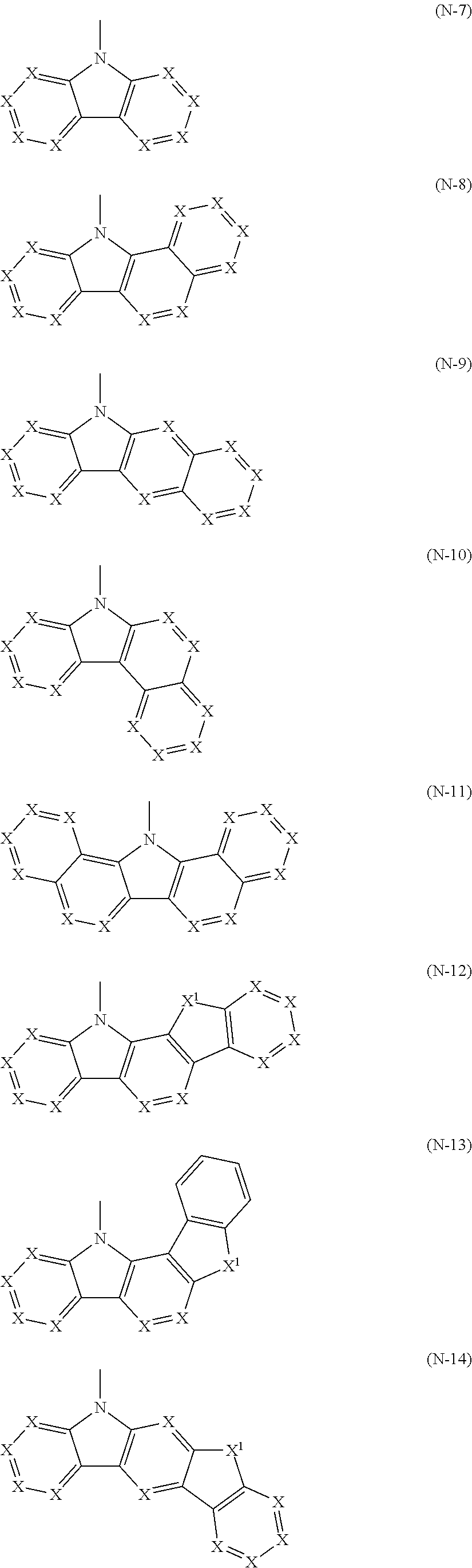


- X is N or CR4 with R4 being as defined above for R2;
- X1 is BR2, CR1 2, NR2, O or S; preferably CR1 2, NR2, O or S; most preferably CR1 2 or NR2, with R2 as defined above;
- R5 is unsubstituted aryl, unsubstituted hetaryl, substituted aryl or substituted hetaryl, which—if substituted—are preferably substituted in the 2- and 6-positions with alkyl, aryl or CN; and
- R6 is alkyl, unsubstituted aryl, unsubstituted hetaryl, substituted aryl or substituted hetaryl, which optionally may be linked by a group Y as defined above.

wherein A1, A2, A3, G and R1 are as defined above or below. Formulae (II-A), (II-B), (II-D) and (II-E) are preferred. Formulae (II-A) and (II-B) are most preferred.


wherein R1, R3 and G are as defined above.


-
- (A) SUZUKI-polymerization;
- (B) YAMAMOTO-polymerization;
- (C) STILLE-polymerization; and
- (D) HARTWIG-BUCHWALD-polymerization.
-
- anode,
- optional hole injection layer,
- optional one or more hole transport layer,
- light emitting layer,
- optional electron transport layer,
- optional electron injection layer, and
- cathode.
- (a) providing the compound, polymer, oligomer or dendrimer of the present invention; and
- (b) depositing said compound, polymer, oligomer or dendrimer on a supporting layer.

| Ex. | Starting material | Product |
| S2 |
 |
 |
| (CAS no. 577-55-9) | S2 | |
| S3 |
 |
 |
| (CAS no. 4834-33-7) | S3 | |
| S4 |
 |
 |
| (CAS no. 113710-83-1) | S4 | |
| S5 |
 |
 |
| (CAS no. 4175-52-4) | S5 | |

| Ex. | Starting material | Product |
| S7 |
 |
 |
| S2 | S7 | |
| (purified by chromato- | ||
| graphy) | ||
| S8 |
 |
 |
| S3 | S8 | |
| (CAS no. 137818-51-0) | ||
| S9 |
 |
 |
| S4 | S9 | |
| S10 |
 |
 |
| (CAS no. 42810-32-2) | S10 | |
| (CAS no. 52477-73-3) | ||
| S11 |
 |
 |
| S5 | S11 | |

| Ex. | Starting material | Product |
| S13 |  |
 |
| S13 | ||
| S14 |  |
 |
| S14 | ||
| S15 |  |
 |
| S15 | ||
| S16 |  |
 |
| S16 | ||
| S17 |  |
 |
| S17 | ||


| Ex. | Starting material | Product |
| S19 |
 |
 |
| 577-55-9 | S19 | |
| S20 |
 |
 |
| 91324-94-6 | S20 | |
| S21 |
 |
 |
| 113710-83-1 | S21 | |
| S22 |
 |
 |
| 4486-29-7 | 124639-03-8/S22 | |
| S23 |
 |
 |
| 4175-52-4 | S23 | |

| Ex. | Starting material | Product |
| S25 |
 |
 |
| S19 | S25 | |
| S26 |
 |
 |
| S20 | S26 | |
| S27 |
 |
 |
| S21 | S27 | |
| S28 |
 |
 |
| S22 | S28 | |
| CAS no. 124639-03-8 | ||
| S29 |
 |
 |
| S23 | S29 | |

| Ex. | Starting material | Product |
| S31 |  |
 |
| S31 | ||
| S32 |  |
 |
| S32 | ||
| S33 |  |
 |
| S33 | ||
| S34 |  |
 |
| S34 | ||
| S35 |  |
 |
| S35 | ||

| Ex. | Starting material | Product |
| S37 |
 |
 |
| S31 | S37 | |
| S38 |
 |
 |
| S32 | S38 | |
| S39 |
 |
 |
| S33 | S39 | |
| S40 |
 |
 |
| S34 | S40 | |
| S41 |
 |
 |
| S35 | S41 | |

| Ex. | Starting materials | Product |
| B2 |   |
 |
| B2 | ||
| B3 |   |
 |
| B3 | ||
| B4 |   |
 |
| B4 | ||
| B5 |   |
 |
| B5 | ||
| B6 |   |
 |
| B6 | ||
| B7 |   |
 |
| B7 | ||

| Ex. | Starting materials | Product |
| B9 |   |
 |
| B9 | ||
| B10 |   |
 |
| B10 | ||
| B11 |   |
 |
| B11 | ||
| B12 |   |
 |
| B12 | ||
| B13 |   |
 |
| B13 | ||
- a) Vacuum-Processed Devices
| TABLE 1 |
| Structure of the OLEDs |
| HTL | EBL | HBL | ETL | EIL | ||
| Thick- | Thick- | EML | Thick- | Thick- | Thick- | |
| Ex. | ness | ness | Thickness | ness | ness | ness |
| D-Ref | HTM | — | M1:DR | — | ETM | EIM |
| refer- | 90 nm | (95%:5%) | 50 nm | 3 nm | ||
| ence | 20 nm | |||||
| D-B1 | HTM | EBM | M2:M3:B1 | HBM | ETM | EIM |
| 90 nm | 10 nm | (65%:30%:5%) | 10 nm | 50 nm | 3 nm | |
| 20 nm | ||||||
| D-B8 | HTM | — | M1:B8 | — | ETM | EIM |
| 90 nm | (95%:5%) | 50 nm | 3 nm | |||
| 20 nm | ||||||
| TABLE 2 |
| Structural formulae of the materials |
 |
| CAS no. 123847-85-8 |
| HTM = NPB |
 |
| CAS no. 1206465-62-4 |
| EBM |
 |
| CAS no. 58328-31-7 |
| M1 = CBP |
 |
| CAS no. 604785-54-8 |
| M2 |
 |
| CAS no. 1201800-83-0 |
| M3/HBM |
 |
| CAS no. 1233200-52-6 |
| ETM |
 |
| CAS no. 25387-93-3 |
| EIM |
 |
| CAS no. 1416881-52-1 |
| DR |
- b) Use of Compounds According to the Invention as Emitter Materials in OLEDs
Claims (15)


Applications Claiming Priority (4)
| Application Number | Priority Date | Filing Date | Title |
|---|---|---|---|
| EP13005398 | 2013-11-15 | ||
| EP13005398 | 2013-11-15 | ||
| EP13005398.6 | 2013-11-15 | ||
| PCT/EP2014/002825 WO2015070944A1 (en) | 2013-11-15 | 2014-10-20 | Compound with novel six-membered ring structure for use in organic electronic devices |
Publications (2)
| Publication Number | Publication Date |
|---|---|
| US20160301016A1 US20160301016A1 (en) | 2016-10-13 |
| US10374167B2 true US10374167B2 (en) | 2019-08-06 |
Family
ID=49596040
Family Applications (1)
| Application Number | Title | Priority Date | Filing Date |
|---|---|---|---|
| US15/036,311 Active 2034-10-30 US10374167B2 (en) | 2013-11-15 | 2014-10-20 | Compound with novel six-membered ring structure for use in organic electronic devices |
Country Status (6)
| Country | Link |
|---|---|
| US (1) | US10374167B2 (en) |
| EP (1) | EP3069392B1 (en) |
| JP (2) | JP6887805B2 (en) |
| KR (1) | KR102357442B1 (en) |
| CN (1) | CN105706260B (en) |
| WO (1) | WO2015070944A1 (en) |
Families Citing this family (9)
| Publication number | Priority date | Publication date | Assignee | Title |
|---|---|---|---|---|
| CN106687563B (en) * | 2014-09-05 | 2023-03-14 | 默克专利有限公司 | formulations and electronics |
| GB201513037D0 (en) * | 2015-07-23 | 2015-09-09 | Merck Patent Gmbh | Phenyl-derived compound for use in organic electronic devices |
| KR20180039680A (en) * | 2015-08-13 | 2018-04-18 | 메르크 파텐트 게엠베하 | Hexamethylindane |
| KR102458684B1 (en) * | 2015-10-08 | 2022-10-26 | 삼성디스플레이 주식회사 | Organic light emitting device |
| CN106749050B (en) * | 2016-12-15 | 2019-02-26 | 中节能万润股份有限公司 | A thermally activated delayed fluorescence OLED material with cyclic diketone as the core and its application |
| WO2019190235A1 (en) * | 2018-03-28 | 2019-10-03 | 주식회사 엘지화학 | Compound and organic light-emitting device comprising same |
| CN111372918B (en) | 2018-07-27 | 2023-09-05 | 出光兴产株式会社 | Compound, material for organic electroluminescent element, organic electroluminescent element, and electronic device |
| US12274168B2 (en) | 2018-10-25 | 2025-04-08 | Idemitsu Kosan Co., Ltd. | Compound, material for organic electroluminescent element, organic electroluminescent element, and electronic appliance |
| WO2021122740A1 (en) | 2019-12-19 | 2021-06-24 | Merck Patent Gmbh | Polycyclic compounds for organic electroluminescent devices |
Citations (11)
| Publication number | Priority date | Publication date | Assignee | Title |
|---|---|---|---|---|
| US2573733A (en) | 1950-01-03 | 1951-11-06 | Celanese Corp | Production of anthraquinone dyestuffs |
| JP2002527553A (en) | 1998-10-10 | 2002-08-27 | セラニーズ・ヴェンチャーズ・ゲーエムベーハー | Conjugated polymers containing specific fluorenyl structural units and having improved properties |
| US6511971B1 (en) | 1998-10-13 | 2003-01-28 | Brown University Research Foundation | Substituted perhalogenated phthalocyanines |
| JP2006051666A (en) | 2004-08-11 | 2006-02-23 | Ube Ind Ltd | Method and apparatus for removing foreign matter mixed in wood chip |
| JP2008013474A (en) | 2006-07-05 | 2008-01-24 | Canon Inc | COMPOUND FOR ORGANIC EL DEVICE AND LIGHT EMITTING DEVICE |
| JP2008525533A (en) | 2004-12-06 | 2008-07-17 | メルク パテント ゲーエムベーハー | Partially conjugated polymers, their preparation and use |
| US20090302752A1 (en) * | 2007-01-18 | 2009-12-10 | Merck Patent Gmbh | Carbazole derivatives for organic electroluminescent devices |
| US7834136B2 (en) | 2003-02-06 | 2010-11-16 | Covion Organic Semiconductors Gmbh | Conjugated polymers and blends containing carbazole, representation and use thereof |
| WO2012095524A1 (en) | 2011-01-14 | 2012-07-19 | Solvay Sa | Phthalocyanine dyes, method of making them, and their use in dye sensitized solar cells |
| WO2013154064A1 (en) | 2012-04-09 | 2013-10-17 | 国立大学法人九州大学 | Organic light emitting element, and light emitting material and compound used in same |
| WO2014166586A1 (en) | 2013-04-08 | 2014-10-16 | Merck Patent Gmbh | Organic electroluminescent device |
Family Cites Families (3)
| Publication number | Priority date | Publication date | Assignee | Title |
|---|---|---|---|---|
| GB0519769D0 (en) * | 2005-09-28 | 2005-11-09 | Imp College Innovations Ltd | Imaging system |
| DE102010048074A1 (en) * | 2010-10-09 | 2012-04-12 | Merck Patent Gmbh | Materials for electronic devices |
| JP6567718B1 (en) * | 2018-03-22 | 2019-08-28 | 東芝エレベータ株式会社 | Elevator control device, elevator rope remote diagnosis system, and elevator rope remote diagnosis method |
-
2014
- 2014-10-20 US US15/036,311 patent/US10374167B2/en active Active
- 2014-10-20 KR KR1020167015850A patent/KR102357442B1/en active Active
- 2014-10-20 JP JP2016530834A patent/JP6887805B2/en active Active
- 2014-10-20 WO PCT/EP2014/002825 patent/WO2015070944A1/en not_active Ceased
- 2014-10-20 CN CN201480061468.XA patent/CN105706260B/en active Active
- 2014-10-20 EP EP14789994.2A patent/EP3069392B1/en active Active
-
2019
- 2019-09-13 JP JP2019167178A patent/JP2020033348A/en not_active Withdrawn
Patent Citations (19)
| Publication number | Priority date | Publication date | Assignee | Title |
|---|---|---|---|---|
| US2573733A (en) | 1950-01-03 | 1951-11-06 | Celanese Corp | Production of anthraquinone dyestuffs |
| JP2002527553A (en) | 1998-10-10 | 2002-08-27 | セラニーズ・ヴェンチャーズ・ゲーエムベーハー | Conjugated polymers containing specific fluorenyl structural units and having improved properties |
| US6653438B1 (en) | 1998-10-10 | 2003-11-25 | Covion Organic Semiconductors Gmbh | Conjugated polymers containing special fluorene structural elements with improved properties |
| US6511971B1 (en) | 1998-10-13 | 2003-01-28 | Brown University Research Foundation | Substituted perhalogenated phthalocyanines |
| US7834136B2 (en) | 2003-02-06 | 2010-11-16 | Covion Organic Semiconductors Gmbh | Conjugated polymers and blends containing carbazole, representation and use thereof |
| JP2006051666A (en) | 2004-08-11 | 2006-02-23 | Ube Ind Ltd | Method and apparatus for removing foreign matter mixed in wood chip |
| US8323804B2 (en) | 2004-12-06 | 2012-12-04 | Merck Patent Gmbh | Partially conjugated polymers, their representation and their use |
| JP2008525533A (en) | 2004-12-06 | 2008-07-17 | メルク パテント ゲーエムベーハー | Partially conjugated polymers, their preparation and use |
| US7927718B2 (en) | 2006-07-05 | 2011-04-19 | Canon Kabushiki Kaisha | Compound for organic EL device and light-emitting device |
| JP2008013474A (en) | 2006-07-05 | 2008-01-24 | Canon Inc | COMPOUND FOR ORGANIC EL DEVICE AND LIGHT EMITTING DEVICE |
| US20090302752A1 (en) * | 2007-01-18 | 2009-12-10 | Merck Patent Gmbh | Carbazole derivatives for organic electroluminescent devices |
| JP2010516637A (en) | 2007-01-18 | 2010-05-20 | メルク パテント ゲーエムベーハー | Novel materials for organic electroluminescent devices |
| US8343637B2 (en) | 2007-01-18 | 2013-01-01 | Merck Patent Gmbh | Carbazole derivatives for organic electroluminescent devices |
| WO2012095524A1 (en) | 2011-01-14 | 2012-07-19 | Solvay Sa | Phthalocyanine dyes, method of making them, and their use in dye sensitized solar cells |
| US20130291930A1 (en) | 2011-01-14 | 2013-11-07 | Solvay Sa | Photoelectric conversion device using TiOF2 as semiconductor |
| WO2013154064A1 (en) | 2012-04-09 | 2013-10-17 | 国立大学法人九州大学 | Organic light emitting element, and light emitting material and compound used in same |
| US20150105564A1 (en) * | 2012-04-09 | 2015-04-16 | Kyushu University National University Corporation | Organic light-emitting device, and light-emitting material and compound used therefor |
| WO2014166586A1 (en) | 2013-04-08 | 2014-10-16 | Merck Patent Gmbh | Organic electroluminescent device |
| US20160093812A1 (en) | 2013-04-08 | 2016-03-31 | Merck Patent Gmbh | Organic electroluminescent device |
Non-Patent Citations (7)
| Title |
|---|
| Carpenter et al., "Nitro Musks. II. tert-Amyl Homologs of the Commercial Musks", Contribution from the Research Laboratories of the Givaudan Corporation, 4 pages (1950). |
| English Translation of Chinese Office Action for Chinese Application No. 201480061468, dated Feb. 9, 2018. |
| European Office Action for EP Patent Application No. 14 789 994.2 dated Jun. 8, 2017. |
| International Search Report for PCT/EP2014/00282517 dated Jan. 16, 2015. |
| Richard J. Lewis, Sr. "Hawley's Condensed Chemical Dictionary, 12th Edition", John Wiley & Sons, Inc., New York p. 937 (1993). * |
| Uoyama, H., et al., "Highly efficient organic light-emitting diodes from delayed fluorescence", Nature, vol. 492, No. 7428, (2012), pp. 234-238. |
| Volkov, K.A., "Phthalocyanines and Related Compounds: XLVIII. 1 Stepwise Nucleophilic Substitution in Tetrachlorophthalonitrile: Synthesis of Polysubstituted Phthalonitriles", Russian Journal of General Chemistry, 2008, vol. 78, No. 9, pp. 1794-1801. |
Also Published As
| Publication number | Publication date |
|---|---|
| EP3069392B1 (en) | 2019-08-07 |
| KR20160086916A (en) | 2016-07-20 |
| CN105706260A (en) | 2016-06-22 |
| WO2015070944A1 (en) | 2015-05-21 |
| EP3069392A1 (en) | 2016-09-21 |
| JP2016539938A (en) | 2016-12-22 |
| US20160301016A1 (en) | 2016-10-13 |
| KR102357442B1 (en) | 2022-01-28 |
| CN105706260B (en) | 2019-08-13 |
| JP2020033348A (en) | 2020-03-05 |
| JP6887805B2 (en) | 2021-06-16 |
Similar Documents
| Publication | Publication Date | Title |
|---|---|---|
| US11997922B2 (en) | Compounds and organic electronic devices | |
| US10665787B2 (en) | Compounds for electronic devices | |
| US10957860B2 (en) | Materials for electronic devices | |
| US10374167B2 (en) | Compound with novel six-membered ring structure for use in organic electronic devices | |
| US11189801B2 (en) | Phenoxazine derivatives for organic electroluminescent devices | |
| US10696664B2 (en) | Phenoxazine derivatives for organic electroluminescent devices | |
| US10749117B2 (en) | Materials for electronic devices | |
| US9595681B2 (en) | Compounds and organic electroluminescent devices | |
| US20170317285A1 (en) | Compounds and Organic Electronic Devices | |
| US20150255720A1 (en) | Compounds for Electronic Devices | |
| US10065959B2 (en) | Electronic device | |
| KR20140045368A (en) | Compounds for electronic devices | |
| US11581495B2 (en) | Phenyl derivatives substituted with at least two electron acceptors and at least two electron donors for use in organic electronic devices |
Legal Events
| Date | Code | Title | Description |
|---|---|---|---|
| AS | Assignment |
Owner name: MERCK PATENT GMBH, GERMANY Free format text: ASSIGNMENT OF ASSIGNORS INTEREST;ASSIGNORS:STOESSEL, PHILIPP;PARHAM, AMIR HOSSAIN;PFLUMM, CHRISTOF;AND OTHERS;REEL/FRAME:038605/0317 Effective date: 20160315 |
|
| STPP | Information on status: patent application and granting procedure in general |
Free format text: NOTICE OF ALLOWANCE MAILED -- APPLICATION RECEIVED IN OFFICE OF PUBLICATIONS |
|
| STPP | Information on status: patent application and granting procedure in general |
Free format text: PUBLICATIONS -- ISSUE FEE PAYMENT RECEIVED |
|
| STCF | Information on status: patent grant |
Free format text: PATENTED CASE |
|
| MAFP | Maintenance fee payment |
Free format text: PAYMENT OF MAINTENANCE FEE, 4TH YEAR, LARGE ENTITY (ORIGINAL EVENT CODE: M1551); ENTITY STATUS OF PATENT OWNER: LARGE ENTITY Year of fee payment: 4 |