US10017519B2 - Alpha-hydroxy carboxylic acid and derivatives and other GRAS based prodrugs of oxycodone and uses thereof - Google Patents
Alpha-hydroxy carboxylic acid and derivatives and other GRAS based prodrugs of oxycodone and uses thereof Download PDFInfo
- Publication number
- US10017519B2 US10017519B2 US14/953,392 US201514953392A US10017519B2 US 10017519 B2 US10017519 B2 US 10017519B2 US 201514953392 A US201514953392 A US 201514953392A US 10017519 B2 US10017519 B2 US 10017519B2
- Authority
- US
- United States
- Prior art keywords
- oxycodone
- acid
- alpha
- prodrug
- isomers
- Prior art date
- Legal status (The legal status is an assumption and is not a legal conclusion. Google has not performed a legal analysis and makes no representation as to the accuracy of the status listed.)
- Active
Links
- 0 CN(CCC12c(c(C3)ccc4OC)c4OC1C(OC([C@](c1ccccc1)OC(CC*)=O)=O)=CC1)[C@@]3[C@@]21O Chemical compound CN(CCC12c(c(C3)ccc4OC)c4OC1C(OC([C@](c1ccccc1)OC(CC*)=O)=O)=CC1)[C@@]3[C@@]21O 0.000 description 25
- PFAQUCAZTZWGNW-ZGSHUYHLSA-N CN1CCC23C4=C5C=CC(CO)=C4OC2C(OC(C)(C)C)=CC[C@@]3(OC(C)(C)[Y])[C@H]1C5 Chemical compound CN1CCC23C4=C5C=CC(CO)=C4OC2C(OC(C)(C)C)=CC[C@@]3(OC(C)(C)[Y])[C@H]1C5 PFAQUCAZTZWGNW-ZGSHUYHLSA-N 0.000 description 3
- NZXJMGPNFWTRTR-HUPFUFFYSA-N CN1CCC23C4=C5C=CC(CO)=C4OC2C(OC(C)(C)C)=CC[C@@]3(O)[C@H]1C5 Chemical compound CN1CCC23C4=C5C=CC(CO)=C4OC2C(OC(C)(C)C)=CC[C@@]3(O)[C@H]1C5 NZXJMGPNFWTRTR-HUPFUFFYSA-N 0.000 description 2
- PLMYICSHRNRIBI-ATDLRKDWSA-N C.C/C=C/C(=O)O[C@@H](CC(=O)OC1=CC[C@@]2(O)[C@H]3CC4=C5C(=C(CO)C=C4)OC1C52CCN3C)C(=O)O.CC(=O)O[C@@H](C(C)=O)[C@@H](OC(C)=O)C(=O)OC1=CC[C@@]2(O)[C@H]3CC4=C5C(=C(CO)C=C4)OC1C52CCN3C.CC(C)OC(=O)/C=C/C(=O)OC1=CC[C@@]2(O)[C@H]3CC4=C5C(=C(CO)C=C4)OC1C52CCN3C.CC[C@H](OC(=O)/C=C/C(=O)OC1=CC[C@@]2(O)[C@H]3CC4=C5C(=C(CO)C=C4)OC1C52CCN3C)C(=O)O.CC[C@H](OC(C)=O)C(=O)O[C@@H](C)C(=O)OC1=CC[C@@]2(O)[C@H]3CC4=C5C(=C(CO)C=C4)OC1C52CCN3C Chemical compound C.C/C=C/C(=O)O[C@@H](CC(=O)OC1=CC[C@@]2(O)[C@H]3CC4=C5C(=C(CO)C=C4)OC1C52CCN3C)C(=O)O.CC(=O)O[C@@H](C(C)=O)[C@@H](OC(C)=O)C(=O)OC1=CC[C@@]2(O)[C@H]3CC4=C5C(=C(CO)C=C4)OC1C52CCN3C.CC(C)OC(=O)/C=C/C(=O)OC1=CC[C@@]2(O)[C@H]3CC4=C5C(=C(CO)C=C4)OC1C52CCN3C.CC[C@H](OC(=O)/C=C/C(=O)OC1=CC[C@@]2(O)[C@H]3CC4=C5C(=C(CO)C=C4)OC1C52CCN3C)C(=O)O.CC[C@H](OC(C)=O)C(=O)O[C@@H](C)C(=O)OC1=CC[C@@]2(O)[C@H]3CC4=C5C(=C(CO)C=C4)OC1C52CCN3C PLMYICSHRNRIBI-ATDLRKDWSA-N 0.000 description 1
- QRYOHLNPWBRTGG-YMACVNISSA-N C/C=C/C(=O)O[C@@H](C)C(=O)OC1=CC[C@@]2(O)[C@H]3CC4=C5C(=C(CO)C=C4)OC1C52CCN3C.CC(C)OC(=O)[C@@H](O)[C@H](O)C(=O)OC1=CC[C@@]2(O)[C@H]3CC4=C5C(=C(CO)C=C4)OC1C52CCN3C.CC(C)OC(=O)[C@H](O)[C@@H](O)C(=O)OC1=CC[C@@]2(O)[C@H]3CC4=C5C(=C(CO)C=C4)OC1C52CCN3C Chemical compound C/C=C/C(=O)O[C@@H](C)C(=O)OC1=CC[C@@]2(O)[C@H]3CC4=C5C(=C(CO)C=C4)OC1C52CCN3C.CC(C)OC(=O)[C@@H](O)[C@H](O)C(=O)OC1=CC[C@@]2(O)[C@H]3CC4=C5C(=C(CO)C=C4)OC1C52CCN3C.CC(C)OC(=O)[C@H](O)[C@@H](O)C(=O)OC1=CC[C@@]2(O)[C@H]3CC4=C5C(=C(CO)C=C4)OC1C52CCN3C QRYOHLNPWBRTGG-YMACVNISSA-N 0.000 description 1
- LAWHMRAZDMRGET-OXNDOFDYSA-N C/C=C/C=C/C(=O)O.CCCCCCCC(=O)O.CCCCCCCCCCCCCCCCCC(=O)O.O=C(O)/C=C\C(=O)O.O=C(O)CCC(=O)O.O=C=O.O=C=O.O=C=O.O=C=O.[H]/C=C/C(=O)O.[H]C(O)[C@]([H])(O)C(=O)O.[H]CC(O)(CC(=O)O)C(=O)O.[H]C[C@]([H])(O)C(=O)O.[H]C[C@]([H])(O)C(=O)O.[H][C@@](O)(C(=O)O)C1=CC=CC=C1.[H][C@](O)(C(=O)CCCC(=O)O)C(C)(C)CO.[H][C@](O)(C(=O)O)C(C)(C)CO Chemical compound C/C=C/C=C/C(=O)O.CCCCCCCC(=O)O.CCCCCCCCCCCCCCCCCC(=O)O.O=C(O)/C=C\C(=O)O.O=C(O)CCC(=O)O.O=C=O.O=C=O.O=C=O.O=C=O.[H]/C=C/C(=O)O.[H]C(O)[C@]([H])(O)C(=O)O.[H]CC(O)(CC(=O)O)C(=O)O.[H]C[C@]([H])(O)C(=O)O.[H]C[C@]([H])(O)C(=O)O.[H][C@@](O)(C(=O)O)C1=CC=CC=C1.[H][C@](O)(C(=O)CCCC(=O)O)C(C)(C)CO.[H][C@](O)(C(=O)O)C(C)(C)CO LAWHMRAZDMRGET-OXNDOFDYSA-N 0.000 description 1
- RRNISEXZSSYRCS-HFCYJALMSA-N C=C(N[C@@H](CC(=O)O[C@@H](C)C(=O)OC1=CC[C@@]2(O)[C@H]3CC4=C5C(=C(CO)C=C4)OC1C52CCN3C)C(=O)O)[C@H](C)O.CC(C)C(=O)N[C@@H](CC(=O)OC1=CC[C@@]2(O)[C@H]3CC4=C5C(=C(CO)C=C4)OC1C52CCN3C)C(=O)O.C[C@H](OC(=O)C[C@@H](C)N)C(=O)OC1=CC[C@@]2(O)[C@H]3CC4=C5C(=C(CO)C=C4)OC1C52CCN3C Chemical compound C=C(N[C@@H](CC(=O)O[C@@H](C)C(=O)OC1=CC[C@@]2(O)[C@H]3CC4=C5C(=C(CO)C=C4)OC1C52CCN3C)C(=O)O)[C@H](C)O.CC(C)C(=O)N[C@@H](CC(=O)OC1=CC[C@@]2(O)[C@H]3CC4=C5C(=C(CO)C=C4)OC1C52CCN3C)C(=O)O.C[C@H](OC(=O)C[C@@H](C)N)C(=O)OC1=CC[C@@]2(O)[C@H]3CC4=C5C(=C(CO)C=C4)OC1C52CCN3C RRNISEXZSSYRCS-HFCYJALMSA-N 0.000 description 1
- NYNZVPZKHFFMMO-OOBOPLMPSA-N C=C(N[C@@H](CCC(=O)OC1=CC[C@@]2(O)[C@H]3CC4=C5C(=C(CO)C=C4)OC1C52CCN3C)C(=O)O)[C@H](C)O.CC(C)C(=O)OC1=CC[C@@]2(O)[C@H]3CC4=C5C(=C(CO)C=C4)OC1C52CCN3C.CC(C)C(=O)O[C@@H](C)C(=O)OC1=CC[C@@]2(O)[C@H]3CC4=C5C(=C(CO)C=C4)OC1C52CCN3C.CC(C)C(=O)O[C@H](C(=O)OC1=CC[C@@]2(O)[C@H]3CC4=C5C(=C(CO)C=C4)OC1C52CCN3C)C1=CC=CC=C1.CCCC(=O)O[C@H](CC(=O)O)C(=O)OC1=CC[C@@]2(O)[C@H]3CC4=C5C(=C(CO)C=C4)OC1C52CCN3C Chemical compound C=C(N[C@@H](CCC(=O)OC1=CC[C@@]2(O)[C@H]3CC4=C5C(=C(CO)C=C4)OC1C52CCN3C)C(=O)O)[C@H](C)O.CC(C)C(=O)OC1=CC[C@@]2(O)[C@H]3CC4=C5C(=C(CO)C=C4)OC1C52CCN3C.CC(C)C(=O)O[C@@H](C)C(=O)OC1=CC[C@@]2(O)[C@H]3CC4=C5C(=C(CO)C=C4)OC1C52CCN3C.CC(C)C(=O)O[C@H](C(=O)OC1=CC[C@@]2(O)[C@H]3CC4=C5C(=C(CO)C=C4)OC1C52CCN3C)C1=CC=CC=C1.CCCC(=O)O[C@H](CC(=O)O)C(=O)OC1=CC[C@@]2(O)[C@H]3CC4=C5C(=C(CO)C=C4)OC1C52CCN3C NYNZVPZKHFFMMO-OOBOPLMPSA-N 0.000 description 1
- BXKKZHJTNWXVKQ-NJUWSWNRSA-N C=CCCCCCCCC(=O)O[C@@H](C)C(=O)OC1=CC[C@@]2(O)[C@H]3CC4=C5C(=C(CO)C=C4)OC1C52CCN3C.CC(=O)O[C@@H](CC(=O)O)C(=O)OC1=CC[C@@]2(O)[C@H]3CC4=C5C(=C(CO)C=C4)OC1C52CCN3C.CCCC(=O)O[C@H](C(=O)OC1=CC[C@@]2(O)[C@H]3CC4=C5C(=C(CO)C=C4)OC1C52CCN3C)C1=CC=CC=C1.CC[C@H](O)C(=O)O[C@@H](C)C(=O)OC1=CC[C@@]2(O)[C@H]3CC4=C5C(=C(CO)C=C4)OC1C52CCN3C.C[C@H](OC(=O)[C@@H](C)C1=CC=CC=C1)C(=O)OC1=CC[C@@]2(O)[C@H]3CC4=C5C(=C(CO)C=C4)OC1C52CCN3C Chemical compound C=CCCCCCCCC(=O)O[C@@H](C)C(=O)OC1=CC[C@@]2(O)[C@H]3CC4=C5C(=C(CO)C=C4)OC1C52CCN3C.CC(=O)O[C@@H](CC(=O)O)C(=O)OC1=CC[C@@]2(O)[C@H]3CC4=C5C(=C(CO)C=C4)OC1C52CCN3C.CCCC(=O)O[C@H](C(=O)OC1=CC[C@@]2(O)[C@H]3CC4=C5C(=C(CO)C=C4)OC1C52CCN3C)C1=CC=CC=C1.CC[C@H](O)C(=O)O[C@@H](C)C(=O)OC1=CC[C@@]2(O)[C@H]3CC4=C5C(=C(CO)C=C4)OC1C52CCN3C.C[C@H](OC(=O)[C@@H](C)C1=CC=CC=C1)C(=O)OC1=CC[C@@]2(O)[C@H]3CC4=C5C(=C(CO)C=C4)OC1C52CCN3C BXKKZHJTNWXVKQ-NJUWSWNRSA-N 0.000 description 1
- BZGZNVRCMMQVEH-CHSFXBBTSA-N C=CCCCCCCCC(=O)O[C@@H](CC(=O)O)C(=O)OC1=CC[C@@]2(O)[C@H]3CC4=C5C(=C(CO)C=C4)OC1C52CCN3C.C=CCCCCCCCC(=O)O[C@H](C(=O)OC1=CC[C@@]2(O)[C@H]3CC4=C5C(=C(CO)C=C4)OC1C52CCN3C)C1=CC=CC=C1.CC(=O)O[C@@H](C)C(=O)OC1=CC[C@@]2(O)[C@H]3CC4=C5C(=C(CO)C=C4)OC1C52CCN3C.CC(=O)O[C@H](C(=O)OC1=CC[C@@]2(O)[C@H]3CC4=C5C(=C(CO)C=C4)OC1C52CCN3C)C1=CC=CC=C1.CC(C)OC(=O)CCC(=O)OC1=CC[C@@]2(O)[C@H]3CC4=C5C(=C(CO)C=C4)OC1C52CCN3C Chemical compound C=CCCCCCCCC(=O)O[C@@H](CC(=O)O)C(=O)OC1=CC[C@@]2(O)[C@H]3CC4=C5C(=C(CO)C=C4)OC1C52CCN3C.C=CCCCCCCCC(=O)O[C@H](C(=O)OC1=CC[C@@]2(O)[C@H]3CC4=C5C(=C(CO)C=C4)OC1C52CCN3C)C1=CC=CC=C1.CC(=O)O[C@@H](C)C(=O)OC1=CC[C@@]2(O)[C@H]3CC4=C5C(=C(CO)C=C4)OC1C52CCN3C.CC(=O)O[C@H](C(=O)OC1=CC[C@@]2(O)[C@H]3CC4=C5C(=C(CO)C=C4)OC1C52CCN3C)C1=CC=CC=C1.CC(C)OC(=O)CCC(=O)OC1=CC[C@@]2(O)[C@H]3CC4=C5C(=C(CO)C=C4)OC1C52CCN3C BZGZNVRCMMQVEH-CHSFXBBTSA-N 0.000 description 1
- NVLUIQPWICBLQV-DYWOIFGXSA-N C=CCCCCCCCC(=O)O[C@H](C)C(=O)O[C@@H](C)C(=O)OC1=CC[C@@]2(O)[C@H]3CC4=C5C(=C(CO)C=C4)OC1C52CCN3C.CC(=O)O[C@@H](CC(=O)OC1=CC[C@@]2(O)[C@H]3CC4=C5C(=C(CO)C=C4)OC1C52CCN3C)C(C)=O.CC(C)C(=O)O[C@@H](CC(=O)O)C(=O)OC1=CC[C@@]2(O)[C@H]3CC4=C5C(=C(CO)C=C4)OC1C52CCN3C.CC[C@H](OC(=O)CCC(=O)OC1=CC[C@@]2(O)[C@H]3CC4=C5C(=C(CO)C=C4)OC1C52CCN3C)C(=O)O.C[C@@H](OC(=O)CCC(=O)OC1=CC[C@@]2(O)[C@H]3CC4=C5C(=C(CO)C=C4)OC1C52CCN3C)C1=CC=CC=C1 Chemical compound C=CCCCCCCCC(=O)O[C@H](C)C(=O)O[C@@H](C)C(=O)OC1=CC[C@@]2(O)[C@H]3CC4=C5C(=C(CO)C=C4)OC1C52CCN3C.CC(=O)O[C@@H](CC(=O)OC1=CC[C@@]2(O)[C@H]3CC4=C5C(=C(CO)C=C4)OC1C52CCN3C)C(C)=O.CC(C)C(=O)O[C@@H](CC(=O)O)C(=O)OC1=CC[C@@]2(O)[C@H]3CC4=C5C(=C(CO)C=C4)OC1C52CCN3C.CC[C@H](OC(=O)CCC(=O)OC1=CC[C@@]2(O)[C@H]3CC4=C5C(=C(CO)C=C4)OC1C52CCN3C)C(=O)O.C[C@@H](OC(=O)CCC(=O)OC1=CC[C@@]2(O)[C@H]3CC4=C5C(=C(CO)C=C4)OC1C52CCN3C)C1=CC=CC=C1 NVLUIQPWICBLQV-DYWOIFGXSA-N 0.000 description 1
- JHZJOBHOXIBUSU-SKXHGLKESA-N CC(=O)O[C@@H](C(=O)O)[C@@H](OC(C)=O)C(=O)OC1=CC[C@@]2(O)[C@H]3CC4=C5C(=C(CO)C=C4)OC1C52CCN3C.CC(=O)O[C@@H](CC(=O)O)C(=O)O[C@@H](C)C(=O)OC1=CC[C@@]2(O)[C@H]3CC4=C5C(=C(CO)C=C4)OC1C52CCN3C.CN1CCC23C4=C5C=CC(CO)=C4OC2C(OC(=O)/C=C/C(=O)O[C@@H](CC(=O)O)C(=O)O)=CC[C@@]3(O)[C@H]1C5.CN1CCC23C4=C5C=CC(CO)=C4OC2C(OC(=O)C[C@H](OC(=O)/C=C/C(=O)O)C(=O)O)=CC[C@@]3(O)[C@H]1C5.C[C@H](OC(=O)/C=C/C(=O)OC1=CC[C@@]2(O)[C@H]3CC4=C5C(=C(CO)C=C4)OC1C52CCN3C)C(=O)O Chemical compound CC(=O)O[C@@H](C(=O)O)[C@@H](OC(C)=O)C(=O)OC1=CC[C@@]2(O)[C@H]3CC4=C5C(=C(CO)C=C4)OC1C52CCN3C.CC(=O)O[C@@H](CC(=O)O)C(=O)O[C@@H](C)C(=O)OC1=CC[C@@]2(O)[C@H]3CC4=C5C(=C(CO)C=C4)OC1C52CCN3C.CN1CCC23C4=C5C=CC(CO)=C4OC2C(OC(=O)/C=C/C(=O)O[C@@H](CC(=O)O)C(=O)O)=CC[C@@]3(O)[C@H]1C5.CN1CCC23C4=C5C=CC(CO)=C4OC2C(OC(=O)C[C@H](OC(=O)/C=C/C(=O)O)C(=O)O)=CC[C@@]3(O)[C@H]1C5.C[C@H](OC(=O)/C=C/C(=O)OC1=CC[C@@]2(O)[C@H]3CC4=C5C(=C(CO)C=C4)OC1C52CCN3C)C(=O)O JHZJOBHOXIBUSU-SKXHGLKESA-N 0.000 description 1
- GDSZGIYPPRKLOS-GKRMQXJXSA-N CC(=O)O[C@@H](C(=O)OC1=CC[C@@]2(O)[C@H]3CC4=C5C(=C(CO)C=C4)OC1C52CCN3C)[C@@H](OC(C)=O)C(=O)OC(C)C Chemical compound CC(=O)O[C@@H](C(=O)OC1=CC[C@@]2(O)[C@H]3CC4=C5C(=C(CO)C=C4)OC1C52CCN3C)[C@@H](OC(C)=O)C(=O)OC(C)C GDSZGIYPPRKLOS-GKRMQXJXSA-N 0.000 description 1
- BOFLENDFLLVHIT-BHBUWOMNSA-N CC(=O)O[C@@H](C(=O)OC1=CC[C@@]2(O)[C@H]3CC4=C5C(=C(CO)C=C4)OC1C52CCN3C)[C@@H](OC(C)=O)C(=O)O[C@@H](C)C(=O)O Chemical compound CC(=O)O[C@@H](C(=O)OC1=CC[C@@]2(O)[C@H]3CC4=C5C(=C(CO)C=C4)OC1C52CCN3C)[C@@H](OC(C)=O)C(=O)O[C@@H](C)C(=O)O BOFLENDFLLVHIT-BHBUWOMNSA-N 0.000 description 1
- ITZOVHPMUWXSGJ-AJQQZPBTSA-N CC(=O)O[C@@H](C)C(=O)N[C@@H](CC(=O)OC1=CC[C@@]2(O)[C@H]3CC4=C5C(=C(CO)C=C4)OC1C52CCN3C)C(=O)O.CC(=O)O[C@H](C(=O)OC1=CC[C@@]2(O)[C@H]3CC4=C5C(=C(CO)C=C4)OC1C52CCN3C)C1=CC=CC=C1.CCCCCCCCCCCCCCCCCC(=O)O[C@@H](C)C(=O)O[C@@H](C)C(=O)OC1=CC[C@@]2(O)[C@H]3CC4=C5C(=C(CO)C=C4)OC1C52CCN3C.CN1CCC23C4=C5C=CC(CO)=C4OC2C(OC(=O)C[C@H](NC(=O)[C@@H](O)C2=CC=CC=C2)C(=O)O)=CC[C@@]3(OC(=O)C[C@H](NC(=O)[C@H](O)C2=CC=CC=C2)C(=O)O)[C@H]1C5.C[C@H](OC(=O)C[C@H](O)C(=O)O)C(=O)OC1=CC[C@@]2(O)[C@H]3CC4=C5C(=C(CO)C=C4)OC1C52CCN3C Chemical compound CC(=O)O[C@@H](C)C(=O)N[C@@H](CC(=O)OC1=CC[C@@]2(O)[C@H]3CC4=C5C(=C(CO)C=C4)OC1C52CCN3C)C(=O)O.CC(=O)O[C@H](C(=O)OC1=CC[C@@]2(O)[C@H]3CC4=C5C(=C(CO)C=C4)OC1C52CCN3C)C1=CC=CC=C1.CCCCCCCCCCCCCCCCCC(=O)O[C@@H](C)C(=O)O[C@@H](C)C(=O)OC1=CC[C@@]2(O)[C@H]3CC4=C5C(=C(CO)C=C4)OC1C52CCN3C.CN1CCC23C4=C5C=CC(CO)=C4OC2C(OC(=O)C[C@H](NC(=O)[C@@H](O)C2=CC=CC=C2)C(=O)O)=CC[C@@]3(OC(=O)C[C@H](NC(=O)[C@H](O)C2=CC=CC=C2)C(=O)O)[C@H]1C5.C[C@H](OC(=O)C[C@H](O)C(=O)O)C(=O)OC1=CC[C@@]2(O)[C@H]3CC4=C5C(=C(CO)C=C4)OC1C52CCN3C ITZOVHPMUWXSGJ-AJQQZPBTSA-N 0.000 description 1
- IPOKWUFSPPHCLT-WIJRGZDPSA-N CC(=O)O[C@@H](C)C(=O)OC1=CC[C@@]2(O)[C@H]3CC4=C5C(=C(CO)C=C4)OC1C52CCN3C.CC(=O)O[C@@H](C)C(=O)O[C@@H](C)C(=O)OC1=CC[C@@]2(O)[C@H]3CC4=C5C(=C(CO)C=C4)OC1C52CCN3C.CC(=O)O[C@@H](C)C(=O)O[C@H](C(=O)OC1=CC[C@@]2(O)[C@H]3CC4=C5C(=C(CO)C=C4)OC1C52CCN3C)C1=CC=CC=C1.CN1CCC23C4=C5C=CC(CO)=C4OC2C(OC(=O)[C@@H](CC(=O)O)OC(=O)CCC(=O)O)=CC[C@@]3(O)[C@H]1C5.C[C@H](O)C(=O)N[C@@H](CCC(=O)OC1=CC[C@@]2(O)[C@H]3CC4=C5C(=C(CO)C=C4)OC1C52CCN3C)C(=O)O Chemical compound CC(=O)O[C@@H](C)C(=O)OC1=CC[C@@]2(O)[C@H]3CC4=C5C(=C(CO)C=C4)OC1C52CCN3C.CC(=O)O[C@@H](C)C(=O)O[C@@H](C)C(=O)OC1=CC[C@@]2(O)[C@H]3CC4=C5C(=C(CO)C=C4)OC1C52CCN3C.CC(=O)O[C@@H](C)C(=O)O[C@H](C(=O)OC1=CC[C@@]2(O)[C@H]3CC4=C5C(=C(CO)C=C4)OC1C52CCN3C)C1=CC=CC=C1.CN1CCC23C4=C5C=CC(CO)=C4OC2C(OC(=O)[C@@H](CC(=O)O)OC(=O)CCC(=O)O)=CC[C@@]3(O)[C@H]1C5.C[C@H](O)C(=O)N[C@@H](CCC(=O)OC1=CC[C@@]2(O)[C@H]3CC4=C5C(=C(CO)C=C4)OC1C52CCN3C)C(=O)O IPOKWUFSPPHCLT-WIJRGZDPSA-N 0.000 description 1
- LGHNJHBVJXUUPN-NMUUBSJJSA-N CC(=O)O[C@@H](C)C(=O)O[C@@H](C)C(=O)OC1=CC[C@@]2(O)[C@H]3CC4=C5C(=C(CO)C=C4)OC1C52CCN3C.CC(C)C(=O)N[C@@H](CC(=O)OC1=CC[C@@]2(O)[C@H]3CC4=C5C(=C(CO)C=C4)OC1C52CCN3C)C(=O)O.C[C@H](C(=O)OC1=CC[C@@]2(O)[C@H]3CC4=C5C(=C(CO)C=C4)OC1C52CCN3C)C1=CC=CC=C1.C[C@H](OC(=O)C[C@@H](C)O)C(=O)OC1=CC[C@@]2(O)[C@H]3CC4=C5C(=C(CO)C=C4)OC1C52CCN3C.O Chemical compound CC(=O)O[C@@H](C)C(=O)O[C@@H](C)C(=O)OC1=CC[C@@]2(O)[C@H]3CC4=C5C(=C(CO)C=C4)OC1C52CCN3C.CC(C)C(=O)N[C@@H](CC(=O)OC1=CC[C@@]2(O)[C@H]3CC4=C5C(=C(CO)C=C4)OC1C52CCN3C)C(=O)O.C[C@H](C(=O)OC1=CC[C@@]2(O)[C@H]3CC4=C5C(=C(CO)C=C4)OC1C52CCN3C)C1=CC=CC=C1.C[C@H](OC(=O)C[C@@H](C)O)C(=O)OC1=CC[C@@]2(O)[C@H]3CC4=C5C(=C(CO)C=C4)OC1C52CCN3C.O LGHNJHBVJXUUPN-NMUUBSJJSA-N 0.000 description 1
- FOAGYTPBCJPFJV-FFIBXVNHSA-N CC(=O)O[C@@H](C)C(=O)O[C@@H](CC(=O)O)C(=O)OC1=CC[C@@]2(O)[C@H]3CC4=C5C(=C(CO)C=C4)OC1C52CCN3C.CC(=O)O[C@@H](CC(=O)OC1=CC[C@@]2(O)[C@H]3CC4=C5C(=C(CO)C=C4)OC1C52CCN3C)C(=O)O.CCCCCCCC/C=C/CCCCCCCC(=O)O[C@H](C)C(=O)O[C@@H](C)C(=O)OC1=CC[C@@]2(O)[C@H]3CC4=C5C(=C(CO)C=C4)OC1C52CCN3C.CN1CCC23C4=C5C=CC(CO)=C4OC2C(OC(=O)CCC(=O)O[C@@H](CC(=O)O)C(=O)O)=CC[C@@]3(O)[C@H]1C5.CN1CCC23C4=C5C=CC(CO)=C4OC2C(OC(=O)CCC(=O)O[C@H](C(=O)O)C2=CC=CC=C2)=CC[C@@]3(O)[C@H]1C5 Chemical compound CC(=O)O[C@@H](C)C(=O)O[C@@H](CC(=O)O)C(=O)OC1=CC[C@@]2(O)[C@H]3CC4=C5C(=C(CO)C=C4)OC1C52CCN3C.CC(=O)O[C@@H](CC(=O)OC1=CC[C@@]2(O)[C@H]3CC4=C5C(=C(CO)C=C4)OC1C52CCN3C)C(=O)O.CCCCCCCC/C=C/CCCCCCCC(=O)O[C@H](C)C(=O)O[C@@H](C)C(=O)OC1=CC[C@@]2(O)[C@H]3CC4=C5C(=C(CO)C=C4)OC1C52CCN3C.CN1CCC23C4=C5C=CC(CO)=C4OC2C(OC(=O)CCC(=O)O[C@@H](CC(=O)O)C(=O)O)=CC[C@@]3(O)[C@H]1C5.CN1CCC23C4=C5C=CC(CO)=C4OC2C(OC(=O)CCC(=O)O[C@H](C(=O)O)C2=CC=CC=C2)=CC[C@@]3(O)[C@H]1C5 FOAGYTPBCJPFJV-FFIBXVNHSA-N 0.000 description 1
- MJZSTFAVOABGBD-BKICIGBISA-N CC(=O)O[C@@H](CC(=O)O[C@@H](C)C(=O)OC1=CC[C@@]2(O)[C@H]3CC4=C5C(=C(CO)C=C4)OC1C52CCN3C)C(=O)O.CC(=O)O[C@H](C(=O)O[C@@H](C)C(=O)OC1=CC[C@@]2(O)[C@H]3CC4=C5C(=C(CO)C=C4)OC1C52CCN3C)C1=CC=CC=C1.CN1CCC23C4=C5C=CC(CO)=C4OC2C(OC(=O)CCC(=O)O[C@H](CC(=O)O)C(=O)O)=CC[C@@]3(O)[C@H]1C5.C[C@H](CC(=O)[C@@H](O)CC(=O)O)C(=O)OC1=CC[C@@]2(O)[C@H]3CC4=C5C(=C(CO)C=C4)OC1C52CCN3C.C[C@H](OC(=O)[C@@H](O)CC(=O)OC1=CC[C@@]2(O)[C@H]3CC4=C5C(=C(CO)C=C4)OC1C52CCN3C)C(=O)O Chemical compound CC(=O)O[C@@H](CC(=O)O[C@@H](C)C(=O)OC1=CC[C@@]2(O)[C@H]3CC4=C5C(=C(CO)C=C4)OC1C52CCN3C)C(=O)O.CC(=O)O[C@H](C(=O)O[C@@H](C)C(=O)OC1=CC[C@@]2(O)[C@H]3CC4=C5C(=C(CO)C=C4)OC1C52CCN3C)C1=CC=CC=C1.CN1CCC23C4=C5C=CC(CO)=C4OC2C(OC(=O)CCC(=O)O[C@H](CC(=O)O)C(=O)O)=CC[C@@]3(O)[C@H]1C5.C[C@H](CC(=O)[C@@H](O)CC(=O)O)C(=O)OC1=CC[C@@]2(O)[C@H]3CC4=C5C(=C(CO)C=C4)OC1C52CCN3C.C[C@H](OC(=O)[C@@H](O)CC(=O)OC1=CC[C@@]2(O)[C@H]3CC4=C5C(=C(CO)C=C4)OC1C52CCN3C)C(=O)O MJZSTFAVOABGBD-BKICIGBISA-N 0.000 description 1
- YHVWMTOVJOBISN-OYBKKTFOSA-N CC(=O)O[C@@H](CC(=O)O[C@H](C(=O)O)C1=CC=CC=C1)C(=O)OC1=CC[C@@]2(O)[C@H]3CC4=C5C(=C(CO)C=C4)OC1C52CCN3C.CN1CCC23C4=C5C=CC(CO)=C4OC2C(OC(=O)CCNC(=O)C[C@H](O)C(=O)O)=CC[C@@]3(O)[C@H]1C5.CN1CCC23C4=C5C=CC(CO)=C4OC2C(OC(=O)[C@H](OC(=O)CCN)C2=CC=CC=C2)=CC[C@@]3(O)[C@H]1C5.C[C@H](O)C(=O)NCCC(=O)O[C@H](C(=O)OC1=CC[C@@]2(O)[C@H]3CC4=C5C(=C(CO)C=C4)OC1C52CCN3C)C1=CC=CC=C1.C[C@H](O)C(=O)N[C@@H](CCC(=O)O)C(=O)O[C@@H](C)C(=O)OC1=CC[C@@]2(O)[C@H]3CC4=C5C(=C(CO)C=C4)OC1C52CCN3C Chemical compound CC(=O)O[C@@H](CC(=O)O[C@H](C(=O)O)C1=CC=CC=C1)C(=O)OC1=CC[C@@]2(O)[C@H]3CC4=C5C(=C(CO)C=C4)OC1C52CCN3C.CN1CCC23C4=C5C=CC(CO)=C4OC2C(OC(=O)CCNC(=O)C[C@H](O)C(=O)O)=CC[C@@]3(O)[C@H]1C5.CN1CCC23C4=C5C=CC(CO)=C4OC2C(OC(=O)[C@H](OC(=O)CCN)C2=CC=CC=C2)=CC[C@@]3(O)[C@H]1C5.C[C@H](O)C(=O)NCCC(=O)O[C@H](C(=O)OC1=CC[C@@]2(O)[C@H]3CC4=C5C(=C(CO)C=C4)OC1C52CCN3C)C1=CC=CC=C1.C[C@H](O)C(=O)N[C@@H](CCC(=O)O)C(=O)O[C@@H](C)C(=O)OC1=CC[C@@]2(O)[C@H]3CC4=C5C(=C(CO)C=C4)OC1C52CCN3C YHVWMTOVJOBISN-OYBKKTFOSA-N 0.000 description 1
- BABGKVWBGZCHAQ-GMSMXUFJSA-N CC(=O)O[C@@H](CC(=O)O[C@H](C)C1=CC=CC=C1)C(=O)OC1=CC[C@@]2(O)[C@H]3CC4=C5C(=C(CO)C=C4)OC1C52CCN3C.CC(C)C(=O)NCCC(=O)O[C@H](C(=O)OC1=CC[C@@]2(O)[C@H]3CC4=C5C(=C(CO)C=C4)OC1C52CCN3C)C1=CC=CC=C1.CCCC(=O)O[C@@H](C(=O)OC1=CC[C@@]2(O)[C@H]3CC4=C5C(=C(CO)C=C4)OC1C52CCN3C)C1=CC=CC=C1.CCC[C@H](NC(=O)[C@H](C)O)C(=O)O[C@@H](C)C(=O)OC1=CC[C@@]2(O)[C@H]3CC4=C5C(=C(CO)C=C4)OC1C52CCN3C.C[C@@H](O)CC(=O)NCCC(=O)OC1=CC[C@@]2(O)[C@H]3CC4=C5C(=C(CO)C=C4)OC1C52CCN3C Chemical compound CC(=O)O[C@@H](CC(=O)O[C@H](C)C1=CC=CC=C1)C(=O)OC1=CC[C@@]2(O)[C@H]3CC4=C5C(=C(CO)C=C4)OC1C52CCN3C.CC(C)C(=O)NCCC(=O)O[C@H](C(=O)OC1=CC[C@@]2(O)[C@H]3CC4=C5C(=C(CO)C=C4)OC1C52CCN3C)C1=CC=CC=C1.CCCC(=O)O[C@@H](C(=O)OC1=CC[C@@]2(O)[C@H]3CC4=C5C(=C(CO)C=C4)OC1C52CCN3C)C1=CC=CC=C1.CCC[C@H](NC(=O)[C@H](C)O)C(=O)O[C@@H](C)C(=O)OC1=CC[C@@]2(O)[C@H]3CC4=C5C(=C(CO)C=C4)OC1C52CCN3C.C[C@@H](O)CC(=O)NCCC(=O)OC1=CC[C@@]2(O)[C@H]3CC4=C5C(=C(CO)C=C4)OC1C52CCN3C BABGKVWBGZCHAQ-GMSMXUFJSA-N 0.000 description 1
- PQZLVNODDHRSHX-WTWSFXCASA-N CC(=O)O[C@H](C(=O)O)[C@H](OC(C)=O)C(=O)OC1=CC[C@@]2(O)[C@H]3CC4=C5C(=C(CO)C=C4)OC1C52CCN3C.CC(=O)O[C@H](C(=O)OC1=CC[C@@]2(O)[C@H]3CC4=C5C(=C(CO)C=C4)OC1C52CCN3C)[C@H](OC(C)=O)C(=O)O[C@@H](C)C(=O)O.CN1CCC23C4=C5C=CC(CO)=C4OC2C(OC(=O)C[C@H](NC(=O)[C@@H](O)C2=CC=CC=C2)C(=O)O)=CC[C@@]3(O)[C@H]1C5.CN1CCC23C4=C5C=CC(CO)=C4OC2C(OC(=O)[C@@H](O)[C@H](O)C(=O)O)=CC[C@@]3(O)[C@H]1C5.CN1CCC23C4=C5C=CC(CO)=C4OC2C(OC(=O)[C@H](O)[C@@H](O)C(=O)O)=CC[C@@]3(O)[C@H]1C5 Chemical compound CC(=O)O[C@H](C(=O)O)[C@H](OC(C)=O)C(=O)OC1=CC[C@@]2(O)[C@H]3CC4=C5C(=C(CO)C=C4)OC1C52CCN3C.CC(=O)O[C@H](C(=O)OC1=CC[C@@]2(O)[C@H]3CC4=C5C(=C(CO)C=C4)OC1C52CCN3C)[C@H](OC(C)=O)C(=O)O[C@@H](C)C(=O)O.CN1CCC23C4=C5C=CC(CO)=C4OC2C(OC(=O)C[C@H](NC(=O)[C@@H](O)C2=CC=CC=C2)C(=O)O)=CC[C@@]3(O)[C@H]1C5.CN1CCC23C4=C5C=CC(CO)=C4OC2C(OC(=O)[C@@H](O)[C@H](O)C(=O)O)=CC[C@@]3(O)[C@H]1C5.CN1CCC23C4=C5C=CC(CO)=C4OC2C(OC(=O)[C@H](O)[C@@H](O)C(=O)O)=CC[C@@]3(O)[C@H]1C5 PQZLVNODDHRSHX-WTWSFXCASA-N 0.000 description 1
- RYCNNRVCHCRKIH-SAHUTCDGSA-N CC(=O)O[C@H](C(=O)OC1=CC[C@@]2(O)[C@H]3CC4=C5C(=C(CO)C=C4)OC1C52CCN3C)[C@H](OC(C)=O)C(=O)OC(C)C.CC(=O)O[C@H](C(C)=O)[C@H](OC(C)=O)C(=O)OC1=CC[C@@]2(O)[C@H]3CC4=C5C(=C(CO)C=C4)OC1C52CCN3C.CC(=O)[C@@H](O)[C@H](O)C(=O)OC1=CC[C@@]2(O)[C@H]3CC4=C5C(=C(CO)C=C4)OC1C52CCN3C.CC(=O)[C@H](O)[C@@H](O)C(=O)OC1=CC[C@@]2(O)[C@H]3CC4=C5C(=C(CO)C=C4)OC1C52CCN3C.C[C@H](C(=O)N[C@@H](CC(=O)OC1=CC[C@@]2(O)[C@H]3CC4=C5C(=C(CO)C=C4)OC1C52CCN3C)C(=O)O)C1=CC=CC=C1 Chemical compound CC(=O)O[C@H](C(=O)OC1=CC[C@@]2(O)[C@H]3CC4=C5C(=C(CO)C=C4)OC1C52CCN3C)[C@H](OC(C)=O)C(=O)OC(C)C.CC(=O)O[C@H](C(C)=O)[C@H](OC(C)=O)C(=O)OC1=CC[C@@]2(O)[C@H]3CC4=C5C(=C(CO)C=C4)OC1C52CCN3C.CC(=O)[C@@H](O)[C@H](O)C(=O)OC1=CC[C@@]2(O)[C@H]3CC4=C5C(=C(CO)C=C4)OC1C52CCN3C.CC(=O)[C@H](O)[C@@H](O)C(=O)OC1=CC[C@@]2(O)[C@H]3CC4=C5C(=C(CO)C=C4)OC1C52CCN3C.C[C@H](C(=O)N[C@@H](CC(=O)OC1=CC[C@@]2(O)[C@H]3CC4=C5C(=C(CO)C=C4)OC1C52CCN3C)C(=O)O)C1=CC=CC=C1 RYCNNRVCHCRKIH-SAHUTCDGSA-N 0.000 description 1
- KVJIGOZRXFCCEX-ZXZIIKPMSA-N CC(=O)O[C@H](C)CC(=O)O[C@@H](C)C(=O)OC1=CC[C@@]2(O)[C@H]3CC4=C5C(=C(CO)C=C4)OC1C52CCN3C.CC(C)OC(=O)[C@@H](O)CC(=O)OC1=CC[C@@]2(O)[C@H]3CC4=C5C(=C(CO)C=C4)OC1C52CCN3C.CC[C@@H](OC(=O)CCC(=O)OC1=CC[C@@]2(O)[C@H]3CC4=C5C(=C(CO)C=C4)OC1C52CCN3C)C(=O)O.CC[C@H](O)C(=O)C[C@@H](C)C(=O)OC1=CC[C@@]2(O)[C@H]3CC4=C5C(=C(CO)C=C4)OC1C52CCN3C.C[C@H](OC(=O)[C@@H](C)C1=CC=CC=C1)C(=O)OC1=CC[C@@]2(O)[C@H]3CC4=C5C(=C(CO)C=C4)OC1C52CCN3C Chemical compound CC(=O)O[C@H](C)CC(=O)O[C@@H](C)C(=O)OC1=CC[C@@]2(O)[C@H]3CC4=C5C(=C(CO)C=C4)OC1C52CCN3C.CC(C)OC(=O)[C@@H](O)CC(=O)OC1=CC[C@@]2(O)[C@H]3CC4=C5C(=C(CO)C=C4)OC1C52CCN3C.CC[C@@H](OC(=O)CCC(=O)OC1=CC[C@@]2(O)[C@H]3CC4=C5C(=C(CO)C=C4)OC1C52CCN3C)C(=O)O.CC[C@H](O)C(=O)C[C@@H](C)C(=O)OC1=CC[C@@]2(O)[C@H]3CC4=C5C(=C(CO)C=C4)OC1C52CCN3C.C[C@H](OC(=O)[C@@H](C)C1=CC=CC=C1)C(=O)OC1=CC[C@@]2(O)[C@H]3CC4=C5C(=C(CO)C=C4)OC1C52CCN3C KVJIGOZRXFCCEX-ZXZIIKPMSA-N 0.000 description 1
- MXRCWLFTSAGQEW-OONBSUHASA-N CC(C(=O)NCCC(=O)OC1=CC[C@@]2(O)[C@H]3CC4=C5C(=C(CO)C=C4)OC1C52CCN3C)C1=CC=CC=C1.CC(C)C(=O)NCCC(=O)OC1=CC[C@@]2(O)[C@H]3CC4=C5C(=C(CO)C=C4)OC1C52CCN3C.CCCC(=O)O[C@H](C(=O)OC1=CC[C@@]2(O)[C@H]3CC4=C5C(=C(CO)C=C4)OC1C52CCN3C)C1=CC=CC=C1.C[C@H](C(=O)C[C@@H](C)C(=O)OC1=CC[C@@]2(O)[C@H]3CC4=C5C(=C(CO)C=C4)OC1C52CCN3C)C1=CC=CC=C1.C[C@H](C(=O)NCCC(=O)OC1=CC[C@@]2(O)[C@H]3CC4=C5C(=C(CO)C=C4)OC1C52CCN3C)C1=CC=CC=C1 Chemical compound CC(C(=O)NCCC(=O)OC1=CC[C@@]2(O)[C@H]3CC4=C5C(=C(CO)C=C4)OC1C52CCN3C)C1=CC=CC=C1.CC(C)C(=O)NCCC(=O)OC1=CC[C@@]2(O)[C@H]3CC4=C5C(=C(CO)C=C4)OC1C52CCN3C.CCCC(=O)O[C@H](C(=O)OC1=CC[C@@]2(O)[C@H]3CC4=C5C(=C(CO)C=C4)OC1C52CCN3C)C1=CC=CC=C1.C[C@H](C(=O)C[C@@H](C)C(=O)OC1=CC[C@@]2(O)[C@H]3CC4=C5C(=C(CO)C=C4)OC1C52CCN3C)C1=CC=CC=C1.C[C@H](C(=O)NCCC(=O)OC1=CC[C@@]2(O)[C@H]3CC4=C5C(=C(CO)C=C4)OC1C52CCN3C)C1=CC=CC=C1 MXRCWLFTSAGQEW-OONBSUHASA-N 0.000 description 1
- OBPXTOPYCCJEND-RJWOJSRYSA-N CC(C)C(=O)CCCC(=O)O[C@@H](C)C(=O)OC1=CC[C@@]2(O)[C@H]3CC4=C5C(=C(CO)C=C4)OC1C52CCN3C.CC(C)C(=O)CCCC(=O)O[C@@H](C)C(=O)OC1=CC[C@@]2(O)[C@H]3CC4=C5C(=C(CO)C=C4)OC1C52CCN3C.CC(C)C[C@H](C)C(=O)O[C@@H](C)C(=O)OC1=CC[C@@]2(O)[C@H]3CC4=C5C(=C(CO)C=C4)OC1C52CCN3C.C[C@@H](CC1=CC=CC=C1)C(=O)O[C@@H](C)C(=O)OC1=CC[C@@]2(O)[C@H]3CC4=C5C(=C(CO)C=C4)OC1C52CCN3C.C[C@@H](O)CC(=O)N1CCC[C@H]1C(=O)OC1=CC[C@@]2(O)[C@H]3CC4=C5C(=C(CO)C=C4)OC1C52CCN3C Chemical compound CC(C)C(=O)CCCC(=O)O[C@@H](C)C(=O)OC1=CC[C@@]2(O)[C@H]3CC4=C5C(=C(CO)C=C4)OC1C52CCN3C.CC(C)C(=O)CCCC(=O)O[C@@H](C)C(=O)OC1=CC[C@@]2(O)[C@H]3CC4=C5C(=C(CO)C=C4)OC1C52CCN3C.CC(C)C[C@H](C)C(=O)O[C@@H](C)C(=O)OC1=CC[C@@]2(O)[C@H]3CC4=C5C(=C(CO)C=C4)OC1C52CCN3C.C[C@@H](CC1=CC=CC=C1)C(=O)O[C@@H](C)C(=O)OC1=CC[C@@]2(O)[C@H]3CC4=C5C(=C(CO)C=C4)OC1C52CCN3C.C[C@@H](O)CC(=O)N1CCC[C@H]1C(=O)OC1=CC[C@@]2(O)[C@H]3CC4=C5C(=C(CO)C=C4)OC1C52CCN3C OBPXTOPYCCJEND-RJWOJSRYSA-N 0.000 description 1
- PACLVZDNFXZFEZ-ATCAENPRSA-N CC(C)C(=O)C[C@@H](C)C(=O)OC1=CC[C@@]2(O)[C@H]3CC4=C5C(=C(CO)C=C4)OC1C52CCN3C.CC(C)C(=O)O[C@@H](C)C(=O)OC1=CC[C@@]2(O)[C@H]3CC4=C5C(=C(CO)C=C4)OC1C52CCN3C.CC(C)C(=O)O[C@@H](C)C(=O)OC1=CC[C@@]2(O)[C@H]3CC4=C5C(=C(CO)C=C4)OC1C52CCN3C.CC(C)C(=O)O[C@H](C(=O)OC1=CC[C@@]2(O)[C@H]3CC4=C5C(=C(CO)C=C4)OC1C52CCN3C)C1=CC=CC=C1.C[C@H](C(=O)N[C@@H](CC(=O)OC1=CC[C@@]2(O)[C@H]3CC4=C5C(=C(CO)C=C4)OC1C52CCN3C)C(=O)OC(C)(C)C)C1=CC=CC=C1 Chemical compound CC(C)C(=O)C[C@@H](C)C(=O)OC1=CC[C@@]2(O)[C@H]3CC4=C5C(=C(CO)C=C4)OC1C52CCN3C.CC(C)C(=O)O[C@@H](C)C(=O)OC1=CC[C@@]2(O)[C@H]3CC4=C5C(=C(CO)C=C4)OC1C52CCN3C.CC(C)C(=O)O[C@@H](C)C(=O)OC1=CC[C@@]2(O)[C@H]3CC4=C5C(=C(CO)C=C4)OC1C52CCN3C.CC(C)C(=O)O[C@H](C(=O)OC1=CC[C@@]2(O)[C@H]3CC4=C5C(=C(CO)C=C4)OC1C52CCN3C)C1=CC=CC=C1.C[C@H](C(=O)N[C@@H](CC(=O)OC1=CC[C@@]2(O)[C@H]3CC4=C5C(=C(CO)C=C4)OC1C52CCN3C)C(=O)OC(C)(C)C)C1=CC=CC=C1 PACLVZDNFXZFEZ-ATCAENPRSA-N 0.000 description 1
- MFMVHNBKXYPULJ-UTSFXGNBSA-N CC(C)C(=O)OC1=CC[C@@]2(O)[C@H]3CC4=C5C(=C(CO)C=C4)OC1C52CCN3C.CC[C@H](O)C(=O)OC1=CC[C@@]2(O)[C@H]3CC4=C5C(=C(CO)C=C4)OC1C52CCN3C Chemical compound CC(C)C(=O)OC1=CC[C@@]2(O)[C@H]3CC4=C5C(=C(CO)C=C4)OC1C52CCN3C.CC[C@H](O)C(=O)OC1=CC[C@@]2(O)[C@H]3CC4=C5C(=C(CO)C=C4)OC1C52CCN3C MFMVHNBKXYPULJ-UTSFXGNBSA-N 0.000 description 1
- QXIIJPQIHLFEBZ-RBNHKHSASA-N CC(C)C[C@H](N)C(=O)O[C@@H](C)C(=O)OC1=CC[C@@]2(O)[C@H]3CC4=C5C(=C(CO)C=C4)OC1C52CCN3C.CN1CCC23C4=C5C=CC(CO)=C4OC2C(OC(=O)[C@@H]2CCCN2C(=O)C[C@H](O)C(=O)O)=CC[C@@]3(O)[C@H]1C5.C[C@H](O)C(=O)CCCC(=O)O[C@@H](C)C(=O)OC1=CC[C@@]2(O)[C@H]3CC4=C5C(=C(CO)C=C4)OC1C52CCN3C.C[C@H](O)C(=O)CCCC(=O)O[C@@H](C)C(=O)OC1=CC[C@@]2(O)[C@H]3CC4=C5C(=C(CO)C=C4)OC1C52CCN3C.C[C@H](OC(=O)[C@@H](N)CC1=CC=CC=C1)C(=O)OC1=CC[C@@]2(O)[C@H]3CC4=C5C(=C(CO)C=C4)OC1C52CCN3C Chemical compound CC(C)C[C@H](N)C(=O)O[C@@H](C)C(=O)OC1=CC[C@@]2(O)[C@H]3CC4=C5C(=C(CO)C=C4)OC1C52CCN3C.CN1CCC23C4=C5C=CC(CO)=C4OC2C(OC(=O)[C@@H]2CCCN2C(=O)C[C@H](O)C(=O)O)=CC[C@@]3(O)[C@H]1C5.C[C@H](O)C(=O)CCCC(=O)O[C@@H](C)C(=O)OC1=CC[C@@]2(O)[C@H]3CC4=C5C(=C(CO)C=C4)OC1C52CCN3C.C[C@H](O)C(=O)CCCC(=O)O[C@@H](C)C(=O)OC1=CC[C@@]2(O)[C@H]3CC4=C5C(=C(CO)C=C4)OC1C52CCN3C.C[C@H](OC(=O)[C@@H](N)CC1=CC=CC=C1)C(=O)OC1=CC[C@@]2(O)[C@H]3CC4=C5C(=C(CO)C=C4)OC1C52CCN3C QXIIJPQIHLFEBZ-RBNHKHSASA-N 0.000 description 1
- RPXOZOJKWLWVQU-HUSSMGFUSA-N CC(O[C@@H](CC(O)=O)C(OC(C(C12CCN(C)[C@@H]3C4)Oc5c1c4ccc5OC)=CC[C@]23O)=O)=O Chemical compound CC(O[C@@H](CC(O)=O)C(OC(C(C12CCN(C)[C@@H]3C4)Oc5c1c4ccc5OC)=CC[C@]23O)=O)=O RPXOZOJKWLWVQU-HUSSMGFUSA-N 0.000 description 1
- IYBSYMIBJUAFMN-VIRJSVMMSA-N CC(O[C@H](C(OC(C(C12CCN(C)[C@@H]3C4)Oc5c1c4ccc5OC)=CC[C@]23O)=O)c1ccccc1)=O Chemical compound CC(O[C@H](C(OC(C(C12CCN(C)[C@@H]3C4)Oc5c1c4ccc5OC)=CC[C@]23O)=O)c1ccccc1)=O IYBSYMIBJUAFMN-VIRJSVMMSA-N 0.000 description 1
- KDNQIZFRQIVVPV-AODJYFIESA-N CCCC(=O)O[C@@H](C)C(=O)OC1=CC[C@@]2(O)[C@H]3CC4=C5C(=C(CO)C=C4)OC1C52CCN3C.CCC[C@H](N)C(=O)O[C@@H](C)C(=O)OC1=CC[C@@]2(O)[C@H]3CC4=C5C(=C(CO)C=C4)OC1C52CCN3C.C[C@@H](O)CC(=O)C[C@@H](C)C(=O)OC1=CC[C@@]2(O)[C@H]3CC4=C5C(=C(CO)C=C4)OC1C52CCN3C.C[C@@H](O)CC(=O)O[C@H](C(=O)OC1=CC[C@@]2(O)[C@H]3CC4=C5C(=C(CO)C=C4)OC1C52CCN3C)C1=CC=CC=C1.C[C@H](OC(=O)[C@@H]1CCCN1)C(=O)OC1=CC[C@@]2(O)[C@H]3CC4=C5C(=C(CO)C=C4)OC1C52CCN3C Chemical compound CCCC(=O)O[C@@H](C)C(=O)OC1=CC[C@@]2(O)[C@H]3CC4=C5C(=C(CO)C=C4)OC1C52CCN3C.CCC[C@H](N)C(=O)O[C@@H](C)C(=O)OC1=CC[C@@]2(O)[C@H]3CC4=C5C(=C(CO)C=C4)OC1C52CCN3C.C[C@@H](O)CC(=O)C[C@@H](C)C(=O)OC1=CC[C@@]2(O)[C@H]3CC4=C5C(=C(CO)C=C4)OC1C52CCN3C.C[C@@H](O)CC(=O)O[C@H](C(=O)OC1=CC[C@@]2(O)[C@H]3CC4=C5C(=C(CO)C=C4)OC1C52CCN3C)C1=CC=CC=C1.C[C@H](OC(=O)[C@@H]1CCCN1)C(=O)OC1=CC[C@@]2(O)[C@H]3CC4=C5C(=C(CO)C=C4)OC1C52CCN3C KDNQIZFRQIVVPV-AODJYFIESA-N 0.000 description 1
- ARCWTHBZZCRVCC-IZNGTYQISA-N CCCC(=O)O[C@@H](C)C(=O)OC1=CC[C@@]2(O)[C@H]3CC4=C5C(=C(CO)C=C4)OC1C52CCN3C.O=C=O.O=C=O.[H]C(C)CC(=O)NCCC(=O)O[C@@H](C(=O)OC1=CC[C@@]2(O)[C@H]3CC4=C5C(=C(CO)C=C4)OC1C52CCN3C)C1=CC=CC=C1.[H]C(O)CC(=O)N[C@@H](CCC)C(=O)O[C@@H](C)C(=O)OC1=CC[C@@]2(O)[C@H]3CC4=C5C(=C(CO)C=C4)OC1C52CCN3C Chemical compound CCCC(=O)O[C@@H](C)C(=O)OC1=CC[C@@]2(O)[C@H]3CC4=C5C(=C(CO)C=C4)OC1C52CCN3C.O=C=O.O=C=O.[H]C(C)CC(=O)NCCC(=O)O[C@@H](C(=O)OC1=CC[C@@]2(O)[C@H]3CC4=C5C(=C(CO)C=C4)OC1C52CCN3C)C1=CC=CC=C1.[H]C(O)CC(=O)N[C@@H](CCC)C(=O)O[C@@H](C)C(=O)OC1=CC[C@@]2(O)[C@H]3CC4=C5C(=C(CO)C=C4)OC1C52CCN3C ARCWTHBZZCRVCC-IZNGTYQISA-N 0.000 description 1
- WCLYEXDSCCXJIG-AGJXACPNSA-N CCCCCCCC/C=C/CCCCCCCC(=O)O[C@@H](C)C(=O)OC1=CC[C@@]2(O)[C@H]3CC4=C5C(=C(CO)C=C4)OC1C52CCN3C.CCCCCCCCCCCCCCCCCC(=O)O[C@@H](CC(=O)O)C(=O)OC1=CC[C@@]2(O)[C@H]3CC4=C5C(=C(CO)C=C4)OC1C52CCN3C.CN1CCC23C4=C5C=CC(CO)=C4OC2C(OC(=O)[C@@H](OC(=O)CCC(=O)O)C2=CC=CC=C2)=CC[C@@]3(O)[C@H]1C5.C[C@H](OC(=O)[C@@H](O)C1=CC=CC=C1)C(=O)OC1=CC[C@@]2(O)[C@H]3CC4=C5C(=C(CO)C=C4)OC1C52CCN3C.C[C@H](OC(=O)[C@@H](O)CC(=O)O)C(=O)OC1=CC[C@@]2(O)[C@H]3CC4=C5C(=C(CO)C=C4)OC1C52CCN3C Chemical compound CCCCCCCC/C=C/CCCCCCCC(=O)O[C@@H](C)C(=O)OC1=CC[C@@]2(O)[C@H]3CC4=C5C(=C(CO)C=C4)OC1C52CCN3C.CCCCCCCCCCCCCCCCCC(=O)O[C@@H](CC(=O)O)C(=O)OC1=CC[C@@]2(O)[C@H]3CC4=C5C(=C(CO)C=C4)OC1C52CCN3C.CN1CCC23C4=C5C=CC(CO)=C4OC2C(OC(=O)[C@@H](OC(=O)CCC(=O)O)C2=CC=CC=C2)=CC[C@@]3(O)[C@H]1C5.C[C@H](OC(=O)[C@@H](O)C1=CC=CC=C1)C(=O)OC1=CC[C@@]2(O)[C@H]3CC4=C5C(=C(CO)C=C4)OC1C52CCN3C.C[C@H](OC(=O)[C@@H](O)CC(=O)O)C(=O)OC1=CC[C@@]2(O)[C@H]3CC4=C5C(=C(CO)C=C4)OC1C52CCN3C WCLYEXDSCCXJIG-AGJXACPNSA-N 0.000 description 1
- KYILYXQVSQPOGA-BPMSVZHPSA-N CCCCCCCC/C=C/CCCCCCCC(=O)O[C@@H](CC(=O)O)C(=O)OC1=CC[C@@]2(O)[C@H]3CC4=C5C(=C(CO)C=C4)OC1C52CCN3C.CCCCCCCC/C=C/CCCCCCCC(=O)O[C@H](C(=O)OC1=CC[C@@]2(O)[C@H]3CC4=C5C(=C(CO)C=C4)OC1C52CCN3C)C1=CC=CC=C1.CCCCCCCCCCCCCCCCCC(=O)O[C@@H](C)C(=O)OC1=CC[C@@]2(O)[C@H]3CC4=C5C(=C(CO)C=C4)OC1C52CCN3C.CCCCCCCCCCCCCCCCCC(=O)O[C@H](C(=O)OC1=CC[C@@]2(O)[C@H]3CC4=C5C(=C(CO)C=C4)OC1C52CCN3C)C1=CC=CC=C1.C[C@H](OC(=O)CCC(=O)OC1=CC[C@@]2(O)[C@H]3CC4=C5C(=C(CO)C=C4)OC1C52CCN3C)C(=O)O Chemical compound CCCCCCCC/C=C/CCCCCCCC(=O)O[C@@H](CC(=O)O)C(=O)OC1=CC[C@@]2(O)[C@H]3CC4=C5C(=C(CO)C=C4)OC1C52CCN3C.CCCCCCCC/C=C/CCCCCCCC(=O)O[C@H](C(=O)OC1=CC[C@@]2(O)[C@H]3CC4=C5C(=C(CO)C=C4)OC1C52CCN3C)C1=CC=CC=C1.CCCCCCCCCCCCCCCCCC(=O)O[C@@H](C)C(=O)OC1=CC[C@@]2(O)[C@H]3CC4=C5C(=C(CO)C=C4)OC1C52CCN3C.CCCCCCCCCCCCCCCCCC(=O)O[C@H](C(=O)OC1=CC[C@@]2(O)[C@H]3CC4=C5C(=C(CO)C=C4)OC1C52CCN3C)C1=CC=CC=C1.C[C@H](OC(=O)CCC(=O)OC1=CC[C@@]2(O)[C@H]3CC4=C5C(=C(CO)C=C4)OC1C52CCN3C)C(=O)O KYILYXQVSQPOGA-BPMSVZHPSA-N 0.000 description 1
- FJJWWTOWRNWZMI-RWHDDSBCSA-N CN(CCC12c(c(C3)ccc4OC)c4OC1C(OC([C@H](CC(O)=O)O)=O)=CC1)[C@H]3[C@@]21O Chemical compound CN(CCC12c(c(C3)ccc4OC)c4OC1C(OC([C@H](CC(O)=O)O)=O)=CC1)[C@H]3[C@@]21O FJJWWTOWRNWZMI-RWHDDSBCSA-N 0.000 description 1
- GCGJEYVNDKRFPG-BLTRXNRESA-N CN1CCC23C4=C5C=CC(CO)=C4OC2C(=O)CC[C@@]3(O)[C@H]1C5.CN1CCC23C4=C5C=CC(CO)=C4OC2C(OC(C)(C)C)=CC[C@@]3(O)[C@H]1C5.CN1CCC23C4=C5C=CC(CO)=C4OC2C(OC(C)(C)C)=CC[C@@]3(OC(C)(C)[Y])[C@H]1C5 Chemical compound CN1CCC23C4=C5C=CC(CO)=C4OC2C(=O)CC[C@@]3(O)[C@H]1C5.CN1CCC23C4=C5C=CC(CO)=C4OC2C(OC(C)(C)C)=CC[C@@]3(O)[C@H]1C5.CN1CCC23C4=C5C=CC(CO)=C4OC2C(OC(C)(C)C)=CC[C@@]3(OC(C)(C)[Y])[C@H]1C5 GCGJEYVNDKRFPG-BLTRXNRESA-N 0.000 description 1
- ZMXVGXQTEROCQC-GBAIRNTQSA-N CN1CCC23C4=C5C=CC(CO)=C4OC2C(OC(=O)/C=C/C(=O)CCCC(=O)O)=CC[C@@]3(O)[C@H]1C5.CN1CCC23C4=C5C=CC(CO)=C4OC2C(OC(=O)CCNC(=O)/C=C/C(=O)O)=CC[C@@]3(O)[C@H]1C5.C[C@H](OC(=O)/C=C/C(=O)O)C(=O)OC1=CC[C@@]2(O)[C@H]3CC4=C5C(=C(CO)C=C4)OC1C52CCN3C.C[C@H](OC(=O)[C@@H](O)[C@H](O)C(=O)OC1=CC[C@@]2(O)[C@H]3CC4=C5C(=C(CO)C=C4)OC1C52CCN3C)C(=O)O.C[C@H](OC(=O)[C@H](O)[C@@H](O)C(=O)OC1=CC[C@@]2(O)[C@H]3CC4=C5C(=C(CO)C=C4)OC1C52CCN3C)C(=O)O Chemical compound CN1CCC23C4=C5C=CC(CO)=C4OC2C(OC(=O)/C=C/C(=O)CCCC(=O)O)=CC[C@@]3(O)[C@H]1C5.CN1CCC23C4=C5C=CC(CO)=C4OC2C(OC(=O)CCNC(=O)/C=C/C(=O)O)=CC[C@@]3(O)[C@H]1C5.C[C@H](OC(=O)/C=C/C(=O)O)C(=O)OC1=CC[C@@]2(O)[C@H]3CC4=C5C(=C(CO)C=C4)OC1C52CCN3C.C[C@H](OC(=O)[C@@H](O)[C@H](O)C(=O)OC1=CC[C@@]2(O)[C@H]3CC4=C5C(=C(CO)C=C4)OC1C52CCN3C)C(=O)O.C[C@H](OC(=O)[C@H](O)[C@@H](O)C(=O)OC1=CC[C@@]2(O)[C@H]3CC4=C5C(=C(CO)C=C4)OC1C52CCN3C)C(=O)O ZMXVGXQTEROCQC-GBAIRNTQSA-N 0.000 description 1
- MYLOFAJEDXREGO-XXAVHUKPSA-N CN1CCC23C4=C5C=CC(CO)=C4OC2C(OC(=O)CCNC(=O)C(O)C2=CC=CC=C2)=CC[C@@]3(O)[C@H]1C5.CN1CCC23C4=C5C=CC(CO)=C4OC2C(OC(=O)CCNC(=O)[C@@H](O)C2=CC=CC=C2)=CC[C@@]3(O)[C@H]1C5.CN1CCC23C4=C5C=CC(CO)=C4OC2C(OC(=O)[C@@H](OC(=O)CCN)C2=CC=CC=C2)=CC[C@@]3(O)[C@H]1C5.C[C@H](CC(=O)[C@@H](O)C1=CC=CC=C1)C(=O)OC1=CC[C@@]2(O)[C@H]3CC4=C5C(=C(CO)C=C4)OC1C52CCN3C.C[C@H](O)C(=O)NCCC(=O)OC1=CC[C@@]2(O)[C@H]3CC4=C5C(=C(CO)C=C4)OC1C52CCN3C Chemical compound CN1CCC23C4=C5C=CC(CO)=C4OC2C(OC(=O)CCNC(=O)C(O)C2=CC=CC=C2)=CC[C@@]3(O)[C@H]1C5.CN1CCC23C4=C5C=CC(CO)=C4OC2C(OC(=O)CCNC(=O)[C@@H](O)C2=CC=CC=C2)=CC[C@@]3(O)[C@H]1C5.CN1CCC23C4=C5C=CC(CO)=C4OC2C(OC(=O)[C@@H](OC(=O)CCN)C2=CC=CC=C2)=CC[C@@]3(O)[C@H]1C5.C[C@H](CC(=O)[C@@H](O)C1=CC=CC=C1)C(=O)OC1=CC[C@@]2(O)[C@H]3CC4=C5C(=C(CO)C=C4)OC1C52CCN3C.C[C@H](O)C(=O)NCCC(=O)OC1=CC[C@@]2(O)[C@H]3CC4=C5C(=C(CO)C=C4)OC1C52CCN3C MYLOFAJEDXREGO-XXAVHUKPSA-N 0.000 description 1
- XWILQZVDECQCRJ-XEPKWAQBSA-N CN1CCC23C4=C5C=CC(CO)=C4OC2C(OC(=O)CCNC(=O)[C@@H](O)C2=CC=CC=C2)=CC[C@@]3(OC(=O)CCNC(=O)[C@@H](O)C2=CC=CC=C2)[C@H]1C5.C[C@H](O)C(=O)NCCC(=O)OC1=CC[C@@]2(OC(=O)CCNC(=O)[C@H](C)O)[C@H]3CC4=C5C(=C(CO)C=C4)OC1C52CCN3C.C[C@H](O)C(=O)N[C@@H](CC(=O)OC1=CC[C@@]2(O)[C@H]3CC4=C5C(=C(CO)C=C4)OC1C52CCN3C)C(=O)O.C[C@H](O)C(=O)N[C@@H](CC(=O)O[C@@H](C)C(=O)OC1=CC[C@@]2(O)[C@H]3CC4=C5C(=C(CO)C=C4)OC1C52CCN3C)C(=O)O.C[C@H](OC(=O)C[C@H](N)C(=O)O)C(=O)OC1=CC[C@@]2(O)[C@H]3CC4=C5C(=C(CO)C=C4)OC1C52CCN3C Chemical compound CN1CCC23C4=C5C=CC(CO)=C4OC2C(OC(=O)CCNC(=O)[C@@H](O)C2=CC=CC=C2)=CC[C@@]3(OC(=O)CCNC(=O)[C@@H](O)C2=CC=CC=C2)[C@H]1C5.C[C@H](O)C(=O)NCCC(=O)OC1=CC[C@@]2(OC(=O)CCNC(=O)[C@H](C)O)[C@H]3CC4=C5C(=C(CO)C=C4)OC1C52CCN3C.C[C@H](O)C(=O)N[C@@H](CC(=O)OC1=CC[C@@]2(O)[C@H]3CC4=C5C(=C(CO)C=C4)OC1C52CCN3C)C(=O)O.C[C@H](O)C(=O)N[C@@H](CC(=O)O[C@@H](C)C(=O)OC1=CC[C@@]2(O)[C@H]3CC4=C5C(=C(CO)C=C4)OC1C52CCN3C)C(=O)O.C[C@H](OC(=O)C[C@H](N)C(=O)O)C(=O)OC1=CC[C@@]2(O)[C@H]3CC4=C5C(=C(CO)C=C4)OC1C52CCN3C XWILQZVDECQCRJ-XEPKWAQBSA-N 0.000 description 1
- FHSQGLZDKVIJMW-MXVHRNNWSA-N CN1CCC23C4=C5C=CC(CO)=C4OC2C(OC(=O)C[C@@H](O)C(=O)O)=CC[C@@]3(O)[C@H]1C5.CN1CCC23C4=C5C=CC(CO)=C4OC2C(OC(=O)C[C@H](O)C(=O)O)=CC[C@@]3(O)[C@H]1C5.CN1CCC23C4=C5C=CC(CO)=C4OC2C(OC(=O)C[C@H](O)C(=O)O)=CC[C@@]3(OC(=O)C[C@H](O)C(=O)O)[C@H]1C5.CN1CCC23C4=C5C=CC(CO)=C4OC2C(OC(=O)[C@@H](O)C2=CC=CC=C2)=CC[C@@]3(O)[C@H]1C5.CN1CCC23C4=C5C=CC(CO)=C4OC2C(OC(=O)[C@H](O)C2=CC=CC=C2)=CC[C@@]3(O)[C@H]1C5 Chemical compound CN1CCC23C4=C5C=CC(CO)=C4OC2C(OC(=O)C[C@@H](O)C(=O)O)=CC[C@@]3(O)[C@H]1C5.CN1CCC23C4=C5C=CC(CO)=C4OC2C(OC(=O)C[C@H](O)C(=O)O)=CC[C@@]3(O)[C@H]1C5.CN1CCC23C4=C5C=CC(CO)=C4OC2C(OC(=O)C[C@H](O)C(=O)O)=CC[C@@]3(OC(=O)C[C@H](O)C(=O)O)[C@H]1C5.CN1CCC23C4=C5C=CC(CO)=C4OC2C(OC(=O)[C@@H](O)C2=CC=CC=C2)=CC[C@@]3(O)[C@H]1C5.CN1CCC23C4=C5C=CC(CO)=C4OC2C(OC(=O)[C@H](O)C2=CC=CC=C2)=CC[C@@]3(O)[C@H]1C5 FHSQGLZDKVIJMW-MXVHRNNWSA-N 0.000 description 1
- GQOJAKSGGBQMTB-TUVMSCNASA-N CN1CCC23C4=C5C=CC(CO)=C4OC2C(OC(=O)C[C@H](N)C(=O)O)=CC[C@@]3(OC(=O)C[C@H](N)C(=O)O)[C@H]1C5.C[C@H](O)C(=O)N[C@@H](CC(=O)OC1=CC[C@@]2(OC(=O)C[C@H](NC(=O)[C@H](C)O)C(=O)O)[C@H]3CC4=C5C(=C(CO)C=C4)OC1C52CCN3C)C(=O)O.C[C@H](OC(=O)CCC(=O)O)C(=O)OC1=CC[C@@]2(O)[C@H]3CC4=C5C(=C(CO)C=C4)OC1C52CCN3C.O=C=O.O=C=O.[H]C(O)CC(=O)NCCC(=O)O[C@@H](C(=O)OC1=CC[C@@]2(O)[C@H]3CC4=C5C(=C(CO)C=C4)OC1C52CCN3C)C1=CC=CC=C1.[H]C(O)CC(=O)N[C@@H](CCC(=O)O)C(=O)O[C@@H](C)C(=O)OC1=CC[C@@]2(O)[C@H]3CC4=C5C(=C(CO)C=C4)OC1C52CCN3C Chemical compound CN1CCC23C4=C5C=CC(CO)=C4OC2C(OC(=O)C[C@H](N)C(=O)O)=CC[C@@]3(OC(=O)C[C@H](N)C(=O)O)[C@H]1C5.C[C@H](O)C(=O)N[C@@H](CC(=O)OC1=CC[C@@]2(OC(=O)C[C@H](NC(=O)[C@H](C)O)C(=O)O)[C@H]3CC4=C5C(=C(CO)C=C4)OC1C52CCN3C)C(=O)O.C[C@H](OC(=O)CCC(=O)O)C(=O)OC1=CC[C@@]2(O)[C@H]3CC4=C5C(=C(CO)C=C4)OC1C52CCN3C.O=C=O.O=C=O.[H]C(O)CC(=O)NCCC(=O)O[C@@H](C(=O)OC1=CC[C@@]2(O)[C@H]3CC4=C5C(=C(CO)C=C4)OC1C52CCN3C)C1=CC=CC=C1.[H]C(O)CC(=O)N[C@@H](CCC(=O)O)C(=O)O[C@@H](C)C(=O)OC1=CC[C@@]2(O)[C@H]3CC4=C5C(=C(CO)C=C4)OC1C52CCN3C GQOJAKSGGBQMTB-TUVMSCNASA-N 0.000 description 1
- MFUYICULNMIOKM-QPTFFULKSA-N CN1CCC23C4=C5C=CC(CO)=C4OC2C(OC(=O)C[C@H](NC(=O)[C@@H](O)C2=CC=CC=C2)C(=O)OC(C)(C)C)=CC[C@@]3(O)[C@H]1C5.C[C@H](N)C(=O)O[C@@H](C)C(=O)OC1=CC[C@@]2(O)[C@H]3CC4=C5C(=C(CO)C=C4)OC1C52CCN3C.C[C@H](O)C(=O)C[C@@H](C)C(=O)OC1=CC[C@@]2(O)[C@H]3CC4=C5C(=C(CO)C=C4)OC1C52CCN3C.C[C@H](O)C(=O)O[C@@H](C)C(=O)OC1=CC[C@@]2(O)[C@H]3CC4=C5C(=C(CO)C=C4)OC1C52CCN3C.C[C@H](O)C(=O)O[C@H](C(=O)OC1=CC[C@@]2(O)[C@H]3CC4=C5C(=C(CO)C=C4)OC1C52CCN3C)C1=CC=CC=C1 Chemical compound CN1CCC23C4=C5C=CC(CO)=C4OC2C(OC(=O)C[C@H](NC(=O)[C@@H](O)C2=CC=CC=C2)C(=O)OC(C)(C)C)=CC[C@@]3(O)[C@H]1C5.C[C@H](N)C(=O)O[C@@H](C)C(=O)OC1=CC[C@@]2(O)[C@H]3CC4=C5C(=C(CO)C=C4)OC1C52CCN3C.C[C@H](O)C(=O)C[C@@H](C)C(=O)OC1=CC[C@@]2(O)[C@H]3CC4=C5C(=C(CO)C=C4)OC1C52CCN3C.C[C@H](O)C(=O)O[C@@H](C)C(=O)OC1=CC[C@@]2(O)[C@H]3CC4=C5C(=C(CO)C=C4)OC1C52CCN3C.C[C@H](O)C(=O)O[C@H](C(=O)OC1=CC[C@@]2(O)[C@H]3CC4=C5C(=C(CO)C=C4)OC1C52CCN3C)C1=CC=CC=C1 MFUYICULNMIOKM-QPTFFULKSA-N 0.000 description 1
- WDUHMVVVHNRJGL-QTOFKGBWSA-N CN1CCC23C4=C5C=CC(CO)=C4OC2C(OC(=O)[C@@H](OC(=O)C[C@H](O)C(=O)O)C2=CC=CC=C2)=CC[C@@]3(O)[C@H]1C5.C[C@H](CC(=O)C[C@H](O)C(=O)O)C(=O)OC1=CC[C@@]2(O)[C@H]3CC4=C5C(=C(CO)C=C4)OC1C52CCN3C.C[C@H](OC(=O)CCN)C(=O)OC1=CC[C@@]2(O)[C@H]3CC4=C5C(=C(CO)C=C4)OC1C52CCN3C.C[C@H](OC(=O)[C@@H](N)CCC(=O)O)C(=O)OC1=CC[C@@]2(O)[C@H]3CC4=C5C(=C(CO)C=C4)OC1C52CCN3C.C[C@H](OC(=O)[C@@H]1CCCN1)C(=O)OC1=CC[C@@]2(O)[C@H]3CC4=C5C(=C(CO)C=C4)OC1C52CCN3C Chemical compound CN1CCC23C4=C5C=CC(CO)=C4OC2C(OC(=O)[C@@H](OC(=O)C[C@H](O)C(=O)O)C2=CC=CC=C2)=CC[C@@]3(O)[C@H]1C5.C[C@H](CC(=O)C[C@H](O)C(=O)O)C(=O)OC1=CC[C@@]2(O)[C@H]3CC4=C5C(=C(CO)C=C4)OC1C52CCN3C.C[C@H](OC(=O)CCN)C(=O)OC1=CC[C@@]2(O)[C@H]3CC4=C5C(=C(CO)C=C4)OC1C52CCN3C.C[C@H](OC(=O)[C@@H](N)CCC(=O)O)C(=O)OC1=CC[C@@]2(O)[C@H]3CC4=C5C(=C(CO)C=C4)OC1C52CCN3C.C[C@H](OC(=O)[C@@H]1CCCN1)C(=O)OC1=CC[C@@]2(O)[C@H]3CC4=C5C(=C(CO)C=C4)OC1C52CCN3C WDUHMVVVHNRJGL-QTOFKGBWSA-N 0.000 description 1
- VSRASISGTOSKIZ-ZJUMFFRHSA-N C[C@@H](C(=O)OC1=CC[C@@]2(O)[C@H]3CC4=C5C(=C(CO)C=C4)OC1C52CCN3C)C1=CC=CC=C1.C[C@@H](CC(=O)OC1=CC[C@@]2(O)[C@H]3CC4=C5C(=C(CO)C=C4)OC1C52CCN3C)C(=O)O.C[C@H](C(=O)OC1=CC[C@@]2(O)[C@H]3CC4=C5C(=C(CO)C=C4)OC1C52CCN3C)C1=CC=CC=C1.C[C@H](CC(=O)OC1=CC[C@@]2(O)[C@H]3CC4=C5C(=C(CO)C=C4)OC1C52CCN3C)C(=O)O Chemical compound C[C@@H](C(=O)OC1=CC[C@@]2(O)[C@H]3CC4=C5C(=C(CO)C=C4)OC1C52CCN3C)C1=CC=CC=C1.C[C@@H](CC(=O)OC1=CC[C@@]2(O)[C@H]3CC4=C5C(=C(CO)C=C4)OC1C52CCN3C)C(=O)O.C[C@H](C(=O)OC1=CC[C@@]2(O)[C@H]3CC4=C5C(=C(CO)C=C4)OC1C52CCN3C)C1=CC=CC=C1.C[C@H](CC(=O)OC1=CC[C@@]2(O)[C@H]3CC4=C5C(=C(CO)C=C4)OC1C52CCN3C)C(=O)O VSRASISGTOSKIZ-ZJUMFFRHSA-N 0.000 description 1
- YOXDEKVFIWNWGE-BHBUWOMNSA-N C[C@@H](C(O)=O)OC([C@@H]([C@H](C(OC(C(C1(CCN(C)[C@@H]2C3)c4c3cc3)Oc4c3OC)=CC[C@]12O)=O)OC(C)=O)OC(C)=O)=O Chemical compound C[C@@H](C(O)=O)OC([C@@H]([C@H](C(OC(C(C1(CCN(C)[C@@H]2C3)c4c3cc3)Oc4c3OC)=CC[C@]12O)=O)OC(C)=O)OC(C)=O)=O YOXDEKVFIWNWGE-BHBUWOMNSA-N 0.000 description 1
- ISSULWXLKLUGRO-GVQDEBGMSA-N C[C@@H](C(OC(C(C12CCN(C)[C@@H]3C4)Oc5c1c4ccc5OC)=CC[C@]23O)=O)O Chemical compound C[C@@H](C(OC(C(C12CCN(C)[C@@H]3C4)Oc5c1c4ccc5OC)=CC[C@]23O)=O)O ISSULWXLKLUGRO-GVQDEBGMSA-N 0.000 description 1
- JLPNBUDFDZSPBZ-NHNDWQQYSA-N C[C@@H](C(OC(C(C12CCN(C)[C@@H]3C4)Oc5c1c4ccc5OC)=CC[C@]23O)=O)OC(CCC(O)=O)=O Chemical compound C[C@@H](C(OC(C(C12CCN(C)[C@@H]3C4)Oc5c1c4ccc5OC)=CC[C@]23O)=O)OC(CCC(O)=O)=O JLPNBUDFDZSPBZ-NHNDWQQYSA-N 0.000 description 1
- GNKMJDSOQHFXNB-RJPLDHRTSA-N C[C@@H](C(OC(C(C12CCN(C)[C@@H]3C4)Oc5c1c4ccc5OC)=CC[C@]23O)=O)OC([C@H](c1ccccc1)O)=O Chemical compound C[C@@H](C(OC(C(C12CCN(C)[C@@H]3C4)Oc5c1c4ccc5OC)=CC[C@]23O)=O)OC([C@H](c1ccccc1)O)=O GNKMJDSOQHFXNB-RJPLDHRTSA-N 0.000 description 1
Images




Classifications
-
- C—CHEMISTRY; METALLURGY
- C07—ORGANIC CHEMISTRY
- C07D—HETEROCYCLIC COMPOUNDS
- C07D489/00—Heterocyclic compounds containing 4aH-8, 9 c- Iminoethano-phenanthro [4, 5-b, c, d] furan ring systems, e.g. derivatives of [4, 5-epoxy]-morphinan of the formula:
- C07D489/06—Heterocyclic compounds containing 4aH-8, 9 c- Iminoethano-phenanthro [4, 5-b, c, d] furan ring systems, e.g. derivatives of [4, 5-epoxy]-morphinan of the formula: with a hetero atom directly attached in position 14
- C07D489/08—Oxygen atom
-
- A—HUMAN NECESSITIES
- A61—MEDICAL OR VETERINARY SCIENCE; HYGIENE
- A61P—SPECIFIC THERAPEUTIC ACTIVITY OF CHEMICAL COMPOUNDS OR MEDICINAL PREPARATIONS
- A61P25/00—Drugs for disorders of the nervous system
- A61P25/30—Drugs for disorders of the nervous system for treating abuse or dependence
- A61P25/36—Opioid-abuse
Definitions
- the present invention relates to pharmaceutical compounds, compositions, and methods of using chemical moieties that are generally recognized as safe (GRAS), which are attached to the opioid oxycodone.
- GRAS chemical moieties that are generally recognized as safe
- These chemical moieties are monomers, homo- and hetero-oligomers of alpha-hydroxy carboxylic acids, and their chemical derivatives.
- Some embodiments of the invention provide therapeutic activity similar to that of unmodified oxycodone when delivered at typical dosage ranges, but when delivered at higher doses, the potential for overdose is reduced due to decreased bioavailability of oxycodone, especially when taken by non-approved routes, as compared to oxycodone that is administered by the approved oral route and delivered in a non-conjugated form. Additionally, these prodrugs may be designed to provide fast or slow release of oxycodone depending on its standard use for chronic or acute pain.
- opioid analgesics have provided the most important options for pain treatment.
- misuse and abuse of opioids is a widespread social and medical problem and may deter physicians from prescribing these useful drugs.
- Opioid abuse is an increasing problem, and oxycodone has become one of the most widely abused drugs.
- the drug is known as “a poor man's heroin” because of its comparatively lower street price.
- crushing and snorting intranasally the delayed release form of oxycodone results in rapid drug release and absorption, which results in high peak blood concentrations that produce a quick “high” but can also precipitate a fatal overdose (Aquina et al (2009) Post graduate Medicine 121: 163-167).
- Necrosis of intranasal structures similar to the damage associated with cocaine use, is also a consequence prolonged Oxycontin® abuse by snorting crushed tablets.
- a further shortcoming of many opioids is their generally low oral bioavailability.
- the poor oral bioavailability results in variable blood levels, and consequently variable patient response—a highly undesirable feature in the treatment of pain where rapid and reliable relief is critical.
- opioids have been combined with opioid antagonists.
- Such formulations are designed to counteract an oral opioid if the formulation is disrupted (e.g., crushed) prior to oral administration, or if the drug is taken administered parenterally (e.g., injected intravenously).
- extended release methylphenidate Concerta®
- Concerta® extended release methylphenidate
- compositions have been coated with emetic agents in quantities that—if administered in moderation as intended—no emesis occurs; however, if excessive amounts are ingested, emesis is induced to prevent overdose.
- emesis is induced to prevent overdose.
- methods as well as conventional controlled-release formulations, are often ineffective and can be circumvented.
- oxycodone is also an ingredient of well-known drugs such as Percodan®, Percocet®, Roxicet®, and Tylox®.
- oxycodone is also available in oral formulations combined with aspirin, phenacetin, and caffeine.
- a typical adult dose of oxycodone is 2.5-5 mg administered orally as the hydrochloride or terephthalate salt every 6 hours. While typically used for the relief of moderate to moderately severe pain, oxycodone can also produce drug dependence of the morphine type.
- Therapeutic plasma concentrations for analgesia typically range from 10-100 ng/mL, and the toxic plasma concentration is greater than 200 ng/mL.
- prodrugs have been proposed to improve the oral bioavailability of opioids. These have included simple ester conjugates that are subject to hydrolysis by plasma esterases.
- a prodrug moiety and its linkage to a particular opioid would be cleaved at an appropriate rate and site, which would then release the active opioid compound into the blood and provide the intended analgesic benefit.
- opioids There remains a critical need for the treatment of severe pain with opioids using products that retain all their pharmacological advantages but sharply reduce their principal limitations, including adverse gastrointestinal effects (e.g., constipation), variable bio availability after oral dosing, non-opioid overdose, and misuse, illegal/illicit use, and product tampering.
- oxycodone prodrug conjugates provide therapeutic activity which is similar to that of unmodified oxycodone when delivered at typical dosage ranges.
- the prodrugs may be designed to provide fast or slow release of oxycodone depending on its standard use for chronic or acute pain.
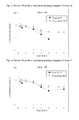
- FIGS. 1-41 present the rat oral PK profiles of representative oxycodone prodrug conjugates described herein.
- a first aspect of the invention relates to changing the pharmacokinetic and pharmacological properties of oxycodone through covalent modification using alpha-hydroxy carboxylic acid and derivatives and other generally recognized as safe (GRAS)-based moieties to produce prodrugs of oxycodone.
- Covalent attachment of a chemical moiety—specifically, a moiety derived from novel alpha-hydroxy carboxylic acid and derivatives and other GRAS-based reagents as monomers and oligomers (homo and hetero oligomers)—to oxycodone may change one or more of the following properties of oxycodone: the rate of absorption; extent of absorption and distribution within the body; metabolism and drug elimination (i.e., ADME pharmacokinetic properties).
- the alteration of one or more of these characteristics may be designed to provide fast or slow release, depending on need for relief of chronic pain versus acute pain. Additionally, alteration of one or more of these characteristics may reduce the previously noted side effects associated with oxycodone. In turn, these alterations may diminish or deter abuse potential.
- the oligomers formed from alpha-hydroxy carboxylic acid and derivatives can be homo and hetero ‘mers’ and can be both linear and branched ‘mers’.
- the hetero ‘mers’ can be cross linked with other GRAS reagents such as amino acid and dicarboxylic acids including, but not limited to, fumaric acid, maleic acid and succinic acid.
- the oxycodone prodrug may also prevent abuse by exhibiting stability under conditions that are likely to be employed by chemists who may illicitly attempt to release the oxycodone compound from its attached group.
- the oxycodone prodrug may further prevent abuse by exhibiting reduced bioavailability when administered via parenteral routes, particularly by intravenous, intranasal, or inhalation (“smoking”) routes that are often employed in illicit use.
- the oxycodone prodrug may reduce the desired euphoric effect with oxycodone abuse.
- the oxycodone prodrug may prevent, deter, or reduce abuse potential and overdose when the oxycodone prodrug is used in an unapproved manner (e.g., ingestion at a higher dose or non-oral administration).
- Oxycodone prodrugs of the present invention may be depicted as structures shown below as Formula A and Formula B where moieties X and Y represent the prodrug components that are chemically/covalently attached to oxycodone at the 6 th and 14 th position oxygen atoms of oxycodone, or a pharmaceutically acceptable salt thereof.
- X and Y if Y is present, can be the same or different.
- Formula A if Y is not present the oxycodone prodrug has a hydroxyl group at the 14 th position, and X may be any of the prodrug components described herein.
- both X and Y are present they may be the same or different, and each of X and Y may be independently selected from any of the prodrug components described.
- Alpha-hydroxy carboxylic acids and other GRAS-based monomers used to make the monomer-based and oligomer-based oxycodone prodrugs are depicted below.
- the alpha-hydroxy carboxylic acids represented here include the naturally occurring (L)-isomers, the non-natural (D)-isomers, mixtures of (L) and (D) isomers, racemates and mixtures of diastereomers, and meso-isomers.
- amino acids represented here include both natural and non-natural amino acids, the naturally occurring (L)-isomers, the non-natural (D)-isomers, mixtures of (L) and (D) isomers, racemates and mixtures of diastereomers.
- amino acids represented here also include alpha amino acids, beta amino acids, gamma amino acids, and epsilon amino acids (remote amino group relative to the carboxyl group).
- the fatty acids represented here include long-chain carboxylic acids, ranging in carbon lengths between eight carbons (C8) to twenty carbons (C20). These fatty acids could be both linear and branched and both saturated and non-saturated. In the case of unsaturated fatty acids they could be both cis- and trans-isomers (Z and E isomers).
- the prodrug components X and Y may be the same or different and may be represented as,
- the prodrug components X and Y, if Y is present may be the same or different and may be represented as,
- the prodrug components X and Y, if Y is present may be the same or different and may be represented as,
- the prodrug components X and Y, if Y is present may be the same or different and may be represented as,
- the prodrug components X and Y, if Y is present may be the same or different and may be represented as,
- the prodrug components X and Y, if Y is present may be the same or different and may be represented as,
- the prodrug components X and Y, if Y is present may be the same or different and may be represented as,
- the prodrug components X and Y, if Y is present may be the same or different and may be represented as,
- the prodrug components X and Y, if Y is present may be the same or different and may be represented as,
- the prodrug components X and Y, if Y is present may be the same or different and may be represented as,
- the prodrug components X and Y, if Y is present may be the same or different and may be represented as,
- the prodrug components X and Y, if Y is present may be the same or different and may be represented as,
- the prodrug components X and Y, if Y is present may be the same or different and may be represented as,
- the prodrug components X and Y, if Y is present may be the same or different and may be represented as,
- the prodrug components X and Y, if Y is present may be the same or different and may be represented as,
- the prodrug components X and Y, if Y is present may be the same or different and may be represented as,
- the prodrug components X and Y, if Y is present may be the same or different and may be represented as,
- FA is C8 to C20 saturated and unsaturated fatty acids including sorbic acid, stearic acid, oleic acid, palmitic acid, linoleic acid.
- These fatty acids could be both linear and branched chain acids, and in the case of unsaturated fatty acids they could be both cis- and trans-isomers (Z and E isomers).
- the prodrug side chain is attached to (i.e., bonded to) one of two (or both) possible locations in the oxycodone molecule.
- oxycodone has hydroxyl groups at carbon 14 and a ketone oxygen at carbon 6.
- a monomer prodrug side-chain or an oligomer prodrug side-chain can be bound at either or both of these positions, and upon prodrug side-chain cleavage, the oxycodone will revert back to its original form.
- the ketone With the ketone group present at the 6 position of oxycodone, the ketone can be converted to its corresponding enolate and reacted with an activated prodrug side chain reactant to form a prodrug. Upon prodrug cleavage, the prodrug will revert back to the original opioid molecule, with the keto group present.
- the prodrug chain is attached only to the ketone enolate oxygen at the 6 position of oxycodone, it is the prodrug ester of the mono-series (mono-substitution), and if the prodrug chain is attached to both at the hydroxyl groups at carbon 14 and at the ketone enolate oxygen at the 6 position of oxycodone, it is the prodrug ester of the bis-series (di-substitution).
- the prodrug Upon cleavage of the prodrug side-chains, the prodrug will revert back to the original oxycodone molecule, with the keto group and hydroxyl group present and intact.
- the alpha-hydroxy carboxylic acid and its homo and hetero oligomers (with another alpha-hydroxy carboxylic acid) referred to in this invention should be understood to be covalently bound via a hydroxy group on the alpha-hydroxy carboxylic acid or on the oligomer to another carbonyl (originally part of a carboxyl group of another alpha-hydroxy carboxylic acid, or to another carbonyl of the carboxyl group of the amino acid, or to one carbonyl of the carboxyl group of a dicarboxylic acid (e.g., succinic acid, maleic acid, fumaric acid), while the carboxyl group from the initial alpha-hydroxy carboxylic acid is attached to oxycodone.
- a dicarboxylic acid e.g., succinic acid, maleic acid, fumaric acid
- the initial carboxyl group that is attached to the oxycodone referred to in this invention is from an amino acid
- the amino group of the said amino acid is to be bound via a covalent bond as the amide with the carboxyl group on the alpha-hydroxy carboxylic acid or the oligomer carbonyl (originally part of a carboxyl group of the alpha-hydroxy carboxylic acids) or to one carbonyl of the carboxyl group of a dicarboxylic acid (e.g., succinic acid, maleic acid, fumaric acid).
- the initial carboxyl group that is attached to the oxycodone referred to in this invention is from alpha-hydroxy carboxylic acids and its homo and hetero oligomers (with another alpha-hydroxy carboxylic acid), the ensuing hydroxyl group may be capped as its ester by fatty acids.
- the initial carboxyl group that is attached to the oxycodone referred to in this invention is from alpha-hydroxy carboxylic acids and its homo and hetero oligomers (with another alpha-hydroxy carboxylic acid)
- the ensuing hydroxyl group may be capped as its ester by dicarboxylic acids (e.g., succinic acid, maleic acid, fumaric acid).
- the covalently modified oxycodone when provided in oral dosage form (e.g., a tablet, capsule, caplet, liquid dispersion, etc.) it has increased resistance to manipulation. For instance, crushing of a tablet or disruption of a capsule does not substantially increase the rate and amount of oxycodone absorbed when compositions of the invention are ingested.
- oral dosage form e.g., a tablet, capsule, caplet, liquid dispersion, etc.
- the oxycodone covalently bound to the prodrug side chain is provided in oral dosage form; for example a tablet, capsule, caplet or other formulation that is resistant to generate oxycodone by physical manipulation such as crushing.
- Another embodiment of the present invention provides oxycodone prodrug conjugates as a composition or method for treating pain in a patient (i.e., acute and chronic pain). It should be noted that different conjugates maybe be utilized to treat acute versus chronic pain.
- compositions or methods for a sustained-release oxycodone comprising a covalently bonded oxycodone conjugate, wherein said conjugate provides release of oxycodone at a rate where the level of oxycodone is within the therapeutic range, but below toxic levels, over an extended period of time (e.g., 8-24 hours or greater).
- Another embodiment of the present invention is a composition or method for reducing variability in bioavailability, or preventing a toxic release profile of oxycodone, comprising oxycodone covalently bonded to the prodrug moiety wherein said bound oxycodone maintains a steady-state serum release curve, which provides therapeutically effective bioavailability but prevents spikes or sharp increases in blood concentrations compared to unbound oxycodone when given at doses exceeding those that are within the therapeutic range of oxycodone.
- Another embodiment of the invention is a composition or method for preventing a C max spike for oxycodone while still providing a therapeutically effective bioavailability curve comprising oxycodone which has been covalently bonded to the prodrug moiety.
- Another embodiment of the present invention is a method for reducing or preventing abuse related to the euphoric effect of a pharmaceutical opioid composition, comprising consuming said composition, wherein said composition comprises a prodrug moiety covalently attached to oxycodone, such that the pharmacological activity of oxycodone is substantially decreased when the composition is used in a manner inconsistent with approved instructions or in a manner that substantially decreases the potential of overdose from oxycodone.
- compositions are adapted solely for oral administration, and wherein said oxycodone is resistant to release from said prodrug moiety when the composition is administered parenterally (e.g., intranasally, intravenously. etc.).
- said oxycodone would be preferentially released from said chemical moiety primarily in the presence of acid and/or enzymes present in the stomach or intestinal tract, respectively.
- the covalently bonded oxycodone prodrug may also be in a pharmaceutically acceptable salt form.
- Pharmaceutically acceptable inorganic and organic acid addition salts are known in the art. Exemplary salts include, but are not limited to, hydrobromide, hydrochloride, hydroiodide, benzoate, bisulfate, tartrate, bitartrate, edetate, edisylate, estolate, esylate, ethanesulfonate, lactate, malate, maleate, mandelate, methanesulfonate, phosphate, 2-hydroxyethanesulfonate, 2-naphthalenesulfonate, 3-hydroxy-2-naphthoate, 3-phenylpropionate, acetate, adipate, alginate, amsonate, aspartate, benzenesulfonate, borate, butyrate, calcium edetate, camphorate, camphorsulfonate, citrate
- amino acid refers to one of twenty-two amino acids used for protein biosynthesis, as well as other amino acids that can be incorporated into proteins during translation.
- Such amino acids can be a natural amino acid, such as glycine, alanine, valine, leucine, isoleucine, aspartic acid, glutamic acid, serine, threonine, glutamine, asparagine, arginine, lysine, proline, phenylalanine, tyrosine, tryptophan, cysteine, methionine, histidine and beta alanine, or non-natural amino acids and alpha amino acids, beta amino acids, gamma amino acids, and epsilon amino acids (e.g., the amino group is remote relative to the carboxyl group).
- the present invention also provides methods for providing, administering, prescribing, or consuming an oxycodone prodrug.
- the invention also provides pharmaceutical compositions comprising an oxycodone prodrug.
- the formulation of such a pharmaceutical composition can optionally enhance or achieve the desired release profile.
- oxycodone prodrugs of the present invention are shown in Formulae 1-91. It should be noted, in these formulae, that while no salt forms have been depicted, all the formulae compounds can be been prepared as their pharmaceutically acceptable salts, as previously described.
- Non-limiting examples of oxycodone prodrugs (Formulae 1-91):
- X and Y are prodrug moiety ligands selected from alpha-hydroxy carboxylic acid and derivatives as monomers, alpha-hydroxy carboxylic acid homo-oligomers, alpha-hydroxy carboxylic acid hetero oligomers with another alpha-hydroxy carboxylic acid, alpha-hydroxy carboxylic acid hetero oligomers with amino acids, alpha-hydroxy carboxylic acid hetero oligomers with dicarboxylic acids, alpha-hydroxy carboxylic acid hetero oligomers with fatty acids, fatty acids, and other GRAS-based reagents.
- X and Y are prodrug moiety ligands selected from alpha-hydroxy carboxylic acid and derivatives as monomers, alpha-hydroxy carboxylic acid homo-oligomers, alpha-hydroxy carboxylic acid hetero oligomers with another alpha-hydroxy carboxylic acid, alpha-hydroxy carboxylic acid hetero oligomers with amino acids, alpha-hydroxy carboxylic acid hetero oligomers with dicarboxylic acids, alpha-
- homo- and hetero-‘mers’ are both linear and branched ‘mers’.
- the homo- and hetero-‘mers’ are also cross linked with other GRAS reagents such as alpha-hydroxy carboxylic acid and amino acids.
- the oxycodone prodrug of embodiment 4 wherein the alpha-hydroxy carboxylic acid is lactic acid, tartaric acid, malic acid, citric acid, mandelic acid, pantoic acid, pantothenic acid and other poly-hydroxy carboxylic acids derived from sugars and carbohydrates.
- the naturally occurring (L)-isomers, the non-natural (D)-isomers, varying mixtures of (L) and (D) isomers, racemates and mixtures of diastereomers, and meso-isomers are all claimed in this invention.
- amino acids represented here are both natural (all 22 of the proteinogenic amino acids), and non-natural amino acids, the naturally occurring (L)-isomers, the non-natural (D)-isomers, varying mixtures of (L) and (D) isomers, racemates and mixtures of diastereomers.
- the amino acids represented here also include alpha amino acids, beta amino acids, gamma amino acids, and epsilon amino acids (amino group remote relative to the carboxyl group).
- the oxycodone prodrug of embodiment 4 wherein the fatty acids represented here are long chain carboxylic acids, ranging in lengths between eight carbons (C8) to twenty carbons (C20), and said fatty acids are linear or branched chains, and both saturated and non-non-saturated chains, and in the case of unsaturated fatty acids could be both cis- and trans-isomers (Z and E isomers), wherein examples of such fatty acids include, but are not limited to, sorbic acid, stearic acid, oleic acid, palmitic acid, and linoleic acid.
- the oxycodone prodrug of embodiment 4 wherein the dicarboxylic acids represented here to make hetero oligomers with alpha-hydroxy carboxylic acid include, but not limited to, fumaric acid, maleic acid, and succinic acid.
- X and Y are the same or different and is further represented as X is equal to ligands 1-16 and Y is equal to ligands 1-16 (shown below);
- R1 H
- acyl groups from fatty acids acyl groups from alpha-hydroxy acids
- acyl groups from amino acids and acyl groups from dicarboxylic acids including, but not limited to, fumaric acid, maleic acid and succinic acid
- R Me, Ph, CH2COR2, CHOR1COR2, and COR2 (when n is not zero)
- R2 OH, or is part of an ester formed by the hydroxyl group of another alpha-hydroxy acid or part of an amide formed by the amine group of an amino acid
- the amino acids represented here depicts both natural and non-non-natural amino acids, the naturally occurring (L)-isomers, the non-natural (D)-isomers, mixtures of (L) and (D) isomers, racemates and mixtures of diastereomers, or O-alkyl (alkyl esters, where the alkyl group is 1-4 carbon linear and branched
- FA is C8 to C20 saturated fatty acids, C8 to C20 unsaturated fatty acids, including but not limited to, sorbic acid, stearic acid, oleic acid, palmitic acid, linoleic acid.
- These fatty acids could be both linear and branched chain fatty acids, and in the case of unsaturated fatty acids they could be both cis- and trans-isomers (Z and E isomers).
- composition comprising the compound of any of embodiments 1-11.
- composition of embodiment 12 wherein when said composition is administered orally and the bioavailability of oxycodone is maintained.
- a method of treating pain comprising orally administering the composition of embodiment 12 to a patient.
- composition of embodiment 12, wherein the said composition is a pharmaceutically acceptable salt form.
- a pharmaceutical composition comprising one or more of the oxycodone prodrugs of embodiment 12 and one or more pharmaceutically acceptable excipients.
- the turbid reaction mixture was poured into satd NH 4 Cl solution (150 mL), stirred for 5 mins and extracted with EtOAc (250 mL). The organic part was washed with aqueous (aq) NH 4 Cl, aq. NaHCO 3 , and brine, dried over Na 2 SO 4 and evaporated to dryness to give the crude product (2.5 g).
- the crude product may contain small amounts of the mono-series prodrug, along with bis-series of the prodrug, as the main components.
- the crude product was further purified and separated the mono- and bis-products by standard column chromatography. The product was further characterized by NMR, MS and elemental analysis. Boc Group Deprotection from the Coupled Enol-Ester Prodrug Product:
- Boc group protection was used to protect the hydroxyl group(s) of the alpha-hydroxy carboxylic acids. After the oxycodone coupling, the Boc group was removed by the following general procedure. To a solution of the hydroxyl Boc-protected coupled product (1.5 g) in IPAc (15 mL) was added 4N HCl/dioxane (15 mL) and the reaction mixture was stirred at RT for 3 h (white ppt formation takes place after 10-15 mins). The solution was diluted with IPAc 50 mL), stirred for 10 mins. The precipitate was filtered, washed with IPAc and dried to give the deprotected product (quantitative yield). In this case the product is isolated as the HCl salt. HPLC purity ⁇ 95%. The product was further characterized by NMR, MS and elemental analysis.
- a third general procedure was also used to remove the Boc group from the coupled enol-ester prodrug product.
- hydroxyl Boc-protected coupled product 1.5 g
- dichloromethane 15 mL
- trifluoro acetic acid 15 mL
- the reaction mixture was concentrated to a dry powder on a rotavap and the residue was further purified by either trituration or chromatography as a TFA salt of the enol ester prodrug product. In this case the product is isolated as the TFA salt. HPLC purity ⁇ 95%.
- the product was further characterized by NMR, MS and elemental analysis.
- N-hydroxy succinimide ester activated carboxylic acid of the alpha-hydroxy carboxylic acid was used for oxycodone coupling.
- a solution of the hydroxyl Boc-protected alpha-hydroxy carboxylic acid (1 g, 1.1 mmol) and NHS (N-hydroxy succinimide) (1.05 eq) in THF (10 mL) was added a solution of DCC (1.05 eq) in THF (5 mL) at 0° C.
- the reaction mixture was slowly brought to RT and left overnight at RT.
- the turbid solution was filtered and the filtrate was used as such for the next step coupling process.
- the —OSu ester also can be precipitated and crystallized.
- PK pharmacokinetic
- Rat oral PK profile of oxycodone of these oxycodone prodrug conjugates are shown in FIGS. 1-41 .
- Oxycodone HCl, 5.58 mg/kg (5 mg/kg oxycodone free base) was used as the reference and all the prodrug compounds weights were adjusted to 5 mg/kg oxycodone free base equivalent weight.
Landscapes
- Health & Medical Sciences (AREA)
- Chemical & Material Sciences (AREA)
- Organic Chemistry (AREA)
- Addiction (AREA)
- Chemical Kinetics & Catalysis (AREA)
- Nuclear Medicine, Radiotherapy & Molecular Imaging (AREA)
- Bioinformatics & Cheminformatics (AREA)
- Biomedical Technology (AREA)
- Neurology (AREA)
- Neurosurgery (AREA)
- Psychiatry (AREA)
- General Chemical & Material Sciences (AREA)
- Medicinal Chemistry (AREA)
- Engineering & Computer Science (AREA)
- Pharmacology & Pharmacy (AREA)
- Life Sciences & Earth Sciences (AREA)
- Animal Behavior & Ethology (AREA)
- General Health & Medical Sciences (AREA)
- Public Health (AREA)
- Veterinary Medicine (AREA)
- Pharmaceuticals Containing Other Organic And Inorganic Compounds (AREA)
- Medicinal Preparation (AREA)
Priority Applications (5)
| Application Number | Priority Date | Filing Date | Title |
|---|---|---|---|
| US14/953,392 US10017519B2 (en) | 2015-04-27 | 2015-11-29 | Alpha-hydroxy carboxylic acid and derivatives and other GRAS based prodrugs of oxycodone and uses thereof |
| EP16869350.5A EP3380098A4 (de) | 2015-11-29 | 2016-11-28 | Neuartige alpha-hydroxycarbonsäure und derivate und andere gras-basierte prodrugs von oxycodon und verwendungen davon |
| PCT/US2016/063834 WO2017091827A1 (en) | 2015-11-29 | 2016-11-28 | Novel alpha-hydroxy carboxylic acid and derivatives and other gras based prodrugs of oxycodone and uses thereof |
| US15/472,758 US10449190B2 (en) | 2015-04-27 | 2017-03-29 | Alpha-hydroxy carboxylic acid and derivatives and other GRAS-based prodrugs of opioids and uses thereof |
| US15/992,287 US10696683B2 (en) | 2015-04-27 | 2018-05-30 | Alpha-hydroxy carboxylic acid and derivatives and other GRAS based prodrugs of oxycodone and uses thereof |
Applications Claiming Priority (2)
| Application Number | Priority Date | Filing Date | Title |
|---|---|---|---|
| US201562153157P | 2015-04-27 | 2015-04-27 | |
| US14/953,392 US10017519B2 (en) | 2015-04-27 | 2015-11-29 | Alpha-hydroxy carboxylic acid and derivatives and other GRAS based prodrugs of oxycodone and uses thereof |
Related Parent Applications (1)
| Application Number | Title | Priority Date | Filing Date |
|---|---|---|---|
| US14/956,143 Continuation-In-Part US9987269B2 (en) | 2015-04-27 | 2015-12-01 | Alpha-hydroxy carboxylic acid and derivatives and other GRAS-based prodrugs of oxymorphone and uses thereof |
Related Child Applications (4)
| Application Number | Title | Priority Date | Filing Date |
|---|---|---|---|
| US14/956,143 Continuation-In-Part US9987269B2 (en) | 2015-04-27 | 2015-12-01 | Alpha-hydroxy carboxylic acid and derivatives and other GRAS-based prodrugs of oxymorphone and uses thereof |
| US15/472,758 Continuation-In-Part US10449190B2 (en) | 2015-04-27 | 2017-03-29 | Alpha-hydroxy carboxylic acid and derivatives and other GRAS-based prodrugs of opioids and uses thereof |
| US15/992,287 Continuation US10696683B2 (en) | 2015-04-27 | 2018-05-30 | Alpha-hydroxy carboxylic acid and derivatives and other GRAS based prodrugs of oxycodone and uses thereof |
| US15/992,287 Division US10696683B2 (en) | 2015-04-27 | 2018-05-30 | Alpha-hydroxy carboxylic acid and derivatives and other GRAS based prodrugs of oxycodone and uses thereof |
Publications (3)
| Publication Number | Publication Date |
|---|---|
| US20170152266A1 US20170152266A1 (en) | 2017-06-01 |
| US20170275293A9 US20170275293A9 (en) | 2017-09-28 |
| US10017519B2 true US10017519B2 (en) | 2018-07-10 |
Family
ID=58763713
Family Applications (2)
| Application Number | Title | Priority Date | Filing Date |
|---|---|---|---|
| US14/953,392 Active US10017519B2 (en) | 2015-04-27 | 2015-11-29 | Alpha-hydroxy carboxylic acid and derivatives and other GRAS based prodrugs of oxycodone and uses thereof |
| US15/992,287 Active US10696683B2 (en) | 2015-04-27 | 2018-05-30 | Alpha-hydroxy carboxylic acid and derivatives and other GRAS based prodrugs of oxycodone and uses thereof |
Family Applications After (1)
| Application Number | Title | Priority Date | Filing Date |
|---|---|---|---|
| US15/992,287 Active US10696683B2 (en) | 2015-04-27 | 2018-05-30 | Alpha-hydroxy carboxylic acid and derivatives and other GRAS based prodrugs of oxycodone and uses thereof |
Country Status (3)
| Country | Link |
|---|---|
| US (2) | US10017519B2 (de) |
| EP (1) | EP3380098A4 (de) |
| WO (1) | WO2017091827A1 (de) |
Cited By (4)
| Publication number | Priority date | Publication date | Assignee | Title |
|---|---|---|---|---|
| US20170196851A1 (en) * | 2015-04-27 | 2017-07-13 | John K. Thottathil | Novel Alpha-Hydroxy Carboxylic Acid And Derivatives And Other Gras- Based Prodrugs Of Opioids And Uses Thereof |
| US10696683B2 (en) | 2015-04-27 | 2020-06-30 | 3St Research Llc | Alpha-hydroxy carboxylic acid and derivatives and other GRAS based prodrugs of oxycodone and uses thereof |
| US10695342B2 (en) | 2015-04-27 | 2020-06-30 | Albany Molecular Research, Inc. | Methods and compositions for preventing opioid abuse |
| US11845759B2 (en) * | 2018-02-23 | 2023-12-19 | Rhodes Technologies | Opioid compounds and uses thereof |
Families Citing this family (5)
| Publication number | Priority date | Publication date | Assignee | Title |
|---|---|---|---|---|
| US9987269B2 (en) * | 2015-04-27 | 2018-06-05 | 3St Research Llc | Alpha-hydroxy carboxylic acid and derivatives and other GRAS-based prodrugs of oxymorphone and uses thereof |
| WO2020012245A1 (en) | 2018-07-13 | 2020-01-16 | Alkermes Pharma Ireland Limited | Thienothiophene-naltrexone prodrugs for long-acting injectable compositions |
| US11186585B2 (en) * | 2018-08-17 | 2021-11-30 | Kappa-Pharma LLC | Compositions and methods of enhancing opioid receptor engagement by opioid hexadienoates and optionally substituted hexadienoates |
| US10975099B2 (en) | 2018-11-05 | 2021-04-13 | Alkermes Pharma Ireland Limited | Thiophene compounds for long-acting injectable compositions and related methods |
| EP4010078A4 (de) * | 2019-08-11 | 2023-08-09 | Kappa-Pharma LLC | Zusammensetzungen und verfahren zur verstärkung der wirkung von opioidrezeptoren durch opioidhexadienoate und optional substituierte hexadienoate |
Citations (12)
| Publication number | Priority date | Publication date | Assignee | Title |
|---|---|---|---|---|
| US4673679A (en) | 1986-05-14 | 1987-06-16 | E. I. Du Pont De Nemours And Company | Use of prodrugs of 3-hydroxymorphinans to prevent bitter taste upon buccal, nasal or sublingual administration |
| WO2003032990A2 (en) | 2001-10-18 | 2003-04-24 | Nektar Therapeutics Al, Corporation | Polymer conjugates of opioid antagonists |
| WO2004082620A2 (en) * | 2003-03-13 | 2004-09-30 | Controlled Chemicals, Inc. | Oxycodone conjugates with lower the abuse potential and extended duration of action |
| US20050075361A1 (en) | 2002-11-12 | 2005-04-07 | Chi Mei Foundation Medical Center | Novel ester derivatives of buprenorphine and their preparation processes, and long acting analgestic pharmaceutical compositions |
| US20050080012A1 (en) * | 2002-02-22 | 2005-04-14 | New River Pharmaceuticals Inc. | Sustained release pharmaceutical compounds to prevent abuse of controlled substances |
| WO2007120648A2 (en) * | 2006-04-10 | 2007-10-25 | Shire Llc | Mono and di-substituted oxycodone compounds and compositions |
| WO2007120864A2 (en) * | 2006-04-14 | 2007-10-25 | Shire Llc | Compositions and methods for enhancing analgesic potency of covalently bound compounds, attenuating its adverse side effects, and preventing their abuse |
| US7375083B2 (en) | 2003-09-30 | 2008-05-20 | Shire Llc | Pharmaceutical compositions for prevention of overdose or abuse |
| US20100286186A1 (en) | 2009-04-02 | 2010-11-11 | Shire Llc | Novel dicarboxylic acid linked amino acid and peptide prodrugs of opioids and uses thereof |
| US20140200235A1 (en) | 2007-03-12 | 2014-07-17 | Nektar Therapeutics | Oligomer-opioid agonist conjugates |
| US8816083B2 (en) | 2011-10-26 | 2014-08-26 | Kempharm, Inc. | Benzoic acid, benzoic acid derivatives and heteroaryl carboxylic acid conjugates of hydromorphone, prodrugs, methods of making and use thereof |
| US20160326182A1 (en) * | 2015-04-27 | 2016-11-10 | Waterville Valley Technologies, Inc. | Methods and compositions for preventing opioid abuse |
Family Cites Families (10)
| Publication number | Priority date | Publication date | Assignee | Title |
|---|---|---|---|---|
| US20070066537A1 (en) * | 2002-02-22 | 2007-03-22 | New River Pharmaceuticals Inc. | Compounds and compositions for prevention of overdose of oxycodone |
| US20040058946A1 (en) | 2002-07-05 | 2004-03-25 | Buchwald Stephen L. | Abuse-resistant prodrugs of oxycodone and other pharmaceuticals |
| US20080207668A1 (en) | 2006-10-06 | 2008-08-28 | New River Pharmaceuticals Inc. | Pharmaceutical compositions of hydromorphone for prevention of overdose or abuse |
| US20080090771A1 (en) | 2006-10-06 | 2008-04-17 | Shire Llc | Abuse-resistant hydrocodone compounds, compositions and methods of using the same |
| RU2495041C2 (ru) | 2008-04-24 | 2013-10-10 | Янссен Фармацевтика Нв | Диэфирные пролекарства налмефена |
| UA102916C2 (uk) | 2009-07-02 | 2013-08-27 | Кемфарм, Інк. | Композиція на основі кон'югату гідрокодону з бензойною кислотою, похідними бензойної кислоти або гетероарилкарбоновою кислотою, проліки, спосіб лікування від зловживань |
| US20130079364A1 (en) | 2010-04-21 | 2013-03-28 | Signature Therapeutics, Inc. | Peripheral Opioid Agonists and Peripheral Opioid Antagonists |
| US10449190B2 (en) | 2015-04-27 | 2019-10-22 | John K. Thottathil | Alpha-hydroxy carboxylic acid and derivatives and other GRAS-based prodrugs of opioids and uses thereof |
| US10017519B2 (en) | 2015-04-27 | 2018-07-10 | 3St Research Llc | Alpha-hydroxy carboxylic acid and derivatives and other GRAS based prodrugs of oxycodone and uses thereof |
| US9987269B2 (en) | 2015-04-27 | 2018-06-05 | 3St Research Llc | Alpha-hydroxy carboxylic acid and derivatives and other GRAS-based prodrugs of oxymorphone and uses thereof |
-
2015
- 2015-11-29 US US14/953,392 patent/US10017519B2/en active Active
-
2016
- 2016-11-28 EP EP16869350.5A patent/EP3380098A4/de not_active Withdrawn
- 2016-11-28 WO PCT/US2016/063834 patent/WO2017091827A1/en not_active Ceased
-
2018
- 2018-05-30 US US15/992,287 patent/US10696683B2/en active Active
Patent Citations (13)
| Publication number | Priority date | Publication date | Assignee | Title |
|---|---|---|---|---|
| US4673679A (en) | 1986-05-14 | 1987-06-16 | E. I. Du Pont De Nemours And Company | Use of prodrugs of 3-hydroxymorphinans to prevent bitter taste upon buccal, nasal or sublingual administration |
| WO2003032990A2 (en) | 2001-10-18 | 2003-04-24 | Nektar Therapeutics Al, Corporation | Polymer conjugates of opioid antagonists |
| US20050080012A1 (en) * | 2002-02-22 | 2005-04-14 | New River Pharmaceuticals Inc. | Sustained release pharmaceutical compounds to prevent abuse of controlled substances |
| US20050075361A1 (en) | 2002-11-12 | 2005-04-07 | Chi Mei Foundation Medical Center | Novel ester derivatives of buprenorphine and their preparation processes, and long acting analgestic pharmaceutical compositions |
| WO2004082620A2 (en) * | 2003-03-13 | 2004-09-30 | Controlled Chemicals, Inc. | Oxycodone conjugates with lower the abuse potential and extended duration of action |
| US7375083B2 (en) | 2003-09-30 | 2008-05-20 | Shire Llc | Pharmaceutical compositions for prevention of overdose or abuse |
| US20110040072A1 (en) * | 2006-04-10 | 2011-02-17 | Shire Llc | Mono and di-substituted oxycodone compounds and compositions |
| WO2007120648A2 (en) * | 2006-04-10 | 2007-10-25 | Shire Llc | Mono and di-substituted oxycodone compounds and compositions |
| WO2007120864A2 (en) * | 2006-04-14 | 2007-10-25 | Shire Llc | Compositions and methods for enhancing analgesic potency of covalently bound compounds, attenuating its adverse side effects, and preventing their abuse |
| US20140200235A1 (en) | 2007-03-12 | 2014-07-17 | Nektar Therapeutics | Oligomer-opioid agonist conjugates |
| US20100286186A1 (en) | 2009-04-02 | 2010-11-11 | Shire Llc | Novel dicarboxylic acid linked amino acid and peptide prodrugs of opioids and uses thereof |
| US8816083B2 (en) | 2011-10-26 | 2014-08-26 | Kempharm, Inc. | Benzoic acid, benzoic acid derivatives and heteroaryl carboxylic acid conjugates of hydromorphone, prodrugs, methods of making and use thereof |
| US20160326182A1 (en) * | 2015-04-27 | 2016-11-10 | Waterville Valley Technologies, Inc. | Methods and compositions for preventing opioid abuse |
Non-Patent Citations (6)
| Title |
|---|
| Aquina, C.T., et al., OxyContin Abuse and Overdose, Postgrad Med. vol. 121, Issue 2 Mar. 2009, 163-67. |
| Final Office Action in U.S. Appl. No. 14/956,143, dated Jul. 17, 2017, 18 pages. |
| Final Office Action in U.S. Appl. No. 15/139,836, dated Jul. 6, 2017, 16 pages. |
| Non-Final Office Action in U.S. Appl. No. 14/956,143 dated Dec. 28, 2016, 12 pages. |
| PCT International Search Report and Written Opinion in PCT/US16/63834 dated Jan. 31, 2017, 17 pages. |
| PCT International Search Report and Written Opinion in PCT/US16/63836 dated Jan. 24, 2017, 17 pages. |
Cited By (6)
| Publication number | Priority date | Publication date | Assignee | Title |
|---|---|---|---|---|
| US20170196851A1 (en) * | 2015-04-27 | 2017-07-13 | John K. Thottathil | Novel Alpha-Hydroxy Carboxylic Acid And Derivatives And Other Gras- Based Prodrugs Of Opioids And Uses Thereof |
| US10449190B2 (en) * | 2015-04-27 | 2019-10-22 | John K. Thottathil | Alpha-hydroxy carboxylic acid and derivatives and other GRAS-based prodrugs of opioids and uses thereof |
| US10696683B2 (en) | 2015-04-27 | 2020-06-30 | 3St Research Llc | Alpha-hydroxy carboxylic acid and derivatives and other GRAS based prodrugs of oxycodone and uses thereof |
| US10695342B2 (en) | 2015-04-27 | 2020-06-30 | Albany Molecular Research, Inc. | Methods and compositions for preventing opioid abuse |
| US11020386B2 (en) | 2015-04-27 | 2021-06-01 | Albany Molecular Research, Inc. | Methods and compositions for preventing opioid abuse |
| US11845759B2 (en) * | 2018-02-23 | 2023-12-19 | Rhodes Technologies | Opioid compounds and uses thereof |
Also Published As
| Publication number | Publication date |
|---|---|
| US20170275293A9 (en) | 2017-09-28 |
| WO2017091827A1 (en) | 2017-06-01 |
| EP3380098A1 (de) | 2018-10-03 |
| US20170152266A1 (en) | 2017-06-01 |
| US10696683B2 (en) | 2020-06-30 |
| US20180273542A1 (en) | 2018-09-27 |
| EP3380098A4 (de) | 2019-04-24 |
Similar Documents
| Publication | Publication Date | Title |
|---|---|---|
| US10696683B2 (en) | Alpha-hydroxy carboxylic acid and derivatives and other GRAS based prodrugs of oxycodone and uses thereof | |
| US10449190B2 (en) | Alpha-hydroxy carboxylic acid and derivatives and other GRAS-based prodrugs of opioids and uses thereof | |
| US20240316208A1 (en) | Polyoxazoline-drug conjugates with novel pharmacokinetic properties | |
| EP1531844B1 (de) | Neue pharmazeutische verbindungen mit verzögerter freisetzung zur verhinderung von missbrauch kontrollierter substanzen | |
| US20180250288A1 (en) | Novel Alpha-Hydroxy Carboxylic Acid And Derivatives And Other GRAS-Based Prodrugs Of Oxymorphone And Uses Thereof | |
| CN102480959B (zh) | 氢可酮的苯甲酸缀合物、苯甲酸衍生物缀合物和杂芳基羧酸缀合物及其前药、制备方法和用途 | |
| JP2009533459A (ja) | 共有結合する化合物の鎮痛作用の増強と、有害な副作用の減衰と、前記化合物の乱用の予防とのための組成物及び方法 | |
| US20200114015A1 (en) | Novel Alpha-Hydroxy Carboxylic Acid And Derivatives And Other GRAS- Based Prodrugs Of Gamma-Hydroxybutyrate (GHB) And Uses Thereof | |
| CA2649360A1 (en) | Mono and di-substituted oxycodone compounds and compositions | |
| US20080207668A1 (en) | Pharmaceutical compositions of hydromorphone for prevention of overdose or abuse | |
| US11020386B2 (en) | Methods and compositions for preventing opioid abuse | |
| WO2018183264A1 (en) | Novel alpha-hydroxy carboxylic acid and derivatives and other gras- based prodrugs of opioids and uses thereof | |
| US20200114014A1 (en) | Novel Alpha-Hydroxy Carboxylic Acid and Derivatives and Other GRAS-Based Amide and Imide Prodrugs of Amphetamine Compounds and Uses Thereof | |
| US20260131012A1 (en) | Polyoxazoline-drug conjugates with novel pharmacokinetic properties |
Legal Events
| Date | Code | Title | Description |
|---|---|---|---|
| AS | Assignment |
Owner name: 3ST RESEARCH LLC, NEW JERSEY Free format text: ASSIGNMENT OF ASSIGNORS INTEREST;ASSIGNOR:THOTTATHIL, JOHN K.;REEL/FRAME:042969/0703 Effective date: 20170707 |
|
| STCF | Information on status: patent grant |
Free format text: PATENTED CASE |
|
| MAFP | Maintenance fee payment |
Free format text: PAYMENT OF MAINTENANCE FEE, 4TH YR, SMALL ENTITY (ORIGINAL EVENT CODE: M2551); ENTITY STATUS OF PATENT OWNER: SMALL ENTITY Year of fee payment: 4 |
|
| MAFP | Maintenance fee payment |
Free format text: PAYMENT OF MAINTENANCE FEE, 8TH YR, SMALL ENTITY (ORIGINAL EVENT CODE: M2552); ENTITY STATUS OF PATENT OWNER: SMALL ENTITY Year of fee payment: 8 |