RU2700503C1 - Method of producing lactic acid - Google Patents
Method of producing lactic acid Download PDFInfo
- Publication number
- RU2700503C1 RU2700503C1 RU2018128806A RU2018128806A RU2700503C1 RU 2700503 C1 RU2700503 C1 RU 2700503C1 RU 2018128806 A RU2018128806 A RU 2018128806A RU 2018128806 A RU2018128806 A RU 2018128806A RU 2700503 C1 RU2700503 C1 RU 2700503C1
- Authority
- RU
- Russia
- Prior art keywords
- lactic acid
- nutrient medium
- hours
- bacteria
- cultivation
- Prior art date
Links
Images
Classifications
-
- C—CHEMISTRY; METALLURGY
- C12—BIOCHEMISTRY; BEER; SPIRITS; WINE; VINEGAR; MICROBIOLOGY; ENZYMOLOGY; MUTATION OR GENETIC ENGINEERING
- C12N—MICROORGANISMS OR ENZYMES; COMPOSITIONS THEREOF; PROPAGATING, PRESERVING, OR MAINTAINING MICROORGANISMS; MUTATION OR GENETIC ENGINEERING; CULTURE MEDIA
- C12N1/00—Microorganisms; Compositions thereof; Processes of propagating, maintaining or preserving microorganisms or compositions thereof; Processes of preparing or isolating a composition containing a microorganism; Culture media therefor
- C12N1/20—Bacteria; Culture media therefor
-
- C—CHEMISTRY; METALLURGY
- C12—BIOCHEMISTRY; BEER; SPIRITS; WINE; VINEGAR; MICROBIOLOGY; ENZYMOLOGY; MUTATION OR GENETIC ENGINEERING
- C12N—MICROORGANISMS OR ENZYMES; COMPOSITIONS THEREOF; PROPAGATING, PRESERVING, OR MAINTAINING MICROORGANISMS; MUTATION OR GENETIC ENGINEERING; CULTURE MEDIA
- C12N1/00—Microorganisms; Compositions thereof; Processes of propagating, maintaining or preserving microorganisms or compositions thereof; Processes of preparing or isolating a composition containing a microorganism; Culture media therefor
- C12N1/20—Bacteria; Culture media therefor
- C12N1/205—Bacterial isolates
-
- C—CHEMISTRY; METALLURGY
- C12—BIOCHEMISTRY; BEER; SPIRITS; WINE; VINEGAR; MICROBIOLOGY; ENZYMOLOGY; MUTATION OR GENETIC ENGINEERING
- C12P—FERMENTATION OR ENZYME-USING PROCESSES TO SYNTHESISE A DESIRED CHEMICAL COMPOUND OR COMPOSITION OR TO SEPARATE OPTICAL ISOMERS FROM A RACEMIC MIXTURE
- C12P7/00—Preparation of oxygen-containing organic compounds
- C12P7/40—Preparation of oxygen-containing organic compounds containing a carboxyl group including Peroxycarboxylic acids
- C12P7/56—Lactic acid
-
- C—CHEMISTRY; METALLURGY
- C12—BIOCHEMISTRY; BEER; SPIRITS; WINE; VINEGAR; MICROBIOLOGY; ENZYMOLOGY; MUTATION OR GENETIC ENGINEERING
- C12R—INDEXING SCHEME ASSOCIATED WITH SUBCLASSES C12C - C12Q, RELATING TO MICROORGANISMS
- C12R2001/00—Microorganisms ; Processes using microorganisms
- C12R2001/01—Bacteria or Actinomycetales ; using bacteria or Actinomycetales
- C12R2001/225—Lactobacillus
Landscapes
- Chemical & Material Sciences (AREA)
- Engineering & Computer Science (AREA)
- Life Sciences & Earth Sciences (AREA)
- Organic Chemistry (AREA)
- Health & Medical Sciences (AREA)
- Zoology (AREA)
- Wood Science & Technology (AREA)
- Genetics & Genomics (AREA)
- Bioinformatics & Cheminformatics (AREA)
- Biotechnology (AREA)
- General Health & Medical Sciences (AREA)
- Biochemistry (AREA)
- General Engineering & Computer Science (AREA)
- Microbiology (AREA)
- Medicinal Chemistry (AREA)
- Tropical Medicine & Parasitology (AREA)
- Virology (AREA)
- Biomedical Technology (AREA)
- Chemical Kinetics & Catalysis (AREA)
- General Chemical & Material Sciences (AREA)
- Preparation Of Compounds By Using Micro-Organisms (AREA)
Abstract
Description
Изобретение относится к области биотехнологических процессов и производств, в частности, к способам культивирования биомассы бактерий.The invention relates to the field of biotechnological processes and production, in particular, to methods for cultivating biomass of bacteria.
Известен способ культивирования молочнокислых бактерий на основе штамма ((Lactobacillus delbrueckii В-8744» (Патент на изобретение РФ №2283345, МПК С12Р 7/56, C12N 1/20, 2006 г). Способ предусматривает использование питательных сред с органическими формами азота (дрожжевой экстракт, пептон, пшеничные зародыши), в качестве источников углерода используются сусло, солодовые ростки, сахар. Питательная среда настаивается 1 ч при температуре 50°С, после чего вносится двухсуточная культура молочнокислых бактерий. Колбы термостатируются при 50°С, их содержимое периодически перемешивается. Способ обеспечивает выход лактата кальция 146,0 г/л после 50 ч брожения, что соответствует общей продуктивности процесса 2,92 г/(л⋅ч) и выходу молочной кислоты 93,9%.A known method of culturing lactic acid bacteria based on the strain ((Lactobacillus delbrueckii B-8744 "(Patent for the invention of the Russian Federation No. 2283345, IPC C12P 7/56, C12N 1/20, 2006). The method involves the use of nutrient media with organic forms of nitrogen (yeast extract, peptone, wheat germ), wort, malt sprouts, sugar are used as carbon sources. The nutrient medium is infused for 1 hour at a temperature of 50 ° C, after which a two-day culture of lactic acid bacteria is introduced. The flasks are thermostated at 50 ° C, their contents periodically eremeshivaetsya. The method provides calcium lactate yield 146.0 g / l after 50 h of fermentation, which corresponds to the overall productivity of the process 2.92 g / (l⋅ch) and lactic acid yield of 93.9%.
Недостатком данного способа является относительно невысокий выход молочной кислоты, а также то, что при его реализации требуется использование в качестве источников азота и углерода дорогостоящих органических веществ.The disadvantage of this method is the relatively low yield of lactic acid, as well as the fact that its implementation requires the use of expensive organic substances as nitrogen and carbon sources.
..
Известен способ получения молочной кислоты (Патент на изобретение №1243354 РФ, МПК С12Р 7/56, 2002 год), предусматривающий выращивание продуцирующего ее штамма бактерий Lactobacillus delbriickii в сахаросодержащей питательной среде до максимального накопления целевого продукта, нейтрализацию сброженного раствора карбонатом кальция при нагревании, последующую очистку и выделение. С целью ускорения процесса очистки и улучшения качества продукта, в сброженный раствор после нейтрализации карбонатом кальция дополнительно вводят активную кремневую кислоту в количестве 60-80 мг/л и уделяют образовавшийся осадок в поле центробежных сил при факторе разделения 3500-4500, а надосадочную жидкость перед выделением целевого продукта подвергают омагничиванию в поле с магнитной индукцией 0,01-0,15 Тл. Способ обеспечивает выход лактата кальция 146,0 г/л после 50 ч брожения, что соответствует общей продуктивности процесса 2,92 г/(л⋅ч) и выходу молочной кислоты 93,9%.A known method of producing lactic acid (Patent for invention No. 1243354 of the Russian Federation, IPC СРР 7/56, 2002), which provides for the cultivation of the bacterial strain Lactobacillus delbriickii producing it in a sugar-containing nutrient medium to the maximum accumulation of the target product, neutralization of the fermented solution with calcium carbonate when heated, followed by purification and isolation. In order to speed up the purification process and improve the quality of the product, active silicic acid in the amount of 60-80 mg / l is additionally added to the fermented solution after neutralization with calcium carbonate and the precipitate formed is placed in the centrifugal force field with a separation factor of 3500-4500, and the supernatant is liquid the target product is subjected to magnetization in a field with magnetic induction of 0.01-0.15 T. The method provides a yield of calcium lactate of 146.0 g / l after 50 hours of fermentation, which corresponds to a total productivity of the process of 2.92 g / (l⋅h) and a yield of lactic acid of 93.9%.
Недостатком данного способа также является относительно невысокий выход молочной кислоты и использование дорогостоящих компонентов питательной среды (источники углерода и азота).The disadvantage of this method is the relatively low yield of lactic acid and the use of expensive components of the nutrient medium (sources of carbon and nitrogen).
Известен способ получения молочной кислоты (Патент на изобретение №2306340 РФ, МПК С12Р 7/56, C12N 1/20, 2007 год), предусматривающий сбраживание сахарсодержащей питательной среды молочнокислыми бактериями Lactobacillus delbrueckii в присутствии обработанных молочной кислотой солодовых ростков и нейтрализацию образующейся молочной кислоты мелом, причем в питательную среду дополнительно вводят мел в количестве 60% от общего количества мела, рассчитанного для нейтрализации молочной кислоты, дрожжевой экстракт и питательные соли (сульфаты магния, марганца и железа, цитрат аммония, одно- и двухзамещенные фосфаты калия). Обработку солодовых ростков в количестве 12-15 г/л проводят водой, подкисленной молочной кислотой до рН 4,0-5,0 и ферментным препаратом ксилоглюканофоетидином в количестве, соответствующем 200-600 ед./л ксиланазной активности, в качестве молочнокислых бактерий Lactobacillus delbrueckii используют штамм Lactobacillus delbrueckii ВКПМ В-8744 в возрасте 48-72 ч, а для нейтрализации образующейся молочной кислоты через 24 ч от начала процесса брожения вносят оставшиеся 40% мела. Продуктивность процесса составляет 2,96 г/(л⋅ч) лактата кальция. Выход молочной кислоты на стадии брожения от исходного сахара составляет 94,6%.A known method for producing lactic acid (Patent for invention No. 2306340 of the Russian Federation, IPC С12Р 7/56, C12N 1/20, 2007), which provides for the fermentation of sugar-containing nutrient medium with lactic acid bacteria Lactobacillus delbrueckii in the presence of lactic acid-treated malt sprouts and neutralization of the resulting lactic chalk moreover, chalk is added to the nutrient medium in an amount of 60% of the total amount of chalk calculated to neutralize lactic acid, yeast extract and nutrient salts (magnesium, manganese and iron sulfates of ammonium citrate, mono- and disubstituted potassium phosphates). The treatment of malt sprouts in an amount of 12-15 g / l is carried out with water, acidified with lactic acid to a pH of 4.0-5.0 and an enzyme preparation xyloglucanofoetidine in an amount corresponding to 200-600 units / l xylanase activity, as lactic acid bacteria Lactobacillus delbrueckii using the strain Lactobacillus delbrueckii VKPM B-8744 at the age of 48-72 hours, and the remaining 40% of the chalk is added to neutralize the formed lactic acid 24 hours after the start of the fermentation process. The productivity of the process is 2.96 g / (l⋅h) of calcium lactate. The yield of lactic acid at the fermentation stage from the initial sugar is 94.6%.
Недостатком данного способа также является относительно невысокий выход молочной кислоты и использование дорогостоящих компонентов питательной среды (источник азота - солодовые ростки, сульфаты магния, марганца и железа, цитрат аммония, одно- и двухзамещенные фосфаты калия).The disadvantage of this method is the relatively low yield of lactic acid and the use of expensive components of the nutrient medium (the source of nitrogen is malt sprouts, magnesium sulfates, manganese and iron sulfates, ammonium citrate, one- and two-substituted potassium phosphates).
Наиболее близким к предлагаемому решению является способ получения молочной кислоты (Патент на изобретение №2177036 РФ, МПК С12Р 7/56, C12N 1/20, C12N 1/20, C12R 1:225, C12R 1:46, 2001 год). Данный способ получения молочной кислоты из городских твердых отходов, предусматривает ферментацию молочнокислых бактерий, причем, сначала из городских твердых отходов удаляют шины, крупные части черных и цветных металлов, пластмассы и стекла и получают целлюлозный компонент, который затем измельчают и обрабатывают его разбавленной серной кислотой при 40-100°С, растворяя тем самым оставшиеся тяжелые металлы и получая растворимый и нерастворимый компоненты. После этого отделяют растворимый компонент от нерастворимого компонента, затем высушивают полученный нерастворимый компонент, обрабатывают его при массовом соотношении "концентрированная серная кислота : нерастворимый компонент" - 1:1 и получают частично гидролизованную смесь. Далее разбавляют полученную частично гидролизованную смесь водой при 80-100°С, после этого перемешивают полученную разбавленную смесь при 100°С и получают разложившийся материал. Затем удаляют твердые вещества из полученного разложившегося материала и получают фильтрат, разделяют фильтрат на раствор, содержащий кислоту, и раствор, содержащий сахар, потом концентрируют раствор, содержащий сахар, до 1-20% концентрации сахара, доводят рН полученного концентрированного раствора, содержащего сахар, до 4,5-7,5, после чего ферментируют полученный раствор молочнокислыми бактериями и получают раствор, содержащий молочную кислоту.Closest to the proposed solution is a method for producing lactic acid (Patent for invention No. 2177036 RF, IPC С12Р 7/56, C12N 1/20, C12N 1/20, C12R 1: 225, C12R 1:46, 2001). This method of producing lactic acid from municipal solid waste involves the fermentation of lactic acid bacteria, first, tires, large parts of ferrous and non-ferrous metals, plastics and glass are removed from urban solid waste and a cellulosic component is obtained, which is then ground and treated with dilute sulfuric acid 40-100 ° C, thereby dissolving the remaining heavy metals and obtaining soluble and insoluble components. After that, the soluble component is separated from the insoluble component, then the resulting insoluble component is dried, treated with a mass ratio of "concentrated sulfuric acid: insoluble component" - 1: 1, and a partially hydrolyzed mixture is obtained. Next, the resulting partially hydrolyzed mixture is diluted with water at 80-100 ° C, then the resulting diluted mixture is stirred at 100 ° C to obtain decomposed material. Then the solids are removed from the obtained decomposed material and a filtrate is obtained, the filtrate is separated into a solution containing acid and a solution containing sugar, then the solution containing sugar is concentrated to 1-20% sugar concentration, the pH of the resulting concentrated solution containing sugar is adjusted, to 4.5-7.5, after which the resulting solution is fermented with lactic acid bacteria and a solution containing lactic acid is obtained.
Недостатком данного способа является необходимость предварительной многостадийной обработки сырья для получения достаточного выхода молочной кислоты, что приводит к усложнению технологического процесса и его удорожанию.The disadvantage of this method is the need for preliminary multi-stage processing of raw materials to obtain a sufficient yield of lactic acid, which leads to the complexity of the process and its cost.
Задачей изобретения является получение культуральной жидкости с повышенным содержанием молочной кислоты.The objective of the invention is to obtain a culture fluid with a high content of lactic acid.
Решение технической задачи достигается за счет создания стрессовых условий культивирования молочнокислых бактерий рода Lactobacillus на предварительно обеззараженных сточных водах, содержащих комплекс внеклеточных метаболитов.The solution to the technical problem is achieved by creating stressful conditions for the cultivation of lactic acid bacteria of the genus Lactobacillus on previously disinfected wastewater containing a complex of extracellular metabolites.
Между отличительными признаками и достигаемым техническим результатом существует следующая причинно - следственная связь.Between the distinguishing features and the achieved technical result, there is the following causal relationship.
Технический результат достигается тем, что создание стрессовых условий обеспечивается анаэробными условиями культивирования молочнокислых бактерий, а накопление комплекса внеклеточных метаболитов в питательной среде обеспечивается при обеззараживании загрязненных сточных вод путем культивирования на них микроводорослей вида Chlorella vulgaris.The technical result is achieved in that the creation of stressful conditions is ensured by the anaerobic conditions for the cultivation of lactic acid bacteria, and the accumulation of a complex of extracellular metabolites in a nutrient medium is ensured by the disinfection of contaminated wastewater by culturing microalgae of the species Chlorella vulgaris on them.
Муниципальные сточные воды, поступающие с городских очистных сооружений и содержащие азот в виде катионов аммония 30-60 мг/л, фосфор в виде фосфат-анионов в концентрации 10-40 мг/л, нефтепродукты в концентрации 1-3 мг/л, катионы цинка - 0,01-0,09 мг/л, меди - 0,01-0,2 мг/л, общее микробное число: 5-20 млн кл/мл, очищаются и обеззараживаются с применением микроводорослей вида Chlorella vulgaris и используются в качестве основы питательной среды для культивирования. После обеззараживания состав вод становится следующим: азот в виде катионов аммония 1,5 мг/л, фосфор в виде фосфат-анионов в концентрации 3,5 мг/л, нефтепродукты в концентрации 0,01 мг/л, катионы цинка - 0,001-0,009 мг/л, меди - 0,001-0,02 мг/л, общее микробное число: 0,3 млн кл/мл.Municipal wastewater from municipal wastewater treatment plants and containing nitrogen in the form of ammonium cations 30-60 mg / l, phosphorus in the form of phosphate anions at a concentration of 10-40 mg / l, petroleum products at a concentration of 1-3 mg / l, zinc cations - 0.01-0.09 mg / l, copper - 0.01-0.2 mg / l, total microbial number: 5-20 million cells / ml, are cleaned and disinfected using microalgae of the species Chlorella vulgaris and are used as the basis of a culture medium for cultivation. After disinfection, the composition of the water becomes as follows: nitrogen in the form of ammonium cations 1.5 mg / l, phosphorus in the form of phosphate anions at a concentration of 3.5 mg / l, petroleum products at a concentration of 0.01 mg / l, zinc cations - 0.001-0.009 mg / l, copper - 0.001-0.02 mg / l, total microbial number: 0.3 million cells / ml.
Культивирование молочнокислых бактерий для биосинтеза молочной кислоты заключается в создании благоприятных условий в обеззараженных муниципальных сточных водах: температуры 37-50°С, начального уровня рН 6,5-7,5, интенсивности перемешивания 50-80 оборотов в минуту, интенсивности аэрации суспензии микроводорослей Chlorella vulgaris на стадии накопительного культивирования газовоздушной смесью 60-80 л/ч, подачей посевного материала - молочнокислых бактерий рода Lactobacillus в количестве 10% об. по отношению к питательной среде. При этом последовательно осуществляются стадии культивирования биомассы клеток молочнокислых бактерий на предварительно обеззараженных сточных водах, содержащих комплекс внеклеточных метаболитов при аэрации суспензии и создания стрессовых условий для стимулирования накопления молочной кислоты.The cultivation of lactic acid bacteria for the biosynthesis of lactic acid consists in creating favorable conditions in disinfected municipal wastewater: temperature 37-50 ° C, initial pH 6.5-7.5, mixing intensity 50-80 revolutions per minute, aeration intensity of a suspension of Chlorella microalgae vulgaris at the stage of accumulative cultivation with a gas-air mixture of 60-80 l / h, supply of inoculum - lactic acid bacteria of the genus Lactobacillus in an amount of 10% vol. in relation to the nutrient medium. In this case, the stages of culturing the biomass of lactic acid bacteria cells in pre-disinfected waste water containing a complex of extracellular metabolites during aeration of the suspension and creating stressful conditions to stimulate the accumulation of lactic acid are successively carried out.
Длительность последовательных стадий культивирования прироста биомассы и создания стрессовых условий составляют 24-35 часов каждая.The duration of the successive stages of the cultivation of biomass growth and the creation of stressful conditions are 24-35 hours each.
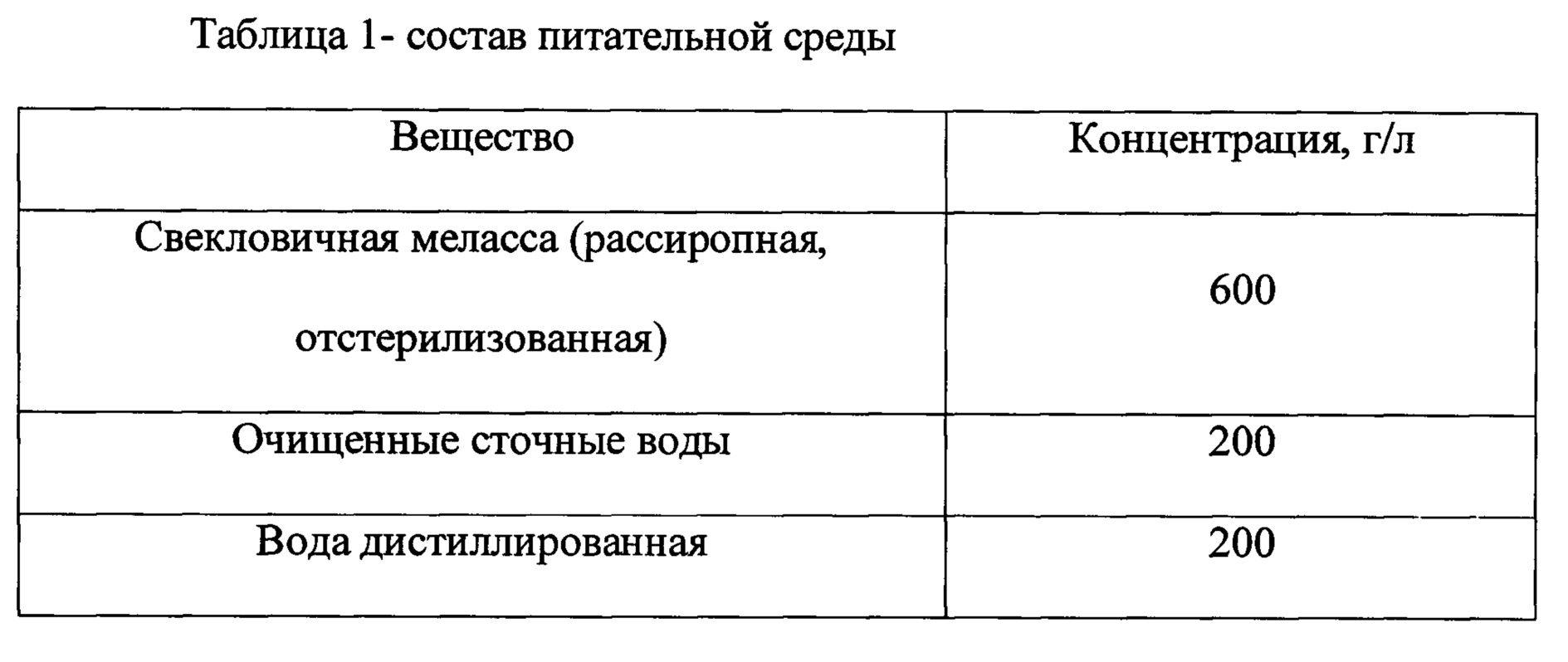
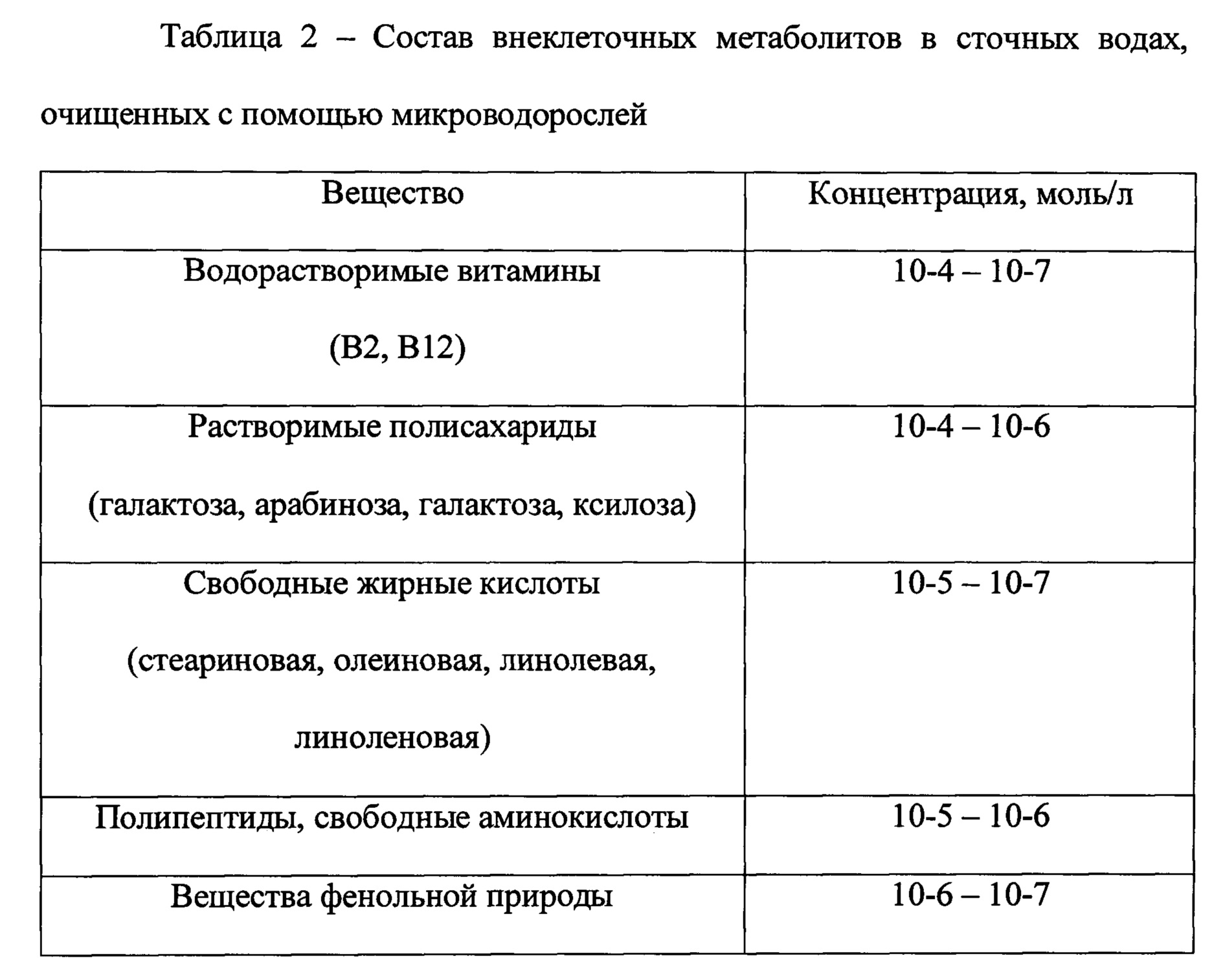
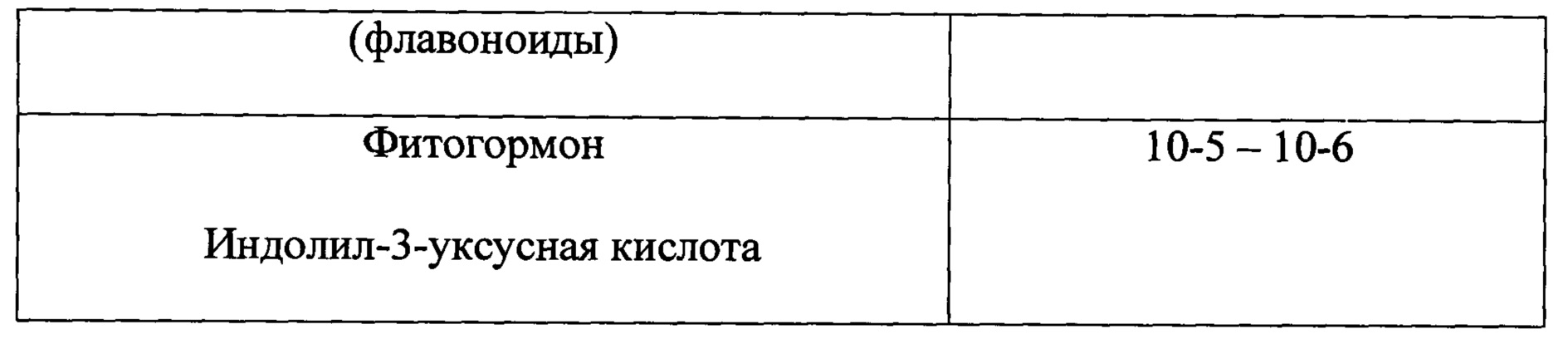
В подаваемой питательной среде (табл. 1) присутствуют очищенные с помощью микроводорослей от химических и биологических контаминантов сточные воды, содержащие в своем составе внеклеточные метаболиты: водорастворимые витамины (В2, В12), растворимые полисахариды (галактоза, арабиноза, ксилоза) свободные жирные кислоты (стеариновая, олеиновая, линолевая, линоленовая), и полипептиды, аминокислоты, вещества фенольной природы (флавоноиды), фитогормон - индолил-3-уксусная кислота (табл. 2).The supplied medium (. Table 1) are present purified using microalgae from chemical and biological contaminants in wastewater containing in its structure extracellular metabolites: water-soluble vitamins (B2, 12), soluble polysaccharides (galactose, arabinose, xylose) free fatty acids (stearic, oleic, linoleic, linolenic), and polypeptides, amino acids, phenolic substances (flavonoids), phytohormone - indolyl-3-acetic acid (Table 2).
В качестве посевного материала для биосинтеза молочной кислоты используются бактерии рода Lactobacillus (штамм Lactobacillus delbrueckii L-3) Lactobacillus delbrueckii L-20, Lactobacillus delbrueckii B-8744, приведенные в табл. 3-5 и на рис. 2-4.As seeds for lactic acid biosynthesis, bacteria of the genus Lactobacillus (strain Lactobacillus delbrueckii L-3) Lactobacillus delbrueckii L-20, Lactobacillus delbrueckii B-8744 are shown in Table. 3-5 and in fig. 2-4.
Культивирование молочнокислых бактерий осуществляется на питательной среде (содержание редуцирующих сахаров 5%), основой которой является очищенная микроводорослями рода Chlorella vulgaris сточная вода, при аэрации газовоздушной смесью в течение 24-35 часов. Это позволяет обеспечить максимальный прирост биомассы за счет активного поглощения бактериями редуцирующих сахаров, присутствующих в питательной среде и достижение максимально возможной концентрации бактерий в суспензии. Создание стрессовых условий в течение последующих 24-35 часов активирует процесс молочнокислого брожения и позволяет обеспечить накопление максимального количества молочной кислоты.The cultivation of lactic acid bacteria is carried out on a nutrient medium (the content of reducing sugars is 5%), the basis of which is wastewater purified by microalgae of the genus Chlorella vulgaris, during aeration by a gas-air mixture for 24-35 hours. This allows you to ensure maximum biomass growth due to the active absorption by bacteria of reducing sugars present in the nutrient medium and the achievement of the maximum possible concentration of bacteria in suspension. The creation of stressful conditions during the next 24-35 hours activates the process of lactic acid fermentation and allows for the accumulation of the maximum amount of lactic acid.
Использование в качестве посевного материала молочнокислых бактерий рода Lactobacillus и питательной среды приведенного в табл. 1 состава при наличии метаболитов, приведенных в табл. 2, позволяет обеспечить продуктивность по молочной кислоте до 3,45 г/(л⋅ч).Use as a seed material of lactic acid bacteria of the genus Lactobacillus and the nutrient medium shown in table. 1 composition in the presence of metabolites are given in table. 2, allows for lactic acid productivity up to 3.45 g / (l⋅h).
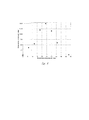
Подтверждением эффективности предлагаемого метода являются результаты культивирования, приведенные в табл. 3. и на рис. 1.Confirmation of the effectiveness of the proposed method are the results of cultivation, are given in table. 3. and in fig. one.
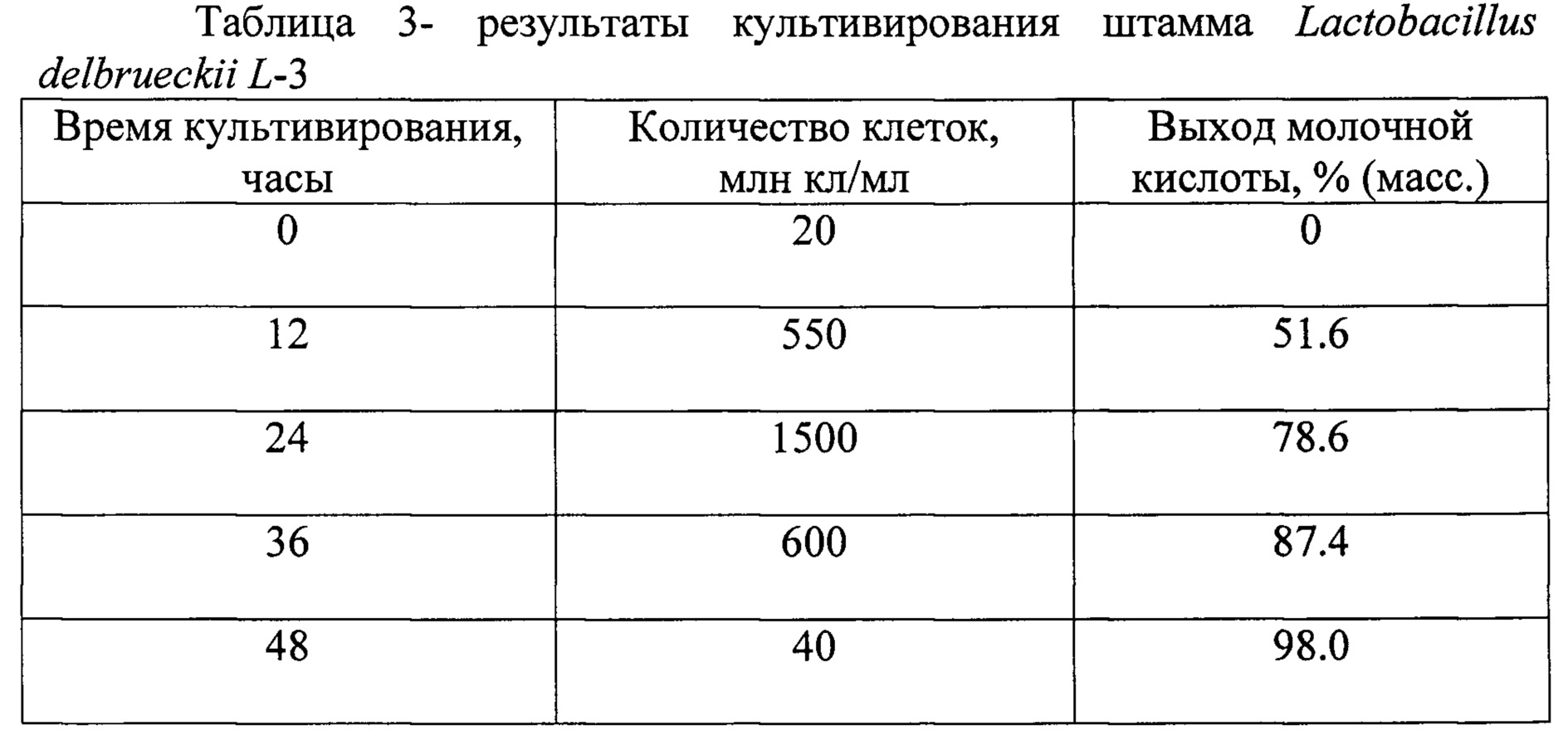
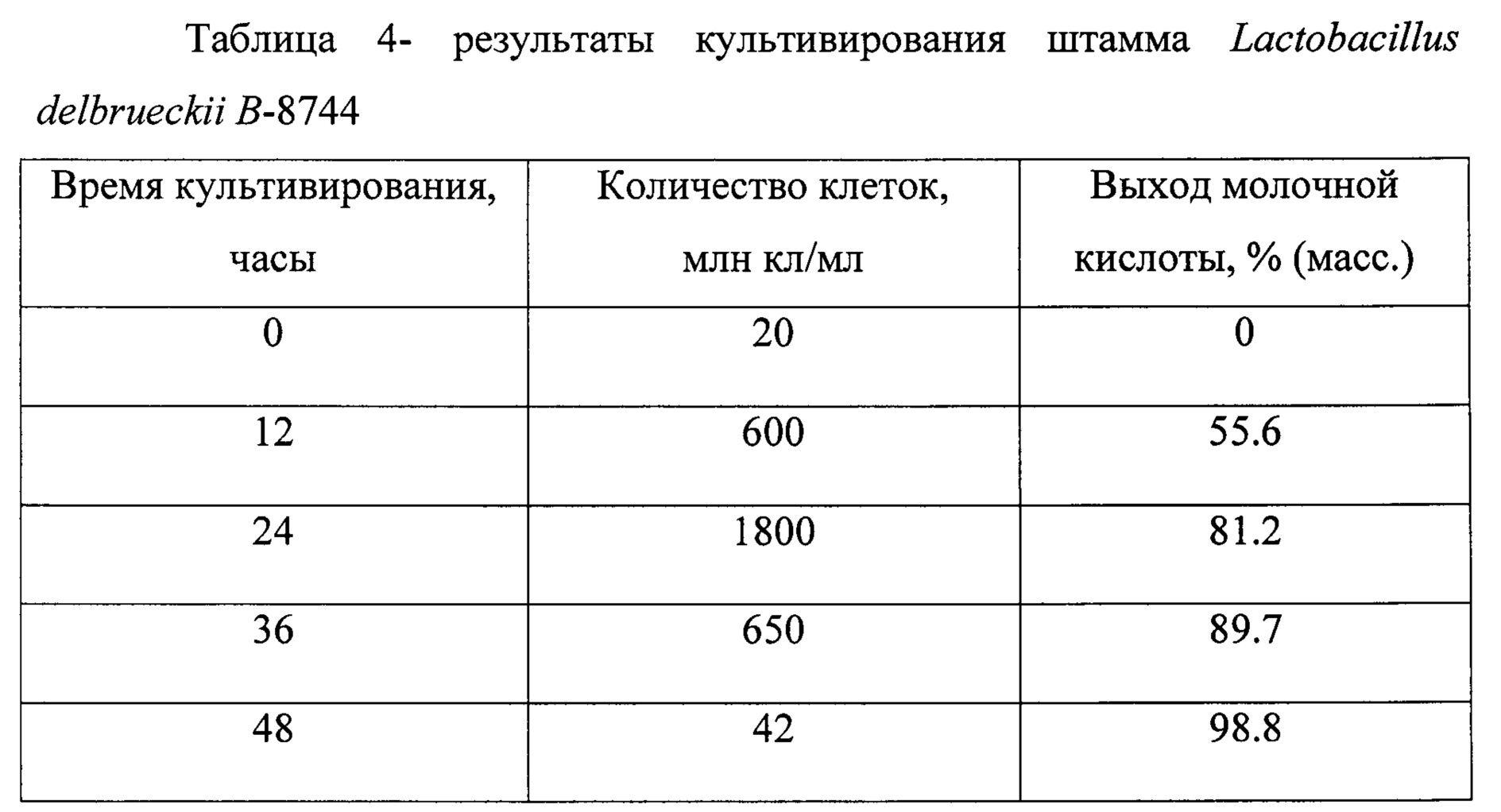
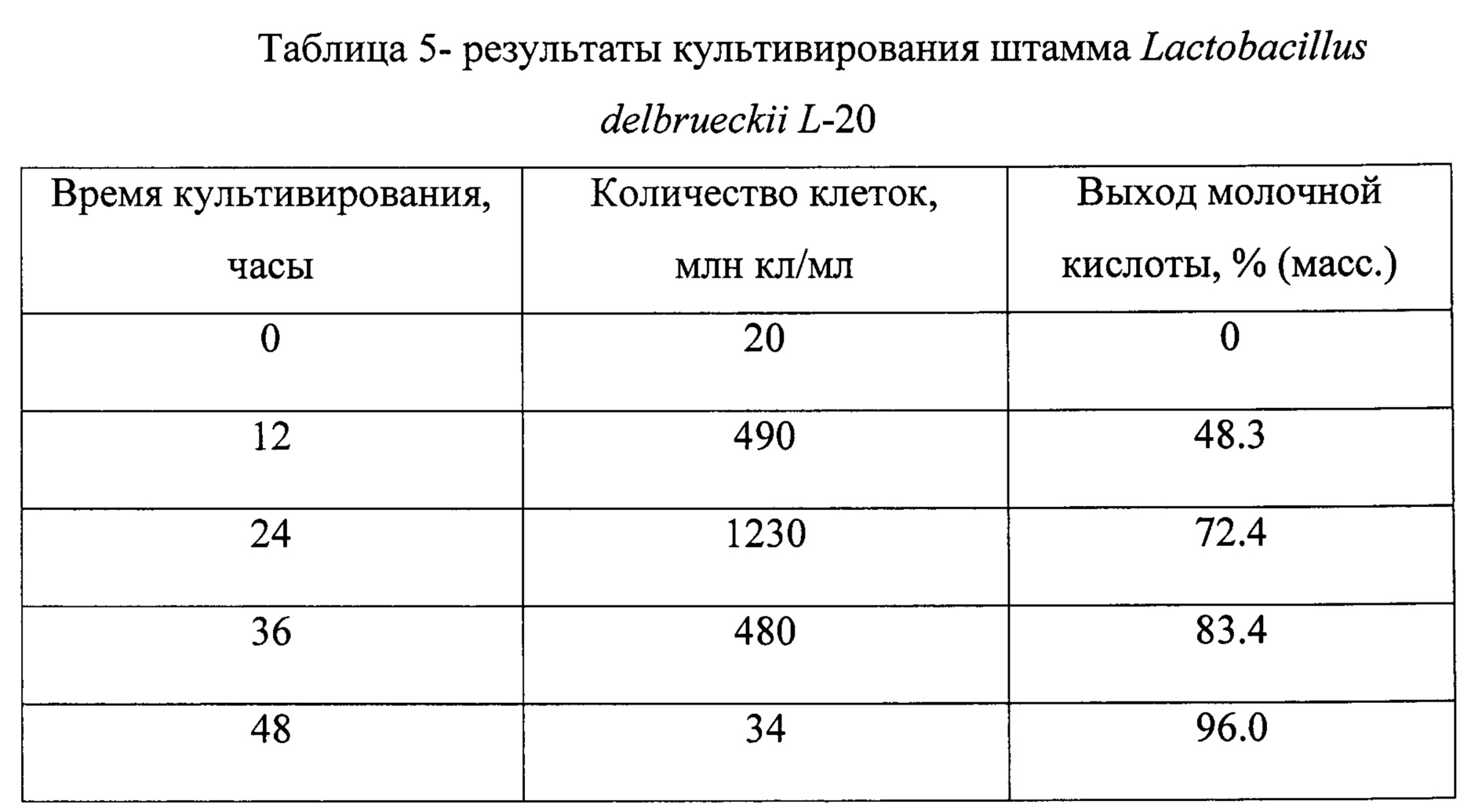
Рисунок 1 - кинетика накопления молочнокислых бактерий рода LactobacillusFigure 1 - Kinetics of the accumulation of lactic acid bacteria of the genus Lactobacillus
Полученные данные позволяют заключить, что предлагаемый способ культивирования молочнокислых бактерий позволяет получить культуральную жидкость с повышенным содержанием молочной кислоты.The data obtained allow us to conclude that the proposed method for the cultivation of lactic acid bacteria allows to obtain a culture fluid with a high content of lactic acid.
Claims (1)
Priority Applications (1)
| Application Number | Priority Date | Filing Date | Title |
|---|---|---|---|
| RU2018128806A RU2700503C1 (en) | 2018-08-06 | 2018-08-06 | Method of producing lactic acid |
Applications Claiming Priority (1)
| Application Number | Priority Date | Filing Date | Title |
|---|---|---|---|
| RU2018128806A RU2700503C1 (en) | 2018-08-06 | 2018-08-06 | Method of producing lactic acid |
Publications (1)
| Publication Number | Publication Date |
|---|---|
| RU2700503C1 true RU2700503C1 (en) | 2019-09-17 |
Family
ID=67989957
Family Applications (1)
| Application Number | Title | Priority Date | Filing Date |
|---|---|---|---|
| RU2018128806A RU2700503C1 (en) | 2018-08-06 | 2018-08-06 | Method of producing lactic acid |
Country Status (1)
| Country | Link |
|---|---|
| RU (1) | RU2700503C1 (en) |
Citations (4)
| Publication number | Priority date | Publication date | Assignee | Title |
|---|---|---|---|---|
| RU2149188C1 (en) * | 1998-10-13 | 2000-05-20 | Всероссийский научно-исследовательский институт пищевых ароматизаторов, кислот и красителей (ВНИИПАКК) | Method of preparing lactic acid |
| RU2177036C2 (en) * | 1994-12-07 | 2001-12-20 | Кэнтроулд Инвайерэнментл Систеэс Копэрейшн | Method of lactic acid producing (variants) |
| RU2283345C2 (en) * | 2004-10-14 | 2006-09-10 | Государственное учреждение Всероссийский научно-исследовательский институт пищевых ароматизаторов, кислот и красителей Российской академии сельскохозяйственных наук (ГУ ВНИИПАКК) | Lactic acid lactobaccillus delbrueckii strain as lactic acid producer |
| RU2306340C1 (en) * | 2005-12-12 | 2007-09-20 | Государственное учреждение Всероссийский научно-исследовательский институт пищевых ароматизаторов, кислот и красителей Российской академии сельскохозяйственных наук (ГУ ВНИИПАКК) | Method for production of lactic acid |
-
2018
- 2018-08-06 RU RU2018128806A patent/RU2700503C1/en not_active IP Right Cessation
Patent Citations (4)
| Publication number | Priority date | Publication date | Assignee | Title |
|---|---|---|---|---|
| RU2177036C2 (en) * | 1994-12-07 | 2001-12-20 | Кэнтроулд Инвайерэнментл Систеэс Копэрейшн | Method of lactic acid producing (variants) |
| RU2149188C1 (en) * | 1998-10-13 | 2000-05-20 | Всероссийский научно-исследовательский институт пищевых ароматизаторов, кислот и красителей (ВНИИПАКК) | Method of preparing lactic acid |
| RU2283345C2 (en) * | 2004-10-14 | 2006-09-10 | Государственное учреждение Всероссийский научно-исследовательский институт пищевых ароматизаторов, кислот и красителей Российской академии сельскохозяйственных наук (ГУ ВНИИПАКК) | Lactic acid lactobaccillus delbrueckii strain as lactic acid producer |
| RU2306340C1 (en) * | 2005-12-12 | 2007-09-20 | Государственное учреждение Всероссийский научно-исследовательский институт пищевых ароматизаторов, кислот и красителей Российской академии сельскохозяйственных наук (ГУ ВНИИПАКК) | Method for production of lactic acid |
Non-Patent Citations (3)
| Title |
|---|
| ДВОРЕЦКИЙ Д.С., ЗЮЗИНА О.В. и др. Совершенствование условий биосинтеза молочной кислоты лактобактериями, Вестник технологического университета, 2017, Т.20, N8, с. 126-130. * |
| ПОЛЯНСКИЙ К.К., ШУВАЕВА Г.П. и др. Производство молочной кислоты, Известия Вузов. Пищевая технология, 1997, N 1, с. 8-14. * |
| ПОЛЯНСКИЙ К.К., ШУВАЕВА Г.П. и др. Производство молочной кислоты, Известия Вузов. Пищевая технология, 1997, N 1, с. 8-14. ДВОРЕЦКИЙ Д.С., ЗЮЗИНА О.В. и др. Совершенствование условий биосинтеза молочной кислоты лактобактериями, Вестник технологического университета, 2017, Т.20, N8, с. 126-130. * |
Similar Documents
| Publication | Publication Date | Title |
|---|---|---|
| US8211675B2 (en) | Lactic acid production from concentrated raw sugar beet juice | |
| JP3301140B2 (en) | Method for producing L-glutamic acid by fermentation method | |
| TW487733B (en) | Process for preparing L-aspartic acid | |
| JPH04365493A (en) | Production of l-glutamic acid by fermentation method | |
| Lokeswari et al. | Optimization of gallic acid production from terminalia chebula by Aspergillus niger | |
| CN110759754B (en) | Harmless treatment and resource utilization method of glucosamine fermentation bacterium residues | |
| JP2011229439A (en) | Microbial culture additive | |
| RU2824891C2 (en) | Method for cultivation of lactic acid bacteria using as growth stimulator of disintegrated biomass of microalgae chlorella vulgaris, accumulated during treatment of waste water | |
| RU2559553C1 (en) | Method of producing xanthan | |
| CN106591401B (en) | Fermentation promoter for increasing yield of gentamicin C1a and addition method thereof | |
| RU2205216C2 (en) | Strain of bacterium enterococcus faecium b-2240 d as producer of optically pure l-(+)-lactic acid and industrial method for preparing l-(+)-lactic acid or its salts | |
| RU2553562C1 (en) | Method of production of xanthan-containing cultural liquid | |
| RU2090614C1 (en) | Method of preparing protein-vitamin product from the starch-containing raw | |
| US2544273A (en) | Fermentation activation | |
| CN112707510A (en) | Method for coupling furfural wastewater treatment and microalgae culture | |
| CN115261356B (en) | Phytase yield increasing agent produced by clay fermentation and preparation method thereof | |
| CN113755536A (en) | Method for producing isocitric acid by fermentation | |
| CN119241738B (en) | Method for extracting pectin from sweet potato waste residues by lactic acid bacteria fermentation | |
| RU2815933C1 (en) | Method of producing lactic acid from by-products of starch production when processing wheat grains | |
| CN111574390A (en) | Efficient green production and extraction process of amino acid | |
| RU2306340C1 (en) | Method for production of lactic acid | |
| JPH01108988A (en) | Production of pyroracemic acid | |
| CN103451232A (en) | Preparation method and use method of self-circulation microbial flocculant | |
| Kamaruzaman et al. | Isolation and characterisation of plant growth-promoting Pseudarthrobacter niigatensis UMK-PNF3, and Pseudarthrobacter enclensis UMK-PNF5 from paddy (Oryza sativa) rhizosphere | |
| WO2018169402A1 (en) | Method for the production of microalgae |
Legal Events
| Date | Code | Title | Description |
|---|---|---|---|
| MM4A | The patent is invalid due to non-payment of fees |
Effective date: 20200807 |