RU2668373C1 - Compositions containing amino acids for application within stroke treatment in patients with dysphagia - Google Patents
Compositions containing amino acids for application within stroke treatment in patients with dysphagia Download PDFInfo
- Publication number
- RU2668373C1 RU2668373C1 RU2017112492A RU2017112492A RU2668373C1 RU 2668373 C1 RU2668373 C1 RU 2668373C1 RU 2017112492 A RU2017112492 A RU 2017112492A RU 2017112492 A RU2017112492 A RU 2017112492A RU 2668373 C1 RU2668373 C1 RU 2668373C1
- Authority
- RU
- Russia
- Prior art keywords
- patients
- stroke
- amino acids
- dysphagia
- active substance
- Prior art date
Links
- 239000000203 mixture Substances 0.000 title claims abstract description 75
- 208000019505 Deglutition disease Diseases 0.000 title claims abstract description 73
- 150000001413 amino acids Chemical class 0.000 title claims abstract description 57
- 208000006011 Stroke Diseases 0.000 title description 81
- 229940024606 amino acid Drugs 0.000 claims abstract description 56
- 230000004054 inflammatory process Effects 0.000 claims abstract description 40
- 239000013543 active substance Substances 0.000 claims abstract description 28
- ROHFNLRQFUQHCH-YFKPBYRVSA-N L-leucine Chemical compound CC(C)C[C@H](N)C(O)=O ROHFNLRQFUQHCH-YFKPBYRVSA-N 0.000 claims abstract description 27
- ROHFNLRQFUQHCH-UHFFFAOYSA-N Leucine Natural products CC(C)CC(N)C(O)=O ROHFNLRQFUQHCH-UHFFFAOYSA-N 0.000 claims abstract description 27
- 230000009885 systemic effect Effects 0.000 claims abstract description 19
- AGPKZVBTJJNPAG-WHFBIAKZSA-N L-isoleucine Chemical compound CC[C@H](C)[C@H](N)C(O)=O AGPKZVBTJJNPAG-WHFBIAKZSA-N 0.000 claims abstract description 17
- KDXKERNSBIXSRK-YFKPBYRVSA-N L-lysine Chemical compound NCCCC[C@H](N)C(O)=O KDXKERNSBIXSRK-YFKPBYRVSA-N 0.000 claims abstract description 17
- 239000004472 Lysine Substances 0.000 claims abstract description 17
- 229960000310 isoleucine Drugs 0.000 claims abstract description 17
- AGPKZVBTJJNPAG-UHFFFAOYSA-N isoleucine Natural products CCC(C)C(N)C(O)=O AGPKZVBTJJNPAG-UHFFFAOYSA-N 0.000 claims abstract description 17
- FFEARJCKVFRZRR-BYPYZUCNSA-N L-methionine Chemical compound CSCC[C@H](N)C(O)=O FFEARJCKVFRZRR-BYPYZUCNSA-N 0.000 claims abstract description 16
- KZSNJWFQEVHDMF-BYPYZUCNSA-N L-valine Chemical compound CC(C)[C@H](N)C(O)=O KZSNJWFQEVHDMF-BYPYZUCNSA-N 0.000 claims abstract description 16
- KDXKERNSBIXSRK-UHFFFAOYSA-N Lysine Natural products NCCCCC(N)C(O)=O KDXKERNSBIXSRK-UHFFFAOYSA-N 0.000 claims abstract description 16
- KZSNJWFQEVHDMF-UHFFFAOYSA-N Valine Natural products CC(C)C(N)C(O)=O KZSNJWFQEVHDMF-UHFFFAOYSA-N 0.000 claims abstract description 16
- 229930182817 methionine Natural products 0.000 claims abstract description 16
- 239000004474 valine Substances 0.000 claims abstract description 16
- QIVBCDIJIAJPQS-VIFPVBQESA-N L-tryptophane Chemical compound C1=CC=C2C(C[C@H](N)C(O)=O)=CNC2=C1 QIVBCDIJIAJPQS-VIFPVBQESA-N 0.000 claims abstract description 15
- AYFVYJQAPQTCCC-UHFFFAOYSA-N Threonine Natural products CC(O)C(N)C(O)=O AYFVYJQAPQTCCC-UHFFFAOYSA-N 0.000 claims abstract description 15
- 239000004473 Threonine Substances 0.000 claims abstract description 15
- QIVBCDIJIAJPQS-UHFFFAOYSA-N Tryptophan Natural products C1=CC=C2C(CC(N)C(O)=O)=CNC2=C1 QIVBCDIJIAJPQS-UHFFFAOYSA-N 0.000 claims abstract description 15
- OUYCCCASQSFEME-QMMMGPOBSA-N L-tyrosine Chemical compound OC(=O)[C@@H](N)CC1=CC=C(O)C=C1 OUYCCCASQSFEME-QMMMGPOBSA-N 0.000 claims abstract description 14
- COLNVLDHVKWLRT-QMMMGPOBSA-N L-phenylalanine Chemical compound OC(=O)[C@@H](N)CC1=CC=CC=C1 COLNVLDHVKWLRT-QMMMGPOBSA-N 0.000 claims abstract description 13
- AYFVYJQAPQTCCC-GBXIJSLDSA-N L-threonine Chemical compound C[C@@H](O)[C@H](N)C(O)=O AYFVYJQAPQTCCC-GBXIJSLDSA-N 0.000 claims abstract description 13
- HNDVDQJCIGZPNO-UHFFFAOYSA-N histidine Natural products OC(=O)C(N)CC1=CN=CN1 HNDVDQJCIGZPNO-UHFFFAOYSA-N 0.000 claims abstract description 13
- COLNVLDHVKWLRT-UHFFFAOYSA-N phenylalanine Natural products OC(=O)C(N)CC1=CC=CC=C1 COLNVLDHVKWLRT-UHFFFAOYSA-N 0.000 claims abstract description 13
- HNDVDQJCIGZPNO-YFKPBYRVSA-N L-histidine Chemical compound OC(=O)[C@@H](N)CC1=CN=CN1 HNDVDQJCIGZPNO-YFKPBYRVSA-N 0.000 claims abstract description 12
- OUYCCCASQSFEME-UHFFFAOYSA-N tyrosine Natural products OC(=O)C(N)CC1=CC=C(O)C=C1 OUYCCCASQSFEME-UHFFFAOYSA-N 0.000 claims abstract description 12
- 239000002562 thickening agent Substances 0.000 claims abstract description 11
- 229960003067 cystine Drugs 0.000 claims abstract description 9
- 239000000126 substance Substances 0.000 claims abstract description 5
- LEVWYRKDKASIDU-QWWZWVQMSA-N D-cystine Chemical compound OC(=O)[C@H](N)CSSC[C@@H](N)C(O)=O LEVWYRKDKASIDU-QWWZWVQMSA-N 0.000 claims abstract 3
- 235000001014 amino acid Nutrition 0.000 claims description 55
- DHMQDGOQFOQNFH-UHFFFAOYSA-N Glycine Chemical compound NCC(O)=O DHMQDGOQFOQNFH-UHFFFAOYSA-N 0.000 claims description 8
- 229920002752 Konjac Polymers 0.000 claims description 6
- QNAYBMKLOCPYGJ-REOHCLBHSA-N L-alanine Chemical compound C[C@H](N)C(O)=O QNAYBMKLOCPYGJ-REOHCLBHSA-N 0.000 claims description 6
- 235000004279 alanine Nutrition 0.000 claims description 6
- 150000001720 carbohydrates Chemical class 0.000 claims description 6
- 235000014633 carbohydrates Nutrition 0.000 claims description 6
- 239000000252 konjac Substances 0.000 claims description 6
- -1 methylhydroxypropyl Chemical group 0.000 claims description 5
- 239000004471 Glycine Substances 0.000 claims description 4
- 239000000654 additive Substances 0.000 claims description 4
- 239000000230 xanthan gum Substances 0.000 claims description 4
- 229920001285 xanthan gum Polymers 0.000 claims description 4
- 235000010493 xanthan gum Nutrition 0.000 claims description 4
- 229940082509 xanthan gum Drugs 0.000 claims description 4
- LUEWUZLMQUOBSB-FSKGGBMCSA-N (2s,3s,4s,5s,6r)-2-[(2r,3s,4r,5r,6s)-6-[(2r,3s,4r,5s,6s)-4,5-dihydroxy-2-(hydroxymethyl)-6-[(2r,4r,5s,6r)-4,5,6-trihydroxy-2-(hydroxymethyl)oxan-3-yl]oxyoxan-3-yl]oxy-4,5-dihydroxy-2-(hydroxymethyl)oxan-3-yl]oxy-6-(hydroxymethyl)oxane-3,4,5-triol Chemical compound O[C@H]1[C@@H](O)[C@H](O)[C@@H](CO)O[C@H]1O[C@@H]1[C@@H](CO)O[C@@H](O[C@@H]2[C@H](O[C@@H](OC3[C@H](O[C@@H](O)[C@@H](O)[C@H]3O)CO)[C@@H](O)[C@H]2O)CO)[C@H](O)[C@H]1O LUEWUZLMQUOBSB-FSKGGBMCSA-N 0.000 claims description 3
- RBCOYOYDYNXAFA-UHFFFAOYSA-L (5-hydroxy-4,6-dimethylpyridin-3-yl)methyl phosphate Chemical compound CC1=NC=C(COP([O-])([O-])=O)C(C)=C1O RBCOYOYDYNXAFA-UHFFFAOYSA-L 0.000 claims description 3
- 244000247812 Amorphophallus rivieri Species 0.000 claims description 3
- 235000001206 Amorphophallus rivieri Nutrition 0.000 claims description 3
- 229920002581 Glucomannan Polymers 0.000 claims description 3
- 229920000084 Gum arabic Polymers 0.000 claims description 3
- 229920000881 Modified starch Polymers 0.000 claims description 3
- 239000000205 acacia gum Substances 0.000 claims description 3
- 235000010489 acacia gum Nutrition 0.000 claims description 3
- 239000001913 cellulose Substances 0.000 claims description 3
- 229920002678 cellulose Polymers 0.000 claims description 3
- 229940046240 glucomannan Drugs 0.000 claims description 3
- 235000010485 konjac Nutrition 0.000 claims description 3
- 235000019823 konjac gum Nutrition 0.000 claims description 3
- 235000019426 modified starch Nutrition 0.000 claims description 3
- JZRWCGZRTZMZEH-UHFFFAOYSA-N thiamine Chemical compound CC1=C(CCO)SC=[N+]1CC1=CN=C(C)N=C1N JZRWCGZRTZMZEH-UHFFFAOYSA-N 0.000 claims description 3
- 235000013343 vitamin Nutrition 0.000 claims description 3
- 239000011782 vitamin Substances 0.000 claims description 3
- 229930003231 vitamin Natural products 0.000 claims description 3
- 229940088594 vitamin Drugs 0.000 claims description 3
- 235000019156 vitamin B Nutrition 0.000 claims description 3
- 239000011720 vitamin B Substances 0.000 claims description 3
- MTCFGRXMJLQNBG-REOHCLBHSA-N (2S)-2-Amino-3-hydroxypropansäure Chemical compound OC[C@H](N)C(O)=O MTCFGRXMJLQNBG-REOHCLBHSA-N 0.000 claims description 2
- 239000004475 Arginine Substances 0.000 claims description 2
- WHUUTDBJXJRKMK-UHFFFAOYSA-N Glutamic acid Natural products OC(=O)C(N)CCC(O)=O WHUUTDBJXJRKMK-UHFFFAOYSA-N 0.000 claims description 2
- ONIBWKKTOPOVIA-BYPYZUCNSA-N L-Proline Chemical compound OC(=O)[C@@H]1CCCN1 ONIBWKKTOPOVIA-BYPYZUCNSA-N 0.000 claims description 2
- WHUUTDBJXJRKMK-VKHMYHEASA-N L-glutamic acid Chemical compound OC(=O)[C@@H](N)CCC(O)=O WHUUTDBJXJRKMK-VKHMYHEASA-N 0.000 claims description 2
- ONIBWKKTOPOVIA-UHFFFAOYSA-N Proline Natural products OC(=O)C1CCCN1 ONIBWKKTOPOVIA-UHFFFAOYSA-N 0.000 claims description 2
- MTCFGRXMJLQNBG-UHFFFAOYSA-N Serine Natural products OCC(N)C(O)=O MTCFGRXMJLQNBG-UHFFFAOYSA-N 0.000 claims description 2
- ODKSFYDXXFIFQN-UHFFFAOYSA-N arginine Natural products OC(=O)C(N)CCCNC(N)=N ODKSFYDXXFIFQN-UHFFFAOYSA-N 0.000 claims description 2
- 235000013922 glutamic acid Nutrition 0.000 claims description 2
- 239000004220 glutamic acid Substances 0.000 claims description 2
- 210000004698 lymphocyte Anatomy 0.000 abstract description 26
- 206010061218 Inflammation Diseases 0.000 abstract description 23
- 210000004369 blood Anatomy 0.000 abstract description 21
- 239000008280 blood Substances 0.000 abstract description 21
- 238000000034 method Methods 0.000 abstract description 16
- 230000007423 decrease Effects 0.000 abstract description 13
- WQZGKKKJIJFFOK-GASJEMHNSA-N Glucose Natural products OC[C@H]1OC(O)[C@H](O)[C@@H](O)[C@@H]1O WQZGKKKJIJFFOK-GASJEMHNSA-N 0.000 abstract description 9
- 239000008103 glucose Substances 0.000 abstract description 9
- 210000002381 plasma Anatomy 0.000 abstract description 9
- 210000002966 serum Anatomy 0.000 abstract description 9
- 102000006395 Globulins Human genes 0.000 abstract description 8
- 108010044091 Globulins Proteins 0.000 abstract description 8
- 210000000440 neutrophil Anatomy 0.000 abstract description 8
- 230000000694 effects Effects 0.000 abstract description 7
- 238000011084 recovery Methods 0.000 abstract description 7
- 102000014702 Haptoglobin Human genes 0.000 abstract description 5
- 108050005077 Haptoglobin Proteins 0.000 abstract description 5
- 230000008569 process Effects 0.000 abstract description 5
- 102000011767 Acute-Phase Proteins Human genes 0.000 abstract description 2
- 108010062271 Acute-Phase Proteins Proteins 0.000 abstract description 2
- 238000010606 normalization Methods 0.000 abstract description 2
- 230000008092 positive effect Effects 0.000 abstract description 2
- 239000003814 drug Substances 0.000 abstract 2
- 235000020776 essential amino acid Nutrition 0.000 description 79
- 239000003797 essential amino acid Substances 0.000 description 79
- 210000003205 muscle Anatomy 0.000 description 54
- 108090000623 proteins and genes Proteins 0.000 description 31
- 235000018102 proteins Nutrition 0.000 description 30
- 102000004169 proteins and genes Human genes 0.000 description 30
- 230000014616 translation Effects 0.000 description 26
- 238000001243 protein synthesis Methods 0.000 description 24
- 229960003136 leucine Drugs 0.000 description 19
- 235000005772 leucine Nutrition 0.000 description 19
- 239000000902 placebo Substances 0.000 description 18
- 229940068196 placebo Drugs 0.000 description 18
- 230000002829 reductive effect Effects 0.000 description 17
- 230000006872 improvement Effects 0.000 description 15
- 125000001997 phenyl group Chemical group [H]C1=C([H])C([H])=C(*)C([H])=C1[H] 0.000 description 15
- 102000008934 Muscle Proteins Human genes 0.000 description 14
- 108010074084 Muscle Proteins Proteins 0.000 description 14
- 230000001154 acute effect Effects 0.000 description 14
- 230000017854 proteolysis Effects 0.000 description 14
- 150000005693 branched-chain amino acids Chemical class 0.000 description 13
- 235000018977 lysine Nutrition 0.000 description 12
- 229960004799 tryptophan Drugs 0.000 description 12
- 230000022558 protein metabolic process Effects 0.000 description 11
- 229960002898 threonine Drugs 0.000 description 11
- 235000008521 threonine Nutrition 0.000 description 11
- 230000001195 anabolic effect Effects 0.000 description 10
- 235000013305 food Nutrition 0.000 description 10
- 229960002885 histidine Drugs 0.000 description 10
- 235000014304 histidine Nutrition 0.000 description 10
- NOESYZHRGYRDHS-UHFFFAOYSA-N insulin Chemical compound N1C(=O)C(NC(=O)C(CCC(N)=O)NC(=O)C(CCC(O)=O)NC(=O)C(C(C)C)NC(=O)C(NC(=O)CN)C(C)CC)CSSCC(C(NC(CO)C(=O)NC(CC(C)C)C(=O)NC(CC=2C=CC(O)=CC=2)C(=O)NC(CCC(N)=O)C(=O)NC(CC(C)C)C(=O)NC(CCC(O)=O)C(=O)NC(CC(N)=O)C(=O)NC(CC=2C=CC(O)=CC=2)C(=O)NC(CSSCC(NC(=O)C(C(C)C)NC(=O)C(CC(C)C)NC(=O)C(CC=2C=CC(O)=CC=2)NC(=O)C(CC(C)C)NC(=O)C(C)NC(=O)C(CCC(O)=O)NC(=O)C(C(C)C)NC(=O)C(CC(C)C)NC(=O)C(CC=2NC=NC=2)NC(=O)C(CO)NC(=O)CNC2=O)C(=O)NCC(=O)NC(CCC(O)=O)C(=O)NC(CCCNC(N)=N)C(=O)NCC(=O)NC(CC=3C=CC=CC=3)C(=O)NC(CC=3C=CC=CC=3)C(=O)NC(CC=3C=CC(O)=CC=3)C(=O)NC(C(C)O)C(=O)N3C(CCC3)C(=O)NC(CCCCN)C(=O)NC(C)C(O)=O)C(=O)NC(CC(N)=O)C(O)=O)=O)NC(=O)C(C(C)CC)NC(=O)C(CO)NC(=O)C(C(C)O)NC(=O)C1CSSCC2NC(=O)C(CC(C)C)NC(=O)C(NC(=O)C(CCC(N)=O)NC(=O)C(CC(N)=O)NC(=O)C(NC(=O)C(N)CC=1C=CC=CC=1)C(C)C)CC1=CN=CN1 NOESYZHRGYRDHS-UHFFFAOYSA-N 0.000 description 10
- 235000016709 nutrition Nutrition 0.000 description 10
- 229960005190 phenylalanine Drugs 0.000 description 10
- 230000009747 swallowing Effects 0.000 description 10
- XOAAWQZATWQOTB-UHFFFAOYSA-N taurine Chemical compound NCCS(O)(=O)=O XOAAWQZATWQOTB-UHFFFAOYSA-N 0.000 description 10
- 229960004441 tyrosine Drugs 0.000 description 10
- 206010049645 Hypercatabolism Diseases 0.000 description 9
- 235000005911 diet Nutrition 0.000 description 9
- 230000037213 diet Effects 0.000 description 9
- 230000001976 improved effect Effects 0.000 description 9
- 239000007788 liquid Substances 0.000 description 9
- 230000035764 nutrition Effects 0.000 description 9
- 238000012360 testing method Methods 0.000 description 9
- XLYOFNOQVPJJNP-UHFFFAOYSA-N water Substances O XLYOFNOQVPJJNP-UHFFFAOYSA-N 0.000 description 9
- 230000015572 biosynthetic process Effects 0.000 description 8
- 230000015556 catabolic process Effects 0.000 description 8
- 230000007246 mechanism Effects 0.000 description 8
- 238000004458 analytical method Methods 0.000 description 7
- 230000003247 decreasing effect Effects 0.000 description 7
- 229960004452 methionine Drugs 0.000 description 7
- 238000007619 statistical method Methods 0.000 description 7
- DCXYFEDJOCDNAF-UHFFFAOYSA-N Asparagine Natural products OC(=O)C(N)CC(N)=O DCXYFEDJOCDNAF-UHFFFAOYSA-N 0.000 description 6
- DCXYFEDJOCDNAF-REOHCLBHSA-N L-asparagine Chemical compound OC(=O)[C@@H](N)CC(N)=O DCXYFEDJOCDNAF-REOHCLBHSA-N 0.000 description 6
- LEVWYRKDKASIDU-IMJSIDKUSA-N L-cystine Chemical compound [O-]C(=O)[C@@H]([NH3+])CSSC[C@H]([NH3+])C([O-])=O LEVWYRKDKASIDU-IMJSIDKUSA-N 0.000 description 6
- 229960001230 asparagine Drugs 0.000 description 6
- 235000009582 asparagine Nutrition 0.000 description 6
- 210000004556 brain Anatomy 0.000 description 6
- 230000002596 correlated effect Effects 0.000 description 6
- 238000009826 distribution Methods 0.000 description 6
- 238000005259 measurement Methods 0.000 description 6
- 208000010125 myocardial infarction Diseases 0.000 description 6
- 230000004044 response Effects 0.000 description 6
- 238000002560 therapeutic procedure Methods 0.000 description 6
- 108010088751 Albumins Proteins 0.000 description 5
- 102000009027 Albumins Human genes 0.000 description 5
- 102000004127 Cytokines Human genes 0.000 description 5
- 108090000695 Cytokines Proteins 0.000 description 5
- 102000004877 Insulin Human genes 0.000 description 5
- 108090001061 Insulin Proteins 0.000 description 5
- 206010022489 Insulin Resistance Diseases 0.000 description 5
- CKLJMWTZIZZHCS-REOHCLBHSA-N L-aspartic acid Chemical compound OC(=O)[C@@H](N)CC(O)=O CKLJMWTZIZZHCS-REOHCLBHSA-N 0.000 description 5
- 229920002774 Maltodextrin Polymers 0.000 description 5
- 108010071690 Prealbumin Proteins 0.000 description 5
- 102000007584 Prealbumin Human genes 0.000 description 5
- 102000004338 Transferrin Human genes 0.000 description 5
- 108090000901 Transferrin Proteins 0.000 description 5
- 229960003767 alanine Drugs 0.000 description 5
- 230000037396 body weight Effects 0.000 description 5
- 230000006378 damage Effects 0.000 description 5
- 210000003414 extremity Anatomy 0.000 description 5
- ZDXPYRJPNDTMRX-UHFFFAOYSA-N glutamine Natural products OC(=O)C(N)CCC(N)=O ZDXPYRJPNDTMRX-UHFFFAOYSA-N 0.000 description 5
- 235000004554 glutamine Nutrition 0.000 description 5
- 229940125396 insulin Drugs 0.000 description 5
- 230000000302 ischemic effect Effects 0.000 description 5
- 238000004519 manufacturing process Methods 0.000 description 5
- 239000000463 material Substances 0.000 description 5
- 230000002503 metabolic effect Effects 0.000 description 5
- 230000004060 metabolic process Effects 0.000 description 5
- 210000002027 skeletal muscle Anatomy 0.000 description 5
- 238000003786 synthesis reaction Methods 0.000 description 5
- 229960003080 taurine Drugs 0.000 description 5
- 239000012581 transferrin Substances 0.000 description 5
- 208000001072 type 2 diabetes mellitus Diseases 0.000 description 5
- 102000004889 Interleukin-6 Human genes 0.000 description 4
- 108090001005 Interleukin-6 Proteins 0.000 description 4
- JVTAAEKCZFNVCJ-UHFFFAOYSA-M Lactate Chemical compound CC(O)C([O-])=O JVTAAEKCZFNVCJ-UHFFFAOYSA-M 0.000 description 4
- 239000005913 Maltodextrin Substances 0.000 description 4
- 210000005006 adaptive immune system Anatomy 0.000 description 4
- 210000000577 adipose tissue Anatomy 0.000 description 4
- 230000008859 change Effects 0.000 description 4
- 239000003246 corticosteroid Substances 0.000 description 4
- 238000006731 degradation reaction Methods 0.000 description 4
- 210000004185 liver Anatomy 0.000 description 4
- 229940035034 maltodextrin Drugs 0.000 description 4
- 235000021075 protein intake Nutrition 0.000 description 4
- 239000013589 supplement Substances 0.000 description 4
- 238000011870 unpaired t-test Methods 0.000 description 4
- 102100030840 AT-rich interactive domain-containing protein 4B Human genes 0.000 description 3
- 101000792935 Homo sapiens AT-rich interactive domain-containing protein 4B Proteins 0.000 description 3
- 206010061216 Infarction Diseases 0.000 description 3
- ZDXPYRJPNDTMRX-VKHMYHEASA-N L-glutamine Chemical compound OC(=O)[C@@H](N)CCC(N)=O ZDXPYRJPNDTMRX-VKHMYHEASA-N 0.000 description 3
- 108060008682 Tumor Necrosis Factor Proteins 0.000 description 3
- 102000000852 Tumor Necrosis Factor-alpha Human genes 0.000 description 3
- 235000003704 aspartic acid Nutrition 0.000 description 3
- 229960005261 aspartic acid Drugs 0.000 description 3
- OQFSQFPPLPISGP-UHFFFAOYSA-N beta-carboxyaspartic acid Natural products OC(=O)C(N)C(C(O)=O)C(O)=O OQFSQFPPLPISGP-UHFFFAOYSA-N 0.000 description 3
- 206010008118 cerebral infarction Diseases 0.000 description 3
- 238000005516 engineering process Methods 0.000 description 3
- 210000003743 erythrocyte Anatomy 0.000 description 3
- 239000000796 flavoring agent Substances 0.000 description 3
- 235000019634 flavors Nutrition 0.000 description 3
- 230000037406 food intake Effects 0.000 description 3
- 230000006870 function Effects 0.000 description 3
- 229960002743 glutamine Drugs 0.000 description 3
- 210000002865 immune cell Anatomy 0.000 description 3
- 210000000987 immune system Anatomy 0.000 description 3
- 230000007574 infarction Effects 0.000 description 3
- 230000003993 interaction Effects 0.000 description 3
- 208000028867 ischemia Diseases 0.000 description 3
- 210000000265 leukocyte Anatomy 0.000 description 3
- 230000033001 locomotion Effects 0.000 description 3
- 235000012054 meals Nutrition 0.000 description 3
- 208000015380 nutritional deficiency disease Diseases 0.000 description 3
- 230000036961 partial effect Effects 0.000 description 3
- 210000005105 peripheral blood lymphocyte Anatomy 0.000 description 3
- 239000000047 product Substances 0.000 description 3
- 238000004062 sedimentation Methods 0.000 description 3
- 239000000758 substrate Substances 0.000 description 3
- 230000009469 supplementation Effects 0.000 description 3
- 238000012549 training Methods 0.000 description 3
- 208000016261 weight loss Diseases 0.000 description 3
- 230000004580 weight loss Effects 0.000 description 3
- OCUSNPIJIZCRSZ-ZTZWCFDHSA-N (2s)-2-amino-3-methylbutanoic acid;(2s)-2-amino-4-methylpentanoic acid;(2s,3s)-2-amino-3-methylpentanoic acid Chemical compound CC(C)[C@H](N)C(O)=O.CC[C@H](C)[C@H](N)C(O)=O.CC(C)C[C@H](N)C(O)=O OCUSNPIJIZCRSZ-ZTZWCFDHSA-N 0.000 description 2
- 102000004506 Blood Proteins Human genes 0.000 description 2
- 108010017384 Blood Proteins Proteins 0.000 description 2
- 201000006474 Brain Ischemia Diseases 0.000 description 2
- 108010074051 C-Reactive Protein Proteins 0.000 description 2
- 102100032752 C-reactive protein Human genes 0.000 description 2
- 206010008120 Cerebral ischaemia Diseases 0.000 description 2
- 108010049003 Fibrinogen Proteins 0.000 description 2
- 102000008946 Fibrinogen Human genes 0.000 description 2
- 206010019468 Hemiplegia Diseases 0.000 description 2
- 101000795167 Homo sapiens Tumor necrosis factor receptor superfamily member 13B Proteins 0.000 description 2
- 208000032382 Ischaemic stroke Diseases 0.000 description 2
- 206010025327 Lymphopenia Diseases 0.000 description 2
- 208000002720 Malnutrition Diseases 0.000 description 2
- 208000010428 Muscle Weakness Diseases 0.000 description 2
- 206010028289 Muscle atrophy Diseases 0.000 description 2
- 206010028372 Muscular weakness Diseases 0.000 description 2
- 206010028980 Neoplasm Diseases 0.000 description 2
- 206010033799 Paralysis Diseases 0.000 description 2
- 102100029675 Tumor necrosis factor receptor superfamily member 13B Human genes 0.000 description 2
- 230000003044 adaptive effect Effects 0.000 description 2
- 230000004721 adaptive immunity Effects 0.000 description 2
- 238000013528 artificial neural network Methods 0.000 description 2
- 229940009098 aspartate Drugs 0.000 description 2
- 230000008901 benefit Effects 0.000 description 2
- 239000000090 biomarker Substances 0.000 description 2
- 201000011510 cancer Diseases 0.000 description 2
- 210000004027 cell Anatomy 0.000 description 2
- 208000026106 cerebrovascular disease Diseases 0.000 description 2
- 239000003153 chemical reaction reagent Substances 0.000 description 2
- 238000000546 chi-square test Methods 0.000 description 2
- 238000002591 computed tomography Methods 0.000 description 2
- 229960001334 corticosteroids Drugs 0.000 description 2
- DDRJAANPRJIHGJ-UHFFFAOYSA-N creatinine Chemical compound CN1CC(=O)NC1=N DDRJAANPRJIHGJ-UHFFFAOYSA-N 0.000 description 2
- XUJNEKJLAYXESH-UHFFFAOYSA-N cysteine Natural products SCC(N)C(O)=O XUJNEKJLAYXESH-UHFFFAOYSA-N 0.000 description 2
- 235000018417 cysteine Nutrition 0.000 description 2
- 229960002433 cysteine Drugs 0.000 description 2
- 230000001419 dependent effect Effects 0.000 description 2
- 238000003745 diagnosis Methods 0.000 description 2
- 201000010099 disease Diseases 0.000 description 2
- 208000037265 diseases, disorders, signs and symptoms Diseases 0.000 description 2
- 238000001962 electrophoresis Methods 0.000 description 2
- 230000007717 exclusion Effects 0.000 description 2
- 229940012952 fibrinogen Drugs 0.000 description 2
- 238000002594 fluoroscopy Methods 0.000 description 2
- 235000012631 food intake Nutrition 0.000 description 2
- 239000011521 glass Substances 0.000 description 2
- 239000003102 growth factor Substances 0.000 description 2
- 230000036541 health Effects 0.000 description 2
- 230000002008 hemorrhagic effect Effects 0.000 description 2
- 230000002157 hypercatabolic effect Effects 0.000 description 2
- 208000019016 inability to swallow Diseases 0.000 description 2
- 230000006698 induction Effects 0.000 description 2
- 239000004615 ingredient Substances 0.000 description 2
- 210000005007 innate immune system Anatomy 0.000 description 2
- 210000000936 intestine Anatomy 0.000 description 2
- 210000003734 kidney Anatomy 0.000 description 2
- 210000003127 knee Anatomy 0.000 description 2
- 231100001023 lymphopenia Toxicity 0.000 description 2
- 235000021073 macronutrients Nutrition 0.000 description 2
- 235000000824 malnutrition Nutrition 0.000 description 2
- 230000001071 malnutrition Effects 0.000 description 2
- 230000020763 muscle atrophy Effects 0.000 description 2
- 210000000663 muscle cell Anatomy 0.000 description 2
- 201000000585 muscular atrophy Diseases 0.000 description 2
- 230000000926 neurological effect Effects 0.000 description 2
- 230000036542 oxidative stress Effects 0.000 description 2
- 230000037361 pathway Effects 0.000 description 2
- 230000036470 plasma concentration Effects 0.000 description 2
- 239000000843 powder Substances 0.000 description 2
- 230000002797 proteolythic effect Effects 0.000 description 2
- LXNHXLLTXMVWPM-UHFFFAOYSA-N pyridoxine Chemical compound CC1=NC=C(CO)C(CO)=C1O LXNHXLLTXMVWPM-UHFFFAOYSA-N 0.000 description 2
- QZAYGJVTTNCVMB-UHFFFAOYSA-N serotonin Chemical compound C1=C(O)C=C2C(CCN)=CNC2=C1 QZAYGJVTTNCVMB-UHFFFAOYSA-N 0.000 description 2
- 230000011664 signaling Effects 0.000 description 2
- 238000002630 speech therapy Methods 0.000 description 2
- 150000003431 steroids Chemical class 0.000 description 2
- 230000004936 stimulating effect Effects 0.000 description 2
- 230000002123 temporal effect Effects 0.000 description 2
- 230000001228 trophic effect Effects 0.000 description 2
- QDGAVODICPCDMU-UHFFFAOYSA-N 2-amino-3-[3-[bis(2-chloroethyl)amino]phenyl]propanoic acid Chemical compound OC(=O)C(N)CC1=CC=CC(N(CCCl)CCCl)=C1 QDGAVODICPCDMU-UHFFFAOYSA-N 0.000 description 1
- WBZFUFAFFUEMEI-UHFFFAOYSA-M Acesulfame k Chemical compound [K+].CC1=CC(=O)[N-]S(=O)(=O)O1 WBZFUFAFFUEMEI-UHFFFAOYSA-M 0.000 description 1
- 208000004476 Acute Coronary Syndrome Diseases 0.000 description 1
- 206010048998 Acute phase reaction Diseases 0.000 description 1
- 206010001497 Agitation Diseases 0.000 description 1
- 108010011485 Aspartame Proteins 0.000 description 1
- 206010003504 Aspiration Diseases 0.000 description 1
- 206010003694 Atrophy Diseases 0.000 description 1
- 239000004135 Bone phosphate Substances 0.000 description 1
- OYPRJOBELJOOCE-UHFFFAOYSA-N Calcium Chemical compound [Ca] OYPRJOBELJOOCE-UHFFFAOYSA-N 0.000 description 1
- 102000007590 Calpain Human genes 0.000 description 1
- 108010032088 Calpain Proteins 0.000 description 1
- 206010007558 Cardiac failure chronic Diseases 0.000 description 1
- KRKNYBCHXYNGOX-UHFFFAOYSA-K Citrate Chemical compound [O-]C(=O)CC(O)(CC([O-])=O)C([O-])=O KRKNYBCHXYNGOX-UHFFFAOYSA-K 0.000 description 1
- 238000002965 ELISA Methods 0.000 description 1
- 102000004190 Enzymes Human genes 0.000 description 1
- 108090000790 Enzymes Proteins 0.000 description 1
- 241001125671 Eretmochelys imbricata Species 0.000 description 1
- 102000003676 Glucocorticoid Receptors Human genes 0.000 description 1
- 108090000079 Glucocorticoid Receptors Proteins 0.000 description 1
- 206010020100 Hip fracture Diseases 0.000 description 1
- 241000282412 Homo Species 0.000 description 1
- 229920002153 Hydroxypropyl cellulose Polymers 0.000 description 1
- DGAQECJNVWCQMB-PUAWFVPOSA-M Ilexoside XXIX Chemical compound C[C@@H]1CC[C@@]2(CC[C@@]3(C(=CC[C@H]4[C@]3(CC[C@@H]5[C@@]4(CC[C@@H](C5(C)C)OS(=O)(=O)[O-])C)C)[C@@H]2[C@]1(C)O)C)C(=O)O[C@H]6[C@@H]([C@H]([C@@H]([C@H](O6)CO)O)O)O.[Na+] DGAQECJNVWCQMB-PUAWFVPOSA-M 0.000 description 1
- XUJNEKJLAYXESH-REOHCLBHSA-N L-Cysteine Chemical compound SC[C@H](N)C(O)=O XUJNEKJLAYXESH-REOHCLBHSA-N 0.000 description 1
- 235000019766 L-Lysine Nutrition 0.000 description 1
- 240000008790 Musa x paradisiaca Species 0.000 description 1
- 235000018290 Musa x paradisiaca Nutrition 0.000 description 1
- 208000008238 Muscle Spasticity Diseases 0.000 description 1
- 208000029549 Muscle injury Diseases 0.000 description 1
- 206010029164 Nephrotic syndrome Diseases 0.000 description 1
- 208000001132 Osteoporosis Diseases 0.000 description 1
- 208000004210 Pressure Ulcer Diseases 0.000 description 1
- 208000037169 Retrograde Degeneration Diseases 0.000 description 1
- 238000000692 Student's t-test Methods 0.000 description 1
- 239000004376 Sucralose Substances 0.000 description 1
- 102000013530 TOR Serine-Threonine Kinases Human genes 0.000 description 1
- 108010065917 TOR Serine-Threonine Kinases Proteins 0.000 description 1
- 229930003451 Vitamin B1 Natural products 0.000 description 1
- 238000002835 absorbance Methods 0.000 description 1
- 238000010521 absorption reaction Methods 0.000 description 1
- 235000010358 acesulfame potassium Nutrition 0.000 description 1
- 229960004998 acesulfame potassium Drugs 0.000 description 1
- 239000000619 acesulfame-K Substances 0.000 description 1
- 239000012190 activator Substances 0.000 description 1
- 208000038016 acute inflammation Diseases 0.000 description 1
- 208000012764 acute weight loss Diseases 0.000 description 1
- 230000004658 acute-phase response Effects 0.000 description 1
- 230000000996 additive effect Effects 0.000 description 1
- 230000002411 adverse Effects 0.000 description 1
- 239000003263 anabolic agent Substances 0.000 description 1
- 238000000540 analysis of variance Methods 0.000 description 1
- 239000007864 aqueous solution Substances 0.000 description 1
- 230000008321 arterial blood flow Effects 0.000 description 1
- 239000000605 aspartame Substances 0.000 description 1
- 235000010357 aspartame Nutrition 0.000 description 1
- IAOZJIPTCAWIRG-QWRGUYRKSA-N aspartame Chemical compound OC(=O)C[C@H](N)C(=O)N[C@H](C(=O)OC)CC1=CC=CC=C1 IAOZJIPTCAWIRG-QWRGUYRKSA-N 0.000 description 1
- 229960003438 aspartame Drugs 0.000 description 1
- 230000037444 atrophy Effects 0.000 description 1
- 210000003403 autonomic nervous system Anatomy 0.000 description 1
- 230000009286 beneficial effect Effects 0.000 description 1
- 230000002146 bilateral effect Effects 0.000 description 1
- 230000033228 biological regulation Effects 0.000 description 1
- 239000011575 calcium Substances 0.000 description 1
- 229910052791 calcium Inorganic materials 0.000 description 1
- 238000004364 calculation method Methods 0.000 description 1
- 235000019577 caloric intake Nutrition 0.000 description 1
- 230000001925 catabolic effect Effects 0.000 description 1
- 230000001413 cellular effect Effects 0.000 description 1
- 238000006243 chemical reaction Methods 0.000 description 1
- 208000020832 chronic kidney disease Diseases 0.000 description 1
- 208000022831 chronic renal failure syndrome Diseases 0.000 description 1
- 230000004087 circulation Effects 0.000 description 1
- 230000003920 cognitive function Effects 0.000 description 1
- 150000001875 compounds Chemical class 0.000 description 1
- 238000013170 computed tomography imaging Methods 0.000 description 1
- 238000004590 computer program Methods 0.000 description 1
- 238000012937 correction Methods 0.000 description 1
- 238000010219 correlation analysis Methods 0.000 description 1
- 229940109239 creatinine Drugs 0.000 description 1
- 230000002638 denervation Effects 0.000 description 1
- 238000001212 derivatisation Methods 0.000 description 1
- 230000001627 detrimental effect Effects 0.000 description 1
- 206010012601 diabetes mellitus Diseases 0.000 description 1
- 230000029087 digestion Effects 0.000 description 1
- 239000006185 dispersion Substances 0.000 description 1
- 230000004064 dysfunction Effects 0.000 description 1
- 230000002526 effect on cardiovascular system Effects 0.000 description 1
- 210000003038 endothelium Anatomy 0.000 description 1
- 238000011156 evaluation Methods 0.000 description 1
- 239000003925 fat Substances 0.000 description 1
- 239000000835 fiber Substances 0.000 description 1
- 210000002950 fibroblast Anatomy 0.000 description 1
- 239000012467 final product Substances 0.000 description 1
- IRXSLJNXXZKURP-UHFFFAOYSA-N fluorenylmethyloxycarbonyl chloride Chemical compound C1=CC=C2C(COC(=O)Cl)C3=CC=CC=C3C2=C1 IRXSLJNXXZKURP-UHFFFAOYSA-N 0.000 description 1
- 230000005714 functional activity Effects 0.000 description 1
- 238000012812 general test Methods 0.000 description 1
- 238000010353 genetic engineering Methods 0.000 description 1
- 229960002449 glycine Drugs 0.000 description 1
- 230000002975 glyconeogenic effect Effects 0.000 description 1
- 210000003714 granulocyte Anatomy 0.000 description 1
- 208000037907 haemorrhagic injury Diseases 0.000 description 1
- 238000004128 high performance liquid chromatography Methods 0.000 description 1
- 230000003054 hormonal effect Effects 0.000 description 1
- 229940088597 hormone Drugs 0.000 description 1
- 239000005556 hormone Substances 0.000 description 1
- 239000001863 hydroxypropyl cellulose Substances 0.000 description 1
- 235000010977 hydroxypropyl cellulose Nutrition 0.000 description 1
- 230000003166 hypermetabolic effect Effects 0.000 description 1
- 230000028993 immune response Effects 0.000 description 1
- 230000036039 immunity Effects 0.000 description 1
- 208000015181 infectious disease Diseases 0.000 description 1
- 230000002757 inflammatory effect Effects 0.000 description 1
- 238000001802 infusion Methods 0.000 description 1
- 230000002401 inhibitory effect Effects 0.000 description 1
- 230000000977 initiatory effect Effects 0.000 description 1
- 235000001705 insufficient nutrition Nutrition 0.000 description 1
- 229940100601 interleukin-6 Drugs 0.000 description 1
- 230000003585 interneuronal effect Effects 0.000 description 1
- 238000007918 intramuscular administration Methods 0.000 description 1
- 230000003447 ipsilateral effect Effects 0.000 description 1
- 208000037906 ischaemic injury Diseases 0.000 description 1
- 210000002414 leg Anatomy 0.000 description 1
- 150000002632 lipids Chemical class 0.000 description 1
- 210000005228 liver tissue Anatomy 0.000 description 1
- 238000011068 loading method Methods 0.000 description 1
- 238000007477 logistic regression Methods 0.000 description 1
- 210000003141 lower extremity Anatomy 0.000 description 1
- 210000001165 lymph node Anatomy 0.000 description 1
- 210000003712 lysosome Anatomy 0.000 description 1
- 230000001868 lysosomic effect Effects 0.000 description 1
- 210000002540 macrophage Anatomy 0.000 description 1
- 238000002595 magnetic resonance imaging Methods 0.000 description 1
- 239000003550 marker Substances 0.000 description 1
- 230000001404 mediated effect Effects 0.000 description 1
- 108020004999 messenger RNA Proteins 0.000 description 1
- 230000004066 metabolic change Effects 0.000 description 1
- 235000020938 metabolic status Nutrition 0.000 description 1
- 239000011785 micronutrient Substances 0.000 description 1
- 235000013369 micronutrients Nutrition 0.000 description 1
- 210000001616 monocyte Anatomy 0.000 description 1
- 230000001095 motoneuron effect Effects 0.000 description 1
- 210000002161 motor neuron Anatomy 0.000 description 1
- 208000018731 motor weakness Diseases 0.000 description 1
- 230000004770 neurodegeneration Effects 0.000 description 1
- 230000002232 neuromuscular Effects 0.000 description 1
- 230000035771 neuroregeneration Effects 0.000 description 1
- 108020004707 nucleic acids Proteins 0.000 description 1
- 150000007523 nucleic acids Chemical class 0.000 description 1
- 102000039446 nucleic acids Human genes 0.000 description 1
- 235000008935 nutritious Nutrition 0.000 description 1
- 238000001584 occupational therapy Methods 0.000 description 1
- 229940127017 oral antidiabetic Drugs 0.000 description 1
- 230000000242 pagocytic effect Effects 0.000 description 1
- 239000000137 peptide hydrolase inhibitor Substances 0.000 description 1
- 210000005259 peripheral blood Anatomy 0.000 description 1
- 239000011886 peripheral blood Substances 0.000 description 1
- 230000002093 peripheral effect Effects 0.000 description 1
- 230000002085 persistent effect Effects 0.000 description 1
- 210000001539 phagocyte Anatomy 0.000 description 1
- 239000000825 pharmaceutical preparation Substances 0.000 description 1
- ZWLUXSQADUDCSB-UHFFFAOYSA-N phthalaldehyde Chemical compound O=CC1=CC=CC=C1C=O ZWLUXSQADUDCSB-UHFFFAOYSA-N 0.000 description 1
- 238000000554 physical therapy Methods 0.000 description 1
- 239000002243 precursor Substances 0.000 description 1
- 238000004393 prognosis Methods 0.000 description 1
- 230000000750 progressive effect Effects 0.000 description 1
- 230000035755 proliferation Effects 0.000 description 1
- 230000002035 prolonged effect Effects 0.000 description 1
- 230000001737 promoting effect Effects 0.000 description 1
- RADKZDMFGJYCBB-UHFFFAOYSA-N pyridoxal hydrochloride Natural products CC1=NC=C(CO)C(C=O)=C1O RADKZDMFGJYCBB-UHFFFAOYSA-N 0.000 description 1
- 210000003314 quadriceps muscle Anatomy 0.000 description 1
- 210000002321 radial artery Anatomy 0.000 description 1
- 230000007420 reactivation Effects 0.000 description 1
- 108020003175 receptors Proteins 0.000 description 1
- 102000005962 receptors Human genes 0.000 description 1
- 230000008929 regeneration Effects 0.000 description 1
- 238000011069 regeneration method Methods 0.000 description 1
- 230000014493 regulation of gene expression Effects 0.000 description 1
- 230000001105 regulatory effect Effects 0.000 description 1
- 230000008439 repair process Effects 0.000 description 1
- 238000011160 research Methods 0.000 description 1
- 230000000241 respiratory effect Effects 0.000 description 1
- 150000003839 salts Chemical class 0.000 description 1
- 239000000523 sample Substances 0.000 description 1
- 230000035945 sensitivity Effects 0.000 description 1
- 229940076279 serotonin Drugs 0.000 description 1
- 230000019491 signal transduction Effects 0.000 description 1
- 239000011734 sodium Substances 0.000 description 1
- 229910052708 sodium Inorganic materials 0.000 description 1
- IFGCUJZIWBUILZ-UHFFFAOYSA-N sodium 2-[[2-[[hydroxy-(3,4,5-trihydroxy-6-methyloxan-2-yl)oxyphosphoryl]amino]-4-methylpentanoyl]amino]-3-(1H-indol-3-yl)propanoic acid Chemical compound [Na+].C=1NC2=CC=CC=C2C=1CC(C(O)=O)NC(=O)C(CC(C)C)NP(O)(=O)OC1OC(C)C(O)C(O)C1O IFGCUJZIWBUILZ-UHFFFAOYSA-N 0.000 description 1
- 208000018198 spasticity Diseases 0.000 description 1
- 208000020431 spinal cord injury Diseases 0.000 description 1
- 210000000952 spleen Anatomy 0.000 description 1
- 210000002784 stomach Anatomy 0.000 description 1
- 235000019408 sucralose Nutrition 0.000 description 1
- BAQAVOSOZGMPRM-QBMZZYIRSA-N sucralose Chemical compound O[C@@H]1[C@@H](O)[C@@H](Cl)[C@@H](CO)O[C@@H]1O[C@@]1(CCl)[C@@H](O)[C@H](O)[C@@H](CCl)O1 BAQAVOSOZGMPRM-QBMZZYIRSA-N 0.000 description 1
- 238000001356 surgical procedure Methods 0.000 description 1
- 229960003495 thiamine Drugs 0.000 description 1
- DPJRMOMPQZCRJU-UHFFFAOYSA-M thiamine hydrochloride Chemical compound Cl.[Cl-].CC1=C(CCO)SC=[N+]1CC1=CN=C(C)N=C1N DPJRMOMPQZCRJU-UHFFFAOYSA-M 0.000 description 1
- 210000001519 tissue Anatomy 0.000 description 1
- 238000012876 topography Methods 0.000 description 1
- 238000013518 transcription Methods 0.000 description 1
- 230000035897 transcription Effects 0.000 description 1
- 230000001052 transient effect Effects 0.000 description 1
- 230000007704 transition Effects 0.000 description 1
- 238000013519 translation Methods 0.000 description 1
- 238000012762 unpaired Student’s t-test Methods 0.000 description 1
- 210000001364 upper extremity Anatomy 0.000 description 1
- 230000002792 vascular Effects 0.000 description 1
- 210000004509 vascular smooth muscle cell Anatomy 0.000 description 1
- 210000001835 viscera Anatomy 0.000 description 1
- 235000010374 vitamin B1 Nutrition 0.000 description 1
- 239000011691 vitamin B1 Substances 0.000 description 1
- 235000019158 vitamin B6 Nutrition 0.000 description 1
- 239000011726 vitamin B6 Substances 0.000 description 1
- 229940011671 vitamin b6 Drugs 0.000 description 1
- 239000002023 wood Substances 0.000 description 1
Images
Classifications
-
- A—HUMAN NECESSITIES
- A61—MEDICAL OR VETERINARY SCIENCE; HYGIENE
- A61K—PREPARATIONS FOR MEDICAL, DENTAL OR TOILETRY PURPOSES
- A61K31/00—Medicinal preparations containing organic active ingredients
- A61K31/185—Acids; Anhydrides, halides or salts thereof, e.g. sulfur acids, imidic, hydrazonic or hydroximic acids
- A61K31/19—Carboxylic acids, e.g. valproic acid
- A61K31/195—Carboxylic acids, e.g. valproic acid having an amino group
- A61K31/197—Carboxylic acids, e.g. valproic acid having an amino group the amino and the carboxyl groups being attached to the same acyclic carbon chain, e.g. gamma-aminobutyric acid [GABA], beta-alanine, epsilon-aminocaproic acid or pantothenic acid
- A61K31/198—Alpha-amino acids, e.g. alanine or edetic acid [EDTA]
-
- A—HUMAN NECESSITIES
- A61—MEDICAL OR VETERINARY SCIENCE; HYGIENE
- A61K—PREPARATIONS FOR MEDICAL, DENTAL OR TOILETRY PURPOSES
- A61K31/00—Medicinal preparations containing organic active ingredients
- A61K31/33—Heterocyclic compounds
- A61K31/395—Heterocyclic compounds having nitrogen as a ring hetero atom, e.g. guanethidine or rifamycins
- A61K31/40—Heterocyclic compounds having nitrogen as a ring hetero atom, e.g. guanethidine or rifamycins having five-membered rings with one nitrogen as the only ring hetero atom, e.g. sulpiride, succinimide, tolmetin, buflomedil
- A61K31/403—Heterocyclic compounds having nitrogen as a ring hetero atom, e.g. guanethidine or rifamycins having five-membered rings with one nitrogen as the only ring hetero atom, e.g. sulpiride, succinimide, tolmetin, buflomedil condensed with carbocyclic rings, e.g. carbazole
- A61K31/404—Indoles, e.g. pindolol
- A61K31/405—Indole-alkanecarboxylic acids; Derivatives thereof, e.g. tryptophan, indomethacin
-
- A—HUMAN NECESSITIES
- A61—MEDICAL OR VETERINARY SCIENCE; HYGIENE
- A61K—PREPARATIONS FOR MEDICAL, DENTAL OR TOILETRY PURPOSES
- A61K31/00—Medicinal preparations containing organic active ingredients
- A61K31/33—Heterocyclic compounds
- A61K31/395—Heterocyclic compounds having nitrogen as a ring hetero atom, e.g. guanethidine or rifamycins
- A61K31/41—Heterocyclic compounds having nitrogen as a ring hetero atom, e.g. guanethidine or rifamycins having five-membered rings with two or more ring hetero atoms, at least one of which being nitrogen, e.g. tetrazole
- A61K31/4164—1,3-Diazoles
- A61K31/4172—Imidazole-alkanecarboxylic acids, e.g. histidine
-
- A—HUMAN NECESSITIES
- A61—MEDICAL OR VETERINARY SCIENCE; HYGIENE
- A61K—PREPARATIONS FOR MEDICAL, DENTAL OR TOILETRY PURPOSES
- A61K31/00—Medicinal preparations containing organic active ingredients
- A61K31/33—Heterocyclic compounds
- A61K31/395—Heterocyclic compounds having nitrogen as a ring hetero atom, e.g. guanethidine or rifamycins
- A61K31/435—Heterocyclic compounds having nitrogen as a ring hetero atom, e.g. guanethidine or rifamycins having six-membered rings with one nitrogen as the only ring hetero atom
- A61K31/44—Non condensed pyridines; Hydrogenated derivatives thereof
- A61K31/4415—Pyridoxine, i.e. Vitamin B6
-
- A—HUMAN NECESSITIES
- A61—MEDICAL OR VETERINARY SCIENCE; HYGIENE
- A61K—PREPARATIONS FOR MEDICAL, DENTAL OR TOILETRY PURPOSES
- A61K31/00—Medicinal preparations containing organic active ingredients
- A61K31/33—Heterocyclic compounds
- A61K31/395—Heterocyclic compounds having nitrogen as a ring hetero atom, e.g. guanethidine or rifamycins
- A61K31/495—Heterocyclic compounds having nitrogen as a ring hetero atom, e.g. guanethidine or rifamycins having six-membered rings with two or more nitrogen atoms as the only ring heteroatoms, e.g. piperazine or tetrazines
- A61K31/505—Pyrimidines; Hydrogenated pyrimidines, e.g. trimethoprim
- A61K31/506—Pyrimidines; Hydrogenated pyrimidines, e.g. trimethoprim not condensed and containing further heterocyclic rings
- A61K31/51—Thiamines, e.g. vitamin B1
-
- A—HUMAN NECESSITIES
- A61—MEDICAL OR VETERINARY SCIENCE; HYGIENE
- A61K—PREPARATIONS FOR MEDICAL, DENTAL OR TOILETRY PURPOSES
- A61K31/00—Medicinal preparations containing organic active ingredients
- A61K31/66—Phosphorus compounds
- A61K31/675—Phosphorus compounds having nitrogen as a ring hetero atom, e.g. pyridoxal phosphate
-
- A—HUMAN NECESSITIES
- A61—MEDICAL OR VETERINARY SCIENCE; HYGIENE
- A61P—SPECIFIC THERAPEUTIC ACTIVITY OF CHEMICAL COMPOUNDS OR MEDICINAL PREPARATIONS
- A61P21/00—Drugs for disorders of the muscular or neuromuscular system
-
- A—HUMAN NECESSITIES
- A61—MEDICAL OR VETERINARY SCIENCE; HYGIENE
- A61P—SPECIFIC THERAPEUTIC ACTIVITY OF CHEMICAL COMPOUNDS OR MEDICINAL PREPARATIONS
- A61P29/00—Non-central analgesic, antipyretic or antiinflammatory agents, e.g. antirheumatic agents; Non-steroidal antiinflammatory drugs [NSAID]
-
- A—HUMAN NECESSITIES
- A61—MEDICAL OR VETERINARY SCIENCE; HYGIENE
- A61P—SPECIFIC THERAPEUTIC ACTIVITY OF CHEMICAL COMPOUNDS OR MEDICINAL PREPARATIONS
- A61P9/00—Drugs for disorders of the cardiovascular system
- A61P9/10—Drugs for disorders of the cardiovascular system for treating ischaemic or atherosclerotic diseases, e.g. antianginal drugs, coronary vasodilators, drugs for myocardial infarction, retinopathy, cerebrovascula insufficiency, renal arteriosclerosis
-
- A—HUMAN NECESSITIES
- A61—MEDICAL OR VETERINARY SCIENCE; HYGIENE
- A61K—PREPARATIONS FOR MEDICAL, DENTAL OR TOILETRY PURPOSES
- A61K2300/00—Mixtures or combinations of active ingredients, wherein at least one active ingredient is fully defined in groups A61K31/00 - A61K41/00
Landscapes
- Health & Medical Sciences (AREA)
- Life Sciences & Earth Sciences (AREA)
- Medicinal Chemistry (AREA)
- Veterinary Medicine (AREA)
- Public Health (AREA)
- General Health & Medical Sciences (AREA)
- Chemical & Material Sciences (AREA)
- Pharmacology & Pharmacy (AREA)
- Animal Behavior & Ethology (AREA)
- Epidemiology (AREA)
- Engineering & Computer Science (AREA)
- Bioinformatics & Cheminformatics (AREA)
- Nuclear Medicine, Radiotherapy & Molecular Imaging (AREA)
- General Chemical & Material Sciences (AREA)
- Chemical Kinetics & Catalysis (AREA)
- Organic Chemistry (AREA)
- Heart & Thoracic Surgery (AREA)
- Cardiology (AREA)
- Vascular Medicine (AREA)
- Urology & Nephrology (AREA)
- Rheumatology (AREA)
- Neurology (AREA)
- Orthopedic Medicine & Surgery (AREA)
- Physical Education & Sports Medicine (AREA)
- Pain & Pain Management (AREA)
- Acyclic And Carbocyclic Compounds In Medicinal Compositions (AREA)
- Pharmaceuticals Containing Other Organic And Inorganic Compounds (AREA)
- Medicinal Preparation (AREA)
Abstract
Description
Область техникиTechnical field
Настоящее изобретение относится к композициям для применения при лечении инсульта у пациентов, в частности пациентов с дисфагией.The present invention relates to compositions for use in the treatment of stroke in patients, in particular patients with dysphagia.
Предшествующий уровень техникиState of the art
Во всем мире инсульты являются ведущей причиной инвалидности. Приблизительно одна треть переживших инсульт являются постоянно нетрудоспособными в течение одного года после острого инсульта. Приблизительно две трети пациентов не полностью восстанавливаются после инсультов, при этом одна треть не может передвигаться без помощника. Более того, у полупарализованных субъектов, которые все еще могут передвигаться сами, способность к ходьбе понижена и энергетические затраты на ходьбу повышены по сравнению с эффективностью симметричной ходьбы. Помимо утраты центральных трофических эффектов и транссинаптической дегенерации нижних мотонейронов, изменения скелетных мышц после инсульта также могут потенциально способствовать инвалидности. Эти изменения включают изменение типа волокон в паретической (контралатеральной) стороне, повышенное замещение мышечной ткани жировой (миостеатоз), спастичность, неиспользование, недостаточное питание и незагруженность мышц. Предыдущее исследование показало, что скелетные мышцы пациентов после подострого инсульта подвержены постоянному системному воспалительному процессу, который может привести к гиперкатаболизму (разрушение белка выше, чем синтез белка). Данный воспалительный процесс неповрежденной стороны может способствовать инвалидизации пациента за счет инициации потери, как мышечной массы, так и силы, что приводит к инвалидности пациента. Данная проблема особо касается пациентов с дисфагией. Поэтому существует необходимость идентификации новых композиций, способных уменьшить вышеупомянутую проблему.Globally, strokes are a leading cause of disability. About one third of stroke survivors are permanently incapacitated for one year after an acute stroke. About two-thirds of patients do not fully recover from strokes, while one third cannot move without an assistant. Moreover, in semi-paralyzed subjects who can still walk on their own, the ability to walk is reduced and the energy costs of walking are increased compared to the efficiency of symmetrical walking. In addition to the loss of central trophic effects and the trans-synaptic degeneration of the lower motor neurons, changes in skeletal muscle after a stroke can also potentially contribute to disability. These changes include a change in the type of fiber in the paretic (contralateral) side, increased replacement of muscle tissue with adipose tissue (myosteatosis), spasticity, non-use, malnutrition and muscle failure. A previous study showed that the skeletal muscles of patients after a subacute stroke are subject to a constant systemic inflammatory process that can lead to hypercatabolism (protein breakdown is higher than protein synthesis). This inflammatory process of the intact side can contribute to the disability of the patient due to the initiation of loss of both muscle mass and strength, which leads to disability of the patient. This problem is especially relevant for patients with dysphagia. Therefore, there is a need to identify new compositions capable of reducing the aforementioned problem.
Краткое описание изобретенияSUMMARY OF THE INVENTION
Целью настоящего изобретения является предложить композиции, для применения при лечении инсульта у пациентов, в частности у пациентов с дисфагией, которые способны ослаблять вышеупомянутый постоянный системный воспалительный процесс, и таким образом ослаблять или даже превращать мышечный гиперкатаболизм (МН) в сбалансированный белковый обмен или мышечный анаболизм анаболической активности.The aim of the present invention is to provide compositions for use in the treatment of stroke in patients, in particular patients with dysphagia, who are able to weaken the aforementioned permanent systemic inflammatory process, and thus weaken or even turn muscle hypercatabolism (MN) into balanced protein metabolism or muscle anabolism anabolic activity.
Перед употреблением, композиции, описанные в данном документе, диспергируют в жидкости, предпочтительно воде, которая приобретает идеальную вязкость и консистенцию для перорального приема пациентом с дисфагией.Before use, the compositions described herein are dispersed in a liquid, preferably water, which acquires an ideal viscosity and consistency for oral administration by a patient with dysphagia.
Согласно настоящему описанию вышеупомянутой цели достигают за счет объекта изобретения, названного конкретно в следующей формуле изобретения, которую следует понимать как формирующую составную часть данного раскрытия.According to the present description, the aforementioned objectives are achieved by the object of the invention, specifically named in the following claims, which should be understood as forming an integral part of this disclosure.
Воплощение настоящего описания предлагает композицию для применения при лечении системного воспалительного процесса, ассоциированного после инсульта у пациентов, в частности у пациентов с дисфагией, причем композиция содержит активное вещество, при этом активное вещество содержит аминокислоты лейцин, изолейцин, валин, лизин, треонин и по меньшей мере одну из аминокислот гистидин, фенилаланин, метионин, триптофан, тирозин, цистин, композицию, дополнительно содержащую один или более загустителей в количестве от 10 масс. % до 50 масс. %, более предпочтительно от 20 масс. % до 30 масс. % активного вещества.An embodiment of the present description provides a composition for use in treating a systemic inflammatory process associated after a stroke in patients, in particular patients with dysphagia, the composition containing the active substance, the active substance containing the amino acids leucine, isoleucine, valine, lysine, threonine and at least at least one of the amino acids histidine, phenylalanine, methionine, tryptophan, tyrosine, cystine, a composition additionally containing one or more thickeners in an amount of 10 wt. % to 50 mass. %, more preferably from 20 mass. % to 30 mass. % active substance.
Загустители могут быть выбраны из ксантановой камеди, метилгидроксипропилцеллюлозы, камеди конжака, глюкоманнана конжака, аравийской камеди (камедь акации), модифицированных крахмалов.Thickeners can be selected from xanthan gum, methylhydroxypropyl cellulose, konjac gum, glucomannan konjac, Arabian gum (acacia gum), modified starches.
Присутствие таких веществ в композиции позволяет сгустить жидкость, предпочтительно воду, в которой композицию диспергируют перед употреблением.The presence of such substances in the composition allows the liquid to thicken, preferably water, in which the composition is dispersed before use.
В некоторых воплощениях композиция, раскрытая в данном документе, дополнительно содержит витамины, предпочтительно выбранные из группы витаминов В, таких как витамин B1 и/или витамин В6.In some embodiments, the composition disclosed herein further comprises vitamins, preferably selected from the group of vitamins B, such as vitamin B 1 and / or vitamin B 6 .
В дальнейшем воплощении композиция также включает углеводы, добавки и/или вкусоароматические вещества.In a further embodiment, the composition also includes carbohydrates, additives and / or flavors.
Авторы изобретения обнаружили, что композиции, раскрытые в данном документе, способны превращать мышечный гиперкатаболизм в анаболизм ипсилатеральной (здоровой) руки пациентов после инсульта с дисфагией. Таким образом, может происходить лучшее восстановление физической независимости.The inventors have found that the compositions disclosed herein are capable of converting muscle hypercatabolism into anabolism of the ipsilateral (healthy) arm of patients after a stroke with dysphagia. Thus, a better restoration of physical independence may occur.
Дальнейшее воплощение настоящего описания предлагает композицию для применения при лечении системного воспалительного процесса, причем композиция содержит активное вещество, при этом активное вещество содержит аминокислоты лейцин, изолейцин, валин, лизин, треонин и по меньшей мере одну из аминокислот гистидин, фенилаланин, метионин, триптофан, тирозин, цистин.A further embodiment of the present description provides a composition for use in the treatment of a systemic inflammatory process, the composition containing the active substance, the active substance containing the amino acids leucine, isoleucine, valine, lysine, threonine and at least one of the amino acids histidine, phenylalanine, methionine, tryptophan, tyrosine, cystine.
Преимущество, связанное с применением композиций, описанных в данном документе, заключается в высокой переносимости композиций, которые можно вводить постоянно. В предпочтительном воплощении введение может осуществляться через достаточно длительный период для по меньшей мере частичного восстановления после инсульта.An advantage associated with the use of the compositions described herein is the high tolerance of the compositions, which can be administered continuously. In a preferred embodiment, administration can take place over a sufficiently long period for at least partial recovery from a stroke.
Другое преимущество, связанное с применением композиций, описанных в данном документе, заключается в том факте, что применение аминокислот в свободном виде, содержащихся в активном веществе, позволяет получать такие композиции при сравнительно крайне низкой стоимости в отношении синтеза белков и факторов роста, посредством по существу известных и широкого применяемых в области получения композиций способов производства, основанных на свободных аминокислотах. Однако область применения изобретения также может быть распространена на аминокислоты, получаемые при помощи генетической инженерии или любого другого искусственного способа.Another advantage associated with the use of the compositions described herein is the fact that the use of free amino acids contained in the active substance makes it possible to obtain such compositions at a relatively extremely low cost with respect to protein synthesis and growth factors, by essentially known and widely used in the field of preparing compositions production methods based on free amino acids. However, the scope of the invention can also be extended to amino acids obtained by genetic engineering or any other artificial method.
Краткое описание графических материаловA brief description of the graphic materials
Изобретение в настоящем будет описано только посредством примеров, со ссылкой на прилагаемые фигуры, где:The invention in the present will be described only by way of examples, with reference to the accompanying figures, where:
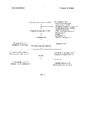
- Фиг. 1 представляет собой схему исследуемой добавки с композицией, описанной в данном документе, по сравнению с плацебо в течение лечения пациентов после инсульта с дисфагией. Схема включает число пациентов, анализируемых в отношении основного итога (мышечный гиперкатаболизм здоровой руки); и- FIG. 1 is a schematic of a test supplement with the composition described herein compared to placebo during the treatment of patients after a stroke with dysphagia. The scheme includes the number of patients analyzed in relation to the main outcome (muscle hypercatabolism of a healthy arm); and
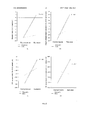
- Фиг. 2 представляет различия во временной динамике фенила, общих незаменимых аминокислот, общих аминокислот (А - V), и уровней общих аминокислот в артериальной крови в группе после инсульта. Точка 0 означает отсутствие захвата/высвобождения.- FIG. 2 represents differences in the temporal dynamics of phenyl, total essential amino acids, total amino acids (A – V), and levels of total amino acids in arterial blood in the group after a stroke.
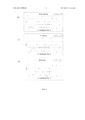
- Фиг. 3 представляет взаимосвязь между изменением со временем лимфоцитов периферической крови в виде % всех белых клеток и способности к глотанию (DOSS) во всей группе после инсульта (график а), у субъектов с плацебо (график b) и с лечением незаменимыми аминокислотами (график с). Число точек, наблюдаемых на графике, является меньшим, чем реальное число исследованных пациентов, из-за перекрывания значений в ряде случаев.- FIG. 3 represents the relationship between the change over time in peripheral blood lymphocytes as% of all white cells and the ability to swallow (DOSS) in the whole group after a stroke (schedule a), in subjects with placebo (schedule b) and with treatment with essential amino acids (chart c) . The number of points observed on the graph is less than the actual number of patients studied, due to overlapping values in some cases.
Подробное описание изобретенияDETAILED DESCRIPTION OF THE INVENTION
В следующем описании многочисленные конкретные детали приведены для полного понимания воплощений. Воплощения могут быть реализованы на практике без одной или более конкретных деталей или при помощи других способов, компонентов, материалов и т.д. В других случаях хорошо известные структуры, материалы или операции не показаны или не описаны детально для того, чтобы избежать неясности воплощений.In the following description, numerous specific details are set forth in order to fully understand the embodiments. Embodiments may be practiced without one or more specific details or by other methods, components, materials, etc. In other instances, well-known structures, materials or operations are not shown or described in detail in order to avoid ambiguity of the embodiments.
Ссылка везде в данном описании на «одно воплощение» или «воплощение» означает, что отдельная черта, структура или характеристика, описанная в связи с воплощением, включена в по меньшей мере одно воплощение. Таким образом, фразы «в одном воплощении» или «в воплощении» в различных местах данного описания не обязательно все относятся к одному и тому же воплощению. Более того, отдельные черты, структуры или характеристики могут быть скомбинированы любым приемлемым способом в одном или более воплощении. Заголовки приведены в данном документе для удобства и не отражают объем и значение воплощений.The reference everywhere in this description to “one embodiment” or “embodiment” means that a single feature, structure or characteristic described in connection with the embodiment is included in at least one embodiment. Thus, the phrases “in one embodiment” or “in embodiment” in various places in this description are not necessarily all referring to the same embodiment. Moreover, individual features, structures, or characteristics may be combined in any suitable manner in one or more embodiments. The headings are provided herein for convenience and do not reflect the scope and significance of the embodiments.
Раскрытая в данном документе композиция для применения в лечении инсульта у пациентов с дисфагией, а именно системного воспалительного процесса, ассоциированного с инсультом, содержит активное вещество, причем активное вещество содержит аминокислоты лейцин, изолейцин, валин, лизин, треонин и по меньшей мере одну из следующих аминокислот: гистидин, фенилаланин, метионин, триптофан, тирозин, цистеин. Композиция дополнительно содержит один или более загуститель в количестве от 10 масс. % до 50 масс. %, более предпочтительно от 20 масс. % до 30 масс. % по отношению к массе активного вещества.The composition disclosed herein for use in the treatment of stroke in patients with dysphagia, namely, the systemic inflammatory process associated with stroke, contains an active substance, the active substance containing the amino acids leucine, isoleucine, valine, lysine, threonine and at least one of the following amino acids: histidine, phenylalanine, methionine, tryptophan, tyrosine, cysteine. The composition further comprises one or more thickening agents in an amount of from 10 mass. % to 50 mass. %, more preferably from 20 mass. % to 30 mass. % relative to the weight of the active substance.
Загустители могут быть выбраны из ксантановой камеди, метилгидроксипропилцеллюлозы, камеди конжака, глюкоманнана конжака, аравийской камеди (камеди акации), модифицированных крахмалов. Присутствие таких веществ, предпочтительно ксантановой камеди, метилгидроксипропилцеллюлозы, позволяет загустить жидкость, предпочтительно воду, в которой композицию диспергируют перед употреблением.Thickeners can be selected from xanthan gum, methylhydroxypropyl cellulose, konjac gum, glucomannan konjac, Arabian gum (acacia gum), modified starches. The presence of such substances, preferably xanthan gum, methyl hydroxypropyl cellulose, allows to thicken a liquid, preferably water, in which the composition is dispersed before use.
Известно, что люди с дисфагией обычно не обладают должным мышечным контролем и координацией для закрытия дыхательного горла должным образом, или они не обладают способностью должного продвижения целых пищевых комков и/или питья в желудок. Поэтому очень важно, чтобы продукты питания, потребляемые пациентами с дисфагией, имели надлежащую вязкость и консистенцию.It is known that people with dysphagia usually do not have proper muscle control and coordination to close their respiratory throats properly, or they do not have the ability to properly move whole food lumps and / or drink into the stomach. Therefore, it is very important that the foods consumed by patients with dysphagia have the proper viscosity and consistency.
При растворении композиции, раскрытой в данном документе, в жидкости, предпочтительно воде, консистенция конечного продукта приобретает идеальную вязкость для пищеварения пациента с дисфагией.When the composition disclosed herein is dissolved in a liquid, preferably water, the consistency of the final product acquires the ideal viscosity for digestion of a patient with dysphagia.
В некоторых воплощениях один или более загустителей присутствуют в количестве от 2 масс. % до 30 масс. %, предпочтительно от 4 масс. % до 15 масс. % относительно массы сухой композиции.In some embodiments, one or more thickeners are present in an amount of from 2 mass. % to 30 mass. %, preferably from 4 wt. % to 15 mass. % relative to the weight of the dry composition.
После получения дисперсию выдерживают в течение 5 минут при комнатной температуре с целью достижения желаемой консистенции и вязкости.After receiving the dispersion is kept for 5 minutes at room temperature in order to achieve the desired consistency and viscosity.
Количество жидкости, добавляемое к композиции, раскрытой в данном документе, зависит, например, от консистенции, которую необходимо получить. Данный параметр оценивают и определяют специалисты в области техники, также принимая во внимание степень дисфагии пациента.The amount of liquid added to the composition disclosed herein depends, for example, on the consistency to be obtained. This parameter is evaluated and determined by specialists in the field of technology, also taking into account the degree of dysphagia of the patient.
В одном или более воплощениях композиция может быть добавлена в жидкость, предпочтительно в воду. Выбранная концентрация зависит от консистенции получаемого геля.In one or more embodiments, the composition may be added to a liquid, preferably to water. The concentration chosen depends on the consistency of the resulting gel.
В некоторых воплощениях, композиция, раскрытая в данном документе, дополнительно содержит витамины, предпочтительно выбранные из группы витаминов В, таких как витамин B1 и/или витамин В6. В дальнейшем воплощении настоящего раскрытия, композиция также включает углеводы, добавки и/или вкусоароматические вещества.In some embodiments, the composition disclosed herein further comprises vitamins, preferably selected from the group of vitamins B, such as vitamin B 1 and / or vitamin B 6 . In a further embodiment of the present disclosure, the composition also includes carbohydrates, additives and / or flavors.
Предпочтительные углеводы могут быть выбраны среди мальтодекстринов. Добавка может быть выбрана среди натрия цитрат дегидрата трехосновного, порошка аспартама, ацесульфама калия, сукралозы. Предпочтительным вкусоароматическим веществом является ароматизатор «банан».Preferred carbohydrates may be selected among maltodextrins. The additive can be selected among sodium tribasic citrate dehydrate, aspartame powder, acesulfame potassium, sucralose. The preferred flavoring substance is a banana flavor.
Согласно некоторым воплощениям настоящего раскрытия предпочтительно соотношение по массе изолейцин:лейцин находится в диапазоне 0,2-0,7, предпочтительно 0,4-0,6 и/или предпочтительно соотношение по массе валин: лейцин находится в диапазоне 0,2-0,8, предпочтительно в диапазоне 0,4-0,7.According to some embodiments of the present disclosure, preferably the weight ratio of isoleucine: leucine is in the range of 0.2-0.7, preferably 0.4-0.6 and / or preferably the weight ratio of valine: leucine is in the range of 0.2-0, 8, preferably in the range of 0.4-0.7.
В дальнейшем воплощении соотношение по массе треонин:лейцин находится в диапазоне 0,15-0,50, предпочтительно 0,20-0,45 и/или соотношение по массе лизин:лейцин находится в диапазоне 0,15-0,60, предпочтительно 0,30-0,55.In a further embodiment, the weight ratio of threonine: leucine is in the range of 0.15-0.50, preferably 0.20-0.45 and / or the weight ratio of lysine: leucine is in the range of 0.15-0.60, preferably 0 , 30-0.55.
В другом воплощении соотношение по массе лейцин:изолейцин:валин эквивалентно 2:1:1.In another embodiment, the weight ratio of leucine: isoleucine: valine is equivalent to 2: 1: 1.
В дальнейшем воплощении, учитывая, что сумма лейцина, изолейцина, валина, треонина и лизина эквивалентна 1, общее количество дополнительных незаменимых аминокислот может варьировать от 0,02 до 0,25 (т.е. 1:0,02-0,25), предпочтительно от 0,05 до 0,15 (т.е. 1:0,05-0,15), приведенное в виде отношения масс.In a further embodiment, given that the sum of leucine, isoleucine, valine, threonine and lysine is equivalent to 1, the total number of additional essential amino acids can vary from 0.02 to 0.25 (i.e. 1: 0.02-0.25) preferably from 0.05 to 0.15 (i.e. 1: 0.05-0.15), given in the form of a mass ratio.
В дальнейшем воплощении цистеин присутствует в количестве от 150 масс. % до 350 масс. % метионина.In a further embodiment, cysteine is present in an amount of from 150 mass. % up to 350 mass. % methionine.
В некоторых воплощениях активное вещество содержит заменимую аминокислоту тирозин в количестве от 15 масс. % до 50 масс. %, предпочтительно от 20 масс. % до 35 масс. % относительно массы фенилаланина.In some embodiments, the active substance contains an interchangeable amino acid tyrosine in an amount of from 15 mass. % to 50 mass. %, preferably from 20 mass. % to 35 mass. % relative to the weight of phenylalanine.
В дальнейшем воплощении активное вещество состоит из аминокислот лейцина, изолейцина, валина, лизина, треонина в сочетании с гистидином, фенилаланином, метионином, триптофаном, тирозином, цистином, и композиция в дальнейшем содержит один или более загуститель в количестве от 10 масс. % до 50 масс. %, более предпочтительно от 20 масс. % до 30 масс. % относительно массы активного вещества.In a further embodiment, the active substance consists of the amino acids leucine, isoleucine, valine, lysine, threonine in combination with histidine, phenylalanine, methionine, tryptophan, tyrosine, cystine, and the composition further contains one or more thickeners in an amount of 10 masses. % to 50 mass. %, more preferably from 20 mass. % to 30 mass. % relative to the weight of the active substance.
В некоторых воплощениях композиция также может быть введена пациенту после инсульта без дисфагии для лечения системного воспалительного процесса, ассоциированного с инсультом. В таких случаях композиция может содержать активное вещество (лейцин, изолейцин, валин, лизин, треонин и по меньшей мере одно из гистидина, фенилаланина, метионина, триптофана, тирозина, цистина) без загустителей.In some embodiments, the composition can also be administered to a patient after a stroke without dysphagia to treat a systemic inflammatory process associated with a stroke. In such cases, the composition may contain an active substance (leucine, isoleucine, valine, lysine, threonine and at least one of histidine, phenylalanine, methionine, tryptophan, tyrosine, cystine) without thickeners.
В дальнейших воплощениях композиция может быть введена для применения при лечении системного воспалительного процесса, причем композиция содержит активное вещество, при этом активное вещество содержит аминокислоты лейцин, изолейцин, валин, лизин, треонин и по меньшей мере одну из аминокислот: гистидин, фенилаланин, метионин, триптофан, тирозин, цистин.In further embodiments, the composition can be introduced for use in treating a systemic inflammatory process, the composition containing the active substance, the active substance containing the amino acids leucine, isoleucine, valine, lysine, threonine and at least one of the amino acids: histidine, phenylalanine, methionine, tryptophan, tyrosine, cystine.
Более того, в частности, при получении композиций согласно настоящему раскрытию и конкретно активного вещества, предпочтительно избегают таких аминокислот, как серии, пролин, глицин, аланин, глутаминовая кислота и главным образом аргинин, поскольку они могут быть контрпродуктивными или даже вредными в некоторых концентрациях или стехиометрических соотношениях с упомянутым составом.Moreover, in particular, when preparing the compositions according to the present disclosure and specifically the active substance, amino acids such as series, proline, glycine, alanine, glutamic acid and mainly arginine are preferably avoided since they may be counterproductive or even harmful in some concentrations or stoichiometric ratios with said composition.
Вышеупомянутые аминокислоты могут быть замещены соответствующими фармацевтически приемлемыми производными, а именно солями.The aforementioned amino acids may be substituted with appropriate pharmaceutically acceptable derivatives, namely salts.
Предпочтительно, композиция находится в виде сухого порошка, который с целью введения пациенту диспергируют в жидкости, предпочтительно воде.Preferably, the composition is in the form of a dry powder, which is dispersed in a liquid, preferably water, for administration to a patient.
Дальнейшие описания, относительно количеств и соотношений среди различных аминокислот, предложенных для композиций с целью применения при лечении инсульта у пациентов с дисфагией, приведены в прилагаемой формуле изобретения, которая представляет неотъемлемую часть технического описания, приведенного в данном документе относительно данного изобретения.Further descriptions regarding the amounts and ratios among the various amino acids proposed for the compositions for use in the treatment of stroke in patients with dysphagia are given in the attached claims, which are an integral part of the technical description given in this document regarding this invention.
Результаты, приведенные в данном документе, демонстрируют, что метаболизм мышечных белков здоровой руки индивидуумов с подострым инсультом и дисфагией может быть охарактеризован как МН, который может быть скорректирован при помощи введения композиции, описанной в данном документе.The results presented herein demonstrate that muscle protein metabolism in healthy arm of individuals with subacute stroke and dysphagia can be characterized as MH, which can be adjusted by administering the composition described herein.
Пример 1Example 1
Материалы и методыMaterials and methods
Группа. Шестьдесят семь пациентов с дисфагией и после подострого инсульта (менее 3 месяцев после острого цереброваскулярного нарушения) (Guidelines of the Ministry of Health for rehabilitation activities. National Health Plan 1998-2000), поступивших в наш реабилитационный центр, подпали под исследование. 11 субъектов были исключены из-за ассоциированной хронической сердечной недостаточности, 1 из-за острого коронарного синдрома, 4 из-за острой хронической почечной недостаточности (клиренс креатинина менее 30 мг/100 мл), 1 из-за онкологической операции, 2 из-за пролежня, 7 из-за диабета (пероральное антидиабетическое лечение или инсулинотерапия), 2 из-за дистиреоза и наконец 1 из-за стероидной терапии. Причина исключения данных заболеваний была тесно связана с их сильным влиянием на метаболизм мышечных белков.Group. Sixty-seven patients with dysphagia and after a subacute stroke (less than 3 months after an acute cerebrovascular disorder) (Guidelines of the Ministry of Health for rehabilitation activities. National Health Plan 1998-2000) were admitted to our rehabilitation center. 11 subjects were excluded due to associated chronic heart failure, 1 due to acute coronary syndrome, 4 due to acute chronic renal failure (creatinine clearance less than 30 mg / 100 ml), 1 due to cancer surgery, 2 due to bedsores, 7 due to diabetes (oral antidiabetic treatment or insulin therapy), 2 due to dysthyroidism, and finally 1 due to steroid therapy. The reason for the exclusion of these diseases was closely related to their strong influence on the metabolism of muscle proteins.
Оставшиеся тридцать восемь пациентов (29 мужчин и 9 женщин; 69,7±11,4 лет) были включены в данное рандомизированное двойное слепое плацебо-контролируемое исследование. Основанием для включения пациента была реабилитация по поводу дисфагии и одностороннего паралича. Все пациенты были лежачими больными и поступили из нейрохирургического (34,2%), неврологического или инсультного отделений (52,6%) или других реабилитационных отделений (13,2%). Острое нарушение мозгового кровообращения, задокументированное посредством компьютерной томографии было ишемическим повреждением в 57,9% или геморрагическим повреждением (42,1%). Индивидуумов с ишемическими и геморрагическими повреждениями объединяли, поскольку в фазе реабилитации инсульта, эти две группы имеют схожие метаболический, трофический и функциональный профили (Aquilani с соавт., 2014).The remaining thirty-eight patients (29 men and 9 women; 69.7 ± 11.4 years) were included in this randomized, double-blind, placebo-controlled study. The reason for the inclusion of the patient was rehabilitation for dysphagia and unilateral paralysis. All patients were bedridden patients and came from the neurosurgical (34.2%), neurological or stroke departments (52.6%) or other rehabilitation departments (13.2%). The acute cerebrovascular accident documented by computed tomography was ischemic damage in 57.9% or hemorrhagic damage (42.1%). Individuals with ischemic and hemorrhagic injuries were combined, since in the phase of stroke rehabilitation, these two groups have similar metabolic, trophic, and functional profiles (Aquilani et al., 2014).
На основании картины компьютерной томографии или магнитного резонанса области повреждения после инсульта классифицировали относительно расположения ишемической деструкции в виде PACI (частичный инфаркт бассейна сонной артерии; 23,7%), TACI (общий инфаркт бассейна сонной артерии; 50%) или POCI (инфаркт в вертебрально-базилярном бассейне; 26,3%). Эти данные приведены в табл. 1, которая также показывает тяжесть инсульта и определенные механизмы, лежащие в основе нарушений глотания.Based on a computed tomography or magnetic resonance pattern, the areas of damage after a stroke were classified relative to the location of ischemic destruction in the form of PACI (partial infarction of the carotid pool; 23.7%), TACI (total infarction of the carotid pool; 50%) or POCI (vertebral infarction -basilar basin; 26.3%). These data are given in table. 1, which also shows the severity of the stroke and certain mechanisms underlying swallowing disorders.
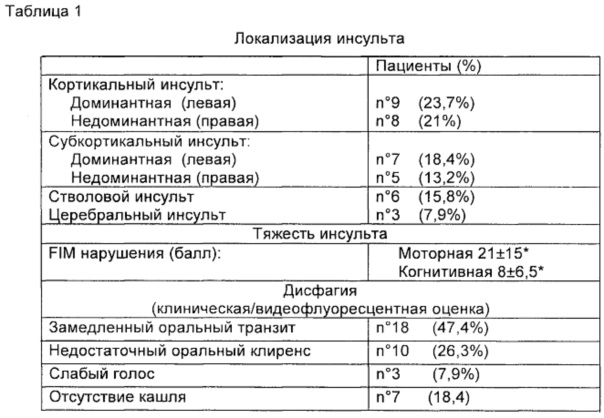
При допуске все пациенты получали питание посредством чрескожной эндоскопической гастростомии (ЧЭГ; n равно 30) или посредством пероральной модифицированной диеты (n равно 8).On admission, all patients received nutrition through percutaneous endoscopic gastrostomy (CHEG; n = 30) or through an oral modified diet (n = 8).
Порядок выполнения. Не позднее двух дней с момента допуска после ночного голодания в 8 ч утра брали образцы крови от каждого пациента для определения следующего:Execution order. No later than two days from the admission after night fasting at 8 a.m., blood samples were taken from each patient to determine the following:
1) Аминокислоты в плазме1) Plasma Amino Acids
Данные субстраты определяли как в артериальной (лучевая артерия), так и в венозной крови здоровой руки. Концентрации свободных аминокислот в плазме измеряли при помощи анализатора аминокислот AminoQuant II на основе системы ВЭЖХ HP 1090 с полностью автоматизированной предколоночной дериватизацией при помощи химизма реакции орто-фталевого альдегида и 9-фторенил-метил-хлорформата согласно протоколу производителя. Результаты получали при введении 1 мкл дереватизированной смеси и измерения абсорбции одновременно при 338 и 262 нм. Концентрации в плазме выражали в виде мкмоль/л. Измерение аминокислот проводили в сравнении с восьмью здоровыми субъектами подходящими по возрасту (71±4,5 лет), распределению по полу (6 М/2 Ж), индексу массы тела (22,3±3,5 кг/м2).These substrates were determined both in the arterial (radial artery) and in the venous blood of a healthy arm. Plasma free amino acid concentrations were measured using the AminoQuant II amino acid analyzer based on the HP 1090 HPLC system with fully automated pre-column derivatization using the reaction chemistry of orthophthalaldehyde and 9-fluorenyl methyl chloroformate according to the manufacturer's protocol. The results were obtained by administering 1 μl of the wood mixture and measuring the absorbance simultaneously at 338 and 262 nm. Plasma concentrations were expressed as μmol / L. Amino acids were measured in comparison with eight healthy subjects suitable for age (71 ± 4.5 years), sex distribution (6 M / 2 W), and body mass index (22.3 ± 3.5 kg / m 2 ).
ВычисленияCalculations
a) Метаболизм мышечных белков. Как описано в другом документе (Aquilani с соавт., 2012), повышенную деградацию мышечных белков оценивали посредством мышечного высвобождения незаменимой аминокислоты фенилаланина (фенил-), при этом синтез мышечных белков определяли посредством захвата фенила мышцами. Учитывая, что фенил не синтезируется и не деградирует в мышечной ткани, любые изменения в мышечном захвате/высвобождении отражают общий белковый баланс (Liu и Barret, 2002).a) Metabolism of muscle proteins. As described in another document (Aquilani et al., 2012), increased degradation of muscle proteins was assessed by muscle release of the essential amino acid phenylalanine (phenyl-), while muscle protein synthesis was determined by capture of phenyl by muscles. Given that phenyl is not synthesized and does not degrade in muscle tissue, any changes in muscle uptake / release reflect the overall protein balance (Liu and Barret, 2002).
Отрицательное фенил A-V (высвобождение) означало несбалансированный белковый метаболизм с преобладанием деградации белка над синтезом белка, в свою очередь положительное фенил A-V (захват) свидетельствовало о преобладании синтеза белка. Фенил A-V, равное нулю (нет захвата/нет высвобождения), означало сбалансированный метаболизм мышечных белков.Negative phenyl A-V (release) meant an unbalanced protein metabolism with a predominance of protein degradation over protein synthesis, in turn, positive phenyl A-V (capture) indicated a predominance of protein synthesis. Phenyl A-V equal to zero (no capture / no release) meant a balanced metabolism of muscle proteins.
b) A-V различия других аминокислот, общее содержание аминокислот (ТАА), общее содержание незаменимых аминокислот (ЕАА: валин, изолейцин, лейцин, треонин, фенил, триптофан, метионин, лизин), аминокислот с разветвленной цепью (ВСАА: валин, изолейцин, лейцин).b) AV differences of other amino acids, total amino acids (TAA), total essential amino acids (EAA: valine, isoleucine, leucine, threonine, phenyl, tryptophan, methionine, lysine), branched chain amino acids (BCAA: valine, isoleucine, leucine )
2) Биомаркеры воспалительного процесса тела2) Biomarkers of the inflammatory process of the body
i) Сывороточные уровни интерлейкина 6 (IL-6; нормальное значение менее 7 пг/мл), определяли в дупликатах при помощи высокочувствительного коммерческого набора для «сэндвич» твердофазного иммуноферментного анализа (ELISA) от Mabtech (Agilent Technologies GmbH, Boblingen, Германия);i) Serum levels of interleukin 6 (IL-6; normal value less than 7 pg / ml) were determined in duplicates using a highly sensitive commercial ELISA sandwich kit from Mabtech (Agilent Technologies GmbH, Boblingen, Germany);
ii) С-реактивный белок (CRP; нормальное значение менее 0,3 мг/дл) определяли при помощи иммунотурбодиметрического метода;ii) C-reactive protein (CRP; normal value less than 0.3 mg / dl) was determined using an immunoturbodimetric method;
iii) белки острой фазы воспаления (гаптоглобин, нормальные значения 30-200 мг/дл; α-1 глобулиновая система, нормальное значение 0,21-0,35 г/дл; нереактивные белки (альбумин, нормальные значения 4,02-4,76 г/дл; преальбумин, нормальные значения 18-30 мг/дл и трансферрин, нормальные значения 202-364 мг/дл).iii) proteins of the acute phase of inflammation (haptoglobin, normal values 30-200 mg / dl; α-1 globulin system, normal values 0.21-0.35 g / dl; non-reactive proteins (albumin, normal values 4.02-4, 76 g / dl; prealbumin, normal values 18-30 mg / dl and transferrin, normal values 202-364 mg / dl).
3) Концентрации лактата в плазме3) Plasma lactate concentrations
Данные концентрации измеряли при помощи ферментных тестов, следуя порядку выполнения, рекомендованному производителем (Siemens Diagnostic, Германия). Нормальное значение 0,6-2,2 ммоль/л.These concentrations were measured using enzyme tests, following the order of execution recommended by the manufacturer (Siemens Diagnostic, Germany). The normal value is 0.6-2.2 mmol / L.
4) В качестве части рутинной оценки, у пациентов измеряли следующие показатели:4) As part of a routine assessment, the following indicators were measured in patients:
i) антропометрические характеристики: масса тела (МТ, кг), определенная при помощи механического весового подъемника; рост (м), вычисленный исходя из высоты колена (Chumlea с соавт., 1985). Индекс массы тела (ИМТ) вычисляли в виде кг/м2. Пациентов опрашивали (или лиц, осуществляющих уход за ними) в отношении их прединсультной МТ. Потерю фактической МТ относительно обычной (предострой) МТ более 5%, т.е. фактическую/обычную МТ менее 95%, рассматривали в качестве числового показателя существенно пониженного питания;i) anthropometric characteristics: body weight (MT, kg) determined using a mechanical weight lift; height (m) calculated from knee height (Chumlea et al., 1985). Body mass index (BMI) was calculated as kg / m 2 . Patients were interviewed (or their carers) regarding their pre-stroke MT. The loss of the actual MT relative to the usual (precautionary) MT is more than 5%, i.e. actual / normal MT less than 95%, was considered as a numerical indicator of significantly reduced nutrition;
ii) биогуморальные параметры: обычные показатели, включая электрофорез сывороточных белков.ii) biohumoral parameters: routine indicators, including serum protein electrophoresis.
5) Функциональный статус5) Functional status
Данный статус оценивали при помощи меры функциональной независимости (FIM) (Keith с соавт., 1987). Данный тест обычно применяют врачи в нейро-реабилитационном центре. FIM представляет собой 18 пунктов, которые оценивают независимость пациента в отношении питания, ухода, одевания, пользования туалетом, подвижности, когнитивных функций. 126 баллов свидетельствуют о полной функциональной независимости.This status was assessed using a functional independence measure (FIM) (Keith et al., 1987). This test is usually used by doctors in a neuro-rehabilitation center. FIM represents 18 points that evaluate patient independence with regard to nutrition, care, dressing, using the toilet, mobility, and cognitive functions. 126 points indicate complete functional independence.
6) Дисфагия6) Dysphagia
Дисфагию определяли клинически во всей группе. В случае положительного или неопределенного диагноза, пациентов подвергали видео-флуоресцентному исследованию. Тяжесть дисфагии оценивали при помощи шкалы для оценки результата и тяжести дисфагии (Dysphagia Outcome и Severity Scale, DOSS), семибалльная шкала, разработанная для систематической оценки функциональной тяжести дисфагии (O'Neil с соавт., 1999). Диапазон баллов составляет 1-7, где уровень 1 означает тяжелую дисфагию, уровень 2 дисфагию средней тяжести, уровень 3 умеренную дисфагию, уровень 4 дисфагию легкой-умеренной тяжести, уровень 5 легкую дисфагию, уровень 6 внутри функционального предела/модифицированная независимость и уровень 7 - норма при всех ситуациях.Dysphagia was determined clinically in the entire group. In the case of a positive or uncertain diagnosis, patients underwent a video fluorescence study. The severity of dysphagia was assessed using a scale for assessing the outcome and severity of dysphagia (Dysphagia Outcome and Severity Scale, DOSS), a seven-point scale designed to systematically assess the functional severity of dysphagia (O'Neil et al., 1999). The range of scores is 1-7, where
7) Прием пищи7) Meal
Для пациентов, самостоятельно принимающих пищу (n равно 8), на модифицированной диете, трехдневный дневник питания вели медицинские сестры, которые предварительно специально для этого обучались. Сестры записывали тип и массу приготовленной и неприготовленной пищи, выбранной пациентами на диете из госпитального меню в течение 3 дней как до, так и после приема пищи пациентом. Фактически поглощаемое количество пищи переводили в ее сырой эквивалент при необходимости при помощи соответствующих таблиц (Carnevale с соавт., 1989). Анализ на питательную ценность, выполненный при помощи компьютерной программы, разработанной данной группой (Aquilani с соавт., 1999), применяли для вычисления фактически потребленных калорий и макро/микро питательных веществ. Получение пищи из фармацевтического препарата пациентами при помощи ЧЭГ (n равно 30) вычисляли исходя из пищевой композиции, описанной на этикетке.For patients taking food on their own (n is 8), on a modified diet, a three-day nutrition diary was kept by nurses, who had previously been specially trained for this. The sisters recorded the type and weight of cooked and unprepared food selected by patients on a diet from the hospital menu for 3 days both before and after a meal by the patient. The actual absorbed amount of food was converted to its crude equivalent, if necessary, using appropriate tables (Carnevale et al., 1989). Nutritional analysis performed using a computer program developed by this group (Aquilani et al., 1999) was used to calculate the actual calories consumed and macro / micro nutrients. Obtaining food from a pharmaceutical preparation by patients using a CEG (n is 30) was calculated based on the food composition described on the label.
8) Реабилитационная терапия8) Rehabilitation therapy
Все пациенты получали реабилитационное лечение, адаптированное для каждого отдельного пациента. Кратко, реабилитация заключалась в лечебной гимнастике с персональным физиотерапевтом в течение 60 минут, пять дней в неделю. Тренировка включала упражнения на координацию с объемом пассивных, активных и активно-вспомогательных движений, техники улучшения контралатеральных конечностей, упражнения для развития мышц туловища, активные тренировки здоровых конечностей и ходьбу при помощи вспомогательных устройств или помощи. Число или повторы упражнений и дистанцию для передвижения увеличивали по мере прогресса физического состояние пациентов. В зависимости от индивидуальных потребностей также проводили логопедическое лечение, реабилитационную терапию (элементарное самообслуживание, тренировка профессиональной, перцептивной и функциональной активности), организацию досуга.All patients received rehabilitation treatment adapted for each individual patient. Briefly, rehabilitation consisted of physiotherapy with a personal physiotherapist for 60 minutes, five days a week. The training included coordination exercises with the volume of passive, active and active auxiliary movements, techniques for improving the contralateral limbs, exercises for developing the muscles of the trunk, active training of healthy limbs and walking with the help of assistive devices. The number or repetitions of exercises and the distance for movement increased as the physical condition of the patients progressed. Depending on individual needs, speech therapy, rehabilitation therapy (elementary self-care, training of professional, perceptual and functional activity), and leisure activities were also carried out.
Для реабилитации дисфагии пациентов с уровнями DOSS не менее 3 обеспечивали модифицированной диетой, а также обучали перемене положения тела для благополучного глотания. Во время диеты сначала давали пюреобразную, гомогенную, вязкую пищу с постепенным переходом к пище с почти нормальной текстурой для пациентов, чьи дисфункции глотания постепенно улучшаются.For the rehabilitation of dysphagia, patients with DOSS levels of at least 3 were provided with a modified diet, as well as trained in changing body position for safe swallowing. During the diet, a puree, homogeneous, viscous food was first given with a gradual transition to a food with an almost normal texture for patients whose swallowing dysfunctions were gradually improving.
Перемена положения тела во время приема пищи обычно состояла из адаптивных техник пациента, которые снижали риск аспирации. Они включали, например, поворот головы на пораженную сторону, наклон головы к более сильной стороне, подбирание подбородка, подтягивания.A change in body position during a meal usually consisted of adaptive patient techniques that reduced the risk of aspiration. These included, for example, turning the head to the affected side, tilting the head to the stronger side, picking up the chin, pulling up.
В случае с пациентами с DOSS менее 3 предпринимали попытки орального транзита после видеофлюороскопии и/или после оценки логопедом. Если пациенты могли благополучно съесть по меньшей мере две трети предписанных им калорий (1500 ккал/д), зондовое кормление прерывали.In the case of patients with DOSS less than 3, attempts were made to oral transit after video fluoroscopy and / or after evaluation by a speech therapist. If patients could safely eat at least two-thirds of their calories (1,500 kcal / d), probe feeding was interrupted.
Рандомизация пациентов. После выполнения всех данных процедур пациентам назначали лечение согласно рандомизированному распределению (Фиг. 1). Лист рандомизации получали при помощи статистического программного обеспечения SAS (SAS Institute, штат Северная Каролина). А и В представляли собой идентификаторы лечения в слепом режиме. Лист был доступен как врачам, так и клиническим фармацевтам. Врач последовательно распределял пациентов для лечения А или В согласно листу рандомизации. Первый исследователь, кто интерпретировал все результаты, не знал распределения пациентов. Экспериментальная группа (группа ЕАА) принимала композицию, раскрытую в данном документе, что обеспечивало 8 г незаменимых аминокислот/день (табл. 2; 4 г утром плюс 4 г вечером, разведенные приблизительно половиной стакана воды до выписки пациента).Randomization of patients. After performing all these procedures, patients were prescribed treatment according to a randomized distribution (Fig. 1). A randomization sheet was obtained using SAS statistical software (SAS Institute, North Carolina). A and B were blind treatment identifiers. The sheet was available to both doctors and clinical pharmacists. The doctor sequentially assigned patients for treatment A or B according to the randomization sheet. The first researcher to interpret all the results did not know the distribution of patients. The experimental group (EAA group) took the composition disclosed herein, which provided 8 g of essential amino acids / day (Table 2; 4 g in the morning plus 4 g in the evening, diluted with approximately half a glass of water until the patient was discharged).
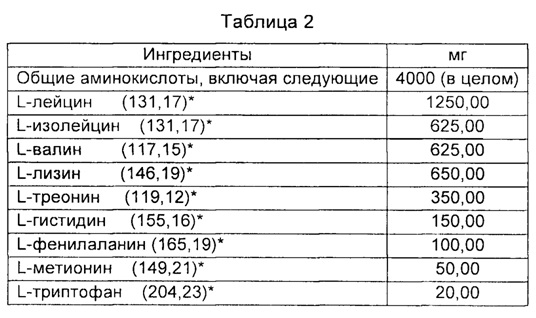
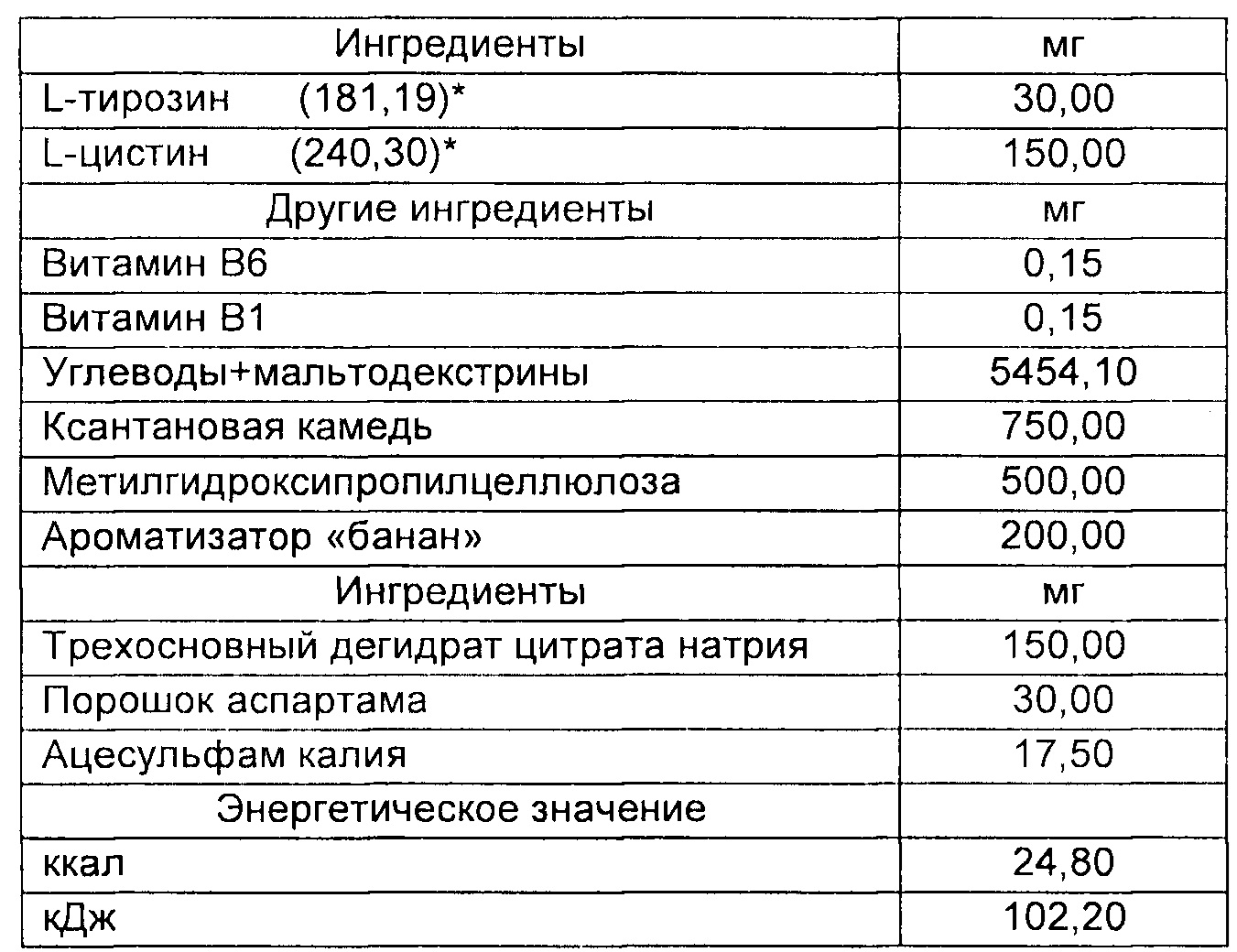
* молекулярная масса из "Amino Acid, Nucleic Acids & Related Compounds - Specification/General Tests", издание 8, Kyowa Hakko Kogyo Co., Ltd.* molecular weight from "Amino Acid, Nucleic Acids & Related Compounds - Specification / General Tests", Vol. 8, Kyowa Hakko Kogyo Co., Ltd.
Как видно из табл. 2, отношения по массе лейцина, изолейцина и валина предпочтительно эквивалентны 2:1:1. Табл. 1 также показывает, что отдельные количества гистидина, фенилаланина, метионина и триптофана предпочтительно являются понижающимися (т.е. количество гистидина выше, чем фенилаланина, которое выше, чем метионина, которое выше, чем триптофана) и количество (масса в граммах или молях) цистина предпочтительно выше, чем тирозина.As can be seen from the table. 2, the weight ratio of leucine, isoleucine and valine is preferably equivalent to 2: 1: 1. Tab. 1 also shows that the individual amounts of histidine, phenylalanine, methionine and tryptophan are preferably decreasing (i.e., the amount of histidine is higher than phenylalanine, which is higher than methionine, which is higher than tryptophan) and the amount (weight in grams or moles) cystine is preferably higher than tyrosine.
Композицию, показанную в табл. 2, получают, во-первых, посредством загрузки в барабанный смеситель со спиральными перегородками L-фенилаланина, L-тирозина, L-триптофана, витамина В1 и витамина В6 вместе с L-лизином с целью получения предварительной смеси. Процентный состав предварительной смеси представлен в табл. 3.The composition shown in the table. 2, obtained, firstly, by loading into a drum mixer with spiral baffles L-phenylalanine, L-tyrosine, L-tryptophan, vitamin B1 and vitamin B6 together with L-lysine in order to obtain a preliminary mixture. The percentage composition of the preliminary mixture is presented in table. 3.
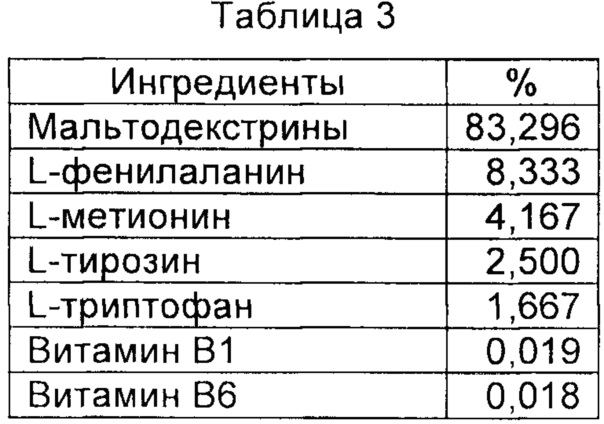
Ингредиенты смешивают в течение 10 минут с целью получения гомогенной предварительной смеси.The ingredients are mixed for 10 minutes to obtain a homogeneous pre-mixture.
Оставшиеся ингредиенты, приведенные в табл. 1, загружают в барабанный смеситель со спиральными перегородками и перемешивают в течение 20 минут для получения гомогенной конечной композиции.The remaining ingredients are given in table. 1, loaded into a spiral baffle drum mixer and mixed for 20 minutes to obtain a homogeneous final composition.
Табл. 4 содержит характеристики композиции, полученной как описано выше:Tab. 4 contains the characteristics of a composition obtained as described above:
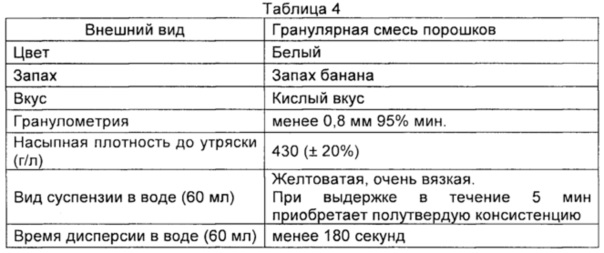
Композицию по настоящему описанию добавляют и диспергируют в жидкости, предпочтительно воде. Количество жидкости, добавляемой к композиции, описанной в данном документе, зависит, например, от консистенции, которую необходимо получить. Данный параметр оценивают и определяют специалисты в области техники, также принимая во внимание степень дисфагии пациента.The composition of the present description is added and dispersed in a liquid, preferably water. The amount of liquid added to the composition described herein depends, for example, on the consistency to be obtained. This parameter is evaluated and determined by specialists in the field of technology, also taking into account the degree of dysphagia of the patient.
Группа-плацебо (Plac) получала сходный изокалорийный продукт, содержащий мальтодекстрин вместо активного вещества, содержащего аминокислоты.The placebo group (Plac) received a similar isocaloric product containing maltodextrin instead of the active substance containing amino acids.
Медицинские сестры помогали каждому пациенту в его оральной диете во время принятия плацебо или композиции (ЕАА), раскрытой в данном документе, чтобы быть уверенными в соблюдении больным режима лечения.Nurses assisted each patient in his oral diet while taking the placebo or composition (EAA) disclosed herein to ensure patient compliance.
Сестры не знали о типе добавки (Plac или ЕАА), упаковки, содержащие продукты, были идентичны, пронумерованы как 1 или 2. Содержимое было известно только лечащему врачу и фармацевтам (1-плацебо; 2-ЕАА). Продукт, содержащийся в пакете 1 и 2, имел сходный цвет и вкус. Для пациентов, принимающих энтеральное питание (ЭП), водный раствор композиции, раскрытой в данном документе, подавали через трубку для кормления (чрескожная эндоскопическая гастростомия). Исследование длилось 38±4 дня от процедуры рандомизации. Измерения аминокислот, маркеров воспаления, а также антропометрического и функционального статуса все повторяли при завершении реабилитации пациента (42±4 дня после поступления). Исследование было одобрено этическим научно-техническим комитетом института. Письменное информированное согласие получали от участников или когда требовалось от лиц, осуществляющих уход за ними, после полного разъяснения сути исследования.The sisters did not know the type of supplement (Plac or EAA), the packages containing the products were identical, numbered 1 or 2. The contents were known only to the attending physician and pharmacists (1-placebo; 2-EAA). The product contained in
Статистический анализ. Описательную статистику выполняли для всех регистрируемых показателей, описывая средние и стандартные отклонения для количественных показателей и частоты распределения для качественных показателей. Критерий Хи-квадрата применяли для категориальных показателей. Дисперсионный анализ повторных измерений применяли для оценки каких-либо тенденций различий с течением времени между пациентами, получавшими ЕАА или Plac. Базовые отличия между группами (ЕАА и Plac) и различия в профилях аминокислот между всей группой после инсульта при поступлении на реабилитацию и здоровой контрольной группой оценивали при помощи непарного t-критерия Стьюдента. Статистическую значимость устанавливали при р менее 0,05.Statistical analysis. Descriptive statistics were performed for all recorded indicators, describing the mean and standard deviations for quantitative indicators and the distribution frequency for qualitative indicators. Chi-square test was used for categorical indicators. Repeated analysis of variance was used to evaluate any trends over time between patients receiving EAA or Plac. Basic differences between groups (EAA and Plac) and differences in amino acid profiles between the entire group after a stroke upon admission to rehabilitation and a healthy control group were evaluated using unpaired student t-test. Statistical significance was established at p less than 0.05.
Результатыresults
Все пациенты, вошедшие в данное исследование, были рандомизированы для получения композиции, раскрытой в данном документе (ЕАА), или плацебо (Plac) (Фиг. 1).All patients included in this study were randomized to receive the composition disclosed herein (EAA) or placebo (Plac) (Fig. 1).
1) Белковый обмен в мышцах здоровой руки1) Protein metabolism in the muscles of a healthy arm
Табл. 5 показывает артериальные концентрации аминокислот и артерио-венозные различия мышечных аминокислот (A-V), обнаруженные как у пациентов после инсульта при поступлении на реабилитацию, так и у здоровых субъектов.Tab. 5 shows arterial concentrations of amino acids and arteriovenous differences in muscle amino acids (A-V) found in patients after stroke upon admission to rehabilitation, as well as in healthy subjects.
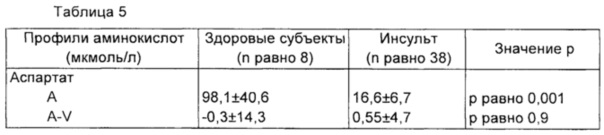
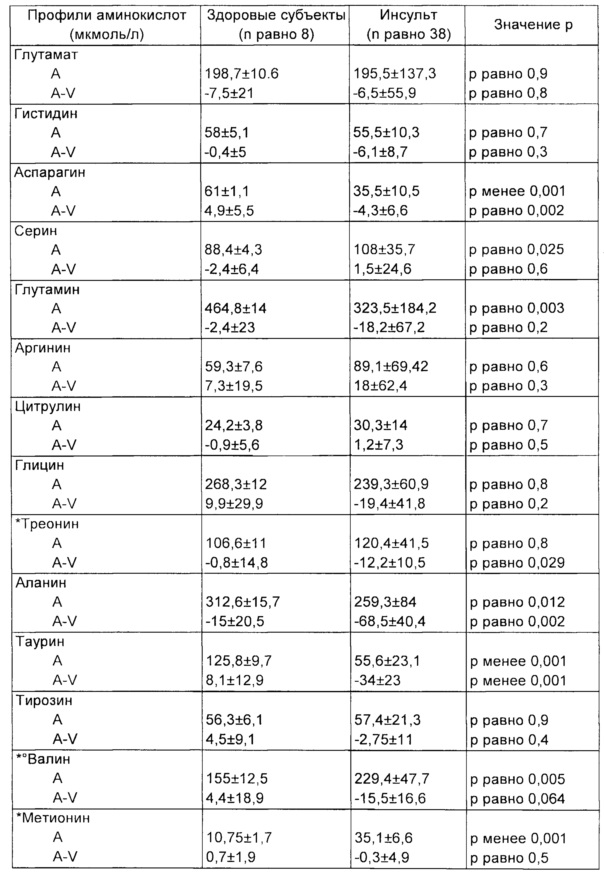

Данные выражены в виде среднего значения ± стандартное отклонение (СО). Статистический анализ: непарный t-критерий. "Незаменимые аминокислоты (ЕАА); ° Аминокислоты с разветвленной цепью (ВСАА)Data are expressed as mean ± standard deviation (SD). Statistical analysis: unpaired t-test. "Essential Amino Acids (EAA); ° Branched Chain Amino Acids (BCAAs)
Результаты показали, что метаболизм мышечных белков здоровой стороны преимущественно был в гиперкатаболическом состоянии (МН) из-за преобладания белкового катаболизма над синтезом белка, о чем свидетельствует высвобождение мышцами фенила. Это существенно отличается (р менее 0,03) от здоровых субъектов, чей мышечный белковый метаболизм был в равновесии. Помимо фенила, у пациентов высвобождалось существенное количество аспарагина, треонина, лейцина, аланина и таурина.The results showed that the healthy side muscle protein metabolism was predominantly in a hypercatabolic state (MN) due to the predominance of protein catabolism over protein synthesis, as evidenced by the release of phenyl by the muscles. This is significantly different (p less than 0.03) from healthy subjects whose muscle protein metabolism was in equilibrium. In addition to phenyl, a significant amount of asparagine, threonine, leucine, alanine, and taurine was released in patients.
В отношении артериальных концентраций аминокислот, у пациентов после инсульта наблюдались более высокие уровни серина, метионина, фенила, изолейцина, лейцина, лизина, но более низкие концентрации аспарагиновой кислоты, аспарагина, глутамина, аланина, таурина, триптофана. Субанализ пациентов, разделенных по типу острого нарушения мозгового кровообращения (ишемическое или геморагичесое), выявил сходные результаты.With respect to arterial concentrations of amino acids, patients after stroke showed higher levels of serine, methionine, phenyl, isoleucine, leucine, lysine, but lower concentrations of aspartic acid, asparagine, glutamine, alanine, taurine, tryptophan. A subanalysis of patients divided by the type of acute cerebrovascular accident (ischemic or hemorrhagic) revealed similar results.
Табл. 6 показывает аминокислотные профили двух подгрупп пациентов, рандомизированных по приему композиции, раскрытой в данном документе (табл. 2, ЕАА) или Plac, как при поступлении, так и при выписке из реабилитации. При поступлении две подгруппы не имели существенной разницы в степени МН (равно высвобождению фенила), различий по другим аминокислотам и A-V различий по общим аминокислотам (ТАА). Артериальные концентрации отдельных аминокислот, TAAs и ЕАА были сходны у обеих подгрупп, как ЕАА, так и Plac.Tab. Figure 6 shows the amino acid profiles of two subgroups of patients randomized to receive the composition disclosed herein (Table 2, EAA) or Plac, both upon admission and upon discharge from rehabilitation. On admission, the two subgroups did not have a significant difference in the degree of MN (equal to phenyl release), differences in other amino acids, and A-V differences in total amino acids (TAA). Arterial concentrations of individual amino acids, TAAs and EAA were similar in both subgroups, both EAA and Plac.
При выписке, у пациентов, которые принимали композицию, раскрытую в данном документе (ЕАА), но не у пациентов, принимающих Plac, нормализовался их белковый метаболизм в здоровой руке. Более того, высвобождение фенила переходило в захват мышцами у пациентов, получивших лечение, но осталось фактически неизменным у пациентов, получивших Plac. Эта разница во времени (A-V) фенила была существенной (зависимость, р равно 0,02).Upon discharge, in patients who took the composition disclosed herein (EAA), but not in patients taking Plac, their protein metabolism in a healthy hand returned to normal. Moreover, phenyl release turned into muscle capture in patients treated, but remained virtually unchanged in patients treated with Plac. This time difference (A-V) of phenyl was significant (dependence, p = 0.02).
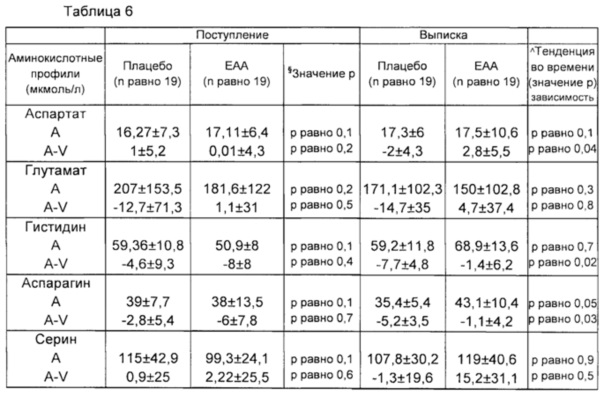
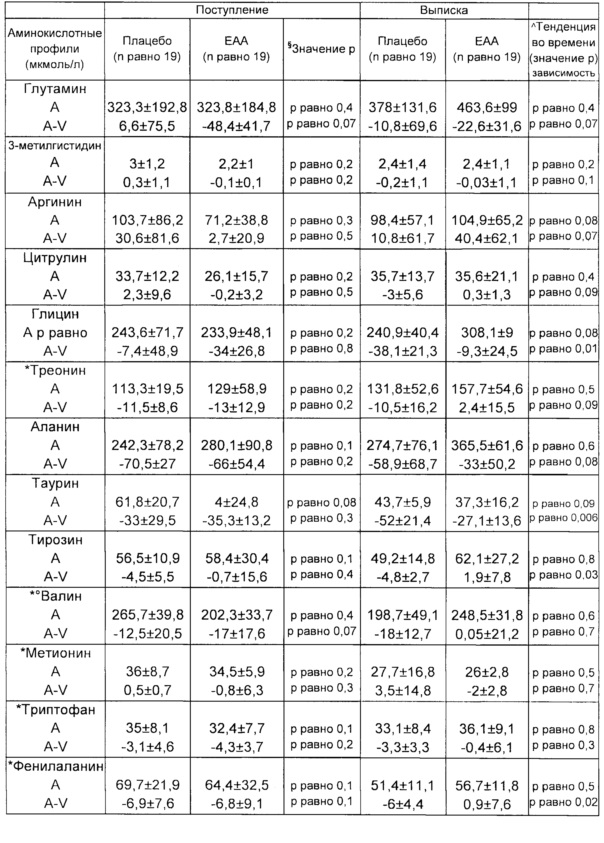
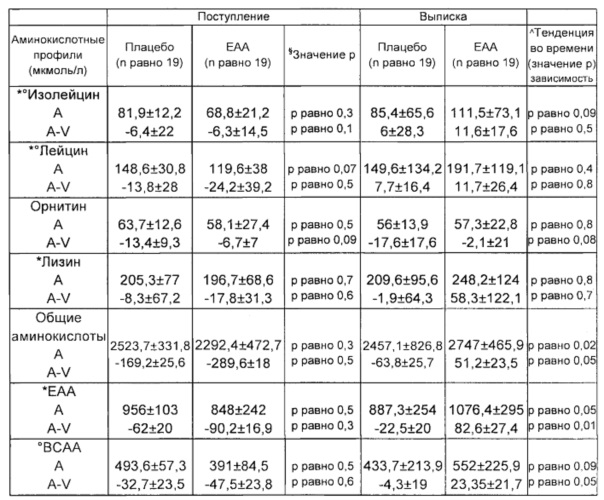
Данные приведены в виде среднего значения ± стандартное отклонение (СО). Статистический анализ: §непарный t-тест; ∧анализ повторных измерений показателей. Тенденция во времени: тенденции различий зависимости между группами. *Незаменимые аминокислоты (ЕАА); °аминокислоты с разветвленной цепью (ВСАА).Data are presented as mean ± standard deviation (SD). Statistical analysis: § unpaired t-test; ∧ analysis of repeated measurements of indicators. Trend over time: trends in the differences of dependency between groups. * Essential amino acids (EAA); ° Branched Chain Amino Acids (BCAAs).
Фиг. 2 показывает расхождение между двумя подгруппами, также подразумевающее артериальные ТАА (р равно 0,02), ТАА (A-V) (р равно 0,05), ЕАА (A-V) (р равно 0,01), ВСАА (A-V) (р равно 0,05, не показано на фигуре).FIG. 2 shows the discrepancy between the two subgroups, also implying arterial TAA (p is 0.02), TAA (AV) (p is 0.05), EAA (AV) (p is 0.01), BCAA (AV) (p is 0.05, not shown in the figure).
Более того, из всех измеренных аминокислот 49% из них принимали субъекты, принимающие ЕАА (субъект, который принимал композицию, раскрытую в данном документе), в тоже время только 23,2% - субъекты, принимающие Plac (р менее 0,001). A-V разница по времени между двумя группами также отличалась по аспарагиновой кислоте, гистидину, аспарагину, глицину, таурину, тирозину, высвобождаемым более в группе Plac, чем в группах ЕАА. У последних пациентов аспарагиновая кислота не высвобождалась и не захватывалась.Moreover, of all the measured amino acids, 49% of them were taken by subjects taking EAA (the subject who took the composition disclosed herein), while only 23.2% were subjects taking Plac (p less than 0.001). A-V, the time difference between the two groups also differed in aspartic acid, histidine, asparagine, glycine, taurine, tyrosine, released more in the Plac group than in the EAA groups. In recent patients, aspartic acid was not released and was not captured.
2) Другие показатели анализа2) Other analysis indicators
Табл. 7 показывает демографические, антропометрические, нейрофункциональные, биогуморальные характеристики, а также потребление пищи пациентами после инсульта как целой группы, так и двух групп после рандомизации как при поступлении, так и при выписке. При поступлении все пациенты имели недостаточное питание, судя по постинсультной потере массы по сравнению с их обычной МТ (-9,7%). У пациентов было воспаление, о чем свидетельствовали высокие сывороточные уровни IL-6 и CRP с последующими пониженными концентрациями отрицательных реагентов острой фазы ответа (альбумин, преальбумин, трансферрин) и повышенными концентрациями положительных реагентов (гаптоглобиин, α1 глобулин).Tab. 7 shows demographic, anthropometric, neurofunctional, biohumoral characteristics, as well as food intake by patients after a stroke of both the whole group and two groups after randomization, both at admission and at discharge. Upon admission, all patients were malnourished, judging by the post-stroke weight loss compared with their usual MT (-9.7%). Patients had inflammation, as evidenced by high serum levels of IL-6 and CRP, followed by reduced concentrations of negative acute phase reactants (albumin, prealbumin, transferrin) and increased concentrations of positive reagents (haptoglobin, α 1 globulin).
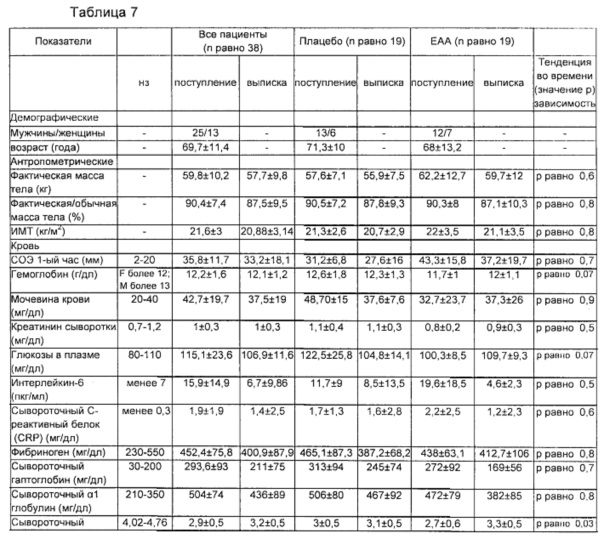
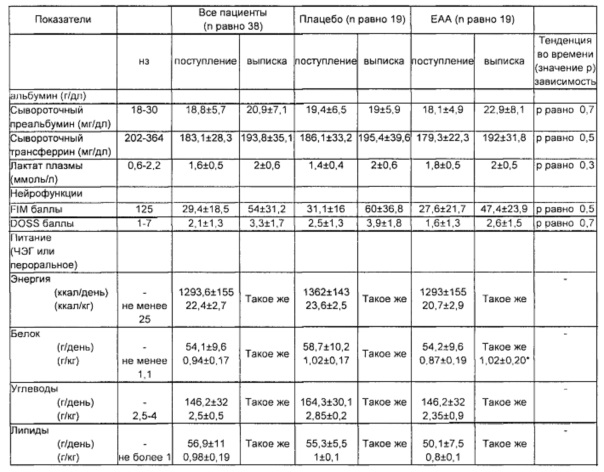
Данные приведены в виде среднего значения ± стандартное отклонение (СО). Статистический анализ: анализ повторных измерений показателей. Тенденция во времени: тенденция различий зависимости между группами. ИМТ: индекс массы тела; СОЕ: скорость оседания эритроцитов; FIM: функциональная мера независимости; DOSS: шкала оценки результата и тяжести дисфагии *Данное количество представляет собой сумму вводимого/проглоченного белка (54,2 г) и белка (6,9 г), обеспеченного добавкой ЕАА [41].Data are presented as mean ± standard deviation (SD). Statistical analysis: analysis of repeated measurements of indicators. Trend over time: the tendency of differences in dependency between groups. BMI: body mass index; SOY: erythrocyte sedimentation rate; FIM: a functional measure of independence; DOSS: scale for assessing the outcome and severity of dysphagia * This amount is the sum of the injected / swallowed protein (54.2 g) and protein (6.9 g) provided with EAA supplement [41].
Пациенты также имели повышенные концентрации в крови глюкозы и нормальные концентрации лактата. Исходя из функциональной точки зрения, у пациентов была тяжелая форма инвалидности (FIM -76,7% от нормального значения). При оценке DOSS, девятнадцать пациентов имели серьезную дисфагию (DOSS равно 1,21±0,88) и девятнадцать имели умеренную дисфагию (DOSS равно 3,07±1,76). Ежедневные калории и макронутриенты, введенные или проглоченные, составляли 22,4±2,7 ккал/кг, 0,94±0,17 г/кг белка, 2,5±0,5 г/кг углеводов, 0,98±0,19 г/кг липидов. После рандомизации подгруппы ЕАА и Plac были схожи по всем измеренным показателям на исходном уровне.Patients also had elevated blood glucose concentrations and normal lactate concentrations. Based on the functional point of view, patients had a severe form of disability (FIM -76.7% of the normal value). When assessing DOSS, nineteen patients had severe dysphagia (DOSS is 1.21 ± 0.88) and nineteen had moderate dysphagia (DOSS is 3.07 ± 1.76). Daily calories and macronutrients injected or swallowed were 22.4 ± 2.7 kcal / kg, 0.94 ± 0.17 g / kg protein, 2.5 ± 0.5 g / kg carbohydrates, 0.98 ± 0 , 19 g / kg lipids. After randomization, the subgroups of EAA and Plac were similar in all measured parameters at baseline.
При выписке обе группы имели сходное снижение массы тела, которое существенно не отличалось от исходного уровня и сходные улучшения степени дисфагии, физической недееспособности, воспаления, циркулирующих белков ответа острой фазы воспаления. Уровни глюкозы в крови улучшались в группе, принимающей Plac. Обе группы имели сходные концентрации лактата в плазме, которые с течением времени не отличались от значений на исходном уровне. Добавление 8 г/день ЕАА к общему белку, введенному/проглоченному (54,2 г/день) обеспечивало 6,9 г белкового субстрата, так что при выписке группа, получавшая лечение, получала 1,02 кг белка.Upon discharge, both groups had a similar decrease in body weight, which did not differ significantly from the initial level and similar improvements in the degree of dysphagia, physical disability, inflammation, and circulating response proteins of the acute phase of inflammation. Blood glucose levels improved in the Plac group. Both groups had similar plasma lactate concentrations, which over time did not differ from the values at the initial level. Adding 8 g / day of EAA to the total protein injected / swallowed (54.2 g / day) provided 6.9 g of protein substrate, so that upon discharge the treated group received 1.02 kg of protein.
Приведенные в данном документе результаты подтверждают, что в мышцах здоровой руки пациентов после подострого инсульта катаболическая активность может преобладать над анаболической.The results presented in this document confirm that in the muscles of a healthy arm of patients after a subacute stroke, catabolic activity may prevail over anabolic.
Композиция, раскрытая в данном документе, имела тенденцию к улучшению степени воспаления, таким образом, преобразуя мышечный гиперкатаболизм (МН) в анаболический/сбалансированный белковый метаболизм у пациентов после инсульта с дисфагией через месяц после острого инсульта.The composition disclosed herein tended to improve the degree of inflammation, thereby converting muscle hypercatabolism (MN) into anabolic / balanced protein metabolism in patients after a stroke with dysphagia one month after an acute stroke.
Постоянное воспаление тела, иммобилизация/неиспользование, недостаточное питание, это все являлось факторами, присутствующими в испытуемой группе, которые могли повышать МН в здоровой руке. Воспалительный статус, инициированный острым нарушением мозгового кровообращения и возможно сохраняющийся в течение времени за счет постинсультных инфарктных осложнений, снижал синтез белка и повышал его распад, а также через IL-6 стимулировал гипоталамо-гипофизарно-адренокортикальную систему. Степень протеолиза возможно усугублялась резистентностью к инсулину как показано в испытуемой группе на основании концентраций глюкозы в крови выше нормальных значений. Воспаление обусловливает восстановление печенью синтеза белка, наблюдаемого у исследуемых пациентов.Permanent inflammation of the body, immobilization / non-use, malnutrition, these were all factors present in the test group that could increase MN in a healthy hand. The inflammatory status, initiated by acute cerebrovascular accident and possibly persisting over time due to post-stroke heart attacks, reduced protein synthesis and increased its breakdown, and also stimulated the hypothalamic-pituitary-adrenocortical system through IL-6. The degree of proteolysis was possibly aggravated by insulin resistance as shown in the test group based on blood glucose concentrations above normal values. Inflammation causes the liver to restore protein synthesis observed in the studied patients.
Неиспользование из-за иммобилизации, денервация, отсутствие мышечной нагрузки, приводят к повышенному протеолизу и в меньшей степени, пониженному синтезу белка.Non-use due to immobilization, denervation, lack of muscle load, lead to increased proteolysis and, to a lesser extent, reduced protein synthesis.
Отсутствие нагрузки per se может приводить к протеолизу мышц из-за индукции окислительного стресса в скелетной мышце, что запускает повышенную деградацию белка.Lack of load per se can lead to muscle proteolysis due to the induction of oxidative stress in skeletal muscle, which triggers increased protein degradation.
Неадекватное постинсультное питание, в частности потребление белка, способствует протеолизу.Inadequate post-stroke nutrition, in particular protein intake, promotes proteolysis.
О том факте, что пациенты получали длительное неадекватное питание до их поступления на реабилитацию, свидетельствуют ассоциированная потеря массы тела и дисфагия.The fact that patients received prolonged inadequate nutrition before they were rehabilitated is evidenced by the associated weight loss and dysphagia.
По всей видимости, МН контрастирует с нормальными уровнями циркулирующих незаменимых аминокислот у пациентов. Данное расхождение может быть связано с двумя факторами: во-первых, недостаточное питание при интенсивной терапии из-за неадекватного потребления энергии, но не потребления белка, учитывая, что вышеупомянутое составляет 89,6% потребностей тела в энергии, поскольку последние составляют 99% рекомендованного количества. Количества потребляемых энергии и белка были сходны и соответственно выше, чем таковые, описанные в предыдущем исследовании у пациентов после инсульта в сходный период после острого инсульта (21 день). Нормальные уровни ЕАА подтверждают, что 1 г/кг/день белка поставляемый/потребляемый пациентами после подострого инсульта на этапе реабилитации заболевания может быть питательным, но метаболически недостаточным для снижения мышечного гиперкатаболизма. Это подтверждает, что здоровая мышца является местом значительных метаболических изменений, перекрывающих анаболическую активность, обеспеченную ЕАА.Apparently, MN contrasts with normal levels of circulating essential amino acids in patients. This discrepancy may be due to two factors: firstly, insufficient nutrition during intensive care due to inadequate energy intake, but not protein intake, given that the above makes up 89.6% of the body’s energy needs, since the latter make up 99% of the recommended quantity. The amounts of energy and protein consumed were similar and correspondingly higher than those described in a previous study in patients after a stroke in a similar period after an acute stroke (21 days). Normal EAA levels confirm that 1 g / kg / day of protein supplied / consumed by patients after a subacute stroke during the rehabilitation phase of the disease can be nutritious, but not metabolically sufficient to reduce muscle hypercatabolism. This confirms that healthy muscle is the site of significant metabolic changes that overlap with the anabolic activity provided by EAA.
Неиспользование, отсутствие нагрузки, повышенное содержание цитокина в мышцах являются некоторыми факторами, приводящими к МН. Неиспользование активирует потенциальную протеолитическую активность АТФ-зависимого убиквитин-протеосомного пути, лизосомы, кальций-зависимую кальпаиновую систему. Отсутствие нагрузки является потенциальным фактором, способствующим мышечному протеолизу посредством индукции окислительного стресса. Повышенное содержание цитокина в мышцах может оказывать протеолитический эффект, в частности миофибриллярного белка. Интересно, что цитокины, оказывающие действие на функцию мышечных клеток, могут быть продуцированы по сути внутри мышечных или немышечных клеток, таких как нейтрофилы и макрофаги. В течение воспаления данные фагоциты инфильтруют мышечную ткань. Другие нерезидентные клетки, такие как фибробласты, клетки гладкой мускулатуры сосудов, мышечного эндотелия могут продуцировать цитокины.Unuse, lack of exercise, and elevated muscle cytokine are some of the factors leading to MN. Non-use activates the potential proteolytic activity of the ATP-dependent ubiquitin-proteosome pathway, lysosomes, calcium-dependent calpain system. Lack of exercise is a potential factor in promoting muscle proteolysis through the induction of oxidative stress. The increased content of cytokine in the muscles can have a proteolytic effect, in particular of myofibrillar protein. Interestingly, cytokines that affect the function of muscle cells can be produced essentially inside muscle or non-muscle cells, such as neutrophils and macrophages. During inflammation, these phagocytes infiltrate muscle tissue. Other non-resident cells, such as fibroblasts, vascular smooth muscle cells, and muscle endothelium can produce cytokines.
Кроме того, достаточное потребление белка снижает метаболический клиренс циркулирующих ВСАА за счет жировой ткани, что может способствовать нормальным артериальным уровням незаменимых аминокислот (ЕАА). Более того, жировая ткань модулирует уровни циркулирующих ВСАА, но не в случае устойчивости к инсулину, как в нашей испытуемой группе, снижает или препятствует захвату ВСАА.In addition, adequate protein intake reduces the metabolic clearance of circulating BCAAs due to adipose tissue, which can contribute to normal arterial levels of essential amino acids (EAA). Moreover, adipose tissue modulates the levels of circulating BCAAs, but not in the case of insulin resistance, as in our test group, reduces or prevents the capture of BCAAs.
Предыдущие исследования касались скорости наступления постинсультной потери мышечной массы в здоровой конечности. В течение первой недели после инсульта одно исследование выявило мышечную слабость в здоровой четерехглавой мышце пациентов с гемиплегией после инсульта и корреляцию между изменением силы четырехглавой мышцы и острой потерей массы. Другое исследование сообщило об отсутствии данных о потере мышечной силы в какой-либо конечности. Другие исследования документировали пониженную мышечную массу и силу спустя шесть месяцев после инсульта. Это в большей степени наблюдалось в паретической по сравнению с непаретической нижней конечностью и верхней конечностью. Исследования продемонстрировали пониженную мышечную силу в обеих ногах у пациентов спустя год после инсульта по сравнению с нормальными субъектами.Previous studies have concerned the rate of onset of post-stroke muscle loss in a healthy limb. During the first week after a stroke, one study revealed muscle weakness in a healthy four-headed muscle of patients with hemiplegia after a stroke and a correlation between a change in quadriceps muscle strength and acute weight loss. Another study reported a lack of evidence of muscle loss in any limb. Other studies have documented decreased muscle mass and strength six months after a stroke. This was more observed in the paretic compared to the non-paretic lower limb and upper limb. Studies have shown reduced muscle strength in both legs in patients one year after a stroke compared with normal subjects.
Результаты, описанные в данном документе, предоставляют информацию о времени наступления атрофии мышечной ткани здоровой конечности, поскольку описывают мышечный гиперкатаболизм у пациентов после инсульта спустя месяц после инсульта. Это подтверждает, что в случае подострого инсульта системные воспалительно-метаболические изменения могут быть важным фактором, способствующим мышечной атрофии, в дополнение к другим механизмам слабости здоровой стороны тела. Данные механизмы включают мышечное повреждение в результате постинсультного поражения из-за билатеральных проекций каждого полушария мозга, физической неактивности, сниженного питания и возможной моторной слабости вследствие сопутствующей патологии в предынсультный период. Разумно предположить, что системные факторы также отрицательно влияют на поврежденные контралатеральные мышцы. По сравнению со здоровыми субъектами, у пациентов, участвующих в настоящем исследовании, также высвобождались существенные количества аминокислот аспарагина, треонина и ВСАА. Это подтверждает прогрессирующее истощение содержания аминокислот в здоровой мышце.The results described in this document provide information on the time of onset of muscle tissue atrophy of a healthy limb, since they describe muscle hypercatabolism in patients after a stroke one month after a stroke. This confirms that in the case of a subacute stroke, systemic inflammatory-metabolic changes can be an important factor contributing to muscle atrophy, in addition to other mechanisms of weakness of the healthy side of the body. These mechanisms include muscle damage due to post-stroke damage due to bilateral projections of each hemisphere of the brain, physical inactivity, reduced nutrition and possible motor weakness due to comorbidity in the pre-stroke period. It is reasonable to assume that systemic factors also adversely affect damaged contralateral muscles. Compared with healthy subjects, the patients participating in this study also released significant amounts of the amino acids asparagine, threonine, and BCAAs. This confirms the progressive depletion of amino acids in healthy muscle.
Другими чертами, отличающими постинсультных и здоровых субъектов, является концентрация определенных аминокислот в артериальной крови. Пациенты после инсульта имеют пониженные уровни аспартата, аспарагина, глутамина, аланина, таурина и триптофана, но повышенные уровни ВСАА, метионина, фенила, лизина. При воспалении и мышечном протеолизе эти уменьшения подтверждают повышенный метаболический клиренс аминокислот за счет висцеральных органов, включая печень, кишечник, почки, которые будут находиться в гиперметаболическом состоянии. Например, для печени характерно высокое потребление гликонеогенного аспартата, аспарагина, аланина и глутамина, для кишечника и почек - глутамина, для иммунной системы - глутамина, для мозга - всех аминокислот, в частности предшественника серотонина триптофана.Other features that distinguish post-stroke and healthy subjects are the concentration of certain amino acids in arterial blood. After a stroke, patients have reduced levels of aspartate, asparagine, glutamine, alanine, taurine, and tryptophan, but increased levels of BCAAs, methionine, phenyl, and lysine. With inflammation and muscle proteolysis, these decreases confirm the increased metabolic clearance of amino acids due to visceral organs, including the liver, intestines, kidneys, which will be in a hypermetabolic state. For example, the liver is characterized by a high consumption of glyconeogenic aspartate, asparagine, alanine and glutamine, for the intestines and kidneys - glutamine, for the immune system - glutamine, for the brain - all amino acids, in particular the precursor of serotonin tryptophan.
Повышения артериальных концентраций аминокислот в основном имеют мышечное происхождение, учитывая, что помимо высвобождения фенила, чрезмерному высвобождению подвергаются ВСАА, метионин, лизин. Нормальные уровни лактата подтверждают, что в мышцах здоровой руки имеет место сбалансированный аэробно-анаэробный путь образования энергии. Интересно, что как деградация белка, так и синтез требуют для своего осуществления больших количеств энергии.Increases in arterial concentrations of amino acids are mainly of muscle origin, given that in addition to phenyl release, BCAAs, methionine, and lysine are exposed to excessive release. Normal lactate levels confirm that a balanced aerobic-anaerobic pathway for energy production occurs in the muscles of a healthy arm. Interestingly, both protein degradation and synthesis require large amounts of energy for their implementation.
Таким образом, исследование показывает, что мышцы здоровой руки пациентов после инсульта с гемиплегией и дисфагией являются участками гиперкатаболической активности, которая без коррекции приведет к мышечной слабости.Thus, the study shows that the muscles of the healthy arm of patients after a stroke with hemiplegia and dysphagia are areas of hypercatabolic activity, which without correction will lead to muscle weakness.
Более того, инсульты, вызывающие дисфагию, вызывают изменения в артериальном аминокислотном профиле. Потеря мышечной массы и силы оказывает существенное влияние на функциональность и жизненный прогноз пациентов после инсульта. Субъекты с истощенными мышцами имеют пониженный метаболический контроль глюкозы, повышенный риск остеопороза, который может быть ответственен за перелом шейки бедра и падения, дезадаптацию сердечно-сосудистой системы и более сильную недееспособность, в частности неспособность к передвижению.Moreover, strokes that cause dysphagia cause changes in the arterial amino acid profile. The loss of muscle mass and strength has a significant impact on the functionality and life prognosis of patients after a stroke. Depleted muscle subjects have a reduced metabolic control of glucose, an increased risk of osteoporosis, which may be responsible for hip fracture and fall, cardiovascular maladjustment and more severe disability, in particular inability to move.
Поэтому распознавание и лечение мышечной атрофии так рано, как только возможно, имеет первостепенное значение для исхода реабилитации пациентов после инсульта, в частности, если мы учитываем, что 80% общего нейромоторного восстановления происходит в течение первого месяца после острого инсульта.Therefore, the recognition and treatment of muscle atrophy as early as possible is of paramount importance for the outcome of the rehabilitation of patients after a stroke, in particular if we take into account that 80% of the total neuromotor recovery occurs within the first month after an acute stroke.
Исследование ясно показывает, что введение композиции, раскрытой в данном документе, может корректировать повышенную деградацию белка в здоровой мышце у пациентов после инсульта с подострой дисфагией.The study clearly shows that the administration of the composition disclosed herein can correct the increased protein degradation in healthy muscle in patients after a stroke with subacute dysphagia.
Напротив, без применения таких композиций, пациенты продолжали терять мышечную массу спустя семьдесят дней после острого инсульта. После реабилитации преобладание анаболической активности в группе ЕАА сопровождалось захватом в здоровой мышце 49% аминокислот из артериальной крови и общих артериальных аминокислот в плазме, подтверждая анаболический белковый обмен в мышцах.In contrast, without the use of such compositions, patients continued to lose muscle mass seventy days after an acute stroke. After rehabilitation, the predominance of anabolic activity in the EAA group was accompanied by the uptake of 49% amino acids from arterial blood and total arterial amino acids in plasma in a healthy muscle, confirming anabolic protein metabolism in the muscles.
Это подтверждается более низким высвобождением гистидина, глицина, таурина по сравнению с таковым в группе-плацебо, а также повышенной доступностью артериальной ТАА.This is confirmed by a lower release of histidine, glycine, taurine compared with that in the placebo group, as well as increased availability of arterial TAA.
В отношении синтеза белка незаменимые аминокислоты с разветвленной цепью действуют как активатор и анаболические сигналы в мышцах человека. Постоянная добавка лейцина, как в данном документе, стимулирует синтез белка после приема пищи в соответствующих тканях, включая скелетные мышцы, печень, жировую ткань. Показано, что пероральный прием 2,5 г лейцина стимулирует синтез мышечных белков после упражнений или ночного голодания.In relation to protein synthesis, essential branched chain amino acids act as activators and anabolic signals in human muscles. The continuous addition of leucine, as described herein, stimulates protein synthesis after ingestion in appropriate tissues, including skeletal muscle, liver, and adipose tissue. It was shown that oral administration of 2.5 g of leucine stimulates the synthesis of muscle proteins after exercise or night fasting.
В отношении протеолиза лейцин является регулирующим фактором деградации миофибриллярного белка, поскольку он подавляет деградацию миофибрилярного белка вскоре после орального введения. Инфузия ВСАА человеку явно уменьшает деградацию белков скелетных мышц, но стимулирует синтез белка в сердце. Показано, что эффективное использование белка определяется изменчивостью чувствительности протеолиза до аминокислот в отличие от синтеза белка. Небольшие количества аминокислот достаточны для уменьшения протеолиза в отличие от синтеза белка.With regard to proteolysis, leucine is a regulatory factor in the degradation of myofibrillar protein, since it inhibits the degradation of myofibrillar protein shortly after oral administration. BCAA infusion to humans clearly reduces the degradation of skeletal muscle proteins, but stimulates protein synthesis in the heart. It has been shown that the efficient use of protein is determined by the variability of the sensitivity of proteolysis to amino acids, in contrast to protein synthesis. Small amounts of amino acids are sufficient to reduce proteolysis in contrast to protein synthesis.
Несколько механизмов лежат в основе синтеза белка и в то же время снижают протеолиз за счет незаменимых аминокислот. Один механизм представляет собой достаточную доступность незаменимых аминокислот per se. Более того, незаменимые аминокислоты могут стимулировать синтез белка вне зависимости от гормонов. Другие механизмы включают регуляцию генной экспрессии, модуляцию активности анаболических гормонов, улучшенный аэробный метаболизм энергообразования и пониженное соотношение циркулирующих TNFα/IGF-1. И наконец, аминокислоты влияют на мишенные гены при транскрипции, стабильность мРНК и трансляцию. Аминокислоты и в частности ЕАА, обеспечивают синтез белка за счет стимулирования инсулинового фактора роста 1 (IGF-1) и модулирования инсулинового сигналинга. Более того, они играют роль в регуляции инсулинового сигналинга через mTOR сигнальный путь. Инсулин (и IGF-1) не может стимулировать синтез белка, если концентрации аминокислот не поддерживаются.Several mechanisms underlie protein synthesis and at the same time reduce proteolysis due to essential amino acids. One mechanism is the sufficient availability of essential amino acids per se. Moreover, essential amino acids can stimulate protein synthesis regardless of hormones. Other mechanisms include regulation of gene expression, modulation of anabolic hormone activity, improved aerobic metabolism of energy production, and a reduced ratio of circulating TNFα / IGF-1. Finally, amino acids affect target genes during transcription, mRNA stability, and translation. Amino acids, and in particular EAA, provide protein synthesis by stimulating insulin growth factor 1 (IGF-1) and modulating insulin signaling. Moreover, they play a role in the regulation of insulin signaling via the mTOR signaling pathway. Insulin (and IGF-1) cannot stimulate protein synthesis if amino acid concentrations are not supported.
Более того, незаменимые аминокислоты также могут снижать резистентность к инсулину. Незаменимые аминокислоты индуцируют анаболическую активность непосредственно за счет стимулирования клеточного аэробного метаболизма к получению энергии, доступность которой необходима для синтеза белка. Особенно важно при процессе системного воспаления, что незаменимые аминокислоты могут обеспечить синтез мышечных белков за счет снижения циркулирующего цитокина TNFα, так что снижается числовой показатель TNFα/IGF-1.Moreover, essential amino acids can also reduce insulin resistance. Essential amino acids induce anabolic activity directly by stimulating cellular aerobic metabolism to produce energy, the availability of which is necessary for protein synthesis. It is especially important during the process of systemic inflammation that essential amino acids can ensure the synthesis of muscle proteins by reducing the circulating cytokine TNFα, so that the numerical rate of TNFα / IGF-1 is reduced.
Различия, наблюдаемые в данном документе между нормальными уровнями незаменимых аминокислот в плазме и мышечным гиперкатаболизмом, подтверждают, что постоянная добавка свободных незаменимых аминокислот может быть лучше, чем незаменимые аминокислоты в белках в отношении обеспечения мышечного анаболизма. Более того, для того, чтобы происходил синтез мышечных белков, быстрое повышение уровней незаменимых аминокислот в плазме вследствие потребления незаменимых аминокислот является более важным, чем внутримышечная доступность аминокислот. Это обусловлено тем, что аппарат синтеза белка в мышцах не чувствителен после 2,5 часов. Скорость, с которой достигаются пиковые концентрации в крови, является более высокой после потребления свободных незаменимых аминокислот, чем после ЕАА из белка, поскольку скорость абсорбции последних замедлена из-за сопутствующей диеты из комплекса углеводов и жиров.The differences observed in this document between normal levels of essential amino acids in plasma and muscle hypercatabolism confirm that a constant supplementation of free essential amino acids may be better than essential amino acids in proteins with respect to muscle anabolism. Moreover, in order for the synthesis of muscle proteins to occur, a rapid increase in plasma levels of essential amino acids due to the consumption of essential amino acids is more important than the intramuscular availability of amino acids. This is due to the fact that the apparatus for protein synthesis in muscles is not sensitive after 2.5 hours. The rate at which peak blood concentrations are reached is higher after consuming free essential amino acids than after EAA from protein, since the rate of absorption of the latter is slowed down due to a concomitant diet from a complex of carbohydrates and fats.
Кроме того, модулирование синтеза мышечных белков за счет повышения в крови незаменимых аминокислот может объяснить, почему в данном документе две группы пациентов после инсульта имели сходные уровни ЕАА в плазме, но различные ответы метаболизма мышечных белков.In addition, modulation of muscle protein synthesis by increasing essential amino acids in the blood may explain why, in this document, two groups of patients after a stroke had similar plasma EAA levels but different muscle protein metabolism responses.
Необходимо, чтобы пациентам с дисфагией после инсульта вводили соответствующее количество белка высокого качества. Пониженное потребление белка, приводящее к низким уровням незаменимых аминокислот в крови, может способствовать драматическому увеличению МН.It is essential that patients with dysphagia after stroke receive an appropriate amount of high quality protein. Reduced protein intake, resulting in low levels of essential amino acids in the blood, can contribute to a dramatic increase in MH.
Результаты, описанные в данном документе, предоставляют полезную информацию для клинической практики, поскольку показано, что композиция, раскрытая в данном документе, способна снижать системный воспалительный процесс у пациентов после инсульта и, таким образом, преобразовывать гиперкатаболизм в анаболизм, который даст возможность лучшего восстановления физической независимости пациентов.The results described in this document provide useful information for clinical practice, since it is shown that the composition disclosed in this document is able to reduce the systemic inflammatory process in patients after a stroke and, thus, convert hypercatabolism to anabolism, which will enable better recovery of physical patient independence.
Пример 2Example 2
Материалы и методыMaterials and methods
Группа. Сорок два пациента с дисфагией вследствие ишемического инсульта последовательно поступившие в Институт Реабилитации (Rehab) (Nervi, Генуя, Италия), были включены в течение 37±12 дней после острого инсульта.Group. Forty-two patients with dysphagia due to ischemic stroke, who were successively admitted to the Rehab Institute (Nervi, Genoa, Italy), were included within 37 ± 12 days after an acute stroke.
Пациенты поступили из следующих мест: инсультные отделения (14,3%), дома (61,9%), неврологические отделения (23,8%). Ни один из пациентов не был на стероидной терапии, не имел рака, нефротического синдрома, всех случаев, которые составляли критерии исключения из исследования, при которых действовали компоненты острой фазы ответа.Patients came from the following places: stroke departments (14.3%), houses (61.9%), neurological departments (23.8%). None of the patients was on steroid therapy, did not have cancer, nephrotic syndrome, all cases that constituted criteria for exclusion from the study, in which the components of the acute phase of the response acted.
Топографию васкулярного церебрального инсульта устанавливали при помощи изображения компьютерной томографии или магнитного резонанса.The topography of vascular cerebral stroke was established using computed tomography or magnetic resonance imaging.
Поврежденные инсультом области классифицировали в отношении расположения ишемической обструкции в виде PACI (частичный инфаркт бассейна сонной артерии; 45,2%), TACI (общий инфаркт бассейна сонной артерии; 30,95%), POCI (инфаркт в вертебрально-базилярном бассейне; 23,8%).The areas damaged by stroke were classified according to the location of ischemic obstruction in the form of PACI (partial myocardial infarction of myocardial infarction; 45.2%), TACI (common myocardial infarction of myocardial infarction; 30.95%), POCI (myocardial infarction in the vertebral-basilar basin; 23, 8%).
Письменное информированное согласие получали от участников или при необходимости от лиц, осуществляющих уход за ними, после полного объяснения сути исследования. Исследование утверждалось научным и этическим комитетами института.Written informed consent was obtained from the participants or, if necessary, from their carers, after a full explanation of the essence of the study. The study was approved by the scientific and ethical committees of the institute.
Порядок действий. В течение первых трех дней поступления в Институт реабилитации, измеряли следующие исходные показатели:Procedure. During the first three days of admission to the Institute of Rehabilitation, the following baseline indicators were measured:
a) антропометрические показатели: масса тела (МТ, кг), измеренная при помощи механического весового подъемника; рост (м), вычисленный исходя из высоты колена (Chumlea с соавт., 1985). Индекс массы тела вычисляли в виде кг⋅м-2. Фактическую массу тела соотносили с обычной (прединсультной) МТ. Фактическую/обычную МТ не более 95% рассматривали в качестве существенной потери МТ;a) anthropometric indicators: body weight (MT, kg), measured using a mechanical weight lift; height (m) calculated from knee height (Chumlea et al., 1985). Body mass index was calculated as kg ⋅ m -2 . Actual body weight was correlated with normal (pre-stroke) MT. An actual / normal MT of not more than 95% was considered a significant MT loss;
b) биогуморальные показатели: 1) обычные показатели, включая электрофорез белков сыворотки и соотношение нейтрофилы/лимфоциты (Нф/Лф) периферической крови (в лаборатории данное соотношение у здоровых индивидуумов варьирует от 1 до 3); 2) биомаркеры воспаленного процесса тела: С-реактивный белок (CRP; нормальное значение менее 0,8 мг⋅дл-1, определенное посредством иммунотурбидиметрического метода); скорость оседания эритроцитов (СОЭ; нормальное значение 2-20 мм в первый час); 3) реагенты острой фазы: положительные белки (α-1 глобулиновая система, нормальные значения 210-350 мг⋅дл-1; гаптоглобин 30-200 мг⋅дл-1; фибриноген, нормальные значения 230-550 мг⋅дл-1); отрицательные белки (альбумин, нормальные значения 4,02-4,76 г⋅дл-1; преальбумин, нормальные значения 18-30 мг⋅дл-1 и трансферрин, нормальные значения 202-364 мг⋅дл-1);b) biohumoral indicators: 1) usual indicators, including serum protein electrophoresis and the ratio of peripheral blood neutrophils / lymphocytes (Nf / Lf) (in the laboratory this ratio in healthy individuals varies from 1 to 3); 2) biomarkers of the inflammatory process of the body: C-reactive protein (CRP; normal value less than 0.8 mg⋅dl -1 , determined by immunoturbidimetric method); erythrocyte sedimentation rate (ESR; normal value of 2-20 mm in the first hour); 3) acute phase reagents: positive proteins (α-1 globulin system, normal values of 210-350 mg -1 -1 ; haptoglobin 30-200 mg -1 -1 ; fibrinogen, normal values 230-550 mg -1 -1 ); negative proteins (albumin, normal values are 4.02-4.76 gdl -1 ; prealbumin, normal values are 18-30 mgdl -1 and transferrin, normal values are 202-364 mgdl -1 );
c) функциональный статус: оценивали при помощи Меры функциональной независимости (FIM), как описано в другом документе [Keith с соавт. 1987];c) functional status: evaluated using the Functional Independence Measure (FIM) as described elsewhere [Keith et al. 1987];
d) дисфагия: все пациенты поступали с диагнозом дисфагия. Наличие дисфагии исследователи контролировали при помощи видеофлюороскопического исследования. Тяжесть дисфагии оценивали при помощи шкалы для оценки результата и тяжести дисфагии (DOSS), семибалльная шкала, разработанная для систематической оценки функциональной тяжести дисфагии [O'Neil с соавт 1999]. Диапазон оценки составлял 1-7, уровень 1 означает тяжелую дисфагию, уровень 2 умеренно тяжелую дисфагию, уровень 3 умеренную дисфагию, уровень 4 легкоумеренную дисфагию, уровень 5 легкую дисфагию, уровень 6 внутри функциональное ограничение/измененную самостоятельность и уровень 7 - норма во всех ситуациях.d) dysphagia: all patients were admitted with a diagnosis of dysphagia. Researchers controlled the presence of dysphagia using video fluoroscopy. The severity of dysphagia was assessed using a DOSS score and severity of dysphagia (DOSS), a seven-point scale designed to systematically assess the functional severity of dysphagia [O'Neil et al 1999]. The assessment range was 1-7,
При поступлении 21,4% всех пациентов были на модифицированной диете, в тоже время 78,6% получали питание при помощи назогастральной трубки или трубки чрескожной эндоскопической гастростомии.Upon admission, 21.4% of all patients were on a modified diet, while 78.6% received food using a nasogastric tube or percutaneous endoscopic gastrostomy tube.
Рандомизация пациентов. После завершения данных действий, пациентов рандомизировали по получению незаменимых аминокислот (ЕАА; группа ЕАА, n равно 21) или плацебо (мальтодекстрин; группа плацебо, n равно 21). Лист рандомизации получали при помощи статистического программного обеспечения SAS (SAS Institute, Кэри, штат Северная Каролина). А и В представляли собой идентификаторы лечения в слепом режиме. Лист был доступен как врачам, так и клиническим фармацевтам. Врач последовательно распределял пациентов на лечение А или В согласно листу рандомизации. Первый исследователь, кто интерпретировал все результаты, не знал о распределении пациентов. Экспериментальная группа (ЕАА группа) принимала 8 г/день ЕАА (табл. 2), 4 г утром плюс 4 г днем, разведенные в половине стакана воды. Группа плацебо получала изокалорийную смесь, содержащую мальтодекстрин.Randomization of patients. After completing these steps, patients were randomized to receive essential amino acids (EAA; EAA group, n is 21) or placebo (maltodextrin; placebo group, n is 21). A randomization sheet was obtained using SAS statistical software (SAS Institute, Carey, North Carolina). A and B were blind treatment identifiers. The sheet was available to both doctors and clinical pharmacists. The doctor sequentially assigned patients to treatment A or B according to the randomization sheet. The first researcher who interpreted all the results did not know about the distribution of patients. The experimental group (EAA group) took 8 g / day of EAA (Table 2), 4 g in the morning plus 4 g in the afternoon, diluted in half a glass of water. The placebo group received an isocaloric mixture containing maltodextrin.
Пациенты на искусственном питании получали добавку плацебо или ЕАА через питающую трубку. Субъекты на модифицированной диете получали ЕАА в виде гелеобразной смеси.Artificial nutrition patients received a placebo or EAA supplement through a feeding tube. Modified diet subjects received EAA as a gel-like mixture.
Продолжительность лечения (ЕАА или мальтодекстрин) составила 35 дней. На 38±1 день от поступления на реабилитацию все показатели от а) до d) повторяли.The duration of treatment (EAA or maltodextrin) was 35 days. On 38 ± 1 day from admission to rehabilitation, all indicators a) to d) were repeated.
Реабилитационная терапия. Все пациенты, следовавшие протоколу реабилитации центра, состоящему из выполнения упражнений на координацию из объема пассивных, активных и активно-вспомогательных движений, ходьбы с помощью устройств или поддержки. Период, в течение которого проводилось лечение одним и тем же терапевтом, составлял 60 мин в день в течение пяти дней в неделю. Более того, все пациенты получали логопедическое лечение и трудовую терапию.Rehabilitation therapy. All patients who followed the center’s rehabilitation protocol, consisting of coordinating exercises from passive, active and active-auxiliary movements, walking with devices or support. The period during which treatment was carried out by the same therapist was 60 minutes per day for five days a week. Moreover, all patients received speech therapy and occupational therapy.
Статистический анализ. Все показатели анализировали, сообщая среднее значение и стандартное отклонение для количественных показателей и частоты распределения для качественных показателей.Statistical analysis. All indicators were analyzed, reporting the mean and standard deviation for quantitative indicators and the frequency of distribution for qualitative indicators.
Критерий Хи-квадрата применяли для категориальных показателей. Впоследствии, CRP переводили в значения натурального логарифма (In CRP).Chi-square test was used for categorical indicators. Subsequently, CRP was translated into the values of the natural logarithm (In CRP).
В целой группе различия в показателях между исходными значениями и значениями при выписке тестировали при помощи парного t-критерия Стьюдента.In the whole group, differences in indicators between the initial values and the values at discharge were tested using paired t-student test.
Взаимосвязь между циркуляцией лимфоцитов, соотношением Нф/Лф и нейрофункциональным тестом в течение реабилитации исследовали при помощи простого корреляционного анализа.The relationship between lymphocyte circulation, the Nf / Lf ratio and the neurofunctional test during rehabilitation was investigated using a simple correlation analysis.
Группу пациентов разделяли на две группы, с улучшенным DOSS по меньшей мере на один балл, и группу со стабильным DOSS. Исходные различия в показателях между указанными группами тестировали при помощи непарного t-критерия. Анализ повторных измерений показателей применяли для оценки любых различий по тенденции во времени между двумя группами пациентов.The patient group was divided into two groups, with an improved DOSS of at least one point, and a group with stable DOSS. The initial differences in the indicators between these groups were tested using the unpaired t-test. Analysis of repeated measurements of the indicators was used to assess any differences in the trend over time between the two groups of patients.
Линейные множественные регрессионные анализы проводили для того, чтобы продемонстрировать показатели с высокой ассоциацией с DOSS в двух подгруппах пациентов.Linear multiple regression analyzes were performed to demonstrate indicators with high association with DOSS in two patient subgroups.
Исходные различия в показателях пациентов при ЕАА и плацебо тестировали при помощи непарного t-критерия и анализ повторных измерений показателей применяли для оценки различий по тенденции во времени. И в этом случае проводили линейные множественные регрессионные анализы, чтобы продемонстрировать показатели с высокой ассоциацией с DOSS.Initial differences in patient outcomes with EAA and placebo were tested using the unpaired t-test, and analysis of repeated measurements of the indicators was used to assess differences in trend over time. And in this case, linear multiple regression analyzes were performed to demonstrate indicators with high association with DOSS.
Уровень статистической значимости устанавливали при р менее 0,05.The level of statistical significance was established at p less than 0.05.
Результатыresults
а) Группа пациентовa) Patient group
В табл. 8 приведены как исходные демографические, антропометрические, биогуморальные, клинические и нейрофункциональные характеристики, так и таковые при выписке и потребление питания.In the table. Figure 8 shows both the initial demographic, anthropometric, biohumoral, clinical, and neurofunctional characteristics, as well as those at discharge and food intake.
На исходном уровне, пациенты имели нормальную массу тела (МТ) (ИМТ равно 23,7±2,8 кг/м2), но со средней потерей массы 5,3% относительно прединсультной МТ. У субъектов наблюдалась тяжелая утрата физической способности (FIM: -74% от нормального значения, в среднем) и способность к глотанию (средний DOSS: -71% в среднем). Умеренная и тяжелая дисфагия (DOSS не более 3) наблюдалась у 38% субъектов. Присутствовало легкое системное воспаление (средние уровни CRP в 2,5 раза выше, чем нормальное значение). Воспаление было ассоциировано с пониженными уровнями циркулирующих отрицательных белков (альбумин, преальбумин, трансферрин) острой фазы ответа и с повышенными сывороточными концентрациями положительных белков (альфа-1 глобулиновая система, гаптоглобулин, фибриноген) и с глюкозой в крови на верхнем пределе нормальных значений (табл. 8).At baseline, patients had normal body mass (MT) (BMI of 23.7 ± 2.8 kg / m 2 ), but with an average weight loss of 5.3% relative to pre-stroke MT. Subjects experienced severe loss of physical ability (FIM: -74% of normal, average) and swallowing ability (average DOSS: -71% on average). Moderate and severe dysphagia (DOSS no more than 3) was observed in 38% of subjects. Mild systemic inflammation was present (average CRP levels 2.5 times higher than normal). Inflammation was associated with lower levels of circulating negative proteins (albumin, prealbumin, transferrin) of the acute phase of the response and with increased serum concentrations of positive proteins (alpha-1 globulin system, haptoglobulin, fibrinogen) and blood glucose at the upper limit of normal values (table. 8).
При выписке МТ в дальнейшем уменьшилась (среднее снижение: -1,5 кг, р менее 0,02). Это соответствовало существенным улучшениям как физической недееспособности (среднее увеличение FIM: +69%, р менее 0,001), так и дисфагии (среднее увеличение DOSS: +1,19 балл; р менее 0,001). Улучшение дисфагии наблюдалось у 30 пациентов (71,4%) (16 у плацебо и 14 у ЕАА субъектов), в тоже время стабильная дисфагия была выявлена у 28,6% пациентов.Upon discharge, MT decreased further (average decrease: -1.5 kg, p less than 0.02). This corresponded to significant improvements in both physical disability (average increase in FIM: + 69%, p less than 0.001) and dysphagia (average increase in DOSS: +1.19 points; p less than 0.001). Improved dysphagia was observed in 30 patients (71.4%) (16 in placebo and 14 in EAA subjects), while stable dysphagia was detected in 28.6% of patients.
Воспаление еще присутствовало, но было ассоциировано с существенно пониженными сывороточными уровнями антипротеазной системы (альфа-1 глобулин от 311 мг⋅дл-1 до 282 мг⋅дл-1 в среднем; р равно 0,031), гаптоглобин (р менее 0,001) и повышенными сывороточными концентрациями циркулирующих отрицательных белков острой фазы ответа (табл. 8). Глюкоза в плазме существенно снизилась и нормализовалась (р равно 0,008).Inflammation was still present, but was associated with significantly lower serum levels of the antiprotease system (alpha-1 globulin from 311 mg⋅dl -1 to 282 mg⋅dl -1 on average; p is 0.031), haptoglobin (p less than 0.001) and increased serum concentrations of circulating negative proteins of the acute phase of the response (table. 8). Plasma glucose decreased significantly and returned to normal (p equals 0.008).
В течение реабилитации субъекты с улучшением и те, у кого не было улучшения дисфагии, имели сходное число случаев инфекции (1,8±0,4 против 1,6±0,5, соответственно; незначимо).During rehabilitation, subjects with improvement and those who did not have improvement in dysphagia had a similar number of infections (1.8 ± 0.4 versus 1.6 ± 0.5, respectively; insignificant).
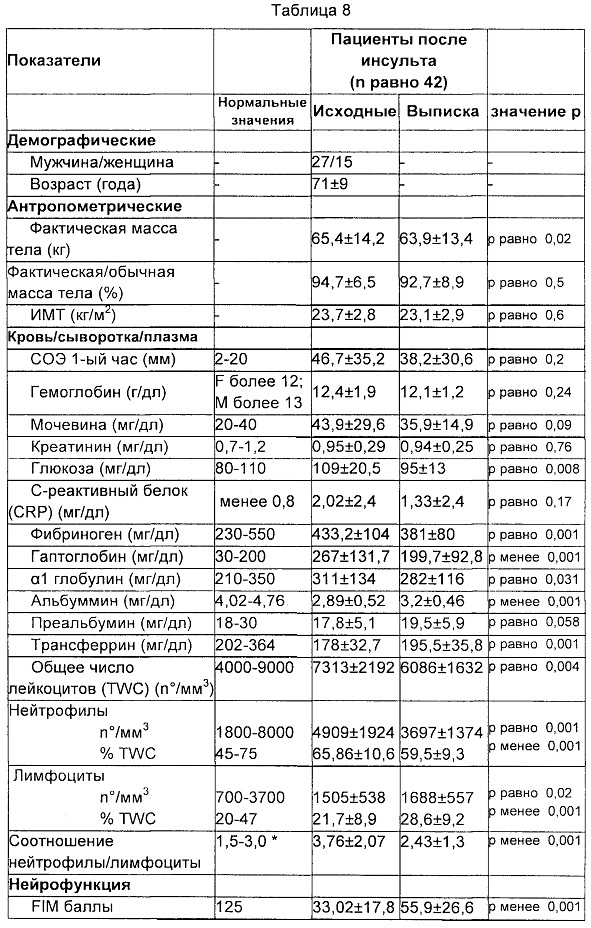
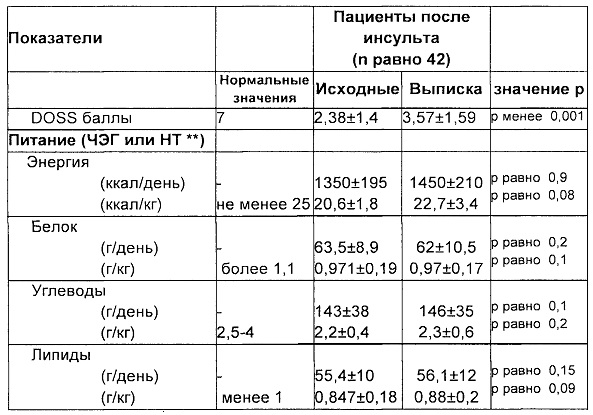
Данные приведены в виде среднего значения ± стандартное отклонение (СО).Data are presented as mean ± standard deviation (SD).
Статистический анализ: парный t-критерий Стьюдента.Statistical analysis: paired student t-test.
ИМТ: Индекс Массы Тела; СОЕ: скорость оседания эритроцитов; FIM: Мера функциональной независимости; DOSS: шкала оценки результата и тяжести дисфагииBMI: Body Mass Index; SOY: erythrocyte sedimentation rate; FIM: A measure of functional independence; DOSS: scale for assessing the outcome and severity of dysphagia
b) Циркулирующие лимфоциты, число Нф и соотношение Нф/Лфb) Circulating lymphocytes, Nf number and Nf / Lf ratio
Табл. 8 показывает, что на исходном уровне пациенты имели нормальное общее число лейкоцитов (TWC), лимфоцитов и Нф, не имели системного воспаления, однако соотношение Нф/Лф было выше (3,76±2,07), чем нормальное значение нашей лаборатории (не более 3).Tab. 8 shows that at the initial level, patients had a normal total number of leukocytes (TWC), lymphocytes and Nf, had no systemic inflammation, however, the Nf / Lf ratio was higher (3.76 ± 2.07) than the normal value of our laboratory (not more than 3).
При выписке существенные снижения исходных чисел TWC (р равно 0,004) и Нф (р равно 0,001) были обнаружены, при этом число лимфоцитов было повышено (р равно 0,02). Таким образом, соотношение Нф/Лф существенно понижалось до 2,43±1,3 (р менее 0,001) и нормализовалось.Upon discharge, significant decreases in the initial numbers of TWC (p is 0.004) and Hf (p is 0.001) were detected, while the number of lymphocytes was increased (p is 0.02). Thus, the ratio Nf / Lf significantly decreased to 2.43 ± 1.3 (p less than 0.001) and normalized.
c) Взаимосвязь между циркулирующими лимфоцитами, соотношением Нф/Лф и нейрофункциональными тестами в течение реабилитацииc) The relationship between circulating lymphocytes, the ratio of Nf / Lf and neurofunctional tests during rehabilitation
Абсолютные количества лимфоцитов и % лимфоцитов положительно коррелировали с DOSS (r равно +0,235, р равно 0,04 и г равно +0,224, р равно 0,05, соответственно) и отрицательно коррелировали с маркером воспаления In CRP (r равно -0,265, р равно 0,02 и r равно -0,484, р равно 0,0001 соответственно). Число Нф было положительно связано с In CRP (r равно +0,37, р равно 0,001) и показывало слабую негативную ассоциацию с физической способностью (FIM, г равно -0,20, р равно 0,07). Корреляции между Нф и DOSS обнаружено не было. Лимфоциты и нейтрофилы сильно отрицательно коррелировали (r равно - 0,926, р менее 0,001). Соотношение Нф/Лф было обратно пропорционально физической способности (r равно -0,262, р равно 0,02) и способности к глотанию (r равно -0,279, р равно 0,01), но было положительно ассоциировано с In CRP (r равно +0,514, р равно 0,0001). Результаты показывают положительную корреляцию между FIM и DOSS (r равно +0,78, р менее 0,0001).Absolute lymphocyte counts and% lymphocytes positively correlated with DOSS (r is +0.235, p is 0.04 and g is +0.224, p is 0.05, respectively) and negatively correlated with the inflammation marker In CRP (r is -0.265, p is 0.02 and r is -0.484, p is 0.0001, respectively). The Hf number was positively associated with In CRP (r is +0.37, p is 0.001) and showed a weak negative association with physical ability (FIM, g is -0.20, p is 0.07). No correlation was found between Hf and DOSS. Lymphocytes and neutrophils strongly negatively correlated (r is - 0.926, p is less than 0.001). The Hf / Lf ratio was inversely proportional to physical ability (r is -0.262, p is 0.02) and swallowing ability (r is -0.279, p is 0.01), but was positively associated with In CRP (r is +0.514 , p is 0.0001). The results show a positive correlation between FIM and DOSS (r is +0.78, p is less than 0.0001).
С целью лучшего понимания взаимосвязи между временными изменениями циркулирующих иммунных клеток и дисфагией, всю группу после инсульта разделяли на первую группу, которая после реабилитации, проявляла улучшение дисфагии (n равно 30 субъектов) и вторую группу, которая не имела улучшения дисфагии (n равно 12 субъектов). Табл. 9 показывает изменения некоторых показателей между субъектами с улучшением и без улучшения дисфагии.In order to better understand the relationship between temporary changes in circulating immune cells and dysphagia, the entire group after a stroke was divided into the first group, which, after rehabilitation, showed an improvement in dysphagia (n is 30 subjects) and a second group that did not have an improvement in dysphagia (n is 12 subjects ) Tab. 9 shows changes in some indicators between subjects with and without dysphagia improvement.
Данные показатели одновременно тестировали в регрессионной логистической модели, наконец, показывая, что только % лимфоцитов был значимо ассоциирован с улучшенной способностью к глотанию (р равно 0,01). Наряду с этим открытием, временные изменения в % лимфоцитов и DOSS были положительно скоррелированы (р равно 0,015; Фиг. 3, график а).These indicators were simultaneously tested in a regression logistic model, finally showing that only% lymphocytes were significantly associated with improved swallowability (p = 0.01). Along with this discovery, transient changes in% of lymphocytes and DOSS were positively correlated (p = 0.015; Fig. 3, graph a).
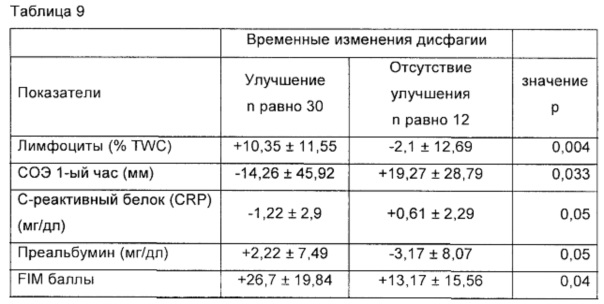
d) Влияние добавки ЕАА на лимфоциты и дисфагиюd) Effect of EAA supplementation on lymphocytes and dysphagia
На исходном уровне, группы ЕАА и плацебо были сходны по всем рассматриваемым показателям, за исключением сывороточных концентраций альфа-1 глобулина, которая была выше в группе плацебо, чем в группе ЕАА (р менее 0,02) (табл. 10). В течение периода реабилитации временные изменения всех рассматриваемых показателей (табл. 11) были сходными между двумя группами пациентов за исключением альфа-1 глобулина, который снижался у пациентов плацебо группы (взаимодействие р равно 0,01), и соотношения Нф/Лф снижение которого было более выражено в группе ЕАА (взаимодействие р равно 0,04).At baseline, the EAA and placebo groups were similar in all indicators considered, with the exception of serum concentrations of alpha-1 globulin, which was higher in the placebo group than in the EAA group (p less than 0.02) (Table 10). During the rehabilitation period, temporary changes in all indicators considered (Table 11) were similar between the two groups of patients, with the exception of alpha-1 globulin, which decreased in placebo patients (p interaction was 0.01), and the ratio Nf / Lf decreased more pronounced in the EAA group (p interaction is 0.04).
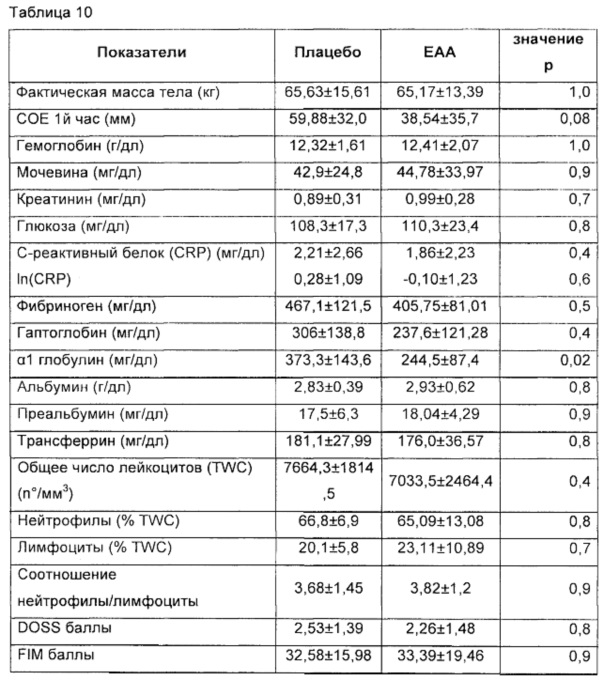
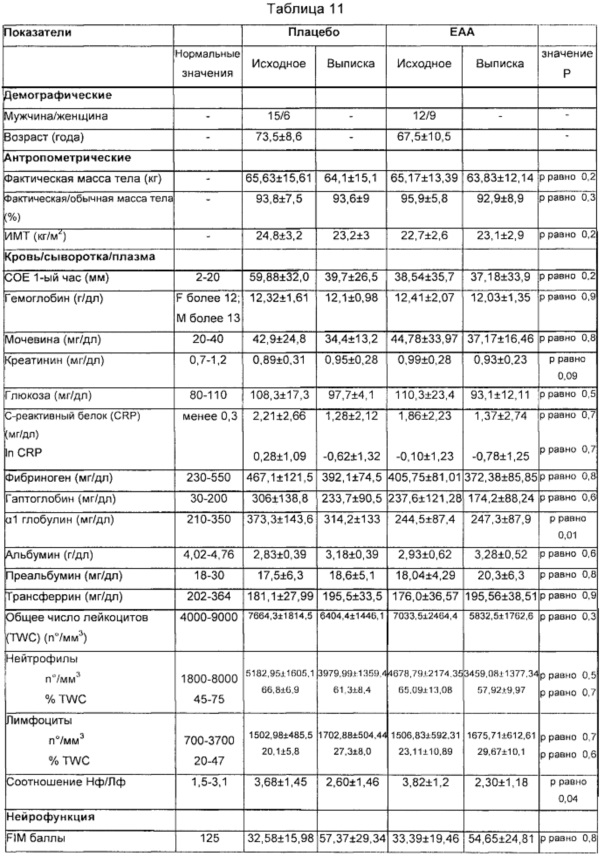

Значения выражены в виде среднего ± стандартное отклонение. Статистический анализ: анализ повторных измерений показателей. Описан только уровень р взаимодействия (время*лечение). Уровень значимости установлен при р менее 0,05Values are expressed as mean ± standard deviation. Statistical analysis: analysis of repeated measurements of indicators. Only the level of interaction p is described (time * treatment). Significance level set at p less than 0.05
В обеих группах улучшения дисфагии были положительно связаны с улучшениями в % лимфоцитов (Фиг. 3, графики b и с), но ассоциация была более явной в группе ЕАА, подтверждая, что ассоциация, наблюдаемая у всей группы пациентов после инсульта (Фиг. 3, график а) в основном обусловлена лечением ЕАА.In both groups, improvements in dysphagia were positively associated with improvements in% of lymphocytes (Fig. 3, graphs b and c), but the association was more pronounced in the EAA group, confirming that the association observed in the whole group of patients after a stroke (Fig. 3, Schedule a) is mainly due to treatment with EAA.
Исследование показывает, что в течение подострой стадии ишемического инсульта пациенты при поступлении в институт реабилитации имели нормальные количества лимфоцитов и нейтрофилов периферической крови, но высокое соотношение Нф/Лф. После реабилитации соотношение Нф/Лф нормализовалось, из-за понижения числа Нф и повышения числа Лф. Более того, исследование показывает, что повышенный % лимфоцитов в периферической крови в значительной степени ассоциирован с улучшенной дисфагией и что эта взаимосвязь усилена добавкой незаменимых аминокислот (ЕАА) пациенту.The study shows that during the subacute stage of ischemic stroke, patients received normal numbers of peripheral blood lymphocytes and neutrophils upon admission to the rehabilitation institute, but a high ratio of Nf / Lf. After rehabilitation, the Nf / Lf ratio returned to normal, due to a decrease in the number of Nf and an increase in the number of Lf. Moreover, the study shows that increased% of peripheral blood lymphocytes are significantly associated with improved dysphagia and that this relationship is enhanced by the addition of essential amino acids (EAA) to the patient.
1) Количества циркулирующих лимфоцитов и нейтрофилов, соотношение Нф/Лф1) The number of circulating lymphocytes and neutrophils, the ratio of Nf / Lf
Исследование показывает нормальный профиль общего числа лейкоцитов крови, числа лимфоцитов и нейтрофилов со слегка повышенным соотношением Нф/Лф.The study shows a normal profile of the total number of white blood cells, the number of lymphocytes and neutrophils with a slightly increased ratio of Nf / Lf.
В течение реабилитации происходило снижение степени постострого воспаления с положительным влиянием на клинико-метаболический статус пациента. Фактически, снижение соотношения Нф/Лф было ассоциировано с улучшениями в физической недееспособности и неспособности к глотанию пациента, уровней циркулирующих отрицательных белков острой фазы ответа, потенциально влияющих на восстановление мозга. Более того, у пациентов улучшалась концентрация глюкозы в крови, свидетельствуя о снижении устойчивости к инсулину.During rehabilitation, there was a decrease in the degree of post-acute inflammation with a positive effect on the clinical and metabolic status of the patient. In fact, a decrease in the Nf / Lf ratio was associated with improvements in physical disability and inability to swallow the patient, levels of circulating negative proteins of the acute phase of the response, potentially affecting brain recovery. Moreover, patients had improved blood glucose concentrations, indicating a decrease in insulin resistance.
Профиль иммунных клеток в крови в течение подострого инсульта противоположен таковому, описанному при острой или непосредственно постострой фазы церебральной ишемии. При острой ишемии общее число лейкоцитов и число нейтрофилов повышены, а число лимфоцитов понижено, и в течение дней после инсульта происходит ингибирование пролиферации/активности лимфоцитов, за счет как супрессивного эффекта в результате чрезмерно активированной вегетативной нервной системы в селезенке и лимфоузлах, так и прямой ингибиторной активности, оказываемой Нф на лимфоциты.The profile of immune cells in the blood during a subacute stroke is the opposite of that described in the acute or directly post-acute phase of cerebral ischemia. In acute ischemia, the total number of leukocytes and the number of neutrophils are increased, and the number of lymphocytes is reduced, and proliferation / activity of lymphocytes is inhibited within days after a stroke, due to both the suppressive effect as a result of an excessively activated autonomic nervous system in the spleen and lymph nodes, and a direct inhibitory activity exerted by Nf on lymphocytes.
По сравнению с острой стадией инсульта, при которой снижение адаптивной иммунной системы является полезным для пациента, в течение подострого инсульта улучшение адаптивной иммунной системы не только неблагоприятно, но также может способствовать нейродегенерации. Настоящее исследование показывает, что восстановление функции иммунной системы связано с улучшением в FIM как у пациентов после инсульта, так и с повреждением спинного мозга.Compared with the acute stage of a stroke, in which a decrease in the adaptive immune system is beneficial for the patient, during a subacute stroke, an improvement in the adaptive immune system is not only unfavorable, but can also contribute to neurodegeneration. The present study shows that restoration of immune system function is associated with an improvement in FIM in both patients after stroke and spinal cord injury.
Возможно, что повышение циркулирующих лимфоцитов, наблюдаемое у пациентов с подострым инсультом, может быть обусловлено пониженной продукцией кортикостероидов, вследствие сниженного воспаления, поскольку повышенные уровни кортикостероида (или метанефрина) ассоциированы с лимфопенией после обширного инфаркта головного мозга. Лимфоциты экспрессируют больше глюкокортикоидных рецепторов, чем гранулоциты и моноциты. Блокада данных рецепторов предотвращает лимфопению. Даже если уровни циркулирующих кортикостероидов не определены в настоящем исследовании, нормализация глюкозы в крови в течение реабилитации, свидетельствующая о пониженной устойчивости к инсулину, подтверждает снижение продукции кортикостероидов. Поскольку при острой ишемии Нф влияют на тяжесть инсульта, снижение Нф в течение реабилитации может способствовать процессам нейрорепарации и нейрорегенерации. В настоящем исследовании это косвенно подтверждается отрицательной корреляцией, выявленной между соотношением Нф/Лф и восстановлением обеих физической недееспособности (FIM) и неспособности к глотанию (DOSS). Это подтверждает, что чем меньше воспаление, тем более высока способность к глотанию.It is possible that the increase in circulating lymphocytes observed in patients with subacute stroke may be due to reduced production of corticosteroids due to reduced inflammation, since increased levels of corticosteroid (or methanephrine) are associated with lymphopenia after extensive cerebral infarction. Lymphocytes express more glucocorticoid receptors than granulocytes and monocytes. Blockade of these receptors prevents lymphopenia. Even if levels of circulating corticosteroids are not defined in this study, normalization of blood glucose during rehabilitation, indicating reduced insulin resistance, confirms a decrease in corticosteroid production. Since in acute ischemia, NFs affect the severity of a stroke, a decrease in NF during rehabilitation can contribute to the processes of neuroreparation and neuroregeneration. In the present study, this is indirectly confirmed by the negative correlation found between the Nf / Lf ratio and the recovery of both physical disability (FIM) and inability to swallow (DOSS). This confirms that the less inflammation, the higher the ability to swallow.
Даже если врожденные и адаптивные иммунные системы совместно кооперируются для обеспечения лучшего иммунного ответа после воспаления, индуцированного церебральной ишемией, Нф и лимфоциты обратно скоррелированы, поскольку Нф могут ингибировать число и активность лимфоцитов.Even if the innate and adaptive immune systems cooperate together to provide a better immune response after inflammation induced by cerebral ischemia, Nf and lymphocytes are inversely correlated, since Nf can inhibit the number and activity of lymphocytes.
Таки образом, исследование подтверждает, что в течение подострого инсульта адаптивный иммунитет может преобладать над врожденной иммунной системой и может быть ассоциирован с нейрофункциональным восстановлением пациента, при этом постоянный более высокий уровень воспаления может быть пагубным для восстановления глотания.Thus, the study confirms that during a subacute stroke, adaptive immunity may prevail over the innate immune system and may be associated with neurofunctional recovery of the patient, while a constant higher level of inflammation may be detrimental to restore swallowing.
2) Добавка ЕАА и взаимосвязь между адаптивной иммунной системой и нейрофункцией2) EAA supplementation and the relationship between the adaptive immune system and neurofunction
Исследование показывает, что ЕАА ассоциированы со значительным снижением соотношения Нф/Лф в крови и усилением взаимосвязи между улучшенной временной динамикой % лимфоцитов и DOSS. Таким образом, ЕАА влияют как на сывороточный иммунитет, так и на нейрорепаративные процессы. Учитывая метаболическую активность ЕАА, данные субстраты обеспечивают эти процессы посредством нескольких механизмов.The study shows that EAA is associated with a significant decrease in the ratio of Nf / Lf in the blood and an increase in the relationship between the improved temporal dynamics of% lymphocytes and DOSS. Thus, EAA affects both serum immunity and neuroreparative processes. Given the metabolic activity of EAA, these substrates provide these processes through several mechanisms.
Во-первых, ЕАА могут непосредственно индуцировать синтез белка в иммунных клетках для пролиферации и дупликации лимфоцитов.First, EAA can directly induce protein synthesis in immune cells to proliferate and duplicate lymphocytes.
В случае, когда Нф преобладают над Лф, как в случае острой ишемии и при поступлении пациента на реабилитацию, фагоцитарная активность циркулирующих Нф может отрицательно влиять на восстановление глотания. В данном исследовании об этом свидетельствует отрицательная корреляция, обнаруженная между соотношением Нф/Лф и способностью к глотанию. Таким образом, исследование подтверждает, что ЕАА изменяют иммунный профиль в пользу адаптивного иммунитета по сравнению с паттерном воспаления.In the case when Nf prevail over Lf, as in the case of acute ischemia and when a patient enters rehabilitation, the phagocytic activity of circulating Nf can negatively affect the restoration of swallowing. In this study, this is evidenced by the negative correlation found between the ratio Nf / Lf and the ability to swallow. Thus, the study confirms that EAA alters the immune profile in favor of adaptive immunity compared to the pattern of inflammation.
Во-вторых, ЕАА-индуцированный синтез белка непосредственно улучшает способность к глотанию за счет механизмов, лежащих в основе нормального глотания, таких как межнейронная активность и/или центр глотания и/или периферическая нейромышечная функция глотания.Secondly, EAA-induced protein synthesis directly improves swallowability through mechanisms underlying normal swallowing, such as interneuronal activity and / or the swallowing center and / or peripheral neuromuscular swallowing function.
В-третьих, ЕАА-индуцированный анаболический статус тела имеет первостепенное значение для восстановления и функционирования мозга. В данном исследовании на улучшенный анаболический статус, несмотря на небольшую потерю исходной массы тела, указывает восстановление синтеза печенью отрицательных белков острой фазы ответа, таких как альбумин, трансферрин, преальбумин. Следует отметить, что данные белки per se могут играть роль в восстановлении/регенерации мозга и реактивации нейронных сетей.Thirdly, the EAA-induced anabolic status of the body is of paramount importance for the restoration and functioning of the brain. In this study, an improved anabolic status, despite a slight loss of initial body weight, is indicated by the restoration of liver synthesis of negative acute phase response proteins, such as albumin, transferrin, prealbumin. It should be noted that these proteins per se can play a role in the restoration / regeneration of the brain and the reactivation of neural networks.
Исследование показывает, что более чем у 28% пациентов не происходило улучшения дисфагии при реабилитации. Это может быть обусловлено отсутствием возбудимости коры в неповрежденном полушарии. Данная гипотеза основана на следующем: 1) глотательная мускулатура представлена в каждом полушарии, но с заметной межполушарной ассиметрией; 2) возникновение дисфагии связано с размером фарингеальной проекции в неповрежденном полушарии.The study shows that in more than 28% of patients there was no improvement in dysphagia during rehabilitation. This may be due to the lack of excitability of the cortex in the intact hemisphere. This hypothesis is based on the following: 1) swallowing muscles are presented in each hemisphere, but with noticeable interhemispheric asymmetry; 2) the occurrence of dysphagia is associated with the size of the pharyngeal projection in the intact hemisphere.
Исследование показывает, что физическая дееспособность (FIM) и способность к глотанию (DOSS) взаимосвязаны. Тот факт, что при логистическом регрессионном анализе исход дисфагии в основном ассоциирован с % лимфоцитов, а не с FIM, подтверждает, что улучшение дисфагии зависит не только от общего улучшения нейронных сетей, как в случае пациентов с плацебо, но и также опосредовано повышенной активностью адаптивной иммунной системы при восстановлении мозга, как в случае с пациентами ЕАА.Research shows that physical capacity (FIM) and swallowability (DOSS) are interconnected. The fact that, in a logistic regression analysis, the outcome of dysphagia is mainly associated with% lymphocytes, and not with FIM, confirms that the improvement of dysphagia depends not only on the overall improvement of neural networks, as in the case of patients with placebo, but also is mediated by increased adaptive activity the immune system during brain repair, as is the case with EAA patients.
Более того экспериментальные данные свидетельствуют о наличии положительной корреляции между значением соотношения Нф/Лф и концентрацией ЕАА в артериальной крови, в основном незаменимых аминокислот с разветвленной цепью (лейцин, изолейцин и валин).Moreover, experimental data indicate a positive correlation between the value of the Nf / Lf ratio and the concentration of EAA in arterial blood, mainly of essential branched chain amino acids (leucine, isoleucine and valine).
С другой стороны, корреляции между значением соотношения Нф/Лф и общей концентрацией аминокислот в артериальной крови, а также корреляция между значением соотношения Нф/Лф и общей концентрацией аминокислот в венозной крови не существенны.On the other hand, correlations between the value of the Nf / Lf ratio and the total concentration of amino acids in arterial blood, as well as the correlation between the value of the Nf / Lf ratio and the total concentration of amino acids in venous blood, are not significant.
Физиопатологическим объяснением вышеупомянутого является тот факт, что более высокие воспалительные процессы (высокое соотношение Нф/Лф) представляют собой более высокий белковый обмен (синтезируются высокие количества белковых медиаторов воспаления, например, цитокинов) и поэтому выше потребность в соответствующей концентрации, в частности незаменимых аминокислот, в системном артериальном кровотоке, для синтеза белка, в тоже время венозная кровь отражает мышечный катаболизм.The physiopathological explanation of the above is the fact that higher inflammatory processes (high Nf / Lf ratio) represent a higher protein metabolism (high amounts of protein mediators of inflammation, for example, cytokines, are synthesized) and therefore there is a higher need for an appropriate concentration, in particular of essential amino acids, in systemic arterial blood flow, for protein synthesis, at the same time, venous blood reflects muscle catabolism.
СПИСОК ССЫЛОКLIST OF LINKS
1. R. Aquilani, М. Boselli, P. Baiardi, с соавт., "Is stroke rehabilitation a metabolic problem?" Brain Inj, т. 28, №2, стр. 161-173, 2014.1. R. Aquilani, M. Boselli, P. Baiardi, et al., "Is stroke rehabilitation a metabolic problem?" Brain Inj, t. 28, No. 2, pp. 161-173, 2014.
2. R. Aquilani, M.T. La Rovere, O. Febo, с соавт., "Preserved muscle protein metabolism in obese patients with chronic heart failure" Int J Cardiol, т. 160, №2, стр. 102-108, 2012.2. R. Aquilani, M.T. La Rovere, O. Febo, et al., "Preserved muscle protein metabolism in obese patients with chronic heart failure," Int J Cardiol, T. 160, No. 2, pp. 102-108, 2012.
3. Z. Liu и E.J. Barrett, "Human protein metabolism: its measurement и regulation" Am J Physiol Endocrinol Metab, т. 283, №6, стр. E1105-E1112, 2002.3. Z. Liu and E.J. Barrett, "Human protein metabolism: its measurement and regulation" Am J Physiol Endocrinol Metab, vol. 283, No. 6, pp. E1105-E1112, 2002.
4. W.С. Chumlea, A.F. Roche, и M.L. Steinbaugh, "Estimating stature from knee height for persons 60 to 90 years of age" J Am Geriatr Soc, т. 33, №2, стр. 116-120, 1985.4. W.S. Chumlea, A.F. Roche, and M.L. Steinbaugh, "Estimating stature from knee height for
5. R.A. Keith, С.V. Granger, В.B. Hamilton и F.S. Sherwin, "The functional independence measure: a new tool for rehabilitation" В: M.G. Eisenberg, R.C. Grzesiak, eds. Advances in Clinical Rehabilitation, т. I. New York: Springer-Verlag, стр. 6-18, 1987.5. R.A. Keith, C.V. Granger, B.B. Hamilton and F.S. Sherwin, "The functional independence measure: a new tool for rehabilitation" B: M.G. Eisenberg, R.C. Grzesiak, eds. Advances in Clinical Rehabilitation, T. I. New York: Springer-Verlag, pp. 6-18, 1987.
6. К.H. O'Neil, M. Purdy, J. Falk, и L. Gallo, "The Dysphagia Outcome and Severity Scale" Dysphagia, т. 14, №3, стр. 139-145, 1999.6. K.H. O'Neil, M. Purdy, J. Falk, and L. Gallo, "The Dysphagia Outcome and Severity Scale" Dysphagia, Vol. 14, No. 3, pp. 139-145, 1999.
7. E. Carnevale и L. Marietta. Istituto Nazionale di Ricerca per gli Alimenti e la Nutrizione, INRAN. Tabelle di composizione degli alimenti. Roma, Italy: Istituto Superiore Nazionale della Nutrizione; 1989.7. E. Carnevale and L. Marietta. Istituto Nazionale di Ricerca per gli Alimenti e la Nutrizione, INRAN. Tabelle di composizione degli alimenti. Roma, Italy: Istituto Superiore Nazionale della Nutrizione; 1989.
8. R. Aquilani, R. Tramarin, R.F. Pedretti с соавт., "Despite good compliance, very low fat diet alone does not achieve recommended cholesterol goals in outpatients with coronary heart disease" Eur Heart J, т. 20, №14, стр. 1020-1029, 1999.8. R. Aquilani, R. Tramarin, R.F. Pedretti et al. "Despite good compliance, very low fat diet alone does not achieve recommended cholesterol goals in outpatients with coronary heart disease" Eur Heart J, Vol. 20, No. 14, pp. 1020-1029, 1999.
Claims (15)
Applications Claiming Priority (3)
| Application Number | Priority Date | Filing Date | Title |
|---|---|---|---|
| ITTO2014A000806 | 2014-10-08 | ||
| ITTO20140806 | 2014-10-08 | ||
| PCT/IB2015/057662 WO2016055948A1 (en) | 2014-10-08 | 2015-10-07 | Compositions comprising amino acids for use in the treatment of stroke in patients with dysphagia |
Publications (1)
| Publication Number | Publication Date |
|---|---|
| RU2668373C1 true RU2668373C1 (en) | 2018-09-28 |
Family
ID=52101507
Family Applications (1)
| Application Number | Title | Priority Date | Filing Date |
|---|---|---|---|
| RU2017112492A RU2668373C1 (en) | 2014-10-08 | 2015-10-07 | Compositions containing amino acids for application within stroke treatment in patients with dysphagia |
Country Status (14)
| Country | Link |
|---|---|
| US (1) | US9707198B2 (en) |
| EP (1) | EP3006027B1 (en) |
| JP (1) | JP6447716B2 (en) |
| KR (1) | KR102077374B1 (en) |
| AU (1) | AU2015329581B2 (en) |
| CA (1) | CA2958033C (en) |
| DK (1) | DK3006027T3 (en) |
| ES (1) | ES2651903T3 (en) |
| HU (1) | HUE035699T2 (en) |
| NO (1) | NO3006027T3 (en) |
| NZ (1) | NZ728962A (en) |
| PL (1) | PL3006027T3 (en) |
| RU (1) | RU2668373C1 (en) |
| WO (1) | WO2016055948A1 (en) |
Families Citing this family (2)
| Publication number | Priority date | Publication date | Assignee | Title |
|---|---|---|---|---|
| EP3294279B1 (en) * | 2015-05-14 | 2020-01-01 | Professional Dietetics S.p.A. | Compositions comprising amino acids for use in the treatment of mucositides in neoplasia patients undergoing radiation therapy and/or chemotherapy |
| IT201700087376A1 (en) * | 2017-07-28 | 2019-01-28 | Professional Dietetics Spa | COMPOSITIONS INCLUDING AMINO ACIDS FOR USE IN THE TREATMENT OF DISEASES ASSOCIATED WITH MITOCHONDRIAL DYSFUNCTION |
Citations (1)
| Publication number | Priority date | Publication date | Assignee | Title |
|---|---|---|---|---|
| EP2275084A1 (en) * | 2009-07-15 | 2011-01-19 | Unilever PLC | Oral care composition |
Family Cites Families (11)
| Publication number | Priority date | Publication date | Assignee | Title |
|---|---|---|---|---|
| US4780475A (en) * | 1986-02-03 | 1988-10-25 | Cerra Frank B | Preparation for the prevention of catabolism |
| US5276018A (en) * | 1992-07-17 | 1994-01-04 | Brigham And Women's Hospital | Composition comprising amino acids and methods for decreasing muscle breakdown |
| IT1320783B1 (en) * | 2000-07-04 | 2003-12-10 | Professional Dietetics Srl | COMPOSITIONS BASED ON AMINO ACIDS, SUITABLE TO IMPROVE MUSCLE PERFORMANCE. |
| US20030060421A1 (en) * | 2001-07-19 | 2003-03-27 | Neuron Therapeutics, Inc. | Kits and compositions supporting intracranial perfusions |
| JP2012533627A (en) * | 2009-07-20 | 2012-12-27 | ネステク ソシエテ アノニム | How to attenuate loss of functional status |
| TR201807130T4 (en) * | 2011-03-01 | 2018-06-21 | Nestec Sa | Elongation viscosity to facilitate safe swallowing of the nutrients in the mouth. |
| JP2012214451A (en) * | 2011-03-25 | 2012-11-08 | En Otsuka Pharmaceutical Co Ltd | Amino acid composition for inflammatory disease |
| WO2012133198A1 (en) * | 2011-03-25 | 2012-10-04 | イーエヌ大塚製薬株式会社 | Nutritional composition for inflammatory diseases |
| JP5837315B2 (en) * | 2011-03-25 | 2015-12-24 | イーエヌ大塚製薬株式会社 | Nutritional composition for inflammatory diseases |
| AU2012245002A1 (en) * | 2011-04-21 | 2013-11-28 | Fit-Bioceuticals Limited | Weight loss composition |
| RU2526826C2 (en) * | 2012-10-24 | 2014-08-27 | Николай Владимирович Соловьёв | Parenteral composition, method for preparing and using composition |
-
2015
- 2015-10-01 EP EP15187946.7A patent/EP3006027B1/en active Active
- 2015-10-01 PL PL15187946T patent/PL3006027T3/en unknown
- 2015-10-01 ES ES15187946.7T patent/ES2651903T3/en active Active
- 2015-10-01 NO NO15187946A patent/NO3006027T3/no unknown
- 2015-10-01 DK DK15187946.7T patent/DK3006027T3/en active
- 2015-10-01 HU HUE15187946A patent/HUE035699T2/en unknown
- 2015-10-07 CA CA2958033A patent/CA2958033C/en active Active
- 2015-10-07 NZ NZ728962A patent/NZ728962A/en not_active IP Right Cessation
- 2015-10-07 RU RU2017112492A patent/RU2668373C1/en active
- 2015-10-07 JP JP2017511782A patent/JP6447716B2/en not_active Expired - Fee Related
- 2015-10-07 AU AU2015329581A patent/AU2015329581B2/en not_active Ceased
- 2015-10-07 WO PCT/IB2015/057662 patent/WO2016055948A1/en not_active Ceased
- 2015-10-07 KR KR1020177009224A patent/KR102077374B1/en not_active Expired - Fee Related
- 2015-10-08 US US14/878,100 patent/US9707198B2/en not_active Expired - Fee Related
Patent Citations (1)
| Publication number | Priority date | Publication date | Assignee | Title |
|---|---|---|---|---|
| EP2275084A1 (en) * | 2009-07-15 | 2011-01-19 | Unilever PLC | Oral care composition |
Non-Patent Citations (7)
| Title |
|---|
| AXEL G. FELLER. Nutrition Support in the Stroke Patient. Nutrition and Stroke, edited by Pierre Guesry, Michael Hennerici, and Gerhard Sitzer. Nestle Nutrition Workshop Series, Supplement. Nestec Ltd., Vevey/Lippincott-Raven Publishers, Philadelphia 1997 р.159-169 DISCUSSION р.170. * |
| DIOGUARDI F. S. Clinical use of amino acids as dietary supplement: pros and cons. Journal of Cachexia, Sarcopenia and Muscle, 2011vol. 2, no. 2, pp. 75-80, с. 78, фиг.1. * |
| DIOGUARDI F. S. Clinical use of amino acids as dietary supplement: pros and cons. Journal of Cachexia, Sarcopenia and Muscle, 2011vol. 2, no. 2, pp. 75-80, с. 78, фиг.1. AXEL G. FELLER. Nutrition Support in the Stroke Patient. Nutrition and Stroke, edited by Pierre Guesry, Michael Hennerici, and Gerhard Sitzer. Nestle Nutrition Workshop Series, Supplement. Nestec Ltd., Vevey/Lippincott-Raven Publishers, Philadelphia 1997 р.159-169 DISCUSSION р.170. WILFRED DRUML. Amino acid kinetics in patients with sepsis. Am J Clin Nutr 2001;73:908-13. Printed in USA. American Society for Clinical Nutrition 1-3. SHIN-JOE YEH. Dysphagia screening decreases pneumonia in acute stroke patients admitted to the stroke intensive care unit. Journal of the Neurological Sciences 306 (2011) 38-41 doi:10.1016/j.jns.2011.04.001. DIOGUARDI F. S. Clinical use of amino acids as dietary supplement: pros and cons. Journal of Cachexia, Sarcopenia and Muscle, 2011vol. 2, no. 2, pp. 75-80. * |
| DIOGUARDI F. S. Clinical use of amino acids as dietary supplement: pros and cons. Journal of Cachexia, Sarcopenia and Muscle, 2011vol. 2, no. 2, pp. 75-80. * |
| SHIN-JOE YEH. Dysphagia screening decreases pneumonia in acute stroke patients admitted to the stroke intensive care unit. Journal of the Neurological Sciences 306 (2011) 38-41 doi:10.1016/j.jns.2011.04.001. * |
| WILFRED DRUML. Amino acid kinetics in patients with sepsis. Am J Clin Nutr 2001;73:908-13. Printed in USA. American Society for Clinical Nutrition 1-3. * |
| РУМЯНЦЕВА С.А. Алгоритмы терапии острого инсульта. пункт 9. Новости медицины и фармации: всеукр. спец. мед.-фармац. изд. - Кихв. Неврология (328) 2010 (тематический номер) с.25-30. * |
Also Published As
| Publication number | Publication date |
|---|---|
| WO2016055948A1 (en) | 2016-04-14 |
| US9707198B2 (en) | 2017-07-18 |
| CA2958033A1 (en) | 2016-04-14 |
| KR20170057308A (en) | 2017-05-24 |
| AU2015329581B2 (en) | 2019-02-07 |
| US20160101078A1 (en) | 2016-04-14 |
| AU2015329581A1 (en) | 2017-03-02 |
| JP2017530103A (en) | 2017-10-12 |
| CA2958033C (en) | 2019-07-16 |
| JP6447716B2 (en) | 2019-01-09 |
| NO3006027T3 (en) | 2018-04-14 |
| EP3006027A1 (en) | 2016-04-13 |
| ES2651903T3 (en) | 2018-01-30 |
| NZ728962A (en) | 2019-05-31 |
| EP3006027B1 (en) | 2017-11-15 |
| PL3006027T3 (en) | 2018-02-28 |
| DK3006027T3 (en) | 2017-12-18 |
| HUE035699T2 (en) | 2018-05-28 |
| KR102077374B1 (en) | 2020-02-13 |
Similar Documents
| Publication | Publication Date | Title |
|---|---|---|
| Bo et al. | A high whey protein, vitamin D and E supplement preserves muscle mass, strength, and quality of life in sarcopenic older adults: A double-blind randomized controlled trial | |
| Viana et al. | Impact of β− hydroxy-β− methylbutyrate (HMB) on muscle loss and protein metabolism in critically ill patients: A RCT | |
| Dickinson et al. | Leucine-enriched amino acid ingestion after resistance exercise prolongs myofibrillar protein synthesis and amino acid transporter expression in older men | |
| May et al. | Reversal of cancer-related wasting using oral supplementation with a combination of β-hydroxy-β-methylbutyrate, arginine, and glutamine | |
| Breen et al. | Skeletal muscle protein metabolism in the elderly: Interventions to counteract the'anabolic resistance'of ageing | |
| Symons et al. | Aging does not impair the anabolic response to a protein-rich meal | |
| Børsheim et al. | Essential amino acids and muscle protein recovery from resistance exercise | |
| de Medeiros Cavalcante et al. | Effect of vitamin D3 supplementation and influence of BsmI polymorphism of the VDR gene of the inflammatory profile and oxidative stress in elderly women with vitamin D insufficiency: Vitamin D3 megadose reduces inflammatory markers | |
| Irving et al. | Effect of insulin sensitizer therapy on amino acids and their metabolites | |
| Adachi et al. | Effects of ghrelin administration after total gastrectomy: a prospective, randomized, placebo-controlled phase II study | |
| Aquilani et al. | Unaffected arm muscle hypercatabolism in dysphagic subacute stroke patients: the effects of essential amino acid supplementation | |
| Genton et al. | Glycine increases fat‐free mass in malnourished haemodialysis patients: a randomized double‐blind crossover trial | |
| Kawahara et al. | Anti-sarcopenic effects of active vitamin D through modulation of anabolic and catabolic signaling pathways in human skeletal muscle: A randomized controlled trial | |
| RU2668373C1 (en) | Compositions containing amino acids for application within stroke treatment in patients with dysphagia | |
| Jirka et al. | Effect of oral citrulline supplementation on whole body protein metabolism in adult patients with short bowel syndrome: A pilot, randomized, double-blind, cross-over study | |
| US12576068B2 (en) | Compositions containing amino acids and methods of using such compositions for treating sarcopenia | |
| Jourdan et al. | O025 CITRULLINE STIMULATES MUSCLE PROTEIN SYNTHESIS AT THE POST-ABSORPTIVE STATE IN HEALTHY SUBJECTS FED A LOW-PROTEIN DIET | |
| Ertuglu et al. | Protein–Energy Wasting and Nutritional Interventions in Chronic Kidney Disease | |
| Kawano et al. | Successful treatment of heart failure in an adult patient with Prader-Willi syndrome | |
| Deger et al. | Nutritional Management of Hemodialysis Patients | |
| HK40082928A (en) | Compositions containing amino acids and methods of using such compositions for treating sarcopenia | |
| Lyon et al. | 12 Metabolic Interventions for Sarcopenic Obesity | |
| Fitschen | Efficacy of beta-hydroxy-beta-methylbutyrate (HMB) supplementation in hemodialysis patients | |
| Nairizi | BRANCHED CHAIN AMINO ACIDS SUPPLEMENTATION OF DRINKING WATER AND DIET INDUCED OBESITY | |
| Baldissarro et al. | Clinical Study The Hip Functional Retrieval after Elective Surgery May Be Enhanced by Supplemented Essential Amino Acids |