RU2628373C2 - Non-destructive preparation method of pile materials, down and fur raw materials and semi-finished product sample for the analysis and device for its implementation - Google Patents
Non-destructive preparation method of pile materials, down and fur raw materials and semi-finished product sample for the analysis and device for its implementation Download PDFInfo
- Publication number
- RU2628373C2 RU2628373C2 RU2015136165A RU2015136165A RU2628373C2 RU 2628373 C2 RU2628373 C2 RU 2628373C2 RU 2015136165 A RU2015136165 A RU 2015136165A RU 2015136165 A RU2015136165 A RU 2015136165A RU 2628373 C2 RU2628373 C2 RU 2628373C2
- Authority
- RU
- Russia
- Prior art keywords
- plates
- pile
- materials
- sample
- base
- Prior art date
Links
- 239000000463 material Substances 0.000 title claims abstract description 73
- 239000011265 semifinished product Substances 0.000 title claims abstract description 12
- 238000002360 preparation method Methods 0.000 title claims abstract description 11
- 239000002994 raw material Substances 0.000 title abstract description 12
- 239000000523 sample Substances 0.000 claims abstract description 30
- 238000000034 method Methods 0.000 claims abstract description 19
- 210000004209 hair Anatomy 0.000 claims abstract description 11
- 230000001066 destructive effect Effects 0.000 claims abstract description 9
- 230000015572 biosynthetic process Effects 0.000 claims description 2
- 238000005070 sampling Methods 0.000 abstract description 4
- 230000000694 effects Effects 0.000 abstract 1
- 239000000126 substance Substances 0.000 abstract 1
- 230000033001 locomotion Effects 0.000 description 2
- 238000001303 quality assessment method Methods 0.000 description 2
- 241000700114 Chinchillidae Species 0.000 description 1
- 230000006378 damage Effects 0.000 description 1
- 238000011156 evaluation Methods 0.000 description 1
- 230000005484 gravity Effects 0.000 description 1
- 230000003779 hair growth Effects 0.000 description 1
- 230000003287 optical effect Effects 0.000 description 1
- 238000004321 preservation Methods 0.000 description 1
- 230000005855 radiation Effects 0.000 description 1
- 239000004753 textile Substances 0.000 description 1
- 230000003813 thin hair Effects 0.000 description 1
- 238000012876 topography Methods 0.000 description 1
Images

Classifications
-
- G—PHYSICS
- G01—MEASURING; TESTING
- G01B—MEASURING LENGTH, THICKNESS OR SIMILAR LINEAR DIMENSIONS; MEASURING ANGLES; MEASURING AREAS; MEASURING IRREGULARITIES OF SURFACES OR CONTOURS
- G01B5/00—Measuring arrangements characterised by the use of mechanical techniques
- G01B5/02—Measuring arrangements characterised by the use of mechanical techniques for measuring length, width or thickness
-
- G—PHYSICS
- G01—MEASURING; TESTING
- G01N—INVESTIGATING OR ANALYSING MATERIALS BY DETERMINING THEIR CHEMICAL OR PHYSICAL PROPERTIES
- G01N33/00—Investigating or analysing materials by specific methods not covered by groups G01N1/00 - G01N31/00
- G01N33/44—Resins; Plastics; Rubber; Leather
Landscapes
- Sampling And Sample Adjustment (AREA)
Abstract
Description
Изобретение относится к меховой, текстильной, швейной промышленности, а также к сельскому хозяйству и измерительной технике, и предназначено для изучения свойств меха и ворсовых материалов.The invention relates to the fur, textile, clothing industry, as well as to agriculture and measuring equipment, and is intended to study the properties of fur and pile materials.
Для изучения свойств ворсовых материалов, пушно-мехового сырья и полуфабриката необходимо подготовить пробу материала к проведению исследований. Известны способы количественной оценки геометрических характеристик волосяного покрова меховых шкурок, например измерение толщины, высоты, густоты и т.д. При исследовании натурального меха требуется учитывать топографию шкурки и выделять отдельные участки материала, для чего часто применяют способы разрушающей подготовки образца к исследованию.To study the properties of pile materials, fur and raw materials and semi-finished products, it is necessary to prepare a sample of material for research. Known methods for quantifying the geometric characteristics of the hairline of fur skins, for example, measuring thickness, height, density, etc. In the study of natural fur, it is necessary to take into account the topography of the skin and highlight individual sections of the material, for which methods of destructive sample preparation for research are often used.
Известен способ подготовки пушно-мехового сырья к исследованию, в котором шкурку разрезают на заранее размеченные полосы [Кузнецов Б.А. Основы товароведения пушно-мехового сырья /Под ред. М.Е. Сергеева. - М., 1952, 509 с., с. 66-67]. Известен способ подготовки ворсовых материалов к исследованию [ГОСТ 3815.1-93 Материалы ворсовые. Методы определения качества ворса.], при котором из материала вырезают элементарные пробы. Недостатком описанных способов является разрушение исследуемого образца материала до состояния, не подлежащего восстановлению.There is a method of preparing fur and fur raw materials for research, in which the skin is cut into pre-marked stripes [B. Kuznetsov Fundamentals of commodity science of fur and fur raw materials / Ed. M.E. Sergeeva. - M., 1952, 509 p., P. 66-67]. A known method of preparing pile materials for research [GOST 3815.1-93 Materials pile. Methods for determining the quality of the pile.], In which elementary samples are cut from the material. The disadvantage of the described methods is the destruction of the test sample of the material to a state that cannot be restored.
Известен способ неразрушающей подготовки ворсовых материалов к исследованию [ГОСТ 3815.4-93 Материалы ворсовые. Метод определения высоты ворса и толщины ворсового материала], в котором материал перегибают вдоль уточных нитей и в образовавшуюся петлю вставляют пластину, петлю натягивают ребром пластины, а затем проводят исследование. Недостатком описанного способа является невозможность его применения для изучения пушно-мехового сырья и ограниченность применения только для изучения толщины ворсовых материалов и высоты ворса.A known method of non-destructive preparation of pile materials for research [GOST 3815.4-93 Materials pile. A method for determining pile height and pile material thickness], in which the material is bent along the weft threads and a plate is inserted into the formed loop, the loop is pulled along the edge of the plate, and then a study is carried out. The disadvantage of the described method is the impossibility of its application for the study of fur-fur raw materials and the limited use only for studying the thickness of pile materials and the height of the pile.
Известно устройство неразрушающей оценки геометрических характеристик ворсовых материалов [RU 2182707, МПК G01N 33/44], в котором подготовка пушно-мехового сырья к исследованию, происходит с помощью столика и прижимных стоек, расположенных на подвижной опоре. Недостатком устройства является невозможность использования его для проведения другого типа исследований, кроме изучения геометрических характеристик материалов.A device for non-destructive evaluation of the geometric characteristics of pile materials [RU 2182707, IPC G01N 33/44], in which the preparation of fur-fur raw materials for research, is carried out using a table and pressure racks located on a movable support. The disadvantage of this device is the inability to use it to conduct a different type of research, in addition to studying the geometric characteristics of materials.
Ближайшим прототипом изобретения является устройство для неразрушающей оценки густоты волосяного покрова меха [RU 2206617, МПК C14B 17/00], в котором подготовка пушно-мехового сырья к исследованию происходит с помощью зажима для выделения вертикального пучка волос, выполненного в виде основания и подвижных щупов, выполняющих возвратно-поступательное движение. Недостатком описанного устройства является ограниченное использование выделенного пучка волос только для изучения густоты меха.The closest prototype of the invention is a device for non-destructive assessment of the thickness of the fur coat of the fur [RU 2206617, IPC C14B 17/00], in which the preparation of fur-fur raw materials for research is carried out using a clip to highlight a vertical hair bundle made in the form of a base and movable probes, performing reciprocating motion. The disadvantage of the described device is the limited use of the selected hair bundle only for studying the density of the fur.
Технической задачей изобретения является повышение качества, удобства и точности отбора проб из образцов ворсовых материалов, пушно-мехового сырья и полуфабриката и «стандартизация» проб. Подготовка образцов пушно-мехового сырья, полуфабриката и ворсовых материалов к исследованию обеспечивает их сохранность и целостность, а также совместимость с другими способами, приборами и инструментами, применяемыми для изучения свойств меха и ворсовых материалов при установлении сортности, оценке качества, сертификации и лабораторных исследованиях.An object of the invention is to improve the quality, convenience and accuracy of sampling from samples of pile materials, fur materials and semi-finished products and the "standardization" of samples. Preparation of samples of fur-fur raw materials, semi-finished products and pile materials for research ensures their safety and integrity, as well as compatibility with other methods, instruments and tools used to study the properties of fur and pile materials when establishing grades, quality assessment, certification and laboratory research.
Поставленная задача решается тем, что в устройстве для неразрушающей подготовки пробы ворсовых материалов, пушно-мехового сырья и полуфабриката к исследованию, включающее основание и подвижные щупы, согласно изобретению щупы выполняют в виде двух параллельных пластин, каждая из которых содержит рабочую и крепежную зону на одном из ребер; крепежную зону каждой пластины закрепляют на основании с образованием вращательной пары, с возможностью разведения пластин в разные стороны, а в рабочей зоне ребра пластин образуют зазор с основанием. Расстояние между пластинами соответствует ширине заданной пробы образца исследуемого материала. Длина рабочей зоны пластин составляет по меньшей мере половину максимального размера образца материала. Способ неразрушающей подготовки пробы ворсовых материалов, пушно-мехового сырья и полуфабриката к исследованию включает размещение исследуемого материала в зазоре между подвижно скрепленными между собой основанием и щупами, выполненными в виде 2-х параллельных пластин, разведение пластин в разные стороны, отведение волос или ворса, примыкающих к выделяемому участку в противоположные стороны, выделение пробы материала для исследований.The problem is solved in that in the device for non-destructive sample preparation of pile materials, fur materials and semi-finished products for research, including the base and movable probes, according to the invention, the probes are made in the form of two parallel plates, each of which contains a working and mounting zone on one from ribs; the fastening zone of each plate is fixed to the base with the formation of a rotational pair, with the possibility of the plates spreading in different directions, and in the working area the edges of the plates form a gap with the base. The distance between the plates corresponds to the width of a given sample of the sample of the studied material. The length of the working area of the plates is at least half the maximum size of the sample material. The method of non-destructive preparation of a sample of pile materials, fur materials and semi-finished products for research involves placing the test material in the gap between the movably fastened base and probes made in the form of 2 parallel plates, spreading the plates in different directions, removing hair or pile, adjacent to the allocated site in opposite directions, the selection of a sample of material for research.
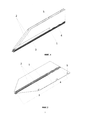
Изобретение поясняется чертежами.The invention is illustrated by drawings.
Фиг. 1 - общий вид устройства в исходном положении.FIG. 1 is a general view of the device in its initial position.
Фиг. 2 - общий вид устройства в рабочем положении.FIG. 2 is a general view of the device in the operating position.
Фиг. 3 - вид устройства в исходном положении с материалом, расположенным между основанием и пластинами.FIG. 3 is a view of the device in the initial position with the material located between the base and the plates.
Фиг. 4 - вид устройства в рабочем положении с выделенным к исследованию участком материала.FIG. 4 is a view of the device in a working position with a section of material allocated to the study.
На фиг. 1 и 2 изображено устройство, в котором две параллельные пластины 2 закреплены на основании 1. Пластины 2 на одном из ребер имеют рабочую зону 3 и крепежную зону 4. Пластины 2 закрепляют в крепежной зоне 4 перпендикулярно к основанию 1, параллельно друг другу (фиг. 1). Расстояние между пластинами зависит от испытуемого материала. Например, для исследования шкурок маленького размера выделяют участок шириной 10 мм. Для исследования шкур крупного размера на практике принято выделять участок шириной 40 мм. Для ворсовых материалов по требованиям ГОСТ 3815.1-93 выделяют участок шириной 50 мм.In FIG. 1 and 2, a device is shown in which two
Длина рабочей зоны 3 ребра пластины составляет более половины максимального размера образца исследуемого материала. Например, для шкурок маленького размера достаточно длины рабочей зоны 350-400 мм.The length of the
Крепежную зону 4 ребра каждой пластины соединяют с основанием 1, например, с помощью рояльной петли, при этом получают вращательную пару. Фиксаторы исходного положения пластин 5 обеспечивают параллельное положение пластин 2 относительно друг друга. Фиксаторы располагают на пластинах и/или основании и выполняют таким образом, чтобы они не мешали проводимому исследованию.The
Вращательная пара, образованная пластинами и основанием, позволяет перегнуть исследуемый материал в широком диапазоне углов, которые выбирают в зависимости от вида исследования, если этого требует методика исследования.The rotational pair formed by the plates and the base allows the material to be bent over a wide range of angles, which are selected depending on the type of study, if required by the research methodology.
Устройство содержит фиксаторы конечного положения, задача которых удерживать пластины после их разведения под заданным углом относительно основания.The device contains end position locks, the task of which is to hold the plates after they are bred at a given angle relative to the base.
В рабочей зоне 3 ребра пластин 2 образуют зазор с основанием 1, в котором размещают исследуемый материал.In the
Ширина зазора зависит от толщины кожевой ткани исследуемого материала или от толщины ворсового материала между рядами ворсовых пучков.The width of the gap depends on the thickness of the skin tissue of the test material or on the thickness of the pile material between the rows of pile bundles.
Фиг. 2 показывает вид устройства с разведенными пластинами 2, это положение устройства необходимо для выделения участка материала. Предпочтительный угол разведения пластин 90° относительно исходного положения, показанного на фиг. 1.FIG. 2 shows a view of the device with the
Фиг. 3 показывает устройство с материалом 6, расположенным в зазоре 7 между основанием 1 и сложенными пластинами 2.FIG. 3 shows a device with
На основание 1 в зазор между пластинами 2 и основанием размещают материал 6, поступательным движением вдоль рабочей зоны пластин 2.On the
Материал размещают под рабочей зоной 3 пластин 2 по направлению роста волос, или против, или под любым другим углом в зависимости от вида исследования, которому будет подвергнут материал.The material is placed under the working area of 3
Фиг. 4 показывает материал 6 с выделенным к исследованию участком материала 8. Для этого материал 6 размещают на основании 1 под рабочей зоной пластин 2, затем пластины разводят в противоположные стороны. Пластины 2 раздвигают волосы, расположенные за пределами исследуемого участка, в противоположные стороны, обеспечивая возможность исследования выделенного участка материала 8.FIG. 4 shows
Ширина каждой пластины больше длины волос пушно-мехового сырья и полуфабриката или длины ворса ворсового материала.The width of each plate is greater than the hair length of the fur-fur raw material and semi-finished product or the length of the pile of pile material.
Длина рабочей зоны 3 (фиг. 2) ребра каждой пластины составляет не менее половины максимального размера образца исследуемого материала.The length of the working zone 3 (Fig. 2) of the rib of each plate is at least half the maximum size of the sample of the studied material.
Пластины выполняют из формоустойчивого материала, обеспечивающего сохранение формы пластин при нагрузках.The plates are made of a form-stable material, ensuring the preservation of the shape of the plates under loads.
Из фиг. 1-4 видно, что переднее и нижнее ребра рабочей зоны пластин заточены. Степень заточки ребер пластин определяет вид исследуемого материала и необходимость сохранять целостность испытуемого материала.From FIG. 1-4 it is seen that the front and lower ribs of the working area of the plates are sharpened. The degree of sharpening of the ribs of the plates determines the type of material being studied and the need to maintain the integrity of the test material.
Степень заточки ребер пластин влияет на точность выделения пробы исследуемого материала, что особенно важно при изучении шкурок небольшого размера с тонкими волосами, например шиншиллы.The degree of sharpening of the ribs of the plates affects the accuracy of the selection of the sample of the studied material, which is especially important when studying small skins with thin hair, such as chinchillas.
Для сохранности исследуемого материала, предотвращения прокола и пореза материала пластинами их рабочие зоны закругляют и шлифуют.To preserve the test material, to prevent puncture and cut of the material by the plates, their working areas are rounded and polished.
В случае, если во время размещения материала некоторые волосы или ворсинки деформировались, наклонились или примялись, исследуемый участок можно расчесать, выпрямить волосы или ворсинки с помощью потока воздуха, щетки, чесалки и т.д.If, during the placement of the material, some hair or villi become deformed, bent or wrinkled, the test area can be combed, hair or villi can be straightened using a stream of air, a brush, a comb, etc.
В случае, если волосы исследуемого материала особенно длинные и деформируются под собственным весом, устройство переворачивают, так чтобы волосы выпрямлялись под действием гравитации.If the hair of the material under study is particularly long and deform under its own weight, the device is turned over so that the hair straightens under the influence of gravity.
Предлагаемые способ и устройство используют для выделения пробы участков материалов при исследовании свойств меха и ворсовых материалов с помощью контактных, бесконтактных, оптических, метрических, радиационных, органолептических и других методов.The proposed method and device is used to isolate samples of material sections when studying the properties of fur and pile materials using contact, non-contact, optical, metric, radiation, organoleptic and other methods.
Устройство и способ обеспечивают повышение качества, удобства и точности отбора проб из образцов ворсовых материалов, пушно-мехового сырья и полуфабриката и «стандартизацию» проб при установлении сортности, оценке качества, сертификации и лабораторных исследованиях. Устройство и способ позволяет точно контролировать отбор проб, их размер (площадь), т.е. получать параллельные пробы совершенно идентичными.The device and method provide improved quality, convenience and accuracy of sampling from samples of pile materials, fur and raw materials and semi-finished products and "standardization" of samples when establishing grading, quality assessment, certification and laboratory research. The device and method allows precise control of sampling, their size (area), i.e. receive parallel samples completely identical.
Предлагаемое устройство совместимо с другими приборами и инструментами, применяемыми для оценки качества меха и ворсовых материалов. Устройство удобно в транспортировке и использовании благодаря небольшим габаритным размерам, малому весу и простоте методики применения.The proposed device is compatible with other instruments and tools used to assess the quality of fur and pile materials. The device is convenient to transport and use due to its small overall dimensions, light weight and ease of use.
Claims (3)
Priority Applications (1)
| Application Number | Priority Date | Filing Date | Title |
|---|---|---|---|
| RU2015136165A RU2628373C2 (en) | 2015-08-26 | 2015-08-26 | Non-destructive preparation method of pile materials, down and fur raw materials and semi-finished product sample for the analysis and device for its implementation |
Applications Claiming Priority (1)
| Application Number | Priority Date | Filing Date | Title |
|---|---|---|---|
| RU2015136165A RU2628373C2 (en) | 2015-08-26 | 2015-08-26 | Non-destructive preparation method of pile materials, down and fur raw materials and semi-finished product sample for the analysis and device for its implementation |
Publications (2)
| Publication Number | Publication Date |
|---|---|
| RU2015136165A RU2015136165A (en) | 2017-03-02 |
| RU2628373C2 true RU2628373C2 (en) | 2017-08-16 |
Family
ID=58454005
Family Applications (1)
| Application Number | Title | Priority Date | Filing Date |
|---|---|---|---|
| RU2015136165A RU2628373C2 (en) | 2015-08-26 | 2015-08-26 | Non-destructive preparation method of pile materials, down and fur raw materials and semi-finished product sample for the analysis and device for its implementation |
Country Status (1)
| Country | Link |
|---|---|
| RU (1) | RU2628373C2 (en) |
Citations (4)
| Publication number | Priority date | Publication date | Assignee | Title |
|---|---|---|---|---|
| SU154501A1 (en) * | ||||
| GB403519A (en) * | 1932-10-27 | 1933-12-28 | Charles Nessler | Means for measuring the growth or production of hair |
| RU2206617C1 (en) * | 2002-01-10 | 2003-06-20 | Санкт-Петербургский государственный университет технологии и дизайна | Apparatus for non-destructive evaluation of fur hair thickness |
| RU2219545C2 (en) * | 2002-01-16 | 2003-12-20 | Санкт-Петербургский государственный университет технологии и дизайна | Fur thickness evaluating method |
-
2015
- 2015-08-26 RU RU2015136165A patent/RU2628373C2/en not_active IP Right Cessation
Patent Citations (6)
| Publication number | Priority date | Publication date | Assignee | Title |
|---|---|---|---|---|
| SU154501A1 (en) * | ||||
| SU263974A1 (en) * | Центральное опытно конструкторское бюро | DEVICE FOR DETERMINATION OF WOOL TONN | ||
| GB403519A (en) * | 1932-10-27 | 1933-12-28 | Charles Nessler | Means for measuring the growth or production of hair |
| US1962357A (en) * | 1932-10-27 | 1934-06-12 | Pro Ker Lab Inc | Means for measuring the growth or production of hair |
| RU2206617C1 (en) * | 2002-01-10 | 2003-06-20 | Санкт-Петербургский государственный университет технологии и дизайна | Apparatus for non-destructive evaluation of fur hair thickness |
| RU2219545C2 (en) * | 2002-01-16 | 2003-12-20 | Санкт-Петербургский государственный университет технологии и дизайна | Fur thickness evaluating method |
Also Published As
| Publication number | Publication date |
|---|---|
| RU2015136165A (en) | 2017-03-02 |
Similar Documents
| Publication | Publication Date | Title |
|---|---|---|
| Lee et al. | Free vibration analysis of functionally graded Bernoulli-Euler beams using an exact transfer matrix expression | |
| Schrof et al. | 3D Raman mapping of the collagen fibril orientation in human osteonal lamellae | |
| KR20130013554A (en) | Biaxial tensile strain evaluating apparatus | |
| BR112020002067A2 (en) | film tear analysis device | |
| DE112016002600T5 (en) | Orientation evaluation device, orientation evaluation method and distribution evaluation device | |
| JP2023528899A (en) | X-ray diffraction method for analyzing amorphous and semi-crystalline materials | |
| Chevalier | Hair-on-hair static friction coefficient can be determined by tying a knot | |
| Leucker et al. | Novel objective test method for the abrasion and pilling behaviour of low basis weight spunbond polypropylene nonwovens | |
| Kontomaris et al. | The truncated cone effect in AFM nanoindentation on soft materials | |
| KR101441997B1 (en) | Portable type hand press for preparing sample for xrf measurement | |
| TW201712316A (en) | Method of measuring hair elasticity using shape maintaining pressure and apparatus for measuring hair elasticity | |
| RU2534719C1 (en) | Method for diagnosing real structure of crystals | |
| EP3946011B1 (en) | System for the determination of the surface and mechanical characteristics of filamentary structures, in particular skin appendages, structures associated therewith, natural or synthetic fibers and their aggregates | |
| JP2005134344A (en) | Sample for evaluating the bending properties of hair | |
| Das et al. | Evaluation of fibre orientation in fibrewebs | |
| RU2582983C2 (en) | Method of determining drapability of leather and fur semi-finished products | |
| JP2022021759A (en) | Method for calculating elastic modulus of fiber sample, system for calculating elastic modulus of fiber sample, method for evaluating hair cosmetics, method for manufacturing hair cosmetics and method for determining hair cosmetics | |
| EP3246677A3 (en) | Method and device for determining at least one test property of a test specimen | |
| RU2206617C1 (en) | Apparatus for non-destructive evaluation of fur hair thickness | |
| WO2015097659A1 (en) | System for determining the morphological characteristics and mechanical properties of living or reconstituted tissues, in particular cutaneous appendages, or structures associated therewith | |
| Raju et al. | Experimental investigation of transverse mechanical properties of high-performance Kevlar KM2 single fiber | |
| RU2582224C2 (en) | Method of determining anisotropy of properties of tissues under action of operational factors | |
| Amraish et al. | High-resolution local trabecular strain within trabecular structure under cyclic loading | |
| RU2528876C1 (en) | Method of determining draping property of materials for clothes | |
| Aslanyan et al. | VNIIFTRI/PTB bilateral comparison on Martens and indentation hardness scales |
Legal Events
| Date | Code | Title | Description |
|---|---|---|---|
| MM4A | The patent is invalid due to non-payment of fees |
Effective date: 20190827 |