RU2472503C1 - Antihypoxic agent - Google Patents
Antihypoxic agent Download PDFInfo
- Publication number
- RU2472503C1 RU2472503C1 RU2011148565/15A RU2011148565A RU2472503C1 RU 2472503 C1 RU2472503 C1 RU 2472503C1 RU 2011148565/15 A RU2011148565/15 A RU 2011148565/15A RU 2011148565 A RU2011148565 A RU 2011148565A RU 2472503 C1 RU2472503 C1 RU 2472503C1
- Authority
- RU
- Russia
- Prior art keywords
- substance
- ethyl
- mice
- hydroxy
- antihypoxants
- Prior art date
Links
- 230000000141 anti-hypoxic effect Effects 0.000 title claims abstract description 14
- 239000007983 Tris buffer Substances 0.000 claims abstract description 13
- 150000001875 compounds Chemical class 0.000 claims abstract description 9
- GRFNBEZIAWKNCO-UHFFFAOYSA-N 3-pyridinol Chemical group OC1=CC=CN=C1 GRFNBEZIAWKNCO-UHFFFAOYSA-N 0.000 claims abstract description 8
- HCHKCACWOHOZIP-UHFFFAOYSA-N Zinc Chemical group [Zn] HCHKCACWOHOZIP-UHFFFAOYSA-N 0.000 claims abstract description 4
- PTFCDOFLOPIGGS-UHFFFAOYSA-N Zinc dication Chemical compound [Zn+2] PTFCDOFLOPIGGS-UHFFFAOYSA-N 0.000 claims abstract description 4
- 239000003795 chemical substances by application Substances 0.000 claims abstract description 4
- 239000011701 zinc Substances 0.000 claims abstract description 4
- 229910052725 zinc Inorganic materials 0.000 claims abstract description 4
- QWUWMCYKGHVNAV-UHFFFAOYSA-N 1,2-dihydrostilbene Chemical group C=1C=CC=CC=1CCC1=CC=CC=C1 QWUWMCYKGHVNAV-UHFFFAOYSA-N 0.000 claims description 9
- 239000000126 substance Substances 0.000 abstract description 24
- 206010021143 Hypoxia Diseases 0.000 abstract description 16
- QNDQILQPPKQROV-UHFFFAOYSA-N dizinc Chemical compound [Zn]=[Zn] QNDQILQPPKQROV-UHFFFAOYSA-N 0.000 abstract description 13
- 230000007954 hypoxia Effects 0.000 abstract description 12
- 239000003814 drug Substances 0.000 abstract description 7
- 230000000694 effects Effects 0.000 abstract description 6
- 230000036284 oxygen consumption Effects 0.000 abstract description 6
- 230000001146 hypoxic effect Effects 0.000 abstract description 4
- 230000036387 respiratory rate Effects 0.000 abstract 1
- 241001465754 Metazoa Species 0.000 description 19
- 241000699670 Mus sp. Species 0.000 description 19
- 230000001965 increasing effect Effects 0.000 description 12
- SLGAYYOOVPWBEU-UHFFFAOYSA-N 1,2,4-thiadiazole-3,5-diamine Chemical compound NC1=NSC(N)=N1 SLGAYYOOVPWBEU-UHFFFAOYSA-N 0.000 description 11
- 230000007423 decrease Effects 0.000 description 10
- HOXINJBQVZWYGZ-UHFFFAOYSA-N fenbutatin oxide Chemical compound C=1C=CC=CC=1C(C)(C)C[Sn](O[Sn](CC(C)(C)C=1C=CC=CC=1)(CC(C)(C)C=1C=CC=CC=1)CC(C)(C)C=1C=CC=CC=1)(CC(C)(C)C=1C=CC=CC=1)CC(C)(C)C1=CC=CC=C1 HOXINJBQVZWYGZ-UHFFFAOYSA-N 0.000 description 10
- BKUKXOMYGPYFJJ-UHFFFAOYSA-N 2-ethylsulfanyl-1h-benzimidazole;hydrobromide Chemical compound Br.C1=CC=C2NC(SCC)=NC2=C1 BKUKXOMYGPYFJJ-UHFFFAOYSA-N 0.000 description 8
- 241000282326 Felis catus Species 0.000 description 8
- 230000001154 acute effect Effects 0.000 description 7
- 230000015572 biosynthetic process Effects 0.000 description 7
- 238000002474 experimental method Methods 0.000 description 7
- 230000000241 respiratory effect Effects 0.000 description 6
- 230000000763 evoking effect Effects 0.000 description 5
- 239000003963 antioxidant agent Substances 0.000 description 4
- QVGXLLKOCUKJST-UHFFFAOYSA-N atomic oxygen Chemical compound [O] QVGXLLKOCUKJST-UHFFFAOYSA-N 0.000 description 4
- 229940079593 drug Drugs 0.000 description 4
- 238000007912 intraperitoneal administration Methods 0.000 description 4
- 238000000034 method Methods 0.000 description 4
- 229910052760 oxygen Inorganic materials 0.000 description 4
- 239000001301 oxygen Substances 0.000 description 4
- 230000029058 respiratory gaseous exchange Effects 0.000 description 4
- LFQSCWFLJHTTHZ-UHFFFAOYSA-N Ethanol Chemical compound CCO LFQSCWFLJHTTHZ-UHFFFAOYSA-N 0.000 description 3
- 206010020591 Hypercapnia Diseases 0.000 description 3
- 230000009471 action Effects 0.000 description 3
- 230000003647 oxidation Effects 0.000 description 3
- 238000007254 oxidation reaction Methods 0.000 description 3
- 238000003786 synthesis reaction Methods 0.000 description 3
- XLYOFNOQVPJJNP-UHFFFAOYSA-N water Chemical compound O XLYOFNOQVPJJNP-UHFFFAOYSA-N 0.000 description 3
- HYAVEDMFTNAZQE-UHFFFAOYSA-N (benzyldiselanyl)methylbenzene Chemical compound C=1C=CC=CC=1C[Se][Se]CC1=CC=CC=C1 HYAVEDMFTNAZQE-UHFFFAOYSA-N 0.000 description 2
- 238000010171 animal model Methods 0.000 description 2
- 230000003078 antioxidant effect Effects 0.000 description 2
- 230000021615 conjugation Effects 0.000 description 2
- 230000003247 decreasing effect Effects 0.000 description 2
- JPGDYIGSCHWQCC-UHFFFAOYSA-N emoxypine Chemical compound CCC1=NC(C)=CC=C1O JPGDYIGSCHWQCC-UHFFFAOYSA-N 0.000 description 2
- 235000019441 ethanol Nutrition 0.000 description 2
- 239000007789 gas Substances 0.000 description 2
- 210000004072 lung Anatomy 0.000 description 2
- 230000000144 pharmacologic effect Effects 0.000 description 2
- 230000026731 phosphorylation Effects 0.000 description 2
- 238000006366 phosphorylation reaction Methods 0.000 description 2
- 230000008569 process Effects 0.000 description 2
- 230000001681 protective effect Effects 0.000 description 2
- 239000002904 solvent Substances 0.000 description 2
- 210000004092 somatosensory cortex Anatomy 0.000 description 2
- 230000007704 transition Effects 0.000 description 2
- 238000005303 weighing Methods 0.000 description 2
- UGCOPUIBNABIEP-UHFFFAOYSA-N 2-ethylsulfanyl-1h-benzimidazole Chemical compound C1=CC=C2NC(SCC)=NC2=C1 UGCOPUIBNABIEP-UHFFFAOYSA-N 0.000 description 1
- 206010002091 Anaesthesia Diseases 0.000 description 1
- 102000004190 Enzymes Human genes 0.000 description 1
- 108090000790 Enzymes Proteins 0.000 description 1
- 102000006404 Mitochondrial Proteins Human genes 0.000 description 1
- 108010058682 Mitochondrial Proteins Proteins 0.000 description 1
- 241000699666 Mus <mouse, genus> Species 0.000 description 1
- BUGBHKTXTAQXES-UHFFFAOYSA-N Selenium Chemical compound [Se] BUGBHKTXTAQXES-UHFFFAOYSA-N 0.000 description 1
- 230000004913 activation Effects 0.000 description 1
- 239000003708 ampul Substances 0.000 description 1
- 230000037005 anaesthesia Effects 0.000 description 1
- 239000007864 aqueous solution Substances 0.000 description 1
- 210000000988 bone and bone Anatomy 0.000 description 1
- 239000006227 byproduct Substances 0.000 description 1
- 210000003169 central nervous system Anatomy 0.000 description 1
- 210000003710 cerebral cortex Anatomy 0.000 description 1
- 230000008859 change Effects 0.000 description 1
- 230000000052 comparative effect Effects 0.000 description 1
- 239000008367 deionised water Substances 0.000 description 1
- 229910021641 deionized water Inorganic materials 0.000 description 1
- 238000011161 development Methods 0.000 description 1
- 230000008034 disappearance Effects 0.000 description 1
- 239000012153 distilled water Substances 0.000 description 1
- 239000002552 dosage form Substances 0.000 description 1
- 230000002526 effect on cardiovascular system Effects 0.000 description 1
- 238000004134 energy conservation Methods 0.000 description 1
- 230000037149 energy metabolism Effects 0.000 description 1
- SSVFMICWXDVRQN-UHFFFAOYSA-N ethanol;sodium Chemical compound [Na].CCO SSVFMICWXDVRQN-UHFFFAOYSA-N 0.000 description 1
- 230000037406 food intake Effects 0.000 description 1
- 210000001214 frontal sinus Anatomy 0.000 description 1
- 239000011521 glass Substances 0.000 description 1
- 230000036541 health Effects 0.000 description 1
- 230000002401 inhibitory effect Effects 0.000 description 1
- 230000000977 initiatory effect Effects 0.000 description 1
- 238000002347 injection Methods 0.000 description 1
- 239000007924 injection Substances 0.000 description 1
- 230000006525 intracellular process Effects 0.000 description 1
- 230000007794 irritation Effects 0.000 description 1
- 239000003446 ligand Substances 0.000 description 1
- 239000008176 lyophilized powder Substances 0.000 description 1
- 238000005399 mechanical ventilation Methods 0.000 description 1
- 230000010534 mechanism of action Effects 0.000 description 1
- 239000012528 membrane Substances 0.000 description 1
- 230000002503 metabolic effect Effects 0.000 description 1
- 230000004060 metabolic process Effects 0.000 description 1
- 230000002438 mitochondrial effect Effects 0.000 description 1
- 239000000203 mixture Substances 0.000 description 1
- 230000002107 myocardial effect Effects 0.000 description 1
- 239000013110 organic ligand Substances 0.000 description 1
- 230000008520 organization Effects 0.000 description 1
- 230000001590 oxidative effect Effects 0.000 description 1
- 230000007310 pathophysiology Effects 0.000 description 1
- 230000000865 phosphorylative effect Effects 0.000 description 1
- 230000037081 physical activity Effects 0.000 description 1
- 230000035479 physiological effects, processes and functions Effects 0.000 description 1
- 235000010482 polyoxyethylene sorbitan monooleate Nutrition 0.000 description 1
- 229920000053 polysorbate 80 Polymers 0.000 description 1
- 239000000843 powder Substances 0.000 description 1
- 238000004321 preservation Methods 0.000 description 1
- 239000000047 product Substances 0.000 description 1
- 230000002035 prolonged effect Effects 0.000 description 1
- 210000002979 radial nerve Anatomy 0.000 description 1
- 230000006965 reversible inhibition Effects 0.000 description 1
- 239000000523 sample Substances 0.000 description 1
- 229910052711 selenium Inorganic materials 0.000 description 1
- 239000011669 selenium Substances 0.000 description 1
- 239000000243 solution Substances 0.000 description 1
- 230000003238 somatosensory effect Effects 0.000 description 1
- 210000002784 stomach Anatomy 0.000 description 1
- 230000004083 survival effect Effects 0.000 description 1
- 239000000725 suspension Substances 0.000 description 1
- 238000012360 testing method Methods 0.000 description 1
- 150000003585 thioureas Chemical class 0.000 description 1
- 210000001519 tissue Anatomy 0.000 description 1
- 231100000331 toxic Toxicity 0.000 description 1
- 230000002588 toxic effect Effects 0.000 description 1
- 238000009423 ventilation Methods 0.000 description 1
- 230000003313 weakening effect Effects 0.000 description 1
- YZYKBQUWMPUVEN-UHFFFAOYSA-N zafuleptine Chemical compound OC(=O)CCCCCC(C(C)C)NCC1=CC=C(F)C=C1 YZYKBQUWMPUVEN-UHFFFAOYSA-N 0.000 description 1
Images


Landscapes
- Pharmaceuticals Containing Other Organic And Inorganic Compounds (AREA)
Abstract
Description
Изобретение относится к химическим веществам, обладающим антигипоксической активностью, которые могут найти применение в области медицины, в частности в фармакологии, нормальной физиологии и патофизиологии.The invention relates to chemicals with antihypoxic activity, which may find application in the field of medicine, in particular in pharmacology, normal physiology and pathophysiology.
Перспективным способом повышения устойчивости человека к гипоксии является ограничение уровня его физической активности, что предопределяет экономный расход доступного для дыхания кислорода, повышение эффективности использования энергетического ресурса. Это может быть достигнуто путем применения энергостабилизирующих веществ, относящихся к классу антигипоксантов.A promising way to increase a person’s resistance to hypoxia is to limit the level of his physical activity, which determines the economical consumption of oxygen available for breathing, increasing the efficiency of energy resource use. This can be achieved through the use of energy-stabilizing substances belonging to the class of antihypoxants.
К наиболее известным на сегодняшний день представителям класса энергостабилизирующих веществ относят производные тиомочевины - амтизол и бемитил. Названные вещества признаны Фармакологическим комитетом Минздрава РФ в качестве эталонных и широко используются для проведения сравнительных исследований путем сопоставления их антигипоксического эффекта с таковым вновь синтезированных химических соединений.The most famous representatives of the class of energy-stabilizing substances today include thiourea derivatives - amtizol and bemitil. The named substances are recognized by the Pharmacological Committee of the Ministry of Health of the Russian Federation as reference and are widely used for comparative studies by comparing their antihypoxic effect with that of newly synthesized chemical compounds.
Амтизол (3,5-диамино-1,2,4-тиадиазол) уменьшает потребность организма в кислороде посредством ослабления дыхательного контроля в тканях, торможения нефосфорилирующих видов окисления, повышения степени сопряжения окисления с фосфорилированием в митохондриальной окислительной цепи. Метаболические эффекты вещества частично обусловлены его способностью активировать антиоксидантные системы, что способствует стабилизации мембранных и внутриклеточных процессов. Ранее применение амтизола было затруднено из-за нестабильности его ампульных растворов. В настоящее время создана стабильная лекарственная форма амтизола в виде стерильного лиофилизированного порошка для инъекций.Amtizol (3,5-diamino-1,2,4-thiadiazole) reduces the body's oxygen demand by weakening the respiratory control in tissues, inhibiting non-phosphorylating types of oxidation, and increasing the degree of conjugation of oxidation with phosphorylation in the mitochondrial oxidative chain. The metabolic effects of the substance are partially due to its ability to activate antioxidant systems, which helps to stabilize membrane and intracellular processes. Previously, the use of amtizol was difficult due to the instability of its ampoule solutions. Currently, a stable dosage form of amtizol in the form of a sterile lyophilized powder for injection has been created.
Бемитил (2-этилтиобензимидазол), как и амтизол, демонстрирует феномен энергосбережения, что, по-видимому, связано с усилением образования митохондриальных белков, повышением сопряжения между процессами окисления и фосфорилирования, а также с активацией антиоксидантных ферментов. К существенным недостаткам бемитила и амтизола следует отнести их неэффективность при приеме внутрь.Bemityl (2-ethylthiobenzimidazole), like amtizole, demonstrates the phenomenon of energy conservation, which is apparently associated with increased formation of mitochondrial proteins, increased conjugation between oxidation and phosphorylation processes, as well as with the activation of antioxidant enzymes. Significant disadvantages of bemitil and amtizol should be attributed to their inefficiency when taken orally.
Таким образом, на сегодняшний день арсенал антигипоксических веществ, которые могли бы быть использованы, прежде всего, в практике экстремальной медицины, невелик. Большинство фармакологических веществ, зарекомендовавших себя как корректоры острых гипоксических состояний, обладают серьезными побочными эффектами, нередко токсичны и теряют свой эффект в случае их приема per os (внутрь).Thus, today the arsenal of antihypoxic substances that could be used, first of all, in the practice of extreme medicine, is small. Most pharmacological substances that have established themselves as correctors of acute hypoxic conditions have serious side effects, are often toxic and lose their effect if taken per os (by mouth).
Задачей настоящего изобретения является расширение арсенала эффективных отечественных препаратов, обладающих антигипоксической активностью за счет новых комплексных химических соединений, относящихся к категории так называемых физиологически совместимых антиоксидантов, на основе биометаллов и органических лигандов, с возможностью их применения per os.The objective of the present invention is to expand the arsenal of effective domestic drugs with antihypoxic activity due to new complex chemical compounds belonging to the category of so-called physiologically compatible antioxidants, based on biometals and organic ligands, with the possibility of their use per os.
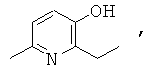
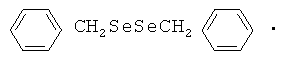
Данная задача решается тем, что предложено антигипоксическое средство, представляющее собой комплексное соединение двухвалентного цинка, замещенного 3-гидроксипиридина и диорганодихалькогенида - гексакис(3-гидрокси-2-этил-6-метилпиридинато)[трис(дибензилдиселенидо)]дицинк(II) пентадекасемигидрат формулыThis problem is solved by the fact that an antihypoxic agent is proposed, which is a complex compound of divalent zinc substituted with 3-hydroxypyridine and diorganodichalcogenide - hexakis (3-hydroxy-2-ethyl-6-methylpyridinato) [tris (dibenzyl diselenide)] dicinc (II) pentadec
[Zn(II)]2A6B3·15,5H2O,[Zn (II)] 2 A 6 B 3 · 15,5H 2 O,
где A:where A:

а B:and B:

Данное соединение (лабораторный шифр вещества - πQ1983), ранее не описанное в патентной и технической литературе, синтезировано в Российском онкологическом научном центре им. Н.Н.Блохина РАМН.This compound (laboratory code of the substance - πQ1983), previously not described in the patent and technical literature, was synthesized at the Russian Cancer Research Center named after N.N. Blokhina RAMS.
Синтез гексакис(3-гидрокси-2-этил-6-метилпиридинато)[трис(дибензилдиселенидо)]дицинк(II) пентадекасемигидрата (вещество πQ1983) можно осуществить любым известным в литературе методом синтеза комплексных соединений. В данной патентной разработке описан способ, не сопровождающийся образованием побочных или летучих продуктов.The synthesis of hexakis (3-hydroxy-2-ethyl-6-methylpyridinato) [tris (dibenzyl diselenido)] dicinc (II) pentadecasemigidrate (substance πQ1983) can be carried out by any method of synthesis of complex compounds known in the literature. This patent development describes a process that is not accompanied by the formation of by-products or volatile products.
Синтез осуществляется следующим образом. Смешивают 2,08 г 3-гидрокси-2-этил-6-метилилпиридина, 2,58 г дибензилдиселенида и 1,11 г ацетата цинка дигидрата в смеси 20 мл этилового спирта и 5 мл деионизованной воды и перемешивают при температуре 60-70°С в течение трех часов. Затем отгоняют растворители в вакууме (10-15 торр) и доводят остаток до постоянного веса. Выход 5,70 г. Т. разл. 117-119°С. Найдено, %: C 47,63; H 6,17, N 3,52. Вычислено, %: C 47,97; H 6,04; N 3,73.The synthesis is as follows. 2.08 g of 3-hydroxy-2-ethyl-6-methyl-pyridine, 2.58 g of dibenzyl diselenide and 1.11 g of zinc acetate dihydrate are mixed in a mixture of 20 ml of ethyl alcohol and 5 ml of deionized water and mixed at a temperature of 60-70 ° C. for three hours. Then the solvents are distilled off in vacuo (10-15 torr) and the residue is brought to constant weight. Yield 5.70 g. T. decomp. 117-119 ° C. Found,%: C 47.63; H 6.17; N 3.52. Calculated,%: C 47.97; H 6.04; N, 3.73.
Соединение представляет собой порошок желтовато-коричневого цвета, слабо растворимый в воде, растворимый в спирте. Молекулярная масса 2242,318 D.The compound is a tan powder, slightly soluble in water, soluble in alcohol. Molecular Weight of 2242.318 D.
Вещество πQ1983 было подвергнуто биологическим испытаниям в условиях формирования у животных (мышь, кошка) состояния остро нарастающей экзогенной гипоксии, где было впервые выявлено его антигипоксантное действие.The substance πQ1983 was subjected to biological tests under conditions of formation in animals (mouse, cat) of a state of sharply increasing exogenous hypoxia, where its antihypoxic effect was first detected.
Опыты были поставлены на 67-и мышах-самцах массой 20-25 г и 24-х кошках-самцах массой 3,5-4,0 кг. Количество мышей в контрольных и опытных группах составляло не менее 7 особей. Все экспериментальные животные содержались в обычных условиях вивария. Эксперименты были проведены в соответствии с международными стандартами по гуманному обращению с лабораторными животными.The experiments were performed on 67 male mice weighing 20-25 g and 24 male cats weighing 3.5-4.0 kg. The number of mice in the control and experimental groups was at least 7 animals. All experimental animals were kept under normal vivarium conditions. The experiments were carried out in accordance with international standards for the humane treatment of laboratory animals.
Сравнение антигипоксических эффектов гексакис(3-гидрокси-2-этил-6-метилпиридинато)[трис(дибензилдиселенидо)]дицинк(II) пентадекасемигидрата и эталонных антигипоксантов (амтизол, бемитил) проводили на мышах, подвергавшихся воздействию острой гипоксии с гиперкапнией (ОГ+Гк). За 60 минут до помещения мышей в условия эксперимента животным опытных групп вводили внутрибрюшинно или внутрь по 0,3 мл водного раствора изучаемого вещества в виде мелкодисперсной суспензии, приготовленной с добавлением твина-80. Животным соответствующих контрольных групп вводили по 0,3 мл растворителя. У всех мышей перед введением веществ и непосредственно пред помещением в условия ОГ+ГК измеряли ректальную температуру электротермометром.Comparison of the antihypoxic effects of hexakis (3-hydroxy-2-ethyl-6-methylpyridinato) [tris (dibenzyl diselenido)] dicinc (II) pentadecasemigidrate and reference antihypoxants (amtizol, bemitil) was performed in mice exposed to acute hypoxia with hyperkapi ) 60 minutes before placing the mice in the experimental conditions, the animals of the experimental groups were injected intraperitoneally or inside with 0.3 ml of an aqueous solution of the studied substance in the form of a finely dispersed suspension prepared with the addition of Tween-80. Animals of the respective control groups were injected with 0.3 ml of solvent. In all mice, the rectal temperature was measured with an electrothermometer before the introduction of substances and immediately before exposure to OG + HA conditions.
Острую гипоксию с гиперкапнией у мышей моделировали путем их помещения в стеклянные герметичные емкости объемом 0,25 л (Методические рекомендации по экспериментальному изучению препаратов, предлагаемых для клинического изучения в качестве антигипоксических средств. Под. ред. Л.Д.Лукьяновой. - М., 1990. - 18 с.). В ходе опыта регистрировали электрокардиограмму (ЭКГ) - кривую электрической активности миокарда и пневмобарограмму (ПБГ) - кривую дыхания, что позволяло объективизировать оценку резистентности животных к ОГ+Гк. Параллельно определяли динамику потребления мышами кислорода с помощью электронного газоанализатора (АНКАТ-7631М, Россия).Acute hypoxia with hypercapnia in mice was modeled by placing them in 0.25 L glass sealed containers (Guidelines for the experimental study of drugs proposed for clinical study as antihypoxic drugs. Ed. By L.D. Lukyanova. - M., 1990. - 18 p.). In the course of the experiment, an electrocardiogram (ECG) —the myocardial electrical activity curve and a pneumobarogram — PBG — the respiration curve was recorded, which made it possible to objectify the assessment of animal resistance to GO + Gc. In parallel, the dynamics of oxygen consumption by mice was determined using an electronic gas analyzer (ANKAT-7631M, Russia).
Введение гексакис(3-гидрокси-2-этил-6-метилпиридинато)[трис (дибензилдиселенидо)]дицинк(II) пентадекасемигидрата внутрибрюшинно и внутрь в дозе 50 мг/кг сопровождалось существенным изменением ректальной температуры, которая через 60 мин уменьшалась соответственно на 6,4 и 5,2°С. В контроле 37,8°С и 37,5°С (табл.1).The introduction of hexakis (3-hydroxy-2-ethyl-6-methylpyridinato) [tris (dibenzyl diselenido)] dizinc (II) pentadecasemigidrate intraperitoneally and orally at a dose of 50 mg / kg was accompanied by a significant change in rectal temperature, which decreased by 6, respectively, after 60 minutes 4 and 5.2 ° C. In the control, 37.8 ° C and 37.5 ° C (Table 1).
К этому моменту частота следования кардиоциклов по данным регистрации ЭКГ замедлялась с 625±14/мин до 368±12/мин (после внутрибрюшинного введения) и с 643±18/мин до 464±15/мин (после введения внутрь), частота дыхательных волн уменьшалась соответственно с 343±9/мин до 178±8/мин и с 376+10/мин до 202±9/мин (табл.1).By this moment, the cardiocycle repetition rate according to ECG recording was slowed from 625 ± 14 / min to 368 ± 12 / min (after intraperitoneal administration) and from 643 ± 18 / min to 464 ± 15 / min (after oral administration), the frequency of respiratory waves decreased accordingly from 343 ± 9 / min to 178 ± 8 / min and from 376 + 10 / min to 202 ± 9 / min (Table 1).
Понижение ректальной температуры в сочетании с динамикой ЭКГ и ПБГ позволило сделать заключение о замедлении метаболизма у мышей опытных групп по сравнению с контрольными значениями.Lowering the rectal temperature in combination with the dynamics of the ECG and PBG allowed us to conclude that the metabolism in the mice of the experimental groups was slowed down in comparison with the control values.
В условиях ОГ+Гк продолжительность жизни мышей по данным регистрации дыхательной активности (появление первого агонального вдоха) составила для обеих контрольных групп соответственно 34,5±2,3 мин и 35,2±2,9 мин (табл.2).Under OG + Gc conditions, the life expectancy of mice according to the registration of respiratory activity (the appearance of the first agonal inspiration) was 34.5 ± 2.3 min and 35.2 ± 2.9 min for both control groups, respectively (Table 2).
На фоне действия вещества πQ1983 устойчивость мышей к гипоксии значительно возрастала (табл.2 и 3). Так, после его внутрибрюшинного введения в дозе 50 мг/кг продолжительность жизни мышей увеличивалась до 147,3±8,4 мин, т.е. в 4 раза. В свою очередь после введения изученного вещества внутрь в той же дозе показатель увеличивался в 3,5 раза и составлял 121,4±6,3 мин.Against the background of the action of the substance πQ1983, the resistance of mice to hypoxia increased significantly (Tables 2 and 3). So, after its intraperitoneal administration at a dose of 50 mg / kg, the life expectancy of mice increased to 147.3 ± 8.4 minutes, i.e. 4 times. In turn, after administration of the studied substance inside at the same dose, the indicator increased 3.5 times and amounted to 121.4 ± 6.3 minutes.
В ходе изучения динамики потребления мышами кислорода было установлено, что на фоне действия гексакис(3-гидрокси-2-этил-6-метилпиридинато)[трис(дибензилдиселенидо)]дицинк(II) пентадекасемигидрата скорость потребления кислорода животными опытных групп была значительно ниже, чем в контрольных, что обеспечило возможность продолжительного сохранения активного состояния жизненно-важных функциональных систем организма (сердечно-сосудистой, дыхательной) и способствовало повышению выживаемости животных в условиях непрерывно ухудшающихся характеристик потребляемого воздуха (фиг.1).In the study of the dynamics of oxygen consumption by mice, it was found that against the background of the action of hexakis (3-hydroxy-2-ethyl-6-methylpyridinato) [tris (dibenzyl diselenido)] dicinc (II) pentadecasemigidrate the oxygen consumption rate of animals of the experimental groups was significantly lower in the control, which provided the possibility of prolonged preservation of the active state of the vital functional systems of the body (cardiovascular, respiratory) and contributed to an increase in the survival of animals in conditions of continuously worsening ha akteristik air intake (Figure 1).
После помещения животных в условия ОГ+Гк скорость потребления кислорода в обеих опытных группах также была существенно ниже в сравнении с контрольными показателями, что способствовало экономному расходованию его наличного запаса по мере формирования у мышей критического состояния. В частности, спустя 60 мин после введения вещества внутрь скорость потребления кислорода составляла всего 45% от контрольного показателя.After the animals were placed in the conditions of OG + GK, the oxygen consumption rate in both experimental groups was also significantly lower in comparison with the control indicators, which contributed to the economical expenditure of its available stock as a critical state develops in mice. In particular, 60 minutes after the administration of the substance inside, the oxygen consumption rate was only 45% of the control indicator.
Следует подчеркнуть, что эффективность эталонных антигипоксантов (амтизола, бемитила), как видно из таблиц 2 и 3, выявлялась только после их внутрибрюшинного введения и заметно уступала веществу πQ1983 по всем критериям резистентности мышей к остро нарастающей гипоксии.It should be emphasized that the effectiveness of the reference antihypoxants (amtizol, bemitil), as can be seen from Tables 2 and 3, was detected only after their intraperitoneal administration and was noticeably inferior to the substance πQ1983 by all criteria for the resistance of mice to acute increasing hypoxia.
С целью подтверждения факта наличия антигипоксической активности гексакис(3-гидрокси-2-этил-6-метилпиридинато)[трис(дибензил-диселенидо)]дицинк(II) пентадекасемигидрата были выполнены опыты на животных с более высоким, чем у мышей уровнем организации ЦНС - на кошках.In order to confirm the presence of antihypoxic activity, hexakis (3-hydroxy-2-ethyl-6-methylpyridinato) [tris (dibenzyl-dyslenido)] dicinc (II) pentadecasemigidrate experiments were performed on animals with a higher level of central nervous system organization than in mice - on cats.
Вещество πQ1983 кошкам вводили в желудок через эластичный зонд в дозе 50 мг/кг, предварительно растворив в 3-х мл дистиллированной воды за 3 часа до помещения в условия ОГ+Гк.The substance πQ1983 was injected into the stomach in cats through an elastic probe at a dose of 50 mg / kg, having previously been dissolved in 3 ml of distilled
Состояние острой экзогенной нормобарической гипоксии с гиперкапнией у кошек моделировали путем создания замкнутого контура, включавшего в себя собственно животное, аппарат искусственной вентиляции легких и дыхательную емкость объемом 5 л (фиг.2).The state of acute exogenous normobaric hypoxia with hypercapnia in cats was modeled by creating a closed loop that included the animal itself, mechanical ventilation apparatus and a 5-liter respiratory capacity (Fig. 2).
Из дыхательной емкости воздух порционно забирался с помощью аппарата искусственной вентиляции легких и затем через эластичную трубку ритмично нагнетался в легкие кураризированного животного. Во время пассивного выдоха, отработанный воздух поступал по отводящей трубке обратно в емкость (Способ моделирования гипоксии с гиперкапнией у животного. Патент РФ №2251158).From the respiratory capacity, air was taken in portions with the help of an artificial lung ventilation apparatus and then through a flexible tube was rhythmically pumped into the lungs of a cured animal. During passive exhalation, the exhaust air flowed through the exhaust pipe back into the container (Method for simulating hypoxia with hypercapnia in an animal. RF Patent No. 2251158).
Устойчивость животных к состоянию ОГ+Гк оценивали по динамике изменения усредненных соматосенсорных вызванных потенциалов. Предварительный этап проходил в условиях этаминал-натриевого наркоза (40 мг/кг внутрибрюшинно). Проекцию соматосенсорной коры определяли по данным Kuypers (1960) и Kusava et al. (1966). Для монополярного отведения вызванных потенциалов использовали игольчатые электроды. Индифферентный электрод укрепляли в костях лобной пазухи. Амплитуда раздражающих импульсов не превышала 5-9 В (0,05-0,10 мс).The resistance of animals to the state of OG + Gk was evaluated by the dynamics of changes in the averaged somatosensory evoked potentials. The preliminary stage was carried out under conditions of ethanol-sodium anesthesia (40 mg / kg ip). The projection of the somatosensory cortex was determined according to Kuypers (1960) and Kusava et al. (1966). For monopolar abstraction of evoked potentials, needle electrodes were used. An indifferent electrode was strengthened in the bones of the frontal sinus. The amplitude of the annoying pulses did not exceed 5–9 V (0.05–0.10 ms).
На фиг.3А представлен исходный усредненный вызванный потенциал на одиночное раздражение лучевого нерва. Видно, что по мере перехода животного из стартового состояния в состояние ОГ+Гк (фиг.3-Б - 1, 2, 3, 4) амплитуда всех компонентов вызванного потенциала достоверно уменьшается, при этом их длительность значимо увеличивается. Наиболее отчетливые изменения вызванного потенциала отмечали в его первичной негативной волне.On figa presents the initial averaged evoked potential for a single irritation of the radial nerve. It is seen that with the transition of the animal from the starting state to the state of OG + Gk (Fig. 3-B - 1, 2, 3, 4), the amplitude of all the components of the evoked potential significantly decreases, while their duration significantly increases. The most pronounced changes in the evoked potential were noted in its primary negative wave.
Было принято, что уменьшение первичной негативной волны в пределах 90-55% от исходного значения характеризует легкую 1-ю стадию ОГ+Гк (фиг.3-Б-1). Уменьшение первичной негативной волны в пределах 50-30% от исходной величины характеризует среднюю 2-ю стадию ОГ+Гк (фиг.3-Б-2). Уменьшение первичной негативной волны в пределах 25-10% от исходного уровня характеризует глубокую 3-ю стадию ОГ+Гк (фиг.3-Б-3). Наконец, уменьшение первичной негативной волны в пределах от 5% вплоть до полного ее исчезновения характеризует предтерминальную 4-ю стадию ОГ+Гк (фиг.3-Б-4).It was accepted that a decrease in the primary negative wave within 90-55% of the initial value characterizes the easy 1st stage of OG + GK (Fig.3-B-1). The decrease in the primary negative wave within 50-30% of the initial value characterizes the average 2nd stage of exhaust gas + GK (Fig.3-B-2). The decrease in the primary negative wave within 25-10% of the initial level characterizes the deep 3rd stage of OG + GK (Fig.3-B-3). Finally, a decrease in the primary negative wave ranging from 5% up to its complete disappearance characterizes the preterm 4th stage of OG + GK (Fig. 3-B-4).
В наших экспериментах легкая стадия гипоксии у животных контрольной группы (n=11) обычно развивалась через 7,3±1,2 мин после инициации модельных условий, средняя стадия - спустя 34,1±3,3 мин, глубокая - через 50,8±3,5 мин, тогда как предтерминальная стадия развивалась, как правило, через 55,8±3,8 мин.In our experiments, the mild stage of hypoxia in animals of the control group (n = 11) usually developed 7.3 ± 1.2 minutes after the initiation of model conditions, the middle stage 34.1 ± 3.3 minutes later, and the deep stage, after 50.8 ± 3.5 min, while the preterm stage developed, as a rule, after 55.8 ± 3.8 min.
В серии опытов с применением в качестве антигипоксанта гексакис(3-гидрокси-2-этил-6-метилпиридинато)[трис(дибензилдиселенидо)]ди-цинк(II) пентадекасемигидрата, спустя 3 часа после его введения внутрь (n=13) было отмечено уменьшение амплитуды первичной негативной волны на 28%, увеличение ее латентного периода на 34% (фиг.4-А, Б-1).In a series of experiments using hexakis (3-hydroxy-2-ethyl-6-methylpyridinato) [tris (dibenzyl diselenido)] dizinc (II) pentadecasemigidrate 3 hours after its administration inside (n = 13), it was noted a decrease in the amplitude of the primary negative wave by 28%, an increase in its latent period by 34% (Fig. 4-A, B-1).
Как было установлено, в соответствии с динамикой первичной негативной волны состояние ОГ+Гк у кошек на фоне вещества πQ1983 (опытная группа) развивается значительно медленнее. Так, легкую (1-ю) стадию гипоксии регистрировали в среднем через 12,4±2,3 мин после помещения животных в условия опыта. Среднюю (2-ю) стадию ОГ+Гк регистрировали через 40,7±3,9 мин, глубокую (3-ю) - через 86,1±6,3 мин. Переход в предтерминальную (4-ю) стадию отмечали значительно позже в сравнении с контролем, как правило, спустя 154,0±13,6 мин от момента помещения животных в модельные условия.It was found that, in accordance with the dynamics of the primary negative wave, the state of OG + Gc in cats against the background of the substance πQ1983 (experimental group) develops much more slowly. Thus, the mild (1st) stage of hypoxia was recorded on average 12.4 ± 2.3 minutes after the animals were placed in the experimental conditions. The middle (2nd) stage of OG + Gc was recorded after 40.7 ± 3.9 minutes, and the deep (3rd) stage after 86.1 ± 6.3 minutes. The transition to the preterminal (4th) stage was noted much later in comparison with the control, as a rule, after 154.0 ± 13.6 min from the moment the animals were placed in model conditions.
По итогам описанной серии опытов было установлено, что на фоне действия гексакис(3-гидрокси-2-этил-6-метилпиридинато)[трис(дибен-зилдиселенидо)]дицинк(II) пентадекасемигидрата продолжительность активного функционирования соматосенсорной коры кошек в условиях ОГ+Гк увеличивалась в 2,9 раза в сравнении с группой контроля.According to the results of the described series of experiments, it was found that, against the background of the action of hexakis (3-hydroxy-2-ethyl-6-methylpyridinato) [tris (dibenzyl diselenido)] dincine (II) pentadecasemigidrate, the duration of the active functioning of cats somatosensory cortex under conditions of OG + Gk increased 2.9 times in comparison with the control group.
В ходе представленного исследования было достоверно доказано, что вещество πQ1983 обладает антигипоксантными свойствами. По эффективности и широте действующих доз изученное вещество значительно превосходит эталонные антиоксиданты амтизол и бемитил на модели ОГ+Гк, причем в отличие от последних оказывает защитное действие и после приема внутрь. Механизм действия гексакис(3-гидрокси-2-этил-6-метилпиридинато)[трис(дибензилдиселенидо)]дицинк(11) пентадекасеми-гидрата, вероятно, связан с обратимым угнетением энергетического обмена, что подтверждается снижением ректальной температуры у мышей, замедлением частоты работы сердца, уменьшением объемов дыхания, а также снижением потребности животных в кислороде. Следует подчеркнуть, что защитный эффект вещества πQ1983 наблюдался не только на мышах, но и на кошках.In the course of the presented study, it was reliably proved that the substance πQ1983 has antihypoxic properties. In terms of effectiveness and breadth of the current doses, the studied substance significantly exceeds the reference antioxidants amtizol and bemitil in the OG + Gk model, and, unlike the latter, it also has a protective effect after ingestion. The mechanism of action of hexakis (3-hydroxy-2-ethyl-6-methylpyridinato) [tris (dibenzyl diselenido)] dicinc (11) pentadecassemi hydrate is probably associated with reversible inhibition of energy metabolism, which is confirmed by a decrease in rectal temperature in mice, a decrease in the frequency of work heart, a decrease in breathing, as well as a decrease in animal oxygen demand. It should be emphasized that the protective effect of πQ1983 was observed not only in mice, but also in cats.
Таким образом, выявлено, что комплексное соединение двухвалентного цинка, замещенного 3-гидроксипиридина и диорганодихалькогенида (селенсодержащего лиганда) - гексакис(3-гидрокси-2-этил-6-метилпиридинато)[трис(дибензилдиселенидо)]дицинк(II) пентадекасемигидрат (вещество πQ1983):Thus, it was revealed that the complex compound of divalent zinc substituted with 3-hydroxypyridine and diorganodichalcogenide (selenium-containing ligand) is hexakis (3-hydroxy-2-ethyl-6-methylpyridinato) [tris (dibenzyldelenide)] dicinc (II) pentadec ):
1. увеличивает продолжительность жизни мышей в условиях остро нарастающей экзогенной гипоксии после внутрибрюшинного введения и введения внутрь;1. increases the life expectancy of mice in the conditions of sharply increasing exogenous hypoxia after intraperitoneal administration and oral administration;
2. превосходит по эффективности препараты сравнения - антигипоксанты амтизол и бемитил - при их применении в равных дозировках. Причем, в отличие от эталонных антигипоксантов, вещество πQ1983 остается эффективным после приема внутрь;2. superior to the effectiveness of comparison drugs - antihypoxants amtizol and bemitil - when used in equal doses. Moreover, in contrast to the reference antihypoxants, the substance πQ1983 remains effective after oral administration;
3. снижает ректальную температуру, замедляет частоту сердечных сокращений, снижает частоту и глубину дыхания, уменьшает потребность организма в кислороде;3. reduces rectal temperature, slows the heart rate, reduces the frequency and depth of breathing, reduces the body's need for oxygen;
4. увеличивает в условиях формирования остро нарастающего гипоксического состояния период активной деятельности коры головного мозга.4. increases the period of active activity of the cerebral cortex under the conditions of the formation of an acute increasing hypoxic state.
В связи с этим гексакис(3-гидрокси-2-этил-6-метилпириди-нато)[трис(дибензилдиселенидо)]дицинк(II) пентадекасемигидрат может найти применение как перспективный антигипоксант при угрозе развития различных острых гипоксических состояний.In this regard, hexakis (3-hydroxy-2-ethyl-6-methylpyridi-nato) [tris (dibenzyl diselenido)] dicinc (II) pentadecasemigidrate can be used as a promising antihypoxant in the face of the threat of various acute hypoxic conditions.
Антигипоксическое средствоAntihypoxic agent
Claims (1)
[Zn(II)]2А6В3·15,5H2O,
где A:
а B:
[Zn (II)] 2 A 6 B 3 · 15.5H 2 O,
where A:
and B:
Priority Applications (1)
| Application Number | Priority Date | Filing Date | Title |
|---|---|---|---|
| RU2011148565/15A RU2472503C1 (en) | 2011-11-29 | 2011-11-29 | Antihypoxic agent |
Applications Claiming Priority (1)
| Application Number | Priority Date | Filing Date | Title |
|---|---|---|---|
| RU2011148565/15A RU2472503C1 (en) | 2011-11-29 | 2011-11-29 | Antihypoxic agent |
Publications (1)
| Publication Number | Publication Date |
|---|---|
| RU2472503C1 true RU2472503C1 (en) | 2013-01-20 |
Family
ID=48806379
Family Applications (1)
| Application Number | Title | Priority Date | Filing Date |
|---|---|---|---|
| RU2011148565/15A RU2472503C1 (en) | 2011-11-29 | 2011-11-29 | Antihypoxic agent |
Country Status (1)
| Country | Link |
|---|---|
| RU (1) | RU2472503C1 (en) |
Cited By (2)
| Publication number | Priority date | Publication date | Assignee | Title |
|---|---|---|---|---|
| RU2631496C1 (en) * | 2016-09-30 | 2017-09-25 | Федеральное государственное автономное образовательное учреждение высшего образования Первый Московский государственный медицинский университет им. И.М. Сеченова Министерства здравоохранения Российской Федерации (Сеченовский университет) | Zinc acetate complex with 3-hydroxypyridine with anti-hypoxic activity under conditions of acute exogenous hypoxia |
| RU2696501C1 (en) * | 2019-03-19 | 2019-08-02 | Федеральное государственное бюджетное образовательное учреждение высшего образования "Смоленский государственный медицинский университет" министерства здравоохранения Российской Федерации | Antihypoxic substance |
Citations (3)
| Publication number | Priority date | Publication date | Assignee | Title |
|---|---|---|---|---|
| RU2137478C1 (en) * | 1997-01-21 | 1999-09-20 | Биологический факультет Московского государственного университета им.М.В.Ломоносова | Antihypoxic complex |
| US6268357B1 (en) * | 1998-10-28 | 2001-07-31 | The University Of British Columbia | Organic vanadium (III) complexes and their use |
| BRPI0903799A2 (en) * | 2009-09-25 | 2011-05-24 | Universidade Federal De Santa Maria | calcogenonucleotides, dicalcogenonucleotides, synthesis process and pharmaceutical composition |
-
2011
- 2011-11-29 RU RU2011148565/15A patent/RU2472503C1/en not_active IP Right Cessation
Patent Citations (3)
| Publication number | Priority date | Publication date | Assignee | Title |
|---|---|---|---|---|
| RU2137478C1 (en) * | 1997-01-21 | 1999-09-20 | Биологический факультет Московского государственного университета им.М.В.Ломоносова | Antihypoxic complex |
| US6268357B1 (en) * | 1998-10-28 | 2001-07-31 | The University Of British Columbia | Organic vanadium (III) complexes and their use |
| BRPI0903799A2 (en) * | 2009-09-25 | 2011-05-24 | Universidade Federal De Santa Maria | calcogenonucleotides, dicalcogenonucleotides, synthesis process and pharmaceutical composition |
Non-Patent Citations (4)
| Title |
|---|
| DAKOVA В. et al. Electrochemical behavior of pharmacologically interesting seleno-organic compounds - 2. 7- Substistuted-N-aryl-1,2-benzisoselenazol-3(2H)-one. Electrochemical Acta 1991 36(3-4), 631-7 реферат [он-лайн] [найдено 2012-06-20] (Найдено из базы данных STN 115: * |
| П.Д.ШАБАНОВ и др. Метаболические и мембранные эффекты аминотиоловых антигипоксантов. Психофармакология и биологическая наркология. 2005, т.5, вып.4, с.1044-1060. * |
| П.Д.ШАБАНОВ и др. Метаболические и мембранные эффекты аминотиоловых антигипоксантов. Психофармакология и биологическая наркология. 2005, т.5, вып.4, с.1044-1060. реферат [он-лайн] [найдено 2012-06-20] (Найдено из базы данных STN 155:152769). Diselenide, bis(phenylmethyl) RN: 1482-82-2 Entred STN: 16 nov. 1984 [он-лайн] [найдено 2012-06-20] (Найдено из базы данных STN). * |
| реферат [он-лайн] [найдено 2012-06-20] (Найдено из базы данных STN 155:152769). Diselenide, bis(phenylmethyl) RN: 1482-82-2 Entred STN: 16 nov. 1984 [он-лайн] [найдено 2012-06-20] (Найдено из базы данных STN). DAKOVA В. et al. Electrochemical behavior of pharmacologically interesting seleno-organic compounds - 2. 7- Substistuted-N-aryl-1,2-benzisoselenazol-3(2H)-one. Electrochemical Acta 1991 36(3-4), 631-7 реферат [он-лайн] [найдено 2012-06-20] (Найдено из базы данных STN 115:1222254). * |
Cited By (2)
| Publication number | Priority date | Publication date | Assignee | Title |
|---|---|---|---|---|
| RU2631496C1 (en) * | 2016-09-30 | 2017-09-25 | Федеральное государственное автономное образовательное учреждение высшего образования Первый Московский государственный медицинский университет им. И.М. Сеченова Министерства здравоохранения Российской Федерации (Сеченовский университет) | Zinc acetate complex with 3-hydroxypyridine with anti-hypoxic activity under conditions of acute exogenous hypoxia |
| RU2696501C1 (en) * | 2019-03-19 | 2019-08-02 | Федеральное государственное бюджетное образовательное учреждение высшего образования "Смоленский государственный медицинский университет" министерства здравоохранения Российской Федерации | Antihypoxic substance |
Similar Documents
| Publication | Publication Date | Title |
|---|---|---|
| AU666773B2 (en) | Anti-arrhythmic, analgesically acting phthalazinone derivatives that break through multi-drug resistance | |
| JP5795714B2 (en) | Antiviral drugs for the treatment of arenavirus infections | |
| ES2392379T3 (en) | Use of an acetylsalicylic acid salt for the treatment of viral infections | |
| JP2018048178A (en) | Oxabicycloheptanes, and oxabicycloheptanes for treatment of reperfusion injury | |
| UA126788C2 (en) | COMPLEX COMPOUNDS CONTAINING A MACROCYCLIC PENTAASE RING WHICH ARE ORALLY BIOAVAILABLE | |
| SK138597A3 (en) | A pharmaceutical composition containing n-chlorophenylcarbamates, n-chlorophenylthiocarbamates and n-phosphonoglycine derivatives for inhibiting the growth of cancers and viruses in mammals | |
| KR101388061B1 (en) | Anti-foot-and-mouth disease virus agent for animal belonging to family suidae or sheep, and method for prevention or treatment of foot-and-mouth disease in animal belonging to family suidae or sheep | |
| JPS591415A (en) | Remedy for circulatory disease | |
| EA014076B1 (en) | Use of ribose-cystein to treat hypoxia | |
| CA2465062C (en) | Preventive and/or therapeutic agent for viral infection | |
| JPWO2004032915A1 (en) | Anti-influenza virus agent | |
| WO2019233474A1 (en) | Antiviral compounds and methods of use thereof | |
| Guzman et al. | Pacemaker implantation in a ferret (Mustela putorius furo) with third-degree atrioventricular block | |
| RU2441650C1 (en) | Method for treatment of bronchopneumonia in calves | |
| US20130261073A1 (en) | Modulator of activity of adenylate cyclase | |
| CN104844606B (en) | Parasiticide pyrazine isoquinoline derivative | |
| CN100379417C (en) | Application of sophocarpine in medicine | |
| KR20080096829A (en) | Intravenous antiviral treatments | |
| CN105193810B (en) | 5 fluorouracil compositions and its application in antitumor injection is prepared | |
| JP6028983B2 (en) | Treatment of atrial fibrillation with vidarabine | |
| RU2458054C1 (en) | 3-(2,2,2-trimethylhydrazinium) propionate-nicotinate 3-(2,2,2-trimethylhydrazinium) potassium propionate derivative exhibiting antiischemic activity | |
| RU2458690C1 (en) | 3-(2,2,2-trimethylhydrazinium) propionate-5-bromnicotinate 3-(2,2,2-trimethylhydrazinium) potassium propionate derivative exhibiting antiischemic activity | |
| RU2308966C1 (en) | Antimetastatic composition | |
| RU2517044C1 (en) | Method of treatment larval echinococcosis of laboratory animals | |
| CN101134035B (en) | Application of sophocarpine in the preparing of medicament for treating inflammation caused by influenza B virus |
Legal Events
| Date | Code | Title | Description |
|---|---|---|---|
| MM4A | The patent is invalid due to non-payment of fees |
Effective date: 20131130 |