RU2365373C2 - Use of tyrosine kinase inhibitor for diabetes treatment - Google Patents
Use of tyrosine kinase inhibitor for diabetes treatment Download PDFInfo
- Publication number
- RU2365373C2 RU2365373C2 RU2005140516/15A RU2005140516A RU2365373C2 RU 2365373 C2 RU2365373 C2 RU 2365373C2 RU 2005140516/15 A RU2005140516/15 A RU 2005140516/15A RU 2005140516 A RU2005140516 A RU 2005140516A RU 2365373 C2 RU2365373 C2 RU 2365373C2
- Authority
- RU
- Russia
- Prior art keywords
- diabetes
- abl
- compound
- cells
- type
- Prior art date
Links
Images


Classifications
-
- A—HUMAN NECESSITIES
- A61—MEDICAL OR VETERINARY SCIENCE; HYGIENE
- A61K—PREPARATIONS FOR MEDICAL, DENTAL OR TOILETRY PURPOSES
- A61K31/00—Medicinal preparations containing organic active ingredients
- A61K31/33—Heterocyclic compounds
- A61K31/395—Heterocyclic compounds having nitrogen as a ring hetero atom, e.g. guanethidine or rifamycins
- A61K31/40—Heterocyclic compounds having nitrogen as a ring hetero atom, e.g. guanethidine or rifamycins having five-membered rings with one nitrogen as the only ring hetero atom, e.g. sulpiride, succinimide, tolmetin, buflomedil
- A61K31/403—Heterocyclic compounds having nitrogen as a ring hetero atom, e.g. guanethidine or rifamycins having five-membered rings with one nitrogen as the only ring hetero atom, e.g. sulpiride, succinimide, tolmetin, buflomedil condensed with carbocyclic rings, e.g. carbazole
- A61K31/404—Indoles, e.g. pindolol
-
- A—HUMAN NECESSITIES
- A61—MEDICAL OR VETERINARY SCIENCE; HYGIENE
- A61K—PREPARATIONS FOR MEDICAL, DENTAL OR TOILETRY PURPOSES
- A61K31/00—Medicinal preparations containing organic active ingredients
- A61K31/33—Heterocyclic compounds
- A61K31/395—Heterocyclic compounds having nitrogen as a ring hetero atom, e.g. guanethidine or rifamycins
- A61K31/41—Heterocyclic compounds having nitrogen as a ring hetero atom, e.g. guanethidine or rifamycins having five-membered rings with two or more ring hetero atoms, at least one of which being nitrogen, e.g. tetrazole
- A61K31/42—Oxazoles
-
- A—HUMAN NECESSITIES
- A61—MEDICAL OR VETERINARY SCIENCE; HYGIENE
- A61K—PREPARATIONS FOR MEDICAL, DENTAL OR TOILETRY PURPOSES
- A61K31/00—Medicinal preparations containing organic active ingredients
- A61K31/33—Heterocyclic compounds
- A61K31/395—Heterocyclic compounds having nitrogen as a ring hetero atom, e.g. guanethidine or rifamycins
- A61K31/435—Heterocyclic compounds having nitrogen as a ring hetero atom, e.g. guanethidine or rifamycins having six-membered rings with one nitrogen as the only ring hetero atom
- A61K31/4353—Heterocyclic compounds having nitrogen as a ring hetero atom, e.g. guanethidine or rifamycins having six-membered rings with one nitrogen as the only ring hetero atom ortho- or peri-condensed with heterocyclic ring systems
- A61K31/437—Heterocyclic compounds having nitrogen as a ring hetero atom, e.g. guanethidine or rifamycins having six-membered rings with one nitrogen as the only ring hetero atom ortho- or peri-condensed with heterocyclic ring systems the heterocyclic ring system containing a five-membered ring having nitrogen as a ring hetero atom, e.g. indolizine, beta-carboline
-
- A—HUMAN NECESSITIES
- A61—MEDICAL OR VETERINARY SCIENCE; HYGIENE
- A61K—PREPARATIONS FOR MEDICAL, DENTAL OR TOILETRY PURPOSES
- A61K31/00—Medicinal preparations containing organic active ingredients
- A61K31/33—Heterocyclic compounds
- A61K31/395—Heterocyclic compounds having nitrogen as a ring hetero atom, e.g. guanethidine or rifamycins
- A61K31/435—Heterocyclic compounds having nitrogen as a ring hetero atom, e.g. guanethidine or rifamycins having six-membered rings with one nitrogen as the only ring hetero atom
- A61K31/47—Quinolines; Isoquinolines
-
- A—HUMAN NECESSITIES
- A61—MEDICAL OR VETERINARY SCIENCE; HYGIENE
- A61K—PREPARATIONS FOR MEDICAL, DENTAL OR TOILETRY PURPOSES
- A61K31/00—Medicinal preparations containing organic active ingredients
- A61K31/33—Heterocyclic compounds
- A61K31/395—Heterocyclic compounds having nitrogen as a ring hetero atom, e.g. guanethidine or rifamycins
- A61K31/495—Heterocyclic compounds having nitrogen as a ring hetero atom, e.g. guanethidine or rifamycins having six-membered rings with two or more nitrogen atoms as the only ring heteroatoms, e.g. piperazine or tetrazines
- A61K31/498—Pyrazines or piperazines ortho- and peri-condensed with carbocyclic ring systems, e.g. quinoxaline, phenazine
-
- A—HUMAN NECESSITIES
- A61—MEDICAL OR VETERINARY SCIENCE; HYGIENE
- A61K—PREPARATIONS FOR MEDICAL, DENTAL OR TOILETRY PURPOSES
- A61K31/00—Medicinal preparations containing organic active ingredients
- A61K31/33—Heterocyclic compounds
- A61K31/395—Heterocyclic compounds having nitrogen as a ring hetero atom, e.g. guanethidine or rifamycins
- A61K31/495—Heterocyclic compounds having nitrogen as a ring hetero atom, e.g. guanethidine or rifamycins having six-membered rings with two or more nitrogen atoms as the only ring heteroatoms, e.g. piperazine or tetrazines
- A61K31/505—Pyrimidines; Hydrogenated pyrimidines, e.g. trimethoprim
- A61K31/506—Pyrimidines; Hydrogenated pyrimidines, e.g. trimethoprim not condensed and containing further heterocyclic rings
-
- A—HUMAN NECESSITIES
- A61—MEDICAL OR VETERINARY SCIENCE; HYGIENE
- A61K—PREPARATIONS FOR MEDICAL, DENTAL OR TOILETRY PURPOSES
- A61K31/00—Medicinal preparations containing organic active ingredients
- A61K31/33—Heterocyclic compounds
- A61K31/395—Heterocyclic compounds having nitrogen as a ring hetero atom, e.g. guanethidine or rifamycins
- A61K31/495—Heterocyclic compounds having nitrogen as a ring hetero atom, e.g. guanethidine or rifamycins having six-membered rings with two or more nitrogen atoms as the only ring heteroatoms, e.g. piperazine or tetrazines
- A61K31/505—Pyrimidines; Hydrogenated pyrimidines, e.g. trimethoprim
- A61K31/517—Pyrimidines; Hydrogenated pyrimidines, e.g. trimethoprim ortho- or peri-condensed with carbocyclic ring systems, e.g. quinazoline, perimidine
-
- A—HUMAN NECESSITIES
- A61—MEDICAL OR VETERINARY SCIENCE; HYGIENE
- A61K—PREPARATIONS FOR MEDICAL, DENTAL OR TOILETRY PURPOSES
- A61K31/00—Medicinal preparations containing organic active ingredients
- A61K31/33—Heterocyclic compounds
- A61K31/395—Heterocyclic compounds having nitrogen as a ring hetero atom, e.g. guanethidine or rifamycins
- A61K31/495—Heterocyclic compounds having nitrogen as a ring hetero atom, e.g. guanethidine or rifamycins having six-membered rings with two or more nitrogen atoms as the only ring heteroatoms, e.g. piperazine or tetrazines
- A61K31/505—Pyrimidines; Hydrogenated pyrimidines, e.g. trimethoprim
- A61K31/519—Pyrimidines; Hydrogenated pyrimidines, e.g. trimethoprim ortho- or peri-condensed with heterocyclic rings
-
- A—HUMAN NECESSITIES
- A61—MEDICAL OR VETERINARY SCIENCE; HYGIENE
- A61P—SPECIFIC THERAPEUTIC ACTIVITY OF CHEMICAL COMPOUNDS OR MEDICINAL PREPARATIONS
- A61P3/00—Drugs for disorders of the metabolism
- A61P3/08—Drugs for disorders of the metabolism for glucose homeostasis
- A61P3/10—Drugs for disorders of the metabolism for glucose homeostasis for hyperglycaemia, e.g. antidiabetics
-
- A—HUMAN NECESSITIES
- A61—MEDICAL OR VETERINARY SCIENCE; HYGIENE
- A61P—SPECIFIC THERAPEUTIC ACTIVITY OF CHEMICAL COMPOUNDS OR MEDICINAL PREPARATIONS
- A61P43/00—Drugs for specific purposes, not provided for in groups A61P1/00-A61P41/00
Landscapes
- Health & Medical Sciences (AREA)
- Chemical & Material Sciences (AREA)
- Medicinal Chemistry (AREA)
- Pharmacology & Pharmacy (AREA)
- Life Sciences & Earth Sciences (AREA)
- Animal Behavior & Ethology (AREA)
- General Health & Medical Sciences (AREA)
- Public Health (AREA)
- Veterinary Medicine (AREA)
- Epidemiology (AREA)
- Diabetes (AREA)
- General Chemical & Material Sciences (AREA)
- Chemical Kinetics & Catalysis (AREA)
- Engineering & Computer Science (AREA)
- Bioinformatics & Cheminformatics (AREA)
- Organic Chemistry (AREA)
- Nuclear Medicine, Radiotherapy & Molecular Imaging (AREA)
- Emergency Medicine (AREA)
- Endocrinology (AREA)
- Obesity (AREA)
- Hematology (AREA)
- Pharmaceuticals Containing Other Organic And Inorganic Compounds (AREA)
- Medicines That Contain Protein Lipid Enzymes And Other Medicines (AREA)
- Acyclic And Carbocyclic Compounds In Medicinal Compositions (AREA)
- Nitrogen Condensed Heterocyclic Rings (AREA)
- Plural Heterocyclic Compounds (AREA)
Abstract
Description
Изобретение относится к применению 4-(4-метилпиперазин-1-илметил)-N-[4-метил-3-(4-пиридин-3-ил)пиримидин-2-иламино)фенил]бензамида, называемого ниже «соединением I», или его фармацевтически приемлемой соли для получения фармацевтических композиций для лечения диабета, например диабета I типа или диабета II типа, к применению соединения I или его фармацевтически приемлемой соли для лечения диабета, например диабета I типа или диабета II типа, к способу лечения теплокровных животных, включая млекопитающих, особенно людей, страдающих от диабета, например диабета I типа или диабета II типа, заключающемуся во введении указанному животному, нуждающемуся в таком лечении, эффективной в отношении указанной болезни дозы соединения I или его фармацевтически приемлемой соли.The invention relates to the use of 4- (4-methylpiperazin-1-ylmethyl) -N- [4-methyl-3- (4-pyridin-3-yl) pyrimidin-2-ylamino) phenyl] benzamide, hereinafter referred to as “compound I” or a pharmaceutically acceptable salt thereof for preparing pharmaceutical compositions for treating diabetes, for example type I diabetes or type II diabetes, for the use of a compound I or a pharmaceutically acceptable salt thereof for treating diabetes, for example type I diabetes or type II diabetes, to a method for treating warm-blooded animals including mammals, especially people with diabetes, for example ep mellitus type I or type II diabetes, comprising administering to said animal in need of such treatment, effective against said disease dose of a compound I or a pharmaceutically acceptable salt thereof.
Подписи к чертежамDrawing captions
Фиг.1. На цитокин-индуцируемое продуцирование NO не влияет 10 мкмоль соединения I, например соли I, в bTC-6-клетках и изолированных островковых клетках крыс. Показаны средние результаты ± SEM для трех независимых наблюдений.Figure 1. The cytokine-induced NO production is not affected by 10 μmol of compound I, for example salt I, in bTC-6 cells and isolated rat islet cells. Shown are the average ± SEM results for three independent observations.
Фиг.2. Соединение I, например соль I, частично защищает островковые клетки человека от оксида азота. Результаты являются средними ± SEM для трех отдельных доноров.Figure 2. Compound I, for example salt I, partially protects human islet cells from nitric oxide. Results are mean ± SEM for three separate donors.
Фиг.3. Степень апоптоза в bTC-6-клетках, обработанных зацепляющей siPHK или с-Abl-специфичной siPHK. Обработка цитокином (IL-1-β+IFN-γ+TNF-α) инициируется за 24 ч до анализа клеток. Апоптоз определяется количественно проточной цитометрией. Результаты являются средними ± SEM для 3-4 наблюдений.Figure 3. The degree of apoptosis in bTC-6 cells treated with linking siRNA or c-Abl-specific siRNA. Cytokine treatment (IL-1-β + IFN-γ + TNF-α) is initiated 24 hours before cell analysis. Apoptosis is quantified by flow cytometry. Results are mean ± SEM for 3-4 observations.
Более одного миллиона американцев болеют диабетом I типа, также называемым инсулин-зависимым сахарным диабетом, сокращенно ИЗСД, или ювенильным диабетом. При диабете I типа поджелудочная железа пациентов вырабатывает мало или совсем не вырабатывает инсулин - гормон, необходимый для поддержания жизни. Хотя проявления данного заболевания полностью не изучены, диабет I типа является многофакторным аутоиммунным заболеванием, возникающим в результате специфического и прогрессирующего разрушения продуцирующих инсулин бета-клеток в поджелудочной железе. Он является одним из тех хронических детских заболеваний, которые требуют наибольших материальных затрат и никогда не излечиваются. Хотя инсулин позволяет пациенту выживать, он лечит диабет, но не предотвращает его возможные разрушительные эффекты: почечную недостаточность, слепоту, нервное повреждение, ампутации, сердечный приступ и инсульт. Для выживания пациенты с диабетом I типа должны ежедневно получать инсулин путем многократных инъекций или непрерывного вливания с помощью насоса, а также проводить анализ сахара в крови, взятой из пальца шесть или более раз в сутки. Пытаясь соотносить инъекции инсулина с количеством потребленной пищи, пациенты с диабетом I типа должны постоянно быть готовыми к возможности возникновения гипогликемии, т.е. низкому уровню сахара в крови, и гипергликемии, т.е. высокому уровню сахара в крови, состояниям, которые могут угрожать жизни. Несмотря на строгое внимание к поддержанию здоровой диеты, режиму упражнений и постоянные инъекции подходящего количества инсулина, многие другие факторы могут неблагоприятно влиять на контроль сахара в крови пациентов, включая стресс, гормональные изменения, периоды роста, физическую активность, лекарственные средства, болезни/инфекции и усталость. Несмотря на применение инсулина, диабет I типа обычно приводит к резкому снижению качества жизни и в среднем укорачивает продолжительность жизни на 15 лет. Каждый год приблизительно у 30000 американцев диагностируют диабет I типа, из них свыше 13000 являются детьми. Это составляет 35 детей каждый день.More than one million Americans suffer from type I diabetes, also called insulin-dependent diabetes mellitus, abbreviated IDDM, or juvenile diabetes. In type I diabetes, the pancreas of patients produces little or no insulin, the hormone necessary to sustain life. Although the manifestations of this disease have not been fully studied, type I diabetes is a multi-factor autoimmune disease resulting from the specific and progressive destruction of insulin-producing beta cells in the pancreas. It is one of those chronic childhood diseases that require the most material costs and are never cured. Although insulin allows the patient to survive, he treats diabetes, but does not prevent its possible devastating effects: renal failure, blindness, nerve damage, amputation, heart attack and stroke. In order to survive, patients with type I diabetes should receive insulin daily by repeated injections or continuous infusion using a pump, as well as analyze blood sugar taken from a finger six or more times a day. Trying to correlate insulin injections with the amount of food consumed, patients with type I diabetes should be constantly prepared for the possibility of hypoglycemia, i.e. low blood sugar, and hyperglycemia, i.e. high blood sugar, conditions that can be life threatening. Despite strict attention to maintaining a healthy diet, exercise regimen, and constant injection of an appropriate amount of insulin, many other factors can adversely affect patient blood sugar control, including stress, hormonal changes, growth periods, physical activity, medications, illnesses / infections, and fatigue. Despite the use of insulin, type I diabetes usually leads to a sharp decrease in the quality of life and, on average, shortens life expectancy by 15 years. Each year, approximately 30,000 Americans are diagnosed with type I diabetes, of which over 13,000 are children. This amounts to 35 children every day.
Диабет II типа, также называемый неинсулин-зависимым сахарным диабетом (ИНЗСД) или диабетом взрослых, обычно связан с ожирением, инсулиновой резистентностью или относительным недостатком инсулина. Хотя эта форма диабета в большинстве случаев не нуждается в инсулине, имеются выраженные совпадения между ним и диабетом I типа. Например, в настоящее время общепризнано, что имеется безусловный недостаток инсулин-продуцирующих бета-клеток также при диабете II типа и что этот дефицит бета-клеток является возможным результатом увеличения скорости гибели бета-клеток. Таким образом, фармакологическое лечение, которое приводит к защите бета-клеток от гибели, может быть успешным для лечения и диабета I типа, и диабета II типа.Type II diabetes, also called non-insulin-dependent diabetes mellitus (NIDDM) or adult diabetes, is usually associated with obesity, insulin resistance, or relative insulin deficiency. Although this form of diabetes in most cases does not require insulin, there are pronounced coincidences between it and type I diabetes. For example, it is now generally accepted that there is an unconditional shortage of insulin-producing beta cells also in type II diabetes and that this deficiency of beta cells is a possible result of an increase in the rate of death of beta cells. Thus, pharmacological treatment, which leads to the protection of beta cells from death, can be successful in treating both type I diabetes and type II diabetes.
Неожиданно было обнаружено, что ингибитор с-Abl-, PDGF-R-, c-kit- или ARG-тирозинкиназы или его фармацевтически приемлемая соль, например соединение I или его фармацевтически приемлемая соль, например соль I, особенно полезен для лечения диабета, например диабета I типа или диабета II типа. Неожиданно было обнаружено, что ингибитор с-Abl-, PDGF-R-, c-kit-ARG-тирозинкиназы или его фармацевтически приемлемая соль, например соединение I или его фармацевтически приемлемая соль, например соль I, может применяться для лечения или профилактики диабета, например диабета I типа или диабета II типа.Surprisingly, a c-Abl, PDGF-R, c-kit, or ARG tyrosine kinase inhibitor, or a pharmaceutically acceptable salt thereof, for example Compound I, or a pharmaceutically acceptable salt thereof, for example salt I, has been found to be particularly useful for treating diabetes, for example type I diabetes or type II diabetes. It has been unexpectedly discovered that an inhibitor of c-Abl-, PDGF-R-, c-kit-ARG-tyrosine kinase or its pharmaceutically acceptable salt, for example compound I or its pharmaceutically acceptable salt, for example salt I, can be used to treat or prevent diabetes, for example type I diabetes or type II diabetes.
Соединением I является 4-(4-метилпиперазин-1-илметил)-N-[4-метил-3-(4-пиридин-3-ил)пиримидин-2-иламино)фенил]бензамид формулыCompound I is 4- (4-methylpiperazin-1-ylmethyl) -N- [4-methyl-3- (4-pyridin-3-yl) pyrimidin-2-ylamino) phenyl] benzamide of the formula
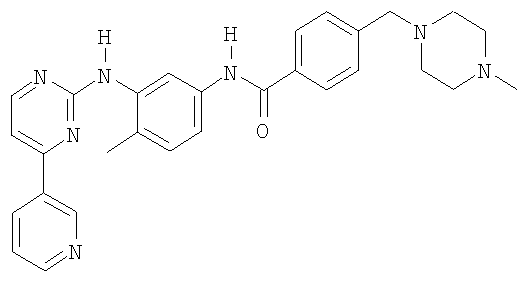
Соединение I в виде свободного основания, его приемлемые соли и его приготовление заявлены в Европейском патенте 0564409. Соединение I в виде свободного основания соответствует активной части молекулы.Compound I in the form of a free base, its acceptable salts and its preparation are claimed in European Patent 0564409. Compound I in the form of a free base corresponds to the active part of the molecule.
Соль монометансульфоновой кислоты соединения I, называемая в настоящем изобретении «солью I», предпочтительно в кристаллической форме, например в форме бета-кристаллов, описана в РСТ-заявке на патент WO 99/03854, опубликованной 28 января 1999.The monomethanesulfonic acid salt of compound I, referred to in the present invention as “salt I”, preferably in crystalline form, for example in the form of beta crystals, is described in PCT patent application WO 99/03854, published January 28, 1999.
Изобретение относится к применению ингибитора с-Abl-, PDGF-R-, c-kit- или ARG-тирозинкиназы или его фармацевтически приемлемой соли в качестве лекарственного средства против диабета, например диабета I типа или диабета II типа. Наиболее предпочтительно изобретение относится к применению соединения I или его фармацевтически приемлемой соли, например соли I, в качестве препарата против диабета, например диабета I типа или диабета II типа.The invention relates to the use of an inhibitor of c-Abl, PDGF-R, c-kit or ARG tyrosine kinase or a pharmaceutically acceptable salt thereof as a medicament for diabetes, for example type I diabetes or type II diabetes. Most preferably, the invention relates to the use of compound I or a pharmaceutically acceptable salt thereof, for example salt I, as an anti-diabetes drug, for example type I diabetes or type II diabetes.
Ингибиторы с-Abl-, PDGF-R-, c-kit- или ARG-тирозинкиназы, применяемые в соответствии с настоящим изобретением, выбраны из группы, включающей следующие соединения: 4-(4-метилпиперазин-1-илметил)-N-[4-метил-3-(4-пиридин-3-ил)пиримидин-2-иламино)фенил]бензамид, называемый в настоящем изобретении соединением I, ингибитор изоформ PDGF-рецептора, Bcr-Abl и с-Kit, который характеризуется высокой активностью и пероральной биодоступностью; бис(1H-2-индолил)-1-метаноны другого класса ингибиторов тирозинкиназы, которые охарактеризованы в качестве PDGF-R ТК-ингибиторов (Mahboobi S. и др., J. Med. Chem. 45, 2002, сс.1002-1018) и включены в настоящий патент в виде ссылки; блокатор киназы PDGF-рецептора AG 1295, имеющий CAS-номер 71897-07-9; AG 1295/96, описанный в работах Kovalenko М. и др. в Cancer Res. 54, 1994, сс.6106-6114, и Ludewig D. и др. в Cell Tissue Res. 299, 2000, cc.97-103, которые включены в настоящий патент в виде ссылок; СТ 52923 (4-(6,7-диметокси-4-хиназолинил)-N-(3,4-метилендиоксибензил)-1-пиперазинтиокарбоксамид); RP-1776; GFB-111; пиррол[3,4-с]-бета-карболиндионы, SU 102 (созданный фирмой Sugen); AG 1296, имеющий CAS-номер 146535-11-7; RPR 101511 A, разработанный фирмой Aventis Pharma; CDP 860 и Zvegf3, разработанные фирмой ZymoGenetics; CP 673451 и PD 170262 фирмы Pfizer; KI 6783, имеющий CAS-номер 190726-45-5, ингибитор PDGF-R, разработанный фирмой Kirin Brewery, Япония; KN 1022, разработанный фирмой Kyowa Hakko в Японии и фирмой Millenium Pharmaceuticals в США; AG 13736, разработанный фирмой Pfizer; CHIR 258, разработанный фирмой Chiron Corporation; MLN 518 от фирмы Millenium Pharmaceuticals и SU 11248 от фирмы SUGEN-Pfizer, лефлуномид, или их фармацевтически приемлемые соли.Inhibitors of c-Abl, PDGF-R, c-kit, or ARG tyrosine kinases used in accordance with the present invention are selected from the group consisting of the following compounds: 4- (4-methylpiperazin-1-ylmethyl) -N- [ 4-methyl-3- (4-pyridin-3-yl) pyrimidin-2-ylamino) phenyl] benzamide, referred to in the present invention as compound I, isoform inhibitor of PDGF receptor, Bcr-Abl and c-Kit, which is characterized by high activity and oral bioavailability; bis (1H-2-indolyl) -1-methanones of another class of tyrosine kinase inhibitors, which are characterized as PDGF-R TK inhibitors (Mahboobi S. et al., J. Med. Chem. 45, 2002, pp. 1002-1018 ) and are incorporated into this patent by reference; AG 1295 PDGF receptor kinase blocker having CAS number 71897-07-9; AG 1295/96, described in the works of M. Kovalenko et al. In Cancer Res. 54, 1994, pp. 6106-6114, and Ludewig D. et al. In Cell Tissue Res. 299, 2000, cc.97-103, which are incorporated herein by reference; CT 52923 (4- (6,7-dimethoxy-4-quinazolinyl) -N- (3,4-methylenedioxybenzyl) -1-piperazintiocarboxamide); RP-1776; GFB-111; pyrrole [3,4-c] beta-carbolindiones, SU 102 (created by Sugen); AG 1296 having CAS number 146535-11-7; RPR 101511 A, developed by Aventis Pharma; CDP 860 and Zvegf3, developed by ZymoGenetics; CP 673451 and PD 170262 from Pfizer; KI 6783, having CAS number 190726-45-5, a PDGF-R inhibitor, developed by Kirin Brewery, Japan; KN 1022, developed by Kyowa Hakko in Japan and Millenium Pharmaceuticals in the USA; AG 13736, developed by Pfizer; CHIR 258, developed by Chiron Corporation; MLN 518 from Millenium Pharmaceuticals and SU 11248 from SUGEN-Pfizer, leflunomide, or their pharmaceutically acceptable salts.
СТ 52923 описан Matsuno К. и др. в кн.: «18th Symposium on Medicinal Chemistry; 1998, Kyoto, Japan, the Pharmaceutical Society of Japan, Division of Medicinal Chemistry», Токио, Япония, сс.2-P-05.ST 52923 is described by Matsuno K. et al. In the book: “18 th Symposium on Medicinal Chemistry; 1998, Kyoto, Japan, the Pharmaceutical Society of Japan, Division of Medicinal Chemistry, Tokyo, Japan, pp. 2-P-05.
Циклический пептид RP-1776 выделен из культурального бульона Streptomyces sp. KY 11784. Он описан, например, Toki S. и др. в J.Antibiot., 54, 2001, сс.405-414.The cyclic peptide RP-1776 isolated from the culture broth of Streptomyces sp. KY 11784. It is described, for example, by Toki S. et al. In J. Antibiot. 54, 2001, pp. 405-414.
GFB-111 описан Blaskovich М.А. и др. в Nat. Biotechnol. 18, 2000, сс.1065-1070, и Delarue F. и др. в кн.: «91st Annual meeting of American Association for Cancer research», 41, 2000, c.458.GFB-111 is described by Blaskovich M.A. et al. in Nat. Biotechnol. 18, 2000, pp. 1065-1070, and Delarue F. et al. In the book: “91 st Annual meeting of American Association for Cancer research”, 41, 2000, p. 458.
Пирроло[3,4-с]-бета-карболиндионы, описанные, например, Teller S., Eur. J. Med. Chem. 35, 2000, сс.413-427. CDP 860 является фрагментом пегелированного антитела, производного от антитела ростового фактора бета-рецептора из антитромбоцитов человека.Pyrrolo [3,4-c] beta-carbolindione described, for example, Teller S., Eur. J. Med. Chem. 35, 2000, pp. 413-427. CDP 860 is a fragment of a pegylated antibody derived from human beta-receptor growth factor antibodies from human antiplatelet cells.
СЗ 673451 нацелен на PDGF-рецептор.SZ 673451 targets the PDGF receptor.
PD 170262 или 2-[4-(2-диэтиламиноэтокси)фениламино]-8-метил-6-(3-тиенил)пиридо[2,3-d]пиримидин-7(8Н)-он является сильным ингибитором тирозинкиназы и избирателен по отношению к тирозинкиназе тромбоцитарного фактора роста. Синтез и ингибиторная активность в отношении тирозинкиназы соединений серии 2-амино-8Н-пиридо[2,3-d]пиримидинов описаны, например, Klutchko S. и др. в кн.: «213th American Chemical Society National meeting: abst. MEDI» 1997, с.201, США.PD 170262 or 2- [4- (2-diethylaminoethoxy) phenylamino] -8-methyl-6- (3-thienyl) pyrido [2,3-d] pyrimidin-7 (8H) -one is a potent tyrosine kinase inhibitor and is selective for in relation to platelet growth factor tyrosine kinase. The synthesis and inhibitory activity against tyrosine kinase of compounds of the 2-amino-8H-pyrido [2,3-d] pyrimidine series are described, for example, by Klutchko S. et al. In the book: "213 th American Chemical Society National meeting: abst. MEDI ”1997, p.201, USA.
KI 6783 или 4-(3,4-диметоксифенокси)-6,7-диметоксихинолин описан, например, Kubo К. и др., Bioorganic and Medicinal Chemistry Letters 7, 1997, сс.2935-2940, и Yagi М. и др., Exp. Cell Research 234, 1997, сс.285-292.KI 6783 or 4- (3,4-dimethoxyphenoxy) -6,7-dimethoxyquinoline is described, for example, by Kubo K. et al., Bioorganic and Medicinal Chemistry Letters 7, 1997, pp. 2935-2940, and Yagi M. et al. ., Exp. Cell Research 234, 1997, pp. 285-292.
KN 1022 или 6,7-диметокси-4-[4-(4-нитрофенил)аминокарбонилпиперазин-1-ил]хиназолин, который ингибирует PDGFR-фосфорилирование, описан, например, в кн.: «217th American Chemical Society National meeting abstr. MEDI» 1999, часть 1, с.061, Япония.
AG 013736 или N-метил-2-[3-[2-(2-пиридил)винил]-1Н-индазол-6-илсульфанил]бензамид описан, например, Heller и др. в кн.: «93rd Annual meeting of American association for Cancer research» 43, 2002, с.1082, США.AG 013736 or N-methyl-2- [3- [2- (2-pyridyl) vinyl] -1H-indazol-6-ylsulfanyl] benzamide is described, for example, by Heller et al. In the book: “93 rd Annual meeting of American association for Cancer research ”43, 2002, p. 1082, USA.
CHIR 258 является перорально активным аминобензимидазолхинолиновым ингибитором киназы фактора роста, который проявляет спектр ингибиторной активности в отношении рецептора тирозинкиназы, например, из PDGFR-семейства. CHIR 258 описан, например, Steigerwalt R. и др. а также Lee S.H. и др. в кн.: «94th Annual meeting of American association for Cancer research» 2003, США, с.3783 и с.R4702 соответственно.CHIR 258 is an orally active aminobenzimidazolequinoline kinase inhibitor of a growth factor that exhibits a spectrum of inhibitory activity against a tyrosine kinase receptor, for example, from the PDGFR family. CHIR 258 is described, for example, by Steigerwalt R. et al. And Lee SH et al. In the book: “94 th Annual meeting of American association for Cancer research” 2003, USA, p. 3783 and p. R4702, respectively.
SU 11248 или (2-диэтиламиноэтил)амин 5-[3-фтор-2-оксо-1,2-дигидроиндол-(3Z)-илиденметил]-2,4-диметил-1Н-пиррол-3-карбоновой кислоты является направленным на многие мишени ингибитором киназы, селективным, например, по отношению к PDGFR. SU 11248 описан, например, Xin L. и др. в кн.: «93rd Annual meeting of American Association for Cancer Research» 43, 2002, с.1081, США.SU 11248 or (2-diethylaminoethyl) amine 5- [3-fluoro-2-oxo-1,2-dihydroindole- (3Z) -ylidenemethyl] -2,4-dimethyl-1H-pyrrole-3-carboxylic acid is aimed at many targets are kinase inhibitors selective for, for example, PDGFR. SU 11248 is described, for example, by Xin L. et al. In the book: “93 rd Annual meeting of American Association for Cancer Research” 43, 2002, p. 1081, USA.
MLN 518 является пиперазинильным производным хиназолина формулы 4-[4-(N-пара-изопропоксифенилкарбамоил)-1-пиперазинил]-6-метокси-7-(пиперидинопропилокси)хиназолин, который ингибирует, например, PDGF R-фосфорилирование в анализах связывания (Stone R.M. и др., Blood 102, 2003, сс.65-66; Kelly L.M. и др., Cancer Cell 1, 2002, сс.421-423).MLN 518 is a piperazinyl quinazoline derivative of the formula 4- [4- (N-para-isopropoxyphenylcarbamoyl) -1-piperazinyl] -6-methoxy-7- (piperidinopropyloxy) quinazoline, which inhibits, for example, PDGF R-phosphorylation in binding assays (Stone RM et al., Blood 102, 2003, pp. 65-66; Kelly LM et al.,
Лефлуномид (SU 101) или 4-изоксазолкарбоксамид, 5-метил-N-[4-(трифторметил)фенил] является ингибитором тирозинкиназы.Leflunomide (SU 101) or 4-isoxazole carboxamide, 5-methyl-N- [4- (trifluoromethyl) phenyl] is a tyrosine kinase inhibitor.
SU 11654 ингибирует активность тирозинкиназы рецептора c-kit.SU 11654 inhibits c-kit receptor tyrosine kinase activity.
Структура активных агентов, идентифицируемых кодовыми номерами, генерическими или торговыми названиями, может быть взята из текущего издания стандартного краткого руководства «The Merck Index» или из базы данных, например, Patents International (IMS World Publications). Соответствующее содержание приводится в настоящем изобретении в виде ссылок.The structure of active agents identified by code numbers, generic or trade names can be taken from the current edition of the standard “The Merck Index” short guide or from a database, for example, Patents International (IMS World Publications). Relevant content is provided in the present invention by reference.
Настоящее изобретение относится также к применению 4-(4-метилпиперазин-1-илметил)-N-[4-метил-3-(4-пиридин-3-ил)пиримидин-2-иламино)фенил]бензамида, бис(1H-2-индолил)-1-метанонов, AG 1295, СТ 52923, RP-1776, GFB-111, пирроло[3,4-с]-бета-карболиндионов, SU 102, AG 1296, RPR 101511А, CDP 860, Zvegf3, CP 673451, PD 170262, KI 6783, KN 1022, AG 13736, CHIR 258, MLN 518, SU 11248, лефлуномида или их фармацевтически приемлемых солей для получения лекарственного средства, предназначенного для лечения диабета, например диабета I типа или диабета II типа, предпочтительно применяется соединение I или его фармацевтически приемлемая соль.The present invention also relates to the use of 4- (4-methylpiperazin-1-ylmethyl) -N- [4-methyl-3- (4-pyridin-3-yl) pyrimidin-2-ylamino) phenyl] benzamide, bis (1H- 2-indolyl) -1-methanones, AG 1295, CT 52923, RP-1776, GFB-111, pyrrolo [3,4-c] beta-carbolindione, SU 102, AG 1296, RPR 101511A, CDP 860, Zvegf3, CP 673451, PD 170262, KI 6783, KN 1022, AG 13736, CHIR 258, MLN 518, SU 11248, leflunomide or their pharmaceutically acceptable salts for the manufacture of a medicament for the treatment of diabetes, for example type I diabetes or type II diabetes, preferably Compound I or a pharmaceutically acceptable thereof is used ol.
Настоящее изобретение относится также к применению ингибиторов с-Abl-,The present invention also relates to the use of c-Abl- inhibitors,
PDGF-R-, c-kit- или ARG-тирозинкиназы или их фармацевтически приемлемых солей для получения лекарственного средства для лечения диабета, например диабета I типа или диабета II типа. Предпочтительно ингибитор с-Abl-, PDGF-R-, c-kit- или ARG-тирозинкиназы выбраны из группы, включающей 4-(4-метилпиперазин-1-илметил)-N-[4-метил-3-(4-пиридин-3-ил)пиримидин-2-иламино)фенил]бензамид, бис(1H-2-индолил)-1-метаноны, AG 1295, СТ 52923, RP-1776, GFB-111, пиррол[3,4-с]-бета-карболиндионы, SU 102, AG 1296, RPR 101511 А, CDP 860, Zvegf3, CP 673451, PD 170262, KI 6783, KN 1022, AG 13736, CHIR 258, MLN 518, SU 11248, лефлуномид или их фармацевтически приемлемые соли, предпочтительно 4-(4-метилпиперазин-1-илметил)-N-[4-метил-3-(4-пиридин-3-ил)пиримидин-2-иламино)фенил]бензамид.PDGF-R-, c-kit- or ARG-tyrosine kinases or their pharmaceutically acceptable salts for the manufacture of a medicament for the treatment of diabetes, for example type I diabetes or type II diabetes. Preferably, the c-Abl, PDGF-R, c-kit or ARG tyrosine kinase inhibitor is selected from the group consisting of 4- (4-methylpiperazin-1-ylmethyl) -N- [4-methyl-3- (4-pyridine -3-yl) pyrimidin-2-ylamino) phenyl] benzamide, bis (1H-2-indolyl) -1-methanones, AG 1295, CT 52923, RP-1776, GFB-111, pyrrole [3,4-s] beta-carbolindiones, SU 102, AG 1296, RPR 101511 A, CDP 860, Zvegf3, CP 673451, PD 170262, KI 6783, KN 1022, AG 13736, CHIR 258, MLN 518, SU 11248, leflunomide or their pharmaceutically acceptable salts preferably 4- (4-methylpiperazin-1-ylmethyl) -N- [4-methyl-3- (4-pyridin-3-yl) pyrimidin-2-ylamino) phenyl] benzamide.
В настоящем описании термин «лечение» обозначает либо профилактическую, или превентивную обработку, либо подавляющее болезнь лечение, включая лечение пациентов с риском развития диабета и больных диабетом. Этот термин также включает лечение с целью замедления развития болезни.As used herein, the term “treatment” means either prophylactic or preventative treatment or disease-suppressing treatment, including treating patients at risk of developing diabetes and those with diabetes. This term also includes treatment to slow the development of the disease.
Понятие «подавление и/или реверсирование диабета» означает, что состояние диабета больше не наблюдается у пациента или что заболевание пребывает в не столь тяжелой форме, чем до лечения или при отсутствии лечения.The term "suppression and / or reversal of diabetes" means that the condition of diabetes is no longer observed in the patient or that the disease is in less severe form than before treatment or in the absence of treatment.
Применяемый термин «лечение» в контексте настоящего изобретения означает, что обработка приводит к ремиссии диабета или постоянных приступов диабета.The term "treatment" as used in the context of the present invention means that treatment leads to remission of diabetes or persistent attacks of diabetes.
Термин «профилактический» или «превентивный» обозначает профилактику начала заболевания или рецидива диабета.The term "prophylactic" or "preventive" means the prevention of the onset of a disease or relapse of diabetes.
В контексте настоящего изобретения понятие «замедление прогрессирования» обозначает, что введение активного соединения пациенту на предварительном этапе или на ранней стадии диабета предотвращает заболевание от дальнейшего развития или ослабляет развитие болезни по сравнению с развитием болезни без введения активного соединения.In the context of the present invention, the term “slowing the progression” means that the administration of the active compound to a patient at a preliminary stage or at an early stage of diabetes prevents the disease from further development or slows down the development of the disease compared with the development of the disease without administration of the active compound.
Фармацевтические композиции согласно настоящему изобретению могут быть получены способом, известным per se, и подходят для энтерального, например перорального или ректального, и парентерального введения теплокровным животным, включая человека, они содержат терапевтически эффективное количество, по меньшей мере, одного фармакологически активного ингредиента, одного или в комбинации с одним или несколькими фармацевтически приемлемыми носителями, особенно приемлемыми для энтерального или парентерального применения. Предпочтительным способом введения дозовых форм настоящего изобретения является пероральный способ.The pharmaceutical compositions according to the present invention can be obtained by a method known per se, and are suitable for enteral, for example oral or rectal, and parenteral administration to warm-blooded animals, including humans, they contain a therapeutically effective amount of at least one pharmacologically active ingredient, one or in combination with one or more pharmaceutically acceptable carriers, especially suitable for enteral or parenteral use. A preferred method of administering dosage forms of the present invention is the oral method.
Таким образом, изобретение также относится к способу лечения теплокровных животных с диабетом, например диабетом I типа или диабетом II типа, предусматривающему введение указанному животному, нуждающимся в таком лечении, соединения I или его фармацевтически приемлемой соли в терапевтически эффективном количестве.Thus, the invention also relates to a method for treating warm-blooded animals with diabetes, for example type I diabetes or type II diabetes, comprising administering to said animal in need of such treatment, compound I or a pharmaceutically acceptable salt thereof in a therapeutically effective amount.
Изобретение относится к способу введения человеку, болеющему диабетом, например диабетом I типа или диабетом II типа, предпочтительно диабетом I типа, кислотной соли соединения I, предпочтительно соли I, монометансульфонатной соли 4-(4-метилпиперазин-1-илметил)-N-[4-метил-3-(4-пиридин-3-ил)пиримидин-2-иламино)фенил]бензамида.The invention relates to a method for administering to a person with diabetes, for example type I diabetes or type II diabetes, preferably type I diabetes, an acid salt of compound I, preferably salt I, monomethanesulfonate salt of 4- (4-methylpiperazin-1-ylmethyl) -N- [ 4-methyl-3- (4-pyridin-3-yl) pyrimidin-2-ylamino) phenyl] benzamide.
Квалифицированный специалист в данной области может легко выбрать нужные тестовые модели, чтобы подтвердить проявление полезных эффектов, упомянутых в настоящем изобретении, в отношении диабета, например диабета I типа или диабета II типа. Фармакологическую активность указанного соединения можно, например, продемонстрировать с помощью примеров, описанных ниже, с помощью тестов in vitro и in vivo или приемлемыми клиническими исследованиями. Подходящими клиническими исследованиями являются, например, открытые меченые нерандомизированные исследования с повышением дозы на пациентах с диабетом, например диабетом I типа или диабетом II типа. В этих исследованиях определяется эффективность лечения, например, путем оценки заболевания каждые 4 недели и сопоставлением с контролем, в котором применяли плацебо.A person skilled in the art can easily select the desired test models to confirm the manifestation of the beneficial effects mentioned in the present invention in relation to diabetes, for example type I diabetes or type II diabetes. The pharmacological activity of this compound can, for example, be demonstrated using the examples described below, using in vitro and in vivo tests, or acceptable clinical studies. Suitable clinical studies are, for example, open-label, non-randomized, dose-increasing studies in patients with diabetes, for example type I diabetes or type II diabetes. These studies determine the effectiveness of treatment, for example, by evaluating the disease every 4 weeks and comparing it with the control in which placebo was used.
Эффективная доза соединения I может изменяться в зависимости от применяемого соединения или фармацевтической композиции, способа введения, типа диабета, например диабета I типа или диабета II типа, подвергаемого лечению, или от тяжести заболевания. Дозовый режим выбирается в соответствии с множеством других факторов, включая функционирование почек и печени у пациента. Врачи, клиницисты или ветеринары обычной квалификации могут легко определить и прописать эффективное количество соединений, требуемых для профилактики, сдерживания или прекращения развития заболевания.The effective dose of compound I may vary depending on the compound or pharmaceutical composition used, the route of administration, type of diabetes, for example type I diabetes or type II diabetes being treated, or the severity of the disease. The dosage regimen is selected in accordance with many other factors, including the functioning of the patient's kidneys and liver. Doctors, clinicians or veterinarians of ordinary skill can easily determine and prescribe the effective amount of compounds required to prevent, control or stop the development of the disease.
В зависимости от возраста, индивидуального состояния, способа введения и клинической картины эффективные дозы, например суточные дозы соединения I или его фармацевтически приемлемой соли, соответствующие 100-1000 мг свободного основания в качестве активного начала, особенно 800 мг, вводятся теплокровным животным массой тела около 70 кг. Предпочтительно теплокровным животным является человек. Для пациентов с недостаточной реакцией на суточные дозы может безопасно рассматриваться вопрос о повышении доз, пациентов могут подвергать лечению на протяжении длительного времени до тех пор, пока будет наблюдаться польза от лечения при отсутствии сдерживающей токсичности.Depending on age, individual condition, route of administration and clinical presentation, effective doses, for example daily doses of compound I or a pharmaceutically acceptable salt thereof, corresponding to 100-1000 mg of free base as an active principle, especially 800 mg, are administered to warm-blooded animals weighing about 70 kg Preferably, the warm-blooded animal is a human. For patients with an insufficient response to daily doses, the issue of increasing doses can be safely considered, patients can be treated for a long time until the benefits of treatment are observed in the absence of inhibitory toxicity.
Изобретение также относится к способу введения пациенту, болеющему диабетом, например диабетом I типа или диабетом II типа, соединения I или его фармацевтически приемлемой соли, предусматривающему введение фармацевтически эффективного количества соединения I или его фармацевтически приемлемой соли пациенту один раз в сутки на протяжении периода времени, превышающего 3 месяца. Особенно изобретение относится к такому способу, при котором суточная доза соединения I, составляющая 400-800 мг, предпочтительно 800 мг, вводится взрослому пациенту.The invention also relates to a method for administering to a patient with diabetes, for example type I diabetes or type II diabetes, compound I or a pharmaceutically acceptable salt thereof, comprising administering a pharmaceutically effective amount of compound I or its pharmaceutically acceptable salt to a patient once a day for a period of time, exceeding 3 months. In particular, the invention relates to a method in which a daily dose of compound I of 400-800 mg, preferably 800 mg, is administered to an adult patient.
Изобретение также предлагает упаковку лекарственного средства, включающую ингибитор с-Abl-, PDGF-R-, c-kit- или ARG-тирозинкиназы или их фармацевтически приемлемую соль, например соединение I или его фармацевтически приемлемые соли, например соль I, вместе с отпечатанными инструкциями по введению для пациентов с диабетом, например диабетом I типа или диабетом II типа.The invention also provides a drug package comprising a c-Abl, PDGF-R, c-kit, or ARG tyrosine kinase inhibitor, or a pharmaceutically acceptable salt thereof, for example Compound I, or pharmaceutically acceptable salts thereof, for example Salt I, together with printed instructions for administration to patients with diabetes, for example type I diabetes or type II diabetes.
Пример 1. Защищает ли соединение I, например соль I, от диабета и от гибели бета-клетки?Example 1. Does compound I, for example salt I, protect against diabetes and beta cell death?
В приводимых ниже примерах β-ТС6-клетки обозначаются как бета-ТС6-клетки.In the examples below, β-TC6 cells are referred to as beta-TC6 cells.
Инсулин-зависимый (I типа) сахарный диабет (ИЗСД) является многофакторным аутоиммунным заболеванием, которое возникает в результате специфического и прогрессирующего разрушения инсулин-продуцирующих β-клеток. Дисфункция и повреждение β-клеток, как полагают, происходит при непосредственном контакте с островковыми инфильтрующими клетками (макрофагами, CD4+ или CD8+ (NK) Т-клетками) и/или в результате воздействия цитотоксических медиаторов, продуцируемых этими клетками, например провоспалительными цитокинами (IL-1, TNF-α, IFN-γ), свободными радикалами, Fas-лигандом, TPAIL и перфорином. Аутоиммунность, направленная против бета-клеток, может быть инициирована факторами окружающей среды, например токсинами бета-клеток, пищевыми компонентами, стрессом, метаболической перегрузкой, вирусами и т.д. Возможно, что бета-клетка при конвертировании наружного сигнала гибели во внутренние апоптозные события активно участвует в собственном разрушении при диабете I типа. Провоспалительные цитокины, а именно комбинация IL-1 и IFN-γ, индуцируют апоптоз и некроз бета-клетки. Таким образом, указанные цитокины, возможно, не только модулируют активность островковых инфильтрующих иммунных клеток, но также воздействуют на прямые вредные эффекты на бета-клетку в патогенезе диабета I типа. Вероятно, что стимуляция бета-клеток с помощью IL-1 приводит к множественным сигнальным событиям, включая активацию протеинкиназ (РКС, р38, JNK, ERK, MSK1), липаз (PLC, PLD, сфингомиелиназы), циклооксигеназы и факторов транскрипции (NF-кВ, ATF-2, c-jun, Elk-1, CREB, cEBP-β, IRF-1, STAT-1). Указанные события сопровождаются индукцией индуцируемой синтазы оксида азота (iNOS) и белков стресса, например, hsp70, гемоксигеназы, Mn-SOD, ICE и других. К сожалению, остается неясным, какие происходят изменения в генной экспрессии, которые имеют большое значение для гибели бета-клеток при диабете I типа. Преимущественно апоптоз происходит в линии бета-клеток в ответ на УФ-излучение или ингибирование репарации ДНК. Этому предшествует индукция р53 опухолевого супрессорного белкового индуктора, генерирование реактивного кислорода, PARP-ингибирование, прекращение S- и G2-клеточного цикла и понижение митохондриального мембранного потенциала. Цитокины, которые в основном стимулируют некроз и только в меньшей степени апоптоз, существенно активируют такие сигнальные этапы, как ингибирование репарации ДНК и УФ-излучение. Из этих экспериментов in vitro ясно, что модель гибели бета-клеток может изменяться в зависимости от сигнала гибели, а также, что аналогичные сигнальные пути метаболизма могут применяться для достижения различных форм гибели бета-клеток.Insulin-dependent (type I) diabetes mellitus (IDDM) is a multi-factor autoimmune disease that occurs as a result of specific and progressive destruction of insulin-producing β-cells. Β-cell dysfunction and damage are believed to occur by direct contact with islet infiltrating cells (macrophages, CD4 + or CD8 + (NK) T cells) and / or as a result of exposure to cytotoxic mediators produced by these cells, e.g., pro-inflammatory cytokines ( IL-1, TNF-α, IFN-γ), free radicals, Fas ligand, TPAIL and perforin. Autoimmunity against beta cells can be triggered by environmental factors such as beta cell toxins, food components, stress, metabolic overload, viruses, etc. It is possible that the beta cell, when converting the external death signal into internal apoptotic events, is actively involved in its own destruction in type I diabetes. Pro-inflammatory cytokines, namely the combination of IL-1 and IFN-γ, induce apoptosis and beta cell necrosis. Thus, these cytokines, perhaps, not only modulate the activity of islet infiltrating immune cells, but also affect the direct harmful effects on the beta cell in the pathogenesis of type I diabetes. It is likely that stimulation of beta cells with IL-1 leads to multiple signaling events, including activation of protein kinases (PKC, p38, JNK, ERK, MSK1), lipases (PLC, PLD, sphingomyelinases), cyclooxygenase, and transcription factors (NF-kB , ATF-2, c-jun, Elk-1, CREB, cEBP-β, IRF-1, STAT-1). These events are accompanied by the induction of induced nitric oxide synthase (iNOS) and stress proteins, for example, hsp70, hemoxygenase, Mn-SOD, ICE and others. Unfortunately, it remains unclear what changes are occurring in gene expression, which are of great importance for the death of beta cells in type I diabetes. Mostly apoptosis occurs in the beta cell line in response to UV radiation or inhibition of DNA repair. This is preceded by the induction of a p53 tumor suppressor protein inducer, reactive oxygen generation, PARP inhibition, termination of the S and G2 cell cycle and a decrease in mitochondrial membrane potential. Cytokines, which mainly stimulate necrosis and only to a lesser extent apoptosis, significantly activate signaling steps such as inhibition of DNA repair and UV radiation. From these in vitro experiments, it is clear that the beta cell death model may vary depending on the death signal, and that similar metabolic signaling pathways can be used to achieve different forms of beta cell death.
С-Abl является повсеместно экспрессируемой протеинтирозинкиназой с приблизительной молекулярной массой 145 кДа. Было показано, что в физиологических условиях с-Abl участвует в контроле функций цитоскелета, например миграции и структуре клеток, а также в развитии клеточного цикла. Тем не менее, когда клетки подвергаются различным формам стресса, с-Abl становится высоко активированной, что приводит к остановке клеточного цикла и апоптозу.C-Abl is a ubiquitously expressed protein tyrosine kinase with an approximate molecular weight of 145 kDa. Under physiological conditions, c-Abl has been shown to be involved in the control of cytoskeletal functions, such as migration and cell structure, as well as in the development of the cell cycle. However, when cells undergo various forms of stress, c-Abl becomes highly activated, leading to cell cycle arrest and apoptosis.
В итоге интенсивные исследования клеток, не являющихся бета-клетками, показали, что с-Abl стимулирует апоптоз в ответ на различные типы стресса. Предполагаемая роль с-Abl в инсулин-продуцирующих клетках не выяснена. Таким образом, не ясно, играет ли указанный белок какую-то роль в гибели бета-клеток и выборе между апоптозом и некрозом.As a result, intensive studies of non-beta cells have shown that c-Abl stimulates apoptosis in response to various types of stress. The alleged role of c-Abl in insulin-producing cells has not been clarified. Thus, it is not clear whether this protein plays any role in the death of beta cells and the choice between apoptosis and necrosis.
Значение для диабета I типа. Хотя патогенез диабета I типа представляется очень сложным процессом, возможно, что внутриклеточные метаболические пути, приводящие к гибели бета-клеток, сходятся в некоторой определенной точке. Гипотетически это открывает возможность за счет применения только одного подхода блокировать большое число сигналов гибели, в результате чего достигалось бы выживание бета-клеток.Importance for type I diabetes. Although the pathogenesis of type I diabetes seems to be a very complex process, it is possible that the intracellular metabolic pathways leading to the death of beta cells converge at some specific point. Hypothetically, this opens up the possibility, by applying only one approach, to block a large number of death signals, as a result of which beta cell survival would be achieved.
Тирозинкиназа с-Abl может быть важным медиатором гибели бета-клеток. Тирозинкиназа с-Abl экспрессируется в bTC-6-клетках и выделенных островковых клетках крыс, и ингибирование с-Abl-активности либо с применением фармакологического агента СОЕДИНИНИЯ I, либо нокаутом с- Abl-экспрессии с помощью РНКи-методики, приводит к защите от гибели бета-клеток, индуцируемой провоспалительными цитокинами или донорами оксида азота. С-Abl не действует при стимулировании образования оксида азота, так как ингибирование с-Abl не противодействует цитокин-индуцированному образованию оксида азота.The tyrosine kinase c-Abl may be an important mediator of beta cell death. C-Abl tyrosine kinase is expressed in bTC-6 cells and isolated rat islet cells, and inhibition of c-Abl activity either by the pharmacological agent COMPOUND I or by knockout of c-Abl expression using the RNAi technique results in protection against death beta cells induced by pro-inflammatory cytokines or nitric oxide donors. C-Abl does not act to stimulate the formation of nitric oxide, since inhibition of c-Abl does not counteract the cytokine-induced formation of nitric oxide.
В свете указанных данных с-Abl действует как сенсор стресса и внешних сигналов гибели, и с-Abl-активация может привести к фосфорилированию и активации JNK- и р38 МАР-киназ, инактивации NF-кВ и PI3K, митохондриальному высвобождению про-апоптозных факторов и, в итоге, к гибели бета-клеток. Соединение I способно блокировать различные сигналы гибели, в результате чего достигается выживание бета-клеток и защита от диабета.In light of the above data, c-Abl acts as a sensor of stress and external death signals, and c-Abl activation can lead to phosphorylation and activation of JNK and p38 MAP kinases, inactivation of NF-kB and PI3K, mitochondrial release of pro-apoptotic factors and , in the end, to the death of beta cells. Compound I is able to block various death signals, resulting in beta cell survival and protection against diabetes.
Результаты Для того чтобы установить, мешает ли соединение I, например соль I, или участвует ли с-Abl в сигнальном каскаде, который приводит к гибели бета-клеток, выделенные островковые клетки крыс обрабатывают постепенно высвобождающим оксид азота донором DETA/NO (0,5 ммоль) или комбинацией IL-1-β (25 ЕД/мл) + IFN-γ (1000 ЕД/мл) + TNF-α (1000 ЕД/мл) в течение 24 ч. В обоих случаях островковые клетки культивируют, с добавлением или без него, 10 мкМ соединения I, например соли I, в течение инкубационного периода. После инкубационного периода островковые клетки витально окрашивают иодидом пропидиума + бисбензимидом и фотографируют флуоресцентным микроскопом. Апоптозные (белые конденсированные или фрагментированные ядра) и некротические (красные или розовые нефрагментированные ядра) подсчитывают и выражают в виде процента от общего количества клеток. Соль I, например соединение I, сама по себе не влияет на жизнеспособность островковых клеток. DETA/NO индуцирует некроз в 10% островковых клеток, и комбинация цитокинов - приблизительно 40% некроза. Интересно, что гибели клеток, индуцируемой NO-донором, четко противодействует соединение I, например соль I, (табл.1). Также с-Abl-ингибитор частично уменьшает цитокин-индуцированный некроз островковых клеток. Частота апоптозных клеток составляет менее 10% во всех группах (результаты не представлены).Results In order to establish whether compound I, for example, salt I interferes, or whether c-Abl is involved in the signaling cascade that leads to the death of beta cells, the isolated rat islet cells are treated with a nitrous oxide-releasing donor DETA / NO (0.5 mmol) or a combination of IL-1-β (25 IU / ml) + IFN-γ (1000 IU / ml) + TNF-α (1000 IU / ml) for 24 hours. In both cases, islet cells were cultured with or without it, 10 μM of compound I, for example salt I, during the incubation period. After the incubation period, islet cells are stained vitally with propidium iodide + bisbenzimide and photographed with a fluorescence microscope. Apoptotic (white condensed or fragmented nuclei) and necrotic (red or pink unfragmented nuclei) are counted and expressed as a percentage of the total number of cells. Salt I, for example compound I, does not per se affect the viability of islet cells. DETA / NO induces necrosis in 10% of islet cells, and a combination of cytokines approximately 40% of necrosis. Interestingly, the death of cells induced by the NO donor is clearly opposed by compound I, for example, salt I (Table 1). Also, the c-Abl inhibitor partially reduces cytokine-induced islet necrosis. The frequency of apoptotic cells is less than 10% in all groups (results not shown).
Таблица 1. Соединение I, например соль I, защищает островковые клетки от NO- и цитокин-индуцированной гибели. Результаты являются средними ± SEM (средняя ошибка) для трех независимых наблюдений.Table 1. Compound I, for example, salt I, protects islet cells from NO and cytokine-induced death. Results are mean ± SEM (mean error) for three independent observations.
Определяют уровень нитрита из клеток, инкубированных с комбинацией цитокинов в течение более 24 ч, вместе или без 1 или 10 мкмолей соединения I, например соли I. Соединение I, например соль I, не ингибирует цитокин-индуцируемое образование оксида азота (фиг.1). И, напротив, уровень образования оксида азота в присутствии соли I выше, возможно, из-за более высокой жизнеспособности обработанных солью I клеток, более 35% нитрита высвобождается из клеток, обработанных цитокином в сочетании с соединением I, по сравнению только с одним цитокином.The nitrite level is determined from cells incubated with a combination of cytokines for more than 24 hours, with or without 1 or 10 μmol of compound I, for example salt I. Compound I, for example salt I, does not inhibit the cytokine-induced formation of nitric oxide (Fig. 1) . Conversely, the level of nitric oxide formation in the presence of salt I is higher, possibly due to the higher viability of the cells treated with salt I, more than 35% of nitrite is released from cells treated with a cytokine in combination with compound I, compared with only one cytokine.
Проводят исследование с целью установить, защищает ли соединение I от диабетогенного препарата стрептозотоцина in vitro. При концентрации стрептозотоцина 0,4 ммолей защита высокая, существенная, в то время как при концентрации стрептозотоцина 0,75 ммолей соединение I защищает слабо (табл.2). При концентрации стрептозотоцина 0,6 ммолей защитный эффект соединения I выражается средним значением.A study is being conducted to determine whether Compound I protects against the diabetogenic streptozotocin preparation in vitro. At a concentration of streptozotocin of 0.4 mmol, the protection is high, substantial, while at a concentration of streptozotocin of 0.75 mmol, compound I weakly protects (Table 2). At a concentration of streptozotocin of 0.6 mmol, the protective effect of compound I is expressed as an average value.
Таблица 2. Соединение I, например соль I, защищает от стрептозотоцин-индуцированной гибели островковых клеток. Соединение I (10 ммоль) добавляют за 24 ч до внесения стрептозотоцина. Островковые клетки собирают и фотографируют через шесть часов после добавления стрептозотоцина. Некротические (красные или розовые нефрагментированные ядра) подсчитывают и выражают в виде процента от общего числа клеток. Результаты показывают процент некротических клеток, выраженный средними значениями ± SEM трех независимых наблюдений. ***, ** и * обозначают р<0,001, 0,01 и 0,05 с применением парного t-критерия Стьюдента.Table 2. Compound I, for example salt I, protects against streptozotocin-induced islet cell death. Compound I (10 mmol) was added 24 hours before streptozotocin was added. Islet cells are harvested and photographed six hours after streptozotocin is added. Necrotic (red or pink unfragmented nuclei) are counted and expressed as a percentage of the total number of cells. The results show the percentage of necrotic cells expressed as mean ± SEM of three independent observations. ***, ** and * denote p <0.001, 0.01 and 0.05 using paired t-student test.
Для исследования, регулирует ли соединение I, например соль I, также клеточную гибель применительно к островковым клеткам человека, последние инкубировали в течение 24 ч с добавлением или без добавления соединения I, например соли I, (10 мкмолей), DETA/NO (2 ммоля) и брефелдина А (10 ммолей). Аналогично наблюдавшемуся ранее для островковых клеток крысы островковые клетки человека также частично защищены от токсичных уровней NO (фиг.2). Таким образом, соль I частично противодействует брефелдин В-индуцированной гибели островковых клеток (ER-стрессу).To investigate whether compound I, for example, salt I, also regulates cell death in relation to human islet cells, the latter were incubated for 24 hours with or without compound I, for example, salt I, (10 μmol), DETA / NO (2 mmol) ) and brefeldin A (10 mmol). Similar to that previously observed for rat islet cells, human islet cells are also partially protected from toxic levels of NO (FIG. 2). Thus, salt I partially counteracts Brefeldin B-induced islet cell death (ER-stress).
Для того чтобы исследовать, регулирует ли с-Abl и/или защищает ли соединение I, например соль I, от стрептозотоцин-индуцированного диабета in vivo, применяют следующую методику: мужские особи мышей NMRI с массой примерно 25 г приобретают на фирме Taconic M&B, Sollentuna, Швеция. Животные имеют свободный доступ к водопроводной воде и гранулированному корму в течение времени исследования. Подстилку меняют еженедельно. Массу и уровень глюкозы в крови определяют с применением прибора Pen Sensor (фирма MediSense, Уолтем, Массачусетс, США) перед экспериментом. Животным принудительно скармливают 200 мкл соединения I, например соли I, растворенной в 0,9% NaCl в количестве 200 мг/кг массы тела в течение трех суток подряд (сутки -1, 0 и 1). В сутки 0 мышам вводят в хвостовую вену 120 или 160 мг/кг массы тела стрептозотоцина (фирма Sigma-Aldrich Co, Сент-Луис, МО, США). Стрептозотоцин растворяют в 0,9% NaCl непосредственно перед инъекцией. Массу и уровень глюкозы в крови определяют на 0, 1, 2, 3, 5, 7, 9 сутки по образцам крови, собранным из хвоста. На 9 сутки животных забивают цервикальным смещением. Местный Комитет по этическому отношению к животным (Тиерп, Швеция) санкционирует все эксперименты с животными.In order to investigate whether c-Abl regulates and / or protects compound I, for example salt I, from streptozotocin-induced diabetes in vivo, the following procedure is used: male NMRI mice weighing approximately 25 g are purchased from Taconic M&B, Sollentuna , Sweden. Animals have free access to tap water and granular feed during the study time. The litter is changed weekly. The mass and level of glucose in the blood is determined using a Pen Sensor device (MediSense, Waltham, Mass., USA) before the experiment. Animals are force fed 200 μl of compound I, for example salt I, dissolved in 0.9% NaCl in an amount of 200 mg / kg body weight for three consecutive days (days -1, 0 and 1). Per day, 120 or 160 mg / kg body weight of streptozotocin (Sigma-Aldrich Co, St. Louis, MO, USA) is injected into the tail vein of 0 mice. Streptozotocin is dissolved in 0.9% NaCl immediately before injection. The mass and level of glucose in the blood is determined on 0, 1, 2, 3, 5, 7, 9 days from blood samples collected from the tail. On day 9, the animals are killed by cervical displacement. The Local Animal Ethics Committee (Tierp, Sweden) authorizes all animal experiments.
Лечение соединением I полностью защищает от инъекции 120 мг/кг стрептозотоцина (табл.4). Кроме того, соединение I, например соль I, частично защищает от более высоких доз стрептозотоцина (160 мг/кг) (табл.3).Compound I treatment completely protects against injection of 120 mg / kg streptozotocin (Table 4). In addition, compound I, for example salt I, partially protects against higher doses of streptozotocin (160 mg / kg) (Table 3).
Таблица 3. Эффект соединения I, например соли I, на диабет у мышей, индуцированный стрептозотоцином в количестве 160 мг/кг. Мышам NMRI принудительно скармливают соединение I в количестве 200 мг/кг раз в сутки (сутки -1, 0 и 1). В сутки 0 мышам вводят 160 мг/кг стрептозотоцина внутривенно и уровень глюкозы в крови определяют на сутки, показанные на фиг.*, ** и *** обозначают р<0,05, 0,01 и 0,001 относительно STZ с применением парного t-критерия Стьюдента. Число наблюдений составляет 5 (физиологический раствор и соединение I) и 10 (STZ и STZ + соединение I).Table 3. The effect of compound I, for example salt I, on diabetes in mice induced by streptozotocin in an amount of 160 mg / kg NMRI mice are force fed Compound I in an amount of 200 mg / kg once a day (days -1, 0 and 1). 160 mg / kg of streptozotocin is administered intravenously per day to 0 mice and blood glucose levels are determined per day, shown in Fig. *, ** and *** indicate p <0.05, 0.01 and 0.001 relative to STZ using paired t Student's criterion. The number of observations is 5 (saline and compound I) and 10 (STZ and STZ + compound I).
Таблица 4. Влияние соединения I на диабет у мышей, индуцируемый стрептозотоцином в количестве 120 мг/кг. Мышам NMRI принудительно скармливают соединение I в количестве 200 мг/кг раз в сутки (сутки -1, 0 и 1). В сутки 0 мышам вводят 120 мг/кг стрептозотоцина внутривенно и уровень глюкозы в крови определяют на сутки, показанные на чертежах. * и *** обозначают р<0,05 и 0,001 соответственно при сопоставлении относительно STZ-группы (t-критерий Стьюдента). Число наблюдений составляет 10.Table 4. The effect of compound I on diabetes in mice induced by streptozotocin in an amount of 120 mg / kg NMRI mice are force fed Compound I in an amount of 200 mg / kg once a day (days -1, 0 and 1). Per day, 120 mg / kg of streptozotocin is administered intravenously to 0 mice and the blood glucose level is determined on the day shown in the drawings. * and *** denote p <0.05 and 0.001, respectively, when comparing with respect to the STZ group (Student t-test). The number of observations is 10.
План исследований и методыResearch Plan and Methods
1. Установить дополнительные сигналы гибели и факторы стресса, которые стимулируют гибель бета-клеток человека посредством ингибируемых соединением I путей метаболизма. Островковые клетки человека обрабатывают 10 мкмолями соли I, например, соединения I, и гибель островковых клеток определяют в ответ на следующие цитотоксические агенты: пероксид водорода (150 мкмолей; окислительный стресс), стауроспорин (200 нмолей, РКС- ингибирование), FCCP (5 мкмолей; разобщение и изменение митохондриальной мембранной проницаемости), брефелдин А (10 мкмолей, ER-стресс), тапсигаргин (200 нмолей, ER-стресс и повышенное содержание Са2+) и доксорубицин (2 мкмоля, повреждение ДНК). Гибель клеток визуализируют витальным окрашиванием с пропидиум иодидом и бисбензимидом с последующей флуоресцентной микроскопией. Используют островковые клетки в двойных группах по 10. Эта процедура позволяет количественно оценивать и апоптоз, и некроз в интактных островковых клетках. Комбинируют методику витального окрашивания с ХТТ-анализом (упрощенная версия МТТ-анализа), что в результате дает простой и быстрый способ скрининга жизнеспособности островковых клеток.1. To establish additional death signals and stress factors that stimulate the death of human beta cells through metabolic pathways inhibited by compound I. Human islet cells are treated with 10 μmol of salt I, for example, compound I, and islet cell death is determined in response to the following cytotoxic agents: hydrogen peroxide (150 μmol; oxidative stress), staurosporine (200 nmol, PKC-inhibition), FCCP (5 μmol ; uncoupling and mitochondrial membrane permeability change), Brefeldin A (10 pmol, ER-stress), thapsigargin (200 nM, ER-stress and increased content of Ca 2+) and doxorubicin (2 .mu.mol, DNA damage). Cell death is visualized by vital staining with propidium iodide and bisbenzimide followed by fluorescence microscopy. Islet cells are used in double groups of 10. This procedure allows you to quantify both apoptosis and necrosis in intact islet cells. The method of vital staining is combined with an XTT analysis (a simplified version of the MTT analysis), which results in a simple and quick method for screening islet cell viability.
2. Изучить, влияет ли соединение I на развитие диабета I типа на моделях животных. Согласно описанному выше, соединение I, например соль I, защищает от однодозовой инъекции стрептозотоцина. Для поддержания этого наблюдения оценивают роль с-Abl в развитии диабета при многократном введении стрептозотоцина на моделях мышей линии c57KSJ/черные. Ежедневное лечение соединением I (200 мг/кг соединения I в 200 мкл 0,9% NaCl) начинают за сутки до первого введения стрептозотоцина (ежедневные инъекции низкой дозы 40 мг/кг в течение 5 суток) и продолжается в течение десяти суток или двух недель, когда обнаруживается диабет. Лечение оценивается ежедневными измерениями уровня глюкозы в крови. После десяти суток или двух недель мышей забивают, поджелудочные железы удаляют и фиксируют для проведения иммуногистохимического и морфометрического анализа. Оценивают воспаление островковых клеток и массу бета-клеток.2. To study whether compound I affects the development of type I diabetes in animal models. As described above, compound I, for example salt I, protects against a single dose injection of streptozotocin. To support this observation, the role of c-Abl in the development of diabetes with repeated administration of streptozotocin in c57KSJ / black mouse models is evaluated. The daily treatment with compound I (200 mg / kg of compound I in 200 μl of 0.9% NaCl) is started one day before the first administration of streptozotocin (daily injections of a low dose of 40 mg / kg for 5 days) and lasts for ten days or two weeks when diabetes is detected. Treatment is assessed by daily blood glucose measurements. After ten days or two weeks, the mice are sacrificed, the pancreas is removed and fixed for immunohistochemical and morphometric analysis. The islet cell inflammation and beta cell mass are evaluated.
Исследуют роль с-Abl в возникновении рецидива заболевания у мышей, заболевание диабетом у которых не связано с ожирением (линия мышей NOD). Применяют протокол, аналогичный приведенному выше протоколу. Однако в этом случае лечение соединением I проводят на самках больных диабетом NOD-мышей. Спустя сутки после первого введения соединения I путем принудительного кормления 300 островковых клеток, выделенных из молодых NOD-мышей, трансплантируют под почечную капсулу. Спустя семь суток определяют уровень глюкозы и мышей забивают. В этой временной точке активированные иммунные клетки разрушают большинство трансплантированных бета-клеток; определяют любой выраженный эффект соединения I на выживание бета-клеток. Трансплантаты извлекают и фиксируют для анализа.Investigate the role of c-Abl in the occurrence of disease recurrence in mice whose diabetes is not associated with obesity (NOD mouse line). Apply a protocol similar to the above protocol. However, in this case, treatment with compound I is carried out on female diabetic NOD mice. One day after the first administration of compound I by force-feeding, 300 islet cells isolated from young NOD mice are transplanted under a kidney capsule. After seven days, the glucose level is determined and the mice are sacrificed. At this point in time, activated immune cells destroy most transplanted beta cells; determine any pronounced effect of compound I on the survival of beta cells. The grafts are removed and fixed for analysis.
В-третьих, воздействие соединения I изучают на природном курсе диабета у NOD-мышей. Самкам NOD-мышей в возрасте 4-5 недель, когда они еще не болеют диабетом или имеют очень слабо выраженный диабет, вставляют подкожно миниосмотические насосы Alzet, которые высвобождают по 0,25 мкл/ч в течение четырех недель концентрированное соединение I или только один наполнитель. После четырех недель мышей забивают, извлекают поджелудочные железы и фиксируют для иммуногистохимического и морфометрического анализа. Оценивают степень инсулита и массу бета-клеток.Thirdly, the effects of Compound I are studied on the natural course of diabetes in NOD mice. Female NOD mice aged 4-5 weeks, when they are not yet diabetic or have very mild diabetes, are injected subcutaneously with Alzet mini-osmotic pumps, which release 0.25 μl / h over four weeks of concentrated Compound I or only one excipient . After four weeks, the mice are sacrificed, the pancreas is removed and fixed for immunohistochemical and morphometric analysis. Assess the degree of insulin and the mass of beta cells.
Учитывая, что возможность фармакологического ингибирования с-Abl может быть неясной, пробуют применить генетический подход. С этой целью островковые клетки выделяют из мышей линии c57ASJ/черные и из NOD-мышей и диспергируют островковые клетки обработкой трипсином. Островковые клетки трансдуцируют рекомбинантным аденовирусным вектором при множественности заражения 5 MOI, который направляет транскрипцию с-Abl-специфичной молекулы si-PHK. В качестве контроля используют аденовирусный вектор, который кодирует зацепляющую последовательность si-PHK. Затем клетки реагрегируют в течение 5 суток in vitro перед импланатацией под почечную капсулу сингенной мыши. Мышей лечат и анализируют согласно указанному выше методу.Given that the pharmacological inhibition of c-Abl may not be clear, a genetic approach is being tried. To this end, islet cells were isolated from c57ASJ / black mice and from NOD mice and islet cells were dispersed by trypsin treatment. Islet cells are transduced with a recombinant adenoviral vector with a multiplicity of 5 MOI infection, which directs the transcription of the c-Abl-specific si-PHK molecule. An adenoviral vector that encodes the si-PHK linkage sequence is used as a control. The cells are then re-reacted for 5 days in vitro before implantation under the renal capsule of a syngeneic mouse. Mice are treated and analyzed according to the above method.
Возможно, что аденовирусный вектор не подходит для исследований in vivo ввиду присущей ему токсичности и иммунногенности. Конструируют AAV вектор, который экспрессирует ту же анти-с-Abl-si-РНК-конструкцию. Примерно 30% островковых бета-клеток трансдуцируют вектором AAV при диспергировании in vitro (результаты не представлены). Это существенно ниже, чем эффективность трансдукции, полученной с аденовирусным вектором, но достаточно высоко, чтобы позволить оценить роль с-Abl в деструкции бета-клеток in vivo.It is possible that the adenoviral vector is not suitable for in vivo studies due to its inherent toxicity and immunogenicity. An AAV vector is constructed that expresses the same anti-c-Abl-si-RNA construct. Approximately 30% of islet beta cells are transduced with the AAV vector when dispersed in vitro (results not shown). This is significantly lower than the efficiency of transduction obtained with the adenoviral vector, but high enough to assess the role of c-Abl in the destruction of beta cells in vivo.
Материалы и методыMaterials and methods
Островковые клетки человека. Островковые клетки человека культивируют путем свободной флотации в стандартных условиях культивирования (5,6 ммолей глюкозы в RPMI 1640 + 10% ФТС).Human islet cells. Human islet cells are cultured by free flotation under standard culture conditions (5.6 mmol glucose in RPMI 1640 + 10% FCS).
Проточная цитометрия и сортировка клеток. Эффективность легко оценивают с применением проточного цитометра (прибор FACSCalibur, фирма Becton-Dickinson), способного сортировать клетки с применением дестабилизированной формы зеленого флуоресцентного белка в качестве репортера и одновременной сортировкой трансфектированных клеток для последующего эксперимента или трансплантации. Таким образом, отпадает необходимость убеждаться в генерации выборочных клонов клеток инсулиномы, которые стабильно экспрессируют трансген (проблемы с вариацией клонов). Можно применять временно трансфектированные клетки, отделенные от нетрансфектированных клеток. Кроме того, проточный цитометр также оценивает жизнеспособность клеток (окрашивание пропидиум иодидом) и апоптоз (антиактивированное каспаза-3-антитело). Проточный цитометр также применяют для сортировки бета-клеток грызунов, анализа клеточного цикла, митохондриального мембранного потенциала, образования свободных радикалов кислорода и иммунофлуоресцентных исследований (инсулин, глюкагон, Вс1-2).Flow cytometry and cell sorting. Efficiency is easily assessed using a flow cytometer (FACSCalibur, Becton-Dickinson), capable of sorting cells using a destabilized form of green fluorescent protein as a reporter and simultaneously sorting transfected cells for subsequent experiment or transplantation. Thus, there is no need to verify the generation of selective clones of insulinoma cells that stably express the transgene (problems with clone variation). You can apply temporarily transfected cells, separated from non-transfected cells. In addition, a flow cytometer also assesses cell viability (propidium iodide staining) and apoptosis (anti-activated caspase-3 antibody). A flow cytometer is also used to sort rodent beta cells, analyze the cell cycle, mitochondrial membrane potential, form oxygen free radicals and immunofluorescence studies (insulin, glucagon, Bc1-2).
Пример 2. Капсулы с метансульфонатом 4-[(4-метил-1-пиперазин-1-илметил)-N-[4-метил-3-[4-(3-пиридинил)-2-пиримидинил]амино]фенил]бензамида, бета-кристаллическая формаExample 2. Capsules with methanesulfonate 4 - [(4-methyl-1-piperazin-1-ylmethyl) -N- [4-methyl-3- [4- (3-pyridinyl) -2-pyrimidinyl] amino] phenyl] benzamide beta crystalline form
Капсулы, содержащие 119,5 мг соли I, что соответствует 100 мг соединения I (свободному основанию) в качестве активного начала, получают в следующей композиции:Capsules containing 119.5 mg of salt I, which corresponds to 100 mg of compound I (free base) as an active principle, are prepared in the following composition:
Капсулы приготавливают смешиванием компонентов и наполнением смесью твердых желатиновых капсул, размер 1.Capsules are prepared by mixing the components and filling with a mixture of hard gelatin capsules,
Пример 3. Исследования механизмов, лежащих в основе индуцируемой соединением I защиты от гибели бета-клеток и диабета in vivoExample 3. Investigation of the mechanisms underlying the induction of compound I protection against death of beta cells and diabetes in vivo
Предпосылки создания изобретения. Известно, что соединение I ингибирует с-Abl повсеместно экспрессируемую белковую тирозинкиназу с примерной молекулярной массой 145 кДа. Показано, что в физиологических условиях с-Abl участвует в регуляции цитоскелетных функций, например, миграции и в клеточной структуре, а также в развитии клеточного цикла. Однако, когда клетки подвергают различным формам стресса, с-Abl сильно активируется, что приводит к остановке клеточного цикла и апоптозу.The background of the invention. Compound I is known to inhibit c-Abl ubiquitously expressed protein tyrosine kinase with an approximate molecular weight of 145 kDa. Under physiological conditions, c-Abl was shown to be involved in the regulation of cytoskeletal functions, for example, migration and in the cell structure, as well as in the development of the cell cycle. However, when cells undergo various forms of stress, c-Abl is strongly activated, which leads to cell cycle arrest and apoptosis.
Ранее полученные результаты С-Abl экспрессируется в bTC-6-клетках и изолированных островковых клетках крыс, и ингибирование активности с-Abl под воздействием фармакологического агента соединения I приводит к защите от гибели бета-клеток, индуцированной стрептозотоцином, провоспалительными цитокинами или донорами оксида азота. Соединение I, например, соль I, является селективным ингибитором, используемым в клинике для лечения CML. Известно, что кроме с-Abl соединение I ингибирует ABL-онкогены, c-KIT, PDFG-бета-рецептор и с-Abl-гомолог ARG. Таким образом, необходимо показать, что эффекты соли I специфически опосредуются через ингибирование с-АbA. Для этого клетки bTC-6 обрабатывают либо зацепляющей siPHK, либо siPHK, специфичной для с-Abl. siPHK вводят в клетки с применением реагента липофектамина. Затем клетки выдерживают в течение 1 или 3 суток, после чего выделяют тотальную РНК. к-ДНК синтезируют из РНК и применяют для ПЦР-амплификации с использованием праймеров, специфичных для с-Abl (35 циклов) и b-актина, например, бета-актина (20 циклов). ПЦР-продукты отделяют на агарозном геле и визуализируют окрашиванием этидиум бромидом. Спустя 24 ч после обработки siPHK в клетках не наблюдают зону с-Abl (не представлено). Однако аосле 72 ч появляется зона с-Abl. Эти результаты показывают, что siPHK, направленная против A-Abl, опосредует нокаут посредника через РНКи-механизм, и что эффект в быстрой пролиферации b-TC-6-клеток является только временным (данные не представлены). Установив, что с-Abl-мРНК-уровни могут быть уменьшены с помощью РНКи-методики, далее исследуют, дефицитны ли b-ТС-6-клетки в отношении с-АbA-м-РНК, отвечающей на комбинацию IL-1β, IFN-γ и TFN-α с повышенной гибелью клеток. В отличие от ситуации, наблюдаемой в первичных островковых клетках, bTC-6-клетки погибают в ответ на цитокины, преимущественно в результате апоптоза. Более того, цитокин-индуцированная гибель bTC-6-клеток сильно нейтрализуется с-Abl-специфичной siPHK после двух или трех суток лечения (фиг.3). Это показывает, что предположительно медленный обмен с-Аbl-белка приводит к задержке эффекта от лечения с помощью siPHK. Но более важно то, что согласно полученным данным защита, индуцируемая солью I, против NO-донора и комбинации цитокинов опосредуется ингибированием с-Abl.The previously obtained results of C-Abl are expressed in bTC-6 cells and isolated islet cells of rats, and inhibition of c-Abl activity by the pharmacological agent of compound I results in protection against the death of beta cells induced by streptozotocin, pro-inflammatory cytokines or nitric oxide donors. Compound I, for example, salt I, is a selective inhibitor used in the clinic for the treatment of CML. In addition to c-Abl, compound I is known to inhibit ABL oncogenes, c-KIT, the PDFG beta receptor, and the c-Abl homologue of ARG. Thus, it is necessary to show that the effects of salt I are specifically mediated through inhibition of c-AbA. For this, bTC-6 cells are treated with either siRNA-binding or siRNA specific for c-Abl. siRNA is introduced into cells using a lipofectamine reagent. Then the cells are incubated for 1 or 3 days, after which total RNA is isolated. c-DNA is synthesized from RNA and used for PCR amplification using primers specific for c-Abl (35 cycles) and b-actin, for example, beta-actin (20 cycles). PCR products were separated on an agarose gel and visualized by staining with ethidium bromide. 24 hours after siRNA treatment, the c-Abl zone (not shown) was not observed in the cells. However, after 72 h, a c-Abl zone appears. These results show that siRNA directed against A-Abl mediates the knockout of the mediator via the RNAi mechanism, and that the effect on the rapid proliferation of b-TC-6 cells is only temporary (data not shown). Having established that c-Abl mRNA levels can be reduced using the RNAi technique, we further examine whether b-TC-6 cells are deficient in relation to c-AbA-mRNA responding to a combination of IL-1β, IFN-α γ and TFN-α with increased cell death. In contrast to the situation observed in primary islet cells, bTC-6 cells die in response to cytokines, mainly as a result of apoptosis. Moreover, the cytokine-induced death of bTC-6 cells is strongly neutralized by c-Abl-specific siRNA after two or three days of treatment (FIG. 3). This shows that the supposedly slow exchange of c-Al protein leads to a delay in the effect of treatment with siRNA. But more importantly, according to the data obtained, the protection induced by salt I against the NO donor and combination of cytokines is mediated by inhibition of c-Abl.
Связь между с-Abl и различными МАР-киназами. Исследовали связь между с-Abl и различными МАР-киназами р38, JNK и ERK, которые могут действовать в качестве эффекторов с-Abl, расположенных ниже по цепи. С этой целью островковые клетки крыс предварительно инкубируют в течение 24 ч с 10 мкмолями соединения I и затем обрабатывают DETA/NO (2 ммолями) и комбинацией IL-1β, IFN-γ и TNF-α в течение 20 мин. Затем островковые клетки анализируют для определения фосфорилирования р38, JNK и ERK 1/2 с применением фосфоспецифичных антител и иммуноблоттинга. Обработка соединением I, например солью I, частично (25-45%) нейтрализует DETA/NO-индуцированную активацию р38, JNK и ERK и увеличивает цитокин-индуцируемую МАРК-активацию (табл.5 и 6).The relationship between c-Abl and various MAP kinases. The relationship between c-Abl and various p38, JNK, and ERK MAP kinases was investigated, which can act as downstream c-Abl effectors. To this end, rat islet cells were preincubated for 24 hours with 10 μmol of compound I and then treated with DETA / NO (2 mmol) and a combination of IL-1β, IFN-γ and TNF-α for 20 minutes. Islet cells are then analyzed to determine the phosphorylation of p38, JNK, and
Таблица 5. Эффекты соединения I, например соли I, на активацию DETA/NO- и цитокин-индуцируемых р38-, JNK и ERK. Выделенные островковые клетки крыс предварительно инкубируют в течение 24 ч с 10 мкмолями соединения I и затем обрабатывают в течение 20 минут DETA/NO или цитокинами IL-1β (50 ЕД/мл) и IFN-γ (1000 ЕД/мл). ERK, JNK и р38-фосфорилирование определяют иммуноблоттингом и выражают относительно общих количеств ERK, JNK и р38. Результаты выражают в виде процента от контроля для 4 независимых наблюдений.Table 5. The effects of compound I, for example salt I, on the activation of DETA / NO and cytokine-induced p38, JNK and ERK. The isolated rat islet cells were preincubated for 24 hours with 10 μmol of compound I and then treated with DETA / NO or cytokines IL-1β (50 U / ml) and IFN-γ (1000 U / ml) for 20 minutes. ERK, JNK, and p38 phosphorylation are determined by immunoblotting and expressed relative to the total amounts of ERK, JNK, and p38. Results are expressed as percent of control for 4 independent observations.
** и * обозначают р<0,01 и р<0,05 соответственно при сравнении с соответствующей группой без применения соединения I с использованием 2-стороннего вариационного анализа ANOVA и t-критерия Стьюдента.** and * denote p <0.01 and p <0.05, respectively, when compared with the corresponding group without the use of compound I using the 2-way ANOVA and Student t-test.
Таблица 6. Результаты, представленные в табл.5, пересчитаны таким образом, что эффекты соединения I выражены в процентах относительно соответствующих групп, в которых не было добавления соединения I.Table 6. The results presented in table 5 are recalculated so that the effects of compound I are expressed as a percentage relative to the corresponding groups in which there was no addition of compound I.
Эти результаты подтверждают, что цитокин-индуцируемое образование оксида азота активирует JNK и р38, по меньшей мере, частично, через пути метаболизма с-Abl, и что это приводит к гибели бета-клеток. С другой стороны, раннее повышение активности JNK и р38, которое имеет место в ответ на цитокины, вероятно, подавляется с-Abl. Тем не менее в этой ситуации возможно, что первый пик в цитокин-индуцируемой активности JNK и р38 представляет физиологический ответ, который приводит к измененной генной экспрессии и повышенной пролиферации, а не к апоптозу per se. Например, предполагают, что цитокин-активация JNK и р38 участвует в последующей экспрессии iNOS-гена. В этом контексте наблюдаемое с-Abl-опосредованное подавление JNK и р38 хорошо объясняет повышенное образование оксида азота, наблюдаемое в островковых клетках, обработанных цитокинами и соединением I.These results confirm that the cytokine-induced formation of nitric oxide activates JNK and p38, at least partially, through the pathways of c-Abl metabolism, and that this leads to the death of beta cells. On the other hand, the early increase in JNK and p38 activity that occurs in response to cytokines is probably suppressed by c-Abl. However, in this situation, it is possible that the first peak in the cytokine-induced activity of JNK and p38 represents a physiological response that leads to altered gene expression and increased proliferation, rather than apoptosis per se. For example, it is suggested that cytokine activation of JNK and p38 is involved in subsequent expression of the iNOS gene. In this context, the observed c-Abl-mediated suppression of JNK and p38 well explains the increased formation of nitric oxide observed in islet cells treated with cytokines and compound I.
Из этих данных следует, что с-Abl выступает в роли сенсора стресса и внешних сигналов гибели, и с-Abl-активация может приводить к фосфорилированию и активации JNK и р38 МАР-киназ и, в конце концов, к гибели бета-клеток.From these data it follows that c-Abl acts as a sensor of stress and external death signals, and c-Abl activation can lead to phosphorylation and activation of JNK and p38 MAP kinases and, ultimately, to death of beta cells.
Дополнительные экспериментыAdditional experiments
1. Изучить экспрессию с-Abl в бета-клетках. Экспрессия с-Abl мРНК может быть оценена по реальному времени-ПЦР. Уровни с-Abl мРНК островковых клеток сравнивают с их уровнем в других тканях. Флуоресцентные зонды, специфичные для с-Abl, приобретают на фирме TIBMOLBIOL Syntheselabor (Берлин, Германия), флуоресцентные сигналы оценивают количественно в отношении с-Abl-сДНК- стандартной кривой с применением прибора Lightcycler. Количество молекул с-Abl-мРНК стандартизируют по отношению к молекулам b-актин-мРНК. Содержание с-Abl-мРНК в островковых клетках человека сравнивают с их содержанием в печени, мышцах, почках, селезенке, мозге и легких. Параллельно количественно определяют экспрессию с-Abl-аналогичной тирозинкиназы ARG, которая может действовать аналогичным образом на с-Abl. В этом контексте определяют, влияют ли на уровень с-Abl-мРНК цитокины, окислительный стресс и ER-стресс. Островковые клетки человека обрабатывают IL-1β (25 ЕД/мл) + IFN-γ (1000 ЕД/мл) + TNF-α (1000 ЕД/мл), 100 ммолями пероксида водорода или брефелдином (10 ммолями) в течение трех часов и затем анализируют на предмет с-Abl-мРНК-экспрессии методом ПЦР реального времени.1. To study the expression of c-Abl in beta cells. Expression of c-Abl mRNA can be evaluated by real-time PCR. The levels of c-Abl mRNA of islet cells are compared with their levels in other tissues. C-Abl-specific fluorescent probes were purchased from TIBMOLBIOL Syntheselabor (Berlin, Germany), fluorescent signals were quantified against the c-Abl-cDNA standard curve using a Lightcycler instrument. The number of c-Abl mRNA molecules is standardized with respect to b-actin mRNA molecules. The content of c-Abl mRNA in human islet cells is compared with their content in the liver, muscles, kidneys, spleen, brain and lungs. In parallel, the expression of c-Abl-like tyrosine kinase ARG is quantified, which can act similarly on c-Abl. In this context, it is determined whether cytokines, oxidative stress, and ER stress influence the level of c-Abl mRNA. Human islet cells are treated with IL-1β (25 IU / ml) + IFN-γ (1000 IU / ml) + TNF-α (1000 IU / ml), 100 mmol of hydrogen peroxide or brefeldin (10 mmol) for three hours and then analyzed for c-Abl mRNA expression by real-time PCR.
2. Изучить, фосфорилируется ли с-Abl в ответ на стресс бета-клеток. Стабильные линии bTC-6-клеток, которые избыточно экспрессируют A-Abl дикого типа, генерируют путем липофекции клеток плазмидой pCDNA3/ с-Abl (полученной из Ludwig Institute, Университет Упсалы) с последующим отбором по устойчивости к генетицину. Клетки bTC-6 с повышенной экспрессией с-Abl затем обрабатывают IL-1, брефелдином А и DETA/NO в течение 20, 60, 360 мин для выяснения, фосфорилируется ли с-Abl в ответ на цитокины, ER-стресс и оксид азота. Затем клетки гомогенизируют в присутствии фосфатазных ингибиторов и с-Abl подвергают иммунопрецепитации с применением К-12 анти-с-Abl-антитела (фирма Santa Cruz). После PAGE и переноса на нейлоновый фильтр с-Abl-зоны анализируют для определения тирозин-фосфорилирования при аминокислоте 245 и полного тирозин-фосфорилирования с двумя фосфоспецифичными с-Abl-антителами (Туr 245 и Thr 735), которые можно приобрести на фирме Cell Signaling Technology, и фосфотирозиновым антителом 4G10. Активность с-Abl повышается, когда аминокислотные остатки Туr 245 и Thr 735 гиперфосфорилированы.2. Investigate whether c-Abl is phosphorylated in response to beta cell stress. Stable lines of bTC-6 cells that overexpress wild-type A-Abl are generated by lipofection of the cells with the pCDNA3 / c-Abl plasmid (obtained from the Ludwig Institute, Uppsala University) followed by selection for geneticin resistance. BTC-6 cells with increased expression of c-Abl are then treated with IL-1, brefeldin A and DETA / NO for 20, 60, 360 min to determine whether c-Abl is phosphorylated in response to cytokines, ER-stress and nitric oxide. The cells are then homogenized in the presence of phosphatase inhibitors and c-Abl is immunoprecepted using a K-12 anti-c-Abl antibody (Santa Cruz). After PAGE and transfer to a nylon filter, the c-Abl zones are analyzed to determine tyrosine phosphorylation at amino acid 245 and complete tyrosine phosphorylation with two phosphospecific c-Abl antibodies (Tur 245 and Thr 735), available from Cell Signaling Technology , and phosphotyrosine antibody 4G10. C-Abl activity increases when the amino acid residues of Tur 245 and Thr 735 are hyperphosphorylated.
3. Изучить, влияет ли стресс бета-клеток на субклеточную локализацию с-Abl. Клетки ВТС-6, повышенно экспрессирующие с-Abl, выращивают на покровном стекле и затем обрабатывают цитокинами, брефелдином А и донором окида азота в течение 6 ч. После фиксации, блокирования и повышения проницаемости клетки анализируют конфокальной микроскопией с применением красителя Mitotracker green (фирма Molecular Probes), который окрашивает митохондрии в зеленый цвет, и К-12 с-Abl-антитела (фирма Santa Cruz), которое с родамин-конъюгированным вторичным антителом является красителем с-Abl красным. Если происходит изменение локализации с-Abl из ER в митохондрии, окрашенный образец изменяет окраску от раздельно красной и зеленой исключительно на желтую.3. Examine whether beta-cell stress affects subcellular localization of c-Abl. BTC-6 cells overexpressing c-Abl are grown on a coverslip and then treated with cytokines, brefeldin A and a nitrogen oxide donor for 6 hours. After fixation, blocking and increased permeability, the cells are analyzed by confocal microscopy using Mitotracker green dye (Molecular Probes), which stains the mitochondria green, and the K-12 c-Abl antibody (Santa Cruz), which, with the rhodamine-conjugated secondary antibody, is a c-Abl red dye. If there is a change in the localization of c-Abl from ER to mitochondria, the stained sample changes color from separately red and green exclusively to yellow.
4. Идентифицировать мишени с-Abl, расположенные ниже по цепи. С этой целью получают CbTC-6-клетки, которые временно повышенно экспрессируют дикий тип или конститутивно активную форму с-Abl. Клетки ВТС-6 липофицируют (липофектамин + липофектамин плюс) с рсДНК3/с-Abl-вектором и GFP-вектором экспрессии. Это приводит к 20% GFP-положительных клеток, которые обогащены более чем на 75% FACS. Отсортированные клетки высевают в чашки и культивируют в течение 24 ч и затем анализируют для определения фосфорилирования целевых мишеней ERK, JNK, p38, Ikb, p53 и АКТ (эффектор PI3K, находящийся ниже по цепи). За 20 и 120 мин перед анализом клетки стимулируют доксорубицином (ядерная активация с-Abl) или DETA/NO (цитоплазменная активация с-Abl) с добавлением или без добавления соли I, например соединения I. Фосфорилирование (ser/thr) предполагаемых белков-мишеней анализируют иммуноблоттингом с применением коммерческих фосфо-специфичных антител (фирма Cell Signal Technology). Это показывает, фосфорилировались ли и активировались ли целевые эффекторы в ответ на с-Abl-активацию. Анализируют уровни Bcl-2, Bcl-XL и Aph2 с применением традиционной методики вестерн-блоттинга. В некоторых случаях иммунопреципитация целевых белков бывает необходима для повышения чувствительности иммуноблоттинга. Для тирозин-специфичного фосфорилирования целевые эффекторы подвергают иммунопреципитации и анализируют иммуноблоттингом с применением РY20-антифосфотирозин-антитела.4. Identify c-Abl targets located downstream. To this end, CbTC-6 cells are obtained which temporarily overexpress the wild type or constitutively active form of c-Abl. BTC-6 cells are lipofected (lipofectamine + lipofectamine plus) with the rsDNA3 / c-Abl vector and the GFP expression vector. This results in 20% GFP-positive cells that are enriched in more than 75% FACS. Sorted cells were plated and cultured for 24 hours and then analyzed to determine the phosphorylation of target targets ERK, JNK, p38, Ikb, p53 and AKT (downstream PI3K effector). For 20 and 120 minutes before analysis, cells are stimulated with doxorubicin (nuclear activation of c-Abl) or DETA / NO (cytoplasmic activation of c-Abl) with or without salt I, for example, compound I. Phosphorylation (ser / thr) of the target proteins analyzed by immunoblotting using commercial phospho-specific antibodies (Cell Signal Technology). This indicates whether the target effectors were phosphorylated and activated in response to c-Abl activation. The levels of Bcl-2, Bcl-X L and Aph2 are analyzed using a traditional Western blotting technique. In some cases, immunoprecipitation of the target proteins is necessary to increase the sensitivity of immunoblotting. For tyrosine-specific phosphorylation, target effectors are immunoprecipitated and analyzed by immunoblotting using a Py20-antiphosphothyrosine antibody.
5. Изучить взаимодействие между с-Abl и Shb. Эксперименты проводят с целью понять предполагаемое взаимодействие между с-Abl и адапторным белком Shb. Shb является SH2-доменом, содержащим белок с обогащенными пролином мотивами на N-конце, центральный РТВ (фосфотирозин-связывающий)-домен, несколько потенциальных сайтов тирозин-фосфорилирования и С-концевой SH2-домен; известно, что он играет роль в образовании сигнального комплекса в ответ на активацию тирозинкиназы. Интересно, что склонность к апоптозу у Shb-сверхэкспрессируемых бета-клеток повышенная. В самом деле, экспрессируемый SHB трансгенных мышей под контролем промотора инсулина крыс проявляет повышенную степень апоптоза, когда островковые клетки культивируют без сыворотки или в присутствии цитотоксичных цитокинов. Принимая во внимание предыдущее сообщение, показывающее, что Shd, член семейства Shb, связывается и взаимодействует с с-Abl, возможно, что с-Abl действует через взаимодействия с Shb в бета-клетках. Для этого исследования клетки временно трансфектируют для сверхэкспрессии с-Abl, Shb или Shb-мутанта, обрабатывают перванадатом и затем иммунопреципитируют с помощью анти-Shb-антител а. Затем проводят иммуноблоттинг на иммунопреципитатах для анализа уровня с-Abl и Shb и тирозин-фосфорилирования с-Abl, совместно преципитированного с Shb. Предварительные результаты показали, что с-Abl совместно преципитируется с Shb и, напротив, что сверхэкспрессия с-Abl приводит к повышенному Shb-фосфорилированию (данные не представлены). Эти результаты подтверждают мнение, что Shb является субстратом для с-Abl-киназы.5. To study the interaction between c-Abl and Shb. Experiments are conducted to understand the putative interaction between c-Abl and the Shb adapter protein. Shb is a SH2 domain containing a protein with proline-rich motifs at the N-terminus, a central PTB (phosphotyrosine-binding) domain, several potential tyrosine phosphorylation sites, and a C-terminal SH2 domain; it is known that it plays a role in the formation of the signal complex in response to tyrosine kinase activation. Interestingly, the tendency to apoptosis in Shb-overexpressed beta cells is increased. In fact, SHB expressed transgenic mice under the control of the rat insulin promoter exhibit an increased degree of apoptosis when islet cells are cultured without serum or in the presence of cytotoxic cytokines. Given the previous message showing that Shd, a member of the Shb family, binds and interacts with c-Abl, it is possible that c-Abl acts through interactions with Shb in beta cells. For this study, cells are transfected temporarily for overexpression of the c-Abl, Shb or Shb mutant, treated with pervanadate and then immunoprecipitated with anti-Shb antibodies a. Immunoblotting is then carried out on immunoprecipitates to analyze the level of c-Abl and Shb and tyrosine phosphorylation of c-Abl co-precipitated with Shb. Preliminary results showed that c-Abl is co-precipitated with Shb and, conversely, overexpression of c-Abl leads to increased Shb-phosphorylation (data not shown). These results support the view that Shb is a substrate for c-Abl kinase.
Для дальнейшего понимания взаимодействия между с-Abl и Shb проводят эксперименты с гибридными белками. GST, GST-ShbSH2 и GST-ShbPTB/обогащенный пролином домен гибридные белки позволяют взаимодействовать с COS-клеточными гомогенатами, содержащими высокий уровень с-Abl. Реакции проводят со стимуляцией перванадатом или без нее, т.е. с целью установить значение с-Abl-фосфорилирования тирозина и добавления фосфотирозина, т.е. установить важность взаимодействия SH2-домена с фосфотирозиновым остатком. Полученные продукты анализируют для определения с-Abl и фосфо-с-Abl методом иммуноблоттинга. Эти эксперименты показывают, какие домены Shb необходимы для связывания с нефосфорилированной или фосфорилированной с-Abl. Соответствующие эксперименты с применением гибридного белка с-Abl (c-Abl-SH2 и c-Abl-SH3) проводят для выяснения, какой домен является ответственным за связывания с Shb.To further understand the interaction between c-Abl and Shb, hybrid protein experiments are performed. GST, GST-ShbSH2 and GST-ShbPTB / proline-rich domain fusion proteins allow interaction with COS cell homogenates containing high levels of c-Abl. Reactions are carried out with or without stimulation with pervanadate, i.e. in order to ascertain the value of c-Abl tyrosine phosphorylation and addition of phosphotyrosine, i.e. establish the importance of the interaction of the SH2 domain with the phosphotyrosine residue. The resulting products are analyzed to determine c-Abl and phospho-c-Abl by immunoblotting. These experiments show which Shb domains are necessary for binding to non-phosphorylated or phosphorylated c-Abl. Corresponding experiments using the c-Abl fusion protein (c-Abl-SH2 and c-Abl-SH3) are carried out to determine which domain is responsible for Shb binding.
Для выяснения опосредует ли Shb-c-Abl-взаимодействие повышенную склонность Shb-сверхэкспрессируемых островковых клеток к преодолению апоптоза в ответ на различные вредные стимулы, выделяют островковые клетки из Shb-трансгенных мышей и обрабатывают цитокинами, DETA/NO и стрептозотоцином с проведением предварительной обработки соединением I или без обработки. Апоптоз и некроз оценивают количественно и данные, полученные в опытах с трансгенными мышами, сравнивают с данными, полученными параллельно на мышах в контроле. Если повышенные уровни апоптоза и некроза в Shb-островковых клетках нормализует соединение I, например соль I, возможно, что Shb-c-Abl-взаимодействие может быть важным путем метаболизма, регулирующим апоптоз.To determine whether the Shb-c-Abl interaction mediates the increased tendency of Shb-overexpressed islet cells to overcome apoptosis in response to various harmful stimuli, islet cells are isolated from Shb-transgenic mice and treated with cytokines, DETA / NO and streptozotocin with compound pretreatment I or without treatment. Apoptosis and necrosis are quantified and the data obtained in experiments with transgenic mice are compared with data obtained in parallel on mice in the control. If elevated levels of apoptosis and necrosis in Shb-islet cells normalize compound I, for example salt I, it is possible that Shb-c-Abl interaction may be an important metabolic pathway that regulates apoptosis.
Материалы: РНКи. Исследования инициируют, ориентируясь на выключение генной экспрессии в бета-клетках с применением РНКи-методики. Короткие интерферирующие молекулы РНК (siPHK) закупают на фирме Dharmacon Research по цене 300-600 $ за пару РНК-олигонуклеотидов. При применении FITC-меченных siPHK оказалось, что siPHK эффективно вводится в инсулин-продуцирующие клетки при применении липофектамина и липофектамина 2000 (результаты не представлены). К сожалению, эффект липосомной доставки siPHK является только временным. Для получения рекомбинантных аденоассоциированных (AAV) векторов применяют AAV-систему без хелпера (фирма Stratagene). Этот набор содержит плазмиды для получения экспрессирующих бета-галактозидазу AAV-векторов, которые применяют для предварительной оценки эффективности трансфекции. Работа с вирусными векторами была санкционирована Агентством Шведского Правительства Arbetarskyddstyrelsen.Materials: RNAi. Studies initiate, focusing on turning off gene expression in beta cells using the RNAi technique. Short interfering RNA molecules (siRNA) are purchased from Dharmacon Research at a price of $ 300-600 per pair of RNA oligonucleotides. Using FITC-labeled siRNAs, it turned out that siRNA was efficiently introduced into insulin-producing cells using lipofectamine and lipofectamine 2000 (results not shown). Unfortunately, the effect of siRNA liposome delivery is only temporary. To obtain recombinant adeno-associated (AAV) vectors, an helper-free AAV system (Stratagene) is used. This kit contains plasmids for the preparation of beta-galactosidase-expressing AAV vectors, which are used to tentatively evaluate transfection efficiency. Work with viral vectors has been authorized by the Swedish Government Agency Arbetarskyddstyrelsen.
Метод полимеразной цепной реакции в реальном времени (ПЦР-РВ). Инструмент светоциклер (фирма Roche) является циклером ПЦР реального времени. Этот аппарат позволяет быстро и точно количественно определять молекулы мРНК и поэтому подходит для исследований генной экспрессии.Real-time polymerase chain reaction (PCR-RV). The light cycle tool (Roche) is a real-time PCR cycler. This device allows you to quickly and accurately quantify mRNA molecules and is therefore suitable for studies of gene expression.
Применяют методики конфокальной микроскопии и электронной микроскопии.Confocal microscopy and electron microscopy techniques are used.
Claims (11)
[4-метил-3-(4-пиридин-3-ил)пиримидин-2-иламино)фенил]-бензамида или его фармацевтически приемлемой соли для получения лекарственного средства для предупреждения диабета.3. Use of 4- (4-methylpiperazin-1-ylmethyl) -N-
[4-methyl-3- (4-pyridin-3-yl) pyrimidin-2-ylamino) phenyl] benzamide or a pharmaceutically acceptable salt thereof for the manufacture of a medicament for the prevention of diabetes.
(4-метилпиперазин-1-илметил)-N-[4-метил-3-(4-пиридин-3-ил)пиримидин-2-иламино)фенил]-бензамид находится в форме монометансульфонатной соли.6. The use according to claim 4, in which 4-
(4-Methylpiperazin-1-ylmethyl) -N- [4-methyl-3- (4-pyridin-3-yl) pyrimidin-2-ylamino) phenyl] benzamide is in the form of a monomethanesulfonate salt.
[4-метил-3-(4-пиридин-3-ил)пиримидин-2-иламино)фенил]-бензамид находится в форме монометансульфонатной соли.7. The use according to claim 5, in which 4- (4-methylpiperazin-1-ylmethyl) -N-
[4-methyl-3- (4-pyridin-3-yl) pyrimidin-2-ylamino) phenyl] benzamide is in the form of a monomethanesulfonate salt.
Приоритет по пп.4, 6 от 27.05.2003, по пп.1-3, 5, 7 от 06.02.2004, по п.8 - от 26.05.2004.
Приоритет по пунктам:8. A drug package containing 4- (4-methylpiperazin-1-ylmethyl) -N- [4-methyl-3- (4-pyridin-3-yl) pyrimidin-2-ylamino) phenyl] benzamide or its pharmaceutically an acceptable salt, along with instructions, for administration to patients with diabetes, for example type I diabetes, type II diabetes.
Priority according to claims 4, 6 dated 05/27/2003, according to claims 1-3, 5, 7 dated 02/06/2004, according to claim 8 - dated 05/26/2004.
Priority on points:
Applications Claiming Priority (4)
| Application Number | Priority Date | Filing Date | Title |
|---|---|---|---|
| GB0312086.2 | 2003-05-27 | ||
| GB0312086A GB0312086D0 (en) | 2003-05-27 | 2003-05-27 | Organic compounds |
| GB0402682A GB0402682D0 (en) | 2004-02-06 | 2004-02-06 | Organic compounds |
| GB0402682.9 | 2004-02-06 |
Publications (2)
| Publication Number | Publication Date |
|---|---|
| RU2005140516A RU2005140516A (en) | 2007-07-10 |
| RU2365373C2 true RU2365373C2 (en) | 2009-08-27 |
Family
ID=33492240
Family Applications (1)
| Application Number | Title | Priority Date | Filing Date |
|---|---|---|---|
| RU2005140516/15A RU2365373C2 (en) | 2003-05-27 | 2004-05-26 | Use of tyrosine kinase inhibitor for diabetes treatment |
Country Status (20)
| Country | Link |
|---|---|
| US (1) | US7875616B2 (en) |
| EP (1) | EP1631291B1 (en) |
| JP (1) | JP4776537B2 (en) |
| KR (1) | KR101102229B1 (en) |
| AT (1) | ATE439133T1 (en) |
| BR (1) | BRPI0410704A (en) |
| CA (1) | CA2526594C (en) |
| DE (1) | DE602004022540D1 (en) |
| DK (1) | DK1631291T3 (en) |
| ES (1) | ES2331800T3 (en) |
| IL (1) | IL171927A (en) |
| IS (1) | IS2712B (en) |
| MA (1) | MA27812A1 (en) |
| MX (1) | MXPA05012739A (en) |
| NO (1) | NO331715B1 (en) |
| NZ (1) | NZ543709A (en) |
| PL (1) | PL1631291T3 (en) |
| PT (1) | PT1631291E (en) |
| RU (1) | RU2365373C2 (en) |
| WO (1) | WO2004105763A2 (en) |
Families Citing this family (4)
| Publication number | Priority date | Publication date | Assignee | Title |
|---|---|---|---|---|
| DE602004013792D1 (en) * | 2003-08-15 | 2008-06-26 | Ab Science | USE OF C-KIT INHIBITORS FOR THE TREATMENT OF TYPE-2 DIABETES |
| US20060094682A1 (en) * | 2004-10-29 | 2006-05-04 | Odyssey Thera, Inc. | Kinase inhibitors for the treatment of diabetes and obesity |
| US20120329794A1 (en) * | 2006-06-30 | 2012-12-27 | Kyowa Hakko Kirin Co., Ltd. | Ab1 KINASE INHIBITORS |
| JP2014526506A (en) * | 2011-09-15 | 2014-10-06 | ノバルティス アーゲー | 4-amino-5-fluoro-3- [6- (4-methylpiperazin-1-yl) -1H-benzimidazol-2-yl] -1H-quinolin-2-one in the treatment of cancer in patients with moderate liver injury use |
Citations (2)
| Publication number | Priority date | Publication date | Assignee | Title |
|---|---|---|---|---|
| RU96108256A (en) * | 1993-09-15 | 1998-07-10 | Санкио Компани Лимитед | APPLICATION OF THIAZOLIDINDIONES TO PREVENT OR DELAY THE ATTACK OF INSULIN INDEPENDENT DIABETES (NIDDM) |
| WO2001064200A2 (en) * | 2000-03-03 | 2001-09-07 | Novartis Ag | Use of pdgf receptor tyrosine kinase inhibitors for the treatment of diabetic nephropathy |
Family Cites Families (15)
| Publication number | Priority date | Publication date | Assignee | Title |
|---|---|---|---|---|
| TW225528B (en) * | 1992-04-03 | 1994-06-21 | Ciba Geigy Ag | |
| CN1103590C (en) * | 1993-09-15 | 2003-03-26 | 三共株式会社 | Preventing or delaying the onset of non-insulin-dependent diabetes mellitus (NIDDM) with thiazolidinediones |
| DE59605711D1 (en) * | 1995-10-11 | 2000-09-14 | Arteva Tech Sarl | Flame retardant seat belts containing phosphor-modified polyester fibers |
| CO4940418A1 (en) * | 1997-07-18 | 2000-07-24 | Novartis Ag | MODIFICATION OF A CRYSTAL OF A DERIVATIVE OF N-PHENYL-2-PIRIMIDINAMINE, PROCESSES FOR ITS MANUFACTURE AND USE |
| GB9716557D0 (en) | 1997-08-06 | 1997-10-08 | Glaxo Group Ltd | Benzylidene-1,3-dihydro-indol-2-one derivatives having anti-cancer activity |
| DE60018225T2 (en) * | 1999-03-01 | 2005-12-29 | Pfizer Products Inc., Groton | Oxamic acids having a cyano group as ligands for the thyroid receptor |
| EP1257270B1 (en) | 2000-02-15 | 2005-04-13 | Teva Pharmaceutical Industries Ltd. | A method for synthesizing leflunomide |
| MY128449A (en) * | 2000-05-24 | 2007-02-28 | Sugen Inc | Prodrugs of 3-(pyrrol-2-ylmethylidene)-2-indolinone derivatives |
| PE20020776A1 (en) | 2000-12-20 | 2002-08-22 | Sugen Inc | INDOLINONES 4-ARIL SUBSTITUTED |
| AU2002334355A1 (en) | 2001-09-06 | 2003-03-18 | Prochon Biotech Ltd. | Protein tyrosine kinase inhibitors |
| AUPS243002A0 (en) | 2002-05-20 | 2002-06-13 | Baker Medical Research Institute | Therapeutic target and uses thereof |
| DE10235227A1 (en) * | 2002-08-01 | 2004-02-19 | Johann Berger | Method of making a woven webbing |
| US7195876B2 (en) | 2002-08-09 | 2007-03-27 | Theravance, Inc. | Oncokinase fusion polypeptides associated with hyperproliferative and related disorders, nucleic acids encoding the same and methods for detecting and identifying the same |
| WO2004043408A2 (en) | 2002-11-13 | 2004-05-27 | Genpath Pharmaceuticals, Incorporated | Gpc15: methods and compositions for treating cancer |
| DE10255360A1 (en) * | 2002-11-27 | 2004-06-17 | Johann Berger | Method of making a woven webbing |
-
2004
- 2004-05-26 RU RU2005140516/15A patent/RU2365373C2/en not_active IP Right Cessation
- 2004-05-26 DE DE602004022540T patent/DE602004022540D1/en not_active Expired - Lifetime
- 2004-05-26 US US10/556,984 patent/US7875616B2/en not_active Expired - Fee Related
- 2004-05-26 BR BRPI0410704-7A patent/BRPI0410704A/en active Search and Examination
- 2004-05-26 MX MXPA05012739A patent/MXPA05012739A/en active IP Right Grant
- 2004-05-26 AT AT04739375T patent/ATE439133T1/en active
- 2004-05-26 PT PT04739375T patent/PT1631291E/en unknown
- 2004-05-26 NZ NZ543709A patent/NZ543709A/en not_active IP Right Cessation
- 2004-05-26 KR KR1020057022515A patent/KR101102229B1/en not_active Expired - Fee Related
- 2004-05-26 JP JP2006529925A patent/JP4776537B2/en not_active Expired - Fee Related
- 2004-05-26 ES ES04739375T patent/ES2331800T3/en not_active Expired - Lifetime
- 2004-05-26 WO PCT/EP2004/005679 patent/WO2004105763A2/en not_active Ceased
- 2004-05-26 DK DK04739375T patent/DK1631291T3/en active
- 2004-05-26 PL PL04739375T patent/PL1631291T3/en unknown
- 2004-05-26 EP EP04739375A patent/EP1631291B1/en not_active Expired - Lifetime
- 2004-05-26 CA CA2526594A patent/CA2526594C/en not_active Expired - Fee Related
-
2005
- 2005-11-14 IL IL171927A patent/IL171927A/en not_active IP Right Cessation
- 2005-11-22 IS IS8139A patent/IS2712B/en unknown
- 2005-11-24 MA MA28624A patent/MA27812A1/en unknown
- 2005-12-23 NO NO20056188A patent/NO331715B1/en not_active IP Right Cessation
Patent Citations (2)
| Publication number | Priority date | Publication date | Assignee | Title |
|---|---|---|---|---|
| RU96108256A (en) * | 1993-09-15 | 1998-07-10 | Санкио Компани Лимитед | APPLICATION OF THIAZOLIDINDIONES TO PREVENT OR DELAY THE ATTACK OF INSULIN INDEPENDENT DIABETES (NIDDM) |
| WO2001064200A2 (en) * | 2000-03-03 | 2001-09-07 | Novartis Ag | Use of pdgf receptor tyrosine kinase inhibitors for the treatment of diabetic nephropathy |
Non-Patent Citations (2)
| Title |
|---|
| АЖГИХИН И.С. Технология лекарств. - М.: Медицина 1975, c.112-113. БЕЛИКОВ В.Г. Фармацевтическая химия. - М.: Высшая школа, 1993, ч.1, с.363. * |
| Малая медицинская энциклопедия. - М.: Большая российская энциклопедия, 1992, т.3, с.101-103. * |
Also Published As
| Publication number | Publication date |
|---|---|
| WO2004105763A2 (en) | 2004-12-09 |
| IL171927A (en) | 2011-10-31 |
| ATE439133T1 (en) | 2009-08-15 |
| US7875616B2 (en) | 2011-01-25 |
| EP1631291A2 (en) | 2006-03-08 |
| NO20056188L (en) | 2005-12-23 |
| IL171927A0 (en) | 2006-04-10 |
| PL1631291T3 (en) | 2010-04-30 |
| IS2712B (en) | 2011-01-15 |
| IS8139A (en) | 2005-11-22 |
| RU2005140516A (en) | 2007-07-10 |
| ES2331800T3 (en) | 2010-01-15 |
| WO2004105763A3 (en) | 2005-06-02 |
| HK1087638A1 (en) | 2006-10-20 |
| JP4776537B2 (en) | 2011-09-21 |
| NO331715B1 (en) | 2012-03-05 |
| DK1631291T3 (en) | 2009-11-02 |
| PT1631291E (en) | 2009-10-28 |
| KR20060021865A (en) | 2006-03-08 |
| US20070072932A1 (en) | 2007-03-29 |
| EP1631291B1 (en) | 2009-08-12 |
| AU2004243491A1 (en) | 2004-12-09 |
| CA2526594C (en) | 2011-11-08 |
| CA2526594A1 (en) | 2004-12-09 |
| MXPA05012739A (en) | 2006-05-17 |
| DE602004022540D1 (en) | 2009-09-24 |
| KR101102229B1 (en) | 2012-01-05 |
| MA27812A1 (en) | 2006-03-01 |
| JP2006528225A (en) | 2006-12-14 |
| BRPI0410704A (en) | 2006-06-13 |
| NZ543709A (en) | 2009-04-30 |
Similar Documents
| Publication | Publication Date | Title |
|---|---|---|
| CN114761012B (en) | Combination therapy | |
| Li et al. | Melatonin safeguards against fatty liver by antagonizing TRAFs‐mediated ASK1 deubiquitination and stabilization in a β‐arrestin‐1 dependent manner | |
| JP2025111571A (en) | Combination therapy for treating gastrointestinal stromal tumor | |
| US20090298785A1 (en) | Method for Treating Ocular Cancer | |
| US8771754B2 (en) | Use of GSK3 inhibitors in combination with radiation therapies | |
| US8841319B2 (en) | Use of 3-(indolyl)- or 3-(azaindolyl)-4-arylmaleimide derivatives in leukemia management | |
| Huang et al. | Combination of PIM and JAK2 inhibitors synergistically suppresses cell proliferation and overcomes drug resistance of myeloproliferative neoplasms | |
| Wong et al. | Cooperative blockade of PKCα and JAK2 drives apoptosis in glioblastoma | |
| Jayavel et al. | Current and future of targeted therapies against BCR:: ABL kinases | |
| KR20240164794A (en) | Combination therapy for cancer treatment | |
| JP4776537B2 (en) | Use of tyrosine kinase inhibitors for the treatment of diabetes | |
| US20040266834A1 (en) | Thiazolidinediones alone or in cabination with other therapeutic agents for cancer therapy | |
| US20100080855A1 (en) | Hedgehog signaling and cancer stem cells in hematopoietic cell malignancies | |
| WO2020021300A1 (en) | Use of myeloperoxidase (mpo) inhibitors for the treatment of chemoresistant acute myeloid leukemia (aml) | |
| US7799788B2 (en) | Method of treating chronic myelogenous leukemia cells | |
| WO2022033200A1 (en) | Use of sorafenib in treatment of type 1 diabetes | |
| AU2004243491B2 (en) | Use of tyrosine kinase inhibitor to treat diabetes | |
| CN117338786A (en) | A combination drug for treating acute T lymphocytic leukemia and central nervous system leukemia and its application | |
| CN1794995A (en) | Use of tyrosine kinase inhibitors in the treatment of diabetes | |
| HK1087638B (en) | Use of tyrosine kinase inhibitors to treat diabetes | |
| KR102777583B1 (en) | Composition for preventing or treating prostatic diseases comprising sestrin2 | |
| JP7477152B2 (en) | Agent for preventing the onset, inhibiting the progression or treating HTLV-1-related diseases | |
| US7504228B2 (en) | Integrin linked kinase modulation of monocyte activation | |
| CN118161473A (en) | Application of ISRIB in the preparation of drugs for preventing and treating ischemic stroke | |
| Brown | CASPASE-3 PROMOTES CELL PROLIFERATION AND INHIBITS DNA-DAMAGE INDUCED NECROSIS IN COLORECTAL CANCER |
Legal Events
| Date | Code | Title | Description |
|---|---|---|---|
| MM4A | The patent is invalid due to non-payment of fees |
Effective date: 20090527 |
|
| NF4A | Reinstatement of patent |
Effective date: 20110927 |
|
| MM4A | The patent is invalid due to non-payment of fees |
Effective date: 20150527 |