RU2148103C1 - Cast iron - Google Patents
Cast iron Download PDFInfo
- Publication number
- RU2148103C1 RU2148103C1 RU99107148A RU99107148A RU2148103C1 RU 2148103 C1 RU2148103 C1 RU 2148103C1 RU 99107148 A RU99107148 A RU 99107148A RU 99107148 A RU99107148 A RU 99107148A RU 2148103 C1 RU2148103 C1 RU 2148103C1
- Authority
- RU
- Russia
- Prior art keywords
- cast iron
- vanadium
- titanium
- iron
- cast
- Prior art date
Links
- 229910001018 Cast iron Inorganic materials 0.000 title claims abstract description 35
- 229910052720 vanadium Inorganic materials 0.000 claims abstract description 20
- LEONUFNNVUYDNQ-UHFFFAOYSA-N vanadium atom Chemical compound [V] LEONUFNNVUYDNQ-UHFFFAOYSA-N 0.000 claims abstract description 19
- RTAQQCXQSZGOHL-UHFFFAOYSA-N Titanium Chemical compound [Ti] RTAQQCXQSZGOHL-UHFFFAOYSA-N 0.000 claims abstract description 16
- 229910052719 titanium Inorganic materials 0.000 claims abstract description 16
- 239000010936 titanium Substances 0.000 claims abstract description 16
- ZOKXTWBITQBERF-UHFFFAOYSA-N Molybdenum Chemical compound [Mo] ZOKXTWBITQBERF-UHFFFAOYSA-N 0.000 claims abstract description 12
- 229910052750 molybdenum Inorganic materials 0.000 claims abstract description 12
- 239000011733 molybdenum Substances 0.000 claims abstract description 12
- OKTJSMMVPCPJKN-UHFFFAOYSA-N Carbon Chemical compound [C] OKTJSMMVPCPJKN-UHFFFAOYSA-N 0.000 claims abstract description 11
- XEEYBQQBJWHFJM-UHFFFAOYSA-N Iron Chemical compound [Fe] XEEYBQQBJWHFJM-UHFFFAOYSA-N 0.000 claims abstract description 10
- 229910017052 cobalt Inorganic materials 0.000 claims abstract description 9
- 239000010941 cobalt Substances 0.000 claims abstract description 9
- GUTLYIVDDKVIGB-UHFFFAOYSA-N cobalt atom Chemical compound [Co] GUTLYIVDDKVIGB-UHFFFAOYSA-N 0.000 claims abstract description 9
- 229910052799 carbon Inorganic materials 0.000 claims abstract description 8
- VYZAMTAEIAYCRO-UHFFFAOYSA-N Chromium Chemical compound [Cr] VYZAMTAEIAYCRO-UHFFFAOYSA-N 0.000 claims abstract description 6
- 229910052710 silicon Inorganic materials 0.000 claims abstract description 6
- 239000010703 silicon Substances 0.000 claims abstract description 6
- 229910052742 iron Inorganic materials 0.000 claims abstract description 5
- WPBNNNQJVZRUHP-UHFFFAOYSA-L manganese(2+);methyl n-[[2-(methoxycarbonylcarbamothioylamino)phenyl]carbamothioyl]carbamate;n-[2-(sulfidocarbothioylamino)ethyl]carbamodithioate Chemical compound [Mn+2].[S-]C(=S)NCCNC([S-])=S.COC(=O)NC(=S)NC1=CC=CC=C1NC(=S)NC(=O)OC WPBNNNQJVZRUHP-UHFFFAOYSA-L 0.000 claims abstract description 3
- PXHVJJICTQNCMI-UHFFFAOYSA-N Nickel Chemical compound [Ni] PXHVJJICTQNCMI-UHFFFAOYSA-N 0.000 claims description 18
- 229910052759 nickel Inorganic materials 0.000 claims description 9
- XUIMIQQOPSSXEZ-UHFFFAOYSA-N Silicon Chemical compound [Si] XUIMIQQOPSSXEZ-UHFFFAOYSA-N 0.000 claims description 5
- PWHULOQIROXLJO-UHFFFAOYSA-N Manganese Chemical compound [Mn] PWHULOQIROXLJO-UHFFFAOYSA-N 0.000 claims description 3
- 229910052804 chromium Inorganic materials 0.000 claims description 3
- 239000011651 chromium Substances 0.000 claims description 3
- 229910052748 manganese Inorganic materials 0.000 claims description 3
- 239000011572 manganese Substances 0.000 claims description 3
- 239000000203 mixture Substances 0.000 abstract description 22
- 230000015572 biosynthetic process Effects 0.000 abstract description 9
- 235000000396 iron Nutrition 0.000 abstract description 6
- 230000000694 effects Effects 0.000 abstract description 4
- 239000000126 substance Substances 0.000 abstract description 4
- 229910000863 Ferronickel Inorganic materials 0.000 abstract description 3
- 238000006243 chemical reaction Methods 0.000 abstract description 3
- 238000005272 metallurgy Methods 0.000 abstract description 2
- 239000004615 ingredient Substances 0.000 abstract 1
- 238000005755 formation reaction Methods 0.000 description 8
- 238000004519 manufacturing process Methods 0.000 description 8
- 229910045601 alloy Inorganic materials 0.000 description 5
- 239000000956 alloy Substances 0.000 description 5
- 238000002425 crystallisation Methods 0.000 description 4
- 230000008025 crystallization Effects 0.000 description 4
- 238000000034 method Methods 0.000 description 4
- 238000005275 alloying Methods 0.000 description 3
- 229910002804 graphite Inorganic materials 0.000 description 3
- 239000010439 graphite Substances 0.000 description 3
- 238000010438 heat treatment Methods 0.000 description 3
- 239000000463 material Substances 0.000 description 3
- IJGRMHOSHXDMSA-UHFFFAOYSA-N Atomic nitrogen Chemical compound N#N IJGRMHOSHXDMSA-UHFFFAOYSA-N 0.000 description 2
- 229910001060 Gray iron Inorganic materials 0.000 description 2
- 238000004458 analytical method Methods 0.000 description 2
- 229910001566 austenite Inorganic materials 0.000 description 2
- 238000001816 cooling Methods 0.000 description 2
- 239000013078 crystal Substances 0.000 description 2
- 230000002349 favourable effect Effects 0.000 description 2
- 229910052733 gallium Inorganic materials 0.000 description 2
- 229910052732 germanium Inorganic materials 0.000 description 2
- GNPVGFCGXDBREM-UHFFFAOYSA-N germanium atom Chemical compound [Ge] GNPVGFCGXDBREM-UHFFFAOYSA-N 0.000 description 2
- 239000007788 liquid Substances 0.000 description 2
- 239000002245 particle Substances 0.000 description 2
- 238000000746 purification Methods 0.000 description 2
- 239000002893 slag Substances 0.000 description 2
- 239000000243 solution Substances 0.000 description 2
- INZDTEICWPZYJM-UHFFFAOYSA-N 1-(chloromethyl)-4-[4-(chloromethyl)phenyl]benzene Chemical compound C1=CC(CCl)=CC=C1C1=CC=C(CCl)C=C1 INZDTEICWPZYJM-UHFFFAOYSA-N 0.000 description 1
- 229910001141 Ductile iron Inorganic materials 0.000 description 1
- GYHNNYVSQQEPJS-UHFFFAOYSA-N Gallium Chemical compound [Ga] GYHNNYVSQQEPJS-UHFFFAOYSA-N 0.000 description 1
- 229910000805 Pig iron Inorganic materials 0.000 description 1
- 238000003723 Smelting Methods 0.000 description 1
- 230000000903 blocking effect Effects 0.000 description 1
- 125000004432 carbon atom Chemical group C* 0.000 description 1
- 238000005266 casting Methods 0.000 description 1
- 229910001567 cementite Inorganic materials 0.000 description 1
- 229910052729 chemical element Inorganic materials 0.000 description 1
- 239000007795 chemical reaction product Substances 0.000 description 1
- 238000010835 comparative analysis Methods 0.000 description 1
- 238000004090 dissolution Methods 0.000 description 1
- 238000009826 distribution Methods 0.000 description 1
- 238000005516 engineering process Methods 0.000 description 1
- 239000012467 final product Substances 0.000 description 1
- 239000010419 fine particle Substances 0.000 description 1
- 239000007789 gas Substances 0.000 description 1
- 239000012535 impurity Substances 0.000 description 1
- 239000002440 industrial waste Substances 0.000 description 1
- KSOKAHYVTMZFBJ-UHFFFAOYSA-N iron;methane Chemical compound C.[Fe].[Fe].[Fe] KSOKAHYVTMZFBJ-UHFFFAOYSA-N 0.000 description 1
- 239000011159 matrix material Substances 0.000 description 1
- 239000000155 melt Substances 0.000 description 1
- 238000002844 melting Methods 0.000 description 1
- 230000008018 melting Effects 0.000 description 1
- VMWYVTOHEQQZHQ-UHFFFAOYSA-N methylidynenickel Chemical compound [Ni]#[C] VMWYVTOHEQQZHQ-UHFFFAOYSA-N 0.000 description 1
- 229910052757 nitrogen Inorganic materials 0.000 description 1
- 230000006911 nucleation Effects 0.000 description 1
- 238000010899 nucleation Methods 0.000 description 1
- 230000001590 oxidative effect Effects 0.000 description 1
- 238000004881 precipitation hardening Methods 0.000 description 1
- 239000000047 product Substances 0.000 description 1
- 239000002994 raw material Substances 0.000 description 1
- 238000000926 separation method Methods 0.000 description 1
- 239000007787 solid Substances 0.000 description 1
- 239000006104 solid solution Substances 0.000 description 1
- 238000010561 standard procedure Methods 0.000 description 1
- 238000005728 strengthening Methods 0.000 description 1
- GFNGCDBZVSLSFT-UHFFFAOYSA-N titanium vanadium Chemical compound [Ti].[V] GFNGCDBZVSLSFT-UHFFFAOYSA-N 0.000 description 1
Images
Landscapes
- Refinement Of Pig-Iron, Manufacture Of Cast Iron, And Steel Manufacture Other Than In Revolving Furnaces (AREA)
Abstract
Description
Изобретение относится к металлургии, конкретно к составам легированных чугунов. The invention relates to metallurgy, specifically to compositions of alloyed cast irons.
Известны составы высокопрочных чугунов, содержащие основные легирующие элементы, такие как кремний, марганец, хром, никель, кобальт и углерод и карбонитридообразующие элементы - ванадий, титан, азот [1,2]. Known compositions of high-strength cast irons containing the main alloying elements, such as silicon, manganese, chromium, nickel, cobalt and carbon and carbon-nitride-forming elements - vanadium, titanium, nitrogen [1,2].
Недостатком известных составов чугунов является узкая область использования, а именно или в качестве передельного материала [1], или в качестве литейного чугуна [2], причем потребительские характеристики последнего взаимоувязаны с углеродным эквивалентом. A disadvantage of the known compositions of cast irons is a narrow area of use, namely either as a conversion material [1] or as cast iron [2], and the consumer characteristics of the latter are interconnected with the carbon equivalent.
Наиболее близким по технической сущности и достигаемому результату является чугун [3] , содержащий, мас. %: углерод 2,5-4,5; кремний 1,5-3,6; марганец 0,3-1,5; хром 0,4-3,2; никель 0,2-1,1; титан 0,05-0,5: ванадий 0,01-0,05: кобальт 0,01-0,02; галлий 0,0005-0,005; германий 0,0005-0,001; железо остальное. The closest in technical essence and the achieved result is cast iron [3], containing, by weight. %: carbon 2.5-4.5; silicon 1.5-3.6; manganese 0.3-1.5; chromium 0.4-3.2; nickel 0.2-1.1; titanium 0.05-0.5: vanadium 0.01-0.05: cobalt 0.01-0.02; gallium 0.0005-0.005; germanium 0.0005-0.001; iron the rest.
Недостатком известного состава чугуна является ограниченная область его использования по уровню прочностных и эксплуатационных характеристик, кроме того, поставленная цель достигается использованием дефицитных дорогостоящих легирующих элементов - галлия и германия, что требует специального приборного и технологического оборудования при производстве чугуна, удорожает его себестоимость. A disadvantage of the known composition of cast iron is the limited area of its use in terms of strength and performance characteristics, in addition, the goal is achieved by using scarce expensive alloying elements - gallium and germanium, which requires special instrumentation and technological equipment in the production of cast iron, and increases its cost.
В настоящей заявке поставлена задача разработать состав чугуна с высокими прочностными и эксплуатационными характеристиками для различных областей его использования. In this application, the task is to develop a composition of cast iron with high strength and performance characteristics for various fields of its use.
Подставленная задача решается тем, что по сравнению с известными, заявленный состав чугуна дополнительно содержит молибден при следующем соотношении компонентов, мас.%: углерод 2,5-5,0; кремний 0,6-2,8; марганец 0,5-2,0; хром 1,0-3,0; кобальт 0,25-1,0; молибден 0,03-0,8; ванадий 0,055-0,8; титан 0,01-0,3; железо остальное. Заявленный состав чугуна содержит более высокие количества никеля, кобальта и ванадия. The task is solved in that in comparison with the known, the claimed composition of cast iron additionally contains molybdenum in the following ratio of components, wt.%: Carbon 2.5-5.0; silicon 0.6-2.8; manganese 0.5-2.0; chrome 1.0-3.0; cobalt 0.25-1.0; molybdenum 0.03-0.8; vanadium 0.055-0.8; titanium 0.01-0.3; iron the rest. The claimed composition of cast iron contains higher amounts of nickel, cobalt and vanadium.
Установлено оптимальное соотношение содержания ванадия к титану, равное 1...3. The optimum ratio of the content of vanadium to titanium is established, equal to 1 ... 3.
Выбор пределов содержания компонентов в предлагаемом чугуне связан с особенностями их влияния на процессы формирования макро- и микроструктуры при выплавке и кристаллизации чугуна с учетом требований по выполнению конкретных условий его использования как базового материала при производстве конечной продукции - литейного и передельного чугуна, ферроникеля, ванадиевого шлака, углеродистого полупродукта. The choice of limits for the content of components in the proposed cast iron is associated with the peculiarities of their influence on the formation of macro- and microstructures during the smelting and crystallization of cast iron, taking into account the requirements for fulfilling the specific conditions of its use as the base material in the production of end products — foundry and pig iron, ferronickel, vanadium slag , carbon intermediate.
Заявленные пределы содержания никеля, кобальта и молибдена обусловлены влиянием их на расширение γ-области сплава при нагреве и повышению устойчивости аустенита при охлаждении. Кроме того, содержание молибдена в количестве 0,03-0,80% выбрано с учетом формирования твердого раствора, а именно количественного и качественного фазового состояния сплава в конечном продукте. В данном случае использована положительная роль молибдена как легирующего элемента, способствующего "очищению" и блокированию границ аустенитного и действительного зерна от выделения вредных примесей и частиц вторых фаз, в том числе карбонитридных образований. Указанный эффект для заявленного состава чугуна экспериментально обнаружен при содержании молибдена 0,03% и более. Молибден также упрочняет матричный твердый раствор чугуна, причем наиболее эффективно до содержания 0,8%. Таким образом, упрочняя сплав, молибден косвенным образом способствует выделению карбонитридных фаз в объеме аустенитного и действительного зерна в конечной структуре чугуна, дополнительно упрочняя его за счет дисперсионного упрочнения мелкодисперсными частицами. В итоге, чугун с такой макро- и микроструктурой имеет высокие прочностные и пластические характеристики и низкую склонность к хрупким разрушениям. The declared limits of the content of nickel, cobalt and molybdenum are due to their influence on the expansion of the γ-region of the alloy upon heating and on the increase in the stability of austenite upon cooling. In addition, the molybdenum content in an amount of 0.03-0.80% was selected taking into account the formation of a solid solution, namely, the quantitative and qualitative phase state of the alloy in the final product. In this case, the positive role of molybdenum as an alloying element is used, which contributes to the "purification" and blocking of the boundaries of the austenitic and real grains from the release of harmful impurities and particles of the second phase, including carbonitride formations. The indicated effect for the claimed composition of cast iron was experimentally detected with a molybdenum content of 0.03% or more. Molybdenum also strengthens the matrix solid cast iron solution, and most effectively to a content of 0.8%. Thus, a hardening alloy, molybdenum indirectly contributes to the release of carbonitride phases in the volume of austenitic and real grain in the final structure of cast iron, additionally strengthening it due to dispersion hardening with fine particles. As a result, cast iron with such a macro- and microstructure has high strength and plastic characteristics and a low tendency to brittle fractures.
Экспериментально установлено, что существенную роль на решение поставленной задачи и формирование благоприятной структуры и свойства чугуна оказывает заявленное содержание ванадия (0,055-0,8%) при наличии титана. В этом случае создаются термодинамические и кинетические условия для образования в процессе кристаллизации жидкого расплава или в процессе термообработки при γ ←→ α превращении комплексных титано-ванадиевых карбонитридных фаз переменного состава, которые в свою очередь являются центрами зарождения графита и цементита. Кристаллическая решетка этих фаз близка к решетке графита, близки также и параметры решеток. Это способствует тому, что на указанных включениях оседают атомы углерода, давая кристаллы графита. Процесс растворения и выделения комплексной карбонитридной фазы легко регулируется технологическими параметрами по температуре, скорости нагрева и охлаждения, которые обуславливают количество, размер и характер распределения фаз. В конечном итоге указанные обстоятельства обеспечивают заданный уровень механических и эксплуатационных характеристик чугуна и продукции от его передела. It has been experimentally established that the declared vanadium content (0.055-0.8%) in the presence of titanium plays a significant role in solving the problem and forming a favorable structure and properties of cast iron. In this case, thermodynamic and kinetic conditions are created for the formation of a liquid melt during crystallization or during heat treatment during γ ← → α conversion of complex titanium-vanadium carbonitride phases of variable composition, which in turn are the nucleation centers of graphite and cementite. The crystal lattice of these phases is close to the graphite lattice, and the lattice parameters are also close. This contributes to the fact that carbon atoms are deposited on these inclusions, giving graphite crystals. The process of dissolution and separation of the complex carbonitride phase is easily controlled by technological parameters in terms of temperature, heating and cooling rates, which determine the amount, size and nature of the phase distribution. Ultimately, these circumstances provide a given level of mechanical and operational characteristics of cast iron and products from its redistribution.
Наиболее благоприятные условия для создания и реализации отмеченных выше процессов создаются при отношении содержания в чугуне ванадия к титану, равного 1...3. The most favorable conditions for the creation and implementation of the above processes are created when the ratio of vanadium to titanium in cast iron is 1 ... 3.
При отношении содержания в чугуне ванадия к титану менее единицы в процессе кристаллизации жидкого расплава образуются относительно крупные карбонитриды титана. Крупные частицы не способствуют изменению зерна аустенита и структурных составляющих, снижают эффект дисперсного упрочнения, повышают вероятность охрупчивания чугуна, усложняя технологию его передела. Указанные негативные влияния на формирование структуры и свойства наблюдаются для сплава, содержащего ванадий и титан при их количественном соотношении более трех. When the ratio of vanadium to titanium in cast iron is less than unity, relatively large titanium carbonitrides are formed during crystallization of the liquid melt. Large particles do not contribute to changes in austenite grain and structural components, reduce the effect of dispersed hardening, increase the likelihood of embrittlement of cast iron, complicating the technology of redistribution. The indicated negative effects on the formation of structure and properties are observed for an alloy containing vanadium and titanium at a quantitative ratio of more than three.
Связано это с тем, что в процессе технологического производства чугуна в структуре выделяется меньшее количество мелкодисперсных комплексных карбонитридов ванадия и титана переменного состава, а увеличивается количество нестабильной фазы в виде карбида ванадия, не оказывающих определяющего влияния на процессы формирования структуры и эксплуатационные характеристики, например, при производстве серых и высокопрочных чугунов. This is due to the fact that in the process of technological production of cast iron, a smaller amount of finely dispersed complex vanadium and titanium carbonitrides of variable composition is released in the structure, and the amount of the unstable phase in the form of vanadium carbide increases, which do not have a decisive influence on the structure formation processes and operational characteristics, for example, at production of gray and ductile iron.
Сопоставительный анализ заявленного и известного составов чугунов указывает на то, что заявленный состав чугуна отличается от известного дополнительным содержанием молибдена, количественным содержанием никеля, кобальта и ванадия, а также взаимосвязанным отношением содержания ванадия и титана. Таким образом, заявленное техническое решение соответствует критерию "новизна". A comparative analysis of the claimed and known compositions of cast irons indicates that the claimed composition of cast iron differs from the known additional content of molybdenum, the quantitative content of nickel, cobalt and vanadium, as well as the interrelated ratio of the content of vanadium and titanium. Thus, the claimed technical solution meets the criterion of "novelty."
При исследовании заявленного состава чугуна по научно-технической и патентной литературе не выявлены источники, содержащие новые существенные признаки, их сочетание по функциональному назначению и достигаемому положительному результату, что соответствует критерию "изобретательский уровень". In the study of the claimed composition of cast iron in the scientific, technical and patent literature, sources were not identified containing new significant features, their combination in terms of functionality and the achieved positive result, which meets the criterion of "inventive step".
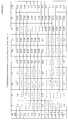
Пример выполнения. В печном агрегате ваграночного типа выплавлено три базовых состава чугуна (табл. 1, пл. 1, 2 и 3). Расплавы составов 1 и 2 при разливке в отдельные слитки дополнительно легировали химическими элементами в количествах, необходимых для получения (фракционного состава чугуна в пределах заявленного химического содержания компонентов. Плавка 3 соответствует химическому составу чугуна по прототипу. Условия кристаллизации, формирование структуры для всех вариантов составов были одинаковыми. Execution example. In the furnace unit of the cupola type, three basic cast iron compositions are smelted (Table 1,
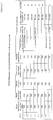
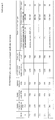
Изготовление образцов для механических испытаний, для микро- и макроструктурного анализа, а также определение эксплуатационных характеристик (табл. 2 и 3) осуществляли по принятым стандартным методикам. The production of samples for mechanical tests, for micro- and macrostructural analysis, as well as the determination of operational characteristics (Tables 2 and 3) was carried out according to accepted standard methods.
Анализ экспериментальных данных, приведенных в табл. 2, подтверждает высокие эксплуатационные свойства составов чугуна заявленного состава, которые в зависимости от уровня прочностных свойств и формирования структуры могут быть квалифицированы как серые чугуны различных марок и высокопрочные легированные чугуны. Кроме того, значительное количество никеля дает основание использовать сплав в качестве чернового ферроникеля, а при содержании ванадия, например, в количестве 0,3 - 0,8 - использовать его в качестве передельного материала для получения чугунов, используемых в дальнейшем для конвертерного передела продувкой окислительным газом с одновременным получением товарного ванадиевого шлака и углеродистого никельсодержащего полупродукта. Analysis of experimental data given in table. 2, confirms the high performance properties of cast iron compositions of the claimed composition, which, depending on the level of strength properties and structure formation, can be qualified as gray cast iron of various grades and high-strength alloyed cast iron. In addition, a significant amount of nickel gives reason to use the alloy as a rough ferronickel, and when the content of vanadium, for example, in the amount of 0.3 - 0.8, use it as a redistribution material for the production of cast irons, which are later used for oxidative purification of the converter gas with simultaneous production of commercial vanadium slag and carbon nickel-containing intermediate.
Производство чугунов заявляемого состава может быть осуществлено на существующем промышленном, металлургическом и технологическом оборудовании с использованием известных сырьевых материалов (никельсодержащая окисленная руда, техногенные отходы, лигатуры и т.п.). The production of cast iron of the claimed composition can be carried out on existing industrial, metallurgical and technological equipment using known raw materials (nickel-containing oxidized ore, industrial waste, ligatures, etc.).
Источники информации
1. Патент Российской Федерации N 1389315.Sources of information
1. Patent of the Russian Federation N 1389315.
2. Патент Российской Федерации N 1792446. 2. Patent of the Russian Federation N 1792446.
3. Патент Российской Федерации N 1763505. 3. Patent of the Russian Federation N 1763505.
Claims (1)
Углерод - 2,5 - 5,0
Кремний - 0,6 - 2,8
Марганец - 0,5 - 2,0
Хром - 1,0 - 3,0
Никель - 3,0 - 15,0
Кобальт - 0,25 - 1,0
Молибден - 0,03 - 0,8
Ванадий - 0,055 - 0,8
Титан - 0,01 - 0,3
Железо - Остальное
2. Чугун по п.1, отличающийся тем, что содержание ванадия к титану взято в соотношении 1 ... 3.1. Cast iron containing carbon, silicon, chromium, manganese, nickel, cobalt, vanadium, titanium and iron, characterized in that it additionally contains molybdenum, and the components are taken in the following ratio, wt.%:
Carbon - 2.5 - 5.0
Silicon - 0.6 - 2.8
Manganese - 0.5 - 2.0
Chrome - 1.0 - 3.0
Nickel - 3.0 - 15.0
Cobalt - 0.25 - 1.0
Molybdenum - 0.03 - 0.8
Vanadium - 0.055 - 0.8
Titanium - 0.01 - 0.3
Iron - Else
2. Cast iron according to claim 1, characterized in that the content of vanadium to titanium is taken in a ratio of 1 ... 3.
Priority Applications (1)
| Application Number | Priority Date | Filing Date | Title |
|---|---|---|---|
| RU99107148A RU2148103C1 (en) | 1999-03-29 | 1999-03-29 | Cast iron |
Applications Claiming Priority (1)
| Application Number | Priority Date | Filing Date | Title |
|---|---|---|---|
| RU99107148A RU2148103C1 (en) | 1999-03-29 | 1999-03-29 | Cast iron |
Publications (1)
| Publication Number | Publication Date |
|---|---|
| RU2148103C1 true RU2148103C1 (en) | 2000-04-27 |
Family
ID=20218202
Family Applications (1)
| Application Number | Title | Priority Date | Filing Date |
|---|---|---|---|
| RU99107148A RU2148103C1 (en) | 1999-03-29 | 1999-03-29 | Cast iron |
Country Status (1)
| Country | Link |
|---|---|
| RU (1) | RU2148103C1 (en) |
Cited By (1)
| Publication number | Priority date | Publication date | Assignee | Title |
|---|---|---|---|---|
| RU2349672C1 (en) * | 2007-08-22 | 2009-03-20 | Юлия Алексеевна Щепочкина | Cast iron |
Citations (5)
| Publication number | Priority date | Publication date | Assignee | Title |
|---|---|---|---|---|
| US3702269A (en) * | 1971-01-22 | 1972-11-07 | Int Nickel Co | Ultra high strength ductile iron |
| SU1366548A1 (en) * | 1986-08-08 | 1988-01-15 | Донецкий политехнический институт | Cast iron |
| SU1763505A1 (en) * | 1990-11-26 | 1992-09-23 | Орско-Халиловский металлургический комбинат | Cast iron |
| WO1994000614A2 (en) * | 1992-06-30 | 1994-01-06 | Mahle Gmbh | Reinforcing material for pistons of internal combustion engines |
| RU2058417C1 (en) * | 1994-08-01 | 1996-04-20 | Акционерное общество открытого типа "Носта" | Pig iron |
-
1999
- 1999-03-29 RU RU99107148A patent/RU2148103C1/en active
Patent Citations (5)
| Publication number | Priority date | Publication date | Assignee | Title |
|---|---|---|---|---|
| US3702269A (en) * | 1971-01-22 | 1972-11-07 | Int Nickel Co | Ultra high strength ductile iron |
| SU1366548A1 (en) * | 1986-08-08 | 1988-01-15 | Донецкий политехнический институт | Cast iron |
| SU1763505A1 (en) * | 1990-11-26 | 1992-09-23 | Орско-Халиловский металлургический комбинат | Cast iron |
| WO1994000614A2 (en) * | 1992-06-30 | 1994-01-06 | Mahle Gmbh | Reinforcing material for pistons of internal combustion engines |
| RU2058417C1 (en) * | 1994-08-01 | 1996-04-20 | Акционерное общество открытого типа "Носта" | Pig iron |
Cited By (1)
| Publication number | Priority date | Publication date | Assignee | Title |
|---|---|---|---|---|
| RU2349672C1 (en) * | 2007-08-22 | 2009-03-20 | Юлия Алексеевна Щепочкина | Cast iron |
Similar Documents
| Publication | Publication Date | Title |
|---|---|---|
| TW200827456A (en) | Improved method of producing ductile iron | |
| CN111961954A (en) | A kind of preparation method of as-cast mixed matrix QT500-14 ductile iron | |
| RU2148103C1 (en) | Cast iron | |
| SU1765236A1 (en) | Cast iron | |
| US5100612A (en) | Spheroidal graphite cast iron | |
| RU2149914C1 (en) | Cast iron | |
| CN108660392A (en) | A kind of Si strengthens high hardness wear-resisting alloy and its casting method | |
| RU2230817C1 (en) | Cast iron | |
| RU2149913C1 (en) | Cast iron | |
| SU1765235A1 (en) | Cast iron | |
| AU2022250998B2 (en) | Ferrosilicon vanadium and/or niobium alloy, production of a ferrosilicon vanadium and/or niobium alloy, and the use thereof | |
| RU2135620C1 (en) | Alloying composition | |
| SU1752819A1 (en) | Antifriction cast iron | |
| RU2831573C2 (en) | Alloy of ferrosilicon with vanadium and/or niobium, production of alloy of ferrosilicon with vanadium and/or niobium and its application | |
| RU2124570C1 (en) | Method of manufacturing rolled products from alloyed cold-charged material | |
| SU1468958A1 (en) | Cast iron | |
| SU1113423A1 (en) | High-speed steel | |
| SU1458416A1 (en) | Cast iron | |
| SU1694680A1 (en) | Cast iron | |
| CN108425072A (en) | A kind of Rare Earth Lanthanum toughening high hard alloy and its casting and heat treatment method | |
| SU1765239A1 (en) | Cast iron | |
| CN108411218A (en) | A kind of strontium carbonate goes bad toughening high hardness alloy and its casting method | |
| US1003805A (en) | Method of treating ferro metals. | |
| SU1746888A3 (en) | Mottled cast iron | |
| SU1571097A1 (en) | Wear-resistant cast iron |