RU2086355C1 - Method of activation of metal powders - Google Patents
Method of activation of metal powders Download PDFInfo
- Publication number
- RU2086355C1 RU2086355C1 RU95114669/02A RU95114669A RU2086355C1 RU 2086355 C1 RU2086355 C1 RU 2086355C1 RU 95114669/02 A RU95114669/02 A RU 95114669/02A RU 95114669 A RU95114669 A RU 95114669A RU 2086355 C1 RU2086355 C1 RU 2086355C1
- Authority
- RU
- Russia
- Prior art keywords
- powder
- aluminum
- powders
- heated
- metal
- Prior art date
Links
- 239000000843 powder Substances 0.000 title claims abstract description 42
- 229910052751 metal Inorganic materials 0.000 title claims abstract description 24
- 239000002184 metal Substances 0.000 title claims abstract description 24
- 238000000034 method Methods 0.000 title claims description 14
- 230000004913 activation Effects 0.000 title claims 2
- 239000003960 organic solvent Substances 0.000 claims abstract description 9
- 238000004880 explosion Methods 0.000 claims description 15
- 230000000694 effects Effects 0.000 abstract description 8
- 239000000126 substance Substances 0.000 abstract description 5
- 238000003786 synthesis reaction Methods 0.000 abstract description 5
- 230000015572 biosynthetic process Effects 0.000 abstract description 4
- 238000004519 manufacturing process Methods 0.000 abstract description 4
- 239000002131 composite material Substances 0.000 abstract description 3
- 238000004663 powder metallurgy Methods 0.000 abstract description 3
- 238000005422 blasting Methods 0.000 abstract 1
- 239000011195 cermet Substances 0.000 abstract 1
- 239000004020 conductor Substances 0.000 abstract 1
- XAGFODPZIPBFFR-UHFFFAOYSA-N aluminium Chemical compound [Al] XAGFODPZIPBFFR-UHFFFAOYSA-N 0.000 description 24
- YXFVVABEGXRONW-UHFFFAOYSA-N Toluene Chemical compound CC1=CC=CC=C1 YXFVVABEGXRONW-UHFFFAOYSA-N 0.000 description 21
- 239000000203 mixture Substances 0.000 description 20
- 229910052782 aluminium Inorganic materials 0.000 description 10
- 230000003647 oxidation Effects 0.000 description 10
- 238000007254 oxidation reaction Methods 0.000 description 10
- 238000005245 sintering Methods 0.000 description 9
- XKRFYHLGVUSROY-UHFFFAOYSA-N Argon Chemical compound [Ar] XKRFYHLGVUSROY-UHFFFAOYSA-N 0.000 description 8
- IJGRMHOSHXDMSA-UHFFFAOYSA-N Atomic nitrogen Chemical compound N#N IJGRMHOSHXDMSA-UHFFFAOYSA-N 0.000 description 8
- 238000002411 thermogravimetry Methods 0.000 description 8
- 239000002245 particle Substances 0.000 description 7
- 239000012298 atmosphere Substances 0.000 description 6
- 238000002485 combustion reaction Methods 0.000 description 6
- 238000010438 heat treatment Methods 0.000 description 6
- 239000001257 hydrogen Substances 0.000 description 6
- 229910052739 hydrogen Inorganic materials 0.000 description 6
- VLKZOEOYAKHREP-UHFFFAOYSA-N n-Hexane Chemical compound CCCCCC VLKZOEOYAKHREP-UHFFFAOYSA-N 0.000 description 6
- BASFCYQUMIYNBI-UHFFFAOYSA-N platinum Chemical compound [Pt] BASFCYQUMIYNBI-UHFFFAOYSA-N 0.000 description 6
- 239000001307 helium Substances 0.000 description 5
- 229910052734 helium Inorganic materials 0.000 description 5
- SWQJXJOGLNCZEY-UHFFFAOYSA-N helium atom Chemical compound [He] SWQJXJOGLNCZEY-UHFFFAOYSA-N 0.000 description 5
- 238000002844 melting Methods 0.000 description 5
- 230000008018 melting Effects 0.000 description 5
- UFHFLCQGNIYNRP-UHFFFAOYSA-N Hydrogen Chemical compound [H][H] UFHFLCQGNIYNRP-UHFFFAOYSA-N 0.000 description 4
- 101100110010 Neurospora crassa (strain ATCC 24698 / 74-OR23-1A / CBS 708.71 / DSM 1257 / FGSC 987) asd-4 gene Proteins 0.000 description 4
- 229910052786 argon Inorganic materials 0.000 description 4
- 150000001879 copper Chemical class 0.000 description 4
- 239000011521 glass Substances 0.000 description 4
- 229910052757 nitrogen Inorganic materials 0.000 description 4
- 239000002904 solvent Substances 0.000 description 4
- QVGXLLKOCUKJST-UHFFFAOYSA-N atomic oxygen Chemical compound [O] QVGXLLKOCUKJST-UHFFFAOYSA-N 0.000 description 3
- 238000001465 metallisation Methods 0.000 description 3
- 150000002739 metals Chemical class 0.000 description 3
- 239000001301 oxygen Substances 0.000 description 3
- 229910052760 oxygen Inorganic materials 0.000 description 3
- 229910052697 platinum Inorganic materials 0.000 description 3
- 238000012360 testing method Methods 0.000 description 3
- AZUYLZMQTIKGSC-UHFFFAOYSA-N 1-[6-[4-(5-chloro-6-methyl-1H-indazol-4-yl)-5-methyl-3-(1-methylindazol-5-yl)pyrazol-1-yl]-2-azaspiro[3.3]heptan-2-yl]prop-2-en-1-one Chemical compound ClC=1C(=C2C=NNC2=CC=1C)C=1C(=NN(C=1C)C1CC2(CN(C2)C(C=C)=O)C1)C=1C=C2C=NN(C2=CC=1)C AZUYLZMQTIKGSC-UHFFFAOYSA-N 0.000 description 2
- GDDNTTHUKVNJRA-UHFFFAOYSA-N 3-bromo-3,3-difluoroprop-1-ene Chemical compound FC(F)(Br)C=C GDDNTTHUKVNJRA-UHFFFAOYSA-N 0.000 description 2
- 229910000831 Steel Inorganic materials 0.000 description 2
- ATJFFYVFTNAWJD-UHFFFAOYSA-N Tin Chemical compound [Sn] ATJFFYVFTNAWJD-UHFFFAOYSA-N 0.000 description 2
- 238000002441 X-ray diffraction Methods 0.000 description 2
- AZDRQVAHHNSJOQ-UHFFFAOYSA-N alumane Chemical class [AlH3] AZDRQVAHHNSJOQ-UHFFFAOYSA-N 0.000 description 2
- 239000012300 argon atmosphere Substances 0.000 description 2
- 238000001816 cooling Methods 0.000 description 2
- PMHQVHHXPFUNSP-UHFFFAOYSA-M copper(1+);methylsulfanylmethane;bromide Chemical compound Br[Cu].CSC PMHQVHHXPFUNSP-UHFFFAOYSA-M 0.000 description 2
- AXZAYXJCENRGIM-UHFFFAOYSA-J dipotassium;tetrabromoplatinum(2-) Chemical compound [K+].[K+].[Br-].[Br-].[Br-].[Br-].[Pt+2] AXZAYXJCENRGIM-UHFFFAOYSA-J 0.000 description 2
- 238000005516 engineering process Methods 0.000 description 2
- 238000002474 experimental method Methods 0.000 description 2
- 239000012634 fragment Substances 0.000 description 2
- 150000002431 hydrogen Chemical class 0.000 description 2
- FGIUAXJPYTZDNR-UHFFFAOYSA-N potassium nitrate Chemical compound [K+].[O-][N+]([O-])=O FGIUAXJPYTZDNR-UHFFFAOYSA-N 0.000 description 2
- 229910001487 potassium perchlorate Inorganic materials 0.000 description 2
- 230000001681 protective effect Effects 0.000 description 2
- 230000009257 reactivity Effects 0.000 description 2
- 239000010959 steel Substances 0.000 description 2
- 239000000725 suspension Substances 0.000 description 2
- XLYOFNOQVPJJNP-UHFFFAOYSA-N water Substances O XLYOFNOQVPJJNP-UHFFFAOYSA-N 0.000 description 2
- OCKGFTQIICXDQW-ZEQRLZLVSA-N 5-[(1r)-1-hydroxy-2-[4-[(2r)-2-hydroxy-2-(4-methyl-1-oxo-3h-2-benzofuran-5-yl)ethyl]piperazin-1-yl]ethyl]-4-methyl-3h-2-benzofuran-1-one Chemical compound C1=C2C(=O)OCC2=C(C)C([C@@H](O)CN2CCN(CC2)C[C@H](O)C2=CC=C3C(=O)OCC3=C2C)=C1 OCKGFTQIICXDQW-ZEQRLZLVSA-N 0.000 description 1
- ZOXJGFHDIHLPTG-UHFFFAOYSA-N Boron Chemical compound [B] ZOXJGFHDIHLPTG-UHFFFAOYSA-N 0.000 description 1
- RYGMFSIKBFXOCR-UHFFFAOYSA-N Copper Chemical compound [Cu] RYGMFSIKBFXOCR-UHFFFAOYSA-N 0.000 description 1
- 239000004372 Polyvinyl alcohol Substances 0.000 description 1
- 238000004458 analytical method Methods 0.000 description 1
- 229910052802 copper Inorganic materials 0.000 description 1
- 239000010949 copper Substances 0.000 description 1
- 230000007423 decrease Effects 0.000 description 1
- 238000003795 desorption Methods 0.000 description 1
- 239000000446 fuel Substances 0.000 description 1
- 230000004927 fusion Effects 0.000 description 1
- 230000005484 gravity Effects 0.000 description 1
- 230000020169 heat generation Effects 0.000 description 1
- 230000007774 longterm Effects 0.000 description 1
- 239000000463 material Substances 0.000 description 1
- 239000000155 melt Substances 0.000 description 1
- 150000002823 nitrates Chemical class 0.000 description 1
- 150000004767 nitrides Chemical class 0.000 description 1
- 239000012299 nitrogen atmosphere Substances 0.000 description 1
- 239000007800 oxidant agent Substances 0.000 description 1
- 230000001590 oxidative effect Effects 0.000 description 1
- VLTRZXGMWDSKGL-UHFFFAOYSA-N perchloric acid Chemical class OCl(=O)(=O)=O VLTRZXGMWDSKGL-UHFFFAOYSA-N 0.000 description 1
- 229920003023 plastic Polymers 0.000 description 1
- 239000004033 plastic Substances 0.000 description 1
- 229920002401 polyacrylamide Polymers 0.000 description 1
- 229920002451 polyvinyl alcohol Polymers 0.000 description 1
- 239000004323 potassium nitrate Substances 0.000 description 1
- 235000010333 potassium nitrate Nutrition 0.000 description 1
- 238000002360 preparation method Methods 0.000 description 1
- 238000003825 pressing Methods 0.000 description 1
- 238000012545 processing Methods 0.000 description 1
- 230000002035 prolonged effect Effects 0.000 description 1
- 238000007790 scraping Methods 0.000 description 1
- 229910000679 solder Inorganic materials 0.000 description 1
- 238000005476 soldering Methods 0.000 description 1
- 238000003892 spreading Methods 0.000 description 1
- 238000010561 standard procedure Methods 0.000 description 1
- 238000003860 storage Methods 0.000 description 1
- 239000011882 ultra-fine particle Substances 0.000 description 1
- 229920003169 water-soluble polymer Polymers 0.000 description 1
- 230000004584 weight gain Effects 0.000 description 1
- 235000019786 weight gain Nutrition 0.000 description 1
- 230000004580 weight loss Effects 0.000 description 1
Images
Landscapes
- Powder Metallurgy (AREA)
Abstract
Description
Изобретение относится к областям техники, где используют порошки металлов: изготовление деталей из них прессованием и спеканием (порошковая металлургия), производство металлокерамик и композиционных материалов теми же способами, металлизация поверхностей, неорганические синтезы, пиротехника. The invention relates to the fields of technology where metal powders are used: the manufacture of parts from them by pressing and sintering (powder metallurgy), the production of cermets and composite materials in the same ways, the metallization of surfaces, inorganic syntheses, pyrotechnics.
Недостатком известных порошков является то, что их частицы достаточно крупные, диаметром 1-100 мк, они, как правило, имеют защитные оксидные пленки, поэтому их реакционная способность низкая, для проведения реакций требуется длительное прогревание при высоких температурах, иногда до температур, близких к плавлению металлов. A disadvantage of the known powders is that their particles are quite large, with a diameter of 1-100 microns, they usually have protective oxide films, therefore their reactivity is low, long-term heating at high temperatures, sometimes to temperatures close to melting metals.
Известны порошки металлов и методы их получения с ультрамалыми размерами частиц (0,1-0,01 мкм), не имеющие защитной оксидной пленки, но они при контакте с воздухом воспламеняются или быстро окисляются, что препятствует их практическому применению в ряде технологий. Known metal powders and methods for their preparation with ultra-small particle sizes (0.1-0.01 microns) that do not have a protective oxide film, but they come in contact with air ignite or quickly oxidize, which impedes their practical use in a number of technologies.
Известны ультрадисперсные порошки алюминия и других металлов, получаемые методом электрического взрыва проволок в среде водорода, гелия, аргона. При размерах частей 0,1-0,01 мкм они отличаются от всех известных стабильностью при хранении на воздухе и высоким уровнем запасенной энергии, которая выделяется в режиме тепловых волн и тепловых взрывов при нагревании образцов до 450-550oC, при этом происходит их саморазогревание до 900oC и выше с одновременным самоспеканием. Известно также, что частицы ультрадисперсных порошков металлов, полученные электрическим взрывом проволок, имеют структуру фракталов, т. е. они представляют собой слипшиеся агрегаты более мелких фрагментов. Самоспекание, т.е слияние ультрамалых частиц в крупные (до 0,5 мм) агрегаты, в ряде случаев резко снижает реакционную способность данных порошков и является их недостатком.Known ultrafine powders of aluminum and other metals obtained by the method of electric explosion of wires in an environment of hydrogen, helium, argon. When the size of the parts is 0.1-0.01 microns, they differ from all the known stability in storage in air and a high level of stored energy, which is released in the mode of thermal waves and thermal explosions when the samples are heated to 450-550 o C, while they self-heating up to 900 o C and higher with simultaneous self-sintering. It is also known that particles of ultrafine metal powders obtained by electric explosion of wires have a fractal structure, i.e., they are aggregated aggregates of smaller fragments. Self-sintering, i.e., the fusion of ultrafine particles into large (up to 0.5 mm) aggregates, in some cases sharply reduces the reactivity of these powders and is their drawback.
Целью изобретения является устранение указанного недостатка. The aim of the invention is to remedy this drawback.
Поставленная цель достигается тем, что порошки металлов, например алюминия, полученные методом электрического взрыва проволок, погружают в органические растворители и выдерживают в них в течение 5-24 ч. Молекулы последних проникают в объемы частиц и разрушают их до субфрагментов, которые вследствие этого имеют более высокую химическую активность, но их способность к самоспеканию в значительной степени блокирована адсорбированными молекулами органических растворителей. This goal is achieved in that the powders of metals, for example aluminum, obtained by the method of electric explosion of wires, are immersed in organic solvents and kept in them for 5-24 hours. The molecules of the latter penetrate into the volumes of particles and destroy them to sub-fragments, which therefore have more high chemical activity, but their self-sintering ability is largely blocked by adsorbed molecules of organic solvents.
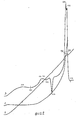
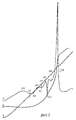
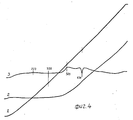
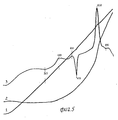
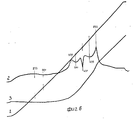
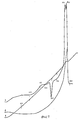
Предлагаемый способ поясняется фиг.1-10. The proposed method is illustrated in figure 1-10.
Пример 1а. 100 мг порошка алюминия, полученного электрическим взрывом проволок в атмосфере водорода, помещают в платиновый тигель и нагревают на воздухе в приборе термогравиметрического анализа (ТГА) до 1000oC (фиг.1, кривая 1). Увеличение веса, т.е. окисление порошка начинается при температуре примерно 520-530oC (кривая 2), однако выделение тепла (саморазогревом) прибор фиксирует уже примерно при 400oC (кривая 3), что соответствует протеканию процесса самоспекания. Эндопик при 688oC плавление спекшегося алюминия, экзопики при 772-800oC выделение тепла за счет окисления. При изучении прогретого образца с помощью микроскопа отчетливо видны блестящие шарики спекшегося алюминия и небольшое количество белого порошка оксида. Согласно данным химического анализа степень окисления образца на уровне 10-20%
Пример 1б. Навески порошка алюминия (1-2 г), полученного электрическим взрывом проволок в атмосфере водорода, заливают в пробирке произвольным количеством органического растворителя гексана, выдерживают 5 ч, затем растворитель сливают, а порошок высушивают в вакуумном шкафу. 100 мг сухого порошка нагревают до 1000oC на воздухе, как в примере 1а. Из фиг.2, кривая 2, видно, что окисление начинается при температуре примерно 400oC (кривая 2), но тепловыделение уже примерно при 354oC. После плавления (635oC, кривая 3) начинается мощный процесс выделения тепла, связанный с интенсивным окислением порошка (кривые 2, 3). Изучение образца с помощью микроскопа показало, что прогретый образец почти на 100% белый мелкодисперсный порошок оксида.Example 1a 100 mg of aluminum powder obtained by electric explosion of wires in a hydrogen atmosphere, is placed in a platinum crucible and heated in air in a thermogravimetric analysis device (TGA) to 1000 o C (figure 1, curve 1). Weight gain, i.e. powder oxidation begins at a temperature of about 520-530 o C (curve 2), however, the device detects heat (self-heating) already at about 400 o C (curve 3), which corresponds to the course of the self-sintering process. Endopic at 688 o C melting of sintered aluminum, exopics at 772-800 o C heat generation due to oxidation. When studying a heated sample with a microscope, shiny balls of sintered aluminum and a small amount of white oxide powder are clearly visible. According to chemical analysis, the degree of oxidation of the sample at the level of 10-20%
Example 1b Samples of aluminum powder (1-2 g) obtained by electric explosion of wires in a hydrogen atmosphere are poured into a test tube with an arbitrary amount of an organic solvent of hexane, incubated for 5 hours, then the solvent is drained and the powder is dried in a vacuum oven. 100 mg of the dry powder is heated to 1000 o C in air, as in example 1A. From figure 2,
Пример 1в. Эксперимент, как в примере 1б, повторили с использованием органического растворителя толуола. Результаты представлены на фиг.3, из которого видно, что обработка порошка алюминия толуолом дает аналогичные результаты: после саморазогревания, самоспекания и плавления частиц наблюдается сильный экзотермический эффект окисления отличие состоит только в том, что потеря веса образца (кривая 2 на фиг.2) в случае гексана на уровне 0,08% а в случае толуола на уровне 0,8% что, очевидно, связано с десорбцией растворителя большего удельного веса. Example 1c. The experiment, as in example 1b, was repeated using an organic solvent of toluene. The results are presented in Fig. 3, from which it is seen that the treatment of aluminum powder with toluene gives similar results: after self-heating, self-sintering and melting of the particles, a strong exothermic oxidation effect is observed, the difference is only in the weight loss of the sample (
Пример 2а. 100 мг порошка алюминия, полученного электрическим взрывом проволок в атмосфере гелия, помещают в платиновый тигель и нагревают на воздухе в приборе термогравиметрического анализа (ТГА) (как в примере 1а). Из фиг.4 видно, что степень окисления (кривая 2) и тепловые эффекты заметно ниже, чем в случае порошка, полученного взрывом проволок в водороде. Example 2a 100 mg of aluminum powder obtained by electric explosion of wires in a helium atmosphere is placed in a platinum crucible and heated in air in a thermogravimetric analysis device (TGA) (as in example 1a). Figure 4 shows that the oxidation state (curve 2) and thermal effects are noticeably lower than in the case of a powder obtained by explosion of wires in hydrogen.
Пример 2б. Навески порошка алюминия, полученного электрическим взрывом проволок в атмосфере гелия, заливают в пробирке произвольным количеством органического растворителя толуола, выдерживают 24 ч, затем растворитель сливают, а порошок высушивают в вакуумном шкафу. 100 мг сухого порошка нагревают до 1000oC на воздухе, как в примере 2а. На фиг.5 представлены данные ТГА, из которых видно, что обработка толуолом обеспечивает существенное повышение тепловых эффектов как самоспекания (365-489oC), так и окисления (839oC).Example 2b Samples of aluminum powder obtained by electric explosion of wires in a helium atmosphere are poured into a test tube with an arbitrary amount of an organic solvent of toluene, incubated for 24 hours, then the solvent is drained and the powder is dried in a vacuum oven. 100 mg of the dry powder is heated to 1000 o C in air, as in example 2A. Figure 5 presents the TGA data, from which it is seen that the treatment with toluene provides a significant increase in the thermal effects of both self-sintering (365-489 o C) and oxidation (839 o C).
Пример 3а. 100 мг порошка алюминия, полученного электрическим взрывом проволок в атмосфере аргона, помещают в платиновый тигель и нагревают на воздухе до 1000oC, как в примерах 1а, 2а. Из данных ТГА (фиг.6) видно, что тепловые эффекты самоспекания и окисления данного порошка выражены более ярко, чем в случае порошков, полученных электрическим взрывом в атмосфере водорода и гелия.Example 3a 100 mg of aluminum powder obtained by electric explosion of wires in an argon atmosphere, placed in a platinum crucible and heated in air to 1000 o C, as in examples 1A, 2A. From the TGA data (Fig.6) it is seen that the thermal effects of self-sintering and oxidation of this powder are more pronounced than in the case of powders obtained by electric explosion in an atmosphere of hydrogen and helium.
Пример 3б. Навески порошка алюминия, полученного электрическим взрывом проволок в атмосфере аргона, заливают в пробирке произвольным количеством органического растворителя толуола, выдерживают 12 ч, затем растворитель сливают, а порошок высушивают. 100 мг сухого порошка нагревают до 1000oC на воздухе в приборе ТГА, как в примере 3а. На фиг.7 представлены данные ТГА, из которых видно, что тепловые эффекты как самоспекание, так и окисление стали существенно более ярко выражены.Example 3b Samples of aluminum powder obtained by electric explosion of wires in an argon atmosphere are poured into a test tube with an arbitrary amount of an organic solvent of toluene, incubated for 12 hours, then the solvent is drained and the powder is dried. 100 mg of dry powder is heated to 1000 o C in air in a TGA device, as in example 3A. Figure 7 presents the TGA data, from which it is seen that the thermal effects of both self-sintering and steel oxidation are significantly more pronounced.
Таким образом, порошок алюминия, полученный электрическим взрывом проволок в среде водорода, гелия, аргона, после обработки органическими растворителями приобретает повышенную активность. Thus, aluminum powder obtained by electric explosion of wires in a medium of hydrogen, helium, argon, after processing with organic solvents acquires increased activity.
Пример 4. 0,5 г порошка активированного алюминия помещают в тигель стандартной установки для определения теплоты сгорания различных порошков в кислороде, но калориметрическую бомбу заполняют не кислородом (давление 40 атм), а чистым азотом до давления также 40 атм. После воспламенения порошка проволокой, нагреваемой электрическим током, прибор регистрирует быстрое тепловыделение, как и в случае кислородной атмосферы. Example 4. 0.5 g of activated aluminum powder is placed in a crucible of a standard apparatus for determining the calorific value of various powders in oxygen, but the calorimetric bomb is filled not with oxygen (
После вскрытия бомбы в тигле обнаруживают белый порошок. Химические и рентгеноструктурные анализы показали, что это чистый нитрид алюминия. Таким образом, активированный порошок алюминия способен реагировать с азотом в режиме горения со 100% выходом целевого продукта нитрида. After opening the bomb, a white powder is found in the crucible. Chemical and X-ray diffraction analyzes showed that it was pure aluminum nitride. Thus, the activated aluminum powder is able to react with nitrogen in the combustion mode with 100% yield of the target nitride product.
Обычно для синтеза нитрида алюминия промышленные порошки металла прогревают в атмосфере азота в течение нескольких часов при температурах до 1000oC.Typically, for the synthesis of aluminum nitride, industrial metal powders are heated in a nitrogen atmosphere for several hours at temperatures up to 1000 o C.
Пример 5. 2,7 г активированного порошка алюминия смешивают с 2,2 г порошка бора промышленного производства, что соответствует стехиометрической смеси для синтеза AlB2. Из смеси прессуют таблетки диаметром 10 мм и высотой 10 мм, помещают в камеру, заполненную аргоном, и нагревают электрической спиралью. Наблюдают саморазогревание таблетки со свечением. После остывания материал таблетки подвергают химическому и рентгеноструктурному анализам, которые показали, что полученный продукт диборид алюминия. Для его синтеза в промышленности, как в примере 4, требуется длительное прогревание смеси порошков при 800-900oC.Example 5. 2.7 g of activated aluminum powder is mixed with 2.2 g of industrial boron powder, which corresponds to a stoichiometric mixture for the synthesis of AlB 2 . Tablets with a diameter of 10 mm and a height of 10 mm are pressed from the mixture, placed in a chamber filled with argon, and heated with an electric spiral. Self-heating tablets with a glow are observed. After cooling, the material of the tablet is subjected to chemical and X-ray diffraction analyzes, which showed that the resulting product is aluminum diboride. For its synthesis in industry, as in example 4, requires prolonged heating of the mixture of powders at 800-900 o C.
Пример 6. Порошок олова, полученный электрическим взрывом проволоки в среде аргона, активируют выдерживанием в толуоле 6 ч и высушивают. Навеску активированного порошка (0,1 г) помещают в стеклянную чашку и нагревают. При 170-215oC наблюдается плавление порошка и растекание расплава. После остывания пленку металлического олова не удается отделить от стекла соскабливанием скальпелем.Example 6. Tin powder obtained by electric explosion of a wire in argon medium, activated by keeping in toluene for 6 hours and dried. A portion of the activated powder (0.1 g) is placed in a glass cup and heated. At 170-215 o C there is a melting of the powder and the spreading of the melt. After cooling, the film of metal tin cannot be separated from the glass by scraping with a scalpel.
Пример 7. Порошок активированной меди помещают в сосуд с водой и добавляют 0,5-1% пленкообразующего водорастворимого полимера (поливиниловый спирт, полиакриламид). Полученную суспензию наносят кистью на пластины стекла и гетинакса. Нагретым до 450-500oC стальным трафаретом в течение нескольких секунд прогревают пластины. После удаления трафарета на пластинах остаются рисунки из пленки металлической меди. Порошок активированной меди с непрогретых участков пластин смывают водой, и его можно использовать вторично. Таким образом, использование активированных порошков меди позволяет проводить негальванические процессы металлизации стекла и пластмасс.Example 7. Powdered activated copper is placed in a vessel with water and add 0.5-1% film-forming water-soluble polymer (polyvinyl alcohol, polyacrylamide). The resulting suspension is applied with a brush to plates of glass and getinax. Heated to 450-500 o C steel stencil for several seconds, warm the plate. After removing the stencil on the plates, drawings from the film of metallic copper remain. Powdered activated copper from unheated sections of the plates is washed off with water, and it can be used again. Thus, the use of activated copper powders allows for non-galvanic metallization processes of glass and plastics.
Успешные результаты были получены также при обработке поверхностей, покрытых суспензией активированной меди и алюминия, лучом лазера. Successful results were also obtained when treating surfaces coated with a suspension of activated copper and aluminum with a laser beam.
Для изучения закономерностей горения пиротехнических составов, содержащих активированный порошок ультрадисперсного алюминия, используют стандартные методики. Смеси порошков металлов и порошков известных окислителей-перхлоратов и нитратов в различных пропорциях прессуют в таблетки диаметром 8 мм, высотой 16 мм до максимальной плотности и помещают в толстостенный сосуд, который заполняют азотом из баллонов до давления 40 атм. Таблетки воспламеняют нагреваемой электрическим током проволокой, скорость их горения измеряют методом киносъемки через прозрачные окна сосуда. To study the laws of combustion of pyrotechnic compositions containing activated powder of ultrafine aluminum, standard methods are used. Mixtures of metal powders and powders of known oxidizing perchlorates and nitrates in various proportions are pressed into tablets with a diameter of 8 mm, a height of 16 mm to a maximum density and placed in a thick-walled vessel, which is filled with nitrogen from cylinders to a pressure of 40 atm. The tablets are ignited by a wire heated by electric current, their burning rate is measured by the method of filming through the transparent windows of the vessel.
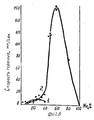
Пример 8. Берут порошок штатного окислителя ракетных топлив перхлората аммония и смешивают его с порошком промышленного алюминия марки АСД-4 в разных пропорциях: 5% 7% 10% и далее. Из смесей прессуют таблетки и сжигают их под давлением азота 40 атм. На фиг.8, кривая 1, представлена зависимость скорости горения смеси от процентного содержания АСД-4. Видно, что в диапазоне 5-20% -ного содержания металла в смеси уровень скоростей горения 6-8 мм/с, затем она снижается и при 40% металла смесь не горит. Это типичный случай: все пиротехнические смеси с большим избытком металла выше стехиометрического соотношения компонентов не воспламеняются и к горению неспособны. Example 8. Take the powder of a regular oxidizer of rocket fuels ammonium perchlorate and mix it with powder of industrial aluminum grade ASD-4 in different proportions: 5% 7% 10% and beyond. From the mixtures, tablets are pressed and burned under a nitrogen pressure of 40 atm. On Fig,
В смесях перхлората аммония с активированным алюминием при содержании последнего выше 40% скорость горения резко возрастает и достигает 160 мм/с. При содержании 60% металла в смеси (кривая 2). Скорость горения остается высокой (85-90 мм/с) при содержании металла 80% а процесс перемещения тепловой волны наблюдается при 95% и 100% металла, но это уже не горение алюминия, а процесс выделения запасенной в частицах порошка энергии. In mixtures of ammonium perchlorate with activated aluminum with a content of the latter above 40%, the burning rate increases sharply and reaches 160 mm / s. When the content of 60% metal in the mixture (curve 2). The burning rate remains high (85-90 mm / s) with a metal content of 80% and the process of moving the heat wave is observed at 95% and 100% of the metal, but this is not burning aluminum, but the process of releasing the energy stored in the powder particles.
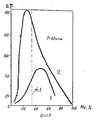
Пример 9. Берут порошок перхлората калия и смешивают его с порошком алюминия марки АСД-4. Результаты экспериментов представлены на фиг.9, кривая 1, из которого видно, что смесь, содержащая 20% металла, горит со скоростью около 20 мм/с. Скорость горения смеси 50:50% около 70 мм, при содержании металла выше 60% горение прекращается. Example 9. Take a powder of potassium perchlorate and mix it with aluminum powder grade ASD-4. The experimental results are presented in Fig. 9,
Скорость горения смеси перхлората калия с 20% активированного ультрадисперсного алюминия 180 мм/с и, как в примере 4, процесс не затухает при содержании 80% 90% 100% металла в таблетке. The burning rate of a mixture of potassium perchlorate with 20% activated
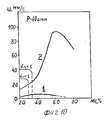
Пример 10. Берут порошок нитрата калия и смешивают его с порошком алюминия марки АСД-4. Результаты экспериментов представлены на фиг.10, кривая 1, из которого видно, что в интервале содержания металла 20-50% скорость горения образцов ниже 10 мм/с, а при содержании металла более 60% горение прекращается. Example 10. Take a powder of potassium nitrate and mix it with aluminum powder brand ASD-4. The results of the experiments are presented in Fig. 10,
Аналогичные смеси с активированным ультрадисперсным порошком алюминия при содержании 60% металла имеют скорость горения выше 800 мм/с (фиг.10, кривая 2). Similar mixtures with activated ultrafine aluminum powder at a metal content of 60% have a burning rate above 800 mm / s (Fig. 10, curve 2).
Таким образом, использование порошков ультрадисперсного активированного алюминия в пиротехнических составах в десятки раз повышает скорость горения последних и кардинально меняет сам механизм горения за счет выделения запасенной в частицах энергии. Thus, the use of powders of ultrafine activated aluminum in pyrotechnic compositions tens of times increases the burning rate of the latter and radically changes the combustion mechanism itself due to the release of energy stored in the particles.
Активированные предлагаемым способом порошки могут быть использованы в порошковой металлургии, в производстве металлокерамик и композиционных материалов, для металлизации поверхностей, для создания особо низкотемпературных припоев для пайки в радиоэлектронике и в пиротехнике. The powders activated by the proposed method can be used in powder metallurgy, in the production of cermets and composite materials, for metallization of surfaces, for the creation of especially low-temperature solders for soldering in radio electronics and in pyrotechnics.
Claims (1)
Priority Applications (3)
| Application Number | Priority Date | Filing Date | Title |
|---|---|---|---|
| RU95114669/02A RU2086355C1 (en) | 1995-09-06 | 1995-09-06 | Method of activation of metal powders |
| EP95120433A EP0718061A1 (en) | 1994-12-23 | 1995-12-22 | Active metal powders |
| JP7336518A JPH0995704A (en) | 1994-12-23 | 1995-12-25 | Active metal powder |
Applications Claiming Priority (1)
| Application Number | Priority Date | Filing Date | Title |
|---|---|---|---|
| RU95114669/02A RU2086355C1 (en) | 1995-09-06 | 1995-09-06 | Method of activation of metal powders |
Publications (2)
| Publication Number | Publication Date |
|---|---|
| RU95114669A RU95114669A (en) | 1997-07-27 |
| RU2086355C1 true RU2086355C1 (en) | 1997-08-10 |
Family
ID=20171351
Family Applications (1)
| Application Number | Title | Priority Date | Filing Date |
|---|---|---|---|
| RU95114669/02A RU2086355C1 (en) | 1994-12-23 | 1995-09-06 | Method of activation of metal powders |
Country Status (1)
| Country | Link |
|---|---|
| RU (1) | RU2086355C1 (en) |
Cited By (5)
| Publication number | Priority date | Publication date | Assignee | Title |
|---|---|---|---|---|
| RU2509790C1 (en) * | 2012-12-05 | 2014-03-20 | Федеральное государственное бюджетное учреждение науки Институт химии твердого тела Уральского отделения Российской академии наук | Method of aluminium powder activation |
| RU2637732C1 (en) * | 2016-10-31 | 2017-12-06 | Федеральное государственное автономное образовательное учреждение высшего образования "Национальный исследовательский Томский политехнический университет" | Method for activating aluminium nano-powder |
| RU2687121C1 (en) * | 2018-11-28 | 2019-05-07 | Федеральное государственное автономное образовательное учреждение высшего образования "Национальный исследовательский Томский политехнический университет" | Method of activating aluminum nanopowder |
| RU2737950C1 (en) * | 2020-05-14 | 2020-12-07 | Федеральное государственное бюджетное учреждение науки Институт химии твердого тела Уральского отделения Российской академии наук | Method of activating aluminium powder |
| RU2825808C2 (en) * | 2023-02-22 | 2024-08-30 | Российская Федерация, от имени которой выступает Министерство обороны РФ | Warhead of grenade for jet anti-tank grenade launcher |
-
1995
- 1995-09-06 RU RU95114669/02A patent/RU2086355C1/en not_active IP Right Cessation
Non-Patent Citations (1)
| Title |
|---|
| Доклады Академии наук. 1984, т. 275, N 4, с. 873 - 875. * |
Cited By (5)
| Publication number | Priority date | Publication date | Assignee | Title |
|---|---|---|---|---|
| RU2509790C1 (en) * | 2012-12-05 | 2014-03-20 | Федеральное государственное бюджетное учреждение науки Институт химии твердого тела Уральского отделения Российской академии наук | Method of aluminium powder activation |
| RU2637732C1 (en) * | 2016-10-31 | 2017-12-06 | Федеральное государственное автономное образовательное учреждение высшего образования "Национальный исследовательский Томский политехнический университет" | Method for activating aluminium nano-powder |
| RU2687121C1 (en) * | 2018-11-28 | 2019-05-07 | Федеральное государственное автономное образовательное учреждение высшего образования "Национальный исследовательский Томский политехнический университет" | Method of activating aluminum nanopowder |
| RU2737950C1 (en) * | 2020-05-14 | 2020-12-07 | Федеральное государственное бюджетное учреждение науки Институт химии твердого тела Уральского отделения Российской академии наук | Method of activating aluminium powder |
| RU2825808C2 (en) * | 2023-02-22 | 2024-08-30 | Российская Федерация, от имени которой выступает Министерство обороны РФ | Warhead of grenade for jet anti-tank grenade launcher |
Similar Documents
| Publication | Publication Date | Title |
|---|---|---|
| Yi et al. | Effect of heating rate on the combustion synthesis of Ti-Al intermetallic compounds | |
| Pantoya et al. | Combustion behavior of highly energetic thermites: nano versus micron composites | |
| Trunov et al. | Ignition of aluminum powders under different experimental conditions | |
| JPH0995704A (en) | Active metal powder | |
| Hosseini et al. | The effect of metal oxide particle size on the thermal behavior and ignition kinetic of Mg–CuO thermite mixture | |
| Lee et al. | Ignition Phenomena and Reaction Mechanisms of the Self‐Propagating High‐Temperature Synthesis Reaction in the Titanium—Carbon—Aluminum System | |
| Abraham et al. | Bimetal Al–Ni nano-powders for energetic formulations | |
| Debnath et al. | Unraveling the role of dual Ti/Mg metals on the ignition and combustion behavior of HTPB-boron-based fuel | |
| Korotkikh et al. | Combustion features of dispersed aluminum and boron in high-energy composition | |
| Pivkina et al. | Plasma synthesized nano-aluminum powders: structure, thermal properties and combustion behavior | |
| KR20210128211A (en) | Manufacturing method of nanoenergetic materials-solid propellants composites and nanoenergetic materials-solid propellants composites | |
| Pourmortazavi et al. | Characterization of the aluminum/potassium chlorate mixtures by simultaneous TG-DTA | |
| Cudziło et al. | Effect of Titanium and Zirconium Hydrides on the Parameters of Confined Explosions of RDX‐Based Explosives–A Comparison to Aluminium | |
| Gandhi et al. | Aluminum powders with modified morphology and enhanced reactivity prepared by emulsion-assisted milling | |
| Jiang et al. | Energy output performance of aluminized explosive containing Al/PTFE reactive materials | |
| Granier et al. | The role of the Al2O3 passivation shell surrounding nano-Al particles in the combustion synthesis of NiAl | |
| Weiser et al. | Influence of the metal particle size on the ignition of energetic materials | |
| AI-Kazraji et al. | The fast pyrotechnic reaction of silicon and red lead: heats of reaction and rates of burning | |
| Jiaxing et al. | Study on thermal chemical reaction of Al/MnO2 thermite | |
| Zou et al. | Oxidation and laser ignition characteristics of Mn, Mo, Ta, and W powders in oxygen-rich environments | |
| Jayaraman et al. | Production and characterization of nano-aluminum and its effect in solid propellant combustion | |
| Singh et al. | A study on combustion behavior of magnesium sodium nitrate binary mixtures | |
| Comet et al. | Phosphorus‐Based Nanothermites: A New Generation of Pyrotechnics Illustrated by the Example of n‐CuO/Red P Mixtures | |
| Orlov et al. | Production and physico-chemical properties of calciothermic zirconium powder as a component of pyrotechnical compositions | |
| Lee et al. | Energy release in the reaction of metal powders with fluorine containing polymers |
Legal Events
| Date | Code | Title | Description |
|---|---|---|---|
| MM4A | The patent is invalid due to non-payment of fees |
Effective date: 20050907 |