RU1782003C - Method of synthesis of pyromellitic acid n,n′-bis-(isocyanatophenylmethylphenylimide) - Google Patents
Method of synthesis of pyromellitic acid n,n′-bis-(isocyanatophenylmethylphenylimide) Download PDFInfo
- Publication number
- RU1782003C RU1782003C SU4864244A RU1782003C RU 1782003 C RU1782003 C RU 1782003C SU 4864244 A SU4864244 A SU 4864244A RU 1782003 C RU1782003 C RU 1782003C
- Authority
- RU
- Russia
- Prior art keywords
- mixture
- molar ratio
- polar
- solvent
- bis
- Prior art date
Links
- CYIDZMCFTVVTJO-UHFFFAOYSA-N pyromellitic acid Chemical compound OC(=O)C1=CC(C(O)=O)=C(C(O)=O)C=C1C(O)=O CYIDZMCFTVVTJO-UHFFFAOYSA-N 0.000 title claims abstract description 14
- 238000000034 method Methods 0.000 title abstract description 14
- 230000015572 biosynthetic process Effects 0.000 title abstract description 5
- 238000003786 synthesis reaction Methods 0.000 title abstract 2
- 239000000203 mixture Substances 0.000 claims abstract description 22
- ZMXDDKWLCZADIW-UHFFFAOYSA-N N,N-Dimethylformamide Chemical compound CN(C)C=O ZMXDDKWLCZADIW-UHFFFAOYSA-N 0.000 claims abstract description 21
- RTZKZFJDLAIYFH-UHFFFAOYSA-N Diethyl ether Chemical compound CCOCC RTZKZFJDLAIYFH-UHFFFAOYSA-N 0.000 claims abstract description 11
- 239000012454 non-polar solvent Substances 0.000 claims abstract description 10
- VZGDMQKNWNREIO-UHFFFAOYSA-N tetrachloromethane Chemical compound ClC(Cl)(Cl)Cl VZGDMQKNWNREIO-UHFFFAOYSA-N 0.000 claims abstract description 10
- WEVYAHXRMPXWCK-UHFFFAOYSA-N Acetonitrile Chemical compound CC#N WEVYAHXRMPXWCK-UHFFFAOYSA-N 0.000 claims abstract description 9
- GTDPSWPPOUPBNX-UHFFFAOYSA-N ac1mqpva Chemical compound CC12C(=O)OC(=O)C1(C)C1(C)C2(C)C(=O)OC1=O GTDPSWPPOUPBNX-UHFFFAOYSA-N 0.000 claims abstract description 8
- UPMLOUAZCHDJJD-UHFFFAOYSA-N 4,4'-Diphenylmethane Diisocyanate Chemical compound C1=CC(N=C=O)=CC=C1CC1=CC=C(N=C=O)C=C1 UPMLOUAZCHDJJD-UHFFFAOYSA-N 0.000 claims abstract description 7
- 239000002244 precipitate Substances 0.000 claims abstract description 6
- 239000000047 product Substances 0.000 claims abstract description 6
- 239000011877 solvent mixture Substances 0.000 claims abstract description 3
- VLDPXPPHXDGHEW-UHFFFAOYSA-N 1-chloro-2-dichlorophosphoryloxybenzene Chemical compound ClC1=CC=CC=C1OP(Cl)(Cl)=O VLDPXPPHXDGHEW-UHFFFAOYSA-N 0.000 claims description 7
- 239000003054 catalyst Substances 0.000 claims description 4
- VLKZOEOYAKHREP-UHFFFAOYSA-N n-Hexane Chemical compound CCCCCC VLKZOEOYAKHREP-UHFFFAOYSA-N 0.000 claims description 4
- 239000000010 aprotic solvent Substances 0.000 claims description 3
- 238000004519 manufacturing process Methods 0.000 claims description 3
- 239000003880 polar aprotic solvent Substances 0.000 claims description 2
- 125000003118 aryl group Chemical group 0.000 claims 1
- 125000000118 dimethyl group Chemical group [H]C([H])([H])* 0.000 claims 1
- FDDDEECHVMSUSB-UHFFFAOYSA-N sulfanilamide Chemical compound NC1=CC=C(S(N)(=O)=O)C=C1 FDDDEECHVMSUSB-UHFFFAOYSA-N 0.000 claims 1
- 229940124530 sulfonamide Drugs 0.000 claims 1
- 238000006243 chemical reaction Methods 0.000 abstract description 5
- 239000002904 solvent Substances 0.000 abstract description 5
- IAZDPXIOMUYVGZ-UHFFFAOYSA-N Dimethylsulphoxide Chemical compound CS(C)=O IAZDPXIOMUYVGZ-UHFFFAOYSA-N 0.000 abstract description 4
- 239000003153 chemical reaction reagent Substances 0.000 abstract 2
- 239000000126 substance Substances 0.000 abstract 1
- RAABOESOVLLHRU-UHFFFAOYSA-N diazene Chemical compound N=N RAABOESOVLLHRU-UHFFFAOYSA-N 0.000 description 8
- 229910000071 diazene Inorganic materials 0.000 description 8
- IMNFDUFMRHMDMM-UHFFFAOYSA-N N-Heptane Chemical compound CCCCCCC IMNFDUFMRHMDMM-UHFFFAOYSA-N 0.000 description 4
- 239000002798 polar solvent Substances 0.000 description 4
- 229920001228 polyisocyanate Polymers 0.000 description 4
- 239000005056 polyisocyanate Substances 0.000 description 4
- 238000010521 absorption reaction Methods 0.000 description 3
- 150000008064 anhydrides Chemical group 0.000 description 3
- 238000010438 heat treatment Methods 0.000 description 3
- 150000003949 imides Chemical class 0.000 description 3
- RYHBNJHYFVUHQT-UHFFFAOYSA-N 1,4-Dioxane Chemical compound C1COCCO1 RYHBNJHYFVUHQT-UHFFFAOYSA-N 0.000 description 2
- CURLTUGMZLYLDI-UHFFFAOYSA-N Carbon dioxide Chemical compound O=C=O CURLTUGMZLYLDI-UHFFFAOYSA-N 0.000 description 2
- 239000006096 absorbing agent Substances 0.000 description 2
- -1 aromatic tetracarboxylic acids Chemical class 0.000 description 2
- 238000004090 dissolution Methods 0.000 description 2
- 238000000605 extraction Methods 0.000 description 2
- 238000002329 infrared spectrum Methods 0.000 description 2
- 230000003993 interaction Effects 0.000 description 2
- 239000012948 isocyanate Substances 0.000 description 2
- IQPQWNKOIGAROB-UHFFFAOYSA-N isocyanate group Chemical group [N-]=C=O IQPQWNKOIGAROB-UHFFFAOYSA-N 0.000 description 2
- 150000002513 isocyanates Chemical group 0.000 description 2
- 238000002955 isolation Methods 0.000 description 2
- 229920000642 polymer Polymers 0.000 description 2
- WXHLLJAMBQLULT-UHFFFAOYSA-N 2-[[6-[4-(2-hydroxyethyl)piperazin-1-yl]-2-methylpyrimidin-4-yl]amino]-n-(2-methyl-6-sulfanylphenyl)-1,3-thiazole-5-carboxamide;hydrate Chemical compound O.C=1C(N2CCN(CCO)CC2)=NC(C)=NC=1NC(S1)=NC=C1C(=O)NC1=C(C)C=CC=C1S WXHLLJAMBQLULT-UHFFFAOYSA-N 0.000 description 1
- KHBQMWCZKVMBLN-UHFFFAOYSA-N Benzenesulfonamide Chemical compound NS(=O)(=O)C1=CC=CC=C1 KHBQMWCZKVMBLN-UHFFFAOYSA-N 0.000 description 1
- FXHOOIRPVKKKFG-UHFFFAOYSA-N N,N-Dimethylacetamide Chemical compound CN(C)C(C)=O FXHOOIRPVKKKFG-UHFFFAOYSA-N 0.000 description 1
- 239000002253 acid Substances 0.000 description 1
- 239000002671 adjuvant Substances 0.000 description 1
- 150000001408 amides Chemical class 0.000 description 1
- 229910002092 carbon dioxide Inorganic materials 0.000 description 1
- 239000001569 carbon dioxide Substances 0.000 description 1
- 230000000052 comparative effect Effects 0.000 description 1
- 150000001875 compounds Chemical class 0.000 description 1
- 238000001816 cooling Methods 0.000 description 1
- CZZYITDELCSZES-UHFFFAOYSA-N diphenylmethane Chemical compound C=1C=CC=CC=1CC1=CC=CC=C1 CZZYITDELCSZES-UHFFFAOYSA-N 0.000 description 1
- 238000000921 elemental analysis Methods 0.000 description 1
- 239000006260 foam Substances 0.000 description 1
- 239000013067 intermediate product Substances 0.000 description 1
- 239000000843 powder Substances 0.000 description 1
- 238000002360 preparation method Methods 0.000 description 1
- 230000005855 radiation Effects 0.000 description 1
- 239000012429 reaction media Substances 0.000 description 1
- 239000011541 reaction mixture Substances 0.000 description 1
- 230000035484 reaction time Effects 0.000 description 1
- PTMQOXHDUDYMHB-UHFFFAOYSA-N sodium;benzenesulfonylazanide Chemical compound [Na+].[NH-]S(=O)(=O)C1=CC=CC=C1 PTMQOXHDUDYMHB-UHFFFAOYSA-N 0.000 description 1
- 239000007787 solid Substances 0.000 description 1
- 238000003756 stirring Methods 0.000 description 1
- 238000005496 tempering Methods 0.000 description 1
Images
Landscapes
- Polyurethanes Or Polyureas (AREA)
Abstract
Description
Изобретение относится к органической химии, а именно к способам получения изоцианатоарилзамещенных амидов ароматических тетракарбоновых кислот, используемых для получения термо- и радиационно-стойких пенопластов. The invention relates to organic chemistry, and in particular to methods for producing isocyanatoaryl substituted amides of aromatic tetracarboxylic acids used to produce thermo- and radiation-resistant foams.
Известны способы получения указанных имидов путем взаимодействия при 150-200оС диангидридов тетракарбоновых кислот с избытком смеси полифениленполиметиленполиизоцианатов (эта смесь содержит 40-70% дифенилметандиизоцианата и обычно именуется "полиизоцианат"), в частности, в присутствии различных активирующих добавок. В результате взаимодействия образуются смеси избытка полиизоцианата с олигомерными продуктами, которые содержат концевые изоцианатные или ангидридные группы, либо и те, и другие. Содержание в этой смеси мономерного N,N'-бис-(изоцианатофенилметилфенилимида), как правило, незначительно, и его выделение весьма затруднительно даже в том случае, когда оно возможно.Known methods for preparing these imides by reaction at about 150-200 (the mixture contains 40-70% diphenylmethane and usually referred to as "polyisocyanate") with a tetracarboxylic acid dianhydrides with an excess of polyphenylenepolymethylene mixture, in particular in the presence of various adjuvants. As a result of the interaction, mixtures of an excess of polyisocyanate with oligomeric products are formed that contain terminal isocyanate or anhydride groups, or both. The content of monomeric N, N'-bis- (isocyanatophenylmethylphenylimide) in this mixture is usually insignificant, and its isolation is very difficult even when it is possible.
Нфаиболее близким к предложенному по технической сущности и достигаемому результату является способ получения N,N'-бис-(изоцианатофенилметилфенилимида) пиромеллитовой кислоты путем взаимодействия пиромеллитового диангидрида с дифенилметандиизоцианатом (МДИ), содержащимся в полиизоцианате, при 100-170оС, в присутствии апротонного полярного растворителя (диметилформамида или диметилацетамида), взятого в количестве 0,02-1,11 моль на моль диангидрида, и в присутствии катализатора (бензолсульфониламид, сульфосалициловая кислота), либо без него.The closest to the proposed technical essence and the achieved result is a method for producing N, N'-bis- (isocyanatophenylmethylphenylimide) pyromellitic acid by reacting pyromellitic dianhydride with diphenylmethanediisocyanate contained in the polyisocyanate at 100-170 о С in the presence of an aprotic solvent (dimethylformamide or dimethylacetamide) taken in an amount of 0.02-1.11 mol per mol of dianhydride, and in the presence or absence of a catalyst (benzenesulfonylamide, sulfosalicylic acid) .
Недостатком этого способа является сложность процесса и низкий выход мономерного диимида, обусловленные тем, что он образуется в смеси с олигомерными продуктами. Выделение его мз этой смеси можно осуществить путем многоступенчатой экстракции ее компонентов различными растворителями. При этом мономерный диимид можно получить лишь с выходом, не превышающим 20-25%. The disadvantage of this method is the complexity of the process and the low yield of monomeric diimide, due to the fact that it is formed in a mixture with oligomeric products. Isolation of it from this mixture can be achieved by multistage extraction of its components with various solvents. In this case, monomeric diimide can be obtained only with a yield not exceeding 20-25%.
Цель изобретения - повышение выхода диимида и упрощение процесса его получения. The purpose of the invention is to increase the yield of diimide and simplify the process of its preparation.
Поставленная цель достигается предложенным способом получения N,N'-бис-(изоцианатофенилметилфенилимида) пиромеллитовой кислоты путем взаимодействия пиромеллитового диангидрида с дифенилметандиизоцианатом в присутствии молярного апротонного растворителя и катализатора, выбранного из группы, включающей ароматические сульфониламиды, отличающимся тем, что с целью повышения выхода и упрощения процесса, взаимодействие проводят при комнатной температуре в среде смеси полярного апротонного растворителя, выбранного из группы, включающей диметилформамид, его смесь с ацетонитрилом в молярном соотношении 1: (1,17-1,75), диметилсульфоксид, и неполярного растворителя, выбранного из группы, включающей четыреххлористый углерод и его смеси с н. -гексаном и/или диэтиловым эфиром в молярном отношении 1:(0,74 - 0,93), при мольном соотношении смеси растворителей к диангидриду (80,0-116,5):1 и молярном отношении неполярного растворителя к полярному (1,13-2,39):1, отделяют выпавший осадок, промывают его неполярным растворителем и нагревают при 160-180оС в течение 0,5-2 ч. При таком осуществлении процесса взаимодействие пиромеллитового диангидрида с МЛИ приводит к образованию смеси, состоящей из N,N'-бис-(изоцианатофенилметилфенилим- ида) пиромеллитовой кислоты и промежуточного продукта структуры I
OCNR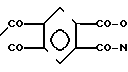

Эта смесь выпадает в осадок из реакционной среды. В процессе указанной термообработки продукт (I) может быть с высоким выходом превращен в мономерный диимид. Использование меньших, чем указано выше, количеств растворителей, использование только полярных растворителей, а также более низкого отношения неполярного растворителя к полярному приводит к образованию олигомера, который при термообработке превращается не в диимид, а в полимер. Большее количество растворителя, а также более высокое отношение неполярного растворителя к полярному, не оказывают влияния на результат и приводят лишь к увеличению количества растворителей, которые нужно обрабатывать. Термообработка промежуточного продукта при температурах менее 160оС и временах менее 0,5 ч приводит к снижению выхода диимида, а при температурах более 180оС и временах более 2 ч - не приводит к его повышению.The goal is achieved by the proposed method for producing N, N'-bis- (isocyanatophenylmethylphenylimide) pyromellitic acid by reacting pyromellitic dianhydride with diphenylmethanediisocyanate in the presence of a molar aprotic solvent and a catalyst selected from the group comprising aromatic sulfonylamides, characterized in that in order to increase the yield and simplify the process, the interaction is carried out at room temperature in a medium of a mixture of a polar aprotic solvent selected from the group including dimethylformamide, its mixture with acetonitrile in a molar ratio of 1: (1.17-1.75), dimethyl sulfoxide, and a non-polar solvent selected from the group consisting of carbon tetrachloride and mixtures thereof with n. -hexane and / or diethyl ether in a molar ratio of 1: (0.74 - 0.93), with a molar ratio of solvent mixture to dianhydride (80.0-116.5): 1 and a molar ratio of non-polar to polar solvent (1, 13-2,39): 1, the precipitate formed was separated, washed with a nonpolar solvent and heated at 160-180 C for 0.5-2 hours in such an implementation, the process reacting pyromellitic dianhydride with PLR leads to formation of a mixture consisting of. N, N'-bis- (isocyanatophenylmethylphenylimide) pyromellitic acid and an intermediate of structure I
OCNR
This mixture precipitates from the reaction medium. During said heat treatment, the product (I) can be converted into monomeric diimide in high yield. The use of smaller amounts of solvent than the above, the use of only polar solvents, as well as a lower ratio of non-polar solvent to polar, leads to the formation of an oligomer, which, when heat treated, is converted not into diimide, but into a polymer. A larger amount of solvent, as well as a higher ratio of non-polar to polar solvent, do not affect the result and only lead to an increase in the number of solvents that need to be processed. Heat treatment of the intermediate product at temperatures below 160 ° C and times of less than 0.5 hour results in the diimide reduction of yield, and at temperatures over 180 ° C and times of 2 hours - it does not increase.
П р и м е р 1. В колбу, снабженную магнитной мешалкой, термометром и поглотителем выделяющегося диоксида углерода, помещают 8,73 г пиромеллитового диангидрида (0,04 моля), 120 мл диметилформамида (ЛМФА) и 0,05 г натриевой соли бензолсульфониламида. Смесь перемешивали при 50оС до полного растворения диангидрида, после чего охлаждали до комнатной температуры, добавляли раствор 45 г МДИ (0,18 моль) в 300 мл четыреххлористого углерода и перемешивали полученную смесь в течение 5 ч. Затем отделяли осадок желтого цвета, промывали его диэтиловым эфиром и выдерживали при 180оС в течение 2 ч. Получали 18,58 г (73,7% от теории) N,N'-бис-(изоцианатофенилметилфенилимида) пирромелитовой кислоты. Продукт идентифицировали с помощью элементного анализа и ИК-спектров.Example 1. In a flask equipped with a magnetic stirrer, a thermometer and an absorber of carbon dioxide, 8.73 g of pyromellitic dianhydride (0.04 mol), 120 ml of dimethylformamide (LMFA) and 0.05 g of benzenesulfonylamide sodium salt are placed . The mixture was stirred at 50 ° C until complete dissolution of the dianhydride and then cooled to room temperature, the solution was added 45 g of MDI (0.18 mol) in 300 mL of carbon tetrachloride and the resulting mixture was stirred for 5 h. The yellow precipitate was collected, washed with ether and heated at 180 C for 2 h. obtained 18.58 g (73.7% of theory) N, N'-bis- (izotsianatofenilmetilfenilimida) pirromelitovoy acid. The product was identified by elemental analysis and IR spectra.
Найдено, %: С 71,98, Н 3,12, N 8,53,
С38Н22N4O6.Found,%: C 71.98, H 3.12, N 8.53,
C 38 H 22 N 4 O 6 .
Вычислено, %: С 72,38, Н 3,49, N 8,88. Calculated,%: C 72.38, H 3.49, N 8.88.
В ИК-спектре присутствуют полосы поглощения имидных (1735 и 1380 см-1) и изоцианатных (2285 см-1) групп и отсутствуют полосы поглощения ангидридных групп (1780 см-1), а также полоса поглощения при 1660 см-1, характеризующая семичленный цикл промежуточного соединения.The IR spectrum contains absorption bands of imide (1735 and 1380 cm -1 ) and isocyanate (2285 cm -1 ) groups and there are no absorption bands of anhydride groups (1780 cm -1 ), as well as an absorption band at 1660 cm -1 , characterizing the seven intermediate compound cycle.
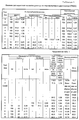
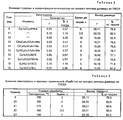
П р и м е р ы 2-10. Процесс проводили аналогично примеру 1, меняя состав и количество полярного и неполярного растворителя. Результаты приведены в табл. 1. PRI me R s 2-10. The process was carried out analogously to example 1, changing the composition and amount of polar and non-polar solvent. The results are shown in table. 1.
П р и м е р ы 11-19. Процесс проводили аналогично примеру 6, меняя катализатор и/или его количество, а также время реакции. Результаты приведены в табл. 2. PRI me R s 11-19. The process was carried out analogously to example 6, changing the catalyst and / or its quantity, as well as the reaction time. The results are shown in table. 2.
П р и м е р ы 20-23. Процесс проводили аналогично примеру 6, меняя условия термической обработки осадка. Результаты приведены в табл. 3. PRI me R s 20-23. The process was carried out analogously to example 6, changing the conditions of heat treatment of the precipitate. The results are shown in table. 3.
П р и м е р 24 (по прототипу). 70,4 г полиизоцианата (содержание изоцианатных групп 30,3%) смешивали с 14,2 г пиромеллитового диангидрида и 0,67 г диметилформамида, после чего включали перемешивающее устройство для получения однородной массы. Реакционную смесь помещали в баню с температурой 80оС и выдерживали при заданной температуре в течение 15 мин и затем быстро нагревали до 145-150оС. Термостатирование исходной смеси при постоянном интенсивном перемешивании осуществляли в течение 2 ч и получали вязкотекучий преполимер, который содержал 22,5% свободных изоцианатных групп. Конверсия диангидрида по СO2 к этому времени составила 66,2%. Преполимер отмывали от избыточного дифенилметандиизоцианата гептаном, затем растворяли в диоксане, экстрагировали из этого раствора другие компоненты смеси четыреххлористым углеродом, а затем гептаном. В результате из диоксана при охлаждении выделяли 9,6 г (23,4% от теории), N,N'-бис-(изоцианатофенилметилфенилим- ида) пиромеллитовой кислоты, который идентифицировали, как в примере 1.PRI me R 24 (prototype). 70.4 g of polyisocyanate (the content of isocyanate groups of 30.3%) was mixed with 14.2 g of pyromellitic dianhydride and 0.67 g of dimethylformamide, after which a stirrer was turned on to obtain a homogeneous mass. The reaction mixture was placed in a bath at 80 ° C and maintained at a predetermined temperature for 15 minutes and then rapidly heated to 145-150 ° C. Tempering the initial mixture with constant vigorous stirring was carried out for 2 hours to give vyazkotekuchy prepolymer which contained 22 , 5% of free isocyanate groups. The conversion of dianhydride by CO 2 at this time was 66.2%. The prepolymer was washed from excess diphenylmethane diisocyanate with heptane, then dissolved in dioxane, other components of the mixture were extracted from this solution with carbon tetrachloride, and then with heptane. As a result, 9.6 g (23.4% of theory), N, N'-bis- (isocyanatophenylmethylphenylimide) pyromellitic acid, which was identified as in Example 1, were isolated from dioxane upon cooling.
П р и м е р 25 (сравнительный). В колбу, снабженную магнитной мешалкой, термометром и поглотителем выделяющегося в реакции имидизации СO2, помещали 8,73 г пиромеллитового диангидрида и 120 мл диметилформамида. Полученную смесь перемешивали при 50оС до полного растворения диангидрида, после чего охлаждали до комнатной температуры. В полученный раствор вносили 45 г дифенилметандиизоцианата и полученную смесь перемешивали в течение 18 ч. Реакция имидизации сопровождается выделением СO2. (2,184 г или 62% по ангидриду) и образованием 16,2 г олигомера в виде твердого вещества желто-оранжевого цвета. Полученный порошок олигоимида выдерживали при 180оС в течение 2-х ч.PRI me R 25 (comparative). 8.73 g of pyromellitic dianhydride and 120 ml of dimethylformamide were placed in a flask equipped with a magnetic stirrer, a thermometer and an absorber of CO 2 emitted in the imidization reaction. The resulting mixture was stirred at 50 ° C until complete dissolution of the dianhydride and then cooled to room temperature. 45 g of diphenylmethanediisocyanate was added to the resulting solution, and the resulting mixture was stirred for 18 hours. The imidization reaction was accompanied by the release of CO 2 . (2.184 g or 62% anhydride) and the formation of 16.2 g of the oligomer as a yellow-orange solid. Oligoimida resulting powder was heated at 180 C for 2 hours.
В результате получали не диимид, а имидсодержащий полимер в количестве 15,4 г. The result was not diimide, but an imide-containing polymer in an amount of 15.4 g.
Из приведенных примеров видно, что предложенный способ по сравнению с прототипом позволяет примерно в 3 раза повысить выход диимида и значительно упростить процесс, поскольку отпадает необходимость в проведении многоступенчатой экстракции. From the above examples it can be seen that the proposed method in comparison with the prototype can approximately 3 times increase the yield of diimide and significantly simplify the process, since there is no need for multi-stage extraction.
Claims (1)
Priority Applications (1)
| Application Number | Priority Date | Filing Date | Title |
|---|---|---|---|
| SU4864244 RU1782003C (en) | 1990-07-16 | 1990-07-16 | Method of synthesis of pyromellitic acid n,n′-bis-(isocyanatophenylmethylphenylimide) |
Applications Claiming Priority (1)
| Application Number | Priority Date | Filing Date | Title |
|---|---|---|---|
| SU4864244 RU1782003C (en) | 1990-07-16 | 1990-07-16 | Method of synthesis of pyromellitic acid n,n′-bis-(isocyanatophenylmethylphenylimide) |
Publications (1)
| Publication Number | Publication Date |
|---|---|
| RU1782003C true RU1782003C (en) | 1995-03-20 |
Family
ID=30441938
Family Applications (1)
| Application Number | Title | Priority Date | Filing Date |
|---|---|---|---|
| SU4864244 RU1782003C (en) | 1990-07-16 | 1990-07-16 | Method of synthesis of pyromellitic acid n,n′-bis-(isocyanatophenylmethylphenylimide) |
Country Status (1)
| Country | Link |
|---|---|
| RU (1) | RU1782003C (en) |
-
1990
- 1990-07-16 RU SU4864244 patent/RU1782003C/en active
Non-Patent Citations (5)
| Title |
|---|
| S. Salary. C.H.Smith - S.Cell.Plast, 1975, V.11, N 5, p.262-265. * |
| Авторское свидетельство СССР N 1108748, кл. C 08G 73/10, 1982 (непублик.) * |
| Авторское свидетельство СССР N 1108749, кл. C 08G 73/10, 1982 (непублик.) * |
| Авторское свидетельство СССР N 1108750, кл. C 08G 73/10, 1982 (непублик.) * |
| Авторское свидетельство СССР N 1210436, кл. C 08G 73/10, 1984 (непублик.) * |
Similar Documents
| Publication | Publication Date | Title |
|---|---|---|
| CA1086745A (en) | Preparation of aromatic bisimides | |
| EP0193721A2 (en) | Polyimides and process for their preparation | |
| US4054577A (en) | Preparation of aromatic bisimides | |
| RU1782003C (en) | Method of synthesis of pyromellitic acid n,n′-bis-(isocyanatophenylmethylphenylimide) | |
| Kurita et al. | Polyisoimides: synthesis and evaluation as efficient precursors for polyimides | |
| EP0245815A2 (en) | Soluble and/or fusible polyimides and polyamidimides | |
| US3956321A (en) | Preparation of 4-fluorophthalic anhydride | |
| US4048190A (en) | Preparation of bisphenol-A bisimides | |
| DE69503237T2 (en) | POLY (IMID-ETHER) | |
| DE2401157A1 (en) | PROCESS FOR THE MANUFACTURING OF AROMATIC TETRACARBONIC ACIDS CONTAINING AN OXADIAZOLE RING OR OF THEIR DIANHYDRIDS | |
| US5043478A (en) | Process for the preparation of fluorinate aromatic diamine | |
| EP0477539A1 (en) | Tetracarboxylic acid dianhydrides | |
| EP0408539A1 (en) | A process for the preparation of polyimides | |
| SU1006433A1 (en) | Process for preparing 1,3,5-tris-(2,3-dibromopropyl)-isocyanurate | |
| SU1510717A3 (en) | Method of producing 2,6-bis-(chloromethyloxycarbonylmethyl)-pyridine | |
| USH728H (en) | Aryloxy p-benzidine compounds | |
| RU2021268C1 (en) | Monomer for synthesis of polycondensed ion-exchange polymers | |
| RU2059609C1 (en) | 1-phenoxy-3,5-diaminobenzene as a monomer for synthesis of polyimides and polyamides and polyimides or polyamides on its basis as thermostable materials with improved processibility | |
| JPS62256831A (en) | Aromatic polyamide resin and its production | |
| US5675039A (en) | Bis-m-benzotrifluoride compounds | |
| US5241038A (en) | Method for the preparation of aromatic imide sulfide polymers | |
| US4043978A (en) | Polyimides | |
| JPS5929676A (en) | Preparation of ammelide melamine addition product | |
| SU1657054A3 (en) | Method for obtaining salts of 4,4-dinitrostilben-2,2- disulfoacid | |
| EP1202958B1 (en) | Dicyanatochalcones and method for the production thereof |