KR20180098268A - Manufacturing method of chemically tempered glass - Google Patents
Manufacturing method of chemically tempered glass Download PDFInfo
- Publication number
- KR20180098268A KR20180098268A KR1020187017943A KR20187017943A KR20180098268A KR 20180098268 A KR20180098268 A KR 20180098268A KR 1020187017943 A KR1020187017943 A KR 1020187017943A KR 20187017943 A KR20187017943 A KR 20187017943A KR 20180098268 A KR20180098268 A KR 20180098268A
- Authority
- KR
- South Korea
- Prior art keywords
- glass
- ion
- tempered glass
- alkali
- glass plate
- Prior art date
- Legal status (The legal status is an assumption and is not a legal conclusion. Google has not performed a legal analysis and makes no representation as to the accuracy of the status listed.)
- Ceased
Links
Images

Classifications
-
- C—CHEMISTRY; METALLURGY
- C03—GLASS; MINERAL OR SLAG WOOL
- C03C—CHEMICAL COMPOSITION OF GLASSES, GLAZES OR VITREOUS ENAMELS; SURFACE TREATMENT OF GLASS; SURFACE TREATMENT OF FIBRES OR FILAMENTS MADE FROM GLASS, MINERALS OR SLAGS; JOINING GLASS TO GLASS OR OTHER MATERIALS
- C03C21/00—Treatment of glass, not in the form of fibres or filaments, by diffusing ions or metals in the surface
- C03C21/001—Treatment of glass, not in the form of fibres or filaments, by diffusing ions or metals in the surface in liquid phase, e.g. molten salts, solutions
- C03C21/002—Treatment of glass, not in the form of fibres or filaments, by diffusing ions or metals in the surface in liquid phase, e.g. molten salts, solutions to perform ion-exchange between alkali ions
-
- C—CHEMISTRY; METALLURGY
- C03—GLASS; MINERAL OR SLAG WOOL
- C03C—CHEMICAL COMPOSITION OF GLASSES, GLAZES OR VITREOUS ENAMELS; SURFACE TREATMENT OF GLASS; SURFACE TREATMENT OF FIBRES OR FILAMENTS MADE FROM GLASS, MINERALS OR SLAGS; JOINING GLASS TO GLASS OR OTHER MATERIALS
- C03C15/00—Surface treatment of glass, not in the form of fibres or filaments, by etching
-
- C—CHEMISTRY; METALLURGY
- C03—GLASS; MINERAL OR SLAG WOOL
- C03C—CHEMICAL COMPOSITION OF GLASSES, GLAZES OR VITREOUS ENAMELS; SURFACE TREATMENT OF GLASS; SURFACE TREATMENT OF FIBRES OR FILAMENTS MADE FROM GLASS, MINERALS OR SLAGS; JOINING GLASS TO GLASS OR OTHER MATERIALS
- C03C21/00—Treatment of glass, not in the form of fibres or filaments, by diffusing ions or metals in the surface
-
- C—CHEMISTRY; METALLURGY
- C03—GLASS; MINERAL OR SLAG WOOL
- C03C—CHEMICAL COMPOSITION OF GLASSES, GLAZES OR VITREOUS ENAMELS; SURFACE TREATMENT OF GLASS; SURFACE TREATMENT OF FIBRES OR FILAMENTS MADE FROM GLASS, MINERALS OR SLAGS; JOINING GLASS TO GLASS OR OTHER MATERIALS
- C03C23/00—Other surface treatment of glass not in the form of fibres or filaments
- C03C23/0075—Cleaning of glass
Landscapes
- Chemical & Material Sciences (AREA)
- Life Sciences & Earth Sciences (AREA)
- Engineering & Computer Science (AREA)
- Chemical Kinetics & Catalysis (AREA)
- General Chemical & Material Sciences (AREA)
- Geochemistry & Mineralogy (AREA)
- Materials Engineering (AREA)
- Organic Chemistry (AREA)
- Surface Treatment Of Glass (AREA)
Abstract
본 발명은 종래에 비해, 유리 표면의 크랙이나 잠재 흠집을 충분히 제거하는 것이 가능한 화학 강화 유리의 제조 방법을 제공한다. 본 발명은 알칼리 이온을 포함하는 유리판을 준비하는 공정과, 상기 알칼리 이온의 이온 반경보다도 큰 다른 알칼리 이온을 포함하는 무기염을 준비하는 공정과, 노점 온도가 20℃ 이상의 분위기에서, 상기 유리판의 상기 알칼리 이온과 상기 무기염의 상기 다른 알칼리 이온의 이온 교환을 하는 공정과, 상기 이온 교환된 상기 유리판의 표면의 일부를 제거하는 공정을 포함하는 것을 특징으로 하는 화학 강화 유리의 제조 방법에 관한 것이다.The present invention provides a method of manufacturing a chemically tempered glass capable of sufficiently removing cracks and potential scratches on a glass surface as compared with the prior art. The present invention provides a method for producing a glass plate, comprising the steps of: preparing a glass plate containing alkali ions; preparing an inorganic salt containing other alkali ions larger than the ionic radius of the alkali ion; Exchanging alkali ions with the other alkali ions of the inorganic salt; and removing a part of the surface of the ion-exchanged glass plate.
Description
본 발명은 화학 강화 유리의 제조 방법에 관한 것이다.The present invention relates to a method for producing chemically tempered glass.
근년, 여러 가지 디스플레이 장치의 커버 유리로서 화학 강화 유리가 사용되고 있고, 그 강도에 대하여 가일층의 향상이 요구되고 있다. 화학 강화 유리의 강도를 향상하기 위해서, 질산칼륨을 포함하는 특정한 무기염에, 나트륨을 포함하는 유리를 접촉시킴으로써 유리 중의 Na와 상기 무기염 중의 K를 이온 교환함으로써 화학 강화 처리를 행하고, 그 후, 산과 알칼리에 의한 처리를 행하는 것이 개시되어 있다(특허문헌 1).BACKGROUND ART In recent years, chemical tempered glass has been used as a cover glass for various display devices. In order to improve the strength of the chemically tempered glass, the chemical strengthening treatment is performed by ion-exchanging Na in glass and K in the inorganic salt by bringing a glass containing sodium into contact with a specific inorganic salt containing potassium nitrate, And treatment with acid and alkali has been disclosed (Patent Document 1).
특허문헌 1에는, 화학 강화 처리 후의 유리 표면에 대하여, 연마나 불산 등을 사용한 에칭 처리를 하지 않아도, 유리의 면 강도가 비약적으로 향상되는 것이 기재되어 있다.
그러나, 근년, 특허문헌 1에 기재된 표면 제거량보다도 많은 제거량을 요망하는 경우가 있다.However, in recent years, a removal amount larger than the surface removal amount described in
본 발명은 상기 실정에 감안하여, 종래에 비해, 표면 제거량을 향상할 수 있는 화학 강화 유리의 제조 방법을 제공하는 것을 목적으로 한다.SUMMARY OF THE INVENTION In view of the above, it is an object of the present invention to provide a method of manufacturing a chemically tempered glass which can improve the amount of surface removal compared with the prior art.
본 발명자들은 예의 연찬을 쌓은 결과, 화학 강화 처리 시의 수증기량을 제어함으로써, 유리의 표면 제거량을 비약적으로 향상할 수 있는 것을 알아내고, 본 발명을 완성하기에 이르렀다.The inventors of the present invention found that the amount of water removed on the surface of glass can be dramatically improved by controlling the amount of water vapor during the chemical strengthening treatment as a result of intensive study.
즉, 본 발명은 하기 <1> 내지 <19>에 관한 것이다.That is, the present invention relates to the following <1> to <19>.
<1> 알칼리 이온을 포함하는 유리판을 준비하는 공정과,≪ 1 > A method for manufacturing a glass plate, comprising the steps of: preparing a glass plate containing alkali ions;
상기 알칼리 이온의 이온 반경보다도 큰 다른 알칼리 이온을 포함하는 무기염을 준비하는 공정과,Preparing an inorganic salt containing another alkali ion larger than the ionic radius of the alkali ion;
노점 온도가 20℃ 이상의 분위기에서, 상기 유리판의 상기 알칼리 이온과 상기 무기염의 상기 다른 알칼리 이온의 이온 교환을 하는 공정과,Performing ion exchange between the alkali ion of the glass plate and the other alkali ion of the inorganic salt in an atmosphere having a dew point temperature of 20 DEG C or higher;
상기 이온 교환된 상기 유리판의 표면의 일부를 제거하는 공정A step of removing a part of the surface of the ion exchanged glass sheet
을 포함하는 것을 특징으로 하는 화학 강화 유리의 제조 방법.≪ / RTI >
<2> 상기 이온 교환을 하는 공정은, 상기 노점 온도가 30℃ 이상의 분위기에서 행해지는 것을 특징으로 하는 상기 <1>에 기재된 화학 강화 유리의 제조 방법.≪ 2 > The process for producing a chemically tempered glass according to < 1 >, wherein the ion exchange step is carried out in an atmosphere having a dew point temperature of 30 DEG C or higher.
<3> 상기 이온 교환을 하는 공정은, 상기 노점 온도가 40℃ 이상의 분위기에서 행해지는 것을 특징으로 하는 상기 <1> 또는 <2>에 기재된 화학 강화 유리의 제조 방법.<3> The process for producing a chemically tempered glass according to <1> or <2>, wherein the ion exchange step is carried out in an atmosphere of the dew point temperature of 40 ° C. or higher.
<4> 상기 이온 교환을 하는 공정은, 상기 노점 온도가 50℃ 이상의 분위기에서 행해지는 것을 특징으로 하는 상기 <1> 내지 <3> 중 어느 한 항에 기재된 화학 강화 유리의 제조 방법.<4> The method for producing a chemically tempered glass according to any one of <1> to <3>, wherein the ion exchange step is performed in an atmosphere having a dew point temperature of 50 ° C. or higher.
<5> 상기 이온 교환을 하는 공정은, 상기 노점 온도가 상기 무기염의 온도 이하의 분위기에서 행해지는 것을 특징으로 하는 상기 <1> 내지 <4> 중 어느 한 항에 기재된 화학 강화 유리의 제조 방법.<5> The process for producing a chemically tempered glass according to any one of <1> to <4>, wherein the ion exchange step is carried out in an atmosphere in which the dew point temperature is lower than or equal to the temperature of the inorganic salt.
<6> 상기 이온 교환하는 공정에서의 분위기는, 수증기 공급부로부터 상기 무기염의 상부의 공간에 수증기를 포함하는 기체가 도입됨으로써 형성되고, 상기 수증기를 포함하는 기체의 도입량은, 1㎤당의 수증기 공급량이 0.01mg/분 이상인 것을 특징으로 하는 상기 <1> 내지 <5> 중 어느 한 항에 기재된 화학 강화 유리의 제조 방법.<6> The atmosphere in the ion exchange step is formed by introducing a gas containing water vapor into a space above the inorganic salt from a water vapor supply portion, and the introduction amount of the gas including the water vapor is such that the amount of water vapor supplied per
<7> 상기 이온 교환하는 공정에서의 분위기는, 버블링부로부터 상기 무기염 중에 수증기를 포함하는 기체가 도입됨으로써 형성되고, 상기 수증기를 포함하는 기체의 도입량은, 1㎤당의 수증기 공급량이 0.01mg/분 이상인 것을 특징으로 하는 상기 <1> 내지 <5> 중 어느 한 항에 기재된 화학 강화 유리의 제조 방법.<7> The atmosphere in the ion-exchanging step is formed by introducing a gas containing water vapor into the inorganic salt from the bubbling portion, and the introduction amount of the gas containing the water vapor is 0.01 mg / (1) to (5) above, wherein the chemical strengthening glass has a surface roughness of not less than 5 占 퐉.
<8> 상기 무기염을 준비하는 공정은 K2CO3, Na2CO3, KHCO3, NaHCO3, Li2CO3, Rb2CO3, Cs2CO3, MgCO3, CaCO3 및 BaCO3으로 이루어지는 군에서 선택되는 적어도 1종의 염과 질산칼륨을 포함하는 무기염을 준비하는 것을 특징으로 하는 상기 <1> 내지 <7> 중 어느 한 항에 기재된 화학 강화 유리의 제조 방법.<8> The process for preparing the inorganic salt may include the steps of preparing K 2 CO 3 , Na 2 CO 3 , KHCO 3 , NaHCO 3 , Li 2 CO 3 , Rb 2 CO 3 , Cs 2 CO 3 , MgCO 3 , CaCO 3 The method for producing a chemically strengthened glass according to any one of the above items <1> to <7>, wherein an inorganic salt comprising at least one salt selected from the group consisting of BaCO 3 and potassium nitrate is prepared.
<9> 상기 유리판의 표면의 일부를 제거하는 공정은, 상기 이온 교환된 상기 유리판을 산에 접촉시키는 공정을 포함하는 것을 특징으로 하는 상기 <1> 내지 <8> 중 어느 한 항에 기재된 화학 강화 유리의 제조 방법.<9> The process for removing a part of the surface of a glass plate according to any one of <1> to <8>, which comprises a step of bringing the ion-exchanged glass plate into contact with an acid. ≪ / RTI >
<10> 상기 유리판의 표면의 일부를 제거하는 공정은, 상기 산에 접촉시키는 공정 후에 상기 유리판을 알칼리에 접촉시키는 공정을 더 포함하는 것을 특징으로 하는 상기 <9>에 기재된 화학 강화 유리의 제조 방법.<10> The process for removing a part of the surface of the glass plate, further comprising a step of bringing the glass plate into contact with alkali after the step of contacting the acid, .
<11> 상기 산에 접촉시키는 공정과 상기 알칼리에 접촉시키는 공정 사이에, 상기 유리판을 세정하는 공정을 더 포함하는 것을 특징으로 하는 상기 <10>에 기재된 화학 강화 유리의 제조 방법.<11> The method of manufacturing a chemical-strengthened glass according to <10>, further comprising a step of cleaning the glass plate between the step of contacting the acid and the step of contacting the alkali.
<12> 상기 이온 교환하는 공정과 상기 유리판의 표면의 일부를 제거하는 공정 사이에, 상기 유리판을 세정하는 공정을 더 포함하는 것을 특징으로 하는 상기 <1> 내지 <11> 중 어느 한 항에 기재된 화학 강화 유리의 제조 방법.<12> The method according to any one of <1> to <11>, further comprising a step of washing the glass plate between the ion exchange step and the step of removing a part of the surface of the glass plate Method for manufacturing chemically tempered glass.
<13> 상기 알칼리에 접촉시키는 공정 후에, 상기 유리판을 세정하는 공정을 더 포함하는 것을 특징으로 하는 상기 <10> 내지 <12> 중 어느 한 항에 기재된 화학 강화 유리의 제조 방법.<13> The method of manufacturing a chemically tempered glass according to any one of <10> to <12>, further comprising a step of cleaning the glass plate after the step of contacting the alkali.
<14> 상기 산에 접촉시키는 공정은, pH7 미만인 용액을 사용하는 것을 특징으로 하는 상기 <9> 내지 <13> 중 어느 한 항에 기재된 화학 강화 유리의 제조 방법.<14> The method for producing a chemically tempered glass according to any one of <9> to <13>, wherein a solution having a pH of less than 7 is used as the step of contacting the acid.
<15> 상기 pH7 미만인 용액은, 약산인 것을 특징으로 하는 상기 <14>에 기재된 화학 강화 유리의 제조 방법.<15> The process for producing a chemically tempered glass according to <14>, wherein the solution having a pH of less than 7 is a weak acid.
<16> 상기 pH7 미만인 용액은, 강산인 것을 특징으로 하는 상기 <14>에 기재된 화학 강화 유리의 제조 방법.<16> The method for producing a chemically tempered glass according to <14>, wherein the solution having a pH of less than 7 is a strong acid.
<17> 상기 알칼리에 접촉시키는 공정은, pH7 초과인 용액을 사용하는 것을 특징으로 하는 상기 <10> 내지 <16> 중 어느 한 항에 기재된 화학 강화 유리의 제조 방법.<17> The method for producing a chemically tempered glass according to any one of <10> to <16>, wherein a solution having a pH of more than 7 is used as the step of contacting the alkali.
<18> 상기 pH7 초과인 용액은, 약염기인 것을 특징으로 하는 상기 <17>에 기재된 화학 강화 유리의 제조 방법.<18> The method for producing a chemically tempered glass according to <17>, wherein the solution having a pH> 7 is a weak base.
<19> 상기 pH7 초과인 용액은, 강염기인 것을 특징으로 하는 상기 <17>에 기재된 화학 강화 유리의 제조 방법.<19> The method for producing a chemically tempered glass according to <17>, wherein the solution having a pH of more than 7 is a strong base.
본 발명에 따르면, 종래에 비해, 표면 제거량을 향상할 수 있는 화학 강화 유리의 제조 방법을 제공할 수 있다.According to the present invention, it is possible to provide a method of manufacturing a chemically tempered glass capable of improving the surface removal amount as compared with the prior art.
도 1은, 볼 온 링 시험의 방법을 설명하기 위한 개략도이다.
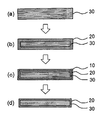
도 2는, 본 발명에 따른 화학 강화 유리의 제조 공정을 나타내는 모식도이다.
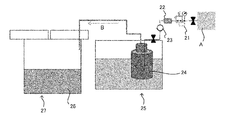
도 3은, 이온 교환을 하는 공정에서의 분위기를 형성하기 위한 실험계의 모식도이다.1 is a schematic view for explaining a method of a ball-on-ring test.
2 is a schematic view showing a manufacturing process of the chemically tempered glass according to the present invention.
Fig. 3 is a schematic diagram of an experimental system for forming an atmosphere in the ion exchange step. Fig.
이하, 본 발명을 상세하게 설명하는데, 본 발명은 이하의 실시 형태에 한정되는 것은 아니고, 본 발명의 요지를 일탈하지 않는 범위에 있어서, 임의로 변형하여 실시할 수 있다. 또한 본 명세서에 있어서 수치 범위를 나타내는 「내지」란, 그 전후에 기재된 수치를 하한값 및 상한값으로서 포함하는 의미로 사용된다.Hereinafter, the present invention will be described in detail, but the present invention is not limited to the following embodiments, and can be arbitrarily modified within the range not departing from the gist of the present invention. In the present specification, " to " representing the numerical range is used to mean that the numerical values described before and after the numerical value are included as a lower limit value and an upper limit value.
<화학 강화 유리의 제조 방법>≪ Production method of chemically tempered glass >
본 발명에 따른 화학 강화 유리의 제조 방법은,A method of manufacturing a chemically tempered glass according to the present invention comprises:
(a) 알칼리 이온을 포함하는 유리판을 준비하는 공정과,(a) preparing a glass plate containing alkali ions,
(b) 상기 알칼리 이온의 이온 반경보다도 큰 다른 알칼리 이온을 포함하는 무기염을 준비하는 공정과,(b) preparing an inorganic salt containing another alkali ion larger than the ionic radius of the alkali ion;
(c) 노점 온도가 20℃ 이상의 분위기에서, 상기 유리판의 상기 알칼리 이온과 상기 무기염의 상기 다른 알칼리 이온의 이온 교환을 하는 공정과,(c) ion-exchanging the alkali ion of the glass plate with the other alkali ion of the inorganic salt in an atmosphere having a dew point temperature of 20 ° C or higher,
(d) 상기 이온 교환된 상기 유리판의 표면의 일부를 제거하는 공정(d) a step of removing a part of the surface of the ion exchanged glass sheet
을 포함하는 것을 특징으로 한다.And a control unit.
(유리 조성)(Glass composition)
본 발명에서 사용되는 유리는 알칼리 이온을 포함하고 있으면 되고, 성형, 화학 강화 처리에 의한 강화가 가능한 조성을 갖는 것인 한, 여러 가지 조성의 것을 사용할 수 있다. 그 중에서도 나트륨을 포함하고 있는 것이 바람직하고, 구체적으로는, 예를 들어 알루미노실리케이트 유리, 소다석회 유리, 보로실리케이트 유리, 납 유리, 알칼리바륨 유리, 알루미노보로실리케이트 유리 등을 들 수 있다.The glass used in the present invention may contain alkaline ions and may have various compositions as long as they have a composition capable of being reinforced by molding or chemical strengthening treatment. Among them, it is preferable to contain sodium. Specific examples thereof include aluminosilicate glass, soda lime glass, borosilicate glass, lead glass, alkali barium glass, aluminoborosilicate glass and the like.
유리의 제조 방법은 특별히 한정되지 않고, 원하는 유리 원료를 연속 용융로에 투입하고, 유리 원료를 바람직하게는 1500 내지 1600℃에서 가열 용융하고, 청징한 후, 성형 장치에 공급한 뒤에 용융 유리를 판상으로 성형하여, 서냉함으로써 제조할 수 있다.The production method of the glass is not particularly limited, and a desired glass raw material is placed in a continuous melting furnace, and the glass raw material is preferably heated and melted at 1500 to 1600 占 폚, refined, Followed by molding, followed by slow cooling.
또한, 유리의 성형에는 다양한 방법을 채용할 수 있다. 예를 들어, 다운드로우법(예를 들어, 오버플로우 다운드로우법, 슬롯 다운법 및 리드로우법 등), 플로트법, 롤 아웃법 및 프레스법 등의 여러 가지 성형 방법을 채용할 수 있다. 그 중에서도, 유리면의 적어도 일부에 크랙이 발생하기 쉽고, 본 발명의 효과가 보다 현저하게 보여지는 점에서, 플로트법이 바람직하다.In addition, various methods can be adopted for forming the glass. For example, various molding methods such as a down-draw method (for example, overflow down-draw method, slot-down method and lead-down method), float method, roll-out method and press method can be employed. Among them, the float method is preferable because cracks tend to occur in at least a part of the glass surface and the effect of the present invention can be seen more remarkably.
유리의 두께는, 특별히 제한되는 것은 아니지만, 화학 강화 처리를 효과적으로 행하기 위해서, 통상 5mm 이하인 것이 바람직하고, 3mm 이하인 것이 보다 바람직하고, 1mm 이하인 것이 더욱 바람직하고, 0.7mm 이하가 특히 바람직하다.The thickness of the glass is not particularly limited, but is preferably 5 mm or less, more preferably 3 mm or less, further preferably 1 mm or less, and particularly preferably 0.7 mm or less, in order to effectively perform the chemical strengthening treatment.
또한, 본 발명에서 사용되는 유리의 형상은 특별히 한정되지 않는다. 예를 들어, 균일한 판 두께를 갖는 평판 형상, 표면과 이면 중 적어도 한쪽에 곡면을 갖는 형상 및 굴곡부 등을 갖는 입체적인 형상 등의 여러 가지 형상의 유리를 채용할 수 있다.The shape of the glass used in the present invention is not particularly limited. For example, glass having various shapes such as a plate shape having a uniform plate thickness, a shape having a curved surface on at least one of the surface and the back surface, and a three-dimensional shape having a bent portion or the like can be adopted.
본 발명의 화학 강화 유리의 조성으로서는 특별히 한정되지 않지만, 예를 들어 이하의 유리 조성을 들 수 있다.The composition of the chemically tempered glass of the present invention is not particularly limited, and examples thereof include the following glass compositions.
(1) 산화물 기준의 몰%로 표시한 조성으로, SiO2를 50 내지 80%, Al2O3를 2 내지 25%, Li2O를 0 내지 10%, Na2O를 0 내지 18%, K2O를 0 내지 10%, MgO를 0 내지 15%, CaO를 0 내지 5% 및 ZrO2를 0 내지 5%를 포함하는 유리(1) with a composition represented by the mol% of the oxide basis, SiO 2 50 to 80%, Al 2 O 3 2 to 25% and the Li 2 O 0 to 10%, 0 to 18% of Na 2 O, 0 to 10% of K 2 O, 0 to 15% of MgO, 0 to 5% of CaO and 0 to 5% of ZrO 2
(2) 산화물 기준의 몰%로 표시한 조성이, SiO2를 50 내지 74%, Al2O3를 1 내지 10%, Na2O를 6 내지 14%, K2O를 3 내지 11%, MgO를 2 내지 15%, CaO를 0 내지 6% 및 ZrO2를 0 내지 5% 함유하고, SiO2 및 Al2O3의 함유량 합계가 75% 이하, Na2O 및 K2O의 함유량의 합계가 12 내지 25%, MgO 및 CaO의 함유량의 합계가 7 내지 15%인 유리2 is a composition represented by the mol% of the oxide basis, 1 to 10% 50 to 74%, Al 2 O 3 to SiO 2, 6 to 14% of Na 2 O, 3 to 11% of K 2 O, A total content of SiO 2 and Al 2 O 3 of 75% or less, a total content of Na 2 O and K 2 O, a total content of SiO 2 and Al 2 O 3 of not more than 75%, MgO of 2 to 15%, CaO of 0 to 6% and ZrO 2 of 0 to 5% Is 12 to 25%, and the total content of MgO and CaO is 7 to 15%
(3) 산화물 기준의 몰%로 표시한 조성이, SiO2를 68 내지 80%, Al2O3를 4 내지 10%, Na2O를 5 내지 15%, K2O를 0 내지 1%, MgO를 4 내지 15% 및 ZrO2를 0 내지 1% 함유하는 유리3 is a composition represented by the mol% of the oxide basis, SiO 2 68 to 80%, 4 to 10% of Al 2 O 3, 5 to 15% of Na 2 O, of K 2 O 0 to 1%, Glass containing 4 to 15% of MgO and 0 to 1% of ZrO 2
(4) 산화물 기준의 몰%로 표시한 조성이, SiO2를 67 내지 75%, Al2O3를 0 내지 4%, Na2O를 7 내지 15%, K2O를 1 내지 9%, MgO를 6 내지 14% 및 ZrO2를 0 내지 1.5% 함유하고, SiO2 및 Al2O3의 함유량의 합계가 71 내지 75%, Na2O 및 K2O의 함유량의 합계가 12 내지 20%이고, CaO를 함유하는 경우 그 함유량이 1% 미만인 유리4 is a composition represented by the mol% of the oxide basis, SiO 2 of 67 to 75%, Al 2 O 3 0 to 4%, 7 to 15% of Na 2 O, 1 to 9% of K 2 O, , MgO in an amount of 6 to 14% and ZrO 2 in an amount of 0 to 1.5%, the total content of SiO 2 and Al 2 O 3 being 71 to 75%, the total content of Na 2 O and K 2 O being 12 to 20% , And when the content of CaO is less than 1%
(5) 산화물 기준의 질량%로 표시한 조성이, SiO2를 65 내지 75%, Al2O3를 0.1 내지 5%, MgO를 1 내지 6%, CaO를 1 내지 15% 함유하고, Na2O+K2O가 10 내지 18%인 유리5 is a composition represented by mass% of the oxide basis, containing from 65 to 75% SiO 2, 0.1 to 5% of Al 2 O 3, the
(6) 산화물 기준의 질량%로 표시한 조성이, SiO2를 60 내지 72%, Al2O3를 1 내지 10%, MgO를 5 내지 12%, CaO를 0.1 내지 5%, Na2O를 13 내지 19%, K2O를 0 내지 5% 함유하고, RO/(RO+R2O)가 0.20 이상, 0.42 이하(식 중, RO란 알칼리 토금속 산화물, R2O는 알칼리 금속 산화물을 나타냄)인 유리6 is the one the composition expressed as% by weight of the oxide basis, 60 to 72% of
(7) 산화물 기준의 몰%로 표시한 조성이, SiO2를 55.5 내지 80%, Al2O3를 12 내지 20%, Na2O를 8 내지 25%, P2O5를 2.5% 이상, 알칼리 토금속 RO(RO는 MgO+CaO+SrO+BaO임)를 1% 이상 함유하는 유리7 is a composition represented by the mol% of the oxide basis, SiO 2 of 55.5 to 80%, Al 2 O 3 from 12 to 20%, 8 to 25% of Na 2 O, P 2 O 5 of less than 2.5%, Glass containing 1% or more of an alkaline earth metal RO (RO is MgO + CaO + SrO + BaO)
(8) 산화물 기준의 몰%로 표시한 조성이, SiO2를 57 내지 76.5%, Al2O3를 12 내지 18%, Na2O를 8 내지 25%, P2O5를 2.5 내지 10%, 알칼리 토금속 RO를 1% 이상 함유하는 유리(8) The composition according to any one of the items (1) and (2), wherein the composition represented by mol% on the basis of an oxide contains 57 to 76.5% of SiO 2 , 12 to 18% of Al 2 O 3 , 8 to 25% of Na 2 O, 2.5 to 10% of P 2 O 5 , Glass containing 1% or more of alkaline earth metal RO
(9) 산화물 기준의 몰%로 표시한 조성이, SiO2를 56 내지 72%, Al2O3를 8 내지 20%, B2O3를 3 내지 20%, Na2O를 8 내지 25%, K2O를 0 내지 5%, MgO를 0 내지 15%, CaO를 0 내지 15%, SrO2를 0 내지 15%, BaO를 0 내지 15% 및 ZrO2를 0 내지 8% 함유하는 유리9 is a composition represented by the mol% of the oxide basis, SiO 2 of 56 to 72%, Al 2 O 3 8 to 20%, B 2 O 3 3 to 20%, 8 to 25% of Na 2 O , 0 to 5% of K 2 O, 0 to 15% of MgO, 0 to 15% of CaO, 0 to 15% of SrO 2 , 0 to 15% of BaO and 0 to 8% of ZrO 2
본 발명의 화학 강화 유리는, 유리 표면에, 이온 교환된 압축 응력층을 갖는다. 이온 교환법에서는, 유리의 표면을 이온 교환하고, 압축 응력이 잔류하는 표면층을 형성시킨다. 구체적으로는, 유리 전이점 이하의 온도에서 이온 교환에 의해 유리판 표면의 이온 반경이 작은 알칼리 금속 이온(Li 이온 및/또는 Na 이온)을 이온 반경이 보다 큰 다른 알칼리 이온(Na 이온 및/또는 K 이온)으로 치환한다. 이에 의해, 유리의 표면에 압축 응력이 잔류하고, 유리의 강도가 향상된다.The chemically tempered glass of the present invention has an ion-exchanged compressive stress layer on the glass surface. In the ion exchange method, the surface of the glass is ion-exchanged to form a surface layer in which compressive stress remains. Concretely, alkali metal ions (Li ion and / or Na ion) having a small ionic radius on the surface of the glass plate are ion-exchanged with other alkali ions (Na ion and / or K Ion). Thereby, a compressive stress remains on the surface of the glass, and the strength of the glass is improved.
본 발명의 제조 방법에 있어서, 화학 강화 처리는, 유리에 포함되는 알칼리 이온의 이온 반경보다도 큰 다른 알칼리 이온을 포함하는 무기염에, 상술한 알칼리 이온을 포함하는 유리를 접촉시켜서 이온 교환을 함으로써 행해진다. 즉, 유리에 포함되는 알칼리 이온과, 무기염에 포함되는 다른 알칼리 이온이 이온 교환된다.In the production method of the present invention, the chemical strengthening treatment is carried out by bringing a glass containing alkali ions into contact with an inorganic salt containing another alkali ion larger than the ionic radius of the alkali ion contained in the glass, All. That is, the alkali ions contained in the glass and the other alkali ions contained in the inorganic salt are ion-exchanged.
유리에 포함되는 알칼리 이온이 Na 이온인 경우, 무기염은, 질산칼륨(KNO3)을 함유하는 무기염이며, 또한, K2CO3, Na2CO3, KHCO3, NaHCO3, Li2CO3, Rb2CO3, Cs2CO3, MgCO3, CaCO3 및 BaCO3으로 이루어지는 군에서 선택되는 적어도 1종의 염을 함유하는 것이 보다 바람직하다.When the alkali ion contained in the glass is Na ion, the inorganic salt is an inorganic salt containing potassium nitrate (KNO 3 ), and is an inorganic salt containing K 2 CO 3 , Na 2 CO 3 , KHCO 3 , NaHCO 3 , Li 2 CO 3 , at least one salt selected from the group consisting of Rb 2 CO 3 , Cs 2 CO 3 , MgCO 3 , CaCO 3 and BaCO 3 .
예를 들어 무기염에 질산칼륨을 포함하는 경우, 질산칼륨의 융점은 330℃이고, 화학 강화를 행하는 유리의 왜곡점(통상 500 내지 600℃) 이하에 융점을 갖고 있다. 또한, 상기 염 중 질산칼륨을 제외한 염(이하, 「융제」라고 칭하기도 함)은, Si-O-Si 결합으로 대표되는 유리의 네트워크를 절단하는 성질을 갖는다. 화학 강화 처리를 행하는 온도는 몇 백℃로 높으므로, 그 온도 하에서 유리의 Si-O 간의 공유 결합은 적절하게 절단되어, 후술하는 저밀도화 처리가 진행하기 쉬워진다.For example, when potassium nitrate is contained in the inorganic salt, the melting point of potassium nitrate is 330 ° C and the melting point is below the strain point (usually 500 to 600 ° C) of the glass to be chemically strengthened. In addition, a salt other than potassium nitrate (hereinafter also referred to as " flux ") in the salt has a property of cutting a network of glass represented by Si-O-Si bond. The temperature at which the chemical strengthening treatment is performed is as high as several hundreds of degrees Celsius, so that the covalent bond between the Si-O bonds of the glass under such temperature is suitably cleaved, and the low density treatment described later tends to proceed easily.
또한, 공유 결합을 절단하는 정도는 유리 조성이나 사용하는 염(융제)의 종류, 화학 강화 처리를 행하는 온도, 시간 등의 화학 강화 처리 조건에 따라서도 상이하지만, Si로부터 신장하고 있는 4개의 공유 결합 중, 1 내지 2개의 결합이 끊어지는 정도의 조건을 선택하는 것이 바람직한 것으로 생각된다.The extent to which the covalent bond is cleaved varies depending on the chemical composition of the glass, the kind of the salt (flux) used, the temperature at which the chemical strengthening treatment is performed, the time, and other chemical strengthening treatment conditions. However, It is considered that it is preferable to select the condition of the degree of disconnection of one to two bonds.
유리 표면의 Na 이온(또는 Li 이온)과 무기염 중의 K 이온(또는 Na 이온)이 이온 교환됨으로써 고밀도의 압축 응력층이 형성된다. 무기염에 유리를 접촉시키는 방법으로서는, 페이스트상의 무기염을 도포하는 방법, 무기염의 수용액을 유리에 분사하는 방법, 융점 이상으로 가열한 용융염의 염욕에 유리를 침지시키는 방법 등이 가능하지만, 이들 중에서는, 용융염에 침지시키는 방법이 바람직하다.The Na ion (or Li ion) on the glass surface and the K ion (or Na ion) in the inorganic salt are ion-exchanged to form a high-density compressive stress layer. Examples of the method of contacting the inorganic salt with the glass include a method of applying an inorganic salt in a paste form, a method of spraying an aqueous solution of an inorganic salt onto a glass, a method of immersing a glass in a salt bath of a molten salt heated to a melting point or higher, Is preferably immersed in a molten salt.
융제의 첨가량은 0.1mol% 이상이 바람직하고, 0.5mol% 이상이 보다 바람직하고, 1mol% 이상이 더욱 바람직하고, 2mol% 이상이 특히 바람직하다. 또한 생산성의 관점에서 각 염의 포화 용해도 이하가 바람직하다. 과잉으로 첨가하면 유리의 부식으로 이어질 우려가 있다. 예를 들어, 융제로서 K2CO3를 사용하는 경우에는, 24mol% 이하가 바람직하고, 12mol% 이하가 보다 바람직하고, 8mol% 이하가 특히 바람직하다.The addition amount of the flux is preferably 0.1 mol% or more, more preferably 0.5 mol% or more, still more preferably 1 mol% or more, and particularly preferably 2 mol% or more. Further, from the viewpoint of productivity, the saturation solubility of each salt is preferably at most. If it is added in excess, there is a risk of corrosion of the glass. For example, when K 2 CO 3 is used as a flux, it is preferably not more than 24 mol%, more preferably not more than 12 mol%, particularly preferably not more than 8 mol%.
무기염은, 질산칼륨 및 융제 이외에, 본 발명의 효과를 저해하지 않는 범위에서 다른 화학종을 포함하고 있어도 되고, 예를 들어 염화나트륨, 염화칼륨, 붕산나트륨, 붕산칼륨 등의 알칼리 염화염이나 알칼리 붕산염 등을 들 수 있다. 이들은 단독으로 첨가해도, 복수종을 조합하여 첨가해도 된다.The inorganic salt may contain other chemical species in addition to the potassium nitrate and the flux and may contain other chemical species as long as the effects of the present invention are not impaired. For example, alkali salts such as sodium chloride, potassium chloride, sodium borate and potassium borate, alkali borate salts . These may be added alone or in combination of a plurality of species.
(용융염의 제조)(Preparation of molten salt)
용융염은 공지된 공정에 의해 제조할 수 있다. 예를 들어 무기염이 질산칼륨과 융제를 포함하는 용융염인 경우, 질산칼륨 용융염을 제조하고, 계속하여 해당 질산칼륨 용융염에 융제를 첨가함으로써 얻을 수 있다. 또한, 다른 방법으로서, 질산칼륨과 융제를 혼합하고, 계속하여 해당 질산칼륨과 융제의 혼합염을 용융함으로써 얻을 수 있다.The molten salt can be prepared by a known process. For example, when the inorganic salt is a molten salt containing potassium nitrate and a flux, a potassium nitrate molten salt is prepared, and subsequently, the flux is added to the potassium nitrate molten salt. As another method, potassium nitrate and a flux may be mixed, followed by melting a mixed salt of potassium nitrate and a flux.
본원 발명의 제조 방법에서 사용하는 용융염은, Na 농도가 바람직하게는 500중량ppm 이상이고, 보다 바람직하게는 1000중량ppm 이상이다. 용융염에 있어서의 Na 농도가 2000중량ppm 이상임으로써, 후술하는 산 처리 공정에 의해, 저밀도층이 심화하기 쉬워지기 때문에 더욱 바람직하다. Na 농도의 상한으로서는 특별히 제한은 없고, 원하는 표면 압축 응력(CS)이 얻어질 때까지 허용할 수 있다.The molten salt used in the production method of the present invention has an Na concentration of preferably at least 500 ppm by weight, more preferably at least 1000 ppm by weight. Since the concentration of Na in the molten salt is 2000 ppm by weight or more, it is more preferable that the low-density layer becomes easy to be deepened by the acid treatment step described later. The upper limit of the Na concentration is not particularly limited and may be allowed until a desired surface compressive stress (CS) is obtained.
또한, 화학 강화 처리를 1회 이상 행한 용융염에는 유리로부터 용출한 나트륨이 포함되어 있다. 따라서, Na 농도가 이미 상기 범위 내이면, 유리 유래의 나트륨을 그대로 Na원으로서 사용해도 되고, Na 농도가 만족되지 않는 경우나, 화학 강화 미사용의 용융염을 사용하는 경우에는, 질산나트륨 등의 무기 나트륨염을 첨가함으로써 조정할 수 있다.The molten salt subjected to the chemical strengthening treatment at least once contains sodium dissolved from the glass. Therefore, when the Na concentration is already within the above range, the sodium derived from the glass may be used as the Na source as it is, or when the Na concentration is not satisfied or when the chemical strengthening unused molten salt is used, Can be adjusted by adding a sodium salt.
(이온 교환하는 공정)(Step of ion exchange)
이어서, 제조한 용융염을 사용하여 화학 강화 처리를 행한다. 화학 강화 처리는, 유리를 용융염에 침지하고, 유리 중의 알칼리 이온(Li 이온 또는 Na 이온)을 용융염 중의 이온 반경이 큰 다른 알칼리 이온(Na 이온 또는 K 이온)과 이온 교환(치환)함으로써 행해진다. 이 이온 교환에 의해 유리 표면의 조성을 변화시켜, 유리 표면이 고밀도화한 압축 응력층(20)을 형성할 수 있다[도 2의 (a) 내지 (b)]. 이 유리 표면의 고밀도화에 의해 압축 응력이 발생하는 것으로부터, 유리를 강화할 수 있다.Then, chemical strengthening treatment is carried out using the molten salt thus prepared. The chemical strengthening treatment is performed by immersing the glass in a molten salt and ion-exchanging (substituting) alkali ions (Li ion or Na ion) in the glass with other alkali ions (Na ion or K ion) having a large ionic radius in the molten salt All. By this ion exchange, the composition of the glass surface is changed, and the
또한 실제로는, 화학 강화 유리의 밀도는, 유리의 중심에 존재하는 중간층(30)(벌크)의 외측 테두리로부터 압축 응력층 표면을 향하여 서서히 고밀도화해 오기 위해서, 중간층(30)과 압축 응력층(20) 사이에는, 밀도가 급격하게 변화하는 명확한 경계는 없다. 여기서 중간층이란, 유리 중심부에 존재하고, 압축 응력층에 끼워지는 층을 나타낸다. 이 중간층은 압축 응력층과는 상이하고, 이온 교환이 되어 있지 않은 층이다.Actually, the density of the chemically tempered glass is lower than that of the
본 발명에 있어서의 화학 강화 처리(이온 교환하는 공정)는, 구체적으로는 이하의 수순으로 행할 수 있다.The chemical strengthening treatment (ion-exchange step) in the present invention can be specifically performed by the following procedure.
먼저 유리를 예열하고, 상술한 용융염을, 화학 강화를 행하는 온도로 조정한다. 계속하여 예열한 유리를 용융염 조(27)의 용융염 중에 소정의 시간 침지한 뒤, 유리를 용융염 중으로부터 인상하여, 방냉한다. 또한, 유리에는, 화학 강화 처리 전에, 용도에 따른 형상 가공, 예를 들어 절단, 단부면 가공 및 펀칭 가공 등의 기계적 가공을 행하는 것이 바람직하다.First, the glass is preheated, and the above-mentioned molten salt is adjusted to a temperature at which chemical strengthening is performed. Subsequently, the preheated glass is immersed in the molten salt of the
유리의 예열 온도는, 용융염에 침지하는 온도에 의존하는데, 일반적으로 100℃ 이상인 것이 바람직하다.The preheating temperature of the glass depends on the temperature at which it is immersed in the molten salt, and it is generally preferably 100 DEG C or higher.
화학 강화 온도는, 피강화 유리의 왜곡점(통상 500 내지 600℃) 이하가 바람직하고, 보다 높은 압축 응력층 깊이를 얻기 위해서는 특히 350℃ 이상이 바람직하고, 처리 시간의 단축 및 저밀도층 형성 촉진을 위하여 400℃ 이상이 보다 바람직하고, 430℃ 이상이 더욱 바람직하다.The chemical strengthening temperature is preferably not higher than the distortion point (usually 500 to 600 ° C) of the tempered glass, and in order to obtain a higher compressive stress layer depth, it is preferably at least 350 ° C, and shortening of the processing time and promotion of formation of a low- More preferably not less than 400 ° C, and even more preferably not less than 430 ° C.
유리의 용융염으로의 침지 시간은 1분 내지 10시간이 바람직하고, 5분 내지 8시간이 보다 바람직하고, 10분 내지 4시간이 더욱 바람직하다. 이러한 범위에 있어서, 강도와 압축 응력층의 깊이의 밸런스가 우수한 화학 강화 유리를 얻을 수 있어, 바람직하다.The immersion time of the glass in the molten salt is preferably 1 minute to 10 hours, more preferably 5 minutes to 8 hours, and further preferably 10 minutes to 4 hours. In such a range, a chemically tempered glass excellent in balance between the strength and the depth of the compressive stress layer can be obtained, which is preferable.
본 발명에 따른 제조 방법에서는, 유리를 침지할 때의 용융염 중의 수증기량을 증가시킴으로써, 후술하는 산에 접촉시키는 공정에 있어서 형성되는 저밀도층을 두껍게 할 수 있다. 알칼리에 접촉시키는 공정에 있어서는, 상기 저밀도층을 제거할 수 있기 때문에, 해당 저밀도층의 두께를, 유리 표면에 존재하는 크랙이나 잠재 흠집의 평균 깊이 이상으로 함으로써, 저밀도층의 제거와 함께, 해당 크랙이나 잠재 흠집을 제거할 수 있게 된다. 그로 인해, 화학 강화 유리의 우수한 면 강도를 달성할 수 있다.In the manufacturing method according to the present invention, by increasing the amount of water vapor in the molten salt when the glass is immersed, the low density layer formed in the step of bringing into contact with an acid described later can be made thick. In the step of contacting with alkali, since the low-density layer can be removed, the thickness of the low-density layer is made equal to or larger than the average depth of cracks or potential scratches present on the glass surface, Or potential scratches. Thereby, excellent surface strength of the chemically tempered glass can be achieved.
이온 교환을 하는 공정은, 노점 온도가 20℃ 이상의 분위기 중에서 행한다. 해당 노점은 30℃ 이상이 바람직하고, 40℃ 이상이 보다 바람직하고, 50℃ 이상이 더욱 바람직하고, 60℃ 이상이 더욱 바람직하다. 또한 상한은, 이온 교환을 행하는 무기염(용융염)의 온도 이하로 하는 것이 바람직하다.The ion exchange step is carried out in an atmosphere having a dew point temperature of 20 DEG C or higher. The dew point is preferably 30 占 폚 or higher, more preferably 40 占 폚 or higher, more preferably 50 占 폚 or higher, and still more preferably 60 占 폚 or higher. It is preferable that the upper limit is set to be equal to or lower than the temperature of the inorganic salt (molten salt) to be ion-exchanged.
노점 온도(이하, 간단히 「노점」이라고 칭하는 경우가 있음)는, 용융염의 적어도 계면 근방에 있어서의 노점 온도가 상기 범위 내이면 되고, 계면 근방이란, 용융염의 계면으로부터 200mm 이하의 영역의 분위기를 의미한다. 바이살라 DRYCAP(등록 상표) DMT346 노점 변환기에 의해 노점을 측정할 수 있다. 또한 본 명세서에 있어서의 노점이란, 용융염과 용융염 계면 근방의 분위기 사이에 평형이 성립되었다고 간주했을 때의 값이다.The dew point temperature (hereinafter sometimes simply referred to as " dew point ") means that at least the dew point temperature in the vicinity of the interface of the molten salt is within the above range, and the vicinity of the interface means the atmosphere in the region of 200 mm or less from the interface of the molten salt do. The dew point can be measured by a Vaisala DRYCAP (R) DMT346 dew point converter. In the present specification, the dew point is a value when an equilibrium is established between the molten salt and the atmosphere in the vicinity of the molten salt interface.
이온 교환하는 공정 전 및/또는 이온 교환하는 공정과 동시에, 용융염 및/또는 용융염의 계면 근방의 분위기에 수증기를 도입함으로써, 상기 노점을 달성할 수 있다. 예를 들어, 수증기 공급부를 용융염 조에 부가함으로써, 용융염 및/또는 용융염의 계면 근방의 분위기에 수증기를 도입할 수 있다.The above dew point can be achieved by introducing steam into the atmosphere before and / or during the ion exchange and simultaneously with the atmosphere near the interface of the molten salt and / or the molten salt. For example, water vapor can be introduced into the atmosphere near the interface of the molten salt and / or the molten salt by adding the water vapor supply portion to the molten salt bath.
즉, 용융염에 수증기 공급부에 의해 공급되는 수증기 그 자체나, 수증기를 포함하는 기체, 및 물(액체)을 직접 버블링해도 되고, 용융염 상부의 공간에 수증기나 수증기를 포함하는 기체를 도입해도 된다. 또한, 수증기 폭발이 일어나지 않는 범위에서, 물(액체) 그 자체를 용융염 상에 적하하여 도입하는 것도 가능하다.That is, the steam itself, the gas containing water vapor, and water (liquid) supplied to the molten salt by the water vapor supply unit may be directly bubbled, or a gas containing water vapor or water vapor may be introduced into the space above the molten salt do. It is also possible to drop water (liquid) itself on the molten salt in such a range that the water vapor explosion does not occur.
수증기나 수증기를 포함하는 기체, 물(액체)(이후, 간단히 「수증기 등」이라고 칭하는 경우가 있음)의 도입 시에, 용융염을 교반해도 하지 않아도 되지만, 평형에 도달할 때까지의 시간을 단축하는 점에서, 교반하는 편이 바람직하다.It is not necessary to stir the molten salt at the time of introduction of gas or water (liquid) containing water vapor or water vapor (hereinafter sometimes simply referred to as "steam or the like"), but the time until reaching equilibrium is shortened , It is preferable to stir it.
수증기 등을 도입하고 나서 평형에 도달할 때까지의 시간은, 도입하는 기체 또는 액체의 양이나 수증기 농도, 도입 방법 등에 따라 상이한 점에서 일률적으로 말할 수 없지만, 상기 분위기의 노점이 안정되고, 일정해지면 평형에 달한 것이라고 판단할 수 있다.The time from the introduction of water vapor to the equilibrium state can not be uniformly given in terms of the amount depending on the amount of gas or liquid to be introduced, the concentration of water vapor, the method of introduction, etc. However, when the dew point of the atmosphere is stable and becomes constant It can be judged that it reached equilibrium.
수증기를 포함하는 기체는, 화학 강화 처리에 영향을 미치지 않는 기체를 사용할 수 있는데, 예를 들어 도 3에 도시한 바와 같이, 공기, 질소 가스, 탄산 가스 등의 건조한 기체 A를 가열한 물(24) 중에 도입함으로써, 수증기를 포함한 습도가 높은 기체(수증기를 포함하는 기체) B로 할 수 있다.As shown in FIG. 3, the gas containing water vapor may be a gas which does not affect the chemical strengthening treatment. For example, as shown in FIG. 3, the dried gas A such as air, nitrogen gas, (Gas including water vapor) B containing water vapor can be obtained by introducing the gas into the gas-liquid separator.
수증기 공급원으로서 사용하는 물(24)은, 배관 등의 스케일 퇴적을 억제하는 점에서, 이온 교환수 등의 순수를 사용하는 것이 바람직하다. 또한, 물(24)은 예를 들어 수조(25)를 사용한 워터 배스 등에 의해 가열된다. 또한, 물(24) 자체를 예를 들어 보일러 등에 의해 가열함으로써 수증기를 발생시킬 수도 있다.The
수증기 등의 도입 방법으로서, 보다 구체적으로는, (1) 수증기 공급부로부터 무기염(용융염(26))의 상부의 공간에 수증기를 포함하는 기체 B를 도입하는 것, (2) 버블링부로부터 무기염(용융염(26)) 중에 수증기를 포함하는 기체 B를 도입하는 것, 또는 (3) 물(액체)을 직접 무기염(용융염(26))에 도입하는 것 등을 들 수 있다. 그 중에서도 상기 (1) 또는 (2)에 의해, 해당 분위기를 형성하는 것이 바람직하다.(1) introducing a gas B containing water vapor into a space above an inorganic salt (molten salt 26) from a water vapor supply part, (2) introducing a gas B containing water vapor from a bubbling part into a space Introducing a gas B containing water vapor into a salt (molten salt 26), or (3) introducing water (liquid) directly into an inorganic salt (molten salt 26). Among them, it is preferable to form the atmosphere by the above-mentioned (1) or (2).
무기염(용융염(26))의 상부의 공간에 수증기를 포함하는 기체 B를 도입하는 일 형태로서는, 예를 들어 수증기 공급부로부터 공급되는 수증기 등을 무기염의 상부 또는 무기염의 계면 근방에 스프레이에 의해 분무하는 방법이 있다. 스프레이에 의해 수증기 등을 도입함으로써, 무기염 상부의 공간 수증기 농도를 대략 균일하게 제어하기 쉬워지는 점에서 바람직하다.As a form of introducing the gas B containing water vapor into the space above the inorganic salt (the molten salt 26), for example, water vapor supplied from the water vapor supply unit may be sprayed on the upper part of the inorganic salt or near the interface of the inorganic salt There is a way to spray. It is preferable that water vapor or the like is introduced by spraying because it is easy to control the concentration of space vapor above the inorganic salt substantially uniformly.
또한, 수증기 공급부, 버블링부, 물(액체)을 도입하는 도입부 또는 스프레이는 장치에 맞춰서 적절히 설치하면 되고, 특별히 제한되지 않는다. 구체적으로는, 스프레이는 단수여도 복수여도 된다. 특히 용융염 조가 대형인 경우에는, 복수의 스프레이로 수증기 등을 분무하는 것이, 무기염 상부의 공간의 수증기 농도를 대략 균일하게 제어하기 쉬워진다.Further, the water vapor supply portion, the bubbling portion, the introduction portion or the spray for introducing water (liquid) may be suitably installed in accordance with the apparatus, and is not particularly limited. Specifically, the spray may be a single spray or a plurality of spray. Particularly, when the molten salt bath is large, spraying water vapor or the like with a plurality of sprays makes it easy to control the water vapor concentration in the space above the inorganic salt substantially uniformly.
용융염의 상부의 공간에 수증기를 포함하는 기체를 도입할 경우에는, 1cm3당에 도입하는 기체중의 수증기 공급량은 0.01mg/분 이상이 바람직하고, 0.02mg/분 이상이 보다 바람직하다. 물(액체)을 직접 용융염에 도입할 경우에는, 1cm3당에 도입하는 물의 유량은 0.01mg/분 이상이 바람직하고, 0.02mg/분 이상이 보다 바람직하다.When a gas containing water vapor is introduced into the space above the molten salt, the amount of water vapor to be introduced into the gas per 1 cm 3 is preferably 0.01 mg / min or more, more preferably 0.02 mg / min or more. When water (liquid) is directly introduced into the molten salt, the flow rate of water introduced per 1 cm 3 is preferably 0.01 mg / minute or more, more preferably 0.02 mg / minute or more.
무기염 중(용융염 중)에 수증기를 포함하는 기체를 직접 버블링하는 경우에는, 1㎤당에 도입하는 기체 중의 수증기 공급량은 0.01mg/분 이상이 바람직하고, 0.02mg/분 이상이 보다 바람직하다.In the case of directly bubbling a gas containing water vapor in the inorganic salt (in the molten salt), the supply amount of water vapor in the gas to be introduced per 1
수증기량(수분량)이 많은 용융염 중에서 이온 교환하는 공정을 행함으로써, 얻어지는 화학 강화 유리의 면 강도가 보다 높아지는 이유에 대해서, 이하가 생각된다.The reason why the surface strength of the resulting chemically tempered glass becomes higher by carrying out the ion exchange process in a molten salt having a large amount of water vapor (water content) is considered as follows.
용융염을 형성하는 탄산 이온은 물과 반응하면, 하기 식에 도시하는 바와 같이 탄산수소 이온과 수산화물 이온이 생성된다.When the carbonate ion forming the molten salt reacts with water, hydrogen carbonate ion and hydroxide ion are generated as shown in the following formula.

여기서, 용융염 중의 수분량이 많으면, 상기 식에 있어서의 평형이 오른쪽으로 기울어, 탄산수소 이온과 수산화물 이온이 많이 생성된다. 수산화물 이온은 유리 네트워크의 절단을 촉진하는 이온인 점에서, 보다 많은 수산화물 이온이 생성됨으로써, 유리 표면의 저밀도층 형성이 촉진되는 것으로 생각된다.Here, when the amount of water in the molten salt is large, the equilibrium in the above equation tilts to the right, and a large amount of hydrogencarbonate ions and hydroxide ions are produced. It is believed that the hydroxide ion is an ion promoting the cleavage of the glass network, so that more hydroxide ions are generated, thereby promoting the formation of a low-density layer on the glass surface.
무기염 중의 하기 식에 의해 얻어지는 탄산 음이온 농도와 탄산수소 음이온 농도의 합은 4mol% 이상이 바람직하고, 6mol% 이상이 보다 바람직하다. 해당 농도가 4mol% 이상임으로써, 유리 표면의 저밀도층 형성 반응을 촉진할 수 있는 점에서 바람직하다.The sum of the carbonate anion concentration and the hydrogen carbonate anion concentration obtained by the following formula in the inorganic salt is preferably 4 mol% or more, more preferably 6 mol% or more. It is preferable that the concentration is 4 mol% or more in that the reaction for forming a low-density layer on the glass surface can be promoted.
{(탄산 음이온 농도)+(탄산수소 음이온 농도)}(mol%)={(무기염 중의 탄산 음이온량)+(무기염 중의 탄산수소 음이온량)}(mol)/(무기염 중의 전체 음이온량)(mol)×100{((Carbonate anion concentration) + (hydrogen carbonate anion concentration)} (mol%) = {(amount of carbonate anion in inorganic salt) + (amount of hydrogen carbonate anion in inorganic salt)} (mol) / ) (mol) x 100
또한, 용융염 중의 탄산 음이온 농도와 탄산수소 음이온 농도를 직접 측정할 수는 없기 때문에, 용융염을 일부 취출, 이산화탄소 미터 TiN-9004를 사용하여 시판 표준액(NaHCO3)을 순수로 희석하여 검량선을 작성한 후, 순수에서 130배로 희석한 시료 용액을 측정한다. 이때, 탄산수소 음이온은 모두 탄산 음이온으로 변환되는 점에서, 측정에서 검출된 탄산 음이온 농도의 값이, 탄산 음이온 농도와 탄산수소 음이온 농도의 합에 상당한다.In addition, since it is not possible to directly measure the carbonate anion concentration and the hydrogen carbonate anion concentration in the molten salt, the molten salt is partly taken out, the commercial standard solution (NaHCO 3 ) is diluted with carbon dioxide meter TiN-9004 to prepare a calibration curve After that, sample solution diluted 130 times in pure water is measured. At this time, the value of the carbonate anion concentration detected in the measurement corresponds to the sum of the carbonate anion concentration and the hydrogen carbonate anion concentration in that all of the hydrogen carbonate anions are converted into carbonate anions.
또한, 탄산 음이온 농도와 탄산수소 음이온 농도의 합은, 포화 탄산 음이온 농도와 포화 탄산수소 음이온 농도의 합 이하가 된다.The sum of the carbonate anion concentration and the hydrogen carbonate anion concentration is equal to or less than the sum of the saturated carbonate anion concentration and the saturated hydrogen carbonate anion concentration.
해당 저밀도층은 후술하는 유리판의 표면의 일부를 제거하는 공정 중, 산에 접촉하는 공정에서 형성되지만, 그 두께는, 수증기를 도입하지 않은 종래의 이온 교환하는 공정에서는 100 내지 200nm 정도인 것에 대해, 수증기를 도입하여 노점 온도가 20℃ 이상의 분위기에서 이온 교환함으로써, 해당 두께를 300nm 이상으로 할 수 있다.The low-density layer is formed in the step of contacting an acid in the step of removing a part of the surface of the glass plate described later, but the thickness is about 100 to 200 nm in the conventional ion-exchange step without introduction of water vapor, By introducing water vapor and performing ion exchange in an atmosphere having a dew point temperature of 20 占 폚 or more, the thickness can be made 300 nm or more.
유리 제조 공정이나 화학 강화 처리 공정을 포함하는 유리 가공 공정에 있어서 발생하는 유리 표면의 크랙이나 잠재 흠집의 평균 깊이는 약 500nm인 점에서, 저밀도층의 두께는 500nm 이상이 보다 바람직하고, 600nm 이상이 더욱 바람직하다.The thickness of the low-density layer is more preferably 500 nm or more, and the thickness of the low-density layer is preferably 600 nm or more in view of an average depth of cracks and latent scratches on the glass surface generated in the glass manufacturing process including the glass- More preferable.
형성된 저밀도층은, 유리판의 표면의 일부를 제거하는 공정 중, 후술하는 알칼리에 접촉시키는 공정에 의해 제거할 수 있다. 따라서, 유리 표면의 상기 크랙이나 잠재 흠집의 깊이가 모두 저밀도층의 두께보다도 얕으면, 알칼리에 접촉시키는 공정에서 그것들 크랙 및 잠재 흠집을 모두 제거할 수 있다.The formed low-density layer can be removed by a step of contacting with alkali, which will be described later, in the process of removing a part of the surface of the glass plate. Therefore, if the depth of the cracks or the potential scratches on the glass surface is shallower than the thickness of the low-density layer, it is possible to eliminate all cracks and potential scratches in the step of contacting with alkali.
화학 강화 유리에 있어서의 강도의 저하의 원인이 되는 유리면의 크랙이나 잠재 흠집을 제거함으로써, 화학 강화 유리의 면 강도를 보다 높은 것으로 할 수 있다.The surface strength of the chemically tempered glass can be made higher by eliminating cracks and potential scratches on the glass surface which cause the strength of the chemically tempered glass to deteriorate.
(세정하는 공정)(Washing step)
본 발명에 따른 제조 방법에서는, 이온 교환하는 공정과 유리판의 표면의 일부를 제거하는 공정 사이에 유리판을 세정하는 공정을 더 포함하는 것이 바람직하다. 세정하는 공정에서는 공수, 이온 교환수 등을 사용하여 유리의 세정을 행한다. 공수는 필요에 따라서 처리한 것을 사용한다. 그 중에서도 이온 교환수가 바람직하다.It is preferable that the manufacturing method according to the present invention further comprises a step of cleaning the glass plate between the step of ion exchange and the step of removing a part of the surface of the glass plate. In the step of cleaning, glass is cleaned using air, ion-exchanged water or the like. The airborne is treated as needed. Among them, ion-exchange water is preferable.
세정의 조건은 사용하는 세정액에 따라서도 상이하지만, 이온 교환수를 사용하는 경우에는 0 내지 100℃에서 세정하는 것이 부착된 염을 완전히 제거시키는 점에서 바람직하다.The conditions of the cleaning vary depending on the cleaning liquid used, but in the case of using ion-exchanged water, cleaning at 0 to 100 ° C is preferable in that the deposited salt is completely removed.
세정하는 공정에서는, 이온 교환수 등이 들어 있는 수조에 화학 강화 유리를 침지하는 방법이나, 유리 표면을 유수에 노출시키는 방법, 샤워에 의해 세정액을 유리 표면을 향하여 분사하는 방법 등, 여러 가지 방법을 사용할 수 있다.In the cleaning step, there are various methods such as a method of immersing a chemical tempered glass in a water tank containing ion-exchanged water or the like, a method of exposing a glass surface to running water, a method of spraying a cleaning liquid toward a glass surface by a shower Can be used.
(유리판의 표면의 일부를 제거하는 공정)(A step of removing a part of the surface of the glass plate)
이온 교환된 유리판은, 해당 유리판의 표면의 일부를 제거하는 공정에 제공된다. 유리판의 표면의 일부를 제거하는 공정은, 유리판을 산에 접촉시키는 공정을 포함하는 것이 바람직하고, 상기 산에 접촉시키는 공정 후에, 유리판을 알칼리에 접촉시키는 공정을 더 포함하는 것이 보다 바람직하다.The ion-exchanged glass plate is provided in a process of removing a part of the surface of the glass plate. The step of removing a part of the surface of the glass plate preferably includes a step of bringing the glass plate into contact with the acid, and more preferably the step of contacting the glass plate with the alkali after the step of contacting with the acid.
(산에 접촉시키는 공정)(Step of contacting with acid)
본 발명에 따른 제조 방법에서는, 상기 이온 교환하는 공정 또는 상기 세정하는 공정 후에, 유리판의 표면의 일부를 제거하는 공정으로서, 유리를 산에 접촉시키는 공정(산 처리 공정)을 행하는 것이 바람직하다.In the manufacturing method according to the present invention, it is preferable to carry out a step of contacting the glass with an acid (an acid treatment step) as a step of removing a part of the surface of the glass plate after the ion exchange step or the cleaning step.
유리의 산 처리란, 산성의 용액 중에, 화학 강화 유리를 침지시킴으로써 행하고, 이에 의해 화학 강화 유리 표면의 Na 및/또는 K를 H로 치환할 수 있다. 즉, 유리 표면에는 압축 응력층의 표층이 변질된, 구체적으로는 저밀도화된, 저밀도층을 더 갖는 것이 된다.The acid treatment of the glass is carried out by immersing the chemically tempered glass in an acidic solution, whereby the Na and / or K on the chemically tempered glass surface can be replaced with H. That is, on the glass surface, the surface layer of the compressive stress layer is altered, specifically, a low density, low density layer is further formed.
용액은 산성이면 특별히 제한되지 않고 pH7 미만이면 되고, 사용되는 산이 약산이어도 강산이어도 된다. 구체적으로는 염산, 질산, 황산, 인산, 아세트산, 옥살산, 탄산 및 시트르산 등의 산이 바람직하다. 이들의 산은 단독으로 사용해도, 복수를 조합하여 사용해도 된다.The pH of the solution is not particularly limited as long as it is acidic and less than pH 7, and the acid used may be weak acid or strong acid. Specifically, acids such as hydrochloric acid, nitric acid, sulfuric acid, phosphoric acid, acetic acid, oxalic acid, carbonic acid and citric acid are preferable. These acids may be used alone or in combination of two or more thereof.
산 처리를 행하는 온도는, 사용하는 산의 종류나 농도, 시간에 따라서도 상이하지만, 100℃ 이하에서 행하는 것이 바람직하다.The temperature at which the acid treatment is carried out may vary depending on the kind and concentration of the acid used and the time, but it is preferably carried out at 100 占 폚 or lower.
산 처리를 행하는 시간은, 사용하는 산의 종류나 농도, 온도에 따라서도 상이하지만, 10초 내지 5시간이 생산성의 점에서 바람직하고, 1분 내지 2시간이 보다 바람직하다.The time for carrying out the acid treatment varies depending on the type and concentration of the acid used and the temperature, but is preferably from 10 seconds to 5 hours in terms of productivity and more preferably from 1 minute to 2 hours.
산 처리를 행하는 용액의 농도는, 사용하는 산의 종류나 시간, 온도에 따라 상이하지만, 용기 부식의 우려가 적은 농도가 바람직하고, 구체적으로는 0.1중량% 내지 20중량%가 바람직하다.The concentration of the solution to be subjected to the acid treatment varies depending on the type, time, and temperature of the acid to be used, but is preferably such a concentration that there is less concern about corrosion of the vessel, and more preferably 0.1 wt% to 20 wt%.
저밀도층은, 후술하는 알칼리 처리에 의해 제거되기 때문에, 저밀도층이 두꺼울수록 유리 표면이 제거되기 쉽다. 저밀도층의 두께는 상술한 대로인데, 유리 표면 제거량의 관점에서 300nm 이상이 바람직하고, 500nm 이상이 보다 바람직하고, 600nm 이상이 더욱 바람직하다.Since the low-density layer is removed by an alkali treatment to be described later, the thicker the low-density layer, the more likely the glass surface is removed. The thickness of the low-density layer is as described above, but is preferably 300 nm or more, more preferably 500 nm or more, and even more preferably 600 nm or more from the viewpoint of the removal amount of the glass surface.
저밀도층의 밀도는 유리 표면 제거성의 관점에서, 이온 교환된 압축 응력층보다도 깊은 영역(벌크)의 밀도에 비교하여 낮은 것이 바람직하다. 저밀도층의 두께는 X선 반사율법(X-ray-Reflectometry: XRR)에 의해 측정한 주기(Δθ)로부터 구할 수 있다. 저밀도층의 밀도는 XRR에 의해 측정한 임계각(θc)에 의해 구할 수 있다.The density of the low-density layer is preferably lower than the density of the region (bulk) deeper than the ion-exchanged compressive stress layer from the viewpoint of glass surface removability. The thickness of the low-density layer can be obtained from the period (??) measured by X-ray reflectometry (XRR). The density of the low-density layer can be obtained by the critical angle &thetas; c measured by XRR.
또한, 간이적으로는 주사형 전자 현미경(SEM)으로 유리의 단면을 관찰함으로써, 저밀도층의 형성과 층의 두께를 확인하는 것도 가능하다.It is also possible to simply check the formation of the low density layer and the thickness of the layer by observing the cross section of the glass with a scanning electron microscope (SEM).
(알칼리에 접촉시키는 공정)(Step of bringing into contact with alkali)
본 발명의 제조 방법에서는, 산에 접촉시키는 공정을 거친 후, 알칼리에 접촉시키는 공정(알칼리 처리 공정)을 추가로 행하는 것이 바람직하다. 산에 접촉시키는 공정의 후, 알칼리에 접촉시키는 공정 전에, 상술한 세정하는 공정과 동일한 유리판을 세정하는 공정을 거치는 것이 보다 바람직하다.In the production method of the present invention, it is preferable to further carry out a step (alkali treatment step) of contacting with an alkali after the step of contacting with an acid. It is more preferable to carry out the step of cleaning the same glass plate as the above-mentioned cleaning step before the step of contacting with alkali after the step of contacting with the acid.
알칼리 처리란, 염기성의 용액 중에, 화학 강화 유리를 침지시킴으로써 행하고, 이에 의해 상기 산에 접촉시키는 공정으로 형성된 저밀도층의 일부 또는 전부를 제거할 수 있다.The alkali treatment is performed by immersing the chemically tempered glass in a basic solution so that a part or all of the low density layer formed by the step of contacting the acid can be removed.
용액은 염기성이라면 특별히 제한되지 않고 pH7 초과이면 되고, 약 염기를 사용해도 강 염기를 사용해도 된다. 구체적으로는 수산화나트륨, 수산화칼륨, 탄산칼륨, 탄산나트륨 등의 염기가 바람직하다. 이들의 염기는 단독으로 사용해도, 복수를 조합하여 사용해도 된다.The solution is not particularly limited as long as it is basic, and the pH is more than 7, and a weak base or a strong base may be used. Specifically, bases such as sodium hydroxide, potassium hydroxide, potassium carbonate, sodium carbonate and the like are preferable. These bases may be used alone or in combination.
알칼리 처리를 행하는 온도는, 사용하는 염기의 종류나 농도, 시간에 따라서도 상이하지만, 0 내지 100℃가 바람직하고, 10 내지 80℃가 더욱 바람직하고, 20 내지 60℃가 특히 바람직하다. 이러한 온도 범위라면 유리가 부식될 우려가 없고 바람직하다.The temperature at which the alkali treatment is performed is preferably 0 to 100 占 폚, more preferably 10 to 80 占 폚, and particularly preferably 20 to 60 占 폚, depending on the kind, concentration and time of the base to be used. If the temperature is within such a range, the glass is not likely to corrode and is preferable.
알칼리 처리를 행하는 시간은, 사용하는 염기의 종류나 농도, 온도에 따라서도 상이하지만, 10초간 내지 5시간이 생산성이 점에서 바람직하고, 1분간 내지 2시간이 보다 바람직하다.The time for performing the alkali treatment varies depending on the kind, concentration and temperature of the base to be used, but is preferably from 10 seconds to 5 hours from the viewpoint of productivity and more preferably from 1 minute to 2 hours.
알칼리 처리를 행하는 용액의 농도는, 사용하는 염기의 종류나 시간, 온도에 따라 상이하지만, 유리 표면 제거성의 관점에서 0.1중량% 내지 20중량%가 바람직하다.The concentration of the solution to be subjected to the alkali treatment varies depending on the type, time and temperature of the base to be used, but is preferably 0.1% by weight to 20% by weight from the viewpoint of glass surface removability.
상기 알칼리 처리에 의해, H가 침입한 저밀도층의 일부 또는 전부가 제거되고, 이에 의해 면 강도가 향상한 화학 강화 유리를 얻을 수 있다. 특히 본 발명에 있어서는, 유리 표면에 존재하고 있었던 크랙이나 잠재 흠집의 깊이보다도 저밀도층의 두께를 깊게 할 수 있다. 그로 인해, 유리 표면에 존재하고 있었던 크랙이나 잠재 흠집을 저밀도층과 함께 제거할 수 있고, 유리의 면 강도 향상에 보다 한층 기여한다고 생각된다. 또한, 알칼리 처리의 후에도, 앞과 동일한 방법으로 세정하는 공정을 거치는 것이 바람직하다.By the alkali treatment, a part or all of the low-density layer into which H is introduced is removed, whereby a chemically tempered glass having an improved surface strength can be obtained. Particularly in the present invention, the thickness of the low-density layer can be made deeper than the depth of cracks and potential scratches present on the glass surface. As a result, cracks and potential scratches present on the glass surface can be removed together with the low-density layer, contributing further to the improvement of the surface strength of the glass. After the alkali treatment, it is preferable to carry out the step of washing in the same manner as described above.
<화학 강화 유리><Chemical tempered glass>
본 발명에 따른 화학 강화 유리의 제조 방법에 의하면, 종래의 화학 강화 처리와 비교하여, 저밀도층을 보다 깊이 형성할 수 있는 점에서, 해당 저밀도층을 제거한 후에 얻어지는 화학 강화 유리의 표층에는 크랙이나 잠재 흠집이 보다 적다. 그로 인해, 본 발명에 의해 얻어지는 화학 강화 유리는, 매우 높은 면 강도를 갖는다.According to the method for producing a chemical tempered glass according to the present invention, since a low-density layer can be formed more deeply than a conventional chemical strengthening treatment, cracks and latent heat are generated in the surface layer of the chemical- Less scratches. Thereby, the chemically tempered glass obtained by the present invention has a very high surface strength.
(유리면 강도)(Glass surface strength)
화학 강화 유리의 면 강도는, 볼 온 링 시험에 의해 평가할 수 있다.The surface strength of the chemically tempered glass can be evaluated by a ball-on-ring test.
(볼 온 링 시험)(Ball on ring test)
화학 강화 유리는, 유리판을 직경 30mm, 접촉부가 곡률 반경 2.5mm의 둥그스름함을 갖는 스테인리스를 포함하는 링 상에 배치하고, 해당 유리판에 직경 10mm의 강을 포함하는 구체를 접촉시킨 상태에서, 해당 구체를 정적 하중 조건 하에서 해당 링의 중심으로 하중하는 볼 온 링(Ball on Ring; BoR) 시험에 의해 측정한 BoR 면 강도 F(N)에서 평가한다.The chemical tempered glass was obtained by placing a glass plate on a ring including a stainless steel having a diameter of 30 mm and a contact portion having a curvature radius of 2.5 mm and contacting the glass plate with a sphere including a steel having a diameter of 10 mm, Is evaluated on the BoR surface strength F (N) measured by Ball on Ring (BoR) test, which is loaded at the center of the ring under static loading conditions.
화학 강화 유리는, 제1 주면 및 제2 주면의 강도가 모두 F≥1500×t2를 만족하는 것이 바람직하고, F≥1800×t2인 것이 보다 바람직하고, F≥2000×t2인 것이 더욱 바람직하다[식 중, F는 볼 온 링 시험에 의해 측정한 BoR면 강도(N)이고, t는 유리 기판의 판 두께(mm)임]. BoR면 강도 F(N)가 이러한 범위임으로써, 박판화했을 경우도 우수한 면 강도를 나타낸다. 또한, BoR 시험은 후술하는 실시예에 기재된 방법에 의해 행할 수 있다.Chemical strengthening of glass is, the first major surface and a preferably all of the strength of the second main surface which satisfies F≥1500 × t 2, and more preferably F≥1800 × t a 2, t × 2 F≥2000 is still more (Where F is the BoR surface strength (N) measured by the ball-on-ring test and t is the plate thickness (mm) of the glass substrate). Since the BoR surface strength F (N) is in this range, it shows excellent surface strength even when thinned. The BoR test can be performed by the method described in the following Examples.
(압축 응력층)(Compressive stress layer)
화학 강화 유리의 압축 응력층의 압축 응력값 및 압축 응력층의 깊이는, EPMA(electron probe micro analyzer) 또는 표면 응력계(예를 들어, 오리하라 세이사꾸쇼제 FSM-6000) 등을 사용하여 측정할 수 있다.The compressive stress value of the compressive stress layer of the chemically tempered glass and the depth of the compressive stress layer can be measured using an electron probe micro analyzer (EPMA) or a surface stress meter (e.g., FSM-6000 manufactured by Orihara Seisakusho) .
(유리 표면(저밀도층)의 제거량)(Removal amount of the glass surface (low-density layer)
알칼리 처리 후의 유리 표면(저밀도층)의 제거량(두께)은 약액 처리 전후의 중량을 분석용 전자 천칭에 의해 측정하고, 다음 식을 사용하여 두께 환산함으로써 구할 수 있다.The removal amount (thickness) of the glass surface (low density layer) after the alkali treatment can be obtained by measuring the weight before and after the chemical solution treatment using an analytical electronic balance and converting the thickness to thickness using the following equation.
(편면당의 제거량 두께)=[(처리 전 중량)-(처리 후 중량)]/(유리 비중)/처리 면적/2(Weight of the removal amount per one side) = [(weight before processing) - (weight after processing)] / (specific gravity of glass) / treatment area / 2
이때, 유리 비중을 2.48(g/㎤)로서 계산한다.At this time, the glass specific gravity is calculated as 2.48 (g / cm 3).
실시예Example
이하에 실시예를 들어, 본 발명을 구체적으로 설명하지만, 본 발명은 이들에 한정되지 않는다.Hereinafter, the present invention will be specifically described by way of examples, but the present invention is not limited thereto.
<평가 방법><Evaluation method>
본 실시예에 있어서의 각종 평가는 이하에 나타내는 분석 방법에 의해 행하였다.Various evaluations in this embodiment were performed by the following analysis method.
(유리의 평가: 면강도)(Evaluation of glass: surface strength)
유리면 강도는 볼 온 링(Ball on Ring; BoR) 시험에 의해 측정하였다. 도 1에, 본 발명에서 사용한 볼 온 링 시험을 설명하기 위한 개략도를 나타낸다. 유리판(1)을 수평하게 적재한 상태에서, SUS304제의 가압 지그(2)(?칭 강, 직경 10mm, 경면 마무리)을 사용하여 유리판을 가압하고, 유리판의 면 강도를 측정하였다.The glass surface strength was measured by Ball on Ring (BoR) test. Fig. 1 is a schematic view for explaining the ball-on-ring test used in the present invention. With the
도 1에 있어서, SUS304제의 받침 지그(3)(직경 30mm, 접촉부의 곡률 R 2.5mm, 접촉부는 ?칭 강, 경면 마무리) 상에, 샘플이 되는 유리판이 수평하게 설치되어 있다. 유리판의 상방에는, 유리판을 가압하기 위한, 가압 지그가 설치되어 있다.1, a glass plate serving as a sample is provided horizontally on a
본 실시 형태에 있어서는, 얻어진 유리판의 상방으로부터, 유리판의 중앙 영역을 가압하였다. 또한, 시험 조건은 하기 대로이다.In the present embodiment, the central region of the glass plate was pressed from above the obtained glass plate. The test conditions are as follows.
가압 지그의 하강 속도: 1.0(mm/분)Lowering speed of pressurizing jig: 1.0 (mm / min)
이때, 유리가 파괴되었을 때의, 파괴 하중(단위N)을 BoR면 강도로 하고, 20회의 측정의 평균값을 BoR 평균면 강도로 하였다. 단, 유리판의 파괴 기점이 볼 가압 위치에서 2mm 이상 이격되어 있었을 경우에는, 평균값 산출을 위한 데이터로부터 제외하였다.At this time, the fracture load (unit N) when the glass was broken was regarded as the BoR surface strength, and the average value of 20 measurements was defined as the BoR average surface strength. However, when the breaking point of the glass plate was separated by 2 mm or more from the ball pressing position, it was excluded from the data for calculating the average value.
(유리의 평가: 표면 응력)(Evaluation of glass: surface stress)
유리의 표면 압축 응력값(CS, 단위는 MPa) 및 압축 응력층의 깊이(DOL, 단위는 ㎛)는 오리하라 세이사꾸쇼사제 표면 응력계(FSM-6000)를 사용하여 측정하였다.The surface compressive stress value (CS, unit: MPa) and the depth of the compressive stress layer (DOL, unit: μm) of the glass were measured using a surface stress meter (FSM-6000) manufactured by Orihara Seisakusho.
(유리의 평가: 제거량)(Evaluation of glass: removal amount)
유리의 제거량 두께는, 약액 처리 전후의 중량을 분석용 전자 천칭(HR-202i; AND제)에 의해 측정하고, 다음 식을 사용하여 두께 환산함으로써 구하였다.The thickness of the removed glass was determined by measuring the weight before and after the chemical liquid treatment using an analytical electronic balance (HR-202i, manufactured by AND) and calculating the thickness by using the following equation.
(편면당의 제거량 두께)=[(처리 전 중량)-(처리 후 중량)]/(유리 비중)/처리 면적/2(Weight of the removal amount per one side) = [(weight before processing) - (weight after processing)] / (specific gravity of glass) / treatment area / 2
이때, 유리 비중을 2.48(g/㎤)로서 계산하였다.At this time, the glass specific gravity was calculated to be 2.48 (g / cm3).
(유리의 평가: 크랙이나 잠재 흠집)(Evaluation of glass: crack or potential scratch)
유리 표면에 있어서의 크랙이나 잠재 흠집의 유무는, 조도 1500Lux의 광원 하에서 목시 검사를 행하고, 시인할 수 있는 결점이 없으면, 크랙이나 잠재 흠집이 존재하지 않는다고 판단하였다.The presence or absence of cracks or potential scratches on the glass surface was determined by visual inspection under a light source of 1,500 Lux at an illuminance and without cracks or potential scratches without any visible defects.
<실시예 1>≪ Example 1 >
(이온 교환하는 공정)(Step of ion exchange)
스테인레스 스틸(SUS)제의 포트에 질산칼륨 8454g, 탄산칼륨 1324g, 질산나트륨 222g을 추가하고, 맨틀 히터로 490℃까지 가열하여 탄산칼륨 10mol%, 나트륨 6000중량ppm의 용융염을 제조하였다. 용융염의 계면 근방의 분위기 중에 55℃로 가열한 수중에 도입한 공기를 흘림으로써, 용융염 중에 수증기를 포함시켰다.8454 g of potassium nitrate, 1324 g of potassium carbonate and 222 g of sodium nitrate were added to a pot made of stainless steel (SUS) and heated to 490 캜 with a mantle heater to prepare a molten salt of
실험계를 도 3에 도시했지만, 건조한 기체 A로서 공기를 사용하고, 해당 공기를 수조(25)에 의해 55℃로 가열된 물(24) 중에 해당 공기를 통과함으로써 가습하고, 가습된 수증기를 포함하는 기체(공기) B로 하였다.3, air is used as the dried substrate A, and the air is humidified by passing the air through the
이 수증기를 포함하는 기체 B를 리본 히터로 가열된 경로를 통하여 화학 강화 처리를 행하는 조의 무기염(용융염)(26)의 상부의 공간에 도입함으로써, 이온 교환하는 공정에서의 노점의 제어를 행하였다. 이때에 1㎤당의 수증기 공급량은 0.02mg/분이고, 용융염의 계면 근방의 노점은 38℃였다.The gas B containing the water vapor is introduced into the space above the inorganic salt (molten salt) 26 of the chemical strengthening treatment through the path heated by the ribbon heater to control the dew point in the ion exchange step Respectively. At this time, the supply amount of water vapor per 1
50mm×50mm×0.7mm의 유리판 A를 준비하고, 350 내지 400℃로 예열한 후, 490℃의 용융염에 1시간 침지하고, 이온 교환 처리한 후, 실온 부근까지 냉각함으로써 화학 강화 처리를 행하였다. 얻어진 화학 강화 유리는 물로 세척하고, 다음 공정에 제공하였다.A glass plate A having a size of 50 mm x 50 mm x 0.7 mm was prepared, preheated at 350 to 400 DEG C, immersed in a molten salt at 490 DEG C for 1 hour, subjected to ion exchange treatment and then cooled to room temperature to perform chemical strengthening treatment . The resulting chemically tempered glass was washed with water and provided to the next step.
유리판 A의 유리 조성(산화물 기준의 몰% 표시): SiO2 64.2%, Al2O3 8.0%, Na2O 12.5%, K2O 4.0%, MgO 10.5%, CaO 0.1%, SrO 0.1%, BaO 0.1%, ZrO 20.5%Glass composition of the glass plate A (expressed as mol% based on the oxide): SiO 2 64.2%, Al 2 O 3 8.0%, Na 2 O 12.5%, K 2 O 4.0%, MgO 10.5%, CaO 0.1% BaO 0.1%, ZrO 20.5%
(표면의 일부를 제거하는 공정 1: 산에 접촉시키는 공정)(Step of removing part of the surface 1: step of contacting with acid)
6.0중량%의 질산(질산 1.38(간토 가가꾸사제)을 이온 교환수로 희석)을 비이커에 준비하고, 워터 배스를 사용하여 40℃로 온도 조정을 행하였다. 상기 화학 강화 공정에서 얻어진 유리를, 제조한 질산 중에 120초간 침지시켜, 산 처리를 행하였다. 그 후, 해당 유리는 물로 세척하고, 다음 공정에 제공하였다.6.0 wt% of nitric acid (nitric acid 1.38 (manufactured by KANTO CHEMICAL Co., Ltd.) was diluted with ion-exchanged water) was prepared in a beaker, and the temperature was adjusted to 40 캜 by using a water bath. The glass obtained in the chemical strengthening step was immersed in the nitric acid thus prepared for 120 seconds to carry out an acid treatment. The glass was then washed with water and provided to the next process.
(표면의 일부를 제거하는 공정 2: 알칼리에 접촉시키는 공정)(
4.0중량%의 수산화나트륨 수용액(48% 수산화나트륨 용액(간토 가가꾸사제)을 이온 교환수로 희석)을 비이커에 준비하고, 워터 배스를 사용하여 40℃로 온도 조정을 행하였다. 산에 접촉시키는 공정 후에 세정한 유리를, 제조한 수산화나트륨 수용액 중에 120초간 침지시켜, 알칼리 처리를 행하였다. 그 후, 해당 유리는 물로 세척하여 유리 표면의 알칼리를 세정하였다. 그 후, 에어 블로우에 의해 건조하였다.4.0% by weight aqueous sodium hydroxide solution (48% sodium hydroxide solution (manufactured by KANTO CHEMICAL Co., Ltd.) was diluted with ion-exchanged water) was prepared in a beaker, and the temperature was adjusted to 40 DEG C using a water bath. The glass washed after the step of contacting with the acid was immersed in the aqueous sodium hydroxide solution for 120 seconds to carry out the alkali treatment. Thereafter, the glass was washed with water to clean the alkali on the glass surface. Thereafter, it was dried by an air blow.
이상에 의해, 실시예 1의 화학 강화 유리를 얻었다.Thus, the chemically tempered glass of Example 1 was obtained.
얻어진 화학 강화 유리에는 크랙 및 잠재 흠집의 존재는 확인되지 않았다.The presence of cracks and potential scratches was not observed in the obtained chemical tempered glass.
<실시예 2>≪ Example 2 >
이온 교환하는 공정에서의 용융염의 탄산칼륨 농도를 8mol%로 하고, 용융염의 계면 근방의 노점을 71℃, 화학 강화 처리 조건을 450℃에서 2시간으로 한 것 이외에는 실시예 1과 동일하게 화학 강화 유리를 제조하였다. 또한, 노점 제어를 위하여 수증기를 포함하는 기체를 도입했을 때의, 1㎤당의 수증기 공급량은 0.08mg/분이었다. 얻어진 화학 강화 유리에는 크랙 및 잠재 흠집의 존재는 확인되지 않았다.Except that the concentration of potassium carbonate in the molten salt in the ion-exchanging step was 8 mol%, the dew point near the interface of the molten salt was 71 DEG C, and the chemical strengthening treatment condition was 450 DEG C for 2 hours. . Also, when a gas containing water vapor was introduced for dew point control, the amount of water vapor supplied per 1
<비교예 1>≪ Comparative Example 1 &
이온 교환하는 공정에서의 용융염의 계면 근방의 노점을 9℃로 한 것 이외에는 실시예 2와 동일하게 화학 강화 유리를 제조하였다. 또한, 노점 제어를 위한 수증기를 포함하는 기체의 도입은 행하지 않았다.A chemically tempered glass was prepared in the same manner as in Example 2 except that the dew point in the vicinity of the interface of the molten salt in the ion exchange step was 9 占 폚. Further, the introduction of gas containing water vapor for dew point control was not carried out.
얻어진 화학 강화 유리에는 크랙 및 잠재 흠집의 존재는 확인되지 않았다.The presence of cracks and potential scratches was not observed in the obtained chemical tempered glass.
<비교예 2>≪ Comparative Example 2 &
이온 교환하는 공정에서의 용융염에 탄산칼륨을 첨가하지 않고, 나트륨 2000중량ppm으로 하고, 산 처리와 알칼리 처리를 행하지 않은 것 이외에는 비교예 1과 동일하게 화학 강화 유리를 제조하였다. 얻어진 유리에는 크랙 및 잠재 흠집의 존재는 확인되지 않았다.A chemical tempered glass was produced in the same manner as in Comparative Example 1 except that potassium carbonate was not added to the molten salt in the ion-exchanging step, sodium was 2000 ppm by weight, and acid treatment and alkali treatment were not carried out. No cracks or potential scratches were observed in the obtained glass.
<실시예 3>≪ Example 3 >
유리판 B를 사용한 것 이외에는 실시예 1과 동일한 조건에서 화학 강화 유리를 제조하였다. 얻어진 화학 강화 유리에는 크랙 및 잠재 흠집의 존재는 확인되지 않았다.Chemical-tempered glass was produced under the same conditions as in Example 1 except that the glass plate B was used. The presence of cracks and potential scratches was not observed in the obtained chemical tempered glass.
유리판 B의 유리 조성(산화물 기준의 몰% 표시): SiO2 68.0%, Al2O3 12.0%, Na2O 18.6%, MgO 8.0%Glass composition of glass plate B (mol% based on oxide): 68.0% of SiO 2 , 12.0% of Al 2 O 3 , 18.6% of Na 2 O, 8.0% of MgO,
<실시예 4><Example 4>
실시예 3과 동일한 유리를 사용한 것 이외에는, 실시예 2와 동일한 조건에서 화학 강화 유리를 제조하였다. 얻어진 화학 강화 유리에는 크랙 및 잠재 흠집의 존재는 확인되지 않았다.A chemical tempered glass was produced under the same conditions as in Example 2 except that the same glass as in Example 3 was used. The presence of cracks and potential scratches was not observed in the obtained chemical tempered glass.
<비교예 3>≪ Comparative Example 3 &
실시예 3과 동일한 유리를 사용한 것 이외에는, 비교예 1과 동일한 조건에서 화학 강화 유리를 제조하였다. 얻어진 화학 강화 유리에는 크랙 및 잠재 흠집의 존재는 확인되지 않았다.A chemical tempered glass was produced under the same conditions as in Comparative Example 1 except that the same glass as in Example 3 was used. The presence of cracks and potential scratches was not observed in the obtained chemical tempered glass.
<비교예 4>≪ Comparative Example 4 &
실시예 3과 동일한 유리를 사용한 것 이외에는, 비교예 2와 동일한 조건에서 화학 강화 유리를 제조하였다. 얻어진 유리에는 크랙 및 잠재 흠집의 존재는 확인되지 않았다.A chemical tempered glass was produced under the same conditions as in Comparative Example 2 except that the same glass as used in Example 3 was used. No cracks or potential scratches were observed in the obtained glass.
<실시예 5>≪ Example 5 >
(이온 교환하는 공정)(Step of ion exchange)
두께 0.55mmt의 유리판 C를 사용하여, 용융염의 계면 근방의 노점을 66℃로 한 것 이외에는, 실시예 2와 동일한 조건에서 화학 강화 유리를 제조하였다. 얻어진 화학 강화 유리에는 크랙 및 잠재 흠집의 존재는 확인되지 않았다.A glass tempered glass was produced under the same conditions as in Example 2 except that a glass plate C having a thickness of 0.55 mm was used and the dew point in the vicinity of the interface of the molten salt was changed to 66 캜. The presence of cracks and potential scratches was not observed in the obtained chemical tempered glass.
유리판 C의 유리 조성(산화물 기준의 몰% 표시): SiO2 67%, B2O3 4%, Al2O3 13%, Na2O 14%, K2O<1%, MgO 2%, CaO<1%Glass composition of glass plate C (mol% based on oxide): SiO 2 67%, B 2 O 3 4%, Al 2 O 3 13%, Na 2 O 14%, K 2 O <1%,
<비교예 5>≪ Comparative Example 5 &
실시예 5와 동일한 유리를 사용한 것 이외에는, 비교예 2와 동일한 조건에서 화학 강화 유리를 제조하였다. 얻어진 화학 강화 유리에는 크랙 및 잠재 흠집의 존재는 확인되지 않았다.A chemical tempered glass was produced under the same conditions as in Comparative Example 2, except that the same glass as in Example 5 was used. The presence of cracks and potential scratches was not observed in the obtained chemical tempered glass.
상기에서 얻어진 화학 강화 유리에 대하여 각종 평가를 행하였다. 유리의 처리 조건 및 평가 결과를 표 1에 나타내었다. 또한, BoR면 강도로서, BoR 평균면 강도를 나타내었다.Various evaluations were made on the chemically tempered glass obtained above. Table 1 shows treatment conditions and evaluation results of the glass. In addition, the BoR surface strength showed a BoR average surface strength.

상술한 바와 같이, 실시예 1 내지 5 및 비교예 1 내지 5는, 조도 1500Lux의 광원 하에서 목시 검사를 행했을 때, 모두 크랙 및 잠재 흠집의 존재는 확인되지 않았다. 그러나, 표 1에 나타낸 바와 같이, 실시예 1 내지 5는, 비교예 1 내지 5와 비교하여, 높은 BoR면 강도 F(N)를 나타내었다.As described above, in Examples 1 to 5 and Comparative Examples 1 to 5, when the naked eye inspection was conducted under a light source with 1500 lux of illumination, the presence of cracks and potential scratches was not observed. However, as shown in Table 1, Examples 1 to 5 exhibited a high BoR surface strength F (N) as compared with Comparative Examples 1 to 5.
실시예 1 내지 5가 비교예 1 내지 5와 비교하여 높은 BOR면 강도 F(N)를 나타낸 이유로서는, 다음 이유가 생각된다. 본 발명의 제조 방법에 있어서는, 노점 온도가 20℃ 이상의 분위기에서, 상기 유리판의 상기 알칼리 이온과 상기 무기염의 상기 다른 알칼리 이온의 이온 교환하는 공정에 의해, 유리를 화학 강화할 때의 용융염 중의 수증기량을 증가시켜, 유리 표면에 존재하는 크랙이나 잠재 흠집의 평균 깊이 이상의 깊이를 구비하는 저밀도층을 형성할 수 있다. 상기 이온 교환된 상기 유리판의 표면의 일부를 제거하는 공정에 의해, 상기 저밀도층의 제거와 함께, 상기 크랙이나 잠재 흠집을 충분히 제거 또는 그 수를 충분히 감소할 수 있어, 높은 BoR면 강도 F(N)를 실현하는 것이 가능하게 된다.The following reason is considered as the reason why Examples 1 to 5 exhibited a higher BOR surface strength F (N) as compared with Comparative Examples 1 to 5. In the production method of the present invention, the amount of water vapor in the molten salt when the glass is chemically strengthened by the step of ion-exchanging the alkali ion of the glass plate with the other alkali ion of the inorganic salt in an atmosphere having a dew point temperature of 20 ° C or higher Density layer having a depth equal to or greater than the average depth of a crack or a potential scratch present on the glass surface can be formed. The step of removing a part of the surface of the ion-exchanged glass sheet can sufficiently remove or reduce the number of cracks or potential scratches with the removal of the low-density layer, and the high BoR surface strength F (N ) Can be realized.
본 발명을 특정한 양태를 참조하여 상세하게 설명했지만, 본 발명의 정신과 범위를 이격하는 일없이 여러가지 변경 및 수정이 가능한 것은, 당업자에 있어서 명확하다. 또한, 본 출원은, 2015년 12월 28일자로 출원된 일본 특허 출원(일본 특허 출원 제2015-256894호)에 기초하고 있고, 그 전체가 인용에 의해 원용된다. 또한, 여기에 인용되는 모든 참조는 전체로서 도입된다.Although the present invention has been described in detail with reference to specific embodiments thereof, it is apparent to those skilled in the art that various changes and modifications can be made without departing from the spirit and scope of the present invention. The present application is based on Japanese Patent Application (Japanese Patent Application No. 2015-256894) filed on December 28, 2015, which is incorporated by reference in its entirety. Also, all references cited herein are incorporated by reference in their entirety.
본 발명의 화학 강화 유리의 제조 방법에 의하면, 화학 강화 후에 연마나 불산 등을 사용한 에칭 처리를 하지 않고 매우 면 강도가 높은 화학 강화 유리를 얻을 수 있다. 즉, 불산 등에 의한 에칭 처리에 수반하는 잠재 흠집의 확대에 의한 외관 불량이나, 연마에 수반하는 연마 흠집이 없는, 면 강도가 우수한 화학 강화 유리를 얻을 수 있다.According to the method for producing a chemically tempered glass of the present invention, it is possible to obtain a chemically tempered glass having a very high surface strength without performing an etching treatment using polishing or hydrofluoric acid after chemical strengthening. That is, it is possible to obtain a chemically tempered glass excellent in surface strength without appearance defects due to enlargement of potential scratches due to etching treatment with hydrofluoric acid, polishing scratches accompanying polishing, and the like.
이 때문에 화학 강화 처리 전의 유리 표면 흠집, 잠재 흠집의 유무나 정도에 의하지 않고, 모든 유리에 적용 가능하고 범용성이 높다. 그리고 용액으로의 침지에 의해 처리를 진행시킬 수 있기 때문에, 여러가지 유리 형상이나 대면적의 유리에 대응하기 쉬운 등의 점에서 효율적이다. 또한, 불산 등을 사용한 에칭 처리에 비해, 안전성이 높고 또한 저비용이다.Therefore, it can be applied to all kinds of glass and has high versatility regardless of the presence or absence of scratches and potential scratches on the glass surface before the chemical strengthening treatment. Since the treatment can proceed by immersion in a solution, it is efficient in that it is easy to cope with various glass shapes and large-area glass. In addition, compared with the etching treatment using hydrofluoric acid or the like, safety is high and the cost is low.
1: 유리판
2: 가압 지그
3: 받침 지그
10: 저밀도층
20: 압축 응력층
30: 중간층
21: 레귤레이터
22: 플로우 미터
23: 역지 밸브
24: 물
25: 수조
26: 용융염
27: 용융염 조1: glass plate
2: Pressurizing jig
3: Support jig
10: Low density layer
20: Compressive stress layer
30: middle layer
21: Regulator
22: Flow meter
23: Check valve
24: water
25: aquarium
26: molten salt
27: Molten salt bath
Claims (19)
상기 알칼리 이온의 이온 반경보다도 큰 다른 알칼리 이온을 포함하는 무기염을 준비하는 공정과,
노점 온도가 20℃ 이상의 분위기에서, 상기 유리판의 상기 알칼리 이온과 상기 무기염의 상기 다른 알칼리 이온의 이온 교환을 하는 공정과,
상기 이온 교환된 상기 유리판의 표면의 일부를 제거하는 공정
을 포함하는 것을 특징으로 하는 화학 강화 유리의 제조 방법.Preparing a glass plate containing alkali ions,
Preparing an inorganic salt containing another alkali ion larger than the ionic radius of the alkali ion;
Performing ion exchange between the alkali ion of the glass plate and the other alkali ion of the inorganic salt in an atmosphere having a dew point temperature of 20 ° C or higher;
A step of removing a part of the surface of the ion exchanged glass sheet
≪ / RTI >
Applications Claiming Priority (3)
| Application Number | Priority Date | Filing Date | Title |
|---|---|---|---|
| JPJP-P-2015-256894 | 2015-12-28 | ||
| JP2015256894 | 2015-12-28 | ||
| PCT/JP2016/088788 WO2017115765A1 (en) | 2015-12-28 | 2016-12-26 | Method for producing chemically toughened glass |
Publications (1)
| Publication Number | Publication Date |
|---|---|
| KR20180098268A true KR20180098268A (en) | 2018-09-03 |
Family
ID=59225084
Family Applications (1)
| Application Number | Title | Priority Date | Filing Date |
|---|---|---|---|
| KR1020187017943A Ceased KR20180098268A (en) | 2015-12-28 | 2016-12-26 | Manufacturing method of chemically tempered glass |
Country Status (5)
| Country | Link |
|---|---|
| JP (1) | JP6288392B2 (en) |
| KR (1) | KR20180098268A (en) |
| CN (1) | CN108473368B (en) |
| TW (2) | TWI710536B (en) |
| WO (1) | WO2017115765A1 (en) |
Families Citing this family (12)
| Publication number | Priority date | Publication date | Assignee | Title |
|---|---|---|---|---|
| WO2018043361A1 (en) * | 2016-09-02 | 2018-03-08 | 旭硝子株式会社 | Method for producing chemically toughened glass |
| CN115432944B (en) | 2017-06-23 | 2023-12-08 | Agc株式会社 | Chemically strengthened glass |
| JP7247454B2 (en) * | 2017-06-27 | 2023-03-29 | Agc株式会社 | Chemically strengthened glass manufacturing method and chemically strengthened glass |
| JP7024565B2 (en) * | 2018-04-04 | 2022-02-24 | Agc株式会社 | Manufacturing method of chemically strengthened glass |
| JP2019199393A (en) * | 2018-05-18 | 2019-11-21 | Agc株式会社 | Production method of chemically strengthened glass and chemically strengthened glass |
| CN109437598A (en) * | 2018-11-02 | 2019-03-08 | 文登市文胜玻璃有限公司 | A kind of the fast ionic Enhancement Method and sodium calcium silicon ion reinforcing glass of soda-lime-silica glass |
| WO2020171091A1 (en) * | 2019-02-22 | 2020-08-27 | Agc株式会社 | Contamination prevention layer-attched glass substrate and method for manufacturing contamination prevention layer-attached glass substrate |
| WO2021113237A1 (en) * | 2019-12-02 | 2021-06-10 | Corning Incorporated | Methods to mitigate haze induced during ion exchange with carbonate salts |
| JP7283380B2 (en) * | 2019-12-26 | 2023-05-30 | Agc株式会社 | Chemically strengthened glass manufacturing method and lithium ion adsorbent |
| KR102776052B1 (en) * | 2020-01-03 | 2025-03-05 | 삼성디스플레이 주식회사 | Glass article and method of manufacturing for the same |
| CN114538793B (en) * | 2020-11-24 | 2025-08-12 | 日本电气硝子株式会社 | Method for producing tempered glass |
| CN116715451A (en) * | 2023-06-02 | 2023-09-08 | 河南曲显光电科技有限公司 | Secondary utilization method of potassium nitrate after scrapping, lithium-containing glass and its strengthening method |
Citations (1)
| Publication number | Priority date | Publication date | Assignee | Title |
|---|---|---|---|---|
| WO2015008763A1 (en) | 2013-07-19 | 2015-01-22 | 旭硝子株式会社 | Method for manufacturing chemically reinforced glass |
Family Cites Families (6)
| Publication number | Priority date | Publication date | Assignee | Title |
|---|---|---|---|---|
| JPS472634B1 (en) * | 1970-11-17 | 1972-01-25 | ||
| JP3078281B2 (en) * | 1998-06-30 | 2000-08-21 | ホーヤ株式会社 | Method of manufacturing substrate for information recording medium and information recording medium |
| JP2010168270A (en) * | 2008-12-26 | 2010-08-05 | Hoya Corp | Glass substrate and method for manufacturing the same |
| CN104203858B (en) * | 2012-03-26 | 2018-02-02 | 旭硝子株式会社 | The glass plate of warpage when can reduce chemical enhanced |
| WO2014104303A1 (en) * | 2012-12-27 | 2014-07-03 | 旭硝子株式会社 | Method for manufacturing glass plate with which warping during chemical strengthening is reduced and glass plate |
| JP6870679B2 (en) * | 2016-07-08 | 2021-05-12 | 味の素株式会社 | Evaluation method for future risk of developing Alzheimer's disease |
-
2016
- 2016-12-26 JP JP2017551359A patent/JP6288392B2/en active Active
- 2016-12-26 KR KR1020187017943A patent/KR20180098268A/en not_active Ceased
- 2016-12-26 WO PCT/JP2016/088788 patent/WO2017115765A1/en not_active Ceased
- 2016-12-26 CN CN201680076423.9A patent/CN108473368B/en active Active
- 2016-12-28 TW TW105143500A patent/TWI710536B/en active
- 2016-12-28 TW TW109134801A patent/TWI725921B/en active
Patent Citations (1)
| Publication number | Priority date | Publication date | Assignee | Title |
|---|---|---|---|---|
| WO2015008763A1 (en) | 2013-07-19 | 2015-01-22 | 旭硝子株式会社 | Method for manufacturing chemically reinforced glass |
Also Published As
| Publication number | Publication date |
|---|---|
| TWI725921B (en) | 2021-04-21 |
| CN108473368A (en) | 2018-08-31 |
| TWI710536B (en) | 2020-11-21 |
| JPWO2017115765A1 (en) | 2017-12-28 |
| WO2017115765A1 (en) | 2017-07-06 |
| JP6288392B2 (en) | 2018-03-07 |
| TW202110768A (en) | 2021-03-16 |
| TW201736310A (en) | 2017-10-16 |
| CN108473368B (en) | 2021-10-29 |
Similar Documents
| Publication | Publication Date | Title |
|---|---|---|
| KR20180098268A (en) | Manufacturing method of chemically tempered glass | |
| JP5751390B1 (en) | Chemically tempered glass | |
| JP7276372B2 (en) | chemically strengthened glass | |
| CN106167357B (en) | Method for producing chemically strengthened glass | |
| JPWO2016117476A1 (en) | Chemically tempered glass and method for producing the same | |
| CN107207335B (en) | Manufacturing method of glass substrate | |
| CN109095789A (en) | The manufacturing method of chemically reinforced glass | |
| JP6919658B2 (en) | Manufacturing method of chemically strengthened glass | |
| WO2016117478A1 (en) | Float glass | |
| WO2018043361A1 (en) | Method for producing chemically toughened glass |
Legal Events
| Date | Code | Title | Description |
|---|---|---|---|
| PA0105 | International application |
Patent event date: 20180625 Patent event code: PA01051R01D Comment text: International Patent Application |
|
| PG1501 | Laying open of application | ||
| A201 | Request for examination | ||
| PA0201 | Request for examination |
Patent event code: PA02012R01D Patent event date: 20211115 Comment text: Request for Examination of Application |
|
| E902 | Notification of reason for refusal | ||
| PE0902 | Notice of grounds for rejection |
Comment text: Notification of reason for refusal Patent event date: 20230817 Patent event code: PE09021S01D |
|
| E601 | Decision to refuse application | ||
| PE0601 | Decision on rejection of patent |
Patent event date: 20231201 Comment text: Decision to Refuse Application Patent event code: PE06012S01D Patent event date: 20230817 Comment text: Notification of reason for refusal Patent event code: PE06011S01I |