KR20080098610A - Down beam shaping method and apparatus for time division code division multiple access system - Google Patents
Down beam shaping method and apparatus for time division code division multiple access system Download PDFInfo
- Publication number
- KR20080098610A KR20080098610A KR1020087020123A KR20087020123A KR20080098610A KR 20080098610 A KR20080098610 A KR 20080098610A KR 1020087020123 A KR1020087020123 A KR 1020087020123A KR 20087020123 A KR20087020123 A KR 20087020123A KR 20080098610 A KR20080098610 A KR 20080098610A
- Authority
- KR
- South Korea
- Prior art keywords
- downlink
- user signal
- beam shaping
- time slot
- covariance matrix
- Prior art date
- Legal status (The legal status is an assumption and is not a legal conclusion. Google has not performed a legal analysis and makes no representation as to the accuracy of the status listed.)
- Granted
Links
- 238000007493 shaping process Methods 0.000 title claims abstract description 85
- 238000000034 method Methods 0.000 title claims abstract description 63
- 230000002452 interceptive effect Effects 0.000 claims abstract description 126
- 239000011159 matrix material Substances 0.000 claims abstract description 86
- 230000005540 biological transmission Effects 0.000 claims description 32
- 229910052709 silver Inorganic materials 0.000 claims description 8
- 239000004332 silver Substances 0.000 claims description 8
- 238000004364 calculation method Methods 0.000 claims description 5
- 230000011664 signaling Effects 0.000 description 9
- BQCADISMDOOEFD-UHFFFAOYSA-N Silver Chemical compound [Ag] BQCADISMDOOEFD-UHFFFAOYSA-N 0.000 description 6
- 238000010586 diagram Methods 0.000 description 5
- 238000001514 detection method Methods 0.000 description 4
- 230000001629 suppression Effects 0.000 description 4
- 238000005259 measurement Methods 0.000 description 2
- 238000012986 modification Methods 0.000 description 2
- 230000004048 modification Effects 0.000 description 2
- 238000011144 upstream manufacturing Methods 0.000 description 2
- 230000001427 coherent effect Effects 0.000 description 1
- 238000007796 conventional method Methods 0.000 description 1
- 238000005516 engineering process Methods 0.000 description 1
- 238000012423 maintenance Methods 0.000 description 1
- 238000010295 mobile communication Methods 0.000 description 1
- 238000000465 moulding Methods 0.000 description 1
Images


Classifications
-
- H—ELECTRICITY
- H04—ELECTRIC COMMUNICATION TECHNIQUE
- H04B—TRANSMISSION
- H04B7/00—Radio transmission systems, i.e. using radiation field
- H04B7/02—Diversity systems; Multi-antenna system, i.e. transmission or reception using multiple antennas
- H04B7/04—Diversity systems; Multi-antenna system, i.e. transmission or reception using multiple antennas using two or more spaced independent antennas
- H04B7/06—Diversity systems; Multi-antenna system, i.e. transmission or reception using multiple antennas using two or more spaced independent antennas at the transmitting station
- H04B7/0613—Diversity systems; Multi-antenna system, i.e. transmission or reception using multiple antennas using two or more spaced independent antennas at the transmitting station using simultaneous transmission
- H04B7/0615—Diversity systems; Multi-antenna system, i.e. transmission or reception using multiple antennas using two or more spaced independent antennas at the transmitting station using simultaneous transmission of weighted versions of same signal
- H04B7/0617—Diversity systems; Multi-antenna system, i.e. transmission or reception using multiple antennas using two or more spaced independent antennas at the transmitting station using simultaneous transmission of weighted versions of same signal for beam forming
-
- H—ELECTRICITY
- H04—ELECTRIC COMMUNICATION TECHNIQUE
- H04B—TRANSMISSION
- H04B1/00—Details of transmission systems, not covered by a single one of groups H04B3/00 - H04B13/00; Details of transmission systems not characterised by the medium used for transmission
- H04B1/06—Receivers
- H04B1/10—Means associated with receiver for limiting or suppressing noise or interference
-
- H—ELECTRICITY
- H04—ELECTRIC COMMUNICATION TECHNIQUE
- H04B—TRANSMISSION
- H04B7/00—Radio transmission systems, i.e. using radiation field
- H04B7/24—Radio transmission systems, i.e. using radiation field for communication between two or more posts
- H04B7/26—Radio transmission systems, i.e. using radiation field for communication between two or more posts at least one of which is mobile
- H04B7/2618—Radio transmission systems, i.e. using radiation field for communication between two or more posts at least one of which is mobile using hybrid code-time division multiple access [CDMA-TDMA]
-
- H—ELECTRICITY
- H04—ELECTRIC COMMUNICATION TECHNIQUE
- H04W—WIRELESS COMMUNICATION NETWORKS
- H04W28/00—Network traffic management; Network resource management
- H04W28/02—Traffic management, e.g. flow control or congestion control
- H04W28/04—Error control
-
- H—ELECTRICITY
- H04—ELECTRIC COMMUNICATION TECHNIQUE
- H04W—WIRELESS COMMUNICATION NETWORKS
- H04W72/00—Local resource management
- H04W72/50—Allocation or scheduling criteria for wireless resources
- H04W72/54—Allocation or scheduling criteria for wireless resources based on quality criteria
- H04W72/541—Allocation or scheduling criteria for wireless resources based on quality criteria using the level of interference
-
- H—ELECTRICITY
- H04—ELECTRIC COMMUNICATION TECHNIQUE
- H04B—TRANSMISSION
- H04B1/00—Details of transmission systems, not covered by a single one of groups H04B3/00 - H04B13/00; Details of transmission systems not characterised by the medium used for transmission
- H04B1/06—Receivers
- H04B1/10—Means associated with receiver for limiting or suppressing noise or interference
- H04B1/1027—Means associated with receiver for limiting or suppressing noise or interference assessing signal quality or detecting noise/interference for the received signal
- H04B2001/1045—Adjacent-channel interference
-
- H—ELECTRICITY
- H04—ELECTRIC COMMUNICATION TECHNIQUE
- H04B—TRANSMISSION
- H04B7/00—Radio transmission systems, i.e. using radiation field
- H04B7/02—Diversity systems; Multi-antenna system, i.e. transmission or reception using multiple antennas
- H04B7/04—Diversity systems; Multi-antenna system, i.e. transmission or reception using multiple antennas using two or more spaced independent antennas
- H04B7/0413—MIMO systems
- H04B7/0452—Multi-user MIMO systems
-
- H—ELECTRICITY
- H04—ELECTRIC COMMUNICATION TECHNIQUE
- H04W—WIRELESS COMMUNICATION NETWORKS
- H04W16/00—Network planning, e.g. coverage or traffic planning tools; Network deployment, e.g. resource partitioning or cells structures
- H04W16/24—Cell structures
- H04W16/28—Cell structures using beam steering
-
- H—ELECTRICITY
- H04—ELECTRIC COMMUNICATION TECHNIQUE
- H04W—WIRELESS COMMUNICATION NETWORKS
- H04W48/00—Access restriction; Network selection; Access point selection
- H04W48/16—Discovering, processing access restriction or access information
Landscapes
- Engineering & Computer Science (AREA)
- Computer Networks & Wireless Communication (AREA)
- Signal Processing (AREA)
- Quality & Reliability (AREA)
- Computer Security & Cryptography (AREA)
- Mobile Radio Communication Systems (AREA)
- Radio Transmission System (AREA)
Abstract
본 발명은 시 분할-코드 분할 다중 접속 시스템의 하향 빔 성형 방법 및 장치를 제공하며 이 방법은 모든 상향 타임 슬롯 간섭 사용자 신호의 공간 공분산 행렬과 간섭 사용자 신호가 위치한 하향 타임 슬롯을 획득하는 스텝과, 간섭 사용자 신호가 위치한 하향 타임 슬롯 및 간섭 사용자 신호의 공간 공분산 행렬에 근거하여 각 하향 타임 슬롯의 간섭 공간 공분산 행렬을 얻는 스텝과, 각 하향 타임 슬롯의 간섭 공간 공분산 행렬 및 하향 희망 사용자 신호의 공간 공분산 행렬에 근거하여 하향 희망 사용자 신호의 빔 성형 가중 계수를 확정하는 스텝과, 하향 희망 사용자 신호의 빔 성형 가중 계수에 근거하여 빔 성형을 진행하는 스텝을 포함한다. 본 발명은 모든 간섭 사용자 신호가 위치한 하향 타임 슬롯을 확정하고 모든 하향 타임 슬롯의 간섭 공간 공분산 행렬을 계산하는 것을 통해 모든 하향 희망 사용자 신호의 빔 성형 가중 계수를 얻어 빔 성형을 진행하므로 본 발명의 빔 성형 방법은 타임 슬롯이 대칭되거나 비 대칭인 경우에 모두 적용된다.The present invention provides a method and apparatus for down beam shaping in a time division code division multiple access system, the method comprising: obtaining a spatial covariance matrix of all uplink time slot interfering user signals and a down time slot in which the interfering user signal is located; Obtaining an interference spatial covariance matrix of each downtime slot based on a downlink time slot in which the interfering user signal is located and a spatial covariance matrix of the interfering user signal, and a spatial covariance of the downlink desired user signal and an interference spatial covariance matrix of each downlink time slot Determining a beamforming weighting factor of the downlink desired user signal based on the matrix, and performing beamforming based on the beamforming weighting factor of the downlink desired user signal. The present invention obtains beamforming weighting coefficients of all downlink desired user signals by determining downlink time slots in which all interfering user signals are located and calculating interference spatial covariance matrices of all downlink time slots. The shaping method applies both where the time slots are symmetrical or asymmetrical.
Description
본 발명은 이동 통신 기술에 관한 것이며 특히 시 분할 코드 분할 다중 접속 시스템의 하향 빔 성형 방법 및 장치에 관한 것이다.The present invention relates to mobile communication technology, and more particularly, to a method and apparatus for down beam shaping in a time division code division multiple access system.
스마트 안테나는 빔 성형을 통해 CDMA(코드 분할 다중 접속)시스템의 다중 접속 간섭을 낮춤으로써 시스템의 용량을 확대할 수 있다. 간섭 신호를 측정할 수 있을 때 간섭 신호의 공간 공분산 행렬(covariance matrix)을 얻을 수 있고, 빔 성형 가중 계수를 계산할 때 간섭 신호에 대한 간섭 억제를 고려하므로써 최적의 간섭 억제 효과를 얻는다.The smart antenna can expand the capacity of the system by lowering the multiple access interference of the CDMA (code division multiple access) system through beam shaping. When the interference signal can be measured, a spatial covariance matrix of the interference signal can be obtained, and an optimal interference suppression effect can be obtained by considering interference suppression for the interference signal when calculating the beam shaping weighting coefficient.
시 분할-코드 분할 다중 접속 시스템(TD-CDMA)이 신호를 수신할 때 수신한 희망 신호와 간섭 신호는 모두 동일한 타임 슬롯에 위치해 있으며 상향(uplink)에서 수신한 희망 사용자 신호와 간섭 사용자 신호를 직접 이용하여 수신 빔 성형 가중 계수를 계산할 수 있다. TD-CDMA 시스템이 하향(downlink) 송신 빔 성형을 진행할 때, 보편적으로 상향에서 수신한 희망 사용자 신호와 간섭 사용자 신호를 통해 하향 송신 빔 성형 가중 계수를 추정한다. 도 1에 도시된 하향 빔 성형 방법을 예 로 들어 설명하면 스텝S101에서, 상향에서 수신한 어느 희망 사용자의 신호 및 그가 위치한 상향 타임 슬롯의 간섭 사용자 신호에 근거하여 희망 사용자 신호의 공간 공분산 행렬과 간섭 신호의 공간 공분산 행렬을 추정한다. 스텝S102로 진행하여, 희망 신호의 공간 공분산 행렬과 간섭 신호의 공간 공분산 행렬에 근거하여 임의의 종류의 준칙(예를 들면, 신호대잡음비 최대 준칙 혹은 신호대간섭비 최대 준칙 등)에 의해 희망 사용자의 빔 성형 가중 계수를 계산한다. 마지막으로 스텝S103에서, 얻은 희망 사용자 가중 계수에 근거하여 송신 빔 성형을 송신한다.When the time division-code division multiple access system (TD-CDMA) receives a signal, both the desired signal and the interference signal are located in the same time slot and directly intercept the desired user signal and the interference user signal received from the uplink. Receive beam shaping weighting coefficient can be calculated. When the TD-CDMA system proceeds with downlink transmission beam shaping, the downlink transmission beam shaping weighting coefficient is generally estimated through the desired user signal and the interfering user signal received from the uplink. Referring to the down beam shaping method illustrated in FIG. 1 as an example, in step S101, a spatial covariance matrix of a desired user signal is interfered with based on a signal of a desired user received upward and an interference user signal of an uplink time slot where it is located. Estimate the spatial covariance matrix of the signal. Proceeding to step S102, the beam of the desired user is determined by any kind of rule (e.g., maximum signal-to-noise ratio rule or maximum signal-to-interference ratio rule, etc.) based on the spatial covariance matrix of the desired signal and the spatial covariance matrix of the interference signal. Calculate the molding weighting factor. Finally, in step S103, the transmission beam shaping is transmitted based on the desired user weighting factor.
그러나, 상기 방법은 상하향의 희망 사용자와 간섭 사용자가 완전히 대칭된다는 가정에 근거한 것이다. 즉, 어느 상향 타임 슬롯의 희망 사용자 및 간섭 사용자는 그와 대응되는 하향 타임 슬롯의 희망 사용자 및 간섭 사용자와 완전히 같다는 가정에 근거한 것이다. 도 2에 도시된 타임 슬롯 구조 및 사용자의 상하향 타임 슬롯의 할당 방식과 같이, 간섭 사용자는 기타 셀의 사용자로 간주할 수 있으며 희망 사용자1, 2와 간섭 사용자1', 2', 3'의 상향은 타임 슬롯1에 놓이고, 그 하향은 타임 슬롯4에 놓인다. 즉 상향 타임 슬롯1과 하향 타임 슬롯4는 대응되는 타임 슬롯이다.However, the method is based on the assumption that the up-and-down desired user and the interfering user are completely symmetrical. That is, it is based on the assumption that the desired user and the interfering user of an uplink time slot are exactly the same as the desired user and the interfering user of the corresponding downtime slot. Like the time slot structure shown in FIG. 2 and the user's up / down time slot allocation scheme, the interfering user can be regarded as the user of the other cell, and the upstream of the desired
대칭 관계를 갖고 있는 TD-CDMA 시스템에 있어서, 물론 전통적인 방법에 의해 송신 빔 성형을 진행할 수 있다. 그러나, TD-CDMA 시스템의 서비스는 대칭되지 않을 경우가 있으며, 이 때 상하향 타임 슬롯 수를 유연하게 배치해야 하며, 미리 설정한 할당 방식에 따라 상하향 타임 슬롯을 고정시켜서는 안된다. 그리고 유연한 채널 할당 수단도 사용자의 상하향 타임 슬롯을 고정된 대응 관계에 따라 할당하지 않을 때가 있다. 이러한 상황하에서 상기 전통적인 간섭을 억제하기 위한 빔 성형 방법의 응용은 더는 불가능하다.In TD-CDMA systems having a symmetrical relationship, of course, transmission beam shaping can be performed by a conventional method. However, the service of the TD-CDMA system may not be symmetrical. At this time, the number of up-down time slots should be flexibly arranged, and the up-down time slots should not be fixed according to a preset allocation method. In some cases, the flexible channel allocation means does not allocate the user's up / down time slots according to a fixed correspondence relationship. Under these circumstances, the application of the beam shaping method to suppress the traditional interference is no longer possible.
본 발명은 시 분할-코드 분할 다중 접속 시스템으로 하여금 비 대칭 서비스의 상황하에서 간섭 억제의 빔 성형을 실현할 수 있게 하는 일종의 시 분할-코드 분할 다중 접속 시스템의 하향 빔 성형 방법을 제공하는 것을 목적으로 하고 있다.It is an object of the present invention to provide a method for downlink shaping of a time division-code division multiple access system which enables a time division-code division multiple access system to realize beam shaping of interference suppression under the situation of asymmetric service. have.
본 발명은 시 분할-코드 분할 다중 접속 시스템의 하향 빔 성형 방법을 제공하며, 이 방법은, 모든 상향 타임 슬롯 간섭 사용자 신호의 공간 공분산 행렬과 간섭 사용자 신호가 위치한 하향 타임 슬롯을 획득하는 스텝과, 간섭 사용자 신호가 위치한 하향 타임 슬롯 및 간섭 사용자 신호의 공간 공분산 행렬에 근거하여 각 하향 타임 슬롯의 간섭 공간 공분산 행렬을 얻는 스텝과, 각 하향 타임 슬롯의 간섭 공간 공분산 행렬 및 하향 희망 사용자 신호의 공간 공분산 행렬에 근거하여 하향 희망 사용자 신호의 빔 성형 가중 계수를 확정하는 스텝과, 하향 희망 사용자 신호의 빔 성형 가중 계수에 근거하여 빔 성형을 진행하는 스텝을 포함한다.The present invention provides a method for downlink shaping of a time division-code division multiple access system, the method comprising: obtaining a spatial covariance matrix of all uplink time slot interfering user signals and a downtime slot in which the interfering user signal is located; Obtaining an interference spatial covariance matrix of each downtime slot based on a downlink time slot in which the interfering user signal is located and a spatial covariance matrix of the interfering user signal, and a spatial covariance of the downlink desired user signal and an interference spatial covariance matrix of each downlink time slot Determining a beamforming weighting factor of the downlink desired user signal based on the matrix, and performing beamforming based on the beamforming weighting factor of the downlink desired user signal.
여기서, 간섭 사용자 신호가 위치한 하향 타임 슬롯을 획득하는 스텝은, 미리 설정한 모든 셀의 사용자 신호가 위치한 상향 타임 슬롯과 하향 타임 슬롯의 대응 관계로부터 획득하거나, 기지국이 무선 네트워크 제어기(RNC)로부터 간섭 사용자 신호가 위치한 하향 타임 슬롯의 번호를 획득하거나, 동일한 기지국에 의해 제어되는 셀에 간섭 사용자 신호가 모두 존재하는 경우에 기지국이 테이블을 검색하여 간섭 사용자 신호가 위치한 하향 타임 슬롯의 번호를 획득하는 스텝이다.Here, the step of acquiring the downlink time slot in which the interfering user signal is located may be obtained from a correspondence relationship between the uplink time slot and the downlink time slot in which the user signals of all preset cells are located, or the base station interferes with the radio network controller (RNC). Acquiring the number of the downlink time slot in which the user signal is located, or obtaining a number of the downlink time slot in which the interfering user signal is located by searching the table when all of the interfering user signals exist in a cell controlled by the same base station. to be.
여기서, 채널 추정기를 이용하여 모든 상향 타임 슬롯 간섭 사용자 신호에 대해 채널 추정을 진행하여 얻은 간섭 사용자 신호의 공간 공분산 행렬은,Here, the spatial covariance matrix of the interference user signal obtained by performing channel estimation on all uplink time slot interference user signals using the channel estimator,

여기서, m은 간섭 사용자 신호의 번호이고, M은 모두 M개의 간섭 사용자 신호가 존재한다는 것을 표시하며, 


상기 하향 타임 슬롯의 간섭 공간 공분산 행렬을 계산하는 공식은,The formula for calculating the interference spatial covariance matrix of the downlink time slot is

여기서, m은 간섭 사용자 신호의 번호이고, um는 m번째 간섭 사용자 신호를 표시하며, td(m)는 m번째 간섭 사용자 신호가 위치한 하향 타임 슬롯의 번호를 표시하며, n은 임의의 하향 타임 슬롯의 번호를 표시한다. 상기 공식은 하나의 하향 타임 슬롯의 간섭 공간 공분산 행렬은 이 하향 타임 슬롯 내의 모든 간섭 사용자 신호의 공간 공분산 행렬의 합이라는 것을 표시한다.Where m is the number of interfering user signals, u m indicates the m th interfering user signal, t d (m) indicates the number of downlink time slots in which the m th interfering user signal is located, and n is any downward Displays the time slot number. The formula indicates that the interference spatial covariance matrix of one downlink time slot is the sum of the spatial covariance matrix of all interfering user signals in this downlink time slot.
상기 하향 희망 사용자 신호의 빔 성형 가중 계수를 계산하는 공식은,The formula for calculating the beam shaping weighting factor of the downlink desired user signal is

여기서, k는 양의 정수이고, w는 임의의 변수를 표시하며, wH는 w의 공액 전치 연산을 표시하며, I는 안테나 차원수의 단위 행렬을 표시하며, λ는 잡음 전력이거나 간섭 전력과 일정한 비례를 이루는 상수 인자를 표시하며, w(k)는 k번째 하향 희망 사용자 신호의 빔 성형 가중 계수를 표시한다.Where k is a positive integer, w represents an arbitrary variable, w H represents a conjugate transpose of w, I represents a unit matrix of antenna dimension numbers, and λ represents noise power or interference power And denotes a constant factor of constant proportion, w (k) denotes the beam shaping weighting factor of the kth downlink desired user signal.
빔 성형을 진행하는 방법은 모든 안테나에서의 하향 희망 사용자 신호의 송신 시퀀스를 확정하는 스텝을 포함하며, 상기 송신 시퀀스를 계산하는 공식은,The method of proceeding beamforming includes determining a transmission sequence of downlink desired user signals at all antennas, and the formula for calculating the transmission sequence is

여기서, 

빔 성형의 스텝은 멀티 사용자 신호 빔 성형기에 의해 완성할 수 있다.The step of beam shaping can be completed by a multi-user signal beam shaping machine.
본 발명의 방법은 모든 간섭 사용자 신호가 위치한 하향 타임 슬롯을 확정하고, 모든 하향 타임 슬롯의 간섭 공간 공분산 행렬을 계산하는 것을 통해 모든 하향 희망 사용자 신호의 빔 성형 가중 계수를 얻어 빔 성형을 진행하므로 본 발명의 빔 성형 방법은 타임 슬롯이 대칭되거나 비 대칭인 경우에 모두 적용된다.The method of the present invention determines the downlink time slots in which all interfering user signals are located and performs beam shaping by obtaining beam shaping weighting coefficients of all downlink desired user signals by calculating the interference spatial covariance matrix of all downlink time slots. The beamforming method of the invention applies both when the time slots are symmetrical or asymmetrical.
본 발명은 시 분할-코드 분할 다중 접속 시스템이 비 대칭 서비스의 상황하에서 간섭 억제의 빔 성형을 실현할 수 있게 하는 일종의 시 분할-코드 분할 다중 접속 시스템의 하향 빔 성형 장치를 제공하는 것을 다른 하나의 목적으로 하고 있다.Another object of the present invention is to provide a downlink beamforming apparatus of a time division-code division multiple access system, which enables the time division-code division multiple access system to realize beam shaping of interference suppression under the situation of asymmetric service. I am doing it.
본 발명의 시 분할-코드 분할 다중 접속 시스템의 하향 빔 성형 장치는,In the downlink beamforming apparatus of the time division code division multiple access system of the present invention,
모든 상향 타임 슬롯 간섭 사용자 신호와 상기 간섭 사용자 신호가 위치한 하향 타임 슬롯을 획득하는 간섭 사용자 정보 획득 모듈과,An interfering user information obtaining module for acquiring all uplink time slot interfering user signals and downlink time slots in which the interfering user signals are located;
상기 상향 간섭 사용자 신호의 공간 공분산 행렬을 획득하고, 상기 상향 간섭 사용자 신호가 위치한 하향 타임 슬롯에 근거하여 하향 타임 슬롯의 간섭 공간 공분산 행렬을 획득하며, 하향 희망 사용자 신호의 공간 공분산 행렬을 획득하는 공간 공분산 행렬 획득 모듈과,A spatial covariance matrix of the uplink interference user signal is obtained, an interference spatial covariance matrix of a downlink time slot is obtained based on a downlink time slot in which the uplink interference user signal is located, and a space covariance matrix of a downlink desired user signal is obtained. A covariance matrix acquisition module,
상기 각각의 하향 타임 슬롯의 간섭 공간 공분산 행렬 및 하향 희망 사용자 신호의 공간 공분산 행렬에 근거하여 하향 희망 사용자 신호의 빔 성형 가중 계수를 확정하는 빔 성형 가중 계수 획득 모듈과,A beam shaping weighting coefficient obtaining module for determining a beam shaping weighting coefficient of the downlink desired user signal based on the interference spatial covariance matrix of each downlink time slot and the spatial covariance matrix of the downlink desired user signal;
상기 하향 희망 사용자 신호의 빔 성형 가중 계수에 근거하여 빔 성형을 진행하는 빔 성형 모듈을 포함한다.And a beam shaping module configured to perform beam shaping based on the beam shaping weighting factor of the downlink desired user signal.
또한, 상기 간섭 사용자 정보 획득 모듈이 상기 간섭 사용자 신호가 위치한 하향 타임 슬롯을 획득하는 방식은,The method for acquiring the downlink time slot where the interfering user signal is located by the interfering user information obtaining module includes:
미리 설정한 모든 셀의 사용자 신호가 위치한 상향 타임 슬롯과 하향 타임 슬롯의 대응 관계로부터 획득하거나,Obtained from a correspondence relationship between an uplink time slot and a downlink time slot in which user signals of all preset cells are located;
무선 네트워크 제어기(RNC)로부터 상기 간섭 사용자 신호가 위치한 하향 타임 슬롯의 번호를 획득하거나,Obtaining the number of downlink time slots in which the interfering user signal is located from a radio network controller (RNC);
간섭 사용자 신호가 동일한 기지국에 의해 제어되는 셀에 모두 존재하는 경우, 테이블을 검색함으로써 상기 간섭 사용자 신호가 위치한 하향 타임 슬롯의 번호를 획득하는 방식이다.When the interfering user signal is present in all cells controlled by the same base station, the number of downlink time slots in which the interfering user signal is located is obtained by searching a table.
또한, 상기 공간 공분산 행렬 획득 모듈은 채널 추정기를 이용하여 모든 상향 타임 슬롯 간섭 사용자 신호에 대해 채널 추정을 진행함으로써,In addition, the spatial covariance matrix obtaining module performs channel estimation on all uplink time slot interference user signals using a channel estimator,

인 간섭 사용자 신호의 공간 공분산 행렬을 얻고,Obtain a spatial covariance matrix of interfering user signals
여기서, m은 간섭 사용자 신호의 번호이고, M은 모두 M개의 간섭 사용자 신호가 존재한다는 것을 표시하며, 


또한, 상기 공간 공분산 행렬 획득 모듈이 상기 하향 타임 슬롯의 간섭 공간 공분산 행렬을 획득할 때에 이용하는 계산 공식은, In addition, the calculation formula used by the spatial covariance matrix obtaining module to obtain the interference spatial covariance matrix of the downlink time slot,

여기서, m은 간섭 사용자 신호의 번호이고, um는 m번째 상기 상향 타임 슬롯 간섭 사용자 신호를 표시하며, td(m)는 m번째 상기 간섭 사용자 신호가 위치한 하향 타임 슬롯을 표시하며, n은 상기 하향 타임 슬롯의 번호를 표시한다.Where m is the number of the interfering user signal, u m represents the m-th upstream time slot interfering user signal, t d (m) represents the down-time slot in which the m-th interfering user signal is located, and n is The number of the downlink time slot is indicated.
또한, 상기 빔 성형 가중 계수 획득 모듈이 상기 하향 희망 사용자 신호의 빔 성형 가중 계수를 획득할 때에 이용하는 계산 공식은,In addition, the calculation formula used when the beam shaping weighting coefficient obtaining module obtains the beam shaping weighting coefficient of the downlink desired user signal,

여기서, k는 양의 정수이고, w는 임의의 변수를 표시하며, wH는 w의 공액 전치 연산을 표시하며, I는 안테나 차원수의 단위 행렬을 표시하며, λ는 잡음 전력이거나 간섭 전력과 일정한 비례를 이루는 상수 인자를 표시하며, w(k)는 k번째 하향 희망 사용자 신호의 빔 성형 가중 계수를 표시한다.Where k is a positive integer, w represents an arbitrary variable, w H represents a conjugate transpose of w, I represents a unit matrix of antenna dimension numbers, and λ represents noise power or interference power And denotes a constant factor of constant proportion, w (k) denotes the beam shaping weighting factor of the kth downlink desired user signal.
또한, 상기 빔 성형 모듈은 모든 안테나에서의 상기 하향 희망 사용자 신호의 송신 시퀀스를 확정하는 데 사용되며, 상기 송신 시퀀스를 계산하는 공식은,Further, the beam shaping module is used to determine the transmission sequence of the downlink desired user signal at all antennas, and the formula for calculating the transmission sequence is

여기서, 

본 발명의 장치는 모든 간섭 사용자 신호가 위치한 하향 타임 슬롯을 확정하고 모든 하향 타임 슬롯의 간섭 공간 공분산 행렬을 계산하는 것을 통해 모든 하향 희망 사용자 신호의 빔 성형 가중 계수를 얻어 빔 성형을 진행하므로 본 발명의 빔 성형 방법은 타임 슬롯이 대칭되거나 비 대칭인 경우에 모두 적용된다.The apparatus of the present invention obtains beamforming weighting coefficients of all downlink desired user signals by determining the downlink time slots in which all interfering user signals are located and calculating the interference spatial covariance matrix of all the downlink time slots. The beamforming method of is applied both when the time slot is symmetrical or asymmetrical.
도 1은 종래의 하향 빔 성형 방법의 흐름도이다.1 is a flowchart of a conventional down beam forming method.
도 2는 도 1에 도시된 방법에 대응되는 타임 슬롯 구조도 및 상하향 타임 슬롯의 할당표이다.FIG. 2 is a time slot structure diagram corresponding to the method shown in FIG. 1 and an assignment table of up and down time slots.
도 3은 본 발명의 하향 빔 성형 방법의 제1 실시예의 흐름도이다.3 is a flow chart of a first embodiment of the downward beamforming method of the present invention.
도 4는 제1 실시예에서 사용한 빔 성형기를 도시하는 도면이다.Fig. 4 is a diagram showing the beam forming machine used in the first embodiment.
도 5는 하향 빔 성형 방법의 제2 실시예의 타임 슬롯 구조도 및 상하향 타임 슬롯의 할당표이다.5 is a time slot structure diagram and an assignment table of up-down time slots in a second embodiment of a downlink beam shaping method.
도 6은 본 발명의 제2 실시예의 흐름도이다.6 is a flowchart of a second embodiment of the present invention.
도 7은 본 발명의 하향 빔 성형 장치의 구조를 도시하는 도면이다.Fig. 7 is a diagram showing the structure of the downward beam forming apparatus of the present invention.
아래에 도면을 참조하면서 본 발명의 최적의 실시 형태에 대해 상세하게 설명한다. 우선 설명해야 할 것은, 본 발명에서 사용한 용어, 단어 및 청구항의 의미는 해당 문자상의 의미 및 일반적인 의미에 따른 이해에 한정되지 않으며, 이에 더하여 본 발명의 기술에 부합되는 뜻과 개념을 포함한다. 이는 우리가 발명자로서 용어를 합당하게 정의하여 우리의 발명을 더욱 적합하게 서술하기 위해서이다. 그러므로 본 설명과 도면의 배치는 본 발명이 선택한 우선적인 실시 형태에 지나지 않으며, 본 발명의 모든 기술 특성을 열거하는 것은 아니다. 우리는 이외에도 우리의 기술방안을 대체할 수 있는 여러가지 등가 기술방안 혹은 개량 기술방안이 있다는 것을 알아야 한다.EMBODIMENT OF THE INVENTION The optimal embodiment of this invention is described in detail, referring drawings below. It should be noted that the meanings of the terms, words, and claims used in the present invention are not limited to the meanings of the corresponding literary meanings and general meanings, and further include the meanings and concepts corresponding to the description of the present invention. This is because we properly define the terms as inventors to more suitably describe our invention. Therefore, the arrangement of the description and drawings is only a preferred embodiment selected by the present invention, and does not enumerate all technical characteristics of the present invention. We should be aware that there are other equivalent or improved technical alternatives that can replace our technical solutions.
도 3은 본 발명의 제1 실시예의 흐름도이다.3 is a flowchart of a first embodiment of the present invention.
도 3에 도시된 바와 같이, 스텝S301에 있어서, 모든 상향 타임 슬롯의 간섭 사용자 신호의 공간 공분산 행렬과 상기 간섭 사용자 신호가 위치한 하향 타임 슬롯을 얻는다. 이 과정에서, 모든 상향 타임 슬롯의 간섭 사용자 신호에 대해 채널 추정을 진행하여 간섭 사용자 신호의 공간 공분산 행렬을 얻으며, 간섭 사용자 신호에 대한 확정은 간섭 신호의 전력 임계치에 의해 실현할 수 있다. 모든 상향 타임 슬롯에 모두 M개의 간섭 사용자 신호 

여기서, 


그리고, 이 스텝에서 M개의 간섭 사용자 신호가 위치한 하향 타임 슬롯 
(1) 미리 설정하는 방식: 이것은 일종의 디폴트 방식이며, 네트워크 초기화 단계에서 모든 셀의 사용자 신호가 위치한 상하향 타임 슬롯의 대응 관계를 설정할 수 있다.(1) Preset method: This is a kind of default method, and it is possible to set a correspondence relationship between up and down time slots in which user signals of all cells are located in a network initialization step.
(2) 시그널링 전송 방식: 기지국은 RNC(무선 네트워크 제어기)에 대해 간섭 사용자 신호가 위치한 하향 타임 슬롯의 번호를 알려줄 것을 요구한다.(2) Signaling transmission scheme: The base station requests the RNC (Radio Network Controller) to inform the downlink time slot number where the interfering user signal is located.
(3) 테이블 검색 방식: 간섭 사용자 신호가 동일한 기지국에 의해 제어되는 셀에 모두 존재하는 경우, 기지국은 테이블을 검색함으로써 간섭 사용자 신호가 위치한 하향 타임 슬롯의 번호를 얻을 수 있다.(3) Table Search Method: When all of the interfering user signals exist in a cell controlled by the same base station, the base station can obtain the number of the downlink time slot where the interfering user signal is located by searching the table.
그 후, 스텝S302로 진행하여, 상기 간섭 사용자 신호가 위치한 하향 타임 슬롯 및 상기 간섭 사용자 신호의 공간 공분산 행렬에 근거하여 각 하향 타임 슬롯의 간섭 공간 공분산 행렬을 얻는다. 이 스텝에서 하나의 셀에 모두 N개의 하향 타임 슬롯이 존재한다고 가정하면 임의의 하향 타임 슬롯 n(n=1, 2, …, N)의 간섭 사용자 신호의 집합은,Thereafter, the flow advances to step S302 to obtain an interference spatial covariance matrix of each downlink time slot based on the downlink time slot in which the interfering user signal is located and the spatial covariance matrix of the interfering user signal. In this step, if there are N downtime slots all in one cell, the set of interfering user signals in any downtime slot n (n = 1, 2, ..., N)

여기서, 
타임 슬롯n의 간섭 신호의 공간 공분산 행렬은, The spatial covariance matrix of the interference signal of time slot n is

즉, 타임 슬롯 n의 간섭 신호의 공간 공분산 행렬은 타임 슬롯n에 위치한 모든 간섭 사용자 신호의 공간 공분산 행렬의 합이다.That is, the spatial covariance matrix of the interference signal of time slot n is the sum of the spatial covariance matrix of all interfering user signals located in time slot n.
그 후 스텝S303으로 진행하여, 상기 각 하향 타임 슬롯의 간섭 공간 공분산 행렬 및 하향 희망 사용자 신호의 공간 공분산 행렬에 근거하여 하향 희망 사용자 신호의 빔 성형 가중 계수를 확정한다. 어느 하향 희망 사용자 k가 위치한 타임 슬롯을 n이라고 가정하면 그 하향 빔 성형 가중 계수는,After that, the flow advances to step S303 to determine the beam shaping weighting factor of the downlink desired user signal based on the interference spatial covariance matrix of each downlink time slot and the spatial covariance matrix of the downlink desired user signal. Assuming that the time slot in which downlink user k is located is n, the downlink shaping weighting factor is

여기서, 


이며, 
마지막으로 스텝S304로 진행하여, 상기 하향 희망 사용자 신호의 빔 성형 가중 계수에 근거하여 빔 성형을 진행한다. 희망 사용자 신호 k의 송신 데이터 시퀀스를 

이 스텝에서 도 4에 도시된 빔 성형기를 이용하여 빔 성형을 진행해도 된다. 도 4에 도시된 바와 같이, k번째 희망 사용자 신호의 송신 데이터 시퀀스 


아래에 도 5 및 도 6을 참조하여, TD-SCDMA 시스템을 예들 들어 본 발명이 개시한 빔 성형 방법에 대해 설명한다.5 and 6, the beam shaping method disclosed by the present invention will be described using the TD-SCDMA system as an example.
도 5에 도시된 바와 같이, 이 실시예에는 모두 6개의 서비스 타임 슬롯(타임 슬롯1 ∼ 타임 슬롯6)이 존재한다. 그 중에서, 타임 슬롯1, 2는 상향에 사용되고, 타임 슬롯 3, 4, 5, 6은 하향에 사용된다. 상향 타임 슬롯1에서 간섭 사용자 신호 4개를 측정해 내여 각각 간섭 사용자 신호 1', 2', 3', 4'로 표시한다. 상향 타임 슬롯2에서 간섭 사용자 신호 5개를 측정해 내여 각각 간섭 사용자 신호 5', 6', 7', 8', 9'로 표시한다.As shown in Fig. 5, there are six service time slots (
도 6에 도시된 바와 같이 스텝 S601에서, 9개의 상향 타임 슬롯 간섭 사용자 신호에 대해 채널 추정을 진행하여 9개의 간섭 사용자 신호의 공간 공분산 행렬을 얻는다. 이 실시예에 있어서, 상향 타임 슬롯 1에서 간섭 사용자 신호 1'∼4'를 추정하고, 상향 타임 슬롯2에서 간섭 사용자 신호 5'∼9'를 추정하여 얻은 간섭 사용자 신호의 공간 공분산 행렬은 
그리고, 이 스텝에서 9개의 간섭 사용자 신호가 위치한 하향 타임 슬롯 
기지국이 시그널링을 통해 얻은 간섭 사용자 신호의 하향 타임 슬롯 번호는 아래와 같다.The downtime slot number of the interfering user signal obtained through signaling by the base station is as follows.

그 후 스텝S602로 진행하여, 상기 간섭 사용자 신호가 위치한 하향 타임 슬롯 및 간섭 사용자 신호의 공간 공분산 행렬에 근거하여 하향 타임 슬롯3-6의 간섭 공간 공분산 행렬을 얻는다.The process then proceeds to step S602 to obtain the interference spatial covariance matrix of the downlink time slots 3-6 based on the spatial covariance matrix of the interference user signal and the downtime slot in which the interference user signal is located.


그 후 스텝 S603으로 진행하여, 하향 타임 슬롯3-6의 간섭 공간 공분산 행렬 및 9개의 하향 희망 사용자 신호의 공간 공분산 행렬에 근거하여 하향 희망 사용자 신호의 빔 성형 가중 계수를 확정한다. 하향 사용자 6을 예를 들어 설명하면, 하향 사용자 6이 5, 6번째 타임 슬롯에서 모두 데이터를 송신해야 한다면 하향 사용자 6은 타임 슬롯5와 타임 슬롯6에서의 빔 성형 가중 계수를 각각 계산할 수 있다. 여기서 λ=0.5 이다.Thereafter, the flow advances to step S603 to determine the beam shaping weighting factor of the downlink desired user signal based on the interference spatial covariance matrix of the downlink time slots 3-6 and the spatial covariance matrix of the nine downlink desired user signals. For example, if the


마지막으로 스텝S604로 진행하여 9개의 하향 희망 사용자 신호의 빔 성형 가중 계수에 근거하여 빔 성형을 진행한다. 희망 사용자 신호k(k=1, 2, …, 9)의 송신 데이터 시퀀스를 

여기서 
도 7은 본 발명의 시 분할-코드 분할 다중 접속 시스템의 하향 빔 성형 장치의 구성을 도시하는 도면이다. 이 장치는 간섭 사용자 정보 획득 모듈(71), 공간 공분산 행렬 획득 모듈(72), 빔 성형 가중 계수 획득 모듈(73) 및 빔 성형 모듈(74)를 포함한다.FIG. 7 is a diagram illustrating a configuration of a downlink beamforming apparatus of a time division-code division multiple access system according to the present invention. The apparatus includes an interfering user
간섭 사용자 정보 획득 모듈은 모든 상향 타임 슬롯 간섭 사용자 신호를 확정하고, 상기 간섭 사용자 신호가 위치한 하향 타임 슬롯을 확정하는 데 사용된다. 이 모듈의 구체적인 구현예는 아래와 같다.The interfering user information obtaining module is used to determine all uplink time slot interfering user signals and to determine downlink time slots in which the interfering user signal is located. A concrete implementation of this module is shown below.
상향 간섭 사용자 신호의 확정은 간섭 신호의 전력 임계치에 의해 구현될 수 있다. 여기서 간섭 사용자 신호는 동일 셀의 간섭 사용자 신호일 수도 있고, 외부 셀의 간섭 사용자 신호일 수도 있으며, 동일한 무선 자원을 차지하는 사용자 신호가 간섭 사용자 신호로 간주되는지의 여부는 구체적인 시스템과 물리 층 알고리즘에 관계된다. 예를 들면, 조인트 검출 기술을 사용한 TD-SCDMA(시 분할-동기 코드 분할 다중 접속) 시스템에서 빔 성형을 진행할 때 본 셀의 신호 간섭이 조인트 검출에 의해 제거되었다고 간주될 수 있으며, 외부 셀의 사용자 신호의 간섭만 고 려될 수 있다.The determination of the up interfering user signal may be implemented by the power threshold of the interfering signal. Here, the interfering user signal may be an interfering user signal of the same cell, an interfering user signal of an outer cell, and whether a user signal occupying the same radio resource is regarded as an interfering user signal is related to a specific system and a physical layer algorithm. For example, when performing beamforming in a TD-SCDMA (time division-synchronous code division multiple access) system using a joint detection technique, signal interference of the present cell may be considered to have been eliminated by joint detection, and the user of an outer cell Only interference of the signal can be considered.
기지국이 동일 셀의 사용자 신호의 상하향 타임 슬롯의 대응 관계를 제공할 수 있으므로 동일 셀의 간섭 사용자 신호가 위치한 하향 타임 슬롯은 기지국을 통해 얻을 수 있다. 외부 셀의 사용자 신호에 대해서 간섭 사용자 신호가 위치한 하향 타임 슬롯을 확정하는 방식은 미리 설정하는 방식, 시그널링 전송 방식 및 테이블 검색 방식이 있다.Since the base station can provide the corresponding relationship between the up and down time slots of the user signal of the same cell, the down time slot in which the interference user signal of the same cell is located can be obtained through the base station. A method of determining a downlink time slot in which an interference user signal is located with respect to a user signal of an outer cell includes a preset method, a signaling transmission method, and a table search method.
(1) 미리 설정하는 방식: 이것은 일종의 디폴트 방식이며, 네트워크 초기화 단계에서 모든 셀의 사용자 신호가 위치한 상하향 타임 슬롯의 대응 관계를 설정할 수 있다.(1) Preset method: This is a kind of default method, and it is possible to set a correspondence relationship between up and down time slots in which user signals of all cells are located in a network initialization step.
(2) 시그널링 전송 방식: 기지국은 RNC(무선 네트워크 제어기)에 대해 간섭 사용자 신호가 위치한 하향 타임 슬롯의 번호를 알려줄 것을 요구한다.(2) Signaling transmission scheme: The base station requests the RNC (Radio Network Controller) to inform the downlink time slot number where the interfering user signal is located.
(3) 테이블 검색 방식: 동일한 기지국에 의해 제어되고 있는 셀에 간섭 사용자 신호가 모두 존재하는 경우에 기지국은 테이블을 검색하여 간섭 사용자 신호가 위치한 하향 타임 슬롯의 번호를 얻을 수 있다.(3) Table Search Method: When all of the interference user signals exist in a cell controlled by the same base station, the base station may search the table to obtain the number of the downlink time slot in which the interference user signal is located.
공간 공분산 행렬 획득 모듈은 간섭 사용자 정보 획득 모듈이 획득한 모든 상향 타임 슬롯 간섭 사용자 신호에 대해 채널 추정을 진행하여 모든 상향 간섭 사용자 신호의 공간 공분산 행렬을 획득한 후 간섭 사용자 정보 획득 모듈이 확정한 상기 간섭 사용자 신호가 위치한 하향 타임 슬롯 및 상기 간섭 사용자 신호의 공간 공분산 행렬에 근거하여 각 하향 타임 슬롯의 간섭 공간 공분산 행렬을 얻는다.The spatial covariance matrix acquiring module performs channel estimation on all uplink time slot interfering user signals acquired by the interfering user information acquiring module to obtain a spatial covariance matrix of all uplink interference user signals, and then determines the coherent user information acquiring module. An interference spatial covariance matrix of each downtime slot is obtained based on a downlink time slot in which an interfering user signal is located and a spatial covariance matrix of the interfering user signal.
모든 상향 타임 슬롯에 모두 M개의 간섭 사용자 신호 가 있는 것을 예로 한다. 우선 M개의 간섭 사용자 신호에 대해 채널 추정을 진행한다. 채널 추정은 기본적인 스테이너 채널 추정기(일종의 저렴한 추정 방법) 혹은 그 개량된 형태를 이용하여 구현할 수 있다. 그 후 계산을 통해 M개의 공간 공분산 행렬 

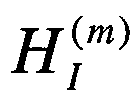


하나의 셀에 N개의 하향 타임 슬롯이 모두 존재한다고 가정하면, 임의의 하향 타임 슬롯n(n=1, 2, …,N)의 간섭 사용자 신호는 
그 중에서, 
타임 슬롯n의 간섭 신호의 공간 공분산 행렬은,The spatial covariance matrix of the interference signal of time slot n is

즉, 타임 슬롯n의 간섭 신호의 공간 공분산 행렬은 타임 슬롯n에 위치한 모든 간섭 사용자 신호의 공간 공분산 행렬의 합이다.That is, the spatial covariance matrix of the interference signal of time slot n is the sum of the spatial covariance matrix of all interfering user signals located in time slot n.
빔 성형 가중 계수 획득 모듈은 상기 각 하향 타임 슬롯의 간섭 공간 공분산 행렬 및 하향 희망 사용자 신호의 공간 공분산 행렬에 근거하여 하향 희망 사용 자 신호의 빔 성형 가중 계수를 확정한다. 어느 하향 희망 사용자k가 위치한 타임 슬롯을 n라고 가정하면, 그 하향 빔 성형 가중 계수는,The beam shaping weighting coefficient obtaining module determines the beam shaping weighting coefficient of the downlink desired user signal based on the interference spatial covariance matrix of each downlink time slot and the spatial covariance matrix of the downlink desired user signal. Assuming that the time slot in which a desired downstream user k is located is n, the down beam shaping weighting factor is

여기서, 


이며, 
빔 성형 모듈은 상기 하향 희망 사용자 신호의 빔 성형 가중 계수에 근거하여 빔 성형을 진행한다. 희망 사용자 신호k의 송신 데이터 시퀀스를 

빔 성형 모듈은 도 4의 빔 성형기를 통해 구현할 수 있다. 도 4에 도시된 바와 같이, k번째 희망 사용자 신호의 송신 데이터 시퀀스 


여기서, 상기의 공간 공분산 행렬 획득 모듈과 빔 성형 가중 계수 획득 모듈은 범용 계산 설비 혹은 장치 중의 소프트웨어를 통해 실현해도 되며 전용 하드웨어 설비를 통해 실현해도 된다.Here, the spatial covariance matrix acquisition module and the beam shaping weighting coefficient acquisition module may be realized through software in a general-purpose computing facility or apparatus, or may be realized through a dedicated hardware facility.
이상은 다만 본 발명의 바람직한 실시 형태에 지나지 않으며 본 기술 분야의 보통 기술자는 본 발명의 원리를 일탈하지 않는 전제하에서 약간의 개량과 변경을 가할 수 있으며 이러한 개량과 변경도 본 발명의 보호 범위로 보아야 한다.The foregoing is merely a preferred embodiment of the present invention, and ordinary skill in the art may make slight improvements and modifications under the premise of not departing from the principles of the present invention. Such improvements and modifications should also be regarded as the protection scope of the present invention. do.
Claims (14)


Applications Claiming Priority (2)
| Application Number | Priority Date | Filing Date | Title |
|---|---|---|---|
| CN200610001530.3 | 2006-01-18 | ||
| CN2006100015303A CN101005302B (en) | 2006-01-18 | 2006-01-18 | Down beam shaping method for limiting interference in time slot CDMA system |
Publications (2)
| Publication Number | Publication Date |
|---|---|
| KR20080098610A true KR20080098610A (en) | 2008-11-11 |
| KR101008592B1 KR101008592B1 (en) | 2011-01-17 |
Family
ID=38287257
Family Applications (1)
| Application Number | Title | Priority Date | Filing Date |
|---|---|---|---|
| KR1020087020123A Active KR101008592B1 (en) | 2006-01-18 | 2007-01-09 | Down beam shaping method and apparatus for time division code division multiple access system |
Country Status (6)
| Country | Link |
|---|---|
| US (1) | US8811904B2 (en) |
| EP (1) | EP2001142B1 (en) |
| JP (1) | JP2009524304A (en) |
| KR (1) | KR101008592B1 (en) |
| CN (1) | CN101005302B (en) |
| WO (1) | WO2007082460A1 (en) |
Cited By (1)
| Publication number | Priority date | Publication date | Assignee | Title |
|---|---|---|---|---|
| WO2010131818A1 (en) * | 2009-05-11 | 2010-11-18 | 성균관대학교산학협력단 | Inter-cell interference mitigation method using spatial covariance matrix estimation method for inter-cell interference mitigation of mimo antenna ofdm system |
Families Citing this family (10)
| Publication number | Priority date | Publication date | Assignee | Title |
|---|---|---|---|---|
| CN101436893B (en) * | 2007-11-13 | 2013-03-27 | 中兴通讯股份有限公司 | Beamforming device and method for suppressing interference in smart antenna |
| CN101783697B (en) * | 2009-01-15 | 2013-01-02 | 北京信威通信技术股份有限公司 | Transmit diversity method of OFDMA multiple-antenna system |
| CN102377465B (en) * | 2010-08-10 | 2014-04-09 | 鼎桥通信技术有限公司 | Downstream wave beam shaping method and apparatus thereof |
| CN102170303B (en) * | 2011-04-20 | 2013-07-31 | 河南省信息咨询设计研究有限公司 | Method, device and system for beamforming smart antenna |
| EP3419188A1 (en) * | 2011-09-14 | 2018-12-26 | Rearden Mova, LLC | Systems and methods to exploit areas of coherence in wireless systems |
| US9287924B2 (en) * | 2011-09-20 | 2016-03-15 | St-Ericsson Sa | Method, apparatus, receiver, computer program and storage medium for joint detection |
| JP5874820B2 (en) * | 2012-05-11 | 2016-03-02 | 富士通株式会社 | Mobile station and radio communication method |
| CN103973354A (en) * | 2014-05-30 | 2014-08-06 | 哈尔滨工业大学 | User satisfaction degree-based United user selection and beam forming method in TD-LTE-A (Time Division Long Term Evolution-Advanced) |
| EP3148142B1 (en) * | 2014-06-30 | 2018-12-12 | Huawei Technologies Co. Ltd. | Decoding method and device |
| CN113223552B (en) * | 2021-04-28 | 2023-06-13 | 锐迪科微电子(上海)有限公司 | Speech enhancement method, device, apparatus, storage medium, and program |
Family Cites Families (17)
| Publication number | Priority date | Publication date | Assignee | Title |
|---|---|---|---|---|
| DE19803188B4 (en) * | 1998-01-28 | 2006-04-20 | Siemens Ag | Method and base station for data transmission in a radio communication system |
| CN1108071C (en) * | 2000-04-11 | 2003-05-07 | 信息产业部电信科学技术研究院 | Signal processing method for terminal in CDMA mobile communication system |
| FI115268B (en) * | 2000-05-12 | 2005-03-31 | Nokia Corp | Power control in a radio system |
| DE10025287B4 (en) * | 2000-05-22 | 2006-06-08 | Siemens Ag | A method and communication system for estimating a downlink interference covariance matrix in cellular mobile radio networks using adaptive antennas |
| KR100803115B1 (en) * | 2001-06-07 | 2008-02-14 | 엘지전자 주식회사 | Signal Processing Method in WCDMA System with Adaptive Antenna Array System for this |
| US20030073435A1 (en) * | 2001-10-11 | 2003-04-17 | Steven Thompson | System and method for controlling interference affecting satellite terminals in a satellite communications network by establishing and using virtual cells which are independent of the cells formed by the spot beams generated by the satellite |
| US20030072282A1 (en) * | 2001-10-17 | 2003-04-17 | Ying-Chang Liang | Code division multiple access downlink receiver |
| PT1485731E (en) * | 2002-03-13 | 2006-08-31 | Raytheon Canada Ltd | SYSTEM AND METHOD OF SPECTRAL GENERATION IN RADAR |
| TWI493914B (en) * | 2002-05-13 | 2015-07-21 | Interdigital Tech Corp | Allocating resources to users in a slotted coded multiple access system using beams |
| CN100525528C (en) * | 2003-08-05 | 2009-08-05 | 大唐移动通信设备有限公司 | Quadrature code CDMA signal detecting method |
| KR100683906B1 (en) * | 2003-09-16 | 2007-02-15 | 주식회사 에치에프알 | Method and system for providing location detection service using frequency offset |
| FI20031609A0 (en) * | 2003-11-06 | 2003-11-06 | Nokia Corp | Communication method, receiver and base station |
| KR100957354B1 (en) * | 2003-11-10 | 2010-05-12 | 삼성전자주식회사 | Apparatus and Method for Forward Beam Formation in Smart Antenna System |
| JP2007525035A (en) * | 2003-12-12 | 2007-08-30 | アレイコム・エルエルシイ | Omnidirectional transmission from a wireless data base station with a smart antenna system |
| CN1665161A (en) | 2005-01-19 | 2005-09-07 | 哈尔滨工业大学 | Intelligent antenna downlink beam forming method |
| US7817967B2 (en) * | 2005-06-21 | 2010-10-19 | Atc Technologies, Llc | Communications systems including adaptive antenna systems and methods for inter-system and intra-system interference reduction |
| CN100388846C (en) * | 2005-07-08 | 2008-05-14 | 中兴通讯股份有限公司 | A downlink beamforming method in a mobile communication smart antenna system |
-
2006
- 2006-01-18 CN CN2006100015303A patent/CN101005302B/en not_active Expired - Fee Related
-
2007
- 2007-01-09 EP EP07702012.1A patent/EP2001142B1/en active Active
- 2007-01-09 WO PCT/CN2007/000080 patent/WO2007082460A1/en not_active Ceased
- 2007-01-09 KR KR1020087020123A patent/KR101008592B1/en active Active
- 2007-01-09 JP JP2008550613A patent/JP2009524304A/en active Pending
- 2007-01-09 US US12/160,396 patent/US8811904B2/en active Active
Cited By (2)
| Publication number | Priority date | Publication date | Assignee | Title |
|---|---|---|---|---|
| WO2010131818A1 (en) * | 2009-05-11 | 2010-11-18 | 성균관대학교산학협력단 | Inter-cell interference mitigation method using spatial covariance matrix estimation method for inter-cell interference mitigation of mimo antenna ofdm system |
| US8385488B2 (en) | 2009-05-11 | 2013-02-26 | Sungkyunkwan University Foundation For Corporate Collaboration | Inter-cell interference mitigation method using spatial covariance matrix estimation method for inter-cell interference mitigation of MIMO antenna OFDM system |
Also Published As
| Publication number | Publication date |
|---|---|
| CN101005302A (en) | 2007-07-25 |
| EP2001142B1 (en) | 2017-05-17 |
| WO2007082460A1 (en) | 2007-07-26 |
| JP2009524304A (en) | 2009-06-25 |
| US20110003552A1 (en) | 2011-01-06 |
| KR101008592B1 (en) | 2011-01-17 |
| CN101005302B (en) | 2013-02-13 |
| EP2001142A4 (en) | 2012-08-22 |
| EP2001142A9 (en) | 2009-03-11 |
| US8811904B2 (en) | 2014-08-19 |
| EP2001142A2 (en) | 2008-12-10 |
Similar Documents
| Publication | Publication Date | Title |
|---|---|---|
| KR101008592B1 (en) | Down beam shaping method and apparatus for time division code division multiple access system | |
| RU2539577C2 (en) | Method of establishing reference signal in radio communication system and system therefor | |
| KR100865469B1 (en) | Channel Estimation Apparatus and Method in Orthogonal Frequency Multiplexing System Supporting Space Division Multiple Access | |
| US9094061B2 (en) | Method and device for controlling the downlink transmission in the coordinated multi-point transmission system | |
| KR101481045B1 (en) | Apparatus and method for beamforming considering interference amount in a boradband wireless communication system | |
| CN103475397B (en) | A kind of method, communication station and the movement station of three-dimensional wave beam forming | |
| CN101753188B (en) | Channel rank estimation method, system and device during multi-stream beamforming transmission | |
| US20110223928A1 (en) | Method and apparatus of scheduling in multi-cell cooperative wireless communication system | |
| US20100303015A1 (en) | Apparatus and method for calibration for cooperative multiple input multiple output in a wireless communication system | |
| US8098748B1 (en) | Systems and methods of testing wireless networks | |
| US20120207257A1 (en) | Method and apparatus for offset estimation in mobile communication system | |
| CN102571659B (en) | Interference noise estimation and interference inhibition method and corresponding system | |
| EP2381587B1 (en) | Method and device for determining antenna cooperation set, method and device for determining base station cooperation set | |
| CN106374981A (en) | Electronic device in wireless communication system and wireless communication method | |
| KR100929088B1 (en) | Apparatus and method for determining transmission mode in wireless mobile communication system | |
| JP5203308B2 (en) | Transmission directivity control apparatus and transmission directivity control method | |
| KR101242177B1 (en) | Apparatus and method for designing beamforming in multiple input single output | |
| CN112997445A (en) | Channel state information measurement in a communication network | |
| CN106851660B (en) | Signal interference measurement method, base station and user equipment | |
| JP5895096B2 (en) | Method and apparatus for dynamically reconfiguring DL-UL in a TDD system | |
| KR100970519B1 (en) | A computer readable recording medium recording a wireless communication device, a wireless communication method, and a wireless communication program. | |
| JP5855286B2 (en) | Method and apparatus for obtaining a channel quality indication | |
| KR102050928B1 (en) | Method and apparatus for user equipment selection in wireless communication system | |
| KR101765127B1 (en) | Apparatus and method for clustering for coordinated multi point ommunication in cellular communication system | |
| KR101674315B1 (en) | A method for channel estimation in wireless communicatin systems with a distributed antenna structure |
Legal Events
| Date | Code | Title | Description |
|---|---|---|---|
| A201 | Request for examination | ||
| PA0105 | International application |
Patent event date: 20080818 Patent event code: PA01051R01D Comment text: International Patent Application |
|
| PA0201 | Request for examination | ||
| PG1501 | Laying open of application | ||
| E902 | Notification of reason for refusal | ||
| PE0902 | Notice of grounds for rejection |
Comment text: Notification of reason for refusal Patent event date: 20100429 Patent event code: PE09021S01D |
|
| E701 | Decision to grant or registration of patent right | ||
| PE0701 | Decision of registration |
Patent event code: PE07011S01D Comment text: Decision to Grant Registration Patent event date: 20101028 |
|
| GRNT | Written decision to grant | ||
| PR0701 | Registration of establishment |
Comment text: Registration of Establishment Patent event date: 20110110 Patent event code: PR07011E01D |
|
| PR1002 | Payment of registration fee |
Payment date: 20110111 End annual number: 3 Start annual number: 1 |
|
| PG1601 | Publication of registration | ||
| FPAY | Annual fee payment |
Payment date: 20131017 Year of fee payment: 4 |
|
| PR1001 | Payment of annual fee |
Payment date: 20131017 Start annual number: 4 End annual number: 4 |
|
| FPAY | Annual fee payment |
Payment date: 20141226 Year of fee payment: 5 |
|
| PR1001 | Payment of annual fee |
Payment date: 20141226 Start annual number: 5 End annual number: 5 |
|
| FPAY | Annual fee payment |
Payment date: 20151228 Year of fee payment: 6 |
|
| PR1001 | Payment of annual fee |
Payment date: 20151228 Start annual number: 6 End annual number: 6 |
|
| FPAY | Annual fee payment |
Payment date: 20161226 Year of fee payment: 7 |
|
| PR1001 | Payment of annual fee |
Payment date: 20161226 Start annual number: 7 End annual number: 7 |
|
| FPAY | Annual fee payment |
Payment date: 20181226 Year of fee payment: 9 |
|
| PR1001 | Payment of annual fee |
Payment date: 20181226 Start annual number: 9 End annual number: 9 |
|
| FPAY | Annual fee payment |
Payment date: 20191226 Year of fee payment: 10 |
|
| PR1001 | Payment of annual fee |
Payment date: 20191226 Start annual number: 10 End annual number: 10 |
|
| PR1001 | Payment of annual fee |
Payment date: 20220103 Start annual number: 12 End annual number: 12 |