KR100528552B1 - Cultivation of microorganisms with methanol metabolic pathway - Google Patents
Cultivation of microorganisms with methanol metabolic pathway Download PDFInfo
- Publication number
- KR100528552B1 KR100528552B1 KR1019970006968A KR19970006968A KR100528552B1 KR 100528552 B1 KR100528552 B1 KR 100528552B1 KR 1019970006968 A KR1019970006968 A KR 1019970006968A KR 19970006968 A KR19970006968 A KR 19970006968A KR 100528552 B1 KR100528552 B1 KR 100528552B1
- Authority
- KR
- South Korea
- Prior art keywords
- methanol
- addition
- rate
- culture medium
- culture
- Prior art date
- Legal status (The legal status is an assumption and is not a legal conclusion. Google has not performed a legal analysis and makes no representation as to the accuracy of the status listed.)
- Expired - Fee Related
Links
Images

Landscapes
- Micro-Organisms Or Cultivation Processes Thereof (AREA)
Abstract
본 발명은 메탄올이 연속적으로 또는 주기적으로 첨가되는 기간을 포함한, 메탄올에 의해 유도될 수 있는 프로모터의 아래에 연결된 표적 유전자를 포함하는 발현 단위가 도입된 메탄올 대사 경로를 가진 미생물의 배양 기간 동안, 메탄올 첨가 속도가 상기 미생물의 최대 메탄올 소모율 이하의 속도로 조절되는 상기 미생물의 배양 방법에 관한 것이다.The present invention relates to a process for the incubation of a microorganism having a methanol metabolic pathway into which an expression unit comprising a target gene linked underneath a promoter that can be induced by methanol, including a period in which methanol is added continuously or periodically, is introduced. It relates to a method for culturing the microorganism wherein the addition rate is controlled at a rate below the maximum methanol consumption rate of the microorganism.
Description
본 발명은, 표적 유전자가 메탄올에 의해 유도될 수 있는 프로모터의 하류에 연결되어진 발현 단위가 도입됨으로써 메탄올 대사 경로를 가진 미생물을 배양하고 방법에 관한 것이며, 상기 방법은 표적 유전자 산물이 효율적으로 생산될 수 있도록 한다.The present invention relates to a method for culturing microorganisms with methanol metabolic pathways by introducing an expression unit in which a target gene is linked downstream of a promoter from which methanol can be induced, and the method relates to an efficient production of a target gene product. To help.
재조합 DNA 기술의 진보로 인하여, 미생물을 숙주로서 이용하여 폴리펩타이드 및 기타 유전자 산물을 생산할 수 있게 되었다. 폴리펩타이드 생산은, 표적 폴리펩타이드의 유전자가 적당한 프로모터의 하류에 연결되어진 발현 단위를 도입하므로써 수행된다. 이.콜라이, 효모 및 동물 세포와 같은 미생물이 숙주로서 사용되는 것이 전형적이다.Advances in recombinant DNA technology have enabled microbes to be used as hosts to produce polypeptides and other gene products. Polypeptide production is performed by introducing an expression unit in which the gene of the target polypeptide is linked downstream of the appropriate promoter. Microorganisms such as E. coli, yeast and animal cells are typically used as hosts.
이.콜라이를 숙주로서 사용하는 유전자 발현 시스템이 가장 통상적으로 사용되는 시스템이며, 이들 시스템은 전형적으로 높은 생산성을 제공한다. 그러나, 많은 경우에 있어서, 발현된 폴리펩타이드가 불용성 형태로 수득된 불용성 봉입체(inclusion body)를 형성하기 때문에, 이러한 시스템을 사용할 가능성은 주로 표적 폴리펩타이드의 성질에 의존한다.Gene expression systems using E. coli as a host are the most commonly used systems, and these systems typically provide high productivity. In many cases, however, since the expressed polypeptide forms an insoluble inclusion body obtained in insoluble form, the possibility of using such a system depends primarily on the nature of the target polypeptide.
다른 한편, 동물 세포를 숙주로서 사용하는 유전자 발현 시스템이, 유전자 산물의 활성을 확보게할 목적 등에 유용한데, 이는 많은 경우에 있어서 발현된 폴리펩타이드가 활성을 보유하기 때문이다. 그러나, 이러한 경우에 표적 폴리펩타이드의 양이 적은 것이 전형적이고, 정제하는데 상당한 노력이 요구된다. 또한, 동물 세포는 천천히 증식하고 사용되는 배지가 비싸기 때문에, 배양하는데 상당한 시간 및 비용이 요구된다. 게다가, 배양의 규모를 증가시키는 것도 또한 곤란하다. 결과적으로, 동물 세포는, 산업적으로 다량의 표적 폴리펩타이드를 수득하기 위한 숙주로서는 바람직하지 않다.On the other hand, gene expression systems using animal cells as hosts are useful for the purpose of ensuring the activity of gene products, for example in many cases because the expressed polypeptide retains activity. However, small amounts of target polypeptides are typical in such cases, and considerable effort is required to purify. In addition, since animal cells grow slowly and the medium used is expensive, significant time and cost are required to culture. In addition, it is also difficult to increase the scale of the culture. As a result, animal cells are not industrially desirable as hosts for obtaining large amounts of target polypeptides.
효모 세포는, 소포체, 골지기관 및 동물 세포에 유사한 그밖의 세포 성분을 가진 진핵 세포이다. 이들은, 진핵세포로부터 유래된 폴리펩타이드중 특히 3차원 구조를 지닌 폴리펩타이드를 형성하고 발현할 수 있는 것으로 공지되어 있다. 또한, 이들은 동물 세포 보다 빠르게 증식하고 대량으로 용이하게 배양될 수 있다. 유전적 분석이, 사카로마이스 세레비지애(Saccharomyces cerevisiae)에 관해 가장 광범위하게 행해졌고, 이것이 유전자 발현을 위한 숙주로서 실험실 수준에서 널리 사용되고 있다.Yeast cells are eukaryotic cells with other cellular components similar to endoplasmic reticulum, Golgi organs and animal cells. These are known to be able to form and express polypeptides having a three-dimensional structure among polypeptides derived from eukaryotic cells. In addition, they proliferate faster than animal cells and can be easily cultured in large quantities. Genetic analysis is most extensively performed on Saccharomyces cerevisiae, which is widely used at the laboratory level as a host for gene expression.
그러나, 사카로마이스 세레비지애를 높은 세포 밀도로 증식시키는 것이 곤란하며 배양 배지당 수율이 높지 않기 때문에, 이것은, 표적 폴리펩타이드를 산업적으로 생산하는데는 충분하지 못하다. 이러한 문제를 해결하기 위하여, 피키아 파스토리스(Pichia pastoris), 한세눌라 폴리모파(Hansenula polymorpha) 및 캔디다 보이디니이(Condida boidinii)와 같이 메틸 영양성 효모가 사용된다.However, because it is difficult to grow Saccharomyces cerevisiae at high cell density and the yield per culture medium is not high, this is not sufficient for industrial production of the target polypeptide. To solve this problem, methyl nutrient yeast is used, such as Pichia pastoris, Hansenula polymorpha and Condida boidinii.
예를 들면, 겔리센(Gellissen) 등은, 발현이 메탄올에 의해 유도되는 포름산 디하이드로게나제 프로모터 및 숙주로서의 한세눌라 폴리모파를 사용하여, 배양 배지 리터당 건식 세포 중량 100 내지 130g의 세포 밀도로 글루코아밀라제 1.4g을 생산하는데 성공했다[참조문헌 : Gellissen et al. BIO/TECHNOLOGY, 9, 291-295, 1991]. 또한, 바르(Barr) 등은, 발현이 메탄올에 의해 유도되는 알콜 옥시다제 프로모터 및 숙주로서의 피키아 파스토리스를 사용하여, 배양 배지 리터당 사람 혈청 알부민 4g을 생산하는데 성공했다[참조문헌: Barr et al. Pharm. Eng., 12(2), 48-51, 1992].For example, Gellissen et al. Use gluconate at a cell density of 100 to 130 g of dry cell weight per liter of culture medium, using a formic acid dehydrogenase promoter whose expression is induced by methanol and Hansenula polymorpha as host. Successfully produced 1.4 g of amylase [Gellissen et al. BIO / TECHNOLOGY, 9, 291-295, 1991]. In addition, Barr et al. Succeeded in producing 4 g of human serum albumin per liter of culture medium using an alcohol oxidase promoter whose expression is induced by methanol and Pichia pastoris as a host [Barr et al. . Pharm. Eng., 12 (2), 48-51, 1992].
그러나, 메틸 영양성 효모를 사용하는 경우에 조차도, 여전히 후술될 문제가 있을 수 있다. 상기한 세 종의 메틸 영양성 효모에 해당하는 효모 및 메탄올에 의해 유도될 수 있는 프로모터를 사용하는 이종성 유전자 발현시스템에서 메탄올 대사 경로를 가진 효모의 경우에, 효모가 메탄올을 함유하는 배지에서 배양될때, 배양 배지중의 메탄올이 빠르게 감소된다. 이러한 유형의 배양의 경우에, 프로모터로부터의 전사 및 세포 증식을 동시에 유지하기 위하여 메탄올이 탄소원으로서 공급되어져야 한다.However, even when using methyl nutritive yeast, there may still be a problem to be described later. In the case of yeast having a methanol metabolic pathway in a heterologous gene expression system using a yeast corresponding to the three methyl nutritive yeasts and a promoter which can be induced by methanol, when the yeast is cultured in a medium containing methanol, Methanol in the culture medium is rapidly reduced. For this type of culture, methanol must be supplied as a carbon source to simultaneously maintain transcription and cell proliferation from the promoter.
그러나, 배양 배지중의 메탄올 농도가, 메탄올의 공급중 갑자기 증가되면, 효모는 사멸될 수 있다. 또한, 메탄올 대사 경로를 가진 효모의 배양중의 메탄올 농도를, 상기 상등액을 가스 크로마토그래피에 적용시키는 등의 방법에 의해 측정하는 것이 일반적이다. 그러나, 이러한 방법의 경우 특수한 장비가 요구되는 것은 물론, 메탄올 농도를 결정할 수 있을 때까지 상당한 시간이 요구되기 때문에, 이는 메탄올을 보충할 필요에 관한 빠른 판단을 방해하므로 단점을 맞는다.However, if the methanol concentration in the culture medium suddenly increases during the supply of methanol, the yeast may die. In addition, it is common to measure the methanol concentration in the cultivation of yeast having a methanol metabolic pathway by a method such as applying the supernatant to gas chromatography. However, this method is disadvantageous because it requires special equipment, as well as a considerable amount of time until the methanol concentration can be determined, which impedes a quick decision on the need to replenish methanol.
표적 유전자의 발현을 위한 배양 배지중의 메탄올 농도를 유지하기 위한 방법의 예로서, 알콜옥시다제 효소가 대사 경로로부터 빠진 효모를 사용하여 메탄올 소모율을 감소시키는 방법이 사용된다. 상기 방법은, 글리세롤 등을 탄소원으로서 사용하여 효모를 증식시키고 이어서, 일정한 양의 메탄올을 배양액에 첨가함으로써 프로모터로부터 전사를 유도하여 표적 유전자를 발현시키는 단계를 포함한다. 메탄올의 낮은 소모율로 인해, 메탄올 농도를 유지하는 것이 용이하다. 비록 안정하게 배양하는 것이 가능하지만, 상기 방법은, 세포 증식 기간 및 표적 유전자 발현 기간을 위한 배양이 분리되어 수행되기 때문에, 장기간의 배양시간을 요구하는 단점을 갖는다.As an example of a method for maintaining the methanol concentration in the culture medium for the expression of a target gene, a method is used in which the alcohol oxidase enzyme reduces the consumption of methanol using yeast that is out of the metabolic pathway. The method includes propagating yeast using glycerol or the like as a carbon source, and then inducing transcription from the promoter to express a target gene by adding a constant amount of methanol to the culture. Due to the low consumption rate of methanol, it is easy to maintain the methanol concentration. Although it is possible to cultivate stably, the method has the disadvantage of requiring a long incubation time because the culture for the cell proliferation period and the target gene expression period is performed separately.
대사경로의 효소를 부분적으로 변경시켜 메탄올 대사를 더디게 한, 메틸 영양성 효모를 배양하여 표적 유전자를 발현시키기 위하여 세포의 수를 증가시키지 않으면서도, 배양 배지중의 메탄올 농도를 일정한 수준으로 통제하는 방법이 문헌[참조: WO 95/21928]에 기술되어 있다. 상기 방법은, 배양 탱크 내의 공기중 메탄올 농도가 배양 배지중의 메탄올 농도를 반영하는 상태에서, 배양 탱크내의 공기중 메탄올 농도를 측정하고, 이어서 이러한 결과로부터 메탄올 첨가 속도를 결정하여 배양 배지중의 메탄올 농도를 통제하는 단계를 포함한다.The method of controlling the methanol concentration in the culture medium at a constant level without increasing the number of cells to express the target gene by culturing methyl nutrient yeast, which partially altered the enzymes in the metabolic pathway to slow methanol metabolism It is described in WO 95/21928. The method measures the methanol concentration in the air in the culture tank while the methanol concentration in the air in the culture tank reflects the methanol concentration in the culture medium, and then determines the methanol addition rate from these results to determine the methanol in the culture medium. Controlling the concentration.
알콜 옥시다제 유전자가 결핍된 메틸 영양성 효모의 배양 배지중의 메탄올 농도는 상기 방법을 사용하므로써 일정한 수준으로 통제될 수 있다. 그러나, 배양 탱크내의 공기중 메탄올 농도로부터 배양 배지중의 메탄올 농도를 예측하기 위하여는, 양자가 평형상태일 것이 요구된다. 상기 평형 상태를 이루기 위하여, 통기(aeration)율, 압력 및 온도를 포함하는 배양 조건을 일정하게 유지해야 하며, 배양 배지중의 메탄올 농도를 갑자기 변화시켜서는 안된다. 이러한 제한 때문에, 메탄올 농도를 통제하기 위한 상기 방법은, 메탄올 대사 경로를 갖지 않은 효모를 사용하여 미리 세포를 증식시킨 후, 상기 유전자 발현 유도기에서 배양하는 경우에만 이용될 수 있었다.The methanol concentration in the culture medium of methyl trophic yeast lacking the alcohol oxidase gene can be controlled to a certain level by using this method. However, in order to predict the methanol concentration in the culture medium from the methanol concentration in the air in the culture tank, it is required that both are in equilibrium. To achieve this equilibrium, the culture conditions including aeration rate, pressure and temperature must be kept constant and the methanol concentration in the culture medium should not be changed suddenly. Because of this limitation, the above method for controlling methanol concentration could only be used if the cells were previously grown using yeast without a methanol metabolic pathway and then cultured in the gene expression inducer.
다른 한편, 메탄올에 의해 유도될 수 있는 프로모터 및 숙주로서 메탄올 대사 경로를 갖는 미생물을 사용하는 이종성 유전자 발현 시스템에서, 메탄올의 첨가 속도 및 배양 배지중의 메탄올 농도를 적당하게 통제한다면, 유전자 발현을 위하여 미생물 증식기 및 유도기를 분리할 필요가 없다. 결과적으로, 배양시간이 단축되어, 단기간에 수득될 수 있는 표적 단백질이 얻어진다. 따라서, 메탄올 대사 경로를 가진 미생물을 배양할 때, 표적 유전자 산물의 생산 및 미생물 증식을 모두 만족시키는 적당한 메탄올 첨가속도 또는 메탄올 농도를 유지시키기 위한 방법을 확립할 필요가 있다.On the other hand, in a heterologous gene expression system using a microorganism having a methanol metabolic pathway as a host and a promoter that can be induced by methanol, if proper control of the rate of addition of methanol and the methanol concentration in the culture medium is required for gene expression There is no need to separate microbial multipliers and inducers. As a result, the incubation time is shortened to obtain a target protein that can be obtained in a short time. Therefore, when culturing microorganisms with methanol metabolic pathways, there is a need to establish a method for maintaining an appropriate methanol addition rate or methanol concentration that satisfies both production of target gene products and microbial growth.
본 발명은, 메탄올에 의한 프로모터의 유도 및 숙주의 증식이, 메탄올에 의해 유도가능한 프로모터 및 숙주로서 메탄올 대사 경로를 가진 미생물을 사용하여 이종성 유전자 발현 시스템에서 동시에 수행될 수 있도록 배양 배지중의 메탄올 농도를 조정하는 방법, 및 그러한 방법을 사용하여 숙주를 배양하는 방법을 제공한다. The present invention is directed to methanol concentration in culture medium such that induction of promoter by methanol and propagation of host can be performed simultaneously in heterologous gene expression system using microorganisms with methanol inducible promoter and host as a host. And a method of culturing a host using such a method.
상기 메탄올 첨가 방법에서, 배양 배지중의 메탄올 농도가 메탄올 대사 경로를 가진 효모의 배양 중의 용존 산소량 간의 관계를 주의깊게 조사한 결과, 본 발명의 발명자들은, 배양 배지의 용존 산소량이 일정한 수준(예: 2ppm)으로 통지되는 배양중의 메탄올 농도가 0.1%(v/v) 이하일때 메탄올이 주기적으로 첨가되는 경우에, 용존 산소량은 메탄올의 첨가 주기에 따라 변동된다는 것을 알았다. 추가로, 용존 산소량이 주기적으로 변동되는 것이 관찰되는 상태에서 메탄올 첨가 속도가 증가되는 경우에, 용존 산소량의 증가율이 감소하고, 용존 산소량의 주기적 변동의 증가가 결국 더이상 관찰되지 않는다는 것을, 그리고 메탄올 첨가 속도가 더욱 증가되는 경우에 메탄올이 배양 배지에 축적되고 상기 효모가 사멸된다는 것을 또한 알았다.In the methanol addition method, the relationship between the methanol concentration in the culture medium and the dissolved oxygen amount in the cultivation of the yeast having the methanol metabolic pathway was carefully examined, and the inventors of the present invention found that the dissolved oxygen content of the culture medium was constant (e.g., 2 ppm). It was found that when methanol is added periodically when the concentration of methanol in the culture notified by N) is 0.1% (v / v) or less, the dissolved oxygen amount varies with the addition cycle of methanol. In addition, if the methanol addition rate is increased while the dissolved oxygen amount is periodically observed, the increase rate of the dissolved oxygen amount decreases, and the increase in the periodic fluctuation of the dissolved oxygen amount is no longer observed, and methanol addition is eventually observed. It was also found that when the rate was further increased, methanol accumulates in the culture medium and the yeast is killed.
용존 산소량의 이러한 주기적 변동이 관찰되는때에, 상기 효모가 증식되고 메탄올로 유도가능한 프로모터로부터의 전사가 유도된다. 즉, 이때의 배양 배지로 메탄올의 첨가 속도가 바로 표적 유전자 산물의 생산 및 효모 증식을 둘다 만족시키는 첨가 속도이다. 게다가, 주기적 변동이 관찰되는 기간 동안, 메탄올 첨가 속도를 더 빠르게 할수록 세포 증식더 더 빨라지고 표적 유전자 산물의 생산이 더 증가되므로써, 본 발명이 완성된다는 것이 확인되었다. When such periodic fluctuations in dissolved oxygen amount are observed, the yeast multiplies and transcription from a promoter inducible to methanol is induced. That is, the rate of addition of methanol to the culture medium at this time is the rate of addition that satisfies both the production of the target gene product and the yeast growth. In addition, during the period in which periodic fluctuations were observed, it was confirmed that the faster the rate of methanol addition, the faster the cell proliferation and the greater the production of the target gene product, thereby completing the present invention.
상기 실험 결과를 토대로한 결과로서, 본 발명은 메탄올에 의해 유도될 수 있는 프로모터의 하류에 연결된 표적 유전자를 포함하는 발현 단위가 도입되어진, 메탄올 대사 경로를 가진 미생물을 배양하는 방법을 제공하는데, 상기 방법에서, 메탄올이 계속적으로 또는 주기적으로 첨가되어지는 동안의 기간을 포함한 배양기간 동안, 상기 첨가 속도는 상기 미생물의 최대 메탄올 소모율 이하의 속도로 조정된다. As a result based on the above experimental results, the present invention provides a method for culturing a microorganism having a methanol metabolic pathway in which an expression unit containing a target gene linked downstream of a promoter that can be induced by methanol is introduced. In the process, during the incubation period, including the period during which methanol is added continuously or periodically, the addition rate is adjusted to a rate below the maximum methanol consumption rate of the microorganism.
최대 메탄올 소모율은, 어떤 배양 기간 동안 및 상기 미생물의 어떤 상태하에서, 그리고 메탄올 농도가 메탄올 소모율을 결정하지 않는 상태하에서 미생물에 의한 메탄올의 소모율을 의미한다. 메탄올이 최대 메탄올 소모율과 같거나 빠른 속도로 첨가된다면, 메탄올 농도는 일정한 수준으로 유지되거나 점진적으로 증가하기 때문에, 상기 미생물의 최대 메탄올 소모율과 같거나 낮은 메탄올 첨가 속도는 배지중의 메탄올 농도가 실질적으로 영(zero)에 가까운 수준으로 유지될때의, 그리고 실제적으로 메탄올 농도가 0.1%(v/v) 이하로 유지되는 수준일때의 메탄올 첨가 속도를 의미한다.Maximum methanol consumption rate refers to the consumption rate of methanol by a microorganism during a certain incubation period and under certain conditions of the microorganism, and under a condition in which the methanol concentration does not determine the methanol consumption rate. If methanol is added at a rate equal to or higher than the maximum methanol consumption rate, since the methanol concentration is maintained at a constant level or gradually increases, the methanol addition rate equal to or lower than the maximum methanol consumption rate of the microorganism is substantially reduced. Methanol addition rate when maintained at a level near zero and when the methanol concentration is maintained below 0.1% (v / v).
상기한 바와 같은 메탄올 첨가의 속도를 얻기 위하여, 본 발명에서 주기적인 메탄올 첨가 단계를 포함하는 방법을 사용하는 것이 가장 전형적인 수단이다. 이러한 주기적인 첨가 방법은, 배양하는 동안 어떤 시기에 걸쳐 어떤 시간 간격으로 규정된 양의 메탄올을 첨가하는 것을 의미한다. 이러한 주기, 즉 시간 간격은 통상 1 내지 20분이며, 바람직하게는 5 내지 10분이다. 후술될 바와 같이, 본 발명의 발명자의 새로운 발견에 따르면, 메탄올 첨가 속도, 즉 어떤 단위 시간내에 첨가된 메탄올의 양(본 발명에서는 배양 배지의 리터당 시간당 메탄올의 밀리리터의 수로서 표현된다)이 낮을때에, 배양 배지중의 용존 산소 농도의 수준은 메탄올 첨가 주기에 따라 변동되고, 상기 경우에 배양 배지중의 메탄올 농도는 0.1%(v/v)이고 실질적으로는 0%에 가깝다.To achieve the rate of methanol addition as described above, the most typical means in the present invention is to use a method comprising a periodic methanol addition step. This periodic addition method means the addition of a prescribed amount of methanol at certain time intervals over a period of time during incubation. This cycle, that is, the time interval, is usually 1 to 20 minutes, preferably 5 to 10 minutes. As will be described later, according to a new discovery by the inventors of the present invention, when the rate of methanol addition, i.e., the amount of methanol added within a certain unit time (in the present invention, expressed as the number of milliliters of methanol per hour per liter of culture medium) is low The level of dissolved oxygen concentration in the culture medium varies with the methanol addition cycle, in which case the methanol concentration in the culture medium is 0.1% (v / v) and is substantially close to 0%.
반대로, 메탄올 첨가의 속도가 최대 메탄올 소모율과 같거나 큰 경우에, 메탄올 첨가 주기에 따른 용존 산소 농도의 수준의 변동이 실질적으로 일어나지 않는다. 이러한 경우에, 어떤 농도 수준의 메탄올이 배양 배지에 축적되는 것이 관찰된다. 따라서, 배양 배지중의 용존 산소의 농도 수준이 메탄올 첨가 주기에 따라 변동되도록 메탄올 첨가의 속도를 조정함으로써, 메탄올 첨가 속도를 미생물에 의한 최대 메탄올 소모율과 같거나 적게 조정할 수 있다.In contrast, when the rate of methanol addition is equal to or greater than the maximum methanol consumption rate, there is substantially no variation in the level of dissolved oxygen concentration with the methanol addition cycle. In this case, it is observed that certain concentration levels of methanol accumulate in the culture medium. Thus, by adjusting the rate of methanol addition so that the concentration level of dissolved oxygen in the culture medium varies with the methanol addition cycle, the rate of methanol addition can be adjusted to be less than or equal to the maximum methanol consumption rate by the microorganism.
그러나, 상술한 방법이, 메탄올 첨가의 속도를 미생물에 의해 최대 메탄올 소모율과 같거나 적은 속도로 조정하는 유일한 방법은 아니다. 예를 들면, 어떤 미생물이 일정한 조성을 갖는 배지의 일정한 상태하에서 배양될 수 있고, 유사한 배양 진행과정이 재생될 수 있다면, 본 실험에 의해 수득된 메탄올 첨가 속도 또는 시간 경과에 따른 이의 변화는 배양 배지 중의 용존 산소의 변동과 무관한 또다른 배양에 적용될 수 있다. 이러한 방법에서, 메탄올의 첨가는 주기적으로 또는 계속적으로 수행될 수 있다.However, the method described above is not the only way to adjust the rate of methanol addition by the microorganism at a rate equal to or less than the maximum methanol consumption rate. For example, if a microorganism can be cultured under a constant condition of a medium having a constant composition, and similar incubation processes can be reproduced, the rate of methanol addition obtained by this experiment or its change over time may change in the culture medium. It can be applied to another culture that is independent of fluctuations in dissolved oxygen. In this method, the addition of methanol can be carried out periodically or continuously.
추가로, 상술된, 용존 산소의 농도 수준의 주기적 변동에서, 용존 산소의 농도 수준의 상승은 첨가된 메탄올의 소모로 인한 고갈의 결과이다. 만일 용존 산소의 농도 수준의 감소가 새로이 첨가된 메탄올의 소모에 의한 용존 산소의 소모의 결과라면, 메탄올 첨가의 속도는, 용존 산소의 농도 수준의 증가를 검출하고, 일정한 양의 메탄올을 첨가하고, 용존 산소의 농도 수준이 상기 첨가로 인한 메탄올의 소모에 의해 감소되고 메탄올 고갈에 의해 재증가된후, 첨가된 메탄올의 소모를 검출한 후 다음 주기의 메탄올을 첨가하는 것으로 이루어진 주기를 반복함으로써 미생물에 의한 최대 메탄올 소모 속도 이하의 속도로 조정될 수 있다.In addition, in the periodic fluctuations in the concentration levels of dissolved oxygen described above, an increase in the concentration level of dissolved oxygen is the result of exhaustion due to the consumption of added methanol. If the decrease in the concentration level of dissolved oxygen is the result of the consumption of dissolved oxygen by the consumption of freshly added methanol, the rate of methanol addition detects an increase in the concentration level of dissolved oxygen, adds a constant amount of methanol, After the concentration level of dissolved oxygen is reduced by the consumption of methanol due to the addition and re-increased by methanol depletion, the cycle of consisting of detecting the consumption of the added methanol and then adding the next cycle of methanol to the microorganism is repeated. Can be adjusted to a rate below the maximum methanol consumption rate.
본 발명에서, 유도가능한 프로모터란, 효모와 같은 미생물에서 메탄올 대사에 관련된 효소를 암호화하는 유전자 프로모터, 예를 들면, 알콜 옥시다제 유전자의 프로모터[참조문헌 : Japanese Unexamined Patent Publication No. 5-344895; Ellis, S. B. et al., Mol. Cell. Biol. 5, 1111-1112, 1985], 포름산 디하이드로게나제 유전자의 프로모터[참조문헌 : Hollenberg, C.P. et al., EPA No. 0299108, 1988], 및 메탄올 옥시다제 유전자의 프로모터[참조문헌 : Ledeboer, A.M. et al., Nucleic Acids Res. 13, 3063-3082, 1985]를 의미한다.In the present invention, an inducible promoter is a gene promoter encoding an enzyme involved in methanol metabolism in a microorganism such as yeast, for example, a promoter of an alcohol oxidase gene [Japanese Unexamined Patent Publication No. 5-344895; Ellis, S. B. et al., Mol. Cell. Biol. 5, 1111-1112, 1985], promoters of the formic acid dehydrogenase gene (Holenberg, C.P. et al., EPA No. 0299108, 1988], and promoters of the methanol oxidase gene (Ledeboer, A.M. et al., Nucleic Acids Res. 13, 3063-3082, 1985].
본 발명에서, 발현 단위란 발현 플라스미드와 같은 발현 벡터를 의미한다.In the present invention, an expression unit means an expression vector such as an expression plasmid.
본 발명에서, 표적 유전자란, 예를 들면 유용한 단백질을 암호화하는 유전자를 의미한다. 본원에서, 유용한 단백질이란, 예를 들면 효소 또는 그밖의 생리학적으로 유용한 단백질을 의미한다. 다양한 효소의 예에는 Kex2 프로테아제, 프로호르몬 컨버타제 1/3 (PC1/3), 프로호르몬 컨버타제 2 (PC2), 푸린, 펩타이드 C 말단 α-아미다제, 스타필로코커스(Staphylococcal) 프로테아제 V8, 아크로박터 프로테아제 I(API), 태반 루신 아미노펩티다제, 세포질성 혈소판 인자 아세틸 하이드라제 및 이들의 유도체가 포함된다.In the present invention, the target gene means, for example, a gene encoding a useful protein. As used herein, useful protein means an enzyme or other physiologically useful protein, for example. Examples of various enzymes include Kex2 protease,
추가로, 그밖의 생리학적으로 활성인 물질의 예에는 성장 호르몬, 성장 호르몬 방출 호르몬, 항부신피질성 호르몬(ACTH) 방출 호르몬, 글루카곤, 글루카곤-형 펩타이드 I, 글루카곤-형 펩타이드 II, 인터페론 α, 인터페론 β, 인터페론 γ, 에리트로포이에틴(EPO), 트롬보포이에틴(TPO), G-CSF, HGF, 조직 플라스미노겐 활성인자(tPA), 간 세포 인자, TGF계 및 이들의 유도체가 포함된다.In addition, examples of other physiologically active substances include growth hormone, growth hormone releasing hormone, anti-cortical hormone (ACTH) releasing hormone, glucagon, glucagon-type peptide I, glucagon-type peptide II, interferon α, interferon β, interferon γ, erythropoietin (EPO), thrombopoietin (TPO), G-CSF, HGF, tissue plasminogen activator (tPA), hepatocellular factor, TGF system and derivatives thereof.
본 발명에서 전 배양기간 동안 메탄올을 계속적으로 또는 주기적으로 첨가할 필요는 없다. 본 발명의 바람직한 구체예에 따르면, 배지는 배양 시점에 1 내지 2%(v/v) 메탄올을 함유하며, 배양 시작후 12시간 이상 동안, 예를 들면 15 내지 20시간 동안 메탄올을 추가하지 않은 상태로 배양이 수행된다. 메탄올 농도가 약 0.5%(v/v) 이하, 예를 들면 0.2 내지 0.5%(v/v)로 감소되면, 계속적 또는 주기적인 메탄올의 첨가가 시작된다. 이 시점에, 상기 미생물은 상당히 광범위하게 증식되고 메탄올이 왕성하게 소모되기 때문에, 배지중의 메탄올 농도는 계속적으로 감소될 것이며, 결국에는 메탄올 첨가 속도가 적당하다면 실질적으로 0% 내지 0.1%로 낮아질 것이다.In the present invention, it is not necessary to continuously or periodically add methanol during the entire incubation period. According to a preferred embodiment of the present invention, the medium contains 1 to 2% (v / v) methanol at the time of incubation, and no methanol is added for at least 12 hours after the start of the culture, for example, 15 to 20 hours. Incubation is carried out. When the methanol concentration is reduced to about 0.5% (v / v) or less, for example 0.2 to 0.5% (v / v), continuous or periodic addition of methanol begins. At this point, because the microorganisms grow quite extensively and methanol is consumed vigorously, the methanol concentration in the medium will continue to decrease, eventually lowering to substantially 0% to 0.1% if the methanol addition rate is appropriate. .
이어서, 이러한 상태하에서 메탄올의 첨가가 계속된다. 상기 방법에서 메탄올의 첨가되는 시간 동안, 상기 프로모터는, 표적 유전자의 발현을 야기시키는 메탄올에 의해 유도된다. 이와 동시에, 첨가된 메탄올이 적어도 성장 물질의 일부로서 사용되어 상기 미생물이 증식된다. 즉, 본 발명에 따르면, 미생물의 증식과 함께, 메탄올에 의한 프로모터의 유도에 기인한 유전자의 발현, 및 특히 유용한 표적 단백질의 생산은, 배양기 동안의 적어도 어떤 시긴에 걸쳐 동시에 내지 병행하여 수행된다. 따라서, 본 발명의 방법에서, 배양기를, 메탄올에 의해 프로모터가 유도되어지는 기간 및 미생물 증식을 위한 기간으로 구분할 필요는 없다.Subsequently, methanol addition is continued under such a state. During the time of addition of methanol in the method, the promoter is induced by methanol causing expression of the target gene. At the same time, added methanol is used at least as part of the growth material to multiply the microorganisms. That is, according to the present invention, along with the growth of the microorganism, the expression of the gene due to the induction of the promoter by methanol, and the production of particularly useful target proteins are carried out simultaneously or in parallel over at least some time period during the incubator. Therefore, in the method of the present invention, it is not necessary to divide the incubator into the period for which the promoter is induced by methanol and the period for microbial growth.
본 발명의 방법에서 사용되는 미생물은 바람직하게는 메틸 영양성 효모이고, 더 바람직하게는 피키아, 한세눌라 또는 캔디다 속에 속하는 미생물이다. 이러한 속에 속하는 효모의 예에는 피키아 파스토리스, 한세눌라 폴리모파 및 캔디다 보이디니이가 포함된다. The microorganisms used in the process of the invention are preferably methyl trophic yeasts, more preferably microorganisms belonging to the genus Pichia, Hansenula or Candida. Examples of yeast belonging to this genus include Pichia pastoris, Hansenula polymopa, and Candida boyini.
이제부터, 하기 내용은 본 발명을 더욱 상세히 설명해줄 것이다. 본 발명은, 메탄올에 의해 유도가능한 프로모터 및 숙주로서 메탄올 대사 경로를 가진 미생물을 사용하여 유전자 발현 시스템에서 표적 유전자 산물을 효율적으로 생산하는데 사용될 수 있다. 본 발명에서, 비록 캔디다 보이디니이가 메탄올 대사 경로를 가진 미생물의 구체적인 예로서 지목되고, 캔디다 보이디니이의 알콜 옥시다제 유전자의 프로모터가 프로모터의 구체적인 예로서 지목되고, 분비성 Kex2 유도체가 표적 유전자 산물의 구체적예로서 지목되었지만, 이들은 지목된 구체적인 예에 국한되지 않는다.The following will now explain the invention in more detail. The present invention can be used to efficiently produce target gene products in gene expression systems using methanol-inducible promoters and microorganisms with methanol metabolic pathways as hosts. In the present invention, although Candida vodiniyi is designated as a specific example of a microorganism having a methanol metabolic pathway, a promoter of the alcohol oxidase gene of Candida vodini is designated as a specific example of a promoter, and the secretory Kex2 derivative is a target gene. Although specified as specific examples of products, these are not limited to the specific examples indicated.
배양 조건의 연구는 캔디다 보이디니이 균주 TK62(pCU 660) #10을 사용하여 행해졌다. 균주 TK62(pCU660) #10은 분비성 Kex2 유도체를 고생산하는 균주이며, 이는 시험관 규모의 배양에서 분비성 Kex2 유도체 발현 벡터 pCU660을 함유하는 TK62 균주의 20 클론으로부터 Kex2 유도체의 생산 및 분비를 토대로하여 선별된 것이다. 하기 내용은, Kex2 유도체 발현 벡터 pCU 660 및 숙주의 균주 TK62의 생산에 관한 설명을 제공해준다.Studies of the culture conditions were done using Candida Boyinii strain TK62 (pCU 660) # 10. Strain TK62 (pCU660) # 10 is a strain that produces high secretory Kex2 derivatives based on the production and secretion of Kex2 derivatives from 20 clones of the TK62 strain containing the secretory Kex2 derivative expression vector pCU660 in in vitro scale culture. It is selected. The following provides a description of the production of the Kex2 derivative expression vector pCU 660 and strain TK62 of the host.
플라스미드 pCU 660은, AOD 프로모터에 의해 분비성 Kex2 유도체를 발현할 수 있는 플라스미드이며, 분비성 Kex2 유도체 유전자를 함유하는 DNA 단편을 pNOTelI의 NOt I 부위에 삽입함으로써 제조된다[참조문헌 : 심사청구되지 않은 일본 특허 공보 제5-344895호]. 사카로마이스 세레비지애의, Kex2 프로테아제의 C 말단에 존재하는 막에 걸친 영역(814 아미노산 잔기)이 상실된 N-말단으로부터 660번째 아미노산 잔기의 폴리펩타이드(Kex2-660으로 지칭됨)가 분비성 Kex2 유도체로 사용된다.Plasmid pCU 660 is a plasmid capable of expressing secretory Kex2 derivatives by an AOD promoter, and is prepared by inserting a DNA fragment containing a secretory Kex2 derivative gene into the NOt I site of pNOTelI. Japanese Patent Publication No. 5-344895]. Polypeptides of the 660th amino acid residue from the N-terminus (referred to as Kex2-660) from the N-terminus of the Saccharomyces cerevisiae, which lost the region (814 amino acid residues) across the membrane at the C terminus of the Kex2 protease, were secreted Kex2 Used as a derivative.
NKEX2-660 유전자를 함유하는 DNA 단편[-132 내지 1980 뉴클레오티드; Kex2 유전자(Kex2 프로테아제의 구조 유전자)의 개시 메티오닌 코돈의 A을 1로 취할때; 문헌 참조: Mizuno, et al., Biochem. Biophys. Res. Commun. 156, pp. 246-254, 1988]은 NKEX2 및 KM088을 프라이머로 그리고 KEX2 유전자를 암호화하는 DNA를 주형으로 사용하여 PCR로 증식시킴으로써 제조된다.DNA fragments containing the NKEX2-660 gene [-132 to 1980 nucleotides; Taking A of the initiating methionine codon of the Kex2 gene (the structural gene of the Kex2 protease) as 1; See literature: Mizuno, et al., Biochem. Biophys. Res. Commun. 156, pp. 246-254, 1988] are prepared by propagation by PCR using NKEX2 and KM088 as primers and DNA encoding the KEX2 gene as a template.
프라이머 NKEX2는, KEX2 유전자의 개시 메티오닌 코돈 상류의 107 내지 132 뉴클레오티드에 상응하는 DNA 서열, 및 이의 5' 플랭킹 영역에 NotI 제한 효소 인식 부위를 첨가함으로서 수득된 서열을 함유하는 DNA 올리고머이다. KM088은, 해독 종결 코돈 TAA를 Kex2 프로테아제의 654 내지 660번째 아미노산에 상응하는 DNA에 첨가함으로써 수득되는 뉴클레오티드 서열에 상보적인 서열을 지닌 DNA 올리고머이다. 추가로, pCU660은, 선별 표지인자(marker)로서 URA 3 유전자(단 하나의 BamHI 제한 효소 부위가 상기 유전자에 위치하고 있다)를 갖는 염색체에 삽입되는 발현 벡터이다. URA 돌연변이에 의해 수득된 우라실을 요구하는 균주가 사용되면, 형질전환체는 우라실 요구의 상보성에 따라 선별될 수 있다.Primer NKEX2 is a DNA oligomer containing a DNA sequence corresponding to 107-132 nucleotides upstream of the starting methionine codon of the KEX2 gene, and a sequence obtained by adding a NotI restriction enzyme recognition site to its 5 'flanking region. KM088 is a DNA oligomer having a sequence complementary to the nucleotide sequence obtained by adding the translational stop codon TAA to the DNA corresponding to amino acids 654-660 of the Kex2 protease. In addition, pCU660 is an expression vector that is inserted into a chromosome having the
균주 TK62는, URA3 돌연변이에 의해 수득된, 캔디다 보이디니이 균주 S2 AOU-1으로부터 유래된 우라실을 요구하는 균주이며, 알콜 옥시다제와 같은 메탄올 대사 경로를 위한 효소의 그룹을 가지므로, 메탄올을 탄소원으로서 사용하여 증식할 수 있다. 추가로, 균주 TK62에 의해 발현되는 알콜 옥시다제의 양은, 메탄올을 탄소원으로서 사용하는 배양에서 세포내 단백질의 약 40%에 이를 정도로 많으며, 상기 프로모터를 사용하는 이종성 유전자 발현 시스템은 앞서 기술되어졌다[참조문헌: 심사청구되지 않은 특허 공보 제5-344895호].Strain TK62 is a strain that requires uracil derived from Candida vodiniyi strain S2 AOU-1, obtained by the URA3 mutation, and has a group of enzymes for methanol metabolic pathways such as alcohol oxidase, so methanol is a carbon source. It can be used as a proliferation. In addition, the amount of alcohol oxidase expressed by strain TK62 is as high as about 40% of intracellular proteins in cultures using methanol as the carbon source, and the heterologous gene expression system using the promoter has been described above [ Reference: Unexamined Patent Publication No. 5-344895].
다음, 상기 균주 TK62(pCU66) #10을 사용하는 배양 조건의 연구가 행해졌다. 배양 배지 중의 메탄올 농도는, 메탄올 대사 경로를 가진 미생물을 증식하는데 그리고 메탄올에 의해 유도가능한 프로모터로부터 전사를 효율적으로 유도하는데 있어서의 매우 중요한 변수이다. 그러므로, 메탄올이 배양 배지에 첨가되어지는 상태와 같이 숙주의 증식에 영향을 미치는 상태를 연구하기 위하여, 균주 TK62(pCU 660) #10를, 항아리(jar) 발효기를 사용하여 배양하였다. Next, a study of the culture conditions using the strain TK62 (pCU66) # 10 was conducted. Methanol concentration in the culture medium is a very important variable for propagating microorganisms with methanol metabolic pathways and for efficiently inducing transcription from promoters inducible by methanol. Therefore, strain TK62 (pCU 660) # 10 was cultivated using a jar fermenter in order to study the state affecting the proliferation of the host, such as the state in which methanol is added to the culture medium.
먼저, 메탄올 및 글리세롤을 탄소원으로서 사용하여 배양하였다. 배양 시점에, 세포 밀도는 배양 배지 혼탁도 OD600=0.2로 정하는 한편, 초기의 탄소원은 세포 독성을 고려하여 메탄올 농도를 1.5%(v/v)로 그리고 삼투압을 고려하여 글리세롤의 농도를 3%(v/v)로 정했다. 배양 배지의 메탄올 농도를 3시간 마다 측정하고, 메탄올을 배양 배지에 첨가한 횟수 양을 2 내지 3시간 전의 농도의 관점에서 결정하였다. 7.5분마다 한번씩 일정한 양 메탄올 및 글리세롤을, 단위시간당 일정한 양을 운반해 주는 연동 펌프를 작동시켜 주기적으로 첨가하였다.First, methanol and glycerol were incubated using as a carbon source. At the time of incubation, the cell density was set to culture medium turbidity OD600 = 0.2, while the initial carbon source was 1.5% (v / v) of methanol for cytotoxicity and 3% of glycerol for osmotic pressure. v / v). The methanol concentration of the culture medium was measured every 3 hours, and the number of times methanol was added to the culture medium was determined in terms of the concentration of 2 to 3 hours ago. A fixed amount of methanol and glycerol was added periodically every 7.5 minutes by running a peristaltic pump to deliver a constant amount per unit time.
첨가 속도를, 시간당 배양 배지 1리터당 첨가된 메탄올(ml/L·h) 또는 글리세롤(g/L·h)로 나타낸다. 배양을 시작한지 15시간 후에 배양 배지의 메탄올 농도가 0.42%(v/v)로 감소되기 때문에, 메탄올의 첨가가, 배양한지 18시간 후에, 0.75mL/L·h의 속도로 시작된다. 게다가, 배양 배지의 메탄올 농도는, 첨가물 시작하기 직전인 배양을 시작한지 18시간 후에, 0.26%(v/v)로 감소하였다.The rate of addition is expressed in methanol (ml / L · h) or glycerol (g / L · h) added per liter of culture medium per hour. Since the methanol concentration of the culture medium is reduced to 0.42% (v / v) 15 hours after the start of the culture, the addition of methanol starts at a rate of 0.75 mL / L ·
배양을 시작한지 21시간 후에 배양 배지의 메탄올 농도가 0.1%(v/v) 이하로 감소되기 때문에, 메탄올 첨가 속도를 배양을 시작한지 23시간후에 처음으로 7.5ml/L·h로 증가시켰다. 이러한 첨가후 즉시, 교반 속도를 신속히 감소시키자, 효모의 산소 소모 속도의 급격한 감소, 즉 세포 활성의 감소가 관찰되었다. 이러한 감소후, 세포 밀도가 감소되고 효모가 용해될 것이 기대되었다. 메탄올 첨가 속도를 증가한지 1시간후(배양을 시작한지 24시간후)에 배양 배지의 메탄올 농도는 0.76%(v/v)이었고, 메탄올이 축적되는 것이 발견되었다.Since the methanol concentration of the culture medium decreased to 0.1% (v / v) or less after 21 hours from the start of the culture, the methanol addition rate was increased to 7.5 ml / L · h for the first time after 23 hours from the start of the culture. Immediately after this addition, as the agitation rate was rapidly reduced, a sharp decrease in the rate of oxygen consumption of the yeast, i. After this reduction, cell density was expected to decrease and yeast to lyse. One hour after the methanol addition rate was increased (24 hours after starting the culture), the methanol concentration of the culture medium was 0.76% (v / v), and methanol was found to accumulate.
상기 결과를 토대로 하여, 1) 메탄올을 배양 배지에 첨가하기 시작하기에 좋은 시기가 배양을 시작한지 18시간후인때(OD 600=대략 50)이며, 2) 메탄올 첨가 속도 0.75ml/L·h로 첨가한지 3시간내에 배양 배지의 메탄올 농도는 0.1%(v/v) 이하로 감소되기 때문에, 탄소원인 메탄올이 결핍될 가능성이 있으며, 3) 과도하게 높은 첨가 속도 7.5ml/L·h로 인한 배양 배지 중의 메탄올 농도의 축적 때문에 세포 독성이 존재할 가능성이 있다는 것을 알았다. 추가로, 메탄올 대사 경로를 가진 효모 균주 TK62(pCU 660)을 배양할때, 배양 배지의 메탄올 농도를 0.1%(v/v) 이하의 상태를 계속 유지한 후에, 메탄올을 갑자기 첨가되면 균주 TK62(pCU 660) #10가 사멸된다는 것을 알았다.Based on the above results, 1) the best time to start adding methanol to the culture medium is 18 hours after incubation (
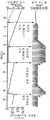
게다가, 메탄올 첨가 주기(급격한 증가, 높은 값의 유지, 급격한 감소로 이루어짐)에 따른 용존 산소값의 변동이, 배양을 시작한지 20 내지 23시간 후에 관찰되었다. 상기 기간은, 배양 배지의 메탄올 농도가 0.1% 이하로 감소되는 시기로부터 메탄올을 배양 배지에 빠르게 첨가함에 따라 메탄올이 축적되기 시작되는 시기(즉, 배양 배지의 메탄올 농도가 0.1%(v/v) 이하인 시기)까지의 기간과 일치하기 때문에, 용존 산소값의 주기적 변동과 배양 배지 중의 메탄올 농도간에 관계가 있다는 것이 제시되었다.In addition, fluctuations in dissolved oxygen values with methanol addition cycles (consisting of sharp increases, high values maintained, and sharp decreases) were observed 20 to 23 hours after the start of the culture. The period of time is when the methanol begins to accumulate as the methanol is rapidly added to the culture medium from the time when the methanol concentration of the culture medium is reduced to 0.1% or less (that is, the methanol concentration of the culture medium is 0.1% (v / v)). It is suggested that there is a relationship between the periodic fluctuation of the dissolved oxygen value and the methanol concentration in the culture medium.
용존 산소량은 통상적으로 배양 통제를 위하여 모니터되는 변수이며, 용존 산소 전극을 사용하여 측정된다. 만일 메탄올 대사 경로를 가진 미생물의 배양시에 용존 산소량의 변화를 토대로 하여 메탄올의 요구량을 예측하는 것이 가능하다면, 안정하고 효율적인 배양 상태를 용이하게 정하는 것이 가능할 것이다. 그러므로, 메탄올 첨가 주기에 따른 용존 산소값의 변동과 배양 배지의 메탄올 농도간의 관계를 상세히 조사하기 위하여, 메탄올 첨가 속도를 2.25ml/L·h로 맞추어 놓고, 중간에, 배양 배지 중의 메탄올 농도가 배양중에 빠르게 감소될때에는 0.75m/L 속도로, 그리고 상술한 배양에서 배양 배지에 메탄올이 축적될때에는 7.5ml/L·h 속도로 첨가하면서 배양하였다.Dissolved oxygen levels are typically monitored variables for culture control and are measured using dissolved oxygen electrodes. If it is possible to predict the required amount of methanol on the basis of the change in dissolved oxygen amount in the culture of microorganisms with methanol metabolic pathways, it will be possible to easily determine the stable and efficient culture state. Therefore, in order to investigate in detail the relationship between the variation of dissolved oxygen value according to the methanol addition cycle and the methanol concentration of the culture medium, the methanol addition rate was set at 2.25 ml / L · h, and the methanol concentration in the culture medium was incubated. Incubation was performed at a rate of 0.75 m / L when rapidly decreasing, and at a rate of 7.5 ml / L · h when methanol accumulated in the culture medium in the above culture.
메탄올을, 배양을 시작한지 18시간후에 처음으로 글리세롤을 첨가했다(0.15ml/L·h). 탄소원의 첨가 주기에 따른, 용존 산소값의 변동이 배양을 시작한지 23시간후부터 배양이 종료될때(배양을 시작한지 49시간후)까지 관찰되었다.Methanol was added for the first time (0.15 ml / L · h) of
상기 기간 동안의 배양 배지 중의 메탄올 농도는 0.1%(v/v) 이하이었다. 즉, 메탄올 첨가 주기에 따른 용존 산소값의 변동이 관찰되어지는 기간 동안, 메탄올은 배양 배지에 축적되지 않으며, 상기 농도는 0.1%(v/v) 이하임이 확인될 수 있을 것이다. 추가로, 메탄올 농도가 0.1%(v/v) 이하인 기간(배양을 시작한후 23시간 내지 49시간 경과기간) 동안에, 세포의 수는 2배 이상 증가되는 것이 분명했다. 환언하면, 세포는, 배양 배지의 메탄올 농도가 0.1%(v/v) 이하이라 일지라도 증식될 수 있었다.The methanol concentration in the culture medium during this period was 0.1% (v / v) or less. That is, during the period in which the change in dissolved oxygen value according to the methanol addition cycle is observed, methanol may not be accumulated in the culture medium, and the concentration may be confirmed to be 0.1% (v / v) or less. In addition, it was evident that during the period when the methanol concentration was 0.1% (v / v) or less (23 to 49 hours after the start of the culture), the number of cells increased more than two times. In other words, the cells could be grown even if the methanol concentration of the culture medium was 0.1% (v / v) or less.
게다가, 배양 배지의 메탄올 농도가 0.1%(v/v) 이하이고 글리세롤의 농도가 0.1%(w/v)이하일때, 탄소원 용액의 첨가 주기에 따른 용존 산소값의 주기적 변동에서의 변화량이 증가했다. 상기 시점에 배양액 중의 최농 농도가 1.25%(w/v) 되도록 글리세롤을 첨가하면, 비록 증가된 변화량은 정상으로 복귀되더라도, 탄소원 용액의 첨가 주기에 따른 용존 산소값의 주기적 변동은 계속되었다.In addition, when the methanol concentration of the culture medium was 0.1% (v / v) or less and the glycerol concentration was 0.1% (w / v) or less, the amount of change in the periodic variation of the dissolved oxygen value with the addition cycle of the carbon source solution increased. . If glycerol was added so that the maximum concentration in the culture was 1.25% (w / v) at this point, the periodic variation of the dissolved oxygen value with the addition cycle of the carbon source solution continued, even though the increased change returned to normal.
즉, 용존 산소 값의 주기적 변동은 배양 배지의 메탄올 농도가 0.1%(v/v) 이하라는 것을 나타내며, 그러한 변화량의 증가는 배양 배지 중의 메탄올 농도가 0.1%(v/v) 이하라는 것을 그리고 글리세롤 농도가 0.1%(w/v) 이하라는 것을 나타낸다는 것이 분명하였다. 이러한 인디케이터를 사용하여, 메탄올 농도가 0.1%(v/v) 이하이고 글리세롤 농도가 0.1%(w/v) 이하인 상태를 모니터할 수 있으므로, 상기 탄소원을 보충하기에 적당한 첨가량을 결정할 수 있다. That is, the periodic fluctuations in dissolved oxygen values indicate that the methanol concentration of the culture medium is less than 0.1% (v / v), and that the increase in variation is such that the methanol concentration in the culture medium is less than 0.1% (v / v) and glycerol It was clear that the concentration was less than 0.1% (w / v). Such indicators can be used to monitor conditions where the methanol concentration is 0.1% (v / v) or less and the glycerol concentration is 0.1% (w / v) or less, so that an appropriate amount of addition to supplement the carbon source can be determined.
본 발명의 발명자들은, 메탄올 대사 경로를 가진 메틸 영양성 효모의 배양시에, 상기 효모를 사멸시키지 않으면서 증식시킬 수 있는 메탄올의 첨가 속도를 메탄올의 주기적 첨가 및 그러한 첨가에 따른 용존 산소값의 변동에 의해 모니터할 수 있다는 것을 분명히하였다. 게다가, 주기적 메탄올 첨가와 동시에 용존 산소값의 주기적 변동이 관찰되어지는 기간 동안에, 상기 배양 상태는 메탄올 농도가 0.1%(v/v) 이하이고 배양 배지에 메탄올이 축적되지 않은 상태, 즉 첨가된 메탄올의 양이 상기 효모에 의해 소모된 메탄올의 양과 동일한 상태라는 것도 또한 분명히 보여졌다. 그러므로, 높은 세포 밀도 상태에서, 메탄올의 첨가에 따른 용존 산소 값의 주기적 변동을 인디케이터로서 사용하여 메탄올의 소모 속도를 측정하려는 시도가 행해졌다.The inventors of the present invention, in the cultivation of methyl nutrient yeast with a methanol metabolic pathway, the rate of addition of methanol that can be grown without killing the yeast is determined by the periodic addition of methanol and the variation of the dissolved oxygen value It can be clearly monitored. In addition, during the period in which periodic fluctuations in the dissolved oxygen value are observed simultaneously with the periodic methanol addition, the culture state is such that the methanol concentration is 0.1% (v / v) or less and methanol is not accumulated in the culture medium, that is, the added methanol It was also clearly shown that the amount of is equal to the amount of methanol consumed by the yeast. Therefore, at high cell density conditions, attempts have been made to measure the rate of consumption of methanol using the periodic variation of dissolved oxygen values with the addition of methanol as an indicator.
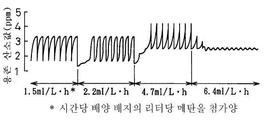
유사하게, 균주 TK62(pCU 660) #10을 65g DCW/L(OD 600=270)의 세포 밀도로 배양하는 동안, 메탄올을 1.5, 2.2, 4.7 및 6.4ml/L·h의 첨가 속도(효모 건식 중량 1g당 시간당 0.023 내지 0.098ml의 첨가(ml/g DCW·h)와 등가임)로 첨가하고, 용존 산소값의 주기적 변동 패턴 및 이시점의 배양 배지중의 메탄올 농도를 조사하였다. 결과로서, 메탄올 첨가 속도가 1.5 내지 4.7ml/L·h일때 용존 산소값이 메탄올 첨가에 따라 변동되며, 이 시점에서 배양 배지 중의 메탄올 농도는 항상 0.1%(v/v) 이하라는 것을 알았다.Similarly, while incubating strain TK62 (pCU 660) # 10 at a cell density of 65 g DCW / L (
게다가, 변동 패턴은 메탄올 첨가 속도의 증가로 인해 변하며, 메탄올 첨가에 따른 단위 시간당 용존 산소 값의 증가는 더욱 점진적이 된다는 것을 알았다. 메탄올 첨가 속도가 6.4ml/L·h가 될때, 메탄올 첨가 주기에 따른 용존 산소값의 주기적 변동이 더이상 관찰되지 않았다. 비록 메탄올 첨가 속도가 더이상 증가되지 않는 상기 시점에 배양 배지 중의 메탄올 농도는 0.1%(v/v) 이하이더라도, 배양 배지에 메탄올이 축적된다는 것을 알았다.In addition, it was found that the fluctuation pattern changes due to the increase in the rate of methanol addition, and that the increase in dissolved oxygen value per unit time with methanol addition becomes more gradual. When the methanol addition rate reached 6.4 ml / L · h, no periodic variation in dissolved oxygen values with the methanol addition cycle was observed. It was found that methanol accumulates in the culture medium even if the methanol concentration in the culture medium is 0.1% (v / v) or less at this point when the methanol addition rate is no longer increased.
상기한 바와 같이, 본 발명의 발명자들은, 메탄올 첨가 속도가 변화되어지는 배양에서, 메탄올의 주기적 첨가에 따라 용존 산소값이 변동되어지는 경우에는 적어도, 배양 배지에 첨가된 메탄올이 즉시 소모되며 배양 배지에 축적되지 않는다는 것을 확인하였다. 환언하면, 첨가된 메탄올의 양이 효모에 의해 소모된 메탄올의 양과 동일하게 되는 상태에 도달하게 된다. 게다가, 첨가된 메탄올의 양에 따라 또는, 환언하면, 메탄올이 완전히 소모되어질때까지의 시간에 따라 용존 산소값의 주기적 변동 패턴이 변화하며, 각 시점에 효모에 의해 소모된 최대 메탄올 양(축적되기 직전에 첨가된 메탄올의 양)이 샘플을 취하지 않고도 모니터될 수 있다는 것이 명백하게 보여졌다.As described above, the inventors of the present invention, in the culture in which the methanol addition rate is changed, when the dissolved oxygen value is changed according to the periodic addition of methanol, at least the methanol added to the culture medium is immediately consumed and It was confirmed that it does not accumulate in. In other words, the amount of added methanol reaches the same state as the amount of methanol consumed by the yeast. Furthermore, depending on the amount of methanol added, or in other words, the pattern of periodic fluctuations in dissolved oxygen values changes with time until methanol is consumed completely, and the maximum amount of methanol consumed by the yeast at each time point It was clearly shown that the amount of methanol added immediately before can be monitored without taking a sample.
세포 밀도가 65g DCW/L(OD 600=270)인 상태에서 최대 메탄올 소모율은 상기 발견들을 토대로할때 0.098ml/g DCW·h로 결정되어졌다.The maximum methanol consumption rate at a cell density of 65 g DCW / L (
균주 TK62(pCU660) #10의 세포 밀도가 OD600=270(배양 배지의 L당 건식 세포 중량 65g)일때 최대 메탄올 소모율은 0.098ml/g DCW·h이며, 메탄올 첨가 속도가 상기 값 이하인 경우에, 메탄올은 배양 배지에 축적되지 않는다. 그러나, 비록 균주 TK62(pCU 660) #10의 증식 및 Kex2-660의 분비적 생산에 적합한 메탄올 첨가 속도가 최대 메탄올 소모 속도의 이하라는 용이하게 예측할 수 있더라도, 가장 적합한 첨가 속도에 관하여지 공지되어 있지 않았다. When the cell density of strain TK62 (pCU660) # 10 is OD600 = 270 (dry cell weight 65 g per L of culture medium), the maximum methanol consumption is 0.098 ml / g DCW · h, and when the methanol addition rate is below this value, methanol Does not accumulate in the culture medium. However, although the methanol addition rate suitable for the propagation of strain TK62 (pCU 660) # 10 and the secretory production of Kex2-660 can be easily predicted below the maximum methanol consumption rate, it is not known about the most suitable addition rate. Did.
균주 TK62(pCU 660) #10의 증식 및 Kex2-660의 분비적 생산에 적합한 메탄올 첨가 속도를 조사하기 위하여, 2.25ml/L·h 또는 4.5ml/L·h의 메탄올 첨가 속도를 사용하여 배양하고, 이 경우에 세포 증식 속도 및 Kex2-660의 분비적 생산을 조사하였다. 결과로서, 메탄올 첨가 주기에 따른 용존 산소 값의 변동이 관찰되어지는 때의 배양 배지 중의 메탄올 농도가 0.1%(v/v) 이하인 기간 동안에 세포가 증가하고 Kex2-660이 발현되고 배양 배지에 분비되어진다는 것이 명백하게 보여졌다.In order to investigate the methanol addition rate suitable for the propagation of strain TK62 (pCU 660) # 10 and the secretory production of Kex2-660, the culture was carried out using a methanol addition rate of 2.25 ml / L · h or 4.5 ml / L · h. In this case, cell proliferation rate and secretory production of Kex2-660 were investigated. As a result, cells were increased and Kex2-660 was expressed and secreted into the culture medium during the period in which the methanol concentration in the culture medium was 0.1% (v / v) or less when a change in the dissolved oxygen value with the methanol addition cycle was observed. It was clearly shown that the loss.
즉, 배양 배지의 메탄올 농도가 0.1%(v.v) 이하이고 용존 산소값이 주기적 메탄올 첨가에 따라 변동되어지는 때의 메탄올 첨가 속도가 세포 증식 및 표적 산물의 발현에 적합한 속도라는 것을 알았다. 게다가, 2.25ml/L·h 및 4.5ml/L·h의 메탄올 첨가 속도를 사용하는 배양을 비교한 결과, 배양을 시작한지 48시간 후의 세포수가 배양 시작시보다 각기 1,400배 및 1,800배 증가하고, 한편 생산되고 분비된 Kex2-660의 양은 배양 상등액의 리터당 각기 1260MU 및 2850MU(각기 대략 150mg 및 340mg과 등가임)(표 1)이었다. 용존 산소 값의 주기적 변동이 계속되어지는 것과 같은 메탄올 첨가 조건이 유지되어지는한, 첨가되는 메탄올의 양이 증가함에 따라 세포 증식이 증가되고 Kex2-660의 생산이 증가된다는 것이 명백하게 보여졌다.That is, it was found that the methanol addition rate when the methanol concentration of the culture medium was 0.1% (v.v) or less and the dissolved oxygen value was varied with periodic methanol addition was a rate suitable for cell proliferation and expression of the target product. In addition, comparing the cultures using methanol addition rates of 2.25 ml / L · h and 4.5 ml / L · h, the number of
게다가, 배양을 시작한지 18일 후에 메탄올이 처음으로 2.25ml/L·h 및 4.5ml/L·h의 속도로 첨가되어지는 동안의 균주 TK62(pCU 660) #10의 배양에서, 건식 효모 중량이 0.5g/L(OD 600=2) 이상일때 메탄올 소모 속도는 0.03 내지 0.16ml/g DCW·h (표 2)이라는 것이 명백하였다. In addition, in the culture of strain TK62 (pCU 660) # 10 while methanol was first added at a rate of 2.25 ml / L · h and 4.5 ml / L · h after 18 days of incubation, dry yeast weight It was evident that the methanol consumption rate was at least 0.03 to 0.16 ml / g DCW · h (Table 2) above 0.5 g / L (
* 글리세롤 첨가속도는 5g/L·h이다.* Glycerol addition rate is 5g / L · h.
OD 600 Kex2 활성은 배양을 시작한지 48시간내에 측정한 것이다.
DCW : 배양액 ℓ당 효모 세포의 건조 중량.DCW: dry weight of yeast cells per liter of culture.
MeOH 소모율 : 배양 시간이 6시간인 경우 0 내지 6시간의 평균치, 기타 배양 시간에 대해서도 마찬가지로 적용됨 MeOH consumption rate: If the culture time is 6 hours, the average value of 0 to 6 hours, the same applies to other culture time
또한, 상술한 Kex2를 생성하는 48시간의 배양 시간은, 메틸 영양성 효모 성장기(약 40시간) 및 생성기 (60 내지 120시간)로 분열하여 표적 유전자 생성물을 수득하는데 필요한 100 내지 160시간의 단지 1/3 내지 1/2과 같이 짧으며(WO 95/21928에 나타남), 이는 산업 수준으로 물질을 생성하는 경우 본 발명의 유용성을 명백히 나타낸다.In addition, the 48 hour incubation time to produce Kex2 described above was only 1/100 of the 160 to 160 hours required to cleave into the methyltrophic yeast growth phase (about 40 hours) and the production phase (60 to 120 hours) to obtain the target gene product. As short as 3 to 1/2 (shown in WO 95/21928), this clearly demonstrates the utility of the present invention when producing materials at an industrial level.
또한, 메탄올을 주기적으로 첨가하여 나타나는 용존 산소값의 주기적 동요가 컴퓨터에 의해 평가되어 배양이 자동적으로 조절되는 실시에 대해서는 나타내지 않았다. 그러나, 단지(jar) 발효기를 사용한 배양에서, 용존 산소량, pH 및 온도는 배양을 조절하기 위한 기본적 변수로서, 이들 값은 각각 DO 센서, pH 센서 및 온도 센서로 시간내내 측정하여 컴퓨터로 이들 값을 평가하고 배양을 자동 조절한다.In addition, the periodic fluctuation of the dissolved oxygen value shown by the periodic addition of methanol was evaluated by a computer, and it did not show the implementation in which culture is automatically adjusted. However, in culture using a jar fermenter, dissolved oxygen content, pH and temperature are the basic variables for controlling the culture, these values being measured over time with DO sensors, pH sensors and temperature sensors respectively to obtain these values with a computer. Evaluate and adjust the culture automatically.
이들 변수들을 조절하는 경우, 배양은 각각의 변수들의 값 및 단위 시간당 각각의 변수들의 변화량에 의해서 조절된다. 즉, 당 분야의 전문가라면, 메탄올의 주기적 첨가와 동시에 나타나는 용존 산소값의 주기적 동요와 관련한 발견 및 동물 양상이 본 발명의 발명자에 의해 해결되는 바와 같이 메탄올 첨가 속도에 따라 변화된다는 발견에 기초하여 첨가되는 메탄올의 적당량을 결정함으로써 첨가되는 메탄올의 양을 자동 조절할 수 있다. When adjusting these variables, the culture is controlled by the value of each variable and the amount of change of each variable per unit time. That is, those skilled in the art will add based on the findings relating to the periodic fluctuations of dissolved oxygen values that coincide with the periodic addition of methanol and the findings that the animal behavior changes with the rate of methanol addition as solved by the inventors of the present invention. The amount of methanol added can be automatically adjusted by determining the appropriate amount of methanol to be added.
실시예Example
하기 실시예는 메탄올 대사 경로를 갖는 미생물의 일례로서 캔디다 보이디니이를 사용하여 본 발명의 상세히 설명하지만, 본 발명이 이러한 예로서 한정되지는 않는다. 또한, 알콜 옥시다제의 프로모터가 메탄올에 의해 발현이 유도되는 프로모터의 예로서 사용되고 Kex2-660이 자세한 설명을 돕기 위한 유전자 생성물의 일례로서 사용되었으나, 본 발명이 이러한 예들로써 한정되지는 않는다.The following examples illustrate the present invention in detail using Candida Boydini as an example of a microorganism having a methanol metabolic pathway, but the present invention is not limited to this example. In addition, although a promoter of alcohol oxidase is used as an example of a promoter in which expression is induced by methanol, and Kex2-660 has been used as an example of a gene product for the purpose of detail, the present invention is not limited to these examples.
실시예 1Example 1
NKEX2-660 유전자 및 발현 벡터 pCU660의 제조Preparation of NKEX2-660 Gene and Expression Vector pCU660
분비성 Kex2 유도체 Kex-660(Kex2 엔도프로테아제의 N-말단 아미노산으로부터 660번 아미노산까지의 아미노산으로 이루어진 단백질)을 암호화하는 유전자(NKEX2-660 유전자) 및 NKEX2-660 발현 벡터 pUC660은 하기와 같이 제조한다. A gene encoding the secretory Kex2 derivative Kex-660 (a protein consisting of amino acids from N-terminal amino acids to amino acids 660 of Kex2 endoprotease) (NKEX2-660 gene) and NKEX2-660 expression vector pUC660 were prepared as follows. .
1) NKEX2-660 유전자의 제조(도 1 참조)1) Preparation of NKEX2-660 Gene (see Figure 1)
NKEX2-660 유전자를 함유하는 DNA 단편을 플라스미드 pYE-KEX2(5.0)b를 사용하여 PCR로 제조하고, 제한효소 EcoRI으로 절단한후, 주형으로 사용하기 위해 또한 NKEX2 (서열 1) 및 KM088(서열 2)를 사용하는 프라이머로 사용하기 위해 직쇄[참조: Mizuno et al., Biochem. Biophys. Res. Commun. 156, 246-254,1988]로 만든다. DNA fragments containing the NKEX2-660 gene were prepared by PCR using plasmid pYE-KEX2 (5.0) b, cleaved with restriction enzyme EcoRI, and also used as templates for NKEX2 (SEQ ID NO: 1) and KM088 (SEQ ID NO: 2). ) For use as a primer using Mizuno et al., Biochem. Biophys. Res. Commun. 156, 246-254,1988].
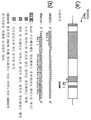
NKEX2 및 KM088은 도 1a에 나타낸 KEX2 유전자 영역에 상응하고, NKEX2는 KEX2 유전자의 메티오닌 개시 코돈으로부터 이의 상부에 있는 107 내지 132개 뉴클레오타이드에 상응하는 서열을 포함하며, KM088은 해독 정지 코돈인 TAA부터 Kex2 프로테아제의 아미노산 654번부터 아미노산 660번까지의 아미노산에 상응하는 DNA까지를 첨가하여 생기는 뉴클레오타이드 서열에 상보적인 뉴클레오타이드 서열을 갖는다[참조: Mizuno, et al., Biochem. Biophys. Res. Commun. 156, p. 246-254, 1988]. 또한, NKEX2는 이의 5' 말단에 제한 효소 NotI 부위(밑줄그음)의 뉴클레오타이드 서열을 갖고, KM088은 제한 효소 SalI 부위(밑줄그음)의 뉴클레오타이드 서열을 갖는다(도 1b 참조). 이들 프라이머는 포스포아미다이드법으로 자동 합성기(Applied Biosystems Model 380A)를 사용하여 합성한다.NKEX2 and KM088 correspond to the KEX2 gene region shown in FIG. 1A, NKEX2 comprises sequences corresponding to 107 to 132 nucleotides above it from the methionine initiation codon of the KEX2 gene, and KM088 is the translation stop codon TAA to Kex2 It has a nucleotide sequence complementary to the nucleotide sequence resulting from the addition of the DNA corresponding to amino acids 654 to amino acids 660 of the protease (Mizuno, et al., Biochem. Biophys. Res. Commun. 156, p. 246-254, 1988]. NKEX2 also has the nucleotide sequence of the restriction enzyme NotI site (underlined) at its 5 'end, and KM088 has the nucleotide sequence of the restriction enzyme SalI site (underlined) (see Figure 1B). These primers are synthesized using an auto synthesizer (Applied Biosystems Model 380A) by the phosphoramidide method.
2) 발현 벡터 pCU660의 제조(도 2 참조)2) Preparation of Expression Vector pCU660 (see FIG. 2)
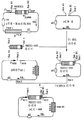
발현 벡터 pCU660은 NKEX2-660 유전자를 함유하는 NotI DNA 단편을 발현 플라스미드 pNOTelI (일본 미심사된 공개특허공보 제5-344895호)의 NotI 제한효소 부위로 삽입시켜 제조하고 숙주로서 캔디다 보이디니이를 사용하여 KEX2-660 유전자를 알콜 옥시다제 유전자(AOD) 프로모터의 조절하에서 발현시킬수 있다(도 2).The expression vector pCU660 was prepared by inserting a NotI DNA fragment containing the NKEX2-660 gene into the NotI restriction enzyme site of the expression plasmid pNOTelI (Japanese Unexamined Patent Publication No. 5-344895) and using Candida Boyinii as a host. KEX2-660 gene can be expressed under the control of an alcohol oxidase gene (AOD) promoter (FIG. 2).
상기 벡터를 작제하기 위해서, pNOTelI을 제한효소 NotI으로 절단하고 약 7.4kb DNA 단편을 정제한다. NKEX2-660 유전자를 포함하는 단계 1)의 NKEX2-660 유전자를 포함하는 DNA 단편을 pCRII(Invitrogen)으로 클로닝하고, NKEX2 및 pCRII에 존재하는 제한효소 NotI 부위를 사용해 절단함으로써 NotI DNA 단편을 제조한다. pNOTelI은, AOD 프로모터에 의해 표전 유전자를 발현시키며, 숙주로서의 효모를 사용하는 경우 선별 마커용으로 URA3 유전자를 갖고 숙주로서 이.콜라이를 사용하는 경우엔 앰피실린 내성을 갖는 벡터이다. 따라서, 효모를 우라실을 필요로 하는 숙주로서 사용하는 경우, 형질전환체 균주를 우라실 비함유 플레이트상에서 선별할 수 있다.To construct the vector, pNOTelI was digested with restriction enzyme NotI and purified about 7.4 kb DNA fragment. NotI DNA fragments are prepared by cloning the DNA fragments comprising the NKEX2-660 gene of step 1) comprising the NKEX2-660 gene into pCRII (Invitrogen) and cleaving using restriction enzyme NotI sites present in NKEX2 and pCRII. pNOTelI is a vector that expresses a transgene by an AOD promoter, and has a URA3 gene for selection markers when using yeast as a host and ampicillin resistance when using E. coli as a host. Thus, when yeast is used as a host requiring uracil, transformant strains can be selected on uracil free plates.
실시예 2Example 2
형질전환체 및 Kex2-생성 균주의 분리Isolation of Transformant and Kex2-producing Strains
제한효소 BamHI으로 절단되고 직쇄로 만든 플라스미드 pCU660을 우라실-요구 균주 TK62로 도입시키고, 염색체-삽입 재조합 균주 TK62(pCU660)을 우라실 요구의 보완성을 이용해 선별한다. 균주 TK62는 캔디다 보이디니이 균주 S2 AOU-1으로부터 유도된 URA3 돌연변이로 생성된 우라실-요구 균주이며, 균주 TK62의 돌연변이 방법이 문헌[참조: Sakai, Y. et al., J. Bacteriol., 173, 7450-7463, 1991]에 보고되어 있다. 균주 S2 AOU-1은 캔디다 보이디니이 SAM 1958로 명명되었으며 기탁기관(Institute of Bioengireering and Humar Technology Agercy of Industrial Science and Technology)에 1992년 2월 25일자로 기탁번호 제FERM BP 3766호로서 기탁되었다.Plasmid pCU660 cleaved and linearized with restriction enzyme BamHI was introduced into uracil-required strain TK62, and chromosomal-inserted recombinant strain TK62 (pCU660) was selected using complementary uracil requirements. Strain TK62 is a uracil-required strain produced with the URA3 mutation derived from Candida vodiniyi strain S2 AOU-1, and the method of mutation of strain TK62 is described in Sakai, Y. et al., J. Bacteriol., 173 , 7450-7463, 1991. Strain S2 AOU-1 was named Candida Boyinii SAM 1958 and deposited with the Institute of Bioengireering and Humar Technology Agercy of Industrial Science and Technology on February 25, 1992 as Accession No. FERM BP 3766.
pCU660은 염색체-삽입 발현 벡터이고, 생성 형질전환체 TK62(pCU660)에 대해서 발현된 Kex2 유도체의 양 및 분비량은 유전자의 염색체 삽입 부위, 복제수 등에 따라 다를수 있다. 20개의 형질전환체 클론(#1 내지 #20)이 시험관 수준으로 배양되었으며, 배양 배지내로 분비된 Kex2 유도체의 양(Kex2 프로테아제 활성)을 조사하여 Kex2 유도체를 다량 분비하는 클론을 선별한다.pCU660 is a chromosome-insertion expression vector, and the amount and secretion of Kex2 derivatives expressed for the production transformant TK62 (pCU660) may vary depending on the chromosome insertion site, the number of copies, and the like. Twenty transformant clones (# 1 to # 20) were incubated at the in vitro level, and clones that secrete large amounts of Kex2 derivatives were selected by examining the amount of Kex2 derivatives secreted into the culture medium (Kex2 protease activity).
먼저, TK62(pCU660) #1 내지 #20의 20개 균주를 BMGY 배지[1%(w/v) 효모 추출물, 2%(w/v) 펩톤, 1%(w/v) 글리세롤, 1.34%(w/v) YNB wo AA: 아미노산이 없는 효모 질소 기재, 0.4mg/L 바이오틴 및 100mM 인산칼륨(pH 6.0)]중 27℃에서 진탕배양한다. 2일후, 배양 배지를 BMMY 배지[1%(w/v) 효모 추출물, 2%(w/v) 펩톤, 0.5%(w/v) 메탄올, 1.34%(w/v) YNB wo AA, 0.4mg/L 바이오틴 및 100mM 인산칼륨(pH 6.0)] 1ml에 접종시켜 OD600이 10이 되게 한후, 27℃에서 진탕 배양한다. 30시간후, 상등액의 Kex2 활성을 측정하고, 최고 활성을 갖는 5개의 균주를 선별한다. 이들 5개의 균주를 유사한 방법으로 배양한후, TK62(pCU660) 균주 #10을 선별하고, 일관되게 고수준인 Kex2 활성에 기인하여 하기 실험을 수행한다. First, 20 strains of TK62 (pCU660) # 1 to # 20 were prepared using BMGY medium [1% (w / v) yeast extract, 2% (w / v) peptone, 1% (w / v) glycerol, 1.34% ( w / v) YNB wo AA: shaken at 27 ° C. in yeast nitrogen based without amino acid, 0.4 mg / L biotin and 100 mM potassium phosphate, pH 6.0]. After 2 days, the culture medium was replaced with BMMY medium [1% (w / v) yeast extract, 2% (w / v) peptone, 0.5% (w / v) methanol, 1.34% (w / v) YNB wo AA, 0.4 mg / L Biotin and 100 mM potassium phosphate (pH 6.0)] inoculated to 1 OD600 to 10, and then shake culture at 27 ℃. After 30 hours, the Kex2 activity of the supernatant is measured and the five strains with the highest activity are selected. After culturing these five strains in a similar manner, TK62 (pCU660)
Kex2 활성을 문헌[참조: Mizuno et al., Biochem. Biophys. Res. Commun., f156, 246-254, 1988]의 방법에 따라 수행한다. 즉, 100mM 트리스-HCl로 희석된 Kex2-600 100㎕를 2mM CaCl2, 0.2%(w/v) 루부롤 및 10μM Boc-Leu-Arg-Arg-MCA (Peptide Research)를 함유하는 200mM 트리스-HCl(pH 7.0) 용액 100㎕에 가하고 37℃에서 30분 동안 정치시킨다. 25mM EGTA 50㎕를 첨가한후, 절단된 AMC의 형광 강도를 PANDEX FCA 시스템(Boxter-Travenol : Model 10-015-1, 여기=365nm, 방사=450nm)을 사용하여 측정한다. 상술한 조건하에서 1분내에 AMC 1pmol을 방출하는 Kex2 활성량을 1U 활성으로 정의한다.Kex2 activity is described in Mizuno et al., Biochem. Biophys. Res. Commun., F156, 246-254, 1988]. That is, 100 μl of Kex2-600 diluted with 100 mM Tris-HCl was added to 200 mM Tris-HCl containing 2 mM CaCl 2 , 0.2% (w / v) ruburol and 10 μM Boc-Leu-Arg-Arg-MCA (Peptide Research). (pH 7.0) was added to 100 μl of solution and left at 37 ° C. for 30 minutes. After adding 50 μl of 25 mM EGTA, the fluorescence intensity of the cleaved AMC is measured using a PANDEX FCA system (Boxter-Travenol: Model 10-015-1, excitation = 365 nm, emission = 450 nm). Under the conditions described above, the amount of Kex2 activity that releases 1 pmol of AMC within 1 minute is defined as 1U activity.
실시예 3Example 3
배양 조건의 설정(도 3 참조)Setting of culture conditions (see FIG. 3)
1) 기초 배양 조건1) Basis Culture Condition
글리세롤 동결 스톡으로부터 1ml의 균주 TK62 (pCU660) #10을 YPD 배지[1% (w/v) 효모 추출물, 2%(w/v) 펩톤, 2%(w/v) 글루코즈] 25ml을 함유하는 300ml 삼각 플라스크에 접종시키고 27℃에서 16시간동안 진탕 배양하여 예비배양을 수행한다.300 ml containing 25 ml of 1 ml strain TK62 (pCU660) # 10 from glycerol frozen stock containing 25 ml of YPD medium [1% (w / v) yeast extract, 2% (w / v) peptone, 2% (w / v) glucose] The preculture was performed by inoculating the Erlenmeyer flask and shaking culture at 27 ° C. for 16 hours.
상술한 예비 배양물을 배양 배지[1.5%(v/v), 메탄올 3%(w/v), 글리세롤, 1%(w/v) 효모 추출물, 2%(w/v) 펩톤, 50mM 인산칼륨(pH 6.0) 및 1.34%(w/v) YNB wo AA] 2ℓ에 접종하고 배양 개시시의 세포 밀도를 OD 600이 0.2가 되게한후 5ℓ 용적의 발효기(Mitsuwa Scientific Instruments, Model KMJ-5B-4U-FP)를 사용하여 27℃에서 통기시키면서 교반하여 주배양을 수행한다. 통기속도는 4ℓ/분이고, 교반속도는 용존 산소량이 2.5ppm 이하로 떨어지지 않도록 조절한다. 배양물의 질소는 질소원 재공급 용액[5%(w/v) 효모 추출물, 10%(w/v) 펩톤, 6.7%(w/v) YNB wo AA] 80ml로 적당히 재보충시키고 pH는 7.5% 암모니아수를 첨가하여 5.5 이하로 떨어지지 않도록 조절한다.The above-mentioned precultures were cultured [1.5% (v / v),
소포제(Disfoam CC-222, Nippon Yushi) 0.5ml/l를 배양 개시시 첨가한후, 필요할때마다 첨가한다. 탄소원의 재보충은 15 내지 45%(v/v) 메탄올 용액 및 10 내지 50%(w/v) 글리세롤 용액(농도는 배양에 따라 달라질 수 있다)을 사용하여 수행한다. 메탄올 및 글리세롤을 매 7.5분마다 1회씩 고정량을 공급하도록 단위 시간당 일정 공급 용적을 갖는 연동 펌프를 주기적으로 작동시켜 첨가한다. 첨가 속도는 시간당 배양 배지 ℓ당 첨가되는 메탄올 양(ml/ℓ·h) 또는 글리세롤 양(g/ℓ·h) 또는 글리세롤 양(g/ℓ·h)으로 표시된다.Antifoaming agent (Disfoam CC-222, Nippon Yushi) 0.5 ml / l is added at the beginning of the culture, and then added as needed. Replenishment of the carbon source is performed using 15 to 45% (v / v) methanol solution and 10 to 50% (w / v) glycerol solution (concentration may vary depending on culture). The peristaltic pump with a constant supply volume per unit time is added periodically to add methanol and glycerol once every 7.5 minutes. The rate of addition is expressed as the amount of methanol added per liter of culture medium per hour (ml / l · h) or the amount of glycerol (g / l · h) or the amount of glycerol (g / l · h).
2) 메탄올 첨가 조건의 조사2) Investigation of methanol addition condition
배양 배지중의 메탄올의 농도는 메탄올 대사 경로를 갖는 메틸 영양성 효모 균주 TK62(pCU660) #10의 성장, 및 메탄올에 의해 발현이 유도되는 AOD 프로모터로부터 Kex2-660의 발현에 있어 중요한 변수이다. 본 발명의 발명자는 먼저, 메탄올 첨가 조건을 배양 배지중의 메탄올 농도가 효모 성장용 탄소원으로서 충분하고 세포 독성을 나타내지 않기에 충분한 농도로 유지되도록 설정하고자 했다. 배양은 기본 배양 조건에 따라 수행한다.The concentration of methanol in the culture medium is an important variable for the growth of methyl trophic yeast strain TK62 (pCU660) # 10 with methanol metabolic pathways, and the expression of Kex2-660 from the AOD promoter induced by methanol. The inventors of the present invention first attempted to set the conditions for adding methanol so that the concentration of methanol in the culture medium is sufficient to be sufficient as a carbon source for yeast growth and not show cytotoxicity. Cultivation is carried out according to the basic culture conditions.
배양 배지의 메탄올 농도는 3일마다 측정하고, 배양 배지로의 메탄올 첨가 횟수 및 양은 초기 2 내지 3시간의 농도를 참조로하여 결정한다. 배양 배지중의 메탄올 농도는 배양을 개시한지 15시간후 (OD660=22) 0.42%(v/v)로 감소되므로, 메탄올 첨가를 배양 개시 18시간후 (OD600=52) 개시하여 0.75ml/ℓ·h의 속도로 개시한다. 또한, 메탄올 첨가 직전 배양 개시후 18시간내 배양 배지중의 메탄올 농도는 0.26%(v/v)로 감소된다.The methanol concentration of the culture medium is measured every three days, and the number and amount of methanol added to the culture medium are determined with reference to the concentration of the initial 2 to 3 hours. Since the methanol concentration in the culture medium was reduced to 0.42% (v / v) after 15 hours of incubation (OD660 = 22), the methanol addition was started 18 hours (OD600 = 52) after incubation and 0.75 ml / l. Start at a rate of h. In addition, the methanol concentration in the culture medium was reduced to 0.26% (v / v) within 18 hours after the start of the culture immediately before the methanol addition.
배양 개시후 21시간내 배양 배지중의 메탄올 농도는 0.1%(v/v) 이하로 감소되므로, 메탄올 첨가 속도는 배양개시후 23시간에 개시하여 7.5ml/ℓ·h로 증가된다(초기 첨가 속도의 10배). 첨가 속도를 증가시킨 직후, 교반 속도를 신속히 감소시키면 효모에 의한 산소 소모율이 급격히 저하된다. 즉, 세포 활성의 감소가 관측된다. 그후, 세포 밀도가 낮아지고, 효모는 용해되는 것으로 생가고딘다. 메탄올 첨가 1시간후 배양 배지중의 메탄올 농도가 증가되므로 (배양 개시 24시간후), 이는 메탄올이 배양 배지중에 축적된다는 것을 나타낸다. Since the methanol concentration in the culture medium was reduced to 0.1% (v / v) or less within 21 hours after the start of the culture, the rate of methanol addition increased to 7.5 ml / l · h starting at 23 hours after the start of the culture (initial addition rate). 10 times). Immediately after increasing the rate of addition, a rapid decrease in the rate of stirring lowers the rate of oxygen consumption by the yeast. That is, a decrease in cell activity is observed. Thereafter, the cell density is lowered, and the yeast grows to dissolve. Since the methanol concentration in the culture medium is increased 1 hour after methanol addition (after 24 hours of initiation of culture), this indicates that methanol accumulates in the culture medium.
상기한 결과에 근거하여, 1) 배양 배지에 메탄올 첨가를 개시하기에 양호한 시간을 배양을 개시한지 18시간내이며 (OD600=약 50), 2) 배양 배지의 메탄올 농도는 0.75ml/ℓ·h의 메탄올 첨가 속도에서 3시간내에 0.1%(v/v) 이하로 감소되므로, 탄소원용 메탄올이 부족할 수 있으며, 3) 7.5ml/ℓ·h의 첨가 속도에 의해 배양 배지중에 메탄올이 과도하게 빠르게 축적되어 세포 독성이 일어날 수 있다는 것을 밝혀내었다. 또한, 배양 배지중의 메탄올 농도가 0.1%(v/v) 이하인 상태가 계속된후, 메탄올을 신속히 첨가하면 균주 TK62(pCU660) #10을 죽게할 수 있다는 것을 밝혀내었다.Based on the above results, 1) a good time for initiating the addition of methanol to the culture medium was within 18 hours of incubation (OD600 = about 50), and 2) the methanol concentration of the culture medium was 0.75 ml / l · h. At the rate of methanol addition, the methanol content of carbon source may be depleted to 0.1% (v / v) or less within 3 hours, and methanol may be insufficient in the culture medium due to the addition rate of 7.5 ml / l · h. It has been found that cytotoxicity can occur. In addition, it was found that strain TK62 (pCU660) # 10 could be killed by rapidly adding methanol after the methanol concentration in the culture medium continued to 0.1% (v / v) or less.
메탄올 첨가 주기와 동시에 나타나는 용존 산소값의 동요가 배양 개시후 20시간부터 23시간까지 관측되었다. 이러한 주기는, 배양 배지의 메탄올 농도가 0.1%(v/v) 이하로 감소되는 시간부터 배양 배지에 메탄올을 신속히 투여하여 메탄올에 축적되는 시간까지(즉, 배양 배지의 메탄올 농도가 0.1%(v/v) 이하인 시간)의 시간과 일치되므로, 용존 산소값의 주기적 동요와 배양 배지중 메탄올 농도간에 상호관련이 있음을 제시한다.Fluctuations of dissolved oxygen values appearing simultaneously with the methanol addition cycle were observed from 20 hours to 23 hours after the start of the culture. This cycle ranges from the time when the methanol concentration of the culture medium is reduced to 0.1% (v / v) or less to the time when methanol is rapidly administered to the culture medium and accumulates in methanol (that is, the methanol concentration of the culture medium is 0.1% (v). / v), which is less than / v), suggests a correlation between the periodic fluctuations of dissolved oxygen values and the methanol concentration in the culture medium.
3) 배양 배지중 용존 산소값 및 메탄올 농도의 동요3) Fluctuation of dissolved oxygen and methanol concentration in culture medium
메탄올이 전술한 단략에서와 같이 주기적으로 첨가되는 배양에서, 메탄올 첨가 주기와 동시에 발생하는 용존 산소값의 동요는 배양 배지중의 메탄올 농도가 0.1%(v/v) 이하인 경우 관측되고 메탄올이 배양 배지중에 축적되기 시작하면 더 이상 관측되지 않는다는 것을 제시한다. 용존 산소량은 배양을 조절하기 위해 통상적으로 모니터링되는 변수이며, 용존 산소 전극을 사용하여 측정한다. 메탄올 대사 경로를 가진 미생물을 배양시의 용존 산소량 변화에 근거하여 메탄올 요구량을 예측할 수 있다면, 안정하고 유효한 배양 조건을 설정할 수 있을 것이다.In a culture in which methanol is added periodically as in the above outline, the fluctuation of dissolved oxygen values occurring simultaneously with the methanol addition cycle is observed when the methanol concentration in the culture medium is 0.1% (v / v) or less and methanol is culture medium. Suggests that it will no longer be observed once it begins to accumulate. Dissolved oxygen is a commonly monitored variable to control culture and is measured using dissolved oxygen electrodes. If the methanol requirement can be predicted based on the change in dissolved oxygen amount in the culture of the microorganism with methanol metabolic pathway, it will be possible to establish stable and effective culture conditions.
따라서, 메탄올 첨가 주기와 동시에 발생하는 용존 산소값의 동요와, 배양 배지중의 메탄올 농도가 급속히 감소되는 속도인 0.75ml/ℓ·h와 메탄올이 단락 2)의 상술한 배양에서와 같이 배양 배지중에 축적되는 속도인 7.5ml/ℓ·h의 중간인 2.25ml/ℓ·h의 메탄올 첨가 속도로 배양한 배양 배지의 메탄올 농도간의 상호관련에 대해 면밀한 조사를 수행하였다.Therefore, 0.75 ml / l · h, which is a rate at which the methanol concentration in the culture medium decreases rapidly, and methanol, which occurs at the same time as the methanol addition cycle, and methanol are in the culture medium as in the aforementioned culture of paragraph 2). A close investigation was performed on the correlation between the methanol concentrations of the culture medium incubated at a methanol addition rate of 2.25 ml / l · h, which was intermediate to the accumulation rate of 7.5 ml / l · h.
단락 2)의 결과를 근거로하여, 메탄올 첨가 개시 시간을 OD 600이 약 50에 도달하는 시간으로 설정하고 (배양 개시후 약 18시간째), 탄소원의 첨가 속도는 메탄올에 대해서는 2.25ml/ℓ·h로 설정하고 글리세롤에 대해서는 0.15g/ℓ·h로 설정한다. 탄소원 첨가 주기와 동시에 발생하는 용존 산소값의 동요는 배양 개시후 23시간내에 관측되기 시작하여 배양 완료때까지(배양 개시후 49시간 : OD600=198) 계속된다. Based on the result of paragraph 2), the start time of methanol addition was set to the time when the
이러한 시간동안 배양 배지중의 메탄올 농도는 0.1% (v/v) 이하이다. 또한, 배양 배지중의 메탄올 농도가 0.1%(v/v) 이하가 되고 글리세롤 농도가 0.1%(w/v) 이하가 되면, 탄소원 첨가 용액의 첨가 주기와 동시에 발생하는 용존 산소값의 주기적 동요의 변화량이 증가한다(도 3). 글리세롤이 첨가되어 이때 배양 배지중의 최종 농도가 1.25%(w/v)로 증가되면, 변화량의 증가가 정상이되더라도, 탄소원 첨가 용액 자체의 첨가 주기와 동시에 발생하는 용존 산소값의 주기적 동요가 계속되는 것으로 밝혀졌다(도 3).During this time the methanol concentration in the culture medium is below 0.1% (v / v). In addition, when the methanol concentration in the culture medium is 0.1% (v / v) or less and the glycerol concentration is 0.1% (w / v) or less, the periodic fluctuation of the dissolved oxygen value that occurs simultaneously with the addition cycle of the carbon source addition solution The amount of change increases (FIG. 3). If glycerol is added and the final concentration in the culture medium is increased to 1.25% (w / v), even if the change is normal, the periodic fluctuation of the dissolved oxygen value occurring at the same time as the addition cycle of the carbon source addition solution itself continues. (Fig. 3).
즉, 용존 산소값의 주기적 동요는 배양 배지중의 메탄올 농도가 0.1%(v/v) 이하이고 변화량의 증가는 배양 배지중의 메탄올 농도가 0.1%(v/v) 이하이고 글리세롤 농도가 0.1%(w/v) 이하인 상태를 나타낸다는 것이 확실하다. 이러한 지시자를 이용하여, 메탄올 농도가 0.1%(v/v) 이하이고 글리세롤 농도가 0.1%(w/v) 이하인 상태를 모니터링할 수 있다.In other words, the periodic fluctuations of dissolved oxygen values were found to include methanol concentration in the culture medium of 0.1% (v / v) or less and increase in change in methanol concentration of 0.1% (v / v) or less of the culture medium and 0.1% of glycerol concentration. It is certain that the state below (w / v) is shown. Such indicators can be used to monitor conditions where the methanol concentration is below 0.1% (v / v) and the glycerol concentration is below 0.1% (w / v).
또한, 메탄올 농도가 0.1%(v/v) 이하인 시간 동안(배양 개시후 23 내지 49시간), 세포 증가수는 2배이상 배가된다는 것이 확실하다. 달리 표현하면, 배양 배지중의 메탄올 농도가 0.1%(v/v) 이하일지라도 세포는 성장할 수 있다. In addition, during the time when the methanol concentration is 0.1% (v / v) or less (23 to 49 hours after the initiation of the culture), it is evident that the cell increase number is more than doubled. In other words, cells can grow even if the methanol concentration in the culture medium is 0.1% (v / v) or less.
실시예 4Example 4
용존 산소값의 주기적 동요 양상에 근거한 메탄올 첨가 속도의 최적화Optimization of Methanol Addition Rate Based on Periodic Fluctuations of Dissolved Oxygen Values
본 발명의 발명자들은, 실시예 3의 배양 배지중 메탄올 농도가 0.1%(v/v) 이하이고 메탄올이 배지중에 축적되지 않는 시간동안, 용존 산소값의 동요가 메탄올의 주기적 첨가와 동시에 발생하고 메탄올이 축적되기 시작하면 더이상 관측되지 않는다는 것을 명백히 입증하였다. 또한, 메탄올 첨가와 동시에 발생하는 용존 산소값의 동요가 관측되는 상태에서 세포가 성장한다는 것이 명백히 밝혀졌다. 따라서, 메탄올 첨가 속도와 용존 산소값의 주기적 동요 사이의 상호관계를 결정하고 메탄올 첨가 속도와 Kex2-660 분비 생성물 양 사이의 상호관계를 규명하는 조사를 수행하였다.The inventors of the present invention found that during the time when the methanol concentration in the culture medium of Example 3 was 0.1% (v / v) or less and methanol did not accumulate in the medium, fluctuations of dissolved oxygen values occurred simultaneously with the periodic addition of methanol and methanol It is clearly demonstrated that once this begins to accumulate it is no longer observed. In addition, it was clarified that the cells grow in a state where fluctuations in dissolved oxygen values occurring simultaneously with methanol addition are observed. Therefore, an investigation was made to determine the correlation between the rate of methanol addition and the periodic fluctuations of dissolved oxygen values and to identify the relationship between the rate of methanol addition and the amount of Kex2-660 secreted product.
1) 메탄올 첨가 속도와 용존 산소값의 주기적 동요 사이의 관계1) Relationship between the rate of methanol addition and the periodic fluctuations of dissolved oxygen
메탄올 첨가 속도의 변화시 주기적인 메탄올 첨가와 동시에 발생하는 용존 산소값의 동요 양상 변화를 조사하여 이 변화가 배양 배지에 메탄올을 첨가하는 것을 조절하는 지시자로서 이용될 수 있는가를 결정한다. Investigation of changes in the agitation pattern of dissolved oxygen values occurring at the same time as the periodic methanol addition upon changing the methanol addition rate determines whether this change can be used as an indicator to control the addition of methanol to the culture medium.
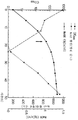
배양 개시후 세포 밀도가 OD600에서 270(65g DCW/ℓ 배양배지)가 되면, 메탄올 첨가 속도를 1.5, 2.2, 4.7 및 6.4ml/ℓ·h로 변화시키고 이때 배양 배지중의 메탄올 농도 및 용존 산소값의 주기적 동요 양상을 조사한다. 동시에 글리세롤은 5g/ℓ·h의 속도로 첨가한다. 메탄올 첨가 속도가 1.5, 2.2 또는 4.7ml/ℓ·h이고 이때 배양 배지중의 메탄올 농도가 0.1%(v/v) 이하이며 메탄올이 축적되지 않는 경우, 메탄올 첨가와 동시에 발생하는 용존 산소값의 동요가 관측되는 것으로 밝혀졌다. 또한, 동요 양상이 메탄올 첨가 속도의 증가와 함께 변화되고, 메탄올 첨가후 단위 시간당 용존 산소값의 증가율이 보다 완만해지는 것으로 밝혀졌다(도 4).When the cell density reached 270 (65 g DCW / l culture medium) at OD600 after the start of the culture, the methanol addition rate was changed to 1.5, 2.2, 4.7 and 6.4 ml / l · h, with the methanol concentration and dissolved oxygen value in the culture medium. Investigate the pattern of periodic fluctuations. At the same time glycerol is added at a rate of 5 g / l · h. If the methanol addition rate is 1.5, 2.2 or 4.7 ml / l · h and the methanol concentration in the culture medium is 0.1% (v / v) or less and methanol does not accumulate, fluctuations of dissolved oxygen values occurring simultaneously with methanol addition Was found to be observed. In addition, it was found that the fluctuation pattern changed with increasing methanol addition rate, and the rate of increase in dissolved oxygen value per unit time after methanol addition became more gentle (FIG. 4).
또한, 메탄올 첨가 속도가 6.4ml/ℓ·h이 되면, 메탄올 첨가 주기와 동시에 발생하는 용존 산소값의 주기적 동요가 더이상 관측되지 않는다(도 4). 이때 배양 배지중의 메탄올 농도가 0.1%(v/v) 이하이더라도, 메탄올 첨가 속도가 더욱 증가되면, 배양 배지중의 메탄올이 축적되는 것으로 밝혀졌다. 메탄올을 소모하는 효모의 능력이 배양 배지중의 메탄올 농도를 측정하는 것만으로는 측정될 수 없으나, 실시예 3의 단락 2) 기술 및 상기한 결과에 근거하여, 효모는 단위 시간당 용존 산소값의 증가가 급속한 경우에는 메탄올 소모에 있어 상당한 여유가 있는 반면, 증가가 완만한 경우 메탄올 소모에 있어 여유가 없는 것으로 나타났다.In addition, when the methanol addition rate is 6.4 ml / l · h, periodic fluctuations in the dissolved oxygen value occurring simultaneously with the methanol addition cycle are no longer observed (FIG. 4). At this time, even if the methanol concentration in the culture medium is 0.1% (v / v) or less, it was found that when the methanol addition rate is further increased, methanol in the culture medium accumulates. Although the ability of yeast to consume methanol cannot be measured simply by measuring the methanol concentration in the culture medium, based on the technique of paragraph 2) of Example 3 and the above-described results, the yeast increases the dissolved oxygen value per unit time. There is a considerable margin for methanol consumption in the rapid case, while there is no margin for methanol consumption in the case of moderate increase.
달리 표현하면, 메탄올 첨가 속도 조절을 용존 산소값의 주기적 동요 양상을 관측함으로써 결정할 수 있다. 또한, 세포 밀도가 OD600에서 270인 상태에서, 메탄올 첨가 속도가 4.7ml/ℓ·h를 초과하지 않는한, 용존 산소값의 주기적 동요가 관측되고, 메탄올이 축적되지 않으며, 균주 TK62(pCU660) #10이 죽지 않고 성장한다는 것이 명백히 밝혀졌다.Expressed differently, the rate of methanol addition can be determined by observing the periodic fluctuations of dissolved oxygen values. In addition, in the state where the cell density was from OD600 to 270, periodic fluctuations of the dissolved oxygen value were observed, methanol did not accumulate, unless methanol addition rate exceeded 4.7 ml / l · h, and strain TK62 (pCU660) # It became clear that 10 grew without dying.
2) 메탄올 첨가 속도 및 생성분비된 Kex2-660의 양2) Methanol addition rate and amount of secreted Kex2-660
균주 TK62(pCU660) #10의 세포 밀도가 OD600에서 270(65g DCW/ℓ 배양 배지)이 되는 경우, 메탄올이 배양 배지중에 축적되지 않고 효모가 죽지 않는 메탄올 첨가 속도는 1.5 내지 4.7ml/ℓ·h의 범위이다. 따라서, 메탄올이 배양 배지중에 축적되지 않는 메탄올 첨가 속도중 균주 TK62(pCU660) #10의 성장 속도 및 생성 분비된 Kex2-660의 양에 있어 최적인 속도를 조사하기 위해, 2.25ml/ℓ·h 또는 4.5ml/ℓ·h의 첨가 속도에서 배양하고 이때 세포 성장 속도 및 분비된 Kex2-660 생성량을 측정한다. 두 경우 모두에서 글리세롤 첨가 속도는 5g/ℓ·h이다.When the cell density of strain TK62 (pCU660) # 10 is from OD600 to 270 (65 g DCW / L culture medium), the methanol addition rate at which methanol does not accumulate in the culture medium and yeast does not die is 1.5 to 4.7 ml / l · h Range. Therefore, in order to investigate the optimum rate for the growth rate of strain TK62 (pCU660) # 10 and the amount of produced Kex2-660 among the methanol addition rates in which methanol did not accumulate in the culture medium, 2.25 ml / L · h or Culture at an addition rate of 4.5 ml / l · h at which time cell growth rate and secreted Kex2-660 production are measured. In both cases the glycerol addition rate is 5 g / l · h.
2.25 및 4.5ml/ℓ·h의 메탄올 첨가 속도에서 배양하는 동안, 용존 산소값은 배양 개시후 각각 22시간 및 25시간에서 개시하여 주기적인 메탄올 첨가와 동시에 발생하는 동요를 나타내기 시작하여 배양이 완결된 48시간까지 계속된다. 이때 배양 배지중 메탄올 농도는 모두 0.1%(v/v) 이하이다. During incubation at methanol addition rates of 2.25 and 4.5 ml / l · h, the dissolved oxygen values begin at 22 and 25 hours after initiation of culture, respectively, and begin to show fluctuations occurring at the same time as the periodic methanol addition. Lasts up to 48 hours. At this time, the methanol concentration in the culture medium is all 0.1% (v / v) or less.
어떤 조건하에서라도 용존 산소값의 동요가 관축되는 때 세포 밀도와 생성 분비된 Kex2-660의 양이 증가되는 동안(예: 4.5ml/ℓ·h의 메탄올 첨가 속도에서 배양을 개시한지 24시간 내지 48시간 동안 세포 밀도 및 생성 분비된 Kex2-660이 각각 약 2.5배 및 약 7.4배 증가하였다, 도 5) 및 메탄올 첨가 주기와 동시에 발생하는 용존 산소값의 동요가 관측되는 때 배양 배지중의 메탄올 농도가 0.1%(v/v) 이하인 동안, 명백히 메탄올 첨가 속도와 무관하게 세포수가 증가하고 Kex2-660이 발현되고 배양 배지중에 분비되었다(도 5 및 도 6). 즉, 배양 배지중의 메탄올 농도가 0.1%(v/v) 이하이고 용존 산소값이 메탄올의 주기적 첨가와 동시에 발생하는 메탄올 첨가 속도가, 표적 생성물의 발현 및 세포 성장에 적합한 속도인 것으로 밝혀졌다.24 hours to 48 hours after initiation of incubation at a methanol addition rate of 4.5 ml / l · h while the cell density and amount of produced secreted Kex2-660 were increased when fluctuations of dissolved oxygen values were observed under any conditions The cell density and production secreted Kex2-660 increased over time by about 2.5 and about 7.4 times, respectively. FIG. 5) and the methanol concentration in the culture medium was observed when fluctuations of dissolved oxygen values occurring simultaneously with the methanol addition cycle were observed. While less than 0.1% (v / v), the cell number apparently increased and Kex2-660 was expressed and secreted in the culture medium irrespective of the rate of methanol addition (FIGS. 5 and 6). That is, it was found that the methanol addition rate in which the methanol concentration in the culture medium is 0.1% (v / v) or less and the dissolved oxygen value coincide with the periodic addition of methanol is a rate suitable for expression of the target product and cell growth.
2.25 및 4.5ml/ℓ·h의 메탄올 첨가 속도에서 배양하는 동안, 세포수는 배양 개시후 48시간에 각각 1,400배 및 1,800배가 증가하였고, 배양 상등액 ℓ당 각각 1,260MU 및 2,850MU(약 150mg 및 340mg과 동일)의 Kex2-660이 발현되고 분비되었다(표 1). 따라서, 용존 산소값의 주기적 동요가 계속되도록 메탄올 첨가 조건이 유지되는한(달리 표현하면, 효모의 최대 메탄올 소모율과 같거나 그 이하인 속도로 유지되는한), 메탄올 첨가량이 증가하는 경우 세포 성장 속도가 증가하고 생성된 Kex2-660의 양이 증가한다는 것이 명백하다.During incubation at methanol addition rates of 2.25 and 4.5 ml / l · h, cell numbers increased 1,400 and 1,800
또한, 이러한 배양에 필요한 시간(48시간)은 성장기 배양, 및 메탄올 대사 경로의 효소가 부족한 메틸 영양성 효모의 생성기 배양을 위한 시간(100 내지 160시간)과 비교해 짧으므로, 본 발명의 유용성을 입증한다.In addition, the time required for such incubation (48 hours) is short compared to the time for growth phase culture and production period culture of methyl nutrient yeast lacking enzymes of the methanol metabolic pathway (100-160 hours), thus demonstrating the utility of the present invention. .
도 6은 문헌[참조: Laemmli et al., Nature, 227, 680-685, 1970]의 방법에 따라 수행한 SDS-PAGE의 결과를 나타낸다. 즉, 7㎕ 4ㅧ SDS 샘플 완충액[375mM 트리스-HCl(pH 6.8), 30%(w/v) 글리세롤, 7%(w/v) SDS, 15%(v/v) 2-머캅토에탄올, 0.1%(w/v) 브로모페놀 블루]을 배양 상등액 20㎕에 가한후 95℃에서 5분 동안 가열하여 SDS-PAGE 샘플을 제조한다. 6% SDS-PAGE를 18mA 및 90분의 조건하에 상술한 샘플 7㎕을 사용하여 수행한다. 영동후, 겔을 염색 용액[10% (v/v) 아세트산, 40%(v/v) 메탄올, 0.25%(w/v) 코마시 블릴리언트 블루 R250]으로 염색한다. 그 결과가 도 6에 나타나 있다.6 shows the results of SDS-PAGE performed according to the method of Laemmli et al., Nature, 227, 680-685, 1970. 7
3) 메탄올 소모율3) methanol consumption rate
2.25 및 4.5ml/ℓ·h의 메탄올 첨가 속도에서 배양하는 동안, DCW 효모 1g당 메탄올 소모율(6시간마다의 평균값)을 측정한다(표 2). 배양 배지 ℓ당 메탄올 소모율은 첨가된 메탄올 양에서 남아 있는 메탄올 양을 뺀 값에서 취한 것이고, 효모 세포 건조 중량(DCW)는 둘간의 관계에 기초하여 결정된 전환식에 배양 배지의 OD600 값을 삽입시켜 계산한다.During incubation at a methanol addition rate of 2.25 and 4.5 ml / l · h, the methanol consumption rate (average every 6 hours) per gram of DCW yeast is measured (Table 2). The methanol consumption per liter of culture medium is taken from the amount of methanol added minus the amount of methanol remaining, and the yeast cell dry weight (DCW) is calculated by inserting the OD600 value of the culture medium into the conversion determined based on the relationship between the two. do.
또한, 환기 및 교반에 의한 열 발생과 같은 인자의 영향이 DCW가 0.5g 이하인 경우 유의할 것으로 예측되고, 메탄올 소모율의 정확한 양이 계산될 수 없는 가능성이 크므로 상기한 인자가 평가시 제거되어야 한다. 용존 산소값의 주기적 동요에 근거하여 균주 TK62(pCU660) #10을 배양하는 동안 메탄올 소모율은 DCW가 0.5g 이상인 경우 0.03 내지 0.16ml/g DCW·h인 것으로 측정되었다.In addition, the influence of factors such as heat generation by ventilation and agitation is expected to be significant when the DCW is 0.5 g or less, and the above mentioned factors should be removed when evaluating as there is a high possibility that the exact amount of methanol consumption cannot be calculated. Based on the periodic fluctuations of the dissolved oxygen value, methanol consumption during culturing strain TK62 (pCU660) # 10 was determined to be 0.03 to 0.16 ml / g DCW · h when the DCW was 0.5 g or more.
본 발명에 따라, 미생물의 성장 및 프로모터로 조절되는 이질성 유전자의 발현에 적합한 메탄올 첨가량은, 메탄올 대사 경로의 효소가 부족한 균주를 사용하지 않으면서 메탄올 유도성 프로모터를 이용하는 이질성 유전자 발현 시스템에서, 배양 배지중의 메탄올 농도 측정없이 메탄올 대사 경로를 갖는 미생물에 의해 소모된 메탄올 양으로부터 결정될 수 있다. 또한, 배양 배지중의 메탄올 농도가 0.1%(v/v) 이하인 때 메탄올의 주기적 첨가와 동시에 발생하는 용존 산소값의 동요가 관측되는 동안, 미생물의 메탄올 최대 소모율은 메탄올 첨가 속도 이상이고 메탄올은 배양 배지중에 축적되지 않으므로, 미생물이 메탄올에 의해 야기되는 세포 독성에 의해 파괴되지 않는 안정한 배양을 할 수 있다.According to the present invention, the amount of methanol added suitable for the growth of microorganisms and the expression of heterogeneous genes regulated by the promoter is determined in a culture medium in a heterogeneous gene expression system using a methanol inducible promoter without using a strain lacking an enzyme of the methanol metabolic pathway. It can be determined from the amount of methanol consumed by microorganisms with methanol metabolic pathways without measuring the methanol concentration in water. In addition, while the fluctuation of dissolved oxygen value occurring simultaneously with the periodic addition of methanol is observed when the methanol concentration in the culture medium is 0.1% (v / v) or less, the maximum consumption rate of methanol of the microorganism is above the methanol addition rate and the methanol is cultured. Since it does not accumulate in the medium, a stable culture can be achieved in which microorganisms are not destroyed by cytotoxicity caused by methanol.
또한, 미생물에 의한 메탄올 최대 소모율과 메탄올 첨가 속도 사이의 차가 감소되어 동일하게 되는 경우, 용존 산소값의 동요 양상이 변화하므로, 미생물 성장 및 프로모터로 조절되는 이질성 유전자의 발현을 위한 적합한 메탄올 첨가 속도가 결정되고 이러한 변화를 지시자로서 이용하여 조절될 수 있다. 용존 산소값이 배양 조절에 통상적으로 이용되는 변수이고 메탄올 첨가 속도가 동요 양상으로부터 결정될 수 있으므로, 과거 메탄올 대사 경로를 가진 미생물 배양시 이용할 수 없었던 자동 피드백 조절 루프에 따라 메탄올을 첨가할 수 있다.In addition, when the difference between the maximum consumption rate of methanol and the rate of methanol addition by the microorganism is reduced and becomes the same, the fluctuation pattern of dissolved oxygen value changes, so that the suitable rate of methanol addition for the expression of heterogeneous genes controlled by microorganism growth and promoter Can be determined and adjusted using this change as an indicator. Since dissolved oxygen is a commonly used variable for culture control and the rate of methanol addition can be determined from agitation patterns, methanol can be added following an automatic feedback control loop that has not been available in the past for microbial culture with methanol metabolic pathways.
즉, 본 발명은 미생물 성장 및 표적 생성물 생성면에서 효과적인 배양 방법을 제공하고, 또한 메탄올 첨가 속도를 미생물의 최대 메탄올 소모율 이하 및 최대 소모율 정도(이는 숙주의 성장을 억제시키지 않으면서 프로모터로부터 유도되는 강력한 전사를 가능하게 한다)로 유지시킴으로써 높은 재현성을 제공하는 배양 방법을 제공한다. 또한, 탄소원으로 메탄올을 사용하는 메탄올 대사 경로를 가진 미생물을 신속히 배양하고 효과적인 생성을 제공할 수 있다. 또한, 유전자 생성물이 배양 배지중으로 분비되는 경우, 배양 배지중에 함유된 메탄올 및 글리세롤 양의 감소는 유전자 생성물의 안정성을 개선시키고 정제 공정을 보다 단순화시키는데 기여하는 것으로 예측된다.That is, the present invention provides an effective culture method in terms of microbial growth and target product production, and also provides a rate of methanol addition below the maximum methanol consumption rate of microorganisms and the degree of maximum consumption rate (which is a strong factor derived from the promoter without inhibiting the growth of the host). Cultures that provide high reproducibility by maintaining transcription). It is also possible to rapidly cultivate microorganisms with methanol metabolic pathways using methanol as a carbon source and provide effective production. In addition, when the gene product is secreted into the culture medium, a decrease in the amount of methanol and glycerol contained in the culture medium is expected to contribute to improving the stability of the gene product and to simplify the purification process.
서열 목록Sequence list
1. 서열 1SEQ ID NO: 1
서열형: 핵산 Sequence Type: Nucleic Acid
서열 길이: 35개 염기 Sequence length: 35 bases
쇄의 형태: 선형 Mode of Chain: Linear
분자형: 합성 DNA Molecular Type: Synthetic DNA
서열 기술: 서열 1 Sequence Description: SEQ ID NO: 1
[서열 1][SEQ ID NO 1]

2. 서열 22. SEQ ID NO: 2
서열형: 핵산 Sequence Type: Nucleic Acid
서열 길이: 35개 염기 Sequence length: 35 bases
쇄의 형태: Mode Of Chain:
분자형: 합성 DNA Molecular Type: Synthetic DNA
서열 기술: 서열 2 Sequence Description: SEQ ID NO: 2
[서열 2][SEQ ID NO 2]

도 1은, Kex2 프로테아제 유전자의 구조, NKEX2-660 유전자의 합성을 위하여 사용된 프라이머의 서열 및 상기 프라이머가 어닐링(annealing)된 유전자 영역을 도식적으로 나타내는 도해이다.1 is a diagram schematically showing the structure of the Kex2 protease gene, the sequence of the primer used for the synthesis of the NKEX2-660 gene, and the gene region to which the primer is annealed.
도 2는, pCU 660의 작제 방법을 나타내는 도해이다.2 is a diagram illustrating a method of constructing a pCU 660.
도 3은, 배양 배지중의 메탄올 농도가 0.1%(v/v) 이하일때 관찰된, 메탄올의 주기적 첨가에 따른 용존 산소 값의 변동 및 글리세롤 농도가 0.1%(w/v) 이하인 용존 산소의 변동 패턴에서의 주기적 변화를 나타내는 그래프이다. 상부의 그래프는 배양 배지중의 용존 산소 값의 변동을 보여준다. 하부의 그래프는 배양 배지중의 글리세롤 농도(실선) 및 메탄올 농도(점선)을 나타낸다. 메탄올 및 글리세롤 농도가 0.1%(v/v) 이하로 감소되는 시기 및 글리세롤이 첨가되는 시기가 그래프에 도시되어 있다.FIG. 3 shows the variation of dissolved oxygen value with periodic addition of methanol and the variation of dissolved oxygen with glycerol concentration of 0.1% (w / v) or less observed when methanol concentration in culture medium is 0.1% (v / v) or less. A graph showing periodic changes in a pattern. The upper graph shows the variation of dissolved oxygen values in the culture medium. The lower graph shows the glycerol concentration (solid line) and methanol concentration (dashed line) in the culture medium. When the methanol and glycerol concentrations are reduced to 0.1% (v / v) or less and when the glycerol is added are shown in the graph.
도 4는, 메탄올 첨가 속도와 용존 산소값의 주기적 변동간의 관계를 설명해주는 그래프이다. 메탄올 첨가 속도는 시간당 배양 배지의 리터당 첨가된 메탄올의 양으로서 정의되고, 첨가시기(화살표로 도시)가 표시되어 있다.4 is a graph illustrating the relationship between the rate of methanol addition and the periodic variation of dissolved oxygen values. The rate of methanol addition is defined as the amount of methanol added per liter of culture medium per hour, and the timing of addition (shown by arrow) is indicated.
도 5는, 메탄올 첨가 속도 4.5ml/L·h를 사용하는 배양에서 Kex2-660을 생산하는 예를 도해하는 그래프이다. OD 600 값은 짙은 사각형으로, Kex2 활성(형광 강도)은 검은 원으로, 배양 배지중의 메탄올 농도는 짙은 삼각형으로 표시되어 있다. 5 is a graph illustrating an example of producing Kex2-660 in a culture using a methanol addition rate of 4.5 ml / L · h.
도 6은, 메탄올 첨가 속도 4.5ml/L·h을 사용하는 배양에서 지시된 배양 시기에 채취된 배양 상등액 5㎕에 대해 10% SDS-PAGE를 수행한 결과인 전기 영동 패턴의 사진이다.FIG. 6 is a photograph of an electrophoresis pattern obtained by performing 10% SDS-PAGE on 5 μl of the culture supernatant collected at the indicated culture time in a culture using a methanol addition rate of 4.5 ml / L · h.
Claims (7)
Priority Applications (1)
| Application Number | Priority Date | Filing Date | Title |
|---|---|---|---|
| KR1019970006968A KR100528552B1 (en) | 1996-03-04 | 1997-03-04 | Cultivation of microorganisms with methanol metabolic pathway |
Applications Claiming Priority (2)
| Application Number | Priority Date | Filing Date | Title |
|---|---|---|---|
| JP96-070899 | 1996-03-04 | ||
| KR1019970006968A KR100528552B1 (en) | 1996-03-04 | 1997-03-04 | Cultivation of microorganisms with methanol metabolic pathway |
Publications (1)
| Publication Number | Publication Date |
|---|---|
| KR100528552B1 true KR100528552B1 (en) | 2006-02-01 |
Family
ID=44480087
Family Applications (1)
| Application Number | Title | Priority Date | Filing Date |
|---|---|---|---|
| KR1019970006968A Expired - Fee Related KR100528552B1 (en) | 1996-03-04 | 1997-03-04 | Cultivation of microorganisms with methanol metabolic pathway |
Country Status (1)
| Country | Link |
|---|---|
| KR (1) | KR100528552B1 (en) |
-
1997
- 1997-03-04 KR KR1019970006968A patent/KR100528552B1/en not_active Expired - Fee Related
Similar Documents
| Publication | Publication Date | Title |
|---|---|---|
| US5324639A (en) | Production of insulin-like growth factor-1 in methylotrophic yeast cells | |
| JP3579430B2 (en) | Expression of human serum albumin in Pichia pastoris | |
| US5863759A (en) | Process for the production of protein products in aspergillus | |
| US6171828B1 (en) | Method for culturing microorganisms having a methanol metabolic pathway | |
| CN101128581A (en) | Mutant AOX1 promoter | |
| EP0436625A1 (en) | Mixed feed recombinant yeast fermentation | |
| JP2619077B2 (en) | Expression method of recombinant gene, expression vector and expression auxiliary vector | |
| AU653922B2 (en) | Enhancement of cell growth by expression of a cloned hemoglobin gene | |
| WO2000056903A2 (en) | IMPROVED METHODS FOR PRODUCING PROTEINS IN TRANSFORMED $i(PICHIA) | |
| JP3236284B2 (en) | Plasmid, method for producing the same, and method for using the same for obtaining plasminogen activator | |
| WO1997001627A1 (en) | High-level expression and efficient recovery of ubiquitin fusion proteins from escherichia coli | |
| US4940661A (en) | Metallothionein transcription control sequences and use thereof | |
| KR100405944B1 (en) | Protein manufacturing method | |
| US5104795A (en) | Shortened phosphoglycerate kinase promoter | |
| Lee et al. | Mass production of thermostable D‐hydantoinase by batch culture of recombinant Escherichia coli with a constitutive expression system | |
| JPH05192150A (en) | Novel fungal expression system | |
| AU779818B2 (en) | Regulatory sequences and expression cassettes for yeasts | |
| CA1312838C (en) | Shortened phosphoglycerate kinase promoter | |
| US5674678A (en) | Process for controlling cultures of recombinants | |
| EP0388008A1 (en) | Production of superoxide dismutase in pichia pastoris yeast cells | |
| Chung et al. | Optimization of feeding strategy for overproduction of human lipocortin-I in Saccharomyces cerevisiae controlled by the GAL10 promoter | |
| NO853313L (en) | 3` EXPRESSION-IMPROVING FRAGMENTS AND METHOD. | |
| US6605450B1 (en) | Iron regulation of the PpSEC10 transcriptional regulatory region of Pichia pastoris and methods of use | |
| JPH11206368A (en) | Secretory production of phytase | |
| JP5006325B2 (en) | Microorganism regulated by oxygen |
Legal Events
| Date | Code | Title | Description |
|---|---|---|---|
| PA0109 | Patent application |
St.27 status event code: A-0-1-A10-A12-nap-PA0109 |
|
| R17-X000 | Change to representative recorded |
St.27 status event code: A-3-3-R10-R17-oth-X000 |
|
| PG1501 | Laying open of application |
St.27 status event code: A-1-1-Q10-Q12-nap-PG1501 |
|
| R17-X000 | Change to representative recorded |
St.27 status event code: A-3-3-R10-R17-oth-X000 |
|
| A201 | Request for examination | ||
| P11-X000 | Amendment of application requested |
St.27 status event code: A-2-2-P10-P11-nap-X000 |
|
| P13-X000 | Application amended |
St.27 status event code: A-2-2-P10-P13-nap-X000 |
|
| PA0201 | Request for examination |
St.27 status event code: A-1-2-D10-D11-exm-PA0201 |
|
| N231 | Notification of change of applicant | ||
| PN2301 | Change of applicant |
St.27 status event code: A-3-3-R10-R13-asn-PN2301 St.27 status event code: A-3-3-R10-R11-asn-PN2301 |
|
| R17-X000 | Change to representative recorded |
St.27 status event code: A-3-3-R10-R17-oth-X000 |
|
| E902 | Notification of reason for refusal | ||
| PE0902 | Notice of grounds for rejection |
St.27 status event code: A-1-2-D10-D21-exm-PE0902 |
|
| T11-X000 | Administrative time limit extension requested |
St.27 status event code: U-3-3-T10-T11-oth-X000 |
|
| T11-X000 | Administrative time limit extension requested |
St.27 status event code: U-3-3-T10-T11-oth-X000 |
|
| R17-X000 | Change to representative recorded |
St.27 status event code: A-3-3-R10-R17-oth-X000 |
|
| T11-X000 | Administrative time limit extension requested |
St.27 status event code: U-3-3-T10-T11-oth-X000 |
|
| T11-X000 | Administrative time limit extension requested |
St.27 status event code: U-3-3-T10-T11-oth-X000 |
|
| T11-X000 | Administrative time limit extension requested |
St.27 status event code: U-3-3-T10-T11-oth-X000 |
|
| T11-X000 | Administrative time limit extension requested |
St.27 status event code: U-3-3-T10-T11-oth-X000 |
|
| T11-X000 | Administrative time limit extension requested |
St.27 status event code: U-3-3-T10-T11-oth-X000 |
|
| T11-X000 | Administrative time limit extension requested |
St.27 status event code: U-3-3-T10-T11-oth-X000 |
|
| T11-X000 | Administrative time limit extension requested |
St.27 status event code: U-3-3-T10-T11-oth-X000 |
|
| T11-X000 | Administrative time limit extension requested |
St.27 status event code: U-3-3-T10-T11-oth-X000 |
|
| T11-X000 | Administrative time limit extension requested |
St.27 status event code: U-3-3-T10-T11-oth-X000 |
|
| T11-X000 | Administrative time limit extension requested |
St.27 status event code: U-3-3-T10-T11-oth-X000 |
|
| P11-X000 | Amendment of application requested |
St.27 status event code: A-2-2-P10-P11-nap-X000 |
|
| P13-X000 | Application amended |
St.27 status event code: A-2-2-P10-P13-nap-X000 |
|
| P11-X000 | Amendment of application requested |
St.27 status event code: A-2-2-P10-P11-nap-X000 |
|
| P13-X000 | Application amended |
St.27 status event code: A-2-2-P10-P13-nap-X000 |
|
| E701 | Decision to grant or registration of patent right | ||
| PE0701 | Decision of registration |
St.27 status event code: A-1-2-D10-D22-exm-PE0701 |
|
| R18-X000 | Changes to party contact information recorded |
St.27 status event code: A-3-3-R10-R18-oth-X000 |
|
| GRNT | Written decision to grant | ||
| PR0701 | Registration of establishment |
St.27 status event code: A-2-4-F10-F11-exm-PR0701 |
|
| PR1002 | Payment of registration fee |
St.27 status event code: A-2-2-U10-U11-oth-PR1002 Fee payment year number: 1 |
|
| PG1601 | Publication of registration |
St.27 status event code: A-4-4-Q10-Q13-nap-PG1601 |
|
| PN2301 | Change of applicant |
St.27 status event code: A-5-5-R10-R13-asn-PN2301 St.27 status event code: A-5-5-R10-R11-asn-PN2301 |
|
| PR1001 | Payment of annual fee |
St.27 status event code: A-4-4-U10-U11-oth-PR1001 Fee payment year number: 4 |
|
| FPAY | Annual fee payment |
Payment date: 20091022 Year of fee payment: 5 |
|
| PR1001 | Payment of annual fee |
St.27 status event code: A-4-4-U10-U11-oth-PR1001 Fee payment year number: 5 |
|
| LAPS | Lapse due to unpaid annual fee | ||
| PC1903 | Unpaid annual fee |
St.27 status event code: A-4-4-U10-U13-oth-PC1903 Not in force date: 20101109 Payment event data comment text: Termination Category : DEFAULT_OF_REGISTRATION_FEE |
|
| PC1903 | Unpaid annual fee |
St.27 status event code: N-4-6-H10-H13-oth-PC1903 Ip right cessation event data comment text: Termination Category : DEFAULT_OF_REGISTRATION_FEE Not in force date: 20101109 |
|
| P22-X000 | Classification modified |
St.27 status event code: A-4-4-P10-P22-nap-X000 |