JP7640552B2 - Concepts for encoding parameters of neural networks - Google Patents
Concepts for encoding parameters of neural networks Download PDFInfo
- Publication number
- JP7640552B2 JP7640552B2 JP2022538077A JP2022538077A JP7640552B2 JP 7640552 B2 JP7640552 B2 JP 7640552B2 JP 2022538077 A JP2022538077 A JP 2022538077A JP 2022538077 A JP2022538077 A JP 2022538077A JP 7640552 B2 JP7640552 B2 JP 7640552B2
- Authority
- JP
- Japan
- Prior art keywords
- neural network
- network parameters
- quantization
- current
- reconstruction
- Prior art date
- Legal status (The legal status is an assumption and is not a legal conclusion. Google has not performed a legal analysis and makes no representation as to the accuracy of the status listed.)
- Active
Links
Images





Classifications
-
- G—PHYSICS
- G06—COMPUTING OR CALCULATING; COUNTING
- G06N—COMPUTING ARRANGEMENTS BASED ON SPECIFIC COMPUTATIONAL MODELS
- G06N3/00—Computing arrangements based on biological models
- G06N3/02—Neural networks
- G06N3/06—Physical realisation, i.e. hardware implementation of neural networks, neurons or parts of neurons
- G06N3/063—Physical realisation, i.e. hardware implementation of neural networks, neurons or parts of neurons using electronic means
-
- H—ELECTRICITY
- H04—ELECTRIC COMMUNICATION TECHNIQUE
- H04L—TRANSMISSION OF DIGITAL INFORMATION, e.g. TELEGRAPHIC COMMUNICATION
- H04L47/00—Traffic control in data switching networks
- H04L47/10—Flow control; Congestion control
- H04L47/24—Traffic characterised by specific attributes, e.g. priority or QoS
- H04L47/2483—Traffic characterised by specific attributes, e.g. priority or QoS involving identification of individual flows
-
- G—PHYSICS
- G06—COMPUTING OR CALCULATING; COUNTING
- G06N—COMPUTING ARRANGEMENTS BASED ON SPECIFIC COMPUTATIONAL MODELS
- G06N3/00—Computing arrangements based on biological models
- G06N3/02—Neural networks
- G06N3/04—Architecture, e.g. interconnection topology
-
- G—PHYSICS
- G06—COMPUTING OR CALCULATING; COUNTING
- G06N—COMPUTING ARRANGEMENTS BASED ON SPECIFIC COMPUTATIONAL MODELS
- G06N3/00—Computing arrangements based on biological models
- G06N3/02—Neural networks
- G06N3/04—Architecture, e.g. interconnection topology
- G06N3/0495—Quantised networks; Sparse networks; Compressed networks
-
- G—PHYSICS
- G06—COMPUTING OR CALCULATING; COUNTING
- G06N—COMPUTING ARRANGEMENTS BASED ON SPECIFIC COMPUTATIONAL MODELS
- G06N3/00—Computing arrangements based on biological models
- G06N3/02—Neural networks
- G06N3/08—Learning methods
- G06N3/084—Backpropagation, e.g. using gradient descent
-
- H—ELECTRICITY
- H04—ELECTRIC COMMUNICATION TECHNIQUE
- H04N—PICTORIAL COMMUNICATION, e.g. TELEVISION
- H04N19/00—Methods or arrangements for coding, decoding, compressing or decompressing digital video signals
- H04N19/10—Methods or arrangements for coding, decoding, compressing or decompressing digital video signals using adaptive coding
- H04N19/102—Methods or arrangements for coding, decoding, compressing or decompressing digital video signals using adaptive coding characterised by the element, parameter or selection affected or controlled by the adaptive coding
- H04N19/124—Quantisation
-
- H—ELECTRICITY
- H04—ELECTRIC COMMUNICATION TECHNIQUE
- H04N—PICTORIAL COMMUNICATION, e.g. TELEVISION
- H04N19/00—Methods or arrangements for coding, decoding, compressing or decompressing digital video signals
- H04N19/10—Methods or arrangements for coding, decoding, compressing or decompressing digital video signals using adaptive coding
- H04N19/102—Methods or arrangements for coding, decoding, compressing or decompressing digital video signals using adaptive coding characterised by the element, parameter or selection affected or controlled by the adaptive coding
- H04N19/13—Adaptive entropy coding, e.g. adaptive variable length coding [AVLC] or context adaptive binary arithmetic coding [CABAC]
-
- H—ELECTRICITY
- H04—ELECTRIC COMMUNICATION TECHNIQUE
- H04N—PICTORIAL COMMUNICATION, e.g. TELEVISION
- H04N19/00—Methods or arrangements for coding, decoding, compressing or decompressing digital video signals
- H04N19/70—Methods or arrangements for coding, decoding, compressing or decompressing digital video signals characterised by syntax aspects related to video coding, e.g. related to compression standards
Landscapes
- Engineering & Computer Science (AREA)
- Physics & Mathematics (AREA)
- Theoretical Computer Science (AREA)
- Health & Medical Sciences (AREA)
- Life Sciences & Earth Sciences (AREA)
- Biomedical Technology (AREA)
- Biophysics (AREA)
- Computing Systems (AREA)
- Software Systems (AREA)
- Evolutionary Computation (AREA)
- General Health & Medical Sciences (AREA)
- Molecular Biology (AREA)
- Computational Linguistics (AREA)
- General Engineering & Computer Science (AREA)
- General Physics & Mathematics (AREA)
- Mathematical Physics (AREA)
- Data Mining & Analysis (AREA)
- Artificial Intelligence (AREA)
- Signal Processing (AREA)
- Multimedia (AREA)
- Neurology (AREA)
- Computer Networks & Wireless Communication (AREA)
- Compression Or Coding Systems Of Tv Signals (AREA)
- Compression, Expansion, Code Conversion, And Decoders (AREA)
- Apparatus For Radiation Diagnosis (AREA)
- Measurement Of The Respiration, Hearing Ability, Form, And Blood Characteristics Of Living Organisms (AREA)
- Executing Machine-Instructions (AREA)
Description
本発明による実施形態は、ニューラルネットワークパラメータの符号化概念に関連する。 Embodiments according to the present invention relate to the concept of encoding neural network parameters.
ニューラルネットワークの最も基本的な形態は、アフィン変換の連鎖と、それに続く要素ごとの非線形関数である。図1に示すように、有向非巡回グラフ(directed acyclic graph)として表現することができる。図1は、ニューラルネットワークの一例を示す模式図であり、ここでは例示的に2層フィードフォワードニューラルネットワークである。すなわち、図1は、フィードフォワードニューラルネットワークをグラフで表現したものである。具体的には、この2層構造のニューラルネットワークは、4次元の入力ベクトルを実線にマッピングする非線型関数である。このニューラルネットワークは、ニューラルネットワークの入力となるInput層における4次元の入力ベクトルに応じた4つのニューロン10cと、Hidden層における5つのニューロン10cと、ニューラルネットワークの出力を形成するOutput層における1つのニューロン10cとを含む。ニューラルネットワークは、異なる-又は後続の-層のニューロンを接続する、ニューロン相互接続11をさらに含む。ニューロン相互接続11は、重みを関連付けてもよく、重みは、互いに接続されたニューロン10cの間の関係に関連付けられる。特に、重みは、後続の層に転送されるとき、ある層のニューロンの活性化を重み付けし、順次、その後続の層の各ニューロンでインバウンドの重み付き活性化の合計が形成され-線形関数に対応する-続いて、後続の層の各ニューロン/ノードで形成される重み付け合計に非線形スカラー関数が適用され-非線形関数に対応する。したがって、各ノード、例えばニューロン10cは、特定の値を伴い、この値は、エッジ、例えばニューロン相互接続11のそれぞれの重み値との乗算によって次のノードに順方向に伝播される。その後、すべての受信値は単純に集計される。
The most basic form of a neural network is a chain of affine transformations followed by element-wise nonlinear functions. It can be represented as a directed acyclic graph, as shown in FIG. 1. FIG. 1 is a schematic diagram showing an example of a neural network, here a two-layer feedforward neural network as an example. That is, FIG. 1 is a graph representation of a feedforward neural network. Specifically, this two-layer neural network is a nonlinear function that maps a four-dimensional input vector to a solid line. This neural network includes four

通常、ニューラルネットワークは数百万個のパラメータを持ち、その表現には数百MB(例:メガバイト)が必要とされることがある。結果として、それらの推論手順には大きな行列間の多数のドット積演算の計算が含まれるため、実行には高い計算資源が必要となる。そのため、ドット積演算の複雑さを軽減することは非常に重要である。 Typically, neural networks have millions of parameters and their representation can require hundreds of MB (e.g., megabytes). As a result, their inference procedures involve the computation of many dot-product operations between large matrices, making their execution computationally expensive. Therefore, reducing the complexity of dot-product operations is of great importance.
また、上記の問題点に加えて、ニューラルネットワークの膨大なパラメータを保存する必要があり、例えばサーバからクライアントへ送信する必要がある場合もある。さらに、例えば連合学習環境(federated learning environment)において、または特定の受信者が支払った、または推論にニューラルネットワークを使用するときに対処することができる品質の異なる段階でニューラルネットワークのパラメータ化を提供する場合に、ニューラルネットワークのパラメータ化に関する情報を徐々にエンティティに提供することができることが有利である場合もある。 In addition to the above problems, the parameters of the neural network may need to be stored and, for example, transmitted from the server to the client. Furthermore, it may be advantageous to be able to provide information about the parameterization of the neural network to the entities incrementally, for example in a federated learning environment or when providing the parameterization of the neural network at different stages of quality that a particular recipient may pay for or can handle when using the neural network for inference.
したがって、例えば圧縮の観点からより効率的な、ニューラルネットワークパラメータの効率的な符号化のための概念を提供することが望まれている。さらに、または代替的に、ニューラルネットワークパラメータのためのビットストリーム、ひいては信号化コストを低減することが望まれる。 It is therefore desirable to provide a concept for efficient encoding of neural network parameters, which is more efficient, for example from a compression point of view. Additionally or alternatively, it is desirable to reduce the bitstream for neural network parameters and thus the signaling cost.
この目的は、本願の独立請求項の主題によって達成される。 This object is achieved by the subject matter of the independent claims of the present application.
本発明によるさらなる実施形態は、本願の従属請求項の主題によって定義される。 Further embodiments of the present invention are defined by the subject matter of the dependent claims of this application.
本発明の第1の側面による実施形態は、ニューラルネットワークを定義するニューラルネットワークパラメータをデータストリームから復号化する装置であって、現在のニューラルネットワークパラメータについて、以前のニューラルネットワークパラメータについてデータストリームから復号化された量子化インデックスに応じて複数の再構成レベルセットから再構成レベルセットを選択することによって、ニューラルネットワークパラメータを順次復号化するように構成されている、装置である。さらに、装置は、データストリームから現在のニューラルネットワークパラメータについての量子化インデックスを復号化することによって、ここで量子化インデックスは、現在のニューラルネットワークパラメータについての選択された再構成レベルセットのうちの1つの再構成レベルを示し、及び、現在のニューラルネットワークパラメータについての量子化インデックスによって示される、選択された再構成レベルセットのうちの1つの再構成レベル上に現在のニューラルネットワークパラメータを逆量子化することによって、ニューラルネットワークパラメータを順次復号化するように構成される。 An embodiment according to a first aspect of the present invention is an apparatus for decoding neural network parameters defining a neural network from a data stream, the apparatus being configured to sequentially decode the neural network parameters by selecting, for a current neural network parameter, a reconstruction level set from a plurality of reconstruction level sets in response to a quantization index decoded from the data stream for a previous neural network parameter. The apparatus is further configured to sequentially decode the neural network parameters by decoding, from the data stream, a quantization index for the current neural network parameter, where the quantization index indicates one reconstruction level of the selected reconstruction level set for the current neural network parameter, and by dequantizing the current neural network parameter onto one reconstruction level of the selected reconstruction level set indicated by the quantization index for the current neural network parameter.
本発明の第1の側面によるさらなる実施形態は、ニューラルネットワークを定義するニューラルネットワークパラメータをデータストリームに符号化する装置であって、現在のニューラルネットワークパラメータについて、以前に符号化されたニューラルネットワークパラメータについてデータストリームに符号化された量子化インデックスに応じて複数の再構成レベルセットの中から再構成レベルセットを選択することによって、ニューラルネットワークパラメータを順次符号化するように構成されている、装置である。さらに、装置は、選択された再構成レベルセットのうちの1つの再構成レベルに現在のニューラルネットワークパラメータを量子化することによって、及び、現在のニューラルネットワークパラメータについての量子化インデックスが量子化される1つの再構成レベルを示す現在のニューラルネットワークパラメータについての量子化インデックスをデータストリームに符号化することにより、ニューラルネットワークパラメータを順次符号化するよう構成される。 A further embodiment according to the first aspect of the invention is an apparatus for encoding neural network parameters defining a neural network into a data stream, the apparatus being configured to sequentially encode the neural network parameters by selecting, for a current neural network parameter, a reconstruction level set from among a plurality of reconstruction level sets in response to a quantization index encoded into the data stream for a previously encoded neural network parameter. The apparatus is further configured to sequentially encode the neural network parameters by quantizing the current neural network parameter into one reconstruction level of the selected reconstruction level set, and by encoding, into the data stream, a quantization index for the current neural network parameter indicating one reconstruction level to which the quantization index for the current neural network parameter is quantized.
本発明の第1の側面による更なる実施形態は、ニューラルネットワークを定義するニューラルネットワークパラメータをデータストリームから復号化するための方法を備える。この方法は、現在のニューラルネットワークパラメータについて、以前のニューラルネットワークパラメータについてのデータストリームから復号化された量子化インデックスに応じて複数の再構成レベルセットの中から再構成レベルセットを選択することによって、ニューラルネットワークパラメータを順次復号化するステップを備える。さらに、この方法は、データストリームから現在のニューラルネットワークパラメータについての量子化インデックスを復号化することによって、ここで、量子化インデックスが、現在のニューラルネットワークパラメータについての選択された再構成レベルセットのうちの1つの再構成レベルを示し、及び、現在のニューラルネットワークパネルについての量子化インデックスが示す選択された再構成レベルセットのうちの1つの再構成レベル上に現在のニューラルネットワークパラメータを逆量子化することによって、ニューラルネットワークパラメータを順次符号化するステップを含む。 A further embodiment according to the first aspect of the invention comprises a method for decoding neural network parameters defining a neural network from a data stream. The method comprises the step of sequentially decoding the neural network parameters by selecting, for a current neural network parameter, a reconstruction level set from among a plurality of reconstruction level sets in response to a quantization index decoded from the data stream for a previous neural network parameter. The method further comprises the step of sequentially encoding the neural network parameters by decoding a quantization index for the current neural network parameter from the data stream, where the quantization index indicates one reconstruction level of the selected reconstruction level set for the current neural network parameter, and by dequantizing the current neural network parameter onto one reconstruction level of the selected reconstruction level set indicated by the quantization index for the current neural network panel.
本発明の第1の側面による更なる実施形態は、ニューラルネットワークを定義するニューラルネットワークパラメータをデータストリームに符号化するための方法を備える。この方法は、現在のニューラルネットワークパラメータについて、以前に符号化されたニューラルネットワークパラメータについてデータストリームに符号化された量子化インデックスに応じて複数の再構成レベルセットの中から再構成レベルセットを選択することにより、ニューラルネットワークパラメータを順次符号化することを備える。さらに、この方法は、現在のニューラルネットワークパラメータを選択された再構成レベルのうちの1つの再構成レベルに量子化することによって、及び、現在のニューラルネットワークパラメータについての量子化インデックスが量子化される1つの再構成レベルを示す現在のニューラルネットワークパラメータについての量子化インデックスをデータストリームに符号化することによって、ニューラルネットワークパラメータを順次符号化するステップを含む。 A further embodiment according to the first aspect of the invention comprises a method for encoding neural network parameters defining a neural network into a data stream. The method comprises sequentially encoding the neural network parameters by selecting, for a current neural network parameter, a reconstruction level set from among a plurality of reconstruction level sets in response to a quantization index encoded into the data stream for a previously encoded neural network parameter. The method further comprises the step of sequentially encoding the neural network parameters by quantizing the current neural network parameter into one reconstruction level of the selected reconstruction levels and by encoding, into the data stream, a quantization index for the current neural network parameter indicating one reconstruction level to which the quantization index for the current neural network parameter is quantized.
本発明の第1の態様による実施形態は、非定数量子化器を使用するが、ニューラルネットワークパラメータの符号化したものの中に同じものを変化させることによって、すなわち、以前のまたはそれぞれ以前に符号化されたニューラルネットワークパラメータのデータストリームから復号された、またはそれぞれ符号化された量子化インデックスに応じて再構成レベルのセットを選択することによって、ニューラルネットワークパラメータをより効率的に圧縮し得るという考え方に基づくものである。したがって、ニューラルネットワークパラメータの順序付けられたセットを参照することができる再構成ベクトルは、N次元信号空間においてより密に詰め込むことができ、ここで、Nは、処理されるサンプルのセットにおけるニューラルネットワークパラメータの数を示す。このような依存量子化(dependent quantization)は、復号化するための装置による復号化及び逆量子化、又は符号化するための装置による量子化及び符号化にそれぞれ使用されることができる。 The embodiment according to the first aspect of the invention is based on the idea that the neural network parameters can be compressed more efficiently by using a non-constant quantizer but varying the same in the coding of the neural network parameters, i.e. by selecting a set of reconstruction levels depending on a quantization index decoded or, respectively, coded from a data stream of the previous or, respectively, previously coded neural network parameters. Thus, the reconstruction vector, which can refer to an ordered set of neural network parameters, can be packed more tightly in an N-dimensional signal space, where N denotes the number of neural network parameters in the set of samples to be processed. Such dependent quantization can be used for decoding and dequantization by a device for decoding, or for quantization and encoding by a device for encoding, respectively.
本発明の第2の態様による実施形態は、段階、-ニューラル層におけるニューラルネットワークの層構成と区別するために再構成層と呼ばれる-において行われ時に、これらの段階で提供されるパラメータ化を次に、ニューラルネットワークパラメータ単位で組み合わせて、段階のいずれかと比較して改善されたニューラルネットワークのパラメータ化をもたらす場合、より効率のよいニューラルネットワーク符号化が達成できるかもしれないという考え方に基づく。したがって、ニューラルネットワークを定義するニューラルネットワークパラメータを再構成するための装置は、第1のニューラルネットワークパラメータ、例えば、第1の再構成層について第1の再構成層のニューラルネットワークパラメータを導出して、ニューラルネットワークパラメータごとに、第1の再構成層のニューラルネットワークパラメータ値を得ることができる。第1のニューラルネットワークパラメータは、例えば、連合学習プロセス中に以前に送信されている可能性がある。さらに、第1のニューラルネットワークパラメータは、第1の再構成層のニューラルネットワークパラメータ値であってもよい。さらに、装置は、第2のニューラルネットワークパラメータ、例えば第2の再構成層のニューラルネットワークパラメータを、例えば最終ニューラルネットワークパラメータと区別するために、第2の再構成層についてデータストリームから復号化し、ニューラルネットワークパラメータごとに、第2の再構成層ニューラルネットワークパラメータ値をもたらすように構成されている。第2のニューラルネットワークパラメータは、ニューラルネットワーク表現の観点から自己完結した意味を持たず、単に、第1の表現層のパラメータと組み合わせたときに、ニューラルネットワーク表現、すなわち、例えば、最終ニューラルネットワークパラメータをもたらすだけかもしれない。さらに、本装置は、各ニューラルネットワークパラメータについて、第1の再構成層のニューラルネットワークパラメータ値と第2の再構成層のニューラルネットワークパラメータ値とを組み合わせることにより、ニューラルネットワークパラメータを再構成するように構成される。 The embodiment according to the second aspect of the invention is based on the idea that a more efficient neural network coding may be achieved if the parameterizations provided in these stages, called reconstruction layers to distinguish them from the layer configuration of the neural network in the neural layers, are then combined on a neural network parameter basis to result in an improved parameterization of the neural network compared to any of the stages. Thus, an apparatus for reconstructing neural network parameters defining a neural network may derive a first neural network parameter, for example a neural network parameter of the first reconstruction layer, for the first reconstruction layer to obtain, for each neural network parameter, a neural network parameter value of the first reconstruction layer. The first neural network parameter may have been previously transmitted, for example during an associative learning process. Furthermore, the first neural network parameter may be a neural network parameter value of the first reconstruction layer. Further, the device is configured to decode from the data stream for the second reconstruction layer the second neural network parameters, e.g., neural network parameters of the second reconstruction layer, to distinguish them from, e.g., final neural network parameters, and to result, for each neural network parameter, in a second reconstruction layer neural network parameter value. The second neural network parameters may not have a self-contained meaning in terms of the neural network representation, but may simply result in the neural network representation, i.e., e.g., final neural network parameters, when combined with the parameters of the first representation layer. Further, the device is configured to reconstruct the neural network parameters by combining, for each neural network parameter, the neural network parameter value of the first reconstruction layer with the neural network parameter value of the second reconstruction layer.
本発明の第2の側面によるさらなる実施形態は、ニューラルネットワークを定義するニューラルネットワークパラメータを、ニューラルネットワークパラメータごとに、第1の再構成層のニューラルネットワークパラメータ値を含む第1の再構成層についての第1のニューラルネットワークパラメータを用いて符号化するための装置を備える。さらに、この装置は、第2の再構成層についての第2のニューラルネットワークパラメータをデータストリームに符号化するように構成され、第2の再構成層は、ニューラルネットワークパラメータごとに第2の再構成層のニューラルネットワークパラメータ値を含み、ニューラルネットワークパラメータは、ニューラルネットワークパラメータごとに、第1の再構成層のニューラルネットワークパラメータ値と第2の再構成層のニューラルネットワークパラメータ値を組み合わせることによって再構成可能である。 A further embodiment according to the second aspect of the present invention comprises an apparatus for encoding neural network parameters defining a neural network with first neural network parameters for a first reconstruction layer including, for each neural network parameter, a neural network parameter value of the first reconstruction layer. The apparatus is further configured to encode second neural network parameters for a second reconstruction layer into the data stream, the second reconstruction layer including, for each neural network parameter, a neural network parameter value of the second reconstruction layer, the neural network parameters being reconfigurable by combining, for each neural network parameter, the neural network parameter value of the first reconstruction layer and the neural network parameter value of the second reconstruction layer.
本発明の第2の態様によるさらなる実施形態は、ニューラルネットワークを定義するニューラルネットワークパラメータを再構成するための方法を備える。この方法は、ニューラルネットワークパラメータごとに、第1の再構成層のニューラルネットワークパラメータ値をもたらすために、第1の再構成層について、例えば連合学習プロセス中に以前に送信された可能性があり、例えば第1の再構成層のニューラルネットワークパラメータと呼ばれる可能性がある第1のニューラルネットワークパラメータを導出するステップを含む。 A further embodiment according to the second aspect of the invention comprises a method for reconstructing neural network parameters defining a neural network. The method comprises the step of deriving, for the first reconstruction layer, first neural network parameters, which may have been previously transmitted, e.g. during an associative learning process, and which may e.g. be referred to as neural network parameters of the first reconstruction layer, for each neural network parameter to yield neural network parameter values of the first reconstruction layer.
さらに、本方法は、この方法は、例えば最終的な、例えば再構成されたニューラルネットワークパラメータと区別するために第2の再構成層のニューラルネットワークパラメータと呼ばれ得る第2のニューラルネットワークパラメータを、データストリームから第2再構成層について復号化して、ニューラルネットワークパラメータごとに、第2の再構成層のニューラルネットワークパラメータ値を生成するステップを含む。本方法は、各ニューラルネットワークパラメータについて、第1の再構成層のニューラルネットワークパラメータ値と第2の再構成層のニューラルネットワークパラメータ値とを組み合わせることによって、ニューラルネットワークパラメータを再構成するステップを含む。第2のニューラルネットワークパラメータは、ニューラル表現に関して自己完結した意味を持たず、単に、第1の表現層のパラメータと組み合わせたときに、ニューラル表現、すなわち、例えば最終ニューラルネットワークパラメータを導くかもしれない。 Furthermore, the method includes a step of decoding second neural network parameters, which may be referred to as neural network parameters of a second reconstruction layer to distinguish them from final, e.g., reconstructed, neural network parameters, from the data stream for a second reconstruction layer to generate, for each neural network parameter, a neural network parameter value of the second reconstruction layer. The method includes a step of reconstructing the neural network parameter by combining, for each neural network parameter, the neural network parameter value of the first reconstruction layer and the neural network parameter value of the second reconstruction layer. The second neural network parameters may not have a self-contained meaning with respect to the neural representation, but may simply lead to the neural representation, i.e., e.g., the final neural network parameters, when combined with the parameters of the first representation layer.
本発明の第2の側面によるさらなる実施形態は、ニューラルネットワークパラメータごとに、第1の再構成層のニューラルネットワークパラメータ値を含む第1の再構成層についての第1のニューラルネットワークパラメータを用いて、ニューラルネットワークを定義するニューラルネットワークパラメータを符号化する方法を含む。この方法は、第2の再構成層についての第2のニューラルネットワークパラメータをデータストリームに符号化するステップを含み、第2の再構成層は、ニューラルネットワークパラメータごとに、第2の再構成層ニューラルネットワークパラメータ値を含み、ニューラルネットワークパラメータは、ニューラルネットワークパラメータごとに、第1の再構成層のニューラルネットワークパラメータ値と第2の再構成層のニューラルネットワークパラメータ値とを組み合わせることによって再構成可能である。 A further embodiment according to the second aspect of the invention includes a method of encoding neural network parameters defining a neural network with first neural network parameters for a first reconstruction layer including, for each neural network parameter, a neural network parameter value of the first reconstruction layer. The method includes encoding second neural network parameters for a second reconstruction layer into a data stream, the second reconstruction layer including, for each neural network parameter, a second reconstruction layer neural network parameter value, the neural network parameters being reconfigurable by combining, for each neural network parameter, the neural network parameter value of the first reconstruction layer and the neural network parameter value of the second reconstruction layer.
本発明の第2の態様による実施形態は、例えばニューラルネットワークパラメータによって定義されるニューラルネットワークが、再構成層、例えばベース層およびエンハンスメント層などのサブ層を用いて、例えばビットストリーム内のデータ量が少ない状態で、効率的に圧縮および/または送信され得るという考えに基づいている。再構成層は、ニューラルネットワークパラメータが、各ニューラルネットワークパラメータについて、第1の再構成層のニューラルネットワークパラメータ値と第2の再構成層のニューラルネットワークパラメータ値とを組み合わせることによって再構成可能であるように、定義されることができる。この分布は、ニューラルネットワークパラメータの効率的な符号化、例えば、符号化および/または復号化、および/または送信を可能にする。したがって、第2の再構成層についての第2のニューラルネットワークパラメータは、データストリームに別々に符号化および/または送信されることができる。 An embodiment according to the second aspect of the invention is based on the idea that a neural network, e.g. defined by neural network parameters, can be efficiently compressed and/or transmitted, e.g. with a small amount of data in the bitstream, using sub-layers such as reconstruction layers, e.g. a base layer and an enhancement layer. The reconstruction layers can be defined such that the neural network parameters are reconfigurable by combining, for each neural network parameter, the neural network parameter values of the first reconstruction layer and the neural network parameter values of the second reconstruction layer. This distribution allows efficient coding, e.g. encoding and/or decoding, and/or transmission, of the neural network parameters. Thus, the second neural network parameters for the second reconstruction layer can be coded and/or transmitted separately in the data stream.
図面は必ずしも縮尺通りではなく、代わりに一般的に本発明の原理を説明することに重点が置かれている。以下の説明では、本発明の様々な実施形態が、以下の図面を参照して説明され、その中で、本発明の実施形態が説明される。
等しいまたは同等の機能を有する要素または要素は、異なる図で表されていても、以下の説明では、等しいまたは同等の参照数字で示される。 Elements or elements having equal or comparable functions, even if they are depicted in different figures, are indicated in the following description with equal or comparable reference numerals.
以下の説明では、本発明の実施形態のより詳細な説明を提供するために、複数の詳細が記載されている。しかし、本発明の実施形態は、これらの特定の詳細なしに実施され得ることは、当業者には明らかであろう。他の例では、本発明の実施形態を不明瞭にしないために、周知の構造およびデバイスを詳細ではなくブロック図の形態で示す。加えて、本明細書で後述する異なる実施形態の特徴は、特に断らない限り、互いに組み合わせることができる。 In the following description, numerous details are set forth to provide a more thorough explanation of the embodiments of the present invention. However, it will be apparent to one skilled in the art that the embodiments of the present invention may be practiced without these specific details. In other instances, well-known structures and devices are shown in block diagram form rather than in detail in order to avoid obscuring the embodiments of the present invention. In addition, features of different embodiments described later in this specification may be combined with each other unless otherwise specified.
本説明は、本願のいくつかの実施形態の提示から始まる。この説明は、かなり一般的なものであるが、本願の実施形態が基づいている機能性の概要を読者に提供するものである。その後、これらの機能性のより詳細な説明が、実施形態の動機と、それらがどのように上述の効率向上を達成するかと共に提示される。詳細は、現在説明されている実施形態と、個別に、および組み合わせて、組み合わせることが可能である。 The description begins with a presentation of some embodiments of the present application. This description is fairly general, but provides the reader with an overview of the functionality on which the embodiments of the present application are based. A more detailed description of these functionalities is then presented, along with the motivation for the embodiments and how they achieve the efficiency improvements mentioned above. The details can be combined, both individually and in combination with the currently described embodiments.
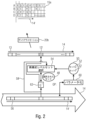
図2は、実施形態によるデータストリームからニューラルネットワークを定義するニューラルネットワークパラメータを復号化するための装置内で実行される逆量子化についての概念を示す概略図である。ニューラルネットワークは、例えば、相互接続された層のニューロン間のニューロン相互接続を有する、複数の相互接続されたニューラルネットワーク層を含むことができる。図2は、データストリーム14における、例えば符号化されたニューラルネットワークパラメータ13の量子化インデックス56を示す。ニューラルネットワークパラメータ13は、したがって、そのニューロン間の重みの観点など、ニューラルネットワークを定義またはパラメータ化することができる。
Figure 2 is a schematic diagram illustrating the concept of inverse quantization performed in an apparatus for decoding neural network parameters defining a neural network from a data stream according to an embodiment. A neural network may include, for example, multiple interconnected neural network layers with neuronal interconnections between the neurons of the interconnected layers. Figure 2 illustrates
本装置は、ニューラルネットワークパラメータ13を順次復号化するように構成されている。この順次プロセスの間、量子化器(再構成レベルセット)が変化させられる。この変化は、より少ない(またはより良いより密でない)レベルを有する量子化器を使用することを可能にし、したがって、より小さい量子化インデックスを符号化することを可能にし、この量子化から得られるニューラルネットワーク表現の品質が、必要な符号化ビットレートと比較して、一定の量子化器を使用するより向上される。詳細は後述する。特に、装置は、現在のニューラルネットワークパラメータ13’について、以前のニューラルネットワークパラメータについてデータストリーム14から復号化された量子化インデックス58に応じて複数(50)の再構成レベルセット52(セット0、セット1)のうち再構成レベルセット48(選択されたセット)を選択54(再構成レベル選択)することによって、ニューラルネットワークパラメータ13を順次復号する。
The device is configured to sequentially decode the
さらに、本装置は、データストリーム14から現在のニューラルネットワークパラメータ13’についての量子化インデックス56を復号化することによって、ここで、量子化インデックス56が現在のニューラルネットワークパラメータについての再構成レベルの選択されたセット48のうちの1つの再構成レベルを示し、及び、現在のニューラルネットワークパラメータ13’を現在のニューラルネットワークパネルについての量子化インデックス56によって示される再構成レベルの選択されたセット48の1つの再構成レベルに逆量子化62することによって、ニューラルネットワークパネル13を連続的に復号化するよう構成される。
The apparatus is further configured to successively decode the
復号化されたニューラルネットワークパラメータ13は、一例として、行列15aで表される。行列は、デシリアライズされた20b(deserialization)ニューラルネットワークパラメータ13を含んでもよく、これは、ニューラルネットワークのニューロン相互接続の重みに関連してもよい。
The decoded
任意選択的に、複数(50)の再構成レベルセット52の、本明細書で時々量子化器とも呼ばれる再構成レベルセット52の数は、図2に示すように、例えばセット0とセット1の2つであってよい。 Optionally, the number of reconstruction level sets 52, also sometimes referred to herein as quantizers, of the plurality (50) of reconstruction level sets 52 may be two, e.g., set 0 and set 1, as shown in FIG. 2.
さらに、装置は、例えば△または△kで示される所定の量子化ステップサイズ(QP)によって複数(50)の再構成レベルセット52(例えば、セット0、セット1)をパラメータ化60(parametrization)し、データストリーム14から所定の量子化ステップサイズの情報を導出するように構成されることができる。したがって、実施形態による復号化器は、可変ステップサイズ(QP)に適応することができる。
Furthermore, the device can be configured to parameterize 60 the multiple (50) reconstruction level sets 52 (e.g., set 0, set 1) by a predefined quantization step size (QP), e.g., denoted by △ or △k, and derive predefined quantization step size information from the
さらに、実施形態によれば、ニューラルネットワークは1つ以上のNN層を含むことができ、装置は、各NN層について、データストリーム14からそれぞれのNN層についての所定の量子化ステップサイズ(QP)の情報を導出し、それぞれのNN層に属するニューラルネットワークパラメータを逆量子化するために用いられるように、各NN層について、それぞれのNN層について導出された所定の量子化ステップサイズを用いて複数50の再構成レベルセット52をパラメータ化するよう構成され得る。NN層に関するステップサイズの適応、したがって再構成レベルセット52の適応は、符号化効率を向上させ得る。
Further, according to an embodiment, the neural network may include one or more NN layers, and the apparatus may be configured to derive, for each NN layer, information of a predefined quantization step size (QP) for the respective NN layer from the
さらなる実施形態によれば、装置は、現在のニューラルネットワークパラメータ13’について、複数50の再構成レベルセット52のうち再構成レベルセット48を、以前に復号化されたニューラルネットワークパラメータについてのデータストリーム14から復号化された量子化インデックス58を2値化したもののLSB(例えば、最下位ビット)部分または以前に復号化されたビン(例えば、2値決定)に応じて選択54するよう構成されるとよい。LSB比較は、低い計算コストで実行されることができる。特に、状態遷移が用いられることができる。選択54は、複数50の再構成レベルセット52のうちの量子化レベルセット48のうちの現在のニューラルネットワークパラメータ13’について、現在のニューラルネットワークパラメータ13’に関連する状態に応じて複数50の再構成レベルセット52のうちの再構成レベルセット48を現在のニューラルネットワークパラメータ13’について決定することによって、かつ、直前のニューラルネットワークパラメータについてのデータストリームから復号化された量子化インデックス58に応じて後続のニューラルネットワークパラメータについての状態を更新することによって、状態推移プロセスにより実行されることができる。また、例えば遷移表を使用することによる状態遷移以外の代替的なアプローチも同様に使用することができ、以下に規定される。
According to a further embodiment, the device may be configured to select 54 for the current neural network parameter 13' a reconstruction level set 48 from the plurality of 50 reconstruction level sets 52 in response to an LSB (e.g., least significant bit) portion of a
加えて、または代替的に、装置は、例えば、現在のニューラルネットワークパラメータ13’について、複数50の再構成レベルセット52のうち再構成レベルセット48を、以前に復号化されたニューラルネットワークパラメータについてのデータストリーム14から復号化された量子化インデックス58の2値関数の結果に応じて選択54するように構成されることができる。2値関数は、例えば、量子化インデックス58が偶数または奇数を表すかどうかを信号化する、ビット単位「and」演算を使用するパリティチェックであってよい。これは、量子化インデックス58を符号化するために使用される再構成レベルセット48に関する情報を、したがって、例えば、対応する符号化器で使用される再構成レベルセットの所定の順序のために、現在のニューラルネットワークパラメータ13’を符号化するために使用される再構成レベルのセットに対して提供し得る。パリティは、前述した状態遷移のために使用されることができる。
Additionally or alternatively, the device can be configured to select 54, for example, for the current neural network parameters 13', a reconstruction level set 48 out of the
さらに、実施形態によれば、装置は、例えば、現在のニューラルネットワークパラメータ13’について、複数50の再構成レベルセット52のうち再構成レベルのセット48を、以前に復号化されたニューラルネットワークパラメータについてデータストリーム14から復号化された量子化インデックス58のパリティに応じて選択54するように構成されることができる。パリティチェックは、例えばビット単位「and」演算を用いて、低い計算コストで実行されることができる。
Furthermore, according to an embodiment, the device can be configured to select 54, for example, for the current neural network parameters 13', a
任意選択で、装置は、ニューラルネットワークパラメータ13についての量子化インデックス56を復号化し、ニューラルネットワークパラメータ13の間で共通の連続的な順序14’に沿ってニューラルネットワークパラメータ13の逆量子化を実行するように構成されることができる。言い換えれば、両方のタスクに同じ順序が使用されることができる。
Optionally, the device can be configured to decode the
図3は、実施形態による、ニューラルネットワークパラメータをデータストリームに符号化するための装置内で実行される量子化の概念を模式的に示す図である。図3は、ニューラルネットワーク層10a、10bを含むニューラルネットワーク(NN)10を示し、層はニューロン10cを含み、相互接続された層のニューロンはニューロン相互接続11を介して相互接続されている。一例として、NN層(p-1)10aおよびNN層(p)10bが示され、pはNN層のインデックスであり、1≦p≦NNの層の数である。ニューラルネットワークは、ニューラルネットワークパラメータ13によって定義またはパラメータ化され、それは任意に、ニューラルネットワーク10のニューロン相互接続11の重みに関連し得る。図1の隠れ層のニューロン10cは、図3の層p(A、B、C、...)のニューロンを表してもよく、図1の入力層のニューロンは、図3に示される層p-1(a、b、c、...)のニューロンを表すことができる。ニューラルネットワークパラメータ13は、図1のニューロン相互接続11の重みに関連づけることができる。
3 is a diagram that illustrates a schematic of the quantization concept performed in an apparatus for encoding neural network parameters into a data stream according to an embodiment. FIG. 3 illustrates a neural network (NN) 10 including neural network layers 10a, 10b, where the layers include
異なる層のニューロン10cの関係は、図1において、ニューラルネットワークパラメータ13の行列15aによって表される。例えば、ネットワークパラメータ13がニューロン相互接続11の重みに関連する場合、行列15aは、例えば、行列要素が異なる層のニューロン10c間の重み(例えば、層p-1の場合はa、b、・・・、層pの場合はA、B、・・・)を表すように構成されることができる。
The relationships between
この装置は、例えばシリアル20a(シリアライゼーション、直列化)において、ニューラルネットワークパラメータ13を順次符号化するように構成されている。この順次処理の間、量子化器(再構成レベルセット)は変化させられる。この変化により、より少ない(またはより良いより密でない)レベルを有する量子化器を使用することができ、したがって、より小さい量子化インデックスを符号化することができ、この量子化から得られるニューラルネットワーク表現の品質が、必要な符号化ビットレートと比較して、一定の量子化器を使用する場合よりも改善される。詳細は後述する。特に、装置は、現在のニューラルネットワークパラメータ13’について、以前に符号化されたニューラルネットワークパラメータについてデータストリーム14に符号化された量子化インデックス58に応じて複数50の再構成レベルセット52のうち再構成レベルセット48を選択54することによって、ニューラルネットワークパラメータ13を順次に符号化する。
The device is configured to sequentially code the
さらに、装置は、現在のニューラルネットワークパラメータ13’を選択された再構成レベルセット48の1つの再構成レベル上に量子化64(Q)することによって、かつ、
現在のニューラルネットワークパラメータについての量子化インデックス56がデータストリーム14中に量子化される1つの再構成レベルを示す現在のニューラルネットワークパラメータ13’についての量子化インデックス56を符号化することによって、ニューラルネットワークパラメータ13を順次符号化するよう構成される。任意選択で、複数50の再構成レベルセット52のうち、本明細書で時々量子化器とも呼ばれる再構成レベルセット52の数は、例えばセット0およびセット1を用いて示されるように、2つであることができる。
The apparatus further quantizes 64 (Q) the current
It is configured to sequentially encode the
実施形態によれば、図3に示すように、装置は、例えば、所定の量子化ステップサイズ(QP)によって複数50の再構成レベルセット52をパラメータ化60し、データストリーム14に所定の量子化ステップサイズに関する情報を挿入するように構成されていることができる。これにより、例えば、量子化効率を向上させるための適応的量子化が可能となり、ニューラルネットワークパラメータ13の符号化方法の変化が、所定の量子化ステップサイズに関する情報とともに復号器に伝達されることができる。所定の量子化ステップサイズ(QP)を使用することにより、情報の伝送のためのデータ量を削減することができる。
According to an embodiment, as shown in FIG. 3, the device may be configured to, for example, parameterize 60 the
さらに、実施形態によれば、ニューラルネットワーク10は、1つ以上のNN層10a、10bを含んでいることができる。装置は、各NN層(p;p-1)について、それぞれのNN層についての所定の量子化ステップサイズ(QP)の情報をデータストリーム14に挿入し、それぞれのNN層に属するニューラルネットワークパラメータの量子化に使用するように、それぞれのNN層について導かれた所定の量子化ステップサイズを用いて複数50の再構成レベルセット52のパラメータ化を行うよう構成されることが可能である。先に説明したように、例えばNN層またはNN層の特性に応じた量子化の適応は、量子化効率を向上させることができる。
Furthermore, according to an embodiment, the
任意選択的に、装置は、現在のニューラルネットワークパラメータ13’について、複数50の再構成レベルセット52のうち再構成レベルのセット48を、以前に符号化されたニューラルネットワークパラメータについてデータストリーム14に符号化された量子化インデックス58を2値化したもののLSB部分または以前に符号化されたビンに応じて選択54するよう構成されることができる。LSB比較は、低い計算コストで実行され得る。
Optionally, the device can be configured to select 54 for the current neural network parameters 13' a
図2で説明した復号化のための装置と同様に、状態遷移が用いられることができる。現在のニューラルネットワークパラメータ13’について、現在のニューラルネットワークパラメータ13’に関連する状態に応じて、複数50の再構成レベルセット52のうちの再構成レベルのセット48を決定することによって、及び、直前のニューラルネットワークパラメータについてのデータストリームに符号化された量子化インデックス58に応じて、後続のニューラルネットワークパラメータについての状態を更新することによって、状態遷移プロセスにより、複数50の再構成レベルセット52のうちの量子化レベルセット48のうち現在のニューラルネットワークパラメータ13’について選択54が実行されることができる。例えば遷移表を使用することによる状態遷移以外のアプローチも同様に使用可能であり、以下に規定される。
Similar to the device for decoding described in FIG. 2, state transitions can be used. A
さらに、または代替的に、装置は、現在のニューラルネットワークパラメータ13’について、以前に符号化されたニューラルネットワークパラメータについてのデータストリーム14に符号化された量子化インデックス58の2値関数の結果に応じて、複数50の再構成レベルセット52のうち再構成レベルセット48を選択54するよう構成されることができる。2値関数は、例えば、量子化インデックス58が偶数または奇数を表すかどうかを信号化する、ビット単位「and」演算を使用したパリティチェックであってもよい。これは、量子化インデックス58を符号化するために使用される再構成レベルセット48に関する情報を提供してもよく、したがって、例えば、所定の順序のために、対応する復号化器が対応する再構成レベルセット48を選択できるように、再構成レベルの所定の順序のために、現在のニューラルネットワークのパラメータ13’についての再構成レベルのセット48を決定することができる。パリティは、前述した状態遷移のために使用されることができる。
Additionally or alternatively, the device may be configured to select 54 a reconstruction level set 48 from among a plurality of 50 reconstruction level sets 52 for the current neural network parameters 13' depending on the result of a binary function of the
さらに、実施形態によれば、装置は、例えば、現在のニューラルネットワークパラメータ13’について、複数50の再構成レベルセット52のうち量子化レベルセット48を、以前に符号化されたニューラルネットワークパラメータについてのデータストリーム14に符号化された量子化インデックス56のパリティに応じて、選択54するように構成されることができる。パリティチェックは、例えばビット単位「and」演算を使用して、低い計算コストで実行されることができる。
Furthermore, according to an embodiment, the device can be configured to select 54, for example, for the current neural network parameters 13', a quantization level set 48 from among a
任意選択的に、装置は、ニューラルネットワークパラメータ(13)についての量子化インデックス(56)を符号化し、ニューラルネットワークパラメータ(13)の量子化を、ニューラルネットワークパラメータ(13)間の共通の連続的な順序(14’)に沿って実行するように構成されることができる。すなわち、両方のタスクで同じ順序を使用することができる。 Optionally, the device can be configured to encode quantization indices (56) for the neural network parameters (13) and to perform the quantization of the neural network parameters (13) along a common sequential order (14') between the neural network parameters (13), i.e., the same order can be used for both tasks.
図4は、実施形態による量子化されたニューラルネットワークのパラメータを算術復号化するための概念の概略図である。これは、図2の装置内で使用することができる。したがって、図4は、図2の可能な拡張として見ることができる。それは、現在のニューラルネットワークパラメータ13’についての量子化インデックス56が、算術符号化、例えば2値算術符号化の使用によって任意例として示すように、図4の装置によって復号化されるデータストリーム14を示す。例えばあるコンテキストによって定義される確率モデルが使用され、それは、矢印123によって示されるように、現在のニューラルネットワークパラメータ13’について選択された再構成レベルセット48に依存する。詳細は、本明細書において設定される。
Figure 4 is a schematic diagram of a concept for arithmetically decoding quantized neural network parameters according to an embodiment. It can be used within the device of figure 2. Figure 4 can therefore be seen as a possible extension of figure 2. It shows a
図2に関して説明したように、現在のニューラルネットワークパラメータ13’に関連する状態に応じて、現在のニューラルネットワークパラメータ13’について複数50の再構成レベルセット52のうちの再構成レベルのセット48を決定することによって、及び、直前のニューラルネットワークパラメータについてのデータストリームから復号化された量子化インデックス58に応じて、後続のニューラルネットワークパラメータについての状態を更新することによって、状態遷移プロセスにより、複数50の再構成レベルセット52のうちの量子化レベルのセット48を選択する選択54が現在のニューラルネットワークパラメータ13’について実行されることができる。したがって、状態は、現在のニューラルネットワークパラメータ13’を符号化/復号化するために使用されるべき再構成レベルセット48へのポインタに準じるものであるが、これは、しかしながら、状態が、過去のニューラルネットワークパラメータまたは過去の量子化インデックスのメモリとして疑似的に機能するように、再構成セットの数に対応する数の状態を区別するだけとして、より細かい要素で更新される。したがって、状態は、ニューラルネットワークパラメータ13を符号化/復号化するために使用される再構成レベルのセットの順序を規定する。図4によれば、例えば、現在のニューラルネットワークパラメータ(13’)についての量子化インデックス(56)は、現在のニューラルネットワークパラメータ(13’)についての状態に対応する(122)確率モデルを用いて、算術符号化を用いてデータストリーム(14)から復号化される。状態に応じて確率モデルを適応させることにより、確率モデルの推定が良好となり、符号化効率が向上する可能性がある。さらに、状態に応じて適応させることで、少ない追加データの送信で計算効率のよい適応が可能になる場合がある。
As explained with respect to FIG. 2, a
さらなる実施形態によれば、装置は、例えば、量子化インデックス56を2値化82したものの少なくとも1つのビン84についての現在のニューラルネットワークパラメータ13’についての状態に依存122する確率モデルを用いて、2値算術コーディングを使ってデータストリーム14から現在のニューラルネットワークパラメータ13’についての量子化インデックス56を復号化するよう構成されることができる。
According to a further embodiment, the device can be configured to decode the
さらに、または代替的に、装置は、確率モデルの依存性が、依存性を用いるニューラルネットワークパラメータについてのコンテキストのセットのうちコンテキスト87の選択103(導出)を含むように構成されてもよく、各コンテキストは、所定の確率モデルが関連づけられるように構成される。使用される確率推定が優れているほど、圧縮の効率は高くなる。確率モデルは、例えば、コンテキスト適応的(2値)算術符号化を用いて、更新されることができる。
Additionally or alternatively, the device may be configured such that the dependency of the probability model includes the selection 103 (derivation) of a
任意選択で、装置は、それぞれのコンテキストを用いて算術符号化された量子化インデックスに基づいて、それぞれのコンテキストに関連する所定の確率モデルを更新するように構成されることができる。このように、コンテキストの確率モデルは、実際の統計に適応される。 Optionally, the device may be configured to update a predefined probability model associated with each context based on the quantization indexes arithmetically coded with the respective context. In this way, the probability model of the context is adapted to the actual statistics.
さらに、装置は、例えば、量子化インデックスを2値化したものの少なくとも1つのビンについて、現在のニューラルネットワークパラメータ13’に対して選択された再構成レベルセット48に対応する確率モデルを用いて、2値算術符号化を用いてデータストリーム14から現在のニューラルネットワークパラメータ13’についての量子化インデックス56を復号化するよう構成されることができる。
Furthermore, the device may be configured to decode the
任意選択で、少なくとも1つのビンは、現在のニューラルネットワークパラメータの量子化インデックス56がゼロに等しいか否かを示す有意性ビンを含んでいることができる。さらに、または代替的に、少なくとも1つのビンは、現在のニューラルネットワークパラメータの量子化インデックス56がゼロより大きいか、またはゼロより小さいかを示す符号ビンを含んでもよい。さらに、少なくとも1つのビンは、現在のニューラルネットワークパラメータの量子化インデックス56の絶対値がXより大きいか否かを示すgreater-than-Xビンを含んでもよく、ここでXはゼロより大きい整数である。
Optionally, at least one bin may include a significance bin indicating whether the current neural network
以下、図5では、図4を用いて説明した復号化のための概念の対極を説明することができる。したがって、すべての説明および利点は、以下の符号化のための概念の側面に適宜適用することができる。 Below, in FIG. 5, the opposite of the concept for decoding described with reference to FIG. 4 can be described. Therefore, all the explanations and advantages can be applied to the aspects of the concept for encoding below, as appropriate.
図5は、実施形態によるニューラルネットワークパラメータを算術符号化するための概念を示す概略図である。これは、図3の装置内で使用され得る。したがって、図5は、図3の可能な拡張として見ることができる。それは、現在のニューラルネットワークパラメータ13’についての量子化インデックス56が、算術符号化、例えば任意の例として2値算術符号化の使用によって示されるように図3の装置によって符号化されるデータストリーム14を示す。例えばあるコンテキストによって定義される確率モデルが使用され、それは、矢印123によって示されるように、現在のニューラルネットワークパラメータ13’に対して選択された再構成レベルセット48に依存する。詳細は本明細書において設定される。
Figure 5 is a schematic diagram illustrating a concept for arithmetically coding neural network parameters according to an embodiment. This can be used within the device of figure 3. Figure 5 can therefore be seen as a possible extension of figure 3. It shows a
図3に関して説明したように、現在のニューラルネットワークパラメータ13’について選択54が実行される。選択54は、現在のニューラルネットワークパラメータ13’について、現在のニューラルネットワークパラメータ13’に関連する状態に応じて、複数50の再構成レベルセット52のうちの量子化レベルセット48を決定することによって、及び、直前のニューラルネットワークパラメータについてのデータストリームに符号化された量子化インデックス58に応じて、後続のニューラルネットワークパラメータについての状態を更新することによって、状態遷移プロセスにより複数50の再構成レベルセット52のうちの量子化レベルセット48を選択する。
As described with respect to FIG. 3, a
したがって、状態は、現在のニューラルネットワークパラメータ13’を符号化/復号化するために使用されるべき再構成レベルセット48へのポインタに準ずるものであるが、しかし、状態が疑似的に、過去のニューラルネットワークパラメータまたは過去の量子化インデックスのメモリとして機能するように、再構成セットの数に対応する数の状態を区別するだけとしてより細かい要素で更新されている。したがって、状態は、ニューラルネットワークパラメータ13を符号化/復号化するために使用される再構成レベルセットの順序を定義する。
The state is thus akin to a pointer to the reconstruction level set 48 to be used to encode/decode the current neural network parameters 13', but has been updated with finer details to only distinguish a number of states corresponding to the number of reconstruction sets, so that the state acts, in a pseudo way, as a memory of past neural network parameters or past quantization indices. The state thus defines the order of the reconstruction level sets to be used to encode/decode the
さらに、現在のニューラルネットワークパラメータ13’についての量子化インデックス56は、現在のニューラルネットワークパラメータ13’についての状態122に対応する確率モデルを用いる算術符号化を用いてデータストリーム14に符号化されることができる。
Furthermore, the
例えば図3によれば、量子化インデックス56は、量子化インデックス56を2値化82したものの少なくとも1つのビン84に対する現在のニューラルネットワークパラメータ13’に対する状態122に対応する確率モデルを用いて、2値算術コーディングを用いてデータストリーム14へ符号化される。確率モデルは確率モデルの推定に適している可能性があるため、状態に応じて確率モデルを適応させると、符号化効率が向上する可能性がある。さらに、状態に応じた適応は、送信される追加データの量が少なく、計算効率のよい適応を可能にし得る。
3, for example, the
さらに、または代替的に、本装置は、確率モデルの依存性が、依存性を用いたニューラルネットワークパラメータのコンテキストのセットのうちコンテキスト87の選択103(導出)を含み、各コンテキストは所定の確率モデルが関連づけられているように構成されることができる。
Additionally or alternatively, the apparatus may be configured such that the probabilistic model dependency includes the selection 103 (derivation) of a
任意選択で、装置は、それぞれのコンテキストを使用して算術符号化された量子化インデックスに基づいて、それぞれのコンテキストに関連付けられた所定の確率モデルを更新するように構成されることができる。 Optionally, the apparatus may be configured to update a predefined probability model associated with each context based on the quantization indexes arithmetically coded using the respective context.
さらに、装置は、例えば、量子化インデックスを2値化したものの少なくとも1つのビンについて、現在のニューラルネットワークパラメータ13’について選択された再構成レベルセット48に対応する確率モデルを用いることによって、2値算術符号化を用いて、データストリーム14に現在のニューラルネットワークパラメータ13’の量子化インデックス56を符号化するよう構成されることができる。2値算術符号化を使用するために、量子化インデックス56は、2値化(binarization)されることができる。
Furthermore, the device can be configured to encode the
任意選択で、少なくとも1つのビンは、現在のニューラルネットワークパラメータの量子化インデックス56がゼロに等しいか否かを示す有意性ビンを含むことができる。さらに、または代替的に、少なくとも1つのビンは、現在のニューラルネットワークパラメータの量子化インデックス56がゼロより大きいか、またはゼロより小さいかを示す符号ビンを含むことができる。さらに、少なくとも1つのビンは、現在のニューラルネットワークパラメータの量子化インデックス56の絶対値がXより大きいか否かを示すgreater-than-Xビンを含むことができ、ここでXはゼロより大きい整数である。
Optionally, at least one bin may include a significance bin indicating whether the
次に説明する実施形態は、次のような本願の別の態様に集中している。ニューラルネットワークのパラメータ化が段階または再構成層で符号化され、NNパラメータごとに、各ステージからの1つの値は、ニューラルネットワークの改良された/強化された表現を得るために結合される必要があり、少なくとも1つがそれ自体ニューラルネットワークの妥当な表現を表すかもしれないが、低質で貢献する段階のいずれかに強化されているが、後者の可能性は本態様に必須ではないものである。 The next described embodiment focuses on another aspect of the present application, which is that the parameterization of the neural network is coded in stages or reconstruction layers, and for each NN parameter, one value from each stage needs to be combined to obtain an improved/enhanced representation of the neural network, and at least one may itself represent a reasonable representation of the neural network, but is enhanced in any of the contributing stages of low quality, although the latter possibility is not essential to this aspect.
図6は、本発明による実施形態で使用するためのニューラルネットワークパラメータのための再構成層を使用する概念の概略図である。図6は、例えば第2の再構成層である再構成層i、例えば第1の再構成層である再構成層i-1、および例えば図3からの層10bであるニューラルネットワーク(NN)層pが、例えば図3からの行列15aなどのアレイまたは行列の形態で表された層であることを示している。
Figure 6 is a schematic diagram of the concept of using reconstruction layers for neural network parameters for use in an embodiment according to the invention. Figure 6 shows that reconstruction layer i, e.g. the second reconstruction layer, reconstruction layer i-1, e.g. the first reconstruction layer, and neural network (NN) layer p,
図6は、ニューラルネットワークを定義するニューラルネットワークパラメータ13を再構成するための装置310の概念を示している。したがって、この装置は、例えば連合学習プロセスの間に以前に送信された可能性があり、例えば、第1の再構成層、例えば再構成層i-1について、第1の再構成層のニューラルネットワークパラメータと呼ばれてもよい第1ニューラルネットワークパラメータ13aを導出し、ニューラルネットワークパラメータごと、例えば重みごとまたはニューロン間接続ごとに、第1の再構成層のニューラルネットワークパラメータ値をもたらすよう構成されている。この導出は、そうでなければ、第1のニューラルネットワークパラメータ13aを復号化すること、または受け取ることを含むことができる。さらに、装置は、ニューラルネットワークパラメータ13ごとに第2の再構成層のニューラルネットワークパラメータ値を生成するためのデータストリーム14から第2の再構成層についての例えば最終ニューラルネットワークパラメータ、例えばパラメータ13と区別するために第2の再構成層のニューラルネットワークパラメータと呼ばれ得る第2ニューラルネットワークパラメータ13bを復号化312するよう構成されている。したがって、第1および第2の再構成層の2つの寄与値が、NNパラメータごとに得られてもよく、第1および/または第2のNNパラメータ値の符号化/復号化は、図2および図3に従った依存量子化(dependent quantization)、および/または図4および図5で説明したような量子化インデックスの算術符号化/復号化を使用することができる。第2のニューラルネットワークパラメータ13bは、ニューラル表現の観点から自己完結した意味を持たず、単に、第1の表現層のパラメータと組み合わせたときに、ニューラルネットワーク表現、すなわち最終的なニューラルネットワークパラメータを導くだけかもしれない。
6 shows a concept of an apparatus 310 for reconstructing
さらに、装置は、各ニューラルネットワークパラメータについて、第1の再構成層のニューラルネットワークパラメータ値と第2再構成層ニューラルネットワークパラメータ値とを、例えば要素単位の加算および/または乗算を用いて組み合わせる(CB)ことにより、ニューラルネットワークパラメータ13を再構成314するように構成されている。
Furthermore, the device is configured to reconstruct 314 the
さらに、図6は、第1の再構成層、例えば再構成層i-1のための第1のニューラルネットワークパラメータ13aを用いて、ニューラルネットワークを定義するニューラルネットワークパラメータ13を符号化するための装置320の概念を示している。第1の再構成層は、ニューラルネットワークパラメータ13ごとに、第1の再構成層のニューラルネットワークパラメータ値を含む。したがって、装置は、第2の再構成層、例えば再構成層iのための第2のニューラルネットワークパラメータ13bをデータストリームに符号化322するように構成される。第2の再構成層は、ニューラルネットワークパラメータ13ごとに、第2の再構成層のニューラルネットワークパラメータ値を含む。ニューラルネットワークパラメータ13は、それぞれのニューラルネットワークパラメータについて、例えば要素単位の加算および/または乗算を用いて、第1の再構成層のニューラルネットワークパラメータ値と第2の再構成層のニューラルネットワークパラメータ値とを組み合わせる(CB)ことによって再構成可能である。
Furthermore, FIG. 6 shows the concept of an apparatus 320 for encoding
任意選択的に、装置310は、データストリーム14から、または別個のデータストリームから、第1の再構成層についての第1のニューラルネットワークパラメータを復号化316するように構成されることができる。
Optionally, the device 310 can be configured to decode 316 first neural network parameters for the first reconstruction layer from the
簡単に言えば、ニューラルネットワークパラメータ13の分解は、パラメータのより効率的な符号化および/または復号化および送信を可能にし得る。
Simply put, decomposition of the
以下では、特に、ニューラルネットワーク符号化概念を含む、さらなる実施形態が開示される。以下の説明では、上述した実施形態と個別に、および組み合わせて使用することができる更なる詳細を提供する。 Further embodiments are disclosed below, particularly those involving neural network coding concepts. The following description provides further details that can be used individually and in combination with the above-described embodiments.
まず、本発明の実施形態による依存スカラー量子化(Dependent Scalar Quantization)を伴うニューラルネットワークのパラメータのエントロピー符号化のための方法を提示する。 First, we present a method for entropy coding of neural network parameters with dependent scalar quantization according to an embodiment of the present invention.
依存スカラー量子化を用いたニューラルネットワークパラメータ13(重み、重みパラメータまたはパラメータとも呼ばれる)のセットのパラメータ符号化方法について説明する。本明細書で提示されるパラメータ符号化は、パラメータ13の依存スカラ量子化(例えば、図3の文脈で説明したような)および得られた量子化インデックス56のエントロピー符号化(例えば、図5の文脈で説明したような)から構成される。復号化器側では、量子化インデックス56のエントロピー復号化(例えば、図4の文脈で説明したように)と、ニューラルネットワークパラメータ13の依存再構成(例えば、図2の文脈で説明したように)とによって、再構成されたニューラルネットワークパラメータのセットを得ることができる。独立したスカラー量子化およびエントロピー符号化を伴うパラメータ符号化とは対照的に、ニューラルネットワークパラメータ13についての許容可能な再構成レベルセットは、再構成順序において現在のニューラルネットワークパラメータ13’に先行する送信済み量子化インデックス56に依存する。以下に示す提示は、依存スカラ量子化で使用される再構成レベルを指定する量子化インデックスのエントロピー符号化のための方法を追加的に説明する。
A method for parameter coding of a set of neural network parameters 13 (also called weights, weight parameters or parameters) with dependent scalar quantization is described. The parameter coding presented here consists of dependent scalar quantization of the parameters 13 (e.g. as described in the context of FIG. 3) and entropy coding of the resulting quantization indexes 56 (e.g. as described in the context of FIG. 5). On the decoder side, a set of reconstructed neural network parameters can be obtained by entropy decoding of the quantization indexes 56 (e.g. as described in the context of FIG. 4) and dependent reconstruction of the neural network parameters 13 (e.g. as described in the context of FIG. 2). In contrast to parameter coding with independent scalar quantization and entropy coding, the set of allowable reconstruction levels for the
本説明は、主にニューラルネットワーク圧縮におけるニューラルネットワークパラメータ層の非可逆符号化を対象としているが、他の分野の非可逆符号化にも適用可能である。 This explanation is primarily directed to lossy coding of neural network parameter layers in neural network compression, but is also applicable to lossy coding in other fields.
本装置の方法論は、以下のような異なる主要部分に分けられる。 The methodology of this device is divided into different main parts:
1.量子化
2.ロスレス符号化
3.ロスレス復号化
1.
以下に示す実施形態の主な利点を理解するために、まず、ニューラルネットワークの話題と、パラメータ符号化のための関連する方法について、簡単に紹介する。それにもかかわらず、開示されたすべての側面、特徴、および概念は、本明細書に記載される実施形態と別々にまたは組み合わせて使用することができる。 To appreciate the main advantages of the embodiments described below, we first provide a brief introduction to the topic of neural networks and related methods for parameter encoding. Nonetheless, all of the disclosed aspects, features, and concepts can be used separately or in combination with the embodiments described herein.
2 量子化及びエントロピー符号化のための関連する方法
マルチメディアコンテンツの説明及び分析のためのニューラルネットワークの圧縮のためのMPEG-7パート17規格のワーキングドラフト2[2]は、ニューラルネットワークパラメータ符号化に独立スカラー量子化(independent scalar quantization)及びエントロピー符号化を適用している。
2 Related Methods for Quantization and Entropy
2.1 スカラー量子化器
ニューラルネットワークのパラメータは、スカラ量子化器を用いて量子化される。量子化の結果、パラメータ13の許容値のセットは減少する。言い換えれば、ニューラルネットワークのパラメータは、いわゆる再構成レベルの可算集合(実際には有限集合)にマッピングされる。再構成レベルセットは、可能なニューラルネットワークパラメータ値のセット(集合)の適切なサブセット(部分集合)を表す。以下のエントロピー符号化を単純化するために、許容可能な再構成レベルは、量子化インデックス56によって表され、これはビットストリーム14の一部として伝送される。復号化器側では、量子化インデックス56は、再構成されたニューラルネットワークパラメータ13にマッピングされる。再構成されたニューラルネットワークパラメータ13の可能な値は、再構成レベルセット52に対応する。符号化器側では、スカラー量子化の結果は、1セットの(整数)量子化インデックス56である。
2.1 Scalar Quantizer The parameters of the neural network are quantized using a scalar quantizer. As a result of the quantization, the set of allowable values of the

このコンテキストでは、「独立スカラー量子化」という用語は、任意の重みパラメータ13に対する量子化インデックスq56が与えられると、関連する再構成された重みパラメータt’13’が他の重みパラメータに対するすべての量子化インデックスから独立して決定できる、という特性を指す。
In this context, the term "independent scalar quantization" refers to the property that given a quantization index q56 for any
2.1.1 符号化器の動作:量子化
ニューラルネットワークの圧縮に関する標準規格は、ビットストリームのシンタックスと再構成プロセスのみを規定している。与えられたオリジナルのニューラルネットワークパラメータ13のセットと与えられた量子化ステップサイズ(QP)に対するパラメータ符号化を考える場合、符号化器は多くの自由度を有する。層10a、10bの量子化インデックスqk56が与えられると、エントロピー符号化は、データをビットストリーム14に書き込む(すなわち、算術符号語(コードワード)を構築する)ための一意に定義されたアルゴリズムに従わなければならない。しかし、重みパラメータのオリジナルセット(例えば層)が与えられた量子化インデックスqk56を得るための符号化アルゴリズムは、ニューラルネットワーク圧縮の規格の範囲外である。以下の説明では、各ニューラルネットワークパラメータ13の量子化ステップサイズ(QP)が既知であると仮定する。それでも、符号化器は、各ニューラルネットワーク(重み)パラメータtk13についての量子化器インデックスqk56を選択する自由を有する。量子化インデックスの選択は、歪み(または再構成/近似品質)とビットレートの両方を決定するので、使用される量子化アルゴリズムは、生成されるビットストリーム14のレート歪み性能に実質的な影響を与える。
2.1.1 Encoder Operation: Quantization Standards for compression of neural networks only prescribe the syntax and reconstruction process of the bitstream. When considering parameter coding for a given set of original
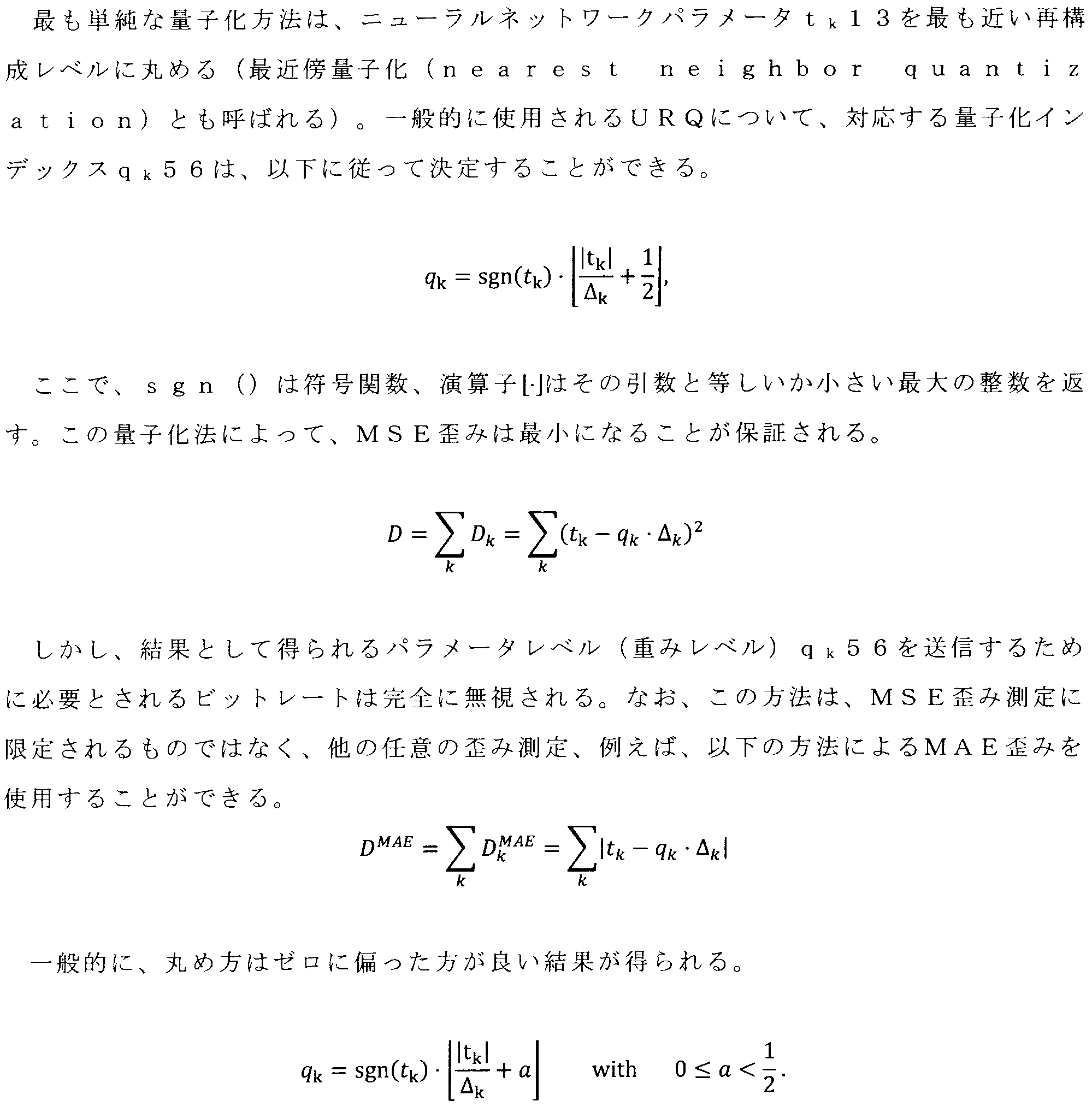
量子化プロセスはラグランジュ関数D+λ・Rを最小化すれば、レート歪み的に良い結果が得られる。ここで、Dはニューラルネットワークパラメータセットの歪み(例えば、MSE歪み、又は、MAE歪み)、Rは量子化インデックス56を伝送するために必要なビット数、λはラグランジュ乗数である。
The quantization process performs well in terms of rate distortion if it minimizes the Lagrangian function D+λ·R, where D is the distortion of the neural network parameter set (e.g., the MSE distortion or the MAE distortion), R is the number of bits required to transmit the


実際、近傍量子化はλ=0の些細なケースであり、マルチメディアコンテンツの説明及び分析のためのニューラルネットワークの圧縮に関するMPEG-7 part17規格のワーキングドラフト2において適用されている。
In fact, neighborhood quantization is applied in the trivial case of λ=0 in
2.2 エントロピー符号化
前のステップで適用された均一量子化の結果として、重みパラメータはいわゆる再構成レベルの有限集合にマッピングされる。これらは、(整数)量子化器インデックス56(パラメータレベルまたは重みレベルとも呼ばれる)と量子化ステップサイズ(QP)によって表すことができ、例えば、全層に対して固定されている場合がある。層のすべての量子化された重みパラメータを復元するために、層のステップサイズ(QP)および次元は、復号化器によって知られてもよい。これらは、例えば、別々に送信されてもよい。
2.2 Entropy Coding As a result of the uniform quantization applied in the previous step, the weight parameters are mapped to a finite set of so-called reconstruction levels. These can be represented by (integer) quantizer indices 56 (also called parameter levels or weight levels) and quantization step sizes (QP), which may for example be fixed for all layers. To recover all quantized weight parameters of a layer, the step sizes (QP) and dimensions of the layer may be known by the decoder. These may for example be transmitted separately.
2.2.1 コンテキスト適応的2値算術符号化(CABAC、Context-adaptive binary arithmetic coding)による量子化インデックスの符号化
量子化インデックス56(整数表現)は、次にエントロピー符号化技術を使用して送信される。したがって、重みの層は、スキャンを使用して量子化された重みレベルのシーケンスにマッピングされる。例えば、行列の最上部の行から始めて、含まれる値を左から右へ符号化する、行ファーストスキャン順序(row first scan order)を使用することができる。この方法では、すべての行が上から下へ符号化される。スキャンは、ニューロン相互接続11の重みに関連し得るニューラルネットワークパラメータ13を含む行列15aについて、例えば共通の連続的な順番14’に沿って、図3に示すように実行されてもよい。行列は、重み層、例えば、図3及び図1にそれぞれ示すように、ニューロン相互接続11の層p-1 10aと層p 10bとの間の重み、又は隠れ層及び入力層との間の重みを表してもよい。なお、他の任意のスキャンを適用することができる。例えば、行列(例えば、図2又は図3の行列15a)は、行ファーストスキャンを適用する前に、転置され、又は水平及び/又は垂直に反転され、及び/又は左又は右に90/180/270度だけ回転されることができる。
2.2.1 Coding of the quantization indexes by context-adaptive binary arithmetic coding (CABAC) The quantization indexes 56 (integer representation) are then transmitted using an entropy coding technique. Thus, the layer of weights is mapped to a sequence of quantized weight levels using a scan. For example, a row first scan order can be used, starting from the top row of the matrix and coding the values contained from left to right. In this way, all rows are coded from top to bottom. The scan may be performed as shown in FIG. 3, for example along a common
図3および図5に関して説明したように、実施形態による装置は、量子化インデックス56を2値化82したものの少なくとも1つのビン84に対する現在のニューラルネットワークパラメータ13’に対する状態122に対応する確率モデルを用いて、2値算術符号化を用いてデータストリーム14へ現在のニューラルネットワークパラメータ13’についての量子化インデックス56を符号化するよう構成されることができる。確率モデルを用いた2値算術符号化は、コンテキスト適応的2値算術符号化(CABAC、Context-adaptive binary arithmetic coding)であることができる。
As described with respect to Figures 3 and 5, an apparatus according to an embodiment may be configured to encode the
すなわち、実施形態によれば、レベルの符号化のために、CABACが使用される。詳細については、[3]を参照されたい。そこで、量子化された重みレベルq56は、一連の2値記号またはシンタックス要素、例えばビン(2値決定)に分解され、その後、2値算術符号化器(CABAC)に渡されることがある。最初のステップでは、量子化された重みレベルに対して2値シンタックス要素sig_flagが導出され、これは対応するレベルがゼロに等しいかどうかを指定する。言い換えれば、図4に示す量子化インデックス56を2値化82したものの少なくとも1つのビンは、現在のニューラルネットワークパラメータの量子化インデックス56がゼロに等しいか否かを示す有意性ビンを含むことができる。
That is, according to an embodiment, CABAC is used for coding the levels. For details, see [3]. There, the quantized weight level q56 may be decomposed into a series of binary symbols or syntax elements, e.g. bins (binary decisions), and then passed to a binary arithmetic coder (CABAC). In a first step, a binary syntax element sig_flag is derived for the quantized weight level, which specifies whether the corresponding level is equal to zero or not. In other words, at least one bin of the
sig_flagが1に等しい場合、さらなる2値シンタックス要素sign_flagが導き出される。このビンは、現在の重みレベルが正(例えば、ビン=0)か負(例えば、ビン=1)かを示す。言い換えれば、図4に示す量子化インデックス56を2値化82したものの少なくとも1つのビンは、現在のニューラルネットワークパラメータの量子化インデックス56がゼロより大きいかまたはゼロより小さいかを示す符号ビン86を含むことができる。
If sig_flag is equal to 1, a further binary syntax element sign_flag is derived, which bin indicates whether the current weight level is positive (e.g., bin=0) or negative (e.g., bin=1). In other words, at least one bin of the
次に、ビンの単項シーケンスが符号化され、それに続いて、以下のように固定長シーケンスが次のように符号化される。 The unary sequence of bins is then encoded, followed by a fixed-length sequence as follows:
変数kは負でない整数で初期化され、Xは1<<kで初期化される。 The variable k is initialized to a non-negative integer, and X is initialized with 1<<k.
量子化された重みレベルの絶対値がXより大きいことを示すabs_level_greater_Xという一つ以上のシンタックス要素が符号化される。abs_level_greater_Xが1に等しい場合、変数kが更新され(例えば、1だけ増加)、次に1<<kがXに加えられ、さらにabs_level_greater_Xが符号化される。この手順は、abs_level_greater_Xが0に等しくなるまで続けられる。その後、長さkの固定長コードで量子化器インデックスの符号化を完了することができる。例えば、変数rem=X-|q|は、kビットを用いて符号化され得る。あるいは、変数rem’は、rem’=(1<<k)-rem-1として定義され、これはkビットを用いて符号化され得る。また、変数remのkビットの固定長符号への他のマッピングも使用できる。 One or more syntax elements abs_level_greater_X are coded to indicate that the absolute value of the quantized weight level is greater than X. If abs_level_greater_X is equal to 1, the variable k is updated (e.g., increased by 1), then 1<<k is added to X, and abs_level_greater_X is coded. This procedure continues until abs_level_greater_X is equal to 0. The coding of the quantizer index can then be completed with a fixed length code of length k. For example, the variable rem=X-|q| may be coded using k bits. Alternatively, the variable rem' may be defined as rem'=(1<<k)-rem-1, which may be coded using k bits. Other mappings of the variable rem to a k-bit fixed length code may also be used.
言い換えれば、図4に示す量子化インデックス56を2値化82したものの少なくとも1つのビンは、現在のニューラルネットワークパラメータの量子化インデックス56の絶対値がXより大きいか否かを示すgreater-than-Xビンを含むことができ、ここでXはゼロより大きい整数である。
In other words, at least one bin of the binarized 82
各abs_level_greater_Xの後にkを1ずつ増加させる場合、このアプローチは、指数ゴロム符号化(exponential Golomb coding)を適用することと同一である(sign_flagがみなされていない場合)。 If we increase k by 1 after each abs_level_greater_X, this approach is identical to applying exponential Golomb coding (if sign_flag is not considered).
また、符号化器側と復号化器側で絶対値の最大値abs_maxが分かっている場合、次に送信するabs_Level_greater_Xについて、X>=abs_maxが成り立つとき、abs_Level_greater_Xシンタックス要素の符号化を終了することができる。 In addition, if the maximum absolute value abs_max is known on the encoder and decoder sides, the encoding of the abs_Level_greater_X syntax element can be terminated when X>=abs_max holds for the abs_Level_greater_X to be transmitted next.

言い換えれば、図2および図4に関して説明したように、実施形態による装置は、量子化インデックス56を2値化82したものの少なくとも1つのビン84についての現在のニューラルネットワークパラメータ13’に対する状態122に対応する確率モデルを使用することにより、2値算術符号化を使用してデータストリーム14から現在のニューラルネットワークパラメータ13’に対する量子化インデックス56を復号化するよう構成されることができる。
In other words, as described with respect to Figures 2 and 4, an apparatus according to an embodiment can be configured to decode the
図5に示す量子化インデックス56を2値化82したものの少なくとも1つのビンは、現在のニューラルネットワークパラメータの量子化インデックス56がゼロに等しいか否かを示す有意性ビンを含むことができる。さらに、または代替的に、少なくとも1つのビンは、現在のニューラルネットワークパラメータの量子化インデックス56がゼロより大きいか、またはゼロより小さいかを示す符号ビン86を含むことができる。さらに、少なくとも1つのビンは、現在のニューラルネットワークパラメータの量子化インデックス56の絶対値がXより大きいか否かを示すgreater-than-Xビンを含むことができ、ここでXはゼロより大きい整数である。
At least one bin of the
好ましい実施形態では、kは0に初期化され、以下のように更新される。各abs_level_greater_Xが1に等しくなった後、kの必要な更新は、以下のルールに従って行われる:X>X’の場合、kは1だけ増分され、X’はアプリケーションに対応する定数である。例えば、X’は符号化器が導出し、復号化器に通知する数値(例えば、0から100の間)である。 In the preferred embodiment, k is initialized to 0 and updated as follows: After each abs_level_greater_X equals 1, any necessary updates to k are made according to the following rules: if X>X', k is incremented by 1, where X' is a constant corresponding to the application. For example, X' is a number (e.g., between 0 and 100) that the encoder derives and communicates to the decoder.
2.2.3 コンテキスト・モデリング
CABACエントロピー符号化では、量子化された重みレベル56のほとんどのシンタックス要素は、2値確率モデリングを用いて符号化される。各2値決定(bin)はコンテキストと関連付けられている。コンテキストは、符号化されたビンのクラスに対する確率モデルを表す。2つの可能なビン値のうちの1つに対する確率は、対応するコンテキストで既に符号化されたビンの値に基づいて、各コンテキストについて推定される。アプリケーションに応じて、異なるコンテキストモデリングアプローチを適用することができる。通常、量子化された重み符号化に関連するいくつかのビンについて、符号化に使用されるコンテキストは、既に送信されたシンタックス要素に基づいて選択される。実際のアプリケーションに応じて、例えばSBMP 0、またはHEVC 0またはVTM-4.0 0のものなど、異なる確率推定器が選択され得る。この選択は、例えば、圧縮効率や複雑さに影響を与える。
2.2.3 Context Modeling In CABAC entropy coding, most syntax elements of the quantized
言い換えれば、図5、例えばコンテキスト87に関して説明したような確率モデルは、以前に符号化されたニューラルネットワークパラメータの量子化インデックスに追加的に依存する。
In other words, a probability model such as that described in FIG. 5, e.g., with respect to
それぞれ、図4、例えばコンテキスト87に関して説明したような確率モデルは、さらに、以前に復号化されたニューラルネットワークパラメータの量子化インデックスに依存する。
Respectively, the probability model as described in FIG. 4, e.g., with respect to
広範囲のニューラルネットワークに適合するコンテキストモデリング方式は、以下のように説明される。重み行列(層)の特定の位置(x,y)で量子化された重みレベルq56を復号化するために、ローカルテンプレートが現在の位置に適用される。このテンプレートは、例えば(x-1,y)、(x,y-1)、(x-1,y-1)等のような多数の他の(順序付けられた)位置を含んでいる。各位置に対して、ステータス識別子が導出される。 A context modeling scheme that is suitable for a wide range of neural networks is described as follows: To decode the quantized weight level q56 at a particular position (x,y) of the weight matrix (layer), a local template is applied to the current position. This template contains a number of other (ordered) positions, e.g. (x-1,y), (x,y-1), (x-1,y-1), etc. For each position, a status identifier is derived.
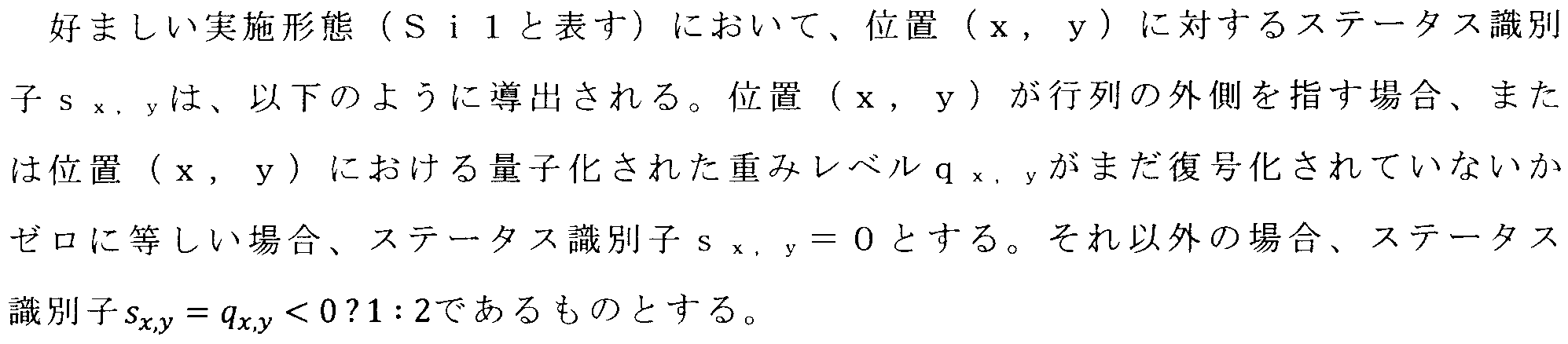
特定のテンプレートに対して、ステータス識別子のシーケンスを導き出し、ステータス識別子の値の可能な各コンステレーション(constellation)を、使用されるコンテキストを識別するコンテキストインデックスにマッピングする。テンプレートとマッピングは、異なるシンタックス要素に対して異なる場合がある。例えば、(順序)位置(x-1,y)、(x,y-1)、(x-1,y-1)を含むテンプレートから、ステータス識別子sx-1,y、sx,y-1、sx-1,y-1の順序シーケンスが導出される。例えば、このシーケンスは、コンテキストインデックスC=sx-1,y+3*sx,y-1+9*sx-1,y-1にマッピングされることがある。例えば、コンテキストインデックスCは、sig_flagのための多数のコンテキストを識別するために使用されることができる。
For a particular template, a sequence of status identifiers is derived and each possible constellation of status identifier values is mapped to a context index that identifies the context in which it is used. The templates and mappings may be different for different syntax elements. For example, from a template containing (ordinal) positions (x-1,y), (x,y-1), (x-1,y-1), an ordered sequence of status identifiers s x-1,y ,
好ましい実施形態(アプローチ1とする)において、位置(x,y)における量子化された重みレベルqx,yのsig_flagのため、またはsign_flagのためのローカルテンプレートは、1つの位置(x-1,y)(すなわち、左隣)からのみ構成される。関連するステータス識別子sx-1,yは、好ましい実施形態Si1に従って導出される。 In a preferred embodiment (called approach 1), the local template for a sig_flag or for a sign_flag of a quantized weight level q x,y at position (x,y) consists of only one position (x-1,y) (i.e. the left neighbour). The associated status identifier s x-1,y is derived according to the preferred embodiment Si1.
sig_flagについては、sx-1,yの値に応じて3つのコンテキストのうちの1つが選択され、又はsign_flagについては、sx-1,yの値に応じて他の3つのコンテキストのうちの1つが選択される。 For sig_flag, one of three contexts is selected depending on the value of s x-1,y , or for sign_flag, one of the other three contexts is selected depending on the value of s x-1,y .
別の好ましい実施形態(アプローチ2とする)では、sig flagのためのローカルテンプレートは、3つの順序付けられた位置(x-1,y)、(x-2,y)、(x-3,y)を含む。ステータス識別子sx-1,y,sx-2,y,sx-3,yの関連するシーケンスは、好ましい実施形態Si2に従って導出される。 In another preferred embodiment (denoted approach 2), the local template for sig flag contains three ordered positions (x-1,y), (x-2,y), (x-3,y), and the associated sequence of status identifiers s x-1,y , s x-2,y , s x-3,y is derived according to preferred embodiment Si2.
sig_flagについては、コンテキストインデックスCを以下のように導出する。 For sig_flag, the context index C is derived as follows:
sx-1,y≠0ならばC=0,それ以外ならsx-2,y≠0ならばC=1,それ以外ならsx-3,y≠0ならばC=2、そうでなければ、sx-3,y≠0ならば、C=2である。そうでなければ、C=3。 If s x-1,y ≠ 0 then C = 0, else s x-2,y ≠ 0 then C = 1, else s x-3,y ≠ 0 then C = 2, else s x-3,y ≠ 0 then C = 2. Else C = 3.

同様に、コンテキストインデックスCが左側の次のゼロでない重みまでの距離に等しくなる(テンプレートサイズを超えない)ように、左側に隣接するものの数を増減してもよい。 Similarly, we may increase or decrease the number of left neighbors so that the context index C is equal to the distance to the next non-zero weight on the left (not exceeding the template size).
各abs_level_greater_X flagは、例えば、2つのコンテキストの独自のセットを適用することができる。そして、2つのコンテキストのうちの1つが、sign_flagの値に応じて選択される。 Each abs_level_greater_X flag can apply a unique set of, for example, two contexts, one of which is selected depending on the value of sign_flag.
好ましい実施形態では、Xが予め定義された数X’より小さいabs_level_greater_X flagについて、異なるコンテキストが、Xおよび/またはsign_flagの値に応じて区別される。 In a preferred embodiment, for abs_level_greater_X flags where X is less than a predefined number X', different contexts are distinguished depending on the values of X and/or sign_flag.
好ましい実施形態では、Xが予め定義された数X’より大きいか等しいabs_level_greater_X flagについて、異なるコンテキストは、Xに対応してのみ区別される。 In a preferred embodiment, for abs_level_greater_X flags where X is greater than or equal to a predefined number X', different contexts are differentiated only in response to X.
別の好ましい実施形態では、予め定義された数X’より大きいか等しいXを有するabs_level_greater_X flagは、1の固定コード長を用いて(例えば、算術符号器のバイパスモードを用いて)符号化される。 In another preferred embodiment, abs_level_greater_X flags with X greater than or equal to a predefined number X' are coded using a fixed code length of 1 (e.g., using a bypass mode of the arithmetic coder).
さらに、シンタックス要素の一部または全部は、コンテキストを使用せずに符号化されることもある。その代わり、それらは、例えば、CABACのいわゆるバイパスビンを使用して、1ビットの固定長で符号化される。 Furthermore, some or all of the syntax elements may be coded without using a context. Instead, they are coded with a fixed length of 1 bit, for example using the so-called bypass bins of CABAC.
別の好ましい実施形態では、固定長の余りremは、バイパスモードを使用して符号化される。 In another preferred embodiment, the fixed length remainder rem is encoded using bypass mode.
別の好ましい実施形態では、符号化器は、予め定義された数X’を決定し、X<X’の各シンタックス要素abs_level_greater_Xに対して、符号に応じて2つのコンテキストを区別し、X>=X’の各abs_level_greater_Xに対して、1つのコンテキストを使用する。 In another preferred embodiment, the encoder determines a predefined number X' and for each syntax element abs_level_greater_X with X<X', it distinguishes between two contexts depending on the code, and for each abs_level_greater_X with X>=X', it uses one context.
言い換えれば、図5に関して説明したような確率モデル、例えばコンテキスト87は、現在のニューラルネットワークパラメータが関連する部分に隣接するニューラルネットワークの部分に関連する以前に符号化されたニューラルネットワークパラメータの量子化インデックスに応じて確率モデルのサブセットの中から、現在のニューラルネットワークパラメータのために選択103されることができる。
In other words, a probability model such as that described with respect to FIG. 5, e.g.,
この部分は、例えば、上記で説明したテンプレートであって、(順序付けられた)位置(x-1,y)、(x,y-1)、(x-1,y-1)を含むテンプレートによって定義されることができる。 This portion can be defined, for example, by the template described above, which includes the (ordered) positions (x-1, y), (x, y-1), (x-1, y-1).
それぞれ、図5に関して説明したような確率モデルは、現在のニューラルネットワークパラメータが関連する部分に隣接するニューラルネットワークの部分に関連する以前に復号化されたニューラルネットワークパラメータの量子化インデックスに応じて、確率モデルのサブセットの中から、現在のニューラルネットワークパラメータについて選択されることができる。 A probability model, as described with respect to FIG. 5, can be selected for the current neural network parameter from among a subset of probability models depending on the quantization indexes of previously decoded neural network parameters associated with portions of the neural network adjacent to the portion to which the current neural network parameter relates.
3 追加の方法
以下では、再構成された層、例えば図6からのニューラルネットワーク層pが、例えば別々に伝送されてもよい図6からの再構成層i-1および再構成層iのような異なるサブ層の構成である、ニューラルネットワーク10の圧縮/送信のための追加の、したがって任意の方法について説明する。
3. Additional Methods In the following, additional, and therefore optional, methods for compression/transmission of
3.1 ベース層とエンハンスメント層の概念
この概念では、ベース層とエンハンスメント層と呼ばれる2種類のサブ層を導入している。そして、再構成プロセス(例えば、すべてのサブ層を追加する)は、サブ層からどのように再構成された層を得ることができるかを定義する。ベース層はベース値を含み、例えば、最初のステップで効率的に表現または圧縮/送信できるように選択することができる。エンハンスメント層は、エンハンスメント情報、(例えばオリジナル層に関する)歪み指標を減少させるために例えば(ベース)層の値に追加される差分値を含む。別の例では、ベース層は(小さなトレーニングセットを用いたトレーニングからの)粗い値を含み、エンハンスメント層は(完全なトレーニングセットまたはより一般的には、別のトレーニングセットに基づく)リファインメント値を含む。サブ層は別々に保存/送信されてもよい。
3.1 The concept of base layer and enhancement layer In this concept, we introduce two kinds of sub-layers, called base layer and enhancement layer. Then, the reconstruction process (e.g. adding all sub-layers) defines how a reconstructed layer can be obtained from the sub-layers. The base layer contains base values and can be chosen, e.g., to be efficiently represented or compressed/transmitted in a first step. The enhancement layer contains enhancement information, e.g., difference values that are added to the (base) layer values to reduce a distortion measure (e.g., with respect to the original layer). In another example, the base layer contains coarse values (from training with a small training set) and the enhancement layer contains refinement values (based on the complete training set or, more generally, on another training set). The sub-layers may be stored/transmitted separately.
好ましい実施形態では、圧縮される層LR、例えばニューラルネットワークパラメータ、例えば図2及び図3の行列15aによって表され得る重みのようなニューラルネットワークの重みは、ベース層LBと1つ以上のエンハンスメント層LE,1,LE,2,・・・,LE,Nとに分解される。そして、最初のステップでベース層が圧縮/送信され、続くステップでエンハンスメント層LE,1,LE,2,...、LE,Nが(別個に)圧縮/送信される。
In a preferred embodiment, the layer L to be compressed, e.g., the neural network weights such as the neural network parameters, e.g., weights that may be represented by


言い換えれば、本発明による実施形態は、再構成された層LRの形態で、または例えば再構成された層LRを使用して、ニューラルネットワークパラメータごとに、第1の再構成層のニューラルネットワークパラメータ値と第2の再構成層のニューラルネットワークパラメータ値のパラメータ単位の和またはパラメータ単位の積によって、ニューラルネットワークパラメータ13を再構成するように構成された、装置を含む。
In other words, an embodiment in accordance with the invention comprises an apparatus configured to reconstruct the neural
それぞれ、実施形態によるニューラルネットワークパラメータ13を符号化するための装置の場合、ニューラルネットワークパラメータ13は、ニューラルネットワークパラメータごとに、第1の再構成層のニューラルネットワークパラメータ値と第2の再構成層のニューラルネットワークパラメータ値のパラメータ単位の和またはパラメータ単位の積によって再構成可能である。
Respectively, in the case of an apparatus for encoding
さらなる好ましい実施形態では、2.1および/または2.2の方法は、サブセットまたはすべてのサブ層に適用される。 In a further preferred embodiment, the methods of 2.1 and/or 2.2 are applied to a subset or all of the sublayers.
特に好ましい実施形態では、コンテキストモデリングを使用するエントロピー符号化方式(例えば、2.2.3に同質または類似)が適用されるが、以下のルールのうちの1つ以上に従ってコンテキストモデルの1つ以上のセットを追加する。 In a particularly preferred embodiment, an entropy coding scheme using context modeling (e.g., homogeneous or similar to 2.2.3) is applied, but adding one or more sets of context models according to one or more of the following rules:
a)各サブ層は、独自のコンテキストセットを適用する。言い換えれば、本発明による実施形態は、第1の再構成層についての第1のニューラルネットワークパラメータ13aをデータストリームまたは別のデータストリームから/に符号化/復号化し、第2の再構成層についての第2ニューラルネットワークパラメータ13bを第1および第2の再構成層のための別の確率コンテキストを用いたコンテキスト適応的エントロピー符号化によってデータストリームから/に符号化/復号化するように構成された、装置を含む。
a) Each sub-layer applies its own set of contexts. In other words, an embodiment according to the invention includes an apparatus configured to encode/decode first
b) 符号化されるエンハンスメント層のパラメータのために選択されたコンテキストセットは,符号化順序において先行する層(例えば、ベース層)の同位置のパラメータの値に依存する。コンテキストモデルの第1のセットは、同位置のパラメータがゼロに等しいときは常に選択され、そうでないときは第2のセットが選択される。言い換えれば、本発明による実施形態は、第2の再構成層のニューラルネットワークパラメータ値、例えばエンハンスメント層のパラメータを、第1の再構成層のニューラルネットワークパラメータ値、例えば符号化順序において先行する層(例えばベース層)における同位置のパラメータの値に対応する確率モデルを用いたコンテキスト適応的エントロピー符号化によってデータストリームに符号化するよう構成された、装置を備える。さらなる実施形態は、第1の再構成層のニューラルネットワークパラメータ値に応じて確率コンテキストセットの集合から確率コンテキストセットを選択することによって、及び、第1の再構成層のニューラルネットワークパラメータ値に応じて選択された確率コンテキストセットの中から使用する確率コンテキストを選択することによって、コンテキスト適応的エントロピー符号化によって第2の再構成層のニューラルネットワークパラメータ値をデータストリームに符号化するように構成される装置を含む。それぞれに、実施形態によるニューラルネットワークパラメータ13を復号化するための装置について、前記装置は、第1の再構成層のニューラルネットワークパラメータ値に対応する確率モデルを用いたコンテキスト適応的エントロピー復号化によってデータストリームから第2の再構成層のニューラルネットワークパラメータ値を復号化するよう構成されることができる。それぞれ、さらなる実施形態は、第1の再構成層のニューラルネットワークパラメータ値に対応する確率コンテキストセットの集合から確率コンテキストセットを選択することによって、及び、第1の再構成層のニューラルネットワークパラメータ値に対応する選択された確率コンテキストセットの中から使用する確率コンテキストを選択することによって、コンテキスト適応的エントロピー復号化によってデータストリームから第2の再構成層のニューラルネットワークパラメータ値を復号化するように構成された、装置を含む。
b) The context set selected for the parameters of the enhancement layer to be coded depends on the value of the parameter at the same position of the preceding layer (e.g., base layer) in the coding order. The first set of context models is selected whenever the parameter at the same position is equal to zero, otherwise the second set is selected. In other words, an embodiment according to the invention comprises a device configured to code the neural network parameter values of the second reconstruction layer, e.g. the parameters of the enhancement layer, into a data stream by context-adaptive entropy coding using a probability model corresponding to the neural network parameter values of the first reconstruction layer, e.g. the parameter at the same position of the preceding layer (e.g., base layer) in the coding order. Further embodiments include a device configured to code the neural network parameter values of the second reconstruction layer into a data stream by context-adaptive entropy coding by selecting a probability context set from a set of probability context sets depending on the neural network parameter values of the first reconstruction layer and by selecting the probability context to be used from the selected probability context set depending on the neural network parameter values of the first reconstruction layer. Respectively, for an apparatus for decoding
c) 符号化されるエンハンスメント層のパラメータについて選択されたコンテキストセットは、符号化順序において先行する層(例えば、ベース層)の同位置のパラメータの値に対応する。コンテキストモデルの第1のセットは、同位置のパラメータがゼロより小さい(負)場合は常に選択され、第2のセットは、同位置のパラメータがゼロより大きい(正)場合は選択され、それ以外は第3のセットが選択される。言い換えれば、本発明による実施形態は、例えば、符号化するための装置を含む。確率コンテキストセットの集合は3つの確率コンテキストセットを含む。装置は、第1の再構成層のニューラルネットワークパラメータ値が負の場合、確率コンテキストセットの集合から第1の確率コンテキストセットを選択された確率コンテキストセットとして選択するように構成され、第1の再構成層のニューラルネットワークパラメータ値が正である場合、確率コンテキストセットの集合から第2の確率コンテキストセットを選択された確率コンテキストセットとして選択するように構成され、第1の再構成層のニューラルネットワークパラメータ値がゼロである場合、確率コンテキストセットの集合から第3の確率コンテキストセットを選択された確率コンテキストセットとして選択するよう構成される。それぞれ、実施形態によるニューラルネットワークパラメータ13を復号化するための装置については、確率コンテキストセットの集合は、3つの確率コンテキストセットを含むことができ、装置は、第1の再構成層のニューラルネットワークパラメータ値が負の場合、確率コンテキストセットの集合から第1の確率コンテキストセットを選択した確率コンテキストセットとして選択するように構成されることができ、第1の再構成層のニューラルネットワークパラメータ値が正の場合、確率コンテキストセットの集合から第2の確率コンテキストセットを選択した確率コンテキストセットとして選択するように構成されることができ、第1の再構成層のニューラルネットワークパラメータ値がゼロである場合、確率コンテキストセットの集合から第3の確率コンテキストセットを選択した確率コンテキストセットとして選択するよう構成されることができる。
c) The context set selected for the parameter of the enhancement layer to be coded corresponds to the value of the parameter at the same position of the preceding layer (e.g., base layer) in the coding order. The first set of context models is selected whenever the parameter at the same position is less than zero (negative), the second set is selected when the parameter at the same position is greater than zero (positive), and the third set is selected otherwise. In other words, an embodiment according to the invention includes, for example, an apparatus for coding. The set of probability context sets includes three probability context sets. The apparatus is configured to select the first probability context set from the set of probability context sets as the selected probability context set when the neural network parameter value of the first reconstruction layer is negative, to select the second probability context set from the set of probability context sets as the selected probability context set when the neural network parameter value of the first reconstruction layer is positive, and to select the third probability context set from the set of probability context sets as the selected probability context set when the neural network parameter value of the first reconstruction layer is zero. Respectively, for an apparatus for decoding
d) 符号化されるエンハンスメント層のパラメータのために選択されるコンテキストセットは、符号化順序において先行する層(例えば,ベース層)の同位置のパラメータの値に対応する。コンテキストモデルの第1のセットは、同位置にあるパラメータの(絶対)値がX(Xはパラメータである)より大きいときは常に選択され、そうでないときは第2のセットが選択される。言い換えれば、本発明による実施形態は装置を含み、確率コンテキストセットの集合は、2つの確率コンテキストセットを含み、装置は、第1の再構成層のニューラルネットワークのパラメータ値、例えば、符号化順序において先行する層(例えば、ベース層)における同位置にあるパラメータの値が所定の値、例えばX、より大きい場合、確率コンテキストセットの集合から第1の確率コンテキストセットを選択された確率コンテキストセットとして選択するように構成され、第1の再構成層のニューラルネットワークパラメータ値が所定値より大きくない場合、確率コンテキストセットの集合から第2の確率コンテキストセットを選択された確率コンテキストセットとして選択するように構成され、あるいは、第1の再構成層のニューラルネットワークパラメータ値の絶対値が所定値より大きい場合、確率コンテキストセットの集合から第1の確率コンテキストセットを選択された確率コンテキストセットとして選択するように構成され、第1の再構成層のニューラルネットワークパラメータ値の絶対値が所定値より大きくない場合、確率コンテキストセットの集合から第2確率コンテキストセットを選択された確率コンテキストセットとして選択するように構成される。それぞれに、実施形態によるニューラルネットワークパラメータ13を復号化するための装置について、確率コンテキストの集合は2つの確率コンテキストセットを含むことができ、装置は、第1の再構成層のニューラルネットワークパラメータ値が所定の値、例えばX、より大きい場合、確率コンテキストセットの集合から第1の確率コンテキストセットを選択された確率コンテキストセットとして選択するように構成されることができ、第1の再構成層のニューラルネットワークパラメータ値が所定の値より大きくない場合、確率コンテキストセットの集合から第2の確率コンテキストセットを選択された確率コンテキストセットとして選択するように構成されることができ、又は、第1の再構成層のニューラルネットワークパラメータ値の絶対値が所定値より大きい場合、確率コンテキストセットの集合から第1の確率コンテキストセットを選択された確率コンテキストセットとして選択するように構成され、第1の再構成層のニューラルネットワークパラメータ値の絶対値が所定値より大きくない場合、確率コンテキストセットの集合から第2の確率コンテキストセットを選択された確率コンテキストセットとして選択するように構成されることができる。
d) The context set selected for an enhancement layer parameter to be coded corresponds to the value of the parameter at the same position in the preceding layer (e.g., base layer) in coding order. The first set of context models is selected whenever the (absolute) value of the parameter at the same position is greater than X (X is the parameter), otherwise the second set is selected. In other words, an embodiment according to the present invention includes an apparatus, wherein the set of probability context sets includes two probability context sets, and the apparatus is configured to select a first probability context set from the set of probability context sets as a selected probability context set if a parameter value of a neural network of a first reconstruction layer, e.g., a value of a parameter at the same position in a preceding layer (e.g., a base layer) in the coding order, is greater than a predetermined value, e.g., X, and to select a second probability context set from the set of probability context sets as a selected probability context set if the neural network parameter value of the first reconstruction layer is not greater than the predetermined value, or to select the first probability context set from the set of probability context sets as the selected probability context set if the absolute value of the neural network parameter value of the first reconstruction layer is greater than the predetermined value, and to select the second probability context set from the set of probability context sets as the selected probability context set if the absolute value of the neural network parameter value of the first reconstruction layer is not greater than the predetermined value. Respectively, for an apparatus for decoding
4 依存スカラー量子化を伴うニューラルネットワークパラメータ符号化
このセクションでは、図2~図4の文脈で説明したような、本発明による概念および実施形態に対するさらなる任意の側面および特徴が開示される。
4. Neural Network Parameter Coding with Dependent Scalar Quantization In this section, further optional aspects and features to the inventive concepts and embodiments as described in the context of FIGS. 2-4 are disclosed.
以下では、ニューラルネットワークパラメータ符号化の修正された概念について説明する。先に説明したニューラルネットワークパラメータ符号化に対する主な変更点は、ニューラルネットワークパラメータ13が独立して量子化および再構成されないということである。その代わりに、ニューラルネットワークパラメータ13の許容される再構成レベルは、再構成順序において先行するニューラルネットワークパラメータの選択された量子化インデックス56に対応する。依存スカラー量子化の概念は、ニューラルネットワークパラメータについての確率モデル選択(または、代替的に符号語(コードワード)表選択)が許容される再構成レベルセットに依存する、修正されたエントロピー符号化と組み合わされる。しかしながら、先に説明した実施形態は、以下に説明する特徴のいずれかを別個にまたは組み合わせて使用および/または組み込みおよび/または拡張することができることに留意されたい。
In the following, a modified concept of neural network parameter coding is described. The main change to the previously described neural network parameter coding is that the
4.1 関連するニューラルネットワークのパラメータ符号化との比較による優位性
ニューラルネットワークパラメータの依存量子化の利点は、許容される再構成ベクトルがN次元信号空間(ここで、Nは、処理されるサンプルのセット、例えば層10a、10bにおけるサンプルまたはニューラルネットワークパラメータ13の数を表す)において密に詰め込まれることである。ニューラルネットワークパラメータセットの再構成ベクトルは、ニューラルネットワークパラメータセットの順序付けられた再構成されたニューラルネットワークパラメータ(または、代替的に、順序付けられた再構成されたサンプル)を指す。依存スカラー量子化の効果を、2つのニューラルネットワークパラメータの最も単純なケースについて図8で説明する。図8は、2つの重みパラメータの単純な場合について、許容される再構成ベクトルの位置の一例を示す図である。図8(a)は独立スカラ量子化の例、図8(b)は依存スカラ量子化の例である。図8aは、独立スカラ量子化の場合の許容再構成ベクトル201(2次元平面上の点を表す)を示している。見て分かるように、第2のニューラルネットワークパラメータt1’13に対する許容値のセットは、第1の再構成されたニューラルネットワークパラメータt0’13に対する選択された値には依存しない。図8(b)は、依存スカラー量子化の例を示す。独立スカラー量子化とは対照的に、第2のニューラルネットワークパラメータt1’13に対して選択可能な再構成値は、第1のニューラルネットワークパラメータt0’13に対して選択された再構成レベルに依存することに注意されたい。図8bの例では、第2のニューラルネットワークパラメータt1’13に対する利用可能な再構成レベルの2つの異なるセット52が存在する(異なる色で図示されている)。第1のニューラルネットワークパラメータt0’13に対する量子化インデックス56が偶数(...,-2,0,2,...)であれば、第1のセット(青い点)の任意の再構成レベル201aを第2のニューラルネットワークパラメータt1’13に対して選択することが可能である。そして、第1のニューラルネットワークパラメータt0’に対する量子化インデックス56が奇数(...,-3,-1,1,3,...)であれば、第2のセット(赤色点)の任意の再構成レベル201bを第2のニューラルネットワークパラメータt1’13に対して選択することが可能である。この例では、第1セットと第2セットの再構成レベルは、量子化ステップサイズの半分だけシフトされる(第2セットの任意の再構成レベルは、第1セットの2つの再構成レベルの間に位置する)。
4.1 Advantages over Related Neural Network Parameter Codings The advantage of dependent quantization of neural network parameters is that the allowed reconstruction vectors are densely packed in the N-dimensional signal space (where N represents the set of samples to be processed, e.g. the number of samples or
ニューラルネットワークパラメータ13の依存スカラー量子化は、N次元単位体積あたりの再構成ベクトル201の所定の平均数に対して、ニューラルネットワークパラメータ13の所定の入力ベクトルと最も近い利用可能な再構成ベクトルとの間の距離の期待値が低減されるという効果を有する。その結果、ニューラルネットワークパラメータの入力ベクトルとベクトル再構成されたニューラルネットワークパラメータとの間の平均歪みは、所与の平均ビット数に対して低減され得る。ベクトル量子化では、この効果をスペースフィリングゲイン(space-filling gain)と呼んでいる。ニューラルネットワークパラメータセット13に対して依存スカラー量子化を用いると、高次元ベクトル量子化の潜在的なスペースフィリングゲインの大部分を利用することができる。そして、ベクトル量子化とは対照的に、再構成プロセス(または復号化プロセス)の実装複雑度は、独立スカラ量子化器を用いた関連するニューラルネットワークパラメータ符号化の実装複雑度に匹敵する。
Dependent scalar quantization of
4.2 概要
主な変更点は、前述したように依存量子化である。再構成順序インデックスk>0の再構成されたニューラルネットワークパラメータtk’13は、関連する量子化インデックスqk56だけでなく、再構成順序において先行するニューラルネットワークパラメータの量子化インデックスq0,q1・・・,qk-1にも依存することになる。なお、依存量子化では、ニューラルネットワークパラメータ13の再構成順序を一意に定めなければならない。量子化インデックスqk56に関連する再構成レベルセットに関する知識もエントロピー符号化において利用される場合、ニューラルネットワーク符号化全体の性能は、典型的に改善され得る。つまり、ニューラルネットワークパラメータに適用される再構成レベルセットに基づいて、コンテキスト(確率モデル)またはコードワード表を切り替えることが典型的には好ましい。
4.2 Overview The main change is the dependent quantization, as mentioned above. The reconstructed neural network parameters t k ′ 13 with reconstruction order index k>0 will depend not only on the associated
エントロピー符号化は、通常、エントロピー復号化プロセスが与えられると一意に規定される。しかし、関連するニューラルネットワークパラメータ符号化と同様に、オリジナルのニューラルネットワークパラメータを与えられた量子化インデックスの選択には多くの自由度が存在する。 Entropy coding is usually uniquely specified given the entropy decoding process. However, as with the related neural network parameter coding, there is a lot of freedom in the choice of quantization indexes given the original neural network parameters.
本明細書に記載された実施形態は、層単位ニューラルネットワーク符号化に限定されない。任意の有限のニューラルネットワークパラメータ13の集合のニューラルネットワークパラメータ符号化にも適用可能である。
The embodiments described herein are not limited to layer-wise neural network coding. They are also applicable to neural network parameter coding of any finite set of
特に、本方法は、sec.3.1で説明したようなサブ層にも適用することができる。 In particular, the method can be applied to sublayers such as those described in sec. 3.1.
4.3 ニューラルネットワークパラメータの依存量子化
ニューラルネットワークパラメータ13の依存量子化とは、ニューラルネットワークパラメータ13のために利用可能な再構成レベルセットが、再構成順序において(例えば層またはサブ層のようなニューラルネットワークパラメータの同じセットの内部において)先行するニューラルネットワークパラメータに対する選ばれた量子化インデックスに依存する概念をいう。
4.3 Dependent Quantization of Neural Network Parameters Dependent quantization of
好ましい実施形態では、再構成レベルの複数のセットが予め定義され、符号化順序において先行するニューラルネットワークパラメータの量子化インデックスに基づいて、予め定義されたセットのうちの1つが、現在のニューラルネットワークパラメータを再構成するために選択される。言い換えれば、実施形態による装置は、現在のニューラルネットワークパラメータ13に対して、以前の、例えば先行するニューラルネットワークパラメータに対する量子化インデックス(58)に応じて、複数50の再構成レベルセット52のうち再構成レベルセット48を選択するように構成されることができる。
In a preferred embodiment, a plurality of sets of reconstruction levels are predefined, and one of the predefined sets is selected for reconstructing the current neural network parameters based on the quantization index of the preceding neural network parameters in the coding order. In other words, the device according to the embodiment can be configured to select a reconstruction level set 48 out of a plurality of 50 reconstruction level sets 52 for the current
再構成レベルのセットを定義するための好ましい実施形態は、4.3.1節で説明されている。選択された再構成レベルの識別とシグナリングは、4.3.2節に記載されている。4.3.3節では、(再構成順序において先行するニューラルネットワークパラメータの選択された量子化インデックスに基づいた)現在のニューラルネットワークパラメータについての再構成レベルの事前定義されたセットの1つを選択するための好ましい実施形態について説明する。 A preferred embodiment for defining the set of reconstruction levels is described in section 4.3.1. Identification and signaling of the selected reconstruction level is described in section 4.3.2. Section 4.3.3 describes a preferred embodiment for selecting one of a predefined set of reconstruction levels for the current neural network parameter (based on the selected quantization index of the preceding neural network parameter in the reconstruction order).
4.3.1 再構成レベルセット
好ましい実施形態では、現在のニューラルネットワークパラメータのための許容される再構成レベルセットは、再構成レベルの予め定義されたセット52の集合(2つ以上のセット、例えば図2および図3からのセット0およびセット1)の中から(符号化順序において先行するニューラルネットワークパラメータの量子化インデックスに基づいて)選択される。
4.3.1 Reconstruction Level Sets In a preferred embodiment, the allowed reconstruction level sets for the current neural network parameters are selected (based on the quantization index of the preceding neural network parameters in the coding order) from among a collection of
好ましい実施形態では、パラメータが量子化ステップサイズΔ(QP)を決定し、すべての(再構成レベルのすべてのセットにおける)再構成レベルが量子化ステップサイズΔの整数倍を表す。しかし、再構成レベルの各セットが量子化ステップサイズΔ(QP)の整数倍のサブセットのみを含むことに留意されたい。このような依存量子化のための構成は、再構成レベルのすべてのセットについて可能なすべての再構成レベルが量子化ステップサイズ(QP)の整数倍を表すものであり、均一再構成量子化器(URQs)の拡張と考えることができる。その基本的な利点は、再構成されたニューラルネットワークパラメータ13が非常に低い計算複雑度を有するアルゴリズムによって計算され得ることである(より詳細に後述される)。
In the preferred embodiment, the parameters determine the quantization step size Δ(QP), and all (in all sets of reconstruction levels) reconstruction levels represent integer multiples of the quantization step size Δ. Note, however, that each set of reconstruction levels contains only a subset of integer multiples of the quantization step size Δ(QP). Such a configuration for dependent quantization, where all possible reconstruction levels for all sets of reconstruction levels represent integer multiples of the quantization step size (QP), can be considered as an extension of uniform reconstruction quantizers (URQs). Its fundamental advantage is that the reconstructed
再構成レベルセットは完全に不連続であることができるが、1つ以上の再構成レベルが複数のセットに含まれることも可能である(ただし、セットは他の再構成レベルにおいて依然として異なる)。 The reconstruction level sets can be completely discontinuous, but it is also possible for one or more reconstruction levels to be included in multiple sets (although the sets may still differ at other reconstruction levels).
好ましい実施形態では、ニューラルネットワークパラメータのための依存スカラー量子化は、再構成レベルのちょうど2つの異なるセット、例えばセット0とセット1とを使用する。そして、特に好ましい実施形態では、ニューラルネットワークパラメータtk13に対する2つのセットのすべての再構成レベルは、このニューラルネットワークパラメータ13に対する量子化ステップサイズΔk(QP)の整数倍を表している。なお、量子化ステップサイズΔk(QP)は、両セットの許容再構成値に対するスケーリングファクタを表しているに過ぎない。再構成レベルの同じ2つのセットは、すべてのニューラルネットワークパラメータ13に対して使用される。
In a preferred embodiment, the dependent scalar quantization for neural network parameters uses exactly two different sets of reconstruction levels, e.g., set 0 and set 1. And, in a particularly preferred embodiment, all reconstruction levels in the two sets for a
図9では、2セットの再構成レベル(セット0とセット1)に対する3つの好ましい構成((a)~(c))が図示されている。図9は、単一の量子化ステップサイズΔ(QP)により完全に決定される再構成レベルの2つのセットを有する依存量子化の例を示す。再構成レベルの2つの利用可能なセットは、異なる色で強調されている(セット0は青、セット1は赤)。セット内の再構成レベルを示す量子化インデックスの例は、円の下の数字で示されている。中空と塗りつぶしの円は、再構成レベルセット内の2つの異なるサブセットを示し、サブセットは再構成順序において次のニューラルネットワークパラメータの再構成レベルセットを決定するために使用することができる。図には、2つの再構成レベルセットを持つ3つの好ましい構成が示されている:(a)2つのセットは不一致でゼロに関して対称である、(b)両方のセットはゼロに等しい再構成レベルを含むがそれ以外は不一致で、セットはゼロの周りで非対称である、(c)両方のセットはゼロに等しい再構成レベルを含むがそれ以外は不一致で、どちらのセットもゼロの周りで対称的である。なお、すべての再構成レベルは、量子化ステップサイズΔの整数倍(IV)で与えられるグリッド上に存在する。さらに、特定の再構成レベルは両方のセットに含まれる可能性があることに注意する必要がある。 In Fig. 9, three preferred configurations ((a)-(c)) for two sets of reconstruction levels (set 0 and set 1) are illustrated. Fig. 9 shows an example of dependent quantization with two sets of reconstruction levels completely determined by a single quantization step size Δ(QP). The two available sets of reconstruction levels are highlighted in different colors (set 0 in blue, set 1 in red). Examples of quantization indices indicating the reconstruction levels in the set are shown as numbers below the circles. The hollow and filled circles indicate two different subsets in the reconstruction level set that can be used to determine the reconstruction level set of the next neural network parameter in the reconstruction order. The figure shows three preferred configurations with two reconstruction level sets: (a) the two sets are disjoint and symmetric about zero, (b) both sets contain a reconstruction level equal to zero but are otherwise disjoint, and the sets are asymmetric about zero, and (c) both sets contain a reconstruction level equal to zero but are otherwise disjoint, and both sets are symmetric about zero. Note that all reconstruction levels lie on a grid given by an integer multiple (IV) of the quantization step size Δ. Note further that a particular reconstruction level may be included in both sets.
図9(a)に描かれた2つのセットは不連続である。量子化ステップサイズΔ(QP)の各整数倍は、どちらかのセットにのみ含まれる。第1のセット(セット0)は量子化ステップサイズのすべての偶数整数倍(IV)を含むが、第2のセット(セット1)は量子化ステップサイズのすべての奇数整数倍を含む。両セットとも、隣接する2つの再構成レベル間の距離は、量子化ステップサイズの2倍である。これらの2つのセットは、通常、高レート量子化、すなわち、ニューラルネットワークパラメータの分散(variance、平方偏差)が量子化ステップサイズ(QP)よりも著しく大きい設定のものに適している。しかし、ニューラルネットワークのパラメータ符号化では、量子化器は通常、低レート領域で動作する。典型的には、多くのオリジナルのニューラルネットワークパラメータ13の絶対値は、量子化ステップサイズ(QP)の任意のゼロでない倍数よりもゼロに近い値である。その場合、ゼロが両方の量子化セット(再構成レベルセット)に含まれると、典型的には好ましい。
The two sets depicted in FIG. 9(a) are discontinuous. Each integer multiple of the quantization step size Δ(QP) is included in only one of the sets. The first set (set 0) includes all even integer multiples (IV) of the quantization step size, while the second set (set 1) includes all odd integer multiples of the quantization step size. In both sets, the distance between two adjacent reconstruction levels is twice the quantization step size. These two sets are typically suitable for high-rate quantization, i.e., settings where the variance of the neural network parameters is significantly larger than the quantization step size (QP). However, in parameter coding of neural networks, the quantizer usually operates in the low-rate domain. Typically, the absolute values of many original
図9(b)に示す2つの量子化セットは、いずれもゼロを含む。セット0では、ゼロに等しい再構成レベルとゼロより大きい第1の再構成レベルとの間の距離は、量子化ステップサイズ(QP)に等しく、隣接する2つの再構成レベル間の他のすべての距離は、量子化ステップサイズの2倍に等しい。同様に、セット1では、ゼロに等しい再構成レベルとゼロより小さい第1の再構成レベルとの間の距離は、量子化ステップサイズに等しく、一方、2つの隣接する再構成レベル間の他のすべての距離は、量子化ステップサイズの2倍に等しくなる。両再構成セットは、ゼロの周りで非対称であることに注意が必要である。これは符号の確率を正確に推定することが困難になるため、非効率になる可能性がある。
9(b) shows two quantization sets, both of which contain zero. In
再構成レベルの2つのセットに関する好ましい構成を図9(c)に示す。第1の量子化セット(図ではセット0と表示)に含まれる再構成レベルは、量子化ステップサイズの偶数整数倍を表す(このセットは、実際には図9(a)のセット0と同じであることに注意)。第2の量子化セット(図ではセット1と表示)は、量子化ステップサイズのすべての奇数整数倍を含み、さらに再構成レベルが0に等しい。なお、どちらの再構成セットもゼロについて対称である。ゼロに等しい再構成レベルは両方の再構成セットに含まれ、そうでなければ再構成セットは不連続である。両再構成セットの組み合わせは、量子化ステップサイズのすべての整数倍を含む。
A preferred configuration for the two sets of reconstruction levels is shown in FIG. 9(c). The reconstruction levels in the first quantization set (labeled as
言い換えれば実施形態によれば、例えばニューラルネットワークパラメータ13を符号化/復号化するための装置からなり、複数50の再構成レベルセット52の数は2(例えばセット0、セット1)であり、複数の再構成レベルセットは、ゼロおよび所定の量子化ステップサイズの偶数倍を含む第1の再構成レベルセット(セット0)、およびゼロおよび所定の量子化ステップサイズの奇数倍を含む第2の再構成レベルセット(セット1)含む。
In other words, according to an embodiment, for example, the device comprises a device for encoding/decoding
さらに、すべての再構成レベルセットのすべての再構成レベルは、所定の量子化ステップサイズ(QP)の整数倍(IV)を表してもよく、実施形態による、例えばニューラルネットワークパラメータ13を復号化するための装置は、各ニューラルネットワークパラメータについて、中間整数値、例えば、それぞれのニューラルネットワークパラメータについて選択された再構成レベルセットおよびそれぞれのニューラルネットワークパラメータ13’についてのエントロピー復号化量子化インデックス58に応じた整数倍(IV)
を導出することによって、及び、それぞれのニューラルネットワークパラメータ13について、それぞれのニューラルネットワークパラメータの中間値をそれぞれのニューラルネットワークパラメータ13についての所定の量子化ステップサイズに乗じることによって、ニューラルネットワークパネル13を逆量子化するよう構成されることがある。
Furthermore, all reconstruction levels of all reconstruction level sets may represent integer multiples (IV) of a predetermined quantization step size (QP), and an apparatus for decoding, for example,
and for each
それぞれ、すべての再構成レベルセットのすべての再構成レベルは、所定の量子化ステップサイズ(QP)の整数倍(IV)を表してもよく、装置、例えば、実施形態によれば、ニューラルネットワークパラメータ13を符号化するために、各ニューラルネットワークパラメータについて、それぞれのニューラルネットワークパラメータの選択された再構成レベルセットとそれぞれのニューラルネットワークパラメータのエントロピー符号化量子化インデックスとに応じた中間整数値を導出することによって、及び、それぞれのニューラルネットワークパラメータについて、それぞれのニューラルネットワークパラメータの中間値をそれぞれのニューラルネットワークパラメータの所定の量子化ステップサイズに乗じることによって、同じものが逆量子化可能になるよう、ニューラルネットワークパネルを量子化するよう構成されることができる。
Respectively, all reconstruction levels of all reconstruction level sets may represent integer multiples (IV) of a predefined quantization step size (QP), and the device, for example, according to an embodiment, can be configured to quantize the neural network panel such that the same can be dequantized by deriving, for each neural network parameter, an intermediate integer value depending on the selected reconstruction level set of the respective neural network parameter and the entropy coding quantization index of the respective neural network parameter, and by multiplying, for each neural network parameter, the intermediate value of the respective neural network parameter by the predefined quantization step size of the respective neural network parameter, to encode the
本明細書で規定する実施形態は、図9に示す構成に限定されるものではない。他の任意の2つの異なる再構成レベルセットを使用することができる。複数の再構成レベルが両方のセットに含まれてもよい。あるいは、両方の量子化セットの組み合わせが、量子化ステップサイズのすべての可能な整数倍を含んでいない可能性がある。さらに、ニューラルネットワークパラメータの依存スカラー量子化には、2つ以上の再構成レベルのセットを使用することが可能である。 The embodiments defined herein are not limited to the configuration shown in FIG. 9. Any other two different sets of reconstruction levels may be used. Multiple reconstruction levels may be included in both sets. Alternatively, the combination of both quantization sets may not include all possible integer multiples of the quantization step size. Furthermore, it is possible to use more than two sets of reconstruction levels for dependent scalar quantization of neural network parameters.
4.3.2 選択された再構成レベルのシグナリング
符号化器が許容される再構成レベルの中から選択する再構成レベルは、ビットストリーム14の内部で示されなければならない。従来の独立スカラー量子化と同様に、これは、重みレベルとも呼ばれる、いわゆる量子化インデックス56を用いて実現することができる。量子化インデックス56(または重みレベル)は、量子化セット52の内部(すなわち、再構成レベルのセットの内部)で利用可能な再構成レベルを一意に識別する整数値である。量子化インデックス56は、(任意のエントロピー符号化技術を用いる)ビットストリーム14の一部として復号化器に送られる。復号化器側では、再構成されたニューラルネットワークパラメータ13は、再構成レベルの現在のセット48(これは、符号化/再構成順序において先行する量子化インデックスによって決定される)および現在のニューラルネットワークパラメータ13’に対する送信された量子化インデックス56に基づいて一意に計算することが可能である。
4.3.2 Signaling of the Selected Reconstruction Level The reconstruction level that the encoder selects among the allowed reconstruction levels must be indicated inside the
好ましい実施形態では、再構成レベルのセット(または量子化セット)内部の再構成レベルへの量子化インデックス56の割り当ては、次のルールに従う。説明のために、図9の再構成レベルには、関連する量子化インデックス56が付けられている(量子化インデックスは、再構成レベルを表す円の下の数字によって与えられる)。再構成レベルセットが0に等しい再構成レベルを含む場合、0に等しい量子化インデックスは0に等しい再構成レベルに割り当てられる。1に等しい量子化インデックスは、0より大きい最小の再構成レベルに割り当てられ、2に等しい量子化インデックスは、0より大きい次の再構成レベル(すなわち、0より大きい2番目に小さい再構成レベル)に割り当てられる、等々である。あるいは、言い換えれば、0より大きい再構成レベルには、その値の昇順において0より大きい整数値で(すなわち、1、2、3などで)ラベル付けされる。同様に、量子化インデックス-1は、0より小さい最大の再構成レベルに割り当てられ、量子化インデックス-2は、0より小さい次の(すなわち、2番目に大きい)再構成レベルに割り当てられる、等である。または、言い換えると、0より小さい再構成レベルには、値の降順において0より小さい整数値(つまり、-1、-2、-3など)がラベル付けされる。図9の例では、(0に等しい再構成レベルを含まない)図9(a)のセット1を除くすべての量子化セットについて、説明した量子化インデックスの割り当てを例示している。
In a preferred embodiment, the assignment of
0に等しい再構成レベルを含まない量子化セットに対して、量子化インデックス56を再構成レベルに割り当てる方法の1つは、以下の通りである。0より大きい全ての再構成レベルには(値の昇順において)0より大きい量子化インデックスを割り当て、0より小さい全ての再構成レベルには(値の降順において)0より小さい量子化インデックスを割り当てる。したがって、量子化インデックス56の割り当ては、基本的に0に等しい再構成レベルを含む量子化セットと同じ概念に従うが、0に等しい量子化インデックスが存在しない点が異なる(図9(a)の量子化セット1のラベルを参照)。量子化インデックス56のエントロピー符号化では、その点を考慮する必要がある。例えば、量子化インデックス56は、その絶対値(0からサポートされる最大値までの範囲)を符号化し、0に等しくない絶対値については、量子化インデックス56の符号を付加的に符号化することによって送信されることが多い。0に等しい量子化インデックス56がない場合、エントロピー符号化は、絶対レベルから1を引いた値が送信され(対応するシンタックス要素の値は0から最大サポート値までの範囲)、符号が常に送信されるように修正され得る。代替案として、量子化インデックス56を再構成レベルに割り当てるための割り当てルールが修正され得る。例えば、0に近い再構成レベルの1つは、0に等しい量子化インデックスでラベル付けされ得る。そして、残りの再構成レベルは、以下のルールによってラベル付けされる。0に等しい量子化インデックスを持つ再構成レベルより大きい再構成レベルには、0より大きい量子化インデックスが割り当てられる(量子化インデックスは再構成レベルの値と共に増加する)。そして、0より小さい量子化インデックスは、量子化インデックスが0に等しい再構成レベルより小さい再構成レベルに割り当てられる(量子化インデックスは、再構成レベルの値と共に減少する)。このような割り当ての一つの可能性を、図9(a)の括弧内の数字で示す(括弧内の数字が与えられていない場合は、他の数字が適用される)。
For quantization sets that do not contain a reconstruction level equal to 0, one way of assigning
上述のように、好ましい実施形態では、再構成レベルの2つの異なるセット(これを量子化セットとも呼ぶ)が使用され、両方のセットの内部の再構成レベルは、量子化ステップサイズ(QP)の整数倍を表す。それは、量子化ステップサイズが、層ベースで(例えば、ビットストリーム14の内部に層量子化パラメータを送信することによって)、またはニューラルネットワークパラメータ13の別の有限セット(例えば、ブロック)で(例えば、ビットストリーム14の内部にブロック量子化パラメータを送信することによって)変更される、場合を含んでいる。 As mentioned above, in a preferred embodiment, two different sets of reconstruction levels (also called quantization sets) are used, with the reconstruction levels within both sets representing integer multiples of the quantization step size (QP). This includes cases where the quantization step size is changed on a layer basis (e.g., by sending layer quantization parameters within the bitstream 14) or for another finite set (e.g., block) of neural network parameters 13 (e.g., by sending block quantization parameters within the bitstream 14).
量子化ステップサイズ(QP)の整数倍を表す再構成レベルの使用は、復号化器側でのニューラルネットワークパラメータ13の再構成のための計算量の少ない複雑なアルゴリズムを可能にする。これを図9(c)の好ましい例に基づいて以下に説明する(他の構成、特に図9(a)および図9(b)に示す設定についても同様の単純なアルゴリズムが存在する)。図9(c)に示す構成では、第1の量子化セットは量子化ステップサイズ(QP)のすべての偶数整数倍を含み、第2の量子化セットは量子化ステップサイズのすべての奇数整数倍に0に等しい再構成レベルを加えたもの(これは両方の量子化セットに含まれる)が含まれる。ニューラルネットワークパラメータの再構成プロセスは、図10の疑似コードで規定されるアルゴリズムと同様に実装され得る。図10は、ニューラルネットワークパラメータ13の再構成プロセスに関する好ましい例を示す擬似コードである。kは現在のニューラルネットワークパラメータ13’の再構成順序を指定するインデックスを表し、現在のニューラルネットワークパラメータの量子化インデックス56はlevel[k]210で表し、現在のニューラルネットワークパラメータ13’に適用する量子化ステップサイズΔk(QP)はquant_step_size[k]で表し、trec[k]220は再構成したニューラルネットワークのパラメータtk’の値を表している。変数setId[k]240は、現在のニューラルネットワークパラメータ13’に適用される再構成レベルのセットを指定する。それは、再構成順序において先行するニューラルネットワークパラメータに基づいて決定される;setId[k]の可能な値は0及び1である。変数nは、量子化ステップサイズ(QP)の整数係数、例えば中間値IVを規定する。;それは、選択された再構成レベのセット(すなわちsetId[k]の値)及び送信された量子化インデックスレベル[k]により与えられる。
The use of reconstruction levels representing integer multiples of the quantization step size (QP) allows a computationally less complex algorithm for the reconstruction of the

そして、第2の量子化セットを使用する場合、変数nは、量子化インデックスlevel[k]の2倍から量子化インデックスの符号関数sign(level[k])を引いた値に等しくなる。この場合は、図9(c)の第2の量子化セットSet1の再構成レベルで表すことができ、Set1は量子化ステップサイズ(QP)の奇数整数倍を全て含む。 When the second quantization set is used, the variable n is equal to twice the quantization index level[k] minus the sign function of the quantization index, sign(level[k]). This case can be expressed as the reconstruction level of the second quantization set Set1 in FIG. 9(c), where Set1 includes all odd integer multiples of the quantization step size (QP).
(量子化ステップサイズの整数倍を指定する)変数nが決定されると、nに量子化ステップサイズΔkを乗じることによって、再構成されたニューラルネットワークパラメータtk’が求められる。 Once the variable n (which specifies an integer multiple of the quantization step size) is determined, the reconstructed neural network parameters t k ' are obtained by multiplying n by the quantization step size Δ k .
言い換えれば、複数50の再構成レベルセット52のうち再構成レベルセット52の数は2であってもよく、本発明の実施形態による、例えばニューラルネットワークパラメータ13を復号化および/または符号化するための装置は、以下のようにしてそれぞれのニューラルネットワークパラメータの中間値を導出するように構成され得る。
それぞれのニューラルネットワークパラメータについての選択された再構成レベルセットが第1のセットである場合、それぞれのニューラルネットワークパラメータに対する量子化インデックスを2倍して、それぞれのニューラルネットワークパラメータに対する中間値を求め;及び、
それぞれのニューラルネットワークパラメータについての選択された再構成レベルセットが2番目のセットであり、それぞれのニューラルネットワークパラメータの量子化インデックスがゼロに等しい場合、それぞれのサンプルの中間値をゼロに設定し;及び、
それぞれのニューラルネットワークパラメータについての選択された再構成レベルセットが第2のセットであり、それぞれのニューラルネットワークパラメータに対する量子化インデックスがゼロより大きい場合、それぞれのニューラルネットワークパラメータに対する量子化インデックスを2倍し、その乗算結果から1を引いてそれぞれのニューラルネットワークパラメータに対する中間値を得て、及び、
現在のニューラルネットワークパラメータについての選択された再構成レベルセットが第2のセットであり、それぞれのニューラルネットワークパラメータに対する量子化インデックスがゼロより小さい場合、それぞれのニューラルネットワークパラメータの量子化インデックスを2倍し、その乗算結果に1を加えて、それぞれのニューラルネットワークパラメータの中間値を得る。
In other words, the number of reconstruction level sets 52 among the
If the selected reconstruction level set for each neural network parameter is the first set, then double the quantization index for each neural network parameter to obtain an intermediate value for each neural network parameter; and
If the selected reconstruction level set for each neural network parameter is a second set and the quantization index of each neural network parameter is equal to zero, set the intermediate value of each sample to zero; and
If the selected reconstruction level set for each neural network parameter is a second set, and the quantization index for each neural network parameter is greater than zero, multiplying the quantization index for each neural network parameter by two and subtracting one from the multiplication result to obtain an intermediate value for each neural network parameter; and
If the selected reconstruction level set for the current neural network parameters is a second set, and the quantization index for each neural network parameter is less than zero, the quantization index of each neural network parameter is doubled and one is added to the multiplication result to obtain an intermediate value of each neural network parameter.
4.3.3 ニューラルネットワークパラメータの依存的再構成
4.3.1節および4.3.2節で説明した再構成レベルのセットの選択に加えて、ニューラルネットワークパラメータ符号化における依存スカラー量子化のもう一つの重要な設計側面は、定義された量子化セット(再構成レベルのセット)間の切り替えに使用するアルゴリズムである。使用されるアルゴリズムによって、ニューラルネットワークパラメータ13のN次元空間(したがって、再構成されたサンプルのN次元空間も同様)で達成できる「パッキング密度」が決まる。パッキング密度が高ければ高いほど、最終的に符号化効率が向上する。
4.3.3 Dependent Reconstruction of Neural Network Parameters In addition to the choice of the set of reconstruction levels described in sections 4.3.1 and 4.3.2, another important design aspect of dependent scalar quantization in neural network parameter coding is the algorithm used to switch between the defined quantization sets (sets of reconstruction levels). The algorithm used determines the "packing density" that can be achieved in the N-dimensional space of the neural network parameters 13 (and therefore in the N-dimensional space of the reconstructed samples as well). The higher the packing density, the better the final coding efficiency.
次のニューラルネットワークパラメータのための再構成レベルのセットを決定する好ましい方法は、図11に示されるように、量子化セットの分割に基づくものである。図11は、本発明の実施形態による再構成レベルのセットを2つのサブセットに分割するための一例を示す図である。示された2つの量子化セットは、図9(c)の好ましい例の量子化セットである。量子化セット0の2つのサブセットは、「A」及び「B」を用いてラベル付けされ、量子化セット1の2つのサブセットは、「C」及び「D」を用いてラベル付けされている。なお、図11に示す量子化セットは、図9(c)の量子化セットと同じ量子化セットである。2つ(またはそれ以上)の量子化セットのそれぞれは、2つのサブセットに分割される。図11の好ましい例では、第1の量子化セット(セット0と表示)は、2つのサブセット(AおよびBと表示される)に分割され、第2の量子化セット(セット1と表示される)も、2つのサブセット(CおよびDと表示される)に分割される。唯一の可能性ではないにしても、各量子化セットに対する分割は、好ましくは、直接隣接する再構成レベル(したがって、隣接する量子化インデックス)が異なるサブセットと関連付けられるように行われる。好ましい実施形態では、各量子化セットは、2つのサブセットに分割される。図9において、量子化セットのサブセットへの分割は、中空および充填された円によって示されている。 A preferred method for determining the set of reconstruction levels for the next neural network parameters is based on the division of the quantization set, as shown in FIG. 11. FIG. 11 illustrates an example for dividing a set of reconstruction levels into two subsets according to an embodiment of the present invention. The two quantization sets shown are the quantization sets of the preferred example of FIG. 9(c). The two subsets of quantization set 0 are labeled with "A" and "B", and the two subsets of quantization set 1 are labeled with "C" and "D". Note that the quantization set shown in FIG. 11 is the same quantization set as the quantization set of FIG. 9(c). Each of the two (or more) quantization sets is divided into two subsets. In the preferred example of FIG. 11, the first quantization set (denoted as set 0) is divided into two subsets (denoted as A and B), and the second quantization set (denoted as set 1) is also divided into two subsets (denoted as C and D). Although not the only possibility, the division for each quantization set is preferably made so that directly adjacent reconstruction levels (and therefore adjacent quantization indexes) are associated with different subsets. In a preferred embodiment, each quantization set is divided into two subsets. In FIG. 9, the division of the quantization sets into subsets is indicated by hollow and filled circles.
図11および図9(c)に示される特に好ましい実施形態では、以下の分割ルールが適用される。
- サブセットAは、量子化セット0のすべての偶数量子化インデックスから構成される。
- サブセットBは、量子化セット0のすべての奇数量子化インデックスから構成される。
- サブセットCは、量子化セット1のすべての偶数量子化インデックスから構成される。
- サブセットDは、量子化セット1のすべての奇数量子化インデックスで構成される。
In a particularly preferred embodiment shown in FIG. 11 and FIG. 9(c), the following splitting rules are applied:
Subset A consists of all even quantization indices of
Subset B consists of all odd quantization indices of
Subset C consists of all even quantization indices of
Subset D consists of all odd quantization indices of
使用されるサブセットは、典型的には、ビットストリーム14の内部で明示的に示されないことに留意されたい。その代わりに、使用される量子化セット(例えば、セット0またはセット1)および実際に送信された量子化インデックス56に基づいて導出することができる。図11に示す好ましい分割の場合、サブセットは、送信された量子化インデックスレベル及び1のビット単位「and」演算によって導出することができる。サブセットAは、(level&1)が0に等しいセット0のすべての量子化インデックスからなり、サブセットBは、(level&1)が1に等しいセット0のすべての量子化インデックスからなり、サブセットCは、(level&1)が0に等しいセット1のすべての量子化インデックスからなり、サブセットDは、(level&1)が1に等しいセット1のすべての量子化インデックスからなる。
Note that the subset used is typically not explicitly indicated inside the
好ましい実施形態では、現在のニューラルネットワークパラメータ13’を再構成するために使用される量子化セット(許容再構成レベルのセット)は、最後の2つ以上の量子化インデックス56に関連付けられるサブセットに基づいて決定される。最後の2つのサブセット(これは最後の2つの量子化インデックスによって与えられる)が使用される例を、表1に示す。この表によって指定される量子化セットの決定は、好ましい実施形態を表す。他の実施形態では、現在のニューラルネットワークパラメータ13’に対する量子化セットは、最後の3つ以上の量子化インデックス56と関連するサブセットによって決定される。層の第1のニューラルネットワークパラメータ(またはニューラルネットワークパラメータのサブセット)については、(先行するニューラルネットワークパラメータがないため)先行するニューラルネットワークパラメータのサブセットに関するデータはない。好ましい実施形態では、このような場合に予め定義された値を使用する。特に好ましい実施形態では、利用可能でない全てのニューラルネットワークパラメータについて、サブセットAを推論する。つまり、第1のニューラルネットワークパラメータを再構成する場合、先行する2つのサブセットを「AA」(又は、先行する3つのニューラルネットワークパラメータを考慮する場合は「AAA」)と推測し、したがって、表1に従って、量子化セット0を使用する。また、2番目のニューラルネットワークパラメータについては、直前の量子化インデックスのサブセットをその値によって決定するが(1番目のニューラルネットワークパラメータについてはセット0が使用されるので、サブセットはAまたはBのいずれか)、2番目の最後の量子化インデックス(これは存在しない)についてのサブセットはAに等しいと推測する。もちろん、存在しない量子化インデックスについてのデフォルト値の推測には他の任意のルールを使用することが可能である。また、存在しない量子化インデックスのデフォルトサブセットを導出するために、他のシンタックス要素を使用することも可能である。さらなる代替案として、初期化のために、ニューラルネットワークパラメータ13の先行するセットの最後の量子化インデックス56を使用することも可能である。
In a preferred embodiment, the quantization set (set of allowable reconstruction levels) used to reconstruct the current neural network parameters 13' is determined based on the subset associated with the last two or
表1:本発明の実施形態による2つの最後の量子化インデックスに関連するサブセットに基づいて、次のニューラルネットワークパラメータに使用される量子化セット(利用可能な再構成レベルのセット)を決定するための例である。サブセットは、左の表の欄に示されており、それらは、(2つの最後の量子化インデックスについての)使用される量子化セットおよび(量子化インデックスのパリティによって決定されてよい)いわゆるパスによって一義的に決定される。量子化セットと、括弧内にはサブセットのためのパスが左から2番目の列にリストアップされている。3列目には、関連する量子化セットを指定する。最後の列には、いわゆる状態変数の値が示されており、量子化セットを決定するためのプロセスを簡略化するために使用することができる。 Table 1: Example for determining the quantization set (set of available reconstruction levels) to be used for the next neural network parameters based on the subsets associated with the two last quantization indexes according to an embodiment of the invention. The subsets are shown in the left table column and they are uniquely determined by the quantization set to be used (for the two last quantization indexes) and the so-called path (which may be determined by the parity of the quantization indexes). The quantization set and, in brackets, the path for the subset are listed in the second column from the left. The third column specifies the associated quantization set. In the last column, the values of so-called state variables are shown, which can be used to simplify the process for determining the quantization set.

なお、量子化インデックス56のサブセット(A、B、C又はD)は、使用する量子化セット(セット0またはセット1)と量子化セット内部の使用するサブセット(例えば、セット0ならAまたはB、セット1ならCまたはD)により決定されることに注意する必要がある。量子化セットの内部で選択されたサブセットは、(後述するように、依存量子化プロセスをトレリス構造で表現する場合に、パスを指定するため)パスとも呼ばれる。我々の慣例では、パスは0か1のどちらかに等しい。すると、サブセットAはセット0におけるパス0に対応し、サブセットBはセット0におけるパス1に対応し、サブセットCはセット1におけるパス0に対応し、サブセットDはセット1におけるパス1に対応する。したがって、次のニューラルネットワークパラメータの量子化セットも、最後の2つ(またはそれ以上)の量子化インデックスに関連付けられた量子化セット(セット0またはセット1)とパス(パス0またはパス1)によって一意に決定される。表1では、関連する量子化セットとパスが2列目に指定されている。
It should be noted that the subset (A, B, C or D) of the

言い換えれば、複数50の再構成レベルセット52のうちの再構成レベルセット52の数は、例えばセット0とセット1との2つであってもよく、本発明の実施形態による、例えばニューラルネットワークパラメータ13を復号化するための装置は、それぞれのニューラルネットワークパラメータについての再構成レベルの選択されたセットとそれぞれのニューラルネットワークパラメータについての量子化インデックスの2値関数とに基づいて、それぞれのニューラルネットワークパラメータについてサブセットインデックスを導き、結果として4つの可能な値、例えばサブセットインデックスについてA、B、C、またはDを得ることができ、現在のニューラルネットワークパラメータ13’について、以前に復号化されたニューラルネットワークパラメータについてのサブセットインデックスに応じて、複数50の再構成レベルセット52のうち再構成レベルのセット48を選択するように構成することができる。
In other words, the number of reconstruction level sets 52 among the plurality of 50 reconstruction level sets 52 may be two, e.g., set 0 and set 1, and an apparatus for decoding, for example,
本発明によるさらなる実施形態は、現在のニューラルネットワークパラメータ13’について、例えば表1の1列目に示すように、直前に復号化された多数のニューラルネットワークパラメータのサブセットインデックスに対応する選択ルールを使用して、複数50の再構成レベルセット5)のうち再構成レベルセット48を選択54し、ニューラルネットワークパラメータのすべて、または一部について選択ルールを使用するように構成される装置である。 A further embodiment according to the invention is an apparatus configured to select 54 a reconstruction level set 48 from a plurality of 50 reconstruction level sets 5) using a selection rule corresponding to a subset index of a number of previously decoded neural network parameters for a current neural network parameter 13', e.g., as shown in the first column of Table 1, and to use the selection rule for all or a portion of the neural network parameters.
さらなる実施形態によれば、選択ルールが対応する、直前に復号化されたニューラルネットワークパラメータの数は2つであり、例えば表1に示すように、2つの最後の量子化インデックスのサブセットである。 According to a further embodiment, the number of previously decoded neural network parameters to which the selection rule corresponds is two, e.g., a subset of the two last quantization indexes, as shown in Table 1.
追加の実施形態によれば、各ニューラルネットワークパラメータのサブセットインデックスは、それぞれのニューラルネットワークパラメータについての再構成レベルの選択されたセットと、それぞれのニューラルネットワークパラメータについての量子化インデックスの、例えばpath=(level[k]&1)を用いたパリティに基づいて導出される。 According to an additional embodiment, the subset index for each neural network parameter is derived based on the parity of the selected set of reconstruction levels for the respective neural network parameter and the quantization index for the respective neural network parameter, e.g., with path=(level[k]&1).
それぞれ、実施形態によるニューラルネットワークパラメータ13を符号化するための装置については、複数50の再構成レベルセット52の再構成レベルセット52の数は、例えばセット0とセット1との2つであってよく、装置は、それぞれのニューラルネットワークパラメータのための再構成レベルの選択されたセットとそれぞれのニューラルネットワークパラメータについての量子化インデックスの2値関数とに基づいて、それぞれのニューラルネットワークパラメータのためのサブセットインデックスを導出して、サブセットインデックスについて4つの可能な値、例えば、A、B、C、Dを生じさせ、現在のニューラルネットワークパラメータ13’に対して、以前に符号化されたニューラルネットワークパラメータについてのサブセットインデックスに応じて複数50の再構成レベルセット52のうちの再構成レベルセット48を選択54するように構成することができる。
Respectively, for an apparatus for encoding
本発明によるさらなる実施形態は、現在のニューラルネットワークパラメータ13’について、例えば表1の第1列に示すように、直前に符号化された多数のニューラルネットワークパラメータのサブセットインデックスに対応する選択ルールを用いて、複数50の再構成レベルセット52のうち再構成レベルのセット48を選択54し、ニューラルネットワークパラメータのすべて、または一部について選択ルールを用いるよう構成される装置を備える。
A further embodiment according to the invention comprises an apparatus configured to select 54 a
さらなる実施形態によれば、選択ルールが対応する、直前に符号化されたニューラルネットワークパラメータの数は2であり、例えば表1に示すように、2つの最後の量子化インデックスのサブセットである。 According to a further embodiment, the number of previously coded neural network parameters to which the selection rule corresponds is two, e.g., a subset of the two last quantization indexes, as shown in Table 1.
追加の実施形態によれば、各ニューラルネットワークパラメータについてのサブセットインデックスは、それぞれのニューラルネットワークパラメータについての再構成レベルの選択されたセットと、それぞれのニューラルネットワークパラメータの量子化インデックスのパリティ、例えばpath=(level[k]&1)を使用して、導出される。 According to an additional embodiment, the subset index for each neural network parameter is derived using the selected set of reconstruction levels for the respective neural network parameter and the parity of the quantization index of the respective neural network parameter, e.g., path=(level[k]&1).
量子化セット52(セット0とセット1)の間の遷移は、状態変数によってエレガントに表現することも可能である。そのような状態変数の例を表1の最後の列に示す。この例では、状態変数は4つの可能な値(0、1、2、3)を有する。一方、状態変数は、現在のニューラルネットワークパラメータ13’に使用される量子化セットを指定する。表1の好ましい例では、状態変数が0または2に等しい場合にのみ、量子化セット0が使用され、状態変数が1または3に等しい場合にのみ、量子化セット1が使用される。一方、状態変数は、量子化セット間の可能な遷移も指定する。状態変数を用いることで、表1のルールをより小さな状態遷移表で記述することができる。一例として、表2は、表1で与えられたルールの状態遷移表を規定したものである。これは、好ましい実施形態を表している。現在の状態を指定して、現在のニューラルネットワークのパラメータ(2列目)に量子化セットを規定した。それはさらに、選択された量子化インデックス56に関連するパスに基づいて状態遷移を指定する(パスは、量子化セットが与えられた場合、使用されるサブセットA、B、C、またはDを指定する)。状態変数の概念を使用することによって、実際に選択されたサブセットを追跡する必要がないことに留意されたい。ある層のニューラルネットワークのパラメータを再構築する際には、状態変数を更新し、使用される量子化インデックスのパスを決定すれば十分である。
The transitions between the quantization sets 52 (
表2:本発明の実施形態による、4つの状態を有する構成の状態遷移表の好ましい例。

つまり、実施形態によるニューラルネットワークパラメータを復号化するための装置であって、当該装置は、現在のニューラルネットワークパラメータ13’に関連する状態に応じて、複数50の再構成レベルセット52のうちの量子化レベルのセット48を決定することによって、及び、直前のニューラルネットワークパラメータのデータストリームから復号化された量子化インデックス58に応じて後続のニューラルネットワークパラメータの状態を更新することによって、現在のニューラルネットワークパラメータ13’について、状態遷移プロセスにより複数50の再構成レベルセット52のうちの再構成レベルセット48を選択54にように構成されることができる。
That is, an apparatus for decoding neural network parameters according to an embodiment can be configured to select 54 a reconstruction level set 48 from the plurality of 50 reconstruction level sets 52 for a current neural network parameter 13' by a state transition process, by determining a
それぞれ、実施形態によるニューラルネットワークパラメータ13を符号化するための装置について、前記装置は、現在のニューラルネットワークパラメータ13’に関連する状態に応じて、複数50の再構成レベルセット52のうちの再構成レベルのセット48を決定することによって、及び、直前のニューラルネットワークパラメータのデータストリームに符号化された量子化インデックス58に応じて、後続のニューラルネットワークパラメータについての状態を更新することによって、現在のニューラルネットワークパラメータ13’について、状態遷移プロセスによって複数50の再構成レベルセット52のうちの再構成レベルのセット48を選択54するように構成されてもよい。
Respectively, for an apparatus for encoding

言い換えれば、実施形態による、例えばニューラルネットワークパラメータを復号化するための装置は、直前のニューラルネットワークパラメータについてのデータストリームから復号化された量子化インデックス58の2値関数を用いて、例えば表2に従って、後続のニューラルネットワークパラメータの状態を更新するよう構成されることができる。
In other words, an apparatus according to an embodiment, for example for decoding neural network parameters, can be configured to update the state of a subsequent neural network parameter using a binary function of the
さらに、実施形態による装置は、直前のニューラルネットワークパラメータについてのデータストリーム14から復号化された量子化インデックス58のパリティ、例えばpath=(level[k]&1)を使用して、後続のニューラルネットワークパラメータのための状態を更新するように構成されることができる。
Furthermore, the device according to the embodiment can be configured to update the state for the subsequent neural network parameter using the parity of the
それぞれ、実施形態によるニューラルネットワークパラメータ13を符号化するための装置について、当該装置は、直前のニューラルネットワークパラメータについてのデータストリームに符号化された量子化インデックス58の2値関数を用いて、後続のニューラルネットワークパラメータについての状態を更新するように構成されることができる。
Respectively, for an apparatus for encoding
さらに、実施形態による例えばニューラルネットワークパラメータ13を符号化するための装置は、直前のニューラルネットワークパラメータについてのデータストリームに符号化された量子化インデックス58のパリティを用いて、後続のニューラルネットワークパラメータについての状態を、例えば表2に従って更新するように構成されることができる。
Furthermore, an apparatus for encoding, for example,
好ましい実施形態では、4つの可能な値を有する状態変数が使用される。他の実施形態では、異なる数の可能な値を有する状態変数が使用される。特に興味深いのは、状態変数の可能な値の数が2の整数乗、すなわち、4、8、16、32、64などを表す状態変数である。(表1および表2で与えられるように)好ましい構成において、4つの可能な値を有する状態変数は、現在の量子化セットが2つの最後の量子化インデックスのサブセットによって決定されるアプローチと同等であることに注意されたい。8つの可能な値を持つ状態変数は、現在の量子化セットが3つの最後の量子化インデックスのサブセットによって決定される同様のアプローチに対応する。16個の可能な値を持つ状態変数は、現在の量子化セットが最後の4つの量子化インデックスのサブセットによって決定されるアプローチに対応する。一般に、2の整数乗に等しい可能な値の数を有する状態変数を使用することが好ましいにもかかわらず、実施形態は、この設定に限定されない。 In the preferred embodiment, state variables with four possible values are used. In other embodiments, state variables with a different number of possible values are used. Of particular interest are state variables whose number of possible values represents an integer power of two, i.e., 4, 8, 16, 32, 64, etc. It should be noted that in the preferred configuration (as given in Tables 1 and 2), state variables with four possible values are equivalent to an approach in which the current quantization set is determined by a subset of the two last quantization indexes. State variables with eight possible values correspond to a similar approach in which the current quantization set is determined by a subset of the three last quantization indexes. State variables with 16 possible values correspond to an approach in which the current quantization set is determined by a subset of the last four quantization indexes. Although it is generally preferred to use state variables with a number of possible values equal to an integer power of two, the embodiments are not limited to this configuration.
特に好ましい実施形態では、8つの可能な値(0、1、2、3、4、5、6、7)を有する状態変数が使用される。好ましい例の表3では、状態変数が0、2、4または6に等しい場合にのみ、量子化セット0が使用され、状態変数が1、3、5または7に等しい場合にのみ、量子化セット1が使用される。 In a particularly preferred embodiment, a state variable is used that has eight possible values (0, 1, 2, 3, 4, 5, 6, 7). In the preferred example Table 3, quantization set 0 is used only if the state variable is equal to 0, 2, 4 or 6, and quantization set 1 is used only if the state variable is equal to 1, 3, 5 or 7.
実施形態による、8つの状態を有する構成の状態遷移表の好ましい例である。

すなわち、本発明の実施形態によれば、状態遷移プロセスにおいて、4つ又は8つの可能な状態の間で遷移するように構成される。 That is, according to an embodiment of the present invention, the state transition process is configured to transition between four or eight possible states.
さらに、実施形態による、ニューラルネットワークパラメータ13を復号化/符号化するための装置は、状態遷移プロセスにおいて、偶数の可能な状態の間で遷移し、複数50の再構成レベルセット52の数が2であるように構成されることができ、ここで、現在のニューラルネットワークパラメータ13’について、現在のニューラルネットワークパラメータ13’に関連する状態に応じて、量子化セット52のうちの量子化レベルのセット48を決定することで、状態が偶数の可能な状態の前半に属する場合、複数50の再構成レベルセット52のうちの第1の再構成レベルセットが決定され、状態が偶数の可能な状態の後半に属する場合、複数50の再構成レベルセット52のうちの第2の再構成レベルセットが決定される。
Furthermore, the device for decoding/encoding
さらなる実施形態による、例えばニューラルネットワークパラメータ13を復号化するための装置は、直前のニューラルネットワークパラメータのデータストリームから復号化された量子化インデックス58の状態およびパリティの組み合わせを、後続のニューラルネットワークパラメータに関連する別の状態上にマッピングする遷移表によって、状態の更新を実行するように構成されてもよい。
According to a further embodiment, for example an apparatus for decoding
それに応じて、実施形態によるニューラルネットワークパラメータ13を符号化するための装置は、直前のニューラルネットワークパラメータについてのデータストリームに符号化された量子化インデックス58の状態とパリティとの組み合わせを後続のニューラルネットワークパラメータに関連する別の状態にマッピングする遷移表によって状態の更新を行うように構成されることができる。
Accordingly, an apparatus for encoding
状態遷移の概念を用いると、現在の状態、ひいては現在の量子化セットは、(再構成順序において)以前の状態と以前の量子化インデックス56によって一意に決定される。しかし、有限集合(例えば層)の第1のニューラルネットワークパラメータ13については、以前の状態および以前の量子化インデックスが存在しない。したがって、ある層の第1のニューラルネットワークパラメータに対する状態が一意に定義されることが要求される。さまざまな可能性がある。好ましい選択肢は以下の通りである。
・層のための第1の状態は、固定された事前定義された値に常に等しく設定される。好ましい実施形態では、第1の状態は0に等しく設定される。
・第1の状態の値は、ビットストリーム14の一部として明示的に送信される。これは、可能な状態値のサブセットのみが対応するシンタックス要素によって示され得るアプローチを含む。
・第1の状態の値は、その層の他のシンタックス要素に基づいて導出される。つまり、対応するシンタックス要素(またはシンタックス要素)が復号化器への他の態様のシグナリングに使用されても、それらは、依存スカラー量子化のための第1の状態を導出するために追加的に使用されることを意味する。
Using the state transition concept, the current state, and therefore the current quantization set, is uniquely determined by the previous state and previous quantization index 56 (in the reconstruction order). However, for the first
The first state for a layer is always set equal to a fixed predefined value. In the preferred embodiment, the first state is set equal to 0.
The value of the first state is explicitly transmitted as part of the
The value of the first state is derived based on other syntax elements of the layer, meaning that even if the corresponding syntax element (or syntax elements) are used to signal other aspects to the decoder, they are additionally used to derive the first state for dependent scalar quantization.
依存スカラー量子化の状態遷移の概念は、復号化器におけるニューラルネットワークパラメータ13の再構成のための複雑さが少ない実装を可能にする。単層のニューラルネットワークパラメータの再構成プロセスに関する好ましい例を、C言語形式の擬似コードを用いて図12に示す。図12は、本発明の実施形態による層のニューラルネットワークパラメータ13の再構成プロセスのための好ましい例を示す擬似コードの一例である。なお、量子化インデックスの導出と、例えば量子化ステップサイズを用いた、あるいは代替的にコードブックを用いた再構成値の導出は、次々と別々のループで行われてもよい。すなわち、言い換えれば、「n」の導出と状態更新を第1のループで行い、「trec」の導出をもう1つの別の第2のループで行うようにすることができる。アレイレベル(array level)210は、その層の送信されたニューラルネットワークパラメータレベル(量子化インデックス56)を表し、アレイtrec(array trec)220は、対応する再構成されたニューラルネットワークパラメータ13を表す。現在のニューラルネットワークパラメータ13’に適用される量子化ステップサイズΔk(QP)は、quant_step_size[k]で示される。2d表sttab(2d table sttab)230は、例えば表1、表2及び/又は表3のいずれかに従って状態遷移表を指定し、表setId(table setId)240は、状態250に関連付けられる量子化セットを指定する。
The concept of state transitions of dependent scalar quantization allows for a low-complexity implementation for the reconstruction of
図12の擬似コードにおいて、インデックスkは、ニューラルネットワークパラメータの再構成順序を指定する。最後のインデックスlayerSizeは、最後に再構成されたニューラルネットワークパラメータの再構成インデックスを指定する。変数layerSizeは、層内のニューラルネットワークパラメータの数と等しく設定されてもよい。各単一のニューラルネットワークパラメータの再構成プロセスは、図10の例と同じである。図10の例と同様に、量子化インデックスはlevel[k]210で表され、関連する再構成されたニューラルネットワークパラメータはtrec[k]220で表される。また、状態変数は状態(state)210で表される。図12の例では、状態は、層の始めに0に等しく設定されることに留意されたい。しかし、上述したように、他の初期化(例えば、いくつかのシンタックス要素の値に基づいて)も可能である。1d表setId[](1d table setId[])240は、状態変数の異なる値に関連付けられる量子化セットを指定し、2d表sttab[][](2d table sttab[][])230は、現在の状態(第1の引数)およびパス(第2の引数)を与えられた状態遷移を指定する。この例では、パスは(ビット単位と演算子&を使用する)量子化インデックスのパリティで与えられるが、他の概念も可能である。C言語スタイルのシンタックスにおいて、表の例を図13と図14に示す(これらの表は表2、表3と同一であり、言い換えれば、表2、表3の表現を提供することができる)。
In the pseudocode of FIG. 12, the index k specifies the order of reconfiguration of the neural network parameters. The last index layerSize specifies the reconfiguration index of the last reconfigured neural network parameter. The variable layerSize may be set equal to the number of neural network parameters in the layer. The reconfiguration process of each single neural network parameter is the same as in the example of FIG. 10. As in the example of FIG. 10, the quantization index is represented by level[k] 210, and the associated reconfigured neural network parameter is represented by trec[k] 220. Also, the state variable is represented by
図13は、本発明の実施形態による状態遷移表sttab230と、状態250に関連する量子化セットを指定する表setId240についての好ましい例を示す図である。Cスタイルのシンタックスで与えられた表は、表2に規定された表を表す。
Figure 13 shows a preferred example of a state
図14は、本発明の実施形態による状態遷移表sttab230と、状態250に関連する量子化セットを指定する表setId240に関する好ましい例を示す図である。Cスタイルのシンタックスで与えられた表は、表3に規定された表を表している。
Figure 14 illustrates a preferred example of a state
別の実施形態では、0に等しいすべての量子化インデックス56は、状態遷移および依存再構成プロセスから除外される。量子化インデックス56が0に等しいか等しくないかの情報は、ニューラルネットワークパラメータ13を0と0でないニューラルネットワークパラメータに分割するために使用されるだけである。依存スカラー量子化のための再構成プロセスは、ゼロでない量子化インデックス56の順序付けされたセットにのみ適用される。0に等しい量子化インデックスに関連するすべてのニューラルネットワークパラメータは、単に0に等しく設定される。対応する擬似コードを図15に示す。図15は、本発明の実施形態による、0に等しい量子化インデックスが状態遷移および依存スカラー量子化から除外される、ニューラルネットワークパラメータレベルの代替再構成プロセスを示す擬似コードである。
In another embodiment, all
また、依存量子化における状態遷移は、図16に示されるように、トレリス構造を用いて表現することも可能である。図16は、本発明の実施形態によるトレリス構造としての依存スカラー量子化における状態遷移の例を示す図である。横軸は、再構成順序において異なるニューラルネットワークパラメータ13を表している。縦軸は、依存量子化および再構成プロセスにおける異なる可能な状態250を表す。示された接続は、異なるニューラルネットワークパラメータに対する状態間の利用可能なパスを指定する。この図に示されるトレリスは、表2に指定される状態遷移に対応する。各状態250について、現在のニューラルネットワークパラメータ13’に対する状態を、再構成順序において次のニューラルネットワークパラメータ13に対する2つの可能な状態と接続する2つのパスが存在する。パスは、パス0とパス1とでラベル付けされ、この番号は、上で紹介したパス変数に対応する(好ましい実施形態では、そのパス変数は、量子化インデックスのパリティに等しい)。各パスは、量子化インデックスに対するサブセット(A、B、C、またはD)を一意的に指定することに留意されたい。図16では、サブセットは括弧で指定されている。初期状態(例えば状態0)が与えられると、トレリスを通るパスは、送信された量子化インデックス56によって一意的に指定される。
Also, state transitions in dependent quantization can be represented using a trellis structure, as shown in FIG. 16. FIG. 16 is a diagram illustrating an example of state transitions in dependent scalar quantization as a trellis structure according to an embodiment of the present invention. The horizontal axis represents different
図16の例では,状態(0,1,2,3)は次のような性質を持っている。
・状態0:前の量子化インデックスlevel[k-1]はセット0の再構成レベルを指定し、現在の量子化インデックスlevel[k]はセット0の再構成レベルを指定する。
・状態1:前の量子化インデックスlevel[k-1]はセット0の再構成レベルを指定し、現在の量子化インデックスlevel[k]はセット1の再構成レベルを指定する。
・状態2:前の量子化インデックスlevel[k-1]はセット1の再構成レベルを指定し、現在の量子化インデックスlevel[k]はセット0の再構成レベルを指定する。
・状態3:前の量子化インデックスlevel[k-1]はセット1の再構成レベルを指定し、現在の量子化インデックスlevel[k]はセット1の再構成レベルを指定する。
In the example of FIG. 16, state (0, 1, 2, 3) has the following properties.
State 0: the previous quantization index level[k−1] specifies the reconstruction levels of
State 1: The previous quantization index level[k−1] specifies the reconstruction levels of
State 2: The previous quantization index level[k−1] specifies the reconstruction levels of
State 3: The previous quantization index level[k−1] specifies the reconstruction level of
トレリスは、いわゆる基本トレリスセルを連結したものである。このような基本トレリスセルについての一例を図17に示す。図17は、本発明の実施形態に係る基本トレリスセルの一例を示す図である。本発明は、4つの状態250を有するトレリスに限定されないことに留意されたい。他の実施形態では、トレリスは、より多くの状態250を有することができる。特に、2の整数乗を表す任意の数の状態が好適である。特に好ましい実施形態では、状態250の数は、例えば表3と同様に8に等しい。トレリスが2以上の状態250を有する場合でも、現在のニューラルネットワークパラメータ13’のための各ノードは、典型的には、以前のニューラルネットワークパラメータ13のための2つの状態および次のニューラルネットワークパラメータ13の2つの状態と接続される。しかしながら、ノードが、以前のニューラルネットワークパラメータの2つ以上の状態、または次のニューラルネットワークパラメータの2つ以上の状態と接続されることも可能である。完全に接続されたトレリス(各状態250は、以前のニューラルネットワークパラメータ13のすべての状態250および次のニューラルネットワークパラメータ13のすべての状態250と接続されている)は、独立したスカラー量子化に対応するであろうことに留意されたい。
A trellis is a concatenation of so-called basic trellis cells. An example of such a basic trellis cell is shown in FIG. 17. FIG. 17 is a diagram showing an example of a basic trellis cell according to an embodiment of the present invention. It should be noted that the present invention is not limited to a trellis having four
好ましい実施形態では、(この決定を復号化器に送信するために、何らかのサイド情報レートを必要とするため)初期状態を自由に選択することはできない。その代わりに、初期状態は、予め定義された値に設定されるか、またはその値が他のシンタックス要素に基づいて導出されるかのいずれかである。この場合、第1のニューラルネットワークパラメータに対して、すべてのパスと状態250が利用できるわけではない。4状態のトレリスの例として、図18は、初期状態が0に等しい場合のトレリス構造を示す。図18は、本発明の実施形態による8個のニューラルネットワークパラメータの依存スカラー量子化のためのトレリス例を示す図である。第1の状態(左側)は、初期状態を表し、この例では0に等しく設定されている。 In a preferred embodiment, the initial state is not freely selectable (as this requires some side information rate to transmit this decision to the decoder). Instead, the initial state is either set to a predefined value or its value is derived based on other syntax elements. In this case, not all paths and states 250 are available for the first neural network parameter. As an example of a four-state trellis, FIG. 18 shows a trellis structure when the initial state is equal to 0. FIG. 18 shows an example trellis for dependent scalar quantization of eight neural network parameters according to an embodiment of the present invention. The first state (left) represents the initial state and is set equal to 0 in this example.
4.4 エントロピー符号化
依存量子化によって得られた量子化インデックスは、エントロピー符号化方式によって符号化される。これには、任意のエントロピー符号化法が適用可能である。本発明の好ましい実施形態では、コンテキスト適応的2値算術符号化(CABAC)を用いた、第2.2節(符号化方法については第2.2.1節、復号化方法については第2.2.2節参照)によるエントロピー符号化方法が適用される。このために、例えば図5に示すように、量子化インデックスを絶対値として送信するために、まず非2値が一連の2値決定(いわゆるビン)上にマッピングされる(2値化)。
4.4 Entropy coding The quantization indexes obtained by the dependent quantization are coded by an entropy coding method. Any entropy coding method can be applied for this. In a preferred embodiment of the invention, the entropy coding method according to section 2.2 (see section 2.2.1 for the coding method and section 2.2.2 for the decoding method) using context-adaptive binary arithmetic coding (CABAC) is applied. For this purpose, the non-binary values are first mapped onto a series of binary decisions (so-called bins) (binarization) in order to transmit the quantization indexes as absolute values, as shown for example in Fig. 5.
ここで説明したどの概念も、3節における方法と関連する概念(特にコンテキストモデリング(context modelling)に関するもの)と組み合わせることができることに留意する必要がある。
It is important to note that any of the concepts discussed here can be combined with the methodologies and related concepts in
4.4.1 依存スカラー量子化のコンテキストモデリング
依存スカラー量子化の主な態様は、ニューラルネットワークパラメータ13のための許容される再構成レベルの異なるセット(量子化セットとも呼ばれる)が存在することである。現在のニューラルネットワークパラメータ13’に対する量子化セットは、先行するニューラルネットワークパラメータに対する量子化インデックス56の値に基づいて決定される。図11の好ましい例を考え、2つの量子化セットを比較すると、ゼロに等しい再構成レベルと隣接する再構成レベルとの間の距離は、セット0においてセット1よりも大きいことは明らかである。したがって、量子化インデックス56が0に等しい確率は、セット0が使用される場合により大きく、セット1が使用される場合により小さくなる。好ましい実施形態では、この効果は、現在の量子化インデックスに使用される量子化セット(または状態)に基づいてコードワード表または確率モデルを切り替えることによって、エントロピー符号化で利用される。
4.4.1 Context Modeling of Dependent Scalar Quantization The main aspect of dependent scalar quantization is that there are different sets of allowed reconstruction levels (also called quantization sets) for the
コードワード表または確率モデルの好適な切り替えのために、現在の量子化インデックス(または現在の量子化インデックスの対応する2値決定)をエントロピー復号化するときに、すべての先行する量子化インデックスのパス(使用する量子化セットのサブセットとの関連)が知られていなければならないことに注意されたい。したがって、ニューラルネットワークパラメータ13が再構成順序で符号化されることが必要である。したがって、好ましい実施形態では、ニューラルネットワークパラメータ13の符号化順序は、それらの再構成順序に等しい。その態様のほかに、量子化インデックス56の任意の符号化/再構成順序が可能であり、例えば、2.2.1節で規定した順序は、他の任意の一意的に定義された順序である。
Note that for a suitable switching of codeword tables or probability models, the paths (associations with the subset of the quantization set used) of all preceding quantization indexes must be known when entropy decoding the current quantization index (or the corresponding binary decision of the current quantization index). It is therefore necessary that the
言い換えれば、本発明による実施形態は、例えば、以前に符号化されたニューラルネットワークパラメータの量子化インデックスに追加的に依存する確率モデルを用いて、ニューラルネットワークパラメータを符号化するための装置を含む。 In other words, embodiments in accordance with the present invention include an apparatus for encoding neural network parameters using a probability model that additionally depends on the quantization indexes of previously encoded neural network parameters, for example.
それぞれ、本発明による実施形態は、例えば、ニューラルネットワークパラメータを復号化するための装置であって、以前に復号化されたニューラルネットワークパラメータの量子化インデックスに追加的に依存する確率モデルを使用する装置を含む。 Respectively, embodiments according to the invention include, for example, an apparatus for decoding neural network parameters, using a probability model that additionally depends on the quantization indexes of previously decoded neural network parameters.
絶対レベルのためのビンの少なくとも一部は、典型的には、適応的な確率モデル(コンテキストとも呼ばれる)を使用して符号化される。本発明の好ましい実施形態では、1つ以上のビンの確率モデルは、対応するニューラルネットワークパラメータの量子化セット(または、より一般的には、対応する状態変数、例えば、表1~3のいずれかによる関係)に基づき選択される。選択された確率モデルは、既に送信された量子化インデックス56の複数のパラメータまたは特性に依存することができるが、パラメータの1つは、符号化される量子化インデックスに適用される量子化セットまたは状態である。
At least some of the bins for the absolute levels are typically coded using adaptive probability models (also called contexts). In a preferred embodiment of the present invention, the probability model for one or more bins is selected based on the quantization set of the corresponding neural network parameters (or, more generally, the corresponding state variables, e.g., a relationship according to any of Tables 1-3). The selected probability model may depend on multiple parameters or characteristics of the
言い換えれば、実施形態による、例えばニューラルネットワークパラメータ13を符号化するための装置は、現在のニューラルネットワークパラメータ13’に対して選択された再構成レベルの状態またはセット48に応じて、複数の確率モデルのうち確率モデルのサブセットを事前に選択し、以前に符号化されたニューラルネットワークパラメータの量子化インデックスに応じて121確率モデルのサブセットのうち現在のニューラルネットワークパラメータの確率モデルを選択するように構成され得る。
In other words, an apparatus according to an embodiment, for example for encoding
実施形態による、例えばニューラルネットワークパラメータ13を復号化するための装置は、現在のニューラルネットワークパラメータ13’に対して選択された再構成レベルの状態またはセット48に応じて、複数の確率モデルのうち確率モデルのサブセットを事前選択し、以前に復号化されたニューラルネットワークパラメータの量子化インデックスに応じて121、確率モデルのサブセットのうち現在のニューラルネットワークパラメータの確率モデルを選択するように構成されてもよい。
According to an embodiment, for example an apparatus for decoding
例えば図9の文脈で説明したような発明的概念と組み合わせて、例えばニューラルネットワークパラメータ13の符号化および/または復号化のための、本発明による実施形態は、第1の状態または再構成レベルセットに対して事前選択されたサブセットが、任意の他の状態または再構成レベルセットに対して事前選択されたサブセットと非結合であるように、現在のニューラルネットワークパラメータ13’に対して選択された再構成レベルの状態またはセット48に応じて、複数の確率モデルの中から確率モデルのサブセットを事前選択するように構成される装置を含む。
In combination with the inventive concept, e.g. as described in the context of FIG. 9, an embodiment according to the invention, e.g. for encoding and/or decoding of
特に好ましい実施形態では、層の量子化インデックスを送信するためのシンタックスは、量子化インデックスが0に等しいか、または0に等しくないかを指定するビン、例えば前述のsig_flagを含む。このビンの符号化に用いる確率モデルは、2つ以上の確率モデルのセットの中から選択される。使用される確率モデルの選択は、対応する量子化インデックス56に適用される量子化セット(即ち、再構成レベルのセット)に依存する。本発明の別の実施形態では、使用される確率モデルは、現在の状態変数に依存する(状態変数は、使用される量子化セットを意味する)。
In a particularly preferred embodiment, the syntax for transmitting the quantization index of a layer includes a bin, e.g., the aforementioned sig_flag, that specifies whether the quantization index is equal to 0 or not. The probability model used to code this bin is selected from a set of two or more probability models. The choice of the probability model used depends on the quantization set (i.e., the set of reconstruction levels) applied to the corresponding
さらなる実施形態では、層の量子化インデックスを送信するためのシンタックスは、量子化インデックスがゼロより大きいか、ゼロより小さいかを指定するbin、例えば前述のsign_flagを含む。すなわち、binは、量子化インデックスの符号を示す。使用される確率モデルの選択は、対応する量子化インデックスに適用される量子化セット(即ち、再構成レベルのセット)に依存する。別の実施形態では、使用される確率モデルは、現在の状態変数に依存する(状態変数は、使用される量子化セットを意味する)。 In a further embodiment, the syntax for transmitting the quantization index of a layer includes a bin, e.g., the aforementioned sign_flag, that specifies whether the quantization index is greater than or less than zero. That is, the bin indicates the sign of the quantization index. The choice of the probability model used depends on the quantization set (i.e., the set of reconstruction levels) that is applied to the corresponding quantization index. In another embodiment, the probability model used depends on the current state variable (the state variable means the quantization set used).
さらなる実施形態では、量子化インデックスを送信するためのシンタックスは、量子化インデックスの絶対値(ニューラルネットワークのパラメータレベル)がXより大きいかどうかを指定するビン、例えば前述のabs_level_greater_X(詳細はセクション0を参照)を含んでいる。このビンの符号化に用いる確率モデルは、2つ以上の確率モデルのセットの中から選択される。使用される確率モデルの選択は、対応する量子化インデックス56に適用される量子化セット(即ち、再構成レベルセット)に依存する。別の実施形態では、使用される確率モデルは、現在の状態変数に依存する(状態変数は、使用される量子化セットを意味する)。
In a further embodiment, the syntax for transmitting the quantization index includes a bin, e.g., the abs_level_greater_X mentioned above (see
本明細書で論じる実施形態の1つの有利な態様は、ニューラルネットワークパラメータ13の依存量子化がエントロピー符号化と組み合わされ、量子化インデックスの2値表現の1つ以上のビン(これは量子化レベルとも呼ばれる)に対する確率モデルの選択が、現在の量子化インデックスに対する量子化セット(許容再構成レベルのセット)または対応する状態変数に依存することである。量子化セット52(または状態変数)は、符号化および再構成順序における先行するニューラルネットワークパラメータの量子化インデックス56(または量子化インデックスを表すビンのサブセット)により与えられる。
One advantageous aspect of the embodiments discussed herein is that dependent quantization of the
好ましい実施形態において、確率モデルの記述された選択は、以下のエントロピー符号化の側面のうちの1つ以上と組み合わされる。
・量子化インデックスの絶対値は、適応型確率モデルを用いて符号化される多数のビンと、適応的に符号化されたビンが既に完全に絶対値を指定していない場合、算術符号化エンジンのバイパスモードで符号化されるサフィックス部分(全ビンに対してpmf(例えば確率質量関数)(0.5、0.5)を有する非適応型確率モデル)と、からなる2値方式を用いて送信される。好ましい実施形態では、サフィックス部分に使用される2値化は、既に送信された量子化インデックスの値に依存する。
・量子化インデックスの絶対値に対する2値化は、量子化インデックスが0に等しくないかどうかを指定する適応的に符号化されたビンを含む。このビンの符号化に用いられる確率モデル(コンテキストと呼ばれる)は、候補確率モデルのセットの中から選択される。選択された候補確率モデルは、現在の量子化インデックス56に対する量子化セット(許容再構成レベルのセット)または状態変数によって決定されるだけでなく、加えて、その層に対する既に送信された量子化インデックスによっても決定される。好ましい実施形態では、量子化セット(または状態変数)は、利用可能な確率モデルのサブセット(コンテキストセットとも呼ばれる)を決定し、既に符号化された量子化インデックスの値は、このサブセット(コンテキストセット)内において使用される確率モデルを決定する。
In a preferred embodiment, the described choice of probability model is combined with one or more of the following entropy coding aspects:
The absolute value of the quantization index is transmitted using a binary scheme consisting of a number of bins that are coded using an adaptive probability model, and a suffix part (non-adaptive probability model with pmf (e.g. probability mass function) (0.5, 0.5) for all bins) that is coded in bypass mode of the arithmetic coding engine if the adaptively coded bins do not already fully specify the absolute value. In a preferred embodiment, the binarization used for the suffix part depends on the value of the quantization index already transmitted.
- The binarization on the absolute value of the quantization index includes an adaptively coded bin that specifies if the quantization index is not equal to 0. The probability model (called context) used to code this bin is selected from among a set of candidate probability models. The selected candidate probability model is determined not only by the quantization set (set of allowed reconstruction levels) or state variables for the
実施形態では、コンテキストセット内の使用される確率モデルは、現在のニューラルネットワークパラメータの局所近傍における既に符号化された量子化インデックスの値、例えば、2.2.3で説明したようなテンプレートに基づいて決定される。以下では、局所近傍の量子化インデックスの値に基づいて導出され、その後、事前に決定されたコンテキストセットの確率モデルを選択するために使用することができるいくつかの例示的な量(measure)をリストアップする。
・局所近傍で0に等しくない量子化インデックスの符号。
・局所近傍領域で0に等しくない量子化インデックスの数。この数は最大値にクリップ(短縮化)される可能性がある。
・局所近傍における量子化インデックスの絶対値の合計。この数値は最大値にクリップされる可能性がある。
・局所近傍における量子化インデックスの絶対値の合計と、局所近傍における0に等しくない量子化インデックスの数との差。この数値は最大値にクリップされる可能性がある。
In an embodiment, the probability model to be used within a context set is determined based on the values of already coded quantization indexes in a local neighborhood of the current neural network parameters, e.g., a template as described in 2.2.3. In the following, we list some exemplary measures that can be derived based on the values of quantization indexes in a local neighborhood and then used to select a probability model for a pre-determined context set.
The sign of the quantization index is not equal to 0 in a local neighborhood.
The number of quantization indices in the local neighborhood that are not equal to 0. This number may be clipped (truncated) to a maximum value.
The sum of the absolute values of the quantization indices in a local neighborhood. This number may be clipped to a maximum value.
The difference between the sum of the absolute values of the quantization indices in a local neighborhood and the number of quantization indices in the local neighborhood that are not equal to 0. This number may be clipped to a maximum value.
言い換えれば、本発明による実施形態は、例えば、現在のニューラルネットワークパラメータが関連する部分に隣接するニューラルネットワークの部分に関連する以前に符号化されたニューラルネットワークパラメータの量子化インデックスの特性に応じて確率モデルのサブセットから現在のニューラルネットワークパラメータの確率モデルを選択するように構成されたニューラルネットワークパラメータの符号化のための装置を含み、特性は、以下のもののうち1つまたは複数を含む。
現在のニューラルネットワークパラメータが関連する部分に隣接するニューラルネットワークの部分に関連する、以前に符号化されたニューラルネットワークパラメータのゼロでない量子化インデックスの符号。
現在のニューラルネットワークパラメータが関連する部分に隣接するニューラルネットワークの部分に関連する、以前に符号化されたニューラルネットワークパラメータの量子化インデックスの数であって、ゼロでない数
現在のニューラルネットワークパラメータが関連する部分に隣接するニューラルネットワークの部分に関連する、以前に符号化されたニューラルネットワークパラメータの量子化インデックスの絶対値の合計値
現在のニューラルネットワークパラメータが関連する部分に隣接するニューラルネットワークの部分に関連する、以前に符号化されたニューラルネットワークパラメータの量子化インデックスの絶対値の合計と、
現在のニューラルネットワークパラメータが関連する部分に隣接するニューラルネットワークの部分に関連する、以前に符号化されたニューラルネットワークパラメータの量子化インデックスの数であって、ゼロでない数と、
の間の差。
In other words, an embodiment according to the invention comprises an apparatus for encoding neural network parameters configured to select a probability model for a current neural network parameter from a subset of probability models depending on characteristics of quantization indices of previously encoded neural network parameters associated with parts of the neural network neighboring the part to which the current neural network parameter is associated, the characteristics comprising one or more of the following:
The signs of the non-zero quantization indices of previously coded neural network parameters that relate to portions of the neural network adjacent to the portion to which the current neural network parameters relate.
a number of quantization indices of previously coded neural network parameters associated with portions of the neural network adjacent to the portion to which the current neural network parameter is associated, the number being non-zero; a sum of the absolute values of quantization indices of previously coded neural network parameters associated with portions of the neural network adjacent to the portion to which the current neural network parameter is associated; a sum of the absolute values of quantization indices of previously coded neural network parameters associated with portions of the neural network adjacent to the portion to which the current neural network parameter is associated;
a non-zero number of quantization indices of previously coded neural network parameters associated with portions of the neural network adjacent to the portion to which the current neural network parameters are associated; and
The difference between.
それぞれ、本発明による実施形態は、例えば、ニューラルネットワークパラメータの復号化のための装置である。装置は、確率モデルのサブセットのうち、現在のニューラルネットワークパラメータのための確率モデルを、現在のニューラルネットワークパラメータが関連する部分に隣接するニューラルネットワークの部分に関連する以前に復号化されたニューラルネットワークパラメータの量子化インデックスの特性に応じて選択するように構成されている。特性は、以下のもののうち1つまたは複数を含む。
現在のニューラルネットワークパラメータが関連する部分に隣接するニューラルネットワークの部分に関連する、以前に復号化されたニューラルネットワークパラメータのゼロでない量子化インデックスの符号。
現在のニューラルネットワークパラメータが関連する部分に隣接するニューラルネットワークの部分に関連する、以前に復号化されたニューラルネットワークパラメータの量子化インデックスの数であって、ゼロでない数。
現在のニューラルネットワークパラメータが関連する部分に隣接するニューラルネットワークの部分に関連する、以前に復号化されたニューラルネットワークパラメータの量子化インデックスの絶対値の合計値。
現在のニューラルネットワークパラメータが関連する部分に隣接するニューラルネットワークの部分に関連する、以前に復号化されたニューラルネットワークパラメータの量子化インデックスの絶対値の合計と、
現在のニューラルネットワークパラメータが関連する部分に隣接するニューラルネットワークの部分に関連する、以前に復号化されたニューラルネットワークパラメータの量子化インデックスの数であって、ゼロでない数と、
の差。
Respectively, an embodiment according to the invention is for example an apparatus for decoding neural network parameters, the apparatus being configured to select a probability model for a current neural network parameter from a subset of probability models depending on properties of quantization indices of previously decoded neural network parameters associated with parts of the neural network neighboring the part to which the current neural network parameter is associated, the properties comprising one or more of the following:
The signs of the non-zero quantization indices of previously decoded neural network parameters that relate to portions of the neural network adjacent to the portion to which the current neural network parameters relate.
The number of quantization indices of previously decoded neural network parameters associated with portions of the neural network adjacent to the portion to which the current neural network parameters are associated, the number being non-zero.
the sum of the absolute values of the quantization indices of previously decoded neural network parameters that relate to the parts of the neural network adjacent to the part to which the current neural network parameters relate;
the sum of the absolute values of the quantization indices of previously decoded neural network parameters associated with portions of the neural network adjacent to the portion to which the current neural network parameters relate; and
a non-zero number of quantization indices of previously decoded neural network parameters associated with portions of the neural network adjacent to the portion to which the current neural network parameters are associated; and
The difference.
・量子化インデックスの絶対値に対する2値化は、量子化インデックスの絶対値がXより大きいかどうかを指定する適応的に符号化されたビン、例えばabs_level_greater_Xを含む。これらのビンを符号化するために使用される確率モデル(コンテキストと呼ばれる)は、候補確率モデルのセットの中から選択される。選択された確率モデルは、現在の量子化インデックスに対する量子化セット(許容再構成レベルのセット)または状態変数によって決定されるだけでなく、さらに、例えば前述のようなテンプレートを用いて、層に対する既に送信された量子化インデックスによって決定される。好ましい実施形態では、量子化セット(または状態変数)は、利用可能な確率モデルのサブセット(コンテキストセットとも呼ばれる)を決定し、既に符号化された量子化インデックスのデータは、このサブセット(コンテキストセット)内部で使用される確率モデルを決定する、例えば他の言葉で言えば、決定に用いることが可能である。確率モデルの選択には、上述した方法(量子化インデックスが0に等しくないかどうかを指定するビンの場合)のいずれかを使用することができる。 - Binarization for the absolute value of the quantization index includes adaptively coded bins, e.g., abs_level_greater_X, that specify whether the absolute value of the quantization index is greater than X. The probability model (called context) used to code these bins is selected from among a set of candidate probability models. The selected probability model is determined by the quantization set (set of allowed reconstruction levels) or state variables for the current quantization index, but also by the already transmitted quantization index for the layer, e.g., using a template as described above. In a preferred embodiment, the quantization set (or state variables) determines a subset of the available probability models (also called the context set), and the data of the already coded quantization indexes can be used to determine, e.g., in other words, the probability model to be used within this subset (context set). The selection of the probability model can use any of the methods described above (for bins specifying whether the quantization index is not equal to 0).
さらに、本発明による装置は、以前に符号化されたニューラルネットワークパラメータ13が、現在のニューラルネットワークパラメータ13’と同じニューラルネットワーク層に関連するように、以前に符号化されたニューラルネットワークパラメータ13を位置づけるように構成されることができる。
Furthermore, the device according to the invention can be configured to position the previously coded
さらに、本発明による例えばニューラルネットワークパラメータを符号化するための装置は、1つ以上の以前に符号化されたニューラルネットワークパラメータが、現在のニューラルネットワークパラメータが参照するニューロン相互接続11が関連するニューロン10cまたは該ニューロンに隣接する別のニューロンから出現するニューロン相互接続、またはこれらのニューロンに向かうニューロン相互接続に関連するように、以前に符号化されたニューラルネットワークパラメータのうちの1つ以上のパラメータを位置付けるように構成されることができる。
Furthermore, an apparatus for encoding, for example, neural network parameters according to the present invention can be configured to position one or more of the previously encoded neural network parameters such that the one or more previously encoded neural network parameters are associated with a neuron interconnection emerging from, or directed towards, the
さらなる実施形態による装置は、量子化インデックスを2値化したものの1つ以上のリーディングビン(leading bin)について以前に符号化されたニューラルネットワークパラメータに対応する確率モデルを使用することによって、及び、1つ以上のリーディンビンに続く量子化インデックスを2値化したものの等確率バイパスモードサフィックスビン(equi-probable bypass mode suffix bins)を使用することによって、2値算術符号化を使用して、データストリーム14へ現在のニューラルネットワークパラメータ13’に対する量子化インデックス56を符号化するよう構成されることができる。
In a further embodiment, the device can be configured to encode the
量子化インデックスを2値化したもののサフィックスビンは、量子化インデックスの値を2値化するためのサフィックス2値化の2値化コードのビンを表し、その絶対値が1つ以上のリーディングビンで表現できる最大絶対値を超えている場合がある。したがって、本発明の実施形態による装置は、以前に符号化されたニューラルネットワークパラメータ13の量子化インデックス56に応じて、サフィックス2値化を選択するように構成されることができる。
The suffix bin of the binarized quantization index represents a bin of the binarization code of the suffix binarization for binarizing the value of the quantization index, and its absolute value may exceed the maximum absolute value that can be represented by one or more leading bins. Thus, an apparatus according to an embodiment of the present invention can be configured to select the suffix binarization depending on the
それぞれ、本発明による、例えばニューラルネットワークパラメータを復号化するための装置は、以前に復号されたニューラルネットワークパラメータが、現在のニューラルネットワークパラメータ13’と同じニューラルネットワーク層に関連するように、以前に復号化されたニューラルネットワークパラメータ13を位置付けるように構成されてもよい。
Respectively, an apparatus according to the invention, for example for decoding neural network parameters, may be configured to position previously decoded
さらなる実施形態によれば、例えば本発明によるニューラルネットワークパラメータを復号化するための装置は、1つ以上の以前に復号化されたニューラルネットワークパラメータが、現在のニューラルネットワークパラメータが参照するニューロン相互接続が関連するニューロン10cまたは該ニューロンに隣接する別のニューロンから出現するニューロン相互接続、またはこれらのニューロンに向かうニューロン相互接続に関連するように、以前に復号化されたニューラルネットワークパラメータ13のうちの1つ以上のパラメータを位置付けるように構成されることができる。
According to further embodiments, for example the device for decoding neural network parameters according to the present invention can be configured to position one or more of the previously decoded
さらなる実施形態による装置は、量子化インデックスを2値化したものの1つ以上のリーディングビンについて以前に復号化されたニューラルネットワークパラメータに対応する確率モデルを使用することによって、及び、1つ以上のリーディングビンに続く量子化インデックスを2値化したものの等確率バイパスモードサフィックスビンを使用することによって、2値算術符号化を使用してデータストリーム14から現在のニューラルネットワークパラメータ13’に対する量子化インデックス56を復号化するように構成されることができる。
In a further embodiment, the device can be configured to decode the
量子化インデックスの2値化のサフィックスビンは、量子化インデックスの値を2値化するためのサフィックス2値化の2値化符号のビンを表し、その絶対値が1つ以上のリーディングビンで表現可能な最大絶対値を超える。したがって、実施形態に従う装置は、以前に復号化されたニューラルネットワークパラメータの量子化インデックスに応じてサフィックス2値化を選択するように構成されることができる。 The suffix bin of the binarization of the quantization index represents a bin of the binarization code of the suffix binarization for binarizing the value of the quantization index, the absolute value of which exceeds the maximum absolute value representable in one or more leading bins. Thus, the device according to the embodiment can be configured to select the suffix binarization depending on the quantization index of the previously decoded neural network parameters.


言い換えれば、本発明による実施形態は、選択および/または量子化を実行するためにビタビアルゴリズムおよびレート歪みコスト量を使用するように構成された装置を含んでいる。 In other words, embodiments in accordance with the present invention include an apparatus configured to use the Viterbi algorithm and a rate-distortion cost metric to perform the selection and/or quantization.
層のための適切な量子化インデックスを選択するための例示的な符号化アルゴリズムは、以下の主要なステップで構成され得る。
1.初期状態でのレート歪みコストを0に設定する。
2.符号化順序におけるすべてのニューラルネットワークのパラメータ13に対して、次のようにする。
a.各サブセットA、B、C、Dについて、与えられたオリジナルのニューラルネットワークパラメータ13に対する歪みを最小化する量子化インデックス56を決定する。
b.現在のニューラルネットワークパラメータ13’に対する全てのトレリスノード(0、1、2、3)に対して、以下を行う。
i 先行するニューラルネットワークパラメータ13の状態と現在の状態とを結ぶ2つのパスのレート歪みコストを計算する。コストは、先行する状態に対するコストと、Dk+λ・Rkの合計として与えられ、ここで、DkとRkは、考慮される接続に関連するサブセット(A、B、C、D)の量子化インデックスを選択するための歪みとレートを表す。
ii 計算されたコストの最小値を現在のノードに割り当て、最小コストのパスを表さない以前のニューラルネットワークパラメータ13の状態への接続を取り除く。
注:このステップの後、現在のニューラルネットワークパラメータ13’に対するすべてのノードは、先行するニューラルネットワークパラメータ13に対する任意のノードへの単一の接続を有する。
3.(符号化順序における最後のパラメータについての)4つの最終ノードのコストを比較し、コストが最小のノードを選択する。このノードは、トレリスを通るユニークなパスに関連していることに注意(他のすべての接続は以前のステップで取り除かれた)。
4.(最終ノードで指定される)選択したパスを逆順にたどり、トレリスノード間の接続に関連する量子化インデックス56を収集する。
An exemplary encoding algorithm for selecting appropriate quantization indexes for a layer may be composed of the following major steps:
1. Set the rate-distortion cost to 0 initially.
2. For all
For each subset A, B, C, D, determine the
b. For all trellis nodes (0,1,2,3) for the current neural network parameters 13', do the following:
i Calculate the rate-distortion cost of the two paths connecting the previous state of the
ii. Assign the minimum of the calculated costs to the current node and remove any connections to previous
NOTE: After this step, every node for the current neural network parameters 13' has a single connection to any node for the previous
3. Compare the costs of the four final nodes (for the last parameter in the coding order) and select the node with the smallest cost - note that this node is associated with a unique path through the trellis (all other connections were pruned in the previous step).
4. Follow the selected path (specified by the end node) in reverse order and collect the
ビタビアルゴリズムに基づく量子化インデックス56の決定は、独立スカラー量子化のためのレート歪み最適化量子化(RDOQ)よりも実質的に複雑ではないことに留意されたい。それにもかかわらず、依存量子化のためのより単純な符号化アルゴリズムも存在する。例えば、予め定義された初期状態(または量子化セット)から開始して、量子化インデックス56は、現在の量子化インデックスの影響のみを考慮する任意のコスト量を最小化することによって、符号化/再構成の順序で決定されることができる。現在のパラメータに対する決定された量子化インデックス(および先行するすべての量子化インデックス)が与えられると、次のニューラルネットワークパラメータ13に対する量子化セットは既知である。そして、したがって、このアルゴリズムは、符号化順序ですべてのニューラルネットワークパラメータに適用することができる。
It should be noted that the determination of the
以下の実施形態による方法は、図20、図21、図22、図23に示されている。 The method according to the following embodiment is shown in Figures 20, 21, 22, and 23.
図20は、ニューラルネットワークを定義するニューラルネットワークパラメータをデータストリームから復号化するための方法400のブロック図である。方法400は、現在のニューラルネットワークパラメータについて、以前のニューラルネットワークパラメータについてデータストリームから復号化された量子化インデックスに応じて、複数の再構成レベルセットから再構成レベルセットを選択54するステップによって、及び、データストリームから現在のニューラルネットワークパラメータの量子化インデックス420を復号化するステップによって、ここで量子化インデックスが現在のニューラルネットワークパラメータのための再構成レベルの選択されたセットのうちの1つの再構成レベルを示し、及び、現在のニューラルネットワークパラメータのための量子化インデックスによって示される再構成レベルの選択されたセットのうちの1つの再構成レベル上に現在のニューラルネットワークパラメータを逆量子化62するステップによって、ニューラルネットワークパラメータを順次復号化することを含む。
20 is a block diagram of a
図21は、データストリームからニューラルネットワークを定義するニューラルネットワークパラメータを符号化するための方法500のブロック図である。方法500は、現在のニューラルネットワークパラメータについて、以前に符号化されたニューラルネットワークパラメータについてデータストリームに符号化された量子化インデックスに応じて複数の再構成レベルセットの中から再構成レベルセットを選択54するステップによって、及び、現在のニューラルネットワークパラメータを、選択された再構成レベルのセットのうち1つの再構成レベルに量子化64するステップによって、及び、現在のニューラルネットワークパラメータの量子化インデックスが量子化される1つの再構成レベルを示す現在のニューラルネットワークパラメータの量子化インデックスをデータストリームに符号化530するステップによって、ニューラルネットワークパラメータを連続的に符号化することを含む。
21 is a block diagram of a
図22は、本発明の実施形態による、ニューラルネットワークを定義するニューラルネットワークパラメータを再構築する方法のブロック図である。方法600は、ニューラルネットワークパラメータごとに、第1の再構成層のニューラルネットワークパラメータ値をもたらすために、第1の再構成層についての第1のニューラルネットワークパラメータ610を導出するステップを含む。方法600はさらに、データストリームから第2の再構成層の第2のニューラルネットワークパラメータを復号化620(例えば図6の矢印312で示すように)して、ニューラルネットワークパラメータごとに、第2の再構成層のニューラルネットワークパラメータ値をもたらすステップ、及び、ニューラルネットワークパラメータごとに、第1の再構成層のニューラルネットワークパラメータ値および第2の再構成層のニューラルネットワークパラメータ値を組み合わせることによって、ニューラルネットワークパラメータを再構成する630(例えば図6の矢印314で示す)ステップを含んでいる。
22 is a block diagram of a method for reconstructing neural network parameters defining a neural network according to an embodiment of the present invention. The
図23は、本発明の実施形態による、ニューラルネットワークを定義するニューラルネットワークパラメータを符号化するための方法のブロック図である。方法700は、ニューラルネットワークパラメータごとに、第1の再構成層のニューラルネットワークパラメータ値を含む第1の再構成層の第1のニューラルネットワークパラメータを使用し、第2の再構成層の第2のニューラルネットワークパラメータをデータストリームに(例えば、図中に矢印322で示すように)符号化710するステップを含み、第2の再構成層は、ニューラルネットワークパラメータごとに、第2の再構成層ニューラルネットワークパラメータ値を含み、ニューラルネットワークパラメータは、ニューラルネットワークパラメータごとに、第1の再構成層ニューラルネットワークパラメータ値と第2の再構成層ニューラルネットワークパラメータ値とを組み合わせることによって再構成可能である。
23 is a block diagram of a method for encoding neural network parameters defining a neural network according to an embodiment of the present invention. The

例えば1014行目に示す2次元整数アレイStateTransTab[][]は、依存スカラー量子化の状態遷移表を指定するもので、次のようになる。 For example, the two-dimensional integer array StateTransTab[ ][ ] shown on line 1014 specifies the state transition table for dependent scalar quantization, and is as follows:

このプロセスへの入力は次の通りである。
・復号化されるテンソルの次元を指定する変数 tensorDims。
・復号化のためのエントリポイントが存在するかどうか、およびエントリポイントが存在する場合エントリポイントオフセットを示す変数 entryPointOffset。
・コードブックの有無と、コードブックが適用されるかどうか、及びコードブックが適用される場合はどのコードブックを使用するかを示す変数 codebookId。
このプロセスの出力は、TENSOR_FLOAT 型の変数recParamであり、次元はtensorDimsと等しい。
The inputs to this process are:
A variable tensorDims that specifies the dimensions of the tensor to be decoded.
A variable entryPointOffset that indicates whether there is an entry point for decoding, and if so, the entry point offset.
A variable codebookId that indicates the presence or absence of a codebook, whether a codebook is applied, and if so, which codebook to use.
The output of this process is a variable recParam of type TENSOR_FLOAT, with dimensions equal to tensorDims.
シンタックス要素sig_flagに対して、使用するコンテキストまたは確率推定を示すctxIncの導出プロセスについて。 Regarding the derivation process of ctxInc, which indicates the context or probability estimation to be used for the syntax element sig_flag.
このプロセスへの入力は、現在のsig_flagの前に復号化されたsig_flag、状態値stateIdおよび関連するsign_flag(存在する場合)である。現在のsig_flagの前に復号化されたsig_flagがない場合、それは0と見なされる。また、以前に復号化されたsig_flagに関連するsign_flagが復号化されていない場合、それは0と見なされる。 The input to this process is the sig_flag decoded before the current sig_flag, the state value stateId and the associated sign_flag (if any). If there is no sig_flag decoded before the current sig_flag, it is assumed to be 0. Also, if the sign_flag associated with the previously decoded sig_flag has not been decoded, it is assumed to be 0.
このプロセスの出力は、変数ctxIncである。
変数ctxIncは、以下のように導出される。
・sig_flagが0であれば、ctxIncにはstateId*3が設定される。
・そうでなければ、sign_flagが0に等しい場合、ctxIncはstateId*3+1に設定される。
・そうでなければ、ctxIncはstateId*3+2に設定される。
The output of this process is the variable ctxInc.
The variable ctxInc is derived as follows:
If sig_flag is 0, ctxInc is set to stateId*3.
Else, if sign_flag is equal to 0, then ctxInc is set to stateId*3+1.
- Otherwise, ctxInc is set to stateId*3+2.
上記の例は、ニューラルネットワークパラメータ13をデータストリーム14へ/から符号化/復号化する概念を示し、ニューラルネットワークパラメータ13は、ニューラルネットワーク10のニューロン相互接続11の重み、例えば重みテンソルの重みに関連し得る。ニューラルネットワークパラメータ13の復号化/符号化は、順次行われる。テンソルの次元ごとの重みの数の積と同数の重みでテンソルの重みを循環するfor-nextループ1000を参照されたい。重みは所定の順序TensorIndex(dimensions,i,scan_order)でスキャンされる。現在のニューラルネットワークパラメータidx13’について、2つの再構成レベルセット52のうち再構成レベルセットが、1018および1020において、以前のニューラルネットワークパラメータのデータストリームから復号化された量子化インデックス58に基づいて連続的に更新される量子化状態stateIdに応じて選択される。特に、現在のニューラルネットワークパラメータidxに対する量子化インデックスが1012でデータストリームから復号化され、量子化インデックスは、現在のニューラルネットワークパラメータ13’に対する選択された再構成レベルセットのうち1つの再構成レベルを示している。2つの再構成レベルセットは、1016での複製と、それに続く1018および1020での量子化状態インデックスに応じた1またはマイナス1の加算によって定義される。ここで、1018及び1020において、現在のニューラルネットワークパラメータ13’は、現在のニューラルネットワークパラメータ13’に対する量子化インデックスQuantParam[idx]によって示される選択された再構成レベルセットのうちの1つの再構成レベル上に実際に逆量子化される。ステップサイズstepSizeは、3001~3003で再構成レベルセットをパラメータ化するために使用される。この所定の量子化ステップサイズstepSizeに関する情報は、シンタックス要素qp_valueを介してデータストリームから導出される。後者は、それぞれテンソル全体またはNN層全体について、あるいはNN全体についてデータストリームに符号化されるかもしれない。すなわち、ニューラルネットワーク10は、1つ以上のNN層10a、10bを含むことができ、各NN層について、データストリーム14からそれぞれのNN層について所定の量子化ステップサイズ(QP)の情報を導出し、その後、それぞれのNN層について、それぞれのNN層に属するニューラルネットワークのパラメータ13を逆量子化するために用いられるように、それぞれのNN層について導出した所定の量子化ステップサイズを用いて複数の再構成レベルセットのパラメータ化を行うようにしても良い。
The above example illustrates the concept of encoding/decoding
stateId=0に対する第1の再構成レベルセットは、ここではゼロおよび所定の量子化ステップサイズの偶数倍を含み、1018および1020で分かるように、stateId=1に対する第2の再構成レベルセットは、ゼロおよび所定の量子化ステップサイズ(QP)の奇数倍を含む。各ニューラルネットワークパラメータ13について、1015~1021で、それぞれのニューラルネットワークパラメータ13について選択された再構成レベルセットとそれぞれのニューラルネットワークパラメータについてのエントロピー復号化量子化インデックスQuantParam[idx]に応じて中間整数値QuantParam[idx](IV)を導き、次に、各ニューラルネットワークパラメータについて、それぞれのニューラルネットワークパラメータの中間値に、4001でのそれぞれのニューラルネットワークパラメータの所定の量子化ステップサイズが乗算される。
The first reconstruction level set for stateId=0 here includes zero and even multiples of the predefined quantization step size, and the second reconstruction level set for stateId=1 includes zero and odd multiples of the predefined quantization step size (QP), as can be seen at 1018 and 1020. For each
2つの再構成レベルセット(例えばセット0、セット1)のうちの再構成レベルセットの、現在のニューラルネットワークパラメータ13’に対する選択は、1014に示すように、以前に復号化されたニューラルネットワークパラメータのデータストリームから復号化された量子化インデックスのLSB部分に応じて行われ、遷移表が、statIdが既に復号化された量子化インデックス56の過去のシーケンスに依存するようにQuantParam[idx]のLSBに応じてstateIdから次の量子化状態nextStへ遷移される。したがって、状態遷移は、以前に復号化されたニューラルネットワークパラメータのデータストリームから復号化された量子化インデックス56の2値関数の結果、すなわちそのパリティに依存する。言い換えれば、現在のニューラルネットワークパラメータについて、複数の再構成レベルセットのうちの再構成レベルセットの選択は、現在のニューラルネットワークパラメータについて、1018及び1020において、現在のニューラルネットワークパラメータに関連付けられた状態statIdに応じて、複数の再構成レベルセットのうちの再構成レベルセットを決定することによって、及び、直前のニューラルネットワークパラメータ、すなわちこれまでstateIdが決定されていたパラメータについてデータストリームから復号化された量子化インデックスに応じて、次に符号化/復号化されるNNパラメータとは限らないが、次にstateIdが決定されるべき後続のニューラルネットワークパラメータについて1014でstateIdを更新することによって、状態遷移プロセスにより行われる。例えば、ここでは、現在のニューラルネットワークパラメータは、次に符号化/復号化されるべきNNパラメータのstateIdをもたらすための更新のために使用される。1014における更新は、直前の(現在の)ニューラルネットワークパラメータのデータストリームから復号化された量子化インデックスの2値関数、すなわちそのパリティを使用して行われる。状態遷移プロセスは、8つの可能な状態間を遷移するように構成されている。遷移は、表StateTransTab[][]を介して行われる。状態遷移プロセスにおいて、遷移はこれら8つの可能な状態の間で行われ、現在のニューラルネットワークパラメータについて、1018および1020における、現在のニューラルネットワークパラメータに関連する状態stateIdに応じた量子化セットのうちの再構成レベルのセットの決定することで、状態が偶数の可能な状態の前半、すなわち奇数の状態に属する場合には2つの再構成レベルセットのうちの第1の再構成レベルセットが決定され、状態が偶数の可能な状態の後半の状態、すなわち偶数の状態に属する場合には、2つの再構成レベルセットのうちの第2の再構成レベルセットが決定される。状態statIdの更新は、遷移表StateTransTab[][]により行われる。遷移表は、直前の(現在の)ニューラルネットワークパラメータのデータストリームから復号化された状態statIDと量子化インデックス(58)のパリティ、QuantParam[idx]&1の組み合わせを、後続のニューラルネットワークパラメータに関連する別の状態にマッピングする。
The selection of one of the two reconstruction level sets (e.g., set 0, set 1) for the current neural network parameters 13' is made according to the LSB part of the quantization index decoded from the data stream of previously decoded neural network parameters, as shown in 1014, and the transition from stateId to the next quantization state nextSt is made according to the LSB of QuantParam[idx] such that the transition table statId depends on the past sequence of already decoded
現在のニューラルネットワークパラメータの量子化インデックスは、現在のニューラルネットワークパラメータに対して選択された再構成レベルセット、より正確には量子化状態stateId、すなわち現在のニューラルネットワークパラメータ13’に対する状態に依存する確率モデルを用いて、算術符号化を用いてデータストリームに符号化し、及びデータストリークから復号化する。1012の関数int_paramを呼び出すときの第3のパラメータを参照されたい。特に、現在のニューラルネットワークパラメータに対する量子化インデックスは、量子化インデックスを2値化したものの少なくとも1つのビンに対する現在のニューラルネットワークパラメータについての状態に対応する確率モデルを用いて、2値算術符号化/復号化を用いてデータストリームに符号化され、データストリームから復号化されることができる。ここで、2値化のsig_flag、sign_flag(オプション)、abs_level_greater_x[j]、abs_level_greater_x2[j]、abs_remainderうちビンsig_flagは、現在のニューラルネットワークパラメータの量子化インデックス(56)がゼロに等しいか否かを示す有意性ビンである。確率モデルの依存性は、依存性を用いたニューラルネットワークパラメータのコンテキストセットのうちコンテキストを選択することを含み、各コンテキストは、所定の確率モデルが関連づけられるように構成される。ここで、sig_flagのコンテキストは、それぞれが2値確率モデルに関連付けられているコンテキストのリストからコンテキストをインデックス化するためのインデックスのインクリメンターとしてctxIncを使用して選択される。モデルは、コンテキストに関連付けられたビンを使用して更新されることができる。すなわち、それぞれのコンテキストに関連付けられた所定の確率モデルは、それぞれのコンテキストを用いて算術符号化された量子化インデックスに基づいて更新されることができる。 The quantization index of the current neural network parameter is encoded into the data stream and decoded from the data stream using arithmetic coding, using a probability model that depends on the reconstruction level set selected for the current neural network parameter, more precisely the quantization state stateId, i.e., the state for the current neural network parameter 13'. See the third parameter when calling the function int_param of 1012. In particular, the quantization index for the current neural network parameter can be encoded into the data stream and decoded from the data stream using binary arithmetic coding/decoding, using a probability model that corresponds to the state for the current neural network parameter for at least one bin of the binarized version of the quantization index. Here, the bin sig_flag among the binarization sig_flag, sign_flag (optional), abs_level_greater_x[j], abs_level_greater_x2[j], and abs_reminder is a significance bin indicating whether the quantization index (56) of the current neural network parameter is equal to zero. The dependency of the probability model includes selecting a context from a context set of the neural network parameter using the dependency, each context being configured to be associated with a predefined probability model. Here, the context of sig_flag is selected using ctxInc as an index incrementer for indexing the context from a list of contexts, each of which is associated with a binary probability model. The model can be updated using the bin associated with the context. That is, the predefined probability model associated with each context can be updated based on the quantization index arithmetically coded using the respective context.
(注)sig_flagの確率モデルは、さらに、以前に復号化されたニューラルネットワークパラメータの量子化インデックス、すなわち以前に復号化されたニューラルネットワークパラメータのsig_flag、およびそのsign_flag-その符号を示すもの-に依存することに注意されたい。より正確には、状態stateIdに応じて、複数の確率モデルのうち、すなわちコンテキストインクリメンター状態0...23のうち、確率モデルのサブセットが予め選択され、すなわち{0...23}のうち連続する3つのコンテキストを含むその8つ、sig_flagに対する確率モデルのサブセットのうち、現在のニューラルネットワークパラメータの確率モデルを、以前に復号されたニューラルネットワークパラメータの量子化インデックスに応じて(121)、すなわち以前のNNパラメータのsig_flagとsign_flagに基づいて選択する。stateIDの最初の値に対して事前に選択されたサブセットは、stateIDの他の値に対して事前に選択されたサブセットと不一致である。sig_flagとsgin_flagが使用される以前のNNパラメータは、現在のニューラルネットワークパラメータが関連する部分に隣接するニューラルネットワークの部分に関連する。 (Note) Note that the probability model of sig_flag further depends on the quantization index of the previously decoded neural network parameters, i.e., the sig_flag of the previously decoded neural network parameters, and its sign_flag - indicating its sign. More precisely, among the multiple probability models, i.e., among the context incrementer states 0...23, a subset of probability models is preselected depending on the state stateId, i.e., the 8 of {0...23} including the three consecutive contexts, among the subset of probability models for sig_flag, the probability model of the current neural network parameters is selected depending on the quantization index of the previously decoded neural network parameters (121), i.e., based on the sig_flag and sign_flag of the previous NN parameters. The preselected subset for the first value of stateId is inconsistent with the preselected subset for the other values of stateId. The previous NN parameters used by sig_flag and sgin_flag relate to the portion of the neural network adjacent to the portion to which the current neural network parameters relate.
複数の実施形態が上述されてきた。実施形態の態様および特徴は、個々にまたは組み合わせて使用され得ることに留意されたい。さらに、本発明の第1および第2の側面による実施形態の態様および特徴は、組み合わせて使用されてもよい。 Several embodiments have been described above. It should be noted that aspects and features of the embodiments may be used individually or in combination. Furthermore, aspects and features of the embodiments according to the first and second aspects of the present invention may be used in combination.
さらなる実施形態は、装置を構成し、ニューラルネットワークパラメータは、ニューラルネットワーク10が表される使用する再構成層のうちの1つの再構成層、例えばエンハンスメント層に関連する。装置は、ニューラルネットワークパラメータ単位で、対応する、例えば共通のニューロン相互接続に関連するもの、または率直に言って、異なる表現層におけるNN層の行列表現に併置されるもの、1つ以上の別の再構成層のニューラルネットワークパラメータと組み合わせることによって再構成可能であるように、ニューラルネットワークが構成されてもよい。
A further embodiment configures the device, in which the neural network parameters are associated with one of the reconstruction layers in which the
例えばこの実施形態で説明したように、本発明の第1および第2の側面の特徴および態様は、組み合わされてもよい。第2の側面による従属請求項の任意の特徴は、さらなる実施形態をもたらすために、ここにも移転可能であるものとする。 Features and aspects of the first and second aspects of the invention may be combined, for example as described in this embodiment. Any features of the dependent claims from the second aspect are intended to be transferable here as well to yield further embodiments.
さらに、本発明の態様による装置は、現在のニューラルネットワークパラメータ13’に対する量子化インデックス56を、現在のニューラルネットワークパラメータに対応する対応するニューラルネットワークパラメータに対応する確率モデルを用いた算術符号化によりデータストリーム14の中に符号化するように構成されてもよい。
Furthermore, the apparatus according to an aspect of the present invention may be configured to encode the
それぞれ、さらなる実施形態は、装置を構成し、ニューラルネットワークパラメータは、ニューラルネットワーク10が表現される再構成層のうちの1つの再構成層、例えばエンハンスメント層に関連するものである。装置は、ニューラルネットワークパラメータ単位で、ニューラルネットワークパラメータを、対応する例えば共通のニューロン相互接続に関連するもの、率直に言えば、異なる表現層におけるNN層の行列表現において併置されるもの、1つ以上の別の再構成層のニューラルネットワークパラメータと組み合わせることによって、ニューラルネットワークを再構成するように構成されてもよい。
Respectively, further embodiments configure an apparatus, in which the neural network parameters are associated with one of the reconstruction layers in which the
例えばこの実施形態で説明したように、本発明の第1および第2の側面の特徴および態様は、組み合わされてもよい。第2の側面による従属請求項の任意の特徴は、さらなる実施形態をもたらすために、ここにも移転可能であるものとする。 Features and aspects of the first and second aspects of the invention may be combined, for example as described in this embodiment. Any features of the dependent claims from the second aspect are intended to be transferable here as well to yield further embodiments.
さらに、本発明の態様による装置は、現在のニューラルネットワークパラメータに対応する対応するニューラルネットワークパラメータに依存する確率モデルを用いて、算術符号化を用いてデータストリーム14から現在のニューラルネットワークパラメータ13’の量子化インデックス56を復号化するように構成されていてもよい。
Furthermore, the apparatus according to an aspect of the present invention may be configured to decode the
言い換えれば、再構成層のニューラルネットワークパラメータ、例えば説明したような第2のニューラルネットワークパラメータは、それぞれ図3および図5ならびに図2および図4に関して説明した概念に従って符号化/復号化および/または量子化/逆量子化することができる。
In other words, the neural network parameters of the reconstruction layer, e.g. the second neural network parameters as described, can be encoded/decoded and/or quantized/dequantized according to the concepts described with respect to Figures 3 and 5 and Figures 2 and 4, respectively.
いくつかの態様は装置の文脈で説明されてきたが、これらの態様は、ブロックまたは装置が方法ステップまたは方法ステップの特徴に対応する、対応する方法の説明も表すことが明らかである。同様に、方法ステップの文脈で説明された側面は、対応するブロックまたは項目または対応する装置の特徴の説明も表している。 Although some aspects have been described in the context of an apparatus, it will be apparent that these aspects also represent a description of a corresponding method, where a block or apparatus corresponds to a method step or feature of a method step. Similarly, aspects described in the context of a method step also represent a description of a corresponding block or item or feature of a corresponding apparatus.
本発明データストリームは、デジタル記憶媒体に格納することができ、または、無線伝送媒体またはインターネットなどの有線伝送媒体などの伝送媒体で伝送することができる。 The data stream of the present invention can be stored on a digital storage medium or can be transmitted over a transmission medium, such as a wireless transmission medium or a wired transmission medium such as the Internet.
特定の実装要件に応じて、本発明の実施形態は、ハードウェアで実装することも、ソフトウェアで実装することも可能である。実装は、デジタル記憶媒体、例えばフロッピー(登録商標)ディスク、DVD、CD、ROM、PROM、EPROM、EEPROMまたはフラッシュメモリであって、その上に格納された電子的に読み取り可能な制御信号を有し、それぞれの方法が実行されるようにプログラム可能なコンピュータシステムと協力する(または協力することができる)ものを使用して実行することができる。 Depending on the particular implementation requirements, embodiments of the present invention can be implemented in hardware or in software. Implementation can be performed using a digital storage medium, such as a floppy disk, DVD, CD, ROM, PROM, EPROM, EEPROM or flash memory, having electronically readable control signals stored thereon, which cooperates (or can cooperate) with a programmable computer system to perform the respective method.
本発明によるいくつかの実施形態は、電子的に読み取り可能な制御信号を有するデータキャリアを備え、このデータキャリアは、本明細書に記載の方法の1つが実行されるように、プログラム可能なコンピュータシステムと協働することが可能である。 Some embodiments according to the invention include a data carrier having electronically readable control signals, which is capable of cooperating with a programmable computer system to perform one of the methods described herein.
一般に、本発明の実施形態は、プログラムコードを有するコンピュータプログラム製品として実施することができ、プログラムコードは、コンピュータプログラム製品がコンピュータ上で実行されるときに、方法の1つを実行するために動作可能である。プログラムコードは、例えば、機械読み取り可能な担体に格納することができる。 In general, embodiments of the invention may be implemented as a computer program product having program code operable to perform one of the methods when the computer program product is run on a computer. The program code may, for example, be stored on a machine-readable carrier.
他の実施形態は、本明細書に記載された方法の1つを実行するためのコンピュータプログラムを、機械可読担体に格納することからなる。 Another embodiment comprises storing a computer program for performing one of the methods described herein on a machine-readable carrier.
言い換えれば、本発明方法の実施形態は、したがって、コンピュータプログラムがコンピュータ上で実行されるときに、本明細書に記載された方法の1つを実行するためのプログラムコードを有するコンピュータプログラムである。 In other words, an embodiment of the inventive method is therefore a computer program having a program code for performing one of the methods described herein, when the computer program runs on a computer.
したがって、本発明方法のさらなる実施形態は、本明細書に記載の方法の1つを実行するためのコンピュータプログラムをその上に記録してなるデータキャリア(またはデジタル記憶媒体、またはコンピュータ読取可能な媒体)である。 A further embodiment of the inventive method is therefore a data carrier (or a digital storage medium, or a computer-readable medium) having recorded thereon a computer program for carrying out one of the methods described herein.
本発明方法のさらなる実施形態は、したがって、本明細書に記載された方法の1つを実行するためのコンピュータプログラムを表すデータストリームまたは信号のシーケンスである。データストリームまたは信号のシーケンスは、例えば、データ通信接続、例えば、インターネットを介して転送されるように構成されてもよい。 A further embodiment of the inventive method is therefore a data stream or a sequence of signals representing a computer program for performing one of the methods described herein. The data stream or the sequence of signals may for example be configured to be transferred via a data communication connection, for example the Internet.
さらなる実施形態は、本明細書に記載された方法の1つを実行するように構成された、または適合された処理手段、例えばコンピュータ、またはプログラマブルロジックデバイスを備える。 A further embodiment comprises a processing means, e.g. a computer, or a programmable logic device, configured or adapted to perform one of the methods described herein.
さらなる実施形態は、本明細書に記載された方法の1つを実行するためのコンピュータプログラムをその上にインストールしたコンピュータを具備する。 A further embodiment comprises a computer having installed thereon a computer program for performing one of the methods described herein.
いくつかの実施形態では、プログラマブルロジックデバイス(例えば、フィールドプログラマブルゲートアレイ)を使用して、本明細書に記載の方法の機能性の一部または全部を実行してもよい。いくつかの実施形態では、フィールドプログラマブルゲートアレイは、本明細書に記載される方法の1つを実行するためにマイクロプロセッサと協働してよい。一般に、本方法は、好ましくは、任意のハードウェア装置によって実行される。 In some embodiments, a programmable logic device (e.g., a field programmable gate array) may be used to perform some or all of the functionality of the methods described herein. In some embodiments, a field programmable gate array may cooperate with a microprocessor to perform one of the methods described herein. In general, the methods are preferably performed by any hardware apparatus.
上述した実施形態は、本発明の原理を単に例示するものである。本明細書に記載された配置および詳細の修正および変形は、当業者には明らかであろうことが理解される。したがって、差し迫った特許請求の範囲の範囲によってのみ限定され、本明細書における実施形態の説明および解説によって提示される特定の詳細によって限定されないことが意図される。 The above-described embodiments are merely illustrative of the principles of the present invention. It is understood that modifications and variations of the arrangements and details described herein will be apparent to those skilled in the art. It is therefore intended to be limited only by the scope of the appended claims and not by the specific details presented in the description and interpretation of the embodiments herein.

Claims (46)
前記データストリーム(14)から復号化された、以前のニューラルネットワークパラメータのための量子化インデックス(58)に依存して、現在のニューラルネットワークパラメータ(13’)について、複数(50)の再構成レベルセット(52)の中から再構成レベルセット(48)を選択(54)することと、
前記現在のニューラルネットワークパラメータについての選択された前記再構成レベルのセット(48)のうちの1つの再構成レベルを示す、前記現在のニューラルネットワークパラメータ(13’)のための量子化インデックス(56)を前記データストリーム(14)から復号化することと、
前記現在のニューラルネットワークパラメータのための前記量子化インデックス(56)によって示される前記選択された再構成レベルセット(48)のうちの前記1つの再構成レベルに前記現在のニューラルネットワークパラメータ(13’)を逆量子化(62)すること
により、前記ニューラルネットワークパラメータ(13’)を順次復号化するように構成され、
前記装置は、
前記現在のニューラルネットワークパラメータ(13’)に関連づけられた状態に応じて、前記現在のニューラルネットワークパラメータ(13’)について、前記複数(50)の再構成レベルセット(52)の中から前記再構成レベルセット(48)を決定すること、及び、
前記データストリームから復号化された、直前のニューラルネットワークパラメータのための前記量子化インデックス(58)に応じて、後続のニューラルネットワークパラメータの状態を更新すること
による状態遷移プロセスにより、前記現在のニューラルネットワークパラメータ(13’)について、前記複数(50)の再構成レベルセット(52)の中から前記再構成レベルセット(48)を選択(54)し、
前記現在のニューラルネットワークパラメータ(13’)の状態および以前に復号化されたニューラルネットワークパラメータの前記量子化インデックスに依存する(122)確率モデルを用いる算術符号化を用いて、前記データストリーム(14)から前記現在のニューラルネットワークパラメータ(13’)のための前記量子化インデックス(56)を復号化し、
前記現在のニューラルネットワークパラメータ(13’)に関連付けられた前記状態に依存して、複数の確率モデルの中から確率モデルのサブセットを事前選択し、以前に復号化されたニューラルネットワークパラメータのための前記量子化インデックスに依存して(121)、前記確率モデルのサブセットの中から前記現在のニューラルネットワークパラメータのための前記確率モデルを選択し、
前記現在のニューラルネットワークパラメータが関連する部分に隣接する前記ニューラルネットワークの部分に関連する、以前に復号化されたニューラルネットワークパラメータの前記量子化インデックスの値に依存して、前記現在のニューラルネットワークパラメータのための確率モデルを第1、第2および第3の確率モデルを含むサブセットの中から選択する
ように構成され、
ここで、前記以前に復号化されたニューラルネットワークパラメータがゼロよりも小さければ、第1の確率モデルが選択され、
前記以前に復号化されたニューラルネットワークパラメータがゼロよりも大きければ、第2の確率モデルが選択され、
前記以前に復号化されたニューラルネットワークパラメータがゼロに等しければ、前記第3の確率モデルが選択される、
装置。 An apparatus for decoding neural network parameters (13) defining a neural network (10) from a data stream (14), said apparatus comprising:
selecting (54) a reconstructed level set (48) from among a plurality (50) of reconstructed level sets (52) for current neural network parameters (13') depending on quantization indices (58) for previous neural network parameters decoded from said data stream (14);
decoding from the data stream ( 14 ) a quantization index (56 ) for the current neural network parameters (13'), the quantization index (56) being indicative of one reconstruction level of the selected set ( 48) for the current neural network parameters ;
configured to sequentially decode the neural network parameters (13') by dequantizing (62) the current neural network parameters (13') to the one reconstruction level of the selected reconstruction level set (48) indicated by the quantization index (56) for the current neural network parameters ;
The apparatus comprises:
determining the reconstruction level set (48) from among the plurality (50) of reconstruction level sets (52) for the current neural network parameters (13') in response to states associated with the current neural network parameters (13'); and
updating the state of a subsequent neural network parameter in response to the quantization index (58) for a previous neural network parameter decoded from the data stream;
selecting (54) the reconstruction level set (48) from among the plurality (50) of reconstruction level sets (52) for the current neural network parameters (13') by a state transition process according to
decoding the quantization indexes (56) for the current neural network parameters (13') from the data stream (14) using arithmetic coding using a probability model that depends (122) on the state of the current neural network parameters (13') and on the quantization indexes of previously decoded neural network parameters;
preselecting a subset of probability models from among a plurality of probability models in dependence on the state associated with the current neural network parameters (13'), and selecting the probability model for the current neural network parameters from among the subset of probability models in dependence on the quantization indexes (121) for previously decoded neural network parameters;
selecting a probability model for the current neural network parameter from among a subset comprising first, second and third probability models in dependence on values of the quantization indices of previously decoded neural network parameters associated with portions of the neural network adjacent to the portion to which the current neural network parameter relates;
It is configured as follows:
where a first probability model is selected if the previously decoded neural network parameters are less than zero;
if the previously decoded neural network parameters are greater than zero, a second probability model is selected;
If the previously decoded neural network parameters are equal to zero, then the third probability model is selected.
Device.
それぞれのNN層(p;p-1)について、前記それぞれのNN層のための既定の量子化ステップサイズに関する情報を前記データストリーム(14)から導出し、
それぞれのNN層について、前記それぞれのNN層について導出された前記既定の量子化ステップサイズを使用して前記複数(50)の再構成レベルセット(52)をパラメータ化して、前記それぞれのNN層に属する前記ニューラルネットワークパラメータの逆量子化のために使用されるようにする
ように構成される、請求項1乃至4のいずれかに記載の装置。 The neural network includes one or more neural network layers, and the apparatus further comprises:
for each neural network layer (p; p-1) , deriving from the data stream (14) information regarding a default quantization step size for said respective neural network layer;
5. The apparatus of claim 1, further comprising: for each NN layer, the predetermined quantization step size derived for the respective NN layer is used to parameterize the plurality of reconstruction level sets (52) (50) for use in inverse quantization of the neural network parameters belonging to the respective NN layer .
ゼロと既定の量子化ステップサイズの偶数倍とを含む第1の再構成レベルセット(セット0)と、
ゼロと前記既定の量子化ステップサイズの奇数倍とを含む第2の再構成レベルセット(セット1)と
を含む、請求項1乃至5のいずれかに記載の装置。 The number of reconstructed level sets (52) among the plurality (50) of reconstructed level sets (52) is two, and the plurality of reconstructed level sets include:
a first reconstruction level set (set 0) that includes zero and even multiples of a predefined quantization step size;
and a second reconstruction level set (Set 1) that includes zero and odd multiples of the predefined quantization step size.
それぞれのニューラルネットワークパラメータについて、前記それぞれのニューラルネットワークパラメータについての前記選択された再構成レベルセットと、前記それぞれのニューラルネットワークパラメータのための前記量子化インデックスをエントロピー復号化したものとに応じて中間整数値を導出すること、及び、
それぞれのニューラルネットワークパラメータについて、前記それぞれのニューラルネットワークパラメータについての前記中間整数値を、前記それぞれのニューラルネットワークパラメータのための前記既定の量子化ステップサイズで乗算すること
により、前記ニューラルネットワークパラメータを逆量子化するように構成される、請求項1乃至6のいずれかに記載の装置。 Every reconstruction level of every reconstruction level set represents an integer multiple of a predefined quantization step size, and the apparatus:
deriving an intermediate integer value for each neural network parameter in response to the selected reconstruction level set for the respective neural network parameter and an entropy decoded quantization index for the respective neural network parameter; and
7. The apparatus of claim 1, configured for each neural network parameter to dequantize the neural network parameter by multiplying the intermediate integer value for the respective neural network parameter by the predefined quantization step size for the respective neural network parameter.
前記それぞれのニューラルネットワークパラメータについての前記選択された再構成レベルセットが第1のセットである場合、前記それぞれのニューラルネットワークパラメータのための前記量子化インデックスを2倍して、前記それぞれのニューラルネットワークパラメータについての前記中間整数値を得ること、及び、
それぞれのニューラルネットワークパラメータについての前記選択された再構成レベルセットが第2のセットであり、かつ前記それぞれのニューラルネットワークパラメータのための前記量子化インデックスがゼロに等しい場合、前記それぞれのニューラルネットワークパラメータについての前記中間整数値をゼロに等しく設定すること、及び、
それぞれのニューラルネットワークパラメータについての前記選択された再構成レベルセットが第2のセットであり、かつ前記それぞれのニューラルネットワークパラメータのための前記量子化インデックスがゼロより大きい場合、前記それぞれのニューラルネットワークパラメータのための前記量子化インデックスを2倍し、該乗算の結果から1を引いて前記それぞれのニューラルネットワークパラメータについての前記中間整数値を得ること、及び、
現在のニューラルネットワークパラメータについての前記選択された再構成レベルセットが第2のセットであり、前記それぞれのニューラルネットワークパラメータのための前記量子化インデックスがゼロより小さい場合、前記それぞれのニューラルネットワークパラメータのための前記量子化インデックスを2倍し、該乗算の結果に1を加えて、前記それぞれのニューラルネットワークパラメータについての前記中間整数値を得る
ことにより、それぞれのニューラルネットワークパラメータについての前記中間整数値を導出するように構成される、請求項7に記載の装置。 The number of reconstructed level sets (52) among the plurality (50) of reconstructed level sets (52) is two, and the apparatus
if the selected reconstruction level set for the respective neural network parameter is a first set, multiplying the quantization index for the respective neural network parameter by two to obtain the intermediate integer value for the respective neural network parameter; and
if the selected reconstruction level set for each neural network parameter is a second set and the quantization index for the each neural network parameter is equal to zero, setting the intermediate integer value for the each neural network parameter equal to zero; and
if the selected reconstruction level set for each neural network parameter is a second set and the quantization index for the each neural network parameter is greater than zero, multiplying the quantization index for the each neural network parameter by two and subtracting one from the result of the multiplication to obtain the intermediate integer value for the each neural network parameter; and
8. The apparatus of claim 7, further configured to, if the selected reconstruction level set for a current neural network parameter is a second set and the quantization index for the respective neural network parameter is less than zero, derive the intermediate integer value for each neural network parameter by multiplying the quantization index for the respective neural network parameter by two and adding one to a result of the multiplication to obtain the intermediate integer value for the respective neural network parameter.
それぞれのニューラルネットワークパラメータのためのサブセットインデックスを、前記それぞれのニューラルネットワークパラメータについての前記選択された再構成レベルセットと、前記それぞれのニューラルネットワークパラメータのための前記量子化インデックスの2値関数とに基づいて導き出し、前記サブセットインデックスについての4つの可能な値を生じさせ、
前記現在のニューラルネットワークパラメータ(13’)について、以前に復号化されたニューラルネットワークパラメータのための前記サブセットインデックスに応じて、前記複数(50)の再構成レベルセット(52)の中から前記再構成レベルセット(48)を選択する(54)
ように構成される、請求項1乃至11のいずれかに記載の装置。 The number of the reconstructed level sets (52) among the plurality (50) of reconstructed level sets (52) is two, and the apparatus
deriving a subset index for each neural network parameter based on the selected reconstruction level set for the each neural network parameter and a binary function of the quantization index for the each neural network parameter, resulting in four possible values for the subset index ;
selecting (54) the reconstruction level set (48) from among the plurality (50) of reconstruction level sets (52) in response to the subset index for previously decoded neural network parameters for the current neural network parameters (13');
12. Apparatus according to any preceding claim, configured to:
前記現在のニューラルネットワークパラメータ(13’)について、前記現在のニューラルネットワークパラメータ(13’)に関連づけられた状態に応じて、前記複数(50)の再構成レベルセット(52)の中から前記再構成レベルセット(48)を決定すること、及び、
前記データストリームから復号化された、前記直前のニューラルネットワークパラメータのための前記量子化インデックス(58)に応じて、後続のニューラルネットワークパラメータの状態を更新すること
による状態遷移プロセスにより、前記現在のニューラルネットワークパラメータ(13’)について、前記複数(50)の再構成レベルセット(52)の中から前記再構成レベルセット(48)を選択する(54)ように構成される、請求項1乃至15のいずれかに記載の装置。 The apparatus comprises:
determining, for the current neural network parameters (13'), the reconstruction level set (48) from among the plurality (50) of reconstruction level sets (52) in response to states associated with the current neural network parameters (13'); and
16. The apparatus according to claim 1 , configured to select (54) the reconstruction level set (48) from among the plurality (50) of reconstruction level sets (52) for the current neural network parameters (13') by a state transition process by updating states of subsequent neural network parameters depending on the quantization index (58) for the previous neural network parameters decoded from the data stream.
前記現在のニューラルネットワークパラメータが関連する部分に隣接する前記ニューラルネットワークの部分に関連する、以前に復号化されたニューラルネットワークパラメータのゼロでない量子化インデックスの符号と、
前記現在のニューラルネットワークパラメータが関連する部分に隣接する前記ニューラルネットワークの部分に関連する、以前に復号化されたニューラルネットワークパラメータの量子化インデックスの数であって、ゼロでない数と、
前記現在のニューラルネットワークパラメータが関連する部分に隣接する前記ニューラルネットワークの部分に関連する、以前に復号化されたニューラルネットワークパラメータの量子化インデックスの絶対値の合計値と、
前記現在のニューラルネットワークパラメータが関連する部分に隣接する前記ニューラルネットワークの部分に関連する、以前に復号化されたニューラルネットワークパラメータの量子化インデックスの前記絶対値の合計値と、前記現在のニューラルネットワークパラメータが関連する部分に隣接する前記ニューラルネットワークの部分に関連する、以前に復号化されたニューラルネットワークパラメータの量子化インデックスの数であって、ゼロでない数と、の差分と、
のうちの1つ以上を含む、請求項1乃至33のいずれかに記載の装置。 The method is configured to select the probability model for the current neural network parameter from among the subset of probability models in dependence on a characteristic of the quantization index for previously decoded neural network parameters associated with a portion of the neural network adjacent to the portion to which the current neural network parameter is associated , the characteristic being:
signs of non-zero quantization indices of previously decoded neural network parameters associated with portions of the neural network adjacent to the portion to which the current neural network parameters relate;
a non-zero number of quantization indices of previously decoded neural network parameters associated with portions of the neural network adjacent to the portion to which the current neural network parameters are associated; and
the sum of the absolute values of the quantization indices of previously decoded neural network parameters associated with portions of the neural network adjacent to the portion to which the current neural network parameters relate; and
a difference between the sum of the absolute values of the quantization indices of previously decoded neural network parameters associated with the portion of the neural network adjacent to the portion to which the current neural network parameter is associated and a non-zero number of quantization indices of previously decoded neural network parameters associated with the portion of the neural network adjacent to the portion to which the current neural network parameter is associated;
34. Apparatus according to any preceding claim, comprising one or more of the following:
前記ニューラルネットワークパラメータを、ニューラルネットワークパラメータ単位で、1つ以上の別の再構成層の対応するニューラルネットワークパラメータと組み合わせることによって、前記ニューラルネットワークを再構成するように構成される、
請求項1乃至40のいずれかに記載の装置。 The neural network parameters relate to one of the reconstruction layers in which the neural network (10) is represented, and the apparatus comprises:
configured to reconstruct the neural network by combining the neural network parameters, neural network parameter by neural network parameter, with corresponding neural network parameters of one or more further reconstruction layers;
41. Apparatus according to any one of claims 1 to 40 .
現在のニューラルネットワークパラメータ(13’)について、前記データストリーム(14)に符号化された、以前に符号化されたニューラルネットワークパラメータのための量子化インデックス(58)に依存して、複数(50)の再構成レベルセット(52)の中から再構成レベルセット(48)を選択(54)することと、
選択された前記再構成レベルセット(48)の1つの再構成レベル上に前記現在のニューラルネットワークパラメータ(13’)を量子化(64)することと、
前記現在のニューラルネットワークパラメータのための量子化インデックス(56)が量子化される前記1つの再構成レベルを示す、前記現在のニューラルネットワークパラメータ(13’)のための前記量子化インデックス(56)を前記データストリーム(14)に符号化することと
により、前記ニューラルネットワークパラメータ(13’)を順次符号化するように構成され、
前記装置は、
前記現在のニューラルネットワークパラメータ(13’)に関連づけられた状態に応じて、前記現在のニューラルネットワークパラメータ(13’)について、前記複数(50)の再構成レベルセット(52)の中から前記再構成レベルセット(48)を決定すること、及び、
前記データストリームに符号化された、直前のニューラルネットワークパラメータのための前記量子化インデックス(58)に応じて、後続のニューラルネットワークパラメータの状態を更新すること
による状態遷移プロセスにより、前記現在のニューラルネットワークパラメータ(13’)について、前記複数(50)の再構成レベルセット(52)の中から前記再構成レベルセット(48)を選択(54)し、
前記現在のニューラルネットワークパラメータ(13’)の状態および以前に符号化されたニューラルネットワークパラメータの前記量子化インデックスに依存する(122)確率モデルを用いる算術符号化を用いて、前記データストリーム(14)から前記現在のニューラルネットワークパラメータ(13’)のための前記量子化インデックス(56)を符号化し、
前記現在のニューラルネットワークパラメータ(13’)に関連付けられた前記状態に依存して、複数の確率モデルの中から確率モデルのサブセットを事前選択し、以前に符号化されたニューラルネットワークパラメータのための前記量子化インデックスに依存して(121)、前記確率モデルのサブセットの中から前記現在のニューラルネットワークパラメータのための前記確率モデルを選択し、
前記現在のニューラルネットワークパラメータが関連する部分に隣接する前記ニューラルネットワークの部分に関連する、以前に符号化されたニューラルネットワークパラメータの前記量子化インデックスの値に依存して、前記現在のニューラルネットワークパラメータのための確率モデルを第1、第2および第3の確率モデルを含むサブセットの中から選択する
ように構成され、
ここで、前記以前に符号化されたニューラルネットワークパラメータがゼロよりも小さければ、前記第1の確率モデルが選択され、
前記以前に符号化されたニューラルネットワークパラメータがゼロよりも大きければ、前記第2の確率モデルが選択され、
前記以前に符号化されたニューラルネットワークパラメータがゼロに等しければ、前記第3の確率モデルが選択される、
装置。 1. An apparatus for encoding neural network parameters defining a neural network into a data stream, comprising:
selecting (54) a reconstruction level set (48) from among a plurality (50) of reconstruction level sets (52) in dependence on quantization indices (58) for previously coded neural network parameters coded in said data stream (14) for current neural network parameters (13');
quantizing (64) the current neural network parameters (13') onto one reconstruction level of the selected reconstruction level set (48);
encoding a quantization index (56) for the current neural network parameters (13') into the data stream (14), the quantization index (56) indicating the one reconstruction level to which the current neural network parameters are quantized;
and arranged to sequentially encode the neural network parameters (13') by
The apparatus comprises:
determining the reconstruction level set (48) from among the plurality (50) of reconstruction level sets (52) for the current neural network parameters (13') in response to states associated with the current neural network parameters (13'); and
updating the state of a subsequent neural network parameter in response to the quantization index (58) for a previous neural network parameter encoded in the data stream;
selecting (54) the reconstruction level set (48) from among the plurality (50) of reconstruction level sets (52) for the current neural network parameters (13') by a state transition process according to
encoding the quantization indexes (56) for the current neural network parameters (13') from the data stream (14) using arithmetic coding using a probability model that depends (122) on the state of the current neural network parameters (13') and on the quantization indexes of previously coded neural network parameters;
preselecting a subset of probability models from among a plurality of probability models in dependence on the state associated with the current neural network parameters (13'), and selecting the probability model for the current neural network parameters from among the subset of probability models in dependence on the quantization indexes (121) for previously coded neural network parameters;
selecting a probability model for the current neural network parameter from among a subset comprising first, second and third probability models in dependence on values of the quantization indexes of previously encoded neural network parameters associated with portions of the neural network adjacent to the portion to which the current neural network parameter relates.
It is configured as follows:
where if the previously encoded neural network parameters are less than zero, the first probability model is selected;
if the previously encoded neural network parameters are greater than zero, the second probability model is selected;
If the previously encoded neural network parameters are equal to zero, then the third probability model is selected.
Device.
現在のニューラルネットワークパラメータ(13’)について、前記データストリーム(14)から復号化された、以前のニューラルネットワークパラメータのための量子化インデックス(58)に依存して、複数(50)の再構成レベルセット(52)の中から再構成レベルセット(48)を選択する(54)ことと、
前記現在のニューラルネットワークパラメータについての前記選択された再構成レベルセット(48)のうちの1つの再構成レベルを示す、前記現在のニューラルネットワークパラメータ(13’)のための量子化インデックス(56)を前記データストリーム(14)から復号化する(420)ことと、
前記現在のニューラルネットワークパラメータのための前記量子化インデックス(56)によって示される前記選択された再構成レベルセット(48)のうちの前記1つの再構成レベル上に前記現在のニューラルネットワークパラメータ(13’)を逆量子化する(62)ことと、
によって、前記ニューラルネットワークパラメータ(13)を順次復号化するステップを含み、
前記方法はさらに、
前記現在のニューラルネットワークパラメータ(13’)に関連づけられた状態に応じて、前記現在のニューラルネットワークパラメータ(13’)について、前記複数(50)の再構成レベルセット(52)の中から前記再構成レベルセット(48)を決定すること、及び、
前記データストリームから復号化された、直前のニューラルネットワークパラメータのための前記量子化インデックス(58)に応じて、後続のニューラルネットワークパラメータの状態を更新すること
による状態遷移プロセスにより、前記現在のニューラルネットワークパラメータ(13’)について、前記複数(50)の再構成レベルセット(52)の中から前記再構成レベルセット(48)を選択(54)するステップと、
前記現在のニューラルネットワークパラメータ(13’)の状態および以前に復号化されたニューラルネットワークパラメータの前記量子化インデックスに依存する(122)確率モデルを用いる算術符号化を用いて、前記データストリーム(14)から前記現在のニューラルネットワークパラメータ(13’)のための前記量子化インデックス(56)を復号化するステップと、
前記現在のニューラルネットワークパラメータ(13’)に関連付けられた前記状態に依存して、複数の確率モデルの中から確率モデルのサブセットを事前選択し、以前に復号化されたニューラルネットワークパラメータのための前記量子化インデックスに依存して(121)、前記確率モデルのサブセットの中から前記現在のニューラルネットワークパラメータのための前記確率モデルを選択するステップと、
前記現在のニューラルネットワークパラメータが関連する部分に隣接する前記ニューラルネットワークの部分に関連する、以前に復号化されたニューラルネットワークパラメータの前記量子化インデックスの値に依存して、前記現在のニューラルネットワークパラメータのための確率モデルを第1、第2および第3の確率モデルを含むサブセットの中から選択するステップと
を含み、
ここで、前記以前に復号化されたニューラルネットワークパラメータがゼロよりも小さければ、前記第1の確率モデルが選択され、
前記以前に復号化されたニューラルネットワークパラメータがゼロよりも大きければ、前記第2の確率モデルが選択され、
前記以前に復号化されたニューラルネットワークパラメータがゼロに等しければ、前記第3の確率モデルが選択される、
方法。 A method (400) for decoding neural network parameters (13) defining a neural network (10) from a data stream (14), comprising:
selecting (54) a reconstructed level set (48) from among a plurality (50) of reconstructed level sets (52) in dependence on quantization indices (58) for previous neural network parameters decoded from said data stream (14) for current neural network parameters (13') ;
decoding (420) a quantization index (56) for the current neural network parameters (13') from the data stream (14), the quantization index (56) being indicative of one reconstruction level of the selected reconstruction level set (48) for the current neural network parameters;
dequantizing (62) the current neural network parameters (13') onto the one reconstruction level of the selected reconstruction level set (48) indicated by the quantization index (56) for the current neural network parameters;
sequentially decoding the neural network parameters (13) by
The method further comprises:
determining the reconstruction level set (48) from among the plurality (50) of reconstruction level sets (52) for the current neural network parameters (13') in response to states associated with the current neural network parameters (13'); and
updating the state of a subsequent neural network parameter in response to the quantization index (58) for a previous neural network parameter decoded from the data stream;
selecting (54) the reconstruction level set (48) from among the plurality (50) of reconstruction level sets (52) for the current neural network parameters (13') by a state transition process according to
decoding the quantization indexes (56) for the current neural network parameters (13') from the data stream (14) using arithmetic coding that uses a probability model that depends (122) on the state of the current neural network parameters (13') and on the quantization indexes of previously decoded neural network parameters;
preselecting a subset of probability models from among a plurality of probability models in dependence on the state associated with the current neural network parameters (13') and selecting the probability model for the current neural network parameters from among the subset of probability models in dependence on the quantization indexes (121) for previously decoded neural network parameters;
selecting a probability model for the current neural network parameters from among a subset comprising first, second and third probability models in dependence on values of the quantization indices of previously decoded neural network parameters associated with portions of the neural network adjacent to the portion to which the current neural network parameters relate;
Including,
where the first probability model is selected if the previously decoded neural network parameters are less than zero;
if the previously decoded neural network parameters are greater than zero, the second probability model is selected;
If the previously decoded neural network parameters are equal to zero, then the third probability model is selected.
method.
現在のニューラルネットワークパラメータ(13’)について、前記データストリーム(14)に符号化された、以前に符号化されたニューラルネットワークパラメータのための量子化インデックス(58)に依存して、複数(50)の再構成レベルセット(52)の中から再構成レベルセット(48)を選択(54)することと、
前記現在のニューラルネットワークパラメータ(13’)を、前記選択された再構成レベルセット(48)の1つの再構成レベル上に量子化する(64)ことと、
前記現在のニューラルネットワークパラメータのための量子化インデックス(56)が量子化される前記1つの再構成レベルを示す、前記現在のニューラルネットワークパラメータのための前記量子化インデックス(56)を前記データストリーム(14)に符号化する(530)ことと、
によって、前記ニューラルネットワークパラメータ(13)を順次符号化するステップを含み、
前記方法はさらに、
前記現在のニューラルネットワークパラメータ(13’)に関連づけられた状態に応じて、前記現在のニューラルネットワークパラメータ(13’)について、前記複数(50)の再構成レベルセット(52)の中から前記再構成レベルセット(48)を決定すること、及び、
前記データストリームに符号化された、直前のニューラルネットワークパラメータのための前記量子化インデックス(58)に応じて、後続のニューラルネットワークパラメータの状態を更新すること
による状態遷移プロセスにより、前記現在のニューラルネットワークパラメータ(13’)について、前記複数(50)の再構成レベルセット(52)の中から前記再構成レベルセット(48)を選択(54)するステップと、
前記現在のニューラルネットワークパラメータ(13’)の状態および以前に符号化されたニューラルネットワークパラメータの前記量子化インデックスに依存する(122)確率モデルを用いる算術符号化を用いて、前記現在のニューラルネットワークパラメータ(13’)のための前記量子化インデックス(56)を前記データストリーム(14)に符号化するステップと、
前記現在のニューラルネットワークパラメータ(13’)に関連付けられた前記状態に依存して、複数の確率モデルの中から確率モデルのサブセットを事前選択し、以前に符号化されたニューラルネットワークパラメータのための前記量子化インデックスに依存して(121)、前記確率モデルのサブセットの中から前記現在のニューラルネットワークパラメータのための前記確率モデルを選択するステップと、
前記現在のニューラルネットワークパラメータが関連する部分に隣接する前記ニューラルネットワークの部分に関連する、以前に符号化されたニューラルネットワークパラメータの前記量子化インデックスの値に依存して、前記現在のニューラルネットワークパラメータのための確率モデルを第1、第2および第3の確率モデルを含むサブセットの中から選択するステップと
を含み、
ここで、前記以前に符号化されたニューラルネットワークパラメータがゼロよりも小さければ、前記第1の確率モデルが選択され、
前記以前に符号化されたニューラルネットワークパラメータがゼロよりも大きければ、前記第2の確率モデルが選択され、
前記以前に符号化されたニューラルネットワークパラメータがゼロに等しければ、前記第3の確率モデルが選択される、
方法。 1. A method (500) for encoding neural network parameters defining a neural network into a data stream, comprising:
selecting (54) a reconstruction level set (48) from among a plurality (50) of reconstruction level sets (52) in dependence on quantization indices (58) for previously coded neural network parameters coded in said data stream (14) for current neural network parameters (13');
quantizing (64) the current neural network parameters (13') onto one reconstruction level of the selected reconstruction level set (48) ;
encoding (530) a quantization index (56) for the current neural network parameter into the data stream (14), the quantization index (56) indicating the one reconstruction level to which the current neural network parameter is quantized;
sequentially encoding the neural network parameters (13) by
The method further comprises:
determining the reconstruction level set (48) from among the plurality (50) of reconstruction level sets (52) for the current neural network parameters (13') in response to states associated with the current neural network parameters (13'); and
updating the state of a subsequent neural network parameter in response to the quantization index (58) for a previous neural network parameter encoded in the data stream;
selecting (54) the reconstruction level set (48) from among the plurality (50) of reconstruction level sets (52) for the current neural network parameters (13') by a state transition process according to:
encoding the quantization indexes (56) for the current neural network parameters (13') into the data stream (14) using arithmetic coding that uses a probability model that depends (122) on the state of the current neural network parameters (13') and on the quantization indexes of previously coded neural network parameters;
preselecting a subset of probability models from among a plurality of probability models in dependence on the state associated with the current neural network parameters (13') and selecting the probability model for the current neural network parameters from among the subset of probability models in dependence on the quantization indexes (121) for previously coded neural network parameters;
selecting a probability model for said current neural network parameters from among a subset comprising first, second and third probability models in dependence on values of said quantization indices of previously coded neural network parameters associated with portions of said neural network adjacent to the portion to which said current neural network parameters relate;
Including,
where if the previously encoded neural network parameters are less than zero, the first probability model is selected;
if the previously encoded neural network parameters are greater than zero, the second probability model is selected;
If the previously encoded neural network parameters are equal to zero, then the third probability model is selected.
method.
Priority Applications (2)
| Application Number | Priority Date | Filing Date | Title |
|---|---|---|---|
| JP2024179366A JP7783376B2 (en) | 2019-12-20 | 2024-10-11 | Concepts for encoding parameters of neural networks. |
| JP2025205537A JP2026067854A (en) | 2019-12-20 | 2025-11-27 | Concepts for encoding the parameters of a neural network |
Applications Claiming Priority (3)
| Application Number | Priority Date | Filing Date | Title |
|---|---|---|---|
| EP19218862 | 2019-12-20 | ||
| EP19218862.1 | 2019-12-20 | ||
| PCT/EP2020/087489 WO2021123438A1 (en) | 2019-12-20 | 2020-12-21 | Concepts for coding neural networks parameters |
Related Child Applications (1)
| Application Number | Title | Priority Date | Filing Date |
|---|---|---|---|
| JP2024179366A Division JP7783376B2 (en) | 2019-12-20 | 2024-10-11 | Concepts for encoding parameters of neural networks. |
Publications (2)
| Publication Number | Publication Date |
|---|---|
| JP2023507502A JP2023507502A (en) | 2023-02-22 |
| JP7640552B2 true JP7640552B2 (en) | 2025-03-05 |
Family
ID=69104239
Family Applications (3)
| Application Number | Title | Priority Date | Filing Date |
|---|---|---|---|
| JP2022538077A Active JP7640552B2 (en) | 2019-12-20 | 2020-12-21 | Concepts for encoding parameters of neural networks |
| JP2024179366A Active JP7783376B2 (en) | 2019-12-20 | 2024-10-11 | Concepts for encoding parameters of neural networks. |
| JP2025205537A Pending JP2026067854A (en) | 2019-12-20 | 2025-11-27 | Concepts for encoding the parameters of a neural network |
Family Applications After (2)
| Application Number | Title | Priority Date | Filing Date |
|---|---|---|---|
| JP2024179366A Active JP7783376B2 (en) | 2019-12-20 | 2024-10-11 | Concepts for encoding parameters of neural networks. |
| JP2025205537A Pending JP2026067854A (en) | 2019-12-20 | 2025-11-27 | Concepts for encoding the parameters of a neural network |
Country Status (5)
| Country | Link |
|---|---|
| US (2) | US20220393986A1 (en) |
| EP (1) | EP4078454A1 (en) |
| JP (3) | JP7640552B2 (en) |
| CN (1) | CN115087988A (en) |
| WO (1) | WO2021123438A1 (en) |
Families Citing this family (10)
| Publication number | Priority date | Publication date | Assignee | Title |
|---|---|---|---|---|
| US11037330B2 (en) * | 2017-04-08 | 2021-06-15 | Intel Corporation | Low rank matrix compression |
| CN115699020A (en) * | 2020-06-05 | 2023-02-03 | 华为技术有限公司 | Quantization for neural networks |
| US12363310B2 (en) * | 2020-06-16 | 2025-07-15 | Nokia Technologies Oy | Guided probability model for compressed representation of neural networks |
| CN115720666A (en) * | 2020-06-25 | 2023-02-28 | 英迪股份有限公司 | Method and apparatus for compression and training of neural networks |
| WO2022139438A1 (en) * | 2020-12-22 | 2022-06-30 | 인텔렉추얼디스커버리 주식회사 | Deep learning-based image coding method and device |
| JP7325015B2 (en) * | 2021-03-24 | 2023-08-14 | パナソニックIpマネジメント株式会社 | Quantization method, quantization device, and program |
| US11909975B2 (en) * | 2021-06-18 | 2024-02-20 | Tencent America LLC | Dependent scalar quantization with substitution in neural image compression |
| US20240419953A1 (en) * | 2021-10-13 | 2024-12-19 | Google Llc | Quantized machine-learning configuration information |
| EP4460967A1 (en) * | 2022-01-09 | 2024-11-13 | Fraunhofer-Gesellschaft zur Förderung der angewandten Forschung e.V. | Concepts for encoding and decoding neural network parameters |
| EP4555721A1 (en) * | 2022-07-11 | 2025-05-21 | Fraunhofer-Gesellschaft zur Förderung der angewandten Forschung e.V. | Encoder, decoder and methods for coding a data structure |
Citations (1)
| Publication number | Priority date | Publication date | Assignee | Title |
|---|---|---|---|---|
| WO2019185769A1 (en) | 2018-03-29 | 2019-10-03 | Fraunhofer-Gesellschaft zur Förderung der angewandten Forschung e.V. | Dependent quantization |
Family Cites Families (6)
| Publication number | Priority date | Publication date | Assignee | Title |
|---|---|---|---|---|
| AU2006201490B2 (en) * | 2005-04-19 | 2008-05-22 | Samsung Electronics Co., Ltd. | Method and apparatus for adaptively selecting context model for entropy coding |
| US7894523B2 (en) * | 2005-09-05 | 2011-02-22 | Lg Electronics Inc. | Method for modeling coding information of a video signal for compressing/decompressing coding information |
| US9584802B2 (en) * | 2012-04-13 | 2017-02-28 | Texas Instruments Incorporated | Reducing context coded and bypass coded bins to improve context adaptive binary arithmetic coding (CABAC) throughput |
| US20140003488A1 (en) * | 2012-06-30 | 2014-01-02 | Research In Motion Limited | Position-based context selection for greater-than-one flag decoding and encoding |
| US11451840B2 (en) * | 2018-06-18 | 2022-09-20 | Qualcomm Incorporated | Trellis coded quantization coefficient coding |
| TW202601460A (en) | 2019-10-01 | 2026-01-01 | 弗勞恩霍夫爾協會 | Apparatus and method for encoding/decoding neural network parameters, and related data stream and computer program |
-
2020
- 2020-12-21 JP JP2022538077A patent/JP7640552B2/en active Active
- 2020-12-21 CN CN202080094840.2A patent/CN115087988A/en active Pending
- 2020-12-21 EP EP20830246.3A patent/EP4078454A1/en active Pending
- 2020-12-21 WO PCT/EP2020/087489 patent/WO2021123438A1/en not_active Ceased
-
2022
- 2022-06-17 US US17/843,772 patent/US20220393986A1/en active Pending
-
2024
- 2024-10-11 JP JP2024179366A patent/JP7783376B2/en active Active
-
2025
- 2025-07-11 US US19/267,146 patent/US20250343764A1/en active Pending
- 2025-11-27 JP JP2025205537A patent/JP2026067854A/en active Pending
Patent Citations (1)
| Publication number | Priority date | Publication date | Assignee | Title |
|---|---|---|---|---|
| WO2019185769A1 (en) | 2018-03-29 | 2019-10-03 | Fraunhofer-Gesellschaft zur Förderung der angewandten Forschung e.V. | Dependent quantization |
Non-Patent Citations (2)
| Title |
|---|
| Marta Karczewicz et al.,CE8-related: Sign context modelling and level mapping for TS residual coding,Joint Video Experts Team (JVET),2019年03月21日,[JVET-N0455] (version 3) |
| Simon Wiedemann et al.,DeepCABAC: A universal compression algorithm for deep neural networks,arXiv,2019年07月27日,pp.1-18 |
Also Published As
| Publication number | Publication date |
|---|---|
| JP2026067854A (en) | 2026-04-21 |
| US20250343764A1 (en) | 2025-11-06 |
| CN115087988A (en) | 2022-09-20 |
| JP7783376B2 (en) | 2025-12-09 |
| EP4078454A1 (en) | 2022-10-26 |
| JP2023507502A (en) | 2023-02-22 |
| JP2025016517A (en) | 2025-02-04 |
| US20220393986A1 (en) | 2022-12-08 |
| WO2021123438A1 (en) | 2021-06-24 |
| KR20220127261A (en) | 2022-09-19 |
Similar Documents
| Publication | Publication Date | Title |
|---|---|---|
| JP7783376B2 (en) | Concepts for encoding parameters of neural networks. | |
| Kirchhoffer et al. | Overview of the neural network compression and representation (NNR) standard | |
| US20250278604A1 (en) | Methods and apparatuses for compressing parameters of neural networks | |
| JP2025513886A (en) | DECODER, ENCODER, METHOD FOR PROVIDING DECODING PARAMETERS FOR NEURAL NETWORKS AND COMPUTER PROGRAM USING PERMISSION - Patent application | |
| JP2025186542A (en) | Apparatus, method and computer program for decoding neural network parameters using an updated model, and apparatus, method and computer program for encoding neural network parameters | |
| US20240364362A1 (en) | Concepts for encoding and decoding neural network parameters | |
| KR102964609B1 (en) | Concepts of neural network parameter coding | |
| KR20260070586A (en) | Concepts for Coding Neural Networks Parameters | |
| Farkash et al. | Transform trellis coding of images at low bit rates |
Legal Events
| Date | Code | Title | Description |
|---|---|---|---|
| A521 | Request for written amendment filed |
Free format text: JAPANESE INTERMEDIATE CODE: A523 Effective date: 20221019 |
|
| A621 | Written request for application examination |
Free format text: JAPANESE INTERMEDIATE CODE: A621 Effective date: 20221019 |
|
| A977 | Report on retrieval |
Free format text: JAPANESE INTERMEDIATE CODE: A971007 Effective date: 20231130 |
|
| A131 | Notification of reasons for refusal |
Free format text: JAPANESE INTERMEDIATE CODE: A131 Effective date: 20231212 |
|
| A521 | Request for written amendment filed |
Free format text: JAPANESE INTERMEDIATE CODE: A523 Effective date: 20240312 |
|
| A02 | Decision of refusal |
Free format text: JAPANESE INTERMEDIATE CODE: A02 Effective date: 20240611 |
|
| A521 | Request for written amendment filed |
Free format text: JAPANESE INTERMEDIATE CODE: A523 Effective date: 20241011 |
|
| A521 | Request for written amendment filed |
Free format text: JAPANESE INTERMEDIATE CODE: A821 Effective date: 20241011 |
|
| A911 | Transfer to examiner for re-examination before appeal (zenchi) |
Free format text: JAPANESE INTERMEDIATE CODE: A911 Effective date: 20241031 |
|
| TRDD | Decision of grant or rejection written | ||
| A01 | Written decision to grant a patent or to grant a registration (utility model) |
Free format text: JAPANESE INTERMEDIATE CODE: A01 Effective date: 20250121 |
|
| A61 | First payment of annual fees (during grant procedure) |
Free format text: JAPANESE INTERMEDIATE CODE: A61 Effective date: 20250220 |
|
| R150 | Certificate of patent or registration of utility model |
Ref document number: 7640552 Country of ref document: JP Free format text: JAPANESE INTERMEDIATE CODE: R150 |