JP7616632B2 - Mobile charging system and server realized by transporting secondary batteries - Google Patents
Mobile charging system and server realized by transporting secondary batteries Download PDFInfo
- Publication number
- JP7616632B2 JP7616632B2 JP2020122205A JP2020122205A JP7616632B2 JP 7616632 B2 JP7616632 B2 JP 7616632B2 JP 2020122205 A JP2020122205 A JP 2020122205A JP 2020122205 A JP2020122205 A JP 2020122205A JP 7616632 B2 JP7616632 B2 JP 7616632B2
- Authority
- JP
- Japan
- Prior art keywords
- battery
- house
- unit
- secondary battery
- server
- Prior art date
- Legal status (The legal status is an assumption and is not a legal conclusion. Google has not performed a legal analysis and makes no representation as to the accuracy of the status listed.)
- Active
Links
Images


Classifications
-
- B—PERFORMING OPERATIONS; TRANSPORTING
- B60—VEHICLES IN GENERAL
- B60L—PROPULSION OF ELECTRICALLY-PROPELLED VEHICLES; SUPPLYING ELECTRIC POWER FOR AUXILIARY EQUIPMENT OF ELECTRICALLY-PROPELLED VEHICLES; ELECTRODYNAMIC BRAKE SYSTEMS FOR VEHICLES IN GENERAL; MAGNETIC SUSPENSION OR LEVITATION FOR VEHICLES; MONITORING OPERATING VARIABLES OF ELECTRICALLY-PROPELLED VEHICLES; ELECTRIC SAFETY DEVICES FOR ELECTRICALLY-PROPELLED VEHICLES
- B60L53/00—Methods of charging batteries, specially adapted for electric vehicles; Charging stations or on-board charging equipment therefor; Exchange of energy storage elements in electric vehicles
- B60L53/50—Charging stations characterised by energy-storage or power-generation means
- B60L53/57—Charging stations without connection to power networks
-
- B—PERFORMING OPERATIONS; TRANSPORTING
- B60—VEHICLES IN GENERAL
- B60L—PROPULSION OF ELECTRICALLY-PROPELLED VEHICLES; SUPPLYING ELECTRIC POWER FOR AUXILIARY EQUIPMENT OF ELECTRICALLY-PROPELLED VEHICLES; ELECTRODYNAMIC BRAKE SYSTEMS FOR VEHICLES IN GENERAL; MAGNETIC SUSPENSION OR LEVITATION FOR VEHICLES; MONITORING OPERATING VARIABLES OF ELECTRICALLY-PROPELLED VEHICLES; ELECTRIC SAFETY DEVICES FOR ELECTRICALLY-PROPELLED VEHICLES
- B60L53/00—Methods of charging batteries, specially adapted for electric vehicles; Charging stations or on-board charging equipment therefor; Exchange of energy storage elements in electric vehicles
- B60L53/60—Monitoring or controlling charging stations
- B60L53/64—Optimising energy costs, e.g. responding to electricity rates
-
- B—PERFORMING OPERATIONS; TRANSPORTING
- B60—VEHICLES IN GENERAL
- B60L—PROPULSION OF ELECTRICALLY-PROPELLED VEHICLES; SUPPLYING ELECTRIC POWER FOR AUXILIARY EQUIPMENT OF ELECTRICALLY-PROPELLED VEHICLES; ELECTRODYNAMIC BRAKE SYSTEMS FOR VEHICLES IN GENERAL; MAGNETIC SUSPENSION OR LEVITATION FOR VEHICLES; MONITORING OPERATING VARIABLES OF ELECTRICALLY-PROPELLED VEHICLES; ELECTRIC SAFETY DEVICES FOR ELECTRICALLY-PROPELLED VEHICLES
- B60L53/00—Methods of charging batteries, specially adapted for electric vehicles; Charging stations or on-board charging equipment therefor; Exchange of energy storage elements in electric vehicles
- B60L53/60—Monitoring or controlling charging stations
- B60L53/66—Data transfer between charging stations and vehicles
-
- B—PERFORMING OPERATIONS; TRANSPORTING
- B60—VEHICLES IN GENERAL
- B60L—PROPULSION OF ELECTRICALLY-PROPELLED VEHICLES; SUPPLYING ELECTRIC POWER FOR AUXILIARY EQUIPMENT OF ELECTRICALLY-PROPELLED VEHICLES; ELECTRODYNAMIC BRAKE SYSTEMS FOR VEHICLES IN GENERAL; MAGNETIC SUSPENSION OR LEVITATION FOR VEHICLES; MONITORING OPERATING VARIABLES OF ELECTRICALLY-PROPELLED VEHICLES; ELECTRIC SAFETY DEVICES FOR ELECTRICALLY-PROPELLED VEHICLES
- B60L53/00—Methods of charging batteries, specially adapted for electric vehicles; Charging stations or on-board charging equipment therefor; Exchange of energy storage elements in electric vehicles
- B60L53/60—Monitoring or controlling charging stations
- B60L53/67—Controlling two or more charging stations
-
- B—PERFORMING OPERATIONS; TRANSPORTING
- B60—VEHICLES IN GENERAL
- B60L—PROPULSION OF ELECTRICALLY-PROPELLED VEHICLES; SUPPLYING ELECTRIC POWER FOR AUXILIARY EQUIPMENT OF ELECTRICALLY-PROPELLED VEHICLES; ELECTRODYNAMIC BRAKE SYSTEMS FOR VEHICLES IN GENERAL; MAGNETIC SUSPENSION OR LEVITATION FOR VEHICLES; MONITORING OPERATING VARIABLES OF ELECTRICALLY-PROPELLED VEHICLES; ELECTRIC SAFETY DEVICES FOR ELECTRICALLY-PROPELLED VEHICLES
- B60L53/00—Methods of charging batteries, specially adapted for electric vehicles; Charging stations or on-board charging equipment therefor; Exchange of energy storage elements in electric vehicles
- B60L53/60—Monitoring or controlling charging stations
- B60L53/68—Off-site monitoring or control, e.g. remote control
-
- B—PERFORMING OPERATIONS; TRANSPORTING
- B60—VEHICLES IN GENERAL
- B60L—PROPULSION OF ELECTRICALLY-PROPELLED VEHICLES; SUPPLYING ELECTRIC POWER FOR AUXILIARY EQUIPMENT OF ELECTRICALLY-PROPELLED VEHICLES; ELECTRODYNAMIC BRAKE SYSTEMS FOR VEHICLES IN GENERAL; MAGNETIC SUSPENSION OR LEVITATION FOR VEHICLES; MONITORING OPERATING VARIABLES OF ELECTRICALLY-PROPELLED VEHICLES; ELECTRIC SAFETY DEVICES FOR ELECTRICALLY-PROPELLED VEHICLES
- B60L55/00—Arrangements for supplying energy stored within a vehicle to a power network, i.e. vehicle-to-grid [V2G] arrangements
-
- B—PERFORMING OPERATIONS; TRANSPORTING
- B60—VEHICLES IN GENERAL
- B60L—PROPULSION OF ELECTRICALLY-PROPELLED VEHICLES; SUPPLYING ELECTRIC POWER FOR AUXILIARY EQUIPMENT OF ELECTRICALLY-PROPELLED VEHICLES; ELECTRODYNAMIC BRAKE SYSTEMS FOR VEHICLES IN GENERAL; MAGNETIC SUSPENSION OR LEVITATION FOR VEHICLES; MONITORING OPERATING VARIABLES OF ELECTRICALLY-PROPELLED VEHICLES; ELECTRIC SAFETY DEVICES FOR ELECTRICALLY-PROPELLED VEHICLES
- B60L58/00—Methods or circuit arrangements for monitoring or controlling batteries or fuel cells, specially adapted for electric vehicles
- B60L58/10—Methods or circuit arrangements for monitoring or controlling batteries or fuel cells, specially adapted for electric vehicles for monitoring or controlling batteries
- B60L58/12—Methods or circuit arrangements for monitoring or controlling batteries or fuel cells, specially adapted for electric vehicles for monitoring or controlling batteries responding to state of charge [SoC]
- B60L58/14—Preventing excessive discharging
-
- B—PERFORMING OPERATIONS; TRANSPORTING
- B60—VEHICLES IN GENERAL
- B60W—CONJOINT CONTROL OF VEHICLE SUB-UNITS OF DIFFERENT TYPE OR DIFFERENT FUNCTION; CONTROL SYSTEMS SPECIALLY ADAPTED FOR HYBRID VEHICLES; ROAD VEHICLE DRIVE CONTROL SYSTEMS FOR PURPOSES NOT RELATED TO THE CONTROL OF A PARTICULAR SUB-UNIT
- B60W60/00—Drive control systems specially adapted for autonomous road vehicles
- B60W60/001—Planning or execution of driving tasks
-
- G—PHYSICS
- G05—CONTROLLING; REGULATING
- G05D—SYSTEMS FOR CONTROLLING OR REGULATING NON-ELECTRIC VARIABLES
- G05D1/00—Control of position, course, altitude or attitude of land, water, air or space vehicles, e.g. using automatic pilots
- G05D1/02—Control of position or course in two dimensions
- G05D1/021—Control of position or course in two dimensions specially adapted to land vehicles
- G05D1/0287—Control of position or course in two dimensions specially adapted to land vehicles involving a plurality of land vehicles, e.g. fleet or convoy travelling
- G05D1/0291—Fleet control
- G05D1/0297—Fleet control by controlling means in a control room
-
- G—PHYSICS
- G06—COMPUTING OR CALCULATING; COUNTING
- G06Q—INFORMATION AND COMMUNICATION TECHNOLOGY [ICT] SPECIALLY ADAPTED FOR ADMINISTRATIVE, COMMERCIAL, FINANCIAL, MANAGERIAL OR SUPERVISORY PURPOSES; SYSTEMS OR METHODS SPECIALLY ADAPTED FOR ADMINISTRATIVE, COMMERCIAL, FINANCIAL, MANAGERIAL OR SUPERVISORY PURPOSES, NOT OTHERWISE PROVIDED FOR
- G06Q10/00—Administration; Management
- G06Q10/06—Resources, workflows, human or project management; Enterprise or organisation planning; Enterprise or organisation modelling
- G06Q10/063—Operations research, analysis or management
- G06Q10/0631—Resource planning, allocation, distributing or scheduling for enterprises or organisations
-
- G—PHYSICS
- G06—COMPUTING OR CALCULATING; COUNTING
- G06Q—INFORMATION AND COMMUNICATION TECHNOLOGY [ICT] SPECIALLY ADAPTED FOR ADMINISTRATIVE, COMMERCIAL, FINANCIAL, MANAGERIAL OR SUPERVISORY PURPOSES; SYSTEMS OR METHODS SPECIALLY ADAPTED FOR ADMINISTRATIVE, COMMERCIAL, FINANCIAL, MANAGERIAL OR SUPERVISORY PURPOSES, NOT OTHERWISE PROVIDED FOR
- G06Q50/00—Information and communication technology [ICT] specially adapted for implementation of business processes of specific business sectors, e.g. utilities or tourism
- G06Q50/40—Business processes related to the transportation industry
-
- H—ELECTRICITY
- H01—ELECTRIC ELEMENTS
- H01M—PROCESSES OR MEANS, e.g. BATTERIES, FOR THE DIRECT CONVERSION OF CHEMICAL ENERGY INTO ELECTRICAL ENERGY
- H01M10/00—Secondary cells; Manufacture thereof
- H01M10/42—Methods or arrangements for servicing or maintenance of secondary cells or secondary half-cells
-
- H—ELECTRICITY
- H02—GENERATION; CONVERSION OR DISTRIBUTION OF ELECTRIC POWER
- H02J—ELECTRIC POWER NETWORKS; CIRCUIT ARRANGEMENTS OR SYSTEMS FOR SUPPLYING OR DISTRIBUTING ELECTRIC POWER; SYSTEMS FOR STORING ELECTRIC ENERGY
- H02J7/00—Circuit arrangements for charging or discharging batteries or for supplying loads from batteries
- H02J7/34—Parallel operation in networks using both storage and other DC sources, e.g. providing buffering
- H02J7/342—The other DC source being a battery actively interacting with the first one, i.e. battery to battery charging
-
- H—ELECTRICITY
- H02—GENERATION; CONVERSION OR DISTRIBUTION OF ELECTRIC POWER
- H02J—ELECTRIC POWER NETWORKS; CIRCUIT ARRANGEMENTS OR SYSTEMS FOR SUPPLYING OR DISTRIBUTING ELECTRIC POWER; SYSTEMS FOR STORING ELECTRIC ENERGY
- H02J7/00—Circuit arrangements for charging or discharging batteries or for supplying loads from batteries
- H02J7/40—Circuit arrangements for charging or discharging batteries or for supplying loads from batteries characterised by the exchange of charge or discharge related data
- H02J7/42—Circuit arrangements for charging or discharging batteries or for supplying loads from batteries characterised by the exchange of charge or discharge related data with electronic devices having internal batteries, e.g. mobile phones
-
- H—ELECTRICITY
- H02—GENERATION; CONVERSION OR DISTRIBUTION OF ELECTRIC POWER
- H02J—ELECTRIC POWER NETWORKS; CIRCUIT ARRANGEMENTS OR SYSTEMS FOR SUPPLYING OR DISTRIBUTING ELECTRIC POWER; SYSTEMS FOR STORING ELECTRIC ENERGY
- H02J7/00—Circuit arrangements for charging or discharging batteries or for supplying loads from batteries
- H02J7/80—Circuit arrangements for charging or discharging batteries or for supplying loads from batteries including monitoring or indicating arrangements
- H02J7/82—Control of state of charge [SOC]
-
- G—PHYSICS
- G06—COMPUTING OR CALCULATING; COUNTING
- G06Q—INFORMATION AND COMMUNICATION TECHNOLOGY [ICT] SPECIALLY ADAPTED FOR ADMINISTRATIVE, COMMERCIAL, FINANCIAL, MANAGERIAL OR SUPERVISORY PURPOSES; SYSTEMS OR METHODS SPECIALLY ADAPTED FOR ADMINISTRATIVE, COMMERCIAL, FINANCIAL, MANAGERIAL OR SUPERVISORY PURPOSES, NOT OTHERWISE PROVIDED FOR
- G06Q50/00—Information and communication technology [ICT] specially adapted for implementation of business processes of specific business sectors, e.g. utilities or tourism
- G06Q50/06—Energy or water supply
-
- H—ELECTRICITY
- H02—GENERATION; CONVERSION OR DISTRIBUTION OF ELECTRIC POWER
- H02J—ELECTRIC POWER NETWORKS; CIRCUIT ARRANGEMENTS OR SYSTEMS FOR SUPPLYING OR DISTRIBUTING ELECTRIC POWER; SYSTEMS FOR STORING ELECTRIC ENERGY
- H02J2105/00—Networks for supplying or distributing electric power characterised by their spatial reach or by the load
- H02J2105/30—Networks for supplying or distributing electric power characterised by their spatial reach or by the load the load networks being external to vehicles, i.e. exchanging power with vehicles
- H02J2105/33—Networks for supplying or distributing electric power characterised by their spatial reach or by the load the load networks being external to vehicles, i.e. exchanging power with vehicles exchanging power with road vehicles
- H02J2105/37—Networks for supplying or distributing electric power characterised by their spatial reach or by the load the load networks being external to vehicles, i.e. exchanging power with vehicles exchanging power with road vehicles exchanging power with electric vehicles [EV] or with hybrid electric vehicles [HEV]
-
- Y—GENERAL TAGGING OF NEW TECHNOLOGICAL DEVELOPMENTS; GENERAL TAGGING OF CROSS-SECTIONAL TECHNOLOGIES SPANNING OVER SEVERAL SECTIONS OF THE IPC; TECHNICAL SUBJECTS COVERED BY FORMER USPC CROSS-REFERENCE ART COLLECTIONS [XRACs] AND DIGESTS
- Y02—TECHNOLOGIES OR APPLICATIONS FOR MITIGATION OR ADAPTATION AGAINST CLIMATE CHANGE
- Y02E—REDUCTION OF GREENHOUSE GAS [GHG] EMISSIONS, RELATED TO ENERGY GENERATION, TRANSMISSION OR DISTRIBUTION
- Y02E60/00—Enabling technologies; Technologies with a potential or indirect contribution to GHG emissions mitigation
-
- Y—GENERAL TAGGING OF NEW TECHNOLOGICAL DEVELOPMENTS; GENERAL TAGGING OF CROSS-SECTIONAL TECHNOLOGIES SPANNING OVER SEVERAL SECTIONS OF THE IPC; TECHNICAL SUBJECTS COVERED BY FORMER USPC CROSS-REFERENCE ART COLLECTIONS [XRACs] AND DIGESTS
- Y02—TECHNOLOGIES OR APPLICATIONS FOR MITIGATION OR ADAPTATION AGAINST CLIMATE CHANGE
- Y02E—REDUCTION OF GREENHOUSE GAS [GHG] EMISSIONS, RELATED TO ENERGY GENERATION, TRANSMISSION OR DISTRIBUTION
- Y02E60/00—Enabling technologies; Technologies with a potential or indirect contribution to GHG emissions mitigation
- Y02E60/10—Energy storage using batteries
-
- Y—GENERAL TAGGING OF NEW TECHNOLOGICAL DEVELOPMENTS; GENERAL TAGGING OF CROSS-SECTIONAL TECHNOLOGIES SPANNING OVER SEVERAL SECTIONS OF THE IPC; TECHNICAL SUBJECTS COVERED BY FORMER USPC CROSS-REFERENCE ART COLLECTIONS [XRACs] AND DIGESTS
- Y02—TECHNOLOGIES OR APPLICATIONS FOR MITIGATION OR ADAPTATION AGAINST CLIMATE CHANGE
- Y02E—REDUCTION OF GREENHOUSE GAS [GHG] EMISSIONS, RELATED TO ENERGY GENERATION, TRANSMISSION OR DISTRIBUTION
- Y02E70/00—Other energy conversion or management systems reducing GHG emissions
- Y02E70/30—Systems combining energy storage with energy generation of non-fossil origin
-
- Y—GENERAL TAGGING OF NEW TECHNOLOGICAL DEVELOPMENTS; GENERAL TAGGING OF CROSS-SECTIONAL TECHNOLOGIES SPANNING OVER SEVERAL SECTIONS OF THE IPC; TECHNICAL SUBJECTS COVERED BY FORMER USPC CROSS-REFERENCE ART COLLECTIONS [XRACs] AND DIGESTS
- Y02—TECHNOLOGIES OR APPLICATIONS FOR MITIGATION OR ADAPTATION AGAINST CLIMATE CHANGE
- Y02T—CLIMATE CHANGE MITIGATION TECHNOLOGIES RELATED TO TRANSPORTATION
- Y02T10/00—Road transport of goods or passengers
- Y02T10/60—Other road transportation technologies with climate change mitigation effect
- Y02T10/70—Energy storage systems for electromobility, e.g. batteries
-
- Y—GENERAL TAGGING OF NEW TECHNOLOGICAL DEVELOPMENTS; GENERAL TAGGING OF CROSS-SECTIONAL TECHNOLOGIES SPANNING OVER SEVERAL SECTIONS OF THE IPC; TECHNICAL SUBJECTS COVERED BY FORMER USPC CROSS-REFERENCE ART COLLECTIONS [XRACs] AND DIGESTS
- Y02—TECHNOLOGIES OR APPLICATIONS FOR MITIGATION OR ADAPTATION AGAINST CLIMATE CHANGE
- Y02T—CLIMATE CHANGE MITIGATION TECHNOLOGIES RELATED TO TRANSPORTATION
- Y02T10/00—Road transport of goods or passengers
- Y02T10/60—Other road transportation technologies with climate change mitigation effect
- Y02T10/7072—Electromobility specific charging systems or methods for batteries, ultracapacitors, supercapacitors or double-layer capacitors
-
- Y—GENERAL TAGGING OF NEW TECHNOLOGICAL DEVELOPMENTS; GENERAL TAGGING OF CROSS-SECTIONAL TECHNOLOGIES SPANNING OVER SEVERAL SECTIONS OF THE IPC; TECHNICAL SUBJECTS COVERED BY FORMER USPC CROSS-REFERENCE ART COLLECTIONS [XRACs] AND DIGESTS
- Y02—TECHNOLOGIES OR APPLICATIONS FOR MITIGATION OR ADAPTATION AGAINST CLIMATE CHANGE
- Y02T—CLIMATE CHANGE MITIGATION TECHNOLOGIES RELATED TO TRANSPORTATION
- Y02T10/00—Road transport of goods or passengers
- Y02T10/80—Technologies aiming to reduce greenhouse gasses emissions common to all road transportation technologies
- Y02T10/92—Energy efficient charging or discharging systems for batteries, ultracapacitors, supercapacitors or double-layer capacitors specially adapted for vehicles
-
- Y—GENERAL TAGGING OF NEW TECHNOLOGICAL DEVELOPMENTS; GENERAL TAGGING OF CROSS-SECTIONAL TECHNOLOGIES SPANNING OVER SEVERAL SECTIONS OF THE IPC; TECHNICAL SUBJECTS COVERED BY FORMER USPC CROSS-REFERENCE ART COLLECTIONS [XRACs] AND DIGESTS
- Y02—TECHNOLOGIES OR APPLICATIONS FOR MITIGATION OR ADAPTATION AGAINST CLIMATE CHANGE
- Y02T—CLIMATE CHANGE MITIGATION TECHNOLOGIES RELATED TO TRANSPORTATION
- Y02T90/00—Enabling technologies or technologies with a potential or indirect contribution to GHG emissions mitigation
- Y02T90/10—Technologies relating to charging of electric vehicles
- Y02T90/12—Electric charging stations
-
- Y—GENERAL TAGGING OF NEW TECHNOLOGICAL DEVELOPMENTS; GENERAL TAGGING OF CROSS-SECTIONAL TECHNOLOGIES SPANNING OVER SEVERAL SECTIONS OF THE IPC; TECHNICAL SUBJECTS COVERED BY FORMER USPC CROSS-REFERENCE ART COLLECTIONS [XRACs] AND DIGESTS
- Y02—TECHNOLOGIES OR APPLICATIONS FOR MITIGATION OR ADAPTATION AGAINST CLIMATE CHANGE
- Y02T—CLIMATE CHANGE MITIGATION TECHNOLOGIES RELATED TO TRANSPORTATION
- Y02T90/00—Enabling technologies or technologies with a potential or indirect contribution to GHG emissions mitigation
- Y02T90/10—Technologies relating to charging of electric vehicles
- Y02T90/16—Information or communication technologies improving the operation of electric vehicles
-
- Y—GENERAL TAGGING OF NEW TECHNOLOGICAL DEVELOPMENTS; GENERAL TAGGING OF CROSS-SECTIONAL TECHNOLOGIES SPANNING OVER SEVERAL SECTIONS OF THE IPC; TECHNICAL SUBJECTS COVERED BY FORMER USPC CROSS-REFERENCE ART COLLECTIONS [XRACs] AND DIGESTS
- Y02—TECHNOLOGIES OR APPLICATIONS FOR MITIGATION OR ADAPTATION AGAINST CLIMATE CHANGE
- Y02T—CLIMATE CHANGE MITIGATION TECHNOLOGIES RELATED TO TRANSPORTATION
- Y02T90/00—Enabling technologies or technologies with a potential or indirect contribution to GHG emissions mitigation
- Y02T90/10—Technologies relating to charging of electric vehicles
- Y02T90/16—Information or communication technologies improving the operation of electric vehicles
- Y02T90/167—Systems integrating technologies related to power network operation and communication or information technologies for supporting the interoperability of electric or hybrid vehicles, i.e. smartgrids as interface for battery charging of electric vehicles [EV] or hybrid vehicles [HEV]
-
- Y—GENERAL TAGGING OF NEW TECHNOLOGICAL DEVELOPMENTS; GENERAL TAGGING OF CROSS-SECTIONAL TECHNOLOGIES SPANNING OVER SEVERAL SECTIONS OF THE IPC; TECHNICAL SUBJECTS COVERED BY FORMER USPC CROSS-REFERENCE ART COLLECTIONS [XRACs] AND DIGESTS
- Y04—INFORMATION OR COMMUNICATION TECHNOLOGIES HAVING AN IMPACT ON OTHER TECHNOLOGY AREAS
- Y04S—SYSTEMS INTEGRATING TECHNOLOGIES RELATED TO POWER NETWORK OPERATION, COMMUNICATION OR INFORMATION TECHNOLOGIES FOR IMPROVING THE ELECTRICAL POWER GENERATION, TRANSMISSION, DISTRIBUTION, MANAGEMENT OR USAGE, i.e. SMART GRIDS
- Y04S10/00—Systems supporting electrical power generation, transmission or distribution
- Y04S10/12—Monitoring or controlling equipment for energy generation units, e.g. distributed energy generation [DER] or load-side generation
- Y04S10/126—Monitoring or controlling equipment for energy generation units, e.g. distributed energy generation [DER] or load-side generation the energy generation units being or involving electric vehicles [EV] or hybrid vehicles [HEV], i.e. power aggregation of EV or HEV, vehicle to grid arrangements [V2G]
-
- Y—GENERAL TAGGING OF NEW TECHNOLOGICAL DEVELOPMENTS; GENERAL TAGGING OF CROSS-SECTIONAL TECHNOLOGIES SPANNING OVER SEVERAL SECTIONS OF THE IPC; TECHNICAL SUBJECTS COVERED BY FORMER USPC CROSS-REFERENCE ART COLLECTIONS [XRACs] AND DIGESTS
- Y04—INFORMATION OR COMMUNICATION TECHNOLOGIES HAVING AN IMPACT ON OTHER TECHNOLOGY AREAS
- Y04S—SYSTEMS INTEGRATING TECHNOLOGIES RELATED TO POWER NETWORK OPERATION, COMMUNICATION OR INFORMATION TECHNOLOGIES FOR IMPROVING THE ELECTRICAL POWER GENERATION, TRANSMISSION, DISTRIBUTION, MANAGEMENT OR USAGE, i.e. SMART GRIDS
- Y04S10/00—Systems supporting electrical power generation, transmission or distribution
- Y04S10/14—Energy storage units
-
- Y—GENERAL TAGGING OF NEW TECHNOLOGICAL DEVELOPMENTS; GENERAL TAGGING OF CROSS-SECTIONAL TECHNOLOGIES SPANNING OVER SEVERAL SECTIONS OF THE IPC; TECHNICAL SUBJECTS COVERED BY FORMER USPC CROSS-REFERENCE ART COLLECTIONS [XRACs] AND DIGESTS
- Y04—INFORMATION OR COMMUNICATION TECHNOLOGIES HAVING AN IMPACT ON OTHER TECHNOLOGY AREAS
- Y04S—SYSTEMS INTEGRATING TECHNOLOGIES RELATED TO POWER NETWORK OPERATION, COMMUNICATION OR INFORMATION TECHNOLOGIES FOR IMPROVING THE ELECTRICAL POWER GENERATION, TRANSMISSION, DISTRIBUTION, MANAGEMENT OR USAGE, i.e. SMART GRIDS
- Y04S30/00—Systems supporting specific end-user applications in the sector of transportation
- Y04S30/10—Systems supporting the interoperability of electric or hybrid vehicles
- Y04S30/12—Remote or cooperative charging
-
- Y—GENERAL TAGGING OF NEW TECHNOLOGICAL DEVELOPMENTS; GENERAL TAGGING OF CROSS-SECTIONAL TECHNOLOGIES SPANNING OVER SEVERAL SECTIONS OF THE IPC; TECHNICAL SUBJECTS COVERED BY FORMER USPC CROSS-REFERENCE ART COLLECTIONS [XRACs] AND DIGESTS
- Y04—INFORMATION OR COMMUNICATION TECHNOLOGIES HAVING AN IMPACT ON OTHER TECHNOLOGY AREAS
- Y04S—SYSTEMS INTEGRATING TECHNOLOGIES RELATED TO POWER NETWORK OPERATION, COMMUNICATION OR INFORMATION TECHNOLOGIES FOR IMPROVING THE ELECTRICAL POWER GENERATION, TRANSMISSION, DISTRIBUTION, MANAGEMENT OR USAGE, i.e. SMART GRIDS
- Y04S30/00—Systems supporting specific end-user applications in the sector of transportation
- Y04S30/10—Systems supporting the interoperability of electric or hybrid vehicles
- Y04S30/14—Details associated with the interoperability, e.g. vehicle recognition, authentication, identification or billing
Landscapes
- Engineering & Computer Science (AREA)
- Power Engineering (AREA)
- Business, Economics & Management (AREA)
- Transportation (AREA)
- Mechanical Engineering (AREA)
- Human Resources & Organizations (AREA)
- Economics (AREA)
- Strategic Management (AREA)
- Physics & Mathematics (AREA)
- General Physics & Mathematics (AREA)
- General Business, Economics & Management (AREA)
- Tourism & Hospitality (AREA)
- Theoretical Computer Science (AREA)
- Health & Medical Sciences (AREA)
- Marketing (AREA)
- Automation & Control Theory (AREA)
- Primary Health Care (AREA)
- Entrepreneurship & Innovation (AREA)
- General Health & Medical Sciences (AREA)
- Human Computer Interaction (AREA)
- Remote Sensing (AREA)
- Water Supply & Treatment (AREA)
- Aviation & Aerospace Engineering (AREA)
- Sustainable Energy (AREA)
- Sustainable Development (AREA)
- Manufacturing & Machinery (AREA)
- Chemical & Material Sciences (AREA)
- Chemical Kinetics & Catalysis (AREA)
- Electrochemistry (AREA)
- General Chemical & Material Sciences (AREA)
- Public Health (AREA)
- Radar, Positioning & Navigation (AREA)
- Development Economics (AREA)
- Educational Administration (AREA)
- Life Sciences & Earth Sciences (AREA)
- Game Theory and Decision Science (AREA)
- Operations Research (AREA)
- Quality & Reliability (AREA)
- Electric Propulsion And Braking For Vehicles (AREA)
- Charge And Discharge Circuits For Batteries Or The Like (AREA)
Description
本発明は、電気エネルギーの供給、特に、二次電池の運搬により電気エネルギーを供給するための技術、に関する。 The present invention relates to the supply of electrical energy, and in particular to technology for supplying electrical energy by transporting secondary batteries.
人口増加とそれにともなうエネルギー消費の急増を背景として「持続可能な社会(Sustainable Society)」に対する関心が高まっている。持続可能な社会とは、地球環境を保全し、次世代に保全された地球環境を引き渡し、かつ、現世代の要求も満たすことができる社会、と定義できる。 Amid a backdrop of population growth and the accompanying surge in energy consumption, interest in a "sustainable society" is growing. A sustainable society can be defined as a society that conserves the global environment, passes it on to future generations, and is able to meet the needs of the current generation.
持続可能な社会を実現するために、自然エネルギー、たとえば、太陽光発電や風力発電、地熱発電などの積極活用が求められている。現在、自然エネルギーを含めた多種多様な発電源を地域性に基づいてベストミックスしながら、エネルギーをできる限り地産地消によってまかなう未来の街が構想されている。 To realize a sustainable society, there is a need to actively utilize natural energy sources such as solar, wind, and geothermal power. Currently, cities of the future are being envisioned that will optimally mix a wide variety of power generation sources, including natural energy, based on regional characteristics, while consuming as much energy as possible locally produced.
また、先進国の多くは、送電網などの社会的基盤(infrastructure)の老朽化問題に直面している。街をモデルチェンジするためには、送電網の再構築も必要となる。空中の送電線は街の景観を損なう。その一方、送電線を地中化(無電柱化)する場合には、建設コストがいっそう高くなってしまう。日本のような地震、台風などの自然災害が多い国では、送電網が寸断されるリスクも考慮しなければならない。 Moreover, many developed countries are facing the problem of aging infrastructure, such as power transmission networks. In order to remodel cities, it will be necessary to reconstruct the power transmission network. Aerial power lines mar the city's landscape. On the other hand, burying the power lines underground (removing utility poles) will increase construction costs even more. In countries like Japan, which are prone to natural disasters such as earthquakes and typhoons, the risk of the power transmission network being cut off must also be taken into consideration.
本発明は、上記課題認識に基づいて完成された発明であり、その主たる目的は、エネルギーの新しい供給方法を提案することにある。 The present invention was completed based on the recognition of the above problems, and its main purpose is to propose a new method of supplying energy.
本発明のある態様における移動充電システムは、第1の二次電池により電力を供給される住宅と、第2の二次電池を内蔵し、自律的に移動可能な移動体と、住宅および移動体と通信ネットワークを介して接続されるサーバを備える。
住宅は、第1の二次電池の充電率を計測する電池管理部と、充電率を含む電池情報をサーバに送信する通信部を含む。
サーバは、住宅から電池情報を受信する受信部と、電池情報に示される充電率が第1の閾値未満となったとき、待機中の移動体に発進指示を送信する送信部を含む。
移動体は、移動体を移動させる駆動機構と、発進指示を受信する受信部と、発進指示が受信されたとき、住宅を目標地点として設定し、駆動機構に移動を指示する移動制御部と、住宅に移動体が到達したとき、第2の二次電池から第1の二次電池に給電する電池管理部を含む。
A mobile charging system in one aspect of the present invention includes a home powered by a first secondary battery, a mobile body capable of moving autonomously and incorporating a second secondary battery, and a server connected to the home and the mobile body via a communication network.
The house includes a battery management unit that measures the charging rate of the first secondary battery, and a communication unit that transmits battery information including the charging rate to a server.
The server includes a receiving unit that receives battery information from the house, and a transmitting unit that transmits a departure instruction to the waiting mobile object when the charging rate indicated in the battery information falls below a first threshold.
The mobile body includes a drive mechanism for moving the mobile body, a receiving unit for receiving a departure instruction, a movement control unit for setting the house as a target point and instructing the drive mechanism to move when the departure instruction is received, and a battery management unit for supplying power from the second secondary battery to the first secondary battery when the mobile body reaches the house.
本発明のある態様における移動体は、第2の二次電池を内蔵し、第2の二次電池を電源として自装置を移動させる駆動機構と、サーバから、住宅を指定する発進指示を受信する受信部と、発進指示が受信されたとき、地図情報を参照し、現在地点から住宅への経路を算出する経路算出部と、算出された経路にしたがって駆動機構を制御する移動制御部と、住宅に到達したとき、住宅に設置される第1の二次電池に対して、内蔵される第2の二次電池から給電する電池管理部を備える。
移動制御部は、第1の二次電池への給電後、住宅から所定の帰還地点に戻るよう駆動機構を制御する。
In one embodiment of the present invention, a mobile body includes a drive mechanism that has a built-in second secondary battery and moves the device using the second secondary battery as a power source, a receiving unit that receives a departure instruction specifying a house from a server, a route calculation unit that, when the departure instruction is received, refers to map information and calculates a route from the current location to the house, a movement control unit that controls the drive mechanism according to the calculated route, and a battery management unit that, when the mobile body reaches the house, supplies power from the built-in second secondary battery to a first secondary battery installed in the house.
The movement control unit controls the drive mechanism to return from the house to a predetermined return point after power is supplied to the first secondary battery.
本発明のある態様におけるサーバは、第1の二次電池により電力を供給される住宅と、第2の二次電池を内蔵し、自律的に移動可能な移動体の双方と通信ネットワークを介して接続される。
このサーバは、住宅から、第1の二次電池の充電率を含む電池情報を受信する受信部と、電池情報に示される充電率が第1の閾値未満となったとき、待機中の移動体に対して、住宅を目標地点として指定する発進指示を送信する送信部を備える。
In one aspect of the present invention, a server is connected via a communication network to both a home powered by a first secondary battery and a mobile object capable of moving autonomously and incorporating a second secondary battery.
This server includes a receiving unit that receives battery information including the charging rate of the first secondary battery from the house, and a transmitting unit that transmits a departure instruction to a waiting mobile object specifying the house as a target point when the charging rate indicated in the battery information falls below a first threshold value.
本発明の別の態様における移動充電システムは、第1の二次電池により電力を供給される複数の住宅と、第2の二次電池を内蔵し、自律的に移動可能な複数の移動体と、複数の住宅および複数の移動体と通信ネットワークを介して接続されるサーバと、を備える。
住宅は、第1の二次電池の充電率を計測する電池管理部と、住宅IDとともに、充電率を含む第1の電池情報をサーバに送信する通信部を含む。
サーバは、複数の住宅それぞれから第1の電池情報を受信する第1受信部と、複数の移動体それぞれから第2の二次電池の充電率を含む第2の電池情報を受信する第2受信部と、第1の電池情報に示される充電率が第1の閾値未満となっている住宅が存在するか否かを判定する第1判定部と、第2の電池情報に示される充電率が第4の閾値以上となっている移動体が存在するか否かを判定する第2判定部と、第1の二次電池の充電率が第1の閾値未満となった住宅が存在するとき、待機中の複数の移動体のうち第2の二次電池の充電率が第4の閾値以上となっている移動体のいずれかに対して、住宅を指定する発進指示を送信する送信部を含む。
移動体は、移動体を移動させる駆動機構と、発進指示を受信する受信部と、発進指示が受信されたとき、地図情報を参照し、現在地点から発進指示により指定された住宅への経路を算出する経路算出部と、算出された経路にしたがって駆動機構を制御する移動制御部と、指定された住宅に到達したとき、住宅に設置される第1の二次電池に対して、内蔵される第2の二次電池から給電する電池管理部を含む。
移動体の移動制御部は、第1の二次電池への給電後、住宅から所定の帰還地点に戻るよう駆動機構を制御する。
In another aspect of the present invention, a mobile charging system includes a plurality of residences powered by a first secondary battery, a plurality of mobile bodies each having a built-in second secondary battery and capable of moving autonomously, and a server connected to the plurality of residences and the plurality of mobile bodies via a communication network.
The house includes a battery management unit that measures a charging rate of the first secondary battery, and a communication unit that transmits the first battery information including the charging rate together with a house ID to a server.
The server includes a first receiving unit that receives first battery information from each of the multiple residences, a second receiving unit that receives second battery information including a charging rate of the second secondary battery from each of the multiple mobile objects, a first determination unit that determines whether or not there is a residence where the charging rate indicated in the first battery information is less than a first threshold, a second determination unit that determines whether or not there is a mobile object where the charging rate indicated in the second battery information is equal to or greater than a fourth threshold, and a transmitting unit that, when there is a residence where the charging rate of the first secondary battery is less than the first threshold, transmits a departure instruction specifying the residence to any of the multiple waiting mobile objects where the charging rate of the second secondary battery is equal to or greater than the fourth threshold.
The mobile body includes a drive mechanism for moving the mobile body, a receiving unit for receiving a departure instruction, a route calculation unit for referring to map information when the departure instruction is received and calculating a route from a current location to a house specified by the departure instruction, a movement control unit for controlling the drive mechanism according to the calculated route, and a battery management unit for supplying power from a built-in second secondary battery to a first secondary battery installed in the house when the specified house is reached.
A movement control unit of the moving object controls the drive mechanism so as to return from the house to a predetermined return point after power is supplied to the first secondary battery.
本発明によれば、配送方式によるエネルギーの供給を実現できる。 The present invention makes it possible to supply energy through a delivery system.
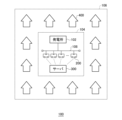
図1は、移動充電システム100の概念図である。
本実施形態においては、数百人から数千人程度の規模の街において移動充電システム100を運用することを想定する。この街では、エネルギー、特に、電気エネルギーの地産地消を目指す。
FIG. 1 is a conceptual diagram of a
In this embodiment, it is assumed that the
移動充電システム100は、電力供給システム104と電力消費システム106を含む。電力供給システム104は電気エネルギーの生産者に対応する。電力消費システム106は、複数の住宅400を含む。住宅400は電気エネルギーの消費者に対応する。各住宅400には比較的大型の二次電池(第1の二次電池)が設置されている(以下、「固定電池」とも呼ぶ)。住宅400は固定電池から家庭内において必要な電気エネルギーをまかなう。
The
電力供給システム104は、発電所102、サーバ300および複数の電気配達車200を含む。発電所102は、1以上の発電源の集合体である。発電所102は、太陽光発電、地熱発電、バイオマス発電、風力発電などの自然エネルギーによる発電源を含む。発電所102に含まれる発電源は一か所に集中する必要はなく、街全体に分散されてもよい。また、発電所102は、自然エネルギーによる発電のほか、火力発電所、水力発電所、原子力発電所などの既存の発電所を含んでもよい。
The
電気配達車200は、無人の自動運転車(autonomous vehicle)である。電気配達車200は、比較的小型の二次電池(第2の二次電池)を内蔵する(以下、「移動電池」とも呼ぶ)。電気配達車200は、たとえば、0.5~1.2メートル程度の車高を有し、時速3~10キロメートル程度にて低速走行する。また、電気配達車200は、カメラによる撮像機能、GPS(Global Positioning System)による位置検出機能および通信機能を備える。電気配達車200は、電力供給線108を介して発電所102と接続され、内蔵する移動電池を充電する。電力供給線108には、街の内部の発電所102だけでなく、街の外部にある発電所からも予備的に電力供給がなされてもよい。以下、電気配達車200が電力供給線108から電力供給を受ける場所を「待機エリア」と呼ぶ。
The
サーバ300は、住宅400から固定電池の電池残量(充電率)を含む第1電池情報を、無線または有線の通信ネットワークを介して定期的に受信する。第1電池情報は、住宅400を識別する住宅ID、固定電池の電池容量、固定電池の電池残量、住宅400における電力消費量(単位期間あたりの電池残量の低下量)など、住宅400における電気エネルギーの使用状態を示す。サーバ300は、電池残量が低下している住宅400を対象として、待機エリアにいるいずれかの電気配達車200に発進を指示する。
The
発進指示を受けた電気配達車200は、指定された住宅400に自走する。電気配達車200が住宅400に到着すると、内蔵の移動電池が住宅400の固定電池に接続され、移動電池から固定電池に給電する。給電後、電気配達車200は自動的に待機エリアに帰還する。なお、移動電池から固定電池への給電は、磁場共振方式等の既知のワイヤレス給電により行われてもよい。
When the
以下、「ある住宅400における固定電池のある時間帯W(例:金曜日の10:00~11:00)における電力消費量がX(%)である」とは、この時間帯において固定電池の電池残量がX(%)低下したことを意味する。ただし、この時間帯Wにおいて固定電池が移動電池により充電された場合には、この住宅の同時間帯Wにおける電力消費量は「N/A(Non Available)」として扱う。住宅400は、第1電池情報の一部として、充電を受けた時間をサーバ200に通知する。
In the following, "the power consumption of a fixed battery in a
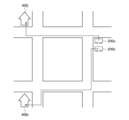
図2は、電気配達車200による電力供給方法を説明するための模式図である。
サーバ300は、待機エリアにいる電気配達車200のうち、移動電池の電池残量が閾値(以下、「発進閾値」と呼ぶ)以上となっている電気配達車200を派遣候補として選択する。以下、このような派遣候補となる電気配達車200を「S車両(Standby Vehicle)」と呼ぶ。ここでは、発進閾値(第4の閾値)が90(%)であるとして説明する。
FIG. 2 is a schematic diagram for explaining a method of supplying power by an
The
サーバ300は、複数の住宅400のうち、固定電池の充電率が閾値(以下、「給電閾値」と呼ぶ)未満となっている住宅400を給電候補として選択する。以下、このような給電候補となる住宅400を「R住宅(Requesting Home)」と呼ぶ。給電閾値(第1の閾値)の基本設定は30(%)であるとして説明する。給電閾値は可変であってもよいが、詳細は後述する。
Of the
サーバ300は、S車両(移動電池の電池残量が第4の閾値(発進閾値)以上の電気配達車200)に、R住宅(固定電池の電池残量が第1の閾値(給電閾値)未満の住宅400)の住宅IDを送信する。S車両は街の地図情報および各住宅400の住所情報をあらかじめ記憶している。サーバ300は、定期的に、全電気配達車200に最新の地図情報および住所情報を送信(マルチキャスト)することで、電気配達車200のデータを更新する。電気配達車200(S車両)は、住宅IDおよび地図情報、住所情報に基づいて、R住宅への移動経路を計算し、R住宅への移動を開始する。図2においては、電気配達車200a(S車両)は住宅400j(R住宅)を目標地点とし、電気配達車200b(S車両)は住宅400k(R住宅)を目標地点としたときの、それぞれの移動経路を示している。
The
電気配達車200は、小型かつ低速であるため、歩行者レーンを走行可能である。電気配達車200は、カメラを搭載し、自装置から所定範囲内に人などの障害物が存在するときには減速または停止する。電気配達車200は、交差点に到達したときには歩行者信号を撮像し、青信号であることを確認した上で横断歩道を走行する。
The
なお、電気配達車200が走行するための専用レーンを設けてもよい。あるいは、地面に白線などの走行指示線を引いておき、電気配達車200はこの走行指示線に沿って移動してもよい。
A dedicated lane for the
地面に複数のビーコンを埋設しておき、電気配達車200はビーコンからの案内信号にしたがって走行してもよい。電気配達車200は、ビーコンからビーコンIDを含む案内信号を受信し、ビーコンIDの位置があらかじめ登録されている地図情報とビーコンIDを照合して、自装置の現在位置を認識してもよい。
Multiple beacons may be buried in the ground, and the
本実施形態における電気配達車200は、最大で片道1.6キロメートル、往復3.2キロメートル以内の距離を自動運転により移動することが想定されている。
In this embodiment, the
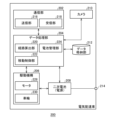
図3は、電気配達車200の機能ブロック図である。
電気配達車200の各構成要素は、CPU(Central Processing Unit)および各種コプロセッサ(co-processor)などの演算器、メモリやストレージといった記憶装置、それらを連結する有線または無線の通信線を含むハードウェアと、記憶装置に格納され、演算器に処理命令を供給するソフトウェアによって実現される。コンピュータプログラムは、デバイスドライバ、オペレーティングシステム、それらの上位層に位置する各種アプリケーションプログラム、また、これらのプログラムに共通機能を提供するライブラリによって構成されてもよい。電気配達車200は、更に、駆動機構206および二次電池208(移動電池)のような電動駆動のためのハードウェア機構を含む。
以下に説明する各ブロックは、ハードウェア単位の構成ではなく、機能単位のブロックを示している。
住宅400(図4)およびサーバ300(図5)の機能ブロック図についても同様である。
FIG. 3 is a functional block diagram of
Each component of
Each block described below does not represent a hardware configuration but represents a functional block.
The same applies to the functional block diagrams of the house 400 (FIG. 4) and the server 300 (FIG. 5).
電気配達車200は、通信部202、データ処理部204、駆動機構206、二次電池208(移動電池)、カメラ210およびデータ格納部212を含む。
通信部202は、有線または無線の通信ネットワークを介してサーバ300等との通信処理を担当する。データ格納部212は各種データを格納する。カメラ210は、電気配達車200の「目」として外部を撮像する。このほか、電気配達車200は測距センサなど他のセンサを備えてもよい。データ処理部204は、通信部202、カメラ210等により取得されたデータおよびデータ格納部212に格納されているデータに基づいて各種処理を実行する。駆動機構206は、電気配達車200の走行のための機構である。二次電池208(移動電池)は、充放電接続口214を介して固定電池および電力供給線108と接続される。二次電池208(移動電池)は、電力供給線108から充放電接続口214を介して電気エネルギーを供給されることで充電される。また、二次電池208(移動電池)は、充放電接続口214を介して固定電池に電気エネルギーを供給する。二次電池208(移動電池)は、駆動機構206等の電源としても機能する。データ処理部204は、通信部202、カメラ210、データ格納部212、駆動機構206および二次電池208(移動電池)のインタフェースとしても機能する。
The
The
通信部202は、サーバ300などの外部装置にデータを送信する送信部216と、外部装置からデータを受信する受信部218を含む。送信部216は、サーバ300に第2電池情報を定期的に送信する。第2電池情報は、電気配達車200を識別する車両ID、二次電池208(移動電池)の電池残量(充電率)など、電気配達車200における電気エネルギーの使用状態を示す情報を含む。また、送信部216は、適宜、電気配達車200の車両状態情報を送信する。車両状態情報には、電気配達車200の現在地点、移動速度、作業状態などが含まれる。
The
駆動機構206は、モータ228と車輪230を含む。モータ228は、二次電池208(移動電池)から供給される電気エネルギーにより車輪230を回転させる。モータ228は、移動制御部222からの指示にしたがって、車輪230の回転速度および方向を制御する。
The
データ処理部204は、経路算出部220、移動制御部222および電池管理部224を含む。
経路算出部220は、データ格納部212に保存されている地図情報を参照し、現在地点から目標地点までの移動経路を算出する。移動制御部222は、移動経路にしたがって駆動機構206に制御信号を送信することにより、電気配達車200の走行を制御する。また、移動制御部222は、カメラ210が所定距離以内に障害物を検出したときには、電気配達車200の移動速度および移動方向を調整することで衝突回避を行う。電池管理部224は、二次電池208(移動電池)の電池残量を定期的に計測する。電池管理部224は、また、二次電池208(移動電池)が住宅400の固定電池と接続されたとき、二次電池208(移動電池)から固定電池への充電を制御する。
The
The
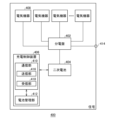
図4は、住宅400の機能ブロック図である。
住宅400は、二次電池404(固定電池)、充電制御装置406、分電盤402、充放電接続口414および複数の電気機器408を含む。電気機器408は、冷蔵庫、洗濯機、食洗器などの各種の電力消費主体である。複数の電気機器408は分電盤402を介して二次電池404(固定電池)と接続される。分電盤402は充放電接続口414につながる。二次電池404(固定電池)は、分電盤402および充放電接続口414を介して電気配達車200の二次電池208(移動電池)と接続される。二次電池404(固定電池)は、電気配達車200の二次電池208(移動電池)から、充放電接続口414、分電盤402を介して電気エネルギーを供給されることで充電される。また、二次電池404(固定電池)は、分電盤402を介して各電気機器408に電気エネルギーを供給する。
FIG. 4 is a functional block diagram of a
The
充電制御装置406は、通信部410および電池管理部412を含む。
通信部410は、無線または有線の通信ネットワークを介してサーバ300等との通信処理を担当する。通信部410は、サーバ300等の外部装置にデータを送信する送信部416と、外部装置からデータを受信する受信部418を含む。送信部416は、定期的に、第1電池情報(上述)をサーバ300に送信する。電池管理部412は、二次電池404(固定電池)の充放電を制御するとともに、二次電池404(固定電池)の電池残量を定期的に計測する。
The charging
The
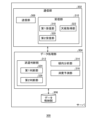
図5は、サーバ300の機能ブロック図である。
サーバ300は、通信部302、データ処理部304およびデータ格納部306を含む。
通信部302は、無線または有線の通信ネットワークを介して電気配達車200等との通信処理を担当する。データ格納部306は各種データを格納する。データ処理部304は、通信部302により取得されたデータおよびデータ格納部306に格納されているデータに基づいて各種処理を実行する。データ処理部304は、通信部302およびデータ格納部306のインタフェースとしても機能する。
FIG. 5 is a functional block diagram of the
The
The
通信部302は、電気配達車200等の外部装置にデータを送信する送信部308と、外部装置からデータを受信する受信部310を含む。送信部308は、派遣判断部312からの指示にしたがって後述の発進指示を電気配達車200に送信する。
The
受信部310は、第1受信部318、第2受信部320および天候取得部322を含む。
第1受信部318は、住宅400から第1電池情報を受信する。第2受信部320は、電気配達車200から第2電池情報を受信する。天候取得部322は、インターネットを介して、外部の天気情報サイトから天候情報を取得する。本実施形態における天候情報とは、気象庁から提供される降雪確率であるとする。
The receiving
The
データ処理部304は、派遣判断部312、傾向分析部314および消費予測部316を含む。
派遣判断部312は、電気配達車200の派遣要否を判定する。派遣判断部312は、第1判断部324および第2判断部326を含む。第1判断部324は、電気配達車200による充電が必要なR住宅の存否を判定する。第2判断部326は、R住宅に派遣可能なS車両の存否を判定する。R住宅およびS車両の特定方法の詳細は後述する。傾向分析部314は、住宅400ごとの電力消費傾向を分析する。住宅400の電力消費傾向とは、住宅400ごと、時間帯ごとの電力消費量(電池残量の低下度)を示す情報である(個別消費情報)。住宅400の電力消費傾向の詳細は図6,図7に関連して後述する。傾向分析部314は、また、複数の住宅400、いいかえれば、街全体における電力消費傾向を分析する。街全体の電力消費傾向も、街全体についての時間帯ごとの電力消費量(電池残量の低下度)を示す情報である(総合消費情報)。詳細は図13に関連して後述する。消費予測部316は、電力消費傾向、すなわち、電力消費に関する過去データに基づいて将来の電力残量を予測する。
The
The
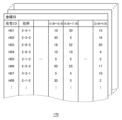
図6は、住宅電力消費情報170のデータ構造図である。
住宅電力消費情報170は、サーバ300のデータ格納部306に格納される。上述したように、住宅400は住宅IDにより識別される。住宅400の送信部416は、第1電池情報を定期的(たとえば、1時間ごと)にサーバ300に送信する。サーバ300の傾向分析部314は、第1電池情報を参照することにより、住宅400における二次電池404(固定電池)の現在の電池残量を記録する。また、傾向分析部314は、住宅400ごと、所定の時間ごと(たとえば、時間帯ごと)の電力消費量(電池残量の低下度)を集計する。
FIG. 6 is a data structure diagram of the residential
The residential
図6の住宅電力消費情報170は、金曜日における各住宅の電力消費傾向を示す。たとえば、住宅ID=H01の住宅400(以下、「住宅400(H01)」のように表記する)から収集した第1電池情報によれば、「6月12日(金)の15:00~16:00」の電力消費量が15(%)、「6月19日(金)の15:00~16:00」の電力消費量が10(%)、「6月26日(金)の15:00~16:00」の電力消費量が5(%)であったとする。傾向分析部314は、最近数回分の金曜日のデータに基づいて電力消費量の平均値を求める。上述の3日間を対象とする場合、傾向分析部314は、住宅400(H01)の「金曜日の16:00~17:00」における電力消費量(個別電力消費傾向)を10(%)として算出する。
The residential
もし、6月19日(金)の同時間帯における電力消費量が「N/A」だったときには、6月12日(金)の更に1週間前の6月5日(金)の電力消費量を含めて、最近3回分の金曜日(5日、12日、26日)のデータから平均値を求める。傾向分析部314は、住宅400(H01)から「金曜日の15:00~16:00」について最新の電力消費量を算出するごとに、住宅電力消費情報170の該当欄を更新する。他の曜日、他の時間帯、他の住宅400についても同様である。このような制御方法により、住宅電力消費情報170においては、住宅400の、曜日および時間帯ごとの平均の電力消費量が登録される。住宅電力消費情報170により、各住宅400がいつどのくらいの電力を消費する傾向にあるかを把握できる。消費予測部316は、住宅電力消費情報170に基づいて将来の各住宅400における電池残量を予測する(後述)。
If the power consumption for the same time period on Friday, June 19th is "N/A", the average value is calculated from the data for the last three Fridays (5th, 12th, and 26th), including the power consumption for Friday, June 5th, one week before Friday, June 12th. The
住宅電力消費情報170によれば、住宅400(H01)における二次電池404(固定電池)の電力消費量は、「金曜日の15:00~16:00」において平均10(%)である。一方、住宅400(H02)の同時間帯における電力消費量は平均30(%)である。このため、「金曜日の15:00~16:00」においては、住宅400(H02)は住宅400(H01)よりも電力消費の大きな生活スタイルを送っていることがわかる。
以下、「金曜日の15:00~16:00」のように住宅電力消費情報170に登録される規定の時間帯のことを「規定期間」と呼ぶ。本実施形態における規定期間の長さは1時間であるが、任意に設定可能である。
According to the residence
Hereinafter, a prescribed time period, such as "Friday 15:00 to 16:00", registered in the residential
図7は、住宅予測情報120のデータ構造図である。
住宅予測情報120は、サーバ300のデータ格納部306に格納される。消費予測部316は、住宅電力消費情報170に基づいて将来の電池残量を予測する。住宅予測情報120は、各住宅400の近未来の電池残量の予測値を示す。
FIG. 7 is a data structure diagram of the
The
現在時刻が「金曜日の14:50」であり、住宅400(H01)の現在の電池残量が90(%)であるとする。図7の住宅予測情報120によれば、二次電池404(固定電池)への新たな充電がなければ、1時間後の17:50には電池残量は80(%)に低下すると予想されている。図6の住宅電力消費情報170によれば、住宅400(H01)の「金曜日の15:00~16:00」における電力消費量は10(%)程度と予測される。この場合、1時間後の電池残量を予測する上で、消費予測部316は「金曜日の14:50(現在時刻)~15:50(1時間後)」という時間帯と最も多く重なる規定期間「金曜日の15:00~16:00」の10(%)を採用する。消費予測部316は、現在の電池残量である90(%)から予測される電力消費量である10(%)を減算することにより、1時間後の電池残量を80(%)と予測する。
Assume that the current time is "Friday 14:50" and the current battery remaining amount of the house 400 (H01) is 90(%). According to the
同様にして、住宅400(H01)の2時間後の電池残量を予測する上で「金曜日の15:50(1時間後)~16:50(2時間後)」という時間帯については、図6の170の規定期間「金曜日の16:00~17:00」のデータに基づいて30(%)を採用する。この場合、2時間後の16:50において二次電池404(固定電池)の電池残量は50(%)(=80-30)になると予想される。 Similarly, when predicting the remaining battery level in two hours for the house 400 (H01) for the time period "Friday 15:50 (1 hour later) to 16:50 (2 hours later)", 30(%) is used based on the data for the specified period "Friday 16:00 to 17:00" in 170 of FIG. 6. In this case, the remaining battery level of the secondary battery 404 (fixed battery) is predicted to be 50(%) (=80-30) at 16:50, two hours later.
傾向分析部314は、住宅400ごとに電力消費量を集計する。傾向分析部314は各規定期間について、住宅400ごとの平均の電力消費量を算出する。この集計された電力消費量に関するデータが電力消費傾向を示す。
The
第1判断部324は、現在の電池残量が給電閾値(30(%))未満となった住宅400を「R住宅」と判定する。図7によれば、住宅400(H04)は電池残量が給電閾値未満となっているためR住宅である。この場合、第1判断部324は電気配達車200(S車両)を住宅400(H04)に向けて発進させる。住宅400(H05)についても同様である。
The
住宅400(H08)の電池残量は40(%)(給電閾値以上)であるため、住宅400(H08)はR住宅ではない。しかし、過去の電力消費傾向から、1時間後の電池残量は40(%)から10(%)に大きく低下すると予測される。このため、住宅400(H08)は1時間後にR住宅となる可能性がある。 The remaining battery charge of house 400 (H08) is 40% (above the power supply threshold), so house 400 (H08) is not an R house. However, based on past power consumption trends, it is predicted that the remaining battery charge will drop significantly from 40% to 10% after one hour. Therefore, house 400 (H08) may become an R house after one hour.
住宅400(H03)の電池残量は50%(給電閾値以上)であり、1時間後の電池残量は32%(給電閾値以上)になると予想される。過去の電力消費傾向から、2時間後に住宅400(H03)の電池残量は32(%)から10(%)に低下すると予測される。このため、住宅400(H03)は2時間後にR住宅となる可能性がある。給電閾値は固定値であってもよいし、電力消費傾向に基づいて可変であってもよい。以下においては、まず、本発明の基本的な考え方を明確にするため、給電閾値は固定値であるという前提で説明する。給電閾値を変化させる実施形態については図12以降に関連して説明する。 The battery level of the house 400 (H03) is 50% (above the power supply threshold), and it is predicted that the battery level will be 32% (above the power supply threshold) after one hour. Based on past power consumption trends, it is predicted that the battery level of the house 400 (H03) will drop from 32% to 10% after two hours. Therefore, there is a possibility that the house 400 (H03) will become an R house after two hours. The power supply threshold may be a fixed value, or may be variable based on the power consumption trend. In the following, in order to clarify the basic concept of the present invention, it is assumed that the power supply threshold is a fixed value. An embodiment in which the power supply threshold is changed will be described in relation to FIG. 12 onwards.
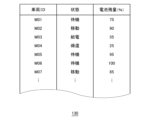
図8は、車両情報130のデータ構造図である。
車両情報130は、サーバ300のデータ格納部306に格納される。上述したように、電気配達車200は車両IDにより識別される。電気配達車200の送信部216は、第2電池情報を定期的にサーバ300に送信する。
FIG. 8 is a diagram showing the data structure of the
The
第2判断部326は、第2電池情報を受信するごとに車両情報130を更新する。また、電気配達車200は、待機エリアから住宅400への移動中、住宅400へ到着して給電を開始するときなど、電気配達車200の状態を示す車両状態情報を適宜送信する。図8の車両情報130によれば、電気配達車200(M01)は、待機エリアにおいて待機中の状態にあり、二次電池208(移動電池)の電池残量は75(%)である。
The
電気配達車200の状態は「待機」「移動」「給電」「帰還」の4種類である。「待機」は、電気配達車200が待機エリアにおいて待機し、電力供給線108と接続し、二次電池208(移動電池)を充電中であることを示す。「移動」は、電気配達車200が待機エリアを出発して住宅400に向けて移動中であることを示す。「給電」は、電気配達車200が住宅400に到着し、住宅400の二次電池404(固定電池)を充電中であることを示す。「帰還」は、給電を終えた電気配達車200が待機エリア(帰還地点)に向けて移動中であることを示す。
The
上述したように、第2判断部326は、二次電池208(移動電池)の電池残量が発進閾値(90(%))以上であって「待機」状態の電気配達車200を「S車両」として判定する。図8の車両情報130によれば、電気配達車200(M05)および電気配達車200(M06)はS車両である。派遣判断部312は、R住宅が存在するときには、電気配達車200(M05)または電気配達車200(M06)に発進指示する。
As described above, the
図9は、サーバ300が電気配達車200の発進要否を判断する過程を示すフローチャートである。
図9に示す処理過程は、サーバ300がいずれかの住宅400から第1電池情報を受信するごとに実行される。まず、サーバ300の第1判断部324は、住宅400から第1電池情報を受信するごとに住宅電力消費情報170の電池残量の記録を更新する(S10)。第1電池情報には住宅400の二次電池404(固定電池)における現在の電池残量が含まれている。傾向分析部314は、定期的に第1電池情報を受信することにより、規定期間ごとの電池残量の減少量、すなわち、規定期間あたりの電力消費量を再計算する。同様にして、傾向分析部314は街全体としての電力消費傾向に関するデータも更新する。
FIG. 9 is a flowchart showing a process in which the
The process shown in Fig. 9 is executed each time the
第1判断部324は、電池残量が給電閾値未満となる住宅400、すなわち、R住宅であるか否かを判定する(S12)。R住宅でないときには(S12のN)、処理は終了する。R住宅であるときには(S12のY)、第2判断部326は電池残量が発進閾値以上かつ「待機」状態の電気配達車200、すなわち、S車両が存在するか否かを判定する(S14)。電気配達車200からも定期的に第2電池情報および車両状態情報が送信され、第2判断部326は適宜車両情報130を更新する。
The
S車両が存在しなければ(S14のN)、処理は終了する。S車両が存在するときには(S14のY)、第2判断部326はS車両を選択する(S16)。S車両が複数存在するときには、第2判断部326は最も電池残量の大きいS車両を選択する。派遣判断部312は、選択されたS車両に、充電先となる住宅400(R住宅)の住宅IDを含む発進指示を送信する(S18)。また、第2判断部326は、発進するS車両の状態を「待機」から「移動」に変更することにより、車両情報130を更新する(S20)。
If there is no S vehicle (N in S14), the process ends. If there is an S vehicle (Y in S14), the
たとえば、住宅400(H05)を充電対象となるR住宅として特定し、電気配達車200(M06)が発進対象として選択されたとする。このとき、送信部308は、電気配達車200(M06)に住宅ID=H05を含む発進指示を送信する。電気配達車200(M06)には、あらかじめ各住宅400の住所が登録されている。電気配達車200(M06)は地図情報に基づいて住宅400(H05)への移動を開始する。なお、第2受信部320は、電気配達車200(M06)が住宅400(H05)に到着したとき、あるいは、電気配達車200(M06)が住宅400(H05)において給電を終了したときにも、電気配達車200(M06)から車両状態情報を受信する。第2判断部326は、第2電池情報または車両状態情報を受信するごとに車両情報130を更新する。
For example, suppose that the house 400 (H05) is identified as the R house to be charged, and the electric delivery vehicle 200 (M06) is selected as the departure target. At this time, the
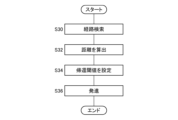
図10は、発信指示を受信したときの電気配達車200の処理過程を示すフローチャートである。
図10の処理過程は、待機中の電気配達車200がサーバ300から発進指示を受信したときに実行される。発進指示には、目標地点となるR住宅の住宅IDが含まれる。電気配達車200の経路算出部220は、住所情報を参照し、指定されたR住宅を行き先として設定する。次に、経路算出部220は、地図情報を参照し、R住宅までの移動経路を算出する(S30)。移動経路の算出方法は、一般的なカーナビゲーションシステムにおいて利用されている技術と同様の方法により実現される。
FIG. 10 is a flow chart showing the process of the
The process in Fig. 10 is executed when the waiting
次に、電気配達車200は、現在地点(待機エリア)から目的地(R住宅)までの距離を地図情報に基づいて計算する(S32)。電池管理部224は、算出された距離に応じて「帰還閾値(第2の閾値)」を設定する(S34)。距離が長いほど帰還閾値は高く設定される。詳細は後述するが、電気配達車200は、住宅400を充電するとき、二次電池208(移動電池)の電池残量が帰還閾値未満となったときには二次電池404(固定電池)の充電が不十分であっても待機エリアへの帰還を開始する。目的地が遠いほど、いいかえれば、移動距離が長いほど、二次電池208(移動電池)に蓄積される電気エネルギーの多くが電気配達車200の運動エネルギーとして消費される。移動距離が長いときには帰還閾値を高めに設定することにより、電気配達車200が住宅400から待機エリアに戻るために必要な電気エネルギーを確保することができる。
Next, the
電気配達車200は、帰還閾値の設定後、住宅400(R住宅)に向けて自動移動を開始する(S36)。住宅400に到着したときには、電気配達車200の充放電接続口214と住宅400の充放電接続口414が接続される。充放電接続口214、414の接続機構は差し込み方式など既知技術と同様でよい。接続後、電気配達車200の電池管理部224は二次電池208(移動電池)から二次電池404(固定電池)に電流を流すことにより、二次電池404(固定電池)を充電する。住宅400の電池管理部412は、満充電になったときには電気配達車200に充電完了を通知する。また、上述したように、電気配達車200の電池管理部224は二次電池208(移動電池)の電池残量を計測する。電池管理部224は、二次電池404(固定電池)が満充電になったとき、または、二次電池208(移動電池)の電池残量が帰還閾値未満となったとき、二次電池404(固定電池)への給電を完了する。
After setting the return threshold, the
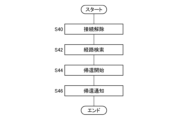
図11は、給電終了後の電気配達車200の処理過程を示すフローチャートである。
図11の処理過程は、給電完了後に実行される。電気配達車200の電池管理部224は、住宅400の充放電接続口414と電気配達車200の充放電接続口214との接続を解除する(S40)。次に、経路算出部220は現在位置から待機エリア(基幹地点)までの移動経路を検索する(S42)。移動制御部222は、算出された移動経路にしたがって、電気配達車200を自動移動させる(S44)。このとき、電気配達車200の送信部216は、帰還開始の旨を車両状態情報としてサーバ300に通知する(S46)。サーバ300は、帰還開始の通知を受けたとき、この電気配達車200の状態を「給電」から「帰還」に変更する。
FIG. 11 is a flow chart showing the process of the
The process of FIG. 11 is executed after the power supply is completed. The
このあと、電気配達車200は待機エリアに戻る。待機エリアへの到着後、電池管理部224は、充放電接続口214を電力供給線108に接続する。サーバ300の第2判断部326は、電気配達車200の状態を「帰還」から「待機」に変更する。電気配達車200の二次電池208(移動電池)は電力供給線108により充電される。
The
[給電閾値の調整方法1(住宅調整)]
給電閾値は固定値であってもよいし、可変値であってもよい。第1判断部324は、各住宅400の電力消費傾向に基づいて、住宅400ごと、時間帯ごとに給電閾値を調整してもよい。以下、このような給電閾値の調整方法を「住宅調整」と呼ぶ。
[Power supply threshold adjustment method 1 (residential adjustment)]
The power supply threshold may be a fixed value or a variable value. The
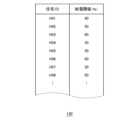
図12は、住宅調整情報140のデータ構造図である。
住宅調整情報140は、サーバ300のデータ格納部306に格納される。住宅調整を実行するときには、住宅400の電力消費傾向に応じて第1判断部324は給電閾値を調整する。いいかえれば、住宅400の電力消費傾向を示す住宅電力消費情報170に基づいて、第1判断部324は給電閾値を調整する。給電閾値は、まず、基本値を30(%)とする。過去のデータに基づいて算出された1時間後における電池残量の平均低下量、いいかえれば、予想される電力消費量が20(%)以上であれば、第1判断部324は、第1補正値として20(%)を基本値に加算する。同様にして、2時間後における電力消費量が20(%)以上であれば、第1判断部324は、第2補正値として10(%)を更に加算するものとする。住宅調整情報140は、住宅400ごとに住宅調整された後の給電閾値を示す。
FIG. 12 is a data structure diagram of the
The
たとえば、現在時刻が15:50であるとする。図7の住宅予測情報120を参照すると、住宅400(H01)は、1時間後の電力消費量は10(%)、2時間後の電力消費量は30(%)である。このため、第1判断部324は、住宅400(H01)の給電閾値を40(%)(=30+0+10)に調整する。住宅400(H01)の現在の電池残量は90(%)であれば、調整後の給電閾値(40%)よりも大きいので、第1判断部324は住宅400(H01)をR住宅とは判定しない。
For example, assume that the current time is 15:50. Referring to the
住宅400(H03)の現在の電池残量は50(%)、1時間後の電力消費量は18(%)、2時間後の電力消費量は22(%)である。第1判断部324は、住宅400(H03)の給電閾値を60(%)(=30+20+10)に調整する。住宅400(H03)の現在の電池残量50(%)は住宅調整後の給電閾値(60(%))未満であるため、第1判断部324は住宅400(H03)をR住宅と判定する。住宅400(H03)の現在の電池残量は充分であるが、1時間後および2時間後に大きく電力を消費することが予測されるため、第1判断部324は給電閾値を高くすることで、電気配達車200を早めに住宅400(H03)に向かわせる。
The current battery level of the house 400 (H03) is 50(%), the power consumption after one hour is 18(%), and the power consumption after two hours is 22(%). The
このような制御方法によれば、現在の電池残量は充分であっても、近い将来、電力消費が大きくなる可能性のある住宅400に対しては電気配達車200を派遣することで住宅400における電力不足が生じるのを防ぐことができる。
This control method can prevent power shortages in
傾向分析部314は、規定期間の開始時点の電池残量と、終了時点の電池残量の差分に基づいて規定期間の電力消費量を計算する。ただし、規定期間中に二次電池404(固定電池)が二次電池208(移動電池)からの給電を受けた場合、そのデータは集計対象外(N/A)とする。
The
[給電閾値の調整方法2(街調整)]
第1判断部324は、複数の住宅400全体、いいかえれば、街全体における電力消費傾向に応じて、全住宅400の給電閾値をまとめて調整してもよい。以下、このような給電閾値の調整方法を「街調整」と呼ぶ。
[Power supply threshold adjustment method 2 (town adjustment)]
The
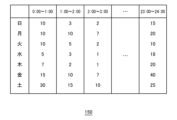
図13は、街調整情報150のデータ構造図である。
街調整情報150は、サーバ300のデータ格納部306に格納される。街調整に際して、傾向分析部314は複数の住宅400から得られる第1電池情報から、曜日ごと、および、時間帯ごとの街全体の電力消費傾向を集計する。街調整を実行するときには、街全体の電力消費傾向に応じて第1判断部324はすべての住宅400の給電閾値をまとめて調整する。
FIG. 13 is a data structure diagram of the
The
街調整情報150は、街全体における電力消費傾向の集計結果を示す情報である。たとえば、街調整情報150によると、「日曜日の午前1:00~2:00」について、街全体における二次電池404(固定電池)の電池残量、いいかえれば、同時間帯における複数の住宅それぞれの電池残量は平均して3(%)低下する。以下、このような街全体の単位時間あたりにおける電力消費量の平均値を「街電力消費量」と呼ぶ。傾向分析部314は、第1電池情報が取得されるごとに街電力消費量の再計算し、街調整情報150を更新する。ただし、傾向分析部314は、計測中に給電を受けた住宅400は計算対象から除外する。
The
より具体的には、住宅400(H01)、住宅400(H02)および住宅400(H03)の同時間帯における平均の電力消費量がそれぞれ5(%)、6(%)、7(%)であるとき、この3つの住宅400における平均の電力消費量は6(%)となる。傾向分析部314は、このようにして、同一時間帯における複数の住宅400それぞれの電力消費量を平均することで街電力消費量を算出する。
More specifically, when the average power consumption during the same time period of house 400 (H01), house 400 (H02), and house 400 (H03) is 5(%), 6(%), and 7(%), respectively, the average power consumption of these three
街調整において、給電閾値は、まず、基本値を30(%)とする。1時間後における街電力消費量が20(%)以上であれば(第3の閾値)、第1判断部324は第1補正値として10(%)を基本値に加算する。同様にして、2時間後における街電力消費量が20(%)以上であれば、更に、第2補正値として5(%)を加算する。
In city adjustment, the power supply threshold is initially set to a base value of 30%. If the city power consumption after one hour is 20% or more (third threshold), the
たとえば、金曜日の23:45を現在日時とする。街調整情報150によれば、1時間後の「土曜日の0:45」を含む時間帯においては街電力消費量として30(%)が想定されている。2時間後の「土曜日の1:45」を含む時間帯においては15(%)の街電力消費量が想定されている。この場合、第1判断部324は、全住宅400の給電閾値を40(%)(=30+10)に調整する。住宅400(H09)の現在の電池残量が50(%)であるとすれば、この住宅400(H09)はR住宅ではない。一方、住宅400(H10)の現在の電池残量が35(%)であれば住宅400(H10)はR住宅となる。
For example, the current date and time is 23:45 on Friday. According to the
上述の説明においては、街全体における電力消費傾向に基づく制御を説明したが、たとえば、街全体を複数のブロックに分け、各ブロック単位に同様な制御を行っても構わない。または、複数の住宅からなるグループを設け、このグループ内で同様な制御を行っても構わない。 In the above explanation, we have described control based on the power consumption trends of the entire town, but for example, the entire town can be divided into multiple blocks and similar control can be performed on a block-by-block basis. Or, a group can be created consisting of multiple houses and similar control can be performed within this group.
このような制御方法によれば、街全体の電力消費傾向を参照し、近い将来、電力不足が生じる可能性のある住宅400に対しては早期に電気配達車200を派遣できる。いいかえれば、街全体として電力消費量が大きくなる時間帯においては給電閾値が高くなるため、電気配達車200が比較的活発に派遣されることになる。
This control method makes it possible to refer to the power consumption trends of the entire town and dispatch
住宅調整と街調整を組み合わせてもよい。たとえば、住宅400(H10)について、住宅調整に基づく第1補正値および第2補正値により給電閾値を調整する。続いて、第1判断部324は、街調整に基づく第1補正値および第2補正値により、住宅調整後の給電閾値を更に調整してもよい。あるいは、第1判断部324は、住宅調整により計算された給電閾値と、街調整により計算された給電閾値の平均値を新たな給電閾値として設定してもよい。
Residential adjustment and town adjustment may be combined. For example, for house 400 (H10), the power supply threshold is adjusted using a first correction value and a second correction value based on the residential adjustment. Next, the
[給電閾値の天候調整]
第1判断部324は、天候に応じて給電閾値を調整してもよい。以下、このような給電閾値の調整方法を「天候調整」と呼ぶ。
[Weather Adjustment of Power Supply Threshold]
The
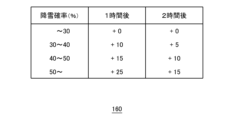
図14は、天候調整情報160のデータ構造である。
天候調整情報160は、サーバ300のデータ格納部306に格納される。天候調整においては、天候取得部322は外部の天気予報サイトから、天候情報を取得する。本実施形態における天候情報とは、気象庁が発表する降雪確率である。天候調整方法においては、近未来の降雪確率が所定の条件(天候条件)を満たすときに給電閾値を調整する。
FIG. 14 shows the data structure of the
The
天候調整情報160により、将来の降雪確率に基づく給電閾値の調整値をあらかじめ定義する。たとえば、1時間後の降雪確率が30(%)未満であれば、調整値は「0」である。1時間後の降雪確率が30(%)以上、40(%)未満であれば、調整値は「10」となる。給電閾値の基本値を30(%)とする。天候情報により、1時間後の降雪確率が35(%)であれば、第1判断部324は給電閾値を40(%)(=30+10)に設定する。
The
たとえば、1時間後の降雪確率が45(%)、2時間後の降雪確率が35(%)であるとする。図14の天候調整情報160によれば、それぞれの調整値は「15」および「5」である。この場合、第1判断部324は給電閾値を50%(=30+15+5)に調整する。
For example, assume that the probability of snowfall one hour from now is 45% and the probability of snowfall two hours from now is 35%. According to the
降雪の可能性があるときには給電閾値が上昇するため、早めに電気配達車200を派遣することができる。この結果、将来の降雪によって電気配達車200を派遣できなくなるリスクを事前に回避しやすくなる。
When there is a possibility of snowfall, the power supply threshold increases, allowing the
住宅調整と天候調整を組み合わせてもよい。同様にして、街調整と天候調整を組み合わせてもよい。また、住宅調整、街調整および天候調整を組み合わせることにより、給電閾値を調整してもよい。組み合わせ方は任意である。 Housing adjustment and weather adjustment may be combined. Similarly, town adjustment and weather adjustment may be combined. Furthermore, the power supply threshold may be adjusted by combining housing adjustment, town adjustment, and weather adjustment. The combination may be arbitrary.
[総括]
以上、実施形態に基づいて移動充電システム100を説明した。
本実施形態によれば、電気配達車200が内蔵する二次電池208(移動電池)により電気を運搬する方式であるため、送電線を不要とすることができる。街の規模や電力需要に合わせて電気配達車200の数を調整すればよいため、社会的基盤の整備・構築に要する費用を調整しやすくなる。電気配達車200は、基本的には「街」という比較的狭い地域内を巡回することを想定している。長距離移動が想定されていないため、電気配達車200の移動にともなう二次電池208(移動電池)の電気エネルギー消費を抑制できる。
[Summary]
The
According to this embodiment, since electricity is transported by the secondary battery 208 (mobile battery) built into the
送電線は送電損失をともなう。特に、長距離送電時の送電損失は大きくなりやすい。空中の送電線は景観を損なう面があり、自然保護の観点から送電線を極力使いたくない場合も多い。景観対策は観光資源を守る上でも重要であり、景観は不動産価値にも大きく影響するといわれる。このため、送電線を使わないことによる潜在的価値は非常に大きい。多数の電気配達車200が街をゆっくりと巡回することにより、住人も電気配達車200に見慣れていくと考えられる。電気配達車200は、バスや路面電車のように生活風景として溶け込んでいくことが期待される。もちろん、電気配達車200だけで配電する方式に限らず、送電線と電気配達車200を共存させてもよい。たとえば、電気配達車200の数を増やしながら送電線を徐々に減らしていくという導入方法も考えられる。
Power transmission lines are accompanied by transmission losses. In particular, transmission losses during long-distance power transmission tend to be large. Aerial power transmission lines tend to spoil the scenery, and there are many cases where power transmission lines are avoided as much as possible from the viewpoint of nature conservation. Landscape measures are also important in protecting tourism resources, and it is said that the scenery also has a large impact on real estate value. For this reason, the potential value of not using power transmission lines is very large. It is expected that residents will become accustomed to the
電気配達車200は、内蔵する二次電池208(移動電池)を二次電池404(固定電池)への給電源として利用するだけでなく、電気配達車200自身の動力源としても利用する。電気配達車200は、帰還閾値を移動距離に応じて調整することにより、住宅400への給電を終えたあとに確実に待機エリアに戻れるように制御できる。
The
傾向分析部314は、住宅400の電力消費傾向を分析する。第1判断部324は、近い将来の電力消費が大きくなることが予想されるときには給電閾値を高く設定する。このような制御方法(住宅調整)によれば、住宅400の現在の電池残量が充分であっても、早めに電気配達車200を派遣することで将来の電力需要に先制的に対応できる。
The
同様にして、サーバ300は、複数の住宅400、すなわち、街全体の電力消費傾向を分析し、近い将来の電力需要が大きくなることを予想されるとき給電閾値を高く設定してもよい(街調整)。また、降雪など天候悪化が予想されるときにも給電閾値を高く設定することにより、早めに電気配達車200を派遣し、電気エネルギーを届けられなくなる事態を防ぐことができる。
In a similar manner, the
なお、本発明は上記実施形態や変形例に限定されるものではなく、要旨を逸脱しない範囲で構成要素を変形して具体化することができる。上記実施形態や変形例に開示されている複数の構成要素を適宜組み合わせることにより種々の発明を形成してもよい。また、上記実施形態や変形例に示される全構成要素からいくつかの構成要素を削除してもよい。 The present invention is not limited to the above-described embodiments and modifications, and can be embodied by modifying the components without departing from the spirit of the invention. Various inventions may be formed by appropriately combining multiple components disclosed in the above-described embodiments and modifications. In addition, some components may be deleted from all the components shown in the above-described embodiments and modifications.
[変形例]
本実施形態においては、住宅400の二次電池404(固定電池)を充電対象として説明した。住宅400に限らず、電気自動車(Electric Vehicle)、電気推進船、電動航空機なども、電気配達車200からの給電を受けてもよい。
[Modification]
In the present embodiment, the secondary battery 404 (fixed battery) of the
本実施形態においては、街に存在する発電所102から各住宅400に電気配達車200によって電気を配達するモデルを想定して説明した。複数の発電所102を各所に分散配置し、発電所102の近くに電気配達車200を分散配置してもよい。たとえば、住宅400(H01)がその屋根に太陽電池パネルを設置するとき、住宅400(H01)自体が電力供給者となってもよい。住宅400(H01)にはあらかじめ電気配達車200(M01)が貸与される。太陽電池パネルにより、住宅400(H01)の二次電池404(固定電池)と電気配達車200(M01)の二次電池208(移動電池)が充電される。二次電池404(固定電池)および二次電池208(移動電池)の双方の電池残量が閾値以上となったとき、電気配達車200(M01)はS車両となる。サーバ300は、必要に応じて、この電気配達車200(M01)を他の住宅400に派遣してもよい。
In this embodiment, a model has been described in which electricity is delivered from a
自動運転車に限らず、二次電池208(移動電池)を内蔵するドローンにより電気を配達してもよいし、二次電池208(移動電池)を内蔵するロボットにより電気を配達してもよい。 In addition to self-driving cars, electricity can be delivered by drones equipped with secondary batteries 208 (mobile batteries), or by robots equipped with secondary batteries 208 (mobile batteries).
サーバ300から電気配達車200を遠隔制御してもよい。たとえば、サーバ300が地図情報を参照し、電気配達車200に移動経路を指示し、電気配達車200の走行速度および移動方向を遠隔制御してもよい。地面にビーコンを埋め込んでおき、サーバ300は、各ビーコンに車両IDおよび方向指示信号を送信してもよい。電気配達車200は、自装置を対象とする方向指示信号を検出したとき、その方向指示信号にしたがって移動方向を制御する。このような制御方法によれば、サーバ300はビーコンを通して各電気配達車200を制御できる。
The
電気配達車200は、充電完了後、待機エリアに待機するのではなく、街を巡回してもよい。電気配達車200は車両状態情報として、車両IDとともに現在位置を定期的にサーバ300に送信する。サーバ300は、R住宅を検出したときには、R住宅の近くを巡回している電気配達車200を特定し、その電気配達車200をR住宅に派遣してもよい。電気配達車200は、R住宅における充電の完了後、待機エリアに帰還し、再び電力供給線108から二次電池208(移動電池)を充電する。
After charging is complete, the
本実施形態においては、街全体の電力消費傾向を街調整情報150に記録し、街調整情報150に基づいて給電閾値を調整する方法について説明した。変形例として、街の一部、たとえば、数世帯を単位区画とし、サーバ300は単位区画ごとの電力消費傾向を分析してもよい。サーバ300は、ある単位区画において電力消費の増加が予測されるときには、その単位区画に属する住宅400だけを対象として給電閾値を調整してもよい。
In this embodiment, a method has been described in which the power consumption trend of the entire town is recorded in
たとえば、街を単位区画D1~D5に分けるとする。単位区画D1~D5それぞれに対応して街調整情報150を用意しておく。傾向分析部314は、住宅400から第1電池情報を受信したとき、その住宅400が所属する単位区画全体についての平均電力消費量を再計算し、街調整情報150を更新する。たとえば、ある規定期間Wにおいて単位区画D1における電力消費量が大きいと予測されるときには、第1判断部324は単位区画D1に所属する全住宅の給電閾値を調整する。このような制御方法によれば、街全体よりも小さな単位にて電力需要を予測することで、電気配達車200の派遣要否を判断できる。たとえば、一部の単位区画では、イベントの開催により、特定曜日の特定時間帯には大きく電力消費が発生することもある。街よりも小さな単位での電力需要予測により、給電閾値をより適切に制御しやすくなる。
For example, suppose a town is divided into unit blocks D1 to D5.
本実施形態においては、電力消費量を平均値に基づいて将来の電力消費量を予測計算した。たとえば、傾向分析部314は、ある住宅400の12:00~13:00における電力消費量(実測値)を収集し、収集された電力消費量(実測値)の平均値をこの時間帯における電力消費量の予想値として算出する。平均値に限らず中央値であってもよい。また、消費予測部316は、時間帯、曜日、世帯人数などを入力パラメータとした多変量解析、たとえば、ニューラルネットワーク等の予測モデルにより、将来の電力消費を予測してもよい。
In this embodiment, future power consumption is predicted based on the average power consumption. For example, the
第1判断部324は、住宅調整と街調整を独立並行して実行してもよい。たとえば、住宅400(H01)の基本の給電閾値をT1とする。第1判断部324は、住宅調整に基づき、住宅400(H01)の給電閾値T1をT2Aに変更する。一方、第1判断部324は、街調整に基づき、住宅400(H01)の給電閾値T1をT2Bに変更する。この結果、住宅400(H01)はT2AおよびT2Bの2種類の給電閾値を有する。第1判断部324は、住宅400(H01)の電池残量が給電閾値T2AおよびT2Bのいずれか一方を下回ったとき、電気配達車200を住宅400(H01)に派遣するとしてもよい。あるいは、第1判断部324は、住宅400(H01)の電池残量が給電閾値T2AおよびT2Bの双方を下回ったとき、電気配達車200を住宅400(H01)に派遣するとしてもよい。第1判断部324は、住宅400(H01)の電池残量が給電閾値T2AおよびT2Bの平均値を下回ったとき、電気配達車200を住宅400(H01)に派遣するとしてもよい。
The
街(または単位区画)において将来の時間帯(規定期間)における電力消費量(過去の実績に基づく平均値)が大きいとき、第1判断部324は給電閾値を上昇させるとしてもよい。このような制御方法によれば、街全体として電力消費が大きくなると予測されるときに電気配達車200を積極的に派遣することができる。これにより、電力不足の住宅400が生じるのを防ぎやすくなる。
When the amount of power consumption (average value based on past performance) in a future time period (specified period) in the town (or unit block) is high, the
街(または単位区画)において将来の時間帯(規定期間)における電力消費量(過去の実績に基づく平均値)が大きいとき、逆に、第1判断部324は給電閾値を減少させてもよい。あるいは、電力消費量の増加が予測されるときであって、かつ、S車両が所定数以下であるとき、第1判断部324は給電閾値を減少させるとしてもよい。このような制御方法によれば、将来の大きな電力需要に備えて電気配達車200の充電を優先させることができる。
Conversely, when power consumption (average value based on past performance) in a future time period (specified period) in a city (or unit block) is high, the
街(または単位区画)において、ある時間帯における過去の街電力消費量の実績値をP1とする。また、同時間帯における街電力消費量をP2とする。P1<P2のときには、いいかえれば、過去の電力消費傾向に比べて最新の街電力消費量が大きいときには、第1判断部324は各住宅400の給電閾値を上昇させるとしてもよい。たとえば、「金曜日の12:00~13:00」についての過去5週間の街電力消費量P1(平均値)は10(%)だったが、最新の「金曜日の12:00~13:00」についての街全体での電力消費量P2(最新値)は40(%)となったときには、第1判断部324は各住宅400の給電閾値を上昇させる。過去の電力消費傾向に比べて街電力消費量が大きくなっているときには、いいかえれば、電力消費が想定以上に大きくなっているときには、早めに電気配達車200を派遣することで電力不足の住宅400が生じるのを防ぎやすくなる。
In a town (or unit block), the actual value of past town power consumption during a certain time period is P1. Also, the town power consumption during the same time period is P2. When P1<P2, in other words, when the latest town power consumption is higher than the past power consumption trend, the
街(または単位区画)において、ある時間帯における過去の街電力消費量の実績値をP1とする。また、同時間帯における最新の街電力消費量をP2とする。P1<P2のときには、いいかえれば、過去の電力消費傾向に比べて最新の街電力消費量が少ないときには、第1判断部324は各住宅400の給電閾値を減少させるとしてもよい。あるいは、過去に比べて電力消費量が少ないときであって、かつ、S車両が所定数以下であるとき、第1判断部324は給電閾値を減少させるとしてもよい。このような制御方法によれば、将来の電力不足リスクに備えてむしろ電気配達車200の充電を優先させることができる。
In a town (or unit block), the actual past town power consumption during a certain time period is P1. The latest town power consumption during the same time period is P2. When P1<P2, in other words, when the latest town power consumption is low compared to the past power consumption trend, the
発電所102による発電量が閾値以上となっているとき、あるいは、S車両が所定数以上となっているときには、第1判断部324は給電閾値を増加させてもよい。電気に余裕があるときには、給電閾値を増加させて電気配達車200を積極的に派遣することにより、余剰電力を生じないように制御できる。逆に、発電所102による発電量が閾値以下となっているとき、あるいは、S車両が所定数以下となっているときには、サーバ300は給電閾値を減少させてもよい。
When the amount of power generated by the
本実施形態においては、降雪確率に基づいて給電閾値を天候調整するとして説明した。雪に限らず、降雨確率や予想風力に基づいて、サーバ300は給電閾値を天候調整してもよい。
In this embodiment, the power supply threshold is adjusted based on the probability of snowfall. The
第1判断部324は、降雪、降雨、強風などの天候悪化が予想されるときに給電閾値を増加させることにより、天候悪化前に積極的に電気配達車200を派遣するとしてもよい。逆に、天候悪化が予想されるときには、第1判断部324は給電閾値を低下させ、天候悪化に備えて電気配達車200の派遣を控えるように制御してもよい。
The
快晴など天候良化が予想されるときには第1判断部324は給電閾値を上昇させてもよい。太陽光発電の発電量が増加すると予想されるため、この場合には派遣判断部312は積極的に電気配達車200を派遣してもよい。逆に、天候良化が予想されるときには給電閾値を減少させるとしてもよい。発電量が増加すると予想されるため、この場合には電気配達車200をなるべく待機させることで多くの電気配達車200を充電してもよい。
When the weather is expected to improve, such as clear skies, the
本実施形態においては、給電閾値の増減により、電気配達車200の派遣と待機のバランスをコントロールするとして説明した。変形例として、給電閾値の調整をすることなく、所定の条件が成立したときには電気配達車200を派遣し、あるいは、派遣中止にするとしてもよい。たとえば、ある住宅400において今後の電力消費が所定閾値以上となることが予想される場合には、派遣判断部312は住宅400の電池残量に関わらず電気配達車200を派遣するとしてもよい。あるいは、降雪が予想されるときには住宅400の電池残量に関わらず電気配達車200を派遣するとしてもよい。また、降雪などの悪天候時には電気配達車200の派遣判断部312は電気配達車200の派遣を中止するとしてもよい。
In this embodiment, the balance between dispatch and standby of the
第1判断部324が給電閾値を上昇させるとき、R住宅として認定されやすくなる。いいかえれば、給電閾値が上昇するほど、電気配達車200により積極的な給電が行われることになる。第1判断部324は、給電閾値ではなく、発進閾値を調整してもよい。発進閾値が減少するとき、電気配達車200はS車両として認定されやすくなる。このため、発進閾値が減少するほど、電気配達車200により積極的な給電が行われやすくなる。第1判断部324は、給電閾値および発進閾値の双方または一方を調整することにより、電気配達車200の発進頻度を調整してもよい。
When the
電気配達車200が道に迷ったとき、故障したとき、あるいは、予定時刻までに住宅400に到達できないときには電気配達車200の送信部216は警報信号を送信してもよい。サーバ300の受信部310は、警報信号を受信したときには他の電気配達車200を代わりに住宅400(R住宅)に向かわせてもよい。また、このようなトラブルの発生時には電気配達車200の異常通知部(不図示)は内蔵するランプを点灯させてもよい。電気配達車200の近くにいる人は、不具合の発生している電気配達車200が存在することをサーバ300の運営者に通知すればよい。住人が電気配達車200を助ける場面をつくることは、住人と電気配達車200の共存を促す上で有効であると考えられる。
When the
住宅400は、燃料電池により電力供給を受けてもよい。この場合、サーバ300は、自動運転車によりメタノールを運搬させてもよい。
The
複数種類の電力供給線108それぞれについて、単位発電量あたりの二酸化炭素排出量を「炭素指標」として設定してもよい。そして、炭素指標が大きな発電所ほど電気料金を高く設定するとしてもよい。たとえば、発電所102A、発電所102Bおよび発電所102Cの炭素指標が2:5:10であるとする。発電所102A、発電所102Bおよび発電所102Cのある時間帯Tにおける発電比率が5:3:2であるとき、時間帯Tにおける炭素指標は、4.5(=2×0.5+5×0.3+10×0.2)となる。時間帯Tの電気料金を炭素指標4.5に比例する金額に設定する。この結果、電気配達車200による給電を受けた住宅400は、電気配達車200から供給された電気エネルギーが時間帯Tにおいて充電されたものであれば、炭素指標4.5に比例する電気料金を支払う。
For each of the multiple types of
このような制御方法によれば、自然エネルギーによる発電が活発な時間帯であれば、電気料金を安く抑えることができる。このため、自然環境(発電環境)に併せて電気の使用方法を変えていくような行動を消費者に促すことができる。これは自然に合わせた生活スタイルの確立につながると考えられる。 This type of control method can keep electricity bills low during times when natural energy generation is at its peak. This can encourage consumers to change the way they use electricity to match the natural environment (power generation environment). This is believed to lead to the establishment of a lifestyle that is in harmony with nature.
また、発電所102に近い住宅400は、電気配達車200の移動距離が短いために電力料金が安くなる。このため、発電所102の近くに住むことによるメリットが出てくるため、街における発電所102の分散を促す上でも有効である。更に、発電所102に近い土地の不動産価値を高める可能性がある。
In addition,
本実施形態においては、サーバ300は固定設置されるコンピュータであり、複数の電気配達車200に指令を送る存在であると想定して説明した。変形例として、複数の電気配達車200のうちの1台がサーバ300の機能を備えてもよい。以下、このような電気配達車200を「L車両(Leader Vehicle)」と呼ぶ。L車両は、図3に示した電気配達車200と同様、二次電池208(移動電池)を内蔵し、通信部202、データ処理部204、駆動機構206、カメラ210、データ格納部212、充放電接続口214等の各機能を備える。また、L車両は、図5に示したサーバ300としての通信部302、データ処理部304およびデータ格納部306の機能を備える。
In this embodiment, the
L車両は、サーバ300として、各住宅400から第1電池情報を収集する。また、他の電気配達車200から第2電池情報を収集する。住宅400の電池残量が給電閾値未満となったとき、L車両はこの住宅400に派遣すべき電気配達車200(S車両)を選択する。このときの選択肢にはL車両自身も含まれる。L車両以外を選択したときには、選択した住宅400に発進指示を送信する。一方、L車両自身を選択したときには、L車両は電気配達車200に向けて発進する。L車両は、移動中、充電中などの状態に関わらず、無線通信により常時、第1電池情報および第2電池情報を受信可能である。L車両は、たとえば、ある住宅400の充電中に新たなR住宅を検出したときには、S車両を選択し、無線通信により選択したS車両に発進を指示すればよい。
The L vehicle, acting as a
100 移動充電システム、102 発電所、104 電力供給システム、106 電力消費システム、108 電力供給線、120 住宅予測情報、130 車両情報、140 住宅調整情報、150 街調整情報、160 天候調整情報、170 住宅電力消費情報、200 電気配達車、202 通信部、204 データ処理部、206 駆動機構、208 二次電池、210 カメラ、212 データ格納部、214 充放電接続口、216 送信部、218 受信部、220 経路算出部、222 移動制御部、224 電池管理部、228 モータ、230 車輪、300 サーバ、302 通信部、304 データ処理部、306 データ格納部、308 送信部、310 受信部、312 派遣判断部、314 傾向分析部、316 消費予測部、318 第1受信部、320 第2受信部、322 天候取得部、324 第1判断部、326 第2判断部、400 住宅、402 分電盤、404 二次電池、406 充電制御装置、408 電気機器、410 通信部、412 電池管理部、414 充放電接続口、416 送信部、418 受信部 100 Mobile charging system, 102 Power plant, 104 Power supply system, 106 Power consumption system, 108 Power supply line, 120 Residential forecast information, 130 Vehicle information, 140 Residential adjustment information, 150 Town adjustment information, 160 Weather adjustment information, 170 Residential power consumption information, 200 Electric delivery vehicle, 202 Communication unit, 204 Data processing unit, 206 Drive mechanism, 208 Secondary battery, 210 Camera, 212 Data storage unit, 214 Charging/discharging connection port, 216 Transmission unit, 218 Reception unit, 220 Route calculation unit, 222 Movement control unit, 224 Battery management unit, 228 Motor, 230 Wheels, 300 Server, 302 Communication unit, 304 Data processing unit, 306 Data storage unit, 308 Transmission unit, 310 Reception unit, 312 Dispatch determination unit, 314 Trend analysis unit, 316 Consumption prediction unit, 318 First receiving unit, 320 Second receiving unit, 322 Weather acquisition unit, 324 First judgment unit, 326 Second judgment unit, 400 House, 402 Distribution board, 404 Secondary battery, 406 Charging control device, 408 Electrical equipment, 410 Communication unit, 412 Battery management unit, 414 Charging/discharging connection port, 416 Transmission unit, 418 Reception unit
Claims (10)
前記住宅から、前記第1の二次電池の充電率を含む第1の電池情報を受信する第1受信部と、
前記第1の電池情報に示される充電率が第1の閾値未満となったとき、待機中の前記移動体に対して、前記住宅を目標地点として指定する発進指示を送信する送信部と、
前記第1の電池情報に基づいて、前記住宅における電力消費傾向を示す個別消費情報を記録する傾向分析部と、
前記個別消費情報にしたがって前記第1の閾値を変化させる派遣判定部と、を備え、
前記第1受信部は、複数の住宅それぞれから前記第1の電池情報を受信し、
前記傾向分析部は、更に、前記複数の住宅全体としての電力消費傾向を示す総合消費情報を記録し、
前記派遣判定部は、前記総合消費情報にしたがって前記第1の閾値を変化させることを特徴とするサーバ。 a home that receives power from a first secondary battery and a mobile object that has a second secondary battery built -in and is capable of moving autonomously are both connected via a communication network ;
a first receiving unit that receives first battery information including a charging rate of the first secondary battery from the house;
a transmitter that transmits, when the charging rate indicated in the first battery information becomes less than a first threshold, a departure instruction that designates the house as a destination point to the waiting mobile object;
a trend analysis unit that records individual consumption information indicating a power consumption trend in the house based on the first battery information;
A dispatch determination unit that changes the first threshold value according to the individual consumption information ,
The first receiving unit receives the first battery information from each of a plurality of homes;
The trend analysis unit further records overall consumption information indicating an overall power consumption trend of the plurality of residences,
The server is characterized in that the dispatch determination unit changes the first threshold value in accordance with the overall consumption information .
前記住宅から、前記第1の二次電池の充電率を含む第1の電池情報を受信する第1受信部と、
複数の移動体それぞれから第2の二次電池の充電率を含む第2の電池情報を受信する第2受信部と、
前記第2の電池情報に示される充電率が第4の閾値以上となっている待機中の移動体が存在するか否かを判定する第2判定部と、
前記第1の電池情報に示される充電率が第1の閾値未満となったとき、待機中の前記移動体に対して、前記住宅を目標地点として指定する発進指示を送信する送信部と、
前記第2の二次電池の充電率が前記第4の閾値以上となる待機中の前記移動体の数に基づき前記第1の閾値を変化させる派遣判定部と、を備え、
前記派遣判定部は、前記第2の二次電池の充電率が前記第4の閾値以上である待機中の前記移動体が所定数以上存在する場合は、前記第1の閾値を増加させることを特徴とするサーバ。 a home to which power is supplied from a first secondary battery and a mobile object having a second secondary battery built therein and capable of moving autonomously are both connected via a communication network ;
a first receiving unit that receives first battery information including a charging rate of the first secondary battery from the house;
a second receiving unit that receives second battery information including a charging rate of a second secondary battery from each of the plurality of moving objects;
a second determination unit that determines whether or not there is a waiting mobile object whose charging rate indicated in the second battery information is equal to or higher than a fourth threshold;
a transmitter that transmits, when the charging rate indicated in the first battery information becomes less than a first threshold, a departure instruction that designates the house as a destination point to the waiting mobile object;
a dispatch determination unit that changes the first threshold based on the number of the mobile objects in standby when the charging rate of the second secondary battery is equal to or higher than the fourth threshold ,
The server is characterized in that the dispatch determination unit increases the first threshold when there are a predetermined number or more of mobile bodies on standby whose charging rate of the second secondary battery is equal to or higher than the fourth threshold .
前記第1の電池情報に示される充電率が前記第1の閾値未満となっている住宅が存在するか否かを判定する第1判定部と、a first determination unit that determines whether or not there is a home whose charging rate indicated in the first battery information is less than the first threshold;
前記第2の電池情報に示される充電率が第4の閾値以上となっている移動体が存在するか否かを判定する第2判定部と、を更に備え、a second determination unit that determines whether or not there is a moving object whose charging rate indicated in the second battery information is equal to or higher than a fourth threshold,
前記送信部は、前記第1の二次電池の充電率が前記第1の閾値未満となった住宅が存在するとき、待機中の複数の移動体のうち前記第2の二次電池の充電率が前記第4の閾値以上となっている移動体のいずれかに対して、前記住宅を指定する発進指示を送信することを特徴とする請求項1に記載のサーバ。The server described in claim 1, characterized in that when there is a house where the charging rate of the first secondary battery is below the first threshold, the transmission unit transmits a departure instruction specifying the house to any one of a plurality of waiting mobile objects whose charging rate of the second secondary battery is equal to or higher than the fourth threshold.
前記送信部は、前記第1の二次電池の充電率が前記第1の閾値未満となった住宅が存在するとき、待機中の複数の移動体のうち前記第2の二次電池の充電率が前記第4の閾値以上となっている移動体のいずれかに対して、前記住宅を指定する発進指示を送信することを特徴とする請求項2に記載のサーバ。The server described in claim 2, characterized in that when there is a house where the charging rate of the first secondary battery is below the first threshold, the transmission unit transmits a departure instruction specifying the house to any one of a plurality of waiting mobile objects whose charging rate of the second secondary battery is equal to or higher than the fourth threshold.
前記移動体と、
請求項1または2に記載のサーバと、を備え、
前記住宅は、
前記第1の二次電池の充電率を計測する電池管理部と、
前記第1の電池情報を前記サーバに送信する通信部を含み、
前記移動体は、
前記移動体を移動させる駆動機構と、
前記発進指示を受信する受信部と、
前記発進指示が受信されたとき、前記住宅を目標地点として設定し、前記駆動機構に移動を指示する移動制御部と、
前記住宅に前記移動体が到達したとき、前記第2の二次電池から前記第1の二次電池に給電する電池管理部と、を含むことを特徴とする移動充電システム。 The house;
The moving body;
The server according to claim 1 or 2 ,
The house is:
a battery management unit that measures a charging rate of the first secondary battery;
a communication unit that transmits the first battery information to the server;
The moving body is
A drive mechanism for moving the moving body;
A receiving unit that receives the departure instruction;
a movement control unit that, when the departure instruction is received, sets the house as a target point and instructs the drive mechanism to move;
a battery management unit that supplies power from the second secondary battery to the first secondary battery when the mobile object reaches the house.
前記移動体の前記移動制御部は、前記充電率が前記第2の閾値未満となったとき、帰還地点を設定し、前記駆動機構に移動を指示することを特徴とする請求項5に記載の移動充電システム。 the battery management unit of the mobile object further measures a charging rate of the second secondary battery, and determines whether or not the charging rate of the second secondary battery becomes less than a second threshold value while power is being supplied to the first secondary battery;
The mobile charging system according to claim 5 , characterized in that the movement control unit of the mobile body sets a return point and instructs the drive mechanism to move when the charging rate becomes less than the second threshold value.
前記移動体の前記電池管理部は、前記住宅から前記帰還地点までの距離に応じて、前記第2の閾値を変化させることを特徴とする請求項6に記載の移動充電システム。 the drive mechanism of the moving body is driven by the second secondary battery as a power source,
7. The mobile charging system according to claim 6 , wherein the battery management unit of the mobile object changes the second threshold value depending on a distance from the house to the return point.
天候情報を取得する天候取得部と、を更に含み、
前記サーバの前記派遣判定部は、前記天候情報を参照し、第3の期間において予測される天候が所定の天候条件を満たすときには、前記第3の期間に至る前の第4の期間において前記第1の閾値を変化させることを特徴とする請求項5に記載の移動充電システム。 The server ,
A weather acquisition unit that acquires weather information ,
The mobile charging system described in claim 5, characterized in that the dispatch determination unit of the server refers to the weather information, and when the weather predicted in the third period satisfies a specified weather condition, changes the first threshold value in a fourth period prior to the third period.
前記サーバを移動させる駆動機構と、
前記駆動機構に移動を指示する移動制御部と、
前記住宅に前記サーバが到達したとき、前記第2の二次電池から前記第1の二次電池に給電する電池管理部と、を含み、
前記サーバの前記派遣判定部は、前記第1の電池情報に示される充電率が前記第1の閾値未満となっているとき、前記サーバまたは前記移動体のいずれかを発進対象として選択し、
前記サーバの前記移動制御部は、前記サーバが発進対象として選択されたとき、前記住宅を目標地点として設定することを特徴とする請求項5に記載の移動充電システム。 the server is configured to incorporate a second secondary battery and to be movable;
A drive mechanism for moving the server ;
A movement control unit that instructs the drive mechanism to move;
a battery management unit that supplies power from the second secondary battery to the first secondary battery when the server arrives at the house ,
the dispatch determination unit of the server selects either the server or the moving object as a departure target when the charging rate indicated in the first battery information is less than the first threshold value;
The mobile charging system according to claim 5 , wherein the mobile control unit of the server sets the house as a destination point when the server is selected as a starting target .
前記移動体と、
請求項1に記載のサーバと、を備え、
前記住宅は、
前記第1の二次電池の充電率を計測する電池管理部と、
前記第1の電池情報を前記サーバに送信する通信部を含み、
前記移動体は、
前記移動体を移動させる駆動機構と、
前記発進指示を受信する受信部と、
前記発進指示が受信されたとき、前記住宅を目標地点として設定し、前記駆動機構に移動を指示する移動制御部と、
前記住宅に前記移動体が到達したとき、前記第2の二次電池から前記第1の二次電池に給電する電池管理部と、を含み、
前記サーバは、
前記総合消費情報にしたがって将来の第1の期間における前記複数の住宅全体における電力消費量を予測する消費予測部、を更に含み、
前記サーバの前記派遣判定部は、前記第1の期間における電力消費量の予測値が第3の閾値以上となるときには、前記第1の期間に至る前の第2の期間において前記第1の閾値を増加させることを特徴とする移動充電システム。 The house;
The moving body;
The server according to claim 1,
The house is:
a battery management unit that measures a charging rate of the first secondary battery;
a communication unit that transmits the first battery information to the server;
The moving body is
A drive mechanism for moving the moving body;
A receiving unit that receives the departure instruction;
a movement control unit that, when the departure instruction is received, sets the house as a target point and instructs the drive mechanism to move;
a battery management unit that supplies power from the second secondary battery to the first secondary battery when the moving object reaches the house,
The server,
a consumption prediction unit that predicts an amount of electricity consumption in the plurality of houses in a first future period according to the total consumption information;
A mobile charging system characterized in that the dispatch determination unit of the server increases the first threshold during a second period prior to the first period when a predicted value of power consumption during the first period is equal to or greater than a third threshold.
Priority Applications (5)
| Application Number | Priority Date | Filing Date | Title |
|---|---|---|---|
| JP2020122205A JP7616632B2 (en) | 2020-07-16 | 2020-07-16 | Mobile charging system and server realized by transporting secondary batteries |
| EP21841715.2A EP4184751A1 (en) | 2020-07-16 | 2021-05-21 | Moving charging system achieved by transporting secondary battery |
| PCT/JP2021/019317 WO2022014155A1 (en) | 2020-07-16 | 2021-05-21 | Moving charging system achieved by transporting secondary battery |
| TW110120878A TW202205777A (en) | 2020-07-16 | 2021-06-09 | Moving charging system achieved by transporting secondary battery |
| US18/155,562 US20230155409A1 (en) | 2020-07-16 | 2023-01-17 | Mobile charging system achieved by transportation of secondary batteries |
Applications Claiming Priority (1)
| Application Number | Priority Date | Filing Date | Title |
|---|---|---|---|
| JP2020122205A JP7616632B2 (en) | 2020-07-16 | 2020-07-16 | Mobile charging system and server realized by transporting secondary batteries |
Publications (2)
| Publication Number | Publication Date |
|---|---|
| JP2022018827A JP2022018827A (en) | 2022-01-27 |
| JP7616632B2 true JP7616632B2 (en) | 2025-01-17 |
Family
ID=79555125
Family Applications (1)
| Application Number | Title | Priority Date | Filing Date |
|---|---|---|---|
| JP2020122205A Active JP7616632B2 (en) | 2020-07-16 | 2020-07-16 | Mobile charging system and server realized by transporting secondary batteries |
Country Status (5)
| Country | Link |
|---|---|
| US (1) | US20230155409A1 (en) |
| EP (1) | EP4184751A1 (en) |
| JP (1) | JP7616632B2 (en) |
| TW (1) | TW202205777A (en) |
| WO (1) | WO2022014155A1 (en) |
Families Citing this family (10)
| Publication number | Priority date | Publication date | Assignee | Title |
|---|---|---|---|---|
| JP7621885B2 (en) * | 2021-05-26 | 2025-01-27 | 株式会社日立製作所 | Calculation system and calculation method |
| US12111625B2 (en) * | 2022-03-02 | 2024-10-08 | Toyota Motor North America, Inc. | Event energy muting and management |
| JP7469355B2 (en) * | 2022-03-30 | 2024-04-16 | 本田技研工業株式会社 | Control device, method and program |
| JPWO2023188359A1 (en) * | 2022-03-31 | 2023-10-05 | ||
| JPWO2023218860A1 (en) * | 2022-05-13 | 2023-11-16 | ||
| CN115297532B (en) * | 2022-07-01 | 2024-07-05 | 智己汽车科技有限公司 | Ultra-long standby control method and device based on central computing platform |
| US12564969B2 (en) * | 2022-11-28 | 2026-03-03 | At&T Intellectual Property I, L.P. | Event-driven self-programmable robots in smart homes and smart communities |
| GB2625253B (en) * | 2022-12-05 | 2025-07-23 | Nyobolt Ltd | Power Distribution Device |
| WO2024254665A1 (en) * | 2023-06-13 | 2024-12-19 | Instituto Hercílio Randon | Transport process and system for supplying electrical energy by means of a cargo transport vehicle, method for managing vehicles, and long combination vehicle |
| TWI870046B (en) * | 2023-10-02 | 2025-01-11 | 國立陽明交通大學 | Wireless charging system and method for unmanned vehicles |
Citations (2)
| Publication number | Priority date | Publication date | Assignee | Title |
|---|---|---|---|---|
| JP2013027163A (en) | 2011-07-21 | 2013-02-04 | Sanyo Electric Co Ltd | Battery charge plan support system |
| JP2019212220A (en) | 2018-06-08 | 2019-12-12 | トヨタ自動車株式会社 | Vehicle management device |
Family Cites Families (1)
| Publication number | Priority date | Publication date | Assignee | Title |
|---|---|---|---|---|
| JP5360157B2 (en) | 2011-08-02 | 2013-12-04 | 株式会社デンソー | Power transmission / reception system |
-
2020
- 2020-07-16 JP JP2020122205A patent/JP7616632B2/en active Active
-
2021
- 2021-05-21 EP EP21841715.2A patent/EP4184751A1/en not_active Withdrawn
- 2021-05-21 WO PCT/JP2021/019317 patent/WO2022014155A1/en not_active Ceased
- 2021-06-09 TW TW110120878A patent/TW202205777A/en unknown
-
2023
- 2023-01-17 US US18/155,562 patent/US20230155409A1/en not_active Abandoned
Patent Citations (2)
| Publication number | Priority date | Publication date | Assignee | Title |
|---|---|---|---|---|
| JP2013027163A (en) | 2011-07-21 | 2013-02-04 | Sanyo Electric Co Ltd | Battery charge plan support system |
| JP2019212220A (en) | 2018-06-08 | 2019-12-12 | トヨタ自動車株式会社 | Vehicle management device |
Also Published As
| Publication number | Publication date |
|---|---|
| JP2022018827A (en) | 2022-01-27 |
| EP4184751A1 (en) | 2023-05-24 |
| WO2022014155A1 (en) | 2022-01-20 |
| TW202205777A (en) | 2022-02-01 |
| US20230155409A1 (en) | 2023-05-18 |
Similar Documents
| Publication | Publication Date | Title |
|---|---|---|
| US20230155409A1 (en) | Mobile charging system achieved by transportation of secondary batteries | |
| EP4376248B1 (en) | Control method for energy-storage apparatus, energy-storage apparatus, and storage medium | |
| US11148542B2 (en) | Charge control system for mobile energy storage fleet | |
| US10739739B2 (en) | System and method for controlling electrically-powered trash compactors and receptacles | |
| US9626823B2 (en) | System and method of predicting future demand of a charging station | |
| JP5541210B2 (en) | Power distribution device | |
| US20210229570A1 (en) | Predictive remote thermal managment | |
| US20150294329A1 (en) | System and method of predicting usage of a charging station | |
| US10112497B2 (en) | System and method of monitoring usage of a charging station | |
| US10912034B2 (en) | Dynamically adjustable nodes in a sensor network | |
| US11619499B2 (en) | Electric vehicle navigation method and system based on power guidance of energy-storage charging pile | |
| JP2012085511A (en) | Vehicle charging system having charging efficiency control and providing an adaptive charging service | |
| US10986581B2 (en) | Dynamically adjustable nodes in a sensor network | |
| WO2012154451A2 (en) | Electricity demand prediction | |
| JP2013027163A (en) | Battery charge plan support system | |
| US20240239230A1 (en) | System for a demand-sensitive networked fleet of mobile power dispensing stations | |
| JP5442088B1 (en) | Electric vehicle management system | |
| Lukuyu et al. | Fish and chips: Converting fishing boats for electric mobility to serve as minigrid anchor loads | |
| JP7651046B1 (en) | Energy Utilization System | |
| CN119417129A (en) | An electric vehicle charging scheduling system and method based on deep reinforcement learning and renewable energy | |
| JP7643353B2 (en) | Route Indicator and Power Management System | |
| US20260030519A1 (en) | System and method for predicting electric vehicle charging and discharging | |
| CN121032764A (en) | Intelligent management methods, systems, equipment, and media for shared electric-assist bicycles based on wireless charging. | |
| CN120564482A (en) | A highway construction method considering low-altitude aircraft | |
| WO2023276218A1 (en) | Power sharing method, power sharing system, and program |
Legal Events
| Date | Code | Title | Description |
|---|---|---|---|
| A621 | Written request for application examination |
Free format text: JAPANESE INTERMEDIATE CODE: A621 Effective date: 20230630 |
|
| A131 | Notification of reasons for refusal |
Free format text: JAPANESE INTERMEDIATE CODE: A131 Effective date: 20240702 |
|
| A601 | Written request for extension of time |
Free format text: JAPANESE INTERMEDIATE CODE: A601 Effective date: 20240801 |
|
| A521 | Request for written amendment filed |
Free format text: JAPANESE INTERMEDIATE CODE: A523 Effective date: 20241024 |
|
| TRDD | Decision of grant or rejection written | ||
| A01 | Written decision to grant a patent or to grant a registration (utility model) |
Free format text: JAPANESE INTERMEDIATE CODE: A01 Effective date: 20241203 |
|
| A61 | First payment of annual fees (during grant procedure) |
Free format text: JAPANESE INTERMEDIATE CODE: A61 Effective date: 20241223 |
|
| R150 | Certificate of patent or registration of utility model |
Ref document number: 7616632 Country of ref document: JP Free format text: JAPANESE INTERMEDIATE CODE: R150 |