JP7590397B2 - ARITHMETIC ENCODER, ARITHMETIC DECODER, VIDEO ENCODER, VIDEO DECODER, ENCODING METHOD, DECODING METHOD, AND COMPUTER PROGRAM - Google Patents
ARITHMETIC ENCODER, ARITHMETIC DECODER, VIDEO ENCODER, VIDEO DECODER, ENCODING METHOD, DECODING METHOD, AND COMPUTER PROGRAM Download PDFInfo
- Publication number
- JP7590397B2 JP7590397B2 JP2022187949A JP2022187949A JP7590397B2 JP 7590397 B2 JP7590397 B2 JP 7590397B2 JP 2022187949 A JP2022187949 A JP 2022187949A JP 2022187949 A JP2022187949 A JP 2022187949A JP 7590397 B2 JP7590397 B2 JP 7590397B2
- Authority
- JP
- Japan
- Prior art keywords
- values
- value
- state variable
- arithmetic
- symbol
- Prior art date
- Legal status (The legal status is an assumption and is not a legal conclusion. Google has not performed a legal analysis and makes no representation as to the accuracy of the status listed.)
- Active
Links
Images









Classifications
-
- H—ELECTRICITY
- H03—ELECTRONIC CIRCUITRY
- H03M—CODING; DECODING; CODE CONVERSION IN GENERAL
- H03M7/00—Conversion of a code where information is represented by a given sequence or number of digits to a code where the same, similar or subset of information is represented by a different sequence or number of digits
- H03M7/30—Compression; Expansion; Suppression of unnecessary data, e.g. redundancy reduction
- H03M7/40—Conversion to or from variable length codes, e.g. Shannon-Fano code, Huffman code, Morse code
- H03M7/4006—Conversion to or from arithmetic code
-
- H—ELECTRICITY
- H03—ELECTRONIC CIRCUITRY
- H03M—CODING; DECODING; CODE CONVERSION IN GENERAL
- H03M7/00—Conversion of a code where information is represented by a given sequence or number of digits to a code where the same, similar or subset of information is represented by a different sequence or number of digits
- H03M7/02—Conversion to or from weighted codes, i.e. the weight given to a digit depending on the position of the digit within the block or code word
-
- H—ELECTRICITY
- H03—ELECTRONIC CIRCUITRY
- H03M—CODING; DECODING; CODE CONVERSION IN GENERAL
- H03M7/00—Conversion of a code where information is represented by a given sequence or number of digits to a code where the same, similar or subset of information is represented by a different sequence or number of digits
- H03M7/30—Compression; Expansion; Suppression of unnecessary data, e.g. redundancy reduction
- H03M7/3082—Vector coding
-
- H—ELECTRICITY
- H03—ELECTRONIC CIRCUITRY
- H03M—CODING; DECODING; CODE CONVERSION IN GENERAL
- H03M7/00—Conversion of a code where information is represented by a given sequence or number of digits to a code where the same, similar or subset of information is represented by a different sequence or number of digits
- H03M7/30—Compression; Expansion; Suppression of unnecessary data, e.g. redundancy reduction
- H03M7/40—Conversion to or from variable length codes, e.g. Shannon-Fano code, Huffman code, Morse code
-
- H—ELECTRICITY
- H03—ELECTRONIC CIRCUITRY
- H03M—CODING; DECODING; CODE CONVERSION IN GENERAL
- H03M7/00—Conversion of a code where information is represented by a given sequence or number of digits to a code where the same, similar or subset of information is represented by a different sequence or number of digits
- H03M7/30—Compression; Expansion; Suppression of unnecessary data, e.g. redundancy reduction
- H03M7/40—Conversion to or from variable length codes, e.g. Shannon-Fano code, Huffman code, Morse code
- H03M7/42—Conversion to or from variable length codes, e.g. Shannon-Fano code, Huffman code, Morse code using table look-up for the coding or decoding process, e.g. using read-only memory
-
- H—ELECTRICITY
- H04—ELECTRIC COMMUNICATION TECHNIQUE
- H04N—PICTORIAL COMMUNICATION, e.g. TELEVISION
- H04N19/00—Methods or arrangements for coding, decoding, compressing or decompressing digital video signals
- H04N19/10—Methods or arrangements for coding, decoding, compressing or decompressing digital video signals using adaptive coding
- H04N19/102—Methods or arrangements for coding, decoding, compressing or decompressing digital video signals using adaptive coding characterised by the element, parameter or selection affected or controlled by the adaptive coding
- H04N19/13—Adaptive entropy coding, e.g. adaptive variable length coding [AVLC] or context adaptive binary arithmetic coding [CABAC]
Landscapes
- Engineering & Computer Science (AREA)
- Theoretical Computer Science (AREA)
- Multimedia (AREA)
- Signal Processing (AREA)
- Compression, Expansion, Code Conversion, And Decoders (AREA)
- Compression Or Coding Systems Of Tv Signals (AREA)
Description
本発明による実施形態は、算術エンコーダを作成する。
本発明によるさらなる実施形態は、算術デコーダを作成する。
本発明によるさらなる実施形態は、ビデオエンコーダを作成する。
本発明によるさらなる実施形態は、ビデオデコーダを作成する。
本発明によるさらなる実施形態は、複数のシンボルを符号化するための方法および複数のシンボルを復号するための方法を作成する。
本発明によるさらなる実施形態は、対応するコンピュータプログラムを作成する。
一般的に言えば、本発明による実施形態は、有限状態機械を使用したコンテキストモデル更新方法を作成する。
An embodiment in accordance with the present invention creates an arithmetic encoder.
A further embodiment in accordance with the present invention creates an arithmetic decoder.
A further embodiment according to the present invention creates a video encoder.
A further embodiment according to the present invention creates a video decoder.
Further embodiments according to the invention create a method for encoding a plurality of symbols and a method for decoding a plurality of symbols.
A further embodiment according to the invention creates a corresponding computer program.
Generally speaking, embodiments in accordance with the present invention create a method for updating a context model using a finite state machine.
算術符号化および復号は、オーディオおよびビデオコンテンツの符号化および復号、ならびに画像、ニューラルネットワーク係数などの他のタイプの情報の符号化においても貴重な手段であることが証明されている。本発明の実施形態は、これらすべての用途に使用することができる。例えば、ビデオまたはオーディオコンテンツ(または他のタイプのコンテンツ)を表すバイナリシーケンス内のバイナリ値(例えば、シンボル)の既知の発生確率を利用して、符号化の効率を高めることが可能である。特に、算術符号化は、「0」と「1」の様々な確率を効率的に処理でき、微調整して確率の変化に適合できる。 Arithmetic coding and decoding has proven to be a valuable tool in the coding and decoding of audio and video content, as well as in the coding of other types of information, such as images, neural network coefficients, etc. Embodiments of the present invention can be used in all these applications. For example, it is possible to exploit known probabilities of occurrence of binary values (e.g., symbols) in a binary sequence representing video or audio content (or other types of content) to increase the efficiency of the coding. In particular, arithmetic coding can efficiently handle different probabilities of "0" and "1" and can be fine-tuned to adapt to changing probabilities.
ただし、算術符号化と復号で最適なコーディング効率を実現するには、実際の発生頻度をよく反映した「0」と「1」の確率に関する適切な情報を入手することが重要である。 However, to achieve optimal coding efficiency in arithmetic encoding and decoding, it is important to have adequate information about the probabilities of "0" and "1" that closely reflect their actual frequency of occurrence.
「0」と「1」の確率に適合するために(または一般に、符号化されるシンボルの確率に適合するために)、概念は通常、値の合計(現在の)範囲内の間隔の境界を調整するために使用され、間隔の細分割を取得する(例えば、値の全範囲が、異なるバイナリ値またはバイナリ値群に関連付けられた間隔に細分割されるようにする)。 To match the probabilities of "0" and "1" (or in general to match the probabilities of the symbols to be coded), the concept is usually used to adjust the boundaries of intervals within the total (current) range of values, obtaining a subdivision of the intervals (e.g. so that the total range of values is subdivided into intervals associated with different binary values or groups of binary values).
言い換えると、様々なシンボル(「0」や「1」など)の確率に関する情報を使用して、シンボルに関連付けられた間隔の幅を表す間隔サイズ情報(または同等に間隔サイズ値)を導出する(合計間隔幅は、例えば、間隔の再正規化のために、符号化または復号プロセスに応じて時間とともに変化する可能性がある)。 In other words, information about the probabilities of various symbols (e.g., "0" and "1") is used to derive interval size information (or equivalently interval size values) that represent the widths of the intervals associated with the symbols (the total interval width may change over time depending on the encoding or decoding process, e.g., due to interval renormalization).
したがって、間隔の細分割(例えば、コーディング間隔の合計の細分割)のソース統計値(例えば、状態変数値)および/または範囲値(間隔サイズ値など)を決定するための概念が必要であり、これは、計算効率と責任の間の適切なトレードオフを提供する。 Therefore, a concept is needed for determining source statistics (e.g., state variable values) and/or range values (e.g., interval size values) for interval subdivisions (e.g., subdivisions of the sum of coding intervals), which provides an appropriate trade-off between computational efficiency and responsibility.
本発明による実施形態は、シンボル値(例えば、バイナリ値)を有する複数のシンボルを符号化するための算術エンコーダを作成し、算術エンコーダは、間隔サイズ情報(pk、R*pk)を、1つまたは複数のシンボル値(例えば、バイナリ値)の算術符号化が複数の状態変数値(si k)(例えば、インデックスkによって表示される所与のコンテキストモードに関連付けられるもの)に基づいて符号化されるように導出するように構成され、これは、異なる適合時定数で以前に符号化された複数のシンボル値(例えば、バイナリ値0と1のシーケンス)の統計を表し、算術エンコーダは、ルックアップテーブル(LUT1)を使用して、第1の状態変数値(sk 1)、またはそのスケーリングおよび/または丸められたバージョン([sk 1*ak 1])をマッピングし、ルックアップテーブル(LUT1)を使用して、第2の状態変数値(sk 2)、またはそのスケーリングおよび/または丸められたバージョン([sk 2*ak 2])をマッピングするように構成され、符号化される1つまたは複数のシンボルの算術符号化のための間隔サイズを説明する間隔サイズ情報(例えば、pkまたはR*pk)を取得するようにする。 An embodiment in accordance with the invention creates an arithmetic encoder for encoding a plurality of symbols having symbol values (e.g., binary values), the arithmetic encoder being configured to derive interval size information (p k , R*p k ) such that arithmetic encoding of one or more symbol values (e.g., binary values) is encoded based on a plurality of state variable values (s i k ) (e.g., associated with a given context mode denoted by index k), which represent statistics of a plurality of symbol values (e.g., a sequence of binary values 0 and 1) previously encoded with different adaptive time constants, the arithmetic encoder mapping a first state variable value (s k 1 ), or a scaled and/or rounded version thereof ([s k 1 *a k 1 ]), using a lookup table (LUT1), and mapping a second state variable value (s k 2 ), or a scaled and/or rounded version thereof ([s k 2 *a k 2 ]), using a lookup table (LUT1). ]) to obtain interval size information (e.g., p k or R*p k ) describing an interval size for arithmetic coding of one or more symbols to be encoded.
本発明によるこの実施形態は、ルックアップテーブルベースのマッピングが異なる適合時定数に関連付けられた状態変数値に適用される場合、間隔サイズ情報を特に良好な信頼性で取得できるという考えに基づいている。言い換えると、異なる時間スケールで統計(例えばシンボル確率)を記述する2つの状態変数値に同じルックアップテーブルを適用することにより、間隔サイズ情報を効率的な方法(1つのルックアップテーブルのみが必要なため)でありながらも、信頼性が高い(間隔サイズ情報の決定では、様々な時間スケールの統計が考慮されるため)様式で取得できる。ルックアップテーブルを使用した状態変数値のマッピングは、状態変数値に基づいて間隔サイズ情報を導出する際の重要かつ即時のステップと見なすことができる。任意選択で、1つまたは複数の追加のマッピングおよび/またはマッピング結果の結合は、間隔サイズ情報の導出における第1および第2の状態変数値のルックアップテーブルベースのマッピングに従うことができる。任意選択で、確率値は、第1の状態変数値および第2の状態変数値のルックアップテーブルベースのマッピングを使用して中間量として取得され得る。さらに、第1の状態変数値のルックアップテーブルベースのマッピングの結果から、および第2の状態変数値のルックアップテーブルベースのマッピングの結果から、間隔サイズ情報を導出するための異なる概念が可能である。 This embodiment according to the invention is based on the idea that the interval size information can be obtained with particularly good reliability if a lookup table-based mapping is applied to state variable values associated with different adaptation time constants. In other words, by applying the same lookup table to two state variable values describing statistics (e.g. symbol probabilities) at different time scales, the interval size information can be obtained in an efficient manner (since only one lookup table is required) and yet reliable (since the determination of the interval size information takes into account statistics at various time scales). The mapping of the state variable values using the lookup table can be considered as an important and immediate step in deriving the interval size information based on the state variable values. Optionally, one or more additional mappings and/or combinations of mapping results can follow the lookup table-based mapping of the first and second state variable values in the derivation of the interval size information. Optionally, a probability value can be obtained as an intermediate quantity using the lookup table-based mapping of the first and second state variable values. Furthermore, different concepts are possible for deriving interval size information from the results of the lookup table-based mapping of the first state variable values and from the results of the lookup table-based mapping of the second state variable values.
結論として、本発明によるこの実施形態は、(少なくとも)2つのルックアップテーブルベースのマッピングを使用する第1の状態変数値および第2の状態変数値に基づく間隔サイズ情報の導出を提供する。したがって、異なる適合時定数に関連付けられている状態変数値は、個別にマッピングできるが、同じマッピングルール(ルックアップテーブルで定義)を使用して、間隔サイズ情報を決定するためのリソースの要求を適度に少なく保つが、異なる適合時定数または統計計算時定数で取得された複数の以前に処理された(例えば、符号化または復号された)シンボルの統計(または統計情報)の考慮(例えば、重み付けの考慮)を依然として可能にする。 In conclusion, this embodiment according to the invention provides for derivation of interval size information based on a first state variable value and a second state variable value using (at least) two lookup table based mappings. Thus, state variable values associated with different adaptation time constants can be mapped separately, but using the same mapping rule (defined in the lookup table), to keep resource requirements for determining the interval size information reasonably low, while still allowing for consideration (e.g., weighting consideration) of statistics (or statistical information) of multiple previously processed (e.g., encoded or decoded) symbols obtained with different adaptation or statistical calculation time constants.
好ましい実施形態では、算術エンコーダは、ルックアップテーブルを使用して、第1の状態変数値、またはそのスケーリングおよび/または丸められたバージョン([sk 1*ak 1])を第1の確率値(pk 1)にマッピングするように構成され、算術エンコーダは、ルックアップテーブルを使用して、第2の状態変数値、またはそのスケーリングおよび/または丸められたバージョン([sk 2*ak 2])を第2の確率値(pk 2)にマッピングするように構成され、算術エンコーダは、第1の確率値および第2の確率値を使用して(例えば、加重和または加重平均を使用して)結合確率値(pk)を取得するように構成される。 In a preferred embodiment, the arithmetic encoder is configured to map a first state variable value, or a scaled and/or rounded version thereof ([s k 1 *a k 1 ]), to a first probability value (p k 1 ) using a lookup table, the arithmetic encoder is configured to map a second state variable value, or a scaled and/or rounded version thereof ([s k 2 *a k 2 ]), to a second probability value (p k 2 ) using the lookup table, and the arithmetic encoder is configured to use the first and second probability values (e.g., using a weighted sum or weighted average) to obtain a joint probability value (p k ).
このような概念を使用すると、シンボル確率(例えば、「1」シンボルの確率または「0」シンボルの確率)を表す結合確率値は、第1の状態変数値と第2の状態変数値に基づいて容易く導出できる。例えば、第1の敏捷性を有する以前に処理された(例えば、符号化または復号された)シンボルに続く第1の状態変数値は、第1の確率値にマッピングすることができ、また第2の敏捷性を有する以前に処理された(例えば、符号化または復号された)シンボルに続く第2の状態変数値は、第2の確率値に効率的にマッピングできる。したがって、異なる時間スケールで発生する以前に処理されたシンボルの傾向を考慮することができ、それでも非常に効率的な方法で結合確率値を導出することが可能である。第1および第2の状態変数値により、異なる適合時定数で以前に処理されたシンボルの傾向を追跡でき、状態変数値を「部分的な」確率値(第1の確率値および第2の確率値)にマッピングすることは、結合確率値に寄与し、上記の概念を使用して非常にリソース効率の高い方法で実行できる。 Using such a concept, a joint probability value representing a symbol probability (e.g., the probability of a "1" symbol or the probability of a "0" symbol) can be easily derived based on the first and second state variable values. For example, a first state variable value following a previously processed (e.g., encoded or decoded) symbol with a first agility can be efficiently mapped to a first probability value, and a second state variable value following a previously processed (e.g., encoded or decoded) symbol with a second agility can be efficiently mapped to a second probability value. Thus, it is possible to take into account trends of previously processed symbols occurring at different time scales and still derive the joint probability value in a very efficient manner. The first and second state variable values allow tracking trends of previously processed symbols with different adaptation time constants, and the mapping of state variable values to "partial" probability values (first and second probability values) contributing to the joint probability value can be performed in a very resource-efficient manner using the above concept.
好ましい実施形態では、算術エンコーダは、符号化されるシンボルが第1の値(例えば「1」)をとる場合に状態変数値を第1の方向に変更する(例えばより正になる)ように構成され、また符号化されるシンボルが第1の値とは異なる第2の値(例えば「0」)をとる場合(例えば、状態変数値が正と負の値をとることができるように)に状態変数値を第2の方向に(例えば、より負になるもの)変更するように構成され、算術エンコーダは、それぞれの状態変数値の絶対値(sk i>0の場合はsk i、それ以外の場合は-sk i)に応じて(例えば、状態変数値の絶対値のスケーリングおよび丸められたバージョンに応じて)評価されるルックアップテーブルのエントリを決定するように構成される。 In a preferred embodiment, the arithmetic encoder is configured to change the state variable value in a first direction (e.g., becoming more positive) if the symbol to be encoded takes a first value (e.g., “1”) and to change the state variable value in a second direction (e.g., becoming more negative) if the symbol to be encoded takes a second value (e.g., “0”) different from the first value (e.g., such that the state variable value can take both positive and negative values), and the arithmetic encoder is configured to determine an entry of the look-up table to be evaluated (e.g., depending on a scaled and rounded version of the absolute value of the state variable value) depending on the absolute value of the respective state variable value (s k i if s k i >0, and −s k i otherwise).
例えば、正と負の値をとることができる状態変数値を使用することによって(例えば、以前に処理されたシンボルの履歴に応じて、また例えば、以前に処理された反対のシンボルに対して対称的に)、それぞれの状態変数値の絶対値に依存するルックアップテーブルのエントリを選択することにより、概念の効率をさらに向上させることができる。例えば、状態変数値の可能な値(または量子化された値)ごとにルックアップテーブルの専用エントリを用意する必要は、もはやなくなった。むしろ、正の状態変数値と対応する負の状態変数値の両方(つまり、絶対値は等しいが符号が反対の「逆」状態変数値)に対してルックアップテーブルのエントリを二重に使用することができる。その結果、ルックアップテーブルのエントリの数を少なく保つことができ、以前に処理された反対のシンボルに関する間隔サイズ情報の決定の「対称性」を利用することができる。 The efficiency of the concept can be further improved, for example, by using state variable values that can take positive and negative values (e.g., depending on the history of previously processed symbols and, for example, symmetrically with respect to previously processed opposite symbols) and by selecting look-up table entries that depend on the absolute value of the respective state variable value. For example, it is no longer necessary to have a dedicated look-up table entry for each possible value (or quantized value) of a state variable value. Rather, a look-up table entry can be used doubly for both a positive state variable value and the corresponding negative state variable value (i.e., an "inverse" state variable value with equal absolute value but opposite sign). As a result, the number of look-up table entries can be kept small and the "symmetry" of the determination of the interval size information with respect to previously processed opposite symbols can be exploited.
好ましい実施形態では、算術エンコーダは、第1の状態変数値が第1の符号(例えば、正の符号)をとる場合に、第1の確率値(pk
1)をルックアップテーブルによって提供される値(例えば、


このようなメカニズムを使用すると、ルックアップテーブルのエントリの数を少なく保つことができ(例えば、ルックアップテーブルのエントリは、それぞれの状態変数値の絶対値に基づいてのみ選択されるため)、一方でそれぞれの状態変数値の反対の符号の「相補的な」確率値を取得することが依然として可能である。したがって、確率値を決定するために、高度なリソース効率と低い計算の複雑さが達成される。
好ましい実施形態では、算術エンコーダは、

[.]はフロア演算子であり、
sk
iはi番目の状態変数値であり、
ak
iは、i番目の状態変数値に関連付けられた重み付け値である(例えば、i番目の状態変数値の数の範囲をルックアップテーブルのいくつかのエントリに適合させる重み付け値)ことにより、2つ以上の確率値pk
iを決定するように構成される。
このような計算は計算効率が高く、リソース需要を適度に小さく保つことがわかっている。
Using such a mechanism, the number of lookup table entries can be kept small (e.g., because the lookup table entries are selected solely based on the absolute value of the respective state variable value), while still being able to obtain the "complementary" probability values of opposite signs for each state variable value. Thus, a high degree of resource efficiency and low computational complexity is achieved for determining the probability values.
In a preferred embodiment, the arithmetic encoder comprises:
[.] is the floor operator,
s k i is the i-th state variable value,
a k i is configured to determine two or more probability values p k i by being a weighting value associated with the i-th state variable value (e.g., a weighting value that matches a range of numbers of the i-th state variable value to several entries of a lookup table ).
Such calculations have been shown to be computationally efficient, keeping resource demands reasonably small.
好ましい実施形態では、算術エンコーダは、

[.]はフロア演算子であり、
sk
iはi番目の状態変数値であり、
ak
iは、i番目の状態変数値に関連付けられた重み付け値である(例えば、i番目の状態変数値の数の範囲をルックアップテーブルのいくつかのエントリに適合させる重み付け値)ことにより、2つ以上の確率値pk
iを決定するように構成される。
このような計算は、実際の数の表現に応じて、一部の状況においては有利であることがわかっている。特に、フロア演算子は、状態変数値の符号に関係なく、同じオペランドに適用される。特に、フロア演算子のオペランドの符号を削除する必要がないため、幾分かの計算の複雑さが軽減される。むしろ、否定は、通常は整数値であるフロア演算子の結果にのみ適用される。したがって、否定演算子を適用する複雑さは特に少程度である。言い換えれば、本明細書で説明される概念はまた、特に低度の複雑さをもたらす。
In a preferred embodiment, the arithmetic encoder comprises:
[.] is the floor operator,
s k i is the i-th state variable value,
a k i is configured to determine two or more probability values p k i by being a weighting value associated with the i-th state variable value (e.g., a weighting value that matches a range of numbers of the i-th state variable value to several entries of a lookup table ).
Such a calculation has been found to be advantageous in some circumstances, depending on the actual number representation. In particular, the floor operator is applied to the same operands, regardless of the sign of the state variable values. In particular, the signs of the floor operator's operands do not need to be removed, reducing some computational complexity. Rather, the negation is applied only to the result of the floor operator, which is usually an integer value. Thus, the complexity of applying the negation operator is particularly low. In other words, the concepts described herein also result in a particularly low degree of complexity.
好ましい実施形態では、算術エンコーダは、

ことに従って、複数の確率値pk
iに基づいて結合確率値pkを取得するように構成される。
異なる状態変数値に基づいて取得された確率値に異なる重み付けを適用することにより、短期統計と長期統計の結合確率値への異なる影響を考慮することができ、特に意味のある結合確率値を取得できる。
In a preferred embodiment, the arithmetic encoder comprises:
According to this, the method is configured to obtain a joint probability value p k based on the plurality of probability values p k i .
By applying different weightings to the probability values obtained based on different state variable values, the different influences of short-term and long-term statistics on the joint probability value can be taken into account and particularly meaningful joint probability values can be obtained.
好ましい実施形態では、算術エンコーダは、2次元ルックアップテーブルを使用して、第1の状態変数値、またはそのスケーリングおよび/または丸められたバージョン([sk 1*ak 1])を第1のサブインターバル幅値(R*pk 1)にマッピングするように構成され、そのエントリは、第1の状態変数値に依存して(例えば、確率指数iを使用するなどして、第1のルックアップテーブルエントリ座標を決定するために)、およびシンボルの符号化前の算術符号化のコーディング間隔のサイズを記述するコーディング間隔サイズ情報(例えば、R、またはRから導出される指数j)に依存して(例えば、第2のルックアップテーブルエントリ座標を決定するために)アドレス指定され、算術エンコーダは、2次元ルックアップテーブルを使用して、第2の状態変数値、またはそのスケーリングおよび/または丸められたバージョン([sk 2*ak 2])を第2のサブインターバル幅値(R*pk 2)にマッピングするように構成され、そのエントリは、第2の状態変数値に依存して(例えば、第1のルックアップテーブルエントリ座標を決定するために)、およびシンボルの符号化前の算術符号化のコーディング間隔のサイズを記述するコーディング間隔サイズ情報(例えば、R)に依存してアドレス指定され(例えば、第2のルックアップテーブルエントリ座標を決定するために)、算術エンコーダは、第1のサブインターバル幅値および第2のサブインターバル幅値を使用して(例えば、加重和または加重平均を使用して)、結合されたサブインターバル幅値を取得するように構成される。 In a preferred embodiment, the arithmetic encoder is configured to map the first state variable value, or a scaled and/or rounded version thereof ([s k 1 *a k 1 ]), to the first subinterval width value (R*p k 1 ) using a two-dimensional lookup table, whose entries are addressed in dependence on the first state variable value (e.g. to determine the first lookup table entry coordinates, such as by using a probability index i) and in dependence on coding interval size information (e.g. R, or an index j derived from R) describing the size of a coding interval of the arithmetic coding before encoding of the symbol (e.g. to determine the second lookup table entry coordinates), and the arithmetic encoder is configured to map the second state variable value, or a scaled and/or rounded version thereof ([s k 2 *a k 2 ]), to the second subinterval width value (R*p k 2 ) using a two-dimensional lookup table. ), whose entries are addressed (e.g., to determine the second lookup table entry coordinates) in dependence on the second state variable value (e.g., to determine the first lookup table entry coordinates) and in dependence on coding interval size information (e.g., R) describing a size of a coding interval of the arithmetic coding before encoding of the symbol, and the arithmetic encoder is configured to use the first subinterval width value and the second subinterval width value (e.g., using a weighted sum or weighted average) to obtain a combined subinterval width value.
複数の異なる確率値と複数の異なる間隔サイズ値との乗算を反映するこのような2次元ルックアップテーブルを使用することにより、乗算の演算を省けるため、計算の複雑さを軽減することができる。例えば、2次元ルックアップテーブルのエントリを指定する2つのインデックス(行インデックスと列インデックス)の1つは、それぞれの状態変数値(またはそのスケーリングおよび/または丸められたバージョン)によって定義され、第2のインデックスは、現在の(合計)コーディング間隔サイズによって決定される。したがって、第1のインデックスおよび第2のインデックスに基づいて、2次元ルックアップテーブルの要素(エントリ)を一意に識別することができ、識別された要素は、通常、それぞれの状態変数値に関連付けられた確率値と、第2のテーブルインデックスに関連付けられたコーディング間隔サイズとの積を反映する。その結果、場合によっては読み取り専用メモリである可能性があるメモリを2次元ルックアップテーブルに費やすことにより、乗算演算の実行を省ける。これは、計算リソースの観点からも、またエネルギー消費の観点からも有利な場合がある。 The use of such a two-dimensional lookup table reflecting the multiplication of multiple different probability values with multiple different interval size values can reduce computational complexity since a multiplication operation can be omitted. For example, one of the two indexes (row index and column index) specifying an entry of the two-dimensional lookup table is defined by the respective state variable value (or a scaled and/or rounded version thereof), and the second index is determined by the current (total) coding interval size. Thus, based on the first index and the second index, an element (entry) of the two-dimensional lookup table can be uniquely identified, the identified element typically reflecting the product of the probability value associated with the respective state variable value and the coding interval size associated with the second table index. As a result, the execution of a multiplication operation can be omitted by spending memory, which may possibly be a read-only memory, on the two-dimensional lookup table. This may be advantageous both in terms of computational resources and also in terms of energy consumption.
算術エンコーダの好ましい実施形態では、2次元ルックアップテーブルは、そのエントリが第1および第2の状態変数値の値ドメインの異なる値間隔の確率値、またはそのスケーリングおよび/または丸められたバージョン([sk*ak];


このような3次元ルックアップテーブルを使用することにより、確率値とコーディング間隔サイズの異なるペア間の乗算演算をテーブルにより反映させることができる。したがって、2次元ルックアップテーブルの適切な要素を選択することにより、乗算演算の実行を省くことができる。さらに、このようなアプローチを使用すると、2次元ルックアップテーブルのエントリを非常に簡単な方法で取得できる。
In a preferred embodiment of the arithmetic encoder, a two-dimensional look-up table is provided whose entries represent probability values for different value intervals of the value domain of the first and second state variable values, or scaled and/or rounded versions thereof ([s k * a k ];
By using such a three-dimensional lookup table, the multiplication operations between different pairs of probability values and coding interval sizes can be reflected by the table. Therefore, by selecting appropriate elements of the two-dimensional lookup table, the execution of multiplication operations can be omitted. Moreover, using such an approach, the entries of the two-dimensional lookup table can be obtained in a very simple manner.
算術エンコーダの好ましい実施形態では、2次元ルックアップテーブル(RangTabLPS)の要素が、ベースルックアップテーブル(Base TabLPS)に基づいて定義され、2次元ルックアップテーブルの要素の第1のグループ(またはブロック、例えば、「上半分」)は、ベースルックアップテーブルの要素と同一であるか、ベースルックアップテーブルの要素の丸められたバージョンであり、2次元ルックアップテーブルの要素の第2のグループ(またはブロック、例えば「下半分」)は、ベースルックアップテーブルの要素のスケーリングおよび丸められたバージョンである。
このようなアプローチを使用することにより、2次元ルックアップテーブルの要素の概ね指数関数的である増加または減衰を取得できる。例えば、2次元ルックアップテーブルの要素を定義して、2次元ルックアップテーブルの要素の第2のグループが、実質的に(例えば、丸めによって引き起こされる偏差を除いて)2次元ルックアップテーブルの要素の第1のグループのスケーリングされたバージョンになるようにすることによって、非常に均一な2次元ルックアップテーブルを取得できる。また、このようなアプローチを使用して、2次元ルックアップテーブルの要素を簡単に取得できることに留意されたい。
In a preferred embodiment of the arithmetic encoder, the elements of a two-dimensional lookup table (RangTabLPS) are defined based on a base lookup table (Base TabLPS), where a first group (or block, e.g., the “top half”) of elements of the two-dimensional lookup table are identical to or are rounded versions of the elements of the base lookup table, and a second group (or block, e.g., the “bottom half”) of elements of the two-dimensional lookup table are scaled and rounded versions of the elements of the base lookup table.
Using such an approach, a roughly exponential growth or decay of the elements of the two-dimensional lookup table can be obtained. For example, a very uniform two-dimensional lookup table can be obtained by defining the elements of the two-dimensional lookup table such that a second group of elements of the two-dimensional lookup table are substantially (except for deviations caused by, for example, rounding) scaled versions of the first group of elements of the two-dimensional lookup table. It should also be noted that using such an approach, the elements of the two-dimensional lookup table can be easily obtained.
算術エンコーダの好ましい実施形態では、2次元ルックアップテーブルの要素の第2のグループは、ベースルックアップテーブルの要素の右シフトバージョンである。
このようなアプローチを使用することにより、右シフト操作を非常に簡単に実行できるため、2次元ルックアップテーブルの要素を特に効率的な方法で取得できる。また、右シフト操作は適切なスケーリングを引き起こし、非常に効率的な方法で丸め操作を実行することもできる。
In a preferred embodiment of the arithmetic encoder, the second group of elements of the two-dimensional lookup table are right-shifted versions of the elements of the base lookup table.
Using such an approach, the elements of a two-dimensional lookup table can be obtained in a particularly efficient manner, since the right-shift operation can be performed very simply, and also causes the appropriate scaling, which allows the rounding operation to be performed in a very efficient manner.
算術エンコーダの好ましい実施形態では、確率指数(Qp2(pLPS);i)は、2次元ルックアップテーブルの要素の第1のグループの要素または2次元ルックアップテーブルの要素の第2のグループの要素のどちらを評価するかを決定し、確率指数(例えば、確率値、例えばpLPSを定量化することによって取得される)の第1の範囲(例えば、0~μ-1)は、要素の第1のグループの要素に関連付けられ、確率指数(例えば、確率値、例えばpLPSを、例えば、量子化関数Qp2(.)を使用して定量化することによって取得される)の第2の範囲(例えば、μ以上)は、要素の第2のグループの要素に関連付けられている。そのような概念を使用することにより、要素の第1のグループの要素を使用すべきか、要素の第2のグループの要素を使用すべきかの違いが、確率指数に応じてできるようになり得、例えば、それぞれの状態変数値に基づき得る。例えば、確率指数(例えば、最も可能性の低いシンボルの確率によって、または整数の指数値によって定義され得る)は、例えば、マッピングを使用して、それぞれの状態変数値に基づいて導出され得る。例えば、第1の状態変数値のマッピングを使用して得られた第1の確率値、または第2の状態変数値のマッピングを使用して得られた第2の確率値を使用して、2次元ルックアップテーブルのどの要素を評価すべきかを決定することができる(特に、2次元ルックアップテーブルの要素の第1のグループの要素を評価するか、2次元ルックアップテーブルの要素の第2のグループの要素を評価するかを決定する)。
また、この概念を使用すると、ベースルックアップテーブルに基づいて「オンザフライ」で2次元ルックアップテーブルのそれぞれの要素を決定することができ、その要素の数は、確率指数とコーディング間隔サイズ指数によって対処されるテーブル要素の数よりも少なくなる。
In a preferred embodiment of the arithmetic encoder, a probability index (Qp 2 (p LPS ); i) determines whether to evaluate elements of the first group of elements of the two-dimensional lookup table or elements of the second group of elements of the two-dimensional lookup table, a first range (e.g., 0 to μ-1) of the probability index (e.g., obtained by quantifying a probability value, e.g., p LPS ) being associated with the elements of the first group of elements and a second range (e.g., μ or more) of the probability index (e.g., obtained by quantifying a probability value, e.g., p LPS , e.g., using a quantization function Qp2(.)) being associated with the elements of the second group of elements. By using such a concept, the difference between using elements of the first group of elements or elements of the second group of elements may be made depending on the probability index, which may for example be based on the respective state variable values. For example, the probability index (which may for example be defined by the probability of the least likely symbol or by an integer exponent value) may be derived based on the respective state variable values, for example using a mapping. For example, a first probability value obtained using the mapping of the first state variable values or a second probability value obtained using the mapping of the second state variable values can be used to determine which elements of the two-dimensional lookup table to evaluate (in particular, whether to evaluate elements of a first group of elements of the two-dimensional lookup table or elements of a second group of elements of the two-dimensional lookup table).
This concept also allows each element of a two-dimensional lookup table to be determined "on the fly" based on a base lookup table, with the number of elements being less than the number of table elements addressed by the probability index and the coding interval size index.
算術エンコーダの好ましい実施形態では、確率指数(i)と第1のサイズ値(例えば、μ、サイズ値は例えば、第1の方向のベースルックアップテーブルの拡張を説明する)および間隔サイズ指数(例えば量子化演算Qr2(.)、例えばjを使用するなどして間隔サイズ情報Rに基づいて取得できる)との間の除算の除算残差(i%μ)は、2次元ルックアップテーブルの要素を取得するためにベースルックアップテーブルのどの要素を使用するかを決定する。
このような概念を使用することにより、ベースルックアップテーブルの第1の方向への拡張が可能な確率指数値の数よりも小さい場合でも、ベースルックアップテーブルの適切な要素を選択できる。確率指数と第1のサイズ値の間の除算の分割残差を評価することにより、ベースルックアップテーブルの第1の方向への拡張を表すことができ、ベースルックアップテーブルの要素を2つ以上の異なる確率指数値に再利用できる(例えば、第1のサイズ値の分異なる場合がある)。その結果、ベースルックアップテーブルのエントリは、第1のサイズ値の分が異なる2つの確率指数値に対して、例えば異なるスケーリングを使用して2回使用できる。したがって、2次元ルックアップテーブルは通常、確率指数値の進化を記述し、確率指数値の第2の範囲の進化は、確率指数値の第1の範囲の進化と比較した場合に、スケーリングされたバージョン(例えば、丸め効果を受け入れる)であることが利用できる。
In a preferred embodiment of the arithmetic encoder, the division residual (i % μ) of the division between the probability index (i) and a first size value (e.g. μ, the size value describing, for example, the extension of the base lookup table in a first direction) and an interval size index (e.g. a quantization operation Qr2(.), which can be obtained based on the interval size information R, for example using j), determines which element of the base lookup table to use to obtain an element of the two-dimensional lookup table.
By using such a concept, it is possible to select an appropriate element of the base lookup table even if the expansion of the base lookup table in the first direction is smaller than the number of possible probability index values. The expansion of the base lookup table in the first direction can be represented by evaluating the division residual of the division between the probability index and the first size value, and the elements of the base lookup table can be reused for two or more different probability index values (e.g., may differ by the first size value). As a result, an entry of the base lookup table can be used twice, for example with different scaling, for two probability index values that differ by the first size value. Thus, a two-dimensional lookup table is usually available that describes the evolution of the probability index values, and the evolution of the second range of probability index values is a scaled version (e.g., accepting rounding effects) when compared to the evolution of the first range of probability index values.
好ましい実施形態では、算術エンコーダは、
RangeTabLPS[i][j]=Scal(BaseTabLPS[i%μ][j)、[i/μ]);
BaseTabLPSは、次元μxλのベースルックアップテーブルであり、iは、確率情報に関連付けられたテーブルインデックスであり、jは、間隔サイズ情報に関連付けられたテーブルインデックスであり(例えば、現在のコーディング間隔サイズを記述する)、%は除算残差演算であり、/は除算演算であり、Scal(x,y)はスケーリング関数であり(例えば、Scal(x,y)=[x*a-by]として定義され、[.]はフロア演算であり、aは、好ましくは2以上の定数であり、またはbは、好ましくは1以上の定数であり、スケーリング関数は、好ましくは、右シフトビットシフト演算を使用して実装され、yは、xの右側にシフトするかどうか、および何ビットシフトするかを決定する、
ことに従って2次元ルックアップテーブル(RangTabLPS)の要素を取得するように構成される。
そのようなアプローチを使用することによって、スケーリング関数またはスケーリング操作の結果によって定義され得る間隔サイズ情報は、特にメモリ効率の良い方法で取得され得る。例えば、「BaseTabLPS」ルックアップテーブルは、その第1の次元μが、確率情報に関連付けられたテーブルインデックスiの値の範囲よりも通常小さいため、またその第2の次元λが間隔サイズ情報によって記述される可能な異なる間隔サイズに等しい可能性があるため、特に小さい場合がある。さらに、iとμの商のフロア演算によって定義される異なるスケーリング係数の数が比較的小さいため、スケーリング関数は特に効率的な方法で実装することができる。例えば、iとμの間の除算の範囲が0と2より小さい最大値との間である場合、2つの異なるスケーリング操作のみを実行できる。例えば、2つ、3つ、または4つの異なるスケーリングの任意の選択のみが存在する可能性があり(iとμの間の商に応じて)、これらのスケーリングの任意の選択は、少数の所定の値のみを使用した乗算を使用して、または単なるシフト演算さえをも使用して、効率的に実装できる。
In a preferred embodiment, the arithmetic encoder comprises:
RangeTabLPS[i][j]=Scal(BaseTabLPS[i%μ][j), [i/μ]);
BaseTabLPS is a base lookup table of dimension μ×λ, i is a table index associated with probability information, j is a table index associated with interval size information (e.g., describing the current coding interval size), % is a division remainder operation, / is a division operation, Scal(x,y) is a scaling function (e.g., defined as Scal(x,y)=[x*a −by ], where [.] is a floor operation, a is a constant preferably equal to or greater than 2, or b is a constant preferably equal to or greater than 1, the scaling function is preferably implemented using a right-shift bit-shift operation, and y determines whether and by how many bits to shift x to the right;
The method is configured to obtain elements of a two-dimensional lookup table (RangTabLPS) according to the above.
By using such an approach, the interval size information that may be defined by the scaling function or the result of the scaling operation may be obtained in a particularly memory-efficient manner. For example, the "BaseTabLPS" lookup table may be particularly small because its first dimension μ is usually smaller than the range of values of the table index i associated with the probability information, and its second dimension λ may be equal to the possible different interval sizes described by the interval size information. Furthermore, the scaling function may be implemented in a particularly efficient manner, since the number of different scaling coefficients defined by the floor operation of the quotient of i and μ is relatively small. For example, if the range of the division between i and μ is between 0 and a maximum value smaller than 2, only two different scaling operations may be performed. For example, there may be only two, three or four different arbitrary choices of scaling (depending on the quotient between i and μ), and these arbitrary choices of scaling may be implemented efficiently using multiplications using only a small number of predetermined values, or even using simple shift operations.
算術エンコーダの好ましい実施形態では、2次元ルックアップテーブル(RangTabLPS)の要素は、確率テーブル(probTabLPS)に基づいて定義され、確率テーブルは、複数の確率値のセット(例えば、指数iによって表される)および所与のコーディング間隔サイズの間隔サイズを記述し、複数の確率値のセットにない確率値および/または所与の(参照)コーディング間隔サイズとは異なるコーディング間隔サイズの2次元ルックアップテーブルの要素は、スケーリングを使用して確率テーブルから導出される。
そのようなアプローチを使用して、異なる間隔サイズが、関連する確率値間の差異、および/または関連するコーディング間隔サイズ間の差異に依存するスケーリングによって互いに関連していることが多いことを利用することができる。別の言い方をすれば、2次元ルックアップテーブルが現在考慮されている確率値および/または現在考慮されているコーディング間隔サイズに適合する要素を含まない場合でも、適切な間隔サイズを依然として取得でき、2次元ルックアップテーブルの別の要素は相応してスケーリングされる(例えば、現在考慮されている確率値に依存して、および/または現在考慮されているコーディング間隔サイズに依存して)。
In a preferred embodiment of the arithmetic encoder, the elements of the two-dimensional lookup table (RangTabLPS) are defined based on a probability table (probTabLPS), which describes a set of multiple probability values (e.g., represented by an index i) and an interval size for a given coding interval size, and elements of the two-dimensional lookup table for probability values that are not in the set of multiple probability values and/or coding interval sizes different from the given (reference) coding interval size are derived from the probability table using scaling.
Such an approach can be used to exploit the fact that different interval sizes are often related to one another by a scaling that depends on the difference between the associated probability values and/or the difference between the associated coding interval sizes. In other words, even if the two-dimensional lookup table does not contain an element that fits the currently considered probability value and/or the currently considered coding interval size, a suitable interval size can still be obtained, with another element of the two-dimensional lookup table being scaled accordingly (e.g., depending on the currently considered probability value and/or depending on the currently considered coding interval size).
算術エンコーダの好ましい実施形態では、2次元ルックアップテーブルの要素が、コーディング間隔サイズ(R)に応じて、確率テーブルの選択された要素(probTabLPS[i%μ])の(乗法の)第1のスケーリングを使用し、現在の確率値(指数iにより指定)に関連付けられた要素が確率値のセットに含まれるかどうかに応じて(例えば、現在の確率値は、確率テーブルでカバーされている確率値の範囲内にあるかどうかに応じて)、第1のスケーリングの結果の第2のスケーリングを使用して取得される。
したがって、2次元ルックアップテーブルの要素は、確率テーブルの適切なエントリを使用して、また適切なスケーリングを使用して「オンザフライ」で取得でき、評価される「確率テーブル」は、通常、2次元のルックアップテーブルよりも大幅に小さくなる。言い換えると、2次元ルックアップテーブルの要素をアドレス指定する2つのインデックスに基づいて、確率テーブルの適切な要素が選択され、スケーリングされる。ただし、多くの場合、このような概念により、メモリの要求と計算の複雑さの間のトレードオフが改善される。
In a preferred embodiment of the arithmetic encoder, the elements of the two-dimensional lookup table are obtained using a first (multiplicative) scaling of a selected element of the probability table (probTabLPS[i%μ]) depending on the coding interval size (R), and a second scaling of the result of the first scaling depending on whether the element associated with the current probability value (specified by the index i) is included in the set of probability values (e.g. depending on whether the current probability value is within the range of probability values covered by the probability table).
Thus, the elements of the two-dimensional lookup table can be obtained "on the fly" using the appropriate entries of the probability table and with appropriate scaling, and the "probability table" to be evaluated is usually much smaller than the two-dimensional lookup table. In other words, the appropriate elements of the probability table are selected and scaled based on two indexes that address the elements of the two-dimensional lookup table. However, in many cases, such a concept provides a better tradeoff between memory requirements and computational complexity.
算術エンコーダの好ましい実施形態では、確率指数(例えばi、例えば、現在の確率値を表す)、および第1のサイズ値(例えばμ、例えばサイズ値が確率テーブルの拡張について説明する)の間の除算の除算残差(i%μ)は、確率テーブルのどの要素が第1のスケーリングでスケーリングされるかを決定する、および/または確率指数(i)と第1のサイズ値との間の除算の整数除算結果([i/μ])は、第2のスケーリングで使用されるスケーリング係数(2-[i/μ])を決定するおよび/またはコーディング間隔サイズは、第1のスケーリングの乗法スケーリング係数(Qr2(R))を決定する。
このような概念を使用すると、確率指数とコーディング間隔サイズ指数の2次元グリッドの(比較的小さい)部分の間隔サイズのみを表す小さな確率テーブルを使用でき、メモリスペースを省ける。次に、適切な間隔サイズ情報は、確率テーブルの要素の上記の選択によって、および確率テーブルの選択された要素の上記の2倍のスケーリングによっても取得することができる。
In a preferred embodiment of the arithmetic encoder, the division remainder (i% μ) of the division between the probability index (e.g., i, e.g., representing the current probability value) and the first size value (e.g., μ, e.g., the size value describes the extension of the probability table) determines which elements of the probability table are scaled in the first scaling, and/or the integer division result ([i/μ]) of the division between the probability index (i) and the first size value determines the scaling factor (2-[i/μ]) used in the second scaling, and/or the coding interval size determines the multiplicative scaling factor (Qr2(R)) of the first scaling.
Using such a concept, a small probability table can be used that represents only the interval sizes of a (relatively small) part of the two-dimensional grid of probability indices and coding interval size indices, thus saving memory space. The appropriate interval size information can then be obtained by the above selection of the elements of the probability table and also by the above scaling by a factor of two of the selected elements of the probability table.
好ましい実施形態では、算術エンコーダは、

ことに従って2次元ルックアップテーブルの要素

間隔サイズ情報を表している可能性があるか、間隔サイズ情報に等しい可能性がある2次元ルックアップテーブルの適切な要素を取得するためにこのような概念を使用することにより、メモリの要件と計算の複雑さの間の非常に良いトレードオフを得ることができる。テーブル「probTabLPS」は、例えば、1次元テーブルであり得、該テーブルの要素の数は、テーブルインデックスiのいくつかの異なる可能な値よりも小さくてもよい。ただし、確率テーブルprobTabLPSの選択された要素と、間隔サイズRに依存するスケーリング係数Qr2(R)の積をスケーリングすることにより、良好な精度に到達でき、発生する可能性のある丸め誤差を適度に小さく保つことができる。さらに、スケーリングは「フロア」演算子によって取得される整数値について演算するため、効率的なスケーリングの概念を使用でき、これは、例えば、整数の乗算、整数の除算、またはビットシフト演算によって定義できる。したがって、計算の負荷は非常に小さい。
In a preferred embodiment, the arithmetic encoder comprises:
According to this, the elements of the two-dimensional lookup table
By using such a concept to obtain the appropriate elements of a two-dimensional lookup table that may represent or be equal to the interval size information, a very good trade-off between memory requirements and computational complexity can be obtained. The table "probTabLPS" can be, for example, a one-dimensional table, the number of elements of which may be smaller than several different possible values of the table index i. However, by scaling the products of selected elements of the probability table probTabLPS and a scaling factor Qr 2 (R) that depends on the interval size R, a good precision can be reached and possible rounding errors can be kept reasonably small. Furthermore, an efficient scaling concept can be used, since the scaling operates on integer values obtained by the "floor" operator, which can be defined, for example, by integer multiplication, integer division or bit shifting operations. Thus, the computational load is very small.
好ましい実施形態では、算術エンコーダは、

ことに従って2次元ルックアップテーブルの要素

また、間隔サイズ情報を取得するためのこのアプローチは特に効率的であり、間隔サイズ情報(第1のスケーリングと第2のスケーリングの結果として取得される)に対して質の高い結果をもたらすことがわかっている。
In a preferred embodiment, the arithmetic encoder comprises:
According to this, the elements of the two-dimensional lookup table
Furthermore, this approach for obtaining interval size information has been found to be particularly efficient and to produce high quality results for the interval size information (obtained as a result of the first scaling and the second scaling).
算術エンコーダの好ましい実施形態では、確率指数(例えばi、例えば、現在の確率値を表す)および第1のサイズ値(例えばμ、例えばサイズ値が確率テーブルの拡張について説明する)の間の除算の除算残差(i%μ)は、確率テーブルのどの要素が第1のスケーリングでスケーリングされるかを決定する、および/または確率指数(i)と第1のサイズ値との間の除算の整数除算結果([i/μ])は、第1のスケーリングで使用されるスケーリング係数(2-[i/μ])を決定する、および/またはコーディング間隔サイズ(R)は、第2のスケーリングの乗法スケーリング係数(Qr2(R))を決定する。
上記の分割残差に依存して確率テーブルの要素(1次元の確率テーブルである可能性がある)を選択することにより、間隔サイズが、スケーリングを除いて、確率指数の異なる範囲で実質的に類似するという事実が利用され得る。したがって、確率テーブルは、確率指数の単一の範囲の値のみを反映し、確率指数の他の範囲の間隔サイズ値は、第1のスケーリングを使用して取得される。第2のスケーリングは、確率テーブルによって表される値、または第1のスケーリングを使用してそれに基づいて得られる値を、コーディング間隔サイズに適合させ、それによって適切な間隔サイズ情報を取得するようにする。
その結果、メモリ消費、計算の複雑さ、および精度の間の良好なトレードオフが得られ、例えば、第1のサイズ値が適切に選択された場合、除算残差と整数除算の結果は、計算上非常に簡単な方法で取得できる(例えば、2つの効力になる)。
In a preferred embodiment of the arithmetic encoder, the division remainder (i % μ) of the division between the probability index (e.g., i, e.g., representing the current probability value) and the first size value (e.g., μ, e.g., the size value describes the extension of the probability table) determines which elements of the probability table are scaled in the first scaling, and/or the integer division result ([i/μ]) of the division between the probability index (i) and the first size value determines the scaling factor (2 −[i/μ] ) used in the first scaling, and/or the coding interval size (R) determines the multiplicative scaling factor (Qr 2 (R)) of the second scaling.
By selecting the elements of the probability table (which may be a one-dimensional probability table) depending on the above partition residual, the fact that the interval sizes are substantially similar in different ranges of the probability index, except for the scaling, can be exploited. Thus, the probability table reflects only the values of a single range of the probability index, and the interval size values of the other ranges of the probability index are obtained using a first scaling. The second scaling adapts the values represented by the probability table or obtained based thereon using the first scaling to the coding interval size, thereby obtaining the appropriate interval size information.
As a result, a good trade-off between memory consumption, computational complexity, and accuracy is obtained; e.g., if the first size value is appropriately selected, the division remainder and the result of the integer division can be obtained in a computationally very simple manner (e.g., to the power of two).
好ましい実施形態では、算術エンコーダは、

ことに従って2次元ルックアップテーブルの要素

この計算ルールは、前述の概念を非常に効率的な方法で実装する。
In a preferred embodiment, the arithmetic encoder comprises:
According to this, the elements of the two-dimensional lookup table
This calculation rule implements the above concepts in a very efficient way.
算術エンコーダの好ましい実施形態では、2次元ルックアップテーブルは、そのエントリが第1および第2の状態変数値の値ドメインの異なる値間隔の確率値、またはそのスケーリングおよび/または丸められたバージョン([sk*ak];


このような2次元ルックアップテーブルは、状態変数値に基づいて、およびコーディング間隔サイズ情報に基づいて、間隔サイズ情報を効率的に導出するために十分に使用可能である。2次元ルックアップテーブル内のルックアップは、状態変数値の確率値へのマッピング、および取得された確率値とコーディング間隔サイズの乗算に対応する。したがって、2次元ルックアップテーブルの選択されたエントリに等しい可能性がある間隔サイズ情報を取得することは非常に容易に可能であり、2次元ルックアップテーブルのそれぞれの要素は、それぞれの状態変数値に応じて、またコーディング間隔サイズ情報の独立性で、選択され得る(それぞれの状態変数値が2次元ルックアップテーブルの要素の第1のインデックスを決定し得、コーディング間隔サイズ情報が第2のインデックスを決定し得る)。
In a preferred embodiment of the arithmetic encoder, a two-dimensional look-up table is provided whose entries represent probability values for different value intervals of the value domain of the first and second state variable values, or scaled and/or rounded versions thereof ([s k *a k ];
Such a two-dimensional lookup table is sufficiently usable to efficiently derive interval size information based on the state variable values and based on the coding interval size information. A lookup in the two-dimensional lookup table corresponds to a mapping of the state variable values to probability values and a multiplication of the obtained probability values with the coding interval size. Thus, it is very easily possible to obtain interval size information that may be equal to a selected entry of the two-dimensional lookup table, and each element of the two-dimensional lookup table may be selected depending on the respective state variable value and independent of the coding interval size information (each state variable value may determine a first index of an element of the two-dimensional lookup table, and the coding interval size information may determine a second index).
好ましい実施形態では、算術エンコーダは、第1および第2の状態変数値、またはそのスケーリングおよび/または丸められたバージョン([sk*ak])からそれぞれ第1および第2のサブインターバル幅値(R*pk)を計算するよう構成され、この計算は、そのエントリが第1および第2の状態変数値の値ドメインの異なる値間隔の確率値、またはそのスケーリングおよび/または丸められたバージョン([sk
2*ak
2])を含む1次元ルックアップテーブル(LUT4)を使用して、第1および第2の状態変数値(sk)、またはそのスケーリングおよび/または丸められたバージョン([sk*ak])を第1および第2の確率値にマッピングすること、およびシンボルを量子化レベルに符号化する前に、算術符号化のコーディング間隔のサイズを記述するコーディング間隔サイズ情報(例えば、R)を量子化することにより、これを行い、算術エンコーダは、さらに、第1および第2の確率値と、一方で量子化レベルの間の積を決定する(事前計算された積のルックアップまたは乗算によって)し、第1のサブインターバル幅値と第2のサブインターバル幅値を使用して(例えば、加重和または加重平均を使用して)結合されたサブインターバル幅値を取得するように構成される。
このようなアプローチを使用することはまた、特定の状況下で非常に効率的であることがわかっている。第1の状態値のみに基づいて(ただし、第2の状態変数値を考慮せずに)第1のサブインターバル幅の値を導出し、第2の状態変数値のみに基づいて(ただし、第1の状態変数値を考慮せずに)第2のサブインターバル幅の値を計算することにより、異なる適合時定数を使用して取得される状態変数値の実質的に別個の処理は、処理の大半を通じて維持される。最終段階でのみ、第1のサブインターバル幅の値と第2のサブインターバル幅の値を結合して、結合したサブインターバル幅の値を取得し、これは高い精度をもたらし、状況によっては、第1の状態変数値と第2の状態変数値が、あまりにも早い段階で組み合わされる場合に発生する劣化を回避する。
In a preferred embodiment, the arithmetic encoder is configured to calculate first and second subinterval width values (R*p k ) from the first and second state variable values, or their scaled and/or rounded versions ([s k *a k ]), respectively, using a one-dimensional look-up table (LUT4) whose entries include probability values for different value intervals of the value domain of the first and second state variable values, or their scaled and/or rounded versions ([s k 2 *a k 2 ] ) . ]) to first and second probability values, and quantizing coding interval size information (e.g., R) describing the size of a coding interval for the arithmetic coding before encoding the symbols into quantization levels, the arithmetic encoder being further configured to determine a product between the first and second probability values and, on the one hand, the quantization levels (by lookup or multiplication of pre-computed products), and to obtain a combined subinterval width value using the first subinterval width value and the second subinterval width value (e.g., using a weighted sum or weighted average).
Using such an approach has also been found to be very efficient under certain circumstances: by deriving the first subinterval width value based only on the first state variable value (but without taking into account the second state variable value) and calculating the second subinterval width value based only on the second state variable value (but without taking into account the first state variable value), a substantially separate processing of the state variable values obtained using different adaptation time constants is maintained throughout most of the processing. Only at the final stage are the first subinterval width value and the second subinterval width value combined to obtain a combined subinterval width value, which provides high accuracy and avoids the degradation that may occur in some circumstances if the first state variable value and the second state variable value are combined too early.
好ましい実施形態では、算術エンコーダは、コーディング間隔サイズ情報に論理右シフトを適用することによってコーディング間隔サイズ情報の量子化を実行するように構成される。
論理右シフトは最小限の計算リソースしか必要としないため、この概念は特に実装が簡単である。
好ましい実施形態では、算術エンコーダは、コーディング間隔サイズ情報




このような量子化も非常に簡単に実装できることがわかった。特に、パラメータ


This concept is particularly easy to implement since the logical right shift requires minimal computational resources.
In a preferred embodiment, the arithmetic encoder comprises coding interval size information
It turns out that this kind of quantization is also very easy to implement. In particular, the parameter
算術エンコーダの好ましい実施形態では、1次元ルックアップテーブルのエントリは、第1および第2の状態変数値、またはそのスケーリングおよび/または丸められたバージョン([sk*ak])の増加で単調に減少する。
1次元ルックアップテーブルの単調に減少するエントリを使用すると、間隔サイズ情報に良好な結果がもたらされることが示されている。
In a preferred embodiment of the arithmetic encoder, the entries of the one-dimensional lookup table monotonically decrease with increasing first and second state variable values, or scaled and/or rounded versions thereof ([s k *a k ]).
It has been shown that using monotonically decreasing entries of a one-dimensional lookup table produces good results for the interval size information.
算術エンコーダの好ましい実施形態では、第1および第2の状態変数値の値ドメインの異なる値間隔、またはそのスケーリングおよび/または丸められたバージョン([sk*ak])は、等しいサイズになる。
値の間隔のこのような等しいサイズの使用により、単純な量子化が可能になる。さらに、値の間隔を同じサイズにすることで、ルックアップテーブルの要素を適度な労力でオンザフライで決定できる。
In a preferred embodiment of the arithmetic encoder, the different value intervals of the value domains of the first and second state variable values, or their scaled and/or rounded versions ([s k *a k ]), are of equal size.
The use of such equal-sized value intervals allows for simple quantization. Furthermore, the equal-sized value intervals allow the elements of the lookup table to be determined on the fly with moderate effort.
算術エンコーダの好ましい実施形態では、第1および第2の状態変数値の値ドメインの異なる値間隔、またはそのスケーリングおよび/または丸められたバージョン([sk*ak])は、等しいサイズになる。
1次元ルックアップテーブルのエントリのこのような単調な減少を使用すると、指数関数的減衰を高い精度で表すことができるようになる。
In a preferred embodiment of the arithmetic encoder, the different value intervals of the value domains of the first and second state variable values, or their scaled and/or rounded versions ([s k *a k ]), are of equal size.
Such a monotonic decrease in the entries of a one-dimensional lookup table allows exponential decay to be represented with high accuracy.
本発明による実施形態は、シンボル値(例えば、バイナリ値)を有する複数のシンボルを符号化するための算術エンコーダを作成し、算術エンコーダは、間隔サイズ情報(pk、R*pk)を、1つまたは複数のシンボル値(例えば、バイナリ値)の算術符号化が複数の状態変数値(si k)(例えば、インデックスkによって表示される所与のコンテキストモードに関連付けられるもの)に基づいて符号化されるように導出するように構成され、これは、異なる適合時定数で以前に符号化された複数のシンボル値(例えば、バイナリ値0と1のシーケンス)の統計を表し、算術エンコーダは、結合状態変数値(sk)(例えば、状態変数値の加重和であり得る)、複数の個々の状態変数値(si k)の基礎となるものを導出するように構成され、算術エンコーダは、結合状態変数値(sk)、またはそのスケーリングおよび/または丸められたバージョン([sk 2*ak 2])を、ルックアップテーブルを使用してマッピングして、符号化される1つまたは複数のシンボルの算術符号化の間隔サイズを説明する間隔サイズ情報(例えば、pkまたはR*pk)を取得するように構成される。 An embodiment in accordance with the invention creates an arithmetic encoder for encoding a plurality of symbols having symbol values (e.g., binary values), the arithmetic encoder being configured to derive interval size information (p k , R*p k ) such that arithmetic coding of one or more symbol values (e.g., binary values) is encoded based on a plurality of state variable values (s i k ) (e.g., associated with a given context mode denoted by index k), which represent statistics of a plurality of symbol values (e.g., a sequence of binary values 0 and 1) previously encoded with different adapted time constants, the arithmetic encoder being configured to derive a combined state variable value (s k ) (which may, for example, be a weighted sum of the state variable values), on which the plurality of individual state variable values (s i k ) are based, the arithmetic encoder being configured to map the combined state variable value (s k ), or a scaled and/or rounded version thereof ([s k 2 *a k 2 ]), using a look-up table to derive interval size information (e.g., p k ) describing an interval size of the arithmetic coding of one or more symbols to be encoded. k or R*p k ).
本発明によるこの実施形態は、ルックアップテーブルを使用してマッピングが実行される前に結合状態変数値が決定される場合、間隔サイズ情報の決定において高い効率が得られるという考えに基づく。したがって、2つ(またはそれ以上)の状態変数値を使用して個別のルックアップテーブルルックアップを実行する必要がもはやなくなった。むしろ、間隔サイズ情報を決定するには、単一のテーブルルックアップで十分な場合がある。特に、ルックアップテーブルルックアップを実行する前の第1の状態変数値と第2の状態変数値の結合は、多くの状況下で間隔サイズ情報の質を著しく低下させないことがわかった。 This embodiment according to the invention is based on the idea that high efficiency can be obtained in determining the interval size information if the combined state variable value is determined before the mapping is performed using the lookup table. Thus, it is no longer necessary to perform separate lookup table lookups using two (or more) state variable values. Rather, a single table lookup may be sufficient to determine the interval size information. In particular, it has been found that combining the first and second state variable values before performing the lookup table lookup does not significantly degrade the quality of the interval size information under many circumstances.
好ましい実施形態では、算術エンコーダは、結合状態変数値を取得するために、状態変数値の加重和を決定するように構成される。
状態変数値の加重和の計算は、結合状態変数値を決定するための効率的な方法であり、また2つの状態変数値の異なる関連性を考慮するのにも適していることがわかっており、それは状態変数値を導出するときに使用される様々な適合時定数により引き起こされる。
In a preferred embodiment, the arithmetic encoder is configured to determine a weighted sum of the state variable values to obtain the combined state variable value.
Calculating a weighted sum of the state variable values has been found to be an efficient method for determining the combined state variable value and is also suitable for taking into account different associations between the two state variable values, which are caused by different adaptation time constants used in deriving the state variable values.
好ましい実施形態では、算術エンコーダは、状態変数値(


合計を実行する前にスケーリングされた値の丸めを実行すると、特に意味のある結果が得られることがわかっている。状態変数値の1つの無視できる寄与は、丸めによって排除され、結合状態変数値に影響を与えない。したがって、信頼性の高い結果を得ることができ、結合状態変数値は通常整数の値をとり、これは、ルックアップテーブルの要素を選択するためのインデックスとして機能するのに非常に適している。
In a preferred embodiment, the arithmetic encoder calculates the state variable values (
It has been found that performing a rounding of the scaled values before performing the summation gives particularly meaningful results: the negligible contribution of one of the state variable values is eliminated by the rounding and does not affect the combined state variable value, so that reliable results can be obtained, and the combined state variable value usually takes an integer value, which is very suitable to serve as an index for selecting an element of a lookup table.
好ましい実施形態では、算術エンコーダは、

[.]はフロア演算子であり、dk
iは状態変数値に関連付けられた重み付け値(例えば、結合状態変数値への個々の状態変数値の影響を制御する重み付け係数)(dk
iは好ましくはフォン2の整数値の効力であり、2つの異なるdk
i間の比率は好ましくは2の整数値の効力である)[2つの異なるdk
i間の比率は、好ましくは8以上)であることに従って、結合状態変数値skを決定するように構成される。
結合状態変数値を導出するためのこの概念は、前に説明したように、非常に意味のある結合状態変数値をもたらす。
In a preferred embodiment, the arithmetic encoder comprises:
is configured to determine the combined state variable value s k according to which [.] is a floor operator and d k i are weighting values (e.g. weighting coefficients controlling the influence of individual state variable values on the combined state variable value) associated with the state variable values (d k i are preferably Phong 2 integer valued potencies, and the ratio between two different d k i is preferably 2 integer valued potencies ) [the ratio between two different d k i is preferably 8 or greater).
This concept for deriving combined state variable values, as explained earlier, results in very meaningful combined state variable values.
好ましい実施形態では、算術エンコーダは、符号化されるシンボルが第1の値(例えば「1」)をとる場合に状態変数値を第1の方向に変更する(例えばより正になる)ように構成され、また符号化されるシンボルが第1の値とは異なる第2の値(例えば「0」)をとる場合(例えば、状態変数値が正と負の値をとることができるように)に状態変数値を第2の方向に(例えば、より負になるもの)変更するように構成され、算術エンコーダは、結合状態変数値の絶対値(sk
i>0の場合はsk、それ以外の場合は-sk)に応じて(例えば、結合状態変数値の絶対値のスケーリングおよび丸められたバージョンに応じて)評価されるルックアップテーブルのエントリを決定するように構成される。
状態変数値の決定のためのこの概念(例えば、第1の状態変数値の決定および第2の状態変数値のため)は、第1の状態変数値および第2の状態変数値の別個のマッピングが使用される場合と同じ利点をもたらす。
In a preferred embodiment, the arithmetic encoder is configured to change the state variable value in a first direction (e.g., more positive) if the symbol to be encoded takes a first value (e.g., “1”) and to change the state variable value in a second direction (e.g., more negative) if the symbol to be encoded takes a second value (e.g., “0”) different from the first value (e.g., such that the state variable value can take positive and negative values), and the arithmetic encoder is configured to determine an entry of the look-up table to be evaluated ( e.g., in response to a scaled and rounded version of the absolute value of the combined state variable value) (s k if s k i >0, and −s k otherwise).
This concept for determining state variable values (e.g., for determining a first state variable value and a second state variable value) provides the same advantages as when separate mappings of the first state variable value and the second state variable value are used.
好ましい実施形態では、算術エンコーダは、結合状態変数値が第1の符号(例えば、正の符号)をとる場合に、確率値(pk)をルックアップテーブルによって提供される値(例えば、


ルックアップテーブルのサイズを小さくできるため、結合状態変数値を確率値にマッピングすることに対するこの概念は効率的である。特に、ルックアップテーブルの同じ要素が、所与の正の結合状態変数値および所与の(正の)結合状態変数値の負のバージョンに関連付けられるため、ルックアップテーブルの要素の数を減らすことができる。言い換えると、所与の概念では、結合状態変数値の絶対値が、確率値の提供のためにルックアップテーブルのどの要素が評価されるかを決定する。
ただし、結合状態変数値の符号は、確率値をルックアップテーブルによって提供される値、またはルックアップテーブルによって提供される値を符号に応じて所定の値から減算することによって得られる値に設定することにより、適切かつ効率的な方法で依然として考慮される。したがって、計算の複雑さが低い程度の結合状態値に基づいて、意味のある確率値を取得することができる。
In a preferred embodiment, the arithmetic encoder equates a probability value (p k ) to a value provided by a lookup table (e.g.,
This concept for mapping combined state variable values to probability values is efficient because it allows the size of the lookup table to be reduced. In particular, the number of elements in the lookup table can be reduced because the same element in the lookup table is associated with a given positive combined state variable value and with a negative version of the given (positive) combined state variable value. In other words, for a given concept, the absolute value of the combined state variable value determines which element in the lookup table is evaluated to provide a probability value.
However, the sign of the combined state variable value is still taken into account in a proper and efficient way by setting the probability value to the value provided by the lookup table or to a value obtained by subtracting the value provided by the lookup table from a predefined value depending on the sign. Thus, a meaningful probability value can be obtained based on the combined state value with a low degree of computational complexity.
好ましい実施形態では、算術エンコーダは、

結合状態変数値skに基づいて結合確率値を決定するためのこの概念は、計算上非常に効率的な方法で前に概説された概念を実装する。
In a preferred embodiment, the arithmetic encoder comprises:
This concept for determining joint probability values based on the joint state variable values s k implements the concepts outlined above in a computationally very efficient manner.
好ましい実施形態では、算術エンコーダは、

この概念では、スケーリングされた結合状態変数値skの絶対値の計算はない。むしろ、スケーリングされた(「重み付けされた」)結合状態変数値に適用される「フロア」の演算のみがあり、状況によっては、絶対値の形成よりも少ない労力で実装できる。否定は整数値にのみ適用される。整数値は、重み付けされた結合状態変数値の下方の丸め(フロア演算子)によって取得される。ただし、整数値の否定は、通常、小数値または浮動小数点表現の値の否定ほど複雑ではない。したがって、ここで説明する概念は、状況によっては複雑さを軽減するのに役立ち得る。
In a preferred embodiment, the arithmetic encoder comprises:
In this concept, there is no calculation of the absolute value of the scaled combined state variable value s k . Rather, there is only a "floor" operation applied to the scaled ("weighted") combined state variable value, which in some circumstances can be implemented with less effort than forming the absolute value. Negation is only applied to integer values. Integer values are obtained by rounding downwards (floor operator) of the weighted combined state variable value. However, negation of integer values is usually not as complicated as negation of fractional values or values in floating point representation. Thus, the concepts described here may help reduce complexity in some circumstances.
好ましい実施形態では、算術エンコーダは、結合状態変数値、またはそのスケーリングおよび/または丸められたバージョン([sk*ak])を、2次元ルックアップテーブルを使用してサブインターバル幅値(R*pk)にマッピングするように構成され、そのエントリは、結合状態変数値に依存して(例えば、第1のルックアップテーブルエントリの座標を決定するために)、およびシンボルの符号化前の算術符号化のコーディング間隔のサイズを記述するコーディング間隔サイズ情報(例えば、R)に依存して(例えば、第2のルックアップテーブルエントリの座標を決定するために)アドレス指定される。
この概念を使用して、結合状態変数値の結合確率値へのマッピング、および結合確率値とコーディング間隔サイズとの乗算を、単一のルックアップテーブルルックアップ演算に結合することができる。したがって、2次元のルックアップテーブルが必要だが、乗算の演算は省ける。2次元ルックアップテーブルのエントリは事前に計算されている場合があり、これにより、実行時の結合の負荷が非常に低く抑えられる。むしろ、第1のテーブルインデックスは、結合状態変数値、またはそのスケーリングおよび/または丸められたバージョンに基づいて決定され得、第2のテーブルインデックスは、コーディング間隔サイズ情報に基づいて決定され得る(例えば、丸めまたは量子化を使用)。第1のステップ指数および第2の状態指数は、2次元ルックアップテーブルの要素を一意に指定することができ、2次元ルックアップテーブルの指定された要素は、サブ間隔幅値として(または間隔サイズ情報として)使用することができる。したがって、非常に効率的な概念が得られ、ルックアップテーブルに十分なメモリが利用可能な場合の計算の複雑さが軽減される。
In a preferred embodiment, the arithmetic encoder is configured to map the combined state variable value, or a scaled and/or rounded version thereof ([s k *a k ]), to a subinterval width value (R*p k ) using a two-dimensional lookup table, whose entries are addressed in dependence on the combined state variable value (e.g. to determine the coordinates of a first lookup table entry) and in dependence on coding interval size information (e.g. R) describing the size of a coding interval of the arithmetic coding before encoding of a symbol (e.g. to determine the coordinates of a second lookup table entry).
Using this concept, the mapping of the combined state variable values to combined probability values and the multiplication of the combined probability values with the coding interval size can be combined into a single lookup table lookup operation. Thus, a two-dimensional lookup table is required, but the multiplication operation is saved. The entries of the two-dimensional lookup table may be pre-computed, which keeps the runtime combine load very low. Rather, the first table index may be determined based on the combined state variable values, or a scaled and/or rounded version thereof, and the second table index may be determined based on the coding interval size information (e.g., using rounding or quantization). The first step index and the second state index may uniquely specify an element of the two-dimensional lookup table, and the specified element of the two-dimensional lookup table can be used as the sub-interval width value (or as the interval size information). Thus, a very efficient concept is obtained, reducing the computational complexity when sufficient memory is available for the lookup table.
算術エンコーダの好ましい実施形態では、2次元ルックアップテーブルは、そのエントリが結合状態変数値の値ドメインの異なる値間隔の確率値、またはそのスケーリングおよび/または丸められたバージョン([sk*ak];


このような2次元ルックアップテーブルは、非常に良い結果をもたらす。特に、この2次元ルックアップテーブルのすべての要素は、結合状態変数値に関連付けられたそれぞれの確率値とコーディング間隔サイズの乗算を表す。したがって、本明細書で説明する2次元ルックアップテーブルは、乗算の必要性を排除し、これは、非常にリソース効率が高いと見なすことができる。
In a preferred embodiment of the arithmetic encoder, a two-dimensional look-up table is provided whose entries represent probability values for different value intervals of the value domain of the combined state variable values, or scaled and/or rounded versions thereof ([s k * a k ];
Such a two-dimensional lookup table gives very good results. In particular, every element of this two-dimensional lookup table represents a multiplication of the respective probability value associated with the combined state variable value and the coding interval size. Thus, the two-dimensional lookup table described herein eliminates the need for multiplications, which can be considered very resource-efficient.
算術エンコーダの好ましい実施形態では、2次元ルックアップテーブル(RangTabLPS)の要素が、ベースルックアップテーブル(Base TabLPS)に基づいて定義され、2次元ルックアップテーブルの要素の第1のグループ(またはブロック、例えば、「上半分」)は、ベースルックアップテーブルの要素と同一であるか、ベースルックアップテーブルの要素の丸められたバージョンであり、2次元ルックアップテーブルの要素の第2のグループ(またはブロック、例えば「下半分」)は、ベースルックアップテーブルの要素のスケーリングおよび丸められたバージョンである。
ベースルックアップテーブルに基づいて2次元ルックアップテーブルの要素を定義することにより、2次元ルックアップテーブルを非常に簡単な方法で生成できる。さらに、2次元ルックアップテーブルの要素の第2のグループは、ベースルックアップテーブルの要素のスケーリングおよび丸められたバージョンであるため(2次元ルックアップテーブルの要素の第1のグループの要素は、ベースルックアップテーブルの要素またはベースルックアップテーブルの要素の丸められたバージョンと同一)、2次元ルックアップテーブルの行または列の要素の指数関数的な展開がよく反映される。2次元ルックアップテーブルの要素の第2のブロックが実質的に(丸め効果を除く)2次元ルックアップテーブルの要素の第1のブロックのスケーリングされたバージョンであるという概念を使用することにより、結合状態変数値を間隔サイズ情報にマッピングすることに対する適切な特性を反映することができる。
In a preferred embodiment of the arithmetic encoder, the elements of a two-dimensional lookup table (RangTabLPS) are defined based on a base lookup table (Base TabLPS), where a first group (or block, e.g., the “top half”) of elements of the two-dimensional lookup table are identical to or are rounded versions of the elements of the base lookup table, and a second group (or block, e.g., the “bottom half”) of elements of the two-dimensional lookup table are scaled and rounded versions of the elements of the base lookup table.
By defining the elements of the two-dimensional lookup table based on the base lookup table, the two-dimensional lookup table can be generated in a very simple manner. Moreover, since the second group of elements of the two-dimensional lookup table is a scaled and rounded version of the elements of the base lookup table (the elements of the first group of elements of the two-dimensional lookup table are identical to the elements of the base lookup table or the rounded version of the elements of the base lookup table), the exponential expansion of the elements of the rows or columns of the two-dimensional lookup table is well reflected. By using the concept that the second block of elements of the two-dimensional lookup table is substantially (except for the rounding effect) a scaled version of the first block of elements of the two-dimensional lookup table, it is possible to reflect the appropriate characteristics for mapping the combined state variable values to the interval size information.
算術エンコーダの好ましい実施形態では、2次元ルックアップテーブルの要素の第2のグループはベースルックアップテーブルの要素の右シフトバージョンである。
これにより、2次元ルックアップテーブルのエントリ(要素)を簡単に生成できる。
ベースルックアップテーブルの右シフト要素は、スケーリングと丸め操作を結合した非常に効率的な概念であることがわかっている。
In a preferred embodiment of the arithmetic encoder, the second group of elements of the two-dimensional lookup table are right-shifted versions of the elements of the base lookup table.
This allows easy generation of the entries of a two-dimensional lookup table.
The right shifting element of the base lookup table has been found to be a very efficient concept that combines scaling and rounding operations.
算術エンコーダの好ましい実施形態では、確率指数(Qp2(pLPS);i)は、2次元ルックアップテーブルの要素の第1のグループの要素または2次元ルックアップテーブルの要素の第2のグループの要素のどちらを評価するかを決定し、確率指数(例えば、確率値、例えばpLPSを定量化することによって取得される)の第1の範囲(例えば、0~μ-1)は、要素の第1のグループの要素に関連付けられ、確率指数(例えば、確率値、例えばpLPSを、例えば、量子化関数Qp2(.)を使用して定量化することによって取得される)の第2の範囲(例えば、μ以上)は、要素の第2のグループの要素に関連付けられている。
(中間量として確率値を使用せずに)結合状態変数値から直接導出され得る、または結合状態変数値に基づく結合確率値を使用して導出され得る確率指数を使用することによって、2次元ルックアップテーブルの要素の選択は非常に効率的に行うことができる。また、確率指数は、要素の第1のグループの要素と要素の第2のグループの要素の使用を切り替えるために使用され、これにより、2次元ルックアップテーブルの要素をオンザフライで効率的に決定できる。
In a preferred embodiment of the arithmetic encoder, a probability index ( Qp2 ( pLPS );i) determines whether to evaluate elements of a first group of elements of the two-dimensional lookup table or elements of a second group of elements of the two-dimensional lookup table, with a first range (e.g., 0 to μ-1) of the probability index (e.g., obtained by quantifying a probability value, e.g., pLPS ) being associated with elements of the first group of elements and a second range (e.g., μ or greater) of the probability index (e.g., obtained by quantifying a probability value, e.g., pLPS , e.g., using a quantization function Qp2(.)) being associated with elements of the second group of elements.
The selection of elements of the two-dimensional lookup table can be done very efficiently by using a probability index, which can be derived directly from the combined state variable values (without using the probability value as an intermediate quantity) or can be derived using a combined probability value based on the combined state variable values, and the probability index is used to switch between using elements of a first group of elements and elements of a second group of elements, thereby allowing the elements of the two-dimensional lookup table to be determined efficiently on the fly.
算術エンコーダの好ましい実施形態では、確率指数(i)と第1のサイズ値(例えば、μ、サイズ値は例えば、第1の方向のベースルックアップテーブルの拡張を説明する)および間隔サイズ指数(例えば量子化演算Qr2(.)、例えばjを使用するなどして間隔サイズ情報Rに基づいて取得できる)との間の除算の除算残差(i%μ)は、2次元ルックアップテーブルの要素を取得するためにベースルックアップテーブルのどの要素を使用するかを決定する。 In a preferred embodiment of the arithmetic encoder, the division residual (i%μ) of the division between the probability index (i) and a first size value (e.g. μ, the size value e.g. describing the extension of the base lookup table in a first direction) and an interval size index (e.g. a quantization operation Qr2(.), which can be obtained based on the interval size information R, e.g. using j) determines which element of the base lookup table to use to obtain an element of the two-dimensional lookup table.
好ましい実施形態では、算術エンコーダは、
RangeTabLPS[i][j]=Scal(BaseTabLPS[i%μ][j)、[i/μ])
BaseTabLPSは、次元μxλのベースルックアップテーブルであり、iは、確率情報に関連付けられたテーブルインデックスであり、jは、間隔サイズ情報に関連付けられたテーブルインデックスであり(例えば、現在のコーディング間隔サイズを記述する)、%は除算残差演算であり、/は除算演算であり、Scal(x,y)はスケーリング関数であり(例えば、Scal(x,y)=[x*a-by]として定義され、[.]はフロア演算であり、aは、好ましくは2以上の定数であり、またはbは、好ましくは1以上の定数であり、スケーリング関数は、好ましくは、右シフトビットシフト演算を使用して実装され、yは、xの右側にシフトするかどうか、および何ビットシフトするかを決定する、
ことに従って2次元ルックアップテーブル(RangTabLPS)の要素を取得するように構成される。
該除算残差を評価して、ベースルックアップテーブルのどの要素を使用して2次元ルックアップテーブルの要素を取得するかを決定することにより、2次元ルックアップテーブルの要素のオンザフライの決定を、非常に高い効率で実行することができる。特に、2次元ルックアップテーブルが、ベースルックアップテーブルの同じ要素に基づく2つ以上の要素グループで構成されているという事実は、ベースルックアップテーブルのどの要素を2次元ルックアップテーブルの要素を取得するために使用するかを決定するための分割残差の使用によって反映され得る。言い換えれば、2次元ルックアップテーブルの要素とベースルックアップテーブルの要素との間の周期的関係は、除算残差がまた確率指数の増加に関して周期的であるため、該除算残差の考慮によってよく反映される。
In a preferred embodiment, the arithmetic encoder comprises:
RangeTabLPS[i][j]=Scal(BaseTabLPS[i%μ][j), [i/μ])
BaseTabLPS is a base lookup table of dimension μ×λ, i is a table index associated with probability information, j is a table index associated with interval size information (e.g., describing the current coding interval size), % is a division remainder operation, / is a division operation, Scal(x,y) is a scaling function (e.g., defined as Scal(x,y)=[x*a −by ], where [.] is a floor operation, a is a constant preferably equal to or greater than 2, or b is a constant preferably equal to or greater than 1, the scaling function is preferably implemented using a right-shift bit-shift operation, and y determines whether and by how many bits to shift x to the right;
The method is configured to obtain elements of a two-dimensional lookup table (RangTabLPS) according to the above.
By evaluating the division residual to determine which element of the base lookup table is used to obtain the element of the two-dimensional lookup table, the on-the-fly determination of the element of the two-dimensional lookup table can be performed with a very high efficiency. In particular, the fact that the two-dimensional lookup table is composed of two or more element groups based on the same element of the base lookup table can be reflected by using the division residual to determine which element of the base lookup table is used to obtain the element of the two-dimensional lookup table. In other words, the periodic relationship between the elements of the two-dimensional lookup table and the elements of the base lookup table is well reflected by considering the division residual, since the division residual is also periodic with respect to the increase of the probability index.
算術エンコーダの好ましい実施形態では、2次元ルックアップテーブル(RangTabLPS)の要素は、確率テーブル(probTabLPS)に基づいて定義され、確率テーブルは、複数の確率値のセット(例えば、指数iによって表される)および所与のコーディング間隔サイズの間隔サイズを記述し、複数の確率値のセットにない確率値および/または所与の(参照)コーディング間隔サイズとは異なるコーディング間隔サイズの2次元ルックアップテーブルの要素は、スケーリングを使用して確率テーブルから導出される。
この概念は、状態変数値の個別のマッピングの場合について説明した対応する概念と同じ考慮事項に基づいている。
In a preferred embodiment of the arithmetic encoder, the elements of the two-dimensional lookup table (RangTabLPS) are defined based on a probability table (probTabLPS), which describes a set of multiple probability values (e.g., represented by an index i) and an interval size for a given coding interval size, and elements of the two-dimensional lookup table for probability values that are not in the set of multiple probability values and/or coding interval sizes different from the given (reference) coding interval size are derived from the probability table using scaling.
This concept is based on the same considerations as the corresponding concept described for the case of separate mappings of state variable values.
算術エンコーダの好ましい実施形態では、2次元ルックアップテーブル(RangTabLPS)の要素は、確率テーブル(probTabLPS)に基づいて定義され、確率テーブルは、複数の確率値のセット(例えば、指数iによって表される)および所与のコーディング間隔サイズの間隔サイズを記述し、複数の確率値のセットにない確率値および/または所与の(参照)コーディング間隔サイズとは異なるコーディング間隔サイズの2次元ルックアップテーブルの要素は、スケーリングを使用して確率テーブルから導出される。
2次元ルックアップテーブルの要素のそのようなオンザフライの決定は、特に高い資源効率を含むことがわかっている。さらにまた、第1の状態変数値および第2の状態変数値の別個のマッピングの文脈内で使用される対応するアルゴリズムに関してなされた上記のコメントが適用されることに留意されたい。2次元ルックアップテーブルの要素の決定の基礎として、典型的には2次元ルックアップテーブルよりも小さい(例えば、より少ない要素を含む)確率テーブルを使用することによって、非常に高い効率を得ることができる。例えば、確率テーブルは、重要な範囲にわたる様々な確率値と様々な(量子化された)コーディング間隔サイズのマッピングを表す場合があり、したがって、単純なスケーリングを超える乗算を回避するのに役立つ場合がある(「単純な」スケーリングでは、例えば、シフト演算を使用して実装する場合がある)。
複数の確率値のセットに含まれない1つまたは複数の確率値、および所与のコーディング間隔サイズとは異なる1つまたは複数のコーディング間隔サイズの2次元ルックアップテーブルの要素は、確率テーブルから、スケーリングを使用して導出される。したがって、例えば、1つの行または1つの列のみを含み得る非常に小さい確率テーブルを有することで十分である。したがって、確率テーブルの要素の数は、異なる可能性のある確率値の数よりも少ない場合さえもあり得る(つまり、2次元ルックアップテーブルの異なる可能な確率指数の数よりも少ない場合がある)。さらに、スケーリングは確率値に依存する、および/またはコーディング間隔サイズに依存することに留意されたい。スケーリングは、例えば、確率テーブルのサイズが適切に選択されている場合、ビットシフト演算などの非常に単純なメカニズムを使用して実行できる。ビットシフト演算に基づくこのような「単純な」スケーリング演算は、任意の可変オペランド(例えば、2の効力とは異なる)を使用した「通常の」乗算と比較すると、必要な計算リソースが大幅に少なくなる。
In a preferred embodiment of the arithmetic encoder, the elements of the two-dimensional lookup table (RangTabLPS) are defined based on a probability table (probTabLPS), which describes a set of multiple probability values (e.g., represented by an index i) and an interval size for a given coding interval size, and elements of the two-dimensional lookup table for probability values that are not in the set of multiple probability values and/or coding interval sizes different from the given (reference) coding interval size are derived from the probability table using scaling.
Such on-the-fly determination of the elements of the two-dimensional lookup table has been found to include a particularly high resource efficiency. Furthermore, it should be noted that the above comments made with respect to the corresponding algorithm used within the context of the separate mapping of the first and second state variable values apply. By using a probability table, which is typically smaller (e.g. contains fewer elements) than the two-dimensional lookup table as the basis for the determination of the elements of the two-dimensional lookup table, a very high efficiency can be obtained. For example, the probability table may represent a mapping of different probability values over an important range and different (quantized) coding interval sizes, and thus may help to avoid multiplications beyond simple scaling (which in a "simple" scaling may be implemented, for example, using shift operations).
The elements of the two-dimensional lookup table for one or more probability values not included in the set of probability values and for one or more coding interval sizes different from the given coding interval size are derived from the probability table using scaling. It is therefore sufficient to have a very small probability table, which may for example include only one row or one column. The number of elements of the probability table may therefore even be less than the number of different possible probability values (i.e. less than the number of different possible probability indices of the two-dimensional lookup table). It should further be noted that the scaling depends on the probability value and/or on the coding interval size. The scaling can be performed using very simple mechanisms, such as, for example, bit-shifting operations, if the size of the probability table is appropriately selected. Such a "simple" scaling operation based on bit-shifting operations requires significantly less computational resources when compared to a "normal" multiplication with an arbitrary variable operand (e.g. different from a power of 2).
算術エンコーダの好ましい実施形態では、2次元ルックアップテーブルの要素が、コーディング間隔サイズ(R)に応じて、確率テーブルの選択された要素(probTabLPS[i%μ])の(乗法の)第1のスケーリングを使用し、現在の確率値(指数iにより指定)に関連付けられた要素が確率値のセットに含まれるかどうかに応じて(例えば、現在の確率値は、確率テーブルでカバーされている確率値の範囲内にあるかどうかに応じて)、第1のスケーリングの結果の第2のスケーリングを使用して取得される。
2次元ルックアップテーブルの要素のそのような計算は特に効率的であることがわかっている。さらに、第1の状態変数値および第2の状態変数値の別個のマッピングの文脈で提供される、対応する機能の上記の議論も参照される。
In a preferred embodiment of the arithmetic encoder, the elements of the two-dimensional lookup table are obtained using a first (multiplicative) scaling of a selected element of the probability table (probTabLPS[i%μ]) depending on the coding interval size (R), and a second scaling of the result of the first scaling depending on whether the element associated with the current probability value (specified by the index i) is included in the set of probability values (e.g. depending on whether the current probability value is within the range of probability values covered by the probability table).
Such a calculation of the elements of the two-dimensional lookup table has been found to be particularly efficient. Reference is further made to the above discussion of the corresponding functions provided in the context of a separate mapping of the first and second state variable values.
算術エンコーダの好ましい実施形態では、確率指数(例えばi、例えば、現在の確率値を表す)、および第1のサイズ値(例えばμ、例えばサイズ値が確率テーブルの拡張について説明する)の間の除算の除算残差(i%μ)は、確率テーブルのどの要素が第1のスケーリングでスケーリングされるかを決定する、および/または確率指数(i)と第1のサイズ値との間の除算の整数除算結果([i/μ])は、第2のスケーリングで使用されるスケーリング係数(2-[i/μ])を決定するおよび/またはコーディング間隔サイズは、第1のスケーリングの乗法スケーリング係数(Qr2(R))を決定する。
この機能に関しては、第1の状態変数値および第2の状態変数値の別個のマッピングの文脈で提供される、対応する機能の上記の議論も参照される。
In a preferred embodiment of the arithmetic encoder, the division remainder (i% μ) of the division between the probability index (e.g., i, e.g., representing the current probability value) and the first size value (e.g., μ, e.g., the size value describes the extension of the probability table) determines which elements of the probability table are scaled in the first scaling, and/or the integer division result ([i/μ]) of the division between the probability index (i) and the first size value determines the scaling factor (2 −[i/μ] ) used in the second scaling, and/or the coding interval size determines the multiplicative scaling factor (Qr2(R)) of the first scaling.
With regard to this function, reference is also made to the above discussion of the corresponding function provided in the context of the separate mapping of the first state variable value and the second state variable value.
好ましい実施形態では、算術エンコーダは、

ことに従って
2次元ルックアップテーブルの要素

この機能に関しては、第1の状態変数値および第2の状態変数値の別個のマッピングの文脈で提供される、対応する機能の上記の議論も参照される。
In a preferred embodiment, the arithmetic encoder comprises:
According to this, the elements of the two-dimensional lookup table
With regard to this function, reference is also made to the above discussion of the corresponding function provided in the context of the separate mapping of the first state variable value and the second state variable value.
算術エンコーダの好ましい実施形態では、2次元ルックアップテーブルの要素が、確率テーブルの選択された要素(probTabLPS[i%μ])の(乗法の)第1のスケーリングを使用し、現在の確率値(指数iにより指定)に関連付けられた要素が確率値のセットに含まれるかどうかに応じて(例えば、現在の確率値は、確率テーブルでカバーされている確率値の範囲内にあるかどうかに応じて)、また、コーディング間隔サイズ(R)に応じて、第1のスケーリングの結果の第2のスケーリングを使用して取得される。
この機能に関しては、第1の状態変数値および第2の状態変数値の別個のマッピングの文脈で提供される、対応する機能の上記の議論も参照される。
In a preferred embodiment of the arithmetic encoder, an element of the two-dimensional lookup table is obtained using a first scaling (multiplicative) of a selected element of the probability table (probTabLPS[i%μ]), and a second scaling of the result of the first scaling depending on whether the element associated with the current probability value (specified by the index i) is included in the set of probability values (e.g. depending on whether the current probability value is within the range of probability values covered by the probability table), and depending on the coding interval size (R).
With regard to this function, reference is also made to the above discussion of the corresponding function provided in the context of the separate mapping of the first state variable value and the second state variable value.
算術エンコーダの好ましい実施形態では、確率指数(例えばi、例えば、現在の確率値を表す)、および第1のサイズ値(例えばμ、例えばサイズ値が確率テーブルの拡張について説明する)の間の除算の除算残差([i%μ])は、確率テーブルのどの要素が第1のスケーリングでスケーリングされるかを決定する、および/または確率指数(i)と第1のサイズ値との間の除算の整数除算結果([i/μ])は、第1のスケーリングで使用されるスケーリング係数(2-[i/μ])を決定する、および/またはコーディング間隔サイズ(R)は、第2のスケーリングの乗法スケーリング係数(Qr2(R))を決定する。
この機能に関しては、第1の状態変数値と第2の状態変数値との別個のマッピングの文脈で提供される対応する機能の上記の議論も参照され、結合状態変数値または結合確率値は、それぞれの個々の状態変数値またはそれぞれの個々の確率値の代わりに使用される。
In a preferred embodiment of the arithmetic encoder, the division remainder ([i % μ]) of the division between the probability index (e.g., i, e.g., representing the current probability value) and the first size value (e.g., μ, e.g., the size value describes the extension of the probability table) determines which elements of the probability table are scaled in the first scaling, and/or the integer division result ([i/μ]) of the division between the probability index (i) and the first size value determines the scaling factor (2 −[i/μ] ) used in the first scaling, and/or the coding interval size (R) determines the multiplicative scaling factor (Qr 2 (R)) of the second scaling.
With regard to this function reference is also made to the above discussion of the corresponding function provided in the context of a separate mapping between first and second state variable values, whereby a combined state variable value or a combined probability value is used instead of each individual state variable value or each individual probability value.
好ましい実施形態では、算術エンコーダは、

ことに従って、2次元ルックアップテーブルの要素

この機能に関しては、第1の状態変数値と第2の状態変数値との別個のマッピングの文脈で提供される対応する機能の上記の議論も参照され、結合状態変数値または結合確率値は、個々の状態変数値の代わりになり、結合確率値が個々の確率値の代わりになる。
In a preferred embodiment, the arithmetic encoder comprises:
According to this, the elements of the two-dimensional lookup table
With regard to this function reference is also made to the above discussion of the corresponding function provided in the context of a separate mapping between first and second state variable values, whereby combined state variable values or combined probability values substitute for individual state variable values and combined probability values substitute for individual probability values.
好ましい実施形態では、算術エンコーダは、結合状態変数値、またはそのスケーリングおよび/または丸められたバージョン([sk*ak])からサブインターバル幅値(R*pk)を計算するよう構成され、この計算は、そのエントリが結合状態変数値の値ドメインの異なる値間隔の確率値、またはそのスケーリングおよび/または丸められたバージョン([sk*ak];


この機能に関しては、第1の状態変数値と第2の状態変数値との別個のマッピングの文脈で提供される対応する機能の上記の議論も参照され、ここで結合状態変数値または結合確率値は、個々の状態変数値の代わりになり、ここで結合確率値が個々の確率値の代わりになる。
In a preferred embodiment, the arithmetic encoder is configured to compute a subinterval width value (R*p k ) from the combined state variable value, or a scaled and/or rounded version thereof ([s k *a k ]), the computation being performed using a subinterval width value (R*p k ) whose entries are probability values for different value intervals of the value domain of the combined state variable value, or a scaled and/or rounded version thereof ([s k *a k ];
With regard to this function reference is also made to the above discussion of the corresponding function provided in the context of a separate mapping between first and second state variable values, where joint state variable values or joint probability values substitute for individual state variable values and where joint probability values substitute for individual probability values.
好ましい実施形態では、算術エンコーダは、コーディング間隔サイズ情報に論理右シフトを適用することによってコーディング間隔サイズ情報の量子化を実行するように構成される。
この機能に関しては、第1の状態変数値および第2の状態変数値の別個のマッピングの文脈で提供される、対応する機能の上記の議論も参照される。
In a preferred embodiment, the arithmetic encoder is configured to perform quantization of the coding interval size information by applying a logical right shift to the coding interval size information.
With regard to this function, reference is also made to the above discussion of the corresponding function provided in the context of the separate mapping of the first state variable value and the second state variable value.
好ましい実施形態では、算術エンコーダは、コーディング間隔サイズ情報


この機能に関しては、第1の状態変数値および第2の状態変数値の別個のマッピングの文脈で提供される、対応する機能の上記の議論も参照される。
In a preferred embodiment, the arithmetic encoder comprises:
With regard to this function, reference is also made to the above discussion of the corresponding function provided in the context of the separate mapping of the first state variable value and the second state variable value.
算術エンコーダの好ましい実施形態では、1次元ルックアップテーブルのエントリは、結合状態変数値、またはそのスケーリングおよび/または丸められたバージョン([sk*ak])の増加で単調に減少する。
この機能に関しては、第1の状態変数値および第2の状態変数値の別個のマッピングの文脈で提供される、対応する機能の上記の議論も参照される。
In a preferred embodiment of the arithmetic encoder, the entries of the one-dimensional lookup table monotonically decrease with increasing combined state variable values, or a scaled and/or rounded version thereof ([s k * a k ]).
With regard to this function, reference is also made to the above discussion of the corresponding function provided in the context of the separate mapping of the first state variable value and the second state variable value.
算術エンコーダの好ましい実施形態では、結合状態変数値の値ドメインの異なる値間隔、またはそのスケーリングおよび/または丸められたバージョン([sk*ak])は、等しいサイズである。
この機能に関しては、第1の状態変数値および第2の状態変数値の別個のマッピングの文脈で提供される、対応する機能の上記の議論も参照される。
In a preferred embodiment of the arithmetic encoder, the different value intervals of the value domain of the combined state variable values, or their scaled and/or rounded versions ([s k * a k ]), are of equal size.
With regard to this function, reference is also made to the above discussion of the corresponding function provided in the context of the separate mapping of the first state variable value and the second state variable value.
算術エンコーダの好ましい実施形態では、1次元ルックアップテーブルのエントリは、結合状態変数値、またはそのスケーリングおよび/または丸められたバージョン([sk*ak])の増加で減少率を伴って単調に減少する。
この機能に関しては、第1の状態変数値および第2の状態変数値の別個のマッピングの文脈で提供される、対応する機能の上記の議論も参照される。
In a preferred embodiment of the arithmetic encoder, the entries of the one-dimensional lookup table monotonically decrease with increasing combined state variable value, or a scaled and/or rounded version thereof ([s k * a k ]), with a decreasing rate.
With regard to this function, reference is also made to the above discussion of the corresponding function provided in the context of the separate mapping of the first state variable value and the second state variable value.
算術エンコーダの好ましい実施形態では、ルックアップテーブルは、指数関数的減衰(例えば、0.5からの低下)を(例えば、+/-10%または+/-20%の許容範囲内で)定義する。
指数関数的減衰は、状態変数値に基づいて間隔サイズ情報を導出するための適切な関係をよく反映していることがわかっている。また、指数関数的減衰は、ルックアップテーブルを使用して非常に効率的に表すことができ、ルックアップテーブルの要素のオンザフライでの決定でさえ、わずかな労力で可能である。
In a preferred embodiment of the arithmetic encoder, the lookup table defines an exponential decay (eg, down from 0.5) (eg, within a tolerance of +/-10% or +/-20%).
It has been found that the exponential decay closely reflects a suitable relationship for deriving interval size information based on the state variable values, and can be represented very efficiently using a lookup table, even allowing on-the-fly determination of the lookup table elements with little effort.
好ましい実施形態では、算術エンコーダは、






ことに従って複数の可変状態値

状態変数のそのような更新は、高い計算効率で行うことができ、マッピングテーブルを事前に計算することができることがわかっている。例えば、状態変数値


According to this, multiple mutable state values
It has been found that such updates of state variables can be done computationally efficiently and the mapping table can be pre-computed. For example,
好ましい実施形態では、算術エンコーダは、テーブルルックアップまたは計算によって

したがって、更新された状態変数値を導出するために、様々な概念が可能である。
In a preferred embodiment, the arithmetic encoder uses a table lookup or calculation to
Therefore, various concepts are possible for deriving the updated state variable values.
本発明による実施形態は、シンボル値(例えば、バイナリ値)を有する複数のシンボルを符号化するための算術エンコーダであって、算術エンコーダは、1つまたは複数の状態変数値(s1
k、s2
k)を決定するように構成され、これは、以前に符号化された複数のシンボル値(例えば、バイナリ値0および1のシーケンス)の統計(例えば、複数の状態変数値の場合、異なる適合時定数の統計)を表し、および
算術エンコーダは、1つまたは複数の状態変数値(si
k)(例えば、インデックスkにより示される、所与のコンテキストモードに関連付けられている)に基づいて符号化される1つまたは複数のシンボル値の算術符号化の間隔サイズ情報(pk、R*pk)を導出するように構成され、これは複数の以前に符号化されたシンボル値(例えば、バイナリ値0および1のシーケンス)の統計(例えば、複数の状態変数値の場合、異なる適合時定数の統計)を表し、算術エンコーダは、符号化されるシンボルに依存して、ルックアップテーブル(A)を使用して(例えば、シンボルを符号化した後)、第1の状態変数値(sk
1)を更新するように構成される。
An embodiment according to the invention provides an arithmetic encoder for encoding a plurality of symbols having symbol values (e.g., binary values), the arithmetic encoder being configured to determine one or more state variable values (s 1 k , s 2 k ), which represent statistics (e.g., in case of a plurality of state variable values, statistics of different adaptive time constants) of a plurality of previously encoded symbol values (e.g., sequences of binary values 0 and 1); and the arithmetic encoder being configured to derive interval size information (p k , R*p k ) of arithmetic encoding of one or more symbol values to be encoded based on one or more state variable values ( s i k ) (e.g., associated with a given context mode, indicated by index k ), which represent statistics (e.g., in case of a plurality of state variable values, statistics of different adaptive time constants) of a plurality of previously encoded symbol values (e.g., sequences of binary values 0 and 1). The arithmetic encoder is configured to determine (e.g., after encoding the symbol) a first state variable value (s k 1 ) is configured to update the
本発明によるこの実施形態は、算術符号化(例えば、符号化または復号)のための間隔サイズ情報の導出に使用される状態変数値の更新が、ルックアップテーブルを使用しながら特に良好な結果を伴って実行され得るという発見に基づいており、その理由はルックアップテーブルを使用することが、符号化または復号される信号の特性に特によく適合した状態変数値の更新を可能にするためである。例えば、ルックアップテーブルを使用して、「古い」状態変数値と更新された状態変数値の間の微調整された関係を簡単に表すことができるが、大規模な計算(例えば、三角関数または指数関数または対数関数などの評価)を実行する必要はない。したがって、ルックアップテーブルを使用した状態変数値の更新の実装は、計算の複雑さを適度に小さく保つのに役立つ。理想的には、「古い」状態変数値に基づいて更新された状態変数値を取得するために、ルックアップテーブルルックアップの他に、乗算(または単純な乗算、例えばビットシフト演算)、丸め演算、および加算のみが使用される。例えば、現在処理されているシンボル(例えば、符号化されるシンボルまたは復号されるシンボル)は、更新された状態変数値を取得するために、例えばルックアップテーブルベースのマッピングルールのどの部分を評価するかを決定する。
結論として、ルックアップテーブルを使用して更新された状態変数値を提供すると、高い柔軟性と低い計算の複雑さの両方が提供されることがわかっている。
This embodiment according to the invention is based on the discovery that the update of state variable values used to derive interval size information for arithmetic coding (e.g. encoding or decoding) can be performed with particularly good results while using lookup tables, because the use of lookup tables allows the update of state variable values that are particularly well adapted to the characteristics of the signal to be coded or decoded. For example, a lookup table can be used to easily represent a fine-tuned relationship between the "old" state variable values and the updated state variable values, without having to perform extensive calculations (e.g. evaluation of trigonometric or exponential or logarithmic functions, etc.). Thus, the implementation of the update of state variable values using lookup tables helps to keep the computational complexity reasonably small. Ideally, in order to obtain the updated state variable values based on the "old" state variable values, only multiplications (or simple multiplications, e.g. bit shift operations), rounding operations, and additions are used besides the lookup table lookup. For example, the currently processed symbol (e.g. the symbol to be coded or the symbol to be decoded) determines which part of the lookup table-based mapping rule, for example, is evaluated to obtain the updated state variable values.
In conclusion, it has been found that using a look-up table to provide updated state variable values offers both high flexibility and low computational complexity.
好ましい実施形態では、算術エンコーダは、符号化されるシンボルに依存して、ルックアップテーブル(A)を使用して(例えば、符号化されるシンボルを符号化した後)第2の状態変数値(sk
2)を更新するように構成される。
第1の状態変数値を更新するために使用されるのと同じルックアップテーブルを使用して、第2の状態変数値を更新することが有利であることがわかっている。例えば、第1の状態変数値および第2の状態変数値の適合時定数に関して考えられる差異は、例えば、1つまたは複数のスケーリング係数を使用して考慮することができ、これは、例えば、ルックアップテーブルの要素の選択、および/またはルックアップテーブルの選択された要素のスケーリングに適用され得る。結論として、2つ以上の状態変数値の導出に単一のルックアップテーブルのみが使用されている場合でも、2つ以上の状態変数値を適合させて、処理されたシンボル値の(つまり、以前に符号化されたシンボル値または復号されたシンボル値の)異なる統計特性を表すことができる。
In a preferred embodiment, the arithmetic encoder is configured to update the second state variable value (s k 2 ) (e.g. after encoding the symbol to be encoded) using a look-up table (A) depending on the symbol to be encoded.
It has been found to be advantageous to update the second state variable value using the same look-up table as that used to update the first state variable value. For example, possible differences in terms of adaptation time constants of the first and second state variable values can be taken into account using, for example, one or more scaling factors, which can be applied, for example, to the selection of elements of the look-up table and/or to the scaling of selected elements of the look-up table. In conclusion, even if only a single look-up table is used to derive the two or more state variable values, the two or more state variable values can be adapted to represent different statistical characteristics of the processed symbol values (i.e. of the previously encoded or decoded symbol values).
好ましい実施形態では、算術エンコーダは、異なる適合時定数を使用して、第1の状態変数値および第2の状態変数値を更新するように構成される。
異なる適合時定数を使用して第1の状態変数値と第2の状態変数値を更新することにより、以前に処理されたシンボルの異なる統計特性を状態変数値に反映させることができる。異なる適合時定数で処理されたシンボルの統計を表す状態変数値の可用性は、シンボルの算術コーディング(符号化/復号)の間隔サイズの正確な調整に非常に役立つことがわかっている。また、状態変数値のルックアップテーブルベースの更新により、非常に高い信頼性と低い計算の複雑さが実現されることがわかっている。
In a preferred embodiment, the arithmetic encoder is configured to update the first state variable value and the second state variable value using different adaptive time constants.
By updating the first and second state variable values using different adaptive time constants, different statistical characteristics of previously processed symbols can be reflected in the state variable values. The availability of state variable values representing the statistics of symbols processed with different adaptive time constants has been found to be very useful for precise adjustment of interval sizes for arithmetic coding (encoding/decoding) of symbols. Also, look-up table based updating of the state variable values has been found to provide very high reliability and low computational complexity.
好ましい実施形態では、算術エンコーダは、符号化されるシンボルが第1の値をとるか、第1の値とは異なる第2の値をとるかに応じて、ルックアップテーブルを使用して決定された値によって以前の状態変数値を選択的に増減するように構成される。
このようなアプローチを使用することにより、状態変数値を再帰的に適合させることができ、処理されたシンボル(例えば、符号化されるシンボル、または以前に符号化されたシンボル、または以前に復号されたシンボル)が、状態変数値の変化の方向(増加または減少)を決定する。他方、適合のサイズ(すなわち、増加または減少のサイズ)は、選択されたルックアップテーブルエントリによって決定され、スケーリングが適用され得る。その結果、状態変数値を更新するための効率的なメカニズムが存在し、これは、高度な柔軟性を実現し、それでも非常にリソース効率が高くなる。
In a preferred embodiment, the arithmetic encoder is configured to selectively increment or decrement the previous state variable value by a value determined using a lookup table depending on whether the symbol being encoded has a first value or a second value different from the first value.
By using such an approach, the state variable values can be adapted recursively, with the processed symbol (e.g., the symbol to be encoded, or the previously encoded symbol, or the previously decoded symbol) determining the direction of change (increase or decrease) of the state variable value. On the other hand, the size of the adaptation (i.e., the size of the increase or decrease) is determined by the selected lookup table entry, and scaling may be applied. As a result, there is an efficient mechanism for updating the state variable values, which allows for a high degree of flexibility and yet is very resource efficient.
好ましい実施形態では、算術エンコーダは、以前の状態変数値を、符号化されるシンボルが第1の値をとる場合に、以前の状態変数値が正である場合と比較して、以前の状態変数値が負である場合に、比較的大きい値だけ増加させるように構成され、算術エンコーダは、以前の状態変数値を、符号化されるシンボルが、第1の値とは異なる第2の値をとる場合に、以前の状態変数値が負である場合と比較して、以前の状態変数値が正である場合に、比較的大きい値だけ減少させるように構成される(それは、例えば、ルックアップテーブルを適切に選択することで到達する)。
このようなアプローチを使用すると、状態変数値が指数関数的に最大の正の値に向かって発展し、指数関数的に最小値に向かって発展するように到達できる。(正の)最大値および(負の)最小値に向かうこの近似は、ほぼ漸近的になる可能性がある。言い換えると、現在の状態変数値が(正の)最大値から離れるほど、(増加する)ステップが(正の)最大値に向かって大きくなり、現在の状態変数値が(負の)最大値から離れるほど、(負の)最小値に向かう(減少)ステップが大きくなる。したがって、指数漸近的挙動は、この概念を使用して近似できる。ただし、このような概念は、状態変数値の更新に非常に適していることがわかっている。特に、そのようなアプローチは、状態変数値を決定するための「無限インパルス応答」アプローチに非常に適していることがわかっている。
In a preferred embodiment, the arithmetic encoder is configured to increase the previous state variable value by a relatively larger value if the previous state variable value is negative compared to when the previous state variable value is positive when the symbol to be encoded has a first value, and the arithmetic encoder is configured to decrease the previous state variable value by a relatively larger value if the previous state variable value is positive compared to when the previous state variable value is negative when the symbol to be encoded has a second value different from the first value (which is arrived at, for example, by appropriately selecting a look-up table).
Using such an approach, the state variable values can be reached as evolving exponentially towards a maximum positive value and exponentially evolving towards a minimum value. This approximation towards the (positive) maximum and (negative) minimum values can be nearly asymptotic. In other words, the further away the current state variable value is from the (positive) maximum, the larger the (increasing) step towards the (positive) maximum, and the further away the current state variable value is from the (negative) maximum, the larger the (decreasing) step towards the (negative) minimum. Thus, the exponential asymptotic behavior can be approximated using this concept. However, such a concept has been found to be very suitable for updating state variable values. In particular, such an approach has been found to be very suitable for an "infinite impulse response" approach for determining state variable values.
好ましい実施形態では、算術エンコーダは、符号化されるシンボルが第1の値をとる場合、所定(例えば、固定の)のオフセット値(z)と以前に計算された第1の状態変数値(


このようなアプローチを使用すると、現在処理されているシンボルを考慮して、適度な労力でルックアップテーブルの適切なエントリを選択できる。以前に計算された状態変数値と処理された(符号化または復号された)シンボルの両方がルックアップテーブルのエントリの選択を決定し、その結果、以前に計算された状態変数値と比較したときに更新された状態変数値がどれだけ増加または減少するかによって決定され得る。オフセット値は、例えば、オフセット値とスケーリングされた(処理されたシンボルによっては逆にされる可能性がある)以前計算された状態変数値の合計が、有効なルックアップテーブルインデックスになることを保証し得る。これは、有効なルックアップテーブルインデックスが通常負ではないためである。このような概念を使用すると、適切なルックアップテーブルインデックスを選択し、更新された状態変数値を効率的に提供することが簡単に可能になる。
In a preferred embodiment, the arithmetic encoder calculates a first value for a symbol to be encoded by multiplying a predetermined (e.g., fixed) offset value (z) and a previously calculated first state variable value (
Using such an approach, it is possible with moderate effort to select an appropriate entry of the look-up table, taking into account the currently processed symbol. Both the previously calculated state variable value and the processed (encoded or decoded) symbol determine the selection of the look-up table entry, which may result in an increase or decrease in the updated state variable value compared to the previously calculated state variable value. The offset value may, for example, ensure that the sum of the offset value and the previously calculated state variable value scaled (possibly reversed depending on the processed symbol) results in a valid look-up table index. This is because a valid look-up table index is usually non-negative. Using such a concept, it is easily possible to select an appropriate look-up table index and provide an updated state variable value efficiently.
好ましい実施形態では、算術エンコーダは、符号化されるシンボルが第1の値をとる場合、所定(例えば、固定の)のオフセット値(z)と以前に計算された第2の状態変数値(


第2の状態変数値の更新に関するこの概念は、第1の状態変数値の更新に関する概念と実質的に同一であり、例えば、同じルックアップテーブルを評価してメモリリソースを省くことができ、例えば、第1の状態変数値の更新と比較した場合の異なるスケーリング値を使用して、それにより、修正された状態変数値の更新特性を取得することができる。例えば、第1の状態変数値および状態変数値についての異なる適合時定数は、更新された第1の状態変数値および更新された第2の状態変数値の決定のために異なるスケーリング値を使用することによって取得され得る。
In a preferred embodiment, the arithmetic encoder calculates a first value for a symbol to be encoded by a predetermined (e.g., fixed) offset value (z) and a previously calculated second state variable value (
This concept of updating the second state variable value is substantially the same as the concept of updating the first state variable value, e.g., the same lookup table can be evaluated to save memory resources, and, e.g., different scaling values can be used as compared to updating the first state variable value, thereby obtaining modified state variable value update characteristics. For example, different adaptation time constants for the first state variable value and the state variable value can be obtained by using different scaling values for determining the updated first state variable value and the updated second state variable value.
好ましい実施形態では、算術エンコーダは、第1の状態変数値の更新時に評価されるルックアップテーブルのエントリのインデックスを決定するときに、第1のスケーリング値(mk
1)を適用して、以前に計算された第1の状態変数値(sk
1)をスケーリングするように構成され、算術エンコーダは、第2の状態変数値の更新時に評価されるルックアップテーブルのエントリのインデックスを決定するときに、第2のスケーリング値(mk
2)を適用して、以前に計算された第2の状態変数値(sk
2)をスケーリングするように構成され、第1のスケーリング値が第2のスケーリング値とは異なる(また、第1および第2のスケーリング値は好ましくは2の整数効力であり、第1のスケーリング値と第2のスケーリング値との間の比は、2の場合、好ましくは整数効力であり、第1のスケーリング値および第2のスケーリング値は、好ましくは少なくとも8倍異なる)。
第1の状態変数値を更新するときに評価されるルックアップテーブルのエントリのインデックスを決定するときと、第2の状態変数値を更新するときに評価されるルックアップテーブルのエントリのインデックスを決定するときに異なるスケーリング値を使用することによって、異なる適合時定数が効率的に実装でき、基本的な状態変数値の更新アルゴリズムと、使用されるルックアップテーブルとは同一であり得、唯一の重要な違いはスケーリング値の選択であり得る。これにより、非常にリソースを省く実装が可能になる。
In a preferred embodiment, the arithmetic encoder is configured to apply a first scaling value (m k 1 ) to scale the previously calculated first state variable value (s k 1 ) when determining the index of the lookup table entry to be evaluated when updating the first state variable value, and the arithmetic encoder is configured to apply a second scaling value (m k 2 ) to scale the previously calculated second state variable value (s k 2 ) when determining the index of the lookup table entry to be evaluated when updating the second state variable value, the first scaling value being different from the second scaling value (and the first and second scaling values are preferably an integer factor of 2, the ratio between the first scaling value and the second scaling value being preferably an integer factor of 2, and the first scaling value and the second scaling value being preferably different by at least a factor of 8).
By using different scaling values when determining the index of the lookup table entry to be evaluated when updating a first state variable value and when determining the index of the lookup table entry to be evaluated when updating a second state variable value, different adaptation time constants can be implemented efficiently, and the basic state variable value update algorithm and the lookup table used can be identical, with the only significant difference being the choice of scaling value, allowing for a very resource-saving implementation.
好ましい実施形態では、算術エンコーダは、第1の状態変数値を更新するときに第1のスケーリング値(例えば、nk
1)を使用してルックアップテーブルの評価によって返される値をスケーリングするように構成され、算術エンコーダは、第2の状態変数値を更新するときに第2のスケーリング値(例えば、nk
2)を使用してルックアップテーブルの評価によって返される値をスケーリングするように構成され、第1のスケーリング値は第2のスケーリング値とは異なる。
(例えば、選択されたルックアップテーブルエントリの)ルックアップテーブルの評価によって返される値の説明された異なるスケーリングは、第1の状態変数値および第2の状態変数値を更新するときに、異なる適合時定数の効率的な実装を可能にする。さらに、このようなスケーリングにより、第1の状態変数値の更新と第2の状態変数値の更新に同じルックアップテーブルを使用できるようになるため、メモリリソースの節約に役立つ。
好ましい実施形態では、算術エンコーダは、


状態変数値のこのような更新メカニズムは、高い計算効率で実装でき、信頼できる結果を提供することがわかっている。
In a preferred embodiment, the arithmetic encoder is configured to scale values returned by evaluation of the lookup table using a first scaling value (e.g., n k 1 ) when updating a first state variable value, and the arithmetic encoder is configured to scale values returned by evaluation of the lookup table using a second scaling value (e.g., n k 2 ) when updating a second state variable value, the first scaling value being different from the second scaling value.
The described different scaling of values returned by lookup table evaluations (e.g., of selected lookup table entries) allows for efficient implementation of different adaptation time constants when updating the first and second state variable values. Furthermore, such scaling allows the same lookup table to be used for updating the first and second state variable values, which helps conserve memory resources.
In a preferred embodiment, the arithmetic encoder comprises:
Such an update mechanism for the state variable values can be implemented computationally efficiently and has been shown to provide reliable results.
好ましい実施形態では、算術エンコーダは、


状態変数値を更新するためのそのようなメカニズムはまた、状況によっては非常に有利である可能性があることがわかっている。特に、このようなアプローチを使用して、一部の実装では計算効率が悪い可能性がある浮動小数点値を反転する必要はない。したがって、本概念は、状況によっては非常に優れたリソース効率をもたらす可能性がある。
In a preferred embodiment, the arithmetic encoder comprises:
It has been found that such a mechanism for updating state variable values can also be highly advantageous in some circumstances. In particular, using such an approach, it is not necessary to invert floating-point values, which can be computationally inefficient in some implementations. Thus, the present concepts can be very resource efficient in some circumstances.
好ましい実施形態では、算術エンコーダは、


この概念はまた、一部の実装環境で特に高い計算効率と優れた精度をもたらすことがわかっている。
In a preferred embodiment, the arithmetic encoder comprises:
This concept has also proven to provide particularly high computational efficiency and good accuracy in some implementations.
好ましい実施形態では、算術エンコーダは、


この概念はまた、状況によっては計算効率と信頼性の面で利点をもたらすことがわかっている。
In a preferred embodiment, the arithmetic encoder comprises:
This concept has also been shown to provide advantages in terms of computational efficiency and reliability in some circumstances.
算術エンコーダの好ましい実施形態では、Aのエントリは、ルックアップテーブルインデックスの増加とともに単調に減少する。
このようなアプローチを使用すると、状態変数値の最大値または最小値への近似が単調および/または連続的および/または漸近的であることに到達する可能性がある。例えば、それぞれの最大値または最小値から遠く離れている状態変数は、それぞれの最大値または最小値に向かって比較的速く修正される一方で、それぞれの最大値または最小値に近い状態変数値は、該最大値または最小値に向かって比較的ゆっくりと修正されることに到達することができる。したがって、ルックアップテーブルのエントリの上記の選択により、最大値または最小値のスムーズな近似が可能になり、それはもう1つの状態変数値に基づいて間隔サイズ情報を導出するのに非常に役立つことがわかっている。
In a preferred embodiment of the arithmetic encoder, the entries of A decrease monotonically with increasing lookup table index.
Using such an approach, it may be possible to arrive at a monotonic and/or continuous and/or asymptotic approximation of the state variable values to their maximum or minimum values. For example, it may be possible to arrive at a state variable value that is far away from its respective maximum or minimum value being corrected relatively quickly towards its respective maximum or minimum value, while a state variable value close to its respective maximum or minimum value being corrected relatively slowly towards said maximum or minimum value. Thus, the above selection of look-up table entries allows for a smooth approximation of the maximum or minimum value, which has been found to be very useful for deriving interval size information based on another state variable value.
好ましい実施形態では、算術エンコーダは、Aは


ルックアップテーブルΑのそのような選択は、該ルックアップテーブルAを使用して更新される状態変数値の特に有利な挙動をもたらすことがわかっている。
In a preferred embodiment, the arithmetic encoder is
It has been found that such a selection of lookup table A results in a particularly advantageous behavior of the state variable values updated using lookup table A.
算術エンコーダの好ましい実施形態では、ルックアップテーブルの最後のエントリ(これは、第1の状態変数値が最大許容値まで及ぶ所定の値の範囲に達したとき、または第1の状態変数値が所定のしきい値を超えたときにアドレス指定される)はゼロに等しい。
ルックアップテーブルの最後のエントリ(0に等しい)を使用することにより、更新された状態変数値が最大値および/または最小値を超えることを簡単に回避できる。
好ましい実施形態では、算術エンコーダは、更新された状態変数値にクリッピング操作を適用して、更新されクリップされた状態変数値を所定の値の範囲内に保つように構成される。
このようなメカニズムを使用すると、状態変数値が最小値と最大値の間の所定の範囲を超えることを容易に防ぐことができる。したがって、状態変数値が「合理的な」値をとることを保証することができる。
In a preferred embodiment of the arithmetic encoder, the last entry of the look-up table (which is addressed when the first state variable value reaches a predetermined range of values extending up to the maximum allowable value or when the first state variable value exceeds a predetermined threshold) is equal to zero.
By using the last entry of the look-up table (equal to 0), it is possible to simply avoid the updated state variable value exceeding the maximum and/or minimum values.
In a preferred embodiment, the arithmetic encoder is configured to apply a clipping operation to the updated state variable values to keep the updated, clipped state variable values within a predetermined range of values.
Using such a mechanism, it is easy to prevent the state variable value from going outside a given range between a minimum and maximum value, thus ensuring that the state variable value takes on "reasonable" values.
好ましい実施形態では、算術エンコーダは、

更新された状態変数値に適用するように構成され、


このようなクリッピング操作は効率的な方法で実装でき、無効な状態変数値を回避できることがわかっている。
In a preferred embodiment, the arithmetic encoder comprises:
It has been shown that such clipping operations can be implemented in an efficient manner and avoid invalid state variable values.
好ましい実施形態では、算術エンコーダは、異なるコンテキストモデルに異なるスケーリング値を適用するように構成される(例えば、スケーリング値の少なくとも1つが2つの異なるコンテキストモデル間で異なるようにする)。
異なるコンテキストモデルに対して異なるスケーリング値を使用して、異なるコンテキストモデルの異なる統計特性(異なるタイプの情報および/またはタイプのビットストリーム構文要素に関連付けられている可能性がある)を考慮することができる。異なるコンテキストモデルに異なるスケーリング値を使用することにより、状態変数値の更新手順を、基礎となるアルゴリズムを根本的に変更することなく、異なるコンテキストモデルに簡単に適合させることができる。したがって、適切なスケーリング値を非常に効率的な方法で取得できる。
In a preferred embodiment, the arithmetic encoder is configured to apply different scaling values to different context models (eg, at least one of the scaling values differs between two different context models).
Different scaling values for different context models can be used to take into account different statistical properties of different context models (which may be associated with different types of information and/or types of bitstream syntax elements). By using different scaling values for different context models, the update procedure of state variable values can be easily adapted to different context models without fundamentally changing the underlying algorithm. Thus, appropriate scaling values can be obtained in a very efficient manner.
好ましい実施形態では、算術エンコーダは、上記の実施形態の1つで定義された間隔サイズ情報を取得するように構成される。
状態変数値の更新の概念は、間隔サイズ情報の導出のための上記の概念と結合して十分に使用できることがわかっている。
In a preferred embodiment, the arithmetic encoder is configured to obtain the interval size information defined in one of the above embodiments.
It has been found that the concept of updating state variable values can be satisfactorily used in combination with the above concepts for deriving interval size information.
本発明による実施形態は、シンボル値(例えば、バイナリ値)を有する複数のシンボルを符号化するための算術エンコーダを作成するものであり、算術エンコーダは、1つまたは複数の状態変数値(si k)に基づいて符号化される1つまたは複数のシンボル値の算術符号化の間隔サイズ値(RLPS)(それは例えば、インデックスkで示される所与のコンテキストモードに関連付けられている)を導出するように構成され、これは、以前に符号化された複数のシンボル値(例えば、バイナリ値0および1のシーケンス)の統計を表し(例えば、異なる適合時定数を使用)、算術エンコーダは、ベースルックアップテーブル(Base TabLPS)を使用して間隔サイズ値(RLPS)を決定するように構成され(その次元は、確率指数の観点から、可能な確率指数iの数よりも小さい)、算術エンコーダは、1つまたは複数の状態変数値(例えば、i=Qp(pLPS)のように)を基にして得られる確率指数(i)が第1の範囲(例えば、μ未満)内にある場合、決定された間隔サイズ値がベースルックアップテーブルの要素と同一であるか、またはベースルックアップテーブルの要素の丸めのバージョンであり、確率指数が第2の範囲(例えば、μ以上)内にある場合は、ベースルックアップテーブルの要素のスケーリングと丸めを使用して、決定された間隔サイズ値が取得されるように、間隔サイズ値(RLPS)が決定されるように構成され、算術エンコーダは、間隔サイズ値(RLPS)を使用して1つまたは複数のシンボルの算術符号化を実行するように構成される。 An embodiment according to the invention creates an arithmetic encoder for encoding a plurality of symbols having symbol values (e.g., binary values), the arithmetic encoder being configured to derive an interval size value (R LPS ) (which is associated with a given context mode, e.g., denoted by index k) of arithmetic encoding of one or more symbol values to be encoded based on one or more state variable values ( s i k ), which represent statistics of a plurality of previously encoded symbol values (e.g., sequences of binary values 0 and 1) (e.g., using different adaptation time constants), the arithmetic encoder being configured to determine the interval size value (R LPS ) using a base lookup table (Base TabLPS) (whose dimension, in terms of probability indices, is smaller than the number of possible probability indices i), the arithmetic encoder being configured to derive an interval size value (R LPS ) of arithmetic encoding of one or more symbol values to be encoded based on one or more state variable values (s i k ) , which represent statistics of a plurality of previously encoded symbol values (e.g., sequences of binary values 0 and 1) (e.g., using different adaptation time constants), ) is within a first range (e.g., less than μ), an interval size value (R LPS ) is determined such that the determined interval size value is identical to an element of the base lookup table or is a rounded version of an element of the base lookup table, and if the probability index is within a second range (e.g., equal to or greater than μ), an interval size value (R LPS ) is determined such that the determined interval size value is obtained using scaling and rounding of an element of the base lookup table, and the arithmetic encoder is configured to perform arithmetic encoding of the one or more symbols using the interval size value (R LPS ).
本発明によるこの実施形態は、算術エンコーダにおける間隔サイズ値の決定が「ベースルックアップテーブル」を使用して実行できるという考えに基づいており、その次元は、該ベースルックアップテーブルの要素を再利用することによる所与の現在のコーディング間隔サイズに関連するいくつかの異なる間隔サイズ値よりも小さく、1回はスケーリングなしで、もう1回はスケーリングがありである。したがって、異なる範囲の状態変数値に関連付けられている算術符号化(符号化/復号)の間隔サイズ値は、スケーリングによって実質的に異なる(例えば、いくつかの丸め効果を除いて)ことが利用可能である。したがって、比較的小さな「ベースルックアップテーブル」を使用することができ、そのエントリは、異なる確率指数に対して複数回使用される(確率指数は、それぞれの状態変数値に基づいて導出され得る)。
結論として、ここで説明する概念により、1つまたは複数の状態変数値に基づいて間隔サイズ値を非常に効率的に決定できる。
This embodiment according to the invention is based on the idea that the determination of interval size values in an arithmetic encoder can be performed using a "base lookup table" whose dimensions are smaller than several different interval size values associated with a given current coding interval size by reusing elements of said base lookup table, one time without scaling and one time with scaling. Thus, it is available that the interval size values of arithmetic coding (encoding/decoding) associated with different ranges of state variable values are substantially different (e.g., except for some rounding effects) due to scaling. Thus, a relatively small "base lookup table" can be used, whose entries are used multiple times for different probability exponents (which may be derived based on the respective state variable values).
In conclusion, the concepts described herein allow for very efficient determination of interval size values based on one or more state variable values.
好ましい実施形態では、算術エンコーダは、間隔サイズ値を決定するように構成され、決定された間隔サイズ値(RLPS)は、確率指数が第2の範囲内にある場合、ベースルックアップテーブルの要素の右シフトバージョンである。
この概念は、右シフト演算が計算上非常に効率的であり、また、確率指数が第2の範囲内にある場合、信頼できる間隔サイズ値を提供するという考えに基づいている(一方、好ましくは、確率指数が第1の範囲内にある場合は、ベースルックアップテーブルの要素にシフト演算が適用されない)。その結果、第1の範囲内と第2の範囲内の「対応する」確率指数に提供される間隔サイズ値は、主にビットシフトによって異なる(可能な丸めを除く)。これは通常、確率指数値の範囲全体、または完全な「第1の範囲」(通常は3つ以上の異なる値で構成される)にも当てはまる。さらに、右シフト演算は通常、2の効力による除算に対応することに留意されたい。
In a preferred embodiment, the arithmetic encoder is configured to determine an interval size value, the determined interval size value (R LPS ) being a right-shifted version of an element of the base lookup table if the probability exponent is within a second range.
This concept is based on the idea that a right-shift operation is computationally very efficient and also provides reliable interval size values when the probability exponent is in the second range (while preferably no shift operation is applied to the elements of the base lookup table when the probability exponent is in the first range). As a result, the interval size values provided to the "corresponding" probability exponents in the first and second ranges differ mainly due to bit shifts (except for possible rounding). This is usually true for the entire range of probability exponent values, or even the complete "first range" (usually consisting of three or more different values). Furthermore, it should be noted that a right-shift operation usually corresponds to a division by a power of two.
好ましい実施形態では、確率指数(Qp2(pLPS))は、ルックアップテーブルの要素が間隔サイズ値(RLPS)として提供されるかどうか、またはルックアップテーブルの要素が間隔サイズ値(RLPS)を得るようにスケーリングおよび丸められるかどうかを決定する。
確率指数(または、より具体的には、確率指数が第1の範囲内にあるか、第2の範囲内にあるかという質問)が、ルックアップテーブル(ベースルックアップテーブル)の要素に基づいて、スケーリング(および任意選択で丸め)を適用して間隔サイズ値を取得するかどうか決定するため、アルゴリズムは非常に単純に保つことができる。例えば、確率指数が第1の範囲内にあるか、第2の範囲内にあるかを確認することは、確率指数を所定の値で除算するか、確率指数を1つ以上のしきい値と比較することで簡単に実行できる。したがって、確率指数に基づいて、スケーリング(および任意選択の丸め)を実行するかどうかを簡単に決定できる。したがって、間隔サイズ値の導出の概念は非常に効率的である。
In a preferred embodiment, the probability exponent (Qp2(p LPS )) determines whether the elements of the lookup table are provided as interval size values (R LPS ) or whether the elements of the lookup table are scaled and rounded to obtain interval size values (R LPS ).
The algorithm can be kept very simple, since the probability index (or, more specifically, the question of whether the probability index is in a first range or in a second range) determines whether to apply scaling (and optionally rounding) to obtain an interval size value based on an element of a lookup table (base lookup table). For example, checking whether the probability index is in a first range or in a second range can be easily performed by dividing the probability index by a predefined value or comparing the probability index with one or more thresholds. Therefore, based on the probability index, it can be easily determined whether to perform scaling (and optional rounding). Therefore, the concept of deriving an interval size value is very efficient.
算術エンコーダの好ましい実施形態では、確率指数(i)と第1のサイズ値(例えば、μ、サイズ値は例えば、第1の方向のベースルックアップテーブルの拡張を説明する)および間隔サイズ指数(例えば量子化演算Qr2(.)を使用するなどして間隔サイズ情報または合計間隔サイズ情報Rに基づいて取得できる)との間の除算の除算残差(i%μ)は、間隔サイズ値を取得するためにベースルックアップテーブルのどの要素を使用するかを決定する。
分割残差と区間サイズ指数に依存してベースルックアップテーブルのエントリを選択することにより、2次元ベースルックアップテーブルを簡単に評価でき、2次元ベースルックアップテーブルの要素には、間隔サイズ値(間隔サイズ指数で表すことができる)を使用して乗算を組み込むことができる。したがって、2次元のベースルックアップテーブルを有することにより、間隔サイズ値を使用した乗算を省くことができる(分割残差を第1のテーブルインデックスとして使用でき、間隔サイズ指数を第2のテーブルインデックスとして使用できる)。さらに、第1のテーブルインデックスとしての除算残差の使用は、ベースルックアップテーブルの要素が確率指数の増加に伴って周期的に選択されるという事実によく適合している(確率指数の後続の範囲がベースルックアップテーブルの共通範囲を選択するため)。結論として、上記の実装は、ベースルックアップテーブルの要素への非常に簡単なアクセスを可能にし、ベースルックアップテーブルの2次元の性質により、間隔サイズ値との乗算を回避するのに役立つ。
In a preferred embodiment of the arithmetic encoder, the division residual (i% μ) of the division between the probability index (i) and a first size value (e.g., μ, the size value describing, for example, an extension of the base lookup table in a first direction) and an interval size index (which can be obtained based on the interval size information or the total interval size information R, for example, using a quantization operation Qr2(.)) determines which element of the base lookup table to use to obtain the interval size value.
By selecting the entries of the base lookup table depending on the division residual and the interval size index, the two-dimensional base lookup table can be easily evaluated, and the elements of the two-dimensional base lookup table can incorporate multiplication with the interval size value (which can be represented by the interval size index). Therefore, by having a two-dimensional base lookup table, the multiplication with the interval size value can be omitted (the division residual can be used as the first table index, and the interval size index can be used as the second table index). Furthermore, the use of the division residual as the first table index is well suited to the fact that the elements of the base lookup table are selected periodically with the increase of the probability index (because the subsequent range of the probability index selects the common range of the base lookup table). In conclusion, the above implementation allows very simple access to the elements of the base lookup table, and the two-dimensional nature of the base lookup table helps to avoid multiplication with the interval size value.
好ましい実施形態では、算術エンコーダは、
RXPS=Scal(BaseTabLPS[i%μ][j]、[i/μ])
BaseTabLPSは、次元μxλのベースルックアップテーブルであり、iは、確率情報に関連付けられたテーブルインデックスであり、jは、間隔サイズ情報に関連付けられたテーブルインデックスであり(例えば、合計間隔サイズ情報R)、%は除算残差演算であり、/は除算演算であり、Scal(x,y)はスケーリング関数であり(例えば、Scal(x,y)=[x*a-by]として定義され、[.]はフロア演算であり、aは、好ましくは2以上の定数であり、またはbは、好ましくは1以上の定数であり、スケーリング関数は、好ましくは、右シフトビットシフト演算を使用して実装され、yは、xの右側にシフトするかどうか、および何ビットシフトするかを決定する、
ことに従って、間隔サイズ値RXPS(例えば、RLPS)を取得するように構成される。
間隔サイズ情報を構成する間隔サイズ値を決定するためのそのような概念は、計算効率が高く、比較的小さなベースルックアップテーブルの使用を可能にすることがわかっている。特に、乗算演算を回避できる。さらに、分割残差演算および除算演算は、例えば、次元μが2の効力である場合、非常に計算効率の高い方法で実施することもできる。したがって、間隔サイズ値の導出について説明した概念により、計算上非常に効率的な実装が可能になる。
In a preferred embodiment, the arithmetic encoder comprises:
R XPS = Scal (BaseTabLPS[i%μ] [j], [i/μ])
BaseTabLPS is a base lookup table of dimension μ×λ, i is a table index associated with the probability information, j is a table index associated with the interval size information (e.g., the total interval size information R), % is a division remainder operation, / is a division operation, Scal(x,y) is a scaling function (e.g., defined as Scal(x,y)=[x*a −by ], where [.] is a floor operation, a is a constant preferably equal to or greater than 2, or b is a constant preferably equal to or greater than 1, the scaling function is preferably implemented using a right-shift bit-shift operation, and y determines whether and by how many bits to shift to the right of x;
The metric is configured to obtain an interval size value R XPS (eg, R LPS) accordingly.
Such a concept for determining the interval size values constituting the interval size information has been found to be computationally efficient and allows the use of a relatively small base lookup table. In particular, multiplication operations can be avoided. Furthermore, the division residual and division operations can also be performed in a very computationally efficient manner, for example when the dimension μ is a power of 2. Thus, the described concept for deriving the interval size values allows for a computationally very efficient implementation.
好ましい実施形態では、算術エンコーダは、1つまたは複数の状態変数値(si
k)(これはインデックスkによって示される所与のコンテキストモードに関連付けられる)に基づいて符号化される1つまたは複数のシンボル値の算術符号化の間隔サイズ値(RLPS)を導出するように構成され、これは、以前に符号化された複数のシンボル値の統計を表し(例えば、バイナリ値0と1のシーケンス)(例えば、異なる適合時定数で);算術エンコーダは、1つまたは複数の状態変数値から導出された(現在の)確率値に基づいて、また(現在の)コーディング間隔サイズ(R)に基づいて、確率テーブル(Prob TabLPS)(確率指数という観点で次元が可能な確率指数iの数値より小さい)を使用して間隔サイズ値(RLPS)を決定するように構成され、確率テーブルは、複数の確率値のセット(例えば、0とμ-1の間の確率指数に対して)および(単一の)所与の(参照)コーディング間隔サイズの間隔サイズ(間隔サイズ値)を記述し、算術エンコーダは、現在の確率値が複数の確率値のセットにない(例えば、μ以上の現在の確率値と関連付けられた確率指数である)場合、および/または現在のコーディング間隔サイズ(R)が、所与(参照)のコーディング間隔サイズとは異なる場合、間隔サイズ値(RLPS)を取得するよう所与(参照)の確率テーブル(Prob_TabLPS)の要素をスケーリングするように構成され、また、算術エンコーダは、間隔サイズ値(RLPS)を使用して1つまたは複数のシンボルの算術符号化を実行するように構成される。
この概念は、確率値(または確率指数)の異なる(重複しない)範囲に関連付けられた間隔サイズ値が、スケーリング操作によって実質的に(可能な丸め効果を除いて)関連付けられているという考えに基づいている。ルックアップテーブル(確率テーブル)のサイズが適切に選択されている場合、スケーリング演算は、例えば、ビットシフト演算を使用して、計算効率の高い方法で実装され得ることにも留意されたい。その結果、小さな計算労力で算術コーディング(符号化または復号)に使用され、メモリを省く小さなサイズのルックアップテーブルのみを使用する間隔サイズ値を導出することが可能である。
In a preferred embodiment, the arithmetic encoder is configured to derive an interval size value (R LPS ) for arithmetic coding of one or more symbol values to be coded based on one or more state variable values (s i k ) (which are associated to a given context mode indicated by index k ), which represents statistics of a number of previously coded symbol values (e.g., sequences of binary values 0 and 1) (e.g., with different adaptation time constants); the arithmetic encoder derives the interval size value (R LPS ) based on (current) probability values derived from the one or more state variable values and based on the (current) coding interval size (R ) using a probability table (Prob TabLPS) (whose dimension in terms of probability indexes is smaller than the number of possible probability indexes i). ), the probability table describing a set of multiple probability values (e.g., for probability exponents between 0 and μ-1) and an interval size (interval size value) for a (single) given (reference) coding interval size, the arithmetic encoder is configured to scale elements of the given (reference) probability table (Prob_TabLPS) to obtain the interval size value (R LPS ) if the current probability value is not in the set of multiple probability values (e.g., is a probability exponent associated with a current probability value equal to or greater than μ ) and/or if the current coding interval size (R) is different from the given (reference) coding interval size, and the arithmetic encoder is configured to perform arithmetic coding of one or more symbols using the interval size value (R LPS ).
This concept is based on the idea that interval size values associated with different (non-overlapping) ranges of probability values (or probability exponents) are substantially related (except for possible rounding effects) by a scaling operation. It should also be noted that if the size of the lookup table (probability table) is appropriately selected, the scaling operation can be implemented in a computationally efficient manner, for example using bit shifting operations. As a result, it is possible to derive interval size values that are used for arithmetic coding (encoding or decoding) with little computational effort and that use only a small-sized lookup table, which saves memory.
好ましい実施形態では、算術エンコーダは、(現在の)コーディング間隔サイズ(R)に応じて、確率テーブルの選択された要素(probTabLPS[i%μ])の(乗法の)第1のスケーリングを使用し、現在の確率値(指数iにより指定)に関連付けられた要素が複数の確率値のセットに含まれるかどうかに応じて(例えば、現在の確率値は、確率テーブルでカバーされている確率値の範囲内にあるかどうかに応じて)、第1のスケーリングの結果の第2のスケーリングを使用して間隔サイズ値を取得されるように構成される。
2段階の乗算またはスケーリングを使用して、間隔サイズ情報を取得することにより、小さな確率テーブルを使用できる。例えば、確率テーブルは、単一のコーディング間隔サイズおよび所与の比較的狭い範囲の確率値(「複数の確率値のセット」によって表され得る)のみを「直接」カバーし得る。したがって、他のいずれかのコーディング間隔サイズ、および確率テーブルによって「直接」カバーされる複数の確率値のセットに含まれない任意の確率値について、意味のある信頼できる間隔サイズ値が取得されるように、スケーリングが実行される。
In a preferred embodiment, the arithmetic encoder is configured to use a (multiplicative) first scaling of a selected element of the probability table (probTabLPS[i % μ]) depending on the (current) coding interval size (R), and to obtain the interval size value using a second scaling of a result of the first scaling depending on whether the element associated with the current probability value (specified by the index i) is included in the set of multiple probability values (e.g. depending on whether the current probability value is within the range of probability values covered by the probability table).
A small probability table can be used by using two stages of multiplication or scaling to obtain the interval size information. For example, the probability table may "directly" cover only a single coding interval size and a given relatively narrow range of probability values (which may be represented by a "set of probability values"). Thus, scaling is performed to obtain meaningful and reliable interval size values for any other coding interval size and for any probability value that is not included in the set of probability values "directly" covered by the probability table.
算術エンコーダの好ましい実施形態では、確率指数(例えばi、例えば、現在の確率値を表す)および第1のサイズ値(例えばμ、例えばサイズ値が確率テーブルの拡張について説明する)の間の除算の除算残差(i%μ)は、確率テーブルのどの要素が第1のスケーリングでスケーリングされるかを決定する、および/または確率指数(i)および第1のサイズ値間の除算の整数除算結果([i/μ])は、第2のスケーリングで使用されるスケーリング係数(2-[i/μ])を決定する、および/またはコーディング間隔サイズ(R)は、第1のスケーリングの乗法スケーリング係数(Qr2(R))を決定する。
除算残差を使用して確率のどの要素がスケーリングされるかを決定することは、確率テーブルのエントリが確率指数の増加とともに定期的に再利用される(例えば、周期的に)という事実を活用するのに役立つ。除算残差の使用は、この事実を表している。また、除算残差は、状況によっては、特に除算が2の効力で行われる場合、非常に高い計算効率で計算できる。
さらに、整数除算の結果に基づいてスケーリング係数を決定することにより、スケーリング係数を確率指数値の異なる(隣接する)範囲に簡単に割り当てることができる。さらに、整数除算の結果は、状況によっては、特に除算が2の効力で行われる場合、計算上非常に効率的な方法で計算できる。
さらに、コーディング間隔サイズに依存して乗法スケーリング係数を決定することは、間隔サイズ値がコーディング間隔サイズに比例するという事実を反映している。したがって、間隔サイズ値を高い効率かつ精度で得ることができる。
In a preferred embodiment of the arithmetic encoder, the division remainder (i% μ) of the division between the probability index (e.g., i, e.g., representing the current probability value) and the first size value (e.g., μ, e.g., the size value describes the extension of the probability table) determines which elements of the probability table are scaled in the first scaling, and/or the integer division result ([i/μ]) of the division between the probability index (i) and the first size value determines the scaling factor (2-[i/μ]) used in the second scaling, and/or the coding interval size (R) determines the multiplicative scaling factor (Qr2(R)) of the first scaling.
Using the division residual to determine which elements of the probabilities are scaled helps to exploit the fact that entries in the probability table are periodically reused (e.g., cyclically) with increasing probability exponents. The use of the division residual accounts for this fact. Also, the division residual can be calculated with great computational efficiency in some circumstances, especially when the division is performed by a power of two.
Furthermore, by determining the scaling factor based on the result of the integer division, the scaling factor can be easily assigned to different (adjacent) ranges of probability exponent values. Furthermore, the result of the integer division can be calculated in a very computationally efficient manner in some circumstances, especially when the division is performed by a power of two.
Furthermore, determining the multiplicative scaling factor depending on the coding interval size reflects the fact that the interval size value is proportional to the coding interval size, and therefore the interval size value can be obtained with high efficiency and accuracy.
好ましい実施形態では、算術エンコーダは、

ことに従って間隔サイズ値RXPS(例えば、RLPS)を取得するように構成される。
間隔サイズ値を決定するためのそのようなアルゴリズムは、計算上効率的であり、良質の結果を提供することがわかっている。確率テーブルは比較的小さくすることができ、スケーリング関数は、例えば、1つまたは複数のビットシフト演算を使用して、計算効率の良い方法で実装することができる。
In a preferred embodiment, the arithmetic encoder comprises:
The system is configured to obtain an interval size value R XPS (eg, R LPS ) accordingly.
Such an algorithm for determining the interval size values has been found to be computationally efficient and to provide good quality results: the probability tables can be relatively small and the scaling functions can be implemented in a computationally efficient manner, for example using one or more bit shifting operations.
好ましい実施形態では、算術エンコーダは、現在の確率値(指数iにより指定)に関連付けられた要素が確率値に含まれるかどうかに応じて(例えば、現在の確率値は、確率テーブルでカバーされている確率値の範囲内にあるかどうかに応じて)、確率テーブルの選択された要素(probTabLPS[i%μ])の(乗法の)第1のスケーリングを使用し、また、コーディング間隔サイズ(R)に応じて、第1のスケーリングの結果の第2のスケーリングを使用して、間隔サイズ値を取得されるように構成される。
この概念では、上記の概念と比較すると、第1のスケーリングと第2のスケーリングの処理順序が逆になっている。ただし、基本的な考慮事項は同じままである。
In a preferred embodiment, the arithmetic encoder is configured to obtain the interval size value using a first (multiplicative) scaling of a selected element of the probability table (probTabLPS[i%μ]) depending on whether the element associated with the current probability value (specified by index i) is included in the probability value (e.g. depending on whether the current probability value is within the range of probability values covered by the probability table) and using a second scaling of the result of the first scaling depending on the coding interval size (R).
In this concept, the processing order of the first scaling and the second scaling is reversed compared to the above concept, but the basic considerations remain the same.
好ましい実施形態では、確率指数(例えばi、例えば、現在の確率値を表す)、および第1のサイズ値(例えばμ、例えばサイズ値が確率テーブルの拡張について説明する)の間の除算の除算残差(i%μ)は、確率テーブルのどの要素が第1のスケーリングでスケーリングされるかを決定する、および/または確率指数(i)および第1のサイズ値間の除算の整数除算結果([i/μ])は、第1のスケーリングで使用されるスケーリング係数(例えば、2-[i/μ]またはa-b[i/μ])を決定する、および/または(現在の)コーディング間隔サイズ(R)は、第2のスケーリングの乗法スケーリング係数(Qr2(R))を決定する。
この概念では、上記の概念と比較すると、第1のスケーリングと第2のスケーリングの順序が逆になっている。ただし、基本的な考慮事項は変更されていない。
In a preferred embodiment, the division remainder (i%μ) of the division between the probability index (e.g., i, e.g., representing the current probability value) and the first size value (e.g., μ, e.g., the size value describes the expansion of the probability table) determines which elements of the probability table are scaled in the first scaling, and/or the integer division result ([i/μ]) of the division between the probability index (i) and the first size value determines the scaling factor (e.g., 2-[i/μ] or a-b[i/μ]) used in the first scaling, and/or the (current) coding interval size (R) determines the multiplicative scaling factor (Qr2(R)) of the second scaling.
In this concept, the order of the first and second scaling is reversed compared to the above concept, but the basic considerations remain unchanged.
好ましい実施形態では、算術エンコーダは、

ことに従って間隔サイズ値RXPS(例えば、RLPS)を取得するように構成される。
この概念では、上記の実装と比較すると、第1のスケーリングおよび第2のスケーリングのスケーリング順序が逆になっている。ただし、基本的な基礎となる考え方は変わりない。
In a preferred embodiment, the arithmetic encoder comprises:
The system is configured to obtain an interval size value R XPS (eg, R LPS ) accordingly.
In this concept, the scaling order of the first scaling and the second scaling is reversed compared to the above implementation, but the basic underlying idea remains the same.
以下では、算術復号に関連するいくつかの実施形態について説明する。ただし、算術復号に関連する概念、考慮事項、およびこれらの概念の基礎となる詳細は、算術符号化の概念の基礎となる概念、考慮事項、および詳細と実質的に同じである。したがって、上記の説明も同様に当てはまる。ただし、符号化されるシンボル値は、復号されるシンボル値または以前に復号されたシンボルに対応し、以前に符号化されたシンボル値は、以前に復号されたシンボル値に対応する。さらに、符号化特徴と復号特徴との間の対応は、当業者には明らかであり、請求項の文言の比較からも明らかである。 In the following, some embodiments related to arithmetic decoding are described. However, the concepts, considerations, and details underlying these concepts related to arithmetic decoding are substantially the same as the concepts, considerations, and details underlying the arithmetic coding concepts. Thus, the above description applies analogously. However, the symbol values to be encoded correspond to the symbol values to be decoded or previously decoded symbols, and the previously encoded symbol values correspond to previously decoded symbol values. Furthermore, the correspondence between the encoding features and the decoding features will be clear to one skilled in the art and also from a comparison of the claim language.
本発明による実施形態は、シンボル値(例えば、バイナリ値)を有する複数のシンボルを復号するための算術デコーダを作成するものであり、算術デコーダは、1つまたは複数の状態変数値(si k)に基づいて復号される1つまたは複数のシンボル値の算術復号の間隔サイズ値(RLPS)(それは例えば、インデックスkで示される所与のコンテキストモードに関連付けられている)を導出するように構成され、これは、以前に復号された複数のシンボル値(例えば、バイナリ値0および1のシーケンス)の統計を表し(例えば、異なる適合時定数を使用)、算術デコーダは、ベースルックアップテーブル(Base TabLPS)を使用して間隔サイズ値(RLPS)を決定するように構成され(その次元は、確率指数の観点から、可能な確率指数iの数よりも小さい)、算術デコーダは、1つまたは複数の状態変数値(例えば、i=Qp(pLPS)のように)を基にして得られる確率指数(i)が第1の範囲(例えば、μ未満)内にある場合、決定された間隔サイズ値がベースルックアップテーブルの要素と同一であるか、またはベースルックアップテーブルの要素の丸めのバージョンであり、確率指数が第2の範囲(例えば、μ以上)内にある場合は、ベースルックアップテーブルの要素のスケーリングと丸めを使用して、決定された間隔サイズ値が取得されるように、間隔サイズ値(RLPS)が決定されるように構成され、算術デコーダは、間隔サイズ値(RLPS)を使用して1つまたは複数のシンボルの算術復号を実行するように構成される。 An embodiment according to the invention creates an arithmetic decoder for decoding a plurality of symbols having symbol values (e.g., binary values), the arithmetic decoder being configured to derive an interval size value (R LPS ) (which is associated with a given context mode, e.g., denoted by index k ) of arithmetic decoding of one or more symbol values to be decoded based on one or more state variable values (s i k ), which represent statistics of a plurality of previously decoded symbol values (e.g., sequences of binary values 0 and 1) (e.g., using different adaptive time constants), the arithmetic decoder being configured to determine the interval size value (R LPS ) using a base lookup table (Base TabLPS) (whose dimension, in terms of probability indices, is smaller than the number of possible probability indices i), the arithmetic decoder being configured to determine the interval size value (R LPS ) based on one or more state variable values (e.g., i=Qp(p LPS ) is within a first range (e.g., less than μ), an interval size value (R LPS ) is determined such that the determined interval size value is identical to an element of the base lookup table or is a rounded version of an element of the base lookup table, and if the probability index is within a second range (e.g., equal to or greater than μ), an interval size value (R LPS ) is determined such that the determined interval size value is obtained using scaling and rounding of an element of the base lookup table, and the arithmetic decoder is configured to perform arithmetic decoding of the one or more symbols using the interval size value (R LPS ).
好ましい実施形態では、算術デコーダは、間隔サイズ値を決定するように構成され、決定された間隔サイズ値(RLPS)は、確率指数が第2の範囲内にある場合、ベースルックアップテーブルの要素の右シフトバージョンである。 In a preferred embodiment, the arithmetic decoder is configured to determine an interval size value, the determined interval size value (R LPS ) being a right-shifted version of an element of the base lookup table if the probability exponent is within a second range.
算術デコーダの好ましい実施形態では、確率指数(Qp2(pLPS))は、ルックアップテーブルの要素が間隔サイズ値(RLPS)として提供されるかどうか、またはルックアップテーブルの要素が間隔サイズ値(RLPS)を得るようにスケーリングおよび丸められるかどうかを決定する。 In a preferred embodiment of the arithmetic decoder, the probability exponent (Qp2(p LPS )) determines whether the elements of the lookup table are provided as interval size values (R LPS ) or whether the elements of the lookup table are scaled and rounded to obtain interval size values (R LPS ).
算術デコーダの好ましい実施形態では、確率指数(i)と第1のサイズ値(例えば、μ、サイズ値は例えば、第1の方向のベースルックアップテーブルの拡張を説明する)および間隔サイズ指数(例えば量子化演算Qr2(.)を使用するなどして間隔サイズ情報または合計間隔サイズ情報Rに基づいて取得できる)との間の除算の除算残差(i%μ)は、間隔サイズ値を取得するためにベースルックアップテーブルのどの要素を使用するかを決定する。 In a preferred embodiment of the arithmetic decoder, the division residual (i%μ) of the division between the probability index (i) and a first size value (e.g. μ, the size value e.g. describing the extension of the base lookup table in a first direction) and an interval size index (which can be obtained based on the interval size information or the total interval size information R, e.g. using a quantization operation Qr2(.)) determines which element of the base lookup table is used to obtain the interval size value.
好ましい実施形態では、算術デコーダは、
RXPS=Scal(BaseTabLPS[i%μ][j)、[i/μ])
BaseTabLPSは、次元μxλのベースルックアップテーブルであり、iは、確率情報に関連付けられたテーブルインデックスであり、jは、間隔サイズ情報に関連付けられたテーブルインデックスであり(例えば、合計間隔サイズ情報R)、%は除算残差演算であり、/は除算演算であり、Scal(x,y)はスケーリング関数であり(例えば、Scal(x,y)=[x*a-by]として定義され、[.]はフロア演算であり、aは、好ましくは2以上の定数であり、またはbは、好ましくは1以上の定数であり、スケーリング関数は、好ましくは、右シフトビットシフト演算を使用して実装され、yは、xの右側にシフトするかどうか、および何ビットシフトするかを決定する、
ことに従って、間隔サイズ値RXPS(例えば、RLPS)を取得するように構成される。
In a preferred embodiment, the arithmetic decoder comprises:
R XPS = Scal (BaseTabLPS[i%μ][j), [i/μ])
BaseTabLPS is a base lookup table of dimension μ×λ, i is a table index associated with the probability information, j is a table index associated with the interval size information (e.g., the total interval size information R), % is a division remainder operation, / is a division operation, Scal(x,y) is a scaling function (e.g., defined as Scal(x,y)=[x*a −by ], where [.] is a floor operation, a is a constant preferably equal to or greater than 2, or b is a constant preferably equal to or greater than 1, the scaling function is preferably implemented using a right-shift bit-shift operation, and y determines whether and by how many bits to shift to the right of x;
The metric is configured to obtain an interval size value R XPS (eg, R LPS) accordingly.
本発明による実施形態は、シンボル値(例えば、バイナリ値)を有する複数のシンボルを復号するための算術デコーダを作成するものであり、算術デコーダは、1つまたは複数の状態変数値(si k)(これは、例えば、インデックスkによって示される所与のコンテキストモードに関連付けられる)に基づいて復号される1つまたは複数のシンボル値の算術復号の間隔サイズ値(RLPS)を導出するように構成され、これは、以前に復号された複数のシンボル値の統計を表し(例えば、バイナリ値0と1のシーケンス)(例えば、異なる適合時定数で);算術デコーダは、1つまたは複数の状態変数値から導出された(現在の)確率値に基づいて、また(現在の)コーディング間隔サイズ(R)に基づいて、確率テーブル(Prob TabLPS)(確率指数という観点で次元が可能な確率指数iの数値より小さい)を使用して間隔サイズ値(RLPS)を決定するように構成され、確率テーブルは、複数の確率値のセット(例えば、0とμ-1の間の確率指数に対して)および(単一の)所与の(参照)コーディング間隔サイズの間隔サイズ(間隔サイズ値)を記述し、算術デコーダは、現在の確率値が複数の確率値のセットにない(例えば、μ以上の現在の確率値と関連付けられた確率指数である)場合、および/または現在のコーディング間隔サイズ(R)が、所与(参照)のコーディング間隔サイズとは異なる場合、間隔サイズ値(RLPS)を取得するよう確率テーブル(Prob_TabLPS)の要素(例えば、現在の確率値に依存して選択された要素)をスケーリングするように構成され、また、算術デコーダは、間隔サイズ値(RLPS)を使用して1つまたは複数のシンボルの算術復号化を実行するように構成される。 An embodiment according to the invention creates an arithmetic decoder for decoding a number of symbols having symbol values (e.g., binary values), the arithmetic decoder being configured to derive an interval size value (R LPS ) of arithmetic decoding of one or more symbol values to be decoded based on one or more state variable values (s i k ) (which are associated with a given context mode, e.g., indicated by an index k ), which represents statistics of a number of previously decoded symbol values (e.g., sequences of binary values 0 and 1) (e.g., with different adaptation time constants); the arithmetic decoder derives the interval size value (R LPS ) based on (current) probability values derived from the one or more state variable values and based on a (current ) coding interval size (R) using a probability table (Prob TabLPS) (whose dimension in terms of probability indexes is smaller than the number of possible probability indexes i). ), the probability table describing a set of multiple probability values (e.g. for probability exponents between 0 and μ-1) and an interval size (interval size value) for a (single) given (reference) coding interval size, the arithmetic decoder is configured to scale an element of the probability table (Prob_TabLPS) (e.g. an element selected in dependence on the current probability value) to obtain the interval size value (R LPS ) if the current probability value is not in the set of multiple probability values (e.g. is a probability exponent associated with a current probability value equal to or greater than μ) and/or if the current coding interval size (R) is different from the given (reference) coding interval size, and the arithmetic decoder is configured to perform arithmetic decoding of one or more symbols using the interval size value (R LPS ).
好ましい実施形態では、算術デコーダは、(現在の)コーディング間隔サイズ(R)に応じて、確率テーブルの選択された要素(probTabLPS[i%μ])の(乗法の)第1のスケーリングを使用し、現在の確率値(指数iにより指定)に関連付けられた要素が複数の確率値のセットに含まれるかどうかに応じて(例えば、現在の確率値は、確率テーブルでカバーされている確率値の範囲内にあるかどうかに応じて)、第1のスケーリングの結果の第2のスケーリングを使用して間隔サイズ値を取得されるように構成される。 In a preferred embodiment, the arithmetic decoder is configured to use a first (multiplicative) scaling of a selected element of the probability table (probTabLPS[i%μ]) depending on the (current) coding interval size (R), and to obtain the interval size value using a second scaling of the result of the first scaling depending on whether the element associated with the current probability value (specified by the index i) is included in the set of multiple probability values (e.g. depending on whether the current probability value is within the range of probability values covered by the probability table).
算術デコーダの好ましい実施形態では、確率指数(例えばi、例えば、現在の確率値を表す)、および第1のサイズ値(例えばμ、例えばサイズ値が確率テーブルの拡張について説明する)の間の除算の除算残差(i%μ)は、確率テーブルのどの要素が第1のスケーリングでスケーリングされるかを決定する、および/または確率指数(i)および第1のサイズ値間の除算の整数除算結果([i/μ])は、第2のスケーリングで使用されるスケーリング係数(2-[i/μ])を決定する、および/またはコーディング間隔サイズ(R)は、第1のスケーリングの乗法スケーリング係数(Qr2(R))を決定する。 In a preferred embodiment of the arithmetic decoder, the division remainder (i % μ) of the division between the probability index (e.g. i, e.g. representing the current probability value) and the first size value (e.g. μ, e.g. the size value describes the extension of the probability table) determines which elements of the probability table are scaled in the first scaling, and/or the integer division result ([i/μ]) of the division between the probability index (i) and the first size value determines the scaling factor (2 −[i/μ] ) used in the second scaling, and/or the coding interval size (R) determines the multiplicative scaling factor (Qr2(R)) of the first scaling.
好ましい実施形態では、算術デコーダは、

ことに従って間隔サイズ値RXPS(例えば、RLPS)を取得するように構成される。
In a preferred embodiment, the arithmetic decoder comprises:
The system is configured to obtain an interval size value R XPS (eg, R LPS ) accordingly.
好ましい実施形態では、算術デコーダは、現在の確率値(指数iにより指定)に関連付けられた要素が確率値に含まれるかどうかに応じて(例えば、現在の確率値は、確率テーブルでカバーされている確率値の範囲内にあるかどうかに応じて)、確率テーブルの選択された要素(probTabLPS[i%μ])の(乗法の)第1のスケーリングを使用し、また、コーディング間隔サイズ(R)に応じて、第1のスケーリングの結果の第2のスケーリングを使用して、間隔サイズ値を取得されるように構成される。 In a preferred embodiment, the arithmetic decoder is configured to obtain the interval size value using a first (multiplicative) scaling of a selected element of the probability table (probTabLPS[i%μ]) depending on whether the element associated with the current probability value (specified by index i) is included in the probability value (e.g. depending on whether the current probability value is within the range of probability values covered by the probability table) and using a second scaling of the result of the first scaling depending on the coding interval size (R).
算術デコーダの好ましい実施形態では、確率指数(例えばi、例えば、現在の確率値を表す)、および第1のサイズ値(例えばμ、例えばサイズ値が確率テーブルの拡張について説明する)との間の除算の除算残差(i%μ)は、確率テーブルのどの要素が第1のスケーリングでスケーリングされるかを決定する、および/または確率指数(i)および第1のサイズ値間の除算の整数除算結果([i/μ])は、第1のスケーリングで使用されるスケーリング係数(例えば、2-[i/μ]またはa-b[i/μ])を決定する、および/または(現在の)コーディング間隔サイズ(R)は、第2のスケーリングの乗法スケーリング係数(Qr2(R))を決定する。 In a preferred embodiment of the arithmetic decoder, the division remainder (i % μ) of the division between the probability index (e.g. i, e.g. representing the current probability value) and the first size value (e.g. μ, e.g. the size value describes the extension of the probability table) determines which elements of the probability table are scaled in the first scaling, and/or the integer division result ([i/μ]) of the division between the probability index (i) and the first size value determines the scaling factor (e.g. 2 −[i/μ] or a −b[i/μ] ) used in the first scaling, and/or the (current) coding interval size (R) determines the multiplicative scaling factor (Qr 2 (R)) of the second scaling.
好ましい実施形態では、算術デコーダは、

ことに従って間隔サイズ値RXPS(例えば、RLPS)を取得するように構成される。
In a preferred embodiment, the arithmetic decoder comprises:
The system is configured to obtain an interval size value R XPS (eg, R LPS ) accordingly.
以下では、算術符号化に関連するいくつかのさらなる実施形態について説明する。
本発明による実施形態は、シンボル値(例えば、バイナリ値)を有する複数のシンボルを符号化するための算術エンコーダを作成するものであり、算術エンコーダは、以前に符号化された複数のシンボル値の統計を表す1つの状態変数値(sk)を決定するように構成され、算術エンコーダは、結合状態変数値、またはそのスケーリングおよび/または丸められたバージョン([sk*ak])から、符号化されるシンボル値の算術符号化のためのサブインターバル幅値(


An embodiment according to the invention creates an arithmetic encoder for encoding a plurality of symbols having symbol values (e.g., binary values), the arithmetic encoder being configured to determine one state variable value (s k ) representative of statistics of a plurality of previously encoded symbol values, the arithmetic encoder determining from the combined state variable value, or a scaled and/or rounded version thereof ([s k *a k ]), a subinterval width value (
この実施形態は、非常に単純な一次元ルックアップテーブルを、結合状態変数値に基づくサブインターバル幅値の決定に使用できるという発見に基づいている。コーディング間隔サイズは、コーディング間隔サイズ情報の量子化、および確率値と量子化値(または量子化レベル)の間の積の決定によって考慮される。したがって、信頼できる結果は適度な努力で得られる。 This embodiment is based on the discovery that a very simple one-dimensional lookup table can be used to determine the subinterval width values based on the combined state variable values. The coding interval size is taken into account by quantizing the coding interval size information and determining the product between the probability value and the quantization value (or quantization level). Thus, reliable results can be obtained with a moderate effort.
好ましい実施形態では、算術エンコーダは、1つの状態変数値(sk)として、結合状態変数値(例えば、状態変数値の加重和であり得る)、複数の状態変数値(si
k)(例えば、バイナリ値0および1のシーケンス)(例えば、複数の状態変数値の場合、異なる適合時定数の統計)の基礎となるものを導出するように構成され、これは、異なる適合時定数の複数の以前に符号化されたシンボル値(例えば、バイナリ値0および1のシーケンス)の統計を表す。
結合状態変数値を1つの状態変数値として使用すると、特に良好な結果が得られることがわかっている。様々な適合時定数を考慮すると、短時間の統計と長時間の統計の両方を考慮することができるため、サブインターバル幅の値の信頼性が特に高くなる。
In a preferred embodiment, the arithmetic encoder is configured to derive a combined state variable value (e.g., which may be a weighted sum of the state variable values) as one state variable value (s k ) underlying the multiple state variable values (s i k ) (e.g., a sequence of binary values 0 and 1) (e.g., in the case of multiple state variable values, statistics of different adaptation time constants), which represents statistics of multiple previously encoded symbol values (e.g., sequences of binary values 0 and 1) of different adaptation time constants.
It has been found that using the combined state variable value as one state variable value gives particularly good results: taking into account various adaptation time constants, the subinterval width values become particularly reliable, since both short-term and long-term statistics can be taken into account.
好ましい実施形態では、算術エンコーダは、結合状態変数値を取得するために、状態変数値の加重和を決定するように構成される。
結合状態変数値のそのような計算は、計算の労力を適度に少なく保ちながら、結合状態変数値に対する短期統計と長期統計の異なる影響の考慮を可能にする。
In a preferred embodiment, the arithmetic encoder is configured to determine a weighted sum of the state variable values to obtain the combined state variable value.
Such a calculation of the combined state variable values allows for consideration of the different influences of short-term and long-term statistics on the combined state variable values, while keeping the computational effort reasonably low.
好ましい実施形態では、算術エンコーダは、状態変数値(


合計の前に丸め演算を適用すると、計算の労力が軽減され、状態変数値と関連する重み付け値の非常に小さな積の影響も排除される。したがって、信頼性が向上する。
好ましい実施形態では、算術エンコーダは、

結合状態変数値のそのような導出は特に有利であることがわかっている。結合状態変数値を決定するための対応する概念の上記の説明の言及もなされている。
In a preferred embodiment, the arithmetic encoder calculates the state variable values (
Applying a rounding operation before the sum reduces the computational effort and also eliminates the effect of very small products of the state variable values and the associated weighting values, thus improving reliability.
In a preferred embodiment, the arithmetic encoder comprises:
Such a derivation of the combined state variable values has proven to be particularly advantageous. Reference is also made to the above description of the corresponding concept for determining the combined state variable values.
好ましい実施形態では、算術エンコーダは、


ことに従って、状態変数値の更新を行う際、複数の状態変数値

状態変数値のそのような更新は特に有利であることがわかっている。状態変数の更新については、この概念に関する上記の説明も参照される。
In a preferred embodiment, the arithmetic encoder comprises:
According to this, when updating the state variable values, multiple state variable values
Such an update of the state variable values has been found to be particularly advantageous, and for the update of the state variables reference is also made to the above discussion of this concept.
好ましい実施形態では、算術エンコーダは、テーブルルックアップまたは計算によって

この概念に関しては、上記の説明が参照される。
In a preferred embodiment, the arithmetic encoder uses a table lookup or calculation to
Regarding this concept, reference is made to the above explanation.
好ましい実施形態では、算術エンコーダは、


1つまたは複数の状態変数値を更新するためのこの概念の利点については、上記の説明が参照される。
In a preferred embodiment, the arithmetic encoder comprises:
Regarding the advantages of this concept for updating one or more state variable values, reference is made to the above discussion.
好ましい実施形態では、算術エンコーダは、


1つまたは複数の状態変数値を更新するためのこの概念の利点について、上記の説明が参照される。
In a preferred embodiment, the arithmetic encoder comprises:
Regarding the advantages of this concept for updating one or more state variable values, reference is made to the above discussion.
好ましい実施形態では、算術エンコーダは、


1つまたは複数の状態変数値を更新するためのこの概念の利点については、上記の説明が参照される。
In a preferred embodiment, the arithmetic encoder comprises:
Regarding the advantages of this concept for updating one or more state variable values, reference is made to the above discussion.
好ましい実施形態では、算術エンコーダは、コーディング間隔サイズ情報に論理右シフトを適用することによってコーディング間隔サイズ情報の量子化を実行するように構成される。
コーディング間隔サイズ情報の論理的な右シフトは、計算上非常に効率的である。
好ましい実施形態では、算術エンコーダは、コーディング間隔サイズ情報


コーディング間隔サイズ情報のこの量子化の利点に関しては、上記の論述が参照される。
算術エンコーダの好ましい実施形態では、1次元ルックアップテーブルのエントリは、1つの状態変数値、またはそのスケーリングおよび/または丸められたバージョン([sk*ak])の増加で単調に減少する。
1次元ルックアップテーブルのこの構造の利点については、上記の説明が参照される。
算術エンコーダの好ましい実施形態では、1つの状態変数値の値ドメインの異なる値間隔、またはそのスケーリングおよび/または丸められたバージョン([sk*ak])は、等しいサイズである。
この概念の利点については、上記の説明が参照される。
In a preferred embodiment, the arithmetic encoder is configured to perform quantization of the coding interval size information by applying a logical right shift to the coding interval size information.
The logical right shifting of the coding interval size information is computationally very efficient.
In a preferred embodiment, the arithmetic encoder comprises coding interval size information
Regarding the advantages of this quantization of the coding interval size information, reference is made to the discussion above.
In a preferred embodiment of the arithmetic encoder, the entries of the one-dimensional lookup table monotonically decrease with increasing one state variable value, or a scaled and/or rounded version thereof ([s k *a k ]).
Regarding the advantages of this structure of the one-dimensional lookup table, reference is made to the above explanation.
In a preferred embodiment of the arithmetic encoder, the different value intervals of the value domain of one state variable value, or its scaled and/or rounded version ([s k *a k ]), are of equal size.
Regarding the advantages of this concept, reference is made to the above explanation.
算術エンコーダの好ましい実施形態では、1次元ルックアップテーブルのエントリは、1つの状態変数値、またはそのスケーリングおよび/または丸められたバージョン([sk*ak])の増加で減少率を伴って単調に減少する。
この概念の利点については、上記の説明が参照される。
以下では、算術符号化についての上記の概念に対応する算術復号の概念について説明する。したがって、同じ説明が適用され、上記と同じ詳細を任意選択で使用できる。ただし、算術エンコーダは算術デコーダに対応することに留意されたい。さらに、以前に符号化されたシンボル値は、通常、以前に復号されたシンボル値に対応し、符号化されるシンボル値は、通常、以前に復号されたシンボル値(または復号されるシンボル値)に対応し得る。ただし、特徴の対応に関しては、関連する(または対応する)概念を定義する対応するクレームの比較も参照される。
In a preferred embodiment of the arithmetic encoder, the entries of the one-dimensional lookup table monotonically decrease with increasing one state variable value, or its scaled and/or rounded version ([s k *a k ]), with a decreasing rate.
Regarding the advantages of this concept, reference is made to the above explanation.
In the following, the concept of arithmetic decoding is described, which corresponds to the above concept of arithmetic coding. Therefore, the same explanation applies, and the same details as above can be optionally used. However, it should be noted that the arithmetic encoder corresponds to the arithmetic decoder. Furthermore, previously encoded symbol values usually correspond to previously decoded symbol values, and the symbol values to be encoded usually correspond to previously decoded symbol values (or symbol values to be decoded). However, regarding the correspondence of features, reference is also made to the comparison of the corresponding claims, which define the related (or corresponding) concepts.
本発明による実施形態は、シンボル値(例えば、バイナリ値)を有する複数のシンボルを復号するための算術デコーダを作成し、算術デコーダは、間隔サイズ情報(pk、R*pk)を、1つまたは複数のシンボル値(例えば、バイナリ値)の算術復号が複数の状態変数値(si k)(例えば、インデックスkによって表示される所与のコンテキストモードに関連付けられるもの)に基づいて復号されるように導出するように構成され、これは、異なる適合時定数で以前に復号された複数のシンボル値(例えば、バイナリ値0と1のシーケンス)の統計(例えば、復号される1つまたは複数のシンボルが特定のシンボル値を含む確率の推定)を表し、算術デコーダは、ルックアップテーブル(LUT1)を使用して、第1の状態変数値(sk 1)、またはそのスケーリングおよび/または丸められたバージョン([sk 1*ak 1])をマッピングし、ルックアップテーブル(LUT1)を使用して、第2の状態変数値(sk 2)、またはそのスケーリングおよび/または丸められたバージョン([sk 2*ak 2])をマッピングするように構成され、復号される1つまたは複数のシンボルの算術復号のための間隔サイズを説明する間隔サイズ情報(例えば、pkまたはR*pk)を取得するようにする。 An embodiment according to the invention creates an arithmetic decoder for decoding a plurality of symbols having symbol values (e.g., binary values), the arithmetic decoder being configured to derive interval size information (p k , R*p k ) such that arithmetic decoding of one or more symbol values (e.g., binary values) to be decoded is based on a plurality of state variable values (s i k ) (e.g., associated with a given context mode denoted by an index k), which represent statistics (e.g., an estimate of the probability that one or more symbols to be decoded contain a particular symbol value) of a plurality of symbol values (e.g., a sequence of binary values 0 and 1) previously decoded with different adapted time constants, the arithmetic decoder using a lookup table (LUT1) to map a first state variable value (s k 1 ), or a scaled and/or rounded version thereof ([s k 1 *a k 1 ]), and a second state variable value (s k 2 ), or a scaled and/or rounded version thereof ([s k 2 *a k 1 ]), using the lookup table (LUT1). *a k 2 ]) to obtain interval size information (e.g., p k or R*p k ) describing the interval size for arithmetic decoding of one or more symbols to be decoded.
好ましい実施形態では、算術デコーダは、ルックアップテーブルを使用して、第1の状態変数値、またはそのスケーリングおよび/または丸められたバージョン([sk
1*ak
1])を第1の確率値(pk
1)にマッピングするように構成され、算術デコーダは、ルックアップテーブルを使用して、第2の状態変数値、またはそのスケーリングおよび/または丸められたバージョン([sk
2*ak
2])を第2の確率値(pk
2)にマッピングするように構成され、算術デコーダは、第1の確率値および第2の確率値を使用して(例えば、加重和または加重平均を使用して)結合確率値(pk)を取得するように構成される。
好ましい実施形態では、算術デコーダは、復号されるシンボルが第1の値(例えば「1」)をとる場合に状態変数値を第1の方向に変更する(例えばより正になる)ように構成され、また復号されるシンボルが第1の値とは異なる第2の値(例えば「0」)をとる場合(例えば、状態変数値が正と負の値をとることができるように)に状態変数値を第2の方向に(例えば、より負になるもの)変更するように構成され、算術デコーダは、それぞれの状態変数値の絶対値(sk
i>0の場合はsk
i、それ以外の場合は-sk
i)に応じて(例えば、状態変数値の絶対値のスケーリングおよび丸められたバージョンに応じて)評価されるルックアップテーブルのエントリを決定するように構成される。
In a preferred embodiment, the arithmetic decoder is configured to map a first state variable value, or a scaled and/or rounded version thereof ([s k 1 *a k 1 ]), to a first probability value (p k 1 ) using a lookup table, the arithmetic decoder is configured to map a second state variable value, or a scaled and/or rounded version thereof ([s k 2 *a k 2 ]), to a second probability value (p k 2 ) using the lookup table, and the arithmetic decoder is configured to obtain a joint probability value (p k ) using the first and second probability values (e.g., using a weighted sum or weighted average).
In a preferred embodiment, the arithmetic decoder is configured to change the state variable values in a first direction (e.g. more positive) if the decoded symbol has a first value (e.g. “1”) and to change the state variable values in a second direction (e.g. more negative) if the decoded symbol has a second value (e.g. “0”) different from the first value (e.g. such that the state variable values can have positive and negative values), and the arithmetic decoder is configured to determine an entry of the look-up table to be evaluated depending on the absolute value of the respective state variable value (s k i if s k i >0, and −s k i otherwise) (e.g. depending on a scaled and rounded version of the absolute value of the state variable value).
好ましい実施形態では、算術デコーダは、第1の状態変数値が第1の符号(例えば、正の符号)をとる場合に、第1の確率値(pk
1)をルックアップテーブルによって提供される値(例えば、


好ましい実施形態では、算術デコーダは、

好ましい実施形態では、算術デコーダは、

好ましい実施形態では、算術デコーダは、

ことに従って、複数の確率値pk
iに基づいて結合確率値pkを取得するように構成される。
In a preferred embodiment, the arithmetic decoder comprises:
According to this, the method is configured to obtain a joint probability value p k based on the plurality of probability values p k i .
好ましい実施形態では、算術デコーダは、2次元ルックアップテーブルを使用して、第1の状態変数値、またはそのスケーリングおよび/または丸められたバージョン([sk 1*ak 1])を第1のサブインターバル幅値(R*pk 1)にマッピングするように構成され、そのエントリは、第1の状態変数値に依存して(例えば、第1のルックアップテーブルエントリ座標を決定するために)、およびシンボルの復号前の算術復号のコーディング間隔のサイズを記述するコーディング間隔サイズ情報(例えば、R)に依存して(例えば、第2のルックアップテーブルエントリ座標を決定するために)アドレス指定され、算術デコーダは、2次元ルックアップテーブルを使用して、第2の状態変数値、またはそのスケーリングおよび/または丸められたバージョン([sk 1*ak 1])を第2のサブインターバル幅値(R*pk 2)にマッピングするように構成され、そのエントリは、第2の状態変数値に依存して(例えば、第1のルックアップテーブルエントリ座標を決定するために)、およびシンボルの復号前の算術復号のコーディング間隔のサイズを記述するコーディング間隔サイズ情報(例えば、R)に依存してアドレス指定され(例えば、第2のルックアップテーブルエントリ座標を決定するために)、算術デコーダは、第1のサブインターバル幅値および第2のサブインターバル幅値を使用して(例えば、加重和または加重平均を使用して)、結合されたサブインターバル幅値を取得するように構成される。 In a preferred embodiment, the arithmetic decoder is configured to map the first state variable value, or a scaled and/or rounded version thereof ([s k 1 *a k 1 ]), to the first subinterval width value (R*p k 1 ) using a two-dimensional lookup table, whose entries are addressed in dependence on the first state variable value (e.g. to determine first lookup table entry coordinates) and in dependence on coding interval size information (e.g. R) describing a size of a coding interval for arithmetic decoding before decoding of a symbol (e.g. to determine second lookup table entry coordinates), and the arithmetic decoder is configured to map the second state variable value, or a scaled and/or rounded version thereof ([s k 1 *a k 1 ]), to the second subinterval width value (R*p k 2 ) using a two-dimensional lookup table. ), whose entries are addressed (e.g., to determine the first lookup table entry coordinates) in dependence on the second state variable value (e.g., to determine the first lookup table entry coordinates) and in dependence on coding interval size information (e.g., R) describing a size of a coding interval for arithmetic decoding before decoding of a symbol (e.g., to determine the second lookup table entry coordinates), and the arithmetic decoder is configured to use the first subinterval width value and the second subinterval width value (e.g., using a weighted sum or weighted average) to obtain a combined subinterval width value.
算術デコーダの好ましい実施形態では、2次元ルックアップテーブルは、そのエントリが第1および第2の状態変数値の値ドメインの異なる値の確率値またはそのスケーリングおよび/または丸められたバージョン([sk*ak];


算術デコーダの好ましい実施形態では、2次元ルックアップテーブル(RangTabLPS)の要素が、ベースルックアップテーブル(Base TabLPS)に基づいて定義され、2次元ルックアップテーブルの要素の第1のグループ(またはブロック、例えば、「上半分」)は、ベースルックアップテーブルの要素と同一であるか、ベースルックアップテーブルの要素の丸められたバージョンであり、2次元ルックアップテーブルの要素の第2のグループ(またはブロック、例えば「下半分」)は、ベースルックアップテーブルの要素のスケーリングおよび丸められたバージョンである。 In a preferred embodiment of the arithmetic decoder, the elements of a two-dimensional lookup table (RangTabLPS) are defined based on a base lookup table (BaseTabLPS), where a first group (or block, e.g., the "top half") of elements of the two-dimensional lookup table are identical to or are rounded versions of the elements of the base lookup table, and a second group (or block, e.g., the "bottom half") of elements of the two-dimensional lookup table are scaled and rounded versions of the elements of the base lookup table.
算術デコーダの好ましい実施形態では、2次元ルックアップテーブルの要素の第2のグループはベースルックアップテーブルの要素の右シフトバージョンである。 In a preferred embodiment of the arithmetic decoder, the second group of elements of the two-dimensional lookup table are right-shifted versions of the elements of the base lookup table.
算術デコーダの好ましい実施形態では、確率指数(Qp2(pLPS);i)は、2次元ルックアップテーブルの要素の第1のグループの要素または2次元ルックアップテーブルの要素の第2のグループの要素のどちらを評価するかを決定し、確率指数(例えば、確率値、例えばpLPSを定量化することによって取得される)の第1の範囲(例えば、0~μ-1)は、要素の第1のグループの要素に関連付けられ、確率指数(例えば、確率値、例えばpLPSを、例えば、量子化関数Qp2(.)を使用して定量化することによって取得される)の第2の範囲(例えば、μ以上)は、要素の第2のグループの要素に関連付けられている。 In a preferred embodiment of the arithmetic decoder, a probability index ( Qp2 ( pLPS );i) determines whether to evaluate elements of a first group of elements of the two-dimensional lookup table or elements of a second group of elements of the two-dimensional lookup table, a first range (e.g., 0 to μ-1) of the probability index (e.g., obtained by quantifying a probability value, e.g., pLPS ) being associated with elements of the first group of elements and a second range (e.g., μ or more) of the probability index (e.g., obtained by quantifying a probability value, e.g., pLPS , e.g. using a quantization function Qp2(.)) being associated with elements of the second group of elements.
算術デコーダの好ましい実施形態では、確率指数(i)と第1のサイズ値(例えば、μ、サイズ値は例えば、第1の方向のベースルックアップテーブルの拡張を説明する)および間隔サイズ指数(例えば量子化演算Qr2(.)、例えばjを使用するなどして間隔サイズ情報Rに基づいて取得できる)との間の除算の除算残差(i%μ)は、2次元ルックアップテーブルの要素を取得するためにベースルックアップテーブルのどの要素を使用するかを決定する。 In a preferred embodiment of the arithmetic decoder, the division residual (i%μ) of the division between the probability index (i) and a first size value (e.g. μ, the size value e.g. describing the extension of the base lookup table in a first direction) and an interval size index (e.g. a quantization operation Qr2(.), which can be obtained based on the interval size information R, e.g. using j) determines which element of the base lookup table to use to obtain an element of the two-dimensional lookup table.
好ましい実施形態では、算術デコーダは、
RangeTabLPS[i][j]=Scal(BaseTabLPS[i%μ][j)、[i/μ])
BaseTabLPSは、次元μxλのベースルックアップテーブルであり、iは、確率情報に関連付けられたテーブルインデックスであり、jは、間隔サイズ情報に関連付けられたテーブルインデックスであり(例えば、現在のコーディング間隔サイズを記述する)、%は除算残差演算であり、/は除算演算であり、Scal(x,y)はスケーリング関数であり(例えば、Scal(x,y)=[x*a-by]として定義され、[.]はフロア演算であり、aは、好ましくは2以上の定数であり、またはbは、好ましくは1以上の定数であり、スケーリング関数は、好ましくは、右シフトビットシフト演算を使用して実装され、yは、xの右側にシフトするかどうか、および何ビットシフトするかを決定する、
ことに従って2次元ルックアップテーブル(RangTabLPS)の要素を取得するように構成される。
In a preferred embodiment, the arithmetic decoder comprises:
RangeTabLPS[i][j]=Scal(BaseTabLPS[i%μ][j), [i/μ])
BaseTabbLPS is a base lookup table of dimension μ×λ, i is a table index associated with probability information, j is a table index associated with interval size information (e.g., describing the current coding interval size), % is a division remainder operation, / is a division operation, Scal(x,y) is a scaling function (e.g., defined as Scal(x,y)=[x*a −by ], where [.] is a floor operation, a is a constant preferably equal to or greater than 2, or b is a constant preferably equal to or greater than 1, the scaling function is preferably implemented using a right-shift bit-shift operation, and y determines whether and by how many bits to shift x to the right;
The method is configured to obtain elements of a two-dimensional lookup table (RangTabLPS) according to the above.
算術デコーダの好ましい実施形態では、2次元ルックアップテーブル(RangTabLPS)の要素は、確率テーブル(probTabLPS)に基づいて定義され、確率テーブルは、複数の確率値のセット(例えば、指数iによって表される)および所与のコーディング間隔サイズの間隔サイズを記述し、複数の確率値のセットにない確率値および/または所与の(参照)コーディング間隔サイズとは異なるコーディング間隔サイズの2次元ルックアップテーブルの要素は、スケーリングを使用して確率テーブルから導出される。 In a preferred embodiment of the arithmetic decoder, the elements of the two-dimensional lookup table (RangTabLPS) are defined based on a probability table (probTabLPS), which describes a set of multiple probability values (e.g., represented by an index i) and an interval size for a given coding interval size, and elements of the two-dimensional lookup table for probability values that are not in the set of multiple probability values and/or coding interval sizes different from the given (reference) coding interval size are derived from the probability table using scaling.
算術デコーダの好ましい実施形態では、2次元ルックアップテーブルの要素が、コーディング間隔サイズ(R)に応じて、確率テーブルの選択された要素(probTabLPS[i%μ])の(乗法の)第1のスケーリングを使用し、現在の確率値(指数iにより指定)に関連付けられた要素が確率値のセットに含まれるかどうかに応じて(例えば、現在の確率値は、確率テーブルでカバーされている確率値の範囲内にあるかどうかに応じて)、第1のスケーリングの結果の第2のスケーリングを使用して取得される。 In a preferred embodiment of the arithmetic decoder, the elements of the two-dimensional lookup table are obtained using a first (multiplicative) scaling of a selected element of the probability table (probTabLPS[i%μ]) depending on the coding interval size (R), and a second scaling of the result of the first scaling depending on whether the element associated with the current probability value (specified by the index i) is included in the set of probability values (e.g., depending on whether the current probability value is within the range of probability values covered by the probability table).
算術デコーダの好ましい実施形態では、確率指数(例えばi、例えば、現在の確率値を表す)、および第1のサイズ値(例えばμ、例えばサイズ値が確率テーブルの拡張について説明する)の間の除算の除算残差(i%μ)は、確率テーブルのどの要素が第1のスケーリングでスケーリングされるかを決定する、および/または確率指数(i)および第1のサイズ値間の除算の整数除算結果([i/μ])は、第2のスケーリングで使用されるスケーリング係数(2-[i/μ])を決定する、および/またはコーディング間隔サイズは、第1のスケーリングの乗法スケーリング係数(Qr2(R))を決定する。 In a preferred embodiment of the arithmetic decoder, the division remainder (i % μ) of the division between the probability index (e.g. i, e.g. representing the current probability value) and the first size value (e.g. μ, e.g. the size value describes the extension of the probability table) determines which elements of the probability table are scaled in the first scaling, and/or the integer division result ([i/μ]) of the division between the probability index (i) and the first size value determines the scaling factor (2 −[i/μ] ) used in the second scaling, and/or the coding interval size determines the multiplicative scaling factor (Qr2(R)) of the first scaling.
好ましい実施形態では、算術デコーダは、

ことに従って2次元ルックアップテーブルの要素

According to this, the elements of the two-dimensional lookup table
算術デコーダの好ましい実施形態では、現在の確率値(指数iにより指定)に関連付けられた要素が確率値に含まれるかどうかに応じて(例えば、現在の確率値は、確率テーブルでカバーされている確率値の範囲内にあるかどうかに応じて)、確率テーブルの選択された要素(probTabLPS[i%μ])の(乗法の)第1のスケーリングを使用し、また、コーディング間隔サイズ(R)に応じて、第1のスケーリングの結果の第2のスケーリングを使用して、2次元ルックアップテーブルの要素を取得するように構成される。 In a preferred embodiment of the arithmetic decoder, the decoder is configured to obtain an element of the two-dimensional lookup table using a first (multiplicative) scaling of a selected element of the probability table (probTabLPS[i%μ]) depending on whether the element associated with the current probability value (specified by index i) is included in the probability value (e.g., depending on whether the current probability value is within the range of probability values covered by the probability table), and using a second scaling of the result of the first scaling depending on the coding interval size (R).
算術デコーダの好ましい実施形態では、確率指数(例えばi、例えば、現在の確率値を表す)、および第1のサイズ値(例えばμ、例えばサイズ値が確率テーブルの拡張について説明する)の間の除算の除算残差([i%μ])は、確率テーブルのどの要素が第1のスケーリングでスケーリングされるかを決定する、および/または確率指数(i)と第1のサイズ値との間の除算の整数除算結果([i/μ])は、第1のスケーリングで使用されるスケーリング係数(2-[i/μ])を決定する、および/またはコーディング間隔サイズ(R)は、第2のスケーリングの乗法スケーリング係数(Qr2(R))を決定する。 In a preferred embodiment of the arithmetic decoder, the division remainder ([i % μ]) of the division between the probability index (e.g. i, e.g. representing the current probability value) and the first size value (e.g. μ, e.g. the size value describes the extension of the probability table) determines which elements of the probability table are scaled in the first scaling, and/or the integer division result ([i/μ]) of the division between the probability index (i) and the first size value determines the scaling factor (2 −[i/μ] ) used in the first scaling, and/or the coding interval size (R) determines the multiplicative scaling factor (Qr 2 (R)) of the second scaling.
好ましい実施形態では、算術デコーダは、

ことに従って、2次元ルックアップテーブルの要素

According to this, the elements of the two-dimensional lookup table
好ましい実施形態では、算術デコーダは、第1および第2の状態変数値、またはそのスケーリングおよび/または丸められたバージョン([sk*ak])からそれぞれ第1および第2のサブインターバル幅値(R*pk)を計算するよう構成され、第1および第2の状態変数値の値ドメインの異なる値間隔の確率値、またはそのスケーリングおよび/または丸められたバージョン([sk
2*ak
2])を含む1次元ルックアップテーブル(LUT4)エントリを第1および第2の確率値へ使用して、第1および第2の状態変数値(sk)、またはそのスケーリングおよび/または丸められたバージョン([sk*ak])にマッピングすること、およびシンボルを量子化レベルに符号化する前に、算術符号化のコーディング間隔のサイズを記述するコーディング間隔サイズ情報(例えば、R)を量子化すること、第1および第2の確率値と、一方で量子化レベルの間の積を決定する(事前計算された積のルックアップまたは乗算によって)こと、および第1のサブインターバル幅値と第2のサブインターバル幅値を使用して(例えば、加重和または加重平均を使用して)結合されたサブインターバル幅値を取得することによる。
好ましい実施形態では、算術デコーダは、コーディング間隔サイズ情報に論理右シフトを適用することによってコーディング間隔サイズ情報の量子化を実行するように構成される。
In a preferred embodiment, the arithmetic decoder is configured to calculate first and second subinterval width values (R*p k ) from the first and second state variable values, or scaled and/or rounded versions thereof ([s k *a k ]), respectively, using one-dimensional look-up table ( LUT4 ) entries containing probability values, or scaled and/or rounded versions thereof ([s k 2 *a k 2 ]), of different value intervals of the value domain of the first and second state variable values to calculate the first and second subinterval width values (R*p k ) from the first and second state variable values, or scaled and/or rounded versions thereof ([s k *a k ]), and quantizing coding interval size information (e.g., R) describing the size of the coding intervals for the arithmetic coding before encoding the symbols into quantization levels, determining a product between the first and second probability values and, on the one hand, the quantization levels (by lookup or multiplication of pre-computed products), and obtaining a combined subinterval width value using the first subinterval width value and the second subinterval width value (e.g., using a weighted sum or weighted average).
In a preferred embodiment, the arithmetic decoder is configured to perform quantization of the coding interval size information by applying a logical right shift to the coding interval size information.
好ましい実施形態では、算術デコーダは、コーディング間隔サイズ情報


算術デコーダの好ましい実施形態では、1次元ルックアップテーブルのエントリは、第1および第2の状態変数値、またはそのスケーリングおよび/または丸められたバージョン([sk*ak])の増加で単調に減少する。 In a preferred embodiment of the arithmetic decoder, the entries of the one-dimensional look-up table monotonically decrease with increasing first and second state variable values, or scaled and/or rounded versions thereof ([s k *a k ]).
算術デコーダの好ましい実施形態では、第1および第2の状態変数値の値ドメインの異なる値間隔、またはそのスケーリングおよび/または丸められたバージョン([sk*ak])は、等しいサイズになる。 In a preferred embodiment of the arithmetic decoder, the different value intervals of the value domains of the first and second state variable values, or their scaled and/or rounded versions ([s k *a k ]), are of equal size.
算術デコーダの好ましい実施形態では、1次元ルックアップテーブルのエントリは、第1および第2の状態変数値、またはそのスケーリングおよび/または丸められたバージョン([sk*ak])の増加で減少率を伴って単調に減少する。
本発明による実施形態は、シンボル値(例えば、バイナリ値)を有する複数のシンボルを復号するための算術デコーダを作成し、算術デコーダは、間隔サイズ情報(pk、R*pk)を、1つまたは複数のシンボル値(例えば、バイナリ値)の算術復号が複数の状態変数値(si
k)(例えば、インデックスkによって表示される所与のコンテキストモードに関連付けられるもの)に基づいて復号されるように導出するように構成され、これは、異なる適合時定数で以前に復号された複数のシンボル値(例えば、バイナリ値0と1のシーケンス)(例えば、復号される1つまたは複数のシンボルが特定のシンボル値を含む確率の推定)の統計を表し、算術デコーダは、結合状態変数値(sk)(例えば、状態変数値の加重和であり得る)、複数の個々の状態変数値(si
k)の基礎となるものを導出するように構成され、算術デコーダは、結合状態変数値(sk)、またはそのスケーリングおよび/または丸められたバージョン([sk
2*ak
2])を、ルックアップテーブルを使用してマッピングして、復号される1つまたは複数のシンボルの算術復号の間隔サイズを説明する間隔サイズ情報(例えば、pkまたはR*pk)を取得するように構成される。
好ましい実施形態では、算術デコーダは、結合状態変数値を取得するために、状態変数値の加重和を決定するように構成される。
In a preferred embodiment of the arithmetic decoder, the entries of the one-dimensional lookup table monotonically decrease with increasing first and second state variable values, or scaled and/or rounded versions thereof ([s k *a k ]), with a decreasing rate.
An embodiment in accordance with the invention creates an arithmetic decoder for decoding a plurality of symbols having symbol values (e.g., binary values), the arithmetic decoder being configured to derive interval size information (p k , R*p k ) such that arithmetic decoding of one or more symbol values (e.g., binary values) to be decoded is based on a plurality of state variable values (s i k ) (e.g., associated with a given context mode denoted by index k), which represent statistics of a plurality of symbol values (e.g., a sequence of binary values 0 and 1) previously decoded with different adapted time constants (e.g., an estimate of the probability that one or more symbols to be decoded contain a particular symbol value), the arithmetic decoder being configured to derive a combined state variable value (s k ) (which may, for example, be a weighted sum of the state variable values), on which the plurality of individual state variable values (s i k ) are based, the arithmetic decoder being configured to derive the combined state variable value (s k ), or a scaled and/or rounded version thereof ([s k 2 *a k 2 ]) using a lookup table to obtain interval size information (e.g., p k or R*p k ) describing the interval size of the arithmetic decoding of one or more symbols to be decoded.
In a preferred embodiment, the arithmetic decoder is configured to determine a weighted sum of the state variable values to obtain the combined state variable value.
好ましい実施形態では、算術デコーダは、状態変数値(


好ましい実施形態では、算術デコーダは、
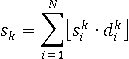
好ましい実施形態では、算術デコーダは、復号されるシンボルが第1の値(例えば「1」)をとる場合に状態変数値を第1の方向に変更する(例えばより正になる)ように構成され、また復号されるシンボルが第1の値とは異なる第2の値(例えば「0」)をとる場合(例えば、状態変数値が正と負の値をとることができるように)に状態変数値を第2の方向に(例えば、より負になるもの)変更するように構成され、算術デコーダは、結合状態変数値の絶対値(sk i>0の場合はsk、それ以外の場合は-sk)に応じて(例えば、結合状態変数値の絶対値のスケーリングおよび丸められたバージョンに応じて)評価されるルックアップテーブルのエントリを決定するように構成される。 In a preferred embodiment, the arithmetic decoder is configured to change the state variable value in a first direction (e.g. more positive) if the decoded symbol has a first value (e.g. “1”) and to change the state variable value in a second direction (e.g. more negative) if the decoded symbol has a second value (e.g. “0”) different from the first value (e.g. such that the state variable value can have positive and negative values), and the arithmetic decoder is configured to determine an entry of the look-up table to be evaluated (e.g. in response to a scaled and rounded version of the absolute value of the combined state variable value) (s k if s k i >0, and −s k otherwise).
好ましい実施形態では、算術デコーダは、結合状態変数値が第1の符号(例えば、正の符号)をとる場合に、確率値(pk)をルックアップテーブルによって提供される値(例えば、


好ましい実施形態では、算術デコーダは、

好ましい実施形態では、算術デコーダは、

好ましい実施形態では、算術デコーダは、結合状態変数値、またはそのスケーリングおよび/または丸められたバージョン([sk*ak])を、2次元ルックアップテーブルを使用してサブインターバル幅値(R*pk)にマッピングするように構成され、そのエントリは、結合状態変数値に依存して(例えば、第1のルックアップテーブルエントリの座標を決定するために)、およびシンボルの復号前の算術復号のコーディング間隔のサイズを記述するコーディング間隔サイズ情報(例えば、R)に依存して(例えば、第2のルックアップテーブルエントリの座標を決定するために)アドレス指定される。 In a preferred embodiment, the arithmetic decoder is configured to map the combined state variable value, or a scaled and/or rounded version thereof ([s k *a k ]), to a subinterval width value (R*p k ) using a two-dimensional lookup table, whose entries are addressed in dependence on the combined state variable value (e.g. to determine the coordinates of a first lookup table entry) and in dependence on coding interval size information (e.g. R) describing the size of a coding interval for arithmetic decoding before decoding of a symbol (e.g. to determine the coordinates of a second lookup table entry).
算術デコーダの好ましい実施形態では、2次元ルックアップテーブルは、そのエントリが結合状態変数値の値ドメインの異なる値間隔の確率値、またはそのスケーリングおよび/または丸められたバージョン([sk*ak];


算術デコーダの好ましい実施形態では、2次元ルックアップテーブル(RangTabLPS)の要素が、ベースルックアップテーブル(Base TabLPS)に基づいて定義され、2次元ルックアップテーブルの要素の第1のグループ(またはブロック、例えば、「上半分」)は、ベースルックアップテーブルの要素と同一であるか、ベースルックアップテーブルの要素の丸められたバージョンであり、2次元ルックアップテーブルの要素の第2のグループ(またはブロック、例えば「下半分」)は、ベースルックアップテーブルの要素のスケーリングおよび丸められたバージョンである。 In a preferred embodiment of the arithmetic decoder, the elements of a two-dimensional lookup table (RangTabLPS) are defined based on a base lookup table (BaseTabLPS), where a first group (or block, e.g., the "top half") of elements of the two-dimensional lookup table are identical to or are rounded versions of the elements of the base lookup table, and a second group (or block, e.g., the "bottom half") of elements of the two-dimensional lookup table are scaled and rounded versions of the elements of the base lookup table.
算術デコーダの好ましい実施形態では、2次元ルックアップテーブルの要素の第2のグループはベースルックアップテーブルの要素の右シフトバージョンである。 In a preferred embodiment of the arithmetic decoder, the second group of elements of the two-dimensional lookup table are right-shifted versions of the elements of the base lookup table.
算術デコーダの好ましい実施形態では、確率指数(Qp2(pLPS);i)は、2次元ルックアップテーブルの要素の第1のグループの要素または2次元ルックアップテーブルの要素の第2のグループの要素のどちらを評価するかを決定し、確率指数(例えば、確率値、例えばpLPSを定量化することによって取得される)の第1の範囲(例えば、0~μ-1)は、要素の第1のグループの要素に関連付けられ、確率指数(例えば、確率値、例えばpLPSを、例えば、量子化関数Qp2(.)を使用して定量化することによって取得される)の第2の範囲(例えば、μ以上)は、要素の第2のグループの要素に関連付けられている。 In a preferred embodiment of the arithmetic decoder, a probability index ( Qp2 ( pLPS );i) determines whether to evaluate elements of a first group of elements of the two-dimensional lookup table or elements of a second group of elements of the two-dimensional lookup table, a first range (e.g., 0 to μ-1) of the probability index (e.g., obtained by quantifying a probability value, e.g., pLPS ) being associated with elements of the first group of elements and a second range (e.g., μ or more) of the probability index (e.g., obtained by quantifying a probability value, e.g., pLPS , e.g. using a quantization function Qp2(.)) being associated with elements of the second group of elements.
算術デコーダの好ましい実施形態では、確率指数(i)と第1のサイズ値(例えば、μ、サイズ値は例えば、第1の方向のベースルックアップテーブルの拡張を説明する)および間隔サイズ指数(例えば量子化演算Qr2(.)、例えばjを使用するなどして間隔サイズ情報Rに基づいて取得できる)との間の除算の除算残差(i%μ)は、2次元ルックアップテーブルの要素を取得するためにベースルックアップテーブルのどの要素を使用するかを決定する。 In a preferred embodiment of the arithmetic decoder, the division residual (i%μ) of the division between the probability index (i) and a first size value (e.g. μ, the size value e.g. describing the extension of the base lookup table in a first direction) and an interval size index (e.g. a quantization operation Qr2(.), which can be obtained based on the interval size information R, e.g. using j) determines which element of the base lookup table to use to obtain an element of the two-dimensional lookup table.
好ましい実施形態では、算術デコーダは、
RangeTabLPS[i][j]=Scal(BaseTabLPS[i%μ][j)、[i/μ])
BaseTabLPSは、次元μxλのベースルックアップテーブルであり、iは、確率情報に関連付けられたテーブルインデックスであり、jは、間隔サイズ情報に関連付けられたテーブルインデックスであり(例えば、現在のコーディング間隔サイズを記述する)、%は除算残差演算であり、/は除算演算であり、Scal(x,y)はスケーリング関数であり(例えば、Scal(x,y)=[x*a-by]として定義され、[.]はフロア演算であり、aは、好ましくは2以上の定数であり、またはbは、好ましくは1以上の定数であり、スケーリング関数は、好ましくは、右シフトビットシフト演算を使用して実装され、yは、xの右側にシフトするかどうか、および何ビットシフトするかを決定する、
ことに従って、2次元ルックアップテーブル(RangTabLPS)の要素を取得するように構成される。
In a preferred embodiment, the arithmetic decoder comprises:
RangeTabLPS[i][j]=Scal(BaseTabLPS[i%μ][j), [i/μ])
BaseTabLPS is a base lookup table of dimension μ×λ, i is a table index associated with probability information, j is a table index associated with interval size information (e.g., describing the current coding interval size), % is a division remainder operation, / is a division operation, Scal(x,y) is a scaling function (e.g., defined as Scal(x,y)=[x*a −by ], where [.] is a floor operation, a is a constant preferably equal to or greater than 2, or b is a constant preferably equal to or greater than 1, the scaling function is preferably implemented using a right-shift bit-shift operation, and y determines whether and by how many bits to shift x to the right;
According to this, the elements of a two-dimensional lookup table (RangTabLPS) are obtained.
算術デコーダの好ましい実施形態では、2次元ルックアップテーブル(RangTabLPS)の要素は、確率テーブル(probTabLPS)に基づいて定義され、確率テーブルは、複数の確率値のセット(例えば、指数iによって表される)および所与のコーディング間隔サイズの間隔サイズを記述し、複数の確率値のセットにない確率値および/または所与の(参照)コーディング間隔サイズとは異なるコーディング間隔サイズの2次元ルックアップテーブルの要素は、スケーリングを使用して確率テーブルから導出される。 In a preferred embodiment of the arithmetic decoder, the elements of the two-dimensional lookup table (RangTabLPS) are defined based on a probability table (probTabLPS), which describes a set of multiple probability values (e.g., represented by an index i) and an interval size for a given coding interval size, and elements of the two-dimensional lookup table for probability values that are not in the set of multiple probability values and/or coding interval sizes different from the given (reference) coding interval size are derived from the probability table using scaling.
算術デコーダの好ましい実施形態では、2次元ルックアップテーブルの要素が、コーディング間隔サイズ(R)に応じて、確率テーブルの選択された要素(probTabLPS[i%μ])の(乗法の)第1のスケーリングを使用し、現在の確率値(指数iにより指定)に関連付けられた要素が確率値のセットに含まれるかどうかに応じて(例えば、現在の確率値は、確率テーブルでカバーされている確率値の範囲内にあるかどうかに応じて)、第1のスケーリングの結果の第2のスケーリングを使用して取得される。 In a preferred embodiment of the arithmetic decoder, the elements of the two-dimensional lookup table are obtained using a first (multiplicative) scaling of a selected element of the probability table (probTabLPS[i%μ]) depending on the coding interval size (R), and a second scaling of the result of the first scaling depending on whether the element associated with the current probability value (specified by the index i) is included in the set of probability values (e.g., depending on whether the current probability value is within the range of probability values covered by the probability table).
算術デコーダの好ましい実施形態では、確率指数(例えばi、例えば、現在の確率値を表す)、および第1のサイズ値(例えばμ、例えばサイズ値が確率テーブルの拡張について説明する)の間の除算の除算残差(i%μ)は、確率テーブルのどの要素が第1のスケーリングでスケーリングされるかを決定する、および/または確率指数(i)および第1のサイズ値間の除算の整数除算結果([i/μ])は、第2のスケーリングで使用されるスケーリング係数(2-[i/μ])を決定する、および/またはコーディング間隔サイズは、第1のスケーリングの乗法スケーリング係数(Qr2(R))を決定する。 In a preferred embodiment of the arithmetic decoder, the division remainder (i % μ) of the division between the probability index (e.g. i, e.g. representing the current probability value) and the first size value (e.g. μ, e.g. the size value describes the extension of the probability table) determines which elements of the probability table are scaled in the first scaling, and/or the integer division result ([i/μ]) of the division between the probability index (i) and the first size value determines the scaling factor (2 −[i/μ] ) used in the second scaling, and/or the coding interval size determines the multiplicative scaling factor (Qr2(R)) of the first scaling.
好ましい実施形態では、算術デコーダは、

ことに従って
2次元ルックアップテーブルの要素

According to this, the elements of the two-dimensional lookup table
算術デコーダの好ましい実施形態では、現在の確率値(指数iにより指定)に関連付けられた要素が確率値に含まれるかどうかに応じて(例えば、現在の確率値は、確率テーブルでカバーされている確率値の範囲内にあるかどうかに応じて)、確率テーブルの選択された要素(probTabLPS[i%μ])の(乗法の)第1のスケーリングを使用し、また、コーディング間隔サイズ(R)に応じて、第1のスケーリングの結果の第2のスケーリングを使用して、2次元ルックアップテーブルの要素を取得するように構成される。 In a preferred embodiment of the arithmetic decoder, the decoder is configured to obtain an element of the two-dimensional lookup table using a first (multiplicative) scaling of a selected element of the probability table (probTabLPS[i%μ]) depending on whether the element associated with the current probability value (specified by index i) is included in the probability value (e.g., depending on whether the current probability value is within the range of probability values covered by the probability table), and using a second scaling of the result of the first scaling depending on the coding interval size (R).
算術デコーダの好ましい実施形態では、確率指数(例えばi、例えば、現在の確率値を表す)、および第1のサイズ値(例えばμ、例えばサイズ値が確率テーブルの拡張について説明する)の間の除算の除算残差(i%μ)は、確率テーブルのどの要素が第1のスケーリングでスケーリングされるかを決定する、および/または確率指数(i)および第1のサイズ値間の除算の整数除算結果([i/μ])は、第1のスケーリングで使用されるスケーリング係数(2-[i/μ])を決定する、および/またはコーディング間隔サイズ(R)は、第2のスケーリングの乗法スケーリング係数(Qr2(R))を決定する。 In a preferred embodiment of the arithmetic decoder, the division remainder (i % μ) of the division between the probability index (e.g. i, e.g. representing the current probability value) and the first size value (e.g. μ, e.g. the size value describes the extension of the probability table) determines which elements of the probability table are scaled in the first scaling, and/or the integer division result ([i/μ]) of the division between the probability index (i) and the first size value determines the scaling factor (2 −[i/μ] ) used in the first scaling, and/or the coding interval size (R) determines the multiplicative scaling factor (Qr 2 (R)) of the second scaling.
好ましい実施形態では、算術デコーダは、

ことに従って、2次元ルックアップテーブルの要素

According to this, the elements of the two-dimensional lookup table
好ましい実施形態では、算術デコーダは、結合状態変数値、またはそのスケーリングおよび/または丸められたバージョン([sk*ak])からサブインターバル幅値(R*pk)を計算するよう構成され、このことは、結合状態変数値の値ドメインの異なる値間隔の確率値、またはそのスケーリングおよび/または丸められたバージョン([sk*ak];


好ましい実施形態では、算術デコーダは、コーディング間隔サイズ情報に論理右シフトを適用することによってコーディング間隔サイズ情報の量子化を実行するように構成される。 In a preferred embodiment, the arithmetic decoder is configured to perform quantization of the coding interval size information by applying a logical right shift to the coding interval size information.
好ましい実施形態では、算術デコーダは、コーディング間隔サイズ情報


算術デコーダの好ましい実施形態では、1次元ルックアップテーブルのエントリは、結合状態変数値、またはそのスケーリングおよび/または丸められたバージョン([sk*ak])の増加で単調に減少する。 In a preferred embodiment of the arithmetic decoder, the entries of the one-dimensional lookup table decrease monotonically with increasing combined state variable values, or a scaled and/or rounded version thereof ([s k *a k ]).
算術デコーダの好ましい実施形態では、結合状態変数値の値ドメインの異なる値間隔、またはそのスケーリングおよび/または丸められたバージョン([sk*ak])は、等しいサイズである。
算術デコーダの好ましい実施形態では、1次元ルックアップテーブルのエントリは、結合状態変数値、またはそのスケーリングおよび/または丸められたバージョン([sk*ak])の増加で減少率を伴って単調に減少する。
In a preferred embodiment of the arithmetic decoder, the different value intervals of the value domain of the combined state variable values, or their scaled and/or rounded versions ([s k *a k ]), are of equal size.
In a preferred embodiment of the arithmetic decoder, the entries of the one-dimensional lookup table monotonically decrease with increasing combined state variable values, or scaled and/or rounded versions thereof ([s k *a k ]), with a decreasing rate.
算術デコーダの好ましい実施形態では、ルックアップテーブルは、指数関数的減衰(例えば、0.5からの低下)を(例えば、+/-10%または+/-20%の許容範囲内で)定義する。 In a preferred embodiment of the arithmetic decoder, the lookup table defines an exponential decay (e.g., drop from 0.5) (within a tolerance of, e.g., +/- 10% or +/- 20%).
好ましい実施形態では、算術デコーダは、


ことに従って複数の可変状態値

According to this, multiple mutable state values
好ましい実施形態では、算術デコーダは、テーブルルックアップまたは計算によって

本発明による実施形態は、シンボル値(例えば、バイナリ値)を有する複数のシンボルを符号化するための算術デコーダを作成するものであり、算術デコーダは、1つまたは複数の状態変数値(s1 k、s2 k)を決定するように構成され、これは、以前に復号された複数のシンボル値(例えば、バイナリ値0および1のシーケンス)の統計(例えば、復号される1つまたは複数のシンボルが特定のシンボル値を含む確率の推定値)(例えば、複数の状態変数値が決定される場合、異なる適合時定数の統計)を表し、また、算術デコーダは、1つまたは複数の状態変数値(si k)(例えば、インデックスkにより示される、所与のコンテキストモードに関連付けられている)に基づいて復号される1つまたは複数のシンボル値の算術復号の間隔サイズ情報(pk、R*pk)を導出するように構成され、これは複数の以前に符号化されたシンボル値(例えば、バイナリ値0および1のシーケンス)の統計(例えば、複数の状態変数値が決定される場合、異なる適合時定数の統計)を表し、算術デコーダは、復号されるシンボルに依存して、ルックアップテーブル(A)を使用して(例えば、復号されるシンボルを復号した後)、第1の状態変数値(sk 1)を更新するように構成される。 An embodiment in accordance with the invention creates an arithmetic decoder for encoding a plurality of symbols having symbol values (e.g., binary values), the arithmetic decoder being configured to determine one or more state variable values (s 1 k , s 2 k ) that represent statistics (e.g., estimates of the probability that one or more symbols to be decoded contain a particular symbol value) of a plurality of previously decoded symbol values (e.g., a sequence of binary values 0 and 1) (e.g., statistics of different adaptation time constants if multiple state variable values are determined), and the arithmetic decoder also determines interval size information (p k , R*p k ) of arithmetic decoding of one or more symbol values to be decoded based on one or more state variable values (s i k ) (e.g., associated with a given context mode, indicated by index k ) . ), which represents statistics (e.g., statistics of different adaptation time constants if multiple state variable values are determined) of a plurality of previously encoded symbol values (e.g., a sequence of binary values 0 and 1), and the arithmetic decoder is configured to update a first state variable value (s k 1 ) using a look-up table (A) (e.g., after decoding the decoded symbol) depending on the symbol to be decoded.
好ましい実施形態では、算術デコーダは、復号されたるシンボルに依存し、ルックアップテーブル(A)を使用して(例えば、復号されるシンボルを復号した後)、第2の状態変数値(sk 2)を更新するように構成される。 In a preferred embodiment, the arithmetic decoder is configured to update the second state variable value (s k 2 ) depending on the decoded symbol (e.g., after decoding the symbol to be decoded) using a look-up table (A).
好ましい実施形態では、算術デコーダは、異なる適合時定数を使用して、第1の状態変数値および第2の状態変数値を更新するように構成される。 In a preferred embodiment, the arithmetic decoder is configured to update the first state variable value and the second state variable value using different adaptive time constants.
好ましい実施形態では、算術デコーダは、復号されるシンボルが第1の値をとるか、第1の値とは異なる第2の値をとるかに応じて、ルックアップテーブルを使用して決定された値によって以前の状態変数値を選択的に増減するように構成される。 In a preferred embodiment, the arithmetic decoder is configured to selectively increment or decrement the previous state variable value by a value determined using a lookup table depending on whether the symbol being decoded has a first value or a second value different from the first value.
好ましい実施形態では、算術デコーダは、以前の状態変数値を、復号されるシンボルが第1の値をとる場合に、以前の状態変数値が正である場合と比較して、以前の状態変数値が負である場合に、比較的大きい値だけ増加させるように構成され、算術デコーダは、以前の状態変数値を、復号されるシンボルが、第1の値とは異なる第2の値をとる場合に、以前の状態変数値が負である場合と比較して、以前の状態変数値が正である場合に、比較的大きい値だけ減少させるように構成される(それは、例えば、ルックアップテーブルを適切に選択することで到達する)。 In a preferred embodiment, the arithmetic decoder is configured to increase the previous state variable value by a relatively large value if the previous state variable value is negative compared to when the previous state variable value is positive when the symbol to be decoded has a first value, and the arithmetic decoder is configured to decrease the previous state variable value by a relatively large value if the previous state variable value is positive compared to when the previous state variable value is negative when the symbol to be decoded has a second value different from the first value (which is arrived at, for example, by appropriately selecting a look-up table).
好ましい実施形態では、算術デコーダは、復号されるシンボルが第1の値をとる場合、所定(例えば、固定の)のオフセット値(z)と以前に計算された第1の状態変数値(


好ましい実施形態では、算術デコーダは、復号されるシンボルが第1の値をとる場合、所定(例えば、固定の)のオフセット値(z)と以前に計算された第2の状態変数値(


好ましい実施形態では、算術デコーダは、第1の状態変数値の更新時に評価されるルックアップテーブルのエントリのインデックスを決定するときに、第1のスケーリング値(mk 1)を適用して、以前に計算された第1の状態変数値(sk 1)をスケーリングするように構成され、算術デコーダは、第2の状態変数値の更新時に評価されるルックアップテーブルのエントリのインデックスを決定するときに、第2のスケーリング値(mk 2)を適用して、以前に計算された第2の状態変数値(sk 2)をスケーリングするように構成され、第1のスケーリング値が第2のスケーリング値とは異なる(また、第1および第2のスケーリング値は好ましくは2の整数効力であり、第1のスケーリング値と第2のスケーリング値との間の比は、2の場合、好ましくは整数効力であり、第1のスケーリング値および第2のスケーリング値は、好ましくは少なくとも8倍異なる)。 In a preferred embodiment, the arithmetic decoder is configured to apply a first scaling value (m k 1 ) to scale the previously calculated first state variable value (s k 1 ) when determining the index of the lookup table entry to be evaluated when updating the first state variable value, and the arithmetic decoder is configured to apply a second scaling value (m k 2 ) to scale the previously calculated second state variable value (s k 2 ) when determining the index of the lookup table entry to be evaluated when updating the second state variable value, the first scaling value being different from the second scaling value (and the first and second scaling values are preferably an integer factor of 2, the ratio between the first scaling value and the second scaling value is preferably an integer factor of 2, and the first scaling value and the second scaling value preferably differ by at least a factor of 8).
好ましい実施形態では、算術デコーダは、第1の状態変数値を更新するときに第1のスケーリング値(例えば、nk
1)を使用してルックアップテーブルの評価によって返される値をスケーリングするように構成され、
算術デコーダは、第2の状態変数値を更新するときに第2のスケーリング値(例えば、nk
2)を使用してルックアップテーブルの評価によって返される値をスケーリングするように構成され、第1のスケーリング値は第2のスケーリング値とは異なる。
In a preferred embodiment, the arithmetic decoder is configured to scale values returned by evaluation of the lookup table using a first scaling value (e.g., n k 1 ) when updating the first state variable value;
The arithmetic decoder is configured to scale the value returned by the evaluation of the lookup table using a second scaling value (e.g., n k 2 ) when updating the second state variable value, the first scaling value being different from the second scaling value.
好ましい実施形態では、算術デコーダは、


好ましい実施形態では、算術デコーダは、


好ましい実施形態では、算術デコーダは、



好ましい実施形態では、算術デコーダは、


算術デコーダの好ましい実施形態では、Aのエントリは、ルックアップテーブルインデックスの増加とともに単調に減少する。 In a preferred embodiment of the arithmetic decoder, the entries of A decrease monotonically with increasing lookup table index.
好ましい実施形態では、算術デコーダは、Aは


算術デコーダの好ましい実施形態では、ルックアップテーブルの最後のエントリ(これは、第1の状態変数値が最大許容値まで及ぶ所定の値の範囲に達したとき、または第1の状態変数値が所定のしきい値を超えたときにアドレス指定される)はゼロに等しい。 In a preferred embodiment of the arithmetic decoder, the last entry of the lookup table (which is addressed when the first state variable value reaches a predetermined range of values extending up to the maximum allowable value or when the first state variable value exceeds a predetermined threshold) is equal to zero.
好ましい実施形態では、算術デコーダは、更新された状態変数値にクリッピング操作を適用して、更新されクリップされた状態変数値を所定の値の範囲内に保つように構成される。 In a preferred embodiment, the arithmetic decoder is configured to apply a clipping operation to the updated state variable values to keep the updated, clipped state variable values within a predetermined range of values.
好ましい実施形態では、算術デコーダは、更新された状態変数値に、


好ましい実施形態では、算術デコーダは、異なるコンテキストモデルに異なるスケーリング値を適用するように構成される(例えば、スケーリング値の少なくとも1つが2つの異なるコンテキストモデル間で異なるようにする)。 In a preferred embodiment, the arithmetic decoder is configured to apply different scaling values to different context models (e.g., at least one of the scaling values is different between two different context models).
好ましい実施形態では、算術デコーダは、上記の実施形態の1つで定義された間隔サイズ情報を取得するように構成される。 In a preferred embodiment, the arithmetic decoder is configured to obtain the interval size information defined in one of the above embodiments.
本発明による実施形態は、シンボル値(例えば、バイナリ値)を有する複数のシンボルを復号するための算術デコーダを作成するものであり、算術デコーダは、以前に復号された複数のシンボル値の統計を表す1つの状態変数値(sk)を決定するように構成され、算術デコーダは、結合状態変数値、またはそのスケーリングおよび/または丸められたバージョン([sk*ak])から、復号されるシンボル値の算術復号のためのサブインターバル幅値(


好ましい実施形態では、算術デコーダは、1つの状態変数値(sk)として、結合状態変数値(例えば、状態変数値の加重和であり得る)、複数の状態変数値(si k)(例えば、バイナリ値0および1のシーケンス)(例えば、複数の状態変数値の場合、異なる適合時定数の統計)の基礎となるものを導出するように構成され、これは、異なる適合時定数の複数の以前に復号されたシンボル値(例えば、バイナリ値0および1のシーケンス)の統計を表す。 In a preferred embodiment, the arithmetic decoder is configured to derive a combined state variable value (s k ) (which may, for example, be a weighted sum of the state variable values), underlying the multiple state variable values (s i k ) (e.g. a sequence of binary values 0 and 1) (e.g. in the case of multiple state variable values, statistics of different adaptation time constants), as one state variable value (s k ), which represents statistics of multiple previously decoded symbol values (e.g. sequences of binary values 0 and 1) of different adaptation time constants.
好ましい実施形態では、算術デコーダは、結合状態変数値を取得するために、状態変数値の加重和を決定するように構成される。 In a preferred embodiment, the arithmetic decoder is configured to determine a weighted sum of the state variable values to obtain a combined state variable value.
好ましい実施形態では、算術デコーダは、状態変数値(


好ましい実施形態では、算術デコーダは、

好ましい実施形態では、算術デコーダは、





ことに従って、状態変数値の更新を行う際、複数の状態変数値

According to this, when updating the state variable values, multiple state variable values
好ましい実施形態では、算術デコーダは、テーブルルックアップまたは計算によって

好ましい実施形態では、算術デコーダは、



好ましい実施形態では、算術デコーダは、


好ましい実施形態では、算術デコーダは、


好ましい実施形態では、算術デコーダは、コーディング間隔サイズ情報に論理右シフトを適用することによってコーディング間隔サイズ情報の量子化を実行するように構成される。 In a preferred embodiment, the arithmetic decoder is configured to perform quantization of the coding interval size information by applying a logical right shift to the coding interval size information.
好ましい実施形態では、算術デコーダは、コーディング間隔サイズ情報


算術デコーダの好ましい実施形態では、1次元ルックアップテーブルのエントリは、1つの状態変数値、またはそのスケーリングおよび/または丸められたバージョン([sk*ak])の増加で単調に減少する。 In a preferred embodiment of the arithmetic decoder, the entries of the one-dimensional lookup table monotonically decrease with increasing one state variable value, or a scaled and/or rounded version thereof ([s k *a k ]).
算術デコーダの好ましい実施形態では、1つの状態変数値の値ドメインの異なる値間隔、またはそのスケーリングおよび/または丸められたバージョン([sk*ak])は、等しいサイズである。 In a preferred embodiment of the arithmetic decoder, the different value intervals of the value domain of one state variable value, or its scaled and/or rounded version ([s k *a k ]), are of equal size.
算術デコーダの好ましい実施形態では、1次元ルックアップテーブルのエントリは、1つの状態変数値、またはそのスケーリングおよび/または丸められたバージョン([sk*ak])の増加で減少率を伴って単調に減少する。 In a preferred embodiment of the arithmetic decoder, the entries of the one-dimensional lookup table monotonically decrease with increasing one state variable value, or a scaled and/or rounded version thereof ([s k *a k ]), with a decreasing rate.
本発明による実施形態は、ビデオエンコーダを作成するものであり、ビデオエンコーダは、複数のビデオフレームを符号化するように構成され、ビデオエンコーダは、上記の実施形態のいずれかに記載の、ビデオコンテンツを表すバイナリ値のシーケンスに基づいて符号化されたバイナリシーケンスを提供するための算術エンコーダを備える。 An embodiment according to the invention provides for creating a video encoder configured to encode a plurality of video frames, the video encoder comprising an arithmetic encoder for providing an encoded binary sequence based on a sequence of binary values representing video content according to any of the above embodiments.
本明細書で論じられる算術エンコーダは、ビデオエンコーダ内部での使用に非常に適していることに留意されたい。この場合、符号化されるシンボルおよび/または以前に符号化されたシンボルは、ビデオビットストリームのシンボルであり得る。例えば、符号化されるシンボルおよび/または以前に符号化されたシンボルは、ビデオコンテンツを表すサイド情報または制御情報のビットおよび/または符号化された変換係数のビットを表すことができる。言い換えれば、符号化されるシンボルおよび/または以前に符号化されたシンボルは、ビデオコンテンツを表すためにビットストリームに含まれる情報のいずれかを表すことができる。ただし、状態変数値は、様々な「コンテキスト」、つまり様々なタイプの情報に対して個別に決定される場合があることに留意されたい。例えば、特定のタイプの情報(例えば、特定のタイプのサイド情報)に関連付けられたビットのみが、特定の結合状態変数値を取得するために使用される特定の状態変数値、または特定の状態変数値のセットに寄与することができる。したがって、間隔サイズ情報はまた、異なるコンテキストに対して、すなわち、異なるタイプの情報(例えば、サイド情報)に関連付けられたシンボル値の符号化のために、個別に導出され得る。 It should be noted that the arithmetic encoder discussed herein is very suitable for use inside a video encoder. In this case, the to-be-coded and/or previously coded symbols may be symbols of a video bitstream. For example, the to-be-coded and/or previously coded symbols may represent bits of side information or control information representing the video content and/or bits of coded transform coefficients. In other words, the to-be-coded and/or previously coded symbols may represent any of the information included in the bitstream to represent the video content. It should be noted, however, that the state variable values may be determined separately for different "contexts", i.e., different types of information. For example, only bits associated with a particular type of information (e.g., a particular type of side information) may contribute to a particular state variable value, or a particular set of state variable values, used to obtain a particular combined state variable value. Thus, the interval size information may also be derived separately for different contexts, i.e., for the coding of symbol values associated with different types of information (e.g., side information).
本発明による実施形態は、ビデオデコーダを作成するものであって、ビデオエンコーダは、複数のビデオフレームを復合するように構成され、ビデオデコーダは、上記の実施形態のいずれかに記載の、バイナリシーケンスの符号化表現(211)に基づいて復号されたバイナリシーケンス(例えば、復号されたシンボル値に基づく)を提供するための算術デコーダ(120;220)を備える。
ビデオデコーダは、ビデオエンコーダと同じ考慮事項に基づいている。したがって、上記の説明もまた、当てはまるものであり、符号化されたシンボルまたは符号化されるシンボルは、復号されたシンボルに対応する。
An embodiment according to the invention creates a video decoder, the video encoder being configured to decode a plurality of video frames, the video decoder comprising an arithmetic decoder (120; 220) for providing a decoded binary sequence (e.g. based on decoded symbol values) based on a coded representation of the binary sequence (211) according to any of the above embodiments.
A video decoder is based on the same considerations as a video encoder, so the above explanation also applies, and the coded symbols or symbols to be coded correspond to the decoded symbols.
さらに、本発明によるさらなる実施形態は、それぞれの方法およびコンピュータプログラムを作成することに留意されたい。 Furthermore, it should be noted that further embodiments according to the present invention create respective methods and computer programs.
本発明による実施形態は、シンボル値(例えば、バイナリ値)を有する複数のシンボルを符号化するための方法を作成し、方法は、間隔サイズ情報(pk、R*pk)を、1つまたは複数のシンボル値(例えば、バイナリ値)の算術符号化が複数の状態変数値(si k)(例えば、インデックスkによって表示される所与のコンテキストモードに関連付けられるもの)に基づいて符号化されるように導出することを含み、これは、異なる適合時定数で以前に符号化された複数のシンボル値(例えば、バイナリ値0と1のシーケンス)の統計を表し、方法は、ルックアップテーブル(LUT1)を使用して、第1の状態変数値(sk 1)、またはそのスケーリングおよび/または丸められたバージョン([sk 1*ak 1])をマッピングし、ルックアップテーブル(LUT1)を使用して、第2の状態変数値(sk 2)、またはそのスケーリングおよび/または丸められたバージョン([sk 2*ak 2])をマッピングすることを含み、符号化される1つまたは複数のシンボルの算術符号化のための間隔サイズを説明する間隔サイズ情報(例えば、pkまたはR*pk)を取得するようにする。 An embodiment according to the invention creates a method for encoding a plurality of symbols having symbol values (e.g., binary values), the method including deriving interval size information (p k , R*p k ) such that arithmetic coding of one or more symbol values (e.g., binary values) is encoded based on a plurality of state variable values (s i k ) (e.g., associated with a given context mode denoted by an index k), which represent statistics of a plurality of symbol values (e.g., a sequence of binary values 0 and 1) previously encoded with different adaptive time constants, the method including mapping a first state variable value (s k 1 ), or a scaled and/or rounded version thereof ([s k 1 *a k 1 ]), using a lookup table (LUT1), and mapping a second state variable value (s k 2 ), or a scaled and/or rounded version thereof ([s k 2 *a k 2 ]), using a lookup table ( LUT2 ). ]) to obtain interval size information (e.g., p k or R*p k ) describing an interval size for arithmetic coding of one or more symbols to be encoded.
本発明による実施形態は、シンボル値(例えば、バイナリ値)を有する複数のシンボルを符号化するための方法を作成し、方法は、間隔サイズ情報(pk、R*pk)を、1つまたは複数のシンボル値(例えば、バイナリ値)の算術符号化が複数の状態変数値(si k)(例えば、インデックスkによって表示される所与のコンテキストモードに関連付けられるもの)に基づいて符号化されるように導出することを含み、これは、異なる適合時定数で以前に符号化された複数のシンボル値(例えば、バイナリ値0と1のシーケンス)の統計を表し、方法は、結合状態変数値(sk)(例えば、状態変数値の加重和であり得る)、複数の個々の状態変数値(si k)の基礎となるものを導出するように構成され、算術デコーダは、結合状態変数値(sk)、またはそのスケーリングおよび/または丸められたバージョン([sk 2*ak 2])を、ルックアップテーブルを使用してマッピングして、符号化される1つまたは複数のシンボルの算術符号化の間隔サイズを説明する間隔サイズ情報(例えば、pkまたはR*pk)を取得することを含む。 An embodiment according to the invention creates a method for encoding a plurality of symbols having symbol values (e.g., binary values), the method comprising deriving interval size information (p k , R*p k ) such that arithmetic coding of one or more symbol values (e.g., binary values) is to be encoded based on a plurality of state variable values (s i k ) (e.g., associated with a given context mode denoted by an index k), which represent statistics of a plurality of symbol values (e.g., a sequence of binary values 0 and 1) previously encoded with different adaptation time constants, the method being configured to derive a combined state variable value (s k ) (which may, for example, be a weighted sum of the state variable values), on which the plurality of individual state variable values (s i k ) are based, the arithmetic decoder mapping the combined state variable value (s k ), or a scaled and/or rounded version thereof ([s k 2 *a k 2 ]), using a look-up table to derive interval size information (e.g., p k or R*p k ) describing an interval size of the arithmetic coding of one or more symbols to be encoded. ) is obtained.
本発明による実施形態は、シンボル値(二進値)を有する複数のシンボルを符号化するための方法を作成し、この方法は、1つまたは複数の状態変数値(s1 k、s2 k)を決定することを含み、これは、以前に符号化された複数のシンボル値(例えば、バイナリ値0および1のシーケンス)の統計(例えば、複数の状態変数値の場合、異なる適合時定数の統計)を表し、また、方法は、1つまたは複数の状態変数値(si k)(例えば、インデックスkにより示される、所与のコンテキストモードに関連付けられている)に基づいて符号化される1つまたは複数のシンボル値の算術符号化の間隔サイズ情報(pk、R*pk)を導出することを含み、これは複数の以前に符号化されたシンボル値(例えば、バイナリ値0および1のシーケンス)の統計(例えば、複数の状態変数値の場合、異なる適合時定数の統計)を表し、方法は、符号化されるシンボルに依存して、ルックアップテーブル(A)を使用して(例えば、シンボルを符号化した後)、第1の状態変数値(sk 1)を更新することを含む。 An embodiment according to the present invention creates a method for encoding a plurality of symbols having symbol values (binary values), the method including determining one or more state variable values (s 1 k , s 2 k ), which represent statistics (e.g., in the case of a plurality of state variable values, statistics of different adaptive time constants) of a plurality of previously encoded symbol values (e.g., a sequence of binary values 0 and 1), and the method including deriving interval size information (p k , R*p k ) of arithmetic encoding of one or more symbol values to be encoded based on one or more state variable values (s i k ) (e.g., associated with a given context mode, indicated by index k ), which represent statistics (e.g., in the case of a plurality of state variable values, statistics of different adaptive time constants) of a plurality of previously encoded symbol values (e.g., a sequence of binary values 0 and 1), and the method including updating a first state variable value (s k 1 ) using a look-up table (A) (e.g., after encoding the symbol) depending on the symbol to be encoded.
本発明による実施形態は、シンボル値(例えば、バイナリ値)を有する複数のシンボルを復号するための方法を作成し、方法は、間隔サイズ情報(pk、R*pk)を、1つまたは複数のシンボル値(例えば、バイナリ値)の算術復号が複数の状態変数値(si k)(例えば、インデックスkによって表示される所与のコンテキストモードに関連付けられるもの)に基づいて復号されるように導出することを含み、これは、異なる適合時定数で以前に復号された複数のシンボル値(例えば、バイナリ値0と1のシーケンス)の統計(例えば、復号される1つまたは複数のシンボルが特定のシンボル値を含む確率の推定)を表し、方法は、ルックアップテーブル(LUT1)を使用して、第1の状態変数値(sk 1)、またはそのスケーリングおよび/または丸められたバージョン([sk 1*ak 1])をマッピングし、ルックアップテーブル(LUT1)を使用して、第2の状態変数値(sk 2)、またはそのスケーリングおよび/または丸められたバージョン([sk 2*ak 2])をマッピングすることを含み、復号される1つまたは複数のシンボルの算術復号のための間隔サイズを説明する間隔サイズ情報(例えば、pkまたはR*pk)を取得するようにする。 An embodiment according to the invention creates a method for decoding a plurality of symbols having symbol values (e.g., binary values), the method including deriving interval size information (p k , R*p k ) for arithmetic decoding of one or more symbol values (e.g., binary values) to be decoded based on a plurality of state variable values (s i k ) (e.g., associated with a given context mode denoted by an index k), which represent statistics (e.g., an estimate of the probability that one or more symbols to be decoded contain a particular symbol value) of a plurality of symbol values (e.g., a sequence of binary values 0 and 1) previously decoded with different adaptive time constants, the method including mapping a first state variable value (s k 1 ), or a scaled and/or rounded version thereof ([s k 1 *a k 1 ]), using a lookup table (LUT1), and mapping a second state variable value (s k 2 ), or a scaled and/or rounded version thereof ([s k 2 *a k 2 ]), using a lookup table ( LUT2 ). ]) to obtain interval size information (eg, p k or R*p k ) describing the interval size for arithmetic decoding of the one or more symbols to be decoded.
本発明による実施形態は、シンボル値(例えば、バイナリ値)を有する複数のシンボルを復号するための方法を作成し、方法は、間隔サイズ情報(pk、R*pk)を、1つまたは複数のシンボル値(例えば、バイナリ値)の算術復号が複数の状態変数値(si k)(例えば、インデックスkによって表示される所与のコンテキストモードに関連付けられるもの)に基づいて復号されるように導出することを含み、これは、異なる適合時定数で以前に復号された複数のシンボル値(例えば、バイナリ値0と1のシーケンス)(例えば、復号される1つまたは複数のシンボルが特定のシンボル値を含む確率の推定)の統計を表し、方法は、結合状態変数値(sk)(例えば、状態変数値の加重和であり得る)、複数の個々の状態変数値(si k)の基礎となるものを導出することを含み、方法は、結合状態変数値(sk)、またはそのスケーリングおよび/または丸められたバージョン([sk 2*ak 2])を、ルックアップテーブルを使用してマッピングして、復号される1つまたは複数のシンボルの算術復号の間隔サイズを説明する間隔サイズ情報(例えば、pkまたはR*pk)を取得することを含む。 An embodiment according to the invention creates a method for decoding a plurality of symbols having symbol values (e.g., binary values), the method including deriving interval size information (p k , R*p k ) for arithmetic decoding of one or more symbol values (e.g., binary values) to be decoded based on a plurality of state variable values (s i k ) (e.g., associated with a given context mode denoted by index k), which represent statistics of a plurality of symbol values (e.g., a sequence of binary values 0 and 1) previously decoded with different adapted time constants (e.g., an estimate of the probability that one or more symbols to be decoded contain a particular symbol value), the method including deriving a joint state variable value (s k ) (which may, for example, be a weighted sum of the state variable values), on which the plurality of individual state variable values (s i k ) are based, the method including deriving a joint state variable value (s k ), or a scaled and/or rounded version thereof ([s k 2 *a k 2 ]) using a lookup table to obtain interval size information (e.g., p k or R*p k ) describing the interval size of the arithmetic decoding of the one or more symbols to be decoded.
本発明による実施形態は、シンボル値(例えば、バイナリ値)を有する複数のシンボルを符号化するための方法を作成するものであり、方法は、1つまたは複数の状態変数値(s1 k、s2 k)を決定することを含み、これは、以前に復号された複数のシンボル値(例えば、バイナリ値0および1のシーケンス)の統計(例えば、復号される1つまたは複数のシンボルが特定のシンボル値を含む確率の推定値)(例えば、複数の状態変数値が決定される場合、異なる適合時定数の統計)を表し、また、方法は、1つまたは複数の状態変数値(si k)(例えば、インデックスkにより示される、所与のコンテキストモードに関連付けられている)に基づいて復号される1つまたは複数のシンボル値の算術復号の間隔サイズ情報(pk、R*pk)を導出することを含み、これは複数の以前に符号化されたシンボル値(例えば、バイナリ値0および1のシーケンス)の統計(例えば、複数の状態変数値が決定される場合、異なる適合時定数の統計)を表し、算術デコーダは、復号されるシンボルに依存して、ルックアップテーブル(A)を使用して、第1の状態変数値(sk 1)を更新することを含む。 An embodiment according to the invention creates a method for encoding a plurality of symbols having symbol values (e.g., binary values), the method comprising: determining one or more state variable values (s 1 k , s 2 k ), which represent statistics (e.g., estimates of the probability that one or more symbols to be decoded include a particular symbol value) of a plurality of previously decoded symbol values (e.g., sequences of binary values 0 and 1) (e.g., statistics of different adaptive time constants if a plurality of state variable values are determined); and deriving interval size information (p k , R*p k ) of arithmetic decoding of one or more symbol values to be decoded based on one or more state variable values (s i k ) (e.g., associated with a given context mode, indicated by index k), which represent statistics (e.g., statistics of different adaptive time constants if a plurality of state variable values are determined); and the arithmetic decoder, depending on the symbol to be decoded, uses a look-up table (A) to determine a first state variable value (s k 1 ) including updating the
本発明による実施形態は、上記の実施形態のうちの1つによるエンコーダおよびデコーダによって実行される方法を作成する。 An embodiment according to the invention creates a method performed by an encoder and a decoder according to one of the above embodiments.
本発明による実施形態は、コンピュータプログラムがコンピュータ上で実行されるときに、上記の実施形態のうちの1つによる方法を実行するためのコンピュータプログラムを作成する。 An embodiment according to the invention creates a computer program for performing a method according to one of the above embodiments when the computer program is run on a computer.
本発明による実施形態は、シンボル値(例えば、バイナリ値)を有する複数のシンボルを符号化するための方法を作成するものであり、方法は、1つまたは複数の状態変数値(si k)に基づいて符号化される1つまたは複数のシンボル値の算術符号化の間隔サイズ値(RLPS)(それは例えば、インデックスkで示される所与のコンテキストモードに関連付けられている)を導出することを含み、これは、以前に符号化された複数のシンボル値(例えば、バイナリ値0および1のシーケンス)の統計を表し(例えば、異なる適合時定数を使用)、方法は、ベースルックアップテーブル(Base TabLPS)を使用して間隔サイズ値(RLPS)を決定することを含み(その次元は、確率指数の観点から、可能な確率指数iの数よりも小さい)、方法は、1つまたは複数の状態変数値(例えば、i=Qp(pLPS)のように)を基にして得られる確率指数(i)が第1の範囲(例えば、μ未満)内にある場合、決定された間隔サイズ値がベースルックアップテーブルの要素と同一であるか、またはベースルックアップテーブルの要素の丸めのバージョンであり、確率指数が第2の範囲(例えば、μ以上)内にある場合は、ベースルックアップテーブルの要素のスケーリングと丸めを使用して、決定された間隔サイズ値が取得されるように、間隔サイズ値(RLPS)を決定することを含み、方法は、間隔サイズ値(RLPS)を使用して1つまたは複数のシンボルの算術符号化を実行することを含む。 An embodiment according to the invention creates a method for encoding a plurality of symbols having symbol values (e.g., binary values), the method comprising deriving an interval size value (R LPS ) (which is associated with a given context mode, e.g., indicated by index k ) of an arithmetic coding of one or more symbol values to be encoded based on one or more state variable values (s i k ), which represent statistics of a plurality of previously encoded symbol values (e.g., sequences of binary values 0 and 1) (e.g., using different adaptation time constants), the method comprising determining the interval size value (R LPS ) using a base lookup table (Base TabLPS) (whose dimension, in terms of probability indices, is smaller than the number of possible probability indices i), the method comprising determining the interval size value (R LPS ) based on one or more state variable values (e.g., i=Qp(p LPS )) is within a first range (e.g., less than μ), the determined interval size value is identical to or is a rounded version of an element of the base lookup table, and if the probability index is within a second range (e.g., equal to or greater than μ), scaling and rounding of the element of the base lookup table is used to obtain the determined interval size value, and the method includes performing arithmetic coding of the one or more symbols using the interval size value (R LPS ) .
本発明による実施形態は、シンボル値(例えば、バイナリ値)を有する複数のシンボルを符号化するための方法を作成するものであり、方法は、1つまたは複数の状態変数値(si k)(これはインデックスkによって示される所与のコンテキストモードに関連付けられる)に基づいて符号化される1つまたは複数のシンボル値の算術符号化の間隔サイズ値(RLPS)を導出することを含み、これは、以前に符号化された複数のシンボル値の統計を表し(例えば、バイナリ値0と1のシーケンス)(例えば、異なる適合時定数で);算術デコーダは、1つまたは複数の状態変数値から導出された(現在の)確率値に基づいて、また(現在の)コーディング間隔サイズ(R)に基づいて、確率テーブル(Prob TabLPS)(確率指数という観点で次元が可能な確率指数iの数値より小さい)を使用して間隔サイズ値(RLPS)を決定することを含み、確率テーブルは、複数の確率値のセット(例えば、0とμ-1の間の確率指数に対して)および(単一の)所与の(参照)コーディング間隔サイズの間隔サイズ(間隔サイズ値)を記述し、方法は、現在の確率値が複数の確率値のセットにない(例えば、μ以上の現在の確率値と関連付けられた確率指数である)場合、および/または現在のコーディング間隔サイズ(R)が、所与(参照)のコーディング間隔サイズとは異なる場合、間隔サイズ値(RLPS)を取得するよう所与(参照)の確率テーブル(Prob_TabLPS)の要素をスケーリングすることを含み、また、方法は、間隔サイズ値(RLPS)を使用して1つまたは複数のシンボルの算術符号化を実行することを含む。 An embodiment according to the invention creates a method for encoding a number of symbols having symbol values (e.g., binary values), the method comprising deriving an interval size value (R LPS ) of an arithmetic coding of one or more symbol values to be encoded based on one or more state variable values (s i k ) (which are associated to a given context mode indicated by an index k ), which represents statistics of a number of previously encoded symbol values (e.g., sequences of binary values 0 and 1) (e.g., with different adaptation time constants); the arithmetic decoder derives the interval size value (R LPS ) based on (current) probability values derived from the one or more state variable values and based on the (current) coding interval size (R ) using a probability table (Prob TabLPS) (whose dimension in terms of probability indexes is smaller than the number of possible probability indexes i). ), the probability table describing a set of a plurality of probability values (e.g., for probability exponents between 0 and μ-1) and an interval size (interval size value) for a (single) given (reference) coding interval size, the method comprising scaling elements of the given (reference) probability table (Prob_TabLPS) to obtain an interval size value (R LPS ) if the current probability value is not in the set of a plurality of probability values (e.g., is a probability exponent associated with a current probability value equal to or greater than μ) and/or if the current coding interval size (R) is different from the given (reference) coding interval size, and the method comprises performing arithmetic coding of one or more symbols using the interval size value (R LPS ) .
本発明による実施形態は、シンボル値(例えば、バイナリ値)を有する複数のシンボルを復号するための方法を作成するものであり、方法は、1つまたは複数の状態変数値(si k)に基づいて復号される1つまたは複数のシンボル値の算術復号の間隔サイズ値(RLPS)(それは例えば、インデックスkで示される所与のコンテキストモードに関連付けられている)を導出することを含み、これは、以前に復号された複数のシンボル値(例えば、バイナリ値0および1のシーケンス)の統計を表し(例えば、異なる適合時定数を使用)、方法は、ベースルックアップテーブル(Base TabLPS)を使用して間隔サイズ値(RLPS)を決定することを含み(その次元は、確率指数の観点から、可能な確率指数iの数よりも小さい)、方法は、1つまたは複数の状態変数値(例えば、i=Qp(pLPS)のように)を基にして得られる確率指数(i)が第1の範囲(例えば、μ未満)内にある場合、決定された間隔サイズ値がベースルックアップテーブルの要素と同一であるか、またはベースルックアップテーブルの要素の丸めのバージョンであり、確率指数が第2の範囲(例えば、μ以上)内にある場合は、ベースルックアップテーブルの要素のスケーリングと丸めを使用して、決定された間隔サイズ値が取得されるように、間隔サイズ値(RLPS)を決定することを含み、方法は、間隔サイズ値(RLPS)を使用して1つまたは複数のシンボルの算術復号を実行するように構成される。 An embodiment according to the invention creates a method for decoding a plurality of symbols having symbol values (e.g., binary values), the method comprising deriving an interval size value (R LPS ) (which is associated with a given context mode, e.g., indicated by index k ) of arithmetic decoding of one or more symbol values to be decoded based on one or more state variable values (s i k ), which represent statistics of a plurality of previously decoded symbol values (e.g., sequences of binary values 0 and 1) (e.g., using different adaptation time constants), the method comprising determining the interval size value (R LPS ) using a base lookup table (Base TabLPS) (whose dimension, in terms of probability indexes, is smaller than the number of possible probability indexes i), the method comprising determining the interval size value (R LPS ) based on one or more state variable values (e.g., i=Qp(p LPS )) is within a first range (e.g., less than μ), the determined interval size value is identical to or is a rounded version of an element of the base lookup table, and if the probability index is within a second range (e.g., equal to or greater than μ), scaling and rounding of the element of the base lookup table is used to obtain the determined interval size value, and the method is configured to perform arithmetic decoding of the one or more symbols using the interval size value (R LPS ) .
本発明による実施形態は、シンボル値(例えば、バイナリ値)を有する複数のシンボルを復号するための方法を作成するものであり、方法は、1つまたは複数の状態変数値(si k)(これはインデックスkによって示される所与のコンテキストモードに関連付けられる)に基づいて復号される1つまたは複数のシンボル値の算術復号の間隔サイズ値(RLPS)を導出することを含み、これは、以前に復号された複数のシンボル値の統計を表し(例えば、バイナリ値0と1のシーケンス)(例えば、異なる適合時定数で);算術デコーダは、1つまたは複数の状態変数値から導出された(現在の)確率値に基づいて、また(現在の)コーディング間隔サイズ(R)に基づいて、確率テーブル(Prob TabLPS)(確率指数という観点で次元が可能な確率指数iの数値より小さい)を使用して間隔サイズ値(RLPS)を決定することを含み、確率テーブルは、複数の確率値のセット(例えば、0とμ-1の間の確率指数に対して)および(単一の)所与の(参照)コーディング間隔サイズの間隔サイズ(間隔サイズ値)を記述し、方法は、現在の確率値が複数の確率値のセットにない(例えば、μ以上の現在の確率値と関連付けられた確率指数である)場合、および/または現在のコーディング間隔サイズ(R)が、所与(参照)のコーディング間隔サイズとは異なる場合、間隔サイズ値(RLPS)を取得するよう所与(参照)の確率テーブル(Prob_TabLPS)の要素をスケーリングすることを含み、また、方法は、間隔サイズ値(RLPS)を使用して1つまたは複数のシンボルの算術復号を実行することを含む。 An embodiment according to the invention creates a method for decoding a number of symbols having symbol values (e.g., binary values), the method comprising deriving an interval size value ( RLPS ) of arithmetic decoding of one or more symbol values to be decoded based on one or more state variable values ( sik ) (which are associated to a given context mode indicated by an index k), which represents statistics of a number of previously decoded symbol values (e.g., sequences of binary values 0 and 1) (e.g., with different adaptation time constants); the arithmetic decoder derives the interval size value (RLPS) based on (current) probability values derived from the one or more state variable values and based on a (current) coding interval size (R ) using a probability table (ProbTabLPS) (whose dimension in terms of probability indexes is smaller than the number of possible probability indexes i). ), the probability table describing a set of multiple probability values (e.g., for probability exponents between 0 and μ-1) and an interval size (interval size value) for a (single) given (reference) coding interval size, the method comprising scaling elements of the given (reference) probability table (Prob_TabLPS) to obtain the interval size value (R LPS ) if the current probability value is not in the set of multiple probability values (e.g., is a probability exponent associated with a current probability value equal to or greater than μ ) and/or if the current coding interval size (R) is different from the given (reference) coding interval size, and the method comprises performing arithmetic decoding of one or more symbols using the interval size value (R LPS ).
本発明による実施形態は、コンピュータプログラムがコンピュータ上で実行されるときに、上記の実施形態のうちの1つによる方法を実行するためのコンピュータプログラムを作成する。 An embodiment according to the invention creates a computer program for performing a method according to one of the above embodiments when the computer program is run on a computer.
上記の方法は、上記の装置と同じ考慮事項に基づいている。しかし、この方法は、装置に関しても、本明細書に記載の特徴、機能、および詳細のいずれかによって任意選択で補足できることに留意されたい。これらの方法は、任意選択で、該特徴、機能、および詳細によって、個別および組み合わせの両方で、補足することができる。同じことがコンピュータプログラムにも当てはまる。 The above methods are based on the same considerations as the above devices. However, it should be noted that the methods can also be optionally supplemented with any of the features, functions and details described in this specification, both individually and in combination, as regards the devices. The same applies to computer programs.
続いて、本発明による実施形態を、以下の付属の図面を参照して説明する。 Next, an embodiment of the present invention will be described with reference to the accompanying drawings.
1.図1によるエンコーダ
以下の図の説明は、コーディングフレームワークの例を形成するために、ビデオの画像をコーディングするためのブロックベースの予測コーデックのエンコーダ(図1)とデコーダ(図2)の説明から始まり、これに本発明の実施形態が組み込まれ得る。それぞれのエンコーダとデコーダは、図1から図3に関して説明されている。以下、本発明の概念の実施形態の説明は、そのような概念をそれぞれ図1および図2のエンコーダおよびデコーダに組み込むことができる方法に関する説明とともに提示されるが、後続の図4以降で説明される実施形態はまた、図1および図2のエンコーダおよびデコーダの基礎となるコーディングフレームワークに従って動作しないエンコーダおよびデコーダを形成するために使用され得る。
1. Encoder according to FIG. 1 The following diagrammatic description begins with a description of an encoder (FIG. 1) and a decoder (FIG. 2) of a block-based predictive codec for coding images of a video, to form an example coding framework, into which embodiments of the present invention may be incorporated. Each encoder and decoder is described with respect to FIGS. 1 to 3. Below, a description of an embodiment of the inventive concept is presented together with an explanation of how such concepts may be incorporated into the encoder and decoder of FIGS. 1 and 2, respectively, although the embodiments described in subsequent FIG. 4 onwards may also be used to form encoders and decoders that do not operate according to the coding framework underlying the encoder and decoder of FIGS. 1 and 2.
本発明による実施形態は、図1および図2に関して説明したように、ビデオエンコーダおよびビデオデコーダを含み得る。また、本明細書に開示される概念のいずれも、例えば、図1および図2を参照して説明されるように、エントロピーコーダ34またはエントロピーデコーダ50で使用され得る。
Embodiments in accordance with the present invention may include video encoders and video decoders, as described with respect to Figures 1 and 2. Any of the concepts disclosed herein may also be used in, for example,
図1は、例示的に変換ベースの残差コーディングを使用して、画像12をデータストリーム14に予測的にコーディングするための装置を示す。装置またはエンコーダは、参照符号10を使用して示されている。図2は、対応するデコーダ20、すなわち、変換ベースの残差復号も使用してデータストリーム14から画像12’を予測的に復号するように構成される装置20を示し、アポストロフィは、デコーダ20によって再構成された画像12’が、予測残差信号の量子化によって導入されたコーディング損失に関して、装置10によって元々符号化されている画像12から逸脱していることを示すために使用されている。図1および図2は、変換ベースの予測残差コーディングを例示的に使用するが、本出願の実施形態は、この種の予測残差コーディングに限定されない。これは、以下に概説されるように、図1および図2に関して説明される他の詳細にも当てはまる。
Figure 1 shows an apparatus for predictively coding an
エンコーダ10は、予測残差信号を空間からスペクトルへの変換にかけ、こうして得られた予測残差信号をデータストリーム14に符号化するように構成される。同様に、デコーダ20は、データストリーム14からの予測残差信号を復号し、こうして得られた予測残差信号を、スペクトルから空間への変換にかけるように構成される。
The
内部的には、エンコーダ10は、元の信号からの、すなわち画像12からの予測信号26の偏差を測定するために予測残差24を生成する予測残差信号形成器22を備えることができる。予測残差信号形成器22は、例えば、元の信号から、すなわち画像12から予測信号を減算する減算器であってもよい。次に、エンコーダ10は、予測残差信号24を空間対スペクトル変換にかけてスペクトル領域予測残差信号24’を取得する変換器28をさらに含み、これは次いで、同様にエンコーダ10に含まれる量子化器32によって量子化される。このように量子化された予測残差信号24’’は、ビットストリーム14にコード化される。この目的のために、エンコーダ10は、任意選択として、データストリーム14に変換および量子化され場合に予測残差信号をエントロピー符号化するエントロピーコーダ34を備えることができる。予測信号26は、データストリーム14に符号化され、このストリームから復号可能な予測残差信号24’に基づいて、エンコーダ10の予測ステージ36によって生成される。この目的のために、予測ステージ36は、図1に示されるように、量子化損失を除いて信号24’に対応するスペクトル領域予測残差信号24’’’を得るように予測残差信号24’’を逆量子化する逆量子化器38を内部で含み得、その後に逆変換器40が続き、これは後者の予測残差信号24’’’を逆変換、すなわちスペクトルから空間への変換にかけ、量子化損失を除いて元の予測残差信号24に対応する予測残差信号24’’’’を取得する。次に、予測ステージ36のコンバイナ42は、加算などにより、予測信号26と予測残差信号24’’’とを再結合して、再構成された信号46、すなわち元の信号12の再構成を得る。再構成された信号46は、信号12’に対応し得る。次に、予測ステージ36の予測モジュール44は、例えば、空間予測、すなわち画像内予測、および/または時間予測、すなわち画像間予測を使用することによって、信号46に基づいて予測信号26を生成する。
Internally, the
2.図2によるデコーダ
同様に、図2に示されるように、デコーダ20は、予測ステージ36に対応し、それに対応する方法で相互接続されるコンポーネントから内部に構成されてもよい。特に、デコーダ20のエントロピーデコーダ50は、データストリームからの量子化されたスペクトル領域予測残差信号24’’をエントロピー復号することができ、それにおいて、予測ステージ36のモジュールに関して上述したように相互接続および協働される逆量子化器52、逆変換器54、コンバイナ56および予測モジュール58は、予測残差信号24’’に基づいて再構成された信号を回復し、その結果、図2に示すように、コンバイナ56の出力が再構成された信号、すなわち画像12’をもたらすようにする。
2. Decoder according to Fig. 2 Similarly, as shown in Fig. 2, the
上記で具体的に説明されていないが、エンコーダ10が、例えば、いくつかのレートおよび歪みに関連する基準、つまりコーディングコストを最適化する方法などの、いくつかの最適化スキームに従って、例えば予測モード、動きパラメータなどを含むいくつかのコーディングパラメータを設定できることは容易に明らかである。例えば、エンコーダ10およびデコーダ20ならびに対応するモジュール44、58は、それぞれ、イントラコーディングモードおよびインターコーディングモードなどの異なる予測モードをサポートすることができる。エンコーダとデコーダがこれらの予測モードタイプを切り替える粒度は、それぞれ画像12と12’のコーディングセグメントまたはコーディングブロックへの細分に対応する。これらのコーディングセグメントの単位で、例えば、画像は、イントラコーディングされるブロックとインターコーディングされるブロックに細分され得る。以下でより詳細に概説するように、イントラコード化されたブロックは、それぞれのブロックの空間的な、すでにコード化/復号された近傍に基づいて予測される。いくつかのイントラコーディングモードが存在でき、方向または角度のイントラコーディングモードを含むそれぞれのイントラコーディングされたセグメントに対して選択され、これに従って、それぞれのイントラコーディングされたセグメントへ、それぞれの方向性イントラコーディングモードに特異的な特定の方向に沿って、近傍のサンプル値を外挿することにより、てそれぞれのセグメントが満たされる。イントラコーディングモードは、例えば、1つまたは複数のさらなるモードを含むこともでき、例えば、それぞれのイントラコーディングされたブロックの予測がそれぞれのイントラコーディングされたセグメント内のすべてのサンプルにDC値を割り当てるDCコーディングモード、および/または、それぞれのブロックの予測が、隣接するサンプルに基づいて、2次元の線形関数によって定義される平面の駆動の傾きとオフセットを備える、それぞれのイントラコーディングブロックのサンプル位置にわたる2次元線形関数によって記述されるサンプル値の空間分布であると近似または決定される平面イントラコーディングモードが挙げられる。それと比較して、インターコーディングされたブロックは、例えば、時間的に予測され得る。インターコーディングされたブロックの場合、モーションベクトルはデータストリーム内で通知され得て、モーションベクトルは、以前にコーディング/復号された画像がサンプリングされる、画像12が属するビデオの以前にコーディングされた画像の部分の空間変位を示し、それぞれのインターコーディングブロックの予測信号を取得するようにする。これは、量子化されたスペクトル領域予測残差信号24’’を表すエントロピーコード化変換係数レベルなど、データストリーム14に含まれる残差信号コーディングに加えて、データストリーム14は、様々なブロックへのコーディングモード、インターコーディングされたセグメントのモーションパラメータなどの一部のブロックの予測パラメータ、および画像12および12’の各セグメントへの細分を制御およびシグナリングするためのパラメータなどの任意選択の追加パラメータを割り当てるためのコーディングモードパラメータを符号化した可能性があるということを意味する。デコーダ20は、これらのパラメータを使用して、エンコーダが行ったのと同じ方法で画像を細分割し、同じ予測モードをセグメントに割り当て、同じ予測を実行して同じ予測信号を生成する。
Although not specifically described above, it is readily apparent that the
3.図3による機能
図3は、再構成された信号、すなわち再構成された画像12’と、一方でデータストリーム14で信号が送られる予測残差信号24’’’’と結合と、他方で予測信号26との間の関係を示している。すでに上で示したように、結合は追加である場合がある。予測信号26は、図3において、ハッチングを使用して例示的に示されるイントラコーディングブロック、およびハッチングなしで例示的に示されるインターコーディングブロックへの画像領域の細分として示される。細分は、画像領域を正方形ブロックまたは非正方形ブロックの行と列へと通常の細分をすること、または四分木細分割など画像12をツリールートブロックから様々なサイズの複数のリーフブロックへとマルチツリー細分することなど、任意の細分にすることができ、それらの混合物が図3に示され、画像領域は最初にツリールートブロックの行および列に細分され、次に再帰的マルチツリー細分に従って1つ以上に細分化する。
3. Function according to FIG. 3 FIG. 3 shows the relationship between the reconstructed signal, i.e. the reconstructed
再び、データストリーム14は、いくつかのサポートされたイントラコーディングモードのうちの1つをそれぞれのイントラコーディングブロック80に割り当てるイントラコーディングブロック80のためにそこにコーディングイントラコーディングモードを有し得る。インターコーディングブロック82の場合、データストリーム14は、その中にコード化された1つまたは複数の運動パラメータを有することができる。一般的に言えば、インターコーディングブロック82は、時間的にコード化されることに限定されない。あるいは、インターコーディングブロック82は、現在の画像12自体を超えて以前にコーディングされた部分から予測される任意のブロック、例えば、画像12が属するビデオの以前にコーディングされた画像、または別のビューの画像、またはエンコーダとデコーダがそれぞれスケーラブルなエンコーダとデコーダである場合には、階層的に下位のレイヤであり得る。
Again, the
図3の予測残差信号24’’’’はまた、ブロック84への画像領域の細分として示されている。これらのブロックは、コーディングブロック80および82と区別するために、変換ブロックと呼ばれる場合がある。事実上、図3は、エンコーダ10およびデコーダ20が、それぞれ、画像12および画像12’の2つの異なる細分割をブロックに、すなわち、1つはそれぞれコーディングブロック80および82に細分割し、別の細分割を変換ブロック84に使用できることを示している。両方の細分割は同じであり得、すなわち、各コーディングブロック80および82は、同時に変換ブロック84を形成し得るが、図3は、例えば、変換ブロック84への細分割が、コーディングブロック80、82への細分割の拡張を形成する場合を示し、ブロック80と82の2つのブロック間の任意の境界が2つのブロック84間の境界に重なるようにし、または代替的に言えば、各ブロック80、82は、変換ブロック84の1つと一致するか、または変換ブロック84のクラスターと一致するようにしている。しかし、細分割はまた、変換ブロック84がブロック80、82の間のブロックの境界を交互に横切ることができるように、互いに独立して決定または選択され得る。したがって、変換ブロック84への細分割に関する限り、ブロック80、82への細分割に関して提起されたものと同様のステートメントが当てはまる、すなわち、ブロック84は、画像領域のブロックへの通常の細分の結果、画像領域の再帰的なマルチツリー細分、またはそれらの組み合わせ、またはその他の種類のブロックの結果である可能性がある(行と列への配置の有無にかかわらず)。余談だが、ブロック80、82、84は2次、長方形、その他の形状に限定されないことに留意されたい。
The prediction residual signal 24'''' in FIG. 3 is also shown as a subdivision of the image region into blocks 84. These blocks may be called transform blocks to distinguish them from the coding blocks 80 and 82. In effect, FIG. 3 shows that the
図3はさらに、予測信号26と予測残差信号24’’’’の結合が直接再構成された信号12’をもたらすことを示している。しかし、代替実施形態によれば、2つ以上の予測信号26を予測残差信号24’’’と結合して、結果として画像12’を得ることができることに留意されたい。
3 further illustrates that the combination of the
図3において、変換ブロック84は、以下の意味を有するものとする。変換器28および逆変換器54は、これらの変換ブロック84のユニットでそれらの変換を実行する。例えば、多くのコーデックは、すべての変換ブロック84にある種のDSTまたはDCTを使用する。いくつかのコーデックは、変換をスキップすることを可能にするので、いくつかの変換ブロック84について、予測残差信号は、空間領域で直接コード化される。しかし、以下に説明する実施形態によれば、エンコーダ10およびデコーダ20は、それらがいくつかの変換をサポートするように構成される。例えば、エンコーダ10およびデコーダ20によってサポートされる変換は、以下を含むことができる。
oDCT-II(またはDCT-III)、DCTは離散コサイン変換の略
oDST-IV、DSTはDiscrete Sine Transformの略
oDCT-IV
oDST-VII
oアイデンティティ変換(IT)
In Fig. 3, the transform blocks 84 shall have the following meaning: the
oDCT-II (or DCT-III), DCT is an abbreviation for Discrete Cosine Transform oDST-IV, DST is an abbreviation for Discrete Sine Transform oDCT-IV
oDST-VII
o Identity Transformation (IT)
当然、変換器28はこれらの変換のすべての順方向変換バージョンをサポートするが、デコーダ20または逆変換器54はその対応する逆方向または逆バージョンをサポートする。
o逆DCT-II(または逆DCT-III)
o逆DST-IV
o逆DCT-IV
o逆DST-VII
oアイデンティティ変換(IT)
Naturally, the
Inverse DCT-II (or inverse DCT-III)
o Inverse DST-IV
Inverse DCT-IV
o Reverse DST-VII
o Identity Transformation (IT)
以下の説明は、エンコーダ10およびデコーダ20によってサポートされ得る変換についてのさらなる詳細を提供する。いずれの場合でも、サポートされる変換のセットは、1つのスペクトルから空間への変換や空間からスペクトルへの変換など、1つの変換のみを含む場合があることに留意されたい。
The following description provides further details about transforms that may be supported by the
すでに上で概説したように、図1から図3は、本出願によるエンコーダおよびデコーダの特定の例を形成するために、以下でさらに説明する本発明の概念を実施できる例として提示されている。これまでのところ、図1および図2のエンコーダおよびデコーダは、それぞれ、本明細書で以下に説明するエンコーダおよびデコーダの可能な実装を表すことができる。ただし、図1と図2は単なる例である。しかし、本出願の実施形態によるエンコーダは、画像12のブロックベースの符号化を実行することができ、以下でより詳細に概説される概念を使用し、例えばビデオエンコーダはないが、依然画像エンコーダである点、相互予測をサポートしていない点、またはブロック80への細分割が図3に例示されているのとは異なる方法で実行されるという点で、図1のエンコーダとは異なる。同様に、本出願の実施形態によるデコーダは、データストリーム14からの画像12’のブロックベースの復号を実行することができ、以下でより詳細に概説される概念を使用しているが、例えばビデオデコーダはないが、依然画像デコーダである点、相互予測をサポートしていない点、またはブロックへの画像12’の細分割が図3に記載されているのとは異なる点、および/または変換ドメインではなく、空間ドメインのデータストリーム14から予測残差を導出する点、などで、図2のデコーダ20とは異なり得る。
As already outlined above, Figures 1 to 3 are presented as examples in which the inventive concepts further described below can be implemented to form specific examples of encoders and decoders according to the present application. So far, the encoders and decoders of Figures 1 and 2 can represent possible implementations of the encoders and decoders described below in this specification. However, Figures 1 and 2 are merely examples. However, an encoder according to an embodiment of the present application can perform a block-based encoding of an
4.図4による算術エンコーダ
図4は、本発明の一実施形態による、算術エンコーダのブロック概略図を示す。
図4による算術エンコーダ400は、例えば、ビデオエンコーダで使用することができる。しかし、任意選択で、算術エンコーダ400は、オーディオエンコーダ、画像エンコーダ、ニューラルネットワークの係数を符号化するためのエンコーダなどでも使用することができる。
4. Arithmetic Encoder According to Fig. 4 Fig. 4 shows a block schematic diagram of an arithmetic encoder according to an embodiment of the present invention.
The
算術エンコーダ400は、符号化されるシンボル410を受信するように構成され、符号化されるシンボル410は、シンボル値によって表すことができる。さらに、エンコーダ400は、典型的には、コンテキスト情報412も受信し、これは、例えば、どのタイプの情報が、符号化されるシンボル410によって表されるかを記述し得る。例えば、コンテキスト情報412は、例えば、符号化されるシンボル410がどのタイプのサイド情報を記述するか、またはシンボル410がどのタイプの変換係数を符号化するかを記述するコンテキストインデックスkによって表すことができる。
The
さらに、算術エンコーダ400は、符号化されるシンボル410を表す、または符号化されるシンボル410のシーケンスを表すビットストリーム420を提供するように構成される。
Furthermore, the
算術エンコーダ400は、算術符号化コアまたは算術エンコーダコア430を備え、これは、符号化されるシンボル410を受け取り、それに基づいて、ビットストリーム420を提供する。算術符号化コアまたは算術エンコーダコア430は、通常、間隔サイズ情報を受信し、これは、例えば、シンボル(例えば、最も可能性の低いシンボル)がマップされるサブインターバル(全コーディング間隔のうち)のサイズを表すことができる。さらに、算術符号化コアまたは算術エンコーダコアはまた、現在のコーディング間隔サイズ(例えば、コーディング間隔の合計サイズ)を記述するコーディング間隔サイズ情報434を提供する。コーディング間隔サイズ434は、符号化されるシンボル410に応じて(または、より正確には、符号化されるシンボル410のシーケンスに応じて)、時間とともに変化し得ることに留意されたい。
The
コーディング間隔サイズは、例えば、算術符号化の過程で実行される再スケーリング操作のために変化する可能性がある。例えば、算術符号化コアは、例えば、High Efficiency Video Coding(HEVC)の規格(H.265)に記載されている機能を実行することができる。 The coding interval size may change, for example, due to rescaling operations performed during the arithmetic coding process. For example, the arithmetic coding core may perform functions described, for example, in the High Efficiency Video Coding (HEVC) standard (H.265).
算術エンコーダ400はまた、コーディング間隔サイズ決定またはコーディング間隔サイズ決定器440を備える。コーディング間隔サイズ決定440は、符号化されるシンボル410、または少なくとも1つまたは複数の以前に符号化されたシンボルを受信し、好ましくは(必ずしもではないが)コンテキスト情報412も受信する。さらに、間隔サイズ決定440は、コーディング間隔サイズ情報434を受信する。間隔サイズ決定440は、コーディング間隔サイズ情報に基づいて、符号化されるシンボル410(または少なくとも1つまたは複数の以前に符号化されたシンボル)、および任意選択で、算術符号化コア430によって使用される間隔サイズ情報432のコンテキスト情報412を提供する。
The
図4による概念の機能に関して、間隔サイズ決定440は、間隔サイズ情報432を更新するのに役立つことに留意されたい(継続的に、例えば、符号化される新しいシンボルごとに)。この更新では、以前に符号化されたシンボルの統計が考慮される。さらに、算術符号化430によって提供されるコーディング間隔サイズ情報434も考慮される。なぜなら、間隔サイズ情報432は、好ましくは、コーディング間隔サイズ情報434との適切な関係で提供されるべきものであるからである。この文脈において、コーディング間隔サイズ情報434は、例えば、(合計)コーディング間隔の現在のサイズを表すことができる(これは、時々発生するコーディング間隔の再正規化によって引き起こされ得る)が、一方で間隔サイズ情報432は、例えば、特定のシンボル(例えば、最も可能性の低いシンボル)に関連付けられた全体の(合計)コーディング間隔内の部分のサイズを記述し得る。したがって、間隔サイズ情報434は、コーディング間隔の合計サイズを表しながら、間隔サイズ情報434は、特定のシンボルに関連付けられているコーディング間隔の一部のサイズを表しているため、間隔サイズ情報は、通常、コーディング間隔サイズ情報434よりも小さい。その結果、間隔サイズ情報432は、通常、コーディング間隔サイズ情報434に合わせてスケーリングする(スケーリングは、コーディングが非常に非効率的である状況を回避するために、任意選択でいくらか非線形の振る舞いを含み得る)。
Regarding the functioning of the concept according to FIG. 4, it should be noted that the
さらに結論として、適切な間隔サイズ情報432を決定することにより、コーディング間隔の合計サイズ(コーディング間隔サイズ情報434によって表される)および以前に符号化されたシンボル(ならびにコンテキスト)の統計を考慮して、算術符号化は効率的な方法で実行され、以前に符号化されたシンボルの統計を考慮することは、コーディング効率を改善するのに役立つ。
Further concluding, by determining the appropriate
しかし、図4による算術エンコーダ400は、本明細書に開示されるような信号エンコーダのいずれか(例えば、ビデオエンコーダ)で使用できることに留意されたい。さらに、図4による算術エンコーダ400は、本明細書に記載の特徴、機能、および詳細のいずれかによって任意選択で補足できることに留意されたい。特に、間隔サイズ決定440は、本明細書に開示された概念のいずれかを、個別に、および組み合わせて使用することができる。
However, it should be noted that the
図4による算術エンコーダ400を結論付けることは、任意選択で、個別におよび組み合わせて、本明細書に開示される特徴、機能および詳細のいずれかによって補足され得る。
The conclusion of the
5.図5による算術デコーダ
図5は、本発明の実施形態による、算術デコーダ500のブロック概略図を示す。算術デコーダ500は、ビットストリーム510(ビットストリーム420に対応し得る)を受信し、それに基づいて、復号されたシンボル520(または復号されたシンボル520のシーケンス)を提供するように構成される。典型的には、復号されたシンボル520は、符号化されるシンボル410に対応し得る。典型的には、算術エンコーダ400および算術デコーダ500は、一緒にされると、ロスレス符号化および復号を実行し得、その結果、算術エンコーダ400によって符号化されたシンボル410は、算術デコーダ500によって復号されたときに「完全な」再構成を可能にするビットストリーム420を提供し、復号されたシンボル520が符号化されたシンボル410に対応するようにする。
5. Arithmetic Decoder According to Fig. 5 Fig. 5 shows a block schematic diagram of an
算術デコーダ500は、ビットストリームを受信し、それに基づいて、復号されたシンボル520を提供する、算術復号コアまたは算術デコーダコア530を備える。算術復号コア530は、典型的には、コーディング間隔サイズ情報434に実質的に対応し得るコーディング間隔サイズ情報532を提供し、間隔サイズ情報432に対応し得る間隔サイズ情報534を受信する。算術デコーダ500はまた、コーディング間隔サイズ情報532に基づいて、また、1つまたは複数の復号されたシンボル520に基づいて、算術復号コア530によって使用される、間隔サイズ情報534を提供するように構成された、コーディング間隔サイズ決定またはコーディング間隔サイズ決定器540を備える。さらに、コーディング間隔サイズ決定540は、任意選択で、コンテキスト情報550を使用することができ、これは、現在考慮されている復号されたシンボル520によって表される情報のタイプを記述し得る。したがって、コーディング間隔サイズ決定540は、複数の異なる「コンテキスト」、すなわち、複数の異なるタイプの復号された情報(または復号される異なるタイプの情報)の間隔サイズ情報534を決定することができる。
The
算術復号コア530は、例えば、全コーディング間隔(そのサイズはコーディング間隔サイズ情報によって記述される)のうち、ビットストリーム510によって表される値がどのサブ間隔にあるかを決定し、その結果、どのシンボルがビットストリームで表されているか決定することができる。総コーディング間隔のサブ間隔のサイズは、例えば、間隔サイズ情報534によって記述される。例えば、間隔サイズ情報534は、特定のシンボル(例えば、最も可能性の低いシンボル)に関連付けられた合計コーディング間隔のサブインターバルのサイズを記述し得る。さらに、再正規化のために、コーディング間隔サイズ(例えば、総コーディング間隔のサイズ)が時々(または復号されたシンボルごとにさえ)変化する可能性があることに留意されたい。
The
結論として、算術復号500は、ビットストリーム510に基づいて復号されたシンボル520を提供するために使用され、以前に復号されたシンボルの履歴(またはより正確には、以前に復号されたシンボルの統計)は、復号されるシンボルに関連付けられた間隔サイズを(動的に)調整するために使用される(調整された間隔サイズは、間隔サイズ情報534によって記述される)。さらに、間隔サイズ決定540は、例えば、間隔サイズ決定440と実質的に同一であり得ることに留意されたい。また、間隔サイズ決定540は、本明細書に開示される機能のいずれかを含み得ることに留意されたい。したがって、間隔サイズを決定するための概念のいずれかを、間隔サイズ決定540で使用することができる。
In conclusion,
本明細書に記載の算術デコーダ500は、本明細書に記載のデコーダ(例えば、オーディオデコーダまたはビデオデコーダ)のいずれかで使用できることに留意されたい。しかし、算術デコーダ500はまた、画像またはニューラルネットワークの係数の復号のために使用され得る。
It should be noted that the
一般的に言えば、本明細書に記載の算術デコーダ500は、任意選択で、個別におよび組み合わせて、本明細書に開示される特徴、機能、および詳細のいずれかによって補足され得る。
Generally speaking, the
6.図6による間隔サイズ情報の決定の概念
図6は、間隔サイズ情報を決定するための概念の概略図を示し、これは、例えば、図4による算術エンコーダ400または図5による算術デコーダ500で使用することができる。間隔サイズ決定の形で、または間隔サイズ決定器の形で実装され得る概念600は、例えば、間隔サイズ決定または間隔サイズ決定器440を実現するために使用され得、および/または間隔サイズ決定または間隔サイズ決定器540を実現するために使用される。
6. Concept of Determining Interval Size Information According to Fig. 6 Fig. 6 shows a schematic diagram of a concept for determining interval size information, which can be used, for example, in the
間隔サイズ決定600は、例えば、1つまたは複数のシンボル値610を受け取ることができ、これは、符号化されるシンボル410に対応すしても、以前に符号化されたシンボルに対応しても、または1つまたは複数の以前に復号されたシンボル520に対応してもよい。さらに、間隔サイズ決定600は、任意選択で、コンテキスト情報612を受信することができ、これは、例えば、コンテキストモデルインデックスkの形をとることができる。さらに、間隔サイズ決定600は、間隔サイズ情報620を提供することができ、これは、例えば、間隔サイズ情報432に対応することができ、または間隔サイズ情報534に対応することができる。
The
間隔サイズ決定は、シンボル値610を考慮し、任意選択でコンテキスト情報612を考慮して、1つまたは複数の以前に決定された状態変数644に基づいて、1つまたは複数の更新された状態変数642を提供する状態変数更新640を含む。状態変数更新640はまた、1つまたは複数の他のパラメータを考慮することができ、これらは、例えば、静的であり得るか、または、例えば、コンテキスト情報に依存してそれぞれのコンテキストに適合され得る。例えば、状態変数更新640は、1つまたは複数の重み付け係数、すなわち、


さらに、間隔サイズ決定600は、更新された状態変数(または状態変数値)620に基づいて間隔サイズ情報620を決定する間隔サイズ決定コアを備える。さらに、間隔サイズ決定コア650は、例えば、コーディング間隔サイズ情報652を考慮することができ、これは、例えば、コーディング間隔サイズ情報432またはコーディング間隔サイズ情報532に対応し得る。
Furthermore, the
したがって、間隔サイズ決定コア650は、コーディング間隔の合計サイズを説明するコーディング間隔サイズ情報652に基づいて、また以前に符号化された、または以前に復号されたシンボルの統計に関する情報に基づいて、特定のシンボルに関連付けられたサブインターバルのサイズを説明する間隔サイズ情報を提供することができ、それは1つまたは複数の更新された状態変数642によって表される。
Thus, the interval
しかし、間隔サイズ決定600は、本明細書で説明される算術エンコーダおよび算術デコーダで使用され得ることに留意されたい。さらに、間隔サイズ決定600は、本明細書に開示される特徴、機能、および詳細のいずれかによって補足され得る。特に、状態変数の更新は、本明細書に開示された概念のいずれかを使用することができる。さらに、間隔サイズ決定コアはまた、本明細書に開示される概念のいずれかを使用することができる。
However, it should be noted that the
状態変数の更新について本明細書で説明されている概念のいずれかを、本明細書で開示されている間隔サイズ決定コアの概念のいずれかと任意選択に結合することができることに留意されたい。本明細書に開示される特徴、機能、および詳細のいずれかは、任意選択で、個別に、および組み合わせて、概念600に導入することができる。1つまたは複数の更新された状態変数642に基づく間隔サイズ情報620の決定に関して開示された特徴、機能、および詳細のいずれも、状態変数の更新に関して説明する特徴、機能、および詳細のいずれかと独立して使用できることに留意されたい。
It should be noted that any of the concepts described herein for updating state variables can be optionally combined with any of the interval size determination core concepts disclosed herein. Any of the features, functions, and details disclosed herein can be optionally introduced into
7.図7による間隔サイズ決定の概念
図7は、間隔サイズ決定概念700の概略図を示す。特に、図7は、「間隔サイズ決定コア」の機能を利用できる概念を示している。言い換えれば、図7による概念700は、更新された状態変数に基づいて、またコーディング間隔サイズ情報に基づいて、間隔サイズ情報を提供するのに適している。しかし、図7による概念700は、間隔サイズ決定または間隔サイズ決定器で実装され得る。
7. Interval Size Determination Concept According to Fig. 7 Fig. 7 shows a schematic diagram of an interval
「間隔サイズ決定コア」と見なすことができる間隔サイズ決定700は、更新された状態変数710を受け取り、これは、例えば、更新された状態変数642に対応し得る。さらに、間隔サイズ決定700は、コーディング間隔サイズ情報712を受信し、これは、例えば、コーディング間隔サイズ情報652に対応し得る。任意選択として、間隔サイズ決定700の機能は、コンテキストに応じて調整され得るので、間隔サイズ決定700はまた、コンテキスト情報を使用する。例えば、コンテキスト情報は、コンテキストモデルインデックスkの形をとることができる。したがって、間隔サイズ決定700で使用される特定の機能またはパラメータは、コンテキストモデルインデックスkによって表されるように、実際のコンテキストに依存して適合され得る。
The
間隔サイズ決定700は、間隔サイズ情報720を提供し、これは、間隔サイズ情報620に対応し得る。
したがって、間隔サイズ決定700は、例えば、図6に記載された間隔サイズ決定コア650の代わりになり得る。
The
Thus, the
以下では、間隔サイズ決定コア700のいくつかの詳細について説明する。
間隔サイズ決定コア700は、第1の処理パス730および第2の処理パス750を含み、これらは代替案と見なされ得ることに留意されたい。第1の処理パス730は、(任意選択の)スケーリング/丸め732を含み、第1の更新された状態変数(例えば、


It should be noted that the interval
例えば、第1のルックアップテーブルベースのマッピング736は、2次元ルックアップテーブルを使用することができ、第1のルックアップテーブルインデックスは、スケーリングおよび/または丸められた第1の更新された状態変数733によって決定され得、第2のルックアップテーブルインデックスは、量子化されたコーディング間隔サイズ情報762によって決定され得る。例えば、第1のスケーリングおよび/または丸められた更新状態変数733は、特定の範囲内(例えば、0から最大値、または1から最大値、または第1のテーブルインデックスとして許容可能な範囲内)の整数の値をとることができる。同様に、量子化された間隔サイズ情報762は、第2のテーブルインデックスとして機能することができる整数値の形式をとることができる。例えば、量子化されたコーディング間隔サイズ情報762は、0から最大値の間、または1から最大値の間の範囲(または第2のテーブルインデックスとして機能することができる任意の値の範囲内)の整数値の形式をとることができる。言い換えれば、第1のスケーリングおよび/または丸められた更新状態変数733および量子化されたコーディング間隔サイズ情報762の両方が、ルックアップテーブルベースのマッピング736で使用されるルックアップテーブルの要素を選択するためのテーブルインデックスとして使用される。したがって、使用されるルックアップテーブルのエントリは、第1の間隔サイズ寄与737として提供される。
For example, the first lookup table based
しかし、第2のルックアップテーブルベースのマッピング738は、同じ方法で実行することができ、スケーリングおよび/または丸められた第2の更新された状態変数735および量子化されたコーディング間隔サイズ情報762が、第2のルックアップテーブルベースのマッピング738で使用されるルックアップテーブルのエントリの選択のため、2つのインデックス(例えば、iおよびj)として使用される。したがって、第2の間隔サイズ寄与739が得られる。
However, the second lookup table based
第1の間隔サイズ寄与737および第2の間隔サイズ寄与739は、結合740で結合され得、それにより、結合間隔サイズ寄与742が得られる。結合間隔サイズ寄与742は、間隔サイズ情報720として直接機能し得るか、または間隔サイズ情報720は、後処理(例えば、固定スケーリング、または丸めなど)を使用して結合間隔サイズ寄与742から導出され得る。
The first
結論として、第1の処理パス730を使用する場合、間隔サイズ情報720は、2つ以上のルックアップテーブルベースのマッピング736、738の結果を結合することによって取得することができ、使用されるルックアップテーブルのそれぞれのエントリは、それぞれの更新された状態変数に基づいて、またコーディング間隔サイズ情報に基づいて、決定される。したがって、間隔サイズ情報720は、非常に効率的な方法で取得することができる。
In conclusion, when using the
しかし、あるいは、第2の信号処理パス750に示されるような処理を実行することができる。第2の信号処理パスによって実行される処理は、精度がわずかに低下するという代償を払って、かなり計算効率が高くなる。例えば、第2の信号処理パス750は、第1の更新された状態変数および第2の更新された状態変数(および任意選択で追加の更新された状態変数)が結合され、それによって結合された更新された状態変数751aを取得する結合751を含む。第2の処理パス750はまた、任意選択のスケーリング/丸め752を含み、これは、例えば、スケーリング/丸め732、734に対応し得る。したがって、スケーリング/丸め750は、ルックアップテーブルベースのマッピング756内の要素を選択するために使用される、スケーリングおよび/または丸められた結合された更新された状態変数733を提供する。ルックアップテーブルベースのマッピング756は、好ましくは2次元マッピングであり、ルックアップテーブルの第1のインデックスは、結合された更新された状態変数751aまたはそのスケーリングおよび/または丸められたバージョン753によって決定され、2次元ルックアップテーブルの第2のインデックスは、量子化されたコーディング間隔サイズ情報762によって決定される。したがって、ルックアップテーブルベースのマッピング756は、間隔サイズ寄与757を提供し、これは、間隔サイズ情報752として使用され得るか、または任意の後処理(例えば、スケーリング)によって間隔サイズ情報720から導出され得る。
However, alternatively, processing as shown in the second
結論として、間隔サイズ決定コア700は、更新された状態変数710に基づいて、コーディング間隔サイズ情報712を考慮して、間隔サイズ情報720を取得するように構成される。ルックアップテーブルベースのマッピングは、間隔サイズ情報720を導出するために使用される2つ以上の間隔サイズ寄与737、739を決定するために、第1の信号処理パス720で使用される。ルックアップテーブルベースのマッピング756は、代替の第2の信号処理パス750で使用されて、間隔サイズ寄与757または間隔サイズ情報720を決定する。更新された状態変数とコーディング間隔サイズ情報712の両方を考慮してルックアップテーブルのインデックスを決定するルックアップテーブルベースのマッピングを使用することによって、特に効率的な計算を達成することができ、乗算の演算を省くことが可能になる。
In conclusion, the interval
図7による間隔サイズ決定コア700は、本明細書に記載の算術エンコーダおよび算術デコーダのいずれかで使用できることに留意されたい。さらに、間隔サイズ決定コア700は、任意選択で、本明細書に開示される特徴、機能、および詳細のいずれかによって、個別におよび組み合わせて、補足することができる。
It should be noted that the interval
8.図8による間隔サイズ決定コア
図8は、本発明の実施形態による、間隔サイズ決定コア800のブロック概略図を示す。図8による間隔サイズ決定コア800は、本明細書に開示されるオーディオエンコーダおよびオーディオデコーダのいずれかにおいて使用され得る。
8. Interval Sizing Core According to Fig. 8 Fig. 8 shows a block schematic diagram of an
間隔サイズ決定コア800は、更新された状態変数810と、コーディング間隔サイズ情報812も受け取る。更新された状態変数810は、例えば、更新された状態変数710または更新された状態変数642に対応し得る。コーディング間隔サイズ情報812は、例えば、コーディング間隔サイズ情報712またはコーディング間隔サイズ情報652またはコーディング間隔サイズ情報532またはコーディング間隔サイズ情報434に対応し得る。さらに、間隔サイズ決定コア800は、間隔サイズ情報820を提供し、これは、間隔サイズ情報720または間隔サイズ情報620または間隔サイズ情報534または間隔サイズ情報432に対応し得る。
The interval
間隔サイズ決定コア800は、例えば、確率値832の決定830を含み得る。確率値832は、例えば、1つまたは複数の更新された状態変数810に基づいて取得され得、例えば、符号化されるシンボル(例えば、「0」または「1」)の確率を記述し得る。間隔サイズ決定コア830は、可能性の低いシンボル(または可能性の最も低いシンボル)の確率の決定840をさらに含み、これは、可能性の低いシンボルまたは最も可能性の低いシンボルの確率を説明する確率値842を提供し得る。間隔サイズ決定コア800はまた、量子化850を含み、これは、確率値842を量子化して、量子化された確率値852を取得する。さらに、間隔サイズ決定コア800はまた、量子化されたコーディング間隔サイズ情報862を得るために、コーディング間隔サイズ情報を量子化する量子化860を備える。間隔サイズ決定コア800はまた、量子化確率値852および量子化コーディング間隔サイズ情報862を受け取り、量子化確率値852および量子化コーディング間隔サイズ情報862の両方を間隔サイズ情報820にマッピングするマッピング870を備える。
The interval
以下の間に、間隔サイズ決定コア800の機能に関するいくつかの詳細が説明される。
確率値832の決定830は、例えば、第1の信号処理パス880または第2の信号処理パス890を含み得る。信号処理パス880、890が代替案として考慮され得ることに留意されたい。第1の信号処理パス880は、例えば、ルックアップテーブルを使用して、第1の更新された状態変数810を第1の確率値883にマッピングする第1のマッピング882を備える。第1の信号処理パス880はまた、第2のマッピング884を含み、これは、例えば、ルックアップテーブルを使用して、第2の更新された状態変数810を第2の確率値885にマッピングする。第1の信号処理パス880はまた、例えば、異なるスケーリングが第1の確率値883および第2の確率値885(および、任意選択で、量子化を使用することができる)に適用され得る線形の結合を使用するなどして、第1の確率値883および第2の確率値885を結合するように構成され得る結合886を含む。したがって、結合886は、確率値832を提供する。
In the following, some details regarding the functionality of the interval
The
あるいは、第2の信号処理パス890を使用することができる。第2の信号処理パス890は、結合892を含み、これは、2つ以上の更新された状態変数810を受け取り、それに基づいて、結合された更新された状態変数893を(例えば、線形結合を使用して)提供する。さらに、第2の信号処理パス890は、例えば、ルックアップテーブルを使用して、結合された更新された状態変数893を確率値832にマッピングするマッピング894を備える。
Alternatively, a second
したがって、第1の信号処理パス880を使用するか、または第2の信号処理パス890を使用して、確率値832を取得することが可能であり、これは、2つの異なる代替案と見なすことができる。第1の信号処理パスは、2つのマッピング882、884があり、精度もわずかに向上しているため、複雑さがわずかに増加する。対照的に、第2の信号処理パス890は、単一のマッピングのみを含み、したがって、わずかに精度が低下するという犠牲を払い、わずかに複雑さが減少する。
It is therefore possible to obtain the
可能性の低いシンボルの確率の決定850において、可能性の低いシンボルの確率は、例えば、確率値832および確率値の補数(1から確率値を引いたもの)からより小さな値を選択することによって決定され得る。したがって、可能性の低いシンボルの確率を表す確率値842が得られる。この確率値842は、例えば、量子化関数


コーディング間隔サイズ情報812の量子化860は、例えば、量子化されたコーディング間隔サイズ値862または量子化されたコーディング間隔サイズ指数jを提供することができる。しかし、場合によっては、両方が量子化されたコーディング間隔サイズ値Qr(R)であり、コーディング間隔サイズ指数jが取得され得、これは、例えば、両方ともマッピング860で使用され得る。マッピング860は、例えば、本明細書に記載のルックアップテーブルRangeTabLPSに基づく、および/または本明細書に記載のルックアップテーブルBaseTabLPSに基づくことができる、および/または本明細書に記載のルックアップテーブルProbTabLPSを使用することができるマッピングメカニズムを使用することができる。任意選択で、本明細書で説明されるスケーリング関数Scal(.)もまた、マッピング870で使用され得る。
言い換えれば、量子化された確率値または確率指数852に基づいて、および量子化されたコーディング間隔サイズ862および/またはコーディング間隔サイズ指数jに基づいて、間隔サイズ情報820を導出するために使用することができるいくつかの異なるマッピングがあり得る。
In other words, there may be several different mappings that can be used to derive the
追加の注意として、量子化850は、例えば、確率値842(あるいは、決定840が省略される場合、確率値832)を整数値にマッピングすることができることに留意されたい。あるいは、量子化850は、値842(あるいは、決定840が任意選択で省略される場合、値832)を、確率値832または確率値842よりも低い数値分解能を有する値にマッピングすることができる。しかし、量子化された確率値852は、確率指数(例えば、i)の形式、すなわち整数の表現の形式をとることが好ましく、それはルックアップテーブル(例えば、RangeTabLPS)のエントリを指定するためのテーブルインデックスとして使用できる。
As an additional remark, note that quantization 850 can, for example, map probability value 842 (or
量子化860は、異なる結果をもたらす可能性がある。コーディング間隔サイズ情報812は、例えば、コーディング間隔サイズ情報812よりも低い解像度を含む量子化されたコーディング間隔サイズ情報862に量子化され得る。言い換えれば、コーディング間隔サイズ情報812の値の間隔は、量子化されたコーディング間隔サイズ情報862の個々の量子化された値にマッピングされ得、量子化は、例えば、線形または非線形であり得る。あるいは、またはさらに、コーディング間隔サイズ情報は、コーディング間隔サイズインデックスj、すなわち、ルックアップテーブルのエントリを選択するためのテーブルインデックスとして直接使用することができる整数値の連続範囲にマッピングされ得る。しかし、場合によっては、異なる値に量子化された量子化されたコーディング間隔サイズ情報と、異なる指数j(すなわち、後続の整数値)に量子化された量子化されたコーディング間隔サイズ情報の両方が使用され得ることに留意されたい。
上記のように、マッピング870は、本明細書で説明される異なる概念を使用して作成することができる。
The
As noted above, the
結論として、間隔サイズ決定コア800は、本明細書に記載の算術エンコーダおよび算術デコーダのいずれかで使用することができる。さらに、間隔サイズ決定コア800は、任意選択で、本明細書に開示される特徴、機能、および詳細のいずれかによって、個別におよび組み合わせて、補足することができる。
In conclusion, the interval
9.図9による間隔サイズ決定コア
図9は、本明細書に開示される算術エンコーダおよび算術デコーダのいずれかで使用可能な間隔サイズ決定コア900のブロック概略図を示す。
9. Interval Sizing Core According to FIG. 9 FIG. 9 shows a block schematic diagram of an
間隔サイズ決定コア900は、状態変数値910を受け取り、間隔サイズ情報920を提供するように構成される。一般的に言えば、間隔サイズ決定コア900は、複数の状態変数値910に基づいて、符号化される1つまたは複数のシンボル値の算術符号化(または復号される1つまたは複数のシンボル値の算術復号)の間隔サイズ情報920を導出するように構成され、これは、異なる適合時定数で以前に符号化された複数のシンボル値の統計を表す。間隔サイズ決定コア900は、任意選択の第1のスケーリングおよび/または丸め930を含み、第1の状態変数(更新された状態変数であり得る)がスケーリングおよび/または丸められる。間隔サイズ決定コア900はまた、任意選択の第2のスケーリングおよび/または丸め934を含み、第2の状態変数がスケーリングおよび/または丸められる。したがって、任意選択の第1のスケーリングおよび/または丸めは、第1のスケーリングおよび/または丸められた状態変数932を提供し、任意選択の第2のスケーリングおよび/または丸め934は、第2のスケーリングおよび/または丸められた状態変数934を提供する。
The interval
間隔サイズ決定コア900はまた、ルックアップテーブルを使用する第1のマッピング940を備える。第1のマッピング940は、ルックアップテーブル(例えば、ルックアップテーブルLUT1、または複数の異なる値Rに対するR・LUT1を定義する2次元ルックアップテーブル)を使用して、第1の状態変数、または第1の状態変数のスケーリングおよび/または丸められたバージョン932をマッピングする。したがって、第1の確率値942は、第1のマッピング940によって得られる。間隔サイズ決定コア900はまた、第2のマッピング950を備え、これはルックアップテーブル(例えば、ルックアップテーブルLUT1、または複数の異なる値Rに対するR・LUT1を定義する2次元ルックアップテーブルを使用)を使用して、第2の状態変数、またはそのスケーリングおよび/または丸められたバージョン934をマッピングする。したがって、第2の確率値952は、第2の状態変数値に基づいて、またはそのスケーリングおよび/または丸められたバージョン934に基づいて、第2のマッピング950によって得られる。
The interval
最後に、間隔サイズ情報920は、第1の確率値942に基づいて、および第2の確率値952に基づいて取得される。
しかし、第1の確率値942および第2の確率値952の決定は、第1のマッピング940および第2のマッピング950を使用して取得できる量の例としてのみ考慮されるべきであることに留意されたい。対照的に、例えば、間隔サイズ情報920への寄与のように、第1のマッピング940および第2のマッピング950を使用して他の量を導出することも可能であろう。
Finally,
However, it should be noted that the determination of the
しかし、図9に記載されている間隔サイズ決定コア900は、本明細書に開示されている算術エンコーダまたは算術デコーダのいずれかで使用できることに留意されたい。さらに、間隔サイズ決定コア900は、任意選択で、個別におよび組み合わせて、本明細書に記載の特徴、機能、および詳細のいずれかによって補足され得ることに留意されたい。
However, it should be noted that the interval
10.図10aおよび10bによる間隔サイズの決定
図10aは、例えば、間隔サイズ決定コアで使用することができる、間隔サイズ情報を決定するための概念の概略図を示している。
10. Interval Size Determination According to Figs. 10a and 10b Fig. 10a shows a schematic diagram of a concept for determining interval size information, which can be used, for example, in an interval size determination core.
見てわかるように、図10aの概念は、状態変数値910に対応することができ、状態変数値を更新することができる複数の状態変数値1010a、1010bを受け取る。さらに、概念1000は、間隔サイズ情報1020を提供し、これは、間隔サイズ情報920に対応し得る。概念1000は、第1の状態変数値1010a(またはそのスケーリングおよび/または丸められたバージョン)を第1の確率値942に対応し得る第1の確率値1042にマッピングする第1のマッピング1040を備える。さらに、概念1000は、第2の状態変数値1010b(またはそのスケーリングおよび/または丸められたバージョン)を第2の確率値1052にマッピングする第2のマッピング1050を含む。さらに、概念1000は、第1の確率値1042と第2の確率値1052との結合を含み、この結合は、例えば、式(7)を使用して実行され得る。したがって、結合1060は、結合確率値1062を提供する。さらに、概念1000は、結合確率値1062の乗算1070を含み、乗算は、コーディング間隔サイズ値Rで行うことができる。したがって、間隔サイズ情報1020は、結合確率値1062aおよびコーディング間隔サイズ値R間の乗算1070に基づいて得られる。間隔サイズ情報1020は、例えば、可能性の低いシンボルまたは可能性の最も低いシンボルに関連付けられているコーディング間隔のサイズ(または、あるいは、より可能性の高いシンボルまたは最も可能性の高いシンボルに関連付けられたコーディング間隔のサイズ)を記述し得る。任意選択で、概念1000は、可能性の低いシンボルまたは可能性の低いシンボルの確率を導出するためのメカニズムを含み得(例えば、結合1060と乗算1070の間)、または乗算1070の結果に基づいて、より可能性の低いシンボルまたは最も可能性の低いシンボルに関連する間隔サイズ情報を導出するためのメカニズムを含み得る。
したがって、図10aによる概念1000は、図9に関して説明したような機能を実装することができる。
As can be seen, the concept of Fig. 10a receives a number of state
Thus, the
概念1000は、本明細書に開示される算術エンコーダまたは算術デコーダのいずれかで使用できることに留意されたい。
また、概念1000は、任意選択で、個別におよび組み合わせて、本明細書に開示される特徴、機能、および詳細のいずれかによって補足され得る。
It should be noted that
Also,
図10bは、第1の状態変数値1082aおよび第2の状態変数値1082bに基づいて間隔サイズ情報1084を提供するための概念1080のブロック概略図を示す。概念1080は、第1の状態変数値1082a、またはそのスケーリングおよび/または量子化されたバージョンの第1の間隔サイズ寄与1086aに対するマッピング1085aを含む。さらに、概念1080は、第2の状態変数値1082b、またはそのスケーリングおよび/または量子化されたバージョンを第2の間隔サイズ寄与1086bにマッピングする、第2のマッピング1085bを含む。
Figure 10b shows a block schematic diagram of a
第1のマッピング1085aおよび第2のマッピング1085bは、例えば、2次元ルックアップテーブルを使用して、該マッピングを実行することができる。2次元ルックアップテーブルは、例えば、コーディング間隔サイズ情報Rの量子化された値と、Rの複数の異なる値に対する一次元ルックアップテーブル(例えば、LUT1)との間の積を定義することができる。言い換えれば、マッピング1085aで使用される2次元ルックアップテーブルの各行または各列は、本明細書で説明されるルックアップテーブルLUT1と、該行または列に関連するそれぞれのコーディング間隔サイズ値との間の積を定義することができる。同じことが、第2のマッピング1085bで使用される2次元ルックアップテーブルにも当てはまり得、該ルックアップテーブルは、第1のマッピング1085aで使用されるルックアップテーブルと同一であり得るか、または該ルックアップテーブルとは異なり得る。さらに、コーディング間隔サイズ情報は、第1のマッピング1085aおよび第2のマッピング1085bで使用されて、2次元ルックアップテーブルの適切な要素を選択することができることに留意されたい(例えば、第1のルックアップテーブルインデックスは、それぞれの状態変数値に基づくことができ、第2のルックアップテーブルインデックスは、コーディング間隔サイズ値(またはその量子化バージョンQr(R)に基づくことができる)。
The
したがって、間隔サイズ情報1084は、非常に低い計算の複雑さで取得することができる。さらに、マッピング1085a、1085bと、間隔サイズ寄与1086a、1086bが結合された結合1088との間に適切な処理を挿入して、可能性の低いシンボルまたは可能性の最も低いシンボルに関連する間隔の間隔サイズへの寄与を決定できることに留意されたい。あるいは、しかし、後処理は、間隔サイズ寄与1086a、1086bの結合1088の結果に基づいて、最も可能性の低いシンボルまたはより可能性の低いシンボルの間隔サイズを決定するために、結合1088の後に任意選択で挿入され得る。
Therefore, the
結論として、図10bによる概念1080を使用して、状態変数値1082a、1082bに基づいて、またコーディング間隔サイズ情報またはコーディング間隔サイズ値に依存して、間隔サイズ情報1086を導出することができる。
さらに、概念1080は、本明細書に開示される算術エンコーダまたは算術デコーダのいずれかで使用できることに留意されたい。
さらに、図10bの概念1080は、本明細書に開示される特徴、機能、および詳細のいずれかによって、個別におよび組み合わせて、任意に補足することができることに留意されたい。
In conclusion, the
Furthermore, it should be noted that
Furthermore, it should be noted that the
11.図11による間隔サイズ決定コア
図11は、本発明の実施形態による、間隔サイズ決定コア1100のブロック概略図を示す。
11. Interval Sizing Core According to FIG. 11 FIG. 11 shows a block schematic diagram of an
間隔サイズ決定コアは、複数の(通常は更新される)状態変数値1110を受け取り、それに基づいて、間隔サイズ情報1120を提供する。一般的に言えば、間隔サイズ決定コア1100は、複数の状態変数値1110に基づいて、符号化される1つまたは複数のシンボルの算術符号化(または復号される1つまたは複数のシンボル値の算術復号)の間隔サイズ情報を導出するように構成され、これは、異なる適合時定数で以前に符号化された(または、以前に復号された)複数のシンボル値の統計を表す。間隔サイズ決定コア1100は、複数の状態変数値1110に基づいて結合状態変数値1132を導出するように構成される結合/コンバイナ1130を備える。任意選択で、間隔サイズ決定コア1100は、スケーリングおよび/または丸められた結合状態変数値1142を得るために、結合状態変数値1132をスケーリングおよび/または丸める、スケーリングおよび/または丸め1140を備える。さらに、間隔サイズ決定コア1100は、ルックアップテーブルに基づくマッピング1150を含み、これは、ルックアップテーブルを使用して、結合状態変数値1132、またはそのスケーリングおよび/または丸められたバージョン1142をマッピングし、算術符号化/復号のため、間隔サイズ(例えば、重要度の低いシンボルまたは重要度の高いシンボルなどの特定のシンボルに関連付けられた間隔のサイズ)を説明する間隔サイズ情報を取得するように構成される。しかし、任意選択で、後処理1160を使用して、ルックアップテーブルベースのマッピング1150の結果1152に基づいて間隔サイズ情報1120を導出することができる。
The interval size determination core receives a plurality of (usually updated) state
間隔サイズ決定コア1100は、本明細書に開示される算術エンコーダおよび算術デコーダのいずれかで使用できることに留意されたい。さらに、間隔サイズ決定コア11は、本明細書に開示される特徴、機能、および詳細のいずれかによって任意選択で補足され得ることに留意されたい。
It should be noted that the interval
12.図12による状態変数の更新
図12は、本発明の実施形態による、状態変数更新のブロック概略図を示す。状態変数更新1200(これは、状態変数アップデータと見なされてもよい)は、シンボル値1210を受信するように構成され、これは、符号化されるシンボルのシンボル値、または以前に復号されたシンボルのシンボル値(または以前に符号化されたシンボルのシンボル値)であり得る。さらに、状態変数更新1200は、1つまたは複数の以前に決定された状態変数値1212を受け取り、1つまたは複数の更新された状態変数値1220を提供するように構成され得る。特に、状態変数更新1200は、シンボル値に依存して(例えば、符号化されるシンボルまたは以前に符号化されたシンボルまたは以前に復号されたシンボルを表す)、ルックアップテーブルを使用して、第1の状態変数値を更新するように構成され得る。言い換えれば、状態変数更新1210は、ルックアップテーブルベースの状態変数更新またはルックアップテーブルベースの状態変数アップデータ1230を含み得る。したがって、更新された状態変数値は、対応する以前に決定された状態変数値に基づいて、符号化されるシンボルまたは以前に符号化されたシンボルまたは以前に復号されたシンボルに基づくシンボル値を考慮して提供され得る。
12. State variable update according to FIG. 12 FIG. 12 shows a block schematic diagram of a state variable update according to an embodiment of the present invention. The state variable update 1200 (which may be considered as a state variable updater) is configured to receive a
したがって、状態変数更新1200は、1つまたは複数の更新された状態変数値を提供することができる。複数の更新された状態変数値が決定される場合、ルックアップテーブルベースの状態変数更新は、各状態変数値に対して個別に実行され得る(ただし、同じメカニズムおよび/または同じルックアップテーブルは、おそらく異なるスケーリングパラメータおよび/または量子化機能とともに使用される可能性がある)。
しかし、本明細書で説明される状態変数更新1200は、本明細書で開示される算術エンコーダおよび算術デコーダのいずれかで使用することができる。しかし、状態変数更新1200は、任意選択で、本明細書に開示される特徴、機能、および詳細のいずれかによって、個別におよび組み合わせて取られて補足され得ることに留意されたい。
Thus,
However, the
13.図13による間隔サイズ決定コア
図13は、本発明の実施形態による、間隔サイズ決定コア1300のブロック概略図を示す。
13. Interval Sizing Core According to FIG. 13 FIG. 13 shows a block schematic diagram of an
間隔サイズ決定コアは、1つまたは複数の状態変数値1310を受け取り、これは、例えば、更新された状態変数値であり得る。さらに、間隔サイズ決定コアは、1つまたは複数の状態変数値1310に基づいて、間隔サイズ値1320を提供する。
間隔サイズ決定コアは、ルックアップテーブル評価メカニズム1330を含み、これは、1つまたは複数の状態変数値1310に基づくことができ、間隔サイズ値1320を提供する確率指数1332を受け取る。
The interval size determination core receives one or more state
The interval size determination core includes a look-up
例えば、確率指数1332は、確率指数導出1340(これは、スケーリングおよび/または丸めおよび/または量子化を含み得る)を使用して、1つまたは複数の(更新された)状態変数値から導出され得る。
例えば、1つまたは複数の更新された状態変数値1310は、本明細書に開示されるように、算術エンコーダまたは算術デコーダで決定され得、複数の以前に符号化されたシンボル値の統計を表すことができる。
For example, the
For example, one or more updated state
一般的に言えば、間隔サイズ決定コア1300は、ベースルックアップテーブル1350を使用して間隔サイズ値1320を決定するように構成される。ルックアップテーブル評価メカニズムは、間隔サイズ値1320を決定するように構成され得、1つまたは複数の状態変数値に基づいて取得される確率指数1332が第1の範囲内にある場合、決定された間隔サイズ値がベースルックアップテーブル1350の要素またはベースルックアップテーブル1350の要素の丸められたバージョンと同一であるようにし、確率指数1332が第2の範囲内にある場合、ベースルックアップテーブル1350の要素のスケーリング1360(および任意選択で丸め)を使用して、決定された間隔サイズ値が取得されるようにする。したがって、間隔サイズ値1320を使用して、1つまたは複数のシンボルの算術符号化または算術復号を実行することができる。
Generally speaking, the interval
言い換えれば、例えば、図8に示されるように、1つまたは複数の(更新された)状態変数値から導出され得る確率指数1332(第1の信号処理パス880または第2の信号処理パス890、任意選択の決定840および量子化850との組み合わせ)は、ベースルックアップテーブルのエントリが「そのまま」使用されるか、またはスケーリング1360で使用されるかを決定するために使用され得る(確率指数1332によって決定され得る)。
In other words, for example, as shown in FIG. 8, a
言い換えれば、確率指数1332は、参照符号1370に概略的に示されているように、ベースルックアップテーブル1350のどの要素が選択されるか、およびベースルックアップテーブル1350のこの選択されたエントリのスケーリングが、参照符号1380に象徴的に示されるように、実行されるかどうかの両方を決定することができる。例えば、ベースルックアップテーブル1370のエントリの選択は、確率指数1332の1つまたは複数の最下位ビットによって決定され得、スケーリング1360が実行されるかどうかの決定は、確率指数1332の1つまたは複数の最上位ビットに基づいてなされ得る。しかし、ビットのグループを評価するのではなく、ベースルックアップテーブル1350のエントリを選択することは、所定の値を有する確率指数1332の除算の除算残差によって決定され得、スケーリング1360を実施するか否かを判断することは、複数の範囲のうち、現在考えられている確率指数値がどの範囲にあるかを判断することにより、なされ得る。
In other words, the
さらに、任意選択で、例えば、ベースルックアップテーブルが、2次元テーブルである場合、ベースルックアップテーブル1350のエントリの選択において、コーディング間隔サイズ情報(例えば、R)が考慮され得ることに留意されたい。別の任意選択の代替案では、コーディング間隔サイズ情報(例えば、R)を使用して、間隔サイズ値1320を取得するために、コーディング間隔サイズ情報に依存する追加のスケーリングを実行する必要があるかどうかを決定することができる(例えば、ベースルックアップテーブルの選択されたエントリに適用される)。
Furthermore, it should be noted that, optionally, the coding interval size information (e.g., R) may be taken into account in selecting an entry in the base lookup table 1350, for example when the base lookup table is a two-dimensional table. In another optional alternative, the coding interval size information (e.g., R) may be used to determine whether additional scaling that depends on the coding interval size information needs to be performed (e.g., applied to the selected entry of the base lookup table) to obtain the
しかし、ここで説明する間隔サイズ決定コア1300は、間隔サイズ値を導出するために、本明細書で開示される算術エンコーダおよび算術デコーダのいずれかで使用できることに留意されたい。
さらに、間隔サイズ決定コア1300は、任意選択で、本明細書に開示される特徴、機能、および詳細のいずれかによって補足され得ることに留意されたい。
However, it should be noted that the interval
Furthermore, it is noted that the interval
14.間隔サイズ決定コア
図14は、本発明の実施形態による、間隔サイズ決定コア1400のブロック概略図を示す。
14. Interval Sizing Core Figure 14 shows a block schematic diagram of an
間隔サイズ決定コア1400は、1つまたは複数の状態変数値1410を受け取り、これは、例えば、更新された状態変数値であり得る。さらに、間隔サイズ決定コア1400は、1つまたは複数の状態変数値1410に基づいて、間隔サイズ値1420を提供する。
間隔サイズ決定コア1400は、ルックアップテーブル評価メカニズム1430を含み、これは、1つまたは複数の状態変数値1410に基づくことができ、間隔サイズ情報または間隔サイズ値1420を提供する確率指数1432を受け取る。
The interval
The interval
例えば、確率指数1432は、1つまたは複数(確率指数導出1440を使用して更新された状態変数値)から導出され得る。
例えば、1つまたは複数の更新された状態変数値1410は、本明細書に開示されるように、算術エンコーダまたは算術デコーダで決定され得、複数の以前に符号化されたシンボル値および/または複数の以前に復号されたシンボル値の統計を表すことができる。
For example, the
For example, one or more updated state
一般的に言えば、間隔サイズ決定コア1400は、1つまたは複数の状態変数値1410から導出された確率値(例えば、確率指数1432)に基づいて、およびコーディング間隔サイズに基づいて(例えば、コーディング間隔サイズ情報1412によって記述される)、確率テーブル(例えば、ProbTabLPS)を使用して間隔サイズ値1420を決定するように構成される。例えば、確率テーブル1450は、複数の異なる確率値(または確率指数1432)のセットおよび所与のコーディング間隔サイズ(例えば、単一の所与の参照コーディング間隔サイズ)の間隔サイズを説明する。図14に見られるように、確率指数1432は、例えば、確率テーブルのどの要素を間隔サイズ値1420の提供の基礎として使用するべきか選択するために使用され得る。別の言い方をすれば、確率指数1432は、さらなる処理のための確率テーブルの要素の選択を決定する。さらに、確率指数1432が決定され、その値によって、確率テーブルの選択されたエントリがスケーリング1460でスケーリングされる。一般的に言えば、間隔サイズ決定コアは、現在の確率値が複数の確率値のセットでない場合、および/または現在のコーディング間隔サイズが所与の(参照)コーディング間隔サイズと異なる場合、確率テーブルの要素またはエントリ(例えば、現在の確率値または確率指数1432に依存して選択された要素)をスケーリングするように構成され得る。言い換えれば、間隔サイズ値1420は、スケーリング1460を使用して確率テーブル1450の選択されたエントリから導出され得、スケーリングは、確率値または確率指数1432およびコーディング間隔サイズ情報1412の両方に依存し得る。
Generally speaking, the interval
例えば、確率テーブル1450のエントリは、単一のコーディング間隔サイズと、所与の範囲の確率値または確率指数(この範囲は、通常、3つ以上の異なる確率値または確率指数をカバーし得、確率テーブルのエントリの数は、計算操作を容易にするために、好ましくは2の効力であり得る)に関連付けられ得る。スケーリング1460は、例えば、コーディング間隔サイズ1412が、確率テーブル1450のエントリが関連付けられている参照コーディング間隔サイズと異なる場合、確率テーブル1460の選択されたエントリをスケーリングすることができる。言い換えれば、実際のコーディング間隔サイズ1412が参照コーディング間隔サイズ(例えば、確率テーブル1450のエントリが関連付けられるコーディング間隔サイズ)と異なる場合、スケーリング1460は、この偏差を考慮し得る(少なくとも、参照コーディング間隔サイズと実際のコーディング間隔サイズ1410との間の偏差は、コーディング間隔サイズを量子化するために使用される量子化間隔のサイズを超える)。さらに、スケーリング1460はまた、確率値または確率指数1432が、確率テーブル1450のエントリが関連付けられている確率値または確率指数の範囲外にあるかどうかを考慮し得る。例えば、確率テーブル1450のエントリが確率指数の第1の範囲に関連付けられているが、実際の確率指数1432が、確率指数の第1の範囲と重複しない指数の第2の範囲内にある場合、スケーリング1460はこの発見を考慮して追加のスケーリングを適用することができる(実際のコーディング間隔サイズの参照コーディング間隔サイズからの偏差に基づくスケーリングに加えて)。
For example, an entry of the probability table 1450 may be associated with a single coding interval size and a given range of probability values or probability exponents (this range may typically cover more than two different probability values or probability exponents, the number of entries of the probability table may preferably be a power of two to facilitate computational operations). The scaling 1460 may scale selected entries of the probability table 1460, for example, if the coding interval size 1412 differs from the reference coding interval size with which the entry of the probability table 1450 is associated. In other words, if the actual coding interval size 1412 differs from the reference coding interval size (e.g., the coding interval size with which the entry of the probability table 1450 is associated), the scaling 1460 may take this deviation into account (at least, the deviation between the reference coding interval size and the actual
結論として、間隔サイズ決定コア1400は、確率値または確率指数1432が複数の確率値のセット内にある場合、および、実際のコーディング間隔サイズ1412が参照コーディング間隔サイズに等しい(または参照コーディング間隔サイズに等しい値に量子化される)場合、確率テーブル1450の選択されたエントリを間隔サイズ値1420として提供することができ、そのための確率テーブルエントリが提供される。他方、確率値または確率指数1432が、確率テーブルエントリが提供される「複数の確率値のセット」の外側にある場合、および/または実際のコーディング間隔サイズ1412が参照コーディング間隔サイズから逸脱する場合(例えば、実際のコーディング間隔サイズが異なる値に量子化される分だけ)、スケーリング1460は、間隔サイズ値1420を得るために、確率テーブル1450の選択されたエントリをスケーリングする。
In conclusion, the interval
したがって、間隔サイズ値1420は、比較的小さいルックアップテーブル1450を使用して取得することができ、これは、例えば、エントリの数がより少ない(例えば、少なくとも2倍)1次元確率テーブルであり得、次に、いくつかの異なる可能な確率値または確率指数値であり得る。
しかし、間隔サイズ決定コア1400は、任意選択で、本明細書に記載の特徴、機能、および詳細のいずれかによって補足され得ることに留意されたい。さらに、間隔サイズ決定コア1400は、本明細書に開示される算術エンコーダまたは算術デコーダのいずれか、および本明細書に開示されるビデオエンコーダまたはビデオデコーダのいずれかにおいて任意選択で使用できることに留意されたい。
Thus, the
However, it should be noted that the interval
15.図15による間隔サイズ決定コア
図15は、本発明の実施形態による、間隔サイズ決定コア1500のブロック概略図を示す。
15. Interval Sizing Core According to FIG. 15 FIG. 15 shows a block schematic diagram of an
間隔サイズ決定コア1500は、1つまたは複数の状態変数値を受信するように構成され、これは、例えば、更新された状態変数値であり得る。例えば、1つまたは複数の状態変数値1510は、結合状態変数値を含み得る。さらに、間隔サイズ決定コア1500は、間隔サイズ値1520を提供するように構成され、これは、例えば、サブインターバル幅値、例えば、RLPSであり得る。
The interval
間隔サイズ決定コア1500は、任意選択のマッピングおよび/または丸めを含み、これは、1つの状態変数値を決定するために使用され、これは、複数の以前に処理された(例えば、以前に符号化または以前に復号された)シンボル値の統計を表す。一般的に言えば、算術エンコーダは、結合状態変数値(例えば、1つの更新された結合状態変数値1510から)から、またはそのスケーリングおよび/または丸められたバージョンから、符号化または復号されるシンボル値の算術符号化または算術復号のためのサブインターバル幅値(例えば、間隔サイズ値1520)を計算するよう構成される。間隔サイズ決定コア1500は、例えば、1つの状態変数値(例えば、結合状態変数値)、またはそのスケーリングおよび/または丸められたバージョンを確率値にマッピングするために使用される1次元ルックアップテーブル1550を備える。例えば、1次元ルックアップテーブル1550のエントリは、結合状態変数値の値ドメインの異なる値間隔の確率値を含む。さらに、間隔サイズ決定コアは、量子化レベルに、算術符号化または算術復号のコーディング間隔のサイズを記述するコーディング間隔サイズ情報1512を量子化するように構成される量子化1560を備える(例えば、符号化されるシンボル値の算術符号化の前に、または復号されるシンボル値の算術復号の前に)。したがって、量子化されたコーディング間隔サイズ情報1562が提供される。さらに、スケーリング/乗算1570があり、これは、確率値と量子化レベル(より正確には、量子化されたコーディング間隔サイズ情報1562)との間の積を決定する(例えば、事前計算された積のルックアップを使用する、または乗算を使用する)。例えば、確率値は、状態変数値またはそのスケーリングおよび/または丸められたバージョンに依存して、1次元ルックアップテーブル1550のエントリを選択することによって提供される。次に、この確率値1552は、(量子化された)コーディング間隔サイズ情報1562に依存して(すなわち、「量子化レベル」に依存して)スケーリングされ得、スケーリングは、確率値と量子化レベルの間の積の決定に対応し得る。したがって、間隔サイズ値1520は、効率的な方法で提供され、1次元ルックアップテーブルを使用することで十分である。
The interval
しかし、ここで説明される間隔サイズ決定コア1500は、任意選択で、個別におよび組み合わせて、本明細書に開示される特徴、機能、および詳細のいずれかによって補足され得ることに留意されたい。さらに、間隔サイズ決定コア1500は、本明細書に記載の算術エンコーダおよび算術デコーダのいずれか、また本明細書に記載のビデオエンコーダおよびビデオデコーダのいずれかにおいても使用できることに留意されたい。
However, it should be noted that the interval
16.図16によるビデオデコーダ
図16は、本発明の一実施形態による、ビデオデコーダ1600のブロック概略図を示す。
16. Video Decoder According to Figure 16 Figure 16 shows a block schematic diagram of a
ビデオデコーダ1600は、符号化されたビデオ情報を受信し、それに基づいて、復号されたビデオ情報(または復号されたビデオコンテンツ)を提供するように構成される。
符号化されたビデオ情報1610(これは、ビデオビットストリームと見なされ得る)は、例えば、スライスタイプの情報を含み得、また、バイナリシーケンスの符号化された表現を含み得る。任意選択で、符号化されたビデオ情報1610は、追加の情報を含み得るが、これは、本発明にとって必須ではない。
The
The
一般的に言えば、ビデオデコーダは、複数のビデオフレーム(例えば、ビデオフレームのシーケンス)を復号するように構成され、ビデオデコーダは、例えば、1つまたは複数のスライスのセットに細分されるビデオフレームを復号するように構成され得る(好ましくは、複数のスライスに)。ビデオデコーダは、例えば、符号化されたビデオ情報1610に含まれ、以前のフレームのビデオコンテンツに基づく現在のフレームのビデオコンテンツの予測がない、独立した符号化モードを使用するか、または以前のフレームのピクセルの1つのブロックに基づくピクセルのブロックの予測がある単一予測モードを使用するか、または1つまたは複数の以前のフレームのピクセルの2つ以上のブロックに基づくピクセルのブロックの予測が存在する二重予測モードを使用して、スライスが符号化されているかどうかを示すスライスタイプ情報を評価するように構成され得、スライスの復号のための動作モードを選択するようにする(例えば、「ビデオ再構成」ブロック1680によって実行され得る。
Generally speaking, a video decoder may be configured to decode a plurality of video frames (e.g., a sequence of video frames), and the video decoder may be configured to decode a video frame that is, for example, subdivided into a set of one or more slices (preferably into a plurality of slices). The video decoder may be configured to evaluate slice type information, for example, included in the encoded
ビデオデコーダ1600は、符号化されたビデオ情報1610に含まれる、バイナリシーケンスの符号化された表現に基づいて(「ビデオ再構成」ブロックによって使用するための)復号されたバイナリシーケンス1622を提供するように構成される算術デコーダ1620を備える。算術デコーダは、好ましくは、第1のソース静的値決定1630および第2のソース統計値決定1640を含む。したがって、算術デコーダ1620は、第1のウィンドウサイズを使用して(または第1の時定数を使用して)第1のソース統計値1632(例えば、第1の状態変数値)を決定し(例えば、本明細書に記載の状態変数更新が使用され得る)、第2のウィンドウサイズを使用して(または第2の時定数を使用して)第2のソース統計値1642(例えば、第2の状態変数値)を決定する(例えば、本明細書に記載の状態変数更新を使用することができる)ように構成される。算術デコーダはまた、任意選択でコンバイナ1650を備える。したがって、算術デコーダは、第1のソース静的値および第2のソース統計値に基づいて、結合ソース統計値1652(例えば、結合状態変数値)を決定するように構成され得る。
The
さらに、算術デコーダ1620は、好ましくは、範囲値決定1660を備える(これは、例えば、本明細書に記載の間隔サイズ決定コア、または本明細書に記載の間隔サイズ決定のいずれかを含むことができる)。したがって、算術デコーダは、バイナリシーケンス(符号化されたビデオ情報1610)の符号化された表現のマッピングに使用される間隔細分割のための1つまたは複数の範囲値(または本明細書で説明される間隔サイズ情報)を、結合されたソース統計値1652に基づいて(または第1および第2のソース統計値に基づいて)、復号されたバイナリシーケンス1622(ビデオ再構成ブロック1680によって使用される)に決定するように構成され得る。
Furthermore, the
好ましくは、算術デコーダ1620はまた、範囲値決定1660から1つまたは複数の範囲値1662を受け取り、符号化されたビデオ情報1610に含まれる符号化されたバイナリシーケンスから復号されたバイナリシーケンス1622を導出する範囲値を使用する算術復号コア1670(例えば、ブロックまたはユニットであり得る)を備える。
さらに、ビデオデコーダは、例えば、復号されたバイナリシーケンス1622を受信し、復号されたバイナリシーケンス1622に基づいて復号されたビデオコンテンツ1612を提供する(おそらくスライスタイプの情報などの追加の制御情報を考慮して)ビデオ再構成ブロック(またはユニット)1680を含み得る。
Preferably, the
Further, the video decoder may include a video reconstruction block (or unit) 1680 that, for example, receives the decoded
結論として、算術デコーダ1600は、符号化されたビデオ情報1610を受信し、バイナリシーケンスの符号化された表現の算術復号を実行して、復号されたバイナリシーケンス1622を導出する。算術復号は、復号されたバイナリシーケンス1622におけるバイナリ値の確率に関する知識を利用する。復号されたバイナリシーケンス1622内のバイナリ値の確率(または推定確率)に関するこの知識は、間隔の細分割を定義する範囲値1662に依存することによって、算術復号コア1670によって考慮される。簡単に言えば、算術復号コアは、範囲値1662を使用して、異なる間隔を定義することができる(例えば、0から1の間、または整数値の範囲にわたって)。算術復号コアは、例えば、バイナリシーケンスの符号化された表現を、範囲値を使用して定義された間隔の1つにある数値の表現として解釈できる。バイナリシーケンスの符号化された表現によって表される数がどの間隔にあるかを認識することによって、算術復号コア1670は、バイナリシーケンスの符号化された表現を使用してどのビットまたはどのビットシーケンスが符号化されたかを結論付けることができる。
In conclusion, the
しかし、算術復号コア1670のこの説明は、非常に簡潔で一般的な説明としてのみ考慮されるべきであることに留意されたい。算術復号コアに関する詳細は、例えば、規格H.264およびH.265で確認できる。しかし、(算術復号コアの動作のための)異なる概念も文献に見ることができ、算術復号コアの詳細は、本発明にとって特に関連性がない。 However, it should be noted that this description of the arithmetic decoding core 1670 should only be considered as a very brief and general description. Details regarding the arithmetic decoding core can be found, for example, in standards H.264 and H.265. However, different concepts (for the operation of the arithmetic decoding core) can also be found in the literature, and the details of the arithmetic decoding core are not particularly relevant for the present invention.
しかし、(高いビットレート効率を可能にする)適切な範囲値を得るために、算術デコーダ1620(または、一般的に言えば、ビデオデコーダ)は、異なるウィンドウサイズを使用して2つのソース統計値1632、1642を決定する(「ウィンドウサイズ」は、復号されたバイナリシーケンス1622の複数の復号されたバイナリ値にわたる平滑化の程度を定義する)。さらに、算術復号コア1670に提供される範囲値の信頼性を高めるために、第1のソース統計値1632および第2のソース統計値1642は、いくつかの実施形態では、結合されたソース統計値1652に組み合わされる。
However, to obtain a suitable range value (enabling high bitrate efficiency), the arithmetic decoder 1620 (or, generally speaking, the video decoder) determines the two
したがって、算術復号コア1670によって使用される範囲値は、ビット値の実際の確率(例えば、復号されたバイナリシーケンス1622内のビット値「0」および「1」のもの)によく適合しているので、ビデオデコーダ1600は、高効率を提供すると言うことができる。
Thus, the
補足として、ビデオデコーダ1600も変更可能であることに留意されたい。代替の実装形態では、第2のソース統計値決定1640は、固定値(復号されたバイナリシーケンスから独立していてもよいが、1つまたは複数のパラメータに依存し得る)の提供によって置き換えることができる。この場合、算術デコーダは、結合されたソース統計値1652を取得するために、第1のソース統計値1632を固定の非ゼロ値と結合するように任意選択で構成される。そのような単純化は、場合によっては良い結果をもたらし、例えば、結合されたソース統計値の不適切に強い変動を回避する可能性があることがわかっている。言い換えれば、結合されたソース統計値の決定に固定寄与を導入することによって、結合されたソース統計値がこの固定値から大きく逸脱することがもはやできなくなることを達成することができる。したがって、復号されたバイナリシーケンス1622内に同一のビット値のより長いシーケンスが偶然に存在する場合、復号されたバイナリシーケンスの統計に対するいくつかの「後知恵」を使用して、コーディング効率の大幅な低下を回避することができる。
As a supplement, it should be noted that the
補足として、算術デコーダ(および算術デコーダの個々のブロック)の機能は、一般に、ビデオデコーダ全体の機能と見なすこともできることに留意されたい。言い換えれば、算術デコーダの機能として本明細書に記載されている機能は、ビデオデコーダの他のブロックによっても実行することができる。
さらに、図1によるビデオデコーダ1600は、個別におよび組み合わせて、本明細書に記載の特徴、機能、および詳細のいずれかによって補足され得ることに留意されたい。
As a supplementary note, it should be noted that the functions of the arithmetic decoder (and individual blocks of the arithmetic decoder) may also be generally considered as functions of the video decoder as a whole, i.e. functions described herein as functions of the arithmetic decoder may also be performed by other blocks of the video decoder.
Furthermore, it is to be noted that the
17.図17によるビデオデコーダ
図17は、本発明の実施形態による、ビデオデコーダ1700のブロック概略図を示す。
ビデオデコーダ1700は、符号化されたビデオ情報1710(例えば、ビデオビットストリーム)を受信し、それに基づいて、復号されたビデオコンテンツ1712(例えば、ビデオフレームのシーケンス)を提供するように構成される。符号化されたビデオ情報1710は、例えば、本明細書で説明されるように、スライスタイプ情報を含み得る。符号化されたビデオ情報1710は、構成情報をさらに含み得、これはまた、制御情報と見なすことができる。さらに、符号化されたビデオ情報1710は、バイナリシーケンスの符号化された表現を含み得る。
17. Video Decoder According to FIG. 17 FIG. 17 shows a block schematic diagram of a
The
図17には、ビデオデコーダ1700の2つの主要なブロック、すなわち、算術デコーダ1720およびビデオ再構成1780が示されている。ただし、ビデオデコーダの機能の分布は、固定ブロック構造に拘束されるのではなく、広範囲にわたって変更される可能性があることに留意されたい。また、ビデオデコーダの実際の実装は、当業者によく知られている追加のブロックおよび/または機能を有する可能性があることに留意されたい。
In FIG. 17, two main blocks of the
算術デコーダ1720は、バイナリシーケンスの符号化された表現1711を受信する。しかし、算術デコーダ(または算術デコーダの外側にあり得る制御ブロック)は、任意選択で、スライスタイプ情報および構成情報(または制御情報)を受信することができる。特に、算術デコーダ1720は、任意選択でスライスタイプ情報および構成情報または制御情報の一部またはすべてを考慮に入れて、バイナリシーケンスの符号化表現1711に基づいて、復号されたバイナリシーケンス1722をビデオ再構成1780に提供する。
The
以下では、算術デコーダ1720の機能についてより詳細に説明する。算術デコーダは、算術復号コア1770を含み、これは、バイナリシーケンスの符号化された表現1711を受信し、復号されたバイナリシーケンス1722を提供する。算術復号コアは、復号されたバイナリシーケンス1722のどのビット値が、バイナリシーケンスの符号化された表現1711によって表されるかを決定する。この目的のために、算術復号コア1770は、バイナリシーケンスの符号化された表現1711によって表されるどの数値の範囲の間隔にあるかを確認する。複数の(少なくとも2つの)間隔のうち、バイナリシーケンスの符号化された表現1711によって表される数が存在する間隔の決定に応じて、復号されたバイナリシーケンス1722の特定のビット値、またはビット値のグループ、またはシンボル、が認識される。
In the following, the function of the
復号されたバイナリシーケンス1722を導出する目的で、算術復号コアは、間隔に関する情報を受信し、これは通常、ビット値の確率にある程度対応する。この場合、算術復号コア1770は、間隔細分割に使用される「範囲値」または「間隔サイズ情報」1762(すなわち、算術復号コア1770によって使用される数範囲の間隔を定義するのに役立つ範囲値1762)を受け取る。特に、算術復号コア1770は、例えば、規格H.264によるビデオエンコーダ/デコーダまたは規格H.265によるビデオエンコーダ/デコーダで使用される算術復号コアと類似または同一であり得ることに留意されたい。しかし、算術復号コア1770を実現するための異なるアプローチも使用できることに留意されたい。
For the purpose of deriving the decoded
上記の議論を考慮すると、算術復号コア1770の間隔細分割を定義する範囲値または間隔サイズ情報1762を提供することが算術デコーダ1720の重要な機能であることが明らかになる。一般的に言えば、算術デコーダ1720は、復号されたバイナリシーケンス1722の以前に復号されたバイナリ値からこれらの範囲値1762を導出し、任意選択で、例えば、初期化値、「ウィンドウサイズ」、「ウィンドウサイズ適合」などのパラメータを定義するいくつかの制御情報を考慮に入れる。
In view of the above discussion, it becomes clear that it is an important function of the
算術デコーダ1700では、2つのソース統計値決定ブロック(またはユニット)1730、1740が使用される(これは、例えば、本明細書で説明される状態変数の更新に対応し得る)。例えば、第1のソース統計値決定ブロック1730は、復号されたバイナリシーケンス1722(xtでも示される)の1つまたは複数の以前に復号されたバイナリ値(またはシンボル値)を受け取り、それに基づいて、第1のソース統計値1732(これは、本明細書で説明される第1の状態変数値に対応し得る)を提供する。第1のソース統計値決定ブロックは、例えば、ソース統計値1732を表すために使用されるビット数を定義する定数または変数BITSa、およびソース統計値決定ブロック1730が使用するために「ウィンドウサイズ」を定義する定数または変数na、および/または本明細書に記載されている他の任意のパラメータなどのようないくつかの構成情報を受け取ることができる。例えば、第1のソース統計値決定ブロック1730は、第1のソース統計値1732を再帰的に決定することができ、ウィンドウサイズnaまたはパラメータni
kは、第1のソース統計値または第1の状態変数値1732の決定において、復号されたバイナリシーケンス1722の最後に復号されたバイナリ値の重み付けを決定する。
In the
第1のソース統計値決定ブロック1730の機能は、例えば、いくつかの「無限インパルス応答」特性を導入する再帰的アルゴリズムが使用されるという事実を除いて、特定のウィンドウサイズを有するスライディングする平均の形成に類似している。したがって、第1のソース統計値1732は、スライディングウィンドウ合計操作またはスライディングウィンドウ平均化操作の結果を正確に表すのではなく、結果が非常に類似しているため、「仮想スライディングウィンドウ」操作と見なす必要がある。
The function of the first source
さらに、第2のソース静的値決定ブロック1740は、第1のソース統計値決定ブロック1730と比較した場合、同様の操作を実行する。しかし、第2のソース統計値決定ブロック1740は、通常、異なるパラメータ(例えば、異なるウィンドウ長nbおよび/または異なるビット数パラメータBITSbまたは異なるパラメータni
k)を使用し、その結果、第2のソース統計値または第2の状態変数値1742を提供し、これは通常、第1のソース統計値または第1の状態変数値1732とは異なる。例えば、ソース統計値1732、1742の1つは、短期(または短めの期間)平均ソース統計値であり得、ソース統計値1732、1742の1つは、長期(または長めの期間)の平均ソース統計値であり得る。
Furthermore, the second source static
ソース統計値決定ブロック1730、1740は、例えば、本明細書の状態変数更新について説明したような機能を実行することができることに留意されたい。さらに、いくつかの実施形態では、ソース統計値決定ブロック1730、1740において異なる計算規則を使用することもできることに留意されたい。 Note that the source statistics determination blocks 1730, 1740 may perform functions such as those described for state variable updates herein. Additionally, note that in some embodiments, different calculation rules may be used in the source statistics determination blocks 1730, 1740.
算術デコーダ1720は、任意選択で、第1のソース統計値1732および第2のソース統計値1742を受信するように構成された、結合されたソース統計値決定ブロック(またはユニット)250をさらに備える。ソース統計値結合ブロック1750は、それに基づいて、結合されたソース統計値1752を提供する。例えば、ソース統計値結合ブロック1750は、第1のソース統計値1732および第2のソース統計値1742の合計または平均を形成し、それによって、結合されたソース統計値1752を取得することができる。
しかし、ソース統計値結合ブロック1750は、結合されたソース統計値1752を導出するときに、第1のソース統計値1732および第2のソース統計値1742に異なる重みを適用することもでき、異なる重みは、スライス内または異なるスライス間でさえ変化し得る。
The
However, the source
例えば、ソース統計値結合ブロック1750は、結合751または結合892の機能を実行することができる。ただし、この機能のバリエーションも可能である。
例えば、1つの(代替の)実施形態では、ソース統計値結合ブロック1750は、第1の統計値のうちの1つのみを固定値と結合し、それによって、結合されたソース統計値または結合状態変数値1752を取得する。そのような概念は、結合されたソース統計値1752が、復号されたバイナリシーケンス1722内のバイナリ値の期待される確率から大きく逸脱することを回避するために有利である可能性がある。
For example, combine source statistics block 1750 may perform the function of
For example, in one (alternative) embodiment, the source
算術デコーダ1720は、結合されたソース統計値または結合状態変数値1752に基づいて、または代わりに、2つ以上の状態変数値に基づいて、間隔細分割(算術復号コア1770に提供される)の範囲値1762を導出するように構成される。
この処理ステップは、例えば、「範囲値の決定」と見なすことができる。例えば、範囲値の決定は、結合されたソース統計値1752を受け取り、それに基づいて、確率値または状態指数値を提供する、任意選択の値処理1766を含み得る。値処理1766は、例えば、結合されたソース統計値1752の値の範囲を、0から1の間の範囲、0から0.5の間の範囲、または整数の指数値にマッピングすることができる。
The
This processing step can be considered, for example, as "range value determination." For example, the range value determination can include an
任意選択で、値処理1766は、情報1767を提供することができ、これは、次の復号された値(例えば、復号されたバイナリシーケンス1722の)が「1」の値をとるか、または「0」の値をとる可能性が高いかどうかを示すバイナリ情報であり得る。任意選択で、算術デコーダ(または範囲値決定)は、マッピングテーブル1769を含み得る。マッピングテーブル1769は、例えば、テーブルエントリを指定する指数値(例えば、pStateIdx)を受け取ることができる。したがって、マッピングテーブル1769は、指数値(例えば、pStateIdx)によって指定された該テーブルエントリに対応する1つまたは複数の範囲値1762を提供することができる。したがって、「状態指数値」(例えば、pStateIdx)を導出し、状態指数値に基づいてマッピングテーブルを評価することによって、間隔細分割のための1つまたは複数の範囲値が、結合されたソース静的値1752に基づいて提供され得る。
Optionally, the
マッピングテーブル1769は、例えば、規格H.264または規格H.265で説明されているマッピングテーブルと同じ構造を有することができる。しかし、任意選択で、マッピングテーブルのコンテンツは、ビデオデコーダの特定の詳細に適合させることができる。特に、マッピングテーブルのエントリは、特定のビデオデコーダで期待される統計プロパティに適合させることができる。 The mapping table 1769 may have the same structure as the mapping tables described, for example, in the H.264 or H.265 standards. Optionally, however, the contents of the mapping table may be adapted to the specific details of a video decoder. In particular, the entries of the mapping table may be adapted to the statistical properties expected of a particular video decoder.
しかし、1つまたは複数の状態変数値に基づく、または結合状態変数値に基づく間隔サイズ情報の導出は、本明細書に開示される概念のいずれかに従って実行され得ることに留意されたい。例えば、間隔サイズ決定を使用するか、間隔サイズ決定コアを使用するか、または図4から図15のいずれかを参照して説明された状態変数更新を使用することが挙げられる。
また、本明細書で言及される算術復号コアは、本明細書で開示される算術復号コアのいずれかに対応し得ることに留意されたい。
However, it should be noted that derivation of interval size information based on one or more state variable values, or based on combined state variable values, may be performed according to any of the concepts disclosed herein, such as using an interval size determination, using an interval size determination core, or using a state variable update as described with reference to any of Figures 4-15.
Also, it should be noted that the arithmetic decoding cores referred to in this specification may correspond to any of the arithmetic decoding cores disclosed in this specification.
算術デコーダ(または、一般的に言えば、ビデオデコーダ)はまた、任意選択で、制御ブロック1790を含み、これは制御情報または構成情報を受信でき、それに基づいて範囲値の提供に使用されるパラメータ(および場合によっては他のパラメータも、例えば算術復号コア1770によって使用される追加のパラメータ)を調整できる。例えば、制御ブロック1790は、符号化されたビデオ情報1710に含まれ得る、「cabac init flag」、「ws_flag」、および「ctu_ws_flag」という1つまたは複数のスライスタイプ情報を受信することができる。 The arithmetic decoder (or, generally speaking, the video decoder) also optionally includes a control block 1790, which can receive control or configuration information and adjust the parameters used to provide the range values (and possibly other parameters, e.g., additional parameters used by the arithmetic decoding core 1770) based on that. For example, the control block 1790 can receive one or more slice type information: "cabac init flag", "ws_flag", and "ctu_ws_flag", which may be included in the encoded video information 1710.
さらに、制御1790は、例えば、制御情報に応じて、ウィンドウサイズパラメータna、nbまたはni
kおよび/またはビットサイズパラメータBITSa、BITSbを調整することができる。特に、制御ブロック1790はまた、現在のコンテキストモデルを考慮し得る。この問題に関して、復号される復号されたバイナリシーケンス1722の各ビット(またはビットのグループ)について、どのコンテキストモデルを使用するかを決定できることに留意されたい。例えば、どのコンテキストモデルを使用するかの決定は、どのタイプの情報(復号パラメータ、変換係数など)がそれぞれのビット(またはビットのグループ)によって表されるかという事実に基づくことができる。例えば、制御ブロック1790は、復号されたバイナリシーケンス1722の構文を認識するように構成され得、それにより、どの構文要素(または構文要素のどの部分、例えば、最上位ビットまたは最下位ビットなど)が次に復号されるべきかを認識する。したがって、異なるコンテキストモデル間の選択を行うことができる。また、ウィンドウサイズパラメータおよび/またはビットサイズパラメータおよび/または他の任意のパラメータは、コンテキストモデルに応じて選択され得ることに留意されたい。さらに、ソース統計値1732、1742または結合されたソース統計値1752は、異なるソース統計値または結合されたソース統計(または状態変数値、または結合状態変数値)値が、様々なコンテキストモデルで使用できるように、特定のコンテキストモデルに関連付けられ得ることにも留意されたい。例えば、特定のコンテキストモデルに関連付けられたソース統計値は、それぞれのコンテキストモデルを使用して復号された復号されたバイナリシーケンス1722の復号されたバイナリ値に基づいて選択的に提供され得る。言い換えると、パラメータna、nb、ni
k、BITSa、BITSbなどに関する個別の独立した処理、および個別の(場合によっては独立した)決定を、異なるコンテキストモデルに対して行うことができる。
Furthermore, the control 1790 may adjust the window size parameters n a , n b or n i k and/or the bit size parameters BITSa, BITSb, for example, depending on the control information. In particular, the control block 1790 may also take into account the current context model. In this regard, it should be noted that for each bit (or group of bits) of the decoded
制御ユニット1790の機能に関して、制御ユニットは、例えば、以下に説明するメカニズムに従って、パラメータna、nb、ni k、BITSa、BITSbを決定することができることに留意されたい。例えば、ウィンドウサイズパラメータna、nb、ni kは、スライスタイプ情報に依存して、および/またはcabac init flagに依存して、および/またはws_flagに依存して、および/またはctu_ws_flagに依存して選択できる。また、ビットサイズパラメータBITSa、BITSbは、いくつかの実施形態におけるいくつかの構成情報に依存して選択され得る。しかし、他の実施形態では、ビットサイズパラメータは固定され得る。パラメータの調整のメカニズムについては、例えば、以下の説明を参照されたい。 Regarding the functionality of the control unit 1790, it should be noted that the control unit can determine the parameters n a , n b , n i k , BITS a , BITS b , for example, according to the mechanism described below. For example, the window size parameters n a , n b , n i k can be selected depending on slice type information and/or depending on cabac init flag and/or depending on ws_flag and/or depending on ctu_ws_flag. Also, the bit size parameters BITS a , BITS b can be selected depending on some configuration information in some embodiments. However, in other embodiments, the bit size parameters can be fixed. For the mechanism of parameter adjustment, see, for example, the description below.
ここでビデオ再構成ブロック1780を参照すると、ビデオ再構成ブロック1780は、通常、復号されたバイナリシーケンス1722と、構成情報の少なくともいくつかの要素も受信することに留意されたい。例えば、ビデオ再構成1780は、復号されたバイナリシーケンス1722に基づいて、整数パラメータおよび/または浮動小数点パラメータおよび/または画像データを再構成することができる。例えば、復号されたバイナリシーケンスの特定のビットまたは部分をいかに整数パラメータ、浮動小数点パラメータ、または画像データ(例えば、変換係数など)にマッピングするべきかを定義するマッピングルールが存在する場合がある。したがって、ビデオ再構成ブロック1780は、復号されたバイナリシーケンス1722からビデオフレームの再構成に使用される情報を再構成する。次に、ビデオ再構成ブロックは、再構成された情報(復号されたバイナリシーケンス1722から導出された)に基づいて画像情報を生成することができる。
Turning now to the
例えば、ビデオ再構成1780は、規格H.264または規格H.265に記載されているものと同じ機能を備え得る。しかし、復号されたバイナリシーケンス(および、場合によっては、追加の構成情報または制御情報)に基づいて、復号されたビデオコンテンツを提供するように適合された他のアプローチも、ビデオ再構成に使用され得る。したがって、ビデオ再構成1780は、復号されたビデオコンテンツ1712を提供し、これは、ビデオフレームのシーケンスとしての形態をとることができる。
For example, the
結論として、本発明の実施形態によるビデオデコーダの概要が提供された。しかし、機能ブロックには異なる実装があることに留意されたい(例えば、ソース統計値決定ブロック1730、1740、ソース統計値結合ブロック1750、値処理ブロック1766、マッピングテーブル1769および算術復号コア1770用)。また、ビデオ再構成ブロック1780および制御ブロック1790に対して異なる実装が可能である。
In conclusion, an overview of a video decoder according to an embodiment of the present invention has been provided. However, it should be noted that there are different implementations of the functional blocks (e.g. for the source statistics determination blocks 1730, 1740, the source
しかし、本明細書に記載の機能ブロックは、本出願内にその全体が開示されている特徴、機能、および詳細のいずれかによって補足され得ることにも留意されたい。また、本出願内で開示される特徴、機能、および詳細は、個別に導入することも、組み合わせて使用することもでき、それによってビデオデコーダ1700の機能を拡張できることに留意されたい。
However, it should be noted that the functional blocks described herein may be supplemented by any of the features, functions, and details disclosed in the present application in their entirety. It should also be noted that the features, functions, and details disclosed in the present application may be implemented individually or used in combination, thereby expanding the functionality of the
18.さらなる実施形態
以下では、本発明によるさらなる実施形態について説明する。
他の特徴、機能および詳細の中で、有限状態機械を使用するコンテキストモデル更新方法が説明され、これは、個別に、または本明細書に開示されるすべての特徴、機能および詳細と結合して使用することができる。
18. Further Embodiments Further embodiments according to the present invention are described below.
Among other features, functions and details, a context model update method using a finite state machine is described, which can be used individually or in combination with all features, functions and details disclosed in this specification.
序論
以下では、異なる本発明の実施形態および態様が、例えば、「状態変数からの確率推定値の導出」および「状態変数の更新」および「好ましい実施形態」の章で説明される。
しかし、他のいずれかの章に記載されている特徴、機能、および詳細はまた、任意選択で、本発明による実施形態に導入することができる。
Introduction In the following, different embodiments and aspects of the invention are described, for example in the chapters "Deriving Probability Estimates from State Variables" and "Updating State Variables" and "Preferred Embodiments".
However, features, functions and details described in any other section may also be optionally introduced into an embodiment according to the invention.
また、上記の章で説明された実施形態は、個別に使用することができ、また、別の章の特徴、機能、および詳細のいずれかによって補足することができる。
また、本明細書に記載の個々の態様は、個別にまたは組み合わせて使用できることに留意されたい。したがって、詳細は、該態様の別の1つに詳細を追加することなく、該個々の態様のそれぞれに追加することができる。
Also, the embodiments described in the above sections can be used separately or can be supplemented by any of the features, functions and details of the other sections.
It should also be noted that the individual aspects described herein can be used individually or in combination, and thus details can be added to each of the individual aspects without adding details to another one of the aspects.
特に、実施形態はまた特許請求の範囲に記載されている。請求項に記載の実施形態は、任意選択で、個別におよび組み合わせて、本明細書に記載の特徴、機能、および詳細のいずれかによって補足することができる。 In particular, embodiments are also set forth in the claims. The claimed embodiments can optionally be supplemented, individually and in combination, with any of the features, functions and details described herein.
本開示は、明示的または暗黙的に、ビデオエンコーダ(入力ビデオ信号の符号化された表現を提供するための装置)およびビデオデコーダ(ビデオ信号の符号化された表現に基づいて、ビデオ信号の復号された表現を提供するための装置)で使用可能な機能を説明することにも留意されたい。したがって、本明細書に記載の特徴のいずれも、ビデオエンコーダのコンテキストおよびビデオデコーダのコンテキストで使用することができる。 It should also be noted that this disclosure explicitly or implicitly describes functionality usable in a video encoder (an apparatus for providing an encoded representation of an input video signal) and a video decoder (an apparatus for providing a decoded representation of a video signal based on the encoded representation of the video signal). Thus, any of the features described herein may be used in the context of a video encoder as well as in the context of a video decoder.
さらに、方法に関連して本明細書に開示される特徴および機能は、(そのような機能を実行するように構成された)装置においても使用され得る。さらに、装置に関して本明細書に開示される任意の特徴および機能性もまた、対応する方法で使用することができる。言い換えれば、本明細書に開示される方法は、装置に関して説明された特徴および機能のいずれかによって補足され得る。 Furthermore, the features and functions disclosed herein in relation to the method may also be used in an apparatus (configured to perform such functions). Moreover, any features and functionality disclosed herein in relation to the apparatus may also be used in the corresponding method. In other words, the method disclosed herein may be supplemented by any of the features and functions described in relation to the apparatus.
また、本明細書で説明する特徴および機能のいずれも、「実装の代替」のセクションで説明するように、ハードウェアまたはソフトウェアで、あるいはハードウェアとソフトウェアの組み合わせを使用して実装することができる。 Additionally, any of the features and functionality described herein may be implemented in hardware or software, or using a combination of hardware and software, as described in the "Implementation Alternatives" section.
緒言
コンテキストモデルの更新は、コーディングエンジンを基礎となるソース統計に適合させる可能性を提供することにより、効率的なバイナリ算術エントロピーコーダの重要な機能となる。
Introduction Context model updating is a key feature of efficient binary arithmetic entropy coders by offering the possibility to adapt the coding engine to the underlying source statistics.
本発明では、各コンテキストモデルは、例えば、シンボルのシーケンスの各シンボルに対して、エントロピー符号化または復号のための確率推定を提供する独立した確率推定ステージを備えている。このコンテキストモデルの更新方法の基本的な概念は、現在の確率推定を共同で表すコンテキストモデルごとに1つ以上の状態変数を維持することである。シンボルシーケンスの統計に適合するために、コンテキストモデルの状態変数は頻繁に更新される(例えば、状態変数の更新)。例えば、各シンボルの符号化後である。 In the present invention, each context model is equipped with an independent probability estimation stage that provides a probability estimate for entropy encoding or decoding, for example, for each symbol of a sequence of symbols. The basic idea of this context model update method is to maintain one or more state variables for each context model that jointly represent the current probability estimates. To adapt to the statistics of the symbol sequence, the state variables of the context models are updated frequently (e.g., state variable updates), for example after encoding each symbol.
本発明は、他の態様の中でもとりわけ、2つの重要な態様を含む。第1の態様は、状態変数から確率推定(または間隔サイズ情報)を導出する方法に対処するものである。第2の態様は、シンボルの発生後に状態変数を更新する方法に対処するものである。態様は、任意選択で結合して使用できる。 The present invention includes, among other aspects, two important aspects. The first aspect addresses how to derive probability estimates (or interval size information) from state variables. The second aspect addresses how to update state variables after the occurrence of a symbol. The aspects can be used in any combination.
本発明は、任意選択で、バイナリ算術コーディングエンジンと結合することができるが、符号化または復号されるバイナリシンボルの個々の確率推定を必要とする他のエントロピー符号化エンジンとも結合することができる。例えば、本発明はまた、PIPEコーディング概念と結合することができる。 The present invention can optionally be combined with binary arithmetic coding engines, but also with other entropy coding engines that require individual probability estimates of the binary symbols to be coded or decoded. For example, the present invention can also be combined with the PIPE coding concept.
実装の詳細
例えば、


コンテキストモデル


状態変数は、次のプロパティを有することが好ましいが、必ずしもゆうするものではない:
1.


2.


したがって、負の状態変数は


1.
2.
Therefore, negative state variables are
総論1
本発明は、多くの状況でビットシフト演算の非常に効率的な使用を可能にする。式


The present invention allows for very efficient use of bit shifting operations in many situations.
総論2
例えば確率値、重み付け係数、ルックアップテーブル要素などの非整数を格納するいずれかの変数は、予告なしに固定小数点または浮動小数点演算で実装される場合がある。これは、本発明の特定の実装ごとに異なる可能性がある丸め操作を導入する。
状態変数を確率値に関連付けるための例示的な構成
状態変数を確率値に関連付ける、つまり


で実現できる。


HEVCに匹敵する構成を実現するには、


Any variables that store non-integer numbers, such as probability values, weighting coefficients, lookup table elements, etc., may be implemented in fixed-point or floating-point arithmetic without notice, which introduces rounding operations that may vary for each particular implementation of the invention.
Exemplary Configurations for Associating State Variables with Probability Values Associating state variables with probability values, i.e.
To achieve a configuration comparable to HEVC,
この例示的な構成は、状態変数をどのように定義できるかについての何らかの洞察を与えるものとする。以下に示すように、一般的には直接使用されないため、

状態変数の初期化
コンテキストモデルを使用して第1のシンボルを符号化または復号する前に、すべての状態変数は、圧縮アプリケーションに最適化できる正常な値で任意選択で初期化される。
状態変数からの確率推定値の導出
シンボルの符号化または復号の場合、確率推定値はコンテキストモデルの状態変数から導出される。以下に、2つの代替アプローチを示す。アプローチ1は、アプローチ2よりも正確な結果をもたらすが、計算の複雑さも高次になる。
Initialization of State Variables Before encoding or decoding the first symbol using a context model, all state variables are optionally initialized with sane values that can be optimized for the compression application.
Deriving Probability Estimates from State Variables For encoding or decoding a symbol, probability estimates are derived from the state variables of the context model. Below, two alternative approaches are presented:
アプローチ1
このアプローチは2つのステップからなる。まず、コンテキストモデルの各状態変数


This approach consists of two steps. First, each state variable in the context model is
ステップ1:
ルックアップテーブル


このステップは、例えば、ブロック882および884によって実行され得る。
Step 1:
Lookup Table
This step may be performed, for example, by
ステップ2:
確率推定値


このステップは、例えば、ブロック886によって実行され得る。
Step 2:
Probability Estimates
This step may be performed, for example, by
アプローチ2
状態変数から確率推定値を導出するための代替アプローチを以下に示す。結果の精度が低くなり、計算の複雑さが軽減される。最初に、状態変数の加重和


このステップは、例えば、ブロック892によって実行され得る。
次に、確率推定値


このステップは、例えば、ブロック894によって実行され得る。
Approach 2
An alternative approach to deriving probability estimates from the state variables is presented below, which gives less accurate results and reduced computational complexity. First, a weighted sum of the state variables
This step may be performed, for example, by
Then, the probability estimate
This step may be performed, for example, by
アプローチ1および2への任意選択の変更
ソフトウェア実装の場合、可能な限り多くの操作をルックアップテーブルにシフトできると、スループットが向上する可能性がある。式(1)を次のように置き換えると、アプローチ1ではこれが簡単になる。


さらに通知することなく、アプローチ1および2の任意の修正を、本発明のアプローチ1および2のすべての用途に任意選択で適用することができる。
Optional Modifications to Approaches 1 and 2 For software implementations, throughput can be improved if as many operations as possible can be shifted into lookup tables. This is simplified in
Without further notice, any modifications of
CABAC(Mコーダー)のバイナリ算術コーディングエンジンとの結合(任意選択)
CABACのMコーダーは、2Dルックアップテーブルを使用して、コーディング間隔の間隔細分割に必要な乗算を置き換える。


The CABAC M-coder uses a 2D look-up table to replace the multiplications required for interval subdivision of the coding interval.


可能性の低いシンボルの確率


例えば、ルックアップテーブル


For example, a lookup table
代替案1:
あるいは、ルックアップテーブルprobTabLPSは32または16の要素を持つことができ、Rの許容値は8または16セルに量子化され、


通常、両方の量子化関数を簡単に実装できることが望ましい。

Alternatively, the lookup table probTabLPS can have 32 or 16 elements, and the allowable values of R are quantized to 8 or 16 cells;
Usually it is desirable to have both quantization functions easily implemented.
これは、本発明のために利用することができる。
ルックアップテーブル


Lookup Table
アプローチ1および2で確率推定値を計算する代わりに、サブインターバル幅は、例えば次のように、

アプローチ1の場合、


In the case of
次に、


結果として得られる2Dルックアップテーブルは、例えば、ブロック736および738で使用することができる。
next,
The resulting 2D lookup table can be used, for example, in
アプローチ2の場合、


次に、


式(9)からわかるように、例えば、


next,
As can be seen from equation (9), for example,
LUT3、または式(9)は、例えば、ブロック756で使用することができる。
あるいは、LUT3をLUT4(1D)に置き換え、代替案1として提示されたスキームに従って乗算演算を行うこともできる


例えば、


コンテキストモデル


同じ議論がアプローチ1にも当てはまる。
LUT3, or equation (9), may be used in
Alternatively, LUT3 can be replaced by LUT4 (1D) and the multiplication operation can be performed according to the scheme presented as
for example,
Context Model
The same arguments apply to
以下に、


一般的に言えば、例えば、RangeTabLPS[i][j]は、ブロック870で評価され得、RangeTabLPSのエントリは、例えば、BaseTabLPSおよび対応するスケーリング関数Scal(x,y)(BaseTabLPSを使用した実施形態)を使用するか、またはProbTabLPSと対応するスケーリング関数Scal(x,y)(ProbTabLPSを使用した実施形態)を使用することで取得できる。
Generally speaking, for example, RangeTabLPS[i][j] may be evaluated in
好ましい実施形態(例えば、BaseTabLPSを使用する実施形態)では、


{125、140、156、171、187、203、218、234、}、
{108、121、135、148、162、175、189、202、}、
{94、105、117、129、141、152、164、176、}、
{81、91、101、111、121、131、141、151、}、
{71、79、88、97、106、115、124、133、}、
{61、68、76、83、91、99、106、114、}、
{53、59、66、72、79、86、92、99、}、
{46、51、57、63、69、74、80、86、}、
{40、45、50、55、60、65、70、75、}、
{35、39、43、48、52、56、61、65、}、
{31、34、38、42、46、50、54、58、}、
{27、30、33、37、40、43、47、50、}、
{24、27、30、33、36、39、42、45、}、
{21、23、26、28、31、34、36、39、}、
{18、20、22、24、27、29、31、33、}、
{16、18、20、22、24、26、28、30、}、
}。(例)
In a preferred embodiment (e.g., an embodiment using BaseTabLPS),
{125, 140, 156, 171, 187, 203, 218, 234,},
{108, 121, 135, 148, 162, 175, 189, 202,},
{94, 105, 117, 129, 141, 152, 164, 176,},
{81, 91, 101, 111, 121, 131, 141, 151,},
{71, 79, 88, 97, 106, 115, 124, 133,},
{61, 68, 76, 83, 91, 99, 106, 114,},
{53, 59, 66, 72, 79, 86, 92, 99,},
{46, 51, 57, 63, 69, 74, 80, 86,},
{40, 45, 50, 55, 60, 65, 70, 75,},
{35, 39, 43, 48, 52, 56, 61, 65,},
{31, 34, 38, 42, 46, 50, 54, 58,},
{27, 30, 33, 37, 40, 43, 47, 50,},
{24, 27, 30, 33, 36, 39, 42, 45,},
{21, 23, 26, 28, 31, 34, 36, 39,},
{18, 20, 22, 24, 27, 29, 31, 33,},
{16, 18, 20, 22, 24, 26, 28, 30,},
}.(example)
言い換えると、例えば、


このアプローチは、


This approach is
別の例(例えば、BaseTabLPSを使用する別の実施形態)では、


{121、136、151、166、181、196、211、226、}、
{100、112、125、137、150、162、175、187、}、
{83、93、103、114、124、134、145、155、}、
{70、78、87、96、105、113、122、131、}
}。(例)
この構成は、


{121, 136, 151, 166, 181, 196, 211, 226,},
{100, 112, 125, 137, 150, 162, 175, 187,},
{83, 93, 103, 114, 124, 134, 145, 155,},
{70, 78, 87, 96, 105, 113, 122, 131,}
}.(example)
This configuration is
関与するアプローチ


好ましい実施形態(例えば、別の実施形態、例えば、ProbTabLPSを使用する実施形態)では、サイズ


例えば、


125、
108、
94、
81、
71、
61、
53、
46、
40、
35、
31、
27、
24、
21、
18、
16、
}。(例)
for example,
125,
108.
94.
81.
71.
61.
53.
46.
40.
35.
31.
27.
24.
21.
18.
16.
}.(example)
次に、


同じ議論に続いて、例えば、




好ましい実施形態では、サイズ


状態変数の更新(発明の態様)
シンボルの符号化または復号の後、シンボルシーケンスの統計的動作を追跡するために、コンテキストモデルの1つまたは複数の状態変数を更新することができる。これは、例えば、ブロック640で行うことができる。
In a preferred embodiment, the size
Updating State Variables (Aspects of the Invention)
After encoding or decoding a symbol, one or more state variables of the context model may be updated to track the statistical behavior of the symbol sequence. This may be done, for example, at
更新は、例えば、次のように実行される:


以下で説明するように、ルックアップテーブル


あるいは、例えば、以下のように、式(3)の各実行後に実行されるクリッピング操作を導入することが可能である:


Alternatively, it is possible to introduce a clipping operation that is performed after each execution of equation (3), for example as follows:
圧縮アプリケーションに関してルックアップテーブルAを最適化するために、ルックアップテーブルAの値で近似される想定される関数を計算操作に置き換えることもできる。例えば、


ルックアップテーブルAを作成するこの方法には、上記のようなクリッピング操作が含まれていないことに留意されたい。ルックアップテーブルAは、式7の


特定のエンコーダまたはデコーダアプリケーションは、計算操作を使用するか、同等のテーブル(計算操作によって導出された値を含む)を使用するかを選択できる。
ビデオ圧縮コンテキストのルックアップテーブルAを最適化するために、次の範囲の可能な構成が使用される:




To optimize the lookup table A of the video compression context, the following range of possible configurations are used:
式(3)の任意選択の変更
最適化されたソフトウェア実装でより高いスループットを達成するために、2つの任意選択の変更を式(3)に適用できる。
第1の任意選択の変更では、式(3)は次のように置き換えられる:

第2の任意選択の変更では、式(3)は次のように置き換えられる:

第1および第2の任意選択の変更の結合の場合、式(3)は次のように置き換えられる:

In a first optional modification, equation (3) is replaced by:
In a second optional modification, equation (3) is replaced by:
In the case of a combination of the first and second optional modifications, equation (3) is replaced by:
第1および第2の任意選択の変更の結合を採用することにより、ケースの区別をルックアップテーブル

さらに通知することなく、2つの任意選択の変更(個別にまたは組み合わせて)を、本発明の式3のすべての適用例に適用することができる。
By employing a combination of the first and second optional modifications, the case distinction is made using a lookup table
Without further notice, the two optional modifications (individually or in combination) can be applied to all applications of Formula 3 of the present invention.
好ましい実施形態(詳細は任意選択である)
好ましい実施形態では、以下の構成が使用される:
コンテキストモデル

アプローチ2は、状態変数から確率推定値を導出するために使用される。
Preferred embodiment (details are optional)
In a preferred embodiment, the following configuration is used:
Context Model
Approach 2 is used to derive probability estimates from the state variables.
式(3)は、状態変数の更新に使用される。
式(6)による任意選択のクリッピングは使用されない。


The optional clipping according to equation (6) is not used.
シンボルを符号化する前に、


この構成の場合、式(3)は次のように記述できる:




In this configuration, equation (3) can be written as:
したがって、


どちらの式も、1を符号化した後に状態変数を(最大値まで)増加させ、0を符号化した後に状態変数を(最小値まで)減少させる。ただし、式(4)は、


Both equations increase the state variable (to a maximum value) after encoding a 1 and decrease the state variable (to a minimum value) after encoding a 0, except that equation (4)
別の好ましい実施形態では、前の好ましい実施形態と同じ構成が使用されるが、第1および第2の任意の修正が式(3)に適用されて、以下が得られる:


ルックアップテーブルAが最適化されると、次の構成が式(7)で使用される:


Once lookup table A is optimized, the following configuration is used in equation (7):
その結果、

別の好ましい実施形態では、構成は、以下の態様を除いて、前の好ましい実施形態と同一である:
式(6)に従ったクリッピングは、次のパラメータを使用して式(3)を実行するたびに使用される:


In another preferred embodiment, the configuration is the same as the previous preferred embodiment, except for the following aspects:
Clipping according to equation (6) is used every time equation (3) is executed with the following parameters:
ルックアップテーブル


ルックアップテーブルが最初の

このトリックは、テーブルの最後にあるいくつかの要素が同じ値である限り、任意選択でルックアップテーブル

別の好ましい実施形態では、構成は、以下の態様を除いて、前の好ましい実施形態と同一である:
サイズ32の代替案1が使用される


The lookup table is the first
This trick works by optionally using a lookup table, as long as some elements at the end of the table have the same value.
In another preferred embodiment, the configuration is the same as the previous preferred embodiment, except for the following aspects:
別の好ましい実施形態では、構成は、前の好ましい実施形態と同一である:


別の好ましい実施形態では、構成は、以下の態様を除いて、前の好ましい実施形態と同一である。
サイズ16の代替案1が使用される


別の好ましい実施形態では、構成は、前の好ましい実施形態と同一である:


別の好ましい実施形態では、以下の構成が使用される:
コンテキストモデル

アプローチ2は、状態変数から確率推定値を導出するために使用される。
式(3)は、状態変数の更新に使用される。
式(6)による任意選択のクリッピングは使用されない。


Context Model
Approach 2 is used to derive probability estimates from the state variables.
Equation (3) is used to update the state variables.
The optional clipping according to equation (6) is not used.
別の好ましい実施形態では、アプローチ2が使用され、パラメータ


別の好ましい実施形態では、アプローチ1が使用され、パラメータ


ルックアップテーブルAが最適化されると、次の構成が式(7)で使用される:


その結果、

別の好ましい実施形態では、アプローチ1またはアプローチ2が使用される場合、N=2およびパラメータ


ルックアップテーブルAが最適化されると、次の構成が式(7)で使用される。


Once lookup table A is optimized, the following configuration is used in equation (7):
その結果、


19.実装の代替
いくつかの態様は、装置の文脈で説明されているが、これらの態様が、対応する方法の説明も表すことは明らかであり、ブロックまたはデバイスは、方法ステップまたは方法ステップの特徴に対応する。同様に、方法ステップの文脈で説明された態様は、対応する装置の対応するブロックまたはアイテムまたは特徴の説明も表す。方法ステップの一部またはすべては、例えば、マイクロプロセッサ、プログラム可能なコンピュータ、または電子回路などのハードウェア装置によって(または使用して)実行することができる。いくつかの実施形態では、最も重要な方法ステップの1つまたは複数は、そのような装置によって実行され得る。
19. Implementation Alternatives Although some aspects are described in the context of an apparatus, it will be apparent that these aspects also represent a description of a corresponding method, with blocks or devices corresponding to method steps or features of method steps. Similarly, aspects described in the context of a method step also represent a description of a corresponding block or item or feature of a corresponding apparatus. Some or all of the method steps can be performed by (or using) a hardware apparatus, such as, for example, a microprocessor, a programmable computer, or an electronic circuit. In some embodiments, one or more of the most important method steps can be performed by such an apparatus.
特定の実装要件に応じて、本発明の実施形態は、ハードウェアまたはソフトウェアで実装することができる。実装は、フロッピーディスク、DVD、ブルーレイ、CD、ROM、PROM、EPROM、EEPROM、フラッシュメモリなどのデジタル記憶媒体を使用して実行でき、電子的に読み取り可能な制御信号が格納されて、それぞれの方法が実行されるように、プログラム可能なコンピュータシステムと協働する(または協働することができる)。したがって、デジタル記憶媒体は、コンピュータ可読であり得る。 Depending on the particular implementation requirements, embodiments of the invention can be implemented in hardware or software. Implementation can be performed using digital storage media such as floppy disks, DVDs, Blu-ray, CDs, ROMs, PROMs, EPROMs, EEPROMs, flash memories, etc., which cooperate (or can cooperate) with a programmable computer system to store electronically readable control signals to perform the respective methods. Thus, the digital storage media can be computer readable.
本発明によるいくつかの実施形態は、本明細書に記載の方法の1つが実行されるように、プログラム可能なコンピュータシステムと協働することができる電子的に読み取り可能な制御信号を有するデータキャリアを含む。
一般に、本発明の実施形態は、プログラムコードを有するコンピュータプログラム製品として実装することができ、プログラムコードは、コンピュータプログラム製品がコンピュータ上で実行されるときに方法の1つを実行するように動作する。プログラムコードは、例えば、機械可読キャリアに格納されてもよい。
Some embodiments according to the invention include a data carrier having electronically readable control signals capable of cooperating with a programmable computer system to cause one of the methods described herein to be performed.
Generally, embodiments of the present invention can be implemented as a computer program product having program code which operates to perform one of the methods when the computer program product is run on a computer. The program code may for example be stored on a machine readable carrier.
他の実施形態は、機械可読キャリアに記憶された、本明細書に記載された方法の1つを実行するためのコンピュータプログラムを含む。
言い換えれば、本発明の方法の実施形態は、したがって、コンピュータプログラムがコンピュータ上で実行されるときに、本明細書で説明される方法の1つを実行するためのプログラムコードを有するコンピュータプログラムである。
Other embodiments comprise the computer program for performing one of the methods described herein, stored on a machine readable carrier.
In other words, an embodiment of the inventive method is, therefore, a computer program having a program code for performing one of the methods described herein, when the computer program runs on a computer.
したがって、本発明の方法のさらなる実施形態は、本明細書に記載の方法の1つを実行するためのコンピュータプログラムを記録し含むデータキャリア(またはデジタル記憶媒体、またはコンピュータ可読媒体)である。データキャリア、デジタル記憶媒体、または記録された媒体は、通常、有形および/または非過渡的である。
したがって、本発明の方法のさらなる実施形態は、本明細書で説明される方法の1つを実行するためのコンピュータプログラムを表すデータストリームまたは信号のシーケンスである。データストリームまたは信号のシーケンスは、例えば、インターネットなどのデータ通信接続を介して転送されるように構成されてもよい。
A further embodiment of the inventive method is therefore a data carrier (or digital storage medium, or computer readable medium) recorded thereon comprising a computer program for performing one of the methods described herein. The data carrier, digital storage medium, or recorded medium is typically tangible and/or non-transitory.
A further embodiment of the inventive method is therefore a data stream or a sequence of signals representing the computer program for performing one of the methods described herein, the data stream or the sequence of signals may be adapted to be transferred via a data communication connection, such as, for example, the Internet.
さらなる実施形態は、本明細書に記載された方法の1つを実行するように構成または適合された処理手段、例えば、コンピュータまたはプログラム可能な論理デバイスを含む。
さらなる実施形態は、本明細書に記載される方法の1つを実行するためのコンピュータプログラムがインストールされているコンピュータを含む。
A further embodiment comprises a processing means, for example a computer, or a programmable logic device, configured to or adapted to perform one of the methods described herein.
A further embodiment comprises a computer having installed thereon the computer program for performing one of the methods described herein.
本発明によるさらなる実施形態は、本明細書に記載の方法の1つを実行するためのコンピュータプログラムを(例えば、電子的または光学的に)受信機に転送するように構成された装置またはシステムを含む。受信機は、例えば、コンピュータ、モバイルデバイス、メモリデバイスなどであり得る。装置またはシステムは、例えば、コンピュータプログラムを受信機に転送するためのファイルサーバを含み得る。 Further embodiments according to the invention include an apparatus or system configured to transfer (e.g., electronically or optically) a computer program for performing one of the methods described herein to a receiver. The receiver may be, for example, a computer, a mobile device, a memory device, etc. The apparatus or system may include, for example, a file server for transferring the computer program to the receiver.
いくつかの実施形態では、プログラマブルロジックデバイス(例えば、フィールドプログラマブルゲートアレイ)を使用して、本明細書に記載されている方法の機能の一部またはすべてを実行することができる。いくつかの実施形態では、フィールドプログラマブルゲートアレイは、本明細書で説明される方法の1つを実行するために、マイクロプロセッサと協働し得る。一般に、方法は、好ましくは、任意のハードウェア装置によって実行される。 In some embodiments, a programmable logic device (e.g., a field programmable gate array) may be used to perform some or all of the functions of the methods described herein. In some embodiments, a field programmable gate array may cooperate with a microprocessor to perform one of the methods described herein. In general, the methods are preferably performed by any hardware apparatus.
本明細書で説明する装置は、ハードウェア装置を使用して、またはコンピュータを使用して、またはハードウェア装置とコンピュータの組み合わせを使用して実装することができる。
本明細書で説明される装置、または本明細書で説明される装置の任意のコンポーネントは、少なくとも部分的にハードウェアおよび/またはソフトウェアで実装され得る。
The apparatus described herein may be implemented using a hardware apparatus, or using a computer, or using a combination of a hardware apparatus and a computer.
The apparatus described herein, or any components of the apparatus described herein, may be implemented at least in part in hardware and/or software.
本明細書で説明する方法は、ハードウェア装置を使用して、またはコンピュータを使用して、またはハードウェア装置とコンピュータの組み合わせを使用して実行することができる。
本明細書で説明される方法、または本明細書で説明される装置の任意のコンポーネントは、ハードウェアおよび/またはソフトウェアによって少なくとも部分的に実行され得る。
The methods described herein can be performed using a hardware apparatus, or using a computer, or using a combination of a hardware apparatus and a computer.
Any of the methods described herein, or any components of the apparatus described herein, may be at least partially implemented by hardware and/or software.
本明細書に記載の実施形態は、本発明の原理を単に例示するものである。本明細書に記載の配置および細部の修正および変形は、当業者には明らかであることが理解される。したがって、本明細書の実施形態の記載および説明として提示される特定の細部によってではなく、間近の特許請求の範囲によってのみ制限されることが意図されている。
算術エンコーダ、算術デコーダ、ビデオエンコーダ、ビデオデコーダ、符号化方法、復号方法、およびコンピュータプログラム
The embodiments described herein are merely illustrative of the principles of the present invention. It is understood that modifications and variations of the arrangements and details described herein will be apparent to those skilled in the art. It is therefore intended to be limited only by the scope of the upcoming claims, and not by the specific details presented as descriptions and explanations of the embodiments herein.
ARITHMETIC ENCODER, ARITHMETIC DECODER, VIDEO ENCODER, VIDEO DECODER, ENCODING METHOD, DECODING METHOD, AND COMPUTER PROGRAM
Claims (31)
前記算術デコーダは、1つまたは複数の状態変数値(s1 k、s2 k;642、644;710;810;910;1010a、1010b;1082a、1082b;1110;1210;1310;1410;1510;1632,1642;1732、1742)を決定するように構成され、これは、以前に符号化された複数のシンボル値の統計を表し、および
前記算術デコーダは、前記1つまたは複数の状態変数値(si k)に基づいて復号される1つまたは複数のシンボル値の算術復号の間隔サイズ情報(pk、R*pk)を導出するように構成され、これは複数の以前に復号されたシンボル値の統計を表し、
前記算術デコーダは、復号されるシンボルに依存して、ルックアップテーブル(A)を使用して、第1の状態変数値(sk 1)を更新するように構成され、
前記算術デコーダは、以前の状態変数値を、復号されるシンボルが第1の値をとる場合に、前記以前の状態変数値が正である場合と比較して、前記以前の状態変数値が負である場合に、比較的大きい値だけ増加させるように構成され、
前記算術デコーダは、以前の状態変数値を、復号されるシンボルが、前記第1の値とは異なる第2の値をとる場合に、前記以前の状態変数値が負である場合と比較して、前記以前の状態変数値が正である場合に、比較的大きい値だけ減少させるように構成される、算術デコーダ。 An arithmetic decoder (50; 500; 1620; 1720) for decoding a plurality of symbols (24″; 520; 1622; 1722) having symbol values, comprising:
the arithmetic decoder is configured to determine one or more state variable values (s 1 k , s 2 k ; 642, 644; 710; 810; 910; 1010a, 1010b; 1082a, 1082b; 1110; 1210; 1310; 1410; 1510; 1632, 1642; 1732, 1742), which represent statistics of a plurality of previously encoded symbol values; and the arithmetic decoder is configured to derive arithmetic decoding interval size information (p k , R* p k ) of one or more symbol values to be decoded based on the one or more state variable values (s i k ), which represent statistics of a plurality of previously decoded symbol values;
the arithmetic decoder is adapted to update a first state variable value (s k 1 ) using a look-up table (A) depending on the symbol to be decoded;
the arithmetic decoder is configured to increase a previous state variable value by a relatively larger value when the previous state variable value is negative compared to when the previous state variable value is positive when a decoded symbol has a first value;
the arithmetic decoder is configured to decrease a previous state variable value by a relatively larger value when the previous state variable value is positive compared to when the previous state variable value is negative when a decoded symbol has a second value different from the first value.

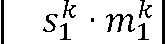
前記算術デコーダは、復号されるシンボルが第2の値をとる場合、所定のオフセット値(z)と以前に計算された第1の状態変数値の逆バージョン(


The arithmetic decoder generates a predetermined offset value (z) and an inverse version of a previously calculated first state variable value (


前記算術デコーダは、復号されるシンボルが第2の値をとる場合、所定のオフセット値(z)と以前に計算された第2の状態変数値の逆バージョン(


The arithmetic decoder generates a predetermined offset value (z) and an inverse version of a previously calculated second state variable value (
前記算術デコーダは、第2の状態変数値を更新するときに第2のスケーリング値を使用して前記ルックアップテーブルの評価によって返される値をスケーリングするように構成され、
前記第1のスケーリング値は前記第2のスケーリング値とは異なる、請求項1から6のいずれか一項に記載の算術デコーダ。 the arithmetic decoder is configured to scale values returned by evaluation of the lookup table using a first scaling value when updating the first state variable value;
the arithmetic decoder is configured to scale values returned by evaluation of the lookup table using a second scaling value when updating a second state variable value;
An arithmetic decoder as claimed in any preceding claim, wherein the first scaling value is different from the second scaling value.

zは所定のオフセット値であり、


ことに従って、1つまたは複数の更新された状態変数値

z is a predetermined offset value,

zは所定のオフセット値であり、


ことに従って、1つまたは複数の更新された状態変数値

z is a predetermined offset value,

zは所定のオフセット値であり、


ことに従って、1つまたは複数の更新された状態変数値

z is a predetermined offset value,

zは所定のオフセット値であり、


ことに従って、1つまたは複数の更新された状態変数値

z is a predetermined offset value,


前記更新された状態変数値に、


The updated state variable values are
前記算術エンコーダは、1つまたは複数の状態変数値(s1 k、s2 k;642、644;710;810;910;1010a、1010b;1082a、1082b;1110;1210;1310;1410;1510;1632,1642;1732、1742)を決定するように構成され、これは、以前に符号化された複数のシンボル値の統計を表し、および
前記算術エンコーダは、前記1つまたは複数の状態変数値(si k)に基づいて符号化される1つまたは複数のシンボル値の算術符号化の間隔サイズ情報(pk、R*pk;432;534;620;720;820;820;1020;1084;1120;1320;1420;1520;1662;1762)を導出するように構成され、これは複数の以前に符号化されたシンボル値の統計を表し、
前記算術エンコーダは、符号化されるシンボルに依存して、ルックアップテーブル(A)を使用して、第1の状態変数値(sk 1)を更新するように構成され、
前記算術エンコーダは、

zは所定のオフセット値であり、


ことに従って、1つまたは複数の更新された状態変数値

The arithmetic encoder is configured to determine one or more state variable values (s 1 k , s 2 k ; 642, 644; 710; 810; 910; 1010a, 1010b; 1082a, 1082b; 1110; 1210; 1310; 1410; 1510; 1632, 1642; 1732, 1742), which represent statistics of a plurality of previously encoded symbol values; and the arithmetic encoder is configured to determine interval size information (p k , R*p k ) of arithmetic coding of one or more symbol values to be encoded based on the one or more state variable values (s i k ). ; 432; 534; 620; 720; 820; 820; 1020; 1084; 1120; 1320; 1420; 1520; 1662; 1762), which represents statistics of a plurality of previously encoded symbol values;
the arithmetic encoder is adapted to update a first state variable value (s k 1 ) using a look-up table (A) depending on the symbol to be encoded;
The arithmetic encoder comprises:
z is a predetermined offset value,
前記算術エンコーダは、1つまたは複数の状態変数値(s1 k、s2 k;642、644;710;810;910;1010a、1010b;1082a、1082b;1110;1210;1310;1410;1510;1632,1642;1732、1742)を決定するように構成され、これは、以前に符号化された複数のシンボル値の統計を表し、および
前記算術エンコーダは、前記1つまたは複数の状態変数値(si k)に基づいて符号化される1つまたは複数のシンボル値の算術符号化の間隔サイズ情報(pk、R*pk;432;534;620;720;820;820;1020;1084;1120;1320;1420;1520;1662;1762)を導出するように構成され、これは複数の以前に符号化されたシンボル値の統計を表し、
前記算術エンコーダは、符号化されるシンボルに依存して、ルックアップテーブル(A)を使用して、第1の状態変数値(sk 1)を更新するように構成され、
前記算術エンコーダは、

zは所定のオフセット値であり、


ことに従って、1つまたは複数の更新された状態変数値

The arithmetic encoder is configured to determine one or more state variable values (s 1 k , s 2 k ; 642, 644; 710; 810; 910; 1010a, 1010b; 1082a, 1082b; 1110; 1210; 1310; 1410; 1510; 1632, 1642; 1732, 1742), which represent statistics of a plurality of previously encoded symbol values; and the arithmetic encoder is configured to determine interval size information (p k , R*p k ) of arithmetic coding of one or more symbol values to be encoded based on the one or more state variable values (s i k ). ; 432; 534; 620; 720; 820; 820; 1020; 1084; 1120; 1320; 1420; 1520; 1662; 1762), which represents statistics of a plurality of previously encoded symbol values;
the arithmetic encoder is adapted to update a first state variable value (s k 1 ) using a look-up table (A) depending on the symbol to be encoded;
The arithmetic encoder comprises:
z is a predetermined offset value,
前記算術エンコーダは、1つまたは複数の状態変数値(s1 k、s2 k;642、644;710;810;910;1010a、1010b;1082a、1082b;1110;1210;1310;1410;1510;1632,1642;1732、1742)を決定するように構成され、これは、以前に符号化された複数のシンボル値の統計を表し、および
前記算術エンコーダは、前記1つまたは複数の状態変数値(si k)に基づいて符号化される1つまたは複数のシンボル値の算術符号化の間隔サイズ情報(pk、R*pk;432;534;620;720;820;820;1020;1084;1120;1320;1420;1520;1662;1762)を導出するように構成され、これは複数の以前に符号化されたシンボル値の統計を表し、
前記算術エンコーダは、符号化されるシンボルに依存して、ルックアップテーブル(A)を使用して、第1の状態変数値(sk 1)を更新するように構成され、
前記算術エンコーダは、

zは所定のオフセット値であり、


ことに従って、1つまたは複数の更新された状態変数値

The arithmetic encoder is configured to determine one or more state variable values (s 1 k , s 2 k ; 642, 644; 710; 810; 910; 1010a, 1010b; 1082a, 1082b; 1110; 1210; 1310; 1410; 1510; 1632, 1642; 1732, 1742), which represent statistics of a plurality of previously encoded symbol values; and the arithmetic encoder is configured to determine interval size information (p k , R*p k ) of arithmetic coding of one or more symbol values to be encoded based on the one or more state variable values (s i k ). ; 432; 534; 620; 720; 820; 820; 1020; 1084; 1120; 1320; 1420; 1520; 1662; 1762), which represents statistics of a plurality of previously encoded symbol values;
the arithmetic encoder is adapted to update a first state variable value (s k 1 ) using a look-up table (A) depending on the symbol to be encoded;
The arithmetic encoder comprises:
z is a predetermined offset value,
前記算術エンコーダは、1つまたは複数の状態変数値(s1 k、s2 k;642、644;710;810;910;1010a、1010b;1082a、1082b;1110;1210;1310;1410;1510;1632,1642;1732、1742)を決定するように構成され、これは、以前に符号化された複数のシンボル値の統計を表し、および
前記算術エンコーダは、前記1つまたは複数の状態変数値(si k)に基づいて符号化される1つまたは複数のシンボル値の算術符号化の間隔サイズ情報(pk、R*pk;432;534;620;720;820;820;1020;1084;1120;1320;1420;1520;1662;1762)を導出するように構成され、これは複数の以前に符号化されたシンボル値の統計を表し、
前記算術エンコーダは、符号化されるシンボルに依存して、ルックアップテーブル(A)を使用して、第1の状態変数値(sk 1)を更新するように構成され、
前記算術エンコーダは、

zは所定のオフセット値であり、


ことに従って、1つまたは複数の更新された状態変数値

The arithmetic encoder is configured to determine one or more state variable values (s 1 k , s 2 k ; 642, 644; 710; 810; 910; 1010a, 1010b; 1082a, 1082b; 1110; 1210; 1310; 1410; 1510; 1632, 1642; 1732, 1742), which represent statistics of a plurality of previously encoded symbol values; and the arithmetic encoder is configured to determine interval size information (p k , R*p k ) of arithmetic coding of one or more symbol values to be encoded based on the one or more state variable values (s i k ). ; 432; 534; 620; 720; 820; 820; 1020; 1084; 1120; 1320; 1420; 1520; 1662; 1762), which represents statistics of a plurality of previously encoded symbol values;
the arithmetic encoder is adapted to update a first state variable value (s k 1 ) using a look-up table (A) depending on the symbol to be encoded;
The arithmetic encoder comprises:
z is a predetermined offset value,


前記ビデオデコーダは、複数のビデオフレーム(12’)を復号するように構成され、
前記ビデオデコーダは、請求項1に記載の、バイナリシーケンスの符号化表現(14;510;1610;1710)に基づいて復号されたバイナリシーケンス(24’’、520;1622;1722)を提供するための算術デコーダ(50;500;1620;1720)を備え、
前記バイナリシーケンスは、前記複数のビデオフレームのビデオコンテンツを表す、ビデオデコーダ。 A video decoder (20; 1600; 1700), comprising:
the video decoder configured to decode a plurality of video frames (12');
The video decoder comprises an arithmetic decoder (50; 500; 1620; 1720) for providing a decoded binary sequence (24'', 520; 1622; 1722) based on a coded representation (14; 510; 1610; 1710) of the binary sequence according to claim 1,
The binary sequence represents video content of the plurality of video frames.
前記ビデオエンコーダは、複数のビデオフレーム(12)を符号化するように構成され、
前記ビデオエンコーダは、請求項18に記載の、前記複数のビデオフレームのビデオコンテンツを表すバイナリ値(410)のシーケンスに基づいて符号化されたバイナリシーケンス(420)を提供するための算術エンコーダ(34;400)を備える、ビデオエンコーダ。 A video encoder (10), comprising:
The video encoder is configured to encode a plurality of video frames (12);
The video encoder comprises an arithmetic encoder (34; 400) for providing an encoded binary sequence (420) based on a sequence of binary values (410) representative of a video content of the plurality of video frames according to claim 18 .
前記方法は、1つまたは複数の状態変数値(s1 k、s2 k)を決定することを含み、これは、以前に復号された複数のシンボル値の統計を表し、および
前記方法は、前記1つまたは複数の状態変数値(si k)に基づいて復号される1つまたは複数のシンボル値の算術復号の間隔サイズ情報(pk、R*pk)を導出することを含み、これは複数の以前に復号されたシンボル値の統計を表し、
前記方法は、復号されるシンボルに依存して、ルックアップテーブル(A)を使用して、第1の状態変数値(sk 1)を更新することを含み、
前記方法は、以前の状態変数値を、復号されるシンボルが第1の値をとる場合に、前記以前の状態変数値が正である場合と比較して、前記以前の状態変数値が負である場合に、比較的大きい値だけ増加させることを含み、
前記方法は、以前の状態変数値を、復号されるシンボルが、前記第1の値とは異なる第2の値をとる場合に、前記以前の状態変数値が負である場合と比較して、前記以前の状態変数値が正である場合に、比較的大きい値だけ減少させることを含む、方法。 1. A method for decoding a plurality of symbols having symbol values, comprising:
The method includes determining one or more state variable values (s 1 k , s 2 k ), which represent statistics of a plurality of previously decoded symbol values; and the method includes deriving arithmetic decoding interval size information (p k , R*p k ) of one or more symbol values to be decoded based on the one or more state variable values (s i k ), which represent statistics of a plurality of previously decoded symbol values;
The method comprises updating a first state variable value (s k 1 ) using a look-up table (A) depending on the symbol to be decoded;
the method includes increasing a previous state variable value by a relatively larger value when the previous state variable value is negative compared to when the previous state variable value is positive when a decoded symbol has a first value;
The method includes decreasing a previous state variable value by a relatively larger value when the previous state variable value is positive compared to when the previous state variable value is negative when a decoded symbol assumes a second value different from the first value.
前記方法は、1つまたは複数の状態変数値(s1 k、s2 k)を決定することを含み、これは、以前に符号化された複数のシンボル値の統計を表し、および
前記方法は、前記1つまたは複数の状態変数値(si k)に基づいて符号化される1つまたは複数のシンボル値の算術符号化の間隔サイズ情報(pk、R*pk)を導出することを含み、これは複数の以前に符号化されたシンボル値の統計を表し、
前記方法は、符号化されるシンボルに依存して、ルックアップテーブル(A)を使用して、第1の状態変数値(sk 1)を更新することを含み、
前記方法は、

zは所定のオフセット値であり、


ことに従って、1つまたは複数の更新された状態変数値

The method includes determining one or more state variable values (s 1 k , s 2 k ), which represent statistics of a plurality of previously encoded symbol values; and the method includes deriving arithmetic coding interval size information (p k , R*p k ) of one or more symbol values to be encoded based on the one or more state variable values (s i k ), which represent statistics of a plurality of previously encoded symbol values;
The method comprises updating a first state variable value (s k 1 ) using a look-up table (A) in dependence on the symbol to be encoded;
The method comprises:
z is a predetermined offset value,
前記方法は、1つまたは複数の状態変数値(s1 k、s2 k)を決定することを含み、これは、以前に符号化された複数のシンボル値の統計を表し、および
前記方法は、前記1つまたは複数の状態変数値(si k)に基づいて符号化される1つまたは複数のシンボル値の算術符号化の間隔サイズ情報(pk、R*pk)を導出することを含み、これは複数の以前に符号化されたシンボル値の統計を表し、
前記方法は、符号化されるシンボルに依存して、ルックアップテーブル(A)を使用して、第1の状態変数値(sk 1)を更新することを含み、
前記方法は、

zは所定のオフセット値であり、


ことに従って、1つまたは複数の更新された状態変数値

The method includes determining one or more state variable values (s 1 k , s 2 k ), which represent statistics of a plurality of previously encoded symbol values; and the method includes deriving arithmetic coding interval size information (p k , R*p k ) of one or more symbol values to be encoded based on the one or more state variable values (s i k ), which represent statistics of a plurality of previously encoded symbol values;
The method comprises updating a first state variable value (s k 1 ) using a look-up table (A) in dependence on the symbol to be encoded;
The method comprises:
z is a predetermined offset value,
前記方法は、1つまたは複数の状態変数値(s1 k、s2 k)を決定することを含み、これは、以前に符号化された複数のシンボル値の統計を表し、および
前記方法は、前記1つまたは複数の状態変数値(si k)に基づいて符号化される1つまたは複数のシンボル値の算術符号化の間隔サイズ情報(pk、R*pk)を導出することを含み、これは複数の以前に符号化されたシンボル値の統計を表し、
前記方法は、符号化されるシンボルに依存して、ルックアップテーブル(A)を使用して、第1の状態変数値(sk 1)を更新することを含み、
前記方法は、

zは所定のオフセット値であり、


ことに従って、1つまたは複数の更新された状態変数値

The method includes determining one or more state variable values (s 1 k , s 2 k ), which represent statistics of a plurality of previously encoded symbol values; and the method includes deriving arithmetic coding interval size information (p k , R*p k ) of one or more symbol values to be encoded based on the one or more state variable values (s i k ), which represent statistics of a plurality of previously encoded symbol values;
The method comprises updating a first state variable value (s k 1 ) using a look-up table (A) in dependence on the symbol to be encoded;
The method comprises:
z is a predetermined offset value,
前記方法は、1つまたは複数の状態変数値(s1 k、s2 k)を決定することを含み、これは、以前に符号化された複数のシンボル値の統計を表し、および
前記方法は、前記1つまたは複数の状態変数値(si k)に基づいて符号化される1つまたは複数のシンボル値の算術符号化の間隔サイズ情報(pk、R*pk)を導出することを含み、これは複数の以前に符号化されたシンボル値の統計を表し、
前記方法は、符号化されるシンボルに依存して、ルックアップテーブル(A)を使用して、第1の状態変数値(sk 1)を更新することを含み、
前記方法は、

zは所定のオフセット値であり、


ことに従って、1つまたは複数の更新された状態変数値

The method includes determining one or more state variable values (s 1 k , s 2 k ), which represent statistics of a plurality of previously encoded symbol values; and the method includes deriving arithmetic coding interval size information (p k , R*p k ) of one or more symbol values to be encoded based on the one or more state variable values (s i k ), which represent statistics of a plurality of previously encoded symbol values;
The method comprises updating a first state variable value (s k 1 ) using a look-up table (A) in dependence on the symbol to be encoded;
The method comprises:
z is a predetermined offset value,
Priority Applications (1)
| Application Number | Priority Date | Filing Date | Title |
|---|---|---|---|
| JP2024198761A JP2025015642A (en) | 2018-07-06 | 2024-11-14 | ARITHMETIC ENCODER, ARITHMETIC DECODER, VIDEO ENCODER, VIDEO DECODER, ENCODING METHOD, DECODING METHOD, AND COMPUTER PROGRAM |
Applications Claiming Priority (8)
| Application Number | Priority Date | Filing Date | Title |
|---|---|---|---|
| EP18182308 | 2018-07-06 | ||
| EP18182308.9 | 2018-07-06 | ||
| EP18196400 | 2018-09-24 | ||
| EP18196400.8 | 2018-09-24 | ||
| EP18248294 | 2018-12-28 | ||
| EP18248294.3 | 2018-12-28 | ||
| PCT/EP2019/068188 WO2020008075A1 (en) | 2018-07-06 | 2019-07-05 | Arithmetic encoders, arithmetic decoders, video encoder, video decoder, methods for encoding, methods for decoding and computer program |
| JP2021522144A JP2021532698A (en) | 2018-07-06 | 2019-07-05 | Arithmetic encoders, arithmetic decoders, video encoders, video decoders, coding methods, decoding methods, and computer programs |
Related Parent Applications (1)
| Application Number | Title | Priority Date | Filing Date |
|---|---|---|---|
| JP2021522144A Division JP2021532698A (en) | 2018-07-06 | 2019-07-05 | Arithmetic encoders, arithmetic decoders, video encoders, video decoders, coding methods, decoding methods, and computer programs |
Related Child Applications (1)
| Application Number | Title | Priority Date | Filing Date |
|---|---|---|---|
| JP2024198761A Division JP2025015642A (en) | 2018-07-06 | 2024-11-14 | ARITHMETIC ENCODER, ARITHMETIC DECODER, VIDEO ENCODER, VIDEO DECODER, ENCODING METHOD, DECODING METHOD, AND COMPUTER PROGRAM |
Publications (2)
| Publication Number | Publication Date |
|---|---|
| JP2023021214A JP2023021214A (en) | 2023-02-10 |
| JP7590397B2 true JP7590397B2 (en) | 2024-11-26 |
Family
ID=67253872
Family Applications (3)
| Application Number | Title | Priority Date | Filing Date |
|---|---|---|---|
| JP2021522144A Pending JP2021532698A (en) | 2018-07-06 | 2019-07-05 | Arithmetic encoders, arithmetic decoders, video encoders, video decoders, coding methods, decoding methods, and computer programs |
| JP2022187949A Active JP7590397B2 (en) | 2018-07-06 | 2022-11-25 | ARITHMETIC ENCODER, ARITHMETIC DECODER, VIDEO ENCODER, VIDEO DECODER, ENCODING METHOD, DECODING METHOD, AND COMPUTER PROGRAM |
| JP2024198761A Pending JP2025015642A (en) | 2018-07-06 | 2024-11-14 | ARITHMETIC ENCODER, ARITHMETIC DECODER, VIDEO ENCODER, VIDEO DECODER, ENCODING METHOD, DECODING METHOD, AND COMPUTER PROGRAM |
Family Applications Before (1)
| Application Number | Title | Priority Date | Filing Date |
|---|---|---|---|
| JP2021522144A Pending JP2021532698A (en) | 2018-07-06 | 2019-07-05 | Arithmetic encoders, arithmetic decoders, video encoders, video decoders, coding methods, decoding methods, and computer programs |
Family Applications After (1)
| Application Number | Title | Priority Date | Filing Date |
|---|---|---|---|
| JP2024198761A Pending JP2025015642A (en) | 2018-07-06 | 2024-11-14 | ARITHMETIC ENCODER, ARITHMETIC DECODER, VIDEO ENCODER, VIDEO DECODER, ENCODING METHOD, DECODING METHOD, AND COMPUTER PROGRAM |
Country Status (9)
| Country | Link |
|---|---|
| US (3) | US11431352B2 (en) |
| EP (2) | EP3818637B1 (en) |
| JP (3) | JP2021532698A (en) |
| KR (1) | KR102721249B1 (en) |
| CN (11) | CN112689960B (en) |
| ES (1) | ES3035607T3 (en) |
| PL (1) | PL3818637T3 (en) |
| TW (3) | TWI765164B (en) |
| WO (1) | WO2020008075A1 (en) |
Families Citing this family (9)
| Publication number | Priority date | Publication date | Assignee | Title |
|---|---|---|---|---|
| CN114556790A (en) * | 2019-11-08 | 2022-05-27 | 谷歌有限责任公司 | Probability estimation for entropy coding |
| CN115699585A (en) * | 2020-04-14 | 2023-02-03 | 弗劳恩霍夫应用研究促进协会 | Decoder, encoder, method for decoding weight parameters of a neural network and encoded representation using probability estimation parameters |
| CN113489979A (en) * | 2021-05-28 | 2021-10-08 | 杭州博雅鸿图视频技术有限公司 | Entropy coding method, entropy coding device, electronic equipment and storage medium |
| WO2023049292A1 (en) * | 2021-09-22 | 2023-03-30 | Beijing Dajia Internet Information Technology Co., Ltd. | Methods and devices for decoder-side intra mode derivation |
| CN113938273B (en) * | 2021-09-30 | 2024-02-13 | 湖南遥昇通信技术有限公司 | Symmetric encryption method and system capable of resisting quantitative parallel computing attack |
| CN118266210A (en) * | 2021-12-29 | 2024-06-28 | 北京达佳互联信息技术有限公司 | Method and apparatus for probability calculation for context-based adaptive binary arithmetic coding |
| CN118541916A (en) | 2022-01-19 | 2024-08-23 | 多伦多大学管理委员会 | System and method for off-chip data compression and decompression for machine learning networks |
| CA3245490A1 (en) * | 2022-04-05 | 2025-06-13 | Samsung Electronics Co., Ltd. | Device for entropy encoding and decoding and method therefor |
| WO2025219427A1 (en) * | 2024-04-16 | 2025-10-23 | Fraunhofer-Gesellschaft zur Förderung der angewandten Forschung e.V. | Arithmetic encoders, arithmetic decoders, video encoder, video decoder, methods for encoding, methods for decoding and computer program |
Citations (2)
| Publication number | Priority date | Publication date | Assignee | Title |
|---|---|---|---|---|
| JP2005217517A (en) | 2004-01-27 | 2005-08-11 | Sharp Corp | Encoding method, encoding device, program, and recording medium |
| US20130107951A1 (en) | 2011-10-27 | 2013-05-02 | Qualcomm Incorporated | Mapping states in binary arithmetic coder for video coding |
Family Cites Families (28)
| Publication number | Priority date | Publication date | Assignee | Title |
|---|---|---|---|---|
| EP0224753B1 (en) * | 1985-12-04 | 1994-01-26 | International Business Machines Corporation | Probability adaptation for arithmetic coders |
| EP0581571B1 (en) * | 1992-07-31 | 1998-07-08 | Canon Kabushiki Kaisha | Imaging coding device and method |
| JP3184670B2 (en) * | 1992-07-31 | 2001-07-09 | キヤノン株式会社 | Image coding device |
| US5587710A (en) * | 1995-03-24 | 1996-12-24 | National Semiconductor Corporation | Syntax based arithmetic coder and decoder |
| EP1798860A3 (en) * | 1997-07-31 | 2010-07-28 | AT&T Corp. | A fast adaptive binary arithmetic coder |
| US6518896B1 (en) * | 2000-01-15 | 2003-02-11 | Sony Electronics, Inc. | Multiple symbol length lookup table |
| US6906647B2 (en) * | 2002-09-20 | 2005-06-14 | Ntt Docomo, Inc. | Method and apparatus for arithmetic coding, including probability estimation state table creation |
| US6894628B2 (en) * | 2003-07-17 | 2005-05-17 | Fraunhofer-Gesellschaft Zur Forderung Der Angewandten Forschung E.V. | Apparatus and methods for entropy-encoding or entropy-decoding using an initialization of context variables |
| CN1703089A (en) * | 2005-06-09 | 2005-11-30 | 清华大学 | A two-value arithmetic coding method of digital signal |
| CN1983334A (en) * | 2005-12-05 | 2007-06-20 | 华为技术有限公司 | Method and device for realizing arithmetic coding and decoding |
| WO2007065352A1 (en) * | 2005-12-05 | 2007-06-14 | Huawei Technologies Co., Ltd. | Method and apparatus for realizing arithmetic coding/ decoding |
| JP4785706B2 (en) * | 2006-11-01 | 2011-10-05 | キヤノン株式会社 | Decoding device and decoding method |
| EP1921752B1 (en) * | 2006-11-13 | 2012-12-19 | Google, Inc. | Adaptive arithmetic encoding and decoding of digital data |
| JP4722214B2 (en) * | 2007-04-18 | 2011-07-13 | 三菱電機株式会社 | Encoding device, decoding device, code conversion device, and program |
| JP4893657B2 (en) * | 2008-02-29 | 2012-03-07 | ソニー株式会社 | Arithmetic decoding device |
| ES2531013T3 (en) * | 2009-10-20 | 2015-03-10 | Fraunhofer Ges Forschung | Audio encoder, audio decoder, method for encoding audio information, method for decoding audio information and computer program that uses the detection of a group of previously decoded spectral values |
| US7978101B2 (en) * | 2009-10-28 | 2011-07-12 | Motorola Mobility, Inc. | Encoder and decoder using arithmetic stage to compress code space that is not fully utilized |
| BR122021008581B1 (en) * | 2010-01-12 | 2022-08-16 | Fraunhofer-Gesellschaft zur Förderung der angewandten Forschung e.V. | AUDIO ENCODER, AUDIO DECODER, AUDIO INFORMATION AND ENCODING METHOD, AND AUDIO INFORMATION DECODING METHOD USING A HASH TABLE THAT DESCRIBES BOTH SIGNIFICANT STATE VALUES AND RANGE BOUNDARIES |
| HUE037656T2 (en) * | 2010-04-13 | 2018-09-28 | Fraunhofer Ges Forschung | Probability interval partioning encoder and decoder |
| CN103119646B (en) * | 2010-07-20 | 2016-09-07 | 弗劳恩霍夫应用研究促进协会 | Audio coder, audio decoder, the method for codes audio information and the method for decoded audio information |
| CN107529709B (en) * | 2011-06-16 | 2019-05-07 | Ge视频压缩有限责任公司 | Decoder, encoder, method of decoding and encoding video, and storage medium |
| JPWO2013065702A1 (en) * | 2011-11-04 | 2015-04-02 | シャープ株式会社 | Arithmetic decoding device, image decoding device, arithmetic coding device, image coding device, and arithmetic decoding method |
| RU2708967C2 (en) * | 2012-01-20 | 2019-12-12 | ДжиИ Видео Компрешн, ЭлЭлСи | Encoding conversion coefficients |
| JP6121172B2 (en) | 2012-01-24 | 2017-04-26 | 西川ゴム工業株式会社 | Joint seal structure |
| US10368072B2 (en) * | 2015-05-29 | 2019-07-30 | Qualcomm Incorporated | Advanced arithmetic coder |
| US11265561B2 (en) * | 2017-01-06 | 2022-03-01 | Mediatek Inc. | Method and apparatus for range derivation in context adaptive binary arithmetic coding |
| US10869062B2 (en) * | 2017-12-21 | 2020-12-15 | Qualcomm Incorporated | Probability initialization and signaling for adaptive arithmetic coding in video coding |
| CN108989825B (en) * | 2018-07-18 | 2021-05-07 | 北京奇艺世纪科技有限公司 | Arithmetic coding method and device and electronic equipment |
-
2019
- 2019-07-05 CN CN201980058433.3A patent/CN112689960B/en active Active
- 2019-07-05 CN CN202511369490.7A patent/CN121036773A/en active Pending
- 2019-07-05 CN CN202511369292.0A patent/CN121055957A/en active Pending
- 2019-07-05 CN CN202511376326.9A patent/CN121000233A/en active Pending
- 2019-07-05 TW TW108123827A patent/TWI765164B/en active
- 2019-07-05 EP EP19739237.6A patent/EP3818637B1/en active Active
- 2019-07-05 CN CN202511369483.7A patent/CN121036772A/en active Pending
- 2019-07-05 CN CN202511374609.XA patent/CN121356600A/en active Pending
- 2019-07-05 EP EP25183462.8A patent/EP4645856A3/en active Pending
- 2019-07-05 KR KR1020217003652A patent/KR102721249B1/en active Active
- 2019-07-05 WO PCT/EP2019/068188 patent/WO2020008075A1/en not_active Ceased
- 2019-07-05 TW TW111114680A patent/TWI827010B/en active
- 2019-07-05 TW TW112145144A patent/TW202435611A/en unknown
- 2019-07-05 CN CN202511368282.5A patent/CN121036771A/en active Pending
- 2019-07-05 CN CN202511374611.7A patent/CN121098332A/en active Pending
- 2019-07-05 CN CN202511372572.7A patent/CN121124821A/en active Pending
- 2019-07-05 PL PL19739237.6T patent/PL3818637T3/en unknown
- 2019-07-05 JP JP2021522144A patent/JP2021532698A/en active Pending
- 2019-07-05 CN CN202511374469.6A patent/CN121036774A/en active Pending
- 2019-07-05 ES ES19739237T patent/ES3035607T3/en active Active
- 2019-07-05 CN CN202511374753.3A patent/CN121036775A/en active Pending
-
2021
- 2021-01-05 US US17/142,071 patent/US11431352B2/en active Active
-
2022
- 2022-07-26 US US17/874,092 patent/US12095486B2/en active Active
- 2022-11-25 JP JP2022187949A patent/JP7590397B2/en active Active
-
2024
- 2024-06-17 US US18/745,812 patent/US20240413837A1/en active Pending
- 2024-11-14 JP JP2024198761A patent/JP2025015642A/en active Pending
Patent Citations (3)
| Publication number | Priority date | Publication date | Assignee | Title |
|---|---|---|---|---|
| JP2005217517A (en) | 2004-01-27 | 2005-08-11 | Sharp Corp | Encoding method, encoding device, program, and recording medium |
| US20130107951A1 (en) | 2011-10-27 | 2013-05-02 | Qualcomm Incorporated | Mapping states in binary arithmetic coder for video coding |
| JP2014534736A (en) | 2011-10-27 | 2014-12-18 | クゥアルコム・インコーポレイテッドQualcomm Incorporated | State mapping in a binary arithmetic coder for video coding |
Non-Patent Citations (3)
| Title |
|---|
| Detlev Marpe et al.,Context-Based Adaptive Binary Arithmetic Coding in the H.264/AVC Video Compression Standard,IEEE Transactions on Circuits and Systems for Video Technology,2003年,Vol. 13, No. 7,pp. 620-636 |
| Evgeny Belyaev et al.,An Efficient Adaptive Binary Range Coder and Its VLSI Architecture,IEEE Transactions on Circuits and Systems for Video Technology,2014年,Vol. 25, No. 8,pp. 1435-1446 |
| HENDRIK EECKHAUT et al.,Tuning the M-coder to improve Dirac’s Entropy Coding[online],WSEAS Transactions on Information Science and Applications,2005年,インターネット<URL:https://www.researchgate.net/profile/Jan-Campenhout/publication/228673154_Tuning_the_M-coder_to_improve_Dirac's_Entropy_Coding/links/02e7e532dc675b63b8000000/Tuning-the-M-coder-to-improve-Diracs-Entropy-Coding.pdf?_tp=eyJjb250ZXh0Ijp7ImZpcnN0UGFnZSI6InB1YmxpY2F0aW9uIiwicGFnZSI6InB1YmxpY2F0aW9uIn19> |
Also Published As
Similar Documents
| Publication | Publication Date | Title |
|---|---|---|
| JP7590397B2 (en) | ARITHMETIC ENCODER, ARITHMETIC DECODER, VIDEO ENCODER, VIDEO DECODER, ENCODING METHOD, DECODING METHOD, AND COMPUTER PROGRAM | |
| US8736467B2 (en) | Adaptive binarization for arithmetic coding | |
| JP7793839B2 (en) | Video decoder, video encoder, method for decoding video content, method for encoding video content, computer program, and video bitstream | |
| KR20100027385A (en) | Method and apparatus for encoding/decoding image using adaptive binarization | |
| US20220239924A1 (en) | Arithmetic encoders and decoders, video encoders and decoders, methods for encoding or decoding symbols, and methods for encoding or decoding video content | |
| Yu et al. | An efficient adaptive binary arithmetic coder based on logarithmic domain | |
| CN115066896B (en) | Apparatus and method for decoding/encoding a predetermined block of a picture using intra prediction | |
| WO2025219427A1 (en) | Arithmetic encoders, arithmetic decoders, video encoder, video decoder, methods for encoding, methods for decoding and computer program | |
| TW202606302A (en) | Arithmetic encoders, arithmetic decoders, video encoder, video decoder, methods for encoding, methods for decoding and computer program |
Legal Events
| Date | Code | Title | Description |
|---|---|---|---|
| A521 | Request for written amendment filed |
Free format text: JAPANESE INTERMEDIATE CODE: A523 Effective date: 20221223 |
|
| A621 | Written request for application examination |
Free format text: JAPANESE INTERMEDIATE CODE: A621 Effective date: 20221223 |
|
| A977 | Report on retrieval |
Free format text: JAPANESE INTERMEDIATE CODE: A971007 Effective date: 20231220 |
|
| A131 | Notification of reasons for refusal |
Free format text: JAPANESE INTERMEDIATE CODE: A131 Effective date: 20231228 |
|
| A601 | Written request for extension of time |
Free format text: JAPANESE INTERMEDIATE CODE: A601 Effective date: 20240326 |
|
| A521 | Request for written amendment filed |
Free format text: JAPANESE INTERMEDIATE CODE: A523 Effective date: 20240625 |
|
| A131 | Notification of reasons for refusal |
Free format text: JAPANESE INTERMEDIATE CODE: A131 Effective date: 20240710 |
|
| A521 | Request for written amendment filed |
Free format text: JAPANESE INTERMEDIATE CODE: A523 Effective date: 20241003 |
|
| TRDD | Decision of grant or rejection written | ||
| A01 | Written decision to grant a patent or to grant a registration (utility model) |
Free format text: JAPANESE INTERMEDIATE CODE: A01 Effective date: 20241015 |
|
| A61 | First payment of annual fees (during grant procedure) |
Free format text: JAPANESE INTERMEDIATE CODE: A61 Effective date: 20241114 |
|
| R150 | Certificate of patent or registration of utility model |
Ref document number: 7590397 Country of ref document: JP Free format text: JAPANESE INTERMEDIATE CODE: R150 |