JP7586835B2 - Alkyl TPP Compounds for Mitochondrial Targeting and Anticancer Therapy - Google Patents
Alkyl TPP Compounds for Mitochondrial Targeting and Anticancer Therapy Download PDFInfo
- Publication number
- JP7586835B2 JP7586835B2 JP2021561710A JP2021561710A JP7586835B2 JP 7586835 B2 JP7586835 B2 JP 7586835B2 JP 2021561710 A JP2021561710 A JP 2021561710A JP 2021561710 A JP2021561710 A JP 2021561710A JP 7586835 B2 JP7586835 B2 JP 7586835B2
- Authority
- JP
- Japan
- Prior art keywords
- tpp
- cancer
- cells
- metabolic
- mitochondrial
- Prior art date
- Legal status (The legal status is an assumption and is not a legal conclusion. Google has not performed a legal analysis and makes no representation as to the accuracy of the status listed.)
- Active
Links
Images


Classifications
-
- A—HUMAN NECESSITIES
- A61—MEDICAL OR VETERINARY SCIENCE; HYGIENE
- A61K—PREPARATIONS FOR MEDICAL, DENTAL OR TOILETRY PURPOSES
- A61K31/00—Medicinal preparations containing organic active ingredients
- A61K31/66—Phosphorus compounds
- A61K31/662—Phosphorus acids or esters thereof having P—C bonds, e.g. foscarnet, trichlorfon
-
- A—HUMAN NECESSITIES
- A61—MEDICAL OR VETERINARY SCIENCE; HYGIENE
- A61K—PREPARATIONS FOR MEDICAL, DENTAL OR TOILETRY PURPOSES
- A61K31/00—Medicinal preparations containing organic active ingredients
- A61K31/16—Amides, e.g. hydroxamic acids
- A61K31/165—Amides, e.g. hydroxamic acids having aromatic rings, e.g. colchicine, atenolol, progabide
- A61K31/167—Amides, e.g. hydroxamic acids having aromatic rings, e.g. colchicine, atenolol, progabide having the nitrogen of a carboxamide group directly attached to the aromatic ring, e.g. lidocaine, paracetamol
-
- A—HUMAN NECESSITIES
- A61—MEDICAL OR VETERINARY SCIENCE; HYGIENE
- A61K—PREPARATIONS FOR MEDICAL, DENTAL OR TOILETRY PURPOSES
- A61K31/00—Medicinal preparations containing organic active ingredients
- A61K31/33—Heterocyclic compounds
- A61K31/335—Heterocyclic compounds having oxygen as the only ring hetero atom, e.g. fungichromin
- A61K31/365—Lactones
- A61K31/375—Ascorbic acid, i.e. vitamin C; Salts thereof
-
- A—HUMAN NECESSITIES
- A61—MEDICAL OR VETERINARY SCIENCE; HYGIENE
- A61K—PREPARATIONS FOR MEDICAL, DENTAL OR TOILETRY PURPOSES
- A61K31/00—Medicinal preparations containing organic active ingredients
- A61K31/33—Heterocyclic compounds
- A61K31/395—Heterocyclic compounds having nitrogen as a ring hetero atom, e.g. guanethidine or rifamycins
- A61K31/435—Heterocyclic compounds having nitrogen as a ring hetero atom, e.g. guanethidine or rifamycins having six-membered rings with one nitrogen as the only ring hetero atom
- A61K31/4353—Heterocyclic compounds having nitrogen as a ring hetero atom, e.g. guanethidine or rifamycins having six-membered rings with one nitrogen as the only ring hetero atom ortho- or peri-condensed with heterocyclic ring systems
- A61K31/4375—Heterocyclic compounds having nitrogen as a ring hetero atom, e.g. guanethidine or rifamycins having six-membered rings with one nitrogen as the only ring hetero atom ortho- or peri-condensed with heterocyclic ring systems the heterocyclic ring system containing a six-membered ring having nitrogen as a ring heteroatom, e.g. quinolizines, naphthyridines, berberine, vincamine
-
- A—HUMAN NECESSITIES
- A61—MEDICAL OR VETERINARY SCIENCE; HYGIENE
- A61K—PREPARATIONS FOR MEDICAL, DENTAL OR TOILETRY PURPOSES
- A61K31/00—Medicinal preparations containing organic active ingredients
- A61K31/60—Salicylic acid; Derivatives thereof
- A61K31/609—Amides, e.g. salicylamide
-
- A—HUMAN NECESSITIES
- A61—MEDICAL OR VETERINARY SCIENCE; HYGIENE
- A61K—PREPARATIONS FOR MEDICAL, DENTAL OR TOILETRY PURPOSES
- A61K31/00—Medicinal preparations containing organic active ingredients
- A61K31/65—Tetracyclines
-
- A—HUMAN NECESSITIES
- A61—MEDICAL OR VETERINARY SCIENCE; HYGIENE
- A61K—PREPARATIONS FOR MEDICAL, DENTAL OR TOILETRY PURPOSES
- A61K31/00—Medicinal preparations containing organic active ingredients
- A61K31/66—Phosphorus compounds
-
- A—HUMAN NECESSITIES
- A61—MEDICAL OR VETERINARY SCIENCE; HYGIENE
- A61K—PREPARATIONS FOR MEDICAL, DENTAL OR TOILETRY PURPOSES
- A61K31/00—Medicinal preparations containing organic active ingredients
- A61K31/70—Carbohydrates; Sugars; Derivatives thereof
- A61K31/7004—Monosaccharides having only carbon, hydrogen and oxygen atoms
-
- A—HUMAN NECESSITIES
- A61—MEDICAL OR VETERINARY SCIENCE; HYGIENE
- A61K—PREPARATIONS FOR MEDICAL, DENTAL OR TOILETRY PURPOSES
- A61K31/00—Medicinal preparations containing organic active ingredients
- A61K31/70—Carbohydrates; Sugars; Derivatives thereof
- A61K31/7042—Compounds having saccharide radicals and heterocyclic rings
- A61K31/7048—Compounds having saccharide radicals and heterocyclic rings having oxygen as a ring hetero atom, e.g. leucoglucosan, hesperidin, erythromycin, nystatin, digitoxin or digoxin
-
- A—HUMAN NECESSITIES
- A61—MEDICAL OR VETERINARY SCIENCE; HYGIENE
- A61K—PREPARATIONS FOR MEDICAL, DENTAL OR TOILETRY PURPOSES
- A61K31/00—Medicinal preparations containing organic active ingredients
- A61K31/70—Carbohydrates; Sugars; Derivatives thereof
- A61K31/7042—Compounds having saccharide radicals and heterocyclic rings
- A61K31/7052—Compounds having saccharide radicals and heterocyclic rings having nitrogen as a ring hetero atom, e.g. nucleosides, nucleotides
-
- A—HUMAN NECESSITIES
- A61—MEDICAL OR VETERINARY SCIENCE; HYGIENE
- A61K—PREPARATIONS FOR MEDICAL, DENTAL OR TOILETRY PURPOSES
- A61K45/00—Medicinal preparations containing active ingredients not provided for in groups A61K31/00 - A61K41/00
- A61K45/06—Mixtures of active ingredients without chemical characterisation, e.g. antiphlogistics and cardiaca
-
- A—HUMAN NECESSITIES
- A61—MEDICAL OR VETERINARY SCIENCE; HYGIENE
- A61P—SPECIFIC THERAPEUTIC ACTIVITY OF CHEMICAL COMPOUNDS OR MEDICINAL PREPARATIONS
- A61P35/00—Antineoplastic agents
-
- A—HUMAN NECESSITIES
- A61—MEDICAL OR VETERINARY SCIENCE; HYGIENE
- A61P—SPECIFIC THERAPEUTIC ACTIVITY OF CHEMICAL COMPOUNDS OR MEDICINAL PREPARATIONS
- A61P35/00—Antineoplastic agents
- A61P35/02—Antineoplastic agents specific for leukemia
-
- A—HUMAN NECESSITIES
- A61—MEDICAL OR VETERINARY SCIENCE; HYGIENE
- A61K—PREPARATIONS FOR MEDICAL, DENTAL OR TOILETRY PURPOSES
- A61K2300/00—Mixtures or combinations of active ingredients, wherein at least one active ingredient is fully defined in groups A61K31/00 - A61K41/00
Landscapes
- Health & Medical Sciences (AREA)
- Life Sciences & Earth Sciences (AREA)
- Pharmacology & Pharmacy (AREA)
- Veterinary Medicine (AREA)
- Chemical & Material Sciences (AREA)
- Public Health (AREA)
- General Health & Medical Sciences (AREA)
- Medicinal Chemistry (AREA)
- Animal Behavior & Ethology (AREA)
- Epidemiology (AREA)
- Molecular Biology (AREA)
- Organic Chemistry (AREA)
- Nuclear Medicine, Radiotherapy & Molecular Imaging (AREA)
- General Chemical & Material Sciences (AREA)
- Chemical Kinetics & Catalysis (AREA)
- Pain & Pain Management (AREA)
- Oncology (AREA)
- Hematology (AREA)
- Pharmaceuticals Containing Other Organic And Inorganic Compounds (AREA)
- Medicines That Contain Protein Lipid Enzymes And Other Medicines (AREA)
- Acyclic And Carbocyclic Compounds In Medicinal Compositions (AREA)
Description
関連出願
本出願は、2019年4月16日出願の米国仮特許出願第62/834,932号、及び2019年5月3日出願の米国仮特許出願第62/842,893号の利益を主張するものであり、これらはいずれも、参照によりその全体が本出願に援用される。
RELATED APPLICATIONS This application claims the benefit of U.S. Provisional Patent Application No. 62/834,932, filed April 16, 2019, and U.S. Provisional Patent Application No. 62/842,893, filed May 3, 2019, both of which are incorporated by reference in their entireties.
本開示は、ドデシルTPP等のアルキルトリフェニルホスホニウム化合物を用いて、ミトコンドリア機能を阻害し、癌、特に癌幹細胞を根絶することに関する。 The present disclosure relates to the use of alkyltriphenylphosphonium compounds, such as dodecyl TPP, to inhibit mitochondrial function and eradicate cancer, particularly cancer stem cells.
研究者は、新たな抗癌治療の開発に努力している。従来の癌療法(例えば放射線照射、シクロホスファミド等のアルキル化剤、5‐フルオロウラシル等の代謝拮抗剤)は、細胞成長及びDNA複製に関与する細胞機序を妨害することによって、急速に成長する癌細胞を選択的に検出して根絶することを試みるものであった。他の癌療法は、急速に成長する癌細胞に対して突然変異腫瘍抗原を選択的に結合させる免疫療法(例えばモノクローナル抗体)を使用している。残念ながら、これらの療法の後に、同一部位又は1つ以上の異なる部位において腫瘍が再発することが多く、これは全ての癌細胞が根絶されたわけではないことを示している。再発は、不十分な化学療法投与量、及び/又は療法に対して耐性を有する癌クローンの出現が原因である可能性がある。従って新規の癌治療戦略が必要である。 Researchers are working to develop new anti-cancer treatments. Traditional cancer therapies (e.g., radiation, alkylating agents such as cyclophosphamide, and antimetabolites such as 5-fluorouracil) attempt to selectively detect and eradicate rapidly growing cancer cells by interfering with cellular mechanisms involved in cell growth and DNA replication. Other cancer therapies use immunotherapy (e.g., monoclonal antibodies) that selectively bind mutated tumor antigens to rapidly growing cancer cells. Unfortunately, these therapies often result in tumor recurrence at the same site or at one or more different sites, indicating that not all cancer cells have been eradicated. Recurrence may be due to insufficient chemotherapy doses and/or the emergence of cancer clones that are resistant to the therapy. Thus, new cancer treatment strategies are needed.
突然変異分析の進歩により、癌の進行中に発生する遺伝子突然変異の詳細な研究が可能になった。ゲノムのランドスケープの知識があるにもかかわらず、現代の腫瘍学では、癌のサブタイプ全体にわたって一次ドライバの突然変異を特定するのが困難であった。この厳しい現実は、各患者の腫瘍が一意のものであり、単一の腫瘍が複数の異なるクローン細胞を含む可能性があることによるように思われる。従って必要となるのは、異なる複数の種類の癌の間の共通性に重点を置いた新たなアプローチである。腫瘍細胞と正常な細胞との間の代謝の差異を標的とすることは、新規の癌治療戦略として有望である。ヒト乳癌試料からの転写プロファイリングデータの分析により、ミトコンドリア生合成及び/又はミトコンドリア翻訳に関連する、95を超えるmRNA転写物の上昇が明らかになった。更に、95の上方制御されたmRNAのうちの35以上が、ミトコンドリアリボソームタンパク質(mitochondrial ribosomal protein:MRP)をコードする。また同様に、ヒト乳癌幹細胞のプロテオミクス分析により、複数のミトリボソームタンパク質、及びミトコンドリア生合成に関連する他のタンパク質の、有意な過剰発現が明らかになった。 Advances in mutation analysis have enabled detailed studies of genetic mutations that occur during cancer progression. Despite knowledge of the genomic landscape, modern oncology has had difficulty identifying primary driver mutations across cancer subtypes. This harsh reality appears to be due to the fact that each patient's tumor is unique and a single tumor may contain multiple distinct clonal cells. What is needed, therefore, are new approaches that focus on the commonalities between different cancer types. Targeting metabolic differences between tumor and normal cells holds promise as a novel cancer treatment strategy. Analysis of transcriptional profiling data from human breast cancer samples revealed the elevation of more than 95 mRNA transcripts associated with mitochondrial biogenesis and/or mitochondrial translation. Furthermore, more than 35 of the 95 upregulated mRNAs encode mitochondrial ribosomal proteins (MRPs). Similarly, proteomic analysis of human breast cancer stem cells revealed significant overexpression of multiple mitoribosomal proteins and other proteins associated with mitochondrial biogenesis.
ミトコンドリアは、細胞の要件を満たし、かつ細胞微小環境に適応するための、定常的な分裂、伸長、及び互いとの接続による管状ネットワーク又は断片化された顆粒の形成において、非常に動的な細胞小器官である。ミトコンドリアの融合と分裂とのバランスは、ミトコンドリアの形態、存在量、機能、及び空間分布を決定し、従って、ATP産生、マイトファジー、アポトーシス、及びカルシウムの恒常性といった、ミトコンドリア依存性の多くの生物学的プロセスに影響を及ぼす。そして、ミトコンドリアのダイナミクスは、ミトコンドリア代謝、呼吸、及び酸化ストレスによって調節できる。従って、分裂活性と融合活性との不均衡が、癌を含む複数の病的状態に悪影響を及ぼすことは、驚くに値しない。癌細胞は多くの場合、断片化されたミトコンドリアを呈し、分裂の増強又は分裂の減少は多くの場合、癌に関連しているが、ミトコンドリアのダイナミクスが腫瘍形成にどのように影響するかについての包括的機序の理解が、依然として必要とされている。 Mitochondria are highly dynamic organelles that constantly divide, elongate, and connect with each other to form tubular networks or fragmented granules to meet cellular requirements and adapt to the cellular microenvironment. The balance between mitochondrial fusion and fission determines mitochondrial morphology, abundance, function, and spatial distribution, and thus affects many mitochondria-dependent biological processes, such as ATP production, mitophagy, apoptosis, and calcium homeostasis. And mitochondrial dynamics can be regulated by mitochondrial metabolism, respiration, and oxidative stress. Therefore, it is not surprising that an imbalance between fission and fusion activity adversely affects multiple pathological conditions, including cancer. Cancer cells often exhibit fragmented mitochondria, and although enhanced or decreased fission is often associated with cancer, a comprehensive mechanistic understanding of how mitochondrial dynamics influences tumorigenesis remains needed.
特に癌細胞が腫瘍成長及び転移性播種に向かう際の、癌細胞の上昇した生体エネルギ及び生合成の需要をサポートするためには、完全で増強された代謝機能が必要である。当然のことながら、ミトコンドリア依存性代謝経路は、複数の燃料ソースからエネルギを抽出することによって、癌細胞のための生化学的プラットフォームを提供する。 Intact and enhanced metabolic function is required to support the elevated bioenergetic and biosynthetic demands of cancer cells, especially as they drive tumor growth and metastatic dissemination. Not surprisingly, mitochondria-dependent metabolic pathways provide a biochemical platform for cancer cells by extracting energy from multiple fuel sources.
近年、エネルギ代謝及びミトコンドリア機能は、CSCの維持及び増殖に関与する特定のダイナミクスに関連付けられており、上記CSCは、腫瘍の開始、転移拡散、及び抗癌療法に対する耐性に関与する、腫瘍塊内の特徴的な細胞亜集団である。例えばCSCは、ミトコンドリアの質量の特異かつ独特な増加、並びにミトコンドリア生合成の強化、及びミトコンドリアタンパク質翻訳のより強い活性化を示す。これらの挙動は、ミトコンドリア機能への厳密な依存を示唆している。これらの観察結果と一致することであるが、上昇したミトコンドリア代謝機能及びOXPHOSが、複数の種類の腫瘍のCSCで検出されている。同様に、蛍光ミトコンドリア染料MitoTrackerが、CSCの濃縮及び精製に使用されている。この染料はCSC内に蓄積されて、インビトロでの足場非依存性成長の程度、及びインビボでの高い腫瘍開始能力に基づく、癌細胞亜集団の特性決定を可能にする。これに加えて、非対称細胞分裂中、若いミトコンドリアは、幹状の表現型を保持する娘細胞中でクラスター化するが、分化に関与する娘細胞は幹細胞性を喪失して、より老化したミトコンドリアを受け入れる。これは、幹細胞性をサポートするために、最も機能的に完全な、生存している未損傷のミトコンドリアを選択するというアイデアを更にサポートするものである。 Recently, energy metabolism and mitochondrial function have been linked to specific dynamics involved in the maintenance and proliferation of CSCs, a distinctive cell subpopulation within tumor masses involved in tumor initiation, metastatic spread, and resistance to anticancer therapy. For example, CSCs show a specific and distinctive increase in mitochondrial mass, as well as enhanced mitochondrial biogenesis and stronger activation of mitochondrial protein translation. These behaviors suggest a strict dependency on mitochondrial function. Consistent with these observations, elevated mitochondrial metabolic function and OXPHOS have been detected in CSCs of multiple tumor types. Similarly, the fluorescent mitochondrial dye MitoTracker has been used to enrich and purify CSCs. This dye accumulates in CSCs, allowing the characterization of cancer cell subpopulations based on the extent of anchorage-independent growth in vitro and high tumor-initiating ability in vivo. In addition to this, during asymmetric cell division, young mitochondria cluster in daughter cells that retain a stem-like phenotype, while daughter cells committed to differentiation lose stemness and adopt more senescent mitochondria. This further supports the idea of selecting for the most functionally intact, viable, and undamaged mitochondria to support stemness.
これらの観察結果に基づいて、CSC中のミトコンドリアを標的化することを目的とした新規の薬理学的アプローチが提案されており、またその一部は、前臨床及び臨床研究において良好に適用されている。例えば、オフターゲット効果としてミトコンドリアタンパク質翻訳を減少させる抗生物質であるドキシサイクリンは、CSCを選択的に標的とするその能力について、早期乳癌患者の臨床管理での転用が示唆されている。従って必要となるのは、ミトコンドリア機能を標的としてこれを阻害する癌治療化合物の候補の特定である。 Based on these observations, novel pharmacological approaches aimed at targeting mitochondria in CSCs have been proposed, some of which have been successfully applied in preclinical and clinical studies. For example, doxycycline, an antibiotic that reduces mitochondrial protein translation as an off-target effect, has been suggested for repurposing in the clinical management of early-stage breast cancer patients for its ability to selectively target CSCs. What is therefore needed is the identification of candidate cancer therapeutic compounds that target and inhibit mitochondrial function.
しかしながら、適応機序を腫瘍塊に採用することによってミトコンドリア機能の欠如を克服できるため、癌療法における抗ミトコンドリア剤単独での使用には一定の制限がある。これらの適応機序としては例えば、腫瘍細胞内及び周囲のニッチ内の内因性及び外因性因子の両方によって駆動される代謝可塑性の多方向プロセスにおいて、酸化的代謝から代替のエネルギ経路へとシフトする、CSCの能力が挙げられる。特にCSCでは、このような代謝の柔軟性の操作は、治療の観点から有利となり得る。従って必要なのは、これらの代謝シフトを防止するか、そうでなければ上記シフトを利用して癌細胞増殖を阻害する、治療アプローチである。 However, the use of anti-mitochondrial agents alone in cancer therapy has certain limitations, since the lack of mitochondrial function can be overcome by adopting adaptive mechanisms in the tumor mass. These adaptive mechanisms include, for example, the ability of CSCs to shift from oxidative metabolism to alternative energy pathways in a multidirectional process of metabolic plasticity driven by both intrinsic and extrinsic factors within the tumor cell and the surrounding niche. Manipulation of such metabolic flexibility, especially in CSCs, can be advantageous from a therapeutic perspective. What is therefore needed are therapeutic approaches that either prevent these metabolic shifts or otherwise exploit them to inhibit cancer cell proliferation.
本開示の目的は、ミトコンドリア機能を標的としてこれを阻害し、抗癌療法として機能できる、新規の治療化合物を特定及び説明することである。本開示の別の目的は、癌細胞の代謝シフトを防止する、及び/又は上記代謝シフトを利用して癌細胞の増殖を阻害し、CSCを根絶する、上記治療化合物を用いた新規の治療アプローチを特定及び説明することである。 The objective of the present disclosure is to identify and describe novel therapeutic compounds that target and inhibit mitochondrial function and can function as anti-cancer therapies. Another objective of the present disclosure is to identify and describe novel therapeutic approaches using the therapeutic compounds to prevent and/or exploit a metabolic shift in cancer cells to inhibit cancer cell proliferation and eradicate CSCs.
ミトコンドリア代謝の上昇は、腫瘍の開始、二次部位での播種、及び治療抵抗性に関与している癌幹細胞(cancer stem cell:CSC)の、際立った特徴である。ミトコンドリア障害剤を用いて、CSCの維持及び伝播を効率的に妨げ、新生物疾患のより良好な制御につなげることができる。トリフェニルホスホニウム(TPP)系のミトコンドリア標的化合物は、生細胞のミトコンドリア内に蓄積される、小さな、一般に無毒の、生物学的活性を有する分子であり、CSCの成長及び増殖を遮断するための抗癌療法の候補となる。 Elevated mitochondrial metabolism is a hallmark of cancer stem cells (CSCs), which are involved in tumor initiation, dissemination at secondary sites, and therapeutic resistance. Mitochondrial disrupting agents can be used to effectively disrupt the maintenance and spread of CSCs, leading to better control of neoplastic disease. Triphenylphosphonium (TPP)-based mitochondrial-targeting compounds are small, generally non-toxic, biologically active molecules that accumulate in the mitochondria of living cells and are candidates for anticancer therapy to block the growth and proliferation of CSCs.
本明細書で説明されるのは、ドデシルTPP(d‐TPP)等の新規のアルキルトリフェニルホスホニウム化合物(A‐TPP)の選択的ミトコンドリア阻害特性を利用した癌療法である。A‐TPP化合物はカチオンであり、通常は塩(例えばd‐TPP臭化物塩)として利用可能であることを理解されたい。本発明のアプローチの実施形態は、薬学的有効量のd‐TPP等のA‐TPP化合物を含む医薬組成物、及び癌を治療し、癌の成長を阻害し、CSCを根絶し、腫瘍再発を防止するか又はその可能性を低減し、転移を防止するか又はその可能性を低減する方法の形態を取ってよい。いくつかの実施形態では、d‐TPP等のA‐TPP化合物を第1の代謝阻害剤として、解糖及び/又はOXPHOSを妨害する第2の代謝阻害剤と組み合わせて使用してよい。このような組み合わせを抗癌療法として使用することによって、癌を治療し、癌の成長を阻害し、CSCを根絶し、腫瘍再発を防止するか又はその可能性を低減し、転移を防止するか又はその可能性を低減できる。 Described herein are cancer therapies that utilize the selective mitochondrial inhibitory properties of novel alkyltriphenylphosphonium compounds (A-TPPs), such as dodecyl TPP (d-TPP). It should be understood that A-TPP compounds are cationic and are typically available as salts (e.g., d-TPP bromide salts). Embodiments of the inventive approach may take the form of pharmaceutical compositions comprising a pharma- ceutical effective amount of an A-TPP compound, such as d-TPP, and methods for treating cancer, inhibiting cancer growth, eradicating CSCs, preventing or reducing the likelihood of tumor recurrence, and preventing or reducing the likelihood of metastasis. In some embodiments, an A-TPP compound, such as d-TPP, may be used as a first metabolic inhibitor in combination with a second metabolic inhibitor that interferes with glycolysis and/or OXPHOS. Such combinations may be used as anti-cancer therapies to treat cancer, inhibit cancer growth, eradicate CSCs, prevent or reduce the likelihood of tumor recurrence, and prevent or reduce the likelihood of metastasis.
本開示は、CSC伝播の阻害に関して、以下に記載の他のTPP誘導体化合物の2倍強力であるd‐TPPを含む、組成物及び治療戦略に関する。有利なことに、d‐TPPは癌細胞の大部分を標的とし、癌細胞の生存率を低下させるが、正常な線維芽細胞に対する影響は限定的である。癌細胞、特にCSCにおいて、ミトコンドリア膜電位は、正常な又は健康な細胞より高い可能性がある。従って、TPPベースの戦略を用いて、「正常な」ミトコンドリアと「悪性の」ミトコンドリアとを、主に健康体及び疾患状態におけるこれらの細胞小器官の固有の化学物理的特徴に基づいて区別できる。注目すべきことに、d‐TPP治療は、解糖経路の活性化へのエネルギ代謝のシフトを決定した。これは、d‐TPPによって誘発される抗ミトコンドリア効果に対する代償応答として促進されている可能性が極めて高い。この代謝シフトにより、d‐TPP治療後の解糖に対する癌細胞の厳密な依存性が明らかになった。CSCでは、このような代謝の柔軟性の操作は、治療の観点から有利となり得る。例えば、CSCを特定の代謝依存性に対して同期させることにより、複数のエネルギ経路間をシフトするCSCの能力を遮断することは、CSCの根絶への有用な戦略を表す可能性がある。結果として、本発明のアプローチは、残留するCSC集団を更に飢餓状態にするための第2の代謝阻害剤(解糖又はOXPHOS)の使用を伴う、「2ヒット(two‐hit)」治療戦略を含む。 The present disclosure relates to compositions and therapeutic strategies comprising d-TPP, which is twice as potent as other TPP derivative compounds described below in inhibiting CSC propagation. Advantageously, d-TPP targets the majority of cancer cells, reducing their viability, while having limited effects on normal fibroblasts. In cancer cells, especially CSCs, the mitochondrial membrane potential may be higher than in normal or healthy cells. Thus, TPP-based strategies can be used to distinguish between "normal" and "malignant" mitochondria, primarily based on the unique chemical-physical characteristics of these organelles in health and disease states. Notably, d-TPP treatment determined a shift in energy metabolism towards activation of the glycolytic pathway, which is most likely promoted as a compensatory response to the anti-mitochondrial effects induced by d-TPP. This metabolic shift revealed the strict dependency of cancer cells on glycolysis following d-TPP treatment. In CSCs, such manipulation of metabolic flexibility may be advantageous from a therapeutic perspective. For example, blocking the ability of CSCs to shift between multiple energy pathways by synchronizing CSCs to specific metabolic dependencies may represent a useful strategy to eradicate CSCs. As a result, the approach of the present invention involves a "two-hit" therapeutic strategy that involves the use of a second metabolic inhibitor (glycolysis or OXPHOS) to further starve the remaining CSC population.
本発明のアプローチの「2ヒット」戦略の実施形態では、d‐TPP等のA‐TPP化合物を第1の代謝阻害剤として使用して、CSCミトコンドリアを障害し、癌細胞を解糖状態へとシフトさせる。これに続いて、癌細胞から生体エネルギ源を奪って、伝播、再発、及び転移を阻害する、第2の代謝阻害剤(解糖又はOXPHOS)を使用する。これらの代謝阻害剤は同時に投与しても順次投与してもよいことを理解されたい。例えば、d‐TPPを最初に投与して、解糖へのCSCの代謝シフトを引き起こしてよく、続いて第2の代謝阻害剤を投与してよい。 In a "two-hit" strategy embodiment of the present approach, an A-TPP compound such as d-TPP is used as a first metabolic inhibitor to impair CSC mitochondria and shift the cancer cells to a glycolytic state. This is followed by a second metabolic inhibitor (glycolysis or OXPHOS) that deprives the cancer cells of a bioenergy source, inhibiting spread, recurrence, and metastasis. It is understood that these metabolic inhibitors may be administered simultaneously or sequentially. For example, d-TPP may be administered first to cause a metabolic shift of the CSCs to glycolysis, followed by administration of the second metabolic inhibitor.
癌細胞、特に乳癌細胞に対してd‐TPPが誘発する代謝的効果及び生物学的効果について以下に記載する。MCF‐7細胞での3D腫瘍様塊アッセイを用いて、d‐TPPを用いた治療が、懸濁液中の乳房CSCの伝播を用量依存的に阻害することを実証した。またこの結果は、d‐TPPが、MCF‐7細胞の生存率を低下させることにより、癌細胞の付着した「大部分(bulk)」を標的とすることを示している。Seahorse Xfe96を使用した代謝フラックスの分析は、d‐TPPがミトコンドリアの酸素消費率を強力に阻害すると同時に、細胞の代謝を解糖経路にシフトさせることを示している。 The metabolic and biological effects induced by d-TPP on cancer cells, particularly breast cancer cells, are described below. Using a 3D tumor mass assay in MCF-7 cells, we demonstrated that treatment with d-TPP dose-dependently inhibited the spread of breast CSCs in suspension. The results also indicate that d-TPP targets the attached "bulk" of cancer cells by reducing MCF-7 cell viability. Metabolic flux analysis using Seahorse Xfe96 indicates that d-TPP potently inhibits mitochondrial oxygen consumption rate while simultaneously shifting cellular metabolism towards the glycolytic pathway.
この代謝シフトの後、解糖に対するCSCの依存性を用いて、追加の代謝ストレッサーによって、残留する解糖CSC集団を根絶できる。d‐TPPと第2の代謝阻害剤との実証的組み合わせを用いて、本発明のアプローチの「2ヒット」治療戦略を検証した。選択された第2の代謝阻害剤は、天然及び剛性化合物を含んでいたが、その一部は、FDA認可済みであり、解糖阻害剤(例えばビタミンC、2‐デオキシ‐グルコース即ち2DG)又はOXPHOS阻害剤(例えばドキシサイクリン、ニクロサミド、塩化ベルベリン)としての挙動を有することが知られている阻害剤である。「2ヒット」治療戦略の実施形態は、癌細胞のみに対して毒性を有するが正常な細胞に対しては毒性でないd‐TPPの濃度において、CSC伝播を効果的に低減した。毒性は、正常なヒト線維芽細胞(hTERT‐BJ1)及びニワトリ絨毛尿膜アッセイを用いて評価した。 After this metabolic shift, the reliance of CSCs on glycolysis can be used to eradicate the remaining glycolytic CSC population with additional metabolic stressors. The empirical combination of d-TPP with a second metabolic inhibitor was used to validate the "two-hit" therapeutic strategy of the present approach. The second metabolic inhibitors selected included natural and synthetic compounds, some of which are FDA approved and known to behave as glycolysis inhibitors (e.g., vitamin C, 2-deoxy-glucose or 2DG) or OXPHOS inhibitors (e.g., doxycycline, niclosamide, berberine chloride). An embodiment of the "two-hit" therapeutic strategy effectively reduced CSC propagation at concentrations of d-TPP that were toxic only to cancer cells but not to normal cells. Toxicity was assessed using normal human fibroblasts (hTERT-BJ1) and chick chorioallantoic membrane assays.
本明細書で開示されている結果は、d‐TPPが、正常な細胞において関連する望ましくないオフターゲット効果を誘発することなく、CSCの伝播を停止させ、癌細胞の大部分を標的とすることを実証している。これらの観察結果は、癌治療におけるTPP系誘導体の潜在能力を更に探求する道を開くものである。更に、TPP系化合物を、「正常な」ミトコンドリアと「悪性の」ミトコンドリアとを区別する潜在能力に関して調査する必要があり、これは、これらの細胞小器官における明確な生化学的及び代謝的変化が、特定の正常な表現型又は病理学的表現型に先行する可能性があることを示唆する。最後に、上記データは、エネルギ機構の操作が、癌細胞の幹細胞性を制御するための有用なツールとなることを確認する。 The results disclosed herein demonstrate that d-TPP halts the propagation of CSCs and targets the majority of cancer cells without inducing associated undesirable off-target effects in normal cells. These observations pave the way for further exploration of the potential of TPP-based derivatives in cancer therapy. Furthermore, TPP-based compounds should be investigated for their potential to distinguish between "normal" and "malignant" mitochondria, suggesting that distinct biochemical and metabolic changes in these organelles may precede specific normal or pathological phenotypes. Finally, the above data confirm that manipulation of the energy machinery represents a useful tool for controlling the stemness of cancer cells.
本発明のアプローチでは、医薬組成物は、薬学的有効量のd‐TPP等のA‐TPP化合物(その薬学的に許容可能な塩を含む)と、上記化合物のための薬学的に許容可能なキャリア、希釈剤、又は賦形剤とを含んでよい。上記医薬組成物のいくつかの実施形態は、薬学的有効量の解糖阻害剤又はOXPHOS阻害剤等の第2の代謝阻害剤化合物も含んでよい。上記第2の代謝阻害剤化合物は、いくつかの実施形態では、別個の薬学的に許容可能なキャリア中にあってよい。本発明のアプローチによる化合物は、抗癌療法剤として使用できる。薬学的有効量の本発明のアプローチによる化合物は、当該技術分野で公知の手段によって被験者に投与できる。d‐TPPは、いくつかの実施形態では第2の代謝阻害剤化合物と同時投与できる。あるいはd‐TPPは、第2の代謝阻害剤に先行して、また任意に第2の代謝阻害剤の前及び第2の代謝阻害剤と共に、投与できる。本発明のアプローチの化合物を投与することによって、癌を治療し、CSCを根絶し、腫瘍再発を防止するか又はその可能性を低減し、転移を防止するか又はその可能性を低減することができる。いくつかの実施形態では、薬学的有効量のd‐TPPを投与することによって、癌を解糖状態へとシフトさせることができる。いくつかの実施形態では、薬学的有効量のd‐TPPを投与することによって、化学療法の効力を高めることができる。いくつかの実施形態では、薬学的有効量のd‐TPPを投与することによって、腫瘍再発及び転移、薬物耐性、並びに放射線療法耐性のうちの少なくとも1つについて、治療、防止、及び/又は可能性の低減を行うことができる。 In the present approach, a pharmaceutical composition may include a pharma- ceutical effective amount of an A-TPP compound, such as d-TPP, including pharma- ceutical acceptable salts thereof, and a pharma- ceutical acceptable carrier, diluent, or excipient for the compound. Some embodiments of the pharmaceutical composition may also include a pharma- ceutical effective amount of a second metabolic inhibitor compound, such as a glycolysis inhibitor or an OXPHOS inhibitor. The second metabolic inhibitor compound may, in some embodiments, be in a separate pharma- ceutical acceptable carrier. The compound according to the present approach may be used as an anti-cancer therapy. A pharma- ceutical effective amount of a compound according to the present approach may be administered to a subject by means known in the art. d-TPP may, in some embodiments, be co-administered with the second metabolic inhibitor compound. Alternatively, d-TPP may be administered prior to the second metabolic inhibitor, and optionally before and with the second metabolic inhibitor. Administering a compound according to the present approach may treat cancer, eradicate CSCs, prevent or reduce the likelihood of tumor recurrence, and prevent or reduce the likelihood of metastasis. In some embodiments, a pharmacologic effective amount of d-TPP can be administered to shift a cancer to a glycolytic state. In some embodiments, a pharmacologic effective amount of d-TPP can be administered to increase the efficacy of chemotherapy. In some embodiments, a pharmacologic effective amount of d-TPP can be administered to treat, prevent, and/or reduce the likelihood of at least one of tumor recurrence and metastasis, drug resistance, and radiation therapy resistance.
以下の記述は、本発明のアプローチの実施形態を、本発明のアプローチを実践できるようにするために十分に詳細に説明する。本発明のアプローチはこれらの具体的実施形態を参照して記述されるが、本発明のアプローチは異なる形態で具現化できることが理解されるものとし、また本記述を、いずれの添付の請求項を本明細書に記載される具体的実施形態に限定するものとして解釈してはならない。むしろこれらの実施形態は、本開示が徹底的かつ完全なものとなり、本発明のアプローチの範囲を当業者に十分に伝えるものとなるように、提供されている。 The following description describes embodiments of the inventive approach in sufficient detail to enable one to practice the inventive approach. Although the inventive approach is described with reference to these specific embodiments, it is understood that the inventive approach can be embodied in different forms, and this description should not be construed as limiting any appended claims to the specific embodiments described herein. Rather, these embodiments are provided so that this disclosure will be thorough and complete, and will fully convey the scope of the inventive approach to those skilled in the art.
本記述は、当該技術分野の通常の技能を有する者には理解されるはずの様々な用語を使用している。以下の説明は、誤解を避けるために行われるものである。用語「治療する(treat)」、「治療された(treated)」、「治療している(treating)」、及び「治療(treatment)」は、治療対象の状態、障害若しくは疾患、特に癌に関連する又はこれによって引き起こされる少なくとも1つの症状、減少又は改善を含む。特定の実施形態では、治療は、治療対象の癌に関連する又はこれによって引き起こされる少なくとも1つの症状を、本発明の化合物によって減少させる、及び/又は改善することを含む。いくつかの実施形態では、治療は、宿主の体内の特定の癌の、あるカテゴリの細胞、例えばCSCの死を引き起こすことを含み、これは、例えばこれらの細胞からエネルギ生成機序を奪うことによって、癌細胞の更なる伝播を防止すること、及び/又はCSC機能を阻害することにより、達成できる。例えば治療は、癌の1つ若しくは複数の症状の減少、又は癌の完全な根絶を含むことができる。 This description uses various terms that should be understood by a person of ordinary skill in the art. The following explanations are provided to avoid any misunderstanding. The terms "treat", "treated", "treating" and "treatment" include the reduction or amelioration of at least one symptom associated with or caused by the condition, disorder or disease being treated, particularly cancer. In certain embodiments, treatment includes reducing and/or ameliorating at least one symptom associated with or caused by the cancer being treated with a compound of the present invention. In some embodiments, treatment includes causing the death of a category of cells, e.g., CSCs, of a particular cancer in the host's body, which can be achieved by preventing further spread of cancer cells, e.g., by depriving these cells of energy-producing mechanisms, and/or by inhibiting CSC function. For example, treatment can include the reduction of one or more symptoms of cancer, or the complete eradication of cancer.
用語「癌幹細胞」及び「CSC」は、動物宿主に移植されたときに自己複製、分化、及び腫瘍形成の能力を有する、腫瘍内の癌細胞の亜集団を指す。「大部分の(bulk)」癌細胞に比べて、CSCはミトコンドリア質量が大きく、ミトコンドリア生合成が強化され、ミトコンドリアタンパク質翻訳がより活性化されている。本明細書中で使用される場合、「循環腫瘍細胞(circulating tumor cell)」は、原発腫瘍から血管系又はリンパ管へと流れ、血液循環において身体中に運ばれる癌細胞である。CellSearch Circulating Tumor Cell Testを用いて、循環腫瘍細胞を検出できる。 The terms "cancer stem cells" and "CSCs" refer to a subpopulation of cancer cells within a tumor that have the capacity for self-renewal, differentiation, and tumor formation when transplanted into an animal host. Compared to "bulk" cancer cells, CSCs have a larger mitochondrial mass, enhanced mitochondrial biogenesis, and more active mitochondrial protein translation. As used herein, a "circulating tumor cell" is a cancer cell that sheds from the primary tumor into the vasculature or lymphatics and is carried throughout the body in the blood circulation. The CellSearch Circulating Tumor Cell Test can be used to detect circulating tumor cells.
本明細書中で使用される場合、句「薬学的有効量(pharmaceutically effective amount)」は、タンパク質キナーゼ活性の調節、調整、若しくは阻害、例えばタンパク質キナーゼの活性の阻害、又は癌の治療といった治療的結果を達成するために、宿主に、又は宿主の細胞、組織、若しくは器官に投与する必要がある量を指す。当該技術分野の通常の技能を有する医師又は獣医師は、必要な医薬組成物の有効量を容易に決定及び処方できる。例えば医師又は獣医師は、医薬組成物中に含まれる本発明の化合物の用量を、所望の治療効果を得るために必要なレベル未満で開始して、所望の効果が達成されるまで投薬量を漸増させることができる。 As used herein, the phrase "pharmacologically effective amount" refers to the amount required to be administered to a host or to a cell, tissue, or organ of a host to achieve a therapeutic result, such as regulating, modulating, or inhibiting protein kinase activity, e.g., inhibiting the activity of a protein kinase, or treating cancer. A physician or veterinarian of ordinary skill in the art can readily determine and prescribe the effective amount of pharmaceutical composition required. For example, a physician or veterinarian can start a dose of a compound of the invention contained in a pharmaceutical composition at a level below that required to achieve the desired therapeutic effect, and gradually increase the dosage until the desired effect is achieved.
本明細書中で使用される場合、句「活性化合物(active compound)」は、本明細書に記載のA‐TPP化合物を指し、これは、その薬学的に許容可能な塩、又は同位体類似体を含む場合がある。句「活性化合物」はまた、解糖阻害剤又はOXPHOS阻害剤等の第2の阻害剤を含む実施形態では、第2の阻害剤化合物を含む場合がある。1つ以上の活性化合物は、当該技術分野の通常の技能を有する者には公知であるように、いずれの好適なアプローチによって被験者に投与できることを理解されたい。また、活性化合物の量及びその投与のタイミングは、治療対象の個々の被験者(複数の因子の中でも特に例えば年齢及び体重)、投与の方法、1つ以上の特定の活性化合物の薬物動態特性、並びに処方する医師の判断に左右され得ることを理解されたい。よって、被験者間のばらつきにより、本明細書に記載のいずれの投薬量は、初期ガイドラインとすることを目的としたものであり、医師は、該医師が被験者に関して適当であると考える治療を達成するために、化合物の用量を滴定できる。所望の治療の程度を考えて、医師は、被験者の年齢及び体重、既存の疾患の存在、並びに他の疾患の存在といった多様な因子のバランスを取ることができる。以下で更に詳細に説明されるように、医薬製剤は、限定するものではないが経口、静脈内、又はエアロゾル投与を含む、いずれの所望の投与経路のために調製できる。 As used herein, the phrase "active compound" refers to the A-TPP compounds described herein, which may include pharma- ceutically acceptable salts or isotopic analogs thereof. The phrase "active compound" may also include a second inhibitor compound in embodiments that include a second inhibitor, such as a glycolysis inhibitor or an OXPHOS inhibitor. It should be understood that the active compound or compounds may be administered to a subject by any suitable approach, as known to those of ordinary skill in the art. It should also be understood that the amount of the active compound and the timing of its administration may depend on the individual subject being treated (e.g., age and weight, among other factors), the method of administration, the pharmacokinetic properties of the particular active compound or compounds, and the judgment of the prescribing physician. Thus, due to subject-to-subject variability, any dosages described herein are intended to be initial guidelines, and a physician may titrate the dose of the compound to achieve the treatment he or she deems appropriate for the subject. In considering the degree of treatment desired, the physician can balance various factors such as the age and weight of the subject, the presence of pre-existing diseases, and the presence of other diseases. As described in more detail below, pharmaceutical formulations can be prepared for any desired route of administration, including but not limited to oral, intravenous, or aerosol administration.
腫瘍間及び腫瘍内の不均質性は、腫瘍の進行及び療法の失敗を説明する主な要因の1つである。CSCは、腫瘍塊内での複数の細胞種の完全なレパートリーの生成に向けて階層的に分化した子孫を生み出す能力のために、上述のような不均質性を発生させ、これを推進する。その後、CSCを特定して選択的に標的化する薬理学的戦略が、治療の展望において最も有望ではあるが困難でもある複数のアプローチの中で実装されてきた。CSCの起源の説明のために、様々な理論が提案されている。いわゆる「代謝幹細胞性(metabo‐stemness)」モデルによると、特定の代謝表現型は、腫瘍の幹細胞性を決定できる。このモデルは、特定の代謝ダイナミクスが、非癌細胞又は分化した癌細胞からの幹細胞性の獲得を推進する可能性があることを示唆している。同様に、腫瘍代謝は、癌の新規の特性に含まれている。これらの観察結果に基づくと、癌の代謝を、CSCを選択的に標的化する機会とみなすことは、驚くに値しない。 Inter- and intratumor heterogeneity is one of the main factors explaining tumor progression and therapy failure. CSCs generate and drive such heterogeneity due to their ability to generate hierarchically differentiated progeny towards the generation of a complete repertoire of multiple cell types within the tumor mass. Pharmacological strategies to identify and selectively target CSCs have since been implemented among the most promising, yet challenging, approaches in the therapeutic perspective. Various theories have been proposed to explain the origin of CSCs. According to the so-called "metabo-stemness" model, a specific metabolic phenotype can determine the stemness of a tumor. This model suggests that specific metabolic dynamics may drive the acquisition of stemness from non-cancer or differentiated cancer cells. Similarly, tumor metabolism is included in the novel properties of cancer. Based on these observations, it is not surprising to consider cancer metabolism as an opportunity to selectively target CSCs.
多様な種類の癌にわたるCSCは、非幹細胞癌集団と比較して増大したOXPHOS能力、上昇したミトコンドリア生合成、及びより高いミトコンドリア質量を含む、特有の代謝特徴を示す。これらの発見を裏付けるように、テロメラーゼ活性が高く(hTERThigh)、従って高い不死性という特徴を有する癌細胞は、hTERTlowである対応物と比較して増大したミトコンドリア質量を特異的に示す。これらの観察結果は、ミトコンドリア障害剤を用いてCSC集団を特異的に阻害できることを示唆しており、これは、CSCのミトコンドリアを選択的に標的化することを目的とした化学的戦略の特定への道を開くものである。 CSCs across a variety of cancer types exhibit unique metabolic features, including increased OXPHOS capacity, elevated mitochondrial biogenesis, and higher mitochondrial mass compared to non-stem cell cancer populations. In support of these findings, cancer cells with high telomerase activity (hTERT high ) and thus high immortality characteristics specifically exhibit increased mitochondrial mass compared to their hTERT low counterparts. These observations suggest that mitochondrial-impairing agents can be used to specifically inhibit CSC populations, paving the way for the identification of chemical strategies aimed at selectively targeting the mitochondria of CSCs.
ミトコンドリア阻害は、癌の再発及び転移の阻害、並びに癌細胞、特にCSCの根絶のための、効果的な戦略である。例えば抗生物質であるドキシサイクリンは、CSC活性を損なうミトコンドリア阻害剤としての挙動を示す。ドキシサイクリンを用いた長期治療は、ミトコンドリアの機能障害に応答して、CSCの解糖経路をオンにする。ビタミンC等の解糖阻害剤をドキシサイクリンと組み合わせて使用することにより、CSCを完全に根絶できる。ドキシサイクリンとビタミンCとの組み合わせは、癌患者の臨床管理のための安全なアプローチを示す。ドキシサイクリンは、生物学的活性を示す濃度において、管理が非常に容易な範囲の副作用を有すること、及びビタミンCは潜在的に副作用を有しないことが、十分に知られている。これに加えて、公開されている21件の研究のメタ分析、及び前臨床調査からのデータにより、ビタミンCの経口投与が、肺癌及び乳癌の癌リスク、全体的な死亡率、及び疾患特異的死亡率を低減することが実証されている。更に、細胞接種前に実施した、1週間にわたるアスコルビン酸塩の経口投与により、リンパ腫異種移植モデルにおいて腫瘍の進行が低減された。 Mitochondrial inhibition is an effective strategy for inhibiting cancer recurrence and metastasis, as well as eradicating cancer cells, especially CSCs. For example, the antibiotic doxycycline behaves as a mitochondrial inhibitor that impairs CSC activity. Long-term treatment with doxycycline turns on the glycolytic pathway of CSCs in response to mitochondrial dysfunction. The use of glycolytic inhibitors, such as vitamin C, in combination with doxycycline can completely eradicate CSCs. The combination of doxycycline and vitamin C represents a safe approach for the clinical management of cancer patients. It is well known that doxycycline has a very manageable range of side effects at biologically active concentrations, and vitamin C is potentially side-effect-free. In addition, a meta-analysis of 21 published studies, as well as data from preclinical investigations, have demonstrated that oral administration of vitamin C reduces cancer risk, overall mortality, and disease-specific mortality in lung and breast cancer. Furthermore, oral administration of ascorbate for one week prior to cell inoculation reduced tumor progression in a lymphoma xenograft model.
ドキシサイクリンに関するこれらの発見の臨床的検証は、本発明者らが計画した最近のパイロット研究において提供されている。この研究では、早期乳癌患者を、短期(14日間)の術前ドキシサイクリン投与のために登録した。特に、術後対術前の乳房腫瘍の試験片の分析により、対照と比較した場合の、ドキシサイクリンを投与された患者における幹細胞マーカーCD44及びALDHの選択的減少が示され、これは、ミトコンドリア標的化戦略を用いてCSC伝播を効果的に停止させることができることの臨床的エビデンスを提供している。それにもかかわらず、乳癌患者における、ビタミンCと併用されたドキシサイクリンの作用を調査するための追加の研究が必要である。 Clinical validation of these findings for doxycycline has been provided in a recent pilot study designed by the inventors, in which patients with early stage breast cancer were enrolled for short-term (14 days) preoperative doxycycline treatment. Notably, analysis of postoperative vs. preoperative breast tumor specimens showed selective reduction of stem cell markers CD44 and ALDH in patients receiving doxycycline compared to controls, providing clinical evidence that a mitochondrial targeting strategy can be used to effectively halt CSC propagation. Nevertheless, additional studies are needed to investigate the effects of doxycycline in combination with vitamin C in breast cancer patients.
トリフェニルホスホニウム(tri‐phenyl‐phosphonium:TPP)は、細胞ミトコンドリアを標的とする親油性カチオンの一例である。TPP部分は治療化合物と共有結合し、この結合した治療化合物をミトコンドリアへと送達できる。一般に、治療化合物はミトコンドリアにおいて、細胞内の他の部分よりも高い濃度を示すことになる。本発明者らは、TPP部分を保有する一部の化合物がミトコンドリア機能を阻害することにより、CSCの伝播を低減することを立証した。ミトコンドリア標的化シグナルとして作用するTPP部分は、共有結合によって、「カーゴ(cargo)」治療化合物分子に化学的に結合できる。カーゴ分子の固有の性質、及びそのTPP構造への結合は、生細胞のミトコンドリア中での治療化合物の蓄積に深く影響し、その後、その全体的な生物学的機能に影響を与える可能性がある。 Triphenylphosphonium (TPP) is an example of a lipophilic cation that targets cellular mitochondria. The TPP moiety can be covalently attached to a therapeutic compound and deliver the attached therapeutic compound to the mitochondria. In general, the therapeutic compound will be more concentrated in the mitochondria than in other parts of the cell. The inventors have demonstrated that some compounds carrying a TPP moiety reduce the spread of CSCs by inhibiting mitochondrial function. The TPP moiety, which acts as a mitochondrial targeting signal, can be chemically attached to a "cargo" therapeutic compound molecule by a covalent bond. The unique properties of the cargo molecule and its attachment to the TPP structure can profoundly affect the accumulation of the therapeutic compound in the mitochondria of living cells, which can then affect its overall biological function.
従って、TPPカチオンへの化合物の共有結合修飾は、プローブ及び造影剤をミトコンドリアに送達する方法である。TPP+カチオンは、小分子をミトコンドリアへと輸送するための極めて効果的な化学的「ビヒクル(vehicle)」である。更に、TPPカチオンの化学的合成は容易に達成でき、ミトコンドリア中での蓄積の程度は、正荷電TPPカチオンとミトコンドリア内膜の負の膜電位との間の化学的引力によって上昇する。 Thus, covalent modification of compounds to the TPP cation is a method for delivering probes and imaging agents to mitochondria. The TPP + cation is a highly effective chemical "vehicle" for transporting small molecules into mitochondria. Furthermore, chemical synthesis of the TPP cation is easily accomplished, and the extent of accumulation in mitochondria is increased by the chemical attraction between the positively charged TPP cation and the negative membrane potential of the inner mitochondrial membrane.
TPPの特定の化学的誘導体もミトコンドリアを標的とし、ミトコンドリア阻害活性を有するため、癌細胞の標的化及び根絶のために有用である。2018年11月21日に出願され、参照によりその全体が本出願に援用される、国際特許出願第PCT/US2018/062174号は、抗癌活性を有するTPP誘導体の例を記載している。例えば本発明者らは、TPP誘導体化合物2‐ブテン‐1,4‐ビス‐TPP(b‐TPP)が、ミトコンドリア代謝機能を障害し、これが乳房CSC活性の阻害につながることを実証した。 Certain chemical derivatives of TPP also target mitochondria and have mitochondrial inhibitory activity, making them useful for targeting and eradicating cancer cells. International Patent Application No. PCT/US2018/062174, filed November 21, 2018, and incorporated herein by reference in its entirety, describes examples of TPP derivatives with anticancer activity. For example, the inventors have demonstrated that the TPP derivative compound 2-butene-1,4-bis-TPP (b-TPP) impairs mitochondrial metabolic function, which leads to inhibition of breast CSC activity.
本明細書に記載されているのは、飽和直鎖型アルキル鎖中に約9~約18個の炭素を有するA‐TPP化合物: Described herein are A-TPP compounds having from about 9 to about 18 carbons in a saturated linear alkyl chain:

(ここで「x」は8~17、好ましくは9~16、より好ましくは11~14である)の有利な特性を利用する、CSCを根絶するための統合代謝戦略を用いた新規の治療アプローチである。ある例示的実施形態では、xは11であり、以下の実施例で説明されるd‐TPPが得られる。 This is a novel therapeutic approach using an integrated metabolic strategy to eradicate CSCs, taking advantage of the advantageous properties of d-TPP (where "x" is 8-17, preferably 9-16, more preferably 11-14). In an exemplary embodiment, x is 11, resulting in d-TPP as described in the Examples below.
本発明のアプローチの実証的実施形態では、化合物d‐TPPは、CSCのミトコンドリア機能を阻害する治療剤として利用される。アルキル鎖中に約9~約18個の炭素を有する他のA‐TPP化合物も、本発明のアプローチから逸脱することなく使用できることを理解されたい。ミトコンドリア標的化TPP部分を搬送する化合物であるd‐TPPのミトコンドリア阻害効果は、細胞生存率の用量依存的かつ時間依存的な低減をもたらす。 In a demonstrative embodiment of the inventive approach, the compound d-TPP is utilized as a therapeutic agent to inhibit mitochondrial function of CSCs. It is understood that other A-TPP compounds having from about 9 to about 18 carbons in the alkyl chain can also be used without departing from the inventive approach. The mitochondrial inhibitory effect of d-TPP, a compound carrying a mitochondrially targeted TPP moiety, results in a dose- and time-dependent reduction in cell viability.
これらの効果は、CSC活性の読み出し値として分析される3D腫瘍様塊の形成を低減する。代謝フラックス分析は、d‐TPPが、ミトコンドリアの基礎呼吸及びATP産生を強力に阻害することを示している。これらの効果の組み合わせにより、以下で説明されるようにd‐TPPの投与に応答して観察されるような、CSCの機能的能力の低下の理論的根拠が提供される。乳癌細胞は、d‐TPPに応答して、解糖表現型を優先的に示す。この代謝スイッチにより、CSCのサブセットがd‐TPPの抗ミトコンドリア効果に対処できるようになる。 These effects reduce the formation of 3D tumor-like masses, which are analyzed as a readout for CSC activity. Metabolic flux analysis shows that d-TPP strongly inhibits basal mitochondrial respiration and ATP production. The combination of these effects provides a rationale for the reduced functional capacity of CSCs, as observed in response to d-TPP administration, as described below. Breast cancer cells preferentially display a glycolytic phenotype in response to d-TPP. This metabolic switch allows a subset of CSCs to cope with the anti-mitochondrial effects of d-TPP.
いくつかの実施形態では、本発明のアプローチは、d‐TPPとの第2の代謝阻害剤(解糖又はOXPHOS)との「2ヒット」の組み合わせによって、上記依存性を標的とすることにより、残留するCSC集団を更に飢餓状態にする。d‐TPP化合物は、第1のヒットとして作用する第1の代謝阻害剤として(具体的にはミトコンドリア障害剤として)使用され、それに続いて、第2のヒットとして作用する第2の代謝阻害剤(例えば解糖又はOXPHOS阻害剤)が使用される。 In some embodiments, the inventive approach further starves the remaining CSC population by targeting this dependency with a "two-hit" combination of d-TPP with a second metabolic inhibitor (glycolysis or OXPHOS). The d-TPP compound is used as a first metabolic inhibitor (specifically as a mitochondrial disrupting agent) that acts as the first hit, followed by a second metabolic inhibitor (e.g., a glycolysis or OXPHOS inhibitor) that acts as the second hit.
この代償性解糖挙動の獲得にもかかわらず、d‐TPP治療は、解糖阻害剤及びOXPHOS阻害剤の作用に対するCSCの感受性を高めることによって、CSCを弱化させる。よって、d‐TPPのこれらの効果は、多様な併用療法を可能とする。本発明のアプローチでは、d‐TPPを1つ以上のこのような阻害剤と共に投与することによって、CSCを根絶するための「2ヒット」治療アプローチを提供できる。第2の代謝阻害剤の実証的な例としては、解糖阻害剤であるビタミンC及び2‐デオキシ‐D‐グルコース(2‐DG)、並びにOXPHOS阻害剤であるドキシサイクリン、アジスロマイシン、ニクロサミド、及び塩化ベルベリンが挙げられる。例えばテトラサイクリン、クロロテトラサイクリン、ミノサイクリン、チゲサイクリンを含むテラマイシンファミリー、又はエリスロマイシン、テリスロマイシン、クラリスロマイシン、ロキシスロマイシンを含むエリスロマイシンファミリーの、FDAに認可された他のメンバーである、エラバサイクリン、サレサイクリン、オマダサイクリンも、本発明のアプローチから逸脱することなく使用できる。本発明のアプローチの機能的検証を以下に提供するが、ここでは、MCF‐7細胞をd‐TPP及び第2の代謝阻害剤で同時に処置することによって、CSC活性のほぼ完全な喪失が得られた。 Despite this acquisition of compensatory glycolytic behavior, d-TPP treatment weakens CSCs by increasing their sensitivity to the action of glycolysis and OXPHOS inhibitors. These effects of d-TPP thus allow for a variety of combination therapies. In the present approach, d-TPP can be administered with one or more such inhibitors to provide a "two-hit" therapeutic approach to eradicate CSCs. Demonstrated examples of second metabolic inhibitors include the glycolysis inhibitors vitamin C and 2-deoxy-D-glucose (2-DG), and the OXPHOS inhibitors doxycycline, azithromycin, niclosamide, and berberine chloride. Other FDA approved members of the terramycin family, including tetracycline, chlorotetracycline, minocycline, tigecycline, or the erythromycin family, including erythromycin, telithromycin, clarithromycin, and roxithromycin, eravacycline, sarecycline, and omadacycline, can also be used without departing from the approach of the present invention. A functional validation of the approach of the present invention is provided below, in which a near complete loss of CSC activity was obtained by simultaneously treating MCF-7 cells with d-TPP and a second metabolic inhibitor.
上述のように、TPP部分のいくつかの誘導体は、癌の成長及び転移を阻害する潜在能力も有する。ATP枯渇アッセイをミトコンドリア機能不全の代替マーカーとして用いて、本発明者らは、2018年11月21日に出願され、参照によりその全体が本出願に援用される、国際特許出願第PCT/US2018/062174号において、いくつかのTPP誘導体を特定した。例えば2‐ブテン‐1,4‐ビス‐TPP(b‐TPP)は、CSCの伝播の阻害において相当な効力を示した(IC‐50~500nM)。ミトコンドリア中でのTPP誘導体の蓄積、並びに該化合物のミトコンドリア阻害及び抗癌効力は、特定の構造に大きく左右される。必要とされているのは、抗癌効力を有する更なるTPP誘導体化合物である。 As mentioned above, some derivatives of the TPP moiety also have the potential to inhibit cancer growth and metastasis. Using an ATP depletion assay as a surrogate marker of mitochondrial dysfunction, the inventors identified several TPP derivatives in International Patent Application No. PCT/US2018/062174, filed November 21, 2018, which is incorporated herein by reference in its entirety. For example, 2-butene-1,4-bis-TPP (b-TPP) showed considerable potency in inhibiting the spread of CSCs (IC-50-500 nM). The accumulation of TPP derivatives in mitochondria, as well as the mitochondrial inhibition and anticancer potency of the compounds, are highly dependent on the specific structure. What is needed are additional TPP derivative compounds with anticancer potency.
本発明者らは、相当なミトコンドリア阻害及び抗癌効力を有する別のTPP誘導体として、ドデシルTPPを特定した。d‐TPP化合物の代謝特性及び生物学的特性について、以下で説明する。更に、CSCの柔軟な細胞エネルギ機構を効率的に標的として癌を根絶する、組み合わせ戦略について、以下で説明する。以下に示されているd‐TPP構造は、3つのフェニル環及び飽和12炭素アルキル鎖を有する4級リン酸塩を含む有機リンカチオンである。 The inventors have identified dodecyl TPP as another TPP derivative with significant mitochondrial inhibition and anticancer potency. The metabolic and biological properties of d-TPP compounds are described below. Furthermore, a combinatorial strategy to efficiently target the flexible cellular energy machinery of CSCs to eradicate cancer is described below. The d-TPP structure shown below is an organophosphorus cation containing a quaternary phosphate with three phenyl rings and a saturated 12-carbon alkyl chain.
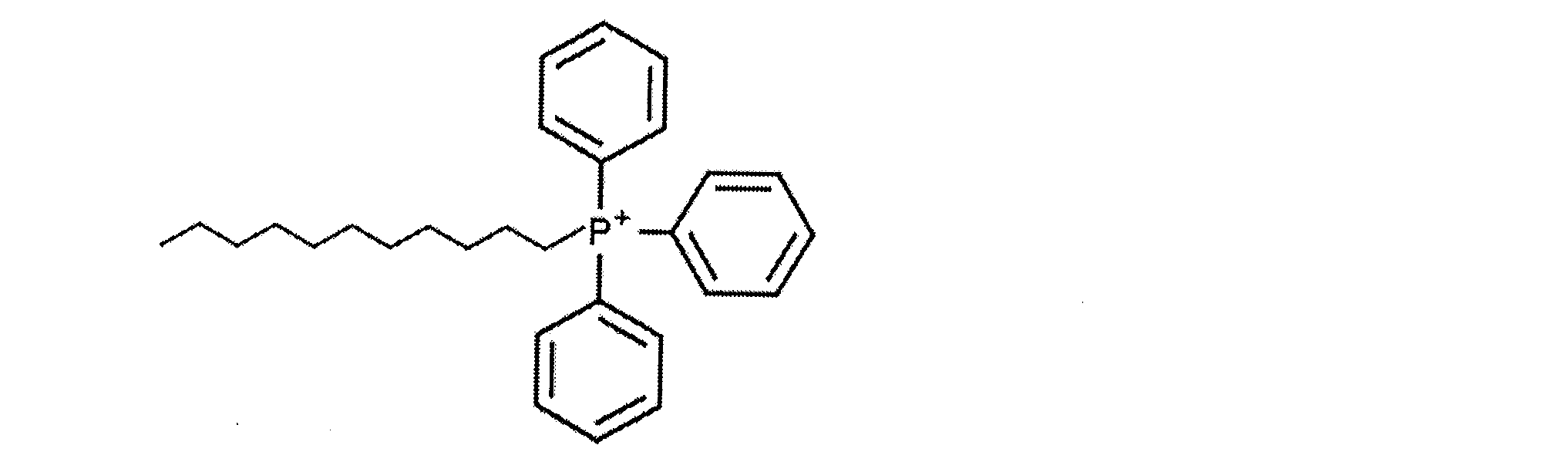
カチオンとして、d‐TPPは臭化物塩等の塩であってよい。図1は、臭化物塩としてのd‐TPP(構造A)を、2‐ブテン‐1,4‐ビス‐TPP(構造B)と比較している。確認できるように、d‐TPPは1つのTPP部分しか有さず、疎水性長鎖アルキルを有する。一方B‐TPPは、ブテンによって結合された2つのTPP部分を有する。 As a cation, d-TPP can be a salt, such as the bromide salt. Figure 1 compares d-TPP as the bromide salt (structure A) with 2-butene-1,4-bis-TPP (structure B). As can be seen, d-TPP has only one TPP moiety and has a hydrophobic long alkyl chain, whereas B-TPP has two TPP moieties linked by a butene.
d‐TPP及びb‐TPPはいずれもCSC伝播を阻害するが、d‐TPPの方がはるかに強力である。腫瘍様塊形成アッセイを、上昇する複数の濃度のd‐TPP又はb‐TPPで処置したエストロゲン受容体(Estrogen Receptor:ER)陽性MCF‐7乳癌細胞におけるCSC伝播の読み出し値として使用した。結果を、同一濃度におけるd‐TPP及びb‐TPPのCSC伝播阻害活性を比較した図2に示す。図2に示されているように、d‐TPPによる処置は、試験した濃度のうち高い方から2つの濃度(500nM及び1μM)においてCSC伝播の80%の低減をもたらしており、またわずかではあるが有意な腫瘍様塊形成の低減(20%)は、d‐TPPに関して、極めて低い濃度(50nM及び100nM)において既に観察された。b‐TPPと比較すると、d‐TPPは、腫瘍様塊形成の阻害に関して2倍以上強力であった。 Both d-TPP and b-TPP inhibit CSC propagation, but d-TPP is much more potent. A tumor formation assay was used as a readout of CSC propagation in estrogen receptor (ER)-positive MCF-7 breast cancer cells treated with increasing concentrations of d-TPP or b-TPP. The results are shown in Figure 2, which compares the CSC propagation inhibitory activity of d-TPP and b-TPP at the same concentrations. As shown in Figure 2, treatment with d-TPP resulted in an 80% reduction in CSC propagation at the two highest concentrations tested (500 nM and 1 μM), and a small but significant reduction in tumor formation (20%) was already observed at very low concentrations (50 nM and 100 nM) for d-TPP. Compared with b-TPP, d-TPP was more than twice as potent in inhibiting tumor mass formation.
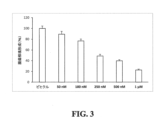
d‐TPPの阻害効果をトリプルネガティブ乳癌細胞株MDA‐MB‐231でも試験した。CSC伝播に対する同様の阻害傾向が、トリプルネガティブ乳癌細胞株MDA‐MB‐231において観察された。MDA‐MB‐231細胞に対する腫瘍様塊形成アッセイの結果を図3に示す。確認できるように、d‐TPPは、50nMという、試験した最も低い濃度において、阻害効果を示し、また1μMにおいて80%に近い同等の阻害を達成した。 The inhibitory effect of d-TPP was also tested in the triple-negative breast cancer cell line MDA-MB-231. A similar inhibitory trend on CSC proliferation was observed in the triple-negative breast cancer cell line MDA-MB-231. The results of the tumor formation assay on MDA-MB-231 cells are shown in Figure 3. As can be seen, d-TPP showed an inhibitory effect at the lowest concentration tested, 50 nM, and also achieved a comparable inhibition of close to 80% at 1 μM.
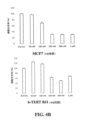
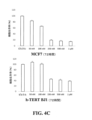
本発明者らは過去の努力により、特定のTPP誘導体が癌細胞中のミトコンドリア機能を妨害して、その代謝活性を障害し、最終的に癌細胞の生存率の低下をもたらすことができることを示した。興味深いことに、特定のTPP化合物に関するこれらの作用は、癌細胞で選択的に誘発され、正常な(即ち健康な)細胞では誘発されない。癌細胞の細胞生存率を低下させるものの正常細胞の細胞生存率は低下させないd‐TPPの能力を実証するために、MCF‐7乳癌細胞及び正常ヒト線維芽細胞(hTERT‐BJ1)の両方の生存率を、上昇する複数の濃度のd‐TPP(50nMから1μMまで)に関して、様々な期間(24時間から72時間まで)にわたって評価した。結果を図4A~4Cにまとめる。具体的には、図4Aは24時間後の結果を示し、図4Bは48時間後の結果を示し、図4Cは72時間後の結果を示す。これらのデータは、d‐TPPがMCF‐7細胞の生存率を時間依存的かつ用量依存的に低下させることを示している。高濃度の化合物(例えば250nM、500nM、1μM)は、処置のわずか24時間後において明らかであるように、およそ30%の細胞生存率の早期低下を示した。処置の72時間後には、細胞生存率の低下は、上記高濃度(250nM、500nM、1μM)において80%近くであり、低濃度(50nM、100nM)においても、わずか(30%近く)ではあるが有意な阻害作用が検出された。一方、hTERT‐BJ1細胞の細胞生存率は、比較的高いd‐TPP濃度(250nM、500nM、1μM)でしか低下せず、低濃度(50nM、100nM)は毒性を示さなかった。これらの結果は、d‐TPPを特に低濃度で使用して、正常細胞ではなく癌を選択的に標的とすることができることを実証している。 Previous efforts by the present inventors have shown that certain TPP derivatives can disrupt mitochondrial function in cancer cells, impairing their metabolic activity and ultimately resulting in reduced viability of cancer cells. Interestingly, these effects of certain TPP compounds are selectively induced in cancer cells and not in normal (i.e., healthy) cells. To demonstrate the ability of d-TPP to reduce cell viability of cancer cells but not normal cells, the viability of both MCF-7 breast cancer cells and normal human fibroblast cells (hTERT-BJ1) was evaluated for various time periods (24 to 72 hours) with increasing concentrations of d-TPP (from 50 nM to 1 μM). The results are summarized in Figures 4A-4C. Specifically, Figure 4A shows the results after 24 hours, Figure 4B shows the results after 48 hours, and Figure 4C shows the results after 72 hours. These data indicate that d-TPP reduces the viability of MCF-7 cells in a time-dependent and dose-dependent manner. High concentrations of the compound (e.g., 250 nM, 500 nM, 1 μM) showed an early decrease in cell viability of approximately 30%, as evident after only 24 hours of treatment. After 72 hours of treatment, the decrease in cell viability was nearly 80% at the above-mentioned high concentrations (250 nM, 500 nM, 1 μM), and even at lower concentrations (50 nM, 100 nM), a small (nearly 30%) but significant inhibitory effect was detected. On the other hand, cell viability of hTERT-BJ1 cells was only decreased at relatively high d-TPP concentrations (250 nM, 500 nM, 1 μM), and low concentrations (50 nM, 100 nM) showed no toxicity. These results demonstrate that d-TPP, especially at low concentrations, can be used to selectively target cancer but not normal cells.
代謝フラックス分析は、d‐TPPがATP産生を遮断し、代謝の非柔軟性の獲得に向けて解糖を活性化することを示している。一部の癌細胞は、エネルギ源をOXPHOSから解糖に切り替える能力を有する。局所的な利用可能性に応じて燃料源を柔軟にシフトする、本来備わっているものと思われるこの能力は、異常な細胞増殖、生存、及び遠隔部位での播種のための必要条件である。癌細胞のエネルギ機構のこのような柔軟性を損なうことを目的とした薬理学的及び/又は代謝的アプローチは、腫瘍の進行に悪影響を及ぼすことになる。 Metabolic flux analysis shows that d-TPP blocks ATP production and activates glycolysis toward metabolic inflexibility. Some cancer cells have the ability to switch their energy source from OXPHOS to glycolysis. This seemingly innate ability to flexibly shift fuel sources depending on local availability is a prerequisite for aberrant cell proliferation, survival, and dissemination at distant sites. Pharmacological and/or metabolic approaches aimed at compromising this flexibility of the cancer cell energy machinery will have a detrimental effect on tumor progression.
癌細胞の代謝に対するd‐TPP治療の効果を理解するために、本発明者らは、Seahorse XFe96を用いた代謝フラックス分析を実施した。図5A、5Bは、様々な濃度のd‐TPPで処置したMCF‐7細胞に関する酸素消費率(oxygen consumption rate:OCR)の結果を示す。基礎呼吸、プロトンのリーク、ATP産生関連呼吸、最大呼吸、及び予備呼吸容量について、図5Aは、OCR(pmol/分/SRB)を経時的に示し、図5Bは、OCRをビヒクルに対する倍率変化として示す。50nMのd‐TPPでの処置後、MCF‐7細胞においてOCRの劇的な低下が観察された。OCRの低下は、d‐TPP濃度が50nMから500nMへと上昇するに従って大きくなった。ミトコンドリア基礎呼吸は、およそ250nMのIC50(CSC活性を半分にするために必要な薬物と同一濃度)で減少し、同様にATPレベルも用量依存的に枯渇した。 To understand the effect of d-TPP treatment on cancer cell metabolism, we performed metabolic flux analysis using a Seahorse XFe96. Figures 5A and 5B show the results of oxygen consumption rate (OCR) for MCF-7 cells treated with various concentrations of d-TPP. Figure 5A shows OCR (pmol/min/SRB) over time and Figure 5B shows OCR as fold change relative to vehicle for basal respiration, proton leak, ATP production-related respiration, maximum respiration, and spare respiratory capacity. A dramatic decrease in OCR was observed in MCF-7 cells after treatment with 50 nM d-TPP. The decrease in OCR became greater as the d-TPP concentration increased from 50 nM to 500 nM. Basal mitochondrial respiration was reduced with an IC50 of approximately 250 nM (the same concentration of drug required to halve CSC activity), and ATP levels were similarly depleted in a dose-dependent manner.
解糖に関してははっきりと反対の傾向が観察され、d‐TPPで処置したMCF‐7細胞でのECAR(extracellular acidification rate:細胞外酸性化率)の分析によって示されるように、有意に用量依存的に増加した。ECARの結果を図6A、6Bに示す。図6Aでは、ECAR(mpH/分/SRB)が、50nM~500nMの範囲のd‐TPP濃度及び対照(ビヒクルのみ)に関して経時的に示されている。図6Bは、解糖、解糖予備、及び解糖予備能について、ECARをビヒクルに対する倍率変化として示す。確認できるように、MCF‐7細胞の解糖は、d‐TPP治療によって用量依存的に増加した。まとめると、これらのデータは、d‐TPPがミトコンドリア機能を障害した後、酸化的リン酸化からATPを生成するMCF‐7細胞の能力を損なうことを示している。このようなストレスの多い代謝環境に対処するために、癌細胞は解糖表現型へのシフトを余儀なくされる。この代謝シフトの後、癌細胞は、その高いエネルギ需要を満たすためにグルコースに強く依存する。このシナリオでは、d‐TPP治療によって誘発される抗ミトコンドリア効果は、絶対的で柔軟性のない解糖への依存に対する機能的な代謝シンクロナイザーとして作用する。 A clear opposite trend was observed for glycolysis, which was significantly increased in a dose-dependent manner as shown by analysis of ECAR (extracellular acidification rate) in MCF-7 cells treated with d-TPP. The ECAR results are shown in Figures 6A and 6B. In Figure 6A, ECAR (mpH/min/SRB) is shown over time for d-TPP concentrations ranging from 50 nM to 500 nM and control (vehicle only). Figure 6B shows ECAR as fold change relative to vehicle for glycolysis, glycolytic reserve, and glycolytic reserve capacity. As can be seen, glycolysis in MCF-7 cells was increased in a dose-dependent manner by d-TPP treatment. Taken together, these data indicate that d-TPP impairs mitochondrial function and subsequently impairs the ability of MCF-7 cells to generate ATP from oxidative phosphorylation. To cope with such a stressful metabolic environment, cancer cells are forced to shift to a glycolytic phenotype. After this metabolic shift, cancer cells become highly dependent on glucose to meet their high energy demands. In this scenario, the anti-mitochondrial effect induced by d-TPP treatment acts as a functional metabolic synchronizer for the absolute and inflexible reliance on glycolysis.
ミトコンドリアATP産生を阻害してCSCを解糖状態へとシフトさせるd‐TPPの能力は、多様な潜在的治療戦略、特に治療用の組み合わせへの扉を開くものである。例えばd‐TPPを、解糖又はOXPHOSを阻害する化合物と組み合わせることができる。このような併用療法のタイミングにより、d‐TPPの効果をまず発生させた後で解糖及び/又はOXPHOS阻害効果を発生させることができる。あるいは、d‐TPPを第2の代謝阻害剤化合物と同時投与してよい。一例として、d‐TPPとビタミンCとの組み合わせは、CSCの代謝の脆弱性を標的とする代謝「2ヒット」戦略を提供する。初めにd‐TPPがATP産生を阻害して、CSCを解糖プロファイルへとシフトさせる。次にビタミンCが解糖を阻害し、CSCを代謝の選択肢がない状態のままとする。例えば2‐デオキシ‐グルコース、ドキシサイクリン、ニクロサミド、及び塩化ベルベリンを含む他の阻害剤を、d‐TPPと併用してもよい。 d-TPP's ability to inhibit mitochondrial ATP production and shift CSCs to a glycolytic state opens the door to a variety of potential therapeutic strategies, particularly therapeutic combinations. For example, d-TPP can be combined with compounds that inhibit glycolysis or OXPHOS. The timing of such combination therapy allows the effects of d-TPP to occur first, followed by the glycolytic and/or OXPHOS inhibitory effects. Alternatively, d-TPP may be co-administered with a second metabolic inhibitor compound. As an example, the combination of d-TPP and vitamin C provides a metabolic "two-hit" strategy that targets the metabolic vulnerability of CSCs. First, d-TPP inhibits ATP production, shifting CSCs to a glycolytic profile. Then, vitamin C inhibits glycolysis, leaving CSCs without metabolic options. Other inhibitors, including, for example, 2-deoxy-glucose, doxycycline, niclosamide, and berberine chloride, may be combined with d-TPP.
この2ヒット療法アプローチの有効性を実証するために、腫瘍様塊形成アッセイと、癌のみに選択的に毒性を有するものの正常細胞に対して毒性を有しない薬物の用量である100nMの濃度のd‐TPPとを用いて、更なる評価を実施した。図7A~7Eは、様々な阻害剤化合物と組み合わせた100nMのd‐TPPに関する腫瘍様塊アッセイの結果を示す。図7A、7Bから開始して、天然解糖阻害剤であるビタミンC、及び合成解糖阻害剤である2‐デオキシ‐グルコース(2‐DG)をd‐TPPと共に含めた。図7A、7Bで確認できるように、ビタミンC及び2‐DGは、CSC活性に対するd‐TPPの阻害効果を強化できた。特にビタミンCを用いた処置は、100nMのd‐TPPと併用した場合に、250μMにおいて50%超、500μMにおいて70%超だけ、CSCの伝播を阻害した。これとは別に、ビタミンCのIC50は、MCF‐7CSCの伝播に関して1mMであった。確認できるように、d‐TPPはビタミンCに対するCSCの感受性を4倍近く上昇させた。 To demonstrate the efficacy of this two-hit therapy approach, further evaluation was performed using tumor formation assays and d-TPP at a concentration of 100 nM, a drug dose that is selectively toxic to cancer but not to normal cells. Figures 7A-7E show the results of the tumor assay for 100 nM d-TPP in combination with various inhibitor compounds. Starting with Figures 7A, 7B, vitamin C, a natural glycolysis inhibitor, and 2-deoxy-glucose (2-DG), a synthetic glycolysis inhibitor, were included along with d-TPP. As can be seen in Figures 7A, 7B, vitamin C and 2-DG were able to enhance the inhibitory effect of d-TPP on CSC activity. Notably, treatment with vitamin C inhibited CSC propagation by more than 50% at 250 μM and more than 70% at 500 μM when combined with 100 nM d-TPP. Separately, the IC50 of vitamin C was 1 mM for the propagation of MCF-7 CSCs. As can be seen, d-TPP increased the sensitivity of CSCs to vitamin C by nearly four-fold.
2‐DGの阻害活性は10mMの濃度で既に観察され、これはd‐TPP単独での阻害活性の2倍の上昇をもたらした。阻害効果は20mMにおいて更に劇的なものであり、CSC活性を略完全に抑制し、残留腫瘍様塊形成能力が10%未満となった。 The inhibitory activity of 2-DG was already observed at a concentration of 10 mM, which resulted in a two-fold increase in the inhibitory activity of d-TPP alone. The inhibitory effect was even more dramatic at 20 mM, resulting in a near-complete suppression of CSC activity and less than 10% of the residual tumor-like mass forming capacity.
次に図7C~7Eは、d‐TPPと組み合わされた、FDAに認可された2つの化合物、即ちドキシサイクリン及びニクロサミド、並びに天然化合物である塩化ベルベリンに関する結果を示す。これらの化合物はそれぞれ、OXPHOS阻害剤としての挙動を示すことが知られている。この挙動は、d‐TPP治療で弱化した癌細胞において、追加の代謝ストレッサーによって、残留するCSC集団の根絶を支援できるという理解に基づくものである。ドキシサイクリンは、ミトコンドリアの生合成及び機能を障害することが知られている。図7Cに示されているように、低用量の抗生物質ドキシサイクリン(例えば10μM)は、CSC活性に対するd‐TPPの効力を倍加するのに十分であった。この効果は、30μMのドキシサイクリンの存在下で強化された。図7Dに示されているように、OXPHOSを阻害する抗サナダムシ薬であるニクロサミドは、CSC活性に対するd‐TPPの効力を、250nMにおいて略2倍、500nMにおいて略3倍上昇させた。図7Eは、d‐TPPと組み合わされた、天然化合物でありOXPHOS阻害剤である塩化ベルベリンの結果を示す。塩化ベルベリンは、Coptidis rhizoma(Coptis chinensis Franch)及びPhellodendri cortex(Phellodendron amurense Ruprecht)から抽出される主要なアルカロイドであり、抗マラリア、抗炎症、及び抗生物活性が知られている。塩化ベルベリンの作用は1μMにおいて既に明らかであり、60%の減少をもたらした。試験した最高濃度(10μM)では、塩化ベルベリンはCSCの形成を80%超阻害し、d‐TPPの効力を略5倍に高めた。 7C-7E next show results for two FDA approved compounds, doxycycline and niclosamide, combined with d-TPP, and the natural compound berberine chloride. Each of these compounds is known to behave as an OXPHOS inhibitor. This behavior is based on the understanding that additional metabolic stressors can help eradicate the remaining CSC population in cancer cells weakened by d-TPP treatment. Doxycycline is known to impair mitochondrial biogenesis and function. As shown in FIG. 7C, a low dose of the antibiotic doxycycline (e.g., 10 μM) was sufficient to double the potency of d-TPP on CSC activity. This effect was enhanced in the presence of 30 μM doxycycline. As shown in Figure 7D, niclosamide, an anti-tapeworm drug that inhibits OXPHOS, increased the potency of d-TPP on CSC activity by approximately 2-fold at 250 nM and approximately 3-fold at 500 nM. Figure 7E shows the results of berberine chloride, a natural compound and OXPHOS inhibitor, in combination with d-TPP. Berberine chloride is the main alkaloid extracted from Coptis rhizoma (Coptis chinensis France) and Phellodendri cortex (Phellodendron amurensis Ruprecht), and is known for its antimalarial, anti-inflammatory, and antibiotic activities. The effect of berberine chloride was already evident at 1 μM, resulting in a 60% reduction. At the highest concentration tested (10 μM), berberine chloride inhibited CSC formation by more than 80%, enhancing the efficacy of d-TPP by approximately five-fold.
これらの結果は、d‐TPP等のミトコンドリア障害剤が、細胞のエネルギ機構の正常な機能を損なうことによって、CSCが代替的な燃料及び代謝経路を使用する可能性に影響を及ぼすことを実証している。この効果は、CSCの生物学及び伝播、並びに癌細胞の生存率及び増殖に対して、悪影響を及ぼす。この悪影響により、CSCは、化学療法、光線療法、放射線療法を含む他の癌療法に対して、より脆弱になる。d‐TPPで処置されたCSCは、他の化学療法剤、放射線、及び光線療法に対する感受性が高くなる。薬学的有効量のd‐TPP These results demonstrate that mitochondrial disrupting agents such as d-TPP impair the normal functioning of the cellular energy machinery, thereby affecting the ability of CSCs to use alternative fuels and metabolic pathways. This effect has a detrimental effect on the biology and propagation of CSCs, as well as on the viability and proliferation of cancer cells. This detrimental effect makes CSCs more vulnerable to other cancer therapies, including chemotherapy, phototherapy, and radiation therapy. CSCs treated with d-TPP are more sensitive to other chemotherapy agents, radiation, and phototherapy. A pharmacologic effective dose of d-TPP
xCELLigenceシステムを用いて、付着MCF‐7細胞の細胞増殖に対するd‐TPPの作用の薬物動態を分析した。xCELLigenceシステムは、大きさが細胞数に依存する電気インピーダンスを測定することによって、細胞の健康状態及び挙動のリアルタイムのラベルフリーモニタリングを評価する。リアルタイム細胞分析を、50nM、100nM、250nMの濃度のd‐TPPによる48時間及び72時間の処置に関して実施した。対照はビヒクルのみのものであった。xCELLigence分析の結果を図8A~8Dに示す。48時間のd‐TPP治療に関する結果が図8A、8Bに示されており、図8C、8Dは、72時間のd‐TPP治療に関する結果を示す。確認できるように、MCF‐7細胞に対するd‐TPPの効果は、用量依存的かつ時間依存的であり、試験した最低用量(50nMのd‐TPP)で72時間の処置後に細胞数が減少する傾向があった。より高い用量(100nM)では、主な細胞増殖抑制効果が検出された。細胞毒性は、250nMのd‐TPP濃度において存在した。 The pharmacokinetics of d-TPP action on cell proliferation of adherent MCF-7 cells was analyzed using the xCELLigence system. The xCELLigence system assesses real-time label-free monitoring of cell health and behavior by measuring electrical impedance whose magnitude is dependent on cell number. Real-time cell analysis was performed for 48 and 72 hours of treatment with d-TPP at concentrations of 50 nM, 100 nM, and 250 nM. Control was vehicle only. Results of the xCELLigence analysis are shown in Figures 8A-8D. Results for 48 hours of d-TPP treatment are shown in Figures 8A, 8B, and Figures 8C, 8D show results for 72 hours of d-TPP treatment. As can be seen, the effect of d-TPP on MCF-7 cells was dose- and time-dependent, with a trend towards decreased cell number after 72 hours of treatment at the lowest dose tested (50 nM d-TPP). At higher doses (100 nM), a major cytostatic effect was detected. Cytotoxicity was present at a d-TPP concentration of 250 nM.
効力及び毒性の両方の更なる評価を、Inovotion(ラトロンシュ、フランス)から入手可能なCAMモデルを用いて、ニワトリ胚でMDA‐MB‐231細胞株から開始されたヒト乳房腫瘍に対して実施した。このCAMアッセイは、d‐TPPが腫瘍の成長及び転移の両方を阻害することを示した。例えば25μMの濃度において、d‐TPP治療は、腫瘍成長の~40%の阻害、及び転移の~75%の阻害につながった。CAMアッセイに関して、受精卵を37.5℃、相対湿度50%で9日間インキュベートした。卵殻を通して気室内へと穿孔した小さな孔を通して、移植片を各卵に滴下し、CAMの上方の卵殻に1cm2の窓を開けた。この移植プロセスを、試験グループの卵それぞれに対して使用した。この移植プロセスは侵襲的な外科的作業であるため、腫瘍移植後数時間以内にある程度の死が発生することが予想される。本明細書で報告されるデータについては、試験グループあたり少なくとも10個の卵に対して移植が成功した。 Further evaluation of both efficacy and toxicity was performed on human breast tumors initiated from the MDA-MB-231 cell line in chicken embryos using the CAM model available from Invotion (Latronche, France). This CAM assay showed that d-TPP inhibited both tumor growth and metastasis. For example, at a concentration of 25 μM, d-TPP treatment led to ∼40% inhibition of tumor growth and ∼75% inhibition of metastasis. For the CAM assay, fertilized eggs were incubated at 37.5°C and 50% relative humidity for 9 days. The graft was dropped into each egg through a small hole drilled through the eggshell into the air chamber, and a 1 cm2 window was cut in the eggshell above the CAM. This implantation process was used for each egg in the test group. As this implantation process is an invasive surgical procedure, some mortality is expected to occur within a few hours after tumor implantation. For the data reported herein, at least 10 eggs per test group were successfully implanted.
MDA‐MB‐231腫瘍細胞株を、10%のFBS及び1%のペニシリン/ストレプトマイシンを補充したDMEM培地で培養した。9日間のインキュベーション期間の後、細胞をトリプシンで剥離し、完全培地で洗浄し、移植培地中に懸濁した。1.106個の細胞の接種物を各卵のCAMに加えた後、卵を複数の試験グループにランダムに分けた。腫瘍は移植の1日以内に検出可能であった。陰性対照グループはPBS中の0.125%のDMSOであり、6.25μM、25.0mM、62.5mMの濃度のd‐TPPグループを評価した。グループ内の卵それぞれに対して1日あたり8回処置した。処置の8日後、腫瘍成長を定量的に評価した。(腫瘍を有する)CAMの上部を取り出してPBS緩衝液で洗浄した後、48時間の固定のためにPFA中に直接移した。次に腫瘍を正常なCAM組織から注意深く切り離し、重量を測定した。腫瘍重量(mg)の平均値を図9に示す。この鶏卵の評価に関連する全ての定量的データについて、(各グループ間の事後検定を含む)一元配置分散分析を、専用のコンピュータソフトウェアであるPrism(登録商標)(GraphPad Software)を用いて実施した。全ての分析について、グループ間の統計的差異は、以下の意味を有するアスタリスクの存在によってグラフ上で可視化されている:アスタリスクなしはp>0.05を意味し;*は0.5≧p>0.01を意味し;**は0.01≧p>0.001を意味し;***は0.001≧pを意味する。図9で確認できるように、d‐TPPは、陰性対照と比較して、中程度の用量(25.0μM)及び高用量(62.5μM)において腫瘍成長を有意に阻害した。上述の評価と一致するように、d‐TPPの腫瘍成長阻害効果は用量依存的であった。 MDA-MB-231 tumor cell line was cultured in DMEM medium supplemented with 10% FBS and 1% penicillin/streptomycin. After a 9-day incubation period, cells were detached with trypsin, washed with complete medium, and suspended in transplantation medium. An inoculum of 1.106 cells was added to the CAM of each egg, and then the eggs were randomly divided into test groups. Tumors were detectable within one day of transplantation. The negative control group was 0.125% DMSO in PBS, and d-TPP groups at concentrations of 6.25 μM, 25.0 mM, and 62.5 mM were evaluated. Each egg in the group was treated eight times per day. After 8 days of treatment, tumor growth was quantitatively evaluated. The top part of the CAM (with tumor) was removed and washed with PBS buffer, and then directly transferred into PFA for fixation for 48 hours. The tumor was then carefully dissected from the normal CAM tissue and weighed. The mean tumor weights (mg) are shown in Figure 9. For all quantitative data related to the evaluation of the chicken eggs, one-way analysis of variance (including post-hoc tests between each group) was performed using the dedicated computer software Prism® (GraphPad Software). For all analyses, statistical differences between groups are visualized on the graphs by the presence of asterisks with the following meanings: no asterisk means p>0.05; * means 0.5>p>0.01; ** means 0.01>p>0.001; *** means 0.001>p. As can be seen in Figure 9, d-TPP significantly inhibited tumor growth at medium doses (25.0 μM) and high doses (62.5 μM) compared to the negative control. Consistent with the above evaluation, the tumor growth inhibitory effect of d-TPP was dose-dependent.
転移性浸潤も定量的に評価した。下部CAMの1cm2の部分を回収して、グループあたり8個の試料(n=8)において、転移細胞数を評価した。市販のキットを用いてゲノムDNAを抽出し、ヒトAlu配列に特異的なプライマを用いるqPCRによって分析した。各試料に関するCq、平均Cq、及び各グループに関する転移の相対量の計算は、Bio‐Rad(登録商標)CFX Maestroソフトウェアで直接管理した。Real‐Time PCR Data Markup Language(RDML)データ標準(http://www.rdml.org)によると、Cqは、増幅曲線の曲率が最大となるサイクル(フラクショナルPCRサイクル)として定義される。Cqは、qPCR曲線が直線である指数関数的増幅期で取得される。qPCRの基本的な結果は以下の通りである:Cq値が低いほど、標的遺伝子の初期複製数が多い。PCR効率が100%である場合、2つの反応の間での1サイクルの差異は、Cq値が高い方の反応に比べて、Cq値が低い方の反応の遺伝子の複製が2倍多いことを意味する。図10は、下部CAMにおけるAlu配列に関するqPCRで測定された転移性浸潤の結果を示す。陰性対照と比較して、中程度の用量のd‐TPPでの処置後に、転移の退行を確認できる。高用量で処置したグループに関しては、統計的評価は、グループ内で生存している3個の試料のみを用いて実施され、これは統計分析に影響を及ぼした。 Metastatic invasion was also quantitatively evaluated. A 1 cm2 section of the lower CAM was collected to evaluate the number of metastatic cells in 8 samples (n=8) per group. Genomic DNA was extracted using a commercially available kit and analyzed by qPCR using primers specific for human Alu sequences. Calculation of Cq for each sample, mean Cq, and relative amount of metastasis for each group were managed directly in Bio-Rad® CFX Maestro software. According to the Real-Time PCR Data Markup Language (RDML) data standard (http://www.rdml.org), Cq is defined as the cycle at which the curvature of the amplification curve is maximum (fractional PCR cycle). Cq is obtained in the exponential amplification phase, where the qPCR curve is linear. The basic result of qPCR is as follows: the lower the Cq value, the higher the initial number of copies of the target gene. If the PCR efficiency is 100%, a difference of one cycle between two reactions means that the reaction with the lower Cq value has two times more copies of the gene than the reaction with the higher Cq value. Figure 10 shows the results of metastatic invasion measured by qPCR for Alu sequences in the lower CAM. Regression of metastasis can be confirmed after treatment with medium doses of d-TPP compared to the negative control. For the high dose treatment group, statistical evaluation was performed using only three surviving samples in the group, which affected the statistical analysis.
d‐TPP処置の胚の耐容性も定量的に評価した。移植後及び処置中に、胚の生存率を毎日検査した。死亡した胚の数も最終日に計数して、処置によって誘発された胚毒性を評価した。図11は、本明細書に記載の各グループにおける、生存している胚と死亡した胚とのパーセンテージを示し、図12は、(移植日から回収日までの)生存率を示すカプランマイヤー曲線である。d‐TPPが中程度の用量及び低用量において毒性を示さなかったことを確認できる(ただし予想された通り、陰性対照において多少の死亡は発生した)。しかしながら、用量が高いほど死亡は多くなった。投薬レジメンの確立のためには毒性の分析が必要であることは、当該技術分野の通常の技能を有する者には理解されるはずである。しかしながら、上記結果は、d‐TPPの腫瘍成長阻害及び転移阻害効果が、毒性閾値をはるかに下回る濃度においても存在することを実証している。 Embryonic tolerance of d-TPP treatment was also quantitatively evaluated. Embryonic viability was examined daily after implantation and during treatment. The number of dead embryos was also counted on the final day to evaluate embryonic toxicity induced by the treatment. Figure 11 shows the percentage of live and dead embryos in each group described herein, and Figure 12 shows the Kaplan-Meier curves showing survival rates (from implantation to harvest). It can be seen that d-TPP did not show toxicity at medium and low doses (although some mortality occurred in the negative control, as expected). However, higher doses caused more mortality. It should be understood by those of ordinary skill in the art that toxicity analysis is necessary to establish a dosing regimen. However, the above results demonstrate that the tumor growth inhibition and metastasis inhibition effects of d-TPP are present even at concentrations well below the toxicity threshold.
ここで提示されているデータは、代謝「2ヒット」アプローチの使用を更に検証するものであり、上記アプローチは、癌の代謝を操作して、CSCの代謝の柔軟性を、より効率的なCSC抑制を可能とするために使用される絶対的な代謝の非柔軟性へと変化させるものである。このような代謝シフトの安全な推進因子として作用するd‐TPPの潜在能力は、癌の生物学及びエネルギ学におけるこの化合物の役割を更に調査するための道を開くものであるが、従来の化学療法に対する付加物としての、他の代謝阻害剤と組み合わせてのTPP系化合物の使用をサポートするためには、更なる研究が必要である。約9~約18個の炭素を含む飽和直鎖型アルキル鎖を有する他のA‐TPP化合物についても同様の効果が予想されることを理解されたい。 The data presented here further validate the use of a metabolic "two-hit" approach to engineer cancer metabolism to change the metabolic flexibility of CSCs to absolute metabolic inflexibility that can be used to enable more efficient CSC inhibition. The potential of d-TPP to act as a safe driver of such metabolic shifts paves the way for further investigation of the role of this compound in cancer biology and energetics, but further studies are required to support the use of TPP-based compounds in combination with other metabolic inhibitors as an adjunct to conventional chemotherapy. It is understood that similar effects are expected for other d-TPP compounds with saturated linear alkyl chains containing from about 9 to about 18 carbons.
活性化合物として、約9~約18個の炭素を含む飽和直鎖型アルキル鎖を有するA‐TPP化合物、例えばd‐TPPは、CSC及び循環腫瘍細胞を含む癌細胞を標的とすることによって、癌を治療及び根絶し、腫瘍再発を防止するか又はその可能性を低減し、転移を防止するか又はその可能性を低減するための、治療剤として使用できる。またd‐TPPは、癌細胞を解糖状態へとシフトさせ、化学療法、放射線療法、及び光線療法に対して癌細胞を感作し、ドキシサイクリン等の他の医薬品に対する癌細胞の耐性を低減するための、活性化合物として使用できる。 A-TPP compounds having a saturated linear alkyl chain containing about 9 to about 18 carbons as an active compound, such as d-TPP, can be used as therapeutic agents to treat and eradicate cancer, prevent or reduce the likelihood of tumor recurrence, and prevent or reduce the likelihood of metastasis by targeting cancer cells, including CSCs and circulating tumor cells. d-TPP can also be used as an active compound to shift cancer cells to a glycolytic state, sensitize cancer cells to chemotherapy, radiation therapy, and phototherapy, and reduce resistance of cancer cells to other pharmaceutical agents such as doxycycline.
活性化合物に関して、実証的な第2の阻害剤化合物は当該技術分野において様々な形態で入手可能である。d‐TPP等のA‐TPP化合物の場合、上記活性化合物は固体又は液体として経口投与できる。いくつかの実施形態では、d‐TPPは、溶液、懸濁液、又はエマルジョンとして、筋肉内投与、静脈内投与、又は吸入投与できる。いくつかの実施形態では、d‐TPP(疑いを避けるために明記するが、その塩を含む)は、リポソーム懸濁液として、吸入投与、静脈内投与、又は筋肉内投与できる。吸入によって投与される場合、活性化合物又はその塩は、例えば約0.001、0.01、0.1、又は0.5マイクロメートル~約5、10、20マイクロメートル又はそれ以上、また任意に約1~約2マイクロメートルであるいずれの望ましい粒径を有する、複数の固体粒子又は液滴の形態とすることができる。投与の特定の形態は変化する場合があること、並びに本開示の範囲外のパラメーター(例えば製造、輸送、保管、貯蔵寿命等)が、d‐TPPの一般的な形態及び濃度の決定因子となる場合があることを理解されたい。 With respect to the active compound, the empirical second inhibitor compound is available in various forms in the art. In the case of A-TPP compounds such as d-TPP, the active compound can be administered orally as a solid or liquid. In some embodiments, d-TPP can be administered intramuscularly, intravenously, or by inhalation as a solution, suspension, or emulsion. In some embodiments, d-TPP (including, for the avoidance of doubt, salts thereof) can be administered intramuscularly, intravenously, or by inhalation as a liposomal suspension. When administered by inhalation, the active compound or a salt thereof can be in the form of a plurality of solid particles or liquid droplets having any desired particle size, for example, from about 0.001, 0.01, 0.1, or 0.5 micrometers to about 5, 10, 20 micrometers or more, and optionally from about 1 to about 2 micrometers. It is understood that the specific form of administration may vary, and that parameters outside the scope of this disclosure (e.g., manufacturing, shipping, storage, shelf life, etc.) may be determinants of the general form and concentration of d-TPP.
本発明のアプローチの医薬組成物は、活性化合物としてのd‐TPP(その塩を含む)を、いずれの薬学的に許容可能なキャリア中に含む。溶液が望ましい場合、水は、水溶性化合物又はその塩にとって選択されるキャリアとなり得る。水溶性に関しては、グリセロール、プロピレングリコール、ポリエチレングリコール、又はこれらの混合物といった有機ビヒクルが好適となり得る。更に、水溶性を向上させる方法を、本発明のアプローチから逸脱することなく使用できる。後者の場合、有機ビヒクルは相当な量の水を含むことができる。そしていずれの場合においても、溶液を、当該技術分野で公知の好適な手段、例えば0.22マイクロメートルのフィルタを通したろ過によって、滅菌できる。滅菌後、溶液を、脱パイロジェンガラスバイアル等の適切な容器に分注できる。この分注は任意に無菌的な方法で実施される。その後、滅菌された閉鎖器具をバイアル上に配置でき、また必要に応じてバイアルの内容物を凍結乾燥できる。解糖阻害剤又はOXPHOS阻害剤等の第2の阻害剤化合物を含む実施形態は、当該技術分野で利用可能な上記第2の阻害剤の形態を同時投与できる。本発明のアプローチは、特に明記されていない限り、ある特定の投与形態に限定されることを意図したものではない。 The pharmaceutical composition of the present approach includes d-TPP (including its salts) as the active compound in any pharma- ceutically acceptable carrier. If a solution is desired, water can be the carrier of choice for the water-soluble compound or its salt. For water solubility, organic vehicles such as glycerol, propylene glycol, polyethylene glycol, or mixtures thereof can be preferred. Additionally, methods to improve water solubility can be used without departing from the present approach. In the latter case, the organic vehicle can include a significant amount of water. And in either case, the solution can be sterilized by suitable means known in the art, for example, filtration through a 0.22 micrometer filter. After sterilization, the solution can be dispensed into suitable containers, such as depyrogenated glass vials. This dispensing is optionally performed in an aseptic manner. A sterile closure can then be placed over the vial, and the contents of the vial can be lyophilized, if desired. Embodiments that include a second inhibitor compound, such as a glycolysis inhibitor or an OXPHOS inhibitor, can be co-administered with a form of said second inhibitor available in the art. The approach of the present invention is not intended to be limited to any particular form of administration unless specifically stated.
1つ以上の活性化合物に加えて、本発明のアプローチの医薬製剤は、当該技術分野で公知の他の添加剤を含有できる。例えばいくつかの実施形態は、酸(例えば塩酸)及び塩基又は緩衝液(例えば酢酸ナトリウム、ホウ酸ナトリウム、クエン酸ナトリウム、グルコン酸ナトリウム、乳酸ナトリウム、リン酸ナトリウム)といった、pH調整剤を含んでよい。いくつかの実施形態は、メチルパラベン、プロピルパラベン、ベンジルアルコールといった抗菌防腐剤を含んでよい。抗菌防腐剤は多くの場合、製剤を複数回投与用に設計されたバイアルに入れるときに含まれる。本明細書に記載の医薬製剤は、当該技術分野で公知の技法を用いて凍結乾燥できる。 In addition to one or more active compounds, pharmaceutical formulations of the present approach can contain other additives known in the art. For example, some embodiments may include pH adjusters, such as acids (e.g., hydrochloric acid) and bases or buffers (e.g., sodium acetate, sodium borate, sodium citrate, sodium gluconate, sodium lactate, sodium phosphate). Some embodiments may include antimicrobial preservatives, such as methylparaben, propylparaben, and benzyl alcohol. Antimicrobial preservatives are often included when the formulation is placed in a vial designed for multiple dose administration. The pharmaceutical formulations described herein can be lyophilized using techniques known in the art.
活性化合物の経口投与を伴う実施形態では、医薬組成物は、カプセル、錠剤、丸剤、粉剤、溶液、懸濁液等の形態を取ることができる。クエン酸ナトリウム、炭酸カルシウム、リン酸カルシウム等の様々な賦形剤を含む錠剤は、ポリビニルピロリドン、スクロース、ゼラチン、アカシアといった結合剤と合わせた、デンプン(例えばジャガイモ又はタピオカデンプン)及び特定の複合ケイ酸塩といった様々な崩壊剤と共に使用できる。更に、ステアリン酸マグネシウム、ラウリル硫酸ナトリウム、タルクといった潤滑剤を、打錠を目的として含めてよい。同様のタイプの固体組成物を、軟質及び硬質充填ゼラチンカプセル中の充填剤として利用してよい。これに関連する材料には、乳糖、及び高分子量ポリエチレングリコールも含まれる。水性懸濁液及び/又はエリキシルが経口投与に望ましい場合、本開示の主題の化合物を、様々な甘味剤、香味剤、着色剤、乳化剤、及び/又は懸濁剤、並びに水、エタノール、プロピレングリコール、グリセリン、及びこれらの様々な同様の組み合わせといった希釈剤と、組み合わせることができる。d‐TPPを第2の阻害剤化合物と共に含む実施形態では、第2の阻害剤化合物は、d‐TPP化合物の形態に限定されることなく、別個の形態で投与できる。 In embodiments involving oral administration of the active compound, the pharmaceutical compositions may take the form of capsules, tablets, pills, powders, solutions, suspensions, and the like. Tablets containing various excipients such as sodium citrate, calcium carbonate, calcium phosphate, and the like may be used with various disintegrants such as starch (e.g., potato or tapioca starch) and certain complex silicates, in conjunction with binders such as polyvinylpyrrolidone, sucrose, gelatin, and acacia. Additionally, lubricants such as magnesium stearate, sodium lauryl sulfate, and talc may be included for tableting purposes. Solid compositions of a similar type may be utilized as fillers in soft and hard-filled gelatin capsules. Related materials include lactose and high molecular weight polyethylene glycols. When aqueous suspensions and/or elixirs are desired for oral administration, the compounds of the subject matter of the present disclosure may be combined with various sweeteners, flavorings, colorings, emulsifying agents, and/or suspending agents, as well as diluents such as water, ethanol, propylene glycol, glycerin, and various similar combinations thereof. In embodiments that include d-TPP together with a second inhibitor compound, the second inhibitor compound can be administered in a separate form, without being limited to the form of a d-TPP compound.
本明細書中で提供される更なる実施形態としては、本明細書中で開示されている活性化合物のリポソーム製剤が挙げられる。リポソーム懸濁液を形成するための技術は、当該技術分野で公知である。化合物が水溶性の塩である場合、従来のリポソーム技術を用いて、これを脂質小胞に組み込むことができる。このような場合、活性化合物の水溶性により、活性化合物を、リポソームの親水性の中心又はコアに実質的に納めることができる。利用される脂質層は、いずれの従来の組成のものとすることができ、またコレステロールを含むことも、コレステロールを含まないものとすることもできる。関心対象の活性化合物が非水溶性である場合、ここでも従来のリポソーム形成技術を利用して、塩を、リポソームの構造を形成する疎水性脂質二重層の中に実質的に納めることができる。いずれの場合においても、製造されるリポソームは、標準的な超音波処理及び均質化技法を使用した場合と同様に、サイズを小さくすることができる。本明細書中で開示されている活性化合物を含むリポソーム製剤を凍結乾燥して凍結乾燥物を製造でき、これを、水等の薬学的に許容可能なキャリアで再構成して、リポソーム懸濁液を再生成できる。 Further embodiments provided herein include liposomal formulations of the active compounds disclosed herein. Techniques for forming liposomal suspensions are known in the art. If the compound is a water-soluble salt, it can be incorporated into lipid vesicles using conventional liposome technology. In such cases, the water solubility of the active compound allows the active compound to be substantially encased in the hydrophilic center or core of the liposome. The lipid layer utilized can be of any conventional composition and can include or not include cholesterol. If the active compound of interest is water-insoluble, again conventional liposome formation techniques can be utilized to substantially encase the salt within the hydrophobic lipid bilayer that forms the structure of the liposome. In either case, the liposomes produced can be reduced in size, as with standard sonication and homogenization techniques. The liposomal formulations containing the active compounds disclosed herein can be lyophilized to produce a lyophilizate, which can be reconstituted with a pharma-ceutically acceptable carrier, such as water, to regenerate the liposomal suspension.
医薬組成物に関して、本明細書に記載の活性化合物の薬学的有効量は、医療従事者によって決定され、また患者の状態、サイズ及び年齢、並びに送達経路に左右される。ある比限定的な実施形態では、約0.1~約200mg/kgの投薬量が治療的効力を有し、この重量比は、塩が使用される場合を含む活性化合物の重量の、被験者の体重に対する比である。いくつかの実施形態では、投薬量は、最高約1~5、10、20、30、又は40μMの活性化合物の血清濃度を提供するために必要な、活性化合物の量とすることができる。いくつかの実施形態では約1mg/kg~約10mg/kg、またいくつかの実施形態では約10mg/kg~約50mg/kgの投薬量を、経口投与のために使用できる。典型的には、約0.5mg/kg~5mg/kgの投薬量を、筋肉内注射のために使用できる。いくつかの実施形態では、投薬量は、静脈内又は経口投与に関して、約1μmol/kg~約50μmol/kg、又は任意に約22μmol/kg~約33μmol/kgの化合物とすることができる。経口剤形は、例えば錠剤又は他の固体剤形あたり5mg~50、100、200、又は500mgを含む、いずれの適切な量の活性材料を含むことができる。 For pharmaceutical compositions, the pharma- ceutical effective amount of the active compounds described herein is determined by a medical professional and depends on the condition, size and age of the patient, and the route of delivery. In certain non-limiting embodiments, a dosage of about 0.1 to about 200 mg/kg has therapeutic efficacy, the weight ratio being the ratio of the weight of the active compound to the subject's body weight, including when a salt is used. In some embodiments, the dosage can be the amount of active compound necessary to provide a serum concentration of the active compound of up to about 1 to 5, 10, 20, 30, or 40 μM. In some embodiments, dosages of about 1 mg/kg to about 10 mg/kg, and in some embodiments, about 10 mg/kg to about 50 mg/kg can be used for oral administration. Typically, dosages of about 0.5 mg/kg to 5 mg/kg can be used for intramuscular injection. In some embodiments, dosages can be from about 1 μmol/kg to about 50 μmol/kg, or optionally from about 22 μmol/kg to about 33 μmol/kg of the compound for intravenous or oral administration. Oral dosage forms can contain any suitable amount of active ingredient, including, for example, 5 mg to 50, 100, 200, or 500 mg per tablet or other solid dosage form.
以下のいくつかの段落では、上述の実験及びデータ生成に使用される材料及び方法を記載する。d‐TPP臭化物塩、ドキシサイクリン、アスコルビン酸、2‐デオキシ‐D‐グルコース(2‐DG)、塩化ベルベリン、ニクロサミドは、Sigma Aldrichから供給された。細胞培養培地に溶解されるアスコルビン酸及び2‐デオキシ‐D‐グルコース(2‐DG)を除いて、全ての化合物をDMSOに溶解した。 The following few paragraphs describe the materials and methods used in the above experiments and data generation. d-TPP bromide salt, doxycycline, ascorbic acid, 2-deoxy-D-glucose (2-DG), berberine chloride, and niclosamide were supplied by Sigma Aldrich. All compounds were dissolved in DMSO, except for ascorbic acid and 2-deoxy-D-glucose (2-DG), which were dissolved in cell culture medium.
本明細書中で参照される細胞培養物に関して、MCF7及びMDA‐MB‐231乳癌細胞はATCCから得られた。ヒト不死化線維芽細胞(hTERT‐BJ1)は、Clontech, Inc.から供給された。細胞を、37℃の、5%CO2を含む加湿雰囲気下で、10%のFBS(fetal bovine serum:ウシ胎児血清)、2mMのGlutaMAX、及び1%Pen‐Strepを補充したダルベッコ改変イーグル培地(Dulbecco’s modified Eagle’s medium:DMEM)中で培養した。 For cell cultures referenced herein, MCF7 and MDA-MB-231 breast cancer cells were obtained from ATCC. Human immortalized fibroblasts (hTERT-BJ1) were supplied by Clontech, Inc. Cells were cultured in Dulbecco's modified Eagle's medium (DMEM) supplemented with 10% FBS (fetal bovine serum), 2 mM GlutaMAX, and 1% Pen-Strep at 37° C. in a humidified atmosphere containing 5% CO2 .
腫瘍様塊アッセイを以下のように実施した。MCF‐7又はMDA‐MB‐231細胞の単一細胞懸濁液を、酵素分解(1×トリプシンEDTA、Sigma Aldrich)、及び手動分解(25ゲージ針)を用いて調製した。次に細胞を、処理の存在下で、(2‐ヒドロキシエチルメタクリレート)(ポリHEMA、Sigma Aldrich)でコーティングされた培養皿中の、非付着条件下の腫瘍様塊培地(DMEM‐F12/B27/20‐ng/ml EGF/PenStrep)に、500細胞/cm2の密度で播種した。細胞を5日間成長させ、加湿インキュベータ内で、37℃、大気圧、5%(v/v)二酸化炭素/空気に維持した。5日間の培養後、50μm超の球体を、接眼レンズの目盛りを用いて計数し、球体を形成した播種された細胞のパーセンテージを計算した。これをパーセンテージ腫瘍様塊形成と呼ぶ。腫瘍様塊アッセイは三重に実施され、これを独立して3回繰り返した。 The tumorigenesis assay was performed as follows: Single cell suspensions of MCF-7 or MDA-MB-231 cells were prepared using enzymatic dissociation (1x trypsin EDTA, Sigma Aldrich) and manual dissociation (25 gauge needle). Cells were then seeded at a density of 500 cells/cm2 in tumorigenesis medium (DMEM-F12/B27/20-ng/ml EGF/PenStrep) under non-adherent conditions in culture dishes coated with ( 2 -hydroxyethyl methacrylate) (polyHEMA, Sigma Aldrich) in the presence of treatment. Cells were grown for 5 days and maintained at 37°C, atmospheric pressure, 5% (v/v) carbon dioxide/air in a humidified incubator. After 5 days of culture, spheres >50 μm were counted using an eyepiece graticule and the percentage of seeded cells that formed spheres was calculated. This is referred to as percentage tumor formation. The tumor assay was performed in triplicate and repeated three independent times.
代謝フラックス分析のための細胞外酸性化率(ECAR)及びリアルタイム酸素消費率(OCR)アッセイを、Seahorse Extracellular Flux(XFe‐96)アナライザ(Seahorse Bioscience)を用いて実施した。簡潔に述べると、ウェル1個あたり15,000個のMCF‐7細胞を、XFe‐96ウェル細胞培養プレートに播種し、一晩インキュベートして付着させた。続いて細胞を24時間にわたって、上昇する複数の濃度のd‐TPP(50nM÷500nM)で処置した。ビヒクルのみ(DMSO)の対照細胞を並行して処理した。次に細胞を、予熱したXFアッセイ培地(又はOCR測定については、10mMのグルコース、1mMのピルビン酸塩、2mMのL‐グルタミンを補充して、pHを7.4に調整したXFアッセイ培地))で洗浄した。そして細胞を、1時間にわたって、非CO2インキュベータ内で、37℃のXFアッセイ175μL/ウェル中に維持した。インキュベーション時間の間、80mMのグルコースを5μL、オリゴマイシンを9μM、及び(ECAR測定については)1Mの2‐デオキシグルコース、又は(OCR測定については)10μMのオリゴマイシン、9μMのFCCP、10μMのロテノン、10μMのアンチマイシンAを、XFアッセイ培地に入れて、XFe‐96センサカートリッジの注入ポートに装入した。タンパク質含有量で測定値を正規化した後、データセットをXFe‐96ソフトウェアで分析した(SRB)。全ての実験は独立して3回繰り返された。 Extracellular acidification rate (ECAR) and real-time oxygen consumption rate (OCR) assays for metabolic flux analysis were performed using a Seahorse Extracellular Flux (XFe-96) analyzer (Seahorse Bioscience). Briefly, 15,000 MCF-7 cells per well were seeded in XFe-96 well cell culture plates and incubated overnight to allow attachment. Cells were then treated with increasing concentrations of d-TPP (50 nM÷500 nM) for 24 hours. Vehicle only (DMSO) control cells were treated in parallel. Cells were then washed with pre-warmed XF assay medium (or for OCR measurements, XF assay medium supplemented with 10 mM glucose, 1 mM pyruvate, 2 mM L-glutamine, and pH adjusted to 7.4). The cells were then maintained in 175 μL/well of XF assay at 37° C. in a non-CO 2 incubator for 1 hour. During the incubation period, 5 μL of 80 mM glucose, 9 μM oligomycin, and 1 M 2-deoxyglucose (for ECAR measurements) or 10 μM oligomycin, 9 μM FCCP, 10 μM rotenone, 10 μM antimycin A (for OCR measurements) were loaded into the injection port of the XFe-96 sensor cartridge in XF assay medium. After normalizing the measurements by protein content, the data sets were analyzed with the XFe-96 software (SRB). All experiments were independently repeated three times.
細胞タンパク質含有量の測定値に基づいて、MCF‐7及びhTERT‐BJ1細胞において細胞生存率をスルホローダミンB(sulforhodamine B:SRB)アッセイで評価した。24、48、又は72時間にわたるd‐TPP(50nM÷1μM)での処置後、細胞を低温室内において、10%のトリクロロ酢酸(trichloroacetic acid:TCA)で1時間にわたって固定し、室温で一晩乾燥させた。次に細胞をSRBと共に15分間インキュベートし、1%の酢酸で2回洗浄し、少なくとも1時間にわたって風乾した。最後にタンパク質結合色素を10mMのTris pH8.8溶液に溶解し、プレートリーダーを用いて540nmで読み取った。 Based on the measurements of cellular protein content, cell viability was assessed in MCF-7 and hTERT-BJ1 cells by sulforhodamine B (SRB) assay. After treatment with d-TPP (50 nM ÷ 1 μM) for 24, 48, or 72 h, cells were fixed with 10% trichloroacetic acid (TCA) for 1 h in a cold room and dried overnight at room temperature. Cells were then incubated with SRB for 15 min, washed twice with 1% acetic acid, and air-dried for at least 1 h. Finally, the protein-binding dye was dissolved in 10 mM Tris pH 8.8 solution and read at 540 nm using a plate reader.
xCELLigenceリアルタイム細胞分析(real‐time cell analysis:RTCA)システムは、ACEA Biosciences Inc.から供給された。xCELLigence RTCAシステムは、細胞指数(Cell Index:CI)値として表現される電気インピーダンスを測定することによる付着細胞の生物学的状態のリアルタイムモニタリングのための有用なアプローチを提供する。5000個のMCF‐7細胞を16ウェルプレート(Eプレート)に播種した。播種の24時間後、細胞を、ビヒクル、又は上昇する複数の濃度のd‐TPP(50nM~250nM)で、更に48時間又は72時間にわたって処置した。RTCAは、細胞によって誘発された電気インピーダンスの値を測定することによって実施され、上記値は、96時間にわたって15分毎に自動的に記録された。このアプローチにより、細胞応答の開始及び動態の定量化が可能になる。実験は、各条件について四重の試料を用いて、独立して3回繰り返された。 The xCELLigence real-time cell analysis (RTCA) system was supplied by ACEA Biosciences Inc. The xCELLigence RTCA system provides a useful approach for real-time monitoring of the biological state of adherent cells by measuring electrical impedance expressed as a Cell Index (CI) value. Five thousand MCF-7 cells were seeded in 16-well plates (E-plates). 24 hours after seeding, the cells were treated with vehicle or increasing concentrations of d-TPP (50 nM-250 nM) for an additional 48 or 72 hours. RTCA was performed by measuring the values of electrical impedance induced by the cells, which were automatically recorded every 15 minutes for 96 hours. This approach allows quantification of the initiation and kinetics of the cellular response. The experiment was repeated three times independently, with quadruplicate samples for each condition.
特に明記されていない限り、本明細書中で開示されているデータは、実験1回につき3回以上の技術的複製を伴う3回以上の独立した実験にわたって得られる、平均±平均の標準誤差(SEM)として表される。t検定を用いて統計的有意性を測定した。p≦0.05を有意とみなした。 Unless otherwise stated, data disclosed herein are expressed as the mean ± standard error of the mean (SEM) obtained across three or more independent experiments with three or more technical replicates per experiment. Statistical significance was measured using t-tests. p ≤ 0.05 was considered significant.
本発明のアプローチの実施形態の以上の説明において使用される用語法は、単に特定の実施形態の説明のみを目的としたものであり、限定を意図したものではない。本記載及び添付の特許請求の範囲で使用される場合、単数形「ある(a、an)」及び「上記、前記(the)」は、文脈からそうでないことが明示される場合を除いて、複数形も同様に含むことを意図している。本発明のアプローチは、以下の「発明を実施するための形態」の考察から明らかとなるように、多数の代替例、修正例、及び同等物を包含する。 The terminology used in the above description of the embodiments of the inventive approach is for the purpose of describing particular embodiments only and is not intended to be limiting. As used in this description and the appended claims, the singular forms "a," "an," and "the" are intended to include the plural forms as well, unless the context clearly indicates otherwise. The inventive approach encompasses numerous alternatives, modifications, and equivalents, as will become apparent from consideration of the following Detailed Description.
用語「第1の(first)」、「第2の(second)」、「第3の(third)」、「a)」、「b)」、「c)」等は、本明細書中では、本発明のアプローチの様々な要素を説明するために使用される場合があり、特許請求の範囲はこれらの用語によって限定されるものではないことが理解されるだろう。これらの用語は、本発明のアプローチのある要素を別の要素と区別するためだけに使用される。従って、以下で説明される第1の要素(first element)は、本発明のアプローチの教示から逸脱することなく、ある要素の態様(an element aspect)と呼ぶこともでき、また同様に第3の要素と呼ぶことも可能である。従って用語「第1の」、「第2の」、「第3の」、「a)」、「b)」、「c)」等は、関連付けられている要素に対して、順序又は他の階層関係を与えることを意図したものではなく、単に識別を目的として使用されている。操作(又はステップ)の順序は、特許請求の範囲で提示される順番に限定されない。 It will be understood that the terms "first", "second", "third", "a)", "b)", "c)" and the like may be used herein to describe various elements of the inventive approach, and that the claims are not limited by these terms. These terms are used only to distinguish one element of the inventive approach from another. Thus, a first element described below could be referred to as an element aspect, and similarly, as a third element, without departing from the teachings of the inventive approach. Thus, the terms "first", "second", "third", "a)", "b)", "c)" and the like are not intended to impose any order or other hierarchical relationship to the associated elements, but are used merely for identification purposes. The order of operations (or steps) is not limited to the order presented in the claims.
特に定義されていない限り、本明細書中で使用される(技術用語及び科学用語を含む)全ての用語は、当業者が一般に理解する意味と同一の意味を有する。更に、一般に使用される辞書で定義されているような用語は、本出願及び関連分野の文脈における上記用語の意味と一致する意味を有するものとして解釈されるものとし、本明細書中で明白に定義されていない限り、理想的な意味又は過度に形式的な意味で解釈してはならないことが理解されるだろう。本明細書中で言及される全ての刊行物、特許出願、特許、及び他の参考文献は、参照によりその全体が本出願に援用される。用語法に矛盾が生じた場合、本明細書が支配的なものとなる。 Unless otherwise defined, all terms (including technical and scientific terms) used herein have the same meaning as commonly understood by one of ordinary skill in the art. Furthermore, it will be understood that terms as defined in commonly used dictionaries shall be interpreted as having a meaning consistent with the meaning of said terms in the context of this application and related art, and should not be interpreted in an idealized or overly formal sense unless expressly defined herein. All publications, patent applications, patents, and other references mentioned herein are incorporated by reference in their entirety into this application. In the event of a conflict in terminology, the present specification shall control.
また、本明細書中で使用される場合、「及び/又は(and/or)」は、関連して列挙された項目のうちの1つ以上の、いずれのあらゆる可能な組み合わせ、及び二者択一(「又は(or)」)と解釈される場合には組み合わせの欠如を指し、またこれらを包含する。 Also, as used herein, "and/or" refers to and includes any and all possible combinations of one or more of the associated listed items, and the lack of combinations when interpreted as alternatives ("or").
文脈からそうでないことが明示される場合を除いて、本明細書に記載の本発明のアプローチの様々な特徴をいずれの組み合わせで使用できることが、具体的に意図されている。更に、本発明のアプローチは、いくつかの実施形態において、実証的な実施形態に関して説明されたいずれの特徴又は特徴の組み合わせを排除又は省略できることも考慮している。 Unless the context clearly indicates otherwise, it is specifically contemplated that the various features of the inventive approach described herein can be used in any combination. Moreover, the inventive approach contemplates that in some embodiments, any feature or combination of features described with respect to the illustrative embodiments can be excluded or omitted.
本明細書中で使用される場合、移行句「本質的に…からなる(consisting essentially of)」(及びその文法的変化型)は、記載されている材料又はステップと、特許請求の範囲の「基本的な新規の1つ以上の特徴に実質的に影響しないもの(those that do not materially affect the basic and novel characteristic(s))」とを包含するものとして解釈されたい。従って、本明細書中で使用される場合、用語「本質的に…からなる」は、「…を含む、備える(comprising)」と同等として解釈してはならない。 As used herein, the transitional phrase "consisting essentially of" (and grammatical variations thereof) should be interpreted as including the materials or steps described and those that do not materially affect the basic and novel characteristic(s) of the claim. Thus, as used herein, the term "consisting essentially of" should not be interpreted as equivalent to "comprising."
例えば量又は濃度等といった測定可能な数値に言及する際に本明細書中で使用される用語「約(about)」は、明記された量の、±20%、±10%、±5%、±1%、±0.5%、又はわずか±0.1%の変動を包含することを意図したものである。測定可能な値に関して本明細書中で提供される範囲は、その範囲内の他のいずれの範囲及び/又は個々の値を含んでよい。 The term "about" as used herein when referring to a measurable value, such as an amount or concentration, is intended to encompass variations of ±20%, ±10%, ±5%, ±1%, ±0.5%, or no more than ±0.1% of the specified amount. Ranges provided herein for measurable values may include any other ranges and/or individual values within the range.
このように、本発明のアプローチの特定の実施形態を説明したが、以下で請求されるような本発明の精神又は範囲から逸脱することなく、これらの実施形態の多数の明らかな変形形態が可能であるため、添付の特許請求の範囲は、以上の説明に記載された特定の詳細によって限定されることはないことを理解されたい。 Thus, while specific embodiments of the inventive approach have been described, it should be understood that the appended claims are not limited to the specific details set forth in the above description, as many obvious variations of these embodiments are possible without departing from the spirit or scope of the invention as claimed below.
Claims (8)
Priority Applications (1)
| Application Number | Priority Date | Filing Date | Title |
|---|---|---|---|
| JP2024195137A JP7854213B2 (en) | 2019-04-16 | 2024-11-07 | Alkyl TPP compounds for mitochondrial targeting and anti-cancer therapy |
Applications Claiming Priority (5)
| Application Number | Priority Date | Filing Date | Title |
|---|---|---|---|
| US201962834932P | 2019-04-16 | 2019-04-16 | |
| US62/834,932 | 2019-04-16 | ||
| US201962842893P | 2019-05-03 | 2019-05-03 | |
| US62/842,893 | 2019-05-03 | ||
| PCT/US2020/028414 WO2020214754A1 (en) | 2019-04-16 | 2020-04-16 | Alkyl-tpp compounds for mitochondria targeting and anti-cancer treatments |
Related Child Applications (1)
| Application Number | Title | Priority Date | Filing Date |
|---|---|---|---|
| JP2024195137A Division JP7854213B2 (en) | 2019-04-16 | 2024-11-07 | Alkyl TPP compounds for mitochondrial targeting and anti-cancer therapy |
Publications (2)
| Publication Number | Publication Date |
|---|---|
| JP2022529949A JP2022529949A (en) | 2022-06-27 |
| JP7586835B2 true JP7586835B2 (en) | 2024-11-19 |
Family
ID=72837603
Family Applications (1)
| Application Number | Title | Priority Date | Filing Date |
|---|---|---|---|
| JP2021561710A Active JP7586835B2 (en) | 2019-04-16 | 2020-04-16 | Alkyl TPP Compounds for Mitochondrial Targeting and Anticancer Therapy |
Country Status (8)
| Country | Link |
|---|---|
| US (1) | US20220211728A1 (en) |
| EP (1) | EP3955935B1 (en) |
| JP (1) | JP7586835B2 (en) |
| KR (1) | KR20210152500A (en) |
| CN (1) | CN114025769A (en) |
| CA (1) | CA3136811A1 (en) |
| SG (1) | SG11202111450QA (en) |
| WO (1) | WO2020214754A1 (en) |
Families Citing this family (3)
| Publication number | Priority date | Publication date | Assignee | Title |
|---|---|---|---|---|
| WO2022265178A1 (en) * | 2021-06-15 | 2022-12-22 | 주식회사 스마틴바이오 | Trap1 inhibitor and use thereof |
| KR20230066947A (en) | 2021-11-08 | 2023-05-16 | 현대모비스 주식회사 | Lamp for vehicle |
| AU2022422771A1 (en) * | 2021-12-22 | 2024-07-04 | Lunella Biotech, Inc. | Mitochondrial atp inhibitors targeting the gamma subunit prevent metastasis |
Citations (2)
| Publication number | Priority date | Publication date | Assignee | Title |
|---|---|---|---|---|
| WO2013019975A1 (en) | 2011-08-03 | 2013-02-07 | University Of Iowa Research Foundation | Compositions and methods of treating cancer |
| EP3124027A1 (en) | 2015-07-28 | 2017-02-01 | Centrum Badan Molekularnych I Makromolekularnych Polskiej Akademii Nauk | Triphenylphosphonium salts for use in cancer threapy |
Family Cites Families (10)
| Publication number | Priority date | Publication date | Assignee | Title |
|---|---|---|---|---|
| SI2563375T1 (en) * | 2010-04-28 | 2014-09-30 | Alcon Research, Ltd. | Pharmaceutical compositions with phosphonium antimicrobial agents |
| US20150366884A1 (en) * | 2013-02-08 | 2015-12-24 | University Of Iowa Research Foundation | Compositions and methods for cancer therapy |
| PT2989110T (en) * | 2013-04-24 | 2018-11-15 | Jira Neuzil | TAMOXIFENE DERIVATIVES FOR THE TREATMENT OF NEOPLASIC DISEASES, ESPECIALLY WITH HIGH HER2 PROTEIN LEVEL |
| EP3328372A4 (en) * | 2015-07-28 | 2019-03-20 | University Of Iowa Research Foundation | COMPOSITIONS AND METHODS OF TREATING CANCER |
| BR112019019109B1 (en) * | 2017-03-15 | 2023-11-07 | Lunella Biotech, Inc | MITORRIBOSCIN COMPOUNDS, PHARMACEUTICAL COMPOSITION COMPRISING THE SAME, AND THEIR USES DIRECTED TO CANCER CELLS, BACTERIA AND PATHOGENIC YEAST |
| EP3612539A1 (en) * | 2017-04-20 | 2020-02-26 | Rising Tide Foundation | Phosphonium-ion tethered tetracycline drugs for treatment of cancer |
| EP3612540A1 (en) * | 2017-04-20 | 2020-02-26 | Rising Tide Foundation | Triphenylphosphonium-tethered tetracycyclines for use in treating cancer |
| US12006553B2 (en) | 2017-05-19 | 2024-06-11 | Lunella Biotech, Inc. | Companion diagnostics for mitochondrial inhibitors |
| US10980821B2 (en) | 2017-11-24 | 2021-04-20 | Lunella Biotech, Inc. | Triphenylphosphonium-derivative compounds for eradicating cancer stem cells |
| US20220365069A1 (en) * | 2019-09-13 | 2022-11-17 | Lunella Biotech, Inc. | Atp-based cell sorting and hyperproliferative cancer stem cells |
-
2020
- 2020-04-16 CA CA3136811A patent/CA3136811A1/en active Pending
- 2020-04-16 WO PCT/US2020/028414 patent/WO2020214754A1/en not_active Ceased
- 2020-04-16 EP EP20791432.6A patent/EP3955935B1/en active Active
- 2020-04-16 SG SG11202111450QA patent/SG11202111450QA/en unknown
- 2020-04-16 JP JP2021561710A patent/JP7586835B2/en active Active
- 2020-04-16 US US17/604,651 patent/US20220211728A1/en active Pending
- 2020-04-16 KR KR1020217035882A patent/KR20210152500A/en active Pending
- 2020-04-16 CN CN202080043979.4A patent/CN114025769A/en active Pending
Patent Citations (2)
| Publication number | Priority date | Publication date | Assignee | Title |
|---|---|---|---|---|
| WO2013019975A1 (en) | 2011-08-03 | 2013-02-07 | University Of Iowa Research Foundation | Compositions and methods of treating cancer |
| EP3124027A1 (en) | 2015-07-28 | 2017-02-01 | Centrum Badan Molekularnych I Makromolekularnych Polskiej Akademii Nauk | Triphenylphosphonium salts for use in cancer threapy |
Non-Patent Citations (1)
| Title |
|---|
| Fedor F. Severin et al.,"Penetrating cation/fatty acid anion pair as a mitochondria-targeted protonophore",Proceedings of the National Academy of Sciences,2010年,Vol.107, No.2,p.663-668,DOI: 10.1073/pnas.0910216107 |
Also Published As
| Publication number | Publication date |
|---|---|
| SG11202111450QA (en) | 2021-11-29 |
| WO2020214754A1 (en) | 2020-10-22 |
| EP3955935B1 (en) | 2026-03-18 |
| KR20210152500A (en) | 2021-12-15 |
| CN114025769A (en) | 2022-02-08 |
| JP2025024030A (en) | 2025-02-19 |
| EP3955935A4 (en) | 2023-01-18 |
| JP2022529949A (en) | 2022-06-27 |
| CA3136811A1 (en) | 2020-10-22 |
| EP3955935A1 (en) | 2022-02-23 |
| US20220211728A1 (en) | 2022-07-07 |
Similar Documents
| Publication | Publication Date | Title |
|---|---|---|
| JP6046702B2 (en) | CSF-1R inhibitor for the treatment of brain tumors | |
| KR20210084555A (en) | Aurora A kinase inhibitors for use in the treatment of neuroblastoma | |
| AU2016234924B2 (en) | Compounds for the treatment of mTOR pathway related diseases | |
| JP7586835B2 (en) | Alkyl TPP Compounds for Mitochondrial Targeting and Anticancer Therapy | |
| CN102427814A (en) | Kinase protein binding inhibitors | |
| US20180252717A1 (en) | Methods and panels of compounds for characterization of glioblastoma multiforme tumors and cancer stem cells thereof | |
| WO2023104151A1 (en) | Pharmaceutical composition for treating tumors and use | |
| EP4467140A1 (en) | Pharmaceutical combination for treating tumors and use thereof | |
| Gallardo et al. | Macrocyclic lactones block melanoma growth, metastases development and potentiate activity of anti–BRAF V600 inhibitors | |
| JP2020508290A (en) | Pharmaceutical composition for preventing and treating pancreatic cancer comprising gossypol and phenformin as active ingredients | |
| JP2022539074A (en) | Carbocyanine compounds for targeting mitochondria and eradicating cancer stem cells | |
| WO2012151541A1 (en) | Csf-1r inhibitors for treatment of brain tumors | |
| JP7854213B2 (en) | Alkyl TPP compounds for mitochondrial targeting and anti-cancer therapy | |
| KR102939983B1 (en) | Anti-cancer agent containing 1,1-diethoxyethane as an active ingredient | |
| US11286236B2 (en) | Compound, agent and composition for the suppression of cancer growth | |
| KR20230092999A (en) | Mitochondrial ATP inhibitors targeting gamma subunit prevent metastasis | |
| JP2025500434A (en) | Mitochondrial ATP inhibitors targeting the gamma subunit prevent metastasis | |
| WO2025059579A1 (en) | Methods of treating mat2a related diseases | |
| WO2017023277A1 (en) | Methods and compositions for characterization of glioblastoma multiforme tumors and cancer stem cells | |
| HK1241730A1 (en) | Composition for treating cancer stem cells |
Legal Events
| Date | Code | Title | Description |
|---|---|---|---|
| A621 | Written request for application examination |
Free format text: JAPANESE INTERMEDIATE CODE: A621 Effective date: 20230324 |
|
| A131 | Notification of reasons for refusal |
Free format text: JAPANESE INTERMEDIATE CODE: A131 Effective date: 20240507 |
|
| A601 | Written request for extension of time |
Free format text: JAPANESE INTERMEDIATE CODE: A601 Effective date: 20240807 |
|
| A521 | Request for written amendment filed |
Free format text: JAPANESE INTERMEDIATE CODE: A523 Effective date: 20240920 |
|
| TRDD | Decision of grant or rejection written | ||
| A01 | Written decision to grant a patent or to grant a registration (utility model) |
Free format text: JAPANESE INTERMEDIATE CODE: A01 Effective date: 20241008 |
|
| A61 | First payment of annual fees (during grant procedure) |
Free format text: JAPANESE INTERMEDIATE CODE: A61 Effective date: 20241107 |
|
| R150 | Certificate of patent or registration of utility model |
Ref document number: 7586835 Country of ref document: JP Free format text: JAPANESE INTERMEDIATE CODE: R150 |