JP7586821B2 - Nonaqueous electrolyte and energy device - Google Patents
Nonaqueous electrolyte and energy device Download PDFInfo
- Publication number
- JP7586821B2 JP7586821B2 JP2021535429A JP2021535429A JP7586821B2 JP 7586821 B2 JP7586821 B2 JP 7586821B2 JP 2021535429 A JP2021535429 A JP 2021535429A JP 2021535429 A JP2021535429 A JP 2021535429A JP 7586821 B2 JP7586821 B2 JP 7586821B2
- Authority
- JP
- Japan
- Prior art keywords
- group
- formula
- electrolyte solution
- lithium
- carbon
- Prior art date
- Legal status (The legal status is an assumption and is not a legal conclusion. Google has not performed a legal analysis and makes no representation as to the accuracy of the status listed.)
- Active
Links
Classifications
-
- C—CHEMISTRY; METALLURGY
- C07—ORGANIC CHEMISTRY
- C07F—ACYCLIC, CARBOCYCLIC OR HETEROCYCLIC COMPOUNDS CONTAINING ELEMENTS OTHER THAN CARBON, HYDROGEN, HALOGEN, OXYGEN, NITROGEN, SULFUR, SELENIUM OR TELLURIUM
- C07F7/00—Compounds containing elements of Groups 4 or 14 of the Periodic Table
- C07F7/02—Silicon compounds
- C07F7/08—Compounds having one or more C—Si linkages
- C07F7/0803—Compounds with Si-C or Si-Si linkages
- C07F7/081—Compounds with Si-C or Si-Si linkages comprising at least one atom selected from the elements N, O, halogen, S, Se or Te
-
- H—ELECTRICITY
- H01—ELECTRIC ELEMENTS
- H01G—CAPACITORS; CAPACITORS, RECTIFIERS, DETECTORS, SWITCHING DEVICES, LIGHT-SENSITIVE OR TEMPERATURE-SENSITIVE DEVICES OF THE ELECTROLYTIC TYPE
- H01G11/00—Hybrid capacitors, i.e. capacitors having different positive and negative electrodes; Electric double-layer [EDL] capacitors; Processes for the manufacture thereof or of parts thereof
- H01G11/22—Electrodes
- H01G11/30—Electrodes characterised by their material
- H01G11/50—Electrodes characterised by their material specially adapted for lithium-ion capacitors, e.g. for lithium-doping or for intercalation
-
- H—ELECTRICITY
- H01—ELECTRIC ELEMENTS
- H01G—CAPACITORS; CAPACITORS, RECTIFIERS, DETECTORS, SWITCHING DEVICES, LIGHT-SENSITIVE OR TEMPERATURE-SENSITIVE DEVICES OF THE ELECTROLYTIC TYPE
- H01G11/00—Hybrid capacitors, i.e. capacitors having different positive and negative electrodes; Electric double-layer [EDL] capacitors; Processes for the manufacture thereof or of parts thereof
- H01G11/54—Electrolytes
- H01G11/58—Liquid electrolytes
- H01G11/64—Liquid electrolytes characterised by additives
-
- H—ELECTRICITY
- H01—ELECTRIC ELEMENTS
- H01M—PROCESSES OR MEANS, e.g. BATTERIES, FOR THE DIRECT CONVERSION OF CHEMICAL ENERGY INTO ELECTRICAL ENERGY
- H01M10/00—Secondary cells; Manufacture thereof
- H01M10/05—Accumulators with non-aqueous electrolyte
- H01M10/052—Li-accumulators
-
- H—ELECTRICITY
- H01—ELECTRIC ELEMENTS
- H01M—PROCESSES OR MEANS, e.g. BATTERIES, FOR THE DIRECT CONVERSION OF CHEMICAL ENERGY INTO ELECTRICAL ENERGY
- H01M10/00—Secondary cells; Manufacture thereof
- H01M10/05—Accumulators with non-aqueous electrolyte
- H01M10/052—Li-accumulators
- H01M10/0525—Rocking-chair batteries, i.e. batteries with lithium insertion or intercalation in both electrodes; Lithium-ion batteries
-
- H—ELECTRICITY
- H01—ELECTRIC ELEMENTS
- H01M—PROCESSES OR MEANS, e.g. BATTERIES, FOR THE DIRECT CONVERSION OF CHEMICAL ENERGY INTO ELECTRICAL ENERGY
- H01M10/00—Secondary cells; Manufacture thereof
- H01M10/05—Accumulators with non-aqueous electrolyte
- H01M10/056—Accumulators with non-aqueous electrolyte characterised by the materials used as electrolytes, e.g. mixed inorganic/organic electrolytes
- H01M10/0564—Accumulators with non-aqueous electrolyte characterised by the materials used as electrolytes, e.g. mixed inorganic/organic electrolytes the electrolyte being constituted of organic materials only
- H01M10/0566—Liquid materials
- H01M10/0567—Liquid materials characterised by the additives
-
- H—ELECTRICITY
- H01—ELECTRIC ELEMENTS
- H01M—PROCESSES OR MEANS, e.g. BATTERIES, FOR THE DIRECT CONVERSION OF CHEMICAL ENERGY INTO ELECTRICAL ENERGY
- H01M10/00—Secondary cells; Manufacture thereof
- H01M10/42—Methods or arrangements for servicing or maintenance of secondary cells or secondary half-cells
- H01M10/4235—Safety or regulating additives or arrangements in electrodes, separators or electrolyte
-
- H—ELECTRICITY
- H01—ELECTRIC ELEMENTS
- H01M—PROCESSES OR MEANS, e.g. BATTERIES, FOR THE DIRECT CONVERSION OF CHEMICAL ENERGY INTO ELECTRICAL ENERGY
- H01M4/00—Electrodes
- H01M4/02—Electrodes composed of, or comprising, active material
- H01M4/36—Selection of substances as active materials, active masses, active liquids
- H01M4/48—Selection of substances as active materials, active masses, active liquids of inorganic oxides or hydroxides
- H01M4/52—Selection of substances as active materials, active masses, active liquids of inorganic oxides or hydroxides of nickel, cobalt or iron
- H01M4/525—Selection of substances as active materials, active masses, active liquids of inorganic oxides or hydroxides of nickel, cobalt or iron of mixed oxides or hydroxides containing iron, cobalt or nickel for inserting or intercalating light metals, e.g. LiNiO2, LiCoO2 or LiCoOxFy
-
- H—ELECTRICITY
- H01—ELECTRIC ELEMENTS
- H01M—PROCESSES OR MEANS, e.g. BATTERIES, FOR THE DIRECT CONVERSION OF CHEMICAL ENERGY INTO ELECTRICAL ENERGY
- H01M4/00—Electrodes
- H01M4/02—Electrodes composed of, or comprising, active material
- H01M2004/026—Electrodes composed of, or comprising, active material characterised by the polarity
- H01M2004/028—Positive electrodes
-
- H—ELECTRICITY
- H01—ELECTRIC ELEMENTS
- H01M—PROCESSES OR MEANS, e.g. BATTERIES, FOR THE DIRECT CONVERSION OF CHEMICAL ENERGY INTO ELECTRICAL ENERGY
- H01M2300/00—Electrolytes
- H01M2300/0017—Non-aqueous electrolytes
- H01M2300/0025—Organic electrolyte
-
- Y—GENERAL TAGGING OF NEW TECHNOLOGICAL DEVELOPMENTS; GENERAL TAGGING OF CROSS-SECTIONAL TECHNOLOGIES SPANNING OVER SEVERAL SECTIONS OF THE IPC; TECHNICAL SUBJECTS COVERED BY FORMER USPC CROSS-REFERENCE ART COLLECTIONS [XRACs] AND DIGESTS
- Y02—TECHNOLOGIES OR APPLICATIONS FOR MITIGATION OR ADAPTATION AGAINST CLIMATE CHANGE
- Y02E—REDUCTION OF GREENHOUSE GAS [GHG] EMISSIONS, RELATED TO ENERGY GENERATION, TRANSMISSION OR DISTRIBUTION
- Y02E60/00—Enabling technologies; Technologies with a potential or indirect contribution to GHG emissions mitigation
- Y02E60/10—Energy storage using batteries
Landscapes
- Chemical & Material Sciences (AREA)
- Engineering & Computer Science (AREA)
- Electrochemistry (AREA)
- Chemical Kinetics & Catalysis (AREA)
- General Chemical & Material Sciences (AREA)
- Power Engineering (AREA)
- Manufacturing & Machinery (AREA)
- Materials Engineering (AREA)
- Inorganic Chemistry (AREA)
- Microelectronics & Electronic Packaging (AREA)
- Physics & Mathematics (AREA)
- Condensed Matter Physics & Semiconductors (AREA)
- General Physics & Mathematics (AREA)
- Organic Chemistry (AREA)
- Secondary Cells (AREA)
- Electric Double-Layer Capacitors Or The Like (AREA)
- Primary Cells (AREA)
- Battery Electrode And Active Subsutance (AREA)
Description
本発明は、非水系電解液、及びエネルギーデバイスに関する。 The present invention relates to a non-aqueous electrolyte and an energy device.
スマートフォン等の携帯電話、ノートパソコン等のいわゆる民生用の小型機器用の電源や、電気自動車用等の駆動用車載電源等の広範な用途において、リチウム一次電池やリチウム二次電池、電気二重層キャパシタ、リチウムイオンキャパシタ等のエネルギーデバイスが実用化されている。しかしながら、近年のエネルギーデバイスに対する高性能化の要求はますます高くなっている。Energy devices such as lithium primary batteries, lithium secondary batteries, electric double layer capacitors, and lithium ion capacitors have been put to practical use in a wide range of applications, such as power sources for so-called small consumer devices, such as mobile phones such as smartphones and laptops, and on-board power sources for driving electric vehicles, etc. However, in recent years, there has been an increasing demand for higher performance for energy devices.
中でも、非水系電解液電池の電池特性を改善する手段として、正極や負極の活物質、非水系電解液の添加剤分野において数多くの検討がなされている。In particular, numerous studies have been conducted in the areas of positive and negative electrode active materials and additives for nonaqueous electrolytes as a means of improving the battery characteristics of nonaqueous electrolyte batteries.
例えば、特許文献1には、特定の電解質塩とシラン化合物を含有する非水電解液電池用電解液を用いることにより、60℃以上の高温での使用を想定した高温サイクル特性及び、高温貯蔵特性を改善する検討が開示されている。
特許文献2には、ケイ素原子を分子中に含む特定構造の新規含フッ素エーテル化合物が開示されている。そして、この含フッ素エーテル化合物を含む非水電解液、及びこの非水電解液を用いた非水電解液電池は、従来の含フッ素エーテル化合物を用いた非水電解液に比べて、サイクル特性等が優れることが開示されている。
特許文献3には、特定のケイ素化合物を含有する非水系電解液を用いることにより、金属イオンを吸蔵及び放出可能な、Liと合金化可能な金属と黒鉛と、を含有する負極活物質を含む負極の充放電時の電極膨れを抑制できることが開示されている。
For example, Patent Document 1 discloses a study on improving high-temperature cycle characteristics and high-temperature storage characteristics assuming use at high temperatures of 60° C. or higher by using an electrolyte for a nonaqueous electrolyte battery containing a specific electrolyte salt and a silane compound.
Patent Document 2 discloses a novel fluorine-containing ether compound having a specific structure containing a silicon atom in the molecule, and discloses that a nonaqueous electrolyte solution containing this fluorine-containing ether compound and a nonaqueous electrolyte battery using this nonaqueous electrolyte solution are superior in cycle characteristics and the like to nonaqueous electrolyte solutions using conventional fluorine-containing ether compounds.
Patent Document 3 discloses that by using a nonaqueous electrolyte solution containing a specific silicon compound, it is possible to suppress electrode swelling during charging and discharging of a negative electrode that includes a negative electrode active material that contains graphite and a metal that can be alloyed with Li and that can occlude and release metal ions.
近年、電気自動車の車載用途電源や、スマートフォン等の携帯電話用電源等にリチウム電池の高容量化が加速されており、電池内の空隙の割合が従来と比較して小さくなっている。そのため、特に初期放電抵抗の低減、保存時ガス発生量抑制への要求が更に高まっている。
上記に鑑み、本発明は、エネルギーデバイスの、初期放電抵抗を低減し、かつ、保存時のガス発生を抑制できる非水系電解液を提供することを課題とする。また、初期放電抵抗を低減し、かつ、保存時のガス発生の抑制されたエネルギーデバイスを提供することを課題とする。
In recent years, the capacity of lithium batteries has been increased at an accelerated pace for use as power sources for electric vehicles and mobile phones such as smartphones, and the proportion of voids in the battery has become smaller than before. This has led to increased demand for reduced initial discharge resistance and suppression of gas generation during storage.
In view of the above, an object of the present invention is to provide a nonaqueous electrolyte solution capable of reducing the initial discharge resistance of an energy device and suppressing gas generation during storage.An object of the present invention is to provide an energy device in which the initial discharge resistance is reduced and gas generation during storage is suppressed.
本発明者は、上記課題を解決すべく鋭意検討した結果、不飽和炭化水素基を有するシラン化合物の置換基に、酸素を介して炭素原子、水素原子、酸素原子、硫黄原子およびリン原子からなる群から選ばれる原子で構成された炭素数1以上10以下の有機基を有することにより、初期放電抵抗を低減し、かつ、保存時のガス発生を抑制できることを見出し、本発明に到達した。As a result of intensive research to solve the above problems, the inventors discovered that by having an organic group having 1 to 10 carbon atoms and composed of atoms selected from the group consisting of carbon atoms, hydrogen atoms, oxygen atoms, sulfur atoms and phosphorus atoms, connected via oxygen, in the substituent of a silane compound having an unsaturated hydrocarbon group, it is possible to reduce initial discharge resistance and suppress gas generation during storage, thereby arriving at the present invention.
本発明は、以下に示す具体的態様等を提供する。
<1> 正極及び負極を備えるエネルギーデバイス用の非水系電解液であって、該非水系電解液が電解質及び非水系溶媒とともに、式(1)で表される化合物を含有することを特徴とする非水系電解液。

<2> 前記式(1)中、Xが、少なくとも1つの炭素-炭素二重結合を有する基を含む不飽和炭化水素である、<1>に記載の非水系電解液。
<3> 前記式(1)中、Xが、少なくとも1つの炭素-炭素二重結合を有する脂肪族不飽和炭化水素基である、<1>または<2>に記載の非水系電解液。
<4> 前記式(1)中、R1が炭素数1以上10以下のアルキル基である、<1>~<3>のいずれかに記載の非水系電解液。
<5> 前記式(1)中、R2が炭素数1以上10以下のアルキレン基である、<1>~<4>のいずれかに記載の非水系電解液。
<6> 前記式(1)中、Yが、炭素数1以上10以下の炭化水素基もしくはアルキルスルホニル基、または、炭素数2以上10以下のアルキルオキシカルボニル基もしくはアルキルカルボニル基である、<1>~<5>のいずれかに記載の非水系電解液。
<7> 非水系電解液全量に対する前記式(1)で表される化合物の含有量が0.001質量%以上10質量%以下である、<1>~<6>のいずれかに記載の非水系電解液。
<8> 負極、正極及び<1>~<7>のいずれかに記載の非水系電解液を含む、エネルギーデバイス。
<9> 前記正極は正極活物質を有し、該正極活物質が下記組成式(3)で表されるリチウム遷移金属複合酸化物を含む、<8>に記載のエネルギーデバイス。
Lia101Nib101Coc101Md101O2・・・(3)
(式(3)中、a101、b101、c101及びd101は各々、0.90≦a101≦1.10、0.40≦b101≦0.98、0.01≦c101<0.50、0.01≦d101<0.50を満たす数値を示し、b101+c101+d101=1を満たす。MはMn、Al、Mg、Zr、Fe、Ti及びErからなる群より選ばれる少なくとも1種の元素を表す。)
The present invention provides the following specific embodiments.
<1> A nonaqueous electrolyte solution for an energy device having a positive electrode and a negative electrode, the nonaqueous electrolyte solution containing a compound represented by formula (1) together with an electrolyte and a nonaqueous solvent.
<2> The nonaqueous electrolyte solution according to <1>, wherein in the formula (1), X is an unsaturated hydrocarbon containing a group having at least one carbon-carbon double bond.
<3> The nonaqueous electrolyte solution according to <1> or <2>, wherein in formula (1), X is an aliphatic unsaturated hydrocarbon group having at least one carbon-carbon double bond.
<4> The nonaqueous electrolyte solution according to any one of <1> to <3>, wherein in the formula (1), R 1 is an alkyl group having 1 to 10 carbon atoms.
<5> The nonaqueous electrolyte solution according to any one of <1> to <4>, wherein in the formula (1), R 2 is an alkylene group having 1 to 10 carbon atoms.
<6> The nonaqueous electrolyte solution according to any one of <1> to <5>, wherein in formula (1), Y is a hydrocarbon group or an alkylsulfonyl group having 1 to 10 carbon atoms, or an alkyloxycarbonyl group or an alkylcarbonyl group having 2 to 10 carbon atoms.
<7> The nonaqueous electrolyte solution according to any one of <1> to <6>, wherein the content of the compound represented by formula (1) is 0.001% by mass or more and 10% by mass or less based on the total amount of the nonaqueous electrolyte solution.
<8> An energy device comprising a negative electrode, a positive electrode, and the nonaqueous electrolyte solution according to any one of <1> to <7>.
<9> The energy device according to <8>, wherein the positive electrode has a positive electrode active material, and the positive electrode active material contains a lithium transition metal composite oxide represented by the following composition formula (3):
Li a101 Ni b101 Co c101 M d101 O 2 ...(3)
(In formula (3), a101, b101, c101, and d101 each represent a numerical value that satisfies 0.90≦a101≦1.10, 0.40≦b101≦0.98, 0.01≦c101<0.50, and 0.01≦d101<0.50, and b101+c101+d101=1 is satisfied. M represents at least one element selected from the group consisting of Mn, Al, Mg, Zr, Fe, Ti, and Er.)
本発明によれば、初期放電抵抗を低減し、かつ、優れた保存ガス抑制に優れるエネルギーデバイスを得ることができる。 According to the present invention, it is possible to obtain an energy device which has reduced initial discharge resistance and excellent storage gas suppression properties.
以下、本発明の実施の形態について詳細に説明する。以下の実施の形態は、本発明の一例(代表例)であり、本発明はこれらに限定されるものではない。また、本発明は、その要旨を逸脱しない範囲内で任意に変更して実施することができる。 The following describes in detail the embodiments of the present invention. The following embodiments are examples (representative examples) of the present invention, and the present invention is not limited to these. Furthermore, the present invention can be modified and implemented as desired without departing from the gist of the present invention.
[1.非水系電解液]
本発明の一実施形態に係る非水系電解液は、一般的な非水系電解液と同様に、電解質及びこれを溶解する非水系溶媒を含有し、以下に説明する式(1)で表される含フッ素化合物を含有する。
これまでも、含フッ素化合物を用いることにより、電池特性の改善が試みられている。例えば、トリメチルビニルシランはビニルシラン部位が正極に作用するが、単座作用である為、相互作用力は小さい。シアノアルキル基を有するジメチルビニルシランは、シアノ部位が正極上で副反応を起こし、抵抗増加を引き起こす場合がある。また、シアノ基は電気化学的還元安定性に乏しく、負極側で容易に還元副反応が起き、電池特性に悪影響をもたらす場合がある。
例えば、特許文献1又は2に記載されているような、フッ素置換アルキルエーテルを用いた場合、エーテル基の酸素原子の電子がフッ素に引っ張られ、酸素原子の電子密度が低くなり、正極への配位効率が低くなる傾向がある。そのため、含ケイ素化合物を含む従来の非水系電解液を用いたエネルギーデバイスでは、初期放電抵抗の低減が不十分である。
本発明において、式(1)で表される化合物を含有する非水系電解液を用いることで、エネルギーデバイスの初期放電抵抗を低減し、かつ、保存ガス抑制を向上させるメカニズムは明らかではないが、以下の様に推測される。
本発明に係る式(1)で表される化合物は「不飽和結合を有する炭化水素基に結合されたシラン部位(以下、「不飽和シラン部位」と表記することがある。)」と「有機基に結合された酸素部位(以下、「有機基を有する酸素部位」、又は「酸素部位」と表記することがある。)」を有することが特徴であり、「不飽和シラン部位」と「酸素部位」の相互作用による正極金属へのキレート効果が発現し、より正極上に強固に作用すると推測される。「有機基を有する酸素部位」は電気化学的に還元されにくく、負極側での副反応が起きにくい。「不飽和シラン部位」と「酸素部位」が直接結合した化合物の場合、電解液中のフッ化水素(HF)によるケイ素への求核反応が容易に起きてしまい、電解液中の該化合物安定性が低下するが、本発明の式(1)で表される化合物は「不飽和シラン部位」と「有機基を有する酸素部位」との間に炭素原子を1つ以上挟むことで構造的にシランへの求核反応が起きにくくなり、電解液中での該化合物安定性も向上すると推測される。
[1. Non-aqueous electrolyte]
The non-aqueous electrolyte according to one embodiment of the present invention contains an electrolyte and a non-aqueous solvent that dissolves the electrolyte, similar to a general non-aqueous electrolyte, and is represented by the following formula (1): Contains a fluorine-containing compound.
Up to now, attempts have been made to improve battery characteristics by using fluorine-containing compounds. For example, in the case of trimethylvinylsilane, the vinylsilane moiety acts on the positive electrode, but since it is a monodentate action, the interaction force is small. In the case of dimethylvinylsilane having a cyano group, the cyano moiety may cause a side reaction on the positive electrode, resulting in an increase in resistance. In addition, the cyano group has poor electrochemical reduction stability, and reduction side reactions easily occur on the negative electrode side. This may adversely affect the battery characteristics.
For example, when a fluorine-substituted alkyl ether is used as described in Patent Documents 1 and 2, the electrons of the oxygen atom of the ether group are attracted to the fluorine, lowering the electron density of the oxygen atom and preventing the arrangement of the oxygen atom on the positive electrode. Therefore, in an energy device using a conventional non-aqueous electrolyte solution containing a silicon-containing compound, reduction in initial discharge resistance is insufficient.
In the present invention, the mechanism by which the initial discharge resistance of an energy device is reduced and storage gas suppression is improved by using a nonaqueous electrolyte solution containing a compound represented by formula (1) is not clear, but It is speculated as follows.
The compound represented by formula (1) according to the present invention is a compound having a "silane moiety bonded to a hydrocarbon group having an unsaturated bond (hereinafter, sometimes referred to as an "unsaturated silane moiety")" and an "organic The compound is characterized by having an oxygen moiety bonded to an organic group (hereinafter, sometimes referred to as an "oxygen moiety having an organic group" or an "oxygen moiety"), and has an "unsaturated silane moiety" and an "oxygen moiety". It is speculated that the interaction between the "oxygen site" and the cathode metal produces a chelating effect, which acts more firmly on the cathode. The "oxygen site with an organic group" is difficult to electrochemically reduce, and acts as a secondary site on the anode side. In the case of a compound in which the "unsaturated silane site" and the "oxygen site" are directly bonded, the nucleophilic reaction of hydrogen fluoride (HF) in the electrolyte with silicon occurs easily, and the electrolyte The stability of the compound in the reaction is reduced, but the compound represented by formula (1) of the present invention has one or more carbon atoms between the "unsaturated silane moiety" and the "oxygen moiety having an organic group". This is thought to make the structure less susceptible to nucleophilic reactions with silane, and to improve the stability of the compound in the electrolyte.
なお、本発明の一実施形態に係る非水系電解液に、式(1)で表される化合物などの添加剤(以下、「併用添加剤」とも表記する。)を含有させる方法は、特に制限されない。下記化合物を直接電解液に添加する方法の他に、電池内又は電解液中において併用添加剤を発生させる方法が挙げられる。併用添加剤を発生させる方法としては、併用添加剤以外の化合物を添加し、電解液等の電池構成要素を酸化又は加水分解等して発生させる方法が挙げられる。更には、電池を作製して、充放電等の電気的な負荷をかけることによって、発生させる方法も挙げられる。 The method of incorporating an additive such as a compound represented by formula (1) (hereinafter also referred to as a "co-additive") into the non-aqueous electrolyte according to one embodiment of the present invention is not particularly limited. In addition to the method of directly adding the following compound to the electrolyte, a method of generating a co-additive in a battery or electrolyte can be mentioned. Examples of a method of generating a co-additive include a method of adding a compound other than the co-additive and oxidizing or hydrolyzing a battery component such as an electrolyte to generate the co-additive. Furthermore, a method of generating the co-additive by producing a battery and applying an electrical load such as charging and discharging can also be mentioned.
また、併用添加剤は、非水系電解液に含有させ実際にエネルギーデバイスの作製に供すると、その電池を解体して再び非水系電解液を抜き出しても、その中の含有量が著しく低下している場合が多い。従って、電池から抜き出した非水系電解液から、併用添加剤が極少量でも検出できるものは本発明に含まれるとみなされる。また、併用添加剤は、非水系電解液として実際にエネルギーデバイスの作製に供すると、その電池を解体して再び抜き出した非水系電解液には併用添加剤が極少量しか含有されていなかった場合であっても、エネルギーデバイスの他の構成部材である正極、負極若しくはセパレータ上で検出される場合も多い。従って、正極、負極、セパレータから併用添加剤が検出された場合は、その合計量を非水系電解液に含まれていたと仮定することができる。この仮定の下、併用添加剤は後述で述べる範囲になるように含まれていることが好ましい。In addition, when the additives are added to a non-aqueous electrolyte and actually used to prepare an energy device, the content of the additives in the non-aqueous electrolyte is often significantly reduced even when the battery is disassembled and the non-aqueous electrolyte is extracted again. Therefore, the present invention is considered to include a non-aqueous electrolyte in which the additives can be detected even in very small amounts. In addition, when the additives are actually used to prepare an energy device as a non-aqueous electrolyte, even if the non-aqueous electrolyte extracted again after disassembling the battery contains only a very small amount of the additives, the additives are often detected on the positive electrode, negative electrode, or separator, which are other components of the energy device. Therefore, when the additives are detected in the positive electrode, negative electrode, or separator, it can be assumed that the total amount of the additives was contained in the non-aqueous electrolyte. Under this assumption, it is preferable that the additives are contained in the range described below.
[1-1.式(1)で表される化合物]
本発明の非水系電解液は、下記式(1)で表される「不飽和シラン部位」と「有機基を有する酸素部位」を有する化合物を含有することを特徴とする。

The nonaqueous electrolyte solution of the present invention is characterized by containing a compound having an "unsaturated silane moiety" and an "oxygen moiety having an organic group" represented by the following formula (1).
式(1)において、nは1以上3以下の整数である。nは、好ましくは2以下であり、より好ましくは1である。上記範囲内にあることにより、不飽和部位と酸素部位を用いた正極金属酸化物へのキレート配位が効率的に起こり易く、特性改善効果を効率よくもたらすことができる。In formula (1), n is an integer of 1 or more and 3 or less. n is preferably 2 or less, and more preferably 1. By being within the above range, chelate coordination to the positive electrode metal oxide using the unsaturated site and the oxygen site can occur efficiently, and the characteristic improvement effect can be efficiently achieved.
式(1)中のXは、少なくとも1つの炭素-炭素不飽和結合を有し、炭素数2以上5以下の不飽和炭化水素基であれば特に制限はなく、置換基を有するものであってもよい。置換基としては炭化水素基、イソシアナト基、アシル基、オキシカルボニル基、アルコキシ基、ハロゲン原子及びハロゲン原子を含有する基等が挙げられる。好ましくは、炭化水素基、又はハロゲン原子であり、特に好ましくは、アルキル基、又はフッ素原子である。炭素-炭素不飽和結合としては、炭素-炭素二重結合又は炭素-炭素三重結合であり、1つのX中に2以上の炭素-炭素不飽和結合を有していてもよく、炭素-炭素二重結合及び炭素-炭素三重結合の両方を含んでいてもよい。中でも、このXは、少なくとも1つの炭素-炭素二重結合を有する不飽和炭化水素基又は、少なくとも1つの炭素-炭素三重結合を有する不飽和炭化水素基が好ましく、より好ましいのは、少なくとも1つの炭素-炭素二重結合を有する不飽和炭化水素基である。X in formula (1) is not particularly limited as long as it is an unsaturated hydrocarbon group having at least one carbon-carbon unsaturated bond and 2 to 5 carbon atoms, and may have a substituent. Examples of the substituent include a hydrocarbon group, an isocyanato group, an acyl group, an oxycarbonyl group, an alkoxy group, a halogen atom, and a group containing a halogen atom. Preferably, it is a hydrocarbon group or a halogen atom, and more preferably, it is an alkyl group or a fluorine atom. The carbon-carbon unsaturated bond is a carbon-carbon double bond or a carbon-carbon triple bond, and one X may have two or more carbon-carbon unsaturated bonds, or may contain both a carbon-carbon double bond and a carbon-carbon triple bond. Of these, X is preferably an unsaturated hydrocarbon group having at least one carbon-carbon double bond or an unsaturated hydrocarbon group having at least one carbon-carbon triple bond, and more preferably, it is an unsaturated hydrocarbon group having at least one carbon-carbon double bond.
Xとして、より具体的には、不飽和炭化水素基として、直鎖状もしくは分岐鎖状の脂肪族炭化水素基であってもよいが、炭素-炭素二重結合を少なくとも1つ有する脂肪族不飽和炭化水素基、炭素-炭素三重結合を少なくとも1つ有する脂肪族不飽和炭化水素基が好ましく、炭素-炭素二重結合を少なくとも1つ有する脂肪族不飽和炭化水素基がより好ましい。Xがこれらの不飽和炭化水素基であると、より強く正極上に作用することができるために好ましい。
さらに、式(1)中のXの不飽和炭化水素基は、炭化水素基以外の置換基を有しない不飽和炭化水素基、一部の水素原子がフッ素原子で置換された不飽和炭化水素基が好ましく、炭化水素基以外の置換基を有しない不飽和炭化水素基がより好ましく、置換基を有しない不飽和炭化水素基がさらに好ましい。Xがこれらのような基であると、不飽和部位と酸素部位を用いた正極金属酸化物へのキレート配位が阻害されないため、より効果的に正極へ配位することができ、高温保存耐久試験でのガス発生の低減といった本発明の効果を得ることができるために好ましい。
また、式(1)中のXの不飽和炭化水素基における炭素数は、2以上であり、5以下であり、4以下がより好ましく、3以下がさらに好ましい。炭素数がこの範囲であれば、式(1)で表される化合物の電解液に対する溶解性に優れる。また、エネルギーデバイスの初期放電抵抗低減の観点から、炭素-炭素不飽和結合が式(1)で表される化合物の末端にあることが特に好ましい。なお、炭化水素基が分岐鎖状の場合、炭素数は、Si原子に結合する最も長い直鎖を主鎖として、主鎖の炭素数とする。
式(1)中のXの具体例としては、以下のものが挙げられる。
More specifically, X may be a linear or branched aliphatic hydrocarbon group as an unsaturated hydrocarbon group, but is preferably an aliphatic unsaturated hydrocarbon group having at least one carbon-carbon double bond, or an aliphatic unsaturated hydrocarbon group having at least one carbon-carbon triple bond, and more preferably an aliphatic unsaturated hydrocarbon group having at least one carbon-carbon double bond. When X is such an unsaturated hydrocarbon group, it is preferable because it can act more strongly on the positive electrode.
Furthermore, the unsaturated hydrocarbon group of X in formula (1) is preferably an unsaturated hydrocarbon group having no substituents other than the hydrocarbon group, or an unsaturated hydrocarbon group in which some hydrogen atoms are substituted with fluorine atoms, more preferably an unsaturated hydrocarbon group having no substituents other than the hydrocarbon group, and even more preferably an unsaturated hydrocarbon group having no substituent. When X is such a group, chelate coordination to the positive electrode metal oxide using the unsaturated site and the oxygen site is not inhibited, so that it can be more effectively coordinated to the positive electrode, and the effect of the present invention, such as reduction in gas generation in a high-temperature storage durability test, can be obtained, which is preferable.
The number of carbon atoms in the unsaturated hydrocarbon group of X in formula (1) is 2 or more and 5 or less, more preferably 4 or less, and even more preferably 3 or less. If the number of carbon atoms is within this range, the compound represented by formula (1) has excellent solubility in an electrolyte. From the viewpoint of reducing the initial discharge resistance of an energy device, it is particularly preferable that the carbon-carbon unsaturated bond is at the end of the compound represented by formula (1). When the hydrocarbon group is branched, the number of carbon atoms is the number of carbon atoms in the main chain, with the longest straight chain bonded to the Si atom being the main chain.
Specific examples of X in formula (1) include the following.
≪炭素-炭素二重結合を少なくとも1つ有する脂肪族不飽和炭化水素基≫
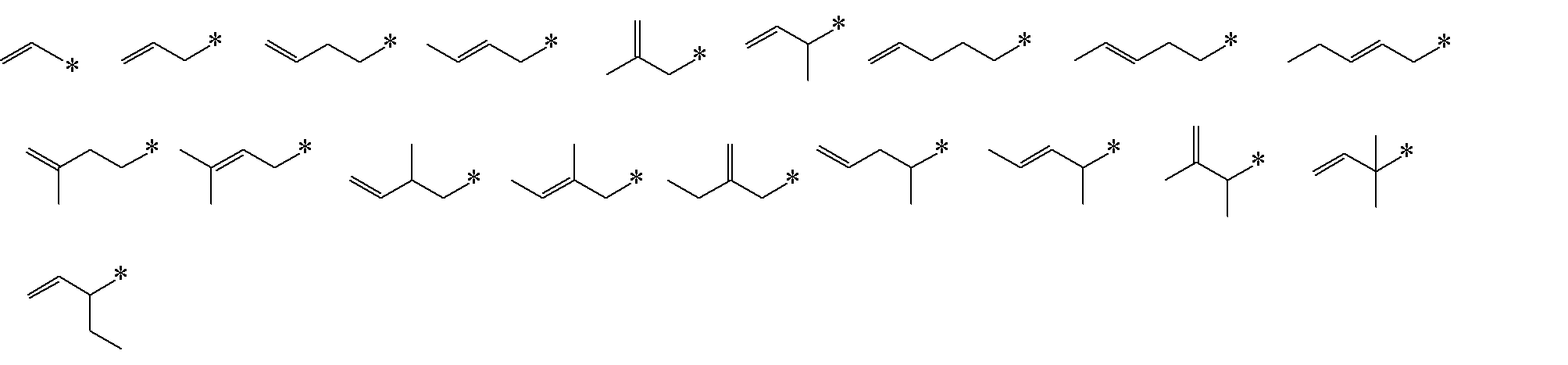
≪炭素-炭素三重結合を少なくとも1つ有する脂肪族不飽和炭化水素基≫

これらのうち、好ましくは、以下に示すビニル基、アリル基、エチニル基である。

これらのうち、より好ましくは、ビニル基である。

式(1)中のR1は、水素原子、ハロゲン原子又は非置換もしくはハロゲン原子置換の炭素数1以上10以下の炭化水素基であれば特に制限はないが、直鎖状もしくは分岐鎖状の脂肪族炭化水素基が好ましく、非置換のアルキル基、又はアルキルの一部の水素原子がフッ素原子で置換されたアルキル基がより好ましく、非置換のアルキル基がさらに好ましい。R1の具体例としては、メチル基、エチル基、プロピル基、iso-プロピル基、ブチル基、tert-ブチル基、ペンチル基、ヘキシル基、ヘプチル基、オクチル基、ノニル基、デシル基、フルオロメチル基、トリフルオロメチル基、ペンタフルオロエチル基などが挙げられる。R1がこれらのような基であると、不飽和部位と酸素部位を用いた正極金属酸化物へのキレート配位が阻害されないため、より効果的に正極へ配位することができ、初期放電抵抗の低減、高温保存耐久試験でのガス発生の抑制といった本発明の効果を得ることができるために好ましい。式(1)中、R1が複数存在する場合、該R1は同一であっても異なっていてもよい。
また、式(1)中のR1の炭化水素基における炭素数は、1以上10以下であり、5以下が好ましく、4以下がより好ましく、2以下がさらに好ましい。炭素数がこの範囲であれば、式(1)で表される化合物の電解液に対する溶解性に優れる。
式(1)中のR2は、非置換もしくはハロゲン原子置換の炭素数1以上10以下の炭化水素基であれば特に制限はないが、脂肪族炭化水素基が好ましく、非置換のアルキレン基、又はアルキレンの一部の水素原子がフッ素原子で置換されたアルキレン基がより好ましく、非置換のアルキレン基がさらに好ましい。R2がこれらのような基であると、不飽和部位と酸素部位間の自由度が高く、正極金属酸化物へのキレート配位構造が容易に取れるため効果的に正極へ配位することができ、高温保存耐久試験でのガス発生の低減といった本発明の効果を得ることができるために好ましい。R2が複数存在する場合、それらは同一であっても異なっていてもよい。
また、式(1)中のR2の炭化水素基における炭素数は、1以上であり、2以上が好ましく、10以下であり、5以下が好ましく、4以下がより好ましい。炭素数がこの範囲であれば、式(1)で表される化合物の電解液に対する溶解性に優れる。
式(1)中のYは、炭素原子、水素原子、酸素原子、硫黄原子およびリン原子からなる群から選ばれる原子で構成された炭素数1以上10以下の有機基であれば特に制限はない。具体例としては、アルキル基、アルケニル基、アルキニル基、アリール基、アルコキシ基、アルキルオキシカルボニル基、アルケニルオキシカルボニル基、アルキニルオキシカルボニル基、アルキルカルボニル基、アルケニルカルボニル基、アルキニルカルボニル基、アリールカルボニル基、アルキルスルホニル基、アルケニルスルホニル基、アルキニルスルホニル基、アルキルオキシスルホニル基、アルケニルオキシスルホニル基、ジアルキルホスホリル基、ジアルケニルホスホリル基、ジアルキニルホスホリル基、アルキル(アルキルオキシ)ホスホリル基、ビス(アルキルオキシ)ホスホリル基、などが挙げられる。好ましくは、アルキル基等の炭化水素基、アルキルオキシカルボニル基、アルキルカルボニル基、アルキルスルホニル基、ジアルキルホスホリル基、アルキル(アルキルオキシ)ホスホリル基、ビス(アルキルオキシ)ホスホリル基であり、より好ましくはアルキル基等の炭化水素基、アルキルオキシカルボニル基、アルキルスルホニル基、アルキルカルボニル基であり、さらに好ましくはアルキルオキシカルボニル基、アルキルスルホニル基であり、特に好ましくはアルキルスルホニル基である。
Yがこれらのような基であると、不飽和部位と酸素部位を用いた正極金属酸化物へのキレート配位が阻害されず、また、酸素部位の電荷を適度に調整することでより効果的に正極へ配位することができ、初期放電抵抗の低減、高温保存耐久試験でのガス発生の抑制といった本発明の効果を得ることができるために好ましい。
なお、上述のアルキル基、アルキルオキシカルボニル基、アルキルカルボニル基、アルキルスルホニル基、ジアルキルホスホリル基、アルキル(アルキルオキシ)ホスホリル基、ビス(アルキルオキシ)ホスホリル基のアルキル部位の炭素数は1以上が好ましく、5以下が好ましく、3以下がより好ましく、2以下がさらに好ましい。
R 1 in formula (1) is not particularly limited as long as it is a hydrogen atom, a halogen atom, or an unsubstituted or halogen atom-substituted hydrocarbon group having 1 to 10 carbon atoms, but is preferably a linear or branched aliphatic hydrocarbon group, more preferably an unsubstituted alkyl group, or an alkyl group in which some hydrogen atoms of the alkyl are substituted with fluorine atoms, and even more preferably an unsubstituted alkyl group. Specific examples of R 1 include a methyl group, an ethyl group, a propyl group, an iso-propyl group, a butyl group, a tert-butyl group, a pentyl group, a hexyl group, a heptyl group, an octyl group, a nonyl group, a decyl group, a fluoromethyl group, a trifluoromethyl group, and a pentafluoroethyl group. When R 1 is such a group, chelate coordination to the positive electrode metal oxide using the unsaturated site and the oxygen site is not inhibited, so that it can be more effectively coordinated to the positive electrode, and the effects of the present invention such as reduction of initial discharge resistance and suppression of gas generation in a high-temperature storage durability test can be obtained, which is preferable. In formula (1), when a plurality of R 1 's are present, the R 1 's may be the same or different.
The number of carbon atoms in the hydrocarbon group of R1 in formula (1) is from 1 to 10, preferably 5 or less, more preferably 4 or less, and even more preferably 2 or less. When the number of carbon atoms is within this range, the compound represented by formula (1) has excellent solubility in the electrolyte solution.
R 2 in formula (1) is not particularly limited as long as it is an unsubstituted or halogen atom-substituted hydrocarbon group having 1 to 10 carbon atoms, but is preferably an aliphatic hydrocarbon group, more preferably an unsubstituted alkylene group or an alkylene group in which some hydrogen atoms of the alkylene are substituted with fluorine atoms, and even more preferably an unsubstituted alkylene group. When R 2 is such a group, the degree of freedom between the unsaturated site and the oxygen site is high, and a chelate coordination structure to the positive electrode metal oxide can be easily obtained, so that it can be effectively coordinated to the positive electrode, and the effect of the present invention, such as reduction in gas generation in a high-temperature storage durability test, can be obtained, which is preferable. When there are multiple R 2s , they may be the same or different.
The number of carbon atoms in the hydrocarbon group of R2 in formula (1) is 1 or more, preferably 2 or more, and 10 or less, preferably 5 or less, and more preferably 4 or less. When the number of carbon atoms is within this range, the compound represented by formula (1) has excellent solubility in the electrolyte solution.
Y in formula (1) is not particularly limited as long as it is an organic group having 1 to 10 carbon atoms and composed of atoms selected from the group consisting of carbon atoms, hydrogen atoms, oxygen atoms, sulfur atoms, and phosphorus atoms. Specific examples include alkyl groups, alkenyl groups, alkynyl groups, aryl groups, alkoxy groups, alkyloxycarbonyl groups, alkenyloxycarbonyl groups, alkynyloxycarbonyl groups, alkylcarbonyl groups, alkenylcarbonyl groups, alkynylcarbonyl groups, arylcarbonyl groups, alkylsulfonyl groups, alkenylsulfonyl groups, alkynylsulfonyl groups, alkyloxysulfonyl groups, alkenyloxysulfonyl groups, dialkylphosphoryl groups, dialkenylphosphoryl groups, dialkynylphosphoryl groups, alkyl(alkyloxy)phosphoryl groups, and bis(alkyloxy)phosphoryl groups. Preferred are hydrocarbon groups such as an alkyl group, an alkyloxycarbonyl group, an alkylcarbonyl group, an alkylsulfonyl group, a dialkylphosphoryl group, an alkyl(alkyloxy)phosphoryl group, or a bis(alkyloxy)phosphoryl group, more preferred are hydrocarbon groups such as an alkyl group, an alkyloxycarbonyl group, an alkylsulfonyl group, or an alkylcarbonyl group, further preferred are alkyloxycarbonyl groups or alkylsulfonyl groups, and particularly preferred is an alkylsulfonyl group.
When Y is such a group, chelate coordination to the positive electrode metal oxide using the unsaturated site and the oxygen site is not inhibited, and by appropriately adjusting the charge of the oxygen site, coordination to the positive electrode can be more effectively achieved, and the effects of the present invention, such as reduction in initial discharge resistance and suppression of gas generation during a high-temperature storage durability test, can be obtained, which is preferable.
The number of carbon atoms in the alkyl moiety of the above-mentioned alkyl group, alkyloxycarbonyl group, alkylcarbonyl group, alkylsulfonyl group, dialkylphosphoryl group, alkyl(alkyloxy)phosphoryl group, and bis(alkyloxy)phosphoryl group is preferably 1 or more and is preferably 5 or less, more preferably 3 or less, and even more preferably 2 or less.
式(1)で表される化合物としては、以下の化合物が挙げられる。なお、Meはメチル基、Etはエチル基、n-Prはn-プロピル基、i-Prはiso-プロピル基、n-Buはn-ブチル基、i-Buはiso-ブチル基を表す。mは1以上10以下の整数を表す。Examples of compounds represented by formula (1) include the following compounds. Note that Me represents a methyl group, Et represents an ethyl group, n-Pr represents an n-propyl group, i-Pr represents an iso-propyl group, n-Bu represents an n-butyl group, and i-Bu represents an iso-butyl group. m represents an integer of 1 or more and 10 or less.
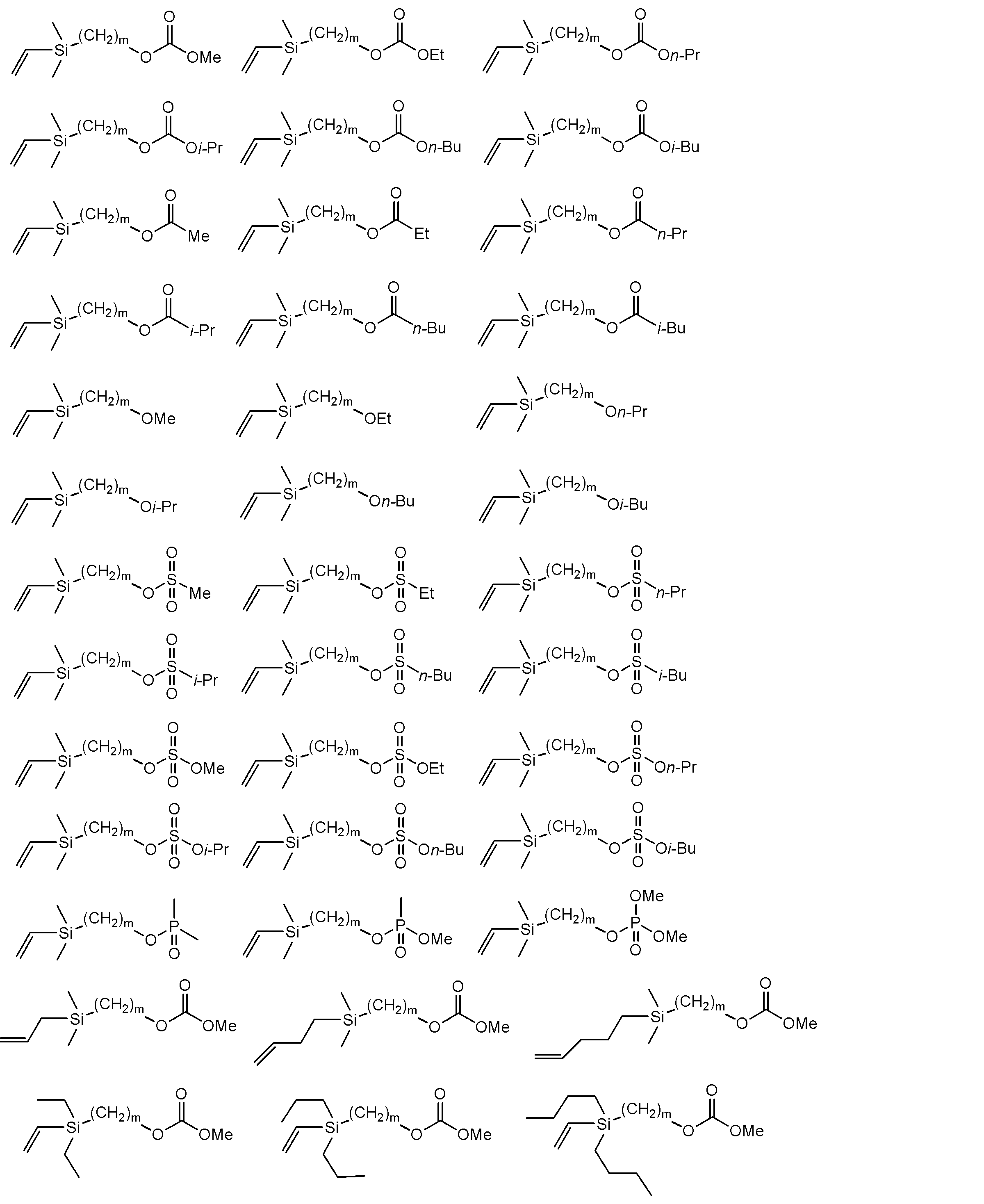


中でも、mが1以上5以下の整数であることが好ましい。また、式(1)で表される化合物としては、以下の化合物がより好ましい。

式(1)で表される化合物の含有量は特に限定されないが、非水系電解液全量に対する式(1)で表される化合物の含有量(2種以上の場合は、合計量)は通常0.001質量%以上、好ましくは0.01質量%以上、より好ましくは0.1質量%以上、更に好ましくは0.2質量%以上、特に好ましくは0.5質量%以上であり、また、好ましくは10質量%以下、より好ましくは7質量%以下、更に好ましくは5質量%以下、特に好ましくは3質量%以下である。この範囲内であると、初期放電抵抗低減の効果が顕著に発現される。
式(1)で表される化合物の同定や含有量の測定は、核磁気共鳴(NMR)分光法により行う。
The content of the compound represented by formula (1) is not particularly limited, but the content of the compound represented by formula (1) (when two or more kinds are used, the total amount) relative to the total amount of the non-aqueous electrolyte is usually 0.001 mass% or more, preferably 0.01 mass% or more, more preferably 0.1 mass% or more, even more preferably 0.2 mass% or more, particularly preferably 0.5 mass% or more, and also preferably 10 mass% or less, more preferably 7 mass% or less, even more preferably 5 mass% or less, particularly preferably 3 mass% or less. Within this range, the effect of reducing the initial discharge resistance is significantly exhibited.
The compound represented by formula (1) is identified and its content is measured by nuclear magnetic resonance (NMR) spectroscopy.
[1-2.電解質]
<リチウム塩>
非水系電解液における電解質としては、通常、リチウム塩が用いられる。リチウム塩としては、この用途に用いることが知られているものであれば特に制限がなく、任意のものを1種以上用いることができ、具体的には以下のものが挙げられる。
[1-2. Electrolytes]
<Lithium salt>
As the electrolyte in the non-aqueous electrolyte solution, a lithium salt is usually used. The lithium salt is not particularly limited as long as it is known to be used for this purpose, and one or more of any lithium salts can be used. Specific examples of the lithium salt include the following:
例えば、LiBF4等のフルオロホウ酸リチウム塩類;
LiPF6、Li2PO3F、LiPO2F2等のフルオロリン酸リチウム塩類;
LiWOF5等のタングステン酸リチウム塩類;
CF3CO2Li等のカルボン酸リチウム塩類;
CH3SO3Li、FSO3Li等のスルホン酸リチウム塩類;
LiN(FSO2)2、LiN(FSO2)(CF3SO2)、LiN(CF3SO2)2、LiN(C2F5SO2)2、リチウム環状1,2-パーフルオロエタンジスルホニルイミド、リチウム環状1,3-パーフルオロプロパンジスルホニルイミド等のリチウムイミド塩類;
LiC(FSO2)3、LiC(CF3SO2)3、LiC(C2F5SO2)3等のリチウムメチド塩類;
リチウムジフルオロオキサラトボレート、リチウムビス(オキサラト)ボレート、リチウムテトラフルオロオキサラトフォスフェート、リチウムジフルオロビス(オキサラト)フォスフェート、リチウムトリス(オキサラト)フォスフェート等のリチウムオキサラート塩類;
等が挙げられる。
2種類以上の電解質塩の組み合わせとして、特段の制限はないが、LiPF6及びLiN(FSO2)2;LiPF6及びLiBF4;LiPF6及びLiN(CF3SO2)2;LiBF4及びLiN(FSO2)2;並びにLiBF4、LiPF6及びLiN(FSO2)2が挙げられる。なかでも、LiPF6及びLiN(FSO2)2;LiPF6及びLiBF4;又はLiBF4、LiPF6及びLiN(FSO2)2が好ましい。
For example, lithium fluoroborates such as LiBF4 ;
Lithium fluorophosphate salts such as LiPF6 , Li2PO3F , LiPO2F2 ;
Lithium tungstate salts such as LiWOF5 ;
Lithium carboxylates such as CF 3 CO 2 Li;
Lithium sulfonate salts such as CH 3 SO 3 Li and FSO 3 Li;
Lithium imide salts such as LiN(FSO 2 ) 2 , LiN(FSO 2 )(CF 3 SO 2 ), LiN(CF 3 SO 2 ) 2 , LiN(C 2 F 5 SO 2 ) 2 , lithium cyclic 1,2-perfluoroethane disulfonylimide, and lithium cyclic 1,3-perfluoropropane disulfonylimide;
Lithium methide salts such as LiC ( FSO2 ) 3 , LiC ( CF3SO2 ) 3 , LiC( C2F5SO2 ) 3 ;
Lithium oxalate salts such as lithium difluorooxalatoborate, lithium bis(oxalato)borate, lithium tetrafluorooxalatophosphate, lithium difluorobis(oxalato)phosphate, and lithium tris(oxalato)phosphate;
etc.
The combination of two or more kinds of electrolyte salts is not particularly limited, but includes LiPF6 and LiN( FSO2 ) 2 ; LiPF6 and LiBF4 ; LiPF6 and LiN( CF3SO2 ) 2 ; LiBF4 and LiN( FSO2 ) 2 ; and LiBF4 , LiPF6 and LiN( FSO2 ) 2 . Among them, LiPF6 and LiN ( FSO2 ) 2 ; LiPF6 and LiBF4 ; or LiBF4 , LiPF6 and LiN( FSO2 ) 2 are preferred.
本発明で得られる高温環境下での充電保存特性向上の効果に加え、充放電レート特性、インピーダンス特性の向上効果を更に高める点から、フルオロホウ酸リチウム塩類、フルオロリン酸リチウム塩類、スルホン酸リチウム塩類、リチウムイミド塩類、リチウムオキサラート塩類の中から選ばれるものが好ましく、フルオロスルホン酸リチウム塩類がより好ましい。In order to further enhance the effect of improving the charge storage characteristics under high temperature environments obtained by the present invention as well as the effect of improving the charge/discharge rate characteristics and impedance characteristics, it is preferable to use a salt selected from lithium fluoroborate salts, lithium fluorophosphate salts, lithium sulfonate salts, lithium imide salts, and lithium oxalate salts, and lithium fluorosulfonate salts are more preferable.
非水系電解液中の電解質の総濃度は、特に制限はないが、非水系電解液の全量に対して、通常8質量%以上、好ましくは8.5質量%以上、より好ましくは9質量%以上である。また、その上限は、通常18質量%以下、好ましくは17質量%以下、より好ましくは16質量%以下である。電解質の総濃度が上記範囲内であると、電気伝導率が電池動作に適正となるため、十分な出力特性が得られる傾向にある。The total concentration of electrolytes in the non-aqueous electrolyte solution is not particularly limited, but is usually 8% by mass or more, preferably 8.5% by mass or more, and more preferably 9% by mass or more, based on the total amount of the non-aqueous electrolyte solution. The upper limit is usually 18% by mass or less, preferably 17% by mass or less, and more preferably 16% by mass or less. If the total concentration of electrolytes is within the above range, the electrical conductivity is appropriate for battery operation, and sufficient output characteristics tend to be obtained.
[1-3.非水系溶媒]
非水系電解液は、一般的な非水系電解液と同様、通常はその主成分として、上述した電解質を溶解する非水系溶媒を含有する。非水系溶媒について特に制限はなく、公知の有機溶媒を用いることができる。有機溶媒としては、飽和環状カーボネート、鎖状カーボネート、エーテル系化合物、スルホン系化合物、及び環状もしくは鎖状カルボン酸エステル、等が挙げられるが、これらに特に限定されない。これらは、1種を単独で又は2種以上を組み合わせて用いることができる。
2種以上の有機溶媒の組み合わせとして、特段の制限はないが、飽和環状カーボネート及び鎖状カルボン酸エステル;環状カルボン酸エステル及び鎖状カーボネート;並びに飽和環状カーボネート、鎖状カーボネート及び鎖状カルボン酸エステルが挙げられる。なかでも、飽和環状カーボネート及び鎖状カーボネート;並びに飽和環状カーボネート、鎖状カーボネート及び鎖状カルボン酸エステルが好ましい。
[1-3. Non-aqueous solvent]
The non-aqueous electrolyte solution, like a general non-aqueous electrolyte solution, usually contains a non-aqueous solvent that dissolves the above-mentioned electrolyte as its main component. There is no particular limitation on the non-aqueous solvent, and a known organic solvent can be used. Examples of the organic solvent include, but are not limited to, saturated cyclic carbonates, chain carbonates, ether compounds, sulfone compounds, and cyclic or chain carboxylic acid esters. These can be used alone or in combination of two or more.
The combination of two or more organic solvents is not particularly limited, and examples thereof include saturated cyclic carbonates and chain carboxylates; cyclic carboxylates and chain carbonates; and saturated cyclic carbonates, chain carbonates and chain carboxylates. Among these, saturated cyclic carbonates and chain carbonates; and saturated cyclic carbonates, chain carbonates and chain carboxylates are preferred.
[1-3-1.飽和環状カーボネート]
飽和環状カーボネートとしては、通常炭素数2~4のアルキレン基を有するものが挙げられ、リチウムイオン解離度の向上に由来する電池特性向上の点から炭素数2~3の飽和環状カーボネートが好ましく用いられる。
[1-3-1. Saturated cyclic carbonates]
The saturated cyclic carbonate may be one having an alkylene group usually having 2 to 4 carbon atoms, and from the viewpoint of improving the battery characteristics resulting from the improvement of the degree of dissociation of lithium ions, saturated cyclic carbonates having 2 to 3 carbon atoms are preferably used.
飽和環状カーボネートとしては、エチレンカーボネート、プロピレンカーボネート、ブチレンカーボネート等が挙げられる。中でも、エチレンカーボネートとプロピレンカーボネートが好ましく、酸化・還元されにくいエチレンカーボネートがより好ましい。飽和環状カーボネートは、1種を単独で用いてもよく、2種以上を任意の組み合わせ及び比率で併用してもよい。Examples of saturated cyclic carbonates include ethylene carbonate, propylene carbonate, butylene carbonate, etc. Among them, ethylene carbonate and propylene carbonate are preferred, and ethylene carbonate, which is less susceptible to oxidation and reduction, is more preferred. The saturated cyclic carbonates may be used alone or in any combination and ratio of two or more.
飽和環状カーボネートの含有量は、特に制限されず、本発明の効果を著しく損なわない限り任意であるが、非水系電解液の非水系溶媒全量に対して、通常3体積%以上、好ましくは5体積%以上である。この範囲とすることで、非水系電解液の誘電率の低下に由来する電気伝導率の低下を回避し、非水系電解液二次電池の大電流放電特性、負極に対する安定性、サイクル特性を良好な範囲としやすくなる。また、通常90体積%以下、好ましくは85体積%以下、より好ましくは80体積%以下である。この範囲とすることで、非水系電解液の酸化・還元耐性が向上し、高温保存時の安定性が向上する傾向にある。
なお、本実施形態における体積%とは25℃、1気圧における体積を意味する。
The content of the saturated cyclic carbonate is not particularly limited and may be any content as long as it does not significantly impair the effects of the present invention, but is usually 3% by volume or more, preferably 5% by volume or more, based on the total amount of the nonaqueous solvent in the nonaqueous electrolyte. By setting it in this range, the decrease in electrical conductivity due to the decrease in the dielectric constant of the nonaqueous electrolyte can be avoided, and the large current discharge characteristics, stability to the negative electrode, and cycle characteristics of the nonaqueous electrolyte secondary battery can be easily set in a good range. In addition, it is usually 90% by volume or less, preferably 85% by volume or less, and more preferably 80% by volume or less. By setting it in this range, the oxidation and reduction resistance of the nonaqueous electrolyte tends to be improved, and the stability during high-temperature storage tends to be improved.
In the present embodiment, the volume percentage refers to the volume at 25° C. and 1 atmospheric pressure.
[1-3-2.鎖状カーボネート]
鎖状カーボネートとしては、通常炭素数3~7のものが用いられ、電解液の粘度を適切な範囲に調整するために、炭素数3~5の鎖状カーボネートが好ましく用いられる。
[1-3-2. Chain carbonate]
As the chain carbonate, one having 3 to 7 carbon atoms is usually used, and in order to adjust the viscosity of the electrolyte solution within an appropriate range, a chain carbonate having 3 to 5 carbon atoms is preferably used.
具体的には、鎖状カーボネートとしては、ジメチルカーボネート、ジエチルカーボネート、ジ-n-プロピルカーボネート、ジイソプロピルカーボネート、n-プロピルイソプロピルカーボネート、エチルメチルカーボネート、メチル-n-プロピルカーボネート等が挙げられる。中でも、特に好ましくはジメチルカーボネート、ジエチルカーボネート、エチルメチルカーボネートである。 Specific examples of chain carbonates include dimethyl carbonate, diethyl carbonate, di-n-propyl carbonate, diisopropyl carbonate, n-propyl isopropyl carbonate, ethyl methyl carbonate, methyl-n-propyl carbonate, etc. Among these, dimethyl carbonate, diethyl carbonate, and ethyl methyl carbonate are particularly preferred.
また、フッ素原子を有する鎖状カーボネート類(以下、「フッ素化鎖状カーボネート」と略記する場合がある。)も好適に用いることができる。フッ素化鎖状カーボネートが有するフッ素原子の数は、1以上であれば特に制限されないが、通常6以下であり、好ましくは4以下である。フッ素化鎖状カーボネートが複数のフッ素原子を有する場合、それらは互いに同一の炭素に結合していてもよく、異なる炭素に結合していてもよい。
フッ素化鎖状カーボネートとしては、フルオロメチルメチルカーボネート等のフッ素化ジメチルカーボネート誘導体;2-フルオロエチルメチルカーボネート等のフッ素化エチルメチルカーボネート誘導体;エチル-(2-フルオロエチル)カーボネート等のフッ素化ジエチルカーボネート誘導体;等が挙げられる。
In addition, chain carbonates having fluorine atoms (hereinafter sometimes abbreviated as "fluorinated chain carbonate") can also be suitably used. The number of fluorine atoms in the fluorinated chain carbonate is not particularly limited as long as it is 1 or more, but is usually 6 or less, and preferably 4 or less. When the fluorinated chain carbonate has multiple fluorine atoms, they may be bonded to the same carbon or different carbons.
Examples of the fluorinated chain carbonate include fluorinated dimethyl carbonate derivatives such as fluoromethyl methyl carbonate; fluorinated ethyl methyl carbonate derivatives such as 2-fluoroethyl methyl carbonate; and fluorinated diethyl carbonate derivatives such as ethyl-(2-fluoroethyl) carbonate.
鎖状カーボネートは、1種を単独で用いてもよく、2種以上を任意の組み合わせ及び比率で併用してもよい。The chain carbonates may be used alone or in any combination and ratio of two or more.
鎖状カーボネートの含有量は特に限定されないが、非水系電解液の非水系溶媒全量に対して、通常15体積%以上であり、好ましくは20体積%以上、より好ましくは25体積%以上であり、また、通常90体積%以下、好ましくは85体積%以下、より好ましくは80体積%以下である。鎖状カーボネートの含有量を上記範囲とすることによって、非水系電解液の粘度を適切な範囲とし、イオン伝導度の低下を抑制し、ひいては非水系電解液二次電池の出力特性を良好な範囲としやすくなる。The amount of the chain carbonate is not particularly limited, but is usually 15% by volume or more, preferably 20% by volume or more, more preferably 25% by volume or more, and usually 90% by volume or less, preferably 85% by volume or less, more preferably 80% by volume or less, based on the total amount of the nonaqueous solvent in the nonaqueous electrolyte. By setting the amount of the chain carbonate in the above range, the viscosity of the nonaqueous electrolyte can be set in an appropriate range, the decrease in ion conductivity can be suppressed, and the output characteristics of the nonaqueous electrolyte secondary battery can be easily set in a good range.
さらに、特定の鎖状カーボネートに対して、エチレンカーボネートを特定の含有量で組み合わせることにより、電池性能を著しく向上させることができる。 Furthermore, by combining a specific chain carbonate with ethylene carbonate in a specific content, battery performance can be significantly improved.
例えば、特定の鎖状カーボネートとしてジメチルカーボネートとエチルメチルカーボネートを選択した場合、エチレンカーボネートの含有量は、特に制限されず、本発明の効果を著しく損なわない限り任意であるが、非水系電解液の非水系溶媒全量に対して、通常15体積%以上、好ましくは20体積%以上、また、通常45体積%以下、好ましくは40体積%以下であり、ジメチルカーボネートの含有量は、非水系電解液の非水系溶媒全量に対して、通常20体積%以上、好ましくは30体積%以上、また、通常50体積%以下、好ましくは45体積%以下であり、エチルメチルカーボネートの含有量は通常20体積%以上、好ましくは30体積%以上、また、通常50体積%以下、好ましくは45体積%以下である。含有量を上記範囲内とすることで、高温安定性に優れ、ガス発生が抑制される傾向がある。For example, when dimethyl carbonate and ethyl methyl carbonate are selected as specific chain carbonates, the content of ethylene carbonate is not particularly limited and is arbitrary as long as it does not significantly impair the effects of the present invention, but is usually 15% by volume or more, preferably 20% by volume or more, and usually 45% by volume or less, preferably 40% by volume or less, based on the total amount of nonaqueous solvent in the nonaqueous electrolyte solution, the content of dimethyl carbonate is usually 20% by volume or more, preferably 30% by volume or more, and usually 50% by volume or less, preferably 45% by volume or less, based on the total amount of nonaqueous solvent in the nonaqueous electrolyte solution, and the content of ethyl methyl carbonate is usually 20% by volume or more, preferably 30% by volume or more, and usually 50% by volume or less, preferably 45% by volume or less. By setting the content within the above range, there is a tendency for excellent high-temperature stability and suppression of gas generation.
[1-3-3.エーテル系化合物]
エーテル系化合物としては、ジメトキシメタン、ジエトキシメタン、エトキシメトキシメタン、エチレングリコールジ-n-プロピルエーテル、エチレングリコールジ-n-ブチルエーテル、ジエチレングリコールジメチルエーテル等の炭素数3~10の鎖状エーテル、及びテトラヒドロフラン、2-メチルテトラヒドロフラン、3-メチルテトラヒドロフラン、1,3-ジオキサン、2-メチル-1,3-ジオキサン、4-メチル-1,3-ジオキサン、1,4-ジオキサン等の炭素数3~6の環状エーテルが好ましい。なお、上述のエーテル系化合物の一部の水素がフッ素原子に置換されていてもよい。
中でも、炭素数3~10の鎖状エーテルとしては、リチウムイオンへの溶媒和能力が高く、イオン解離性を向上させる点で好ましい。特に好ましくは、粘性が低く、高いイオン伝導度を与えることから、ジメトキシメタン、ジエトキシメタン、又はエトキシメトキシメタンである。
[1-3-3. Ether compounds]
Preferred ether compounds include chain ethers having 3 to 10 carbon atoms, such as dimethoxymethane, diethoxymethane, ethoxymethoxymethane, ethylene glycol di-n-propyl ether, ethylene glycol di-n-butyl ether, and diethylene glycol dimethyl ether, and cyclic ethers having 3 to 6 carbon atoms, such as tetrahydrofuran, 2-methyltetrahydrofuran, 3-methyltetrahydrofuran, 1,3-dioxane, 2-methyl-1,3-dioxane, 4-methyl-1,3-dioxane, and 1,4-dioxane. Some of the hydrogen atoms in the above-mentioned ether compounds may be substituted with fluorine atoms.
Among these, the chain ether having 3 to 10 carbon atoms is preferred in that it has a high ability to solvate lithium ions and improves ion dissociation. Particularly preferred are dimethoxymethane, diethoxymethane, and ethoxymethoxymethane, which have low viscosity and provide high ionic conductivity.
炭素数3~6の環状エーテルとしては、高いイオン電導度を与えることから、テトラヒドロフラン、1,3-ジオキサン、又は1,4-ジオキサン等が好ましい。As cyclic ethers having 3 to 6 carbon atoms, tetrahydrofuran, 1,3-dioxane, 1,4-dioxane, etc. are preferred because they provide high ionic conductivity.
エーテル系化合物の含有量は、特に制限されず、本発明の効果を著しく損なわない限り任意であるが、非水系溶媒100体積%中、通常1体積%以上、好ましくは2体積%以上、より好ましくは3体積%以上、また、通常30体積%以下、好ましくは25体積%以下、より好ましくは20体積%以下である。エーテル系化合物の含有量が前記好ましい範囲内であれば、エーテルのリチウムイオン解離度の向上と粘度低下に由来するイオン伝導度の向上効果を確保しやすい。また、負極活物質が炭素質材料の場合、鎖状エーテルがリチウムイオンと共に共挿入される現象を抑制できることから、入出力特性や充放電レート特性を適正な範囲とすることができる。The content of the ether-based compound is not particularly limited and may be any amount as long as it does not significantly impair the effects of the present invention, but is usually 1% by volume or more, preferably 2% by volume or more, more preferably 3% by volume or more, and usually 30% by volume or less, preferably 25% by volume or less, more preferably 20% by volume or less, in 100% by volume of the non-aqueous solvent. If the content of the ether-based compound is within the above-mentioned preferred range, it is easy to ensure the effect of improving the lithium ion dissociation degree of the ether and improving the ion conductivity due to the viscosity reduction. In addition, when the negative electrode active material is a carbonaceous material, the phenomenon in which the chain ether is co-inserted with the lithium ion can be suppressed, so that the input/output characteristics and the charge/discharge rate characteristics can be set to appropriate ranges.
[1-3-4.スルホン系化合物]
スルホン系化合物としては、特に制限されず、環状スルホンであってもよく、鎖状スルホンであってもよい。環状スルホンの場合、炭素数が通常3~6、好ましくは3~5であり、鎖状スルホンの場合、炭素数が通常2~6、好ましくは2~5である。また、スルホン系化合物1分子中のスルホニル基の数は、特に制限されないが、通常1又は2である。
[1-3-4. Sulfone compounds]
The sulfone compound is not particularly limited, and may be a cyclic sulfone or a chain sulfone. In the case of a cyclic sulfone, the carbon number is usually 3 to 6, preferably 3 to 5, and in the case of a chain sulfone, the carbon number is usually 2 to 6, preferably 2 to 5. In addition, the number of sulfonyl groups in one molecule of the sulfone compound is not particularly limited, but is usually 1 or 2.
環状スルホンとしては、モノスルホン化合物であるトリメチレンスルホン類、テトラメチレンスルホン類、ヘキサメチレンスルホン類等;ジスルホン化合物であるトリメチレンジスルホン類、テトラメチレンジスルホン類、ヘキサメチレンジスルホン類;等が挙げられる。中でも誘電率と粘性の観点から、テトラメチレンスルホン類、テトラメチレンジスルホン類、ヘキサメチレンスルホン類、又はヘキサメチレンジスルホン類がより好ましく、テトラメチレンスルホン類(スルホラン類)が特に好ましい。Examples of cyclic sulfones include monosulfone compounds such as trimethylene sulfones, tetramethylene sulfones, and hexamethylene sulfones; and disulfone compounds such as trimethylene disulfones, tetramethylene disulfones, and hexamethylene disulfones. Among these, from the viewpoint of dielectric constant and viscosity, tetramethylene sulfones, tetramethylene disulfones, hexamethylene sulfones, and hexamethylene disulfones are more preferred, and tetramethylene sulfones (sulfolanes) are particularly preferred.
スルホラン類としては、スルホラン及びスルホラン誘導体が好ましい。スルホラン誘導体としては、スルホラン環を構成する炭素原子に結合した水素原子の1以上がフッ素原子、アルキル基、又はフッ素置換アルキル基で置換されたものが好ましい。As the sulfolanes, sulfolane and sulfolane derivatives are preferred. As the sulfolane derivatives, those in which one or more of the hydrogen atoms bonded to the carbon atoms constituting the sulfolane ring are substituted with a fluorine atom, an alkyl group, or a fluorine-substituted alkyl group are preferred.
中でも、2-メチルスルホラン、3-メチルスルホラン、2-フルオロスルホラン、3-フルオロスルホラン、2,3-ジフルオロスルホラン、2-トリフルオロメチルスルホラン、3-トリフルオロメチルスルホラン、等が、イオン伝導度が高く入出力が高い点で好ましい。Among these, 2-methylsulfolane, 3-methylsulfolane, 2-fluorosulfolane, 3-fluorosulfolane, 2,3-difluorosulfolane, 2-trifluoromethylsulfolane, 3-trifluoromethylsulfolane, etc. are preferred because of their high ionic conductivity and high input/output.
また、鎖状スルホンとしては、ジメチルスルホン、エチルメチルスルホン、ジエチルスルホン、モノフルオロメチルメチルスルホン、ジフルオロメチルメチルスルホン、トリフルオロメチルメチルスルホン、ペンタフルオロエチルメチルスルホン等が挙げられる。中でも、ジメチルスルホン、エチルメチルスルホン、モノフルオロエチルメチルスルホンが電解液の高温保存安定性が向上する点で好ましい。Examples of chain sulfones include dimethyl sulfone, ethyl methyl sulfone, diethyl sulfone, monofluoromethyl methyl sulfone, difluoromethyl methyl sulfone, trifluoromethyl methyl sulfone, pentafluoroethyl methyl sulfone, etc. Among these, dimethyl sulfone, ethyl methyl sulfone, and monofluoroethyl methyl sulfone are preferred in that they improve the high-temperature storage stability of the electrolyte.
スルホン系化合物の含有量は、特に制限されず、本発明の効果を著しく損なわない限り任意であるが、非水系電解液の非水系溶媒全量に対して、通常0.3体積%以上、好ましくは0.5体積%以上、より好ましくは1体積%以上であり、また、通常40体積%以下、好ましくは35体積%以下、より好ましくは30体積%以下である。スルホン系化合物の含有量が前記範囲内であれば、高温保存安定性に優れた電解液が得られる傾向にある。The content of the sulfone-based compound is not particularly limited and may be any amount as long as it does not significantly impair the effects of the present invention, but is usually 0.3 vol.% or more, preferably 0.5 vol.% or more, more preferably 1 vol.% or more, and is usually 40 vol.% or less, preferably 35 vol.% or less, more preferably 30 vol.% or less, based on the total amount of the nonaqueous solvent in the nonaqueous electrolyte. If the content of the sulfone-based compound is within the above range, an electrolyte with excellent high-temperature storage stability tends to be obtained.
[1-3-5.環状もしくは鎖状カルボン酸エステル]
環状カルボン酸エステルとしては、ガンマブチロラクトン及びガンマバレロラクトン等が挙げられる。中でも、ガンマブチロラクトンがリチウムイオン解離度の向上に由来する電池特性向上の点から特に好ましい。上述の化合物の水素原子の一部をフッ素原子で置換した環状カルボン酸エステルも好適に使える。
環状カルボン酸エステルの含有量は、非水系電解液の非水系溶媒非水系電解液の全量に対して、通常1体積%以上、好ましくは5体積%以上、より好ましくは10体積%以上である。この範囲であれば、非水系電解液の電気伝導率を改善し、エネルギーデバイスの大電流放電特性を向上させやすくなる。また、環状カルボン酸エステルの含有量は、非水系電解液の非水系溶媒全量に対して、通常70体積%以下、好ましくは50体積%以下、より好ましくは40体積%以下である。このように上限を設定することにより、非水系電解液の粘度を適切な範囲とし、電気伝導率の低下を回避し、負極抵抗の増大を抑制し、エネルギーデバイスの大電流放電特性を良好な範囲としやすくなる。
[1-3-5. Cyclic or chain carboxylate esters]
Examples of the cyclic carboxylate include gamma-butyrolactone and gamma-valerolactone. Among them, gamma-butyrolactone is particularly preferred from the viewpoint of improving the battery characteristics due to the improvement of the degree of dissociation of lithium ions. Cyclic carboxylates in which some of the hydrogen atoms of the above-mentioned compounds are replaced with fluorine atoms can also be used suitably.
The content of the cyclic carboxylate is usually 1% by volume or more, preferably 5% by volume or more, more preferably 10% by volume or more, based on the total amount of the nonaqueous solvent nonaqueous electrolyte of the nonaqueous electrolyte. In this range, the electrical conductivity of the nonaqueous electrolyte is improved, and the large current discharge characteristics of the energy device are easily improved. In addition, the content of the cyclic carboxylate is usually 70% by volume or less, preferably 50% by volume or less, more preferably 40% by volume or less, based on the total amount of the nonaqueous solvent of the nonaqueous electrolyte. By setting the upper limit in this way, the viscosity of the nonaqueous electrolyte is in an appropriate range, the decrease in electrical conductivity is avoided, the increase in the negative electrode resistance is suppressed, and the large current discharge characteristics of the energy device are easily in a good range.
鎖状カルボン酸エステルとしては、酢酸メチル、酢酸エチル、酢酸プロピル、酢酸ブチル、プロピオン酸メチル、プロピオン酸エチル、プロピオン酸プロピル、酪酸メチル、酪酸エチル、イソ酪酸メチル、イソ酪酸エチル、吉草酸メチルピバル酸メチルが挙げられる。
これらのうち、負極での副反応が少ない点、電解液粘度低下によるイオン伝導度の向上の点から、酢酸メチル、酢酸エチル、酢酸プロピル又は酢酸ブチルが好ましい。
鎖状カルボン酸エステルを非水系溶媒として用いる場合の含有量は、非水系電解液の非水系溶媒全量に対して、好ましくは1体積%以上、より好ましくは5体積%以上、更に好ましくは10体積%以上、更により好ましくは20体積%以上であり、また、50体積%以下で含有させることができ、より好ましくは45体積%以下、更に好ましくは40体積%以下である。鎖状カルボン酸エステルの含有量を前記範囲とすると、非水系電解液の電気伝導率を改善し、非水系電解液二次電池の入出力特性や充放電レート特性を向上させやすくなる。また、負極抵抗の増大を抑制し、非水系電解液二次電池の入出力特性や充放電レート特性を良好な範囲としやすくなる。
Examples of the chain carboxylate ester include methyl acetate, ethyl acetate, propyl acetate, butyl acetate, methyl propionate, ethyl propionate, propyl propionate, methyl butyrate, ethyl butyrate, methyl isobutyrate, ethyl isobutyrate, methyl valerate, and methyl pivalate.
Among these, methyl acetate, ethyl acetate, propyl acetate, and butyl acetate are preferred from the viewpoints of reducing side reactions at the negative electrode and improving ionic conductivity by reducing the viscosity of the electrolyte.
The content of the chain carboxylate ester when used as a non-aqueous solvent is preferably 1% by volume or more, more preferably 5% by volume or more, even more preferably 10% by volume or more, even more preferably 20% by volume or more, and can be contained at 50% by volume or less, more preferably 45% by volume or less, even more preferably 40% by volume or less, based on the total amount of the non-aqueous solvent in the non-aqueous electrolyte. When the content of the chain carboxylate is within the above range, the electrical conductivity of the non-aqueous electrolyte is improved, and the input/output characteristics and charge/discharge rate characteristics of the non-aqueous electrolyte secondary battery are easily improved. In addition, the increase in the negative electrode resistance is suppressed, and the input/output characteristics and charge/discharge rate characteristics of the non-aqueous electrolyte secondary battery are easily in a good range.
尚、鎖状カルボン酸エステルを非水系溶媒として用いる場合は、好ましくは環状カーボネートとの併用であり、更に好ましくは環状カーボネートと鎖状カーボネートとの併用である。
例えば、環状カーボネートと鎖状カルボン酸エステルを併用した場合、環状カーボネートの含有量は、特に制限されず、本発明の効果を著しく損なわない限り任意であるが、通常15体積%以上、好ましくは20体積%、また通常45体積%以下、好ましくは40体積%以下であり、鎖状カルボン酸エステルの含有量は、通常20体積%以上、好ましくは30体積%以上、また通常55体積%以下、好ましくは50体積%以下である。また、環状カーボネートと鎖状カーボネートと鎖状カルボン酸エステルを併用した場合、環状カーボネートの含有量は、特に制限されず、本発明の効果を著しく損なわない限り任意であるが、通常15体積%以上、好ましくは20体積%、また通常45体積%以下、好ましくは40体積%以下であり、鎖状カーボネートの含有量は、通常25体積%以上、好ましくは30体積%以上、また通常84体積%以下、好ましくは80体積%以下である。含有量を上記範囲内とすることで、電解質の低温析出温度を低下させながら、非水系電解液の粘度も低下させてイオン伝導度を向上させ、低温でも更に高い入出力を得ることができ、また電池膨れを更に低下させる観点で好ましい。
When a chain carboxylate is used as the non-aqueous solvent, it is preferably used in combination with a cyclic carbonate, and more preferably, a cyclic carbonate and a chain carbonate are used in combination.
For example, when a cyclic carbonate and a chain carboxylate are used in combination, the content of the cyclic carbonate is not particularly limited and may be any content as long as the effects of the present invention are not significantly impaired, but is usually 15% by volume or more, preferably 20% by volume, and usually 45% by volume or less, preferably 40% by volume or less, and the content of the chain carboxylate is usually 20% by volume or more, preferably 30% by volume or more, and usually 55% by volume or less, preferably 50% by volume or less. When a cyclic carbonate, a chain carbonate, and a chain carboxylate are used in combination, the content of the cyclic carbonate is not particularly limited and may be any content as long as the effects of the present invention are not significantly impaired, but is usually 15% by volume or more, preferably 20% by volume, and usually 45% by volume or less, preferably 40% by volume or less, and the content of the chain carbonate is usually 25% by volume or more, preferably 30% by volume or more, and usually 84% by volume or less, preferably 80% by volume or less. By setting the content within the above range, the low-temperature deposition temperature of the electrolyte can be lowered while also lowering the viscosity of the nonaqueous electrolyte solution, thereby improving ionic conductivity, and thus enabling even higher input and output to be obtained even at low temperatures. This is also preferable from the viewpoint of further reducing battery swelling.
[1-4.助剤]
本発明の非水系電解液には、本発明の効果を奏する範囲で各種の助剤を含有してもよい。助剤としては、従来公知のものを任意に用いることができる。なお、助剤は、1種を単独で用いてもよく、2種以上を任意の組み合わせ及び比率で併用してもよい。
[1-4. Auxiliaries]
The non-aqueous electrolyte of the present invention may contain various auxiliary agents within the scope of the effects of the present invention. As the auxiliary agent, any conventionally known one may be used. In addition, the auxiliary agent may be used alone or in any combination and ratio of two or more kinds.
非水系電解液に含有していてもよい助剤としては、炭素-炭素不飽和結合を有する環状カーボネート、モノフルオロリン酸塩、ジフルオロリン酸塩、フッ素含有環状カーボネート、硫黄含有有機化合物、リン含有有機化合物、イソシアナト基(イソシアネート基)を有する化合物、ケイ素含有化合物、芳香族化合物、フッ素非含有カルボン酸エステル、エーテル結合を有する環状化合物、カルボン酸無水物、ホウ酸塩、シュウ酸塩、フルオロスルホン酸塩等が挙げられる。具体的には、例えば、国際公開公報第2015/111676号に記載の化合物等が挙げられる。
エーテル結合を有する環状化合物は、非水系電解液において助剤として用いることもできるし、1-3.で示したとおり非水系溶媒としても用いることができるものも含まれる。エーテル結合を有する環状化合物を助剤として用いる場合は、4質量%未満の量で用いる。ホウ酸塩、シュウ酸塩及びフルオロスルホン酸塩は、非水系電解液において助剤として用いることもできるし、1-2.で示したとおり電解質として用いることができるものも含まれる。これら化合物を助剤として用いる場合は、3質量%未満で用いる。
以下、炭素-炭素不飽和結合を有する環状カーボネート並びにモノフルオロリン酸塩及びジフルオロリン酸塩について説明する。
Examples of auxiliary agents that may be contained in the non-aqueous electrolyte solution include cyclic carbonates having a carbon-carbon unsaturated bond, monofluorophosphates, difluorophosphates, fluorine-containing cyclic carbonates, sulfur-containing organic compounds, phosphorus-containing organic compounds, compounds having an isocyanato group (isocyanate group), silicon-containing compounds, aromatic compounds, non-fluorine-containing carboxylic acid esters, cyclic compounds having an ether bond, carboxylic acid anhydrides, borates, oxalates, fluorosulfonates, etc. Specific examples include compounds described in International Publication No. 2015/111676.
The cyclic compound having an ether bond can be used as an auxiliary in a non-aqueous electrolyte, and as shown in 1-3, it also includes those that can be used as a non-aqueous solvent. When using a cyclic compound having an ether bond as an auxiliary, it is used in an amount of less than 4 mass%. Borates, oxalates, and fluorosulfonates can be used as auxiliary in a non-aqueous electrolyte, and as shown in 1-2, it also includes those that can be used as an electrolyte. When using these compounds as auxiliary, it is used in an amount of less than 3 mass%.
Hereinafter, cyclic carbonates, monofluorophosphates, and difluorophosphates having a carbon-carbon unsaturated bond will be described.
[1-4-1.炭素-炭素不飽和結合を有する環状カーボネート]
炭素-炭素不飽和結合を有する環状カーボネート(以下、「不飽和環状カーボネート」ともいう)としては、炭素-炭素二重結合又は炭素-炭素三重結合を有する環状カーボネートであれば、特に制限はない。芳香環を有する環状カーボネートも、不飽和環状カーボネートに包含されることとする。
[1-4-1. Cyclic carbonates having carbon-carbon unsaturated bonds]
The cyclic carbonate having a carbon-carbon unsaturated bond (hereinafter also referred to as "unsaturated cyclic carbonate") is not particularly limited as long as it is a cyclic carbonate having a carbon-carbon double bond or a carbon-carbon triple bond. Cyclic carbonates having an aromatic ring are also included in the unsaturated cyclic carbonate.
不飽和環状カーボネートとしては、ビニレンカーボネート類、芳香環、炭素-炭素二重結合又は炭素-炭素三重結合を有する置換基で置換されたエチレンカーボネート類、フェニルカーボネート類、ビニルカーボネート類、アリルカーボネート類、カテコールカーボネート類等が挙げられる。中でもビニレンカーボネート類、または芳香環もしくは炭素-炭素二重結合又は炭素-炭素三重結合を有する置換基で置換されたエチレンカーボネート類が好ましい。
不飽和環状カーボネートの具体例としては、ビニレンカーボネート、メチルビニレンカーボネート、4,5-ジメチルビニレンカーボネート、フェニルビニレンカーボネート、4,5-ジフェニルビニレンカーボネート、ビニルビニレンカーボネート、4,5-ビニルビニレンカーボネート、アリルビニレンカーボネート、4,5-ジアリルビニレンカーボネート等のビニレンカーボネート類;
ビニルエチレンカーボネート、4,5-ジビニルエチレンカーボネート、4-メチル-5-ビニルエチレンカーボネート、4-アリル-5-ビニルエチレンカーボネート、エチニルエチレンカーボネート、4,5-ジエチニルエチレンカーボネート、4-メチル-5-エチニルエチレンカーボネート、4-ビニル-5-エチニルエチレンカーボネート、4-アリル-5-エチニルエチレンカーボネート、フェニルエチレンカーボネート、4,5-ジフェニルエチレンカーボネート、4-フェニル-5-ビニルエチレンカーボネート、4-アリル-5-フェニルエチレンカーボネート、アリルエチレンカーボネート、4,5-ジアリルエチレンカーボネート、4-メチル-5-アリルエチレンカーボネート等の芳香環もしくは炭素-炭素二重結合又は炭素-炭素三重結合を有する置換基で置換されたエチレンカーボネート類;
等が挙げられる。中でも、ビニレンカーボネート、ビニルエチレンカーボネート、エチニルエチレンカーボネートは更に安定な界面保護被膜を形成するので好ましく、ビニレンカーボネート、ビニルエチレンカーボネートがより好ましく、ビニレンカーボネートがさらに好ましい。
Examples of the unsaturated cyclic carbonate include vinylene carbonates, ethylene carbonates substituted with a substituent having an aromatic ring, a carbon-carbon double bond or a carbon-carbon triple bond, phenyl carbonates, vinyl carbonates, allyl carbonates, catechol carbonates, etc. Among these, vinylene carbonates, or ethylene carbonates substituted with a substituent having an aromatic ring, a carbon-carbon double bond or a carbon-carbon triple bond are preferred.
Specific examples of the unsaturated cyclic carbonate include vinylene carbonates such as vinylene carbonate, methylvinylene carbonate, 4,5-dimethylvinylene carbonate, phenylvinylene carbonate, 4,5-diphenylvinylene carbonate, vinylvinylene carbonate, 4,5-vinylvinylene carbonate, allylvinylene carbonate, and 4,5-diallylvinylene carbonate;
Ethylene carbonates substituted with a substituent having an aromatic ring or a carbon-carbon double bond or a carbon-carbon triple bond, such as vinyl ethylene carbonate, 4,5-divinyl ethylene carbonate, 4-methyl-5-vinyl ethylene carbonate, 4-allyl-5-vinyl ethylene carbonate, ethynyl ethylene carbonate, 4,5-diethynyl ethylene carbonate, 4-methyl-5-ethynyl ethylene carbonate, 4-vinyl-5-ethynyl ethylene carbonate, 4-allyl-5-ethynyl ethylene carbonate, phenyl ethylene carbonate, 4,5-diphenyl ethylene carbonate, 4-phenyl-5-vinyl ethylene carbonate, 4-allyl-5-phenyl ethylene carbonate, allyl ethylene carbonate, 4,5-diallyl ethylene carbonate, and 4-methyl-5-allyl ethylene carbonate;
Among these, vinylene carbonate, vinyl ethylene carbonate, and ethynyl ethylene carbonate are preferred since they form a more stable interface protective film, with vinylene carbonate and vinyl ethylene carbonate being more preferred, and vinylene carbonate being even more preferred.
不飽和環状カーボネートは、1種を単独で用いても、2種以上を任意の組み合わせ及び比率で併用してもよい。不飽和環状カーボネートの量(2種以上の場合は合計量)は、非水系電解液全量に対し、通常0.001質量%以上、好ましくは0.01質量%以上、より好ましくは0.1質量%以上であり、また、好ましくは5質量%以下、好ましくは4質量%以下、より好ましくは3質量%以下である。この範囲内であれば、非水系電解液電池が十分なサイクル特性向上効果を発現しやすく、また、高温保存特性が低下し、ガス発生量が多くなり、放電容量維持率が低下するといった事態を回避しやすい。The unsaturated cyclic carbonate may be used alone or in any combination and ratio of two or more. The amount of the unsaturated cyclic carbonate (total amount when two or more types are used) is usually 0.001% by mass or more, preferably 0.01% by mass or more, more preferably 0.1% by mass or more, and preferably 5% by mass or less, preferably 4% by mass or less, more preferably 3% by mass or less, based on the total amount of the nonaqueous electrolyte. Within this range, the nonaqueous electrolyte battery is likely to exhibit a sufficient cycle characteristic improvement effect, and it is also likely to avoid situations such as a decrease in high-temperature storage characteristics, an increase in gas generation, and a decrease in discharge capacity retention rate.
上記式(1)で表される化合物と不飽和環状カーボネート(2種以上の場合は合計量)の質量比は、式(1)で表される化合物:不飽和環状カーボネートが、通常1:100以上であり、好ましくは10:100以上、より好ましくは20:100以上、更に好ましくは25:100以上であり、通常10000:100以下であり、好ましくは500:100以下、より好ましくは300:100以下、さらに好ましくは100:100以下、特に好ましくは75:100以下、最も好ましくは50:100以下である。この範囲であれば、電池特性、特に耐久特性を著しく向上させることができる。この原理については定かではないが、この比率で混合させることで、電極上での添加剤の副反応を最小限に抑えられるためと考えられる。The mass ratio of the compound represented by the above formula (1) to the unsaturated cyclic carbonate (total amount when two or more types are used) is usually 1:100 or more, preferably 10:100 or more, more preferably 20:100 or more, even more preferably 25:100 or more, and usually 10000:100 or less, preferably 500:100 or less, more preferably 300:100 or less, even more preferably 100:100 or less, particularly preferably 75:100 or less, and most preferably 50:100 or less. If it is in this range, the battery characteristics, especially the durability characteristics, can be significantly improved. Although the principle behind this is unclear, it is thought that by mixing at this ratio, the side reaction of the additive on the electrode can be minimized.
[1-4-2.モノフルオロリン酸塩及びジフルオロリン酸塩]
モノフルオロリン酸塩及びジフルオロリン酸塩は、それぞれ、分子内に少なくとも1つのモノフルオロリン酸又はジフルオロリン酸構造を有する塩であれば、特に制限されない。本実施形態の電解液において、上記式(1)で表される化合物とモノフルオロリン酸塩及びジフルオロリン酸塩から選ばれる1種以上とを併用することにより、この電解液を用いた電池において、耐久特性を改善することができる。
[1-4-2. Monofluorophosphates and difluorophosphates]
The monofluorophosphate and the difluorophosphate are not particularly limited as long as they are salts having at least one monofluorophosphoric acid or difluorophosphoric acid structure in the molecule. In the electrolyte solution of the present embodiment, the compound represented by the formula (1) is used in combination with one or more salts selected from the monofluorophosphate and the difluorophosphate, thereby improving the durability of the battery using this electrolyte solution.
モノフルオロリン酸塩及びジフルオロリン酸塩におけるカウンターカチオンは、特に制限されず、リチウム、ナトリウム、カリウム、マグネシウム、カルシウム、NR121R122R123R124(式中、R121~R124は、独立して、水素原子又は炭素数1以上12以下の有機基である)で表されるアンモニウム等が挙げられる。上記アンモニウムのR121~R124で表わされる炭素数1以上12以下の有機基は特に制限されず、例えば、フッ素原子で置換されていてもよいアルキル基、ハロゲン原子又はアルキル基で置換されていてもよいシクロアルキル基、ハロゲン原子又はアルキル基で置換されていてもよいアリール基、置換基を有していてもよい窒素原子含有複素環基等が挙げられる。中でもR121~R124は、独立して、水素原子、アルキル基、シクロアルキル基又は窒素原子含有複素環基等が好ましい。カウンターカチオンとしては、リチウム、ナトリウム、カリウムが好ましく、中でもリチウムが好ましい。 The counter cation in the monofluorophosphate and difluorophosphate is not particularly limited, and examples thereof include lithium, sodium, potassium, magnesium, calcium, and ammonium represented by NR 121 R 122 R 123 R 124 (wherein R 121 to R 124 are independently a hydrogen atom or an organic group having 1 to 12 carbon atoms). The organic group having 1 to 12 carbon atoms represented by R 121 to R 124 of the ammonium is not particularly limited, and examples thereof include an alkyl group which may be substituted with a fluorine atom, a cycloalkyl group which may be substituted with a halogen atom or an alkyl group, an aryl group which may be substituted with a halogen atom or an alkyl group, and a nitrogen atom-containing heterocyclic group which may have a substituent. Among these, R 121 to R 124 are preferably independently a hydrogen atom, an alkyl group, a cycloalkyl group, or a nitrogen atom-containing heterocyclic group. As the counter cation, lithium, sodium, and potassium are preferred, and lithium is preferred.
モノフルオロリン酸塩及びジフルオロリン酸塩としては、モノフルオロリン酸リチウム、モノフルオロリン酸ナトリウム、モノフルオロリン酸カリウム、ジフルオロリン酸リチウム、ジフルオロリン酸ナトリウム、ジフルオロリン酸カリウム等が挙げられ、モノフルオロリン酸リチウム、ジフルオロリン酸リチウムが好ましく、ジフルオロリン酸リチウムがより好ましい。モノフルオロリン酸塩及びジフルオロリン酸塩は、1種を単独で用いてもよく、2種以上を任意の組み合わせ及び比率で併用してもよい。 Examples of monofluorophosphates and difluorophosphates include lithium monofluorophosphate, sodium monofluorophosphate, potassium monofluorophosphate, lithium difluorophosphate, sodium difluorophosphate, potassium difluorophosphate, etc., with lithium monofluorophosphate and lithium difluorophosphate being preferred, and lithium difluorophosphate being more preferred. The monofluorophosphates and difluorophosphates may be used alone or in any combination and ratio of two or more.
モノフルオロリン酸塩及びジフルオロリン酸塩から選ばれる1種以上のフルオロリン酸塩の量(2種以上の場合は合計量)は、非水系電解液全量に対し、通常0.001質量%以上であり、好ましくは0.01質量%以上、より好ましくは0.1質量%以上、更に好ましくは0.2質量%以上、特に好ましくは0.3質量%以上であり、また、通常5質量%以下であり、好ましくは3質量%以下、より好ましくは2質量%以下、更に好ましくは1.5質量%以下、特に好ましくは1質量%以下である。この範囲内であると、初期不可逆容量向上の効果が顕著に発現される。The amount of one or more fluorophosphates selected from monofluorophosphates and difluorophosphates (the total amount when two or more types are used) is usually 0.001% by mass or more, preferably 0.01% by mass or more, more preferably 0.1% by mass or more, even more preferably 0.2% by mass or more, and particularly preferably 0.3% by mass or more, based on the total amount of the nonaqueous electrolyte, and is usually 5% by mass or less, preferably 3% by mass or less, more preferably 2% by mass or less, even more preferably 1.5% by mass or less, and particularly preferably 1% by mass or less. Within this range, the effect of improving the initial irreversible capacity is significantly manifested.
上記式(1)で表される化合物とモノフルオロリン酸塩及びジフルオロリン酸塩(2種以上の場合は合計量)の質量比は、式(1)で表される化合物:モノフルオロリン酸塩及びジフルオロリン酸塩が、通常1:100以上であり、好ましくは10:100以上、より好ましくは20:100以上、更に好ましくは25:100以上であり、通常10000:100以下であり、好ましくは500:100以下、より好ましくは300:100以下、さらに好ましくは100:100以下、特に好ましくは75:100以下、最も好ましくは50:100以下である。この範囲であれば、電池特性、特に耐久特性を著しく向上させることができる。この原理については定かではないが、この比率で混合させることで、電極上での添加剤の副反応を最小限に抑えられるためと考えられる。The mass ratio of the compound represented by the above formula (1) to the monofluorophosphate and difluorophosphate (total amount when two or more types are used) is usually 1:100 or more, preferably 10:100 or more, more preferably 20:100 or more, even more preferably 25:100 or more, and usually 10000:100 or less, preferably 500:100 or less, more preferably 300:100 or less, even more preferably 100:100 or less, particularly preferably 75:100 or less, and most preferably 50:100 or less. If it is in this range, the battery characteristics, especially the durability characteristics, can be significantly improved. Although the principle behind this is not clear, it is thought that by mixing at this ratio, the side reaction of the additive on the electrode can be minimized.
[1-5.非水系電解液の製造方法]
非水系電解液は、前述の非水系溶媒に、電解質と、特定の含シラン化合物(式(1)で表される化合物)と、必要に応じて前述の「助剤」などを溶解することにより調製することができる。
[1-5. Method for producing non-aqueous electrolyte solution]
The nonaqueous electrolyte solution can be prepared by dissolving an electrolyte, a specific silane-containing compound (a compound represented by formula (1)), and, if necessary, the above-mentioned "auxiliary agent" in the above-mentioned nonaqueous solvent.
非水系電解液を調製するに際しては、非水系電解液の各原料、すなわち、リチウム塩等の電解質、特定の含シラン化合物、非水系溶媒、助剤等は、予め脱水しておくことが好ましい。脱水の程度としては、各原料の水分量が通常50質量ppm以下、好ましくは30質量ppm以下となるまで脱水することが望ましい。When preparing a non-aqueous electrolyte solution, it is preferable to dehydrate each of the raw materials of the non-aqueous electrolyte solution, i.e., electrolytes such as lithium salts, specific silane-containing compounds, non-aqueous solvents, auxiliary agents, etc., in advance. As for the degree of dehydration, it is desirable to dehydrate each raw material until the moisture content is usually 50 ppm by mass or less, preferably 30 ppm by mass or less.
非水系電解液中の水分を除去することで、水の電気分解、水とリチウム金属との反応、リチウム塩の加水分解等が生じ難くなる。脱水の手段としては特に制限はないが、例えば、脱水する対象が非水系溶媒等の液体の場合は、モレキュラーシーブ等の乾燥剤を用いればよい。また脱水する対象が電解質等の固体の場合は、分解が起きる温度未満で加熱して乾燥させればよい。By removing the water in the non-aqueous electrolyte, electrolysis of water, reactions between water and lithium metal, hydrolysis of lithium salts, etc. are less likely to occur. There are no particular limitations on the means of dehydration, but for example, if the object to be dehydrated is a liquid such as a non-aqueous solvent, a desiccant such as a molecular sieve can be used. Also, if the object to be dehydrated is a solid such as an electrolyte, it can be dried by heating below the temperature at which decomposition occurs.
[2.非水系電解液を用いたエネルギーデバイス]
非水系電解液を用いたエネルギーデバイスは、金属イオンを吸蔵または放出可能な複数の電極と、以上説明した非水系電解液とを備えるものである。エネルギーデバイスの種類としては、一次電池、二次電池、リチウムイオンキャパシタをはじめとする金属イオンキャパシタが具体例として挙げられる。中でも、一次電池または二次電池が好ましく、二次電池が特に好ましい。なお、これらのエネルギーデバイスに用いられる非水系電解液は、高分子やフィラー等で疑似的に固体化された、所謂ゲル電解質であることも好ましい。以下、当該エネルギーデバイスについて説明する。
[2. Energy devices using non-aqueous electrolytes]
The energy device using the non-aqueous electrolyte comprises a plurality of electrodes capable of absorbing or releasing metal ions and the non-aqueous electrolyte described above. Specific examples of the types of energy devices include primary batteries, secondary batteries, and metal ion capacitors such as lithium ion capacitors. Among them, primary batteries or secondary batteries are preferred, and secondary batteries are particularly preferred. It is also preferred that the non-aqueous electrolyte used in these energy devices is a so-called gel electrolyte that is pseudo-solidified with a polymer or filler. The energy device will be described below.
[2-1.非水系電解液二次電池]
本発明の一実施態様である非水系電解液二次電池は、金属イオンを吸蔵及び放出しうる正極活物質を有する正極と、金属イオンを吸蔵及び放出しうる負極活物質を有する負極とを備える非水系電解液二次電池であって、非水系電解液を含む。
[2-1. Non-aqueous electrolyte secondary battery]
A non-aqueous electrolyte secondary battery according to one embodiment of the present invention includes a positive electrode having a positive electrode active material capable of absorbing and releasing metal ions, and a negative electrode having a negative electrode active material capable of absorbing and releasing metal ions. The non-aqueous electrolyte secondary battery includes a non-aqueous electrolyte.
[2-1-1.電池構成]
非水系電解液二次電池は、非水系電解液以外の構成については、従来公知の非水系電解液二次電池と同様であり、通常は、非水系電解液が含浸されている多孔膜(セパレータ)を介して正極と負極とが積層され、これらがケース(外装体)に収納された形態を有する。
[2-1-1. Battery configuration]
A nonaqueous electrolyte secondary battery has the same configuration as a conventionally known nonaqueous electrolyte secondary battery, except for the nonaqueous electrolyte, and typically has a configuration in which a positive electrode and a negative electrode are laminated via a porous membrane (separator) impregnated with a nonaqueous electrolyte, and these are housed in a case (exterior body).
[2-1-2.非水系電解液]
非水系電解液としては、上述の非水系電解液を用いる。なお、本実施形態に係る発明の趣旨を逸脱しない範囲において、上述の非水系電解液に対し、その他の非水系電解液を混合して用いることも可能である。
[2-1-2. Non-aqueous electrolyte]
As the non-aqueous electrolyte solution, the above-mentioned non-aqueous electrolyte solution is used. Note that, within the scope of the present invention, other non-aqueous electrolyte solutions may be mixed with the above-mentioned non-aqueous electrolyte solution. It is also possible to use it as such.
[2-1-3.負極]
負極は、負極活物質を集電体表面の少なくとも一部に有する。
[2-1-3-1.負極活物質]
負極に使用される負極活物質としては、電気化学的に金属イオンを吸蔵及び放出可能なものであれば、特に制限はない。具体例としては、炭素質材料、金属化合物系材料、リチウム含有金属複合酸化物材料、及びこれらの混合物等が挙げられる。これらの1種を単独で用いてもよく、また2種以上を任意に組み合わせて併用してもよい。
なかでも、サイクル特性及び安全性が良好でさらに連続充電特性も優れている点で、炭素質材料、金属化合物系材料または金属化合物系材料と黒鉛粒子との混合物が好ましい。金属化合物系材料の中では、ケイ素を含む材料が好ましく、したがって負極活物質としては、炭素質材料およびケイ素を含む材料が特に好ましい。
[2-1-3. Negative electrode]
The negative electrode has a negative electrode active material on at least a portion of the surface of a current collector.
[2-1-3-1. Negative electrode active material]
The negative electrode active material used in the negative electrode is not particularly limited as long as it can electrochemically absorb and release metal ions. Specific examples include carbonaceous materials, metal compound materials, lithium-containing metals, and the like. Examples of the material include composite oxide materials and mixtures thereof. These materials may be used alone or in any combination of two or more.
Among these, carbonaceous materials, metal compound materials, or mixtures of metal compound materials and graphite particles are preferred because they have good cycle characteristics and safety, and are also excellent in continuous charging characteristics. In the negative electrode active material, a material containing silicon is preferred, and therefore, as the negative electrode active material, a carbonaceous material and a material containing silicon are particularly preferred.
[2-1-3-1-1.炭素質材料]
負極活物質として用いられる炭素質材料としては、特に限定されないが、下記(a)~(e)から選ばれるものが、初期不可逆容量、高電流密度充放電特性のバランスがよい二次電池を与えるので好ましい。
(a)天然黒鉛
(b)人造炭素質物質並びに人造黒鉛質物質を400℃~3200℃の温度範囲で1回以上熱処理して得られた炭素質材料
(c)負極活物質層が少なくとも2種類の異なる結晶性を有する炭素質から成り立ち、かつ/またはその異なる結晶性の炭素質が接する界面を有している炭素質材料
(d)負極活物質層が少なくとも2種類の異なる配向性を有する炭素質から成り立ち、かつ/またはその異なる配向性の炭素質が接する界面を有している炭素質材料
(e)非晶質炭素
炭素質材料は1種を単独で用いてもよく、2種以上を任意の組み合わせ及び比率で併用してもよい。
[2-1-3-1-1. Carbonaceous material]
The carbonaceous material used as the negative electrode active material is not particularly limited, but a material selected from the following (a) to (e) provides a secondary battery having a good balance between initial irreversible capacity and high current density charge/discharge characteristics: So it is preferable.
(a) natural graphite; (b) an artificial carbonaceous material or a carbonaceous material obtained by heat-treating an artificial graphite material at least once in a temperature range of 400°C to 3200°C; (c) at least two types of negative electrode active material layers (d) a carbonaceous material in which the negative electrode active material layer is made of carbonaceous materials having different crystallinity and/or has an interface where the carbonaceous materials having different crystallinity are in contact with each other; (e) Amorphous carbon. The carbonaceous material may be used alone or in combination of two or more. They may be used in any combination and ratio.
上記(b)における人造炭素質物質または人造黒鉛質物質の具体例としては、
石炭系コークス、石油系コークス、石炭系ピッチ、石油系ピッチ及びこれらを酸化処理したもの;
ニードルコークス、ピッチコークス及びこれらを一部黒鉛化した炭素材;
ファーネスブラック、アセチレンブラック、ピッチ系炭素繊維等の有機物の熱分解物;
炭化可能な有機物及びこれらの炭化物;並びに、
炭化可能な有機物をベンゼン、トルエン、キシレン、キノリン、n-へキサン等の低分子有機溶媒に溶解させた溶液状の炭化物;などが挙げられる。
Specific examples of the artificial carbonaceous material or artificial graphite material in (b) above include:
Coal coke, petroleum coke, coal pitch, petroleum pitch, and oxidation-treated versions of these;
Needle coke, pitch coke and partially graphitized carbon materials;
Pyrolysis products of organic substances such as furnace black, acetylene black, and pitch-based carbon fibers;
Carbonizable organic matter and carbonized products thereof; and
Carbonized materials in the form of solutions obtained by dissolving carbonizable organic substances in low molecular weight organic solvents such as benzene, toluene, xylene, quinoline, and n-hexane; and the like.
上記(a)~(e)の炭素質材料はいずれも従来公知であり、当業者によく知られている製造方法により製造してもよいし、市販品を購入してもよい。
炭素質材料としては、なかでも、天然黒鉛が好ましい。炭素質材料は1種を単独で用いてもよく、2種以上を任意の組み合わせ及び比率で併用してもよい。
天然黒鉛としては、鱗状黒鉛、鱗片状黒鉛及び/又はこれらの黒鉛を原料に球形化や緻密化等の処理を施した黒鉛粒子等が挙げられる。これらの中でも、粒子の充填性又は充放電レート特性の観点から、球形化処理を施した球状もしくは楕円体状の黒鉛粒子が特に好ましい。
黒鉛粒子の平均粒子径(d50)は、通常1μm以上、100μm以下である。
The carbonaceous materials (a) to (e) above are all well known in the art and may be produced by methods well known to those skilled in the art, or may be commercially available products.
Of these, natural graphite is preferable as the carbonaceous material. The carbonaceous materials may be used alone or in any combination of two or more in any ratio.
Examples of natural graphite include scaly graphite, scaly graphite, and/or graphite particles obtained by treating such graphite as a raw material with a process such as spheroidization or densification. Among these, from the viewpoint of particle packing property or charge/discharge rate characteristics, spherical or ellipsoidal graphite particles that have been subjected to a spheroidization process are particularly preferred.
The average particle size (d50) of the graphite particles is usually 1 μm or more and 100 μm or less.
また、炭素質材料は、以下の(1)~(4)に示した物性及び形状等の特徴の内、少なくとも1項目を満たしていることが好ましく、複数の項目を同時に満たすことがより好ましい。
(1)X線回折パラメータ
炭素質材料の学振法によるX線回折で求めた格子面(002面)のd値(層間距離)は、通常0.335nm以上、0.360nm以下である。また、学振法によるX線回折で求めた炭素質材料の結晶子サイズ(Lc)は、1.0nm以上である。
(2)体積基準平均粒径
炭素質材料の体積基準平均粒径は、レーザー回折・散乱法により求めた体積基準の平均粒径(メジアン径)であり、通常1μm以上、100μm以下である。
(3)ラマンR値、ラマン半値幅
炭素質材料のラマンR値は、アルゴンイオンレーザーラマンスペクトル法を用いて測定した値であり、通常0.01以上、1.5以下である。
また、炭素質材料の1580cm-1付近のラマン半値幅は特に制限されないが、通常10cm-1以上、100cm-1以下である。
(4)BET比表面積
炭素質材料のBET比表面積は、BET法を用いて測定した比表面積の値であり、通常0.1m2・g-1以上、100m2・g-1以下である。
また、負極活物質中に性質の異なる炭素質材料が2種以上含まれていてもよい。ここでいう性質とは、X線回折パラメータ、体積基準平均粒径、ラマンR値、ラマン半値幅及びBET比表面積の群から選ばれる1つ以上の特性を示す。
好ましい例としては、体積基準粒度分布がメジアン径を中心としたときに左右対称とならないこと、ラマンR値が異なる炭素質材料を2種以上含有していること、及びX線パラメータが異なること等が挙げられる。
Moreover, the carbonaceous material preferably satisfies at least one of the characteristics such as physical properties and shape shown in the following (1) to (4), and more preferably satisfies a plurality of items at the same time.
(1) X-ray diffraction parameters The d value (interlayer distance) of the lattice plane (002 plane) of the carbonaceous material determined by X-ray diffraction according to the Gakushin method is usually 0.335 nm or more and 0.360 nm or less. The crystallite size (Lc) of the carbonaceous material determined by X-ray diffraction according to the Gakushin method is 1.0 nm or more.
(2) Volume-Based Average Particle Size The volume-based average particle size of a carbonaceous material is a volume-based average particle size (median diameter) determined by a laser diffraction/scattering method, and is usually 1 μm or more and 100 μm or less.
(3) Raman R value and Raman half width The Raman R value of a carbonaceous material is a value measured by using an argon ion laser Raman spectroscopy, and is usually 0.01 or more and 1.5 or less.
Further, the Raman half-width of the carbonaceous material around 1580 cm -1 is not particularly limited, but is usually 10 cm -1 or more and 100 cm -1 or less.
(4) BET Specific Surface Area The BET specific surface area of a carbonaceous material is the value of the specific surface area measured by the BET method, and is usually 0.1 m 2 ·g −1 or more and 100 m 2 ·g −1 or less.
The negative electrode active material may contain two or more carbonaceous materials having different properties, where the properties refer to one or more characteristics selected from the group consisting of X-ray diffraction parameters, volume-based average particle size, Raman R value, Raman half-width, and BET specific surface area.
Preferred examples include a case where the volume-based particle size distribution is not symmetrical about the median size, where two or more types of carbonaceous materials having different Raman R values are contained, and where X-ray parameters are different.
[2-1-3-1-2.金属化合物系材料]
負極活物質として用いられる金属化合物系材料としては、金属イオン、例えば、リチウムイオンを吸蔵及び放出可能であれば、特に限定されず、リチウムと合金を形成する単体金属若しくは合金、またはそれらの酸化物、炭化物、窒化物、珪化物、硫化物、燐化物等の化合物が好ましく使用できる。このような金属化合物としては、Ag、Al、Ba、Bi、Cu、Ga、Ge、In、Ni、Pb、Sb、Si、Sn、Sr、Zn等の金属を含有する化合物が挙げられる。なかでも、周期表13族または14族の金属・半金属元素(すなわち炭素を除く。また以降では、金属及び半金属をまとめて「金属」と呼ぶ。)を含む材料であることがより好ましく、容量とサイクル寿命の点から、例えば、Sb、Si、Sn、Al、As、及びZnからなる群より選ばれる金属又はその化合物であることが好ましく、更には、ケイ素(Si)、スズ(Sn)または鉛(Pb)(以下、これら3種の元素を「SSP金属元素」という場合がある)の単体金属若しくはこれら金属元素を含む合金、または、それらの金属(SSP金属元素)を含む化合物であることが好ましい。最も好ましいのはケイ素であり、金属Si(以下、Siと記載する場合がある)又はSi金属化合物が高容量化の点で、好ましい。
[2-1-3-1-2. Metal compound materials]
The metal compound material used as the negative electrode active material is not particularly limited as long as it can absorb and release metal ions, for example, lithium ions, and may be a simple metal or alloy that forms an alloy with lithium, or an oxide thereof. Compounds such as carbides, nitrides, silicides, sulfides, and phosphides can be preferably used. Examples of such metal compounds include Ag, Al, Ba, Bi, Cu, Ga, Ge, In, Ni, Pb, Examples of the metal-containing compound include Sb, Si, Sn, Sr, and Zn. Among these, materials containing metal or metalloid elements of Group 13 or 14 of the periodic table (i.e., excluding carbon; hereinafter, metals and metalloids are collectively referred to as "metals") are more preferable. From the viewpoint of capacity and cycle life, it is preferable to use a metal selected from the group consisting of Sb, Si, Sn, Al, As, and Zn, or a compound thereof, and further, silicon (Si), tin (Sn), or lead (Pb) (hereinafter, these three elements may be referred to as "SSP metal elements"), or an alloy containing these metal elements, or a compound containing these metals (SSP metal elements). Silicon is most preferred, and metal Si (hereinafter, may be referred to as Si) or a metal Si compound is preferred from the viewpoint of increasing capacity.
本明細書では、Si又はSi金属化合物を総称してSi化合物と呼ぶ。Si化合物としては、具体的には、SiOx,SiNx,SiCx、SiZxOy(Z=C、N)等が挙げられる。Si化合物としてSi金属酸化物(SiOx)が、黒鉛と比較して理論容量が大きい点で好ましく、又は非晶質SiあるいはナノサイズのSi結晶は、リチウムイオン等のアルカリイオンの出入りがしやすく、高容量を得ることが可能である点で好ましい。
この一般式SiOxは、二酸化珪素(SiO2)とSiとを原料として得られるが、そのxの値は通常0<x<2である。
金属化合物系材料が粒子形状である場合、平均粒子径(d50)は、サイクル寿命の観点から、通常0.01μm以上10μm以下である。
金属化合物系材料は、1種を単独で用いてもよく、また2種以上を任意の組み合わせ及び比率で併用してもよい。
In this specification, Si or Si metal compounds are collectively referred to as Si compounds. Specific examples of Si compounds include SiOx , SiNx , SiCx , and SiZxOy (Z=C, N). As the Si compound, Si metal oxide ( SiOx ) is preferred because it has a larger theoretical capacity than graphite, and amorphous Si or nano-sized Si crystals are preferred because they allow easy ingress and egress of alkali ions such as lithium ions and allow high capacity to be obtained.
This general formula, SiO x , can be obtained using silicon dioxide (SiO 2 ) and Si as raw materials, and the value of x is usually 0<x<2.
When the metal compound-based material is in a particulate form, the average particle size (d50) is usually 0.01 μm or more and 10 μm or less from the viewpoint of cycle life.
The metal compound-based materials may be used alone or in any combination of two or more in any ratio.
[2-1-3-1-3.金属化合物系材料と黒鉛粒子との混合物]
負極活物質として用いられる金属化合物系材料と黒鉛粒子との混合物は、前述の金属化合物系材料と前述の黒鉛粒子が互いに独立した粒子の状態で混合されている混合体でもよいし、金属化合物系材料が黒鉛粒子の表面又は内部に存在している複合体でもよい。
金属化合物系材料と黒鉛粒子の合計に対する金属化合物系材料の含有割合は、通常1質量%以上99質量%以下である。
[2-1-3-1-3. Mixture of metal compound material and graphite particles]
The mixture of metal compound-based material and graphite particles used as the negative electrode active material may be a mixture in which the above-mentioned metal compound-based material and the above-mentioned graphite particles are mixed in the state of independent particles, or may be a composite in which the metal compound-based material is present on the surface or inside of the graphite particles.
The content of the metal compound material with respect to the total of the metal compound material and the graphite particles is usually 1 mass % or more and 99 mass % or less.
[2-1-3-1-4.リチウム含有金属複合酸化物材料]
負極活物質として用いられるリチウム含有金属複合酸化物材料としては、リチウムイオンを吸蔵及び放出可能であれば特に限定はされないが、高電流密度充放電特性の点からチタンを含むリチウム含有金属複合酸化物材料が好ましく、リチウムとチタンの複合酸化物(以下、「リチウムチタン複合酸化物」と略記する場合がある。)がより好ましく、スピネル構造を有するリチウムチタン複合酸化物が、二次電池の出力抵抗を大きく低減するので特に好ましい。
[2-1-3-1-4. Lithium-containing metal composite oxide material]
The lithium-containing metal composite oxide material used as the negative electrode active material is not particularly limited as long as it is capable of absorbing and releasing lithium ions. From the viewpoint of high current density charge/discharge characteristics, however, a lithium-containing metal composite oxide material containing titanium is preferred, a composite oxide of lithium and titanium (hereinafter sometimes abbreviated as "lithium titanium composite oxide") is more preferred, and a lithium titanium composite oxide having a spinel structure is particularly preferred since it significantly reduces the output resistance of the secondary battery.
また、リチウムチタン複合酸化物のリチウム及び/又はチタンが、他の金属元素、例えば、Al、Ga、Cu及びZnからなる群より選ばれる少なくとも1種の元素で置換されているものも好ましい。It is also preferred that the lithium and/or titanium in the lithium titanium composite oxide is replaced with another metal element, for example, at least one element selected from the group consisting of Al, Ga, Cu and Zn.
リチウムチタン複合酸化物として、Li4/3Ti5/3O4、Li1Ti2O4及びLi4/5Ti11/5O4が好ましい。また、リチウム及び/又はチタンの一部が他の元素で置換されたリチウムチタン複合酸化物として、例えば、Li4/3Ti4/3Al1/3O4が好ましい。 As the lithium titanium composite oxide, Li4 / 3Ti5 / 3O4 , Li1Ti2O4 and Li4 / 5Ti11 / 5O4 are preferred. Also, as the lithium titanium composite oxide in which part of the lithium and/or titanium is replaced with another element, for example, Li4 / 3Ti4 / 3Al1/ 3O4 is preferred.
[2-1-3-2.負極の構成、物性、作製方法]
上記活物質材料を含有する負極及び電極化手法、正極(「正極板」ともいう。)については、公知の技術構成を採用することができるが、次に示す(I)~(VIII)のいずれか1項目または複数の項目を同時に満たしていることが望ましい。
[2-1-3-2. Configuration, properties, and manufacturing method of negative electrode]
For the negative electrode containing the above-mentioned active material, the electrode formation method, and the positive electrode (also referred to as a "positive electrode plate"), known technical configurations can be adopted. However, it is preferable that any one or more of the following items (I) to (VIII) be satisfied simultaneously.
(I)負極作製
負極の製造は、本発明の効果を著しく損なわない限り、公知のいずれの方法を用いてもよい。例えば、負極活物質に、バインダー、溶媒、必要に応じて、増粘剤、導電材、充填材等を加えてスラリーとし、これを集電体に塗布、乾燥した後にプレスして負極活物質層を形成することによって作製することができる。
(I) Preparation of Negative Electrode The negative electrode may be prepared by any known method as long as it does not significantly impair the effects of the present invention. For example, the negative electrode may be prepared by adding a binder, a solvent, and, if necessary, a thickener, a conductive material, a filler, etc. to the negative electrode active material to prepare a slurry, which is then applied to a current collector, dried, and pressed to form a negative electrode active material layer.
(II)集電体
負極活物質を保持させる集電体としては、公知のものを任意に用いることができる。負極の集電体としては、例えば、アルミニウム、銅、ニッケル、ステンレス鋼、ニッケルメッキ鋼等の金属材料が挙げられるが、加工し易さとコストの点から特に銅が好ましい。
また、集電体は適宜メッシュ状に形成してもよい。なお、負極の集電体の形状が板状や膜状等である場合、該集電体の厚さは任意であるが、通常1μm以上、1mm以下である。
(II) Current collector Any known current collector can be used as the current collector that holds the negative electrode active material. Examples of the current collector for the negative electrode include metal materials such as aluminum, copper, nickel, stainless steel, and nickel-plated steel, and copper is particularly preferred in terms of ease of processing and cost.
The current collector may be appropriately formed into a mesh shape. When the current collector of the negative electrode is in the form of a plate or film, the thickness of the current collector is optional, but is usually 1 μm or more and 1 mm or less.
(III)集電体と負極活物質層の厚さ
負極(「負極板」ともいう。)の厚さは用いられる集電体に合わせて設計されるものであり、特に制限されないが、負極材の厚さから集電体厚さを差し引いた負極活物質層の厚さは通常15μm以上、300μm以下である。
(III) Thickness of Current Collector and Negative Electrode Active Material Layer The thickness of the negative electrode (also referred to as "negative electrode plate") is designed according to the current collector used and is not particularly limited, but the thickness of the negative electrode active material layer obtained by subtracting the thickness of the current collector from the thickness of the negative electrode material is usually 15 μm or more and 300 μm or less.
(IV)電極密度
負極活物質を電極化した際の電極構造は、特には限定されず、集電体上に存在している負極活物質層の密度は、1g・cm-3以上、4g・cm-3以下である。
(IV) Electrode Density The electrode structure when the negative electrode active material is made into an electrode is not particularly limited, and the density of the negative electrode active material layer present on the current collector is 1 g·cm −3 or more and 4 g·cm −3 or less.
(V)バインダー
負極活物質を結着するバインダーとしては、非水系電解液や電極製造時に用いる溶媒に対して安定な材料であれば、特に制限されない。
具体例としては、SBR(スチレン-ブタジエンゴム)、イソプレンゴム、ブタジエンゴム、フッ素ゴム、NBR(アクリロニトリル-ブタジエンゴム)、エチレン-プロピレンゴム等のゴム状高分子;ポリフッ化ビニリデン、ポリテトラフルオロエチレン、フッ素化ポリフッ化ビニリデン、テトラフルオロエチレン・エチレン共重合体等のフッ素系高分子;等が挙げられる。
これらは、1種を単独で用いても、2種以上を任意の組み合わせ及び比率で併用してもよい。
(V) Binder There are no particular limitations on the binder that binds the negative electrode active material, so long as it is a material that is stable to the non-aqueous electrolyte solution and the solvent used in producing the electrode.
Specific examples include rubber-like polymers such as SBR (styrene-butadiene rubber), isoprene rubber, butadiene rubber, fluororubber, NBR (acrylonitrile-butadiene rubber), and ethylene-propylene rubber; and fluorine-based polymers such as polyvinylidene fluoride, polytetrafluoroethylene, fluorinated polyvinylidene fluoride, and tetrafluoroethylene-ethylene copolymers.
These may be used alone or in any combination of two or more in any ratio.
負極活物質100質量部に対するバインダーの割合は、通常0.1質量部以上、20質量部以下である。The ratio of binder to 100 parts by mass of negative electrode active material is typically 0.1 parts by mass or more and 20 parts by mass or less.
特に、負極形成材料であるスラリーがSBRに代表されるゴム状高分子を主要成分として含有する場合には、負極活物質100質量部に対するバインダーの割合は、通常0.1質量部以上、5質量部以下である。In particular, when the slurry that is the negative electrode forming material contains a rubber-like polymer such as SBR as its main component, the ratio of binder to 100 parts by mass of negative electrode active material is typically 0.1 parts by mass or more and 5 parts by mass or less.
また、スラリーがポリフッ化ビニリデンに代表されるフッ素系高分子を主要成分として含有する場合には、負極活物質100質量部に対するバインダーの割合は、1質量部以上15質量部以下である。 In addition, when the slurry contains a fluorine-based polymer such as polyvinylidene fluoride as the main component, the ratio of binder to 100 parts by mass of negative electrode active material is 1 part by mass or more and 15 parts by mass or less.
(VI)液体媒体
スラリーを形成するための液体媒体としては、負極活物質、バインダー、並びに必要に応じて使用される増粘剤及び導電材を溶解または分散することが可能な溶媒であれば、その種類に特に制限はなく、水系溶媒と有機系溶媒のどちらを用いてもよい。
(VI) Liquid Medium The liquid medium for forming the slurry is not particularly limited in type as long as it is a solvent capable of dissolving or dispersing the negative electrode active material, the binder, and the thickener and conductive material used as needed, and either an aqueous solvent or an organic solvent may be used.
(VII)増粘剤
増粘剤は、通常、スラリーの粘度を調整するために使用される。増粘剤としては、特に制限はないが、具体的には、カルボキシメチルセルロース、メチルセルロース、ヒドロキシメチルセルロース、エチルセルロース、ポリビニルアルコール及びこれらの塩等が挙げられる。これらは、1種を単独で用いても、2種以上を任意の組み合わせ及び比率で併用してもよい。
(VII) Thickener Thickener is usually used to adjust the viscosity of the slurry.Thickener is not particularly limited, but specifically includes carboxymethyl cellulose, methyl cellulose, hydroxymethyl cellulose, ethyl cellulose, polyvinyl alcohol and their salts.These may be used alone or in any combination and ratio of two or more.
増粘剤を用いる場合、負極活物質100質量部に対する増粘剤の割合は、通常0.1質量部以上で、5質量部以下である。When a thickener is used, the ratio of thickener to 100 parts by mass of negative electrode active material is typically 0.1 parts by mass or more and 5 parts by mass or less.
(VIII)負極板の表面被覆
また、上記負極板は、その表面に、負極活物質とは異なる組成の物質が付着したもの(表面付着物質)を用いてもよい。表面付着物質としては酸化アルミニウム等の酸化物、硫酸リチウム等の硫酸塩、炭酸リチウム等の炭酸塩等が挙げられる。
(VIII) Surface Coating of Negative Electrode Plate The negative electrode plate may have a surface to which a substance having a different composition from the negative electrode active material is attached (a surface-attached substance). Examples of the surface-attached substance include oxides such as aluminum oxide, sulfates such as lithium sulfate, and carbonates such as lithium carbonate.
[2-1-4.正極]
以下に非水系電解液二次電池に使用される正極について説明する。
正極は、正極活物質を集電体表面の少なくとも一部に有する。
[2-1-4. Positive electrode]
The positive electrode used in the non-aqueous electrolyte secondary battery will be described below.
The positive electrode has a positive electrode active material on at least a portion of the surface of a current collector.
[2-1-4-1.正極活物質]
以下に前記正極に使用される正極活物質について説明する。
[2-1-4-1. Cathode active material]
The positive electrode active material used in the positive electrode will be described below.
(1)組成
正極活物質としては、電気化学的に金属イオンを吸蔵及び放出可能なものであれば特に制限はないが、例えば、電気化学的にリチウムイオンを吸蔵・放出可能なものが好ましく、リチウムと少なくとも1種の遷移金属を含有する物質(リチウム遷移金属系化合物)が好ましい。リチウム遷移金属系化合物の具体例としては、リチウム遷移金属複合酸化物、リチウム含有遷移金属燐酸化合物、リチウム含有遷移金属ケイ酸化合物、リチウム含有遷移金属ホウ酸化合物等が挙げられる。なかでも、リチウム遷移金属複合酸化物が好ましい。
(1) Composition The positive electrode active material is not particularly limited as long as it can electrochemically absorb and release metal ions, but for example, it is preferable to use a material that can electrochemically absorb and release lithium ions, and it is preferable to use a material that contains lithium and at least one transition metal (lithium transition metal compound).Specific examples of the lithium transition metal compound include lithium transition metal composite oxides, lithium-containing transition metal phosphate compounds, lithium-containing transition metal silicate compounds, and lithium-containing transition metal borate compounds.Among them, lithium transition metal composite oxides are preferable.
前記リチウム遷移金属複合酸化物の遷移金属としてはV、Ti、Cr、Mn、Fe、Co、Ni、Cu等が好ましい。前記リチウム遷移金属複合酸化物の具体例としては、LiCoO2等のリチウム・コバルト複合酸化物;LiNiO2等のリチウム・ニッケル複合酸化物;LiMnO2、LiMn2O4、Li2MnO4等のリチウム・マンガン複合酸化物;これらのリチウム遷移金属複合酸化物の主体となる遷移金属原子の一部をAl、Ti、V、Cr、Mn、Fe、Co、Li、Ni、Cu、Zn、Mg、Ga、Zr、Si、Nb、Mo、Sn、W等の他の金属で置換したもの等が挙げられる。 The transition metal of the lithium transition metal composite oxide is preferably V, Ti, Cr, Mn, Fe, Co, Ni, Cu, etc. Specific examples of the lithium transition metal composite oxide include lithium cobalt composite oxides such as LiCoO2 , lithium nickel composite oxides such as LiNiO2 , lithium manganese composite oxides such as LiMnO2 , LiMn2O4 , Li2MnO4 , and the like ; and those in which a part of the transition metal atoms that are the main components of these lithium transition metal composite oxides is replaced with other metals such as Al, Ti, V, Cr, Mn, Fe, Co, Li, Ni, Cu, Zn, Mg, Ga, Zr, Si, Nb, Mo, Sn, W, etc.
置換されたリチウム遷移金属複合酸化物の具体例としては、例えば、LiNi0.5Mn0.5O2、LiNi0.85Co0.10Al0.05O2、LiNi0.33Co0.33Mn0.33O2、LiMn1.8Al0.2O4、Li1.1Mn1.9Al0.1O4、LiMn1.5Ni0.5O4が挙げられる。
中でも、リチウム、ニッケル及びコバルトを含有する複合酸化物がより好ましい。コバルト及びニッケルを含有する複合酸化物は、同じ電位で使用した際の容量を大きくとることが可能となるためである。
Specific examples of the substituted lithium transition metal composite oxide include LiNi0.5Mn0.5O2 , LiNi0.85Co0.10Al0.05O2 , LiNi0.33Co0.33Mn0.33O2 , LiMn1.8Al0.2O4 , Li1.1Mn1.9Al0.1O4 , and LiMn1.5Ni0.5O4 .
Among these, a composite oxide containing lithium, nickel, and cobalt is more preferable, because a composite oxide containing cobalt and nickel can have a large capacity when used at the same potential.
一方でコバルトは資源量も少なく高価な金属であり、自動車用途等の高容量が必要とされる大型電池では活物質の使用量が大きくなることから、コストの点では、より安価な遷移金属としてマンガンを主成分に用いることも望ましい。すなわち、リチウム・ニッケル・コバルト・マンガン複合酸化物が特に好ましい。On the other hand, cobalt is a scarce and expensive metal, and large batteries that require high capacity for automotive applications, etc., require a large amount of active material, so from a cost perspective, it is also desirable to use manganese as the main component as a cheaper transition metal. In other words, lithium-nickel-cobalt-manganese composite oxide is particularly preferred.
また、化合物としての安定性や、製造の容易さによる調達コストも鑑みると、スピネル型構造を有するリチウム・マンガン複合酸化物も好ましい。すなわち、上記の具体例のうちLiMn2O4、LiMn1.8Al0.2O4、Li1.1Mn1.9Al0.1O4、LiMn1.5Ni0.5O4等も好ましい具体例として挙げることができる。 In addition, in consideration of the stability of the compound and the procurement cost due to the ease of production, lithium manganese composite oxides having a spinel structure are also preferred, namely, among the above specific examples, LiMn2O4 , LiMn1.8Al0.2O4 , Li1.1Mn1.9Al0.1O4 , LiMn1.5Ni0.5O4 , etc. can also be mentioned as preferred specific examples.
前記リチウム含有遷移金属燐酸化合物の遷移金属としては、V、Ti、Cr、Mn、Fe、Co、Ni、Cu等が好ましく、前記リチウム含有遷移金属燐酸化合物の具体例としては、例えば、LiFePO4、Li3Fe2(PO4)3、LiFeP2O7等の燐酸鉄類、LiCoPO4等の燐酸コバルト類、LiMnPO4等の燐酸マンガン類、及びこれらのリチウム遷移金属燐酸化合物の主体となる遷移金属原子の一部をAl、Ti、V、Cr、Mn、Fe、Co、Li、Ni、Cu、Zn、Mg、Ga、Zr、Si、Nb、Mo、Sn、W等の他の金属で置換したものが挙げられる。
中でも、リチウム鉄燐酸化合物が好ましい、鉄は資源量も豊富で極めて安価な金属であり、かつ有害性も少ないためである。すなわち、上記の具体例のうち、LiFePO4をより好ましい具体例として挙げることができる。
The transition metal of the lithium-containing transition metal phosphate compound is preferably V, Ti, Cr, Mn, Fe, Co, Ni, Cu, etc., and specific examples of the lithium-containing transition metal phosphate compound include iron phosphates such as LiFePO4 , Li3Fe2 ( PO4 ) 3 , and LiFeP2O7 , cobalt phosphates such as LiCoPO4 , manganese phosphates such as LiMnPO4 , and lithium transition metal phosphate compounds in which a part of the transition metal atoms that are the main components of these lithium transition metal phosphate compounds is replaced with other metals such as Al, Ti, V, Cr, Mn, Fe, Co, Li, Ni, Cu, Zn, Mg, Ga, Zr, Si, Nb, Mo, Sn, and W.
Among them, lithium iron phosphate compounds are preferred because iron is an abundant and extremely inexpensive metal and is less harmful. That is, among the above specific examples, LiFePO4 can be given as a more preferred specific example.
前記リチウム含有遷移金属ケイ酸化合物の遷移金属としては、V、Ti、Cr、Mn、Fe、Co、Ni、Cu等が好ましく、前記リチウム含有遷移金属ケイ酸化合物の具体例としては、例えば、Li2FeSiO4等のケイ酸鉄類、Li2CoSiO4等のケイ酸コバルト類、これらのリチウム遷移金属ケイ酸化合物の主体となる遷移金属原子の一部をAl、Ti、V、Cr、Mn、Fe、Co、Li、Ni、Cu、Zn、Mg、Ga、Zr、Si、Nb、Mo、Sn、W等の他の金属で置換したもの等が挙げられる。 The transition metal of the lithium-containing transition metal silicate compound is preferably V, Ti, Cr, Mn, Fe, Co, Ni, Cu , etc., and specific examples of the lithium-containing transition metal silicate compound include iron silicates such as Li2FeSiO4 , cobalt silicates such as Li2CoSiO4 , and lithium transition metal silicate compounds in which a part of the transition metal atoms that are the main components of these lithium transition metal silicate compounds is replaced with other metals such as Al, Ti, V, Cr, Mn, Fe, Co, Li, Ni, Cu, Zn, Mg, Ga, Zr, Si, Nb, Mo, Sn, W, etc.
前記リチウム含有遷移金属ホウ酸化合物の遷移金属としては、V、Ti、Cr、Mn、Fe、Co、Ni、Cu等が好ましく、前記ホウ酸化合物の具体例としては、例えば、LiFeBO3等のホウ酸鉄類、LiCoBO3等のホウ酸コバルト類、これらのリチウム遷移金属ホウ酸化合物の主体となる遷移金属原子の一部をAl、Ti、V、Cr、Mn、Fe、Co、Li、Ni、Cu、Zn、Mg、Ga、Zr、Si、Nb、Mo、Sn、W等の他の金属で置換したもの等が挙げられる。 The transition metal of the lithium-containing transition metal borate compound is preferably V, Ti, Cr, Mn, Fe, Co, Ni, Cu, or the like. Specific examples of the borate compound include iron borates such as LiFeBO3 , cobalt borates such as LiCoBO3 , and compounds in which a part of the transition metal atoms that are the main components of these lithium transition metal borate compounds is substituted with other metals such as Al, Ti, V, Cr, Mn, Fe, Co, Li, Ni, Cu, Zn, Mg, Ga, Zr, Si, Nb, Mo, Sn, W, or the like.
非水系電解液二次電池に用いる正極には、組成式(3)で表されるリチウム遷移金属複合酸化物が用いられることが好ましい。
Lia101Nib101Coc101Md101O2・・・(3)
(式(3)中、a101、b101、c101及びd101は各々、0.90≦a101≦1.10、0.40≦b101≦0.98、0.01≦c101<0.50、0.01≦d101<0.50を満たす数値を示し、b101+c101+d101=1を満たす。MはMn、Al、Mg、Zr、Fe、Ti及びErからなる群より選ばれる少なくとも1種の元素を表す。)
b101が0.50以上0.98以下であることが好ましい。
For the positive electrode of the non-aqueous electrolyte secondary battery, it is preferable to use a lithium transition metal composite oxide represented by composition formula (3).
Li a101 Ni b101 Co c101 M d101 O 2 ...(3)
(In formula (3), a101, b101, c101, and d101 each represent a numerical value that satisfies 0.90≦a101≦1.10, 0.40≦b101≦0.98, 0.01≦c101<0.50, and 0.01≦d101<0.50, and b101+c101+d101=1 is satisfied. M represents at least one element selected from the group consisting of Mn, Al, Mg, Zr, Fe, Ti, and Er.)
It is preferable that b101 is 0.50 or more and 0.98 or less.
組成式(3)で表されるリチウム遷移金属複合酸化物の好適な具体例としては、例えば、LiNi0.85Co0.10Al0.05O2、LiNi0.80Co0.15Al0.05O2、LiNi0.4Co0.4Mn0.2O2、LiNi0.5Co0.2Mn0.3O2、Li1.05Ni0.50Co0.20Mn0.30O2、Li1.05Ni0.50Mn0.29Co0.21O2、LiNi0.6Co0.2Mn0.2O2、LiNi0.8Co0.1Mn0.1O2が挙げられる。 Specific preferred examples of the lithium transition metal composite oxide represented by the composition formula ( 3 ) include LiNi0.85Co0.10Al0.05O2 , LiNi0.80Co0.15Al0.05O2 , LiNi0.4Co0.4Mn0.2O2 , LiNi0.5Co0.2Mn0.3O2 , Li1.05Ni0.50Co0.20Mn0.30O2 , Li1.05Ni0.50Mn0.29Co0.21O2 , LiNi0.6Co0.2Mn0.2O2 , LiNi0.8 Co0.1Mn0.1O2 is an example.
組成式(3)で表されるリチウム遷移金属複合酸化物として、下記組成式(4)で表されるものが好ましい。アルカリ不純物と一般式(1)で表される化合物が好適に反応し、高温保存時のガス抑制効果がさらに高まるからである。
Lia102Nib102Coc102Md102O2・・・(4)
(式(4)中、a102、b102、c102及びd102は各々、0.90≦a102≦1.10、0.50≦b102≦0.98、0.01≦c102<0.40、0.01≦d102<0.40を満たす数値を示し、b102+c102+d102=1を満たす。MはMn、Al、Mg、Zr、Fe、Ti及びErからなる群より選ばれる少なくとも1種の元素を表す。)
The lithium transition metal composite oxide represented by the composition formula (3) is preferably one represented by the following composition formula (4), because the alkali impurities react favorably with the compound represented by the general formula (1), and the gas suppression effect during high-temperature storage is further enhanced.
Li a102 Ni b102 Co c102 M d102 O 2 ...(4)
(In formula (4), a102, b102, c102 and d102 each represent a numerical value that satisfies 0.90≦a102≦1.10, 0.50≦b102≦0.98, 0.01≦c102<0.40, 0.01≦d102<0.40, and b102+c102+d102=1. M represents at least one element selected from the group consisting of Mn, Al, Mg, Zr, Fe, Ti and Er.)
組成式(4)で表されるリチウム遷移金属複合酸化物の好適な具体例としては、例えば、LiNi0.85Co0.10Al0.05O2、LiNi0.80Co0.15Al0.05O2、LiNi0.5Co0.2Mn0.3O2、Li1.05Ni0.50Co0.20Mn0.30O2、Li1.05Ni0.50Mn0.29Co0.21O2、LiNi0.6Co0.2Mn0.2O2、LiNi0.8Co0.1Mn0.1O2等が挙げられる。 Specific examples of suitable lithium transition metal composite oxides represented by composition formula ( 4 ) include LiNi0.85Co0.10Al0.05O2 , LiNi0.80Co0.15Al0.05O2 , LiNi0.5Co0.2Mn0.3O2 , Li1.05Ni0.50Co0.20Mn0.30O2 , Li1.05Ni0.50Mn0.29Co0.21O2 , LiNi0.6Co0.2Mn0.2O2 , and LiNi0.8Co0.1Mn0.1O2 .
組成式(3)で表されるリチウム遷移金属複合酸化物として、下記組成式(5)で表されるものも好ましい。アルカリ不純物と一般式(1)で表される化合物が好適に反応し、高温保存時のガス抑制効果がより高まるからである。
Lia103Nib103Coc103Md103O2・・・(5)
(式(5)中、a103、b103、c103及びd103は各々、0.90≦a103≦1.10、0.50≦b103≦0.90、0.05≦c103≦0.30、0.05≦d103≦0.30を満たす数値を示し、かつb103+c103+d103=1を満たす。MはMn、Al、Mg、Zr、Fe、Ti及びErからなる群より選ばれる少なくとも1種の元素を表す。)
As the lithium transition metal composite oxide represented by the composition formula (3), one represented by the following composition formula (5) is also preferred, because the alkali impurities react favorably with the compound represented by the general formula (1), and the gas suppression effect during high-temperature storage is further enhanced.
Li a103 Ni b103 Co c103 M d103 O 2 ...(5)
(In formula (5), a103, b103, c103, and d103 each represent a numerical value that satisfies 0.90≦a103≦1.10, 0.50≦b103≦0.90, 0.05≦c103≦0.30, and 0.05≦d103≦0.30, and b103+c103+d103=1. M represents at least one element selected from the group consisting of Mn, Al, Mg, Zr, Fe, Ti, and Er.)
組成式(3)であるリチウム遷移金属複合酸化物として、下記組成式(6)で表されるものも好ましい。アルカリ不純物と一般式(1)で表される化合物が好適に反応し、高温保存時のガス抑制効果がさらに高まるからである。
Lia104Nib104Coc104Md104O2・・・(6)
(式(16)中、a104、b104、c104及びd104は各々、0.90≦a104≦1.10、0.50≦b104≦0.80、0.10≦c104≦0.30、0.10≦d104≦0.30を満たす数値を示し、かつb104+c104+d104=1を満たす。MはMn、Al、Mg、Zr、Fe、Ti及びErからなる群より選ばれる少なくとも1種の元素を表す。)
As the lithium transition metal composite oxide of the composition formula (3), one represented by the following composition formula (6) is also preferred, because the alkali impurities react favorably with the compound represented by the general formula (1), and the gas suppression effect during high-temperature storage is further enhanced.
Li a104 Ni b104 Co c104 M d104 O 2 ...(6)
(In formula (16), a104, b104, c104, and d104 each represent a numerical value that satisfies 0.90≦a104≦1.10, 0.50≦b104≦0.80, 0.10≦c104≦0.30, and 0.10≦d104≦0.30, and b104+c104+d104=1. M represents at least one element selected from the group consisting of Mn, Al, Mg, Zr, Fe, Ti, and Er.)
組成式(3)で表されるリチウム遷移金属複合酸化物として、下記組成式(7)で表されるものが特に好ましい。アルカリ不純物と一般式(1)で表される化合物が好適に反応し、高温保存時のガス抑制効果がさらに高まるからである。
Lia105Nib105Coc105Md105O2・・・(7)
(式(7)中、a105、b105、c105及びd105は各々、0.90≦a105≦1.10、0.55≦b105≦0.98、0.01≦c105<0.30、0.01≦d105<0.30を満たす数値を示し、かつb105+c105+d105=1を満たす。MはMn、Al、Mg、Zr、Fe、Ti及びErからなる群より選ばれる少なくとも1種の元素を表す。)
As the lithium transition metal composite oxide represented by the composition formula (3), the one represented by the following composition formula (7) is particularly preferable, because the alkali impurities react favorably with the compound represented by the general formula (1), and the gas suppression effect during high-temperature storage is further enhanced.
Li a105 Ni b105 Co c105 M d105 O 2 ...(7)
(In formula (7), a105, b105, c105, and d105 each represent a numerical value that satisfies 0.90≦a105≦1.10, 0.55≦b105≦0.98, 0.01≦c105<0.30, and 0.01≦d105<0.30, and b105+c105+d105=1. M represents at least one element selected from the group consisting of Mn, Al, Mg, Zr, Fe, Ti, and Er.)
組成式(7)で表されるリチウム遷移金属複合酸化物の好適な具体例としては、例えば、LiNi0.85Co0.10Al0.05O2、LiNi0.80Co0.15Al0.05O2、LiNi0.6Co0.2Mn0.2O2、LiNi0.8Co0.1Mn0.1O2等が挙げられる。 Specific examples of suitable lithium transition metal composite oxides represented by composition formula ( 7 ) include LiNi0.85Co0.10Al0.05O2 , LiNi0.80Co0.15Al0.05O2 , LiNi0.6Co0.2Mn0.2O2 , and LiNi0.8Co0.1Mn0.1O2 .
上記組成式(3)~(7)中、MはMn又はAlを含むことが好ましく、Mnを含むことがより好ましく、Mn又はAlであることがさらに好ましく、Mnであることが特に好ましい。リチウム遷移金属複合酸化物の構造安定性が高まり、繰り返し充放電した際の構造劣化が抑制されるからである。In the above composition formulas (3) to (7), M preferably contains Mn or Al, more preferably contains Mn, further preferably is Mn or Al, and particularly preferably is Mn. This is because the structural stability of the lithium transition metal composite oxide is increased and structural deterioration during repeated charging and discharging is suppressed.
上記の正極活物質のうち1種を用いてもよいし、2種類以上を混合して使用してもよい。また、上記の正極活物質のうち少なくとも1種と他の正極活物質とを混合して使用してもよい。他の正極活物質の例としては、上記に挙げられていない遷移金属酸化物、遷移金属硫化物、遷移金属燐酸化合物、遷移金属ケイ酸化合物、遷移金属ホウ酸化合物が挙げられる。One of the above positive electrode active materials may be used, or two or more of them may be mixed and used. At least one of the above positive electrode active materials may be mixed with another positive electrode active material. Examples of other positive electrode active materials include transition metal oxides, transition metal sulfides, transition metal phosphate compounds, transition metal silicate compounds, and transition metal borate compounds not listed above.
リチウム遷移金属複合酸化物と併用する正極活物質としては、上述した、スピネル型構造を有するリチウム・マンガン複合酸化物又はオリビン型構造を有するリチウム含有遷移金属燐酸化合物が好ましい。
また、リチウム含有遷移金属燐酸化合物の遷移金属としては、上述したものを用いることができる。また、好ましい態様も同様である
As the positive electrode active material to be used in combination with the lithium transition metal composite oxide, the above-mentioned lithium manganese composite oxide having a spinel structure or the lithium-containing transition metal phosphate compound having an olivine structure is preferable.
In addition, the transition metal of the lithium-containing transition metal phosphate compound may be any of those described above. The preferred embodiments are also the same.
(表面被覆)
正極活物質の表面に、正極活物質とは異なる組成の物質(表面付着物質)が付着したものを用いてもよい。表面付着物質としては酸化アルミニウム等の酸化物、硫酸リチウム等の硫酸塩、炭酸リチウム等の炭酸塩等が挙げられる。
これら表面付着物質は、例えば、溶媒に溶解又は懸濁させて該正極活物質に含浸添加、乾燥する方法等により該正極活物質表面に付着させることができる。
表面付着物質の量としては、該正極活物質に対して、好ましくは1μmol/g以上であり、また、10μmol/g以上が好ましく、通常1mmol/g以下で用いられる。
本明細書においては、正極活物質の表面に、上記表面付着物質が付着したものも「正極活物質」という。
(Surface Coating)
A substance (surface-attached substance) having a different composition from the positive electrode active material may be attached to the surface of the positive electrode active material. Examples of the surface-attached substance include oxides such as aluminum oxide, sulfates such as lithium sulfate, and carbonates such as lithium carbonate.
These surface-adhering substances can be attached to the surface of the positive electrode active material, for example, by dissolving or suspending them in a solvent, adding them to the positive electrode active material by impregnation, and drying them.
The amount of the surface-attaching substance is preferably 1 μmol/g or more, more preferably 10 μmol/g or more, and is usually 1 mmol/g or less, relative to the positive electrode active material.
In this specification, a positive electrode active material having the above-mentioned surface-adhering substance attached to the surface thereof is also referred to as a "positive electrode active material".
[2-1-4-2.正極の構成と作製法]
以下に、正極の構成及びその作製法について説明する。
[2-1-4-2. Positive electrode configuration and preparation method]
The structure of the positive electrode and the method for producing the same will be described below.
(正極の作製法)
以下に、正極の構成と製造方法について述べる。正極活物質を用いる正極の製造は、公知のいずれの方法でも作製することができる。例えば、正極活物質、導電材及びバインダー、並びに必要に応じて増粘剤等を乾式で混合してシート状にしたものを正極集電体に圧着するか、またはこれらの材料を液体媒体に溶解または分散させてスラリーとして、これを正極集電体に塗布し、乾燥することにより、正極活物質層を集電体上に形成する塗布法により正極を得ることができる。また、例えば、上述の正極活物質をロール成形してシート電極としてもよいし、圧縮成形によりペレット電極としてもよい。
(Method of preparing the positive electrode)
The configuration and manufacturing method of the positive electrode are described below. The positive electrode using the positive electrode active material can be manufactured by any known method. For example, the positive electrode active material, the conductive material, the binder, and if necessary, the thickener, etc. are mixed in a dry state to form a sheet, which is then pressed onto the positive electrode current collector, or these materials are dissolved or dispersed in a liquid medium to form a slurry, which is then applied to the positive electrode current collector and dried to form a positive electrode active material layer on the current collector, thereby obtaining a positive electrode. In addition, for example, the above-mentioned positive electrode active material may be roll-formed into a sheet electrode, or may be compression-formed into a pellet electrode.
(活物質含有量)
正極活物質層中の正極活物質の含有量は、通常60質量%以上、99.9質量%以下である。
(Active material content)
The content of the positive electrode active material in the positive electrode active material layer is usually 60% by mass or more and 99.9% by mass or less.
(導電材)
導電材としては、公知の導電材を任意に用いることができる。具体例としては、銅、ニッケル等の金属材料;天然黒鉛、人造黒鉛等の黒鉛(グラファイト)、アセチレンブラック等のカーボンブラック、ニードルコークス等の無定形炭素等の炭素質材料等が挙げられる。導電材は、1種を単独で用いてもよく、2種以上を任意の組み合わせ及び比率で併用してもよい。正極活物質層中の導電材の含有量は、通常0.01質量%以上、50質量%以下である。
(Conductive material)
As the conductive material, any known conductive material can be used. Specific examples include metal materials such as copper and nickel; graphite such as natural graphite and artificial graphite, carbon black such as acetylene black, and carbonaceous materials such as amorphous carbon such as needle coke. The conductive material may be used alone or in any combination and ratio of two or more. The content of the conductive material in the positive electrode active material layer is usually 0.01% by mass or more and 50% by mass or less.
(バインダー)
正極活物質層の製造に用いるバインダーは、非水系電解液や電極製造時に用いる溶媒に対して安定な材料であれば、特に限定されない。
(binder)
The binder used in producing the positive electrode active material layer is not particularly limited as long as it is a material that is stable to the non-aqueous electrolyte solution and the solvent used in producing the electrode.
塗布法で正極活物質層を形成する場合は、バインダーはスラリー用の液体媒体に対して溶解または分散される材料であれば特に限定されないが、その具体例としては、耐候性、耐薬品性、耐熱性、難燃性等から、
ポリフッ化ビニル、ポリフッ化ビニリデン(PVDF)、ポリテトラフルオロエチレン、テトラフルオロエチレン・エチレン共重合体等のフッ素系高分子;
ポリアクリロニトリル、ポリビニリデンシアニド等のCN基含有ポリマー;等が好ましく挙げられる。
また、上記のポリマーなどの混合物、変成体、誘導体、ランダム共重合体、交互共重合体、グラフト共重合体、ブロック共重合体なども使用できる。なお、バインダーは、1種を単独で用いてもよく、2種以上を任意の組み合わせ及び比率で併用してもよい。
また、バインダーとして樹脂を用いる場合、その樹脂の重量平均分子量は、本発明の効果を著しく損なわない限り任意であるが、通常1万以上300万以下である。分子量がこの範囲であると電極の強度が向上し、電極の形成を好適に行うことができる。
正極活物質層中のバインダーの含有量は、通常0.1質量%以上、80質量%以下である。
When the positive electrode active material layer is formed by a coating method, the binder is not particularly limited as long as it is a material that can be dissolved or dispersed in the liquid medium for the slurry. Specific examples of the binder include those having weather resistance, chemical resistance, heat resistance, flame retardancy, etc.
Fluorine-based polymers such as polyvinyl fluoride, polyvinylidene fluoride (PVDF), polytetrafluoroethylene, and tetrafluoroethylene-ethylene copolymers;
Preferred examples thereof include CN group-containing polymers such as polyacrylonitrile and polyvinylidene cyanide.
In addition, mixtures, modified products, derivatives, random copolymers, alternating copolymers, graft copolymers, block copolymers, etc. of the above polymers can also be used. The binder may be used alone or in any combination and ratio of two or more kinds.
Furthermore, when a resin is used as a binder, the weight average molecular weight of the resin is optional as long as it does not significantly impair the effects of the present invention, but is usually from 10,000 to 3,000,000. When the molecular weight is in this range, the strength of the electrode is improved, and the electrode can be suitably formed.
The content of the binder in the positive electrode active material layer is usually 0.1% by mass or more and 80% by mass or less.
(液体媒体)
正極活物質層を形成するためのスラリーの調製に用いる液体媒体としては、正極活物質、導電材、バインダー、並びに必要に応じて使用される増粘剤等を溶解または分散することが可能な溶媒であれば、その種類に特に制限はなく、水系溶媒と有機系溶媒のどちらを用いてもよい。有機系溶媒の例としては、N-メチルピロリドン(NMP)等のアミド類等を挙げることができる。
なお、液体媒体は、1種を単独で用いてもよく、また2種以上を任意の組み合わせ及び比率で併用してもよい。
(Liquid medium)
The liquid medium used in preparing the slurry for forming the positive electrode active material layer is not particularly limited in type, and may be either an aqueous solvent or an organic solvent, as long as it is a solvent capable of dissolving or dispersing the positive electrode active material, the conductive material, the binder, and the thickener used as needed. Examples of the organic solvent include amides such as N-methylpyrrolidone (NMP).
The liquid medium may be used alone or in any combination of two or more in any ratio.
(密度)
集電体への上記スラリーの塗布、乾燥によって得られた正極活物質層は、正極活物質の充填密度を上げるために、ハンドプレス、ローラープレス等により圧密化することが好ましい。正極活物質層の密度は、1g・cm-3以上が好ましく、1.5g・cm-3以上がより好ましく、2g・cm-3以上がさらに好ましく、3.0g・cm-3以上が殊更に好ましく、3.3g・cm-3以上が特に好ましく、また、4g・cm-3以下が好ましく、3.8g・cm-3以下がより好ましく、3.5g・cm-3以下が特に好ましい。
正極活物質層の密度が、上記範囲内であると、集電体/活物質界面付近への非水系電解液の浸透性が低下することなく、特に二次電池の高電流密度での充放電特性が良好となる。さらに、活物質間の導電性が低下し難くなり、電池抵抗が増大し難くなる。
(density)
In order to increase the packing density of the positive electrode active material, the positive electrode active material layer obtained by applying the above-mentioned slurry to the current collector and drying it is preferably compacted by hand press, roller press, etc. The density of the positive electrode active material layer is preferably 1 g cm −3 or more, more preferably 1.5 g cm −3 or more, even more preferably 2 g cm −3 or more, particularly preferably 3.0 g cm −3 or more, particularly preferably 3.3 g cm −3 or more, and preferably 4 g cm −3 or less, more preferably 3.8 g cm −3 or less, and particularly preferably 3.5 g cm −3 or less.
When the density of the positive electrode active material layer is within the above range, the permeability of the non-aqueous electrolyte solution to the vicinity of the current collector/active material interface is not reduced, and the charge/discharge characteristics of the secondary battery, particularly at high current density, are improved. Furthermore, the conductivity between the active materials is less likely to decrease, and the battery resistance is less likely to increase.
(集電体)
正極集電体の材質としては特に制限は無く、公知のものを任意に用いることができる。具体例としては、アルミニウム、ステンレス鋼、ニッケルメッキ、チタン、タンタル等の金属材料が挙げられる。中でも、アルミニウムが好ましい。
(Current collector)
The material of the positive electrode current collector is not particularly limited, and any known material can be used. Specific examples include metal materials such as aluminum, stainless steel, nickel plating, titanium, and tantalum. Among them, aluminum is preferable.
集電体の形状としては、金属材料の場合、金属箔、金属円柱、金属コイル、金属板、金属薄膜、エキスパンドメタル、パンチメタル、発泡メタル等が挙げられ、炭素質材料の場合、炭素板、炭素薄膜、炭素円柱等が挙げられる。これらのうち、金属箔又は金属薄膜が好ましい。なお、集電体は適宜メッシュ状に形成してもよい。正極の集電体の形状が板状や膜状等である場合、集電体の厚さは、集電体の強度および取り扱い性の観点から、通常1μm以上、1mm以下である。 The shape of the current collector may be, for metal materials, metal foil, metal cylinder, metal coil, metal plate, metal thin film, expanded metal, punched metal, foamed metal, etc., and for carbonaceous materials, carbon plate, carbon thin film, carbon cylinder, etc. Among these, metal foil or metal thin film is preferred. The current collector may be suitably formed into a mesh shape. When the shape of the positive electrode current collector is a plate or film, etc., the thickness of the current collector is usually 1 μm or more and 1 mm or less from the viewpoint of the strength and handleability of the current collector.
(正極板の厚さ)
正極板の厚さは、特に限定されないが、高容量かつ高出力、高レート特性の観点から、正極板の厚さから集電体の厚さを差し引いた正極活物質層の厚さは、集電体の片面に対して、通常10μm以上、500μm以下である。
(Thickness of positive electrode plate)
The thickness of the positive electrode plate is not particularly limited, but from the viewpoint of high capacity, high output, and high rate characteristics, the thickness of the positive electrode active material layer obtained by subtracting the thickness of the current collector from the thickness of the positive electrode plate is usually 10 μm or more and 500 μm or less on one side of the current collector.
(正極板の表面被覆)
また、上記正極板は、その表面に、正極板とは異なる組成の物質が付着したものを用いてもよく、当該物質としては、正極活物質の表面に付着していてもよい表面付着物質と同じ物質が用いられる。
(Surface coating of positive electrode plate)
In addition, the positive electrode plate may have a substance having a different composition from that of the positive electrode plate attached to its surface, and the substance in question may be the same as the surface-attached substance that may be attached to the surface of the positive electrode active material.
[2-1-5.セパレータ]
非水系電解液二次電池において、正極と負極との間には、短絡を防止するために、通常はセパレータを介在させる。この場合、非水系電解液は、通常はこのセパレータに含浸させて用いる。
[2-1-5. Separator]
In a non-aqueous electrolyte secondary battery, a separator is usually interposed between the positive electrode and the negative electrode to prevent short circuiting. In this case, the non-aqueous electrolyte is usually impregnated into the separator before use.
セパレータの材料としては、本、非水系電解液に対し安定な材料であれば特に制限されないが、好ましくは、例えば、ポリエチレン、ポリプロピレン等のポリオレフィン等の樹脂;アルミナや二酸化ケイ素等の酸化物類、窒化アルミや窒化ケイ素等の窒化物類、硫酸バリウムや硫酸カルシウム等の硫酸塩類、ガラス繊維からなるガラスフィルター等の無機物;等が挙げられ、好ましくはポリオレフィン、ガラスフィルターであり、更に好ましくはポリオレフィンである。これらの材料は1種を単独で用いてもよく、2種以上を任意の組み合わせ及び比率で併用してもよい。また上記材料を積層させて用いてもよい。The separator material is not particularly limited as long as it is stable against the non-aqueous electrolyte, but preferably includes resins such as polyolefins such as polyethylene and polypropylene; oxides such as alumina and silicon dioxide; nitrides such as aluminum nitride and silicon nitride; sulfates such as barium sulfate and calcium sulfate; and inorganic materials such as glass filters made of glass fibers; and more preferably polyolefins and glass filters, and more preferably polyolefins. These materials may be used alone or in any combination and ratio of two or more. The above materials may also be used in a laminated state.
更に、セパレータとして多孔性シートや不織布等の多孔質のものを用いる場合、セパレータの空孔率は任意であるが、好ましくは通常20%以上、90%以下である。Furthermore, when a porous material such as a porous sheet or nonwoven fabric is used as the separator, the porosity of the separator is optional, but is preferably typically 20% or more and 90% or less.
セパレータの形態としては特に制限されないが、好ましくは、不織布、織布、微多孔性フィルム等の薄膜形状のものが用いられる。薄膜形状のセパレータでは、平均孔径が0.01~1μm、厚さが1~50μmのものが好適に用いられる。独立した薄膜形状以外に、樹脂製のバインダーを用いて無機物の粒子を含有する複合多孔層を正極及び/または負極の表層に形成させてなるセパレータを用いてもよい。セパレータとしては、保液性に優れるため、微多孔性フィルム及び不織布が好ましい。The shape of the separator is not particularly limited, but preferably, a thin-film shape such as a nonwoven fabric, woven fabric, or microporous film is used. For a thin-film shape separator, one with an average pore size of 0.01 to 1 μm and a thickness of 1 to 50 μm is preferably used. In addition to an independent thin-film shape, a separator may be used in which a composite porous layer containing inorganic particles is formed on the surface layer of the positive electrode and/or negative electrode using a resin binder. As a separator, a microporous film or nonwoven fabric is preferable because of its excellent liquid retention properties.
(透気度)
セパレータの非水系電解液二次電池における透気度は、ガーレ値で把握することができる。ガーレ値とは、フィルム厚さ方向の空気の通り抜け難さを示し、100mlの空気が該フィルムを通過するのに必要な秒数で表される。セパレータのガーレ値は、任意ではあるが、通常10~1000秒/100mlである。
(Air permeability)
The air permeability of a separator in a non-aqueous electrolyte secondary battery can be understood by its Gurley value. The Gurley value indicates the difficulty of air passing through the film in the thickness direction, and is expressed as the number of seconds required for 100 ml of air to pass through the film. The Gurley value of a separator is arbitrary, but is usually 10 to 1000 seconds/100 ml.
[2-1-6.電池設計]
(電極群)
電極群は、前述の正極板と負極板とを前述のセパレータを介してなる積層構造のもの、及び前述の正極板と負極板とを前述のセパレータを介して渦巻き状に捲回した構造のもののいずれでもよい。電極群の体積が電池内容積に占める割合(以下、電極群占有率と称する)は、通常は40%以上、90%以下である。
[2-1-6. Battery design]
(Electrode group)
The electrode group may have a laminated structure in which the positive electrode plate and the negative electrode plate are sandwiched between the separator, or a structure in which the positive electrode plate and the negative electrode plate are spirally wound with the separator between them. The ratio of the volume of the electrode group to the internal volume of the battery (hereinafter referred to as the electrode group occupancy rate) is usually 40% or more and 90% or less.
(保護素子)
保護素子として、過大電流等による発熱とともに抵抗が増大するPTC(Positive Temperature Coefficient)サーミスター、温度ヒューズ、異常発熱時に電池内部圧力や内部温度の急激な上昇により回路に流れる電流を遮断する弁(電流遮断弁)等を使用することができる。上記保護素子は高電流の通常使用で作動しない条件のものを選択することが好ましく、保護素子がなくても異常発熱や熱暴走に至らない設計にすることがより好ましい。
(Protection element)
As the protective element, a PTC (Positive Temperature Coefficient) thermistor whose resistance increases with heat generation due to an excessive current, etc., a temperature fuse, a valve (current cutoff valve) that cuts off the current flowing in the circuit due to a sudden increase in the internal pressure or temperature of the battery during abnormal heat generation, etc. It is preferable to select the above protective element under conditions that will not operate under normal use at a high current, and it is more preferable to design it so that abnormal heat generation or thermal runaway does not occur even without the protective element.
(外装体)
非水系電解液二次電池は、通常、上記の非水系電解液、負極、正極、セパレータ等を外装体(外装ケース)内に収納して構成される。この外装体に制限は無く、本発明の効果を著しく損なわない限り公知のものを任意に採用することができる。
(Exterior body)
A non-aqueous electrolyte secondary battery is usually constructed by housing the above-mentioned non-aqueous electrolyte, negative electrode, positive electrode, separator, etc. in an exterior body (exterior case). There are no limitations on this exterior body, and any known exterior body can be used as long as it does not significantly impair the effects of the present invention.
外装ケースの材質は用いられる非水系電解液に対して安定な物質であれば特に限定されるものではないが、軽量化の観点から、アルミニウムまたはアルミニウム合金の金属、ラミネートフィルムが好適に用いられる。
上記金属類を用いる外装ケースでは、レーザー溶接、抵抗溶接、超音波溶接により金属同士を溶着して封止密閉構造とするもの、または、樹脂製ガスケットを介して上記金属類を用いてかしめ構造とするものが挙げられる。
The material of the exterior case is not particularly limited as long as it is a substance that is stable against the non-aqueous electrolyte solution used, but from the viewpoint of weight reduction, metals such as aluminum or aluminum alloys, and laminate films are preferably used.
Examples of exterior cases using the above metals include those in which the metals are welded together by laser welding, resistance welding, or ultrasonic welding to form a sealed, airtight structure, and those in which the above metals are used with a resin gasket in between to form a crimped structure.
(形状)
また、外装ケースの形状も任意であり、例えば円筒型、角形、ラミネート型、コイン型、大型等のいずれであってもよい。
(shape)
The shape of the exterior case is also arbitrary, and may be, for example, cylindrical, rectangular, laminated, coin-shaped, large, or the like.
[2-2.非水系電解液一次電池]
正極に金属イオンを吸蔵可能な材料を用い、負極に金属イオンを放出可能な材料を用いる。正極材料としてはフッ化黒鉛、二酸化マンガン等の遷移金属酸化物が好ましい。負極材料としては亜鉛やリチウムなどの金属単体が好ましい。非水系電解液には、上述の非水系電解液を用いる。
[2-2. Non-aqueous electrolyte primary battery]
The positive electrode is made of a material capable of absorbing metal ions, and the negative electrode is made of a material capable of releasing metal ions. The positive electrode material is preferably a transition metal oxide such as graphite fluoride or manganese dioxide. The negative electrode material is preferably zinc or lithium. As the non-aqueous electrolyte, the above-mentioned non-aqueous electrolyte is used.
[2-3.金属イオンキャパシタ]
正極に電気二重層を形成できる材料を用い、負極に金属イオンを吸蔵・放出可能な材料を用いる。正極材料としては活性炭が好ましい。また負極材料としては、炭素質材料が好ましい。非水系電解液には、上述の非水系電解液を用いる。
[2-3. Metal ion capacitor]
A material capable of forming an electric double layer is used for the positive electrode, and a material capable of absorbing and releasing metal ions is used for the negative electrode. Activated carbon is preferable as the positive electrode material. A carbonaceous material is preferable as the negative electrode material. The nonaqueous electrolyte used is the nonaqueous electrolyte described above.
[2-4.電気二重層キャパシタ]
電極には電気二重層を形成できる材料を用いる。電極材料としては活性炭が好ましい。非水系電解液には、上述の非水系電解液を用いる。
[2-4. Electric double layer capacitor]
The electrodes are made of a material capable of forming an electric double layer. Activated carbon is a preferred electrode material. The non-aqueous electrolyte is the above-mentioned non-aqueous electrolyte.
以下、実施例及び比較例を挙げて本発明を更に具体的に説明するが、本発明は、その要旨を超えない限り、これらの実施例に限定されるものではない。The present invention will be explained in more detail below with reference to examples and comparative examples, but the present invention is not limited to these examples as long as it does not exceed the gist of the invention.
実施例に使用した化合物を以下に示す。 The compounds used in the examples are shown below.


また、比較例に使用した化合物の構造を以下に示す。





<実施例1-1~1-6及び比較例1-1~1-6>
[実施例1-1]
[非水系電解液の調製]
乾燥アルゴン雰囲気下、エチレンカーボネート(「EC」ともいう)、エチルメチルカーボネート(「EMC」ともいう)及びジメチルカーボネート(「DMC」ともいう)からなる混合溶媒(混合体積比 EC:EMC:DMC=2:4:4)に、電解質であるLiPF6を1.2mol/L(14.7質量%、非水系電解液中の濃度として)の割合で溶解させた。そして、添加剤としてジフルオロリン酸リチウム1.0質量%及びビニレンカーボネート(「VC」ともいう)1.0質量%を溶解させて基本電解液とした。更に、かかる基本電解液に対して、添加剤として化合物(1-1)0.5質量%を添加して実施例1-1の非水系電解液を調製した。なお、添加剤の含有量は、非水系電解液全量を100質量%とした時の含有量である。
<Examples 1-1 to 1-6 and Comparative Examples 1-1 to 1-6>
[Example 1-1]
[Preparation of non-aqueous electrolyte]
Under a dry argon atmosphere, the electrolyte LiPF 6 was dissolved at a ratio of 1.2 mol/L (14.7% by mass, as the concentration in the non-aqueous electrolyte) in a mixed solvent (mixed volume ratio EC:EMC:DMC=2:4:4) consisting of ethylene carbonate (also referred to as "EC"), ethyl methyl carbonate (also referred to as "EMC") and dimethyl carbonate (also referred to as "DMC"). Then, 1.0% by mass of lithium difluorophosphate and 1.0% by mass of vinylene carbonate (also referred to as "VC") were dissolved as additives to obtain a basic electrolyte. Furthermore, 0.5% by mass of compound (1-1) was added as an additive to the basic electrolyte to prepare the non-aqueous electrolyte of Example 1-1. The content of the additive is the content when the total amount of the non-aqueous electrolyte is 100% by mass.
[正極の作製]
正極活物質としてリチウムコバルトニッケルマンガン酸化物(LiNi0.6Co0.2Mn0.2O2)94質量部と、導電材としてアセチレンブラック3質量部と、バインダーとしてのポリフッ化ビニリデン(PVdF)3質量部とを、N-メチルピロリドン溶媒中で、ディスパーザーで混合してスラリー化した。これを厚さ15μmのアルミニウム箔の片面に均一に塗布、乾燥した後、正極活物質層の密度が3.3g・cm-3になるようにプレスして、正極とした。
[Preparation of Positive Electrode]
94 parts by mass of lithium cobalt nickel manganese oxide ( LiNi0.6Co0.2Mn0.2O2 ) as a positive electrode active material, 3 parts by mass of acetylene black as a conductive material, and 3 parts by mass of polyvinylidene fluoride (PVdF) as a binder were mixed in N-methylpyrrolidone solvent with a disperser to form a slurry. This was uniformly applied to one side of an aluminum foil with a thickness of 15 μm, dried, and then pressed so that the density of the positive electrode active material layer became 3.3 g cm -3 to form a positive electrode.
[負極の作製]
負極活物質として天然黒鉛粉末、増粘剤としてカルボキシメチルセルロースナトリウムの水性ディスパージョン(カルボキシメチルセルロースナトリウムの濃度1質量%)、結着材としてスチレン-ブタジエンゴムの水性ディスパージョン(スチレン-ブタジエンゴムの濃度50質量%)を加え、ディスパーザーで混合してスラリー化した。このスラリーを厚さ10μmの銅箔の片面に均一に塗布、乾燥した後、プレスして負極とした。なお、乾燥後の負極において、天然黒鉛:カルボキシメチルセルロースナトリウム:スチレン-ブタジエンゴム=98:1:1の質量比となるように作製した。
[Preparation of negative electrode]
Natural graphite powder was used as the negative electrode active material, an aqueous dispersion of sodium carboxymethylcellulose (concentration of sodium carboxymethylcellulose: 1% by mass) was used as a thickener, and an aqueous dispersion of styrene-butadiene rubber (concentration of styrene-butadiene rubber: 50% by mass) was used as a binder, which were mixed in a disperser to form a slurry. This slurry was uniformly applied to one side of a copper foil having a thickness of 10 μm, dried, and pressed to form a negative electrode. The negative electrode was prepared so that the mass ratio of natural graphite: sodium carboxymethylcellulose: styrene-butadiene rubber was 98:1:1 after drying.
[リチウム二次電池の作製]
上記の正極、負極、及びポリプロピレン製のセパレータを、負極、セパレータ、正極、セパレータ、負極の順に積層して電池要素を作製した。この電池要素をアルミニウム(厚さ40μm)の両面を樹脂層で被覆したラミネートフィルムからなる袋内に正・負極の端子が突設するように挿入した後、非水系電解液を袋内に注入し、真空封止を行ない、シート状のリチウム二次電池を作製した。
[Preparation of Lithium Secondary Battery]
The above positive electrode, negative electrode, and polypropylene separator were laminated in the order of negative electrode, separator, positive electrode, separator, and negative electrode to prepare a battery element. This battery element was inserted into a bag made of a laminate film of aluminum (thickness 40 μm) coated on both sides with a resin layer so that the positive and negative terminals were protruding, and then a non-aqueous electrolyte was injected into the bag and vacuum sealed to prepare a sheet-shaped lithium secondary battery.
[初期充放電]
リチウム二次電池をガラス板で挟んで加圧した状態で、25℃において、0.05Cに相当する電流で10時間定電流充電した後、0.2Cで2.8Vまで定電流放電した。更に、0.2Cに相当する電流で4.1Vまで定電流―定電圧充電(「CC-CV充電」ともいう)(0.05Cカット)した後、60℃、24時間の条件下で放置した。電池を十分に冷却させた後、0.2Cの定電流で2.8Vまで放電した。次いで、0.2Cで4.3VまでCC-CV充電(0.05Cカット)した後、0.2Cで2.8Vまで再度放電し、さらに0.2Cで3.72VまでCC-CV充電(0.05Cカット)して初期の電池を安定させた。
ここで、1Cとは電池の基準容量を1時間で放電する電流値を表し、例えば、0.2Cとはその1/5の電流値を表す。以下同様である。
[Initial charge/discharge]
The lithium secondary battery was sandwiched between glass plates and pressurized, and then charged at a constant current of 0.05 C for 10 hours at 25° C., and then discharged at a constant current of 0.2 C to 2.8 V. Furthermore, it was charged at a constant current-constant voltage (also called “CC-CV charging”) (0.05 C cut) to 4.1 V at a current equivalent to 0.2 C, and then left under conditions of 60° C. and 24 hours. After the battery was sufficiently cooled, it was discharged at a constant current of 0.2 C to 2.8 V. Next, it was CC-CV charged at 0.2 C (0.05 C cut) to 4.3 V, and then discharged again at 0.2 C to 2.8 V, and further CC-CV charged at 0.2 C (0.05 C cut) to 3.72 V to stabilize the initial battery.
Here, 1C represents a current value that discharges the reference capacity of the battery in one hour, and, for example, 0.2C represents 1/5 of that current value.
[初期放電抵抗評価試験]
初期充放電を実施したリチウム二次電池を、-20℃において、0.1Cの電流で10秒間放電を実施した。このときの放電前の電池電圧と10秒放電直後の電圧の差分から、オームの法則R(抵抗)=V(電圧)÷I(電流)に従い抵抗を算出し、これを初期放電抵抗とした。
[Initial discharge resistance evaluation test]
The lithium secondary battery that had been subjected to the initial charge and discharge was discharged for 10 seconds at −20° C. with a current of 0.1 C. The resistance was calculated from the difference between the battery voltage before discharge and the voltage immediately after 10 seconds of discharge according to Ohm's law R (resistance) = V (voltage) ÷ I (current), and this was defined as the initial discharge resistance.
[高温保存耐久試験(電池膨れ)]
初期放電抵抗評価試験を実施したリチウム二次電池を、25℃において、0.2Cで4.3VまでCC-CV充電(0.05Cカット)した後、エタノール浴中に浸し、そのときの浮力から保存前電池体積を求めた(アルキメデスの原理)。その後、「60℃、14日間の条件で高温保存を行った後、25℃において、0.2Cで2.8Vまで定電流放電させ、再度25℃において0.2Cの定電流で4.3VまでCC-CV充電(0.05Cカット)する操作」を合計2回実施した。さらに、60℃、14日間の条件で高温保存を行った後、電池を十分に冷却させた後、エタノール浴中に浸して体積を測定し、高温保存耐久試験前後の体積変化から電池膨れを求めた。
[High temperature storage durability test (battery swelling)]
The lithium secondary battery on which the initial discharge resistance evaluation test was performed was CC-CV charged (0.05C cut) at 0.2C to 4.3V at 25°C, and then immersed in an ethanol bath, and the battery volume before storage was calculated from the buoyancy at that time (Archimedes' principle). After that, "after high-temperature storage at 60°C for 14 days, constant current discharge at 0.2C to 2.8V at 25°C, and CC-CV charged (0.05C cut) at a constant current of 0.2C to 4.3V at 25°C" was performed twice in total. Furthermore, after high-temperature storage at 60°C for 14 days, the battery was sufficiently cooled, immersed in an ethanol bath to measure the volume, and the battery swelling was calculated from the volume change before and after the high-temperature storage durability test.
上記作製したリチウム二次電池を用いて、上記の初期充放電試験、初期放電抵抗評価試験及び高温保存耐久試験を実施した。評価結果を、後述する比較例1-1を100.0%としたときの相対値で表1に示す。以下の実施例1-2~1-6、比較例1-2~1-6も同様とする。The above-mentioned initial charge/discharge test, initial discharge resistance evaluation test, and high-temperature storage durability test were carried out using the lithium secondary battery prepared above. The evaluation results are shown in Table 1 as relative values when Comparative Example 1-1 described later is taken as 100.0%. The same applies to the following Examples 1-2 to 1-6 and Comparative Examples 1-2 to 1-6.
[実施例1-2]
実施例1-1の電解液において、化合物(1-1)0.5質量%の代わりに、化合物(1-1)1.0質量%を用いた以外、実施例1-1と同様にしてリチウム二次電池を作製し、上記の評価を実施した。
[Example 1-2]
A lithium secondary battery was produced in the same manner as in Example 1-1, except that in the electrolyte solution of Example 1-1, 1.0 mass% of the compound (1-1) was used instead of 0.5 mass% of the compound (1-1), and the above evaluation was carried out.
[実施例1-3]
実施例1-1の電解液において、化合物(1-1)0.5質量%の代わりに、化合物(1-1)2.0質量%を用いた以外、実施例1-1と同様にしてリチウム二次電池を作製し、上記の評価を実施した。
[Examples 1-3]
A lithium secondary battery was produced in the same manner as in Example 1-1, except that in the electrolyte solution of Example 1-1, 2.0% by mass of the compound (1-1) was used instead of 0.5% by mass of the compound (1-1), and the above evaluation was carried out.
[実施例1-4]
実施例1-2の電解液において、化合物(1-1)1.0質量%の代わりに、化合物(1-2)1.0質量%を用いた以外、実施例1-2と同様にしてリチウム二次電池を作製し、上記の評価を実施した。
[Examples 1 to 4]
A lithium secondary battery was produced in the same manner as in Example 1-2, except that in the electrolyte solution of Example 1-2, 1.0 mass% of the compound (1-2) was used instead of 1.0 mass% of the compound (1-1), and the above evaluation was carried out.
[実施例1-5]
実施例1-2の電解液において、化合物(1-1)1.0質量%の代わりに、化合物(1-3)1.0質量%を用いた以外、実施例1-2と同様にしてリチウム二次電池を作製し、上記の評価を実施した。
[Examples 1 to 5]
A lithium secondary battery was produced in the same manner as in Example 1-2, except that in the electrolyte solution of Example 1-2, 1.0 mass% of the compound (1-3) was used instead of 1.0 mass% of the compound (1-1), and the above evaluation was carried out.
[実施例1-6]
実施例1-2の電解液において、化合物(1-1)1.0質量%の代わりに、化合物(1-4)1.0質量%を用いた以外、実施例1-2と同様にしてリチウム二次電池を作製し、上記の評価を実施した。
[Examples 1 to 6]
A lithium secondary battery was produced in the same manner as in Example 1-2, except that in the electrolyte solution of Example 1-2, 1.0 mass% of the compound (1-4) was used instead of 1.0 mass% of the compound (1-1), and the above evaluation was carried out.
[比較例1-1]
実施例1-1の電解液において、化合物(1-1)を含まない基本電解液を用いた以外、実施例1-1と同様にしてリチウム二次電池を作製し、上記の評価を実施した。
[Comparative Example 1-1]
A lithium secondary battery was produced in the same manner as in Example 1-1, except that a basic electrolyte solution not containing the compound (1-1) was used as the electrolyte solution in Example 1-1, and the above-mentioned evaluation was carried out.
[比較例1-2]
実施例1-2の電解液において、化合物(1-1)1.0質量%の代わりに、化合物(2-1)1.0質量%を用いた以外、実施例1-2と同様にしてリチウム二次電池を作製し、上記の評価を実施した。
[Comparative Example 1-2]
A lithium secondary battery was produced in the same manner as in Example 1-2, except that in the electrolyte solution of Example 1-2, 1.0 mass% of the compound (2-1) was used instead of 1.0 mass% of the compound (1-1), and the above evaluation was carried out.
[比較例1-3]
実施例1-2の電解液において、化合物(1-1)1.0質量%の代わりに、化合物(2-2)1.0質量%を用いた以外、実施例1-2と同様にしてリチウム二次電池を作製し、上記の評価を実施した。
[Comparative Example 1-3]
A lithium secondary battery was produced in the same manner as in Example 1-2, except that in the electrolyte solution of Example 1-2, 1.0 mass% of the compound (2-2) was used instead of 1.0 mass% of the compound (1-1), and the above evaluation was carried out.
[比較例1-4]
実施例1-2の電解液において、化合物(1-1)1.0質量%の代わりに、化合物(2-3)1.0質量%を用いた以外、実施例1-2と同様にしてリチウム二次電池を作製し、上記の評価を実施した。
[Comparative Examples 1 to 4]
A lithium secondary battery was produced in the same manner as in Example 1-2, except that in the electrolyte solution of Example 1-2, 1.0 mass% of the compound (2-3) was used instead of 1.0 mass% of the compound (1-1), and the above evaluation was carried out.
[比較例1-5]
実施例1-2の電解液において、化合物(1-1)1.0質量%の代わりに、化合物(2-4)1.0質量%を用いた以外、実施例1-2と同様にしてリチウム二次電池を作製し、上記の評価を実施した。
[Comparative Examples 1 to 5]
A lithium secondary battery was produced in the same manner as in Example 1-2, except that in the electrolyte solution of Example 1-2, 1.0 mass% of the compound (2-4) was used instead of 1.0 mass% of the compound (1-1), and the above evaluation was carried out.
[比較例1-6]
実施例1-2の電解液において、化合物(1-1)1.0質量%の代わりに、化合物(2-1)0.45質量%、及び化合物(2-1)0.56質量%を用いた以外、実施例1-2と同様にしてリチウム二次電池を作製し、上記の評価を実施した。
[Comparative Example 1-6]
In the electrolyte solution of Example 1-2, except that 0.45 mass% of the compound (2-1) and 0.56 mass% of the compound (2-1) were used instead of 1.0 mass% of the compound (1-1), a lithium secondary battery was produced in the same manner as in Example 1-2, and the above evaluation was performed.

表1から、実施例1-1~1-6の電解液を用いると、式(1)で表される化合物を含有しない場合(比較例1-1)に比べ、初期放電抵抗を増加させずに電池膨れを抑制できることがわかる。一方、比較例1-2の電解液では、初期放電抵抗が増加してしまう上に、電池膨れ抑制効果も弱いことがわかる。比較例1-3~1-6の電解液では、電池膨れは抑制されたが、初期放電抵抗が増加することがわかった。よって、本発明にかかる非水系電解液を用いたリチウム二次電池の方が優れた特性を有することは明らかである。 From Table 1, it can be seen that when the electrolyte solutions of Examples 1-1 to 1-6 are used, battery swelling can be suppressed without increasing the initial discharge resistance, compared to the case where the compound represented by formula (1) is not contained (Comparative Example 1-1). On the other hand, it can be seen that the electrolyte solution of Comparative Example 1-2 increases the initial discharge resistance and has a weak effect of suppressing battery swelling. It was found that the electrolyte solutions of Comparative Examples 1-3 to 1-6 suppressed battery swelling, but increased the initial discharge resistance. Therefore, it is clear that the lithium secondary battery using the nonaqueous electrolyte solution of the present invention has superior characteristics.
<実施例2-1~2-2及び比較例2-1~2-2>
[実施例2-1]
実施例1-6の電解液において、ジフルオロリン酸リチウムを含まず、化合物(1-4)1.0質量%の代わりに、化合物(1-4)0.5質量%を含む電解液を用いた以外、実施例1-6と同様にしてリチウム二次電池を作製し、上記の評価を実施した。
<Examples 2-1 to 2-2 and Comparative Examples 2-1 to 2-2>
[Example 2-1]
A lithium secondary battery was produced in the same manner as in Example 1-6, except that an electrolyte solution containing 0.5% by mass of the compound (1-4) was used instead of 1.0% by mass of the compound (1-4) and did not contain lithium difluorophosphate in the electrolyte solution of Example 1-6, and the above evaluation was performed.
[実施例2-2]
実施例2-1の電解液において、ジフルオロリン酸リチウムを0.5%質量%用いた以外、実施例2-1と同様にしてリチウム二次電池を作製し、上記の評価を実施した。
[Example 2-2]
A lithium secondary battery was produced in the same manner as in Example 2-1, except that 0.5% by mass of lithium difluorophosphate was used in the electrolyte solution of Example 2-1, and the above evaluations were carried out.
[比較例2-1]
比較例1-1の電解液において、ジフルオロリン酸リチウムを含まない電解液を用いた以外、比較例1-1と同様にしてリチウム二次電池を作製し、上記の評価を実施した。
[Comparative Example 2-1]
A lithium secondary battery was produced in the same manner as in Comparative Example 1-1, except that an electrolyte solution not containing lithium difluorophosphate was used in the electrolyte solution of Comparative Example 1-1, and the above-mentioned evaluation was carried out.
[比較例2-2]
比較例2-1の電解液において、ジフルオロリン酸リチウムを0.5%質量%用いた以外、比較例2-1と同様にしてリチウム二次電池を作製し、上記の評価を実施した。
[Comparative Example 2-2]
A lithium secondary battery was produced in the same manner as in Comparative Example 2-1, except that 0.5% by mass of lithium difluorophosphate was used in the electrolyte solution of Comparative Example 2-1, and the above evaluations were carried out.

表2から、実施例2-1~2-2の電解液を用いると、式(1)で表される化合物が添加されていない場合(比較例2-1~2-2)に比べ、初期放電抵抗を増加させずに電池膨れを抑制できることがわかる。また、比較例2-2の電解液では、電池膨れが増加したが、ジフルオロリン酸リチウムと化合物1-4とを組み合わせた実施例2-2では、実施例2-1及び比較例2-1と比べて電池膨れの増加が見られなかった。すなわち、式(1)で表される化合物とジフルオロリン酸リチウムを組み合わせることにより、相乗的な電池膨れ抑制効果が発現することがわかった。よって、本発明にかかる非水系電解液を用いたリチウム二次電池の方が優れた特性を有することは明らかである。 From Table 2, it can be seen that the use of the electrolyte solutions of Examples 2-1 and 2-2 can suppress battery swelling without increasing the initial discharge resistance, compared to the case where the compound represented by formula (1) is not added (Comparative Examples 2-1 and 2-2). In addition, the electrolyte solution of Comparative Example 2-2 increased battery swelling, but in Example 2-2, which combined lithium difluorophosphate and compound 1-4, no increase in battery swelling was observed compared to Example 2-1 and Comparative Example 2-1. In other words, it was found that a synergistic battery swelling suppression effect is achieved by combining the compound represented by formula (1) and lithium difluorophosphate. Therefore, it is clear that the lithium secondary battery using the nonaqueous electrolyte solution according to the present invention has superior characteristics.
<実施例3-1及び比較例3-1~3-2>
[実施例3-1]
実施例1-6の電解液において、化合物(1-4)1.0質量%の代わりに、化合物(1-4)0.5質量%を用い、作製したリチウム二次電池を用いた高温保存試験の高温保存期間において、「60℃、14日間」を2回実施する代わりに、「85℃、1日間」とした以外は同様の試験を行い、初期放電抵抗と電池膨れを求めた。
<Example 3-1 and Comparative Examples 3-1 to 3-2>
[Example 3-1]
In the electrolyte solution of Example 1-6, 0.5% by mass of the compound (1-4) was used instead of 1.0% by mass of the compound (1-4), and the same test was performed except that the high temperature storage period of the high temperature storage test using the prepared lithium secondary battery was changed from "60° C., 14 days" twice to "85° C., 1 day," to determine the initial discharge resistance and the battery swelling.
[比較例3-1]
比較例1-1で作製したリチウム二次電池を用いた高温保存試験の高温保存期間において、「60℃、14日間」を2回実施する代わりに、「85℃、1日間」とした以外は同様の試験を行い、初期放電抵抗と電池膨れを求めた。
[Comparative Example 3-1]
The same test was performed using the lithium secondary battery prepared in Comparative Example 1-1, except that the high temperature storage period was "85°C, 1 day" instead of "60°C, 14 days" twice, and the initial discharge resistance and battery swelling were obtained.
[比較例3-2]
実施例3-1の電解液において、化合物(1-4)0.5質量%の代わりに、化合物(2-5)0.5質量%を用いた以外、実施例3-1と同様にしてリチウム二次電池を作製し、上記の評価を実施した。
[Comparative Example 3-2]
A lithium secondary battery was produced in the same manner as in Example 3-1, except that in the electrolyte solution of Example 3-1, 0.5 mass % of the compound (2-5) was used instead of 0.5 mass % of the compound (1-4), and the above evaluation was carried out.

表3から、実施例3-1の電解液を用いると、式(1)で表される化合物を含まない場合(比較例3-1~3-2)に比べ、初期放電抵抗を増加させずに電池膨れを抑制できることがわかる。よって、本発明にかかる非水系電解液を用いたリチウム二次電池の方が優れた特性を有することは明らかである。 From Table 3, it can be seen that the use of the electrolyte of Example 3-1 makes it possible to suppress battery swelling without increasing the initial discharge resistance, compared to the case where the compound represented by formula (1) is not included (Comparative Examples 3-1 to 3-2). Therefore, it is clear that the lithium secondary battery using the nonaqueous electrolyte of the present invention has superior characteristics.
本出願は、2019年7月31日出願の日本特許出願(特願2019-141464)に基づくものであり、その内容はここに参照として取り込まれる。 This application is based on a Japanese patent application (Patent Application No. 2019-141464) filed on July 31, 2019, the contents of which are incorporated herein by reference.
本発明の非水系電解液によれば、非水系電解液を含むエネルギーデバイスの初期放電抵抗が低減され、かつ、保存時のガス発生の抑制された、エネルギーデバイスが提供することができるので、当該電解液はエネルギーデバイスが用いられる電子機器等のあらゆる分野において好適に利用できる。
また、非水系電解液及びこれを用いたエネルギーデバイスは、エネルギーデバイスを用いる公知の各種用途に用いることが可能である。具体例としては、例えば、ノートパソコン、ペン入力パソコン、モバイルパソコン、電子ブックプレーヤー、携帯電話、携帯ファックス、携帯コピー、携帯プリンター、携帯オーディオプレーヤー、小型ビデオカメラ、ヘッドフォンステレオ、ビデオムービー、液晶テレビ、ハンディークリーナー、ポータブルCD、ミニディスク、トランシーバー、電子手帳、電卓、メモリーカード、携帯テープレコーダー、ラジオ、バックアップ電源、モーター、自動車、バイク、原動機付自転車、自転車、照明器具、玩具、ゲーム機器、時計、電動工具、ストロボ、カメラ、家庭用バックアップ電源、事業所用バックアップ電源、負荷平準化用電源、自然エネルギー貯蔵電源、リチウムイオンキャパシタ等が挙げられる。
According to the nonaqueous electrolyte solution of the present invention, an energy device containing the nonaqueous electrolyte solution can be provided with a reduced initial discharge resistance and with suppressed gas generation during storage. Therefore, the electrolyte solution can be suitably used in all fields, such as electronic devices, in which energy devices are used.
In addition, the non-aqueous electrolyte and the energy device using the same can be used in various known applications using energy devices.Specific examples include notebook computers, pen-input personal computers, mobile personal computers, electronic book players, mobile phones, mobile fax machines, mobile copiers, mobile printers, mobile audio players, small video cameras, headphone stereos, video movie machines, liquid crystal televisions, handy cleaners, portable CDs, mini discs, transceivers, electronic organizers, calculators, memory cards, portable tape recorders, radios, backup power sources, motors, automobiles, motorcycles, motorized bicycles, bicycles, lighting equipment, toys, game equipment, watches, power tools, strobes, cameras, home backup power sources, business backup power sources, load leveling power sources, natural energy storage power sources, and lithium ion capacitors.
Claims (9)

Lia101Nib101Coc101Md101O2・・・(3)
(式(3)中、a101、b101、c101及びd101は各々、0.90≦a101≦1.10、0.40≦b101≦0.98、0.01≦c101<0.50、0.01≦d101<0.50を満たす数値を示し、b101+c101+d101=1を満たす。MはMn、Al、Mg、Zr、Fe、Ti及びErからなる群より選ばれる少なくとも1種の元素を表す。) 9. The energy device according to claim 8, wherein the positive electrode has a positive electrode active material, and the positive electrode active material contains a lithium transition metal composite oxide represented by the following composition formula (3):
Li a101 Ni b101 Co c101 M d101 O 2 ...(3)
(In formula (3), a101, b101, c101, and d101 each represent a numerical value that satisfies 0.90≦a101≦1.10, 0.40≦b101≦0.98, 0.01≦c101<0.50, and 0.01≦d101<0.50, and b101+c101+d101=1 is satisfied. M represents at least one element selected from the group consisting of Mn, Al, Mg, Zr, Fe, Ti, and Er.)
Applications Claiming Priority (3)
| Application Number | Priority Date | Filing Date | Title |
|---|---|---|---|
| JP2019141464 | 2019-07-31 | ||
| JP2019141464 | 2019-07-31 | ||
| PCT/JP2020/029256 WO2021020515A1 (en) | 2019-07-31 | 2020-07-30 | Nonaqueous electrolyte solution and energy device |
Publications (2)
| Publication Number | Publication Date |
|---|---|
| JPWO2021020515A1 JPWO2021020515A1 (en) | 2021-02-04 |
| JP7586821B2 true JP7586821B2 (en) | 2024-11-19 |
Family
ID=74229185
Family Applications (1)
| Application Number | Title | Priority Date | Filing Date |
|---|---|---|---|
| JP2021535429A Active JP7586821B2 (en) | 2019-07-31 | 2020-07-30 | Nonaqueous electrolyte and energy device |
Country Status (5)
| Country | Link |
|---|---|
| US (1) | US12469878B2 (en) |
| EP (1) | EP4007018A4 (en) |
| JP (1) | JP7586821B2 (en) |
| CN (1) | CN114175345B (en) |
| WO (1) | WO2021020515A1 (en) |
Families Citing this family (3)
| Publication number | Priority date | Publication date | Assignee | Title |
|---|---|---|---|---|
| CN113659204A (en) * | 2021-08-10 | 2021-11-16 | 天津市捷威动力工业有限公司 | Electrolyte and application thereof |
| CN114243108B (en) * | 2021-11-29 | 2024-06-04 | 惠州市豪鹏科技有限公司 | Electrolyte and battery thereof |
| CN114883519B (en) * | 2022-03-17 | 2024-05-31 | 深圳新宙邦科技股份有限公司 | Positive plate and lithium ion battery |
Citations (10)
| Publication number | Priority date | Publication date | Assignee | Title |
|---|---|---|---|---|
| JP2001307772A (en) | 2000-04-21 | 2001-11-02 | Tonen Chem Corp | Nonaqueous electrolyte and nonaqueous electrolyte battery using the same |
| JP2004134232A (en) | 2002-10-10 | 2004-04-30 | Mitsubishi Chemicals Corp | Non-aqueous electrolyte and lithium secondary battery using the same |
| JP2011077029A (en) | 2009-09-07 | 2011-04-14 | Adeka Corp | Nonaqueous electrolytic solution, and nonaqueous electrolytic solution secondary battery using the nonaqueous electrolytic solution |
| JP2012109091A (en) | 2010-11-16 | 2012-06-07 | Adeka Corp | Nonaqueous electrolyte secondary battery |
| JP2014137993A (en) | 2013-01-18 | 2014-07-28 | Wacker Chemie Ag | ELECTRODE FOR Li ION BATTERY HAVING POLYETHER-SILOXANE COPOLYMER AS BINDER |
| JP2016035820A (en) | 2014-08-01 | 2016-03-17 | セントラル硝子株式会社 | Non-aqueous electrolyte battery electrolyte and non-aqueous electrolyte battery using the same |
| JP2016098189A (en) | 2014-11-19 | 2016-05-30 | セントラル硝子株式会社 | Fluorine-containing ether compound, non-aqueous electrolyte, and non-aqueous electrolyte battery |
| JP2017191634A (en) | 2014-07-23 | 2017-10-19 | 株式会社Adeka | Nonaqueous electrolyte secondary battery, nonaqueous electrolyte solution, and compound |
| CN109346771A (en) | 2018-09-21 | 2019-02-15 | 杉杉新材料(衢州)有限公司 | A kind of lithium ion battery high-voltage electrolyte and lithium ion battery |
| JP2019057356A (en) | 2016-02-08 | 2019-04-11 | セントラル硝子株式会社 | Electrolytic solution for nonaqueous electrolyte battery, and nonaqueous electrolyte battery using the same |
Family Cites Families (7)
| Publication number | Priority date | Publication date | Assignee | Title |
|---|---|---|---|---|
| AU2003221334A1 (en) | 2002-03-08 | 2003-09-22 | Mitsubishi Chemical Corporation | Nonaqueous electrolyte and lithium-ion secondary battery containing the same |
| KR20140025332A (en) | 2011-01-31 | 2014-03-04 | 미쓰비시 가가꾸 가부시키가이샤 | Non-aqueous electrolytic solution, and non-aqueous electrolyte secondary battery using same |
| EP2869389B1 (en) * | 2012-06-29 | 2019-11-13 | Mitsubishi Chemical Corporation | Nonaqueous electrolytic solution and nonaqueous electrolytic solution cell using same |
| WO2014115690A1 (en) * | 2013-01-23 | 2014-07-31 | 宇部興産株式会社 | Non-aqueous electrolyte and electricity storage device |
| JP2015018667A (en) * | 2013-07-10 | 2015-01-29 | 富士フイルム株式会社 | Electrolyte for nonaqueous secondary battery, nonaqueous secondary battery and additive for nonaqueous electrolyte |
| CN111108642B (en) | 2017-09-22 | 2024-04-02 | 三菱化学株式会社 | Nonaqueous electrolyte, nonaqueous electrolyte secondary battery, and energy device |
| JP6788280B2 (en) | 2018-02-23 | 2020-11-25 | 株式会社ソフイア | Game machine |
-
2020
- 2020-07-30 JP JP2021535429A patent/JP7586821B2/en active Active
- 2020-07-30 WO PCT/JP2020/029256 patent/WO2021020515A1/en not_active Ceased
- 2020-07-30 EP EP20846452.9A patent/EP4007018A4/en active Pending
- 2020-07-30 CN CN202080054450.2A patent/CN114175345B/en active Active
-
2022
- 2022-01-26 US US17/584,697 patent/US12469878B2/en active Active
Patent Citations (10)
| Publication number | Priority date | Publication date | Assignee | Title |
|---|---|---|---|---|
| JP2001307772A (en) | 2000-04-21 | 2001-11-02 | Tonen Chem Corp | Nonaqueous electrolyte and nonaqueous electrolyte battery using the same |
| JP2004134232A (en) | 2002-10-10 | 2004-04-30 | Mitsubishi Chemicals Corp | Non-aqueous electrolyte and lithium secondary battery using the same |
| JP2011077029A (en) | 2009-09-07 | 2011-04-14 | Adeka Corp | Nonaqueous electrolytic solution, and nonaqueous electrolytic solution secondary battery using the nonaqueous electrolytic solution |
| JP2012109091A (en) | 2010-11-16 | 2012-06-07 | Adeka Corp | Nonaqueous electrolyte secondary battery |
| JP2014137993A (en) | 2013-01-18 | 2014-07-28 | Wacker Chemie Ag | ELECTRODE FOR Li ION BATTERY HAVING POLYETHER-SILOXANE COPOLYMER AS BINDER |
| JP2017191634A (en) | 2014-07-23 | 2017-10-19 | 株式会社Adeka | Nonaqueous electrolyte secondary battery, nonaqueous electrolyte solution, and compound |
| JP2016035820A (en) | 2014-08-01 | 2016-03-17 | セントラル硝子株式会社 | Non-aqueous electrolyte battery electrolyte and non-aqueous electrolyte battery using the same |
| JP2016098189A (en) | 2014-11-19 | 2016-05-30 | セントラル硝子株式会社 | Fluorine-containing ether compound, non-aqueous electrolyte, and non-aqueous electrolyte battery |
| JP2019057356A (en) | 2016-02-08 | 2019-04-11 | セントラル硝子株式会社 | Electrolytic solution for nonaqueous electrolyte battery, and nonaqueous electrolyte battery using the same |
| CN109346771A (en) | 2018-09-21 | 2019-02-15 | 杉杉新材料(衢州)有限公司 | A kind of lithium ion battery high-voltage electrolyte and lithium ion battery |
Also Published As
| Publication number | Publication date |
|---|---|
| EP4007018A1 (en) | 2022-06-01 |
| CN114175345B (en) | 2024-03-08 |
| CN114175345A (en) | 2022-03-11 |
| US12469878B2 (en) | 2025-11-11 |
| JPWO2021020515A1 (en) | 2021-02-04 |
| EP4007018A4 (en) | 2022-11-23 |
| WO2021020515A1 (en) | 2021-02-04 |
| US20220149435A1 (en) | 2022-05-12 |
Similar Documents
| Publication | Publication Date | Title |
|---|---|---|
| JP6784927B2 (en) | Electrolyte for non-aqueous electrolyte batteries, and non-aqueous electrolyte batteries using this | |
| JP7116314B2 (en) | Electrolyte for non-aqueous electrolyte battery and non-aqueous electrolyte battery using the same | |
| CN104205470B (en) | Non-aqueous secondary batteries electrolyte and secondary cell | |
| JP6131953B2 (en) | Lithium secondary battery | |
| KR102522751B1 (en) | Non-aqueous electrolyte and non-aqueous electrolyte battery | |
| JP7794639B2 (en) | Non-aqueous electrolytes and energy devices | |
| KR101683211B1 (en) | Electrolyte for rechargeable lithium battery, and rechargeable lithium battery including the same | |
| KR102232185B1 (en) | Lithium-ion secondary cell | |
| US12469878B2 (en) | Nonaqueous electrolyte solution and energy device | |
| KR100884439B1 (en) | Electrolyte for lithium secondary battery and lithium secondary battery containing said electrolyte | |
| KR100865402B1 (en) | Non-aqueous electrolyte solution for lithium secondary batteries and lithium secondary battery using the electrolyte | |
| JP7579714B2 (en) | Nonaqueous electrolyte and nonaqueous electrolyte secondary battery | |
| JP2026040795A (en) | Nonaqueous electrolyte and energy device using same | |
| WO2016098428A1 (en) | Lithium ion secondary battery | |
| JP2022042755A (en) | Nonaqueous electrolyte and nonaqueous electrolyte battery including the same | |
| JP7504675B2 (en) | Non-aqueous electrolyte and non-aqueous electrolyte battery using the same | |
| JP7729731B2 (en) | Non-aqueous electrolyte solution and non-aqueous electrolyte secondary battery comprising the non-aqueous electrolyte solution | |
| JP7457620B2 (en) | Non-aqueous electrolyte and non-aqueous electrolyte battery containing the non-aqueous electrolyte | |
| JP2023533050A (en) | Non-aqueous electrolyte for lithium secondary battery and lithium secondary battery containing the same | |
| JP7618062B2 (en) | Nonaqueous electrolyte for lithium secondary battery and lithium secondary battery containing same | |
| JP7785750B2 (en) | Non-aqueous electrolyte and non-aqueous electrolyte battery using the same | |
| KR102938793B1 (en) | Non-aqueous electrolyte and a non-aqueous electrolyte secondary battery containing said non-aqueous electrolyte | |
| JP2024126638A (en) | Non-aqueous electrolyte and non-aqueous electrolyte battery containing the non-aqueous electrolyte | |
| WO2026042422A1 (en) | Composition for electrolyte solution, electrochemical device, secondary battery, lithium-ion secondary battery, and composition | |
| JP2024022073A (en) | Non-aqueous electrolyte battery using non-aqueous electrolyte |
Legal Events
| Date | Code | Title | Description |
|---|---|---|---|
| A621 | Written request for application examination |
Free format text: JAPANESE INTERMEDIATE CODE: A621 Effective date: 20230307 |
|
| A131 | Notification of reasons for refusal |
Free format text: JAPANESE INTERMEDIATE CODE: A131 Effective date: 20240528 |
|
| TRDD | Decision of grant or rejection written | ||
| A01 | Written decision to grant a patent or to grant a registration (utility model) |
Free format text: JAPANESE INTERMEDIATE CODE: A01 Effective date: 20241015 |
|
| A61 | First payment of annual fees (during grant procedure) |
Free format text: JAPANESE INTERMEDIATE CODE: A61 Effective date: 20241107 |
|
| R150 | Certificate of patent or registration of utility model |
Ref document number: 7586821 Country of ref document: JP Free format text: JAPANESE INTERMEDIATE CODE: R150 |