JP7581347B2 - Carbon-coated nickel-aluminum nanocomposite, its preparation method and its applications - Google Patents
Carbon-coated nickel-aluminum nanocomposite, its preparation method and its applications Download PDFInfo
- Publication number
- JP7581347B2 JP7581347B2 JP2022523622A JP2022523622A JP7581347B2 JP 7581347 B2 JP7581347 B2 JP 7581347B2 JP 2022523622 A JP2022523622 A JP 2022523622A JP 2022523622 A JP2022523622 A JP 2022523622A JP 7581347 B2 JP7581347 B2 JP 7581347B2
- Authority
- JP
- Japan
- Prior art keywords
- nickel
- aluminum
- carbon
- nanocomposite
- salt
- Prior art date
- Legal status (The legal status is an assumption and is not a legal conclusion. Google has not performed a legal analysis and makes no representation as to the accuracy of the status listed.)
- Active
Links
Images



Classifications
-
- F—MECHANICAL ENGINEERING; LIGHTING; HEATING; WEAPONS; BLASTING
- F23—COMBUSTION APPARATUS; COMBUSTION PROCESSES
- F23C—METHODS OR APPARATUS FOR COMBUSTION USING FLUID FUEL OR SOLID FUEL SUSPENDED IN A CARRIER GAS OR AIR
- F23C13/00—Apparatus in which combustion takes place in the presence of catalytic material
- F23C13/08—Apparatus in which combustion takes place in the presence of catalytic material characterised by the catalytic material
-
- B—PERFORMING OPERATIONS; TRANSPORTING
- B01—PHYSICAL OR CHEMICAL PROCESSES OR APPARATUS IN GENERAL
- B01D—SEPARATION
- B01D53/00—Separation of gases or vapours; Recovering vapours of volatile solvents from gases; Chemical or biological purification of waste gases, e.g. engine exhaust gases, smoke, fumes, flue gases, aerosols
- B01D53/34—Chemical or biological purification of waste gases
- B01D53/74—General processes for purification of waste gases; Apparatus or devices specially adapted therefor
- B01D53/86—Catalytic processes
- B01D53/8621—Removing nitrogen compounds
- B01D53/8625—Nitrogen oxides
- B01D53/8628—Processes characterised by a specific catalyst
-
- B—PERFORMING OPERATIONS; TRANSPORTING
- B01—PHYSICAL OR CHEMICAL PROCESSES OR APPARATUS IN GENERAL
- B01D—SEPARATION
- B01D53/00—Separation of gases or vapours; Recovering vapours of volatile solvents from gases; Chemical or biological purification of waste gases, e.g. engine exhaust gases, smoke, fumes, flue gases, aerosols
- B01D53/34—Chemical or biological purification of waste gases
- B01D53/74—General processes for purification of waste gases; Apparatus or devices specially adapted therefor
- B01D53/86—Catalytic processes
- B01D53/864—Removing carbon monoxide or hydrocarbons
-
- B—PERFORMING OPERATIONS; TRANSPORTING
- B01—PHYSICAL OR CHEMICAL PROCESSES OR APPARATUS IN GENERAL
- B01D—SEPARATION
- B01D53/00—Separation of gases or vapours; Recovering vapours of volatile solvents from gases; Chemical or biological purification of waste gases, e.g. engine exhaust gases, smoke, fumes, flue gases, aerosols
- B01D53/34—Chemical or biological purification of waste gases
- B01D53/74—General processes for purification of waste gases; Apparatus or devices specially adapted therefor
- B01D53/86—Catalytic processes
- B01D53/8668—Removing organic compounds not provided for in B01D53/8603 - B01D53/8665
-
- B—PERFORMING OPERATIONS; TRANSPORTING
- B01—PHYSICAL OR CHEMICAL PROCESSES OR APPARATUS IN GENERAL
- B01D—SEPARATION
- B01D53/00—Separation of gases or vapours; Recovering vapours of volatile solvents from gases; Chemical or biological purification of waste gases, e.g. engine exhaust gases, smoke, fumes, flue gases, aerosols
- B01D53/34—Chemical or biological purification of waste gases
- B01D53/74—General processes for purification of waste gases; Apparatus or devices specially adapted therefor
- B01D53/86—Catalytic processes
- B01D53/8678—Removing components of undefined structure
- B01D53/8687—Organic components
-
- B—PERFORMING OPERATIONS; TRANSPORTING
- B01—PHYSICAL OR CHEMICAL PROCESSES OR APPARATUS IN GENERAL
- B01J—CHEMICAL OR PHYSICAL PROCESSES, e.g. CATALYSIS OR COLLOID CHEMISTRY; THEIR RELEVANT APPARATUS
- B01J21/00—Catalysts comprising the elements, oxides, or hydroxides of magnesium, boron, aluminium, carbon, silicon, titanium, zirconium, or hafnium
- B01J21/18—Carbon
-
- B—PERFORMING OPERATIONS; TRANSPORTING
- B01—PHYSICAL OR CHEMICAL PROCESSES OR APPARATUS IN GENERAL
- B01J—CHEMICAL OR PHYSICAL PROCESSES, e.g. CATALYSIS OR COLLOID CHEMISTRY; THEIR RELEVANT APPARATUS
- B01J23/00—Catalysts comprising metals or metal oxides or hydroxides, not provided for in group B01J21/00
- B01J23/70—Catalysts comprising metals or metal oxides or hydroxides, not provided for in group B01J21/00 of the iron group metals or copper
- B01J23/74—Iron group metals
- B01J23/755—Nickel
-
- B—PERFORMING OPERATIONS; TRANSPORTING
- B01—PHYSICAL OR CHEMICAL PROCESSES OR APPARATUS IN GENERAL
- B01J—CHEMICAL OR PHYSICAL PROCESSES, e.g. CATALYSIS OR COLLOID CHEMISTRY; THEIR RELEVANT APPARATUS
- B01J23/00—Catalysts comprising metals or metal oxides or hydroxides, not provided for in group B01J21/00
- B01J23/70—Catalysts comprising metals or metal oxides or hydroxides, not provided for in group B01J21/00 of the iron group metals or copper
- B01J23/76—Catalysts comprising metals or metal oxides or hydroxides, not provided for in group B01J21/00 of the iron group metals or copper combined with metals, oxides or hydroxides provided for in groups B01J23/02 - B01J23/36
- B01J23/78—Catalysts comprising metals or metal oxides or hydroxides, not provided for in group B01J21/00 of the iron group metals or copper combined with metals, oxides or hydroxides provided for in groups B01J23/02 - B01J23/36 with alkali- or alkaline earth metals
-
- B—PERFORMING OPERATIONS; TRANSPORTING
- B01—PHYSICAL OR CHEMICAL PROCESSES OR APPARATUS IN GENERAL
- B01J—CHEMICAL OR PHYSICAL PROCESSES, e.g. CATALYSIS OR COLLOID CHEMISTRY; THEIR RELEVANT APPARATUS
- B01J35/00—Catalysts, in general, characterised by their form or physical properties
- B01J35/40—Catalysts, in general, characterised by their form or physical properties characterised by dimensions, e.g. grain size
- B01J35/45—Nanoparticles
-
- B—PERFORMING OPERATIONS; TRANSPORTING
- B01—PHYSICAL OR CHEMICAL PROCESSES OR APPARATUS IN GENERAL
- B01J—CHEMICAL OR PHYSICAL PROCESSES, e.g. CATALYSIS OR COLLOID CHEMISTRY; THEIR RELEVANT APPARATUS
- B01J35/00—Catalysts, in general, characterised by their form or physical properties
- B01J35/70—Catalysts, in general, characterised by their form or physical properties characterised by their crystalline properties, e.g. semi-crystalline
-
- B—PERFORMING OPERATIONS; TRANSPORTING
- B01—PHYSICAL OR CHEMICAL PROCESSES OR APPARATUS IN GENERAL
- B01J—CHEMICAL OR PHYSICAL PROCESSES, e.g. CATALYSIS OR COLLOID CHEMISTRY; THEIR RELEVANT APPARATUS
- B01J37/00—Processes, in general, for preparing catalysts; Processes, in general, for activation of catalysts
- B01J37/02—Impregnation, coating or precipitation
- B01J37/0215—Coating
- B01J37/0219—Coating the coating containing organic compounds
-
- B—PERFORMING OPERATIONS; TRANSPORTING
- B01—PHYSICAL OR CHEMICAL PROCESSES OR APPARATUS IN GENERAL
- B01J—CHEMICAL OR PHYSICAL PROCESSES, e.g. CATALYSIS OR COLLOID CHEMISTRY; THEIR RELEVANT APPARATUS
- B01J37/00—Processes, in general, for preparing catalysts; Processes, in general, for activation of catalysts
- B01J37/02—Impregnation, coating or precipitation
- B01J37/0215—Coating
- B01J37/0221—Coating of particles
-
- B—PERFORMING OPERATIONS; TRANSPORTING
- B01—PHYSICAL OR CHEMICAL PROCESSES OR APPARATUS IN GENERAL
- B01J—CHEMICAL OR PHYSICAL PROCESSES, e.g. CATALYSIS OR COLLOID CHEMISTRY; THEIR RELEVANT APPARATUS
- B01J37/00—Processes, in general, for preparing catalysts; Processes, in general, for activation of catalysts
- B01J37/02—Impregnation, coating or precipitation
- B01J37/03—Precipitation; Co-precipitation
- B01J37/031—Precipitation
-
- B—PERFORMING OPERATIONS; TRANSPORTING
- B01—PHYSICAL OR CHEMICAL PROCESSES OR APPARATUS IN GENERAL
- B01J—CHEMICAL OR PHYSICAL PROCESSES, e.g. CATALYSIS OR COLLOID CHEMISTRY; THEIR RELEVANT APPARATUS
- B01J37/00—Processes, in general, for preparing catalysts; Processes, in general, for activation of catalysts
- B01J37/02—Impregnation, coating or precipitation
- B01J37/03—Precipitation; Co-precipitation
- B01J37/031—Precipitation
- B01J37/033—Using Hydrolysis
-
- B—PERFORMING OPERATIONS; TRANSPORTING
- B01—PHYSICAL OR CHEMICAL PROCESSES OR APPARATUS IN GENERAL
- B01J—CHEMICAL OR PHYSICAL PROCESSES, e.g. CATALYSIS OR COLLOID CHEMISTRY; THEIR RELEVANT APPARATUS
- B01J37/00—Processes, in general, for preparing catalysts; Processes, in general, for activation of catalysts
- B01J37/08—Heat treatment
- B01J37/082—Decomposition and pyrolysis
- B01J37/088—Decomposition of a metal salt
-
- B—PERFORMING OPERATIONS; TRANSPORTING
- B01—PHYSICAL OR CHEMICAL PROCESSES OR APPARATUS IN GENERAL
- B01J—CHEMICAL OR PHYSICAL PROCESSES, e.g. CATALYSIS OR COLLOID CHEMISTRY; THEIR RELEVANT APPARATUS
- B01J37/00—Processes, in general, for preparing catalysts; Processes, in general, for activation of catalysts
- B01J37/08—Heat treatment
- B01J37/10—Heat treatment in the presence of water, e.g. steam
-
- B—PERFORMING OPERATIONS; TRANSPORTING
- B01—PHYSICAL OR CHEMICAL PROCESSES OR APPARATUS IN GENERAL
- B01J—CHEMICAL OR PHYSICAL PROCESSES, e.g. CATALYSIS OR COLLOID CHEMISTRY; THEIR RELEVANT APPARATUS
- B01J37/00—Processes, in general, for preparing catalysts; Processes, in general, for activation of catalysts
- B01J37/12—Oxidising
- B01J37/14—Oxidising with gases containing free oxygen
-
- B—PERFORMING OPERATIONS; TRANSPORTING
- B01—PHYSICAL OR CHEMICAL PROCESSES OR APPARATUS IN GENERAL
- B01J—CHEMICAL OR PHYSICAL PROCESSES, e.g. CATALYSIS OR COLLOID CHEMISTRY; THEIR RELEVANT APPARATUS
- B01J37/00—Processes, in general, for preparing catalysts; Processes, in general, for activation of catalysts
- B01J37/16—Reducing
- B01J37/18—Reducing with gases containing free hydrogen
-
- B—PERFORMING OPERATIONS; TRANSPORTING
- B22—CASTING; POWDER METALLURGY
- B22F—WORKING METALLIC POWDER; MANUFACTURE OF ARTICLES FROM METALLIC POWDER; MAKING METALLIC POWDER; APPARATUS OR DEVICES SPECIALLY ADAPTED FOR METALLIC POWDER
- B22F1/00—Metallic powder; Treatment of metallic powder, e.g. to facilitate working or to improve properties
- B22F1/16—Metallic particles coated with a non-metal
-
- C—CHEMISTRY; METALLURGY
- C04—CEMENTS; CONCRETE; ARTIFICIAL STONE; CERAMICS; REFRACTORIES
- C04B—LIME, MAGNESIA; SLAG; CEMENTS; COMPOSITIONS THEREOF, e.g. MORTARS, CONCRETE OR LIKE BUILDING MATERIALS; ARTIFICIAL STONE; CERAMICS; REFRACTORIES; TREATMENT OF NATURAL STONE
- C04B35/00—Shaped ceramic products characterised by their composition; Ceramics compositions; Processing powders of inorganic compounds preparatory to the manufacturing of ceramic products
- C04B35/01—Shaped ceramic products characterised by their composition; Ceramics compositions; Processing powders of inorganic compounds preparatory to the manufacturing of ceramic products based on oxide ceramics
-
- C—CHEMISTRY; METALLURGY
- C04—CEMENTS; CONCRETE; ARTIFICIAL STONE; CERAMICS; REFRACTORIES
- C04B—LIME, MAGNESIA; SLAG; CEMENTS; COMPOSITIONS THEREOF, e.g. MORTARS, CONCRETE OR LIKE BUILDING MATERIALS; ARTIFICIAL STONE; CERAMICS; REFRACTORIES; TREATMENT OF NATURAL STONE
- C04B35/00—Shaped ceramic products characterised by their composition; Ceramics compositions; Processing powders of inorganic compounds preparatory to the manufacturing of ceramic products
- C04B35/622—Forming processes; Processing powders of inorganic compounds preparatory to the manufacturing of ceramic products
- C04B35/626—Preparing or treating the powders individually or as batches ; preparing or treating macroscopic reinforcing agents for ceramic products, e.g. fibres; mechanical aspects section B
- C04B35/628—Coating the powders or the macroscopic reinforcing agents
- C04B35/62802—Powder coating materials
- C04B35/62828—Non-oxide ceramics
- C04B35/62839—Carbon
-
- C—CHEMISTRY; METALLURGY
- C04—CEMENTS; CONCRETE; ARTIFICIAL STONE; CERAMICS; REFRACTORIES
- C04B—LIME, MAGNESIA; SLAG; CEMENTS; COMPOSITIONS THEREOF, e.g. MORTARS, CONCRETE OR LIKE BUILDING MATERIALS; ARTIFICIAL STONE; CERAMICS; REFRACTORIES; TREATMENT OF NATURAL STONE
- C04B35/00—Shaped ceramic products characterised by their composition; Ceramics compositions; Processing powders of inorganic compounds preparatory to the manufacturing of ceramic products
- C04B35/622—Forming processes; Processing powders of inorganic compounds preparatory to the manufacturing of ceramic products
- C04B35/626—Preparing or treating the powders individually or as batches ; preparing or treating macroscopic reinforcing agents for ceramic products, e.g. fibres; mechanical aspects section B
- C04B35/628—Coating the powders or the macroscopic reinforcing agents
- C04B35/62884—Coating the powders or the macroscopic reinforcing agents by gas phase techniques
-
- F—MECHANICAL ENGINEERING; LIGHTING; HEATING; WEAPONS; BLASTING
- F23—COMBUSTION APPARATUS; COMBUSTION PROCESSES
- F23G—CREMATION FURNACES; CONSUMING WASTE PRODUCTS BY COMBUSTION
- F23G7/00—Incinerators or other apparatus for consuming industrial waste, e.g. chemicals
- F23G7/06—Incinerators or other apparatus for consuming industrial waste, e.g. chemicals of waste gases or noxious gases, e.g. exhaust gases
- F23G7/07—Incinerators or other apparatus for consuming industrial waste, e.g. chemicals of waste gases or noxious gases, e.g. exhaust gases in which combustion takes place in the presence of catalytic material
-
- H—ELECTRICITY
- H01—ELECTRIC ELEMENTS
- H01M—PROCESSES OR MEANS, e.g. BATTERIES, FOR THE DIRECT CONVERSION OF CHEMICAL ENERGY INTO ELECTRICAL ENERGY
- H01M10/00—Secondary cells; Manufacture thereof
- H01M10/05—Accumulators with non-aqueous electrolyte
- H01M10/052—Li-accumulators
-
- H—ELECTRICITY
- H01—ELECTRIC ELEMENTS
- H01M—PROCESSES OR MEANS, e.g. BATTERIES, FOR THE DIRECT CONVERSION OF CHEMICAL ENERGY INTO ELECTRICAL ENERGY
- H01M4/00—Electrodes
- H01M4/02—Electrodes composed of, or comprising, active material
- H01M4/04—Processes of manufacture in general
- H01M4/0471—Processes of manufacture in general involving thermal treatment, e.g. firing, sintering, backing particulate active material, thermal decomposition, pyrolysis
-
- H—ELECTRICITY
- H01—ELECTRIC ELEMENTS
- H01M—PROCESSES OR MEANS, e.g. BATTERIES, FOR THE DIRECT CONVERSION OF CHEMICAL ENERGY INTO ELECTRICAL ENERGY
- H01M4/00—Electrodes
- H01M4/02—Electrodes composed of, or comprising, active material
- H01M4/36—Selection of substances as active materials, active masses, active liquids
- H01M4/362—Composites
- H01M4/366—Composites as layered products
-
- H—ELECTRICITY
- H01—ELECTRIC ELEMENTS
- H01M—PROCESSES OR MEANS, e.g. BATTERIES, FOR THE DIRECT CONVERSION OF CHEMICAL ENERGY INTO ELECTRICAL ENERGY
- H01M4/00—Electrodes
- H01M4/02—Electrodes composed of, or comprising, active material
- H01M4/36—Selection of substances as active materials, active masses, active liquids
- H01M4/48—Selection of substances as active materials, active masses, active liquids of inorganic oxides or hydroxides
-
- H—ELECTRICITY
- H01—ELECTRIC ELEMENTS
- H01M—PROCESSES OR MEANS, e.g. BATTERIES, FOR THE DIRECT CONVERSION OF CHEMICAL ENERGY INTO ELECTRICAL ENERGY
- H01M4/00—Electrodes
- H01M4/02—Electrodes composed of, or comprising, active material
- H01M4/36—Selection of substances as active materials, active masses, active liquids
- H01M4/48—Selection of substances as active materials, active masses, active liquids of inorganic oxides or hydroxides
- H01M4/52—Selection of substances as active materials, active masses, active liquids of inorganic oxides or hydroxides of nickel, cobalt or iron
- H01M4/523—Selection of substances as active materials, active masses, active liquids of inorganic oxides or hydroxides of nickel, cobalt or iron for non-aqueous cells
-
- H—ELECTRICITY
- H01—ELECTRIC ELEMENTS
- H01M—PROCESSES OR MEANS, e.g. BATTERIES, FOR THE DIRECT CONVERSION OF CHEMICAL ENERGY INTO ELECTRICAL ENERGY
- H01M4/00—Electrodes
- H01M4/02—Electrodes composed of, or comprising, active material
- H01M4/36—Selection of substances as active materials, active masses, active liquids
- H01M4/58—Selection of substances as active materials, active masses, active liquids of inorganic compounds other than oxides or hydroxides, e.g. sulfides, selenides, tellurides, halogenides or LiCoFy; of polyanionic structures, e.g. phosphates, silicates or borates
- H01M4/583—Carbonaceous material, e.g. graphite-intercalation compounds or CFx
-
- B—PERFORMING OPERATIONS; TRANSPORTING
- B01—PHYSICAL OR CHEMICAL PROCESSES OR APPARATUS IN GENERAL
- B01D—SEPARATION
- B01D2255/00—Catalysts
- B01D2255/20—Metals or compounds thereof
- B01D2255/202—Alkali metals
- B01D2255/2022—Potassium
-
- B—PERFORMING OPERATIONS; TRANSPORTING
- B01—PHYSICAL OR CHEMICAL PROCESSES OR APPARATUS IN GENERAL
- B01D—SEPARATION
- B01D2255/00—Catalysts
- B01D2255/20—Metals or compounds thereof
- B01D2255/207—Transition metals
- B01D2255/20753—Nickel
-
- B—PERFORMING OPERATIONS; TRANSPORTING
- B01—PHYSICAL OR CHEMICAL PROCESSES OR APPARATUS IN GENERAL
- B01D—SEPARATION
- B01D2255/00—Catalysts
- B01D2255/20—Metals or compounds thereof
- B01D2255/209—Other metals
- B01D2255/2092—Aluminium
-
- B—PERFORMING OPERATIONS; TRANSPORTING
- B01—PHYSICAL OR CHEMICAL PROCESSES OR APPARATUS IN GENERAL
- B01D—SEPARATION
- B01D2255/00—Catalysts
- B01D2255/70—Non-metallic catalysts, additives or dopants
- B01D2255/702—Carbon
-
- B—PERFORMING OPERATIONS; TRANSPORTING
- B01—PHYSICAL OR CHEMICAL PROCESSES OR APPARATUS IN GENERAL
- B01D—SEPARATION
- B01D2255/00—Catalysts
- B01D2255/90—Physical characteristics of catalysts
-
- B—PERFORMING OPERATIONS; TRANSPORTING
- B01—PHYSICAL OR CHEMICAL PROCESSES OR APPARATUS IN GENERAL
- B01D—SEPARATION
- B01D2255/00—Catalysts
- B01D2255/90—Physical characteristics of catalysts
- B01D2255/92—Dimensions
- B01D2255/9202—Linear dimensions
-
- B—PERFORMING OPERATIONS; TRANSPORTING
- B01—PHYSICAL OR CHEMICAL PROCESSES OR APPARATUS IN GENERAL
- B01D—SEPARATION
- B01D2257/00—Components to be removed
- B01D2257/40—Nitrogen compounds
- B01D2257/402—Dinitrogen oxide
-
- B—PERFORMING OPERATIONS; TRANSPORTING
- B01—PHYSICAL OR CHEMICAL PROCESSES OR APPARATUS IN GENERAL
- B01D—SEPARATION
- B01D2257/00—Components to be removed
- B01D2257/40—Nitrogen compounds
- B01D2257/404—Nitrogen oxides other than dinitrogen oxide
-
- B—PERFORMING OPERATIONS; TRANSPORTING
- B01—PHYSICAL OR CHEMICAL PROCESSES OR APPARATUS IN GENERAL
- B01D—SEPARATION
- B01D2257/00—Components to be removed
- B01D2257/70—Organic compounds not provided for in groups B01D2257/00 - B01D2257/602
- B01D2257/702—Hydrocarbons
-
- B—PERFORMING OPERATIONS; TRANSPORTING
- B01—PHYSICAL OR CHEMICAL PROCESSES OR APPARATUS IN GENERAL
- B01D—SEPARATION
- B01D2257/00—Components to be removed
- B01D2257/70—Organic compounds not provided for in groups B01D2257/00 - B01D2257/602
- B01D2257/702—Hydrocarbons
- B01D2257/7022—Aliphatic hydrocarbons
-
- B—PERFORMING OPERATIONS; TRANSPORTING
- B01—PHYSICAL OR CHEMICAL PROCESSES OR APPARATUS IN GENERAL
- B01D—SEPARATION
- B01D2257/00—Components to be removed
- B01D2257/70—Organic compounds not provided for in groups B01D2257/00 - B01D2257/602
- B01D2257/708—Volatile organic compounds V.O.C.'s
-
- B—PERFORMING OPERATIONS; TRANSPORTING
- B01—PHYSICAL OR CHEMICAL PROCESSES OR APPARATUS IN GENERAL
- B01J—CHEMICAL OR PHYSICAL PROCESSES, e.g. CATALYSIS OR COLLOID CHEMISTRY; THEIR RELEVANT APPARATUS
- B01J2235/00—Indexing scheme associated with group B01J35/00, related to the analysis techniques used to determine the catalysts form or properties
-
- B—PERFORMING OPERATIONS; TRANSPORTING
- B01—PHYSICAL OR CHEMICAL PROCESSES OR APPARATUS IN GENERAL
- B01J—CHEMICAL OR PHYSICAL PROCESSES, e.g. CATALYSIS OR COLLOID CHEMISTRY; THEIR RELEVANT APPARATUS
- B01J2235/00—Indexing scheme associated with group B01J35/00, related to the analysis techniques used to determine the catalysts form or properties
- B01J2235/15—X-ray diffraction
-
- B—PERFORMING OPERATIONS; TRANSPORTING
- B01—PHYSICAL OR CHEMICAL PROCESSES OR APPARATUS IN GENERAL
- B01J—CHEMICAL OR PHYSICAL PROCESSES, e.g. CATALYSIS OR COLLOID CHEMISTRY; THEIR RELEVANT APPARATUS
- B01J2235/00—Indexing scheme associated with group B01J35/00, related to the analysis techniques used to determine the catalysts form or properties
- B01J2235/30—Scanning electron microscopy; Transmission electron microscopy
-
- C—CHEMISTRY; METALLURGY
- C04—CEMENTS; CONCRETE; ARTIFICIAL STONE; CERAMICS; REFRACTORIES
- C04B—LIME, MAGNESIA; SLAG; CEMENTS; COMPOSITIONS THEREOF, e.g. MORTARS, CONCRETE OR LIKE BUILDING MATERIALS; ARTIFICIAL STONE; CERAMICS; REFRACTORIES; TREATMENT OF NATURAL STONE
- C04B2235/00—Aspects relating to ceramic starting mixtures or sintered ceramic products
- C04B2235/02—Composition of constituents of the starting material or of secondary phases of the final product
- C04B2235/30—Constituents and secondary phases not being of a fibrous nature
- C04B2235/32—Metal oxides, mixed metal oxides, or oxide-forming salts thereof, e.g. carbonates, nitrates, (oxy)hydroxides, chlorides
- C04B2235/3201—Alkali metal oxides or oxide-forming salts thereof
-
- C—CHEMISTRY; METALLURGY
- C04—CEMENTS; CONCRETE; ARTIFICIAL STONE; CERAMICS; REFRACTORIES
- C04B—LIME, MAGNESIA; SLAG; CEMENTS; COMPOSITIONS THEREOF, e.g. MORTARS, CONCRETE OR LIKE BUILDING MATERIALS; ARTIFICIAL STONE; CERAMICS; REFRACTORIES; TREATMENT OF NATURAL STONE
- C04B2235/00—Aspects relating to ceramic starting mixtures or sintered ceramic products
- C04B2235/02—Composition of constituents of the starting material or of secondary phases of the final product
- C04B2235/30—Constituents and secondary phases not being of a fibrous nature
- C04B2235/32—Metal oxides, mixed metal oxides, or oxide-forming salts thereof, e.g. carbonates, nitrates, (oxy)hydroxides, chlorides
- C04B2235/3217—Aluminum oxide or oxide forming salts thereof, e.g. bauxite, alpha-alumina
-
- C—CHEMISTRY; METALLURGY
- C04—CEMENTS; CONCRETE; ARTIFICIAL STONE; CERAMICS; REFRACTORIES
- C04B—LIME, MAGNESIA; SLAG; CEMENTS; COMPOSITIONS THEREOF, e.g. MORTARS, CONCRETE OR LIKE BUILDING MATERIALS; ARTIFICIAL STONE; CERAMICS; REFRACTORIES; TREATMENT OF NATURAL STONE
- C04B2235/00—Aspects relating to ceramic starting mixtures or sintered ceramic products
- C04B2235/02—Composition of constituents of the starting material or of secondary phases of the final product
- C04B2235/30—Constituents and secondary phases not being of a fibrous nature
- C04B2235/32—Metal oxides, mixed metal oxides, or oxide-forming salts thereof, e.g. carbonates, nitrates, (oxy)hydroxides, chlorides
- C04B2235/327—Iron group oxides, their mixed metal oxides, or oxide-forming salts thereof
- C04B2235/3279—Nickel oxides, nickalates, or oxide-forming salts thereof
-
- C—CHEMISTRY; METALLURGY
- C04—CEMENTS; CONCRETE; ARTIFICIAL STONE; CERAMICS; REFRACTORIES
- C04B—LIME, MAGNESIA; SLAG; CEMENTS; COMPOSITIONS THEREOF, e.g. MORTARS, CONCRETE OR LIKE BUILDING MATERIALS; ARTIFICIAL STONE; CERAMICS; REFRACTORIES; TREATMENT OF NATURAL STONE
- C04B2235/00—Aspects relating to ceramic starting mixtures or sintered ceramic products
- C04B2235/02—Composition of constituents of the starting material or of secondary phases of the final product
- C04B2235/50—Constituents or additives of the starting mixture chosen for their shape or used because of their shape or their physical appearance
- C04B2235/54—Particle size related information
- C04B2235/5418—Particle size related information expressed by the size of the particles or aggregates thereof
- C04B2235/5454—Particle size related information expressed by the size of the particles or aggregates thereof nanometer sized, i.e. below 100 nm
-
- C—CHEMISTRY; METALLURGY
- C04—CEMENTS; CONCRETE; ARTIFICIAL STONE; CERAMICS; REFRACTORIES
- C04B—LIME, MAGNESIA; SLAG; CEMENTS; COMPOSITIONS THEREOF, e.g. MORTARS, CONCRETE OR LIKE BUILDING MATERIALS; ARTIFICIAL STONE; CERAMICS; REFRACTORIES; TREATMENT OF NATURAL STONE
- C04B2235/00—Aspects relating to ceramic starting mixtures or sintered ceramic products
- C04B2235/65—Aspects relating to heat treatments of ceramic bodies such as green ceramics or pre-sintered ceramics, e.g. burning, sintering or melting processes
- C04B2235/656—Aspects relating to heat treatments of ceramic bodies such as green ceramics or pre-sintered ceramics, e.g. burning, sintering or melting processes characterised by specific heating conditions during heat treatment
- C04B2235/6562—Heating rate
-
- C—CHEMISTRY; METALLURGY
- C04—CEMENTS; CONCRETE; ARTIFICIAL STONE; CERAMICS; REFRACTORIES
- C04B—LIME, MAGNESIA; SLAG; CEMENTS; COMPOSITIONS THEREOF, e.g. MORTARS, CONCRETE OR LIKE BUILDING MATERIALS; ARTIFICIAL STONE; CERAMICS; REFRACTORIES; TREATMENT OF NATURAL STONE
- C04B2235/00—Aspects relating to ceramic starting mixtures or sintered ceramic products
- C04B2235/65—Aspects relating to heat treatments of ceramic bodies such as green ceramics or pre-sintered ceramics, e.g. burning, sintering or melting processes
- C04B2235/656—Aspects relating to heat treatments of ceramic bodies such as green ceramics or pre-sintered ceramics, e.g. burning, sintering or melting processes characterised by specific heating conditions during heat treatment
- C04B2235/6567—Treatment time
-
- C—CHEMISTRY; METALLURGY
- C04—CEMENTS; CONCRETE; ARTIFICIAL STONE; CERAMICS; REFRACTORIES
- C04B—LIME, MAGNESIA; SLAG; CEMENTS; COMPOSITIONS THEREOF, e.g. MORTARS, CONCRETE OR LIKE BUILDING MATERIALS; ARTIFICIAL STONE; CERAMICS; REFRACTORIES; TREATMENT OF NATURAL STONE
- C04B2235/00—Aspects relating to ceramic starting mixtures or sintered ceramic products
- C04B2235/70—Aspects relating to sintered or melt-casted ceramic products
- C04B2235/74—Physical characteristics
- C04B2235/76—Crystal structural characteristics, e.g. symmetry
-
- C—CHEMISTRY; METALLURGY
- C04—CEMENTS; CONCRETE; ARTIFICIAL STONE; CERAMICS; REFRACTORIES
- C04B—LIME, MAGNESIA; SLAG; CEMENTS; COMPOSITIONS THEREOF, e.g. MORTARS, CONCRETE OR LIKE BUILDING MATERIALS; ARTIFICIAL STONE; CERAMICS; REFRACTORIES; TREATMENT OF NATURAL STONE
- C04B2235/00—Aspects relating to ceramic starting mixtures or sintered ceramic products
- C04B2235/70—Aspects relating to sintered or melt-casted ceramic products
- C04B2235/80—Phases present in the sintered or melt-cast ceramic products other than the main phase
-
- C—CHEMISTRY; METALLURGY
- C04—CEMENTS; CONCRETE; ARTIFICIAL STONE; CERAMICS; REFRACTORIES
- C04B—LIME, MAGNESIA; SLAG; CEMENTS; COMPOSITIONS THEREOF, e.g. MORTARS, CONCRETE OR LIKE BUILDING MATERIALS; ARTIFICIAL STONE; CERAMICS; REFRACTORIES; TREATMENT OF NATURAL STONE
- C04B2235/00—Aspects relating to ceramic starting mixtures or sintered ceramic products
- C04B2235/70—Aspects relating to sintered or melt-casted ceramic products
- C04B2235/95—Products characterised by their size, e.g. microceramics
-
- H—ELECTRICITY
- H01—ELECTRIC ELEMENTS
- H01M—PROCESSES OR MEANS, e.g. BATTERIES, FOR THE DIRECT CONVERSION OF CHEMICAL ENERGY INTO ELECTRICAL ENERGY
- H01M4/00—Electrodes
- H01M4/02—Electrodes composed of, or comprising, active material
- H01M2004/026—Electrodes composed of, or comprising, active material characterised by the polarity
- H01M2004/027—Negative electrodes
-
- Y—GENERAL TAGGING OF NEW TECHNOLOGICAL DEVELOPMENTS; GENERAL TAGGING OF CROSS-SECTIONAL TECHNOLOGIES SPANNING OVER SEVERAL SECTIONS OF THE IPC; TECHNICAL SUBJECTS COVERED BY FORMER USPC CROSS-REFERENCE ART COLLECTIONS [XRACs] AND DIGESTS
- Y02—TECHNOLOGIES OR APPLICATIONS FOR MITIGATION OR ADAPTATION AGAINST CLIMATE CHANGE
- Y02C—CAPTURE, STORAGE, SEQUESTRATION OR DISPOSAL OF GREENHOUSE GASES [GHG]
- Y02C20/00—Capture or disposal of greenhouse gases
- Y02C20/10—Capture or disposal of greenhouse gases of nitrous oxide (N2O)
-
- Y—GENERAL TAGGING OF NEW TECHNOLOGICAL DEVELOPMENTS; GENERAL TAGGING OF CROSS-SECTIONAL TECHNOLOGIES SPANNING OVER SEVERAL SECTIONS OF THE IPC; TECHNICAL SUBJECTS COVERED BY FORMER USPC CROSS-REFERENCE ART COLLECTIONS [XRACs] AND DIGESTS
- Y02—TECHNOLOGIES OR APPLICATIONS FOR MITIGATION OR ADAPTATION AGAINST CLIMATE CHANGE
- Y02C—CAPTURE, STORAGE, SEQUESTRATION OR DISPOSAL OF GREENHOUSE GASES [GHG]
- Y02C20/00—Capture or disposal of greenhouse gases
- Y02C20/20—Capture or disposal of greenhouse gases of methane
-
- Y—GENERAL TAGGING OF NEW TECHNOLOGICAL DEVELOPMENTS; GENERAL TAGGING OF CROSS-SECTIONAL TECHNOLOGIES SPANNING OVER SEVERAL SECTIONS OF THE IPC; TECHNICAL SUBJECTS COVERED BY FORMER USPC CROSS-REFERENCE ART COLLECTIONS [XRACs] AND DIGESTS
- Y02—TECHNOLOGIES OR APPLICATIONS FOR MITIGATION OR ADAPTATION AGAINST CLIMATE CHANGE
- Y02P—CLIMATE CHANGE MITIGATION TECHNOLOGIES IN THE PRODUCTION OR PROCESSING OF GOODS
- Y02P20/00—Technologies relating to chemical industry
- Y02P20/30—Improvements relating to adipic acid or caprolactam production
Landscapes
- Chemical & Material Sciences (AREA)
- Engineering & Computer Science (AREA)
- Chemical Kinetics & Catalysis (AREA)
- Materials Engineering (AREA)
- Organic Chemistry (AREA)
- Environmental & Geological Engineering (AREA)
- General Chemical & Material Sciences (AREA)
- Manufacturing & Machinery (AREA)
- Health & Medical Sciences (AREA)
- Biomedical Technology (AREA)
- Analytical Chemistry (AREA)
- Oil, Petroleum & Natural Gas (AREA)
- Ceramic Engineering (AREA)
- Electrochemistry (AREA)
- Inorganic Chemistry (AREA)
- Mechanical Engineering (AREA)
- General Engineering & Computer Science (AREA)
- Structural Engineering (AREA)
- Thermal Sciences (AREA)
- Physics & Mathematics (AREA)
- Combustion & Propulsion (AREA)
- Composite Materials (AREA)
- Catalysts (AREA)
- Exhaust Gas Treatment By Means Of Catalyst (AREA)
- Inorganic Compounds Of Heavy Metals (AREA)
- Dispersion Chemistry (AREA)
Description
〔技術分野〕
本発明は触媒の技術分野に関し、特に、炭素被覆ニッケル-アルミニウムナノ複合材料、その調製方法および使用、例えば揮発性有機化合物を触媒燃焼させる方法に関する。
[Technical field]
The present invention relates to the technical field of catalysis, in particular to carbon-coated nickel-aluminium nanocomposites, their preparation methods and uses, such as for the catalytic combustion of volatile organic compounds.
〔背景〕
遷移金属酸化物は優れた触媒性能および電磁性能を有し、無機材料の分野における研究のホットスポットであり、エネルギー貯蔵材料、触媒材料、磁気記録材料および生物医学において広く使用されている。近年、炭素被覆ナノ材料は、電気触媒、スーパーキャパシタ材料、リチウムイオン電池アノード材料、バイオエンジニアリングなどの分野で広く使用されている。
〔background〕
Transition metal oxides have excellent catalytic and electromagnetic performance, and are a research hotspot in the field of inorganic materials. They are widely used in energy storage materials, catalytic materials, magnetic recording materials and biomedicine. In recent years, carbon-coated nanomaterials have been widely used in electrocatalysis, supercapacitor materials, lithium-ion battery anode materials, bioengineering and other fields.
アジピン酸を製造するための従来の方法の1つは、硝酸によるシクロヘキサノールの酸化であるが、これは反応中に大量のN2Oを生成する。そのため、アジピン酸装置の排ガスの浄化、ならびにN2Oの効果的な制御および除去が環境触媒の分野で研究の焦点となっている。 One of the traditional methods for producing adipic acid is the oxidation of cyclohexanol with nitric acid, which generates a large amount of N 2 O during the reaction, so the purification of the exhaust gas from the adipic acid unit and the effective control and removal of N 2 O have become the focus of research in the field of environmental catalysis.
直接触媒分解法はN2Oを窒素および酸素に分解することができ、N2Oを除去するための最も効果的でクリーンな技術である。中でも触媒が直接触媒分解法の核心である。現在、研究報告されているN2O分解用触媒は、主に貴金属触媒、イオン交換モレキュラーシーブ触媒および遷移金属酸化物触媒を含むが、貴金属触媒の大規模な使用は、高価格によって制限される。モレキュラーシーブ触媒および遷移金属酸化物触媒の価格は、貴金属の価格よりも明らかに低いが、N2OのN2O触媒分解のための2つの触媒の活性は現在低く、効率的な分解のための温度範囲は450~550℃であり、分解は高濃度のN2Oを約0.5~2%に希釈することによってのみ行うことができ、その結果、工業コストが大幅に増大する。 Direct catalytic decomposition can decompose N 2 O into nitrogen and oxygen, and is the most effective and clean technology for removing N 2 O. Among them, catalyst is the core of direct catalytic decomposition. Currently, catalysts for N 2 O decomposition that have been researched and reported mainly include precious metal catalysts, ion-exchange molecular sieve catalysts and transition metal oxide catalysts, but the large-scale use of precious metal catalysts is limited by their high price. Although the price of molecular sieve catalysts and transition metal oxide catalysts is obviously lower than that of precious metals, the activity of the two catalysts for N 2 O catalytic decomposition of N 2 O is currently low, the temperature range for efficient decomposition is 450-550°C, and the decomposition can only be carried out by diluting high concentration N 2 O to about 0.5-2%, which results in a significant increase in industrial costs.
従って、低コストで高活性な触媒の開発は、N2Oの排出低減に重要な意義を有する。 Therefore, the development of a low-cost, highly active catalyst is of great significance in reducing N 2 O emissions.
揮発性有機化合物(VOC)は、室温で飽和蒸気圧が70Paを超え、大気圧での沸点が260℃以下の有機化合物である。VOCは種々のタイプであり、主にアルカン、芳香族化合物、エステル、アルデヒド、ハロゲン化炭化水素等を含む。 Volatile organic compounds (VOCs) are organic compounds that have a saturated vapor pressure of more than 70 Pa at room temperature and a boiling point of less than 260°C at atmospheric pressure. There are various types of VOCs, mainly including alkanes, aromatic compounds, esters, aldehydes, halogenated hydrocarbons, etc.
VOCの浄化処理には2つの主要なタイプがあり、第1のタイプは物理的吸収または吸着である。第2のタイプは、化学反応プロセスである。化学反応プロセスの中でも、燃焼技術が広く応用されており、特に直接火炎燃焼と触媒燃焼とに分けられる。 There are two main types of VOC purification processes. The first type is physical absorption or adsorption. The second type is a chemical reaction process. Among chemical reaction processes, combustion technology is widely used, and can be divided into direct flame combustion and catalytic combustion.
触媒は、触媒燃焼技術の核心である。現在の研究で報告されているVOCの触媒燃焼のための触媒は、主に貴金属触媒および非貴金属酸化物触媒を含む。中でも、貴金属触媒(例えば、Pt、Ru、Au、Pdなど)は良好な性能を有するが、高価であり、被毒しやすい;一方、非貴金属酸化物触媒(例えば、Co2O3、MnO2、CeO2、CuO、TiO2、ペロブスカイトなど)は低コストであり、耐被毒性であるが、触媒活性は低い。 Catalysts are the core of catalytic combustion technology. Catalysts for catalytic combustion of VOCs reported in current research mainly include precious metal catalysts and non-precious metal oxide catalysts. Among them, precious metal catalysts (such as Pt, Ru, Au, Pd, etc.) have good performance but are expensive and easily poisoned; while non-precious metal oxide catalysts (such as Co2O3 , MnO2 , CeO2 , CuO , TiO2 , perovskite, etc.) are low-cost and resistant to poisoning, but have low catalytic activity.
従って、低コストで高活性な触媒の開発は、VOCの触媒燃焼の分野において解決すべき緊急の課題である。 Therefore, the development of low-cost, highly active catalysts is an urgent issue that needs to be resolved in the field of catalytic combustion of VOCs.
前述の背景の項で開示された情報は本発明の背景の理解を促進するためだけのものであり、したがって、当業者に既に知られている先行技術を形成しない情報を含み得ることに留意されたい。 Please note that the information disclosed in the foregoing Background section is intended only to facilitate an understanding of the background of the present invention and, therefore, may contain information that does not form part of prior art already known to those skilled in the art.
〔発明の概要〕
本発明の主な目的は、先行技術の上述の欠点の少なくとも1つを克服することおよび炭素被覆ニッケル-アルミニウムナノ複合材料を提供することである。当該ナノ複合材料は、黒鉛化炭素シェルと酸化ニッケルおよびアルミナの内側コアとを含むコア-シェル構造を有し、このナノ複合材料は触媒としての活性に優れ、亜酸化窒素の分解を有効に触媒することができ、アジピン酸プラント、硝酸プラント等の製造プロセスで発生する高濃度のN2O排気ガスの除去の課題を解決するために役立つ。ナノ複合材料はまた、揮発性有機化合物の触媒燃焼の方法のための触媒として使用することができ、低温でのVOCの酸化および燃焼を高効率で触媒することができ、VOCの浄化の課題を解決するために有益である。
Summary of the Invention
The main objective of the present invention is to overcome at least one of the above-mentioned shortcomings of the prior art and to provide a carbon-coated nickel-aluminum nanocomposite, which has a core-shell structure including a graphitized carbon shell and an inner core of nickel oxide and alumina, and which has excellent catalytic activity and can effectively catalyze the decomposition of nitrous oxide, which is useful for solving the problem of removing high concentration N 2 O exhaust gas generated in the manufacturing process of adipic acid plants, nitric acid plants, etc. The nanocomposite can also be used as a catalyst for the method of catalytic combustion of volatile organic compounds, which can catalyze the oxidation and combustion of VOCs at low temperatures with high efficiency, which is beneficial for solving the problem of VOC purification.
上記目的のために、本発明は以下の技術的解決策を提供する:
本発明の第1の態様は、炭素被覆ニッケル-アルミニウムナノ複合材料であって、シェルとしての外側膜および内側コアを有するコア-シェル構造を含み、前記外側膜が黒鉛化炭素膜であり、前記内側コアが酸化ニッケルおよびアルミナを含み、前記ナノ複合材料の総重量に基づいて、酸化ニッケル含有量が59%~80%、アルミナ含有量が19%~40%、炭素含有量が1%以下である、炭素被覆ニッケル-アルミニウムナノ複合材料を提供する。
For the above purpose, the present invention provides the following technical solutions:
A first aspect of the present invention provides a carbon-coated nickel-aluminum nanocomposite comprising a core-shell structure having an outer membrane as the shell and an inner core, the outer membrane being a graphitized carbon membrane and the inner core comprising nickel oxide and alumina, the nickel oxide content being 59% to 80%, the alumina content being 19% to 40%, and the carbon content being 1% or less, based on the total weight of the nanocomposite.
本発明の一実施形態によれば、前記酸化ニッケル含有量は69%~79%であり、前記アルミナ含有量は20%~30%であり、前記炭素含有量は0.3%~1%である。 According to one embodiment of the present invention, the nickel oxide content is 69% to 79%, the alumina content is 20% to 30%, and the carbon content is 0.3% to 1%.
本発明の一実施形態によれば、前記ナノ複合材料は、ニッケル元素を実質的に含まない。本発明によれば、例えば、前記ナノ複合材料は、ニッケル元素の含有量が1%以下、0.5%以下、0.1%以下、または0.01%以下である。 According to one embodiment of the present invention, the nanocomposite material is substantially free of nickel element. According to the present invention, for example, the nanocomposite material has a nickel element content of 1% or less, 0.5% or less, 0.1% or less, or 0.01% or less.
本発明の一実施形態によれば、前記ナノ複合材料において、元素分析により決定された炭素元素含有量に対するX線光電子分光法により決定された炭素元素含有量の重量比は10以上である。 According to one embodiment of the present invention, in the nanocomposite material, the weight ratio of the carbon element content determined by X-ray photoelectron spectroscopy to the carbon element content determined by elemental analysis is 10 or more.
本発明の一実施形態によれば、前記ナノ複合材料は、1320cm-1付近に位置するDピークの強度に対する1580cm-1付近に位置するGピークの強度の比率が2より大きいラマンスペクトルを有する。 According to one embodiment of the present invention, the nanocomposite has a Raman spectrum in which the ratio of the intensity of the G peak located at about 1580 cm −1 to the intensity of the D peak located at about 1320 cm −1 is greater than 2.
本発明の一実施形態によれば、前記コア-シェル構造は、2nm~100nm、好ましくは5nm~80nmの粒径を有する。 According to one embodiment of the present invention, the core-shell structure has a particle size of 2 nm to 100 nm, preferably 5 nm to 80 nm.
本発明の一実施形態によれば、前記コアはまた、ナノ複合材料の重量に対して5重量%以下、好ましくは2.5重量%以下の量のアルカリ金属酸化物を含む。例えば、アルカリ金属酸化物の含有量は、前記ナノ複合材料に対して0.1~5重量%、好ましくは0.5~2.5重量%である。 According to one embodiment of the present invention, the core also comprises an alkali metal oxide in an amount of 5 wt% or less, preferably 2.5 wt% or less, based on the weight of the nanocomposite. For example, the content of alkali metal oxide is 0.1-5 wt%, preferably 0.5-2.5 wt%, based on the weight of the nanocomposite.
本発明の第2の態様は、ニッケル-アルミニウム前駆体を調製する工程と、前記ニッケル-アルミニウム前駆体に対して熱処理を行い、炭素源ガスとして低級アルカンを用いることにより蒸着を行う工程と、蒸着後に得られた生成物に対して酸素処理を行い、ナノ複合材料を得る工程とを含む、炭素被覆ニッケル-アルミニウムナノ複合材料を調製する方法を提供する。 A second aspect of the present invention provides a method for preparing a carbon-coated nickel-aluminum nanocomposite material, comprising the steps of preparing a nickel-aluminum precursor, subjecting the nickel-aluminum precursor to a heat treatment, performing deposition using a lower alkane as a carbon source gas, and subjecting the product obtained after deposition to an oxygen treatment to obtain a nanocomposite material.
本発明の一実施形態によれば、前記酸素処理は、前記蒸着後に得られた生成物に標準ガスを導入して加熱することを含み、標準ガスは、酸素およびバランスガスを含み、10~40体積%の酸素濃度を有する。 According to one embodiment of the present invention, the oxygen treatment includes introducing a standard gas into the product obtained after the deposition and heating it, the standard gas including oxygen and a balance gas having an oxygen concentration of 10 to 40% by volume.
本発明の一実施形態によれば、前記酸素処理は、200℃~500℃の温度で0.5時間~10時間行われる。 According to one embodiment of the present invention, the oxygen treatment is carried out at a temperature of 200°C to 500°C for 0.5 hours to 10 hours.
本発明の一実施形態によれば、前記ニッケル-アルミニウム前駆体は、共沈および/または水熱結晶化の様式によって調製される。 According to one embodiment of the present invention, the nickel-aluminum precursor is prepared by co-precipitation and/or hydrothermal crystallization.
本発明の一実施形態によれば、前記ニッケル-アルミニウム前駆体は、アルカリ溶液と、3価のアルミニウム塩および2価のニッケル塩を含む水溶液とを同時に水中に滴下して沈殿処理し、その結果、3価のアルミニウム塩と2価のニッケル塩とが共沈物を生成することと、前記共沈物を熟成させることとを含む工程によって調製される。 According to one embodiment of the present invention, the nickel-aluminum precursor is prepared by a process that includes simultaneously dropping an alkaline solution and an aqueous solution containing a trivalent aluminum salt and a divalent nickel salt into water to cause a precipitation process, resulting in the formation of a coprecipitate of the trivalent aluminum salt and the divalent nickel salt, and aging the coprecipitate.
本発明の一実施形態によれば、前記3価のアルミニウム塩は硝酸アルミニウムおよび/または塩化アルミニウムを含み、前記2価のニッケル塩は硝酸ニッケルおよび/または塩化ニッケルを含み、前記3価のアルミニウム塩中のアルミニウムと前記2価のニッケル塩中のニッケルとのモル比は、1:(2~4)である。前記アルカリ溶液は水酸化ナトリウムおよび炭酸ナトリウムを含む水溶液であり、アルカリ溶液中の水酸化ナトリウムの濃度は0.2~4mol/Lであり、炭酸ナトリウムの濃度は0.1~2mol/Lアルカリ溶液である。水酸化ナトリウムと3価のアルミニウム塩および2価のニッケル塩中のアルミニウムおよびニッケルの総モルとのモル比は(2~4):1であり、炭酸ナトリウムと3価のアルミニウム塩および2価のニッケル塩中のアルミニウムおよびニッケルの総モルとのモル比は(0.5~2):1である。 According to one embodiment of the present invention, the trivalent aluminum salt includes aluminum nitrate and/or aluminum chloride, the divalent nickel salt includes nickel nitrate and/or nickel chloride, and the molar ratio of aluminum in the trivalent aluminum salt to nickel in the divalent nickel salt is 1:(2-4). The alkaline solution is an aqueous solution containing sodium hydroxide and sodium carbonate, the concentration of sodium hydroxide in the alkaline solution is 0.2-4 mol/L, and the concentration of sodium carbonate is 0.1-2 mol/L. The molar ratio of sodium hydroxide to the total molar amount of aluminum and nickel in the trivalent aluminum salt and divalent nickel salt is (2-4):1, and the molar ratio of sodium carbonate to the total molar amount of aluminum and nickel in the trivalent aluminum salt and divalent nickel salt is (0.5-2):1.
本発明の一実施形態によれば、沈殿処理は40℃から100℃未満の温度で行われ、熟成処理は40℃から100℃未満の温度で2~48時間行われる。 According to one embodiment of the present invention, the precipitation process is carried out at a temperature of 40°C to less than 100°C, and the aging process is carried out at a temperature of 40°C to less than 100°C for 2 to 48 hours.
本発明の一実施形態によれば、本方法は、昇温熱処理を受けた前記ニッケル-アルミニウム前駆体を水素と接触させて、500~900℃の処理で120~480分間、30~50ml/(分 gニッケル-アルミニウム前駆体)の水素流量で還元処理を実施する工程をさらに含む。 According to one embodiment of the present invention, the method further includes a step of contacting the nickel-aluminum precursor that has been subjected to the elevated temperature heat treatment with hydrogen to perform a reduction treatment at a temperature of 500-900°C for 120-480 minutes with a hydrogen flow rate of 30-50 ml/min g nickel-aluminum precursor.
本発明の一実施形態によれば、本方法は、ニッケル-アルミニウム前駆体とアルカリ金属の塩溶液とを混合して共沈反応させ、次いで得られた沈殿物に対して昇温熱処理を行うことをさらに含み、ニッケルに対する前記アルカリ金属のモル比は0.2以下である。 According to one embodiment of the present invention, the method further comprises mixing the nickel-aluminum precursor with a salt solution of an alkali metal to cause a coprecipitation reaction, and then subjecting the resulting precipitate to a heat treatment at elevated temperature, the molar ratio of the alkali metal to nickel being 0.2 or less.
本発明の一実施形態によれば、前記昇温熱処理は保護ガスの存在下で前記ニッケル-アルミニウム前駆体の温度を500~900℃に上昇させることを含み、前記保護ガスは窒素および/またはアルゴンであり、前記保護ガスの流量は10~500ml/(分・gニッケル-アルミニウム前駆体)であり、昇温速度は1~5℃/分である。前記蒸着は750~900℃、好ましくは780~850℃、好ましくは5~240分間、10~500ml/(分・gニッケル/アルミニウム前駆体)の炭素源ガスの流量で行われる。好ましくは、前記蒸着は30~100ml/(分・gニッケル-アルミニウム前駆体)の炭素源ガスの流量で60~120分間行われる。前記炭素源ガスはメタンまたはエタンである。 According to one embodiment of the present invention, the ramping heat treatment comprises increasing the temperature of the nickel-aluminum precursor to 500-900°C in the presence of a protective gas, the protective gas being nitrogen and/or argon, the flow rate of the protective gas being 10-500 ml/(min g nickel-aluminum precursor) and the ramping rate being 1-5°C/min. The deposition is carried out at 750-900°C, preferably 780-850°C, for preferably 5-240 minutes, with a carbon source gas flow rate of 10-500 ml/(min g nickel/aluminum precursor). Preferably, the deposition is carried out at a carbon source gas flow rate of 30-100 ml/(min g nickel-aluminum precursor) for 60-120 minutes. The carbon source gas is methane or ethane.
本発明の第3の態様は、触媒材料、エネルギー貯蔵材料、または電磁材料としての上記ナノ複合材料の使用を提供する。 A third aspect of the present invention provides the use of the nanocomposite material as a catalytic material, an energy storage material, or an electromagnetic material.
本発明の第4の態様は、触媒を亜酸化窒素と接触させて触媒分解反応させ、窒素および酸素を生成することを含む、亜酸化窒素を分解するための触媒としての上記ナノ複合材料の使用を提供する。 A fourth aspect of the present invention provides the use of the nanocomposite as a catalyst for decomposing nitrous oxide, comprising contacting the catalyst with nitrous oxide to effect a catalytic decomposition reaction to produce nitrogen and oxygen.
本発明の一実施形態によれば、前記触媒分解反応は、300℃~400℃の温度で行われる。 According to one embodiment of the present invention, the catalytic decomposition reaction is carried out at a temperature of 300°C to 400°C.
本発明の一実施形態によれば、前記触媒分解反応は、1000~3000mLの反応ガス/(時間・g触媒)の空間速度で実施される。 According to one embodiment of the present invention, the catalytic decomposition reaction is carried out at a space velocity of 1000 to 3000 mL of reactant gas/(h·g catalyst).
本発明の一実施形態によれば、前記亜酸化窒素は、30体積%~40体積%の濃度で存在する。 According to one embodiment of the invention, the nitrous oxide is present in a concentration of 30% to 40% by volume.
上記の技術的解決策によれば、前記炭素被覆ニッケル-アルミニウムナノ複合材料、ならびにその調製方法および使用は、以下の利点およびプラスの効果を有する:
本発明により提供される炭素被覆ニッケル-アルミニウムナノ複合材料は、黒鉛化炭素膜のシェルと酸化ニッケルおよびアルミナのコアとを有するコア-シェル構造を含み、独特の構造および組成によりN2Oの分解反応を触媒するための触媒として使用される場合に優れた活性を有し、より低温での工業的製造において生成される高濃度の亜酸化窒素排ガスを触媒および分解するために使用することができ、ここで分解速度は99%を超えることができ、前記炭素被覆ニッケル-アルミニウムナノ複合材料は、工業的排ガス中のN2Oを希釈し、次いで処理する必要がある従来の触媒と比較して、環境を保護し、大気汚染を低減するために重要な意義を有し、良好な工業的用途の見通しを有する。
According to the above technical solution, the carbon-coated nickel-aluminum nanocomposite material, as well as its preparation method and use, have the following advantages and positive effects:
The carbon-coated nickel-aluminum nanocomposite provided by the present invention comprises a core-shell structure with a shell of graphitized carbon film and a core of nickel oxide and alumina, and due to its unique structure and composition, it has excellent activity when used as a catalyst for catalyzing the decomposition reaction of N 2 O, and can be used to catalyze and decompose high concentration of nitrous oxide exhaust gas generated in industrial production at lower temperature, where the decomposition rate can exceed 99%. Compared with traditional catalysts that need to dilute and then treat N 2 O in industrial exhaust gas, the carbon-coated nickel-aluminum nanocomposite is of great significance for protecting the environment and reducing air pollution, and has good prospects for industrial application.
別の態様では、本発明は、揮発性有機化合物を触媒燃焼させる方法であって、前記炭素被覆ニッケル-アルミニウムナノ複合材料を触媒として使用して揮発性有機化合物を触媒し、酸化反応させることを含む方法を提供する。 In another aspect, the present invention provides a method for catalytic combustion of volatile organic compounds, the method comprising catalyzing an oxidation reaction of the volatile organic compounds using the carbon-coated nickel-aluminum nanocomposite as a catalyst.
本発明の一実施形態によれば、前記酸化反応は、揮発性有機化合物と、酸素を含む標準ガスとを含む混合ガスを触媒と接触させることによる、前記混合ガスの触媒燃焼を含む。 According to one embodiment of the present invention, the oxidation reaction includes catalytic combustion of a gas mixture containing volatile organic compounds and a standard gas containing oxygen by contacting the gas mixture with a catalyst.
本発明の一実施形態によれば、前記混合ガスは、0.01~2体積%の揮発性有機化合物と、5~20体積%の酸素とを含む。 According to one embodiment of the present invention, the mixed gas contains 0.01 to 2 volume percent volatile organic compounds and 5 to 20 volume percent oxygen.
本発明の一実施形態によれば、前記揮発性有機化合物は、1~4個の炭素原子を有する炭化水素からなる群から選択される1種以上である。 According to one embodiment of the present invention, the volatile organic compound is one or more selected from the group consisting of hydrocarbons having 1 to 4 carbon atoms.
本発明の一実施形態によれば、前記酸化反応は、1000~5000mlの反応ガス/(時間・g触媒)の空間速度で行われる。 According to one embodiment of the present invention, the oxidation reaction is carried out at a space velocity of 1000 to 5000 ml of reactant gas/(hour/g catalyst).
本発明の一実施形態によれば、前記酸化反応は300℃~450℃の温度で行われる。 According to one embodiment of the present invention, the oxidation reaction is carried out at a temperature of 300°C to 450°C.
上記の技術的解決策によれば、揮発性有機化合物の触媒燃焼は、以下の利点およびプラスの効果を有する:
本発明により提供される揮発性有機化合物の触媒燃焼方法は優れた触媒活性を有し、低温でのVOCの酸化燃焼を高効率で触媒することができ、VOCの浄化の問題を解決するのに有益であり、大気汚染を低減し、良好な工業的用途の見通しを有する。
According to the above technical solution, the catalytic combustion of volatile organic compounds has the following advantages and positive effects:
The catalytic combustion method for volatile organic compounds provided by the present invention has excellent catalytic activity and can catalyze the oxidation combustion of VOCs at low temperatures with high efficiency, which is beneficial to solving the problem of VOC purification, reducing air pollution, and has good prospects for industrial application.
〔図面〕
図面は本発明をさらに理解するために提供され、以下の実施形態と共に、本発明を限定せずに本発明の原理を説明するのに役立ち、本明細書の一部を構成する。
〔drawing〕
The drawings are provided for a further understanding of the invention and, together with the following embodiments, serve to explain the principles of the invention without limiting it, and constitute a part of this specification.
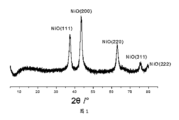
図1は、実施例1のナノ複合材料のX線回折パターンである;
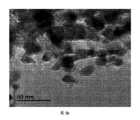
図2aおよび図2bは、種々の倍率における実施例1のナノ複合材料のTEM像である;
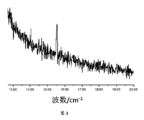
図3は、実施例1のナノ複合材料のラマンスペクトルである;
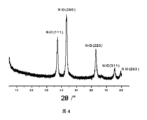
図4は、実施例2のナノ複合材料のX線回折パターンである;
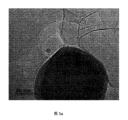
図5aおよび図5bは、種々の倍率での実施例2のナノ複合材料のTEM像である;
図6は、実施例2のナノ複合材料のラマンスペクトルである。
FIG. 1 is an X-ray diffraction pattern of the nanocomposite of Example 1;
2a and 2b are TEM images of the nanocomposite of Example 1 at various magnifications;
FIG. 3 is a Raman spectrum of the nanocomposite of Example 1;
FIG. 4 is the X-ray diffraction pattern of the nanocomposite of Example 2;
5a and 5b are TEM images of the nanocomposite of Example 2 at various magnifications;
FIG. 6 is a Raman spectrum of the nanocomposite of Example 2.
〔本発明の実施形態〕
以下の説明は、当業者が本明細書の説明を参照して本発明を実施することを可能にするために、様々な実施形態または実施例を提供する。もちろん、これらは単なる例であり、限定を意図するものではない。本願に開示される範囲の終点および任意の値は、正確な範囲または値に限定されず、これらの範囲または値に近い値を包含すると理解されるべきである。数値範囲についてはそれぞれの範囲の終点間、それぞれの範囲の終点と個々の値との間、および個々の値の間の値の組み合わせは1つ以上の新しい数値範囲をもたらすことができ、そのような新しい数値範囲は本明細書で具体的に開示されているとみなされるべきである。
[Embodiments of the present invention]
The following description provides various embodiments or examples to enable those skilled in the art to practice the present invention by referring to the description in this specification.Of course, these are merely examples and are not intended to be limiting.The end points of the ranges and any values disclosed in this application should be understood to be not limited to the exact ranges or values, but to include values close to these ranges or values.For numerical ranges, the combination of values between the end points of each range, between the end points of each range and each individual value, and between each individual value can result in one or more new numerical ranges, and such new numerical ranges should be considered to be specifically disclosed in this specification.
本明細書中で直接的に定義されない任意の用語は、本発明の分野において一般に理解されるように、それらに関連する意味を有すると理解されるべきである。本明細書全体を通して使用される以下の用語は別段の指示がない限り、以下の意味を有すると理解されるべきである。 Any terms not directly defined herein should be understood to have the meaning associated with them as commonly understood in the field of the invention. The following terms used throughout this specification should be understood to have the following meanings unless otherwise indicated:
本発明における用語「コア-シェル構造」は、黒鉛化炭素膜である外側膜のシェルと、酸化ニッケルおよびアルミナナノ粒子を含む内側コアとを有するコア-シェル構造を指す。酸化ニッケルとアルミナナノ粒子とを黒鉛化炭素膜で被覆して形成された複合材料は球状または回転楕円状である。 The term "core-shell structure" in the present invention refers to a core-shell structure having an outer membrane shell that is a graphitized carbon membrane and an inner core that contains nickel oxide and alumina nanoparticles. The composite material formed by coating the nickel oxide and alumina nanoparticles with the graphitized carbon membrane is spherical or spheroidal.
用語「黒鉛化炭素膜」は、主に黒鉛化炭素から構成された薄膜構造を指す。 The term "graphitized carbon film" refers to a thin film structure composed primarily of graphitized carbon.
用語「X線光電子分光法により決定された炭素元素含有量」等は、X線光電子分光計を分析ツールとして用いた定量的元素分析により測定された、材料表面の炭素元素の相対含有量を指す。 The term "carbon elemental content determined by X-ray photoelectron spectroscopy" and the like refers to the relative content of carbon element at the surface of a material as measured by quantitative elemental analysis using an X-ray photoelectron spectrometer as the analytical tool.
用語「元素分析により決定された炭素元素含有量」は、元素分析装置を分析ツールとして用いた元素定量分析により測定された材料の全炭素元素の相対含有量を指す。 The term "carbon elemental content determined by elemental analysis" refers to the relative content of the total carbon element in a material as measured by elemental quantitative analysis using an elemental analyzer as the analytical tool.
ナノ複合材料中の成分の量/含有量に言及する場合、含有量は特に明記しない限り、ナノ複合材料の総重量に基づく重量/含有量である。 When referring to the amount/content of a component in a nanocomposite, the content is by weight/content based on the total weight of the nanocomposite, unless otherwise stated.
本発明の第1の態様は炭素被覆ニッケル-アルミニウムナノ複合材料を提供し、このナノ複合材料はシェルとしての外側膜および内側コアを有するコア-シェル構造を含み、外側膜は黒鉛化炭素膜であり、内側コアは酸化ニッケルおよびアルミナを含み、ナノ複合材料の総重量に基づいて、酸化ニッケル含有量が59%~80%、アルミナ含有量が19%~40%、炭素含有量が1%以下である。 A first aspect of the present invention provides a carbon-coated nickel-aluminum nanocomposite, the nanocomposite comprising a core-shell structure having an outer membrane as the shell and an inner core, the outer membrane being a graphitized carbon membrane, the inner core comprising nickel oxide and alumina, the nickel oxide content being 59%-80%, the alumina content being 19%-40%, and the carbon content being 1% or less, based on the total weight of the nanocomposite.
いくつかの実施形態では、本発明のナノ複合材料は、69%~79%の酸化ニッケル含有量、20%~30%のアルミナ含有量、および0.3%~1%の炭素含有量を有する。いくつかの実施形態では、炭素含有量が好ましくは0.95%以下、または0.90%以下である。 In some embodiments, the nanocomposite of the present invention has a nickel oxide content of 69% to 79%, an alumina content of 20% to 30%, and a carbon content of 0.3% to 1%. In some embodiments, the carbon content is preferably 0.95% or less, or 0.90% or less.
本発明によれば、炭素被覆ニッケル-アルミニウムナノ複合材料は外側膜層および内側コアを含むコア-シェル構造を有し、外側膜層は主に黒鉛化炭素膜から構成され、内側コアは酸化ニッケルおよびアルミナを含む。黒鉛化炭素膜は主に黒鉛化炭素から構成される薄膜構造であり、酸化ニッケルおよびアルミナナノ粒子の表面を被覆している。本発明者らは予想外にも、黒鉛化炭素膜で被覆された外層を有するコア-シェル構造が、当該膜層中の炭素含有量は比較的低いものの、材料全体の性能、特に触媒性能を大幅に改善することを発見した。具体的には、コア-シェル構造は、一定の閉じ込め効果を生じさせることができ、内側コア中の酸化ニッケルおよびアルミナナノ粒子の凝集および成長を効果的に回避することができ、複合材料の触媒活性が安定であることを確実にすることができるだけでなく、複合材料全体の触媒活性を相乗的に増大させることができ、炭素膜で被覆されていないニッケル-アルミニウム材料と比較して触媒活性を明らかに改善することができる。 According to the present invention, the carbon-coated nickel-aluminum nanocomposite has a core-shell structure including an outer membrane layer and an inner core, the outer membrane layer is mainly composed of a graphitized carbon film, and the inner core includes nickel oxide and alumina. The graphitized carbon film is a thin film structure mainly composed of graphitized carbon, which coats the surface of nickel oxide and alumina nanoparticles. The inventors unexpectedly discovered that the core-shell structure with an outer layer coated with a graphitized carbon film can greatly improve the performance of the entire material, especially the catalytic performance, although the carbon content in the membrane layer is relatively low. Specifically, the core-shell structure can produce a certain confinement effect, effectively avoid the aggregation and growth of nickel oxide and alumina nanoparticles in the inner core, and not only can ensure that the catalytic activity of the composite material is stable, but can also synergistically increase the catalytic activity of the entire composite material, and obviously improve the catalytic activity compared with nickel-aluminum materials not coated with a carbon film.
いかなる公知の理論によっても限定されないが、本発明のコア-シェル構造において、黒鉛化炭素膜はコアを実質的にカプセル化すると考えられる。一実施形態において、「実質的(に)」カプセル化とは、内側コアの外表面積の少なくとも70%、または少なくとも80%が黒鉛化炭素膜によって覆われていることを意味する。 Without being limited by any known theory, it is believed that in the core-shell structure of the present invention, the graphitized carbon film substantially encapsulates the core. In one embodiment, "substantially" encapsulation means that at least 70%, or at least 80%, of the outer surface area of the inner core is covered by the graphitized carbon film.
本発明の一実施形態によれば、ナノ複合材料において、元素分析により決定された炭素元素含有量に対するX線光電子分光法により決定された炭素元素含有量の重量比(単に、2つの方法により決定された炭素元素含有率と呼ぶことができる)は10以上である。いくつかの実施形態では、2つの方法によって決定された炭素元素含有率は15以上、または20以上である。いくつかの実施形態では、2つの方法によって決定された炭素元素含有率は45以下である。なお、上述したように、X線光電子分光法により決定された炭素元素含有量とは、X線光電子分光計を分析ツールとして用いた定量的元素分析により測定された、材料表面の炭素元素の相対含有量を指す。元素分析において決定された炭素元素含有量とは、元素分析装置を分析ツールとして用いた元素定量分析によって測定された材料の全炭素元素の相対含有量を指す。元素分析により決定された炭素元素含有量に対するX線光電子分光法により決定された炭素元素含有量の比率が比較的大きい場合、ナノ複合材料全体の炭素の大部分は材料の表面に集中して炭素膜層を形成し、コア-シェル構造を形成する。 According to one embodiment of the present invention, in the nanocomposite material, the weight ratio of the carbon element content determined by X-ray photoelectron spectroscopy to the carbon element content determined by elemental analysis (which can be simply referred to as the carbon element content determined by the two methods) is 10 or more. In some embodiments, the carbon element content determined by the two methods is 15 or more, or 20 or more. In some embodiments, the carbon element content determined by the two methods is 45 or less. As described above, the carbon element content determined by X-ray photoelectron spectroscopy refers to the relative content of carbon element on the surface of the material measured by quantitative elemental analysis using an X-ray photoelectron spectrometer as the analysis tool. The carbon element content determined in elemental analysis refers to the relative content of the total carbon element of the material measured by elemental quantitative analysis using an elemental analyzer as the analysis tool. When the ratio of the carbon element content determined by X-ray photoelectron spectroscopy to the carbon element content determined by elemental analysis is relatively large, most of the carbon in the entire nanocomposite material is concentrated on the surface of the material to form a carbon film layer, forming a core-shell structure.
いくつかの実施形態では、本発明のナノ複合材料は、1320cm-1付近のDピークの強度に対する1580cm-1付近のGピークの強度の比率が2以上のラマンスペクトルを有する。いくつかの実施形態では、Dピーク強度に対するGピーク強度の比率が3以下である。当業者に知られているように、DピークおよびGピークは共にC原子結晶のラマン特徴的なピークであり、Dピークは炭素原子格子の欠損を表し、GピークはC原子のsp2混成の面内伸縮振動を表す。Dピーク強度に対するGピーク強度の比率が比較的大きいことは、非晶質炭素原子よりも多くの黒鉛状炭素原子がナノ複合材料中に存在することを示すと理解される。すなわち、本発明のナノ複合材料中の炭素元素は、主に黒鉛状炭素の形態で存在する。黒鉛状炭素はより良好な耐酸化性を有し、コアナノ粒子と協働することによって触媒活性を増大させることができ、それによって複合材料全体の性能を向上させることができる。 In some embodiments, the nanocomposite of the present invention has a Raman spectrum in which the ratio of the intensity of the G peak at about 1580 cm −1 to the intensity of the D peak at about 1320 cm −1 is 2 or more. In some embodiments, the ratio of the G peak intensity to the D peak intensity is 3 or less. As known to those skilled in the art, both the D peak and the G peak are Raman characteristic peaks of C atom crystal, the D peak represents defects in the carbon atom lattice, and the G peak represents the in-plane stretching vibration of the sp 2 hybridization of C atoms. It is understood that a relatively large ratio of the G peak intensity to the D peak intensity indicates the presence of more graphitic carbon atoms than amorphous carbon atoms in the nanocomposite. That is, the carbon element in the nanocomposite of the present invention is mainly present in the form of graphitic carbon. The graphitic carbon has better oxidation resistance and can increase the catalytic activity by cooperating with the core nanoparticles, thereby improving the performance of the overall composite.
いくつかの実施形態では、前述のコア-シェル構造は一般に2nm~100nm、好ましくは5nm~80nmの粒径を有する。 In some embodiments, the core-shell structures generally have a particle size of 2 nm to 100 nm, preferably 5 nm to 80 nm.
いくつかの実施形態では、本発明のナノ複合材料のコアはまた、実際の用途の要件に応じて、物質の性能を高めるためにアルカリ金属酸化物を含んでいてもよく、ナノ複合材料は5重量%以下、好ましくは2.5重量%以下の量のアルカリ金属酸化物を含む。 In some embodiments, the core of the nanocomposite of the present invention may also contain alkali metal oxides to enhance the performance of the material depending on the requirements of the actual application, and the nanocomposite contains alkali metal oxides in an amount of 5 wt% or less, preferably 2.5 wt% or less.
本発明の第2の態様は、ニッケル-アルミニウム前駆体を調製する工程と、ニッケル-アルミニウム前駆体に対して熱処理を行い、炭素源ガスとして低級アルカンを用いて蒸着を行う工程と、蒸着後に得られた生成物に対して酸素処理を行い、ナノ複合材料を得る工程とを含む、炭素被覆ニッケル-アルミニウムナノ複合材料を調製する方法を提供する。 A second aspect of the present invention provides a method for preparing a carbon-coated nickel-aluminum nanocomposite material, comprising the steps of preparing a nickel-aluminum precursor, subjecting the nickel-aluminum precursor to a heat treatment, vapor deposition using a lower alkane as a carbon source gas, and subjecting the product obtained after vapor deposition to an oxygen treatment to obtain a nanocomposite material.
本明細書で提供される揮発性有機化合物を触媒燃焼させる方法のために、いくつかの実施形態では、揮発性有機化合物は、1~4個の炭素原子を有する炭化水素からなる群から選択される1種以上である。例えば、n-ブタン、n-プロパン、エタンおよびメタンが有用である。 For the methods of catalytic combustion of volatile organic compounds provided herein, in some embodiments, the volatile organic compound is one or more selected from the group consisting of hydrocarbons having 1 to 4 carbon atoms. For example, n-butane, n-propane, ethane, and methane are useful.
いくつかの実施形態では、酸化反応は、揮発性有機化合物および標準ガスを含有する混合ガスを触媒と接触させることによる触媒燃焼を含み、標準ガスは酸素を含有し、そのバランスガスは窒素またはアルゴン等の不活性ガスであってもよく、混合ガスは0.01~2体積%の揮発性有機化合物および5~20体積%の酸素を含む。 In some embodiments, the oxidation reaction includes catalytic combustion by contacting a gas mixture containing the volatile organic compounds and a standard gas with a catalyst, the standard gas containing oxygen and the balance gas may be an inert gas such as nitrogen or argon, the gas mixture containing 0.01-2% by volume of the volatile organic compounds and 5-20% by volume of oxygen.
いくつかの実施形態では、酸化反応は、1000~5000mlの反応ガス/(時間・g触媒)の空間速度で行われる。本発明によって可能とされる高い反応空間速度は、当該反応が適用される場合、本発明の触媒が高い活性および大きなデバイス処理能力を有することを示す。 In some embodiments, the oxidation reaction is carried out at a space velocity of 1000-5000 ml of reactant gas/(hr·g catalyst). The high reaction space velocity enabled by the present invention indicates that the catalyst of the present invention has high activity and large device throughput when applied to such reactions.
いくつかの実施形態では、酸化反応は、300℃~450℃、好ましくは350℃~400℃の温度で行われる。これは、本発明の触媒を用いることにより、触媒酸化反応が低温で良好に実施され得ることを示す。 In some embodiments, the oxidation reaction is carried out at a temperature of 300°C to 450°C, preferably 350°C to 400°C. This shows that by using the catalyst of the present invention, catalytic oxidation reactions can be carried out well at low temperatures.
本発明によれば、上述したように、工業的排ガスは揮発性有機化合物(VOC)を含むことが多く、VOCは光化学スモッグの主な原因の一つであり、窒素酸化物、吸入性粒子等とともに重要な大気汚染物質と考えられており、また、有害性、発がん性等が高く、それゆえ、優れた性能を有する触媒酸化材料が救済策として緊急に求められている。 According to the present invention, as described above, industrial exhaust gases often contain volatile organic compounds (VOCs), which are one of the main causes of photochemical smog and are considered to be important air pollutants along with nitrogen oxides, respirable particulates, etc., and are highly harmful and carcinogenic, etc. Therefore, catalytic oxidation materials with excellent performance are urgently needed as a remedy.
本発明は、優れた触媒活性および低温での安定性を示す、VOCを触媒して燃焼させるための新規な触媒を使用する。当該触媒は外側膜層および内側コア層を含むコア-シェル構造を有し、外側膜層は主に黒鉛化炭素膜から構成され、黒鉛化炭素膜は、酸化ニッケルおよびアルミナの表面を被覆する黒鉛化炭素から主に構成される薄膜構造である。本発明者らは予想外にも、黒鉛化炭素膜で被覆された外層を有するコア-シェル構造が、当該膜層中の炭素含有量は比較的低いものの、材料全体の性能、特に触媒性能を大幅に改善することを発見した。具体的には、コア-シェル構造は、一定の閉じ込め効果を生じさせることができ、内側コア中の酸化ニッケルおよびアルミナナノ粒子の凝集および成長を効果的に回避することができ、複合材料の触媒活性が安定であることを確実にすることができるだけでなく、複合材料全体の触媒活性を相乗的に増大させることができ、炭素膜で被覆されていないニッケル-アルミニウム材料と比較して触媒活性を明らかに改善することができる。 The present invention uses a novel catalyst for catalyzing the combustion of VOCs, which exhibits excellent catalytic activity and stability at low temperature. The catalyst has a core-shell structure including an outer membrane layer and an inner core layer, the outer membrane layer is mainly composed of a graphitized carbon film, and the graphitized carbon film is a thin film structure mainly composed of graphitized carbon coating the surface of nickel oxide and alumina. The inventors unexpectedly discovered that the core-shell structure with the outer layer coated with a graphitized carbon film significantly improves the performance of the whole material, especially the catalytic performance, although the carbon content in the membrane layer is relatively low. Specifically, the core-shell structure can produce a certain confinement effect, effectively avoid the aggregation and growth of nickel oxide and alumina nanoparticles in the inner core, and not only can ensure that the catalytic activity of the composite material is stable, but can also synergistically increase the catalytic activity of the whole composite material, and obviously improve the catalytic activity compared with nickel-aluminum materials not coated with a carbon film.
炭素被覆ニッケル-アルミニウムナノ複合材料を調製する方法は、ニッケル-アルミニウム前駆体を調製する工程と、ニッケル-アルミニウム前駆体に対して熱処理を行い、炭素源ガスとして低級アルカンを用いて蒸着を行う工程と、蒸着後に得られた生成物に対して酸素処理を行い、炭素被覆ナノ複合材料を得る工程とを含む。 The method for preparing a carbon-coated nickel-aluminum nanocomposite material includes the steps of preparing a nickel-aluminum precursor, subjecting the nickel-aluminum precursor to a heat treatment, performing deposition using a lower alkane as a carbon source gas, and subjecting the product obtained after deposition to an oxygen treatment to obtain a carbon-coated nanocomposite material.
本発明によって提供される調製方法によれば、ニッケル-アルミニウム前駆体が調製され、次いで、黒鉛シェルが蒸着によってニッケル-アルミニウムコアの外表面上を包む。本発明によって調製されるニッケル-アルミニウム前駆体は一般にハイドロタルサイト結晶構造を有し、当業者によって、共沈および/または水熱結晶化等の種々の方法により調製され得る。 According to the preparation method provided by the present invention, a nickel-aluminum precursor is prepared, and then a graphite shell is wrapped on the outer surface of the nickel-aluminum core by vapor deposition. The nickel-aluminum precursor prepared by the present invention generally has a hydrotalcite crystal structure and can be prepared by a person skilled in the art by various methods such as co-precipitation and/or hydrothermal crystallization.
具体的には、ニッケル-アルミニウム前駆体は以下の方法によって調製され得るが、これに限定されない。 Specifically, the nickel-aluminum precursor can be prepared by, but is not limited to, the following methods:
本発明の具体的な実施形態によれば、ニッケル-アルミニウム前駆体は、アルカリ溶液と、3価のアルミニウム塩および2価のニッケル塩を含む水溶液とを同時に水中に滴下して沈殿処理し、その結果、3価のアルミニウム塩と2価のニッケル塩とが共沈物を生成する工程と、共沈物を熟成させる工程と、を含む共沈法によって調製される。3価のアルミニウム塩および2価のニッケル塩を含む水溶液の供給量は、目的とする炭素被覆ニッケル-アルミニウム複合材料中のニッケル/アルミニウム含有量に応じて制御することができ、3価のアルミニウム塩および2価のニッケル塩が完全に沈殿するようにアルカリ溶液の添加量を制御する。水へのアルカリ溶液、3価のアルミニウム塩および2価のニッケル塩の同時添加は、初期滴下中のアルカリ溶液、アルミニウム塩およびニッケル塩の分散効果を改善することができる。また、3価のアルミニウム塩および2価のニッケル塩は水に可溶であれば本発明において特に限定されず、アルカリ溶液中の塩基は3価のアルミニウム塩および2価のニッケル塩を沈殿させることができるものであれば特に限定されない。例えば、3価のアルミニウム塩は硝酸アルミニウムおよび/または塩化アルミニウムを含んでいてもよく、2価のニッケル塩は硝酸ニッケルおよび/または塩化ニッケルを含んでいてもよく、3価のアルミニウム塩中のアルミニウムと2価のニッケル塩中のニッケルとのモル比は1:(2~4)であってもよく、前記3価のアルミニウム塩は、0.3~0.6mol/lのモル濃度で使用され得る。アルカリ溶液は水酸化ナトリウムおよび炭酸ナトリウムを含む水溶液であってもよく、水酸化ナトリウムアルカリ溶液の濃度は0.2~4mol/Lであり、アルカリ溶液中の炭酸ナトリウムの濃度は0.1~2mol/Lである。水酸化ナトリウムと、3価のアルミニウム塩および2価のニッケル塩中のアルミニウムおよびニッケルの総モルとのモル比は(2~4):1であってもよく、炭酸ナトリウムと、3価のアルミニウム塩および2価のニッケル塩中のアルミニウムおよびニッケルの総モルとのモル比は(0.5~2):1であってもよい。 According to a specific embodiment of the present invention, the nickel-aluminum precursor is prepared by a coprecipitation method including a step of simultaneously dropping an alkaline solution and an aqueous solution containing a trivalent aluminum salt and a divalent nickel salt into water to perform a precipitation process, thereby forming a coprecipitate of the trivalent aluminum salt and the divalent nickel salt, and a step of aging the coprecipitate. The supply amount of the aqueous solution containing the trivalent aluminum salt and the divalent nickel salt can be controlled according to the nickel/aluminum content in the target carbon-coated nickel-aluminum composite material, and the amount of the alkaline solution added is controlled so that the trivalent aluminum salt and the divalent nickel salt are completely precipitated. The simultaneous addition of the alkaline solution, the trivalent aluminum salt, and the divalent nickel salt to water can improve the dispersion effect of the alkaline solution, the aluminum salt, and the nickel salt during the initial dropping. In addition, the trivalent aluminum salt and the divalent nickel salt are not particularly limited in the present invention as long as they are soluble in water, and the base in the alkaline solution is not particularly limited as long as it can precipitate the trivalent aluminum salt and the divalent nickel salt. For example, the trivalent aluminum salt may include aluminum nitrate and/or aluminum chloride, the divalent nickel salt may include nickel nitrate and/or nickel chloride, the molar ratio of aluminum in the trivalent aluminum salt to nickel in the divalent nickel salt may be 1:(2-4), and the trivalent aluminum salt may be used at a molar concentration of 0.3-0.6 mol/l. The alkaline solution may be an aqueous solution containing sodium hydroxide and sodium carbonate, the concentration of the sodium hydroxide alkaline solution is 0.2-4 mol/L, and the concentration of sodium carbonate in the alkaline solution is 0.1-2 mol/L. The molar ratio of sodium hydroxide to the total molar amounts of aluminum and nickel in the trivalent aluminum salt and the divalent nickel salt may be (2-4):1, and the molar ratio of sodium carbonate to the total molar amounts of aluminum and nickel in the trivalent aluminum salt and the divalent nickel salt may be (0.5-2):1.
本発明によれば、沈殿処理とは、アルカリ溶液を用いることにより3価のアルミニウム塩と2価のニッケル塩とから沈殿物を生成させるプロセスを指し、アルカリ溶液は滴下、ポンプ圧送または流し込みなどの様々な方法で、3価のアルミニウム塩および2価のニッケル塩と混合することができる。熟成処理とは、沈殿処理により生成した沈殿物をさらに反応させてニッケル-アルミニウムハイドロタルサイト結晶を得ることを指す。沈殿処理および熟成処理の工程は、ニッケル-アルミニウム前駆体が得られる限り本発明において特に限定されない。例えば、前記処理は、沈殿プロセスのスピードを上げるために、室温から100℃未満、好ましくは40℃から100℃未満の温度の条件下で操作され得る。滴下を開始した後、ニッケルイオンおよびアルミニウムイオンは、7を超える、好ましくは8~9のpH値を含む条件下で沈殿するように制御され、そのために、特定の操作は、アルカリ溶液の滴下速度によって水溶液のpH値を8~9に制御すること、および8未満のpH値が所望される場合にはアルカリ溶液の滴下速度を加速すること、ならびに9より高いpH値が所望される場合にはアルカリ溶液の滴下速度を減速することを含み得る。熟成処理は、40℃から100℃未満の温度で2~72時間、好ましくは6~72時間、より好ましくは24~48時間操作され得る。熟成処理により得られたニッケル-アルミニウムハイドロタルサイト結晶をさらに洗浄して中性とし、乾燥させることにより、ニッケル-アルミニウム前駆体を得ることができる。 According to the present invention, the precipitation treatment refers to a process of producing a precipitate from a trivalent aluminum salt and a divalent nickel salt by using an alkaline solution, and the alkaline solution can be mixed with the trivalent aluminum salt and the divalent nickel salt by various methods such as dripping, pumping or pouring. The aging treatment refers to further reacting the precipitate produced by the precipitation treatment to obtain nickel-aluminum hydrotalcite crystals. The steps of the precipitation treatment and the aging treatment are not particularly limited in the present invention as long as a nickel-aluminum precursor is obtained. For example, the treatment can be operated under conditions of a temperature from room temperature to less than 100°C, preferably from 40°C to less than 100°C, in order to increase the speed of the precipitation process. After starting the dripping, the nickel ions and aluminum ions are controlled to precipitate under conditions including a pH value of more than 7, preferably 8 to 9, and for this purpose, the specific operation can include controlling the pH value of the aqueous solution to 8 to 9 by the dripping speed of the alkaline solution, and accelerating the dripping speed of the alkaline solution when a pH value of less than 8 is desired, and slowing down the dripping speed of the alkaline solution when a pH value higher than 9 is desired. The aging treatment can be carried out at a temperature of 40°C to less than 100°C for 2 to 72 hours, preferably 6 to 72 hours, and more preferably 24 to 48 hours. The nickel-aluminum hydrotalcite crystals obtained by the aging treatment can be further washed to neutralize them and dried to obtain a nickel-aluminum precursor.
本発明の一実施形態によれば、昇温熱処理は、保護ガスの存在下でニッケル-アルミニウム前駆体の温度を500~900℃に上昇させることを含み、保護ガスは窒素および/またはアルゴンであり、保護ガスの流量は10~500ml/(分・gニッケル-アルミニウム前駆体)であり、昇温速度は1~5℃/分である。保護ガスはニッケル-アルミニウム前駆体の昇温プロセスにおいてキャリアガスとして使用され、その結果、ニッケル-アルミニウム前駆体は、還元反応および炭素堆積反応の間に空気と接触して危険を引き起こすことが防止され、黒鉛シェルは、黒鉛シェルを用いて被覆した後に空気と接触して高温で酸化されることが防止される。 According to one embodiment of the present invention, the temperature-raising heat treatment includes increasing the temperature of the nickel-aluminum precursor to 500-900°C in the presence of a protective gas, the protective gas being nitrogen and/or argon, the flow rate of the protective gas being 10-500 ml/(min g nickel-aluminum precursor), and the heating rate being 1-5°C/min. The protective gas is used as a carrier gas in the heating process of the nickel-aluminum precursor, so that the nickel-aluminum precursor is prevented from contacting with air during the reduction reaction and the carbon deposition reaction and causing danger, and the graphite shell is prevented from contacting with air and being oxidized at high temperature after being coated with the graphite shell.
いくつかの実施形態では、黒鉛炭素シェルが蒸着によって材料の表面上に形成される。蒸着は750~900℃、好ましくは780~850℃の温度で5~240分間、好ましくは60~120分間行われる。炭素源ガスは好ましくはメタンまたはエタンであり、10~500ml/(分・gニッケル-アルミニウム前駆体)、好ましくは30~100ml/(分・gニッケル-アルミニウム前駆体)、より好ましくは30~60ml/(分・gニッケル-アルミニウム前駆体)の流量で使用される。 In some embodiments, a graphitic carbon shell is formed on the surface of the material by vapor deposition. The vapor deposition is carried out at a temperature of 750-900°C, preferably 780-850°C, for 5-240 minutes, preferably 60-120 minutes. The carbon source gas is preferably methane or ethane, used at a flow rate of 10-500 ml/min·g nickel-aluminum precursor, preferably 30-100 ml/min·g nickel-aluminum precursor, more preferably 30-60 ml/min·g nickel-aluminum precursor.
本発明によれば、ニッケル-アルミニウム前駆体が得られた後、昇温熱処理を受けたニッケル-アルミニウム前駆体をさらに水素と接触させて還元処理する。還元処理は一方では水酸化物(ハイドロタルサイト)の形態で存在するニッケル-アルミニウム前駆体がさらに脱水され、他方では生成されたニッケル-アルミニウム酸化物が還元されて、活性中心としてニッケル元素を生成する機能を有する。水素還元処理は、500~900℃の温度で120~480分間、30~50ml/(分・gニッケル-アルミニウム前駆体)の水素流量で操作され得る。 According to the present invention, after the nickel-aluminum precursor is obtained, the nickel-aluminum precursor that has been subjected to the temperature-raising heat treatment is further contacted with hydrogen for reduction treatment. The reduction treatment has the function of further dehydrating the nickel-aluminum precursor present in the form of hydroxide (hydrotalcite) on the one hand, and reducing the produced nickel-aluminum oxide on the other hand to produce elemental nickel as an active center. The hydrogen reduction treatment can be carried out at a temperature of 500 to 900°C for 120 to 480 minutes with a hydrogen flow rate of 30 to 50 ml/(min.g. nickel-aluminum precursor).
本発明によれば、ニッケル-アルミニウム前駆体が得られた後、昇温熱処理を受けたニッケル-アルミニウム前駆体をさらに水素と接触させて還元処理する。還元処理は、一方では水酸化物(ハイドロタルサイト)の形態で存在するニッケル-アルミニウム前駆体がさらに脱水されてニッケル‐アルミニウム酸化物を生成し、他方では生成されたニッケル-アルミニウム酸化物が還元されて、活性中心としてニッケル元素を生成する機能を有し、その結果、アルミナと酸化ニッケルとが結合して非晶質構造を形成し、黒鉛シェル中のカルボキシル酸素の割合が低減され得る。水素還元処理は、500~900℃の温度で120~480分間、30~50ml/(分・gニッケル-アルミニウム前駆体)の水素流量で操作され得る。水素還元処理の条件は、500~900℃の温度、120~480分の時間、および30~50ml/(分 gニッケル-アルミニウム前駆体)の水素流を含み得る。 According to the present invention, after the nickel-aluminum precursor is obtained, the nickel-aluminum precursor that has been subjected to the elevated temperature heat treatment is further contacted with hydrogen for reduction treatment. The reduction treatment has the function of, on the one hand, further dehydrating the nickel-aluminum precursor present in the form of hydroxide (hydrotalcite) to produce nickel-aluminum oxide, and on the other hand, reducing the produced nickel-aluminum oxide to produce nickel element as the active center, so that alumina and nickel oxide are combined to form an amorphous structure, and the proportion of carboxyl oxygen in the graphite shell can be reduced. The hydrogen reduction treatment can be operated at a temperature of 500-900°C for 120-480 minutes with a hydrogen flow rate of 30-50 ml/(min g nickel-aluminum precursor). The conditions of the hydrogen reduction treatment can include a temperature of 500-900°C, a time of 120-480 minutes, and a hydrogen flow rate of 30-50 ml/(min g nickel-aluminum precursor).
本発明の一実施形態によれば、本方法は、ニッケル-アルミニウム前駆体とアルカリ金属の塩溶液とを混合して共沈反応させ、次いで得られた沈殿物に対して昇温熱処理を行うことをさらに含み、ニッケルに対する前記アルカリ金属のモル比が0.2以下である。本発明の発明者らは、昇温熱処理に先立ち、上記の少量のアルカリ金属との共沈により、複合材料が、N2O等の酸性酸化物を触媒する触媒として用いられた場合に、さらに改善された触媒活性を示し得ることを見出した。 According to one embodiment of the present invention, the method further comprises mixing the nickel-aluminum precursor with a salt solution of an alkali metal to cause a co-precipitation reaction, and then subjecting the resulting precipitate to a heat treatment at elevated temperature, wherein the molar ratio of said alkali metal to nickel is less than or equal to 0.2. The inventors of the present invention have found that by co-precipitation with a small amount of alkali metal prior to the heat treatment at elevated temperature, the composite material can exhibit further improved catalytic activity when used as a catalyst to catalyze acidic oxides such as N 2 O.
いくつかの実施形態では、蒸着後に得られた生成物に対して酸素処理を行うことをさらに含み、それによって黒鉛化炭素膜の具体的な構造が形成される。 In some embodiments, the method further includes subjecting the product obtained after deposition to an oxygen treatment, thereby forming the specific structure of the graphitized carbon film.
いくつかの実施形態では、酸素処理は、蒸着後に得られた生成物に標準ガスを導入して加熱することを含み、標準ガスは、酸素およびバランスガスを含み、10%~40体積%、任意で10%~30体積%の酸素濃度を有する。バランスガスは窒素またはアルゴン等の不活性ガスであってもよいが、本発明はこれに限定されない。 In some embodiments, the oxygen treatment includes introducing and heating a standard gas into the product obtained after deposition, the standard gas including oxygen and a balance gas having an oxygen concentration of 10% to 40% by volume, optionally 10% to 30% by volume. The balance gas may be an inert gas such as nitrogen or argon, although the invention is not limited thereto.
いくつかの実施形態では、酸素処理は、200℃~500℃、好ましくは300℃~400℃で0.5h~10h行われ、その後、本発明による炭素被覆ニッケル-アルミニウムナノ複合材料を得ることができる。 In some embodiments, the oxygen treatment is carried out at 200°C to 500°C, preferably 300°C to 400°C, for 0.5 h to 10 h, after which the carbon-coated nickel-aluminum nanocomposite according to the present invention can be obtained.
当業者であれば、炭素が高温で酸素と接触すると酸化反応を受けて気体を形成することが理解でき、蒸着後の生成物は、約3%~8%の炭素含有量を有するニッケルアルミニウムコアを被覆する黒鉛化炭素シェルを有するナノ複合材料を形成することが理解されるであろう。生成物を酸素で処理した後、材料中の炭素の大部分は、酸化反応と共に失われる。しかしながら、本発明の発明者らは予想外にも、酸素処理された材料については、炭素の大部分が燃え尽きる一方で、コアのニッケルおよびアルミニウムが酸化されるだけでなく、少量の炭素が残存することを見出した。上述のように、XPSおよびラマンスペクトル検出分析により、炭素の一部は酸化ニッケルおよびアルミナの表面を被覆している黒鉛化炭素膜層であり、この炭素膜層はさらに複数の優れた特性を有することから、ナノ複合材料は、触媒材料、エネルギー貯蔵材料および電磁材料に大きな応用可能性を有することが判明した。 Those skilled in the art will understand that carbon undergoes an oxidation reaction to form a gas when it comes into contact with oxygen at high temperatures, and the product after deposition forms a nanocomposite material with a graphitized carbon shell covering a nickel aluminum core with a carbon content of about 3% to 8%. After the product is treated with oxygen, most of the carbon in the material is lost along with the oxidation reaction. However, the inventors of the present invention unexpectedly found that for the oxygen-treated material, most of the carbon is burned off, while not only the nickel and aluminum in the core are oxidized, but also a small amount of carbon remains. As mentioned above, XPS and Raman spectrum detection analysis show that part of the carbon is a graphitized carbon film layer covering the surface of nickel oxide and alumina, and this carbon film layer further has several excellent properties, so that the nanocomposite material has great application potential in catalytic materials, energy storage materials and electromagnetic materials.
本発明の一実施形態によれば、X線回折パターン(XRD)において、酸化ニッケルの特徴的なピークのみが、ニッケル元素の特徴的なピークなしに存在し、これはコアのニッケルが完全に酸化されていることを示し、それゆえ、結果として得られるナノ複合材料のコアは酸化ニッケルおよびアルミナからなる。本発明によれば、ナノ複合材料は、1%以下、0.5%以下、0.1%以下、または0.01%以下のニッケル元素の含有量を有し得る。 According to one embodiment of the present invention, in the X-ray diffraction pattern (XRD), only the characteristic peaks of nickel oxide are present without the characteristic peaks of elemental nickel, indicating that the nickel in the core is fully oxidized, and therefore the core of the resulting nanocomposite consists of nickel oxide and alumina. According to the present invention, the nanocomposite may have an elemental nickel content of 1% or less, 0.5% or less, 0.1% or less, or 0.01% or less.
当業者であれば、炭素が高温で酸素と接触すると酸化反応を受けて気体を形成することが理解でき、蒸着後の生成物は、約3%~8%の炭素含有量を有するニッケルアルミニウムコアを被覆する黒鉛化炭素シェルを有するナノ複合材料を形成することが理解されるであろう。生成物を酸素で処理した後、材料中の炭素の大部分は、酸化反応と共に失われる。しかしながら、本発明の発明者らは予想外にも、酸素処理された材料については、炭素の大部分が燃え尽きる一方で、コアのニッケルおよびアルミニウムが酸化されるだけでなく、少量の炭素が残存することを見出した。上述のように、XPSおよびラマンスペクトル検出分析により、炭素の一部は酸化ニッケルおよびアルミナの表面を被覆している黒鉛化炭素膜層であり、この炭素膜層はさらに複数の優れた特性を有することから、ナノ複合材料は、触媒材料、エネルギー貯蔵材料および電磁材料、特に触媒活性に大きな応用可能性を有することが判明した。ナノ複合材料は、揮発性有機化合物の触媒燃焼に有用であり、優れた触媒活性および安定性を示し、低温でVOCの酸化燃焼を高効率で触媒することができ、VOCの浄化の問題を解決するのに有益であり、大気汚染を低減するのに重要な意味を有する。 Those skilled in the art will understand that carbon undergoes an oxidation reaction to form a gas when it comes into contact with oxygen at high temperatures, and the product after deposition forms a nanocomposite material with a graphitized carbon shell covering a nickel aluminum core with a carbon content of about 3% to 8%. After the product is treated with oxygen, most of the carbon in the material is lost along with the oxidation reaction. However, the inventors of the present invention unexpectedly found that for the oxygen-treated material, most of the carbon is burned out, while not only the nickel and aluminum in the core are oxidized, but also a small amount of carbon remains. As mentioned above, XPS and Raman spectrum detection analysis show that part of the carbon is a graphitized carbon film layer covering the surface of nickel oxide and alumina, and this carbon film layer further has several excellent properties, so that the nanocomposite material has great application potential in catalytic materials, energy storage materials and electromagnetic materials, especially catalytic activity. Nanocomposite materials are useful for the catalytic combustion of volatile organic compounds, exhibit excellent catalytic activity and stability, and can catalyze the oxidation combustion of VOCs at low temperatures with high efficiency, which is beneficial for solving the problem of VOC purification and has important significance for reducing air pollution.
本発明はまた、触媒を亜酸化窒素と接触させて触媒分解反応させ、窒素および酸素を生成することを含む、亜酸化窒素を分解するための触媒としての上記ナノ複合材料の使用を提供する。具体的には、触媒を設置した反応器に一酸化二窒素を含むガスを導入し、触媒分解反応を実施する。 The present invention also provides a use of the nanocomposite as a catalyst for decomposing nitrous oxide, which comprises contacting the catalyst with nitrous oxide to effect a catalytic decomposition reaction to produce nitrogen and oxygen. Specifically, a gas containing nitrous oxide is introduced into a reactor in which the catalyst is placed, and the catalytic decomposition reaction is carried out.
いくつかの実施形態では、触媒分解反応が300℃~400℃、好ましくは350℃~380℃の温度で行われる。触媒分解反応は、1000~3000mlの反応ガス/(時間・g触媒)の空間速度で行われる。本発明によって可能とされる高い反応空間速度は、当該反応が適用される場合、本発明の触媒が高い活性およびデバイスのための大きな処理能力を有することを示す。 In some embodiments, the catalytic decomposition reaction is carried out at a temperature of 300°C to 400°C, preferably 350°C to 380°C. The catalytic decomposition reaction is carried out at a space velocity of 1000 to 3000 ml of reactant gas/(hr·g catalyst). The high reaction space velocity enabled by the present invention indicates that the catalyst of the present invention has high activity and large throughput for the device when applied to such reactions.
本発明によれば、上述したように、現在研究および報告されているN2Oの分解用触媒は、主に貴金属触媒、イオン交換モレキュラーシーブ触媒および遷移金属酸化物触媒である。貴金属触媒は低い分解温度を有するが、貴金属触媒は高価であり、大規模な工業生産には適していない。他のモレキュラーシーブ触媒および遷移金属酸化物触媒は450~550℃の高効率分解温度を有し、反応に必要な高温は、工業コストを大幅に増大させる。また、亜酸化窒素の分解により酸素が発生し、触媒が失活しやすくなる。 According to the present invention, as mentioned above, the catalysts for decomposition of N 2 O currently studied and reported are mainly noble metal catalysts, ion-exchange molecular sieve catalysts and transition metal oxide catalysts. Noble metal catalysts have low decomposition temperatures, but noble metal catalysts are expensive and not suitable for large-scale industrial production. Other molecular sieve catalysts and transition metal oxide catalysts have high-efficiency decomposition temperatures of 450-550°C, and the high temperatures required for the reaction significantly increase industrial costs. In addition, the decomposition of nitrous oxide generates oxygen, which makes the catalyst easily deactivated.
しかしながら、本発明の発明者らは、本発明の炭素被覆ニッケル-アルミニウムナノ複合材料を触媒として使用することにより、亜酸化窒素を窒素と酸素とに効果的に分解することができ、反応において優れた触媒活性安定性を示すことを見出した。また、既存の触媒を亜酸化窒素の分解の触媒に用いる場合、工業生産から高濃度で得られる亜酸化窒素を一般に約0.5%~2%に希釈する必要があるが、本発明の触媒は、直接的に分解に用いて、希釈せずに高分解速度を達成することができる。すなわち、体積濃度が30~40%の場合に、亜酸化窒素を99%以上の分解率で触媒分解反応させることができるため、工業コストが大幅に低減され、本方法は工業的利用の見通しが良好である。 However, the inventors of the present invention have found that by using the carbon-coated nickel-aluminum nanocomposite material of the present invention as a catalyst, nitrous oxide can be effectively decomposed into nitrogen and oxygen, and that the material exhibits excellent catalytic activity stability in the reaction. In addition, when existing catalysts are used as catalysts for the decomposition of nitrous oxide, nitrous oxide obtained in high concentrations from industrial production generally needs to be diluted to about 0.5% to 2%, but the catalyst of the present invention can be used directly for decomposition and achieve a high decomposition rate without dilution. In other words, when the volume concentration is 30 to 40%, nitrous oxide can be catalytically decomposed at a decomposition rate of 99% or more, which significantly reduces industrial costs and makes this method suitable for industrial use.
〔実施例〕
以下の実施例によって本発明をさらに説明するが、それに限定されるものではない。特に明記しない限り、本発明で使用される全ての試薬は分析的に純粋である。
[Example]
The present invention is further illustrated, but not limited, by the following examples.Unless otherwise specified, all reagents used in the present invention are analytically pure.
本発明によれば、材料の表面上の元素は、X線光電子スペクトル分析器(XPS)によって検出された。使用したX線光電子スペクトル分析器はAvantage V5.926ソフトウェアを搭載したVG Scientific社製のESCALab220i-XL光電子分析器であり、X線光電子スペクトル分析器の分析および試験条件は、電力330Wの単色化A1KαX線の励起源と、分析試験用の3×10⁻⁹mbarのベース真空とを含んでいた。 According to the present invention, the elements on the surface of the material were detected by X-ray photoelectron spectroscopy (XPS). The X-ray photoelectron spectroscopy used was a VG Scientific ESCALab220i-XL photoelectron spectroscopy equipped with Avantage V5.926 software, and the analysis and test conditions of the X-ray photoelectron spectroscopy included an excitation source of monochromated A1Kα X-rays with a power of 330 W and a base vacuum of 3×10 −9 mbar for the analysis test.
炭素(C)元素の分析は、炭素(C)、水素(H)、酸素(O)および窒素(N)の4元素を分析するために主に使用されていたElementar Micro Cube元素分析装置で行われ、具体的な操作方法および条件としては、サンプル1~2mgを錫カップに秤量し、サンプルを自動サンプル供給ディスクに入れ、燃焼用ボールバルブを通してサンプルを燃焼管に供給し、燃焼温度を1000℃(サンプル供給中の雰囲気による干渉を避けるため、パージにはヘリウムガスを採用した)とし、次いで還元銅を用いて燃焼ガスを還元して窒素、二酸化炭素、および水を生成した。混合ガスを3つの脱着カラムによって分離し、検出のためにTCD検出器に連続的に供給した。酸素元素は、サンプル中の酸素を熱分解によって炭素触媒の作用下でCOに変換し、次いでTCDを用いてCOを検出することによって分析される。本発明の複合材料は炭素および金属酸化物のみを含むため、炭素元素の含有量から金属酸化物の総含有量を知ることができた。 The analysis of carbon (C) element was carried out by Elemental Micro Cube elemental analyzer, which was mainly used to analyze the four elements of carbon (C), hydrogen (H), oxygen (O) and nitrogen (N). The specific operation method and conditions were as follows: 1-2 mg of sample was weighed into a tin cup, the sample was put into an automatic sample supply disk, the sample was supplied to the combustion tube through the combustion ball valve, the combustion temperature was 1000°C (helium gas was adopted for purging to avoid interference from the atmosphere during sample supply), and then the combustion gas was reduced using reduced copper to produce nitrogen, carbon dioxide and water. The mixed gas was separated by three desorption columns and continuously supplied to the TCD detector for detection. The oxygen element was analyzed by converting the oxygen in the sample to CO under the action of a carbon catalyst by thermal decomposition, and then detecting CO using a TCD. Since the composite material of the present invention only contains carbon and metal oxides, the total content of metal oxides could be known from the content of carbon element.
異なる金属酸化物の比率を蛍光X線分光計(XRF)によって測定し、複合材料中の異なる金属酸化物の含有量を、炭素元素の既知の含有量に従って計算した。本発明で使用した蛍光X線スペクトル分析器(XRF)はRigaku 3013蛍光X線分光計であり、分析および試験条件は、100秒の走査時間および空気雰囲気であった。 The ratio of different metal oxides was measured by X-ray fluorescence spectrometer (XRF), and the contents of different metal oxides in the composites were calculated according to the known contents of carbon element. The X-ray fluorescence spectrometer (XRF) used in this invention was a Rigaku 3013 X-ray fluorescence spectrometer, and the analysis and test conditions were a scan time of 100 seconds and air atmosphere.
本発明で使用されたラマン検出は、日本、HORIBA社製のレーザ波長325nmのLabRAM HR UV-NIRレーザ共焦点ラマン分光計であった。 The Raman detector used in this invention was a LabRAM HR UV-NIR laser confocal Raman spectrometer with a laser wavelength of 325 nm manufactured by HORIBA, Japan.
本発明により使用された高分解能透過型電子顕微鏡(HRTEM)は、JEM-2100(HRTEM)(JEOL.)であり、高分解能透過型電子顕微鏡の試験条件は、加速電圧200kVを含んでいた。 The high-resolution transmission electron microscope (HRTEM) used in the present invention was a JEM-2100 (HRTEM) (JEOL.), and the test conditions for the high-resolution transmission electron microscope included an acceleration voltage of 200 kV.
本発明により使用されたXRD回折装置は、XRD-6000 X線粉末回折装置(日本、島津)であり、XRD試験条件は、Cuターゲット、Kα線(波長λ=0.154nm)、管電圧40kV、管電流200mA、走査速度10°(2θ)/分を含んでいた。 The XRD diffractometer used in the present invention was an XRD-6000 X-ray powder diffractometer (Shimadzu, Japan), and the XRD test conditions included a Cu target, Kα radiation (wavelength λ = 0.154 nm), a tube voltage of 40 kV, a tube current of 200 mA, and a scan speed of 10° (2θ)/min.
実施例1
この実施例は、本発明に係る炭素被覆ニッケル-アルミニウムナノ複合材料の調製を例示した。
Example 1
This example illustrates the preparation of a carbon-coated nickel-aluminum nanocomposite according to the present invention.
(1)硝酸ニッケル六水和物11.64g(0.04mol)および硝酸アルミニウム九水和物7.5g(0.02mol)を秤量し、脱イオン水60mlを加えて混合塩溶液を調製した。脱イオン水120mlに水酸化ナトリウム5.40g(0.135mol)および無水炭酸ナトリウム5.08g(0.048mol)を加え、混合アルカリ溶液を調製した。2つの混合溶液を、撹拌しながら、脱イオン水100mlを予め充填した三つ口フラスコに60℃の一定温度で同時に滴下し、三つ口フラスコ中の3価のアルミニウム塩および2価のニッケル塩の沈殿物をpH=8.4(すなわち8.3~8.5)に厳密に制御し、滴下後60℃で連続的に撹拌し、30分間、80℃で24時間熟成し、遠心洗浄して中性にし、80℃で4時間乾燥し、次いで炭酸カリウム0.14g(0.001mol)と混合し、脱イオン水150mlを加え、60℃で10時間撹拌し、80℃で10時間乾燥して、アルカリ金属と共沈したニッケル-アルミニウム前駆体を得た。 (1) 11.64 g (0.04 mol) of nickel nitrate hexahydrate and 7.5 g (0.02 mol) of aluminum nitrate nonahydrate were weighed out and 60 ml of deionized water was added to prepare a mixed salt solution. 5.40 g (0.135 mol) of sodium hydroxide and 5.08 g (0.048 mol) of anhydrous sodium carbonate were added to 120 ml of deionized water to prepare a mixed alkali solution. The two mixed solutions were simultaneously dropped into a three-necked flask pre-filled with 100 ml of deionized water at a constant temperature of 60°C while stirring, and the precipitates of trivalent aluminum salt and divalent nickel salt in the three-necked flask were strictly controlled to pH = 8.4 (i.e. 8.3-8.5). After dropping, the mixture was continuously stirred at 60°C for 30 minutes and aged at 80°C for 24 hours, centrifuged to neutrality, dried at 80°C for 4 hours, and then mixed with 0.14 g (0.001 mol) of potassium carbonate, added with 150 ml of deionized water, stirred at 60°C for 10 hours, and dried at 80°C for 10 hours to obtain a nickel-aluminum precursor coprecipitated with the alkali metal.
(2)工程(1)で得られたニッケル-アルミニウム前駆体1.0gを秤量し、セラミックボートに入れ、次いで当該セラミックボートを窒素保護雰囲気下、管状炉に入れ、100mL/分の窒素流量、5℃/分の温度プログラムで、500℃に加熱した後、30mL/分の水素を180分間導入し、水素を閉鎖した。温度を連続的に800℃に上げ、その温度で50mL/分のメタンを導入し、60分間反応させた。反応終了後、メタンを閉鎖し、窒素雰囲気中で自然に温度を下げ、蒸着後の炭素シェルで被覆された複合材料を得た。 (2) 1.0 g of the nickel-aluminum precursor obtained in step (1) was weighed and placed in a ceramic boat. The ceramic boat was then placed in a tubular furnace under a nitrogen protective atmosphere, and heated to 500°C with a nitrogen flow rate of 100 mL/min and a temperature program of 5°C/min. After that, 30 mL/min of hydrogen was introduced for 180 minutes, and the hydrogen was shut off. The temperature was continuously raised to 800°C, and 50 mL/min of methane was introduced at that temperature, and the reaction was carried out for 60 minutes. After the reaction was completed, the methane was shut off, and the temperature was naturally lowered in a nitrogen atmosphere, to obtain a composite material covered with a carbon shell after deposition.
(3)工程(2)で得られた材料をセラミックボートに入れ、次いで当該セラミックボートを管状炉の一定温度領域に入れ、標準ガス(酸素15%およびバランスガス)を100mL/分の流量、2℃/分の温度プログラミングで導入し、350℃に加熱し、温度を8時間保持した後、加熱を停止し、標準ガスの雰囲気中で室温まで冷却し、黒色固体、すなわち本発明のナノ複合材料を得た。 (3) The material obtained in step (2) was placed in a ceramic boat, which was then placed in the constant temperature zone of a tubular furnace, where standard gas (15% oxygen and balance gas) was introduced at a flow rate of 100 mL/min with temperature programming of 2°C/min, and the material was heated to 350°C. The temperature was maintained for 8 hours, after which the heating was stopped and the material was cooled to room temperature in the standard gas atmosphere to obtain a black solid, i.e., the nanocomposite material of the present invention.
材料の特徴付け:
図1は実施例1のナノ複合材料のX線回折(XRD)スペクトルであり、図1から、ナノ複合材料中のニッケルは、穏やかな酸化処理後に酸化物として存在することが分かった。図2aおよび図2bはそれぞれ異なった倍率での実施例1のナノ複合材料の透過型電子顕微鏡写真(TEM)であり、そこから、炭素層膜が材料の表面上に形成されており、粒径が約5~20nmであることが観察された。
Material characterization:
Figure 1 shows the X-ray diffraction (XRD) spectrum of the nanocomposite of Example 1, which indicates that nickel exists as an oxide in the nanocomposite after mild oxidation treatment. Figures 2a and 2b show the transmission electron micrographs (TEM) of the nanocomposite of Example 1 at different magnifications, from which it is observed that a carbon layer is formed on the surface of the material, with a grain size of about 5-20 nm.
蛍光X線分光法(XRF)および元素分析は、ナノ複合材料が0.79重量%の炭素、77.14重量%の酸化ニッケル、20.05重量%のアルミナ、および2.02重量%の酸化カリウムを含有することを示した。X線光電子分光法(XPS)分析は、炭素、酸素、ニッケル、アルミニウム、およびカリウムがナノ複合材料の表面層元素として検出され、表面層の炭素元素含有量と全炭素元素含有量との比率は32.7/1であることを示した。ナノ複合材料中の炭素は、主にコア-シェル構造の表面上に存在することが分かった。図3はナノ複合材料のラマンスペクトルを示し、Gピーク(1580cm-1)の強度とDピーク(1320cm-1)の強度との比率は、2.1/1であった。この材料中の炭素の大部分は黒鉛状炭素であることが分かった。 X-ray fluorescence spectroscopy (XRF) and elemental analysis showed that the nanocomposite contained 0.79 wt% carbon, 77.14 wt% nickel oxide, 20.05 wt% alumina, and 2.02 wt% potassium oxide. X-ray photoelectron spectroscopy (XPS) analysis showed that carbon, oxygen, nickel, aluminum, and potassium were detected as the surface layer elements of the nanocomposite, and the ratio of the carbon element content of the surface layer to the total carbon element content was 32.7/1. It was found that the carbon in the nanocomposite mainly exists on the surface of the core-shell structure. Figure 3 shows the Raman spectrum of the nanocomposite, and the ratio of the intensity of the G peak (1580 cm -1 ) to the intensity of the D peak (1320 cm -1 ) was 2.1/1. It was found that most of the carbon in this material was graphitic carbon.
実施例2
この実施例は、本発明による炭素被覆ニッケル-アルミニウムナノ複合材料の調製を例示した。
Example 2
This example illustrates the preparation of a carbon-coated nickel-aluminum nanocomposite material in accordance with the present invention.
(1)硝酸ニッケル六水和物11.64g(0.04mol)および硝酸アルミニウム九水和物7.5g(0.02mol)を秤量し、脱イオン水60mlを加えて混合塩溶液を調製した。脱イオン水120mlに水酸化ナトリウム5.40g(0.135mol)および無水炭酸ナトリウム5.08g(0.048mol)を加え、混合アルカリ溶液を調製した。2つの混合溶液を、撹拌しながら、脱イオン水100mlを予め充填した三つ口フラスコ中に60℃の一定温度で同時に滴下し、三つ口フラスコ中の3価のアルミニウム塩および2価のニッケル塩の沈殿物をpH=8(すなわち、7.9~8.1に制御)に厳密に制御し、滴下後60℃で連続的に撹拌し、30分間、80℃で24時間熟成し、遠心洗浄して中性にし、80℃で乾燥し、アルカリ金属と共沈したニッケル-アルミニウム前駆体を得た。 (1) 11.64 g (0.04 mol) of nickel nitrate hexahydrate and 7.5 g (0.02 mol) of aluminum nitrate nonahydrate were weighed and 60 ml of deionized water was added to prepare a mixed salt solution. 5.40 g (0.135 mol) of sodium hydroxide and 5.08 g (0.048 mol) of anhydrous sodium carbonate were added to 120 ml of deionized water to prepare a mixed alkali solution. The two mixed solutions were simultaneously dropped into a three-necked flask pre-filled with 100 ml of deionized water at a constant temperature of 60 ° C while stirring, and the precipitates of trivalent aluminum salt and divalent nickel salt in the three-necked flask were strictly controlled to pH = 8 (i.e., controlled to 7.9-8.1), and the mixture was continuously stirred at 60 ° C after dropping for 30 minutes and aged at 80 ° C for 24 hours, centrifugal washed to neutral, and dried at 80 ° C to obtain a nickel-aluminum precursor coprecipitated with an alkali metal.
(2)工程(1)で得られたニッケル-アルミニウム前駆体1.0gを秤量し、セラミックボートに入れ、次いで当該セラミックボートを窒素保護雰囲気下、管状炉に入れ、100mL/分の窒素流量、5℃/分の温度プログラムで、500℃に加熱した後、30mL/分の水素を240分間導入し、水素を閉鎖した。温度を連続的に800℃に上げ、その温度で50mL/分のメタンを導入し、60分間反応させた。反応終了後、メタンを閉鎖し、窒素雰囲気中で自然に温度を下げ、蒸着後の炭素シェルで被覆された複合材料を得た。 (2) 1.0 g of the nickel-aluminum precursor obtained in step (1) was weighed and placed in a ceramic boat. The ceramic boat was then placed in a tubular furnace under a nitrogen protective atmosphere, and heated to 500°C with a nitrogen flow rate of 100 mL/min and a temperature program of 5°C/min. Hydrogen was then introduced at 30 mL/min for 240 minutes, and the hydrogen was then shut off. The temperature was continuously raised to 800°C, and methane was introduced at 50 mL/min at that temperature, and the reaction was carried out for 60 minutes. After the reaction was completed, the methane was shut off, and the temperature was naturally lowered in a nitrogen atmosphere, obtaining a composite material covered with a carbon shell after deposition.
(3)工程(2)で得られた材料をセラミックボートに入れ、次いで当該セラミックボートを管状炉の一定温度領域に入れ、標準ガス(酸素15%およびバランスガス)を100mL/分の流量、2℃/分の温度プログラミングで導入し、350℃に加熱し、温度を10時間保持した後、加熱を停止し、標準ガスの雰囲気中で室温まで冷却し、黒色固体、すなわち本発明のナノ複合材料を得た。 (3) The material obtained in step (2) was placed in a ceramic boat, which was then placed in the constant temperature zone of a tubular furnace, where standard gas (15% oxygen and balance gas) was introduced at a flow rate of 100 mL/min with temperature programming of 2°C/min, and the material was heated to 350°C. The temperature was maintained for 10 hours, after which the heating was stopped and the material was cooled to room temperature in the standard gas atmosphere to obtain a black solid, i.e., the nanocomposite material of the present invention.
材料の特徴付け:
図4は実施例2のナノ複合材料のX線回析(XRD)スペクトルであり、図4から、ナノ複合材料中のニッケルは、穏やかな酸化処理後に酸化物として存在することが分かった。図5aおよび図5bはそれぞれ異なった倍率での実施例2のナノ複合材料の透過型電子顕微鏡写真であり、そこから、炭素層膜が物質の表面上に形成されており、粒径が約5~20nmであることが観察された。
Material characterization:
Figure 4 shows the X-ray diffraction (XRD) spectrum of the nanocomposite of Example 2, which indicates that nickel exists as an oxide in the nanocomposite after mild oxidation treatment. Figures 5a and 5b show the transmission electron micrographs of the nanocomposite of Example 2 at different magnifications, from which it is observed that a carbon layer is formed on the surface of the material, with a grain size of about 5-20 nm.
蛍光X線分光法(XRF)および元素分析は、ナノ複合材料が0.95重量%の炭素、77.14重量%の酸化ニッケル、および21.64重量%のアルミナを含有することを示した。X線光電子分光法(XPS)分析は、炭素、酸素、ニッケル、アルミニウム、およびカリウムがナノ複合材料の表面層元素として検出され、表面層の炭素元素含有量と全炭素元素含有量との比率は43/1であることを示した。ナノ複合材料中の炭素は、主にコア-シェル構造の表面上に存在することが分かった。図6はナノ複合材料のラマンスペクトルを示し、Gピーク(1580cm-1)の強度とDピーク(1320cm-1)の強度との比率は、2.4/1であった。この材料中の炭素の大部分は黒鉛状炭素であることが分かった。 X-ray fluorescence spectroscopy (XRF) and elemental analysis showed that the nanocomposite contained 0.95 wt% carbon, 77.14 wt% nickel oxide, and 21.64 wt% alumina. X-ray photoelectron spectroscopy (XPS) analysis showed that carbon, oxygen, nickel, aluminum, and potassium were detected as the surface layer elements of the nanocomposite, and the ratio of the carbon element content of the surface layer to the total carbon element content was 43/1. It was found that the carbon in the nanocomposite mainly exists on the surface of the core-shell structure. Figure 6 shows the Raman spectrum of the nanocomposite, and the ratio of the intensity of the G peak (1580 cm -1 ) to the intensity of the D peak (1320 cm -1 ) was 2.4/1. It was found that most of the carbon in this material was graphitic carbon.
比較例1
実施例1の工程(1)で得られたニッケル-アルミニウム前駆体を秤量し、セラミックボートに入れ、次いで当該セラミックボートを窒素保護雰囲気下、管状炉に入れ、100mL/分の窒素流量、5℃/分の温度プログラムで、500℃に加熱した後、30mL/分の水素を180分間導入し、水素を閉鎖し、水素雰囲気下で自然に冷却し、中間生成物を得た。
Comparative Example 1
The nickel-aluminum precursor obtained in step (1) of Example 1 was weighed and placed in a ceramic boat. The ceramic boat was then placed in a tubular furnace under a nitrogen protective atmosphere, and heated to 500° C. with a nitrogen flow rate of 100 mL/min and a temperature program of 5° C./min. Then, hydrogen was introduced at a rate of 30 mL/min for 180 minutes, and the hydrogen was shut off and allowed to cool naturally under a hydrogen atmosphere to obtain an intermediate product.
中間生成物をセラミックボートに入れ、次いで当該セラミックボートを管状炉の一定温度領域に入れ、標準ガス(酸素15%およびバランスガス)を流量100mL/分、2℃/分の温度プログラミングで導入し、350℃に加熱し、温度を3時間保持した後、加熱を停止し、標準ガスの雰囲気下で室温まで冷却し、炭素膜被覆なしのニッケル-アルミニウム複合酸化物を得た。 The intermediate product was placed in a ceramic boat, which was then placed in the constant temperature zone of a tubular furnace, where standard gas (15% oxygen and balance gas) was introduced at a flow rate of 100 mL/min with temperature programming of 2°C/min, and the material was heated to 350°C. The temperature was maintained for 3 hours, after which heating was stopped and the material was cooled to room temperature under an atmosphere of standard gas, yielding a nickel-aluminum composite oxide without a carbon film coating.
蛍光X線分光法(XRF)および元素分析は、材料が76.94重量%の酸化ニッケル、20.87重量%のアルミナ、および2.19重量%の酸化カリウムを含有することを示した。 X-ray fluorescence spectroscopy (XRF) and elemental analysis showed the material to contain 76.94 wt.% nickel oxide, 20.87 wt.% alumina, and 2.19 wt.% potassium oxide.
比較例2
実施例1の工程(1)で得られたニッケル-アルミニウム前駆体を秤量し、セラミックボートに入れ、次いで当該セラミックボートを窒素保護雰囲気下、管状炉に入れ、100mL/分の窒素流量、5℃/分の温度プログラムで、500℃に加熱した後、30mL/分の水素を240分間導入し、水素を閉鎖し、水素雰囲気下で自然に冷却し、中間生成物を得た。
Comparative Example 2
The nickel-aluminum precursor obtained in step (1) of Example 1 was weighed and placed in a ceramic boat. The ceramic boat was then placed in a tubular furnace under a nitrogen protective atmosphere, and heated to 500° C. with a nitrogen flow rate of 100 mL/min and a temperature program of 5° C./min. Then, hydrogen was introduced at a rate of 30 mL/min for 240 minutes, and the hydrogen was shut off and allowed to cool naturally under a hydrogen atmosphere to obtain an intermediate product.
中間生成物をセラミックボートに入れ、次いで当該セラミックボートを管状炉の一定温度領域に入れ、標準ガス(酸素15%およびバランスガス)を流量100mL/分、2℃/分の温度プログラミングで導入し、350℃に加熱し、温度を3時間保持した後、加熱を停止し、標準ガスの雰囲気下で室温まで冷却し、炭素膜被覆なしのニッケル-アルミニウム複合材料を提供した。 The intermediate product was placed in a ceramic boat, which was then placed in the constant temperature zone of a tubular furnace, where standard gas (15% oxygen and balance gas) was introduced at a flow rate of 100 mL/min with temperature programming of 2°C/min, and heated to 350°C. The temperature was held for 3 hours, after which heating was stopped and the material was cooled to room temperature under an atmosphere of standard gas, providing a nickel-aluminum composite material without a carbon film coating.
蛍光X線分光法(XRF)および元素分析は、材料が77.96重量%の酸化ニッケルおよび22.04重量%のアルミナを含有することを示した。 X-ray fluorescence spectroscopy (XRF) and elemental analysis showed the material to contain 77.96% nickel oxide and 22.04% alumina by weight.
応用例1
この応用例は、触媒として実施例1のナノ複合材料を使用して亜酸化窒素の分解を触媒する反応を例示した。
Application example 1
This application example illustrates the reaction of catalyzing the decomposition of nitrous oxide using the nanocomposite of Example 1 as a catalyst.
0.5gの触媒を連続流固定床反応器に入れ、反応ガスは38.0%のN2Oおよびバランスガスとしての窒素を含み、反応ガスの流量は15ml/分であった。活性の評価は、300℃~500℃の温度で行い、異なる温度での触媒の触媒分解によるN2Oの転化率を表1に示した。 0.5 g of catalyst was placed in a continuous-flow fixed-bed reactor, the reaction gas contained 38.0% N 2 O and nitrogen as the balance gas, and the flow rate of the reaction gas was 15 ml/min. The activity evaluation was carried out at temperatures from 300°C to 500°C, and the conversion of N 2 O by catalytic decomposition of the catalyst at different temperatures is shown in Table 1.
応用例2
実施例2のナノ複合材料を触媒として用いたこと以外は応用例1に従った方法を用いて分解を行い、その結果を表1に示した。
Application example 2
The decomposition was carried out using the method according to Application Example 1, except that the nanocomposite material of Example 2 was used as the catalyst, and the results are shown in Table 1.
比較応用例1
比較例1の材料を触媒として用いたこと以外は、応用例1の方法を用いて分解反応を行い、その結果を表1に示した。
Comparative Application Example 1
The decomposition reaction was carried out in the same manner as in Application Example 1, except that the material in Comparative Example 1 was used as the catalyst. The results are shown in Table 1.
比較応用例2
比較例2の材料を触媒として用いたこと以外は、応用例1の方法を用いて分解反応を行い、その結果を表1に示した。
Comparative application example 2
The decomposition reaction was carried out in the same manner as in Application Example 1, except that the material in Comparative Example 2 was used as the catalyst. The results are shown in Table 1.
上記表1から、本発明の方法によって調製された炭素被覆ニッケル-アルミニウムナノ複合材料は、被覆されていないニッケル-アルミニウム酸化物と比較してN2Oを分解するための触媒性能が良好であり、これは比較的低温域でN2Oを高効率で分解することができたが、比較例1および2の材料は、99%を超えるN2O転化率を達成し、比較的完全な分解を達成するためには少なくとも430℃または465℃を必要としたことが分かる。また、複合材料にはアルカリ金属酸化物がある程度含まれていたため、触媒性能はある程度向上した。 From the above Table 1, it can be seen that the carbon-coated nickel-aluminum nanocomposite material prepared by the method of the present invention has better catalytic performance for decomposing N 2 O compared with uncoated nickel-aluminum oxide, which can decompose N 2 O with high efficiency at a relatively low temperature range, while the materials of Comparative Examples 1 and 2 required at least 430° C. or 465° C. to achieve N 2 O conversion of more than 99% and relatively complete decomposition. In addition, the composite material contained a certain amount of alkali metal oxide, which improved the catalytic performance to a certain extent.
本発明のナノ複合材料は亜酸化窒素の分解に良好な触媒効果を有し、低温でN2Oを高能率で分解および除去できることが分かった。工業生産排ガスN2O、例えばアジピン酸プラント、硝酸プラントの製造プロセスで発生する高濃度のN2O排ガスの処理に使用した場合、当該ナノ複合材料は、反応温度およびエネルギー消費を大幅に低減することができ、それゆえ工業的用途の見通しが良好であった。 It has been found that the nanocomposite material of the present invention has a good catalytic effect on the decomposition of nitrous oxide, and can decompose and remove N 2 O with high efficiency at low temperature. When used to treat industrial production exhaust gas N 2 O, such as high concentration N 2 O exhaust gas generated in the manufacturing process of adipic acid plants and nitric acid plants, the nanocomposite material can greatly reduce the reaction temperature and energy consumption, and therefore has good prospects for industrial applications.
応用例3
この応用例は、触媒として実施例1のナノ複合材料を使用するVOCの触媒燃焼を例示した。
Application example 3
This application example illustrates the catalytic combustion of VOCs using the nanocomposite of Example 1 as a catalyst.
0.2gの触媒を連続流固定床反応器に入れ、反応ガスは0.5%のn-ブタン、8体積%の酸素、およびバランスガスとしての窒素を含み、反応ガスの流量は15ml/分であった。活性の評価は300℃~500℃の温度で行い、異なる温度での触媒の触媒燃焼によるVOCの転化率を表2に示した。 0.2 g of catalyst was placed in a continuous-flow fixed-bed reactor, the reaction gas contained 0.5% n-butane, 8% by volume of oxygen, and nitrogen as the balance gas, and the flow rate of the reaction gas was 15 ml/min. Activity evaluation was performed at temperatures from 300°C to 500°C, and the conversion rates of VOCs by catalytic combustion of the catalyst at different temperatures are shown in Table 2.
応用例4
実施例2のナノ複合材料を触媒として用いたこと以外は、実施例3に係る方法を用いてVOCの触媒燃焼反応を行い、その結果を表2に示した。
Application example 4
The catalytic combustion reaction of VOCs was carried out using the method according to Example 3, except that the nanocomposite material of Example 2 was used as the catalyst, and the results are shown in Table 2.
比較応用例3
比較例1の材料を触媒として用いたこと以外は、応用例3の方法により分解反応を行い、その結果を表2に示した。
Comparative Application Example 3
The decomposition reaction was carried out in the same manner as in Application Example 3, except that the material in Comparative Example 1 was used as the catalyst. The results are shown in Table 2.
比較応用例4
比較例2の材料を触媒として用いたこと以外は、応用例3の方法により分解反応を行い、その結果を表2に示した。
Comparative Application Example 4
The decomposition reaction was carried out in the same manner as in Application Example 3, except that the material in Comparative Example 2 was used as the catalyst. The results are shown in Table 2.
上記表2から分かるように、モデル分子としてn-ブタンを用いて実施した触媒燃焼評価実験では、本発明の方法によって調製された炭素被覆ニッケル-アルミニウムナノ複合材料は、炭素膜で被覆されていないニッケル-アルミニウム酸化物と比較して、VOCを触媒して燃焼させる性能が良好であり、したがって、n-ブタンを効果的に触媒して、比較的低温で二酸化炭素および水を生成するように完全に燃焼させることができ、反応温度を大幅に低下させ、エネルギー消費を低減させ、良好な工業的用途の見通しを有していた。 As can be seen from Table 2 above, in the catalytic combustion evaluation experiment carried out using n-butane as a model molecule, the carbon-coated nickel-aluminum nanocomposite prepared by the method of the present invention had better performance in catalyzing and burning VOCs compared with nickel-aluminum oxide not coated with a carbon film, and therefore could effectively catalyze n-butane to completely burn it to produce carbon dioxide and water at a relatively low temperature, greatly reducing the reaction temperature and reducing energy consumption, and had good industrial application prospects.
本発明の記載された実施形態は単に例示的なものであり、様々な他の置換、変更、および改変が本発明の範囲内でなされ得ることが、当業者によって留意されるべきである。したがって、本発明は、上述の実施形態に限定されず、特許請求の範囲によってのみ限定される。 It should be noted by those skilled in the art that the described embodiments of the present invention are merely illustrative, and various other substitutions, changes, and modifications may be made within the scope of the present invention. Therefore, the present invention is not limited to the above-described embodiments, but is limited only by the claims.
Claims (24)
前記ニッケル-アルミニウム前駆体に対して昇温熱処理を行い、炭素源ガスとして低級アルカンを用いることにより蒸着を行う工程と、
蒸着後に得られた生成物に対して酸素処理を行い、ナノ複合材料を得る工程と、を含むことを特徴とする、請求項1~6のいずれか1項に記載の炭素被覆ニッケル-アルミニウムナノ複合材料を調製する方法。 preparing a nickel-aluminum precursor;
subjecting the nickel-aluminum precursor to a heat treatment at elevated temperature and depositing the precursor by using a lower alkane as a carbon source gas;
and a step of subjecting the product obtained after deposition to an oxygen treatment to obtain a nanocomposite material.
前記アルカリ溶液は水酸化ナトリウムおよび炭酸ナトリウムを含む水溶液であり、水酸化ナトリウムアルカリ溶液の濃度は0.2~4mol/Lであり、アルカリ溶液中の炭酸ナトリウムの濃度は0.1~2mol/Lであり;
水酸化ナトリウムと前記3価のアルミニウム塩および前記2価のニッケル塩中のアルミニウムおよびニッケルの総モルとのモル比は(2~4):1であり、炭酸ナトリウムと前記3価のアルミニウム塩および前記2価のニッケル塩中のアルミニウムおよびニッケルの総モルとのモル比は(0.5~2):1であることを特徴とする、請求項11に記載の方法。 the trivalent aluminum salt includes aluminum nitrate and/or aluminum chloride, the divalent nickel salt includes nickel nitrate and/or nickel chloride, and the molar ratio of aluminum in the trivalent aluminum salt to nickel in the divalent nickel salt is 1:(2 to 4);
The alkaline solution is an aqueous solution containing sodium hydroxide and sodium carbonate, the concentration of the sodium hydroxide alkaline solution is 0.2-4 mol/L, and the concentration of sodium carbonate in the alkaline solution is 0.1-2 mol/L;
The method according to claim 11, characterized in that the molar ratio of sodium hydroxide to the total moles of aluminum and nickel in the trivalent aluminum salt and the divalent nickel salt is (2-4):1, and the molar ratio of sodium carbonate to the total moles of aluminum and nickel in the trivalent aluminum salt and the divalent nickel salt is (0.5-2):1.
前記蒸着は750~900℃で5~240分間行われ;
前記炭素源ガスはメタンまたはエタンであり、これは10~500ml/(分・gニッケル-アルミニウム前駆体)の流量で使用されることを特徴とする、請求項7に記載の方法。 The temperature-raising heat treatment includes increasing the temperature of the nickel-aluminum precursor to 500-900° C. in the presence of a protective gas, the protective gas being nitrogen and/or argon, the flow rate of the protective gas being 10-500 ml/(min g nickel-aluminum precursor), and the heating rate being 1-5° C./min;
The deposition is carried out at 750-900° C. for 5-240 minutes;
8. The method according to claim 7, characterized in that the carbon source gas is methane or ethane, which is used at a flow rate of 10-500 ml/(min g nickel-aluminum precursor).
Applications Claiming Priority (5)
| Application Number | Priority Date | Filing Date | Title |
|---|---|---|---|
| CN201911001564.6A CN112755994A (en) | 2019-10-21 | 2019-10-21 | Carbon-coated nickel-aluminum nano composite material and preparation method and application thereof |
| CN201911001557.6A CN112762468B (en) | 2019-10-21 | 2019-10-21 | Method for catalytic combustion of volatile organic compounds |
| CN201911001557.6 | 2019-10-21 | ||
| CN201911001564.6 | 2019-10-21 | ||
| PCT/CN2020/122099 WO2021078113A1 (en) | 2019-10-21 | 2020-10-20 | Carbon-coated nickel-aluminum nanocomposite, preparation method therefor and application thereof |
Publications (2)
| Publication Number | Publication Date |
|---|---|
| JP2022553343A JP2022553343A (en) | 2022-12-22 |
| JP7581347B2 true JP7581347B2 (en) | 2024-11-12 |
Family
ID=75619637
Family Applications (1)
| Application Number | Title | Priority Date | Filing Date |
|---|---|---|---|
| JP2022523622A Active JP7581347B2 (en) | 2019-10-21 | 2020-10-20 | Carbon-coated nickel-aluminum nanocomposite, its preparation method and its applications |
Country Status (5)
| Country | Link |
|---|---|
| US (1) | US12467622B2 (en) |
| EP (1) | EP4049752A4 (en) |
| JP (1) | JP7581347B2 (en) |
| TW (1) | TWI870486B (en) |
| WO (1) | WO2021078113A1 (en) |
Families Citing this family (1)
| Publication number | Priority date | Publication date | Assignee | Title |
|---|---|---|---|---|
| CN116791069B (en) * | 2023-06-26 | 2025-12-30 | 四川轻化工大学 | A nickel-coated graphite composite particle and its preparation method |
Citations (12)
| Publication number | Priority date | Publication date | Assignee | Title |
|---|---|---|---|---|
| US20040065619A1 (en) | 2002-10-04 | 2004-04-08 | Klabunde Kenneth J. | Carbon-coated metal oxide nanoparticles |
| JP2004230317A (en) | 2003-01-31 | 2004-08-19 | Nippon Oil Corp | Hydrocarbon desulfurization catalyst, desulfurization method and fuel cell system |
| JP2007152263A (en) | 2005-12-07 | 2007-06-21 | Nippon Shokubai Co Ltd | Catalyst for nitrous oxide decomposition and method for purifying nitrous oxide-containing gas |
| CN101811052A (en) | 2010-04-16 | 2010-08-25 | 济南大学 | Diesel vehicle soot combustion catalyst prepared by taking hydrotalcite-like compound as precursor and preparation method thereof |
| JP2011513167A (en) | 2008-02-28 | 2011-04-28 | ビーエーエスエフ ソシエタス・ヨーロピア | Graphite nanoplatelets and compositions |
| CN104815983A (en) | 2015-04-20 | 2015-08-05 | 齐鲁工业大学 | Carbon-coated nickel oxide/metallic nickel and simple synthesis method thereof |
| JP2015536235A (en) | 2012-11-16 | 2015-12-21 | ユニヴァーシティ・オブ・バス | Improved catalyst containing iron and carbon nanotubes |
| CN106872545A (en) | 2017-02-06 | 2017-06-20 | 内蒙古科技大学 | A kind of arachnoid composite, and preparation method thereof and the application in terms of biology sensor |
| CN107469824A (en) | 2017-09-26 | 2017-12-15 | 天津工业大学 | A kind of preparation method of the ethanol oxidation catalyst of the hollow crystal nickel oxide of carbon coating |
| CN108212035A (en) | 2017-12-15 | 2018-06-29 | 成都市银隆新能源有限公司 | A kind of porous core-shell nano composite material and preparation method thereof |
| CN108856706A (en) | 2017-05-10 | 2018-11-23 | 中国石油化工股份有限公司 | A kind of carbon-coating nickel aluminium composite material and its preparation method and application |
| WO2019020086A1 (en) | 2017-07-28 | 2019-01-31 | 中国石油化工股份有限公司 | Carbon-coated transition metal nanocomposite material, and preparation and use thereof |
Family Cites Families (2)
| Publication number | Priority date | Publication date | Assignee | Title |
|---|---|---|---|---|
| US4191664A (en) * | 1975-06-16 | 1980-03-04 | Union Oil Company Of California | Thermally stable nickel-alumina catalysts useful for methanation and other reactions |
| EP3144277A1 (en) * | 2015-09-17 | 2017-03-22 | Korea Institute of Energy Research | Method of carbon coating on nanoparticle and carbon coated nanoparticle produced by the same |
-
2020
- 2020-10-20 US US17/755,112 patent/US12467622B2/en active Active
- 2020-10-20 EP EP20880137.3A patent/EP4049752A4/en active Pending
- 2020-10-20 WO PCT/CN2020/122099 patent/WO2021078113A1/en not_active Ceased
- 2020-10-20 JP JP2022523622A patent/JP7581347B2/en active Active
- 2020-10-21 TW TW109136552A patent/TWI870486B/en active
Patent Citations (12)
| Publication number | Priority date | Publication date | Assignee | Title |
|---|---|---|---|---|
| US20040065619A1 (en) | 2002-10-04 | 2004-04-08 | Klabunde Kenneth J. | Carbon-coated metal oxide nanoparticles |
| JP2004230317A (en) | 2003-01-31 | 2004-08-19 | Nippon Oil Corp | Hydrocarbon desulfurization catalyst, desulfurization method and fuel cell system |
| JP2007152263A (en) | 2005-12-07 | 2007-06-21 | Nippon Shokubai Co Ltd | Catalyst for nitrous oxide decomposition and method for purifying nitrous oxide-containing gas |
| JP2011513167A (en) | 2008-02-28 | 2011-04-28 | ビーエーエスエフ ソシエタス・ヨーロピア | Graphite nanoplatelets and compositions |
| CN101811052A (en) | 2010-04-16 | 2010-08-25 | 济南大学 | Diesel vehicle soot combustion catalyst prepared by taking hydrotalcite-like compound as precursor and preparation method thereof |
| JP2015536235A (en) | 2012-11-16 | 2015-12-21 | ユニヴァーシティ・オブ・バス | Improved catalyst containing iron and carbon nanotubes |
| CN104815983A (en) | 2015-04-20 | 2015-08-05 | 齐鲁工业大学 | Carbon-coated nickel oxide/metallic nickel and simple synthesis method thereof |
| CN106872545A (en) | 2017-02-06 | 2017-06-20 | 内蒙古科技大学 | A kind of arachnoid composite, and preparation method thereof and the application in terms of biology sensor |
| CN108856706A (en) | 2017-05-10 | 2018-11-23 | 中国石油化工股份有限公司 | A kind of carbon-coating nickel aluminium composite material and its preparation method and application |
| WO2019020086A1 (en) | 2017-07-28 | 2019-01-31 | 中国石油化工股份有限公司 | Carbon-coated transition metal nanocomposite material, and preparation and use thereof |
| CN107469824A (en) | 2017-09-26 | 2017-12-15 | 天津工业大学 | A kind of preparation method of the ethanol oxidation catalyst of the hollow crystal nickel oxide of carbon coating |
| CN108212035A (en) | 2017-12-15 | 2018-06-29 | 成都市银隆新能源有限公司 | A kind of porous core-shell nano composite material and preparation method thereof |
Also Published As
| Publication number | Publication date |
|---|---|
| EP4049752A4 (en) | 2023-11-29 |
| US20220370989A1 (en) | 2022-11-24 |
| TWI870486B (en) | 2025-01-21 |
| WO2021078113A1 (en) | 2021-04-29 |
| US12467622B2 (en) | 2025-11-11 |
| EP4049752A1 (en) | 2022-08-31 |
| TW202116414A (en) | 2021-05-01 |
| JP2022553343A (en) | 2022-12-22 |
Similar Documents
| Publication | Publication Date | Title |
|---|---|---|
| JP7752108B2 (en) | Carbon-coated nickel oxide nanocomposite, its manufacturing method and application | |
| CN108856706B (en) | A kind of carbon-coated nickel-aluminum composite material and its preparation method and application | |
| Cui et al. | Oxidation of toluene over the Pt-embedded mesoporous CeO2 hollow nanospheres with advanced catalytic performances | |
| Chen et al. | Advances in photochemical deposition for controllable synthesis of heterogeneous catalysts | |
| Zhao et al. | Unveiling a remarkable enhancement role by designing a confined structure Ho-TNTs@ Mn catalyst for low-temperature NH3-SCR reaction | |
| CN109926060A (en) | A kind of nuclear shell structured nano cu-ce composite oxidation catalyst, preparation method and application | |
| Cui et al. | Oxidation of toluene over mesoporous MnO2/CeO2 nanosphere catalysts: effects of the MnO2 precursor and the type of support | |
| CN113750991B (en) | Catalyst of carbon-coated nickel oxide and its preparation method and application | |
| CN113751042B (en) | Carbon-coated nickel oxide nanocomposite, preparation method and application thereof | |
| CN111375411A (en) | Preparation method of single-atom Cu/TiO2 nanowires | |
| US12467622B2 (en) | Carbon-coated nickel-aluminum nanocomposite, preparation method therefor and application thereof | |
| CN113751007B (en) | Catalyst of carbon-coated nickel oxide, preparation method and application thereof | |
| CN113751006B (en) | Carbon-coated nickel oxide nanocomposite material and its preparation method and application | |
| CN113751004B (en) | Catalyst of carbon-coated transition metal oxide and its preparation method and application | |
| CN112755993B (en) | Carbon-coated nickel oxide nanocomposite, preparation method and application thereof | |
| CN113751041B (en) | Carbon-coated nickel oxide nanocomposite material and its preparation method and application | |
| CN112755994A (en) | Carbon-coated nickel-aluminum nano composite material and preparation method and application thereof | |
| CN113750781B (en) | Method for catalytic decomposition of nitrous oxide | |
| CN113751005B (en) | Catalyst of carbon-coated transition metal oxide, preparation method and application thereof | |
| CN113757696A (en) | Method for catalytic combustion of volatile organic compounds | |
| CN112762468B (en) | Method for catalytic combustion of volatile organic compounds | |
| CN113751008B (en) | Carbon-coated nickel oxide nanocomposite material and its preparation method and application | |
| CN113751003B (en) | Carbon-coated nickel oxide nanocomposite material and its preparation method and application | |
| CN112762469A (en) | Method for catalytic combustion of volatile organic compounds | |
| CN112755995A (en) | Carbon-coated nickel-aluminum nanocomposite and preparation method and application thereof |
Legal Events
| Date | Code | Title | Description |
|---|---|---|---|
| A621 | Written request for application examination |
Free format text: JAPANESE INTERMEDIATE CODE: A621 Effective date: 20230724 |
|
| A977 | Report on retrieval |
Free format text: JAPANESE INTERMEDIATE CODE: A971007 Effective date: 20240131 |
|
| A131 | Notification of reasons for refusal |
Free format text: JAPANESE INTERMEDIATE CODE: A131 Effective date: 20240206 |
|
| A521 | Request for written amendment filed |
Free format text: JAPANESE INTERMEDIATE CODE: A523 Effective date: 20240411 |
|
| A131 | Notification of reasons for refusal |
Free format text: JAPANESE INTERMEDIATE CODE: A131 Effective date: 20240611 |
|
| A521 | Request for written amendment filed |
Free format text: JAPANESE INTERMEDIATE CODE: A523 Effective date: 20240828 |
|
| TRDD | Decision of grant or rejection written | ||
| A01 | Written decision to grant a patent or to grant a registration (utility model) |
Free format text: JAPANESE INTERMEDIATE CODE: A01 Effective date: 20241008 |
|
| A61 | First payment of annual fees (during grant procedure) |
Free format text: JAPANESE INTERMEDIATE CODE: A61 Effective date: 20241030 |
|
| R150 | Certificate of patent or registration of utility model |
Ref document number: 7581347 Country of ref document: JP Free format text: JAPANESE INTERMEDIATE CODE: R150 |