JP7581345B2 - Methods of treating chronic lymphocytic leukemia with 2-(2,6-dioxopiperidin-3-yl)-4-((2-fluoro-4-((3-morpholinoazetidin-1-yl)methyl)benzyl)amino)isoindoline-1,3-dione - Google Patents
Methods of treating chronic lymphocytic leukemia with 2-(2,6-dioxopiperidin-3-yl)-4-((2-fluoro-4-((3-morpholinoazetidin-1-yl)methyl)benzyl)amino)isoindoline-1,3-dione Download PDFInfo
- Publication number
- JP7581345B2 JP7581345B2 JP2022523519A JP2022523519A JP7581345B2 JP 7581345 B2 JP7581345 B2 JP 7581345B2 JP 2022523519 A JP2022523519 A JP 2022523519A JP 2022523519 A JP2022523519 A JP 2022523519A JP 7581345 B2 JP7581345 B2 JP 7581345B2
- Authority
- JP
- Japan
- Prior art keywords
- compound
- day
- days
- pharmaceutical composition
- dose
- Prior art date
- Legal status (The legal status is an assumption and is not a legal conclusion. Google has not performed a legal analysis and makes no representation as to the accuracy of the status listed.)
- Active
Links
Images
Classifications
-
- A—HUMAN NECESSITIES
- A61—MEDICAL OR VETERINARY SCIENCE; HYGIENE
- A61K—PREPARATIONS FOR MEDICAL, DENTAL OR TOILETRY PURPOSES
- A61K31/00—Medicinal preparations containing organic active ingredients
- A61K31/33—Heterocyclic compounds
- A61K31/395—Heterocyclic compounds having nitrogen as a ring hetero atom, e.g. guanethidine or rifamycins
- A61K31/535—Heterocyclic compounds having nitrogen as a ring hetero atom, e.g. guanethidine or rifamycins having six-membered rings with at least one nitrogen and one oxygen as the ring hetero atoms, e.g. 1,2-oxazines
- A61K31/5375—1,4-Oxazines, e.g. morpholine
- A61K31/5377—1,4-Oxazines, e.g. morpholine not condensed and containing further heterocyclic rings, e.g. timolol
-
- A—HUMAN NECESSITIES
- A61—MEDICAL OR VETERINARY SCIENCE; HYGIENE
- A61K—PREPARATIONS FOR MEDICAL, DENTAL OR TOILETRY PURPOSES
- A61K39/00—Medicinal preparations containing antigens or antibodies
- A61K39/395—Antibodies; Immunoglobulins; Immune serum, e.g. antilymphocytic serum
-
- A—HUMAN NECESSITIES
- A61—MEDICAL OR VETERINARY SCIENCE; HYGIENE
- A61K—PREPARATIONS FOR MEDICAL, DENTAL OR TOILETRY PURPOSES
- A61K9/00—Medicinal preparations characterised by special physical form
- A61K9/0012—Galenical forms characterised by the site of application
- A61K9/0053—Mouth and digestive tract, i.e. intraoral and peroral administration
-
- A—HUMAN NECESSITIES
- A61—MEDICAL OR VETERINARY SCIENCE; HYGIENE
- A61K—PREPARATIONS FOR MEDICAL, DENTAL OR TOILETRY PURPOSES
- A61K9/00—Medicinal preparations characterised by special physical form
- A61K9/0012—Galenical forms characterised by the site of application
- A61K9/0053—Mouth and digestive tract, i.e. intraoral and peroral administration
- A61K9/0056—Mouth soluble or dispersible forms; Suckable, eatable, chewable coherent forms; Forms rapidly disintegrating in the mouth; Lozenges; Lollipops; Bite capsules; Baked products; Baits or other oral forms for animals
-
- A—HUMAN NECESSITIES
- A61—MEDICAL OR VETERINARY SCIENCE; HYGIENE
- A61P—SPECIFIC THERAPEUTIC ACTIVITY OF CHEMICAL COMPOUNDS OR MEDICINAL PREPARATIONS
- A61P35/00—Antineoplastic agents
- A61P35/02—Antineoplastic agents specific for leukemia
-
- C—CHEMISTRY; METALLURGY
- C07—ORGANIC CHEMISTRY
- C07K—PEPTIDES
- C07K16/00—Immunoglobulins [IG], e.g. monoclonal or polyclonal antibodies
- C07K16/18—Immunoglobulins [IG], e.g. monoclonal or polyclonal antibodies against material from animals or humans
- C07K16/28—Immunoglobulins [IG], e.g. monoclonal or polyclonal antibodies against material from animals or humans against receptors, cell surface antigens or cell surface determinants
- C07K16/2803—Immunoglobulins [IG], e.g. monoclonal or polyclonal antibodies against material from animals or humans against receptors, cell surface antigens or cell surface determinants against the immunoglobulin superfamily
-
- C—CHEMISTRY; METALLURGY
- C07—ORGANIC CHEMISTRY
- C07K—PEPTIDES
- C07K16/00—Immunoglobulins [IG], e.g. monoclonal or polyclonal antibodies
- C07K16/18—Immunoglobulins [IG], e.g. monoclonal or polyclonal antibodies against material from animals or humans
- C07K16/28—Immunoglobulins [IG], e.g. monoclonal or polyclonal antibodies against material from animals or humans against receptors, cell surface antigens or cell surface determinants
- C07K16/2887—Immunoglobulins [IG], e.g. monoclonal or polyclonal antibodies against material from animals or humans against receptors, cell surface antigens or cell surface determinants against CD20
-
- A—HUMAN NECESSITIES
- A61—MEDICAL OR VETERINARY SCIENCE; HYGIENE
- A61K—PREPARATIONS FOR MEDICAL, DENTAL OR TOILETRY PURPOSES
- A61K39/00—Medicinal preparations containing antigens or antibodies
- A61K2039/505—Medicinal preparations containing antigens or antibodies comprising antibodies
-
- A—HUMAN NECESSITIES
- A61—MEDICAL OR VETERINARY SCIENCE; HYGIENE
- A61K—PREPARATIONS FOR MEDICAL, DENTAL OR TOILETRY PURPOSES
- A61K39/00—Medicinal preparations containing antigens or antibodies
- A61K2039/545—Medicinal preparations containing antigens or antibodies characterised by the dose, timing or administration schedule
-
- A—HUMAN NECESSITIES
- A61—MEDICAL OR VETERINARY SCIENCE; HYGIENE
- A61K—PREPARATIONS FOR MEDICAL, DENTAL OR TOILETRY PURPOSES
- A61K2300/00—Mixtures or combinations of active ingredients, wherein at least one active ingredient is fully defined in groups A61K31/00 - A61K41/00
Landscapes
- Health & Medical Sciences (AREA)
- Chemical & Material Sciences (AREA)
- Life Sciences & Earth Sciences (AREA)
- Medicinal Chemistry (AREA)
- General Health & Medical Sciences (AREA)
- Veterinary Medicine (AREA)
- Public Health (AREA)
- Organic Chemistry (AREA)
- Pharmacology & Pharmacy (AREA)
- Animal Behavior & Ethology (AREA)
- Immunology (AREA)
- Epidemiology (AREA)
- Genetics & Genomics (AREA)
- Molecular Biology (AREA)
- Biochemistry (AREA)
- Biophysics (AREA)
- Proteomics, Peptides & Aminoacids (AREA)
- Oncology (AREA)
- Chemical Kinetics & Catalysis (AREA)
- Nuclear Medicine, Radiotherapy & Molecular Imaging (AREA)
- Hematology (AREA)
- General Chemical & Material Sciences (AREA)
- Physiology (AREA)
- Nutrition Science (AREA)
- Zoology (AREA)
- Engineering & Computer Science (AREA)
- Bioinformatics & Cheminformatics (AREA)
- Microbiology (AREA)
- Mycology (AREA)
- Pharmaceuticals Containing Other Organic And Inorganic Compounds (AREA)
- Plural Heterocyclic Compounds (AREA)
- Medicines Containing Antibodies Or Antigens For Use As Internal Diagnostic Agents (AREA)
Description
本願は、2019年10月21日付け出願の米国仮特許出願番号62/923,955、および2020年4月16日付け出願の米国仮特許出願番号63/011,147の優先権を主張し、その内容をすべて出典明示によって本明細書に組み込むものとする。 This application claims priority to U.S. Provisional Patent Application No. 62/923,955, filed October 21, 2019, and U.S. Provisional Patent Application No. 63/011,147, filed April 16, 2020, the contents of which are incorporated herein by reference in their entireties.
本明細書では、慢性リンパ性白血病/小リンパ球性リンパ腫(CLL/SLL)を治療、防止または管理するために、2-(2,6-ジオキソピペリジン-3-イル)-4-((2-フルオロ-4-((3-モルホリノアゼチジン-1-イル)メチル)ベンジル)アミノ)イソインドリン-1,3-ジオン、あるいはそのエナンチオマー、エナンチオマーの混合物、互変異性体、アイソトポログ、または医薬的に許容される塩を単独で、またはオビヌツズマブと組み合わせて用いる方法が提供される。 Provided herein are methods of using 2-(2,6-dioxopiperidin-3-yl)-4-((2-fluoro-4-((3-morpholinoazetidin-1-yl)methyl)benzyl)amino)isoindoline-1,3-dione, or an enantiomer, mixture of enantiomers, tautomer, isotopologue, or pharma- ceutically acceptable salt thereof, alone or in combination with obinutuzumab, to treat, prevent, or manage chronic lymphocytic leukemia/small lymphocytic lymphoma (CLL/SLL).
がんは、主として、所定の正常な組織から由来する異常な細胞の数が増加すること、これらの異常な細胞が隣接する組織に浸潤すること、または悪性細胞がリンパ液または血液を介して局所リンパ節に広がること、および転移することで特徴付けられる。臨床データおよび分子生物学的研究によれば、がんの増殖は、軽微な前生物学的変化で始まり、それが特定の条件下で新生物に成長する可能性のある、多段階のプロセスであることが示される。その新生物の病変は、クローン的に進化し、特に新生物の細胞が宿主の免疫監視から逃れるような条件下で、浸潤、増殖、転移、異質性の能力を増大させるように成長する可能性がある。現在のがん療法には、患者にある新生物細胞を根絶するための手術、化学療法、ホルモン療法、および/または放射線治療が含まれる。最近のがん療法の進歩が、Rajkumarらにより、Nature Reviews Clinical Oncology 11, 628-630 (2014) にて解説されている。 Cancer is primarily characterized by an increase in the number of abnormal cells originating from a given normal tissue, invasion of adjacent tissues by these abnormal cells, or spread of malignant cells via lymph or blood to regional lymph nodes, and metastasis. Clinical data and molecular biological studies indicate that cancer growth is a multi-step process that begins with minor prebiotic changes that may develop into neoplasms under certain conditions. The neoplastic lesions may evolve clonally and develop increasing capacities for invasion, proliferation, metastasis, and heterogeneity, especially under conditions that allow the neoplastic cells to escape the host's immune surveillance. Current cancer therapies include surgery, chemotherapy, hormonal therapy, and/or radiation therapy to eradicate the neoplastic cells in the patient. Recent advances in cancer therapy are reviewed by Rajkumar et al. in Nature Reviews Clinical Oncology 11, 628-630 (2014).
現在のすべてのがん療法には、患者にとって重大な欠点がある。例えば、手術は患者の健康状態によって忌避されることがあり、または患者にとって受け入れがたい場合もある。加えて、手術では、新生物の組織を完全に取り除けない場合もある。放射線療法は、新生物組織が正常組織よりも放射線に対して高い感受性を示す場合に効果的であるに過ぎない。放射線療法はまた、重篤な副作用を惹起することもある。ホルモン療法が単剤として適用されることはほとんどない。ホルモン療法は効果的であり得るが、それは、他の治療でがん細胞の大部分を除去した後に、がんの再発を防止または遅延させるために使用されることが多い。 All current cancer therapies have significant drawbacks for patients. For example, surgery may be avoided by the patient's health or may be unacceptable to the patient. In addition, surgery may not completely remove the neoplastic tissue. Radiation therapy is only effective if the neoplastic tissue is more sensitive to radiation than normal tissue. Radiation therapy may also cause severe side effects. Hormonal therapy is rarely applied as a single agent. Although hormone therapy can be effective, it is often used to prevent or delay the recurrence of cancer after other treatments have removed the majority of the cancer cells.
様々な化学療法剤が利用可能であるにもかかわらず、化学療法には多くの欠点がある。ほとんどすべての化学療法剤には傷害性があり、化学療法は、激しい吐き気、骨髄抑制、および免疫抑制を含む、有意で、時に危険な副作用を惹起する。加えて、化学療法剤を組み合わせて投与しても、多くの腫瘍細胞は耐性であるか、その化学療法剤に対する耐性を進化させる。実際、治療プトロコルに使用される特定の化学療法剤に対して耐性を示すそれらの細胞は、たとえ、それらの薬剤が、特定の治療にて使用される薬物の作用機序と異なる作用により機能するものであったとしても、他の薬物に対して耐性を示すことが多い。この現象は多剤耐性または複数薬物耐性と称される。この薬物耐性のため、多くのがんは標準的な化学療法の治療プトロコルに対して難治性を示すか、または難治性となる。 Despite the availability of a wide variety of chemotherapy agents, chemotherapy has many drawbacks. Almost all chemotherapy agents are toxic, and chemotherapy induces significant and sometimes dangerous side effects, including severe nausea, bone marrow suppression, and immunosuppression. In addition, many tumor cells are resistant or evolve resistance to chemotherapy agents, even when administered in combination. In fact, those cells that are resistant to a particular chemotherapy agent used in a treatment protocol often also become resistant to other drugs, even if those agents function by a different mechanism of action than the drug used in the particular treatment. This phenomenon is called multidrug resistance or multiple drug resistance. Because of this drug resistance, many cancers are or become refractory to standard chemotherapy treatment protocols.
慢性リンパ性白血病(CLL)は、形態的には成熟しているが、機能的には十分でないBリンパ球が、血液、骨髄、およびリンパ系組織中に、独特な分化集団(CD)CD19+、CD5+、およびCD23+表現型と共に、進行的に蓄積することで特徴付けられるリンパ増殖性悪性腫瘍である。それは北アメリカおよびヨーロッパで発症率が年間100,000人当たり4.0人と最も一般的な白血病であり、発症年齢の中央値が72歳と主に高齢の患者が罹患している。CLLの臨床経過は、生存期間が12年以上の長期に及ぶ進行の遅い疾患から、生存期間が中央値で2年の悪性の疾患までの範囲に及び、発症時の段階および細胞遺伝学的異常などの特定の疾患特異的特徴による影響を受ける。現在の臨床経過および予後は、CLLの治療に利用可能となる新しい薬剤の出現を含め、治療状況の進化を反映している。最近の極めて効果的な数種の薬剤の導入にもかかわらず、同種幹細胞移植を受けない患者にとって、CLLは依然として不治の病であり、したがって、代替かつ付加的な治療の選択肢を開発することが必要となる。 Chronic lymphocytic leukemia (CLL) is a lymphoproliferative malignancy characterized by the progressive accumulation of morphologically mature but functionally incompetent B lymphocytes with distinct clusters of differentiation (CDs) CD19+, CD5+, and CD23+ phenotypes in blood, bone marrow, and lymphoid tissues. It is the most common leukemia in North America and Europe with an incidence of 4.0 per 100,000 per year, affecting primarily older patients with a median age at onset of 72 years. The clinical course of CLL ranges from an indolent disease with prolonged survival of more than 12 years to aggressive disease with a median survival of 2 years, influenced by the stage at presentation and certain disease-specific features such as cytogenetic abnormalities. The current clinical course and prognosis reflect the evolution of the therapeutic landscape, including the emergence of new agents available for the treatment of CLL. Despite the recent introduction of several highly effective agents, CLL remains an incurable disease for patients who do not undergo allogeneic stem cell transplantation, and therefore there is a need to develop alternative and additional treatment options.
CLL/SLLの分子論的病原機構は、特定の遺伝学的異常によって特徴付けられる複雑で多面的なプロセスであり、B細胞受容体およびアポトーシス経路を含む細胞シグナル伝達経路の変化、および腫瘍-免疫微小環境の影響が集約されていることを示す。CLLなる語は、疾患が主に血液中に現れる場合に使用されるのに対して、小リンパ球性リンパ腫(SLL)なる語は主にリンパ節に転移している場合に使用される。具体的には、慢性リンパ性白血病に関する国際ワークショップ(the International Workshop on Chronic Lymphocytic Leukemia)(iwCLL)の基準で定義されるようなSLLは、その他の点ではCLLと診断されるが、末梢リンパ球の数が相対的に正常であり、リンパ節腫脹および/または脾腫の存在を必要とする、患者での疾患である。CLLが血液および骨髄、ならびにリンパ節、脾臓およびリンパ節外の部位などの他の疾患の部位で多く見受けられるのとは対照的に、SLLの患者は末梢血においてあまり顕著な徴候がない。 The molecular pathogenesis of CLL/SLL is a complex and multifaceted process characterized by specific genetic abnormalities, alterations in cell signaling pathways including B cell receptors and apoptotic pathways, and the influence of the tumor-immune microenvironment. The term CLL is used when the disease is primarily manifested in the blood, whereas the term small lymphocytic lymphoma (SLL) is used when the disease is primarily metastatic to lymph nodes. Specifically, SLL as defined by the International Workshop on Chronic Lymphocytic Leukemia (iwCLL) criteria is a disease in patients who are otherwise diagnosed with CLL but who have relatively normal peripheral lymphocyte counts and require the presence of lymphadenopathy and/or splenomegaly. In contrast to CLL, which is more prevalent in blood and bone marrow, as well as other disease sites such as lymph nodes, spleen, and extranodal sites, patients with SLL have less prominent signs in the peripheral blood.
イブルチニブおよびベネトクラクスなどの数種の新規な標的薬剤が最近になって承認されたことからも明らかなように、CLL治療の状況は進化している。しかしながら、これらの新しい薬剤が利用可能であるにもかかわらず、患者は再発を繰り返すか、または患者にとって治療は難治性である。その上、細胞遺伝学的特性のリスクの低い患者は、これらの特徴のない患者と比べて、より悪い転帰を示し続ける。CLLについて改善された新規な併用療法は今後も引き続き重要な医療ニーズであろう。加えて、標的治療薬の使用が増加したことで、治療に対する耐性が付与されたことを示す、新しい変異の出現が引き起こされた。例えば、BTK阻害剤であるイブルチニブに対する耐性は、BTK結合部位での変異、またはB細胞受容体活性の自律化をもたらす変異のいずれかと関連付けられる。従って、新規な機構を有する薬剤を探索することは、標的とする薬剤の出現に対して耐性を展開する患者のために、独特な作用機序(MOA)のある治療の選択肢を提供するのに重要である。 The CLL treatment landscape is evolving, as evidenced by the recent approval of several novel targeted agents, such as ibrutinib and venetoclax. However, despite the availability of these new agents, patients continue to relapse or are refractory to treatment. Moreover, patients with low-risk cytogenetic features continue to show worse outcomes compared to patients without these features. Novel and improved combination therapies for CLL will continue to be a significant medical need. In addition, the increased use of targeted therapeutics has led to the emergence of new mutations that confer resistance to treatment. For example, resistance to the BTK inhibitor ibrutinib is associated with either mutations at the BTK binding site or mutations that result in autonomous B cell receptor activity. Therefore, exploring agents with novel mechanisms is important to provide treatment options with unique mechanisms of action (MOA) for patients who develop resistance to emerging targeted agents.
本願のこのセクションにおける任意の参考文献の引用または特定は、該参考文献が本願の先行技術であることを認めるものとして解釈されるべきではない。 Citation or identification of any reference in this section of this application shall not be construed as an admission that the reference is prior art to this application.
本明細書では、2-(2,6-ジオキソピペリジン-3-イル)-4-((2-フルオロ-4-((3-モルホリノアゼチジン-1-イル)メチル)ベンジル)アミノ)イソインドリン-1,3-ジオン、あるいはそのエナンチオマー、エナンチオマーの混合物、互変異性体、アイソトポログ、または医薬的に許容される塩を、単独で、またはオビヌツズマブと組み合わせて、CLL/SLLを治療、防止または管理するために、用いる方法が提供される。 Provided herein are methods of using 2-(2,6-dioxopiperidin-3-yl)-4-((2-fluoro-4-((3-morpholinoazetidin-1-yl)methyl)benzyl)amino)isoindoline-1,3-dione, or an enantiomer, mixture of enantiomers, tautomer, isotopologue, or pharma- ceutically acceptable salt thereof, alone or in combination with obinutuzumab, to treat, prevent, or manage CLL/SLL.
特定の実施態様において、本明細書では、CLL/SLLを治療する方法であって、その治療を必要とする対象に、治療的に効果的な量の式:
特定の実施態様において、本明細書では、CLL/SLLを治療する方法であって、その治療を必要とする対象に、治療的に効果的な量の式:
特定の実施態様において、本明細書では、CLL/SLLを治療する方法であって、その治療を必要とする対象に、治療的に効果的な量の式:
特定の実施態様において、本明細書では、慢性リンパ性白血病/小リンパ球性リンパ腫(CLL/SLL)を治療する方法にて用いるための化合物であり、式:
特定の実施態様において、本明細書では、慢性リンパ性白血病/小リンパ球性リンパ腫(CLL/SLL)を治療する方法にて用いるための化合物であり、式:
特定の実施態様において、本明細書では、慢性リンパ性白血病/小リンパ球性リンパ腫(CLL/SLL)を治療する方法にて用いるための化合物であり、式:
特定の実施態様において、CLL/SLLは再発性または難治性CLL/SLLである。 In certain embodiments, the CLL/SLL is relapsed or refractory CLL/SLL.
特定の実施態様において、本明細書では、対象に治療的に効果的な量のオビヌツズマブを投与することをさらに含む、方法が提供される。 In certain embodiments, methods are provided herein that further include administering to the subject a therapeutically effective amount of obinutuzumab.
本実施態様は、限定的でない実施態様を例示なものとする、詳細な説明および実施例を参照することで、より完全に理解され得る。 The present embodiments may be more fully understood by reference to the detailed description and examples, which are intended to illustrate, but not limit, embodiments.
定義
特に定義されない限り、本明細書で使用されるすべての技術的および科学的用語は、当業者によって一般的に理解されるのと同じ意味を有する。すべての特許、出願、公開公報および他の刊行物は、出典明示によりその全体が本明細書に組み込まれる。本明細書にて、ある用語について複数の定義がある場合には、特記されない限り、このセクションの定義を優先する。
Definitions Unless otherwise defined, all technical and scientific terms used herein have the same meaning as commonly understood by those skilled in the art. All patents, applications, publications and other publications are incorporated herein in their entirety by reference. In the event that there are multiple definitions for a term herein, the definition in this section shall prevail unless otherwise stated.
この中で、ならびに本明細書および添付した特許請求の範囲で使用される場合の、「a」および「an」なる不定冠詞および「the」なる定冠詞は、文脈が明らかにそうでないと示さない限り、複数ならびに単数の指示対象物を包含する。 As used herein and in the specification and appended claims, the indefinite articles "a" and "an" and the definite article "the" include plural as well as singular referents unless the context clearly dictates otherwise.
本明細書で使用される場合の、「含む」および「包含する」なる語は、互換的に使用され得る。「含む」および「包含する」なる語は、言及されるように述べられた特徴または構成要素の存在を特定するものと解釈することもできるが、1または複数の特徴または構成要素あるいはその群の存在または付加を排除するものではない。加えて、「含む」および「包含する」なる語は、「からなる」なる語によって包含される例も含むものとする。その結果、「からなる」なる語は、「含む」および「包含する」なる語の代わりに使用され、本発明のさらに具体的な実施態様を提供することができる。 As used herein, the words "comprise" and "comprise" may be used interchangeably. The words "comprise" and "comprise" may be interpreted as specifying the presence of the features or components described as referred to, but do not exclude the presence or addition of one or more features or components or groups thereof. In addition, the words "comprise" and "comprise" are intended to include examples that are encompassed by the word "comprise". As a result, the word "comprise" may be used in place of the words "comprise" and "comprise" to provide more specific embodiments of the present invention.
「からなる」なる語は、対象が、その構成する、記載された特徴または構成要素の少なくとも90%、95%、97%、98%または99%を有することを意味する。もう一つ別の実施態様において、「からなる」なる語は、達成されるべき技術的効果に不可欠でないものを除き、任意の後続する記載の範囲から他のいずれの特徴または構成要素も排除する。 The term "consisting of" means that the subject matter has at least 90%, 95%, 97%, 98% or 99% of the recited features or components that make it up. In another embodiment, the term "consisting of" excludes from the scope of any succeeding recitation any other features or components, except those that are not essential to the technical effect to be achieved.
本明細書で使用される場合の、「または」なる語は、任意の1つまたは任意の組み合わせを意味する、包括的な「または」として解釈されるべきである。従って、「A、BまたはC」は次のいずれか「A;B;C;AとB;AとC;BとC;A、BおよびC」を意味する。この定義の例外は、要素、機能、工程または行為の組み合わせが、ある意味で、本質的に相互に排他的である場合にのみ生じるであろう。 As used herein, the word "or" should be interpreted as an inclusive "or", meaning any one or any combination. Thus, "A, B or C" means any of the following: "A; B; C; A and B; A and C; B and C; A, B and C." Exceptions to this definition will occur only when combinations of elements, features, steps or acts are, in some sense, inherently mutually exclusive.
本明細書で使用される場合の、「医薬的に許容される塩」なる語は、無機酸および塩基、ならびに有機酸および塩基を含む、医薬的に許容される非毒性の酸または塩基より製造される塩をいう。本明細書で提供される化合物の適切な医薬的に許容される塩基付加塩には、アルミニウム、カルシウム、リチウム、マグネシウム、カリウム、ナトリウムおよび亜鉛より製造される金属塩、またはリジン、N,N’-ジベンジルエチレンジアミン、クロロプロカイン、コリン、ジエタノールアミン、エチレンジアミン、メグルミン(N-メチル-グルカミン)およびプロカインより製造される有機塩が含まれるが、これらに限定されない。適切な非毒性酸には、酢酸、アルギン酸、アントラニル酸、ベンゼンスルホン酸、安息香酸、カンファ-スルホン酸、クエン酸、エテンスルホン酸、ギ酸、フマル酸、フロ酸、ガラクツロン酸、グルコン酸、グルクロン酸、グルタミン酸、グリコール酸、臭化水素酸、塩酸、イセチオン酸、乳酸、マレイン酸、リンゴ酸、マンデル酸、メタンスルホン酸、ムチン酸、硝酸、パモ酸、パントテン酸、フェニル酢酸、リン酸、プロピオン酸、サリチル酸、ステアリン酸、コハク酸、サルファニル酸、硫酸、酒石酸、およびp-トルエンスルホン酸などの無機酸および有機酸が含まれるが、これらに限定されない。他も当該分野において周知であり、例えば、Remington’s Pharmaceutical Sciences, 18th eds., Mack Publishing, Easton PA(1990)またはRemington: The Science and Practice of Pharmacy, 19th eds., Mack Publishing, Easton PA(1995)を参照のこと。 As used herein, the term "pharmaceutical acceptable salts" refers to salts prepared from pharmaceutically acceptable non-toxic acids or bases, including inorganic acids and bases, and organic acids and bases. Suitable pharmaceutically acceptable base addition salts of the compounds provided herein include, but are not limited to, metallic salts prepared from aluminum, calcium, lithium, magnesium, potassium, sodium, and zinc, or organic salts prepared from lysine, N,N'-dibenzylethylenediamine, chloroprocaine, choline, diethanolamine, ethylenediamine, meglumine (N-methyl-glucamine), and procaine. Suitable non-toxic acids include inorganic and organic acids such as, but are not limited to, acetic acid, alginic acid, anthranilic acid, benzenesulfonic acid, benzoic acid, camphorsulfonic acid, citric acid, ethenesulfonic acid, formic acid, fumaric acid, furoic acid, galacturonic acid, gluconic acid, glucuronic acid, glutamic acid, glycolic acid, hydrobromic acid, hydrochloric acid, isethionic acid, lactic acid, maleic acid, malic acid, mandelic acid, methanesulfonic acid, mucic acid, nitric acid, pamoic acid, pantothenic acid, phenylacetic acid, phosphoric acid, propionic acid, salicylic acid, stearic acid, succinic acid, sulfanilic acid, sulfuric acid, tartaric acid, and p-toluenesulfonic acid. Others are well known in the art, see, e.g., Remington's Pharmaceutical Sciences, 18th eds., Mack Publishing, Easton PA (1990) or Remington: The Science and Practice of Pharmacy, 19th eds., Mack Publishing, Easton PA (1995).
本明細書で使用される場合で特に断らない限り、「立体異性体」または「立体異性的に純粋な」なる語は、その化合物の他の立体異性体が実質的に含まれない、化合物の1つの立体異性体を意味する。例えば、1つのキラル中心を有する立体異性的に純粋な化合物は、該化合物の対極にあるエナンチオマーを実質的に含まないであろう。2つのキラル中心を有する立体異性的に純粋な化合物は、その化合物の他のジアステレオマーを実質的に含まないであろう。典型的な立体異性的に純粋な化合物は、約80重量%以上の該化合物の1の立体異性体と、約20重量%未満の該化合物の他の立体異性体とを、約90重量%以上の該化合物の1の立体異性体と、約10重量%未満の該化合物の他の立体異性体とを、約95重量%以上の該化合物の1の立体異性体と、約5重量%未満の該化合物の他の立体異性体とを、または約97重量%以上の該化合物の1の立体異性体と、約3重量%未満の該化合物の他の立体異性体とを含む。化合物はキラル中心を有することができ、ラセミ体、個々のエナンチオマーまたはジアステレオマー、およびその混合物として存在し得る。かかる異性体の形態はすべて、その混合物を含め、本明細書で提供される実施態様の中に含まれる。 As used herein and unless otherwise specified, the terms "stereoisomer" or "stereoisomerically pure" refer to one stereoisomer of a compound that is substantially free of other stereoisomers of that compound. For example, a stereoisomerically pure compound having one chiral center will be substantially free of the opposite enantiomer of the compound. A stereoisomerically pure compound having two chiral centers will be substantially free of other diastereomers of the compound. A typical stereoisomerically pure compound will contain about 80% or more by weight of one stereoisomer of the compound and less than about 20% by weight of other stereoisomers of the compound, about 90% or more by weight of one stereoisomer of the compound and less than about 10% by weight of other stereoisomers of the compound, about 95% or more by weight of one stereoisomer of the compound and less than about 5% by weight of other stereoisomers of the compound, or about 97% or more by weight of one stereoisomer of the compound and less than about 3% by weight of other stereoisomers of the compound. Compounds may have chiral centers and may exist as racemates, individual enantiomers or diastereomers, and mixtures thereof. All such isomeric forms, including mixtures thereof, are included within the embodiments provided herein.
かかる化合物の立体異性的に純粋な形態の使用、ならびにそれらの形態の混合物の使用は、本明細書で提供される実施態様に包含される。例えば、特定の化合物の等量または不等量のエナンチオマーを含む混合物は、本明細書で提供される方法および組成物に使用されてもよい。これらの異性体は、非対称的に合成されても、またはキラルカラムまたはキラル分割剤などの標準的な技術を用いて分割されてもよい。例えば、Jacques, J.ら、Enantiomers, Racemates and Resolutions(Wiley-Interscience, New York, 1981);Wilen, S. H.ら、Tetrahedron 33:2725(1977);Eliel, E. L.、Stereochemistry of Carbon Compounds(McGraw-Hill, NY, 1962);Wilen, S. H.、Tables of Resolving Agents and Optical Resolutions p. 268(E.L. Eliel, Ed., Univ. of Notre Dame Press, Notre Dame, IN, 1972);Todd, M.、Separation Of Enantiomers:Synthetic Methods(Wiley-VCH Verlag GmbH & Co. KGaA, Weinheim, Germany, 2014);Toda, F.、Enantiomer Separation: Fundamentals and Practical Methods(Springer Science & Business Media, 2007);Subramanian, G.、Chiral Separation Techniques: A Practical Approach(John Wiley & Sons, 2008);Ahuja, S.、Chiral Separation Methods for Pharmaceutical and Biotechnological Products(John Wiley & Sons, 2011)を参照のこと。 The use of stereomerically pure forms of such compounds, as well as the use of mixtures of those forms, are encompassed by the embodiments provided herein. For example, mixtures containing equal or unequal amounts of enantiomers of a particular compound may be used in the methods and compositions provided herein. These isomers may be asymmetrically synthesized or resolved using standard techniques, such as chiral columns or chiral resolving agents.例えば、Jacques, J.ら、Enantiomers, Racemates and Resolutions(Wiley-Interscience, New York, 1981);Wilen, S. H.ら、Tetrahedron 33:2725(1977);Eliel, E. L.、Stereochemistry of Carbon Compounds(McGraw-Hill, NY, 1962);Wilen, S. H.、Tables of Resolving Agents and Optical Resolutions p. 268(E.L. Eliel, Ed., Univ. of Notre Dame Press, Notre Dame, IN, 1972);Todd, M.、Separation Of Enantiomers:Synthetic Methods(Wiley-VCH Verlag GmbH & Co. KGaA, Weinheim, Germany, 2014);Toda, F.、Enantiomer Separation: Fundamentals and Practical Methods(Springer Science & Business Media, 2007); Subramanian, G., Chiral Separation Techniques: A Practical Approach, John Wiley & Sons, 2008; Ahuja, S., Chiral Separation Methods for Pharmaceutical and Biotechnological Products, John Wiley & Sons, 2011.
本明細書で提供される化合物はキラル中心を含有し得ると理解されるべきである。かかるキラル中心は(R)または(S)配置のいずれであってもよく、またはその混合物であってもよい。本明細書で提供される化合物のキラル中心はインビボにおいてエピマー化を受け得ると認識されるべきである。そのため、当業者であれば、化合物のその(R)形態での投与が、インビボにてエピマー化を受ける化合物については、その(S)形態の化合物の投与と均等であることを認識するであろう。 It should be understood that the compounds provided herein may contain chiral centers. Such chiral centers may be in either the (R) or (S) configuration, or may be a mixture thereof. It should be recognized that the chiral centers of the compounds provided herein may undergo epimerization in vivo. As such, one of skill in the art will recognize that administration of a compound in its (R) form is equivalent to administration of the compound in its (S) form for compounds that undergo epimerization in vivo.
光学活性な(+)および(-)、(R)-および(S)-、または(D)-および(L)-異性体は、キラル合成物またはキラル試薬を用いて製造されてもよく、または、キラル固定相でのクロマトグラフィーなどの従来の技法を用いて分割されてもよい。 Optically active (+)- and (-), (R)- and (S)-, or (D)- and (L)-isomers may be prepared using chiral synthesis or chiral reagents, or resolved using conventional techniques such as chromatography on chiral stationary phases.
「互変異性体」は、相互に平衡状態にある化合物の異性体の形態をいう。異性体の形態の濃度は、例えば、化合物が固体であるか、有機溶液または水溶液中にあるかどうかで、化合物が存在する環境に依存するであろうし、それに応じて異なってもよい。例えば、水溶液では、ピラゾールは、以下の異性体の形態を示す可能性があり、それらは互いの互変異性体と称される。
当業者にとって容易に理解されるように、多種多様な官能基および他の構造は互変異性を示す可能性があり、化合物のすべての互変異性体は、本明細書で提供される化合物の範囲内にある。 As will be readily appreciated by one of ordinary skill in the art, a wide variety of functional groups and other structures may exhibit tautomerism, and all tautomers of the compounds are within the scope of the compounds provided herein.
本明細書で提供される化合物は、1または複数原子で、不自然な割合の原子同位体を含有し得ることにも留意すべきである。例えば、化合物は、例えば、トリチウム(3H)、ヨウ素-125(125I)、硫黄-35(35S)または炭素-14(14C)などの放射性同位体で放射性標識されてもよく、あるいは重水素(2H)、炭素-13(13C)または窒素-15(15N)などで同位体的に富むようにされてもよい。本明細書で使用される場合の、「アイソトポログ」は同位体に富む化合物である。「同位体に富む」なる語は、その原子の天然の同位体組成と異なる同位体組成を有する原子をいう。「同位体に富む」は、その原子の天然の同位体組成と異なる同位体組成を有する少なくとも1つの原子を含有する化合物をもいう。「同位体組成」なる語は、所定の原子について存在する各同位体の量をいう。放射性標識され、同位体に富む化合物は、治療剤、例えば、がん治療剤、研究用試剤、例えば、結合アッセイ試剤、および診断剤、例えば、インビボ画像診断剤として有用である。放射性であるか、そうでないかのいずれかの化合物のありとあらゆる同位体の変形も、本明細書にて提供される化合物の範囲内に含まれるものとする。いくつかの実施態様において、本明細書で提供されるのは、化合物のアイソトポログであり、例えば、アイソトポログは重水素、炭素-13(13C)および/または窒素-15(15N)に富む化合物である。本明細書で使用される場合の、「重水素化」は、少なくとも1個の水素(H)が重水素(Dまたは2Hで示される)で置換されている化合物を、すなわち、該化合物が少なくとも1つの位置で重水素に富むことを意味する。 It should also be noted that the compounds provided herein may contain unnatural proportions of atomic isotopes at one or more atoms. For example, the compounds may be radiolabeled with radioactive isotopes such as, for example, tritium ( 3 H), iodine-125 ( 125 I), sulfur-35 ( 35 S) or carbon-14 ( 14 C) or may be made isotopically enriched with deuterium ( 2 H), carbon-13 ( 13 C) or nitrogen-15 ( 15 N). As used herein, an "isotopologue" is an isotope-enriched compound. The term "isotopically enriched" refers to an atom having an isotopic composition that differs from the natural isotopic composition of that atom. "Isotopically enriched" also refers to a compound containing at least one atom that has an isotopic composition that differs from the natural isotopic composition of that atom. The term "isotopic composition" refers to the amount of each isotope present for a given atom. Radiolabeled, isotopically enriched compounds are useful as therapeutic agents, e.g., cancer therapeutic agents, research agents, e.g., binding assay agents, and diagnostic agents, e.g., in vivo imaging agents. Any and all isotopic variations of the compounds, either radioactive or not, are intended to be included within the scope of the compounds provided herein. In some embodiments, provided herein are isotopologues of the compounds, e.g., isotopologues are compounds enriched with deuterium, carbon-13 ( 13 C) and/or nitrogen-15 ( 15 N). As used herein, "deuterated" refers to a compound in which at least one hydrogen (H) has been replaced with deuterium (represented by D or 2 H), i.e., the compound is enriched with deuterium at at least one position.
立体異性体または同位体の組成とは独立して、本明細書で提供される化合物は、各々、本明細書で提供される医薬的に許容される塩のいずれかの形態にて提供され得ることが理解される。同様に、同位体の組成は、本明細書で提供される各化合物の立体異性体の組成とは独立して変化し得ることが理解される。さらには、同位体の組成は、個々の化合物またはその塩に存在するそれらの元素に限定される一方で、その組成はその個々の化合物の医薬的に許容される塩の選択とは独立して変化してもよい。 Independently of the stereoisomeric or isotopic composition, it is understood that each of the compounds provided herein may be provided in the form of any of the pharma- ceutically acceptable salts provided herein. Similarly, it is understood that the isotopic composition may vary independently of the stereoisomeric composition of each compound provided herein. Furthermore, while the isotopic composition is limited to those elements present in an individual compound or its salt, the composition may vary independently of the selection of a pharma-ceutically acceptable salt of that individual compound.
表示された構造と、その構造に付与された名称との間に矛盾がある場合、表示された構造がより重みがあることに留意すべきである。 It should be noted that in the event of a discrepancy between the displayed structure and the name given to that structure, the displayed structure carries more weight.
本明細書で使用される場合で特に断らない限り、「治療する」なる語は、障害、疾患または症状の、または障害、疾患または症状に付随する1または複数の徴候の全体または一部を軽減すること、またはそれらの徴候のさらなる進行または悪化を遅らせるか、または停止させること、あるいは障害、疾患または症状自体の病因を軽減または根絶させることを意味する。 As used herein and unless otherwise specified, the term "treat" means to alleviate, in whole or in part, a disorder, disease or condition, or one or more symptoms associated with a disorder, disease or condition, or to slow or halt the further progression or worsening of such symptoms, or to reduce or eradicate the etiology of the disorder, disease or condition itself.
本明細書で使用される場合で特に断らない限り、「予防する」なる語は、障害、疾患または症状の全体または一部の発症、再発またはまん延を遅延および/または防止するか;対象が障害、疾患または症状を獲得することを妨げるか;あるいは対象が障害、疾患または症状を獲得するリスクを低減する方法を意味する。 As used herein and unless otherwise specified, the term "prevent" refers to a method of delaying and/or preventing the onset, recurrence or spread of a disorder, disease or condition, in whole or in part; barring a subject from acquiring a disorder, disease or condition; or reducing the risk that a subject will acquire a disorder, disease or condition.
本明細書で使用される場合で特に断らない限り、「管理する」なる語は、特定の疾患または障害に罹患したことがある患者においてその疾患または障害の再発を防止すること、該疾患または障害に罹患したことのある患者が、寛解状態を維持することを伸ばすこと、該患者の死亡率を下げること、および/または管理されている疾患または症状に付随する徴候の重篤度の低下または回避を維持することを包含する。 As used herein and unless otherwise specified, the term "manage" includes preventing the recurrence of a particular disease or disorder in a patient who has had the disease or disorder, prolonging the time in remission in a patient who has had the disease or disorder, reducing the mortality rate of the patient, and/or maintaining a reduction in the severity or avoidance of symptoms associated with the disease or condition being managed.
本明細書で使用される場合で特に断らない限り、化合物との関連で「効果的な量」なる語は、障害、疾患または症状、あるいはその徴候を治療、予防または管理することのできる量を意味する。 As used herein and unless otherwise specified, the term "effective amount" in reference to a compound means an amount capable of treating, preventing or managing a disorder, disease or condition, or a symptom thereof.
本明細書で使用される場合で特に断らない限り、「対象」または「患者」なる語は、動物を、ウシ、サル、ウマ、ヒツジ、ブタ、トリ、ターキー、ウズラ、ネコ、イヌ、マウス、ラット、ウサギまたはモルモットなどの動物を、1の実施態様にて哺乳動物を、もう一つ別の実施態様にてヒトを包含するが、これらに限定されない。 As used herein and unless otherwise specified, the term "subject" or "patient" includes, but is not limited to, animals, such as cows, monkeys, horses, sheep, pigs, chickens, turkeys, quail, cats, dogs, mice, rats, rabbits, or guinea pigs, mammals in one embodiment, and humans in another embodiment.
本明細書で使用される場合で特に断らない限り、「再発」なる語は、治療に応答し(例えば、完全奏功を達成し)、次に進行のあった、障害、疾患または症状をいう。治療は1または複数のラインの療法を含み得る。1の実施態様において、障害、疾患または症状は1または複数のラインの療法で以前に治療されたことがある。もう一つ別の実施態様において、障害、疾患または症状は、1、2、3または4ラインの療法で以前に治療されたことがある。 As used herein and unless otherwise indicated, the term "relapse" refers to a disorder, disease, or condition that has responded to treatment (e.g., achieved a complete response) and then progressed. Treatment can include one or more lines of therapy. In one embodiment, the disorder, disease, or condition has been previously treated with one or more lines of therapy. In another embodiment, the disorder, disease, or condition has been previously treated with one, two, three, or four lines of therapy.
本明細書で使用される場合で特に断らない限り、「難治性」なる語は、1または複数のラインの療法を含み得る先行の治療に応答しない、障害、疾患または症状をいう。1の実施態様において、障害、疾患または症状は、2またはそれ以上のラインの治療法で以前に治療されており、つい最近の全身性療法を含むレジメンに対して完全奏功(CR)であるとは言えない。 As used herein and unless otherwise specified, the term "refractory" refers to a disorder, disease, or condition that is unresponsive to prior treatment, which may include one or more lines of therapy. In one embodiment, the disorder, disease, or condition has been previously treated with two or more lines of therapy and has not achieved a complete response (CR) to a regimen that includes the most recent systemic therapy.
1の実施態様において、「再発または難治性」CLL/SLLは、1または複数のラインの療法で以前に治療されたことがある、CLL/SLLをいうことができる。1の実施態様において、再発性または難治性CLL/SLLは、1、2、3または4ラインの療法で以前に治療されたことがある、CLL/SLLである。1の実施態様において、再発性または難治性CLL/SLLは、2またはそれ以上のラインの療法で以前に治療されたことがある、CLL/SLLである。1の実施態様において、再発性または難治性CLL/SLLは、B-細胞受容体のシグナル伝達の阻害剤で以前に治療されたことがある、CLL/SLLである。1の実施態様において、再発性または難治性CLL/SLLは、B-細胞受容体のシグナル伝達の阻害剤に対して再発または難治的である。1の実施態様において、再発性または難治性CLL/SLLは、ブルトン型チロシンキナーゼ(BTK)阻害剤で以前に治療されたことがある、CLL/SLLである。1の実施態様において、再発性または難治性CLL/SLLは、BTK阻害剤に対して再発または難治的である。1の実施態様において、BTK阻害剤はイブルチニブである。1の実施態様において、BTK阻害剤はアカラブルチニブである。1の実施態様において、BTK阻害剤はザヌブルチニブである。1の実施態様において、BTK阻害剤はチラブルチニブである。1の実施態様において、再発性または難治性CLL/SLLは、ホスホイノシチド3-キナーゼ(PI3K)阻害剤で以前に治療されたことがある、CLL/SLLである。1の実施態様において、再発性または難治性CLL/SLLはPI3K阻害剤に対して再発または難治的である。1の実施態様において、PI3K阻害剤はデュベリシブである。1の実施態様において、PI3K阻害剤はイデラリシブである。1の実施態様において、再発性または難治性CLL/SLLは、ベネトクラックスで以前に治療されたことがある、CLL/SLLである。1の実施態様において、再発性または難治性CLL/SLLはベネトクラックスに対して再発または難治的である。1の実施態様において、再発性または難治性CLL/SLLは、オビヌツズマブで以前に治療されたことがある、CLL/SLLである。1の実施態様において、再発性または難治性CLL/SLLはオビヌツズマブに対して再発または難治的である。 In one embodiment, "relapsed or refractory" CLL/SLL can refer to CLL/SLL that has been previously treated with one or more lines of therapy. In one embodiment, relapsed or refractory CLL/SLL is CLL/SLL that has been previously treated with one, two, three or four lines of therapy. In one embodiment, relapsed or refractory CLL/SLL is CLL/SLL that has been previously treated with two or more lines of therapy. In one embodiment, relapsed or refractory CLL/SLL is CLL/SLL that has been previously treated with an inhibitor of B-cell receptor signaling. In one embodiment, relapsed or refractory CLL/SLL is relapsed or refractory to an inhibitor of B-cell receptor signaling. In one embodiment, the relapsed or refractory CLL/SLL is CLL/SLL that has been previously treated with a Bruton's tyrosine kinase (BTK) inhibitor. In one embodiment, the relapsed or refractory CLL/SLL is relapsed or refractory to a BTK inhibitor. In one embodiment, the BTK inhibitor is ibrutinib. In one embodiment, the BTK inhibitor is acalabrutinib. In one embodiment, the BTK inhibitor is zanubrutinib. In one embodiment, the BTK inhibitor is tirabrutinib. In one embodiment, the relapsed or refractory CLL/SLL is CLL/SLL that has been previously treated with a phosphoinositide 3-kinase (PI3K) inhibitor. In one embodiment, the relapsed or refractory CLL/SLL is relapsed or refractory to a PI3K inhibitor. In one embodiment, the PI3K inhibitor is duvelisib. In one embodiment, the PI3K inhibitor is idelalisib. In one embodiment, the relapsed or refractory CLL/SLL is CLL/SLL that has been previously treated with venetoclax. In one embodiment, the relapsed or refractory CLL/SLL is relapsed or refractory to venetoclax. In one embodiment, the relapsed or refractory CLL/SLL is CLL/SLL that has been previously treated with obinutuzumab. In one embodiment, the relapsed or refractory CLL/SLL is relapsed or refractory to obinutuzumab.
がんとの関連で、阻害は、とりわけ、疾患進行の阻害、腫瘍成長の阻害、原発性腫瘍の減少、腫瘍関連の徴候の緩和、腫瘍分泌因子の阻害、原発性または二次性腫瘍の出現の遅延、原発性または二次性腫瘍の進行の遅れ、原発性または二次性腫瘍の発生の減少、疾患の二次効果の遅れまたはその重篤性の減少、腫瘍増殖の阻止および腫瘍の退縮、無憎悪期間(TTP)の増加、無憎悪生存期間(PFS)の増加、全生存期間(OS)の増加によって評価され得る。本明細書で使用されるOSは、治療の開始から何らかの原因で死亡するまでの時間を意味する。本明細書で使用される場合のTTPは、治療の開始から腫瘍の進行までの時間を意味し;TTPには死亡は含まれない。1の実施態様において、PFSは、治療の開始から腫瘍の進行または死亡までの時間を意味する。1の実施態様において、PFSは化合物の最初の投与から疾患の進行の第1の発生、または何らかの理由で死亡するまでの時間を意味する。1の実施態様において、PFSの割合は、カプラン-マイヤー推定法を用いて計算される。無事象生存期間(EFS)は治療の開始から、腫瘍の進行、何らかの理由での治療の中断、または死亡を含む、何らかの治療の失敗までの時間を意味する。1の実施態様において、全奏功率(ORR)は、応答を達成する患者の割合を意味する。1の実施態様において、ORRは、完全および部分応答を達成する患者の割合の合計を意味する。1の実施態様において、ORRは、最良応答>部分応答(PR)である患者の割合を意味する。1の実施態様において、奏功期間(DoR)は、応答を達成してから、再発または病勢進行までの時間である。1の実施態様において、DoRは、応答>部分応答(PR)を達成してから、再発または病勢進行までの時間である。1の実施態様において、DoRは、応答の第1の文書化から進行性疾患または死亡の第1の文書化までの時間である。1の実施態様において、DoRは、応答>部分応答(PR)の第1の文書化から、進行性疾患または死亡の第1の文書化までの時間である。1の実施態様において、応答までの時間(TTR)は、化合物の第1の投与から応答の第1の文書化までの時間を意味する。1の実施態様において、TTRは、化合物の第1の投与から、応答>部分応答(PR)の第1の文書化までの時間を意味する。極端に言えば、完全な阻害は、本明細書では、予防または化学予防と称される。この文脈で、「予防」なる語は、臨床的に明らかながんの発症を防止するか、または前臨床的に明らかな段階のがんの発症を防止することのいずれかを含む。また、この定義には、悪性細胞に形質転換することを防止するか、または前悪性細胞から悪性細胞への進行を阻止するか、逆行させることも包含されるものとする。これには、がんを発症するリスクのある人々に対する予防的処理が含まれる。 In the context of cancer, inhibition may be assessed by, among others, inhibition of disease progression, inhibition of tumor growth, reduction of primary tumors, alleviation of tumor-related symptoms, inhibition of tumor-secreted factors, delay in the appearance of primary or secondary tumors, delay in the progression of primary or secondary tumors, reduction in the occurrence of primary or secondary tumors, delay in secondary effects of the disease or reduction in their severity, arrest of tumor growth and tumor regression, increase in time to progression (TTP), increase in progression-free survival (PFS), increase in overall survival (OS). OS as used herein means the time from the start of treatment to death from any cause. TTP as used herein means the time from the start of treatment to tumor progression; TTP does not include death. In one embodiment, PFS means the time from the start of treatment to tumor progression or death. In one embodiment, PFS means the time from the first administration of the compound to the first occurrence of disease progression or death from any cause. In one embodiment, the PFS rate is calculated using Kaplan-Meier estimation. Event-free survival (EFS) means the time from initiation of treatment to any treatment failure, including tumor progression, discontinuation of treatment for any reason, or death. In one embodiment, overall response rate (ORR) means the proportion of patients achieving a response. In one embodiment, ORR means the sum of the proportion of patients achieving a complete and partial response. In one embodiment, ORR means the proportion of patients with best response > partial response (PR). In one embodiment, duration of response (DoR) is the time from achieving a response to recurrence or disease progression. In one embodiment, DoR is the time from achieving a response > partial response (PR) to recurrence or disease progression. In one embodiment, DoR is the time from first documentation of a response to first documentation of progressive disease or death. In one embodiment, DoR is the time from first documentation of a response > partial response (PR) to first documentation of progressive disease or death. In one embodiment, time to response (TTR) refers to the time from the first administration of a compound to the first documentation of a response. In one embodiment, TTR refers to the time from the first administration of a compound to the first documentation of a response > partial response (PR). In the extreme, complete inhibition is referred to herein as prevention or chemoprevention. In this context, the term "prevention" includes either preventing the onset of clinically evident cancer or preventing the onset of cancer at a preclinically evident stage. This definition is also intended to include preventing transformation into malignant cells or arresting or reversing the progression of premalignant cells to malignant cells. This includes prophylactic treatment for people at risk of developing cancer.
1の実施態様において、CLL/SLLの治療応答は、慢性リンパ性白血病に関する国際ワークショップ(the International Workshop on Chronic Lymphocytic Leukemia)の基準(Hallek, Mら、iwCLL guidelines for diagnosis, indications for treatment, response assessment, and supportive management of CLL. Blood, 131(25), 2745-2760(2018)を参照のこと)(表1)で評価され得る。1の実施態様において、CLL/SLLの治療応答は、国際ワークショップリンパ腫応答基準(the International Workshop Lyphoma Response Criteria)(Cheson BD、Fisher RI、Barrington SF、Cavalli F、Schwartz LH、Zucca Eら、Recommendations for initial evaluation, staging, and response assessment of Hodgkin and non-Hodgkin lymphoma:the Lugano classification. J Clin Oncol. 2014; 32(27):3059-3068を参照のこと)(表1a)によって評価されてもよい。 In one embodiment, the therapeutic response of CLL/SLL can be evaluated according to the International Workshop on Chronic Lymphocytic Leukemia criteria (see Hallek, M et al., iwCLL guidelines for diagnosis, indications for treatment, response assessment, and supportive management of CLL. Blood, 131(25), 2745-2760 (2018)) (Table 1). In one embodiment, the therapeutic response of CLL/SLL may be evaluated according to the International Workshop Lyphoma Response Criteria (see Cheson BD, Fisher RI, Barrington SF, Cavalli F, Schwartz LH, Zucca E, et al., Recommendations for initial evaluation, staging, and response assessment of Hodgkin and non-Hodgkin lymphoma: the Lugano classification. J Clin Oncol. 2014; 32(27):3059-3068) (Table 1a).
表1:慢性リンパ性白血病患者を治療した後の応答の定義
a 6個以下のリンパ節のプロダクツの合計(臨床試験ではCTスキャンおよび身体検査で、または一般診療では身体検査で評価される)
b 脾臓の大きさは、13cm未満であれば、正常とみなされる。正常な肝臓の大きさについては、国際的なコンセンサスははっきりと確立されていない;従って、臨床試験では画像診断と触診によって肝臓の大きさを評価し、研究プロトコルにおいて使用される定義に従って、記録されるべきである。
Table 1: Definitions of response after treatment of patients with chronic lymphocytic leukemia
a Total of 6 or fewer lymph node products (assessed by CT scan and physical exam in clinical trials or by physical exam in general practice)
b Spleen size is considered normal if it is less than 13 cm. No international consensus has been clearly established regarding normal liver size; therefore, in clinical trials, liver size should be assessed by imaging and palpation and recorded according to the definition used in the study protocol.
表1a:応答を評価するための改定基準の概要
1の実施態様において、CLL/SLLの治療応答は、the Eastern Cooperative Oncology Group(ECOG)による一般状態で評価され得る(表2)。 In one embodiment, the treatment response of CLL/SLL can be assessed by performance status according to the Eastern Cooperative Oncology Group (ECOG) (Table 2).
表2:ECOG一般状態
出典:Oken Mら、Toxicity and response criteria of the Eastern Cooperative Oncology Group. Am J Clin Oncol, 5(6):649-655(1982)
Table 2: ECOG general condition
Source: Oken M et al., Toxicity and response criteria of the Eastern Cooperative Oncology Group. Am J Clin Oncol, 5(6):649-655(1982)
特定の実施態様において、安定した疾患またはその欠如は、患者の徴候の評価、身体検査、例えば、PDG-PET(フルオロデオキシグルコース-ポジトロン放出型断層撮影)、PET/CT(ポジトロン放出型断層撮影/コンピューター断層撮影)スキャン、脳および脊椎のMRI(磁気共鳴画像)を用いて画像化される腫瘍の可視化、CSF(脳脊髄液)、眼科検査、硝子体液サンプリング、網膜写真、骨髄評価および他の一般的に認知された評価様式などの当該分野において公知の方法により測定され得る。 In certain embodiments, stable disease or lack thereof may be measured by methods known in the art, such as evaluation of patient symptoms, physical examination, visualization of the tumor as imaged using, for example, PDG-PET (fluorodeoxyglucose-positron emission tomography), PET/CT (positron emission tomography/computed tomography) scans, MRI (magnetic resonance imaging) of the brain and spine, CSF (cerebrospinal fluid), ophthalmic examination, vitreous fluid sampling, retinal photography, bone marrow evaluation, and other commonly recognized evaluation modalities.
本明細書で使用される場合で特に断らない限り、「共投与」および「併用」なる語は、1または複数の治療剤(例えば、本明細書にて提供される化合物、およびもう一つ別の抗CLL/SLL剤または対処療法剤)を、具体的に時間を限定することなく、同時に、一緒に、または連続するかのいずれかで投与することを包含する。1の実施態様において、該治療剤は、同時に細胞内にまたは患者の体内に存在するか、あるいは同時にその生物学的または治療的効果を発揮する。1の実施態様において、該治療剤は同じ組成物または単位投与形の中にある。もう一つ別の実施態様において、該治療剤は別々の組成物または単位投与形の中にある。 As used herein and unless otherwise specified, the terms "co-administration" and "combination" include administration of one or more therapeutic agents (e.g., a compound provided herein and another anti-CLL/SLL agent or palliative agent) either simultaneously, together, or sequentially, without specific time limitations. In one embodiment, the therapeutic agents are present in a cell or in a patient's body at the same time or exert their biological or therapeutic effects at the same time. In one embodiment, the therapeutic agents are in the same composition or unit dosage form. In another embodiment, the therapeutic agents are in separate compositions or unit dosage forms.
「対処療法剤」なる語は、もう一つ別の治療剤による治療から由来する副作用を治療、防止または管理する、いずれの物質をもいう。 The term "symptomatic agent" refers to any substance that treats, prevents, or manages side effects resulting from treatment with another therapeutic agent.
本明細書で使用される場合で特に断らない限り、「約」および「およそ」なる語は、組成物または剤形の成分の用量、量、または重量パーセントとの関連で使用される場合、その特定の用量、量、または重量パーセントから得られる薬理効果と等しい効果を提供すると、当業者によって理解される、用量、量、または重量パーセントを意味する。1の実施態様において、「約」および「およそ」なる語は、この文脈で使用される場合、その特定の用量、量、または重量パーセントの、30%内、20%内、15%内、10%内、または5%内の用量、量、または重量パーセントを意味する。 As used herein and unless otherwise specified, the terms "about" and "approximately," when used in relation to a dose, amount, or weight percent of a component of a composition or dosage form, refer to a dose, amount, or weight percent that would be understood by one of ordinary skill in the art to provide a pharmacological effect equivalent to that obtained from that particular dose, amount, or weight percent. In one embodiment, the terms "about" and "approximately," when used in this context, refer to a dose, amount, or weight percent within 30%, 20%, 15%, 10%, or 5% of that particular dose, amount, or weight percent.
化合物
本明細書にて提供される方法にて用いるために提供されるのは、(S)-2-(2,6-ジオキソピペリジン-3-イル)-4-((2-フルオロ-4-((3-モルホリノアゼチジン-1-イル)メチル)ベンジル)アミノ)イソインドリン-1,3-ジオン(「化合物1」と称される):
また、本明細書にて提供される方法にて用いるために提供されるのは、(R)-2-(2,6-ジオキソピペリジン-3-イル)-4-((2-フルオロ-4-((3-モルホリノアゼチジン-1-イル)メチル)ベンジル)アミノ)イソインドリン-1,3-ジオン(「化合物2」と称される):
本明細書にて提供される方法にて用いるために提供されるのは、2-(2,6-ジオキソピペリジン-3-イル)-4-((2-フルオロ-4-((3-モルホリノアゼチジン-1-イル)メチル)ベンジル)アミノ)イソインドリン-1,3-ジオン(「化合物3」と称される):
1の実施態様において、化合物1は本明細書で提供される方法にて使用される。1の実施態様において、化合物1の互変異性体は本明細書で提供される方法にて使用される。1の実施態様において、化合物1のアイソトポログは本明細書で提供される方法にて使用される。1の実施態様において、化合物1の医薬的に許容される塩は本明細書で提供される方法にて使用される。
In one embodiment,
1の実施態様において、化合物2は本明細書で提供される方法にて使用される。1の実施態様において、化合物2の互変異性体は本明細書で提供される方法にて使用される。1の実施態様において、化合物2のアイソトポログは本明細書で提供される方法にて使用される。1の実施態様において、化合物2の医薬的に許容される塩は本明細書で提供される方法にて使用される。 In one embodiment, compound 2 is used in the methods provided herein. In one embodiment, a tautomer of compound 2 is used in the methods provided herein. In one embodiment, an isotopologue of compound 2 is used in the methods provided herein. In one embodiment, a pharma- ceutically acceptable salt of compound 2 is used in the methods provided herein.
1の実施態様において、化合物3は本明細書で提供される方法にて使用される。1の実施態様において、化合物3のエナンチオマーは本明細書で提供される方法にて使用される。1の実施態様において、化合物3のエナンチオマーの混合物は本明細書で提供される方法にて使用される。1の実施態様において、化合物3の互変異性体は本明細書で提供される方法にて使用される。1の実施態様において、化合物3のアイソトポログは本明細書で提供される方法にて使用される。1の実施態様において、化合物3の医薬的に許容される塩は本明細書で提供される方法にて使用される。 In one embodiment, compound 3 is used in the methods provided herein. In one embodiment, an enantiomer of compound 3 is used in the methods provided herein. In one embodiment, a mixture of enantiomers of compound 3 is used in the methods provided herein. In one embodiment, a tautomer of compound 3 is used in the methods provided herein. In one embodiment, an isotopologue of compound 3 is used in the methods provided herein. In one embodiment, a pharma- ceutically acceptable salt of compound 3 is used in the methods provided herein.
治療および予防方法
1の実施態様において、本明細書で提供されるのは、CLL/SLLを治療、予防または管理するために、2-(2,6-ジオキソピペリジン-3-イル)-4-((2-フルオロ-4-((3-モルホリノアゼチジン-1-イル)メチル)ベンジル)アミノ)イソインドリン-1,3-ジオン、あるいはそのエナンチオマー、エナンチオマーの混合物、互変異性体、アイソトポログ、または医薬的に許容される塩を単独で、またはオビヌツズマブと組み合わせて用いる方法である。
Methods of Treatment and Prevention In one embodiment, provided herein is a method of using 2-(2,6-dioxopiperidin-3-yl)-4-((2-fluoro-4-((3-morpholinoazetidin-1-yl)methyl)benzyl)amino)isoindoline-1,3-dione, or an enantiomer, mixture of enantiomers, tautomer, isotopologue, or a pharmaceutically acceptable salt thereof, alone or in combination with obinutuzumab, to treat, prevent, or manage CLL/SLL.
本明細書で使用される場合で特に断らない限り、「CLL/SLL」または「CLLおよび/またはSLL」は、CLLまたはSLL、あるいはCLLおよびSLLを意味する。1の実施態様において、本明細書で提供される方法はCLLを治療、予防または管理するためのものである。1の実施態様において、本明細書で提供される方法はSLLを治療、予防または管理するためのものである。1の実施態様において、本明細書で提供される方法はCLLおよびSLLを治療、予防または管理するためのものである。 As used herein and unless otherwise specified, "CLL/SLL" or "CLL and/or SLL" means CLL or SLL, or CLL and SLL. In one embodiment, the methods provided herein are for treating, preventing, or managing CLL. In one embodiment, the methods provided herein are for treating, preventing, or managing SLL. In one embodiment, the methods provided herein are for treating, preventing, or managing CLL and SLL.
1の実施態様において、本明細書で提供されるのは、CLL/SLLを治療する方法であって、その治療を必要とする対象に、治療的に効果的な量の式:
1の実施態様において、本明細書で提供されるのは、CLL/SLLを治療する方法であって、その治療を必要とする対象に、治療的に効果的な量の式:
1の実施態様において、本明細書で提供されるのは、CLL/SLLを治療する方法であって、その治療を必要とする対象に、治療的に効果的な量の式:
1の実施態様において、本明細書で提供されるのは、CLL/SLLを予防する方法であって、その予防を必要とする対象に、治療的に効果的な量の化合物1、またはその互変異性体、アイソトポログ、もしくは医薬的に許容される塩を投与することを含む、方法である。1の実施態様において、本明細書で提供されるのは、CLL/SLLを予防する方法であって、その予防を必要とする対象に、治療的に効果的な量の化合物2、またはその互変異性体、アイソトポログ、もしくは医薬的に許容される塩を投与することを含む、方法である。1の実施態様において、本明細書で提供されるのは、CLL/SLLを予防する方法であって、その予防を必要とする対象に、治療的に効果的な量の化合物3、あるいはそのエナンチオマー、エナンチオマーの混合物、互変異性体、アイソトポログ、または医薬的に許容される塩を投与することを含む、方法である。
In one embodiment, provided herein is a method of preventing CLL/SLL comprising administering to a subject in need thereof a therapeutically effective amount of
1の実施態様において、本明細書で提供されるのは、CLL/SLLを管理する方法であって、その管理を必要とする対象に、治療的に効果的な量の化合物1、またはその互変異性体、アイソトポログ、もしくは医薬的に許容される塩を投与することを含む、方法である。1の実施態様において、本明細書で提供されるのは、CLL/SLLを管理する方法であって、その管理を必要とする対象に、治療的に効果的な量の化合物2、またはその互変異性体、アイソトポログ、もしくは医薬的に許容される塩を投与することを含む、方法である。1の実施態様において、本明細書で提供されるのは、CLL/SLLを管理する方法であって、その管理を必要とする対象に、治療的に効果的な量の化合物3、あるいはそのエナンチオマー、エナンチオマーの混合物、互変異性体、アイソトポログ、または医薬的に許容される塩を投与することを含む、方法である。
In one embodiment, provided herein is a method of managing CLL/SLL comprising administering to a subject in need thereof a therapeutically effective amount of
1の実施態様において、CLL/SLL対象は1または複数のラインの療法に失敗したことがある。1の実施態様において、該対象は少なくとも1つの先行療法に失敗したことがある。1の実施態様において、該対象は少なくとも2つの先行療法に失敗したことがある。1の実施態様において、該対象はB細胞受容体シグナル伝達の阻害剤で以前に治療されたことがある。1の実施態様において、該対象はB細胞受容体シグナル伝達の阻害剤に対して再発的または難治的である。1の実施態様において、該対象はブルトン型チロシンキナーゼ(BTK)阻害剤で以前に治療されたことがある。1の実施態様において、該対象はBTK阻害剤に対して再発的または難治的である。1の実施態様において、BTK阻害剤はイブルチニブである。1の実施態様において、BTK阻害剤はアカラブルチニブである。1の実施態様において、BTK阻害剤はザヌブルチニブである。1の実施態様において、BTK阻害剤はチラブルチニブである。1の実施態様において、該対象はホスホイノシチド3-キナーゼ(PI3K)阻害剤で以前に治療されたことがある。1の実施態様において、該対象はPI3K阻害剤に対して再発的または難治的である。1の実施態様において、PI3K阻害剤はヅベリシブである。1の実施態様において、PI3K阻害剤はイデラリシブである。1の実施態様において、該対象はベネトクラックスで以前に治療されたことがある。1の実施態様において、該対象はベネトクラックスに対して再発的または難治的である。1の実施態様において、該対象はオビヌツズマブで以前に治療されたことがある。1の実施態様において、該対象はオビヌツズマブに対して再発的または難治である。 In one embodiment, the CLL/SLL subject has failed one or more lines of therapy. In one embodiment, the subject has failed at least one prior therapy. In one embodiment, the subject has failed at least two prior therapies. In one embodiment, the subject has been previously treated with an inhibitor of B-cell receptor signaling. In one embodiment, the subject is relapsed or refractory to an inhibitor of B-cell receptor signaling. In one embodiment, the subject has been previously treated with a Bruton's tyrosine kinase (BTK) inhibitor. In one embodiment, the subject is relapsed or refractory to a BTK inhibitor. In one embodiment, the BTK inhibitor is ibrutinib. In one embodiment, the BTK inhibitor is acalabrutinib. In one embodiment, the BTK inhibitor is zanubrutinib. In one embodiment, the BTK inhibitor is tirabrutinib. In one embodiment, the subject has been previously treated with a phosphoinositide 3-kinase (PI3K) inhibitor. In one embodiment, the subject is relapsed or refractory to a PI3K inhibitor. In one embodiment, the PI3K inhibitor is duvelisib. In one embodiment, the PI3K inhibitor is idelalisib. In one embodiment, the subject has been previously treated with venetoclax. In one embodiment, the subject is relapsed or refractory to venetoclax. In one embodiment, the subject has been previously treated with obinutuzumab. In one embodiment, the subject is relapsed or refractory to obinutuzumab.
1の実施態様において、CLL/SLLは新たに診断されたCLL/SLLである。1の実施態様において、CLL/SLLは再発性または難治性CLL/SLL(R/R CLL/SLL)である。 In one embodiment, the CLL/SLL is newly diagnosed CLL/SLL. In one embodiment, the CLL/SLL is relapsed or refractory CLL/SLL (R/R CLL/SLL).
1の実施態様において、CLLは、変異したIGHV(免疫グロブリン重鎖遺伝子)によって特徴付けられる。1の実施態様において、CLLは非変異型IGHVによって特徴付けられる。 In one embodiment, the CLL is characterized by a mutated IGHV (immunoglobulin heavy chain gene). In one embodiment, the CLL is characterized by a non-mutated IGHV.
1の実施態様において、CLLはTP53(腫瘍タンパク質53)での1または複数の変異によって特徴付けられる。1の実施態様において、CLLは野生型TP53によって特徴付けられる。 In one embodiment, the CLL is characterized by one or more mutations in TP53 (tumor protein 53). In one embodiment, the CLL is characterized by wild-type TP53.
1の実施態様において、CLLは、1または複数の細胞遺伝的異常、例えば、del(13q)、del(11q)、del(17p)、tri12、t(6;17)、del(11q22.3)、t(11;14)、del(18q)、およびt(14;19)によって特徴付けられる。1の実施態様において、CLLはdel(17p)によって特徴付けられる。 In one embodiment, the CLL is characterized by one or more cytogenetic abnormalities, such as del(13q), del(11q), del(17p), tri12, t(6;17), del(11q22.3), t(11;14), del(18q), and t(14;19). In one embodiment, the CLL is characterized by del(17p).
1の実施態様において、CLLは、リヒター変換(リヒター症候群としても知られている)によって特徴付けられる。 In one embodiment, the CLL is characterized by Richter transformation (also known as Richter syndrome).
1の実施態様において、本明細書で提供される方法は、対象に、治療的に効果的な量のオビヌツズマブを投与することをさらに含む。 In one embodiment, the methods provided herein further include administering to the subject a therapeutically effective amount of obinutuzumab.
1の実施態様において、本明細書で提供される第1の治療剤(例えば、化合物1、化合物2または化合物3、あるいはそのエナンチオマー、エナンチオマーの混合物、互変異性体、アイソトポログ、または医薬的に許容される塩などの剤)は、第2の治療剤(例えば、オビヌツズマブ)を対象に投与する前に(例えば、5分、15分、30分、45分、1時間、2時間、4時間、6時間、12時間、24時間、48時間、72時間、96時間、120時間、144時間、1週間、2週間、3週間、4週間、5週間、6週間、8週間、または12週間前に)投与される。
In one embodiment, a first therapeutic agent provided herein (e.g.,
1の実施態様において、本明細書で提供される第1の治療剤(例えば、化合物1、化合物2または化合物3、あるいはそのエナンチオマー、エナンチオマーの混合物、互変異性体、アイソトポログ、または医薬的に許容される塩などの剤)は、第2の治療剤(例えば、オビヌツズマブ)が対象に投与されるのと同時に投与される。
In one embodiment, a first therapeutic agent provided herein (e.g., an agent such as
1の実施態様において、本明細書で提供される第1の治療剤(例えば、化合物1、化合物2または化合物3、あるいはそのエナンチオマー、エナンチオマーの混合物、互変異性体、アイソトポログ、または医薬的に許容される塩などの剤)は、第2の治療剤(例えば、オビヌツズマブ)を対象に投与した後に(例えば、5分、15分、30分、45分、1時間、2時間、4時間、6時間、12時間、24時間、48時間、72時間、96時間、120時間、144時間、1週間、2週間、3週間、4週間、5週間、6週間、8週間、または12週間後に)投与される。
In one embodiment, a first therapeutic agent provided herein (e.g.,
1の実施態様において、本明細書にて記載される化合物、例えば、化合物1、化合物2または化合物3、あるいはそのエナンチオマー、エナンチオマーの混合物、互変異性体、アイソトポログ、または医薬的に許容される塩は、一日当たり約0.1mg~約1.6mgの用量で投与される。1の実施態様において、該化合物は一日当たり約0.1mg~約1.2mgの用量で投与される。1の実施態様において、該化合物は一日当たり約0.1mg~約0.8mgの用量で投与される。1の実施態様において、該化合物は一日当たり約0.1mg~約0.6mgの用量で投与される。1の実施態様において、該化合物は一日当たり約0.1mg~約0.4mgの用量で投与される。1の実施態様において、該化合物は一日当たり約0.1mg~約0.2mgの用量で投与される。1の実施態様において、該化合物は一日当たり約0.2mg~約1.6mgの用量で投与される。1の実施態様において、該化合物は一日当たり約0.2mg~約1.2mgの用量で投与される。1の実施態様において、該化合物は一日当たり約0.2mg~約0.8mgの用量で投与される。1の実施態様において、該化合物は一日当たり約0.2mg~約0.6mgの用量で投与される。1の実施態様において、該化合物は一日当たり約0.2mg~約0.4mgの用量で投与される。1の実施態様において、該化合物は一日当たり約0.4mg~約1.6mgの用量で投与される。1の実施態様において、該化合物は一日当たり約0.4mg~約1.2mgの用量で投与される。1の実施態様において、該化合物は一日当たり約0.4mg~約0.8mgの用量で投与される。1の実施態様において、該化合物は一日当たり約0.4mg~約0.6mgの用量で投与される。1の実施態様において、該化合物は一日当たり約0.6mg~約1.6mgの用量で投与される。1の実施態様において、該化合物は一日当たり約0.6mg~約1.2mgの用量で投与される。1の実施態様において、該化合物は一日当たり約0.6mg~約0.8mgの用量で投与される。1の実施態様において、該化合物は一日当たり約0.8mg~約1.6mgの用量で投与される。1の実施態様において、該化合物は一日当たり約0.8mg~約1.2mgの用量で投与される。1の実施態様において、該化合物は一日当たり約1.2mg~約1.6mgの用量で投与される。
In one embodiment, a compound described herein, e.g.,
特定の実施態様において、本明細書にて記載される化合物、例えば、化合物1、化合物2または化合物3、あるいはそのエナンチオマー、エナンチオマーの混合物、互変異性体、アイソトポログ、または医薬的に許容される塩、一日当たり約0.1mg、約0.2mg、約0.4mg、約0.6mg、約0.8mg、約1.2mg、または約1.6mgの用量で投与される。特定の実施態様において、該化合物は一日当たり約0.1mgの用量で投与される。特定の実施態様において、該化合物は一日当たり約0.2mgの用量で投与される。 特定の実施態様において、該化合物は一日当たり約0.4mgの用量で投与される。特定の実施態様において、該化合物は一日当たり約0.6mgの用量で投与される。特定の実施態様において、該化合物は一日当たり約0.8mgの用量で投与される。特定の実施態様において、該化合物は一日当たり約1.2 mgの用量で投与される。特定の実施態様において、該化合物は一日当たり約1.6mgの用量で投与される。
In certain embodiments, a compound described herein, e.g.,
1の実施態様において、オビヌツズマブは、製造、投与、および保管の情報に関して、現地で承認されたラベルまたは薬局のマニュアルに従って投与される。1の実施態様において、オビヌツズマブは静脈内に投与される。1の実施態様において、オビヌツズマブは皮下に投与される。1の実施態様において、オビヌツズマブは静脈内(IV)注射またはIV注入を介して投与される。1の実施態様において、オビヌツズマブはIV注射を介して投与される。1の実施態様において、オビヌツズマブはIV注入を介して投与される。 In one embodiment, obinutuzumab is administered according to the locally approved label or pharmacy manual for manufacturing, administration, and storage information. In one embodiment, obinutuzumab is administered intravenously. In one embodiment, obinutuzumab is administered subcutaneously. In one embodiment, obinutuzumab is administered via intravenous (IV) injection or IV infusion. In one embodiment, obinutuzumab is administered via IV injection. In one embodiment, obinutuzumab is administered via IV infusion.
1の実施態様において、オビヌツズマブは医師の判断に従った量で投与される。1の実施態様において、オビヌツズマブは一日当たりで投与される。1の実施態様において、オビヌツズマブは一日当たり約75mg~約1100mgの用量で投与される。1の実施態様において、オビヌツズマブは一日当たり約75mg~約125mg、一日当たり約800mg~約1000mg、または一日当たり約900mg~約1100mgの用量で投与される。1の実施態様において、オビヌツズマブは一日当たり約100mgの用量で投与される。1の実施態様において、オビヌツズマブは一日当たり約900mgの用量で投与される。1の実施態様において、オビヌツズマブは一日当たり約1000mgの用量で投与される。1の実施態様において、オビヌツズマブは、最初の28日間のサイクルの初日に約100mg、最初の28日間のサイクルの2日目に約900mg、および最初の28日間のサイクルの8日および15日目、ならびに第2~第6の28日間のサイクルの初日に各々、約1000mgの用量で投与される。1の実施態様において、オビヌツズマブは最初の28日間のサイクルの1日および2日目に合わせて約1000mg、および最初の28日間のサイクルの8日および15日目、ならびに第2~第6の28日間のサイクルの初日に各々、約1000mgの用量で投与される。オビヌツズマブは6回のサイクルを超えて投与され得る。1の実施態様において、オビヌツズマブは、本明細書にて記載されるように最初の28日間のサイクルで投与され、第2~第12の28日間のサイクルの初日に約1000mgで投与される。1の実施態様において、オビヌツズマブは、本明細書にて記載されるように、最初の28日間のサイクルで投与され、第2~第24の28日間のサイクルの初日に約1000mgで投与される。1の実施態様において、オビヌツズマブは、本明細書にて記載されるように、最初の28日間のサイクルにて投与され、疾患が進行するまで、その後の28日間のサイクルの初日に約1000mgで投与される。
In one embodiment, obinutuzumab is administered in an amount according to the physician's discretion. In one embodiment, obinutuzumab is administered per day. In one embodiment, obinutuzumab is administered in a dose of about 75 mg to about 1100 mg per day. In one embodiment, obinutuzumab is administered in a dose of about 75 mg to about 125 mg per day, about 800 mg to about 1000 mg per day, or about 900 mg to about 1100 mg per day. In one embodiment, obinutuzumab is administered in a dose of about 100 mg per day. In one embodiment, obinutuzumab is administered in a dose of about 900 mg per day. In one embodiment, obinutuzumab is administered in a dose of about 1000 mg per day. In one embodiment, obinutuzumab is administered at a dose of about 100 mg on
1の実施態様において、本明細書で提供されるのは、新たに診断されたCLL/SLLを治療する方法であって、その治療を必要とする対象に、治療的に効果的な量の化合物1、またはその互変異性体、アイソトポログ、もしくは医薬的に許容される塩を投与することを含む、方法である。1の実施態様において、該方法は該対象に治療的に効果的な量のオビヌツズマブを投与することをさらに含む。
In one embodiment, provided herein is a method of treating newly diagnosed CLL/SLL, comprising administering to a subject in need of such treatment a therapeutically effective amount of
1の実施態様において、本明細書で提供されるのは、新たに診断されたCLL/SLLを治療する方法であって、その治療を必要とする対象に、治療的に効果的な量の化合物2、またはその互変異性体、アイソトポログ、もしくは医薬的に許容される塩を投与することを含む、方法である。1の実施態様において、該方法は該対象に治療的に効果的な量のオビヌツズマブを投与することをさらに含む。 In one embodiment, provided herein is a method of treating newly diagnosed CLL/SLL, comprising administering to a subject in need of such treatment a therapeutically effective amount of Compound 2, or a tautomer, isotopologue, or pharma- ceutically acceptable salt thereof. In one embodiment, the method further comprises administering to the subject a therapeutically effective amount of obinutuzumab.
1の実施態様において、本明細書で提供されるのは、新たに診断されたCLL/SLLを治療する方法であって、その治療を必要とする対象に、治療的に効果的な量の化合物3、あるいはそのエナンチオマー、エナンチオマーの混合物、互変異性体、アイソトポログ、または医薬的に許容される塩を投与することを含む、方法である。1の実施態様において、該方法は該対象に治療的に効果的な量のオビヌツズマブを投与することをさらに含む。 In one embodiment, provided herein is a method of treating newly diagnosed CLL/SLL, comprising administering to a subject in need of such treatment a therapeutically effective amount of compound 3, or an enantiomer, mixture of enantiomers, tautomer, isotopologue, or pharma- ceutically acceptable salt thereof. In one embodiment, the method further comprises administering to the subject a therapeutically effective amount of obinutuzumab.
1の実施態様において、本明細書で提供されるのは、新たに診断されたCLL/SLLを予防する方法であって、その予防を必要とする対象に、治療的に効果的な量の本明細書で提供される化合物、例えば、化合物1、化合物2または化合物3、あるいはそのエナンチオマー、エナンチオマーの混合物、互変異性体、アイソトポログ、または医薬的に許容される塩を投与することを含む、方法である。1の実施態様において、該方法は該対象に治療的に効果的な量のオビヌツズマブを投与することをさらに含む。
In one embodiment, provided herein is a method of preventing newly diagnosed CLL/SLL, comprising administering to a subject in need thereof a therapeutically effective amount of a compound provided herein, e.g.,
もう一つ別の実施態様において、本明細書で提供されるのは、新たに診断されたCLL/SLLを管理する方法であって、その管理を必要とする対象に、治療的に効果的な量の本明細書で提供される化合物、例えば、化合物1、化合物2または化合物3、あるいはそのエナンチオマー、エナンチオマーの混合物、互変異性体、アイソトポログ、または医薬的に許容される塩を投与することを含む、方法である。1の実施態様において、該方法は該対象に治療的に効果的な量のオビヌツズマブを投与することをさらに含む。
In another embodiment, provided herein is a method of managing newly diagnosed CLL/SLL comprising administering to a subject in need thereof a therapeutically effective amount of a compound provided herein, e.g.,
1の実施態様において、本明細書で提供されるのは、再発性または難治性CLL/SLLを治療する方法であって、その治療を必要とする対象に、治療的に効果的な量の化合物1、またはその互変異性体、アイソトポログ、もしくは医薬的に許容される塩を投与することを含む、方法である。1の実施態様において、該方法は該対象に治療的に効果的な量のオビヌツズマブを投与することをさらに含む。
In one embodiment, provided herein is a method of treating relapsed or refractory CLL/SLL, comprising administering to a subject in need of such treatment a therapeutically effective amount of
1の実施態様において、本明細書で提供されるのは、再発性または難治性CLL/SLLを治療する方法であって、その治療を必要とする対象に、治療的に効果的な量の化合物2、またはその互変異性体、アイソトポログ、もしくは医薬的に許容される塩を投与することを含む、方法である。1の実施態様において、該方法は該対象に治療的に効果的な量のオビヌツズマブを投与することをさらに含む。 In one embodiment, provided herein is a method of treating relapsed or refractory CLL/SLL, comprising administering to a subject in need of such treatment a therapeutically effective amount of Compound 2, or a tautomer, isotopologue, or pharma- ceutically acceptable salt thereof. In one embodiment, the method further comprises administering to the subject a therapeutically effective amount of obinutuzumab.
1の実施態様において、本明細書で提供されるのは、再発性または難治性CLLを治療する方法であって、その治療を必要とする対象に、治療的に効果的な量の化合物3、あるいはそのエナンチオマー、エナンチオマーの混合物、互変異性体、アイソトポログ、または医薬的に許容される塩を投与することを含む、方法である。1の実施態様において、該方法は該対象に治療的に効果的な量のオビヌツズマブを投与することをさらに含む。 In one embodiment, provided herein is a method of treating relapsed or refractory CLL, comprising administering to a subject in need of such treatment a therapeutically effective amount of compound 3, or an enantiomer, mixture of enantiomers, tautomer, isotopologue, or pharma- ceutically acceptable salt thereof. In one embodiment, the method further comprises administering to the subject a therapeutically effective amount of obinutuzumab.
1の実施態様において、本明細書で提供されるのは、再発性または難治性CLL/SLLを予防する方法であって、その予防を必要とする対象に、治療的に効果的な量の本明細書で提供される化合物、例えば、化合物1、化合物2または化合物3、あるいはそのエナンチオマー、エナンチオマーの混合物、互変異性体、アイソトポログ、または医薬的に許容される塩を投与することを含む、方法である。1の実施態様において、該方法は該対象に治療的に効果的な量のオビヌツズマブを投与することをさらに含む。
In one embodiment, provided herein is a method of preventing relapsed or refractory CLL/SLL, comprising administering to a subject in need thereof a therapeutically effective amount of a compound provided herein, e.g.,
もう一つ別の実施態様において、本明細書で提供されるのは、再発性または難治性CLL/SLLを管理する方法であって、その管理を必要とする対象に、治療的に効果的な量の本明細書で提供される化合物、例えば、化合物1、化合物2または化合物3、あるいはそのエナンチオマー、エナンチオマーの混合物、互変異性体、アイソトポログ、または医薬的に許容される塩を投与することを含む、方法である。1の実施態様において、該方法は該対象に治療的に効果的な量のオビヌツズマブを投与することをさらに含む。
In another embodiment, provided herein is a method of managing relapsed or refractory CLL/SLL, comprising administering to a subject in need thereof a therapeutically effective amount of a compound provided herein, e.g.,
もう一つ別の実施態様において、本明細書で提供されるのは、患者において、ザ・インターナショナル・ワークショップ・オン・リンホサイティック・ロイケミア(the International Workshop on Chronic Lymphocytic Leukemia)基準により決定されるように、完全奏功、部分奏功、または安定疾患を達成する方法であって、治療的に効果的な量の本明細書で提供される化合物、例えば、化合物1、化合物2または化合物3、あるいはそのエナンチオマー、エナンチオマーの混合物、互変異性体、アイソトポログ、または医薬的に許容される塩を、CLL/SLLの患者に投与することを含む、方法である。1の実施態様において、完全奏功(CR)を確認するために、骨髄評価を受ける対象にて、微小残存病変(MRD)検出が行われてもよい。1の実施態様において、本明細書で提供されるのは、患者での微小残存病変(MRD)陰性を達成する方法であって、治療的に効果的な量の本明細書で提供される化合物、例えば、化合物1、化合物2または化合物3、あるいはそのエナンチオマー、エナンチオマーの混合物、互変異性体、アイソトポログ、または医薬的に許容される塩を、CLL/SLLの患者に投与することを含む、方法である。1の実施態様において、MRD陰性は末梢血および/または骨髄で測定される。1の実施態様において、MRD陰性は最低3ヶ月続く。もう一つ別の実施態様において、本明細書で提供されるのは、患者での全生存期間、無増悪生存期間、無イベント生存期間、無増悪期間、または無病生存期間の増加を達成する方法であって、治療的に効果的な量の本明細書で提供される化合物、例えば、化合物1、化合物2または化合物3、あるいはそのエナンチオマー、エナンチオマーの混合物、互変異性体、アイソトポログ、または医薬的に許容される塩を、CLL/SLLの患者に投与することを含む、方法である。もう一つ別の実施態様において、本明細書で提供されるのは、患者での全生存期間の増加を達成する方法であって、治療的に効果的な量の本明細書で提供される化合物、例えば、化合物1、化合物2または化合物3、あるいはそのエナンチオマー、エナンチオマーの混合物、互変異性体、アイソトポログ、または医薬的に許容される塩を、CLL/SLLの患者に投与することを含む、方法である。もう一つ別の実施態様において、本明細書で提供されるのは、患者での無増悪生存期間の増加を達成する方法であって、治療的に効果的な量の本明細書で提供される化合物、例えば、化合物1、化合物2または化合物3、あるいはそのエナンチオマー、エナンチオマーの混合物、互変異性体、アイソトポログ、または医薬的に許容される塩を、CLL/SLLの患者に投与することを含む、方法である。もう一つ別の実施態様において、本明細書で提供されるのは、患者での無イベント生存期間の増加を達成する方法であって、治療的に効果的な量の本明細書で提供される化合物、例えば、化合物1、化合物2または化合物3、あるいはそのエナンチオマー、エナンチオマーの混合物、互変異性体、アイソトポログ、または医薬的に許容される塩を、CLL/SLLの患者に投与することを含む、方法である。もう一つ別の実施態様において、本明細書で提供されるのは、患者での無増悪期間の増加を達成する方法であって、治療的に効果的な量の本明細書で提供される化合物、例えば、化合物1、化合物2または化合物3、あるいはそのエナンチオマー、エナンチオマーの混合物、互変異性体、アイソトポログ、または医薬的に許容される塩を、CLL/SLLの患者に投与することを含む、方法である。もう一つ別の実施態様において、本明細書で提供されるのは、患者での無病生存期間の増加を達成する方法であって、治療的に効果的な量の本明細書で提供される化合物、例えば、化合物1、化合物2または化合物3、あるいはそのエナンチオマー、エナンチオマーの混合物、互変異性体、アイソトポログ、または医薬的に許容される塩を、CLL/SLLの患者に投与することを含む、方法である。1の実施態様において、該方法は治療的に効果的な量のオビヌツズマブを対象に投与することをさらに含む。
In another embodiment, provided herein is a method of achieving a complete response, partial response, or stable disease in a patient as determined by the International Workshop on Chronic Lymphocytic Leukemia criteria, comprising administering to a patient with CLL/SLL a therapeutically effective amount of a compound provided herein, e.g.,
本明細書で提供される方法は、患者の年齢に関係なく、患者を治療することを包含する。いくつかの実施態様において、対象は18以上である。他の実施態様において、対象は18、25、35、40、45、50、55、60、65、または70歳以上である。他の実施態様において、対象は65歳未満である。他の実施態様において、対象は65歳以上である。 The methods provided herein encompass treating patients regardless of the patient's age. In some embodiments, the subject is 18 or older. In other embodiments, the subject is 18, 25, 35, 40, 45, 50, 55, 60, 65, or 70 years of age or older. In other embodiments, the subject is under 65 years of age. In other embodiments, the subject is 65 years of age or older.
医薬組成物および投与経路
本明細書で提供される化合物は、対象に、カプセル、マイクロカプセル、錠剤、顆粒、散剤、トローチ、ピル、坐剤、注射液、懸濁液、シロップ、パッチ、クリーム、ローション、軟膏、ゲル、スプレー、液剤およびエマルジョンなどの従来の形態の製剤にて経口的に、局所的に、または非経口的に投与され得る。適切な製剤は、希釈剤(例、シュークロース、澱粉、マンニトール、ソルビトール、ラクトース、グルコース、セルロース、タルク、リン酸カルシウムまたは炭酸カルシウム)、結合剤(例、セルロース、メチルセルロース、ヒドロキシメチルセルロース、ポリプロピルピロリドン、ポリビニルピロリドン、ゼラチン、アラビアガム、ポリエチレングリコール、シュークロースまたは澱粉)、崩壊剤(例、澱粉、カルボキシメチルセルロース、ヒドロキシプロピルスターチ、低置換度ヒドロキシプロピルセルロース、重炭酸ナトリウム、リン酸カルシウムまたはクエン酸カルシウム)、滑沢剤(例、ステアリン酸マグネシウム、軽質無水ケイ酸、タルクまたはラウリル硫酸ナトリウム)、矯味矯臭剤(例、クエン酸、メントール、グリシンまたはオレンジ粉末)、保存剤(例、安息香酸ナトリウム、重亜硫酸ナトリウム、メチルパラベンまたはプロピルパラベン)、安定剤(例、クエン酸、クエン酸ナトリウムまたは酢酸)、沈殿防止剤(例、メチルセルロース、ポリビニルピロリドンまたはステアリン酸アルミニウム)、分散剤(例、ヒドロキシプロピルメチルセルロース)、水、およびベースワックス(例、ココアバター、白色ペトロラクタムまたはポリエチレングリコール)などの従来の有機または無機添加剤を用いて、一般的に利用される方法によって製造され得る。医薬組成物中の化合物の効果的な量は、経口および非経口投与の両方にて、所望の効果を発揮するであろうレベルとすることができる。
Pharmaceutical Compositions and Routes of Administration The compounds provided herein may be administered to a subject orally, topically, or parenterally in conventional forms of formulation, such as capsules, microcapsules, tablets, granules, powders, troches, pills, suppositories, injections, suspensions, syrups, patches, creams, lotions, ointments, gels, sprays, solutions, and emulsions. Suitable formulations may contain a diluent (e.g., sucrose, starch, mannitol, sorbitol, lactose, glucose, cellulose, talc, calcium phosphate, or calcium carbonate), a binder (e.g., cellulose, methylcellulose, hydroxymethylcellulose, polypropylpyrrolidone, polyvinylpyrrolidone, gelatin, gum arabic, polyethylene glycol, sucrose, or starch), a disintegrant (e.g., starch, carboxymethylcellulose, hydroxypropyl starch, low-substituted hydroxypropylcellulose, sodium bicarbonate, calcium phosphate, or calcium citrate), a lubricant (e.g., magnesium stearate, light anhydrous ketone, calcium phosphate, calcium citrate, calcium phosphate, calcium carbonate ... The pharmaceutical composition may be prepared by a commonly used method using conventional organic or inorganic additives such as glyceryl stearate, talc or sodium lauryl sulfate, flavoring agents (e.g., citric acid, menthol, glycine or orange powder), preservatives (e.g., sodium benzoate, sodium bisulfite, methylparaben or propylparaben), stabilizers (e.g., citric acid, sodium citrate or acetic acid), suspending agents (e.g., methylcellulose, polyvinylpyrrolidone or aluminum stearate), dispersants (e.g., hydroxypropylmethylcellulose), water, and base wax (e.g., cocoa butter, white petrolatum or polyethylene glycol). The effective amount of the compound in the pharmaceutical composition may be at a level that will produce the desired effect in both oral and parenteral administration.
本明細書で提供される化合物は経口投与され得る。1の実施態様において、経口投与される場合、本明細書で提供される化合物は食事および水と一緒に投与される。もう一つ別の実施態様において、本明細書で提供される化合物は水または果汁(例、リンゴ果汁またはオレンジ果汁)に分散され、溶液または懸濁液として経口投与される。 The compounds provided herein may be administered orally. In one embodiment, when administered orally, the compounds provided herein are administered with food and water. In another embodiment, the compounds provided herein are dispersed in water or fruit juice (e.g., apple juice or orange juice) and administered orally as a solution or suspension.
本明細書で提供される化合物はまた、皮内、筋肉内、腹腔内、皮膚を通して、静脈内、皮下、経鼻、表皮内、舌下、脳内、膣内、経皮、直腸内、粘膜、吸入により、あるいは耳、鼻、眼または皮膚に局所的に投与され得る。投与方法は医療従事者の裁量に委ねられ、病状の部位にいくらかは依存し得る。 Compounds provided herein may also be administered intradermally, intramuscularly, intraperitoneally, through the skin, intravenously, subcutaneously, intranasally, intraepidermally, sublingually, intracerebrally, intravaginally, transdermally, intrarectally, mucosally, by inhalation, or locally to the ear, nose, eye, or skin. The method of administration is left to the discretion of the health care practitioner and may depend in part on the site of the medical condition.
1の実施態様において、本明細書で提供されるのは、付加的な賦形剤なしで本明細書で提供される化合物を含有するカプセルである。もう一つ別の実施態様において、本明細書で提供されるのは、効果的な量の本明細書で提供される化合物および医薬的に許容される賦形剤を含む組成物であって、ここで医薬的に許容される賦形剤は、希釈剤、結合剤、崩壊剤、滑沢剤、潤滑剤またはそれらの混合物を含むことができる、組成物である。1の実施態様において、組成物は医薬組成物である。 In one embodiment, provided herein is a capsule containing a compound provided herein without additional excipients. In another embodiment, provided herein is a composition comprising an effective amount of a compound provided herein and a pharma- ceutically acceptable excipient, wherein the pharma- ceutical acceptable excipient can include a diluent, binder, disintegrant, glidant, lubricant, or mixtures thereof. In one embodiment, the composition is a pharmaceutical composition.
組成物は、錠剤、咀嚼錠、カプセル、液剤、非経口溶液、トローチ、坐剤および懸濁液等の形態とすることができる。組成物は、一日量を、または一日量の都合のよい分量を、単一の錠剤またはカプセルと、あるいは都合のよい容量の液体とすることができる、投与単位にて含有するように処方され得る。1の実施態様において、液剤は水溶性の塩から製造される。一般に、すべての組成物は医薬化学における既知の方法に従って製造される。カプセルは、本明細書で提供される化合物を適切な賦形剤と混合し、適量の混合物をカプセルに充填することによって製造され得る。通常の賦形剤には、限定されないが、多くの種類の澱粉、粉末セルロース、特に結晶性および微結晶性セルロースなどの不活性な粉末物質、フルクトース、マンニトールおよびシュークロースなどの糖類、穀物および同様の食用粉末が含まれる。カプセル充填物はまた、湿式造粒または乾式造粒によっても製造され得る。 The compositions can be in the form of tablets, chewable tablets, capsules, liquids, parenteral solutions, troches, suppositories, suspensions, and the like. The compositions can be formulated to contain a daily dose, or a convenient portion of a daily dose, in a dosage unit, which can be a single tablet or capsule, or a convenient volume of liquid. In one embodiment, the liquid is prepared from a water-soluble salt. In general, all compositions are prepared according to known methods in pharmaceutical chemistry. Capsules can be prepared by mixing the compounds provided herein with suitable excipients and filling the appropriate amount of the mixture into capsules. Common excipients include, but are not limited to, inert powdered substances such as many types of starch, powdered cellulose, especially crystalline and microcrystalline cellulose, sugars such as fructose, mannitol and sucrose, cereals and similar edible powders. Capsule fillings can also be prepared by wet or dry granulation.
カプセル製剤では、粉末がピンに粘着するのを防止するために、滑沢剤が必要とされるかもしれない。滑沢剤は、タルク、ステアリン酸マグネシウムおよびカルシウム、ステアリルフマル酸ナトリウム、ステアリン酸、および硬化植物油などの滑りやすい固体から選択され得る。崩壊剤は、水を含むと膨潤し、カプセルスラグを破壊し、化合物を放出させる、物質である。それらは、澱粉、クレイ、セルロース、クロスポビドン、クロスカルメロースナトリウム、澱粉グリコール酸ナトリウム、アルギンおよびガムを包含する。より詳細には、トウモロコシおよびイモ澱粉、メチルセルロース、寒天、ベントナイト、木材セルロース、粉末天然海綿体、カチオン交換樹脂、アルギン酸、グアーガム、シトラスパルプ、およびカルボキシメチルセルロースが、例えば、ラウリル硫酸ナトリウムも同様に、使用され得る。また、二酸化ケイ素、タルク、およびケイ酸カルシウムを含む、滑沢剤も使用され得る。 In capsule formulations, lubricants may be required to prevent the powder from sticking to the pins. Lubricants may be selected from slippery solids such as talc, magnesium and calcium stearates, sodium stearyl fumarate, stearic acid, and hydrogenated vegetable oils. Disintegrants are substances that swell with water, breaking the capsule slugs and releasing the compound. They include starch, clay, cellulose, crospovidone, croscarmellose sodium, sodium starch glycolate, algins and gums. More specifically, corn and potato starch, methylcellulose, agar, bentonite, wood cellulose, powdered natural sponge, cation exchange resins, alginic acid, guar gum, citrus pulp, and carboxymethylcellulose may be used, as well as sodium lauryl sulfate, for example. Lubricants including silicon dioxide, talc, and calcium silicate may also be used.
錠剤は、直接圧縮、湿式造粒または乾式造粒によって製造され得る。それらの製剤には、通常、化合物の他に希釈剤、結合剤、滑沢剤および崩壊剤が配合される。典型的な希釈剤には、例えば、種々の型の澱粉、ラクトース、マンニトール、カオリン、リン酸または硫酸カルシウム、塩化ナトリウムなどの無機塩および粉末糖が含まれる。粉末状のセルロース誘導体も有用である。典型的な錠剤結合剤は、澱粉、ゼラチンおよびラクトース、フルクトース、グルコース等などの糖類などの物質である。アカシア、アルギン酸塩、メチルセルロース、ポリビニルピロリドン等を含む、天然および合成ガムも便利である。ポリエチレングリコール、エチルセルロースおよびワックスも結合剤として供することができる。 Tablets can be manufactured by direct compression, wet granulation or dry granulation. Their preparations usually contain diluents, binders, lubricants and disintegrants in addition to the compound. Typical diluents include, for example, various types of starch, lactose, mannitol, kaolin, calcium phosphate or sulfate, inorganic salts such as sodium chloride and powdered sugar. Powdered cellulose derivatives are also useful. Typical tablet binders are substances such as starch, gelatin and sugars such as lactose, fructose, glucose and the like. Natural and synthetic gums are also convenient, including acacia, alginates, methylcellulose, polyvinylpyrrolidone and the like. Polyethylene glycol, ethylcellulose and waxes can also serve as binders.
錠剤製剤では、錠剤およびパンチがダイにて粘着するのを防止するために、滑沢剤が必要とされるかもしれない。滑沢剤は、タルク、ステアリン酸マグネシウムおよびカルシウム、ステアリルフマル酸ナトリウム、ステアリン酸、および硬化植物油などの滑りやすい固体から選択され得る。錠剤用崩壊剤は、水を含むと膨潤して錠剤を破壊し、化合物を放出させる物質である。それらは、澱粉、クレイ、セルロース、クロスポビドン、クロスカルメロースナトリウム、澱粉グリコール酸ナトリウム、アルギンおよびガムを包含する。より詳細には、トウモロコシおよびイモ澱粉、メチルセルロース、寒天、ベントナイト、木材セルロース、粉末天然海綿体、カチオン交換樹脂、アルギン酸、グアーガム、シトラスパルプ、およびカルボキシメチルセルロースが、例えば、ラウリル硫酸ナトリウムも同様に、使用され得る。二酸化ケイ素、タルク、およびケイ酸カルシウムを含む、滑沢剤も使用され得る。錠剤は、フレーバーおよびシーラントとして糖を用いて、あるいは錠剤の溶解特性を修飾するのにフィルム形成保護剤を用いてコーティングされ得る。該組成物はまた、例えば、マンニトールなどの物質を処方に用いることにより、咀嚼錠として製剤化され得る。 In tablet formulations, lubricants may be required to prevent the tablet and punches from sticking in the die. Lubricants may be selected from slippery solids such as talc, magnesium and calcium stearates, sodium stearyl fumarate, stearic acid, and hydrogenated vegetable oils. Tablet disintegrants are substances that swell with water to break up the tablet and release the compound. They include starch, clay, cellulose, crospovidone, croscarmellose sodium, sodium starch glycolate, algins and gums. More specifically, corn and potato starch, methylcellulose, agar, bentonite, wood cellulose, powdered natural sponge, cation exchange resins, alginic acid, guar gum, citrus pulp, and carboxymethylcellulose may be used, as well as sodium lauryl sulfate, for example. Lubricants including silicon dioxide, talc, and calcium silicate may also be used. Tablets may be coated with sugar as a flavor and sealant, or with a film-forming protecting agent to modify the dissolution properties of the tablet. The composition can also be formulated as a chewable tablet, for example, by using substances such as mannitol in the formulation.
本明細書で提供される化合物を坐剤として投与することが望ましい場合、典型的な基剤が使用され得る。ココアバターは伝統的な坐剤用基剤であり、これはその融点をわずかに上げるためにワックスを添加することにより修飾され得る。特に、様々な分子量のポリエチレングリコールを含む、水混和性坐剤用基剤が広く使用される。 When it is desired to administer the compounds provided herein as a suppository, typical bases may be used. Cocoa butter is a traditional suppository base, which may be modified by the addition of waxes to slightly raise its melting point. In particular, water-miscible suppository bases, including polyethylene glycols of various molecular weights, are commonly used.
本明細書で提供される化合物の効果は、適切に製剤化することにより遅延または延長させることができる。例えば、本明細書で提供される化合物のゆっくりと可溶化するペレットを製造し、錠剤またはカプセルに配合することができ、あるいは徐放性移植可能装置として製造され得る。この技法はまた、数種の異なる溶解速度のペレットを製造し、カプセルに該ペレットの混合物を充填することを含む。錠剤またはカプセルは予測可能な期間にわたって溶解に抗うフィルムでコーティングされ得る。非経口用製剤でさえ、本明細書で提供される化合物を血清中にゆっくりと分散させる油性または乳化ビヒクルにそれを溶解または懸濁させることにより、長期作用型とすることができる。 The effect of the compounds provided herein can be delayed or extended by appropriate formulation. For example, slowly solubilizing pellets of the compounds provided herein can be manufactured and incorporated into tablets or capsules, or can be manufactured as sustained release implantable devices. This technique also includes manufacturing pellets of several different dissolution rates and filling a capsule with a mixture of the pellets. The tablets or capsules can be coated with a film that resists dissolution for a predictable period of time. Even parenteral formulations can be made long-acting by dissolving or suspending the compounds provided herein in oily or emulsified vehicles that allow them to disperse slowly in the serum.
治療すべき疾患の状態および対象の状態に応じて、本明細書で提供される化合物1、化合物2または化合物3、あるいはそのエナンチオマー、エナンチオマーの混合物、互変異性体、アイソトポログ、または医薬的に許容される塩は、経口、非経口(例えば、筋肉内、腹腔内、静脈内、CIV、睾丸内注射または注入、皮下注射、または移植片)、吸入、鼻腔、膣、直腸、舌下、または局所(例、経皮または局所)の投与経路によって投与され得る。本明細書で提供される化合物1、化合物2または化合物3、あるいはそのエナンチオマー、エナンチオマーの混合物、互変異性体、アイソトポログ、または医薬的に許容される塩は、単独で、または各投与経路に適切な医薬的に許容される賦形剤、担体、アジュバントおよびビヒクルと一緒になって、適切な投与単位に処方されてもよい。
Depending on the disease state to be treated and the condition of the subject,
1の実施態様において、本明細書で提供される化合物1、化合物2または化合物3、あるいはそのエナンチオマー、エナンチオマーの混合物、互変異性体、アイソトポログ、または医薬的に許容される塩は、経口的に投与される。もう一つ別の実施態様において、本明細書で提供される化合物1、化合物2または化合物3の化合物、あるいはそのエナンチオマー、エナンチオマーの混合物、互変異性体、アイソトポログ、または医薬的に許容される塩は、非経口的に投与される。さらにもう一つ別の実施態様において、本明細書で提供される化合物1、化合物2または化合物3の化合物、あるいはそのエナンチオマー、エナンチオマーの混合物、互変異性体、アイソトポログ、または医薬的に許容される塩は、静脈内に投与される。
In one embodiment,
本明細書で提供される化合物1、化合物2または化合物3、あるいはそのエナンチオマー、エナンチオマーの混合物、互変異性体、アイソトポログ、または医薬的に許容される塩は、例えば、単一ボーラス注射、または経口カプセル、錠剤またはピルなどの単回投与で送達することも、あるいは、例えば、経時的に連続した注入または経時的に分割されたボーラス投与のように経時的に送達することもできる。本明細書にて記載されるような化合物は、必要に応じて、例えば、患者が安定した疾患または退行を経験するまで、あるいは患者が疾患の進行または許容できない毒性を経験するまで、繰り返して投与され得る。
本明細書で提供される化合物1、化合物2または化合物3、あるいはそのエナンチオマー、エナンチオマーの混合物、互変異性体、アイソトポログ、または医薬的に許容される塩は、1日1回(QD)で、あるいは1日2回(BID)、1日3回(TID)、および1日4回(QID)のように日用量を複数に分割して投与され得る。加えて、投与は、連続的(すなわち、連日または毎日)、例えば、サイクルにて間欠的(すなわち、薬物なしの休息日を数日、数週間、または数か月で含む)とすることができる。本明細書で使用される場合の、「毎日」なる語は、本明細書で提供される化合物1、化合物2または化合物3などの治療用化合物、あるいはそのエナンチオマー、エナンチオマーの混合物、互変異性体、アイソトポログ、または医薬的に許容される塩が、例えば、一定期間、1日に1回またはそれ以上の回数投与されることを意味するものとする。「連続的」なる語は、本明細書で提供される化合物1、化合物2または化合物3、あるいはそのエナンチオマー、エナンチオマーの混合物、互変異性体、アイソトポログ、または医薬的に許容される塩などの治療用化合物が、少なくとも7日から52週間の中断のない期間にわたって毎日投与されることを意味するものとする。本明細書で使用される場合の「断続的」または「間欠的」なる語は、規則的または非規則的ないずれかの間隔で停止し、開始することを意味するものとする。例えば、本明細書で提供される化合物1、化合物2または化合物3、あるいはそのエナンチオマー、エナンチオマーの混合物、互変異性体、アイソトポログ、または医薬的に許容される塩の間欠的投与は、週1~6日の投与、サイクルでの投与(2~8週間連続して毎日投与し、ついで最大で1週間投与しない休息期間を設ける)、または隔日での投与である。本明細書で使用される場合の「循環」なる語は、本明細書で提供される化合物1、化合物2または化合物3などの治療用化合物、あるいはそのエナンチオマー、エナンチオマーの混合物、互変異性体、アイソトポログ、または医薬的に許容される塩が、毎日投与されるか、連続的であるが、休息期間を設けて投与されることを意味するものとする。
いくつかの実施態様において、投与の頻度は、およその日用量からおよその月用量までの範囲にある。1の実施態様において、投与は1日に1回、1日に2回、1日に3回、1日に4回、隔日に1回、1週間に2回、毎週1回、2週間毎に1回、3週間毎に1回、または4週間毎に1回である。1の実施態様において、本明細書で提供される化合物1、化合物2または化合物3、あるいはそのエナンチオマー、エナンチオマーの混合物、互変異性体、アイソトポログ、または医薬的に許容される塩は1日に1回投与される。もう一つ別の実施態様において、本明細書で提供される化合物1、化合物2または化合物3、あるいはそのエナンチオマー、エナンチオマーの混合物、互変異性体、アイソトポログ、または医薬的に許容される塩は、1日に2回投与される。さらにもう一つ別の実施態様において、本明細書で提供される化合物1、化合物2または化合物3、あるいはそのエナンチオマー、エナンチオマーの混合物、互変異性体、アイソトポログ、または医薬的に許容される塩は、1日に3回投与される。さらにもう一つ別の実施態様において、本明細書で提供される化合物1、化合物2または化合物3、あるいはそのエナンチオマー、エナンチオマーの混合物、互変異性体、アイソトポログ、または医薬的に許容される塩は、1日に4回投与される。
In some embodiments, the frequency of administration ranges from about a daily dose to about a monthly dose. In one embodiment, administration is once a day, twice a day, three times a day, four times a day, once every other day, twice a week, once every week, once every two weeks, once every three weeks, or once every four weeks. In one embodiment,
1の実施態様において、本明細書で提供される方法は、治療的に効果的な量の化合物1、化合物2または化合物3を、1または複数の7日間の治療サイクルにて投与することを含む。もう一つ別の実施態様において、本明細書で提供される方法は、治療的に効果的な量の化合物1、化合物2または化合物3を、7日間のサイクルの初日~5日目まで投与することを含む。もう一つ別の実施態様において、本明細書で提供される方法は、治療的に効果的な量の化合物1、化合物2または化合物3を、7日間のサイクルの初日~3日目まで投与することを含む。
In one embodiment, the methods provided herein include administering a therapeutically effective amount of
1の実施態様において、本明細書で提供される方法は、治療的に効果的な量の化合物1、化合物2または化合物3を、1または複数の14日間の治療サイクルにて投与することを含む。もう一つ別の実施態様において、本明細書で提供される方法は、治療的に効果的な量の化合物1、化合物2または化合物3を、14日間のサイクルの初日~7日目まで投与することを含む。もう一つ別の実施態様において、本明細書で提供される方法は、治療的に効果的な量の化合物1、化合物2または化合物3を、14日間のサイクルの初日~10日目まで投与することを含む。もう一つ別の実施態様において、本明細書で提供される方法は、治療的に効果的な量の化合物1、化合物2または化合物3を、14日間のサイクルの初日~5日目まで投与することを含む。
In one embodiment, the methods provided herein include administering a therapeutically effective amount of
1の実施態様において、本明細書で提供される方法は、治療的に効果的な量の化合物1、化合物2または化合物3を1または複数の28日間の治療サイクルにて投与することを含む。もう一つ別の実施態様において、本明細書で提供される方法は、治療的に効果的な量の化合物1、化合物2または化合物3を、28日間のサイクルの初日~21日目まで投与することを含む。もう一つ別の実施態様において、本明細書で提供される方法は、治療的に効果的な量の化合物1、化合物2または化合物3を、28日間のサイクルの初日~5日目、8日目~12日目、15日目~19日目、および22日目~26日目まで投与することを含む。もう一つ別の実施態様において、本明細書で提供される方法は、治療的に効果的な量の化合物1、化合物2または化合物3を、28日間のサイクルの初日~10日目、および15日目~24日目まで投与することを含む。もう一つ別の実施態様において、本明細書で提供される方法は、治療的に効果的な量の化合物1、化合物2または化合物3を、28日間のサイクルの初日~7日目、および15日目~21日目まで投与することを含む。もう一つ別の実施態様において、本明細書で提供される方法は、治療的に効果的な量の化合物1、化合物2または化合物3を、28日間のサイクルの初日~14日目まで投与することを含む。
In one embodiment, the methods provided herein include administering a therapeutically effective amount of
1の実施態様において、化合物1、化合物2または化合物3を、5日間にわたって1日に1回投与し、つづいて2日間休息させる。1の実施態様において、化合物1、化合物2または化合物3を、3日間にわたって1日に1回投与し、つづいて4日間休息させる。1の実施態様において、化合物1、化合物2または化合物3を、5日間にわたって1日に1回投与し、つづいて9日間休息させる。1の実施態様において、化合物1、化合物2または化合物3を、7日間にわたって1日に1回投与し、つづいて7日間休息させる。1の実施態様において、化合物1、化合物2または化合物3を、10日間にわたって1日に1回投与し、つづいて4日間休息させる。1の実施態様において、化合物1、化合物2または化合物3を、21日間にわたって1日に1回投与し、つづいて7日間休息させる。1の実施態様において、化合物1、化合物2または化合物3を、14日間にわたって1日に1回投与し、つづいて14日間休息させる。
In one embodiment,
1の実施態様において、治療は、1または複数の治療サイクルにおいて、治療的に効果的な量のオビヌツズマブを投与することを含む。1の実施態様において、オビヌツズマブを7日毎に2回投与する。1の実施態様において、オビヌツズマブを1週間毎に1回投与する。1の実施態様において、オビヌツズマブを4週間毎に1回投与する。1の実施態様において、オビヌツズマブを最初の28日間のサイクルの1、2、8、および15日目に投与し、第2~第6の28日間のサイクルの初日に投与する。1の実施態様において、オビヌツズマブを第2~第12の28日間のサイクルの初日に投与する。1の実施態様において、オビヌツズマブを第2~第24の28日間のサイクルの初日に投与する。1の実施態様において、オビヌツズマブを、疾患が進行するまで、その後の28日間のサイクルの初日に投与する。
In one embodiment, the treatment comprises administering a therapeutically effective amount of obinutuzumab in one or more treatment cycles. In one embodiment, obinutuzumab is administered twice every 7 days. In one embodiment, obinutuzumab is administered once every week. In one embodiment, obinutuzumab is administered once every 4 weeks. In one embodiment, obinutuzumab is administered on
1の実施態様において、オビヌツズマブは、最初の28日間のサイクルの初日に約100mgの、最初の28日間のサイクルの2日目に約900mgの、および最初の28日間のサイクルの8日および15日目の各々に約1000mgの用量で投与される。1の実施態様において、オビヌツズマブは、最初の28日間のサイクルの初日および2日目に合わせて約1000mgの、および最初の28日間のサイクルの8日および15日目の各々に約1000mgの用量で投与される。1の実施態様において、オビヌツズマブは、第2~第6の28日間のサイクルの初日に約1000mgの用量で投与される。1の実施態様において、オビヌツズマブは、第2~第12の28日間のサイクルの初日に約1000mgで投与される。1の実施態様において、オビヌツズマブは、第2~第24の28日間のサイクルの初日に約1000mgで投与される。
1の実施態様において、オビヌツズマブは、疾患が進行するまで、その後の28日間のサイクルの初日に約1000mgで投与される。1の実施態様において、オビヌツズマブは、本明細書で提供される化合物、例えば、化合物1の投与を開始する少なくとも1週間前に、最初の28日間のサイクルにて約1000mgで投与される。
In one embodiment, obinutuzumab is administered at a dose of about 100 mg on
In one embodiment, obinutuzumab is administered at about 1000 mg on the first day of each subsequent 28 day cycle until disease progression. In one embodiment, obinutuzumab is administered at about 1000 mg on the first 28 day cycle at least 1 week prior to initiating administration of a compound provided herein, e.g.,
1の実施態様において、対象は化合物1の初回用量を受ける化合物1が最初に投与される少なくとも1週間前にオビヌツズマブの最初の投薬を受ける。1の実施態様において、対象は化合物1の初回用量を受ける1週間前にオビヌツズマブの最初の投薬を受ける。1の実施態様において、対象は化合物1の初回用量を受ける13日前にオビヌツズマブの最初の投薬を受ける。1の実施態様において、対象は化合物1の初回用量を受ける14日前にオビヌツズマブの最初の投薬を受ける。1の実施態様において、対象は化合物1の初回用量を受ける14日前にオビヌツズマブの最初の投薬を受け、化合物1の初回用量を受ける13日および7日前にオビヌツズマブの後続的な投薬を受ける。1の実施態様において、オビヌツズマブの初回用量は少なくとも1000mgである。1の実施態様において、オビヌツズマブの初回用量は約1000mgである。オビヌツズマブの初回用量は、1日に投与される単回用量と、または複数の日数で投与される組み合わせた用量とすることができる。1の実施態様において、対象は、最初の28日間のサイクルの15日目に化合物1の初回用量を受ける前に、オビヌツズマブを最初の28日間のサイクルの初日に約100mgの、最初の28日間のサイクルの2日目に約900mgの、および最初の28日間のサイクルの8日目に約1000mgの用量で投与される。1の実施態様において、対象は、最初の28日間のサイクルの15日目に化合物1の初回用量を受ける前に、オビヌツズマブを最初の28日間のサイクルの初日および2日目に合わせて約1000mgの、および最初の28日間のサイクルの8日目に約1000mgの用量で投与される。
In one embodiment, the subject receives the first dose of
1の実施態様において、本明細書で提供される方法は、化合物1の初回用量を投与する少なくとも1週間前にオビヌツズマブの初回用量を投与することを含む。1の実施態様において、本明細書で提供される方法は、本明細書で提供される方法は、化合物1の初回用量を投与する1週間前にオビヌツズマブの初回用量を投与することを含む。
1の実施態様において、本明細書で提供される方法は、化合物1の初回用量を投与する13日前にオビヌツズマブの初回用量を投与することを含む。1の実施態様において、本明細書で提供される方法は、化合物1の初回用量を投与する14日前にオビヌツズマブの初回用量を投与することを含む。1の実施態様において、本明細書で提供される方法は、化合物1の初回用量を投与する14日前にオビヌツズマブの初回用量を投与し、化合物1の初回用量を投与する13日および7日前にオビヌツズマブの後続的な用量を投与することを含む。1の実施態様において、オビヌツズマブの初回用量は少なくとも1000mgである。1の実施態様において、オビヌツズマブの初回用量は約1000mgである。オビヌツズマブの初回用量は1日に投与される単回用量と、または複数の日数で投与される組み合わせた用量とすることができる。1の実施態様において、本明細書で提供される方法は、最初の28日間のサイクルの15日目に化合物1の初回用量を投与する前に、オビヌツズマブを最初の28日間のサイクルの初日に約100mgの、最初の28日間のサイクルの2日目に約900mgの、および最初の28日間のサイクルの8日目に約1000mgの用量で投与することを含む。1の実施態様において、本明細書で提供される方法は、最初の28日間のサイクルの15日目に化合物1の初回用量を投与する前に、オビヌツズマブを最初の28日間のサイクルの初日および2日目に合わせて約1000mgの、および最初の28日間のサイクルの8日目に約1000mgの用量で投与することを含む。
In one embodiment, the methods provided herein include administering a first dose of obinutuzumab at least one week prior to administering a first dose of
In one embodiment, the methods provided herein include administering the first dose of
1の実施態様において、本明細書で提供される方法は、(i)オビヌツズマブを、最初の28日間のサイクル(「サイクル1」)の初日に約100mgの、2日目に約900mgの、8および15日目の各々に約1000mgの用量で投与し、その後の28日間のサイクル(「サイクル2」等)の初日に約1000mgの用量で投与し;および(ii)化合物1を、サイクル1の15日目から開始し、7日間にわたって1日1回、つづいて7日間休息するサイクルにて、投与することを含む。
In one embodiment, the methods provided herein include (i) administering obinutuzumab at a dose of about 100 mg on
1の実施態様において、本明細書で提供される方法は、(i)オビヌツズマブを、最初の28日間のサイクル(「サイクル1」)の初日に約100mgの、2日目に約900mgの、8および15日目の各々に約1000mgの用量で投与し、その後の28日間のサイクル(「サイクル2」等)の初日に約1000mgの用量で投与し;および(ii)化合物1を、サイクル1の15日目から開始し、5日間にわたって1日1回、つづいて9日間休息するサイクルにて、投与することを含む。
In one embodiment, the methods provided herein include (i) administering obinutuzumab at a dose of about 100 mg on
1の実施態様において、本明細書で提供される方法は、(i)オビヌツズマブを、最初の28日間のサイクル(「サイクル1」)の初日に約100mgの、2日目に約900mgの、8および15日目の各々に約1000mgの用量で投与し、その後の28日間のサイクル(「サイクル2」等)の初日に約1000mgの用量で投与し;および(ii)化合物1を、サイクル1の15日目から開始し、14日間にわたって1日1回、つづいて14日間休息するサイクルにて、投与することを含む。
In one embodiment, the methods provided herein include (i) administering obinutuzumab at a dose of about 100 mg on
1の実施態様において、本明細書で提供される方法は、(i)オビヌツズマブを、最初の28日間のサイクル(「サイクル1」)の初日に約100mgの、2日目に約900mgの、8および15日目の各々に約1000mgの用量で投与し、その後の28日間のサイクル(「サイクル2」等)の初日に約1000mgの用量で投与し;および(ii)化合物1を、サイクル1の15日目から開始し、21日間にわたって1日1回、つづいて7日間休息するサイクルにて、投与することを含む。
In one embodiment, the methods provided herein include (i) administering obinutuzumab at a dose of about 100 mg on
本明細書にて記載されるいずれの治療サイクルも、少なくとも1、2、3、4、5、6、7、8、9、10、11、12、13、14、15、16、17、18、19、20、21、22、23、24、25、26 、27、28、29、30回、またはそれ以上の回数のサイクルで繰り返され得る。特定の例において、本明細書にて記載されるような治療サイクルは、1~約24回のサイクル、約2~約16回のサイクル、または約2~約4回のサイクルを含む。特定の例において、本明細書にて記載されるような治療サイクルは、1~約4回のサイクルを含む。いくつかの実施態様において、治療的に効果的な量の化合物1、化合物2または化合物3、および/またはオビヌツズマブを、1~13回の28日間のサイクル(例、約1年)にて投与する。いくつかの実施態様において、治療的に効果的な量の化合物1、化合物2または化合物3、および/またはオビヌツズマブを、1~24回の28日間のサイクル(例、約2年)にて投与する。特定の例において、そのサイクル療法では、サイクルの数は限定されず、該療法は疾患が進行するまで続けられる。サイクルは、特定の例にて、本明細書で記載される投与期間および/または休息期間の期間を変更することを含み得る。
Any treatment cycle described herein may be repeated at least 1, 2, 3, 4, 5, 6, 7, 8, 9, 10, 11, 12, 13, 14, 15, 16, 17, 18, 19, 20, 21, 22, 23, 24, 25, 26, 27, 28, 29, 30, or more cycles. In certain examples, a treatment cycle as described herein includes 1 to about 24 cycles, about 2 to about 16 cycles, or about 2 to about 4 cycles. In certain examples, a treatment cycle as described herein includes 1 to about 4 cycles. In some embodiments, a therapeutically effective amount of
実施例
以下の実施例は、説明のために提示されたものであり、限定されるものではない。化合物は、化学構造については系統的に名称付け、立体化学についてはCahn-Ingold-Prelog規則でサポートする、ChemBiodraw Ultra(Cambridgesoft)から提供されるオートマティック・ネーム・ジェネレーティング・ツールを用いて命名される。当業者であれば、所望の生成物を得るために、例示としての実施例にて示される操作を修飾することができる。
The following examples are presented for illustrative purposes and are not limiting. Compounds are named using the automatic name generating tool provided by ChemBiodraw Ultra (Cambridgesoft), which supports systematic naming of chemical structures and Cahn-Ingold-Prelog rules for stereochemistry. Those skilled in the art can modify the procedures shown in the illustrative examples to obtain the desired products.
使用される略語:
実施例1:(S)-2-(2,6-ジオキソピペリジン-3-イル)-4-((2-フルオロ-4-((3-モルホリノアゼチジン-1-イル)メチル)ベンジル)アミノ)イソインドリン-1,3-ジオン(化合物1)の合成
(S)-4-アミノ-2-(2,6-ジオキソピペリジン-3-イル)イソインドリン-1,3-ジオン(5.00g、18.3ミリモル)および2-フルオロ-4-(ヒドロキシメチル)ベンズアルデヒド(2.82g、18.30ミリモル)の2:1 ジオキサン-MeOH(75mL)中懸濁液を0℃に冷却し、B10H14(4.92g、40.3ミリモル)を5分間にわたって少しづつ添加した。反応フラスコにセプタムおよびニードルベント(圧力)を取り付け、10分間にわたって激しく撹拌した。該混合物を外界温度に到達させ、3時間撹拌した。混合物を濃縮し、残渣をシリカゲルクロマトグラフィー(0-10%MeOH-DCM)に付して精製し、(S)-2-(2,6-ジオキソピペリジン-3-イル)-4-((2-フルオロ-4-(ヒドロキシメチル)ベンジル)アミノ)イソインドリン-1,3-ジオン(4.23g、56%)を黄色の固体として得た。LCMS(ESI) m/z 411.8[M+H]+
Example 1: Synthesis of (S)-2-(2,6-dioxopiperidin-3-yl)-4-((2-fluoro-4-((3-morpholinoazetidin-1-yl)methyl)benzyl)amino)isoindoline-1,3-dione (Compound 1)
A suspension of (S)-4-amino-2-(2,6-dioxopiperidin-3-yl)isoindoline-1,3-dione (5.00 g, 18.3 mmol) and 2-fluoro-4-(hydroxymethyl)benzaldehyde (2.82 g, 18.30 mmol) in 2:1 dioxane-MeOH (75 mL) was cooled to 0° C. and B 10 H 14 (4.92 g, 40.3 mmol) was added in portions over 5 min. The reaction flask was fitted with a septum and needle vent (pressure) and stirred vigorously for 10 min. The mixture was allowed to reach ambient temperature and stirred for 3 h. The mixture was concentrated and the residue was purified by silica gel chromatography (0-10% MeOH-DCM) to give (S)-2-(2,6-dioxopiperidin-3-yl)-4-((2-fluoro-4-(hydroxymethyl)benzyl)amino)isoindoline-1,3-dione (4.23 g, 56%) as a yellow solid. LCMS (ESI) m/z 411.8 [M+H] +
(S)-4-((4-(クロロメチル)-2-フルオロベンジル)アミノ)-2-(2,6-ジオキソピペリジン-3-イル)イソインドリン-1,3-ジオン
(S)-2-(2,6-ジオキソピペリジン-3-イル)-4-((2-フルオロ-4-(ヒドロキシメチル)ベンジル)アミノ)イソインドリン-1,3-ジオン(0.727g、1.77ミリモル)の乾燥NMP(6mL)中溶液を0℃に冷却し、塩化メタンスルホニル(0.275mL、3.35ミリモル)およびDIEA(0.617mL、3.53ミリモル)を連続して添加した。反応混合物を外界温度に到達させ、18時間撹拌した。該反応混合物を、激しく混合しながら、0℃に冷却したH2O(60mL)に、ゆっくりと添加した。得られた懸濁液を濾過し、固体を集め、H2OおよびEt2Oで洗浄した。該固体をEtOAcに溶かし、その溶液をMgSO4で乾燥させ、濾過し、濃縮して(S)-4-((4-(クロロメチル)-2-フルオロベンジル)アミノ)-2-(2,6-ジオキソピペリジン-3-イル)イソインドリン-1,3-ジオン(0.600g、79%)を黄色の固体として得た。LCMS(ESI) m/z 430.0[M+H]+
(S)-4-((4-(chloromethyl)-2-fluorobenzyl)amino)-2-(2,6-dioxopiperidin-3-yl)isoindoline-1,3-dione A solution of (S)-2-(2,6-dioxopiperidin-3-yl)-4-((2-fluoro-4-(hydroxymethyl)benzyl)amino)isoindoline-1,3-dione (0.727 g, 1.77 mmol) in dry NMP (6 mL) was cooled to 0° C. and methanesulfonyl chloride (0.275 mL, 3.35 mmol) and DIEA (0.617 mL, 3.53 mmol) were added successively. The reaction mixture was allowed to reach ambient temperature and stirred for 18 h. The reaction mixture was added slowly with vigorous mixing to H 2 O (60 mL) cooled to 0° C. The resulting suspension was filtered and the solid was collected, washed with H 2 O and Et 2 O. The solid was dissolved in EtOAc and the solution was dried over MgSO 4 , filtered and concentrated to give (S)-4-((4-(chloromethyl)-2-fluorobenzyl)amino)-2-(2,6-dioxopiperidin-3-yl)isoindoline-1,3-dione (0.600 g, 79%) as a yellow solid. LCMS (ESI) m/z 430.0 [M+H] +
(S)-2-(2,6-ジオキソピペリジン-3-イル)-4-((2-フルオロ-4-((3-モルホリノアゼチジン-1-イル)メチル)ベンジル)アミノ)イソインドリン-1,3-ジオン
(S)-4-((4-(クロロメチル)-2-フルオロベンジル)アミノ)-2-(2,6-ジオキソピペリジン-3-イル)イソインドリン-1,3-ジオン(300mg、0.698ミリモル)の乾燥DMSO(1.0mL)中溶液に、4-(アゼチジン-3-イル)モルホリン・塩酸塩(125mg、0.698ミリモル)およびDIEA(0.122mL、0.698ミリモル)を添加した。反応混合物を外界温度で18時間撹拌し、DMSO(1mL)で希釈した。該溶液をキラル逆相クロマトグラフィーに付して精製し、(S)-2-(2,6-ジオキソピペリジン-3-イル)-4-((2-フルオロ-4-((3-モルホリノアゼチジン-1-イル)メチル)ベンジル)アミノ)イソインドリン-1,3-ジオン(89mg、24%、97%ee)を得た。LCMS(ESI) m/z 536.2[M+H]+
(S)-2-(2,6-dioxopiperidin-3-yl)-4-((2-fluoro-4-((3-morpholinoazetidin-1-yl)methyl)benzyl)amino)isoindoline-1,3-dione To a solution of (S)-4-((4-(chloromethyl)-2-fluorobenzyl)amino)-2-(2,6-dioxopiperidin-3-yl)isoindoline-1,3-dione (300 mg, 0.698 mmol) in dry DMSO (1.0 mL) was added 4-(azetidin-3-yl)morpholine hydrochloride (125 mg, 0.698 mmol) and DIEA (0.122 mL, 0.698 mmol). The reaction mixture was stirred at ambient temperature for 18 h and diluted with DMSO (1 mL). The solution was purified by chiral reverse phase chromatography to give (S)-2-(2,6-dioxopiperidin-3-yl)-4-((2-fluoro-4-((3-morpholinoazetidin-1-yl)methyl)benzyl)amino)isoindoline-1,3-dione (89 mg, 24%, 97% ee). LCMS (ESI) m/z 536.2 [M+H] +
実施例2:(R)-2-(2,6-ジオキソピペリジン-3-イル)-4-((2-フルオロ-4-((3-モルホリノアゼチジン-1-イル)メチル)ベンジル)アミノ)イソインドリン-1,3-ジオン(化合物2)の合成
実施例3:2-(2,6-ジオキソピペリジン-3-イル)-4-((2-フルオロ-4-((3-モルホリノアゼチジン-1-イル)メチル)ベンジル)アミノ)イソインドリン-1,3-ジオン(化合物3)の合成
4-ブロモ-3-フルオロ-安息香酸(15.0g、68.5ミリモル)のTHF(150mL)中溶液を0℃に冷却し、ボラン・ジメチルスルフィド複合体(13.7mL、137ミリモル、THF中10M)を窒素雰囲気下にて滴下して加えた。冷却浴を取り外し、混合物を外界温度で12時間撹拌した。混合物を0℃に冷却し、MeOH(50mL)でクエンチさせ、水(30mL)中に注いだ。該混合物を真空下で濃縮し、残りの水性混合物を酢酸エチル(150mL)および水(150mL)で希釈し、15分間撹拌した。有機相を取り出し、水相を酢酸エチル(150mLx2)で抽出した。有機フラクションを合わせ、無水硫酸ナトリウムで乾燥させ、濾過し、真空下で濃縮した。残渣をシリカゲルカラムクロマトグラフィー(石油エーテル中2-10%酢酸エチル)に付して精製し、(4-ブロモ-3-フルオロ-フェニル)メタノール(13.1g、収率93.3%)を無色の液体として得た。LCMS(ESI) m/z 187.0[MH-18+];1H NMR(400MHz、CDCl3) δ ppm 7.54-7.45(m,1H)、7.14(d,J=9.2Hz,1H)、7.00(d,J=7.9Hz,1H)、4.64(d,J=4.6Hz,2H)、2.20(brs,1H)
Example 3: Synthesis of 2-(2,6-dioxopiperidin-3-yl)-4-((2-fluoro-4-((3-morpholinoazetidin-1-yl)methyl)benzyl)amino)isoindoline-1,3-dione (Compound 3)
A solution of 4-bromo-3-fluoro-benzoic acid (15.0 g, 68.5 mmol) in THF (150 mL) was cooled to 0° C. and borane dimethylsulfide complex (13.7 mL, 137 mmol, 10 M in THF) was added dropwise under nitrogen atmosphere. The cooling bath was removed and the mixture was stirred at ambient temperature for 12 h. The mixture was cooled to 0° C., quenched with MeOH (50 mL) and poured into water (30 mL). The mixture was concentrated in vacuo and the remaining aqueous mixture was diluted with ethyl acetate (150 mL) and water (150 mL) and stirred for 15 min. The organic phase was removed and the aqueous phase was extracted with ethyl acetate (150 mL×2). The organic fractions were combined, dried over anhydrous sodium sulfate, filtered and concentrated in vacuo. The residue was purified by silica gel column chromatography (2-10% ethyl acetate in petroleum ether) to give (4-bromo-3-fluoro-phenyl)methanol (13.1 g, 93.3% yield) as a colorless liquid. LCMS (ESI) m/z 187.0 [MH-18 + ]; 1 H NMR (400 MHz, CDCl3) δ ppm 7.54-7.45 (m, 1H), 7.14 (d, J = 9.2 Hz, 1H), 7.00 (d, J = 7.9 Hz, 1H), 4.64 (d, J = 4.6 Hz, 2H), 2.20 (brs, 1H).
(4-ブロモ-3-フルオロ-フェニル)メトキシ-tert-ブチル-ジメチル-シラン:
(4-ブロモ-3-フルオロ-フェニル)メタノール(13.1g、63.9ミリモル)およびイミダゾール(12.2g、179ミリモル)のDMF(150mL)中溶液を0℃に冷却し、tert-ブチルクロロジメチルシラン(14.4g、95.8ミリモル)を添加した。冷却浴を取り外し、混合物を外界温度で16時間撹拌した。反応物を冷水(30mL)中に注ぎ、酢酸エチル(100mL)および水(100mL)で希釈し、15分間撹拌した。有機相を取り出し、水相を酢酸エチル(150mLx2)で抽出した。有機フラクションを合わせ、飽和NaCl(50mLx2)で洗浄し、無水硫酸ナトリウムで乾燥させ、濾過し、真空下で濃縮した。残渣をシリカゲルカラムクロマトグラフィー(石油エーテル中0-10%酢酸エチル)に付して精製し、(4-ブロモ-3-フルオロ-フェニル)メトキシ-tert-ブチル-ジメチル-シラン(18.6g、収率91.2%)を無色の液体として得た。1H NMR(400MHz、CDCl3) δ ppm 7.49(dd,J=7.1、8.1Hz,1H)、7.18-7.08(m,1H)、7.01-6.92(m,1H)、4.69(s,2H)、0.96(s,9H)、0.12(s,6H)
(4-Bromo-3-fluoro-phenyl)methoxy-tert-butyl-dimethyl-silane:
A solution of (4-bromo-3-fluoro-phenyl)methanol (13.1 g, 63.9 mmol) and imidazole (12.2 g, 179 mmol) in DMF (150 mL) was cooled to 0° C. and tert-butylchlorodimethylsilane (14.4 g, 95.8 mmol) was added. The cooling bath was removed and the mixture was stirred at ambient temperature for 16 h. The reaction was poured into cold water (30 mL), diluted with ethyl acetate (100 mL) and water (100 mL) and stirred for 15 min. The organic phase was removed and the aqueous phase was extracted with ethyl acetate (150 mL×2). The organic fractions were combined, washed with saturated NaCl (50 mL×2), dried over anhydrous sodium sulfate, filtered and concentrated under vacuum. The residue was purified by silica gel column chromatography (0-10% ethyl acetate in petroleum ether) to give (4-bromo-3-fluoro-phenyl)methoxy-tert-butyl-dimethyl-silane (18.6 g, 91.2% yield) as a colorless liquid. 1 H NMR (400 MHz, CDCl3) δ ppm 7.49 (dd, J=7.1, 8.1 Hz, 1H), 7.18-7.08 (m, 1H), 7.01-6.92 (m, 1H), 4.69 (s, 2H), 0.96 (s, 9H), 0.12 (s, 6H).
4-[[tert-ブチル(ジメチル)シリル]オキシメチル]-2-フルオロ-ベンズアルデヒド:
窒素雰囲気下、(4-ブロモ-3-フルオロ-フェニル)メトキシ-tert-ブチル-ジメチル-シラン(18.6g、58.3ミリモル)のTHF(150mL)中溶液を-78℃に冷却し、n-BuLi(25.6mL、64.0ミリモル、ヘキサン中2.5M)を滴下して加えた。混合物を-78℃で5分間撹拌し、DMF(5.83mL、75.7ミリモル)を添加した。該混合物を-78℃で2時間撹拌し、外界温度にまで加温させた。反応混合物を0℃に冷却し、飽和塩化アンモニウム(60mL)および水(30mL)でクエンチさせた。該混合物を酢酸エチル(2x150mL)で抽出し、合わせた抽出液を硫酸ナトリウムで乾燥させ、濾過して濃縮した。残渣をシリカゲルカラムクロマトグラフィー(石油エーテル中0-2%酢酸エチル)に付して精製し、4-[[tert-ブチル(ジメチル)シリル]オキシメチル]-2-フルオロ-ベンズアルデヒド(11.5g、収率73.5%)を黄色の液体として得た。MS(ESI) m/z:269.1[M+1]+
4-[[tert-Butyl(dimethyl)silyl]oxymethyl]-2-fluoro-benzaldehyde:
Under nitrogen atmosphere, a solution of (4-bromo-3-fluoro-phenyl)methoxy-tert-butyl-dimethyl-silane (18.6 g, 58.3 mmol) in THF (150 mL) was cooled to −78° C. and n-BuLi (25.6 mL, 64.0 mmol, 2.5 M in hexanes) was added dropwise. The mixture was stirred at −78° C. for 5 min and DMF (5.83 mL, 75.7 mmol) was added. The mixture was stirred at −78° C. for 2 h and allowed to warm to ambient temperature. The reaction mixture was cooled to 0° C. and quenched with saturated ammonium chloride (60 mL) and water (30 mL). The mixture was extracted with ethyl acetate (2×150 mL) and the combined extracts were dried over sodium sulfate, filtered and concentrated. The residue was purified by silica gel column chromatography (0-2% ethyl acetate in petroleum ether) to give 4-[[tert-butyl(dimethyl)silyl]oxymethyl]-2-fluoro-benzaldehyde (11.5 g, 73.5% yield) as a yellow liquid. MS (ESI) m/z: 269.1 [M+1] +
3-((4-(((tert-ブチルジメチルシリル)オキシ)メチル)-2-フルオロベンジル)アミノ)フタル酸:
4-[[tert-ブチル(ジメチル)シリル]オキシメチル]-2-フルオロ-ベンズアルデヒド(7.50g、27.9ミリモル)および3-アミノフタル酸(5.06g、27.9ミリモル)の1:10 酢酸-MeOH(110mL)中溶液を25℃で30分間撹拌し、0℃に冷却した。ボラン 2-メチルピリジン複合体(4.48g、41.9ミリモル)を加え、混合物を外界温度にまで到達させた。該混合物を外界温度で16時間撹拌し、該混合物を減圧下で濃縮した。残渣を水(25mL)および酢酸エチル(25mL)で希釈し、15分間撹拌した。有機層を取り除き、水層を酢酸エチル(30mLx2)で抽出した。有機フラクションを合わせ、無水硫酸ナトリウムで乾燥させ、濾過し、濃縮した。残渣をシリカゲルカラムクロマトグラフィー(石油エーテル中2-5%酢酸エチル)に付して精製し、3-((4-(((tert-ブチルジメチルシリル)オキシ)メチル)-2-フルオロベンジル)アミノ)フタル酸(9.90g、収率81.8%)を白色の固体として得た。LCMS(ESI) m/z:434.1[M+1]+
3-((4-(((tert-butyldimethylsilyl)oxy)methyl)-2-fluorobenzyl)amino)phthalic acid:
A solution of 4-[[tert-butyl(dimethyl)silyl]oxymethyl]-2-fluoro-benzaldehyde (7.50 g, 27.9 mmol) and 3-aminophthalic acid (5.06 g, 27.9 mmol) in 1:10 acetic acid-MeOH (110 mL) was stirred at 25° C. for 30 min and cooled to 0° C. Borane 2-methylpyridine complex (4.48 g, 41.9 mmol) was added and the mixture was allowed to reach ambient temperature. The mixture was stirred at ambient temperature for 16 h and the mixture was concentrated under reduced pressure. The residue was diluted with water (25 mL) and ethyl acetate (25 mL) and stirred for 15 min. The organic layer was removed and the aqueous layer was extracted with ethyl acetate (30 mL×2). The organic fractions were combined, dried over anhydrous sodium sulfate, filtered and concentrated. The residue was purified by silica gel column chromatography (2-5% ethyl acetate in petroleum ether) to give 3-((4-(((tert-butyldimethylsilyl)oxy)methyl)-2-fluorobenzyl)amino)phthalic acid (9.90 g, 81.8% yield) as a white solid. LCMS (ESI) m/z: 434.1 [M+1] +
4-((4-(((tert-ブチルジメチルシリル)オキシ)メチル)-2-フルオロベンジル)アミノ)-2-(2,6-ジオキソピペリジン-3-イル)イソインドリン-1,3-ジオン:
3-((4-(((tert-ブチルジメチルシリル)オキシ)メチル)-2-フルオロベンジル)アミノ)フタル酸(11.8g、27.2ミリモル)および3-アミノピペリジン-2,6-ジオン・塩酸塩(6.72g、40.8ミリモル)のピリジン(150mL)中溶液を窒素雰囲気下にて120℃で12時間撹拌した。混合物を減圧下で濃縮し、残渣をシリカゲルカラムクロマトグラフィー(石油エーテル中2-5%酢酸エチル)に付して精製し、4-((4-(((tert-ブチルジメチルシリル)オキシ)メチル)-2-フルオロベンジル)アミノ)-2-(2,6-ジオキソピペリジン-3-イル)イソインドリン-1,3-ジオン(9.90g、収率69.2%)を黄色の固体として得た。LCMS(ESI) m/z:526.2[M+1]+
4-((4-(((tert-butyldimethylsilyl)oxy)methyl)-2-fluorobenzyl)amino)-2-(2,6-dioxopiperidin-3-yl)isoindoline-1,3-dione:
A solution of 3-((4-(((tert-butyldimethylsilyl)oxy)methyl)-2-fluorobenzyl)amino)phthalic acid (11.8 g, 27.2 mmol) and 3-aminopiperidine-2,6-dione hydrochloride (6.72 g, 40.8 mmol) in pyridine (150 mL) was stirred at 120° C. for 12 hours under nitrogen atmosphere. The mixture was concentrated under reduced pressure and the residue was purified by silica gel column chromatography (2-5% ethyl acetate in petroleum ether) to give 4-((4-(((tert-butyldimethylsilyl)oxy)methyl)-2-fluorobenzyl)amino)-2-(2,6-dioxopiperidin-3-yl)isoindoline-1,3-dione (9.90 g, 69.2% yield) as a yellow solid. LCMS (ESI) m/z: 526.2 [M+1] +
2-(2,6-ジオキソピペリジン-3-イル)-4-((2-フルオロ-4-(ヒドロキシメチル)ベンジル)アミノ)イソインドリン-1,3-ジオン:
4-((4(((tert-ブチルジメチルシリル)オキシ)メチル)-2-フルオロベンジル)アミノ)-2-(2,6-ジオキソピペリジン-3-イル)イソインドリン-1,3-ジオン(9.90g、18.8ミリモル)のTHF(100mL)中溶液に、濃硫酸(20.0mL、368ミリモル)を加え、該混合物を外界温度で12時間撹拌した。該混合物を真空下で濃縮し、残渣を1:5 酢酸エチル-石油エーテル(20mL)で処理した。得られた懸濁液を30分間撹拌し、濾過した。固体を集め、1:5 酢酸エチル-石油エーテルで洗浄し、真空下で乾燥させ、2-(2,6-ジオキソピペリジン-3-イル)-4-((2-フルオロ-4-(ヒドロキシメチル)ベンジル)アミノ)イソインドリン-1,3-ジオン(6.58g、収率85.2%)を黄色の固体として得た。MS(ESI) m/z:412.0[M+1]+;1H NMR(400MHz、DMSO-d6) δ ppm 11.12(s,1H)、7.54(dd,J=7.3、8.4Hz,1H)、7.33(t,J=7.8Hz,1H)、7.16-7.07(m,3H)、7.05(d,J=7.0Hz,1H)、6.99(d,J=8.5Hz,1H)、5.33-5.25(m,1H)、5.07(dd,J=5.3、12.9Hz,1H)、4.59(d,J=6.3Hz,2H)、4.47(d,J=5.8Hz,2H)、2.95-2.84(m,1H)、2.65-2.52(m,2H)、2.09-2.01(m,1H)
2-(2,6-dioxopiperidin-3-yl)-4-((2-fluoro-4-(hydroxymethyl)benzyl)amino)isoindoline-1,3-dione:
To a solution of 4-((4(((tert-butyldimethylsilyl)oxy)methyl)-2-fluorobenzyl)amino)-2-(2,6-dioxopiperidin-3-yl)isoindoline-1,3-dione (9.90 g, 18.8 mmol) in THF (100 mL) was added concentrated sulfuric acid (20.0 mL, 368 mmol) and the mixture was stirred at ambient temperature for 12 h. The mixture was concentrated in vacuo and the residue was treated with 1:5 ethyl acetate-petroleum ether (20 mL). The resulting suspension was stirred for 30 min and filtered. The solid was collected, washed with 1:5 ethyl acetate-petroleum ether and dried under vacuum to give 2-(2,6-dioxopiperidin-3-yl)-4-((2-fluoro-4-(hydroxymethyl)benzyl)amino)isoindoline-1,3-dione (6.58 g, 85.2% yield) as a yellow solid. MS (ESI) m/z: 412.0 [M+1] + ; 1 H NMR (400 MHz, DMSO-d 6 ) δ ppm 11.12 (s, 1H), 7.54 (dd, J = 7.3, 8.4Hz, 1H), 7.33 (t, J = 7.8Hz, 1H), 7.1 6-7.07 (m, 3H), 7.05 (d, J = 7.0Hz, 1H), 6.99 (d, J = 8.5Hz, 1H), 5.33-5.2 5 (m, 1H), 5.07 (dd, J = 5.3, 12.9Hz, 1H), 4.59 (d, J = 6.3Hz, 2H), 4.47 (d, J=5.8Hz, 2H), 2.95-2.84 (m, 1H), 2.65-2.52 (m, 2H), 2.09-2.01 (m, 1H)
4-((4-(クロロメチル)-2-フルオロベンジル)アミノ)-2-(2,6-ジオキソピペリジン-3-イル)イソインドリン-1,3-ジオン:
2-(2,6-ジオキソピペリジン-3-イル)-4-((2-フルオロ-4-(ヒドロキシメチル)ベンジル)アミノ)イソインドリン-1,3-ジオン(6.58g、16.0ミリモル)のジクロロメタン(200mL)中溶液を0℃に冷却し、塩化チオニル(20.0mL、276ミリモル)を滴下して加えた。添加の終了した後、冷却浴を取り外し、反応混合物を外界温度で2時間撹拌した。該混合物を真空下で濃縮し、残渣をシリカゲルカラムクロマトグラフィー(ジクロロメタン中1.00-1.25%MeOH)に付して精製し、4-((4-(クロロメチル)-2-フルオロベンジル)アミノ)-2-(2,6-ジオキソピペリジン-3-イル)イソインドリン-1,3-ジオン(3.80g、収率55.4%)を黄色の固体として得た。LCMS(ESI) m/z:430.0[M+1]+;1H NMR(400MHz、DMSO-d6) δ ppm 11.12(s,1H)、7.54(dd,J=7.3、8.4 Hz,1H)、7.38(t,J=7.9Hz,1H)、7.32(dd,J=1.5、11.0Hz,1H)、7.24(dd,J=1.6、7.8Hz,1H)、7.16(t,J=6.3Hz,1H)、7.06(d,J=6.9Hz,1H)、6.98(d,J=8.5Hz,1H)、5.08(dd,J=5.3、12.9Hz,1H)、4.74(s,2H)、4.63(d,J=6.3Hz,2H)、2.95-2.85(m,1H)、2.66-2.53(m,2H)、2.09-2.02(m,1H)
4-((4-(chloromethyl)-2-fluorobenzyl)amino)-2-(2,6-dioxopiperidin-3-yl)isoindoline-1,3-dione:
A solution of 2-(2,6-dioxopiperidin-3-yl)-4-((2-fluoro-4-(hydroxymethyl)benzyl)amino)isoindoline-1,3-dione (6.58 g, 16.0 mmol) in dichloromethane (200 mL) was cooled to 0° C. and thionyl chloride (20.0 mL, 276 mmol) was added dropwise. After the addition was complete, the cooling bath was removed and the reaction mixture was stirred at ambient temperature for 2 h. The mixture was concentrated under vacuum and the residue was purified by silica gel column chromatography (1.00-1.25% MeOH in dichloromethane) to give 4-((4-(chloromethyl)-2-fluorobenzyl)amino)-2-(2,6-dioxopiperidin-3-yl)isoindoline-1,3-dione (3.80 g, 55.4% yield) as a yellow solid. LCMS (ESI) m/z: 430.0 [M+1] + ; 1 H NMR (400 MHz, DMSO-d 6 ) δ ppm 11.12 (s, 1H), 7.54 (dd, J = 7.3, 8.4 Hz, 1H), 7.38 (t, J = 7.9Hz, 1H), 7.32 (dd, J = 1.5, 11.0Hz, 1H), 7.24 (dd , J=1.6, 7.8Hz, 1H), 7.16 (t, J=6.3Hz, 1H), 7.06 (d, J=6.9Hz, 1H), 6.98 (d, J=8.5Hz, 1H), 5.08 (dd, J=5.3, 12.9Hz, 1H), 4.74 (s, 2H), 4.63 (d, J=6.3Hz, 2H), 2.95-2.85 (m, 1H), 2.66-2.53 (m, 2H), 2.09-2.02 (m, 1H)
2-(2,6-ジオキソピペリジン-3-イル)-4-((2-フルオロ-4-((3-モルホリノアゼチジン-1-イル)メチル)ベンジル)アミノ)イソインドリン-1,3-ジオン:
4-((4-(クロロメチル)-2-フルオロベンジル)アミノ)-2-(2,6-ジオキソピペリジン-3-イル)イソインドリン-1,3-ジオン(215mg、0.500ミリモル)(本明細書で提供されるように製造される)および4-(アゼチジン-3-イル)モルホリン・塩酸塩(107mg、0.600ミリモル)の乾燥DMSO(1.7mL)中溶液に、DIEA(262μL、1.50ミリモル)を添加し、該混合物を外界温度で48時間撹拌した。該反応混合物をDMSO中20%ギ酸(2.5mL)で希釈し、膜シリンジフィルター(0.45μmナイロン)を通して濾過した。該溶液を標準的方法を用いて精製し、2-(2,6-ジオキソピペリジン-3-イル)-4-((2-フルオロ-4-((3-モルホリノアゼチジン-1-イル)メチル)ベンジル)アミノ)イソインドリン-1,3-ジオン(173mg、収率64.6%)を得た。LCMS(ESI) m/z 536.2[M+H]+
2-(2,6-dioxopiperidin-3-yl)-4-((2-fluoro-4-((3-morpholinoazetidin-1-yl)methyl)benzyl)amino)isoindoline-1,3-dione:
To a solution of 4-((4-(chloromethyl)-2-fluorobenzyl)amino)-2-(2,6-dioxopiperidin-3-yl)isoindoline-1,3-dione (215 mg, 0.500 mmol) (prepared as provided herein) and 4-(azetidin-3-yl)morpholine hydrochloride (107 mg, 0.600 mmol) in dry DMSO (1.7 mL) was added DIEA (262 μL, 1.50 mmol) and the mixture was stirred at ambient temperature for 48 hours. The reaction mixture was diluted with 20% formic acid in DMSO (2.5 mL) and filtered through a membrane syringe filter (0.45 μm nylon). The solution was purified using standard methods to give 2-(2,6-dioxopiperidin-3-yl)-4-((2-fluoro-4-((3-morpholinoazetidin-1-yl)methyl)benzyl)amino)isoindoline-1,3-dione (173 mg, 64.6% yield). LCMS (ESI) m/z 536.2 [M+H] +
実施例4:CLL細胞株を用いる細胞増殖および生存能アッセイ
以下は、例示的なCLL細胞株(表3)を用いて、本明細書にて記載の化合物の抗増殖活性およびアポトーシス効果を測定するのに使用され得る、細胞ベースのアッセイの例である。本明細書に記載の化合物1のインビトロでの増殖阻害活性を384-ウェルのフローサイトメトリーアッセイを用いて評価した。
Example 4: Cell proliferation and viability assays using CLL cell lines The following are examples of cell-based assays that can be used to measure the antiproliferative activity and apoptotic effects of compounds described herein using exemplary CLL cell lines (Table 3). The in vitro growth inhibitory activity of
表3. CLL細胞株
細胞株を、表3に示す条件下で、384ウェルの平底プレートにてプレーティングし、0.00015から10μMまでの範囲で増える濃度の化合物と一緒に、またはジメチルスルホキシド(DMSO)対照と一緒にインキュベートした。DMSOの最終濃度は0.1%(v/v)であった。化合物1またはDMSOを添加し、120時間インキュベートした後に、アネキシンVおよび生細胞不透過性DNA色素、DRAQ7を用いるフローサイトメトリー(Attune(登録商標)、Thermo Fisher)で、細胞数および細胞死を解析した。ホスファチジルセリンはアポトーシスの初期に細胞膜の内層から外層に移動し、アネキシンVがアポトーシス細胞の表面に見られる露出したホスファチジルセリンと結合する。バイタル色素DRAQ7は、無傷の生細胞によって排除され、アポトーシスまたは壊死の結果として死亡した細胞だけを染色する。
Cell lines were plated in 384-well flat-bottom plates under the conditions shown in Table 3 and incubated with increasing concentrations of compounds ranging from 0.00015 to 10 μM or with dimethyl sulfoxide (DMSO) control. The final concentration of DMSO was 0.1% (v/v). After addition of
次に、Flow Jo v10ソフトウェアを用いてフローサイトメトリーのデータ解析を行い、各条件での生細胞(アネキシンVおよびDRAQ7二重陰性染色細胞)の数およびアポトーシス細胞(アネキシンV陽性細胞)のパーセンテージを測定した。あらゆる濃度での生細胞の数をDMSO対照(100%生存細胞とみなす)に対して正規化し、処理後に残っている生存細胞のパーセンテージを算出し、GraphPad Prism7.03を用いてグラフ化した。ついでIC50(50%阻害濃度)および Emax(達成された最大効力)値を、GraphPad Prism7.03上でlog(阻害剤)vs.正規化応答-可変スロープ解析を用いて非線形回帰曲線フィッティングを行うことで算出した。曲線下面積(AUC)は、GraphPad Prism7.03上で曲線下面積解析を行うことで算出された。同様に、アポトーシス解析については、DMSOと比べて「前期」(アネキシンV陽性およびDRAQ7陰性)および「後期」アポトーシス(アネキシンVおよびDRAQ7陽性)セルゲートの両方を合わせたアポトーシスのパーセンテージを、GraphPad Prism7.03を用いてグラフにした。アポトーシス曲線からのAUC、EC50(半最大アポトーシス応答を生じさせる化合物の濃度)およびYmax(達成されるアポトーシスの最大パーセンテージ)値は、GraphPad Prism7.03上で、曲線下面積解析を行い、log(アゴニスト)vs.正規化応答-可変スロープ解析を用いて非線形回帰曲線のフィッティングを行うことにより算定した。 Next, Flow Jo Flow cytometry data analysis was performed using v10 software to determine the number of live cells (Annexin V and DRAQ7 double negative stained cells) and the percentage of apoptotic cells (Annexin V positive cells) in each condition. The number of live cells at every concentration was normalized to the DMSO control (considered to be 100% viable cells) and the percentage of viable cells remaining after treatment was calculated and graphed using GraphPad Prism 7.03. IC50 (50% inhibitory concentration) and Emax (maximum efficacy achieved) values were then calculated by nonlinear regression curve fitting using log(inhibitor) vs. normalized response-variable slope analysis in GraphPad Prism 7.03. Area under the curve (AUC) was calculated by area under the curve analysis in GraphPad Prism 7.03. Similarly, for apoptosis analysis, percentages of apoptosis combining both "early" (Annexin V positive and DRAQ7 negative) and "late" apoptotic (Annexin V and DRAQ7 positive) cell gates compared to DMSO were graphed using GraphPad Prism 7.03. AUC, EC50 (concentration of compound producing half-maximal apoptotic response) and Ymax (maximal percentage of apoptosis achieved) values from the apoptosis curves were calculated by area under the curve analysis and non-linear regression curve fitting using log(agonist) vs. normalized response-variable slope analysis in GraphPad Prism 7.03.
表4に示されるように、CLL細胞株のパネルについての化合物1の用量応答増殖曲線および非線形曲線フィット回帰を用いてIC50、AUC、および生存細胞のEmax%(生存割合についてのEmaxは、低用量で100と、高用量で0との間で変化し、それはすべての生存細胞の阻害に対応する)を決定し、化合物1の用量応答アポトーシス曲線を用い、EC50、AUC、およびアポトーシス%についてのYmax(アポトーシスについてのYmaxは低用量で0と、高用量で100の間で変化し、それはすべての細胞の死亡に対応する)を決定した。
As shown in Table 4, dose-response growth curves of
化合物1は、CLL細胞株にて抗増殖活性および/またはアポトーシス効果を有することが見いだされた(表4)。
表4. 化合物1のCLL細胞株での抗増殖活性および/またはアポトーシス効果
Table 4. Antiproliferative and/or apoptotic effects of
実施例5: B細胞 CLL患者の細胞についての細胞増殖および生存アッセイ
以下は、例示としてのCLL患者の細胞を用い、本明細書に記載の化合物の抗増殖活性およびアポトーシス効果を測定するのに使用され得る、細胞をベースとするアッセイの例である。化合物1のCLL B細胞の生存およびアポトーシスに関する効果をエクスビボモデルを利用して評価した。
Example 5: Cell proliferation and survival assays for B-cell CLL patient cells
Below are examples of cell-based assays that can be used to measure the anti-proliferative activity and apoptotic effects of the compounds described herein, using exemplary CLL patient cells: The effect of
CLLはアポトーシスに対して耐性のあるクローン性CD5+CD19+リンパ球の蓄積によって特徴付けられる。化合物1のCLL B細胞の生存およびアポトーシスに関する効果をエクスビボモデル(患者由来の血液からの初代CLL細胞を10%ウシ胎児血清(FBS)、5ng/mL 組換えヒトインターロイキン-4(rhIL-4)、10ng/mL 組換えヒトインターロイキン-10(rhIL-10)で刺激し、表面CD154(CD40L)を発現する線維芽細胞と一緒に培養する)を利用して評価した。アネキシンVおよび/またはDRAQ-7で染色した細胞のパーセンテージを、ビヒクル対照と一緒に、または0.001~1μMの範囲で濃度を上げた化合物1と一緒に3、6または10日インキュベートした後に、フローサイトメトリーアッセイで測定した。70%-95%のCD5+CD19+腫瘍細胞を含有するCLL患者(表5)から由来の末梢血単核細胞(PBMC)を、24ウェルプレートにてCD154を発現する線維芽細胞の単層上にて、患者の細胞を1ウェル当たり0.8x106個の密度とし、10%FBS、5ng/mL rhIL-4および10ng/mL rhIL-10を補足したRPMI1640培地で培養し、ビヒクル対照(0.1%DMSO)または0.001~1μMの範囲で濃度を上げた化合物1で処理した。処理した後、フローサイトメトリー解析を用い、生存またはアポトーシスを起こしている細胞の数を測定した。
CLL is characterized by the accumulation of clonal CD5 + CD19 + lymphocytes that are resistant to apoptosis. The effect of
表5. 使用したCLLサンプルの特徴
化合物処理の3、6または10日後、細胞を、ホスファチジルセリンの外部化をアポトーシスにおいてよく特徴付けられた事象である、細胞の細胞質での脂質の非対称性が乱れた結果として捉えるために、アネキシンVと、死亡および透過した細胞の核のみを染色する、重要な遠赤色蛍光DNA色素DRAQ-7と一緒にインキュベートし、フローサイトメトリー(Attune(登録商標)、Thermo Fisher)で解析した。次にFlow Jo v10を用いて解析を行い、生存性細胞(アネキシンVおよびDRAQ-7二重陰性染色細胞)のパーセンテージを測定し、GraphPad Prism 7.03ソフトウェアを用いてグラフ化した。あらゆる条件での生細胞の数をDMSO対照(100%生存細胞とみなす)に対して正規化し、処理後に残っている生存細胞のパーセンテージを算出した。ついでIC50(50%阻害濃度)およびEmax(腫瘍細胞を排除する達成された最大効力)値を、GraphPad Prism7.03上でlog(阻害剤)vs.正規化応答-可変スロープ解析を用いて非線形回帰曲線フィッティングを行うことで算出した。経時的な生存細胞数の曲線下面積(AUC)値は、GraphPad Prism7.03上で曲線下面積解析を行うことで算出された(表6)。 After 3, 6 or 10 days of compound treatment, cells were incubated with Annexin V and the vital far-red fluorescent DNA dye DRAQ-7, which stains only the nuclei of dead and permeabilized cells, to capture phosphatidylserine externalization as a consequence of disruption of lipid asymmetry in the cell cytoplasm, a well-characterized event in apoptosis, and analyzed by flow cytometry (Attune®, Thermo Fisher). v10 and the percentage of viable cells (Annexin V and DRAQ-7 double negative stained cells) was measured and graphed using GraphPad Prism 7.03 software. The number of viable cells in all conditions was normalized to the DMSO control (considered to be 100% viable cells) and the percentage of viable cells remaining after treatment was calculated. IC50 (50% inhibitory concentration) and Emax (maximum efficacy achieved to eliminate tumor cells) values were then calculated by non-linear regression curve fitting using log(inhibitor) vs. normalized response-variable slope analysis in GraphPad Prism 7.03. Area under the curve (AUC) values for viable cell number over time were calculated by area under the curve analysis in GraphPad Prism 7.03 (Table 6).
CLL細胞の増殖の強力な用量依存阻害が、評価したすべてのCLL患者のサンプルにて、0.0001と0.003μMとの間の増殖の50%阻害(IC50)をもたらす化合物1の濃度で、化合物1について観察された(表6)。化合物1に対する感受性はIGHV変異の状況、および他の染色体特性とは無関係であった。
A strong dose-dependent inhibition of CLL cell proliferation was observed for
表6. 化合物1のCLL患者の細胞のエクスビボ培養に対する抗増殖効果
実施例6:B細胞 CLL患者の細胞での化合物1とオビヌツズマブとの組み合わせの抗増殖効果
オビヌツズマブ(GA101)は、CD20を標的とする、ヒト化された糖鎖改変2型抗体である。オビヌツズマブは、リツキシマブと比較して、直接的細胞死を誘発し、抗体依存性細胞傷害を強化することにより、優れた効能を示した。化合物1をオビヌツズマブと組み合わせて処理することによるCLL B細胞の増殖および生存についての効果を、患者由来の血液からの初代CLL細胞を、96ウェルプレートフォーマットにて、10%ウシ胎児血清(FBS)、5ng/mLの組換えヒトインターフェロン-4(rhIL-4)、10ng/mL組換えヒトインターフェロン-10(rhIL-10)で刺激して増殖させ、表面CD154(CD40L)を発現する線維芽細胞と共培養させる、エクスビボ実験を利用して評価した。
Example 6: Antiproliferative Effects of
52%-86%のCD5+CD19+腫瘍細胞を含有するCLL患者(表7)からの末梢血単核細胞(PBMC)を、96ウェルプレートにて、CD154を発現する線維芽細胞が0.09x10⁶個の細胞/ウェルの密度で含まれる単層上にて、10%FBS、5ng/mL rhIL-4および10ng/mL rhIL-10を補足したRPMI1640培地にて0.09-0.1x10⁶個の細胞/ウェルの密度で培養した。細胞をビヒクル対照(0.1%DMSO)、または0.001~1μMの範囲で濃度を上げた化合物1、および化合物1のあらゆる異なる濃度にわたって8ng/mL~5μg/mLの範囲にある濃度のGA101で処理した。両方の剤で処理した144時間後、フローサイトメトリー解析を用い、生存またはアポトーシスを起こしている腫瘍細胞の数を測定した。
Peripheral blood mononuclear cells (PBMCs) from CLL patients (Table 7), containing 52%-86% CD5 + CD19 + tumor cells, were cultured in 96-well plates at a density of 0.09-0.1x10⁶ cells/well in RPMI 1640 medium supplemented with 10% FBS, 5 ng/mL rhIL-4, and 10 ng/mL rhIL-10 on monolayers of CD154-expressing fibroblasts at a density of 0.09x10⁶ cells/well. Cells were treated with vehicle control (0.1% DMSO) or increasing concentrations of
腫瘍細胞の数は、各条件にある患者のPBMCを、ライブ/デッド固定色素と一緒に腫瘍細胞表面マーカーCD5&CD19で染色して、死細胞を排除し、つづいてカスパーゼ3抗体について細胞内染色に付し、アポトーシス細胞を同定することにより評価され、フローサイトメトリー(Attune NxT、Thermo Fisher)によって測定した。各条件についての腫瘍生細胞の数は、各サンプルに添加した精密計数ビーズに対して正規化することで算出した。 Tumor cell numbers were assessed by staining PBMCs from patients in each condition with tumor cell surface markers CD5 & CD19 along with a live/dead fixative dye to exclude dead cells, followed by intracellular staining for caspase 3 antibody to identify apoptotic cells, and measured by flow cytometry (Attune NxT, Thermo Fisher). The number of tumor viable cells for each condition was calculated by normalizing to precision counting beads added to each sample.
表7. 使用されるCLLサンプルの特徴
次に、腫瘍生細胞の数をDMSO対照(100%生存とみなす)に対して正規化し、処理後に残っている生存細胞のパーセンテージを算出した。次に、腫瘍細胞の正規化パーセンテージをGraphPad Prism8.00を用いてヒートマップとして表し、組み合わせの各々について腫瘍障害性の程度を示した(図1)。図1に示されるデータに基づき、相乗/相加作用の計算をHSA and Bliss Independence Modelを用いて行った。相乗または相加のいずれかの作用が、試験した4人の患者サンプルのうちの3人の患者(pt11、12&13)で観察された。
The number of viable tumor cells was then normalized to the DMSO control (considered 100% viable) and the percentage of viable cells remaining after treatment was calculated. The normalized percentage of tumor cells was then represented as a heat map using GraphPad Prism 8.00 to show the degree of tumor toxicity for each of the combinations (Figure 1). Based on the data shown in Figure 1, calculations of synergistic/additive effects were performed using the HSA and Bliss Independence Model. Either synergistic or additive effects were observed in three patients (
アポトーシス解析について、「前期」(カスパーゼ3陽性およびライブ-デッド固定色素陰性)および「後期」アポトーシス(カスパーゼ3およびライブ-デッド固定色素陽性)セルゲートの両方を合わせ、ベースラインDMSO値を差し引いた、アポトーシスのパーセンテージを、GraphPad Prism 8.0.0.0を用いてグラフ化した。アポトーシス曲線からのYmax(達成されたアポトーシスの最大パーセンテージ)値は、log(アゴニスト)vs.正規化応答-可変スロープ解析を用いて非線形回帰曲線フィッティングを行い、その最大値をGraphPad Prism 8.0.0上で同定した(表8)。オビヌツズマブは単独でアポトーシスを誘発し、化合物1のアポトーシス誘発能を中程度に強化した。
For apoptosis analysis, both "early" (caspase-3 positive and live-dead fixed dye negative) and "late" apoptotic (caspase-3 and live-dead fixed dye positive) cell gates were combined, baseline DMSO values were subtracted, and the percentage of apoptosis was graphed using GraphPad Prism 8.0.0.0. Ymax (maximal percentage of apoptosis achieved) values from the apoptosis curves were determined using nonlinear regression curve fitting with log(agonist) vs. normalized response-variable slope analysis, with the maximum identified on GraphPad Prism 8.0.0 (Table 8). Obinutuzumab alone induced apoptosis and moderately enhanced the apoptosis-inducing ability of
表8. 化合物1のオビヌツズマブと組み合わせた最大のアポトーシス作用
実施例7:フェーズI臨床試験
再発性または難治性の慢性リンパ性白血病/小リンパ球性リンパ腫(R/R CLL/SLL)の対象において、化合物1をオビヌツズマブと組み合わせた、安全性、薬物動態性、および予備的な有効性を測定するのに、フェーズ1bの複数の施設でのオープンラベル試験が行われる。
Example 7: Phase I Clinical Trial A Phase 1b, multi-center, open-label study will be conducted to determine the safety, pharmacokinetics, and preliminary efficacy of
目的:この試験の主たる目的は、R/R CLL/SLLの対象において、化合物1をオビヌツズマブと組み合わせた場合の、安全性および忍容性を測定することである。もう一つ別の主たる目的は、R/R CLL/SLLの対象において、化合物1をオビヌツズマブと組み合わせた場合の、最大耐用量(MTD)および/または推奨フェーズ2用量(RP2D)を規定することである。
Objectives: The primary objective of this study is to determine the safety and tolerability of
その従たる目的は、R/R CLL/SLLの対象において、化合物1をオビヌツズマブと組み合わせた場合の、その予備的な有効性を評価し、R/R CLL/SLLの対象において、オビヌツズマブと組み合わせて使用した場合の、化合物1の薬物動態(PK)を測定することである。
The secondary objectives are to evaluate the preliminary efficacy of
試験デザイン:これは、R/R CLL/SLLの対象において、オビヌツズマブと組み合わせて経口的に投与された場合の化合物1の安全性、PKおよび予備的な有効性を評価するためのオープンラベルのフェーズ1b試験である。望ましい対象はすべて、ブルトン型チロシンキナーゼ(BTK)阻害剤を含め、少なくとも2つのラインの先行するCLL/SLL療法剤に対して再発性または難治性でなければならない。対象はすべて、試験に参加する際に治療の適応性のあることが必要である。試験は2つのパート:パートA(用量漸増)およびパートB(用量拡大)で行われる。用量漸増(パートA)は、オビヌツズマブと組み合わせて投与した際の化合物1のMTDおよびRP2Dを測定するのに、静脈内にオビヌツズマブと組み合わせて投与した化合物1の漸増用量の安全性、忍容性およびPKを評価する。化合物1は計画した投与日に1日に1回経口投与される。開始用量/計画が認容されない場合、さらに低い用量またはあまりハードでない計画が検討されてもよい。すべての治療は、合計で24サイクルの治療までで、病勢の進行、許容できない傷害性、死亡、または対象/医師の中止の決定があるまで投与される。
Study Design: This is an open-label, Phase 1b study to evaluate the safety, PK, and preliminary efficacy of
用量漸増(パートA)が完了した後、約20人の評価できる対象のうちの選択された拡大コホート(パートB)が化合物1をオビヌツズマブと組み合わせて受容する。
After dose escalation (Part A) is complete, a selected expansion cohort of approximately 20 evaluable subjects (Part B) will receive
次の用量コホートに投与されるべき一日の総用量は、収集された利用可能な安全性、PKおよびPDデータを考慮して、計算に基づいて決定される。 The total daily dose to be administered to the next dose cohort will be determined mathematically, taking into account the available safety, PK and PD data collected.
パートBでは、パートAからの安全性、PKおよびPDのデータを検査することに基づいて、用量拡大が、用量漸増フェーズにおいて確立されたMTDで、あるいは別の認容性投与計画で起こるかもしれない。 In Part B, dose expansion may occur at the MTD established in the dose escalation phase or at another tolerated dosing regimen, based on examination of safety, PK, and PD data from Part A.
最良の全奏功は、iwCLLに規定された基準(表1)によって決定される。奏功は治験責任医師によって評価される。1または複数の投与計画がコホート拡大のために選択され得る。 Best overall response will be determined by iwCLL-defined criteria (Table 1). Response will be assessed by the investigator. One or more dosing regimens may be selected for cohort expansion.
試験母集団:試験対象は、包含/排除基準にて詳述されるように、先行療法に失敗している、R/R CLL/SLLの、18歳以上の男女を包含するであろう。 Study Population: Study subjects will include men and women aged 18 years or older with R/R CLL/SLL who have failed prior therapy as detailed in the inclusion/exclusion criteria.
包含基準:対象は、この試験に登録されるには、以下の基準を満たす必要がある:
1. インフォームドコンセントフォーム(ICF)に署名する時点で対照は>18歳である。
2. 対象は、試験関連のいずれの評価/操作が行われる前にも、ICFを理解しており、自発的に署名するものでなければならない。
3. 対象は、試験の来院計画、および他のプロトコルの要件を遵守する意思および能力がある。
4. 対象は、治療を必要とするCLL/SLLの文書による診断を受けていなければならない(iwCLL Guidelines for the Diagnosis and Treatment of CLL)(表1および2)。加えて:
a. 列挙される少なくとも1つの因子によって決定される臨床的に測定可能な疾患が存在すること:
- 結節性病変にて、測定して最長寸法(LD)が>1.5cmであり、直交する最長寸法(LPD)が>1.0cmであること、または
- 脾臓にて、測定して最長の垂直寸法(LVD)が>14cmであり、最低でも2cmの拡大があること、または
- 肝臓にて、測定してLVDが>20cmであり、最低でも2cmの拡大があること、または
- 末梢血Bリンパ球数にて、>5000/μLであること
5. 対象は、iwCLLガイドラインに従って、少なくとも2つのラインの先行する療法に対して再発性および/または難治性疾患の基準を満たしていなければならない。
6. 望ましいすべての対象は、少なくとも2つのラインの先行する療法の後に再発するか、またはその療法に対して難治的でなければならず、その療法剤の1つが承認されたBTK阻害剤を含む必要がある。
7. 対象は、Eastern Cooperative Oncology Group(ECOG)の一般状態にて0-2の指標を有する(表2)。
8. 対象は以下の実験室パラメータに合致すること:
a. 絶対好中球数(ANC)が、>1,500細胞/mm3であるか、または疾患による骨髄障害に続発するならば、>1,000細胞/mm3である。
b. 血小板の数が、>100,000細胞/mm3(100x109/L)であるか、または疾患による骨髄障害に続発するならば、>50,000細胞/mm3(50x109/L)である。
c. 血清中アスパラギン酸塩トランスアミナーゼ(AST/SGOT)またはアラニントランスアミナーゼ(ALT/SGPT)が<3.0x正常上限(ULN)である。
d. 血清中ビリルビンが、ジルベール症候群による場合を除き、<1.5xULNである。
e. クレアチニンクリアランス計算値が>60mL/分である。
9. 試験期間中、および試験治療の終了後に、定期的な妊娠検査および妊娠リスク管理計画に同意する必要がある。このことは、対象が異性との接触を真に節制することを実践している場合であっても適用される。妊娠可能な女性(FCBP)とは、1)どこかの時点で初潮を迎えているか、2)子宮摘出術または両側卵管切除術を受けていないか、または3)少なくとも24カ月の連続した間に自然に月経の閉鎖していない(すなわち、過去24カ月の連続した間のいずれかの時点で月経があった)(がん療法した後の無月経は妊娠の可能性を排除するものではない)、女性であり、
a. 試験療法を開始する前に、治験責任医師によって確認されるように、妊娠検査が2回陰性でなければならない。試験期間中、試験療法が終了した後も、妊娠検査を続けることに同意しなければならない。このことは、対象が異性との接触を真に節制することを実践している場合であっても適用される。
b. 異性との接触を真に節制することを誓うか(このことは月単位で確認する必要があり、出所を文書化しなければならない)、またはPPPにて定義され、インフォームドコンセントの時点で、化合物1を開始する28日前に、試験療法(投与中断の間を含む)の間に、および次のいずれかが最後である、試験療法の中断後に28日間にわたって、またはオビヌツズマブを最後に投与してから18ヶ月にわたって、対象に提供される2つの信頼できる形態の避妊法を、中断することなく、使用し、遵守し得ることに同意しなければならない。
Inclusion Criteria: Subjects must meet the following criteria to be enrolled in this study:
1. Controls are > 18 years of age at the time of signing the Informed Consent Form (ICF).
2. Subjects must understand and willingly sign the ICF before any study-related assessments/manipulations are performed.
3. Subjects are willing and able to comply with the study visit schedule and other protocol requirements.
4. Subjects must have a documented diagnosis of CLL/SLL requiring treatment (iwCLL Guidelines for the Diagnosis and Treatment of CLL) (Tables 1 and 2). In addition:
a. The presence of clinically measurable disease as determined by at least one of the factors listed:
- nodal disease measured > 1.5 cm in longest dimension (LD) and > 1.0 cm in longest perpendicular dimension (LPD), or - spleen measured > 14 cm in longest perpendicular dimension (LVD) with at least 2 cm of enlargement, or - liver measured > 20 cm in LVD with at least 2 cm of enlargement, or - peripheral blood B lymphocyte count > 5000/μL 5. Subjects must meet the criteria for relapsed and/or refractory disease to at least two lines of prior therapy according to iwCLL guidelines.
6. All eligible subjects must have relapsed after or be refractory to at least two prior lines of therapy, one of which must include an approved BTK inhibitor.
7. Subjects have an Eastern Cooperative Oncology Group (ECOG) performance status of 0-2 (Table 2).
8. Subjects must meet the following laboratory parameters:
a. Absolute neutrophil count (ANC) > 1,500 cells/ mm3 or > 1,000 cells/ mm3 if secondary to bone marrow damage from disease.
b. Platelet count is > 100,000 cells/mm 3 (100x10 9 /L) or, if secondary to bone marrow damage from disease, > 50,000 cells/mm 3 (50x10 9 /L).
c. Serum aspartate transaminase (AST/SGOT) or alanine transaminase (ALT/SGPT) < 3.0 x upper limit of normal (ULN).
d. Serum bilirubin is <1.5 x ULN, except in cases due to Gilbert's syndrome.
e. Calculated creatinine clearance > 60 mL/min.
9. Subjects will be required to consent to regular pregnancy testing and pregnancy risk management plans during the study and after completion of study treatment. This applies even if the subject practices true abstinence from heterosexual contact. Females of childbearing potential (FCBP) are women who: 1) have had menarche at some point; 2) have not had a hysterectomy or bilateral salpingectomy; or 3) have not had natural menstrual closure (i.e., have had menses at some point during the past 24 consecutive months) for at least 24 consecutive months (amenorrhea following cancer therapy does not preclude the possibility of pregnancy);
Prior to starting study therapy, subjects must have two negative pregnancy tests, as confirmed by the investigator. They must agree to continue pregnancy testing throughout the study and after study therapy has ended. This applies even if the subject practices true abstinence from contact with the opposite sex.
b. Commit to true abstinence from contact with the opposite sex (this must be confirmed on a monthly basis and must be documented in source) or agree to be able to use and adhere to, without interruption, two reliable forms of contraception as defined in the PPP and provided to the subject at the time of informed consent, for 28 days prior to starting
男性対象は、たとえ、彼が精管切除術に成功しているとしても、試験に参加している間、投薬を中断している間、および治験薬の中断後は少なくとも3カ月の間、あるいは各化合物について、および/または現地の規制によって、必要に応じてさらに長期にわたって、真に節制することを実践するか(このことは月単位で確認する必要がある)、または妊娠女性または妊娠可能な女性と性的に接触する間はコンドームを使用することに同意しなければならない。(真に節制することは、これが対象の好ましい通常のライフスタイルと調和している場合に、許容され得る。定期的な節制(例えば、カレンダー法、排卵誘発法、対症療法、排卵後法)および中断は許容される避妊法ではない。) Male subjects, even if they have had a successful vasectomy, must agree to practice true abstinence (this must be verified on a monthly basis) or use condoms during sexual contact with pregnant or reproductive women while participating in the study, while off medication, and for at least 3 months after discontinuation of study drug, or longer as necessary for each compound and/or depending on local regulations. (True abstinence may be acceptable if this is consistent with the subject's preferred usual lifestyle. Periodic abstinence (e.g., calendar, ovulation induction, symptomatic, postovulatory methods) and interruption are not acceptable methods of contraception.)
排除基準:以下のいずれかが存在する場合には、対象を登録から除外する:
1. 対象は、該対象が試験に関与することを妨げるであろう、何らかの有意な病状、検査値異常、または精神疾患を有している。
2. 対象は、彼/彼女が試験に関与するとしたら、検査値異常の存在を含め、該対象を許容できないリスクにさらす、何らかの症状を有している。
3. 対象は、試験からのデータを解釈する能力を損なう、何らかの症状を有している。
4. ICFに署名した12カ月以内に、先行して同種幹細胞移植(SCT)/骨髄移植を受けている。ICFに署名する>12カ月前に、同種SCTを受けた対象も、対宿主移植片疾患(GVHD)が進行しておらず、免疫抑制療法が進んでいないことを条件に、適格となる可能性がある。
5. 非経口用抗生物質を必要とする感染症が進行しているか、または活動中である。
6. 限定されないが、以下の疾病を含む、コントロール不良の併発疾病:
a. コントロール不良の真性糖尿病;糖尿病の対象の標的とする血糖値は、対象の年齢、合併症、余命、および機能状態を考慮し、確立されたガイドライン(例、International Diabetes Federation、the European Diabetes Working Party guidelines、およびthe American Diabetes Association)に従うものとする。若年者(<70歳)または余命(>10年)の対象では、標的とするグリコシル化ヘモグロビンA1C型(HbA1C)は、<7.0%とするべきである。より年配(>70歳)の対象または余命が<10年の対象の場合、その標的とするHbA1Cは<8.0%とすべきである。糖尿病が最適に調節されているかどうかを判断する場合には、内分泌専門医に相談することが推奨される。示唆されている標的よりも高い安定したHbA1Cの対象については、メディカルモニターと協議した上で登録されてもよい。
b. 慢性症候性鬱血性心不全(the New York Heart Association Classification for Heart DiseaseのClass IIIまたはIV);
c. 髄液細胞診または画像診断により証明された活動中の中枢神経系への侵襲;
d. コントロール不良の自己免疫性溶血性貧血または血小板減少症;
e. 許容できない安全性リスクを引き起こすか、またはプロトコルの遵守を損ない得る、他の同時に起こる重篤および/またはコントロール不良の付随する病状がある。
7. 対象は、化合物1の<5半減期、または化合物1での治療を開始する前の4週間に(そのいずれか短い方で)先行する全身性抗がん治療薬(承認薬、または治験薬)を受けている。
8. 対象は、化合物1での治療を開始する、<4週間前までに先行するCAR-Tまたは他のT-細胞標的治療薬(承認薬、または治験薬)を受けている。
9. 対象は、化合物1での治療を開始する、<4週間前までにCRBN調整薬(例、レナリドミド、アバドミド/CC-122、ポマリドミド)での先行する療法を受けている。
10. 余命<2年の別の悪性腫瘍の病歴があるか、または試験結果を混乱させるような療法剤を必要とする。これは次の場合を含まない:
a. 皮膚の基底細胞がん;
b. 皮膚の扁平上皮がん;
c. 子宮頸部上皮内がん;
d. 乳房上皮内がん;
e. 膀胱上皮内がん;
f. 前立腺がんの偶発的な組織学的所見(T1aまたはT1bの腫瘍、結節、転移[TNM]TNM段階)
11. ヒト免疫不全ウイルス(HIV)またはB型またはC型肝炎ウイルス(HBV、HCV)に対して既知の血清反応陽性またはそのウイルスでの活動性ウイルス感染の病歴がある。B型肝炎のスクリーニングはすべての患者に対して必須である(HBsAgおよび抗HBc)。活動性B型肝炎の患者はオビヌツズマブで治療されるべきではない。患者がキャリアであるならば、治療を開始する前に専門医に紹介されるべきである(PIまたはSmPCを参照のこと)。抗HBcおよび/または抗HBsに対して陽性であるが、HBsAgおよびHBV DNAに対して陰性である対象は、肝臓専門医と相談した上で治療を受けてもよい。
12. 末梢神経障害が>グレード2である。
13. 全身性コルチコステロイドを20mg/日のプレドニゾロン相当量よりも多くの用量で使用している。
14. QT延長または心室性不整脈(torsades de pointes)を惹起する可能性の高い薬剤を受けている。このカテゴリーに属する慢性的な薬剤使用の対象は、これらの薬剤の変更が患者の最良の医学的利益にない場合には、医療用モニターを用いて検討した後に、登録することもできる。
15. 免疫調節イミド薬(IMiDs(登録商標))(レナリドミド、ポマリドミド、サリドマイド)に対して過敏症の病歴がある。
16. 心機能障害または臨床的に有意な心疾患(以下のいずれかの疾患を含む)がある:
a. MUGAスキャンまたはECHOで測定した場合に、LVEFが<45%である;
b. 完全左脚ブロック、または二束ブロック;
c. 先天性QT延長症候群;
d. 持続的またはコントロール不良の心室性不整脈または心房細動;
e. スクリーニングECGでQTcFが>470ミリ秒である(三回録音した平均);
f. 化合物1で開始する<6カ月に発症した、不安定狭心症または心筋梗塞;
g. コントロール不良の鬱血性心不全またはコントロール不良の高血圧
17. 医学的な管理に拘わらず、持続的な下痢または吸収不良が>NCI CTCAEグレード2である。
18. 活動性病変(すなわち、リヒター症候群);ICFに署名してから>2年を経過したリヒター症候群の対象が適任である。
19. 既知の急性または慢性膵炎である。
20. 妊娠中または授乳中の女性である。
21. オビヌツズマブ、またはそのいずれかの賦形剤に対して過敏症である。
Exclusion Criteria: Subjects will be excluded from enrollment if any of the following are present:
1. The subject has any significant medical condition, laboratory abnormality, or psychiatric illness that would prevent the subject from participating in the study.
2. The subject has any condition, including the presence of laboratory abnormalities, that places the subject at unacceptable risk if he/she were to participate in the study.
3. The subject has any condition that impairs the ability to interpret data from the study.
4. Prior allogeneic stem cell transplant (SCT)/bone marrow transplant within 12 months of signing the ICF. Subjects who have undergone allogeneic SCT within 12 months prior to signing the ICF may also be eligible, provided they do not have ongoing graft-versus-host disease (GVHD) and are not currently undergoing immunosuppressive therapy.
5. Progressive or active infection requiring parenteral antibiotics.
6. Uncontrolled intercurrent illnesses, including but not limited to:
a. Uncontrolled diabetes mellitus; target blood glucose levels for diabetic subjects should follow established guidelines (e.g., International Diabetes Federation, the European Diabetes Working Party guidelines, and the American Diabetes Association) taking into account the subject's age, comorbidities, life expectancy, and functional status. In younger subjects (<70 years) or with life expectancy ( > 10 years), the target glycosylated hemoglobin A1C (HbA1C) should be <7.0%. For older subjects ( > 70 years) or with life expectancy <10 years, the target HbA1C should be <8.0%. Consultation with an endocrinologist is recommended to determine whether diabetes is optimally controlled. Subjects with stable HbA1C higher than the suggested target may be enrolled in consultation with a medical monitor.
b. Chronic symptomatic congestive heart failure (Class III or IV according to the New York Heart Association Classification for Heart Disease);
c. Active central nervous system involvement documented by cerebrospinal fluid cytology or imaging;
d. Uncontrolled autoimmune hemolytic anemia or thrombocytopenia;
e. There are other concurrent serious and/or uncontrolled concomitant medical conditions that may pose an unacceptable safety risk or impair compliance with the protocol.
7. Subject has received prior systemic anti-cancer therapy (approved or investigational) for < 5 half-lives of
8. Subject has received a prior CAR-T or other T-cell targeted therapy (approved or investigational) within < 4 weeks prior to initiating treatment with
9. Subject has received prior therapy with a CRBN modulator (e.g., lenalidomide, avadomide/CC-122, pomalidomide) < 4 weeks prior to initiating treatment with
10. History of another malignancy with life expectancy < 2 years or need for a therapy that would confound the results of the study. This does not include:
Basal cell carcinoma of the skin;
b. Squamous cell carcinoma of the skin;
C. Cervical intraepithelial neoplasia;
d. breast intraepithelial carcinoma;
e. Bladder carcinoma in situ;
f. Incidental histologic evidence of prostate cancer (T1a or T1b tumor, node, metastasis [TNM] TNM stage)
11. Known seropositivity for or history of active viral infection with human immunodeficiency virus (HIV) or hepatitis B or C virus (HBV, HCV). Screening for hepatitis B is mandatory for all patients (HBsAg and anti-HBc). Patients with active hepatitis B should not be treated with obinutuzumab. If the patient is a carrier, they should be referred to a specialist before starting treatment (see PI or SmPC). Subjects who are positive for anti-HBc and/or anti-HBs but negative for HBsAg and HBV DNA may be treated in consultation with a hepatologist.
12. Peripheral neuropathy > grade 2.
13. Use of systemic corticosteroids at doses greater than 20 mg/day prednisolone equivalent.
14. Receiving medications that have a high potential to cause QT prolongation or ventricular arrhythmias (torsades de pointes). Subjects on chronic medications in this category may also be enrolled after consideration with medical monitoring if changing these medications is not in the patient's best medical interest.
15. History of hypersensitivity to immunomodulatory imide drugs (IMiDs®) (lenalidomide, pomalidomide, thalidomide).
16. Have cardiac dysfunction or clinically significant cardiac disease, including any of the following:
a. LVEF <45% as measured by MUGA scan or ECHO;
b. Complete left bundle branch block or bifascicular block;
c. Congenital long QT syndrome;
d. Persistent or uncontrolled ventricular arrhythmia or atrial fibrillation;
e. QTcF >470 ms on screening ECG (average of triplicate recordings);
f. Unstable angina or myocardial infarction occurring < 6 months prior to initiation of
g. Uncontrolled congestive heart failure or uncontrolled hypertension 17. Persistent diarrhea or malabsorption > NCI CTCAE Grade 2 despite medical management.
18. Active disease (i.e., Richter's syndrome); subjects with Richter's syndrome who have signed an ICF >2 years ago are eligible.
19. Known acute or chronic pancreatitis.
20. Pregnant or breastfeeding women.
21. Hypersensitivity to obinutuzumab or any of its excipients.
試験の長さ:試験全体では、約4年続けることを予定する。試験は3つのフェーズ:スクリーニング、治療、およびフォローアップで構成される。スクリーニングフェーズの間に、インフォームドコンセントに署名した時から最初の投与まで最長28日間連続して、対象を評価し、その適格性を判断する。 Length of the Study: The entire study is expected to last approximately four years. The study will consist of three phases: screening, treatment, and follow-up. During the screening phase, subjects will be evaluated to determine their eligibility for up to 28 consecutive days from the time they sign the informed consent until their first dose.
試験への登録が認められた対象は、治療フェーズに入り、その間に対象は、基礎疾患であるCLL/SLLが進行するか、該対象が許容できない傷害性または他の理由のためにIP治療を中止するまで、治験薬品[IP]を所定の用量および計画で受ける。 Subjects who are accepted into the study will enter the treatment phase during which they will receive the investigational product [IP] at a prescribed dose and schedule until their underlying CLL/SLL progresses or the subject discontinues IP treatment due to unacceptable toxicity or other reasons.
フォローアップフェーズは試験治療の中止で始まる。対象は、IPが中止され、IPの最終投与から28日経過した際に、治療の終了時に出来るだけ早く来院する。疾患の進行、同意撤回または死亡以外の理由で中止したすべての対象とは、28日間のフォローアップ来院の日から90日毎に、その疾患の症状に関する情報を取得するのに、およびその後の抗がん療法に関する型および開始日についての情報を取得するのに接触を取る。有効性の評価(臨床検査、実験室検査、およびCTスキャンを含む)は、PDが立証されるか、その後の抗CLL療法が開始されるまで続けられる。 The follow-up phase begins with discontinuation of study treatment. Subjects will visit as soon as possible at the end of treatment, when IP is discontinued, and 28 days after the last dose of IP. All subjects who discontinue for reasons other than disease progression, consent withdrawal, or death will be contacted every 90 days from the date of the 28-day follow-up visit to obtain information on symptoms of their disease and on the type and start date of subsequent anti-cancer therapy. Efficacy assessments (including clinical tests, laboratory tests, and CT scans) will continue until PD is documented or subsequent anti-CLL therapy is initiated.
試験の終了は、治療後のフォローアップを完了するために最後の対象が最後に来院した日、またはプロトコルにおいて事前に規定される、一次解析、二次解析および/または探索的解析に必要とされる、最後の対象から最後のデータポイントを受けた日のいずれか遅い日と定められる。 The end of the study will be defined as the later of the date of the last visit of the last subject to complete post-treatment follow-up or the date of receipt of the last data point from the last subject required for the primary, secondary and/or exploratory analyses as pre-specified in the protocol.
試験治療:対象には適格性が確認された時点で治療を始める。 Trial Treatment: Subjects will begin treatment once eligibility is confirmed.
オビヌツズマブは静脈内注入で投与される。オビヌツズマブを、サイクル1の初日、2、8および15日目に投与する。オビヌツズマブは、サイクル1の初日に100mg、サイクル1の2日目に900mg、およびサイクル1の8日目およびサイクル1の15日目の各々に1000mgの用量で投与される。サイクル1の初日および2日目のオビヌツズマブの用量は、合わせた用量が1000mgとなる限り制度的慣行に従って調節されてもよい。オビヌツズマブは、サイクル2~6の初日に1000mgの用量で投与される。
Obinutuzumab is administered by intravenous infusion. Obinutuzumab is administered on
治験担当医の見解において臨床的有用性が認められる活動的な対象はすべて、最大で24サイクルまでの、あるいは疾患進行(PD)、許容できない傷害性、またはその他の理由で中止されるまでの、いずれか早い時期まで化合物1の試験治療を受け続けてもよい。化合物1がオビヌツズマブの前に中止される事象では、オビヌツズマブもまた中止されるであろう。オビヌツズマブが永久に中止される事象では、化合物1は継続されてもよい。微小残存病変(MRD)陰性(末梢血および骨髄の両方で)を最低で3カ月の期間にわたって持続することを達成する対象は、試験治療を中止する選択肢があり;これらの対象での試験治療はMRD陽性の時点で再開されてもよい。
All active subjects with clinical benefit in the opinion of the investigator may continue to receive study treatment with
主要な有効性評価の概要:有効性評価には、1)iwCLL 2018ガイドライン(表1および2)で評価されるように、全奏功割合(ORR)[完全奏功(CR)、骨髄の回復が不完全な完全奏功(CRi)、結節性部分奏功(nPR)、部分奏功(PR)、リンパ球増加を伴う部分奏功(PRL)];2)臨床的実験室評価;3)腫瘍画像評価(CTスキャン);4)1の骨髄吸引/生検;5)ECOGパフォーマンスステータス;6)B症状評価が含まれる。 Summary of Key Efficacy Measures: Efficacy measures included: 1) overall response rate (ORR) [complete response (CR), complete response with incomplete bone marrow recovery (CRi), nodal partial response (nPR), partial response (PR), partial response with lymphocytosis (PRL)] as assessed by iwCLL 2018 guidelines (Tables 1 and 2); 2) clinical laboratory assessments; 3) tumor imaging assessments (CT scan); 4) bone marrow aspirate/biopsy at 1; 5) ECOG performance status; 6) B symptom assessment.
主要な安全性評価の概要:安全性評価には、1)有害事象(AE)を選択するのに、特記されない限り、NCI CTCAE v5を用いるAE;2)バイタルサイン;3)身体検査;4)併用薬および操作;5)心電図(ECG);6)臨床的実験室評価(腎機能および肝機能評価を用いる血液学および臨床化学評価を含む);7)妊娠検査;8)左心室駆出率(LVEF)が含まれる。 Summary of Major Safety Assessments: Safety assessments included: 1) adverse events (AEs) using NCI CTCAE v5, unless otherwise specified, to select AEs; 2) vital signs; 3) physical examination; 4) concomitant medications and maneuvers; 5) electrocardiogram (ECG); 6) clinical laboratory assessments (including hematology and clinical chemistry assessments with renal and hepatic function assessments); 7) pregnancy test; 8) left ventricular ejection fraction (LVEF).
薬物動態評価の概要:オビヌツズマブと組み合わせて投与した場合の化合物1のPKを特徴付けるために、集約的かつ希薄なサンプリング方法に従って、血液サンプルを集める。オビヌツズマブ血清中濃度を特定の時点で測定する。化合物1とマーカーの有効性、安全性および生物学的奏功の暴露-奏功の関係における傾向も評価される。
Pharmacokinetic evaluation overview: Blood samples will be collected following intensive and sparse sampling methods to characterize the PK of
実施例8:フェーズI臨床試験
再発性または難治性の慢性リンパ性白血病/小リンパ球性リンパ腫(R/R CLL/SLL)の対象において、化合物1をオビヌツズマブと組み合わせた、安全性、薬物動態性、および予備的な有効性を測定するのに、フェーズ1bの複数の施設でのオープンラベル試験が行われる。
Example 8: Phase I Clinical Trial A Phase 1b, multi-center, open-label study will be conducted to determine the safety, pharmacokinetics, and preliminary efficacy of
目的:試験の主たる目的は、R/R CLL/SLLの対象において、化合物1をオビヌツズマブと組み合わせた場合の、安全性および忍容性を測定することである。もう一つ別の主たる目的は、R/R CLL/SLLの対象において、化合物1をオビヌツズマブと組み合わせた場合の、最大耐用量(MTD)および/または推奨フェーズ2用量(RP2D)を規定することである。
Objectives: The primary objective of the study is to determine the safety and tolerability of
その従たる目的は、R/R CLL/SLLの対象において、化合物1をオビヌツズマブと組み合わせた場合の、その予備的な有効性を評価し、R/R CLL/SLLの対象において、オビヌツズマブと組み合わせて使用した場合の、化合物1の薬物動態(PK)を測定することである。
The secondary objectives are to evaluate the preliminary efficacy of
試験デザイン:これは、R/R CLL/SLLの対象において、オビヌツズマブと組み合わせて経口的に投与された場合の化合物1の安全性、PKおよび予備的な有効性を評価するためのオープンラベルのフェーズ1b試験である。望ましい対象はすべて、B細胞受容体シグナル伝達の阻害剤(承認されたブルトン型チロシンキナーゼ(BTK)阻害剤[BTKi]またはホスホイノシチド3-キナーゼ阻害剤「PI3Ki」)またはベネトクラクスを含め、少なくとも2つのラインの先行するCLL/SLL療法剤に対して再発性または難治性でなければならない。オビヌツズマブを含有するレジメンでの先行する療法剤は認められる。
Study Design: This is an open-label, Phase 1b study to evaluate the safety, PK, and preliminary efficacy of
対象はすべて、試験に参加する際に治療の適応性のあることが必要である。試験は2つのパート:パートA(用量漸増)およびパートB(用量拡大)で行われる。用量漸増(パートA)は、オビヌツズマブと組み合わせて投与した際の化合物1のMTDおよびRP2Dを測定するのに、静脈内にオビヌツズマブと組み合わせて投与した化合物1の漸増用量の安全性、忍容性およびPKを評価する。約25-30人の対象がパートAにて登録され得る。実際の人数はMTDまたはRP2Dを測定するのに必要とされる計画/用量レベルの数に依存する。化合物1は計画した投与日に1日に1回経口投与される。化合物1の開始用量/計画は7日間連続して0.2mg/日であり(サイクル1の15日目に始められる)、つづいて28日間のサイクルの各々において14日毎に7日間にわたって試験薬を休みとする(7/14日計画)。開始用量/計画が認容されない場合、さらに低い用量またはあまりハードでない計画が検討されてもよい。すべての治療は、合計で24サイクルの治療または2年間までで、病勢の進行、許容できない傷害性、死亡、または対象/医師の中止の決定があるまで投与される。
All subjects must be treatment eligible at the time of study entry. The study will be conducted in two parts: Part A (dose escalation) and Part B (dose expansion). Dose escalation (Part A) will evaluate the safety, tolerability, and PK of ascending doses of
用量漸増(パートA)が完了した後、約20人の評価できる対象のうちの選択された拡大コホート(パートB)に、化合物1をオビヌツズマブと組み合わせて投与する。目的とする他のCLL/SLL剤(例、リツキシマブ;イブルチニブ;ベネトクラクス;または他の薬剤)とさらに組み合わせた化合物1の拡大コホートの安全性/忍容性、PKおよび予備効果の評価は、パートBにて並行して開始されてもよい。試験について、登録は、合衆国(US)、欧州、および/またはカナダを含め、世界的にさなれている。パートBおよび/またはパートAについては、さらなる国々および地域が加えられてもよい。
After dose escalation (Part A) is complete, a selected expansion cohort of approximately 20 evaluable subjects (Part B) will receive
過剰用量制御(EWOC)(Babb Jら、Statistics in medicine 1998, 17: 1103-20)を用いるベイジアン・ロジスティック回帰モデル(BLRM)(Neuenschwander Bら、Statistics in medicine 2008, 27: 2420-39)を利用して、化合物1の用量の漸増/漸減を決定するのに役立てる。
A Bayesian logistic regression model (BLRM) (Neuenschwander B et al., Statistics in medicine 2008, 27: 2420-39) with excess dose control (EWOC) (Babb J et al., Statistics in medicine 1998, 17: 1103-20) will be used to help determine dose escalation/deescalation of
用量制限傷害性(DLT)について評価できる対象は、1)サイクル1の15日目~サイクル2の14日目の間にDLTを経験することなく、化合物1およいオビヌツズマブの予定された用量の少なくとも75%を投与されているか、または2)サイクル1の15日目~サイクル2の14日目の間に化合物1を少なくとも1用量で、またはそのフラクションを投与された後にDLTを経験している、対象と定義される。
Subjects evaluable for dose-limiting toxicity (DLT) are defined as those who 1) receive at least 75% of the scheduled doses of
代替となる化合物1の投与計画(例、5/14日、14/28日、または21/28日)が、利用可能な臨床安全性、PKおよびPDデータを見直すことに基づいて検討されてもよい。新たな計画が検討される場合、サイクルにおいて計画される総容量は、以前に許容された計画、または現在許容されるその拡大量の総用量を超えず、その最大の日用量は、いかなる計画においても以前に許容される日用量の100%増を超えないものとする。BLRMは、異なる計画が検討されてもよいが、各計画にて共変数として調整され得る。
最初のコホートは、0.2mgの日用量で7/14日の投与計画下で治療される。傷害性が開始用量で観察されるならば、0.1mg/日の用量レベル-1(DL-1)が検討されてもよい。 The first cohort will be treated on a 7/14 day dosing regimen with a daily dose of 0.2 mg. If toxicity is observed at the starting dose, dose level-1 (DL-1) of 0.1 mg/day may be considered.
次に投薬コホートに投与され得る総日用量は、収集された利用可能な安全性、PKおよびPDデータを考慮して、計算に基づいて決定されるか、または過剰用量制御(EWOC)(Babb Jら、Statistics in medicine 1998, 17: 1103-20)法を用いるBLRM(Neuenschwander Bら、Statistics in medicine 2008, 27: 2420-39)によって推奨される用量である。計画される用量レベルは、0.1mg、0.2mg、0.4mg、0.6mg、0.8mg、1.2mgおよび1.6mgである。しかしながら、安全性、PK、PDおよび有効性データを再検討することに基づいて、治験用に選択される実際の用量レベルが断定的な用量レベルと異なり得ることも可能である。 The total daily dose that may then be administered to the dosing cohort is determined computationally, taking into account the available safety, PK and PD data collected, or is the dose recommended by BLRM (Neuenschwander B et al., Statistics in medicine 2008, 27: 2420-39) using the Excessive Woven Doses Control (EWOC) (Babb J et al., Statistics in medicine 1998, 17: 1103-20) method. The planned dose levels are 0.1 mg, 0.2 mg, 0.4 mg, 0.6 mg, 0.8 mg, 1.2 mg and 1.6 mg. However, it is possible that the actual dose levels selected for the trial may differ from the categorical dose levels, based on reviewing the safety, PK, PD and efficacy data.
オビヌツズマブと組み合わせた化合物1のMTDの標的傷害性(DLT)割合は25%であり;投薬コホート当たりのサンプルの最小サイズは対象で3人であろう。オビヌツズマブと組み合わせた化合物1のMTDを測定するのに必要とされる対象の総数は対象で約25-30人と推定される。
The on-target toxicity (DLT) rate for the MTD of
パートBでは、パートAからの安全性、PKおよびPDのデータを検査することに基づいて、用量拡大が、用量漸増フェーズにおいて確立されたMTDで、あるいは別の認容性投与計画で起こるかもしれない。 In Part B, dose expansion may occur at the MTD established in the dose escalation phase or at another tolerated dosing regimen, based on examination of safety, PK, and PD data from Part A.
最良の全奏功は、the International Workshop on Chronic Lymphocytic Leukemia(iwCLL)に規定された基準(表1)によって決定される。奏功は治験責任医師によって評価される。1または複数の投与計画がコホート拡大のために選択され得る。 Best overall response will be determined by the criteria defined by the International Workshop on Chronic Lymphocytic Leukemia (iwCLL) (Table 1). Response will be assessed by the investigator. One or more dosing regimens may be selected for cohort expansion.
試験母集団:試験対象は、包含/排除基準にて詳述されるように、先行療法に失敗している、R/R CLL/SLLの、18歳以上の男女を包含するであろう。 Study Population: Study subjects will include men and women aged 18 years or older with R/R CLL/SLL who have failed prior therapy as detailed in the inclusion/exclusion criteria.
包含基準:対象は、この試験に登録されるには、以下の基準を満たす必要がある:
1. インフォームドコンセントフォーム(ICF)に署名する時点で対照は>18歳である。
2. 対象は、試験関連のいずれの評価/操作が行われる前にも、ICFを理解しており、自発的に署名するものでなければならない。
3. 対象は、試験の来院計画、および他のプロトコルの要件を遵守する意思および能力がある。
4. 対象は、治療を必要とするCLL/SLLの文書による診断を受けていなければならない(iwCLL Guidelines for the Diagnosis and Treatment of CLL)(表1および2)。加えて:
a. 列挙される少なくとも1つの因子によって決定される臨床的に測定可能な疾患が存在すること:
- 結節性病変にて、測定して最長寸法(LD)が>1.5cmであり、直交する最長寸法(LPD)が>1.0cmであること、または
- 脾臓にて、測定して最長の垂直寸法(LVD)が>14cmであり、最低でも2cmの拡大があること、または
- 肝臓にて、測定してLVDが>20cmであり、最低でも2cmの拡大があること、または
- 末梢血Bリンパ球数にて、>5000/μLであること
5. 対象は、iwCLLガイドラインに従って、少なくとも2つのラインの先行する療法に対して再発性および/または難治性疾患の基準を満たしていなければならない。
6. 望ましいすべての対象は、少なくとも2つのラインの先行する療法の後に再発するか、またはその療法に対して難治的でなければならず、その療法剤の1つがB細胞受容体シグナル伝達の阻害剤(承認されたBTK阻害剤iまたはPI3Ki)またはベネトクラクスを含む必要がある。オビヌツズマブを含有するレジメンを用いる先行する療法は許容される。
7. 対象は、Eastern Cooperative Oncology Group(ECOG)の一般状態にて0-2の指標を有する(表2)。
8. 対象は以下の実験室パラメータに合致すること:
a. 絶対好中球数(ANC)が、>1,500細胞/mm3であるか、または疾患による骨髄障害に続発するならば、>1,000細胞/mm3である。
b. 血小板の数が、>100,000細胞/mm3(100x109/L)であるか、または疾患による骨髄障害に続発するならば、>50,000細胞/mm3(50x109/L)である。
c. 血清中アスパラギン酸塩トランスアミナーゼ(AST/SGOT)またはアラニントランスアミナーゼ(ALT/SGPT)が<3.0x正常上限(ULN)である。
d. 血清中ビリルビンが、ジルベール症候群による場合を除き、<1.5xULNである。
e. 血清中クレアチニンクリアランス推定値がコッククロフト-ガウルト(Cockcroft-Gault)の式を用いるか、または24時間にわたって尿を収集する方法によって直接測定した場合に、>60mL/分である。
9. 試験期間中、および試験治療の終了後に、定期的な妊娠検査および妊娠リスク管理計画に同意する必要がある。このことは、対象が異性との接触を真に節制することを実践している場合であっても適用される。妊娠可能な女性(FCBP)とは、1)どこかの時点で初潮を迎えているか、2)子宮摘出術または両側卵管切除術を受けていないか、または3)少なくとも24カ月の連続した間に自然に月経の閉鎖していない(すなわち、過去24カ月の連続した間のいずれかの時点で月経があった)(がん療法した後の無月経は妊娠の可能性を排除するものではない)、女性であり、
a. 試験療法を開始する前に、治験責任医師によって確認されるように、妊娠検査が2回陰性でなければならない。妊娠スクリーニング検査(尿または血清)は、14日目、初日、サイクル1の1日前に行われ、2回目の確認試験(血清)をサイクル1の初日の24時間以内に行う。加えて、妊娠検査は、化合物1を投与する前のサイクル1の15日目の24時間前に行う必要がある。この女性は、試験期間中、試験療法が終了した後も、妊娠検査を続けることに同意しなければならない。このことは、対象が異性との接触を真に節制することを実践している場合であっても適用される。
b. 異性との接触を真に節制することを誓うか(このことは月単位で確認する必要があり、出所を文書化しなければならない)、またはPPPにて定義され、インフォームドコンセントの時点で、化合物1を開始する28日前に、試験療法(投与中断の間を含む)の間に、および次のいずれかが最後である、試験療法の中断後に28日間にわたって、またはオビヌツズマブを最後に投与してから18ヶ月にわたって、対象に提供される2つの信頼できる形態の避妊法を、中断することなく、使用し、遵守し得ることに同意しなければならない。
c. 化合物1を最後に投与した後は28日間妊娠を回避しなければならない。
d. 化合物1を投与している間、およびその中止から28日間は授乳を控えることに同意しなければならない。
e. 化合物1を投与している間、およびその中止から30日間は卵子を提供を控えることに同意しなければならない。
Inclusion Criteria: Subjects must meet the following criteria to be enrolled in this study:
1. Controls are > 18 years of age at the time of signing the Informed Consent Form (ICF).
2. Subjects must understand and willingly sign the ICF before any study-related assessments/manipulations are performed.
3. Subjects are willing and able to comply with the study visit schedule and other protocol requirements.
4. Subjects must have a documented diagnosis of CLL/SLL requiring treatment (iwCLL Guidelines for the Diagnosis and Treatment of CLL) (Tables 1 and 2). In addition:
a. The presence of clinically measurable disease as determined by at least one of the factors listed:
- nodal disease measured > 1.5 cm in longest dimension (LD) and > 1.0 cm in longest perpendicular dimension (LPD), or - spleen measured > 14 cm in longest perpendicular dimension (LVD) with at least 2 cm of enlargement, or - liver measured > 20 cm in LVD with at least 2 cm of enlargement, or - peripheral blood B lymphocyte count > 5000/μL 5. Subjects must meet the criteria for relapsed and/or refractory disease to at least two lines of prior therapy according to iwCLL guidelines.
6. All eligible subjects must have relapsed after or be refractory to at least two lines of prior therapy, one of which must contain an inhibitor of B-cell receptor signaling (an approved BTK inhibitor or PI3Ki) or venetoclax. Prior therapy with an obinutuzumab-containing regimen is permitted.
7. Subjects have an Eastern Cooperative Oncology Group (ECOG) performance status of 0-2 (Table 2).
8. Subjects must meet the following laboratory parameters:
a. Absolute neutrophil count (ANC) > 1,500 cells/ mm3 or > 1,000 cells/ mm3 if secondary to bone marrow damage from disease.
b. Platelet count is > 100,000 cells/mm 3 (100x10 9 /L) or, if secondary to bone marrow damage from disease, > 50,000 cells/mm 3 (50x10 9 /L).
c. Serum aspartate transaminase (AST/SGOT) or alanine transaminase (ALT/SGPT) < 3.0 x upper limit of normal (ULN).
d. Serum bilirubin is <1.5 x ULN, except in cases due to Gilbert's syndrome.
e. Estimated serum creatinine clearance is > 60 mL/min when measured using the Cockcroft-Gault equation or directly by a 24-hour urine collection method.
9. Subjects will be required to consent to regular pregnancy testing and pregnancy risk management plans during the study and after completion of study treatment. This applies even if the subject practices true abstinence from heterosexual contact. Females of childbearing potential (FCBP) are women who: 1) have had menarche at some point; 2) have not had a hysterectomy or bilateral salpingectomy; or 3) have not had natural menstrual closure (i.e., have had menses at some point during the past 24 consecutive months) for at least 24 consecutive months (amenorrhea following cancer therapy does not preclude the possibility of pregnancy);
a. Prior to starting study therapy, two negative pregnancy tests must be obtained as confirmed by the investigator. A pregnancy screening test (urine or serum) is performed on
b. Commit to true abstinence from contact with the opposite sex (this must be confirmed on a monthly basis and must be documented in source) or agree to be able to use and adhere to, without interruption, two reliable forms of contraception as defined in the PPP and provided to the subject at the time of informed consent, for 28 days prior to starting
c. Pregnancy must be avoided for 28 days after the last dose of
d. Must agree to abstain from breast-feeding while receiving
e. They must agree to refrain from donating eggs while receiving
男性対象は、たとえ、彼が精管切除術に成功しているとしても、試験に参加している間、投薬を中断している間、および治験薬の中断後は少なくとも3カ月の間、あるいは各化合物について、および/または現地の規制によって、必要に応じてさらに長期にわたって、真に節制することを実践するか(このことは月単位で確認する必要がある)、または妊娠女性または妊娠可能な女性と性的に接触する間はコンドームを使用することに同意しなければならない。男性は化合物1を投与している間、その中止後の90日間は、精液または精子の提供を控えることに同意しなければならない(真に節制することは、これが対象の好ましい通常のライフスタイルと調和している場合に、許容され得る。定期的な節制(例えば、カレンダー法、排卵誘発法、対症療法、排卵後法)および中断は許容される避妊法ではない。)
Male subjects must agree to practice true abstinence (this must be verified on a monthly basis) or use condoms during sexual contact with pregnant or reproductive potential women while participating in the study, while off medication, and for at least 3 months after discontinuation of study drug, or longer as necessary for each compound and/or depending on local regulations, even if he has had a successful vasectomy. Men must agree to refrain from donating semen or sperm while taking
排除基準:以下のいずれかが存在する場合には、対象を登録から除外する:
1. 対象は、該対象が試験に関与することを妨げるであろう、何らかの有意な病状、検査値異常、または精神疾患を有している。
2. 対象は、彼/彼女が試験に関与するとしたら、検査値異常の存在を含め、該対象を許容できないリスクにさらす、何らかの症状を有している。
3. 対象は、試験からのデータを解釈する能力を損なう、何らかの症状を有している。
4. ICFに署名した12カ月以内に、先行して同種幹細胞移植(SCT)/骨髄移植を受けている。ICFに署名する>12カ月前に、同種SCTを受けた対象も、対宿主移植片疾患(GVHD)が進行しておらず、免疫抑制療法が進んでいないことを条件に、適格となる可能性がある。
5. 非経口用抗生物質を必要とする感染症が進行しているか、または活動中である。
6. 限定されないが、以下の疾病を含む、コントロール不良の併発疾病:
a. 慢性症候性鬱血性心不全(the New York Heart Association Classification for Heart DiseaseのClass IIIまたはIV);
b. 髄液細胞診または画像診断により証明された活動中の中枢神経系への侵襲;
c. コントロール不良/活動的な自己免疫性溶血性貧血または血小板減少症;
d. 許容できない安全性リスクを引き起こすか、またはプロトコルの遵守を損ない得る、他の同時に起こる重篤および/またはコントロール不良の付随する病状がある。
7. 対象は、化合物1の<5半減期、または化合物1での治療を開始する前の4週間に(そのいずれか短い方で)先行する全身性抗がん治療薬(承認薬、または治験薬)を受けている。
8. 対象は、化合物1での治療を開始する、<4週間前までに先行するCAR-Tまたは他のT-細胞標的治療薬(承認薬、または治験薬)を受けている。
9. 対象は、化合物1での治療を開始する、<4週間前までにCRBN調整薬(例、レナリドミド、アバドミド/CC-122、ポマリドミド)での先行する療法を受けている。
10. 余命<2年の別の悪性腫瘍の病歴があるか、または試験結果を混乱させるような療法剤を必要とする。これは次の場合を含まない:
a. 皮膚の基底細胞がん;
b. 皮膚の扁平上皮がん;
c. 子宮頸部上皮内がん;
d. 乳房上皮内がん;
e. 膀胱上皮内がん;
f. 前立腺がんの偶発的な組織学的所見(T1aまたはT1bの腫瘍、結節、転移(Tumor, Node, Metastasis)[TNM]TNM段階)
11. ヒト免疫不全ウイルス(HIV)またはB型またはC型肝炎ウイルス(HBV、HCV)に対して既知の血清反応陽性またはそのウイルスでの活動性ウイルス感染の病歴がある。B型肝炎のスクリーニングはすべての患者に対して必須である(HBsAgおよび抗HBc)。活動性B型肝炎の患者はオビヌツズマブで治療されるべきではない。患者がキャリアであるならば、治療を開始する前に専門医に紹介されるべきである(Gazyva PIまたはGazyvaro SmPCを参照のこと)。抗HBcおよび/または抗HBsに対して陽性であるが、HBsAgおよびHBV DNAに対して陰性である対象は、肝臓専門医と相談した上で治療を受けてもよい。これは静脈内免疫グロブリン(IVIG)を受けている患者に関する誤った陽性結果を包含するものではない。
12. 末梢神経障害が>グレード2である。
13. 対象が慢性的な全身性免疫抑制療法剤またはコルチコステロイド(例えば、プレドニゾロンまたはその均等物を過去14日以内に10mg/日を超えない用量で受けている)での治療中にあるか、または臨床的に有意なGVHDの対象である。
a.吸入コルチコステロイドの安定した使用を認める;
b.進行中の皮膚または眼のGVHD用の局所的ステロイドの使用は認められる。
14. レナリドミド、ポマリドミド、サリドマイドに対して過敏症の病歴がある。
15. 心機能障害または臨床的に有意な心疾患(以下のいずれかの疾患を含む)がある:
a. MUGAスキャンまたはECHOで測定した場合に、LVEFが<45%である;
b. 完全左脚ブロック、または二束ブロック;
c. 先天性QT延長症候群;
d. 持続的またはコントロール不良の心室性不整脈または心房細動;
e. スクリーニングECGでQTcFが>470ミリ秒である(三回録音した平均);
f. 化合物1で開始する<6カ月に発症した、不安定狭心症または心筋梗塞;
16. 医学的な管理に拘わらず、持続的な下痢または吸収不良が>NCI CTCAEグレード2である。
17. 活動性病変(すなわち、リヒター症候群);ICFに署名してから>2年を経過したリヒター症候群の対象が適任である。
18. 既知の急性または慢性膵炎である。
19. 妊娠中または授乳中の女性である。
20. オビヌツズマブ、またはそのいずれかの賦形剤に対して過敏症である。
21. 強力なCYP3A4/5調節剤の同時投与がある。
Exclusion Criteria: Subjects will be excluded from enrollment if any of the following are present:
1. The subject has any significant medical condition, laboratory abnormality, or psychiatric illness that would prevent the subject from participating in the study.
2. The subject has any condition, including the presence of laboratory abnormalities, that places the subject at unacceptable risk if he/she were to participate in the study.
3. The subject has any condition that impairs the ability to interpret data from the study.
4. Prior allogeneic stem cell transplant (SCT)/bone marrow transplant within 12 months of signing the ICF. Subjects who have undergone allogeneic SCT within 12 months prior to signing the ICF may also be eligible, provided they do not have ongoing graft-versus-host disease (GVHD) and are not currently undergoing immunosuppressive therapy.
5. Progressive or active infection requiring parenteral antibiotics.
6. Uncontrolled intercurrent illnesses, including but not limited to:
a. Chronic symptomatic congestive heart failure (Class III or IV according to the New York Heart Association Classification for Heart Disease);
b. Active central nervous system involvement documented by cerebrospinal fluid cytology or imaging;
c. Uncontrolled/active autoimmune hemolytic anemia or thrombocytopenia;
d. There are other concurrent serious and/or uncontrolled concomitant medical conditions that may pose an unacceptable safety risk or impair compliance with the protocol.
7. Subject has received prior systemic anti-cancer therapy (approved or investigational) for < 5 half-lives of
8. Subject has received a prior CAR-T or other T-cell targeted therapy (approved or investigational) within < 4 weeks prior to initiating treatment with
9. Subject has received prior therapy with a CRBN modulator (e.g., lenalidomide, avadomide/CC-122, pomalidomide) < 4 weeks prior to initiating treatment with
10. History of another malignancy with life expectancy < 2 years or need for a therapy that would confound the results of the study. This does not include:
Basal cell carcinoma of the skin;
b. Squamous cell carcinoma of the skin;
C. Cervical intraepithelial neoplasia;
d. breast intraepithelial carcinoma;
e. Bladder carcinoma in situ;
f. Incidental histologic findings of prostate cancer (T1a or T1b Tumor, Node, Metastasis [TNM] TNM stage)
11. Known seropositivity for or history of active viral infection with human immunodeficiency virus (HIV) or hepatitis B or C virus (HBV, HCV). Screening for hepatitis B is mandatory for all patients (HBsAg and anti-HBc). Patients with active hepatitis B should not be treated with obinutuzumab. If the patient is a carrier, they should be referred to a specialist before starting treatment (see Gazyva PI or Gazyvaro SmPC). Subjects who are positive for anti-HBc and/or anti-HBs but negative for HBsAg and HBV DNA may be treated in consultation with a hepatologist. This does not include false positive results for patients receiving intravenous immunoglobulin (IVIG).
12. Peripheral neuropathy > grade 2.
13. The subject is undergoing treatment with chronic systemic immunosuppressive therapy or corticosteroids (e.g., prednisolone or its equivalent at a dose not exceeding 10 mg/day within the past 14 days) or is subject to clinically significant GVHD.
a. Confirmed stable use of inhaled corticosteroids;
b. The use of topical steroids for ongoing cutaneous or ocular GVHD is permitted.
14. History of hypersensitivity to lenalidomide, pomalidomide, or thalidomide.
15. Have cardiac dysfunction or clinically significant cardiac disease, including any of the following:
a. LVEF <45% as measured by MUGA scan or ECHO;
b. Complete left bundle branch block or bifascicular block;
c. Congenital long QT syndrome;
d. Persistent or uncontrolled ventricular arrhythmia or atrial fibrillation;
e. QTcF >470 ms on screening ECG (average of triplicate recordings);
f. Unstable angina or myocardial infarction occurring < 6 months prior to initiation of
16. Persistent diarrhea or malabsorption > NCI CTCAE grade 2 despite medical management.
17. Active disease (i.e., Richter's syndrome); subjects with Richter's syndrome who have signed an ICF >2 years ago are eligible.
18. Known acute or chronic pancreatitis.
19. Pregnant or breastfeeding women.
20. Hypersensitivity to obinutuzumab or any of its excipients.
21. There is concurrent administration of strong CYP3A4/5 modulators.
試験の長さ:試験全体では、約4年続けることを予定する。試験は3つのフェーズ/期間:スクリーニング、治療、およびフォローアップで構成される。スクリーニングフェーズの間に、インフォームドコンセントに署名した時から最初の投与まで最長28日間連続して、対象を評価し、その適格性を判断する。 Length of the Study: The entire study is expected to last approximately four years. The study will consist of three phases/periods: Screening, Treatment, and Follow-up. During the Screening Phase, subjects will be evaluated to determine their eligibility for up to 28 consecutive days from the time they sign the informed consent until their first dose.
試験への登録が認められた対象は、治療フェーズに入り、その間に対象は、基礎疾患であるCLL/SLLが進行するか、該対象が許容できない傷害性または他の理由のためにIP治療を中止するまで、治験薬品[IP]を所定の用量および計画で受ける。 Subjects who are accepted into the study will enter the treatment phase during which they will receive the investigational product [IP] at a prescribed dose and schedule until their underlying CLL/SLL progresses or the subject discontinues IP treatment due to unacceptable toxicity or other reasons.
フォローアップフェーズは試験治療の中止で始まる。対象は、IPが中止され、IPの最終投与から28日経過した際に、治療の終了時に出来るだけ早く来院する。疾患の進行、同意撤回または死亡以外の理由で中止したすべての対象とは、28日間のフォローアップ来院の日から90日毎に、その疾患の症状に関する情報を取得するのに、およびその後の抗がん療法に関する型および開始日についての情報を取得するのに接触を取る。有効性の評価(臨床検査、実験室検査、およびCTスキャンを含む)は、PDが立証されるか、その後の抗CLL療法が開始されるまで続けられる。 The follow-up phase begins with discontinuation of study treatment. Subjects will visit as soon as possible at the end of treatment, when IP is discontinued, and 28 days after the last dose of IP. All subjects who discontinue for reasons other than disease progression, consent withdrawal, or death will be contacted every 90 days from the date of the 28-day follow-up visit to obtain information on symptoms of their disease and on the type and start date of subsequent anti-cancer therapy. Efficacy assessments (including clinical tests, laboratory tests, and CT scans) will continue until PD is documented or subsequent anti-CLL therapy is initiated.
試験の終了は、治療後のフォローアップを完了するために最後の対象が最後に来院した日、またはプロトコルにおいて事前に規定される、一次解析、二次解析および/または探索的解析に必要とされる、最後の対象から最後のデータポイントを受けた日のいずれか遅い日と定められる。 The end of the study will be defined as the later of the date of the last visit of the last subject to complete post-treatment follow-up or the date of receipt of the last data point from the last subject required for the primary, secondary and/or exploratory analyses as pre-specified in the protocol.
試験治療:対象には適格性が確認された時点で治療を始める。 Treatment: Subjects will begin treatment once eligibility is confirmed.
化合物1は適切な投与量にて経口投与用カプセルとして供給される。化合物1の投与はサイクル1の15日目に一日0.2mgで開始され、7日間連続して経口投与され、つづいて28日間のサイクルの各々において14日毎に7日間にわたって試験薬を休みとする(7/14日計画)。
オビヌツズマブは静脈内注入で投与される。オビヌツズマブを、サイクル1の初日、2、8および15日目に投与する。オビヌツズマブは、サイクル1の初日に100mg、サイクル1の2日目に900mg、およびサイクル1の8日目およびサイクル1の15日目の各々に1000mgの用量で投与される。サイクル1の初日および2日目のオビヌツズマブの用量は、合わせた用量が1000mgとなる限り制度的慣行に従って調節されてもよい。対象は、化合物1の投与を開始する少なくとも1週間前に、サイクル1にて全開始用量である1000mgのオビヌツズマブを受けなければならない。オビヌツズマブは、サイクル2~6の初日に1000mgの用量で投与される。
Obinutuzumab is administered by intravenous infusion. Obinutuzumab is administered on
治験担当医の見解において臨床的有用性が認められる活動中および/または進行中の対象はすべて、最大で24サイクルまで、あるいは2年間の化合物1の、あるいは疾患進行(PD)、許容できない傷害性、またはその他の理由で中止されるまでの、いずれか早い時期まで化合物1の試験治療を受け続けてもよい。化合物1がオビヌツズマブの前に中止される事象では、オビヌツズマブもまた中止されるであろう。オビヌツズマブが永久に中止される事象では、化合物1は継続されてもよい。微小残存病変(MRD)陰性(末梢血および骨髄の両方で)を最低で3カ月の期間にわたって持続することを達成する対象は、試験治療を中止する選択肢があり;これらの対象での試験治療はMRD陽性の時点で再開されてもよい。
All active and/or ongoing subjects with clinical benefit in the opinion of the investigator may continue to receive study treatment of
主要な有効性評価の概要:有効性評価には、1)iwCLL 2018ガイドライン(表1および2)で評価されるように、全奏功割合(ORR)[完全奏功(CR)、骨髄の回復が不完全な完全奏功(CRi)、結節性部分奏功(nPR)、部分奏功(PR)、リンパ球増加を伴う部分奏功(PRL)];2)臨床的実験室評価;3)腫瘍画像評価(CTスキャン);4)1の骨髄吸引/生検;5)ECOGパフォーマンスステータス;6)B症状評価が含まれる。 Summary of Key Efficacy Measures: Efficacy measures included: 1) overall response rate (ORR) [complete response (CR), complete response with incomplete bone marrow recovery (CRi), nodal partial response (nPR), partial response (PR), partial response with lymphocytosis (PRL)] as assessed by iwCLL 2018 guidelines (Tables 1 and 2); 2) clinical laboratory assessments; 3) tumor imaging assessments (CT scan); 4) bone marrow aspirate/biopsy at 1; 5) ECOG performance status; 6) B symptom assessment.
主要な安全性評価の概要:安全性評価には、1)有害事象(AE)を選択するのに、特記されない限り、NCI CTCAE v5を用いるAE;2)バイタルサイン;3)身体検査;4)併用薬および操作;5)心電図(ECG);6)臨床的実験室評価(腎機能および肝機能評価を用いる血液学および臨床化学評価を含む);7)妊娠検査;8)左心室駆出率(LVEF)が含まれる。 Summary of Major Safety Assessments: Safety assessments included: 1) adverse events (AEs) using NCI CTCAE v5 unless otherwise specified to select AEs; 2) vital signs; 3) physical examination; 4) concomitant medications and maneuvers; 5) electrocardiogram (ECG); 6) clinical laboratory assessments (including hematology and clinical chemistry assessments with renal and hepatic function assessments); 7) pregnancy test; 8) left ventricular ejection fraction (LVEF).
薬物動態評価の概要:オビヌツズマブと組み合わせて投与した場合の化合物1のPKを特徴付けるために、集約的かつ希薄なサンプリング方法に従って、血液サンプルを集める。オビヌツズマブ血清中濃度を特定の時点で測定する。化合物1とマーカーの有効性、安全性および生物学的奏功の暴露-奏功の関係における傾向も評価される。臨床的奏功(有効性および傷害性)の指標と、バイオマーカーとの暴露-奏功性の関係が検討されてもよい。
Pharmacokinetic evaluation overview: Blood samples will be collected following intensive and sparse sampling methods to characterize the PK of
多くの参考文献が引用されており、その開示を全体として出典明示により本明細書に組み込む。 Many references have been cited, the disclosures of which are incorporated herein by reference in their entirety.
上記した実施態様は単に例示であるに過ぎず、当業者であれば、特定の化合物、材料、および操作の多くの均等物を理解するであろうし、あるいは単なる慣用的な実験を用いるだけでそれらを確認できるであろう。かかるすべての均等物は本発明の範囲内にあり、添付した特許請求の範囲に包含されると考えられる。 The embodiments described above are merely illustrative, and those of skill in the art will recognize, or be able to ascertain using no more than routine experimentation, many equivalents to the specific compounds, materials, and procedures. All such equivalents are considered to be within the scope of the invention and encompassed by the appended claims.
Claims (25)
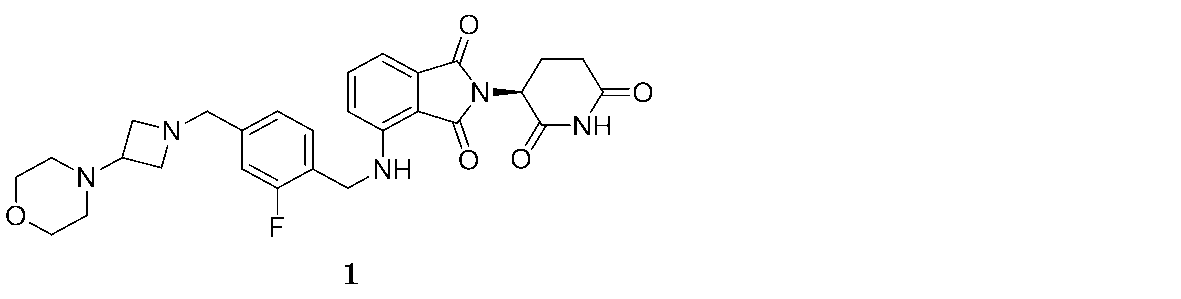
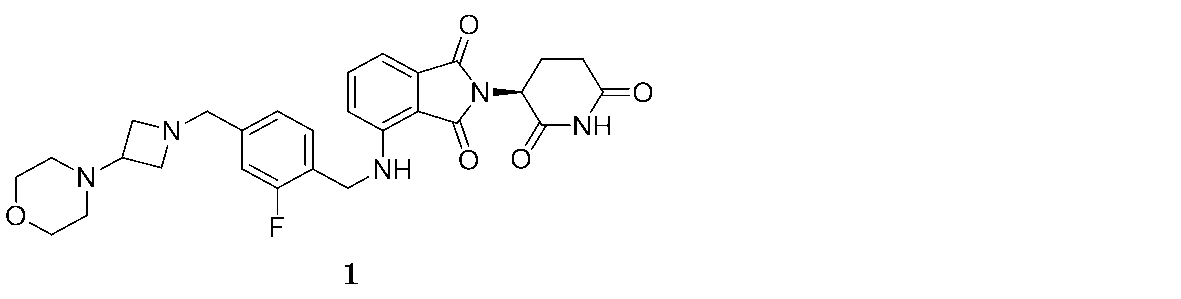
Applications Claiming Priority (5)
| Application Number | Priority Date | Filing Date | Title |
|---|---|---|---|
| US201962923955P | 2019-10-21 | 2019-10-21 | |
| US62/923,955 | 2019-10-21 | ||
| US202063011147P | 2020-04-16 | 2020-04-16 | |
| US63/011,147 | 2020-04-16 | ||
| PCT/US2020/056409 WO2021080936A1 (en) | 2019-10-21 | 2020-10-20 | Methods of treating chronic lymphocytic leukemia using 2-(2,6-dioxopiperidin-3yl)-4-((2-fluoro-4-((3-morpholinoazetidin-1-yl)methyl)benzyl)amino)isoindoline-1. 3-dione |
Publications (3)
| Publication Number | Publication Date |
|---|---|
| JP2022552881A JP2022552881A (en) | 2022-12-20 |
| JP2022552881A5 JP2022552881A5 (en) | 2023-10-20 |
| JP7581345B2 true JP7581345B2 (en) | 2024-11-12 |
Family
ID=73452273
Family Applications (1)
| Application Number | Title | Priority Date | Filing Date |
|---|---|---|---|
| JP2022523519A Active JP7581345B2 (en) | 2019-10-21 | 2020-10-20 | Methods of treating chronic lymphocytic leukemia with 2-(2,6-dioxopiperidin-3-yl)-4-((2-fluoro-4-((3-morpholinoazetidin-1-yl)methyl)benzyl)amino)isoindoline-1,3-dione |
Country Status (13)
| Country | Link |
|---|---|
| US (2) | US11628172B2 (en) |
| EP (1) | EP4048279B1 (en) |
| JP (1) | JP7581345B2 (en) |
| KR (1) | KR20220103953A (en) |
| CN (2) | CN115919870B (en) |
| AU (1) | AU2020369497C1 (en) |
| CA (1) | CA3154510A1 (en) |
| CL (1) | CL2022000991A1 (en) |
| ES (1) | ES3066029T3 (en) |
| IL (1) | IL292265B2 (en) |
| MX (1) | MX2022004727A (en) |
| WO (1) | WO2021080936A1 (en) |
| ZA (1) | ZA202204446B (en) |
Cited By (1)
| Publication number | Priority date | Publication date | Assignee | Title |
|---|---|---|---|---|
| JP2022552884A (en) * | 2019-10-21 | 2022-12-20 | セルジーン コーポレーション | (S)-2-(2,6-dioxopiperidin-3-yl)-4-((2-fluoro-4-((3-morpholinoazetidin-1-yl)methyl)benzyl)amino)isoindoline -Pharmaceutical compositions containing 1,3-diones and methods of use thereof |
Families Citing this family (5)
| Publication number | Priority date | Publication date | Assignee | Title |
|---|---|---|---|---|
| SMT202600194T1 (en) | 2019-10-21 | 2026-05-12 | Celgene Corp | Combination of substituted 4-aminoisoindoline-1,3-dione compounds and second active agents for use in treating a hematological malignancy |
| CA3154504A1 (en) | 2019-10-21 | 2021-04-29 | Maria Soraya Carrancio ANTON | Methods of treating hematological malignancies using 2-(2,6-dioxopiperidin-3-yl)-4-((2-fluoro-4-((3-morpholinoazetidin-1-yl)methyl)benzyl)amino )isoindoline-1,3-dione |
| US11628172B2 (en) * | 2019-10-21 | 2023-04-18 | Celgene Corporation | Methods of treating chronic lymphocytic leukemia using 2-(2,6-dioxopiperidin-3-yl)-4-((2-fluoro-4-((3-morpholinoazetidin-1-yl)methyl)benzyl)amino)isoindoline-1,3-dione |
| BR112022007580A2 (en) | 2019-10-21 | 2022-07-05 | Celgene Corp | SOLID FORMS COMPRISING (S)-2-(2,6-DIOXOPIPERIDIN-3-IL)-4-((2-FLUORO-4-((3-MORPOLINOAZETIDIN-1-YL)METHYL)BENZYL)AMINO)ISOINDOLINE- 1,3-DIONE AND ITS SALTS AND COMPOSITIONS INCLUDING THEM AND THEIR USES |
| IL292305A (en) * | 2019-10-21 | 2022-06-01 | Celgene Corp | Methods for treating a hematological cancer and the use of companion biomarkers for 2-(2,6-dioxopiperidin-3-yl)-4-((2-fluoro-4-((3-morpholinoazetidin-1-yl)methyl)benzyl)amino)isoindoline-1,3-dione |
Citations (5)
| Publication number | Priority date | Publication date | Assignee | Title |
|---|---|---|---|---|
| JP2013527249A (en) | 2010-06-03 | 2013-06-27 | ファーマサイクリックス,インク. | Use of inhibitors of breton-type tyrosine kinase (Btk) |
| JP2022527398A (en) | 2019-04-12 | 2022-06-01 | セルジーン コーポレーション | 2- (2,6-dioxopiperidine-3-yl) -4-((2-fluoro-4-((3-morpholinoazetidine-1-yl) methyl) benzyl) amino) isoindoline-1,3 -Treatment of non-Hodgkin's lymphoma using dione |
| JP2022552884A (en) | 2019-10-21 | 2022-12-20 | セルジーン コーポレーション | (S)-2-(2,6-dioxopiperidin-3-yl)-4-((2-fluoro-4-((3-morpholinoazetidin-1-yl)methyl)benzyl)amino)isoindoline -Pharmaceutical compositions containing 1,3-diones and methods of use thereof |
| JP2022552882A (en) | 2019-10-21 | 2022-12-20 | セルジーン コーポレーション | 2-(2,6-dioxopiperidin-3-yl)-4-((2-fluoro-4-((3-morpholinoazetidin-1-yl)methyl)benzyl)amino)isoindoline-1,3 - Methods of treating hematologic malignancies with diones |
| JP7458324B2 (en) | 2018-04-23 | 2024-03-29 | セルジーン コーポレイション | Substituted 4-aminoisoindoline-1,3-dione compounds and their use for the treatment of lymphoma |
Family Cites Families (6)
| Publication number | Priority date | Publication date | Assignee | Title |
|---|---|---|---|---|
| WO2008033567A1 (en) | 2006-09-15 | 2008-03-20 | Celgene Corporation | N-methylaminomethyl isoindole compounds and compositions comprising and methods of using the same |
| CA2907908A1 (en) | 2013-04-02 | 2014-10-09 | Celgene Corporation | Methods and compositions using 4-amino-2-(2,6-dioxo-piperidine-3-yl)-isoindoline-1,3-dione for treatment and management of central nervous system cancers |
| CA2954652A1 (en) | 2014-07-11 | 2016-01-14 | Celgene Corporation | Combination therapy for cancer |
| SMT202600194T1 (en) * | 2019-10-21 | 2026-05-12 | Celgene Corp | Combination of substituted 4-aminoisoindoline-1,3-dione compounds and second active agents for use in treating a hematological malignancy |
| US11628172B2 (en) * | 2019-10-21 | 2023-04-18 | Celgene Corporation | Methods of treating chronic lymphocytic leukemia using 2-(2,6-dioxopiperidin-3-yl)-4-((2-fluoro-4-((3-morpholinoazetidin-1-yl)methyl)benzyl)amino)isoindoline-1,3-dione |
| IL292305A (en) * | 2019-10-21 | 2022-06-01 | Celgene Corp | Methods for treating a hematological cancer and the use of companion biomarkers for 2-(2,6-dioxopiperidin-3-yl)-4-((2-fluoro-4-((3-morpholinoazetidin-1-yl)methyl)benzyl)amino)isoindoline-1,3-dione |
-
2020
- 2020-10-20 US US17/075,125 patent/US11628172B2/en active Active
- 2020-10-20 KR KR1020227016738A patent/KR20220103953A/en active Pending
- 2020-10-20 MX MX2022004727A patent/MX2022004727A/en unknown
- 2020-10-20 WO PCT/US2020/056409 patent/WO2021080936A1/en not_active Ceased
- 2020-10-20 CA CA3154510A patent/CA3154510A1/en active Pending
- 2020-10-20 EP EP20807936.8A patent/EP4048279B1/en active Active
- 2020-10-20 AU AU2020369497A patent/AU2020369497C1/en active Active
- 2020-10-20 IL IL292265A patent/IL292265B2/en unknown
- 2020-10-20 ES ES20807936T patent/ES3066029T3/en active Active
- 2020-10-20 CN CN202310077726.4A patent/CN115919870B/en active Active
- 2020-10-20 CN CN202080088934.9A patent/CN114885603A/en active Pending
- 2020-10-20 JP JP2022523519A patent/JP7581345B2/en active Active
-
2022
- 2022-04-20 CL CL2022000991A patent/CL2022000991A1/en unknown
- 2022-04-20 ZA ZA2022/04446A patent/ZA202204446B/en unknown
-
2023
- 2023-03-09 US US18/119,679 patent/US20230210859A1/en not_active Abandoned
Patent Citations (5)
| Publication number | Priority date | Publication date | Assignee | Title |
|---|---|---|---|---|
| JP2013527249A (en) | 2010-06-03 | 2013-06-27 | ファーマサイクリックス,インク. | Use of inhibitors of breton-type tyrosine kinase (Btk) |
| JP7458324B2 (en) | 2018-04-23 | 2024-03-29 | セルジーン コーポレイション | Substituted 4-aminoisoindoline-1,3-dione compounds and their use for the treatment of lymphoma |
| JP2022527398A (en) | 2019-04-12 | 2022-06-01 | セルジーン コーポレーション | 2- (2,6-dioxopiperidine-3-yl) -4-((2-fluoro-4-((3-morpholinoazetidine-1-yl) methyl) benzyl) amino) isoindoline-1,3 -Treatment of non-Hodgkin's lymphoma using dione |
| JP2022552884A (en) | 2019-10-21 | 2022-12-20 | セルジーン コーポレーション | (S)-2-(2,6-dioxopiperidin-3-yl)-4-((2-fluoro-4-((3-morpholinoazetidin-1-yl)methyl)benzyl)amino)isoindoline -Pharmaceutical compositions containing 1,3-diones and methods of use thereof |
| JP2022552882A (en) | 2019-10-21 | 2022-12-20 | セルジーン コーポレーション | 2-(2,6-dioxopiperidin-3-yl)-4-((2-fluoro-4-((3-morpholinoazetidin-1-yl)methyl)benzyl)amino)isoindoline-1,3 - Methods of treating hematologic malignancies with diones |
Non-Patent Citations (1)
| Title |
|---|
| EXPERT OPINION ON INVESTIGATIONAL DRUGS ,2017年,Vol. 26, No. 5,pp. 633-650 |
Cited By (2)
| Publication number | Priority date | Publication date | Assignee | Title |
|---|---|---|---|---|
| JP2022552884A (en) * | 2019-10-21 | 2022-12-20 | セルジーン コーポレーション | (S)-2-(2,6-dioxopiperidin-3-yl)-4-((2-fluoro-4-((3-morpholinoazetidin-1-yl)methyl)benzyl)amino)isoindoline -Pharmaceutical compositions containing 1,3-diones and methods of use thereof |
| JP7662626B2 (en) | 2019-10-21 | 2025-04-15 | セルジーン コーポレーション | Pharmaceutical compositions comprising (S)-2-(2,6-dioxopiperidin-3-yl)-4-((2-fluoro-4-((3-morpholinoazetidin-1-yl)methyl)benzyl)amino)isoindoline-1,3-dione and methods of use thereof |
Also Published As
| Publication number | Publication date |
|---|---|
| JP2022552881A (en) | 2022-12-20 |
| US20210113574A1 (en) | 2021-04-22 |
| EP4048279A1 (en) | 2022-08-31 |
| ZA202204446B (en) | 2023-10-25 |
| US20230210859A1 (en) | 2023-07-06 |
| CN114885603A (en) | 2022-08-09 |
| CN115919870B (en) | 2024-07-02 |
| CL2022000991A1 (en) | 2022-11-11 |
| ES3066029T3 (en) | 2026-05-11 |
| AU2020369497A1 (en) | 2022-05-19 |
| AU2020369497B2 (en) | 2026-02-05 |
| KR20220103953A (en) | 2022-07-25 |
| MX2022004727A (en) | 2022-05-13 |
| EP4048279B1 (en) | 2026-01-07 |
| EP4048279C0 (en) | 2026-01-07 |
| CN115919870A (en) | 2023-04-07 |
| US11628172B2 (en) | 2023-04-18 |
| IL292265B2 (en) | 2025-09-01 |
| IL292265B1 (en) | 2025-05-01 |
| WO2021080936A1 (en) | 2021-04-29 |
| CA3154510A1 (en) | 2021-04-29 |
| AU2020369497C1 (en) | 2026-05-07 |
| IL292265A (en) | 2022-06-01 |
Similar Documents
| Publication | Publication Date | Title |
|---|---|---|
| US11628172B2 (en) | Methods of treating chronic lymphocytic leukemia using 2-(2,6-dioxopiperidin-3-yl)-4-((2-fluoro-4-((3-morpholinoazetidin-1-yl)methyl)benzyl)amino)isoindoline-1,3-dione | |
| JP7562557B2 (en) | Methods for treating non-hodgkin's lymphoma using 2-(2,6-dioxopiperidin-3-yl)-4-((2-fluoro-4-((3-morpholinoazetidin-1-yl)methyl)benzyl)amino)isoindoline-1,3-dione | |
| JP7581346B2 (en) | Methods of treating hematological malignancies with 2-(2,6-dioxopiperidin-3-yl)-4-((2-fluoro-4-((3-morpholinoazetidin-1-yl)methyl)benzyl)amino)isoindoline-1,3-dione | |
| EA046110B1 (en) | METHODS FOR TREATING CHRONIC LYMPHOCYTIC LEUKEMIA USING 2-(2,6-DIOXOPIPERIDIN-3-YL)-4-((2-FLUORINE-4-((3-MORPHOLINOAZETIDIN-1-YL)METHYL)BENZYL)AMINO)ISOINDOLINE-1 ,3-DIONE | |
| EA047153B1 (en) | METHODS FOR TREATING HEMATOLOGICAL MALIGNANTS USING 2-(2,6-DIOXOPIPERIDIN-3-YL)-4-((2-FLUORINE-4-((3-MORPHOLINOAZETIDIN-1-YL)METHYL)BENZYL)AMINO)ISOINDOLINE-1 ,3-DIONE | |
| HK40077319A (en) | Methods of treating hematological malignancies using 2-(2,6-dioxopiperidin-3-yl)-4-((2-fluoro-4-((3-morpholinoazetidin-1-yl)methyl)benz yl)amino)isoindoline-1,3-dione | |
| HK40077319B (en) | Methods of treating hematological malignancies using 2-(2,6-dioxopiperidin-3-yl)-4-((2-fluoro-4-((3-morpholinoazetidin-1-yl)methyl)benz yl)amino)isoindoline-1,3-dione |
Legal Events
| Date | Code | Title | Description |
|---|---|---|---|
| A521 | Request for written amendment filed |
Free format text: JAPANESE INTERMEDIATE CODE: A523 Effective date: 20231012 |
|
| A621 | Written request for application examination |
Free format text: JAPANESE INTERMEDIATE CODE: A621 Effective date: 20231012 |
|
| TRDD | Decision of grant or rejection written | ||
| A977 | Report on retrieval |
Free format text: JAPANESE INTERMEDIATE CODE: A971007 Effective date: 20240930 |
|
| A01 | Written decision to grant a patent or to grant a registration (utility model) |
Free format text: JAPANESE INTERMEDIATE CODE: A01 Effective date: 20241001 |
|
| A61 | First payment of annual fees (during grant procedure) |
Free format text: JAPANESE INTERMEDIATE CODE: A61 Effective date: 20241030 |
|
| R150 | Certificate of patent or registration of utility model |
Ref document number: 7581345 Country of ref document: JP Free format text: JAPANESE INTERMEDIATE CODE: R150 |