JP7540586B2 - Information presentation device, information presentation method, and program - Google Patents
Information presentation device, information presentation method, and program Download PDFInfo
- Publication number
- JP7540586B2 JP7540586B2 JP2023514303A JP2023514303A JP7540586B2 JP 7540586 B2 JP7540586 B2 JP 7540586B2 JP 2023514303 A JP2023514303 A JP 2023514303A JP 2023514303 A JP2023514303 A JP 2023514303A JP 7540586 B2 JP7540586 B2 JP 7540586B2
- Authority
- JP
- Japan
- Prior art keywords
- task
- type
- classification
- business
- target
- Prior art date
- Legal status (The legal status is an assumption and is not a legal conclusion. Google has not performed a legal analysis and makes no representation as to the accuracy of the status listed.)
- Active
Links
Images






Classifications
-
- G—PHYSICS
- G06—COMPUTING OR CALCULATING; COUNTING
- G06Q—INFORMATION AND COMMUNICATION TECHNOLOGY [ICT] SPECIALLY ADAPTED FOR ADMINISTRATIVE, COMMERCIAL, FINANCIAL, MANAGERIAL OR SUPERVISORY PURPOSES; SYSTEMS OR METHODS SPECIALLY ADAPTED FOR ADMINISTRATIVE, COMMERCIAL, FINANCIAL, MANAGERIAL OR SUPERVISORY PURPOSES, NOT OTHERWISE PROVIDED FOR
- G06Q10/00—Administration; Management
- G06Q10/10—Office automation; Time management
Landscapes
- Engineering & Computer Science (AREA)
- Business, Economics & Management (AREA)
- Strategic Management (AREA)
- Entrepreneurship & Innovation (AREA)
- Human Resources & Organizations (AREA)
- Operations Research (AREA)
- Economics (AREA)
- Marketing (AREA)
- Data Mining & Analysis (AREA)
- Quality & Reliability (AREA)
- Tourism & Hospitality (AREA)
- Physics & Mathematics (AREA)
- General Business, Economics & Management (AREA)
- General Physics & Mathematics (AREA)
- Theoretical Computer Science (AREA)
- Management, Administration, Business Operations System, And Electronic Commerce (AREA)
- Information Retrieval, Db Structures And Fs Structures Therefor (AREA)
Description
本発明の実施形態は、情報提示装置、情報提示方法、及びプログラムに関する。 Embodiments of the present invention relate to an information presentation device, an information presentation method, and a program.
例えば、オフィス用品の購入申請業務における社内システム登録などの状況下で会計関連規定に関する困り事が発生することがある。困り事についての相談先を探す場合、「困り事が発生した業務の種別及び状況」及び「その業務の種別及び状況に即した解決策」をできる限り少ない労力で相互に伝えられるという観点から、「会計関連規定」という困り事自体に詳しいだけでなく、「オフィス用品の購入申請」という特定の種別の業務(以下、業務種別と表記する)の経験を豊富に持つ人材を探すことが有効であると考えられる。また、新規事業検討や災害対応などのプロジェクトにアサインするメンバを検討する場合にも同様である。For example, a problem with accounting regulations may arise when registering an office supply purchasing request in an internal system. When looking for someone to consult about a problem, it is effective to look for someone who is not only knowledgeable about the problem itself, i.e. "accounting regulations," but also has ample experience with a specific type of task, "office supply purchasing requests" (hereafter referred to as "task type"), from the standpoint of being able to communicate with as little effort as possible "the type and situation of the task where the problem occurred" and "a solution appropriate to that type and situation." The same is true when considering members to assign to projects such as new business ventures or disaster response.
相談先又はプロジェクトの適任者などの人材を探している人(以下、探索者と称する)が自身の記憶又はその知人のつてに基づいて相談先又はプロジェクトの適任者などの人材を探すことはよく行われている。しかしながら、この方法では、知人がすぐに探索者の依頼に応えて候補者又は別の知人を紹介してくれるとは限らず、候補者を得るまでに時間がかかる。It is common for people (hereafter referred to as "searchers") who are looking for people to consult with or suitable people for a project to search for people based on their own memories or connections with their acquaintances. However, with this method, acquaintances do not always immediately respond to the searcher's request and introduce candidates or other acquaintances, and it takes time to find a candidate.
また、見つけられる人材は、探索者自身又はその知人が把握できている範囲に限定される。さらに、誰がどのような業務種別の経験を豊富に持っているかの把握は、以前にも増して難しくなってきている。その理由として、労働力人口の不足への対応及び人材の価値観やスキルの多様性の活用などに向け、各人材が複数の種別の業務を実施する動きが広まっていることがある。さらに、人材が地理的に同じ場所に集合して業務を実施する場合には、周囲の人の業務内容や会話を見聞きする機会が多く、誰がどのような種別の業務を頻繁に実施しているかを、日常的に自然体で察知できる。しかしながら、最近では、同じ組織に属する人材がそれぞれ異なる場所に分かれて業務を実施する動きが広まっており、把握が難しくなる要因となっている。 In addition, the talent that can be found is limited to the range that the explorer or his/her acquaintances are aware of. Furthermore, it is becoming more difficult than ever to grasp who has a wealth of experience in what type of work. The reason for this is that there is a growing trend for each talent to perform multiple types of work in order to address the labor shortage and utilize the diversity of talent values and skills. Furthermore, when talent gathers in the same geographical location to perform work, there are many opportunities to see and hear the work content and conversations of the people around them, and it is possible to naturally sense on a daily basis who frequently performs what type of work. However, recently, there has been a widespread trend for talent belonging to the same organization to perform work separately in different locations, which is a factor that makes it difficult to grasp.
探索者が組織の掲示板やチャットなどのコミュニケーションツール上で特定の業務種別の経験を豊富に持っている人材を募集し、経験の豊富さを自覚している人材がそれに応募することも、実際に行われている。この方法では、探索の対象となる人材が募集を知ることが応募を得られる前提となる。しかしながら、実際には、自身の業務の実施に注力している人材が様々なタイミングで投稿される多数の募集を読み、その中から自身に該当するものを見つけることは困難である。また、人材が、応募の可能性のある募集を見つけたとしても、特に応募者が少ない段階においては、他の応募者との比較により自身の経験が豊富かどうかを把握できないため、応募すべきかどうかの判断が困難である。 In reality, it is also the case that an investigator posts a recruitment ad for personnel with extensive experience in a specific type of work on communication tools such as the organization's bulletin board or chat, and personnel who are aware of their extensive experience apply for the job. With this method, the premise for receiving an application is that the personnel being searched for will know about the recruitment. However, in reality, it is difficult for personnel who are focused on performing their own work to read through the numerous recruitment adverts posted at various times and find one that suits them. Furthermore, even if personnel find a recruitment advert that they may be able to apply for, it is difficult to determine whether they should apply, especially when there are only a few applicants, because they cannot determine whether they have a lot of experience by comparing themselves to other applicants.
非特許文献1は、特定のトピックに関する有識者を探す方法を開示している。非特許文献1に開示される方法では、作成者を明示的に保持するドキュメントを継続的に蓄積しておき、有識者を探している人(探索者)が検索条件として単語を入力し、その単語に関連するドキュメントの作成者を抽出する。Non-Patent
非特許文献1に開示される方法は、業務で取り扱われる情報のみに基づき、各人材の知見を持つ領域を導出する場合に限定して、適任者の選出又は探索を支援する方法であり、適用対象がデスクワークに限定される。The method disclosed in Non-Patent
さらに、非特許文献1に開示される方法は、蓄積している情報から探索者が検索条件として指定した単語に関連する情報を検索することにより、特定のトピックに関する有識者の探索を支援する。しかしながら、特定の種別の業務において、特定の単語又はそれに関連する単語を含む情報を常に取り扱っているとは限らない。さらに、特定の単語又はそれに関連する単語を含む情報を取り扱うのが特定の種別の業務だけであるとも限らない。このため、特定の種別の業務にちょうど対応する単語を検索条件として指定することは困難である。さらに、検索条件として指定された単語との関連性が高く評価された情報が探索者の意図した種別の業務で作成又はやり取りされたものであるかの妥当性を確認することができない。
Furthermore, the method disclosed in Non-Patent
特許文献1は、業務実体の把握及び分析を目的として端末操作ログを取得して蓄積し、人にわかりやすく表示する方法を開示している。非特許文献2及び非特許文献3は、端末操作ログから人が実施した業務の種別を推定する方法を開示している。非特許文献4は、業務実施場所に設置したカメラの映像から人が実施した業務の種別を推定する方法を開示している。非特許文献5は、人が身に着けた加速度計などのセンサで得られた情報から人が実施した業務の種別を推定する方法を開示している。これらの方法で得られる推定結果には誤りが含まれ、推定結果は不確実なものであることがある。
本発明は、適任者などの適切なオブジェクトを提示する技術を提供することを目的とする。 The present invention aims to provide a technology that presents appropriate objects, such as suitable candidates.
本発明の一態様に係る情報提示装置は、複数の分類観点それぞれで業務を分類する際の分類先となる、複数の業務種別の中から、探索者により指定される業務種別である対象業務種別を受け付ける指定部と、前記対象業務種別に対応する分類観点でオブジェクトと業務との関わりに関する記録を示す複数の業務ログを分類することにより、前記対象業務種別に関連する業務ログを得る分類部と、前記対象業務種別に関連する業務ログに基づいて、前記オブジェクトごとに前記対象業務種別の評価指標を計算する計算部と、前記対象業務種別の前記評価指標の計算結果に基づいて、前記オブジェクトに順位を割り当てる順位割当部と、前記順位の割当結果を前記探索者に提示する割当結果提示部と、を備える。An information presentation device according to one embodiment of the present invention includes a designation unit that accepts a target task type, which is a task type designated by an explorer from among a plurality of task types into which tasks are classified according to each of a plurality of classification perspectives; a classification unit that obtains task logs related to the target task type by classifying a plurality of task logs showing records relating to the relationship between objects and tasks according to a classification perspective corresponding to the target task type; a calculation unit that calculates an evaluation index for the target task type for each object based on the task logs related to the target task type; a ranking assignment unit that assigns a ranking to the object based on the calculation result of the evaluation index for the target task type; and an assignment result presentation unit that presents the ranking assignment result to the explorer.
本発明によれば、適任者などの適切なオブジェクトを提示する技術が提供される。 The present invention provides a technology for presenting appropriate objects, such as suitable candidates.
以下、図面を参照して本発明の実施形態を説明する。 Below, an embodiment of the present invention is described with reference to the drawings.
(1)構成
(1-1)情報処理システム
図1は、本発明の一実施形態に係る情報処理システム10の構成例を概略的に示している。図1に示す情報処理システム10は、業務経験の豊富な人材の探索及び選出を支援する。情報処理システム10は、情報提示装置11及び業務ログ取得装置12を備える。情報提示装置11は業務ログ取得装置12と通信してよい。情報提示装置11は、通信ネットワークを介して業務ログ取得装置12に接続されてもよく、API(Application Programming Interface)により接続されてもよい。
(1) Configuration (1-1) Information Processing System Fig. 1 shows an outline of a configuration example of an
業務ログ取得装置12は、人材と業務との関わりに関する記録を示す業務ログを取得して蓄積する。具体的には業務ログは人材による業務の実施に関する記録を示す。業務ログは人材による業務の実施に伴い記録される。業務ログ取得装置12は、蓄積している業務ログを情報提示装置11に送信する。代替として、業務ログ取得装置12が蓄積している業務ログは、USB(Universal Serial Bus)メモリなどの記録媒体を使用して情報提示装置11に移動されてもよい。The business log acquisition device 12 acquires and accumulates business logs that indicate records related to the relationship between personnel and business. Specifically, the business logs indicate records related to the performance of business by personnel. The business logs are recorded as personnel perform business. The business log acquisition device 12 transmits the accumulated business logs to the
図1の例では、業務ログ取得装置12-1、12-2、12-3が示されている。業務ログ取得装置12-1は業務ログ種別が端末操作である業務ログを取得する。例えば、業務ログ取得装置12-1は、ユーザにより使用されるコンピュータ端末上で動作し、コンピュータ端末内で発生するイベントや、画面に表示される内容を観測し、業務ログとして取得する。業務ログ取得装置12-2は業務ログ種別が映像である業務ログを取得する。業務ログ取得装置12-3は業務ログ種別が加速度センサである業務ログを取得する。 In the example of Figure 1, business log acquisition devices 12-1, 12-2, and 12-3 are shown. Business log acquisition device 12-1 acquires business logs whose business log type is terminal operation. For example, business log acquisition device 12-1 operates on a computer terminal used by a user, observes events that occur within the computer terminal and contents displayed on the screen, and acquires them as business logs. Business log acquisition device 12-2 acquires business logs whose business log type is video. Business log acquisition device 12-3 acquires business logs whose business log type is acceleration sensor.
情報提示装置11は、業務ログ取得装置12から業務ログを受信して蓄積する。情報提示装置11は、探索者から提示要求を受け取る。提示要求は、探索者により指定される業務種別を示す情報を含み、当該業務種別の業務経験が豊富な人材の提示を要求する指示である。情報提示装置11は、提示要求に応答して、蓄積している業務ログを参照して適切な人材を検索し、検索により得られた人材を順位付けして探索者に提示する。The
図1に示す例では、業務ログ取得装置12は情報提示装置11とは別の装置として設けられる。代替として、情報提示装置11が業務ログ取得装置12の機能を備えるようにしてもよい。In the example shown in FIG. 1, the business log acquisition device 12 is provided as a device separate from the
業務種別の例は、オフィス用品の購入申請、オフィス用品の納品検収、オフィス用品の棚卸、新規サービスの企画、新規サービスの顧客提案、サービス提供用リソースの割当、サービス提供用リソースの工事手配などを含む。業務種別はサービスの種類で細分化されてもよい。さらに、業務種別は、表計算ソフト使用業務、メール送受信業務、特定社内システム登録業務などのように、業務で使用するソフトウェアにより細分化されてもよい。 Examples of business types include application for purchasing office supplies, delivery inspection of office supplies, inventory of office supplies, planning of new services, proposing new services to customers, allocation of resources for providing services, and construction arrangements for resources for providing services. Business types may be subdivided by type of service. Furthermore, business types may be subdivided by software used in the business, such as work using spreadsheet software, work sending and receiving email, work registering specific in-house systems, etc.
上述した業務種別の例は、デスクワークに関する業務種別である。業務種別の例は、フィールドワークに関する業務種別を含んでよい。フィールドワークに関する業務種別の例は、装置の設置、装置の点検、装置の修理、測量などを含む。 The above-mentioned examples of work types are desk-related work types. Examples of work types may include fieldwork-related work types. Examples of fieldwork-related work types include equipment installation, equipment inspection, equipment repair, surveying, etc.
さらに、「オフィス用品の購入申請業務」と「特定社内システム登録業務」を組み合わせた「オフィス用品の購入申請で特定社内システムへの登録を行う業務」のように、異なる観点で分類された複数の業務種別を組み合わせたものも業務種別として扱う。 In addition, combinations of multiple task types classified from different perspectives, such as "task of registering office supply purchase requests to a specific internal system," which combines "task of office supply purchase requests" and "task of registering to a specific internal system," are also treated as task types.
(1-2)情報提示装置
図2は、情報提示装置11の機能構成の一例を概略的に示している。図2に示すように、情報提示装置11は、取得部101、指定部102、分類部103、業務実施量計算部104、順位割当部105、割当結果提示部106、制御情報提示部107、業務ログ記憶部111、制御情報記憶部112、分類結果記憶部113、計算結果記憶部114、不確実性情報記憶部115、及び割当結果記憶部116を備える。
(1-2) Information Presentation Device Fig. 2 shows an example of a functional configuration of the
取得部101は、図1に示した業務ログ取得装置12に対するインタフェースの役割を担う。取得部101は、図1に示した業務ログ取得装置12から業務ログを受信して業務ログ記憶部111に格納する。The
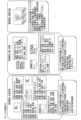
図3は、業務ログ記憶部111に格納される情報の一例を示している。図3の上段には、業務ログ種別が操作端末である業務ログが示されている。各業務ログは、ID、タイムスタンプ、操作者、操作対象アプリケーション、操作対象ウィンドウ識別情報、及び操作対象ウィンドウ表示内容を示す情報を含む。図3の中段には、業務ログ種別が映像である業務ログが示されている。各業務ログは、ID、映像ファイル名、フレーム番号、タイムスタンプ、及び撮影対象者を示す情報を含む。業務ログは映像ファイル名及びフレーム番号により実際の映像データに関連付けられている。図3の下段には、業務ログ種別が加速度計である業務ログが示されている。各業務ログは、ID、センサ固体番号、タイムスタンプ、信号値、及び装着者を示す情報を含む。
Figure 3 shows an example of information stored in the business
指定部102は、探索者により指定される業務種別の入力を受け付け、探索者により指定される業務種別を示す情報を分類部103に送出する。以下では、探索者により指定される業務種別を対象業務種別とも称する。対象業務種別は、探索者により指定される単一の業務種別であってもよく、探索者により指定される複数の業務種別であってもよい。例えば、指定部102は、選択可能な業務種別を探索者に提示し、探索者により選択された業務種別を対象業務種別として特定する。The
複数の分類観点それぞれで業務を分類する際の分類先となる複数の業務種別が用意される。例えば、第1の分類観点は“出張申請”や“購入申請”などを含み、第2の分類観点は“社内システム利用”や“メール送受信”などを含み、第3の分類観点は“装置点検”や“故障修理”、“装置運搬”などを含む。指定部102は、複数の分類観点のそれぞれについて選択可能な業務種別を探索者に提示してよい。探索者は、1つの分類観点に対して業務種別を選択してもよく、2つ以上の分類観点のそれぞれに対して業務種別を選択してもよい。
A number of business types are prepared into which business can be classified when classifying tasks from each of a number of classification perspectives. For example, a first classification perspective includes "business trip application" and "purchase application", a second classification perspective includes "internal system use" and "email sending and receiving", and a third classification perspective includes "equipment inspection", "fault repair", and "equipment transportation". The
分類部103は、対象業務種別に対応する分類観点で業務ログ記憶部111に格納されている業務ログを分類し、分類結果を分類結果記憶部113に格納する。対象業務種別が探索者に指定される単一の業務種別である場合、分類部103は、対象業務種別が属する分類観点に対応する分類手法に従って業務ログを分類する。具体的には、分類部103は、対象業務種別が属する分類観点に含まれる複数の業務種別に関する制御情報を使用して、対象業務種別が属する分類観点に含まれる複数の業務種別に業務ログを分類する。制御情報は、業務種別ごとに用意され、制御情報記憶部112に格納されている。ある業務種別についての制御情報は、業務ログが当該業務種別に該当するか否かを判別するための情報を含む。The
制御情報は、業務ログが業務種別に該当するか否かの判別条件を明示的に記述したルールを含んでいてもよい。代替として、制御情報は、業務ログのサンプルを含んでいてもよい。例えば、制御情報は、“出張申請”という業務種別に含まれる業務ログのサンプル、“購入申請”という業務種別に含まれる業務ログのサンプル、“装置点検”という業務種別に含まれる業務ログのサンプルを含む。代替として、制御情報は、業務の内容及び手順を記載したマニュアルなどのドキュメントを含んでいてもよい。 The control information may include rules that explicitly describe the conditions for determining whether or not a business log corresponds to a business type. Alternatively, the control information may include samples of business logs. For example, the control information includes a sample of a business log included in a business type called "business trip application," a sample of a business log included in a business type called "purchase application," and a sample of a business log included in a business type called "equipment inspection." Alternatively, the control information may include a document such as a manual that describes the content and procedures of the business.
図4A~4Cは、制御情報記憶部112に格納されている制御情報の例を概略的に示している。図4Aに示す業務種別判別ルールは、業務ログ種別が端末操作である業務ログを分類するために使用される。業務種別判別ルールは、業務ログが業務種別“出張申請”に該当するか否かを判別するためのルール、及び業務ログが業務種別“購入申請”に該当するか否かを判別するためのルールを含む。制御情報は、図4Bに示すような業務ログのサンプルを含んでもよく、図4Cに示すような業務マニュアルを含んでもよい。
Figures 4A to 4C show schematic examples of control information stored in the control
業務ログ種別が映像である業務ログについては、分類部103は、映像ファイル名及びフレーム番号により特定される映像データ及び制御情報を参照することで撮影対象者が実施した業務種別を推定し、推定結果に基づいて業務ログを分類する。業務ログ種別が加速度計である業務ログについては、分類部103は、信号値の時間変化パターン及び制御情報を参照することで装着者が実施した業務種別を推定し、推定結果に基づいて業務ログを分類する。For a task log whose type is video, the
ここで説明される分類手法は例示であって、他の分類手法が使用されてよい。分類手法は、単一の業務ログ種別の業務ログを対象に業務種別を判別する方法に基づいていてもよく、複数の業務ログ種別の業務ログを対象に業務種別を判別する方法に基づいていてもよい。The classification method described here is an example, and other classification methods may be used. The classification method may be based on a method of determining the business type for business logs of a single business log type, or may be based on a method of determining the business type for business logs of multiple business log types.
例えば制御情報が人による理解が困難なものである場合に、制御情報記憶部112は、制御情報を作成する際の条件が記載された情報をさらに格納していてもよい。For example, when the control information is difficult for humans to understand, the control
複数の分類観点のそれぞれに対して業務種別が指定される場合について説明する。例えば、分類観点Ciに対して業務種別ci siが指定され、分類観点Cjに対して業務種別cj sjが指定されているとする。以下では、業務種別ci riと業務種別cj rjを合成した業務種別をci,j ri,rjと表記する。 A case where a business type is specified for each of a plurality of classification viewpoints will be described. For example, assume that a business type c i si is specified for classification viewpoint C i , and a business type c j sj is specified for classification viewpoint C j . In the following, a business type obtained by combining business types c i ri and c j rj is represented as c i,j ri,rj .
分類部103は、業務ログ記憶部111に格納されているすべての業務ログに対して、分類観点Ciに対応する分類手法及び分類観点Cjに対応する分類手法を独立に適用する。具体的には、分類部103は、すべての業務ログを分類観点Ciに含まれる業務種別ci
1、ci
2、...、ci
ri、...に分類し、すべての業務ログを、分類観点Cjに含まれる業務種別cj
1、cj
2、...、cj
rj、...に分類する。そして、分類部103は、業務種別ci
riに分類された業務ログと業務種別cj
rjに分類された業務ログの積集合をとることで、合成業務種別ci,j
ri,rjに関する業務ログを得る。このようにして、分類部103は、業務ログ記憶部111に格納されている業務ログを業務種別ci,j
1,1、ci,j
1,2、...、ci,j
ri,1、ci,j
ri,2、...、ci,j
ri,rj、...、ci,j
ri+1,1、ci,j
ri+1,2、...に分類する。
The
業務ログは業務種別ci,j 1,1、ci,j 1,2、...、ci,j ri,1、ci,j ri,2、...、ci,j ri,rj、...、ci,j ri+1,1、ci,j ri+1,2、...に分類されることになる。分類手法を適用する途中過程を考慮する必要がなく、その結果のみを使用する説明においては、分類観点Cに対応する分類手法により業務種別c1、c2、...、cr、...に分類されたものとして業務ログを扱うこととする。 The business log will be classified into business types c i,j 1,1 , c i,j 1,2 , ..., c i,j ri,1 , c i,j ri,2 , ..., c i,j ri,rj , ..., c i,j ri+1,1 , c i,j ri+1,2 , .... In the explanation which does not require consideration of the intermediate process of applying the classification method and uses only the result, the business log will be treated as having been classified into business types c 1 , c 2 , ..., cr , ... by the classification method corresponding to classification viewpoint C.
2つの分類観点に対して業務種別が指定される場合について説明したが、3つ以上の分類観点に対して業務種別が指定される場合についても同様である。 We have explained the case where a business type is specified for two classification perspectives, but the same applies when a business type is specified for three or more classification perspectives.
図5は、分類部103により得られる分類結果の一例を概略的に示している。図5に示すように、例えば、IDが“30134”である業務ログは、分類観点1では業務種別“出張申請”に分類され、分類観点2では業務種別“社内システム利用”に分類され、分類観点3ではいずれの業務種別にも分類されない。
Figure 5 shows an example of a classification result obtained by the
業務実施量計算部104は、人材と分類部103により得られる分類結果における業務種別との組み合わせの各々について業務実施量を計算し、計算結果を計算結果記憶部114に格納する。業務実施量は、人材による業務の実施を定量化した評価指標であり、業務経験の豊富さに相当する。業務実施量は業務ログの個数であってよい。例えば、業務種別C1に分類された業務ログの中に人材1の業務ログが15個含まれる場合、人材1と業務種別C1の組み合わせについての業務実施量は15となる。業務実施量は、業務ログに含まれるタイムスタンプなどの属性データを集計することにより求めてもよい。
The task execution
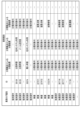
図6は、業務実施量計算部104により得られる計算結果の例を概略的に示している。図6の上段に示す計算結果は、図5における分類観点1の業務種別及び分類観点2の業務種別が探索対象として指定される場合に得られるものである。図6に示す例では、人材1と業務種別“出張申請”及び業務種別“社内システム利用”の合成業務種別との組み合わせについての業務実施量は116である。図6の下段に示す計算結果は、図5における分類観点3の業務種別が探索対象として指定される場合に得られるものである。図6に示す例では、人材1と業務種別“装置点検”の組み合わせについての業務実施量は20である。
Figure 6 shows an example of a calculation result obtained by the work execution
順位割当部105は、計算結果に含まれる対象業務種別の業務実施量に基づいて人材に順位を割り当て、割当結果を割当結果記憶部116に格納する。例えば、順位割当部105は、対象業務種別の業務実施量の大きい順に人材に順位を割り当てる。The
順位割当部105は、順位割当のために、不確実性情報記憶部115に格納されている不確実性情報を使用してもよい。具体的には、順位割当部105は、不確実性情報に基づいて対象業務種別の業務実施量を補正して業務実施量の補正値を得てもよい。順位割当部105は業務実施量の補正値(補正後の業務実施量)の大きい順に人材に順位を割り当てる。The
さらに、順位割当部105は、業務実施量の計算結果と不確実性情報とに基づいて順位間で業務実施量に逆転が発生する確率を算出し、算出した確率に基づいて順位をグループ化してもよい。
Furthermore, the
不確実性情報は、分類手法の各々について事前に作成され、不確実性情報記憶部115に格納される。不確実性情報は、分類手法による分類誤りの傾向を示す情報である。不確実性情報は、例えば、正解の業務種別がわかっている業務ログを試験的に分類することにより生成される。不確実性情報は、業務ログの分類を試験的に実施した結果における分類先の業務種別での誤分類された業務ログの割合に基づいて生成される。不確実性情報は、分類手法により推定された業務種別と正解の業務種別との組み合わせに対する業務実施量に関する割合の分布を含む。
Uncertainty information is created in advance for each classification method and stored in the uncertainty
不確実性情報を生成するために使用される業務ログは、業務ログ記憶部111に格納されている業務ログのうちの一部であってもよい。業務ログの正解の業務種別は、例えば、人手で業務ログを調べることで付与されたものでもよいし、時間帯を区切って意図的に特定の種別の業務のみを実施して業務ログを取得することで付与されたものであってもよい。The business log used to generate the uncertainty information may be a part of the business log stored in the business
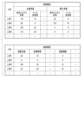
図7は、不確実性情報記憶部115に格納される不確実性情報の一例を概略的に示している。図7に示す例では、不確実性情報記憶部115は、第1の分類観点に対応する分類手法の不確実性情報と、第2の分類観点に対応する分類手法の不確実性情報と、第3の分類観点に対応する分類手法の不確実性情報と、を格納している。値λi
ri→r′iは、分類観点Ciに対応する分類手法で業務種別ci
riに分類された業務ログに含まれる正解の業務種別がci
r′iである業務ログから計算される業務実施量を、分類観点Ciに対応する分類手法で業務種別ci
riに分類された業務ログから計算される業務実施量で割ることで得られる。
7 is a schematic diagram of an example of the uncertainty information stored in the uncertainty
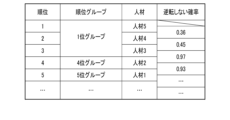
図8は、割当結果記憶部116に格納される順位割当結果情報の一例を概略的に示している。図8に示す例では、人材5が1位であり、人材4が2位であり、人材3が3位であり、人材2が4位であり、人材1が5位である。1~3位(人材5、4、3)が1位グループに属し、4位(人材2)が4位グループに属し、5位(人材1)が5位グループに属する。
Figure 8 shows a schematic example of ranking allocation result information stored in the allocation
なお、順位割当部105が業務実施量の補正及び順位のグループ化を行わない場合には、業務実施量計算部104は、人材ごとに対象業務種別の業務実施量を計算すれば充分である。例えば、対象業務種別が分類観点Ciに属する業務種別ci
si及び分類観点Cjに属する業務種別cj
sjを含む場合、分類部103は、業務種別ci
siに関連する業務ログを得て、業務種別cj
sjに関連する業務ログを得て、業務種別ci
siに関連する業務ログと業務種別cj
sjに関連する業務ログとの積集合を対象業務種別に関連する業務ログとして得る。業務実施量計算部104は、分類部103により得られた対象業務種別に関連する業務ログに基づいて、人材ごとに対象業務種別の業務実施量を計算する。
In addition, when the
割当結果提示部106は、順位割当部105により得られる割当結果を探索者に提示する。例えば、割当結果提示部106は割当結果を表示装置に表示する。The allocation
制御情報提示部107は、制御情報記憶部112から制御情報を取得し、制御情報を探索者に提示する。例えば、制御情報提示部107は制御情報を表示装置に表示する。制御情報提示部107は、制御情報に代えて又は追加して、制御情報を用意する際の条件が記載された情報を探索者に提示してもよい。The control
上記の構成を備える情報提示装置11は、探索者により指定される業務種別についての経験が豊富な人材を探索者に提示することができる。The
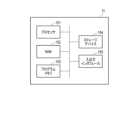
図9は、情報提示装置11のハードウェア構成例を概略的に示している。図9に示す例では、情報提示装置11は、プロセッサ151、RAM(Random Access Memory)152、プログラムメモリ153、ストレージデバイス154、及び入出力インタフェース155を備える。プロセッサ151は、RAM152、プログラムメモリ153、ストレージデバイス154、及び入出力インタフェース155と通信する。9 shows a schematic diagram of an example hardware configuration of the
プロセッサ151は、CPU(Central Processing Unit)又はGPU(Graphics Processing Unit)などの汎用回路を含む。RAM152はワーキングメモリとしてプロセッサ151により使用される。RAM152はSDRAMなどの揮発性メモリを含む。プログラムメモリ153は、検索プログラムを含む、プロセッサ151により実行されるプログラムを記憶する。プログラムはコンピュータ実行可能命令を含む。プログラムメモリ153として例えばROMが使用される。ストレージデバイス154の一部領域がプログラムメモリ153として使用されてもよい。The
プロセッサ151は、プログラムメモリ153に記憶されたプログラムをRAM152に展開し、プログラムを解釈及び実行する。検索プログラムは、プロセッサ151により実行されると、情報提示装置11に関して説明される一連の処理をプロセッサ151に行わせる。The
プログラムは、コンピュータで読み取り可能な記録媒体に記憶された状態で情報提示装置11に提供されてよい。この場合、情報提示装置11は、記録媒体からデータを読み出すドライブを備え、記録媒体からプログラムを取得する。記録媒体の例は、磁気ディスク、光ディスク(CD-ROM、CD-R、DVD-ROM、DVD-Rなど)、光磁気ディスク(MOなど)、及び半導体メモリを含む。また、プログラムはネットワークを通じて配布するようにしてもよい。具体的には、プログラムをネットワーク上のサーバに格納し、情報提示装置11がサーバからプログラムをダウンロードするようにしてもよい。The program may be provided to the
ストレージデバイス154は、業務ログなどのデータを記憶する。ストレージデバイス154は、HDD(Hard Disk Drive)又はSSD(Solid State Drive)などの不揮発性メモリを含む。The
入出力インタフェース155は、外部装置と通信するための通信モジュールと、周辺機器を接続するための複数の端子と、を備える。通信モジュールは有線モジュール及び/又は無線モジュールを含む。周辺機器の例は、表示装置、キーボード、及びマウスを含む。プロセッサ151は、入出力インタフェース155を介して対象業務種別の入力を受け取る。プロセッサ151は、入出力インタフェース155を介して割当結果を出力する。The input/
なお、プロセッサ151は、汎用回路に代えて又は追加して、ASIC(Application Specific Integrated Circuit)やFPGA(field-programmable gate array)などの専用回路を含んでよい。In addition, the
(2)情報提示装置の動作
(2-1)全体フロー
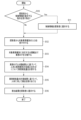
図10は、情報提示装置11により実行される情報提示方法の一例を概略的に示している。
(2) Operation of Information Presentation Device (2-1) Overall Flow FIG. 10 shows an outline of an example of an information presentation method executed by the
図10のステップS10において、制御情報提示部107は、探索者から制御情報を提示する指示を受け取ったか否かを判定する。制御情報提示部107が指示を受け取った場合(ステップS10;Yes)、フローはステップS11に進む。ステップS11において、制御情報提示部107は、制御情報記憶部112から制御情報を取得し、制御情報を探索者に提示する。In step S10 of FIG. 10, the control
例えば、指定部102は、探索対象となる業務種別を指定するためのユーザインタフェース画面を表示装置に表示する。ユーザインタフェース画面は制御情報の表示を指示するためのボタンを含む。制御情報提示部107は、ボタンがクリックされたときに制御情報を表示装置に表示する。For example, the
制御情報提示部107が指示を受け取らない場合(ステップS10;No)又はステップS11の処理が実行された後に、フローはステップS12に進む。ステップS12において、指定部102は、探索者から対象業務種別の入力を受け付ける。対象業務種別は、探索者により指定される少なくとも1つの業務種別を含む。If the control
ステップS13において、分類部103は、対象業務種別に対応する分類観点で業務ログ記憶部111に格納されている業務ログを分類する。対象業務種別が分類観点Ciに属する業務種別ci
si及び分類観点Cjに属する業務種別cj
sjを含む場合、分類部103は、分類観点Ciに対応する分類手法及び分類観点Cjに対応する分類手法を独立に適用し、得られた分類結果を組み合わせ、それにより最終的な分類結果を得る。
In step S13, the
ステップS14において、業務実施量計算部104は、業務ログ記憶部111に格納されている業務ログと、分類部103により得られた分類結果と、に基づいて、人材と分類結果における業務種別との組み合わせの各々について業務実施量を計算する。業務実施量計算部104により計算される業務実施量は、人材と対象業務種別との組み合わせの各々についての業務実施量を含む。In step S14, the business execution
ステップS15において、順位割当部105は、業務実施量の計算結果に基づいて、人材に順位を割り当てる。例えば、順位割当部105は、対象業務種別の業務実施量が高い順に人材に順位を割り当てる。順位割当部105は、対象業務種別に対応する分類観点に関する不確実性情報に基づいて業務実施量を補正し、補正された業務実施量が高い順に人材に順位を割り当ててもよい。さらに、順位割当部105は、不確実性情報と業務実施量の計算結果とに基づいて、順位間で評価指標に逆転が発生する確率を計算し、計算された確率に基づいて順位をグループ化してもよい。順位割当については後述する。In step S15, the
ステップS16において、割当結果提示部106は、順位割当部105により得られた割当結果を探索者に提示する。例えば、割当結果提示部106は割当結果を表示装置に表示する。順位がグループ化されている場合、割当結果提示部106は順位のグループ化結果をさらに提示する。In step S16, the allocation
図10に示す例では、探索対象となる業務種別が探索者により指定された後に、ステップS13に示す分類処理が実行される。代替として、分類処理は、探索対象となる業務種別が探索者により指定される前に実行しておいてもよい。この場合、分類部103は、すべての分類観点に対応する分類手法を独立に適用し、それにより得られた分類手法のそれぞれについての分類結果を分類結果記憶部113に格納しておく。業務ログが業務ログ記憶部111に新たに追加されると、分類部103は追加された業務ログを分類する。このようにすることで、探索対象となる業務種別が探索者により指定されるたびに分類処理を行う必要がなくなる。探索者が複数の分類観点のそれぞれに対して業務種別を指定する場合には、分類部103は、分類結果記憶部113からこれらの分類観点に関する分類結果を取得し、取得した分類結果から合成分類観点に関する分類結果を生成する。In the example shown in FIG. 10, the classification process shown in step S13 is executed after the business type to be searched is specified by the searcher. Alternatively, the classification process may be executed before the business type to be searched is specified by the searcher. In this case, the
(2-2)順位割当
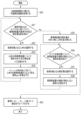
図11は、順位割当部105における順位割当動作の一例を概略的に示している。具体的には、図11は、順位割当部105が業務実施量計算部104により得られる業務実施量の計算結果と不確実性情報とに基づいて人材に順位を割り当てる場合の動作を概略的に示している。
(2-2) Rank Assignment Fig. 11 shows an example of a rank assignment operation in the
(2-2-1)不確実性情報の算出
図11のステップS20において、順位割当部105は、対象業務種別に関する不確実性情報を取得する。
(2-2-1) Calculation of Uncertainty Information In step S20 of FIG. 11, the
単一の分類観点に対して業務種別が指定される場合には、順位割当部105は、不確実性情報記憶部115から、指定される業務種別に一致する業務種別に関する不確実性情報を取得する。When a business type is specified for a single classification perspective, the
例えば、分類観点Ciに対して業務種別ci
siが指定されているとする。さらに、業務ログは業務種別ci
1、ci
2、...、ci
ri、...に分類されているものとする。順位割当部105は、不確実性情報記憶部115から分類観点Ciに対応する分類手法の不確実性情報を取得する。具体的には、順位割当部105は、不確実性情報記憶部115から値λi
1→si、λi
2→si、...、λi
si→si、...を取得する。順位割当部105は、取得した不確実性情報をそのまま対象業務種別に関する不確実性情報として使用する。
For example, assume that a task type c i si is specified for classification viewpoint C i . Furthermore, assume that task logs are classified into task types c i 1 , c i 2 , . . ., c i ri , . . . The
2つの分類観点に対して業務種別が指定される場合には、順位割当部105は、不確実性情報記憶部115から、指定される2つの業務種別に一致する2つの業務種別に関する不確実性情報を取得し、取得した不確実性情報から対象業務種別に関する不確実性情報を算出する。When a business type is specified for two classification perspectives, the
例えば、分類観点Ciに対して業務種別ci
siが指定され、分類観点Cjについて業務種別cj
sjが指定されているとする。さらに、業務ログは業務種別ci,j
1,1、ci,j
1,2、...、ci,j
ri,1、ci,j
ri,2、...、ci,j
ri,rj、...ci,j
ri+1,1、ci,j
ri+1,2、...に分類されているものとする。順位割当部105は、不確実性情報記憶部115から、分類観点Ciに対応する分類手法の不確実性情報及び分類観点Cjに対応する分類手法の不確実性情報を取得する。分類観点Ciに対応する分類手法の不確実性情報は値λi
1→si、λi
2→si、...、λi
si→si、...を含み、分類観点Cjに対応する分類手法の不確実性情報は値λj
1→sj、λj
2→sj、...、λj
sj→sj、...を含む。順位割当部105は下記式に従ってλi,j
ri→si,rj→sjを算出する。

3つ以上の分類観点に対して業務種別が指定される場合には、順位割当部105は、不確実性情報記憶部115から、指定される業務種別にそれぞれ一致する業務種別に関する不確実性情報を取得し、取得した不確実性情報から対象業務種別に関する不確実性情報を算出する。When business types are specified for three or more classification perspectives, the
例えば、業務種別が指定されている分類観点をC1、C2、C3、...とする。順位割当部105は、分類観点C1、C2に対して、2つの分類観点に対して業務種別が指定されている場合に関して説明した処理を適用することにより、合成分類観点C1,2に対応する分類手法の不確実性情報を算出する。順位割当部105は、分類観点C1,2、C3に対して、2つの分類観点に対して業務種別が指定されている場合に関して説明した処理を適用することにより、合成分類観点C1,2,3に対応する分類手法の不確実性情報を算出する。順位割当部105は、2つの分類観点に対して業務種別が指定されている場合に関して説明した処理を繰り返し適用することにより、合成分類観点C1,2,3,...に対応する分類手法の不確実性情報を算出する。
For example, the classification perspectives for which business types are specified are assumed to be C1 , C2 , C3 , .... The
分類手法を適用する途中過程を考慮する必要がなく、その結果のみを使用する説明においては、合成分類観点Cに対応する分類手法により業務種別c1、c2、...、cr、...に分類されたものとして業務ログを扱うこととする場合には、対象業務種別に関する不確実性情報の値をλr→sと表記する。ここで、値λr→sは、業務種別の推定結果がcrである業務ログのうち正解の業務種別がcsであるものの割合を示す。 In an explanation that does not require consideration of the intermediate process of applying the classification method and uses only the result, if a business log is treated as having been classified into business types c1 , c2 , ..., cr , ... by a classification method corresponding to synthetic classification viewpoint C, the value of the uncertainty information regarding the target business type is denoted as λr →s . Here, the value λr →s indicates the proportion of business logs whose estimated business type result is cr and whose correct business type is cs .
(2-2-2)各人材の業務実施量の確率分布及び補正値の算出
ステップS21において、順位割当部105は、探索対象となるすべての人材について、業務実施量の確率分布及び補正値を計算したか否かを判定する。いずれかの人材について業務実施量の確率分布及び補正値が計算されてない場合(ステップS21;No)、フローはステップS22に進む。
(2-2-2) Calculation of Probability Distribution and Correction Value of Work Quantity for Each Person In step S21, the
ステップS22において、順位割当部105は、処理対象となる人材hを選択する。ステップS23において、順位割当部105は、人材hについて業務実施量の確率分布及び補正値を算出する。In step S22, the
人材hの業務ログは分類観点Cに対応する分類手法により業務種別c1、c2、...、cr、...に分類されている。業務種別crに分類された人材hの業務ログの個数をnh
rとし、その合計をnhとする。合計nhは下記のように表される。

さらに、人材hの業務種別crの業務実施量をwh
rとし、その合計をwhとする。合計whは下記のように表される。

なお、各業務ログがどの業務種別のものであるかは分類手法により推定されたものであるので、nh rは業務ログの個数の推定値であり、wh rは業務実施量の推定値である。 Note that the task type of each task log is estimated by a classification method, so n hr is an estimate of the number of task logs, and w hr is an estimate of the amount of tasks performed.
業務実施量として業務ログの件数を使用する場合について説明する。この場合、任意のrについて、wh
r=nh
rである。各業務種別crに分類されたnh
r個の業務ログのうち本来の業務種別がcsであるものの個数xh
rの確率分布φh
r(xh
r)は、平均μh
r=nh
rλr→s、分散(σh
r)2=nh
rλr→s(1-λr→s)の二項分布に従うと考えられ、下記となる。

人材hのnh個の業務ログのうち本来の業務種別がcsであるものの個数xhの確率分布ψh(xh)は、業務種別c1、c2、...、cr、...に分類されたnh
1、nh
2、...、nh
r、...個の業務ログのうち本来の業務種別がcsであるものの個数の和xh=Σrxh
rの確率分布であり、確率分布φh
1、φh
2、...、φh
r、...の畳み込みとなる。ここで、任意の2個の確率分布φh
r′、φh
r″の畳み込みφh
r′*φh
r″は、0以上nh以下の各xh
r′,r″について、下記のように表される。

代替として、nh
1、nh
2、...、nh
r、...がいずれも充分に大きい場合には、二項分布とみなした確率分布φh
r(xh
r)を、平均及び分散が同じ正規分布として、


ただし、正規分布は確率変数が連続値の確率分布であるため、確率分布ψh(xh)は、離散値xhの確率分布として下記のように求まる。

人材hの業務種別csの業務実施量の推定値はwh
s=nh
sであるが、その補正値w′h
sは、ψh(xh)の期待値として、下記により算出される。

業務実施量として、業務ログに含まれるタイムスタンプなどの属性データを使用する場合について説明する。 This section explains the case where attribute data such as timestamps contained in business logs are used as the volume of business operations.
不確実性情報が試験的に分類を実施した際の推定結果の業務種別と正解の業務種別の各組み合わせに対する業務ログの個数に関する割合の分布である場合には、業務種別crごとに求まっているnh
r及びwh
rからρh
r=wh
r/nh
rの値を算出し、業務ログの個数xh
rに関する確率分布φh
r(xh
r)を、業務実施量yh
r=ρh
rxh
rに関する確率分布φh
r(yh
r)に変換し、φh
1、φh
2、...、φh
r、...の畳み込み確率分布として、人材hの全業務ログのうち本来の業務種別がcsである業務ログの業務実施量yhの確率分布ψh(yh)を計算する。例えば、φh
r(xh
r)を正規分布で近似している場合には、φh
r(yh
r)及びψh(yh)は以下のようになる。

また、人材hの業務種別csの業務実施量の推定値はwh
sであるが、その補正値w′h
sはψh(yh)の期待値として下記式により算出する。

代替として、不確実性情報が、試験的に分類を実施した際の、推定結果の業務種別と正解の業務種別の各組み合わせに対する業務実施量自体に関する割合の分布を保持している場合には、その値をパラメータとする適当な確率分布族として、業務実施量自体の確率分布を計算してもよい。適当な確率分布族の例は二項分布及び正規分布を含む。Alternatively, if the uncertainty information contains a distribution of the proportions of the work volume itself for each combination of the estimated work type and the correct work type when a trial classification is performed, the probability distribution of the work volume itself may be calculated as an appropriate probability distribution family with the values as parameters. Examples of appropriate probability distribution families include the binomial distribution and the normal distribution.
図12は、図11のステップS23に示される確率分布及び補正値を算出する処理の一例を概略的に示している。図12のステップS30において、順位割当部105は、分類観点に属するすべての業務種別について確率分布が算出されているか否かを判定する。
Figure 12 shows an example of a process for calculating the probability distribution and correction value shown in step S23 of Figure 11. In step S30 of Figure 12, the
いずれかの業務種別について確率分布が算出されていない場合(ステップS30;No)、フローはステップS31に進む。ステップS31において、順位割当部105は、確率分布が算出されていない業務種別の中から1つの業務種別crを選択する。
If the probability distribution has not been calculated for any of the task types (step S30; No), the flow proceeds to step S31. In step S31, the
ステップS32において、順位割当部105は、業務種別crに分類されたnh
r個の業務ログのうち本来の業務種別がcsであるものの個数xh
rの確率分布φh
r(xh
r)を計算する。
In step S32, the
ステップS33において、順位割当部105は、業務種別crに業務ログの個数nh r及び業務実施量wh rからρh rを算出する。ここで、ρh r=wh r/nh rである。 In step S33, the rank assignment unit 105 calculates ρhr from the number of task logs nhr and the task execution amount whr for the task type cr , where ρhr = whr / nhr .
ステップS34において、順位割当部105は、確率分布φh
r(xh
r)を業務実施量yh
rに関する確率分布φh
r(yh
r)に変換する。その後、フローはステップS30に戻る。
In step S34, the
すべての業務種別について確率分布が算出されている場合(ステップS30;Yes)、フローはステップS35に進む。 If probability distributions have been calculated for all business types (step S30; Yes), the flow proceeds to step S35.
ステップS35において、順位割当部105は、人材hの全業務ログのうち本来の業務種別がcsである業務ログの属性データの集計値yhの確率分布ψh(yh)を計算する。
In step S35, the
ステップS36において、順位割当部105は、ψh(yh)の期待値として業務実施量の補正値w′h
sを算出する。
In step S36, the
なお、以上の説明では、確率分布の変換方法の例を説明するために、xhを、本来の業務種別がcsである業務ログの個数とし、yhを、本来の業務種別がcsである業務ログの属性データの集計値として、区別したが、以降の説明においては、個数か属性データの集計値かを区別せず、どちらの場合もxhと表記する。 In the above explanation, in order to explain an example of a method for converting a probability distribution, xh is defined as the number of business logs whose original business type is cs , and yh is defined as the aggregate value of the attribute data of business logs whose original business type is cs . However, in the following explanation, there is no distinction between the number and the aggregate value of the attribute data, and either case will be represented as xh .
図11を再び参照すると、ステップS24において、順位割当部105は、0≦x≦wh内の各xについて、人材hの業務実施量がx以上である確率ph(x)を算出する。順位割当部105は下記により確率ph(x)を算出する。

確率分布及び補正値の計算が完了している場合(ステップS21;Yes)、フローはステップS25に進む。 If the calculation of the probability distribution and correction value is complete (step S21; Yes), the flow proceeds to step S25.
図13は、図11のステップS24に示される確率を算出する処理の一例を概略的に示している。図13のステップS40において、順位割当部105はxを0に設定する。ステップS41において、順位割当部105は、xがwhより大きいか否かを判定する。
Fig. 13 shows an example of a process for calculating the probability shown in step S24 of Fig. 11. In step S40 of Fig. 13, the
xがwh以下である場合(ステップS41;No)、フローはステップS42に進む。ステップS42において、順位割当部105は、人材hの対象業務種別の業務実施量に関する確率分布ψh(xh)に基づいて業務実施量がx以上となる確率ph(x)を算出する。ステップS43において、順位割当部105はxを1だけ増大させる。その後、フローはステップS41に戻る。
If x is equal to or less than wh (step S41; No), the flow proceeds to step S42. In step S42, the
xがwhより大きい場合(ステップS41;Yes)、フローは終了となる。 If x is greater than wh (Step S41; Yes), the flow ends.
(2-2-3)業務実施量の補正値による順位割当
図11を再び参照すると、ステップS25において、順位割当部105は、業務実施量の補正値の大きい順に人材に順位を割り当てる。以下では、順位kが割り当てられた人材(k番目の人材)を人材h(k)と表記する。
11 again, in step S25, the
(2-2-4)順位間で業務実施量に逆転が発生しない確率の算出
ステップS26において、順位割当部105は、すべての順位間について、業務実施量に逆転が発生しない確率を計算したか否かを判定する。いずれかの順位間について確率が計算されていない場合(ステップS26;No)、フローはステップS27に進む。
(2-2-4) Calculation of the Probability that No Reversal in the Amount of Work Implemented Will Occur Between Ranks In step S26, the
ステップS27において、順位割当部105は、確率が計算されていない順位間の中から1つの順位間を選択する。順位間で業務実施量に逆転が発生しない確率を算出する対象となる人材の集合をH、集合Hに含まれる人材数を|H|とする。In step S27, the
ステップS28において、順位割当部105は、業務実施量に逆転が発生しない確率を算出する。In step S28, the
1~k番目の人材とk+1番目以降の人材とで、業務種別csの業務実施量に逆転が発生しない確率Pkの算出方法について説明する。 A method for calculating the probability P k that there will be no reversal in the amount of work performed for the task type c s between the 1st to kth personnel and the k+1th and subsequent personnel will be described.
まず、1~k番目の人材の業務種別csの業務実施量の最小値がx以上x+1未満である、すなわち、1~k番目の人材の業務種別csの業務実施量について、全員がx以上だが全員がx+1以上ではなく、ちょうどxである人材が少なくとも1人いる確率qk(x)は下記式のように表すことができる。

ここで、1~k番目の人材の、業務種別によらない全業務実施量の最小値を


順位割当部105は、上記式によりqk(τk
min)の値を算出する。以降、順位割当部150は、直前の計算結果を利用しながら qk(τk
min-1)、qk(τk
min-2)、...、qk(0)の値を順に算出する。
The
さらに、k+1番目以降のすべての人材について、業務種別csの業務実施量がx未満である確率は


図14は、図11のステップS28に示される確率を算出する処理の一例を概略的に示している。図14のステップS50において、順位割当部105は、1~k番目の人材の、業務種別によらない全業務実施量の最小値τk
minを算出する。ステップS51において、順位割当部105は、xをτk
minに設定する。
Fig. 14 shows an example of the process of calculating the probability shown in step S28 of Fig. 11. In step S50 of Fig. 14, the
ステップS52において、順位割当部105は、1~k番目の人材の業務種別csの業務実施量の最小値がx以上x+1未満である確率qk(x)について、qk(τk
min)を算出する。ステップS53において、順位割当部105は、vをqk(τk
min)に設定する。
In step S52, the
x>0の場合(ステップS54;Yes)、フローはステップS55に進む。ステップS55において、順位割当部105はxを1だけ低減させる。If x>0 (step S54; Yes), the flow proceeds to step S55. In step S55, the
ステップS56において、順位割当部105は下記式によりuを算出する。

ステップS57において、順位割当部105は、qx(x)=u-νによりqx(x)を算出する。ステップS58において、順位割当部105はνをuに設定する。
In step S57, the
x≦0の場合(ステップS54;No)、フローはステップS59に進む。ステップS59において、順位割当部105は確率Pkを算出する。
If x≦0 (step S54; No), the flow proceeds to step S59. In step S59, the
以上で説明した確率Pkを算出する処理を、kの値をk=1,2,...,|H|-1と変化させながら実施することで、各順位kについて、1~k番目の人材とk+1番目以降の人材とで業務種別csの業務実施量に逆転が発生しない確率Pkの値を算出する。 The process of calculating the probability Pk described above is performed while changing the value of k from k = 1, 2, ..., |H|-1, to calculate the value of the probability Pk that, for each ranking k, there will be no reversal in the amount of work performed for task type cs between the 1st to kth personnel and the k +1th or subsequent personnel.
代替として、確率Pkとして、k番目の人材とk+1番目の人材とで業務種別csの業務実施量に逆転が発生しない確率を使用してもよい。k+1番目の人材の業務種別csの業務実施量がx未満である確率は1-ph(k+1)(x)であり、k番目の人材の業務種別csの業務実施量が0の場合、1の場合、...、wh(k)の場合は互いに排反である。よって、確率Pkは下記式により算出することができる。

図11を再び参照すると、すべての順位間について確率が計算されている場合(ステップS26;Yes)、フローはステップS29に進む。 Referring again to Figure 11, if probabilities have been calculated for all rankings (step S26; Yes), the flow proceeds to step S29.
(2-2-5)順位のグループ化
ステップS29において、順位割当部105は、確率P1、P2、...、Pk、...に基づいて、順位をグループ化する。順位のグループ化の対象となる人材の集合をH0とする。
(2-2-5) Grouping of Ranks In step S29, the
順位のグループ化は、分割要否を判定するステップと、判定の結果として分割を行う場合に分割位置を決定するステップと、分割を適用するかどうかを判定するステップと、を含む処理を繰り返すことにより実行される。分割位置は何番目の人材と何番目の人材との間で分割を行うかを示す情報である。 Rank grouping is performed by repeating a process that includes a step of determining whether or not splitting is necessary, a step of determining the split position if splitting is required as a result of the determination, and a step of determining whether or not splitting should be applied. The split position is information that indicates between which two personnel the split will be performed.
図15は、順位割当部105の順位グループ化動作を概略的に示している。図15のステップS60において、順位割当部105は、すべての順位をひとつのグループとする。
Figure 15 shows an overview of the rank grouping operation of the
ステップS61において、順位割当部105は、グループの分割が必要か否かを判定する。分割が不要である場合(ステップS61;No)、フローは終了となる。In step S61, the
分割が必要である場合(ステップS61;Yes)、フローはステップS62に進む。ステップS62において、順位割当部105は、グループの分割位置を決定する。例えば、順位割当部105は、k位とk+1位との間でグループを分割することを決定する。If division is necessary (step S61; Yes), the flow proceeds to step S62. In step S62, the
ステップS63において、順位割当部105は、分割を適用するか否かを判定する。分割を適用しない場合(ステップS63;No)、フローは終了となる。In step S63, the
分割を適用する場合(ステップS63;No)、フローはステップS64に進む。ステップS64において、順位割当部105は、決定した分割位置でグループを分割する。フローはステップS61に戻る。If division is to be applied (step S63; No), the flow proceeds to step S64. In step S64, the
以下で、分割要否の判定方法、分割位置の決定方法、分割適用の判定方法について説明する。その際、ある時点までの分割により、k1位とk1+1位のとの間、k2位とk2+1位の間、...、km位とkm+1位との間でグループ分割がなされているものとする。また、このとき、m+1個のグループ、つまり、人材の集合を下記のように表記する。

(2-2-5-1)分割要否の判定方法
第1の判定方法では、探索者が、探索対象となる業務種別とともに、選出したい人数の最大値kmaxを指定する。順位割当部105は、最上位のグループに属する人材の数|H1~k1|がkmaxよりも大きい場合に、分割が必要であると判定し、kmax以下である場合に、分割が不要であると判定する。これにより、kmax人以下の人材を選出する際に、分類誤りを考慮した上で最も意味のある選出基準を探索者に提示することができる。
(2-2-5-1) Method for Determining Whether or Not Division is Necessary In the first determination method, the searcher specifies the maximum number of people to be selected, k max , along with the type of work to be searched. The
第2の判定方法では、探索者が、探索対象となる業務種別とともに、選出したい人数の最大値kmaxを指定する。順位割当部105は、kmax位及びkmax+1位が同じグループに属している場合に、分割が必要であると判定し、kmax位及びkmax+1位が異なるグループに属している場合に、分割が不要であると判定する。これにより、探索者がkmax位の人材を選出し、kmax+1位の人材を選出しないのであれば、分類誤りを考慮した上でそれよりも意味のある選出基準があることを探索者に提示することができる。
In the second judgment method, the searcher specifies the maximum number of people k max to be selected along with the type of business to be searched. The
第3の判定方法では、探索者が、探索対象となる業務種別とともに、選出したい人数の最小値kmin及び最大値kmaxを指定する。順位割当部105は、kmin位及びkmax位が同じグループに属している場合に、分割が必要であると判定し、kmin位及びkmax位が異なるグループに属している場合に、分割が不要であると判定する。これにより、kmin人以上kmax人以下の間で人材を選出する際に、分類誤りを考慮した上で意味のある人数の決め方の選択肢を探索者に提示することができる。
In the third judgment method, the searcher specifies the minimum number of people to be selected, k min and the maximum number of people, k max , along with the type of work to be searched for. The
第4の判定方法では、探索者が、探索対象となる業務種別とともに、選出したい人数の最小値kmin及び最大値kmaxを指定する。順位割当部105は、kmax位及びkmax+1位が同じグループに属している場合、又はkmin位及びkmax位が同じグループに属している場合に、分割が必要であると判定し、そうでなければ、分割が不要であると判定する。第4の判定方法は、第2の判定方法及び第3の判定方法の両方の効果を奏する。
In the fourth judgment method, the searcher specifies the minimum value k min and maximum value k max of the number of people to be selected along with the business type to be searched. The
第5の判定方法では、探索者が、探索対象となる業務種別とともに、グループ数の最大値mmaxを指定する。順位割当部105は、グループ数がmmaxよりも小さい場合に、分割が必要と判定し、mmax以上である場合に、分割が不要であると判定する。
In the fifth judgment method, the searcher specifies the maximum number of groups mmax along with the business type to be searched. The
分割要否の判定は、第1の判定方法から第4の判定方法までのいずれかと第5の判定方法の組み合わせを使用して行われてもよい。判定条件として、組み合わせ対象となる判定方法における条件の選言を用いてもよいし、それらの連言を用いてもよい。The determination of whether or not division is necessary may be performed using a combination of any one of the first to fourth determination methods and the fifth determination method. As a determination condition, a disjunction of the conditions in the determination methods to be combined may be used, or a conjunction of these may be used.
順位割当部105は分割要否の判定を行わなくてもよい。すなわち、図15に示すフローにおいてステップS61の処理が削除されてもよい。この場合、分割を継続するか否かは分割適用の判定に委ねられることになる。The
(2-2-5-2)分割位置の決定方法
「分割位置kにおけるグループの分割」とは、k位とk+1位との間で(k番目の人材とk+1番目の人材との間で)グループを分割することを意味するものとする。さらに、分割位置として適用されていない順位間の集合をKcとする。1回も分割が行われていない初期状態では、Kc={1,2,...,k,...,|H0|-1}である。
(2-2-5-2) Method of Determining Split Position "Splitting a group at split position k" means splitting a group between kth rank and k+1th rank (between the kth talent and the k+1th talent). Furthermore, let Kc be the set of ranks that have not been applied as a split position. In the initial state where no split has been performed, Kc = {1, 2,..., k,..., | H0 |-1}.
確率Pkは、1~k番目の人材とk+1番目以降の人材とで、又は、k番目の人材とk+1番目の人材とで、業務実施量に逆転が発生しない確率である。確率Pkは、1位と2位との間、2位と3位との間、というように各順位間に対して算出される。ここで、確率Pkの値が大きい順位間ほど、分類誤りの可能性を考慮したとしても逆転が発生しにくく、順位の違いに意味がある。逆に、確率Pkの値が小さい順位間ほど、分類誤りにより逆転が発生しやすく、順位の違いに意味がない。 Probability P k is the probability that no reversal in work volume occurs between the 1st to kth personnel and the k+1th or subsequent personnel, or between the kth personnel and the k+1th personnel. Probability P k is calculated for each rank, such as between 1st and 2nd, and between 2nd and 3rd. Here, the larger the value of probability P k between ranks, the less likely reversal will occur even if the possibility of misclassification is taken into account, and the difference in ranks is meaningful. Conversely, the smaller the value of probability P k between ranks, the more likely reversal will occur due to misclassification, and the difference in ranks is meaningless.
順位割当部105は、集合Kcの中から確率Pkが最大となるkを分割位置として選択する。代替として、直前の分割によりグループHka~kbが分割位置k′で分割されてグループHka~k′、Hk′+1~kbが生成されたときに、順位割当部105は、順位ka~k′-1、k′+1~kb-1において、業務実施量に逆転が発生しない確率Pkを算出しなおして更新し、その上で確率Pkが最大となるkを分割位置として選択してもよい。
The
(2-2-5-3)分割適用の判定方法
探索者が、探索対象となる業務種別とともに、逆転が発生しない確率の最小値Pminを指定する。順位割当部105は、決定された分割位置において逆転が発生しない確率がPmin以上である場合に、分割を適用すると判定し、Pminより小さい場合に、分割を適用しないと判定する。
(2-2-5-3) Method of Determining Whether to Apply Division The searcher specifies the minimum probability Pmin of the probability that a reversal will not occur along with the type of business to be searched. The
順位割当部105は分割適用の判定を行わなくてもよい。すなわち、図15に示すフローにおいてステップS63の処理が削除されてもよい。この場合、分割を継続するか否かは分割要否の判定に委ねられることになる。The
はじめはすべての人材が同じグループに属しているものとしてグループ分割を順次に行う方法を説明した。逆に、人材がすべて異なるグループに属しているものとしてグループを順次に統合する方法を用いてもよい。この場合、順位割当部105は、業務実施量に逆転が発生しない確率Pkが小さい順位から順にグループの統合を行う。
In the first embodiment, the group division is performed in a sequential manner assuming that all personnel belong to the same group. Conversely, the group may be merged in a sequential manner assuming that all personnel belong to different groups. In this case, the
(3)効果
情報提示装置11は、探索者により指定される業務種別である対象業務種別に対応する分類観点で複数の業務ログを分類することにより、対象業務種別に関連する業務ログを得て、対象業務種別に関連する業務ログに基づいて、人材ごとに対象業務種別の業務実施量を計算し、対象業務種別の業務実施量の計算結果に基づいて人材に順位を割り当て、順位の割当結果を探索者に提示する。これにより、対象業務種別の業務経験が豊富な人材を探索者に提示することができる。
(3) Effects The
業務ログは業務の実施に伴い自動的に記録され、業務ログから業務経験の豊富さを表す業務実施量が算出される。これにより、業務実施者、その上長、又は人事担当者などが業務報告をデータベースに明示的に登録するなどデータベースを更新する手間が不要である。さらに、最新の状態に基づいて適任者を探すことが可能となる。 Work logs are automatically recorded as work is performed, and the amount of work performed, which indicates the amount of work experience, is calculated from the work logs. This eliminates the need for the work performer, their superior, or human resources personnel to explicitly register work reports in the database, thereby updating the database. Furthermore, it becomes possible to search for the most suitable person based on the latest status.
業務ログとして、業務で取り扱われる情報だけでなく、映像データやセンサデータを利用することが可能である。業務ログをそのまま用いるのではなく業務種別に分類し、分類結果に基づいて対象業務種別の業務実施量を計算する。これにより、実施形態に係る情報提示方法はデスクワーク以外の業務についても適用可能である。 As a business log, it is possible to use not only information handled in business, but also video data and sensor data. Business logs are not used as is, but are classified by business type, and the amount of work performed for the target business type is calculated based on the classification results. This makes the information presentation method according to the embodiment applicable to business other than desk work.
順位割当は対象業務種別の業務実施量に基づいて実行される。これにより、実施形態に係る情報提示方法は各人材が複数の業務種別を掛け持ちする業務体制に対しても適用可能である。 The ranking is assigned based on the volume of work performed for the target work type. This makes the information presentation method according to the embodiment applicable to work systems in which each employee handles multiple work types.
情報提示装置11は、業務種別ごとに用意された制御情報又は制御情報を用意する際の条件が記載された情報を探索者に提示してよい。これにより、探索者が、指定しようとしている業務種別が自身の意図した業務種別であるかどうかを確認することが可能となる。その結果、探索者は、自身の意図した業務種別を指定することが可能となる。情報提示装置11は、複数の分類観点のそれぞれに対して指定される業務種別を受け付けてよい。これにより、探索者の意図に近い業務種別を指定することが可能である。The
情報提示装置11は、対象業務種別に対応する分類観点による分類誤りの傾向を示す不確実性情報に基づいて業務実施量の計算結果を補正し、補正後の計算結果に基づいて人材に順位を割り当ててよい。これにより、分類誤りにより業務実施量の計算結果が不確実なものであっても、分類誤りの影響を緩和することができる。The
さらに、情報提示装置11は、不確実性情報に基づいて、順位間で業務実施量に逆転が発生する確率を計算し、計算された確率に基づいて順位をグループ化してよい。これにより、各グループは業務経験が同程度とみなせる人材を含むことになる。その結果、探索者が人材の業務経験の豊富さを容易に比較することが可能となる。
Furthermore, the
(4)変形例
業務は、職業上の活動に限らず、いかなる活動であってもよい。業務実施量は、人材による業務の実施に関する評価指標の一例である。例えば、業務ログが例えば社内資格試験や社外資格試験などの試験の結果を記録したものである場合、評価指標は試験の結果に基づいている。また、人材はオブジェクトの一例に過ぎない。オブジェクトは例えばドキュメントや語彙などであってもよい。例えば、人材がどの種別の業務をよく実施しているか、の代わりに、ドキュメント、あるいは語彙が、どのような種別の業務において使用されるのかを、容易に人が把握することが可能となる。
(4) Modifications The work is not limited to professional activities, and may be any kind of activity. The amount of work performed is an example of an evaluation index regarding the performance of work by personnel. For example, if the work log records the results of an internal qualification test or an external qualification test, the evaluation index is based on the test results. Furthermore, personnel is merely an example of an object. Objects may be, for example, documents or vocabulary. For example, instead of knowing what type of work a personnel frequently performs, a person can easily understand in what type of work a document or vocabulary is used.
なお、本発明は、上記実施形態に限定されるものではなく、実施段階ではその要旨を逸脱しない範囲で種々に変形することが可能である。また、各実施形態は適宜組み合わせて実施してもよく、その場合組み合わせた効果が得られる。さらに、上記実施形態には種々の発明が含まれており、開示される複数の構成要素から選択された組み合わせにより種々の発明が抽出され得る。例えば、実施形態に示される全構成要素からいくつかの構成要素が削除されても、課題が解決でき、効果が得られる場合には、この構成要素が削除された構成が発明として抽出され得る。 Note that the present invention is not limited to the above-described embodiments, and can be modified in various ways in the implementation stage without departing from the gist of the invention. The embodiments may also be implemented in appropriate combination, in which case the combined effects can be obtained. Furthermore, the above-described embodiments include various inventions, and various inventions can be extracted by combinations selected from the multiple components disclosed. For example, if the problem can be solved and the effect can be obtained even if some components are deleted from all the components shown in the embodiments, the configuration from which these components are deleted can be extracted as an invention.
10…情報処理システム
11…情報提示装置
12…業務ログ取得装置
101…取得部
102…指定部
103…分類部
104…業務実施量計算部
105…順位割当部
106…割当結果提示部
107…制御情報提示部
111…業務ログ記憶部
112…制御情報記憶部
113…分類結果記憶部
114…計算結果記憶部
115…不確実性情報記憶部
116…割当結果記憶部
151…プロセッサ
152…RAM
153…プログラムメモリ
154…ストレージデバイス
155…入出力インタフェース
LIST OF SYMBOLS 10: INFORMATION PROCESSING SYSTEM 11: INFORMATION PRESENTATION DEVICE 12: TASK LOG ACQUISITION DEVICE 101: ACQUISITION UNIT 102: DESIGNATION UNIT 103: CLASSIFICATION UNIT 104: TASK IMPLEMENTATION AMOUNT CALCULATION UNIT 105: RANKING ASSIGNMENT UNIT 106: ASSIGNMENT RESULT PRESENTATION UNIT 107: CONTROL INFORMATION PRESENTATION UNIT 111: TASK LOG MEMORY UNIT 112: CONTROL INFORMATION MEMORY UNIT 113: CLASSIFICATION RESULT MEMORY UNIT 114: CALCULATION RESULT MEMORY UNIT 115: UNCERTAINTY INFORMATION MEMORY UNIT 116: ASSIGNMENT RESULT MEMORY UNIT 151: PROCESSOR 152: RAM
153: program memory 154: storage device 155: input/output interface
Claims (9)
前記対象業務種別に対応する分類観点でオブジェクトと業務との関わりに関する記録を示す複数の業務ログを分類することにより、オブジェクトと前記対象業務種別の業務との関わりに関する記録を示す業務ログを得る分類部と、
前記得られた業務ログに基づいて、前記オブジェクトごとに前記オブジェクトと前記対象業務種別の業務との関わりの度合いを示す評価指標を計算する計算部と、
前記オブジェクトごとの前記評価指標の計算結果に基づいて、前記オブジェクトに順位を割り当てる順位割当部と、
前記順位の割当結果を前記探索者に提示する割当結果提示部と、
を備え、
前記指定部は、前記対象業務種別として、第1の分類観点に属する第1の業務種別及び前記第1の分類観点とは異なる第2の分類観点に属する第2の業務種別を受け付け、
前記分類部は、前記複数の業務ログからオブジェクトと前記第1の業務種別の業務との関わりに関する記録を示す第1の業務ログを得て、前記複数の業務ログからオブジェクトと前記第2の業務種別の業務との関わりに関する記録を示す第2の業務ログを得て、前記第1の業務ログと前記第2の業務ログとの積集合を、前記オブジェクトと前記対象業務種別の業務との関わりに関する記録を示す業務ログとして得る、
情報提示装置。 a designation unit that accepts a target task type, which is a task type designated by a searcher from among a plurality of task types that are to be classified when the tasks are classified according to each of a plurality of classification viewpoints;
a classification unit that obtains a task log indicating a record regarding a relationship between an object and a task of the target task type by classifying a plurality of task logs indicating a record regarding a relationship between an object and a task in a classification viewpoint corresponding to the target task type;
a calculation unit that calculates, for each of the objects , an evaluation index that indicates a degree of relationship between the object and the task of the target task type based on the obtained task log;
a rank assignment unit that assigns a rank to the object based on a calculation result of the evaluation index for each of the objects ;
an allocation result presentation unit that presents the ranking allocation result to the searcher;
Equipped with
the designation unit accepts, as the target business type, a first business type belonging to a first classification perspective and a second business type belonging to a second classification perspective different from the first classification perspective;
the classification unit obtains a first operation log from the plurality of operation logs indicating a record regarding a relationship between an object and an operation of the first operation type, obtains a second operation log from the plurality of operation logs indicating a record regarding a relationship between an object and an operation of the second operation type, and obtains a product of the first operation log and the second operation log as a operation log indicating a record regarding a relationship between the object and an operation of the target operation type;
Information presentation device.
前記対象業務種別に対応する分類観点でオブジェクトと業務との関わりに関する記録を示す複数の業務ログを分類することにより、オブジェクトと前記対象業務種別の業務との関わりに関する記録を示す業務ログを得る分類部と、
前記得られた業務ログに基づいて、前記オブジェクトごとに前記オブジェクトと前記対象業務種別の業務との関わりの度合いを示す評価指標を計算する計算部と、
前記オブジェクトごとの前記評価指標の計算結果に基づいて、前記オブジェクトに順位を割り当てる順位割当部と、
前記順位の割当結果を前記探索者に提示する割当結果提示部と、
を備え、
前記順位割当部は、前記対象業務種別に対応する前記分類観点による分類誤りの傾向を示す不確実性情報に基づいて前記計算結果を補正し、前記補正された計算結果に基づいて前記オブジェクトに前記順位を割り当てる、
情報提示装置。 a designation unit that accepts a target task type, which is a task type designated by a searcher from among a plurality of task types that are to be classified when the tasks are classified according to each of a plurality of classification viewpoints;
a classification unit that obtains a task log indicating a record regarding a relationship between an object and a task of the target task type by classifying a plurality of task logs indicating a record regarding a relationship between an object and a task in a classification viewpoint corresponding to the target task type;
a calculation unit that calculates, for each of the objects, an evaluation index that indicates a degree of relationship between the object and the task of the target task type based on the obtained task log;
a rank assignment unit that assigns a rank to the object based on a calculation result of the evaluation index for each of the objects;
an allocation result presentation unit that presents the ranking allocation result to the searcher;
Equipped with
the rank assignment unit corrects the calculation result based on uncertainty information indicating a tendency of classification errors from the classification viewpoint corresponding to the target business type, and assigns the rank to the object based on the corrected calculation result.
Information presentation device.
請求項2に記載の情報提示装置。 The uncertainty information is generated based on a ratio of misclassified business logs in a classification target business type as a result of a trial classification of the business logs.
The information presentation device according to claim 2 .
前記割当結果提示部は、前記順位のグループ化結果を含む前記順位の前記割当結果を前記探索者に提示する、
請求項2又は3に記載の情報提示装置。 the rank assignment unit calculates a probability that a reversal in the evaluation index occurs between the ranks based on the uncertainty information and the calculation result, and groups the ranks based on the calculated probability;
the allocation result presentation unit presents the allocation result of the ranks, including the grouping result of the ranks, to the searcher;
The information presentation device according to claim 2 or 3 .
前記複数の業務種別ごとに用意される、業務ログが業務種別に該当するか否かを判別するための制御情報を格納する制御情報記憶部と、
前記制御情報又は前記制御情報を用意する際の条件が記載された情報を前記探索者に提示する制御情報提示部と、
前記対象業務種別に対応する分類観点に含まれる業務種別に関する前記制御情報に基づいてオブジェクトと業務との関わりに関する記録を示す複数の業務ログを分類することにより、オブジェクトと前記対象業務種別の業務との関わりに関する記録を示す業務ログを得る分類部と、
前記得られた業務ログに基づいて、前記オブジェクトごとに前記オブジェクトと前記対象業務種別の業務との関わりの度合いを示す評価指標を計算する計算部と、
前記オブジェクトごとの前記評価指標の計算結果に基づいて、前記オブジェクトに順位を割り当てる順位割当部と、
前記順位の割当結果を前記探索者に提示する割当結果提示部と、
を備える情報提示装置。 a designation unit that accepts a target task type, which is a task type designated by a searcher from among a plurality of task types that are to be classified when the tasks are classified according to each of a plurality of classification viewpoints;
a control information storage unit that stores control information prepared for each of the plurality of business types for determining whether or not a business log corresponds to the business type;
a control information presenting unit that presents to the searcher the control information or information describing conditions for preparing the control information;
a classification unit that classifies a plurality of task logs indicating records regarding relationships between objects and tasks based on the control information regarding task types included in a classification perspective corresponding to the target task type, thereby obtaining task logs indicating records regarding relationships between objects and tasks of the target task type;
a calculation unit that calculates, for each of the objects, an evaluation index that indicates a degree of relationship between the object and the task of the target task type based on the obtained task log;
a rank assignment unit that assigns a rank to the object based on a calculation result of the evaluation index for each of the objects;
an allocation result presentation unit that presents the ranking allocation result to the searcher;
An information presentation device comprising :
複数の分類観点それぞれで業務を分類する際の分類先となる、複数の業務種別の中から、探索者により指定される業務種別である対象業務種別を受け付けることと、
前記対象業務種別に対応する分類観点でオブジェクトと業務との関わりに関する記録を示す複数の業務ログを分類することにより、オブジェクトと前記対象業務種別の業務との関わりに関する記録を示す業務ログを得ることと、
前記得られた業務ログに基づいて、前記オブジェクトごとに前記オブジェクトと前記対象業務種別の業務との関わりの度合いを示す評価指標を計算することと、
前記オブジェクトごとの前記評価指標の計算結果に基づいて、前記オブジェクトに順位を割り当てることと、
前記順位の割当結果を前記探索者に提示することと、
を備え、
前記対象業務種別を受け付けることは、前記対象業務種別として、第1の分類観点に属する第1の業務種別及び前記第1の分類観点とは異なる第2の分類観点に属する第2の業務種別を受け付けることを含み、
前記オブジェクトと前記対象業務種別の業務との関わりに関する記録を示す業務ログを得ることは、前記複数の業務ログからオブジェクトと前記第1の業務種別の業務との関わりに関する記録を示す第1の業務ログを得て、前記複数の業務ログからオブジェクトと前記第2の業務種別の業務との関わりに関する記録を示す第2の業務ログを得て、前記第1の業務ログと前記第2の業務ログとの積集合を、前記オブジェクトと前記対象業務種別の業務との関わりに関する記録を示す業務ログとして得ることを含む、
情報提示方法。 1. A computer-implemented method for presenting information, comprising:
receiving a target task type, which is a task type designated by a searcher, from among a plurality of task types to which tasks are classified according to a plurality of classification perspectives;
obtaining a task log indicating a record regarding a relationship between an object and a task of the target task type by classifying a plurality of task logs indicating a record regarding a relationship between an object and a task in a classification viewpoint corresponding to the target task type;
calculating, for each of the objects, an evaluation index indicating a degree of relationship between the object and the task of the target task type based on the obtained task log;
assigning a ranking to the objects based on the calculated evaluation index for each of the objects ;
presenting the ranking assignment result to the searcher;
Equipped with
Receiving the target business type includes receiving, as the target business type, a first business type belonging to a first classification perspective and a second business type belonging to a second classification perspective different from the first classification perspective;
Obtaining a task log indicating a record regarding a relationship between the object and the task of the target task type includes obtaining a first task log indicating a record regarding a relationship between the object and the task of the first task type from the plurality of task logs, obtaining a second task log indicating a record regarding a relationship between the object and the task of the second task type from the plurality of task logs, and obtaining a product of the first task log and the second task log as a task log indicating a record regarding a relationship between the object and the task of the target task type.
How information is presented.
複数の分類観点それぞれで業務を分類する際の分類先となる、複数の業務種別の中から、探索者により指定される業務種別である対象業務種別を受け付けることと、
前記対象業務種別に対応する分類観点でオブジェクトと業務との関わりに関する記録を示す複数の業務ログを分類することにより、オブジェクトと前記対象業務種別の業務との関わりに関する記録を示す業務ログを得ることと、
前記得られた業務ログに基づいて、前記オブジェクトごとに前記オブジェクトと前記対象業務種別の業務との関わりの度合いを示す評価指標を計算することと、
前記オブジェクトごとの前記評価指標の計算結果に基づいて、前記オブジェクトに順位を割り当てることと、
前記順位の割当結果を前記探索者に提示することと、
を備え、
前記オブジェクトに順位を割り当てることは、前記対象業務種別に対応する前記分類観点による分類誤りの傾向を示す不確実性情報に基づいて前記計算結果を補正し、前記補正された計算結果に基づいて前記オブジェクトに前記順位を割り当てることを含む、
情報提示方法。 1. A computer-implemented method for presenting information, comprising:
receiving a target task type, which is a task type designated by a searcher, from among a plurality of task types to which tasks are classified according to a plurality of classification perspectives;
obtaining a task log indicating a record regarding a relationship between an object and a task of the target task type by classifying a plurality of task logs indicating a record regarding a relationship between an object and a task in a classification viewpoint corresponding to the target task type;
calculating, for each of the objects, an evaluation index indicating a degree of relationship between the object and the task of the target task type based on the obtained task log;
assigning a ranking to the objects based on the calculated evaluation index for each of the objects ;
presenting the ranking assignment result to the searcher;
Equipped with
assigning a ranking to the object includes correcting the calculation result based on uncertainty information indicating a tendency of classification errors from the classification viewpoint corresponding to the target business type, and assigning the ranking to the object based on the corrected calculation result.
How information is presented.
複数の分類観点それぞれで業務を分類する際の分類先となる、複数の業務種別の中から、探索者により指定される業務種別である対象業務種別を受け付けることと、
前記複数の業務種別ごとに用意される、業務ログが業務種別に該当するか否かを判別するための制御情報を格納することと、
前記制御情報又は前記制御情報を用意する際の条件が記載された情報を前記探索者に提示することと、
前記対象業務種別に対応する分類観点に含まれる業務種別に関する前記制御情報に基づいてオブジェクトと業務との関わりに関する記録を示す複数の業務ログを分類することにより、オブジェクトと前記対象業務種別の業務との関わりに関する記録を示す業務ログを得ることと、
前記得られた業務ログに基づいて、前記オブジェクトごとに前記オブジェクトと前記対象業務種別の業務との関わりの度合いを示す評価指標を計算することと、
前記オブジェクトごとの前記評価指標の計算結果に基づいて、前記オブジェクトに順位を割り当てることと、
前記順位の割当結果を前記探索者に提示することと、
を備える情報提示方法。 1. A computer-implemented method for presenting information, comprising:
receiving a target task type, which is a task type designated by a searcher, from among a plurality of task types to which tasks are classified according to a plurality of classification perspectives;
storing control information prepared for each of the plurality of business types for determining whether or not a business log corresponds to the business type;
presenting the control information or information describing conditions for preparing the control information to the searcher;
obtaining a task log indicating a record regarding a relationship between an object and a task of the target task type by classifying a plurality of task logs indicating a record regarding a relationship between an object and a task based on the control information regarding a task type included in a classification viewpoint corresponding to the target task type;
calculating, for each of the objects, an evaluation index indicating a degree of relationship between the object and the task of the target task type based on the obtained task log;
assigning a ranking to the objects based on the calculated evaluation index for each of the objects ;
presenting the ranking assignment result to the searcher;
An information presentation method comprising:
Applications Claiming Priority (1)
| Application Number | Priority Date | Filing Date | Title |
|---|---|---|---|
| PCT/JP2021/015731 WO2022219810A1 (en) | 2021-04-16 | 2021-04-16 | Information presentation device, information presentation method, and program |
Publications (2)
| Publication Number | Publication Date |
|---|---|
| JPWO2022219810A1 JPWO2022219810A1 (en) | 2022-10-20 |
| JP7540586B2 true JP7540586B2 (en) | 2024-08-27 |
Family
ID=83640304
Family Applications (1)
| Application Number | Title | Priority Date | Filing Date |
|---|---|---|---|
| JP2023514303A Active JP7540586B2 (en) | 2021-04-16 | 2021-04-16 | Information presentation device, information presentation method, and program |
Country Status (2)
| Country | Link |
|---|---|
| JP (1) | JP7540586B2 (en) |
| WO (1) | WO2022219810A1 (en) |
Families Citing this family (2)
| Publication number | Priority date | Publication date | Assignee | Title |
|---|---|---|---|---|
| WO2025120810A1 (en) * | 2023-12-07 | 2025-06-12 | 日本電信電話株式会社 | Information processing device and information processing method |
| CN119671234B (en) * | 2024-10-12 | 2025-11-07 | 中电万维信息技术有限责任公司 | Task annotation processing system and use method |
Citations (2)
| Publication number | Priority date | Publication date | Assignee | Title |
|---|---|---|---|---|
| JP2007164594A (en) | 2005-12-15 | 2007-06-28 | Toshiba Corp | Work management support device and work management support method |
| JP2009223832A (en) | 2008-03-18 | 2009-10-01 | Ricoh Co Ltd | Workflow management system |
Family Cites Families (1)
| Publication number | Priority date | Publication date | Assignee | Title |
|---|---|---|---|---|
| JPH0695827A (en) * | 1992-09-11 | 1994-04-08 | Matsushita Electric Ind Co Ltd | Guide device |
-
2021
- 2021-04-16 JP JP2023514303A patent/JP7540586B2/en active Active
- 2021-04-16 WO PCT/JP2021/015731 patent/WO2022219810A1/en not_active Ceased
Patent Citations (2)
| Publication number | Priority date | Publication date | Assignee | Title |
|---|---|---|---|---|
| JP2007164594A (en) | 2005-12-15 | 2007-06-28 | Toshiba Corp | Work management support device and work management support method |
| JP2009223832A (en) | 2008-03-18 | 2009-10-01 | Ricoh Co Ltd | Workflow management system |
Also Published As
| Publication number | Publication date |
|---|---|
| JPWO2022219810A1 (en) | 2022-10-20 |
| WO2022219810A1 (en) | 2022-10-20 |
Similar Documents
| Publication | Publication Date | Title |
|---|---|---|
| US6735571B2 (en) | Compensation data prediction | |
| KR20200023259A (en) | Method, apparatus and program for providing specialist matching service using artificial intelligence model | |
| US20150088606A1 (en) | Computer Implemented Tool and Method for Automating the Forecasting Process | |
| KR102034303B1 (en) | Method, apparatus and program for providing specialist matching service | |
| EP2124176A1 (en) | Task analysis program and task analyzer | |
| US7716151B2 (en) | Apparatus, method and product for optimizing software system workload performance scenarios using multiple criteria decision making | |
| CN116719989B (en) | Recommendation method and system based on AHP weight and trust model | |
| JP5905651B1 (en) | Performance evaluation apparatus, performance evaluation apparatus control method, and performance evaluation apparatus control program | |
| CN113283795A (en) | Data processing method and device based on two-classification model, medium and equipment | |
| JP2023026060A (en) | Information processing method, computer program and information processing apparatus | |
| US20160239559A1 (en) | Document classification system, document classification method, and document classification program | |
| CN113627967B (en) | Behavior data processing method, device, equipment and storage medium | |
| JP2023029604A (en) | Apparatus and method for processing patent information, and program | |
| WO2019200296A1 (en) | Computing systems and methods for improving content quality for internet webpages | |
| US20090276390A1 (en) | Modeling support system, modeling support method, and modeling support program | |
| JP6982675B1 (en) | Information processing equipment, information processing methods, and programs | |
| US20140316846A1 (en) | Estimating financial risk based on non-financial data | |
| WO2022219810A1 (en) | Information presentation device, information presentation method, and program | |
| KR102432126B1 (en) | Data preparation method and data utilization system for data use | |
| US20030187875A1 (en) | Spatial data analysis apparatus and sparial data analysis method | |
| KR100992345B1 (en) | Service Assessment Methods, Systems and Computer-readable Records | |
| JP7563998B2 (en) | Computer and policy evaluation methods | |
| US20180130002A1 (en) | Requirements determination | |
| JP2000293092A (en) | Simulation system | |
| WO2016129124A1 (en) | Data analysis system, data analysis method, and data analysis program |
Legal Events
| Date | Code | Title | Description |
|---|---|---|---|
| A621 | Written request for application examination |
Free format text: JAPANESE INTERMEDIATE CODE: A621 Effective date: 20230823 |
|
| A131 | Notification of reasons for refusal |
Free format text: JAPANESE INTERMEDIATE CODE: A131 Effective date: 20240528 |
|
| A521 | Request for written amendment filed |
Free format text: JAPANESE INTERMEDIATE CODE: A523 Effective date: 20240625 |
|
| TRDD | Decision of grant or rejection written | ||
| A01 | Written decision to grant a patent or to grant a registration (utility model) |
Free format text: JAPANESE INTERMEDIATE CODE: A01 Effective date: 20240716 |
|
| A61 | First payment of annual fees (during grant procedure) |
Free format text: JAPANESE INTERMEDIATE CODE: A61 Effective date: 20240729 |
|
| R150 | Certificate of patent or registration of utility model |
Ref document number: 7540586 Country of ref document: JP Free format text: JAPANESE INTERMEDIATE CODE: R150 |
|
| S533 | Written request for registration of change of name |
Free format text: JAPANESE INTERMEDIATE CODE: R313533 |
|
| R350 | Written notification of registration of transfer |
Free format text: JAPANESE INTERMEDIATE CODE: R350 |