JP7499720B2 - Surveillance equipment and satellites - Google Patents
Surveillance equipment and satellites Download PDFInfo
- Publication number
- JP7499720B2 JP7499720B2 JP2021037820A JP2021037820A JP7499720B2 JP 7499720 B2 JP7499720 B2 JP 7499720B2 JP 2021037820 A JP2021037820 A JP 2021037820A JP 2021037820 A JP2021037820 A JP 2021037820A JP 7499720 B2 JP7499720 B2 JP 7499720B2
- Authority
- JP
- Japan
- Prior art keywords
- opening
- monitoring
- satellite
- sunlight
- monitoring device
- Prior art date
- Legal status (The legal status is an assumption and is not a legal conclusion. Google has not performed a legal analysis and makes no representation as to the accuracy of the status listed.)
- Active
Links
Images




Landscapes
- Navigation (AREA)
- Photometry And Measurement Of Optical Pulse Characteristics (AREA)
Description
本開示は、人工衛星による赤外監視に関するものである。 This disclosure relates to satellite-based infrared monitoring.
高分解能イメージャが搭載された静止観測衛星において、可視監視装置と赤外監視装置の搭載が求められている。
赤外監視装置によって夜間監視を実施する場合、直径3.6メートル超の大口径の開口部に太陽光が入射して温度が上昇することが障害になる。
Geostationary observation satellites equipped with high-resolution imagers are required to be equipped with visible and infrared monitoring devices.
When using an infrared monitoring device for nighttime monitoring, a problem arises in that sunlight enters the large aperture (over 3.6 meters in diameter), causing the temperature to rise.
特許文献1は、地球全球面内における特定緯度の地域を少ない機数で網羅的に監視するために、赤外センサを備える監視衛星を開示している。
本開示は、監視衛星に搭載された監視装置の開口部への太陽光の入射を回避できるようにすることを目的とする。 The purpose of this disclosure is to prevent sunlight from entering the opening of a monitoring device mounted on a monitoring satellite.
本開示の監視装置は、
赤道上空軌道に投入される人工衛星に搭載される監視装置であり、
前記赤道上空軌道への前記人工衛星の投入のための打ち上げ時に監視用の開口部を覆い、前記赤道上空軌道への前記人工衛星の投入後に展開して前記開口部を太陽光から遮蔽する開口カバーを備える。
The monitoring device of the present disclosure comprises:
A monitoring device mounted on a satellite placed in equatorial orbit.
An opening cover is provided which covers a monitoring opening during launch for putting the satellite into the equatorial orbit and which is deployed after the satellite has been put into the equatorial orbit to shield the opening from sunlight.
本開示によれば、監視衛星に搭載された監視装置の開口部への太陽光の入射を回避することが可能となる。 This disclosure makes it possible to prevent sunlight from entering the opening of a monitoring device mounted on a monitoring satellite.
実施の形態および図面において、同じ要素または対応する要素には同じ符号を付している。説明した要素と同じ符号が付された要素の説明は適宜に省略または簡略化する。 In the embodiments and drawings, the same or corresponding elements are given the same reference numerals. Descriptions of elements given the same reference numerals as previously described elements will be omitted or simplified as appropriate.
実施の形態1.
監視衛星100について、図1から図5に基づいて説明する。
The
***構成の説明***
図1に基づいて、監視衛星100の構成を説明する。
監視衛星100は、地球を監視するための人工衛星である。
監視衛星100は、監視装置110と推進装置121と姿勢制御装置122と通信装置123と衛星制御装置124と電源装置125などを備える。
***Configuration Description***
The configuration of a
The
The
監視装置110は、地域および物体を監視するための装置である。具体的には、監視装置110は、赤外線を利用する監視装置(赤外監視装置)である。但し、監視装置110は、可視光を利用する監視装置(可視監視装置)であってもよい。また、監視衛星100は、赤外監視装置と可視監視装置との両方を備えてもよい。
監視装置110は、駆動ミラーなどを利用したポインティング機構を備える。ポインティング機構は、監視装置110の視線方向を監視対象へ向けるための機構である。
監視装置110は、監視データを生成する。監視データは、監視対象が映った画像に相当するデータである。
The
The
The
推進装置121は、監視衛星100に推進力を与える装置であり、監視衛星100の速度を変化させる。具体的には、推進装置121は電気推進機である。例えば、推進装置121は、イオンエンジンまたはホールスラスタである。
The
姿勢制御装置122は、監視衛星100の姿勢と監視衛星100の角速度といった姿勢要素を制御するための装置である。
姿勢制御装置122は、各姿勢要素を所望の方向に変化させる。もしくは、姿勢制御装置122は、各姿勢要素を所望の方向に維持する。姿勢制御装置122は、姿勢センサとアクチュエータとコントローラとを備える。姿勢センサは、ジャイロスコープ、地球センサ、太陽センサ、スター・トラッカ、スラスタおよび磁気センサなどである。アクチュエータは、姿勢制御スラスタ、モーメンタムホイール、リアクションホイールおよびコントロール・モーメント・ジャイロ等である。コントローラは、姿勢センサの計測データまたは地上システムからの各種コマンドにしたがって、アクチュエータを制御する。
The
The
通信装置123は、地上システムまたは他の人工衛星と通信するための通信装置である。例えば、通信装置123は、地上システムから各種コマンドを受信する。また、通信装置123は、監視装置110によって得られる監視データを地上システムに送信する。
The
衛星制御装置124は、監視衛星100の各装置を制御するコンピュータであり、処理回路を備える。例えば、衛星制御装置124は、地上システムから送信される各種コマンドにしたがって、各装置を制御する。
処理回路は、専用のハードウェアであってもよいし、メモリに格納されるプログラムを実行するプロセッサであってもよい。
処理回路において、一部の機能が専用のハードウェアで実現されて、残りの機能がソフトウェアまたはファームウェアで実現されてもよい。つまり、処理回路は、ハードウェア、ソフトウェア、ファームウェアまたはこれらの組み合わせで実現することができる。
専用のハードウェアは、例えば、単一回路、複合回路、プログラム化したプロセッサ、並列プログラム化したプロセッサ、ASIC、FPGAまたはこれらの組み合わせである。
ASICは、Application Specific Integrated Circuitの略称である。
FPGAは、Field Programmable Gate Arrayの略称である。
The
The processing circuitry may be dedicated hardware or may be a processor that executes a program stored in a memory.
In the processing circuit, some functions may be realized by dedicated hardware and the remaining functions may be realized by software or firmware, i.e., the processing circuit may be realized by hardware, software, firmware, or a combination thereof.
Dedicated hardware may be, for example, a single circuit, multiple circuits, a programmed processor, parallel programmed processors, an ASIC, an FPGA, or a combination of these.
ASIC is an abbreviation for Application Specific Integrated Circuit.
FPGA is an abbreviation for Field Programmable Gate Array.
電源装置125は、太陽電池、バッテリおよび電力制御装置などを備え、監視装置110の各装置に電力を供給する。
The
監視衛星100は、指向変更機構を備える。
指向変更機構は、監視装置110の指向方向を変更するための機構である。
具体的には、監視衛星100の姿勢制御装置122および監視装置110のポインティング機構が指向変更機構として利用される。
The
The pointing change mechanism is a mechanism for changing the pointing direction of the
Specifically, the
図2および図3に基づいて、監視装置110の構成を説明する。
図2に示すように、監視装置110は、円柱状の本体111を備える。
本体111は、監視のための開口部112を有する。
開口部112は、開口径Dを有する。
The configuration of the
As shown in FIG. 2, the
The
The
監視装置110は、開口部112の縁に取り付けられる開口カバー113を備える。
開口カバー113の状態は変化する。開口カバー113が折り畳まれた状態を「収納状態」と称する。開口カバー113が展開された状態を「展開状態」と称する。
収納状態において、開口カバー113は開口部112を覆う。これにより、開口部112が保護される。また、開口部112が遮光される。
展開状態において、開口部112は、光軸方向における開口部112からの長さLが開口径Dの2倍以上になる。
The
The state of the
In the stored state, the
In the deployed state, the length L of the
監視装置110または監視衛星100は、開口カバー113の状態を制御するカバー制御機構を備える。
カバー制御機構は、開口カバー113を収納状態から展開状態に変更することができる。また、カバー制御機構は、開口カバー113を展開状態から収納状態に変更することができる。
The
The cover control mechanism can change the
開口カバー113は、連結された2枚以上の板またはフレームに取り付けられた膜で構成される。
開口カバー113が2枚以上の板で構成される場合、カバー制御機構は、各連結部分を屈伸させることによって、開口カバー113の状態を変化させる。
開口カバー113がフレームに取り付けられた膜で構成される場合、カバー制御機構は、フレームを屈伸させることによって、開口カバー113の状態を変化させる。
The
When the
When the
開口カバー113を構成する2枚以上の板または膜は遮光性を有する。
The two or more plates or films that make up the
図3に示すように、監視装置110は、開口カバー113を開口部112の縁に沿って光軸回りに動かす回動装置114を備える。
回動装置114は開口部112の縁に設けられ、開口カバー113は回動装置114に取り付けられる。
As shown in FIG. 3, the
The pivot device 114 is provided on the edge of the
***動作の説明***
開口カバー113が収納状態で、監視装置110が監視衛星100に搭載される。監視衛星100はロケットに搭載される。
収納状態の開口カバー113は、監視装置110の開口部112を覆って開口部112を保護する。
*** Operation Description ***
With the
In the stored state, the
ロケットが打ち上げられ、監視衛星100は、ロケットによって赤道上空軌道に投入される。
赤道上空軌道は赤道上空の軌道である。具体的な赤道上空軌道は静止軌道である。
The rocket is launched, and the
An equatorial orbit is an orbit that lies above the equator. A specific equatorial orbit is a geostationary orbit.
監視衛星100が赤道上空軌道に投入された後、監視装置110の開口カバー113が収納状態から展開状態に変化する。
そして、開口カバー113が監視装置110の開口部112を太陽光から遮蔽する。
これにより、監視装置110の開口部112への太陽光の入射が回避され、監視装置110による監視の精度が向上する。具体的には、赤外検知方式の監視装置110によって計測される温度の精度が向上する。
After the
The
This prevents sunlight from entering the
監視衛星100は、赤道上空軌道に投入された後に対象地域の上空を飛翔する。
監視装置110は、地心方向を指向して対象地域を監視する。地心方向は、地球の中心への方向を意味する。
対象地域は、監視の対象となる地域である。対象地域の具体例は日本である。
The
The
A target area is an area that is subject to surveillance. A specific example of a target area is Japan.
具体的には、監視装置110は、遮蔽時間帯に対象地域を監視する。
遮蔽時間帯は、対象地域における標準時で当日の1時46分から当日の22時14分までの時間帯である。
遮蔽時間帯には、地球102または開口カバー113によって、開口部112が太陽光から遮蔽される。
そのため、監視装置110は、遮蔽時間帯に対象地域を監視する。
Specifically, the
The shielding time period is the time period from 1:46 to 22:14 standard time in the target area on that day.
During the shading time period, the
Therefore, the
遮蔽時間帯以外の時間帯を「非遮蔽時間帯」と称する。
非遮蔽時間帯は、対象地域における標準時で当日の22時14分から翌日の1時46分までの時間帯である。
非遮蔽時間帯には、地球102および開口カバー113によって、開口部112が太陽光から遮蔽されない。
そのため、監視衛星100の指向変更機構が、非遮蔽時間帯に監視装置110の指向方向を地心方向からずらす。または、監視衛星100のカバー制御機構が、非遮蔽時間帯に開口カバー113を動かして開口カバー113で開口部112を覆う。これにより、非遮蔽時間帯に開口部112が太陽光から遮蔽される。
The time periods other than the occlusion time periods are referred to as "non-occlusion time periods."
The non-shielded time period is the time period from 22:14 on the day to 1:46 on the next day in standard time in the target area.
During the unshaded time period, the
Therefore, the pointing change mechanism of the
***実施の形態1の特徴および効果***
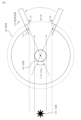
図4に基づいて、実施の形態1の特徴および効果を説明する。
監視衛星100の図示は省略している。
矢印付きの直線状の破線は、太陽101が放つ光(太陽光)を表している。太陽光の一部は地球102によって遮蔽される。
軌道103は、監視衛星100の軌道、すなわち赤道上空軌道を表している。監視衛星100は軌道103を周回する。
軌道103の各地点には、監視衛星100が通過する時刻を対象地域における標準時で記している。
地球102の中央の黒丸は、北極を表している。
「r」は、地球102の半径を意味する。
「R」は、軌道103の軌道半径を意味する。
「θ」および「φ」は、監視装置110の光軸に対する太陽光の入射角を意味する。
「T」は、監視衛星100が入射角φに相当する角度を移動するために要する時間を意味する。
***Features and Effects of the First Embodiment***
The features and effects of the first embodiment will be described with reference to FIG.
The
The straight dashed line with an arrow represents light (sunlight) emitted by the sun 101. A part of the sunlight is blocked by the earth 102.
The orbit 103 represents the orbit of the
At each point in the orbit 103, the time when the
The black circle in the center of the globe 102 represents the North Pole.
“r” refers to the radius of the Earth 102 .
“R” refers to the orbital radius of orbit 103.
“θ” and “φ” refer to the angles of incidence of sunlight with respect to the optical axis of the
"T" refers to the time it takes for the
監視装置110は、赤外検知方式で温度測定ができる。
監視衛星100が軌道103から監視装置110によって夜間監視を行う場合、開口カバー113が無いと、太陽光が入射して開口部112の温度が上昇してしまう。
しかし、監視装置110は開口カバー113を備える。そして、開口カバー113が、打ち上げ時に開口部112の保護カバーとして機能すると共に、監視時に開口部112を太陽光から遮蔽する遮蔽板として機能する。これにより、開口部112の温度が一定に保たれ、監視精度の劣化が回避される。
The
When the
However,
開口カバー113は、監視装置110の光軸方向において長さLに展開される。
長さLが開口部112の開口径Dに対してD/tanθ以上であれば、監視装置110が地心方向を指向した状態において、開口カバー113の遮蔽効果によって開口部112への太陽光の入射が回避される。そのため、夜間監視が可能となる。
The
If the length L is equal to or greater than D/tan θ with respect to the diameter D of the
展開時の開口カバー113の長さLが開口部112の開口径Dの2倍である場合、太陽光の入射角θが26.5度以上であれば、開口カバー113は開口部112を太陽光から遮蔽できる。
開口カバー113は折り畳み構造で収納されるため、開口カバー113の展開は容易である。
When the length L of the
Since the
監視装置110が開口カバー113とは異なる遮蔽構造物を備え、遮蔽構造物が開口部112から延長された円筒状の構造を有する場合、遮蔽構造物の内部に太陽光が入射するので、太陽光反射および温度上昇が生じてしまう。
しかし、監視装置110は、板状の構造または膜状の構造を有する開口カバー113を備える。そのため、開口カバー113の遮蔽効果により、開口部112への太陽光の入射が遮断される。また、開口カバー113が太陽光によって熱せられても、開口カバー113の熱は放射冷却によって深宇宙へ排熱される。そのため、監視装置110の本体111に対する開口カバー113の悪影響はない。
If the
However,
監視衛星100が赤道上空軌道を周回するので、監視装置110の開口部112に対する太陽光の入射方向が監視装置110の光軸回りに変化する。そのため、展開状態の開口カバー113の位置を監視装置110の光軸回りに移動させる必要がある。
そこで、監視装置110が回動装置114を備え、回動装置114が展開状態の開口カバー113の位置を監視装置110の光軸回りに移動させる。
これにより、季節および時間帯の変化によって太陽光の入射角が変化しても、展開状態の開口カバー113が開口部112を太陽光から遮蔽できる。
Since the
Therefore, the
This allows the
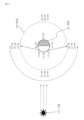
図5に基づいて、実施の形態1の特徴および効果を説明する。
地球102の自転と同期する静止軌道では、経度方向の360度が24時間に相当する。そして、開口カバー113が開口部112を遮蔽することが可能な太陽光の入射角θが26.5度以上であり、26.5度は1時間46分に相当する。
そのため、当日の1時46分から当日の22時14分までの約20時間半、監視装置110は、太陽光の入射による悪影響を受けずに、昼夜の監視が可能である。
The features and effects of the first embodiment will be described with reference to FIG.
In a geostationary orbit synchronized with the rotation of the Earth 102, 360 degrees in the longitude direction corresponds to 24 hours. The incident angle θ of sunlight that allows the
Therefore, the
なお、春分または秋分の時期には、真夜中の0時前後に地球102によって太陽光が遮蔽されるため、監視装置110は夜間監視も可能である。
In addition, during the spring and autumn equinoxes, the Earth 102 blocks sunlight around midnight, so the
なお、赤道上空の監視装置110が地心方向を指向する場合について説明したが、監視装置110が日本の北緯35度付近などを観測する際にはエレベーション方向にオフセット角が生じて開口カバー113の長さがその角度に依存して変わることは言うまでもない。
Note that, although the above description concerns a case in which the
実施の形態2.
展開時の開口カバー113の長さLが開口部112の開口径Dの2.3倍以上である形態について、主に実施の形態1と異なる点を図6および図7に基づいて説明する。
Embodiment 2.
Regarding the embodiment in which the length L of the
***構成の説明***
監視衛星100の構成は、実施の形態1における構成と同じである。
***Configuration Description***
The configuration of the
監視装置110の構成は、実施の形態1における構成と同様である。
但し、展開時の開口カバー113の長さLは、開口部112の開口径Dの2.3倍以上である。
The configuration of the
However, the length L of the
***動作の説明***
監視衛星100の動作は、実施の形態1における動作と同じである。但し、監視装置110は以下のように動作する。
監視装置110は、遮蔽時間帯に対象地域を監視する。
遮蔽時間帯は、対象地域における標準時で当日の1時34分から当日の22時26分までの時間帯である。
遮蔽時間帯には、地球102または開口カバー113によって、開口部112が太陽光から遮蔽される。
そのため、監視装置110は、遮蔽時間帯に対象地域を監視する。
*** Operation Description ***
The operation of the
The
The shielding time period is the time period from 1:34 to 22:26 standard time in the target area.
During the shading time period, the
Therefore, the
遮蔽時間帯以外の時間帯を「非遮蔽時間帯」と称する。
非遮蔽時間帯は、対象地域における標準時で当日の22時26分から翌日の1時34分までの時間帯である。
非遮蔽時間帯には、地球102および開口カバー113によって、開口部112が太陽光から遮蔽されない。
そのため、監視衛星100の指向変更機構が、非遮蔽時間帯に監視装置110の指向方向を地心方向からずらす。または、監視衛星100のカバー制御機構が、非遮蔽時間帯に開口カバー113を動かして開口カバー113で開口部112を覆う。これにより、非遮蔽時間帯に開口部112が太陽光から遮蔽される。
The time periods other than the occlusion time periods are referred to as "non-occlusion time periods."
The non-shielded time period is the time period from 22:26 on the day to 1:34 on the next day in standard time in the target area.
During the unshaded time period, the
Therefore, the pointing change mechanism of the
***実施の形態2の特徴および効果***
図6に基づいて、実施の形態2の特徴および効果を説明する。
二点鎖線は、赤道上空軌道の軌道面(104E,104S,104W)を表している。
軌道面104Eは、対象地域の時期が春分または秋分である場合の軌道面である。
軌道面104Sは、対象地域の時期が夏至である場合の軌道面である。
軌道面104Wは、対象地域の時期が冬至である場合の軌道面である。
***Features and Effects of the Second Embodiment***
The features and effects of the second embodiment will be described with reference to FIG.
The dashed double-dashed lines represent the orbital planes (104E, 104S, 104W) of the equatorial orbits.
The orbital plane 104S is the orbital plane when the target area is at the summer solstice.
The
地球102の自転軸が傾斜しており、監視衛星100が赤道上空軌道を飛翔する。そのため、監視装置110に対する太陽光の入射角θは、春分または秋分を基準にして、夏至と冬至に23.5度変化する。
展開時の開口カバー113の長さLが開口部112の開口径Dの2.3倍である場合、太陽光の入射角θが23.5度以上であれば、開口カバー113は開口部112を太陽光から遮蔽できる。
The rotation axis of the Earth 102 is tilted, and the
When the length L of the
図7に基づいて、実施の形態2の特徴および効果を説明する。
地球102の自転と同期する静止軌道では、経度方向の360度が24時間に相当する。そして、開口カバー113が開口部112を遮蔽することが可能な太陽光の入射角θが23.5度以上であり、23.5度は1時間34分に相当する。
そのため、当日の1時34分から当日の22時26分までの約21時間、監視装置110は、太陽光の入射による悪影響を受けずに、昼夜の監視が可能である。
The features and effects of the second embodiment will be described with reference to FIG.
In a geostationary orbit synchronized with the rotation of the Earth 102, 360 degrees in the longitude direction corresponds to 24 hours. The incident angle θ of sunlight that allows the
Therefore, for approximately 21 hours from 1:34 to 22:26 on the same day, the
なお、春分または秋分の時期には、真夜中の0時前後に地球102によって太陽光が遮蔽されるため、監視装置110は夜間監視も可能である。
In addition, during the spring and autumn equinoxes, the Earth 102 blocks sunlight around midnight, so the
なお、赤道上空の監視装置110が地心方向を指向する場合について説明したが、監視装置110が日本の北緯35度付近などを観測する際にはエレベーション方向にオフセット角が生じて開口カバー113の長さがその角度に依存して変わることは言うまでもない。
Note that, although the above description concerns a case in which the
実施の形態3.
赤道上空軌道の半径が16000キロメートル以下である形態について、主に実施の形態1および実施の形態2と異なる点を図8に基づいて説明する。
Embodiment 3.
Regarding an embodiment in which the radius of the equatorial orbit is 16,000 km or less, differences from the first and second embodiments will be mainly described with reference to FIG.
***構成の説明***
監視衛星100の構成は、実施の形態1における構成と同じである。
監視装置110の構成は、実施の形態2における構成と同じである。但し、監視装置110の構成が実施の形態1における構成と同じであっても構わない。
***Configuration Description***
The configuration of the
The configuration of the
***動作の説明***
監視衛星100および監視装置110の動作は、実施の形態1または実施の形態2における動作と同じである。
但し、赤道上空軌道の半径は16000キロメートル以下である。
*** Operation Description ***
The operations of the
However, the radius of an equatorial orbit is less than 16,000 kilometers.
***実施の形態3の特徴および効果***
図8に基づいて、実施の形態3の特徴および効果を説明する。
開口カバー113が開口部112を太陽光から遮蔽することが可能な太陽光の入射角θは23.5度以上である。ここで、23.5度を「θ0」と記す。
地球102の半径rは6371キロメートルである。
軌道103の高度すなわち軌道半径Rが16000キロメートル(=6371km×(1/sinθ0))であれば、入射角θが23.5度より小さい太陽光は、緯度方向と経度方向とのいずれにおいても、地球102によって遮蔽される。
そのため、夜間においても、太陽光が開口部112に入射することなく、監視装置110は監視を行える。
***Features and Effects of the Third Embodiment***
The features and effects of the third embodiment will be described with reference to FIG.
The incident angle θ of sunlight at which the
The radius r of the Earth 102 is 6371 kilometers.
If the altitude of the orbit 103, that is, the orbital radius R, is 16,000 kilometers (=6,371 km×(1/sin θ 0 )), sunlight with an incidence angle θ of less than 23.5 degrees is blocked by the Earth 102 in both the latitude and longitude directions.
Therefore, even at night, the
実施の形態4.
赤道上空軌道が楕円軌道である形態について、主に実施の形態1から実施の形態3と異なる点を図9に基づいて説明する。
Embodiment 4.
Regarding the configuration in which the above-equatorial orbit is an elliptical orbit, the differences from the first to third embodiments will be mainly described with reference to FIG.
***構成の説明***
監視衛星100の構成は、実施の形態1における構成と同じである。
監視装置110の構成は、実施の形態2における構成と同じである。但し、監視装置110の構成が実施の形態1における構成と同じであっても構わない。
***Configuration Description***
The configuration of the
The configuration of the
***動作の説明***
監視衛星100は、赤道上空軌道を周回する。
赤道上空軌道は、楕円軌道である。
赤道上空軌道の近地点は、対象地域の夏至と対象地域の冬至とのそれぞれで太陽から見て地球の裏側に位置する。この位置を「規定位置」と称する。
赤道上空軌道の軌道高度は、近地点において16000キロメートル以下である。
*** Operation Description ***
The
An equatorial orbit is an elliptical orbit.
The perigee of the equatorial orbit is located on the far side of the Earth from the Sun at the summer solstice and winter solstice of the target region. This position is called the "prescribed position."
The orbital altitude of an equatorial orbit is below 16,000 kilometers at perigee.
推進装置121は、監視衛星100の速度を調整することによって、赤道上空軌道の近地点を規定位置に位置させる。
The
例えば、以下のような制御が利用される。
監視衛星100の速度が増速すると、監視衛星100の高度が上昇する。そして、監視衛星100の高度が上昇すると、監視衛星100の対地速度が減速する。その結果、監視衛星100の位置が対象地域に対して相対的に西側に移動する。
監視衛星100の飛行速度が減速すると、監視衛星100の高度が下降する。そして、監視衛星100の高度が下降すると、監視衛星100の対地速度が増速する。その結果、監視衛星100の位置が対象地域に対して相対的に東側に移動する。
監視衛星100が赤道上空を横切る地点(分点)において推進装置121が軌道面と直交する方向へ推力を発生させれば、効果的に軌道傾斜角を微調整することができる。
For example, the following controls are used:
When the speed of the
When the flight speed of the
If the
***実施の形態4の特徴および効果***
図9に基づいて、実施の形態4の特徴および効果を説明する。
軌道103は楕円軌道である。
楕円軌道において、通常、楕円の長径は地球102の公転と同期せずに面内で回転する。そのため、夏至と冬至において、楕円軌道の軌道高度が特殊な場合に限り、近地点が地球102の裏側に位置することとなる。ただし、この条件を満足すれば、夜間監視において、地球102または開口カバー113が太陽光を遮蔽する。これにより、監視装置110は、太陽光の入射による悪影響を受けずに夜間監視を行うことができる。
***Features and Effects of the Fourth Embodiment***
The features and effects of the fourth embodiment will be described with reference to FIG.
Orbit 103 is an elliptical orbit.
In an elliptical orbit, the major axis of the ellipse usually rotates within the plane out of sync with the revolution of the Earth 102. Therefore, at the summer solstice and winter solstice, only when the orbital altitude of the elliptical orbit is special, the perigee is located on the far side of the Earth 102. However, if this condition is satisfied, the Earth 102 or the
推進装置121により、軌道面内における楕円軌道の長径の回転速度を人為的に変更することが可能である。
夏至と冬至に近地点が地球102の裏側に来るように推進装置121が動作すれば、夜間監視において、地球102または開口カバー113が太陽光を遮蔽する。これにより、監視装置110は、太陽光の入射による悪影響を受けずに夜間監視を行うことができる。
The
If the
実施の形態5.
赤道上空軌道が静止軌道以外の円軌道である形態について、主に実施の形態1から実施の形態4と異なる点を図10およびから図11に基づいて説明する。
Embodiment 5.
Regarding a configuration in which the above-equatorial orbit is a circular orbit other than a geostationary orbit, differences from the first to fourth embodiments will be mainly described with reference to Figs. 10 and 11.
***構成の説明***
監視衛星100の構成は、実施の形態1における構成と同じである。
監視装置110の構成は、実施の形態2における構成と同じである。但し、監視装置110の構成が実施の形態1における構成と同じであっても構わない。
***Configuration Description***
The configuration of the
The configuration of the
***動作の説明***
監視衛星100および監視装置110の動作は、実施の形態1または実施の形態2における動作と同じである。
但し、赤道上空軌道は、静止軌道以外の円軌道である。
*** Operation Description ***
The operations of the
However, an equatorial orbit is a circular orbit other than a geostationary orbit.
監視衛星100の指向変更機構は、以下のように動作する。
対象地域における標準時の23時から太陽光が開口部112に入射する時刻までの間に、指向変更機構は、監視装置110の指向方向を地心方向から東側に動かす。
地球が開口部112を太陽光から遮蔽する時刻の後に、指向変更機構は、監視装置110の指向方向を西側に動かす。
監視装置110の指向方向が開口部112に太陽光が入射しない角度まで移動した後に、指向変更機構は、監視装置110の指向方向を地心方向に戻す。
The pointing mechanism of the
During the period from 11pm standard time in the target area to the time when sunlight is incident on the
After the time when the Earth blocks the
After the pointing direction of the
***実施の形態5の特徴および効果***
図10に基づいて、実施の形態5の特徴および効果を説明する。
軌道103の高度は、約20000キロメートルである。監視衛星100は、軌道103を1日に2周回する。1周回あたりの時間は12時間である。地上解像度(GSD)は、おおよそ2.8メートルから10メートルの範囲内である。超解像は約1.7メートル以上である。
監視装置110は、9時から15時までの日中6時間の連続監視が可能である。
***Features and Effects of the Fifth Embodiment***
The features and effects of the fifth embodiment will be described with reference to FIG.
The altitude of the orbit 103 is about 20,000 km. The
The
監視衛星100は、赤道上空の高度約20000キロメートル(軌道半径は約26700キロメートル)の軌道103を1日に2周回する。そのため、監視衛星100は、対象地域に対して相対的に東向きに移動して地表の監視対象を追い抜くことになる。
夜間において、開口部112への太陽光の入射が始まる前に監視装置110の指向方向(視野方向)を東側に移動することで、開口部112への太陽光の入射を回避することができる。また、地球102の遮蔽が始まってから監視装置110の指向方向を西側に移動することで、開口部112への太陽光の入射を回避することができる。なお、地心方向よりも東側に位置する監視対象の監視データを取得することも可能である。
The
At night, by shifting the orientation (field of view) of the
図11に基づいて、実施の形態5の特徴および効果を説明する。
軌道103の高度は、約14000キロメートルである。監視衛星100は、軌道103を1日に3周回する。1周回あたりの時間は8時間である。地上解像度(GSD)は、おおよそ1.9メートルから7メートルの範囲内である。超解像は約1.2メートル以上である。
監視装置110は、10時から14時までの日中4時間の連続監視が可能である。
The features and effects of the fifth embodiment will be described with reference to FIG.
The altitude of the orbit 103 is about 14,000 km. The
The
監視衛星100は、赤道上空の高度約14000キロメートル(軌道半径は約20700キロメートル)の軌道103を1日に3周回する。この場合にも、図10に基づいて説明した効果と同様の効果が得られる。
The
監視衛星100が赤道上空の高度約9300キロメートル(軌道半径は約16000キロメートル)まで降下し、展開時の開口カバー113の長さLが開口部112の開口径Dの2.3倍以上であれば、監視装置110の指向方向を東西にずらさなくても継続的な夜間監視が可能である。
If the
***実施の形態のまとめ***
監視装置110は、赤外検知方式で温度測定ができる。
監視衛星100が軌道103から監視装置110によって夜間監視を行う場合、開口カバー113が無いと、太陽光が入射して開口部112の温度が上昇してしまう。
さらに、地球の自転軸が傾斜しているため、赤道上空軌道を飛翔する監視衛星100の監視装置110に対する太陽光の入射角度は、春分と秋分を基準として、夏至と冬至に23.5度変化する。
そこで、開口カバー113は、打ち上げ時に開口部112の保護カバーとして機能すると共に、監視時に開口部112を太陽光から遮蔽する遮蔽板として機能する。これにより、開口部112の温度が一定に保たれ、監視精度の劣化が回避される。
Summary of the embodiment
The
When the
Furthermore, because the Earth's axis of rotation is tilted, the angle of incidence of sunlight on the
Thus, the
展開状態において、光軸方向における開口カバー113の長さが開口部112の開口径の2.3倍(=1/tan(23.5deg))以上であれば、夏至と冬至に開口部112への太陽光の入射を回避することができる。つまり、監視装置110が地心方向を指向した状態において、開口カバー113の遮蔽効果によって開口部112への太陽光の入射を回避することができる。
When the length of the
監視装置110が開口カバー113とは異なる遮蔽構造物を備え、遮蔽構造物が開口部112から延長された円筒状の構造を有する場合、遮蔽構造物の内部に太陽光が入射するので、太陽光反射および温度上昇が生じてしまう。
しかし、監視装置110は、板状の構造または膜状の構造を有する開口カバー113を備える。そのため、開口カバー113の遮蔽効果により、開口部112への太陽光の入射が遮断される。また、開口カバー113が太陽光によって熱せられても、開口カバー113の熱は放射冷却によって深宇宙へ排熱される。そのため、監視装置110の本体111に対する開口カバー113の悪影響はない。
If the
However,
地球の自転と同期する静止軌道では、経度方向の360度が24時間に相当する。そのため、15度が1時間に相当する。
光軸に対する入射角がφ以上である太陽光を遮蔽すれば、真夜中0時前後のT時間(T=φ/15)を除いて、開口部112への太陽光の侵入を回避できる。
真夜中0時ごろには、地球によって太陽光が遮蔽される。
このため、地球の半径rに対する軌道半径R(=r/φ)と、時間T(=φ/15)と、を境界条件にして、夜間の連続監視を実現することができる。つまり、軌道半径Rと時間Tの関係次第で、開口カバー113の遮蔽効果と地球の遮蔽効果を両用して夜間の連続監視を実現することができる。
In a geostationary orbit, which is synchronized with the rotation of the Earth, 360 degrees in longitude corresponds to 24 hours, so 15 degrees corresponds to 1 hour.
By blocking sunlight having an incident angle of φ or more with respect to the optical axis, it is possible to prevent sunlight from entering the
At around midnight, the Earth blocks out sunlight.
Therefore, continuous nighttime monitoring can be realized by using the orbit radius R (=r/φ) relative to the radius r of the earth and the time T (=φ/15) as boundary conditions. In other words, depending on the relationship between the orbit radius R and the time T, continuous nighttime monitoring can be realized by using both the shielding effect of the
***実施の形態の補足***
各実施の形態は、好ましい形態の例示であり、本開示の技術的範囲を制限することを意図するものではない。各実施の形態は、部分的に実施してもよいし、他の形態と組み合わせて実施してもよい。
***Additional Information on the Implementation ***
Each embodiment is an example of a preferred embodiment, and is not intended to limit the technical scope of the present disclosure. Each embodiment may be implemented in part or in combination with other embodiments.
100 監視衛星、101 太陽、102 地球、103 軌道、104 軌道面、110 監視装置、111 本体、112 開口部、113 開口カバー、114 回動装置、121 推進装置、122 姿勢制御装置、123 通信装置、124 衛星制御装置、125 電源装置。 100 monitoring satellite, 101 sun, 102 earth, 103 orbit, 104 orbital plane, 110 monitoring device, 111 main body, 112 opening, 113 opening cover, 114 rotation device, 121 propulsion device, 122 attitude control device, 123 communication device, 124 satellite control device, 125 power supply device.
Claims (21)
前記赤道上空軌道への前記人工衛星の投入のための打ち上げ時に監視用の開口部を覆い、前記赤道上空軌道への前記人工衛星の投入後に展開して前記開口部を太陽光から遮蔽する開口カバー
を備え、
夜間において、前記開口部への太陽光の入射が始まる前に前記監視装置が指向方向を東側に移動して前記開口部への太陽光の入射を回避し、地球の遮蔽が始まってから前記監視装置が指向方向を西側に移動して前記開口部への太陽光の入射を回避することによって、前記開口カバーの遮蔽効果と地球の遮蔽効果を両用して夜間の連続監視を行う
監視装置。 A monitoring device mounted on a satellite placed in equatorial orbit.
an opening cover that covers a monitoring opening during launch for inserting the satellite into the equatorial orbit and that deploys after the satellite is inserted into the equatorial orbit to shield the opening from sunlight ;
At night, before sunlight begins to be incident on the opening, the monitoring device shifts its direction to the east to avoid sunlight being incident on the opening, and after the earth begins to block the light, the monitoring device shifts its direction to the west to avoid sunlight being incident on the opening, thereby making use of both the blocking effect of the opening cover and the blocking effect of the earth to perform continuous monitoring at night.
Surveillance equipment.
前記赤道上空軌道への前記人工衛星の投入のための打ち上げ時に監視用の開口部を覆い、前記赤道上空軌道への前記人工衛星の投入後に展開して前記開口部を太陽光から遮蔽する開口カバー
を備え、
夜間において、前記開口部への太陽光の入射が始まる前に前記監視装置が指向方向を東側に移動して前記開口部への太陽光の入射を回避し、地球の遮蔽が始まってから前記監視装置が指向方向を西側に移動して前記開口部への太陽光の入射を回避する
監視装置。 This is a monitoring device installed on an artificial satellite that is placed in an equatorial orbit lower than the geostationary orbit ,
an opening cover that covers a monitoring opening during launch for inserting the satellite into the equatorial orbit and that deploys after the satellite is inserted into the equatorial orbit to shield the opening from sunlight ;
During the night, before the sunlight starts to be incident on the opening, the monitoring device shifts its direction to the east to avoid the sunlight from being incident on the opening, and after the earth starts to block the sunlight, the monitoring device shifts its direction to the west to avoid the sunlight from being incident on the opening.
Surveillance equipment.
請求項1または請求項2に記載の監視装置。 3. The monitoring device according to claim 1, wherein the opening cover is folded at the time of launch, and when deployed after the launch, the length from the opening in the optical axis direction becomes equal to or greater than twice the opening diameter of the opening or equal to or greater than 2.3 times the opening diameter.
請求項1から請求項3のいずれか1項に記載の監視装置。 4. A monitoring device according to any one of claims 1 to 3, wherein the aperture cover comprises two or more joined plates or a membrane attached to a frame.
前記赤道上空軌道への前記人工衛星の投入のための打ち上げ時に監視用の開口部を覆い、前記赤道上空軌道への前記人工衛星の投入後に展開して前記開口部を太陽光から遮蔽する開口カバーと、
回動装置と、
を備え、
前記開口カバーが、連結された2枚以上の板またはフレームに取り付けられた膜で構成され、前記打ち上げ時に折り畳まれており、前記投入後に展開によって光軸方向における前記開口部からの長さが前記開口部の開口径の2倍以上または前記開口径の2.3倍以上になり、
前記回動装置が、展開後の前記開口カバーを前記開口部の縁に沿って光軸回りに動かすことにより、
前記監視装置の指向方向を東西にずらさなくても継続的な夜間監視を行うことを可能とする
監視装置。 This is a monitoring device mounted on an artificial satellite that descends to an altitude of about 9,300 km above the equator and is then placed into an equatorial orbit.
an opening cover that covers a monitoring opening during launch for inserting the satellite into the equatorial orbit and that deploys after the satellite is inserted into the equatorial orbit to shield the opening from sunlight;
A rotation device;
Equipped with
the opening cover is composed of two or more connected plates or a film attached to a frame, is folded at the time of launch, and is deployed after the launch so that its length from the opening in the optical axis direction is two times or more than 2.3 times the opening diameter of the opening,
The rotating device moves the opening cover after deployment around the optical axis along the edge of the opening ,
To enable continuous nighttime surveillance without shifting the direction of the surveillance device to the east or west.
Surveillance equipment.
前記監視装置が、前記赤道上空軌道への前記監視衛星の投入のための打ち上げ時に監視用の開口部を覆い、前記赤道上空軌道への前記監視衛星の投入後に展開して前記開口部を太陽光から遮蔽する開口カバーを備え、
夜間において、前記開口部への太陽光の入射が始まる前に前記監視装置が指向方向を東側に移動して前記開口部への太陽光の入射を回避し、地球の遮蔽が始まってから前記監視装置が指向方向を西側に移動して前記開口部への太陽光の入射を回避することによって、前記開口カバーの遮蔽効果と地球の遮蔽効果を両用して夜間の連続監視を行う
監視衛星。 A surveillance satellite equipped with a surveillance device and placed in equatorial orbit.
the monitoring device includes an opening cover that covers a monitoring opening at the time of launch for inserting the monitoring satellite into the equatorial orbit and that deploys after the monitoring satellite has been inserted into the equatorial orbit to shield the opening from sunlight ,
At night, before sunlight begins to be incident on the opening, the monitoring device shifts its direction to the east to avoid sunlight being incident on the opening, and after the earth begins to block the light, the monitoring device shifts its direction to the west to avoid sunlight being incident on the opening, thereby making use of both the blocking effect of the opening cover and the blocking effect of the earth to perform continuous monitoring at night.
Surveillance satellite.
前記監視装置が、前記赤道上空軌道への前記監視衛星の投入のための打ち上げ時に監視用の開口部を覆い、前記赤道上空軌道への前記監視衛星の投入後に展開して前記開口部を太陽光から遮蔽する開口カバーを備え、
夜間において、前記開口部への太陽光の入射が始まる前に前記監視装置が指向方向を東側に移動して前記開口部への太陽光の入射を回避し、地球の遮蔽が始まってから前記監視装置が指向方向を西側に移動して前記開口部への太陽光の入射を回避する
監視衛星。 A monitoring satellite equipped with a monitoring device and placed in an equatorial orbit lower than the geostationary orbit .
the monitoring device includes an opening cover that covers a monitoring opening at the time of launch for inserting the monitoring satellite into the equatorial orbit and that deploys after the monitoring satellite has been inserted into the equatorial orbit to shield the opening from sunlight ,
During the night, before the sunlight starts to be incident on the opening, the monitoring device shifts its direction to the east to avoid the sunlight from being incident on the opening, and after the earth starts to block the sunlight, the monitoring device shifts its direction to the west to avoid the sunlight from being incident on the opening.
Surveillance satellite.
請求項7または請求項8に記載の監視衛星。 9. The monitoring satellite according to claim 7 or 8, wherein the opening cover is folded at the time of launch, and when deployed after the launch, the length from the opening in the optical axis direction becomes equal to or greater than twice the opening diameter of the opening , or equal to or greater than 2.3 times the opening diameter of the opening.
請求項7から請求項9のいずれか1項に記載の監視衛星。 A surveillance satellite according to any one of claims 7 to 9, wherein the aperture cover is made up of two or more joined plates or a membrane attached to a frame.
前記開口カバーが、展開によって光軸方向における前記開口部からの長さが前記開口部の開口径の2倍以上になり、
前記監視装置は、前記開口カバーが展開された状態で、前記対象地域における標準時で1時46分から22時14分までの間に前記対象地域を監視する
請求項7から請求項11のいずれか1項に記載の監視衛星。 The monitoring satellite flies over a target region after being placed into the equatorial orbit,
the opening cover is deployed so that a length from the opening in the optical axis direction becomes equal to or greater than twice the diameter of the opening,
12. The monitoring satellite according to claim 7 , wherein the monitoring device monitors the target area between 1:46 and 22:14 standard time in the target area with the opening cover deployed.
前記指向変更機構が、前記標準時における22時14分から1時46分まで、前記監視装置の指向方向を地心方向からずらすことによって、前記開口部を太陽光から遮蔽する
請求項12に記載の監視衛星。 The monitoring satellite includes a pointing change mechanism for changing the pointing direction of the monitoring device,
13. The monitoring satellite according to claim 12 , wherein the pointing change mechanism shifts the pointing direction of the monitoring device from the center of the earth from 22:14 to 1:46 standard time, thereby blocking the opening from sunlight.
前記カバー制御機構が、前記標準時における22時14分から1時46分まで、前記開口カバーで前記開口部を覆うことによって、前記開口部を太陽光から遮蔽する
請求項12に記載の監視衛星。 The monitoring satellite includes a cover control mechanism for controlling a state of the aperture cover,
13. The monitoring satellite according to claim 12 , wherein the cover control mechanism shields the opening from sunlight by covering the opening with the aperture cover from 22:14 to 1:46 standard time.
前記開口カバーが、展開によって光軸方向における前記開口部からの長さが前記開口部の開口径の2.3倍以上になり、
前記監視装置は、前記開口カバーが展開された状態で、前記対象地域における標準時で1時34分から22時26分までの間に前記対象地域を監視する
請求項7から請求項11のいずれか1項に記載の監視衛星。 The monitoring satellite flies over a target region after being placed into an equatorial orbit;
the opening cover is deployed so that a length from the opening in the optical axis direction is 2.3 times or more the opening diameter of the opening,
12. The monitoring satellite according to claim 7 , wherein the monitoring device monitors the target area between 1:34 and 22:26 standard time in the target area with the opening cover deployed.
前記指向変更機構が、前記標準時における22時26分から1時34分まで、前記監視装置の指向方向を地心方向から変更することによって、前記開口部を太陽光から遮蔽する請求項15に記載の監視衛星。 The monitoring satellite includes a pointing change mechanism for changing the pointing direction of the monitoring device,
16. The monitoring satellite according to claim 15 , wherein the pointing change mechanism changes the pointing direction of the monitoring device from the geocentric direction from 22:26 to 1:34 standard time, thereby blocking the opening from sunlight.
前記カバー制御機構が、前記標準時における22時26分から1時34分まで、前記開口カバーで前記開口部を覆うことによって、前記開口部を太陽光から遮蔽する
請求項15に記載の監視衛星。 The monitoring satellite includes a cover control mechanism for controlling a state of the aperture cover,
16. The monitoring satellite according to claim 15 , wherein the cover control mechanism shields the opening from sunlight by covering the opening with the aperture cover from 22:26 to 1:34 in standard time.
前記開口カバーが、展開によって光軸方向における前記開口部からの長さが前記開口部の開口径の2.3倍以上になる
請求項7から請求項11のいずれか1項に記載の監視衛星。 The radius of the equatorial orbit is 16,000 kilometers or less;
12. The monitoring satellite according to claim 7 , wherein the length of the opening cover from the opening in the optical axis direction when deployed is 2.3 times or more the diameter of the opening.
前記赤道上空軌道が、楕円軌道であり、
前記赤道上空軌道の近地点が、前記対象地域の夏至と前記対象地域の冬至とのそれぞれで太陽から見て地球の裏側に位置し、
前記赤道上空軌道の軌道高度が、前記近地点において16000キロメートル以下である
請求項7から請求項11のいずれか1項に記載の監視衛星。 The monitoring satellite flies over a target region after being placed into an equatorial orbit;
the equatorial orbit is an elliptical orbit,
a perigee of the equatorial orbit is located on the far side of the Earth as viewed from the Sun at each of the summer solstice and the winter solstice of the target region;
12. The monitoring satellite according to claim 7 , wherein the orbital altitude of the equatorial orbit is equal to or less than 16,000 km at the perigee.
前記推進装置が、前記監視衛星の速度を調整することによって、前記赤道上空軌道の前記近地点を前記夏至と前記冬至とのそれぞれに太陽から見て地球の裏側に位置させる
請求項19に記載の監視衛星。 the monitoring satellite includes a propulsion device for adjusting the speed of the monitoring satellite;
20. The monitoring satellite of claim 19 , wherein the propulsion device adjusts the velocity of the monitoring satellite to position the perigee of the equatorial orbit on the far side of the Earth from the Sun at each of the summer solstice and the winter solstice.
前記赤道上空軌道が、静止軌道以外の円軌道であり、
前記指向変更機構が、前記対象地域における標準時の23時から太陽光が前記開口部に入射する時刻までの間に前記指向方向を地心方向から東側に動かし、地球が前記開口部を太陽光から遮蔽する時刻の後に前記指向方向を西側に動かし、前記指向方向が前記開口部に太陽光が入射しない角度まで移動した後に前記指向方向を前記地心方向に戻す
請求項7から請求項11のいずれか1項に記載の監視衛星。 The monitoring satellite has an orientation changing mechanism for changing the orientation of the monitoring device, and flies above a target area;
The above-equatorial orbit is a circular orbit other than a geostationary orbit,
12. The monitoring satellite according to claim 7, wherein the pointing change mechanism moves the pointing direction from the geocentric direction to the east between 11:00 PM standard time in the target area and the time when sunlight is incident on the opening, moves the pointing direction to the west after the time when the Earth blocks the opening from sunlight, and returns the pointing direction to the geocentric direction after the pointing direction has moved to an angle where sunlight is not incident on the opening.
Priority Applications (1)
| Application Number | Priority Date | Filing Date | Title |
|---|---|---|---|
| JP2021037820A JP7499720B2 (en) | 2021-03-09 | 2021-03-09 | Surveillance equipment and satellites |
Applications Claiming Priority (1)
| Application Number | Priority Date | Filing Date | Title |
|---|---|---|---|
| JP2021037820A JP7499720B2 (en) | 2021-03-09 | 2021-03-09 | Surveillance equipment and satellites |
Publications (2)
| Publication Number | Publication Date |
|---|---|
| JP2022138046A JP2022138046A (en) | 2022-09-22 |
| JP7499720B2 true JP7499720B2 (en) | 2024-06-14 |
Family
ID=83319596
Family Applications (1)
| Application Number | Title | Priority Date | Filing Date |
|---|---|---|---|
| JP2021037820A Active JP7499720B2 (en) | 2021-03-09 | 2021-03-09 | Surveillance equipment and satellites |
Country Status (1)
| Country | Link |
|---|---|
| JP (1) | JP7499720B2 (en) |
Citations (6)
| Publication number | Priority date | Publication date | Assignee | Title |
|---|---|---|---|---|
| JP2011155267A (en) | 2011-02-18 | 2011-08-11 | Taruno Kazuo | Ultra-light high-power generating artificial satellite |
| US20180239948A1 (en) | 2014-11-18 | 2018-08-23 | Elwha Llc | Satellite with machine vision for disaster relief support |
| JP2019055776A (en) | 2014-07-16 | 2019-04-11 | レイセオン カンパニー | Solar shading system with movable sunshade |
| JP2019156204A (en) | 2018-03-14 | 2019-09-19 | 日本電気株式会社 | Opening cover of optical device and opening method of the same |
| WO2020158000A1 (en) | 2019-01-28 | 2020-08-06 | 三菱電機株式会社 | Monitoring control device, artificial satellite, and monitoring system |
| JP2021008220A (en) | 2019-07-02 | 2021-01-28 | 三菱電機株式会社 | Satellite controllers, observation systems, observation methods, and observation programs |
-
2021
- 2021-03-09 JP JP2021037820A patent/JP7499720B2/en active Active
Patent Citations (6)
| Publication number | Priority date | Publication date | Assignee | Title |
|---|---|---|---|---|
| JP2011155267A (en) | 2011-02-18 | 2011-08-11 | Taruno Kazuo | Ultra-light high-power generating artificial satellite |
| JP2019055776A (en) | 2014-07-16 | 2019-04-11 | レイセオン カンパニー | Solar shading system with movable sunshade |
| US20180239948A1 (en) | 2014-11-18 | 2018-08-23 | Elwha Llc | Satellite with machine vision for disaster relief support |
| JP2019156204A (en) | 2018-03-14 | 2019-09-19 | 日本電気株式会社 | Opening cover of optical device and opening method of the same |
| WO2020158000A1 (en) | 2019-01-28 | 2020-08-06 | 三菱電機株式会社 | Monitoring control device, artificial satellite, and monitoring system |
| JP2021008220A (en) | 2019-07-02 | 2021-01-28 | 三菱電機株式会社 | Satellite controllers, observation systems, observation methods, and observation programs |
Also Published As
| Publication number | Publication date |
|---|---|
| JP2022138046A (en) | 2022-09-22 |
Similar Documents
| Publication | Publication Date | Title |
|---|---|---|
| JP7086294B2 (en) | Satellite constellations, ground equipment and artificial satellites | |
| US8706322B2 (en) | Method and computer program product for controlling inertial attitude of an artificial satellite by applying gyroscopic precession to maintain the spin axis perpendicular to sun lines | |
| WO2020158000A1 (en) | Monitoring control device, artificial satellite, and monitoring system | |
| JP2021070342A (en) | Satellite constellation | |
| US20220135255A1 (en) | Space surveillance orbit | |
| US6082677A (en) | Satellite orbiting toward west in the equatorial plane and meteorological satellite system using the satellite | |
| JP2025004238A (en) | Artificial object identification method and observation satellite | |
| US4374579A (en) | Spacecraft configuration permitting a continuous three-axes attitude control | |
| JP7139089B2 (en) | Satellite constellations, ground equipment and satellites | |
| JP7499720B2 (en) | Surveillance equipment and satellites | |
| JP2025087850A (en) | Surveillance systems, satellites and ground equipment | |
| JP7349945B2 (en) | Observation systems, communication satellites and ground equipment | |
| JP7479316B2 (en) | Observation satellite | |
| Heacock | Lunar photography: Techniques and results | |
| JP7455018B2 (en) | Space object management system, ground equipment, space object management device and monitoring satellite | |
| JP7621298B2 (en) | Lunar orbiter | |
| Sternberg et al. | Performance and evaluation of satellites Tiros I and Tiros II | |
| Scull | Mariner Mars 1969 navigation, guidance, and control | |
| Summers | Techniques of space photography | |
| JPH026005B2 (en) | ||
| NAS | REPRODUCED 1BY NATIONAL TECHNICAL INFORMATION SERVICE | |
| Rao et al. | Innovative Mission Operations of IRS-P3 | |
| Kikuchi et al. | Six-Hour Orbit toward West Satellite (SHOWS) | |
| 大島武 et al. | Development of the Venus Climate Orbiter PLANET-C (AKATSUKI) | |
| TOVMASSIAN¹ et al. | O, B or early A type stars were obtained on the Glazar photographs at 1640 Å. The observations |
Legal Events
| Date | Code | Title | Description |
|---|---|---|---|
| A621 | Written request for application examination |
Free format text: JAPANESE INTERMEDIATE CODE: A621 Effective date: 20230301 |
|
| A977 | Report on retrieval |
Free format text: JAPANESE INTERMEDIATE CODE: A971007 Effective date: 20231024 |
|
| A131 | Notification of reasons for refusal |
Free format text: JAPANESE INTERMEDIATE CODE: A131 Effective date: 20231107 |
|
| A521 | Request for written amendment filed |
Free format text: JAPANESE INTERMEDIATE CODE: A523 Effective date: 20231208 |
|
| A131 | Notification of reasons for refusal |
Free format text: JAPANESE INTERMEDIATE CODE: A131 Effective date: 20240305 |
|
| A521 | Request for written amendment filed |
Free format text: JAPANESE INTERMEDIATE CODE: A523 Effective date: 20240417 |
|
| TRDD | Decision of grant or rejection written | ||
| A01 | Written decision to grant a patent or to grant a registration (utility model) |
Free format text: JAPANESE INTERMEDIATE CODE: A01 Effective date: 20240507 |
|
| A61 | First payment of annual fees (during grant procedure) |
Free format text: JAPANESE INTERMEDIATE CODE: A61 Effective date: 20240604 |
|
| R150 | Certificate of patent or registration of utility model |
Ref document number: 7499720 Country of ref document: JP Free format text: JAPANESE INTERMEDIATE CODE: R150 |