JP7429338B2 - Epigenetic analysis of cell therapy and related methods - Google Patents
Epigenetic analysis of cell therapy and related methods Download PDFInfo
- Publication number
- JP7429338B2 JP7429338B2 JP2019537282A JP2019537282A JP7429338B2 JP 7429338 B2 JP7429338 B2 JP 7429338B2 JP 2019537282 A JP2019537282 A JP 2019537282A JP 2019537282 A JP2019537282 A JP 2019537282A JP 7429338 B2 JP7429338 B2 JP 7429338B2
- Authority
- JP
- Japan
- Prior art keywords
- cells
- cell
- analysis
- chromatin
- epigenetic
- Prior art date
- Legal status (The legal status is an assumption and is not a legal conclusion. Google has not performed a legal analysis and makes no representation as to the accuracy of the status listed.)
- Active
Links
Images
















Classifications
-
- C—CHEMISTRY; METALLURGY
- C12—BIOCHEMISTRY; BEER; SPIRITS; WINE; VINEGAR; MICROBIOLOGY; ENZYMOLOGY; MUTATION OR GENETIC ENGINEERING
- C12Q—MEASURING OR TESTING PROCESSES INVOLVING ENZYMES, NUCLEIC ACIDS OR MICROORGANISMS; COMPOSITIONS OR TEST PAPERS THEREFOR; PROCESSES OF PREPARING SUCH COMPOSITIONS; CONDITION-RESPONSIVE CONTROL IN MICROBIOLOGICAL OR ENZYMOLOGICAL PROCESSES
- C12Q1/00—Measuring or testing processes involving enzymes, nucleic acids or microorganisms; Compositions therefor; Processes of preparing such compositions
- C12Q1/68—Measuring or testing processes involving enzymes, nucleic acids or microorganisms; Compositions therefor; Processes of preparing such compositions involving nucleic acids
- C12Q1/6813—Hybridisation assays
- C12Q1/6827—Hybridisation assays for detection of mutation or polymorphism
-
- C—CHEMISTRY; METALLURGY
- C07—ORGANIC CHEMISTRY
- C07K—PEPTIDES
- C07K16/00—Immunoglobulins [IG], e.g. monoclonal or polyclonal antibodies
- C07K16/18—Immunoglobulins [IG], e.g. monoclonal or polyclonal antibodies against material from animals or humans
- C07K16/28—Immunoglobulins [IG], e.g. monoclonal or polyclonal antibodies against material from animals or humans against receptors, cell surface antigens or cell surface determinants
- C07K16/2803—Immunoglobulins [IG], e.g. monoclonal or polyclonal antibodies against material from animals or humans against receptors, cell surface antigens or cell surface determinants against the immunoglobulin superfamily
-
- A—HUMAN NECESSITIES
- A61—MEDICAL OR VETERINARY SCIENCE; HYGIENE
- A61K—PREPARATIONS FOR MEDICAL, DENTAL OR TOILETRY PURPOSES
- A61K31/00—Medicinal preparations containing organic active ingredients
- A61K31/33—Heterocyclic compounds
- A61K31/395—Heterocyclic compounds having nitrogen as a ring hetero atom, e.g. guanethidine or rifamycins
- A61K31/435—Heterocyclic compounds having nitrogen as a ring hetero atom, e.g. guanethidine or rifamycins having six-membered rings with one nitrogen as the only ring hetero atom
- A61K31/44—Non condensed pyridines; Hydrogenated derivatives thereof
- A61K31/445—Non condensed piperidines, e.g. piperocaine
- A61K31/4523—Non condensed piperidines, e.g. piperocaine containing further heterocyclic ring systems
- A61K31/454—Non condensed piperidines, e.g. piperocaine containing further heterocyclic ring systems containing a five-membered ring with nitrogen as a ring hetero atom, e.g. pimozide, domperidone
-
- A—HUMAN NECESSITIES
- A61—MEDICAL OR VETERINARY SCIENCE; HYGIENE
- A61K—PREPARATIONS FOR MEDICAL, DENTAL OR TOILETRY PURPOSES
- A61K40/00—Cellular immunotherapy
- A61K40/10—Cellular immunotherapy characterised by the cell type used
- A61K40/11—T-cells, e.g. tumour infiltrating lymphocytes [TIL] or regulatory T [Treg] cells; Lymphokine-activated killer [LAK] cells
-
- A—HUMAN NECESSITIES
- A61—MEDICAL OR VETERINARY SCIENCE; HYGIENE
- A61K—PREPARATIONS FOR MEDICAL, DENTAL OR TOILETRY PURPOSES
- A61K40/00—Cellular immunotherapy
- A61K40/30—Cellular immunotherapy characterised by the recombinant expression of specific molecules in the cells of the immune system
- A61K40/31—Chimeric antigen receptors [CAR]
-
- A—HUMAN NECESSITIES
- A61—MEDICAL OR VETERINARY SCIENCE; HYGIENE
- A61K—PREPARATIONS FOR MEDICAL, DENTAL OR TOILETRY PURPOSES
- A61K40/00—Cellular immunotherapy
- A61K40/30—Cellular immunotherapy characterised by the recombinant expression of specific molecules in the cells of the immune system
- A61K40/32—T-cell receptors [TCR]
-
- A—HUMAN NECESSITIES
- A61—MEDICAL OR VETERINARY SCIENCE; HYGIENE
- A61K—PREPARATIONS FOR MEDICAL, DENTAL OR TOILETRY PURPOSES
- A61K40/00—Cellular immunotherapy
- A61K40/40—Cellular immunotherapy characterised by antigens that are targeted or presented by cells of the immune system
- A61K40/41—Vertebrate antigens
- A61K40/42—Cancer antigens
- A61K40/4202—Receptors, cell surface antigens or cell surface determinants
- A61K40/421—Immunoglobulin superfamily
- A61K40/4211—CD19 or B4
-
- A—HUMAN NECESSITIES
- A61—MEDICAL OR VETERINARY SCIENCE; HYGIENE
- A61K—PREPARATIONS FOR MEDICAL, DENTAL OR TOILETRY PURPOSES
- A61K40/00—Cellular immunotherapy
- A61K40/40—Cellular immunotherapy characterised by antigens that are targeted or presented by cells of the immune system
- A61K40/41—Vertebrate antigens
- A61K40/42—Cancer antigens
- A61K40/4202—Receptors, cell surface antigens or cell surface determinants
- A61K40/4214—Receptors for cytokines
- A61K40/4215—Receptors for tumor necrosis factors [TNF], e.g. lymphotoxin receptor [LTR], CD30
-
- A—HUMAN NECESSITIES
- A61—MEDICAL OR VETERINARY SCIENCE; HYGIENE
- A61P—SPECIFIC THERAPEUTIC ACTIVITY OF CHEMICAL COMPOUNDS OR MEDICINAL PREPARATIONS
- A61P35/00—Antineoplastic agents
-
- C—CHEMISTRY; METALLURGY
- C12—BIOCHEMISTRY; BEER; SPIRITS; WINE; VINEGAR; MICROBIOLOGY; ENZYMOLOGY; MUTATION OR GENETIC ENGINEERING
- C12Q—MEASURING OR TESTING PROCESSES INVOLVING ENZYMES, NUCLEIC ACIDS OR MICROORGANISMS; COMPOSITIONS OR TEST PAPERS THEREFOR; PROCESSES OF PREPARING SUCH COMPOSITIONS; CONDITION-RESPONSIVE CONTROL IN MICROBIOLOGICAL OR ENZYMOLOGICAL PROCESSES
- C12Q1/00—Measuring or testing processes involving enzymes, nucleic acids or microorganisms; Compositions therefor; Processes of preparing such compositions
- C12Q1/68—Measuring or testing processes involving enzymes, nucleic acids or microorganisms; Compositions therefor; Processes of preparing such compositions involving nucleic acids
- C12Q1/6806—Preparing nucleic acids for analysis, e.g. for polymerase chain reaction [PCR] assay
-
- C—CHEMISTRY; METALLURGY
- C12—BIOCHEMISTRY; BEER; SPIRITS; WINE; VINEGAR; MICROBIOLOGY; ENZYMOLOGY; MUTATION OR GENETIC ENGINEERING
- C12Q—MEASURING OR TESTING PROCESSES INVOLVING ENZYMES, NUCLEIC ACIDS OR MICROORGANISMS; COMPOSITIONS OR TEST PAPERS THEREFOR; PROCESSES OF PREPARING SUCH COMPOSITIONS; CONDITION-RESPONSIVE CONTROL IN MICROBIOLOGICAL OR ENZYMOLOGICAL PROCESSES
- C12Q1/00—Measuring or testing processes involving enzymes, nucleic acids or microorganisms; Compositions therefor; Processes of preparing such compositions
- C12Q1/68—Measuring or testing processes involving enzymes, nucleic acids or microorganisms; Compositions therefor; Processes of preparing such compositions involving nucleic acids
- C12Q1/6876—Nucleic acid products used in the analysis of nucleic acids, e.g. primers or probes
- C12Q1/6883—Nucleic acid products used in the analysis of nucleic acids, e.g. primers or probes for diseases caused by alterations of genetic material
- C12Q1/6886—Nucleic acid products used in the analysis of nucleic acids, e.g. primers or probes for diseases caused by alterations of genetic material for cancer
-
- G—PHYSICS
- G16—INFORMATION AND COMMUNICATION TECHNOLOGY [ICT] SPECIALLY ADAPTED FOR SPECIFIC APPLICATION FIELDS
- G16B—BIOINFORMATICS, i.e. INFORMATION AND COMMUNICATION TECHNOLOGY [ICT] SPECIALLY ADAPTED FOR GENETIC OR PROTEIN-RELATED DATA PROCESSING IN COMPUTATIONAL MOLECULAR BIOLOGY
- G16B20/00—ICT specially adapted for functional genomics or proteomics, e.g. genotype-phenotype associations
- G16B20/10—Ploidy or copy number detection
-
- G—PHYSICS
- G16—INFORMATION AND COMMUNICATION TECHNOLOGY [ICT] SPECIALLY ADAPTED FOR SPECIFIC APPLICATION FIELDS
- G16B—BIOINFORMATICS, i.e. INFORMATION AND COMMUNICATION TECHNOLOGY [ICT] SPECIALLY ADAPTED FOR GENETIC OR PROTEIN-RELATED DATA PROCESSING IN COMPUTATIONAL MOLECULAR BIOLOGY
- G16B20/00—ICT specially adapted for functional genomics or proteomics, e.g. genotype-phenotype associations
- G16B20/20—Allele or variant detection, e.g. single nucleotide polymorphism [SNP] detection
-
- G—PHYSICS
- G16—INFORMATION AND COMMUNICATION TECHNOLOGY [ICT] SPECIALLY ADAPTED FOR SPECIFIC APPLICATION FIELDS
- G16B—BIOINFORMATICS, i.e. INFORMATION AND COMMUNICATION TECHNOLOGY [ICT] SPECIALLY ADAPTED FOR GENETIC OR PROTEIN-RELATED DATA PROCESSING IN COMPUTATIONAL MOLECULAR BIOLOGY
- G16B30/00—ICT specially adapted for sequence analysis involving nucleotides or amino acids
- G16B30/10—Sequence alignment; Homology search
-
- G—PHYSICS
- G16—INFORMATION AND COMMUNICATION TECHNOLOGY [ICT] SPECIALLY ADAPTED FOR SPECIFIC APPLICATION FIELDS
- G16B—BIOINFORMATICS, i.e. INFORMATION AND COMMUNICATION TECHNOLOGY [ICT] SPECIALLY ADAPTED FOR GENETIC OR PROTEIN-RELATED DATA PROCESSING IN COMPUTATIONAL MOLECULAR BIOLOGY
- G16B40/00—ICT specially adapted for biostatistics; ICT specially adapted for bioinformatics-related machine learning or data mining, e.g. knowledge discovery or pattern finding
- G16B40/10—Signal processing, e.g. from mass spectrometry [MS] or from PCR
-
- A—HUMAN NECESSITIES
- A61—MEDICAL OR VETERINARY SCIENCE; HYGIENE
- A61K—PREPARATIONS FOR MEDICAL, DENTAL OR TOILETRY PURPOSES
- A61K39/00—Medicinal preparations containing antigens or antibodies
- A61K2039/505—Medicinal preparations containing antigens or antibodies comprising antibodies
-
- A—HUMAN NECESSITIES
- A61—MEDICAL OR VETERINARY SCIENCE; HYGIENE
- A61K—PREPARATIONS FOR MEDICAL, DENTAL OR TOILETRY PURPOSES
- A61K2239/00—Indexing codes associated with cellular immunotherapy of group A61K40/00
- A61K2239/46—Indexing codes associated with cellular immunotherapy of group A61K40/00 characterised by the cancer treated
- A61K2239/48—Blood cells, e.g. leukemia or lymphoma
-
- C—CHEMISTRY; METALLURGY
- C07—ORGANIC CHEMISTRY
- C07K—PEPTIDES
- C07K14/00—Peptides having more than 20 amino acids; Gastrins; Somatostatins; Melanotropins; Derivatives thereof
- C07K14/435—Peptides having more than 20 amino acids; Gastrins; Somatostatins; Melanotropins; Derivatives thereof from animals; from humans
- C07K14/705—Receptors; Cell surface antigens; Cell surface determinants
- C07K14/70503—Immunoglobulin superfamily
- C07K14/7051—T-cell receptor (TcR)-CD3 complex
-
- C—CHEMISTRY; METALLURGY
- C07—ORGANIC CHEMISTRY
- C07K—PEPTIDES
- C07K2317/00—Immunoglobulins specific features
- C07K2317/60—Immunoglobulins specific features characterized by non-natural combinations of immunoglobulin fragments
- C07K2317/62—Immunoglobulins specific features characterized by non-natural combinations of immunoglobulin fragments comprising only variable region components
- C07K2317/622—Single chain antibody (scFv)
-
- C—CHEMISTRY; METALLURGY
- C07—ORGANIC CHEMISTRY
- C07K—PEPTIDES
- C07K2319/00—Fusion polypeptide
- C07K2319/01—Fusion polypeptide containing a localisation/targetting motif
- C07K2319/03—Fusion polypeptide containing a localisation/targetting motif containing a transmembrane segment
-
- C—CHEMISTRY; METALLURGY
- C12—BIOCHEMISTRY; BEER; SPIRITS; WINE; VINEGAR; MICROBIOLOGY; ENZYMOLOGY; MUTATION OR GENETIC ENGINEERING
- C12Q—MEASURING OR TESTING PROCESSES INVOLVING ENZYMES, NUCLEIC ACIDS OR MICROORGANISMS; COMPOSITIONS OR TEST PAPERS THEREFOR; PROCESSES OF PREPARING SUCH COMPOSITIONS; CONDITION-RESPONSIVE CONTROL IN MICROBIOLOGICAL OR ENZYMOLOGICAL PROCESSES
- C12Q1/00—Measuring or testing processes involving enzymes, nucleic acids or microorganisms; Compositions therefor; Processes of preparing such compositions
- C12Q1/68—Measuring or testing processes involving enzymes, nucleic acids or microorganisms; Compositions therefor; Processes of preparing such compositions involving nucleic acids
- C12Q1/6869—Methods for sequencing
-
- C—CHEMISTRY; METALLURGY
- C12—BIOCHEMISTRY; BEER; SPIRITS; WINE; VINEGAR; MICROBIOLOGY; ENZYMOLOGY; MUTATION OR GENETIC ENGINEERING
- C12Q—MEASURING OR TESTING PROCESSES INVOLVING ENZYMES, NUCLEIC ACIDS OR MICROORGANISMS; COMPOSITIONS OR TEST PAPERS THEREFOR; PROCESSES OF PREPARING SUCH COMPOSITIONS; CONDITION-RESPONSIVE CONTROL IN MICROBIOLOGICAL OR ENZYMOLOGICAL PROCESSES
- C12Q2600/00—Oligonucleotides characterized by their use
- C12Q2600/142—Toxicological screening, e.g. expression profiles which identify toxicity
-
- C—CHEMISTRY; METALLURGY
- C12—BIOCHEMISTRY; BEER; SPIRITS; WINE; VINEGAR; MICROBIOLOGY; ENZYMOLOGY; MUTATION OR GENETIC ENGINEERING
- C12Q—MEASURING OR TESTING PROCESSES INVOLVING ENZYMES, NUCLEIC ACIDS OR MICROORGANISMS; COMPOSITIONS OR TEST PAPERS THEREFOR; PROCESSES OF PREPARING SUCH COMPOSITIONS; CONDITION-RESPONSIVE CONTROL IN MICROBIOLOGICAL OR ENZYMOLOGICAL PROCESSES
- C12Q2600/00—Oligonucleotides characterized by their use
- C12Q2600/154—Methylation markers
-
- C—CHEMISTRY; METALLURGY
- C12—BIOCHEMISTRY; BEER; SPIRITS; WINE; VINEGAR; MICROBIOLOGY; ENZYMOLOGY; MUTATION OR GENETIC ENGINEERING
- C12Q—MEASURING OR TESTING PROCESSES INVOLVING ENZYMES, NUCLEIC ACIDS OR MICROORGANISMS; COMPOSITIONS OR TEST PAPERS THEREFOR; PROCESSES OF PREPARING SUCH COMPOSITIONS; CONDITION-RESPONSIVE CONTROL IN MICROBIOLOGICAL OR ENZYMOLOGICAL PROCESSES
- C12Q2600/00—Oligonucleotides characterized by their use
- C12Q2600/156—Polymorphic or mutational markers
Landscapes
- Health & Medical Sciences (AREA)
- Life Sciences & Earth Sciences (AREA)
- Chemical & Material Sciences (AREA)
- General Health & Medical Sciences (AREA)
- Engineering & Computer Science (AREA)
- Organic Chemistry (AREA)
- Proteomics, Peptides & Aminoacids (AREA)
- Physics & Mathematics (AREA)
- Bioinformatics & Cheminformatics (AREA)
- Analytical Chemistry (AREA)
- Public Health (AREA)
- Epidemiology (AREA)
- Zoology (AREA)
- Veterinary Medicine (AREA)
- Animal Behavior & Ethology (AREA)
- Biophysics (AREA)
- Wood Science & Technology (AREA)
- Genetics & Genomics (AREA)
- Immunology (AREA)
- Biotechnology (AREA)
- Molecular Biology (AREA)
- Biochemistry (AREA)
- Spectroscopy & Molecular Physics (AREA)
- Medical Informatics (AREA)
- Microbiology (AREA)
- General Engineering & Computer Science (AREA)
- Theoretical Computer Science (AREA)
- Evolutionary Biology (AREA)
- Bioinformatics & Computational Biology (AREA)
- Pathology (AREA)
- Medicinal Chemistry (AREA)
- Chemical Kinetics & Catalysis (AREA)
- Oncology (AREA)
- Hospice & Palliative Care (AREA)
- Pharmacology & Pharmacy (AREA)
- Software Systems (AREA)
- Artificial Intelligence (AREA)
- Data Mining & Analysis (AREA)
- Databases & Information Systems (AREA)
- Bioethics (AREA)
Description
関連出願の相互参照
本出願は、2017年1月10日に出願された「細胞療法および関連方法のエピジェネティック解析」と題する米国仮特許出願第62/444,802号、2017年8月29日に出願された「細胞療法および関連方法のエピジェネティック解析」と題する米国仮特許出願第62/551,752号、および2017年12月8日に出願された「細胞療法および関連方法のエピジェネティック解析」と題する米国仮特許出願第62/596,662号からの優先権を主張するものであり、それらの内容は、その全体が参照により本明細書に組み入れられる。
CROSS-REFERENCE TO RELATED APPLICATIONS This application is based on U.S. Provisional Patent Application No. 62/444,802 entitled "Epigenetic Analysis of Cell Therapy and Related Methods," filed on January 10, 2017, filed on August 29, 2017. U.S. Provisional Patent Application No. 62/551,752 entitled “Epigenetic Analysis of Cell Therapies and Related Methods,” filed on December 8, 2017, Claims priority from Provisional Patent Application No. 62/596,662, the contents of which are incorporated herein by reference in their entirety.
配列表の参照による組み入れ
本出願は、配列表と共に電子形式で提出されている。配列表は、2018年1月10日に作成された、サイズ35,537バイトの735042009440SeqList.TXTという表題のファイルとして提供される。配列表の電子形式での情報は、その全体が参照により本明細書に組み入れられる。
INCORPORATION BY REFERENCE TO THE SEQUENCE LISTING This application has been filed in electronic form with the Sequence Listing. The sequence listing is provided as a file titled 735042009440SeqList.TXT, created on January 10, 2018, and 35,537 bytes in size. The information in electronic form of the Sequence Listing is incorporated herein by reference in its entirety.
分野
本開示は、いくつかの局面において、細胞療法による治療の転帰および/または該細胞の表現型もしくは機能を予測するゲノム領域を同定する方法に関する。いくつかの態様では、該方法は、細胞療法用の操作細胞を作製するための方法および/または細胞療法(例えば、細胞療法用の操作細胞)に対する応答を予測するための方法に関連して、該細胞のエピジェネティックおよび/またはエピジェノミック解析を含む。いくつかの態様では、該方法は、クロマチンアクセシビリティ、ヌクレオソーム占有率、ヒストン修飾、空間的染色体コンフォメーション、転写因子占有率および/またはDNAメチル化などの、1つまたは複数の遺伝子領域のエピジェネティック特性の変化または変更を評価し、特徴付けし、かつ解析する工程を含む。いくつかの態様では、エピジェネティックおよび/またはエピジェノミック解析は、細胞(例えば、細胞療法用の操作細胞)のエピジェネティック特性を決定することを含む。
FIELD The present disclosure relates in some aspects to methods of identifying genomic regions that predict the outcome of treatment with cell therapy and/or the phenotype or function of the cell. In some embodiments, the method relates to a method for producing engineered cells for cell therapy and/or a method for predicting response to cell therapy (e.g., engineered cells for cell therapy). including epigenetic and/or epigenomic analysis of the cells. In some embodiments, the method determines epigenetic properties of one or more genetic regions, such as chromatin accessibility, nucleosome occupancy, histone modifications, spatial chromosome conformation, transcription factor occupancy, and/or DNA methylation. evaluating, characterizing, and analyzing changes or changes in In some embodiments, epigenetic and/or epigenomic analysis involves determining epigenetic properties of cells (eg, engineered cells for cell therapy).
背景
養子細胞療法に関連して使用される細胞を作製して投与するための様々な戦略が利用可能であり、例えば、遺伝子操作されたT細胞を作製するための方法、またはCARなどの抗原受容体により操作されたような、遺伝子操作T細胞を投与する方法などがある。いくつかの局面では、利用可能な方法は完全に満足といえるほどのものではないかもしれない。養子細胞療法に関連して細胞を作製しかつ細胞を投与するためのさらなる戦略が必要とされている。そのようなニーズを満たす方法が提供される。
Background Various strategies are available for producing and administering cells used in connection with adoptive cell therapy, for example methods for producing genetically engineered T cells, or antigen-receptive cells such as CARs. Methods include administering genetically engineered T cells that have been engineered by the body. In some aspects, the available methods may not be completely satisfactory. Additional strategies for generating and administering cells in connection with adoptive cell therapy are needed. A method is provided to meet such needs.
概要
本明細書では、細胞療法による治療の転帰を予測する1つまたは複数のゲノム領域を同定する方法が提供され、該方法は、(a)細胞もしくは細胞集団の1つまたは複数のゲノム領域のエピジェネティック特性を解析または決定する工程であって、該細胞もしくは集団が、(i)組換え受容体を含む第2の組成物を生成するように該組換え受容体で遺伝子操作される細胞の第1の組成物中、または(ii)該組換え受容体を含む細胞の第2の組成物中に含まれる、工程;および(b)該1つまたは複数のゲノム領域にわたって全体的に、エピジェネティック特性が細胞療法の転帰を予測する、示す、またはそれと相関する、該1つまたは複数のゲノム領域のうちの1つまたは複数を同定する工程であって、該細胞療法が該組換え受容体を含む細胞の第2の組成物を投与することを含む、工程を含む。いくつかの態様では、その転帰は、任意で、完全奏効、部分奏効、進行性疾患、分子的に検出可能な疾患、再発、奏効の持続性、効果に関連するもしくはそれを示す転帰、または毒性に関連するもしくはそれを示す転帰である。
SUMMARY Provided herein are methods for identifying one or more genomic regions that predict the outcome of treatment with cell therapy, the methods comprising: (a) identifying one or more genomic regions of a cell or population of cells; analyzing or determining epigenetic properties of cells, wherein the cell or population is (i) genetically engineered with the recombinant receptor to produce a second composition comprising the recombinant receptor; or (ii) in a second composition of cells comprising said recombinant receptor; identifying one or more of said one or more genomic regions whose genetic properties are predictive of, indicative of, or correlated with an outcome of said cell therapy, said cell therapy being associated with said recombinant receptor; comprising administering a second composition of cells comprising. In some embodiments, the outcome is, optionally, complete response, partial response, progressive disease, molecularly detectable disease, recurrence, durability of response, outcomes associated with or indicative of efficacy, or toxicity. An outcome related to or indicative of.
本明細書では、細胞療法による治療の転帰に関連する1つまたは複数のゲノム領域を同定する方法が提供され、該方法は、(a)細胞もしくは細胞集団の1つまたは複数のゲノム領域のエピジェネティック特性を解析または決定する工程であって、該細胞もしくは集団が、(i)組換え受容体を含む第2の組成物を生成するように該組換え受容体で遺伝子操作される細胞の第1の組成物中、または(ii)該組換え受容体を含む細胞の第2の組成物中に含まれる、工程;および(b)該1つまたは複数のゲノム領域にわたって全体的に、エピジェネティック特性が細胞療法の転帰を予測する、示す、またはそれと相関する、該1つまたは複数のゲノム領域のうちの1つまたは複数を同定する工程であって、該細胞療法が該組換え受容体を含む細胞の第2の組成物を対象または対象のグループに投与することを含む、工程を含む。 Provided herein are methods of identifying one or more genomic regions associated with cell therapy treatment outcome, the methods comprising: (a) analyzing or determining a genetic property, wherein the cell or population is: (i) genetically engineered with the recombinant receptor to produce a second composition comprising the recombinant receptor; or (ii) in a second composition of cells comprising said recombinant receptor; and (b) generally across said one or more genomic regions. identifying one or more of said one or more genomic regions whose properties are predictive of, indicative of, or correlated with an outcome of a cell therapy, said cell therapy administering to the subject or group of subjects a second composition of cells comprising:
いくつかの態様では、前記転帰は、効果、応答、持続性、毒性、または免疫原性に関連するかまたはそれを示す転帰である。 In some embodiments, the outcome is an outcome related to or indicative of efficacy, response, persistence, toxicity, or immunogenicity.
また、細胞組成物の1つまたは複数の特性または特徴を決定するための方法も提供され、該方法は、T細胞組成物の1つまたは複数のゲノム領域のエピジェネティック特性を解析または決定する工程を含み、該T細胞組成物はCD4+初代ヒトT細胞および/またはCD8+初代ヒトT細胞が濃縮されている。 Also provided is a method for determining one or more properties or characteristics of a cell composition, the method comprising the steps of analyzing or determining epigenetic properties of one or more genomic regions of the T cell composition. and the T cell composition is enriched in CD4+ primary human T cells and/or CD8+ primary human T cells.
いくつかの態様では、前記細胞組成物は、(i)組換え受容体を含む第2のT細胞組成物を生成するように該組換え受容体で遺伝子操作される細胞の第1のT細胞組成物、または(ii)該組換え受容体を含む細胞の第2のT細胞組成物である。 In some embodiments, the cell composition comprises: (i) a first T cell of cells that is genetically engineered with a recombinant receptor to produce a second T cell composition comprising the recombinant receptor; or (ii) a second T cell composition of cells comprising said recombinant receptor.
いくつかの態様では、前記方法はさらに、該1つまたは複数のゲノム領域のそれぞれのエピジェネティック特性を、個別に、異なる細胞組成物からの細胞の対応するエピジェネティック特性と比較し、かつ/または参照プロファイル、任意で細胞組成物の属性または特徴を示すまたはそれと相関することが公知の参照プロファイルと比較する工程を含む。 In some embodiments, the method further comprises comparing the epigenetic properties of each of the one or more genomic regions individually to the corresponding epigenetic properties of cells from different cell compositions, and/or Comparing to a reference profile, optionally a reference profile known to be indicative of or correlated with an attribute or characteristic of the cell composition.
いくつかの態様では、前記比較は、以下を示すかまたはそれと相関する:該細胞組成物内の細胞の状態、表現型、もしくは機能、任意で活性化、エフェクターもしくはメモリーの状態;該細胞組成物内の細胞の一貫性もしくは均一性;該細胞組成物が、対象または対象のグループに投与されたとき、転帰を示すもしくはもたらすか、またはその可能性が高いかどうか;外因性核酸の組込みの位置、存在量もしくは頻度;該細胞組成物内の細胞のクローン性(clonality);および/または該細胞組成物中の操作細胞の割合もしくは頻度。 In some embodiments, the comparison indicates or correlates with: the state, phenotype, or function, optionally the activation, effector or memory state, of cells within the cell composition; the consistency or homogeneity of the cells within the cell; whether the cell composition exhibits or produces, or is likely to produce, an outcome when administered to a subject or group of subjects; the location of incorporation of exogenous nucleic acids; , abundance or frequency; clonality of cells within the cell composition; and/or proportion or frequency of engineered cells in the cell composition.
本明細書では、細胞組成物の属性または特徴に関連するエピジェネティック特性を決定または同定するための方法が提供され、該方法は、(a)第1の細胞組成物に含まれる細胞もしくは細胞集団の1つまたは複数のゲノム領域のエピジェネティック特性のレベルもしくは程度または相対的なレベルもしくは程度を決定または測定する工程;(b)第2の細胞組成物に含まれる細胞もしくは細胞集団の該1つまたは複数のゲノム領域の該エピジェネティック特性のレベルもしくは程度または相対的なレベルもしくは程度を決定または測定する工程;および(c)(a)での該レベルもしくは程度と(b)での該レベルもしくは程度を比較する工程を含み、その場合、該1つまたは複数のゲノム領域のエピジェネティック特性のレベルまたは程度の差、任意で有意差によって、第1および第2の組成物の一方の細胞に存在するが他方には存在しない属性または特徴を示すまたはそれと相関する、エピジェネティック特性の存在が同定または決定される。 Provided herein are methods for determining or identifying an epigenetic property associated with an attribute or characteristic of a cell composition, the method comprising: (a) a cell or population of cells comprised in a first cell composition; (b) determining or measuring the level or extent or relative level or extent of an epigenetic characteristic of one or more genomic regions of; (b) said one of the cells or cell populations comprised in the second cell composition; or determining or measuring the level or extent or relative level or extent of said epigenetic characteristic of a plurality of genomic regions; and (c) said level or extent in (a) and said level or extent in (b). comparing the extent, optionally significant difference, in the level or degree of epigenetic properties of the one or more genomic regions present in one of the cells of the first and second compositions. The presence of an epigenetic characteristic is identified or determined that exhibits or correlates with an attribute or characteristic that is present in the other but not present in the other.
いくつかの態様において、第1の組成物と第2の組成物の一方は、組換え受容体で操作される細胞を含み、かつ第1の組成物と第2の組成物の他方は組換え受容体を発現するように操作された細胞を含む;第1の組成物および第2の組成物は、異なるドナー由来の、任意で疾患状態、疾患の重症度、または疾患のタイプに基づいて異なるドナー由来の、初代細胞を含む;第1の組成物および第2の組成物は、細胞を操作するための作業プロセスの異なる段階または工程の細胞を含む;第1の組成物と第2の組成物の一方は、細胞の活性、表現型もしくは機能を調節する作用物質と接触させた細胞を含み、第1の組成物と第2の組成物の他方は、そのように接触させてない同様の細胞を含む;あるいは、第1の組成物と第2の組成物の一方は、対象への投与後に、第1および第2の組成物の一方では生じるかまたは生じたが他方では生じない転帰に関連する細胞組成物のサンプルを含む。いくつかの態様では、その作用物質は、ポリペプチドもしくはタンパク質、ペプチド、抗体、核酸、ウイルスベクターもしくはウイルス調製物、または小分子化合物である。いくつかの態様では、その作用物質は、刺激性試薬、任意で抗CD3/抗CD28;免疫調節剤、CARに特異的な抗イディオタイプ抗体もしくはその抗原結合フラグメント、免疫チェックポイント阻害剤、代謝経路のモジュレーター、アデノシン受容体アンタゴニスト、キナーゼ阻害剤、抗TGFβ抗体もしくは抗TGFβR抗体、またはサイトカインである。 In some embodiments, one of the first composition and the second composition comprises a cell engineered with a recombinant receptor, and the other of the first composition and the second composition comprises a recombinant receptor-engineered cell, and the other of the first composition and the second composition comprises a recombinant receptor-engineered cell. the first composition and the second composition are from different donors and optionally differ based on disease state, disease severity, or disease type; comprising primary cells, derived from a donor; the first composition and the second composition comprising cells at different stages or steps of a working process for manipulating the cells; the first composition and the second composition One of the compositions contains cells that have been contacted with an agent that modulates the activity, phenotype or function of the cells, and the other of the first and second compositions contains similar cells that have not been so contacted. or one of the first and second compositions that, after administration to a subject, causes an outcome that occurs or occurs in one of the first and second compositions but not in the other. Contains samples of relevant cell compositions. In some embodiments, the agent is a polypeptide or protein, a peptide, an antibody, a nucleic acid, a viral vector or preparation, or a small molecule compound. In some embodiments, the agent is a stimulatory agent, optionally anti-CD3/anti-CD28; an immunomodulatory agent, an anti-idiotypic antibody specific for CAR or an antigen-binding fragment thereof, an immune checkpoint inhibitor, a metabolic pathway. modulators, adenosine receptor antagonists, kinase inhibitors, anti-TGFβ or anti-TGFβR antibodies, or cytokines.
いくつかの態様において、第1の組成物の属性または特徴は、以下を示す:状態、表現型、もしくは機能、任意で活性化、エフェクターもしくはメモリーの状態、表現型、もしくは機能;外因性核酸の組込みの位置、存在量、もしくは頻度;該細胞組成物内の細胞のクローン性;該細胞組成物中の操作細胞の割合もしくは頻度;および/または該細胞組成物が、対象または対象のグループに投与されたとき、転帰を示すもしくはもたらすか、またはその可能性が高いかどうか。 In some embodiments, the attribute or characteristic of the first composition is indicative of: a state, phenotype, or function, optionally an activation, effector or memory state, phenotype, or function; the location, abundance, or frequency of integration; the clonality of the cells within the cell composition; the proportion or frequency of engineered cells in the cell composition; and/or whether the cell composition is administered to a subject or group of subjects. whether it indicates, results in, or is likely to result in an outcome when
本明細書では、細胞組成物の属性または特徴を評価する方法が提供され、該方法は、(a)組換え受容体で操作された細胞および/もしくは組換え受容体により遺伝子操作される細胞を含む細胞組成物に含まれる細胞もしくは細胞集団の1つまたは複数のゲノム領域のエピジェネティック特性を解析する工程;および(b)該1つまたは複数のゲノム領域のエピジェネティック特性を、個別に参照プロファイルと比較する工程であって、その比較によって、該細胞組成物がその属性または特徴を示すまたは示す可能性が高いかどうかが示される、工程を含む。 Provided herein is a method of assessing an attribute or characteristic of a cell composition, the method comprising: (a) recombinant receptor engineered cells and/or cells genetically engineered with recombinant receptors; (b) analyzing the epigenetic properties of one or more genomic regions of a cell or cell population contained in a cell composition; and (b) analyzing the epigenetic properties of one or more genomic regions individually in a reference profile. wherein the comparison indicates whether the cell composition exhibits or is likely to exhibit the attribute or characteristic.
いくつかの態様では、その属性または特徴は、以下を示す:状態、表現型、もしくは機能、任意で活性化、エフェクターもしくはメモリーの状態、表現型、もしくは機能;外因性核酸の組込みの位置、存在量、もしくは頻度;該細胞組成物内の細胞のクローン性;該細胞組成物中の操作細胞の割合もしくは頻度;および/または該細胞組成物が、対象または対象のグループに投与されたとき、転帰を示すもしくはもたらすか、またはその可能性が高いかどうか。いくつかの態様では、その属性または特徴は、該細胞組成物が、対象または対象のグループに投与されたとき、転帰を示すもしくはもたらすか、またはその可能性が高いかどうかであり、そして該方法は対象に投与するための該細胞組成物を評価するためのものである。 In some embodiments, the attribute or characteristic indicates: a state, phenotype, or function, optionally an activation, effector or memory state, phenotype, or function; location, presence of incorporation of exogenous nucleic acid; the amount, or frequency; the clonality of the cells within the cell composition; the proportion or frequency of engineered cells in the cell composition; and/or the outcome when the cell composition is administered to a subject or group of subjects. whether it indicates or results in, or is likely to result in, In some embodiments, the attribute or characteristic is whether the cell composition exhibits or results in, or is likely to result in, an outcome when administered to a subject or group of subjects, and the method is for evaluating the cell composition for administration to a subject.
また、本明細書では、細胞療法による治療の転帰を予測する1つまたは複数のゲノム領域を同定する方法も提供され、該方法は、(a)第1の治療用組成物に含まれる細胞もしくは細胞集団の1つまたは複数のゲノム領域のエピジェネティック特性のレベルもしくは程度または相対的なレベルもしくは程度を決定または測定する工程;(b)第2の治療用組成物に含まれる細胞もしくは細胞集団の該1つまたは複数のゲノム領域の該エピジェネティック特性のレベルもしくは程度または相対的なレベルもしくは程度を決定または測定する工程;(c)該ゲノム領域の1つまたは複数について(a)での該レベルもしくは程度と(b)での該レベルもしくは程度を比較する工程を含む。 Also provided herein are methods of identifying one or more genomic regions predictive of outcome of treatment with cell therapy, which methods include: (a) cells or cells included in a first therapeutic composition; (b) determining or measuring the level or extent or relative level or extent of an epigenetic characteristic of one or more genomic regions of a cell population; (b) of a cell or cell population comprised in a second therapeutic composition; determining or measuring the level or extent or relative level or extent of said epigenetic characteristic of said one or more genomic regions; (c) said level in (a) for one or more of said genomic regions; or comparing the level or degree in (b).
いくつかの態様では、前記方法はさらに、(a)で決定または測定されたレベルもしくは程度が(b)で決定または測定されたレベルもしくは程度と比較して異なっている、任意で有意に異なっている、該1つまたは複数のゲノム領域のうちの1つまたは複数を同定することを含む。 In some embodiments, the method further comprises: the level or extent determined or measured in (a) is different, optionally significantly different, compared to the level or extent determined or measured in (b). identifying one or more of the one or more genomic regions that are present.
いくつかの態様では、該複数のゲノム領域のそれぞれについて、(a)で検出または測定されたレベルもしくは程度と、(b)で検出または測定されたレベルもしくは程度との間の差または有意差は、該エピジェネティック特性またはその程度もしくはレベルが、第1および第2の治療用組成物の一方で生じるかまたは生じたが他方では生じないまたは生じなかった転帰と相関するか、該転帰を予測するか、または該転帰の可能性もしくはリスクを予測することを示し、ここで、該転帰は、任意で、完全奏効、部分奏効、進行性疾患、分子的に検出可能な疾患、再発、奏効の持続性、効果に関連するもしくはそれを示す転帰、または毒性に関連するもしくはそれを示す転帰である。 In some embodiments, for each of the plurality of genomic regions, the difference or significant difference between the level or extent detected or measured in (a) and the level or extent detected or measured in (b) is , the epigenetic property or the degree or level thereof correlates with or predicts an outcome that occurs or has occurred with one of the first and second therapeutic compositions but not or has not occurred with the other. or predict the likelihood or risk of said outcome, where said outcome optionally includes complete response, partial response, progressive disease, molecularly detectable disease, recurrence, or sustained response. outcome related to or indicative of efficacy, or outcome related to or indicative of toxicity.
いくつかの態様では、前記ゲノム領域はゲノム座位または遺伝子を含む。いくつかの態様では、該ゲノム領域は遺伝子のオープンリーディングフレームを含む。いくつかの態様では、該エピジェネティック特性は、クロマチンアクセシビリティ、ヌクレオソーム占有率、ヒストン修飾、空間的染色体コンフォメーション、転写因子占有率、およびDNAメチル化の中から選択される。いくつかの態様では、該エピジェネティック特性はクロマチンアクセシビリティである。いくつかの態様では、該エピジェネティック特性は、クロマチンアクセシビリティ、クロマチンアクセシビリティのレベルもしくは程度、クロマチンアクセシビリティの相対的なレベルもしくは程度を含み、かつ/または該エピジェネティック特性は、ゲノム領域にわたるクロマチンアクセシビリティの程度もしくはレベル、相対的な程度もしくはレベル、またはプロファイルもしくはマップを含む。 In some embodiments, the genomic region includes a genomic locus or gene. In some embodiments, the genomic region includes an open reading frame for a gene. In some embodiments, the epigenetic property is selected from chromatin accessibility, nucleosome occupancy, histone modification, spatial chromosome conformation, transcription factor occupancy, and DNA methylation. In some embodiments, the epigenetic property is chromatin accessibility. In some embodiments, the epigenetic property comprises chromatin accessibility, the level or degree of chromatin accessibility, the relative level or degree of chromatin accessibility, and/or the epigenetic property comprises the degree of chromatin accessibility across a genomic region. or level, relative degree or level, or profile or map.
いくつかの態様において、クロマチンアクセシビリティは、ハイスループットシーケンシングによるトランスポザーゼ接近可能クロマチンのアッセイ(Assay for Transposase Accessible Chromatin with high-throughput sequencing:ATAC-seq)またはハイスループットシーケンシングに連結されたクロマチン免疫沈降(chromatin immunoprecipitation coupled to high-throughput sequencing:ChIP-seq)によって決定される。いくつかの態様では、クロマチンアクセシビリティはATAC-seqにより決定される。 In some embodiments, chromatin accessibility is determined by Assay for Transposase Accessible Chromatin with high-throughput sequencing (ATAC-seq) or chromatin immunoprecipitation coupled to high-throughput sequencing (ATAC-seq). determined by chromatin immunoprecipitation coupled to high-throughput sequencing (ChIP-seq). In some embodiments, chromatin accessibility is determined by ATAC-seq.
いくつかの態様において、エピジェネティック特性を解析する工程は、該1つまたは複数のゲノム領域の各々またはそのサブセットに沿って、エピジェネティック特性に関連するかまたはそれを示す配列リードのプロファイル、任意でクロマチンアクセシビリティに関連するかまたはそれを示す配列リードのプロファイルを示すエピジェネティックマップを作成することを含み、かつ/または、該ゲノム領域の長さに沿った複数の部位もしくは部分の各々について、エピジェネティックなリードアウト、任意でクロマチンアクセシビリティを示す1つまたは複数の配列リードを該部位もしくは部分で生成させることを含み、この場合、該1つまたは複数の配列リードの量が、該部位もしくは部分における該エピジェネティック特性、任意でクロマチンアクセシビリティ、の程度もしくはレベルを示す。 In some embodiments, analyzing the epigenetic characteristic comprises, optionally, a profile of sequence reads associated with or indicative of the epigenetic characteristic along each of the one or more genomic regions or a subset thereof. generating an epigenetic map showing a profile of sequence reads associated with or indicative of chromatin accessibility; readout, optionally comprising generating one or more sequence reads at the site or portion indicative of chromatin accessibility, where the amount of the one or more sequence reads is greater than the amount of sequence reads at the site or portion. Indicates the degree or level of an epigenetic characteristic, optionally chromatin accessibility.
いくつかの態様において、前記解析する工程は、任意で、該ゲノム領域にわたって、該エピジェネティックなリードアウトの全体的な程度もしくはレベルを決定すること、任意でアクセシビリティの全体的な程度もしくはレベルを決定することをさらに含む。いくつかの態様では、エピジェネティック特性を解析することは、該1つまたは複数のゲノム領域にわたってクロマチンアクセシビリティの値もしくはレベルを決定、測定または定量することを含む。いくつかの態様では、エピジェネティック特性を解析することは、該1つまたは複数のゲノム領域またはそのサブセットにわたって、エピジェネティック特性、任意でクロマチンアクセシビリティに関連するかまたはそれを示す値もしくはレベルを決定、測定または定量することを含む。 In some embodiments, the analyzing step optionally determines the overall degree or level of epigenetic readout across the genomic region, optionally determining the overall degree or level of accessibility. It further includes: In some embodiments, analyzing epigenetic properties includes determining, measuring, or quantifying the value or level of chromatin accessibility across the one or more genomic regions. In some embodiments, analyzing an epigenetic property comprises determining, across the one or more genomic regions or a subset thereof, a value or level associated with or indicative of the epigenetic property, optionally chromatin accessibility; Including measuring or quantifying.
いくつかの態様において、前記の値もしくはレベルは、該1つまたは複数のゲノム領域の各々またはそのサブセット内のFPKM(fragments per kilobase per million of mapped reads:1キロベースあたりの、マップされたリード数100万あたりの断片数)値であるか、またはFPKM値を決定することを含む。いくつかの態様では、前記の値もしくはレベルは、該1つまたは複数のゲノム領域の各々またはそのサブセット内のFPKM値であるか、またはFPKM値を合計もしくは総計することを含む。 In some embodiments, the value or level is FPKM (fragments per kilobase per million of mapped reads) within each of the one or more genomic regions or a subset thereof. fragments per million) value or determining the FPKM value. In some embodiments, the value or level is a FPKM value within each of said one or more genomic regions or a subset thereof, or comprises summing or aggregating FPKM values.
いくつかの態様では、工程(a)および(b)は、組換え受容体で操作された細胞を含む第2の細胞組成物をそれぞれ独立して投与された複数の対象に対して実施される。 In some embodiments, steps (a) and (b) are performed on a plurality of subjects, each independently administered a second cell composition comprising recombinant receptor-engineered cells. .
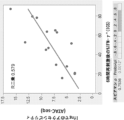
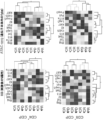
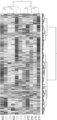
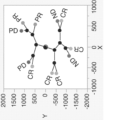
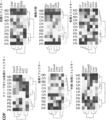
いくつかの態様では、各ゲノム領域またはそのサブセットについて、複数の対象のそれぞれについての細胞療法の転帰にマッピングされた各ゲノム座位の配列リードの値もしくはレベルを含むディスプレイを作製する。 In some embodiments, for each genomic region or subset thereof, a display is created that includes the value or level of sequence reads for each genomic locus mapped to cell therapy outcome for each of the plurality of subjects.
いくつかの態様では、該ディスプレイはヒートマップ、散布図、階層的クラスタリングおよび/またはコンステレーションプロット(constellation plot)を含む。いくつかの態様では、該1つまたは複数のゲノム領域を同定する工程は、細胞療法の転帰に基づいてクラスター解析を実施することを含む。いくつかの態様では、細胞療法の転帰を示すまたはそれと相関する該1つまたは複数のゲノム領域を同定する工程は、同じまたは同様の転帰を有する対象の少なくとも大多数が該ディスプレイにおいて一緒にクラスターを作るかどうかを判定することを含む。いくつかの態様では、同じまたは同様の転帰を有する対象の少なくとも55%、60%、70%、80%、90%、95%またはそれ以上が該ディスプレイにおいて一緒にクラスターを作る場合に、ゲノム領域が同定される。 In some embodiments, the display includes a heat map, a scatter plot, hierarchical clustering, and/or a constellation plot. In some embodiments, identifying the one or more genomic regions includes performing cluster analysis based on cell therapy outcome. In some embodiments, identifying the one or more genomic regions indicative of or correlated with a cell therapy outcome comprises clustering together in the display at least a majority of subjects with the same or similar outcome. This includes determining whether to create or not. In some embodiments, genomic regions if at least 55%, 60%, 70%, 80%, 90%, 95% or more of subjects with the same or similar outcome cluster together in the display. is identified.
いくつかの態様では、細胞の全ゲノムが解析される。いくつかの態様では、細胞の全ゲノムの一部が解析される。いくつかの態様では、該ゲノムの一部は、細胞の表現型、活性化状態、活性化シグナルの強度、またはエフェクター機能に関連するもしくはそれを示すか、それに関連するもしくはそれを示す可能性が高い1つまたは複数のゲノム領域、任意で1つまたは複数のゲノム座位を含む。 In some embodiments, the entire genome of the cell is analyzed. In some embodiments, a portion of the entire genome of the cell is analyzed. In some embodiments, the portion of the genome is associated with or indicative of, or is likely to be associated with or indicative of, a cellular phenotype, activation status, activation signal strength, or effector function. comprising one or more genomic regions, optionally one or more genomic loci.
いくつかの態様において、細胞療法の転帰は、細胞療法の応答、毒性、免疫原性、または表現型もしくは機能;完全奏効、部分奏効、進行性疾患、分子的に検出可能な疾患、再発、奏効の持続性、効果に関連するもしくはそれを示す転帰、または毒性に関連するもしくはそれを示す転帰である。 In some embodiments, the cell therapy outcome is cell therapy response, toxicity, immunogenicity, or phenotype or function; complete response, partial response, progressive disease, molecularly detectable disease, relapse, response. outcomes related to or indicative of efficacy, or outcomes related to or indicative of toxicity.
いくつかの態様では、前記応答は、完全奏効、部分奏効、進行性疾患、または分子的に検出可能な疾患である。 In some embodiments, the response is a complete response, partial response, progressive disease, or molecularly detectable disease.
いくつかの態様では、前記毒性は、サイトカイン放出症候群(CRS)、重度CRS、グレード3以上のCRS、神経毒性、重度の神経毒性、グレード3以上の神経毒性、および/または脳浮腫である。いくつかの態様では、前記毒性は用量制限毒性(DLT)である。
In some embodiments, the toxicity is cytokine release syndrome (CRS), severe CRS,
いくつかの態様では、2~50、2~20、2~10、2~5、5~50、5~20、5~10、10~50、10~20、もしくは20~50、または約2~50、約2~20、約2~10、約2~5、約5~50、約5~20、約5~10、約10~50、約10~20、もしくは約20~50のゲノム領域のエピジェネティック特性が解析される。いくつかの態様では、2つ以上のゲノム領域を含むパネルが同定される。 In some embodiments, 2-50, 2-20, 2-10, 2-5, 5-50, 5-20, 5-10, 10-50, 10-20, or 20-50, or about 2 ~50, about 2-20, about 2-10, about 2-5, about 5-50, about 5-20, about 5-10, about 10-50, about 10-20, or about 20-50 genomes The epigenetic properties of the region are analyzed. In some embodiments, a panel containing two or more genomic regions is identified.
いくつかの態様では、第1の細胞組成物および第2の細胞組成物は、対象から選択されたまたは単離された初代細胞を含む。いくつかの態様では、該細胞は免疫細胞である。いくつかの態様では、免疫細胞はT細胞またはNK細胞である。いくつかの態様では、T細胞はCD4+および/またはCD8+ T細胞である。 In some embodiments, the first cell composition and the second cell composition comprise primary cells selected or isolated from the subject. In some embodiments, the cell is an immune cell. In some embodiments, the immune cells are T cells or NK cells. In some embodiments, the T cells are CD4+ and/or CD8+ T cells.
いくつかの態様では、第2の組成物の細胞が解析される。いくつかの態様では、第2の組成物の細胞は組換え受容体をコードする核酸を含む。 In some embodiments, cells of the second composition are analyzed. In some embodiments, the cells of the second composition include a nucleic acid encoding a recombinant receptor.
いくつかの態様では、該核酸分子はウイルスベクターに含まれる。いくつかの態様では、ウイルスベクターは、アデノウイルス、レンチウイルス、レトロウイルス、ヘルペスウイルス、またはアデノ随伴ウイルスベクターである。 In some embodiments, the nucleic acid molecule is comprised in a viral vector. In some embodiments, the viral vector is an adenovirus, lentivirus, retrovirus, herpesvirus, or adeno-associated virus vector.
いくつかの態様では、第1の細胞組成物および/または第2の細胞組成物は、1つまたは複数の条件または作用物質の存在下でインプット組成物を培養することによって生成される。いくつかの態様では、該1つまたは複数のゲノム領域は、細胞の活性化状態もしくはエフェクター状態に関与するかまたは関与する可能性が高い遺伝子を含む。 In some embodiments, the first cell composition and/or the second cell composition are produced by culturing the input composition in the presence of one or more conditions or agents. In some embodiments, the one or more genomic regions include genes that are involved or likely to be involved in the activation or effector state of the cell.
また、本明細書では、対象に投与するための細胞組成物を評価する方法が提供され、該方法は、(a)組換え受容体で操作された細胞を含む細胞組成物に含まれる細胞の1つまたは複数のゲノム領域のエピジェネティックプロファイルを解析する工程;および(b)各ゲノム領域のエピジェネティックプロファイルを、個別に、参照プロファイルと比較する工程であって、その比較によって、該細胞の集団が、対象に投与されたとき、転帰を示すもしくはもたらすか、またはその可能性が高いかどうかが示される、工程を含む。 Also provided herein is a method of evaluating a cell composition for administration to a subject, the method comprising: (a) a cell composition comprising recombinant receptor-engineered cells; analyzing the epigenetic profile of one or more genomic regions; and (b) comparing the epigenetic profile of each genomic region individually to a reference profile, the comparison determining the population of cells. is shown to exhibit or result in, or is likely to result in, an outcome when administered to a subject.
いくつかの態様において、細胞療法の転帰は、細胞療法の応答、毒性、免疫原性、または表現型もしくは機能;完全奏効、部分奏効、進行性疾患、分子的に検出可能な疾患、再発、奏効の持続性、効果に関連するもしくはそれを示す転帰、または毒性に関連するもしくはそれを示す転帰である。いくつかの態様では、その応答は完全奏効または部分奏効である。 In some embodiments, the cell therapy outcome is cell therapy response, toxicity, immunogenicity, or phenotype or function; complete response, partial response, progressive disease, molecularly detectable disease, relapse, response. outcomes related to or indicative of efficacy, or outcomes related to or indicative of toxicity. In some embodiments, the response is a complete response or a partial response.
いくつかの態様では、前記比較によって、該細胞組成物が転帰を示すまたは示す可能性が高いことが示される場合に、該細胞組成物を対象に投与する。 In some embodiments, the cell composition is administered to the subject if the comparison indicates that the cell composition exhibits or is likely to exhibit the outcome.
いくつかの態様では、前記比較によって、該細胞組成物が転帰を示さないまたは示さない可能性が高いことが示される場合には、以下のいずれかである:(i)該細胞組成物が変更された細胞組成物を投与する;(ii)細胞の用量が変更された該細胞組成物を投与する;(iii)対象に投与される細胞の投与計画が変更された該細胞組成物を投与する;(iv)1つもしくは複数の他の治療剤と組み合わせて該細胞組成物を投与する;または(v)対象に該細胞組成物を投与しない。 In some embodiments, if the comparison indicates that the cell composition does not or is likely not to exhibit an outcome, then either: (i) the cell composition is altered (ii) administering the cell composition in which the dose of the cells has been changed; (iii) administering the cell composition in which the dosage regimen of the cells to be administered to the subject has been changed; (iv) administering the cell composition in combination with one or more other therapeutic agents; or (v) not administering the cell composition to the subject.
いくつかの態様では、変更された細胞組成物を投与する前に、変更された細胞組成物に含まれる細胞に対して工程(a)および(b)を繰り返す。 In some embodiments, steps (a) and (b) are repeated on cells comprised in the modified cell composition before administering the modified cell composition.
いくつかの態様では、細胞の投与計画を変更することは、初回用量の細胞を対象に投与した後で、第2用量の細胞を対象に投与することを含む。いくつかの態様では、後続の用量の細胞は、初回用量の細胞を投与してから少なくとも1週間、2週間、3週間、4週間、2ヶ月、3ヶ月、4ヶ月、5ヶ月、6ヶ月、9ヶ月、または12ヶ月後に投与される。 In some embodiments, altering the dosing regimen of the cells comprises administering to the subject a first dose of cells followed by administering a second dose of cells to the subject. In some embodiments, subsequent doses of cells are administered at least 1 week, 2 weeks, 3 weeks, 4 weeks, 2 months, 3 months, 4 months, 5 months, 6 months, after administering the first dose of cells. Administered after 9 or 12 months.
いくつかの態様では、前記1つまたは複数のゲノム領域は、細胞療法に対する応答に関連するか、またはそれを示す。 In some embodiments, the one or more genomic regions are associated with or indicative of response to cell therapy.
いくつかの態様では、参照プロファイルは、該1つもしくは複数のゲノム領域の各々のエピジェネティック特性についての閾値、または該1つもしくは複数のゲノム領域内の全体的なエピジェネティック特性についての閾値を含む。 In some embodiments, the reference profile includes a threshold for each epigenetic property of the one or more genomic regions, or a threshold for the overall epigenetic property within the one or more genomic regions. .
いくつかの態様では、その閾値は、同じまたは同様の疾患または状態を有する対象に投与されたときに転帰を示すことが分かっている、細胞組成物の細胞内の該1つまたは複数のゲノム領域におけるエピジェネティック特性、任意でクロマチンアクセシビリティ、の値もしくはレベルである;あるいは、該対象に投与されたときに転帰を示すことが分かっている、複数の細胞組成物のそれぞれの細胞からの該1つまたは複数のゲノム領域におけるエピジェネティック特性、任意でクロマチンアクセシビリティ、の平均(average)、中央、または平均(mean)の値もしくはレベルである。いくつかの態様では、その閾値は、正常または健康な対象からの細胞におけるエピジェネティック特性の値もしくはレベルを含む。いくつかの態様では、その閾値は、ナイーブな表現型または長命なメモリー表現型を示す細胞におけるエピジェネティック特性の値もしくはレベルを含む。 In some embodiments, the threshold is the one or more genomic regions within a cell of the cellular composition that are known to be indicative of an outcome when administered to a subject with the same or similar disease or condition. or the value or level of an epigenetic property, optionally chromatin accessibility, in the subject; alternatively, said one from each cell of a plurality of cell compositions that is known to exhibit an outcome when administered to said subject. or the average, median, or mean value or level of an epigenetic characteristic, optionally chromatin accessibility, in multiple genomic regions. In some embodiments, the threshold comprises a value or level of an epigenetic property in cells from a normal or healthy subject. In some embodiments, the threshold comprises a value or level of an epigenetic characteristic in cells exhibiting a naïve phenotype or a long-lived memory phenotype.
いくつかの態様では、その閾値は、
同じまたは同様の疾患または状態を有する対象に投与されたときに所望の転帰を示すことが分かっている、細胞組成物の細胞内の該1つまたは複数のゲノム領域におけるエピジェネティック特性、任意でクロマチンアクセシビリティに関連するかまたはそれを示す値もしくはレベルである;または
対象のグループに個別に投与された複数の細胞組成物のそれぞれの細胞からの該1つまたは複数のゲノム領域におけるエピジェネティック特性、任意でクロマチンアクセシビリティに関連するかまたはそれを示す、平均(average)、中央、もしくは平均(mean)の値もしくはレベルであるか、または平均(average)、中央、もしくは平均(mean)値もしくはレベルの標準偏差内であり、この場合、該グループの各対象は投与時の望ましい転帰を投与後に示し続けた;または
正常もしくは健康な対象からの同様の細胞組成物におけるエピジェネティック特性に関連するかまたはそれを示す値もしくはレベルである。
In some aspects, the threshold is
epigenetic characteristics, optionally chromatin, in said one or more genomic regions within a cell of a cell composition that is known to exhibit a desired outcome when administered to a subject with the same or similar disease or condition; a value or level associated with or indicative of accessibility; or an epigenetic characteristic in the one or more genomic regions from each cell of a plurality of cell compositions administered individually to a group of subjects. an average, median, or mean value or level relating to or indicative of chromatin accessibility, or a standard for an average, median, or mean value or level. within the deviations, in which case each subject in the group continued to exhibit the desired outcome after administration; or associated with or associated with epigenetic characteristics in similar cell compositions from normal or healthy subjects. This is the indicated value or level.
また、本明細書では、細胞培養物を評価する方法も提供され、該方法は、(a)1つまたは複数の試験物質または条件の存在下でインプット細胞組成物を培養することによって得られた、アウトプット細胞組成物に含まれる細胞の1つまたは複数のゲノム領域のエピジェネティックプロファイルを解析する工程;および(b)各ゲノム領域のエピジェネティックプロファイルを、個別に、参照プロファイルと比較する工程であって、その比較によって、該細胞が所定の表現型もしくは機能を示すか、または示す可能性が高いかどうかが示される、工程を含む。 Also provided herein is a method of evaluating a cell culture, the method comprising: (a) culturing an input cell composition in the presence of one or more test substances or conditions; , analyzing the epigenetic profile of one or more genomic regions of cells included in the output cell composition; and (b) comparing the epigenetic profile of each genomic region individually to a reference profile. and the comparison indicates whether the cell exhibits or is likely to exhibit a predetermined phenotype or function.
いくつかの態様では、所定の表現型または機能は、該細胞のエフェクター機能もしくは活性化状態を示し、かつ/または該細胞がナイーブな表現型もしくは長命なメモリー表現型を有することを示す。 In some embodiments, the predetermined phenotype or function indicates an effector function or activation state of the cell and/or indicates that the cell has a naive or long-lived memory phenotype.
いくつかの態様では、該1つまたは複数の試験物質または条件には、以下が含まれる:血清の存在もしくは濃度;培養時間;刺激剤の存在もしくは量;刺激剤の種類もしくは程度;アミノ酸の存在もしくは量;温度;インプット組成物の供給源もしくは細胞型;インプット組成物中の細胞型の比もしくはパーセンテージ、任意でCD4+/CD8+ 細胞比;ビーズの存在もしくは量;細胞密度;静置培養;振とう培養;灌流;ウイルスベクターの種類;ベクターコピー数;形質導入アジュバントの存在;凍結保存におけるインプット組成物の細胞密度;組換え受容体の発現の程度;細胞表現型を調節する化合物の存在。いくつかの態様では、該1つまたは複数の試験物質または条件には、試験化合物のライブラリーからの1つまたは複数の化合物が含まれる。 In some embodiments, the one or more test substances or conditions include: presence or concentration of serum; incubation time; presence or amount of irritant; type or extent of irritant; presence of amino acids. temperature; source or cell type of the input composition; ratio or percentage of cell types in the input composition, optionally CD4+/CD8+ cell ratio; presence or amount of beads; cell density; static culture; shaking. culture; perfusion; type of viral vector; vector copy number; presence of transduction adjuvant; cell density of input composition in cryopreservation; degree of expression of recombinant receptor; presence of compounds that modulate cell phenotype. In some embodiments, the one or more test substances or conditions include one or more compounds from a library of test compounds.
いくつかの態様では、前記比較によって、該細胞組成物が表現型もしくは機能を有するかまたは有する可能性が高いことが示される場合、前記方法は、該細胞を培養するための該1つまたは複数の試験物質または条件を選択する工程を含む。いくつかの態様では、前記比較によって、該細胞組成物が表現型もしくは機能を有しないまたは有しない可能性が高いことが示される場合、前記方法は、1つまたは複数のさらなる試験物質または条件を用いて工程(a)および(b)を繰り返す工程を含む。 In some embodiments, if the comparison indicates that the cell composition has or is likely to have a phenotype or function, the method comprises including the step of selecting test substances or conditions. In some embodiments, if the comparison indicates that the cell composition does not have or is likely to have no phenotype or function, the method includes administering one or more additional test substances or conditions. repeating steps (a) and (b) using the method.
いくつかの態様では、参照プロファイルは、該1つもしくは複数のゲノム領域の各々のエピジェネティック特性についての閾値、または該1つもしくは複数のゲノム領域内の全体的なエピジェネティック特性についての閾値を含む。 In some embodiments, the reference profile includes a threshold for each epigenetic property of the one or more genomic regions, or a threshold for the overall epigenetic property within the one or more genomic regions. .
いくつかの態様では、その閾値は、表現型または機能を示すことが分かっている、参照細胞組成物の細胞内の該1つまたは複数のゲノム領域におけるエピジェネティック特性、任意でクロマチンアクセシビリティ、の値もしくはレベルである;あるいは、表現型または機能を示すことが分かっている、複数の参照細胞組成物のそれぞれの細胞からの該1つまたは複数のゲノム領域におけるエピジェネティック特性、任意でクロマチンアクセシビリティ、の平均(average)、中央、または平均(mean)の値もしくはレベルである。 In some embodiments, the threshold is a value of an epigenetic characteristic, optionally chromatin accessibility, in the one or more genomic regions within a cell of a reference cell composition that is known to be indicative of a phenotype or function. or the level of epigenetic characteristics, optionally chromatin accessibility, in the one or more genomic regions from each cell of a plurality of reference cell compositions that are known to exhibit a phenotype or function; The average, median, or mean value or level.
いくつかの態様では、参照細胞組成物は、ナイーブT細胞、長命なメモリーT細胞、セントラルメモリーT細胞(Tcm)、または幹様メモリーT細胞(Tcsm)を表す表現型を有する。 In some embodiments, the reference cell composition has a phenotype representing a naive T cell, a long-lived memory T cell, a central memory T cell (Tcm), or a stem-like memory T cell (Tcsm).
いくつかの態様では、エピジェネティック特性を解析する工程は、該1つまたは複数のゲノム領域にわたってクロマチンアクセシビリティの値もしくはレベルを決定、測定または定量することを含む。いくつかの態様では、エピジェネティック特性を解析する工程は、該1つまたは複数のゲノム領域またはそのサブセットにおいて、エピジェネティック特性、任意でクロマチンアクセシビリティに関連するかまたはそれを示す配列リードの値もしくはレベルを決定、測定または定量することを含む。いくつかの態様では、その値もしくはレベルを決定、測定または定量することは、該1つまたは複数のゲノム領域の各々またはそのサブセット内のFPKM(fragments per kilobase per million of mapped reads:1キロベースあたりの、マップされたリード数100万あたりの断片数)値を決定することを含む。いくつかの態様では、その値もしくはレベルを決定、測定または定量することは、該1つまたは複数のゲノム領域の各々またはそのサブセット内のFPKM(1キロベースあたりの、マップされたリード数100万あたりの断片数)値を合計または総計することを含む。 In some embodiments, analyzing the epigenetic properties comprises determining, measuring, or quantifying the value or level of chromatin accessibility across the one or more genomic regions. In some embodiments, analyzing an epigenetic property comprises determining the value or level of sequence reads associated with or indicative of an epigenetic property, optionally chromatin accessibility, in the one or more genomic regions or subsets thereof. including determining, measuring or quantifying. In some embodiments, determining, measuring or quantifying the value or level of FPKM (fragments per kilobase per million of mapped reads) within each of the one or more genomic regions or a subset thereof. fragments per million mapped reads). In some embodiments, determining, measuring, or quantifying the value or level comprises measuring FPKM (number of mapped reads per kilobase in millions of mapped reads per kilobase) within each of said one or more genomic regions or a subset thereof. number of fragments per) value.
いくつかの態様では、該1つまたは複数のゲノム領域は、少なくとも2~50、2~20、2~10、2~5、5~50、5~20、5~10、10~50、10~20、または20~50のゲノム領域を含むパネルを含む。 In some embodiments, the one or more genomic regions are at least 2-50, 2-20, 2-10, 2-5, 5-50, 5-20, 5-10, 10-50, 10 Contains panels containing ~20, or 20-50 genomic regions.
いくつかの態様では、該1つまたは複数のゲノム領域は、細胞のエフェクター様機能もしくは活性化状態に関連するかまたはそれを示す1つまたは複数のゲノム座位を含む。 In some embodiments, the one or more genomic regions include one or more genomic loci associated with or indicative of an effector-like function or activation state of the cell.
いくつかの態様では、該1つまたは複数のゲノム領域は、Nr4a1、Cblb、Irf4、Tbx21、Eomes、Ifng、Il2ra、Il2、Csf2、Gzmb、Tnfsf10、Gata3、Mir155、Sox21、Ctla4、Lag3、およびPdcd1からなる群より選択される遺伝子座を含む。いくつかの態様では、該1つまたは複数のゲノム領域は、Ctla4、Il2ra、Il2、Ifng、およびGzmbからなる群より選択されるゲノム座位を含む。 In some embodiments, the one or more genomic regions include Nr4a1, Cblb, Irf4, Tbx21, Eomes, Ifng, Il2ra, Il2, Csf2, Gzmb, Tnfsf10, Gata3, Mir155, Sox21, Ctla4, Lag3, and Pdcd1. including loci selected from the group consisting of. In some embodiments, the one or more genomic regions include a genomic locus selected from the group consisting of Ctla4, Il2ra, Il2, Ifng, and Gzmb.
いくつかの態様では、該ゲノム領域はゲノム座位または遺伝子を含む。いくつかの態様では、該ゲノム領域は遺伝子のオープンリーディングフレームを含む。いくつかの態様では、該ゲノム領域は遺伝子間領域または調節エレメントを含む。いくつかの態様では、該ゲノム領域は、イントロン、エクソン、シス調節エレメント、プロモーター、エンハンサー、上流活性化配列(UAS)、3'非翻訳領域(UTR)、5'UTR、非コードRNA生成領域、非コードRNA(ncRNA)遺伝子、miRNA遺伝子、siRNA遺伝子、piRNA遺伝子、snoRNA遺伝子、lncRNA遺伝子、リボソームRNA(rRNA)遺伝子、スモールRNA結合部位、非コードRNA結合部位、偽遺伝子、転写終結部位(TTS)、リピート、テロメア領域、アクセス可能なクロマチン領域、アクセス不可能なクロマチン領域、オープンクロマチン領域および/またはヘテロクロマチン領域を含む。 In some embodiments, the genomic region includes a genomic locus or gene. In some embodiments, the genomic region includes an open reading frame for a gene. In some embodiments, the genomic region includes an intergenic region or regulatory element. In some embodiments, the genomic region includes introns, exons, cis-regulatory elements, promoters, enhancers, upstream activating sequences (UAS), 3' untranslated regions (UTRs), 5' UTRs, non-coding RNA generating regions, Non-coding RNA (ncRNA) genes, miRNA genes, siRNA genes, piRNA genes, snoRNA genes, lncRNA genes, ribosomal RNA (rRNA) genes, small RNA binding sites, non-coding RNA binding sites, pseudogenes, transcription termination sites (TTS) , repeats, telomeric regions, accessible chromatin regions, inaccessible chromatin regions, open chromatin regions and/or heterochromatin regions.
いくつかの態様では、該エピジェネティック特性は、クロマチンアクセシビリティ、ヌクレオソーム占有率、ヒストン修飾、空間的染色体コンフォメーション、転写因子占有率、およびDNAメチル化の中から選択される。いくつかの態様では、該エピジェネティック特性はクロマチンアクセシビリティである。いくつかの態様では、クロマチンアクセシビリティは、ハイスループットシーケンシングによるトランスポザーゼ接近可能クロマチンのアッセイ(ATAC-seq)またはハイスループットシーケンシングに連結されたクロマチン免疫沈降(ChIP-seq)によって決定される。いくつかの態様では、クロマチンアクセシビリティはATAC-seqにより決定される。 In some embodiments, the epigenetic property is selected from chromatin accessibility, nucleosome occupancy, histone modification, spatial chromosome conformation, transcription factor occupancy, and DNA methylation. In some embodiments, the epigenetic property is chromatin accessibility. In some embodiments, chromatin accessibility is determined by assay for transposase-accessible chromatin by high-throughput sequencing (ATAC-seq) or chromatin immunoprecipitation coupled to high-throughput sequencing (ChIP-seq). In some embodiments, chromatin accessibility is determined by ATAC-seq.
いくつかの態様では、該エピジェネティック特性を評価することは以下を含む:(1)細胞または細胞集団からクロマチンを単離すること;(2)クロマチンを挿入酵素複合体(insertional enzyme complex)で処理して、ゲノムDNAのタグ付加断片を生成させること;(3)タグ付加断片の全部もしくは一部を配列決定して、複数の配列リードを生成すること;(4)配列リードをゲノムのゲノム領域にアライメントさせ、フィルタリングし、かつマッピングすること;および(5)各細胞または細胞集団について複数のゲノム領域における配列リードのピークを決定または同定すること。いくつかの態様では、該エピジェネティック特性を解析または評価することは、配列リードのピークを比較すること、および任意で、2つ以上の細胞もしくは細胞組成物からのサンプル間で異なっている配列リードのピークを同定することをさらに含む。いくつかの態様では、配列リードのピークは、濃縮されている、バックグラウンドを上回る、かつ/または周囲の領域の配列リードと比較してより高いピークシグナル、レベル、または値を有する配列リードを含む。いくつかの態様では、該エピジェネティック特性を解析または評価することは、2つ以上の細胞集団からのサンプル間で異なっている配列リードのピークを含むとして同定された、ゲノム領域のモチーフ解析、転写因子占有率解析および/または生物学的経路解析を行うことをさらに含む。いくつかの態様では、該エピジェネティック特性を解析または評価することは、配列リードのピークを含むゲノム領域内のヌクレオソームの位置を決定することをさらに含む。 In some embodiments, assessing the epigenetic property includes: (1) isolating chromatin from a cell or population of cells; (2) treating chromatin with an insertional enzyme complex. (3) sequencing all or part of the tagged fragment to generate multiple sequence reads; (4) converting the sequence reads into genomic regions of the genome; (5) determining or identifying peaks of sequence reads in multiple genomic regions for each cell or cell population; In some embodiments, analyzing or assessing the epigenetic property comprises comparing peaks of sequence reads and, optionally, sequence reads that are different between samples from two or more cells or cell compositions. further comprising identifying a peak of. In some embodiments, the peak of sequence reads comprises sequence reads that are enriched, above background, and/or have a higher peak signal, level, or value compared to sequence reads in surrounding regions. . In some embodiments, analyzing or assessing the epigenetic property comprises motif analysis, transcriptional, genomic regions identified as containing peaks of sequence reads that are different between samples from two or more cell populations. Further comprising performing factor occupancy analysis and/or biological pathway analysis. In some embodiments, analyzing or evaluating the epigenetic property further comprises determining the location of the nucleosome within the genomic region that includes the peak of sequence reads.
いくつかの態様では、前記解析は、前記リードの配列同一性、クオリティ、マッピング位置、または他のシーケンシング特性に基づいて、ミトコンドリアのリードおよび/または追加の汚染配列を除去するための工程を含む。いくつかの態様では、その解析は、定量的精度を改善するために重複リードを除去するための工程を含む。いくつかの態様では、その解析は、配列リードを、特定のエピジェネティック特性、任意でクロマチンアクセシビリティまたはクロマチン占有率を表すサブセットに分離するための工程を含み、その場合、配列決定された断片のサイズが、該エピジェネティック特性を表す程度もしくはレベルを決定するために使用される。 In some embodiments, the analysis includes removing mitochondrial reads and/or additional contaminating sequences based on sequence identity, quality, mapping location, or other sequencing characteristics of the reads. . In some embodiments, the analysis includes a step to remove duplicate reads to improve quantitative accuracy. In some embodiments, the analysis includes separating sequence reads into subsets representing particular epigenetic properties, optionally chromatin accessibility or chromatin occupancy, in which case the size of the sequenced fragment is used to determine the extent or level of expression of the epigenetic characteristic.
いくつかの態様では、解析する工程は、主成分解析(PCA)、生物学的経路解析、遺伝子オントロジー(GO)解析、および/またはモチーフ解析を実施することをさらに含む。 In some embodiments, the step of analyzing further comprises performing principal component analysis (PCA), biological pathway analysis, gene ontology (GO) analysis, and/or motif analysis.
いくつかの態様では、該細胞は対象由来のサンプルから得られる。いくつかの態様では、該細胞は免疫細胞、任意でT細胞、任意でCD4+および/またはCD8+ T細胞である。 In some embodiments, the cells are obtained from a sample from the subject. In some embodiments, the cell is an immune cell, optionally a T cell, optionally a CD4+ and/or CD8+ T cell.
いくつかの態様では、組換え受容体は疾患もしくは状態に関連する抗原に結合し、それを認識し、またはそれを標的とする;および/または組換え受容体はT細胞受容体もしくは機能的非T細胞受容体である;および/または組換え受容体はキメラ抗原受容体(CAR)である。いくつかの態様では、CARは、抗原に特異的に結合する細胞外抗原認識ドメインとITAMを含む細胞内シグナル伝達ドメインとを含み、任意で、細胞内シグナル伝達ドメインはCD3ゼータ(CD3ζ)鎖の細胞内ドメインを含む;および/またはCARは、任意でCD28もしくは4-1BBのシグナル伝達ドメインを含む、共刺激シグナル伝達領域をさらに含む。 In some embodiments, the recombinant receptor binds, recognizes, or targets an antigen associated with a disease or condition; and/or the recombinant receptor is a T cell receptor or a non-functional T cell receptor. is a T-cell receptor; and/or the recombinant receptor is a chimeric antigen receptor (CAR). In some embodiments, the CAR comprises an extracellular antigen recognition domain that specifically binds an antigen and an intracellular signaling domain that includes an ITAM, optionally the intracellular signaling domain comprising a CD3 zeta (CD3ζ) chain. comprises an intracellular domain; and/or the CAR further comprises a costimulatory signaling region, optionally comprising a CD28 or 4-1BB signaling domain.
また、本明細書では、複数の細胞を含む細胞組成物も提供され、ここでは、パネル中の1つまたは複数の遺伝子についてのエピジェネティック特性のレベルもしくは値が、該組成物中の細胞の少なくとも50%において閾値を上回るか、または下回る。 Also provided herein are cell compositions comprising a plurality of cells, wherein the level or value of an epigenetic characteristic for one or more genes in the panel is determined by at least one cell in the composition. 50% above or below the threshold.
いくつかの態様では、該レベルもしくは値は、該組成物中の細胞の少なくとも60%、70%、75%、80%、85%、90%、95%またはそれ以上において閾値を上回るか、または下回る。いくつかの態様では、その閾値は、表現型もしくは機能を示すことが分かっている、参照細胞組成物の細胞内の該1つまたは複数のゲノム領域におけるエピジェネティック特性、任意でクロマチンアクセシビリティ、の値もしくはレベルである;あるいは、表現型もしくは機能を示すことが分かっている、複数の参照細胞組成物のそれぞれの細胞からの該1つまたは複数のゲノム領域におけるエピジェネティック特性、任意でクロマチンアクセシビリティ、の平均(average)、中央、または平均(mean)の値もしくはレベルである。 In some embodiments, the level or value is above a threshold in at least 60%, 70%, 75%, 80%, 85%, 90%, 95% or more of the cells in the composition, or Below. In some embodiments, the threshold is a value of an epigenetic characteristic, optionally chromatin accessibility, in the one or more genomic regions within a cell of a reference cell composition that is known to be indicative of a phenotype or function. or the level of epigenetic characteristics, optionally chromatin accessibility, in the one or more genomic regions from each cell of a plurality of reference cell compositions that are known to exhibit a phenotype or function; The average, median, or mean value or level.
いくつかの態様では、参照細胞組成物は、ナイーブT細胞、長命なメモリーT細胞、セントラルメモリーT細胞(Tcm)、または幹様メモリーT細胞(Tcsm)を表す表現型を有する。 In some embodiments, the reference cell composition has a phenotype representing a naive T cell, a long-lived memory T cell, a central memory T cell (Tcm), or a stem-like memory T cell (Tcsm).
いくつかの態様では、該パネルは、2~50、2~20、2~10、2~5、5~50、5~20、5~10、10~50、10~20、もしくは20~50、または約2~50、約2~20、約2~10、約2~5、約5~50、約5~20、約5~10、約10~50、約10~20、もしくは約20~50のゲノム領域を含む。 In some embodiments, the panel has 2-50, 2-20, 2-10, 2-5, 5-50, 5-20, 5-10, 10-50, 10-20, or 20-50 , or about 2-50, about 2-20, about 2-10, about 2-5, about 5-50, about 5-20, about 5-10, about 10-50, about 10-20, or about 20 Contains ~50 genomic regions.
また、本明細書では、トランスジーンの組込みを評価する方法も提供され、該方法は、組換え受容体で遺伝子操作された細胞もしくは細胞組成物において、トランスジーンの核酸配列を含む1つまたは複数のゲノム領域のエピジェネティック特性を決定する工程を含む。いくつかの態様では、その遺伝子操作は、細胞組成物の1つまたは複数の細胞内に、組換え受容体をコードする核酸を導入することによって行われる。 Also provided herein is a method of assessing transgene integration, which method comprises injecting one or more transgene nucleic acid sequences into a cell or cell composition genetically engineered with a recombinant receptor. determining the epigenetic properties of the genomic region of. In some embodiments, the genetic manipulation is performed by introducing a nucleic acid encoding a recombinant receptor into one or more cells of the cellular composition.
いくつかの態様では、前記導入は、核酸を含むウイルスベクターによる形質導入によって行われる。いくつかの態様では、該エピジェネティック特性はクロマチンアクセシビリティである。いくつかの態様では、該エピジェネティック特性は、クロマチンアクセシビリティ、クロマチンアクセシビリティのレベルもしくは程度、クロマチンアクセシビリティの相対的なレベルもしくは程度を含み、かつ/または該エピジェネティック特性は、該ゲノム領域のクロマチンアクセシビリティの、程度もしくはレベル、相対的な程度もしくはレベル、またはプロファイルもしくはマップを含む。 In some embodiments, the introduction is performed by transduction with a viral vector containing the nucleic acid. In some embodiments, the epigenetic property is chromatin accessibility. In some embodiments, the epigenetic property comprises chromatin accessibility, the level or degree of chromatin accessibility, the relative level or degree of chromatin accessibility, and/or the epigenetic property comprises chromatin accessibility, the level or degree of chromatin accessibility, and/or the epigenetic property , degree or level, relative degree or level, or profile or map.
いくつかの態様では、クロマチンアクセシビリティは、ハイスループットシーケンシングによるトランスポザーゼ接近可能クロマチンのアッセイ(ATAC-seq)またはハイスループットシーケンシングに連結されたクロマチン免疫沈降(ChIP-seq)によって決定される。いくつかの態様では、クロマチンアクセシビリティはATAC-seqにより決定される。 In some embodiments, chromatin accessibility is determined by assay for transposase-accessible chromatin by high-throughput sequencing (ATAC-seq) or chromatin immunoprecipitation coupled to high-throughput sequencing (ChIP-seq). In some embodiments, chromatin accessibility is determined by ATAC-seq.
いくつかの態様では、該エピジェネティック特性を評価することは以下を含む:(1)細胞または細胞集団からクロマチンを単離すること;(2)クロマチンを挿入酵素複合体で処理して、ゲノムDNAのタグ付加断片を生成させること;(3)タグ付加断片の全部もしくは一部を配列決定して、複数の配列リードを生成すること;(4)配列リードをゲノムのゲノム領域にアライメントさせ、フィルタリングし、かつマッピングすること;および(5)各細胞または細胞集団について複数のゲノム領域における配列リードのピークを決定または同定すること。 In some embodiments, assessing the epigenetic property includes: (1) isolating chromatin from a cell or population of cells; (2) treating chromatin with an insertase complex to generate genomic DNA. (3) sequencing all or part of the tagged fragment to generate multiple sequence reads; (4) aligning the sequence reads to genomic regions of the genome and filtering them; and (5) determining or identifying peaks of sequence reads in multiple genomic regions for each cell or cell population.
いくつかの態様では、該エピジェネティック特性を解析または評価することは、トランスジーンの核酸配列にマッピングされるかまたはそれに一致する配列リードのピークを決定することをさらに含む。いくつかの態様では、配列リードのピークは、濃縮されている、バックグラウンドを上回る、かつ/または周囲の領域の配列リードと比較してより高いピークシグナル、レベル、または値を有する配列リードを含む。いくつかの態様では、該エピジェネティック特性を解析することは、トランスジーンの核酸配列を含むゲノム領域の、エピジェネティック特性に関連するかまたはそれを示す配列リード、任意でクロマチンアクセシビリティに関連するかまたはそれを示す配列リード、のプロファイルを示すエピジェネティックマップを作成することを含み、かつ/またはゲノム領域の長さに沿ってトランスジーンの核酸配列を含むゲノム領域について、エピジェネティックなリードアウト、任意でクロマチンアクセシビリティを該領域で示す1つまたは複数の配列リードを生成させることを含み、この場合、該1つまたは複数の配列リードの量が、該領域での該エピジェネティック特性、任意で該クロマチンアクセシビリティ、の程度またはレベルを示す。いくつかの態様では、該エピジェネティック特性を決定する工程は、トランスジーンの核酸配列を含むゲノム領域にわたってクロマチンアクセシビリティの値もしくはレベルを決定、測定または定量することを含む。いくつかの態様では、該エピジェネティック特性を決定する工程は、トランスジーンの核酸配列を含むゲノム領域にわたって、該エピジェネティック特性、任意でクロマチンアクセシビリティに関連するかまたはそれを示す値もしくはレベルを決定、測定または定量することを含む。いくつかの態様では、該細胞組成物、任意で第1の細胞組成物および/または第2の細胞組成物は、対象由来のサンプルから得られた初代細胞および/または対象から選択もしくは単離された初代細胞を含む。 In some embodiments, analyzing or evaluating the epigenetic property further comprises determining peaks of sequence reads that map to or match the nucleic acid sequence of the transgene. In some embodiments, the peak of sequence reads comprises sequence reads that are enriched, above background, and/or have a higher peak signal, level, or value compared to sequence reads in surrounding regions. . In some embodiments, analyzing the epigenetic properties comprises sequence reads associated with or indicative of epigenetic properties, optionally related to chromatin accessibility, or indicative of epigenetic properties of the genomic region comprising the transgene nucleic acid sequence. epigenetic readouts, optionally for a genomic region containing the transgene nucleic acid sequence along the length of the genomic region, including creating an epigenetic map showing a profile of sequence reads, indicating that generating one or more sequence reads indicative of chromatin accessibility at said region, wherein the amount of said one or more sequence reads is determined by said epigenetic property at said region, optionally said chromatin accessibility. , indicating the degree or level of In some embodiments, determining the epigenetic property comprises determining, measuring, or quantifying the value or level of chromatin accessibility across the genomic region that includes the nucleic acid sequence of the transgene. In some embodiments, determining the epigenetic property comprises determining the epigenetic property, optionally a value or level associated with or indicative of chromatin accessibility, across a genomic region that includes the transgene nucleic acid sequence; Including measuring or quantifying. In some embodiments, the cell composition, optionally the first cell composition and/or the second cell composition, is a primary cell obtained from a sample from the subject and/or selected or isolated from the subject. Contains primary cells.
いくつかの態様では、該細胞は免疫細胞である。いくつかの態様では、免疫細胞はT細胞またはNK細胞である。いくつかの態様では、T細胞はCD4+および/またはCD8+ T細胞である。 In some embodiments, the cell is an immune cell. In some embodiments, the immune cells are T cells or NK cells. In some embodiments, the T cells are CD4+ and/or CD8+ T cells.
いくつかの態様では、組換え受容体は疾患もしくは状態に関連する抗原に結合し、それを認識し、またはそれを標的とする;および/または組換え受容体はT細胞受容体もしくは機能的非T細胞受容体である;および/または組換え受容体はキメラ抗原受容体(CAR)である。いくつかの態様では、CARは、抗原に特異的に結合する細胞外抗原認識ドメインとITAMを含む細胞内シグナル伝達ドメインとを含み、任意で、該細胞内シグナル伝達ドメインはCD3ゼータ(CD3ζ)鎖の細胞内ドメインを含む;および/またはCARは、任意でCD28もしくは4-1BBのシグナル伝達ドメインを含む、共刺激シグナル伝達領域をさらに含む。 In some embodiments, the recombinant receptor binds, recognizes, or targets an antigen associated with a disease or condition; and/or the recombinant receptor is a T cell receptor or a non-functional T cell receptor. is a T-cell receptor; and/or the recombinant receptor is a chimeric antigen receptor (CAR). In some embodiments, the CAR comprises an extracellular antigen recognition domain that specifically binds an antigen and an intracellular signaling domain that includes an ITAM, optionally the intracellular signaling domain comprising a CD3 zeta (CD3ζ) chain. and/or the CAR further comprises a costimulatory signaling region, optionally comprising a CD28 or 4-1BB signaling domain.
詳細な説明
I. 細胞のエピジェネティック状態を評価するための方法
細胞もしくは細胞組成物(養子細胞療法に関連して使用するための対象由来の初代細胞、例えばT細胞を含有する細胞組成物)の1つまたは複数のゲノム領域についてのエピジェネティックなプロファイルまたはシグネチャを決定するための方法が提供される。いくつかの態様では、該細胞組成物は、組換え受容体、例えばキメラ抗原受容体(CAR)、で細胞を操作する前および操作した後の組成物を含めて、細胞療法の製作または操作に関連した組成物を含む。いくつかの局面では、細胞もしくは細胞組成物のゲノム領域のエピジェネティックなプロファイルもしくはシグネチャおよび/または1つまたは複数のエピジェネティックな特性は、該細胞のある種の特徴または特性に関する情報、例えば、該細胞もしくは細胞組成物の表現型、活性化状態および/もしくは機能に関連するもの、ならびに/または細胞療法による治療の1つまたは複数の転帰を示す、該転帰に関連する、該転帰に相関する、および/もしくは該転帰を予測するものを提供することができる。これらの方法は次のような観察に基づいている;すなわち、特定の遺伝子またはゲノム領域のエピジェネティックな特性、例えばクロマチンアクセシビリティは、転写に依存する方法(例えば、RNAシーケンシング)などの他のシステムでは不可能である、細胞組成物の特徴および特性の詳細で、精巧で、かつ/または包括的な追跡を可能にする。いくつかの局面では、そのようなエピジェネティック特性は、疾患転帰、応答転帰、毒性転帰などの転帰と相関し、かつ/または細胞の表現型、持続性、活性および/もしくは機能と相関することが見出されている。そのような相関関係は、特定の局面では、転写、タンパク質発現を評価する方法などの、既存の分析方法を用いて、および/または細胞内染色によって、観察されない。
detailed description
I. A method for assessing the epigenetic status of a cell or cell composition (a cell composition containing primary cells, e.g. T cells, derived from a subject for use in connection with adoptive cell therapy) or Methods are provided for determining epigenetic profiles or signatures for multiple genomic regions. In some embodiments, the cell compositions are useful for producing or manipulating cell therapies, including compositions before and after manipulating cells with recombinant receptors, e.g., chimeric antigen receptors (CARs). including related compositions. In some aspects, the epigenetic profile or signature and/or one or more epigenetic properties of a genomic region of a cell or cell composition comprises information regarding certain characteristics or properties of the cell, e.g. related to the phenotype, activation state and/or function of a cell or cell composition, and/or indicative of, related to, correlated with one or more outcomes of treatment with cell therapy; and/or can provide a predictor of said outcome. These methods are based on the observation that the epigenetic properties of a particular gene or genomic region, e.g. chromatin accessibility, can be compared with other systems such as transcription-dependent methods (e.g. RNA sequencing). It allows for detailed, sophisticated, and/or comprehensive tracking of cellular composition characteristics and properties that is not possible with other methods. In some aspects, such epigenetic properties can be correlated with outcomes such as disease outcome, response outcome, toxicity outcome, and/or with cellular phenotype, persistence, activity and/or function. It has been discovered. Such correlations, in certain aspects, are not observed using existing analytical methods, such as methods of assessing transcription, protein expression, and/or by intracellular staining.
ゲノム領域のエピジェネティックな特性に基づいて、かつ/または1つまたは複数のゲノム領域のエピジェネティックなプロファイルから決定されるように、細胞療法による治療の転帰などの、転帰を示す、転帰に関連する、転帰に相関する、かつ/または転帰を予測するゲノム領域を同定するための方法が提供される。また、特定のゲノム領域のエピジェネティック特性に基づいて、養子細胞療法のための細胞組成物もしくは細胞培養組成物を評価する方法も提供される。 indicative of or relating to an outcome, such as the outcome of treatment with cell therapy, based on the epigenetic properties of a genomic region and/or as determined from the epigenetic profile of one or more genomic regions , methods are provided for identifying genomic regions that correlate with and/or predict outcome. Also provided are methods of evaluating cell or cell culture compositions for adoptive cell therapy based on epigenetic properties of particular genomic regions.
提供された方法は、養子細胞療法を施す前に、治療の転帰を予測するゲノム領域を同定するために使用され得る。本明細書では、細胞療法による治療の転帰を予測する1つまたは複数のゲノム領域を同定する方法が提供される。提供された方法は、養子細胞療法の特定の転帰または特性(例えば、所望の応答および/または安全性の転帰)を示す、それに関連する、それに相関する、かつ/またはそれを予測するエピジェネティックなプロファイルを同定するために使用され得る。いくつかの態様では、提供された方法を用いて、例えば該エピジェネティックプロファイルを別のサンプルのものと、および/または参照プロファイルと、比較することによって、投与前に細胞もしくは細胞組成物の1つまたは複数の特性または特徴を評価することができる。いくつかの態様では、該方法は、細胞もしくは細胞の集団の1つまたは複数のゲノム領域のエピジェネティック特性を解析または決定する工程(該細胞もしくは集団は、組換え受容体を含む第2の組成物を生成するように組換え受容体で遺伝子操作される細胞の第1の組成物に含まれるか、または組換え受容体を含む細胞の第2の組成物に含まれる);および該1つまたは複数のゲノム領域にわたって全体的に、そのエピジェネティック特性が細胞療法の転帰を予測する、示す、またはそれと相関する、該1つまたは複数のゲノム領域のうちの1つまたは複数を同定する工程(該細胞療法は該組換え受容体を含む細胞の第2の組成物を投与することを含む)を含む。 The provided methods can be used to identify genomic regions predictive of treatment outcome prior to administering adoptive cell therapy. Provided herein are methods for identifying one or more genomic regions that predict outcome of treatment with cell therapy. The provided methods describe epigenetic studies that are indicative of, associated with, correlated with, and/or predictive of a particular outcome or property of adoptive cell therapy (e.g., desired response and/or safety outcome). can be used to identify profiles. In some embodiments, one of the cells or cell compositions prior to administration using the provided methods, e.g., by comparing the epigenetic profile to that of another sample and/or to a reference profile. or multiple characteristics or characteristics can be evaluated. In some embodiments, the method includes the step of analyzing or determining the epigenetic properties of one or more genomic regions of a cell or population of cells, wherein the cell or population comprises a second composition comprising a recombinant receptor. a first composition of cells that is genetically engineered with a recombinant receptor to produce a recombinant receptor; or collectively across a plurality of genomic regions, identifying one or more of the one or more genomic regions whose epigenetic properties are predictive of, indicative of, or correlated with cell therapy outcome; The cell therapy comprises administering a second composition of cells containing the recombinant receptor).
いくつかの態様では、提供された方法を用いて、ゲノム領域(例えば、1つまたは複数のゲノム座位、および/または1つまたは複数の遺伝子、例えば遺伝子のパネル)のクロマチンアクセシビリティなどのエピジェネティック特性を測定または定量することによって、細胞療法(例えばCAR+ T細胞療法)と関連して使用される細胞の特徴または特性(例えば、細胞療法に対する応答を予測するかまたは所望の細胞表現型もしくは機能を示す特徴または特性)に関する情報を得ることができる。いくつかの局面では、提供された方法は、細胞療法の転帰(例えば、細胞療法後の応答および/または安全性の転帰)および/または細胞療法の質を改善するなどによって、細胞療法を最適化するかまたは改善することに関連して使用され得る。 In some embodiments, the provided methods are used to evaluate epigenetic properties, such as chromatin accessibility, of a genomic region (e.g., one or more genomic loci, and/or one or more genes, e.g., a panel of genes). characteristics or properties of cells used in connection with cell therapy (e.g., CAR+ T cell therapy) by measuring or quantifying (e.g., predicting response to cell therapy or indicating a desired cell phenotype or function characteristics or characteristics). In some aspects, the provided methods optimize cell therapy, such as by improving cell therapy outcomes (e.g., post-cell therapy response and/or safety outcomes) and/or quality of cell therapy. Can be used in connection with improving or improving.
いくつかの場合には、これは既存の方法および細胞療法と比べて有利である。というのは、応答を予測することが厄介であったり、最適投与量を決定することが困難であったり、かつ/または細胞療法の質が変わりやすかったりするからである。提供された方法を用いて、投与前に養子細胞療法のための操作細胞の特性および特徴についてのより良い情報を得ることができ、結果として、細胞療法の有効性および安全性を高めるための最適投与量を容易かつ迅速に決定することができる。また、提供された方法を用いて、細胞療法の製作または操作に関連して、例えば、細胞の表現型、活性、持続性または機能に影響を及ぼし得る様々なプロセスパラメータ(例えば、温度、培養条件、その他のパラメータ)の影響に関連して、細胞を同定または特徴付けることもできる。 In some cases this is an advantage compared to existing methods and cell therapies. This is because predicting responses can be cumbersome, determining optimal doses can be difficult, and/or the quality of cell therapy can be variable. Using the provided method, one can obtain better information about the properties and characteristics of engineered cells for adoptive cell therapy before administration and, as a result, optimal for increasing the efficacy and safety of cell therapy. Dosage can be determined easily and quickly. The provided methods can also be used to modify various process parameters (e.g., temperature, culture conditions, , and other parameters).
いくつかの態様では、提供された方法は、細胞療法による治療の転帰を予測する1つまたは複数のゲノム領域を同定するために使用することができ、該方法は、(a)第1の治療用組成物に含まれる細胞もしくは細胞の集団について、1つまたは複数のゲノム領域のエピジェネティック特性のレベルもしくは程度または相対的なレベルもしくは程度を決定または測定する工程;(b)第2の治療用組成物に含まれる細胞もしくは細胞の集団について、該1つまたは複数のゲノム領域の該エピジェネティック特性のレベルもしくは程度または相対的なレベルもしくは程度を決定または測定する工程;および(c)該ゲノム領域の1つまたは複数について(a)での該レベルもしくは程度と(b)での該レベルもしくは程度を比較する工程を含む。 In some embodiments, the provided methods can be used to identify one or more genomic regions that predict the outcome of treatment with cell therapy, the method comprising: (a) a first treatment; (b) determining or measuring the level or extent or relative level or extent of an epigenetic characteristic of one or more genomic regions for a cell or population of cells comprised in a composition for a second therapeutic use; (c) determining or measuring the level or extent or relative level or extent of said epigenetic characteristic of said one or more genomic regions for a cell or population of cells comprised in the composition; and (c) said genomic region. comparing the level or degree in (a) with the level or degree in (b) for one or more of the following:
いくつかの態様では、提供された方法は、対象に投与するための細胞組成物を評価するために使用することができ、該方法は、組換え受容体で操作された細胞を含む細胞組成物中の細胞の1つまたは複数のゲノム領域のエピジェネティックプロファイルを解析する工程;および各ゲノム領域のエピジェネティックプロファイルを、個別に、参照プロファイルと比較する工程であって、その比較によって、対象に投与されたときに、該細胞の集団が転帰を示すもしくはもたらすか、またはその可能性が高いかどうかが示される、工程を含む。いくつかの態様では、提供された細胞培養物の評価方法は、アウトプット細胞組成物に含まれる細胞の1つまたは複数のゲノム領域のエピジェネティックプロファイルを解析する工程であって、アウトプット細胞組成物が、1つまたは複数の試験物質または条件の存在下でインプット組成物を培養することによって得られる、工程;および各ゲノム領域のエピジェネティックプロファイルを、個別に参照プロファイルと比較する工程であって、その比較によって、該細胞が所定の表現型、持続性、活性および/または機能を示すか、または示す可能性が高いかどうかが示される、工程を含む。 In some embodiments, the provided method can be used to evaluate a cell composition for administration to a subject, the method comprising a cell composition comprising a recombinant receptor-engineered cell. analyzing the epigenetic profile of one or more genomic regions of the cells in the cell; and comparing the epigenetic profile of each genomic region individually with a reference profile, the comparison resulting in the administration of an indication of whether the population of cells exhibits or produces, or is likely to cause, an outcome when determined. In some embodiments, the provided cell culture evaluation method comprises analyzing the epigenetic profile of one or more genomic regions of cells comprised in the output cell composition, comprising: and comparing the epigenetic profile of each genomic region individually with a reference profile. , the comparison indicates whether the cell exhibits or is likely to exhibit a predetermined phenotype, persistence, activity and/or function.
いくつかの態様では、提供された方法は、細胞療法のための細胞の状態、質、一貫性、表現型、クローン性、均一性、特徴および/または特性を評価するために;養子細胞療法の特定の転帰または特性(例えば、所望の応答および/または安全性の転帰)を示す、それに関連する、それに相関する、かつ/またはそれを予測する細胞もしくは細胞組成物を選択するために;かつ/またはエピジェネティック特性の評価に基づいて、投与用の細胞組成物が最適化もしくは改善され得るように、用量、細胞のタイプ、および/もしくは操作プロセスの1つまたは複数の工程もしくはパラメータを修正または変更するために使用され得る。 In some embodiments, provided methods are used to assess the condition, quality, consistency, phenotype, clonality, homogeneity, characteristics and/or characteristics of cells for cell therapy; for adoptive cell therapy; to select cells or cell compositions that exhibit, are associated with, correlate with, and/or are predictive of a particular outcome or property (e.g., a desired response and/or safety outcome); and/ or modify or change the dose, cell type, and/or one or more steps or parameters of the operating process so that the cell composition for administration may be optimized or improved based on the evaluation of epigenetic properties. can be used to
いくつかの局面では、提供された方法は、該細胞、例えば養子細胞療法のための細胞、の状態、質、一貫性、表現型、クローン性、均一性、特徴および/または特性を決定するために使用され得る。いくつかの局面では、提供された方法は、遺伝子操作の1つまたは複数の段階における細胞、または遺伝子操作前に対象から得られた細胞組成物、または様々な段階で精製もしくは選択された細胞亜集団、または操作細胞の投与後に対象から得られた細胞に対して使用され得る。いくつかの局面では、該方法は、対象への投与前に該細胞の状態、質、一貫性、表現型、クローン性、均一性、特徴および/または特性を評価するために使用することができ、そして該解析方法からの結果は、治療対象を選択するために;治療計画(投与量と投与頻度および/もしくは追加の治療を含む)を決定するために;かつ/またはより望ましい投与用の細胞組成物を得るために操作もしくは製造プロセスを修正または変更するために;使用することができる。いくつかの態様では、該方法を用いて、有効性が向上しかつ/または有害作用が低下した投与のための、より均一で、予測的に有効性のある細胞組成物を得ることができる。いくつかの局面では、提供された方法を、細胞集団中の細胞を特徴付けるための他の方法またはアッセイ、例えば細胞表面マーカーの発現、細胞の持続性、生存率および/または増殖を測定するためのアッセイと組み合わせてまたは連結して使用して、そのような特徴および/または表現型との相関関係を決定することができる。 In some aspects, the provided methods are for determining the condition, quality, consistency, phenotype, clonality, homogeneity, characteristics and/or characteristics of the cell, e.g., a cell for adoptive cell therapy. can be used for. In some aspects, the provided methods involve using cells at one or more stages of genetic manipulation, or cell compositions obtained from a subject prior to genetic manipulation, or purified or selected cell subpopulations at various stages. It can be used on populations, or on cells obtained from a subject after administration of engineered cells. In some aspects, the method can be used to assess the condition, quality, consistency, phenotype, clonality, homogeneity, characteristics and/or characteristics of the cells prior to administration to a subject. , and the results from the analysis method are used to select targets for treatment; to determine treatment regimens (including dosage and frequency of administration and/or additional treatments); and/or to identify cells for more desirable administration. It can be used to modify or change the operation or manufacturing process to obtain the composition. In some embodiments, the methods can be used to obtain more uniform, predictively effective cell compositions for administration with improved efficacy and/or reduced adverse effects. In some aspects, the provided methods can be combined with other methods or assays for characterizing cells in a cell population, such as for measuring cell surface marker expression, cell persistence, viability, and/or proliferation. It can be used in combination or in conjunction with assays to determine correlations with such characteristics and/or phenotypes.
いくつかの態様では、様々な変更が可能であり、均等物が様々な態様において置換され得る。さらに、特定の状況、材料、組成物、プロセス、プロセスの行為または工程を、様々な態様の目的、精神または範囲に適合させるために、多くの修正を加えることができる。いくつかの態様では、本明細書で記載され説明される個々の変形態様のそれぞれは、様々な態様の範囲または精神から逸脱することなく、他のいくつかの態様のいずれかの特徴から容易に分離されるかまたはその特徴と容易に組み合わされる、個別の成分および特徴を有する。全てのそのような変更は、本開示に関連する特許請求の範囲内に含まれることが意図される。 In some embodiments, various modifications are possible and equivalents may be substituted in various embodiments. In addition, many modifications may be made to adapt a particular situation, material, composition of matter, process, process act or step, to the objective, spirit or scope of the various embodiments. In some embodiments, each of the individual variations described and illustrated herein may be readily derived from the features of any of the other embodiments without departing from the scope or spirit of the various embodiments. Having separate components and features that are easily separated or combined with their features. All such modifications are intended to be included within the scope of the claims associated with this disclosure.
II. エピジェネティック/エピジェノミック解析
提供された方法のいずれにおいても、エピジェネティックおよび/またはエピジェノミック解析は、1つの遺伝子座、複数の遺伝子座もしくはゲノム座位、ゲノム領域および/またはゲノムにおける変化または修飾、例えば、クロマチンアクセシビリティ、ヌクレオソーム占有率、ヒストン修飾、空間的染色体コンフォメーション、転写因子占有率および/またはDNAメチル化などを評価し、特徴付けし、かつ解析する工程を含み得る。
II. Epigenetic/Epigenomic Analysis In any of the methods provided, epigenetic and/or epigenomic analysis refers to changes in one genetic locus, multiple genetic loci or genomic loci, genomic regions and/or the genome. or assessing, characterizing, and analyzing modifications, such as chromatin accessibility, nucleosome occupancy, histone modifications, spatial chromosome conformation, transcription factor occupancy, and/or DNA methylation.
いくつかの局面では、該1つまたは複数のゲノム領域はゲノム座位または遺伝子を含む。いくつかの局面では、ゲノム座位はゲノム中の定位置を含み、そしてコード領域、遺伝子のオープンリーディングフレーム、非コード領域、遺伝子間領域、または調節エレメントを含み得る。いくつかの態様では、1つまたは複数のゲノム領域、座位、エレメント、または区間(interval)には、以下が含まれる:コード領域、非コード領域、遺伝子間領域、イントロン、エクソン、近位および遠位シス調節領域、プロモーター領域、エンハンサー領域、上流活性化配列(UAS)、転写産物の非翻訳領域(UTR、例えば3’UTRまたは5’UTR)、非コードRNA生成領域、非コードRNA(ncRNA)遺伝子(例えば、miRNA、siRNA、piRNA、snoRNAまたはlncRNA)、リボソームRNA(rRNA)遺伝子、スモールRNA結合部位、非コードRNA結合部位、偽遺伝子、転写終結部位(TTS)、リピート、テロメア領域、および/またはアクセス可能もしくはアクセス不可能な領域(例えば、オープンクロマチンおよび/またはヘテロクロマチン)。 In some aspects, the one or more genomic regions include genomic loci or genes. In some aspects, a genomic locus comprises a fixed location in the genome and may include coding regions, open reading frames of genes, non-coding regions, intergenic regions, or regulatory elements. In some embodiments, the one or more genomic regions, loci, elements, or intervals include: coding regions, non-coding regions, intergenic regions, introns, exons, proximal and distal regions. cis-regulatory region, promoter region, enhancer region, upstream activating sequence (UAS), untranslated region of transcript (UTR, e.g. 3'UTR or 5'UTR), non-coding RNA-generating region, non-coding RNA (ncRNA) genes (e.g. miRNA, siRNA, piRNA, snoRNA or lncRNA), ribosomal RNA (rRNA) genes, small RNA binding sites, non-coding RNA binding sites, pseudogenes, transcription termination sites (TTS), repeats, telomere regions, and/or or accessible or inaccessible regions (e.g. open chromatin and/or heterochromatin).
いくつかの態様において、提供された方法は1つまたは複数のエピジェネティックおよび/またはエピジェノミック解析工程を含む。いくつかの態様では、その解析は大規模解析、例えば複数のゲノム領域、ゲノム座位、遺伝子座の解析、またはゲノムワイド解析を含む。いくつかの態様では、エピジェネティックおよび/またはエピジェノミック解析は、細胞、例えば細胞療法のための操作細胞、のエピジェネティックな特性、状態、および/またはプロファイルを決定することを含む。いくつかの態様では、提供された方法は、細胞または細胞の集団もしくは組成物のエピジェネティック/エピジェノミックな特性、状態、および/またはプロファイルを決定することを含む。いくつかの態様では、該方法は、細胞もしくは細胞組成物のエピジェネティック/エピジェノミックな特性、状態、および/またはプロファイルを評価するために、大規模シーケンシング、例えばハイスループットシーケンシングまたは次世代シーケンシングなどの、シーケンシングの使用を含み得る。いくつかの態様では、該方法は、アッセイから得られた配列をアライメントおよび/もしくはフィルタリングすること、ならびに/またはその配列を参照ゲノムなどのゲノムにマッピングすることを含む。いくつかの局面では、該方法は、配列がマッピングされたゲノムの領域、座位、および/または区間を決定すること、例えば、ゲノムの特定の領域、座位、および/または区間にマッピングされた配列リードのピークを決定することを含む。 In some embodiments, provided methods include one or more epigenetic and/or epigenomic analysis steps. In some embodiments, the analysis comprises a large-scale analysis, eg, an analysis of multiple genomic regions, genomic loci, genetic loci, or a genome-wide analysis. In some embodiments, epigenetic and/or epigenomic analysis involves determining epigenetic properties, status, and/or profiles of cells, such as engineered cells for cell therapy. In some embodiments, provided methods include determining epigenetic/epigenomic properties, conditions, and/or profiles of cells or populations or compositions of cells. In some embodiments, the method involves large-scale sequencing, e.g., high-throughput sequencing or next-generation May include the use of sequencing, such as sequencing. In some embodiments, the method includes aligning and/or filtering sequences obtained from the assay and/or mapping the sequences to a genome, such as a reference genome. In some aspects, the method includes determining regions, loci, and/or intervals of the genome to which sequences have been mapped, e.g., sequence reads mapped to particular regions, loci, and/or intervals of the genome. including determining the peak of.
いくつかの態様では、提供された方法はまた、例えば、特定の細胞もしくは細胞組成物のエピジェネティック/エピジェノミックな特性および/またはプロファイルを、別の細胞もしくは細胞組成物のそれらと比較することによって、エピジェネティック/エピジェノミックな特性および/またはプロファイルを解析することを含む。いくつかの態様では、提供された方法は、解析または比較のための様々な下流の工程もしくはプロセス、例えばコンピュータにより実行される工程、および/または細胞もしくは細胞組成物の1つまたは複数の特性もしくは特徴を評価するための、該方法の適用を含む。 In some embodiments, the provided methods also include, for example, comparing epigenetic/epigenomic properties and/or profiles of a particular cell or cell composition with those of another cell or cell composition. including analyzing epigenetic/epigenomic characteristics and/or profiles by In some embodiments, the provided methods involve the analysis or comparison of various downstream steps or processes, such as computer-implemented steps, and/or one or more properties or properties of cells or cell compositions. Application of the method to evaluate characteristics.
いくつかの局面では、エピジェネティック/エピジェノミックな特性、状態および/またはプロファイルを、例えばATAC-seqなどのアッセイ、その解析および/または適用を用いて、決定または評価するための例示的な方法は、以下の工程の1つまたは複数を含み得る:1)ATACseqライブラリーの作製;2)リードのトリミングおよびマッピング;3)重複リードの除去;4)ミトコンドリア汚染のフィルタリング;5)非ヌクレオソーム断片のフィルタリング;6)アクセシビリティピークの抽出;7)コンセンサスピークセットの組み立て;8)ピーク中のリードの計数;9)サンプルのクラスタリング;および/または10)差次的アクセシビリティ解析の実施。いくつかの態様では、例示的なエピジェネティックおよび/またはエピジェノミック解析は、クロマチンの状態、例えばクロマチンのアクセシビリティ、開放性または圧縮性の評価を含む。提供された方法のいくつかの態様では、エピジェネティックおよび/またはエピジェノミック解析は、クロマチンアクセシビリティを評価することを含む。いくつかの態様では、クロマチンアクセシビリティ解析は、大規模シーケンシング、例えば、ハイスループットシーケンシングまたは次世代シーケンシングの工程に連結される。いくつかの態様では、クロマチンアクセシビリティを評価する方法は、ヌクレオソーム占有率、ヒストン修飾および/または転写因子占有率の評価を含む。いくつかの態様では、クロマチンアクセシビリティは、DNA挿入エレメント、DNA修飾酵素(例えば、DNaseもしくはMNase)、および/または抗体(例えば、そのフラグメント)を用いて決定される。エピジェネティックおよび/またはエピジェノミック解析の例示的なアッセイには、以下が含まれる:ゲノムのタンパク質結合部位を同定するための、ハイスループットシーケンシングに連結されたクロマチン免疫沈降(ChIP-seq)、塩基対分解能でのDNAメチル化を決定するための亜硫酸水素塩シーケンシング、オープンクロマチンを評価するための、DNaseI-Seq、ハイスループットシーケンシングによるトランスポザーゼ接近可能クロマチンのアッセイ(ATAC-seq)、ならびに染色体の空間的構成を決定するための、染色体コンフォメーションキャプチャー(chromosome conformation capture:3C)法および関連方法、例えば、染色体コンフォメーションキャプチャーオンチップ(chromosome conformation capture-on-chip:4C)、染色体コンフォメーションキャプチャーカーボンコピー(chromosome conformation capture carbon copy:5C)、Hi-C、3C-Seq(ハイスループットシーケンシングによる3C)、4C-Seq、5C-SeqおよびHiC-Seq。いくつかの態様では、エピジェネティックおよび/またはエピジェノミック解析は、ハイスループットシーケンシングによる調節エレメントのホルムアルデヒド支援単離(FAIRE-seq)を含む。 In some aspects, exemplary methods for determining or evaluating epigenetic properties, conditions, and/or profiles, e.g., using an assay such as ATAC-seq, analysis and/or application thereof. may include one or more of the following steps: 1) generation of ATACseq libraries; 2) trimming and mapping of reads; 3) removal of duplicate reads; 4) filtering of mitochondrial contamination; 5) removal of non-nucleosomal fragments. filtering; 6) extraction of accessibility peaks; 7) assembly of consensus peak sets; 8) counting of reads in peaks; 9) clustering of samples; and/or 10) performing differential accessibility analysis. In some embodiments, exemplary epigenetic and/or epigenomic analyzes include assessment of chromatin state, such as chromatin accessibility, openness, or compressibility. In some embodiments of the provided methods, the epigenetic and/or epigenomic analysis comprises assessing chromatin accessibility. In some embodiments, chromatin accessibility analysis is coupled to large-scale sequencing, eg, high-throughput sequencing or next generation sequencing steps. In some embodiments, methods of assessing chromatin accessibility include assessing nucleosome occupancy, histone modifications, and/or transcription factor occupancy. In some embodiments, chromatin accessibility is determined using DNA insertion elements, DNA modifying enzymes (eg, DNase or MNase), and/or antibodies (eg, fragments thereof). Exemplary assays for epigenetic and/or epigenomic analysis include: chromatin immunoprecipitation coupled to high-throughput sequencing (ChIP-seq) to identify protein binding sites in the genome; Bisulfite sequencing to determine DNA methylation at base pair resolution, DNaseI-Seq, assay for transposase-accessible chromatin by high-throughput sequencing (ATAC-seq), and chromosomes to assess open chromatin. Chromosome conformation capture (3C) and related methods, such as chromosome conformation capture-on-chip (4C), chromosome conformation capture (3C) and related methods, for determining the spatial organization of carbon copy (chromosome conformation capture carbon copy: 5C), Hi-C, 3C-Seq (3C with high-throughput sequencing), 4C-Seq, 5C-Seq and HiC-Seq. In some embodiments, the epigenetic and/or epigenomic analysis comprises formaldehyde-assisted isolation of regulatory elements by high-throughput sequencing (FAIRE-seq).
A. エピジェネティック/エピジェノミックプロファイルの決定
提供された方法のいくつかの態様では、エピジェネティックおよび/またはエピジェノミック解析、例えばエピジェネティック/エピジェノミックな特性、状態および/またはプロファイルの決定は、ゲノム領域、座位および/もしくは区間の、かつ/またはゲノムワイドレベルでの、例えばゲノムの大部分もしくはゲノム全体を通しての、クロマチンアクセシビリティの評価を含む。いくつかの局面では、エピジェネティック/エピジェノミックプロファイルは、特定の細胞もしくは細胞組成物の、1つまたは複数のゲノム領域、座位および/もしくは区間での、かつ/またはゲノムワイドレベルでの、エピジェネティック/エピジェノミック特性に基づいて、決定される。
A. Determination of Epigenetic/Epigenomic Profiles In some embodiments of the provided methods, epigenetic and/or epigenomic analysis, e.g., determination of epigenetic/epigenomic characteristics, states, and/or profiles is performed. , including assessment of chromatin accessibility of genomic regions, loci and/or intervals, and/or at a genome-wide level, eg, throughout large parts of the genome or the entire genome. In some aspects, an epigenetic/epigenomic profile refers to the epigenetic profile of a particular cell or cell composition at one or more genomic regions, loci, and/or intervals and/or at a genome-wide level. Determined based on genetic/epigenomic characteristics.
本明細書で提供された解析方法のいずれかのいくつかの態様では、1つまたは複数の工程、機能、プロセスまたはスクリプトを実行するためにコンピュータシステムが使用される。いくつかの態様では、コンピュータシステムは、例えば、リキッドハンドラー(liquid handler)、ブリッジ増幅システム(例えば、Illumina cBot)、および/またはシーケンシングシステム(例えば、Illumina Genome Analyzer、HiSeq、またはMiSeqシステム)などの、解析システムに組み込まれて、その一部となる。いくつかの態様では、コンピュータシステムは解析システムに接続されるか、またはそれに移植される。 In some embodiments of any of the analysis methods provided herein, a computer system is used to execute one or more steps, functions, processes or scripts. In some embodiments, the computer system includes, for example, a liquid handler, a bridge amplification system (e.g., an Illumina cBot), and/or a sequencing system (e.g., an Illumina Genome Analyzer, HiSeq, or MiSeq system). , and become part of the analysis system. In some embodiments, the computer system is connected to or implanted with the analysis system.
1. ATAC-seqを用いたクロマチンアクセシビリティの評価
いくつかの態様では、クロマチンアクセシビリティは、ハイスループットシーケンシング法に連結されたDNA挿入エレメントを用いて評価される。いくつかの態様では、クロマチンアクセシビリティは、ATAC-seq、例えば、その全体が参照により本明細書に組み入れられるUS20160060691に記載の方法およびそこに記載の方法の変形などを用いて評価される。いくつかの態様では、エピジェネティックおよび/またはエピジェノミック解析の例示的なアッセイには、例えば、WO2015102536、WO2015159295、WO2015130968、WO201692070、Dirks et al. Clinical Epigenetics (2016) 8:122;Buenrostro et al., Nat Methods. (2013) 10(12): 1213-1218;Sung et al., Nat Methods. (2016) 13(3): 222-228に記載されるものが含まれ、それらの全体が参照により本明細書に組み入れられる。いくつかの態様では、クロマチンアクセシビリティのアッセイ、例えばATAC-seqは、次のような利点を有する:ライブラリー作製が単純、アッセイ時間が短い(ある種のアッセイには3~4日を要するのに対して、数時間以内に結果が得られる)、超音波処理またはフェノール-クロロホルム抽出が不要、抗体が不要(抗体によって導入され得る制限およびバイアスを排除する)、高感度酵素消化が不要(面倒で高感度の酵素タイトレーションを排除する)、インプットとしてごく少数の細胞のみが必要、およびダイナミックレンジが広い。いくつかの態様では、ATAC-seqなどのクロマチンアクセシビリティのアッセイは、単一アッセイおよび/または単一時点で、組成物中の細胞の状態、質、一貫性、表現型、特徴および/または特性(例えば、ゲノム全体を通してのクロマチンアクセシビリティの状態)のより正確で予測的な評価を提供し、RNAまたはタンパク質の発現レベルなどの他のパラメータを別個に評価する必要がない、といった利点を有する。
1. Assessing Chromatin Accessibility Using ATAC-seq In some embodiments, chromatin accessibility is assessed using DNA insertion elements coupled to high-throughput sequencing methods. In some embodiments, chromatin accessibility is assessed using ATAC-seq, such as the method described in US20160060691 and variations of the method described therein, which is incorporated herein by reference in its entirety. In some embodiments, exemplary assays for epigenetic and/or epigenomic analysis include, for example, WO2015102536, WO2015159295, WO2015130968, WO201692070, Dirks et al. Clinical Epigenetics (2016) 8:122; Buenrostro et al. , Nat Methods. (2013) 10(12): 1213-1218; Sung et al., Nat Methods. (2016) 13(3): 222-228, incorporated by reference in their entirety. Incorporated herein. In some embodiments, assays for chromatin accessibility, such as ATAC-seq, have the following advantages: simple library preparation, short assay times (some assays require 3-4 days; results within hours), no sonication or phenol-chloroform extraction, no antibodies (eliminating limitations and biases that can be introduced by antibodies), and no sensitive enzymatic digestion (laborious and eliminates highly sensitive enzyme titration), requires only a small number of cells as input, and has a wide dynamic range. In some embodiments, assays of chromatin accessibility, such as ATAC-seq, measure the state, quality, consistency, phenotype, characteristics and/or characteristics ( It has the advantage that it provides a more accurate and predictive assessment of chromatin accessibility (e.g., the state of chromatin accessibility throughout the genome) and does not require separate assessment of other parameters such as RNA or protein expression levels.
いくつかの局面では、エピジェネティック/エピジェノミックな特性、状態および/またはプロファイルを、例えばATAC-seqなどのアッセイを用いて、決定または評価することは、以下の工程の1つまたは複数を含む:(a)クロマチンの単離;(b)タグメンテーション(tagmentation);(c)配列決定;(d)配列マッピング;および/または(e)ピークの決定。いくつかの局面では、エピジェネティック/エピジェノミックな特性、状態および/またはプロファイルを、例えばATAC-seqなどのアッセイを用いて、決定または評価することは、以下の工程の1つまたは複数を含む:(1)細胞もしくは細胞の集団からクロマチンを単離する;(2)クロマチンを挿入酵素複合体で処理して、ゲノムDNAのタグ付加断片を生成させる;(3)タグ付加断片の全部もしくは一部を配列決定して、複数の配列リードを生成する;(4)配列リードをゲノムのゲノム領域にアライメントさせ、フィルタリングし、かつマッピングする;および/または(5)各細胞もしくは細胞の集団の複数のゲノム領域における配列リードのピークを決定する。 In some aspects, determining or assessing an epigenetic/epigenomic property, status, and/or profile, e.g., using an assay such as ATAC-seq, includes one or more of the following steps: (a) chromatin isolation; (b) tagmentation; (c) sequencing; (d) sequence mapping; and/or (e) peak determination. In some aspects, determining or assessing an epigenetic/epigenomic property, status, and/or profile, e.g., using an assay such as ATAC-seq, includes one or more of the following steps: : (1) Isolating chromatin from a cell or population of cells; (2) Treating chromatin with an insertase complex to generate tagged fragments of genomic DNA; (3) Isolating all or some of the tagged fragments. (4) aligning, filtering, and mapping the sequence reads to genomic regions of the genome; and/or (5) sequencing each cell or population of cells to generate a plurality of sequence reads; Determine the peak of sequence reads in the genomic region of
いくつかの態様において、クロマチンアクセシビリティを評価するためのアッセイ、例えばATAC-seqは、以下の工程の1つまたは複数を含む:(i)細胞の洗浄と溶解;(ii)タグメンテーション;(iii)DNAのクリーンアップ;(iv)PCR前増幅;(v)定量的PCR(qPCR)増幅;(vi)n回のPCR増幅;(vii)DNAのクリーンアップ;(viii)ライブラリーの作製;ならびに(ix)配列決定。いくつかの態様では、品質管理のためのアッセイまたは工程も行われる。ライブラリー作製および/または品質管理のための例示的な工程は、以下の1つまたは複数を含む:(i)ゲノムDNAの単離および評価;(ii)残留プライマーを除去するためのサイズ選択(例えば、2%アガロースを使用);(iii)DNAのクリーンアップ;(iv)qPCR;(v)DNA定量化;ならびに(vi)ライブラリーの希釈およびプール化。いくつかの態様では、サンプルから作製されたライブラリーは、ハイスループットまたは次世代シーケンシングを用いて配列決定される。いくつかの態様では、本明細書で提供された方法に必要な細胞の数は、一連の細胞希釈物、例えば異なる細胞濃度または細胞数を含むサンプルを用いて試験される。 In some embodiments, an assay to assess chromatin accessibility, e.g., ATAC-seq, includes one or more of the following steps: (i) cell washing and lysis; (ii) tagmentation; (iii) ) DNA cleanup; (iv) PCR preamplification; (v) quantitative PCR (qPCR) amplification; (vi) n PCR amplification; (vii) DNA cleanup; (viii) library preparation; and (ix) Sequencing. In some embodiments, assays or steps for quality control are also performed. Exemplary steps for library production and/or quality control include one or more of the following: (i) isolation and evaluation of genomic DNA; (ii) size selection to remove residual primers ( (e.g., using 2% agarose); (iii) DNA cleanup; (iv) qPCR; (v) DNA quantification; and (vi) library dilution and pooling. In some embodiments, libraries created from samples are sequenced using high throughput or next generation sequencing. In some embodiments, the number of cells required for the methods provided herein is tested using a series of cell dilutions, eg, samples containing different cell concentrations or cell numbers.
いくつかの態様では、前記方法の1つまたは複数の工程を実施する場合にサンプルおよびデータの質を決定するために、他のパラメータまたはメトリック(metric)を使用することができる。いくつかの態様では、サンプルおよびデータの質を決定するために使用されるパラメータまたはメトリックには、サンプルあたりのマップされたリードの数、対象のゲノム(例えば、ヒトゲノム)へのアライメントの割合、非冗長なリードの割合、ユニークなリードの数、既知ピーク(陽性対照)の回収率、適切なタグメンテーションを評価するためのqPCR増幅、ゲノムDNAのヌクレオソームバンド評価、および/またはリピートもしくは異なる希釈物間の相関が含まれる。 In some embodiments, other parameters or metrics can be used to determine the quality of samples and data when performing one or more steps of the method. In some aspects, the parameters or metrics used to determine sample and data quality include the number of mapped reads per sample, the percentage of alignments to the genome of interest (e.g., the human genome), and the number of mapped reads per sample. percentage of redundant reads, number of unique reads, recovery of known peaks (positive controls), qPCR amplification to assess proper tagmentation, nucleosome band evaluation of genomic DNA, and/or repeat or different dilutions. Includes correlations between
いくつかの態様において、クロマチンアクセシビリティを評価するためのアッセイ、例えばATAC-seqは、細胞の集団から単離されたクロマチンをDNA挿入エレメント、例えばゲノムDNAのタグ付加断片を生成する挿入酵素複合体、で処理することを含む。この工程では、クロマチンは、クロマチンのオープン領域のゲノムDNAを切断しかつその断片の両末端にアダプターを付加する、Tn5またはMuAなどの挿入酵素を用いてタグメンテーションされる(すなわち、同じ反応で切断されかつタグ付加される)。単離されたゲノムDNAをタグメンテーションするための方法は当技術分野において公知であり(例えば、Caruccio Methods Mol. Biol. 2011 733: 241-55; Kaper et al, Proc. Natl. Acad. Sci. 2013 110: 5552-7; Marine et al, Appl. Environ. Microbiol. 2011 77: 8071-9およびUS20100120098参照)、例えばIllumina社(San Diego, Calif.)から市販されている。そのようなシステムは、ここでの使用に容易に適合させることができる。任意で、クロマチンへの望ましい挿入レベル(例えば、オープン領域で、平均して50~200塩基対ごとに生じる挿入)が得られるように諸条件を調整することができる。 In some embodiments, an assay to assess chromatin accessibility, e.g., ATAC-seq, analyzes chromatin isolated from a population of cells with DNA insertion elements, e.g., an insertase complex that generates tagged fragments of genomic DNA. including processing. In this step, chromatin is tagmentated (i.e., in the same reaction (disconnected and tagged). Methods for tagmentation of isolated genomic DNA are known in the art (e.g. Caruccio Methods Mol. Biol. 2011 733: 241-55; Kaper et al, Proc. Natl. Acad. Sci. 2013 110: 5552-7; Marine et al, Appl. Environ. Microbiol. 2011 77: 8071-9 and US20100120098), for example from Illumina (San Diego, Calif.). Such a system can be easily adapted for use herein. Optionally, conditions can be adjusted to obtain the desired level of insertion into chromatin (eg, insertions that occur, on average, every 50-200 base pairs in the open region).
前記アッセイに使用されるクロマチン、例えば、細胞(例えば、対象から得られた細胞)に由来する、ゲノムDNA、ヒストンおよび/または他のクロマチン関連因子を含み得るクロマチンは、任意の適切な方法によって調製することができる。いくつかの態様では、核を単離し、溶解し、そしてクロマチンを、例えば核エンベロープから、さらに精製することができる。いくつかの態様では、クロマチンは、単離された核を反応緩衝液と接触させることによって単離され得る。いくつかの態様では、単離された核は、挿入酵素複合体をクロマチンに接近させる反応緩衝液(挿入酵素複合体と他の必要な試薬を含む)と接触したときに溶解しうる。いくつかの態様では、該アッセイは、細胞の集団から核を単離すること;ならびに単離された核をトランスポザーゼおよびアダプターと組み合わせることを含み、この組み合わせによって、該クロマチンを放出するための核の溶解と、ゲノムDNAのアダプタータグ付加断片の生成との両方が生じる。 The chromatin used in the assay, e.g., chromatin derived from cells (e.g., cells obtained from a subject), which may contain genomic DNA, histones and/or other chromatin-associated factors, may be prepared by any suitable method. can do. In some embodiments, nuclei can be isolated, lysed, and chromatin further purified, eg, from the nuclear envelope. In some embodiments, chromatin can be isolated by contacting isolated nuclei with a reaction buffer. In some embodiments, isolated nuclei can be lysed when contacted with a reaction buffer (containing the insertase complex and other necessary reagents) that brings the insertase complex into access to chromatin. In some embodiments, the assay comprises isolating nuclei from a population of cells; and combining the isolated nuclei with a transposase and an adapter, whereby the combination activates the nuclei to release the chromatin. Both lysis and generation of adapter-tagged fragments of genomic DNA occur.
ゲノムDNAのタグ付加断片を生成するようにクロマチンを断片化してタグ付加した後、アダプタータグ付加断片の少なくとも一部を配列決定して複数の配列リードを生成する。該断片は、公知のシーケンシング法、例えば次世代またはハイスループットシーケンシング法を用いて、配列決定され得る。例えば、該断片は以下を用いて配列決定することができる:Illuminaのリバーシブルターミネーター法、Rocheのパイロシーケンシング法(454)、Life Technologiesのライゲーションによるシーケンシング法(SOLiDプラットフォーム)、またはLife TechnologiesのIon Torrentプラットフォーム。このような方法の例は、例えば、Margulies et al., Nature 2005 437: 376-80; Ronaghi et al., Analytical Biochemistry 1996 242: 84-9; Shendure et al., Science 2005 309: 1728-32; Imelfort et al., Brief Bioinform. 2009 10:609-18; Fox et al., Methods Mol Biol. 2009;553:79-108; Appleby et al., Methods Mol Biol. 2009;513:19-39およびMorozova et al., Genomics. 2008 92:255-64に記載されており、参照により本明細書に組み入れられる。選択された次世代シーケンシングプラットフォームに適合するフォワードおよびリバース配列決定プライマー部位を、増幅工程の間に該断片の末端に付加することができる。いくつかの態様では、該断片に付加されたタグとハイブリダイズするPCRプライマーを用いて、該断片を増幅してもよく、その場合、PCRに使用されるプライマーは、特定のシーケンシングプラットフォームに適合する5'テールを有する。任意で、使用されるプライマーは分子バーコード(「インデックス」)を含んでもよく、その結果、異なるプールを配列決定の前に一緒に合わせることができ、また、バーコード配列を用いて配列リードを特定のサンプルまで遡ることができる。 After fragmenting and tagging the chromatin to generate tagged fragments of genomic DNA, at least a portion of the adapter-tagged fragments are sequenced to generate a plurality of sequence reads. The fragment can be sequenced using known sequencing methods, such as next generation or high throughput sequencing methods. For example, the fragments can be sequenced using Illumina's reversible terminator method, Roche's pyrosequencing method (454), Life Technologies' sequencing by ligation method (SOLiD platform), or Life Technologies' Ion Torrent platform. Examples of such methods are, for example, Margulies et al., Nature 2005 437: 376-80; Ronaghi et al., Analytical Biochemistry 1996 242: 84-9; Shendure et al., Science 2005 309: 1728-32; Imelfort et al., Brief Bioinform. 2009 10:609-18; Fox et al., Methods Mol Biol. 2009;553:79-108; Appleby et al., Methods Mol Biol. 2009;513:19-39 and Morozova et al., Genomics. 2008 92:255-64, herein incorporated by reference. Forward and reverse sequencing primer sites compatible with the next generation sequencing platform of choice can be added to the ends of the fragment during the amplification step. In some embodiments, the fragments may be amplified using PCR primers that hybridize with tags added to the fragments, in which case the primers used for PCR are compatible with the particular sequencing platform. It has a 5' tail. Optionally, the primers used may contain a molecular barcode (“index”), so that different pools can be combined together before sequencing, and the barcode sequences can be used to identify sequence reads. Can be traced back to a specific sample.
いくつかの局面において、前記アッセイは、ある部位での核酸のアクセシビリティを決定することを含み、ここで、該核酸は細胞サンプル由来であり、該アッセイは、挿入酵素を含む複数の分子タグを該核酸に挿入する工程、および該部位でのアクセシビリティを決定するために該分子タグを使用する工程を含む。細胞サンプルは、一次供給源、例えば対象由来の細胞、からのものであり得る。いくつかの態様では、細胞サンプルは、選択されたかつ/または操作もしくは改変された(例えば、組換え受容体を発現するように操作された)対象由来の細胞を含む。細胞サンプルは単一の細胞からなり得る。細胞サンプルは、有限個の細胞(例えば、約500,000個以下の細胞)からなり得る。 In some aspects, the assay includes determining the accessibility of a nucleic acid at a site, wherein the nucleic acid is from a cell sample, and the assay includes a plurality of molecular tags that include an insertase. and using the molecular tag to determine accessibility at the site. The cell sample can be from a primary source, eg, cells from the subject. In some embodiments, the cell sample comprises cells from the subject that have been selected and/or manipulated or modified (eg, engineered to express a recombinant receptor). A cell sample can consist of a single cell. A cell sample can consist of a finite number of cells (eg, no more than about 500,000 cells).
いくつかの態様では、前記アッセイは、特定の座位で該核酸および/またはクロマチンに結合している1つまたは複数のタンパク質を同定するために、決定されたアクセシビリティをさらに含む。いくつかの態様では、該タンパク質の少なくとも1つは転写因子である。さらに、該アッセイは、核酸のアクセシビリティマップを作成するために分子タグを使用することを含み得る。 In some embodiments, the assay further comprises the determined accessibility to identify one or more proteins that are bound to the nucleic acid and/or chromatin at a particular locus. In some embodiments, at least one of the proteins is a transcription factor. Additionally, the assay can include using molecular tags to create accessibility maps of nucleic acids.
核酸は、分子タグの挿入の間に複数の断片に断片化され得る。いくつかの態様では、それらの断片を増幅することができる。いくつかの態様では、それらの断片を配列決定して複数のシーケンシングリードを生成することができる。これは、所与の部位での核酸のアクセシビリティを決定するために使用され得る。断片は、ハイスループットシーケンシング技術を用いて配列決定することができる。いくつかの態様では、シーケンシングリードを挿入酵素の配列挿入優先性に基づいて正規化することができる。配列決定されたリードの長さは、クロマチン状態のアノテーションを決定するために使用され得る。 Nucleic acids can be fragmented into multiple fragments during insertion of molecular tags. In some embodiments, the fragments can be amplified. In some embodiments, the fragments can be sequenced to generate multiple sequencing reads. This can be used to determine the accessibility of a nucleic acid at a given site. Fragments can be sequenced using high-throughput sequencing techniques. In some embodiments, sequencing reads can be normalized based on the sequence insertion preferences of the insertion enzyme. The length of sequenced reads can be used to determine chromatin state annotation.
前記核酸は、複数の会合分子(association molecule)に結合され得る。会合分子は、例えば、タンパク質、核酸、または糖類であり得る。いくつかの態様では、会合分子はヒストンを含むことができる。他の場合には、会合分子はアプタマーを含むことができる。 The nucleic acid may be bound to multiple association molecules. The associated molecule can be, for example, a protein, a nucleic acid, or a saccharide. In some embodiments, association molecules can include histones. In other cases, the associated molecule can include an aptamer.
挿入酵素は、核酸配列を核酸に挿入することができる任意の酵素であり得る。いくつかの態様では、挿入酵素は、実質的に配列非依存的に核酸配列を核酸に挿入することができる。挿入酵素は原核生物または真核生物の酵素であり得る。挿入酵素の例としては、トランスポザーゼ、HERMES、およびHIVインテグラーゼが挙げられるが、これらに限定されない。トランスポザーゼは、以下のものであり得る:Tnトランスポザーゼ(例えば、Tn3、Tn5、Tn7、Tn10、Tn552、Tn903)、MuAトランスポザーゼ、Vibharトランスポザーゼ(例えば、ビブリオ・ハーベイ(Vibrio harveyi)由来)、Ac-Ds、Ascot-1、Bs1、Cin4、Copia、En/Spm、Fエレメント、hobo、Hsmarl、Hsmar2、IN (HIV)、IS1、IS2、IS3、IS4、IS5、IS6、IS10、IS21、IS30、IS50、IS51、IS150、IS256、IS407、IS427、IS630、IS903、IS911、IS982、IS1031、ISL2、L1、Mariner、Pエレメント、Tam3、Tc1、Tc3、Tel、THE-1、Tn/O、TnA、Tn3、Tn5、Tn7、Tn10、Tn552、Tn903、Tol1、Tol2、Tn10、Ty1、任意の原核生物トランスポザーゼ、または上記のものに関連するおよび/もしくは由来する任意のトランスポザーゼ。いくつかの態様では、トランスポザーゼはTn5トランスポザーゼまたはその誘導体である。 An inserting enzyme can be any enzyme that can insert a nucleic acid sequence into a nucleic acid. In some embodiments, the insertase is capable of inserting a nucleic acid sequence into a nucleic acid in a substantially sequence-independent manner. The insertion enzyme can be a prokaryotic or eukaryotic enzyme. Examples of insertases include, but are not limited to, transposase, HERMES, and HIV integrase. The transposase can be: Tn transposase (e.g. Tn3, Tn5, Tn7, Tn10, Tn552, Tn903), MuA transposase, Vibhar transposase (e.g. from Vibrio harveyi), Ac-Ds, Ascot-1, Bs1, Cin4, Copia, En/Spm, F element, hobo, Hsmarl, Hsmar2, IN (HIV), IS1, IS2, IS3, IS4, IS5, IS6, IS10, IS21, IS30, IS50, IS51, IS150, IS256, IS407, IS427, IS630, IS903, IS911, IS982, IS1031, ISL2, L1, Mariner, P element, Tam3, Tc1, Tc3, Tel, THE-1, Tn/O, TnA, Tn3, Tn5, Tn7 , Tn10, Tn552, Tn903, Tol1, Tol2, Tn10, Ty1, any prokaryotic transposase, or any transposase related to and/or derived from the above. In some embodiments, the transposase is Tn5 transposase or a derivative thereof.
任意で、親トランスポザーゼに関連するおよび/または由来するトランスポザーゼは、親トランスポザーゼの対応するペプチド断片に対して少なくとも約50%、55%、60%、65%、70%、75%、80%、85%、90%、91%、92%、93%、94%、95%、96%、97%、98%、または99%のアミノ酸配列相同性を有するペプチド断片を含み得る。ペプチド断片は、長さが少なくとも約10、15、20、25、30、35、40、45、50、60、70、80、90、100、150、200、250、300、400、または500アミノ酸であり得る。例えば、Tn5由来のトランスポザーゼは、長さが50アミノ酸で、親Tn5トランスポザーゼ中の対応する断片と80%相同であるペプチド断片を含み得る。いくつかの態様では、1種または複数種のカチオンの添加によって、挿入を促進および/または誘発することができる。そうしたカチオンは、例えばCa2+、Mg2+およびMn2+のような、二価カチオンであり得る。 Optionally, the transposase related to and/or derived from the parent transposase is at least about 50%, 55%, 60%, 65%, 70%, 75%, 80%, 85% relative to the corresponding peptide fragment of the parent transposase. %, 90%, 91%, 92%, 93%, 94%, 95%, 96%, 97%, 98%, or 99% amino acid sequence homology. Peptide fragments are at least about 10, 15, 20, 25, 30, 35, 40, 45, 50, 60, 70, 80, 90, 100, 150, 200, 250, 300, 400, or 500 amino acids in length. It can be. For example, a Tn5-derived transposase may contain a peptide fragment that is 50 amino acids in length and 80% homologous to the corresponding fragment in the parent Tn5 transposase. In some embodiments, insertion can be promoted and/or induced by the addition of one or more cations. Such cations can be divalent cations, such as Ca 2+ , Mg 2+ and Mn 2+ .
分子タグは、シーケンシングアダプター、ロックド核酸(LNA)、ジップ核酸(zip nucleic acid:ZNA)、RNA、アフィニティ反応性分子(例えば、ビオチン、dig)、自己相補性分子、ホスホロチオエート修飾、アジドまたはアルキン基を含み得る。いくつかの態様では、シーケンシングアダプターはバーコードラベルをさらに含むことができる。さらに、バーコードラベルはユニークな配列を含むことができる。そのユニークな配列を用いて、個々の挿入事象を同定することができる。該タグのいずれも、蛍光タグ(例えば、フルオレセイン、ローダミン、Cy3、Cy5、チアゾールオレンジ)をさらに含むことができる。 Molecular tags include sequencing adapters, locked nucleic acids (LNA), zip nucleic acids (ZNA), RNA, affinity-reactive molecules (e.g., biotin, dig), self-complementary molecules, phosphorothioate modifications, azide or alkyne groups. may include. In some embodiments, the sequencing adapter can further include a barcode label. Additionally, barcode labels can include unique sequences. The unique sequence can be used to identify individual insertion events. Any of the tags can further include a fluorescent tag (eg, fluorescein, rhodamine, Cy3, Cy5, thiazole orange).
その上、挿入酵素はアフィニティタグをさらに含むことができる。いくつかの態様では、アフィニティタグは抗体であり得る。その抗体は、例えば、転写因子、修飾ヌクレオソーム、または修飾核酸に結合することができる。修飾核酸の例としては、メチル化またはヒドロキシメチル化DNAが挙げられるが、これらに限定されない。他の場合には、アフィニティタグは一本鎖核酸(例えば、ssDNA、ssRNA)であり得る。いくつかの例では、その一本鎖核酸は標的核酸に結合することができる。さらなる場合には、挿入酵素は核局在化シグナルをさらに含み得る。 Additionally, the insertase can further include an affinity tag. In some embodiments, the affinity tag can be an antibody. The antibody can, for example, bind to a transcription factor, a modified nucleosome, or a modified nucleic acid. Examples of modified nucleic acids include, but are not limited to, methylated or hydroxymethylated DNA. In other cases, the affinity tag can be a single-stranded nucleic acid (eg, ssDNA, ssRNA). In some examples, the single-stranded nucleic acid is capable of binding a target nucleic acid. In further cases, the insertase may further include a nuclear localization signal.
いくつかの態様では、細胞、例えば対象由来の細胞は、挿入酵素へのアクセスを可能にするために透過処理され得る。透過処理は、細胞サンプル中の核に最小限の外力が加わるようなやり方で実施することができる。ある場合には、細胞サンプルは透過処理剤を用いて透過処理され得る。透過処理剤の例としては、NP40、ジギトニン、トゥイーン、ストレプトリシン、およびカチオン性脂質が挙げられるが、これらに限定されない。他の場合には、細胞サンプルは低浸透圧ショックおよび/または超音波処理を用いて透過処理され得る。他の場合には、挿入酵素が高度に荷電されていてよく、それによって該酵素は細胞膜を透過することが可能になる。 In some embodiments, a cell, eg, a cell from a subject, can be permeabilized to allow access to the insertase. Permeabilization can be performed in such a way that minimal external force is applied to the nuclei in the cell sample. In some cases, the cell sample may be permeabilized using a permeabilizing agent. Examples of permeabilizing agents include, but are not limited to, NP40, digitonin, Tween, streptolysin, and cationic lipids. In other cases, cell samples may be permeabilized using hypotonic shock and/or sonication. In other cases, the inserting enzyme may be highly charged, allowing it to penetrate cell membranes.
いくつかの態様では、前記方法は、アッセイから生成された大規模データ、例えばハイスループットシーケンシングデータをアライメントし、マッピングし、かつ/または解析するための工程を含む。いくつかの態様では、生成されたデータの解析は、アライメント、リードメイト(read mate)の固定、PCR重複の除去、マッピングされたリードおよびクオリティリード(quality read)へのフィルタリングおよび/もしくはミトコンドリア配列のフィルタリング、ならびに/またはピーク抽出(peak calling)の1つまたは複数の工程を含む;さらに、ヌクレオソーム位置決め、トランスポゾン挿入部位、ゲノムブラウザ可視化、差次的アクセシビリティ解析、モチーフエンリッチメント、遺伝子オントロジー(GO)エンリッチメントおよび/または転写因子占有率の決定を含めて、さらなる解析または適用の工程を含み得る。いくつかの態様では、他の処理工程は、生データの多重分離(de-multiplexing)、アライメントおよびフィルタリング、ならびにクオリティメトリック(quality metrics)の評価を含む。 In some embodiments, the method includes aligning, mapping, and/or analyzing large-scale data generated from the assay, such as high-throughput sequencing data. In some embodiments, analysis of the generated data includes alignment, fixation of read mates, removal of PCR duplicates, filtering of mapped reads and quality reads, and/or analysis of mitochondrial sequences. including one or more steps of filtering and/or peak calling; additionally nucleosome positioning, transposon insertion sites, genome browser visualization, differential accessibility analysis, motif enrichment, and gene ontology (GO) enrichment. Further analysis or application steps may be included, including determination of transcription factor occupancy and/or transcription factor occupancy. In some embodiments, other processing steps include de-multiplexing, alignment and filtering of the raw data, and evaluating quality metrics.
いくつかの局面では、前記方法は、配列リードをゲノムのゲノム領域にアライメントさせ、フィルタリングし、かつマッピングするための工程を含む。いくつかの局面では、該方法は、各細胞もしくは細胞の集団について、複数のゲノム領域における配列リードのピークを決定するための工程を含む。いくつかの態様では、本明細書で提供された方法のいずれかは、本明細書で提供された方法の1つまたは複数の工程、機能、プロセスまたはスクリプトから得られた配列結果、例えばエピジェネティック解析から得られた配列をアライメント、フィルタリングおよび/またはマッピングするための1つまたは複数の工程、機能、プロセスまたはスクリプトをさらに含む。いくつかの態様では、該方法は、コンピュータにより実行される、例えば1つまたは複数のコンピュータプログラムを使用しかつ/または計算アルゴリズムの使用を介して実行される、工程、機能、プロセスまたはスクリプトを含む。いくつかの態様では、本明細書で提供された方法の1つまたは複数の工程を実行または実施するためのコンピュータシステム、コンピュータ読み取り可能な命令、ソフトウェア、システム、および/またはデバイスも提供される。いくつかの態様では、本明細書に記載されるような、さらなる解析および/または適用工程はいずれも、コンピュータにより、例えば1つまたは複数のコンピュータプログラムを使用しかつ/または計算アルゴリズムの使用を介して、実行することができる。 In some aspects, the method includes aligning, filtering, and mapping sequence reads to genomic regions of a genome. In some aspects, the method includes determining peak sequence reads in multiple genomic regions for each cell or population of cells. In some embodiments, any of the methods provided herein provides sequence results obtained from one or more steps, functions, processes or scripts of the methods provided herein, such as epigenetic It further includes one or more steps, functions, processes or scripts for aligning, filtering and/or mapping the sequences obtained from the analysis. In some embodiments, the method includes steps, functions, processes or scripts that are computer-implemented, e.g., performed using one or more computer programs and/or through the use of computational algorithms. . In some embodiments, computer systems, computer readable instructions, software, systems, and/or devices for performing or performing one or more steps of the methods provided herein are also provided. In some embodiments, any further analysis and/or application steps as described herein are performed computationally, e.g., using one or more computer programs and/or through the use of computational algorithms. and can be executed.
いくつかの態様では、前記方法は、本明細書で提供された方法の1つまたは複数の工程から得られた配列、例えば、ATAC-seqを用いたクロマチンアクセシビリティ解析から得られた配列データ、の同定、アライメント、フィルタリング、処理、マッピングおよび/または解析を含む。いくつかの態様では、該配列の同定、アライメント、フィルタリング、処理、マッピングおよび/または解析は、シグナルのピークを得るために使用される配列操作およびアライメントの手順、ならびに/またはさらなる解析および/もしくは適用を行うための手順、例えば本明細書に記載の方法における1つまたは複数のゲノム領域の同定を含む。いくつかの態様では、該配列の同定、アライメント、フィルタリング、処理、マッピングおよび/または解析、ならびに/またはさらなる解析および/もしくは適用を行うための手順は、本明細書に記載される例示的な工程、機能、プロセスまたはスクリプトのいずれか1つまたは複数を、連続的にまたは同時に任意の順序で、含む。いくつかの局面では、該配列の同定、アライメント、フィルタリング、処理、マッピングおよび/もしくは解析のための、ならびに/またはさらなる解析および/もしくは適用を行うための、工程および/または手順はいずれも、計算スクリプト、ツールおよび/またはプロセスを用いて実行することができ、また、例えば様々な計算工程、ツールおよび/またはプロセスをつなぐことによって、接続された工程および/もしくは手順のシリーズまたはコレクションといった、解析パイプラインを形成することができる。いくつかの局面では、該工程、機能、プロセスまたはスクリプトの1つまたは複数は、同様の機能を達成もしくは実行する同様のアルゴリズム、工程、機能、プロセスまたはスクリプトによって置き換えることができる。いくつかの態様では、1つまたは複数の工程の順序は任意の順序であってよく、また、いずれか1つまたは複数の工程、機能、プロセスまたはスクリプトを並列して行ってもよい。 In some embodiments, the method provides sequence data obtained from one or more steps of the methods provided herein, e.g., sequence data obtained from chromatin accessibility analysis using ATAC-seq. including identification, alignment, filtering, processing, mapping and/or analysis. In some embodiments, the identification, alignment, filtering, processing, mapping and/or analysis of the sequences involves sequence manipulation and alignment procedures used to obtain peaks of signal, and/or further analysis and/or application. eg, the identification of one or more genomic regions in the methods described herein. In some embodiments, procedures for identifying, aligning, filtering, processing, mapping and/or analyzing, and/or further analyzing and/or applying said sequences include the exemplary steps described herein. , functions, processes or scripts, either sequentially or simultaneously, in any order. In some aspects, any steps and/or procedures for identifying, aligning, filtering, processing, mapping, and/or analyzing the sequences, and/or for further analyzing and/or applying the sequences, include computational Analysis pipes, such as series or collections of steps and/or steps that can be executed using scripts, tools and/or processes, and that are connected, for example by linking various computational steps, tools and/or processes A line can be formed. In some aspects, one or more of the steps, functions, processes or scripts can be replaced by similar algorithms, steps, functions, processes or scripts that accomplish or perform similar functions. In some embodiments, the order of one or more steps may be in any order, and any one or more steps, functions, processes, or scripts may be performed in parallel.
いくつかの態様では、例えばATAC-seqから得られた、該配列の同定、アライメント、フィルタリング、処理、マッピングおよび/または解析の方法は、例えば、ヒトが読み取れるデータシリアライゼーション言語であるYAMLフォーマットの、一組の設定ファイルによって駆動される。いくつかの態様では、設定ファイルは、一般的なパイプラインランパラメータを指定し、例えば、処理に使用されるCPUコア数、および出力ファイルがアップロードされる場所、ならびに各サンプルに関する情報、例えばサンプル名およびサンプル中のシーケンシングリードの種類を指定する。いくつかの態様では、該配列の同定、アライメント、フィルタリング、処理、マッピングおよび/または解析のための工程および/または方法は、提供された設定から、作成する必要があるファイル、ファイルの順序、ならびに処理スクリプトおよびツールを推測する。いくつかの態様では、これらの工程、機能、プロセスまたはスクリプトのそれぞれは、一連のコンピューティングノード(computing node)に分配されるキュー(queue)に追加され得る。いくつかの態様では、ランの間、入力および出力を共通のフォルダおよびファイル命名構造に組織化することができ、また、各ラン中のイベントの記録からlogを生成することができる。いくつかの態様では、該解析の方法は、あるセットアップまたは順序で、工程、機能、プロセスまたはスクリプトを含む。 In some embodiments, the method of identifying, aligning, filtering, processing, mapping, and/or analyzing the sequences, e.g., obtained from ATAC-seq, is performed using a method of identifying, aligning, filtering, processing, mapping, and/or analyzing sequences, e.g. Driven by a set of configuration files. In some aspects, the configuration file specifies general pipeline run parameters, e.g., the number of CPU cores used for processing, and where the output files are uploaded, as well as information about each sample, e.g., sample name. and the type of sequencing reads in the sample. In some embodiments, the steps and/or methods for identifying, aligning, filtering, processing, mapping, and/or analyzing the sequences include, from the provided settings, the files that need to be created, the order of the files, and Infer processing scripts and tools. In some aspects, each of these steps, functions, processes, or scripts may be added to a queue that is distributed to a series of computing nodes. In some embodiments, inputs and outputs can be organized into a common folder and file naming structure during runs, and a log can be generated from a record of events during each run. In some embodiments, the method of analysis includes steps, functions, processes, or scripts in a certain setup or order.
いくつかの態様では、例えばATAC-seqデータから決定されるような、エピジェネティックおよび/またはエピジェノミックな特性、状態および/またはプロファイルについての解析方法は、例えばヒトが読み取れるデータシリアライゼーション言語での、一組の設定ファイルによって駆動される。いくつかの態様では、設定ファイルは、一般的なパイプラインランパラメータを指定し、例えば、処理に使用されるCPUコア数、および出力ファイルがアップロードされる場所、ならびに各サンプルに関する情報、例えばサンプル名およびサンプル中のシーケンシングリードの種類を指定する。いくつかの態様では、該パイプラインは、提供された設定から、作成する必要があるファイル、ファイルの順序、ならびに処理スクリプトおよびツールを推測する。いくつかの態様では、これらの工程、機能、プロセスまたはスクリプトのそれぞれは、一連のコンピューティングノードに分配されるキューに追加され得る。いくつかの態様では、パイプラインランの間、入力および出力を共通のフォルダおよびファイル命名構造に組織化することができ、また、各ラン中のイベントの記録からlogを生成することができる。いくつかの態様では、該解析の方法は、あるセットアップまたは順序で、工程、機能、プロセスまたはスクリプトを含む。 In some embodiments, the method of analysis for epigenetic and/or epigenomic properties, states, and/or profiles, e.g., as determined from ATAC-seq data, includes methods for analyzing epigenetic and/or epigenomic properties, states, and/or profiles, e.g., in a human readable data serialization language. Driven by a set of configuration files. In some aspects, the configuration file specifies general pipeline run parameters, e.g., the number of CPU cores used for processing, and where the output files are uploaded, as well as information about each sample, e.g., sample name. and the type of sequencing reads in the sample. In some aspects, the pipeline infers the files that need to be created, the order of the files, and processing scripts and tools from the provided settings. In some aspects, each of these steps, functions, processes or scripts may be added to a queue that is distributed to a set of computing nodes. In some aspects, inputs and outputs can be organized into a common folder and file naming structure during pipeline runs, and a log can be generated from a record of events during each run. In some embodiments, the method of analysis includes steps, functions, processes, or scripts in a certain setup or order.
任意で、該工程、機能、プロセスまたはスクリプトは枝分かれしており、直線的に接続されていない。いくつかの態様では、該工程、機能、プロセスまたはスクリプトは、次世代シーケンシング結果の一般的な計算処理もしくは一般的な解析、例えば圧縮ファイルの解凍に関わる工程、または使用する特定のデータ作成プラットフォーム(例えば、特定の次世代シーケンシングプラットフォーム)のために使用される特定の工程を含む。いくつかの態様では、設定ファイルが該パイプラインに読み込まれ、処理工程、機能、プロセスまたはスクリプトを含む有向非巡回グラフ(directed acyclic graph:DAG)が作成される。 Optionally, the steps, functions, processes or scripts are branched and not linearly connected. In some aspects, the steps, functions, processes or scripts involve general computational processing or general analysis of next generation sequencing results, such as steps involved in decompressing compressed files, or the particular data creation platform used. (e.g., specific next generation sequencing platforms). In some aspects, configuration files are read into the pipeline to create a directed acyclic graph (DAG) that includes processing steps, functions, processes, or scripts.
解析セットアップの例示的な方法は、以下に記載される工程を含む。いくつかの態様では、該工程、機能、プロセスまたはスクリプトは、記載された工程、機能、プロセスまたはスクリプトのいずれか1つまたは複数を含む。 An exemplary method of analysis setup includes the steps described below. In some embodiments, the steps, functions, processes, or scripts include any one or more of the described steps, functions, processes, or scripts.
いくつかの態様では、該配列の同定、アライメント、フィルタリング、処理、マッピングおよび/もしくは解析またはさらなる解析および/もしくは適用のための、工程および/または方法における1つまたは複数の工程、機能、プロセスまたはスクリプトが自動化される。いくつかの態様では、スクリプト、例えばPerlスクリプトまたはシェルスクリプトを使用して、本明細書に記載の様々な例示的な工程、機能、プロセスまたはスクリプトのいずれかを呼び出すことができる(例えば、Tisdall, Mastering Perl for Bioinformatics, O'Reilly & Associates, Inc., Sebastopol, Calif 2003; Michael, R., Mastering Unix Shell Scripting, Wiley Publishing, Inc., Indianapolis, Ind. 2003参照)。いくつかの態様では、該解析の方法は、例えば、それぞれ任意でC++などのコンパイル型言語で書かれ、その後バイナリとしてコンパイルおよび配布された、1つまたは複数の専用のプログラムにおいて、全体的または部分的に具体化され得る。いくつかの態様では、解析の方法は、既存の配列解析プラットフォーム内のモジュールとして、または既存の配列解析プラットフォーム内の機能を呼び出すことによって、全体的または部分的に実行され得る。いくつかの態様では、解析方法は、単一の開始キュー(例えば、人間の活動、他のコンピュータプログラム、またはマシンから発生したトリガーイベントの1つまたは組み合わせ)に応答して自動的に呼び出される、いくつかの工程、機能、プロセスまたはスクリプトを含む。 In some embodiments, one or more steps, functions, processes or processes in steps and/or methods for identifying, aligning, filtering, processing, mapping and/or analyzing or further analyzing and/or applying said sequences. Scripts are automated. In some aspects, a script, such as a Perl script or a shell script, can be used to invoke any of the various example steps, functions, processes or scripts described herein (e.g., Tisdall, Mastering Perl for Bioinformatics, O'Reilly & Associates, Inc., Sebastopol, Calif 2003; see Michael, R., Mastering Unix Shell Scripting, Wiley Publishing, Inc., Indianapolis, Ind. 2003). In some embodiments, the method of analysis is performed, e.g., in whole or in part, in one or more dedicated programs, each optionally written in a compiled language such as C++, and then compiled and distributed as a binary. can be embodied in a specific manner. In some aspects, the method of analysis may be performed in whole or in part as a module within an existing sequence analysis platform or by invoking functionality within an existing sequence analysis platform. In some embodiments, the analysis method is automatically invoked in response to a single initiation cue (e.g., one or a combination of triggering events occurring from a human activity, another computer program, or a machine). Contains several steps, functions, processes, or scripts.
いくつかの態様では、解析方法における工程、機能、プロセスもしくはスクリプト、または工程、機能、プロセスもしくはスクリプトの任意の組み合わせは、キューに応答して自動的に起こり得る。出力はコンピュータファイルのフォーマットで提供され得る。いくつかの態様では、出力は、参照ゲノムの配列にアライメントされた核酸の配列などの配列データを含む、FASTAファイル、VCFファイル、テキストファイル、.bedGraphファイル、またはXMLファイルである。 In some aspects, a step, function, process or script, or any combination of steps, functions, processes or scripts in the analysis method may occur automatically in response to a cue. Output may be provided in the format of a computer file. In some embodiments, the output is a FASTA file, VCF file, text file, .bedGraph file, or XML file containing sequence data, such as a sequence of a nucleic acid aligned to the sequence of a reference genome.
いくつかの態様では、配列リードをコンピュータで解析して、その断片の両端を同定することができる(そこからトランスポゾン切断部位が推測され得る)。いくつかの態様では、断片の一端は、シーケンシングリードの始めにある配列によって定義され、該断片の他端は、第2のシーケンシングリードの始めにある配列によって定義され得る;ここで、第1および第2のシーケンシングリードはペアエンドシーケンシング(例えば、Illuminaのシーケンシングプラットフォームを使用)によって得られ、例えば、ペアエンドリードR1およびR2をもたらす。同じ情報は、より長い配列リード(例えば、両アダプターの配列を有する;一方は一端に、他方は他端にある)の始めと終わりを調べることから得ることができる。いくつかの態様では、単一の配列リードが両方のアダプター配列を含むことができ、その場合には、断片の両端(2つの別々のトランスポザーゼのための2つの切断部位に対応する)を単一の配列リードから推測することができる。該断片の長さは、例えば、断片の両端を、対象となる領域のヌクレオチド配列上にマッピングし、それらの位置の間の塩基対の数を数えることによって、求めることができる。使用する情報は、配列リードの始めおよび/または終わりのヌクレオチド配列を用いて得ることができる。 In some embodiments, sequence reads can be analyzed in silico to identify both ends of the fragment (from which transposon cleavage sites can be inferred). In some embodiments, one end of the fragment may be defined by a sequence at the beginning of a sequencing read, and the other end of the fragment may be defined by a sequence at the beginning of a second sequencing read; The first and second sequencing reads are obtained by paired-end sequencing (eg, using Illumina's sequencing platform), resulting in, eg, paired-end reads R1 and R2. The same information can be obtained from examining the beginning and end of a longer sequence read (eg, having sequences for both adapters; one at one end and the other at the other end). In some embodiments, a single sequence read can include both adapter sequences, in which case both ends of the fragment (corresponding to two cleavage sites for two separate transposases) can be combined into a single sequence read. can be inferred from the sequence reads. The length of the fragment can be determined, for example, by mapping both ends of the fragment onto the nucleotide sequence of the region of interest and counting the number of base pairs between those positions. The information used can be obtained using the nucleotide sequence at the beginning and/or end of the sequence read.
いくつかの態様では、大規模シーケンシング(例えば、ハイスループットシーケンシングまたは次世代シーケンシング)に基づくエピジェネティックまたはエピジェノミックデータに対応する配列情報、例えば、フォワード(R1)および/またはリバース(R2)リードを含み得るATAC-seqからの結果は、約または少なくとも約106、107、108、2×108、3×108、4×108、5×108、109、1010もしくはそれ以上の標的ポリヌクレオチドリードもしくはクラスターを含むことができ、例えば、反応中の各サンプルについて、約2×106、3×106、4×106、5×106、107、108もしくはそれ以上、約2×106、3×106、4×106、5×106、107、108もしくはそれ以上より少ない、または約2×106、3×106、4×106、5×106、107、108もしくはそれ以上より多い数の標的ポリヌクレオチドもしくはクラスターを含み得る。 In some embodiments, sequence information corresponding to epigenetic or epigenomic data based on large-scale sequencing (e.g., high-throughput sequencing or next-generation sequencing), e.g., forward (R1) and/or reverse (R2 ) Results from ATAC-seq that may include reads about or at least about 10 6 , 10 7 , 10 8 , 2×10 8 , 3×10 8 , 4×10 8 , 5×10 8 , 10 9 , 10 Ten or more target polynucleotide reads or clusters can be included, e.g., about 2 x 10⁶ , 3 x 10⁶ , 4 x 10⁶ , 5 x 10⁶ , 107 , for each sample in the reaction. 10 8 or more, less than about 2×10 6 , 3×10 6 , 4×10 6 , 5×10 6 , 10 7 , 10 8 or more, or about 2×10 6 , 3×10 6 , It may contain a number of target polynucleotides or clusters greater than 4×10 6 , 5×10 6 , 10 7 , 10 8 or more.
いくつかの態様では、ハイスループットシーケンスからの生データ(圧縮形式であり得る)は、任意の格納場所、例えばクラウドベースのストレージなどから取り出すか、またはコンピューティングクラスターにダウンロードすることができる。データを取り出すための例示的なスクリプトまたはツールは、get_bcl、例えば.bclファイルの形式でのベースコール(base call)を含む。いくつかの態様では、シーケンサーランからのデータは、下流ツールを用いて処理するために、例えばスクリプトuntar_bclを用いて、解凍することができる。出力シーケンシングデータは、様々な出力データファイルのタイプまたはフォーマットのいずれかであり得、例えば、*.bcl、*.fasta、*.csfasta、*seq.txt、*qseq.txt、*.fastq、*.sff、*prb.txt、*.sms、*srsおよび/または*.qvがあるが、これらに限定されない。いくつかの態様では、1つまたは複数の処理工程、機能、プロセスまたはスクリプトは、出力シーケンシングデータのフォーマットを、解析方法のさらなる工程で使用され得るか、またはディスプレイ(例えば、特にグラフィカルユーザインタフェース(GUI))に使用され得るフォーマットに変換することを含む。例えば、bcl2fastqというプログラムを使用して、.bcl生ベースコールファイルを圧縮FASTQファイルに変換することができる。ペアエンドランを含む態様では、各サンプルは、フォワードおよびリバースリード(各DNA断片の始めと終わり)にそれぞれ対応する、2つのファイルR1およびR2を有する。 In some aspects, raw data from high-throughput sequences (which may be in compressed format) can be retrieved from any storage location, such as cloud-based storage, or downloaded to a computing cluster. An exemplary script or tool for retrieving data includes get_bcl, eg, a base call in the form of a .bcl file. In some embodiments, data from a sequencer run can be unpacked for processing using downstream tools, for example using the script untar_bcl. The output sequencing data can be in any of a variety of output data file types or formats, e.g., * .bcl, * .fasta, * .csfasta, * seq.txt, * qseq.txt, * .fastq, These include but are not limited to * .sff, * prb.txt, * .sms, * srs and/or * .qv. In some embodiments, one or more processing steps, functions, processes or scripts format the output sequencing data for use in further steps of the analysis method or for display (e.g., particularly in a graphical user interface). (GUI)). For example, a program called bcl2fastq can be used to convert a .bcl raw base call file to a compressed FASTQ file. In embodiments involving paired-end runs, each sample has two files R1 and R2, corresponding to the forward and reverse reads (the beginning and end of each DNA fragment), respectively.
いくつかの態様では、生のシーケンシングリード数は下流の工程のために正規化される。いくつかの態様では、正規化は、サイジングファクター(sizing factor)および分散を推定して、負の二項一般化線形モデルフィットを実行することを含む。いくつかの態様では、そのような工程は、DESeq2などのスクリプトまたはツールを用いて評価することができる。いくつかの態様では、正規化はまた、ピーク内のリードの割合(FRiP;(ピーク内のリード数)/(総リード数)として計算されたシグナルの濃縮を示す)のような尺度に基づいた正規化をも含む。いくつかの態様では、FRiP正規化カウント数は、(例えば、変数betaPriorをtrueに設定して)決定され得る。 In some embodiments, raw sequencing read counts are normalized for downstream processing. In some aspects, normalization includes estimating a sizing factor and variance to perform a negative binomial generalized linear model fit. In some embodiments, such steps can be evaluated using scripts or tools such as DESeq2. In some embodiments, normalization is also based on a measure such as the percentage of reads within a peak (FRiP; which indicates the enrichment of the signal calculated as (number of reads within the peak)/(number of total reads)). Also includes normalization. In some aspects, the FRiP normalized count number may be determined (eg, by setting the variable betaPrior to true).
いくつかの態様では、前記工程のいずれかによって生成された圧縮ファイルを取り出して解凍するための処理工程。いくつかの態様では、圧縮ファイル、例えば圧縮FASTQファイルを取り出して、そのファイルを、サンプルによって分類された解析ディレクトリに移すための例示的な工程は、get_dataと呼ばれるプログラムを含む。いくつかの態様では、ファイルを解凍するための、例えば下流ツールによって処理され得るように圧縮FASTQファイルを解凍するための、例示的な工程は、unzipと呼ばれるプログラムを含む。 In some aspects, a processing step for retrieving and decompressing a compressed file generated by any of the preceding steps. In some embodiments, an exemplary process for retrieving a compressed file, such as a compressed FASTQ file, and moving the file to an analysis directory sorted by sample includes a program called get_data. In some embodiments, an exemplary process for unzipping a file, eg, unzipping a compressed FASTQ file so that it can be processed by a downstream tool, includes a program called unzip.
いくつかの局面では、配列のクオリティを示すための統計、例えば、シーケンシングラン、ベースコールのクオリティ、汚染、オーバークラスタリングのための全体的な統計は、スクリプトまたはツール、例えばfastqcを用いて生成することができる。 In some aspects, statistics to indicate sequence quality, e.g., overall statistics for sequencing runs, base call quality, contamination, overclustering, are generated using scripts or tools, e.g. fastqc. be able to.
いくつかの態様では、複数のクラスターについて1つまたは複数のシーケンシングリードで同定された配列は、参照配列、例えば参照ゲノムに位置的にマッピングされる。一般的に、マッピングは、1つの配列をもう1つの配列に沿って配置し、各配列に沿ってギャップを反復的に導入し、これら2つの配列がどの程度マッチするかをスコア付けし、いくつかの局面では、参照配列に沿って様々な位置について繰り返すことを含む。最高得点のマッチがマッピングであると見なされ、これらの配列間の関係の程度についての推測を表している。いくつかの態様では、シーケンシングリードが比較される参照配列は、参照ゲノム、例えば対象と同じ種のメンバーのゲノムである。参照ゲノムは完全でも不完全でもよい。いくつかの態様では、参照ゲノムは、標的ポリヌクレオチドを含む領域のみを含む。いくつかの態様では、参照配列はヒトゲノムを含むか、またはそれからなる。いくつかの態様では、参照配列は、対象またはサンプルが採取される対象以外の1つまたは複数の生物のポリヌクレオチドの配列を含むか、またはそれからなる。いくつかの態様では、参照配列は、複数の既知配列、例えば、標的ポリヌクレオチド配列を増幅するために使用される全てのプローブ配列(例えば、あらゆる異なる標的ポリヌクレオチドに対するあらゆる配列Bおよび/または配列B’)を含むか、またはそれからなる。一方のプライマーの伸長から生成されたシーケンシングデータ(例えば、フォワードプライマーからのR1配列)は、もう一方のプライマーの伸長から生成されたシーケンシングデータ(例えば、リバースプライマーからのR2配列)と同じまたは異なる参照配列にマッピングされ得る。一方のプライマーの伸長から生成されたシーケンシングデータは、参照配列に2回以上マッピングされてもよく、その場合、各マッピングは異なるマッピングアルゴリズムを使用する。R1配列は、R2配列とは独立してマッピングされ得る。 In some embodiments, sequences identified in one or more sequencing reads for multiple clusters are positionally mapped to a reference sequence, eg, a reference genome. In general, mapping involves placing one sequence along another, iteratively introducing gaps along each sequence, scoring how well these two sequences match, and determining how many Such aspects include repeating for various positions along the reference sequence. The highest scoring match is considered a mapping and represents an inference about the degree of relationship between these sequences. In some embodiments, the reference sequence to which the sequencing reads are compared is a reference genome, eg, the genome of a member of the same species as the subject. A reference genome can be complete or incomplete. In some embodiments, the reference genome includes only the region that includes the target polynucleotide. In some embodiments, the reference sequence comprises or consists of the human genome. In some embodiments, the reference sequence comprises or consists of the sequence of polynucleotides of one or more organisms other than the subject or the subject from which the sample is taken. In some embodiments, a reference sequence includes multiple known sequences, e.g., all probe sequences used to amplify a target polynucleotide sequence (e.g., every sequence B and/or sequence B for every different target polynucleotide sequence). ') contains or consists of. Sequencing data generated from extension of one primer (e.g., R1 sequence from the forward primer) is the same or can be mapped to different reference sequences. Sequencing data generated from extension of one primer may be mapped to a reference sequence more than once, with each mapping using a different mapping algorithm. The R1 sequence can be mapped independently of the R2 sequence.
いくつかの態様では、シーケンシングリードからのリードの位置マッピングのための例示的な工程は、例えば、get_genome、build_bowtie2_index、Index_genome_fastaおよびmap_atac_readsと呼ばれる工程、機能、プロセスまたはスクリプトを含む。位置マッピングのための例示的な工程は、例えば、以下の工程を含む:get_genomeなどのオンラインソースから特定の生物およびバージョンのための適切なゲノムファイルをフェッチするための工程;bowtie2_buildおよび/またはbuild_bowtie2_indexを用いて、リードをゲノムに位置的にマッピングできるように、ゲノムファイルにインデックスを付与するための工程;Index_genome_fastaなどの下流ツールによる位置アクセスを可能にするために、ダウンロードしたゲノムファイルのFASTAインデックスを作成するための工程;ならびにbowtie2および/またはmap_atac_readsを用いて、ATAC-seqシーケンスリードをゲノムにマッピングしてそれらの位置を決定するための工程。 In some aspects, exemplary steps for positional mapping of reads from sequencing reads include steps, functions, processes or scripts called, for example, get_genome, build_bowtie2_index, Index_genome_fasta, and map_atac_reads. Exemplary steps for location mapping include, for example: fetching the appropriate genome file for a particular organism and version from an online source such as get_genome; bowtie2_build and/or build_bowtie2_index; to index a genome file so that reads can be mapped positionally to the genome using a and mapping ATAC-seq sequence reads to the genome to determine their location using bowtie2 and/or map_atac_reads.
いくつかの態様では、参照ゲノムはヒトゲノムである。いくつかの態様では、参照ゲノム配列はNCBI36/hg18配列である。あるいは、参照ゲノム配列はGRCh37/hg19である。公開配列情報のその他の情報源としては、GenBank、dbEST、dbSTS、EMBL(欧州分子生物学研究所)、およびDDBJ(日本のDNAデータバンク)が挙げられる。配列をアライメントさせるために多数のコンピュータアルゴリズムが利用可能であり、例えば、BLAST (Altschul et al., 1990)、BLITZ (MPsrch) (Sturrock & Collins, 1993)、FASTA (Person & Lipman, 1988)またはBOWTIE (Langmead et al., (2009) Genome Biology 10:R25.1-R25.10)などがあり、これらに限定されない。 In some embodiments, the reference genome is the human genome. In some embodiments, the reference genomic sequence is the NCBI36/hg18 sequence. Alternatively, the reference genome sequence is GRCh37/hg19. Other sources of public sequence information include GenBank, dbEST, dbSTS, EMBL (European Molecular Biology Laboratory), and DDBJ (Japanese DNA Databank). A number of computer algorithms are available for aligning sequences, such as BLAST (Altschul et al., 1990), BLITZ (MPsrch) (Sturrock & Collins, 1993), FASTA (Person & Lipman, 1988) or BOWTIE. (Langmead et al., (2009) Genome Biology 10:R25.1-R25.10), but is not limited to these.
マッピングまたはアライメントプログラムの他の例には、以下が含まれる:Kent Informatics (Santa Cruz, Calif.)からのBLAT (Kent, W. J., Genome Research 4: 656-664 (2002));Beijing Genomics Institute (Beijing, Conn.)またはBGI Americas Corporation (Cambridge, Mass.)からのSOAP2;Bowtie (Langmead, et al., Genome Biology, 10:R25 (2009));ELAND (Efficient Large-Scale Alignment of Nucleotide Databases)、またはCASAVA (Consensus Assessment of Sequence and Variation)ソフトウェアのELANDv2コンポーネント(Illumina, San Diego, Calif.);Real Time Genomics, Inc. (San Francisco, Calif.)からのRTG Investigator;Novocraft (Selangor, Malaysia)からのNovoalign;European Bioinformatics Institute (Hinxton, UK)からのExonerate (Slater, G., and Birney, E., BMC Bioinformatics 6:31(2005));University College Dublin (Dublin, Ireland)からのClustal Omega (Sievers F., et al., Mol Syst Biol 7, article 539 (2011));University College Dublin (Dublin, Ireland)からのClustalWまたはClustalX (Larkin M. A., et al., Bioinformatics, 23, 2947-2948 (2007));ならびにEuropean Bioinformatics Institute (Hinxton, UK)からのFASTA (Pearson W. R., et al., PNAS 85(8):2444-8 (1988); Lipman, D. J., Science 227(4693):1435-41 (1985))。いくつかの態様では、該配列のクローン的に増殖したコピーの一端は、ELANDソフトウェアを使用するIllumina Genome Analyzerのためのバイオインフォマティクスアライメント解析によって処理される。いくつかの局面では、その解析はゲノムブラウザ可視化のための工程を含み得る。
Other examples of mapping or alignment programs include: BLAT (Kent, W. J., Genome Research 4: 656-664 (2002)) from Kent Informatics (Santa Cruz, Calif.); , Conn.) or SOAP2 from BGI Americas Corporation (Cambridge, Mass.); Bowtie (Langmead, et al., Genome Biology, 10:R25 (2009)); ELAND (Efficient Large-Scale Alignment of Nucleotide Databases), or ELANDv2 component of CASAVA (Consensus Assessment of Sequence and Variation) software (Illumina, San Diego, Calif.); RTG Investigator from Real Time Genomics, Inc. (San Francisco, Calif.); Novoalign from Novocraft (Selangor, Malaysia) ; Exonerate (Slater, G., and Birney, E., BMC Bioinformatics 6:31(2005)) from the European Bioinformatics Institute (Hinxton, UK); Clustal Omega (Sievers F.) from University College Dublin (Dublin, Ireland). , et al.,
いくつかの態様では、参照ゲノムの配列にアライメントされた核酸の配列のような配列データを含む出力ファイルが生成される。他の態様では、該出力は、参照ゲノムに対する対象核酸中の1つまたは複数の突然変異、および/または他のエピジェネティックもしくはエピジェノミックデータのアライメントを記述する、座標または文字列(string)を含む。公知のアライメント文字列には、Simple UnGapped Alignment Report (SUGAR)、Verbose Useful Labeled Gapped Alignment Report (VULGAR)、およびCompact Idiosyncratic Gapped Alignment Report (CIGAR)が含まれる(Ning, Z., et al., Genome Research 11(10):1725-9 (2001))。いくつかの態様では、該出力は配列アラインメントであり、例えば、CIGAR文字列を含む、シーケンスアライメントマップ(SAM)またはバイナリアライメントマップ(BAM)ファイルなどである(SAMフォーマットは、例えば、Li, et al., The Sequence Alignment/Map format and SAMtools, Bioinformatics, 2009, 25(16):2078-9に記載される)。いくつかの態様では、CIGARは、1列に1つのギャップ付きアライメントを表示するか、または含む。CIGARは、CIGAR文字列として報告される、圧縮されたペアワイズアライメントフォーマットである。 In some embodiments, an output file is generated that includes sequence data, such as a sequence of a nucleic acid aligned to a sequence of a reference genome. In other embodiments, the output includes coordinates or strings that describe the alignment of one or more mutations in the subject nucleic acid and/or other epigenetic or epigenomic data to a reference genome. include. Known alignment strings include Simple UnGapped Alignment Report (SUGAR), Verbose Useful Labeled Gapped Alignment Report (VULGAR), and Compact Idiosyncratic Gapped Alignment Report (CIGAR) (Ning, Z., et al., Genome Research 11(10):1725-9 (2001)). In some embodiments, the output is a sequence alignment, such as a sequence alignment map (SAM) or binary alignment map (BAM) file containing CIGAR strings (SAM format is described, e.g., by Li, et al. ., The Sequence Alignment/Map format and SAMtools, Bioinformatics, 2009, 25(16):2078-9). In some embodiments, CIGAR displays or includes one gapped alignment per column. CIGAR is a compressed pairwise alignment format reported as a CIGAR string.
いくつかの態様では、アライメントされたシーケンスファイルは、下流のツールを用いた解析のために、異なるファイルフォーマットに変換され得る。いくつかの態様では、そのような変換の工程は、BAMアライメントファイルを、例えばmake_homer_tagdirを用いて、下流のHOMERツールに利用できるファイルフォーマットに変換するための工程を含む。 In some embodiments, aligned sequence files may be converted to different file formats for analysis with downstream tools. In some embodiments, such converting includes converting the BAM alignment file to a file format that can be used by downstream HOMER tools, such as using make_homer_tagdir.
いくつかの態様では、クラスターからのR1配列は複数の異なる標的ポリヌクレオチドからのフォワード配列を含み、クラスターからのR2配列はリバース配列を含む。各リバース配列が特定の標的ポリヌクレオチドを標的とするように選択される場合、参照配列(例えば参照ゲノム)内のその配列および位置は一般に知られており、同じクラスターからのR1配列は予想されたヌクレオチド距離内に入ることが予期される。予想されたヌクレオチド距離は、断片化されたサンプルポリヌクレオチドを含むサンプルについての平均もしくは中央の断片長に基づくか、またはそのような中央もしくは平均の断片長に基づいて可能性の低い断片長を表す上限閾値距離に基づくことができる。したがって、いくつかの態様では、同じクラスターからのR2配列から該閾値距離よりもさらに遠い位置にアライメントするR1配列は誤っている可能性があり、破棄される。いくつかの態様では、アライメントされた同じクラスターからのR1配列とR2配列との間の参照配列に沿った上限閾値距離(それを超えたクラスターの配列リードは破棄される)は、約1,000、2,500、5,000、7,500、10,000、12,500、15,000、20,000塩基対、もしくはそれ以上、またはそれらを超える。いくつかの態様では、参照配列(例えば参照ゲノム)の非ユニーク領域へのR1配列のアライメントは破棄され、該配列は参照配列内のユニーク配列のより小さいサブセットに再アライメントされる。 In some embodiments, the R1 sequences from the cluster include forward sequences from multiple different target polynucleotides and the R2 sequences from the cluster include reverse sequences. If each reverse sequence is chosen to target a specific target polynucleotide, its sequence and position within the reference sequence (e.g. reference genome) is generally known and R1 sequences from the same cluster are expected to expected to fall within nucleotide distance. The expected nucleotide distance is based on an average or median fragment length for a sample containing fragmented sample polynucleotides, or represents an unlikely fragment length based on such median or average fragment length. It can be based on an upper threshold distance. Therefore, in some embodiments, R1 sequences that align further than the threshold distance from R2 sequences from the same cluster may be erroneous and are discarded. In some embodiments, the upper threshold distance along the reference sequence between R1 and R2 sequences from the same aligned cluster (beyond which sequence reads for the cluster are discarded) is approximately 1,000, 2,500 , 5,000, 7,500, 10,000, 12,500, 15,000, 20,000 base pairs or more or more. In some embodiments, alignment of the R1 sequence to non-unique regions of a reference sequence (eg, a reference genome) is discarded and the sequence is realigned to a smaller subset of unique sequences within the reference sequence.
いくつかの態様では、シーケンシングリードは重複することがあり、重複配列は初期の位置マッピングおよび/またはアライメントの後に除去され得る。シーケンシングリードがマッピングされる場合、重複リードはアライメントアルゴリズムによって重複としてマークされ得る。例えば、アライメントアルゴリズム内のマーク重複のサブルーチンは、アライメントされた配列のファイル(例えば、*.BAMファイル)中の全てのレコードを調べて、どのリードが他のリードの重複であるかを決定する。いくつかの態様では、重複の2つの一般的なタイプのうちの1つまたは複数が存在し得る:一般的に一次解析ソフトウェアの欠陥に起因し得る光学的重複(optical duplicates)、および複製PCR反応に起因し得るPCR重複。 In some embodiments, sequencing reads may overlap, and overlapping sequences may be removed after initial positional mapping and/or alignment. When sequencing reads are mapped, duplicate reads may be marked as duplicates by the alignment algorithm. For example, the mark overlap subroutine within the alignment algorithm examines all records in a file of aligned sequences (e.g., a * .BAM file) to determine which reads are duplicates of other reads. In some embodiments, one or more of two general types of duplicates may be present: optical duplicates, which can generally be attributed to deficiencies in the primary analysis software, and duplicate PCR reactions. PCR duplication that can be caused by
いくつかの態様では、前記解析方法は、例えば定量的精度を向上させるために、重複リードを除去することを含む。該解析方法のいくつかの態様では、重複配列を除去するための、例えばPCR増幅バイアスおよびクラスターミスコーリングから生じる重複リードをフラグ付けして除去するための、工程、機能、プロセスまたはスクリプトが使用される。いくつかの態様では、そのような工程はデータセット内のノイズの量を減らすことができる。いくつかの態様では、該工程は、マッピング後のリードの命名とインデックス作成の適切なソーティングのためのアルゴリズムまたはプログラム、および染色体ごとにマッピングされたカウント数を与える出力idxstatsファイルを含むことができる。いくつかの態様では、重複の除去およびさらなるインデックス作成のための例示的な工程は、PCR増幅バイアスおよびクラスターミスコーリングから生じる重複リードをフラグ付けして除去するための工程を含み、例えばPicard_remove_duplicatesと呼ばれるスクリプトまたはツールを用いて、データセット内のノイズの量を減らすことができる。いくつかの局面では、Picardもしくは同様のスクリプトまたはツールを使用することによって、例えばatac_insert_size_metricsと呼ばれるスクリプトまたはツールを用いて、回収された断片サイズの分布を計算および視覚化することができ、また、例えばatac_alignment_summaryと呼ばれるスクリプトまたはツールを用いて、ゲノム特徴の様々なタイプへのリードの位置分布に関する統計計算を行うことができる In some aspects, the analysis method includes removing duplicate reads, eg, to improve quantitative accuracy. In some embodiments of the analysis method, a step, function, process or script is used to remove duplicate sequences, e.g., to flag and remove duplicate reads resulting from PCR amplification bias and cluster miscalling. Ru. In some aspects, such a process can reduce the amount of noise within the data set. In some embodiments, the step can include an algorithm or program for proper sorting of read naming and indexing after mapping, and an output idxstats file that provides mapped counts per chromosome. In some embodiments, exemplary steps for removing duplicates and further indexing include steps for flagging and removing duplicate reads resulting from PCR amplification bias and cluster miscalling, e.g., called Picard_remove_duplicates. Scripts or tools can be used to reduce the amount of noise in a dataset. In some aspects, Picard or similar scripts or tools can be used to calculate and visualize the distribution of recovered fragment sizes, e.g. using a script or tool called atac_insert_size_metrics, and e.g. A script or tool called atac_alignment_summary can be used to perform statistical calculations on the positional distribution of reads to different types of genomic features.
いくつかの態様では、前記解析は、リードの配列同一性、クオリティ、マッピング位置、または他のシーケンシング特性に基づいて、ミトコンドリアリードおよび/または追加の汚染配列を除去することを含む。いくつかの態様では、該解析方法は、ミトコンドリアゲノムにマッピングされたリード、ミトコンドリアリードおよび/または追加の汚染配列の除去を含む。いくつかの局面では、ミトコンドリアリードはATAC-seqライブラリー中の主要な汚染物質であり、これは配列リードの大半、例えば最大80%を占めることがあり、かつ下流工程の精度を低下させる可能性がある。いくつかの態様では、その除去は、シーケンシングリードの配列同一性、クオリティ、マッピング位置、または他のシーケンシング特性に基づく。いくつかの態様では、ミトコンドリアリードおよび/または追加の汚染配列を除去するための例示的な工程は、filter_mtDNA_readsのための工程を含む。いくつかの態様では、該解析方法は、ミトコンドリアリードを保持して比較することを含む。 In some embodiments, the analysis includes removing mitochondrial reads and/or additional contaminating sequences based on sequence identity, quality, mapping location, or other sequencing characteristics of the reads. In some embodiments, the analysis method includes removing reads mapped to the mitochondrial genome, mitochondrial reads, and/or additional contaminating sequences. In some aspects, mitochondrial reads are a major contaminant in ATAC-seq libraries, which can account for the majority of sequence reads, e.g. up to 80%, and can reduce the accuracy of downstream steps. There is. In some embodiments, the removal is based on sequence identity, quality, mapping position, or other sequencing characteristics of the sequencing reads. In some embodiments, exemplary steps for removing mitochondrial reads and/or additional contaminating sequences include steps for filter_mtDNA_reads. In some embodiments, the analysis method includes retaining and comparing mitochondrial reads.
いくつかの態様では、解析は、配列リードを特定のエピジェネティック特性、例えばクロマチンアクセシビリティまたはクロマチン占有率を表すサブセットに分離することを含む。いくつかの態様では、配列決定された断片のサイズは、それが前記特性を表す程度またはレベルを決定するために使用され得る。いくつかの態様では、1つまたは複数のゲノム領域、座位、エレメントもしくは区間内のリード数および/または正規化されたリード数は、それが前記特性を表す程度またはレベルを決定するために使用され得る。いくつかの態様では、1つまたは複数のゲノム領域、座位、エレメントもしくは区間におけるシグナルの特定の量または質の差は、それが前記特性を表す程度またはレベルを決定するために使用され得る。 In some embodiments, the analysis involves separating sequence reads into subsets representing particular epigenetic properties, such as chromatin accessibility or chromatin occupancy. In some embodiments, the size of a sequenced fragment can be used to determine the degree or level to which it exhibits the property. In some embodiments, the number of reads and/or the normalized number of reads within one or more genomic regions, loci, elements or intervals are used to determine the degree or level to which it exhibits said characteristic. obtain. In some embodiments, a particular difference in quantity or quality of signal at one or more genomic regions, loci, elements or intervals can be used to determine the extent or level to which it exhibits the property.
いくつかの態様では、解析は、トランスポザーゼ(例えばTn5トランスポザーゼ)の性質およびライブラリー作製に基づいて配列リードのシフトを考慮するために、マッピングされたリードの位置の一定数、例えば約3、4または5塩基対を特定の鎖方向にシフトすることを含む。いくつかの態様では、リード位置をシフトするための例示的な工程は、shift_atac_alignmentsを含む。 In some embodiments, the analysis uses a fixed number of mapped read positions, e.g., about 3, 4, or It involves shifting 5 base pairs in a particular strand direction. In some aspects, example steps for shifting lead positions include shift_atac_alignments.
いくつかの態様では、解析方法は、ATAC-seq断片の配列リードを評価または測定することを含む。DNAのアクセシビリティの程度は該断片のより多くの配列リードと関連しており、その結果、配列リードからのシグナルは、例えばピークコーリングツール、スクリプトもしくはアルゴリズムを用いることによって、検出または測定できるピークを形成する。いくつかの態様では、提供された方法は、アクセス可能であるゲノムの1つまたは複数の領域内のDNAを表す、シグナルのピークを評価、描写、または決定するための工程を含む。いくつかの局面において、配列リードのピークシグナルは、濃縮されたシグナル、バックグラウンドを上回るシグナル、または周囲の領域と比較してより高いシグナルを有する領域である。いくつかの態様では、ATAC-seqピークはゲノム座位領域マップまたはゲノムマップに重ね合わせることができる。ATAC-seq断片、例えばピークシグナルを定量化することによって測定される、アクセシビリティおよび/または占有率シグナルが濃縮または枯渇している領域は、参照ゲノム上にマッピングされたその位置から同定することができる。該領域は、さらなるゲノムおよびエピゲノムのデータ(例えば、ヒストン修飾に関する情報または活性転写の証拠)を取り入れることによって、プロモーター、エンハンサー、インスレーターなどの、様々な調節エレメントのタイプにさらに分類することができる(Buenrostro et al. (2013) Nature Methods, 10:1213-1218)。 In some embodiments, the analysis method includes evaluating or measuring sequence reads of ATAC-seq fragments. The degree of accessibility of DNA is associated with more sequence reads for the fragment, so that the signals from the sequence reads form peaks that can be detected or measured, for example by using peak calling tools, scripts or algorithms. do. In some embodiments, provided methods include evaluating, delineating, or determining signal peaks that represent DNA within one or more regions of the genome that are accessible. In some aspects, the peak signal of a sequence read is a region with concentrated signal, signal above background, or higher signal compared to surrounding regions. In some embodiments, ATAC-seq peaks can be superimposed on a genomic locus region map or genome map. Regions enriched or depleted in accessibility and/or occupancy signals, as measured by quantifying ATAC-seq fragments, e.g. peak signals, can be identified from their positions mapped onto the reference genome. . The regions can be further classified into different regulatory element types, such as promoters, enhancers, insulators, etc. by incorporating additional genomic and epigenomic data (e.g., information on histone modifications or evidence of active transcription). (Buenrostro et al. (2013) Nature Methods, 10:1213-1218).
いくつかの態様では、アクセス可能な領域、例えばATAC-seq断片は、約5~約20,000bpのサイズであり得、例えば、約10~約10,000bp、約50~約5,000bp、約100~約1,000bp、約200~約900bp、約300~約800bp、約400~約700bp、約500~約600bp、約10~約500bp、約20~約400bp、約30~約300bp、約40~約200bp、約40~約100bp、約50~約100bp、約60~約100bp、約70~約100bp、約80~約100bp、約90~約100bp、約100~約500bp、約200~約500bp、約300~約500bp、約400~約500bp、約100~約400bp、約100~約300bpまたは約100~約200bpのサイズである。 In some embodiments, the accessible region, e.g., ATAC-seq fragment, can be about 5 to about 20,000 bp in size, such as about 10 to about 10,000 bp, about 50 to about 5,000 bp, about 100 to about 1,000bp, about 200 to about 900bp, about 300 to about 800bp, about 400 to about 700bp, about 500 to about 600bp, about 10 to about 500bp, about 20 to about 400bp, about 30 to about 300bp, about 40 to about 200bp , about 40 to about 100bp, about 50 to about 100bp, about 60 to about 100bp, about 70 to about 100bp, about 80 to about 100bp, about 90 to about 100bp, about 100 to about 500bp, about 200 to about 500bp, about The size is 300 to about 500 bp, about 400 to about 500 bp, about 100 to about 400 bp, about 100 to about 300 bp, or about 100 to about 200 bp.
いくつかの態様では、前記方法は、例えばピークコーリングツール、スクリプトまたはアルゴリズムを使用することによって、シグナルのピークを見つけ、決定し、かつ/またはアノテートすることができる工程、機能、プロセスまたはスクリプトを含む。いくつかの態様では、ピークコーリングは、特定のサンプルに対して実施することができ、かつ/または該サンプルの1つまたは複数の生物学的レプリケートに存在することができ、かつ/または1つまたは複数の異なるサンプルに存在することができる。いくつかの態様では、ピークコーリングはシグナルとノイズとの間の識別を可能にする。いくつかの局面では、ピークコーリングは、断片長を推定してリード位置を調整する、局所ノイズを特定する、濃縮された領域もしくはピーク領域を同定する、および/または偽発見率(false discovery rate:FDR)を推定するといった、1つまたは複数の工程を含むことができる。いくつかの局面では、抽出されたピークは広いことがある。いくつかの局面では、抽出されたピークは狭いことがある。様々なピークコーリングスクリプトのいずれも入手可能であり、使用することができる。いくつかの態様では、例示的なピークコーリングスクリプト、アルゴリズムまたはソフトウェアとしては、MACS、MACS2、Epic、SICER、BayesPEak、homer_findPeak、Jmosaics、T-PIC、EDD、GEMまたはSPPが挙げられる。いくつかの局面では、ピークコーリングはMACSまたはMACS2を用いて行われる。いくつかの態様では、例示的なピークコーリング工程、機能、プロセスまたはスクリプトは、アクセシビリティピークを抽出するためのModel-based Analysis of ChIP-Seq(MACS)またはMACS2、例えば本明細書に記載のmacs_callpeaks工程を含むことができる。いくつかの態様では、MACSまたはMACS2ピークコーリングは、対照に対するサンプルピークとサンプルに対する対照ピークの両方を抽出することによって偽発見率(FDR)を推定するためのサンプルスワッピング戦略を使用する。いくつかの態様では、そのようなピークコーリング工程は、正規化のために、全ライブラリーサイズを使用して、データセットの大きい方を該データセットの小さい方に合わせて調整することができる。いくつかの態様では、ピークは、ATAC-seq断片を定量化することによって測定されるアクセシビリティおよび/または占有率シグナルが濃縮または枯渇しているゲノム領域を含む。いくつかの態様では、ピーク領域は10~10,000bpのサイズであり得る。サンプル間のピークの比較は、条件間で活性調節エレメント(例えば、特定の遺伝子または転写因子に関連する)を同定するために下流で使用することができ、かつ/または特定の細胞状態のシグネチャを識別するか、細胞療法の転帰、細胞療法の効力、毒性および/または細胞組成物もしくは培養物の他の特徴を予測するために使用することができる。 In some embodiments, the method includes a step, function, process, or script that can find, determine, and/or annotate peaks in a signal, e.g., by using a peak calling tool, script, or algorithm. . In some embodiments, peak calling can be performed on a particular sample, and/or can be present in one or more biological replicates of the sample, and/or one or more biological replicates of the sample. Can be present in multiple different samples. In some embodiments, peak calling allows discrimination between signal and noise. In some aspects, peak calling can be used to estimate fragment length and adjust read positions, identify local noise, identify enriched or peak regions, and/or reduce false discovery rate. FDR). In some aspects, the extracted peaks may be broad. In some aspects, the extracted peaks may be narrow. Any of a variety of peak calling scripts are available and can be used. In some embodiments, exemplary peak calling scripts, algorithms or software include MACS, MACS2, Epic, SICER, BayesPEak, homer_findPeak, Jmosaics, T-PIC, EDD, GEM or SPP. In some aspects, peak calling is performed using MACS or MACS2. In some aspects, an exemplary peak calling step, function, process or script includes Model-based Analysis of ChIP-Seq (MACS) or MACS2 for extracting accessibility peaks, such as the macs_callpeaks step described herein. can include. In some embodiments, MACS or MACS2 peak calling uses a sample swapping strategy to estimate false discovery rate (FDR) by extracting both sample to control and sample to control peaks. In some embodiments, such a peak calling step can be adjusted to fit a larger dataset to a smaller dataset using the entire library size for normalization. In some embodiments, the peaks include genomic regions that are enriched or depleted in accessibility and/or occupancy signals as measured by quantifying ATAC-seq fragments. In some embodiments, the peak region can be between 10 and 10,000 bp in size. Comparison of peaks between samples can be used downstream to identify active regulatory elements (e.g. associated with a particular gene or transcription factor) between conditions and/or to identify signatures of a particular cellular state. It can be used to identify or predict cell therapy outcome, cell therapy efficacy, toxicity and/or other characteristics of cell compositions or cultures.
他の例示的なピークコーリング工程、機能、プロセスまたはスクリプトは、HOMERを用いてピークを見つけるための工程を含むことができ、いくつかの態様では、homer_findPeaksとして特定されたスクリプトおよび/またはツールを含む。いくつかの態様では、モチーフ、例えば、MACSおよびHOMERによって発見されたピークセット内で共有される濃縮された転写因子結合モチーフを検索するための工程は、例えばhomer_find_motifsと呼ばれるスクリプトまたはツールを用いて、行うことができる。 Other exemplary peak calling steps, functions, processes or scripts may include steps for finding peaks using HOMER, and in some aspects include scripts and/or tools identified as homer_findPeaks. . In some embodiments, searching for motifs, e.g., enriched transcription factor binding motifs shared within peak sets discovered by MACS and HOMER, is performed using, e.g., a script or tool called homer_find_motifs. It can be carried out.
ピークコーリングの後、他の工程、機能、プロセスまたはスクリプト、例えばピークアノテーション工程(例えば、homer_annotate_peaksまたは他のアノテーション戦略を用いて、関連する可能性が高い最も近い遺伝子を含む追加のメタデータによりピークをアノテートする工程)は、さらなる解析を容易にするために使用され得る。いくつかの態様では、アノテーションのための他の工程は、パイプラインが実行している生物およびゲノムバージョンに関連するトランスクリプトームアノテーションファイルを、例えばget_gtf_annotationを用いて、取り出すこと、および/またはアノテーションのサブセット、例えばタンパク質をコードする転写産物のみを含むアノテートされたトランスクリプトームを、例えばgtf_coding_transcripts_onlyを用いて、取り出すことを含む。 After peak calling, other steps, functions, processes or scripts, such as peak annotation steps (e.g. homer_annotate_peaks or other annotation strategies), can be used to identify peaks with additional metadata, including the most likely related genes. annotating) can be used to facilitate further analysis. In some embodiments, other steps for annotation include retrieving the transcriptome annotation file associated with the organism and genome version the pipeline is running, e.g. using get_gtf_annotation, and/or retrieving the annotation. Retrieving a subset, eg, an annotated transcriptome, containing only protein-coding transcripts, eg, using gtf_coding_transcripts_only.
いくつかの局面では、前記方法は、複数の生物学的レプリケートおよび/または2つ以上のサンプルに存在する共通のまたは重複するピークから、コンセンサスピークアクセシビリティなどの、コンセンサスピークセットを生成することを含む。いくつかの態様では、2つ以上のサンプル中の共通のまたは重複するピークからコンセンサスピークを生成するための例示的なピークコーリングスクリプト、アルゴリズムまたはソフトウェアは、DiffBindである。 In some aspects, the method includes generating a consensus peak set from common or overlapping peaks present in multiple biological replicates and/or two or more samples, such as consensus peak accessibility. . In some embodiments, an exemplary peak calling script, algorithm or software for generating consensus peaks from common or overlapping peaks in two or more samples is DiffBind.
いくつかの態様では、提供された方法およびアッセイは、細胞のゲノムの領域のエピジェネティックマップ(エピジェネティックプロファイルとも呼ばれる)を作成することを含む。いくつかの局面では、エピジェネティックマップは、全ゲノム、ゲノムの一部、または特定の遺伝子の近くもしくは周辺もしくは内部の複数の異なる領域(例えば、コード配列、遺伝子間スペーサー、調節領域、例えばプロモーターなど)にわたるエピジェネティック状態を描写する。この工程は、配列リードから得られた情報を該領域にマッピングすることによって行うことができる。いくつかの態様では、配列リードは、対象となる領域の表現(例えば、グラフィック表現)にマッピングされるいくつかの数値出力を生成するために、コンピュータにより解析される。マッピングのための例示的な情報としては、以下が挙げられるが、これらに限定されない:(i)トランスポザーゼのための切断部位;(ii)生成された断片のサイズ;(iii)断片長;(iii)長さが定義された範囲の配列リードの位置;および(iv)配列リードの存在量、例えばピークシグナル。 In some embodiments, provided methods and assays include creating an epigenetic map (also referred to as an epigenetic profile) of a region of a cell's genome. In some aspects, epigenetic maps can be used to map the entire genome, a portion of the genome, or multiple different regions near or around or within a particular gene (e.g., coding sequences, intergenic spacers, regulatory regions, e.g. promoters, etc.). ) to describe epigenetic states across the spectrum. This step can be performed by mapping the information obtained from sequence reads to the region. In some embodiments, sequence reads are analyzed by a computer to generate some numerical output that maps to a representation (eg, a graphical representation) of the region of interest. Exemplary information for mapping includes, but is not limited to: (i) the cleavage site for the transposase; (ii) the size of the generated fragment; (iii) the fragment length; (iii) ) the position of sequence reads of a defined length range; and (iv) the abundance of sequence reads, e.g. peak signal.
いくつかの態様では、配列リードの存在量、すなわちゲノム領域中の特定の配列が配列リード中に表される回数を計算することができる。特定の場合には、例えばピークコーリングツールを用いて決定されるような、配列リードのピークシグナルを描写するエピジェネティックなプロファイルまたはマップが作成され得る。結果として得られるエピジェネティックマップは、対象となる領域におけるクロマチンの解析を提供することができる。例えば、どの情報がマッピングされるかに応じて、該マップは次のうちの1つまたは複数を示すことができる:該領域に沿ったクロマチンのアクセシビリティ;該領域内の部位についてのDNA結合タンパク質(例えば転写因子)の占有率;該領域内のヌクレオソームフリーDNA;該領域に沿ったヌクレオソームの位置決め;および該領域に沿ったクロマチンの状態。いくつかの態様では、該アッセイは、例えば、あるDNA結合タンパク質が結合する複数の部位にわたって該DNA結合タンパク質のデータを集計することによって、該DNA結合タンパク質の結合部位の全体的な占有率を測定することをさらに含む。任意で、そのマップを、配列情報および該配列に関する情報(例えば、プロモーター、イントロン、エクソン、既知のエンハンサー、転写開始部位、非翻訳領域、ターミネーターなどの位置)でアノテートすることもでき、結果的に、エピジェネティック情報をアノテーションとの関連で見ることができる。いくつかの態様では、コンピュータにより実行されるスクリプトまたはツールは、エピジェネティック/エピジェノミックマップを作成するために使用され得る。例示的な工程は、ゲノムワイドな断片カウントを行い、そのカウントをゲノムブラウザ上で視覚化することを含む。利用可能な例示的なスクリプトまたはツールは、make_homer_ucsc_file(これは断片カウントのゲノムワイドなパイルアップ(pileup)を可能にする、.bedGraphファイルを生成することができる);およびhomer_bedgraph_to_bigwig(これは、bedGraphファイルを、ゲノム全体の断片カバレッジを視覚化するために大部分のゲノムブラウザにより使用される、バイナリ圧縮bigWigファイルに変換することができる)を含む。 In some embodiments, sequence read abundance, ie, the number of times a particular sequence in a genomic region is represented in sequence reads, can be calculated. In certain cases, an epigenetic profile or map may be created that depicts the peak signals of sequence reads, such as determined using a peak calling tool. The resulting epigenetic map can provide an analysis of the chromatin in the region of interest. For example, depending on what information is mapped, the map can indicate one or more of the following: accessibility of chromatin along the region; occupancy of transcription factors); nucleosome-free DNA within the region; positioning of nucleosomes along the region; and state of chromatin along the region. In some embodiments, the assay measures the overall occupancy of binding sites for a DNA binding protein, e.g., by aggregating data for the DNA binding protein over multiple sites that the DNA binding protein binds. It further includes: Optionally, the map can also be annotated with sequence information and information about the sequence (e.g., locations of promoters, introns, exons, known enhancers, transcription start sites, untranslated regions, terminators, etc.), resulting in , epigenetic information can be viewed in relation to annotations. In some embodiments, a computer-implemented script or tool may be used to create an epigenetic/epigenomic map. Exemplary steps include performing a genome-wide fragment count and visualizing the count on a genome browser. Example scripts or tools available are make_homer_ucsc_file (which can generate a .bedGraph file, allowing genome-wide pileup of fragment counts); and homer_bedgraph_to_bigwig (which can generate a .bedGraph file); can be converted into a binary compressed bigWig file, which is used by most genome browsers to visualize fragment coverage across the genome).
いくつかの局面では、前記解析は、遺伝子の特定のエレメントに関連するメトリックを作成することを含む。いくつかの局面では、そのようなメトリックは、アノテートされた遺伝子のプロモーターへの、またはアノテートされた遺伝子のコード領域へのアクセシビリティを含む。いくつかの局面では、該解析は、各遺伝子のプロモーター領域の正規化されたアクセシビリティカウントメトリック(プロモーターアクセシビリティ)などのメトリックを作成することを含む。いくつかの態様では、アノテーションおよびメトリックの作成は、例えば、エピジェネティックなプロファイル、クラスタリングおよび/または生物学的経路解析を比較するなどの、さらなる下流解析に使用され得る。いくつかの態様では、そのような工程は、例えば遺伝子および/または調節エレメントをアノテートするための、スクリプトまたはツールを使用して、コンピュータにより実行することができる。いくつかの態様では、ChIPpeakAnnoまたはHomerなどのツールが使用され得る。いくつかの態様では、調節エレメント、例えばプロモーター領域、または転写開始部位(TSS)を含む領域が定義され得る。いくつかの局面では、TSSは、例えば、近位500bp、1000bp、1500bp、または2000bp上流およびプロモーターの500bp、1000bp、1500bp、または2000bp下流として、定義することができる。いくつかの局面では、カウントは、例えばFRiPに基づいて、正規化することができる。いくつかの局面では、プロモーターアクセシビリティは、遺伝子に関連するメトリックとして使用され得る。 In some aspects, the analysis includes creating metrics associated with particular elements of the gene. In some aspects, such metrics include accessibility to the promoter of the annotated gene or to the coding region of the annotated gene. In some aspects, the analysis includes creating a metric, such as a normalized accessibility count metric for the promoter region of each gene (promoter accessibility). In some embodiments, the annotation and metric creation may be used for further downstream analysis, such as, for example, comparing epigenetic profiles, clustering and/or biological pathway analysis. In some embodiments, such steps can be performed computationally, eg, using scripts or tools to annotate genes and/or regulatory elements. In some embodiments, tools such as ChIPpeakAnno or Homer may be used. In some embodiments, regulatory elements may be defined, such as a promoter region or a region that includes a transcription start site (TSS). In some aspects, a TSS can be defined as, for example, 500 bp, 1000 bp, 1500 bp, or 2000 bp proximal and 500 bp, 1000 bp, 1500 bp, or 2000 bp downstream of the promoter. In some aspects, counts can be normalized, eg, based on FRiP. In some aspects, promoter accessibility can be used as a metric associated with a gene.
いくつかの態様では、エピジェネティックマップは、活性調節領域および/または該調節領域に結合される転写因子に関する情報を提供することができる。例えば、生成されたシーケンシングリードの長さからヌクレオソーム位置を推測することができる。いくつかの態様では、生成されたシーケンシングリードのサイズ、分布および/または位置から転写因子結合部位を推測することができる。いくつかの態様では、生成されたシーケンシングリードから新規な転写因子結合部位を推測することができる。いくつかの態様では、生成されたシーケンシングリードから新規な転写因子を推測することができる。 In some embodiments, epigenetic maps can provide information regarding active regulatory regions and/or transcription factors bound to the regulatory regions. For example, nucleosome positions can be inferred from the length of generated sequencing reads. In some embodiments, transcription factor binding sites can be inferred from the size, distribution, and/or location of generated sequencing reads. In some embodiments, novel transcription factor binding sites can be inferred from the generated sequencing reads. In some embodiments, novel transcription factors can be inferred from the generated sequencing reads.
いくつかの局面では、生物学的または技術的レプリケートが行われた場合、該レプリケートを評価して、該方法の質および忠実性を評価することができる。いくつかの態様では、区間解析を用いてレプリケートを評価することができる。いくつかの態様では、共通のおよびユニークなピークのベン図(Venn diagram)を用いて、レプリケートを評価することができる。いくつかの態様では、各レプリケートについてのカウント、例えばlog2正規化カウントをX-Yプロット上にプロットし、相関係数、例えばスピアマン(Spearmann)相関を計算してレプリケートを評価することができる。 In some aspects, if biological or technical replicates have been performed, the replicates can be evaluated to assess the quality and fidelity of the method. In some aspects, interval analysis can be used to evaluate replicates. In some embodiments, replicates can be evaluated using a Venn diagram of common and unique peaks. In some embodiments, counts, eg, log2 normalized counts, for each replicate can be plotted on an X-Y plot and correlation coefficients, eg, Spearmann correlations, can be calculated to evaluate the replicates.
いくつかの局面では、エピジェネティック/エピジェノミック解析からの配列情報およびデータのクオリティを判断するために、クオリティ管理メトリクスが評価され得る。例示的な管理メトリクスは、ピーク内のリード数の割合(FRiP)、非冗長の割合(Non-Redundant Fraction:NRF)、PCRボトルネック係数(PCR Bottleneck Coefficient:PBC)、相対鎖相互相関(Relative strand cross-correlation:RSC)、正規化鎖相互相関(normalized strand cross-correlation:NSC)、および再現不可能な発見率(Irreproducible Discovery Rate:IDR)を含み、マッピングされない、ペアにならないリード、重複率、mtDNA汚染、ユニークなピークの数、マッピングされたリードの総数(シーケンシング深度)、および有効シーケンス深度(冗長対非冗長)を決定する。いくつかの態様では、サンプルからの配列リードは、15%未満、10%未満、8%未満、または6%未満のペアにならないまたはマッピングされないリードを含む。いくつかの局面では、重複リードの割合はインプットおよびmtDNA汚染に依存し得る。いくつかの局面では、低mtDNAはまた、不十分な濃縮の指標であり得るか、または吸引されたペレットと一致する。いくつかの局面では、マッピングされたリードの総数(シーケンシング深度)は、少なくとも105、106、107、108またはそれ以上のリードである。いくつかの局面では、有効シーケンス深度は少なくとも105、106、107、108またはそれ以上のリードである。いくつかの局面では、低FRiPはサンプルの不十分な濃縮を示し得る。いくつかの局面では、サンプルのFRiPは少なくとも0.05、0.1、0.2、0.3またはそれ以上である。 In some aspects, quality control metrics may be evaluated to determine the quality of sequence information and data from epigenetic/epigenomic analyses. Exemplary management metrics are Fraction of Reads in Peak (FRiP), Non-Redundant Fraction (NRF), PCR Bottleneck Coefficient (PBC), and Relative strand cross-correlation (FRiP). unmapped, unpaired read, duplicate rate, Determine mtDNA contamination, number of unique peaks, total number of mapped reads (sequencing depth), and effective sequencing depth (redundant vs. non-redundant). In some embodiments, the sequence reads from the sample include less than 15%, less than 10%, less than 8%, or less than 6% unpaired or unmapped reads. In some aspects, the proportion of duplicate reads may depend on input and mtDNA contamination. In some aspects, low mtDNA may also be indicative of insufficient enrichment or consistent with aspirated pellets. In some aspects, the total number of mapped reads (sequencing depth) is at least 10 5 , 10 6 , 10 7 , 10 8 or more reads. In some aspects, the effective sequencing depth is at least 10 5 , 10 6 , 10 7 , 10 8 or more reads. In some aspects, low FRiP may indicate insufficient concentration of the sample. In some aspects, the FRiP of the sample is at least 0.05, 0.1, 0.2, 0.3 or greater.
2. 評価用サンプル
いくつかの態様において、エピジェネティックおよび/またはエピジェノミック状態は、サンプル、例えば細胞もしくは細胞組成物を含むサンプルにおいて測定され、評価され、かつ/または決定される。いくつかの態様では、そのサンプルは、対象から採取、収集、および/または取得された生物学的サンプルであり、かつ/または対象から採取、収集、および/または取得された細胞を含む。特定の態様では、対象は疾患もしくは状態を有し、かつ/または疾患もしくは状態を有することが疑われる。いくつかの態様では、対象は治療法を受けたことがあるか、受けることになるか、または治療法を受ける候補である。いくつかの態様では、その治療法は細胞療法および/または免疫療法を施すことである。特定の態様では、細胞療法は該疾患もしくは状態を治療しかつ/または治療することができる。いくつかの態様では、サンプル中の細胞もしくは細胞組成物は細胞療法のための細胞を含む。いくつかの態様では、その治療法は1つまたは複数の操作された細胞を含む細胞療法である。いくつかの態様では、操作された細胞は組換え受容体を発現する。いくつかの態様において、組換え受容体はキメラ抗原受容体(CAR)または組換えT細胞受容体(TCR)である。
2. Samples for Evaluation In some embodiments, epigenetic and/or epigenomic status is measured, assessed, and/or determined in a sample, eg, a sample comprising cells or cell compositions. In some embodiments, the sample is a biological sample taken, collected, and/or obtained from a subject, and/or includes cells collected, collected, and/or obtained from a subject. In certain embodiments, the subject has a disease or condition and/or is suspected of having a disease or condition. In some embodiments, the subject has received, will undergo, or is a candidate for treatment. In some embodiments, the treatment method is to administer cell therapy and/or immunotherapy. In certain embodiments, cell therapy can treat and/or treat the disease or condition. In some embodiments, the cells or cell compositions in the sample include cells for cell therapy. In some embodiments, the treatment method is cell therapy comprising one or more engineered cells. In some embodiments, the engineered cells express recombinant receptors. In some embodiments, the recombinant receptor is a chimeric antigen receptor (CAR) or a recombinant T cell receptor (TCR).
いくつかの態様では、サンプルは、治療を受けたことがある対象、受けることになる対象、または治療を受ける候補である対象から採取、収集および/または取得される。いくつかの態様では、サンプルは、治療前に、例えば細胞療法などの治療法を施す前に、採取、収集および/または取得される。いくつかの態様では、サンプルは、治療後に、例えば細胞療法などの治療法を施した後に、採取、収集および/または取得される。 In some embodiments, the sample is collected, collected, and/or obtained from a subject who has received, will receive, or is a candidate for treatment. In some embodiments, the sample is harvested, collected and/or obtained prior to treatment, eg, prior to administering a treatment such as cell therapy. In some embodiments, the sample is harvested, collected, and/or obtained after treatment, eg, after administering a treatment, such as cell therapy.
特定の態様では、サンプルは、細胞もしくは細胞組成物を含むか、それから採取されるか、それから誘導されるか、かつ/またはそれに由来する。いくつかの態様では、細胞はサンプルに含まれる。いくつかの態様では、サンプルは細胞を含み、該細胞は生物学的サンプルおよび/または生物学的サンプルと同じ供給源から採取されるか、それに由来するか、かつ/またはそれから誘導される。いくつかの態様では、細胞、例えば生物学的サンプルからのおよび/または生物学的サンプルと同じ供給源からの細胞は、例えば養子細胞療法で使用するための、操作された細胞の処理および作製に関連して生成されたもの、ならびに/またはそのような使用のために、例えば薬学的に許容される賦形剤および/もしくは凍結保存剤を含む薬学的組成物中に、処方されたものである。いくつかの態様では、前記方法によって評価される、細胞、例えば生物学的サンプルからのおよび/または生物学的サンプルと同じ供給源からの細胞は、いくつかの局面では、対照細胞または参照細胞であり得る。 In certain embodiments, the sample comprises, is obtained from, is derived from, and/or is derived from cells or cell compositions. In some embodiments, cells are included in the sample. In some embodiments, the sample includes cells that are obtained from, derived from, and/or derived from the biological sample and/or the same source as the biological sample. In some embodiments, cells, e.g., from a biological sample and/or from the same source as the biological sample, are used for processing and producing engineered cells, e.g., for use in adoptive cell therapy. produced in connection with and/or formulated for such use, e.g. in a pharmaceutical composition comprising pharmaceutically acceptable excipients and/or cryopreservatives. . In some embodiments, the cells evaluated by the method, e.g., cells from the biological sample and/or from the same source as the biological sample, are in some aspects control cells or reference cells. could be.
いくつかの態様では、提供された方法および/または組成物によって評価される、生物学的サンプルの細胞および/または生物学的サンプルと同じ供給源の細胞は、異種核酸および/または異種タンパク質もしくは他の核酸もしくはポリペプチド産物(例えば、組換えタンパク質)をコードする核酸を含むように形質導入されているか、または形質導入されることになる。いくつかの態様では、異種核酸は結合分子をコードし、例えば、キメラ抗原受容体(CAR)またはトランスジェニックT細胞受容体(TCR)などの、組換え受容体をコードする。いくつかの態様では、該細胞は、そのような細胞の集団、そのような細胞を含む組成物および/またはそのような細胞が濃縮された組成物に含まれており、例えば、結合分子を発現する細胞は、該組成物中の全細胞の少なくとも15%、20%、25%、30%、35%、40%、50%、60%、70%、80%、90%、91%、92%、93%、94%、95%、96%、97%、98%、99%またはそれ以上を占めるか、またはあるタイプの細胞、例えばCD8+および/もしくはCD4+ T細胞などのT細胞を構成する。いくつかの態様では、該細胞は初代T細胞である。中でも、該組成物は、例えば養子細胞療法のために、投与するための薬学的組成物および薬学的製剤である。 In some embodiments, the cells of the biological sample and/or cells of the same source as the biological sample that are evaluated by the provided methods and/or compositions are heterologous nucleic acids and/or heterologous proteins or other has been or will be transduced to contain a nucleic acid encoding a nucleic acid or polypeptide product (eg, a recombinant protein). In some embodiments, the heterologous nucleic acid encodes a binding molecule, eg, encodes a recombinant receptor, such as a chimeric antigen receptor (CAR) or a transgenic T cell receptor (TCR). In some embodiments, the cell is included in a population of such cells, a composition comprising such cells, and/or a composition enriched with such cells, e.g., expressing a binding molecule. The cells comprising at least 15%, 20%, 25%, 30%, 35%, 40%, 50%, 60%, 70%, 80%, 90%, 91%, 92% of the total cells in the composition. %, 93%, 94%, 95%, 96%, 97%, 98%, 99% or more or constitute a type of cell, such as a T cell, such as a CD8+ and/or CD4+ T cell . In some embodiments, the cell is a primary T cell. Among others, the compositions are pharmaceutical compositions and pharmaceutical formulations for administration, eg, for adoptive cell therapy.
いくつかの局面では、サンプル、例えば細胞を含むサンプルは、血液もしくは血液由来サンプルに由来するかまたはそれから単離され、あるいはアフェレーシスもしくは白血球アフェレーシスの産物であるかまたはそれに由来する。例示的なサンプルとしては、以下が挙げられる:全血、末梢血単核球(PBMC)、白血球、骨髄、胸腺、組織生検、腫瘍、白血病、リンパ腫、リンパ節、腸管関連リンパ組織、粘膜関連リンパ組織、脾臓、他のリンパ系組織、肝臓、肺、胃、腸、結腸、腎臓、膵臓、乳房、骨、前立腺、子宮頸部、精巣、卵巣、扁桃腺もしくは他の器官、および/またはそれらに由来する細胞。サンプルは、細胞療法、例えば養子細胞療法の状況下にあって、自己および同種の供給源からのサンプルを含む。 In some aspects, the sample, e.g., a sample containing cells, is derived from or isolated from blood or a blood-derived sample, or is the product of or is derived from apheresis or leukapheresis. Exemplary samples include: whole blood, peripheral blood mononuclear cells (PBMCs), white blood cells, bone marrow, thymus, tissue biopsies, tumors, leukemias, lymphomas, lymph nodes, gut-associated lymphoid tissue, mucosal-associated lymphoid tissue, spleen, other lymphoid tissue, liver, lungs, stomach, intestines, colon, kidneys, pancreas, breasts, bones, prostate, cervix, testes, ovaries, tonsils or other organs; and/or cells derived from. Samples include samples from autologous and allogeneic sources in the context of cell therapy, such as adoptive cell therapy.
いくつかの態様では、サンプルは、異種核酸および/もしくは異種タンパク質をコードする核酸または他の核酸もしくはポリペプチド産物(例えば、ヒトまたはヒト由来の組換えタンパク質)を発現する遺伝子操作細胞由来のクロマチン調製物を含む。いくつかの態様では、該細胞は一般に真核細胞、例えば哺乳動物細胞であり、典型的にはヒト細胞である。いくつかの態様では、該細胞、例えばサンプルの細胞および/または生物学的サンプルの細胞は、血液、骨髄、リンパ、またはリンパ系器官に由来し、かつ免疫系の細胞、例えば自然免疫または適応免疫の細胞、例えば骨髄性またはリンパ性細胞(リンパ球、典型的にはT細胞および/またはNK細胞を含む)である。その他の例示的な細胞には、幹細胞、例えば、多能性細胞、および人工多能性幹細胞(iPSC)などの多能性幹細胞が含まれる。いくつかの態様では、該細胞は、初代細胞、例えば対象から直接単離されたもの、および/または対象から単離されて凍結されたものである。 In some embodiments, the sample is a chromatin preparation derived from genetically engineered cells expressing a heterologous nucleic acid and/or a nucleic acid encoding a heterologous protein or other nucleic acid or polypeptide product (e.g., a human or human-derived recombinant protein). Including things. In some embodiments, the cell is generally a eukaryotic cell, such as a mammalian cell, typically a human cell. In some embodiments, the cells, e.g., cells of a sample and/or cells of a biological sample, are derived from blood, bone marrow, lymph, or lymphoid organs, and are cells of the immune system, e.g., innate or adaptive immunity. cells, such as myeloid or lymphoid cells (including lymphocytes, typically T cells and/or NK cells). Other exemplary cells include stem cells, eg, pluripotent cells, and pluripotent stem cells, such as induced pluripotent stem cells (iPSCs). In some embodiments, the cells are primary cells, such as those isolated directly from the subject and/or isolated from the subject and frozen.
いくつかの態様では、該細胞は、CD4+ T細胞および/もしくはCD8+ T細胞などのT細胞、ならびに/またはナチュラルキラー(NK)細胞である。いくつかの態様では、該細胞は、単球または顆粒球、例えば、骨髄性細胞、マクロファージ、好中球、樹状細胞、肥満細胞、好酸球、および/もしくは好塩基球である。いくつかの態様では、該細胞または細胞組成物はT細胞を含む。いくつかの態様では、該細胞または細胞組成物はCD4+ 細胞を含む。いくつかの態様では、該細胞または細胞組成物はCD8+ 細胞を含む。 In some embodiments, the cells are T cells, such as CD4+ T cells and/or CD8+ T cells, and/or natural killer (NK) cells. In some embodiments, the cells are monocytes or granulocytes, such as myeloid cells, macrophages, neutrophils, dendritic cells, mast cells, eosinophils, and/or basophils. In some embodiments, the cell or cell composition comprises a T cell. In some embodiments, the cell or cell composition comprises CD4+ cells. In some embodiments, the cell or cell composition comprises CD8+ cells.
いくつかの態様では、該細胞および/または参照細胞は任意の供給源由来であり得る。いくつかの態様では、該細胞は、対象、例えばヒト対象、から単離または取得される。いくつかの態様では、該細胞は複数の細胞または細胞の集団を含む。該細胞は、軟部組織から、体液から、またはインビトロで増殖する細胞培養物から単離することができる。いくつかの態様では、クロマチンは、脳、副腎、皮膚、肺、脾臓、腎臓、肝臓、脾臓、リンパ節、骨髄、膀胱、胃、小腸、大腸、筋肉などの、軟部組織由来の細胞から単離することができる。いくつかの態様では、該細胞は対象の体液に由来し、例えば、血液、血漿、唾液、粘液、痰、脳脊髄液、胸膜液、涙液、乳管液、リンパ液、痰、脳脊髄液、滑液、尿、羊水、または精液由来である。いくつかの態様では、該細胞は細胞の培養物、例えば細胞株、から得ることができる。 In some embodiments, the cells and/or reference cells can be from any source. In some embodiments, the cells are isolated or obtained from a subject, such as a human subject. In some embodiments, the cell comprises a plurality of cells or a population of cells. The cells can be isolated from soft tissue, from body fluids, or from cell cultures grown in vitro. In some embodiments, chromatin is isolated from cells derived from soft tissues, such as brain, adrenal glands, skin, lungs, spleen, kidneys, liver, spleen, lymph nodes, bone marrow, bladder, stomach, small intestine, large intestine, muscle. can do. In some embodiments, the cells are derived from a body fluid of the subject, such as blood, plasma, saliva, mucus, sputum, cerebrospinal fluid, pleural fluid, lachrymal fluid, ductal fluid, lymph, sputum, cerebrospinal fluid, Derived from synovial fluid, urine, amniotic fluid, or semen. In some embodiments, the cells can be obtained from a culture of cells, such as a cell line.
いくつかの態様では、該細胞は、例えば遺伝子操作などの、改変を以前に受けた細胞を含む。いくつかの態様では、該細胞は、操作または改変された、例えば組換え受容体を発現するように操作された、対象由来の細胞を含む。いくつかの態様では、該細胞は、対象に由来するが、遺伝子操作を受けていない細胞を含む。いくつかの態様では、該細胞は対象由来の細胞を含み、本明細書で提供された方法は、該細胞の操作もしくは改変の前または後の細胞のサンプルにおいて実施され得る。いくつかの態様では、該細胞は、対象からの生物学的サンプル、例えば血液、から選別または精製された細胞を含む。いくつかの態様では、該細胞は特定の細胞表面発現マーカーを発現する細胞のサブセットを含む。 In some embodiments, the cell comprises a cell that has previously undergone modification, eg, genetic manipulation. In some embodiments, the cell comprises a cell from the subject that has been engineered or modified, eg, engineered to express a recombinant receptor. In some embodiments, the cells include cells that are derived from the subject but have not undergone genetic manipulation. In some embodiments, the cells include cells from the subject and the methods provided herein can be performed on a sample of the cells before or after manipulation or modification of the cells. In some embodiments, the cells include cells sorted or purified from a biological sample from a subject, such as blood. In some embodiments, the cells include a subset of cells that express a particular cell surface expression marker.
いくつかの態様では、評価される核酸(例えば、ゲノムDNA、染色体DNA)は、血液細胞、例えば全血のサンプルまたは全血中の細胞の亜集団からの血液細胞に由来する。全血中の細胞の亜集団は、血小板、赤血球(red blood cell)(赤血球(erythrocyte))、および白血球(すなわち、好中球、リンパ球、好酸球、好塩基球および単球からなる末梢血白血球)を含む。白血球は、顆粒球(多形核白血球としても知られており、好中球、好酸球および好塩基球を含む)および単核白血球(単球およびリンパ球を含む)の2群にさらに分けることができる。リンパ球はT細胞、B細胞およびNK細胞にさらに分けることができる。末梢血細胞は血液の循環プールに見られ、リンパ系、脾臓、肝臓、または骨髄内に隔離されていない。 In some embodiments, the nucleic acid (eg, genomic DNA, chromosomal DNA) being evaluated is derived from a blood cell, eg, a blood cell from a sample of whole blood or a subpopulation of cells in whole blood. The subpopulations of cells in whole blood are platelets, red blood cells (erythrocytes), and peripheral leukocytes (i.e., neutrophils, lymphocytes, eosinophils, basophils, and monocytes). blood leukocytes). White blood cells are further divided into two groups: granulocytes (also known as polymorphonuclear leukocytes, which include neutrophils, eosinophils, and basophils) and mononuclear leukocytes (which include monocytes and lymphocytes) be able to. Lymphocytes can be further divided into T cells, B cells and NK cells. Peripheral blood cells are found in the circulating pool of blood and are not sequestered within the lymphatic system, spleen, liver, or bone marrow.
いくつかの態様では、細胞の集団は、細胞表面マーカーに対する標識抗体を用いる公知の方法により、細胞の不均一集団(例えば血液)から、蛍光活性化セルソーティング(FACS)または磁気活性化セルソーティング(MACS)のような選別方法によって選択され得る。幹細胞、がん幹細胞および血液細胞のサブセットを含めて、多種多様な細胞をこれらの方法を用いて単離することができる。FACSまたはMACSによって血液から選択され得る例示的な細胞および使用される例示的なマーカーには、以下が含まれる:T細胞(CD3+ CD4+ CD8+)、B細胞(CD19+ CD20+)、樹状細胞(CD11c+ CD20+)、NK細胞(CD56+)、幹細胞/前駆細胞(CD34+;造血幹細胞のみ)、マクロファージ/単球(CD14+ CD33+)、顆粒球(CD66b+)、血小板(CD41+ CD61+ CD62+)、赤血球(CD235a+)、内皮細胞(CD146+)および上皮細胞(CD326+)。これらの細胞のサブセットは、さらなる細胞表面マーカーに対する抗体を用いて単離することができる。 In some embodiments, the population of cells is obtained from a heterogeneous population of cells (e.g., blood) by fluorescence-activated cell sorting (FACS) or magnetically-activated cell sorting ( MACS). A wide variety of cells can be isolated using these methods, including stem cells, cancer stem cells and subsets of blood cells. Exemplary cells that may be selected from blood by FACS or MACS and exemplary markers used include: T cells (CD3+ CD4+ CD8+), B cells (CD19+ CD20+), dendritic cells (CD11c+ CD20+ ), NK cells (CD56+), stem cells/progenitor cells (CD34+; hematopoietic stem cells only), macrophages/monocytes (CD14+ CD33+), granulocytes (CD66b+), platelets (CD41+ CD61+ CD62+), red blood cells (CD235a+), endothelial cells ( CD146+) and epithelial cells (CD326+). Subsets of these cells can be isolated using antibodies against additional cell surface markers.
いくつかの態様では、細胞、例えば生物学的サンプルなどのサンプル中の細胞、および/または生物学的サンプルと同じ供給源からの細胞は、遺伝子操作によって導入された1つまたは複数の核酸を含み、それによって、そのような核酸の組換え産物または遺伝子操作産物を発現する。いくつかの態様では、その核酸は異種であり、すなわち、細胞または該細胞から得られたサンプル中には通常存在せず、例えば、別の生物または細胞から得られるものであり、それは、例えば、操作される細胞および/またはそのような細胞の由来となった生物には通常見られない。いくつかの態様では、その核酸は天然に存在せず、例えば、複数の異なる細胞型からの様々なドメインをコードする核酸のキメラな組み合わせを含むものなどの、自然界に見られない核酸である。 In some embodiments, the cells, e.g., cells in a sample, such as a biological sample, and/or cells from the same source as the biological sample contain one or more nucleic acids introduced by genetic engineering. , thereby expressing recombinant or genetically engineered products of such nucleic acids. In some embodiments, the nucleic acid is heterologous, i.e., not normally present in the cell or sample obtained from the cell, e.g., obtained from another organism or cell; it is, e.g. It is not normally found in the engineered cells and/or the organisms from which such cells are derived. In some embodiments, the nucleic acid is a nucleic acid that is not naturally occurring, such as one that includes a chimeric combination of nucleic acids encoding different domains from multiple different cell types.
いくつかの態様では、エピジェネティックおよび/またはエピジェノミックな特性、状態および/またはプロファイルは、養子細胞療法および対象の治療後モニタリングで使用するために形質導入されるか、形質導入されることになるか、または形質導入された細胞を含めて、形質導入細胞または操作細胞を調製、作製または製造する任意の時点で評価することができる。細胞を処理するための例示的な工程は、細胞の単離、分離、選択、培養(例えば、細胞増殖および/または活性化を誘導するための、細胞の刺激)、形質導入、洗浄、懸濁、希釈、濃縮、および/または製剤化に関与する工程を含み、例えば、公知のおよび/または本明細書に記載のものを含む。特定の態様では、処理工程はウイルスベクター粒子による細胞の形質導入を含み、その場合、形質導入を開始させるために、ウイルスベクター粒子とのインキュベーションの少なくとも一部を閉鎖系またはチャンバー内で実施する。該方法は、追加的におよび/または代替的に、他の処理工程、例えば、細胞の単離、分離、選択、培養(例えば、細胞増殖および/または活性化を誘導するための、細胞の刺激)、洗浄、懸濁、希釈、濃縮、および/または製剤化のための工程を含み得る。いくつかの態様では、該細胞または細胞組成物は、形質導入を受けた後、例えば37℃で、約1日、2日、または3日以上、例えば、一般的に4日、5日、6日、7日、8日、9日、10日、11日、12日、13日、14日またはそれ以上培養した細胞を含む。 In some embodiments, the epigenetic and/or epigenomic characteristics, conditions, and/or profiles are transduced or to be transduced for use in adoptive cell therapy and post-therapy monitoring of subjects. Transduced cells or engineered cells can be evaluated at any point during which transduced or engineered cells are prepared, produced, or manufactured, including transduced or transduced cells. Exemplary steps for treating cells include isolating, separating, selecting, culturing (e.g., stimulating cells to induce cell proliferation and/or activation), transducing, washing, suspending cells. , dilution, concentration, and/or formulation, including, for example, those known and/or described herein. In certain embodiments, the treatment step comprises transducing the cell with viral vector particles, where at least a portion of the incubation with the viral vector particles is performed in a closed system or chamber to initiate transduction. The method may additionally and/or alternatively include other processing steps, such as isolation, separation, selection, culturing of cells (e.g., stimulation of cells to induce cell proliferation and/or activation). ), washing, suspending, diluting, concentrating, and/or formulating steps. In some embodiments, the cell or cell composition is incubated at 37° C. for about 1, 2, or 3 or more days, such as typically 4, 5, 6 days, after undergoing transduction. Includes cells cultured for 1, 7, 8, 9, 10, 11, 12, 13, 14 or more days.
いくつかの態様では、該細胞または細胞組成物は、遺伝子操作製造プロセスの任意の段階での細胞を含む。いくつかの態様では、サンプルは、遺伝子操作製造プロセスの任意の段階の細胞に由来する核酸および/またはクロマチン調製物を含む。例えば、サンプルは、組換え分子および/または異種分子をコードするウイルスベクター粒子で形質導入された細胞からの核酸および/またはクロマチン調製物を含み得る。いくつかの態様では、サンプルは、例えば養子細胞療法に関連して使用するために、組換え抗原受容体(例えば、CAR)をコードする異種核酸による形質導入によって操作され、培養または増殖された細胞、例えば自己または同種の細胞を含む。任意で、サンプルは、凍結保存された、そのような形質導入細胞からの核酸および/またはクロマチン調製物を含み、これは、いくつかの局面では、凍結保存薬物製品(cryopreserved drug product:CDP)と呼ばれる。任意で、サンプルは、対象に投与するために製剤化された、そのような形質導入細胞からの核酸および/またはクロマチン調製物を含み、これは、いくつかの局面では、製剤化薬物製品(formulated drug product:FDP)と呼ばれる。 In some embodiments, the cell or cell composition comprises a cell at any stage of a genetically engineered manufacturing process. In some embodiments, the sample comprises nucleic acid and/or chromatin preparations derived from cells at any stage of the genetically engineered manufacturing process. For example, a sample can include nucleic acid and/or chromatin preparations from cells transduced with viral vector particles encoding recombinant and/or heterologous molecules. In some embodiments, the sample comprises cells that have been manipulated and cultured or expanded by transduction with a heterologous nucleic acid encoding a recombinant antigen receptor (e.g., a CAR), e.g., for use in connection with adoptive cell therapy. , including, for example, autologous or allogeneic cells. Optionally, the sample comprises a cryopreserved nucleic acid and/or chromatin preparation from such transduced cells, which in some aspects includes a cryopreserved drug product (CDP) and a cryopreserved drug product (CDP). Called. Optionally, the sample includes a nucleic acid and/or chromatin preparation from such transduced cells formulated for administration to the subject, which in some aspects may include a formulated drug product. drug product (FDP).
いくつかの態様では、サンプルは、例えば組換え分子および/または異種分子(例えばCAR)をコードするウイルスベクター粒子により、形質導入された細胞を含む治療法を対象が受けた後に、そのような対象から得られる。いくつかの態様では、対照として、提供された方法は、形質導入および/または遺伝子操作を受けていない患者適合対照サンプル(形質導入に使用される、選別または濃縮細胞を含むサンプルであり得る)に対して実施することができる。いくつかの態様では、そのような患者適合対照サンプルは凍結保存サンプルであり得、これは、任意で、凍結保存材料(cryopreserved material:CMAT)と呼ばれる。いくつかの態様では、核酸および/またはクロマチン調製物は細胞から単離される。いくつかの場合には、核酸および/またはクロマチン調製物は、約1×104、1×105、1×106、1×107個またはそれ以上の細胞から単離される。いくつかの態様では、核酸および/またはクロマチン調製物は1×106個の細胞から単離される。任意で、核酸および/またはクロマチン調製物は、サンプルまたはその選択された部分に含まれる全てのまたは実質的に全ての細胞から単離される。 In some embodiments, the sample is obtained from a subject after the subject has received a therapy that includes cells transduced, e.g., by a viral vector particle encoding a recombinant molecule and/or a heterologous molecule (e.g., a CAR). obtained from. In some embodiments, as a control, the provided methods apply to a patient-matched control sample (which may be a sample containing sorted or enriched cells used for transduction) that has not undergone transduction and/or genetic manipulation. It can be implemented against In some embodiments, such a patient-matched control sample can be a cryopreserved sample, optionally referred to as cryopreserved material (CMAT). In some embodiments, nucleic acids and/or chromatin preparations are isolated from cells. In some cases, the nucleic acid and/or chromatin preparation is isolated from about 1×10 4 , 1×10 5 , 1×10 6 , 1×10 7 or more cells. In some embodiments, the nucleic acid and/or chromatin preparation is isolated from 1×10 6 cells. Optionally, the nucleic acid and/or chromatin preparation is isolated from all or substantially all cells comprised in the sample or selected portion thereof.
いくつかの態様では、細胞は、細胞内シグナル伝達および/または細胞増殖を誘導することができる抗原結合試薬(例えば抗体)のような細胞結合剤である、1種または複数種の細胞刺激剤と共にインキュベートされる。いくつかの態様では、細胞は、抗CD3/抗CD28ビーズと共にインキュベートされ、例えば、該ビーズと混合される。 In some embodiments, the cells are combined with one or more cell stimulatory agents that are cell binding agents, such as antigen binding reagents (e.g., antibodies) that can induce intracellular signaling and/or cell proliferation. Incubated. In some embodiments, cells are incubated with, eg, mixed with, anti-CD3/anti-CD28 beads.
本明細書に記載の方法に従って、サンプルは、1つまたは複数のエピジェネティックおよび/またはエピジェノミック特性、例えばATAC-seqによって決定されるクロマチンアクセシビリティプロファイルについて評価され得る。いくつかの局面では、提供された方法は、様々な操作段階で、例えば組換え受容体を発現させる操作の前または後に、サンプル中の細胞および/または細胞組成物を評価し、かつ/または特徴付けるために使用され得る。いくつかの局面では、エピジェネティックおよび/またはエピジェノミック特性は、投与用の細胞もしくは細胞組成物の質、一貫性および/または特徴を評価するために、かつ/または細胞療法を受ける前に、所望の転帰を示す(例えば、細胞療法に応答する)可能性が高い対象および/または毒性を生じるリスクがあり得る対象を識別するために使用され得る。 According to the methods described herein, samples can be assessed for one or more epigenetic and/or epigenomic properties, such as chromatin accessibility profiles determined by ATAC-seq. In some aspects, provided methods assess and/or characterize cells and/or cell compositions in a sample at various stages of manipulation, e.g., before or after manipulation to express a recombinant receptor. can be used for In some aspects, epigenetic and/or epigenomic characteristics are used to assess the quality, consistency and/or characteristics of cells or cell compositions for administration and/or prior to receiving cell therapy. It can be used to identify subjects who are likely to exhibit a desired outcome (eg, respond to cell therapy) and/or who may be at risk of developing toxicity.
いくつかの態様では、サンプルは、細胞を操作する前に採取、収集、および/または取得される。いくつかの態様では、サンプルは、細胞を操作した後に採取、収集、および/または取得される。いくつかの態様では、サンプルは、治療法、例えば細胞療法、で処置されたまたはそれを施された後に採取、収集、および/または取得される。本明細書に記載の方法、キットおよび製品に従って、サンプルは、免疫療法を受ける前または受けた後の1つまたは複数のエピジェネティックおよび/またはエピジェノミック特性について評価され得る。いくつかの態様では、サンプルは、例えば組換え受容体を発現させるように、細胞を操作する前、30分、1時間、2時間、3時間、4時間、5時間、6時間、8時間、10時間、12時間、14時間以内、もしくはそれ以上の時間以内、またはおよそこれらの時間以内、またはおよそこれらの時間で、収集される。いくつかの態様では、サンプルは、例えば組換え受容体を発現させるように、細胞を操作した後、30分、1時間、2時間、3時間、4時間、5時間、6時間、8時間、10時間、12時間、14時間以内、もしくはそれ以上の時間以内、またはおよそこれらの時間以内、またはおよそこれらの時間で収集される。いくつかの態様では、サンプルは、対象からサンプル(例えば血液サンプル)を取得した後、30分、1時間、2時間、3時間、4時間、5時間、6時間、8時間、10時間、12時間、14時間以内、もしくはそれ以上の時間以内、またはおよそこれらの時間以内に収集される。いくつかの態様では、サンプルは、免疫療法(例えば細胞療法)を開始する前、30分、1時間、2時間、3時間、4時間、5時間、6時間、8時間、10時間、12時間、14時間以内、もしくはそれ以上の時間以内、またはおよそこれらの時間以内、またはおよそこれらの時間で収集される。いくつかの態様では、サンプルは、免疫療法(例えば細胞療法)を開始した後、30分、1時間、2時間、3時間、4時間、5時間、6時間、8時間、10時間、12時間、14時間以内、もしくはそれ以上の時間以内、またはおよそこれらの時間以内、またはおよそこれらの時間で収集される。 In some embodiments, the sample is harvested, collected, and/or obtained prior to manipulating the cells. In some embodiments, the sample is harvested, collected, and/or obtained after manipulating the cells. In some embodiments, the sample is harvested, collected, and/or obtained after being treated or administered a therapeutic modality, e.g., cell therapy. According to the methods, kits and products described herein, samples can be evaluated for one or more epigenetic and/or epigenomic properties before or after receiving immunotherapy. In some embodiments, the sample is sampled for 30 minutes, 1 hour, 2 hours, 3 hours, 4 hours, 5 hours, 6 hours, 8 hours, e.g., before manipulating the cells to express the recombinant receptor. Collected within or about 10, 12, 14, or more hours. In some embodiments, the sample is sampled for 30 minutes, 1 hour, 2 hours, 3 hours, 4 hours, 5 hours, 6 hours, 8 hours, e.g., after engineering the cells to express the recombinant receptor. Collected within or about 10, 12, 14, or more hours. In some embodiments, the sample is collected 30 minutes, 1 hour, 2 hours, 3 hours, 4 hours, 5 hours, 6 hours, 8 hours, 10 hours, 12 hours after obtaining the sample (e.g., blood sample) from the subject. Collected within or within 14 hours or more, or approximately within these hours. In some embodiments, the sample is collected 30 minutes, 1 hour, 2 hours, 3 hours, 4 hours, 5 hours, 6 hours, 8 hours, 10 hours, 12 hours before starting immunotherapy (e.g., cell therapy). , within or about 14 hours, or within or about these hours. In some embodiments, the sample is collected 30 minutes, 1 hour, 2 hours, 3 hours, 4 hours, 5 hours, 6 hours, 8 hours, 10 hours, 12 hours after starting the immunotherapy (e.g., cell therapy). , within or about 14 hours, or within or about these hours.
いくつかの局面では、本明細書で提供された方法のいずれかを使用して、細胞もしくは細胞組成物の前記特性、質および/または一貫性を決定することができる。いくつかの局面では、該方法のいずれかを使用して、記載された時点のいずれか1つまたは複数において、例えば、操作前、操作途中、操作後、対象への細胞の投与前、投与中、および/または投与後に、細胞もしくは細胞組成物の前記特性、質および/または一貫性を評価することができる。 In some aspects, any of the methods provided herein can be used to determine the properties, quality and/or consistency of cells or cell compositions. In some aspects, using any of the methods, at any one or more of the time points described, e.g., before the operation, during the operation, after the operation, before administration of the cells to the subject, during administration. , and/or after administration, said properties, quality and/or consistency of the cells or cell compositions can be assessed.
いくつかの態様では、前記アッセイに使用される細胞の集団は、任意の数の細胞、例えば、約500~約106個またはそれ以上の細胞、約500~約100,000個、約500~約50,000個、約500~約10,000個、約50~1000個、約1~500個、約1~100個、約1~50個、または単一の細胞から構成され得る。いくつかの態様では、細胞サンプルは、約1000、2000、3000、4000、5000、6000、7000、8000、9000、10,000、15,000、20,000、25,000、30,000、40,000、50,000、60,000、70,000、80,000、90,000、100,000、120,000、140,000、160,000、180,000、200,000、250,000、300,000、350,000、400,000、450,000、500,000、600,000、700,000、800,000、900,000、または1,000,000個以下の細胞を含む。いくつかの態様では、細胞サンプルは、約1000、2000、3000、4000、5000、6000、7000、8000、9000、10,000、15,000、20,000、25,000、30,000、40,000、50,000、60,000、70,000、80,000、90,000、100,000、120,000、140,000、160,000、180,000、200,000、250,000、300,000、350,000、400,000、450,000、500,000、600,000、700,000、800,000、900,000、または1,000,000個以上の細胞を含む。いくつかの態様では、本明細書で提供された方法は、他の方法と比較して、より少ない数の細胞を必要とする。 In some embodiments, the population of cells used in the assay is any number of cells, such as from about 500 to about 10 6 or more cells, from about 500 to about 100,000 cells, from about 500 to about 50,000 cells. cells, about 500 to about 10,000 cells, about 50 to 1000 cells, about 1 to 500 cells, about 1 to 100 cells, about 1 to 50 cells, or a single cell. In some embodiments, the cell sample is about 1000, 2000, 3000, 4000, 5000, 6000, 7000, 8000, 9000, 10,000, 15,000, 20,000, 25,000, 30,000, 40,000, 50,000, 60,000, 70,000, 80,0 00, 90,000 , 100,000, 120,000, 140,000, 160,000, 180,000, 200,000, 250,000, 300,000, 350,000, 400,000, 450,000, 500,000, 600,000, 700,000, 800,000, 90 Contains 0,000 or less than 1,000,000 cells. In some embodiments, the cell sample is about 1000, 2000, 3000, 4000, 5000, 6000, 7000, 8000, 9000, 10,000, 15,000, 20,000, 25,000, 30,000, 40,000, 50,000, 60,000, 70,000, 80,0 00, 90,000 , 100,000, 120,000, 140,000, 160,000, 180,000, 200,000, 250,000, 300,000, 350,000, 400,000, 450,000, 500,000, 600,000, 700,000, 800,000, 90 Contains 0,000 or more than 1,000,000 cells. In some embodiments, the methods provided herein require fewer cells compared to other methods.
B. エピジェネティック/エピジェノミックプロファイルの処理およびさらなる解析
いくつかの態様では、提供された方法はまた、エピジェネティック/エピジェノミックな特性および/またはプロファイルの1つまたは複数の側面のさらなる処理および/または解析をも含む。いくつかの態様では、提供された方法は、特定の細胞もしくは細胞組成物のエピジェネティック/エピジェノミック特性および/またはプロファイルを別の細胞もしくは細胞組成物のそれらと比較すること(例えば、比較分析および/または差次的分析)、または正規化もしくはさらなる解析工程のためのメトリックおよびカウントを生成することを含む。いくつかの局面では、さらなる処理および/または解析は、ヌクレオソーム占有率解析などの、シーケンス結果を解析するための追加の工程の使用を含む。
B. Processing and Further Analysis of Epigenetic/Epigenomic Profiles In some embodiments, the provided methods also include further processing and further analysis of one or more aspects of epigenetic/epigenomic characteristics and/or profiles. /or includes analysis. In some embodiments, provided methods involve comparing epigenetic/epigenomic properties and/or profiles of a particular cell or cell composition with those of another cell or cell composition (e.g., comparative analysis). and/or differential analysis), or generating metrics and counts for normalization or further analysis steps. In some aspects, further processing and/or analysis involves the use of additional steps to analyze the sequencing results, such as nucleosome occupancy analysis.
いくつかの局面では、様々な追加の処理および/またはさらなる解析のいずれか1つまたは複数は、コンピュータにより実行され得る。いくつかの態様では、処理および/またはさらなる解析は、例えば、差次的アクセシビリティ(差次的ピーク)解析、正規化の尺度、およびヌクレオソーム占有率/位置決めの評価を含み得る。いくつかの態様では、1つまたは複数のゲノム領域を解析して同定する方法、例えば処理および/またはさらなる解析は、本明細書に記載される工程、機能、プロセスまたはスクリプトのいずれか1つまたは複数を、連続的にまたは同時に任意の順序で、含むことができる。該工程、機能、プロセスまたはスクリプトの1つまたは複数は、同様の機能を達成または実行する同様のアルゴリズム、工程、機能、プロセスまたはスクリプトによって置き換えることができる。いくつかの態様では、1つまたは複数の工程の順序は任意の順序であってよく、また、いずれか1つまたは複数の工程、機能、プロセスまたはスクリプトを並行して実施してもよい。 In some aspects, any one or more of the various additional processing and/or further analysis may be performed by a computer. In some embodiments, processing and/or further analysis can include, for example, differential accessibility (differential peak) analysis, normalization measures, and assessment of nucleosome occupancy/positioning. In some embodiments, the method of analyzing and identifying one or more genomic regions, such as processing and/or further analysis, involves any one or more of the steps, functions, processes or scripts described herein. A plurality can be included in any order, either sequentially or simultaneously. One or more of the steps, functions, processes or scripts may be replaced by similar algorithms, steps, functions, processes or scripts that accomplish or perform similar functions. In some embodiments, the order of one or more steps may be in any order, and any one or more steps, functions, processes, or scripts may be performed in parallel.
いくつかの態様では、様々な処理および/またはさらなる解析の1つまたは複数は、1つまたは複数のゲノム領域、例えば、コード領域、非コード領域、遺伝子間領域、非翻訳領域、イントロン、エクソン、シス調節領域、スモールRNA結合部位、リピート、テロメア領域、および/またはアクセス可能もしくはアクセス不可能な領域(例えば、オープンクロマチンおよび/またはヘテロクロマチン)の同定を含むことができ、これらの領域は、細胞療法による治療の転帰と相関しており、かつ/または、例えば対象に投与するための、細胞組成物もしくは細胞培養物を評価するために使用することができる。いくつかの態様では、1つまたは複数のゲノム領域は、2つ以上のサンプルにおける、1つまたは複数のゲノム領域のエピジェネティックおよび/またはエピジェノミックプロファイルの差を用いて同定され、該2つ以上のサンプルは、例えば、異なる対象からの、異なる転帰を有する対象からの、異なる治療を受けている対象からの、細胞操作の異なる段階からの、および/または異なる条件にさらされた細胞からの、サンプルである。いくつかの態様では、1つまたは複数のゲノム領域は、エピジェネティックおよび/またはエピジェノミック解析においてシグナルの異なるピークを含む。いくつかの態様では、1つまたは複数のゲノム領域は、2つ以上の異なるサンプル間で異なる統計的パラメータまたはメトリック(例えば、ある領域にわたる平均シグナル、中央シグナル、総計シグナルもしくは合計シグナル)を示す領域を含む。いくつかの態様では、処理および/またはさらなる解析は、閾値化およびクラスター化手法、予測モデリングおよび/または差次的ピークコーリングを含めて、該方法の他の任意工程の枠内で使用することができる。 In some embodiments, one or more of the various treatments and/or further analyzes target one or more genomic regions, e.g., coding regions, non-coding regions, intergenic regions, untranslated regions, introns, exons, These regions can include identification of cis-regulatory regions, small RNA binding sites, repeats, telomeric regions, and/or accessible or inaccessible regions (e.g., open chromatin and/or heterochromatin); It correlates with the outcome of therapeutic treatment and/or can be used to evaluate cell compositions or cell cultures, eg, for administration to a subject. In some embodiments, the one or more genomic regions are identified using differences in the epigenetic and/or epigenomic profiles of the one or more genomic regions in two or more samples, and the two or more genomic regions The samples may be, for example, from different subjects, from subjects with different outcomes, from subjects undergoing different treatments, from different stages of cell manipulation, and/or from cells exposed to different conditions. , is a sample. In some embodiments, one or more genomic regions contain distinct peaks of signal in epigenetic and/or epigenomic analyses. In some embodiments, the one or more genomic regions are regions that exhibit different statistical parameters or metrics (e.g., average signal, median signal, aggregate signal, or total signal over a region) between two or more different samples. including. In some embodiments, processing and/or further analysis may be used within the framework of any other steps of the method, including thresholding and clustering techniques, predictive modeling, and/or differential peak calling. can.
1. 差次的ピーク解析
いくつかの態様では、該アッセイは、2つ以上のサンプルを比較するために使用され得る。いくつかの態様では、該アッセイは以下の工程を含むことができる:本明細書で提供されたアッセイまたは解析方法を用いて、第1の細胞集団または第1の細胞組成物を解析して第1のエピジェネティックマップを作成する工程;本明細書で提供されたアッセイまたは解析方法を用いて、第2の細胞集団または第2の細胞組成物を解析して第2のエピジェネティックマップを作成する工程;および第1のエピジェネティックマップを第2のエピジェネティックマップと比較して、例えば、クロマチンアクセシビリティまたは転写因子占有率の差異もしくは変化を検出する工程。
1. Differential Peak Analysis In some embodiments, the assay can be used to compare two or more samples. In some embodiments, the assay can include the following steps: analyzing a first cell population or a first cell composition using an assay or analysis method provided herein. generating an epigenetic map of 1; analyzing a second cell population or a second cell composition to generate a second epigenetic map using an assay or analysis method provided herein; and comparing the first epigenetic map with a second epigenetic map to detect differences or changes in, for example, chromatin accessibility or transcription factor occupancy.
いくつかの局面では、該解析は、差次的解析(differential analysis)、例えば、差次的アクセシビリティ解析または差次的ピーク解析を含む。いくつかの局面では、該解析は、2つ以上のサンプルに存在する配列もしくはシグナルのピークを比較すること、および/または2つ以上のサンプル間の特定の配列もしくはシグナルのピークの差次的濃縮を含む。該2つ以上のサンプルは、第1の細胞集団もしくは細胞組成物からの細胞および第2の細胞集団もしくは細胞組成物からの細胞を含み得る。いくつかの局面では、該解析は、2つ以上のサンプルに存在するピークを決定すること、および2つ以上のサンプル間でピークの幅と振幅またはピークの有無を比較することを含む。 In some aspects, the analysis includes a differential analysis, such as a differential accessibility analysis or a differential peak analysis. In some aspects, the analysis involves comparing sequence or signal peaks present in two or more samples and/or differential enrichment of a particular sequence or signal peak between two or more samples. including. The two or more samples may include cells from a first cell population or composition and cells from a second cell population or composition. In some aspects, the analysis includes determining peaks present in two or more samples and comparing the width and amplitude of the peaks or the presence or absence of the peaks between the two or more samples.
いくつかの態様では、2つ以上のサンプル(例えば、細胞集団または細胞組成物)間のピークの比較を用いて、サンプルにおいて差次的にアクセス可能であり、かつ/または特定の細胞状態のシグネチャ(例えば、特定のゲノム領域、エレメントもしくは区間のまたはその付近のピークのシグネチャ)を識別するか、または特定の転帰(例えば、細胞療法の転帰)と相関するもしくはそれを予測する、領域、座位、エレメントまたは区間(例えば、活性調節エレメントを含みかつ/または任意で特定の遺伝子もしくは転写因子に関連する)を同定することができる。 In some embodiments, comparison of peaks between two or more samples (e.g., cell populations or cell compositions) is used to identify signatures of specific cellular states that are differentially accessible in the samples and/or regions, loci that identify (e.g., signatures of peaks at or near a particular genomic region, element or interval) or that correlate with or predict a particular outcome (e.g., cell therapy outcome); Elements or sections (eg, containing active regulatory elements and/or optionally associated with particular genes or transcription factors) can be identified.
いくつかの態様では、ピークの差は、差次的ピークコーリング工程、機能、プロセス、ツールまたはスクリプト、例えば、DESeq2、DiffBind、MAnorm、csaw、DPChIP、BADS、diffReps、DIME、HMCan-diff、ChIPDiff、MMDiff、THOR、POLYPHEMUS、GenoGAM、normR、chromstaR、PePr、ChIPComp、EpiCentr、ODIN、histoneHMM、ImpulseDE2、QChIPat、SICER、MACS2、unique Peaks、ODIN、RSEG、MAnorm、Homer、DBChIP、multiGPS、edgeR、およびSteinhauser et al. (2016) Briefings in Bioinformatics, 17(6):953-966またはhttps://omictools.com/peak-calling-categoryに記載されるものを使用して、決定することができる。いくつかの局面では、これらの方法を用いて、2つ以上のサンプル間で異なったアクセシビリティを示すピークを同定することができる。いくつかの局面では、これらの方法は、定量的アクセシビリティデータを用いて、複数のサンプルからの差次的結合部位(differentially bound sites)をコンピューティングすることを含む。いくつかの局面では、差次的解析に使用できる例示的なサンプルは、異なる細胞組成物もしくは細胞型(例えば、CD4+もしくはCD8+細胞)、または操作プロセスの異なる段階の細胞(例えば、CMATもしくはCDP)、異なるドナー由来の細胞、または異なる処理(例えば、薬物による処理もしくは薬剤とのインキュベーション)にさらされる細胞を含む。 In some embodiments, the peak difference is a differential peak calling step, function, process, tool or script, e.g., DESeq2, DiffBind, MAnorm, csaw, DPChIP, BADS, diffReps, DIME, HMCan-diff, ChIPDiff, MMDiff, THOR, POLYPHEMUS, GenoGAM, normR, chromstaR, PePr, ChIPComp, EpiCentr, ODIN, histoneHMM, ImpulseDE2, QChIPat, SICER, MACS2, unique Peaks, ODIN, RSEG, MAnorm, Homer, DBChIP, multiGPS, edgeR, and Steinhauser et al. (2016) Briefings in Bioinformatics, 17(6):953-966 or as described at https://omictools.com/peak-calling-category. In some aspects, these methods can be used to identify peaks that exhibit differential accessibility between two or more samples. In some aspects, these methods include computing differentially bound sites from a plurality of samples using quantitative accessibility data. In some aspects, exemplary samples that can be used for differential analysis include different cell compositions or cell types (e.g., CD4+ or CD8+ cells), or cells at different stages of the engineering process (e.g., CMAT or CDP). , cells from different donors, or cells that are subjected to different treatments (eg, treatment with or incubation with drugs).
いくつかの局面では、ピークの差は、差次的ピークコーリング工程、機能、プロセス、ツールまたはスクリプト、例えばDiffBindを使用して決定することができる。いくつかの局面では、解析工程は、2つ以上のサンプル間で異なって存在するゲノム領域、座位および/または区間を同定し、そしてピークセット(オーバーラップおよびマージするピークセットを含む)を処理すること、ピークセット内で区間が重複するシーケンシングリードをカウントすること、およびリード密度の差の証拠に基づいて統計的に有意に異なって存在するピーク部位を同定することを含む。いくつかの態様では、解析工程は、ピークオーバーラップまたはコンセンサスピーク(例えば、解析された2つ以上のサンプルに存在するアクセシビリティピーク)を同定する。いくつかの態様では、オーバーラップを決定した後、3つ以上のライブラリーに見られるピークをフィルタリングして、シーケンシングカウントを抽出する。いくつかの態様では、ピーク内のリードの割合(FRiP;(ピーク内のリード数)/(総リード数)として計算されたシグナルの濃縮を示す)などの尺度が計算される。 In some aspects, peak differences can be determined using a differential peak calling step, function, process, tool or script, such as DiffBind. In some aspects, the analysis process identifies genomic regions, loci, and/or intervals that are differentially present between two or more samples, and processes peak sets (including overlapping and merging peak sets). counting sequencing reads with overlapping intervals within the peak set; and identifying peak sites that are statistically significantly different based on evidence of differences in read density. In some embodiments, the analysis step identifies peak overlaps or consensus peaks (eg, accessibility peaks that are present in two or more samples analyzed). In some embodiments, after determining overlap, peaks found in three or more libraries are filtered to extract sequencing counts. In some embodiments, a measure such as Fraction of Reads in a Peak (FRiP; indicating enrichment of signal calculated as (number of reads in peak)/(number of total reads)) is calculated.
いくつかの態様では、2つ以上のサンプル間のピークシグナルの差または変化を決定することができる。いくつかの態様では、あるサンプルを、対照または参照サンプル(例えば、処置されていないサンプル、または所望の特徴もしくは転帰を示すサンプル、例えば本明細書に記載される参照サンプルのいずれか)などの他のサンプルと比較したピークシグナルの倍率変化(fold change)が決定される。いくつかの場合には、データを変換して、対数目盛りでプロットする。特定の態様では、対数変換は、常用対数(log10(x))、自然対数(ln(x))、またはバイナリログ(binary log)(log2(x))である。いくつかの態様では、データを、x軸上に倍率変化、例えばlog2倍率変化を描写し、y軸上に統計的有意性、例えばp値の-log10を描写するボルケーノプロットとしてプロットする。 In some embodiments, a difference or change in peak signal between two or more samples can be determined. In some embodiments, a sample is combined with another sample, such as a control or reference sample (e.g., an untreated sample, or a sample exhibiting a desired characteristic or outcome, e.g., any of the reference samples described herein). The fold change of the peak signal compared to the sample is determined. In some cases, the data is transformed and plotted on a logarithmic scale. In certain embodiments, the logarithmic transformation is a common log (log 10 (x)), a natural log (ln(x)), or a binary log (log 2 (x)). In some embodiments, the data is plotted as a volcano plot depicting fold change, eg, log2 fold change, on the x-axis and statistical significance, eg, -log10 of p-value, on the y-axis.
いくつかの局面では、2つ以上のサンプル間のピークの比較を使用して、例えばサンプル間または条件間で、任意で特定の遺伝子もしくは転写因子に関連する、活性調節エレメントを同定することができ、かつ/または特定の細胞状態のシグネチャを識別するか、転帰(例えば、応答または安全性の転帰)または細胞もしくは細胞組成物の他の特徴を予測することができる。 In some aspects, comparison of peaks between two or more samples can be used to identify active regulatory elements, optionally associated with a particular gene or transcription factor, e.g., between samples or conditions. , and/or can identify signatures of particular cellular states or predict outcomes (e.g., response or safety outcomes) or other characteristics of cells or cell compositions.
いくつかの態様では、特徴選択アルゴリズムを含む解析工程を使用して、サンプルにおいて差次的にアクセス可能であり、かつ/または特定の細胞状態のシグネチャ(例えば、特定のゲノム領域、エレメントもしくは区間のまたはその付近のピークのシグネチャ)を識別するか、または特定の転帰(例えば、細胞療法の転帰)と相関するもしくはそれを予測する、領域、座位、エレメントまたは区間を同定することができる。 In some embodiments, an analysis process that includes a feature selection algorithm is used to identify signatures of specific cellular states (e.g., specific genomic regions, elements, or intervals) that are differentially accessible in the sample and/or A region, locus, element or interval that correlates with or is predictive of a particular outcome (eg, cell therapy outcome) can be identified.
いくつかの局面では、差次的ピーク解析は、ゲノムワイドな規模で、またはゲノム全体にわたって、または関心対象の特定のゲノム領域、座位、および/もしくは区間で(例えば、関心対象の特定の遺伝子または遺伝子パネルで、もしくはその付近で)実施または評価され得る。いくつかの局面では、差次的ピーク解析は、遺伝子の特定のパネルにおいて、例えば、細胞型の特定、T細胞の分化および/または発生、免疫細胞の機能、免疫表現型および/または転写因子に関連する遺伝子(本明細書に記載の任意の遺伝子または遺伝子のパネル、セットもしくはモジュールを含む)において、実施または評価され得る。 In some aspects, differential peak analysis is performed on a genome-wide scale, or across the entire genome, or at specific genomic regions, loci, and/or intervals of interest (e.g., specific genes or intervals of interest). can be performed or evaluated (at or near a gene panel). In some aspects, differential peak analysis is useful for specific panels of genes, e.g., cell type identification, T cell differentiation and/or development, immune cell function, immunophenotype, and/or transcription factors. It can be performed or evaluated on relevant genes, including any gene or panel, set or module of genes described herein.
任意の2つのサンプル(例えば、細胞集団または細胞組成物)は、差次的アクセシビリティ解析によって評価することができる。いくつかの局面では、2つ以上の細胞サンプル、例えば細胞組成物は、例えば、細胞の表現型または機能(例えば、T細胞の活性化状態、メモリー表現型、分化状態、エフェクター機能、サイトカイン応答、産生もしくは分泌、細胞溶解活性、輸送もしくは移動能力、持続性もしくは消耗性などの、T細胞の1つまたは複数の表現型または機能)に関連するか、あるいは、例えばウイルスベースの形質導入が介在する、トランスジーンの有無に関連する、1つまたは複数の特性、属性または特徴において異なるか、異なる可能性が高いか、または異なり得る。 Any two samples (e.g., cell populations or cell compositions) can be evaluated by differential accessibility analysis. In some aspects, the two or more cell samples, e.g., cell compositions, e.g., cell phenotype or function (e.g., T cell activation state, memory phenotype, differentiation state, effector function, cytokine response, one or more phenotypes or functions of T cells, such as production or secretion, cytolytic activity, transport or migratory capacity, persistence or exhaustion) or mediated, for example, by virus-based transduction. , are, likely to be, or may be different in one or more properties, attributes, or characteristics related to the presence or absence of the transgene.
いくつかの態様では、第1および第2の細胞サンプルの一方、例えば細胞組成物は、細胞が濃縮されていることが知られており、例えば、そのような細胞の75%超はナイーブ表現型もしくは長命なメモリー表現型を有するか、またはその可能性が高く、他方のサンプル、例えば他の細胞組成物は、未知のまたは未確定のメモリー表現型を有する。いくつかの態様では、第1および第2の細胞サンプルの一方、例えば細胞組成物は、細胞が濃縮されていることが知られており、例えば、そのような細胞の75%超は活性化されており、他方のサンプル、例えば他の細胞組成物は、未知のまたは未確定の活性化状態を有する。いくつかの態様では、第1および第2の細胞サンプルの一方、例えば細胞組成物は、均一または均質であるか、比較的均一または均質であることが知られており、例えば、該組成物またはサンプル中の細胞の85%、86%、87%、88%、89%、90%、91%、92%、93%、94%、95%、96%、97%、98%、99%またはそれ以上は、1つまたは複数の特性、属性、または特徴を示し、例えば、CD4+細胞、CD8+細胞のパーセント、1つまたは複数の活性化マーカー、メモリーマーカー、アポトーシスもしくは細胞健康マーカー、または細胞の表現型もしくは機能を示す他のマーカーのレベルを示す。そのような例では、他方の細胞サンプル、例えば細胞組成物は、該特性、属性または特徴に関して未知のまたは未確定の均一性プロファイルを有する。いくつかの態様では、第1および第2のサンプルの一方、例えば細胞組成物は、細胞あたりのトランスジーン(例えば、ウイルスベクター)の特定の平均コピー数(ベクターコピー数(VCN))を有することが知られており、他方の細胞サンプル、例えば細胞組成物は、未知のまたは未確定のVCNを有する。細胞組成物の所望の特徴、属性または特性の幾つでも、差次的アクセシビリティ解析に関連して使用することができる。 In some embodiments, one of the first and second cell samples, e.g., a cell composition, is known to be enriched for cells, e.g., more than 75% of such cells have a naïve phenotype. or have or are likely to have a long-lived memory phenotype, while the other sample, eg, other cell composition, has an unknown or undetermined memory phenotype. In some embodiments, one of the first and second cell samples, e.g., the cell composition, is known to be enriched in cells, e.g., more than 75% of such cells are activated. and the other sample, eg, other cell composition, has an unknown or undetermined activation state. In some embodiments, one of the first and second cell samples, e.g., a cell composition, is homogeneous or homogeneous, or is known to be relatively homogeneous or homogeneous, e.g., the composition or 85%, 86%, 87%, 88%, 89%, 90%, 91%, 92%, 93%, 94%, 95%, 96%, 97%, 98%, 99% or or more indicative of one or more properties, attributes, or characteristics, such as the percentage of CD4+ cells, CD8+ cells, one or more activation markers, memory markers, apoptosis or cellular health markers, or the expression of a cell. Indicates levels of other markers of type or function. In such instances, the other cell sample, eg, cell composition, has an unknown or undetermined homogeneity profile with respect to the property, attribute or characteristic. In some embodiments, one of the first and second samples, e.g., a cell composition, has a certain average number of copies of the transgene (e.g., viral vector) per cell (vector copy number (VCN)). is known and the other cell sample, eg, cell composition, has an unknown or undetermined VCN. Any number of desired characteristics, attributes or characteristics of a cell composition can be used in connection with differential accessibility analysis.
第1および第2の組成物の他の例示的な特性または特徴には、細胞組成物の遺伝子操作、細胞供給源、疾患のタイプまたは状態における差異に関連したものが含まれる。いくつかの態様では、第1の組成物と第2の組成物の一方は、組換え受容体で遺伝子操作される細胞を含み、第1の組成物と第2の組成物の他方は組換え受容体を発現するように操作された細胞を含む。いくつかの態様では、異なるサンプル、例えば第1の細胞組成物と第2の細胞組成物は、異なるドナー由来の、任意で疾患の状態、疾患の重症度、または疾患のタイプに基づいて相違するドナー由来の、初代細胞を含む。いくつかの態様では、異なるサンプル、例えば第1の細胞組成物と第2の細胞組成物は、細胞を操作するための製造プロセスの異なる段階または工程の細胞を含む。いくつかの態様では、異なるサンプル、例えば第1の細胞組成物と第2の細胞組成物は、細胞の活性、表現型または機能を調節する作用物質と接触した細胞を含み、第1および第2の組成物の他方はそのように接触してない同様の細胞を含む。そのような例では、こうした作用物質として、以下が挙げられる:ポリペプチドもしくはタンパク質、ペプチド、抗体、核酸、ウイルスベクターもしくはウイルス調製物、または小分子化合物、例えば、刺激性試薬、任意で抗CD3/抗CD28;免疫調節剤、組換え受容体(例:CAR)に特異的な抗イディオタイプ抗体もしくはその抗原結合フラグメント、免疫チェックポイント阻害剤、代謝経路のモジュレーター、アデノシン受容体アンタゴニスト、キナーゼ阻害剤、抗TGFβ抗体もしくは抗TGFβR抗体、またはサイトカイン。 Other exemplary properties or characteristics of the first and second compositions include those related to genetic manipulation of the cell composition, cell source, differences in disease type or condition. In some embodiments, one of the first composition and the second composition comprises a cell that is genetically engineered with a recombinant receptor, and the other of the first composition and the second composition comprises a cell that is genetically engineered with a recombinant receptor. Contains cells that have been engineered to express the receptor. In some embodiments, the different samples, e.g., the first cell composition and the second cell composition, are from different donors and optionally differ based on disease state, disease severity, or disease type. Contains primary cells, derived from a donor. In some embodiments, different samples, eg, a first cell composition and a second cell composition, include cells at different stages or steps of a manufacturing process for engineering cells. In some embodiments, different samples, e.g., a first cell composition and a second cell composition, include cells that have been contacted with an agent that modulates cell activity, phenotype, or function, and the first and second cell compositions include cells that have been contacted with an agent that modulates cell activity, phenotype, or function; The other of the compositions contains similar cells that are not in such contact. In such instances, such agents include: polypeptides or proteins, peptides, antibodies, nucleic acids, viral vectors or viral preparations, or small molecule compounds, such as stimulatory agents, optionally anti-CD3/ anti-CD28; immunomodulatory agents, anti-idiotypic antibodies or antigen-binding fragments thereof specific for recombinant receptors (e.g. CAR), immune checkpoint inhibitors, modulators of metabolic pathways, adenosine receptor antagonists, kinase inhibitors, Anti-TGFβ antibody or anti-TGFβR antibody, or cytokine.
いくつかの態様では、第1の細胞集団および第2のまたはさらなる細胞集団は、同じ個体から異なる時点に取得される。他の態様では、第1の細胞集団および第2のまたはさらなる細胞集団は、異なる個体の組織から得られた細胞の異なる集団である。いくつかの態様では、第1の細胞集団および第2のまたはさらなる細胞集団は、異なる個体および/または個体群、例えば、異なる疾患の重症度、治療応答、治療転帰、毒性および/もしくは副作用、生理学的応答、細胞の分子的および/もしくは機能的活性、ならびに/または表現型を示す個体または個体群から取得される。いくつかの態様では、異なるサンプル、例えば第1の細胞組成物と第2の細胞組成物は、対象への投与後に、第1および第2の組成物の一方では生じるかまたは生じたが他方では生じない転帰に関連する細胞組成物のサンプルを含む。 In some embodiments, the first cell population and the second or additional cell population are obtained from the same individual at different times. In other embodiments, the first cell population and the second or further cell population are different populations of cells obtained from tissues of different individuals. In some embodiments, the first cell population and the second or further cell population are different individuals and/or populations, e.g., different disease severity, treatment response, treatment outcome, toxicity and/or side effects, physiology. obtained from an individual or population exhibiting a biological response, cellular molecular and/or functional activity, and/or phenotype. In some embodiments, the different samples, e.g., the first cell composition and the second cell composition, occur or have occurred in one of the first and second compositions but not in the other after administration to the subject. Contains samples of cellular compositions associated with non-occurring outcomes.
前記方法において使用できる比較のための例示的な細胞には、例えば、正常な対象から単離された細胞、遺伝子操作を受けていない対象から単離された細胞、完全奏効を示す対象から単離された細胞、持続的奏効を示す対象から単離された細胞、および/または特定の治療の前もしくは後に対象から単離された細胞が含まれる。いくつかの態様では、該細胞は他のプロセスまたは処理、例えば細胞表面マーカーの発現に基づく選択、または遺伝子操作に供することができる。 Exemplary cells for comparison that can be used in the methods include, for example, cells isolated from normal subjects, cells isolated from subjects who have not undergone genetic manipulation, and cells isolated from subjects exhibiting a complete response. cells isolated from a subject exhibiting a sustained response, and/or cells isolated from a subject before or after a particular treatment. In some embodiments, the cells can be subjected to other processes or treatments, such as selection based on the expression of cell surface markers, or genetic manipulation.
いくつかの態様では、差次的ピーク解析は、2つ以上のサンプル、例えば2つ以上の試験サンプルまたはサンプル群、のエピジェネティックプロファイルを比較して、行うことができる。いくつかの態様では、差次的ピーク解析は、1つまたは複数の試験サンプル(例えば、試験される細胞組成物)のアクセシビリティプロファイルを、1つまたは複数の参照サンプルまたは参照プロファイル、例えば、本明細書(例えば、セクションII.C.1)に記載の任意の参照サンプルまたは参照プロファイルのアクセシビリティプロファイルと比較して、行うことができる。 In some embodiments, differential peak analysis can be performed by comparing the epigenetic profiles of two or more samples, eg, two or more test samples or groups of samples. In some embodiments, differential peak analysis compares the accessibility profile of one or more test samples (e.g., cell compositions being tested) with one or more reference samples or reference profiles, e.g. Comparison to the accessibility profile of any reference sample or reference profile described in the document (e.g., Section II.C.1) may be performed.
2. 正規化尺度およびメトリック
いくつかの態様では、エピジェネティック/エピジェノミックプロファイルからの配列および/またはピークの解析は、例えば配列および/またはピークの結果を正規化または定量化するための、該結果のさらなる処理または解析を含む。いくつかの局面では、該解析は正規化尺度を採用することを含む。任意で、正規化尺度は、遺伝子に関連するメトリック、例えばアノテートされた遺伝子あたりの正規化されたカウントを生成することを含み得る。いくつかの態様では、アッセイ、例えばATAC-seqなどのクロマチンアクセシビリティアッセイ、からのデータは、閾値および/もしくは値を決定するために、特定の転帰に関連する座位および/もしくは遺伝子を同定するために、かつ/または他のアッセイの結果および解析と比較するために、さらに処理または解析される。例えば、いくつかの態様では、ATAC-seqピークは、ゲノム座位領域マップまたはゲノムマップと重ね合わせた、正規化された頻度などの頻度をプロットすることによって同定することができる。いくつかの態様では、正規化頻度値はFPKMまたはRPKMを含む。いくつかの態様では、本明細書で使用する用語「FPKM」は、1キロベースあたりの、マップされたリード数100万あたりの断片数(Fragments Per Kilobase per Million fragments mapped)を指す。いくつかの態様では、用語「RPKM」は、1キロベースあたりの、マップされたリード数100万あたりのリード数(Reads Per Kilobase per Million reads mapped)を指す。FPKMまたはRPKMは、任意のゲノム特徴(例えば、エクソン、転写産物、トランスポゾンの挿入、ヒストン修飾、ヌクレオソーム占有率、DNAメチル化、または転写因子などのタンパク質の占有率)の存在を定量化するための、または任意のゲノム座標(それにアライメントするシーケンシングリードの存在量によって決定される)の存在を定量化するための単位である。FPKMおよびRPKM測定は、サンプル内およびサンプル間の存在量レベルの比較を容易にするために、ゲノム単位の相対的長さならびにそれにマッピングされるリードの総数によって存在量を正規化する。いくつかの局面では、正規化頻度値は、上位四分位数(upper quartile:UQ)、サイズファクター(size factor:SF)、100万あたりのカウント数(counts per million:CPM)、RPKM(Reads Per Kilobase Million)、FPKM(Fragments Per Kilobase Million)、またはTPM(Transcripts Per Kilobase Million)を含む。
2. Normalization Measures and Metrics In some embodiments, analysis of sequences and/or peaks from an epigenetic/epigenomic profile is performed using the including further processing or analysis of the results. In some aspects, the analysis includes employing a normalization measure. Optionally, the normalization measure may include generating a metric associated with the genes, such as a normalized count per annotated gene. In some embodiments, data from an assay, e.g., a chromatin accessibility assay, such as ATAC-seq, is used to identify loci and/or genes associated with a particular outcome, to determine thresholds and/or values. , and/or further processed or analyzed for comparison with other assay results and analyses. For example, in some embodiments, ATAC-seq peaks can be identified by plotting frequencies, such as normalized frequencies, overlaid with a genomic locus region map or genome map. In some embodiments, the normalized frequency value includes FPKM or RPKM. In some embodiments, the term "FPKM" as used herein refers to Fragments Per Kilobase per Million fragments mapped. In some embodiments, the term "RPKM" refers to Reads Per Kilobase per Million reads mapped. FPKM or RPKM can be used to quantify the presence of any genomic feature (e.g., exons, transcripts, transposon insertions, histone modifications, nucleosome occupancy, DNA methylation, or protein occupancy such as transcription factors). , or a unit for quantifying the presence of any genomic coordinate (as determined by the abundance of sequencing reads that align to it). FPKM and RPKM measurements normalize abundance by the relative length of the genomic unit and the total number of reads mapped to it to facilitate comparison of abundance levels within and between samples. In some aspects, normalized frequency values include upper quartile (UQ), size factor (SF), counts per million (CPM), and RPKM (Reads). FPKM (Fragments Per Kilobase Million), or TPM (Transcripts Per Kilobase Million).
いくつかの態様では、1つまたは複数のゲノム領域、座位、エレメントまたは区間が解析のために選択される。例えば、いくつかの態様では、ゲノム領域、例えばプロモーターまたはエンハンサー領域、からのデータが評価および/または比較される。いくつかの態様では、遺伝子のコード領域内もしくはその周辺、例えば遺伝子の転写領域内(gene body)、からのデータが評価および/または比較される。例えば、いくつかの態様では、遺伝子の転写領域内のFPKMまたはRPKM値の合計が評価および/または比較される。いくつかの態様では、FPKMまたはRPKM値の合計は、1つまたは複数のゲノム領域、例えばゲノム座位について、評価および/または比較される。 In some embodiments, one or more genomic regions, loci, elements or intervals are selected for analysis. For example, in some embodiments data from genomic regions, such as promoter or enhancer regions, is evaluated and/or compared. In some embodiments, data from within or around the coding region of the gene, eg, within the gene body of the gene, is evaluated and/or compared. For example, in some embodiments, the sum of FPKM or RPKM values within a transcribed region of a gene is evaluated and/or compared. In some embodiments, total FPKM or RPKM values are evaluated and/or compared for one or more genomic regions, e.g., genomic loci.
いくつかの態様では、参照値および/または正規化値と比較された差異のパターン、例えば参照値または正規化値と比較してより高いまたはより低いクロマチンアクセシビリティが決定される。いくつかの態様では、そのアッセイは、1つまたは複数のゲノム領域(例えば、ゲノム座位)における値の差、例えば正規化値により決定されるクロマチンアクセシビリティ(例えばFPKMまたはRPKM)の差を決定することを含み、例えば、ゲノム内の複数の座位または座位のパネルが決定され比較される。いくつかの態様では、複数の座位または座位のパネル、セットもしくはモジュールは、本明細書に記載されたもののいずれか、または本明細書で提供された方法を用いて同定されたもののいずれかを含む。 In some embodiments, a pattern of differences compared to a reference value and/or normalized value, eg, higher or lower chromatin accessibility compared to the reference value or normalized value, is determined. In some embodiments, the assay determines differences in values at one or more genomic regions (e.g., genomic loci), e.g., differences in chromatin accessibility (e.g., FPKM or RPKM) as determined by normalized values. , for example, a plurality of loci or panels of loci within the genome are determined and compared. In some embodiments, the plurality of loci or panel, set or module of loci comprises any of those described herein or identified using the methods provided herein. .
いくつかの態様では、1つまたは複数のゲノム領域(例えば、ゲノム座位)における値の差を決定することは、1つまたは複数のゲノム領域(例えば、がん性生物学的サンプルから得られた核酸中のゲノム座位)についてのFPKMまたはRPKM値が、i)該1つまたは複数のゲノム領域(例えば、参照生物学的サンプルから得られた参照核酸中のゲノム座位)のFPKMまたはRPKM値と比べて、平均または合計FPKMもしくはRPKM値の1~20倍(例えば、約1倍、2倍、3倍、4倍または5倍)の変化より大きい;およびii)該1つまたは複数のゲノム領域(例えば、参照生物学的サンプルから得られた参照核酸中のゲノム座位)のFPKMまたはRPKM値と比べて、FPKMまたはRPKM範囲の約10倍以上の減少である;ことを決定することを含む。例えば、いくつかの態様では、その解析は、1つまたは複数のゲノム領域(例えば、ゲノム座位)についての値、例えばFPKMまたはRPKM値を決定すること;本明細書に記載のエピジェネティックおよび/またはエピジェノミック解析のためのアッセイのいずれかに基づいて、1つまたは複数のゲノム領域(例えば、ゲノム座位)についてのシーケンシングタグカウントのマトリックスを作成すること;および参照値または正規化値と比較して値の差を決定することを含む。次いで、その解析は、1つまたは複数の細胞集団(例えば、本明細書に記載のさらなるまたは追加の解析などの、1つまたは複数の処置を受けた1つまたは複数の対象または細胞からの細胞集団)における値の変化または差に基づいたクラスタリング解析、例えば階層的クラスタリングまたは主成分解析(PCA)をさらに含む。 In some embodiments, determining a difference in values at one or more genomic regions (e.g., genomic loci) may include determining differences in values at one or more genomic regions (e.g., genomic loci obtained from a cancerous biological sample). i) the FPKM or RPKM value for a genomic locus in a nucleic acid is compared to the FPKM or RPKM value for the one or more genomic regions (e.g., a genomic locus in a reference nucleic acid obtained from a reference biological sample); is greater than a 1-20 fold (e.g., about 1-fold, 2-fold, 3-fold, 4-fold or 5-fold) change in the average or total FPKM or RPKM value; and ii) said one or more genomic regions ( e.g., a reduction in the FPKM or RPKM range of about 10-fold or more compared to the FPKM or RPKM value of a genomic locus in a reference nucleic acid obtained from a reference biological sample. For example, in some embodiments, the analysis determines values for one or more genomic regions (e.g., genomic loci), e.g., FPKM or RPKM values; epigenetic and/or Creating a matrix of sequencing tag counts for one or more genomic regions (e.g., genomic loci) based on any of the assays for epigenomic analysis; and comparing to reference or normalized values. and determining the difference between the values. The analysis is then performed on one or more cell populations (e.g., cells from one or more subjects or cells that have undergone one or more treatments, such as further or additional analyzes described herein). Clustering analysis based on changes or differences in values in a population), such as hierarchical clustering or principal component analysis (PCA).
いくつかの態様では、該アッセイは、値の差、例えば正規化値によって決定されるクロマチンアクセシビリティの差を決定することを含み、これは有効なライブラリーサイズについて調整された正規化値を用いて決定され得る。いくつかの態様では、負の二項モデルを使用して、差次的アクセシビリティについて試験することができる。いくつかの態様では、1つまたは複数のゲノム領域、座位、エレメントまたは区間(例えば、ゲノム座位)におけるピークの差、例えば1つまたは複数の異なる条件からのサンプル間の配列リードピークの差を使用して、エピジェノミックおよび/またはエピジェネティックプロファイルの差、例えばクロマチンアクセシビリティの差を決定することができる。 In some embodiments, the assay comprises determining a difference in value, e.g., a difference in chromatin accessibility as determined by a normalized value, using the normalized value adjusted for effective library size. can be determined. In some embodiments, a negative binomial model can be used to test for differential accessibility. In some embodiments, differences in peaks at one or more genomic regions, loci, elements or intervals (e.g., genomic loci) are used, e.g., differences in sequence read peaks between samples from one or more different conditions. to determine differences in epigenomic and/or epigenetic profiles, such as differences in chromatin accessibility.
いくつかの態様では、そのような正規化尺度は、コンピュータにより実行されるスクリプトまたはツール、例えばhomer_calculate_per_gene_accessibility_normを使用して、遺伝子の一般的なアクセシビリティを表す、正規化された遺伝子ごとのアクセシビリティ値(normalized per-gene accessibility value)(例えば、正規化FPKM値)を計算することを含む。そのような計算されたメトリックまたはスコアは、例えば他のサンプルと比較するか、または細胞療法の転帰と相関させるなどして、さらなる下流解析に使用することができる。 In some aspects, such a normalized measure is calculated using a computer-implemented script or tool, such as homer_calculate_per_gene_accessibility_norm, to calculate a normalized per-gene accessibility value (normalized per-gene accessibility value) (e.g., a normalized FPKM value). Such calculated metrics or scores can be used for further downstream analysis, such as by comparing with other samples or correlating with cell therapy outcomes.
いくつかの態様では、正規化はまた、ピーク内のリードの割合(FRiP;(ピーク内のリード数)/(総リード数)として計算されるシグナルの濃縮を示す)などの尺度に基づく正規化も含み得る。いくつかの態様では、FRiP正規化カウントは、1つまたは複数の特定のゲノム領域または区間について決定され得る。 In some embodiments, normalization also includes normalization based on a measure such as Fraction of Reads in a Peak (FRiP; which indicates enrichment of signal calculated as (number of reads in peak)/(number of total reads)). may also be included. In some embodiments, FRiP normalized counts can be determined for one or more specific genomic regions or intervals.
3. ヌクレオソーム占有率解析
いくつかの局面では、さらなる処理工程は、エピジェネティック/エピジェノミックプロファイルにおいてヌクレオソームの占有率もしくは位置決めを評価すること、またはヌクレオソームフリー領域(NFR)を同定することを含む。
3. Nucleosome Occupancy Analysis In some aspects, further processing steps include assessing nucleosome occupancy or positioning in the epigenetic/epigenomic profile, or identifying nucleosome free regions (NFRs).
いくつかの態様では、ピークはNFRを含み、かつ/またはNFRに関連する(例えば、Schep et al., (2015) Genome Research 25:1757-1770参照)。いくつかの局面では、ヌクレオソームフリー領域は、転写開始部位、プロモーターもしくは転写終結部位(例えば、Yadon et al., (2010) Mol. Cell. Biol. 30(21):5110-5122参照)、および/またはより活性化もしくはより分化した状態と関連し得る。いくつかの局面では、NFRは高いゲノムアクセシビリティに関連する。いくつかの態様では、ピークコーリングおよび差次的ピーク解析は、サブヌクレオソームリードのフィルタリング、ピークの検出、ピークごとの挿入部位のカウント、遺伝子ごとのプロモーターおよび/もしくは転写開始部位のピークシグナルの集計、ならびに/または安定的に共有されたピークにおける差次的アクセシビリティの検査などの1つまたは複数の工程を含み得る。いくつかの局面では、エピジェネティックプロファイルは差次的アクセシビリティのピークを同定することを含み、例えば、1つまたは複数のゲノム領域、座位、エレメントまたは区間(例えば、ゲノム座位)におけるピークの差、例えば1つまたは複数の異なる条件からのサンプル間の配列リードピークの差を使用して、エピジェノミックおよび/またはエピジェネティックプロファイルの差、例えば1つまたは複数の異なる条件からのサンプル間のクロマチンアクセシビリティの差を決定することができる。 In some embodiments, the peak comprises and/or is associated with NFR (see, eg, Schep et al., (2015) Genome Research 25:1757-1770). In some aspects, the nucleosome-free region is a transcription initiation site, a promoter, or a transcription termination site (see, e.g., Yadon et al., (2010) Mol. Cell. Biol. 30(21):5110-5122), and/or or may be associated with a more activated or differentiated state. In some aspects, NFR is associated with high genome accessibility. In some embodiments, peak calling and differential peak analysis includes filtering subnucleosomal reads, detecting peaks, counting insertion sites per peak, aggregating promoter and/or transcription start site peak signals per gene, and/or testing for differential accessibility in stably shared peaks. In some aspects, the epigenetic profile includes identifying peaks of differential accessibility, e.g., differences in peaks at one or more genomic regions, loci, elements or intervals (e.g., genomic loci), e.g. Differences in sequence read peaks between samples from one or more different conditions can be used to determine differences in epigenomic and/or epigenetic profiles, e.g. in chromatin accessibility between samples from one or more different conditions. The difference can be determined.
いくつかの態様では、配列リードは、長さによってグループに分類することができる。いくつかの態様では、一部の配列は、そのサイズに基づいて、ヌクレオソームフリー配列(すなわち、ヌクレオソーム間にあると予測される断片由来の配列)であるとアノテートされ得る(例えば、Schep et al., (2015) Genome Research 25:1757-1770参照)。モノヌクレオソーム、ジヌクレオソームおよびトリヌクレオソームに関連するリードもまた同定され得る。 In some embodiments, sequence reads can be sorted into groups by length. In some aspects, some sequences may be annotated to be nucleosome-free sequences (i.e., sequences derived from fragments predicted to be between nucleosomes) based on their size (e.g., Schep et al. (2015) Genome Research 25:1757-1770). Reads associated with mononucleosomes, dinucleosomes and trinucleosomes can also be identified.
いくつかの態様では、ヌクレオソーム占有率、ヌクレオソーム位置決めおよび/またはヌクレオソームフリー領域は、例えばヌクレオソーム結合クロマチンに相当し得る特定のサイズの断片を取り出すための、工程、機能、プロセス、ツールまたはスクリプトを用いて決定され得る。いくつかの局面では、特定のサイズの断片、例えば100bp、150bp、200bp、250bpもしくはそれ以上より大きい断片を分離する、またはフィルタリングして取り出すことができる。いくつかの局面では、断片の一部は、ヌクレオソーム結合クロマチンを表すことができる。いくつかの局面では、特定のサイズの断片、例えば100bp、150bp、200bp、250bp、もしくはそれ以上より大きい断片をフィルタリングして取り出すための例示的な工程は、Filter_nucleosomal_fragmentsを含む。いくつかの態様では、そのような工程はシグナルを濃縮することができる。いくつかの局面では、フィルタリングされたリードとフィルタリングされないリードの両方を、それぞれ、オープンクロマチンおよびヌクレオソーム占有クロマチンを推測するためのさらなるまたは下流の解析に使用することができる。いくつかの態様では、ヌクレオソーム占有率は、例えばNucleoATACなどのATAC-Seqデータを用いてヌクレオソームの位置および占有率を呼び出すための、工程、機能、プロセス、ツールまたはスクリプトを用いて決定され得る(例えば、Schep et al., (2015) Genome Res. 25(11): 1757-1770参照)。 In some embodiments, nucleosome occupancy, nucleosome positioning, and/or nucleosome-free regions are determined using steps, functions, processes, tools, or scripts to retrieve fragments of specific sizes that may correspond to, e.g., nucleosome-bound chromatin. can be determined. In some aspects, fragments of a particular size, such as fragments larger than 100 bp, 150 bp, 200 bp, 250 bp or more, can be separated or filtered out. In some aspects, a portion of the fragment can represent nucleosome-bound chromatin. In some aspects, an exemplary step for filtering out fragments of a particular size, eg, fragments larger than 100 bp, 150 bp, 200 bp, 250 bp, or more, includes Filter_nucleosomal_fragments. In some embodiments, such a step can concentrate the signal. In some aspects, both filtered and unfiltered reads can be used for further or downstream analysis to infer open chromatin and nucleosome-occupied chromatin, respectively. In some embodiments, nucleosome occupancy may be determined using a step, function, process, tool, or script for invoking nucleosome position and occupancy using ATAC-Seq data, such as NucleoATAC, e.g. , Schep et al., (2015) Genome Res. 25(11): 1757-1770).
C. 解析および適用
いくつかの態様では、提供された方法はまた、エピジェネティック/エピジェノミックな特性および/またはプロファイルの1つまたは複数の側面のさらなる適用および/または解析を含む。いくつかの態様では、提供された方法は、例えば特定の細胞もしくは細胞組成物のエピジェネティック/エピジェノミック特性および/またはプロファイルを、参照サンプルのものおよび/または参照プロファイルと比較する、さらなる解析および/または適用の工程を含む。いくつかの局面では、さらなる解析および/または適用は、シーケンス結果を解析するための追加の標準または方法を用いて、さらなる特徴、特性および/または状態を決定すること;さらなる下流解析、遺伝子サブセット解析、生物学的経路解析、転写占有率解析、もしくはモチーフ解析、クラスタリング解析、および/またはさらなる適用(例えば、細胞療法の転帰との相関または関連)を行うこと;トランスジェニック配列の組込みを評価すること;参照サンプルおよび/または参照プロファイルと比較すること;ならびに/または細胞もしくは細胞組成物の表現型もしくは状態または他の特性を評価することを含む。
C. Analysis and Applications In some embodiments, the provided methods also include further application and/or analysis of one or more aspects of epigenetic/epigenomic properties and/or profiles. In some embodiments, the provided methods include further analysis and / or including the step of application. In some aspects, further analysis and/or application involves determining additional characteristics, properties and/or conditions using additional standards or methods for analyzing the sequence results; further downstream analysis, gene subset analysis. , performing biological pathway analysis, transcriptional occupancy analysis, or motif analysis, clustering analysis, and/or further applications (e.g., correlation or association with cell therapy outcomes); evaluating integration of transgenic sequences; comparing to a reference sample and/or reference profile; and/or assessing the phenotype or condition or other characteristics of a cell or cell composition.
いくつかの局面では、様々な追加の解析および/または適用のいずれか1つまたは複数は、コンピュータにより実行することができる。いくつかの態様では、提供された方法は、解析または比較のための様々な下流工程またはプロセス、例えばコンピュータにより実行される工程、ならびに/または細胞もしくは細胞組成物の1つまたは複数の特性もしくは特徴を評価するための、該方法の適用を含む。いくつかの態様では、さらなる解析および/または適用は、例えば、生物学的経路解析、遺伝子オントロジー(GO)エンリッチメント、モチーフエンリッチメント、遺伝子サブセット解析、転写因子占有率、参照プロファイルとの比較、および/または組込み解析、例えばトランスポゾン挿入部位の決定を含むことができる。いくつかの態様では、1つまたは複数のゲノム領域を解析および同定するための方法、例えばさらなる解析および/または適用は、本明細書に記載される例示的な工程、機能、プロセスまたはスクリプトのいずれか1つまたは複数を、連続的にまたは同時に任意の順序で、含むことができる。該工程、機能、プロセスまたはスクリプトの1つまたは複数は、同様の機能を達成または実行する同様のアルゴリズム、工程、機能、プロセスまたはスクリプトによって置き換えることができる。いくつかの態様では、1つまたは複数の工程の順序は任意の順序であってよく、また、いずれか1つまたは複数の工程、機能、プロセスまたはスクリプトを並列して行ってもよい。 In some aspects, any one or more of the various additional analyzes and/or applications can be performed by computer. In some embodiments, the provided methods involve the analysis or comparison of various downstream steps or processes, such as computer-implemented steps, and/or one or more properties or characteristics of cells or cell compositions. and the application of the method to evaluate. In some embodiments, further analyzes and/or applications include, for example, biological pathway analysis, gene ontology (GO) enrichment, motif enrichment, gene subset analysis, transcription factor occupancy, comparison to reference profiles, and and/or integration analysis, such as determining the site of transposon insertion. In some embodiments, methods for analyzing and identifying one or more genomic regions, such as further analysis and/or application, can be performed using any of the exemplary steps, functions, processes or scripts described herein. or one or more, sequentially or simultaneously, in any order. One or more of the steps, functions, processes or scripts may be replaced by similar algorithms, steps, functions, processes or scripts that accomplish or perform similar functions. In some embodiments, the order of one or more steps may be in any order, and any one or more steps, functions, processes, or scripts may be performed in parallel.
1. 参照エピジェネティック特性またはプロファイル
いくつかの態様では、本明細書に記載されるアッセイ、工程および/または手順の1つまたは複数は、特定のサンプル、例えば特定の細胞、細胞集団もしくは細胞組成物のエピジェネティックおよび/またはエピジェノミックな特性、状態および/もしくはプロファイルを決定するために使用され得る。いくつかの局面では、該方法は、参照細胞もしくは参照細胞組成物、または対照細胞および/もしくは対照細胞組成物のエピジェネティックおよび/またはエピジェノミックな特性、状態および/もしくはプロファイルを決定するために使用される。いくつかの局面では、本明細書に記載されるアッセイ、工程および/または手順の1つまたは複数は、参照エピジェネティック特性、例えば参照エピジェネティックおよび/またはエピジェノミックプロファイルを決定するために使用され得る。いくつかの局面では、そのような特性またはプロファイルのいずれかを使用して、試験サンプル(例えば、他の細胞もしくは細胞組成物)、または試験条件もしくは手順(例えば、細胞もしくは細胞組成物、例えば養子細胞療法のための細胞組成物を生成し、製造しかつ/または操作するための条件もしくは手順)と比較し、かつ/またはそれを評価することができる。いくつかの局面では、さらなる解析および/または適用の方法もしくは手順は、試験サンプルのエピジェネティック/エピジェノミックプロファイルを参照サンプルのそれおよび/または参照プロファイルと比較することを含む。
1. Reference Epigenetic Properties or Profiles In some embodiments, one or more of the assays, steps and/or procedures described herein are performed on a particular sample, e.g., a particular cell, cell population or cell composition. can be used to determine the epigenetic and/or epigenomic properties, status and/or profile of. In some aspects, the method includes determining the epigenetic and/or epigenomic properties, status, and/or profile of a reference cell or reference cell composition, or a control cell and/or a control cell composition. used. In some aspects, one or more of the assays, steps and/or procedures described herein are used to determine a reference epigenetic property, e.g., a reference epigenetic and/or epigenomic profile. obtain. In some aspects, any such property or profile may be used to improve test samples (e.g., other cells or cell compositions) or test conditions or procedures (e.g., cells or cell compositions, e.g., adoptive Conditions or procedures for producing, manufacturing and/or manipulating cell compositions for cell therapy) can be compared and/or evaluated. In some aspects, the method or procedure of further analysis and/or application includes comparing the epigenetic/epigenomic profile of the test sample to that of a reference sample and/or to a reference profile.
いくつかの態様では、参照エピジェネティック特性は、参照または対照の細胞サンプル、集団もしくは組成物の、例えばクロマチンアクセシビリティ解析による、エピジェネティック特性を同定することによって決定され得る。いくつかの態様では、参照または対照の細胞サンプルは、既知の属性もしくは特徴を示すか、または既知の属性もしくは特徴を有すると疑われるか、有する可能性が高い。そのような属性または特徴は、例えば、細胞の表現型または機能(例えば、T細胞活性化状態、メモリー表現型、分化状態、エフェクター機能、サイトカイン応答、産生もしくは分泌、細胞溶解活性、輸送もしくは移動能力、持続性もしくは消耗性などの、T細胞の1つまたは複数の表現型または機能を含む)に関連するか、あるいは、例えばウイルスベースの形質導入が介在する、トランスジーンの有無に関連する。いくつかの態様では、参照または対照サンプルは、健康なまたは正常な対象から得られるものである。 In some embodiments, reference epigenetic properties can be determined by identifying epigenetic properties of a reference or control cell sample, population, or composition, such as by chromatin accessibility analysis. In some embodiments, the reference or control cell sample exhibits a known attribute or characteristic, or is suspected of having or is likely to have a known attribute or characteristic. Such attributes or characteristics may include, for example, cell phenotype or function (e.g., T cell activation state, memory phenotype, differentiation state, effector function, cytokine response, production or secretion, cytolytic activity, transport or migratory capacity). , persistent or exhaustive) or the presence or absence of a transgene, e.g. mediated by viral-based transduction. In some embodiments, the reference or control sample is obtained from a healthy or normal subject.
いくつかの態様では、参照サンプルは、細胞療法を受けた後に、所望の転帰(例えば、所望の応答または安全性の転帰)を達成し続けた対象に由来するサンプル(例えば、細胞または細胞組成物)を含む。いくつかの態様では、参照サンプルは、細胞療法による治療後に、部分奏効(PR)もしくは完全奏効(CR)、および/または持続的な奏効を達成し続けた対象に由来するサンプルを含む。いくつかの態様では、参照サンプルは、望ましい安全性の転帰、例えば、サイトカイン放出症候群(CRS)もしくは神経毒性(NT)などの毒性の発生の欠如、または重度のCRSもしくは重度のNTの発症の欠如を達成し続けた対象に由来するサンプルである。いくつかの態様では、所望の治療転帰、例えば応答または安全性の転帰には、以下のセクションIIIに記載されるものが含まれる。 In some embodiments, the reference sample is a sample (e.g., a cell or cell composition) derived from a subject who continued to achieve a desired outcome (e.g., a desired response or safety outcome) after undergoing cell therapy. )including. In some embodiments, the reference sample comprises a sample from a subject who went on to achieve a partial response (PR) or complete response (CR) and/or a sustained response after treatment with cell therapy. In some embodiments, the reference sample has a desired safety outcome, e.g., lack of development of toxicity, such as cytokine release syndrome (CRS) or neurotoxicity (NT), or lack of development of severe CRS or severe NT. This sample was derived from a subject who continued to achieve the following. In some embodiments, the desired therapeutic outcomes, such as response or safety outcomes, include those described in Section III below.
いくつかの局面では、参照サンプルは、所望の状態、質、一貫性、表現型、特徴および/または特性を有する細胞もしくは細胞組成物を含み得る。例えば、いくつかの局面では、均一性または一貫性のある細胞を含有する細胞組成物が望ましい。いくつかの態様では、参照サンプルは、一貫性および/もしくは均一性、ならびに/または特定の表現型、状態、質、特徴および/もしくは特性を示すことが公知の、細胞もしくは細胞組成物を含むことができる。いくつかの局面では、参照サンプルは、特定の表現型を示す細胞を特定の比率で含むことができる。いくつかの局面では、参照のエピジェネティックおよび/またはエピジェノミックプロファイルは、記載した参照サンプルのいずれからも得ることができる。 In some aspects, a reference sample can include cells or cell compositions that have a desired condition, quality, consistency, phenotype, characteristics, and/or properties. For example, in some aspects, a cell composition containing cells that is homogeneous or consistent is desirable. In some embodiments, the reference sample comprises cells or cell compositions known to exhibit consistency and/or homogeneity and/or a particular phenotype, condition, quality, characteristic and/or property. I can do it. In some aspects, a reference sample can include a particular proportion of cells exhibiting a particular phenotype. In some aspects, the reference epigenetic and/or epigenomic profile can be obtained from any of the reference samples described.
いくつかの態様では、参照プロファイルは、参照サンプルの1つまたは複数のゲノム領域、座位および/または区間におけるエピジェネティック特性もしくは状態のコレクションを含む。いくつかの態様では、参照プロファイルは、参照エピジェネティック/エピジェノミックマップである。いくつかの態様では、参照プロファイルは、複数の細胞組成物(例えば、参照の細胞組成物またはサンプル)の間で、アクセシビリティ解析(任意でクロマチンアクセシビリティ解析)からの配列リードの共通のピークから決定される、エピジェネティックマップである。いくつかの態様では、参照プロファイルは、メトリックおよび/または正規化された値、例えばFPKM値またはプロモーターアクセシビリティ・メトリック、のセットである。 In some embodiments, the reference profile includes a collection of epigenetic properties or conditions at one or more genomic regions, loci, and/or intervals of the reference sample. In some embodiments, the reference profile is a reference epigenetic/epigenomic map. In some embodiments, the reference profile is determined from common peaks of sequence reads from accessibility analysis (optionally chromatin accessibility analysis) among multiple cell compositions (e.g., reference cell compositions or samples). It is an epigenetic map. In some embodiments, the reference profile is a set of metrics and/or normalized values, such as FPKM values or promoter accessibility metrics.
いくつかの態様では、参照プロファイルは、1つまたは複数のゲノム領域のそれぞれについてのエピジェネティック特性の閾値、または1つまたは複数のゲノム領域内の全体的なエピジェネティック特性の閾値を含む。 In some embodiments, the reference profile includes epigenetic property thresholds for each of the one or more genomic regions, or overall epigenetic property thresholds within the one or more genomic regions.
いくつかの態様では、その閾値は、同じまたは同様の疾患または状態を有する対象に投与されたときに転帰を示すことが分かっている、細胞組成物中の細胞の1つまたは複数のゲノム領域におけるエピジェネティック特性(任意でクロマチンアクセシビリティ)の値もしくはレベルである;あるいは、例えば対象に投与されたとき、1つまたは複数の所望の転帰を示すことが分かっている、複数の細胞組成物のそれぞれの細胞からの1つまたは複数のゲノム領域におけるエピジェネティック特性(任意でクロマチンアクセシビリティ)の平均(average)、中央、または平均(mean)の値もしくはレベルである。いくつかの態様では、その閾値は、正常または健康な対象からの細胞におけるエピジェネティック特性の値もしくはレベルを含む。いくつかの態様では、その閾値は、特定の表現型、例えばナイーブ表現型または長命なメモリー表現型を示す細胞におけるエピジェネティック特性の値もしくはレベルを含む。 In some embodiments, the threshold is in one or more genomic regions of the cells in the cell composition that are known to be indicative of an outcome when administered to a subject with the same or similar disease or condition. the value or level of an epigenetic property (optionally chromatin accessibility); or, e.g., of each of a plurality of cellular compositions known to exhibit one or more desired outcomes when administered to a subject. The average, median, or mean value or level of an epigenetic characteristic (optionally chromatin accessibility) in one or more genomic regions from a cell. In some embodiments, the threshold comprises a value or level of an epigenetic property in cells from a normal or healthy subject. In some embodiments, the threshold comprises a value or level of an epigenetic characteristic in cells exhibiting a particular phenotype, such as a naïve phenotype or a long-lived memory phenotype.
いくつかの態様では、提供された方法は、対象に投与するための細胞組成物を評価するために使用することができ、例えば、組換え受容体で操作された細胞を含む細胞組成物中の細胞の1つまたは複数のゲノム領域のエピジェネティックプロファイルを解析し、かつ各ゲノム領域のエピジェネティックプロファイルを個別に参照プロファイルと比較することを含み、ここで、その比較は、細胞の集団が、対象に投与されたとき、転帰、例えば所望の転帰を示すもしくはもたらすか、またはその可能性が高いかどうかを示す。いくつかの態様では、提供された細胞培養物の評価方法は、1つまたは複数の試験物質または条件の存在下でインプット組成物を培養することによって得られた、アウトプット細胞組成物に含まれる細胞の1つまたは複数のゲノム領域のエピジェネティックプロファイルを解析し、かつ各ゲノム領域のエピジェネティックプロファイルを個別に参照プロファイルと比較することを含み、ここで、その比較は、細胞が所定の表現型、持続性、活性および/または機能を示すか、またはその可能性が高いかどうかを示す。 In some embodiments, the provided methods can be used to evaluate cell compositions for administration to a subject, e.g., in cell compositions comprising recombinant receptor-engineered cells. analyzing the epigenetic profile of one or more genomic regions of a cell and comparing the epigenetic profile of each genomic region individually to a reference profile, wherein the comparison indicates that a population of cells is indicates whether it exhibits or produces, or is likely to produce, an outcome, such as a desired outcome, when administered to a patient. In some embodiments, the provided cell culture evaluation method includes an output cell composition obtained by culturing an input composition in the presence of one or more test substances or conditions. analyzing the epigenetic profile of one or more genomic regions of a cell and comparing the epigenetic profile of each genomic region individually to a reference profile, where the comparison indicates that the cell has a predetermined phenotype. indicates, or is likely to exhibit, persistence, activity and/or function.
いくつかの態様では、その比較は、1つのサンプル(例えば、試験サンプル)のエピジェネティック/エピジェノミックな特性、状態および/またはプロファイルと、参照サンプルのエピジェネティック/エピジェノミックな特性、状態および/またはプロファイルとの間で行われる。いくつかの局面では、その比較は参照プロファイルを用いて行われる。いくつかの態様では、参照サンプルおよび/または参照プロファイルは、本明細書に記載されたもののいずれかであり得る。いくつかの局面では、参照サンプルは、所望の転帰(例えば、奏効もしくは安全性の転帰)を示す対象由来のサンプル、ならびに/または所望の特性および/もしくは特徴を含むサンプルであり得る。 In some embodiments, the comparison is between the epigenetic/epigenomic properties, status, and/or profile of one sample (e.g., the test sample) and the epigenetic/epigenomic properties, status, and/or profile of a reference sample. / or done with a profile. In some aspects, the comparison is made using a reference profile. In some embodiments, the reference sample and/or reference profile can be any of those described herein. In some aspects, a reference sample can be a sample from a subject that exhibits a desired outcome (eg, a response or safety outcome) and/or a sample that includes desired properties and/or characteristics.
本明細書で提供された方法はまた、細胞組成物の1つまたは複数の特性または特徴、例えば細胞組成物の一貫性、組成、表現型、機能および/または活性を評価するために使用され得る。いくつかの局面では、細胞組成物のエピジェネティックおよび/またはエピジェノミックプロファイルは、例えば参照細胞組成物を含む、参照サンプルの該プロファイルと比較され得る。いくつかの局面では、該方法を使用して、治療用の適切な細胞組成物を選択または生成することができる。いくつかの局面では、本明細書に記載のアッセイおよび解析は、治療用の細胞(例えば、養子細胞療法用の操作細胞)を選択するために使用することができ、こうした細胞は、より一貫性および/もしくは均一性があり、かつ/または特定の表現型もしくは組成を示し、かつ/または投与後のより一貫した、有効なおよび/もしくは予測可能な転帰と関連すると予測される。いくつかの局面では、本明細書で提供された方法は、有効性および/もしくは安全性に関連し、かつ/またはより明確で一貫性および/もしくは均一性のある細胞組成物に関連する、エピジェネティック/エピジェノミック特性を示す細胞を選択することによって、治療用の細胞の有効性および/または安全性の信頼できる予測材料を提供するために使用され得る。 The methods provided herein can also be used to assess one or more properties or characteristics of a cell composition, such as the consistency, composition, phenotype, function and/or activity of the cell composition. . In some aspects, the epigenetic and/or epigenomic profile of a cell composition can be compared to the profile of a reference sample, including, for example, a reference cell composition. In some aspects, the method can be used to select or generate appropriate cell compositions for treatment. In some aspects, the assays and analyzes described herein can be used to select cells for therapy (e.g., engineered cells for adoptive cell therapy), where such cells are more consistent and/or is homogeneous and/or exhibits a particular phenotype or composition and/or is predicted to be associated with a more consistent, effective and/or predictable outcome following administration. In some aspects, the methods provided herein provide improved efficacy and/or safety, and/or associated with more defined, consistent, and/or homogeneous cell compositions. By selecting cells that exhibit genetic/epigenomic properties, they can be used to provide reliable predictors of efficacy and/or safety of therapeutic cells.
いくつかの態様では、提供された方法は、対象に投与するための細胞組成物を評価するために使用することができ、例えば、組換え受容体で操作された細胞を含む細胞組成物中の細胞の1つまたは複数のゲノム領域のエピジェネティックプロファイルを解析し、かつ各ゲノム領域のエピジェネティックプロファイルを個別に参照プロファイルと比較することを含み、ここで、その比較は、細胞の集団が、対象に投与されたとき、転帰を示すもしくはもたらすか、またはその可能性が高いかどうか、ならびに/または細胞療法の転帰に関連する一貫した、明確なおよび/もしくは均一な細胞組成物をもたらすか、またはその可能性が高いかどうかを示す。 In some embodiments, the provided methods can be used to evaluate cell compositions for administration to a subject, e.g., in cell compositions comprising recombinant receptor-engineered cells. analyzing the epigenetic profile of one or more genomic regions of a cell and comparing the epigenetic profile of each genomic region individually to a reference profile, wherein the comparison indicates that a population of cells is exhibits or produces, or is likely to produce, an outcome and/or produces a consistent, distinct and/or homogeneous cell composition associated with the outcome of the cell therapy when administered to Indicates whether this is likely.
いくつかの態様では、前記比較により、細胞組成物が転帰(例えば、所望の応答または安全性の転帰)を示すか、またはその可能性が高いことが示される場合には、その細胞組成物を対象に投与することが可能である。 In some embodiments, if the comparison indicates that the cell composition exhibits or is likely to exhibit an outcome (e.g., a desired response or safety outcome), then the cell composition is It is possible to administer it to a subject.
いくつかの態様では、前記比較により、細胞組成物が転帰(例えば、所望の応答または安全性の転帰)を示さないか、またはその可能性が高いことが示される場合には、以下のいずれかである:(i)該細胞組成物を投与前に変更する;(ii)該細胞組成物の用量を投与前に変更する;(iii)該細胞組成物の投与計画を投与前に変更する;(iv)該細胞組成物を1つもしくは複数の他の治療薬と組み合わせて投与する;または(v)該細胞組成物を対象に投与しない。 In some embodiments, if the comparison indicates that the cell composition does not exhibit, or is likely to exhibit, an outcome (e.g., a desired response or safety outcome), then one of the following: (i) changing the cell composition before administration; (ii) changing the dose of the cell composition before administration; (iii) changing the dosing regimen of the cell composition before administration; (iv) administering the cell composition in combination with one or more other therapeutic agents; or (v) not administering the cell composition to the subject.
いくつかの局面では、細胞組成物は、エピジェネティック/エピジェノミック解析の1つまたは複数の結果に基づいて、投与前に変更され得る。例えば、いくつかの局面では、特定の細胞組成物のエピジェネティック/エピジェノミックプロファイルが参照細胞組成物のそれと比較され、かつその比較により、該細胞組成物が転帰(例えば、所望の応答または安全性の転帰)を示さないか、またはその可能性が高いことが示される場合には、細胞療法の前に細胞を操作する1つまたは複数の工程または手順を修正することができる。いくつかの局面では、そのような修正は、組換え受容体で操作された細胞および/または遺伝子操作される細胞を1つまたは複数の試験物質もしくは条件の存在下で培養することを含み得る。いくつかの態様では、1つまたは複数の試験物質または条件は、以下を含む:血清の存在または濃度;培養の時間;刺激剤の存在または量;刺激剤の種類または程度;アミノ酸の存在または量;温度;細胞組成物の起源または細胞型;細胞組成物中の細胞型の比率または割合、任意でCD4+/CD8+細胞比;ビーズの存在または量;細胞密度;静置培養;振とう培養;灌流;ウイルスベクターの種類;ベクターのコピー数;形質導入アジュバントの存在;凍結保存における細胞組成物の細胞密度;組換え受容体の発現の程度;細胞表現型を調節するための化合物の存在。いくつかの態様では、1つまたは複数の試験物質または条件は、試験化合物のライブラリーからの1つまたは複数の化合物を含む。いくつかの態様において、前記比較により、細胞組成物が表現型または機能を有するかまたは有する可能性が高いことが示される場合、該方法はまた、細胞を培養するための該1つまたは複数の試験物質または条件を選択する工程を含む。いくつかの態様において、前記比較により、細胞組成物が表現型または機能を有しないかまたは有しない可能性が高いことが示される場合、該方法はまた、1つまたは複数のさらなる試験物質もしくは条件を用いて、エピジェネティック/エピジェノミック解析および/または他のサンプルとの比較を繰り返す工程を含み得る。 In some aspects, the cell composition may be altered prior to administration based on one or more results of epigenetic/epigenomic analysis. For example, in some aspects, the epigenetic/epigenomic profile of a particular cell composition is compared to that of a reference cell composition, and the comparison indicates that the cell composition has a desired response or safety profile. One or more steps or procedures for manipulating cells prior to cell therapy can be modified if it is shown that there is no or a high likelihood of a negative outcome (sexual outcome). In some aspects, such modifications may include culturing the recombinant receptor-engineered cells and/or genetically engineered cells in the presence of one or more test substances or conditions. In some embodiments, the one or more test substances or conditions include: the presence or concentration of serum; the time of incubation; the presence or amount of an irritant; the type or extent of an irritant; the presence or amount of an amino acid. temperature; origin or cell type of the cell composition; ratio or percentage of cell types in the cell composition, optionally CD4+/CD8+ cell ratio; presence or amount of beads; cell density; static culture; shaking culture; perfusion the type of viral vector; the copy number of the vector; the presence of a transduction adjuvant; the cell density of the cell composition in cryopreservation; the degree of expression of the recombinant receptor; the presence of compounds to modulate the cell phenotype. In some embodiments, the one or more test substances or conditions include one or more compounds from a library of test compounds. In some embodiments, if the comparison indicates that the cell composition has or is likely to have a phenotype or function, the method also provides a Includes the step of selecting test substances or conditions. In some embodiments, if the comparison indicates that the cell composition does not have or is likely to have no phenotype or function, the method also includes one or more additional test substances or conditions. may include repeating the epigenetic/epigenomic analysis and/or comparison with other samples using the sample.
本明細書で提供された方法はまた、診断法(例えば、診断を提供する方法および予後を提供する方法)として、かつ/または適切な対象および/もしくは治療用の細胞を選択するために使用され得る。該方法は、本明細書に記載のアッセイを使用して、細胞(例えば、対象から得られた細胞)におけるエピジェネティックおよび/またはエピジェノミック特徴を解析して、エピジェネティックマップを作成すること;該エピジェネティックマップならびに/またはさらなる解析および/もしくは定量化に基づいて、診断または予後を提供することを含み得る。例えば、本明細書に記載のアッセイおよび解析を用いて、有効性、完全奏効、分子的応答、奏効の持続性、細胞の持続性、細胞安全性の拡大(毒性または副作用の消失もしくは減少)および/または治療(例えば、養子細胞療法)の免疫原性の欠如を予測することができる。いくつかの態様では、本明細書に記載のアッセイおよび解析を用いて、より効果的および/またはより安全であると予測される(例えば、完全奏効または分子的応答に関連する)治療用の細胞、例えば養子細胞療法用の操作細胞選択することができる。本明細書で提供された方法は、ゲノム領域、例えばエピジェネティックおよび/またはエピジェノミック特徴が変化した(例えば、クロマチンアクセシビリティが変化した)ゲノム座位を同定し、有効性および/または安全性に関連するエピジェネティックおよび/またはエピジェノミック特性を示す細胞を選択することによって、治療用の細胞の有効性および/または安全性の信頼できる予測材料を提供するために使用され得る。 The methods provided herein can also be used as diagnostic methods (e.g., methods of providing a diagnosis and methods of providing a prognosis) and/or to select appropriate subjects and/or cells for treatment. obtain. The method includes analyzing epigenetic and/or epigenomic characteristics in a cell (e.g., a cell obtained from a subject) using the assays described herein to create an epigenetic map; It may include providing a diagnosis or prognosis based on the epigenetic map and/or further analysis and/or quantification. For example, the assays and analyzes described herein can be used to improve efficacy, complete response, molecular response, durability of response, cellular persistence, increased cellular safety (elimination or reduction of toxicity or side effects), and /or the lack of immunogenicity of a treatment (e.g., adoptive cell therapy) can be predicted. In some embodiments, therapeutic cells that are predicted to be more effective and/or safer (e.g., associated with a complete response or molecular response) using the assays and analyzes described herein , for example, engineered cell selection for adoptive cell therapy. The methods provided herein identify genomic regions, e.g., genomic loci in which epigenetic and/or epigenomic features have been altered (e.g., chromatin accessibility has been altered) and are associated with efficacy and/or safety. By selecting cells that exhibit epigenetic and/or epigenomic properties that make the treatment more effective, it can be used to provide reliable predictors of the efficacy and/or safety of therapeutic cells.
いくつかの態様では、提供された方法は、例えば治療対象が再発のリスクにさらされているかどうかを判定するための、予後診断に使用され得る。該方法を用いて、疾患または状態(例えば、がん)の再発を経験する可能性が高い、細胞(例えば、操作細胞)で治療された対象を同定することができ、その結果として、彼らに追加の治療選択肢を提供することができる;そうした治療選択肢には、用量の追加もしくは変更、頻度の変更、および/または追加の作用物質(例えば、組換え受容体を発現する他の細胞、化学療法剤、放射線、生物学的修飾物質、阻害剤および他の適切な治療剤)による治療が含まれる。該方法は、対象において治療に対する長期応答を予測するために使用され得る。 In some embodiments, the provided methods can be used for prognosis, eg, to determine whether a treated subject is at risk of relapse. The method can be used to identify subjects treated with cells (e.g., engineered cells) who are likely to experience a recurrence of a disease or condition (e.g., cancer), so that they Additional treatment options may be provided; such treatment options may include adding or modifying the dose, changing the frequency, and/or adding additional agents (e.g., other cells expressing recombinant receptors, chemotherapy). treatment with agents, radiation, biological modifiers, inhibitors and other appropriate therapeutic agents). The method can be used to predict long-term response to treatment in a subject.
いくつかの態様では、提供された方法は、疾患または状態(例えば、がんまたは腫瘍)を有する対象に対する適切な投与量、頻度、投与計画および/または治療コースを決定するために使用され得る。いくつかの態様では、投与量、例えば養子細胞療法用の細胞の投与量は、投与される細胞の予測された有効性および/または安全性に基づいて、決定することができる。治療コースは、診断後または治療後に対象に対してとられる治療方針を指す。例えば、応答、毒性、再発、広がり、または対象の生存の可能性の判定は、投与量、ならびに施される治療および/または任意の併用療法の程度を決定する際に使用され得る。 In some embodiments, the provided methods can be used to determine appropriate dosages, frequencies, dosing regimens, and/or courses of treatment for subjects with a disease or condition (e.g., cancer or tumor). In some embodiments, the dosage, eg, the dosage of cells for adoptive cell therapy, can be determined based on the predicted efficacy and/or safety of the cells administered. A course of treatment refers to the course of treatment taken for a subject after diagnosis or treatment. For example, a determination of response, toxicity, recurrence, spread, or likelihood of survival of a subject can be used in determining the dosage and extent of treatment and/or any combination therapy administered.
いくつかの態様では、提供された方法は、疾患または状態の診断または予後について、特徴付けし、分類し、識別し、等級付けし、病期分類するために、あるいはエピジェネティックパターン(例えば、クロマチンアクセシビリティまたはDNA結合タンパク質占有率のパターン)により特徴付けられる、治療(例えば、養子細胞療法)用の適切な細胞を選択するために使用され得る。例えば、該方法を用いて、操作および投与のために対象から取得された細胞のエピジェネティックマップが、正常な対象からの、または養子細胞療法後にロバストなおよび/もしくは持続的な奏効を示した対象(例えば、完全奏効を示した対象)からの同じタイプの細胞のエピジェネティックマップと比較して、類似しているかまたは異なるかを判定することができる。該方法はまた、治療(例えば、養子細胞療法)に対する個体の感受性を予測するためにも使用され得る。 In some embodiments, the provided methods are useful for characterizing, classifying, identifying, grading, staging, or for the diagnosis or prognosis of a disease or condition, or for determining epigenetic patterns (e.g., chromatin accessibility or patterns of DNA-binding protein occupancy) can be used to select appropriate cells for therapy (e.g., adoptive cell therapy). For example, using the method, the epigenetic map of cells obtained from the subject for manipulation and administration is from a normal subject or a subject who has shown a robust and/or durable response after adoptive cell therapy. can be compared to epigenetic maps of the same type of cells from (eg, subjects who have shown a complete response) to determine whether they are similar or different. The method can also be used to predict an individual's susceptibility to therapy, such as adoptive cell therapy.
2. 生物学的経路、PCAおよび他の下流解析
いくつかの局面では、提供されたアッセイおよび解析方法は、他のゲノム解析もしくは機能解析の工程を組み合わせるかまたは適用することを含めて、追加の、さらなるまたは下流の解析を含むことができる。いくつかの局面では、さらなるまたは下流の解析は、該解析または適用の工程のいずれか1つまたは複数と組み合わせて使用され得る。いくつかの局面では、例示的なさらなるまたは下流の解析工程は、閾値化およびクラスター化手法、予測モデリング、遺伝子オントロジー(GO)解析、モチーフ解析および/または主成分解析(PCA)を含むことができる。いくつかの局面では、下流解析方法はいずれもコンピュータにより実行され得る。
2. Biological Pathways, PCA, and Other Downstream Analyzes In some aspects, the provided assays and analysis methods may be subject to additional , further or downstream analyses. In some aspects, further or downstream analysis may be used in combination with any one or more of the analysis or application steps. In some aspects, exemplary further or downstream analysis steps can include thresholding and clustering techniques, predictive modeling, gene ontology (GO) analysis, motif analysis and/or principal component analysis (PCA). . In some aspects, any downstream analysis methods may be performed by a computer.
いくつかの局面では、さらなるまたは下流の解析はPCAである。いくつかの局面では、PCAは、データの次元数を減らしてデータ内の一般分散を調べ、かつその変動の原因となる主要な推進要因(key driver)を同定するために使用され得る。PCAは、相関関係の可能性がある変数の一連の観測値を、主成分と呼ばれる線形相関のない変数の一連の値に変換するために、直交変換(orthogonal transformation)を使用する。いくつかの局面では、その変換は、第1の主成分が最大の可能な分散を有し(例えば、データ内の可能な限り多くの変動を占め)、次に、それに続く各成分が先行する成分に対して直交するという制約の下で可能な最高の分散を有する、ように定義される。 In some aspects, the further or downstream analysis is PCA. In some aspects, PCA can be used to reduce the dimensionality of data, examine common variance within the data, and identify key drivers responsible for that variation. PCA uses an orthogonal transformation to transform a set of observed values of potentially correlated variables into a set of values of linearly uncorrelated variables called principal components. In some aspects, the transformation is such that the first principal component has the largest possible variance (e.g., accounts for as much variation in the data as possible), and then each subsequent component is preceded by is defined as having the highest possible dispersion subject to the constraint of being orthogonal to the components.
いくつかの局面では、さらなるまたは下流の解析は、例えば、遺伝子ネットワーク、経路、生物学的プロセスおよび分子機能の解析を含めて、生物学的経路解析を含み得る。いくつかの局面では、同定されたエピジェネティックな特性、プロファイル、ならびに/または1つまたは複数のゲノム領域、座位および/もしくは区間は、生物学的、分子的および/または機能的関係に基づいて、特定の生物学的プロセスまたは経路にリンクされ得る。いくつかの局面では、これらの関係は、経路もしくはプロセスベースのcollapsed association方法に有用であるか、または特定のエピジェネティックな特性および/もしくはプロファイルの表現型への影響を推測するのに有用である。例示的な生物学的経路解析としては、限定するものではないが、以下が挙げられる:生物学的関係を提供するための最も近い遺伝子のリアクトーム(Reactome)経路および遺伝子オントロジー(GO)の生物学的プロセス;表現型の関係を提供するために利用される疾患オントロジー;ならびに分子的および機能的関係を提供するためのタンパク質ドメイン情報および分子機能(遺伝子オントロジーによってアノテートされる)。他の例示的な生物学的経路解析には、以下が含まれる:Ingenuity経路解析(IPA)、Pathway Studio経路解析、KEGGベースの解析、Gene Set Enrichment Analysis(GSEA)、Signaling Pathway Impact Analysis(SPIA)、EnrichNet、GGEA、Signaling Pathway Impact Analysis(SPIA)、およびTopoGSA。生物学的経路解析に使用できる例示的な手法および方法には、Over-Representation AnalysisまたはEnrichment Analysis(ORA)、Functional Class Scoring(FCS)、およびPathway Topology(PT)が含まれる。 In some aspects, further or downstream analysis can include biological pathway analysis, including, for example, analysis of gene networks, pathways, biological processes, and molecular functions. In some aspects, the identified epigenetic properties, profiles, and/or one or more genomic regions, loci, and/or intervals are based on biological, molecular, and/or functional relationships. Can be linked to specific biological processes or pathways. In some aspects, these relationships are useful for pathway- or process-based collapsed association methods, or for inferring the phenotypic impact of particular epigenetic traits and/or profiles. . Exemplary biological pathway analyzes include, but are not limited to: Reactome pathways and Gene Ontology (GO) biology of the closest genes to provide biological relationships. disease ontologies utilized to provide phenotypic relationships; and protein domain information and molecular functions (annotated by gene ontology) to provide molecular and functional relationships. Other exemplary biological pathway analyzes include: Ingenuity Pathway Analysis (IPA), Pathway Studio Pathway Analysis, KEGG-based Analysis, Gene Set Enrichment Analysis (GSEA), Signaling Pathway Impact Analysis (SPIA) , EnrichNet, GGEA, Signaling Pathway Impact Analysis (SPIA), and TopoGSA. Exemplary techniques and methods that can be used for biological pathway analysis include Over-Representation Analysis or Enrichment Analysis (ORA), Functional Class Scoring (FCS), and Pathway Topology (PT).
いくつかの局面では、さらなるまたは下流の解析はクラスタリング解析、例えば階層的クラスタリングを含み得る。いくつかの局面では、階層的クラスタリングは、上から下へまたは下から上への所定の順序付けを有するクラスターを作成することを含む。いくつかの局面では、階層的クラスタリングは、凝集型(ボトムアップ)または分割型(トップダウン)であり得、凝集型では、各観測値がそれ自体のクラスターで開始して、階層を上に移動するにつれてクラスターのペアがマージされ、分割型では、全ての観測値が1つのクラスターで開始して、階層を下に移動するにつれて分割が再帰的に行われる。階層的クラスタリングは、3つ以上の異なるサンプルからの、1つまたは複数のゲノム位置におけるエピジェネティック/エピジェノミックプロファイルに対して使用することができる。いくつかの局面では、階層的クラスタリングは、例えば各遺伝子のメトリック値を用いて、遺伝子のパネル、セットまたはモジュールのエピジェネティックプロファイルに基づいて行うことができる。いくつかの態様では、階層的クラスタリングは、クラスターの外側のサンプルと比較して、互いにより類似したエピジェネティックプロファイルを示すサンプルのグループまたはクラスターを同定することができる。いくつかの態様では、階層的クラスタリングは、コンピュータに実装されたスクリプト、ツール、またはソフトウェアパッケージ、例えばJMPまたはPheatmap Rを用いて行うことができる。 In some aspects, further or downstream analysis may include clustering analysis, such as hierarchical clustering. In some aspects, hierarchical clustering includes creating clusters with a predetermined ordering from top to bottom or from bottom to top. In some aspects, hierarchical clustering can be agglomerative (bottom-up) or partitioned (top-down), where each observation starts in its own cluster and moves up the hierarchy. As time passes, pairs of clusters are merged, and in the split type, all observations start in one cluster and the split is recursive as one moves down the hierarchy. Hierarchical clustering can be used for epigenetic/epigenomic profiles at one or more genomic locations from three or more different samples. In some aspects, hierarchical clustering can be performed based on the epigenetic profile of a panel, set, or module of genes, eg, using metric values for each gene. In some aspects, hierarchical clustering can identify groups or clusters of samples that exhibit epigenetic profiles that are more similar to each other compared to samples outside the cluster. In some embodiments, hierarchical clustering can be performed using a computer-implemented script, tool, or software package, such as JMP or Pheatmap R.
いくつかの局面では、さらなるまたは下流の解析はモチーフ解析、例えば繰り返し配列またはコンセンサス配列のモチーフを決定することを含み得る。いくつかの局面では、さらなるまたは下流の解析は、転写因子結合モチーフ解析および/または転写因子占有率解析を含み得る。いくつかの態様では、転写因子結合モチーフ解析は、homer_find_motifsなどのスクリプトまたはツールを用いて行うことができる。いくつかの局面では、そのスクリプトまたはツールは、本明細書で提供された方法を使用して決定されたピークセット内で共有される、濃縮された転写因子結合モチーフを検索し得る。 In some aspects, further or downstream analysis can include motif analysis, eg, determining repeat or consensus sequence motifs. In some aspects, further or downstream analysis may include transcription factor binding motif analysis and/or transcription factor occupancy analysis. In some embodiments, transcription factor binding motif analysis can be performed using scripts or tools such as homer_find_motifs. In some aspects, the script or tool may search for enriched transcription factor binding motifs that are shared within peak sets determined using the methods provided herein.
いくつかの態様では、治療のための特定の細胞および/または対象の特徴付けおよび/または評価において遺伝子座のパネルで使用され得る1つまたは複数のゲノム領域(例えば、ゲノム座位)は、1つまたは複数の参照サンプルおよび/または1つまたは複数の異なるサンプルと一緒にクラスタリング解析を用いて、同定することができる。例えば、いくつかの態様では、異なる転帰を示した対象(例えば、完全奏効を示した一部の対象、および部分奏効、進行性疾患または無応答を示した一部の対象)から得られた細胞のエピジェネティックおよび/またはエピジェノミック解析からのデータは、所望の転帰(例えば、完全奏効、毒性の低下、拡大の増加)に関連する座位の特定のパネルを同定するために、階層的クラスタリングまたは主成分解析(PCA)にかけることができる。いくつかの態様では、所望の転帰(例えば、完全奏効、毒性の低下、拡大の増加)を有する対象由来の細胞は、クラスタリング解析および/または比較のための参照値の決定に使用される参照サンプルである。これらの場合のいくつかでは、任意のタイプのエピジェネティックおよび/またはエピジェノミック解析を使用して、所望の転帰(例えば、完全奏効、毒性の低下、拡大の増加)に関連する特定の座位を同定することができる。遺伝子座および/または遺伝子座のパネルが同定されると、試験細胞の集団のエピジェネティックおよび/またはエピジェノミック特性もしくはパターンが決定され、所望の転帰に関連するサンプルまたはグループの対応する特性もしくはパターンと比較され得る;そして、該細胞および/または対象が治療、例えば養子細胞療法による治療、のために選択され得る。いくつかの態様では、1つまたは複数のゲノム領域(例えばゲノム座位)についての閾値参照値(例えば、閾値FPKMまたはRPKM値)を決定して、試験細胞および/または患者を選択するための閾値として使用することができる。いくつかの態様では、試験細胞および/または対象における1つまたは複数のゲノム領域(例えばゲノム座位)のエピジェネティックおよび/またはエピジェノミック特性がさらなるクラスタリング解析にかけられ、1つまたは複数のゲノム領域(例えばゲノム座位)のエピジェネティックおよび/またはエピジェノミック特性が所望の転帰(例えば、完全奏効、毒性の低下、拡大の増加)を有する参照細胞またはグループとクラスターを作る場合には、該細胞および/または対象が治療のために選択される。 In some embodiments, one or more genomic regions (e.g., genomic loci) that can be used in a panel of genetic loci in the characterization and/or evaluation of particular cells and/or subjects for therapy is one or can be identified using clustering analysis together with multiple reference samples and/or one or more different samples. For example, in some embodiments, cells obtained from subjects who had different outcomes (e.g., some subjects who had a complete response and some subjects who had a partial response, progressive disease, or no response) Data from epigenetic and/or epigenomic analyzes can be analyzed using hierarchical clustering or It can be subjected to principal component analysis (PCA). In some embodiments, cells from a subject with a desired outcome (e.g., complete response, decreased toxicity, increased expansion) are used as a reference sample for clustering analysis and/or determination of reference values for comparison. It is. In some of these cases, any type of epigenetic and/or epigenomic analysis may be used to identify specific loci associated with the desired outcome (e.g., complete response, decreased toxicity, increased expansion). can be identified. Once the locus and/or panel of loci are identified, the epigenetic and/or epigenomic properties or patterns of the population of test cells are determined and the corresponding properties or patterns of the sample or group associated with the desired outcome are determined. and the cells and/or subject can be selected for treatment, eg, treatment by adoptive cell therapy. In some embodiments, a threshold reference value (e.g., a threshold FPKM or RPKM value) for one or more genomic regions (e.g., genomic loci) is determined as a threshold for selecting test cells and/or patients. can be used. In some embodiments, the epigenetic and/or epigenomic properties of one or more genomic regions (e.g., genomic loci) in the test cell and/or subject are subjected to further clustering analysis, and the one or more genomic regions (e.g., If the epigenetic and/or epigenomic properties of a genomic locus) cluster with reference cells or groups that have a desired outcome (e.g., complete response, reduced toxicity, increased expansion), then or a subject is selected for treatment.
いくつかの態様では、クラスタリング解析は、ゲノム区間の、1つまたは複数のゲノム領域(例えばゲノム座位)の、平均および/または合計FPKMもしくはRPKM値に基づいて実施することができる。いくつかの態様では、クラスタリングは、1つまたは複数のゲノム領域(例えばゲノム座位)の遺伝子転写領域(gene body)(例えばコード領域)にわたるFPKMもしくはRPKM値の合計に基づいて行われる。いくつかの態様では、クラスタリング解析は、系統樹、コンステレーションプロットまたは決定木として表される。いくつかの態様では、クラスタリング解析は、特定の地点または特定の区間(例えば、コード領域に関連するもの、または非コード領域に関連するもの)での値、例えばFPKMまたはRPKMに基づいて実施される。 In some embodiments, clustering analysis can be performed based on the average and/or total FPKM or RPKM values of one or more genomic regions (eg, genomic loci) of a genomic interval. In some embodiments, clustering is performed based on the sum of FPKM or RPKM values across gene bodies (eg, coding regions) of one or more genomic regions (eg, genomic loci). In some embodiments, the clustering analysis is represented as a phylogenetic tree, constellation plot, or decision tree. In some aspects, clustering analysis is performed based on values at particular points or at particular intervals (e.g., those associated with coding regions or those associated with non-coding regions), e.g., FPKM or RPKM. .
いくつかの態様では、本明細書で提供された解析および方法の結果は、様々なプロットもしくはグラフを用いて表現または視覚化することができる。例示的なプロットまたはグラフには、ベン図、MAプロット(M(log比)およびA(平均値))、主成分解析(PCA)プロット、ボックスプロットおよびヒートマップが含まれる。 In some embodiments, the results of the analyzes and methods provided herein can be represented or visualized using various plots or graphs. Exemplary plots or graphs include Venn diagrams, MA plots (M (log ratio) and A (mean)), principal component analysis (PCA) plots, box plots, and heat maps.
いくつかの態様では、該細胞は追加の解析、例えば、分子解析、表現型解析または機能解析にかけることができる。例えば、細胞サンプルは、表現型解析のために蛍光活性化セルソーティング(FACS)および/またはレーザーキャプチャーマイクロダイセクション(laser capture microdissection:LCM)を用いて解析され得る。いくつかの態様では、細胞サンプルおよび/または核酸は複数の部分に分割され得る。該部分を分子タグ(例えば蛍光タグ)に基づいて分割することができる。いくつかの態様では、細胞サンプルおよび/または核酸はソーティングされ得る。分子タグを核酸に挿入した後でソーティングを行うことができる。断片を配列決定する前にソーティングを行うことができる。細胞サンプルの遺伝子転写はまた、蛍光インサイチュハイブリダイゼーション(FISH)などの技術を用いて解析され得る。クロマチンアクセシビリティは表現型解析、転写解析または翻訳解析と相関し得る。 In some embodiments, the cells can be subjected to additional analyses, eg, molecular, phenotypic, or functional analyses. For example, cell samples can be analyzed using fluorescence-activated cell sorting (FACS) and/or laser capture microdissection (LCM) for phenotypic analysis. In some embodiments, the cell sample and/or nucleic acid can be divided into multiple portions. The portions can be divided based on molecular tags (eg fluorescent tags). In some embodiments, cell samples and/or nucleic acids can be sorted. Sorting can be performed after inserting molecular tags into nucleic acids. Sorting can be performed before sequencing the fragments. Gene transcription of cell samples can also be analyzed using techniques such as fluorescence in situ hybridization (FISH). Chromatin accessibility can be correlated with phenotypic, transcriptional or translational analyses.
いくつかの態様では、エピジェネティックおよび/またはエピジェノミック解析は、他の検出および/または解析方法と組み合わせて、例えば、転写解析、トランスクリプトーム解析、転写因子占有率アッセイ、RNAseq、タンパク質発現、プロテオーム解析、タンパク質修飾解析、機能活性アッセイ、フローサイトメトリーおよび/または細胞内サイトカイン染色などと組み合わせて、使用することができる。いくつかの態様では、1つまたは複数のエピジェネティックおよび/またはエピジェノミック解析(例えばATAC-seq)からの結果と他の解析方法(例えば、ChIPseq、RNAseq解析または細胞内サイトカイン染色)からの結果との間の相関関係が決定される。いくつかの態様では、様々なアッセイまたは解析方法からの結果は強く相関しており、例えば、高い相関係数を有する。いくつかの態様では、様々なアッセイまたは解析方法からの結果は強く相関しておらず、例えば、低い相関係数を有する。いくつかの態様では、その相関は遺伝子および/または座位および/または実験の条件に左右される。いくつかの態様では、該解析方法は、得られたデータを、他のデータセット(例えば、他のエピジェネティックおよび/もしくはエピジェノミックデータセット、ならびに/または他の表現型もしくは生理学的データセット)と比較し、相関させ、かつ/またはさらに解析することを含む。例えば、該解析方法は、得られたデータを、ゲノムワイドな発現データ(例えばRNA-seqデータ)またはゲノムワイドなヌクレオソーム位置決めデータと比較し、相関させ、かつ/または該データをさらに解析することを含む。 In some embodiments, epigenetic and/or epigenomic analysis is performed in combination with other detection and/or analysis methods, e.g., transcriptional analysis, transcriptome analysis, transcription factor occupancy assays, RNAseq, protein expression, It can be used in combination with proteomic analysis, protein modification analysis, functional activity assay, flow cytometry, and/or intracellular cytokine staining. In some embodiments, results from one or more epigenetic and/or epigenomic analyzes (e.g., ATAC-seq) and results from other analysis methods (e.g., ChIPseq, RNAseq analysis, or intracellular cytokine staining) The correlation between is determined. In some embodiments, results from various assays or analysis methods are strongly correlated, eg, have a high correlation coefficient. In some embodiments, results from different assays or analysis methods are not strongly correlated, eg, have low correlation coefficients. In some embodiments, the correlation depends on the gene and/or locus and/or the conditions of the experiment. In some embodiments, the analysis method combines the obtained data with other data sets (e.g., other epigenetic and/or epigenomic data sets, and/or other phenotypic or physiological data sets). including comparing, correlating, and/or further analyzing. For example, the analysis method includes comparing and correlating the obtained data with genome-wide expression data (e.g., RNA-seq data) or genome-wide nucleosome positioning data, and/or further analyzing the data. include.
いくつかの態様では、エピジェネティックおよび/またはエピジェノミック解析は翻訳後ヒストン修飾の決定を含む。いくつかの態様では、エピジェネティック解析は、ヒストンタンパク質H1、H2A、H2B、H3および/またはH4中の特定の残基のアセチル化、メチル化、リン酸化、ユビキチン化、スモイル化(sumoylation)およびビオチン化などの1つまたは複数のヒストン修飾の検出を含む。 In some embodiments, epigenetic and/or epigenomic analysis involves determining post-translational histone modifications. In some embodiments, epigenetic analysis includes acetylation, methylation, phosphorylation, ubiquitination, sumoylation and biotinylation of specific residues in histone proteins H1, H2A, H2B, H3 and/or H4. including the detection of one or more histone modifications, such as oxidation.
3. 遺伝子パネル解析
いくつかの局面では、追加の、さらなるまたは下流の解析を含めて、前記解析方法はいずれも、1つまたは複数の選択されたゲノム領域または遺伝子座に対して実施され得る。いくつかの局面では、該方法は、1つまたは複数の選択された遺伝子、例えば、遺伝子のサブセット、遺伝子のパネルまたは遺伝子のモジュールに基づいて実施することができる。いくつかの局面では、解析方法はいずれも、ゲノム領域、ゲノム座位での、特定の遺伝子または遺伝子の特定のパネル、モジュールもしくはセット(例えば、同様の活性および/または機能に関連し、かつ/または同時制御もしくは同時発現される遺伝子のパネル、モジュールもしくはセット)でのまたはその付近での、エピジェネティック/エピジェノミック状態を評価するために使用され得る。いくつかの局面では、解析は、予め選択された遺伝子または遺伝子のパネル、モジュールもしくはセットで実施することができる。いくつかの局面では、同様のエピジェネティックおよび/またはエピジェノミックな特性、状態および/またはパターンを示す遺伝子を使用して、関心対象の遺伝子または遺伝子のパネル、モジュールもしくはセット(例えば、転帰または特徴、例えば所望の転帰または特徴に関連する、相関する、またはそれを示すもの)を同定することができるように、解析を実施することができる。いくつかの局面では、そのような遺伝子のパネル、モジュールまたはセットは、試験サンプルを評価するために使用され得る。
3. Gene Panel Analysis In some aspects, any of the above analysis methods, including additional, further or downstream analyses, may be performed on one or more selected genomic regions or loci. In some aspects, the method can be performed based on one or more selected genes, eg, a subset of genes, a panel of genes, or a module of genes. In some aspects, the analysis method all uses a particular gene or a particular panel, module or set of genes (e.g., associated with similar activity and/or function and/or can be used to assess the epigenetic/epigenomic status at or near a panel, module or set of co-regulated or co-expressed genes. In some aspects, analysis can be performed on preselected genes or panels, modules, or sets of genes. In some aspects, genes exhibiting similar epigenetic and/or epigenomic properties, conditions, and/or patterns are used to determine genes or panels, modules, or sets of genes of interest (e.g., outcomes or characteristics). (e.g., those associated with, correlated with, or indicative of a desired outcome or characteristic). In some aspects, such panels, modules or sets of genes can be used to evaluate test samples.
いくつかの態様では、遺伝子のパネル、モジュールまたはセットにおいてエピジェネティック/エピジェノミック状態を評価する際に解析するためのゲノム領域、座位および/または区間は、遺伝子の特定のエレメントもしくは部分、または遺伝子に関連するゲノム領域もしくはエレメント(例えば、イントロン、エクソン、シス調節エレメント、プロモーター、エンハンサー、上流活性化配列(UAS)、3'非翻訳領域(UTR)、5'UTR、非コードRNA生成領域、非コードRNA(ncRNA)遺伝子、miRNA遺伝子、siRNA遺伝子、piRNA遺伝子、snoRNA遺伝子、lncRNA遺伝子、リボソームRNA(rRNA)遺伝子、スモールRNA結合部位、非コードRNA結合部位、偽遺伝子または転写終結部位(TTS)など)におけるシグナルを含み得る。 In some embodiments, the genomic regions, loci, and/or intervals for analysis in assessing epigenetic/epigenomic status in a panel, module, or set of genes are specific elements or portions of genes, or Genomic regions or elements associated with Coding RNA (ncRNA) genes, miRNA genes, siRNA genes, piRNA genes, snoRNA genes, lncRNA genes, ribosomal RNA (rRNA) genes, small RNA binding sites, non-coding RNA binding sites, pseudogenes or transcription termination sites (TTS), etc. ).
いくつかの態様では、1つまたは複数のゲノム領域、例えばゲノム座位、例えば遺伝子座のパネルは、細胞型の決定、T細胞の分化および/もしくは発生、または転写因子に関連する遺伝子内に、またはそれに隣接して位置付けることができる。いくつかの態様では、1つまたは複数のゲノム領域、例えばゲノム座位は、特定の細胞表現型(例えば、特定の免疫細胞表現型または免疫細胞分化マーカー)に関連する生物学的マーカーまたはインジケータをコードする座位である。例えば、いくつかの態様では、1つまたは複数のゲノム領域、例えばゲノム座位、例えば遺伝子座のパネルは、T細胞の分化および/または機能に関連するマーカー、例えば、サイトカイン遺伝子、免疫調節タンパク質遺伝子、細胞表面マーカー、アポトーシスマーカー、細胞死マーカーおよび/または転写調節因子を含む。いくつかの態様では、1つまたは複数のゲノム領域、例えばゲノム座位、例えば遺伝子座のパネルは、特定の免疫細胞表現型、例えばT細胞表現型、例えば、ナイーブT細胞表現型、初期エフェクター表現型、短期または中期/後期エフェクター表現型、例えば、参照により本明細書に組み入れられるBest et al., Nature Immunology (2013) 14, 404-412に記載されるものに関連する。いくつかの態様において、対象はヒトであり、同定された遺伝子座はヒトゲノムに基づく。 In some embodiments, one or more genomic regions, e.g., genomic loci, e.g., a panel of loci, are within genes associated with cell type determination, T cell differentiation and/or development, or transcription factors; It can be located adjacent to it. In some embodiments, one or more genomic regions, e.g., genomic loci, encode biological markers or indicators associated with a particular cellular phenotype (e.g., a particular immune cell phenotype or immune cell differentiation marker). It is a sitting position. For example, in some embodiments, one or more genomic regions, e.g., genomic loci, e.g., a panel of loci, may contain markers associated with T cell differentiation and/or function, e.g., cytokine genes, immunomodulatory protein genes, Including cell surface markers, apoptosis markers, cell death markers and/or transcriptional regulators. In some embodiments, one or more genomic regions, e.g., genomic loci, e.g., a panel of loci, are associated with a particular immune cell phenotype, e.g., a T cell phenotype, e.g., a naïve T cell phenotype, an early effector phenotype. , short-term or mid/late effector phenotypes, such as those described in Best et al., Nature Immunology (2013) 14, 404-412, which is incorporated herein by reference. In some embodiments, the subject is a human and the identified genetic locus is based on the human genome.
いくつかの局面では、遺伝子のパネル、モジュールまたはセット(例えば、既知の経路もしくは遺伝子群において関連するかまたは同時制御されると記載されたもの)に基づく解析を行うことができる。いくつかの態様では、1つまたは複数のゲノム領域、例えばゲノム座位、例えば遺伝子座のパネルは、T細胞またはT細胞の活性、刺激、機能および/もしくは特定の表現型(例えばCD8+ T細胞)に関連する選択された1つまたは複数の遺伝子座、例えば参照により本明細書に組み入れられるBest et al., Nature Immunology (2013) 14, 404-412に記載されるいずれかを含む。例えば、いくつかの局面では、T細胞の分化状態、エフェクター機能、消耗、もしくは特定のメモリー機能、および/または特定のT細胞亜集団に関与する、またはそれを示すとして同定された遺伝子のパネル、モジュールまたはセットが評価され得る。 In some aspects, analysis based on panels, modules, or sets of genes (eg, those described as related or co-regulated in known pathways or groups of genes) can be performed. In some embodiments, one or more genomic regions, e.g., genomic loci, e.g., a panel of loci, are associated with T cells or T cell activity, stimulation, function, and/or a particular phenotype (e.g., CD8+ T cells). including one or more selected genetic loci of interest, such as any described in Best et al., Nature Immunology (2013) 14, 404-412, which is incorporated herein by reference. For example, in some aspects, a panel of genes identified as involved in or indicative of T cell differentiation status, effector functions, exhaustion, or particular memory functions, and/or particular T cell subpopulations; Modules or sets may be evaluated.
いくつかの態様では、1つまたは複数のゲノム領域、例えばゲノム座位、例えば遺伝子座のパネルは、Ifng、Tbet、Lag3、Pd1、Cd25、Foxp3、Il2、Ki67、Tnf、Il13、Il17、Il17a、FoxpおよびFoxp3の中から選択される1つまたは複数の免疫調節遺伝子座を含む。いくつかの態様では、1つまたは複数のゲノム領域、例えばゲノム座位、例えば遺伝子座のパネルは、Ifng、Tbx21、Tnf、Il13、Il2ra、Lag3、Il2、Mki67、Il17a、Pdcd1およびFoxp3の中から選択される1つまたは複数の遺伝子座を含む。いくつかの態様では、遺伝子座のパネルは、IfngおよびPdcd1を含む。いくつかの態様では、遺伝子座のパネルは、Ctla4、Il2ra、Ifng、GzmbおよびIl2などの、初期エフェクター応答に関連する1つまたは複数の遺伝子座を含む。いくつかの態様では、遺伝子座のパネルは、Myc、Id3、Egr2、Tnf、Cd69およびPkm2などの、細胞分裂に関連する1つまたは複数の遺伝子座を含む。いくつかの態様では、遺伝子座のパネルは、Myb、Hist1h3a、Cdk1およびCcd45などの、細胞周期と細胞分裂に関連する1つまたは複数の遺伝子座を含む。いくつかの態様では、遺伝子座のパネルは、Sell、Nsg2、Slfn5およびCnr2などの、ナイーブおよび後期メモリー応答に関連する1つまたは複数の遺伝子座を含む。いくつかの態様では、遺伝子座のパネルは、Ly6a、RplおよびSnoraなどの、初期エフェクターおよび後期メモリーに関連する1つまたは複数の遺伝子座を含む。いくつかの態様では、遺伝子座のパネルは、Id2、Cxcr3、Zeb2、Cx3cr1、Klrg1、S1pr5およびItgamなどの、短期エフェクター応答に関連する1つまたは複数の遺伝子座を含む。いくつかの態様では、遺伝子座のパネルは、Bcl2、Tcf7、Il7rおよびFoxo3などの、メモリー前駆体応答に関連する1つまたは複数の遺伝子座を含む。いくつかの態様では、遺伝子座のパネルは、Cxcr6、S1pr4、S1pr1、Klf2およびKlf3などの、ナイーブ細胞または後期エフェクター応答に関連する1つまたは複数の遺伝子座を含む。いくつかの態様では、遺伝子座のパネルは、Prdm1およびHif2aなどの、短期エフェクター応答またはメモリー応答に関連する1つまたは複数の遺伝子座を含む。いくつかの態様では、遺伝子座のパネルは、Tbx21、Prf1、Bhlhe40、Cd44、Klrc2およびIl12rb1などの、後期エフェクター応答に関連する1つまたは複数の遺伝子座を含む。いくつかの態様では、遺伝子座のパネルは、Dmrta1、Bcl2、Edaradd、Prss12、Cnrip1およびAqp9などの、中期または後期エフェクター応答に関連する1つまたは複数の遺伝子座を含む。いくつかの態様では、遺伝子座のパネルは、Unc5a、Xcl1、Yes1、Cdh1、Myo3b、Dock9およびAtn1などの、後期エフェクター応答に関連する1つまたは複数の遺伝子座を含む。いくつかの態様では、遺伝子座のパネルは、Nr4a1、Cblb、Irf4、Tbx21、Eomes、Ifng、Csf2、Gzmb、Tnfsf10、Gata3、Mir155、Sox21、Ctla4、Lag3、Pdcd1、Actbおよび/またはGapdhの中から選択される1つまたは複数の遺伝子座を含む。いくつかの態様では、遺伝子座のパネルは、細胞の活性化状態を示すことができるハウスキーピング遺伝子、例えばActbまたはGapdhを含む。 In some embodiments, the panel of one or more genomic regions, e.g., genomic loci, e.g., Ifng, Tbet, Lag3, Pd1, Cd25, Foxp3, Il2, Ki67, Tnf, Il13, Il17, Il17a, Foxp and one or more immunomodulatory loci selected from Foxp3. In some embodiments, the panel of one or more genomic regions, e.g., genomic loci, e.g., genetic loci, is selected from Ifng, Tbx21, Tnf, Il13, Il2ra, Lag3, Il2, Mki67, Il17a, Pdcd1, and Foxp3. contains one or more loci that are In some embodiments, the panel of loci includes Ifng and Pdcd1. In some embodiments, the panel of loci includes one or more loci associated with early effector responses, such as Ctla4, Il2ra, Ifng, Gzmb, and Il2. In some embodiments, the panel of loci includes one or more loci associated with cell division, such as Myc, Id3, Egr2, Tnf, Cd69 and Pkm2. In some embodiments, the panel of loci includes one or more loci associated with cell cycle and cell division, such as Myb, Hist1h3a, Cdk1 and Ccd45. In some embodiments, the panel of loci includes one or more loci associated with naive and late memory responses, such as Sell, Nsg2, Slfn5 and Cnr2. In some embodiments, the panel of loci includes one or more loci associated with early effectors and late memory, such as Ly6a, Rpl, and Snora. In some embodiments, the panel of loci includes one or more loci associated with short-term effector responses, such as Id2, Cxcr3, Zeb2, Cx3cr1, Klrg1, S1pr5, and Itgam. In some embodiments, the panel of loci includes one or more loci associated with memory precursor responses, such as Bcl2, Tcf7, Il7r, and Foxo3. In some embodiments, the panel of loci includes one or more loci associated with naive cells or late effector responses, such as Cxcr6, S1pr4, S1pr1, Klf2 and Klf3. In some embodiments, the panel of loci includes one or more loci associated with short-term effector responses or memory responses, such as Prdm1 and Hif2a. In some embodiments, the panel of loci includes one or more loci associated with late effector responses, such as Tbx21, Prf1, Bhlhe40, Cd44, Klrc2 and Il12rb1. In some embodiments, the panel of loci includes one or more loci associated with intermediate or late effector responses, such as Dmrta1, Bcl2, Edaradd, Prss12, Cnrip1 and Aqp9. In some embodiments, the panel of loci includes one or more loci associated with late effector responses, such as Unc5a, Xcl1, Yes1, Cdh1, Myo3b, Dock9 and Atn1. In some embodiments, the panel of loci is from among Nr4a1, Cblb, Irf4, Tbx21, Eomes, Ifng, Csf2, Gzmb, Tnfsf10, Gata3, Mir155, Sox21, Ctla4, Lag3, Pdcd1, Actb and/or Gapdh Contains one or more selected loci. In some embodiments, the panel of gene loci includes housekeeping genes that can indicate the activation state of the cell, such as Actb or Gapdh.
いくつかの態様では、投与のための細胞、例えば養子細胞療法のための操作細胞がエフェクター様T細胞とは異なるエピジェネティックおよび/またはエピジェノミック特性を示す場合、該細胞は本明細書で提供された方法に基づいて治療のために選択される。いくつかの態様では、対象由来の細胞がエフェクター様T細胞とは異なるエピジェネティックおよび/またはエピジェノミック特性を示す場合、該対象は操作細胞による治療のために選択される。例えば、T細胞のエフェクター機能またはエフェクター様表現型に関連する1つまたは複数の遺伝子座が比較的低いレベルのクロマチンアクセシビリティを示す場合には、該細胞および/または対象が治療のために選択され得る。 In some embodiments, if the cells for administration, e.g., engineered cells for adoptive cell therapy, exhibit different epigenetic and/or epigenomic properties than effector-like T cells, the cells provided herein are selected for treatment based on the method used. In some embodiments, a subject is selected for treatment with engineered cells if the cells from the subject exhibit different epigenetic and/or epigenomic properties than effector-like T cells. For example, cells and/or subjects may be selected for treatment if one or more loci associated with effector function or effector-like phenotype of T cells exhibit relatively low levels of chromatin accessibility. .
4. トランスジーン組込み解析
いくつかの態様では、前記方法は、細胞に送達もしくは導入された核酸分子または構築物またはトランスジーン(例えば、操作のために、例えば組換え受容体を発現させるために、細胞に導入された構築物)の組込み部位を同定し、かつ/または特徴付けることを含み得る。いくつかの態様では、1つまたは複数の組込み部位は、本明細書に記載の方法から得られた核酸配列(例えば、組み込まれた構築物配列に隣接する核酸配列を含む)に基づいて決定され得る。いくつかの態様では、組込みの数および位置が決定され得る。いくつかの態様では、核酸組込み部位におけるエピジェネティックおよび/またはエピジェノミックプロファイルを決定することができる。いくつかの態様では、組込みのための核酸分子または構築物は、トランスジーン(例えば組換え受容体)をコードするベクター(例えばウイルスベクター)、核酸分子、トランスポゾンおよび/または核酸構築物を含む。いくつかの態様では、該方法は、組み込まれた核酸分子もしくは構築物の数および/または存在量を決定することを含み得る。例えば、いくつかの態様では、核酸、例えばウイルスベクターなどのベクター、または構築物のコピー数は、操作された細胞、例えば組換え受容体を発現するように操作された細胞において決定することができる。いくつかの態様では、該方法は、コードされた遺伝子(例えば、コードされた組換え受容体)の発現レベルを決定することを含む。
4. Transgene Integration Analysis In some embodiments, the methods involve the delivery or introduction of a nucleic acid molecule or construct or transgene into a cell (e.g., for manipulation, e.g., to express a recombinant receptor). identifying and/or characterizing the site of integration of the construct (construct introduced into the system). In some embodiments, one or more integration sites can be determined based on the nucleic acid sequences obtained from the methods described herein (e.g., including nucleic acid sequences flanking the integrated construct sequences). . In some aspects, the number and location of incorporations can be determined. In some embodiments, epigenetic and/or epigenomic profiles at the site of nucleic acid integration can be determined. In some embodiments, nucleic acid molecules or constructs for integration include vectors (eg, viral vectors), nucleic acid molecules, transposons, and/or nucleic acid constructs encoding transgenes (eg, recombinant receptors). In some embodiments, the method may include determining the number and/or abundance of integrated nucleic acid molecules or constructs. For example, in some embodiments, the copy number of a nucleic acid, e.g., a vector, such as a viral vector, or a construct, can be determined in an engineered cell, e.g., a cell engineered to express a recombinant receptor. In some embodiments, the method includes determining the expression level of the encoded gene (eg, the encoded recombinant receptor).
いくつかの態様では、該方法は、複数のT細胞もしくはT細胞の集団(例えば、複数の操作T細胞)および/または複数のT細胞もしくはT細胞の集団(例えば、複数の操作T細胞)を含む組成物における、T細胞のクローン性を決定することを含み得る。いくつかの局面では、該方法は、T細胞受容体(TCR)遺伝子(例えば、TCRα、β、γおよび/またはδ鎖の可変領域および/もしくは定常領域をコードする遺伝子)をコードする遺伝子座またはその周辺での、エピジェネティック/エピジェノミック特性および/またはエピジェネティック/エピジェノミックプロファイル(例えばクロマチンアクセシビリティ)を決定することにより、複数のT細胞またはT細胞の集団におけるクローン性を決定するために使用され得る。いくつかの局面では、該方法は、核酸分子(例えば、組換え受容体をコードする核酸配列)の挿入部位を決定することにより、複数のT細胞またはT細胞の集団におけるクローン性を決定するために使用され得る。いくつかの態様では、クローン性の評価は、複数のT細胞またはT細胞の集団、例えば組成物中の複数のT細胞またはT細胞の集団を特徴付けるために使用され得る。いくつかの局面では、そのような決定は、例えば操作細胞の投与量、投与時期および/もしくは投与頻度を含む、治療計画を決定するために、かつ/または培養条件もしくはプロセス条件の必要なまたは好ましい変更を決定するために、使用され得る。 In some embodiments, the method comprises generating a plurality of T cells or populations of T cells (e.g., a plurality of engineered T cells) and/or a plurality of T cells or populations of T cells (e.g., a plurality of engineered T cells). determining the clonality of the T cells in the composition comprising: In some aspects, the method comprises a genetic locus encoding a T cell receptor (TCR) gene (e.g., a gene encoding a TCRα, β, γ, and/or δ chain variable region and/or constant region) or To determine clonality in multiple T cells or populations of T cells by determining epigenetic/epigenomic properties and/or epigenetic/epigenomic profiles (e.g. chromatin accessibility) in their vicinity can be used. In some aspects, the method includes determining clonality in a plurality of T cells or a population of T cells by determining the insertion site of a nucleic acid molecule (e.g., a nucleic acid sequence encoding a recombinant receptor). can be used for. In some embodiments, assessment of clonality can be used to characterize multiple T cells or populations of T cells, eg, multiple T cells or populations of T cells in a composition. In some aspects, such determinations are made to determine treatment regimens, including, for example, the amount, timing, and/or frequency of administration of engineered cells, and/or the necessary or preferred culture or process conditions. can be used to determine changes.
D.例示的な解析スクリプト
名称に束縛されることを望まないが、例示的な配列操作およびアライメント手順、例えば、本明細書において参照されるスクリプトの説明を提供する。このリストは、網羅的または決定的であるようには意図されず、むしろ、本明細書に列挙されるスクリプトは、提供される解析について有用であり得るスクリプトのタイプの例として役立つ。
D. Exemplary Analysis Scripts Without wishing to be bound by name, a description of exemplary sequence manipulation and alignment procedures, eg, scripts referenced herein, is provided. This list is not intended to be exhaustive or definitive; rather, the scripts listed herein serve as examples of the types of scripts that may be useful for the provided analysis.
一部の態様において、これらのスクリプトおよび/または工程は、並行して行われてもよく、かつ/または、分岐様式で組織化されており、従って、複数の工程が同時に、任意の順序で行われ得る。 In some aspects, these scripts and/or steps may be performed in parallel and/or are organized in a branching manner, such that multiple steps may be performed simultaneously and in any order. I can.
get_bcl:ハイスループットシーケンサーからの圧縮生データ(.bclファイルの形態のベースコール)を、中間記憶装置ロケーション(一部の態様において、オンクラウドベースの記憶装置)から読み出し、コンピューティングクラスターへダウンロードする。 get_bcl: Read compressed raw data (base calls in the form of .bcl files) from a high-throughput sequencer from an intermediate storage location (in some embodiments, on-cloud-based storage) and download it to the computing cluster.
untar_bcls:シーケンサー実行からのデータを、下流のツールを使用するプロセッシングのために解凍する。 untar_bcls: Untars data from sequencer runs for processing using downstream tools.
bcl2fastq:ソフトウェアツールbcl2fastqを使用し、生ベースコールファイルをgzip圧縮FASTQファイルへ変換し、これはシーケンシング実行における各リードについての配列およびメタデータを含有する。例示的な態様において、ATAC-Seqからのペアド-エンド実行について、各サンプルは2つのファイル、R1およびR2を有し、これらは、それぞれ、フォワードおよびリバースリード(各DNA断片の開始および終了)に対応する。 bcl2fastq: The software tool bcl2fastq is used to convert raw base call files into gzipped compressed FASTQ files, which contain sequence and metadata for each read in the sequencing run. In an exemplary embodiment, for paired-end runs from ATAC-Seq, each sample has two files, R1 and R2, for forward and reverse reads (start and end of each DNA fragment), respectively. handle.
get_data:以前の工程からの圧縮FASTQファイルを読み出し、サンプル毎(per-sample)解析ディレクトリへ移す。 get_data: Read the compressed FASTQ file from the previous step and move it to the per-sample analysis directory.
unzip:圧縮FASTQファイルを解凍し、それらを下流のツールによって処理できるようにする。 unzip: Unzip compressed FASTQ files and make them available for processing by downstream tools.
fastqc:シーケンシング実行およびベースコーリングクオリティの全体的な統計、ならびにコンタミネーションまたはオーバークラスタリングの潜在的なサインについての1セットのレポートを作成する。 fastqc: Generates a set of reports on overall statistics of sequencing runs and base calling quality, as well as potential signs of contamination or overclustering.
get_genome:指定された生物およびバージョンについての適切なゲノムファイルを取得する。一部の態様において、これは、オンラインソースおよび/またはデータバンクからを含み得る。 get_genome: Get the appropriate genome file for the specified organism and version. In some embodiments, this may include from online sources and/or databanks.
build_bowtie2_index:bowtie2_buildと呼ばれるソフトウェアツールを使用して、リードをゲノムへ位置的にマッピングすることができるように、ゲノムファイルにインデックスを付ける。 build_bowtie2_index: Indexes the genome file so that reads can be mapped positionally to the genome using a software tool called bowtie2_build.
Index_genome_fasta:ダウンロードされたゲノムファイルについてFASTAインデックスを作り、下流のツールによる位置的アクセスを可能にする。 Index_genome_fasta: Creates a FASTA index on downloaded genome files to enable positional access by downstream tools.
map_atac_reads:マッピングソフトウェアbowtie2を使用して、ATAC-seqリードの配列をゲノムへマッピングし戻し、それらの位置を決定する。 map_atac_reads: Map the sequences of ATAC-seq reads back to the genome and determine their location using the mapping software bowtie2.
Picard_remove_duplicates:ソフトウェアスイート(例えば、Picard)を使用し、PCR増幅バイアスおよびクラスターミスコーリングから生じるデュプリケートリードにフラグを立てそしてこれらを除去し、データセット中のノイズ量を減らす。場合によっては、この工程は、マッピング後のリードの適切なソーティングネーミングおよびインデックス付けを確実にすることができ、1染色体当たりのマッピングされたカウントを提供するidxstatsファイルを出力する。 Picard_remove_duplicates: Use a software suite (e.g. Picard) to flag and remove duplicate reads resulting from PCR amplification bias and cluster miscalling, reducing the amount of noise in the dataset. In some cases, this step outputs an idxstats file that provides mapped counts per chromosome, which can ensure proper sorting naming and indexing of reads after mapping.
atac_insert_size_metrics:ソフトウェア(例えば、Picard)を使用し、データセットからリカバーされた断片サイズの分布を計算および視覚化する。 atac_insert_size_metrics: Use software (e.g. Picard) to calculate and visualize the distribution of fragment sizes recovered from the dataset.
atac_alignment_summary:ソフトウェア(例えば、Picard)を使用し、様々なタイプのゲノム特徴へのリードの位置的分布に関連する統計を計算する。 atac_alignment_summary: Use software (e.g. Picard) to calculate statistics related to the positional distribution of reads to different types of genomic features.
filter_mtDNA_reads:ミトコンドリアDNAをフィルターアウトする。 filter_mtDNA_reads: Filter out mitochondrial DNA.
shift_atac_alignments:ATAC-seqライブラリー調製中のTn5トランスポザーゼによる4または5塩基対挿入を説明するために、マッピングされた断片の位置をシフトさせる。 shift_atac_alignments: Shift the position of mapped fragments to account for 4 or 5 base pair insertions by Tn5 transposase during ATAC-seq library preparation.
Filter_nucleosomal_fragments:100bpより大きい断片をフィルターアウトする。一部の態様において、これらの断片は、フリークロマチンではなくヌクレオソーム結合クロマチンを示し得ることが意図される。この工程は、シグナルの濃縮を可能にし、フィルター化リードおよび非フィルター化リードの両方が、それぞれ、オープンおよびヌクレオソーム占有クロマチンを推測するために下流の解析において使用される。 Filter_nucleosomal_fragments: Filter out fragments larger than 100bp. It is contemplated that in some embodiments these fragments may represent nucleosome-bound chromatin rather than free chromatin. This step allows signal enrichment, and both filtered and unfiltered reads are used in downstream analysis to infer open and nucleosome-occupied chromatin, respectively.
make_homer_tagdir:BAMアライメントファイルを、下流のHOMERツールによって使用可能なファイル形式へ変換する。 make_homer_tagdir: Converts BAM alignment files to a file format that can be used by downstream HOMER tools.
homer_findPeaks:HOMERを使用して、ピークを見つけるために用いられ得る工程。 homer_findPeaks: Steps that can be used to find peaks using HOMER.
homer_find_motifs:MACSおよびHOMERによって発見されたピークセット内で共有される濃縮された転写因子結合モチーフを検索する。 homer_find_motifs: Search for enriched transcription factor binding motifs shared within peak sets discovered by MACS and HOMER.
homer_annotate_peaks:それらが関連している可能性が高い最も近い遺伝子を含む追加のメタデータでピークにアノテーションを付ける。一部の態様において、この工程は別のアノテーション戦略によって置き換えることがえきる。 homer_annotate_peaks: Annotate peaks with additional metadata including the closest gene they are likely related to. In some embodiments, this step can be replaced by another annotation strategy.
get_gtf_annotation:パイプラインが実行している生物およびゲノムバージョンと関連するトランスクリプトームアノテーションファイルを読み出す。 get_gtf_annotation: Reads the transcriptome annotation file associated with the organism and genome version that the pipeline is running.
gtf_coding_transcripts_only:トランスクリプトームアノテーションをタンパク質をコードする転写物のみへサブセット化する。 gtf_coding_transcripts_only: Subset transcriptome annotation to only protein-coding transcripts.
homer_calculate_per_gene_accessibility_norm:遺伝子の全般的アクセシビリティを示す正規化遺伝子毎(per-gene)アクセシビリティ値(例えば、正規化FPKM値)を計算する。 homer_calculate_per_gene_accessibility_norm: Calculate normalized per-gene accessibility values (eg, normalized FPKM values) that indicate the overall accessibility of the gene.
make_homer_ucsc_file:.bedGraphファイルを作成する。一部の態様において、これは、断片カウントのゲノムワイドパイルアップを可能にする。 make_homer_ucsc_file: Create a .bedGraph file. In some embodiments, this allows for genome-wide pile-ups of fragment counts.
homer_bedgraph_to_bigwig:bedGraphファイルをバイナリ圧縮bigWigファイルへ変換する。場合によっては、このファイルタイプは、ゲノムブラウザによって使用され、ゲノムにわたる断片カバレッジを視覚化する。 homer_bedgraph_to_bigwig: Convert bedGraph files to binary compressed bigWig files. In some cases, this file type is used by genome browsers to visualize fragment coverage across the genome.
macs_callpeaks:MACS2を使用し、アクセシビリティピークをコールする。一部の局面において、ピークは、ATAC-seq断片を定量化することによって測定されるようなアクセシビリティおよび/または占有シグナルに富むかまたはこれらが失われているゲノム領域を含む。一部の態様において、ピーク領域は10~10,000 bpのサイズであり得る。サンプル間のピークの比較は、条件間で活性調節エレメント(任意で特定の遺伝子もしくは転写因子と関連する)を同定するために下流で使用され得、かつ/または、特定の細胞状態のシグネチャを同定するか、または、細胞療法の転帰、細胞療法のパフォーマンス、細胞組成物もしくは培養物の毒性および/もしくは他の特徴を予測するために使用され得る。 macs_callpeaks: Use MACS2 and call accessibility peaks. In some aspects, the peaks include genomic regions enriched or lacking in accessibility and/or occupancy signals, as determined by quantifying ATAC-seq fragments. In some embodiments, the peak region can be between 10 and 10,000 bp in size. Comparison of peaks between samples can be used downstream to identify active regulatory elements (optionally associated with specific genes or transcription factors) between conditions and/or to identify signatures of specific cellular states. or can be used to predict cell therapy outcome, cell therapy performance, toxicity and/or other characteristics of cell compositions or cultures.
nucleoatac_run:NucleoATACを実行し、これは、ピーク領域内のトランスポザーゼ挿入部位をコールおよびカウントするだけでなく、以前の工程からのデータについての要約表を出力することができるツールである。 nucleoatac_run: Run NucleoATAC, a tool that can call and count transposase insertion sites within peak regions as well as output a summary table about data from previous steps.
スレッショルディングおよびクラスタリングアプローチ、予測モデリングならびに/または差次的ピークコーリングを含む、追加の下流解析を、解析パイプラインのフレームワーク内で使用することができる。 Additional downstream analyzes can be used within the framework of the analysis pipeline, including thresholding and clustering approaches, predictive modeling and/or differential peak calling.
III.治療転帰
提供される方法の一部の態様において、組換え受容体で遺伝子操作される予定であるかまたは組換え受容体で遺伝子操作された細胞の組成物中に含まれる細胞の集団のような、細胞の集団のゲノムのエピジェネティック特性(例えば、クロマチンアクセシビリティ)は、提供される方法に従う細胞療法の治療転帰の発生と相関するかまたは相関し得る。
III. Therapeutic Outcomes In some embodiments of the provided methods, a population of cells that is to be genetically engineered with a recombinant receptor or is comprised in a composition of cells that have been genetically engineered with a recombinant receptor. , epigenetic properties (e.g., chromatin accessibility) of the genome of a population of cells are or can be correlated with the occurrence of therapeutic outcomes of cell therapy according to the provided methods.
提供される方法の一部の態様において、組換え受容体で遺伝子操作される予定であるかまたは組換え受容体で遺伝子操作された細胞の組成物中に含まれる細胞の集団のような、細胞の集団のゲノムのエピジェネティック特性(例えば、クロマチンアクセシビリティ)は、提供される方法に従う細胞療法の治療転帰の発生の可能性を予測するかつ/または診断もしくは検出することができる。 In some embodiments of the provided methods, a cell, such as a population of cells that is to be genetically engineered with a recombinant receptor or is included in a composition of cells that has been genetically engineered with a recombinant receptor. The epigenetic properties (eg, chromatin accessibility) of the genome of a population of patients can predict the likelihood of occurrence and/or diagnose or detect a therapeutic outcome of cell therapy according to the methods provided.
一部の態様において、対象は、例えば、対象中の疾患または状態を治療するために、療法、例えば細胞療法を受けたことがあるか、受けているか、または受ける予定である。例えば、一部の態様において、細胞療法は、関心対象の疾患または障害に特異的なキメラ受容体、例えば、キメラ抗原受容体(CAR)および/または他の組換え抗原受容体を発現する細胞の投与を伴う療法を含む、養子細胞療法、ならびに他の養子免疫細胞および養子T細胞療法である。一部の態様において、養子細胞療法は、組換え受容体、例えば、CARまたは他の組換え抗原受容体を発現する細胞の用量の投与を含む。一部の態様において、キメラ受容体、例えばキメラ抗原受容体は、所望の抗原(例えば、腫瘍抗原)についての特異性を提供するリガンド結合ドメイン(例えば、抗体または抗体断片)と細胞内シグナル伝達ドメインとを組み合わせる1つまたは複数のドメインを含有する。一部の態様において、細胞内シグナル伝達ドメインは、一次活性化シグナルを供給する活性化細胞内ドメイン部分、例えば、T細胞活性化ドメインである。一部の態様では、細胞内シグナル伝達ドメインは、エフェクター機能を促進する補助刺激シグナル伝達ドメインを含むか、または補助刺激シグナル伝達ドメインをさらに含む。一部の態様では、キメラ受容体は遺伝子操作によって免疫細胞に導入されるとT細胞活性を調整することができ、場合によっては、T細胞分化またはホメオスタシスを調整することができ、それによって、例えば、養子細胞療法において使用するための、インビボでの寿命、生存、および/または持続性が改善された遺伝子操作された細胞が得られる。 In some embodiments, the subject has undergone, is undergoing, or will undergo therapy, eg, cell therapy, eg, to treat a disease or condition in the subject. For example, in some embodiments, cell therapy involves the use of cells expressing chimeric receptors, such as chimeric antigen receptors (CARs) and/or other recombinant antigen receptors, specific for the disease or disorder of interest. Adoptive cell therapy and other adoptive immune cell and adoptive T cell therapy, including therapies that involve administration. In some embodiments, adoptive cell therapy involves administration of a dose of cells expressing a recombinant receptor, such as a CAR or other recombinant antigen receptor. In some embodiments, a chimeric receptor, e.g., a chimeric antigen receptor, comprises a ligand binding domain (e.g., an antibody or antibody fragment) that provides specificity for a desired antigen (e.g., a tumor antigen) and an intracellular signaling domain. Contains one or more domains in combination with. In some embodiments, the intracellular signaling domain is an activating intracellular domain portion that provides a primary activation signal, such as a T cell activation domain. In some embodiments, the intracellular signaling domain comprises or further comprises a costimulatory signaling domain that promotes effector function. In some embodiments, chimeric receptors can modulate T cell activity and, in some cases, T cell differentiation or homeostasis when introduced into immune cells by genetic manipulation, thereby e.g. , genetically engineered cells with improved in vivo longevity, survival, and/or persistence are obtained for use in adoptive cell therapy.
A.毒性転帰
一部の態様において、治療剤(例えば、CAR T細胞)の投与に対する対象中の毒性転帰は、評価またはモニターすることができる。一部の態様において、毒性転帰は、毒性事象、例えば、サイトカイン放出症候群(CRS)、重度CRS(sCRS)、マクロファージ活性化症候群、腫瘍崩壊症候群、3日以上にわたる少なくとも38℃もしくは約38℃の発熱、および少なくとも20 mg/dLもしくは約20 mg/dLのC反応性タンパク質(CRP)の血漿レベル、神経毒性および/または重度の神経毒性の存在であるかまたはこれらと関連する。一部の態様において、毒性転帰は、徴候、もしくは症状、特定の徴候、および症状、ならびに/またはその量もしくは程度であり、これらの存在または非存在は、対象中の毒性の特定の程度、重症度またはレベルを指定し得る。治療剤(例えば、CAR-T細胞)の望まれない毒性転帰に関連する特定の徴候、症状および/またはその量もしくは程度を指定または決定することは、当業者のレベル内にある。
A. Toxic Outcomes In some embodiments, toxic outcomes in a subject to administration of a therapeutic agent (eg, CAR T cells) can be evaluated or monitored. In some embodiments, the toxic outcome is a toxic event, such as cytokine release syndrome (CRS), severe CRS (sCRS), macrophage activation syndrome, tumor lysis syndrome, fever of at least 38°C or about 38°C for 3 or more days. , and plasma levels of C-reactive protein (CRP) of at least 20 mg/dL or about 20 mg/dL, the presence of or associated with neurotoxicity and/or severe neurotoxicity. In some embodiments, the toxicity outcome is a sign or symptom, specific signs and symptoms, and/or the amount or degree thereof, the presence or absence of which determines the specific degree, severity, or level of toxicity in the subject. degree or level may be specified. It is within the level of those skilled in the art to specify or determine the specific signs, symptoms and/or amounts or extent thereof associated with undesirable toxic outcomes of therapeutic agents (eg, CAR-T cells).
一部の態様において、毒性転帰は、毒性事象と関連するインジケータである。一部の態様において、毒性転帰は、1つもしくは複数のバイオマーカーの存在もしくは非存在、または、1つもしくは複数のバイオマーカーのレベルの存在もしくは非存在(presence of absence)である。一部の態様において、バイオマーカーは、サイトカイン放出症候群(CRS)、重度CRSまたはCRS関連転帰を示す血清もしくは他の体液または組織中に存在する分子である。一部の態様において、バイオマーカーは、神経毒性または重度の神経毒性を示す血清もしくは他の体液または組織中に存在する分子である。 In some embodiments, a toxic outcome is an indicator associated with a toxic event. In some embodiments, the toxicity outcome is the presence or absence of one or more biomarkers, or the presence or absence of a level of one or more biomarkers. In some embodiments, the biomarker is a molecule present in serum or other body fluid or tissue that is indicative of cytokine release syndrome (CRS), severe CRS, or a CRS-related outcome. In some embodiments, the biomarker is a molecule present in serum or other body fluid or tissue that exhibits neurotoxicity or severe neurotoxicity.
一部の態様において、毒性事象、例えば、CRS関連転帰、例えば、CRSのインジケータまたは毒性の他の生化学的インジケータの血清レベルが、ベースラインまたは治療前レベル(例えば、治療剤の初回用量の投与の直前のインジケータの血清レベル)の10倍もしくは約10倍を超える、15倍もしくは約15倍を超える、20倍もしくは約20倍を超える、25倍もしくは約25倍を超える、50倍もしくは約50倍を超える、75倍もしくは約75倍を超える、100倍もしくは約100倍を超える、125倍もしくは約125倍を超える、150倍もしくは約150倍を超える、200倍もしくは約200倍を超える、または250倍もしくは約250倍を超える場合、対象は毒性または毒性転帰を示す。 In some embodiments, a toxic event, e.g., a CRS-related outcome, e.g., serum levels of an indicator of CRS or other biochemical indicator of toxicity are lower than baseline or pre-treatment levels (e.g., administration of the first dose of therapeutic agent). 10 times or more than about 10 times, 15 times or more than about 15 times, 20 times or more than about 20 times, 25 times or more than about 25 times, 50 times or about 50 times more than 75 times or about 75 times, 100 times or about 100 times, 125 times or about 125 times, 150 times or about 150 times, 200 times or about 200 times, or If greater than 250 times or about 250 times, the subject exhibits toxicity or a toxic outcome.
一部の局面において、毒性転帰は、サイトカイン放出症候群(CRS)または重度CRS (sCRS)であるかまたはこれらと関連するかまたはこれらを示す。CRS、例えばsCRSは、場合によっては、養子T細胞療法後に、および他の生物製品が対象に投与された後に起こることがある。Davila et al., Sci Transl Med 6, 224ra25 (2014); Brentjens et al., Sci. Transl. Med. 5, 177ra38 (2013); Grupp et al., N. Engl. J. Med. 368, 1509-1518 (2013); およびKochenderfer et al., Blood 119, 2709-2720 (2012); Xu et al., Cancer Letters 343 (2014) 172-78を参照のこと。 In some aspects, the toxic outcome is, is associated with, or is indicative of cytokine release syndrome (CRS) or severe CRS (sCRS). CRS, such as sCRS, can sometimes occur after adoptive T cell therapy and after other biological products are administered to a subject. Davila et al., Sci Transl. Med. 6, 224ra25 (2014); Brentjens et al., Sci. Transl. Med. 5, 177ra38 (2013); Grupp et al., N. Engl. J. Med. 368, 1509- 1518 (2013); and Kochenderfer et al., Blood 119, 2709-2720 (2012); Xu et al., Cancer Letters 343 (2014) 172-78.
典型的に、CRSは、例えば、T細胞、B細胞、NK細胞、単球、および/またはマクロファージによって媒介される悪化した全身免疫応答によって引き起こされる。このような細胞は、多量の炎症メディエーター、例えば、サイトカインおよびケモカインを放出することがある。サイトカインは急性炎症応答を誘発することがある、および/または微小血管漏出、心不全、もしくは死亡の原因となり得る内皮臓器損傷を誘導することがある。重度の、命に関わるCRSは、肺浸潤および肺損傷、腎不全、または播種性血管内凝固につながる可能性がある。他の重度の、命に関わる毒性には、心毒性、呼吸窮迫、神経毒性、および/または肝不全が含まれ得る。 Typically, CRS is caused by an exacerbated systemic immune response mediated by, for example, T cells, B cells, NK cells, monocytes, and/or macrophages. Such cells may release large amounts of inflammatory mediators such as cytokines and chemokines. Cytokines can trigger acute inflammatory responses and/or induce endothelial organ damage that can lead to microvascular leakage, heart failure, or death. Severe, life-threatening CRS can lead to pulmonary infiltrates and injury, renal failure, or disseminated intravascular coagulation. Other severe, life-threatening toxicities may include cardiotoxicity, respiratory distress, neurotoxicity, and/or liver failure.
CAR発現細胞の投与の状況では、CRSは、典型的には、CARを発現する細胞を注入して6~20日後に起こる。Xu et al., Cancer Letters 343 (2014) 172-78を参照されたい。場合によっては、CRSは、CAR T細胞の注入後、6日未満または20日を超える時点で起こる。CRSの発生率およびタイミングは注入時のベースラインサイトカインレベルまたは腫瘍負荷量と関係する場合がある。一般的に、CRSは、インターフェロン(IFN)-γ、腫瘍壊死因子(TNF)-α、および/またはインターロイキン(IL)-2の血清レベルの上昇を伴う。CRSにおいて迅速に誘導され得る他のサイトカインは、IL-1β、IL-6、IL-8、およびIL-10である。 In the context of administration of CAR-expressing cells, CRS typically occurs 6-20 days after injection of CAR-expressing cells. See Xu et al., Cancer Letters 343 (2014) 172-78. In some cases, CRS occurs less than 6 days or more than 20 days after infusion of CAR T cells. The incidence and timing of CRS may be related to baseline cytokine levels or tumor burden at the time of injection. Generally, CRS is accompanied by elevated serum levels of interferon (IFN)-γ, tumor necrosis factor (TNF)-α, and/or interleukin (IL)-2. Other cytokines that can be rapidly induced in CRS are IL-1β, IL-6, IL-8, and IL-10.
CRSと関連する例示的な徴候または症状には、発熱、硬直、悪寒、低血圧、呼吸困難、急性呼吸窮迫症候群(ARDS)、脳症、アスパラギン酸トランスアミナーゼ(AST)/アラニントランスアミナーゼ(ALT)の上昇、腎不全、心臓障害、低酸素、神経障害、および死亡が含まれる。神経学的合併症には、せん妄、発作様活動、錯乱、喚語困難(word-finding difficulty)、失語症、および/または昏迷状態が含まれる。他のCRS関連徴候または転帰には、疲労、悪心、頭痛、発作、頻拍、筋肉痛、発疹、急性血管漏出症候群、肝機能低下、および腎不全が含まれる。一部の局面では、CRSは、1種類または複数種の因子、例えば、血清フェリチン、d-ダイマー、アミノトランスフェラーゼ、乳酸デヒドロゲナーゼ、およびトリグリセリドの増加に関連するか、または低フィブリノゲン血症もしくは肝脾腫に関連する。 Exemplary signs or symptoms associated with CRS include fever, stiffness, chills, hypotension, dyspnea, acute respiratory distress syndrome (ARDS), encephalopathy, elevated aspartate transaminase (AST)/alanine transaminase (ALT), These include kidney failure, heart damage, hypoxia, neurological damage, and death. Neurological complications include delirium, seizure-like activity, confusion, word-finding difficulty, aphasia, and/or stupor. Other CRS-related symptoms or outcomes include fatigue, nausea, headache, seizures, tachycardia, myalgia, rash, acute vascular leak syndrome, decreased liver function, and renal failure. In some aspects, CRS is associated with increases in one or more factors, such as serum ferritin, d-dimer, aminotransferases, lactate dehydrogenase, and triglycerides, or with hypofibrinogenemia or hepatosplenomegaly. Related.
一部の態様において、CRSと関連する徴候または症状には、以下のうちの1つまたは複数が含まれる:持続性の発熱、例えば、2日以上、例えば、3日以上、例えば、4日以上にわたる、または少なくとも3日間連続した、指定された温度の発熱、例えば、38℃または約38℃を超える発熱;38℃または約38℃を超える発熱;サイトカイン(例えば、IFNγもしくはIL-6)の上昇;ならびに/あるいは毒性の少なくとも1つの臨床徴候、例えば、低血圧(例えば、少なくとも1種類の静脈内血管作動性昇圧薬(intravenous vasoactive pressor)によって測定した時);低酸素(例えば、90%未満または約90%未満の血漿酸素(PO2)レベル);ならびに/あるいは1つまたは複数の神経障害(精神状態変化、鈍麻、および発作を含む)。 In some embodiments, signs or symptoms associated with CRS include one or more of the following: persistent fever, e.g., 2 or more days, e.g., 3 or more days, e.g., 4 or more days. Fever of a specified temperature, e.g., fever of 38°C or above about 38°C; fever of about 38°C or above 38°C; elevated cytokines (e.g., IFNγ or IL-6) and/or at least one clinical sign of toxicity, such as hypotension (e.g., as measured by at least one intravenous vasoactive pressor); hypoxia (e.g., less than 90% or plasma oxygen (PO 2 ) levels below about 90%); and/or one or more neurological deficits (including altered mental status, obtundation, and seizures).
例示的なCRS関連転帰には、サイトカインおよびケモカイン、ならびにCRSに関連する他の因子を含む1種類または複数種の因子の増大した、または高い血清レベルが含まれる。さらに、例示的な転帰には、このような因子の1つまたは複数の合成または分泌の増加が含まれる。このような合成または分泌は、T細胞、またはT細胞と相互作用する細胞、例えば、自然免疫細胞もしくはB細胞によるものでもよい。 Exemplary CRS-related outcomes include increased or high serum levels of one or more factors, including cytokines and chemokines, and other factors associated with CRS. Additionally, exemplary outcomes include increased synthesis or secretion of one or more such factors. Such synthesis or secretion may be by T cells or cells that interact with T cells, such as innate immune cells or B cells.
一部の態様において、1つまたは複数の炎症マーカー、例えば、サイトカインまたはケモカインを、CAR治療の前、間、または後にモニターする。一部の局面において、1つまたは複数のサイトカインまたはケモカインは、IFN-γ、TNF-α、IL-2、IL-1β、IL-6、IL-7、IL-8、IL-10、IL-12、sIL-2Rα、顆粒球マクロファージコロニー刺激因子(GM-CSF)、またはマクロファージ炎症性タンパク質(MIP)を含む。一部の態様において、IFN-γ、TNF-α、およびIL-6をモニターする。 In some embodiments, one or more inflammatory markers, eg, cytokines or chemokines, are monitored before, during, or after CAR treatment. In some aspects, the one or more cytokines or chemokines are IFN-γ, TNF-α, IL-2, IL-1β, IL-6, IL-7, IL-8, IL-10, IL- 12, including sIL-2Rα, granulocyte-macrophage colony-stimulating factor (GM-CSF), or macrophage inflammatory protein (MIP). In some embodiments, IFN-γ, TNF-α, and IL-6 are monitored.
一部の態様において、1つまたは複数のバイオマーカーの存在は、毒性事象、例えば、CRSまたは神経毒性のグレード、重症度または程度を示す。一部の態様において、毒性転帰は、特定のグレード、重症度または程度の毒性事象、例えば、特定のグレード、重症度または程度のCRSまたは神経毒性である。一部の態様において、あるグレード、重症度または程度についての毒性事象の存在は、用量制限毒性であり得る。一部の態様において、毒性事象の非存在またはあるグレード、重症度または程度を下回る毒性事象の存在は、用量制限毒性の非存在を示し得る。 In some embodiments, the presence of one or more biomarkers is indicative of the grade, severity or extent of a toxic event, eg, CRS or neurotoxicity. In some embodiments, the toxic outcome is a particular grade, severity or degree of toxic event, such as a particular grade, severity or degree of CRS or neurotoxicity. In some embodiments, the presence of a toxic event of a certain grade, severity or extent may be a dose-limiting toxicity. In some embodiments, the absence of a toxic event or the presence of a toxic event below a certain grade, severity or extent can indicate the absence of dose-limiting toxicity.
どの患者が、sCRSを発症するリスクがある可能性が高いかを予測するために、CRSの発症と相関するように思われるCRS判断基準が開発されている(Davilla et al. Science translational medicine. 2014;6(224):224ra25を参照のこと)。因子には、発熱、低酸素、低血圧、神経変化、処置によって誘導される上昇が処置前の腫瘍負荷量およびsCRS症状の両方とよい相関を示すことができる炎症性サイトカインの血清レベルの上昇が含まれる。CRSの診断および管理に関する他のガイドラインは公知である(例えば、Lee et al, Blood. 2014;124(2):188-95を参照のこと)。一部の態様において、CRSグレードを反映する判断基準は、以下の表1に詳述した判断基準である。 To predict which patients are likely to be at risk of developing sCRS, CRS criteria have been developed that appear to correlate with the development of CRS (Davilla et al. Science translational medicine. 2014 ;6(224):224ra25). Factors include fever, hypoxia, hypotension, neurological changes, and increased serum levels of inflammatory cytokines whose treatment-induced elevations can correlate well with both pre-treatment tumor burden and sCRS symptoms. included. Other guidelines for the diagnosis and management of CRS are known (see, eg, Lee et al, Blood. 2014;124(2):188-95). In some embodiments, the criteria reflecting the CRS grade are the criteria detailed in Table 1 below.
(表1)CRSの例示的なグレード分類基準

一部の態様において、毒性転帰は重度CRSである。一部の態様において、毒性転帰は重度CRSの非存在である(例えば、中程度または軽度のCRS)。一部の態様において、重度CRSは、グレード3以上のCRS、例えば、表1に示したCRSを含む。一部の態様において、重度CRSは、グレード2以上のCRS、例えば、グレード2、3、4または5のCRSを含む。
In some embodiments, the toxic outcome is severe CRS. In some embodiments, the toxic outcome is the absence of severe CRS (eg, moderate or mild CRS). In some embodiments, severe CRS comprises
一部の態様において、毒性転帰(例えば、CRS関連転帰)のレベル、例えば、CRSのインジケータの血清レベルは、ELISAによって測定される。一部の態様において、熱および/またはC反応性タンパク質(CRP)のレベルを測定することができる。一部の態様において、熱および≧15 mg/dLのCRPを有する対象は、重度CRSの発症について高リスクと見なされ得る。一部の態様において、CRS関連血清因子またはCRS関連転帰は、Flt-3L、フラクタルカイン、顆粒球マクロファージコロニー刺激因子(GM-CSF)、インターロイキン-1ベータ(IL-1β)、IL-2、IL-5、IL-6、IL-7、IL-8、IL-10、IL-12、インターフェロンガンマ(IFN-γ)、マクロファージ炎症性タンパク質(MIP)-1、MIP-1、sIL-2Rα、または腫瘍壊死因子アルファ(TNFα)を含む、炎症性サイトカインおよび/またはケモカインのレベルおよび/または濃度の増加を含む。一部の態様において、因子または転帰はC反応性タンパク質(CRP)を含む。CRSについての早期にかつ容易に測定可能なリスク因子であることに加えて、CRPはまた細胞増殖についてのマーカーである。一部の態様において、≧15 mg/dLなど、高レベルのCRPを有すると測定される対象は、CRSを有する。一部の態様において、高レベルのCRPを有すると測定される対象は、CRSを有さない。一部の態様において、CRSの測定は、CRPおよびCRSを示す別の因子の測定を含む。 In some embodiments, the level of a toxic outcome (eg, CRS-related outcome), eg, serum level of an indicator of CRS, is measured by ELISA. In some embodiments, heat and/or C-reactive protein (CRP) levels can be measured. In some embodiments, subjects with fever and CRP ≧15 mg/dL may be considered at high risk for developing severe CRS. In some embodiments, the CRS-associated serum factor or CRS-associated outcome is Flt-3L, fractalkine, granulocyte-macrophage colony-stimulating factor (GM-CSF), interleukin-1 beta (IL-1β), IL-2, IL-5, IL-6, IL-7, IL-8, IL-10, IL-12, interferon gamma (IFN-γ), macrophage inflammatory protein (MIP)-1, MIP-1, sIL-2Rα, or increased levels and/or concentrations of inflammatory cytokines and/or chemokines, including tumor necrosis factor alpha (TNFα). In some embodiments, the factor or outcome comprises C-reactive protein (CRP). In addition to being an early and easily measurable risk factor for CRS, CRP is also a marker for cell proliferation. In some embodiments, a subject that is determined to have a high level of CRP, such as ≧15 mg/dL, has CRS. In some embodiments, the subject determined to have high levels of CRP does not have CRS. In some embodiments, measuring CRS includes measuring CRP and another factor indicative of CRS.
一部の局面では、毒性転帰は神経毒性であるか、または神経毒性に関連する。一部の態様では、神経毒性の臨床リスクに関連する徴候または症状には、錯乱、せん妄、表出性失語、鈍麻、ミオクローヌス、嗜眠、精神状態変化、痙攣、発作様活動、発作(任意で、脳波(EEG)によって確認される)、高レベルのβアミロイド(Aβ)、高レベルのグルタミン酸、および高レベルの酸素ラジカルが含まれる。一部の態様において、神経毒性は、(例えば、グレード1~5スケールを用いて)重症度に基づいてグレード分類される(例えば、Guido Cavaletti & Paola Marmiroli Nature Reviews Neurology 6, 657-666 (December 2010); National Cancer Institute-Common Toxicity Criteria version 4.03 (NCI-CTCAE v4.03)を参照のこと)。一部の態様において、投与後に、対象が、1)末梢運動神経の炎症または変性を含む末梢性運動ニューロパチーの症状;2)末梢感覚神経の炎症または変性を含む末梢性感覚ニューロパチーの症状、ジセステジア、例えば、異常な感覚および不快な感覚の原因となる感覚認知のゆがみ、神経痛、例えば、神経もしくは神経群に沿った激しく痛い感覚、ならびに/またはパレステジア、例えば、刺激の非存在下での刺痛、しびれ、圧力、冷感、および温感の異常な皮膚感覚の原因となる感覚ニューロンの機能障害の中から、セルフケア(例えば、入浴、衣服の着脱、食事、トイレの使用、服薬)を制限する症状を示すのであれば、対象は、細胞療法またはその用量の細胞の投与に応答または付随して「重度の神経毒性」を発症しているとみなされる。一部の態様では、重度の神経毒性は、グレード3以上の神経毒性、例えば、表2に示した神経毒性を含む。一部の態様において、重度の神経毒性は、グレード2以上の神経毒性、例えば、グレード2、3、4または5の神経毒性を含む。
In some aspects, the toxic outcome is or is associated with neurotoxicity. In some aspects, signs or symptoms associated with clinical risk of neurotoxicity include confusion, delirium, expressive aphasia, obtundation, myoclonus, lethargy, altered mental status, convulsions, seizure-like activity, seizures (optionally, (confirmed by electroencephalogram (EEG)), high levels of beta amyloid (Aβ), high levels of glutamate, and high levels of oxygen radicals. In some embodiments, neurotoxicity is graded based on severity (e.g., using a grade 1-5 scale) (e.g., Guido Cavaletti & Paola Marmiroli
(表2)神経毒性の例示的なグレード分類基準

一部の態様において、毒性転帰は用量制限毒性である。一部の態様において、毒性転帰は用量制限毒性の非存在である。一部の態様において、用量制限毒性(DLT)は、National Cancer Institute (NCI) Common Terminology Criteria for Adverse Events (CTCAE) version 4.0を含む、本明細書に記載される任意のものなどの、特定の毒性を評価するための任意の公知のまたは公表されたガイドラインによって評価されるようなグレード3以上の毒性と定義される。
In some embodiments, the toxic outcome is dose-limiting toxicity. In some embodiments, the toxic outcome is the absence of dose-limiting toxicity. In some embodiments, the dose-limiting toxicity (DLT) is a specific toxicity, such as any described herein, including the National Cancer Institute (NCI) Common Terminology Criteria for Adverse Events (CTCAE) version 4.0. Toxicity is defined as
B.応答転帰
一部の態様において、治療転帰は、細胞療法の応答または有効性転帰、細胞療法の毒性転帰、細胞療法に対する免疫原性応答であるか、または、細胞療法の別の特性または特徴(例えば、対象における細胞の存続または拡大)である。ある態様において、治療転帰は、細胞療法の治療的または予防的有効性転帰である。一部の態様において、細胞療法の応答転帰は、特定の用量での有効性転帰を含む。一部の局面において、細胞療法の治療転帰は、応答を達成するために必要である細胞療法の用量を含む。一部の局面において、細胞の存続および/または拡大を評価する。
B. Response Outcome In some embodiments, the treatment outcome is a response or efficacy outcome of the cell therapy, a toxicity outcome of the cell therapy, an immunogenic response to the cell therapy, or another property or characteristic of the cell therapy, e.g. , survival or expansion of cells in the subject). In certain embodiments, the therapeutic outcome is a therapeutic or prophylactic efficacy outcome of cell therapy. In some embodiments, a cell therapy response outcome includes an efficacy outcome at a particular dose. In some aspects, the therapeutic outcome of cell therapy includes the dose of cell therapy required to achieve a response. In some aspects, cell survival and/or expansion is assessed.
一部の態様において、細胞療法の投与に対する対象における応答転帰は、モニターまたは評価することができる。一部の態様において、細胞療法の応答転帰は完全奏効(CR)である。一部の態様において、応答転帰は、対象における疾患負荷量をモニターすることによって評価される。一部の態様において、応答無し、部分奏効または臨床もしくは完全奏効の存在を評価することができる。一部の態様において、細胞療法の応答転帰は、奏効の持続性である。 In some embodiments, response outcome in a subject to administration of cell therapy can be monitored or evaluated. In some embodiments, the cell therapy response outcome is a complete response (CR). In some embodiments, response outcome is assessed by monitoring disease burden in the subject. In some embodiments, the presence of no response, partial response, or clinical or complete response can be assessed. In some embodiments, the cell therapy response outcome is durability of response.
一部の態様において、部分奏効(PR)または完全奏効(CR)は、治療剤が、対象における疾患または状態の拡大または負荷を減少させるかまたは防止するものである。例えば、疾患または状態が腫瘍である場合、治療剤(例えば、CAR T細胞)での治療前と比較して、腫瘍サイズ、嵩、転移、骨髄中の芽細胞のパーセンテージもしくは分子的に検出可能ながんの減少、および/または、予後もしくは生存または腫瘍負荷と関連する他の症状の改善が存在する場合、疾患負荷の減少が存在するかまたはある。 In some embodiments, a partial response (PR) or complete response (CR) is one in which the therapeutic agent reduces or prevents the spread or burden of the disease or condition in the subject. For example, if the disease or condition is a tumor, tumor size, bulk, metastasis, percentage of blasts in the bone marrow, or molecularly detectable There is or is a reduction in disease burden if there is a reduction in cancer and/or an improvement in prognosis or survival or other symptoms associated with tumor burden.
一部の局面において、NHLを有する対象などの、対象における奏効率は、Lugano判断基準に基づく。(Cheson et al., (2014) JCO 32(27):3059-3067; Johnson et al., (2015) Radiology 2:323-338; Cheson, B.D. (2015) Chin Clin Oncol 4(1):5)。一部の局面において、応答評価は、臨床方法、血液学的方法、および/または分子的方法のうち任意の方法を利用する。一部の局面において、Lugano判断基準を用いて評価される応答は、適宜、ポジトロン放出断層撮影法(PET)-コンピュータ断層撮影法(CT)および/またはCTの使用を伴う。PET-CT評価は、FDG-avidリンパ腫についてのフルオロデオキシグルコース(FDG)の使用をさらに含んでもよい。一部の局面において、FDG-avid組織学において応答を評価するのにPET-CTが用いられる場合、5ポイントスケールが用いられる場合がある。いくつかの点において、この5ポイントスケールは、以下の判断基準を含む:1、バックグラウンドを上回る取り込みなし;2、≦縦隔の取り込み;3、>縦隔であるが、≦肝臓の取り込み;4、中程度、>肝臓の取り込み;5、肝臓より著しく多い取り込みおよび/または新たな病変部;X、リンパ腫と関連する可能性が低い新たな取り込み領域。 In some aspects, the response rate in a subject, such as a subject with NHL, is based on Lugano criteria. (Cheson et al., (2014) JCO 32(27):3059-3067; Johnson et al., (2015) Radiology 2:323-338; Cheson, B.D. (2015) Chin Clin Oncol 4(1):5) . In some aspects, response assessment utilizes any of clinical, hematological, and/or molecular methods. In some aspects, response assessed using Lugano criteria involves the use of positron emission tomography (PET)-computed tomography (CT) and/or CT, as appropriate. PET-CT evaluation may further include the use of fluorodeoxyglucose (FDG) for FDG-avid lymphoma. In some aspects, when PET-CT is used to assess response in FDG-avid histology, a 5-point scale may be used. In some respects, this 5-point scale includes the following criteria: 1, no uptake above background; 2, ≤mediastinal uptake; 3, >mediastinal but ≤hepatic uptake; 4, moderate, >hepatic uptake; 5, significantly greater uptake than the liver and/or new lesions; X, new areas of uptake unlikely to be associated with lymphoma.
一部の局面では、Lugano判断基準を用いて説明されるような完全奏功は、様々な測定可能な部位での完全代謝奏功と完全放射線学的奏功(complete radiologic response)を伴う。一部の局面では、これらの部位にはリンパ節とリンパ外部位が含まれ、この場合、CRは、PET-CTを使用した時に5ポイントスケールで、残存腫瘤の有無にかかわらず1、2、または3のスコアで表される。一部の局面では、ワルダイエル輪または節外性部位では、多量の生理的取り込みにより、または(例えば、化学療法もしくは骨髄性コロニー刺激因子を用いる)脾臓内もしくは骨髄内での活性化により、取り込みが正常な縦隔および/または肝臓より多い場合がある。この状況では、最初に関与した部位の取り込みが、組織に多量の生理的取り込みがあったとしても周囲の正常組織を超えなければ、完全代謝奏功が推測され得る。一部の局面では、応答はCTを用いてリンパ節において評価され、この場合、CRは、疾患のリンパ外部位はなく、標的リンパ節/節性腫瘤は病変部の最長横径(LDi)が≦1.5cmまで退縮しなければならないと説明される。さらなる評価部位には骨髄が含まれる。この場合、PET-CTに基づく評価は、骨髄にFDG-avid疾患の証拠が無いことを示さなければならず、CTに基づく評価は正常形態を示さなければならず、これらが不確かであれば、IHC陰性でなければならない。さらなる部位には臓器腫脹の評価が含まれる場合があり、臓器腫脹は正常まで退縮しなければならない。一部の局面では、測定されなかった病変部および新たな病変部が評価され、これらは、CRの場合では存在してはならない(Cheson et al., (2014) JCO 32(27):3059-3067; Johnson et al., (2015) Radiology 2:323-338; Cheson, B.D. (2015) Chin Clin Oncol 4(1):5)。 In some aspects, complete response, as described using Lugano criteria, involves complete metabolic response and complete radiologic response at various measurable sites. In some aspects, these sites include lymph nodes and extralymphatic sites, in which case CR is 1, 2, with or without residual mass, on a 5-point scale when using PET-CT. or expressed as a score of 3. In some aspects, uptake occurs in Waldeyer's rings or extranodal sites due to large amounts of physiological uptake or activation within the spleen or bone marrow (e.g., with chemotherapy or myeloid colony-stimulating factors). There may be more than normal mediastinum and/or liver. In this situation, a complete metabolic response can be assumed if the uptake of the initially involved site does not exceed the surrounding normal tissue, even if there is a large amount of physiological uptake in the tissue. In some aspects, response is assessed in the lymph nodes using CT, in which case CR indicates that there is no extralymphatic site of disease and that the target lymph node/nodal mass is within the longest transverse diameter (LDi) of the lesion. It is explained that the tumor must regress to ≦1.5 cm. Additional sites for evaluation include the bone marrow. In this case, the PET-CT-based evaluation must show no evidence of FDG-avid disease in the bone marrow, the CT-based evaluation must show normal morphology, and if these are uncertain, Must be IHC negative. Further sites may include evaluation of organ swelling, which must regress to normal. In some aspects, unmeasured lesions and new lesions are evaluated, which should not be present in cases of CR (Cheson et al., (2014) JCO 32(27):3059- 3067; Johnson et al., (2015) Radiology 2:323-338; Cheson, B.D. (2015) Chin Clin Oncol 4(1):5).
一部の局面において、Lugano判断基準を用いて説明されるような部分奏効(PR)は、様々な測定可能な部位での部分的な代謝および/または放射線学的奏功を伴う。一部の局面において、これらの部位にはリンパ節とリンパ外部位が含まれ、この場合、PRは、PET-CTを使用した時に、ベースラインと比較して減少した取り込みおよび任意のサイズの残存腫瘤を伴う4または5のスコアで表される。合間で、そのような所見は、応答疾患を示し得る。処置の終了時で、そのような所見は、残存病変を示し得る。一部の局面において、応答は、CTを使用してリンパ節において評価され、この場合、PRは、6つまでの標的測定可能節および節外部位の合計プロダクト寸法(SPD)の≧50%縮小と表される。病変がCTでの測定には小さすぎる場合、5 mm × 5 mmがデフォルト値として割り当てられ;病変がもはや目に見えない場合、値は0 mm × 0 mmであり;5 mm × 5 mmを超えるが正常よりは小さい節については、実測値が計算に用いられる。さらなる評価部位には骨髄が含まれ、この場合、PET-CTに基づく評価は、正常な骨髄中の取り込みよりも高いが、ベースラインと比較して減少した残存取り込みを示すべきである(容認された化学療法からの反応的変化と適合性のある拡散した取り込み)。一部の局面において、節性応答の状況において骨髄中の持続性の病巣変化が存在する場合、MRIもしくは生検、またはインターバルスキャンでのさらなる評価が考慮されるべきである。一部の局面において、さらなる部位には臓器腫脹の評価が含まれる場合があり、この場合、脾臓は、正常を超えて長さが>50%退縮していなければならない。一部の局面において、測定されなかった病変部および新たな病変部が評価され、これらは、PRの場合、非存在/正常、退縮でなければならず、しかし増加してはならない。応答無し/安定した疾患(SD)または進行性疾患(PD)もまた、PET-CTおよび/またはCTに基づく評価を使用して測定することができる。(Cheson et al., (2014) JCO 32(27):3059-3067; Johnson et al., (2015) Radiology 2:323-338; Cheson, B.D. (2015) Chin Clin Oncol 4(1):5)。 In some aspects, a partial response (PR), as described using Lugano criteria, involves partial metabolic and/or radiological responses at various measurable sites. In some aspects, these sites include lymph nodes and extralymphatic sites, in which case PR is defined as decreased uptake and residual size of any size when using PET-CT compared to baseline. A score of 4 or 5 with a mass. In between, such findings may indicate responsive disease. At the end of treatment, such findings may indicate residual disease. In some aspects, response is assessed in lymph nodes using CT, where PR is ≥50% reduction in total product dimension (SPD) of up to six targeted measurable nodal and extranodal sites. It is expressed as If the lesion is too small to be measured on CT, 5 mm × 5 mm is assigned as the default value; if the lesion is no longer visible, the value is 0 mm × 0 mm; >5 mm × 5 mm For nodes where is smaller than normal, the measured value is used in the calculation. Further evaluation sites include the bone marrow, in which case PET-CT-based assessment should show higher than normal bone marrow uptake but reduced residual uptake compared to baseline (acceptable). (diffuse uptake compatible with reactive changes from chemotherapy). In some aspects, if there are persistent focal changes in the bone marrow in the setting of a nodal response, further evaluation with MRI or biopsy or interval scanning should be considered. In some aspects, additional sites may include evaluation of organ swelling, in which case the spleen must be retracted >50% in length beyond normal. In some aspects, unmeasured lesions and new lesions are evaluated; these must be absent/normal, regressed in case of PR, but must not increase. Non-responsive/stable disease (SD) or progressive disease (PD) can also be determined using PET-CT and/or CT-based assessment. (Cheson et al., (2014) JCO 32(27):3059-3067; Johnson et al., (2015) Radiology 2:323-338; Cheson, B.D. (2015) Chin Clin Oncol 4(1):5) .
いくつかの点において、無増悪生存期間(PFS)とは、がんなどの疾患が処置されている間、および処置された後の、対象が疾患と共に生きているが、疾患が悪化しない時間の長さと説明される。一部の局面では、全奏効(OR)とは、測定可能な応答と説明される。一部の局面では、全奏効率(ORR)は、CRまたはPRを果たした患者の割合と説明される。一部の局面では、全生存期間(OS)とは、がんなどの疾患の診断日または処置開始のいずれからの、疾患と診断された対象が生存している時間の長さと説明される。一部の局面では、無再発生存期間(event-free survival)(EFS)とは、がんの処置が終了した後の、対象に、処置が阻止または遅延するように設計されている、ある特定の合併症または事象がないままの時間の長さと説明される。これらの事象は、がんの再発、またはある特定の症状、例えば、骨に広がったがんによる骨痛の発症、または死亡を含んでもよい。 In some respects, progression-free survival (PFS) refers to the amount of time a subject lives with the disease during and after a disease, such as cancer, is treated, but the disease does not worsen. Described as length. In some aspects, an overall response (OR) is described as a measurable response. In some aspects, overall response rate (ORR) is described as the proportion of patients who achieve a CR or PR. In some aspects, overall survival (OS) is described as the length of time that a subject diagnosed with a disease is alive, either from the date of diagnosis or the initiation of treatment for a disease, such as cancer. In some aspects, event-free survival (EFS) refers to a specific period of time in which treatment is designed to be prevented or delayed in a subject after treatment for cancer has ended. is described as the length of time without complications or events. These events may include cancer recurrence, or the development of certain symptoms, such as bone pain due to cancer spreading to the bones, or death.
一部の態様において、奏効期間(DOR)という尺度は、腫瘍応答の文書化から疾患進行までの時間を含む。一部の態様において、奏効を評価するためのパラメータは、持続性奏効、例えば、療法の開始からの期間後に持続する奏効および/または療法に対する長続きする陽性応答を含むことができる。一部の態様において、持続性奏効は、療法の開始後およそ1、2、3、4、5、6、7、8、9、10、11、12、18または24ヶ月での奏効率によって示される。一部の態様において、奏効は3ヶ月を超えてまたは6ヶ月を超えて持続性である。一部の態様において、持続性奏効は、療法の投与後3ヶ月で測定される奏効、例えば、3ヶ月奏効である。一部の態様において、持続性奏効は、療法の投与後6ヶ月で測定される奏効、例えば、6ヶ月奏効である。 In some embodiments, the measure of duration of response (DOR) includes the time from documentation of tumor response to disease progression. In some embodiments, parameters for assessing response can include a durable response, eg, a response that persists after a period of time from the start of therapy and/or a long-lasting positive response to therapy. In some embodiments, a durable response is indicated by a response rate at approximately 1, 2, 3, 4, 5, 6, 7, 8, 9, 10, 11, 12, 18, or 24 months after initiation of therapy. It will be done. In some embodiments, the response is durable for more than 3 months or more than 6 months. In some embodiments, a sustained response is a response measured 3 months after administration of therapy, eg, a 3 month response. In some embodiments, a sustained response is a response measured 6 months after administration of therapy, eg, a 6 month response.
一部の局面では、腫瘍縮小効果(objective tumor response)を確かめるために、一部の局面では、固形がんにおける腫瘍縮小効果を確かめるために、RECIST判断基準が用いられる(Eisenhauer et al., European Journal of Cancer 45 (2009) 228-247.)。一部の局面では、RECIST判断基準は標的病変部に対する腫瘍縮小効果を確かめるために用いられる。いくつかの点において、RECIST判断基準を用いて確かめられる完全奏功は、全ての標的病変部が消失することといわれ、(標的でも非標的でも)あらゆる病理学的リンパ節の短軸が10mm未満まで短くなっていなければならない。他の局面では、RECIST判断基準を用いて確かめられる部分奏効は、ベースラインの直径の和を基準として、標的病変部の直径の和が少なくとも30%減少することといわれる。他の局面では、進行(PD)は、研究されている最小の和(これは、ベースラインの和が、研究されている最小の和であればベースラインの和を含む)を基準として、標的病変部の直径の和が少なくとも20%増加することといわれる。上記の和は20%の相対的増加に加えて、少なくとも5mmの絶対的増加も示さなければならない(一部の局面では、1つまたは複数の新たな病変部が現れることも進行だとみなされる)。他の局面では、安定(SD)は、研究されている直径の最小の和を基準として、PRの資格を得るほどには十分に縮小しておらず、PDの資格を得るほどには十分に増大していないといわれる。 RECIST criteria are used in some aspects to ascertain objective tumor response, and in some aspects to ascertain objective tumor response in solid tumors (Eisenhauer et al., European Journal of Cancer 45 (2009) 228-247.). In some aspects, RECIST criteria are used to confirm tumor shrinkage effects on target lesions. In some respects, a complete response, as determined using RECIST criteria, is defined as the disappearance of all target lesions, with the short axis of any pathological lymph node (targeted or non-targeted) <10 mm. Must be short. In other aspects, a partial response ascertained using RECIST criteria is defined as a reduction in the sum of target lesion diameters by at least 30% relative to the sum of baseline diameters. In other aspects, the progression (PD) is relative to the smallest sum being studied (which includes the baseline sum if the baseline sum is the smallest sum being studied). It is said that the sum of the diameters of the lesions increases by at least 20%. In addition to a relative increase of 20%, the sum of the above must also show an absolute increase of at least 5 mm (in some aspects, the appearance of one or more new lesions is also considered progression). ). In other aspects, stability (SD), relative to the smallest sum of diameters studied, is not sufficiently reduced to qualify for PR, but not sufficiently reduced to qualify for PD. It is said that it is not increasing.
一部の態様では、疾患または状態は腫瘍であり、疾患負荷の減少は腫瘍のサイズの減少である。一部の態様において、疾患負荷の減少は、対象またはその体液もしくは器官もしくは組織中の疾患細胞の負荷または数、腫瘍の質量または体積、または転移の程度または範囲などの、1つまたは複数の因子の減少によって示される。一部の態様において、疾患負荷、例えば、腫瘍負荷は、形態学的疾患および/または微小残存病変の範囲について評価またはモニターされ得る。 In some embodiments, the disease or condition is a tumor and the reduction in disease burden is a reduction in tumor size. In some embodiments, the reduction in disease burden is determined by one or more factors, such as the burden or number of diseased cells in the subject or its body fluids or organs or tissues, the mass or volume of the tumor, or the extent or extent of metastases. indicated by a decrease in In some embodiments, disease burden, eg, tumor burden, can be assessed or monitored for morphological disease and/or extent of minimal residual disease.
一部の態様では、対象における疾患または状態の負荷量が検出、評価、または測定される。疾患負荷量は、一部の局面では、対象にある、または対象の臓器、組織、もしくは体液、例えば、血液もしくは血清にある疾患細胞または疾患関連細胞、例えば、腫瘍細胞の総数を検出することによって検出されてもよい。一部の態様において、疾患負荷量、例えば、腫瘍負荷量は、固形腫瘍の質量および/または転移の数もしくは程度を測定することによって評価される。一部の局面では、対象の生存、ある特定の期間内での生存、生存の程度、無再発生存もしくは無症状生存(symptom-free survival)または無再発生存(relapse-free survival)の存在もしくは期間が評価される。一部の態様では、前記疾患または状態の任意の症状が評価される。一部の態様では、疾患負荷量または状態負荷量の尺度が指定される。 In some embodiments, the burden of a disease or condition in a subject is detected, assessed, or measured. Disease burden is determined, in some aspects, by detecting the total number of diseased or disease-associated cells, e.g., tumor cells, in a subject or in an organ, tissue, or body fluid of the subject, e.g., blood or serum. may be detected. In some embodiments, disease burden, eg, tumor burden, is assessed by measuring solid tumor mass and/or number or extent of metastases. In some aspects, the subject's survival, survival within a certain period of time, degree of survival, presence or duration of recurrence-free survival or symptom-free survival, or relapse-free survival; is evaluated. In some embodiments, any symptoms of the disease or condition are assessed. In some aspects, a measure of disease burden or condition burden is specified.
一部の態様において、疾患負荷量は、対象における、または対象の臓器、組織、もしくは体液における、例えば、腫瘍の臓器もしくは組織または別の位置、例えば、転移を示す位置における疾患の細胞の総数を包含してもよい。例えば、腫瘍細胞は、ある特定の血液腫瘍の状況では血液中または骨髄中で検出および/または定量されてもよい。 In some embodiments, the disease burden measures the total number of cells of the disease in a subject or in an organ, tissue, or body fluid of the subject, e.g., a tumor organ or tissue or another location, e.g., a location exhibiting metastases. May be included. For example, tumor cells may be detected and/or quantified in the blood or bone marrow in the context of certain hematologic malignancies.
疾患負荷量は、一部の態様では、腫瘍の質量、転移の数もしくは程度、および/または骨髄に存在する芽細胞のパーセントを含んでもよい。 Disease burden, in some embodiments, may include tumor mass, number or extent of metastases, and/or percentage of blasts present in the bone marrow.
一部の態様において、対象は白血病を有する。疾患負荷量の程度は、血液または骨髄における残存白血病を評価することによって確かめることができる。 In some embodiments, the subject has leukemia. The extent of disease burden can be ascertained by assessing residual leukemia in the blood or bone marrow.
一部の局面では、対象、例えば、慢性リンパ性白血病(CLL)を有する対象における奏効率は、International Workshop on Chronic Lymphocytic Leukemia (IWCLL)効果判断基準に基づいている(Hallek, et al., Blood 2008, Jun 15; 111(12): 5446-5456)。一部の局面では、これらの判断基準は以下の通りに説明される。完全寛解(CR)は、一部の局面では、免疫表現型決定によって末梢血クローンリンパ球が存在しないこと、リンパ節腫脹が存在しないこと、肝腫大または脾腫大が存在しないこと、全身症状が存在しないことおよび十分な血球数を必要とする。不完全な骨髄回復を伴う完全寛解(CRi)とは、一部の局面では、上記のCRであるが血球数が正常でないCRといわれる。部分寛解(PR)とは、一部の局面では、リンパ球数が≧50%低下するか、リンパ節腫脹が≧50%軽減するか、または肝臓もしくは脾臓が≧50%縮小すると共に、末梢血数が改善することといわれる。進行(progressive disease)(PD)とは、一部の局面では、リンパ球数が>5x10⁹/Lまで≧50%増加するか、リンパ節腫脹が≧50%増大するか、肝臓もしくは脾臓の大きさが≧50%拡大するか、リッチャートランスフォーメーション(Richter’s transformation)があるか、CLLによる新たな血球減少があるといわれる。安定(stable disease)とは、一部の局面では、CR、CRi、PR、PDの判断基準を満たさないことといわれる。
In some aspects, response rates in subjects, e.g., subjects with chronic lymphocytic leukemia (CLL), are based on International Workshop on Chronic Lymphocytic Leukemia (IWCLL) efficacy criteria (Hallek, et al., Blood 2008 ,
一部の態様では、前記用量の細胞を投与して1ヶ月以内に、対象のリンパ節のサイズが20mm未満もしくは約20mm未満、サイズが10mm未満もしくは約10mm未満、またはサイズが10mm未満もしくは約10mm未満であれば、対象はCRまたはORを示す。 In some embodiments, within one month of administering said dose of cells, the subject's lymph nodes are less than or about 20 mm in size, less than or about 10 mm in size, or less than or about 10 mm in size. If less than that, the subject indicates CR or OR.
一部の態様では、対象の骨髄において(または前記方法に従って処置された対象の50%超、60%超、70%超、80%超、90%超、もしくはそれより多くの骨髄において)、CLLの指標クローン(index clone)が検出されない。一部の態様では、CLLの指標クローンはIgHディープシークエンシングによって評価される。一部の態様では、指標クローンは、細胞を投与して1ヶ月後、2ヶ月後、3ヶ月後、4ヶ月後、5ヶ月後、6ヶ月後、12ヶ月後、18ヶ月後、もしくは24ヶ月後、または約1ヶ月後、約2ヶ月後、約3ヶ月後、約4ヶ月後、約5ヶ月後、約6ヶ月後、約12ヶ月後、約18ヶ月後、もしくは約24ヶ月後、または少なくとも1ヶ月後、2ヶ月後、3ヶ月後、4ヶ月後、5ヶ月後、6ヶ月後、12ヶ月後、18ヶ月後、もしくは24ヶ月後、または少なくとも約1ヶ月後、約2ヶ月後、約3ヶ月後、約4ヶ月後、約5ヶ月後、約6ヶ月後、約12ヶ月後、約18ヶ月後、もしくは約24ヶ月後の時間で検出されない。 In some embodiments, the CLL index clone is not detected. In some embodiments, CLL indicator clones are assessed by IgH deep sequencing. In some embodiments, the indicator clone is 1 month, 2 months, 3 months, 4 months, 5 months, 6 months, 12 months, 18 months, or 24 months after administering the cells. or after about 1 month, about 2 months, about 3 months, about 4 months, about 5 months, about 6 months, about 12 months, about 18 months, or about 24 months, or after at least 1 month, 2 months, 3 months, 4 months, 5 months, 6 months, 12 months, 18 months, or 24 months, or after at least about 1 month, about 2 months, Not detected after about 3 months, about 4 months, about 5 months, about 6 months, about 12 months, about 18 months, or about 24 months.
一部の態様において、治療剤での治療前の骨髄中の芽細胞のパーセントと比較して、骨髄中の芽細胞のパーセントが減少している場合、応答転帰が存在する。一部の態様において、治療前の骨髄中の芽細胞の数またはパーセントと比較して、骨髄中の芽細胞の数またはパーセンテージが、少なくともまたは少なくとも約20%、30%、40%、50%、60%、70%、80%、90%、95%またはそれ以上、低下または減少している場合、疾患負荷量の減少が存在する。 In some embodiments, a response outcome exists if the percentage of blasts in the bone marrow is decreased compared to the percentage of blasts in the bone marrow before treatment with the therapeutic agent. In some embodiments, the number or percentage of blasts in the bone marrow is at least or at least about 20%, 30%, 40%, 50%, as compared to the number or percentage of blasts in the bone marrow before treatment. A reduction in disease burden exists if it is reduced or decreased by 60%, 70%, 80%, 90%, 95% or more.
一部の態様において、対象が形態学的疾患を示さない(非形態学的疾患)かまたは実質的な形態学的疾患を示さない場合、対象は応答を示す。一部の態様において、対象は、例えば、光学顕微鏡によって検出された時に骨髄に5%超または5%の芽細胞があれば、形態学的疾患を示す。一部の態様において、対象は、骨髄に5%未満の芽細胞があれば完全寛解または臨床寛解を示す。 In some embodiments, the subject exhibits a response if the subject does not exhibit morphological disease (non-morphological disease) or does not exhibit substantial morphological disease. In some embodiments, the subject exhibits morphological disease if there are greater than or equal to 5% blasts in the bone marrow, for example, as detected by light microscopy. In some embodiments, the subject exhibits complete remission or clinical remission with less than 5% blasts in the bone marrow.
一部の態様において、対象が、治療前に形態学的疾患を示し、かつ、治療後に分子疾患(例えば、例えば、フローサイトメトリーまたは定量的PCRによって検出されるように、分子的に検出可能である、微小残存病変(MRD))有りまたは無しで完全寛解(例えば、骨髄中の5%未満の芽細胞)を示す場合、対象は、低減または減少した疾患負荷量を示す。一部の態様において、対象が、治療前に分子疾患を示し、かつ、治療後に分子疾患を示さない場合、対象は、低減または減少した疾患負荷量を示す。 In some embodiments, the subject exhibits a morphological disease before treatment and a molecularly detectable disease (e.g., as detected by flow cytometry or quantitative PCR) after treatment. A subject exhibits a reduced or reduced disease burden if they exhibit a complete remission (eg, less than 5% blasts in the bone marrow) with or without minimal residual disease (MRD). In some embodiments, if the subject exhibits a molecular disease before treatment and does not exhibit a molecular disease after treatment, the subject exhibits a reduced or reduced disease burden.
一部の態様において、対象は完全寛解を示すことがあるが、少ない割合の、(光学顕微鏡法により)形態学的に検出不可能な残存白血病細胞が存在する。骨髄に5%未満の芽細胞を示し、かつ分子的に検出可能ながんを示せば、対象は微小残存病変(MRD)を示すといわれる。一部の態様では、分子的に検出可能ながんは、少数の細胞の高感度検出を可能にする様々な任意の分子的技法を用いて評価することができる。 In some embodiments, the subject may exhibit complete remission, but there is a small percentage of residual leukemic cells that are morphologically undetectable (by light microscopy). A subject is said to have minimal residual disease (MRD) if the bone marrow has less than 5% blasts and molecularly detectable cancer. In some embodiments, molecularly detectable cancer can be assessed using any of a variety of molecular techniques that allow sensitive detection of small numbers of cells.
一部の態様において、細胞療法の応答転帰は分子応答転帰である。一部の局面では、このような技法には、ユニークなIg/T細胞受容体遺伝子再編成、または染色体転座によって生じた融合転写物を確かめることができるPCRアッセイが含まれる。一部の態様では、フローサイトメトリーを用いて、白血病特異的免疫表現型に基づいてがん細胞を特定することができる。一部の態様では、がんの分子的検出によって、100,000個の正常細胞の中で1個と少ない白血病細胞もしくは芽細胞、または10,000個の正常細胞の中で1個の白血病細胞もしくは芽細胞を検出することができる。一部の態様では、例えば、PCRまたはフローサイトメトリーによって100,000個の細胞の中で少なくとも1個もしくは1個超の白血病細胞が検出されれば、対象は、分子的に検出可能な微小残存病変(MRD)を示す。 In some embodiments, the cell therapy response outcome is a molecular response outcome. In some aspects, such techniques include PCR assays that can confirm unique Ig/T cell receptor gene rearrangements or fusion transcripts resulting from chromosomal translocations. In some embodiments, flow cytometry can be used to identify cancer cells based on leukemia-specific immunophenotype. In some embodiments, molecular detection of cancer detects as few as 1 leukemic cell or blast in 100,000 normal cells, or as low as 1 leukemic cell or blast in 10,000 normal cells. can be detected. In some embodiments, for example, if at least 1 or more than 1 leukemia cell out of 100,000 cells is detected by PCR or flow cytometry, the subject has minimal molecularly detectable residual disease ( MRD).
一部の態様では、場合によっては、PCRまたはフローサイトメトリー法を用いて白血病細胞が対象において検出できないように、対象の疾患負荷量は、分子的に検出不可能であるか、またはMRD-である。 In some embodiments, the subject's disease burden is molecularly undetectable or MRD- such that no leukemic cells are detectable in the subject using PCR or flow cytometry methods, as the case may be. be.
一部の態様において、応答転帰は、CRの非存在または完全奏効(CR)の存在であり、ここで、対象は、微小残存病変または分子検出が可能な疾患状態を達成するかまたは示す。一部の態様において、応答転帰は、分子的に検出可能な疾患を有するCRの存在または分子的に検出可能な疾患を有さないCRの存在である。一部の態様において、対象は、本明細書に記載されるような方法、例えば、フローサイトメトリーまたはqPCR法によって分子疾患または骨髄中の芽細胞を評価する方法を使用して、疾患負荷量について評価される。 In some embodiments, the response outcome is the absence of CR or the presence of a complete response (CR), where the subject achieves or exhibits minimal residual disease or a molecularly detectable disease state. In some embodiments, the response outcome is the presence of a CR with molecularly detectable disease or the presence of a CR without molecularly detectable disease. In some embodiments, the subject is assessed for disease burden using methods as described herein, e.g., methods for assessing molecular disease or blasts in bone marrow by flow cytometry or qPCR methods. be evaluated.
本明細書において提供される方法の一部の態様では、応答は、完全奏功(CR)および/または全奏効(OR)によって決定され;かつ/または、対象は、細胞の用量を投与して1ヶ月以内に、CR、OR、サイズが20mm未満もしくは約20mm未満のリンパ節を示し;かつ/または、疾患もしくは状態、例えば、CLLもしくはNHLの指標クローンは、対象の骨髄において(または前記方法に従って処置された対象の50%超の骨髄において)、任意で、IgHディープシークエンシングによって評価された時に、任意で、細胞用量を投与して1ヶ月後、2ヶ月後、3ヶ月後、4ヶ月後、5ヶ月後、6ヶ月後、12ヶ月後、18ヶ月後、もしくは24ヶ月後、または約1ヶ月後、約2ヶ月後、約3ヶ月後、約4ヶ月後、約5ヶ月後、約6ヶ月後、約12ヶ月後、約18ヶ月後、もしくは約24ヶ月後、あるいは少なくとも1ヶ月後、2ヶ月後、3ヶ月後、4ヶ月後、5ヶ月後、6ヶ月後、12ヶ月後、18ヶ月後、もしくは24ヶ月後、または少なくとも約1ヶ月後、約2ヶ月後、約3ヶ月後、約4ヶ月後、約5ヶ月後、約6ヶ月後、約12ヶ月後、約18ヶ月後、もしくは約24ヶ月後の時間で検出されない。 In some embodiments of the methods provided herein, the response is determined by complete response (CR) and/or overall response (OR); and/or the subject administers a dose of cells to Within months, CR, OR, lymph nodes less than or about 20 mm in size; and/or indicator clones of a disease or condition, e.g., CLL or NHL, are present in the subject's bone marrow (or (in bone marrow of greater than 50% of subjects treated), optionally at 1 month, 2 months, 3 months, 4 months after administering the cell dose, as assessed by IgH deep sequencing. After 5 months, 6 months, 12 months, 18 months, or 24 months, or about 1 month, about 2 months, about 3 months, about 4 months, about 5 months, about 6 months After, about 12 months, about 18 months, or about 24 months, or at least 1 month, 2 months, 3 months, 4 months, 5 months, 6 months, 12 months, 18 months or after 24 months, or at least about 1 month, about 2 months, about 3 months, about 4 months, about 5 months, about 6 months, about 12 months, about 18 months, or Undetectable after approximately 24 months.
一部の局面において、毒性転帰および/または宿主免疫応答の存在もしくは非存在を評価する。一部の態様において、細胞療法の応答転帰は免疫応答の欠如である。一部の態様において、毒性転帰および応答転帰についての情報は、対象において一緒に評価され得、例えば、並行してまたはほぼ同時にもしくは実質的に同時に評価され得、対象に投薬決定または適応処置を知らせるために使用され得る。 In some aspects, toxicity outcomes and/or the presence or absence of a host immune response are assessed. In some embodiments, the cell therapy response outcome is a lack of immune response. In some embodiments, information about toxicity outcomes and response outcomes may be evaluated together in the subject, e.g., in parallel or at about the same time or substantially the same time, to inform dosing decisions or adaptive treatments for the subject. can be used for
一部の態様において、毒性転帰または応答転帰は、存在し、かつ/または評価もしくはモニターすることができる。一部の態様において、毒性転帰および応答転帰は、毒性転帰および応答転帰が存在する時にモニターされる。一部の態様において、毒性転帰または応答転帰が評価される時は、毒性もしくは有効性の徴候が対象において検出可能である期間内にもしくはほぼその期間内に、または、非応答もしくは毒性と関連する有害転帰が対象において検出可能でない時である。一部の態様において、前記期間は、毒性転帰および/または応答転帰が対象においてピークに達した時に近いかまたは実質的に近い。 In some embodiments, toxic or response outcomes are present and/or can be assessed or monitored. In some embodiments, toxicity and response outcomes are monitored when toxicity and response outcomes exist. In some embodiments, when toxicity or response outcomes are evaluated, within or about the time period in which signs of toxicity or efficacy are detectable in the subject, or associated with nonresponse or toxicity. This is when the adverse outcome is not detectable in the subject. In some embodiments, the period of time is near or substantially near when the toxic outcome and/or response outcome peaks in the subject.
一部の態様において、たった単一の用量の治療剤が投与される期間に、毒性転帰または応答転帰は、存在するか、または評価もしくはモニターすることができる。養子細胞療法の状況では、ある特定の「用量」の投与は、ある特定の量または数の細胞を、単回組成物投与および/または中断されない(uninterrupted)単回投与、例えば、単回注射または連続注入として投与することを包含し、ある特定の量または数の細胞を、3日以下の指定された期間にわたって複数の個々の組成物または注入の形で提供される分割用量として投与することも包含する。従って、ある状況では、初回用量は、1つの時点で与えられるか、または開始する、指定された数の細胞の単回投与または連続投与である。しかしながら、ある状況では、初回用量は、3日以下の期間にわたって、例えば、3日もしくは2日にわたって1日1回の、複数回の注射もしくは注入の形で投与されるか、または1日にわたって複数回の注入によって投与される。 In some embodiments, toxic or response outcomes are present or can be evaluated or monitored during a period in which only a single dose of therapeutic agent is administered. In the context of adoptive cell therapy, administration of a particular "dose" refers to administering a particular amount or number of cells in a single composition administration and/or in a single uninterrupted administration, e.g., a single injection or A certain amount or number of cells can be administered as divided doses provided in multiple individual compositions or infusions over a specified period of time, up to 3 days, including administration as a continuous infusion. include. Thus, in some situations, the initial dose is a single or continuous administration of a specified number of cells given or starting at one time point. However, in some situations, the initial dose is administered in the form of multiple injections or infusions over a period of 3 days or less, for example, once daily for 3 or 2 days, or multiple injections or infusions over a period of 1 day. Administered by multiple injections.
用語「分割用量」は、複数日にわたって投与されるように分割された用量を指す。このタイプの投薬は本発明の方法に包含され、単一用量とみなされる。 The term "divided dose" refers to a dose that is divided to be administered over multiple days. This type of dosing is encompassed by the methods of the invention and is considered a single dose.
本明細書において使用される場合、「初回用量」は、所定の用量のタイミングを記載するために使用され、これは、場合によっては、唯一の用量であり得、または、これに、1つまたは複数の繰り返しまたは追加の用量が続き得る。この用語は、対象に、ある用量の治療剤が今までに与えられたことがないこと、あるいはさらに、対象に、ある用量の同じまたは実質的に同じ治療剤が今までに与えられたことがないことを意味するとは必ずしも限らない。 As used herein, "initial dose" is used to describe the timing of a given dose, which may be the only dose, or which may include one or more doses, as the case may be. Multiple repetitions or additional doses may follow. This term refers to the fact that a subject has never previously been given a dose of a therapeutic agent or, in addition, that a subject has never been given a dose of the same or substantially the same therapeutic agent. This does not necessarily mean that there is no such thing.
一部の態様において、毒性転帰および応答転帰は、毒性転帰と関連する1つまたは複数の症状または事象および応答転帰と関連する1つまたは複数の症状または事象をモニターすることによって評価することができる。 In some embodiments, the toxicity outcome and response outcome can be assessed by monitoring one or more symptoms or events associated with the toxicity outcome and one or more symptoms or events associated with the response outcome. .
IV.養子細胞療法用の細胞の操作
一部の態様において、提供される方法は、養子細胞療法用の細胞を評価するために使用することができる。提供される方法のいずれかにおいて、細胞療法についての細胞のエピジェネティックおよび/またはエピゲノミック解析は、ゲノム座位もしくはゲノム中の変化または修飾、例えば、クロマチンアクセシビリティ、ヌクレオソーム占有率、ヒストン修飾、空間的染色体コンフォメーション、転写因子占有率、および/またはDNAメチル化を評価および解析するための工程を含むことができる。一部の態様において、提供される方法は、細胞の1つまたは複数のエピジェネティックおよび/またはエピゲノミック解析工程を伴う。一部の局面において、エピジェネティックおよび/またはエピゲノミック解析は、細胞の遺伝子操作前に行われる。場合によっては、エピジェネティックおよび/またはエピゲノミック解析は、細胞が組換え受容体で遺伝子操作された後に行われる。
IV. Manipulating Cells for Adoptive Cell Therapy In some embodiments, the provided methods can be used to evaluate cells for adoptive cell therapy. In any of the provided methods, epigenetic and/or epigenomic analysis of cells for cell therapy involves determining genomic loci or changes or modifications in the genome, such as chromatin accessibility, nucleosome occupancy, histone modifications, spatial chromosomal Steps for assessing and analyzing conformation, transcription factor occupancy, and/or DNA methylation can be included. In some embodiments, the provided methods involve one or more epigenetic and/or epigenomic analysis steps of the cell. In some aspects, epigenetic and/or epigenomic analysis is performed prior to genetic manipulation of cells. In some cases, epigenetic and/or epigenomic analysis is performed after cells have been genetically engineered with recombinant receptors.
一部の態様において、解析は、大規模解析、例えば、複数の遺伝子座の解析または細胞のゲノムワイド解析を含む。一部の態様において、エピジェネティックおよび/またはエピゲノミック解析は、細胞、例えば、細胞療法用の操作細胞の、エピジェネティック特性を決定することを含む。一部の態様において、細胞療法は、T細胞療法、例えば、腫瘍浸潤リンパ球(TIL)療法、トランスジェニックTCR療法またはキメラ抗原受容体(CAR)発現T細胞療法である。 In some embodiments, the analysis comprises a large-scale analysis, eg, an analysis of multiple genetic loci or a genome-wide analysis of cells. In some embodiments, epigenetic and/or epigenomic analysis involves determining epigenetic properties of cells, eg, engineered cells for cell therapy. In some embodiments, the cell therapy is a T cell therapy, such as a tumor infiltrating lymphocyte (TIL) therapy, a transgenic TCR therapy, or a chimeric antigen receptor (CAR) expressing T cell therapy.
A.細胞
細胞は、一般的に、真核細胞、例えば、哺乳動物細胞であり、典型的には、ヒト細胞、例えば、ヒト対象から誘導され、例えば組換え受容体を発現するように、操作されたヒト細胞である。一部の態様において、前記細胞は血液、骨髄、リンパ、またはリンパ系臓器に由来し、免疫系の細胞、例えば、自然免疫もしくは適応免疫の細胞、例えば、リンパ球、典型的にはT細胞および/またはNK細胞を含む骨髄系細胞またはリンパ系細胞である。他の例示的な細胞には、幹細胞、例えば、人工多能性幹細胞(iPSC)を含む多分化能性幹細胞および多能性幹細胞が含まれる。前記細胞は、典型的には、初代細胞、例えば、対象から直接単離された、および/または対象から単離され、凍結された細胞である。一部の態様において、前記細胞には、T細胞または他の細胞タイプの1つまたは複数のサブセット、例えば、全T細胞集団、CD4+細胞、CD8+細胞、およびその部分母集団、例えば、機能、活性化状態、成熟度、分化能、増殖、再循環、局在化、および/もしくは持続の能力、抗原特異性、抗原受容体のタイプ、特定の臓器もしくは区画における存在、マーカーもしくはサイトカイン分泌プロファイル、ならびに/または分化の程度によって規定されるT細胞または他の細胞タイプの1つまたは複数のサブセットが含まれる。処置しようとする対象に関して、前記細胞は同種異系および/または自己由来でもよい。前記方法の中には既製の方法が含まれる。一部の局面において、例えば、既製の技術の場合、前記細胞は多能性および/または多分化能性であり、例えば、幹細胞、例えば、人工多能性幹細胞(iPSC)である。一部の態様において、前記方法は、対象から細胞を単離する段階、細胞を調製、処理、培養、および/または操作する段階、ならびに凍結保存前または凍結保存後に細胞を同じ対象に再導入する段階を含む。
A. Cell A cell is generally a eukaryotic cell, e.g. a mammalian cell, typically derived from a human cell, e.g. a human subject, and has been engineered, e.g. to express a recombinant receptor. They are human cells. In some embodiments, the cells are derived from blood, bone marrow, lymph, or lymphoid organs, and are cells of the immune system, such as cells of innate or adaptive immunity, such as lymphocytes, typically T cells and /or Myeloid cells or lymphoid cells including NK cells. Other exemplary cells include stem cells, such as multipotent stem cells and pluripotent stem cells, including induced pluripotent stem cells (iPSCs). The cells are typically primary cells, eg, cells isolated directly from the subject and/or isolated from the subject and frozen. In some embodiments, the cells include one or more subsets of T cells or other cell types, e.g., the total T cell population, CD4+ cells, CD8+ cells, and subpopulations thereof, e.g., function, activity. state of maturation, differentiation potential, ability to proliferate, recirculate, localize, and/or persist, antigen specificity, type of antigen receptor, presence in particular organs or compartments, marker or cytokine secretion profile, and and/or one or more subsets of T cells or other cell types defined by degree of differentiation. With respect to the subject to be treated, said cells may be allogeneic and/or autologous. The methods include off-the-shelf methods. In some aspects, eg, for off-the-shelf technology, the cells are pluripotent and/or multipotent, eg, stem cells, eg, induced pluripotent stem cells (iPSCs). In some embodiments, the method includes isolating cells from a subject, preparing, treating, culturing, and/or manipulating cells, and reintroducing cells into the same subject before or after cryopreservation. Contains stages.
T細胞ならびに/またはCD4+T細胞および/もしくはCD8+T細胞のサブタイプおよび部分母集団の中には、ナイーブT(TN)細胞、エフェクターT細胞(TEFF)、メモリーT細胞およびそのサブタイプ、例えば、幹細胞メモリーT(TSCM)、セントラルメモリーT(TCM)、エフェクターメモリーT(TEM)、または高度に分化したエフェクターメモリーT細胞、腫瘍浸潤リンパ球(TIL)、未熟T細胞、成熟T細胞、ヘルパーT細胞、細胞傷害性T細胞、粘膜関連インバリアント(mucosa-associated invariant)T(MAIT)細胞、天然および適応性の調節性T(Treg)細胞、ヘルパーT細胞、例えば、TH1細胞、TH2細胞、TH3細胞、TH17細胞、TH9細胞、TH22細胞、濾胞ヘルパーT細胞、α/βT細胞、ならびにδ/γT細胞がある。 Among the subtypes and subpopulations of T cells and/or CD4+ T cells and/or CD8+ T cells are naïve T (T N ) cells, effector T cells (T EFF ), memory T cells and their subpopulations. types, e.g., stem cell memory T (T SCM ), central memory T (T CM ), effector memory T (T EM ), or highly differentiated effector memory T cells, tumor-infiltrating lymphocytes (TIL), immature T cells, Mature T cells, helper T cells, cytotoxic T cells, mucosa-associated invariant T (MAIT) cells, natural and adaptive regulatory T (Treg) cells, helper T cells, e.g. TH1 cells, TH2 cells, TH3 cells, TH17 cells, TH9 cells, TH22 cells, follicular helper T cells, α/β T cells, and δ/γ T cells.
一部の態様において、前記細胞はナチュラルキラー(NK)細胞である。一部の態様において、前記細胞は、単球または顆粒球、例えば、骨髄系細胞、マクロファージ、好中球、樹状細胞、マスト細胞、好酸球、および/または好塩基球である。 In some embodiments, the cells are natural killer (NK) cells. In some embodiments, the cells are monocytes or granulocytes, such as myeloid cells, macrophages, neutrophils, dendritic cells, mast cells, eosinophils, and/or basophils.
一部の態様では、前記細胞は、遺伝子工学を介して導入された1つまたは複数の核酸を含み、それによって、このような核酸の組換え産物または遺伝子操作された産物を発現する。一部の態様では、前記核酸は異種であり、すなわち、細胞または細胞から得られた試料に通常は存在せず、例えば、別の生物または細胞から得られたものであり、これは、例えば、操作される細胞および/またはこのような細胞が得られる生物に普通は見出されない。一部の態様では、前記核酸は天然に存在せず、例えば、複数の異なる細胞タイプに由来する様々なドメインをコードする核酸のキメラ組み合わせを含む核酸を含む、自然界で見出されない核酸である。 In some embodiments, the cell comprises one or more nucleic acids introduced via genetic engineering, thereby expressing a recombinant or genetically engineered product of such nucleic acids. In some embodiments, the nucleic acid is heterologous, i.e., not normally present in the cell or sample obtained from the cell, e.g., obtained from another organism or cell, which may be, e.g. It is not normally found in the engineered cells and/or the organisms from which such cells are obtained. In some embodiments, the nucleic acid is a nucleic acid that is not found in nature, including, for example, a nucleic acid comprising a chimeric combination of nucleic acids encoding different domains from multiple different cell types.
B.操作用の細胞の調製
一部の態様では、操作された細胞の調製は1つまたは複数の培養段階および/または調製段階を含む。トランスジェニック受容体、例えば、CARをコードする核酸を導入するための細胞は、試料、例えば、生物学的試料、例えば、対象から得られた試料または対象に由来する試料から単離されてもよい。一部の態様では、細胞が単離される対象は、前記疾患もしくは状態を有するか、細胞療法を必要とするか、または細胞療法が適用される対象である。対象は、一部の態様では、特定の治療介入、例えば、養子細胞療法を必要とし、このために細胞が単離、処理、および/または操作される、ヒトである。
B. Preparation of Cells for Manipulation In some embodiments, preparation of engineered cells includes one or more culture and/or preparation steps. Cells for introducing a nucleic acid encoding a transgenic receptor, e.g. a CAR, may be isolated from a sample, e.g. a biological sample, e.g. a sample obtained from or derived from a subject. . In some embodiments, the subject from which the cells are isolated has the disease or condition, is in need of cell therapy, or is a subject to whom cell therapy is applied. The subject, in some embodiments, is a human in need of a specific therapeutic intervention, eg, adoptive cell therapy, for which cells are isolated, processed, and/or manipulated.
従って、前記細胞は、一部の態様では、初代細胞、例えば、初代ヒト細胞である。前記試料には、対象から直接採取した組織、液体、および他の試料、ならびに1つまたは複数の処理段階、例えば、分離、遠心分離、遺伝子操作(例えば、ウイルスベクターを用いた形質導入)、洗浄、および/またはインキュベーションに起因する試料が含まれる。生物学的試料は、生物学的供給源から直接得られた試料でもよく、処理された試料でもよい。生物学的試料には、体液、例えば、血液、血漿、血清、脳脊髄液、滑液、尿および汗、組織および臓器試料が、これらから得られた処理済み試料を含めて含まれるが、これに限定されない。 Accordingly, the cells, in some embodiments, are primary cells, eg, primary human cells. Such samples may include tissues, fluids, and other samples taken directly from the subject, as well as one or more processing steps, such as isolation, centrifugation, genetic manipulation (e.g., transduction with viral vectors), washing. , and/or samples resulting from incubation. A biological sample may be obtained directly from a biological source or may be a processed sample. Biological samples include, but are not limited to, body fluids such as blood, plasma, serum, cerebrospinal fluid, synovial fluid, urine and sweat, tissue and organ samples, including processed samples obtained therefrom. but not limited to.
一部の局面において、前記細胞が得られる、または単離される試料は血液もしくは血液由来試料であるか、アフェレーシスもしくは白血球搬出法による生成物であるか、またはこれから得られる。例示的な試料には、全血、末梢血単核球(PBMC)、白血球、骨髄、胸腺、組織生検材料、腫瘍、白血病、リンパ腫、リンパ節、消化管に関連するリンパ系組織、粘膜に関連するリンパ系組織、脾臓、他のリンパ系組織、肝臓、肺、胃、腸、結腸、腎臓、膵臓、乳房、骨、前立腺、子宮頸部、精巣、卵巣、扁桃腺、もしくは他の臓器、および/またはこれらに由来する細胞が含まれる。試料には、細胞療法、例えば、養子細胞療法の状況では、自己供給源および同種異系供給源に由来する試料が含まれる。 In some aspects, the sample from which the cells are obtained or isolated is or is obtained from blood or a blood-derived sample, the product of apheresis or leukapheresis. Exemplary samples include whole blood, peripheral blood mononuclear cells (PBMCs), white blood cells, bone marrow, thymus, tissue biopsies, tumors, leukemias, lymphomas, lymph nodes, lymphoid tissues associated with the gastrointestinal tract, and mucosal tissues. associated lymphoid tissue, spleen, other lymphoid tissue, liver, lungs, stomach, intestines, colon, kidneys, pancreas, breasts, bones, prostate, cervix, testes, ovaries, tonsils, or other organs; and/or cells derived therefrom. Samples include samples derived from autologous and allogeneic sources in the context of cell therapy, eg, adoptive cell therapy.
一部の局面において、第二用量の細胞は、初回用量と同じアフェレーシス生成物に由来する。一部の態様において、複数の用量、例えば、初回用量、第二用量、第三用量など、の細胞は、同じアフェレーシス生成物に由来する。 In some aspects, the second dose of cells is derived from the same apheresis product as the first dose. In some embodiments, cells in multiple doses, eg, first dose, second dose, third dose, etc., are derived from the same apheresis product.
他の態様において、第二(または他の後続)用量の細胞は、初回(または他の先行)用量の細胞が由来するものとは異なるアフェレーシス生成物に由来する。 In other embodiments, the second (or other subsequent) dose of cells is derived from a different apheresis product than the first (or other prior) dose of cells is derived from.
一部の態様において、前記細胞は細胞株、例えば、T細胞株に由来する。前記細胞は、一部の態様では、異種供給源から、例えば、マウス、ラット、非ヒト霊長類、およびブタから得られる。 In some embodiments, the cell is derived from a cell line, such as a T cell line. The cells, in some embodiments, are obtained from xenogeneic sources, such as mice, rats, non-human primates, and pigs.
一部の態様において、前記細胞の単離には、1つまたは複数の調製段階および/または親和性に基づかない細胞分離段階が含まれる。一部の例では、例えば、望ましくない成分を除去するために、望ましい成分を濃縮するために、細胞を溶解するか、または特定の試薬に対して感受性のある細胞を除去するために、1種類または複数種の試薬の存在下で細胞が洗浄、遠心分離、および/またはインキュベートされる。一部の例では、細胞は、密度、粘着性、サイズ、特定の成分に対する感受性および/または耐性などの1つまたは複数の特性に基づいて分離される。 In some embodiments, isolating the cells includes one or more preparative and/or non-affinity-based cell separation steps. In some cases, one type is used, for example, to remove undesirable components, to concentrate desirable components, to lyse cells, or to remove cells that are sensitive to certain reagents. Alternatively, cells are washed, centrifuged, and/or incubated in the presence of multiple reagents. In some examples, cells are separated based on one or more characteristics, such as density, stickiness, size, sensitivity and/or resistance to particular components.
一部の例では、対象の循環血に由来する細胞は、例えば、アフェレーシスまたは白血球搬出法によって得られる。試料は、一部の局面では、T細胞、単球、顆粒球、B細胞、他の有核白血球を含むリンパ球、赤血球、および/または血小板を含有し、一部の局面では、赤血球および血小板以外の細胞を含有する。 In some instances, cells derived from the subject's circulating blood are obtained by, for example, apheresis or leukapheresis. The sample, in some aspects, contains T cells, monocytes, granulocytes, B cells, lymphocytes including other nucleated white blood cells, red blood cells, and/or platelets, and in some aspects, red blood cells and platelets. Contains cells other than
一部の態様において、例えば、血漿画分を除去するために、および後の処理段階のために前記細胞を適切な緩衝液または培地に入れるために、対象から収集した血球は洗浄される。一部の態様において、前記細胞はリン酸緩衝食塩水(PBS)で洗浄される。一部の態様において、洗浄溶液には、カルシウムおよび/もしくはマグネシウムならびに/または多くの、もしくは全ての二価カチオンが無い。一部の局面において、洗浄段階は半自動「フロースルー」遠心機(例えば、Cobe 2991 cell processor, Baxter)によって製造業者の説明書に従って成し遂げられる。一部の局面において、洗浄段階はタンジェンシャルフロー濾過(TFF)によって製造業者の説明書に従って成し遂げられる。一部の態様において、洗浄後に、前記細胞は、様々な生体適合性緩衝液、例えば、Ca++/Mg++を含まないPBSで再懸濁される。ある特定の態様において、血球試料の成分は除去され、前記細胞は培養培地に直接、再懸濁される。 In some embodiments, blood cells collected from a subject are washed, eg, to remove the plasma fraction and to place the cells in a suitable buffer or medium for later processing steps. In some embodiments, the cells are washed with phosphate buffered saline (PBS). In some embodiments, the cleaning solution is free of calcium and/or magnesium and/or many or all divalent cations. In some aspects, the washing step is accomplished by a semi-automatic "flow-through" centrifuge (eg, Cobe 2991 cell processor, Baxter) according to the manufacturer's instructions. In some aspects, the washing step is accomplished by tangential flow filtration (TFF) according to the manufacturer's instructions. In some embodiments, after washing, the cells are resuspended in a variety of biocompatible buffers, such as Ca ++ /Mg ++ -free PBS. In certain embodiments, components of the blood cell sample are removed and the cells are resuspended directly in culture medium.
一部の態様において、前記方法には、密度に基づく細胞分離方法、例えば、赤血球溶解による末梢血からの白血球の調製、およびPercoll勾配またはFicoll勾配による遠心分離が含まれる。 In some embodiments, the method includes density-based cell separation methods, such as preparation of leukocytes from peripheral blood by red blood cell lysis and centrifugation on a Percoll or Ficoll gradient.
一部の態様において、単離方法には、細胞における、1種類または複数種の特定の分子、例えば、表面マーカー、例えば、表面タンパク質、細胞内マーカー、または核酸の発現または存在に基づく様々な細胞タイプの分離が含まれる。一部の態様において、このようなマーカーに基づいて分離するための任意の公知の方法を使用することができる。一部の態様において、分離は親和性または免疫親和性に基づく分離である。例えば、単離は、一部の局面では、例えば、このようなマーカーに特異的に結合する抗体または結合パートナーとインキュベートし、その後に、一般的に洗浄段階を行い、抗体または結合パートナーに結合している細胞を、抗体または結合パートナーに結合していない細胞から分離することによって、1種類または複数種のマーカー、典型的には細胞表面マーカーの細胞発現または発現レベルに基づいて細胞および細胞集団を分離することを含む。 In some embodiments, isolation methods include different cell types based on the expression or presence of one or more specific molecules, e.g., surface markers, e.g., surface proteins, intracellular markers, or nucleic acids, in the cells. Includes type separation. In some embodiments, any known method for separating based on such markers can be used. In some embodiments, the separation is an affinity or immunoaffinity-based separation. For example, isolation may involve, in some aspects, e.g., incubation with an antibody or binding partner that specifically binds such a marker, typically followed by a washing step, Cells and cell populations can be identified based on cellular expression or expression levels of one or more markers, typically cell surface markers, by separating cells that are bound to the antibody or binding partner from cells that are not bound to the antibody or binding partner. Including separating.
このような分離段階は、さらに使用するために、試薬に結合した細胞が保持される正の選択に基づいてもよく、および/または抗体または結合パートナーに結合していない細胞が保持される負の選択に基づいてもよい。一部の例では、さらに使用するために両画分とも保持される。一部の局面において、不均質な集団の中にある細胞タイプを特異的に特定する抗体が利用できない場合、望ましい集団以外の細胞によって発現されるマーカーに基づいて分離が最も良く行われるように、負の選択が特に有用な場合がある。 Such separation steps may be based on positive selection, where cells bound to the reagent are retained, and/or negative selection, where cells not bound to the antibody or binding partner are retained, for further use. May be based on selection. In some instances, both fractions are retained for further use. In some aspects, when antibodies that specifically identify cell types within a heterogeneous population are not available, separation is best performed based on markers expressed by cells outside the desired population. Negative selection may be particularly useful.
分離によって、特定のマーカーを発現する特定の細胞集団または細胞が100%濃縮または除去される必要はない。例えば、特定のタイプの細胞、例えば、マーカーを発現する細胞の正の選択または濃縮とは、このような細胞の数またはパーセントが増加することを指すが、このマーカーを発現しない細胞が完全に無くなる必要はない。同様に、特定のタイプの細胞、例えば、マーカーを発現する細胞の負の選択、除去、または枯渇とは、このような細胞の数またはパーセントが減少することを指すが、このような細胞が全て完全に取り除かれる必要はない。 Separation does not need to result in 100% enrichment or removal of a particular cell population or cells that express a particular marker. For example, positive selection or enrichment of a particular type of cell, e.g., cells expressing a marker, refers to an increase in the number or percentage of such cells, but a complete absence of cells that do not express this marker. There's no need. Similarly, negative selection, removal, or depletion of a particular type of cell, e.g., a marker-expressing cell, refers to a decrease in the number or percentage of such cells, but not if all such cells are It does not need to be completely removed.
一部の例では、複数回の分離段階が行われ、この場合、ある段階に由来する正に選択された画分または負に選択された画分は別の分離段階、例えば、後の正の選択または負の選択に供される。一部の例では、1回の分離段階で、例えば、それぞれが負の選択のために標的とされるマーカーに特異的な複数種の抗体または結合パートナーと細胞をインキュベートすることによって、同時に、複数種のマーカーを発現する細胞を枯渇することができる。同様に、様々な細胞タイプの表面に発現している複数種の抗体または結合パートナーと細胞をインキュベートすることによって、複数の細胞タイプを同時に正に選択することができる。 In some instances, multiple separation steps are performed, in which the positively selected or negatively selected fractions from one step are transferred to another separation step, e.g. Subject to selection or negative selection. In some cases, multiple antibodies may be selected simultaneously in one isolation step, e.g., by incubating cells with multiple antibodies or binding partners, each specific for a marker targeted for negative selection. Cells expressing markers of a species can be depleted. Similarly, multiple cell types can be positively selected simultaneously by incubating cells with multiple antibodies or binding partners expressed on the surface of different cell types.
例えば、一部の局面において、特定のT細胞部分母集団、例えば、1種類もしくは複数種の表面マーカーが陽性の細胞または高レベルの1種類もしくは複数種の表面マーカーを発現する細胞、例えば、CD28+、CD62L+、CCR7+、CD27+、CD127+、CD4+、CD8+、CD45RA+、および/またはCD45RO+T細胞が正の選択法または負の選択法によって単離される。 For example, in some aspects, certain T cell subpopulations, e.g., cells positive for one or more surface markers or cells expressing high levels of one or more surface markers, e.g., CD28 + , CD62L + , CCR7 + , CD27 + , CD127 + , CD4 + , CD8 + , CD45RA + , and/or CD45RO + T cells are isolated by positive or negative selection methods.
例えば、CD3+、CD28+T細胞は、抗-CD3/抗-CD28結合磁気ビーズ(例えば、DYNABEADS(登録商標)M-450 CD3/CD28 T Cell Expander)を用いて正に選択することができる。 For example, CD3 + , CD28 + T cells can be positively selected using anti-CD3/anti-CD28-conjugated magnetic beads (eg, DYNABEADS® M-450 CD3/CD28 T Cell Expander).
一部の態様において、単離は、特定の細胞集団を正の選択によって濃縮することによって、または特定の細胞集団を負の選択によって枯渇させることによって行われる。一部の態様において、正の選択または負の選択は、それぞれ、正に選択された細胞または負に選択された細胞の表面に発現している1種類もしくは複数種の表面マーカー(マーカー+)または比較的高いレベルで発現している1種類もしくは複数種の表面マーカー(マーカーhigh)に特異的に結合する1種類または複数種の抗体または他の結合剤と細胞をインキュベートすることによって成し遂げられる。 In some embodiments, isolation is performed by enriching a particular cell population by positive selection or by depleting a particular cell population by negative selection. In some embodiments, positive selection or negative selection comprises one or more surface markers (Marker + ) expressed on the surface of positively selected cells or negatively selected cells, respectively. This is accomplished by incubating the cells with one or more antibodies or other binding agents that specifically bind to one or more surface markers that are expressed at relatively high levels (marker high ).
一部の態様において、T細胞は、非T細胞、例えば、B細胞、単球、または他の白血球の表面に発現しているマーカー、例えば、CD14の負の選択によってPBMC試料から分離される。一部の局面において、CD4+ヘルパーおよびCD8+細胞傷害性T細胞を分離するために、CD4+選択段階またはCD8+選択段階が用いられる。このようなCD4+集団およびCD8+集団は、1つまたは複数のナイーブ、メモリー、および/またはエフェクターT細胞部分母集団の表面で発現しているか、または比較的多量に発現しているマーカーを対象にした正の選択または負の選択によって部分母集団にさらに選別することができる。 In some embodiments, T cells are separated from a PBMC sample by negative selection for a marker, eg, CD14, expressed on the surface of non-T cells, eg, B cells, monocytes, or other leukocytes. In some aspects, a CD4 + selection step or a CD8 + selection step is used to separate CD4 + helper and CD8 + cytotoxic T cells. Such CD4 + and CD8 + populations target markers that are expressed on or relatively abundantly expressed on the surface of one or more naïve, memory, and/or effector T cell subpopulations. can be further sorted into subpopulations by positive or negative selection.
一部の態様において、さらに、CD8+細胞は、ナイーブ、セントラルメモリー、エフェクターメモリー、および/またはセントラルメモリー幹細胞について、例えば、それぞれの部分母集団に関連する表面抗原に基づいた正の選択または負の選択によって濃縮または枯渇される。一部の態様において、効力を高めるために、例えば、長期生存、増殖、および/または投与後の生着を改善するために、セントラルメモリーT(TCM)細胞の濃縮が行われる。一部の局面において、この効力は、このような部分母集団において特にロバストである。Terakura et al. (2012) Blood.1:72-82; Wang et al. (2012) J Immunother. 35(9):689-701を参照されたい。一部の態様において、TCMが濃縮されたCD8+T細胞およびCD4+T細胞を組み合わせると効力がさらに高まる。 In some embodiments, the CD8 + cells are further subjected to positive selection or negative selection for naïve, central memory, effector memory, and/or central memory stem cells, e.g., based on surface antigens associated with the respective subpopulations. Enriched or depleted by selection. In some embodiments, enrichment of central memory T (T CM ) cells is performed to increase efficacy, eg, to improve long-term survival, proliferation, and/or engraftment after administration. In some aspects, this efficacy is particularly robust in such subpopulations. See Terakura et al. (2012) Blood.1:72-82; Wang et al. (2012) J Immunother. 35(9):689-701. In some embodiments, combining T CM enriched CD8 + T cells and CD4 + T cells further increases efficacy.
態様において、メモリーT細胞は、CD8+末梢血リンパ球のCD62L+サブセットおよびCD62L-サブセットの両方に存在する。PBMCは、例えば、抗CD8抗体および抗CD62L抗体を用いて、CD62L-CD8+画分および/またはCD62L+CD8+画分について濃縮または枯渇することができる。 In embodiments, memory T cells are present in both the CD62L + and CD62L - subsets of CD8 + peripheral blood lymphocytes. PBMCs can be enriched or depleted for CD62L − CD8 + and/or CD62L + CD8 + fractions using, for example, anti-CD8 and anti-CD62L antibodies.
一部の態様において、セントラルメモリーT(TCM)細胞の濃縮は、CD45RO、CD62L、CCR7、CD28、CD3、および/またはCD127の正の、または多量の表面発現に基づいている。一部の局面において、セントラルメモリーT(TCM)細胞の濃縮は、CD45RAおよび/またはグランザイムBを発現するか、または多量に発現する細胞を対象にした負の選択に基づいている。一部の局面において、TCM細胞が濃縮されたCD8+集団の単離は、CD4、CD14、CD45RAを発現する細胞の枯渇と、CD62Lを発現する細胞を対象にした正の選択または濃縮によって行われる。一局面において、セントラルメモリーT(TCM)細胞の濃縮は、CD4発現に基づいて選択された細胞の負の画分から開始して行われ、この画分は、CD14およびCD45RAの発現に基づく負の選択と、CD62Lに基づく正の選択に供される。このような選択は一部の局面では同時に行われ、他の局面では連続して、どちらの順序でも行われる。一部の局面において、CD4に基づく分離から正の画分および負の画分が両方とも保持され、この方法の後の段階において、任意で、1つまたは複数のさらなる正の選択段階または負の選択段階の後に用いられるように、CD8+細胞集団または部分母集団の調製において用いられた同じCD4発現に基づく選択段階が、CD4+細胞集団または部分母集団を作製するのにも用いられる。 In some embodiments, enrichment for central memory T (T CM ) cells is based on positive or abundant surface expression of CD45RO, CD62L, CCR7, CD28, CD3, and/or CD127. In some aspects, enrichment for central memory T (T CM ) cells is based on negative selection for cells that express or abundantly express CD45RA and/or granzyme B. In some aspects, isolation of a CD8 + population enriched for T CM cells is performed by depletion of cells expressing CD4, CD14, CD45RA and positive selection or enrichment for cells expressing CD62L. be exposed. In one aspect, enrichment of central memory T (T CM ) cells is performed starting from a negative fraction of cells selected based on CD4 expression, which fraction is divided into negative fractions based on CD14 and CD45RA expression. subjected to selection and positive selection based on CD62L. Such selections may occur simultaneously in some aspects and sequentially in other aspects, in either order. In some aspects, both the positive and negative fractions are retained from the CD4-based separation, optionally in one or more additional positive selection steps or negative selection steps in later steps of the method. As used after the selection step, the same CD4 expression-based selection step used in the preparation of the CD8 + cell population or subpopulation is also used to generate the CD4 + cell population or subpopulation.
特定の例では、PBMC試料または他の白血球試料はCD4+細胞の選択に供される。この場合、負の画分および正の画分が両方とも保持される。次いで、負の画分は、CD14およびCD45RAまたはCD19の発現に基づく負の選択と、セントラルメモリーT細胞に特徴的なマーカー、例えば、CD62LまたはCCR7に基づく正の選択に供される。この場合、正の選択および負の選択はどちらの順序でも行われる。 In certain examples, PBMC samples or other leukocyte samples are subjected to CD4 + cell selection. In this case both negative and positive fractions are retained. The negative fraction is then subjected to negative selection based on the expression of CD14 and CD45RA or CD19 and positive selection based on markers characteristic of central memory T cells, such as CD62L or CCR7. In this case, positive and negative selections occur in either order.
CD4+Tヘルパー細胞は、細胞表面抗原を有する細胞集団を特定することによってナイーブ細胞、セントラルメモリー細胞、およびエフェクター細胞に選別される。CD4+リンパ球は標準的な方法によって得ることができる。一部の態様において、ナイーブCD4+Tリンパ球は、CD45RO-、CD45RA+、CD62L+、CD4+T細胞である。一部の態様において、セントラルメモリーCD4+細胞はCD62L+およびCD45RO+である。一部の態様において、エフェクターCD4+細胞はCD62L-およびCD45RO-である。 CD4 + T helper cells are sorted into naive cells, central memory cells, and effector cells by identifying cell populations with cell surface antigens. CD4 + lymphocytes can be obtained by standard methods. In some embodiments, the naive CD4 + T lymphocytes are CD45RO − , CD45RA + , CD62L + , CD4 + T cells. In some embodiments, the central memory CD4 + cells are CD62L + and CD45RO + . In some embodiments, the effector CD4 + cells are CD62L- and CD45RO- .
一例では、負の選択によってCD4+細胞を濃縮するために、モノクローナル抗体カクテルは、典型的には、CD14、CD20、CD11b、CD16、HLA-DR、およびCD8に対する抗体を含む。一部の態様において、正の選択および/または負の選択のために細胞の分離を可能にするために、抗体または結合パートナーは固体支持体またはマトリックス、例えば、磁気ビーズまたは常磁性ビーズに結合される。例えば、一部の態様において、前記細胞および細胞集団は、免疫磁気(または親和性磁気(affinitymagnetic))分離法を用いて分離または単離される(Methods in Molecular Medicine, vol. 58: Metastasis Research Protocols, Vol. 2: Cell Behavior In Vitro and In Vivo, p 17-25 Edited by: S. A. Brooks and U. Schumacher(著作権)Humana Press Inc., Totowa, NJにおいて概説される)。 In one example, to enrich for CD4 + cells by negative selection, a monoclonal antibody cocktail typically includes antibodies against CD14, CD20, CD11b, CD16, HLA-DR, and CD8. In some embodiments, the antibody or binding partner is attached to a solid support or matrix, e.g., magnetic or paramagnetic beads, to enable separation of cells for positive and/or negative selection. Ru. For example, in some embodiments, the cells and cell populations are separated or isolated using immunomagnetic (or affinity magnetic) separation methods (Methods in Molecular Medicine, vol. 58: Metastasis Research Protocols, Vol. 2: Cell Behavior In Vitro and In Vivo, p 17-25 Edited by: SA Brooks and U. Schumacher (copyright Humana Press Inc., Totowa, NJ).
一部の局面において、分離しようとする細胞の試料または組成物は、小さな、磁化可能な、または磁気に反応する材料、例えば、磁気に反応する粒子または微粒子、例えば、常磁性ビーズ(例えば、DynalbeadsまたはMACSビーズ)とインキュベートされる。磁気に反応する材料、例えば、粒子は、一般的に、分離することが望ましい細胞または細胞集団、例えば、負に選択する、または正に選択することが望ましい細胞または細胞集団の表面に存在する分子、例えば、表面マーカーに特異的に結合する結合パートナー、例えば、抗体に直接的または間接的に取り付けられる。 In some aspects, the sample or composition of cells to be isolated is made of small, magnetizable, or magnetically responsive materials, such as magnetically responsive particles or microparticles, such as paramagnetic beads (e.g., Dynalbeads). or MACS beads). Magnetically responsive materials, e.g. particles, are generally molecules present on the surface of cells or cell populations that are desired to be separated, e.g. cells or cell populations that are desired to be negatively selected or positively selected. , eg directly or indirectly attached to a binding partner, eg an antibody, that specifically binds to the surface marker.
一部の態様において、磁性粒子または磁気ビーズは、抗体または他の結合パートナーなどの特異的結合メンバーに結合される、磁気に反応する材料を含む。磁気分離方法において用いられる多くの周知の磁気に反応する材料がある。適切な磁性粒子には、参照により本明細書に組み入れられる、Molday,米国特許第4,452,773号、および欧州特許明細書EP452342Bに記載の磁性粒子が含まれる。コロイドサイズの粒子、例えば、Owen 米国特許第4,795,698号およびLiberti et al.,米国特許第5,200,084号に記載のコロイドサイズの粒子が他の例である。 In some embodiments, magnetic particles or magnetic beads include a magnetically responsive material that is bound to a specific binding member, such as an antibody or other binding partner. There are many known magnetically responsive materials used in magnetic separation methods. Suitable magnetic particles include those described by Molday, US Pat. No. 4,452,773, and European Patent Specification EP452342B, which are incorporated herein by reference. Colloidal-sized particles, such as those described in Owen US Pat. No. 4,795,698 and Liberty et al., US Pat. No. 5,200,084, are other examples.
インキュベーションは、一般的に、磁性粒子または磁気ビーズに取り付けられている、抗体または結合パートナーまたはこのような抗体もしくは結合パートナーに特異的に結合する分子、例えば、二次抗体もしくは他の試薬が、もし細胞表面分子が試料中の細胞の表面に存在すれば細胞表面分子に特異的に結合する条件下で行われる。 Incubation generally involves incubation of antibodies or binding partners or molecules that specifically bind to such antibodies or binding partners, such as secondary antibodies or other reagents, which are attached to magnetic particles or beads. If a cell surface molecule is present on the surface of cells in the sample, the test is performed under conditions that allow it to specifically bind to the cell surface molecule.
一部の局面において、試料は磁場の中に置かれ、磁気に反応する粒子または磁化可能な粒子が取り付けられている細胞は磁石に引き付けられ、非標識細胞から分離される。正の選択の場合、磁石に引き付けられる細胞が保持される。負の選択の場合、引き付けられなかった細胞(非標識細胞)が保持される。一部の局面において、同じ選択段階の間に正の選択と負の選択の組み合わせが行われ、正の画分および負の画分が保持され、さらに処理されるか、またはさらなる分離段階を受ける。 In some aspects, the sample is placed in a magnetic field and cells to which magnetically responsive or magnetizable particles are attached are attracted to the magnet and separated from unlabeled cells. In the case of positive selection, cells that are attracted to the magnet are retained. In the case of negative selection, cells that are not attracted (unlabeled cells) are retained. In some aspects, a combination of positive and negative selection is performed during the same selection step, and the positive and negative fractions are retained and further processed or subjected to further separation steps. .
ある特定の態様において、磁気に反応する粒子は一次抗体または他の結合パートナー、二次抗体、レクチン、酵素、もしくはストレプトアビジンでコーティングされる。ある特定の態様において、磁性粒子は、1種類または複数種のマーカーに特異的な一次抗体のコーティングを介して細胞に取り付けられる。ある特定の態様において、前記細胞はビーズではなく、一次抗体または結合パートナーで標識され、次いで、細胞タイプ特異的な二次抗体または他の結合パートナー(例えば、ストレプトアビジン)でコーティングされた磁性粒子が添加される。ある特定の態様において、ストレプトアビジンでコーティングされた磁性粒子が、ビオチン化した一次抗体または二次抗体と一緒に用いられる。 In certain embodiments, magnetically responsive particles are coated with a primary antibody or other binding partner, a secondary antibody, a lectin, an enzyme, or streptavidin. In certain embodiments, magnetic particles are attached to cells via a coating of primary antibodies specific for one or more markers. In certain embodiments, the cells, rather than beads, are labeled with a primary antibody or binding partner, and then magnetic particles coated with a cell type-specific secondary antibody or other binding partner (e.g., streptavidin) added. In certain embodiments, streptavidin-coated magnetic particles are used with biotinylated primary or secondary antibodies.
一部の態様において、後でインキュベート、培養、および/または操作される細胞に、磁気に反応する粒子を取り付けたままにしておく。一部の局面において、患者に投与するために、前記粒子を細胞に取り付けたままにしておく。一部の態様において、磁化可能な粒子または磁気に反応する粒子は細胞から取り除かれる。磁化可能な粒子を細胞から取り除くための方法は公知であり、例えば、競合する非標識抗体、および磁化可能な粒子、または切断可能なリンカーと結合体化した抗体の使用を含む。一部の態様において、磁化可能な粒子は生分解性である。 In some embodiments, magnetically responsive particles remain attached to cells that are later incubated, cultured, and/or manipulated. In some aspects, the particles remain attached to cells for administration to a patient. In some embodiments, magnetizable or magnetically responsive particles are removed from the cell. Methods for removing magnetizable particles from cells are known and include, for example, the use of competing unlabeled antibodies and magnetizable particles or antibodies conjugated to cleavable linkers. In some embodiments, the magnetizable particles are biodegradable.
一部の態様において、親和性に基づく選択は、磁気活性化細胞選別(MACS)(Miltenyi Biotec, Auburn, CA)を介した選択である。磁気活性化細胞選別(MACS)システムは、磁化粒子が取り付けられている細胞を高純度で選択することができる。ある特定の態様において、MACSは、外部磁場が印加された後に、非標的種および標的種が連続して溶出されるモードで動作する。すなわち、取り付けられなかった種が溶出される間に、磁化粒子に取り付けられた細胞は所定の位置に保たれる。次いで、この第1の溶出段階が完了した後に、磁場に閉じ込められ、溶出しないようにされていた種は、このような種が溶出および回収が可能なように何らかのやり方で遊離される。ある特定の態様において、非標的細胞は標識され、不均質な集団細胞から枯渇される。 In some embodiments, the affinity-based selection is through magnetic activated cell sorting (MACS) (Miltenyi Biotec, Auburn, Calif.). Magnetically activated cell sorting (MACS) systems are capable of selecting cells with high purity that have magnetized particles attached. In certain embodiments, the MACS operates in a mode in which non-target and target species are sequentially eluted after an external magnetic field is applied. That is, cells attached to magnetized particles are held in place while unattached species are eluted. After this first elution step is completed, the species that were trapped in the magnetic field and prevented from eluting are then liberated in some way such that they can be eluted and recovered. In certain embodiments, non-target cells are labeled and depleted from the heterogeneous population of cells.
ある特定の態様において、単離または分離は、前記方法の単離段階、細胞調製段階、分離段階、処理段階、インキュベーション段階、培養段階、および/または製剤化段階の1つまたは複数を行うシステム、装置、または器具を用いて行われる。一部の局面において、前記システムは、例えば、誤り、使用者の操作、および/または汚染を最小限にするために、これらの各段階を閉じた、または無菌の環境において行うのに用いられる。一例では、システムは、国際特許出願公開番号WO2009/072003またはUS20110003380A1に記載のシステムである。 In certain embodiments, the isolation or separation comprises a system for performing one or more of the isolation, cell preparation, separation, processing, incubation, culture, and/or formulation steps of the method; Performed using a device or instrument. In some aspects, the system is used to perform each of these steps in a closed or sterile environment, eg, to minimize error, user interaction, and/or contamination. In one example, the system is the system described in International Patent Application Publication No. WO2009/072003 or US20110003380A1.
一部の態様において、システムまたは器具は、統合システム型もしくは自立型システムにおいて、および/または自動的に、もしくはプログラム可能なやり方で、単離段階、処理段階、操作段階、および製剤化段階の1つまたは複数、例えば、全てを行う。一部の局面において、システムまたは器具は、使用者が、処理段階、単離段階、操作段階、および製剤化段階の様々な局面をプログラムする、制御する、そのアウトカムを評価する、および/または調整するのを可能にする、システムまたは器具と通信するコンピュータおよび/またはコンピュータプログラムを備える。 In some embodiments, the system or device performs one of the isolation steps, processing steps, manipulation steps, and formulation steps in an integrated or stand-alone system and/or automatically or in a programmable manner. Do one or more, for example all. In some aspects, the system or device allows a user to program, control, evaluate outcomes, and/or adjust various aspects of the processing, isolation, manipulation, and formulation steps. a computer and/or a computer program in communication with the system or device to enable the system or device to do so.
一部の局面において、例えば、閉じた無菌のシステムにおいて細胞を臨床規模レベルで自動分離するために、分離段階および/または他の段階はCliniMACSシステム(Miltenyi Biotec)を用いて行われる。構成要素には、内蔵型マイクロコンピュータ、磁気分離ユニット、蠕動ポンプ、および様々なピンチ弁が含まれる場合がある。内蔵型コンピュータは、一部の局面では、機器の全構成要素を制御し、反復手順を統一された順序で行うようにシステムに命令する。磁気分離ユニットは、一部の局面では、可動性の永久磁石および選択カラム用のホルダを備える。蠕動ポンプはチューブセット全体にわたる流速を制御し、ピンチ弁と一緒に、緩衝液がシステムを制御されて流れ、細胞が絶え間なく懸濁されるのを確かなものにする。 In some aspects, the separation step and/or other steps are performed using the CliniMACS system (Miltenyi Biotec), for example, for automated separation of cells at a clinical scale level in a closed, sterile system. Components may include a self-contained microcomputer, a magnetic separation unit, a peristaltic pump, and various pinch valves. The self-contained computer, in some aspects, controls all components of the equipment and instructs the system to perform repetitive procedures in a uniform order. The magnetic separation unit, in some aspects, includes a moveable permanent magnet and a holder for a selection column. A peristaltic pump controls the flow rate throughout the tubing set and, along with a pinch valve, ensures that the buffer flows in a controlled manner through the system and the cells are continuously suspended.
CliniMACSシステムは、一部の局面では、滅菌した非発熱性の溶液に溶解して供給される、抗体に結合した磁化可能な粒子を使用する。一部の態様において、細胞は磁性粒子で標識された後に、余分な粒子を除去するために洗浄される。次いで、細胞調製バッグがチューブセットに接続され、そして次にチューブセットは緩衝液含有バックおよび細胞収集バッグに接続される。チューブセットは、プレカラムおよび分離カラムを含む予め組み立てられた滅菌チューブからなり、使い捨て専用である。分離プログラムが開始した後に、システムは分離カラムに細胞試料を自動的にアプライする。標識された細胞はカラム内に保持されるのに対して、標識されなかった細胞は一連の洗浄段階によって除去される。一部の態様において、本明細書に記載の方法と共に使用するための細胞集団は標識されず、カラム内に保持されない。一部の態様において、本明細書に記載の方法と共に使用するための細胞集団は標識され、カラム内に保持される。一部の態様において、磁場が取り除かれた後に、本明細書に記載の方法と共に使用するための細胞集団はカラムから溶出され、細胞収集バッグ内に収集される。 The CliniMACS system, in some aspects, uses magnetizable particles conjugated to antibodies that are supplied dissolved in a sterile, non-pyrogenic solution. In some embodiments, cells are labeled with magnetic particles and then washed to remove excess particles. The cell preparation bag is then connected to the tube set, and the tube set is then connected to the buffer containing bag and the cell collection bag. The tube set consists of pre-assembled sterile tubes containing the precolumn and separation column and is for single use only. After the separation program starts, the system automatically applies the cell sample to the separation column. Labeled cells are retained within the column, whereas unlabeled cells are removed by a series of washing steps. In some embodiments, cell populations for use with the methods described herein are not labeled or retained within the column. In some embodiments, cell populations for use with the methods described herein are labeled and retained within a column. In some embodiments, after the magnetic field is removed, the cell population for use with the methods described herein is eluted from the column and collected into a cell collection bag.
ある特定の態様において、分離段階および/または他の段階はCliniMACS Prodigyシステム(Miltenyi Biotec)を用いて行われる。CliniMACS Prodigyシステムには、一部の局面では、細胞を自動洗浄し、遠心分離によって分画する細胞処理ユニット(cell processing unity)が付いている。CliniMACS Prodigyシステムはまた、内蔵カメラと、供給源の細胞産物の巨視的な層を識別することによって最適な細胞分画エンドポイントを決定する画像認識ソフトウェアも備えている場合がある。例えば、末梢血は赤血球、白血球、および血漿の層に自動的に分離される。CliniMACS Prodigyシステムはまた、細胞培養プロトコール、例えば、細胞分化および増殖、抗原添加、ならびに長期細胞培養を行う内臓型細胞発育チャンバーも備えている場合がある。インプットポートを用いると、培地を無菌的に取り出し、補充することができる。細胞は、内臓型顕微鏡を用いてモニタリングすることができる。例えば、Klebanoff et al. (2012) J Immunother. 35(9): 651-660, Terakura et al. (2012) Blood.1:72-82、およびWang et al. (2012) J Immunother. 35(9):689-701を参照されたい。 In certain embodiments, the separation step and/or other steps are performed using the CliniMACS Prodigy system (Miltenyi Biotec). The CliniMACS Prodigy system, in some aspects, includes a cell processing unit that automatically washes cells and fractionates them by centrifugation. The CliniMACS Prodigy system may also be equipped with a built-in camera and image recognition software that determines optimal cell fractionation endpoints by identifying the macroscopic layers of the source cell product. For example, peripheral blood is automatically separated into red blood cell, white blood cell, and plasma layers. The CliniMACS Prodigy system may also include a built-in cell growth chamber to perform cell culture protocols, such as cell differentiation and expansion, antigen addition, and long-term cell culture. An input port allows medium to be removed and refilled aseptically. Cells can be monitored using an internal microscope. For example, Klebanoff et al. (2012) J Immunother. 35(9): 651-660, Terakura et al. (2012) Blood.1:72-82, and Wang et al. (2012) J Immunother. 35(9) ):689-701.
一部の態様において、本明細書に記載の細胞集団はフローサイトメトリーを介して収集および濃縮(または枯渇)される。フローサイトメトリーでは、複数種の細胞表面マーカーについて染色された細胞が流体の流れに入って運ばれる。一部の態様において、本明細書に記載の細胞集団は、分取スケール(preparative scale)(FACS)選別を介して収集および濃縮(または枯渇)される。ある特定の態様において、本明細書に記載の細胞集団は、FACSに基づく検出系と組み合わせて微小電気機械システム(MEMS)チップを用いることによって収集および濃縮(または枯渇)される(例えば、WO 2010/033140, Cho et al. (2010) Lab Chip 10, 1567-1573; およびGodin et al. (2008) J Biophoton. 1(5):355-376を参照されたい)。どちらの場合でも、細胞は複数種のマーカーで標識することができ、それによって、詳細に明らかにされたT細胞サブセットを高純度で単離することが可能になる。
In some embodiments, the cell populations described herein are collected and enriched (or depleted) via flow cytometry. In flow cytometry, cells stained for multiple cell surface markers are carried in a fluid stream. In some embodiments, the cell populations described herein are collected and enriched (or depleted) via preparative scale (FACS) sorting. In certain embodiments, the cell populations described herein are collected and enriched (or depleted) by using a microelectromechanical system (MEMS) chip in combination with a FACS-based detection system (e.g., WO 2010 /033140, Cho et al. (2010)
一部の態様において、正の選択および/または負の選択のために分離を容易にするために、抗体または結合パートナーは1種類または複数種の検出可能なマーカーで標識される。例えば、分離は蛍光標識抗体との結合に基づいてもよい。一部の例では、1種類または複数種の細胞表面マーカーに特異的な抗体または他の結合パートナーの結合に基づく細胞の分離は、流体の流れの中で、例えば、分取スケール(FACS)および/または微小電気機械システム(MEMS)チップを備える蛍光標識細胞分取(FACS)によって、例えば、フローサイトメトリー検出系と組み合わせて行われる。このような方法を用いると、複数種のマーカーに基づいて正の選択および負の選択を同時に行うことができる。 In some embodiments, the antibody or binding partner is labeled with one or more detectable markers to facilitate separation for positive and/or negative selection. For example, separation may be based on binding to a fluorescently labeled antibody. In some instances, separation of cells based on the binding of antibodies or other binding partners specific for one or more cell surface markers is performed in a fluid stream, e.g. on a preparative scale (FACS) and and/or by fluorescence-activated cell sorting (FACS) with a microelectromechanical system (MEMS) chip, for example in combination with a flow cytometry detection system. Using such a method, positive and negative selection can be performed simultaneously based on multiple types of markers.
一部の態様において、調製方法は、単離、インキュベーション、および/または操作の前または後に細胞を凍結、例えば、凍結保存するための段階を含む。一部の態様において、凍結段階およびその後の解凍段階によって、細胞集団の中にある顆粒球が取り除かれ、単球がある程度まで取り除かれる。一部の態様において、例えば、血漿および血小板を取り除く洗浄段階の後に、前記細胞は凍結溶液に懸濁される。様々な任意の公知の凍結溶液およびパラメータを一部の局面で使用することができる。一例は、20%DMSOおよび8%ヒト血清アルブミン(HSA)を含有するPBS、または他の適切な細胞凍結培地を使用することを伴う。次いで、DMSOおよびHSAの最終濃度がそれぞれ10%および4%になるように、これを培地で1:1に希釈する。次いで、細胞は一般的に1分につき1°の速度で-80℃まで凍結され、液体窒素貯蔵タンクの気相の中で保管される。 In some embodiments, the preparation method includes freezing, eg, cryopreserving, the cells before or after isolation, incubation, and/or manipulation. In some embodiments, the freezing step and subsequent thawing step removes granulocytes and, to some extent, monocytes within the cell population. In some embodiments, for example, after a washing step to remove plasma and platelets, the cells are suspended in a freezing solution. Any of a variety of known freezing solutions and parameters can be used in some aspects. One example involves using PBS containing 20% DMSO and 8% human serum albumin (HSA), or other suitable cell freezing medium. This is then diluted 1:1 with medium so that the final concentrations of DMSO and HSA are 10% and 4%, respectively. The cells are then typically frozen to -80°C at a rate of 1° per minute and stored in the gas phase in a liquid nitrogen storage tank.
一部の態様において、前記細胞は遺伝子操作の前に、または遺伝子操作に関連してインキュベートおよび/または培養される。インキュベーション段階は、培養、発育、刺激、活性化、および/または増殖を含んでもよい。一部の態様において、前記組成物または細胞は刺激条件または刺激薬剤の存在下でインキュベートされる。このような条件は、遺伝子操作のために、例えば、組換え抗原受容体を導入するために、集団内の細胞の増殖(proliferation)、増殖(expansion)、活性化、および/もしくは生存を誘導するように、抗原曝露を模倣するように、ならびに/または細胞を初回刺激(prime)するように設計された条件を含む。 In some embodiments, the cells are incubated and/or cultured prior to or in conjunction with genetic manipulation. Incubation steps may include culturing, growth, stimulation, activation, and/or expansion. In some embodiments, the composition or cells are incubated under stimulating conditions or in the presence of a stimulating agent. Such conditions induce proliferation, expansion, activation, and/or survival of cells within the population for genetic manipulation, e.g., to introduce recombinant antigen receptors. conditions designed to mimic antigen exposure and/or to prime the cells.
条件は、特定の培地、温度、酸素含有量、二酸化炭素含有量、時間、薬剤、例えば、栄養分、アミノ酸、抗生物質、イオン、および/または刺激因子、例えば、サイトカイン、ケモカイン、抗原、結合パートナー、融合タンパク質、組換え可溶性受容体、ならびに細胞を活性化するように設計された他の任意の薬剤のうち1つまたは複数を含んでもよい。 Conditions include specific media, temperature, oxygen content, carbon dioxide content, time, drugs such as nutrients, amino acids, antibiotics, ions, and/or stimulatory factors such as cytokines, chemokines, antigens, binding partners, It may include one or more of fusion proteins, recombinant soluble receptors, and any other agents designed to activate cells.
一部の態様において、刺激条件または刺激薬剤には、TCR複合体の細胞内シグナル伝達ドメインを活性化することができる1種類または複数種の薬剤、例えば、リガンドが含まれる。一部の局面において、この薬剤は、T細胞におけるTCR/CD3細胞内シグナル伝達カスケードをオンにするか、または開始する。このような薬剤は、抗体、例えば、TCRに特異的な抗体、例えば抗CD3を含み得る。一部の態様において、刺激条件は、補助刺激受容体を刺激することができる、1つまたは複数の薬剤、例えばリガンド、例えば抗CD28を含む。一部の態様において、このような薬剤、および/またはリガンドは、ビーズなどの固体支持体へ結合されてもよく、かつ/または、1種類もしくは複数種のサイトカインであってもよい。任意で、増殖方法は、抗CD3および/または抗CD28の抗体を(例えば、少なくとも約0.5ng/mlの濃度で)培養培地に添加する段階をさらに含んでもよい。一部の態様において、刺激薬剤には、IL-2、IL-15、および/またはIL-7を含む。一部の態様においては、IL-2の濃度は、少なくとも約10単位/mLである。 In some embodiments, the stimulating condition or agent includes one or more agents, eg, a ligand, that can activate the intracellular signaling domain of the TCR complex. In some aspects, the agent turns on or initiates the TCR/CD3 intracellular signaling cascade in the T cell. Such agents may include antibodies, such as antibodies specific for the TCR, such as anti-CD3. In some embodiments, the stimulatory conditions include one or more agents, eg, a ligand, eg, anti-CD28, that can stimulate costimulatory receptors. In some embodiments, such agents and/or ligands may be attached to a solid support, such as a bead, and/or may be one or more cytokines. Optionally, the expansion method may further include adding anti-CD3 and/or anti-CD28 antibodies (eg, at a concentration of at least about 0.5 ng/ml) to the culture medium. In some embodiments, the stimulating agent includes IL-2, IL-15, and/or IL-7. In some embodiments, the concentration of IL-2 is at least about 10 units/mL.
一部の局面において、インキュベーションは、Riddellらへの米国特許第6,040,177号、Klebanoff et al.(2012) J Immunother. 35(9): 651-660、Terakura et al. (2012) Blood.1:72-82、および/またはWang et al. (2012) J Immunother. 35(9):689-701に記載の技法などの技法に従って行われる。 In some aspects, incubation is described in U.S. Pat. -82, and/or according to techniques such as those described in Wang et al. (2012) J Immunother. 35(9):689-701.
一部の態様において、T細胞は、(例えば、結果として生じた細胞集団が、増殖させようとする初期集団内でTリンパ球1個につき少なくとも約5個、10個、20個、もしくは40個またはそれより多いPBMCフィーダー細胞を含有するように)フィーダー細胞、例えば、非分裂末梢血単核球(PBMC)を培養開始組成物に添加し、培養物を(例えば、T細胞の数を増やすのに十分な時間にわたって)インキュベートすることによって増殖される。一部の局面において、非分裂フィーダー細胞は、γ線を照射したPBMCフィーダー細胞を含んでもよい。一部の態様において、細胞分裂を阻止するために、PBMCに約3000~3600ラドの範囲のγ線が照射される。一部の局面において、フィーダー細胞が培養培地に添加された後に、T細胞の集団が添加される。 In some embodiments, the T cells (e.g., the resulting cell population contains at least about 5, 10, 20, or 40 cells per T lymphocyte within the initial population to be expanded) Add feeder cells, e.g., non-dividing peripheral blood mononuclear cells (PBMCs) to the culture starting composition (e.g., to increase the number of T cells) to increase the number of T cells (e.g., to increase the number of T cells) by incubating (for a sufficient period of time). In some aspects, non-dividing feeder cells may include gamma-irradiated PBMC feeder cells. In some embodiments, PBMCs are irradiated with gamma radiation in the range of about 3000-3600 rads to prevent cell division. In some aspects, the population of T cells is added after feeder cells are added to the culture medium.
一部の態様において、刺激条件は、ヒトTリンパ球の増殖に適した温度、例えば、少なくとも約25℃、一般的には少なくとも約30度、および一般的には37℃または約37℃を含む。任意で、インキュベーションは、フィーダー細胞として非分裂性のEBV形質転換リンパ芽球様細胞(LCL)を添加する段階をさらに含んでもよい。LCLに、約6000~10,000ラドの範囲のγ線を照射することができる。LCLフィーダー細胞は、一部の局面では、LCLフィーダー細胞と初回Tリンパ球との比が少なくとも約10:1などの任意の適切な量で提供される。 In some embodiments, the stimulation conditions include temperatures suitable for human T lymphocyte proliferation, such as at least about 25°C, typically at least about 30°C, and generally at or about 37°C. . Optionally, the incubation may further include adding non-dividing EBV-transformed lymphoblastoid cells (LCL) as feeder cells. The LCL can be irradiated with gamma radiation in the range of approximately 6000 to 10,000 rads. LCL feeder cells are provided in any suitable amount, such as a ratio of LCL feeder cells to primary T lymphocytes of at least about 10:1 in some aspects.
態様において、抗原特異的T細胞、例えば、抗原特異的CD4+および/またはCD8+T細胞は、ナイーブまたは抗原特異的なTリンパ球を抗原で刺激することによって得られる。例えば、サイトメガロウイルス抗原に対する抗原特異的T細胞株またはクローンは、感染対象からT細胞を単離し、前記細胞をインビトロで同じ抗原で刺激することによって作製することができる。 In embodiments, antigen-specific T cells, eg, antigen-specific CD4+ and/or CD8+ T cells, are obtained by stimulating naive or antigen-specific T lymphocytes with antigen. For example, antigen-specific T cell lines or clones for cytomegalovirus antigens can be generated by isolating T cells from an infected subject and stimulating the cells with the same antigen in vitro.
一部の態様において、細胞の培養または処理に関する任意の1つまたは複数の条件または薬剤は、提供される方法に従って、クロマチンアクセシビリティなどのエピジェネティック解析によって決定されるような細胞の表現型または機能または特徴に対するそれらの効果について、変更または試験および評価され得る。一部の態様において、薬剤または条件は、細胞の培養物へ添加され得、細胞は、細胞の表現型または機能を示す1つまたは複数のゲノム領域のエピジェネティック特性について評価され得る。一部の態様において、ナイーブ細胞または長寿命のメモリー細胞の同定を示す遺伝子または遺伝子のパネルが評価される。一部の態様において、エフェクター細胞またはエフェクターメモリー細胞などの、細胞のエフェクターライフ機能を示す遺伝子または遺伝子のパネルが評価される。そのような遺伝子の例を提供する。 In some embodiments, any one or more conditions or agents associated with culturing or treating cells, according to the provided methods, affect cell phenotype or function, as determined by epigenetic analysis, such as chromatin accessibility, or They can be modified or tested and evaluated for their effect on the characteristics. In some embodiments, the agent or condition can be added to a culture of cells and the cells can be evaluated for epigenetic properties of one or more genomic regions indicative of the cell's phenotype or function. In some embodiments, a gene or panel of genes indicative of the identification of naive cells or long-lived memory cells is evaluated. In some embodiments, a gene or panel of genes indicative of effector life function of a cell, such as an effector cell or an effector memory cell, is evaluated. Examples of such genes are provided.
C.細胞によって発現される組換え受容体
細胞は、一般に、組換え受容体を発現する。受容体には、抗原受容体、例えば、機能的非TCR抗原受容体、例えば、キメラ抗原受容体(CAR)、および他の抗原結合受容体、例えば、トランスジェニックT細胞受容体(TCR)が含まれ得る。受容体には、他のキメラ受容体、例えば、特定のリガンドへ結合し、かつ、CAR中に存在するものと同様の膜貫通ドメインおよび/または細胞内シグナル伝達ドメインを有する受容体も含まれ得る。受容体の中には、抗原受容体、およびその1つまたは複数の成分を含有する受容体がある。組換え受容体は、キメラ受容体、例えば、リガンド結合ドメインまたはその結合断片と細胞内シグナル伝達ドメインまたは領域とを含有するもの、機能的非TCR抗原受容体、キメラ抗原受容体(CAR)、およびT細胞受容体(TCR)、例えば、組換えまたはトランスジェニックTCR、キメラ自己抗体受容体(CAAR)、ならびに前述のものうちのいずれかの成分を含み得る。組換え受容体、例えばCARは、一般に、一部の局面ではリンカーおよび/または膜貫通ドメインを介して、1つまたは複数の細胞内シグナル伝達成分へ連結された細胞外抗原(またはリガンド)結合ドメインを含む。
C. Recombinant Receptors Expressed by Cells Cells generally express recombinant receptors. Receptors include antigen receptors, such as functional non-TCR antigen receptors, such as chimeric antigen receptors (CARs), and other antigen-binding receptors, such as transgenic T cell receptors (TCRs). It can be done. Receptors may also include other chimeric receptors, such as receptors that bind to specific ligands and have transmembrane domains and/or intracellular signaling domains similar to those present in CAR. . Among the receptors are antigen receptors and receptors containing one or more components thereof. Recombinant receptors include chimeric receptors, such as those containing a ligand binding domain or binding fragment thereof and an intracellular signaling domain or region, functional non-TCR antigen receptors, chimeric antigen receptors (CARs), and It may include T cell receptors (TCRs), such as recombinant or transgenic TCRs, chimeric autoantibody receptors (CAARs), as well as components of any of the foregoing. Recombinant receptors, e.g., CARs, generally include an extracellular antigen (or ligand) binding domain linked to one or more intracellular signaling components, in some aspects via a linker and/or a transmembrane domain. including.
1.キメラ抗原受容体(CAR)
一部の態様では、操作細胞、例えばT細胞は、特定の抗原(またはマーカーもしくはリガンド)、例えば、特定の細胞タイプの表面上に発現される抗原について特異性を有するCARを発現する。一部の態様では、抗原はポリペプチドである。一部の態様では、それは糖質または他の分子である。一部の態様では、抗原は、正常な、または標的ではない細胞もしくは組織と比較して、前記疾患または状態の細胞、例えば、腫瘍細胞または病原性細胞の表面で選択的に発現しているか、または過剰発現している。他の態様では、前記抗原は正常細胞の表面で発現している、および/または操作された細胞の表面で発現している。
1. Chimeric antigen receptor (CAR)
In some embodiments, engineered cells, eg, T cells, express CARs that have specificity for a particular antigen (or marker or ligand), eg, an antigen expressed on the surface of a particular cell type. In some embodiments, the antigen is a polypeptide. In some embodiments, it is a carbohydrate or other molecule. In some embodiments, the antigen is selectively expressed on the surface of cells of the disease or condition, e.g., tumor cells or pathogenic cells, as compared to normal or non-target cells or tissues; or overexpressed. In other embodiments, the antigen is expressed on the surface of normal cells and/or on the surface of engineered cells.
特定の態様において、組換え受容体、例えばキメラ受容体は、細胞内シグナル伝達領域を含有し、これは、細胞質シグナル伝達ドメインもしくは領域(交換可能に細胞内シグナル伝達ドメインもしくは領域とも呼ばれる)、例えば、T細胞において一次活性化シグナルを誘導することができる細胞質(細胞内)領域、例えば、T細胞受容体(TCR)成分の細胞質シグナル伝達ドメインもしくは領域(例えば、CD3ゼータ(CD3ζ)鎖のゼータ鎖の細胞質シグナル伝達ドメインもしくは領域またはその機能的変種もしくはシグナル伝達部分)を含み、かつ/または、免疫受容活性化チロシンモチーフ(ITAM)を含む。 In certain embodiments, a recombinant receptor, e.g., a chimeric receptor, contains an intracellular signaling region, which is a cytoplasmic signaling domain or region (also interchangeably referred to as an intracellular signaling domain or region), e.g. , cytoplasmic (intracellular) regions capable of inducing primary activation signals in T cells, e.g., cytoplasmic signaling domains or regions of T cell receptor (TCR) components (e.g., the zeta chain of the CD3 zeta (CD3ζ) chain). or a functional variant or signaling portion thereof) and/or contains an immunoreceptor activation tyrosine motif (ITAM).
一部の態様において、キメラ受容体は、リガンド(例えば、抗原)抗原へ特異的に結合する細胞外リガンド結合ドメインをさらに含有する。一部の態様において、キメラ受容体は、抗原へ特異的に結合する細胞外抗原認識ドメインを含有するCARである。一部の態様において、リガンド、例えば抗原は、細胞の表面上に発現されたタンパク質である。一部の態様において、CARはTCR様CARであり、抗原は、処理されたペプチド抗原、例えば、細胞内タンパク質のペプチド抗原であり、これは、TCRのように、主要組織適合遺伝子複合体(MHC)分子の状況において細胞表面上で認識される。 In some embodiments, the chimeric receptor further contains an extracellular ligand binding domain that specifically binds to the ligand (eg, antigen) antigen. In some embodiments, the chimeric receptor is a CAR that contains an extracellular antigen recognition domain that specifically binds to an antigen. In some embodiments, the ligand, such as an antigen, is a protein expressed on the surface of a cell. In some embodiments, the CAR is a TCR-like CAR and the antigen is a processed peptide antigen, e.g., a peptide antigen of an intracellular protein, which, like the TCR, is a complex of the major histocompatibility complex (MHC). ) is recognized on the cell surface in a molecular context.
CARを含む例示的な抗原受容体、ならびにこのような受容体を操作するための方法およびこのような受容体を細胞に導入するための方法には、例えば、国際特許出願公開番号WO200014257、WO2013126726、WO2012/129514、WO2014031687、WO2013/166321、WO2013/071154、WO2013/123061、米国特許出願公開番号US2002131960、US2013287748、US20130149337、米国特許第6,451,995号、同第7,446,190号、同第8,252,592号、同第8,339,645号、同第8,398,282号、同第7,446,179号、同第6,410,319号、同第7,070,995号、同第7,265,209号、同第7,354,762号、同第7,446,191号、同第8,324,353号、および同第8,479,118号、ならびに欧州特許出願番号EP2537416に記載のもの、ならびに/またはSadelain et al., Cancer Discov. 2013 April; 3(4): 388-398; Davila et al. (2013) PLoS ONE 8(4): e61338; Turtle et al., Curr. Opin. Immunol., 2012 October; 24(5): 633-39; Wu et al., Cancer, 2012 March 18(2): 160-75に記載のものが含まれる。一部の局面では、抗原受容体には、米国特許第7,446,190号に記載のCARおよび国際特許出願公開番号WO/2014055668 A1に記載のCARが含まれる。CARの例には、上述の任意の刊行物、例えば、WO2014031687、US 8,339,645、US 7,446,179、US 2013/0149337、米国特許第7,446,190号、米国特許第8,389,282号、Kochenderfer et al., 2013, Nature Reviews Clinical Oncology, 10, 267-276 (2013); Wang et al. (2012) J. Immunother. 35(9): 689-701; およびBrentjens et al., Sci Transl Med. 2013 5(177)に開示されるCARが含まれる。国際特許公開番号WO2014031687、米国特許第8,339,645号、同第7,446,179号、同第7,446,190号、および同第8,389,282号、ならびに米国特許出願公開番号US 2013/0149337も参照されたい。キメラ受容体の中にはキメラ抗原受容体(CAR)がある。キメラ受容体、例えば、CARは、一般的に、細胞外抗原結合ドメイン、例えば、抗体分子の一部、一般的に、抗体の可変重(VH)鎖領域および/または可変軽(VL)鎖領域、例えば、scFv抗体断片を含む。 Exemplary antigen receptors, including CARs, and methods for manipulating such receptors and introducing such receptors into cells include, for example, International Patent Application Publication Nos. WO200014257, WO2013126726, WO2012/129514, WO2014031687, WO2013/166321, WO2013/071154, WO2013/123061, US Patent Publication No. US2002131960, US2013287748, US20130149337, US Patent No. 6,451,995, US Patent No. 7 , No. 446,190, No. 8,252,592, No. 8,339,645, No. 8,398,282, No. 7,446,179, No. 6,410,319, No. 7,070,995, No. 7,265,209, No. 7,354,762, No. 7,446,191, No. 8,324,353, and No. 8,479,118, and European patent applications No. EP2537416 and/or Sadelain et al., Cancer Discov. 2013 April; 3(4): 388-398; Davila et al. (2013) PLoS ONE 8(4): e61338; Turtle et al. , Curr. Opin. Immunol., 2012 October; 24(5): 633-39; Wu et al., Cancer, 2012 March 18(2): 160-75. In some aspects, antigen receptors include the CARs described in US Pat. No. 7,446,190 and the CARs described in International Patent Application Publication No. WO/2014055668 A1. Examples of CARs include any of the publications mentioned above, such as WO2014031687, US 8,339,645, US 7,446,179, US 2013/0149337, US Patent No. 7,446,190, US Patent No. 8,389,282, Kochenderfer et al., 2013, Nature Reviews Clinical Oncology, 10, 267-276 (2013); Wang et al. (2012) J. Immunother. 35(9): 689-701; and Brentjens et al., Sci Transl Med. 2013 5(177). Contains CAR. See also International Patent Publication No. WO2014031687, US Pat. No. 8,339,645, US Pat. No. 7,446,179, US Pat. Among the chimeric receptors are chimeric antigen receptors (CARs). Chimeric receptors, e.g., CARs, generally contain an extracellular antigen-binding domain, e.g., a portion of an antibody molecule, typically the variable heavy (VH) chain region and/or the variable light (VL) chain region of an antibody. , including, for example, scFv antibody fragments.
一部の態様において、特定の抗原(またはマーカーまたはリガンド)、例えば、養子療法によって標的化しようとする特定の細胞タイプにおいて発現している抗原、例えば、がんマーカー、および/または減弱応答を誘導することを目的とした抗原、例えば、正常細胞もしくは非罹患細胞タイプの表面において発現している抗原に対する特異性をもつCARが構築される。従って、CARは、典型的には、細胞外部分に、1つもしくは複数の抗原結合分子、例えば、1つもしくは複数の抗原結合断片、ドメイン、もしくは部分、または1つもしくは複数の抗体可変ドメイン、および/または抗体分子を含む。一部の態様において、CARは、抗体分子の1つまたは複数の抗原結合部分、例えば、モノクローナル抗体(mAb)の可変重鎖(VH)および可変軽鎖(VL)に由来する単鎖抗体断片(scFv)を含む。 In some embodiments, a particular antigen (or marker or ligand), e.g., an antigen expressed in a particular cell type that is sought to be targeted by adoptive therapy, e.g., a cancer marker, and/or induces an attenuated response. A CAR is constructed with specificity for the antigen that is intended to be used, eg, an antigen expressed on the surface of normal cells or non-diseased cell types. Thus, a CAR typically includes one or more antigen-binding molecules, e.g., one or more antigen-binding fragments, domains, or portions, or one or more antibody variable domains, in the extracellular portion. and/or antibody molecules. In some embodiments, the CAR is a single-chain antibody fragment ( scFv).
一部の態様において、抗体またはその抗原結合部分は、抗原受容体などの組換え受容体の一部として細胞の表面に発現させる。抗原受容体の中には、機能的非TCR抗原受容体、例えば、キメラ抗原受容体(CAR)がある。一般的に、ペプチド-MHC複合体に向けられたTCR様特異性を示す抗体または抗原結合断片を含有するCARはまた、TCR様CARと呼ばれることもある。一部の態様において、TCR様CARのMHC-ペプチド複合体に特異的な細胞外抗原結合ドメインは、一部の局面ではリンカーおよび/または膜貫通ドメインを介して、1つまたは複数の細胞内シグナル伝達成分へ連結される。一部の態様において、そのような分子は、典型的には、天然抗原受容体(例えばTCR)を介したシグナル、および、任意で、このような受容体と補助刺激受容体の組み合わせを介したシグナルを模倣するか、またはこれに似せることができる。 In some embodiments, the antibody or antigen-binding portion thereof is expressed on the surface of a cell as part of a recombinant receptor, such as an antigen receptor. Among the antigen receptors are functional non-TCR antigen receptors, such as chimeric antigen receptors (CARs). Generally, CARs containing antibodies or antigen-binding fragments that exhibit TCR-like specificity directed against peptide-MHC complexes may also be referred to as TCR-like CARs. In some embodiments, the MHC-peptide complex-specific extracellular antigen-binding domain of the TCR-like CAR is linked to one or more intracellular signals, in some aspects via a linker and/or transmembrane domain. Connected to the transmission component. In some embodiments, such molecules typically signal via natural antigen receptors (e.g., TCRs) and, optionally, via a combination of such receptors and costimulatory receptors. Can imitate or resemble a signal.
一部の態様において、組換え受容体、例えば、キメラ受容体(例えば、CAR)は、抗原(またはリガンド)へ、結合する、例えば特異的に結合する、リガンド結合ドメインを含む。キメラ受容体によって標的化される抗原の中には、養子細胞療法を介して標的化しようとする疾患、状態、または細胞タイプの状況において発現している抗原がある。疾患および状態の中には、血液がん、免疫系のがん、例えば、リンパ腫、白血病、および/または骨髄腫、例えば、B、T、および骨髄性の白血病、リンパ腫、ならびに多発性骨髄腫を含むがんおよび腫瘍を含む、増殖性、新生物性、および悪性の疾患および障害がある。 In some embodiments, a recombinant receptor, eg, a chimeric receptor (eg, CAR), includes a ligand binding domain that binds, eg, specifically binds, to an antigen (or ligand). Among the antigens targeted by chimeric receptors are those that are expressed in the context of the disease, condition, or cell type that is sought to be targeted via adoptive cell therapy. Some diseases and conditions include blood cancers, cancers of the immune system, such as lymphoma, leukemia, and/or myeloma, such as B, T, and myeloid leukemia, lymphoma, and multiple myeloma. There are proliferative, neoplastic, and malignant diseases and disorders, including cancers and tumors.
一部の態様では、抗原(またはリガンド)はポリペプチドである。一部の態様では、それは糖質または他の分子である。一部の態様では、抗原(またはリガンド)は、正常な、または標的ではない細胞もしくは組織と比較して、前記疾患または状態の細胞、例えば、腫瘍細胞または病原性細胞の表面で選択的に発現しているか、または過剰発現している。他の態様では、前記抗原は正常細胞の表面で発現している、および/または操作された細胞の表面で発現している。 In some embodiments, the antigen (or ligand) is a polypeptide. In some embodiments, it is a carbohydrate or other molecule. In some embodiments, the antigen (or ligand) is selectively expressed on the surface of cells in the disease or condition, e.g., tumor cells or pathogenic cells, as compared to normal or non-target cells or tissues. or overexpressed. In other embodiments, the antigen is expressed on the surface of normal cells and/or on the surface of engineered cells.
一部の態様において、CARは、細胞の表面で発現している抗原、例えば、インタクトな抗原を特異的に認識する抗体または抗原結合断片(例えば、scFv)を含有する。 In some embodiments, the CAR contains an antibody or antigen-binding fragment (eg, scFv) that specifically recognizes an antigen, eg, an intact antigen, that is expressed on the surface of a cell.
一部の態様において、抗原(またはリガンド)は、腫瘍抗原またはがんマーカーである。一部の態様において、抗原(またはリガンド) 抗原は、αvβ6インテグリン(avb6インテグリン)、B細胞成熟抗原(BCMA)、B7-H3、B7-H6、炭酸脱水酵素9 (CA9、CAIXまたはG250としても公知)、がん-精巣抗原、がん/精巣抗原1B (CTAG、NY-ESO-1およびLAGE-2としても公知)、がん胎児性抗原(CEA)、サイクリン、サイクリンA2、C-Cモチーフケモカインリガンド1 (CCL-1)、CD19、CD20、CD22、CD23、CD24、CD30、CD33、CD38、CD44、CD44v6、CD44v7/8、CD123、CD138、CD171、上皮成長因子タンパク質(EGFR)、切断型上皮成長因子タンパク質(tEGFR)、III型上皮成長因子受容体突然変異(type III epidermal growth factor receptor mutation)(EGFR vIII)、上皮糖タンパク質2 (EPG-2)、上皮糖タンパク質40 (EPG-40)、エフリンB2、エフリン受容体A2 (EPHa2)、エストロゲン受容体、Fc受容体様5 (FCRL5;Fc受容体ホモログ5またはFCRH5としても公知)、胎児アセチルコリン受容体(胎児AchR)、葉酸結合タンパク質(FBP)、葉酸受容体アルファ、ガングリオシドGD2、O-アセチル化GD2 (OGD2)、ガングリオシドGD3、糖タンパク質100 (gp100)、Gタンパク質共役型受容体5D (GPCR5D)、Her2/neu (受容体チロシンキナーゼerb-B2)、Her3 (erb-B3)、Her4 (erb-B4)、erbB二量体、ヒト高分子量メラノーマ関連抗原(HMW-MAA)、B型肝炎表面抗原、ヒト白血球抗原A1 (HLA-A1)、ヒト白血球抗原A2 (HLA-A2)、IL-22受容体アルファ(IL-22Ra)、IL-13受容体アルファ2 (IL-13Ra2)、キナーゼ挿入ドメイン受容体(kdr)、カッパ軽鎖、L1細胞接着分子(L1-CAM)、L1-CAMのCE7エピトープ、ロイシンリッチリピート含有8ファミリーメンバーA (LRRC8A)、ルイスY、メラノーマ関連抗原(MAGE)-A1、MAGE-A3、MAGE-A6、メソテリン、c-Met、マウスサイトメガロウイルス(CMV)、ムチン1 (MUC1)、MUC16、ナチュラルキラーグループ2メンバーD (NKG2D)リガンド、メランA (MART-1)、神経細胞接着分子(NCAM)、腫瘍胎児抗原、メラノーマ優先発現抗原(PRAME)、プロゲステロン受容体、前立腺特異抗原、前立腺幹細胞抗原(PSCA)、前立腺特異的膜抗原(PSMA)、受容体チロシンキナーゼ様オーファン受容体1 (ROR1)、サバイビン、栄養膜糖タンパク質(TPBG、5T4としても公知)、腫瘍関連糖タンパク質72 (TAG72)、血管内皮増殖因子受容体(VEGFR)、血管内皮増殖因子受容体2 (VEGFR2)、ウィルムス腫瘍1 (WT-1)、病原体特異的抗原、またはユニバーサルタグと関連する抗原、および/またはビオチン化分子、および/またはHIV、HCV、HBVもしくは他の病原体によって発現される分子であるかまたはこれらを含む。前記受容体によって標的とされる抗原は、一部の態様では、B細胞悪性腫瘍に関連する抗原、例えば、多数の公知のB細胞マーカーのいずれかを含む。一部の態様では、抗原は、CD20、CD19、CD22、ROR1、CD45、CD21、CD5、CD33、Igκ、Igλ、CD79a、CD79b、またはCD30であるかまたはこれらを含む。 In some embodiments, the antigen (or ligand) is a tumor antigen or cancer marker. In some embodiments, the antigen (or ligand) is αvβ6 integrin (avb6 integrin), B cell maturation antigen (BCMA), B7-H3, B7-H6, carbonic anhydrase 9 (CA9, also known as CAIX or G250). ), cancer-testis antigen, cancer/testis antigen 1B (CTAG, also known as NY-ESO-1 and LAGE-2), carcinoembryonic antigen (CEA), cyclin, cyclin A2, CC motif chemokine ligand 1 (CCL-1), CD19, CD20, CD22, CD23, CD24, CD30, CD33, CD38, CD44, CD44v6, CD44v7/8, CD123, CD138, CD171, epidermal growth factor protein (EGFR), truncated epidermal growth factor protein (tEGFR), type III epidermal growth factor receptor mutation (EGFR vIII), epithelial glycoprotein 2 (EPG-2), epithelial glycoprotein 40 (EPG-40), ephrinB2, Ephrin receptor A2 (EPHa2), estrogen receptor, Fc receptor-like 5 (FCRL5; also known as Fc receptor homolog 5 or FCRH5), fetal acetylcholine receptor (fetal AchR), folate binding protein (FBP), folate receptor body alpha, ganglioside GD2, O-acetylated GD2 (OGD2), ganglioside GD3, glycoprotein 100 (gp100), G protein-coupled receptor 5D (GPCR5D), Her2/neu (receptor tyrosine kinase erb-B2), Her3 (erb-B3), Her4 (erb-B4), erbB dimer, human high molecular weight melanoma-associated antigen (HMW-MAA), hepatitis B surface antigen, human leukocyte antigen A1 (HLA-A1), human leukocyte antigen A2 (HLA-A2), IL-22 receptor alpha (IL-22Ra), IL-13 receptor alpha 2 (IL-13Ra2), kinase insertion domain receptor (kdr), kappa light chain, L1 cell adhesion molecule (L1 -CAM), CE7 epitope of L1-CAM, leucine-rich repeat-containing 8 family member A (LRRC8A), Lewis Y, melanoma-associated antigen (MAGE)-A1, MAGE-A3, MAGE-A6, mesothelin, c-Met, mouse Cytomegalovirus (CMV), mucin 1 (MUC1), MUC16, natural killer group 2 member D (NKG2D) ligand, melan A (MART-1), neural cell adhesion molecule (NCAM), oncofetal antigen, melanoma preferentially expressed antigen (PRAME), progesterone receptor, prostate-specific antigen, prostate stem cell antigen (PSCA), prostate-specific membrane antigen (PSMA), receptor tyrosine kinase-like orphan receptor 1 (ROR1), survivin, trophoblast glycoprotein (TPBG) , also known as 5T4), tumor-associated glycoprotein 72 (TAG72), vascular endothelial growth factor receptor (VEGFR), vascular endothelial growth factor receptor 2 (VEGFR2), Wilms tumor 1 (WT-1), pathogen-specific antigen , or antigens associated with universal tags, and/or biotinylated molecules, and/or molecules expressed by HIV, HCV, HBV or other pathogens. The antigen targeted by the receptor, in some embodiments, includes an antigen associated with B cell malignancy, such as any of a number of known B cell markers. In some embodiments, the antigen is or includes CD20, CD19, CD22, ROR1, CD45, CD21, CD5, CD33, Igκ, Igλ, CD79a, CD79b, or CD30.
一部の態様において、抗原は、病原体特異的抗原または病原体発現抗原であるかまたはこれらを含む。一部の態様において、抗原は、ウイルス抗原(例えば、HIV、HCV、HBVなどに由来するウイルス抗原)、細菌抗原、および/または寄生生物抗原である。 In some embodiments, the antigen is or comprises a pathogen-specific or pathogen-expressed antigen. In some embodiments, the antigen is a viral antigen (eg, from HIV, HCV, HBV, etc.), a bacterial antigen, and/or a parasite antigen.
一部の態様において、抗体または抗原結合断片(例えば、scFv)は、抗原、例えばCD19を特異的に認識する。 In some embodiments, the antibody or antigen-binding fragment (eg, scFv) specifically recognizes an antigen, eg, CD19.
一部の態様では、scFvおよび/またはVHドメインはFMC63に由来する。FMC63は、一般的に、ヒト由来のCD19を発現するNalm-1および-16細胞に対して作製されたマウスモノクローナルIgG1抗体を指す(Ling, N. R., et al. (1987). Leucocyte typing III. 302)。FMC63抗体は、SEQ ID NO:38に示したCDRH1、およびSEQ ID NO:39に示したCDRH2、およびSEQ ID NO:40または54に示したCDRH3、ならびにSEQ ID NO:35に示したCDRL1、およびSEQ ID NO:36または55に示したCDR L2、およびSEQ ID NO:37または56に示したCDR L3配列を含む。FMC63抗体は、SEQ ID NO:41のアミノ酸配列を含む重鎖可変領域(VH)、およびSEQ ID NO:42のアミノ酸配列を含む軽鎖可変領域(VL)を含む。一部の態様では、svFvは、SEQ ID NO:35のCDRL1配列、SEQ ID NO:36のCDRL2配列、およびSEQ ID NO:37のCDRL3配列を含む可変軽鎖、ならびに/またはSEQ ID NO:38のCDRH1配列、SEQ ID NO:39のCDRH2配列、およびSEQ ID NO:40のCDRH3配列を含む可変重鎖を含む。一部の態様では、scFvは、SEQ ID NO:41に示したFMC63の可変重鎖領域、およびSEQ ID NO:42に示したFMC63の可変軽鎖領域を含む。一部の態様では、可変重鎖および可変軽鎖はリンカーによって接続される。一部の態様では、リンカーはSEQ ID NO:59に示される。一部の態様では、scFvは、順に、VHと、リンカーと、VLとを含む。一部の態様では、scFvは、順に、VLと、リンカーと、VHとを含む。一部の態様では、svFcは、SEQ ID NO:57に示したヌクレオチド配列、またはSEQ ID NO:57と少なくとも85%、86%、87%、88%、89%、90%、91%、92%、93%、94%、95%、96%、97%、98%、もしくは99%の配列同一性を示す(eHibit)配列によってコードされる。一部の態様では、scFvは、SEQ ID NO:43に示したアミノ酸配列、またはSEQ ID NO:43と少なくとも85%、86%、87%、88%、89%、90%、91%、92%、93%、94%、95%、96%、97%、98%、もしくは99%の配列同一性を示す配列を含む。 In some embodiments, the scFv and/or V H domain is derived from FMC63. FMC63 generally refers to a mouse monoclonal IgG1 antibody raised against Nalm-1 and -16 cells expressing human-derived CD19 (Ling, NR, et al. (1987). Leucocyte typing III. 302 ). The FMC63 antibody supports CDRH1 shown in SEQ ID NO:38, CDRH2 shown in SEQ ID NO:39, and CDRH3 shown in SEQ ID NO:40 or 54, and CDRL1 shown in SEQ ID NO:35, and Contains the CDR L2 sequence shown in SEQ ID NO:36 or 55, and the CDR L3 sequence shown in SEQ ID NO:37 or 56. The FMC63 antibody includes a heavy chain variable region (V H ) comprising the amino acid sequence of SEQ ID NO:41, and a light chain variable region (V L ) comprising the amino acid sequence of SEQ ID NO:42. In some embodiments, the svFv comprises a variable light chain comprising a CDRL1 sequence of SEQ ID NO:35, a CDRL2 sequence of SEQ ID NO:36, and a CDRL3 sequence of SEQ ID NO:37, and/or a CDRL3 sequence of SEQ ID NO:38. a variable heavy chain comprising the CDRH1 sequence of SEQ ID NO:39, the CDRH2 sequence of SEQ ID NO:39, and the CDRH3 sequence of SEQ ID NO:40. In some embodiments, the scFv comprises the variable heavy chain region of FMC63 set forth in SEQ ID NO:41 and the variable light chain region of FMC63 set forth in SEQ ID NO:42. In some embodiments, the variable heavy chain and variable light chain are connected by a linker. In some embodiments, the linker is shown in SEQ ID NO:59. In some embodiments, the scFv comprises, in order, a V H , a linker, and a V L. In some embodiments, the scFv comprises, in order, a V L , a linker, and a V H. In some embodiments, the svFc has the nucleotide sequence set forth in SEQ ID NO:57, or at least 85%, 86%, 87%, 88%, 89%, 90%, 91%, 92% of SEQ ID NO:57. %, 93%, 94%, 95%, 96%, 97%, 98%, or 99% sequence identity ( eH ibit). In some embodiments, the scFv has the amino acid sequence set forth in SEQ ID NO:43, or at least 85%, 86%, 87%, 88%, 89%, 90%, 91%, 92% of SEQ ID NO:43. %, 93%, 94%, 95%, 96%, 97%, 98%, or 99% sequence identity.
一部の態様において、scFvはSJ25C1に由来する。SJ25C1は、ヒト由来のCD19を発現するNalm-1および-16細胞に対して作製されたマウスモノクローナルIgG1抗体である(Ling, N. R., et al. (1987). Leucocyte typing III. 302)。SJ25C1抗体は、それぞれSEQ ID NO:47-49に示したCDRH1、H2、およびH3、ならびにそれぞれSEQ ID NO:44-46に示したCDRL1、L2、およびL3配列を含む。SJ25C1抗体は、SEQ ID NO:50のアミノ酸配列を含む重鎖可変領域(VH)、およびSEQ ID NO:51のアミノ酸配列を含む軽鎖可変領域(VL)を含む。一部の態様では、svFvは、SEQ ID NO:44のCDRL1配列、SEQ ID NO:45のCDRL2配列、およびSEQ ID NO:46のCDRL3配列を含む可変軽鎖、ならびに/またはSEQ ID NO:47のCDRH1配列、SEQ ID NO:48のCDRH2配列、およびSEQ ID NO:49のCDRH3配列を含む可変重鎖を含む。一部の態様では、scFvは、SEQ ID NO:50に示したSJ25C1の可変重鎖領域、およびSEQ ID NO:51に示したSJ25C1の可変軽鎖領域を含む。一部の態様では、可変重鎖および可変軽鎖はリンカーによって接続される。一部の態様では、リンカーはSEQ ID NO:52に示される。一部の態様では、scFvは、順に、VHと、リンカーと、VLとを含む。一部の態様では、scFvは、順に、VLと、リンカーと、VHとを含む。一部の態様では、scFvは、SEQ ID NO:53に示したアミノ酸配列、またはSEQ ID NO:53と少なくとも85%、86%、87%、88%、89%、90%、91%、92%、93%、94%、95%、96%、97%、98%、もしくは99%の配列同一性を示す配列を含む。 In some embodiments, the scFv is derived from SJ25C1. SJ25C1 is a mouse monoclonal IgG1 antibody produced against Nalm-1 and -16 cells expressing human-derived CD19 (Ling, NR, et al. (1987). Leucocyte typing III. 302). The SJ25C1 antibody contains the CDRH1, H2, and H3 sequences shown in SEQ ID NO:47-49, respectively, and the CDRL1, L2, and L3 sequences shown in SEQ ID NO:44-46, respectively. The SJ25C1 antibody comprises a heavy chain variable region (V H ) comprising the amino acid sequence of SEQ ID NO:50, and a light chain variable region (V L ) comprising the amino acid sequence of SEQ ID NO:51. In some embodiments, the svFv comprises a variable light chain comprising the CDRL1 sequence of SEQ ID NO:44, the CDRL2 sequence of SEQ ID NO:45, and the CDRL3 sequence of SEQ ID NO:46, and/or SEQ ID NO:47. a CDRH1 sequence of SEQ ID NO:48, a CDRH2 sequence of SEQ ID NO:48, and a CDRH3 sequence of SEQ ID NO:49. In some embodiments, the scFv comprises the SJ25C1 variable heavy chain region shown in SEQ ID NO:50 and the SJ25C1 variable light chain region shown in SEQ ID NO:51. In some embodiments, the variable heavy chain and variable light chain are connected by a linker. In some embodiments, the linker is shown in SEQ ID NO:52. In some embodiments, the scFv comprises, in order, a V H , a linker, and a V L. In some embodiments, the scFv comprises, in order, a V L , a linker, and a V H. In some embodiments, the scFv has the amino acid sequence set forth in SEQ ID NO:53, or at least 85%, 86%, 87%, 88%, 89%, 90%, 91%, 92% of SEQ ID NO:53. %, 93%, 94%, 95%, 96%, 97%, 98%, or 99% sequence identity.
いくつかの態様において、CARは、TCR様の抗体、例えばMHC-ペプチド複合体として細胞表面上に提示される細胞内抗原(例えば腫瘍関連抗原)を特異的に認識する抗体または抗原結合性フラグメント(例えばscFv)を含有する。いくつかの態様において、MHC-ペプチド複合体を認識する抗体またはその抗原結合部分は、抗原受容体などの組換え受容体の一部として、細胞上に発現させることができる。抗原受容体には、キメラ抗原受容体(CAR)などの機能的非TCR抗原受容体が含まれる。一般に、ペプチド-MHC複合体に対してTCR様の特異性を呈する抗体または抗原結合性フラグメントを含有するCARを、TCR様CARということもできる。 In some embodiments, the CAR is a TCR-like antibody, e.g., an antibody or antigen-binding fragment that specifically recognizes an intracellular antigen (e.g., a tumor-associated antigen) presented on the cell surface as an MHC-peptide complex ( For example, scFv). In some embodiments, antibodies or antigen-binding portions thereof that recognize MHC-peptide complexes can be expressed on cells as part of a recombinant receptor, such as an antigen receptor. Antigen receptors include functional non-TCR antigen receptors such as chimeric antigen receptors (CARs). In general, CARs containing antibodies or antigen-binding fragments that exhibit TCR-like specificity for peptide-MHC complexes can also be referred to as TCR-like CARs.
「主要組織適合遺伝子複合体」(MHC)とは、多形のペプチド結合部位またはペプチド結合溝であって、いくつかの例では、細胞機構によってプロセシングされたペプチド抗原などといったポリペプチドのペプチド抗原と複合体を形成することができるものを含有するタンパク質、一般的には糖タンパク質を指す。場合により、MHC分子は、T細胞上の抗原受容体、例えばTCRまたはTCR様抗体によって認識されうるコンフォメーションで抗原を提示するために、例えばペプチドとの複合体、すなわちMHC-ペプチド複合体として、細胞表面上に提示され、または発現されうる。一般に、MHCクラスI分子は、膜を貫通するα鎖、場合によっては3つのαドメインと、非共有結合的に会合したβ2ミクログロブリンとを有するヘテロ二量体である。一般に、MHCクラスII分子は、典型的にはどちらも膜を貫通している、2つの膜貫通糖タンパク質αおよびβとから構成される。MHC分子は、ペプチドを結合するための1つまたは複数の抗原結合部位と、適当な抗原受容体による認識に必要な配列とを含有する、MHCの有効部分を含みうる。いくつかの態様において、MHCクラスI分子は、サイトゾル中で生じたペプチドを細胞表面に送達し、そこでMHC-ペプチド複合体はT細胞によって、例えば一般的にはCD8+ T細胞によって、ただし場合によってはCD4+ T細胞によって、認識される。いくつかの態様において、MHCクラスII分子は、小胞系中で生じたペプチドを細胞表面に送達し、そこでそれらは、典型的にはCD4+ T細胞によって認識される。一般に、MHC分子は、一群の連鎖した遺伝子座によってコードされており、それらはマウスではH-2、ヒトではヒト白血球抗原(HLA)と、総称されている。したがって、通例、ヒトMHCをヒト白血球抗原(HLA)と呼ぶこともできる。 "Major histocompatibility complex" (MHC) is a polymorphic peptide binding site or peptide binding groove that, in some instances, binds to a peptide antigen of a polypeptide, such as a peptide antigen processed by cellular machinery. Refers to proteins containing proteins capable of forming complexes, generally glycoproteins. Optionally, MHC molecules are used in complexes with peptides, e.g. as MHC-peptide complexes, in order to present the antigen in a conformation that can be recognized by antigen receptors on T cells, e.g. TCR or TCR-like antibodies. It can be displayed or expressed on the cell surface. Generally, MHC class I molecules are heterodimers with a membrane-spanning alpha chain, sometimes three alpha domains, and non-covalently associated beta2 microglobulin. In general, MHC class II molecules are composed of two transmembrane glycoproteins, alpha and beta, which typically both span the membrane. The MHC molecule may include an effective portion of the MHC, containing one or more antigen binding sites for binding the peptide and the sequences necessary for recognition by the appropriate antigen receptor. In some embodiments, MHC class I molecules deliver peptides generated in the cytosol to the cell surface, where MHC-peptide complexes are transmitted by T cells, e.g., generally by CD8 + T cells, but if Recognized by some CD4+ T cells. In some embodiments, MHC class II molecules deliver peptides generated in the vesicular system to the cell surface, where they are typically recognized by CD4 + T cells. Generally, MHC molecules are encoded by a group of linked genetic loci, collectively known as H-2 in mice and human leukocyte antigen (HLA) in humans. Therefore, human MHC can also commonly be referred to as human leukocyte antigen (HLA).
用語「MHC-ペプチド複合体」または「ペプチド-MHC複合体」またはそれらの変形は、ペプチド抗原とMHC分子との複合体または会合物、例えば一般的には、MHC分子の結合溝または結合クレフトにおけるペプチドの非共有結合的相互作用によるものを指す。いくつかの態様において、MHC-ペプチド複合体は、細胞の表面に存在し、または提示される。いくつかの態様において、MHC-ペプチド複合体は、TCR、TCR様CARまたはそれらの抗原結合部分などの抗原受容体によって、特異的に認識されうる。 The term "MHC-peptide complex" or "peptide-MHC complex" or variations thereof refers to a complex or association of a peptide antigen and an MHC molecule, e.g. generally in the binding groove or binding cleft of an MHC molecule. Refers to non-covalent interaction of peptides. In some embodiments, the MHC-peptide complex is present or displayed on the surface of the cell. In some embodiments, the MHC-peptide complex can be specifically recognized by an antigen receptor, such as a TCR, TCR-like CAR, or antigen-binding portion thereof.
いくつかの態様において、ポリペプチドのペプチド、例えばペプチド抗原またはペプチドエピトープは、例えば抗原受容体による認識のために、MHC分子と会合することができる。一般に、ペプチドは、より長い生物学的分子、例えばポリペプチドまたはタンパク質のフラグメントに由来しまたは基づく。いくつかの態様において、ペプチドは典型的には約8~約24アミノ酸長である。いくつかの態様において、ペプチドは、MHCクラスII複合体における認識のために、9~22アミノ酸または約9~22アミノ酸の長さを有する。いくつかの態様において、ペプチドは、MHCクラスI複合体における認識のために、8~13アミノ酸または約8~13アミノ酸の長さを有する。いくつかの態様では、MHC分子との関連においてペプチドが認識されると、例えばMHC-ペプチド複合体が認識されると、TCRまたはTCR様CARなどの抗原受容体は、T細胞応答、例えばT細胞増殖、サイトカイン生産、細胞傷害性T細胞応答または他の応答を誘導する、T細胞への活性化シグナルを生成し、またはトリガーする。 In some embodiments, a peptide of a polypeptide, eg, a peptide antigen or a peptide epitope, can associate with an MHC molecule, eg, for recognition by an antigen receptor. Generally, peptides are derived from or based on fragments of longer biological molecules, such as polypeptides or proteins. In some embodiments, peptides are typically about 8 to about 24 amino acids in length. In some embodiments, the peptide has a length of 9-22 amino acids or about 9-22 amino acids for recognition in the MHC class II complex. In some embodiments, the peptide has a length of 8-13 amino acids or about 8-13 amino acids for recognition in the MHC class I complex. In some embodiments, upon recognition of a peptide in the context of an MHC molecule, e.g., an MHC-peptide complex, an antigen receptor, such as a TCR or TCR-like CAR, triggers a T cell response, e.g. Generate or trigger activation signals to T cells that induce proliferation, cytokine production, cytotoxic T cell responses, or other responses.
一部の態様において、TCR様の抗体または抗原結合部分は、公知であるか、または公知の方法によって生成することができる(例えば、米国特許出願公開番号US 2002/0150914; US 2003/0223994; US 2004/0191260; US 2006/0034850; US 2007/00992530; US20090226474; US20090304679; および国際PCT公開番号WO 03/068201を参照されたい)。 In some embodiments, TCR-like antibodies or antigen-binding portions are known or can be produced by known methods (e.g., U.S. Patent Application Publication Nos. US 2002/0150914; US 2003/0223994; US 2004/0191260; US 2006/0034850; US 2007/00992530; US20090226474; US20090304679; and International PCT Publication No. WO 03/068201).
いくつかの態様において、MHC-ペプチド複合体に特異的に結合する抗体またはその抗原結合部分は、特異的MHC-ペプチド複合体を含有する免疫原の有効量で宿主を免疫することによって生産することができる。場合により、MHC-ペプチド複合体のペプチドは、MHCに結合する能力を有する抗原、例えば腫瘍抗原、例えばユニバーサル腫瘍抗原、骨髄腫抗原または後述する他の抗原のエピトープである。いくつかの態様では、次に、免疫応答を引き出すために有効量の免疫原が宿主に投与され、ここでは、免疫原が、MHC分子の結合溝におけるペプチドの三次元的提示に対する免疫応答を引き出すのに十分な期間にわたって、その三次元形状を保つ。次に、宿主から収集された血清をアッセイして、MHC分子の結合溝におけるペプチドの三次元的提示を認識する所望の抗体が生産されているかどうかを決定する。いくつかの態様において、抗体が、MHC-ペプチド複合体を、MHC分子単独、関心対象のペプチド単独、およびMHCと無関係なペプチドとの複合体と、区別できることを確認するために、生産された抗体を評価することができる。次に、所望の抗体を単離することができる。 In some embodiments, antibodies or antigen-binding portions thereof that specifically bind to MHC-peptide complexes are produced by immunizing a host with an effective amount of an immunogen containing a specific MHC-peptide complex. I can do it. Optionally, the peptide of the MHC-peptide complex is an epitope of an antigen capable of binding to MHC, such as a tumor antigen, such as a universal tumor antigen, a myeloma antigen or other antigens as described below. In some embodiments, an effective amount of an immunogen is then administered to the host to elicit an immune response, wherein the immunogen elicits an immune response to three-dimensional presentation of the peptide in the binding groove of the MHC molecule. retains its three-dimensional shape for a sufficient period of time. Serum collected from the host is then assayed to determine whether the desired antibodies are produced that recognize the three-dimensional presentation of the peptide in the binding groove of the MHC molecule. In some embodiments, antibodies produced to confirm that the antibodies are capable of distinguishing MHC-peptide complexes from MHC molecules alone, peptides of interest alone, and complexes of MHC with unrelated peptides. can be evaluated. The desired antibodies can then be isolated.
いくつかの態様において、MHC-ペプチド複合体に特異的に結合する抗体またはその抗原結合部分は、ファージ抗体ライブラリーなどの抗体ライブラリーディスプレイ法を使って生産することができる。いくつかの態様では、例えばライブラリーのメンバーが、1つまたは複数のCDRの1つまたは複数の残基において、突然変異を起こしている、突然変異型のFab、scFVまたは他の抗体形態のファージディスプレイライブラリーを作製することができる。例えば、米国特許出願公開番号US20020150914、US2014/0294841; およびCohen CJ. et al. (2003) J Mol. Recogn. 16:324-332を参照されたい。 In some embodiments, antibodies or antigen-binding portions thereof that specifically bind to MHC-peptide complexes can be produced using antibody library display methods, such as phage antibody libraries. In some embodiments, a mutant Fab, scFV, or other antibody form of phage, e.g., a member of the library has a mutation in one or more residues of one or more CDRs. Display libraries can be created. See, eg, US Patent Application Publication Nos. US20020150914, US2014/0294841; and Cohen CJ. et al. (2003) J Mol. Recogn. 16:324-332.
用語「抗体」は、本明細書では、最も広義に使用され、ポリクローナル抗体およびモノクローナル抗体を包含し、インタクト抗体および抗原に特異的に結合する能力を有する機能的(抗原結合性)抗体フラグメント、例えば、フラグメント抗原結合(Fab)フラグメント、F(ab')2フラグメント、Fab'フラグメント、Fvフラグメント、組換えIgG(rIgG)フラグメント、可変重鎖(VH)領域、一本鎖抗体フラグメント、例えば一本鎖可変フラグメント(scFv)、および単一ドメイン抗体(例えばsdAb、sdFv、ナノボディ)フラグメントを含む。この用語は、免疫グロブリンの遺伝子改変型および/または他の修飾型、例えばイントラボディ、ペプチボディ、キメラ抗体、完全ヒト抗体、ヒト化抗体、およびヘテロコンジュゲート抗体、多重特異性(例えば二重特異性)抗体、ダイアボディ、トリアボディ、およびテトラボディ、タンデム・ジ-scFv、タンデム・トリ-scFvを包含する。別段の言明がある場合を除き、用語「抗体」は、その機能的抗体フラグメントを包含すると理解されるべきである。この用語は、インタクト抗体、すなわち完全長抗体も包含し、任意のクラスまたはサブクラスの抗体、例えばIgGおよびそのサブクラス、IgM、IgE、IgA、ならびにIgDを含む。 The term "antibody" is used herein in its broadest sense and includes polyclonal and monoclonal antibodies, including intact antibodies and functional (antigen-binding) antibody fragments that have the ability to specifically bind an antigen, e.g. , fragment antigen binding (Fab) fragment, F(ab') 2 fragment, Fab' fragment, Fv fragment, recombinant IgG (rIgG) fragment, variable heavy chain (V H ) region, single chain antibody fragment, e.g. Includes chain variable fragments (scFv), and single domain antibody (eg, sdAb, sdFv, Nanobody) fragments. The term refers to genetically engineered and/or other modified forms of immunoglobulins, such as intrabodies, peptibodies, chimeric antibodies, fully human antibodies, humanized antibodies, and heteroconjugate antibodies, multispecific (e.g. bispecific) ) antibodies, diabodies, triabodies, and tetrabodies, tandem di-scFv, tandem tri-scFv. Unless otherwise stated, the term "antibody" should be understood to include functional antibody fragments thereof. The term also encompasses intact, ie, full-length antibodies, and includes antibodies of any class or subclass, such as IgG and its subclasses, IgM, IgE, IgA, and IgD.
いくつかの態様において、抗原結合タンパク質、抗体およびその抗原結合性フラグメントは、完全長抗体の抗原を特異的に認識する。いくつかの態様において、抗体の重鎖および軽鎖は完全長であるか、または抗原結合部分(Fab、F(ab')2、Fvまたは一本鎖Fvフラグメント(scFv))であることができる。別の態様において、抗体重鎖定常領域は、例えばIgG1、IgG2、IgG3、IgG4、IgM、IgA1、IgA2、IgD、およびIgEから選ばれ、具体的には例えばIgG1、IgG2、IgG3、およびIgG4から選ばれ、より具体的には、IgG1(例えばヒトIgG1)である。別の態様において、抗体軽鎖定常領域は例えばカッパまたはラムダから選ばれ、具体的にはカッパである。 In some embodiments, the antigen binding protein, antibody, and antigen-binding fragment thereof specifically recognizes the antigen of a full-length antibody. In some embodiments, the heavy and light chains of the antibody can be full length or an antigen binding portion (Fab, F(ab'), Fv or single chain Fv fragment (scFv)). . In another embodiment, the antibody heavy chain constant region is selected from, e.g., IgG1, IgG2, IgG3, IgG4, IgM, IgA1, IgA2, IgD, and IgE, and specifically selected from, e.g., IgG1, IgG2, IgG3, and IgG4. More specifically, it is IgG1 (eg, human IgG1). In another embodiment, the antibody light chain constant region is selected from, for example, kappa or lambda, and is specifically kappa.
ここに提供される抗体には、抗体フラグメントが含まれる。「抗体フラグメント」とは、インタクトな抗体ではない分子であって、インタクトな抗体のうち、インタクトな抗体が結合する抗原に結合する部分を含む分子を指す。抗体フラグメントの例として、Fv、Fab、Fab'、Fab'-SH、F(ab')2;ダイアボディ;線状抗体;可変重鎖(VH)領域、一本鎖抗体分子、例えばscFvおよび単一ドメインVH抗体(single-domain VH single antibody);ならびに抗体フラグメントから形成された多重特異性抗体が挙げられるが、それらに限定されるわけではない。特定の態様において、抗体は、可変重鎖領域および/または可変軽鎖領域を含む一本鎖抗体フラグメント、例えばscFvである。 Antibodies provided herein include antibody fragments. "Antibody fragment" refers to a molecule that is not an intact antibody and includes a portion of the intact antibody that binds to the antigen to which the intact antibody binds. Examples of antibody fragments include Fv, Fab, Fab', Fab'-SH, F(ab') 2 ; diabodies; linear antibodies; variable heavy chain ( VH ) regions, single chain antibody molecules such as scFv and These include, but are not limited to, single-domain V H single antibodies; as well as multispecific antibodies formed from antibody fragments. In certain embodiments, the antibody is a single chain antibody fragment, eg, an scFv, that includes a variable heavy chain region and/or a variable light chain region.
「可変領域」または「可変ドメイン」という用語は、抗体重鎖または抗体軽鎖のうち、抗原への抗体の結合に関与するドメインを指す。ネイティブ抗体の重鎖および軽鎖の可変ドメイン(それぞれVHおよびVL)は一般に類似する構造を有し、各ドメインは4つの保存されたフレームワーク領域(FR)と3つのCDRとを含んでいる(例えば、Kindt et al. Kuby Immunology, 6th ed., W.H. Freeman and Co., page 91 (2007)を参照されたい)。抗原結合特性を付与するには単一のVHドメインまたはVLドメインで十分でありうる。さらにまた、特定の抗原に結合する抗体は、その抗原に結合する抗体からのVHドメインまたはVLドメインを使って、それぞれ相補的なVLドメインまたはVHドメインのライブラリーをスクリーニングすることにより、単離することができる。例えば、Portolano et al., J. Immunol. 150:880-887 (1993); Clarkson et al., Nature 352:624-628 (1991)を参照されたい。 The term "variable region" or "variable domain" refers to the domain of an antibody heavy chain or antibody light chain that is responsible for the binding of an antibody to an antigen. The heavy and light chain variable domains ( VH and VL, respectively) of native antibodies generally have similar structures, with each domain containing four conserved framework regions (FRs) and three CDRs. (See, for example, Kindt et al. Kuby Immunology, 6th ed., WH Freeman and Co., page 91 (2007)). A single V H or V L domain may be sufficient to confer antigen binding properties. Furthermore, antibodies that bind to a particular antigen can be determined by screening a library of complementary V L or V H domains, respectively, using the V H or V L domains from antibodies that bind that antigen. , can be isolated. See, eg, Portolano et al., J. Immunol. 150:880-887 (1993); Clarkson et al., Nature 352:624-628 (1991).
単一ドメイン抗体は、抗体の重鎖可変ドメインの全部もしくは一部または抗体の軽鎖可変ドメインの全部もしくは一部を含む抗体フラグメントである。一定の態様において、単一ドメイン抗体はヒト単一ドメイン抗体である。いくつかの態様において、CARは、抗原、例えば腫瘍細胞またはがん細胞などの標的となるべき細胞または疾患のがんマーカーまたは細胞表面抗原、例えば本明細書に記載のまたは公知のターゲット抗原のいずれかに、特異的に結合する抗体重鎖ドメインを含む。 Single domain antibodies are antibody fragments that contain all or part of the heavy chain variable domain of an antibody or all or part of the light chain variable domain of an antibody. In certain embodiments, the single domain antibody is a human single domain antibody. In some embodiments, the CAR is an antigen, e.g., a cancer marker or cell surface antigen of the cell or disease to be targeted, such as a tumor cell or cancer cell, e.g., any of the target antigens described herein or known. Contains an antibody heavy chain domain that specifically binds to crab.
抗体フラグメントは、例えば限定するわけではないが、インタクトな抗体のタンパク質分解的消化および組換え宿主細胞による生産などといった、さまざまな技法によって製造することができる。いくつかの態様において、抗体は、組換え生産されたフラグメント、例えば自然には見いだされない編成を含むフラグメント、例えば2つ以上の抗体領域または抗体鎖が合成リンカー(例えばペプチドリンカー)で連結されているもの、および/または天然のインタクトな抗体の酵素消化では生産され得ないものである。いくつかの態様において、抗体フラグメントはscFvである。 Antibody fragments can be produced by a variety of techniques, including, but not limited to, proteolytic digestion of intact antibodies and production by recombinant host cells. In some embodiments, the antibodies are recombinantly produced fragments, e.g., fragments that contain an organization not found in nature, e.g., two or more antibody regions or antibody chains joined with a synthetic linker (e.g., a peptide linker). and/or cannot be produced by enzymatic digestion of natural, intact antibodies. In some embodiments, the antibody fragment is an scFv.
「ヒト化」抗体は、CDRアミノ酸残基のすべてまたは実質上すべてが非ヒトCDRに由来し、FRアミノ酸残基のすべてまたは実質上すべてがヒトFRに由来する抗体である。ヒト化抗体は、任意で、ヒト抗体由来の抗体定常領域の少なくとも一部分を含みうる。非ヒト抗体の「ヒト化型」とは、典型的には、親非ヒト抗体の特異性およびアフィニティを保ちつつヒトに対する免疫原性を低減するためにヒト化を受けた、非ヒト抗体の変異体を指す。いくつかの態様では、ヒト化抗体中のいくつかのFR残基が、例えば抗体の特異性またはアフィニティを回復または改良するために、非ヒト抗体(例えばCDR残基の由来源である抗体)の対応残基で置換される。 A "humanized" antibody is one in which all or substantially all of the CDR amino acid residues are derived from non-human CDRs and all or substantially all of the FR amino acid residues are derived from human FRs. A humanized antibody can optionally contain at least a portion of an antibody constant region derived from a human antibody. A "humanized version" of a non-human antibody is typically a mutation of a non-human antibody that has undergone humanization to reduce immunogenicity to humans while preserving the specificity and affinity of the parent non-human antibody. Point to the body. In some embodiments, some FR residues in a humanized antibody are added to a non-human antibody (e.g., the antibody from which the CDR residues are derived), e.g., to restore or improve the specificity or affinity of the antibody. Replaced with corresponding residue.
従って、一部の態様において、TCR様CARを含む、キメラ抗原受容体は、抗体または抗体断片を含有する細胞外部分を含む。一部の態様において、抗体または断片はscFvを含む。一部の局面において、キメラ抗原受容体は、抗体または断片を含有する細胞外部分、および細胞内シグナル伝達領域を含む。一部の態様において、細胞内シグナル伝達領域は細胞内シグナル伝達ドメインを含む。一部の態様において、細胞内シグナル伝達ドメインは、一次シグナル伝達ドメイン、T細胞において一次活性化シグナルを誘導することができるシグナル伝達ドメイン、T細胞受容体(TCR)成分のシグナル伝達ドメイン、および/または免疫受容活性化チロシンモチーフ(ITAM)を含むシグナル伝達ドメインであるかまたはこれらを含む。 Thus, in some embodiments, a chimeric antigen receptor, including a TCR-like CAR, includes an extracellular portion that contains an antibody or antibody fragment. In some embodiments, the antibody or fragment comprises an scFv. In some aspects, the chimeric antigen receptor includes an extracellular portion containing an antibody or fragment, and an intracellular signaling region. In some embodiments, the intracellular signaling region comprises an intracellular signaling domain. In some embodiments, the intracellular signaling domain is a primary signaling domain, a signaling domain capable of inducing a primary activation signal in a T cell, a signaling domain of a T cell receptor (TCR) component, and/or a signaling domain capable of inducing a primary activation signal in a T cell. or a signaling domain containing an immunoreceptor activation tyrosine motif (ITAM).
いくつかの態様において、CARなどの組換え受容体、例えばその抗体部分は、スペーサーをさらに含み、このスペーサーは、免疫グロブリン定常領域またはその変異体もしくは修飾型の少なくとも一部分、例えばヒンジ領域、例えばIgG4ヒンジ領域、ならびに/またはCH1/CLおよび/もしくはFc領域であるか、それを含むことができる。いくつかの態様において、組換え受容体は、スペーサーおよび/またはヒンジ領域をさらに含む。一部の態様では、定常領域または定常部分はヒトIgG、例えば、IgG4またはIgG1の定常領域または定常部分である。一部の局面では、定常領域の一部は、抗原認識成分、例えば、scFvと膜貫通ドメインとの間にあるスペーサー領域として役立つ。スペーサーは、スペーサーが存在しない場合と比較して、抗原結合に続く細胞の応答性を増加させる長さであることができる。例示的なスペーサー、例えばヒンジ領域としては、国際特許出願公開番号WO2014031687に記載されているものが挙げられる。いくつかの例において、スペーサーは、12アミノ酸長または約12アミノ酸長であるか、12アミノ酸長を超えない。例示的なスペーサーとしては、少なくとも約10~229アミノ酸、約10~200アミノ酸、約10~175アミノ酸、約10~150アミノ酸、約10~125アミノ酸、約10~100アミノ酸、約10~75アミノ酸、約10~50アミノ酸、約10~40アミノ酸、約10~30アミノ酸、約10~20アミノ酸、または約10~15アミノ酸を有するもの(列挙した範囲のいずれかの端点間の任意の整数を含む)が挙げられる。いくつかの態様において、スペーサー領域は、約12アミノ酸以下、約119アミノ酸以下、または約229アミノ酸以下を有する。例示的なスペーサーとしては、IgG4ヒンジのみ、CH2ドメインおよびCH3ドメインに連結されたIgG4ヒンジ、またはCH3ドメインに連結されたIgG4ヒンジが挙げられる。例示的なスペーサーとしては、Hudecek et al. (2013) Clin. Cancer Res., 19:3153、Hudecek et al. (2015) Cancer Immunol Res. 3(2): 125-135、または国際特許出願公開番号WO2014031687、米国特許第8,822,647号もしくは出願公開番号US2014/0271635に記載されているものが挙げられるが、それらに限定されるわけではない。一部の態様では、定常領域または定常部分は、ヒトIgG、例えば、IgG4またはIgG1の定常領域または定常部分である。一部の態様では、スペーサーは、SEQ ID NO:1に示した配列を有し、SEQ ID NO:2に示した配列によってコードされる。一部の態様では、スペーサーは、SEQ ID NO:3に示した配列を有する。一部の態様では、スペーサーは、SEQ ID NO:4に示した配列を有する。
In some embodiments, a recombinant receptor such as a CAR, e.g. an antibody portion thereof, further comprises a spacer, which spacer comprises at least a portion of an immunoglobulin constant region or a variant or modified form thereof, e.g. a hinge region, e.g. an IgG4 It can be or include a hinge region, and/or a
一部の局面において、スペーサーは、ポリペプチドスペーサーであり、これは、(a)免疫グロブリンヒンジの全てもしくは一部またはその改変されたバージョンを含むか、またはそれからなるか、あるいは約15個以下のアミノ酸を含み、CD28細胞外領域もCD8細胞外領域も含まないか;(b)免疫グロブリンヒンジ、任意でIgG4ヒンジの、全てもしくは一部またはその改変されたバージョンを含むか、またはそれからなる、および/あるいは約15個以下のアミノ酸を含み、CD28細胞外領域もCD8細胞外領域も含まないか;あるいは(c)12アミノ酸長もしくは約12アミノ酸長である、および/あるいは免疫グロブリンヒンジ、任意でIgG4の、全てもしくは一部またはその改変されたバージョンを含むか、またはそれからなるか;あるいは(d) SEQ ID NO: 1、3~5、27~34もしくは58に示されるアミノ酸配列、または前述の配列と少なくとも85%、86%、87%、88%、89%、90%、91%、92%、93%、94%、95%、96%、97%、98%、99%の、もしくはそれより大きい配列同一性を有する、前述の配列のいずれかの変種を含むか、またはそれからなるか;あるいは(e)式X1PPX2Pを含むか、またはそれからなり、式中、X1がグリシン、システイン、またはアルギニンであり、X2がシステインまたはスレオニンである。 In some aspects, the spacer is a polypeptide spacer that (a) comprises or consists of all or a portion of an immunoglobulin hinge or a modified version thereof, or about 15 or fewer (b) comprises or consists of all or part of an immunoglobulin hinge, optionally an IgG4 hinge, or a modified version thereof; and or (c) is or is about 12 amino acids in length and/or contains about 15 amino acids or less and does not include a CD28 extracellular region or a CD8 extracellular region; and/or is an immunoglobulin hinge, optionally an IgG4 or (d) the amino acid sequences set forth in SEQ ID NO: 1, 3-5, 27-34 or 58, or any of the foregoing sequences. and at least 85%, 86%, 87%, 88%, 89%, 90%, 91%, 92%, 93%, 94%, 95%, 96%, 97%, 98%, 99%, or more. or (e) comprises or consists of a variant of any of the foregoing sequences having greater sequence identity; or (e) comprises or consists of the formula X 1 PPX 2 P, where X 1 is glycine. , cysteine, or arginine, and X 2 is cysteine or threonine.
一部の態様では、定常領域または定常部分はIgDの定常領域または定常部分である。一部の態様では、スペーサーは、SEQ ID NO:5に示した配列を有する。一部の態様では、スペーサーは、SEQ ID NO:1、3、4、または5のいずれかに対して少なくともまたは少なくとも約85%、86%、87%、88%、89%、90%、91%、92%、93%、94%、95%、96%、97%、98%、99%、またはこれより多い配列同一性を示すアミノ酸配列を有する。 In some embodiments, the constant region or constant portion is an IgD constant region or constant portion. In some embodiments, the spacer has the sequence shown in SEQ ID NO:5. In some embodiments, the spacer is at least or about 85%, 86%, 87%, 88%, 89%, 90%, 91% relative to any of SEQ ID NO: 1, 3, 4, or 5. %, 92%, 93%, 94%, 95%, 96%, 97%, 98%, 99%, or more.
この抗原認識ドメインは、一般的に、1つまたは複数の細胞内シグナル伝達成分、例えば、抗原受容体複合体、例えば、CARの場合はTCR複合体を介した活性化、および/または別の細胞表面受容体を介したシグナルを模倣するシグナル伝達成分に連結される。シグナルは、一部の態様において免疫賦活性かつ/または補助刺激性であり得る。一部の態様において、それは抑制性、例えば、免疫抑制性であり得る。従って、一部の態様では、抗原結合成分(例えば、抗体)は、1つまたは複数の膜貫通および細胞内シグナル伝達ドメインおよび/または領域に連結される。一部の態様において、膜貫通ドメインは細胞外ドメインに融合される。一態様では、前記受容体、例えば、CARにおいて前記ドメインの1つと天然で結合している膜貫通ドメインが用いられる。場合によっては、膜貫通ドメインは、受容体複合体の他のメンバーとの相互作用を最小にするために、このようなドメインと、同じまたは異なる表面膜タンパク質の膜貫通ドメインとの結合を避けるように選択されるか、またはアミノ酸置換によって改変される。 This antigen recognition domain is generally associated with activation via one or more intracellular signaling components, e.g., antigen receptor complexes, e.g., TCR complexes in the case of CARs, and/or activation of another cell. linked to signaling components that mimic signals mediated by surface receptors. The signal may be immunostimulatory and/or costimulatory in some embodiments. In some embodiments, it can be suppressive, eg, immunosuppressive. Thus, in some embodiments, an antigen binding component (eg, an antibody) is linked to one or more transmembrane and intracellular signaling domains and/or regions. In some embodiments, the transmembrane domain is fused to an extracellular domain. In one embodiment, a transmembrane domain is used that is naturally associated with one of the domains in the receptor, eg CAR. In some cases, transmembrane domains are designed to avoid binding of such domains with transmembrane domains of the same or different surface membrane proteins to minimize interactions with other members of the receptor complex. or modified by amino acid substitutions.
膜貫通ドメインは一部の態様では天然供給源または合成供給源のいずれかに由来する。供給源が天然の場合、前記ドメインは、一部の局面では、任意の膜結合タンパク質または膜貫通タンパク質に由来する。膜貫通領域としては、T細胞受容体のα鎖、β鎖、もしくはζ鎖、CD28、CD3ε、CD45、CD4、CD5、CD8、CD9、CD16、CD22、CD33、CD37、CD64、CD80、CD86、CD134、CD137、CD154に由来するもの(すなわち、少なくとも、これらの膜貫通領域を含むもの)、および/またはそれらの機能的変異体を含有する膜貫通領域、例えば、その構造的(例えば膜貫通)特性の実質的部分を保っているものが挙げられる。一部の態様において、膜貫通ドメインは、CD4、CD28、またはCD8、例えばCD8アルファに由来する膜貫通ドメイン、またはその機能的変異体である。膜貫通ドメインは一部の態様では合成である。一部の局面では、合成膜貫通ドメインは、主に、疎水性残基、例えば、ロイシンおよびバリンを含む。一部の局面では、フェニルアラニン、トリプトファン、およびバリンのトリプレットが合成膜貫通ドメインの各末端に見られる。一部の態様では、連結は、リンカー、スペーサー、および/または膜貫通ドメインによるものである。 Transmembrane domains are derived from either natural or synthetic sources in some embodiments. If the source is natural, the domain, in some aspects, is derived from any membrane-bound or transmembrane protein. Transmembrane domains include T cell receptor α chain, β chain, or ζ chain, CD28, CD3ε, CD45, CD4, CD5, CD8, CD9, CD16, CD22, CD33, CD37, CD64, CD80, CD86, CD134. , CD137, CD154 (i.e. containing at least their transmembrane regions), and/or functional variants thereof, e.g., their structural (e.g. transmembrane) properties. Examples include those that retain a substantial portion of the In some embodiments, the transmembrane domain is a transmembrane domain derived from CD4, CD28, or CD8, eg, CD8 alpha, or a functional variant thereof. The transmembrane domain is synthetic in some embodiments. In some aspects, synthetic transmembrane domains contain primarily hydrophobic residues, such as leucine and valine. In some aspects, a phenylalanine, tryptophan, and valine triplet is found at each end of the synthetic transmembrane domain. In some embodiments, the linkage is by a linker, spacer, and/or transmembrane domain.
細胞内シグナル伝達ドメインの中には、天然抗原受容体を介したシグナル、このような受容体と補助刺激受容体の組み合わせを介したシグナル、および/または補助刺激受容体のみを介したシグナルを模倣するか、またはこれに似せる細胞内シグナル伝達ドメインがある。一部の態様では、短いオリゴペプチドリンカーまたはポリペプチドリンカー、例えば、2~10アミノ酸長のリンカー、例えば、グリシンおよびセリン、例えば、グリシン-セリンダブレットを含有するリンカーがCARの膜貫通ドメインと細胞質シグナル伝達ドメインとの間に存在し、その間に連結を形成する。 Some intracellular signaling domains mimic signals mediated by natural antigen receptors, signals mediated by a combination of such receptors and costimulatory receptors, and/or signals mediated by costimulatory receptors alone. There are intracellular signaling domains that can act or mimic this. In some embodiments, a short oligopeptide or polypeptide linker, e.g., a 2-10 amino acid long linker, e.g., a linker containing glycine and serine, e.g., a glycine-serine doublet, connects the transmembrane domain of the CAR to cytoplasmic signaling. It exists between domains and forms connections between them.
受容体、例えばCARは、一般に、少なくとも1つの細胞内シグナル伝達成分を含む。一部の態様では、前記受容体は、TCR複合体の細胞内成分、例えば、T細胞活性化および細胞傷害性を媒介するTCR CD3鎖、例えば、CD3ζ鎖を含む。従って、一部の局面では、抗原結合部分は1つまたは複数の細胞シグナル伝達モジュールに連結される。一部の態様では、細胞シグナル伝達モジュールは、CD3膜貫通ドメイン、CD3細胞内シグナル伝達ドメイン、および/または他のCD膜貫通ドメインを含む。一部の態様では、前記受容体、例えば、CARは、1種類または複数種のさらなる分子、例えば、Fc受容体γ、CD8、CD4、CD25、またはCD16の一部をさらに含む。例えば、一部の局面では、CARまたは他のキメラ受容体には、CD3-ゼータ(CD3-ζ)またはFc受容体γと、CD8、CD4、CD25、またはCD16とのキメラ分子が含まれる。 Receptors, such as CARs, generally include at least one intracellular signaling component. In some embodiments, the receptor comprises an intracellular component of the TCR complex, eg, the TCR CD3 chain, eg, the CD3ζ chain, which mediates T cell activation and cytotoxicity. Thus, in some aspects, the antigen binding moiety is linked to one or more cell signaling modules. In some embodiments, the cell signaling module comprises a CD3 transmembrane domain, a CD3 intracellular signaling domain, and/or other CD transmembrane domains. In some embodiments, the receptor, eg, CAR, further comprises one or more additional molecules, eg, a portion of the Fc receptor gamma, CD8, CD4, CD25, or CD16. For example, in some aspects, the CAR or other chimeric receptor includes a chimeric molecule of CD3-zeta (CD3-ζ) or Fc receptor gamma with CD8, CD4, CD25, or CD16.
一部の態様では、CARまたは他のキメラ受容体が連結されると、前記受容体の細胞質ドメインまたは細胞内シグナル伝達ドメインおよび/もしくは領域は、免疫細胞、例えば、CARを発現するように操作されたT細胞の正常なエフェクター機能または応答の少なくとも1つを活性化する。例えば、ある状況では、CARは、T細胞の機能、例えば、細胞溶解活性またはTヘルパー活性、例えば、サイトカインまたは他の因子の分泌を誘導する。一部の態様では、抗原受容体成分または補助刺激分子の細胞内シグナル伝達ドメインの切断された部分が、例えば、エフェクター機能シグナルを伝達するのであれば、インタクトな免疫賦活性鎖の代わりに用いられる。一部の態様では、細胞内シグナル伝達ドメインおよび/または領域は、T細胞受容体(TCR)の細胞質配列を含み、一部の局面では、天然の状況では、このような受容体と協調して、抗原受容体結合後にシグナル伝達を開始するように働く補助受容体の細胞質配列、および/またはそのような分子の任意の誘導体もしくは変異体、および/または同じ機能的能力を有する任意の合成配列も含む。 In some embodiments, when a CAR or other chimeric receptor is linked, the cytoplasmic domain or intracellular signaling domain and/or region of the receptor is engineered to express the CAR in an immune cell, e.g. activate at least one of the normal effector functions or responses of T cells. For example, in some situations, a CAR induces T cell function, eg, cytolytic activity or T helper activity, eg, secretion of cytokines or other factors. In some embodiments, a truncated portion of the intracellular signaling domain of the antigen receptor component or costimulatory molecule is used in place of the intact immunostimulatory chain, e.g., if it transduces an effector function signal. . In some embodiments, the intracellular signaling domain and/or region comprises the cytoplasmic sequences of a T-cell receptor (TCR), and in some aspects, in its natural context would cooperate with such a receptor. , a co-receptor cytoplasmic sequence that acts to initiate signal transduction after antigen receptor binding, and/or any derivative or variant of such a molecule, and/or any synthetic sequence having the same functional capacity. include.
天然TCRの状況では、完全活性化には、一般的に、TCRを介したシグナル伝達だけでなく補助刺激シグナルも必要とされる。従って、一部の態様では、完全活性化を促進するには、二次シグナルまたは補助刺激シグナルを発生させるための成分もCARに含まれる。他の態様では、CARは、補助刺激シグナルを発生させるための成分を含まない。一部の局面では、さらなるCARが同じ細胞において発現され、二次シグナルまたは補助刺激シグナルを発生させるための成分を提供する。 In the context of the native TCR, full activation generally requires not only TCR-mediated signaling but also costimulatory signals. Therefore, in some embodiments, to promote full activation, the CAR also includes components for generating secondary or costimulatory signals. In other embodiments, the CAR does not include components for generating costimulatory signals. In some aspects, additional CARs are expressed in the same cell and provide components for generating secondary or costimulatory signals.
T細胞活性化は、一部の局面では、2種類の細胞質シグナル伝達配列:TCRを介して抗原依存的一次活性化を開始する細胞質シグナル伝達配列(一次細胞質シグナル伝達配列)、および抗原非依存的に二次シグナルまたは補助刺激シグナルを供給するように働く細胞質シグナル伝達配列(二次細胞質シグナル伝達配列)によって媒介されると説明される。一部の局面では、CARは、このようなシグナル伝達成分の一方または両方を含む。 T cell activation, in some aspects, involves two types of cytoplasmic signaling sequences: cytoplasmic signaling sequences that initiate antigen-dependent primary activation via the TCR (primary cytoplasmic signaling sequences), and antigen-independent It is described as being mediated by cytoplasmic signaling sequences (secondary cytoplasmic signaling sequences) that act to provide secondary or co-stimulatory signals to the brain. In some aspects, the CAR includes one or both of such signaling components.
一部の局面では、CARは、天然設定においてTCR複合体の一次活性化を促進するシグナル伝達分子またはドメイン由来の一次細胞質シグナル伝達配列を含む。刺激するように働く一次細胞質シグナル伝達配列は、免疫受容活性化チロシンモチーフ、すなわちITAMとして知られるシグナル伝達モチーフを含有してもよい。ITAMを含有する一次細胞質シグナル伝達配列の例には、TCRまたはCD3ζ鎖、FcRγ、CD3γ、CD3δおよびCD3εまたはFcRβに由来する一次細胞質シグナル伝達配列が含まれる。一部の態様では、CARにある細胞質シグナル伝達分子は、CD3ζに由来する細胞質シグナル伝達ドメイン、その一部、またはCD3ζに由来する配列を含有する。 In some aspects, the CAR comprises a primary cytoplasmic signaling sequence derived from a signaling molecule or domain that promotes primary activation of the TCR complex in its natural setting. Primary cytoplasmic signaling sequences that act to stimulate may contain a signaling motif known as an immunoreceptor activation tyrosine motif, or ITAM. Examples of primary cytoplasmic signaling sequences containing ITAMs include primary cytoplasmic signaling sequences derived from the TCR or CD3ζ chain, FcRγ, CD3γ, CD3δ and CD3ε or FcRβ. In some embodiments, the cytoplasmic signaling molecule in the CAR contains a cytoplasmic signaling domain derived from CD3ζ, a portion thereof, or a sequence derived from CD3ζ.
一部の態様では、CARは、補助刺激受容体、例えば、CD28、4-1BB、OX40、DAP10、およびICOSのシグナル伝達ドメインおよび/または膜貫通部分を含む。一部の局面では、同じCARが活性化成分と補助刺激成分を両方とも含む。 In some embodiments, the CAR comprises a signaling domain and/or transmembrane portion of a costimulatory receptor, eg, CD28, 4-1BB, OX40, DAP10, and ICOS. In some aspects, the same CAR includes both an activating component and a costimulatory component.
一部の態様では、あるCARには活性化ドメインが含まれるのに対して、同じ細胞上に存在する、別の抗原を認識する別のCARによって補助刺激成分が提供される。一部の態様では、CARは活性化または刺激CAR、補助刺激CARを含み、両方とも同じ細胞上に発現される(WO2014/055668を参照されたい)。一部の局面では、前記細胞は1種類または複数種の刺激もしくは活性化CARおよび/または補助刺激CARを含む。一部の態様では、前記細胞は、阻害性CAR(iCAR、Fedorov et al., Sci. Transl. Medicine, 5(215) (December, 2013)を参照されたい。例えば、前記疾患もしくは状態に関連する、および/または前記疾患もしくは状態に特異的な抗原以外の抗原を認識するCAR。例えば、オフターゲット効果を小さくするために、疾患標的指向CARを通じて送達された活性化シグナルは、阻害性CARとそのリガンドが結合することによって減弱または阻害される)をさらに含む。 In some embodiments, one CAR includes an activation domain, while the co-stimulatory component is provided by another CAR that is present on the same cell and recognizes a different antigen. In some embodiments, the CAR comprises an activated or stimulated CAR, a costimulatory CAR, both expressed on the same cell (see WO2014/055668). In some aspects, the cells include one or more stimulated or activated CARs and/or costimulatory CARs. In some embodiments, the cell is an inhibitory CAR (iCAR, see Fedorov et al., Sci. Transl. Medicine, 5(215) (December, 2013)), e.g. , and/or a CAR that recognizes an antigen other than that specific for said disease or condition.For example, to reduce off-target effects, activation signals delivered through a disease-targeting CAR may be combined with an inhibitory CAR and its (attenuated or inhibited by binding of the ligand).
一部の態様において、CARなどの、組換え受容体の細胞内シグナル伝達成分は、CD3ζ細胞内ドメインおよび補助刺激シグナル伝達領域を含む。ある特定の態様では、細胞内シグナル伝達ドメインは、CD3(例えば、CD3-ζ)細胞内ドメインと連結したCD28膜貫通およびシグナル伝達ドメインを含む。一部の態様では、細胞内シグナル伝達ドメインは、CD3ζ細胞内ドメインと連結したキメラCD28およびCD137(4-1BB、TNFRSF9)補助刺激ドメインを含む。 In some embodiments, the intracellular signaling component of a recombinant receptor, such as a CAR, comprises a CD3ζ intracellular domain and a costimulatory signaling region. In certain embodiments, the intracellular signaling domain comprises a CD28 transmembrane and signaling domain linked to a CD3 (eg, CD3-ζ) intracellular domain. In some embodiments, the intracellular signaling domain comprises a chimeric CD28 and CD137 (4-1BB, TNFRSF9) costimulatory domain linked to a CD3ζ intracellular domain.
一部の態様では、CARは、細胞質部分に、1つまたは複数の、例えば、2つ以上の、補助刺激ドメインおよび活性化ドメイン、例えば、一次活性化ドメインを含む。例示的なCARは、CD3ζ、CD28、および4-1BBの細胞内成分を含む。 In some embodiments, the CAR comprises one or more, eg, two or more, costimulatory domains and activation domains, eg, primary activation domains, in the cytoplasmic portion. Exemplary CARs include intracellular components of CD3ζ, CD28, and 4-1BB.
一部の態様では、CARまたは他の抗原受容体は、マーカー、例えば、前記受容体の形質導入もしくは前記受容体を発現させるための細胞の操作を確認するのに用いられ得る細胞表面マーカー、細胞表面受容体の切断型バージョン、例えば切断型EGFR(tEGFR)をさらに含む。一部の局面では、マーカーは、CD34、NGFR、または上皮増殖因子受容体の全てまたは一部(例えば、切断型)(例えば、tEGFR)を含む。一部の態様では、マーカーをコードする核酸は、リンカー配列、例えば、切断可能なリンカー配列、例えば、T2Aをコードするポリヌクレオチドに機能的に連結される。例えば、マーカー、任意で、リンカー配列は、公開された特許出願番号WO2014031687に開示されるような任意のものでよい。例えば、マーカーは、任意で、リンカー配列、例えば、T2A切断可能リンカー配列に連結された切断型EGFR(tEGFR)でもよい。一部の態様では、マーカーは、T細胞上に天然で見出されないか、もしくはT細胞の表面に天然で見出されない分子、例えば、細胞表面タンパク質、またはその一部である。 In some embodiments, the CAR or other antigen receptor is a marker, such as a cell surface marker, that can be used to confirm transduction of said receptor or manipulation of a cell to express said receptor. Further included are truncated versions of surface receptors, such as truncated EGFR (tEGFR). In some aspects, the marker comprises all or a portion (eg, a truncated form) of CD34, NGFR, or epidermal growth factor receptor (eg, tEGFR). In some embodiments, the nucleic acid encoding the marker is operably linked to a linker sequence, eg, a cleavable linker sequence, eg, a polynucleotide encoding T2A. For example, the marker and optionally the linker sequence may be any as disclosed in published patent application number WO2014031687. For example, the marker may optionally be a truncated EGFR (tEGFR) linked to a linker sequence, such as a T2A cleavable linker sequence. In some embodiments, the marker is a molecule not naturally found on or on the surface of a T cell, such as a cell surface protein, or a portion thereof.
一部の態様では、前記分子は、非自己分子、例えば、非自己タンパク質、すなわち、前記細胞が養子移入される宿主の免疫系が「自己」と認識しない分子である。 In some embodiments, the molecule is a non-self molecule, eg, a non-self protein, ie, a molecule that is not recognized as "self" by the immune system of the host into which the cell is adoptively transferred.
一部の態様では、マーカーは治療機能を果たさない、および/または遺伝子操作するための、例えば、首尾良く操作された細胞を選択するためのマーカーとして使用する以外の効果をもたらさない。他の態様では、マーカーは治療用分子でもよく、何らかの望ましい効果を別の方法で発揮する分子、例えばインビボで遭遇する細胞にとってのリガンド、例えば養子移入されてリガンドと出会ったときに、細胞の応答を強化しかつ/または弱めるための補助刺激分子または免疫チェックポイント分子であってもよい。 In some embodiments, the marker serves no therapeutic function and/or has no effect other than use as a marker for genetic manipulation, eg, to select successfully manipulated cells. In other embodiments, the marker may be a therapeutic molecule, such as a molecule that otherwise exerts some desired effect, e.g., a ligand for cells encountered in vivo, e.g., the response of the cell when adoptively transferred and encountering the ligand. It may also be a costimulatory molecule or an immune checkpoint molecule to enhance and/or weaken the immune system.
場合によっては、CARは、第一世代CAR、第二世代CAR、および/または第三世代CARと呼ばれる。一部の局面では、第一世代CARは、抗原が結合した時に、CD3鎖によって誘導されるシグナルしか生じないCARである。一部の局面では、第二世代CARは、このようなシグナルと補助刺激シグナルを生じるCAR、例えば、CD28またはCD137などの補助刺激受容体に由来する細胞内シグナル伝達ドメインを含むCARである。一部の局面では、第三世代CARは、異なる補助刺激受容体の複数の補助刺激ドメインを含むCARである。 In some cases, CARs are referred to as first generation CARs, second generation CARs, and/or third generation CARs. In some aspects, a first generation CAR is a CAR that only generates a signal induced by the CD3 chain upon antigen binding. In some aspects, the second generation CAR is a CAR that generates such a signal and a costimulatory signal, eg, a CAR that includes an intracellular signaling domain derived from a costimulatory receptor such as CD28 or CD137. In some aspects, the third generation CAR is a CAR that includes multiple costimulatory domains of different costimulatory receptors.
一部の態様では、キメラ抗原受容体は、抗原結合ドメイン、例えば、抗体または抗原結合抗体断片(例えばscFvまたはFv)を含有する細胞外部分を含む。一部の局面では、キメラ抗原受容体は、抗体または断片を含有する細胞外部分と、細胞内シグナル伝達ドメインとを含む。一部の態様では、抗体または断片はscFvまたは単一ドメインVH抗体を含み、細胞内ドメインはITAMを含有する。一部の局面では、細胞内シグナル伝達ドメインは、CD3-ゼータ(CD3ζ)鎖のゼータ鎖のシグナル伝達ドメインを含む。一部の態様では、キメラ抗原受容体は、細胞外ドメインと細胞内シグナル伝達ドメインを連結する膜貫通ドメインを含む。一部の局面では、膜貫通ドメインはCD28の膜貫通部分を含有する。一部の態様では、キメラ抗原受容体は、T細胞補助刺激分子の細胞内ドメインを含有する。細胞外ドメインおよび膜貫通ドメインは直接的または間接的に連結することができる。一部の態様では、細胞外ドメインおよび膜貫通は、スペーサー、例えば、本明細書に記載の任意のスペーサーによって連結される。一部の態様では、前記受容体は、膜貫通ドメインが得られた分子の細胞外部分、例えば、CD28細胞外部分を含有する。一部の態様では、キメラ抗原受容体は、T細胞補助刺激分子に由来する細胞内ドメインまたはその機能的変種を、例えば、膜貫通ドメインと細胞内シグナル伝達ドメインとの間に含む。一部の局面では、T細胞補助刺激分子はCD28または41BBである。 In some embodiments, the chimeric antigen receptor comprises an extracellular portion that contains an antigen binding domain, eg, an antibody or antigen-binding antibody fragment (eg, scFv or Fv). In some aspects, the chimeric antigen receptor includes an extracellular portion containing an antibody or fragment and an intracellular signaling domain. In some embodiments, the antibody or fragment comprises an scFv or single domain V H antibody, and the intracellular domain contains an ITAM. In some aspects, the intracellular signaling domain comprises the zeta chain signaling domain of the CD3-zeta (CD3ζ) chain. In some embodiments, the chimeric antigen receptor includes a transmembrane domain that connects an extracellular domain and an intracellular signaling domain. In some aspects, the transmembrane domain contains the transmembrane portion of CD28. In some embodiments, the chimeric antigen receptor contains an intracellular domain of a T cell costimulatory molecule. The extracellular domain and the transmembrane domain can be linked directly or indirectly. In some embodiments, the extracellular domain and the transmembrane are linked by a spacer, such as any spacer described herein. In some embodiments, the receptor contains the extracellular portion of the molecule from which the transmembrane domain is derived, eg, the CD28 extracellular portion. In some embodiments, the chimeric antigen receptor comprises an intracellular domain derived from a T cell costimulatory molecule or a functional variant thereof, eg, between the transmembrane domain and the intracellular signaling domain. In some aspects, the T cell costimulatory molecule is CD28 or 41BB.
例えば、一部の態様では、CARは、抗体、例えば、抗体断片と、CD28の膜貫通部分もしくはその機能的変種であるか、またはそれを含む膜貫通ドメインと、CD28のシグナル伝達部分もしくはその機能的変種およびCD3ζのシグナル伝達部分もしくはその機能的変種を含む細胞内シグナル伝達ドメインを含む。一部の態様では、CARは、抗体、例えば、抗体断片と、CD28の膜貫通部分もしくはその機能的変種であるか、またはそれを含む膜貫通ドメインと、4-1BBのシグナル伝達部分もしくはその機能的変種およびCD3ζのシグナル伝達部分もしくはその機能的変種を含む細胞内シグナル伝達ドメインを含む。一部のこのような態様では、前記受容体は、Ig分子の一部、例えば、ヒトIg分子の一部、例えば、Igヒンジ、例えば、IgG4ヒンジを含むスペーサー、例えば、ヒンジのみのスペーサーをさらに含む。 For example, in some embodiments, the CAR is or comprises an antibody, e.g., an antibody fragment, a transmembrane portion of CD28 or a functional variant thereof, and a signaling portion of CD28 or a functional variant thereof. intracellular signaling domains comprising functional variants and signaling portions of CD3ζ or functional variants thereof. In some embodiments, the CAR is or comprises an antibody, e.g., an antibody fragment, a transmembrane portion of CD28 or a functional variant thereof, and a signaling portion of 4-1BB or a functional variant thereof. intracellular signaling domains comprising functional variants and signaling portions of CD3ζ or functional variants thereof. In some such embodiments, the receptor further comprises a portion of an Ig molecule, e.g., a portion of a human Ig molecule, e.g., an Ig hinge, e.g., an IgG4 hinge-comprising spacer, e.g., a hinge-only spacer. include.
一部の態様では、前記組換え受容体、例えば、CARの膜貫通ドメインは、ヒトCD28の膜貫通ドメインもしくはその変種、例えば、ヒトCD28(アクセッション番号P10747.1)の27-アミノ酸膜貫通ドメインであるか、または、SEQ ID NO:8に示したアミノ酸配列、またはSEQ ID NO:8と少なくともまたは少なくとも約85%、86%、87%、88%、89%、90%、91%、92%、93%、94%、95%、96%、97%、98%、99%の、もしくはそれより大きい配列同一性を示すアミノ酸配列を含む膜貫通ドメインである。一部の態様では、組換え受容体の膜貫通ドメイン含有部分は、SEQ ID NO:9に示したアミノ酸配列、またはSEQ ID NO:9と少なくともまたは少なくとも約85%、86%、87%、88%、89%、90%、91%、92%、93%、94%、95%、96%、97%、98%、99%の、もしくはそれより大きい配列同一性を有するアミノ酸配列を含む。 In some embodiments, the transmembrane domain of the recombinant receptor, e.g., CAR, is the transmembrane domain of human CD28 or a variant thereof, e.g., the 27-amino acid transmembrane domain of human CD28 (Accession No. P10747.1). or the amino acid sequence set forth in SEQ ID NO:8, or at least or at least about 85%, 86%, 87%, 88%, 89%, 90%, 91%, 92 %, 93%, 94%, 95%, 96%, 97%, 98%, 99%, or greater sequence identity. In some embodiments, the transmembrane domain-containing portion of the recombinant receptor has the amino acid sequence set forth in SEQ ID NO:9, or at least or at least about 85%, 86%, 87%, 88% of SEQ ID NO:9. %, 89%, 90%, 91%, 92%, 93%, 94%, 95%, 96%, 97%, 98%, 99%, or greater sequence identity.
一部の態様では、細胞内シグナル伝達領域は、ヒトCD28の細胞内補助刺激シグナル伝達ドメインまたはその機能的変種もしくは部分、例えば、その41アミノ酸ドメイン、および/または、天然CD28タンパク質の位置186-187においてLL→GG置換のあるそのようなドメインを含む。一部の態様では、細胞内シグナル伝達ドメインは、SEQ ID NO:10もしくは11に示したアミノ酸配列、またはSEQ ID NO:10もしくは11と少なくともまたは少なくとも約85%、86%、87%、88%、89%、90%、91%、92%、93%、94%、95%、96%、97%、98%、99%の、もしくはそれより大きい配列同一性を示すアミノ酸配列を含んでもよい。一部の態様では、細胞内領域は、4-1BBの細胞内補助刺激シグナル伝達ドメインまたはその機能的変種もしくは部分、例えば、ヒト4-1BB(アクセッション番号Q07011.1)の42-アミノ酸細胞質ドメインまたはその機能的変種もしくは部分、例えば、SEQ ID NO:12に示したアミノ酸配列、またはSEQ ID NO:12と少なくともまたは少なくとも約85%、86%、87%、88%、89%、90%、91%、92%、93%、94%、95%、96%、97%、98%、99%の、もしくはそれより大きい配列同一性を示すアミノ酸配列を含む。 In some embodiments, the intracellular signaling region is the intracellular costimulatory signaling domain of human CD28 or a functional variant or portion thereof, e.g., the 41 amino acid domain thereof, and/or positions 186-187 of the native CD28 protein. including such domains with LL→GG substitutions in . In some embodiments, the intracellular signaling domain has the amino acid sequence set forth in SEQ ID NO:10 or 11, or at least or at least about 85%, 86%, 87%, 88% of SEQ ID NO:10 or 11. , 89%, 90%, 91%, 92%, 93%, 94%, 95%, 96%, 97%, 98%, 99% or greater sequence identity. . In some embodiments, the intracellular region is the intracellular costimulatory signaling domain of 4-1BB or a functional variant or portion thereof, such as the 42-amino acid cytoplasmic domain of human 4-1BB (accession number Q07011.1). or a functional variant or portion thereof, such as the amino acid sequence set forth in SEQ ID NO:12, or at least or at least about 85%, 86%, 87%, 88%, 89%, 90%, Includes amino acid sequences exhibiting 91%, 92%, 93%, 94%, 95%, 96%, 97%, 98%, 99% or greater sequence identity.
一部の態様では、細胞内シグナル伝達領域は、ヒトCD3鎖、任意で、CD3ζ刺激シグナル伝達ドメインまたはその機能的変種、例えば、ヒトCD3ζ(アクセッション番号:P20963.2)のアイソフォーム3の112 AA細胞質ドメイン、または米国特許第7,446,190号もしくは米国特許第8,911,993号に記載のCD3ζシグナル伝達ドメインを含む。一部の態様では、細胞内シグナル伝達領域は、SEQ ID NO:13、14、もしくは15に示したアミノ酸配列、またはSEQ ID NO:13、14、もしくは15と少なくともまたは少なくとも約85%、86%、87%、88%、89%、90%、91%、92%、93%、94%、95%、96%、97%、98%、99%の、もしくはそれより大きい配列同一性を示すアミノ酸配列を含む。
In some embodiments, the intracellular signaling region is a human CD3 chain, optionally a CD3ζ stimulatory signaling domain or a functional variant thereof, e.g., 112 of
一部の局面では、スペーサーは、IgGのヒンジ領域しか含まず、例えば、IgG4またはIgG1のヒンジしか含まず、例えば、SEQ ID NO:1に示した、ヒンジのみのスペーサーを含む。他の態様では、スペーサーは、CH2ドメインおよび/またはCH3ドメインに連結された、Igヒンジ、例えば、IgG4ヒンジである。一部の態様では、スペーサーは、例えば、SEQ ID NO:3に示した、CH2ドメインおよびCH3ドメインに連結された、Igヒンジ、例えば、IgG4ヒンジである。一部の態様では、スペーサーは、例えば、SEQ ID NO:4に示した、CH3ドメインだけに連結された、Igヒンジ、例えば、IgG4ヒンジである。一部の態様では、スペーサーは、グリシン-セリンリッチ配列もしくは他の可撓性リンカー、例えば、公知の可撓性リンカーであるか、またはこれらを含む。
In some aspects, the spacer includes only an IgG hinge region, eg, an IgG4 or IgG1 hinge, eg, a hinge-only spacer as shown in SEQ ID NO:1. In other embodiments, the spacer is an Ig hinge, such as an IgG4 hinge, linked to a
一部の態様では、キメラ抗原受容体はT細胞補助刺激分子の細胞内ドメインを含む。一部の局面では、T細胞補助刺激分子はCD28または41BBである。 In some embodiments, the chimeric antigen receptor comprises an intracellular domain of a T cell costimulatory molecule. In some aspects, the T cell costimulatory molecule is CD28 or 41BB.
例えば、一部の態様では、CARは、抗体、例えば、scFvを含む抗体断片と、スペーサー、例えば、免疫グロブリン分子の一部、例えば、ヒンジ領域および/または重鎖分子の1つもしくは複数の定常領域を含むスペーサー、例えば、Ig-ヒンジ含有スペーサーと、CD28由来膜貫通ドメインの全てまたは一部を含む膜貫通ドメインと、CD28由来細胞内シグナル伝達ドメインと、CD3ζシグナル伝達ドメインを含む。一部の態様では、CARは、抗体または断片、例えば、scFvと、スペーサー、例えば、任意のIg-ヒンジ含有スペーサーと、CD28由来膜貫通ドメインと、4-1BB由来細胞内シグナル伝達ドメインと、CD3ζ由来シグナル伝達ドメインを含む。 For example, in some embodiments, a CAR combines an antibody, e.g., an antibody fragment, including an scFv, with a spacer, e.g., a portion of an immunoglobulin molecule, e.g., the hinge region and/or one or more constant regions of a heavy chain molecule. A spacer comprising a region, such as an Ig-hinge-containing spacer, a transmembrane domain comprising all or a portion of a CD28-derived transmembrane domain, a CD28-derived intracellular signaling domain, and a CD3ζ signaling domain. In some embodiments, the CAR comprises an antibody or fragment, e.g., an scFv, a spacer, e.g., any Ig-hinge-containing spacer, a CD28-derived transmembrane domain, a 4-1BB-derived intracellular signaling domain, a CD3ζ Contains the derived signaling domain.
一部の態様では、このようなCAR構築物をコードする核酸分子は、T2Aリボソームスキップエレメントおよび/またはtEGFR配列をコードする配列を、例えば、CARをコードする配列の下流にさらに含む。一部の態様では、抗原受容体(例えば、CAR)を発現するT細胞はまた、(例えば、同じ構築物から2種類のタンパク質を発現するように、T2Aリボソームスイッチによって分けられたCARおよびEGFRtをコードする構築物を導入することによって)非免疫原性選択エピトープとして切断型EGFR(EGFRt)を発現させ、次いで、このような細胞を検出するためのマーカーとして使用できるように作製することもできる(例えば、米国特許第8,802,374号を参照されたい)。 In some embodiments, the nucleic acid molecule encoding such a CAR construct further comprises a sequence encoding a T2A ribosome skipping element and/or a tEGFR sequence, eg, downstream of the CAR-encoding sequence. In some embodiments, T cells expressing antigen receptors (e.g., CAR) also encode CAR and EGFRt separated by a T2A ribosome switch, so as to express two different proteins from the same construct (e.g., Truncated EGFR (EGFRt) can also be made to be expressed as a non-immunogenic selective epitope (by introducing a construct to detect such cells) and then used as a marker to detect such cells (e.g. See U.S. Pat. No. 8,802,374).
用語「ポリペプチド」および「タンパク質」は、アミノ酸残基のポリマーを指すために同義に用いられ、最小の長さに限定されない。提供される受容体を含むポリペプチドと、他のポリペプチド、例えば、リンカーまたはペプチドは、天然アミノ酸残基および/または非天然アミノ酸残基を含むアミノ酸残基を含んでもよい。これらの用語はまた、ポリペプチドの発現後修飾、例えば、グリコシル化、シアリル化、アセチル化、およびリン酸化も含む。一部の局面では、ポリペプチドは、タンパク質が望ましい活性を維持する限り、自然または天然の配列に対して修飾を含有してもよい。これらの修飾は、部位特異的変異誘発を介した修飾のように意図的なものでもよく、タンパク質を産生する宿主の変異またはPCR増幅によるエラーを介した修飾のように偶発的なものでもよい。 The terms "polypeptide" and "protein" are used interchangeably to refer to a polymer of amino acid residues and are not limited to any minimum length. The provided receptor-containing polypeptides and other polypeptides, such as linkers or peptides, may contain amino acid residues, including natural and/or non-natural amino acid residues. These terms also include post-expression modifications of polypeptides, such as glycosylation, sialylation, acetylation, and phosphorylation. In some aspects, a polypeptide may contain modifications to the natural or natural sequence so long as the protein maintains the desired activity. These modifications may be intentional, such as through site-directed mutagenesis, or accidental, such as through mutations in the host producing the protein or errors in PCR amplification.
2.T細胞受容体(TCR)
一部の態様において、腫瘍、ウイルスまたは自己免疫タンパク質の抗原のような、標的ポリペプチドのペプチドエピトープまたはT細胞エピトープを認識するT細胞受容体(TCR)またはその抗原結合部分を発現する操作細胞、例えば、T細胞を提供する。
2. T cell receptor (TCR)
In some embodiments, an engineered cell expressing a T-cell receptor (TCR) or antigen-binding portion thereof that recognizes a peptide epitope or T-cell epitope of a target polypeptide, such as an antigen of a tumor, virus, or autoimmune protein; For example, provide T cells.
一部の態様において、「T細胞受容体」または「TCR」は、可変αおよびβ鎖(それぞれ、TCRαおよびTCRβとしても公知)もしくは可変γおよびδ鎖(それぞれ、TCRαおよびTCRβとしても公知)またはそれらの抗原結合部分を含有し、MHC分子へ結合されたペプチドへ特異的に結合することができる、分子である。一部の態様において、TCRはαβ型である。典型的に、αβ型およびγδ型で存在するTCRは、一般に構造上は類似しているが、それらを発現するT細胞は、別々の解剖学的位置または機能を有し得る。TCRは、細胞の表面に見いだされるか、または可溶型で見いだされ得る。一般に、TCRは、T細胞(またはTリンパ球)の表面上に見いだされ、そこで、一般的には、主要組織適合遺伝子複合体(MHC)分子に結合した抗原の認識を担っている。 In some embodiments, the "T cell receptor" or "TCR" is the variable alpha and beta chain (also known as TCRα and TCRβ, respectively) or the variable gamma and delta chain (also known as TCRα and TCRβ, respectively) or Molecules that contain their antigen-binding portion and are capable of specifically binding to peptides bound to MHC molecules. In some embodiments, the TCR is of the αβ type. Although TCRs, which typically exist in αβ and γδ forms, are generally similar in structure, the T cells expressing them may have distinct anatomical locations or functions. TCR can be found on the surface of cells or in soluble form. Generally, TCRs are found on the surface of T cells (or T lymphocytes), where they are generally responsible for recognizing antigens bound to major histocompatibility complex (MHC) molecules.
別段の言明がある場合を除き、用語「TCR」は、完全なTCRならびにその抗原結合部分または抗原結合断片を包含すると理解されるべきである。一部の態様において、TCRは、インタクトまたは完全長TCRであり、αβ型のTCRまたはγδ型のTCRを含む。一部の態様において、TCRは、完全長TCR未満であるが、MHC分子中に結合している特異的抗原ペプチドへ結合する、例えば、MHC-ペプチド複合体へ結合する、抗原結合部分である。場合によっては、TCRの抗原結合部分または断片は、完全長またはインタクトTCRの構造ドメインの一部分だけを含有することができるが、完全なTCRが結合するペプチドエピトープ、例えば、MHC-ペプチド複合体に依然として結合することができる。場合によっては、抗原結合部分は、特異的MHC-ペプチド複合体に結合するための結合部位を形成するのに十分な、TCRの可変ドメイン、例えばTCRの可変α鎖および可変β鎖を含有する。一般に、TCRの可変鎖は、ペプチド、MHCおよび/またはMHC-ペプチド複合体の認識に関与する相補性決定領域を含有する。 Unless otherwise stated, the term "TCR" should be understood to include the complete TCR as well as antigen-binding portions or fragments thereof. In some embodiments, the TCR is an intact or full-length TCR, including an αβ type of TCR or a γδ type of TCR. In some embodiments, the TCR is an antigen-binding moiety that is less than a full-length TCR, but that binds to a specific antigenic peptide bound in an MHC molecule, eg, binds to an MHC-peptide complex. In some cases, an antigen-binding portion or fragment of a TCR can contain only a portion of the structural domain of a full-length or intact TCR, but still contain a peptide epitope that the intact TCR binds, e.g., an MHC-peptide complex. Can be combined. Optionally, the antigen binding portion contains sufficient variable domains of the TCR, such as the variable alpha chain and variable beta chain of the TCR, to form a binding site for binding to a specific MHC-peptide complex. Generally, the variable chain of a TCR contains a complementarity determining region that is involved in recognition of peptides, MHC and/or MHC-peptide complexes.
一部の態様において、TCR鎖の可変ドメインは、超可変ループ、または相補性決定領域(CDR)を含有し、これらは、一般に、抗原認識ならびに結合能力および特異性への主要な寄与物である。一部の態様において、TCRのCDRまたはそれらの組み合わせは、所定のTCR分子の抗原結合部位の全てまたは実質的に全てを形成する。TCR鎖の可変領域内の様々なCDRは、一般に、フレームワーク領域(FR)によって隔てられており、これらは、一般に、CDRと比較して、TCR分子間でより少ない可変性を示す(例えば、Jores et al., Proc. Nat’l Acad. Sci. U.S.A. 87:9138, 1990; Chothia et al., EMBO J. 7:3745, 1988を参照されたい。また、Lefranc et al., Dev. Comp. Immunol. 27:55, 2003も参照されたい)。一部の態様において、CDR3は、抗原結合または特異性を担う主要CDRであり、または、抗原認識について、および/またはペプチド-MHC複合体のプロセシングされたペプチド部分との相互作用について、所定のTCR可変領域上の3つのCDRの中で最も重要である。一部の状況では、アルファ鎖のCDR1は、ある抗原性ペプチドのN末端部と相互作用することができる。一部の状況では、ベータ鎖のCDR1は、ペプチドのC末端部と相互作用することができる。一部の状況では、CDR2は、MHC-ペプチド複合体のMHC部分との相互作用またはその認識に最も強く寄与するか、またはこれらを担う主要CDRである。一部の態様において、β鎖の可変領域は、さらなる超可変領域(CDR4またはHVR4)を含有することができ、これは、一般に、スーパー抗原結合に関与するが、抗原認識には関与しない(Kotb (1995) Clinical Microbiology Reviews, 8:411-426)。 In some embodiments, the variable domain of the TCR chain contains hypervariable loops, or complementarity determining regions (CDRs), which are generally the major contributors to antigen recognition and binding capacity and specificity. . In some embodiments, the CDRs of a TCR or a combination thereof form all or substantially all of the antigen binding sites of a given TCR molecule. The various CDRs within the variable region of a TCR chain are generally separated by framework regions (FRs), which generally exhibit less variability between TCR molecules compared to CDRs (e.g. See Jores et al., Proc. Nat'l Acad. Sci. U.S.A. 87:9138, 1990; Chothia et al., EMBO J. 7:3745, 1988. Also, Lefranc et al., Dev. Comp. (See also Immunol. 27:55, 2003). In some embodiments, CDR3 is the primary CDR responsible for antigen binding or specificity, or is responsible for antigen recognition and/or interaction with the processed peptide portion of the peptide-MHC complex. It is the most important of the three CDRs on the variable region. In some situations, CDR1 of the alpha chain can interact with the N-terminal portion of certain antigenic peptides. In some situations, CDR1 of the beta chain can interact with the C-terminal part of the peptide. In some situations, CDR2 is the primary CDR that most strongly contributes to or is responsible for the interaction with or recognition of the MHC portion of the MHC-peptide complex. In some embodiments, the variable region of the beta chain can contain an additional hypervariable region (CDR4 or HVR4), which is generally involved in superantigen binding but not antigen recognition (Kotb (1995) Clinical Microbiology Reviews, 8:411-426).
一部の態様において、TCRは、定常ドメイン、膜貫通ドメインおよび/または短い細胞質テールも含有しうる(例えば、Janeway et al., Immunobiology: The Immune System in Health and Disease, 3rd Ed., Current Biology Publications, p. 4:33, 1997参照)。一部の局面において、TCRの各鎖は、1つのN末端免疫グロブリン可変ドメイン、1つの免疫グロブリン定常ドメイン、膜貫通領域、およびC末端の短い細胞質テールを有しうる。一部の態様において、TCRは、シグナル伝達の媒介に関与するCD3複合体の不変(invariant)タンパク質と会合する。 In some embodiments, the TCR may also contain constant domains, transmembrane domains, and/or short cytoplasmic tails (e.g., Janeway et al., Immunobiology: The Immune System in Health and Disease, 3rd Ed., Current Biology Publications , p. 4:33, 1997). In some aspects, each chain of the TCR can have one N-terminal immunoglobulin variable domain, one immunoglobulin constant domain, a transmembrane region, and a C-terminal short cytoplasmic tail. In some embodiments, the TCR associates with invariant proteins of the CD3 complex that are involved in mediating signal transduction.
いくつかの態様において、TCR鎖は1つまたは複数の定常ドメインを含有する。例えば、所定のTCR鎖(例えばα鎖またはβ鎖)の細胞外部分は、2つの免疫グロブリン様ドメイン、例えば、可変ドメイン(例えば、VαまたはVβ;Kabatナンバリング(Kabat et al., “Sequences of Proteins of Immunological Interest, US Dept. Health and Human Services, Public Health Service National Institutes of Health, 1991, 5th ed.)に基づいて、典型的にはアミノ酸1~116)と、細胞膜に隣接する定常ドメイン(例えば、α鎖定常ドメインもしくはCα、Kabatナンバリングに基づいて典型的には鎖の位置117~259、または、β鎖定常ドメインもしくはCβ、Kabatに基づいて典型的には鎖の位置117~295)とを含有しうる。例えば、いくつかの例において、これら2つの鎖によって形成されるTCRの細胞外部分は、2つの膜近位定常ドメインと、2つの膜遠位可変ドメインとを含有し、これらの可変ドメインは、各々、CDRを含有する。TCRドメインの定常ドメインは短い接続配列を含有し得、そこではシステイン残基がジスルフィド結合を形成することで、TCRの2つの鎖を連結している。いくつかの態様では、TCRが定常ドメイン中に2つのジスルフィド結合を含有するように、TCRはα鎖およびβ鎖のそれぞれに追加のシステイン残基を有しうる。 In some embodiments, the TCR chain contains one or more constant domains. For example, the extracellular portion of a given TCR chain (e.g., α or β chain) may be divided into two immunoglobulin-like domains, e.g., variable domains (e.g., Vα or Vβ; Kabat numbering (Kabat et al., “Sequences of Proteins of Immunological Interest, US Dept. Health and Human Services, Public Health Service National Institutes of Health, 1991, 5th ed.), typically amino acids 1-116) and a constant domain adjacent to the cell membrane (e.g. alpha chain constant domain or Cα, typically chain positions 117 to 259 based on Kabat numbering; or beta chain constant domain or Cβ, typically chain positions 117 to 295 based on Kabat numbering) For example, in some instances, the extracellular portion of the TCR formed by these two chains contains two membrane-proximal constant domains and two membrane-distal variable domains, and these variable The domains each contain CDRs.The constant domains of TCR domains may contain short connecting sequences in which cysteine residues link the two chains of the TCR by forming disulfide bonds. In such embodiments, the TCR may have additional cysteine residues in each of the alpha and beta chains such that the TCR contains two disulfide bonds in the constant domain.
いくつかの態様において、TCR鎖は膜貫通ドメインを含有する。いくつかの態様において、膜貫通ドメインは正に荷電している。場合により、TCR鎖は細胞質テールを含有する。場合により、この構造は、TCRがCD3およびそのサブユニットのような他の分子と会合することを可能にする。例えば、定常ドメインを膜貫通領域と共に含有するTCRは、そのタンパク質を細胞膜に固定して、CD3シグナリング装置または複合体の不変サブユニットと会合することができる。CD3シグナル伝達サブユニット(例えば、CD3γ、CD3δ、CD3εおよびCD3ζ鎖)の細胞内テールは、TCR複合体のシグナリング能力に関与する1つまたは複数の免疫受容活性化チロシンモチーフまたはITAMを含有する。 In some embodiments, the TCR chain contains a transmembrane domain. In some embodiments, the transmembrane domain is positively charged. Optionally, the TCR chain contains a cytoplasmic tail. In some cases, this structure allows the TCR to associate with other molecules such as CD3 and its subunits. For example, TCRs containing constant domains along with transmembrane regions can anchor the protein to the cell membrane and associate with the CD3 signaling apparatus or invariant subunit of the complex. The intracellular tail of the CD3 signaling subunit (eg, CD3γ, CD3δ, CD3ε and CD3ζ chains) contains one or more immunoreceptor activation tyrosine motifs or ITAMs that are involved in the signaling capacity of the TCR complex.
いくつかの態様において、TCRは、2つの鎖αおよびβ(または任意でγおよびδ)のヘテロ二量体であるか、一本鎖TCRコンストラクトであることができる。いくつかの態様において、TCRは、1つまたは複数のジスルフィド結合などによって連結された、2本の別個の鎖(α鎖とβ鎖またはγ鎖とδ鎖)を含有するヘテロ二量体である。 In some embodiments, the TCR can be a heterodimer of two chains α and β (or optionally γ and δ) or can be a single chain TCR construct. In some embodiments, the TCR is a heterodimer containing two separate chains (α and β chains or γ and δ chains) linked, such as by one or more disulfide bonds. .
一部の態様において、TCRは、実質的に完全長のコード配列が容易に入手可能である、Vα、β鎖の配列などの、公知のTCR配列から作製することができる。細胞源から、V鎖配列を含む、完全長TCR配列を得るための方法は、周知である。一部の態様において、TCRをコードする核酸は、例えば、所定の細胞内のもしくは所定の細胞から単離されたTCRをコードする核酸のポリメラーゼ連鎖反応(PCR)増幅、または公に入手可能であるTCR DNA配列の合成によって、様々な供給源から得ることができる。 In some embodiments, the TCR can be generated from known TCR sequences, such as those of the Vα, β chain, for which substantially full-length coding sequences are readily available. Methods for obtaining full-length TCR sequences, including V chain sequences, from cellular sources are well known. In some embodiments, the TCR-encoding nucleic acid is obtained, for example, by polymerase chain reaction (PCR) amplification of a TCR-encoding nucleic acid isolated within or from a given cell, or publicly available. Synthesis of TCR DNA sequences can be obtained from a variety of sources.
いくつかの態様では、TCRは、生物学的供給源から、例えば細胞から、例えばT細胞(例えば細胞傷害性T細胞)、T細胞ハイブリドーマ、または他の公に利用できる供給源から得られる。いくつかの態様において、T細胞はインビボ単離細胞から得ることができる。一部の態様において、TCRは、胸腺によって選択されたTCRである。一部の態様において、TCRは、ネオエピトープ拘束(neoepitope-restricted)TCRである。一部の態様において、T細胞は、培養T細胞ハイブリドーマまたは培養T細胞クローンであることができる。一部の態様において、TCRまたはその抗原結合部分またはその抗原結合断片は、TCRの配列についての知識から合成的に作製することができる。 In some embodiments, the TCR is obtained from a biological source, eg, from a cell, eg, a T cell (eg, a cytotoxic T cell), a T cell hybridoma, or other publicly available source. In some embodiments, T cells can be obtained from isolated cells in vivo. In some embodiments, the TCR is a thymus-selected TCR. In some embodiments, the TCR is a neoepitope-restricted TCR. In some embodiments, the T cells can be cultured T cell hybridomas or cultured T cell clones. In some embodiments, the TCR or antigen-binding portion or fragment thereof can be made synthetically from knowledge of the sequence of the TCR.
一部の態様において、TCRは、標的ポリペプチド抗原、またはその標的T細胞エピトープに対する候補TCRのライブラリーをスクリーニングすることから同定または選択されたTCRから作製される。TCRライブラリーは、PBMC、脾臓または他のリンパ器官中に存在する細胞を含む、対象から単離されたT細胞由来のVαおよびVβのレパートリーの増幅によって作製され得る。場合によっては、T細胞は、腫瘍浸潤リンパ球(TIL)から増幅され得る。一部の態様において、TCRライブラリーは、CD4+またはCD8+細胞から作製され得る。一部の態様において、TCRは、正常または健康な対象(a normal of healthy subject)のT細胞供給源から増幅され得る(即ち、正常TCRライブラリー)。一部の態様において、TCRは、罹患対象のT細胞供給源から増幅され得る(即ち、罹患TCRライブラリー)。一部の態様において、縮重プライマーが、ヒトから得られた、T細胞などの、サンプルにおいてRT-PCRによってなど、VαおよびVβの遺伝子レパートリーを増幅するために使用される。一部の態様において、scTvライブラリーは、ナイーブVαおよびVβライブラリーから組み立てられ得、ここで、増幅産物は、クローン化されるか、またはリンカーによって分離されるように組み立てられる。対象および細胞の供給源に依存して、ライブラリーはHLA対立遺伝子特異的であり得る。あるいは、一部の態様において、TCRライブラリーは、親またはスキャフォールドTCR分子の突然変異誘発または多様化によって作製され得る。一部の局面において、TCRは、例えばαまたはβ鎖の、突然変異誘発によるなど、指向進化(directed evolution)へ供される。一部の局面において、TCRのCDR内の特定の残基が変更される。一部の態様において、選択されたTCRは、親和性成熟によって改変され得る。一部の態様において、抗原特異的T細胞は、例えば、ペプチドに対するCTL活性を評価するためのスクリーニングによって、選択され得る。一部の局面において、例えば抗原特異的T細胞上に存在する、TCRは、例えば、結合活性、例えば、抗原についての特定の親和性またはアビディティによって、選択され得る。 In some embodiments, the TCR is generated from a TCR identified or selected from screening a library of candidate TCRs against a target polypeptide antigen, or target T cell epitope thereof. TCR libraries can be generated by amplification of a repertoire of Vα and Vβ from T cells isolated from a subject, including cells present in PBMCs, spleen or other lymphoid organs. In some cases, T cells can be expanded from tumor-infiltrating lymphocytes (TILs). In some embodiments, TCR libraries can be generated from CD4+ or CD8+ cells. In some embodiments, the TCR can be amplified from a T cell source of a normal or healthy subject (ie, a normal TCR library). In some embodiments, TCRs can be amplified from a source of T cells in a diseased subject (ie, a diseased TCR library). In some embodiments, degenerate primers are used to amplify the Vα and Vβ gene repertoire, such as by RT-PCR, in a sample, such as a T cell, obtained from a human. In some embodiments, scTv libraries can be assembled from naive Vα and Vβ libraries, where the amplification products are cloned or assembled such that they are separated by a linker. Depending on the subject and source of cells, libraries can be HLA allele specific. Alternatively, in some embodiments, TCR libraries can be generated by mutagenesis or diversification of parent or scaffold TCR molecules. In some aspects, the TCR is subjected to directed evolution, such as by mutagenesis, eg, of the alpha or beta chains. In some aspects, specific residues within the CDRs of the TCR are altered. In some embodiments, the selected TCR can be modified by affinity maturation. In some embodiments, antigen-specific T cells can be selected, for example, by screening to assess CTL activity against a peptide. In some aspects, a TCR, eg, present on an antigen-specific T cell, can be selected, eg, by avidity, eg, specific affinity or avidity for the antigen.
一部の態様において、遺伝子操作された抗原受容体には、組換えT細胞受容体(TCR)および/または天然T細胞からクローニングされたTCRが含まれる。一部の態様において、標的抗原(例えば、がん抗原)に対する高親和性T細胞クローンが特定され、患者から単離され、細胞に導入される。一部の態様では、標的抗原に対するTCRクローンは、ヒト免疫系遺伝子(例えば、ヒト白血球抗原系、すなわちHLA)を用いて操作されたトランスジェニックマウスにおいて作製されている。例えば、腫瘍抗原を参照されたい(例えば、Parkhurst et al. (2009) Clin Cancer Res. 15:169-180およびCohen et al. (2005) J Immunol. 175:5799-5808を参照されたい)。一部の態様では、標的抗原に対するTCRを単離するためにファージディスプレイが用いられる(例えば、Varela-Rohena et al. (2008) Nat Med. 14:1390-1395およびLi (2005) Nat Biotechnol. 23:349-354を参照されたい)。 In some embodiments, the genetically engineered antigen receptor includes a recombinant T cell receptor (TCR) and/or a TCR cloned from a natural T cell. In some embodiments, high affinity T cell clones for a target antigen (eg, a cancer antigen) are identified, isolated from a patient, and introduced into cells. In some embodiments, TCR clones against target antigens are generated in transgenic mice engineered with human immune system genes (eg, human leukocyte antigen system, or HLA). See, eg, tumor antigens (see, eg, Parkhurst et al. (2009) Clin Cancer Res. 15:169-180 and Cohen et al. (2005) J Immunol. 175:5799-5808). In some embodiments, phage display is used to isolate TCRs against target antigens (e.g., Varela-Rohena et al. (2008) Nat Med. 14:1390-1395 and Li (2005) Nat Biotechnol. 23 :349-354).
一部の態様において、TCRまたはその抗原結合部分は、改変または操作されたものである。一部の態様において、指向進化法は、特異的MHC-ペプチド複合体についてのより高い親和性を有するなど、変更された特性を有するTCRを作製するために使用される。一部の態様において、指向進化は、酵母ディスプレイ(Holler et al. (2003) Nat Immunol, 4, 55-62; Holler et al. (2000) Proc Natl Acad Sci U S A, 97, 5387-92)、ファージディスプレイ(Li et al. (2005) Nat Biotechnol, 23, 349-54)、またはT細胞ディスプレイ(Chervin et al. (2008) J Immunol Methods, 339, 175-84)を含むが、これらに限定されない、ディスプレイ法によって達成される。一部の態様において、ディスプレイアプローチは、既知、親または参照TCRを操作または改変することを伴う。例えば、場合によっては、野生型TCRが、突然変異TCRを産生するためのテンプレートとして使用され得、ここで、CDRの1つまたは複数の残基が突然変異させられており、そして、所望の標的抗原についてのより高い親和性などの、所望の変更された特性を有する突然変異体が、選択される。 In some embodiments, the TCR or antigen binding portion thereof is modified or engineered. In some embodiments, directed evolution methods are used to create TCRs with altered properties, such as having higher affinity for specific MHC-peptide complexes. In some embodiments, directed evolution involves yeast display (Holler et al. (2003) Nat Immunol, 4, 55-62; Holler et al. (2000) Proc Natl Acad Sci U S A, 97, 5387-92), phage display (Li et al. (2005) Nat Biotechnol, 23, 349-54), or T cell display (Chervin et al. (2008) J Immunol Methods, 339, 175-84), Achieved by display method. In some embodiments, display approaches involve manipulating or modifying known, parent or reference TCRs. For example, in some cases, a wild-type TCR can be used as a template to generate a mutant TCR, where one or more residues of the CDR have been mutated and the desired target Mutants are selected that have the desired altered properties, such as higher affinity for the antigen.
一部の態様において、関心対象のTCRの産生または作製における使用のための標的ポリペプチドのペプチドは、公知であるか、または当業者によって容易に同定され得る。一部の態様において、TCRまたは抗原結合部分の作製における使用に適したペプチドは、下記の標的ポリペプチドなどの、関心対象の標的ポリペプチド中のHLA拘束モチーフの存在に基づいて決定され得る。一部の態様において、ペプチドは、利用可能なコンピュータ予測モデルを使用して同定される。一部の態様において、MHCクラスI結合部位を予測するために、そのようなモデルとしては、ProPred1(Singh and Raghava (2001) Bioinformatics 17(12):1236-1237)、およびSYFPEITHI(Schuler et al. (2007) Immunoinformatics Methods in Molecular Biology, 409(1): 75-93 2007を参照のこと)が挙げられるが、これらに限定されない。一部の態様において、MHC拘束エピトープはHLA-A0201であり、これは、全ての白色人種のおよそ39~46%において発現され、従って、TCRまたは他のMHC-ペプチド結合分子の調製における使用のためのMHC抗原の適切な選択を示す。 In some embodiments, peptides of the target polypeptide for use in producing or generating a TCR of interest are known or can be readily identified by one of skill in the art. In some embodiments, peptides suitable for use in generating a TCR or antigen binding moiety can be determined based on the presence of HLA-restricted motifs in a target polypeptide of interest, such as the target polypeptides described below. In some embodiments, peptides are identified using available computer predictive models. In some embodiments, to predict MHC class I binding sites, such models include ProPred1 (Singh and Raghava (2001) Bioinformatics 17(12):1236-1237), and SYFPEITHI (Schuler et al. (2007) Immunoinformatics Methods in Molecular Biology, 409(1): 75-93 2007). In some embodiments, the MHC-restricted epitope is HLA-A0201, which is expressed in approximately 39-46% of all Caucasians and is therefore of interest for use in the preparation of TCR or other MHC-peptide binding molecules. Demonstrates the appropriate selection of MHC antigens for.
コンピュータ予測モデルを使用してのHLA-A0201結合モチーフならびにプロテアソームおよび免疫プロテアソームについての切断部位は、公知である。MHCクラスI結合部位を予測するために、そのようなモデルとしては、ProPred1(Singh and Raghava, ProPred: prediction of HLA-DR binding sites. BIOINFORMATICS 17(12):1236-1237 2001により詳細に記載される)、およびSYFPEITHI(Schuler et al. SYFPEITHI, Database for Searching and T-Cell Epitope Prediction. in Immunoinformatics Methods in Molecular Biology, vol 409(1): 75-93 2007を参照のこと)が挙げられるが、これらに限定されない。 HLA-A0201 binding motifs and cleavage sites for proteasomes and immunoproteasomes using computer predictive models are known. For predicting MHC class I binding sites, such models include ProPred1 (described in detail by Singh and Raghava, ProPred: prediction of HLA-DR binding sites. BIOINFORMATICS 17(12):1236-1237 2001). ), and SYFPEITHI (see Schuler et al. SYFPEITHI, Database for Searching and T-Cell Epitope Prediction. in Immunoinformatics Methods in Molecular Biology, vol 409(1): 75-93 2007); Not limited.
一部の態様において、TCRまたはその抗原結合部分は、組換え産生された天然タンパク質またはその突然変異型であり得、ここで、1つまたは複数の特性、例えば、結合特性が変更されている。一部の態様において、TCRは、様々な動物種、例えば、ヒト、マウス、ラット、または他の哺乳動物のうちの1つに由来し得る。TCRは、細胞結合型または可溶型であり得る。一部の態様において、提供される方法の目的について、TCRは、細胞の表面上に発現された細胞結合型である。 In some embodiments, the TCR or antigen-binding portion thereof can be a recombinantly produced native protein or a mutant form thereof, in which one or more properties, eg, binding properties, have been altered. In some embodiments, the TCR can be derived from one of a variety of animal species, such as humans, mice, rats, or other mammals. TCRs can be cell-bound or soluble. In some embodiments, for purposes of the provided methods, the TCR is a cell-bound form expressed on the surface of the cell.
一部の態様において、TCRは完全長TCRである。一部の態様において、TCRは抗原結合部分である。一部の態様において、TCRは二量体TCR(dTCR)である。一部の態様において、TCRは単鎖TCR(sc-TCR)である。一部の態様において、dTCRまたはscTCRは、WO 03/020763、WO 04/033685、WO2011/044186に記載されるような構造を有する。 In some embodiments, the TCR is a full-length TCR. In some embodiments, the TCR is an antigen binding moiety. In some embodiments, the TCR is a dimeric TCR (dTCR). In some embodiments, the TCR is a single chain TCR (sc-TCR). In some embodiments, the dTCR or scTCR has a structure as described in WO 03/020763, WO 04/033685, WO2011/044186.
一部の態様において、TCRは、膜貫通配列に対応する配列を含有する。一部の態様において、TCRは、細胞質配列に対応する配列を含有する。一部の態様において、TCRは、CD3とのTCR複合体を形成することができる。一部の態様において、dTCRまたはscTCRを含む、TCRのいずれかは、シグナル伝達ドメインへ連結され得、これはT細胞の表面上に活性TCRをもたらす。一部の態様において、TCRは細胞の表面上に発現される。 In some embodiments, the TCR contains sequences that correspond to transmembrane sequences. In some embodiments, the TCR contains sequences that correspond to cytoplasmic sequences. In some embodiments, the TCR is capable of forming a TCR complex with CD3. In some embodiments, any TCR, including dTCR or scTCR, can be linked to a signaling domain, which results in an active TCR on the surface of the T cell. In some embodiments, the TCR is expressed on the surface of the cell.
一部の態様において、dTCRは、第1のポリペプチド(ここで、TCRα鎖可変領域配列に対応する配列は、TCRα鎖定常領域細胞外配列に対応する配列のN末端へ融合されている)、および第2のポリペプチド(ここで、TCRβ鎖可変領域配列に対応する配列は、TCRβ鎖定常領域細胞外配列に対応する配列のN末端へ融合されている)を含有し、第1および第2のポリペプチドはジスルフィド結合によって連結されている。一部の態様において、結合は、天然二量体αβTCR中に存在する天然鎖間ジスルフィド結合に対応し得る。一部の態様において、鎖間ジスルフィド結合は、天然TCR中に存在しない。例えば、一部の態様において、1つまたは複数のシステインが、dTCRポリペプチド対の定常領域細胞外配列中へ組込まれ得る。場合によっては、天然および非天然ジスルフィド結合の両方が望ましい場合がある。一部の態様において、TCRは、膜へ固定するために膜貫通配列を含有する。 In some embodiments, the dTCR is fused to the N-terminus of the first polypeptide, wherein a sequence corresponding to a TCR alpha chain variable region sequence is fused to the N-terminus of a sequence corresponding to a TCR alpha chain constant region extracellular sequence; and a second polypeptide (wherein a sequence corresponding to a TCR β chain variable region sequence is fused to the N-terminus of a sequence corresponding to a TCR β chain constant region extracellular sequence); The polypeptides are linked by disulfide bonds. In some embodiments, the bond may correspond to a natural interchain disulfide bond present in the naturally dimeric αβ TCR. In some embodiments, interchain disulfide bonds are not present in the native TCR. For example, in some embodiments, one or more cysteines can be incorporated into the constant region extracellular sequences of a dTCR polypeptide pair. In some cases, both natural and non-natural disulfide bonds may be desirable. In some embodiments, the TCR contains transmembrane sequences for anchoring to the membrane.
一部の態様において、dTCRは、可変αドメイン、定常αドメイン、および定常αドメインのC末端へ結合された第1の二量体化モチーフを含有するTCRα鎖と、可変βドメイン、定常βドメイン、および定常βドメインのC末端へ結合された第1の二量体化モチーフを含むTCRβ鎖とを含有し、ここで、第1および第2の二量体化モチーフは容易に相互作用し、第1の二量体化モチーフ中のアミノ酸と第2の二量体化モチーフ中のアミノ酸との間に共有結合を形成し、TCRα鎖およびTCRβ鎖を一緒に連結する。 In some embodiments, the dTCR comprises a TCR α chain containing a variable α domain, a constant α domain, and a first dimerization motif attached to the C-terminus of the constant α domain, and a variable β domain, a constant β domain. , and a TCR β chain comprising a first dimerization motif attached to the C-terminus of the constant β domain, where the first and second dimerization motifs readily interact; A covalent bond is formed between the amino acids in the first dimerization motif and the amino acids in the second dimerization motif, linking the TCRα and TCRβ chains together.
一部の態様において、TCRはscTCRである。典型的に、scTCRは、公知の方法を使用して作製することができる;例えば、Soo Hoo, W. F. et al. PNAS (USA) 89, 4759 (1992); Wulfing, C. and Pluckthun, A., J. Mol. Biol. 242, 655 (1994); Kurucz, I. et al. PNAS (USA) 90 3830 (1993); PCT国際公開番号WO 96/13593、WO 96/18105、WO99/60120、WO99/18129、WO 03/020763、WO2011/044186; およびSchlueter, C. J. et al. J. Mol. Biol. 256, 859 (1996)を参照のこと。一部の態様において、scTCRは、導入された非天然ジスルフィド鎖間結合を含有し、TCR鎖の会合を促進する(例えば、PCT国際公開番号WO 03/020763を参照のこと)。一部の態様において、scTCRは、非ジスルフィド連結された切断TCRであり、ここで、そのC末端へ融合された異種ロイシンジッパーが鎖会合を促進する(例えば、PCT国際公開番号WO99/60120を参照のこと)。一部の態様において、scTCRは、ペプチドリンカーを介してTCRβ可変ドメインへ共有結合されたTCRα可変ドメインを含有する(例えば、PCT国際公開番号WO99/18129を参照のこと)。 In some embodiments, the TCR is a scTCR. Typically, scTCRs can be made using known methods; for example, Soo Hoo, W. F. et al. PNAS (USA) 89, 4759 (1992); Wulfing, C. and Pluckthun, A., J. Mol. Biol. 242, 655 (1994); Kurucz, I. et al. PNAS (USA) 90 3830 (1993); PCT International Publication Numbers WO 96/13593, WO 96/18105, WO99/60120, WO99/ 18129, WO 03/020763, WO2011/044186; and Schlueter, C. J. et al. J. Mol. Biol. 256, 859 (1996). In some embodiments, the scTCR contains an introduced non-natural disulfide interchain bond to promote TCR chain association (see, eg, PCT International Publication No. WO 03/020763). In some embodiments, the scTCR is a non-disulfide-linked truncated TCR in which a heterologous leucine zipper fused to its C-terminus promotes chain association (see, e.g., PCT International Publication No. WO99/60120). ). In some embodiments, the scTCR contains a TCRα variable domain covalently linked to a TCRβ variable domain via a peptide linker (see, eg, PCT International Publication No. WO99/18129).
一部の態様において、scTCRは、TCRα鎖可変領域に対応するアミノ酸配列によって構成される第1セグメントと、TCRβ鎖定常ドメイン細胞外配列に対応するアミノ酸配列のN末端へ融合されたTCRβ鎖可変領域配列に対応するアミノ酸配列によって構成される第2セグメントと、第2セグメントのN末端へ第1セグメントのC末端を連結するリンカー配列とを含有する。 In some embodiments, the scTCR has a first segment comprised of an amino acid sequence corresponding to a TCR alpha chain variable region and a TCR beta chain variable region fused to the N-terminus of an amino acid sequence corresponding to a TCR beta chain constant domain extracellular sequence. It contains a second segment constituted by an amino acid sequence corresponding to the sequence, and a linker sequence that connects the C-terminus of the first segment to the N-terminus of the second segment.
一部の態様において、scTCRは、α鎖細胞外定常ドメイン配列のN末端へ融合されたα鎖可変領域配列によって構成される第1セグメントと、配列β鎖細胞外定常および膜貫通配列のN末端へ融合されたβ鎖可変領域配列によって構成される第2セグメントと、任意で、第2セグメントのN末端へ第1セグメントのC末端を連結するリンカー配列とを含有する。 In some embodiments, the scTCR comprises a first segment comprised of an alpha chain variable region sequence fused to the N terminus of an alpha chain extracellular constant domain sequence and an N terminus of the beta chain extracellular constant and transmembrane sequences. a second segment constituted by the β chain variable region sequence fused to the second segment, and optionally a linker sequence connecting the C-terminus of the first segment to the N-terminus of the second segment.
一部の態様において、scTCRは、β鎖細胞外定常ドメイン配列のN末端へ融合されたTCRβ鎖可変領域配列によって構成される第1セグメントと、配列α鎖細胞外定常および膜貫通配列のN末端へ融合されたα鎖可変領域配列によって構成される第2セグメントと、任意で、第2セグメントのN末端へ第1セグメントのC末端を連結するリンカー配列とを含有する。 In some embodiments, the scTCR comprises a first segment comprised of a TCR beta chain variable region sequence fused to the N terminus of a beta chain extracellular constant domain sequence and an N terminus of the alpha chain extracellular constant and transmembrane sequences. a second segment constituted by the alpha chain variable region sequence fused to the second segment, and optionally a linker sequence connecting the C-terminus of the first segment to the N-terminus of the second segment.
一部の態様において、第1および第2のTCRセグメントを連結するscTCRのリンカーは、TCR結合特異性を保持しながら、単一のポリペプチド鎖を形成することができる任意のリンカーであり得る。一部の態様において、リンカー配列は、例えば、式-P-AA-P-を有し得、式中、Pはプロリンであり、AAはアミノ酸配列を示し、ここで、アミノ酸はグリシンおよびセリンである。一部の態様において、第1および第2セグメントは、それらの可変領域配列がそのような結合について配向されるように、対形成される。従って、場合によっては、リンカーは、第1セグメントのC末端と第2セグメントのN末端との(逆もまた同様)間の隔たりに橋を架けるために十分な長さを有するが、標的リガンドへのscTCRの結合を遮断するかまたは低減させるほど長すぎない。一部の態様において、リンカーは、10~45個もしくは約10~約45個のアミノ酸、例えば、10~30個のアミノ酸または26~41個のアミノ酸残基、例えば、29、30、31または32個のアミノ酸を含有し得る。一部の態様において、リンカーは式-PGGG-(SGGGG)5-P-を有し、式中、Pはプロリンであり、Gはグリシンであり、Sはセリンである(SEQ ID NO:22)。一部の態様において、リンカーは配列

一部の態様において、scTCRは、β鎖の定常ドメインの免疫グロブリン領域の残基へα鎖の定常ドメインの免疫グロブリン領域の残基を連結する共有結合的ジスルフィド結合を含有する。一部の態様において、天然TCR中の鎖間ジスルフィド結合は存在しない。例えば、一部の態様において、1つまたは複数のシステインが、scTCRポリペプチドの第1および第2セグメントの定常領域細胞外配列中へ組込まれ得る。場合によっては、天然および非天然ジスルフィド結合の両方が望ましい場合がある。 In some embodiments, the scTCR contains a covalent disulfide bond that links residues of the immunoglobulin region of the constant domain of the alpha chain to residues of the immunoglobulin region of the constant domain of the beta chain. In some embodiments, interchain disulfide bonds in native TCRs are absent. For example, in some embodiments, one or more cysteines can be incorporated into the constant region extracellular sequences of the first and second segments of the scTCR polypeptide. In some cases, both natural and non-natural disulfide bonds may be desirable.
導入された鎖間ジスルフィド結合を含有するdTCRまたはscTCRの一部の態様において、天然ジスルフィド結合は存在しない。一部の態様において、天然鎖間ジスルフィド結合を形成する天然システインのうちの1つまたは複数は、別の残基へ、例えば、セリンまたはアラニンへ置換される。一部の態様において、導入されたジスルフィド結合は、第1および第2セグメント上の非システイン残基をシステインへ変異させることによって形成することができる。TCRの例示的な非天然ジスルフィド結合は、PCT国際公開番号WO2006/000830に記載されている。 In some embodiments of dTCRs or scTCRs that contain introduced interchain disulfide bonds, natural disulfide bonds are absent. In some embodiments, one or more of the natural cysteines that form natural interchain disulfide bonds are substituted with another residue, such as serine or alanine. In some embodiments, the introduced disulfide bond can be formed by mutating non-cysteine residues on the first and second segments to cysteine. Exemplary non-natural disulfide bonds of TCR are described in PCT International Publication No. WO2006/000830.
一部の態様において、TCRまたはその抗原結合断片は、10-5~10-12 Mまたは約10-5~約10-12 Mならびにその中の全ての個々の値および範囲の、標的抗原についての平衡結合定数を有する親和性を示す。一部の態様において、標的抗原は、MHC-ペプチド複合体またはリガンドである。 In some embodiments, the TCR or antigen-binding fragment thereof has a molecular weight of 10-5 to 10-12 M or about 10-5 to about 10-12 M and all individual values and ranges therein for the target antigen. Shows affinity with an equilibrium binding constant. In some embodiments, the target antigen is an MHC-peptide complex or a ligand.
一部の態様において、αおよびβ鎖などの、TCRをコードする核酸は、PCR、クローニングまたは他の好適な手段よって増幅させ、好適な発現ベクター中へクローン化することができる。発現ベクターは、任意の好適な組換え発現ベクターであり得、任意の好適な宿主を形質転換またはトランスフェクトするために使用することができる。好適なベクターには、増殖および拡大または発現または両方のために設計されたもの、例えば、プラスミドおよびウイルスが含まれる。 In some embodiments, nucleic acids encoding TCRs, such as alpha and beta chains, can be amplified by PCR, cloning or other suitable means and cloned into a suitable expression vector. The expression vector can be any suitable recombinant expression vector and can be used to transform or transfect any suitable host. Suitable vectors include those designed for propagation and expansion or expression or both, such as plasmids and viruses.
一部の態様において、ベクターは、pUCシリーズ(Fermentas Life Sciences)、pBluescriptシリーズ(Stratagene, LaJolla, Calif.)、pETシリーズ(Novagen, Madison, Wis.)、pGEXシリーズ(Pharmacia Biotech, Uppsala, Sweden)、またはpEXシリーズ(Clontech, Palo Alto, Calif.)のベクターであり得る。場合によっては、バクテリオファージベクター、例えば、λG10、λGT11、λZapII (Stratagene)、λEMBL4、およびλNM1149も使用することができる。一部の態様において、植物発現ベクターが使用され得、pBI01、pBI101.2、pBI101.3、pBI121およびpBIN19 (Clontech)を含む。一部の態様において、動物発現ベクターはpEUK-Cl、pMAMおよびpMAMneo (Clontech)を含む。一部の態様において、ウイルスベクター、例えば、レトロウイルスベクターが使用される。 In some embodiments, the vectors are pUC series (Fermentas Life Sciences), pBluescript series (Stratagene, LaJolla, Calif.), pET series (Novagen, Madison, Wis.), pGEX series (Pharmacia Biotech, Uppsala, Sweden), or pEX series (Clontech, Palo Alto, Calif.) vectors. Optionally, bacteriophage vectors can also be used, such as λG10, λGT11, λZapII (Stratagene), λEMBL4, and λNM1149. In some embodiments, plant expression vectors may be used, including pBI01, pBI101.2, pBI101.3, pBI121 and pBIN19 (Clontech). In some embodiments, the animal expression vectors include pEUK-Cl, pMAM and pMAMneo (Clontech). In some embodiments, viral vectors, such as retroviral vectors, are used.
一部の態様において、組換え発現ベクターは、標準組換えDNA技術を使用して調製され得る。一部の態様において、ベクターは、ベクターがDNAベースであるかRNAベースであるかを考慮に入れて、必要に応じて、ベクターが導入される宿主のタイプ(例えば、細菌、真菌、植物または動物)に特異的な調節配列、例えば、転写および翻訳開始および終止コドンを含有し得る。一部の態様において、ベクターは、TCRまたは抗原結合部分(または他のMHC-ペプチド結合分子)をコードするヌクレオチド配列へ機能的に連結された非天然プロモーターを含有することができる。一部の態様において、プロモーターは、非ウイルスプロモーターまたはウイルスプロモーター、例えば、サイトメガロウイルス(CMV)プロモーター、SV40プロモーター、RSVプロモーター、およびマウス幹細胞ウイルスの長末端反復中に見られるプロモーターであり得る。他の公知のプロモーターも意図される。 In some embodiments, recombinant expression vectors can be prepared using standard recombinant DNA techniques. In some embodiments, the vector is optionally adapted to the type of host into which it is introduced (e.g., bacterial, fungal, plant or animal), taking into account whether the vector is DNA-based or RNA-based. ) may contain specific regulatory sequences, such as transcription and translation initiation and stop codons. In some embodiments, the vector can contain a non-natural promoter operably linked to a nucleotide sequence encoding a TCR or antigen binding portion (or other MHC-peptide binding molecule). In some embodiments, the promoter can be a non-viral or viral promoter, such as the cytomegalovirus (CMV) promoter, SV40 promoter, RSV promoter, and promoters found in the long terminal repeats of murine stem cell viruses. Other known promoters are also contemplated.
一部の態様では、T細胞クローンが得られた後に、TCRα鎖およびβ鎖は単離され、遺伝子発現ベクターにクローニングされる。一部の態様では、TCRα遺伝子およびβ遺伝子は、両鎖が同時発現するようにピコルナウイルス2Aリボソームスキップペプチドを介して連結される。一部の態様では、TCRの遺伝子移入は、レトロウイルスベクターもしくはレンチウイルスベクターを介して、またはトランスポゾンを介して成し遂げられる(例えば、Baum et al. (2006) Molecular Therapy: The Journal of the American Society of Gene Therapy. 13:1050-1063; Frecha et al. (2010) Molecular Therapy: The Journal of the American Society of Gene Therapy. 18:1748-1757; およびHackett et al. (2010) Molecular Therapy: The Journal of the American Society of Gene Therapy. 18:674-683を参照されたい)。 In some embodiments, after the T cell clone is obtained, the TCR alpha and beta chains are isolated and cloned into a gene expression vector. In some embodiments, the TCRα and β genes are linked via a picornavirus 2A ribosome skipping peptide such that both chains are co-expressed. In some embodiments, TCR gene transfer is accomplished via retroviral or lentiviral vectors or via transposons (e.g., Baum et al. (2006) Molecular Therapy: The Journal of the American Society of Gene Therapy. 13:1050-1063; Frecha et al. (2010) Molecular Therapy: The Journal of the American Society of Gene Therapy. 18:1748-1757; and Hackett et al. (2010) Molecular Therapy: The Journal of the (See American Society of Gene Therapy. 18:674-683).
一部の態様において、TCRをコードするベクターを作製するために、αおよびβ鎖を、関心対象のTCRを発現するT細胞クローンから単離された全cDNAからPCR増幅し、発現ベクター中にクローニングする。一部の態様において、αおよびβ鎖を同じベクター中にクローニングする。一部の態様において、αおよびβ鎖を異なるベクター中にクローニングする。一部の態様において、作製されたαおよびβ鎖を、レトロウイルス、例えばレンチウイルスベクター中へ組込む。 In some embodiments, to generate a vector encoding a TCR, the α and β chains are PCR amplified from total cDNA isolated from a T cell clone expressing the TCR of interest and cloned into an expression vector. do. In some embodiments, the alpha and beta chains are cloned into the same vector. In some embodiments, the alpha and beta chains are cloned into different vectors. In some embodiments, the generated α and β chains are integrated into a retroviral, eg, lentiviral, vector.
3.キメラ自己抗体受容体(CAAR)
一部の態様において、組換え受容体は、キメラ自己抗体受容体(CAAR)である。一部の態様において、CAARは自己抗体に特異的である。一部の態様において、CAARを発現する細胞、例えば、CAARを発現するように操作されたT細胞は、正常抗体発現細胞ではなく、自己抗体発現細胞に特異的に結合しそしてこれを死滅させるために使用され得る。一部の態様において、CAAR発現細胞は、自己免疫疾患などの、自己抗原の発現と関連する自己免疫疾患を治療するために使用することができる。一部の態様において、CAAR発現細胞は、自己抗体を最終的に産生しそして細胞表面上に自己抗体を提示するB細胞を標的化し、これらのB細胞を治療介入のための疾患特異的標的としてマークすることができる。一部の態様において、CAAR発現細胞は、抗原特異的キメラ自己抗体受容体を使用して病原性B細胞を標的化することによって、自己免疫疾患における病原性B細胞を効率的に標的化および死滅化するために使用することができる。一部の態様において、組換え受容体は、CAAR、例えば、米国特許出願公開番号US 2017/0051035に記載される任意のCAARである。
3. Chimeric autoantibody receptor (CAAR)
In some embodiments, the recombinant receptor is a chimeric autoantibody receptor (CAAR). In some embodiments, the CAAR is specific for autoantibodies. In some embodiments, cells expressing CAAR, e.g., T cells engineered to express CAAR, specifically bind to and kill autoantibody-expressing cells rather than normal antibody-expressing cells. can be used for. In some embodiments, CAAR-expressing cells can be used to treat autoimmune diseases associated with expression of self-antigens, such as autoimmune diseases. In some embodiments, CAAR-expressing cells target B cells that ultimately produce autoantibodies and display autoantibodies on the cell surface, using these B cells as disease-specific targets for therapeutic intervention. Can be marked. In some embodiments, CAAR-expressing cells efficiently target and kill pathogenic B cells in autoimmune diseases by targeting pathogenic B cells using antigen-specific chimeric autoantibody receptors. It can be used to make In some embodiments, the recombinant receptor is a CAAR, eg, any CAAR described in US Patent Application Publication No. US 2017/0051035.
一部の態様において、CAARは、自己抗体結合ドメイン、膜貫通ドメイン、および細胞内シグナル伝達領域を含む。一部の態様において、細胞内シグナル伝達領域は、細胞内シグナル伝達ドメインを含む。一部の態様において、細胞内シグナル伝達ドメインは、一次シグナル伝達ドメイン、T細胞において一次活性化シグナルを誘導することができるシグナル伝達ドメイン、T細胞受容体(TCR)成分のシグナル伝達ドメイン、および/または免疫受容活性化チロシンモチーフ(ITAM)を含むシグナル伝達ドメインであるかまたはこれらを含む。一部の態様において、細胞内シグナル伝達領域は、二次または補助刺激シグナル伝達領域(二次細胞内シグナル伝達領域)を含む。 In some embodiments, the CAAR includes an autoantibody binding domain, a transmembrane domain, and an intracellular signaling region. In some embodiments, the intracellular signaling region comprises an intracellular signaling domain. In some embodiments, the intracellular signaling domain is a primary signaling domain, a signaling domain capable of inducing a primary activation signal in a T cell, a signaling domain of a T cell receptor (TCR) component, and/or a signaling domain capable of inducing a primary activation signal in a T cell. or a signaling domain containing an immunoreceptor activation tyrosine motif (ITAM). In some embodiments, the intracellular signaling region comprises a secondary or costimulatory signaling region (secondary intracellular signaling region).
一部の態様において、自己抗体結合ドメインは、自己抗原またはその断片を含む。自己抗原の選択は、標的化される自己抗体のタイプに依存し得る。例えば、自己抗原は、特定の疾患状態(例えば、自己免疫疾患、例えば、自己抗体媒介自己免疫疾患)と関連する標的細胞(例えばB細胞)上の自己抗体を認識するために、選択され得る。一部の態様において、自己免疫疾患は尋常性天疱瘡(PV)を含む。例示的な自己抗原としてはデスモグレイン1 (Dsg1)およびDsg3が挙げられる。 In some embodiments, the autoantibody binding domain comprises an autoantigen or a fragment thereof. The choice of autoantigen may depend on the type of autoantibody being targeted. For example, autoantigens can be selected to recognize autoantibodies on target cells (eg, B cells) associated with a particular disease state (eg, an autoimmune disease, eg, an autoantibody-mediated autoimmune disease). In some embodiments, the autoimmune disease comprises pemphigus vulgaris (PV). Exemplary autoantigens include desmoglein 1 (Dsg1) and Dsg3.
4.多重標的化
一部の態様において、本細胞および方法は、例えばそれぞれが同じまたは異なる(same of a different)抗原を認識し、典型的にはそれぞれが異なる細胞内シグナル伝達成分を含む、2つ以上の遺伝子操作された受容体の、細胞での発現などといった、多重標的化戦略を含む。そのような多重標的化戦略は、例えば、国際特許出願公開番号WO 2014055668 A1(例えばオフターゲット、例えば正常細胞上では個別に存在するが、処置しようとする疾患または状態の細胞上にのみ一緒に存在する2つの異なる抗原を標的とする、活性化CARと補助刺激CARの組み合わせが記載されている)およびFedorov et al., Sci. Transl. Medicine, 5(215) (December, 2013)(活性化CARと阻害性CARとを発現する細胞、例えば活性化CARは、正常細胞または非疾患細胞と処置しようとする疾患または状態の細胞との両方に発現する1つの抗原に結合し、阻害性CARは、正常細胞または処置することが望まれていない細胞だけに発現する別の抗原に結合するものが記載されている)に記載されている。
Four. Multiplex Targeting In some embodiments, the present cells and methods target two or more target cells, e.g., each recognizing the same or the same of a different antigen, and each typically comprising a different intracellular signaling component. including multiplex targeting strategies such as the expression of genetically engineered receptors in cells. Such multiplex targeting strategies can be used, for example, in International Patent Application Publication No. WO 2014055668 A1 (e.g. off-targets, e.g. present individually on normal cells but present together only on cells of the disease or condition to be treated). A combination of an activated CAR and a costimulatory CAR targeting two different antigens has been described) and Fedorov et al., Sci. Transl. Medicine, 5(215) (December, 2013) (an activated CAR and an inhibitory CAR, e.g., an activated CAR binds to one antigen expressed both on normal or non-diseased cells and on cells with the disease or condition to be treated; an inhibitory CAR have been described that bind to another antigen that is expressed only on normal cells or on cells that are not desired to be treated.
例えば、一部の態様において、細胞は、一般に、第1の受容体によって認識される抗原、例えば第1の抗原への特異的結合時に、細胞への活性化または刺激シグナルを誘導することができる、第1の遺伝子操作された抗原受容体(例えばCARまたはTCR)を発現する受容体を含む。一部の態様において、細胞は、第2の遺伝子操作された抗原受容体(例えばCARまたはTCR)、例えば一般に第2の受容体によって認識される第2の抗原への特異的結合時に、免疫細胞への補助刺激シグナルを誘導することができるキメラ補助刺激受容体をさらに含む。一部の態様では、第1の抗原と第2の抗原とが同じである。一部の態様では、第1の抗原と第2の抗原とが異なる。 For example, in some embodiments, a cell is generally capable of inducing an activation or stimulatory signal to the cell upon specific binding to an antigen recognized by a first receptor, e.g., a first antigen. , comprising a receptor expressing a first genetically engineered antigen receptor (eg, CAR or TCR). In some embodiments, the cell is activated by a second genetically engineered antigen receptor (e.g., CAR or TCR), e.g., upon specific binding to a second antigen generally recognized by the second receptor, the immune cell further comprising a chimeric costimulatory receptor capable of inducing a costimulatory signal to. In some embodiments, the first antigen and the second antigen are the same. In some embodiments, the first antigen and second antigen are different.
一部の態様において、第1および/または第2の遺伝子操作された抗原受容体(例えばCARまたはTCR)は、細胞への活性化または刺激シグナルを誘導することができる。一部の態様において、受容体は、ITAMまたはITAM様モチーフを含有する細胞内シグナル伝達成分を含む。一部の態様において、第1の受容体によって誘導される活性化は、細胞におけるシグナル伝達およびタンパク質発現の変化を伴い、ITAMリン酸化および/またはITAM媒介シグナル伝達カスケードの開始、結合した受容体の近傍での免疫シナプスの形成および/または分子(例えばCD4またはCD8など)のクラスタリング、NF-κBおよび/またはAP-1などの1つまたは複数の転写因子の活性化、および/またはサイトカインなどの因子の遺伝子発現の誘導、増殖、および/または生存などといった、免疫応答の開始をもたらす。 In some embodiments, the first and/or second genetically engineered antigen receptor (eg, CAR or TCR) is capable of inducing an activation or stimulatory signal to the cell. In some embodiments, the receptor comprises an intracellular signaling component that contains an ITAM or ITAM-like motif. In some embodiments, activation induced by the first receptor involves changes in signal transduction and protein expression in the cell, including initiation of ITAM phosphorylation and/or ITAM-mediated signaling cascades, Formation of immune synapses and/or clustering of molecules (such as CD4 or CD8) in the vicinity, activation of one or more transcription factors such as NF-κB and/or AP-1, and/or factors such as cytokines resulting in the initiation of an immune response, such as induction of gene expression, proliferation, and/or survival.
一部の態様において、第1および/または第2の受容体は、CD28、CD137(4-1BB)、OX40、および/またはICOSなどの補助刺激受容体の細胞内シグナル伝達ドメインを含む。一部の態様において、第1および第2の受容体は異なる補助刺激受容体の細胞内シグナル伝達ドメインを含む。一態様では、第1の受容体がCD28補助刺激シグナル伝達領域を含有し、かつ第2の受容体が4-1BB補助刺激シグナル伝達領域を含有するか、またはその逆である。 In some embodiments, the first and/or second receptor comprises an intracellular signaling domain of a costimulatory receptor, such as CD28, CD137 (4-1BB), OX40, and/or ICOS. In some embodiments, the first and second receptors comprise different costimulatory receptor intracellular signaling domains. In one embodiment, the first receptor contains a CD28 costimulatory signaling region and the second receptor contains a 4-1BB costimulatory signaling region, or vice versa.
一部の態様において、第1および/または第2の受容体は、ITAMまたはITAM様モチーフを含有する細胞内シグナル伝達ドメインと補助刺激受容体の細胞内シグナル伝達ドメインをどちらも含む。 In some embodiments, the first and/or second receptor comprises both an intracellular signaling domain containing an ITAM or ITAM-like motif and an intracellular signaling domain of a costimulatory receptor.
一部の態様において、第1の受容体はITAMまたはITAM様モチーフを含有する細胞内シグナル伝達ドメインを含有し、第2の受容体は補助刺激受容体の細胞内シグナルを含有する。同じ細胞内で誘導された活性化または刺激シグナルと組み合わされた補助刺激シグナルは、免疫応答、例えばロバストで持続的な免疫応答、例えば遺伝子発現の増加、サイトカインおよび他の因子の分泌、ならびに殺細胞などのT細胞媒介エフェクター機能をもたらすシグナルである。 In some embodiments, the first receptor contains an intracellular signaling domain containing an ITAM or ITAM-like motif and the second receptor contains an intracellular signal of a costimulatory receptor. Co-stimulatory signals combined with activating or stimulatory signals induced within the same cell stimulate immune responses, such as robust and long-lasting immune responses, such as increased gene expression, secretion of cytokines and other factors, and cell killing. It is a signal that results in T cell-mediated effector functions such as
一部の態様では、第1の受容体のライゲーションだけでも、第2の受容体のライゲーションだけでも、ロバストな免疫応答は誘導されない。一部の局面では、一方の受容体だけがライゲーションされると、細胞は、抗原に対して寛容化されるか、非応答性になり、または阻害され、かつ/または、増殖し、もしくは因子類を分泌し、またはエフェクター機能を実行するように誘導されることがない。しかし、一部のそのような態様において、例えば第1および第2の抗原を発現する細胞との遭遇時などに、複数の受容体がライゲーションされると、例えば1つまたは複数のサイトカインの分泌、増殖、持続性、および/または標的細胞の細胞毒性殺滅などの免疫エフェクター機能の実行によって示される完全な免疫活性化または刺激などといった、望ましい応答が達成される。 In some embodiments, ligation of the first receptor alone or ligation of the second receptor alone does not induce a robust immune response. In some aspects, when only one receptor is ligated, the cell is tolerized to the antigen, becomes unresponsive, or is inhibited from proliferating or responding to a factor. are not induced to secrete or perform effector functions. However, in some such embodiments, ligation of multiple receptors, such as upon encounter with cells expressing the first and second antigens, may result in, for example, secretion of one or more cytokines; The desired response is achieved, such as complete immune activation or stimulation as indicated by the performance of immune effector functions such as proliferation, persistence, and/or cytotoxic killing of target cells.
一部の態様において、2つの受容体は、一方の受容体によるその抗原への結合は細胞を活性化するかまたは応答を誘導するが、第2の阻害性受容体によるその抗原への結合はその応答を抑制するかまたは弱めるシグナルを誘導するような形で、細胞への活性化シグナルおよび阻害性シグナルを、それぞれ誘導する。その例は、活性化CARと阻害性CAR、すなわちiCARとの組み合わせである。例えば活性化CARは、ある疾患または状態において発現するが正常細胞にも発現する抗原に結合し、阻害性受容体は、正常細胞には発現するが前記疾患または状態の細胞には発現しない別個の抗原に結合するような戦略を使用することができる。 In some embodiments, the two receptors are such that binding to the antigen by one receptor activates the cell or induces a response, whereas binding to the antigen by the second inhibitory receptor Activating and inhibitory signals to the cell are induced in such a way as to induce signals that suppress or attenuate its response, respectively. An example is the combination of an activating CAR and an inhibitory CAR, i.e. an iCAR. For example, an activated CAR binds to an antigen that is expressed in a disease or condition but is also expressed on normal cells, and an inhibitory receptor binds to a distinct antigen that is expressed on normal cells but not on cells in the disease or condition. Strategies such as binding to antigens can be used.
一部の態様では、ある特定の疾患または状態と関連する抗原が非疾患細胞上に発現しており、かつ/または操作された細胞自体にも一過性に(例えば遺伝子工学との関連での刺激時に)または永続的に発現する場合に、多重標的化戦略が使用される。そのような場合は、2つの別々の個別に特異的な抗原受容体のライゲーションを要求することにより、特異性、選択性、および/または効力が改善されうる。 In some embodiments, antigens associated with a particular disease or condition are expressed on non-diseased cells and/or are also transiently expressed on the engineered cells themselves (e.g., in the context of genetic engineering). upon stimulation) or persistently, multiple targeting strategies are used. In such cases, specificity, selectivity, and/or efficacy may be improved by requiring ligation of two separate and individually specific antigen receptors.
一部の態様では、複数の抗原、例えば第1および第2の抗原が、標的となる細胞、組織または疾患もしくは状態において、例えばがん細胞上に発現する。一部の局面において、前記細胞、組織、疾患または状態は、多発性骨髄腫または多発性骨髄腫細胞である。一部の態様では、前記複数の抗原のうちの1つまたは複数は、一般に、細胞治療の標的となることが望まれない細胞、例えば正常なまたは罹患していない細胞または組織、および/または操作された細胞自体にも発現する。そのような態様では、細胞の応答を達成するために複数の受容体のライゲーションを要求することによって、特異性および/または効力が達成される。 In some embodiments, multiple antigens, eg, a first and second antigen, are expressed in a targeted cell, tissue or disease or condition, eg, on a cancer cell. In some aspects, the cell, tissue, disease or condition is multiple myeloma or multiple myeloma cells. In some embodiments, one or more of the plurality of antigens generally target cells that are not desired for cell therapy, such as normal or undiseased cells or tissues, and/or manipulation. It is also expressed in the cells themselves. In such embodiments, specificity and/or efficacy is achieved by requiring ligation of multiple receptors to achieve a cellular response.
D.組成物および製剤
一部の態様において、エピジェネティックおよび/またはエピゲノミック解析を含む本明細書に記載される方法によって、操作細胞を提供する。一部の態様において、細胞、例えば、組換え受容体で遺伝子操作された細胞(例えば、CAR-T細胞)を、組成物として提供し、これは、薬学的組成物および製剤、例えば、ある特定の用量で投与するための、またはある特定の用量を分けて投与するための数の細胞を含む単位用量形態組成物を含む。薬学的組成物および製剤は、一般に、1つまたは複数の任意選択の薬学的に許容される担体または賦形剤を含む。一部の態様において、前記組成物は、少なくとも1つの追加の治療剤を含む。
D. Compositions and Formulations In some embodiments, engineered cells are provided by the methods described herein that include epigenetic and/or epigenomic analyses. In some embodiments, cells, e.g., cells genetically engineered with recombinant receptors (e.g., CAR-T cells), are provided as compositions, which can be used in pharmaceutical compositions and formulations, e.g. unit dosage form compositions containing a number of cells for administration in one dose or for dividing a particular dose. Pharmaceutical compositions and formulations generally include one or more optional pharmaceutically acceptable carriers or excipients. In some embodiments, the composition includes at least one additional therapeutic agent.
用語「薬学的製剤」は、薬学的製剤に含まれる活性成分の生物学的活性が有効になるような形をとり、製剤が投与される対象に対して容認できないほどの毒性がある、さらなる成分を含有しない調製物を指す。 The term "pharmaceutical preparation" refers to any further ingredient which is in such a form that the biological activity of the active ingredient contained in the pharmaceutical preparation is effected and which is unacceptably toxic to the subject to whom the preparation is administered. Refers to preparations that do not contain
「薬学的に許容される担体」とは、対象に無毒な、活性成分以外の、薬学的製剤中にある成分を指す。薬学的に許容される担体には、緩衝液、賦形剤、安定剤、または保存剤が含まれるが、これに限定されない。 "Pharmaceutically acceptable carrier" refers to an ingredient, other than the active ingredient, in a pharmaceutical formulation that is non-toxic to the subject. Pharmaceutically acceptable carriers include, but are not limited to, buffers, excipients, stabilizers, or preservatives.
一部の局面では、担体の選択は、一つには、特定の細胞によって、および/または投与方法によって決定される。従って、様々な適切な製剤がある。例えば、薬学的組成物は保存剤を含有してもよい。適切な保存剤には、例えば、メチルパラベン、プロピルパラベン、安息香酸ナトリウム、および塩化ベンザルコニウムが含まれ得る。一部の局面では、2種類以上の保存剤の混合物が用いられる。保存剤またはその混合物は典型的には全組成物の重量に対して約0.0001%~約2%の量で存在する。担体は、例えば、Remington’s Pharmaceutical Sciences 16th edition, Osol, A. Ed. (1980)に記載されている。薬学的に許容される担体は、一般的に、使用される投与量および濃度でレシピエントに無毒であり、緩衝液、例えば、リン酸、クエン酸、および他の有機酸;アスコルビン酸およびメチオニンを含む抗酸化物質;保存剤(例えば、オクタデシルジメチルベンジル塩化アンモニウム;塩化ヘキサメトニウム;塩化ベンザルコニウム;塩化ベンゼトニウム;フェノール、ブチルアルコールもしくはベンジルアルコール;アルキルパラベン、例えば、メチルパラベンもしくはプロピルパラベン;カテコール;レゾルシノール;シクロヘキサノール;3-ペンタノール;およびm-クレゾール);低分子量(約10残基未満)ポリペプチド;タンパク質、例えば、血清アルブミン、ゼラチン、もしくは免疫グロブリン;親水性ポリマー、例えば、ポリビニルピロリドン;アミノ酸、例えば、グリシン、グルタミン、アスパラギン、ヒスチジン、アルギニン、もしくはリジン;グルコース、マンノース、もしくはデキストリンを含む、単糖、二糖、および他の糖質;キレート剤、例えば、EDTA;糖、例えば、スクロース、マンニトール、トレハロース、もしくはソルビトール;塩を形成する対イオン、例えば、ナトリウム;金属錯体(例えば、Zn-タンパク質錯体);ならびに/または非イオン界面活性剤、例えば、ポリエチレングリコール(PEG)を含むが、これに限定されない。 In some aspects, the choice of carrier is determined in part by the particular cell and/or by the method of administration. Accordingly, there are a variety of suitable formulations. For example, the pharmaceutical composition may contain a preservative. Suitable preservatives may include, for example, methylparaben, propylparaben, sodium benzoate, and benzalkonium chloride. In some aspects, mixtures of two or more preservatives are used. The preservative or mixture thereof is typically present in an amount of about 0.0001% to about 2% by weight of the total composition. Carriers are described, for example, in Remington's Pharmaceutical Sciences 16th edition, Osol, A. Ed. (1980). Pharmaceutically acceptable carriers are generally non-toxic to recipients at the dosages and concentrations employed and include buffers such as phosphoric acid, citric acid, and other organic acids; ascorbic acid and methionine. Containing antioxidants; preservatives (e.g. octadecyldimethylbenzyl ammonium chloride; hexamethonium chloride; benzalkonium chloride; benzethonium chloride; phenol, butyl alcohol or benzyl alcohol; alkylparabens, such as methylparaben or propylparaben; catechol; resorcinol) ; cyclohexanol; 3-pentanol; and m-cresol); low molecular weight (less than about 10 residues) polypeptides; proteins, such as serum albumin, gelatin, or immunoglobulins; hydrophilic polymers, such as polyvinylpyrrolidone; amino acids , such as glycine, glutamine, asparagine, histidine, arginine, or lysine; monosaccharides, disaccharides, and other carbohydrates, including glucose, mannose, or dextrin; chelating agents, such as EDTA; sugars, such as sucrose, mannitol, trehalose, or sorbitol; salt-forming counterions, such as sodium; metal complexes (such as Zn-protein complexes); and/or nonionic surfactants, such as polyethylene glycol (PEG). but not limited to.
一部の局面では、緩衝剤が前記組成物に含まれる。適切な緩衝剤には、例えば、クエン酸、クエン酸ナトリウム、リン酸、リン酸カリウム、ならびに様々な他の酸および塩が含まれる。一部の局面では、2種類以上の緩衝剤の混合物が用いられる。緩衝剤またはその混合物は典型的には全組成物の重量に対して約0.001%~約4%の量で存在する。投与可能な薬学的組成物を調製するための方法は公知である。例示的な方法は、例えば、Remington: The Science and Practice of Pharmacy, Lippincott Williams & Wilkins; 21st ed. (May 1, 2005)において、さらに詳細に説明されている。 In some aspects, a buffering agent is included in the composition. Suitable buffers include, for example, citric acid, sodium citrate, phosphoric acid, potassium phosphate, and various other acids and salts. In some aspects, mixtures of two or more buffers are used. The buffering agent or mixture thereof is typically present in an amount of about 0.001% to about 4% by weight of the total composition. Methods for preparing administrable pharmaceutical compositions are known. Exemplary methods are described in further detail in, eg, Remington: The Science and Practice of Pharmacy, Lippincott Williams &Wilkins; 21st ed. (May 1, 2005).
前記製剤は水溶液を含み得る。前記製剤または組成物はまた、前記細胞で処置される特定の適応症、疾患、または状態に有用な複数種の活性成分、好ましくは前記細胞を補足する活性を有する活性成分も含有してよく、この場合、それぞれの活性は互いに悪影響を及ぼさない。このような活性成分は、所期の目的に有効な量で組み合わせられて適切に存在する。従って、一部の態様では、薬学的組成物は、他の薬学的に活性な薬剤または薬物、例えば、化学療法剤、例えば、アスパラギナーゼ、ブスルファン、カルボプラチン、シスプラチン、ダウノルビシン、ドキソルビシン、フルオロウラシル、ゲムシタビン、ヒドロキシウレア、メトトレキセート、パクリタキセル、リツキシマブ、ビンブラスチン、および/またはビンクリスチンをさらに含む。 The formulation may include an aqueous solution. The formulation or composition may also contain multiple active ingredients useful for the particular indication, disease, or condition being treated with the cells, preferably active ingredients that have complementary activity to the cells; In this case, the respective activities do not adversely affect each other. Such active ingredients are suitably present in combination in an effective amount for the intended purpose. Thus, in some embodiments, the pharmaceutical composition contains other pharmaceutically active agents or drugs, such as chemotherapeutic agents, such as asparaginase, busulfan, carboplatin, cisplatin, daunorubicin, doxorubicin, fluorouracil, gemcitabine, hydroxy Further comprising urea, methotrexate, paclitaxel, rituximab, vinblastine, and/or vincristine.
薬学的組成物は、一部の態様では、細胞を、前記疾患または状態を処置または予防するのに有効な量、例えば、治療的有効量または予防的有効量で含む。治療効力または予防効力は、一部の態様では、処置される対象を定期的に評価することによってモニタリングされる。望ましい投与量は、細胞の単回大量瞬時投与によって送達されてもよく、細胞の複数回大量瞬時投与によって送達されてもよく、細胞の連続注入投与によって送達されてもよい。 The pharmaceutical composition, in some embodiments, comprises cells in an amount effective to treat or prevent the disease or condition, eg, a therapeutically effective amount or a prophylactically effective amount. Therapeutic or prophylactic efficacy is monitored in some embodiments by periodically evaluating the treated subject. The desired dose may be delivered by a single bolus of cells, multiple boluses of cells, or continuous infusion administration of cells.
細胞および組成物は、標準的な投与技法、製剤、および/または装置を用いて投与され得る。細胞について、投与は自家投与でもよく、または異種投与でもよい。例えば、ある対象から免疫応答性細胞または前駆細胞を入手し、同じ対象または異なる適合性の対象に投与することができる。末梢血に由来する免疫応答性細胞またはその子孫(例えば、インビボ、エクスビボ、またはインビトロで得られる)を、カテーテル投与を含む局所注射、全身注射、局所注射、静脈内注射、または非経口投与を介して投与することができる。治療用組成物(例えば、遺伝子組換えされた免疫応答性細胞を含有する薬学的組成物)が投与される時に、一般的に、注射用単位剤形(溶液、懸濁液、エマルジョン)の形で製剤化される。 Cells and compositions may be administered using standard administration techniques, formulations, and/or devices. For cells, administration may be autologous or xenologous. For example, immunocompetent cells or progenitor cells can be obtained from one subject and administered to the same subject or a different compatible subject. Immunoreactive cells derived from peripheral blood or their progeny (e.g., obtained in vivo, ex vivo, or in vitro) can be administered via local injection, including catheter administration, systemic injection, local injection, intravenous injection, or parenteral administration. It can be administered by When therapeutic compositions (e.g., pharmaceutical compositions containing genetically modified immunocompetent cells) are administered, they are generally in the form of an injectable unit dosage form (solution, suspension, emulsion). It is formulated in
製剤には、経口投与、静脈内投与、腹腔内投与、皮下投与、肺投与、経皮投与、筋肉内投与、鼻腔内投与、頬投与、舌下投与、または坐剤投与のための製剤が含まれる。一部の態様では、前記細胞集団は非経口投与される。本明細書で使用する用語「非経口」は、静脈内投与、筋肉内投与、皮下投与、直腸投与、腟投与、および腹腔内投与を含む。一部の態様では、前記細胞は、静脈内注射、腹腔内注射、または皮下注射による末梢全身送達を用いて対象に投与される。 Formulations include those for oral, intravenous, intraperitoneal, subcutaneous, pulmonary, transdermal, intramuscular, intranasal, buccal, sublingual, or suppository administration. It will be done. In some embodiments, the cell population is administered parenterally. The term "parenteral" as used herein includes intravenous, intramuscular, subcutaneous, rectal, vaginal, and intraperitoneal administration. In some embodiments, the cells are administered to the subject using peripheral systemic delivery by intravenous, intraperitoneal, or subcutaneous injection.
組成物は、一部の態様では、滅菌した液体調製物、例えば、等張性水溶液、懸濁液、エマルジョン、分散液として提供されるか、または粘性のある組成物として提供され、これらは、一部の局面では、選択されたpHまで緩衝化されてもよい。液体調製物は、通常、ゲル、他の粘性のある組成物、および固体組成物より調製しやすい。さらに、液体組成物の方が、投与するのに、特に、注射によって投与するのに若干便利である。他方で、粘性のある組成物は、特定の組織との長い接触期間をもたらすように適切な粘性の範囲内で製剤化することができる。液体組成物または粘性のある組成物は、例えば、水、食塩水、リン酸緩衝食塩水、ポリオール(例えば、グリセロール、プロピレングリコール、液体ポリエチレングリコール)、およびその適切な混合物を含有する、溶媒または分散媒でもよい担体を含んでもよい。 The compositions, in some embodiments, are provided as sterile liquid preparations, e.g., isotonic aqueous solutions, suspensions, emulsions, dispersions, or as viscous compositions, which include: In some aspects, it may be buffered to a selected pH. Liquid preparations are generally easier to prepare than gels, other viscous compositions, and solid compositions. Additionally, liquid compositions are somewhat more convenient to administer, particularly by injection. Viscous compositions, on the other hand, can be formulated within a suitable viscosity range to provide a long period of contact with a particular tissue. Liquid or viscous compositions include solvents or dispersions containing, for example, water, saline, phosphate buffered saline, polyols (e.g., glycerol, propylene glycol, liquid polyethylene glycol), and appropriate mixtures thereof. It may also contain a carrier which may be a medium.
滅菌注射液は、前記細胞を溶媒の中に取り入れて、例えば、適切な担体、希釈剤、または賦形剤、例えば、滅菌水、生理食塩水、グルコース、デキストロースなどと混合して調製することができる。前記組成物は、望ましい投与経路および調製物に応じて、補助物質、例えば、湿潤剤、分散剤、または乳化剤(例えば、メチルセルロース)、pH緩衝剤、ゲル化または粘性を高める添加剤、保存剤、着香剤、および/または着色剤を含有することができる。一部の局面では、適切な調製物を調製するために標準的な教科書が調べられる場合がある。 Sterile injectable solutions can be prepared by incorporating the cells in a solvent and mixing with a suitable carrier, diluent, or excipient, such as sterile water, saline, glucose, dextrose, and the like. can. Depending on the desired route of administration and preparation, the composition may contain auxiliary substances, such as wetting agents, dispersing agents, or emulsifying agents (e.g. methylcellulose), pH buffering agents, gelling or viscosity-enhancing additives, preservatives, Flavoring and/or coloring agents may be included. In some aspects, standard textbooks may be consulted to prepare appropriate preparations.
抗菌性保存剤、抗酸化物質、キレート剤、および緩衝液を含む、前記組成物の安定性および無菌性を向上させる様々な添加剤を添加することができる。微生物の作用は、様々な抗菌剤および抗真菌剤、例えば、パラベン、クロロブタノール、フェノール、ソルビン酸によって防止することができる。注射用薬学的剤形の長期吸収は、吸収を遅延する薬剤、例えば、モノステアリン酸アルミニウムおよびゼラチンを使用することによって引き起こすことができる。 Various additives can be added to improve the stability and sterility of the composition, including antimicrobial preservatives, antioxidants, chelating agents, and buffers. The action of microorganisms can be prevented by various antibacterial and antifungal agents, for example parabens, chlorobutanol, phenol, sorbic acid. Prolonged absorption of injectable pharmaceutical forms can be brought about by the use of agents that delay absorption, for example, aluminum monostearate and gelatin.
インビボ投与のために使用しようとする製剤は一般的に無菌である。無菌性は、容易に、例えば、滅菌濾過膜で濾過することによって成し遂げられ得る。 Formulations intended for use in vivo administration are generally sterile. Sterility can be easily achieved, for example, by filtration through a sterile filter membrane.
V.投与方法
一部の態様において、提供される方法は、一般に、組換え分子、例えば組換え受容体、例えばCAR、他のキメラ受容体、または他の抗原受容体、例えばトランスジェニックTCRを発現する細胞の用量を、疾患または状態、例えば、その成分が組換え分子、例えば受容体によって特異的に認識されかつ/または処置される疾患または状態を有する対象へ投与する工程を伴う。一部の態様において、エピジェネティクスおよび/またはエピゲノミクスを評価するために提供される方法を使用して、細胞を解析する。一部の局面において、エピジェネティックおよび/またはエピゲノミック解析は、遺伝子操作の前および/または後に細胞に対して行うことができる。投与は、一般に、疾患または状態の1つまたは複数の症状の改善をもたらし、かつ/または、疾患もしくは状態またはその症状を処置または予防する。
V. Methods of Administration In some embodiments, the provided methods generally involve cells expressing recombinant molecules, e.g., recombinant receptors, e.g., CARs, other chimeric receptors, or other antigen receptors, e.g., transgenic TCRs. to a subject having a disease or condition, eg, a disease or condition whose components are specifically recognized and/or treated by a recombinant molecule, eg, a receptor. In some embodiments, cells are analyzed using the methods provided for assessing epigenetics and/or epigenomics. In some aspects, epigenetic and/or epigenomic analysis can be performed on cells before and/or after genetic manipulation. Administration generally results in amelioration of one or more symptoms of the disease or condition and/or treats or prevents the disease or condition or symptoms thereof.
処置される疾患または状態は、抗原の発現が、疾患 状態または障害の病因に関連かつ/または関与する、例えば、そのような疾患、状態、または障害を引き起こすか、これらを悪化させるか、または他の方法でこれらに関与する、任意のものであり得る。例示的な疾患および状態には、細胞の悪性疾患またはトランスフォーメーションと関連する疾患または状態(例えば、がん)、自己免疫疾患もしくは炎症疾患、または、例えば、細菌、ウイルスもしくは他の病原体によって引き起こされる、感染症が含まれ得る。処置され得る様々な疾患および状態と関連する抗原を含む、例示的な抗原は、本明細書に記載される。特定の態様において、キメラ抗原受容体またはトランスジェニックTCRは、疾患または状態と関連する抗原へ特異的に結合する。 The disease or condition to be treated is one in which the expression of the antigen is related to and/or involved in the pathogenesis of the disease, condition or disorder, e.g. causes, exacerbates or otherwise causes such disease, condition or disorder. It can be anything that relates to these in a way. Exemplary diseases and conditions include diseases or conditions associated with malignant disease or transformation of cells (e.g., cancer), autoimmune or inflammatory diseases, or caused by, e.g., bacteria, viruses, or other pathogens. , infections may be included. Exemplary antigens are described herein, including antigens associated with various diseases and conditions that can be treated. In certain embodiments, the chimeric antigen receptor or transgenic TCR specifically binds to an antigen associated with a disease or condition.
疾患、状態、および障害の中には、固形腫瘍、血液悪性腫瘍、およびメラノーマを含み、局所および転移性の腫瘍を含む腫瘍、感染症、例えば、ウイルスまたは他の病原体、例えば、HIV、HCV、HBV、CMV、HPVによる感染、ならびに寄生生物疾患、ならびに自己免疫性疾患および炎症性疾患がある。一部の態様において、疾患または状態は、腫瘍、がん、悪性腫瘍、新生物、または他の増殖性の疾患もしくは障害である。このような疾患には、白血病、リンパ腫、例えば、慢性リンパ性白血病(CLL)、ALL、非ホジキンリンパ腫、急性骨髄性白血病、多発性骨髄腫、難治性濾胞性リンパ腫、マントル細胞リンパ腫、無痛性B細胞リンパ腫、B細胞悪性腫瘍、結腸がん、肺がん、肝臓がん、乳がん、前立腺がん、卵巣がん、皮膚がん、メラノーマ、骨がん、および脳がん、卵巣がん、上皮がん、腎細胞がん、膵臓腺がん、ホジキンリンパ腫、子宮頸がん、結腸直腸がん、グリア芽細胞腫、神経芽細胞腫、ユーイング肉腫、髄芽腫、骨肉腫、滑膜肉腫、ならびに/または中皮腫が含まれるが、これに限定されない。 Among the diseases, conditions, and disorders are solid tumors, hematological malignancies, and melanomas, tumors, including local and metastatic tumors, infectious diseases, such as viruses or other pathogens, such as HIV, HCV, There are infections with HBV, CMV, HPV, as well as parasitic diseases, as well as autoimmune and inflammatory diseases. In some embodiments, the disease or condition is a tumor, cancer, malignancy, neoplasm, or other proliferative disease or disorder. Such diseases include leukemias, lymphomas such as chronic lymphocytic leukemia (CLL), ALL, non-Hodgkin's lymphoma, acute myeloid leukemia, multiple myeloma, refractory follicular lymphoma, mantle cell lymphoma, indolent B Cell lymphoma, B cell malignancy, colon cancer, lung cancer, liver cancer, breast cancer, prostate cancer, ovarian cancer, skin cancer, melanoma, bone cancer, and brain cancer, ovarian cancer, epithelial cancer , renal cell carcinoma, pancreatic adenocarcinoma, Hodgkin's lymphoma, cervical cancer, colorectal cancer, glioblastoma, neuroblastoma, Ewing's sarcoma, medulloblastoma, osteosarcoma, synovial sarcoma, and/or or mesothelioma, including but not limited to.
一部の態様において、疾患または状態は腫瘍であり、初回用量の投与前に、対象の腫瘍負荷が多いか、例えば、固形腫瘍が大きいか、または疾患に関連する、例えば、腫瘍の細胞の数が多いか、もしくは容積が大きい。一部の局面において、対象の転移数が多い、および/または転移が広範囲に局在している。一部の局面において、対象の腫瘍負荷は少なく、対象に転移はほとんどない。一部の態様において、用量のサイズまたはタイミングは対象における初期疾患負荷によって決定される。例えば、一部の局面において、対象には、低疾患負荷の状況では、初回用量において比較的少ない数の細胞が投与され得るが、用量はより多くてもよい。 In some embodiments, the disease or condition is a tumor, and prior to administration of the first dose, the subject has a high tumor burden, e.g., a large solid tumor, or a disease-related disease, e.g., a number of cells in the tumor. or has a large volume. In some aspects, the subject has a large number of metastases and/or the metastases are widely localized. In some aspects, the subject's tumor burden is low and the subject has few metastases. In some embodiments, the size or timing of the dose is determined by the initial disease burden in the subject. For example, in some aspects, a subject may be administered a relatively low number of cells in an initial dose, but the dose may be higher in settings of low disease burden.
一部の態様において、疾患または状態は、ウイルス感染、レトロウイルス感染、細菌感染、および原生動物感染、免疫不全症、サイトメガロウイルス(CMV)、エプスタイン-バーウイルス(EBV)、アデノウイルス、BKポリオーマウイルスなどがあるが、これに限定されない感染性の疾患または状態である。一部の態様において、疾患または状態は、自己免疫性または炎症性の疾患または状態、例えば、関節炎、例えば、慢性関節リウマチ(RA)、I型糖尿病、全身性エリテマトーデス(SLE)、炎症性腸疾患、乾癬、硬皮症、自己免疫性甲状腺疾患、グレーブス病、クローン病、多発性硬化症、喘息、および/または移植に関連する疾患もしくは状態である。 In some embodiments, the disease or condition is a viral, retroviral, bacterial, and protozoal infection, immunodeficiency, cytomegalovirus (CMV), Epstein-Barr virus (EBV), adenovirus, BK poly Any infectious disease or condition including, but not limited to, omavirus. In some embodiments, the disease or condition is an autoimmune or inflammatory disease or condition, e.g., arthritis, e.g., rheumatoid arthritis (RA), type I diabetes, systemic lupus erythematosus (SLE), inflammatory bowel disease. , psoriasis, scleroderma, autoimmune thyroid disease, Graves' disease, Crohn's disease, multiple sclerosis, asthma, and/or transplant-related diseases or conditions.
一部の態様において、疾患または障害と関連する抗原は、以下からなる群より選択される抗原であるかまたはこれらを含む:αvβ6インテグリン(avb6インテグリン)、B細胞成熟抗原(BCMA)、B7-H3、B7-H6、炭酸脱水酵素9 (CA9、CAIXまたはG250としても公知)、がん-精巣抗原、がん/精巣抗原1B (CTAG、NY-ESO-1およびLAGE-2としても公知)、がん胎児性抗原(CEA)、サイクリン、サイクリンA2、C-Cモチーフケモカインリガンド1 (CCL-1)、CD19、CD20、CD22、CD23、CD24、CD30、CD33、CD38、CD44、CD44v6、CD44v7/8、CD123、CD138、CD171、上皮成長因子タンパク質(EGFR)、切断型上皮成長因子タンパク質(tEGFR)、III型上皮成長因子受容体突然変異(EGFR vIII)、上皮糖タンパク質2 (EPG-2)、上皮糖タンパク質40 (EPG-40)、エフリンB2、エフリン受容体A2 (EPHa2)、エストロゲン受容体、Fc受容体様5 (FCRL5;Fc受容体ホモログ5またはFCRH5としても公知)、胎児アセチルコリン受容体(胎児AchR)、葉酸結合タンパク質(FBP)、葉酸受容体アルファ、胎児アセチルコリン受容体、ガングリオシドGD2、O-アセチル化GD2 (OGD2)、ガングリオシドGD3、糖タンパク質100 (gp100)、Gタンパク質共役型受容体5D (GPCR5D)、Her2/neu (受容体チロシンキナーゼerbB2)、Her3 (erb-B3)、Her4 (erb-B4)、erbB二量体、ヒト高分子量メラノーマ関連抗原(HMW-MAA)、B型肝炎表面抗原、ヒト白血球抗原A1 (HLA-A1)、ヒト白血球抗原A2 (HLA-A2)、IL-22受容体アルファ(IL-22Ra)、IL-13受容体アルファ2 (IL-13Ra2)、キナーゼ挿入ドメイン受容体(kdr)、カッパ軽鎖、L1細胞接着分子(L1CAM)、L1-CAMのCE7エピトープ、ロイシンリッチリピート含有8ファミリーメンバーA (LRRC8A)、ルイスY、メラノーマ関連抗原(MAGE)-A1、MAGE-A3、MAGE-A6、メソテリン、c-Met、マウスサイトメガロウイルス(CMV)、ムチン1 (MUC1)、MUC16、ナチュラルキラーグループ2メンバーD (NKG2D)リガンド、メランA (MART-1)、神経細胞接着分子(NCAM)、腫瘍胎児抗原、メラノーマ優先発現抗原(PRAME)、プロゲステロン受容体、前立腺特異抗原、前立腺幹細胞抗原(PSCA)、前立腺特異的膜抗原(PSMA)、受容体チロシンキナーゼ様オーファン受容体1 (ROR1)、サバイビン、栄養膜糖タンパク質(TPBG、5T4としても公知)、腫瘍関連糖タンパク質72 (TAG72)、血管内皮増殖因子受容体(VEGFR)、血管内皮増殖因子受容体2 (VEGFR2)、ウィルムス腫瘍1 (WT-1)、病原体特異的もしくは病原体発現抗原、またはユニバーサルタグと関連する抗原、および/またはビオチン化分子、および/またはHIV、HCV、HBVもしくは他の病原体によって発現される分子。 In some embodiments, the antigen associated with the disease or disorder is or includes an antigen selected from the group consisting of: αvβ6 integrin (avb6 integrin), B cell maturation antigen (BCMA), B7-H3. , B7-H6, carbonic anhydrase 9 (CA9, also known as CAIX or G250), cancer-testis antigen, cancer/testis antigen 1B (CTAG, also known as NY-ESO-1 and LAGE-2), embryonic antigen (CEA), cyclin, cyclin A2, C-C motif chemokine ligand 1 (CCL-1), CD19, CD20, CD22, CD23, CD24, CD30, CD33, CD38, CD44, CD44v6, CD44v7/8, CD123, CD138, CD171, epidermal growth factor protein (EGFR), truncated epidermal growth factor protein (tEGFR), epidermal growth factor receptor type III mutation (EGFR vIII), epithelial glycoprotein 2 (EPG-2), epithelial glycoprotein 40 (EPG-40), ephrinB2, ephrin receptor A2 (EPHa2), estrogen receptor, Fc receptor-like 5 (FCRL5; also known as Fc receptor homolog 5 or FCRH5), fetal acetylcholine receptor (fetal AchR), folate binding protein (FBP), folate receptor alpha, fetal acetylcholine receptor, ganglioside GD2, O-acetylated GD2 (OGD2), ganglioside GD3, glycoprotein 100 (gp100), G protein-coupled receptor 5D (GPCR5D), Her2/neu (receptor tyrosine kinase erbB2), Her3 (erb-B3), Her4 (erb-B4), erbB dimer, human high molecular weight melanoma-associated antigen (HMW-MAA), hepatitis B surface antigen, human leukocytes antigen A1 (HLA-A1), human leukocyte antigen A2 (HLA-A2), IL-22 receptor alpha (IL-22Ra), IL-13 receptor alpha 2 (IL-13Ra2), kinase insert domain receptor (kdr ), kappa light chain, L1 cell adhesion molecule (L1CAM), CE7 epitope of L1-CAM, leucine-rich repeat-containing 8 family member A (LRRC8A), Lewis Y, melanoma-associated antigen (MAGE)-A1, MAGE-A3, MAGE -A6, mesothelin, c-Met, murine cytomegalovirus (CMV), mucin 1 (MUC1), MUC16, natural killer group 2 member D (NKG2D) ligand, melan A (MART-1), neural cell adhesion molecule (NCAM) ), oncofetal antigen, melanoma preferentially expressed antigen (PRAME), progesterone receptor, prostate-specific antigen, prostate stem cell antigen (PSCA), prostate-specific membrane antigen (PSMA), receptor tyrosine kinase-like orphan receptor 1 (ROR1) ), survivin, trophoblast glycoprotein (TPBG, also known as 5T4), tumor-associated glycoprotein 72 (TAG72), vascular endothelial growth factor receptor (VEGFR), vascular endothelial growth factor receptor 2 (VEGFR2), Wilms tumor 1 (WT-1), pathogen-specific or pathogen-expressed antigens, or antigens associated with universal tags, and/or biotinylated molecules, and/or molecules expressed by HIV, HCV, HBV or other pathogens.
本明細書で使用する「処置(treatment)」(およびその文法上の語尾変化、例えば、「処置する(treat)」または「処置する(treating)」)とは、疾患もしくは状態もしくは障害、あるいはこれらに関連する症状、副作用もしくは転帰、または表現型の完全または部分的な回復または低減を指す。処置の望ましい効果には、疾患の発生または再発の阻止、症状の緩和、疾患のあらゆる直接的または間接的な病理学的結果の減少、転移の阻止、疾患進行速度の減少、疾患状態の回復または軽減、および寛解または予後の改善が含まれるが、これに限定されない。これらの用語は、疾患の完治、あるいはあらゆる症状、または全ての症状もしくは転帰に及ぼす影響の完全な除去を必ずしも意味しない。 As used herein, "treatment" (and its grammatical variations, e.g., "treat" or "treating") refers to a disease or condition or disorder; refers to the complete or partial recovery or reduction of symptoms, side effects or outcomes, or phenotypes associated with. Desired effects of treatment include preventing the occurrence or recurrence of the disease, alleviating symptoms, reducing any direct or indirect pathological consequences of the disease, inhibiting metastasis, reducing the rate of disease progression, reversing the disease state or including, but not limited to, relief, and remission or improved prognosis. These terms do not necessarily imply complete cure of the disease or complete elimination of all symptoms or effects on all symptoms or outcomes.
本明細書で使用する「疾患の発症を遅らせる」とは、疾患(例えば、がん)の発症を延ばす、邪魔する、遅くする、減速する、安定化する、抑制する、および/または延期することを意味する。この遅れは、病歴および/または処置されている個体に応じて様々な長さの時間になることがある。当業者に明らかなように、十分な、または大きな遅れは、実際には、個体が疾患を発症しない点では予防を含む。例えば、転移の発症などの末期がんを遅らせることができる。 As used herein, "delaying the onset of a disease" means prolonging, hindering, slowing, slowing, stabilizing, suppressing, and/or postponing the onset of a disease (e.g., cancer). means. This delay can be of varying lengths of time depending on the medical history and/or the individual being treated. As will be clear to those skilled in the art, sufficient or significant delay actually includes prevention in that the individual does not develop the disease. For example, late-stage cancer, such as the development of metastases, can be delayed.
本明細書で使用する「予防する」は、疾患の素因がある可能性があるが、まだ疾患と診断されていない対象において、疾患の発生または再発に関する予防を提供することを含む。一部の態様では、提供される細胞および組成物は、疾患の発症を遅らせるのに、または疾患の進行を遅くするのに用いられる。 As used herein, "preventing" includes providing prophylaxis with respect to the occurrence or recurrence of a disease in a subject who may be predisposed to the disease, but who has not yet been diagnosed with the disease. In some embodiments, provided cells and compositions are used to delay the onset of a disease or slow the progression of a disease.
本明細書で使用する、機能または活性を「抑制する」ということは、関心対象の条件もしくはパラメータ以外は同じ条件と比較した時に、または別の条件と比較した時に機能または活性を低減することである。例えば、腫瘍成長を抑制する細胞は、前記細胞の非存在下での腫瘍成長の速度と比較して腫瘍成長の速度を低減する。 As used herein, "suppressing" a function or activity refers to reducing the function or activity when compared to the same condition or parameter except for the condition or parameter of interest, or when compared to another condition. be. For example, a cell that suppresses tumor growth reduces the rate of tumor growth compared to the rate of tumor growth in the absence of the cell.
投与の文脈において、薬剤、例えば、薬学的製剤、細胞、または組成物の「有効量」とは、望ましい結果、例えば、治療結果または予防結果を成し遂げるのに、必要な投与量/量で、かつ期間にわたって、有効な量を指す。 In the context of administration, an "effective amount" of an agent, e.g., a pharmaceutical formulation, cell, or composition, is the dose/amount necessary to achieve a desired result, e.g., a therapeutic or prophylactic result, and Refers to an effective amount over a period of time.
薬剤、例えば、薬学的製剤または細胞の「治療的有効量」とは、望ましい治療結果、例えば、疾患、状態、もしくは障害を処置するための望ましい治療結果、および/または処置の薬物動態学的効果もしくは薬力学的効果を成し遂げるのに、必要な投与量で、かつ期間にわたって、有効な量を指す。治療的有効量は、対象の疾患状態、年齢、性別、および体重、ならびに投与される細胞集団などの要因に応じて変化する場合がある。一部の態様では、提供される方法は、有効量、例えば、治療的有効量の前記細胞および/または組成物を投与する段階を伴う。 A "therapeutically effective amount" of an agent, e.g., a pharmaceutical formulation or a cell, means a desired therapeutic result, e.g., a desired therapeutic result for treating a disease, condition, or disorder, and/or a pharmacokinetic effect of the treatment. or an amount effective, at dosages and for periods of time necessary, to achieve a pharmacodynamic effect. A therapeutically effective amount may vary depending on factors such as the disease state, age, sex, and weight of the subject, and the cell population to be administered. In some aspects, provided methods involve administering an effective amount, eg, a therapeutically effective amount, of the cells and/or compositions.
「予防的有効量」とは、望ましい予防結果を成し遂げるのに、必要な投与量で、かつ期間にわたって、有効な量を指す。典型的には、疾患の前にまたは疾患の初期段階に対象において予防用量が用いられるので、予防的有効量は治療的有効量より少ないが、必ず治療的有効量より少ないとは限らない。少ない腫瘍負荷量の状況では、予防的有効量は一部の局面では治療的有効量より多い。 A "prophylactically effective amount" refers to an amount effective, at dosages and for periods of time necessary, to achieve the desired prophylactic result. A prophylactically effective amount is less than, but not necessarily less than, a therapeutically effective amount, as typically a prophylactic dose is used in a subject prior to disease or at an early stage of disease. In the setting of low tumor burden, the prophylactically effective amount is in some aspects greater than the therapeutically effective amount.
養子細胞療法のために細胞を投与するための方法は公知であり、提供される方法および組成物に関連して用いられる場合がある。例えば、養子T細胞療法方法は、例えば、Gruenbergらへの米国特許出願公開第2003/0170238号; Rosenbergへの米国特許第4,690,915号; Rosenberg (2011) Nat Rev Clin Oncol. 8(10):577-85)に記載されている。例えば、Themeli et al. (2013) Nat Biotechnol. 31(10): 928-933; Tsukahara et al. (2013) Biochem Biophys Res Commun 438(1): 84-9; Davila et al. (2013) PLoS ONE 8(4): e61338を参照されたい。 Methods for administering cells for adoptive cell therapy are known and may be used in conjunction with the methods and compositions provided. For example, adoptive T cell therapy methods are described, for example, in U.S. Patent Application Publication No. 2003/0170238 to Gruenberg et al.; U.S. Patent No. 4,690,915 to Rosenberg; Rosenberg (2011) Nat Rev Clin Oncol. 8(10):577- 85). For example, Themeli et al. (2013) Nat Biotechnol. 31(10): 928-933; Tsukahara et al. (2013) Biochem Biophys Res Commun 438(1): 84-9; Davila et al. (2013) PLoS ONE 8(4): See e61338.
一部の態様では、細胞療法、例えば、養子細胞療法、例えば、養子T細胞療法は、細胞療法を受けようとする対象から、またはこのような対象に由来する試料から細胞が単離される、および/または別の方法で調製される自家移入によって行われる。従って、一部の局面では、前記細胞は、対象、例えば、処置および細胞を必要とする患者に由来し、単離および処理された後に同じ対象に投与される。 In some embodiments, cell therapy, e.g., adoptive cell therapy, e.g., adoptive T cell therapy, comprises: the cells are isolated from the subject to be subjected to cell therapy or from a sample derived from such a subject; and / or by autologous transfer prepared in another manner. Thus, in some aspects, the cells are derived from a subject, eg, a patient in need of treatment and the cells are isolated and treated prior to administration to the same subject.
一部の態様では、細胞療法、例えば、養子細胞療法、例えば、養子T細胞療法は、細胞療法を受けようとする対象、または細胞療法を最終的に受ける対象以外の対象、例えば、第1の対象から、細胞が単離される、および/または別の方法で調製される同種異系移入によって行われる。このような態様では、次いで、前記細胞は、同じ種の異なる対象、例えば、第2の対象に投与される。一部の態様では、第1の対象および第2の対象は遺伝的に同一である。一部の態様では、第1の対象および第2の対象は遺伝的に似ている。一部の態様では、第2の対象は第1の対象と同じHLAクラスまたはスーパータイプを発現する。 In some embodiments, a cell therapy, e.g., an adoptive cell therapy, e.g., an adoptive T cell therapy, is performed on a subject other than the subject receiving the cell therapy or the subject ultimately receiving the cell therapy, e.g., a first Cells are isolated and/or otherwise prepared from the subject by allogeneic transfer. In such embodiments, the cells are then administered to a different subject of the same species, eg, a second subject. In some embodiments, the first subject and the second subject are genetically identical. In some embodiments, the first subject and the second subject are genetically similar. In some embodiments, the second subject expresses the same HLA class or supertype as the first subject.
前記細胞は、任意の適切な手段によって、例えば、大量瞬時注入によって、注射、例えば、静脈内注射または皮下注射、眼内注射、眼周囲注射、網膜下注射、硝子体内注射、経中隔注射、強膜下注射、脈絡膜内注射、前房内注射、結膜下(subconjectval)注射、結膜下(subconjuntival)注射、テノン嚢下注射、眼球後注射、眼球周囲注射、または後強膜近傍(posterior juxtascleral)送達によって投与することができる。一部の態様では、前記細胞は、非経口投与、肺内投与、および鼻腔内投与によって、所望であれば、局所処置の場合、病巣内投与によって投与される。非経口注入には、筋肉内投与、静脈内投与、動脈内投与、腹腔内投与、胸腔内投与、頭蓋内投与、または皮下投与が含まれる。一部の態様では、ある特定の用量が前記細胞の単回大量瞬時投与によって投与される。一部の態様では、ある特定の用量が、前記細胞の複数回大量瞬時投与によって、例えば、3日以下の期間にわたって投与されるか、または前記細胞の連続注入投与によって投与される。 The cells may be injected by any suitable means, e.g. by bolus injection, e.g. intravenous or subcutaneous injection, intraocular injection, periocular injection, subretinal injection, intravitreal injection, transseptal injection, Subscleral injection, intrachoroidal injection, intracameral injection, subconjunctival injection, subconjuntival injection, subtenon's injection, retrobulbar injection, periobulbar injection, or posterior juxtascleral injection. Administration can be by delivery. In some embodiments, the cells are administered by parenteral administration, intrapulmonary administration, intranasal administration, and, if desired, intralesional administration for local treatment. Parenteral injections include intramuscular, intravenous, intraarterial, intraperitoneal, intrathoracic, intracranial, or subcutaneous administration. In some embodiments, a particular dose is administered by a single bolus of the cells. In some embodiments, a particular dose is administered by multiple bolus administrations of the cells, eg, over a period of 3 days or less, or by continuous infusion administration of the cells.
疾患の予防または処置のために、適切な投与量は、治療される疾患のタイプ、細胞または組換え受容体のタイプ、疾患の重症度および経過、細胞が治療目的または予防目的で投与されるかどうか、以前の療法、患者の病歴、および細胞に対応する応答、ならびに主治医の判断に左右されることがある。前記組成物および細胞は、一部の態様では、一度に、または一連の処置にわたって対象に適切に投与される。 For the prevention or treatment of a disease, the appropriate dosage depends on the type of disease being treated, the type of cells or recombinant receptors, the severity and course of the disease, whether the cells are being administered for therapeutic or prophylactic purposes. The amount may depend on previous therapy, the patient's medical history, and the corresponding response of the cells, as well as the judgment of the attending physician. The compositions and cells, in some embodiments, are suitably administered to the subject at once or over a series of treatments.
一部の態様では、前記細胞は、組み合わせ処置の一部として、例えば、別の治療介入、例えば、抗体または操作された細胞または受容体または他の薬剤、例えば、細胞傷害剤または治療剤と同時に、または任意の順番で連続して投与される。従って、前記細胞は、一部の態様では、1種類もしくは複数種のさらなる治療剤と共に、または別の治療介入と共に同時に、または任意の順番で連続して同時投与される。ある状況では、前記細胞は、前記細胞集団が1種類もしくは複数種のさらなる治療剤の効果を強化するような十分に短い期間で別の療法と一緒に同時投与されるか、または逆もまた同じである。一部の態様では、前記細胞は、1種類または複数種のさらなる治療剤の前に投与される。一部の態様では、前記細胞は、1種類または複数種のさらなる治療剤の後に投与される。一部の態様では、1種類または複数種のさらなる薬剤は、例えば、持続性を強化するために、サイトカイン、例えば、IL-2または他のサイトカインを含む。一部の態様において、前記方法は、例えば、用量の投与前に腫瘍負荷を低減するために、化学療法剤、例えば、コンディショニング化学療法剤を投与することを含む。 In some embodiments, the cells are used as part of a combination treatment, e.g., at the same time as another therapeutic intervention, e.g., an antibody or an engineered cell or receptor or another agent, e.g., a cytotoxic or therapeutic agent. , or sequentially in any order. Accordingly, the cells, in some embodiments, are co-administered with one or more additional therapeutic agents or with another therapeutic intervention, either simultaneously or sequentially in any order. In some situations, said cells are co-administered with another therapy for a sufficiently short period of time such that said cell population potentiates the effects of one or more additional therapeutic agents, or vice versa. It is. In some embodiments, the cells are administered before one or more additional therapeutic agents. In some embodiments, the cells are administered after one or more additional therapeutic agents. In some embodiments, the one or more additional agents include a cytokine, eg, IL-2 or other cytokine, eg, to enhance persistence. In some embodiments, the method includes administering a chemotherapeutic agent, eg, a conditioning chemotherapeutic agent, eg, to reduce tumor burden prior to administering the dose.
免疫枯渇(例えば、リンパ球枯渇)療法を用いて対象をプレコンディショニングすると、一部の局面において、養子細胞療法(ACT)の効果を改善することができる。 Preconditioning a subject with immunodepletion (eg, lymphocyte depletion) therapy can improve the effectiveness of adoptive cell therapy (ACT) in some aspects.
従って、一部の態様において、前記方法は、細胞療法の開始前に、プレコンディショニング薬剤、例えば、リンパ球枯渇剤または化学療法剤、例えば、シクロホスファミド、フルダラビン、またはその組み合わせを対象に投与する工程を含む。例えば、細胞療法の開始の少なくとも2日前に、例えば、少なくとも3日前、4日前、5日前、6日前、または7日前に、対象にプレコンディショニング薬剤が投与されてもよい。一部の態様において、細胞療法の開始の7日前を超えずに、例えば、6日前、5日前、4日前、3日前、または2日前を超えずに、対象にプレコンディショニング薬剤が投与される。 Accordingly, in some embodiments, the method comprises administering to the subject a preconditioning agent, e.g., a lymphodepleting agent or a chemotherapeutic agent, e.g., cyclophosphamide, fludarabine, or a combination thereof, prior to initiation of cell therapy. including the step of For example, the preconditioning agent may be administered to the subject at least 2 days, such as at least 3 days, 4 days, 5 days, 6 days, or 7 days before the initiation of cell therapy. In some embodiments, the preconditioning agent is administered to the subject no more than 7 days, eg, no more than 6 days, 5 days, 4 days, 3 days, or 2 days before the start of cell therapy.
一部の態様において、対象は、20mg/kg~100mg/kgまたは約20mg/kg~約100mg/kg、例えば、40mg/kg~80mg/kgまたは約40mg/kg~約80mg/kgの用量のシクロホスファミドを用いてプレコンディショニングされる。一部の局面において、対象は、60mg/kgまたは約60mg/kgのシクロホスファミドを用いてプレコンディショニングされる。一部の態様において、シクロホスファミドは、単一用量で投与されてもよく、複数の用量で投与されてもよく、例えば、毎日、1日おきに、または3日ごとに投与されてもよい。一部の態様において、シクロホスファミドは1日または2日にわたって1日1回投与される。一部の態様では、リンパ球枯渇剤がシクロホスファミドを含む場合、対象には100mg/m2~500mg/m2もしくは約100mg/m2~約500mg/m2、例えば、200mg/m2~400mg/m2もしくは約200mg/m2~約400mg/m2、または250mg/m2~350mg/m2もしくは約250mg/m2~約350mg/m2(両端の値を含む)の用量のシクロホスファミドが投与される。場合によっては、対象には約300mg/m2のシクロホスファミドが投与される。一部の態様では、シクロホスファミドは、単一用量で投与されてもよく、複数の用量で投与されてもよく、例えば、毎日、1日おきに、または3日ごとに投与されてもよい。一部の態様では、シクロホスファミドは、例えば、1~5日、例えば、3~5日にわたって毎日投与される。場合によっては、細胞療法を開始する前に、対象には約300mg/m2のシクロホスファミドが3日にわたって毎日投与される。 In some embodiments, the subject receives a dose of 20 mg/kg to 100 mg/kg or about 20 mg/kg to about 100 mg/kg, such as 40 mg/kg to 80 mg/kg or about 40 mg/kg to about 80 mg/kg. Preconditioned with phosphamide. In some aspects, the subject is preconditioned with 60 mg/kg or about 60 mg/kg cyclophosphamide. In some embodiments, cyclophosphamide may be administered in a single dose or in multiple doses, for example, every day, every other day, or every third day. good. In some embodiments, cyclophosphamide is administered once a day for one or two days. In some embodiments, when the lymphocyte depleting agent comprises cyclophosphamide, the subject receives 100 mg/m 2 to 500 mg/m 2 or about 100 mg/m 2 to about 500 mg/m 2 , e.g., 200 mg/m 2 For doses of ~400mg/m 2 or about 200mg/m 2 to about 400mg/m 2 , or 250mg/m 2 to 350mg/m 2 or about 250mg/m 2 to about 350mg/m 2 , inclusive. Cyclophosphamide is administered. In some cases, the subject will receive approximately 300 mg/m 2 of cyclophosphamide. In some embodiments, cyclophosphamide may be administered in a single dose or in multiple doses, for example, every day, every other day, or every third day. good. In some embodiments, cyclophosphamide is administered daily, eg, for 1 to 5 days, eg, 3 to 5 days. Optionally, the subject will receive approximately 300 mg/m 2 of cyclophosphamide daily for 3 days before starting cell therapy.
一部の態様では、リンパ球枯渇剤がフルダラビンを含む場合、対象には1mg/m2~100mg/m2もしくは約1mg/m2~約100mg/m2、例えば、10mg/m2~75mg/m2もしくは約10mg/m2~約75mg/m2、15mg/m2~50mg/m2もしくは約15mg/m2~約50mg/m2、20mg/m2~40mg/m2もしくは約20mg/m2~約40mg/m2、または24mg/m2~35mg/m2もしくは約24mg/m2~約35mg/m2(両端の値を含む)の用量のフルダラビンが投与される。場合によっては、対象には約30mg/m2のフルダラビンが投与される。一部の態様では、フルダラビンは、単一用量で投与されてもよく、複数の用量で投与されてもよく、例えば、毎日、1日おきに、または3日ごとに投与されてもよい。一部の態様では、フルダラビンは、例えば、1~5日、例えば、3~5日にわたって毎日投与される。場合によっては、細胞療法を開始する前に、対象には約30mg/m2のフルダラビンが3日にわたって毎日投与される。
In some embodiments, when the lymphodepleting agent comprises fludarabine, the subject receives from 1 mg/m 2 to 100 mg/
一部の態様では、リンパ球枯渇剤は、薬剤の組み合わせ、例えば、シクロホスファミドとフルダラビンの組み合わせを含む。従って、薬剤の組み合わせは、任意の用量または投与計画、例えば、本明細書に記載の用量または投与計画のシクロホスファミドと、任意の用量または投与計画、例えば、本明細書に記載の用量または投与計画のフルダラビンを含んでもよい。例えば、一部の局面では、初回用量または後続用量の前に、60mg/kg(約2g/m2)のシクロホスファミドと3~5用量の25mg/m2フルダラビンが対象に投与される。 In some embodiments, the lymphocyte depleting agent comprises a combination of drugs, such as a combination of cyclophosphamide and fludarabine. Thus, the drug combination includes cyclophosphamide at any dose or regimen, e.g., as described herein, and cyclophosphamide at any dose or regimen, e.g., as described herein. The dosage regimen may also include fludarabine. For example, in some aspects, 60 mg/kg (about 2 g/m 2 ) of cyclophosphamide and 3-5 doses of 25 mg/m 2 fludarabine are administered to the subject before the first or subsequent doses.
前記細胞が対象(例えば、ヒト)に投与されたら、操作された細胞集団の生物学的活性は、一部の局面では、多数の公知の方法のどの方法でも測定される。評価するパラメータには、インビボでは、例えば、イメージングによる、またはエクスビボでは、例えば、ELISAもしくはフローサイトメトリーによる、操作された、もしくは天然のT細胞または他の免疫細胞と抗原との特異的結合が含まれる。ある特定の態様では、操作された細胞が標的細胞を破壊する能力が、当技術分野において公知の任意の適切な方法、例えば、細胞傷害性アッセイ、例えば、Kochenderfer et al., J. Immunotherapy, 32(7): 689-702 (2009)、およびHerman et al. J. Immunological Methods, 285(1): 25-40 (2004)に記載の細胞傷害性アッセイを用いて測定することができる。ある特定の態様では、前記細胞の生物学的活性はまた、ある特定のサイトカイン、例えば、CD107a、IFNγ、IL-2、およびTNFの発現および/または分泌をアッセイすることでも測定することができる。一部の局面では、生物学的活性は、臨床転帰、例えば、腫瘍負荷量または腫瘍量(tumor load)の低減を評価することによって測定される。一部の局面では、毒性転帰、細胞の持続性および/もしくは増殖、ならびに/または宿主免疫応答の存在もしくは非存在が評価される。 Once the cells are administered to a subject (eg, a human), the biological activity of the engineered cell population is measured in some aspects by any of a number of known methods. Parameters evaluated include specific binding of antigen to engineered or native T cells or other immune cells, in vivo, e.g., by imaging, or ex vivo, e.g., by ELISA or flow cytometry. It will be done. In certain embodiments, the ability of the engineered cells to destroy target cells is determined by any suitable method known in the art, e.g., a cytotoxicity assay, e.g., Kochenderfer et al., J. Immunotherapy, 32 (7): 689-702 (2009) and Herman et al. J. Immunological Methods, 285(1): 25-40 (2004). In certain embodiments, the biological activity of the cells can also be measured by assaying the expression and/or secretion of certain cytokines, such as CD107a, IFNγ, IL-2, and TNF. In some aspects, biological activity is measured by assessing clinical outcome, eg, tumor burden or reduction in tumor load. In some aspects, toxicity outcome, cell persistence and/or proliferation, and/or the presence or absence of a host immune response is assessed.
ある特定の態様では、操作された細胞は、治療効力または予防効力が向上するように任意の数のやり方で改変される。例えば、集団によって発現される操作されたCARまたはTCRは、ターゲッティング部分と直接的に、またはリンカーを介して間接的にコンジュゲートすることができる。化合物、例えば、CARまたはTCRをターゲッティング部分にコンジュゲートする手法は当技術分野において公知である。例えば、Wadwa et al., J. Drug Targeting 3: 111 (1995)および米国特許第5,087,616号を参照されたい。 In certain embodiments, engineered cells are modified in any number of ways to improve therapeutic or prophylactic efficacy. For example, an engineered CAR or TCR expressed by a population can be conjugated to a targeting moiety directly or indirectly via a linker. Techniques for conjugating compounds, such as CARs or TCRs, to targeting moieties are known in the art. See, eg, Wadwa et al., J. Drug Targeting 3: 111 (1995) and US Pat. No. 5,087,616.
一部の態様では、前記細胞は、組み合わせ処置の一部として、例えば、別の治療介入、例えば、抗体または操作された細胞または受容体または薬剤、例えば、細胞傷害剤または治療剤と同時に、または任意の順番で連続して投与される。前記細胞は、一部の態様では、1種類もしくは複数種のさらなる治療剤と共に、または別の治療介入と共に同時に、または任意の順番で連続して同時投与される。ある状況では、前記細胞は、前記細胞集団が1種類もしくは複数種のさらなる治療剤の効果を強化するような十分に短い期間で別の療法と一緒に同時投与されるか、または逆もまた同じである。一部の態様では、前記細胞は、1種類または複数種のさらなる治療剤の前に投与される。一部の態様では、前記細胞は、1種類または複数種のさらなる治療剤の後に投与される。一部の態様では、1種類または複数種のさらなる薬剤は、例えば、持続性を強化するために、サイトカイン、例えば、IL-2を含む。 In some embodiments, the cells are used as part of a combination treatment, e.g., simultaneously with another therapeutic intervention, e.g., an antibody or an engineered cell or receptor or agent, e.g., a cytotoxic or therapeutic agent, or Administered sequentially in any order. The cells, in some embodiments, are co-administered with one or more additional therapeutic agents or with another therapeutic intervention, either simultaneously or sequentially in any order. In some situations, said cells are co-administered with another therapy for a sufficiently short period of time such that said cell population potentiates the effects of one or more additional therapeutic agents, or vice versa. It is. In some embodiments, the cells are administered before one or more additional therapeutic agents. In some embodiments, the cells are administered after one or more additional therapeutic agents. In some embodiments, one or more additional agents include a cytokine, eg, IL-2, eg, to enhance persistence.
A.投薬
一部の態様において、提供される方法に従って、かつ/または、提供される製造品もしくは組成物で、ある用量の細胞が対象に投与される。一部の態様において、用量のサイズおよびタイミングは、対象における特定の疾患または状態の関数として決定される。場合によっては、提供された説明を考慮して、特定の疾患に対する用量のサイズまたはタイミングを経験的に決定し得る。
A. Dosing In some embodiments, a dose of cells is administered to a subject according to a provided method and/or in a provided article of manufacture or composition. In some embodiments, the size and timing of doses is determined as a function of the particular disease or condition in the subject. In some cases, the size or timing of doses for a particular disease can be determined empirically in light of the instructions provided.
一部の態様において、細胞の用量は、2x105個もしくは約2x105個の細胞/kg~2x106個もしくは約2x106個の細胞/kg、例えば、4x105もしくは約4x105個の細胞/kg~1x106もしくは約1x106個の細胞/kg、または6x105もしくは約6x105個の細胞/kg~8x105もしくは約8x105個の細胞/kgを含む。一部の態様では、細胞の用量は、対象の体重1キログラムにつき2x105個以下の細胞(例えば、抗原発現細胞、例えば、CAR発現細胞)(細胞/kg)、例えば、3x105細胞/kg以下もしくは約3x105細胞/kg以下、4x105細胞/kg以下もしくは約4x105細胞/kg以下、5x105細胞/kg以下もしくは約5x105細胞/kg以下、6x105細胞/kg以下もしくは約6x105細胞/kg以下、7x105細胞/kg以下もしくは約7x105細胞/kg以下、8x105細胞/kg以下もしくは約8x105細胞/kg以下、9x105細胞/kg以下もしくは約9x105細胞/kg以下、1x106細胞/kg以下もしくは約1x106細胞/kg以下、または2x106細胞/kg以下もしくは約2x106細胞/kg以下を含む。一部の態様では、細胞の用量は、対象の体重1キログラムにつき、少なくとも2x105個、もしくは少なくとも約2x105個、もしくは2x105個、もしくは約2x105個の細胞(例えば、抗原発現細胞、例えば、CAR発現細胞)(細胞/kg)、例えば、少なくとも3x105細胞/kg、もしくは少なくとも約3x105細胞/kg、もしくは3x105細胞/kg、もしくは約3x105細胞/kg、少なくとも4x105細胞/kg、もしくは少なくとも約4x105細胞/kg、もしくは4x105細胞/kg、もしくは約4x105細胞/kg、少なくとも5x105細胞/kg、もしくは少なくとも約5x105細胞/kg、もしくは5x105細胞/kg、もしくは約5x105細胞/kg、少なくとも6x105細胞/kg、もしくは少なくとも約6x105細胞/kg、もしくは6x105細胞/kg、もしくは約6x105細胞/kg、少なくとも7x105細胞/kg、もしくは少なくとも約7x105細胞/kg、もしくは7x105細胞/kg、もしくは約7x105細胞/kg、少なくとも8x105細胞/kg、もしくは少なくとも約8x105細胞/kg、もしくは8x105細胞/kg、もしくは約8x105細胞/kg、少なくとも9x105細胞/kg、もしくは少なくとも約9x105細胞/kg、もしくは9x105細胞/kg、もしくは約9x105細胞/kg、少なくとも1x106細胞/kg、もしくは少なくとも約1x106細胞/kg、もしくは1x106細胞/kg、もしくは約1x106細胞/kg、または少なくとも2x106細胞/kg、もしくは少なくとも約2x106細胞/kg、もしくは2x106細胞/kg、もしくは約2x106細胞/kgを含む。 In some embodiments, the dose of cells is from 2x10 5 or about 2x10 5 cells/kg to 2x10 6 or about 2x10 6 cells/kg, such as 4x10 5 or about 4x10 5 cells/kg. ˜1×10 6 or about 1×10 6 cells/kg, or 6×10 5 or about 6×10 5 cells/kg to 8×10 5 or about 8×10 5 cells/kg. In some embodiments, the dose of cells is no more than 2x10 cells (e.g., antigen-expressing cells, e.g., CAR-expressing cells) per kilogram of subject body weight (cells/kg), such as no more than 3x10 cells/kg. or less than about 3x10 5 cells/kg, less than 4x10 5 cells/kg or less than about 4x10 5 cells/kg, less than 5x10 5 cells/kg or less than about 5x10 5 cells/kg, less than 6x10 5 cells/kg or about 6x10 5 cells /kg or less, 7x10 5 cells/kg or less or about 7x10 5 cells/kg, 8x10 5 cells/kg or less or about 8x10 5 cells/kg, 9x10 5 cells/kg or less or about 9x10 5 cells/kg, 1x10 6 cells/kg or less or about 1x10 6 cells/kg, or 2x10 6 cells/kg or less or about 2x10 6 cells/kg. In some embodiments, the dose of cells is at least 2x10 5 , or at least about 2x10 5 , or 2x10 5 , or about 2x10 5 cells (e.g., antigen-expressing cells, e.g. , CAR-expressing cells) (cells/kg), such as at least 3x10⁵ cells/kg, or at least about 3x10⁵ cells/kg, or 3x10⁵ cells/kg, or about 3x10⁵ cells/kg, at least 4x10⁵ cells/kg. or at least about 4x10⁵ cells/kg, or 4x10⁵ cells/kg, or about 4x10⁵ cells/kg, or at least about 5x10⁵ cells/kg, or at least about 5x10⁵ cells/kg, or 5x10⁵ cells/kg, or about 5x10⁵ cells/kg, at least 6x10⁵ cells/kg, or at least about 6x10⁵ cells/kg, or 6x10⁵ cells/kg, or about 6x10⁵ cells/kg, at least 7x10⁵ cells/kg, or at least about 7x10⁵ cells /kg, or 7x10 5 cells/kg, or about 7x10 5 cells/kg, or at least 8x10 5 cells/kg, or at least about 8x10 5 cells/kg, or 8x10 5 cells/kg, or about 8x10 5 cells/kg, at least 9x10 5 cells/kg, or at least about 9x10 5 cells/kg, or 9x10 5 cells/kg, or about 9x10 5 cells/kg, or at least 1x10 6 cells/kg, or at least about 1x10 6 cells/kg, or 1x10 6 cells. /kg, or about 1x10 6 cells/kg, or at least 2x10 6 cells /kg, or at least about 2x10 6 cells/kg, or 2x10 6 cells/kg, or about 2x10 6 cells / kg.
養子細胞療法の状況では、ある特定の「用量」の投与は、ある特定の量または数の細胞を、単回組成物投与および/または中断されない単回投与、例えば、単回注射または連続注入として投与することを包含し、ある特定の量または数の細胞を、3日以下の指定された期間にわたって複数の個々の組成物または注入の形で提供される分割用量として投与することも包含する。従って、ある状況では、用量は、1つの時点で与えられるか、または開始する、指定された数の細胞の単回投与または連続投与である。しかしながら、ある状況では、用量は、3日以下の期間にわたって、例えば、3日もしくは2日にわたって1日1回の、複数回の注射もしくは注入の形で投与されるか、または1日にわたって複数回の注入によって投与される。 In the context of adoptive cell therapy, administration of a particular "dose" refers to administration of a particular amount or number of cells as a single composition administration and/or a single uninterrupted administration, e.g., as a single injection or continuous infusion. It also encompasses administering a certain amount or number of cells as divided doses provided in a plurality of individual compositions or infusions over a specified period of time of three days or less. Thus, in some situations, a dose is a single or continuous administration of a specified number of cells given or starting at one time point. However, in some situations, the dose is administered in the form of multiple injections or infusions over a period of three days or less, for example, once daily for three or two days, or multiple times over a day. Administered by injection.
従って、一部の局面において、細胞は単一の薬学的組成物に入れられて投与される。 Thus, in some aspects, the cells are administered in a single pharmaceutical composition.
一部の態様において、細胞は複数の組成物に入れられて投与され、複数の組成物は合わさって単一用量の細胞を含有する。 In some embodiments, the cells are administered in multiple compositions, and the multiple compositions together contain a single dose of cells.
従って、前記用量のうちの1つまたは複数は、一部の局面において、分割用量として投与されてもよい。例えば、一部の態様では、前記用量は2日または3日にわたって対象に投与されてもよい。分割投薬のための例示的な方法は、初日に用量の25%を投与する段階と、2日目に用量の残りの75%を投与する段階を含む。他の態様では、初日に用量の33%が投与されてもよく、2日目に残りの67%が投与されてもよい。一部の局面では、初日に用量の10%が投与され、2日目に用量の30%が投与され、3日目に用量の60%が投与される。一部の態様では、分割用量は3日を超えて広げられることはない。 Accordingly, one or more of the doses may, in some aspects, be administered as divided doses. For example, in some embodiments, the dose may be administered to a subject over two or three days. An exemplary method for split dosing includes administering 25% of the dose on the first day and the remaining 75% of the dose on the second day. In other embodiments, 33% of the dose may be administered on the first day and the remaining 67% on the second day. In some aspects, 10% of the dose is administered on the first day, 30% of the dose is administered on the second day, and 60% of the dose is administered on the third day. In some embodiments, the divided doses are not spread out for more than 3 days.
一部の態様において、複数の用量が、一部の局面においては、初回用量と第二用量との間のタイミングに関するものと同じタイミングガイドラインを用いて、例えば、初回用量と複数の後続用量を投与することによって与えられ、それぞれの後続用量は、初回用量または前の用量の投与の後、約28日より長い時点で与えられる。 In some embodiments, multiple doses are administered, e.g., administering an initial dose and multiple subsequent doses, in some aspects using the same timing guidelines for timing between the initial dose and the second dose. each subsequent dose is given at a time point greater than about 28 days after administration of the initial or previous dose.
ある態様において、細胞、または細胞の個々のサブタイプ集団が、約100万~約1000億個の細胞の範囲で、および/または体重1キログラムあたりの細胞の量で、例えば、100万~約500億個の細胞(例えば、約500万個の細胞、約2500万個の細胞、約5億個の細胞、約10億個の細胞、約50億個の細胞、約200億個の細胞、約300億個の細胞、約400億個の細胞、または前述の値のいずれか2つによって規定された範囲)、例えば、約1000万~約1000億個の細胞(例えば、約2000万個の細胞、約3000万個の細胞、約4000万個の細胞、約6000万個の細胞、約7000万個の細胞、約8000万個の細胞、約9000万個の細胞、約100億個の細胞、約250億個の細胞、約500億個の細胞、約750億個の細胞、約900億個の細胞、または前述の値のいずれか2つによって規定された範囲)、場合によっては、約1億個の細胞~約500億個の細胞(例えば、約1億2000万個の細胞、約2億5000万個の細胞、約3億5000万個の細胞、約4億5000万個の細胞、約6億5000万個の細胞、約8億個の細胞、約9億個の細胞、約30億個の細胞、約300億個の細胞、約450億個の細胞)(またはこれらの範囲の間にある任意の値)の量でおよび/または体重1キログラムあたりの量で、対象に投与される。投与量は、疾患もしくは障害に特有の特質、ならびに/または患者および/もしくは他の処置に応じて変化することがある。 In certain embodiments, the cells, or individual subtype populations of cells, range from about 1 million to about 100 billion cells, and/or in amounts of cells per kilogram of body weight, such as from 1 million to about 500 cells. billion cells (for example, about 5 million cells, about 25 million cells, about 500 million cells, about 1 billion cells, about 5 billion cells, about 20 billion cells, about 30 billion cells, about 40 billion cells, or the range defined by any two of the preceding values), e.g., about 10 million to about 100 billion cells (e.g., about 20 million cells) , about 30 million cells, about 40 million cells, about 60 million cells, about 70 million cells, about 80 million cells, about 90 million cells, about 10 billion cells, approximately 25 billion cells, approximately 50 billion cells, approximately 75 billion cells, approximately 90 billion cells, or the range defined by any two of the preceding values), in some cases approximately 1 100 million cells to approximately 50 billion cells (for example, approximately 120 million cells, approximately 250 million cells, approximately 350 million cells, approximately 450 million cells, approximately 650 million cells, approximately 800 million cells, approximately 900 million cells, approximately 3 billion cells, approximately 30 billion cells, approximately 45 billion cells) (or within these ranges) (any value in between) and/or per kilogram of body weight. The dosage may vary depending on the specific characteristics of the disease or disorder and/or the patient and/or other treatment.
一部の態様において、遺伝子操作された細胞の用量は、1 x 10⁵~5 x 10⁸もしくは約1 x 10⁵~約5 x 10⁸個の全CAR発現T細胞、1 x 10⁵~2.5 x 10⁸もしくは約1 x 10⁵~約2.5 x 10⁸個の全CAR発現T細胞、1 x 10⁵~1 x 10⁸もしくは約1 x 10⁵~約1 x 10⁸個の全CAR発現T細胞、1 x 10⁵~5 x 10⁷もしくは約1 x 10⁵~約5 x 10⁷個の全CAR発現T細胞、1 x 10⁵~2.5 x 10⁷もしくは約1 x 10⁵~約2.5 x 10⁷個の全CAR発現T細胞、1 x 10⁵~1 x 10⁷もしくは約1 x 10⁵~約1 x 10⁷個の全CAR発現T細胞、1 x 10⁵~5 x 10⁶もしくは約1 x 10⁵~約5 x 10⁶個の全CAR発現T細胞、1 x 10⁵~2.5 x 10⁶もしくは約1 x 10⁵~約2.5 x 10⁶個の全CAR発現T細胞、1 x 10⁵~1 x 10⁶もしくは約1 x 10⁵~約1 x 10⁶個の全CAR発現T細胞、1 x 10⁶~5 x 10⁸もしくは約1 x 10⁶~約5 x 10⁸個の全CAR発現T細胞、1 x 10⁶~2.5 x 10⁸もしくは約1 x 10⁶~約2.5 x 10⁸個の全CAR発現T細胞、1 x 10⁶~1 x 10⁸もしくは約1 x 10⁶~約1 x 10⁸個の全CAR発現T細胞、1 x 10⁶~5 x 10⁷もしくは約1 x 10⁶~約5 x 10⁷個の全CAR発現T細胞、1 x 10⁶~2.5 x 10⁷もしくは約1 x 10⁶~約2.5 x 10⁷個の全CAR発現T細胞、1 x 10⁶~1 x 10⁷もしくは約1 x 10⁶~約1 x 10⁷個の全CAR発現T細胞、1 x 10⁶~5 x 10⁶もしくは約1 x 10⁶~約5 x 10⁶個の全CAR発現T細胞、1 x 10⁶~2.5 x 10⁶もしくは約1 x 10⁶~約2.5 x 10⁶個の全CAR発現T細胞、2.5 x 10⁶~5 x 10⁸もしくは約2.5 x 10⁶~約5 x 10⁸個の全CAR発現T細胞、2.5 x 10⁶~2.5 x 10⁸もしくは約2.5 x 10⁶~約2.5 x 10⁸個の全CAR発現T細胞、2.5 x 10⁶~1 x 10⁸もしくは約2.5 x 10⁶~約1 x 10⁸個の全CAR発現T細胞、2.5 x 10⁶~5 x 10⁷もしくは約2.5 x 10⁶~約5 x 10⁷個の全CAR発現T細胞、2.5 x 10⁶~2.5 x 10⁷もしくは約2.5 x 10⁶~約2.5 x 10⁷個の全CAR発現T細胞、2.5 x 10⁶~1 x 10⁷もしくは約2.5 x 10⁶~約1 x 10⁷個の全CAR発現T細胞、2.5 x 10⁶~5 x 10⁶もしくは約2.5 x 10⁶~約5 x 10⁶個の全CAR発現T細胞、5 x 10⁶~5 x 10⁸もしくは約5 x 10⁶~約5 x 10⁸個の全CAR発現T細胞、5 x 10⁶~2.5 x 10⁸もしくは約5 x 10⁶~約2.5 x 10⁸個の全CAR発現T細胞、5 x 10⁶~1 x 10⁸もしくは約5 x 10⁶~約1 x 10⁸個の全CAR発現T細胞、5 x 10⁶~5 x 10⁷もしくは約5 x 10⁶~約5 x 10⁷個の全CAR発現T細胞、5 x 10⁶~2.5 x 10⁷もしくは約5 x 10⁶~約2.5 x 10⁷個の全CAR発現T細胞、5 x 10⁶~1 x 10⁷もしくは約5 x 10⁶~約1 x 10⁷個の全CAR発現T細胞、1 x 10⁷~5 x 10⁸もしくは約1 x 10⁷~約5 x 10⁸個の全CAR発現T細胞、1 x 10⁷~2.5 x 10⁸もしくは約1 x 10⁷~約2.5 x 10⁸個の全CAR発現T細胞、1 x 10⁷~1 x 10⁸もしくは約1 x 10⁷~約1 x 10⁸個の全CAR発現T細胞、1 x 10⁷~5 x 10⁷もしくは約1 x 10⁷~約5 x 10⁷個の全CAR発現T細胞、1 x 10⁷~2.5 x 10⁷もしくは約1 x 10⁷~約2.5 x 10⁷個の全CAR発現T細胞、2.5 x 10⁷~5 x 10⁸もしくは約2.5 x 10⁷~約5 x 10⁸個の全CAR発現T細胞、2.5 x 10⁷~2.5 x 10⁸もしくは約2.5 x 10⁷~約2.5 x 10⁸個の全CAR発現T細胞、2.5 x 10⁷~1 x 10⁸もしくは約2.5 x 10⁷~約1 x 10⁸個の全CAR発現T細胞、2.5 x 10⁷~5 x 10⁷もしくは約2.5 x 10⁷~約5 x 10⁷個の全CAR発現T細胞、5 x 10⁷~5 x 10⁸もしくは約5 x 10⁷~約5 x 10⁸個の全CAR発現T細胞、5 x 10⁷~2.5 x 10⁸もしくは約5 x 10⁷~約2.5 x 10⁸個の全CAR発現T細胞、5 x 10⁷~1 x 10⁸もしくは約5 x 10⁷~約1 x 10⁸個の全CAR発現T細胞、1 x 10⁸~5 x 10⁸もしくは約1 x 10⁸~約5 x 10⁸個の全CAR発現T細胞、1 x 10⁸~2.5 x 10⁸もしくは約1 x 10⁸~約2.5 x 10⁸個の全CAR発現T細胞、または2.5 x 10⁸~5 x 10⁸もしくは約2.5 x 10⁸~約5 x 10⁸個の全CAR発現T細胞を含む。 In some embodiments, the dose of genetically engineered cells is 1 x 10 5 to 5 x 10 8 or about 1 x 10 5 to about 5 x 10 8 total CAR-expressing T cells, 1 x 10 5 to 2.5 x 10 8 or about 1 x 10 5 to about 2.5 x 10 8 total CAR-expressing T cells, 1 x 10 5 to 1 x 10 8 or about 1 x 10 5 to about 1 x 10 8 total CAR-expressing T cells cells, 1 x 10 5 to 5 x 10 7 or about 1 x 10 5 to about 5 x 10 7 total CAR-expressing T cells, 1 x 10 5 to 2.5 x 10 7 or about 1 x 10 5 to about 2.5 x 10 7 total CAR-expressing T cells, 1 x 10 5 to 1 x 10 7 or about 1 x 10 5 to about 1 x 10 7 total CAR-expressing T cells, 1 x 10 5 to 5 x 10 6 or about 1 x 10 5 to about 5 x 10 6 total CAR-expressing T cells, 1 x 10 5 to 2.5 x 10 6 or about 1 x 10 5 to about 2.5 x 10 6 total CAR-expressing T cells, 1 x 10 5 to 1 x 10 6 or about 1 x 10 5 to about 1 x 10 6 total CAR-expressing T cells, 1 x 10 6 to 5 x 10 8 or about 1 x 10 6 to about 5 x 10 8 total CAR-expressing T cells, 1 x 10 6 to 2.5 x 10 8 or about 1 x 10 6 to about 2.5 x 10 8 total CAR-expressing T cells, 1 x 10 6 to 1 x 10 8 or about 1 x 10 6 to About 1 x 10 8 total CAR-expressing T cells, 1 x 10 6 to 5 x 10 7 or about 1 x 10 6 to about 5 x 10 7 total CAR-expressing T cells, 1 x 10 6 to 2.5 x 10 7 or about 1 x 10 6 to about 2.5 x 10 7 total CAR-expressing T cells; 1 x 10 6 to 1 x 10 7 or about 1 x 10 6 to about 1 x 10 7 total CAR-expressing T cells; 1 x 10 6 to 5 x 10 6 or about 1 x 10 6 to about 5 x 10 6 total CAR-expressing T cells, 1 x 10 6 to 2.5 x 10 6 or about 1 x 10 6 to about 2.5 x 10 6 total CAR-expressing T cells, 2.5 x 10 6 to 5 x 10 8 or about 2.5 x 10 6 to about 5 x 10 8 total CAR-expressing T cells, 2.5 x 10 6 to 2.5 x 10 8 or about 2.5 x 10 6 to about 2.5 x 10 8 total CAR-expressing T cells, 2.5 x 10 6 to 1 x 10 8 or about 2.5 x 10 6 to about 1 x 10 8 total CAR-expressing T cells, 2.5 x 10 6 to 5 x 10 7 or about 2.5 x 10 6 to about 5 x 10 7 total CAR expressing T cells, 2.5 x 10 6 to 2.5 x 10 7 or about 2.5 x 10 6 to about 2.5 x 10 7 total CAR expressing T cells T cells, 2.5 x 10 6 to 1 x 10 7 or about 2.5 x 10 6 to about 1 x 10 7 total CAR-expressing T cells, 2.5 x 10 6 to 5 x 10 6 or about 2.5 x 10 6 to about 5 x 10 6 total CAR-expressing T cells, 5 x 10 6 to 5 x 10 8 or about 5 x 10 6 to about 5 x 10 8 total CAR-expressing T cells, 5 x 10 6 to 2.5 x 10 8 or about 5 x 10 6 to about 2.5 x 10 8 total CAR-expressing T cells, 5 x 10 6 to 1 x 10 8 or about 5 x 10 6 to about 1 x 10 8 total CAR-expressing T cells, 5 x 10 6 to 5 x 10 7 or about 5 x 10 6 to about 5 x 10 7 total CAR-expressing T cells, 5 x 10 6 to 2.5 x 10 7 or about 5 x 10 6 to about 2.5 x 10 7 Total CAR-expressing T cells, 5 x 10 6 to 1 x 10 7 or about 5 x 10 6 to about 1 x 10 7 Total CAR-expressing T cells, 1 x 10 7 to 5 x 10 8 or about 1 x 10 7 ~5 x 10 8 total CAR-expressing T cells, 1 x 10 7 -2.5 x 10 8 or about 1 x 10 7 - about 2.5 x 10 8 total CAR-expressing T cells, 1 x 10 7 -1 x 10 8 or about 1 x 10 7 to about 1 x 10 8 total CAR-expressing T cells, 1 x 10 7 to 5 x 10 7 or about 1 x 10 7 to about 5 x 10 7 total CAR-expressing T cells , 1 x 10 7 to 2.5 x 10 7 or about 1 x 10 7 to about 2.5 x 10 7 total CAR-expressing T cells, 2.5 x 10 7 to 5 x 10 8 or about 2.5 x 10 7 to about 5 x 10 8 total CAR-expressing T cells, 2.5 x 10 7 to 2.5 x 10 8 or about 2.5 x 10 7 to about 2.5 x 10 8 total CAR-expressing T cells, 2.5 x 10 7 to 1 x 10 8 or about 2.5 x 10 7 to about 1 x 10 8 total CAR-expressing T cells, 2.5 x 10 7 to 5 x 10 7 or about 2.5 x 10 7 to about 5 x 10 7 total CAR-expressing T cells, 5 x 10 7 ~5 x 10 8 or about 5 x 10 7 to about 5 x 10 8 total CAR-expressing T cells, 5 x 10 7 to 2.5 x 10 8 or about 5 x 10 7 to about 2.5 x 10 8 total CARs Expressing T cells, 5 x 10 7 to 1 x 10 8 or about 5 x 10 7 to about 1 x 10 8 Total CAR expressing T cells, 1 x 10 8 to 5 x 10 8 or about 1 x 10 8 to about 5 x 10 8 total CAR-expressing T cells, 1 x 10 8 to 2.5 x 10 8 or about 1 x 10 8 to about 2.5 x 10 8 total CAR-expressing T cells, or 2.5 x 10 8 to 5 x 10 8 or about 2.5 x 10 8 to about 5 x 10 8 total CAR-expressing T cells.
一部の態様において、遺伝子操作された細胞の用量は、少なくとももしくは少なくとも約1 x 10⁵個のCAR発現細胞、少なくとももしくは少なくとも約2.5 x 10⁵個のCAR発現細胞、少なくとももしくは少なくとも約5 x 10⁵個のCAR発現細胞、少なくとももしくは少なくとも約1 x 10⁶個のCAR発現細胞、少なくとももしくは少なくとも約2.5 x 10⁶個のCAR発現細胞、少なくとももしくは少なくとも約5 x 10⁶個のCAR発現細胞、少なくとももしくは少なくとも約1 x 10⁷個のCAR発現細胞、少なくとももしくは少なくとも約2.5 x 10⁷個のCAR発現細胞、少なくとももしくは少なくとも約5 x 10⁷個のCAR発現細胞、少なくとももしくは少なくとも約1 x 10⁸個のCAR発現細胞、少なくとももしくは少なくとも約2.5 x 10⁸個のCAR発現細胞、または少なくとももしくは少なくとも約5 x 10⁸個のCAR発現細胞を含む。 In some embodiments, the dose of genetically engineered cells is at least or at least about 1 x 10 5 CAR-expressing cells, at least or at least about 2.5 x 10 5 CAR-expressing cells, at least or at least about 5 x 10 5 CAR-expressing cells, at least or at least about 1 x 10 6 CAR-expressing cells, at least or at least about 2.5 x 10 6 CAR-expressing cells, at least or at least about 5 x 10 6 CAR-expressing cells, at least or at least about 1 x 10⁷ CAR-expressing cells, at least or at least about 2.5 x 10⁷ CAR-expressing cells, at least or at least about 5 x 10⁷ CAR-expressing cells, at least or at least about 1 x 10⁸ cells. of CAR-expressing cells, at least or at least about 2.5 x 10 8 CAR-expressing cells, or at least or at least about 5 x 10 8 CAR-expressing cells.
一部の態様において、細胞療法は、以下の細胞数を含む用量の投与を含む:1 x 10⁵~5 x 10⁸もしくは約1 x 10⁵~約5 x 10⁸個の全ての組換え受容体発現細胞、全T細胞、もしくは全末梢血単核細胞(PBMC)、5 x 10⁵~1 x 10⁷もしくは約5 x 10⁵~約1 x 10⁷個の全ての組換え受容体発現細胞、全T細胞、もしくは全末梢血単核細胞(PBMC)、または1 x 10⁶~1 x 10⁷もしくは約1 x 10⁶~約1 x 10⁷個の全ての組換え受容体発現細胞、全T細胞、もしくは全末梢血単核細胞(PBMC)(各々両端の値を含む)。一部の態様において、細胞療法は、以下の細胞数を含む細胞の用量の投与を含む:少なくとももしくは少なくとも約1 x 10⁵個の全ての組換え受容体発現細胞、全T細胞、もしくは全末梢血単核細胞(PBMC)、例えば、少なくとももしくは少なくとも1 x 10⁶個、少なくとももしくは少なくとも約1 x 10⁷個、少なくとももしくは少なくとも約1 x 10⁸個のそのような細胞。一部の態様において、前記数は、CD3+またはCD8+の、場合によってはさらに組換え受容体を発現する(例えば、CAR+)細胞の総数に関する。一部の態様において、細胞療法は、以下の細胞数を含む用量の投与を含む:1 x 10⁵~5 x 10⁸もしくは約1 x 10⁵~約5 x 10⁸個のCD3+もしくはCD8+全T細胞またはCD3+もしくはCD8+組換え受容体発現細胞、5 x 10⁵~1 x 10⁷もしくは約5 x 10⁵~約1 x 10⁷個のCD3+もしくはCD8+全T細胞またはCD3+もしくはCD8+組換え受容体発現細胞、または1 x 10⁶~1 x 10⁷もしくは約1 x 10⁶~約1 x 10⁷個のCD3+もしくはCD8+全T細胞またはCD3+もしくはCD8+組換え受容体発現細胞(各々両端の値を含む)。一部の態様において、細胞療法は、以下の細胞数を含む用量の投与を含む:1 x 10⁵~5 x 10⁸もしくは約1 x 10⁵~約5 x 10⁸個の全てのCD3+/CAR+もしくはCD8+/CAR+細胞、5 x 105~1 x 10⁷もしくは約5 x 10⁵~約1 x 10⁷個の全てのCD3+/CAR+もしくはCD8+/CAR+細胞、または1 x 106~1 x 10⁷もしくは約1 x 10⁶~約1 x 10⁷個の全てのCD3+/CAR+もしくはCD8+/CAR+細胞(各々両端の値を含む)。 In some embodiments, the cell therapy comprises administering a dose comprising the following number of cells: 1 x 10 5 to 5 x 10 8 or about 1 x 10 5 to about 5 x 10 8 all recombinant recipients. body-expressing cells, total T cells, or whole peripheral blood mononuclear cells (PBMCs), 5 x 10 5 to 1 x 10 7 or about 5 x 10 5 to about 1 x 10 7 all recombinant receptor-expressing cells , total T cells, or whole peripheral blood mononuclear cells (PBMCs), or 1 x 10 6 to 1 x 10 7 or about 1 x 10 6 to about 1 x 10 7 all recombinant receptor-expressing cells, whole T cells or whole peripheral blood mononuclear cells (PBMCs) (both inclusive). In some embodiments, the cell therapy comprises administering a dose of cells comprising the following number of cells: at least or at least about 1 x 10 all recombinant receptor-expressing cells, all T cells, or all peripheral Blood mononuclear cells (PBMC), such as at least or at least 1 x 10 6 , at least or at least about 1 x 10 7 , at least or at least about 1 x 10 8 such cells. In some embodiments, the number relates to the total number of CD3+ or CD8+, optionally also expressing recombinant receptor (eg, CAR+) cells. In some embodiments, the cell therapy comprises administering a dose comprising the following number of cells: 1 x 10 5 to 5 x 10 8 or about 1 x 10 5 to about 5 x 10 8 CD3+ or CD8+ total T cells or CD3+ or CD8+ recombinant receptor expressing cells, 5 x 10 5 to 1 x 10 7 or about 5 x 10 5 to about 1 x 10 7 CD3+ or CD8+ total T cells or CD3+ or CD8+ recombinant receptor expressing cells or 1 x 10 6 to 1 x 10 7 or about 1 x 10 6 to about 1 x 10 7 CD3+ or CD8+ total T cells or CD3+ or CD8+ recombinant receptor-expressing cells (inclusive) . In some embodiments, the cell therapy comprises administering a dose comprising the following number of cells: 1 x 10 5 to 5 x 10 8 or about 1 x 10 5 to about 5 x 10 8 all CD3+/CAR+ or CD8+/CAR+ cells, 5 x 10 5 to 1 x 10 7 or about 5 x 10 5 to about 1 x 10 7 all CD3+/CAR+ or CD8+/CAR+ cells, or 1 x 10 6 to 1 x 10 7 or about 1 x 10 6 to about 1 x 10 7 all CD3+/CAR+ or CD8+/CAR+ cells, inclusive.
一部の態様において、前記用量のT細胞は、CD4+ T細胞、CD8+ T細胞、またはCD4+およびCD8+ T細胞を含む。 In some embodiments, the dose of T cells comprises CD4+ T cells, CD8+ T cells, or CD4+ and CD8+ T cells.
一部の態様において、例えば、対象がヒトである場合、前記用量のCD8+ T細胞(CD4+およびCD8+ T細胞を含む用量中を含む)は、約1 x 10⁶~5 x 10⁸個の全組換え受容体(例えば、CAR)発現CD8+細胞、例えば、約5 x 10⁶~1 x 10⁸個の範囲のこのような細胞、このような細胞、1 x 10⁷、2.5 x 10⁷、5 x 10⁷、7.5 x 10⁷、1 x 10⁸、もしくは5 x 10⁸個の全てのこのような細胞、または前述の値のいずれか2つの間の範囲を含む。一部の態様において、患者に複数の用量が投与され、前記用量の各々、または全用量は前述の値のいずれかの範囲内でもよい。一部の態様において、細胞の用量は、以下の投与を含む:1 x 10⁷~0.75 x 10⁸もしくは約1 x 10⁷~約0.75 x 10⁸個の全ての組換え受容体発現CD8+ T細胞、1 x 10⁷~2.5 x 10⁷個の全ての組換え受容体発現CD8+ T細胞、1 x 10⁷~0.75 x 10⁸もしくは約1 x 10⁷~約0.75 x 10⁸個の全ての組換え受容体発現CD8+ T細胞(各々両端の値を含む)。一部の態様において、細胞の用量は、以下の投与を含む:1 x 10⁷もしくは約1 x 10⁷、2.5 x 10⁷もしくは約2.5 x 10⁷、5 x 10⁷もしくは約5 x 10⁷、7.5 x 10⁷もしくは約7.5 x 10⁷、1 x 10⁸もしくは約1 x 10⁸、または5 x 10⁸もしくは約5 x 10⁸個の全ての組換え受容体発現CD8+ T細胞。 In some embodiments, for example, when the subject is a human, the dose of CD8+ T cells (including in a dose comprising CD4+ and CD8+ T cells) is about 1 x 10 6 to 5 x 10 8 total cells. recombinant receptor (e.g., CAR) expressing CD8+ cells, e.g., in the range of about 5 x 10 6 to 1 x 10 8 such cells, such cells, 1 x 10 7 , 2.5 x 10 7 , 5 x 10 7 , 7.5 x 10 7 , 1 x 10 8 , or 5 x 10 8 all such cells, or a range between any two of the foregoing values. In some embodiments, multiple doses are administered to the patient, and each or all of the doses may be within any of the aforementioned values. In some embodiments, the dose of cells comprises administering: 1 x 10 7 to 0.75 x 10 8 or about 1 x 10 7 to about 0.75 x 10 8 all recombinant receptor-expressing CD8+ T cells. , 1 x 10 7 to 2.5 x 10 7 all recombinant receptor-expressing CD8+ T cells, 1 x 10 7 to 0.75 x 10 8 or about 1 x 10 7 to about 0.75 x 10 8 all recombinant Receptor-expressing CD8+ T cells (each inclusive). In some embodiments, the dose of cells comprises administering: 1 x 10⁷ or about 1 x 10⁷, 2.5 x 10⁷ or about 2.5 x 10⁷ , 5 x 10⁷ or about 5 x 10⁷ , 7.5 x 10 7 or about 7.5 x 10 7 , 1 x 10 8 or about 1 x 10 8 , or 5 x 10 8 or about 5 x 10 8 all recombinant receptor-expressing CD8+ T cells.
一部の態様において、細胞、例えば、組換え受容体発現T細胞の用量は、単一用量として対象へ投与されるか、または、2週間、1ヶ月間、3ヶ月間、6ヶ月間、1年間またはそれ以上の期間内に1回のみ投与される。 In some embodiments, the dose of cells, e.g., recombinant receptor-expressing T cells, is administered to a subject as a single dose, or for a period of 2 weeks, 1 month, 3 months, 6 months, It is given only once within a year or more.
一部の態様において、用量は、対象体重1キログラムあたり約105~約106個のこのような細胞の範囲内の数の細胞、組換え受容体(例えば、CAR)発現細胞、T細胞、もしくは末梢血単核細胞(PBMC)、および/または対象体重1キログラムあたり約105個以下もしくは約106個以下のこのような細胞の数のこのような細胞を含有する。例えば、一部の態様において、初回用量または後続用量は、対象体重1キログラムあたり1x105個もしくは約1x105個より少ないもしくはそれ以下、2x105個もしくは約2x105個より少ないもしくはそれ以下、5x105個もしくは約5x105個より少ないもしくはそれ以下、または1x106個もしくは約1x106個より少ないもしくはそれ以下のこのような細胞を含む。一部の態様において、初回用量は、対象体重1キログラムあたり1x105個もしくは約1x105個、2x105個もしくは約2x105個、5x105個もしくは約5x105個、または1x106個もしくは約1x106個のこのような細胞、あるいは前述の値のいずれか2つの間の範囲内にある値を含む。特定の態様において、細胞の数および/または濃度は組換え受容体(例えば、CAR)発現細胞の数を指す。他の態様において、細胞の数および/または濃度は、投与される全ての細胞、T細胞、または末梢血単核細胞(PBMC)の数または濃度を指す。 In some embodiments, the dose comprises a number of cells, recombinant receptor (e.g., CAR) expressing cells, T cells, within the range of about 10 to about 10 such cells per kilogram of subject body weight. or peripheral blood mononuclear cells (PBMCs), and/or containing a number of such cells of no more than about 10 5 or no more than about 10 6 such cells per kilogram of subject body weight. For example, in some embodiments, the initial dose or subsequent doses are less than or less than 1x10⁵ or about 1x10⁵ , less than or less than 2x10⁵ or about 2x10⁵ , 5x10⁵ per kilogram of subject body weight. or less than or less than about 5x10 5 such cells, or less than or less than 1x10 6 or about 1x10 6 such cells. In some embodiments, the initial dose is 1x10⁵ or about 1x10⁵, 2x10⁵ or about 2x10⁵ , 5x10⁵ or about 5x10⁵ , or 1x10⁶ or about 1x10⁶ per kilogram of subject body weight. number of such cells, or a value within a range between any two of the aforementioned values. In certain embodiments, the number and/or concentration of cells refers to the number of recombinant receptor (eg, CAR) expressing cells. In other embodiments, the number and/or concentration of cells refers to the number or concentration of total cells, T cells, or peripheral blood mononuclear cells (PBMC) administered.
一部の態様において、例えば、対象がヒトである場合、用量は、約1 x 10⁸個より少ない全組換え受容体(例えば、CAR)発現細胞、T細胞、もしくは末梢血単核細胞(PBMC)、例えば、約1 x 10⁶~1 x 10⁸個の範囲のこのような細胞、例えば、2 x 10⁶、5 x 10⁶、1 x 10⁷、5 x 10⁷、または1 x 10⁸個もしくは全てのこのような細胞(or total such cells)、または前述の値のいずれか2つの間の範囲を含む。 In some embodiments, for example, when the subject is a human, the dose is less than about 1 x 10 total recombinant receptor (e.g., CAR) expressing cells, T cells, or peripheral blood mononuclear cells (PBMCs). ), for example in the range of about 1 x 10 6 to 1 x 10 8 such cells, e.g. 2 x 10 6 , 5 x 10 6 , 1 x 10 7 , 5 x 10 7 , or 1 x 10 8 or total such cells, or a range between any two of the foregoing values.
一部の態様において、用量は、対象1 m2あたり約1 x 10⁸個より少ない全組換え受容体(例えば、CAR)発現細胞、T細胞、もしくは末梢血単核細胞(PBMC)細胞、例えば、対象1 m2あたり約1 x 10⁶~1 x 10⁸個の範囲のこのような細胞、例えば、対象1 m2あたり2 x 10⁶、5 x 10⁶、1 x 10⁷、5 x 10⁷、または1 x 10⁸個のこのような細胞、または前述の値のいずれか2つの間の範囲を含有する。
In some embodiments, the dose is such that less than about 1 x 10 total recombinant receptor (e.g., CAR) expressing cells, T cells, or peripheral blood mononuclear cells (PBMC) cells, e.g. , in the range of approximately 1 x 10 6 to 1 x 10 8 such cells per m 2 of subject, e.g. 2 x 10 6 , 5 x 10 6 , 1 x 10 7 , 5 x 10 per
ある態様において、用量中の細胞、組換え受容体(例えば、CAR)発現細胞、T細胞、または末梢血単核細胞(PBMC)の数は、対象体重1キログラムあたり約1 x 10⁶個より多いこのような細胞、例えば、体重1キログラムあたり2 x 10⁶、3 x 10⁶、5 x 10⁶、1 x 10⁷、5 x 10⁷、1 x 10⁸、1 x 10⁹、もしくは1 x 10¹⁰個のこのような細胞、および/または対象1 m2あたり1 x 10⁸、もしくは1 x 10⁹、1 x 10¹⁰個のこのような細胞、もしくは合計(or total)、または前述の値のいずれか2つの間の範囲である。 In certain embodiments, the number of cells, recombinant receptor (e.g., CAR) expressing cells, T cells, or peripheral blood mononuclear cells (PBMCs) in the dose is greater than about 1 x 10 cells per kilogram of subject body weight. Such cells, e.g. 2 x 10 6 , 3 x 10 6 , 5 x 10 6 , 1 x 10 7 , 5 x 10 7 , 1 x 10 8 , 1 x 10 9 , or 1 x 10 per kilogram of body weight 10 such cells, and/or 1 x 10 8 per m 2 of subject, or 1 x 10 9 , 1 x 10 10 such cells, or total, or of the aforementioned values. A range between any two.
一部の局面において、用量のサイズは、1つまたは複数の判断基準、例えば、前処置、例えば、化学療法に対する対象の応答、対象における疾患負荷量、例えば、腫瘍量、嵩、サイズ、または転移の程度、度合い、もしくはタイプ、ステージ、ならびに/あるいは対象が毒性転帰、例えば、CRS、マクロファージ活性化症候群、腫瘍崩壊症候群、神経毒性を発症する可能性または発生率、ならびに/あるいは投与される細胞および/または組換え受容体に対する宿主免疫応答に基づいて決定される。 In some aspects, the size of the dose is determined based on one or more criteria, e.g., the subject's response to prior treatment, e.g., chemotherapy, disease burden in the subject, e.g., tumor burden, bulk, size, or metastasis. the extent, degree, or type, stage, and/or likelihood or incidence of a subject developing a toxic outcome, such as CRS, macrophage activation syndrome, tumor lysis syndrome, neurotoxicity, and/or the cells administered and and/or determined based on the host immune response against the recombinant receptor.
一部の局面において、用量のサイズは、対象における疾患または状態の負荷量によって決定される。例えば、一部の局面において、用量において投与される細胞の数は、細胞の用量の投与開始直前の対象に存在する腫瘍負荷量に基づいて決定される。一部の態様において、初回用量および/または後続用量のサイズは疾患負荷量と逆相関がある。一部の局面では、多疾患負荷量の状況のように、少数の細胞、例えば、対象体重1キログラムあたり約1x106個未満の細胞が対象に投与される。他の態様では、低疾患負荷量の状況のように、多数の細胞、例えば、対象体重1キログラムあたり約1x106個を超える細胞が対象に投与される。 In some aspects, the size of the dose is determined by the disease or condition burden in the subject. For example, in some aspects, the number of cells administered in a dose is determined based on the tumor burden present in the subject immediately prior to initiation of administration of the dose of cells. In some embodiments, the size of the initial dose and/or subsequent doses is inversely related to disease burden. In some aspects, such as in multi-disease burden situations, a small number of cells are administered to the subject, eg, less than about 1x10 6 cells per kilogram of subject body weight. In other embodiments, large numbers of cells are administered to the subject, eg, greater than about 1×10 6 cells per kilogram of subject body weight, such as in low disease burden situations.
一部の局面において、エピジェネティック特性の評価の結果、例えば、ATAC-seq解析からのプロファイルは、例えば、操作細胞の投与の用量、タイミングおよび/または頻度を含む、治療レジメンを決定するために使用することができる。一部の局面において、本明細書に記載される方法を使用して決定されるような、細胞組成物、例えば、操作細胞組成物または対象から得られた操作前細胞組成物の特徴および/または特性は、治療についての対象を選択しかつ/または治療についての適切な用量を決定するために使用することができる。一部の態様において、本明細書に記載される方法は、投与される組成物中の細胞の臨床用量を評価するために使用することができる。 In some aspects, the results of the evaluation of epigenetic properties, e.g., profiles from ATAC-seq analysis, are used to determine treatment regimens, including, e.g., the dose, timing, and/or frequency of administration of engineered cells. can do. In some aspects, the characteristics of the cell composition, e.g., the engineered cell composition or the pre-engineered cell composition obtained from the subject, as determined using the methods described herein and/or The characteristics can be used to select subjects for treatment and/or determine appropriate doses for treatment. In some embodiments, the methods described herein can be used to evaluate the clinical dose of cells in the composition to be administered.
VI.キットおよび製造品
キットおよび製造品、例えば、本明細書に提供される方法を行うための試薬、例えば、細胞、例えば操作用の細胞中の、1つまたは複数のゲノム領域、例えばゲノム座位でのエピジェネティック特性を評価するための試薬を含有するキットおよび製造品をさらに提供する。一部の態様において、キットはまた、他のパラメータを評価するためか、または、1つまたは複数のゲノム領域、例えばゲノム座位について追加のエピジェネティックおよび/またはエピゲノミック解析を行うための試薬を含む。
VI. Kits and Articles of Manufacture Kits and Articles of Manufacture, e.g., reagents for performing the methods provided herein, e.g., at one or more genomic regions, e.g., genomic loci, in cells, e.g. Kits and articles of manufacture containing reagents for assessing epigenetic properties are further provided. In some embodiments, the kit also includes reagents to assess other parameters or to perform additional epigenetic and/or epigenomic analyzes on one or more genomic regions, e.g., genomic loci. .
一部の態様において、核酸、挿入酵素および挿入エレメントを含むキットを提供し、ここで:挿入エレメントは、所定の配列を含む核酸を含むことができ、挿入酵素はアフィニティタグをさらに含むことができる。一部の態様において、キットは、会合分子、例えば、核酸と会合するタンパク質(例えば、ヒストン)または核酸(例えば、アプタマー)をさらに含む。一部の態様において、アフィニティタグは抗体であり得る。一部の態様において、抗体は、転写因子、修飾ヌクレオソームおよび/または修飾核酸に結合することができる。修飾核酸の例としては、メチル化またはヒドロキシメチル化DNAが挙げられるが、これらに限定されない。アフィニティタグはまた、一本鎖核酸(例えば、ssDNA、ssRNA)であり得る。一部の態様において、一本鎖核酸は標的核酸へ結合され得る。場合によっては、挿入酵素は、核局在化シグナルをさらに含むことができる。 In some embodiments, a kit is provided that includes a nucleic acid, an insertase, and an inserter element, wherein: the inserter element can include a nucleic acid comprising a predetermined sequence, and the insertase can further include an affinity tag. . In some embodiments, the kit further comprises an association molecule, such as a protein (eg, a histone) or a nucleic acid (eg, an aptamer) that associates with the nucleic acid. In some embodiments, the affinity tag can be an antibody. In some embodiments, antibodies can bind transcription factors, modified nucleosomes, and/or modified nucleic acids. Examples of modified nucleic acids include, but are not limited to, methylated or hydroxymethylated DNA. Affinity tags can also be single-stranded nucleic acids (eg, ssDNA, ssRNA). In some embodiments, single-stranded nucleic acids can be attached to target nucleic acids. In some cases, the insertase can further include a nuclear localization signal.
一部の態様において、キットは、さらに以下を含む:(a)細胞の集団から核を単離するための試薬;(b)トランスポザーゼおよびトランスポゾンタグ、ならびに(c)トランスポザーゼ反応緩衝液、ここで、インビトロで反応緩衝液、トランスポザーゼおよびアダプターと核とを混ぜ合わせることが、クロマチンを放出するための核の溶解と、ゲノムDNAのアダプタータグ付加断片の生成との両方を生じさせるように、キットのコンポーネントは構成されている。 In some embodiments, the kit further comprises: (a) reagents for isolating nuclei from a population of cells; (b) a transposase and transposon tag; and (c) a transposase reaction buffer, wherein: The components of the kit are such that mixing the reaction buffer, transposase, and adapter with the nucleus in vitro results in both lysis of the nucleus to release chromatin and generation of adapter-tagged fragments of genomic DNA. is configured.
一部の態様において、キットは、以下を含むことができる:(a)細胞溶解緩衝液;(b)アフィニティタグを含む挿入酵素;および(c)核酸を含む挿入エレメントであって、該核酸が所定の配列を含む、挿入エレメント。挿入酵素は、例えば、トランスポザーゼであり得る。挿入酵素はまた、一緒に連結されている2つ以上の酵素部分を含むことができる。 In some embodiments, the kit can include: (a) a cell lysis buffer; (b) an insertase that includes an affinity tag; and (c) an insert element that includes a nucleic acid, wherein the nucleic acid is An insert element containing the given array. The inserting enzyme can be, for example, a transposase. Insertion enzymes can also include two or more enzyme moieties that are linked together.
一部の態様において、キットは、他のコンポーネント、例えば:PCRプライマー、PCR試薬、例えば、ポリメラーゼ、緩衝液、ヌクレオチド、追加のアッセイのための試薬、例えば、細胞内サイトカイン染色、フローサイトメトリー、クロマチン免疫沈降ならびに/または追加のエピジェネティックおよび/もしくはエピゲノミック解析のための試薬を任意で含有する。一部の態様において、追加のアッセイのための試薬は、特定の分子の発現またはレベルを測定するためにインビトロアッセイを行うためのコンポーネントを含む。場合によっては、インビトロアッセイは、イムノアッセイ、アプタマーに基づくアッセイ、組織学的アッセイもしくは細胞学的アッセイ、またはmRNA発現レベルアッセイである。一部の態様において、インビトロアッセイは、酵素結合免疫測定法(ELISA)、イムノブロッティング、免疫沈降、ラジオイムノアッセイ(RIA)、免疫染色、フローサイトメトリーアッセイ、表面プラズモン共鳴(SPR)、化学ルミネセンスアッセイ、ラテラルフローイムノアッセイ、阻害アッセイ、およびアビディティアッセイより選択される。一部の局面において、試薬は、分子に特異的に結合する結合試薬である。場合によっては、結合試薬は、抗体もしくはその抗原結合断片、アプタマー、または核酸プローブである。キットの様々なコンポーネントは、個別の容器中に存在してもよく、または、ある相溶性のコンポーネントは、単一の容器中へ予め組み合わせてもよい。一部の態様において、キットは、提供される方法を実施するためにキットのコンポーネントを使用するための説明書さらに含有する。 In some embodiments, the kit includes other components, such as: PCR primers, PCR reagents, e.g., polymerases, buffers, nucleotides, reagents for additional assays, e.g., intracellular cytokine staining, flow cytometry, chromatin Optionally contains reagents for immunoprecipitation and/or additional epigenetic and/or epigenomic analysis. In some embodiments, reagents for additional assays include components for conducting in vitro assays to measure expression or levels of particular molecules. In some cases, the in vitro assay is an immunoassay, an aptamer-based assay, a histological or cytological assay, or an mRNA expression level assay. In some embodiments, the in vitro assay is an enzyme-linked immunosorbent assay (ELISA), immunoblotting, immunoprecipitation, radioimmunoassay (RIA), immunostaining, flow cytometry assay, surface plasmon resonance (SPR), chemiluminescence assay. , lateral flow immunoassay, inhibition assay, and avidity assay. In some aspects, the reagent is a binding reagent that specifically binds to the molecule. In some cases, the binding reagent is an antibody or antigen-binding fragment thereof, an aptamer, or a nucleic acid probe. The various components of the kit may be present in separate containers, or certain compatible components may be precombined into a single container. In some embodiments, the kit further contains instructions for using the components of the kit to practice the provided methods.
VII.定義
特に定義のない限り、本明細書において用いられる専門用語、注釈、ならびに他の技術用語および科学用語または専門語は全て、クレームされた対象が属する技術分野の当業者によって一般的に理解されるものと同じ意味を有することが意図される。場合によっては、理解しやすいように、および/または容易に参照できるように、一般的に理解されている意味を有する用語が本明細書において定義される。本明細書における、このような定義の記載が、必ず、当技術分野において一般的に理解されているものと、かなり大きく異なると解釈することはしてはならない。
VII. DEFINITIONS Unless otherwise defined, all technical terms, notes, and other technical and scientific terms or terminology used herein are commonly understood by one of ordinary skill in the art to which the claimed subject matter pertains. is intended to have the same meaning as In some cases, terms are defined herein to have commonly understood meanings for ease of understanding and/or reference. The recitation herein of such definitions is not necessarily to be construed as significantly different from what is commonly understood in the art.
本願において言及された、特許文書、科学文献、およびデータベースを含む刊行物は全て、それぞれ個々の刊行物が個々に参照により組み入れられるのと同じ程度に、全ての目的のためにその全体が参照により組み入れられる。本明細書において示された定義が、参照により本明細書に組み入れられる特許、出願、公開された出願、および他の刊行物に示された定義と相違するか、または他の点で一致しない場合、参照により本明細書に組み入れられる定義ではなく、本明細書において示された定義が優先される。 All publications, including patent documents, scientific literature, and databases, mentioned in this application are incorporated by reference in their entirety for all purposes to the same extent as if each individual publication were individually incorporated by reference. Can be incorporated. If the definitions set forth herein differ from or are otherwise inconsistent with the definitions set forth in patents, applications, published applications, and other publications incorporated herein by reference. , the definitions set forth herein will prevail over the definitions incorporated herein by reference.
本明細書において用いられるセクションの見出しは、系統立ててまとめることだけを目的とし、説明された対象を限定すると解釈してはならない。 The section headings used herein are for organizational purposes only and are not to be construed as limiting the subject matter described.
本明細書において使用される場合、単数形「1つの(a)」、「1つの(an)」、および「その(the)」は、特に文脈によってはっきり示されていない限り複数の指示物を含む。例えば、「1つの(a)」または「1つの(an)」は「少なくとも1つの」または「1つまたは複数の」を意味する。本明細書に記載される局面およびバリエーションは、局面およびバリエーション「からなること」および/またはこれら「から本質的になること」を含む。 As used herein, the singular forms "a," "an," and "the" refer to plural referents unless the context clearly dictates otherwise. include. For example, "a" or "an" means "at least one" or "one or more." Aspects and variations described herein include "consisting of" and/or "consisting essentially of" aspects and variations.
用語「約」は、本明細書において使用される場合、この技術分野の当業者に容易に分かる、それぞれの値の通常の誤差範囲を指す。本明細書における「約」のついた値またはパラメータについての言及は、その値またはパラメータそのものに向けられた態様を含む(およびその態様について説明している)。例えば、「約X」を指す説明は「X」の説明を含む。 The term "about" as used herein refers to the normal margin of error for the respective value as readily apparent to those skilled in the art. References herein to "about" a value or parameter include (and describe) aspects directed to that value or parameter itself. For example, a description referring to "about X" includes a description of "X".
本開示全体を通じて、クレームされた対象の様々な局面が範囲の形で示される。範囲の形での説明は単なる便宜および簡略のためであり、クレームされた対象の範囲に対する融通の利かない限定として解釈してはならないと理解されるはずである。従って、範囲の説明は、可能性のある全ての部分範囲ならびにその範囲内にある個々の数値を具体的に開示したとみなされるはずである。例えば、値の範囲が示された場合、その範囲の上限と下限との間の、間にあるそれぞれの値と、その述べられた範囲内にある他の任意の述べられた値または間にある値が、クレームされた対象に包含されると理解される。これらのさらに小さな範囲の上限および下限は、独立して、その小さな範囲に含まれてもよく、その述べられた範囲内にある、明確に除外されるあらゆる限界を条件としてクレームされた対象に包含される。述べられた範囲が限界の一方または両方を含む場合、それらの含まれる限界のいずれかまたは両方を除外する範囲もまた、クレームされた対象に含まれる。このことは範囲の幅に関係なく適用される。 Throughout this disclosure, various aspects of claimed subject matter are presented in range form. It is to be understood that the description in range form is for convenience and brevity only and is not to be construed as a rigid limitation on the scope of the claimed subject matter. Accordingly, a range description is to be considered as specifically disclosing all possible subranges as well as individual numerical values falling within that range. For example, if a range of values is stated, each value between and between the upper and lower limits of that range and any other stated value within that stated range or between Values are understood to be included in the claimed subject matter. The upper and lower limits of these smaller ranges may independently be included in that smaller range and include the claimed subject matter subject to any specifically excluded limits within that stated range. be done. Where the stated range includes one or both of the limits, ranges excluding either or both of those included limits are also included in the claimed subject matter. This applies regardless of the width of the range.
本明細書において使用される場合、組成物とは、細胞を含む、2種類以上の産物、物質、または化合物の任意の混合物を指す。組成物は、溶液、懸濁液、液体、粉末、ペースト、水性、非水性、またはその任意の組み合わせでもよい。 As used herein, composition refers to any mixture of two or more products, substances, or compounds, including cells. The composition may be a solution, suspension, liquid, powder, paste, aqueous, non-aqueous, or any combination thereof.
本明細書において使用される場合、細胞または細胞集団が特定のマーカーについて「陽性」であるという記載は、特定のマーカー、典型的には表面マーカーが細胞の表面に、または細胞の中に検出可能に存在することを指す。表面マーカーを指している場合、この用語は、フローサイトメトリーによって、例えば、マーカーに特異的に結合する抗体で染色し、この抗体を検出することによって検出される時に表面発現が存在することを指す。ここで、染色は、フローサイトメトリーによって、他の点では同一の条件下で、アイソタイプが一致する対照を用いた同じ手順を行って検出される染色をかなり上回るレベルで、および/またはマーカーが陽性であることが分かっている細胞のレベルと実質的に類似するレベルで、および/またはマーカーが陰性であることが分かっている細胞のレベルよりかなり高いレベルで検出することができる。 As used herein, a statement that a cell or cell population is "positive" for a particular marker means that the particular marker, typically a surface marker, is detectable on or within the cell. It refers to the existence of When referring to a surface marker, the term refers to the presence of surface expression when detected by flow cytometry, e.g. by staining with an antibody that specifically binds to the marker and detecting this antibody. . where the staining is detected by flow cytometry at a level significantly above that detected by performing the same procedure with an isotype-matched control under otherwise identical conditions, and/or the marker is positive. The marker can be detected at a level substantially similar to that of cells known to be negative for the marker, and/or at a level substantially higher than that of cells known to be negative for the marker.
本明細書において使用される場合、細胞または細胞集団が特定のマーカーについて「陰性」であるという記載は、特定のマーカー、典型的には表面マーカーが細胞の表面に、または細胞の中に実質的に検出可能に存在することが無いことを指す。表面マーカーを指している場合、この用語は、フローサイトメトリーによって、例えば、マーカーに特異的に結合する抗体で染色し、この抗体を検出することによって検出される時に表面発現が存在しないことを指す。ここで、染色は、フローサイトメトリーによって、他の点では同一の条件下で、アイソタイプが一致する対照を用いた同じ手順を行って検出される染色をかなり上回るレベルで、および/またはマーカーが陽性であることが分かっている細胞のレベルよりかなり低いレベルで、および/またはマーカーが陰性であることが分かっている細胞のレベルと比較して実質的に類似するレベルで検出されない。 As used herein, a statement that a cell or cell population is "negative" for a particular marker means that the particular marker, typically a surface marker, is substantially present on the surface of the cell or within the cell. This means that there is no detectable presence in the area. When referring to a surface marker, the term refers to the absence of surface expression as detected by flow cytometry, e.g. by staining with an antibody that specifically binds to the marker and detecting this antibody. . where the staining is detected by flow cytometry at a level significantly above that detected by performing the same procedure with an isotype-matched control under otherwise identical conditions, and/or the marker is positive. and/or is not detected at levels substantially similar to those in cells known to be negative for the marker.
用語「ベクター」は、本明細書において使用される場合、連結されている別の核酸を増やすことができる核酸分子を指す。この用語は、自己複製核酸構造であるベクター、ならびにベクターが導入されている宿主細胞のゲノムに組み込まれたベクターを含む。ある特定のベクターは、機能的に連結されている核酸の発現を起こすことができる。このようなベクターは本明細書において「発現ベクター」と呼ばれる。 The term "vector" as used herein refers to a nucleic acid molecule capable of enriching another nucleic acid to which it has been linked. The term includes vectors that are self-replicating nucleic acid structures, as well as vectors that have been integrated into the genome of a host cell into which the vector has been introduced. Certain vectors are capable of effecting the expression of nucleic acids to which they are operably linked. Such vectors are referred to herein as "expression vectors."
本明細書において使用される場合、「対象」とは、哺乳動物、例えば、ヒトまたは他の動物であり、典型的にはヒトである。 As used herein, a "subject" is a mammal, such as a human or other animal, typically a human.
VIII.例示的態様
提供する態様には以下のものがある:
1. 細胞療法による治療の転帰の予測となる1つまたは複数のゲノム領域を同定する方法であって、
(a)細胞もしくは細胞集団の1つまたは複数のゲノム領域のエピジェネティック特性を解析または決定する工程であって、該細胞もしくは集団が、(i)組換え受容体を含む第2の組成物を生成するように該組換え受容体で遺伝子操作される細胞の第1の組成物中、または(ii)該組換え受容体を含む細胞の第2の組成物中に含まれる、工程;および
(b)該1つまたは複数のゲノム領域にわたって全体的に、エピジェネティック特性が細胞療法の転帰を予測する、示す、またはそれと相関する、該1つまたは複数のゲノム領域のうちの1つまたは複数を同定する工程であって、該細胞療法が該組換え受容体を含む細胞の第2の組成物を投与することを含む、工程
を含む、方法。
2. 前記転帰が、任意で、完全奏効、部分奏効、進行性疾患、分子的に検出可能な疾患、再発、奏効の持続性、効果に関連するもしくは効果を示す転帰、または毒性に関連するもしくは毒性を示す転帰である、態様1の方法。
3. 細胞療法による治療の転帰を予測する1つまたは複数のゲノム領域を同定する方法であって、
(a)第1の治療用組成物に含まれる細胞または細胞の集団についての1つまたは複数のゲノム領域のエピジェネティック特性のレベルもしくは程度または相対的なレベルもしくは程度を決定または測定する工程;
(b)第2の治療用組成物に含まれる細胞または細胞の集団についての該1つまたは複数のゲノム領域の該エピジェネティック特性のレベルもしくは程度または相対的なレベルもしくは程度を決定または測定する工程;
(c)該ゲノム領域の1つまたは複数について、(a)における該レベルまたは程度と、(b)における該レベルまたは程度とを比較する工程
を含む、方法。
4. (a)において決定または測定されたレベルまたは程度が、(b)において決定または測定されたレベルまたは程度と比較して異なる、任意で有意に異なる、該1つまたは複数のゲノム領域のうちの1つまたは複数を同定する工程をさらに含む、態様3の方法。
5. 複数のゲノム領域のそれぞれについて、(a)において検出または測定されたレベルまたは程度と(b)において検出または測定されたレベルまたは程度との間の差または有意差によって、該エピジェネティック特性またはその程度もしくはレベルが、第1および第2の治療用組成物の一方では生じるかまたは生じたが他方では生じない転帰と相関する、それを予測する、その可能性もしくはリスクを予測することが示され、該転帰が、任意で、完全奏効、部分奏効、進行性疾患、分子的に検出可能な疾患、再発、奏効の持続性、効果に関連するもしくは効果を示す転帰、または毒性に関連するもしくは毒性を示す転帰である、態様3または態様4の方法。
6. 前記ゲノム領域がゲノム座位または遺伝子を含む、態様1~5のいずれかの方法。
7. 前記ゲノム領域が遺伝子のオープンリーディングフレームを含む、態様1または態様2の方法。
8. エピジェネティック特性がクロマチンアクセシビリティ、ヌクレオソーム占有率、ヒストン修飾、空間的染色体コンフォメーション、転写因子占有率、およびDNAメチル化の中から選択される、態様1~7のいずれかの方法。
9. エピジェネティック特性がクロマチンアクセシビリティである、態様1~8のいずれかの方法。
10. エピジェネティック特性がクロマチンアクセシビリティ、クロマチンアクセシビリティのレベルもしくは程度、クロマチンアクセシビリティの相対的なレベルもしくは程度を含む;および/または
エピジェネティック特性が該ゲノム領域にわたるクロマチンアクセシビリティの程度もしくはレベル、その相対的な程度もしくはレベル、またはそのプロファイルもしくはマップを含む;
態様1~9のいずれかの方法。
11. クロマチンアクセシビリティが、ハイスループットシーケンシングによるトランスポザーゼ接近可能クロマチンのアッセイ(ATAC-seq)またはハイスループットシーケンシングに連結されたクロマチン免疫沈降(ChIP-seq)によって測定される、態様8~10のいずれかの方法。
12. クロマチンアクセシビリティがATAC-seqにより測定される、態様8~11のいずれかの方法。
13. エピジェネティック特性を解析する工程が、該1つまたは複数のゲノム領域の各々またはそのサブセットに沿って、エピジェネティック特性に関連するかまたはそれを示す配列リードのプロファイル、任意でクロマチンアクセシビリティに関連するかまたはそれを示す配列リードのプロファイルを示すエピジェネティックマップを作成することを含み、かつ/または
該ゲノム領域の長さに沿った複数の部位もしくは部分の各々について、エピジェネティックなリードアウト、任意でクロマチンアクセシビリティを示す1つまたは複数の配列リードを該部位もしくは部分において生成させることを含み、ここで、該1つまたは複数の配列リードの量が、該部位もしくは部分における該エピジェネティック特性、任意でクロマチンアクセシビリティ、の程度もしくはレベルを示す、
態様1~12のいずれかの方法。
14. 前記の解析する工程が、任意で、該ゲノム領域にわたって、該エピジェネティックなリードアウトの全体的な程度もしくはレベルを決定すること、任意でアクセシビリティの全体的な程度もしくはレベルを決定することをさらに含む、態様13の方法。
15. エピジェネティック特性を解析する工程が、該1つまたは複数のゲノム領域にわたってクロマチンアクセシビリティの値もしくはレベルを決定、測定または定量することを含む、態様1~14のいずれかの方法。
16. エピジェネティック特性を解析する工程が、該1つまたは複数のゲノム領域またはそのサブセットにわたって、エピジェネティック特性、任意でクロマチンアクセシビリティに関連するかまたはそれを示す値もしくはレベルを決定、測定または定量することを含む、態様1~14のいずれかの方法。
17. 前記の値もしくはレベルが、該1つまたは複数のゲノム領域の各々またはそのサブセット内のFPKM(fragments per kilobase per million of mapped reads:1キロベースあたりの、マップされたリード数100万あたりの断片数)値であるか、またはFPKM値を決定することを含む、態様15または態様16の方法。
18. 前記の値もしくはレベルが、該1つまたは複数のゲノム領域の各々またはそのサブセット内のFPKM値であるか、またはFPKM値を合計もしくは総計することを含む、態様15~17のいずれかの方法。
19. 工程(a)および(b)が、組換え受容体で操作された細胞を含む第2の細胞組成物をそれぞれ独立して投与された複数の対象に対して実施される、態様1~18のいずれかの方法。
20. 各ゲノム領域またはそのサブセットについて、複数の対象のそれぞれについての細胞療法の転帰にマッピングされた各ゲノム座位の配列リードの値もしくはレベルを含むディスプレイを作製する、態様16~19のいずれかの方法。
21. 前記ディスプレイがヒートマップ、散布図、階層的クラスタリングおよび/またはコンステレーションプロットを含む、態様20の方法。
22. 前記1つまたは複数のゲノム領域を同定することが、細胞療法の転帰に基づいてクラスター解析を実施することを含む、態様20または態様21の方法。
23. 細胞療法の転帰を示すまたはそれと相関する該1つまたは複数のゲノム領域を同定することが、同じまたは同様の転帰を有する対象の少なくとも大多数が該ディスプレイにおいて一緒にクラスターを作るかどうかを判定することを含む、態様20または態様21の方法。
24. 同じまたは同様の転帰を有する対象の少なくとも55%、60%、70%、80%、90%、95%またはそれ以上が該ディスプレイにおいて一緒にクラスターを作る場合に、ゲノム領域が同定される、態様23の方法。
25. 前記細胞の全ゲノムが解析される、態様1~24のいずれかの方法。
26. 前記細胞のゲノムの一部が解析される、態様1~24のいずれかの方法。
27. 前記ゲノムの一部が、細胞の表現型、活性化状態、活性化シグナルの強度、もしくはエフェクター機能に関連するもしくはそれを示すか、またはそれに関連するもしくはそれを示す可能性が高い1つまたは複数のゲノム領域、任意で1つまたは複数のゲノム座位を含む、態様26の方法。
28. 細胞療法の転帰が、細胞療法の応答、毒性、免疫原性、または表現型もしくは機能;完全奏効、部分奏効、進行性疾患、分子的に検出可能な疾患、再発、奏効の持続性、効果に関連するもしくはそれを示す転帰、または毒性に関連するもしくはそれを示す転帰である、態様1~27のいずれかの方法。
29. 前記応答が、完全奏効、部分奏効、進行性疾患、または分子的に検出可能な疾患である、態様28の方法。
30. 前記毒性が、サイトカイン放出症候群(CRS)、重度CRS、グレード3以上のCRS、神経毒性、重度の神経毒性、グレード3以上の神経毒性、および/または脳浮腫である、態様28の方法。
31. 前記毒性が用量制限毒性(DLT)である、態様28または態様30の方法。
32. 2~50、2~20、2~10、2~5、5~50、5~20、5~10、10~50、10~20、もしくは20~50、または約2~50、約2~20、約2~10、約2~5、約5~50、約5~20、約5~10、約10~50、約10~20、もしくは約20~50のゲノム領域のエピジェネティック特性が解析される、態様1~31のいずれかの方法。
33. 2つ以上のゲノム領域を含むパネルが同定される、態様1~32のいずれかの方法。
34. 第1の細胞組成物および第2の細胞組成物が、対象から選択されたまたは単離された初代細胞を含む、態様1~33のいずれかの方法。
35. 前記細胞が免疫細胞である、態様1~34のいずれかの方法。
36. 免疫細胞がT細胞またはNK細胞である、態様1~35のいずれかの方法。
37. T細胞がCD4+および/またはCD8+ T細胞である、態様1~36のいずれかの方法。
38. 細胞の第2の組成物が解析される、態様1~37のいずれかの方法。
39. 細胞の第2の組成物が組換え受容体をコードする核酸を含む、態様1~38のいずれかの方法。
40. 前記核酸分子がウイルスベクターに含まれる、態様39の方法。
41. ウイルスベクターが、アデノウイルス、レンチウイルス、レトロウイルス、ヘルペスウイルス、またはアデノ随伴ウイルスベクターである、態様40の方法。
42. 第1の細胞組成物および/または第2の細胞組成物が、1つまたは複数の条件または作用物質の存在下でインプット組成物を培養することによって生成される、態様1~41のいずれかの方法。
43. 前記1つまたは複数のゲノム領域が、細胞の活性化状態またはエフェクター状態に関与するかまたは関与する可能性が高い遺伝子を含む、態様1~42のいずれかの方法。
44. 対象に投与するための細胞組成物を評価する方法であって、
(a)組換え受容体で操作された細胞を含む細胞組成物に含まれる細胞の1つまたは複数のゲノム領域のエピジェネティックプロファイルを解析する工程;および
(b)各ゲノム領域のエピジェネティックプロファイルを、個別に、参照プロファイルと比較する工程であって、その比較によって、該細胞の集団が、対象に投与されたとき、転帰を示すもしくはもたらすか、またはその可能性が高いかどうかが示される、工程
を含む、方法。
45. 細胞療法の転帰が、細胞療法の応答、毒性、免疫原性、または表現型もしくは機能;完全奏効、部分奏効、進行性疾患、分子的に検出可能な疾患、再発、奏効の持続性、効果に関連するもしくはそれを示す転帰、または毒性に関連するもしくはそれを示す転帰である、態様44の方法。
46. 前記応答が完全奏効または部分奏効である、態様45の方法。
47. 前記比較によって、前記細胞組成物が転帰を示すまたは示す可能性が高いことが示される場合に、該細胞組成物を対象に投与する、態様44~46のいずれかの方法。
48. 前記比較によって、前記細胞組成物が転帰を示さないまたは示さない可能性が高いことが示される場合には、
(i)該細胞組成物が変更された細胞組成物を投与する;
(ii)細胞の用量が変更された該細胞組成物を投与する;
(iii)対象に投与される細胞の投与計画が変更された該細胞組成物を投与する;
(iv)1つもしくは複数の他の治療剤と組み合わせて該細胞組成物を投与する;または
(v)対象に該細胞組成物を投与しない
のいずれかである、態様47の方法。
49. 変更された細胞組成物を投与する前に、変更された細胞組成物に含まれる細胞に対して工程(a)および(b)を繰り返す、態様48の方法。
50. 細胞の投与計画を変更することが、初回用量の細胞を対象に投与した後で、第2用量の細胞を対象に投与することを含む、態様49の方法。
51. 後続の用量の細胞が、初回用量の細胞を投与してから少なくとも1週間、2週間、3週間、4週間、2ヶ月、3ヶ月、4ヶ月、5ヶ月、6ヶ月、9ヶ月、または12ヶ月後に投与される、態様50の方法。
52. 前記1つまたは複数のゲノム領域が、細胞療法に対する応答に関連するか、またはそれを示す、態様44~51のいずれかの方法。
53. 参照プロファイルが、該1つもしくは複数のゲノム領域の各々のエピジェネティック特性についての閾値、または該1つもしくは複数のゲノム領域内の全体的なエピジェネティック特性についての閾値を含む、態様44~52のいずれかの方法。
54. 前記閾値が、
同じまたは同様の疾患または状態を有する対象に投与されたときに転帰を示すことが分かっている、細胞組成物の細胞内の該1つまたは複数のゲノム領域におけるエピジェネティック特性、任意でクロマチンアクセシビリティの値またはレベルである、あるいは
該対象に投与されたときに転帰を示すことが分かっている、複数の細胞組成物のそれぞれの細胞からの該1つまたは複数のゲノム領域におけるエピジェネティック特性、任意でクロマチンアクセシビリティの平均(average)、中央、または平均(mean)の値またはレベルである、
態様53の方法。
55. 前記閾値が、正常または健康な対象からの細胞におけるエピジェネティック特性の値もしくはレベルを含む、態様44~54のいずれかの方法。
56. 前記閾値が、ナイーブな表現型または長命なメモリー表現型を示す細胞におけるエピジェネティック特性の値もしくはレベルを含む、態様44~55のいずれかの方法。
57. 細胞培養物を評価する方法であって、
(a)1つまたは複数の試験物質または条件の存在下でインプット細胞組成物を培養することによって得られたアウトプット細胞組成物に含まれる細胞の1つまたは複数のゲノム領域のエピジェネティックプロファイルを解析する工程;および
(b)各ゲノム領域のエピジェネティックプロファイルを、個別に、参照プロファイルと比較する工程であって、その比較によって、該細胞が所定の表現型もしくは機能を示すか、または示す可能性が高いかどうかが示される、工程
を含む、方法。
58. 所定の表現型もしくは機能が、該細胞のエフェクター機能もしくは活性化状態を示し、かつ/または該細胞がナイーブな表現型もしくは長命なメモリー表現型を有することを示す、態様57の方法。
59. 前記1つまたは複数の試験物質または条件が、血清の存在もしくは濃度;培養時間;刺激剤の存在もしくは量;刺激剤の種類もしくは程度;アミノ酸の存在もしくは量;温度;インプット組成物の供給源もしくは細胞型;インプット組成物中の細胞型の比もしくはパーセンテージ、任意でCD4+/CD8+ 細胞比;ビーズの存在もしくは量;細胞密度;静置培養;振とう培養;灌流;ウイルスベクターの種類;ベクターコピー数;形質導入アジュバントの存在;凍結保存におけるインプット組成物の細胞密度;組換え受容体の発現の程度;または細胞表現型を調節する化合物の存在を含む、態様57または態様58の方法。
60. 前記1つまたは複数の試験物質または条件が、試験化合物のライブラリーからの1つまたは複数の化合物を含む、態様58または態様59の方法。
61. 前記比較によって、該細胞組成物が表現型もしくは機能を有するかまたは有する可能性が高いことが示される場合、該細胞を培養するための該1つまたは複数の試験物質または条件を選択する工程を含む、態様57~60のいずれかの方法。
62. 前記比較によって、該細胞組成物が表現型もしくは機能を有しないまたは有しない可能性が高いことが示される場合、1つまたは複数のさらなる試験物質または条件を用いて工程(a)および(b)を繰り返す工程を含む、態様57~60のいずれかの方法。
63. 参照プロファイルが、該1つもしくは複数のゲノム領域の各々のエピジェネティック特性についての閾値、または該1つもしくは複数のゲノム領域内の全体的なエピジェネティック特性についての閾値を含む、態様57~62のいずれかの方法。
64. 前記閾値が、
表現型もしくは機能を示すことが分かっている、参照細胞組成物の細胞内の該1つまたは複数のゲノム領域におけるエピジェネティック特性、任意でクロマチンアクセシビリティ、の値もしくはレベルである;あるいは、
表現型もしくは機能を示すことが分かっている、複数の参照細胞組成物のそれぞれの細胞からの該1つまたは複数のゲノム領域におけるエピジェネティック特性、任意でクロマチンアクセシビリティ、の平均(average)、中央、または平均(mean)の値もしくはレベルである;
態様63の方法。
65. 参照細胞組成物が、ナイーブT細胞、長命なメモリーT細胞、セントラルメモリーT細胞(Tcm)、または幹様メモリーT細胞(Tcsm)を示す表現型を有する、態様64の方法。
66. エピジェネティック特性を解析する工程が、該1つまたは複数のゲノム領域にわたってクロマチンアクセシビリティの値もしくはレベルを決定、測定または定量することを含む、態様44~65のいずれかの方法。
67. エピジェネティック特性を解析する工程が、該1つまたは複数のゲノム領域またはそのサブセットにおいて、エピジェネティック特性、任意でクロマチンアクセシビリティに関連するかまたはそれを示す配列リードの値もしくはレベルを決定、測定または定量することを含む、態様44~66のいずれかの方法。
68. 値もしくはレベルを決定、測定または定量することが、該1つまたは複数のゲノム領域の各々またはそのサブセット内のFPKM(fragments per kilobase per million of mapped reads:1キロベースあたりの、マップされたリード数100万あたりの断片数)値を決定することを含む、態様66または態様67の方法。
69. 値もしくはレベルを決定、測定または定量することが、該1つまたは複数のゲノム領域の各々またはそのサブセット内のFPKM値を合計または総計することを含む、態様66~68のいずれかの方法。
70. 前記1つまたは複数のゲノム領域が、少なくとも2~50、2~20、2~10、2~5、5~50、5~20、5~10、10~50、10~20、または20~50のゲノム領域を含むパネルを含む、態様1~69のいずれかの方法。
71. 前記1つまたは複数のゲノム領域が、細胞のエフェクター様機能または活性化状態に関連するかまたはそれを示す1つまたは複数のゲノム座位を含む、態様27~70のいずれかの方法。
72. 前記1つまたは複数のゲノム領域が、Nr4a1、Cblb、Irf4、Tbx21、Eomes、Ifng、Il2ra、Il2、Csf2、Gzmb、Tnfsf10、Gata3、Mir155、Sox21、Ctla4、Lag3、およびPdcd1からなる群より選択される遺伝子座を含む、態様27~71のいずれかの方法。
73. 前記1つまたは複数のゲノム領域が、Ctla4、Il2ra、Il2、Ifng、およびGzmbからなる群より選択されるゲノム座位を含む、態様27~72のいずれかの方法。
74. 前記ゲノム領域がゲノム座位または遺伝子を含む、態様27~73のいずれかの方法。
75. 前記ゲノム領域が遺伝子のオープンリーディングフレームを含む、態様27~74のいずれかの方法。
76. 前記エピジェネティック特性が、クロマチンアクセシビリティ、ヌクレオソーム占有率、ヒストン修飾、空間的染色体コンフォメーション、転写因子占有率、およびDNAメチル化の中から選択される、態様27~75のいずれかの方法。
77. 前記エピジェネティック特性がクロマチンアクセシビリティである、態様27~76のいずれかの方法。
78. クロマチンアクセシビリティが、ハイスループットシーケンシングによるトランスポザーゼ接近可能クロマチンのアッセイ(ATAC-seq)またはハイスループットシーケンシングに連結されたクロマチン免疫沈降(ChIP-seq)によって測定される、態様77の方法。
79. クロマチンアクセシビリティがATAC-seqにより測定される、態様77または態様78の方法。
80. 前記細胞が対象由来のサンプルから得られる、態様1~79のいずれかの方法。
81. 前記細胞が免疫細胞、任意でT細胞、任意でCD4+および/またはCD8+ T細胞である、態様80の方法。
82. 組換え受容体が疾患もしくは状態に関連する抗原に結合し、それを認識し、それを標的とする;および/または
組換え受容体がT細胞受容体もしくは機能的非T細胞受容体である;および/または
組換え受容体がキメラ抗原受容体(CAR)である;
態様1~81のいずれかの方法。
83. CARが、抗原に特異的に結合する細胞外抗原認識ドメインとITAMを含む細胞内シグナル伝達ドメインとを含み、任意で、細胞内シグナル伝達ドメインがCD3ゼータ(CD3ζ)鎖の細胞内ドメインを含む;および/または
CARが共刺激シグナル伝達領域をさらに含み、任意で、共刺激シグナル伝達領域がCD28もしくは4-1BBのシグナル伝達ドメインを含む;
態様82の方法。
84. 複数の細胞を含む細胞組成物であって、パネル中の1つまたは複数の遺伝子のエピジェネティック特性のレベルまたは値が、該組成物中の細胞の少なくとも50%で閾値を上回るか、または下回る、細胞組成物。
85. 前記レベルまたは値が、該組成物中の細胞の少なくとも60%、70%、75%、80%、85%、90%、95%またはそれ以上で閾値を上回るか、または下回る、態様84の細胞組成物。
86. 前記閾値が、
表現型もしくは機能を示すことが分かっている、参照細胞組成物の細胞内の該1つまたは複数のゲノム領域におけるエピジェネティック特性、任意でクロマチンアクセシビリティ、の値もしくはレベルである;あるいは、
表現型もしくは機能を示すことが分かっている、複数の参照細胞組成物のそれぞれの細胞からの該1つまたは複数のゲノム領域におけるエピジェネティック特性、任意でクロマチンアクセシビリティ、の平均(average)、中央、または平均(mean)の値もしくはレベルである;
態様84または態様85の細胞組成物。
87. 参照細胞組成物が、ナイーブT細胞、長命なメモリーT細胞、セントラルメモリーT細胞(Tcm)、または幹様メモリーT細胞(Tcsm)を表す表現型を有する、態様84~86のいずれかの細胞組成物。
88. 前記パネルが、2~50、2~20、2~10、2~5、5~50、5~20、5~10、10~50、10~20、もしくは20~50、または約2~50、約2~20、約2~10、約2~5、約5~50、約5~20、約5~10、約10~50、約10~20、もしくは約20~50のゲノム領域を含む、態様84~87のいずれかの組成物。
89. 細胞療法による治療の転帰に関連する1つまたは複数のゲノム領域を同定する方法であって、
(a)細胞もしくは細胞集団の1つまたは複数のゲノム領域のエピジェネティック特性を解析または決定する工程であって、該細胞もしくは集団が、(i)組換え受容体を含む第2の組成物を生成するように該組換え受容体で遺伝子操作される細胞の第1の組成物、または(ii)該組換え受容体を含む細胞の第2の組成物に含まれる、工程;および
(b)該1つまたは複数のゲノム領域にわたって全体的に、エピジェネティック特性が細胞療法の転帰を予測する、示す、またはそれと相関する、該1つまたは複数のゲノム領域のうちの1つまたは複数を同定する工程であって、該細胞療法が該組換え受容体を含む細胞の第2の組成物を対象または対象のグループに投与することを含む、工程
を含む、方法。
90. 前記転帰が、有効性、応答、持続性、毒性、もしくは免疫原性に関連するかまたはそれを示す転帰である、態様89の方法。
91. 前記転帰が応答であり、該応答が、完全奏効、部分奏効、進行性疾患、分子的に検出可能な疾患、再発、または奏効の持続性である、態様90の方法。
92. 前記転帰が毒性であり、該毒性が、サイトカイン放出症候群(CRS)、重度CRS、グレード3以上のCRS、神経毒性、重度の神経毒性、グレード3以上の神経毒性、および/または脳浮腫である、90の方法。
93. 前記毒性が用量制限毒性(DLT)である、態様90または92の方法。
94. 第1の組成物が、CD4+初代ヒトT細胞および/もしくはCD8+初代ヒトT細胞について濃縮されている、ならびに/または
第2の組成物が、CD4+初代ヒトT細胞および/もしくはCD8+初代ヒトT細胞について濃縮されている、
態様89~93のいずれかの方法。
95. 細胞組成物の1つまたは複数の特性または特徴を決定するための方法であって、
T細胞組成物の1つまたは複数のゲノム領域のエピジェネティック特性を解析または決定する工程を含み、
該T細胞組成物がCD4+初代ヒトT細胞および/またはCD8+初代ヒトT細胞について濃縮されている、方法。
96. 前記細胞組成物が、(i)組換え受容体を含む第2のT細胞組成物を生成するように該組換え受容体で遺伝子操作される細胞の第1のT細胞組成物、または(ii)該組換え受容体を含む細胞の第2のT細胞組成物である、態様95の方法。
97. 前記細胞組成物が、70%超もしくは約70%超、75%超もしくは約75%超、80%超もしくは約80%超、85%超もしくは約85%超、90%超もしくは約90%超、95%超もしくは約95%超、または98%超もしくは約98%超のCD4+および/もしくはCD8+初代ヒトT細胞を含む、ならびに/または
前記細胞組成物が、本質的にCD4+および/もしくはCD8+初代ヒトT細胞からなる、
態様84~96のいずれかの方法。
98. 前記1つまたは複数のゲノム領域のそれぞれのエピジェネティック特性を、個別に、
異なる細胞組成物からの細胞の対応するエピジェネティック特性と、および/または
参照プロファイル、任意で細胞組成物の属性もしくは特徴を示すかまたはそれと相関することが公知の参照プロファイルと
比較する工程をさらに含む、態様95~97の方法。
99. 前記比較が、
前記細胞組成物内の細胞の状態、表現型、もしくは機能、任意で活性化、エフェクター、もしくはメモリーの状態;該細胞組成物内の細胞の一貫性もしくは均一性;該細胞の組成物が、対象または対象のグループに投与されたとき、転帰を示すもしくはもたらすか、またはその可能性が高いかどうか;外因性核酸の組込みの位置、存在量もしくは頻度;該細胞組成物内の細胞のクローン性;および/または該細胞組成物中の操作細胞の割合もしくは頻度
を示すか、またはそれと相関する、態様98の方法。
100. 細胞組成物の属性または特徴に関連するエピジェネティック特性を決定または同定するための方法であって、
(a)第1の細胞組成物に含まれる細胞もしくは細胞集団の1つもしくは複数のゲノム領域のエピジェネティック特性のレベルもしくは程度または相対的なレベルもしくは程度を決定または測定する工程;
(b)第2の細胞組成物に含まれる細胞もしくは細胞集団の該1つもしくは複数のゲノム領域の該エピジェネティック特性のレベルもしくは程度または相対的なレベルもしくは程度を決定または測定する工程;および
(c)(a)での該レベルもしくは程度と(b)での該レベルもしくは程度を比較する工程であって、該1つもしくは複数のゲノム領域のエピジェネティック特性のレベルもしくは程度の差、任意で有意差が、第1および第2の組成物の一方の細胞に存在するが他方には存在しない属性もしくは特徴を示すかまたはそれと相関する、エピジェネティック特性の存在を同定または決定する、工程
を含む、方法。
101. 第1の組成物と第2の組成物の一方が組換え受容体で遺伝子操作される細胞を含み、かつ第1の組成物と第2の組成物の他方が該組換え受容体を発現するように操作された細胞を含む、
第1の組成物および第2の組成物が、異なるドナー由来の、任意で疾患状態、疾患の重症度、または疾患のタイプに基づいて異なるドナー由来の、初代細胞を含む、
第1の組成物および第2の組成物が、細胞を操作するための作業プロセスの異なる段階または工程の細胞を含む、
第1の組成物と第2の組成物の一方が、細胞の活性、表現型もしくは機能を調節する作用物質と接触させた細胞を含み、第1の組成物と第2の組成物の他方が、そのように接触させてない同様の細胞を含む、または
第1の組成物と第2の組成物の一方が、対象への投与後に、第1および第2の組成物の一方では生じるかまたは生じたが他方では生じない転帰に関連する細胞組成物のサンプルを含む、
態様100の方法。
102. 前記作用物質が、ポリペプチドもしくはタンパク質、ペプチド、抗体、核酸、ウイルスベクターもしくはウイルス調製物、または小分子化合物である、態様101の方法。
103. 前記作用物質が、刺激性試薬、任意で抗CD3/抗CD28;免疫調節剤、CARに特異的な抗イディオタイプ抗体もしくはその抗原結合フラグメント、免疫チェックポイント阻害剤、代謝経路のモジュレーター、アデノシン受容体アンタゴニスト、キナーゼ阻害剤、抗TGFβ抗体もしくは抗TGFβR抗体、またはサイトカインである、態様101または102の方法。
104. 第1の組成物の属性または特徴が、
状態、表現型、もしくは機能、任意で活性化、エフェクターもしくはメモリーの状態、表現型、もしくは機能;外因性核酸の組込みの位置、存在量、もしくは頻度;該細胞組成物内の細胞のクローン性;該細胞組成物中の操作細胞の割合もしくは頻度;および/または該細胞の組成物が対象または対象のグループに投与されたとき、転帰を示すもしくはもたらすか、またはその可能性が高いかどうか
を示す、態様100~103のいずれかの方法。
105. 前記転帰が、有効性、応答、持続性、毒性、または免疫原性に関連するかまたはそれを示す転帰である、態様100または104の方法。
106. 前記転帰が応答であり、該応答が、完全奏効、部分奏効、進行性疾患、分子的に検出可能な疾患、再発、または奏効の持続性である、態様105の方法。
107. 前記転帰が毒性であり、該毒性が、サイトカイン放出症候群(CRS)、重度CRS、グレード3以上のCRS、神経毒性、重度の神経毒性、グレード3以上の神経毒性、および/または脳浮腫である、106の方法。
108. 前記毒性が用量制限毒性(DLT)である、態様106または107の方法。
109. 複数回繰り返される、態様1100~108のいずれかの方法。
110. 第1の組成物と第2の組成物の一方の大部分に存在するが他方には存在しないエピジェネティック特性が同定または決定される、態様109の方法。
111. 細胞組成物の属性または特徴を評価する方法であって、
(a)組換え受容体で操作された細胞および/もしくは組換え受容体により遺伝子操作される細胞を含む細胞組成物に含まれる細胞もしくは細胞集団の1つまたは複数のゲノム領域のエピジェネティック特性を解析する工程;および
(b)該1つまたは複数のゲノム領域のエピジェネティック特性を、個別に、参照プロファイルと比較する工程であって、その比較によって、該細胞の組成物がその属性もしくは特徴を示すか、または示す可能性が高いかどうかが示される、工程
を含む、方法。
112. 前記属性または特徴が、
状態、表現型、もしくは機能、任意で活性化、エフェクターもしくはメモリーの状態、表現型、もしくは機能;外因性核酸の組込みの位置、存在量、もしくは頻度;該細胞組成物内の細胞のクローン性;該細胞組成物中の操作細胞の割合もしくは頻度;および/または該細胞の組成物が対象または対象のグループに投与されたとき、転帰を示すもしくはもたらすか、またはその可能性が高いかどうか
を示す、態様111の方法。
113. 前記属性または特徴は、該細胞の組成物が対象または対象のグループに投与されたとき、転帰を示すもしくはもたらすか、またはその可能性が高いかどうかであり、前記方法は、対象に投与するための該細胞組成物を評価するためである、態様113または112の方法。
114. 前記転帰が、効果、応答、持続性、毒性、または免疫原性に関連するかまたはそれを示す転帰である、態様112または113の方法。
115. 前記転帰が応答であり、該応答が、完全奏効、部分奏効、進行性疾患、分子的に検出可能な疾患、再発、または奏効の持続性である、態様114の方法。
116. 前記転帰が毒性であり、該毒性が、サイトカイン放出症候群(CRS)、重度CRS、グレード3以上のCRS、神経毒性、重度の神経毒性、グレード3以上の神経毒性、および/または脳浮腫である、115の方法。
117. 前記毒性が用量制限毒性(DLT)である、態様115または116の方法。
118. 前記比較によって、該細胞組成物が所望の転帰を示すかまたは示す可能性が高いことが示される場合に、該細胞組成物を対象に投与する、態様111~117のいずれかの方法。
119. 前記比較によって、該細胞組成物が所望の転帰を示さないかまたは示さない可能性が高いことが示される場合には、
(i)該細胞組成物が変更された細胞組成物を投与する;
(ii)細胞の用量が変更された該細胞組成物を投与する;
(iii)対象に投与される細胞の投与計画が変更された該細胞組成物を投与する;
(iv)1つもしくは複数の他の治療剤と組み合わせて該細胞組成物を投与する;または
(v)対象に該細胞組成物を投与しない
のいずれかである、態様111~118のいずれかの方法。
120. 所望の転帰が、完全奏効、部分奏効、もしくは持続的奏功であり、かつ/またはグレード3以下の神経毒性、すなわちグレード1もしくはグレード2の神経毒性であるか、グレード3以下のCRS、すなわちグレード1もしくはグレード2のCRSであるか、いかなるグレードの神経毒性もしくはいかなるグレードのCRSも含まない、態様118または119の方法。
121. 前記細胞組成物中の細胞を操作するための1つまたは複数の工程において1つまたは複数の作用物質または条件を変えることによって、前記細胞組成物が変更される、態様119または120の方法。
122. 前記1つまたは複数の作用物質または条件が、
血清の存在もしくは濃度;培養時間;刺激剤の存在もしくは量;刺激剤の種類もしくは程度;アミノ酸の存在もしくは量;温度;細胞組成物の供給源もしくは細胞型;細胞組成物中の細胞型の比もしくはパーセンテージ、任意でCD4+/CD8+ 細胞比;ビーズの存在もしくは量;細胞密度;静置培養;振とう培養;灌流;ウイルスベクターの種類;ベクターコピー数;形質導入アジュバントの存在;凍結保存における細胞組成物の細胞密度;組換え受容体の発現の程度;または細胞表現型を調節する化合物の存在
から選択される、態様121の方法。
123. 変更された細胞組成物を投与する前に、変更された細胞組成物に含まれる細胞に対して工程(a)および(b)を繰り返す、態様121または122の方法。
124. 細胞の投与計画を変更することが、初回用量の細胞を対象に投与した後で、第2用量の細胞を対象に投与することを含む、態様123の方法。
125. 後続の用量の細胞が、初回用量の細胞を投与してから少なくとも1週間、2週間、3週間、4週間、2ヶ月、3ヶ月、4ヶ月、5ヶ月、6ヶ月、9ヶ月、または12ヶ月後に投与される、態様124の方法。
126. 参照プロファイルが、該1つもしくは複数のゲノム領域の各々のエピジェネティック特性についての閾値、または該1つもしくは複数のゲノム領域内の全体的なエピジェネティック特性についての閾値を含む、態様111~125のいずれかの方法。
127. 前記閾値が、
同じまたは同様の疾患または状態を有する対象に投与されたときに所望の転帰を示すことが分かっている、細胞組成物の細胞内の該1つまたは複数のゲノム領域におけるエピジェネティック特性、任意でクロマチンアクセシビリティに関連するかまたはそれを示す値またはレベルである、
対象のグループに個別に投与された複数の細胞組成物のそれぞれの細胞からの該1つもしくは複数のゲノム領域におけるエピジェネティック特性、任意でクロマチンアクセシビリティに関連するかもしくはそれを示す、平均(average)、中央、もしくは平均(mean)の値もしくはレベルであるか、または該値もしくはレベルの標準偏差内である(ここで、該グループの各対象は投与後に所望の転帰を示し続けた)、あるいは
正常もしくは健康な対象からの同様の細胞組成物におけるエピジェネティック特性に関連するかまたはそれを示す値もしくはレベルである、
態様126の方法。
128. 前記比較が差次的アクセシビリティ解析を含む、および/または
参照プロファイルが、該1つまたは複数のゲノム領域内の配列リードのピークを含む参照エピジェネティックマップを含む、
態様111~125のいずれかの方法。
129. 参照エピジェネティックマップが、同じまたは同様の疾患または状態を有する対象への該細胞もしくは細胞組成物の投与後に、所望の転帰を示すことが分かっている細胞組成物のアクセシビリティ解析、任意でクロマチンアクセシビリティから決定される、
参照エピジェネティックマップが、対象のグループに個別に投与された複数の細胞組成物の間で、アクセシビリティ解析、任意でクロマチンアクセシビリティからの配列リードの共通のピークから決定され、該グループの各対象は投与後に所望の転帰を示し続けた、または
参照エピジェネティックマップが、正常もしくは健康な対象からの同様の細胞組成物のアクセシビリティ解析、任意でクロマチンアクセシビリティから決定される、
態様128の方法。
130. 細胞組成物を評価する方法であって、
(a)1つまたは複数の試験物質もしくは条件の存在下でインプット組成物を培養することによって得られた、アウトプット細胞組成物に含まれる細胞の、および/またはインプット組成物に含まれる細胞の、1つまたは複数のゲノム領域のエピジェネティック特性を解析する工程;ならびに
(b)該1つまたは複数のゲノム領域のエピジェネティック特性を、個別に、参照プロファイルと比較する工程であって、その比較によって、該細胞が所定の特徴もしくは属性を示すか、または示す可能性が高いかどうかが示される、工程
を含む、方法。
131. 所定の特徴または属性が、
前記組成物内の細胞の状態、表現型、もしくは機能;該細胞組成物内の細胞の一貫性もしくは均一性;外因性核酸の組込みの位置、存在量、もしくは頻度;該細胞組成物内の細胞のクローン性;および/または該細胞組成物中の操作細胞の割合もしくは頻度
である、態様130の方法。
132. 所定の表現型または属性が、
前記細胞のエフェクター機能もしくは活性化状態を示し、かつ/または該細胞がナイーブな表現型もしくは長命なメモリー表現型を有することを示す、状態、表現型、または機能
である、態様131の方法。
133. 前記1つまたは複数の試験物質または条件が、
血清の存在もしくは濃度;培養時間;刺激剤の存在もしくは量;刺激剤の種類もしくは程度;アミノ酸の存在もしくは量;温度;インプット組成物の供給源もしくは細胞型;インプット組成物中の細胞型の比もしくはパーセンテージ、任意でCD4+/CD8+ 細胞比;ビーズの存在もしくは量;細胞密度;静置培養;振とう培養;灌流;ウイルスベクターの種類;ベクターコピー数;形質導入アジュバントの存在;凍結保存におけるインプット組成物の細胞密度;組換え受容体の発現の程度;または細胞表現型を調節する化合物の存在
を含む、態様131または132の方法。
134. 前記1つまたは複数の試験物質または条件が、試験化合物のライブラリーからの1つまたは複数の化合物を含む、態様131~133のいずれかの方法。
135. 前記比較によって、該細胞組成物が所望の特徴または属性を有するかまたは有する可能性が高いことが示される場合、該細胞を培養するための1つまたは複数の試験物質または条件を選択する工程、および/あるいは対象に投与するための該細胞組成物を選択する工程を含む、態様131~134のいずれかの方法。
136. 前記比較によって、該細胞組成物が所望の特徴または属性を有しないかまたは有しない可能性が高いことが示される場合、1つまたは複数のさらなる試験物質または条件を用いて工程(a)および(b)を繰り返す工程を含む、態様131~134のいずれかの方法。
137. 参照プロファイルが、該1つもしくは複数のゲノム領域の各々のエピジェネティック特性についての閾値、または該1つもしくは複数のゲノム領域内の全体的なエピジェネティック特性についての閾値を含む、態様131~136のいずれかの方法。
138. 前記閾値が、
所望の属性または特徴を示すことが公知の、細胞組成物の細胞内の該1つまたは複数のゲノム領域におけるエピジェネティック特性、任意でクロマチンアクセシビリティに関連するかまたはそれを示す、値またはレベルである、
所望の属性または特徴を示すことが公知の、複数の細胞組成物のそれぞれの細胞からの該1つもしくは複数のゲノム領域におけるエピジェネティック特性、任意でクロマチンアクセシビリティに関連するかもしくはそれを示す、平均(average)、中央、もしくは平均(mean)の値もしくはレベルであるかまたは該値もしくはレベルの標準偏差内である、
態様137の方法。
139. 前記比較が差次的アクセシビリティ解析を含む、および/または
参照プロファイルが、該1つもしくは複数のゲノム領域内の配列リードのピークを含む参照エピジェネティックマップを含む、
態様131~136のいずれかの方法。
140. 参照エピジェネティックマップが、所望の属性または特徴を示すことが公知の細胞組成物のアクセシビリティ解析、任意でクロマチンアクセシビリティから決定される、
参照エピジェネティックマップが、所望の属性または特徴を示すことが公知の複数の細胞組成物の間で、アクセシビリティ解析、任意でクロマチンアクセシビリティからの配列リードの共通のピークから決定される、
態様139の方法。
141. 所望の転帰または特徴が、ナイーブT細胞、長命メモリーT細胞、セントラルメモリーT細胞(Tcm)、または幹様メモリーT細胞(Tcsm)を示す表現型または機能である、態様131~140のいずれかの方法。
142. 前記ゲノム領域がゲノム座位または遺伝子を含む、態様89~141のいずれかの方法。
143. 前記ゲノム領域が、コード領域、遺伝子のオープンリーディングフレーム、非コード領域、遺伝子間領域、または調節エレメントを含む、態様89~142のいずれかの方法。
144. 前記ゲノム領域が遺伝子のオープンリーディングフレームを含む、態様89~143のいずれかの方法。
145. 前記ゲノム領域が遺伝子間領域または調節エレメントを含む、態様89~143のいずれかの方法。
146. 前記ゲノム領域が、イントロン、エクソン、シス調節エレメント、プロモーター、エンハンサー、上流活性化配列(UAS)、3'非翻訳領域(UTR)、5'UTR、非コードRNA生成領域、非コードRNA(ncRNA)遺伝子、miRNA遺伝子、siRNA遺伝子、piRNA遺伝子、snoRNA遺伝子、lncRNA遺伝子、リボソームRNA(rRNA)遺伝子、スモールRNA結合部位、非コードRNA結合部位、偽遺伝子、転写終結部位(TTS)、リピート、テロメア領域、アクセス可能なクロマチン領域、アクセス不可能なクロマチン領域、オープンクロマチン領域、および/またはヘテロクロマチン領域を含む、態様89~143および145のいずれかの方法。
147. エピジェネティック特性が、クロマチンアクセシビリティ、ヌクレオソーム占有率、ヒストン修飾、空間的染色体コンフォメーション、転写因子占有率、およびDNAメチル化の中から選択される、態様89~146のいずれかの方法。
148. エピジェネティック特性がクロマチンアクセシビリティである、態様89~147のいずれかの方法。
149. エピジェネティック特性が、クロマチンアクセシビリティ、クロマチンアクセシビリティのレベルもしくは程度、クロマチンアクセシビリティの相対的なレベルもしくは程度を含む、および/または
エピジェネティック特性が、該ゲノム領域のクロマチンアクセシビリティの程度もしくはレベル、その相対的な程度もしくはレベル、またはそのプロファイルもしくはマップを含む、
態様89~148のいずれかの方法。
150. クロマチンアクセシビリティが、ハイスループットシーケンシングによるトランスポザーゼ接近可能クロマチンのアッセイ(ATAC-seq)またはハイスループットシーケンシングに連結されたクロマチン免疫沈降(ChIP-seq)によって測定される、態様147~149のいずれかの方法。
151. クロマチンアクセシビリティがATAC-seqにより測定される、態様147~150のいずれかの方法。
152. エピジェネティック特性を評価することが、
(1)細胞または細胞集団からクロマチンを単離すること、
(2)クロマチンを挿入酵素複合体(insertional enzyme complex)で処理して、ゲノムDNAのタグ付加断片を生成させること、
(3)タグ付加断片の全部もしくは一部を配列決定して、複数の配列リードを生成すること、
(4)配列リードをゲノムのゲノム領域にアライメントさせ、フィルタリングし、かつマッピングすること、および
(5)各細胞または細胞集団について複数のゲノム領域における配列リードのピークを決定または同定すること
を含む、態様147~151のいずれかの方法。
153. エピジェネティック特性を解析または評価することが、配列リードのピークを比較すること、および任意で、2つ以上の細胞または細胞組成物からのサンプル間で異なっている配列リードのピークを同定することをさらに含む、態様152の方法。
154. 配列リードのピークが、
濃縮されている、バックグラウンドを上回る、かつ/または周囲の領域の配列リードと比較してより高いピークシグナル、レベル、または値を有する、配列リード
を含む、態様152または153の方法。
155. エピジェネティック特性を解析または評価することが、2つ以上の細胞集団からのサンプル間で異なっている配列リードのピークを含むとして同定されたゲノム領域のモチーフ解析、転写因子占有率解析、および/または生物学的経路解析を行うことをさらに含む、態様152~154のいずれかの方法。
156. エピジェネティック特性を解析または評価することが、配列リードのピークを含むゲノム領域内のヌクレオソームの位置を決定することをさらに含む、態様152~155のいずれかの方法。
157. エピジェネティック特性を解析することが、
前記1つまたは複数のゲノム領域の各々またはそのサブセットに沿って、エピジェネティック特性に関連するかまたはそれを示す配列リード、任意でクロマチンアクセシビリティに関連するかまたはそれを示す配列リードのプロファイルを示すエピジェネティックマップを作成することを含む、および/あるいは
該ゲノム領域の長さに沿った複数の部位または部分の各々について、エピジェネティックなリードアウト、任意でクロマチンアクセシビリティを示す1つまたは複数の配列リードを該部位または部分で生成させることを含み、ここで、該1つまたは複数の配列リードの量が、該部位または部分における該エピジェネティック特性、任意でクロマチンアクセシビリティの程度またはレベルを示す、
態様89~156のいずれかの方法。
158. 前記解析することが、任意で、該ゲノム領域にわたって、該エピジェネティック特性の全体的な程度またはレベルを決定すること、任意でアクセシビリティの全体的な程度またはレベルを決定することをさらに含む、態様157の方法。
159. エピジェネティック特性を解析することが、該1つまたは複数のゲノム領域にわたってクロマチンアクセシビリティの値またはレベルを決定、測定、または定量することを含む、態様89~158のいずれかの方法。
160. エピジェネティック特性を解析することが、該1つまたは複数のゲノム領域またはそのサブセットにわたって、エピジェネティック特性、任意でクロマチンアクセシビリティに関連するかまたはそれを示す値またはレベルを決定、測定、または定量することを含む、態様89~159のいずれかの方法。
161. 前記値もしくはレベルが、該1つもしくは複数のゲノム領域の各々またはそのサブセット内のFPKM(fragments per kilobase per million of mapped reads:1キロベースあたりの、マップされたリード数100万あたりの断片数)値であるか、またはFPKM値を決定することを含む、態様127、138、159または160の方法。
162. 前記値またはレベルが、該1つもしくは複数のゲノム領域の各々またはそのサブセット内のFPKM(fragments per kilobase per million of mapped reads)値であるか、またはFPKM値を合計もしくは総計することを含む、態様127、138、および159~161のいずれかの方法。
163. 前記解析が、前記リードの配列同一性、質、マッピング位置、または他のシーケンシング特性に基づいて、ミトコンドリアリードおよび/または追加の汚染配列を除去するための工程を含む、態様89~162のいずれかの方法。
164. 前記解析が、定量的精度を改善するために重複リードを除去するための工程を含む、態様89~163のいずれかの方法。
165. 前記解析が、配列リードを、特定のエピジェネティック特性、任意でクロマチンアクセシビリティまたはクロマチン占有率を表すサブセットに分離するための工程を含み、配列決定された断片のサイズが、該エピジェネティック特性を表す程度またはレベルを決定するために使用される、態様89~164のいずれかの方法。
166. 工程(a)および(b)が、組換え受容体で操作された細胞を含む第2の細胞組成物をそれぞれ独立して投与された複数の対象からの細胞組成物に対して実施される、態様89~94および142~165のいずれかの方法。
167. 各ゲノム領域またはそのサブセットについて、複数の対象のそれぞれについての細胞療法の転帰にマッピングされた各ゲノム座位の配列リードの値またはレベルを含むディスプレイを作製する、態様89~94および142~166のいずれかの方法。
168. ディスプレイがヒートマップ、散布図、階層的クラスタリング、および/またはコンステレーションプロットを含む、態様167の方法。
169. 前記1つまたは複数のゲノム領域を同定することが、細胞療法の転帰に基づいてクラスター解析を実施することを含む、態様89~169および142~169のいずれかの方法。
170. 細胞療法の転帰を示すまたはそれと相関する前記1つまたは複数のゲノム領域を同定することが、同じまたは同様の転帰を有する対象の少なくとも大多数が該ディスプレイにおいて一緒にクラスターを作るかどうかを判定することを含む、態様89~169および142~169のいずれかの方法。
171. 同じまたは同様の転帰を有する対象の少なくとも55%、60%、70%、80%、90%、95%またはそれ以上が該ディスプレイにおいて一緒にクラスターを作る場合に、ゲノム領域が同定される、態様170の方法。
172. 前記細胞の全ゲノムが解析される、態様89~171のいずれかの方法。
173. 前記細胞のゲノムの一部が解析される、態様89~172のいずれかの方法。
174. 前記ゲノムの一部が、
細胞の表現型、活性化状態、活性化シグナルの強度、もしくはエフェクター機能に関連するもしくはそれを示すか、またはそれに関連するもしくはそれを示す可能性が高い、1つまたは複数のゲノム領域、任意で1つまたは複数のゲノム座位
を含む、態様173の方法。
175. 前記解析が、主成分解析(PCA)、生物学的経路解析、遺伝子オントロジー(GO)解析、および/またはモチーフ解析を実施することをさらに含む、態様89~174のいずれかの方法。
176. 前記解析が、T細胞メモリー表現型、T細胞活性化状態、エフェクター機能、サイトカイン応答、輸送、持続性、または消耗性に関連する1つまたは複数のゲノム領域の生物学的経路解析および/または遺伝子サブセット解析を含む、態様175の方法。
177. 前記1つまたは複数のゲノム領域が、細胞のエフェクター様機能または活性化状態に関連するかまたはそれを示す1つまたは複数のゲノム座位を含む、態様174~176のいずれかの方法。
178. 該1つまたは複数のゲノム領域が、Nr4a1、Cblb、Irf4、Tbx21、Eomes、Ifng、Il2ra、Il2、Csf2、Gzmb、Tnfsf10、Gata3、Mir155、Sox21、Ctla4、Lag3、およびPdcd1からなる群より選択される遺伝子座を含む、態様174~177のいずれかの方法。
179. 前記1つまたは複数のゲノム領域が、Ctla4、Il2ra、Il2、Ifng、およびGzmbからなる群より選択されるゲノム座位を含む、態様174~178のいずれかの方法。
180. 2~50、2~20、2~10、2~5、5~50、5~20、5~10、10~50、10~20、もしくは20~50、または約2~50、約2~20、約2~10、約2~5、約5~50、約5~20、約5~10、約10~50、約10~20、もしくは約20~50のゲノム領域のエピジェネティック特性が解析される、または
少なくとも2、3、5、6、7、8、9、10、15、20、30、40、50、60、70、80、90、100、200、300、400、500、もしくはそれ以上のゲノム領域のエピジェネティック特性が解析される、または
1つのゲノム領域のみのエピジェネティック特性が解析される、
態様89~180のいずれかの方法。
181. 2つ以上のゲノム領域を含むパネルが同定される、態様89~180のいずれかの方法。
182. トランスジーンの組込みを評価する方法であって、組換え受容体で遺伝子操作された細胞または細胞組成物において、トランスジーンの核酸配列を含む1つまたは複数のゲノム領域のエピジェネティック特性を決定する工程を含む、方法。
183. 前記遺伝子操作が、細胞組成物の1つまたは複数の細胞内に、組換え受容体をコードする核酸を導入することによって行われる、態様182の方法。
184. 前記導入が、前記核酸を含むウイルスベクターによる形質導入によるものである、態様183の方法。
185. エピジェネティック特性がクロマチンアクセシビリティである、態様182~184のいずれかの方法。
186. エピジェネティック特性が、クロマチンアクセシビリティ、クロマチンアクセシビリティのレベルもしくは程度、クロマチンアクセシビリティの相対的なレベルもしくは程度を含む、および/または
エピジェネティック特性が、該ゲノム領域のクロマチンアクセシビリティの程度もしくはレベル、その相対的な程度もしくはレベル、またはそのプロファイルもしくはマップを含む、
態様182~185のいずれかの方法。
187. クロマチンアクセシビリティが、ハイスループットシーケンシングによるトランスポザーゼ接近可能クロマチンのアッセイ(ATAC-seq)またはハイスループットシーケンシングに連結されたクロマチン免疫沈降(ChIP-seq)によって測定される、態様182~186のいずれかの方法。
188. クロマチンアクセシビリティがATAC-seqにより測定される、態様182~187のいずれかの方法。
189. エピジェネティック特性を評価することが、
(1)細胞または細胞集団からクロマチンを単離すること、
(2)クロマチンを挿入酵素複合体で処理して、ゲノムDNAのタグ付加断片を生成させること、
(3)タグ付加断片の全部もしくは一部を配列決定して、複数の配列リードを生成すること、
(4)配列リードをゲノムのゲノム領域にアライメントさせ、フィルタリングし、かつマッピングすること、および
(5)各細胞または細胞集団について複数のゲノム領域における配列リードのピークを決定または同定すること
を含む、態様188の方法。
190. エピジェネティック特性を解析または評価することが、トランスジーンの核酸配列にマッピングされるかまたはそれに一致する配列リードのピークを決定することをさらに含む、態様189の方法。
191. 配列リードのピークが、
濃縮されている、バックグラウンドを上回る、かつ/または周囲の領域の配列リードと比較してより高いピークシグナル、レベル、または値を有する、配列リード
を含む、態様182~190のいずれかの方法。
192. エピジェネティック特性を解析することが、
トランスジーンの核酸配列を含むゲノム領域の、エピジェネティック特性に関連するかまたはそれを示す配列リード、任意でクロマチンアクセシビリティに関連するかまたはそれを示す配列リードのプロファイルを示すエピジェネティックマップを作成することを含み、かつ/または
該ゲノム領域の長さに沿ったトランスジーンの核酸配列を含むゲノム領域について、エピジェネティックなリードアウト、任意でクロマチンアクセシビリティを示す1つまたは複数の配列リードを該領域で生成させることを含み、ここで、該1つまたは複数の配列リードの量が、該領域における該エピジェネティック特性、任意でクロマチンアクセシビリティ、の程度もしくはレベルを示す、
態様182~191のいずれかの方法。
193. エピジェネティック特性を決定することが、トランスジーンの核酸配列を含むゲノム領域にわたってクロマチンアクセシビリティの値またはレベルを決定、測定、または定量することを含む、態様182~192のいずれかの方法。
194. エピジェネティック特性を決定することが、トランスジーンの核酸配列を含むゲノム領域にわたって、エピジェネティック特性、任意でクロマチンアクセシビリティに関連するかまたはそれを示す値またはレベルを決定、測定、または定量することを含む、態様182~193のいずれかの方法。
195. 前記細胞組成物、任意で細胞の第1の組成物および/または第2の組成物が、対象由来のサンプルから得られたおよび/または対象から選択もしくは単離された初代細胞を含む、態様89~194のいずれかの方法。
196. 前記細胞が免疫細胞である、態様89~195のいずれかの方法。
197. 免疫細胞がT細胞またはNK細胞である、態様89~196のいずれかの方法。
198. T細胞がCD4+および/またはCD8+ T細胞である、態様89~197のいずれかの方法。
199. 組換え受容体が、疾患もしくは状態に関連する抗原に結合する、それを認識する、もしくはそれを標的とする、および/または
組換え受容体がT細胞受容体もしくは機能的非T細胞受容体である、および/または
組換え受容体がキメラ抗原受容体(CAR)である、
態様89~198のいずれかの方法。
200. CARが、抗原に特異的に結合する細胞外抗原認識ドメインと、ITAMを含む細胞内シグナル伝達ドメインとを含み、任意で、細胞内シグナル伝達ドメインがCD3ゼータ(CD3ζ)鎖の細胞内ドメインを含む、および/または
CARが、任意でCD28もしくは4-1BBのシグナル伝達ドメインを含む共刺激シグナル伝達領域をさらに含む、
態様199の方法。
VIII. Exemplary Embodiments Among the embodiments provided are:
1. A method for identifying one or more genomic regions predictive of outcome of treatment with cell therapy, the method comprising:
(a) analyzing or determining the epigenetic properties of one or more genomic regions of a cell or population of cells, the cell or population comprising: (i) a second composition comprising a recombinant receptor; in a first composition of cells genetically engineered with said recombinant receptor to produce, or (ii) a second composition of cells comprising said recombinant receptor; and b) collectively across the one or more genomic regions, one or more of the one or more genomic regions whose epigenetic properties predict, indicate, or correlate with the cell therapy outcome; A method comprising the step of identifying, wherein said cell therapy comprises administering a second composition of cells comprising said recombinant receptor.
2. The outcome optionally relates to complete response, partial response, progressive disease, molecularly detectable disease, recurrence, durability of response, efficacy-related or indicative outcome, or toxicity-related or The method of
3. A method for identifying one or more genomic regions that predict the outcome of treatment with cell therapy, the method comprising:
(a) determining or measuring the level or extent or relative level or extent of an epigenetic characteristic of one or more genomic regions for a cell or population of cells comprised in the first therapeutic composition;
(b) determining or measuring the level or extent or relative level or extent of said epigenetic characteristic of said one or more genomic regions for a cell or population of cells comprised in a second therapeutic composition; ;
(c) comparing the level or extent in (a) with the level or extent in (b) for one or more of the genomic regions.
4. of said one or more genomic regions whose level or extent as determined or measured in (a) is different, optionally significantly different, compared to the level or extent determined or measured in (b); 4. The method of
5. For each of the plurality of genomic regions, the epigenetic property or The degree or level has been shown to correlate with, predict, predict the likelihood or risk of an outcome occurring or occurring with one of the first and second therapeutic compositions but not with the other. and the outcome is optionally related to complete response, partial response, progressive disease, molecularly detectable disease, recurrence, durability of response, efficacy-related or indicative outcome, or toxicity-related or The method of
6. The method of any one of
7. The method of
8. The method of any of embodiments 1-7, wherein the epigenetic property is selected from chromatin accessibility, nucleosome occupancy, histone modification, spatial chromosome conformation, transcription factor occupancy, and DNA methylation.
9. The method of any of
10. The epigenetic property includes chromatin accessibility, the level or degree of chromatin accessibility, the relative level or degree of chromatin accessibility; and/or the epigenetic property includes the degree or level of chromatin accessibility, the relative level or degree of chromatin accessibility across the genomic region. including a degree or level, or a profile or map thereof;
The method according to any one of
11. Any of
12. The method of any of
13. Analyzing an epigenetic characteristic comprises, along each of said one or more genomic regions or a subset thereof, a profile of sequence reads associated with or indicative of an epigenetic characteristic, optionally associated with chromatin accessibility. and/or generating an epigenetic map showing a profile of sequence reads indicating that the epigenetic readout, for each of a plurality of sites or portions along the length of the genomic region, generating one or more sequence reads at said site or portion that exhibit chromatin accessibility at said site or portion, wherein the amount of said one or more sequence reads exhibits chromatin accessibility at said site or portion; indicates the degree or level of chromatin accessibility,
The method according to any one of
14. The step of analyzing optionally determines the overall degree or level of epigenetic readout across the genomic region, optionally determining the overall degree or level of accessibility. The method of
15. The method of any of
16. Analyzing an epigenetic property determines, measures or quantifies an epigenetic property, optionally a value or level associated with or indicative of chromatin accessibility, across the one or more genomic regions or a subset thereof. The method according to any one of
17. If said value or level is determined by FPKM (fragments per kilobase per million of mapped reads) within each of said one or more genomic regions or subsets thereof. 17. The method of
18. Any of
19.
20. The method of any of
21. The method of
22. The method of
23. Identifying said one or more genomic regions indicative of or correlated with cell therapy outcome determines whether at least a majority of subjects with the same or similar outcome cluster together in said display. The method of
24. A genomic region is identified if at least 55%, 60%, 70%, 80%, 90%, 95% or more of subjects with the same or similar outcome cluster together in the display , the method of
25. The method of any of
26. The method according to any one of
27. The part of the genome is associated with or indicative of, or is likely to be associated with or indicative of, a cellular phenotype, activation state, activation signal strength, or effector function. or more than one genomic region, optionally one or more genomic loci.
28. The outcome of cell therapy is the response, toxicity, immunogenicity, or phenotype or function of the cell therapy; complete response, partial response, progressive disease, molecularly detectable disease, relapse, durability of response, 28. The method of any of embodiments 1-27, wherein the outcome is associated with or indicative of efficacy, or is associated with or indicative of toxicity.
29. The method of
30. The method of
31. The method of
32. 2-50, 2-20, 2-10, 2-5, 5-50, 5-20, 5-10, 10-50, 10-20, or 20-50, or about 2-50, about Epigenetics of 2 to 20, about 2 to 10, about 2 to 5, about 5 to 50, about 5 to 20, about 5 to 10, about 10 to 50, about 10 to 20, or about 20 to 50
33. The method of any of
34. The method of any of embodiments 1-33, wherein the first cell composition and the second cell composition comprise primary cells selected or isolated from the subject.
35. The method of any one of
36. The method of any of embodiments 1-35, wherein the immune cells are T cells or NK cells.
37. The method of any of
38. The method of any of embodiments 1-37, wherein the second composition of cells is analyzed.
39. The method of any of embodiments 1-38, wherein the second composition of cells comprises a nucleic acid encoding a recombinant receptor.
40. The method of embodiment 39, wherein said nucleic acid molecule is comprised in a viral vector.
41. The method of
42. Any of embodiments 1-41, wherein the first cell composition and/or the second cell composition are produced by culturing the input composition in the presence of one or more conditions or agents. That method.
43. The method of any of
44. A method of evaluating a cell composition for administration to a subject, the method comprising:
(a) analyzing the epigenetic profile of one or more genomic regions of cells comprised in a cellular composition comprising cells engineered with a recombinant receptor; and (b) analyzing the epigenetic profile of each genomic region. , individually comparing to a reference profile, the comparison indicating whether the population of cells exhibits, produces, or is likely to produce an outcome when administered to a subject; A method, including a process.
45. Outcomes of cell therapy include cell therapy response, toxicity, immunogenicity, or phenotype or function; complete response, partial response, progressive disease, molecularly detectable disease, relapse, durability of response, 45. The method of embodiment 44, wherein the outcome is related to or indicative of efficacy, or outcome related to or indicative of toxicity.
46. The method of embodiment 45, wherein the response is a complete response or a partial response.
47. The method of any of embodiments 44-46, wherein the cell composition is administered to the subject if the comparison indicates that the cell composition exhibits or is likely to exhibit an outcome.
48. If said comparison indicates that said cell composition does not or is likely not to exhibit an outcome,
(i) administering a cell composition in which said cell composition has been altered;
(ii) administering said cell composition with an altered dose of cells;
(iii) administering the cell composition in which the administration schedule of the cells to be administered to the subject has been changed;
(iv) administering the cell composition in combination with one or more other therapeutic agents; or (v) not administering the cell composition to the subject.
49. The method of embodiment 48, wherein steps (a) and (b) are repeated on the cells comprised in the modified cell composition before administering the modified cell composition.
50. The method of embodiment 49, wherein changing the dosing regimen of the cells comprises administering to the subject a second dose of cells after administering the first dose of cells to the subject.
51. Subsequent doses of cells are administered at least 1 week, 2 weeks, 3 weeks, 4 weeks, 2 months, 3 months, 4 months, 5 months, 6 months, 9 months, or The method of
52. The method of any of embodiments 44-51, wherein said one or more genomic regions are associated with or indicative of response to cell therapy.
53. Aspects 44 to 44, wherein the reference profile comprises a threshold for an epigenetic property of each of said one or more genomic regions, or a threshold for an overall epigenetic property within said one or more genomic regions. 52 ways.
54. The threshold value is
epigenetic characteristics, optionally chromatin accessibility, in said one or more genomic regions within a cell of the cellular composition that is known to exhibit an outcome when administered to a subject with the same or similar disease or condition; an epigenetic characteristic in the one or more genomic regions from each cell of the plurality of cell compositions that is a value or level, or is known to be indicative of an outcome when administered to the subject; is the average, median, or mean value or level of chromatin accessibility;
The method of aspect 53.
55. The method of any of embodiments 44-54, wherein the threshold comprises a value or level of an epigenetic property in cells from a normal or healthy subject.
56. The method of any of embodiments 44-55, wherein the threshold comprises a value or level of an epigenetic property in cells exhibiting a naïve phenotype or a long-lived memory phenotype.
57. A method of evaluating a cell culture, comprising:
(a) the epigenetic profile of one or more genomic regions of cells contained in the output cell composition obtained by culturing the input cell composition in the presence of one or more test substances or conditions; and (b) comparing the epigenetic profile of each genomic region individually to a reference profile, the comparison determining whether the cell exhibits or is likely to exhibit a predetermined phenotype or function. A method, comprising a step, in which it is indicated whether or not the property is high.
58. The method of
59. The one or more test substances or conditions may include serum presence or concentration; incubation time; presence or amount of stimulant; type or degree of stimulant; presence or amount of amino acids; temperature; supply of input composition. source or cell type; ratio or percentage of cell types in the input composition, optionally CD4+/CD8+ cell ratio; presence or amount of beads; cell density; static culture; shaking culture; perfusion; type of viral vector; 59. The method of
60. The method of
61. If said comparison indicates that said cell composition has or is likely to have a phenotype or function, selecting said one or more test substances or conditions for culturing said cells; 61. The method of any of embodiments 57-60, comprising the step.
62. If said comparison indicates that said cell composition does not have or is likely to have no phenotype or function, then one or more additional test substances or conditions are used to perform steps (a) and ( 61. The method of any of embodiments 57-60, comprising repeating b).
63. Embodiments 57-, wherein the reference profile comprises a threshold for an epigenetic property of each of said one or more genomic regions, or a threshold for an overall epigenetic property within said one or more genomic regions. 62 ways.
64. The threshold value is
is the value or level of an epigenetic property, optionally chromatin accessibility, in said one or more genomic regions within a cell of a reference cell composition that is known to exhibit a phenotype or function; or
an average, median, of epigenetic properties, optionally chromatin accessibility, in the one or more genomic regions from each cell of a plurality of reference cell compositions that are known to exhibit a phenotype or function; or the mean value or level;
The method of aspect 63.
65. The method of embodiment 64, wherein the reference cell composition has a phenotype indicative of naive T cells, long-lived memory T cells, central memory T cells (Tcm), or stem-like memory T cells (Tcsm).
66. The method of any of embodiments 44-65, wherein the step of analyzing epigenetic properties comprises determining, measuring or quantifying the value or level of chromatin accessibility across the one or more genomic regions.
67. Analyzing an epigenetic property comprises determining, measuring, in said one or more genomic regions or a subset thereof, the value or level of sequence reads associated with or indicative of an epigenetic property, optionally chromatin accessibility. or quantifying. The method of any of embodiments 44-66.
68. Determining, measuring or quantifying the value or level of FPKM (fragments per kilobase per million of mapped reads) within each of said one or more genomic regions or a subset thereof. The method of aspect 66 or
69. The method of any of embodiments 66-68, wherein determining, measuring or quantifying the value or level comprises summing or summing FPKM values within each of said one or more genomic regions or a subset thereof. .
70. The one or more genomic regions are at least 2-50, 2-20, 2-10, 2-5, 5-50, 5-20, 5-10, 10-50, 10-20, or 70. The method of any of embodiments 1-69, comprising a panel comprising 20 to 50 genomic regions.
71. The method of any of embodiments 27-70, wherein said one or more genomic regions comprise one or more genomic loci associated with or indicative of an effector-like function or activation state of a cell.
72. The one or more genomic regions are from the group consisting of Nr4a1, Cblb, Irf4, Tbx21, Eomes, Ifng, Il2ra, Il2, Csf2, Gzmb, Tnfsf10, Gata3, Mir155, Sox21, Ctla4, Lag3, and Pdcd1. 72. The method of any of embodiments 27-71, comprising a selected genetic locus.
73. The method of any of embodiments 27-72, wherein the one or more genomic regions comprises a genomic locus selected from the group consisting of Ctla4, Il2ra, Il2, Ifng, and Gzmb.
74. The method of any of embodiments 27-73, wherein said genomic region comprises a genomic locus or gene.
75. The method of any of embodiments 27 to 74, wherein the genomic region comprises an open reading frame of a gene.
76. The method of any of embodiments 27-75, wherein the epigenetic property is selected from chromatin accessibility, nucleosome occupancy, histone modification, spatial chromosome conformation, transcription factor occupancy, and DNA methylation.
77. The method of any of embodiments 27-76, wherein said epigenetic property is chromatin accessibility.
78. The method of embodiment 77, wherein chromatin accessibility is measured by assay for transposase-accessible chromatin by high-throughput sequencing (ATAC-seq) or chromatin immunoprecipitation coupled to high-throughput sequencing (ChIP-seq).
79. The method of embodiment 77 or embodiment 78, wherein chromatin accessibility is measured by ATAC-seq.
80. The method of any of embodiments 1-79, wherein said cells are obtained from a sample derived from a subject.
81. The method of
82. The recombinant receptor binds, recognizes, and targets an antigen associated with a disease or condition; and/or the recombinant receptor is a T cell receptor or a functional non-T cell receptor. and/or the recombinant receptor is a chimeric antigen receptor (CAR);
The method according to any one of
83. The CAR comprises an extracellular antigen recognition domain that specifically binds an antigen and an intracellular signaling domain comprising an ITAM, and optionally the intracellular signaling domain comprises an intracellular domain of a CD3 zeta (CD3ζ) chain. including; and/or
the CAR further comprises a costimulatory signaling region, optionally the costimulatory signaling region comprises a CD28 or 4-1BB signaling domain;
The method of
84. A cellular composition comprising a plurality of cells, wherein the level or value of an epigenetic characteristic of one or more genes in the panel is above a threshold value in at least 50% of the cells in the composition, or Below, cell composition.
85. Embodiment 84, wherein said level or value is above or below a threshold in at least 60%, 70%, 75%, 80%, 85%, 90%, 95% or more of the cells in said composition. Cellular composition of.
86. The threshold value is
is the value or level of an epigenetic property, optionally chromatin accessibility, in said one or more genomic regions within a cell of a reference cell composition that is known to exhibit a phenotype or function; or
an average, median, of epigenetic properties, optionally chromatin accessibility, in the one or more genomic regions from each cell of a plurality of reference cell compositions that are known to exhibit a phenotype or function; or the mean value or level;
The cell composition of embodiment 84 or embodiment 85.
87. The reference cell composition of any of embodiments 84-86, wherein the reference cell composition has a phenotype indicative of naive T cells, long-lived memory T cells, central memory T cells (Tcm), or stem-like memory T cells (Tcsm). Cell composition.
88. Said panel may be 2 to 50, 2 to 20, 2 to 10, 2 to 5, 5 to 50, 5 to 20, 5 to 10, 10 to 50, 10 to 20, or 20 to 50, or about 2 ~50, about 2-20, about 2-10, about 2-5, about 5-50, about 5-20, about 5-10, about 10-50, about 10-20, or about 20-50 genomes 88. The composition of any of embodiments 84-87, comprising a region.
89. A method for identifying one or more genomic regions associated with cell therapy treatment outcome, the method comprising:
(a) analyzing or determining the epigenetic properties of one or more genomic regions of a cell or population of cells, the cell or population comprising: (i) a second composition comprising a recombinant receptor; a first composition of cells genetically engineered with said recombinant receptor to produce, or (ii) a second composition of cells comprising said recombinant receptor; and (b) identifying one or more of the one or more genomic regions whose epigenetic properties are predictive of, indicative of, or correlated with cell therapy outcome, collectively across the one or more genomic regions; A method comprising the step of: said cell therapy comprising administering to a subject or group of subjects a second composition of cells comprising said recombinant receptor.
90. The method of embodiment 89, wherein the outcome is an outcome related to or indicative of efficacy, response, persistence, toxicity, or immunogenicity.
91. The method of
92. The outcome is toxicity, and the toxicity is cytokine release syndrome (CRS), severe CRS,
93. The method of
94. The first composition is enriched for CD4+ primary human T cells and/or CD8+ primary human T cells, and/or the second composition is enriched for CD4+ primary human T cells and/or CD8+ primary human T cells. enriched for cells,
The method according to any one of aspects 89 to 93.
95. A method for determining one or more properties or characteristics of a cell composition, the method comprising:
analyzing or determining epigenetic properties of one or more genomic regions of the T cell composition;
A method, wherein said T cell composition is enriched for CD4+ primary human T cells and/or CD8+ primary human T cells.
96. said cell composition comprises: (i) a first T cell composition of cells genetically engineered with a recombinant receptor to produce a second T cell composition comprising said recombinant receptor; or 96. The method of embodiment 95, wherein (ii) a second T cell composition of cells comprising said recombinant receptor.
97. Said cell composition is greater than or about 70%, greater than or about 75%, greater than or about 80%, greater than or about 85%, greater than or about 90%. %, greater than 95% or greater than about 95%, or greater than 98% or greater than about 98% CD4+ and/or CD8+ primary human T cells, and/or said cell composition consists essentially of CD4+ and/or Consisting of CD8+ primary human T cells,
The method according to any one of aspects 84 to 96.
98. The epigenetic properties of each of said one or more genomic regions are determined individually:
further comprising comparing corresponding epigenetic properties of cells from different cell compositions and/or a reference profile, optionally a reference profile known to be indicative of or correlated with an attribute or characteristic of the cell composition. , the method of embodiments 95-97.
99. The said comparison is
the state, phenotype, or function, optionally activation, effector, or memory state, of the cells within said composition of cells; the consistency or homogeneity of the cells within said composition of cells; or whether it exhibits or results in, or is likely to result in, an outcome when administered to a group of subjects; the location, abundance or frequency of incorporation of exogenous nucleic acids; the clonality of the cells within said cell composition; and/or indicating or correlating with the proportion or frequency of engineered cells in said cell composition.
100. A method for determining or identifying an epigenetic property associated with an attribute or characteristic of a cell composition, the method comprising:
(a) determining or measuring the level or extent or relative level or extent of an epigenetic characteristic of one or more genomic regions of a cell or cell population comprised in the first cell composition;
(b) determining or measuring the level or extent or relative level or extent of said epigenetic characteristic of said one or more genomic regions of a cell or population of cells comprised in a second cell composition; and c) comparing said level or extent in (a) with said level or extent in (b), optionally a difference in the level or extent of the epigenetic characteristic of said one or more genomic regions; identifying or determining the presence of an epigenetic characteristic in which the significant difference is indicative of or correlates with an attribute or characteristic present in one cell of the first and second compositions but not in the other; ,Method.
101. One of the first composition and the second composition comprises a cell genetically engineered with a recombinant receptor, and the other of the first composition and the second composition comprises a cell genetically engineered with the recombinant receptor. comprising cells engineered to express
the first composition and the second composition comprise primary cells from different donors, optionally from different donors based on disease state, disease severity, or type of disease;
the first composition and the second composition comprise cells at different stages or steps of a working process for manipulating cells;
one of the first composition and the second composition comprises a cell contacted with an agent that modulates the activity, phenotype or function of the cell, and the other of the first composition and the second composition , contains similar cells that have not been so contacted, or one of the first and second compositions occurs after administration to the subject, or comprising a sample of a cellular composition associated with an outcome that occurred but did not occur on the other hand;
100 ways of embodiment.
102. The method of embodiment 101, wherein the agent is a polypeptide or protein, a peptide, an antibody, a nucleic acid, a viral vector or preparation, or a small molecule compound.
103. The agent may be a stimulatory agent, optionally anti-CD3/anti-CD28; an immunomodulatory agent, an anti-idiotypic antibody specific for CAR or an antigen-binding fragment thereof, an immune checkpoint inhibitor, a modulator of a metabolic pathway, adenosine. 103. The method of embodiment 101 or 102, wherein the method is a receptor antagonist, a kinase inhibitor, an anti-TGFβ or anti-TGFβR antibody, or a cytokine.
104. The attribute or characteristic of the first composition is
the state, phenotype, or function, optionally the activation, effector or memory state, phenotype, or function; the location, abundance, or frequency of integration of exogenous nucleic acids; the clonality of the cells within the cellular composition; a proportion or frequency of engineered cells in said cell composition; and/or an indication of whether said composition of cells exhibits, results in, or is likely to result in an outcome when administered to a subject or group of subjects. , the method according to any one of
105. The method of
106. The method of embodiment 105, wherein the outcome is a response, and the response is a complete response, partial response, progressive disease, molecularly detectable disease, relapse, or persistence of response.
107. The outcome is toxicity, and the toxicity is cytokine release syndrome (CRS), severe CRS,
108. The method of embodiment 106 or 107, wherein said toxicity is a dose-limiting toxicity (DLT).
109. The method of any of embodiments 1100-108, wherein the method is repeated multiple times.
110. The method of
111. A method of assessing an attribute or characteristic of a cell composition, the method comprising:
(a) epigenetic properties of one or more genomic regions of a cell or cell population comprised in a cell engineered with a recombinant receptor and/or a cell composition comprising a cell genetically engineered with a recombinant receptor; and (b) comparing the epigenetic properties of the one or more genomic regions individually to a reference profile, the comparison determining whether the composition of the cell has an attribute or characteristic. A method comprising the steps of: indicating whether the indication is or is likely to be indicated.
112. Said attribute or characteristic is
the state, phenotype, or function, optionally the activation, effector or memory state, phenotype, or function; the location, abundance, or frequency of integration of exogenous nucleic acids; the clonality of the cells within the cellular composition; a proportion or frequency of engineered cells in said cell composition; and/or an indication of whether said composition of cells exhibits, results in, or is likely to result in an outcome when administered to a subject or group of subjects. , the method of aspect 111.
113. The attribute or characteristic is whether the composition of cells exhibits or results in, or is likely to result in, an outcome when administered to a subject or group of subjects; 113. The method of
114. The method of
115. The method of embodiment 114, wherein the outcome is a response, and the response is a complete response, partial response, progressive disease, molecularly detectable disease, relapse, or persistence of response.
116. The outcome is toxicity, and the toxicity is cytokine release syndrome (CRS), severe CRS,
117. The method of embodiment 115 or 116, wherein said toxicity is a dose-limiting toxicity (DLT).
118. The method of any of embodiments 111-117, wherein the cell composition is administered to the subject if the comparison indicates that the cell composition exhibits or is likely to exhibit a desired outcome.
119. If the comparison indicates that the cell composition does not or is likely not to exhibit the desired outcome,
(i) administering a cell composition in which said cell composition has been altered;
(ii) administering said cell composition with an altered dose of cells;
(iii) administering the cell composition in which the administration schedule of the cells to be administered to the subject has been changed;
(iv) administering the cell composition in combination with one or more other therapeutic agents; or (v) not administering the cell composition to the subject. Method.
120. The desired outcome is a complete response, partial response, or durable response and/or ≤
121. The method of
122. The one or more agents or conditions may be
presence or concentration of serum; incubation time; presence or amount of stimulant; type or extent of stimulant; presence or amount of amino acids; temperature; source or cell type of cell composition; ratio of cell types in the cell composition. or percentage, optionally CD4+/CD8+ cell ratio; presence or amount of beads; cell density; static culture; shaking culture; perfusion; type of viral vector; vector copy number; presence of transduction adjuvant; cell composition in cryopreservation. 122. The method of embodiment 121, wherein the method is selected from: the cell density of the substance; the degree of expression of the recombinant receptor; or the presence of a compound that modulates the cell phenotype.
123. The method of embodiment 121 or 122, wherein steps (a) and (b) are repeated on the cells comprised in the modified cell composition before administering the modified cell composition.
124. The method of embodiment 123, wherein changing the dosing regimen of the cells comprises administering to the subject a second dose of cells after administering the first dose of cells to the subject.
125. Subsequent doses of cells are administered at least 1 week, 2 weeks, 3 weeks, 4 weeks, 2 months, 3 months, 4 months, 5 months, 6 months, 9 months, or The method of embodiment 124, wherein the method is administered after 12 months.
126. Aspects 111-11, wherein the reference profile comprises a threshold for each epigenetic property of the one or more genomic regions, or a threshold for the overall epigenetic property within the one or more genomic regions. 125 either way.
127. The threshold value is
epigenetic characteristics, optionally chromatin, in said one or more genomic regions within a cell of a cell composition that is known to exhibit a desired outcome when administered to a subject with the same or similar disease or condition; is a value or level related to or indicative of accessibility;
an average of epigenetic characteristics in the one or more genomic regions, optionally related to or indicative of chromatin accessibility, from each cell of a plurality of cell compositions administered individually to a group of subjects; , median, or mean value or level, or within a standard deviation of the value or level (wherein each subject in the group continued to exhibit the desired outcome after administration), or normal or a value or level associated with or indicative of an epigenetic characteristic in a similar cell composition from a healthy subject;
The method of embodiment 126.
128. said comparison comprises differential accessibility analysis, and/or the reference profile comprises a reference epigenetic map comprising peaks of sequence reads within said one or more genomic regions;
The method according to any one of aspects 111 to 125.
129. Accessibility analysis of a cell composition, optionally chromatin-based, where the reference epigenetic map is known to indicate a desired outcome after administration of the cell or cell composition to a subject with the same or similar disease or condition. determined by accessibility,
A reference epigenetic map is determined from common peaks of sequence reads from accessibility analysis, optionally chromatin accessibility, among multiple cell compositions administered individually to a group of subjects, and each subject in the group subsequently continued to show the desired outcome, or a reference epigenetic map is determined from accessibility analysis of similar cellular compositions from normal or healthy subjects, optionally chromatin accessibility.
The method of embodiment 128.
130. A method of evaluating a cell composition, the method comprising:
(a) of the cells contained in the output cell composition and/or of the cells contained in the input composition obtained by culturing the input composition in the presence of one or more test substances or conditions; , analyzing the epigenetic properties of one or more genomic regions; and (b) comparing the epigenetic properties of the one or more genomic regions individually to a reference profile, the comparison comprising: indicates whether the cell exhibits or is likely to exhibit a predetermined characteristic or attribute.
131. A given characteristic or attribute is
the state, phenotype, or function of cells within said composition; the consistency or homogeneity of cells within said composition of cells; the location, abundance, or frequency of incorporation of exogenous nucleic acids; the cells within said composition of cells. and/or the proportion or frequency of engineered cells in said cell composition.
132. A given phenotype or attribute is
132. The method of embodiment 131, wherein the condition, phenotype, or function is indicative of an effector function or activation state of said cell and/or indicative of said cell having a naive or long-lived memory phenotype.
133. The one or more test substances or conditions are
presence or concentration of serum; incubation time; presence or amount of stimulant; type or extent of stimulant; presence or amount of amino acids; temperature; source or cell type of input composition; ratio of cell types in input composition. or percentage, optionally CD4+/CD8+ cell ratio; presence or amount of beads; cell density; static culture; shaking culture; perfusion; type of viral vector; vector copy number; presence of transduction adjuvant; input composition in cryopreservation. 133. The method of embodiment 131 or 132, comprising: the cell density of the substance; the degree of expression of the recombinant receptor; or the presence of a compound that modulates the cell phenotype.
134. The method of any of embodiments 131-133, wherein the one or more test substances or conditions comprises one or more compounds from a library of test compounds.
135. If said comparison indicates that said cell composition has or is likely to have the desired characteristic or attribute, selecting one or more test substances or conditions for culturing said cell. and/or selecting said cell composition for administration to a subject.
136. If the comparison indicates that the cell composition does not have or is likely to not have the desired characteristic or attribute, then step (a) is performed using one or more additional test substances or conditions. and repeating (b).
137. Aspects 131-131, wherein the reference profile comprises a threshold for each epigenetic property of the one or more genomic regions, or a threshold for the overall epigenetic property within the one or more genomic regions. 136 either way.
138. The threshold value is
an epigenetic characteristic in said one or more genomic regions within a cell of a cell composition known to exhibit a desired attribute or characteristic, optionally a value or level associated with or indicative of chromatin accessibility. ,
an epigenetic characteristic in said one or more genomic regions from each cell of a plurality of cell compositions known to exhibit a desired attribute or characteristic, optionally related to or indicative of chromatin accessibility, on average; average, median, or mean value or level or within a standard deviation of the value or level;
The method of aspect 137.
139. said comparison comprises differential accessibility analysis, and/or the reference profile comprises a reference epigenetic map comprising peaks of sequence reads within said one or more genomic regions;
The method according to any one of aspects 131 to 136.
140. The reference epigenetic map is determined from accessibility analysis, optionally chromatin accessibility, of cellular compositions known to exhibit the desired attribute or characteristic;
A reference epigenetic map is determined from common peaks of sequence reads from accessibility analysis, optionally chromatin accessibility, among multiple cell compositions known to exhibit the desired attribute or characteristic;
The method of embodiment 139.
141. Any of embodiments 131-140, wherein the desired outcome or characteristic is a phenotype or function indicative of naïve T cells, long-lived memory T cells, central memory T cells (Tcm), or stem-like memory T cells (Tcsm). That method.
142. The method of any of embodiments 89-141, wherein said genomic region comprises a genomic locus or gene.
143. The method of any of embodiments 89-142, wherein the genomic region comprises a coding region, an open reading frame of a gene, a non-coding region, an intergenic region, or a regulatory element.
144. The method of any of embodiments 89-143, wherein said genomic region comprises an open reading frame of a gene.
145. The method of any of embodiments 89-143, wherein said genomic region comprises an intergenic region or a regulatory element.
146. The genomic region may include introns, exons, cis-regulatory elements, promoters, enhancers, upstream activating sequences (UAS), 3' untranslated regions (UTRs), 5' UTRs, non-coding RNA generating regions, non-coding RNAs ( ncRNA) gene, miRNA gene, siRNA gene, piRNA gene, snoRNA gene, lncRNA gene, ribosomal RNA (rRNA) gene, small RNA binding site, non-coding RNA binding site, pseudogene, transcription termination site (TTS), repeat, telomere 146. The method of any of embodiments 89-143 and 145, comprising a region, an accessible chromatin region, an inaccessible chromatin region, an open chromatin region, and/or a heterochromatin region.
147. The method of any of embodiments 89-146, wherein the epigenetic property is selected from chromatin accessibility, nucleosome occupancy, histone modification, spatial chromosome conformation, transcription factor occupancy, and DNA methylation.
148. The method of any of embodiments 89-147, wherein the epigenetic property is chromatin accessibility.
149. The epigenetic property comprises chromatin accessibility, the level or degree of chromatin accessibility, the relative level or degree of chromatin accessibility, and/or the epigenetic property comprises the degree or level of chromatin accessibility of the genomic region, the relative degree or level, or its profile or map;
The method according to any one of aspects 89 to 148.
150. Any of embodiments 147-149, wherein chromatin accessibility is measured by assay for transposase-accessible chromatin by high-throughput sequencing (ATAC-seq) or chromatin immunoprecipitation coupled to high-throughput sequencing (ChIP-seq). That method.
151. The method of any of embodiments 147-150, wherein chromatin accessibility is measured by ATAC-seq.
152. Assessing epigenetic characteristics is
(1) isolating chromatin from a cell or cell population;
(2) treating chromatin with an insertional enzyme complex to generate tagged fragments of genomic DNA;
(3) sequencing all or part of the tagged fragment to generate multiple sequence reads;
(4) aligning, filtering, and mapping sequence reads to genomic regions of the genome; and (5) determining or identifying peaks of sequence reads in a plurality of genomic regions for each cell or cell population. The method according to any one of aspects 147 to 151.
153. Analyzing or assessing epigenetic properties involves comparing peaks of sequence reads and, optionally, identifying peaks of sequence reads that are different between samples from two or more cells or compositions of cells. The method of embodiment 152, further comprising:
154. The peak of sequence reads is
154. The method of embodiment 152 or 153, comprising sequence reads that are enriched, above background, and/or have a higher peak signal, level, or value compared to sequence reads in surrounding regions.
155. Analyzing or evaluating epigenetic properties involves motif analysis, transcription factor occupancy analysis, and genomic regions identified as containing peaks of sequence reads that differ between samples from two or more cell populations. 155. The method of any of embodiments 152-154, further comprising performing biological pathway analysis.
156. The method of any of embodiments 152-155, wherein analyzing or assessing the epigenetic property further comprises determining the position of the nucleosome within the genomic region containing the peak of sequence reads.
157. Analyzing epigenetic characteristics is
along each of said one or more genomic regions or a subset thereof, an epigenetic region representing a profile of sequence reads associated with or indicative of an epigenetic property, optionally sequence reads associated with or indicative of chromatin accessibility; and/or generating epigenetic readouts, optionally one or more sequence reads indicative of chromatin accessibility, for each of a plurality of sites or portions along the length of the genomic region. generating at said site or portion, wherein the amount of said one or more sequence reads is indicative of said epigenetic property, optionally the degree or level of chromatin accessibility, at said site or portion.
The method according to any one of aspects 89 to 156.
158. The analyzing further comprises optionally determining the overall degree or level of the epigenetic characteristic across the genomic region, optionally determining the overall degree or level of accessibility. The method of aspect 157.
159. The method of any of embodiments 89-158, wherein analyzing epigenetic properties comprises determining, measuring, or quantifying the value or level of chromatin accessibility across the one or more genomic regions.
160. Analyzing an epigenetic property comprises determining, measuring, or quantifying a value or level associated with or indicative of an epigenetic property, optionally chromatin accessibility, across the one or more genomic regions or a subset thereof. 159. The method of any of embodiments 89-159.
161. Where the value or level is defined as FPKM (fragments per kilobase per million of mapped reads) within each of the one or more genomic regions or a subset thereof. The method of embodiment 127, 138, 159 or 160, comprising determining the FPKM value.
162. said value or level is a FPKM (fragments per kilobase per million of mapped reads) value within each of said one or more genomic regions or a subset thereof, or comprises summing or aggregating FPKM values. , the method of any of embodiments 127, 138, and 159-161.
163. Embodiments 89-162, wherein said analysis comprises a step for removing mitochondrial reads and/or additional contaminating sequences based on sequence identity, quality, mapping position, or other sequencing characteristics of said reads. Either way.
164. The method of any of embodiments 89-163, wherein said analysis includes a step for removing duplicate reads to improve quantitative accuracy.
165. The analysis comprises separating the sequence reads into subsets representing a particular epigenetic property, optionally chromatin accessibility or chromatin occupancy, and the size of the sequenced fragments is indicative of the epigenetic property. 165. The method of any of embodiments 89-164, wherein the method is used to determine the degree or level of expression.
166. Steps (a) and (b) are performed on cell compositions from a plurality of subjects each independently administered a second cell composition comprising recombinant receptor-engineered cells. The method of any of embodiments 89-94 and 142-165.
167. Embodiments 89-94 and 142-166, wherein for each genomic region or subset thereof, a display is created that includes the value or level of sequence reads for each genomic locus mapped to cell therapy outcome for each of a plurality of subjects. Either way.
168. The method of embodiment 167, wherein the display comprises a heat map, a scatter plot, a hierarchical clustering, and/or a constellation plot.
169. The method of any of embodiments 89-169 and 142-169, wherein identifying the one or more genomic regions comprises performing cluster analysis based on cell therapy outcome.
170. Identifying said one or more genomic regions indicative of or correlated with cell therapy outcome determines whether at least a majority of subjects with the same or similar outcome cluster together in said display. The method of any of embodiments 89-169 and 142-169, comprising determining.
171. A genomic region is identified if at least 55%, 60%, 70%, 80%, 90%, 95% or more of subjects with the same or similar outcome cluster together in the display. , the method of aspect 170.
172. The method of any of embodiments 89-171, wherein the entire genome of said cell is analyzed.
173. The method of any of embodiments 89-172, wherein a portion of the genome of said cell is analyzed.
174. Part of said genome is
one or more genomic regions associated with or indicative of, or likely to be associated with or indicative of, a cell's phenotype, activation state, activation signal strength, or effector function; 174. The method of embodiment 173, comprising one or more genomic loci.
175. The method of any of embodiments 89-174, wherein said analysis further comprises performing principal component analysis (PCA), biological pathway analysis, gene ontology (GO) analysis, and/or motif analysis.
176. Said analysis includes biological pathway analysis and/or of one or more genomic regions associated with T cell memory phenotype, T cell activation state, effector function, cytokine response, trafficking, persistence, or exhaustion. or the method of embodiment 175, comprising gene subset analysis.
177. The method of any of embodiments 174-176, wherein said one or more genomic regions comprise one or more genomic loci associated with or indicative of an effector-like function or activation state of a cell.
178. The one or more genomic regions are from the group consisting of Nr4a1, Cblb, Irf4, Tbx21, Eomes, Ifng, Il2ra, Il2, Csf2, Gzmb, Tnfsf10, Gata3, Mir155, Sox21, Ctla4, Lag3, and Pdcd1. 178. The method of any of embodiments 174-177, comprising the selected genetic locus.
179. The method of any of embodiments 174-178, wherein the one or more genomic regions comprises a genomic locus selected from the group consisting of Ctla4, Il2ra, Il2, Ifng, and Gzmb.
180. 2-50, 2-20, 2-10, 2-5, 5-50, 5-20, 5-10, 10-50, 10-20, or 20-50, or about 2-50, about Epigenetics of 2 to 20, about 2 to 10, about 2 to 5, about 5 to 50, about 5 to 20, about 5 to 10, about 10 to 50, about 10 to 20, or about 20 to 50 genomic regions Characteristics are analyzed, or at least 2, 3, 5, 6, 7, 8, 9, 10, 15, 20, 30, 40, 50, 60, 70, 80, 90, 100, 200, 300, 400, 500 or more genomic regions are epigenetically characterized, or
The epigenetic characteristics of only one genomic region are analyzed,
The method according to any one of aspects 89 to 180.
181. The method of any of embodiments 89-180, wherein a panel comprising two or more genomic regions is identified.
182. A method of assessing transgene integration, the method comprising determining the epigenetic properties of one or more genomic regions containing the transgene nucleic acid sequence in a cell or cell composition genetically engineered with a recombinant receptor. A method comprising the step of:
183. The method of embodiment 182, wherein said genetic manipulation is performed by introducing a nucleic acid encoding a recombinant receptor into one or more cells of the cellular composition.
184. The method of embodiment 183, wherein said introduction is by transduction with a viral vector comprising said nucleic acid.
185. The method of any of embodiments 182-184, wherein the epigenetic property is chromatin accessibility.
186. The epigenetic property comprises chromatin accessibility, the level or degree of chromatin accessibility, the relative level or degree of chromatin accessibility, and/or the epigenetic property comprises the degree or level of chromatin accessibility of the genomic region, the relative level or degree of chromatin accessibility. degree or level, or its profile or map;
The method according to any of aspects 182 to 185.
187. Any of embodiments 182-186, wherein chromatin accessibility is measured by assay for transposase-accessible chromatin by high-throughput sequencing (ATAC-seq) or chromatin immunoprecipitation coupled to high-throughput sequencing (ChIP-seq). That method.
188. The method of any of embodiments 182-187, wherein chromatin accessibility is measured by ATAC-seq.
189. Assessing epigenetic characteristics is
(1) isolating chromatin from a cell or cell population;
(2) treating chromatin with an insertase complex to generate tagged fragments of genomic DNA;
(3) sequencing all or part of the tagged fragment to generate multiple sequence reads;
(4) aligning, filtering, and mapping sequence reads to genomic regions of the genome; and (5) determining or identifying peaks of sequence reads in a plurality of genomic regions for each cell or cell population. The method of aspect 188.
190. The method of embodiment 189, wherein analyzing or assessing the epigenetic property further comprises determining a peak of sequence reads that map to or match the nucleic acid sequence of the transgene.
191. The peak of sequence reads is
191. The method of any of embodiments 182-190, comprising sequence reads that are enriched, above background, and/or have a higher peak signal, level, or value compared to sequence reads in surrounding regions.
192. Analyzing epigenetic characteristics is
creating an epigenetic map showing a profile of sequence reads associated with or indicative of epigenetic properties, optionally associated with or indicative of chromatin accessibility, of a genomic region comprising the nucleic acid sequence of the transgene; and/or generate one or more sequence reads in the region that exhibit an epigenetic readout and optionally chromatin accessibility for the genomic region containing the transgene nucleic acid sequence along the length of the genomic region. wherein the amount of the one or more sequence reads is indicative of the degree or level of the epigenetic property, optionally chromatin accessibility, in the region.
The method according to any of aspects 182 to 191.
193. The method of any of embodiments 182-192, wherein determining the epigenetic property comprises determining, measuring, or quantifying the value or level of chromatin accessibility across the genomic region comprising the nucleic acid sequence of the transgene.
194. Determining an epigenetic property refers to determining, measuring, or quantifying a value or level associated with or indicative of an epigenetic property, optionally chromatin accessibility, across a genomic region that includes the nucleic acid sequence of a transgene. 194. The method of any of embodiments 182-193.
195. The cell composition, optionally the first composition and/or second composition of cells, comprises primary cells obtained from a sample from the subject and/or selected or isolated from the subject. The method according to any one of aspects 89 to 194.
196. The method of any of embodiments 89-195, wherein said cell is an immune cell.
197. The method of any of embodiments 89-196, wherein the immune cells are T cells or NK cells.
198. The method of any of embodiments 89-197, wherein the T cells are CD4+ and/or CD8+ T cells.
199. The recombinant receptor binds to, recognizes, or targets an antigen associated with a disease or condition, and/or the recombinant receptor is a T cell receptor or a functional non-T cell receptor. and/or the recombinant receptor is a chimeric antigen receptor (CAR);
The method according to any one of aspects 89 to 198.
200. The CAR comprises an extracellular antigen recognition domain that specifically binds an antigen and an intracellular signaling domain comprising an ITAM, and optionally the intracellular signaling domain is an intracellular domain of the CD3 zeta (CD3ζ) chain. including and/or
the CAR further comprises a costimulatory signaling region, optionally comprising a CD28 or 4-1BB signaling domain;
The method of aspect 199.
IX.実施例
以下の実施例は、例示を目的として含まれるにすぎず、本発明の範囲を限定することを意図しない。
IX. EXAMPLES The following examples are included for illustrative purposes only and are not intended to limit the scope of the invention.
実施例1:サンプル調製およびATAC-seqによるCAR T細胞クロマチンアクセシビリティの解析
キメラ抗原受容体で遺伝子操作されたCD4+/CD8+ T細胞の組成物を、シーケンシングによるトランスポザーゼ接近可能クロマチンのアッセイ (ATAC-Seq)を使用してクロマチンアクセシビリティについて評価した。
Example 1: Analysis of CAR T cell chromatin accessibility by sample preparation and ATAC-seq Compositions of CD4+/CD8+ T cells genetically engineered with chimeric antigen receptors were assayed for transposase-accessible chromatin by sequencing (ATAC-Seq). ) was used to assess chromatin accessibility.
CD4+および/またはCD8+ T細胞を、ヒト末梢血単核細胞(PBMC)の白血球搬出からの免疫親和性に基づく濃縮によって単離した。単離されたCD4+/CD8+T細胞を、活性化し、抗-CD19 CARをコードするウイルスベクターで形質導入した。ウイルスベクター構築物は切断型EGFR (EGFRt)をさらにコードし、これはCAR発現についての代理マーカーとして役立った;EGFRtコード領域はT2Aスキップ配列によってCAR配列から分離された。形質導入後、細胞を培養で増殖させ、凍結保存によって凍結させた。対象19人から合計43個の凍結保存操作細胞組成物(CDP)を調製した。対象のうちの18人とマッチしたが、遺伝子操作へ供されなかったCD4+/CD8+細胞組成物もまた、凍結保存し(CMAT)、評価した。任意で、CMATサンプルを、解析のために、ナイーブT細胞(TN)、セントラルメモリーT細胞(TCM)、エフェクターおよびエフェクターメモリーT細胞(TE+EM)またはエフェクターメモリーRA(TEMRA)として表現型によって分離した。ATAC-Seq解析用のライブラリーを作製するために、細胞を解凍し、洗浄し、溶解させた。DNAを、次いで、二本鎖DNAの断片化の媒介およびDNA断片への合成オリゴヌクレオチドのライゲーションの両方を行う酵素(Tn5トランスポザーゼ)を用いて断片化およびタグ付加した(「タグメンテーションした(tagmented)」)。サンプルを、次いで、カラムを用いて清浄化し、続いて、PCR増幅およびカラム精製のサイクルを5回行った。qPCR増幅をサンプルに対して行い、通常の増幅が全てのサンプルにおいて観察され、これは、首尾よくタグメンテーションされたDNAを示す。ライブラリー作製の成功を、ヌクレオソームバンディングに基づいて定性的に決定した。Agilent D1000電気泳動プロファイルを、ライブラリーサイズ分布について、サイズ選択されたDNAに対して実行し、これは、定量化についての補正係数として使用した。サイズ選択は、シーケンシングに干渉し得る残存するプライマーおよびプライマー二量体を除去した。次いで、qPCR希釈物を作製し、ライブラリーをシーケンシングのためにプールした。シーケンシング後、DNAを参照ゲノムに対してアラインした(Langmead et al. Genome Biol. (2009) 10:R25)。全マップリード、ゲノムへの%アライメント、非冗長フラクション(冗長性)、ミトコンドリアDNA汚染、有効なシーケンス深さに、ならびにゲノムワイドアクセシビリティピークおよびピーク内のリードの割合(FRiP)ついてのメトリクスを含む、様々なシーケンシングメトリクスを使用して、配列データを品質について解析した。上述の方法を使用して作製されたライブラリーにわたって平均で、リードの>97%が参照ゲノムへアラインされたことが観察された。 CD4+ and/or CD8+ T cells were isolated by immunoaffinity-based enrichment from leukapheresis of human peripheral blood mononuclear cells (PBMCs). Isolated CD4+/CD8+ T cells were activated and transduced with a viral vector encoding an anti-CD19 CAR. The viral vector construct further encoded a truncated form of EGFR (EGFRt), which served as a surrogate marker for CAR expression; the EGFRt coding region was separated from the CAR sequence by the T2A skip sequence. After transduction, cells were grown in culture and frozen by cryopreservation. A total of 43 cryopreserved engineered cell compositions (CDPs) were prepared from 19 subjects. CD4+/CD8+ cell compositions that matched 18 of the subjects but were not subjected to genetic manipulation were also cryopreserved (CMAT) and evaluated. Optionally, CMAT samples were expressed as naïve T cells (T N ), central memory T cells (T CM ), effector and effector memory T cells (T E+EM ) or effector memory RA (T EMRA ) for analysis. Separated by phenotype. To generate libraries for ATAC-Seq analysis, cells were thawed, washed, and lysed. The DNA was then fragmented and tagged ("tagmented") using an enzyme (Tn5 transposase) that both mediates fragmentation of double-stranded DNA and ligates synthetic oligonucleotides to DNA fragments. )”). The samples were then cleaned using a column, followed by five cycles of PCR amplification and column purification. qPCR amplification was performed on the samples and normal amplification was observed in all samples, indicating successfully tagmentated DNA. Successful library production was determined qualitatively based on nucleosome banding. Agilent D1000 electrophoretic profiles were run on the size-selected DNA for library size distribution, which was used as a correction factor for quantification. Size selection removed residual primers and primer dimers that could interfere with sequencing. qPCR dilutions were then made and libraries were pooled for sequencing. After sequencing, the DNA was aligned to the reference genome (Langmead et al. Genome Biol. (2009) 10:R25). Includes metrics for total mapped reads, % alignment to genome, non-redundant fraction (redundancy), mitochondrial DNA contamination, effective sequencing depth, and genome-wide accessibility peaks and fraction of reads within peaks (FRiP). Sequence data were analyzed for quality using various sequencing metrics. It was observed that on average across libraries generated using the method described above, >97% of reads were aligned to the reference genome.
品質検査に不合格であったリードのフィルターアウト、デュプリケートの除去、およびリードメイトの固定を含む、データの質を保証するめの追加の処理工程を行った。ヌクレオソームポジショニング、トランスポゾン挿入部位、および転写因子占有率を同定し、ゲノムブラウザを用いてデータを視覚化した(米国特許出願公開番号US 20160060691)。 Additional processing steps were performed to ensure data quality, including filtering out reads that failed quality checks, removing duplicates, and fixing read mates. Nucleosome positioning, transposon insertion sites, and transcription factor occupancy were identified and data visualized using Genome Browser (US Patent Application Publication No. US 20160060691).
ピークコーリングを行い、アクセシブルなクロマチンを有する配列リードを同定した。クロマチンアクセシビリティを定量化するために、一部の研究において、FPKM(Fragments Per Kilobase per Million fragments mapped)を、各遺伝子本体内で決定し、他のものにおいて、ピークアクセシビリティを、DESeq2ソフトウェアを用いてFRiP正規化シーケンシングタグカウントに基づいて計算した。全ての場合において、共通のピークおよびユニークなピークを、インターバル解析によって同定し、次いで、定量化および/または差次的アクセシビリティを、遺伝子本体FPKM値またはFRIP正規化ピークカウントの下流インターロゲーションによって行った。これらのカウントメトリクスを、他のアッセイとの直接の相関性について使用し、遺伝子モジュール解析へインプットし、または関心対象の様々なグループ間の差異についてインターロゲートした。後の研究を含めて、およそ450個のATAC-seqライブラリーをシーケンシングした。 Peak calling was performed to identify sequence reads with accessible chromatin. To quantify chromatin accessibility, in some studies, FPKM (Fragments Per Kilobase per Million fragments mapped) was determined within each gene body, and in others, peak accessibility was determined by FRiP using DESeq2 software. Calculated based on normalized sequencing tag counts. In all cases, common and unique peaks were identified by interval analysis, and quantification and/or differential accessibility was then performed by downstream interrogation of gene body FPKM values or FRIP normalized peak counts. Ta. These count metrics were used for direct correlation with other assays, input into gene module analysis, or interrogated for differences between various groups of interest. Including later studies, approximately 450 ATAC-seq libraries were sequenced.
実施例2:フローサイトメトリーおよびATAC-seqによるT細胞のマーカーの評価
ATAC-Seqを使用し、遺伝子操作された細胞を含有する細胞組成物中のT細胞活性化状態または応答と関連する遺伝子のクロマチンアクセシビリティを評価し、細胞内サイトカイン染色(ICS;任意で、細胞内フローサイトメトリーと呼ばれる)による同じ遺伝子のタンパク質発現と比較した。実施例1に記載されるように産生された、抗-CD19 CARを発現する遺伝子操作されたヒトT細胞を解凍した。フローサイトメトリーによるタンパク質マーカーの評価のために、細胞を、ゴルジ阻害剤の存在下で酢酸ミリスチン酸ホルボール(PMA)/イオノマイシンで培養中に再刺激し、そしてフローサイトメトリーによって評価した。遺伝子のクロマチンアクセシビリティを測定するために、遺伝子操作された細胞を、さらなる再刺激なしで、実施例1に概説されたようにATAC-seqによって評価した。
Example 2: Evaluation of T cell markers by flow cytometry and ATAC-seq
ATAC-Seq is used to assess the chromatin accessibility of genes associated with T cell activation status or response in cellular compositions containing genetically engineered cells, and to assess intracellular cytokine staining (ICS; The protein expression of the same genes was compared by flow cytometry (called flow cytometry). Genetically engineered human T cells expressing anti-CD19 CAR, produced as described in Example 1, were thawed. For evaluation of protein markers by flow cytometry, cells were restimulated in culture with phorbol myristate acetate (PMA)/ionomycin in the presence of Golgi inhibitors and evaluated by flow cytometry. To measure chromatin accessibility of genes, genetically engineered cells were evaluated by ATAC-seq as outlined in Example 1 without further restimulation.
表E1は、多変量相関を用いて決定されたような各マーカーの相関性についてのp値を提供する。図1Aおよび1Bは、ATAC-seqによって測定されたような、各タンパク質をコードする遺伝子(それぞれ、IfngおよびPdcd1)でのアクセスビリティ(y軸に示す)に対する、ICSによって測定されたような、インターフェロン-ガンマ(IFNγ)およびプログラム細胞死タンパク質1(PD-1)産生(x軸に示す)それぞれの代表的な相関性を示す。表1に示されるように、ある特定のサイトカインマーカーの発現は、クロマチンアクセシビリティとの有意な相関性を示したが、評価したT細胞マーカーのうちの多くのタンパク質発現およびクロマチンアクセシビリティの程度の間に統計的に有意な相関性はなかった。 Table E1 provides p-values for each marker's correlation as determined using multivariate correlation. Figures 1A and 1B show the accessibility (shown on the y-axis) at each protein-coding gene (Ifng and Pdcd1, respectively) as measured by ATAC-seq versus interferon, as measured by ICS. -Gamma (IFNγ) and programmed cell death protein 1 (PD-1) production (shown on the x-axis), respectively. As shown in Table 1, the expression of certain cytokine markers showed a significant correlation with chromatin accessibility, although the degree of protein expression and chromatin accessibility for many of the T cell markers assessed There were no statistically significant correlations.
(表E1)ATAC-seq対ICS初期多変量相関

別の研究において、ATAC-seqを、一般に上述のように行い、IFNγおよびIL-2をコードする遺伝子(それぞれ、IfngおよびIl2)でのクロマチンアクセシビリティを評価した。IFNγおよびIL-2の産生を、酢酸ミリスチン酸ホルボール(PMA)/イオノマイシンでの6時間再刺激後にICSによって評価した。図1Cに示されるように、IFNγをコードする遺伝子でのクロマチンアクセシビリティは、ICSによって測定されたようなIFNγの産生と相関し、R2値は0.579であり、スピアマンの順位相関係数(ρ)は0.7536であり、prob > |ρ|は0.0012であった。図1Dに示されるように、IL-2をコードする遺伝子でのクロマチンアクセシビリティは、IL-2の産生と相関し、R2値は0.229であり、スピアマンの順位相関係数(ρ)は0.5679であり、prob > |ρ|は0.0272であった。 In a separate study, ATAC-seq was performed generally as described above to assess chromatin accessibility at genes encoding IFNγ and IL-2 (Ifng and Il2, respectively). IFNγ and IL-2 production was assessed by ICS after 6 hours restimulation with phorbol myristate acetate (PMA)/ionomycin. As shown in Figure 1C, chromatin accessibility at the gene encoding IFNγ correlates with the production of IFNγ as measured by ICS, with an R value of 0.579 and a Spearman rank correlation coefficient (ρ). was 0.7536, and prob > |ρ| was 0.0012. As shown in Figure 1D, chromatin accessibility at the gene encoding IL-2 correlates with IL-2 production, with an R value of 0.229 and a Spearman rank correlation coefficient (ρ) of 0.5679. Yes, and prob > |ρ| was 0.0272.
表E1および図1A~1D中の結果は、場合によっては、所与の遺伝子についてのクロマチンのアクセシビリティは、遺伝子の発現または細胞の活性化後の他の転帰を予測し得かつ/またはこれらと相関し得るという知見と一致している。 The results in Table E1 and Figures 1A-1D demonstrate that in some cases, chromatin accessibility for a given gene can predict and/or correlate with gene expression or other outcomes following cellular activation. This is consistent with the knowledge that it is possible.
ICSおよびATAC-seqを使用し、上述の方法を使用してB細胞悪性腫瘍を治療するために自己対象へ投与された操作T細胞を含有するCDPサンプルから得られたCD4+細胞またはCD8+細胞中の例示的なT細胞マーカーの免疫表現型(それぞれ、タンパク質発現またはクロマチンアクセシビリティ)を評価した。ICSおよびATAC-seqの結果を、独立して、自己由来操作細胞での治療に対する対象の応答転帰(完全奏効(CR)、進行性疾患(PD)、または部分奏効(PR))とさらに相関させた。代表的な遺伝子についてのサイトカインアクセシビリティのレベルまたはICSによるタンパク質発現のレベルを決定し、階層的クラスターに表示し、応答転帰によってアノテーションを付けた。対照として、正常ドナー(ND)細胞中のT細胞マーカーのレベルもICSおよびATAC-Seqによって評価した。図2は、CD4+ CDPサンプルおよびCD8+ CDPサンプルの免疫表現型検査データにおける応答クラスタリングを示す。図2に示されるように、CD8+ CDPサンプル中でATAC-seqによって測定されたようなサイトカイン産生は、応答転帰と相関した。応答転帰との相関性はICSによって観察されなかった。 using ICS and ATAC-seq in CD4+ or CD8+ cells obtained from CDP samples containing engineered T cells administered to autologous subjects to treat B-cell malignancies using the methods described above. The immunophenotype (protein expression or chromatin accessibility, respectively) of exemplary T cell markers was assessed. ICS and ATAC-seq results were further correlated independently with the subject's response outcome (complete response (CR), progressive disease (PD), or partial response (PR)) to treatment with autologous engineered cells. Ta. Levels of cytokine accessibility or protein expression by ICS for representative genes were determined and displayed in hierarchical clusters and annotated by response outcome. As a control, the levels of T cell markers in normal donor (ND) cells were also assessed by ICS and ATAC-Seq. Figure 2 shows response clustering in immunophenotyping data for CD4+ and CD8+ CDP samples. As shown in Figure 2, cytokine production as measured by ATAC-seq in CD8+ CDP samples correlated with response outcome. No correlation with response outcome was observed by ICS.
実施例3:ATAC-seqによるクロマチンアクセシビリティの全ゲノム評価
ATAC-seqを使用する全ゲノム解析を、実施例1において上述されたように産生された抗-CD19 CARを発現する遺伝子操作されたヒトT細胞を含有するCDPからの解凍されたCD8+細胞に対して行った。ATAC-seqの結果を、独立して、治療が完全奏効(CR)、進行性疾患(PD)または部分奏効(PR)をもたらしたかどうかに基づく、自己由来操作細胞での治療に対する対象の応答転帰とさらに相関させた。アスタリスクは細胞投与開始後3ヶ月でCRからPDへ変わった対象を示す。正常ドナー(ND)CD8+細胞の全ゲノム解析もATAC-seqによって評価した。階層的クラスタリングを、各遺伝子の遺伝子本体にわたるFPKMの合計によって計算されたような、各遺伝子についてのクロマチンアクセシビリティの差異に基づいて行い、これは、各遺伝子について低(青色)から高(赤色)へスケーリングされた。
Example 3: Genome-wide assessment of chromatin accessibility by ATAC-seq
Whole-genome analysis using ATAC-seq was performed on thawed CD8+ cells from CDP containing genetically engineered human T cells expressing anti-CD19 CARs produced as described above in Example 1. I went. Subject response outcome to treatment with autologous engineered cells based on ATAC-seq results, independently, whether treatment resulted in complete response (CR), progressive disease (PD), or partial response (PR) further correlated with Asterisks indicate subjects who changed from CR to
自己由来CDPが投与された9人の対象の各々からのCDP由来の細胞中の複数の遺伝子についてのクロマチンアクセシビリティの代表的な全ゲノム解析を、図3Aに示す。図3Bは、応答群によるATAC-seqデータにおいて観察されたCD8+ CDPクラスタリングを示すクラスタリング決定木(コンステレーションプロット)を示す(PRおよびPDサンプルでクラスター化されたCR患者は、3ヶ月でPDへ変わった)。 A representative genome-wide analysis of chromatin accessibility for multiple genes in CDP-derived cells from each of the nine subjects administered autologous CDP is shown in Figure 3A. Figure 3B shows a clustering decision tree (constellation plot) showing the CD8+ CDP clustering observed in the ATAC-seq data by responder group (CR patients clustered in PR and PD samples converted to PD at 3 months). Ta).
上記からの標的化遺伝子パネルの選択サブセットを、さらに解析し、階層的クラスターとして図4Aに示し、コンステレーションプロットとして図4Bに示した。上記と同様に、示された特定の遺伝子についてのCD8+ CDPクラスタリングが、応答群によってATAC-seqデータにおいて観察された。 A selected subset of the targeted gene panel from above was further analyzed and shown as hierarchical clusters in Figure 4A and as a constellation plot in Figure 4B. Similar to above, CD8+ CDP clustering for the specific genes indicated was observed in the ATAC-seq data by responder group.
実施例4:ATAC-seqによるCD8+ CAR T細胞中のクロマチンアクセシビリティの評価
対象から得られたが抗-CD19 CARで操作されなかったT細胞を含有する、凍結保存されたCMATサンプルを、表現型に基づいて、ナイーブT細胞(TN)、セントラルメモリーT細胞(TCM)、エフェクター細胞およびエファクターメモリーT細胞(TE+EM)、またはエフェクターメモリーRA(TEMRA)へ分離した。各サブセットからの細胞を、Immgen Consortium (Best et al., Nature Immunology (2013) 14:404-412)によって同定されたメモリーCD8+ T細胞モジュールからの選択された遺伝子サブセットを示した6つの遺伝子パネルの各々のクロマチンアクセシビリティについて評価した。階層的クラスタリングを、各遺伝子の遺伝子本体にわたるFPKMの合計によって計算されたような、各遺伝子についてのクロマチンアクセシビリティの差異に基づいて行い、これは、各遺伝子について低(青色)から高(赤色)へスケーリングされた。評価された細胞タイプについての各遺伝子パネルについてのクロマチンアクセシビリティのシグネチャプロファイルを、図5Aに示す。結果は、遺伝子サブセットのこれらのパネルのクロマチンアクセシビリティは、細胞の表現型エフェクター様状態を示すことを実証した。
Example 4: Evaluation of Chromatin Accessibility in CD8+ CAR T Cells by ATAC-seq Cryopreserved CMAT samples containing T cells obtained from subjects but not engineered with anti-CD19 CAR were phenotypically based on the separation into naïve T cells (T N ), central memory T cells (T CM ), effector and effector memory T cells (T E+EM ), or effector memory RA (T EMRA ). Cells from each subset were combined into a six-gene panel representing selected gene subsets from the memory CD8+ T cell module identified by the Immgen Consortium (Best et al., Nature Immunology (2013) 14:404-412). Each chromatin accessibility was evaluated. Hierarchical clustering was performed based on the differences in chromatin accessibility for each gene, as calculated by the sum of FPKM over the gene body for each gene, from low (blue) to high (red). Scaled. The chromatin accessibility signature profile for each gene panel for the cell types evaluated is shown in Figure 5A. The results demonstrated that the chromatin accessibility of these panels of gene subsets indicates a phenotypic effector-like state of the cells.
同じ遺伝子パネルを使用し、実施例1において上述されたように産生された抗-CD19 CARを発現する遺伝子操作されたヒトT細胞を含有するCDPからの解凍されたCD8+細胞におけるクロマチンアクセシビリティを評価した。正常ドナー(ND)CD8+細胞もATAC-seqによって評価した。ATAC-seqの結果を、独立して、治療が完全寛解(CR)、進行性疾患(PD)または部分奏効(PR)をもたらしたかどうかに基づく、自己由来操作細胞での治療に対する対象の応答転帰とさらに相関させた。図5Bに示されるように、PRおよびPDの証拠を示した対象由来のCD8+ CDPは、CRまたはNDの証拠を示した対象と比較して、エフェクター様表現型と関連する遺伝子のクロマチンアクセシビリティによって決定されたように、エフェクター様表現型をより多く有するようである。 The same gene panel was used to assess chromatin accessibility in thawed CD8+ cells from CDP containing engineered human T cells expressing anti-CD19 CARs produced as described above in Example 1. . Normal donor (ND) CD8+ cells were also evaluated by ATAC-seq. Subject response outcome to treatment with autologous engineered cells based on ATAC-seq results, independently, whether treatment resulted in complete response (CR), progressive disease (PD), or partial response (PR) further correlated with As shown in Figure 5B, CD8+ CDPs from subjects who showed evidence of PR and PD were determined by chromatin accessibility of genes associated with effector-like phenotypes compared to subjects who showed evidence of CR or ND. As shown in Fig. 2, it appears to have more effector-like phenotypes.
実施例5:選択された遺伝子座でのATAC-seqによるCD8+クロマチンアクセシビリティの評価
実施例1において上述されたように産生された抗-CD19 CARを発現する遺伝子操作されたヒトT細胞を含有するCDPからの解凍されたCD8+細胞を、T細胞のシグナルおよびエフェクター機能の強度と関連する遺伝子座で、各遺伝子の遺伝子本体にわたるFPKMの合計によって計算されるような、クロマチンアクセシビリティについてさらに解析した。ATAC-seqの結果を、独立して、治療が完全奏効(CR)、進行性疾患(PD)または部分奏効(PR)をもたらしたかどうかに基づく、自己由来操作細胞での治療に対する対象の応答転帰とさらに相関させた。正常ドナー(ND)CD8+細胞もATAC-seqによって評価した。
Example 5: Evaluation of CD8+ chromatin accessibility by ATAC-seq at selected loci CDP containing genetically engineered human T cells expressing anti-CD19 CARs produced as described above in Example 1 Thawed CD8+ cells from were further analyzed for chromatin accessibility, as calculated by the sum of FPKM across the gene body of each gene, at loci associated with the strength of T cell signal and effector function. Subject response outcome to treatment with autologous engineered cells based on ATAC-seq results, independently, whether treatment resulted in complete response (CR), progressive disease (PD), or partial response (PR) further correlated with Normal donor (ND) CD8+ cells were also evaluated by ATAC-seq.
図6Aおよび6Bに示されるように、pdcd1を除いて、全ての試験された遺伝子のクロマチンアクセシビリティのより高いfpkmレベルは、部分奏効または進行性疾患の発生と相関した。pdcd1遺伝子座のクロマチンアクセシビリティのより低いfpkmレベルは、部分奏効または進行性疾患の発生と相関した。T細胞の活性化状態を追跡する、ハウスキーピング遺伝子ActbおよびGapdhは、PRおよびPDにおいて増加し、これは、PRまたはPDの発生へ進んだ対象へ投与されたCDPサンプルからの細胞はより活性化された状態にあり得ることを示している。これらの結果は、これらの遺伝子または遺伝子のパネルが、細胞療法での治療に対する応答転帰を予測するためのエピジェネティックマーカーであり得ることを実証した。 As shown in Figures 6A and 6B, higher fpkm levels of chromatin accessibility for all tested genes correlated with the occurrence of partial response or progressive disease, except for pdcd1. Lower fpkm levels of chromatin accessibility at the pdcd1 locus correlated with the development of partial response or progressive disease. The housekeeping genes Actb and Gapdh, which track the activation status of T cells, are increased in PR and PD, indicating that cells from CDP samples administered to subjects who have progressed to developing PR or PD are more activated. This indicates that it is possible to be in a state where These results demonstrated that these genes or panels of genes can be epigenetic markers for predicting response outcome to treatment with cell therapy.
実施例6:レナリドマイドの存在または非存在におけるCAR T細胞中の遺伝子発現およびクロマチンアクセシビリティ解析
遺伝子発現およびクロマチンアクセシビリティを、レナリドマイドの存在または非存在下における、刺激時のCAR T細胞において評価した。
Example 6: Gene expression and chromatin accessibility analysis in CAR T cells in the presence or absence of lenalidomide Gene expression and chromatin accessibility were evaluated in CAR T cells upon stimulation in the presence or absence of lenalidomide.
4人の異なる独立したドナーから作製された、抗-BCMA CAR発現T細胞を、レナリドマイドの存在または非存在において、24時間(24 hr + stim)もしくは7日間(d7 + stim)50μg/mL BCMAコンジュゲート化ビーズで刺激したか、または24時間(24 hr)刺激無しで培養した。CAR発現細胞を、遺伝子発現についてはRNAシーケンシング(RNA-seq)によって、シーケンシングによるトランスポザーゼ接近可能クロマチンのアッセイ(ATAC-seq)によって、評価した。 Anti-BCMA CAR-expressing T cells generated from four different independent donors were treated with 50 μg/mL BCMA conjugate for 24 hours (24 hr + stim) or 7 days (d7 + stim) in the presence or absence of lenalidomide. They were stimulated with gated beads or cultured without stimulation for 24 hours (24 hr). CAR-expressing cells were assessed for gene expression by RNA sequencing (RNA-seq) and by assay of transposase-accessible chromatin by sequencing (ATAC-seq).
培養された抗-BCMA CAR発現細胞から単離されたRNAから調製された相補DNA (cDNA)に対して、RNA-seqを行った。一般的にBuenrostro et al., Nat Methods. (2013) 10(12): 1213-1218に記載されるように、ATAC-seqを行った。ATAC-seqアクセシビリティピークを、MACS2を使用してコールし(q<0.01)、コンセンサスセットを、DiffBindを使用して、2つ以上のサンプル中に存在する重複ピークから作成した。 RNA-seq was performed on complementary DNA (cDNA) prepared from RNA isolated from cultured anti-BCMA CAR-expressing cells. ATAC-seq was performed as generally described in Buenrostro et al., Nat Methods. (2013) 10(12): 1213-1218. ATAC-seq accessibility peaks were called using MACS2 (q<0.01) and a consensus set was created from overlapping peaks present in two or more samples using DiffBind.
主成分分析(PCA)を、DESeq2正規化カウントから作成された、RNA-seqおよびATAC-seqデータセットについて行った。差次的発現(DE、RNA-seqについて)またはコンセンサスピークアクセシビリティ(DA、ATAC-seqについて)を計算し、24時間および7日間でのドナー効果(ドナー1~4)および処置効果(レナリドマイド対ビヒクル)をモデル化した。差次的遺伝子座選択カットオフは、RNA-seqについてはq≦0.05およびlog2倍率変化≧0.5、またはATAC-seqについてはq≦0.1であった。遺伝子オントロジー(GO)エンリッチメント解析を行い、活性化zスコアを、Ingenuity Pathway Analysis software (Qiagen, Inc.)を使用してq<0.1で差次的発現される遺伝子のサブセットに対して決定し、各処置条件内のドナー効果を説明した。モチーフエンリッチメント解析を、7日間刺激(d7 + stim) ATAC-seqデータについて、バックグラウンドとしてコンセンサスピークセットを使用して、HOMERソフトウェアを用いて、レナリドマイドの存在下でよりアクセシブルであることが示されたピークについて行った。 Principal component analysis (PCA) was performed on RNA-seq and ATAC-seq datasets created from DESeq2 normalized counts. Differential expression (DE, for RNA-seq) or consensus peak accessibility (DA, for ATAC-seq) was calculated and donor effects (donors 1-4) and treatment effects (lenalidomide vs. vehicle) at 24 hours and 7 days were calculated. ) was modeled. Differential locus selection cutoffs were q≦0.05 and log2 fold change≧0.5 for RNA-seq or q≦0.1 for ATAC-seq. Gene Ontology (GO) enrichment analysis was performed and activation z-scores were determined for a subset of genes differentially expressed at q<0.1 using Ingenuity Pathway Analysis software (Qiagen, Inc.); Donor effects within each treatment condition were described. Motif enrichment analysis was performed on the 7-day stimulated (d7 + stim) ATAC-seq data using the consensus peak set as background, shown to be more accessible in the presence of lenalidomide, using HOMER software. I followed the peak.
ゲノム上のクロマチンアクセシビリティまたは遺伝子発現にわたる全体的な多様性を示す、PCAの結果を、図7A(遺伝子発現;RNA-seq結果に基づく)および図7B(クロマチンアクセシビリティ;ATAC-seq結果に基づく)に示す。遺伝子発現またはクロマチンアクセシビリティの変動に寄与した主な要因は培養時間および刺激の存在であったことが観察されたため、グループを示すために楕円形を描いた。レナリドマイドの存在下で培養された細胞(円)は、レナリドマイドの非存在下で培養された細胞(三角形、ビヒクル)とは異なる全体的な遺伝子発現およびクロマチンアクセシビリティを示し、これは、各ドナーおよび培養条件におけるレナリドマイド処置効果を示している。レナリドマイド処置について、変化の全般的な方向(三角形と円との間の点線によって示される)は、各ドナーにおいて同様であり、変化の程度は、刺激有りまたは無しで24時間培養された細胞中の変化と比較して、刺激有りで7日間培養された細胞中で全般的により大きかった。 PCA results showing the overall diversity across chromatin accessibility or gene expression across the genome are shown in Figure 7A (gene expression; based on RNA-seq results) and Figure 7B (chromatin accessibility; based on ATAC-seq results). show. Ovals are drawn to indicate groups, as it was observed that the main factors that contributed to variations in gene expression or chromatin accessibility were culture time and the presence of stimuli. Cells cultured in the presence of lenalidomide (circles) exhibit different global gene expression and chromatin accessibility than cells cultured in the absence of lenalidomide (triangles, vehicle), which is consistent with each donor and culture. Figure 3 shows the effects of lenalidomide treatment in the following conditions. For lenalidomide treatment, the general direction of change (indicated by the dotted line between the triangle and circle) is similar in each donor, and the magnitude of change is similar in cells cultured for 24 hours with or without stimulation. Compared to changes, the changes were generally greater in cells cultured for 7 days with stimulation.
図8A~8Dは、レナリドマイドの存在下での遺伝子発現(図8Aおよび8B、それぞれ、刺激有りでの24時間および7日間培養後)またはクロマチンアクセシビリティ(図8Cおよび8D、それぞれ、刺激有りでの24時間および7日間培養後)の変化を示す。示されるように、遺伝子発現およびクロマチンアクセシビリティに対するレナリドマイドの効果は、24時間培養と比較して、7日間培養においてより大きかった。レナリドマイドの存在下での7日間の培養後、遺伝子発現変化によって示されるように合計583個の遺伝子が変更され(図8B)、一方、2804個のピークでのクロマチンアクセシビリティが変化した(図8D)。これらの結果は、レナリドマイド処置がCAR-T細胞の転写プロファイルおよびエピジェネティックプロファイルの両方を変更させたことを示した。 Figures 8A-8D show gene expression in the presence of lenalidomide (Figures 8A and 8B, after 24 hours and 7 days of culture with stimulation, respectively) or chromatin accessibility (Figures 8C and 8D, after 24 hours of stimulation with stimulation, respectively). Changes over time (after 7 days of culture) are shown. As shown, the effects of lenalidomide on gene expression and chromatin accessibility were greater in 7-day cultures compared to 24-hour cultures. After 7 days of culture in the presence of lenalidomide, a total of 583 genes were altered as shown by gene expression changes (Figure 8B), while chromatin accessibility at 2804 peaks was altered (Figure 8D). . These results showed that lenalidomide treatment altered both the transcriptional and epigenetic profiles of CAR-T cells.
濃縮された差次的発現遺伝子であった生物学的シグナル伝達経路(図9Aおよび9B)を同定した。生物学的経路に対する効果の方向性および有意性を、24時間(図9A)または7日間(図9B)で示す。結果は、レナリドマイドの存在がT細胞活性化およびシグナル伝達に関与する遺伝子の発現を増加させたことを示した。結果は、レナリドマイドの存在および非存在下で差次的に調節される経路が、免疫シナプスに関連する遺伝子、サイトカインシグナル伝達に関与する遺伝子、およびT細胞活性化経路に関与する遺伝子の濃縮を示すことを示した。 We identified biological signaling pathways that were enriched differentially expressed genes (Figures 9A and 9B). The direction and significance of effects on biological pathways are shown over 24 hours (Figure 9A) or 7 days (Figure 9B). The results showed that the presence of lenalidomide increased the expression of genes involved in T cell activation and signal transduction. Results show that pathways differentially regulated in the presence and absence of lenalidomide are enriched for genes associated with the immune synapse, genes involved in cytokine signaling, and genes involved in T cell activation pathways It was shown that
T細胞活性化およびシグナル伝達に関与する遺伝子を含む、遺伝子の選択されたサブセットについて、レナリドマイドの存在下での遺伝子発現およびクロマチンアクセシビリティ変化を、刺激有りで7日間培養された細胞について、比較した。図10は、RNA-seqによって測定された対応の遺伝子発現変化に対してプロットされた、個々のクロマチンアクセシビリティピーク(菱形)および各遺伝子についての平均クロマチンアクセシビリティ変化(円)を示し、これは、2つの方法間のシグナルの一致を示す。 Gene expression and chromatin accessibility changes in the presence of lenalidomide were compared for cells cultured for 7 days with stimulation for a selected subset of genes, including genes involved in T cell activation and signal transduction. Figure 10 shows the individual chromatin accessibility peaks (diamonds) and the average chromatin accessibility change (circles) for each gene plotted against the corresponding gene expression changes measured by RNA-seq, which The signal agreement between the two methods is shown.
7日間培養においてレナリドマイドの存在下でアクセシビリティが増加したピークについてのモチーフエンリッチメント解析の結果を、図11に示す。T細胞活性化およびシグナル伝達に関与すると理解される、様々な転写因子に結合することが予想されるモチーフを、レナリドマイドの存在下でアクセシビリティが増加したピークにおいて濃縮した。 The results of motif enrichment analysis for peaks with increased accessibility in the presence of lenalidomide during 7-day culture are shown in FIG. 11. Motifs predicted to bind various transcription factors understood to be involved in T cell activation and signal transduction were enriched in peaks with increased accessibility in the presence of lenalidomide.
結果は、レナリドマイドの存在下でのCAR発現T細胞の機能活性の増加と一致した。 Results were consistent with increased functional activity of CAR-expressing T cells in the presence of lenalidomide.
実施例7:細胞操作の異なる段階にある細胞におけるクロマチンアクセシビリティプロファイル解析
例示的な免疫遺伝子(例えば、サイトカイン、ケモカイン、細胞表面マーカー)でのまたは付近でのクロマチンアクセシビリティを、実施例1に記載された例示的な抗-CD19 CARでの遺伝子操作前および後の細胞組成物からのサンプル間で評価および比較した。凍結保存されたCD4+またはCD8+操作細胞組成物(CDP)または操作へ供されなかったマッチしたサンプル(CMAT)から、サンプルを解凍した。場合によっては、CMATサンプルを、解析のためにナイーブT細胞(TN)、セントラルメモリーT細胞(TCM)、エフェクターおよびエフェクターメモリーT細胞(TE+EM)またはエフェクターメモリーRA(TEMRA)として表現型によって分離した。実質的に実施例1に記載されるように、ライブラリーを作製した。
Example 7: Chromatin accessibility profile analysis in cells at different stages of cell engineering Chromatin accessibility at or near exemplary immune genes (e.g., cytokines, chemokines, cell surface markers) as described in Example 1 Samples from cell compositions before and after genetic manipulation with exemplary anti-CD19 CARs were evaluated and compared. Samples were thawed from cryopreserved CD4+ or CD8+ engineered cell compositions (CDP) or matched samples that were not subjected to manipulation (CMAT). In some cases, CMAT samples were expressed as naïve T cells (T N ), central memory T cells (T CM ), effector and effector memory T cells (T E+EM ) or effector memory RA (T EMRA ) for analysis. Separated by phenotype. Libraries were generated substantially as described in Example 1.
bowtie (Langmead et al., (2009) Genome Biology 10:R25.1-R25.10)またはbowtie2を使用することなどによって、ATAC-seqリードをアラインし、参照ゲノムへマッピングし戻し、それらの位置を決定し、そして解析した。デュプリケートの除去、ミトコンドリアDNAのフィルターアウト、ATAC-seqライブラリー調製中のTn5トランスポザーゼによる4または5塩基対挿入を説明するためのマッピング断片の位置のシフト、および100塩基対(bp)より大きい断片(これらは、場合によっては、ヌクレオソームフリークロマチンではなくヌクレオソーム結合クロマチンを示し得る)のフィルターアウトを含む、追加の処理工程を行った。ヌクレオソームポジショニング(例えば、NucleoATACを使用)、トランスポゾン挿入部位、および転写因子占有率も評価した。ATAC-seq断片を定量化することによって測定されるようなアクセシビリティおよび/または占有シグナルに富むかまたはこれらが失われているゲノム領域を含む、アクセシビリティピークの同定を、MACS2を使用して行った。 Align ATAC-seq reads and map them back to the reference genome to determine their location, such as by using bowtie (Langmead et al., (2009) Genome Biology 10:R25.1-R25.10) or bowtie2. determined and analyzed. removal of duplicates, filtering out mitochondrial DNA, shifting the position of mapping fragments to account for 4 or 5 base pair insertions by Tn5 transposase during ATAC-seq library preparation, and fragments larger than 100 base pairs (bp) ( These underwent additional processing steps, including filtering out (which in some cases may represent nucleosome-bound chromatin rather than nucleosome-free chromatin). Nucleosome positioning (e.g. using NucleoATAC), transposon insertion sites, and transcription factor occupancy were also assessed. Identification of accessibility peaks containing genomic regions enriched or lacking accessibility and/or occupancy signals as measured by quantifying ATAC-seq fragments was performed using MACS2.
細胞表面マーカー遺伝子についての例示的なプロファイルを図12Aおよび12Bに示す。示されるように、クロマチンアクセシビリティピークは特定の表面マーカーの発現と相関した(例えば、アクセシビリティピークは、CD8+細胞においてはCD3ε、CD8aおよびCD8bをコードする遺伝子にまたはこれらの付近に存在し、アクセシビリティピークは、CD4+細胞においてはCD3εおよびCD4をコードする遺伝子にまたはこれらの付近に存在した)。マッチしたCDPおよびCMAT細胞サンプル中の他の免疫遺伝子でのまたは付近でのクロマチンアクセシビリティピークにおいていくつかの差異が観察され、製造中の細胞の状態および/または表現型の変化と一致した。 Exemplary profiles for cell surface marker genes are shown in Figures 12A and 12B. As shown, chromatin accessibility peaks correlated with the expression of specific surface markers (e.g., accessibility peaks were present at or near genes encoding CD3ε, CD8a, and CD8b in CD8+ cells; , at or near the genes encoding CD3ε and CD4 in CD4+ cells). Several differences in chromatin accessibility peaks at or near other immune genes in matched CDP and CMAT cell samples were observed, consistent with changes in cell status and/or phenotype during production.
実施例8:細胞の亜集団におけるピークプロファイルのゲノミックインターバル解析
実施例1に記載されるような、同一のドナーからのCD8+ CDP細胞およびCD8+ CMAT細胞を、以下のように表面マーカー発現および表現型に基づいて亜集団へ分離した:CD27+CCR7+、CD27+CCR7-、CD27-CCR7-、ナイーブT細胞(TN)、セントラルメモリーT細胞(TCM)、エフェクター細胞およびエファクターメモリーT細胞(TE+EM)ならびにエフェクターメモリーRA(TEMRA)。一般に実施例7に記載されるように、ATAC-seqを亜集団に対して行った。アクセシビリティピークを決定し、細胞の亜集団間で共通のまたは重複するピークおよびユニークなピークを評価することによってゲノミックインターバル解析へ供した。
Example 8: Genomic interval analysis of peak profiles in cell subpopulations CD8+ CDP cells and CD8+ CMAT cells from the same donor as described in Example 1 were subjected to surface marker expression and phenotype as follows. Separated into subpopulations based on: CD27+CCR7+, CD27+CCR7-, CD27-CCR7-, naive T cells (T N ), central memory T cells (T CM ), effector cells and effector memory T cells (T E +EM ) and effector memory RA (T EMRA ). ATAC-seq was performed on subpopulations as generally described in Example 7. Accessibility peaks were determined and subjected to genomic interval analysis by evaluating common or overlapping peaks and unique peaks between subpopulations of cells.
CDPおよびCMATサンプルの異なる亜集団間での共通のおよびユニークなピークの解析は、CDPサンプルが、遥かにより多くのユニークなアクセシビリティピークを含有したことを示し、これは、刺激および遺伝子操作へ供されたCDPサンプル中のクロマチンアクセシビリティの増加を示す。CMATアクセシビリティピークの大部分は、CDPサンプルピークと共通した。CD27+ CCR7+ CMATサンプルのアクセシビリティプロファイルは、TN、TCM、TE+EMおよびTEMRAサンプルのアクセシビリティプロファイルと実質的な重複を示したが、CD27+ CCR7+ CDPは、より多くのユニークなアクセシビリティピークを含有した。 Analysis of common and unique peaks among different subpopulations of CDP and CMAT samples showed that CDP samples contained far more unique accessibility peaks, which could be subjected to stimulation and genetic manipulation. Figure 2 shows increased chromatin accessibility in CDP samples. Most of the CMAT accessibility peaks were common with the CDP sample peaks. The accessibility profile of the CD27+ CCR7+ CMAT sample showed substantial overlap with the accessibility profiles of the T N , T CM , T E+EM and T EMRA samples, whereas the CD27+ CCR7+ CDP contained more unique accessibility peaks. did.
CCR7遺伝子付近の遺伝子間領域およびコーディング領域中のピークプロファイルを、CD27+CCR7+、CD27+CCR7-およびCD27-CCR7-細胞、ならびにバルクCD8+細胞において比較した。図13Aに示されるように、CCR7+細胞は、CCR7-細胞と同様のピークプロファイルをCCR7遺伝子のコーディング領域にわたって示したが、CCR7+細胞においてコーディング領域の上流の遺伝子間領域にピークが観察され、これは、細胞におけるCCR7の発現と関連する上流エンハンサー部位を示す。 Peak profiles in the intergenic and coding regions near the CCR7 gene were compared in CD27+CCR7+, CD27+CCR7- and CD27-CCR7- cells, and bulk CD8+ cells. As shown in Figure 13A, CCR7+ cells showed a similar peak profile as CCR7− cells across the coding region of the CCR7 gene, but a peak was observed in the intergenic region upstream of the coding region in CCR7+ cells, which , shows upstream enhancer sites associated with CCR7 expression in cells.
CD27+CCR7+ CDP細胞、CD27+CCR7- CDP細胞およびCD27-CCR7- CDP細胞の全体的なピークプロファイルを、遺伝子アクセシビリティ解析へ供した。最大数のユニークなピークが、CD27+CCR7+ CDP集団について観察された。図13Bは、遺伝子の遺伝子間領域、イントロン領域およびプロモーター領域内を含む、細胞集団についての様々なゲノム位置内のアクセシビリティピークの分布を示す。 The overall peak profiles of CD27+CCR7+ CDP cells, CD27+CCR7- CDP cells and CD27-CCR7- CDP cells were subjected to gene accessibility analysis. The greatest number of unique peaks was observed for the CD27+CCR7+ CDP population. Figure 13B shows the distribution of accessibility peaks within various genomic locations for cell populations, including within intergenic regions, intronic regions and promoter regions of genes.
これらの結果は、遺伝子をコードする配列内だけでなく、遺伝子のコーディング領域周囲のアクセシビリティが、細胞状態に関する情報を提供することができるという結論と一致している。 These results are consistent with the conclusion that accessibility around the coding region of a gene, as well as within the gene-coding sequence, can provide information about the cellular state.
実施例9:ゲノミックアクセシビリティおよびピークプロファイルならびに操作T細胞が投与された対象における応答転帰
CDP細胞組成物中のゲノミックアクセシビリティおよびピークプロファイルと、操作T細胞が投与された対象における応答転帰との関係を、評価した。CD4+およびCD8+ CDP細胞アクセシビリティピークプロファイルを、一般に上記実施例1および3に記載されるように、自己由来操作細胞組成物が投与された対象についてATAC-seqによって決定した。
Example 9: Genomic accessibility and peak profiles and response outcomes in subjects administered engineered T cells
The relationship between genomic accessibility and peak profiles in CDP cell compositions and response outcomes in subjects administered engineered T cells was evaluated. CD4+ and CD8+ CDP cell accessibility peak profiles were determined by ATAC-seq for subjects administered autologous engineered cell compositions, generally as described in Examples 1 and 3 above.
CD4+およびCD8+ CDP細胞中のゲノミックアクセシビリティピークおよびヌクレオソームフリー領域の全体的な数、ならびに応答転帰(1ヶ月CR、3ヶ月CR、1ヶ月PD、3ヶ月PD、またはPR)を評価した。ATAC-seqアクセシビリティピークを、MACS2を使用してコールし、ヌクレオソームフリー領域を、実施例7に記載される、NucleoATACを使用して決定した。図14Aに示されるように、CD8+ CDP細胞において、全体的なゲノミックアクセシビリティピークおよびヌクレオソームフリー領域の数は、3ヶ月CRを示した対象と比較して、PDまたはPRを示した対象において、より高かったことが観察され、これは、より大きなゲノムワイドアクセシビリティを示す。ピークヌクレオソームフリー領域の測定は、クロマチンアクセシビリティピークを測定する解析と同様の結果をもたらした。異なる応答転帰を有する対象における2つの例示的な免疫関連遺伝子(遺伝子1および遺伝子2)付近のゲノム領域での、サンプル間で異なるアクセシビリティピークを示す、例示的な差次的アクセシビリティピークプロファイルを、図14B~14Dに示す。示されるように、例示的な遺伝子座付近でのアクセシビリティは、3ヶ月でCRを示した対象と比較して、3ヶ月でPDを示した対象においてより高かった。
The overall number of genomic accessibility peaks and nucleosome-free regions in CD4+ and CD8+ CDP cells and response outcome (1 month CR, 3 month CR, 1 month PD, 3 month PD, or PR) were assessed. ATAC-seq accessibility peaks were called using MACS2 and nucleosome-free regions were determined using NucleoATAC, as described in Example 7. As shown in Figure 14A, in CD8+ CDP cells, the overall genomic accessibility peaks and number of nucleosome-free regions were higher in subjects who showed PD or PR compared to subjects who showed 3-month CR. was observed, indicating greater genome-wide accessibility. Measurement of peak nucleosome-free regions yielded similar results to analyzes measuring chromatin accessibility peaks. Exemplary differential accessibility peak profiles showing different accessibility peaks between samples at genomic regions near two exemplary immune-related genes (
実施例10:キメラ抗原受容体をコードするベクターの組込みの評価
ATAC-seqを使用し、操作細胞におけるキメラ抗原受容体(CAR)をコードするウイルスベクターの組込みに関する様々なパラメータを評価した。
Example 10: Evaluation of integration of vectors encoding chimeric antigen receptors
ATAC-seq was used to evaluate various parameters for the integration of viral vectors encoding chimeric antigen receptors (CARs) in engineered cells.
抗-CD19 CARをコードするウイルスベクター(CAR組込み体)での形質導入によって抗-CD19 CARを発現するように操作されたCDP細胞組成物に対して、一般に実施例1および7に記載されるように、ATAC-seqを行った。CMAT細胞組成物、および空のウイルスベクター(空の組込み体)が形質導入された細胞を、対照として使用した。ATAC-seqリードからの配列を、アライメント工程中に人工染色体として前記構築物を処理することによって、CARをコードする核酸配列とアラインした。組込み体(ATAC-seq CAR組込み体)のスケール化数を、(アラインされたリード x リード長) / (構築物サイズ))として計算した。受信者動作特性(ROC)曲線を、偽陽性率に対して真陽性率をプロットすることによって作成し、曲線下面積(AUC)を決定した。 For CDP cell compositions engineered to express anti-CD19 CARs by transduction with viral vectors encoding anti-CD19 CARs (CAR integrants), cells were treated generally as described in Examples 1 and 7. ATAC-seq was performed. Cells transduced with CMAT cell composition and empty viral vector (empty integrant) were used as controls. Sequences from the ATAC-seq reads were aligned with the nucleic acid sequence encoding the CAR by treating the construct as an artificial chromosome during the alignment step. The scaled number of integrants (ATAC-seq CAR integrants) was calculated as (aligned reads x read length) / (construct size)). A receiver operating characteristic (ROC) curve was constructed by plotting the true positive rate against the false positive rate and the area under the curve (AUC) was determined.
図15Aおよび15Bに示されるように、解析は、CARをコードする核酸配列は、ATACseqシグナルによって示されるように、操作されたCDP細胞中にのみ組込まれ、CMAT細胞中には組込まれず、かつ、ゲノム中のアクセシブルな領域中へ組込まれたことを示した。CAR組込み体のAUC(95%信頼区間)は1であり、CI低二項(CI low binomial)は0.61847であり、CI高二項(CI high binomial)は0.6397であり;空の組込み体のAUCは0.9766であり、CI低二項は0.056865であり、CI高二項は0.63939であった。結果は、操作細胞のゲノムへの、組換えベクター、例えばウイルスベクター、例えばCARをコードするベクターの組込みを評価するATAC-seq法の有用性と一致している。 As shown in Figures 15A and 15B, analysis showed that the nucleic acid sequence encoding the CAR was only integrated into the engineered CDP cells and not into the CMAT cells, as shown by the ATACseq signal, and It was shown that the protein was integrated into an accessible region in the genome. The AUC (95% confidence interval) of the CAR integrant is 1, the CI low binomial is 0.61847, and the CI high binomial is 0.6397; the AUC of the empty integrant is The CI low binomial was 0.056865 and the CI high binomial was 0.63939. The results are consistent with the utility of the ATAC-seq method to assess the integration of recombinant vectors, such as viral vectors, such as CAR-encoding vectors, into the genome of engineered cells.
別の研究において、ATAC-seqを使用して決定されたような組込み体の数、および定量的ポリメラーゼ連鎖反応(qPCR)によって決定されたようなベクターコピー数(VCN)を、CMAT中および抗-CD19 CAR T細胞CDP組成物において、比較した。図16Aに示されるように、ATAC-seqリードは、CDP細胞中のCARエをコードする配列へマッピングされ、CMAT細胞中ではマッピングされなかった。ATAC-seqによって決定されたような組込み体のスケール化数と、qPCRによって決定されたようなVCNとの相関性を、図16Bに示す(ノンパラメトリックなスピアマンのρ: 0.3121、確率 > |ρ|: 0.2073)。 In another study, we determined the number of integrants, as determined using ATAC-seq, and vector copy number (VCN), as determined by quantitative polymerase chain reaction (qPCR), in CMAT and anti- Comparisons were made in CD19 CAR T cell CDP compositions. As shown in Figure 16A, ATAC-seq reads mapped to sequences encoding CARE in CDP cells but not in CMAT cells. The correlation between the scaled number of integrants as determined by ATAC-seq and VCN as determined by qPCR is shown in Figure 16B (non-parametric Spearman's ρ: 0.3121, probability > |ρ| : 0.2073).
ATAC-seqによる組込み体およびVCNをまた、自己由来抗-CD19 CAR+ CDP操作細胞組成物が投与された対象からの抗-CD19 CAR+ CD4+およびCD8+ T細胞において評価した。図17Aおよび17B(正常ドナーサンプルを除外)に示されるように、より高い組込み体数が、PDまたはPRを達成した対象からのCD8+ CDP細胞において観察され、これは、ある個体におけるCAR構築物の発現が、総VCNが同様であり得る場合でさえ、クロマチンアクセシビリティに依存して異なり得るという観察と一致した。 Integrants and VCN by ATAC-seq were also evaluated in anti-CD19 CAR+ CD4+ and CD8+ T cells from subjects administered the autologous anti-CD19 CAR+ CDP engineered cell composition. As shown in Figures 17A and 17B (excluding normal donor samples), higher integrant numbers were observed in CD8+ CDP cells from subjects who achieved PD or PR, which may be due to the expression of CAR constructs in some individuals. was consistent with the observation that even when total VCN can be similar, it can differ depending on chromatin accessibility.
ユニークな組込み部位を、異なる応答転帰(1ヶ月CR、3ヶ月CR、1ヶ月PD、3ヶ月PD、またはPR)を達成した対象からのCD4+およびCD8+ CDP細胞において、不明のクローン性の50,000個の細胞にわたって不一致なリード対をマッピングすることによって評価した。結果を図18に示す。結果は、相対的に類似しているVCNを有する異なる対象において、CAR構築物の発現は細胞のエピジェネティック状態および健康に起因して変動し得、異なる応答または持続性応答転帰がもたらされるという観察と一致する。 Unique integration sites were identified in 50,000 cells of unknown clonality in CD4+ and CD8+ CDP cells from subjects who achieved different response outcomes (1 month CR, 3 month CR, 1 month PD, 3 month PD, or PR). Assessed by mapping discordant read pairs across cells. The results are shown in Figure 18. The results combine with the observation that in different subjects with relatively similar VCNs, expression of CAR constructs can vary due to the epigenetic status and health of the cells, resulting in different or durable response outcomes. Match.
実施例11:T細胞受容体(TCR)遺伝子座でのアクセシビリティ
クロマチンアクセシビリティピークプロファイルを、異なる抗-CD19 CAR+ T細胞CDP T細胞組成物およびCMAT T細胞組成物において、または抗-CD19 CAR+ T細胞の投与を受けた対象からのCD8+ 抗-CD19 CAR+ T細胞において、T細胞受容体(TCR)鎖をコードする遺伝子座にわたって評価した。
Example 11: Accessibility Chromatin Accessibility Peak Profiles at the T Cell Receptor (TCR) Locus in Different Anti-CD19 CAR+ T Cell CDP T Cell Compositions and CMAT T Cell Compositions or in Anti-CD19 CAR+ T Cell Compositions CD8+ anti-CD19 CAR+ T cells from treated subjects were evaluated across loci encoding T cell receptor (TCR) chains.
図19Aに示されるように、TCRベータ鎖をコードする遺伝子座にわたるアクセシビリティピークは、7人の例示的な対象からのCD8+ CMATサンプルにおいて異なると観察された。NDまたはCRもしくはPDを達成した対象中のCD8+ CDPサンプル中の全体的なTCRアクセシビリティおよび%変動係数(CV)を、図19Bに示す。図19Cに示されるように、異なる応答転帰を達成した対象は、TCR遺伝子座にわたって様々な相対的なTCRアクセシビリティを示し、PRまたはPDを有した対象からのサンプルはよりオリゴクローナルであった。結果は、TCR遺伝子座の領域でのアクセシビリティの差異を評価する、および細胞の組成物内のT細胞のクローン性を全般的に評価する、ATAC-seq解析の有用性と一致する。 As shown in Figure 19A, accessibility peaks across the locus encoding the TCR beta chain were observed to be different in CD8+ CMAT samples from seven exemplary subjects. The overall TCR accessibility and % coefficient of variation (CV) in CD8+ CDP samples among subjects who achieved ND or CR or PD are shown in Figure 19B. As shown in Figure 19C, subjects who achieved different response outcomes showed varying relative TCR accessibility across TCR loci, with samples from subjects who had PR or PD being more oligoclonal. The results are consistent with the utility of ATAC-seq analysis to assess differences in accessibility in regions of the TCR locus and to assess overall clonality of T cells within a cellular composition.
実施例12:細胞操作の異なる段階にある異なるドナー由来の細胞におけるクロマチンアクセシビリティプロファイルおよび追加の解析
異なるキメラ抗原受容体での遺伝子操作前および後の、3人の異なる健康なドナーからのCD4+/CD8+ T細胞の組成物を、主成分分析(PCA)、差次的アクセシビリティ解析、生物学的経路解析、および遺伝子の選択されたサブセットでの解析を含む追加の下流解析と共に、ATAC-seqを使用してクロマチンアクセシビリティについて評価した。
Example 12: Chromatin accessibility profile and additional analysis in cells from different donors at different stages of cell manipulation CD4+/CD8+ from three different healthy donors before and after genetic manipulation with different chimeric antigen receptors T cell composition was determined using ATAC-seq with additional downstream analyzes including principal component analysis (PCA), differential accessibility analysis, biological pathway analysis, and analysis on selected subsets of genes. Chromatin accessibility was evaluated.
CD4+および/またはCD8+ T細胞を、PBMCの白血球搬出からの免疫親和性に基づく濃縮によって、3人の健康なドナー(ドナー1、2および3)から単離し、凍結保存した(CMAT、操作前)。単離されたCD4+/CD8+T細胞を、24時間活性化し、2つの異なる抗-CD19 CARもしくは抗-BCMA CARのうちの1つをコードする、ウイルスベクターで形質導入したか、または対照としてモック形質導入を行い、そして凍結保存した(CDP、凍結保存操作細胞組成物)。一般に上記実施例1に記載されるように、細胞をATAC-seq解析へ供した。
CD4+ and/or CD8+ T cells were isolated from three healthy donors (
得られた配列をマッピングし、ATAC-seqアクセシビリティピークを、MACS2を使用してコールした。生のシーケンシングカウントをDESeq2パッケージで処理し、サイジング因子、分散推定値を推定し、負の二項分布の一般化線形モデルフィットを行った。ピーク内のリードの割合(FRiP;(ピーク中のリード数)/(総リード数)として計算される、シグナルの濃縮を示す)-正規化カウントを、真(True)へ設定されたbetaPriorで抽出した。生データを、上記のように、非多重化し、アラインし、品質規格に対してフィルターした後、それらをインポートし、以下の解析工程をRで行った。ピークにChIPpeakAnnoパッケージまたはHomerソフトウェアでアノテーションを付けた。転写開始部位 (TSS)領域を、プロモーターの近位2000 bp上流および500 bp下流と規定した。群解析のためのピーク重複およびコンセンサスピークをDiffBindパッケージで行った。重複を計算した後、2つを超えるライブラリー中に見出されたピークをフィルターし、シーケンシングカウントを抽出した。得られた配列およびピークを、データの一貫性および忠実度を保証するために、様々なシーケンシング品質管理メトリクスを使用して解析し、これらは、アンマップド、アンペアードおよびデュプリケートリード(unmapped, unpaired and duplicate reads)、ミトコンドリアDNAの割合、シーケンス深さ、CARをコードする構築物へマッピングするリード、0.1以下の偽発見率(FDR)を有するMACS2ピークの数、FriP、およびユニークなピークの数を含んだ。 The resulting sequences were mapped and ATAC-seq accessibility peaks were called using MACS2. Raw sequencing counts were processed with the DESeq2 package to estimate sizing factors, variance estimates, and generalized linear model fit for the negative binomial distribution. Fraction of Reads in a Peak (FRiP; indicates enrichment of signal, calculated as (number of reads in peak)/(number of total reads)) - normalized counts extracted with betaPrior set to True did. After the raw data were demultiplexed, aligned, and filtered against quality standards as described above, they were imported and the following analysis steps were performed in R. Peaks were annotated with the ChIPpeakAnno package or Homer software. The transcription start site (TSS) region was defined as proximal 2000 bp upstream and 500 bp downstream of the promoter. Peak overlap and consensus peaks for group analysis were performed with the DiffBind package. After calculating overlap, peaks found in more than two libraries were filtered and sequencing counts were extracted. The resulting sequences and peaks were analyzed using various sequencing quality control metrics to ensure data consistency and fidelity, including unmapped, unpaired and duplicate reads. reads), percentage of mitochondrial DNA, sequencing depth, reads mapping to constructs encoding CAR, number of MACS2 peaks with false discovery rate (FDR) ≤0.1, FriP, and number of unique peaks.
クラスタリング解析を、様々なサンプルの全体的なエピジェネティックプロファイルに基づいて行った。結果は、サンプルは、先ず、サンプルのタイプ(例えば、CMATまたはCDP)に基づいて、次いで、ドナーに基づいて、そして、CDPについては、最後に、構築物のタイプに基づいて、クラスター化する傾向があることを示した。 Clustering analysis was performed based on the overall epigenetic profile of the various samples. The results show that samples tend to cluster first based on sample type (e.g. CMAT or CDP), then based on donor, and, for CDP, finally based on construct type. It showed that there is.
主成分分析(PCA)を次元縮小のために行い、データの全体的分散を調べ、異なるドナー由来のCMATおよび様々なCDPサンプル上の、コンセンサスピーク(例えば、2つ以上のサンプル中に存在するピーク)についての重要なドライバーを解析した(PC1、変動の33.996%に寄与する;CDPとCMATとの差異と関連する;PC2、変動の10.13%に寄与する;T細胞状態と関連する)。31個の主成分をこの工程中に計算した。結果は、操作後に3つの異なるCDPをもたらす、異なるドナー由来の、3つの異なるCMATのパターンを示し、これは、上述のクラスタリングデータと一致した。操作のために使用された様々な異なるCAR構築物が、PCA解析において同様のプロファイルを生じさせた。 Principal component analysis (PCA) was performed for dimensionality reduction to examine the overall variance of the data and to identify consensus peaks (e.g., peaks present in two or more samples) on CMAT and various CDP samples from different donors. ) were analyzed (PC1, contributing 33.996% of the variation; associated with the difference between CDP and CMAT; PC2, contributing 10.13% of the variation; associated with T cell status). 31 principal components were calculated during this process. The results showed three different CMAT patterns from different donors, resulting in three different CDPs after manipulation, which was consistent with the clustering data described above. The various different CAR constructs used for manipulation yielded similar profiles in the PCA analysis.
差次的アクセシビリティ解析を、DESeq2パッケージで作られたモデルを使用して行った。差次的結果を抽出し、有意性ピークを、0.1の偽発見率(FDR、またはq)をパスするものと割り当てた。全てのドナー由来のCDPおよびCMATについての、例示的な差次的アクセシビリティ解析からの結果を、図20Aに示す。Ingenuity Canonical Pathway, Biofunctions and Predicted Upstream Regulators解析を使用するGene Set Enrichment Analysis (GSEA)に基づいて、差次的ピークを用いる生物学的経路解析を行った。結果は、T細胞応答に関与する様々な経路、免疫細胞活性および/または機能に関するシグナル伝達経路、免疫細胞に関する生体機能、ならびに免疫機能に関する遺伝子の予想される上流の調節因子における、差次的ピークの濃縮を示した。 Differential accessibility analysis was performed using a model created with the DESeq2 package. Differential results were extracted and the peak of significance was assigned as passing a false discovery rate (FDR, or q) of 0.1. Results from an exemplary differential accessibility analysis for CDP and CMAT from all donors are shown in Figure 20A. Biological pathway analysis using differential peaks was performed based on Gene Set Enrichment Analysis (GSEA) using Ingenuity Canonical Pathway, Biofunctions and Predicted Upstream Regulators analysis. The results show differential peaks in various pathways involved in T cell responses, signaling pathways related to immune cell activity and/or function, biological functions related to immune cells, and predicted upstream regulators of genes related to immune function. showed enrichment.
遺伝子モジュール解析を、以下の遺伝子の選択されたモジュールを使用して行った:「T細胞モジュール」における遺伝子(Chaussabel et al., (2008), Immunity 29(1): 150-164);「サイトカイン」モジュールにおける遺伝子(Immgen Consortium (Best et al., Nature Immunology (2013) 14:404-412));Th1.細胞モジュール、CD8pos.TEMモジュールおよびCD4pos.TEMモジュールにおける遺伝子(xCell (Aran et al. Genome Biology (2017) 18:220; http://xcell.ucsf.edu/));「メモリー」モジュール(Weng et al., (2012) Nat Rev Immunol. 12(4):306-15))、ケモカイン受容体遺伝子を含む「輸送」モジュール、および「消耗(exhaustion)」モジュール(Martinez et al., (2015) Immunity 42(2):265-278)。FRiP正規化カウントまたはFPKMカウントを遺伝子モジュール解析のために使用した。FRiP正規化カウントの場合、プロモーターでのピークを、遺伝子レベルメトリックについての代用物として使用した。カウントをlog2変換し、カラースケールへグラフ式にアラインした。階層的クラスタリングを、JMPソフトウェアまたはPheatmap Rパッケージを用いて行った。 Gene module analysis was performed using selected modules of the following genes: genes in the “T cell module” (Chaussabel et al., (2008), Immunity 29(1): 150-164); ” module (Immgen Consortium (Best et al., Nature Immunology (2013) 14:404-412)); genes in the Th1.cell module, CD8pos.T EM module and CD4pos.T EM module (xCell (Aran et al Genome Biology (2017) 18:220; http://xcell.ucsf.edu/)); “Memory” module (Weng et al., (2012) Nat Rev Immunol. 12(4):306-15)) , a “transport” module containing chemokine receptor genes, and an “exhaustion” module (Martinez et al., (2015) Immunity 42(2):265-278). FRiP normalized counts or FPKM counts were used for gene module analysis. For FRiP normalized counts, the peak at the promoter was used as a surrogate for gene level metrics. Counts were log2 transformed and graphically aligned to the color scale. Hierarchical clustering was performed using JMP software or the Pheatmap R package.
各遺伝子のプロモーター領域についての正規化アクセシビリティカウントメトリック(プロモーターアクセシビリティ)に基づくクラスタリング解析は、CDPサンプルから分離したCMATサンプルのクラスタリングを示し、CMATおよびCDPプロファイルの解析は、操作プロセスが、メモリーT細胞(TMEM)およびエフェクター細胞シグネチャの検出可能な変動を減らすようであることを示した。結果はまた、異なるドナーから、異なるエピジェネティック状態を有する、多様な操作細胞組成物(CDP)が生成され得ることを示した。 Clustering analysis based on the normalized accessibility count metric (promoter accessibility) for the promoter region of each gene showed clustering of CMAT samples separated from CDP samples, and analysis of CMAT and CDP profiles showed that the manipulation process was associated with memory T cells ( T MEM ) and effector cell signatures appeared to reduce detectable variation. The results also showed that diverse engineered cell compositions (CDPs) with different epigenetic states can be generated from different donors.
「T細胞モジュール」、「メモリーT細胞モジュール」および「輸送モジュール」遺伝子についてのCDPサンプルのクラスタリング解析は、異なるドナーからのCDPが一般に一緒にクラスター化し、ドナーを識別することを示した。「サイトカイン」モジュールおよび「消耗」モジュール中の遺伝子の例示的な個々のプロモーターでのプロモーターアクセシビリティの結果を、図20B(「サイトカイン」)および20C(「消耗」)に示す。 Clustering analysis of CDP samples for 'T cell module', 'memory T cell module' and 'transport module' genes showed that CDPs from different donors generally clustered together, distinguishing donors. Promoter accessibility results at exemplary individual promoters for genes in the "Cytokine" and "Exhaustion" modules are shown in Figures 20B ("Cytokine") and 20C ("Exhaustion").
結果は、例えば製造プロセス中の、T細胞の異なる状態を識別するためのメトリックとしてのプロモーターアクセシビリティの有用性と一致している。 The results are consistent with the utility of promoter accessibility as a metric for distinguishing between different states of T cells, e.g. during manufacturing processes.
実施例13:クロマチンアクセシビリティ解析および操作T細胞が投与された対象における処置転帰
クロマチンアクセシビリティプロファイルを、キメラ抗原受容体(CAR)を発現する自己由来操作細胞が投与された、臨床研究中の対象からのCMATおよびCDPサンプルにおいて評価した。アクセシビリティプロファイルを、ある応答転帰を達成した対象または毒性を示した対象において、決定および比較した。
Example 13: Chromatin accessibility analysis and treatment outcomes in subjects receiving engineered T cells Evaluated on CMAT and CDP samples. Accessibility profiles were determined and compared in subjects who achieved certain response outcomes or exhibited toxicity.
A.対象および細胞組成物
再発性または難治性(R/R)侵攻型非ホジキンリンパ腫(NHL)を有する成人ヒト対象に、抗-CD19 CARを発現する自己由来操作CD4+および/またはCD8+ T細胞を投与した。操作細胞の作製のために、CD4+/CD8+ T細胞を、PBMCの白血球搬出からの免疫親和性に基づく濃縮によって単離し、凍結保存した(CMAT、操作前)。単離されたCD4+/CD8+T細胞を、活性化し、抗-CD19 CARをコードするウイルスベクターで形質導入し、このウイルスベクターは、抗-CD19 scFv、免疫グロブリン由来のスペーサー、CD28由来の膜貫通ドメイン、4-1BB由来の補助刺激領域、およびCD3ゼータ細胞内シグナル伝達ドメインを含有した。このウイルスベクターは、切断型受容体をコードする配列さらに含有し、これは、CAR発現についての代理マーカーとして役立ち;T2Aリボソームスキップ配列によってCAR配列から分離された。結果として生じた操作細胞を凍結保存した(CDP、凍結保存操作細胞組成物)。
A. Subjects and Cell Composition Adult human subjects with relapsed or refractory (R/R) aggressive non-Hodgkin's lymphoma (NHL) were administered autologous engineered CD4+ and/or CD8+ T cells expressing anti-CD19 CARs. . For generation of engineered cells, CD4+/CD8+ T cells were isolated by immunoaffinity-based enrichment from leukapheresis of PBMCs and cryopreserved (CMAT, pre-engineering). Isolated CD4+/CD8+ T cells were activated and transduced with a viral vector encoding an anti-CD19 CAR, consisting of an anti-CD19 scFv, an immunoglobulin-derived spacer, and a CD28-derived transmembrane domain, a costimulatory region from 4-1BB, and a CD3 zeta intracellular signaling domain. This viral vector further contained sequences encoding a truncated receptor, which served as a surrogate marker for CAR expression; separated from the CAR sequence by the T2A ribosome skipping sequence. The resulting engineered cells were cryopreserved (CDP, cryopreserved engineered cell composition).
B.ATAC-seqおよび品質メトリクス
24人の対象からの合計82個のCD4+またはCD8+ CMATまたはCDPサンプルを、一般に実施例1に記載されるように、ATAC-seqによってアッセイした。得られた配列をマッピングし、ATAC-seqアクセシビリティピークを、MACS2を使用してコールした。得られた配列およびピークを、データの一貫性および忠実度を保証するために、アンマップド、アンペアードおよびデュプリケートリード、ミトコンドリアDNAの割合、有効なシーケンス深さ、0.1以下の偽発見率(FDR)を有するMACS2ピークの数、ピーク内のリードの割合(FRiP)、およびユニークなピークの数を含む、様々なシーケンシング品質管理メトリクスを使用して解析した。7つのサンプルを低い濃縮および/またはデータ忠実度のために除外した。
B. ATAC-seq and quality metrics
A total of 82 CD4+ or CD8+ CMAT or CDP samples from 24 subjects were assayed by ATAC-seq, generally as described in Example 1. The resulting sequences were mapped and ATAC-seq accessibility peaks were called using MACS2. The obtained sequences and peaks were analyzed with unmapped, unpaired and duplicate reads, percentage of mitochondrial DNA, valid sequencing depth, and false discovery rate (FDR) below 0.1 to ensure data consistency and fidelity. Various sequencing quality control metrics were used to analyze, including number of MACS2 peaks, percentage of reads within a peak (FRiP), and number of unique peaks. Seven samples were excluded due to low enrichment and/or data fidelity.
場合によっては、テクニカルリプリケートサンプルを得てアッセイした。インターバル解析、PCA、ピークオーバーラップおよびピーク中のLog2正規化カウントを、テクニカルリプリケートについて評価し、スピアマン相関係数を計算した。結果は、リプリケートが、大きな重複および高い相関係数を伴って、非常に類似しているプロファイルを示すことを示した。 In some cases, technical replicate samples were obtained and assayed. Interval analysis, PCA, peak overlap and Log2 normalized counts in peaks were evaluated for technical replicates and Spearman correlation coefficients were calculated. The results showed that the replicates exhibited very similar profiles, with large overlap and high correlation coefficients.
C.CD4+およびCD8+ CDPおよびCMATの解析
各遺伝子のプロモーター領域についての正規化アクセシビリティカウントメトリック(プロモーターアクセシビリティ)を、CD4+およびCD8+細胞集団中の各遺伝子座でのクロマチンアクセシビリティに基づいて、細胞タイプの確認としてCDPおよびCMAT細胞集団中のCD4およびCD8Aプロモーターで評価した。CD4プロモーターでのアクセシビリティに対するCD8Aプロモーターでのアクセシビリティの比率を決定した。図21に示されるように、CD8A:CD4アクセシビリティ比は、CDPおよびCMATサンプルの両方について、各組成物のCD4+またはCD8+状態を反映した。
C. Analysis of CD4+ and CD8+ CDP and CMAT Normalized accessibility count metrics (promoter accessibility) for the promoter region of each gene were calculated based on chromatin accessibility at each locus in CD4+ and CD8+ cell populations, using CDP as confirmation of cell type. and CD4 and CD8A promoters in CMAT cell populations. The ratio of accessibility at the CD8A promoter to that at the CD4 promoter was determined. As shown in Figure 21, the CD8A:CD4 accessibility ratio reflected the CD4+ or CD8+ status of each composition for both CDP and CMAT samples.
主成分分析(PCA)を、全てのサンプルについてのコンセンサスピーク(144,591ピーク)に対して行った。結果は、一般に、PCAプロット上の異なるクラスターにおいて、CMAT CD4+サンプルが一緒にクラスター化し、CMAT CD8+細胞が一緒にクラスター化したことを示した。CD4+ CDPサンプルおよびCD8+ CDPサンプルは、同じグループ内でクラスター化する傾向があり、CD4+ CDPサンプルおよびCD8+ CDPサンプルは、CD4またはCD8発現に基づいてサブクラスターを形成した。結果は、操作プロセスが、CD4+およびCD8+細胞についての全体的なプロファイルの変動を減少させることを示した。比較で、操作前では、CD4+およびCD8+サンプルはより変化に富んだプロファイルを示した。 Principal component analysis (PCA) was performed on the consensus peaks (144,591 peaks) for all samples. Results generally showed that CMAT CD4+ samples clustered together and CMAT CD8+ cells clustered together in different clusters on the PCA plot. CD4+ and CD8+ CDP samples tended to cluster within the same group, and CD4+ and CD8+ CDP samples formed subclusters based on CD4 or CD8 expression. The results showed that the manipulation process reduced the overall profile variation for CD4+ and CD8+ cells. In comparison, before manipulation, CD4+ and CD8+ samples showed a more variable profile.
総コンセンサスピークセット(CDPについて122,495ピーク、CMATについて106,867ピーク)を使用するクラスタリング解析を、CD4+およびCD8+ CDPサンプルにおいて行った。結果は、CMATおよびCDPサンプルの両方について、CD4+またはCD8+細胞タイプが典型的に一緒にクラスター化したことを示した。 Clustering analysis using the total consensus peak set (122,495 peaks for CDP and 106,867 peaks for CMAT) was performed on CD4+ and CD8+ CDP samples. Results showed that for both CMAT and CDP samples, CD4+ or CD8+ cell types typically clustered together.
D.臨床転帰に関する解析
差次的アクセシビリティ解析を、操作細胞組成物の投与後、異なる応答転帰または毒性転帰の達成へ進んだ対象由来のサンプルにおいて、異なるアクセシビリティを有するピークについて、行った。
D. Analysis on Clinical Outcomes Differential accessibility analysis was performed for peaks with different accessibility in samples from subjects who progressed to achieving different response or toxicity outcomes after administration of engineered cell compositions.
図22Aは、完全奏効(CR)(最善の全体的な奏効(BOR)として)、3ヶ月時点での持続性奏効(3MO)または6ヶ月時点での持続性奏効(6MO)を達成した対象と比較しての、進行性疾患(PD)を有した対象における、より高いまたはより低いアクセシビリティを有するピークについてのlog2倍率変化および調整されたp値を、サンプル中に差次的に存在した対応のピーク数と共に示す。多数の差次的にアクセシブルなピークが、3ヶ月および6ヶ月応答解析において存在し、これは、細胞組成物中のエピジェネティック状態が、3または6ヶ月時点でPDを有した対象と比較して、CRを達成した対象について異なったことを示している。ピーク重複解析は、6ヶ月応答解析において差次的にアクセシブルであることが示されたピークの多くが、3ヶ月応答解析におけるピークと重複し、BOR解析におけるピークの一部も、3ヶ月応答解析におけるピークと重複したことを示した。 Figure 22A shows subjects who achieved complete response (CR) (as best overall response (BOR)), durable response at 3 months (3MO), or durable response at 6 months (6MO). Log2 fold change and adjusted p-value for peaks with higher or lower accessibility in subjects with progressive disease (PD) compared to the corresponding ones that were differentially present in the sample. Shown with peak numbers. A number of differentially accessible peaks were present in the 3-month and 6-month response analyses, indicating that the epigenetic status in cellular composition was significantly different compared to subjects who had PD at 3 or 6 months. , showing different results for those who achieved CR. Peak overlap analysis shows that many of the peaks shown to be differentially accessible in the 6-month response analysis overlapped with peaks in the 3-month response analysis, and some of the peaks in the BOR analysis also overlapped with peaks in the 3-month response analysis. It was shown that the peak overlapped with that of .
図22Bは、グレード0~2 Ntxを有した対象と比較しての、グレード3~5神経毒性(Ntx)を示した対象における、または、グレード0~1 CRSを有した対象と比較しての、グレード2~5サイトカイン放出症候群(CRS)を示した対象における、より高いまたはより低いアクセシビリティを有するピークについてのlog2倍率変化および調整されたp値を、サンプル中に差次的に存在した対応のピーク数と共に示す。重複解析は、ピークの一部のみが、Ntx解析とCRS解析との間で重複したことを示した。結果は、NtxおよびCRSの両方について群間で多数の差次的アクセシビリティピークを示す。 Figure 22B shows the effects in subjects who exhibited grade 3-5 neurotoxicity (Ntx) compared to subjects who had grade 0-2 Ntx or compared to subjects who had grade 0-1 CRS. , log2 fold changes and adjusted p-values for peaks with higher or lower accessibility in subjects who exhibited grade 2-5 cytokine release syndrome (CRS) compared to the corresponding ones that were differentially present in the samples. Shown with peak numbers. Overlap analysis showed that only a portion of the peaks overlapped between Ntx and CRS analyses. Results show a number of differential accessibility peaks between groups for both Ntx and CRS.
E.臨床転帰に関するCMATおよびCDPの解析
一般に上述されるような、コンセンサスピークセット上の正規化カウントに対するPCA、および異なる応答転帰または毒性転帰を達成した対象からのCDPまたはCMATサンプル中の差次的アクセシビリティ解析。CDPサンプルについてのPCA(コンセンサスセット:112,495ピーク)は、一般に、CD4+およびCD8+サンプルが細胞タイプ(CD4+またはCD8+細胞)に基づいてクラスター化することを示した。CMATサンプルのPCA(コンセンサスセット:106,867ピーク)も、一般に、サンプルが、細胞タイプ(CD4+またはCD8+)に基づいてクラスター化したが、これらのサンプルはCDPサンプルほどしっかりとはクラスター化しなかったことを示し、これは、可変性が、CDPサンプル内の可変性と比較して、異なるCMATサンプル内でより大きかったことを示す。
E. Analysis of CMAT and CDP for clinical outcomes; PCA for normalized counts on consensus peak sets, as generally described above, and differential accessibility analysis in CDP or CMAT samples from subjects achieving different response or toxicity outcomes. . PCA for CDP samples (consensus set: 112,495 peaks) showed that CD4+ and CD8+ samples generally clustered based on cell type (CD4+ or CD8+ cells). PCA of the CMAT samples (consensus set: 106,867 peaks) also showed that the samples generally clustered based on cell type (CD4+ or CD8+), but these samples did not cluster as tightly as the CDP samples. , which indicates that the variability was greater within the different CMAT samples compared to the variability within the CDP samples.
BOR、3ヶ月および6ヶ月応答についての、応答転帰についての差次的アクセシビリティ解析を、CDPサンプル中およびCMATサンプルにおいて別々に行った。図23A(CDP)および23B(CMAT)に示されるように、多数のピークが、CDPサンプルにおいて3および6ヶ月応答解析について差次的にアクセシブルであったが、ほんの僅かなピークが、CMATサンプルにおいて差次的にアクセシブルであった。重複解析は、CDPについて、差次的にアクセシブルなピークの多くが、3および6ヶ月応答解析において重複したが、BORピークとの各々の重複は低く、CMATについてはほんの僅かなピークが存在および重複したことを示した。 Differential accessibility analyzes of response outcomes for BOR, 3-month and 6-month responses were performed separately in the CDP sample and in the CMAT sample. As shown in Figures 23A (CDP) and 23B (CMAT), a large number of peaks were differentially accessible for the 3 and 6 month response analysis in the CDP sample, but only a few peaks were in the CMAT sample. It was differentially accessible. Overlap analysis showed that for CDP, many of the differentially accessible peaks overlapped in the 3 and 6 month response analyses, but the respective overlap with the BOR peak was low, and for CMAT only a few peaks were present and overlapped. I showed that I did it.
NtxおよびCRSについての差次的アクセシビリティ解析を、CDPおよびCMATサンプルにおいて別々に行った。図23C(CDP)に示されるように、僅かなピークがNtxについて差次的にアクセシブルであると示され、一方、より多数のピークが、グレード2~5 CRSを有する対象について差次的にアクセシブルであった。図23D(CMAT)に示されるように、非常に多数のピークが、Ntxについて差次的にアクセシブルであると観察されたが、僅かなピークがCRSについて差次的にアクセシブルであった。CDPおよびCMATサンプルの両方についての重複解析は、NtxおよびCRS解析間で非常に僅かな重複ピークを示す。 Differential accessibility analysis for Ntx and CRS was performed separately in CDP and CMAT samples. As shown in Figure 23C (CDP), few peaks were shown to be differentially accessible for Ntx, while a larger number of peaks were differentially accessible for subjects with grade 2-5 CRS. Met. As shown in Figure 23D (CMAT), a large number of peaks were observed to be differentially accessible for Ntx, while only a few peaks were differentially accessible for CRS. Duplicate analyzes for both CDP and CMAT samples show very little overlapping peaks between Ntx and CRS analyses.
結果は、CDPのみを調べることは、差次的アクセシビリティピークを臨床転帰へ割り当てるこのモデルの全体的な能力を低減させ、CMATのみを調べることは、差次的アクセシビリティピークを応答およびCRSへ割り当てるこのモデルの能力を低減させることを示し、これは、CDP状態をインターロゲートすることは、CRSの潜在的な発症に関して情報を与え得るという観察と一致している。Ntxについて、CMATを調べることは、非常に多数の差次的アクセシビリティピークを保持し、これは、出発T細胞および疾患状態は、神経毒性の潜在的な発症に関して情報を与え得るという観察と一致している。 The results show that examining CDP alone reduces the overall ability of this model to assign differential accessibility peaks to clinical outcomes, and examining CMAT alone reduces this model's ability to assign differential accessibility peaks to response and CRS. This is consistent with the observation that interrogating CDP status can be informative regarding the potential development of CRS. For Ntx, examining CMAT retains a large number of differential accessibility peaks, consistent with the observation that the starting T cell and disease state can be informative regarding the potential development of neurotoxicity. ing.
結果は、臨床転帰、例えば、応答または安全性転帰と相関し得る細胞タイプにおける潜在的な差異を同定し、かつ、臨床転帰と関連するエピジェネティック特性または特徴を同定する、ATACseq解析の有用性を実証している。 The results demonstrate the utility of ATACseq analysis to identify potential differences in cell types that may correlate with clinical outcomes, e.g., response or safety outcomes, and to identify epigenetic properties or features associated with clinical outcomes. It has been proven.
実施例14:CAR T細胞の解析におけるクロマチンアクセシビリティ解析についての改変ATAC-seq法
改変ATAC-seq法を使用し、キメラ抗原受容体で遺伝子操作されたCD8+ T細胞におけるクロマチンアクセシビリティプロファイルを評価し、実施例1に一般に記載されるATAC-seq法と比較した。
Example 14: Modified ATAC-seq method for chromatin accessibility analysis in analysis of CAR T cells A modified ATAC-seq method was used to assess and implement chromatin accessibility profiles in CD8+ T cells genetically engineered with chimeric antigen receptors. A comparison was made with the ATAC-seq method generally described in Example 1.
NHLを有する対象由来のCD8+ CDPサンプル、および健康なドナー由来のCD8+ CMATサンプルを、Corces et al. (2017) Nature Methods 14:959-962に一般に記載されるような改変ATACseq解析、または実施例1に一般に記載されるようなATAC-seq法(標準ATAC-seq)へ供した。改変は、洗浄バッファーへのPBSの添加、溶解バッファーへのTween-20およびジギトニンの添加、ならびに転移反応へのPBS、Tween-20およびジギトニンの添加、ならびに異なるDNA精製カラムの使用を含んだ。 CD8+ CDP samples from subjects with NHL and CD8+ CMAT samples from healthy donors were subjected to modified ATACseq analysis as generally described in Corces et al. (2017) Nature Methods 14:959-962, or Example 1. was subjected to the ATAC-seq method (standard ATAC-seq) as generally described in . Modifications included addition of PBS to the wash buffer, addition of Tween-20 and digitonin to the lysis buffer, and addition of PBS, Tween-20 and digitonin to the transfer reaction, and use of a different DNA purification column.
得られた配列をマッピングし、ATAC-seq アクセシビリティピークを、MACS2を使用してコールした。改変または標準ATAC-seqから得られた配列およびピークを、データの一貫性および忠実度を保証するために、アンマップド、アンペアードおよびデュプリケートリード、ミトコンドリアDNAの割合、有効なシーケンス深さ、0.1以下の偽発見率(FDR)を有するMACS2ピークの数、ピーク内のリードの割合(FRiP)、およびユニークなピークの数を含む、様々なシーケンシング品質管理メトリクスを使用して解析した。ミトコンドリアDNAの割合は、改変ATACseqを使用して得られたいくつかのサンプルにおいてより低かった。 The obtained sequences were mapped and ATAC-seq accessibility peaks were called using MACS2. Sequences and peaks obtained from modified or standard ATAC-seq were analyzed using unmapped, unpaired and duplicate reads, percentage of mitochondrial DNA, valid sequencing depth, false ≤0.1 to ensure data consistency and fidelity. Various sequencing quality control metrics were analyzed using various sequencing quality control metrics, including number of MACS2 peaks with discovery rate (FDR), fraction of reads within a peak (FRiP), and number of unique peaks. The proportion of mitochondrial DNA was lower in some samples obtained using modified ATACseq.
図24Aは、0.1未満のFDRを有する同定されたピークの数を示す。図24Bは、3つのテクニカルリプリケートを用いての、改変または標準ATAC-seqを使用するCD8+ CDPおよびCMATサンプルにおける、FRiPによって示されるような濃縮を示す。結果は、同定されたピークの数が、改変ATAC-seqを使用してより高く、濃縮シグナルが、改変ATACseqを使用して調製されたサンプルにおいて実質的により高かったことを示す。 Figure 24A shows the number of identified peaks with FDR less than 0.1. Figure 24B shows enrichment as shown by FRiP in CD8+ CDP and CMAT samples using modified or standard ATAC-seq with three technical replicates. The results show that the number of identified peaks was higher using modified ATAC-seq and the enriched signal was substantially higher in samples prepared using modified ATACseq.
ピーク重複解析は、ピーク重複が、標準および改変ATAC-seq法の両方を使用して、サンプルのテクニカルリプリケート間で高かったことを示した。標準および改変ATACseqピーク間の重複は、標準ATACseqピークのほぼ全てが、改変ATACseqからのピーク中に存在し、改変ATACseqを使用して処理されたサンプル中にはより多くのピークが存在したことを示した。サンプル間相関性は、テクニカルリプリケート間でおよび異なる方法にわたって高かった。差次的アクセシビリティ解析、ゲノム・ビューア・ビジュアライゼーション、T細胞、消耗、サイトカインおよび短期エフェクターおよびメモリーモジュールに関する遺伝子モジュールを使用するクラスタリング解析、ならびにGene Set Enrichment Analysis (GSEA)は、標準および改変ATAC-seq法を使用して得られたデータ間で一致した結果を示す。 Peak overlap analysis showed that peak overlap was high between technical replicates of samples using both standard and modified ATAC-seq methods. The overlap between standard and modified ATACseq peaks indicates that almost all of the standard ATACseq peaks were present in the peaks from modified ATACseq, and more peaks were present in the samples processed using modified ATACseq. Indicated. Intersample correlations were high between technical replicates and across different methods. Differential accessibility analysis, genome viewer visualization, clustering analysis using gene modules for T cells, exhaustion, cytokines and short-term effector and memory modules, and Gene Set Enrichment Analysis (GSEA) for standard and modified ATAC-seq We show consistent results between the data obtained using the method.
結果は、改変ATAC-seq法が、減少したミトコンドリアリードの割合、増加した複雑性および効率、濃縮されたシグナル、ならびにサンプルにわたる増加した技術的再現性を伴うデータを生じさせたことを示した。標準および改変ATACseqからの結果の差次的解析および生物学的経路解析において、一致したパターンが観察された。 Results showed that the modified ATAC-seq method yielded data with a reduced mitochondrial read proportion, increased complexity and efficiency, enriched signal, and increased technical reproducibility across samples. Consistent patterns were observed in differential and biological pathway analyzes of results from standard and modified ATACseq.
本発明は、特定の開示された態様に範囲が限定されるようには意図されず、これらは、例えば本発明の様々な局面を説明するために提供される。記載される組成物および方法に対する様々な改変物が、本明細書における説明および教示から明らかとなるであろう。そのような変形物は、本開示の真の範囲および精神から逸脱することなく実施され得、本開示の範囲内に入るように意図される。 The invention is not intended to be limited in scope to the particular disclosed embodiments, which are provided, for example, to illustrate various aspects of the invention. Various modifications to the described compositions and methods will become apparent from the description and teachings herein. Such variations may be made without departing from the true scope and spirit of this disclosure, and are intended to be within the scope of this disclosure.
配列


Claims (29)
(a)細胞もしくは細胞集団の1つまたは複数のゲノム領域のクロマチンアクセシビリティを解析または決定する工程であって、対象から得られた該細胞もしくは細胞集団が、(i)キメラ抗原受容体(CAR)を発現する細胞を含む第2の組成物を生成するように該CARを発現するよう改変される細胞を含む第1の組成物中、または(ii)CARを発現する細胞を含む第2の組成物中に含まれる、工程;
(b)該1つまたは複数のゲノム領域にわたって全体的に、クロマチンアクセシビリティが細胞療法の所望の応答または安全性の転帰を予測する、示す、またはそれと相関する、該1つまたは複数のゲノム領域のうちの1つまたは複数を同定する工程であって、該同定が、1つまたは複数のゲノム領域のそれぞれについてのクロマチンアクセシビリティの、参照プロファイルからの対応するクロマチンアクセシビリティとの比較に基づき、かつ、該参照プロファイルが、細胞療法が対象に投与されたときに所望の応答または安全性の転帰を示す可能性が高いか否かと相関する、工程;および
(c)(b)の比較が前記第2の組成物が対象において所望の応答または安全性の転帰を示す可能性が高いことを示す対象を選択する工程
を含む、方法。 A method of selecting a subject for cell therapy, the method comprising:
(a) analyzing or determining chromatin accessibility of one or more genomic regions of a cell or cell population, wherein the cell or cell population obtained from a subject has: (i) a chimeric antigen receptor (CAR); (ii) in a first composition comprising cells that express the CAR; or (ii) in a second composition comprising cells expressing the CAR. Processes included in things;
(b) overall across the one or more genomic regions, chromatin accessibility predicts, is indicative of, or correlates with a desired response or safety outcome of the cell therapy; identifying one or more of the one or more genomic regions, the identification being based on a comparison of the chromatin accessibility for each of the one or more genomic regions with the corresponding chromatin accessibility from a reference profile; and (c) the comparison of (b) correlates to whether the reference profile is likely to exhibit a desired response or safety outcome when administered to the subject; A method comprising selecting a subject indicating that the composition is likely to exhibit a desired response or safety outcome in the subject.
細胞療法を受けようとする対象からまたはこのような対象に由来する試料から、細胞が単離されるおよび/または別の方法で調製される、
自家移入によって行われる、請求項1に記載の方法。 The cell therapy is
the cells are isolated and/or otherwise prepared from a subject to undergo cell therapy or from a sample derived from such a subject;
2. The method according to claim 1, carried out by autotransfer.
第2の組成物が、CD4+初代ヒトT細胞および/もしくはCD8+初代ヒトT細胞について濃縮されている、
請求項1~5のいずれか一項のいずれか一項に記載の方法。 The first composition is enriched for CD4+ primary human T cells and/or CD8+ primary human T cells, and/or the second composition is enriched for CD4+ primary human T cells and/or CD8+ primary human T cells. is concentrated,
A method according to any one of claims 1 to 5.
請求項1~9のいずれか一項に記載の方法。 the threshold is a value or level that is associated with or indicative of chromatin accessibility in similar cell compositions from normal or healthy subjects;
A method according to any one of claims 1 to 9.
参照プロファイルが、該1つまたは複数のゲノム領域内の配列リードのピークを含む参照エピジェネティックマップを含む、
請求項1~13のいずれか一項に記載の方法。 said comparison comprises differential accessibility analysis, and/or the reference profile comprises a reference epigenetic map comprising peaks of sequence reads within said one or more genomic regions.
A method according to any one of claims 1 to 13.
(1)細胞または細胞集団からクロマチンを単離すること、
(2)クロマチンを挿入酵素複合体(insertional enzyme complex)で処理して、ゲノムDNAのタグ付加断片を生成させること、
(3)タグ付加断片の全部もしくは一部を配列決定して、複数の配列リードを生成すること、
(4)配列リードをゲノムのゲノム領域にアライメントさせ、フィルタリングし、かつマッピングすること、および
(5)各細胞または細胞集団について複数のゲノム領域における配列リードのピークを決定または同定すること
を含む、請求項1~18のいずれか一項に記載の方法。 Analyzing or determining chromatin accessibility
(1) isolating chromatin from a cell or cell population;
(2) treating chromatin with an insertional enzyme complex to generate tagged fragments of genomic DNA;
(3) sequencing all or part of the tagged fragment to generate multiple sequence reads;
(4) aligning, filtering, and mapping sequence reads to genomic regions of the genome; and (5) determining or identifying peaks of sequence reads in a plurality of genomic regions for each cell or cell population. A method according to any one of claims 1 to 18.
配列リードのピークを含むゲノム領域内のヌクレオソームの位置を決定することをさらに含む、
クロマチンアクセシビリティに関連するかもしくはそれを示す配列リードのプロファイルを示すエピジェネティックマップを作成することをさらに含む、
該ゲノム領域の長さに沿った複数の部位もしくは部分の各々について、クロマチンアクセシビリティリードアウトを示す1つもしくは複数の配列リードを生成させることをさらに含む、かつ/または
クロマチンアクセシビリティの全体的な程度もしくはレベルを決定することをさらに含む、
請求項19または20に記載の方法。 Analyzing or determining chromatin accessibility
further comprising determining the position of the nucleosome within the genomic region containing the peak of sequence reads;
further comprising creating an epigenetic map showing a profile of sequence reads associated with or indicative of chromatin accessibility;
further comprising generating one or more sequence reads indicative of a chromatin accessibility readout for each of a plurality of sites or portions along the length of the genomic region, and/or determining the overall degree or portion of chromatin accessibility. further comprising determining the level;
21. The method according to claim 19 or 20.
ミトコンドリアリードの配列同一性、質、マッピング位置、または他のシーケンシング特性に基づいて、該ミトコンドリアリードおよび/または追加の汚染配列を除去するための工程を含む、
定量的精度を改善するために重複リードを除去するための工程を含む、および/または
配列リードを、特定のクロマチンアクセシビリティを表すサブセットに分離するための工程を含む、
請求項1~21のいずれか一項に記載の方法。 The above analysis is
removing mitochondrial reads and/or additional contaminating sequences based on sequence identity, quality, mapping location, or other sequencing characteristics of the mitochondrial reads;
comprising a step for removing duplicate reads to improve quantitative accuracy, and/or a step for separating sequence reads into subsets representing particular chromatin accessibility;
22. A method according to any one of claims 1 to 21.
Applications Claiming Priority (7)
| Application Number | Priority Date | Filing Date | Title |
|---|---|---|---|
| US201762444802P | 2017-01-10 | 2017-01-10 | |
| US62/444,802 | 2017-01-10 | ||
| US201762551752P | 2017-08-29 | 2017-08-29 | |
| US62/551,752 | 2017-08-29 | ||
| US201762596662P | 2017-12-08 | 2017-12-08 | |
| US62/596,662 | 2017-12-08 | ||
| PCT/US2018/013227 WO2018132518A1 (en) | 2017-01-10 | 2018-01-10 | Epigenetic analysis of cell therapy and related methods |
Publications (3)
| Publication Number | Publication Date |
|---|---|
| JP2020515236A JP2020515236A (en) | 2020-05-28 |
| JP2020515236A5 JP2020515236A5 (en) | 2021-02-25 |
| JP7429338B2 true JP7429338B2 (en) | 2024-02-08 |
Family
ID=61198889
Family Applications (1)
| Application Number | Title | Priority Date | Filing Date |
|---|---|---|---|
| JP2019537282A Active JP7429338B2 (en) | 2017-01-10 | 2018-01-10 | Epigenetic analysis of cell therapy and related methods |
Country Status (9)
| Country | Link |
|---|---|
| US (2) | US11821027B2 (en) |
| EP (1) | EP3568414A1 (en) |
| JP (1) | JP7429338B2 (en) |
| CN (1) | CN110691792A (en) |
| AU (1) | AU2018207305A1 (en) |
| CA (1) | CA3049461A1 (en) |
| MA (1) | MA47283A (en) |
| MX (1) | MX2019008227A (en) |
| WO (1) | WO2018132518A1 (en) |
Families Citing this family (8)
| Publication number | Priority date | Publication date | Assignee | Title |
|---|---|---|---|---|
| US11519033B2 (en) | 2018-08-28 | 2022-12-06 | 10X Genomics, Inc. | Method for transposase-mediated spatial tagging and analyzing genomic DNA in a biological sample |
| CN113227388A (en) * | 2018-10-01 | 2021-08-06 | 龙沙有限公司 | SSI cells with predictable and stable transgene expression and methods of formation |
| WO2020198942A1 (en) * | 2019-03-29 | 2020-10-08 | 中国科学技术大学 | Single-cell chromatin accessibility sequencing data analysis method and system based on peak clustering |
| WO2021163611A1 (en) * | 2020-02-13 | 2021-08-19 | 10X Genomics, Inc. | Methods for characterizing cells using gene expression and chromatin accessibility |
| CN113436683B (en) * | 2020-03-23 | 2024-08-16 | 北京合生基因科技有限公司 | Method and system for screening candidate inserts |
| EP4420127A4 (en) * | 2021-10-19 | 2025-09-17 | Battelle Memorial Institute | TECHNOLOGIES FOR DETECTING GENETIC MANIPULATION |
| EP4659248A1 (en) * | 2023-01-31 | 2025-12-10 | Guardant Health, Inc. | Non-invasive monitoring of genomic alterations induced by gene-editing therapies |
| CN117286229B (en) * | 2023-11-23 | 2024-05-03 | 中山大学中山眼科中心 | High-throughput long-reading long-sequencing method for three-dimensional genome structure of MHC (major histocompatibility complex) region |
Citations (1)
| Publication number | Priority date | Publication date | Assignee | Title |
|---|---|---|---|---|
| JP2015509728A (en) | 2012-03-12 | 2015-04-02 | エピオンティス ゲーエムベーハー | Epigenetic markers for identification of CD3CD4-positive T lymphocytes |
Family Cites Families (70)
| Publication number | Priority date | Publication date | Assignee | Title |
|---|---|---|---|---|
| US4452773A (en) | 1982-04-05 | 1984-06-05 | Canadian Patents And Development Limited | Magnetic iron-dextran microspheres |
| US4690915A (en) | 1985-08-08 | 1987-09-01 | The United States Of America As Represented By The Department Of Health And Human Services | Adoptive immunotherapy as a treatment modality in humans |
| US4795698A (en) | 1985-10-04 | 1989-01-03 | Immunicon Corporation | Magnetic-polymer particles |
| IN165717B (en) | 1986-08-07 | 1989-12-23 | Battelle Memorial Institute | |
| ATE114507T1 (en) | 1988-12-28 | 1994-12-15 | Stefan Miltenyi | METHODS AND MATERIALS FOR HIGH GRADUATION MAGNETIC SEPARATION OF BIOLOGICAL MATERIALS. |
| US5200084A (en) | 1990-09-26 | 1993-04-06 | Immunicon Corporation | Apparatus and methods for magnetic separation |
| US5827642A (en) | 1994-08-31 | 1998-10-27 | Fred Hutchinson Cancer Research Center | Rapid expansion method ("REM") for in vitro propagation of T lymphocytes |
| WO1996013593A2 (en) | 1994-10-26 | 1996-05-09 | Procept, Inc. | Soluble single chain t cell receptors |
| WO1996018105A1 (en) | 1994-12-06 | 1996-06-13 | The President And Fellows Of Harvard College | Single chain t-cell receptor |
| US20020150914A1 (en) | 1995-06-30 | 2002-10-17 | Kobenhavns Universitet | Recombinant antibodies from a phage display library, directed against a peptide-MHC complex |
| WO1997034634A1 (en) | 1996-03-20 | 1997-09-25 | Sloan-Kettering Institute For Cancer Research | Single chain fv constructs of anti-ganglioside gd2 antibodies |
| EP1019439B1 (en) | 1997-10-02 | 2011-11-16 | Altor BioScience Corporation | Soluble single-chain t-cell receptor proteins |
| RU2149023C1 (en) | 1998-04-20 | 2000-05-20 | Ерхов Валентин Сергеевич | Method for producing specific antiserum to general tumor antigen and method for diagnosing malignant tumors using the antiserum |
| AU758949B2 (en) | 1998-05-19 | 2003-04-03 | Avidex Limited | Multivalent T cell receptor complexes |
| JP2002524081A (en) | 1998-09-04 | 2002-08-06 | スローン − ケッタリング インスティチュート フォー キャンサー リサーチ | Fusion receptor specific for prostate-specific membrane antigen and uses thereof |
| WO2000023573A2 (en) | 1998-10-20 | 2000-04-27 | City Of Hope | Cd20-specific redirected t cells and their use in cellular immunotherapy of cd20+ malignancies |
| US20040191260A1 (en) | 2003-03-26 | 2004-09-30 | Technion Research & Development Foundation Ltd. | Compositions capable of specifically binding particular human antigen presenting molecule/pathogen-derived antigen complexes and uses thereof |
| AU2001265346A1 (en) | 2000-06-02 | 2001-12-17 | Memorial Sloan-Kettering Cancer Center | Artificial antigen presenting cells and methods of use thereof |
| CA2425862C (en) | 2000-11-07 | 2013-01-22 | City Of Hope | Cd19-specific redirected immune cells |
| US7070995B2 (en) | 2001-04-11 | 2006-07-04 | City Of Hope | CE7-specific redirected immune cells |
| US20090257994A1 (en) | 2001-04-30 | 2009-10-15 | City Of Hope | Chimeric immunoreceptor useful in treating human cancers |
| EP1421115B1 (en) | 2001-08-31 | 2005-03-02 | Avidex Limited | Soluble t cell receptor |
| US6992176B2 (en) | 2002-02-13 | 2006-01-31 | Technion Research & Development Foundation Ltd. | Antibody having a T-cell receptor-like specificity, yet higher affinity, and the use of same in the detection and treatment of cancer, viral infection and autoimmune disease |
| US20030223994A1 (en) | 2002-02-20 | 2003-12-04 | Hoogenboom Henricus Renerus Jacobus Mattheus | MHC-peptide complex binding ligands |
| US20030170238A1 (en) | 2002-03-07 | 2003-09-11 | Gruenberg Micheal L. | Re-activated T-cells for adoptive immunotherapy |
| US7446190B2 (en) | 2002-05-28 | 2008-11-04 | Sloan-Kettering Institute For Cancer Research | Nucleic acids encoding chimeric T cell receptors |
| NZ539225A (en) | 2002-10-09 | 2006-09-29 | Avidex Ltd | Single chain recombinant T cell receptors |
| US20050129671A1 (en) | 2003-03-11 | 2005-06-16 | City Of Hope | Mammalian antigen-presenting T cells and bi-specific T cells |
| US20060034850A1 (en) | 2004-05-27 | 2006-02-16 | Weidanz Jon A | Antibodies as T cell receptor mimics, methods of production and uses thereof |
| US20090226474A1 (en) | 2004-05-27 | 2009-09-10 | Weidanz Jon A | Antibodies as T cell receptor mimics, methods of production and uses thereof |
| US20090304679A1 (en) | 2004-05-27 | 2009-12-10 | Weidanz Jon A | Antibodies as T cell receptor mimics, methods of production and uses thereof |
| US8361794B2 (en) | 2004-06-29 | 2013-01-29 | Immunocore Limited | Cells expressing a modified T cell receptor |
| DK2141997T3 (en) | 2007-03-30 | 2013-02-11 | Sloan Kettering Inst Cancer | CONSTITUTIVE EXPRESSION OF CO-STIMULATORY LIGANDS ON ADOPTIVELY TRANSMITTED T lymphocytes |
| DK2433713T3 (en) | 2007-12-07 | 2017-09-25 | Miltenyi Biotec Gmbh | CELL PROCESSING SYSTEMS AND PROCEDURES |
| US8479118B2 (en) | 2007-12-10 | 2013-07-02 | Microsoft Corporation | Switching search providers within a browser search box |
| US20120164718A1 (en) | 2008-05-06 | 2012-06-28 | Innovative Micro Technology | Removable/disposable apparatus for MEMS particle sorting device |
| TWI460602B (en) | 2008-05-16 | 2014-11-11 | Counsyl Inc | Device for universal preconception screening |
| JP5173594B2 (en) | 2008-05-27 | 2013-04-03 | キヤノン株式会社 | Management apparatus, image forming apparatus, and processing method thereof |
| EP4032552B1 (en) | 2008-08-26 | 2023-10-04 | City of Hope | Method and compositions for enhanced anti-tumor effector functioning of t cells |
| US9080211B2 (en) | 2008-10-24 | 2015-07-14 | Epicentre Technologies Corporation | Transposon end compositions and methods for modifying nucleic acids |
| US10464987B2 (en) | 2009-10-06 | 2019-11-05 | Abbvie Inc. | Human single-chain T cell receptors |
| ES2717629T3 (en) | 2009-11-03 | 2019-06-24 | Hope City | Truncated epidermal growth factor receptor (EGFRt) for selection of transduced T cells |
| PH12013501201A1 (en) | 2010-12-09 | 2013-07-29 | Univ Pennsylvania | Use of chimeric antigen receptor-modified t cells to treat cancer |
| RU2688185C2 (en) | 2011-03-23 | 2019-05-21 | Фред Хатчинсон Кэнсер Рисерч Сентер | Method and compositions for cellular immunotherapy |
| PH12013502043A1 (en) | 2011-04-01 | 2013-12-16 | Memorial Sloan Kettering Cancer Center | T cell receptor-like antibodies specific for a wt1 peptide presented by hla-a2 |
| US8398282B2 (en) | 2011-05-12 | 2013-03-19 | Delphi Technologies, Inc. | Vehicle front lighting assembly and systems having a variable tint electrowetting element |
| JP6368243B2 (en) | 2011-11-11 | 2018-08-08 | フレッド ハッチンソン キャンサー リサーチ センター | T-cell immunotherapy targeted to cyclin A1 for cancer |
| EP2814846B1 (en) | 2012-02-13 | 2020-01-08 | Seattle Children's Hospital d/b/a Seattle Children's Research Institute | Bispecific chimeric antigen receptors and therapeutic uses thereof |
| WO2013126726A1 (en) | 2012-02-22 | 2013-08-29 | The Trustees Of The University Of Pennsylvania | Double transgenic t cells comprising a car and a tcr and their methods of use |
| US9751928B2 (en) | 2012-05-03 | 2017-09-05 | Fred Hutchinson Cancer Research Center | Enhanced affinity T cell receptors and methods for making the same |
| US9092401B2 (en) | 2012-10-31 | 2015-07-28 | Counsyl, Inc. | System and methods for detecting genetic variation |
| KR102264290B1 (en) | 2012-08-20 | 2021-06-10 | 프레드 헛친슨 켄서 리서치 센터 | Method and compositions for cellular immunotherapy |
| CN112458057A (en) | 2012-10-02 | 2021-03-09 | 纪念斯隆-凯特琳癌症中心 | Compositions and methods for immunotherapy |
| TWI654206B (en) | 2013-03-16 | 2019-03-21 | 諾華公司 | Treatment of cancer with a humanized anti-CD19 chimeric antigen receptor |
| EP4617376A3 (en) | 2013-05-23 | 2025-12-10 | The Board of Trustees of the Leland Stanford Junior University | Transposition into native chromatin for personal epigenomics |
| EP3068402A4 (en) | 2013-11-13 | 2017-11-22 | Counsyl, Inc. | Automated nucleic acid repeat count calling methods |
| US10801070B2 (en) * | 2013-11-25 | 2020-10-13 | The Broad Institute, Inc. | Compositions and methods for diagnosing, evaluating and treating cancer |
| JP6553085B2 (en) | 2013-12-30 | 2019-07-31 | エイジェンシー フォー サイエンス,テクノロジー アンド リサーチ | Method of measuring a biomarker in gastrointestinal cancer |
| EP3110971B1 (en) | 2014-02-27 | 2019-05-08 | The Broad Institute Inc. | T cell balance gene expression and methods of use thereof |
| WO2015159295A1 (en) | 2014-04-17 | 2015-10-22 | Yeda Research And Development Co. Ltd. | Methods and kits for analyzing dna binding moieties attached to dna |
| DK3166968T3 (en) | 2014-05-02 | 2021-12-06 | Univ Pennsylvania | Compositions and Methods for Chimeric Autoantibody Receptor T Cells |
| US20170211143A1 (en) | 2014-07-25 | 2017-07-27 | University Of Washington | Methods of determining tissues and/or cell types giving rise to cell-free dna, and methods of identifying a disease or disorder using same |
| CA2963935A1 (en) | 2014-10-08 | 2016-04-14 | Novartis Ag | Biomarkers predictive of therapeutic responsiveness to chimeric antigen receptor therapy and uses thereof |
| WO2016061396A1 (en) | 2014-10-16 | 2016-04-21 | Counsyl, Inc. | Variant caller |
| EP3031929A1 (en) | 2014-12-11 | 2016-06-15 | Mdc Max-Delbrück-Centrum Für Molekulare Medizin Berlin - Buch | Genome architecture mapping |
| US20160371431A1 (en) | 2015-06-22 | 2016-12-22 | Counsyl, Inc. | Methods of predicting pathogenicity of genetic sequence variants |
| MX2018003353A (en) * | 2015-09-17 | 2018-09-17 | Novartis Ag | Car t cell therapies with enhanced efficacy. |
| US9678850B1 (en) | 2016-06-10 | 2017-06-13 | Palantir Technologies Inc. | Data pipeline monitoring |
| EP3472358B1 (en) | 2016-06-16 | 2021-08-18 | The Johns Hopkins University | Methods and system for epigenetic analysis |
| CA3061945A1 (en) | 2017-05-01 | 2018-11-08 | Juno Therapeutics, Inc. | Combination of a cell therapy and an immunomodulatory compound |
-
2018
- 2018-01-10 JP JP2019537282A patent/JP7429338B2/en active Active
- 2018-01-10 MX MX2019008227A patent/MX2019008227A/en unknown
- 2018-01-10 CN CN201880016199.3A patent/CN110691792A/en active Pending
- 2018-01-10 CA CA3049461A patent/CA3049461A1/en active Pending
- 2018-01-10 EP EP18705031.5A patent/EP3568414A1/en active Pending
- 2018-01-10 AU AU2018207305A patent/AU2018207305A1/en not_active Abandoned
- 2018-01-10 WO PCT/US2018/013227 patent/WO2018132518A1/en not_active Ceased
- 2018-01-10 US US16/476,856 patent/US11821027B2/en active Active
-
2019
- 2019-10-28 MA MA047283A patent/MA47283A/en unknown
-
2023
- 2023-10-17 US US18/488,850 patent/US20240158837A1/en active Pending
Patent Citations (1)
| Publication number | Priority date | Publication date | Assignee | Title |
|---|---|---|---|---|
| JP2015509728A (en) | 2012-03-12 | 2015-04-02 | エピオンティス ゲーエムベーハー | Epigenetic markers for identification of CD3CD4-positive T lymphocytes |
Non-Patent Citations (3)
| Title |
|---|
| Molecular Therapy,2014年,Vol.22, No.9,P.1698-1706 |
| SCIENCE,2016年,VOL.354, NO.6316,P.1160-1165 |
| SCIENCE,2016年,Vol.354,No.6316,P.1165-1169 |
Also Published As
| Publication number | Publication date |
|---|---|
| MA47283A (en) | 2019-11-20 |
| CN110691792A (en) | 2020-01-14 |
| US20240158837A1 (en) | 2024-05-16 |
| EP3568414A1 (en) | 2019-11-20 |
| US11821027B2 (en) | 2023-11-21 |
| CA3049461A1 (en) | 2018-07-19 |
| JP2020515236A (en) | 2020-05-28 |
| US20190345543A1 (en) | 2019-11-14 |
| AU2018207305A1 (en) | 2019-07-25 |
| MX2019008227A (en) | 2020-08-17 |
| WO2018132518A1 (en) | 2018-07-19 |
Similar Documents
| Publication | Publication Date | Title |
|---|---|---|
| US20240158837A1 (en) | Epigenetic analysis of cell therapy and related methods | |
| Christodoulou et al. | Engineering CAR-NK cells to secrete IL-15 sustains their anti-AML functionality but is associated with systemic toxicities | |
| JP7430136B2 (en) | Methods and compositions for treating diseases associated with exhausted T cells | |
| EP3585402B1 (en) | Compositions, articles of manufacture and methods related to dosing in cell therapy | |
| US20240016840A1 (en) | Methods and compositions for use of therapeutic t cells in combination with kinase inhibitors | |
| US20250059253A1 (en) | Phenotypic markers for cell therapy and related methods | |
| Gubin et al. | Checkpoint blockade cancer immunotherapy targets tumour-specific mutant antigens | |
| JP7038353B2 (en) | Exvivo BITE-activated T cells | |
| US20200147210A1 (en) | Methods and compositions of use of cd8+ tumor infiltrating lymphocyte subtypes and gene signatures thereof | |
| US20190298772A1 (en) | Combination therapy of a t cell-based therapy and a btk inhibitor | |
| JP2022084710A (en) | Methods for determining car-t cell dosing | |
| JP7727662B2 (en) | Methods for identifying features associated with clinical response and uses thereof | |
| JP2018501463A (en) | Biomarker for predicting therapeutic response to chimeric antigen receptor therapy and use thereof | |
| JP6930760B2 (en) | Method for predicting the effect of tumor immunotherapy using the tumor cytotoxic activity of peripheral blood T cells as an index | |
| US20220155321A1 (en) | Selection of t cell receptors | |
| JP2023519304A (en) | Immunotherapy targets in multiple myeloma and methods for their identification | |
| CN110546269A (en) | Novel biomarkers for cancer immunotherapy | |
| US20240302349A1 (en) | Methods of assessing or monitoring a response to a cell therapy | |
| Shahid et al. | Immune profiling after allogeneic hematopoietic cell transplantation in pediatric acute myeloid leukemia | |
| WO2022226055A1 (en) | Personalized allogeneic immunotherapy | |
| WO2023081894A2 (en) | Pre-effector car-t cell gene signatures | |
| Verma et al. | Early expression of CD94 and loss of CD96 on CD8+ T cells after allogeneic stem cell tranplantation is predictive of subsequent relapse and survival | |
| WO2025047660A1 (en) | Method for quantifying neoplastic follicular regulatory t cells and neoplastic follicular cytotoxic t cells, method for screening neoplastic follicular regulatory t cells and neoplastic follicular cytotoxic t cells, therapeutic composition, and kit | |
| Ekren | Transcriptomic alterations of natural killer cells in multiple myeloma | |
| Pan et al. | Cilta-cel salvages ide-cel failure in relapsed multiple myeloma by driving distinct immune responses |
Legal Events
| Date | Code | Title | Description |
|---|---|---|---|
| A521 | Request for written amendment filed |
Free format text: JAPANESE INTERMEDIATE CODE: A523 Effective date: 20190807 |
|
| A521 | Request for written amendment filed |
Free format text: JAPANESE INTERMEDIATE CODE: A523 Effective date: 20210108 |
|
| A621 | Written request for application examination |
Free format text: JAPANESE INTERMEDIATE CODE: A621 Effective date: 20210108 |
|
| RD04 | Notification of resignation of power of attorney |
Free format text: JAPANESE INTERMEDIATE CODE: A7424 Effective date: 20210209 |
|
| A131 | Notification of reasons for refusal |
Free format text: JAPANESE INTERMEDIATE CODE: A131 Effective date: 20220131 |
|
| A601 | Written request for extension of time |
Free format text: JAPANESE INTERMEDIATE CODE: A601 Effective date: 20220415 |
|
| A521 | Request for written amendment filed |
Free format text: JAPANESE INTERMEDIATE CODE: A523 Effective date: 20220801 |
|
| A131 | Notification of reasons for refusal |
Free format text: JAPANESE INTERMEDIATE CODE: A131 Effective date: 20221128 |
|
| A521 | Request for written amendment filed |
Free format text: JAPANESE INTERMEDIATE CODE: A523 Effective date: 20230228 |
|
| A131 | Notification of reasons for refusal |
Free format text: JAPANESE INTERMEDIATE CODE: A131 Effective date: 20230524 |
|
| RD04 | Notification of resignation of power of attorney |
Free format text: JAPANESE INTERMEDIATE CODE: A7424 Effective date: 20230809 |
|
| A521 | Request for written amendment filed |
Free format text: JAPANESE INTERMEDIATE CODE: A523 Effective date: 20230818 |
|
| TRDD | Decision of grant or rejection written | ||
| A01 | Written decision to grant a patent or to grant a registration (utility model) |
Free format text: JAPANESE INTERMEDIATE CODE: A01 Effective date: 20231019 |
|
| A521 | Request for written amendment filed |
Free format text: JAPANESE INTERMEDIATE CODE: A523 Effective date: 20231117 |
|
| A61 | First payment of annual fees (during grant procedure) |
Free format text: JAPANESE INTERMEDIATE CODE: A61 Effective date: 20231117 |
|
| A521 | Request for written amendment filed |
Free format text: JAPANESE INTERMEDIATE CODE: A821 Effective date: 20231117 |
|
| R150 | Certificate of patent or registration of utility model |
Ref document number: 7429338 Country of ref document: JP Free format text: JAPANESE INTERMEDIATE CODE: R150 |