JP7366299B1 - Information processing method, computer program and information processing device - Google Patents

Information processing method, computer program and information processing device Download PDF

Info

Publication number
JP7366299B1
JP7366299B1 JP2023031292A JP2023031292A JP7366299B1 JP 7366299 B1 JP7366299 B1 JP 7366299B1 JP 2023031292 A JP2023031292 A JP 2023031292A JP 2023031292 A JP2023031292 A JP 2023031292A JP 7366299 B1 JP7366299 B1 JP 7366299B1
Authority
JP
Japan
Prior art keywords
subject
frame
predetermined
information processing
distance
Prior art date
Legal status (The legal status is an assumption and is not a legal conclusion. Google has not performed a legal analysis and makes no representation as to the accuracy of the status listed.)
Active
Application number
JP2023031292A
Other languages
Japanese (ja)
Other versions
JP2024123681A (en
Inventor
和也 吉村
Current Assignee (The listed assignees may be inaccurate. Google has not performed a legal analysis and makes no representation or warranty as to the accuracy of the list.)
Exawizards Inc
Original Assignee
Exawizards Inc
Priority date (The priority date is an assumption and is not a legal conclusion. Google has not performed a legal analysis and makes no representation as to the accuracy of the date listed.)
Filing date
Publication date
Application filed by Exawizards Inc filed Critical Exawizards Inc
Priority to JP2023031292A priority Critical patent/JP7366299B1/en
Priority to JP2023156341A priority patent/JP2024124306A/en
Application granted granted Critical
Publication of JP7366299B1 publication Critical patent/JP7366299B1/en
Publication of JP2024123681A publication Critical patent/JP2024123681A/en
Active legal-status Critical Current
Anticipated expiration legal-status Critical

Links

Images

Landscapes

  • Measurement Of The Respiration, Hearing Ability, Form, And Blood Characteristics Of Living Organisms (AREA)
  • Image Analysis (AREA)

Abstract

Figure 0007366299000001

【課題】ファンクショナルリーチテストの実施を支援し得る情報処理方法、コンピュータプログラム及び情報処理装置を提供する。
【解決手段】本実施の形態に係る情報処理方法は、情報処理装置が、ファンクショナルリーチテストに係る所定動作を行う対象者を撮影した動画像を取得し、前記動画像から、前記所定動作を開始する開始フレーム及び前記所定動作を終了する終了フレームを特定し、前記開始フレーム及び前記終了フレームに基づき、前記対象者の所定部位が前記所定動作により移動した距離を算出する。
【選択図】図1

Figure 0007366299000001

The present invention provides an information processing method, a computer program, and an information processing device that can support implementation of a functional reach test.
[Solution] In the information processing method according to the present embodiment, an information processing device acquires a video image of a subject performing a predetermined action related to a functional reach test, and performs the predetermined action from the video image. A start frame to start and an end frame to end the predetermined action are specified, and based on the start frame and the end frame, a distance traveled by the predetermined part of the subject due to the predetermined action is calculated.
[Selection diagram] Figure 1

Description

本発明は、ファンクショナルリーチテストに関する情報処理を行う情報処理方法、コンピュータプログラム及び情報処理装置に関する。 The present invention relates to an information processing method, a computer program, and an information processing apparatus for processing information related to a functional reach test.

特許文献1においては、身体に関する複数の測定項目の中から少なくとも2つの測定項目を選択し、測定項目の測定結果である第1測定結果の入力を受け付け、測定項目の組み合わせに応じた重み係数を用いて第1測定結果に対する重み付けを行い、重み付けが行われた後の第2測定結果に基づいて高齢者用移動商品の使用が可能か否かを判定する判定システムが提案されている。 In Patent Document 1, at least two measurement items are selected from a plurality of measurement items related to the body, input of a first measurement result that is the measurement result of the measurement items is received, and a weighting coefficient is determined according to the combination of measurement items. A determination system has been proposed in which the first measurement result is weighted using the weighted method, and it is determined whether or not a mobile product for the elderly can be used based on the weighted second measurement result.

特開2020-194348号公報JP2020-194348A

特許文献1には、複数の測定項目のうちの1つとして、ファンクショナルリーチテストにおけるリーチ距離が挙げられている。ファンクショナルリーチテストは、例えば介護現場において被介護者のバランス能力を測るために用いられるテストであり、被介護者が腕を水平に上げた状態で出来るだけ前方へ手を伸ばし、このときの手の移動距離を測定するという方法で行われる。ファンクショナルリーチテストは、例えば測定者が定規又はメジャー等を利用して移動距離を測定するというような手作業で行われるため、その実施に手間がかかる。 Patent Document 1 lists reach distance in a functional reach test as one of a plurality of measurement items. The functional reach test is a test used, for example, in nursing care settings to measure the balance ability of a cared person. This is done by measuring the distance traveled. The functional reach test is performed manually, for example, by a measurer using a ruler or measuring tape to measure the distance traveled, so it is time-consuming to carry out.

本発明は、斯かる事情に鑑みてなされたものであって、その目的とするところは、ファンクショナルリーチテストの実施を支援し得る情報処理方法、コンピュータプログラム及び情報処理装置を提供することにある。 The present invention has been made in view of such circumstances, and its purpose is to provide an information processing method, a computer program, and an information processing device that can support the implementation of functional reach tests. .

一実施形態に係る情報処理方法は、情報処理装置が、ファンクショナルリーチテストに係る所定動作を行う対象者を撮影した動画像を取得し、前記対象者の手の高さが肩の高さに対して所定範囲内であるか又は前記対象者の手及び体のなす角が90度±所定角度の範囲内であるフレームに基づいて、前記対象者の手の位置が、水平方向に関して一方へ単調に変位した後、他方へ単調に変位する動作を前記動画像から検出し、前記動作における前記一方への変位開始時点に相当するフレームを、前記所定動作を開始する開始フレームと特定し、前記動画像から、前記所定動作を終了する終了フレームを特定し、前記開始フレーム及び前記終了フレームに基づき、前記対象者の所定部位が前記所定動作により移動した距離を算出する、
また一実施形態に係る情報処理方法は、情報処理装置が、ファンクショナルリーチテストに係る所定動作を行う対象者を撮影した動画像を取得し、前記動画像から、前記所定動作を開始する開始フレーム及び前記所定動作を終了する終了フレームを特定し、前記開始フレーム及び前記終了フレームに基づき、前記対象者の所定部位が前記所定動作により移動した距離を算出し、前記終了フレームにおける前記対象者の左右の肩の位置の差又は左右の手の位置の差に応じて前記距離を補正する。
In an information processing method according to an embodiment, an information processing device acquires a moving image of a subject performing a predetermined movement related to a functional reach test, and the subject's hands are at the height of the shoulders. or the angle formed by the subject's hand and body is within a range of 90 degrees ± a predetermined angle, the position of the subject's hand is monotonous to one side in the horizontal direction. detecting from the moving image a motion in which the movement is monotonically displaced to the other direction, identifying a frame corresponding to the start point of displacement in one direction in the movement as a start frame for starting the predetermined movement; identifying an end frame at which the predetermined action ends from the image, and calculating a distance traveled by the predetermined part of the subject due to the predetermined action based on the start frame and the end frame;
Further, in the information processing method according to one embodiment, the information processing device acquires a moving image of a subject performing a predetermined action related to a functional reach test, and selects a start frame for starting the predetermined action from the moving image. and specifying an end frame at which the predetermined action ends, and based on the start frame and the end frame, calculate the distance traveled by the predetermined part of the subject due to the predetermined action, and calculate the distance traveled by the predetermined part of the subject in the end frame. The distance is corrected according to the difference in the position of the shoulders or the difference in the position of the left and right hands.

一実施形態による場合は、ファンクショナルリーチテストの実施を支援することが期待できる。 According to one embodiment, it can be expected to support implementation of functional reach tests.

本実施の形態に係る情報処理システムの概要を説明するための模式図である。FIG. 1 is a schematic diagram for explaining an overview of an information processing system according to the present embodiment. ファンクショナルリーチテストの概要を説明するための模式図である。It is a schematic diagram for explaining the outline of a functional reach test. 本実施の形態に係るサーバ装置の一構成例を示すブロック図である。FIG. 1 is a block diagram showing an example of a configuration of a server device according to the present embodiment. 本実施の形態に係る端末装置の構成を示すブロック図である。FIG. 2 is a block diagram showing the configuration of a terminal device according to the present embodiment. 本実施の形態に係るサーバ装置が行う処理の手順を示すフローチャートである。It is a flowchart which shows the procedure of the process performed by the server apparatus based on this Embodiment. 骨格抽出の一例を示す模式図である。FIG. 2 is a schematic diagram showing an example of skeleton extraction. リーチ距離の算出を説明するための模式図である。FIG. 3 is a schematic diagram for explaining calculation of reach distance. リーチ距離の補正を説明するための模式図である。FIG. 3 is a schematic diagram for explaining correction of reach distance. 動作戦略を説明するための模式図である。It is a schematic diagram for explaining a movement strategy. 動作戦略を説明するための模式図である。It is a schematic diagram for explaining a movement strategy. 本実施の形態に係る端末装置が行う処理の手順を示すフローチャートである。It is a flowchart which shows the procedure of the process performed by the terminal device based on this Embodiment. 端末装置による測定結果の一表示例を示す模式図である。FIG. 2 is a schematic diagram showing an example of displaying measurement results by a terminal device.

本発明の実施形態に係る情報処理システムの具体例を、以下に図面を参照しつつ説明する。なお、本発明はこれらの例示に限定されるものではなく、特許請求の範囲によって示され、特許請求の範囲と均等の意味及び範囲内でのすべての変更が含まれることが意図される。 A specific example of an information processing system according to an embodiment of the present invention will be described below with reference to the drawings. Note that the present invention is not limited to these examples, but is indicated by the scope of the claims, and is intended to include all changes within the meaning and scope equivalent to the scope of the claims.

<システム概要>
図1は、本実施の形態に係る情報処理システムの概要を説明するための模式図である。本実施の形態に係る情報処理システムは、例えば高齢者又は被介護者等の対象者101によるファンクショナルリーチテストを支援するシステムである。本実施の形態に係る情報処理システムでは、例えば対象者101の家族又は介護者等のユーザ102が、スマートフォン又はタブレット型端末装置等の端末装置3を用いて、対象者101がファンクショナルリーチテストに係る動作を行う様子を撮影する。ユーザ102は、撮影により得られた動画像のデータをサーバ装置1へ送信して、ファンクショナルリーチテストのリーチ距離の測定を依頼する。
<System overview>
FIG. 1 is a schematic diagram for explaining an overview of an information processing system according to this embodiment. The information processing system according to the present embodiment is a system that supports a functional reach test by a subject 101, such as an elderly person or a cared person. In the information processing system according to the present embodiment, a user 102, such as a family member or a caregiver of a subject 101, uses a terminal device 3 such as a smartphone or a tablet terminal device to help the subject 101 perform a functional reach test. Photograph the person performing the relevant action. The user 102 transmits the data of the moving image obtained by photographing to the server device 1, and requests measurement of the reach distance in the functional reach test.

サーバ装置1は、ユーザの端末装置3から送信される動画像のデータを受信し、受信した動画像に基づいて、この動画像に写された対象者101についてファンクショナルリーチテストのリーチ距離を測定する処理を行う。また本実施の形態においてサーバ装置1は、対象者101のファンクショナルリーチテストに関する動作戦略を特定する処理を行う。サーバ装置1は、これらの処理の結果として得られるファンクショナルリーチテストのリーチ距離及び動作戦略に関する情報を、測定結果として依頼元の端末装置3へ送信する。端末装置3は、サーバ装置1から受信したこれらの測定結果の情報に基づいて、対象者のファンクショナルリーチテストに関するリーチ距離及び動作戦略に関する情報を表示してユーザ102に通知する。 The server device 1 receives the moving image data transmitted from the user's terminal device 3, and measures the reach distance of the functional reach test for the target person 101 captured in the moving image based on the received moving image. Perform the processing to do. Further, in this embodiment, the server device 1 performs a process of identifying the movement strategy regarding the functional reach test of the subject 101. The server device 1 transmits information regarding the reach distance and movement strategy of the functional reach test obtained as a result of these processes to the requesting terminal device 3 as a measurement result. Based on the information of these measurement results received from the server device 1, the terminal device 3 displays and notifies the user 102 of information regarding the reach distance and movement strategy regarding the functional reach test of the subject.

図2は、ファンクショナルリーチテストの概要を説明するための模式図である。ファンクショナルリーチテストにおいて測定の対象者101は、まず直立した状態で、地面に対して腕を略水平に(身体に対して略垂直に)上げた姿勢を取る(図2左側を参照)。腕を上げた状態を維持しながら対象者101は、出来るだけ前方へ腕を伸ばしていき(図2右側を参照)、元の姿勢へ戻す。対象者101がこの一連の動作を行う際に、最初に直立して腕を上げた状態での手先の位置を測定開始の位置とし、前方へ腕を伸ばして最も遠くに達した位置を測定終了の位置として、開始位置から終了位置までの水平方向に関する移動距離を測定したものがファンクショナルリーチテストのリーチ距離となる。このリーチ距離は、対象者101のバランス能力の指標として用いられ得る。なお、対象者101が腕を伸ばした後に、足の位置等を動かすことなく元の位置へ戻れた場合を成功としてリーチ距離を測定し、元の位置へ戻れなかった場合は失敗としてリーチ距離を測定しなくてもよい。ユーザ102は、対象者101による上記の一連の動作を端末装置3にて撮影し、撮影により得られる動画像のデータをサーバ装置1へ送信する。 FIG. 2 is a schematic diagram for explaining an overview of the functional reach test. In the functional reach test, the measurement subject 101 first stands upright and takes a posture with his arms raised substantially horizontally to the ground (substantially perpendicular to his body) (see the left side of FIG. 2). The subject 101 stretches his arms forward as much as possible while keeping his arms raised (see the right side of FIG. 2), and then returns to the original posture. When the subject 101 performs this series of movements, the measurement start position is the position of the hand when the subject 101 first stands upright and raises his arm, and the measurement ends when the arm reaches the farthest point when he extends his arm forward. The reach distance of the functional reach test is the distance traveled in the horizontal direction from the start position to the end position. This reach distance can be used as an index of the balance ability of the subject 101. In addition, if the subject 101 can return to the original position without moving the position of the feet after extending the arm, the reach distance is determined as a success, and if the subject 101 cannot return to the original position, the reach distance is determined as a failure. No need to measure. The user 102 photographs the above series of actions by the subject 101 using the terminal device 3 and transmits the data of the moving image obtained by the photographing to the server device 1 .

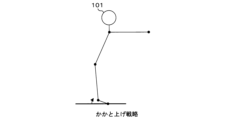
また本実施の形態においては、上記のファンクショナルリーチテストの動作を行う際に対象者101が取った戦略がどのようなものであるかを、サーバ装置1が動画像を基に特定する。本実施の形態においてサーバ装置1は、対象者101が取った戦略が、例えば股関節戦略、足関節戦略又はかかと上げ戦略のいずれであるかを特定する。ただし上記の3つの戦略は一例であって、これに限るものではない。サーバ装置1は、対象者101の戦略を、例えば股関節戦略及び足関節戦略の2つの戦略に分類して特定してもよく、4つ以上の戦略に分類して特定してもよい。なお詳細な説明は省略するが、股関節戦略は股関節だけを曲げて上記の動作を行う戦略であり、足関節戦略は足首及び股関節を曲げて動作を行う戦略であり、かかと上げ戦略はかかとを地面から上げて動作を行う戦略である。 Further, in the present embodiment, the server device 1 identifies what kind of strategy the subject 101 adopted when performing the above-described functional reach test based on the moving image. In this embodiment, the server device 1 specifies whether the strategy taken by the subject 101 is, for example, a hip joint strategy, an ankle joint strategy, or a heel raise strategy. However, the above three strategies are just examples and are not limited to these. The server device 1 may classify and identify the target person's 101 strategies into two strategies, a hip joint strategy and an ankle joint strategy, or may classify and identify them into four or more strategies. Although a detailed explanation will be omitted, the hip joint strategy is a strategy in which the above movement is performed by bending only the hip joint, the ankle joint strategy is a strategy in which the movement is performed by bending the ankle and hip joint, and the heel raise strategy is a strategy in which the above movement is performed by bending only the hip joint. This is a strategy of raising the body and performing the movements.

本実施の形態に係るサーバ装置1は、端末装置3から受信した動画像を基に対象者101のリーチ距離を測定すると共に、動作戦略を特定する。サーバ装置1は測定したリーチ距離及び特定した動作戦略に関する情報を端末装置3へ送信し、これを受信した端末装置3が対象者101のファンクショナルリーチテストのリーチ距離及び動作戦略に関する情報を表示する。このときにサーバ装置1は例えばリーチ距離の測定結果及び動作戦略の特定結果に基づいて対象者101へのアドバイス等の情報を端末装置3へ送信し、端末装置3がリーチ距離及び動作戦略と共にこのアドバイス等の情報を表示してもよい。 The server device 1 according to the present embodiment measures the reach distance of the target person 101 based on the moving image received from the terminal device 3 and specifies the movement strategy. The server device 1 transmits information regarding the measured reach distance and the identified movement strategy to the terminal device 3, and the terminal device 3 that receives this displays information regarding the reach distance and movement strategy of the functional reach test of the subject 101. . At this time, the server device 1 transmits information such as advice to the target person 101 based on the measurement result of the reach distance and the identification result of the movement strategy to the terminal device 3, and the terminal device 3 transmits information such as advice to the target person 101 based on the result of measuring the reach distance and the movement strategy. Information such as advice may also be displayed.

<装置構成>
図3は、本実施の形態に係るサーバ装置1の一構成例を示すブロック図である。本実施の形態に係るサーバ装置1は、処理部11、記憶部(ストレージ)12及び通信部(トランシーバ)13等を備えて構成されている。なお本実施の形態においては、1つのサーバ装置にて処理が行われるものとして説明を行うが、複数のサーバ装置が分散して処理を行ってもよい。
<Device configuration>
FIG. 3 is a block diagram showing an example of the configuration of the server device 1 according to the present embodiment. The server device 1 according to the present embodiment includes a processing section 11, a storage section 12, a communication section (transceiver) 13, and the like. Note that although the present embodiment will be described assuming that the processing is performed by one server device, the processing may be performed in a distributed manner by a plurality of server devices.

処理部11は、CPU(Central Processing Unit)、MPU(Micro-Processing Unit)、GPU(Graphics Processing Unit)又は量子プロセッサ等の演算処理装置、ROM(Read Only Memory)及びRAM(Random Access Memory)等の記憶装置を用いて構成されている。処理部11は、記憶部12に記憶されたサーバプログラム12aを読み出して実行することにより、動画像を基にファンクショナルリーチテストのリーチ距離を測定する処理、及び、動作戦略を特定する処理等の種々の処理を行う。 The processing unit 11 includes an arithmetic processing device such as a CPU (Central Processing Unit), an MPU (Micro-Processing Unit), a GPU (Graphics Processing Unit), or a quantum processor, a ROM (Read Only Memory), a RAM (Random Access Memory), etc. It is configured using a storage device. The processing unit 11 reads out and executes the server program 12a stored in the storage unit 12 to perform processes such as measuring reach distance in a functional reach test based on a moving image and specifying a movement strategy. Performs various processing.

記憶部12は、例えばハードディスク等の大容量の記憶装置を用いて構成されている。記憶部12は、処理部11が実行する各種のプログラム、及び、処理部11の処理に必要な各種のデータを記憶する。本実施の形態において記憶部12は、処理部11が実行するサーバプログラム12aを記憶する。また記憶部12は、ファンクショナルリーチテストの対象となる対象者101に関する情報を記憶する対象者情報記憶部12bが設けられている。 The storage unit 12 is configured using a large-capacity storage device such as a hard disk, for example. The storage unit 12 stores various programs executed by the processing unit 11 and various data necessary for processing by the processing unit 11. In this embodiment, the storage unit 12 stores a server program 12a executed by the processing unit 11. The storage unit 12 is also provided with a subject information storage unit 12b that stores information regarding the subject 101 who is the subject of the functional reach test.

本実施の形態においてサーバプログラム(コンピュータプログラム、プログラム製品)12aは、メモリカード又は光ディスク等の記録媒体99に記録された態様で提供され、サーバ装置1は記録媒体99からサーバプログラム12aを読み出して記憶部12に記憶する。ただし、サーバプログラム12aは、例えばサーバ装置1の製造段階において記憶部12に書き込まれてもよい。また例えばサーバプログラム12aは、遠隔の他のサーバ装置等が配信するものをサーバ装置1が通信にて取得してもよい。例えばサーバプログラム12aは、記録媒体99に記録されたものを書込装置が読み出してサーバ装置1の記憶部12に書き込んでもよい。サーバプログラム12aは、ネットワークを介した配信の態様で提供されてもよく、記録媒体99に記録された態様で提供されてもよい。 In this embodiment, the server program (computer program, program product) 12a is provided in a form recorded on a recording medium 99 such as a memory card or an optical disk, and the server device 1 reads the server program 12a from the recording medium 99 and stores it. It is stored in section 12. However, the server program 12a may be written into the storage unit 12, for example, during the manufacturing stage of the server device 1. Further, for example, the server program 12a may be distributed by another remote server device, and the server device 1 may obtain it through communication. For example, the server program 12 a may be recorded on the recording medium 99 by a writing device and written into the storage unit 12 of the server device 1 . The server program 12a may be provided in the form of distribution via a network, or may be provided in the form of being recorded on the recording medium 99.

対象者情報記憶部12bは、例えば対象者101のID又は名前等に対応付けて、対象者101の身長及び年齢等の情報を記憶する。また対象者情報記憶部12bは、対象者101が行ったファンクショナルリーチテストの結果(リーチ距離及び動作戦略等)を、例えばファンクショナルリーチテストを実施した年月日等の情報に対応付けて、履歴として記憶する。 The subject information storage unit 12b stores information such as the height and age of the subject 101 in association with, for example, the ID or name of the subject 101. In addition, the subject information storage unit 12b associates the results of the functional reach test conducted by the subject 101 (reach distance, movement strategy, etc.) with information such as the date on which the functional reach test was conducted, and Store as history.

通信部13は、携帯電話通信網、無線LAN(Local Area Network)及びインターネット等を含むネットワークNを介して、種々の装置との間で通信を行う。本実施の形態において通信部13は、ネットワークNを介して、一又は複数の端末装置3との間で通信を行う。通信部13は、処理部11から与えられたデータを他の装置へ送信すると共に、他の装置から受信したデータを処理部11へ与える。 The communication unit 13 communicates with various devices via a network N including a mobile phone communication network, a wireless LAN (Local Area Network), the Internet, and the like. In this embodiment, the communication unit 13 communicates with one or more terminal devices 3 via the network N. The communication unit 13 transmits data provided from the processing unit 11 to other devices, and also provides data received from other devices to the processing unit 11.

なお記憶部12は、サーバ装置1に接続された外部記憶装置であってよい。またサーバ装置1は、複数のコンピュータを含んで構成されるマルチコンピュータであってよく、ソフトウェアによって仮想的に構築された仮想マシンであってもよい。またサーバ装置1は、上記の構成に限定されず、例えば可搬型の記憶媒体に記憶された情報を読み取る読取部、操作入力を受け付ける入力部、又は、画像を表示する表示部等を含んでもよい。 Note that the storage unit 12 may be an external storage device connected to the server device 1. Further, the server device 1 may be a multicomputer including a plurality of computers, or may be a virtual machine virtually constructed by software. Further, the server device 1 is not limited to the above configuration, and may include, for example, a reading unit that reads information stored in a portable storage medium, an input unit that accepts operation input, a display unit that displays an image, etc. .

また本実施の形態に係るサーバ装置1には、記憶部12に記憶されたサーバプログラム12aを処理部11が読み出して実行することにより、動画像取得部11a、骨格抽出部11b、フレーム特定部11c、距離算出部11d、戦略特定部11e及び測定結果通知部11f等が、ソフトウェア的な機能部として処理部11に実現される。なお本図においては、処理部11の機能部として、ファンクショナルリーチテストに関連する機能部を図示し、これ以外の処理に関する機能部は図示を省略している。 Furthermore, the server device 1 according to the present embodiment includes a moving image acquisition section 11a, a skeleton extraction section 11b, a frame identification section 11c, and a processing section 11 that reads and executes a server program 12a stored in the storage section 12. , the distance calculation section 11d, the strategy identification section 11e, the measurement result notification section 11f, etc. are implemented in the processing section 11 as software-like functional sections. In this figure, as the functional units of the processing unit 11, functional units related to the functional reach test are illustrated, and functional units related to other processes are omitted.

動画像取得部11aは、通信部13にてユーザ102が使用する端末装置3との通信を行うことにより、ユーザ102が予め端末装置3にて撮影した動画像を取得する処理を行う。動画像取得部11aは、端末装置3から取得した動画像のデータを、記憶部12に一時的に記憶する。なお本実施の形態においては、ユーザ102が端末装置3にて対象者101の動作を撮影し、撮影が終了して動画像のデータが端末装置3に記憶され、その後にユーザが動画像のデータを選択してサーバ装置1へアップロードするという態様で端末装置3からサーバ装置1への動画像の授受が行われるものとする。ただし、端末装置3が対象者の動作を撮影しながらリアルタイムでサーバ装置1へ動画像を送信し、サーバ装置1がリアルタイムで動画像を受信して記憶部12に記憶してもよい。 The moving image acquisition unit 11a performs a process of acquiring a moving image previously shot by the user 102 with the terminal device 3 by communicating with the terminal device 3 used by the user 102 through the communication unit 13. The moving image acquisition unit 11a temporarily stores the moving image data acquired from the terminal device 3 in the storage unit 12. Note that in this embodiment, the user 102 photographs the movement of the subject 101 with the terminal device 3, the video data is stored in the terminal device 3 after the photographing is completed, and the user then records the video data. It is assumed that moving images are sent and received from the terminal device 3 to the server device 1 in such a manner that the selected image is selected and uploaded to the server device 1. However, the terminal device 3 may transmit the moving image to the server device 1 in real time while photographing the movements of the subject, and the server device 1 may receive the moving image in real time and store it in the storage unit 12.

骨格抽出部11bは、動画像取得部11aが取得した動画像について、この動画像に写された対象者101の骨格を抽出する処理を行う。本実施の形態において骨格抽出部11bは、例えば予め機械学習がなされた学習モデル、いわゆるAI(Artificial Intelligence)を用いて、画像から骨格を抽出する。画像から骨格を抽出するAIとしては、例えばOpenPoseが用いられ得るが、これに限るものではない。骨格抽出部11bは、画像から人の骨格を抽出する既存の様々な手法を用いて、ファンクショナルリーチテストの動作を行う対象者101の骨格を抽出することができる。なお、画像から骨格を抽出する技術は、既存の技術であるため、本実施の形態において詳細な説明を省略する。 The skeleton extraction unit 11b performs processing for extracting the skeleton of the subject 101 captured in the video image acquired by the video image acquisition unit 11a. In the present embodiment, the skeleton extraction unit 11b extracts a skeleton from an image using, for example, a learning model that has been subjected to machine learning in advance, so-called AI (Artificial Intelligence). For example, OpenPose can be used as an AI for extracting a skeleton from an image, but the AI is not limited to this. The skeleton extraction unit 11b can extract the skeleton of the subject 101 performing the functional reach test using various existing methods for extracting a human skeleton from an image. Note that since the technique for extracting a skeleton from an image is an existing technique, detailed description thereof will be omitted in this embodiment.

フレーム特定部11cは、骨格抽出部11bが抽出した骨格の情報を用いて、動画像を構成する複数のフレームのうち、ファンクショナルリーチテストの測定開始(図2左側を参照)の時点に相当する開始フレームと、ファンクショナルリーチテストの測定終了(図2の右側を参照)の時点に相当する終了フレームとを特定する処理を行う。本実施の形態において動画像は、複数のフレーム(静止画像)を時系列的に連ねたものとする。フレーム特定部11cは、例えば動画像を構成する複数のフレームの中から、対象者101がファンクショナルリーチテストの開始姿勢を取っている一又は複数のフレームを特定し、これらを開始フレームの候補とする。ファンクショナルリーチテストの開始姿勢は、骨格情報を基に、例えば対象者101の手の高さが肩の高さと略同じ(両高さの差が所定範囲内)であるか、又は、対象者101の手と身体とのなす角が略直角(なす角が90度±所定角度の範囲内)であることに基づいて判断される。 The frame identifying unit 11c uses the skeleton information extracted by the skeleton extracting unit 11b to select a frame corresponding to the start of measurement of the functional reach test (see the left side of FIG. 2) among a plurality of frames constituting the video image. A process is performed to identify the start frame and the end frame corresponding to the end of measurement of the functional reach test (see the right side of FIG. 2). In this embodiment, a moving image is a plurality of frames (still images) connected in chronological order. For example, the frame identifying unit 11c identifies one or more frames in which the subject 101 is in the starting posture of the functional reach test from among a plurality of frames constituting a moving image, and selects these as starting frame candidates. do. The starting posture of the functional reach test is determined based on skeletal information, for example, whether the subject 101's hand height is approximately the same as the shoulder height (the difference between the two heights is within a predetermined range), or The determination is made based on the fact that the angle between the hand and the body of 101 is approximately a right angle (the angle is within the range of 90 degrees ± a predetermined angle).

またフレーム特定部11cは、開始フレームの候補となったフレームを基準に、対象者101の手先の位置が水平方向に左右のいずれか一方向へ単調に変位した後、反対方向へ単調に変位する動作を動画像から検出する。この一連の動作が検出された場合、フレーム特定部11cは、開始フレームの複数の候補の中から、この一連の動作において手先の位置の変位が開始された1つのフレームを選択し、選択した1つのフレームを開始フレームとする。またフレーム特定部11cは、この一連の動作に含まれる複数のフレームの中から、対象者101の手先の位置が開始フレームにおける位置から最も離れているフレームを1つ選択し、選択したフレームを終了フレームとする。 The frame identifying unit 11c also determines that the position of the hand of the subject 101 is monotonically displaced horizontally in either the left or right direction, and then monotonously displaced in the opposite direction, based on the frame that is a candidate for the start frame. Detect motion from video images. When this series of motions is detected, the frame specifying unit 11c selects one frame in which the displacement of the hand position has started in this series of motions from among the plurality of candidates for the start frame, and selects the selected frame. This frame is the starting frame. The frame identifying unit 11c also selects one frame in which the position of the hand of the subject 101 is farthest from the position in the start frame from among the multiple frames included in this series of actions, and ends the selected frame. Frame.

距離算出部11dは、フレーム特定部11cが特定した開始フレーム及び終了フレームに基づいて、対象者101のファンクショナルリーチテストにおけるリーチ距離を算出する処理を行う。距離算出部11dは、開始フレームにおける対象者101の骨格情報を基に、対象者101のつま先の位置と手先の位置との水平方向における距離(以下第1距離X1という)を算出する。同様にして、距離算出部11dは、終了フレームにおける対象者101の骨格情報を基に、対象者101のつま先の位置と手先の位置との水平方向における距離(以下第2距離X2という)を算出する。距離算出部11dは、算出した第1距離X1と第2距離X2との差を、ファンクショナルリーチテストのリーチ距離として算出することができる。 The distance calculation unit 11d performs a process of calculating the reach distance of the subject 101 in the functional reach test based on the start frame and end frame specified by the frame identification unit 11c. The distance calculation unit 11d calculates the distance in the horizontal direction between the position of the toe and the position of the hand of the subject 101 (hereinafter referred to as the first distance X1) based on the skeletal information of the subject 101 in the start frame. Similarly, the distance calculation unit 11d calculates the distance in the horizontal direction between the position of the toe and the position of the hand of the subject 101 (hereinafter referred to as second distance X2) based on the skeletal information of the subject 101 in the end frame. do. The distance calculation unit 11d can calculate the difference between the calculated first distance X1 and second distance X2 as the reach distance of the functional reach test.

なお、上記の方法で距離算出部11dが算出する第1距離、第2距離及びリーチ距離は、動画像を構成するフレーム(画像)の画素数で算出される数値である。このため、距離算出部11dは、算出したリーチ距離の画素数に、1画素当たりの長さをかけることで、リーチ距離の実際の値を算出することができる。ここで距離算出部11dは、1画素当たりの長さを、例えば対象者情報記憶部12bに記憶された対象者101の身長に基づいて算出することができる。距離算出部11dは、例えば開始フレームに写された対象者の身長に相当する画素数を算出し、対象者情報記憶部12bに記憶された対象者101の身長を画素数で割ることで、1画素当たりの長さを算出することができる。なお距離算出部11dによる1画素当たりの長さの算出方法は、対象者101の身長に基づくものでなくてよく、既存の種々の方法が採用されてよい。例えば予め長さが定められた指標物等を対象者101と共に撮影し、動画像中の指標物の長さに基づいて1画素当たりの長さを距離算出部11dが算出することができる。 Note that the first distance, second distance, and reach distance calculated by the distance calculation unit 11d using the above method are numerical values calculated based on the number of pixels of frames (images) that constitute a moving image. Therefore, the distance calculation unit 11d can calculate the actual value of the reach distance by multiplying the number of pixels of the calculated reach distance by the length per pixel. Here, the distance calculation unit 11d can calculate the length per pixel based on, for example, the height of the subject 101 stored in the subject information storage unit 12b. The distance calculation unit 11d calculates the number of pixels corresponding to the height of the subject photographed in the start frame, for example, and divides the height of the subject 101 stored in the subject information storage unit 12b by the number of pixels, so that 1 The length per pixel can be calculated. Note that the method of calculating the length per pixel by the distance calculation unit 11d does not need to be based on the height of the subject 101, and various existing methods may be adopted. For example, an index object or the like having a predetermined length can be photographed together with the subject 101, and the distance calculation unit 11d can calculate the length per pixel based on the length of the index object in the moving image.

また本実施の形態において距離算出部11dは、上記の方法で算出したリーチ距離に対し、ファンクショナルリーチテストにおける対象者101の動作に基づく補正を行うことができる。例えば、ファンクショナルリーチテストの動作において対象者101が肩を旋回させて手を伸ばした場合、肩を旋回させずに手を伸ばした場合と比較して、リーチ距離が長くなる。そこで距離算出部11dは、終了フレームにおける対象者101の左右の肩の位置又は左右の手先の位置を特定し、水平方向における左右の肩の位置の差分又は左右の手先の位置の差分を算出する。距離算出部11dは、算出した差分を基に、例えば上記のリーチ距離から差分の半分の距離を引く演算を行うことで、リーチ距離を補正する。距離算出部11dは、補正後の値を最終的なリーチ距離とし、ファンクショナルリーチテストの測定結果とすることができる。 Further, in the present embodiment, the distance calculation unit 11d can correct the reach distance calculated by the above method based on the movement of the subject 101 in the functional reach test. For example, when the subject 101 rotates his shoulders and extends his hand in a functional reach test, the reach distance becomes longer than when he extends his hand without rotating his shoulders. Therefore, the distance calculation unit 11d identifies the positions of the left and right shoulders or the positions of the left and right hands of the subject 101 in the end frame, and calculates the difference between the positions of the left and right shoulders or the difference between the positions of the left and right hands in the horizontal direction. . The distance calculation unit 11d corrects the reach distance by, for example, subtracting half the distance of the difference from the above reach distance based on the calculated difference. The distance calculation unit 11d can use the corrected value as the final reach distance, and use it as the measurement result of the functional reach test.

戦略特定部11eは、フレーム特定部11cが特定した終了フレームにおける対象者101の姿勢に基づいて、ファンクショナルリーチテストの動作で対象者101が取った戦略を特定する処理を行う。本実施の形態において戦略特定部11eは、股関節戦略、足関節戦略及びかかと上げ戦略の3つの戦略の中から、対象者101が取った戦略を特定する。戦略特定部11eは、終了フレームにおける対象者101の骨格情報を基に、例えば対象者101のかかとが地面から離れている場合、対象者101の戦略がかかと上げ戦略であると特定する。また戦略特定部11eは、終了フレームにおける対象者101の足首の角度を算出し、足首の角度が90度以下であれば股関節戦略であり、足首の角度が90度を超える場合には足関節戦略であると特定する。 The strategy specifying unit 11e performs a process of specifying the strategy taken by the subject 101 in the movement of the functional reach test, based on the posture of the subject 101 in the end frame specified by the frame specifying unit 11c. In this embodiment, the strategy specifying unit 11e specifies the strategy taken by the subject 101 from among three strategies: a hip joint strategy, an ankle joint strategy, and a heel raise strategy. For example, when the heels of the subject 101 are off the ground, the strategy identifying unit 11e identifies the strategy of the subject 101 as a heel-up strategy based on the skeletal information of the subject 101 in the end frame. The strategy identifying unit 11e also calculates the ankle angle of the subject 101 in the end frame, and if the ankle angle is 90 degrees or less, it is a hip joint strategy, and if the ankle angle exceeds 90 degrees, it is an ankle joint strategy. .

測定結果通知部11fは、ファンクショナルリーチテストの測定結果を端末装置3へ通知する処理を行う。本実施の形態において測定結果通知部11fは、距離算出部11dが算出したリーチ距離と、戦略特定部11eが特定した動作戦略とを含む情報を測定結果として端末装置3へ送信する。 The measurement result notification unit 11f performs a process of notifying the terminal device 3 of the measurement results of the functional reach test. In the present embodiment, the measurement result notification unit 11f transmits information including the reach distance calculated by the distance calculation unit 11d and the movement strategy specified by the strategy identification unit 11e to the terminal device 3 as a measurement result.

図4は、本実施の形態に係る端末装置3の構成を示すブロック図である。本実施の形態に係る端末装置3は、処理部31、記憶部(ストレージ)32、通信部(トランシーバ)33、表示部(ディスプレイ)34、操作部35及びカメラ36等を備えて構成されている。端末装置3は、例えば対象者101の介護等を行うユーザ102が使用する装置であり、例えばスマートフォン、タブレット型端末装置又はパーソナルコンピュータ等の情報処理装置を用いて構成され得る。なお本実施の形態に係る情報処理システムでは、端末装置3がカメラ36を備えて対象者101の撮影を行うことが可能な構成であるものとするが、これに限るものではない。情報処理システムは、端末装置3とは異なるビデオカメラ等の撮影装置にてユーザ102が撮影を行い、撮影装置から動画像を端末装置3が取得してサーバ装置1へ送信する構成であってもよい。 FIG. 4 is a block diagram showing the configuration of the terminal device 3 according to this embodiment. The terminal device 3 according to the present embodiment includes a processing section 31, a storage section 32, a communication section (transceiver) 33, a display section 34, an operation section 35, a camera 36, etc. . The terminal device 3 is a device used by a user 102 who cares for the subject 101, for example, and may be configured using an information processing device such as a smartphone, a tablet terminal device, or a personal computer. Note that in the information processing system according to the present embodiment, the terminal device 3 is configured to be equipped with the camera 36 and capable of photographing the subject 101, but the present invention is not limited to this. The information processing system may have a configuration in which the user 102 takes a picture with a photographing device such as a video camera that is different from the terminal device 3, and the terminal device 3 acquires a moving image from the photographing device and sends it to the server device 1. good.

処理部31は、CPU又はMPU等の演算処理装置、ROM及び等を用いて構成されている。処理部31は、記憶部32に記憶されたプログラム32aを読み出して実行することにより、動画像の撮影に係る処理及びファンクショナルリーチテストの測定結果を表示する処理等の種々の処理を行う。 The processing unit 31 is configured using an arithmetic processing unit such as a CPU or an MPU, a ROM, and the like. The processing unit 31 reads and executes the program 32a stored in the storage unit 32 to perform various processes such as processing related to capturing a moving image and processing for displaying measurement results of a functional reach test.

記憶部32は、例えばフラッシュメモリ等の不揮発性のメモリ素子又はハードディスク等の記憶装置等を用いて構成されている。記憶部32は、処理部31が実行する各種のプログラム、及び、処理部31の処理に必要な各種のデータを記憶する。本実施の形態において記憶部32は、処理部31が実行するプログラム32aを記憶している。本実施の形態においてプログラム32aは遠隔のサーバ装置等により配信され、これを端末装置3が通信にて取得し、記憶部32に記憶する。ただしプログラム32aは、例えば端末装置3の製造段階において記憶部32に書き込まれてもよい。例えばプログラム32aは、メモリカード又は光ディスク等の記録媒体98に記録されたプログラム32aを端末装置3が読み出して記憶部32に記憶してもよい。例えばプログラム32aは、記録媒体98に記録されたものを書込装置が読み出して端末装置3の記憶部32に書き込んでもよい。プログラム32aは、ネットワークを介した配信の態様で提供されてもよく、記録媒体98に記録された態様で提供されてもよい。 The storage unit 32 is configured using, for example, a nonvolatile memory element such as a flash memory, or a storage device such as a hard disk. The storage unit 32 stores various programs executed by the processing unit 31 and various data necessary for processing by the processing unit 31. In this embodiment, the storage unit 32 stores a program 32a executed by the processing unit 31. In this embodiment, the program 32a is distributed by a remote server device or the like, and the terminal device 3 acquires it through communication and stores it in the storage unit 32. However, the program 32a may be written into the storage unit 32, for example, during the manufacturing stage of the terminal device 3. For example, the program 32a may be stored in the storage unit 32 by reading the program 32a recorded on a recording medium 98 such as a memory card or an optical disk by the terminal device 3. For example, the program 32a may be recorded on the recording medium 98 and read by a writing device and written into the storage unit 32 of the terminal device 3. The program 32a may be provided in the form of distribution via a network, or may be provided in the form of being recorded on the recording medium 98.

通信部33は、携帯電話通信網、無線LAN及びインターネット等を含むネットワークNを介して、種々の装置との間で通信を行う。本実施の形態において通信部33は、ネットワークNを介して、サーバ装置1との間で通信を行う。通信部33は、処理部31から与えられたデータを他の装置へ送信すると共に、他の装置から受信したデータを処理部31へ与える。 The communication unit 33 communicates with various devices via a network N including a mobile phone communication network, wireless LAN, the Internet, and the like. In this embodiment, the communication unit 33 communicates with the server device 1 via the network N. The communication unit 33 transmits data provided from the processing unit 31 to other devices, and also provides data received from other devices to the processing unit 31.

表示部34は、液晶ディスプレイ等を用いて構成されており、処理部31の処理に基づいて種々の画像及び文字等を表示する。操作部35は、ユーザの操作を受け付け、受け付けた操作を処理部31へ通知する。例えば操作部35は、機械式のボタン又は表示部34の表面に設けられたタッチパネル等の入力デバイスによりユーザの操作を受け付ける。また例えば操作部35は、マウス及びキーボード等の入力デバイスであってよく、これらの入力デバイスは端末装置3に対して取り外すことが可能な構成であってもよい。 The display section 34 is configured using a liquid crystal display or the like, and displays various images, characters, etc. based on the processing of the processing section 31. The operation unit 35 accepts user operations and notifies the processing unit 31 of the accepted operations. For example, the operation unit 35 receives user operations using input devices such as mechanical buttons or a touch panel provided on the surface of the display unit 34 . Further, for example, the operation unit 35 may be an input device such as a mouse and a keyboard, and these input devices may be configured to be detachable from the terminal device 3.

カメラ36は、CCD(Charge Coupled Device)イメージセンサ又はCMOS(Complementary Metal Oxide Semiconductor)イメージセンサ等の撮像素子を用いて構成されている。カメラ36は、端末装置3の筐体等に設けられており、撮像素子により撮影した画像を処理部31へ与える。 The camera 36 is configured using an image sensor such as a CCD (Charge Coupled Device) image sensor or a CMOS (Complementary Metal Oxide Semiconductor) image sensor. The camera 36 is provided in the housing of the terminal device 3 or the like, and provides the processing unit 31 with an image taken by an image sensor.

また本実施の形態に係る端末装置3は、記憶部32に記憶されたプログラム32aを処理部31が読み出して実行することにより、撮影処理部31a、動画像送信処理部31b及び表示処理部31c等がソフトウェア的な機能部として処理部31に実現される。なおプログラム32aは、本実施の形態に係る情報処理システムに専用のプログラムであってもよく、インターネットブラウザ又はウェブブラウザ等の汎用のプログラムであってもよい。 Further, in the terminal device 3 according to the present embodiment, the processing unit 31 reads out and executes the program 32a stored in the storage unit 32, so that the shooting processing unit 31a, the moving image transmission processing unit 31b, the display processing unit 31c, etc. is implemented in the processing section 31 as a software-like functional section. Note that the program 32a may be a program dedicated to the information processing system according to this embodiment, or may be a general-purpose program such as an Internet browser or a web browser.

撮影処理部31aは、カメラ36の動作を制御することで動画像の撮影を行う。撮影処理部31aは、例えば撮影する動画像の解像度及びフレームレート等の設定をユーザ102から受け付けて又は自動的に決定し、これらの設定に応じた撮影を行う。撮影処理部31aは、カメラ36の撮影により得られた動画像のデータを、記憶部32に記憶する。 The photographing processing unit 31a photographs a moving image by controlling the operation of the camera 36. The photographing processing unit 31a receives or automatically determines settings such as the resolution and frame rate of a moving image to be photographed from the user 102, and performs photographing according to these settings. The photographing processing section 31a stores the data of the moving image obtained by photographing with the camera 36 in the storage section 32.

動画像送信処理部31bは、ファンクショナルリーチテストの動作を行う対象者101を撮影した動画像のデータをサーバ装置1へ送信し、リーチ距離の測定を依頼する処理を行う。動画像送信処理部31bは、例えば動画像のデータをサーバ装置1へアップロードするための画面を表示して、記憶部32に記憶された一又は複数の動画像の中から、アップロードする動画像を選択する操作をユーザ102から受け付ける。またこのときに動画像送信処理部31bは、対象者101の名前、身長及び年齢等の情報の入力を受け付ける。動画像送信処理部31bは、選択された動画像と、入力された対象者101に関する情報とを対応付けてサーバ装置1へ送信する。 The moving image transmission processing unit 31b performs a process of transmitting data of a moving image photographed of the subject 101 performing a functional reach test movement to the server device 1, and requesting measurement of reach distance. The moving image transmission processing unit 31b displays a screen for uploading moving image data to the server device 1, for example, and selects a moving image to be uploaded from among one or more moving images stored in the storage unit 32. A selection operation is accepted from the user 102. At this time, the moving image transmission processing unit 31b receives input of information such as the name, height, age, etc. of the subject 101. The moving image transmission processing unit 31b associates the selected moving image with the input information regarding the target person 101 and transmits it to the server device 1.

表示処理部31cは、種々の文字及び画像等を表示部34に表示する処理を行う。本実施の形態において表示処理部31cは、サーバ装置1から得られるファンクショナルリーチテストの測定結果を表示する。例えば表示処理部31cは、ファンクショナルリーチテストの測定結果として得られるリーチ距離、及び、ファンクショナルリーチテストに関する対象者101の動作戦略等の情報を表示する。このときに表示処理部31cは、リーチ距離の算出の基になった上述の開始フレーム及び終了フレームを測定結果と共に表示してもよい。また表示処理部31cは、動画像送信処理部31bがアップロードする動画像の選択等を受け付けるための画面を表示部34に表示する。表示処理部31cは、これら以外の種々の画面表示を行ってよい。 The display processing unit 31c performs processing to display various characters, images, etc. on the display unit 34. In this embodiment, the display processing unit 31c displays the measurement results of the functional reach test obtained from the server device 1. For example, the display processing unit 31c displays information such as the reach distance obtained as a measurement result of the functional reach test and the movement strategy of the subject 101 regarding the functional reach test. At this time, the display processing unit 31c may display the above-mentioned start frame and end frame, which are the basis for calculating the reach distance, together with the measurement results. Furthermore, the display processing section 31c displays a screen on the display section 34 for accepting the selection of a moving image to be uploaded by the moving image transmission processing section 31b. The display processing unit 31c may perform various screen displays other than these.

<ファンクショナルリーチテスト支援処理>
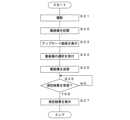
図5は、本実施の形態に係るサーバ装置1が行う処理の手順を示すフローチャートである。本実施の形態に係るサーバ装置1の処理部11の動画像取得部11aは、通信部13にてユーザ102の端末装置3との間で通信を行うことにより、対象者101によるファンクショナルリーチテストの動作を撮影した動画像のデータを取得する(ステップS1)。処理部11の骨格抽出部11bは、ステップS1にて取得した動画像を基に、この動画像に写された対象者101の骨格を抽出する処理を行う(ステップS2)。
<Functional reach test support processing>
FIG. 5 is a flowchart showing the procedure of processing performed by the server device 1 according to the present embodiment. The moving image acquisition unit 11a of the processing unit 11 of the server device 1 according to the present embodiment performs a functional reach test by the subject 101 by communicating with the terminal device 3 of the user 102 through the communication unit 13. Data of a moving image of the action is acquired (step S1). The skeleton extracting unit 11b of the processing unit 11 performs a process of extracting the skeleton of the subject 101 captured in the moving image based on the moving image acquired in step S1 (step S2).

図6は、骨格抽出の一例を示す模式図である。図6上段には、動画像に写された対象者101がファンクショナルリーチテストの動作を開始する直前の画像が示されている。図6の下段には、上段の対象者101の画像に対して骨格抽出を行った結果が簡易的に示されている。本実施の形態に係る骨格抽出部11bは、例えば深層学習がなされた学習モデルを用いて骨格情報を抽出するOpenPoseと呼ばれる技術を用いて、動画像を構成する各フレームから対象者101の骨格情報を抽出する。ただし骨格抽出部11bは、OpenPoseとは異なる技術による骨格抽出を行ってもよい。骨格抽出部11bの骨格抽出処理により得られる対象者101の骨格情報は、例えば人の身体の頭、腰、手足の関節等を複数個の点で表した情報である。なお骨格情報は10個~20個程度の点で表されることが多いが、図6の下段の骨格情報は対象者101の手先、肩、腰(又は股)、足首及びつま先の5つの点に簡略化し、頭部については円形のシンボルで示してある。 FIG. 6 is a schematic diagram showing an example of skeleton extraction. The upper part of FIG. 6 shows an image immediately before the subject 101 captured in the video starts performing the functional reach test. The lower part of FIG. 6 simply shows the results of skeleton extraction performed on the image of the subject 101 in the upper part. The skeletal extraction unit 11b according to the present embodiment extracts skeletal information of the subject 101 from each frame constituting a moving image using a technique called OpenPose that extracts skeletal information using a learning model that has undergone deep learning, for example. Extract. However, the skeleton extraction unit 11b may perform skeleton extraction using a technique different from OpenPose. The skeletal information of the subject 101 obtained by the skeletal extraction process of the skeletal extraction unit 11b is information representing, for example, the head, waist, joints of limbs, etc. of the human body as a plurality of points. Note that skeletal information is often represented by about 10 to 20 points, but the skeletal information in the lower row of Figure 6 is represented by five points: finger, shoulder, hip (or crotch), ankle, and toe of subject 101. The head is shown by a circular symbol.

ステップS2にて骨格情報抽出処理を行った後、処理部11のフレーム特定部11cは、動画像を構成する各フレームから抽出した骨格情報を用い、動画像を構成する複数のフレームの中から、ファンクショナルリーチテストの動作の開始時点に相当する開始フレームを特定する処理を行う(ステップS3)。ここでフレーム特定部11cは、各フレームから抽出した骨格情報を基に、対象者101の姿勢がファンクショナルリーチテストの開始姿勢、即ち腕を略水平に伸ばした姿勢であるか否かをフレーム毎に判定し、開始姿勢の対象者101が写されたフレームを開始フレームの候補とする。 After performing the skeletal information extraction process in step S2, the frame specifying unit 11c of the processing unit 11 uses the skeletal information extracted from each frame making up the moving image to select a A process of specifying a start frame corresponding to the start point of the functional reach test operation is performed (step S3). Here, the frame identification unit 11c determines for each frame whether or not the posture of the subject 101 is the starting posture of the functional reach test, that is, the posture with the arms extended substantially horizontally, based on the skeletal information extracted from each frame. The frame in which the subject 101 in the starting posture is photographed is determined to be the starting frame candidate.

なおフレーム特定部11cは、対象者101の姿勢が開始姿勢であるか否かを、下記の2つの条件のいずれかに基づいて判定することができる。
(1)対象者101の手(手先)の高さが肩の高さと略同じ、例えば手の高さと肩の高さとの差が所定範囲内であること。
(2)対象者101の手(腕)と身体とのなす角が略直角、例えば手と身体とのなす角が90度±所定角度の範囲内であること
Note that the frame specifying unit 11c can determine whether the posture of the subject 101 is the starting posture based on either of the following two conditions.
(1) The height of the hand (fingers) of the subject 101 is approximately the same as the height of the shoulder, for example, the difference between the height of the hand and the height of the shoulder is within a predetermined range.
(2) The angle between the hand (arm) and the body of the subject 101 is approximately a right angle, for example, the angle between the hand and the body is within the range of 90 degrees ± a predetermined angle.

またフレーム特定部11cは、開始フレームの候補となったフレームを基準に、動画像の各フレームにおいて対象者101の所定部位、例えば手先の位置を追跡する。フレーム特定部11cは、動画像において手先の位置が水平方向の一方へ所定画素数以上の距離を単調に変位し、その後に反対方向へ所定画素数以上の距離を単調に変位する動作を動画像から検出する。この一連の動作、即ちファンクショナルリーチテストの動作が検出された場合、フレーム特定部11cは、この一連の動作において手先の位置の変位が開始された1つのフレームを候補の中から選択し、選択したフレームを開始フレームとすることができる。 The frame identifying unit 11c also tracks the position of a predetermined part of the subject 101, for example, a hand, in each frame of the moving image based on the frame that is a candidate for the start frame. The frame identifying unit 11c detects an action in which the position of the hand is monotonically displaced in one horizontal direction by a distance of a predetermined number of pixels or more, and then monotonously displaced in the opposite direction by a distance of a predetermined number of pixels or more. Detect from. When this series of motions, that is, the motion of the functional reach test, is detected, the frame specifying unit 11c selects one frame from the candidates in which the displacement of the hand position has started in this series of motions, and selects it. The frame can be set as the starting frame.

次いでフレーム特定部11cは、ファンクショナルリーチテストの動作において対象者101が最も遠方へ手先を伸ばした状態が写されたフレームを終了フレームとして特定する(ステップS4)。ここでフレーム特定部11cは、上記の開始フレームの特定を行った際に検出した一連の動作において、対象者101の手先の位置が開始フレームの手先の位置から最も離れているフレームを1つ選択し、選択したフレームを終了フレームとすることができる。 Next, the frame specifying unit 11c specifies the frame in which the subject 101 extends the hand farthest in the functional reach test movement as the end frame (step S4). Here, the frame specifying unit 11c selects one frame in which the position of the hand of the subject 101 is farthest from the position of the hand of the start frame in the series of motions detected when specifying the start frame. Then, the selected frame can be set as the end frame.

次いで処理部11の距離算出部11dは、ステップS3にて特定した開始フレーム及びステップS4にて特定した終了フレームに基づいて、対象者101のファンクショナルリーチテストにおけるリーチ距離を算出する(ステップS5)。図7は、リーチ距離の算出を説明するための模式図である。図7左側には開始フレームにおける対象者101の骨格情報が示され、図7右側には終了フレームにおける対象者101の骨格情報が示されている。距離算出部11dは、開始フレームの骨格情報を基に対象者101の手先とつま先との水平方向の距離を第1距離X1として算出する。同様に距離算出部11dは、終了フレームの骨格情報を基に対象者101の手先とつま先との水平方向の距離を第2距離X2として算出する。距離算出部11dは、下記の(1)式に基づく演算を行うことによって、対象者101のリーチ距離を算出する。 Next, the distance calculation unit 11d of the processing unit 11 calculates the reach distance of the subject 101 in the functional reach test based on the start frame specified in step S3 and the end frame specified in step S4 (step S5). . FIG. 7 is a schematic diagram for explaining calculation of reach distance. The left side of FIG. 7 shows the skeletal information of the subject 101 in the start frame, and the right side of FIG. 7 shows the skeletal information of the subject 101 in the end frame. The distance calculation unit 11d calculates the horizontal distance between the finger and toe of the subject 101 as a first distance X1 based on the skeleton information of the start frame. Similarly, the distance calculation unit 11d calculates the horizontal distance between the finger and toe of the subject 101 as the second distance X2 based on the skeletal information of the end frame. The distance calculation unit 11d calculates the reach distance of the target person 101 by performing calculation based on the following equation (1).

(リーチ距離)=(第2距離X2)-(第1距離X1) …(1) (Reach distance) = (Second distance X2) - (First distance X1) ... (1)

本実施の形態においては、距離算出部11dが対象者101のつま先の位置を基準としてリーチ距離の算出を行う。これにより、例えばユーザ102が動画像を撮影する際に生じる手ブレ等の影響を低減してリーチ距離を算出することが期待できる。なお距離算出部11dは、対象者101のつま先の位置とは異なる位置を基準にリーチ距離の算出を行ってもよい。ただし、例えば対象者101のかかとの位置など、ファンクショナルリーチテストの動作において位置が変化する可能性がある位置を基準に用いると算出されるリーチ距離の精度が低下する恐れがあるため、ファンクショナルリーチテストの動作において位置が変化する可能性が低い又は変化してもその変化量が少ない位置を基準とすることが好ましい。基準の位置は、対象者101の身体以外、例えば背景に存在する物体等の位置が用いられてもよい。また例えば要求される精度が得られる場合には、例えば対象者101のかかとの位置など、ファンクショナルリーチテストの動作において位置が変化する可能性がある位置を基準に用いてもよい。 In this embodiment, the distance calculation unit 11d calculates the reach distance using the position of the toe of the subject 101 as a reference. As a result, it is expected that the reach distance can be calculated while reducing the effects of camera shake, etc. that occur when the user 102 shoots a moving image, for example. Note that the distance calculation unit 11d may calculate the reach distance based on a position different from the position of the toe of the subject 101. However, if a position that may change during a functional reach test, such as the position of the heel of subject 101, is used as a reference, the accuracy of the calculated reach distance may decrease. It is preferable to use as a reference a position that is unlikely to change in the reach test operation, or whose position will change by a small amount even if it changes. The reference position may be the position of an object other than the body of the subject 101, for example, an object existing in the background. Alternatively, for example, if the required accuracy is obtained, a position that may change during the movement of the functional reach test, such as the position of the heel of the subject 101, may be used as a reference.

次いで距離算出部11dは、ステップS5にて算出したリーチ距離に対する補正を行う(ステップS6)。例えばファンクショナルリーチテストの動作において対象者101が肩を旋回させて片方の腕のみを前方へ伸ばした場合、肩を旋回させずに両腕を伸ばした場合よりリーチ距離が長くなる。本実施の形態において距離算出部11dは、このような肩の旋回の有無による誤差を低減すべく、リーチ距離の補正を行う。図8は、リーチ距離の補正を説明するための模式図である。距離算出部11dは、終了フレームの骨格情報を基に、対象者101の左肩及び右肩の水平方向に関する距離を誤差距離Y1として算出する。同様に距離算出部11dは、終了フレームの骨格情報を基に、対象者101の左手先及び右手先の水平方向に関する距離を誤差距離Y2として算出する。なお距離算出部11dは、誤差距離Y1,Y2の少なくとも一方を算出すればよい。距離算出部11dは、下記の(2)式に基づく演算を行うことで、対象者101のリーチ距離を補正する。なお(2)式において誤差距離Yは上記の誤差距離Y1,Y2のいずれか一方であるが、例えば誤差距離Y1,Y2の平均値、最大値又は最小値等であってもよい。 Next, the distance calculation unit 11d corrects the reach distance calculated in step S5 (step S6). For example, in a functional reach test, if the subject 101 rotates his shoulders and extends only one arm forward, the reach distance will be longer than if he extends both arms without rotating his shoulders. In this embodiment, the distance calculation unit 11d corrects the reach distance in order to reduce errors caused by the presence or absence of shoulder rotation. FIG. 8 is a schematic diagram for explaining reach distance correction. The distance calculation unit 11d calculates the distance between the left shoulder and the right shoulder of the subject 101 in the horizontal direction as an error distance Y1 based on the skeleton information of the end frame. Similarly, the distance calculation unit 11d calculates distances in the horizontal direction between the left hand tip and the right hand tip of the subject 101 as an error distance Y2 based on the skeleton information of the end frame. Note that the distance calculation unit 11d only needs to calculate at least one of the error distances Y1 and Y2. The distance calculation unit 11d corrects the reach distance of the target person 101 by performing calculation based on the following equation (2). Note that in equation (2), the error distance Y is either one of the above-mentioned error distances Y1 and Y2, but it may be, for example, the average value, maximum value, or minimum value of the error distances Y1 and Y2.

(補正後リーチ距離)=(補正前リーチ距離)-(誤差距離Y)÷2 (2) (Reach distance after correction) = (Reach distance before correction) - (Error distance Y) ÷ 2 (2)

なお、これらの第1距離X1、第2距離X2、リーチ距離及び誤差距離Y等は、動画像のフレームにおける画素数として算出される。距離算出部11dは、上記の(1)式及び(2)式にて算出及び補正したリーチ距離に対して、1画素当たりの長さをかけることで、実際のリーチ距離を算出する。なお本実施の形態において距離算出部11dは、対象者情報記憶部12bに記憶された対象者101の身長に基づいて、1画素当たりの長さを算出する。 Note that these first distance X1, second distance X2, reach distance, error distance Y, etc. are calculated as the number of pixels in a frame of a moving image. The distance calculation unit 11d calculates the actual reach distance by multiplying the reach distance calculated and corrected using the above equations (1) and (2) by the length per pixel. Note that in this embodiment, the distance calculation unit 11d calculates the length per pixel based on the height of the subject 101 stored in the subject information storage unit 12b.

次いで処理部11の戦略特定部11eは、終了フレームの骨格情報を基に、対象者101のファンクショナルリーチテストにおける動作戦略を特定する(ステップS7)。図9及び図10は、動作戦略を説明するための模式図である。図9上段には、股関節戦略の一例が示されている。股関節戦略は、主に股関節を曲げてファンクショナルリーチテストの動作を行う戦略である。戦略特定部11eは、対象者101の足首の角度αが90度以下である場合に、対象者101の戦略が股関節戦略であると特定することができる。なお対象者101の足首の角度αは、例えば足先及びかかとを結ぶ線分と、かかと及び股(腰)を結ぶ線分とのなす角度とすることができる。また図9下段には、足関節戦略の一例が示されている。足関節戦略は、足関節戦略は足首及び股関節を曲げてファンクショナルリーチテストの動作を行う戦略である。戦略特定部11eは、対象者101の足首の角度αが90度を超える場合に、対象者101の戦略が足関節戦略であると特定することができる。また図10には、かかと上げ戦略の一例が示されている。かかと上げ戦略は、対象者101がかかとを地面から上げてファンクショナルリーチテストの動作を行う戦略である。戦略特定部11eは、終了フレームの骨格情報において対象者101のかかとが地面から離れている、又は、かかとの位置がつま先の位置より上にある場合等に、対象者101の戦略がかかと上げ戦略であると特定することができる。 Next, the strategy identifying unit 11e of the processing unit 11 identifies the movement strategy of the subject 101 in the functional reach test based on the skeleton information of the end frame (step S7). 9 and 10 are schematic diagrams for explaining the operation strategy. An example of a hip joint strategy is shown in the upper part of FIG. The hip joint strategy is a strategy that primarily involves bending the hip joint to perform functional reach test movements. The strategy specifying unit 11e can specify that the strategy of the subject 101 is the hip joint strategy when the angle α of the ankle of the subject 101 is 90 degrees or less. Note that the angle α of the ankle of the subject 101 can be, for example, the angle formed by a line segment connecting the tip of the foot and the heel and a line segment connecting the heel and the crotch (hip). Further, the lower part of FIG. 9 shows an example of an ankle joint strategy. Ankle joint strategy is a strategy for performing functional reach test movements by bending the ankle and hip joint. The strategy specifying unit 11e can specify that the strategy of the subject 101 is the ankle joint strategy when the angle α of the ankle of the subject 101 exceeds 90 degrees. Also shown in FIG. 10 is an example of a heel raise strategy. The heel raise strategy is a strategy in which the subject 101 raises his heel off the ground and performs a functional reach test motion. The strategy identifying unit 11e determines that the strategy of the target person 101 is a heel-up strategy when the heel of the target person 101 is off the ground or the position of the heel is higher than the position of the toe in the skeletal information of the end frame. It can be specified that

本実施の形態において戦略特定部11eは、まず終了フレームにおける対象者101の骨格情報のかかとの位置に応じて、対象者101の戦略がかかと上げ戦略であるか、それ以外の戦略であるかを判断する。対象者101の戦略がかかと上げ戦略ではないと判断した場合、戦略特定部11eは、対象者の足首の角度αを算出し、この角度αが90度を超えるか否かに基づいて、足関節戦略であるか股関節戦略であるかを判断する。ただしこの判断の順序は一例であって、これに限るものではない。 In the present embodiment, the strategy identifying unit 11e first determines whether the target person's 101's strategy is a heel-raising strategy or another strategy, depending on the heel position of the target person's 101's skeletal information in the end frame. to decide. If it is determined that the strategy of the target person 101 is not a heel raising strategy, the strategy identifying unit 11e calculates the angle α of the target person's ankle, and based on whether this angle α exceeds 90 degrees, Determine whether it is a strategy or a hip strategy. However, this order of determination is just an example, and is not limited to this.

次いで処理部11の測定結果通知部11fは、ステップS5及びS6にて算出及び補正したリーチ距離と、ステップS7にて特定した動作戦略との情報を含む測定結果を、ステップS1にて取得した動画像の送信元である端末装置3へ送信する(ステップS8)。また処理部11は、これらの測定結果を例えば対象者101の識別情報等に対応付けて対象者情報記憶部12bに記憶し(ステップS9)、処理を終了する。 Next, the measurement result notifying unit 11f of the processing unit 11 transmits the measurement results including information on the reach distance calculated and corrected in steps S5 and S6 and the movement strategy specified in step S7 to the video acquired in step S1. The image is transmitted to the terminal device 3 that is the source of the image (step S8). Furthermore, the processing unit 11 stores these measurement results in the subject information storage unit 12b in association with, for example, the identification information of the subject 101 (step S9), and ends the process.

図11は、本実施の形態に係る端末装置3が行う処理の手順を示すフローチャートである。本実施の形態に係る端末装置3の処理部31の撮影処理部31aは、例えばユーザ102の操作に基づいて動画像の撮影処理を行う(ステップS21)。撮影処理部31aは、撮影により得られた動画像を記憶部32に記憶する(ステップS22)。対象者101がファンクショナルリーチテストの動作を行う様子をユーザ102が撮影することによって、端末装置3の記憶部32には対象者101のリーチ距離を測定するための動画像が記憶される。 FIG. 11 is a flowchart showing the procedure of processing performed by the terminal device 3 according to the present embodiment. The photographing processing section 31a of the processing section 31 of the terminal device 3 according to the present embodiment performs a video photographing process based on the operation of the user 102, for example (step S21). The photographing processing section 31a stores the moving image obtained by photographing in the storage section 32 (step S22). When the user 102 photographs the subject 101 performing the functional reach test, a moving image for measuring the reach distance of the subject 101 is stored in the storage unit 32 of the terminal device 3 .

次いで処理部31の表示処理部31cは、例えばユーザ102によるメニュー操作等に応じて、リーチ距離を測定するための動画像のアップロード画面を表示部34に表示する(ステップS23)。図示は省略するが、アップロード画面には記憶部32に記憶された動画像の一覧が表示され、処理部31の動画像送信処理部31bは、この画面に一覧表示した動画像の中からアップロード対象とする動画像の選択をユーザ102から受け付ける(ステップS24)。動画像送信処理部31bは、ステップS24にて選択を受け付けた動画像をサーバ装置1へ送信する(ステップS25)。 Next, the display processing section 31c of the processing section 31 displays a video upload screen for measuring the reach distance on the display section 34, for example, in response to a menu operation by the user 102, etc. (Step S23). Although not shown, a list of moving images stored in the storage unit 32 is displayed on the upload screen, and the moving image transmission processing unit 31b of the processing unit 31 selects the moving images to be uploaded from among the moving images displayed in the list on this screen. A selection of a moving image is received from the user 102 (step S24). The moving image transmission processing unit 31b transmits the moving image whose selection was accepted in step S24 to the server device 1 (step S25).

表示処理部31cは、ステップS25にて送信した動画像に対する応答としてサーバ装置1から送信されるリーチ距離の測定結果を受信したか否かを判定する(ステップS26)。測定結果を受信していない場合(S26:NO)、表示処理部31cは、サーバ装置1から測定結果を受信するまで待機する。測定結果を受信した場合(S26:YES)、表示処理部31cは、受信した測定結果を表示部34に表示して(ステップS27)、処理を終了する。 The display processing unit 31c determines whether or not the reach distance measurement result transmitted from the server device 1 as a response to the video transmitted in step S25 has been received (step S26). If the measurement results have not been received (S26: NO), the display processing unit 31c waits until the measurement results are received from the server device 1. If the measurement result is received (S26: YES), the display processing unit 31c displays the received measurement result on the display unit 34 (step S27), and ends the process.

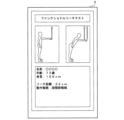
図12は、端末装置3による測定結果の一表示例を示す模式図である。本実施の形態に係る端末装置3は、サーバ装置1から受信した測定結果に基づき、図示の測定結果通知画面を表示部34に表示して、ファンクショナルリーチテストの測定結果をユーザ102に通知する。図示の測定結果通知画面において端末装置3は、画面の最上部に「ファンクショナルリーチテスト」のタイトル文字列を表示し、このタイトル文字列の下方に開始フレーム及び終了フレームに相当する2つの画像を左右に並べて表示する。 FIG. 12 is a schematic diagram showing an example of a display of measurement results by the terminal device 3. As shown in FIG. Based on the measurement results received from the server device 1, the terminal device 3 according to the present embodiment displays the illustrated measurement result notification screen on the display unit 34 to notify the user 102 of the measurement results of the functional reach test. . In the illustrated measurement result notification screen, the terminal device 3 displays a title string of "Functional Reach Test" at the top of the screen, and below this title string two images corresponding to the start frame and end frame. Display them side by side.

この2つの画像表示のために、例えばサーバ装置1は図5に示したフローチャートのステップS3にて特定した開始フレーム及びステップS4にて特定した終了フレームに相当する画像を動画像から抽出して測定結果と共に端末装置3へ通知する。又は、サーバ装置1は特定した開始フレーム及び終了フレームが動画像の何番目のフレームであるかを端末装置3へ通知し、端末装置3はこの通知に基づいて動画像から開始フレーム及び終了フレームに相当する画像を抽出して表示してもよい。 In order to display these two images, for example, the server device 1 extracts and measures images corresponding to the start frame specified in step S3 and the end frame specified in step S4 of the flowchart shown in FIG. 5 from the moving image. The terminal device 3 is notified along with the result. Alternatively, the server device 1 notifies the terminal device 3 of the frames of the video image that the specified start frame and end frame are, and the terminal device 3 converts the video image into the start frame and end frame based on this notification. A corresponding image may be extracted and displayed.

また、測定結果通知画面において端末装置3は、上述の開始フレームの画像に対して、対象者101が挙げた手の手先の位置を示す垂直線等の開始位置マーカーを重ねて表示する。また端末装置3は、上述の終了フレームの画像に対して、開始フレームに重ねて表示したものと同じ開始位置マーカーと、終了フレームにおいて対象者101が伸ばした手先の位置を示す垂直線等の終了位置マーカーとを重ねて表示する。これらのマーカーを表示するため、例えばサーバ装置1が骨格抽出において得られる手先の位置の情報を端末装置3へ測定結果と共に送信する。 Furthermore, on the measurement result notification screen, the terminal device 3 displays a start position marker such as a vertical line indicating the position of the tip of the hand raised by the subject 101, superimposed on the above-described start frame image. In addition, the terminal device 3 displays, on the image of the end frame described above, the same start position marker as the one displayed superimposed on the start frame, and an end point such as a vertical line indicating the position of the hand extended by the subject 101 in the end frame. Display overlapping the position marker. In order to display these markers, for example, the server device 1 transmits information on the position of the hand obtained in skeleton extraction to the terminal device 3 together with the measurement results.

測定結果通知画面において端末装置3は、開始フレーム及び終了フレームに相当する2つの画像の下方に、測定結果等の文字情報を表示する。本例において端末装置3は、対象者101の名前、年齢及び身長等の情報と、サーバ装置1の測定結果に係るリーチ距離及び動作戦略とを文字列情報として表示している。なお対象者101が表示する対象者101の名前、年齢及び身長等の情報は、例えば動画像のアップロード時にユーザ102が入力した情報、サーバ装置1の対象者情報記憶部12bに記憶された情報、又は、端末装置3が記憶している情報等から適宜に取得され得る。 On the measurement result notification screen, the terminal device 3 displays text information such as the measurement result below two images corresponding to the start frame and the end frame. In this example, the terminal device 3 displays information such as the name, age, and height of the target person 101, and the reach distance and movement strategy based on the measurement results of the server device 1 as character string information. Note that the information such as the name, age, and height of the target person 101 displayed by the target person 101 may be, for example, information input by the user 102 when uploading a video image, information stored in the target person information storage unit 12b of the server device 1, Alternatively, it may be appropriately acquired from information stored in the terminal device 3.

<まとめ>
以上の構成の本実施の形態に係る情報処理システムでは、サーバ装置1がファンクショナルリーチテストに係る所定動作を行う対象者101を撮影した動画像を端末装置3から取得し、取得した動画像から所定動作を開始する開始フレーム及び所定動作を終了する終了フレームを特定し、特定した開始フレーム及び終了フレームに基づいて対象者101の手先等の所定部位がファンクショナルリーチテストの所定動作により移動したリーチ距離を算出する。これにより本実施の形態に係る情報処理システムでは、ファンクショナルリーチテストのためにユーザ102が対象者101の手先の移動距離をメジャー又は定規等の測定器具を使用して測定する必要がなく、ユーザ102が対象者101の動作を撮影することでリーチ距離を得ることができるため、ファンクショナルリーチテストの実施を支援することが期待できる。
<Summary>
In the information processing system according to the present embodiment configured as above, the server device 1 acquires a moving image of the subject 101 performing a predetermined movement related to a functional reach test from the terminal device 3, and from the acquired moving image. A start frame for starting a predetermined action and an end frame for ending the predetermined action are specified, and a reach in which a predetermined part of the subject's 101's hand or the like is moved by the predetermined action of the functional reach test based on the specified start frame and end frame. Calculate distance. As a result, in the information processing system according to the present embodiment, it is not necessary for the user 102 to measure the movement distance of the target person's 101's hand using a measuring instrument such as a measuring tape or a ruler for the functional reach test. 102 can obtain the reach distance by photographing the movements of the subject 101, so it can be expected to support implementation of functional reach tests.

また本実施の形態に係る情報処理システムでは、サーバ装置1が、動画像から対象者101の骨格情報をOpenPose等の適宜の手法により抽出し、抽出した骨格情報を基にリーチ距離を算出する。これにより情報処理システムは、2次元的な動画像を基に対象者101のリーチ距離を精度よく測定することが期待できる。 Further, in the information processing system according to the present embodiment, the server device 1 extracts skeletal information of the target person 101 from the moving image using an appropriate method such as OpenPose, and calculates the reach distance based on the extracted skeletal information. As a result, the information processing system can be expected to accurately measure the reach distance of the target person 101 based on the two-dimensional moving image.

また本実施の形態に係る情報処理システムでは、サーバ装置1が、動画像において対象者101の手の位置が水平方向に関して一方へ単調に変位した後、他方へ単調に変位する動作を検出し、この一連の動作における一方への変位開始時点に相当するフレームを開始フレームと特定する。これにより情報処理システムは、動画像からファンクショナルリーチテストに係る所定動作を精度よく検出し、開始フレームを精度よく特定することが期待できる。 Further, in the information processing system according to the present embodiment, the server device 1 detects an action in which the position of the hand of the subject 101 monotonically displaces to one side in the horizontal direction in the moving image, and then monotonously displaces to the other side, The frame corresponding to the start point of displacement in one direction in this series of operations is specified as the start frame. As a result, the information processing system can be expected to accurately detect a predetermined motion related to a functional reach test from a moving image and to accurately identify a start frame.

また本実施の形態に係る情報処理システムは、サーバ装置1が、対象者101の手の高さが肩の高さに対して所定範囲内(手の高さと肩の高さが略同じ)であるか、又は、対象者101の手及び身体のなす角が90度±所定角度の範囲内(手及び身体のなす角が略直角)であるフレームを候補とし、候補のフレームを基準として上記の一連の動作を検出する。これにより情報処理システムは、ファンクショナルリーチテストの動作における最初の姿勢が写されたフレームを基にファンクショナルリーチテストの動作を検出することができるため、より精度よくリーチ距離を測定することが期待できる。 Further, in the information processing system according to the present embodiment, the server device 1 detects that the height of the hand of the subject 101 is within a predetermined range with respect to the height of the shoulder (the height of the hand and the height of the shoulder are approximately the same). Or, a frame in which the angle formed by the hand and body of the subject 101 is within the range of 90 degrees ± a predetermined angle (the angle formed by the hand and body is approximately a right angle) is selected as a candidate, and the above is performed using the candidate frame as a reference. Detect a series of actions. This allows the information processing system to detect functional reach test movements based on the frame that captures the initial posture of the functional reach test movement, which is expected to measure reach distance with greater accuracy. can.

また本実施の形態に係る情報処理システムでは、サーバ装置1が、上記の一連の動作において開始フレームから対象者101の手の位置の変位量が最大となるフレームを終了フレームと特定する。これにより情報処理システムは、対象者101が前方へ最も手を伸ばした位置を終了フレームと特定し、開始フレーム及び終了フレームに基づいて精度よくリーチ距離を測定することが期待できる。 Further, in the information processing system according to the present embodiment, the server device 1 specifies the frame in which the amount of displacement of the hand position of the subject 101 from the start frame in the above series of operations is the maximum as the end frame. Thereby, the information processing system can be expected to identify the position where the subject 101 reaches forward the most as the end frame, and accurately measure the reach distance based on the start frame and the end frame.

また本実施の形態に係る情報処理システムでは、サーバ装置1が、対象者101のつま先の位置を基準として、対象者101の手の位置が水平方向に関して移動した距離を算出する。本実施の形態に係る情報処理システムは、対象者101のつま先の位置を基準とすることで、例えばユーザ102が撮影を行った際に手ブレ等が生じていた場合であっても、この手ブレの影響を低減して精度よいリーチ距離を測定することが期待できる。 Further, in the information processing system according to the present embodiment, the server device 1 calculates the distance that the position of the hand of the subject 101 has moved in the horizontal direction with respect to the position of the toe of the subject 101 as a reference. The information processing system according to the present embodiment uses the position of the toe of the subject 101 as a reference, so that even if, for example, camera shake occurs when the user 102 takes a picture, this It is expected that the reach distance can be measured accurately by reducing the influence of blur.

また本実施の形態に係る情報処理システムでは、サーバ装置1が、終了フレームにおける対象者101の左右の肩の位置の差又は左右の手の位置の差に応じて算出したリーチ距離を補正する。これにより情報処理システムは、例えばファンクショナルリーチテストの動作を行う際に対象者101が肩を旋回させたか否かでリーチ距離に差異が生じることを抑制し、リーチ距離の測定をより精度よく行うことが期待できる。 Further, in the information processing system according to the present embodiment, the server device 1 corrects the calculated reach distance according to the difference between the positions of the left and right shoulders or the difference between the positions of the left and right hands of the subject 101 in the end frame. As a result, the information processing system can suppress differences in reach distance depending on whether or not the subject 101 rotates his/her shoulders when performing a movement in a functional reach test, for example, and measure the reach distance with higher accuracy. We can expect that.

また本実施の形態に係る情報処理システムでは、サーバ装置1が、終了フレームにおける対象者101の足首の角度に応じて、ファンクショナルリーチテストの動作に係る対象者101の動作戦略を特定する。サーバ装置1は、例えば対象者101の足首の角度に応じて股関節戦略又は足関節戦略のいずれかを特定することができる。またサーバ装置1は、例えば終了フレームにおける対象者101の足首の角度及びかかとの位置に応じて、股関節戦略、足関節戦略又はかかと上げ戦略のいずれかを特定することができる。これにより情報処理システムは、対象者101のリーチ距離に加えて、対象者101の動作戦略に関する情報をユーザ102に提供することができ、ファンクショナルリーチテストの実施を支援することが期待できる。 Further, in the information processing system according to the present embodiment, the server device 1 specifies the movement strategy of the subject 101 related to the movement of the functional reach test according to the angle of the ankle of the subject 101 in the end frame. The server device 1 can specify either a hip joint strategy or an ankle joint strategy depending on the angle of the ankle of the subject 101, for example. Furthermore, the server device 1 can specify any one of the hip joint strategy, ankle joint strategy, or heel raising strategy, depending on, for example, the angle of the ankle and the position of the heel of the subject 101 in the end frame. Thereby, the information processing system can provide the user 102 with information regarding the movement strategy of the target person 101 in addition to the reach distance of the target person 101, and can be expected to support implementation of the functional reach test.

また本実施の形態に係る情報処理システムでは、サーバ装置1は、算出したリーチ距離及び特定した動作戦略に関する情報を、所定の端末装置3へ通知する。これにより情報処理システムは、サーバ装置1が算出したリーチ距離及び特定した動作戦略等の情報を例えばユーザ102が使用する端末装置3へ通知することができ、ユーザ102は自身の端末装置3を用いて手軽にこれらの情報を確認することができるため、ファンクショナルリーチテストの実施を支援することが期待できる。 Further, in the information processing system according to the present embodiment, the server device 1 notifies the predetermined terminal device 3 of information regarding the calculated reach distance and the identified movement strategy. Thereby, the information processing system can notify information such as the reach distance calculated by the server device 1 and the specified movement strategy to the terminal device 3 used by the user 102, and the user 102 uses his own terminal device 3. Since this information can be easily checked using the following methods, it is expected that it will support the implementation of functional reach tests.

なお本実施の形態においては、ユーザ102が端末装置3からサーバ装置1へ動画像を送信し、これを受信したサーバ装置1がリーチ距離の算出及び動作戦略の特定等の処理を行って処理結果を端末装置3へ送信する構成としたが、これに限るものではない。端末装置3が動画像に基づくリーチ距離の算出及び動作戦略の特定等の処理を行う構成、即ちサーバ装置1を用いずに端末装置3の単体で処理を行う構成であってもよい。 Note that in this embodiment, the user 102 transmits a moving image from the terminal device 3 to the server device 1, and the server device 1 that receives the video performs processing such as calculating reach distance and specifying a movement strategy, and displays the processing results. Although the configuration is such that the information is transmitted to the terminal device 3, the present invention is not limited to this. A configuration may be adopted in which the terminal device 3 performs processing such as calculating reach distance and specifying a movement strategy based on a moving image, that is, a configuration in which the terminal device 3 performs the processing alone without using the server device 1.

今回開示された実施形態はすべての点で例示であって、制限的なものではないと考えられるべきである。本発明の範囲は、上記した意味ではなく、特許請求の範囲によって示され、特許請求の範囲と均等の意味及び範囲内でのすべての変更が含まれることが意図される。 The embodiments disclosed herein are illustrative in all respects and should not be considered restrictive. The scope of the present invention is indicated by the claims rather than the above-mentioned meaning, and is intended to include meanings equivalent to the claims and all changes within the scope.

各実施形態に記載した事項は相互に組み合わせることが可能である。また、特許請求の範囲に記載した独立請求項及び従属請求項は、引用形式に関わらず全てのあらゆる組み合わせにおいて、相互に組み合わせることが可能である。さらに、特許請求の範囲には他の2以上のクレームを引用するクレームを記載する形式(マルチクレーム形式)を用いているが、これに限るものではない。マルチクレームを少なくとも1つ引用するマルチクレーム(マルチマルチクレーム)を記載する形式を用いて記載してもよい。 Items described in each embodiment can be combined with each other. Moreover, the independent claims and dependent claims recited in the claims may be combined with each other in any and all combinations, regardless of the form in which they are cited. Further, although the scope of claims uses a format in which claims refer to two or more other claims (multi-claim format), the invention is not limited to this format. It may be written using a format that describes multiple claims (multi-multi-claims) that cite at least one multiple claim.

1 サーバ装置(情報処理装置、コンピュータ)
3 端末装置
11 処理部
11a 動画像取得部
11b 骨格抽出部
11c フレーム特定部
11d 距離算出部
11e 戦略特定部
11f 測定結果通知部
12 記憶部
12a サーバプログラム(コンピュータプログラム)
12b 対象者情報記憶部
13 通信部
31 処理部
31a 撮影処理部
31b 動画像送信処理部
31c 表示処理部
32 記憶部
32a プログラム
33 通信部
34 表示部
35 操作部
36 カメラ
98,99 記録媒体
101 対象者
102 ユーザ
N ネットワーク
1 Server device (information processing device, computer)
3 terminal device 11 processing unit 11a moving image acquisition unit 11b skeleton extraction unit 11c frame identification unit 11d distance calculation unit 11e strategy identification unit 11f measurement result notification unit 12 storage unit 12a server program (computer program)
12b Subject information storage section 13 Communication section 31 Processing section 31a Photographing processing section 31b Moving image transmission processing section 31c Display processing section 32 Storage section 32a Program 33 Communication section 34 Display section 35 Operation section 36 Camera 98, 99 Recording medium 101 Subject 102 User N Network

Claims (12)

情報処理装置が、
ファンクショナルリーチテストに係る所定動作を行う対象者を撮影した動画像を取得し、
前記対象者の手の高さが肩の高さに対して所定範囲内であるか又は前記対象者の手及び体のなす角が90度±所定角度の範囲内であるフレームに基づいて、前記対象者の手の位置が、水平方向に関して一方へ単調に変位した後、他方へ単調に変位する動作を前記動画像から検出し、
前記動作における前記一方への変位開始時点に相当するフレームを、前記所定動作を開始する開始フレームと特定し、
前記動画像から、前記所定動作を終了する終了フレームを特定し、
前記開始フレーム及び前記終了フレームに基づき、前記対象者の所定部位が前記所定動作により移動した距離を算出する、
情報処理方法。
The information processing device
Obtain a video image of the subject performing the specified movements related to the functional reach test,
Based on a frame in which the height of the subject's hand is within a predetermined range relative to the shoulder height, or the angle formed by the subject's hand and body is within a range of 90 degrees ± a predetermined angle, Detecting from the video image an action in which the position of the subject's hand monotonically displaces in one direction in the horizontal direction and then monotonously displaces in the other direction;
identifying a frame corresponding to the start point of displacement in the one direction in the operation as a start frame for starting the predetermined operation;
identifying an end frame in which the predetermined operation ends from the video image;
calculating a distance traveled by a predetermined part of the subject due to the predetermined action based on the start frame and the end frame;
Information processing method.
情報処理装置が、The information processing device
ファンクショナルリーチテストに係る所定動作を行う対象者を撮影した動画像を取得し、Obtain a video image of the subject performing the specified movements related to the functional reach test,
前記動画像から、前記所定動作を開始する開始フレーム及び前記所定動作を終了する終了フレームを特定し、Identifying a start frame for starting the predetermined action and an end frame for ending the predetermined action from the video image;
前記開始フレーム及び前記終了フレームに基づき、前記対象者の所定部位が前記所定動作により移動した距離を算出し、Based on the start frame and the end frame, calculate the distance traveled by the predetermined part of the subject due to the predetermined action;
前記終了フレームにおける前記対象者の左右の肩の位置の差又は左右の手の位置の差に応じて前記距離を補正する、correcting the distance according to a difference in the position of the left and right shoulders of the subject in the end frame or a difference in the position of the left and right hands of the subject;
情報処理方法。Information processing method.
前記動画像から前記対象者の骨格情報を抽出し、
抽出した前記骨格情報を基に前記距離を算出する、
請求項1又は請求項2に記載の情報処理方法。
Extracting skeletal information of the subject from the video image,
calculating the distance based on the extracted skeleton information;
The information processing method according to claim 1 or claim 2 .
前記動作において前記開始フレームからの前記手の位置の変位量が最大となるフレームを前記終了フレームと特定する、
請求項に記載の情報処理方法。
identifying a frame in which the amount of displacement of the hand position from the start frame in the movement is the maximum as the end frame;
The information processing method according to claim 1 .
前記対象者のつま先の位置を基準として、前記対象者の手の位置が水平方向へ移動した距離を算出する、
請求項1又は請求項2に記載の情報処理方法。
Calculating the distance that the subject's hand position has moved in the horizontal direction with respect to the subject's toe position as a reference;
The information processing method according to claim 1 or claim 2 .
前記終了フレームにおける前記対象者の足首の角度に応じて、前記所定動作に係る前記対象者の動作戦略を特定する、
請求項1又は請求項2に記載の情報処理方法。
identifying a movement strategy of the subject related to the predetermined movement according to the angle of the ankle of the subject in the end frame;
The information processing method according to claim 1 or claim 2 .
前記終了フレームにおける前記対象者の足首の角度及び前記対象者のかかとの位置に応じて、前記所定動作に係る前記対象者の動作戦略が、股関節戦略、足関節戦略又はかかと上げ戦略のいずれであるかを特定する、
請求項に記載の情報処理方法。
Depending on the angle of the subject's ankle and the position of the subject's heel in the end frame, the subject's movement strategy related to the predetermined movement is a hip joint strategy, an ankle joint strategy, or a heel raise strategy. identify,
The information processing method according to claim 6 .
算出した前記距離及び特定した前記動作戦略に関する情報を、所定の端末装置へ通知する、
請求項に記載の情報処理方法。
Notifying information regarding the calculated distance and the identified movement strategy to a predetermined terminal device;
The information processing method according to claim 6 .
コンピュータに、
ファンクショナルリーチテストに係る所定動作を行う対象者を撮影した動画像を取得し、
前記対象者の手の高さが肩の高さに対して所定範囲内であるか又は前記対象者の手及び体のなす角が90度±所定角度の範囲内であるフレームに基づいて、前記対象者の手の位置が、水平方向に関して一方へ単調に変位した後、他方へ単調に変位する動作を前記動画像から検出し、
前記動作における前記一方への変位開始時点に相当するフレームを、前記所定動作を開始する開始フレームと特定し、
前記動画像から、前記所定動作を終了する終了フレームを特定し、
前記開始フレーム及び前記終了フレームに基づき、前記対象者の所定部位が前記所定動作により移動した距離を算出する
処理を実行させる、コンピュータプログラム。
to the computer,
Obtain a video image of the subject performing the specified movements related to the functional reach test,
Based on a frame in which the height of the subject's hand is within a predetermined range relative to the shoulder height, or the angle formed by the subject's hand and body is within a range of 90 degrees ± a predetermined angle, Detecting from the video image an action in which the position of the subject's hand monotonically displaces in one direction in the horizontal direction and then monotonously displaces in the other direction;
identifying a frame corresponding to the start point of displacement in the one direction in the operation as a start frame for starting the predetermined operation;
identifying an end frame in which the predetermined operation ends from the video image;
A computer program that causes a computer program to execute a process of calculating a distance traveled by a predetermined part of the subject due to the predetermined action based on the start frame and the end frame.
コンピュータに、to the computer,
ファンクショナルリーチテストに係る所定動作を行う対象者を撮影した動画像を取得し、Obtain a video image of the subject performing the specified movements related to the functional reach test,
前記動画像から、前記所定動作を開始する開始フレーム及び前記所定動作を終了する終了フレームを特定し、Identifying a start frame for starting the predetermined action and an end frame for ending the predetermined action from the video image;
前記開始フレーム及び前記終了フレームに基づき、前記対象者の所定部位が前記所定動作により移動した距離を算出し、Based on the start frame and the end frame, calculate the distance traveled by the predetermined part of the subject due to the predetermined action;
前記終了フレームにおける前記対象者の左右の肩の位置の差又は左右の手の位置の差に応じて前記距離を補正するThe distance is corrected according to the difference in the positions of the left and right shoulders or the difference in the positions of the left and right hands of the subject in the end frame.
処理を実行させる、コンピュータプログラム。A computer program that executes a process.
処理部を備え、
前記処理部は、
ファンクショナルリーチテストに係る所定動作を行う対象者を撮影した動画像を取得し、
前記対象者の手の高さが肩の高さに対して所定範囲内であるか又は前記対象者の手及び体のなす角が90度±所定角度の範囲内であるフレームに基づいて、前記対象者の手の位置が、水平方向に関して一方へ単調に変位した後、他方へ単調に変位する動作を前記動画像から検出し、
前記動作における前記一方への変位開始時点に相当するフレームを、前記所定動作を開始する開始フレームと特定し、
前記動画像から、前記所定動作を終了する終了フレームを特定し、
前記開始フレーム及び前記終了フレームに基づき、前記対象者の所定部位が前記所定動作により移動した距離を算出する、
情報処理装置。
Equipped with a processing section,
The processing unit includes:
Obtain a video image of the subject performing the specified movements related to the functional reach test,
Based on a frame in which the height of the subject's hand is within a predetermined range relative to the shoulder height, or the angle formed by the subject's hand and body is within a range of 90 degrees ± a predetermined angle, Detecting from the video image an action in which the position of the subject's hand monotonically displaces in one direction in the horizontal direction and then monotonously displaces in the other direction;
identifying a frame corresponding to the start point of displacement in the one direction in the operation as a start frame for starting the predetermined operation;
identifying an end frame in which the predetermined operation ends from the video image;
calculating a distance traveled by a predetermined part of the subject due to the predetermined action based on the start frame and the end frame;
Information processing device.
処理部を備え、Equipped with a processing section,
前記処理部は、The processing unit includes:
ファンクショナルリーチテストに係る所定動作を行う対象者を撮影した動画像を取得し、Obtain a video image of the subject performing the specified movements related to the functional reach test,
前記動画像から、前記所定動作を開始する開始フレーム及び前記所定動作を終了する終了フレームを特定し、Identifying a start frame for starting the predetermined action and an end frame for ending the predetermined action from the video image;
前記開始フレーム及び前記終了フレームに基づき、前記対象者の所定部位が前記所定動作により移動した距離を算出し、Based on the start frame and the end frame, calculate the distance traveled by the predetermined part of the subject due to the predetermined action;
前記終了フレームにおける前記対象者の左右の肩の位置の差又は左右の手の位置の差に応じて前記距離を補正する、correcting the distance according to a difference in the position of the left and right shoulders of the subject in the end frame or a difference in the position of the left and right hands of the subject;
情報処理装置。Information processing device.
JP2023031292A 2023-03-01 2023-03-01 Information processing method, computer program and information processing device Active JP7366299B1 (en)

Priority Applications (2)

Application Number Priority Date Filing Date Title
JP2023031292A JP7366299B1 (en) 2023-03-01 2023-03-01 Information processing method, computer program and information processing device
JP2023156341A JP2024124306A (en) 2023-03-01 2023-09-21 Information processing method, computer program, and information processing device

Applications Claiming Priority (1)

Application Number Priority Date Filing Date Title
JP2023031292A JP7366299B1 (en) 2023-03-01 2023-03-01 Information processing method, computer program and information processing device

Related Child Applications (1)

Application Number Title Priority Date Filing Date
JP2023156341A Division JP2024124306A (en) 2023-03-01 2023-09-21 Information processing method, computer program, and information processing device

Publications (2)

Publication Number Publication Date
JP7366299B1 true JP7366299B1 (en) 2023-10-20
JP2024123681A JP2024123681A (en) 2024-09-12

Family

ID=88372767

Family Applications (2)

Application Number Title Priority Date Filing Date
JP2023031292A Active JP7366299B1 (en) 2023-03-01 2023-03-01 Information processing method, computer program and information processing device
JP2023156341A Pending JP2024124306A (en) 2023-03-01 2023-09-21 Information processing method, computer program, and information processing device

Family Applications After (1)

Application Number Title Priority Date Filing Date
JP2023156341A Pending JP2024124306A (en) 2023-03-01 2023-09-21 Information processing method, computer program, and information processing device

Country Status (1)

Country Link
JP (2) JP7366299B1 (en)

Cited By (1)

* Cited by examiner, † Cited by third party
Publication number Priority date Publication date Assignee Title
JP7714105B1 (en) * 2024-12-24 2025-07-28 社会福祉法人兵庫県社会福祉事業団 Frailty assessment system, frailty assessment method, and frailty assessment program

Citations (1)

* Cited by examiner, † Cited by third party
Publication number Priority date Publication date Assignee Title
WO2016208291A1 (en) 2015-06-26 2016-12-29 Necソリューションイノベータ株式会社 Measurement device and measurement method

Patent Citations (1)

* Cited by examiner, † Cited by third party
Publication number Priority date Publication date Assignee Title
WO2016208291A1 (en) 2015-06-26 2016-12-29 Necソリューションイノベータ株式会社 Measurement device and measurement method

Non-Patent Citations (3)

* Cited by examiner, † Cited by third party
Title
OpenPoseでFRTの動作を解析してみた Vol.1取込み編,Vol.1,日本,2021年12月06日,1-11,https://note.com/kisseicomtec_bi/n/na68ee8de538c
OpenPoseでFRTの動作を解析してみた Vol.2解析編,Vol.2,日本,2021年12月06日,1-8,https://note.com/kisseicomtec_bi/n/n80a08973261d
ファンクショナルリーチテストにおける運動応答の変化 背伸び運動前後を比較して,第38回日本理学療法学術大会 抄録集,日本,2003年,Vol.3 Suppl. No.2,https://www.jstage.jst.go.jp/article/cjpt/2002/0/2002_0_855/_article/-char/ja/

Cited By (1)

* Cited by examiner, † Cited by third party
Publication number Priority date Publication date Assignee Title
JP7714105B1 (en) * 2024-12-24 2025-07-28 社会福祉法人兵庫県社会福祉事業団 Frailty assessment system, frailty assessment method, and frailty assessment program

Also Published As

Publication number Publication date
JP2024124306A (en) 2024-09-12
JP2024123681A (en) 2024-09-12

Similar Documents

Publication Publication Date Title
US11948401B2 (en) AI-based physical function assessment system
CN105188522B (en) Measurement method, measurement system and imaging device of pulse wave propagation velocity
JP6369811B2 (en) Gait analysis system and gait analysis program
JP7656920B2 (en) Exercise evaluation system
JPWO2017170832A1 (en) Gait analyzer, gait analysis method, and computer-readable recording medium
CN112438722B (en) Sarcopenia assessment device and storage medium
CN108885087B (en) Measuring device, measuring method, and computer-readable recording medium
JP7366299B1 (en) Information processing method, computer program and information processing device
CN112955931A (en) Dimension measuring system
CN106650217B (en) Information processing device and information processing method
CN117635833A (en) Image processing method, device, equipment and storage medium
JP6525181B1 (en) Behavior estimation device
KR101636171B1 (en) Skeleton tracking method and keleton tracking system using the method
JP6868673B1 (en) Information processing equipment, information processing methods, and information processing programs
US12303255B1 (en) Video-based gait characterization
CN114005175A (en) Flying ring movement scoring device, method and system and computer storage medium
TWI819512B (en) Information processing devices, information processing methods and information processing programs
JP7461511B2 (en) PHYSICAL ABILITY EVALUATION SERVER, PHYSICAL ABILITY EVALUATION SYSTEM, AND PHYSICAL ABILITY EVALUATION METHOD
JP2024087325A (en) Behavior analysis result output method, behavior analysis result output program, and behavior analysis result output system
JP6803111B2 (en) Information processing equipment, information processing methods, programs
JP6465419B2 (en) Measuring apparatus and measuring method
JP7481843B2 (en) Information processing device, information processing method, and program
CN116309712A (en) A functional motion analysis system and method based on a depth camera
CN117178329A (en) How to calculate the developmental stages of infants and young children
US20250107750A1 (en) Posture evaluation apparatus, posture evaluation system, posture evaluation method, and computer readable medium

Legal Events

Date Code Title Description
A621 Written request for application examination

Free format text: JAPANESE INTERMEDIATE CODE: A621

Effective date: 20230511

A871 Explanation of circumstances concerning accelerated examination

Free format text: JAPANESE INTERMEDIATE CODE: A871

Effective date: 20230511

A521 Request for written amendment filed

Free format text: JAPANESE INTERMEDIATE CODE: A523

Effective date: 20230601

A131 Notification of reasons for refusal

Free format text: JAPANESE INTERMEDIATE CODE: A131

Effective date: 20230808

A521 Request for written amendment filed

Free format text: JAPANESE INTERMEDIATE CODE: A523

Effective date: 20230921

TRDD Decision of grant or rejection written
A01 Written decision to grant a patent or to grant a registration (utility model)

Free format text: JAPANESE INTERMEDIATE CODE: A01

Effective date: 20231003

A61 First payment of annual fees (during grant procedure)

Free format text: JAPANESE INTERMEDIATE CODE: A61

Effective date: 20231010

R150 Certificate of patent or registration of utility model

Ref document number: 7366299

Country of ref document: JP

Free format text: JAPANESE INTERMEDIATE CODE: R150