JP7127030B2 - A method of treating insects, wherein the cuticle is separated from the soft part of the insect and then the soft part is separated into three fractions. - Google Patents
A method of treating insects, wherein the cuticle is separated from the soft part of the insect and then the soft part is separated into three fractions. Download PDFInfo
- Publication number
- JP7127030B2 JP7127030B2 JP2019535288A JP2019535288A JP7127030B2 JP 7127030 B2 JP7127030 B2 JP 7127030B2 JP 2019535288 A JP2019535288 A JP 2019535288A JP 2019535288 A JP2019535288 A JP 2019535288A JP 7127030 B2 JP7127030 B2 JP 7127030B2
- Authority
- JP
- Japan
- Prior art keywords
- weight
- fraction
- insect
- cuticle
- soft
- Prior art date
- Legal status (The legal status is an assumption and is not a legal conclusion. Google has not performed a legal analysis and makes no representation as to the accuracy of the status listed.)
- Active
Links
Images






Classifications
-
- A—HUMAN NECESSITIES
- A23—FOODS OR FOODSTUFFS; TREATMENT THEREOF, NOT COVERED BY OTHER CLASSES
- A23K—FODDER
- A23K20/00—Accessory food factors for animal feeding-stuffs
- A23K20/10—Organic substances
- A23K20/142—Amino acids; Derivatives thereof
- A23K20/147—Polymeric derivatives, e.g. peptides or proteins
-
- A—HUMAN NECESSITIES
- A23—FOODS OR FOODSTUFFS; TREATMENT THEREOF, NOT COVERED BY OTHER CLASSES
- A23D—EDIBLE OILS OR FATS, e.g. MARGARINES, SHORTENINGS OR COOKING OILS
- A23D9/00—Other edible oils or fats, e.g. shortenings or cooking oils
- A23D9/02—Other edible oils or fats, e.g. shortenings or cooking oils characterised by the production or working-up
-
- A—HUMAN NECESSITIES
- A23—FOODS OR FOODSTUFFS; TREATMENT THEREOF, NOT COVERED BY OTHER CLASSES
- A23J—PROTEIN COMPOSITIONS FOR FOODSTUFFS; WORKING-UP PROTEINS FOR FOODSTUFFS; PHOSPHATIDE COMPOSITIONS FOR FOODSTUFFS
- A23J3/00—Working-up of proteins for foodstuffs
- A23J3/04—Animal proteins
-
- A—HUMAN NECESSITIES
- A23—FOODS OR FOODSTUFFS; TREATMENT THEREOF, NOT COVERED BY OTHER CLASSES
- A23K—FODDER
- A23K10/00—Animal feeding-stuffs
- A23K10/20—Animal feeding-stuffs from material of animal origin
-
- A—HUMAN NECESSITIES
- A23—FOODS OR FOODSTUFFS; TREATMENT THEREOF, NOT COVERED BY OTHER CLASSES
- A23K—FODDER
- A23K40/00—Shaping or working-up of animal feeding-stuffs
- A23K40/10—Shaping or working-up of animal feeding-stuffs by agglomeration; by granulation, e.g. making powders
-
- A—HUMAN NECESSITIES
- A23—FOODS OR FOODSTUFFS; TREATMENT THEREOF, NOT COVERED BY OTHER CLASSES
- A23K—FODDER
- A23K20/00—Accessory food factors for animal feeding-stuffs
- A23K20/10—Organic substances
- A23K20/158—Fatty acids; Fats; Products containing oils or fats
-
- A—HUMAN NECESSITIES
- A23—FOODS OR FOODSTUFFS; TREATMENT THEREOF, NOT COVERED BY OTHER CLASSES
- A23L—FOODS, FOODSTUFFS OR NON-ALCOHOLIC BEVERAGES, NOT OTHERWISE PROVIDED FOR; PREPARATION OR TREATMENT THEREOF
- A23L33/00—Modifying nutritive qualities of foods; Dietetic products; Preparation or treatment thereof
- A23L33/10—Modifying nutritive qualities of foods; Dietetic products; Preparation or treatment thereof using additives
- A23L33/17—Amino acids, peptides or proteins
-
- A—HUMAN NECESSITIES
- A23—FOODS OR FOODSTUFFS; TREATMENT THEREOF, NOT COVERED BY OTHER CLASSES
- A23V—INDEXING SCHEME RELATING TO FOODS, FOODSTUFFS OR NON-ALCOHOLIC BEVERAGES AND LACTIC OR PROPIONIC ACID BACTERIA USED IN FOODSTUFFS OR FOOD PREPARATION
- A23V2002/00—Food compositions, function of food ingredients or processes for food or foodstuffs
-
- A—HUMAN NECESSITIES
- A23—FOODS OR FOODSTUFFS; TREATMENT THEREOF, NOT COVERED BY OTHER CLASSES
- A23V—INDEXING SCHEME RELATING TO FOODS, FOODSTUFFS OR NON-ALCOHOLIC BEVERAGES AND LACTIC OR PROPIONIC ACID BACTERIA USED IN FOODSTUFFS OR FOOD PREPARATION
- A23V2200/00—Function of food ingredients
- A23V2200/12—Replacer
- A23V2200/13—Protein replacer
-
- A—HUMAN NECESSITIES
- A23—FOODS OR FOODSTUFFS; TREATMENT THEREOF, NOT COVERED BY OTHER CLASSES
- A23V—INDEXING SCHEME RELATING TO FOODS, FOODSTUFFS OR NON-ALCOHOLIC BEVERAGES AND LACTIC OR PROPIONIC ACID BACTERIA USED IN FOODSTUFFS OR FOOD PREPARATION
- A23V2250/00—Food ingredients
- A23V2250/50—Polysaccharides, gums
- A23V2250/51—Polysaccharide
- A23V2250/511—Chitin, chitosan
-
- C—CHEMISTRY; METALLURGY
- C11—ANIMAL OR VEGETABLE OILS, FATS, FATTY SUBSTANCES OR WAXES; FATTY ACIDS THEREFROM; DETERGENTS; CANDLES
- C11B—PRODUCING, e.g. BY PRESSING RAW MATERIALS OR BY EXTRACTION FROM WASTE MATERIALS, REFINING OR PRESERVING FATS, FATTY SUBSTANCES, e.g. LANOLIN, FATTY OILS OR WAXES; ESSENTIAL OILS; PERFUMES
- C11B1/00—Production of fats or fatty oils from raw materials
- C11B1/06—Production of fats or fatty oils from raw materials by pressing
Landscapes
- Life Sciences & Earth Sciences (AREA)
- Chemical & Material Sciences (AREA)
- Polymers & Plastics (AREA)
- Engineering & Computer Science (AREA)
- Food Science & Technology (AREA)
- Zoology (AREA)
- Animal Husbandry (AREA)
- Health & Medical Sciences (AREA)
- Biomedical Technology (AREA)
- Biotechnology (AREA)
- Molecular Biology (AREA)
- Physiology (AREA)
- Proteomics, Peptides & Aminoacids (AREA)
- Oil, Petroleum & Natural Gas (AREA)
- Biochemistry (AREA)
- Nutrition Science (AREA)
- Fodder In General (AREA)
- Agricultural Chemicals And Associated Chemicals (AREA)
- General Preparation And Processing Of Foods (AREA)
- Peptides Or Proteins (AREA)
- Meat, Egg Or Seafood Products (AREA)
Description
本発明は、昆虫を処理するための工程(process)(又は方法(method))に関する。本発明はまた、粉末、特に本発明によって昆虫を処理する工程によって得られる粉末、及び栄養摂取、特に動物の栄養摂取におけるこれら粉末の使用に関する。 The present invention relates to a process (or method) for treating insects. The invention also relates to powders, in particular powders obtained by the process of treating insects according to the invention, and the use of these powders in nutrition, especially animal nutrition.
動物から調製された粉末は、動物の栄養摂取に長い間使用されてきた。 Powders prepared from animals have long been used for animal nutrition.
最も一般的に使用されている粉末の1つは、魚粉であり、これは、動物の栄養摂取において主要なタンパク質源の1つである。魚粉は、消化が容易な動物性タンパク質(リジン型及びメチオニン型アミノ酸が豊富)が非常に豊富である。供給が制限されることに伴う需要の増加は、特に、その価格の大幅な上昇をもたらした。従って、動物の栄養摂取に使用することができるであろう高品質の、そして、可能な限り再生可能なタンパク質の代替供給源に対する高い需要がある。 One of the most commonly used powders is fishmeal, which is one of the major protein sources in animal nutrition. Fishmeal is very rich in easily digestible animal protein (rich in lysine- and methionine-type amino acids). Increased demand, especially with limited supply, has led to a significant increase in its price. There is therefore a high demand for alternative sources of high quality and possibly renewable protein that could be used for animal nutrition.
この数年間で、魚粉の代わりに昆虫から作られた粉の使用が提案されてきた。 In the last few years, the use of meal made from insects has been suggested in place of fishmeal.
昆虫粉は、天然の代替タンパク質源及び最小限のエコロジカルフットプリント(ecological footprint)で大量生産される可能性を提供する。特に、Tenebrio molitor等の特定種の甲虫は、大量生産に適しているという利点を有する。 Insect meal offers a natural alternative protein source and the potential to be mass-produced with a minimal ecological footprint. In particular, certain species of beetles, such as Tenebrio molitor, have the advantage of being suitable for mass production.
例として、国際出願WO2016/108037号は、特に、動物の栄養摂取において使用することが出来る、少なくとも67重量%のタンパク質及び少なくとも5重量%のキチンを含む、カブトムシ粉末を記載する。 By way of example, International Application WO2016/108037 describes a beetle powder comprising at least 67% by weight of protein and at least 5% by weight of chitin, which can be used in particular in animal nutrition.
本願の内容において、「キチン(chitin)」とは、何れかの種類のキチン誘導体、すなわち、N-アセチルーグルコサミンユニット及びD-グルコサミンユニットを含む何れかの種類の多糖類誘導体、特にキチン-ポリペプチドコポリマー(「キチン-ポリペプチド複合体」と呼ばれることがある)を意味する。これらのポリマーはまた、多くの場合、メラニン型の顔料と組み合わせられ得る。 In the context of this application, "chitin" means any kind of chitin derivative, i.e. any kind of polysaccharide derivative containing N-acetyl-glucosamine units and D-glucosamine units, in particular chitin-poly A peptide copolymer (sometimes referred to as a "chitin-polypeptide complex") is meant. These polymers can also often be combined with melanin-type pigments.
キチンは、セルロースに次いで、世界で2番目に合成されているポリマーであると考えられている。実際に、キチンは、生物界の多くの種によって合成される:それは、部分的に甲殻類及び昆虫の外骨格、及び真菌を囲んで保護する側壁を構成する。より具体的には、昆虫において、キチンは、従って、それらの外骨格の3~60%を構成する。 Chitin is believed to be the second most synthesized polymer in the world, after cellulose. In fact, chitin is synthesized by many species in the living world: it partly constitutes the exoskeleton of crustaceans and insects, and the sidewalls that surround and protect fungi. More specifically, in insects chitin thus constitutes 3-60% of their exoskeleton.
しかしながら、キチンは、一般に、特定の動物にとって消化が困難な化合物と考えられている。 However, chitin is generally considered a difficult compound to digest for certain animals.
従って、キチン含有量が低減された昆虫から調製された粉末が必要とされている。 Therefore, there is a need for powders prepared from insects with reduced chitin content.
本発明者らの研究は、これらの粉末が調製される昆虫が特定の処理を受ける際に、そのような粉末を得ることが可能であったことを強調することを可能にした。 Our study made it possible to highlight that it was possible to obtain such powders when the insects from which these powders were prepared were subjected to specific treatments.
従って、本発明は、以下の工程:
- 昆虫の軟部からクチクラを分離する工程、次いで
- 昆虫の軟部を、脂肪画分、固形画分及び水性画分に分離する工程、
を含む、昆虫を処理するための方法に関する。
Accordingly, the present invention provides the following steps:
- Separating the cuticle from the soft part of the insect and then
- separating the soft parts of the insect into a fat fraction, a solid fraction and an aqueous fraction;
to a method for treating insects, comprising
「昆虫」とは、成虫、幼虫又は若虫期等の何れかの成長段階での昆虫を意味する。 By "insect" is meant an insect at any stage of development such as the adult, larval or nymph stage.
クチクラは、昆虫の表皮で分泌される外層(又は外骨格)である。それは、一般的に3つの層(表角皮、外角皮及び内角皮)から形成される。 The cuticle is the outer layer (or exoskeleton) secreted by the epidermis of insects. It is generally formed from three layers (the outer, outer and inner cuticles).
「軟部(soft part)」とは、昆虫の肉(特に、筋肉及び内臓を含む)及び液分(特に体液、水分及び血リンパを含む)を意味する。特に軟部は、昆虫の液分から構成されない。 By "soft part" is meant the flesh (particularly including muscle and viscera) and the liquid part (particularly including body fluids, water and hemolymph) of an insect. In particular, the soft parts are not composed of insect fluids.
有利には、本発明による方法で利用される昆虫は、幼虫期である。 Advantageously, the insects utilized in the method according to the invention are at the larval stage.
好ましくは、本発明で利用される昆虫は、食用である。 Preferably, the insects utilized in the present invention are edible.
有利には、本発明による方法の実施に好ましい昆虫は、例えば、鞘翅目(Coleoptera)、双翅目(Diptera)、鱗翅類(Lepidoptera)、等翅目(Isoptera)、直翅目(Orthoptera)、膜翅目(Hymenoptera)、ゴキブリ亜目(Blattoptera)、半翅目(Hemiptera)、カメムシ亜目(Heteroptera)、カゲロウ目(Ephemeroptera)及びシリアゲムシ目(Mecoptera)であり、好ましくは、鞘翅目、双翅目、直翅目、鱗翅類又はそれらの混合(mixture)であり、さらに好ましくは、特に鞘翅目である。 Advantageously, insects preferred for carrying out the method according to the invention are, for example, of the order Coleoptera, Diptera, Lepidoptera, Isoptera, Orthoptera, Membrane Hymenoptera, Blattoptera, Hemiptera, Heteroptera, Ephemeroptera and Mecoptera, preferably Coleoptera, Diptera , Orthoptera, Lepidoptera or a mixture thereof, more preferably especially Coleoptera.
本発明による方法において優先的に利用される甲虫は、コミムシダマシ科(Tenebrionidae)、コフキコガネ亜科(Melolonthidae)、カツオブシムシ科(Dermestidae)、テントウムシ科(Coccinellidae)、カミキリムシ科(Cerambycidae)、オサムシ科(Carabidae)、タマムシ科(Buprestidae)、コガネムシ科(Cetoniidae)、オサゾウムシ科(Dryophthoridae)、に属するか、又はそれらの混合である。 The beetles preferentially utilized in the method according to the invention are of the family Tenebrinidae, Melolonthidae, Dermestidae, Coccinellidae, Cerambycidae, Carabidae , Buprestidae, Cetoniidae, Dryophthoridae, or a mixture thereof.
より好ましくは、それらは以下の甲虫である: チャイロコメノゴミムシダマシ(Tenebrio molitor)、ガイマイゴミムシダマシ(Alphitobius diaperinus)、ツヤケシオオゴミムシダマシ(Zophobas morio)、コメノゴミムシダマシ(Tenebrio obscurus)、コクヌストモドキ(Tribolium castaneum)及びヤシオオオサゾウムシ(Rhynchophorus ferrugineus)、又はそれらの混合である。 More preferably, they are the following beetles: Tenebrio molitor, Alphitobius diaperinus, Zophobas morio, Tenebrio obscurus, Tricanthus aneboliu ) and Rhynchophorus ferrugineus, or mixtures thereof.
脂肪画分は、脂肪画分の総重量に対して、90重量%以上、優先的に95重量%以上、さらに優先的に99重量%以上の脂質含有量を有する。 The fat fraction has a lipid content of 90% or more, preferentially 95% or more, more preferentially 99% or more, relative to the total weight of the fat fraction.
本出願の内容において、及び別段の定めが無い限り、示される値の範囲は、包括的であると理解されることに留意されたい。 It should be noted that in the context of this application and unless otherwise specified, the ranges of values indicated are understood to be inclusive.
固体画分は、固体画分の総重量に対して、45~65重量%の乾物含量を有する。 The solid fraction has a dry matter content of 45-65% by weight, relative to the total weight of the solid fraction.
水性画分は、水性画分の総重量に対して、15~40重量%、好ましくは、20~30重量%の炭水化物含量を有する。 The aqueous fraction has a carbohydrate content of 15-40% by weight, preferably 20-30% by weight, relative to the total weight of the aqueous fraction.
軟部部分を分離する工程の終わりにおいて、及びそれらの任意の濃度の前に、水性画分は、水性画分の全重量に対して、20重量%以下、好ましくは15重量%以下の乾物含量を有する。 At the end of the step of separating the soft parts and prior to any concentration thereof, the aqueous fraction has a dry matter content of no more than 20% by weight, preferably no more than 15% by weight, relative to the total weight of the aqueous fraction. have.
第1の実施形態によると、昆虫の軟部からのクチクラの分離は、フィルタープレスを用いて行われる。 According to a first embodiment, the separation of the cuticle from the soft part of the insect is performed using a filter press.
フィルタープレスは、濾布を含み、加圧濾過の原理に従って分離を可能にする。 A filter press contains a filter cloth and allows separation according to the principle of pressure filtration.
第2の実施形態によると、昆虫の軟部からのクチクラの分離は、ベルトセパレータを用いて行われる。 According to a second embodiment, the separation of the cuticle from the soft part of the insect is performed using a belt separator.
「ベルトセパレータ」とは、産物の軟部から固体部分を分離することを可能にする装置を意味し、それは圧搾ベルト(ベルトプレスフィルター)及び有孔ドラムを含む。 By "belt separator" is meant a device that makes it possible to separate the solid part from the soft part of the product, which includes press belts (belt press filters) and perforated drums.
昆虫の軟部からのクチクラの分離は、本発明による昆虫を処理するための詳細な方法の以下の工程2にさらに詳細に記載される。
Separation of the cuticle from the soft parts of insects is described in more detail in
この昆虫の軟部からのクチクラの分離は、特に軟部からキチンを分離することを可能にする。実際、この分離工程の終わりに得られたクチクラは、以下に示すように、クチクラの総重量に対して10~30重量%程度の高いキチン含有量を有する。 Separation of the cuticle from the soft part of this insect makes it possible in particular to separate chitin from the soft part. In fact, the cuticle obtained at the end of this separation process has a high chitin content of the order of 10-30% by weight relative to the total weight of the cuticle, as shown below.
特に、軟部からクチクラを分離する工程は、特に、粒子の形態で昆虫を粉砕する何れかの事前工程も実施されることなく、実施される。 In particular, the step of separating the cuticle from the soft part is performed without any prior step of comminuting the insect, in particular in the form of particles.
同様に、昆虫の軟部を、脂肪画分、固体画分、水性画分に分離することは、本発明による昆虫を処理するための以下の工程4において詳細な方法において、より詳細に記される。
Similarly, separating the soft parts of insects into fat, solid and aqueous fractions is described in more detail in the method detailed in
本発明による昆虫の処理方法は、軟部からクチクラを分離する工程の前に、殺傷工程を含むことが出来る。 A method of treating insects according to the present invention may include a killing step prior to the step of separating the cuticle from the soft tissue.
有利には、殺傷工程1に続いて、昆虫は、昆虫の軟部からクチクラを分離する工程2を実施するために直接使用される。すなわち、昆虫は、工程1と工程2の間に粉砕、凍結又は脱水等の何れかの処理に供されない。
Advantageously, following the killing step 1, the insect is used directly to carry out
この殺傷工程は、本発明による昆虫を処理するための以下の工程1の詳細な方法にさらに詳細に記される。 This killing step is described in more detail in Step 1 below, a detailed method for treating insects according to the invention.
任意で、本発明による昆虫の処理方法はまた、軟部からクチクラを分離する工程と昆虫の軟部を脂肪画分、固体画分及び水性画分に分離する工程の間に、昆虫の軟部を成熟させる工程を含む。 Optionally, the method of treating insects according to the invention also comprises maturing the insect soft parts between the steps of separating the cuticle from the soft parts and separating the insect soft parts into fat, solid and aqueous fractions. Including process.
「昆虫の軟部の成熟工程」とは、より詳細には、昆虫の軟部が、攪拌に供される間の工程を意味する。 "Insect soft part maturation process" means more particularly the process during which the insect soft part is subjected to agitation.
この工程は、本発明による昆虫を処理するための詳細な方法の以下の工程3において、より詳細に記される。 This step is described in more detail in step 3 below of the detailed method for treating insects according to the invention.
特に、本発明による昆虫の処理方法は、故に、以下の工程:
- 昆虫の軟部からクチクラを分離する工程、
- 昆虫の軟部を成熟させる工程、次いで、
- 昆虫の軟部を、脂肪画分、固形画分及び水性画分に分離する工程、
を含み得る。
In particular, the method for treating insects according to the invention therefore comprises the following steps:
- separating the cuticle from the soft tissue of the insect;
- a step of maturing the soft parts of the insect, then
- separating the soft parts of the insect into a fat fraction, a solid fraction and an aqueous fraction;
can include
任意で、本発明による昆虫の処理方法は、濃縮水性画分を得るために、水性画分を濃縮する工程を含む。 Optionally, the method of treating insects according to the invention comprises concentrating the aqueous fraction to obtain a concentrated aqueous fraction.
この工程は、本発明による昆虫を処理するための以下の工程5の詳細は方法においてさらに詳細に記される。 This step is described in more detail in the method details of step 5 below for treating insects according to the invention.
任意で、本発明による昆虫の処理方法はまた、混合物を得るために、固体画分を:
- 濃縮水性画分の全部又は一部と; 及び/又は
- クチクラの全部又は一部と、
混合する工程を含む。
Optionally, the method of treating insects according to the invention also includes, to obtain a mixture, the solid fraction:
- with all or part of the concentrated aqueous fraction; and/or
- all or part of the cuticle;
Including the step of mixing.
この工程は、本発明による昆虫を処理するための以下の工程6の詳細な方法においてさらに詳細に記される。
This step is described in more detail in the detailed method of
好ましくは、本発明による昆虫の処理方法は、乾燥固体画分又は乾燥混合物をそれぞれ、得るために、固体画分又は混合物を乾燥する工程を含む。 Preferably, the method of treating insects according to the invention comprises drying the solid fraction or mixture to obtain a dry solid fraction or dry mixture, respectively.
この工程は、本発明による昆虫を処理するための以下の工程7の詳細な方法においてさらに詳細に記される。 This step is described in more detail in the detailed method of step 7 below for treating insects according to the invention.
優先的に、本発明による昆虫の処理方法はまた、乾燥固体画分又は乾燥混合物を粉砕する工程を含む。 Preferentially, the method of treating insects according to the invention also comprises a step of grinding the dry solid fraction or dry mixture.
この工程は、本発明による昆虫を処理するための以下の工程8の詳細な方法においてさらに詳細に記される。
This step is described in more detail in the detailed method of
より具体的には、本発明による方法は、水等の溶媒を加える必要なく実施される。特に、本発明による方法が行われる間、軟部の希釈は行われない。 More specifically, the method according to the invention is carried out without the need to add a solvent such as water. In particular, no dilution of the soft tissue takes place during the method according to the invention.
本発明による昆虫を処理する方法の好ましい実施形態によると、後半は、粉末、特に昆虫粉末を調製するための方法であり、及び以下:
i)昆虫を殺傷する工程;
ii)昆虫の軟部からクチクラを分離する工程;
iii)任意での、昆虫の軟部を成熟;
iv)昆虫の軟部を固体画分、水性画分及び脂肪画分に分離する工程;
v)任意で、濃縮水性画分を得るために水性画分を濃縮する工程;
vi)任意で、混合物を得るために、濃縮水性画分及び/又はクチクラを固体画分と混合する工程;
vii)乾燥固体画分又は乾燥混合物を得るために、工程iv)において得られた固体画分又は工程vi)で得られた混合物を乾燥する工程; 及び
viii)工程vii)で得られた乾燥混合物を粉砕する工程、
の工程を含む。
According to a preferred embodiment of the method of treating insects according to the invention, the second half is a method for preparing a powder, in particular an insect powder, and the following:
i) killing insects;
ii) separating the cuticle from the soft part of the insect;
iii) optionally maturing the soft parts of the insect;
iv) separating insect soft parts into solid, aqueous and fat fractions;
v) optionally concentrating the aqueous fraction to obtain a concentrated aqueous fraction;
vi) optionally mixing the enriched aqueous fraction and/or the cuticle with the solid fraction to obtain a mixture;
vii) drying the solid fraction obtained in step iv) or the mixture obtained in step vi) to obtain a dry solid fraction or a dry mixture; and viii) the dry mixture obtained in step vii). pulverizing the
including the steps of
本発明による昆虫を処理するための詳細な方法
工程1:昆虫の殺傷工程
この殺傷工程1は、熱衝撃、例えば、熱傷又は湯通し(blanching)によって有利に実施され得る。この工程1は、微生物の持ち込みを減少させながら(劣化の危険性及び健康上の危険性を減少させ)、そして自己分解を誘発し得る昆虫の内部酵素を不活性化し、それによってそれらの急速な褐変を引き起こす。
Detailed Method for Treating Insects According to the Invention Step 1: Insect Killing Step This killing step 1 can advantageously be carried out by thermal shock, eg scalding or blanching. This step 1 reduces the introduction of microorganisms (reducing the risk of deterioration and health hazards) and inactivates the insect's internal enzymes that can induce autolysis, thereby reducing their rapid cause browning.
熱傷工程に関して、昆虫、好ましくは、幼虫は、このように2~20分間、優先的には5~15分間水と共に熱傷させられる。好ましくは、水は、87~100℃、好ましくは、92~95℃の温度である。 For the burning process, insects, preferably larvae, are thus burned with water for 2-20 minutes, preferentially 5-15 minutes. Preferably the water is at a temperature of 87-100°C, preferably 92-95°C.
熱傷の間に導入された水の量は、以下のように決定される:昆虫のg単位の重量に対するml単位の水の用量の比は、好ましくは、0.3~10、より優先的には0.5~5、さらにより優先的には、0.7~3、さらにより優先的には1のオーダーである。 The amount of water introduced during the burn is determined as follows: the ratio of the dose of water in ml to the weight of insect in g is preferably 0.3 to 10, more preferentially is of the order of 0.5 to 5, even more preferably 0.7 to 3, even more preferably 1.
湯通し工程に関して、昆虫、好ましくは、幼虫は、80~105℃、好ましくは87~105℃、より好ましくは95~100℃、さらにより好ましくは98℃の温度の水又は水蒸気(水蒸気ノズル又はベッド)で、又は90~100℃の間、優先的には、92~95℃の間(スプレーノズルによる)又は80~130℃の間の温度、好ましくは、90~120℃、より好ましくは95~105℃、さらに好ましくは98℃の温度で混合モード(水+水蒸気)の水で湯通しされる。昆虫が、蒸気のみで湯通しされる場合、湯通し工程は、強制蒸気湯通し器(forced steaming blanching machines)で有利に実行される。湯通しチャンバ内の滞留時間は、5秒~15分の間、優先的には、1~7分の間に含まれる。 For the blanching step, insects, preferably larvae, are treated with water or steam (steam nozzle or bed) at a temperature of 80-105°C, preferably 87-105°C, more preferably 95-100°C, even more preferably 98°C. at or between 90 and 100° C., preferentially between 92 and 95° C. (depending on the spray nozzle) or between 80 and 130° C., preferably between 90 and 120° C., more preferably between 95 and 105 C., more preferably 98.degree. C. with water in mixed mode (water+steam). If the insects are to be blanched with steam only, the blanching step is advantageously carried out in forced steaming blanching machines. The residence time in the blanching chamber is comprised between 5 seconds and 15 minutes, preferentially between 1 and 7 minutes.
有利には、殺傷工程1に続いて、昆虫は、昆虫の軟部からクチクラを分離する工程2を実施するために直接用いられる。すなわち、昆虫は、工程1及び工程2の間の粉砕、凍結又は脱水のような何れかの処理に供されない。
Advantageously, following the killing step 1, the insect is used directly to carry out
工程2: 昆虫の軟部からのクチクラの分離工程
工程2の目的は、クチクラを昆虫の軟部から分離することである。
Step 2: Separating the Cuticle from the Insect's Soft Part The purpose of
昆虫の軟部からのクチクラの分離は、何れかの適切な種類のセパレータを用いて実施され得る。 Separation of the cuticle from the soft parts of the insect can be performed using any suitable type of separator.
第1の実施形態によると、軟部からのクチクラの分離は、フィルタープレスを用いて行われる。 According to a first embodiment, the separation of the cuticle from the soft tissue is performed using a filter press.
有利には、本発明による昆虫の処理方法において使用されるフィルタープレスは、ベルトフィルタープレスである。 Advantageously, the filter press used in the insect treatment method according to the invention is a belt filter press.
ベルトフィルタープレスは、2つの有孔圧搾ベルト(濾布とも称される)を有する。昆虫は、2つの有孔圧搾ベルトの間に昆虫の固体部分が残っている間、圧搾ベルトの穴を通って圧力によって通過するように、2つの有孔圧搾ベルトの間に置かれる。 A belt filter press has two perforated squeeze belts (also called filter cloths). The insect is placed between the two perforated press belts so that it passes under pressure through the perforations of the press belts while the solid portion of the insect remains between the two perforated press belts.
当業者は、圧搾ベルトの有孔の直径並びに加えられる圧力を決定することができ、それにより、クチクラを昆虫の軟部から分離することが可能になる。 A person skilled in the art can determine the perforated diameter of the squeeze belt as well as the pressure to be applied, which allows the cuticle to be separated from the soft parts of the insect.
例として、Flottweg製のベルトフィルタープレス(又は「ベルトプレス」)、又はATR Creations製のベルトフィルタープレスも言及され得る。 As an example may be mentioned the belt filter press (or "belt press") from Flottweg or the belt filter press from ATR Creations.
第2の実施形態によれば、軟部からのクチクラの分離は、ベルトセパレータを用いて行われる。 According to a second embodiment, the separation of the cuticle from the soft tissue is performed using a belt separator.
一例として、ベルトセパレータは、圧搾ベルトと有孔ドラムを備えることができ、圧搾ベルトは有孔ドラムの少なくとも一部を囲む。 As an example, the belt separator can comprise a squeeze belt and a perforated drum, the squeeze belt surrounding at least a portion of the perforated drum.
圧搾ベルトは、昆虫の固体部分(クチクラ)を、ドラムの外に残しながら、昆虫を有孔ドラムに運ぶこと及び昆虫の軟部が圧力によってドラムの孔を通過するように、昆虫を有孔ドラムに運び、印加することを可能にする。 The squeeze belt conveys the insects to the perforated drum while leaving the solid portion (cuticle) of the insects outside the drum and pushes the insects to the perforated drum so that the soft parts of the insects pass through the perforations of the drum under pressure. Allows to carry and apply.
クチクラは、次いで、スクレーパーブレードを使用して回収され得る。 The cuticle can then be harvested using a scraper blade.
例として、ベルトセパレータ601~607(「ソフトセパレータ601~607」)又はBFDコーポレーションからのSEPAmatic(登録商標)ベルトセパレータ(410~4000V範囲)等の、Badderよりベルトセパレータが言及され得る。 As an example, belt separators from Badder, such as belt separators 601-607 (“soft separators 601-607”) or SEPAmatic® belt separators (410-4000 V range) from BFD Corporation may be mentioned.
有利には、ドラムの孔の直径は、0.5~3mm、好ましくは1~2mmである。 Advantageously, the diameter of the holes in the drum is between 0.5 and 3 mm, preferably between 1 and 2 mm.
圧力に関して、当業者は加える圧力を決定することができ、昆虫の軟部からクチクラの分離を可能にする。 With respect to pressure, one skilled in the art can determine the pressure to apply, allowing separation of the cuticle from the soft part of the insect.
この昆虫の分離の工程は、それが昆虫の軟部及びクチクラとの(綺麗な)分離並びに固体画分から搾汁を分離しないという点で、例えば、一軸又は二軸プレスで行われ得る従来のプレスとは異なる。 This insect separation process differs from conventional pressing in that it does not separate the soft parts and cuticles of the insects (clean) and the juice from the solid fraction, which can be done, for example, in a single or twin screw press. is different.
有利には、昆虫の軟部からのクチクラの分離は、ベルトセパレータを用いて行われる。 Advantageously, the separation of the cuticle from the soft part of the insect is performed using a belt separator.
工程2で得られたクチクラは、クチクラの総乾燥重量に対して10~30重量%、好ましくは15~25重量%のキチンを含む。
The cuticle obtained in
キチン含有量は、それらの抽出により決定される。例として、使用され得るキチン含有量を決定するための方法は、AOAC991.43方法である。 Chitin content is determined by their extraction. By way of example, a method for determining chitin content that can be used is the AOAC 991.43 method.
加えて、クチクラは、クチクラの総乾燥重量に対して、25重量%未満、好ましくは10重量%未満、より優先的には5重量%未満、さらにより優先的には3重量%未満の脂質を含む。 In addition, the cuticle contains less than 25%, preferably less than 10%, more preferentially less than 5%, even more preferentially less than 3% by weight of lipids relative to the total dry weight of the cuticle. include.
脂肪含有量(脂質)を決定するための方法は、当業者に周知である。例として及び好ましい方法において、この含有量は、EC Regulation 152/2009の方法に従って決定されるであろう。 Methods for determining fat content (lipids) are well known to those skilled in the art. By way of example and in a preferred method, this content will be determined according to the method of EC Regulation 152/2009.
出願全体を通して、規則、規格又は指示に日付が特定されていない場合、出願日に施行されている規則、規格又は指示となる。 Throughout the application, if no date is specified in the rules, standards or instructions, the rules, standards or instructions in force on the filing date.
加えて、クチクラは、クチクラの総乾燥重量に対して、55~90重量%、有利には60~85重量%、好ましくは65~80重量%のタンパク質を含む。 In addition, the cuticle comprises 55-90%, advantageously 60-85%, preferably 65-80% by weight of protein relative to the total dry weight of the cuticle.
本出願の内容において、「タンパク質」とは、粗タンパク質の量を意味する。粗タンパク質の定量化は、当業者に周知である。例として、デュマ法(Dumas method)又はケルダール法(Kjeldahl method)が挙げられ得る。好ましくは、ケルダール法が用いられる。 In the context of this application, "protein" means the amount of crude protein. Quantification of crude protein is well known to those of skill in the art. Examples may include the Dumas method or the Kjeldahl method. Preferably, the Kjeldahl method is used.
しかしながら、この方法は、窒素含有量の測定に基づいていることに留意されたい。現在、キチンは、8%程度の含有量の窒素を含有する。その結果、変換を実施する前に測定された窒素含有量からキチンの窒素含有量が推定され、タンパク質の含有量を得た。 However, it should be noted that this method is based on measuring nitrogen content. Currently, chitin contains a nitrogen content of the order of 8%. As a result, the nitrogen content of chitin was estimated from the nitrogen content measured before the transformation was performed, and the protein content was obtained.
クチクラは、クチクラの総乾燥重量に対して0.5~30重量%、有利には1~20重量%、好ましくは5~15重量%の炭水化物を含む。 The cuticle contains 0.5 to 30%, advantageously 1 to 20%, preferably 5 to 15% by weight of carbohydrates relative to the total dry weight of the cuticle.
炭水化物含有量は、炭水化物の差を測定することによって計算した。この方法によれば、炭水化物含有量は、灰分、タンパク質及び脂質含有量から差し引かれた乾物量に等しい。 Carbohydrate content was calculated by measuring the carbohydrate difference. According to this method, the carbohydrate content is equal to the dry matter subtracted from the ash, protein and lipid content.
加えて、クチクラは、クチクラの総乾燥重量に対して、好ましくは少なくとも0.08重量%、より優先的には少なくとも0.1重量%、さらにより優先的には少なくとも0.12重量%のトレハロースを含む。 In addition, the cuticle preferably contains at least 0.08%, more preferentially at least 0.1%, even more preferentially at least 0.12% by weight of trehalose, relative to the total dry weight of the cuticle. including.
トレハロースの量は、GC-MS分析によって決定される。そのような分析は、以下の実施例1にさらに詳細に記される。 The amount of trehalose is determined by GC-MS analysis. Such an analysis is described in further detail in Example 1 below.
工程2で得られた軟部は、軟部の総乾燥重量に対して20~50重量%の脂質、好ましくは30~40重量%の脂質を含む。
The soft tissue obtained in
加えて、軟部は、軟部の総乾燥重量に対して少なくとも45重量%、好ましくは48重量%、より優先的には少なくとも50重量%のタンパク質を含む。 In addition, the soft part comprises at least 45%, preferably 48%, more preferentially at least 50% by weight of protein relative to the total dry weight of the soft part.
工程3:昆虫の軟部の成熟工程
次いで、昆虫の軟部が、任意でタンク内で攪拌に供された。
Step 3: Insect soft parts maturation step The insect soft parts were then optionally subjected to agitation in a tank.
有利には、成熟は、15分~3時間に含まれる期間、好ましくは、1時間行われる。 Advantageously, maturation is carried out for a period comprised between 15 minutes and 3 hours, preferably 1 hour.
有利には、成熟は、65~100℃、好ましくは85~100℃の温度、より好ましくは、約90℃の温度で行われる。 Advantageously, maturation is carried out at a temperature of 65-100°C, preferably 85-100°C, more preferably at a temperature of about 90°C.
この工程は、以下の工程4における昆虫の軟部の分離を容易にすることを可能にする。
This step makes it possible to facilitate the separation of the insect's soft parts in
好ましくは、本発明による方法は、そのような工程を含む。 Preferably, the method according to the invention comprises such a step.
特に、水などの溶媒中で昆虫の軟部を希釈する必要はない。 In particular, it is not necessary to dilute the insect soft parts in a solvent such as water.
有利には、この成熟工程の直後に、軟部を固体画分、水性画分及び脂肪画分に分離する工程が続く。 Advantageously, this maturation step is immediately followed by a step of separating the soft tissue into solid, aqueous and fat fractions.
特に、3つの画分への分離を実施するために、水等の溶媒での希釈及び/又は加熱の追加工程は必要ない。 In particular, no additional steps of dilution with a solvent such as water and/or heating are required to effect the separation into three fractions.
反対に、実施例3に示されるように、そのような希釈工程は以下:
- 3つの画分(固体、水性及び脂肪)の良好な分離を妨げること、
- 3つの画分の特徴を低下させること、及び
- 大幅に高いコストがかかること、
の影響を有する。
Conversely, as shown in Example 3, such a dilution step is:
- preventing a good separation of the three fractions (solid, aqueous and fat),
- reducing the characteristics of the three fractions, and
- significantly higher costs;
have the effect of
工程4:軟部を固体画分、水性画分及び脂肪画分に分離する工程
この工程の目的は、工程2又は3で得られた昆虫の軟部から3つの画分、すなわち、固体画分、水性画分及び脂肪画分を回収することである。
Step 4: Separating the soft parts into a solid fraction, an aqueous fraction and a fat fraction to collect the fraction and the fat fraction.
第1の実施形態によれば、軟部の分離工程は、2つのサブステップで実行される。 According to a first embodiment, the soft part separation process is performed in two substeps.
第1のサブステップにおいて、昆虫の軟部は、固体画分及び液体画分を得るために2相デカンターを用いてデカンテーションに供される。 In a first sub-step, the insect soft parts are subjected to decantation using a two-phase decanter to obtain a solid fraction and a liquid fraction.
第2のサブステップにおいて、前記液体画分は、脂肪画分及び水性画分を得るために遠心分離に供される。 In a second substep, said liquid fraction is subjected to centrifugation to obtain a fat fraction and an aqueous fraction.
有利には、この第2のサブステップにおいて、ディスタック遠心分離機が、用いられる。 Advantageously, a destack centrifuge is used in this second substep.
工程4の第2の実施形態によると、昆虫の軟部は、水性画分、脂肪画分及び固体画分を直接得るために、3相デカンターを用いたデカンテーションに供される。
According to a second embodiment of
適切な3相デカンターは、例えば、Flottweg製のTricanter(登録商標)、又はCA225-03-33デカンター等のGEAの3相デカンターである。 A suitable 3-phase decanter is for example Tricanter® from Flottweg, or a 3-phase decanter from GEA such as the CA225-03-33 decanter.
有利には、軟部の分離は、第2の実施形態に従って行われる。 Advantageously, the soft part separation is performed according to the second embodiment.
実際に、3相デカンターの使用は、層の特に有効な分離を得ることを可能にする。より詳細には、得られた固体画分は、高い乾物含量を有し、水性画分は不溶性沈殿物(固体画分に由来する)及び油をほとんど含まず、並びに油性画分は、不溶性沈殿物(固体画分に由来する)及び水をほとんど含まない。 In fact, the use of a three-phase decanter makes it possible to obtain a particularly effective separation of the layers. More specifically, the solid fraction obtained has a high dry matter content, the aqueous fraction contains little insoluble precipitate (derived from the solid fraction) and oil, and the oily fraction contains insoluble precipitate. contains little substance (derived from the solid fraction) and water.
工程5:水性画分の濃縮工程
次いで、工程4で得られた水性画分は、濃縮水性画分を得るために、任意で濃縮される。
Step 5: Concentration Step of Aqueous Fraction The aqueous fraction obtained in
有利には、濃縮は蒸発によって行われる。 Advantageously, the concentration is carried out by evaporation.
有利には、蒸発は、30~100℃の間、好ましくは60~80℃の間の温度で行われる。 Advantageously, the evaporation is carried out at a temperature between 30 and 100°C, preferably between 60 and 80°C.
好ましくは、蒸発は、50~1013ミリバールの間、好ましくは1013ミリバールの圧力で行われる。 Preferably, the evaporation is carried out at a pressure between 50 and 1013 mbar, preferably 1013 mbar.
蒸発は、好ましくは、5~20分間の間の期間にわたって行われる。 Evaporation is preferably carried out over a period of between 5 and 20 minutes.
濃縮は、流下膜式蒸発器(falling film evaporator)、ライジングフィルムプレート式蒸発器(rising film plate evaporator)、又は薄膜蒸発器(thin film evaporator)を用いて行うことが好ましい。 Concentration is preferably carried out using a falling film evaporator, a rising film plate evaporator or a thin film evaporator.
このタイプの標準的な装置は、特に水性画分中に存在する少量の沈殿物に起因する、汚れの問題に直面することなく使用され得る。 Standard equipment of this type can be used without encountering fouling problems, especially due to the small amount of sediment present in the aqueous fraction.
一般に、水性画分は、この濃度を超えるとゲル化(粘着水)する傾向があるため、42%乾物量を超えて濃縮され得ない。 In general, the aqueous fraction cannot be concentrated beyond 42% dry matter as it tends to gel (sticky water) above this concentration.
本発明の場合、水性画分は、小さいサイズの可溶性タンパク質を含む(水性画分の可溶性タンパク質の少なくとも45%、優先的には少なくとも60%は、以下に詳細に記載されるように、550g/mol未満のサイズを有する)、これは、ゲル化を回避することを可能にし、従って高濃度の乾物(最大70%)を有し、及び30000cPs(センチポアズ)未満の粘度を有する水性画分を得ることを可能にする。 For the present invention, the aqueous fraction comprises soluble proteins of small size (at least 45%, preferentially at least 60% of the soluble protein of the aqueous fraction is 550 g/ mol), which makes it possible to avoid gelling, thus obtaining an aqueous fraction with a high concentration of dry matter (up to 70%) and a viscosity of less than 30000 cPs (centipoise). make it possible.
「可溶性タンパク質」とは、粗タンパク質の中で、pHが6~8の間、有利には7.2~7.6の間に含まれる水性溶液中の可溶性であるものを意味する。
By "soluble protein" is meant crude protein that is soluble in an aqueous solution comprised between
本出願において「タンパク質」という用語のみが用いられる場合、それは粗タンパク質を意味する。 Where only the term "protein" is used in this application, it means crude protein.
好ましくは、水性溶液は、緩衝溶液であり、そのpHは、6~8の間、有利には7.2~7.6の間である。優先的には、緩衝液は、pHが7.4±0.2に等しいNaClリン酸緩衝液である。 Preferably, the aqueous solution is a buffered solution, the pH of which is between 6 and 8, advantageously between 7.2 and 7.6. Preferentially, the buffer is a NaCl phosphate buffer with a pH equal to 7.4±0.2.
加えて、水性画分を濃縮する工程は、以下:
- 蒸気を節約する:濃縮工程5がない場合、水は後述の乾燥工程7の間に、その特定の水蒸気消費量が、上記の濃縮機の水蒸気消費量よりも大きい乾燥機を用いて蒸発させなければならないだろう; 及び
- 濃縮水性画分の高濃度の乾物による容積及び浸透圧減少により、微生物のコンタミネーションを避けること、
を可能にするので、二重で利益がある。
In addition, the step of concentrating the aqueous fraction is as follows:
- Saving steam: Without the concentration step 5, the water is evaporated during the drying step 7 below using a dryer whose specific water vapor consumption is greater than the water vapor consumption of the concentrator mentioned above. would have to; and
- avoiding microbial contamination due to volume and osmotic pressure reduction due to high dry matter concentration of the concentrated aqueous fraction;
There is a double benefit because it allows
工程6:濃縮水性画分及び/又はクチクラを固体画分と混合する工程
工程2で得られたクチクラの全部又は一部、及び/又は工程5で得られた濃縮水性画分の全部又は一部は、混合物を得るために、任意で工程4で得られた固体画分と部分的又は全体的に混合され得る。
Step 6: Mixing the concentrated aqueous fraction and/or cuticle with the solid fraction All or part of the cuticle obtained in
有利には、混合物は、その後のその処理を容易にするために均質化される。 Advantageously, the mixture is homogenized to facilitate its subsequent processing.
用いられ得るミキサーは、例えば、Vrieco-Nauta(登録商標)製のもの等の円錐スクリューミキサー、又はPMS製のもの等の振り子撹拌機(pendulum agitator)である。 Mixers that can be used are, for example, conical screw mixers, such as those from Vrieco-Nauta®, or pendulum agitators, such as those from PMS.
平均して、得られた1キログラムの固体画分に対して、500~650gのクチクラ、例えば約550g、及び250~350gの水性画分、例えば約300gが得られることに留意されたい。 Note that on average, for every kilogram of solid fraction obtained, 500-650 g of cuticle, eg about 550 g, and 250-350 g of aqueous fraction, eg about 300 g, are obtained.
工程7:工程4で得られた固体画分又は工程6で得られた混合物を乾燥する工程
工程4で得られた固体画分又は工程6で得られた混合物は、乾燥固体画分又は乾燥混合物を得るために、乾燥され得る。
Step 7: Drying the solid fraction obtained in
有利には、乾燥は、ディスク乾燥機、管状乾燥機、プロペラ乾燥機、フラッシュ型乾燥機、薄層乾燥機又は噴霧乾燥機を用いて行われる。 Advantageously, drying is carried out using disk dryers, tubular dryers, propeller dryers, flash-type dryers, thin-layer dryers or spray dryers.
好ましくは、乾燥は、ディスク乾燥機又は管状乾燥機を用いて行われる。 Preferably drying is carried out using a disk dryer or a tubular dryer.
適切な管状乾燥機は、例えば、Tummers(Simon Dryers Technology)製のものである。 Suitable tubular dryers are, for example, those manufactured by Tummers (Simon Dryers Technology).
適切なディスク乾燥機は、例えば、Haarslev製のものである。 Suitable disk dryers are, for example, those manufactured by Haarslev.
乾燥は、1~10時間の間、好ましくは3~5時間の間で実施され得る。 Drying can be carried out for between 1 and 10 hours, preferably between 3 and 5 hours.
有利には、乾燥は、60~225℃の間、好ましくは80~100℃の間で行われる。 Advantageously, drying is carried out between 60 and 225°C, preferably between 80 and 100°C.
好ましくは、蒸発は、大気圧で行われる。 Preferably, evaporation is carried out at atmospheric pressure.
工程8:乾燥固体画分又は工程7で得られた乾燥混合物の粉砕工程
乾燥後、粉砕が行われ得、粉末が得られる。
Step 8: Grinding step of the dried solid fraction or the dry mixture obtained in step 7 After drying, grinding may be carried out to obtain a powder.
「粉末(powder)」とは、粒子の形態の組成物を意味する。 By "powder" is meant a composition in the form of particles.
好ましくは、本発明による粉末は、昆虫粉末、すなわち、昆虫及び場合により水のみから調製された粉末である。 Preferably, the powder according to the invention is an insect powder, ie a powder prepared only from insects and optionally water.
例えば、ハンマーミル又はコーンミル(Kemutec製のKekコーンミル等)等の粉砕機が用いられ得る。 For example, a grinder such as a hammer mill or cone mill (such as the Kek cone mill from Kemutec) can be used.
有利には、この粉砕の終わりの時点で、粒子のサイズは、0.5cm(顕微鏡を用いて観察可能な最大粒子サイズ)未満、好ましくは1mm程度である。より具体的には、粒子のサイズは、300μm~1mm、さらにより優先的には500~800μmの間に含まれる。 Advantageously, at the end of this milling, the particle size is less than 0.5 cm (maximum particle size observable using a microscope), preferably of the order of 1 mm. More particularly, the size of the particles is comprised between 300 μm and 1 mm, even more preferentially between 500 and 800 μm.
粉末が、ヒト又は動物の栄養摂取に許容される粒子サイズに粉砕されている場合、それは「ミール(meal)」、特に「昆虫ミール(insect meal)」と呼ぶことが出来る。「ヒト又は動物の栄養摂取に許容される粒子のサイズ」は、100μm~1.5mmの間、好ましくは300μm~1mm、より好ましくは500~800μmの間の粒子サイズを意味する。 When a powder has been ground to a particle size acceptable for human or animal nutrition, it can be called a "meal", especially an "insect meal". "Particle size acceptable for human or animal nutrition" means a particle size between 100 μm and 1.5 mm, preferably between 300 μm and 1 mm, more preferably between 500 and 800 μm.
任意の工程5及び/又は6が実施されるか否かに応じて、異なる粉末が得られ得る、具体的に:
- 固体画分からのみ得られる粉末(工程6は実施されない);
- 固体画分とクチクラの全部又は一部を混合して得られる粉末;
- 固体画分と濃縮水性画分の全部又は一部を混合して得られる粉末;
- 固体画分、クチクラの全部又は一部及び濃縮水性画分の全部又は一部を混合して得られる粉末。
Depending on whether optional steps 5 and/or 6 are performed, different powders may be obtained, specifically:
- powder obtained only from the solid fraction (
- powder obtained by mixing all or part of the solid fraction with the cuticle;
- powders obtained by mixing all or part of the solid fraction and the concentrated aqueous fraction;
- A powder obtained by mixing all or part of the solid fraction, all or part of the cuticle and all or part of the concentrated aqueous fraction.
本発明はまた、本発明による方法から生じる産物に関する。 The invention also relates to products resulting from the method according to the invention.
本発明はまた、本発明による昆虫の処理方法によって得られる固体画分に関する。 The invention also relates to the solid fraction obtained by the method of treating insects according to the invention.
本発明は、少なくとも71重量%のタンパク質及び0.1~2重量%のキチンを含む固体画分にも関し、前記重量%は、固体画分の総乾燥重量に対して示される。 The invention also relates to a solid fraction comprising at least 71% by weight of protein and 0.1-2% by weight of chitin, said weight percentages being expressed relative to the total dry weight of the solids fraction.
好ましくは、固体画分は、少なくとも73重量%、より優先的には74重量%、さらにより優先的には、75重量%のタンパク質を含み、前記重量%は、固体画分の総乾燥重量に対して示される。 Preferably, the solids fraction comprises at least 73%, more preferentially 74%, even more preferentially 75% by weight of protein, said weight% being based on the total dry weight of the solids fraction. shown against
有利には、固体画分は、固体画分の総乾燥重量に対して0.5~1.7重量%のキチンを含む。 Advantageously, the solid fraction contains 0.5-1.7% by weight of chitin relative to the total dry weight of the solid fraction.
有利には、固体画分は、固体画分の総乾燥重量に対して5~17重量%の間の脂質、好ましくは10~15重量%の間の脂質を含む。 Advantageously, the solid fraction comprises between 5 and 17% by weight of lipid, preferably between 10 and 15% by weight of lipid relative to the total dry weight of the solid fraction.
好ましくは、固体画分は、固体画分の総乾燥重量に対して1~10重量%の間、好ましくは2~6重量%の間の灰分を含む。 Preferably, the solids fraction comprises between 1 and 10% by weight, preferably between 2 and 6% by weight of ash relative to the total dry weight of the solids fraction.
灰分含有量を決定するための方法は、当業者に周知である。好ましくは、灰分含有量は、27-01-2009のECレギュレーション152/2009により規定された方法に従って決定された。 Methods for determining ash content are well known to those skilled in the art. Preferably, the ash content was determined according to the method prescribed by EC Regulation 152/2009 of 27-01-2009.
加えて、固体画分は、固体画分の総乾燥重量に対して、好ましくは5~15重量%の間、より優先的には、7~13重量%の間の炭水化物を含む。 In addition, the solid fraction preferably comprises between 5 and 15% by weight, more preferentially between 7 and 13% by weight of carbohydrates relative to the total dry weight of the solid fraction.
より具体的には、固体画分は、固体画分の総乾燥重量に対して、好ましくは、0.2重量%、より優先的には少なくとも0.3重量%、さらにより優先的には少なくとも0.35重量%、さらにより優先的には少なくとも0.5重量%及びさらにより優先的には少なくとも0.7重量%のトレハロースを含む。 More particularly, the solid fraction preferably comprises 0.2% by weight, more preferentially at least 0.3% by weight, even more preferentially at least 0.35% by weight, even more preferentially at least 0.5% by weight and even more preferentially at least 0.7% by weight of trehalose.
さらに、ヒト及び動物におけるタンパク質の消化率は、タンパク質のサイズによって大きく左右される。動物の栄養摂取において、動物による消化を容易にするためにタンパク質のサイズを小さくするのが一般的である。タンパク質のサイズの減少は、一般的に加水分解方法(例えば酵素的)によって行われ、その実施は、特に費用がかかる。 Furthermore, digestibility of proteins in humans and animals is highly dependent on protein size. In animal nutrition it is common to reduce the size of proteins to facilitate digestion by the animal. Protein size reduction is commonly carried out by hydrolytic methods (eg enzymatically), the implementation of which is particularly expensive.
固体画分は、動物による消化を容易にするためにそのサイズが十分に小さくなっている可溶性タンパク質を含む。 The solid fraction contains soluble proteins whose size has been sufficiently reduced to facilitate digestion by the animal.
有利には、少なくとも75%、優先的には少なくとも80%、より優先的には少なくとも85%の固体画分の水溶性画分は、12400g/mol以下のサイズを有する。 Advantageously, the water-soluble fraction of at least 75%, preferentially at least 80%, more preferentially at least 85% of the solid fraction has a size of 12400 g/mol or less.
より具体的には、少なくとも55%、好ましくは少なくとも60%、より優先的には少なくとも65%の固体画分の水溶性タンパク質が、550g/mol未満のサイズを有する。 More particularly at least 55%, preferably at least 60%, more preferentially at least 65% of the water-soluble proteins of the solid fraction have a size of less than 550 g/mol.
本発明はまた、本発明による昆虫の処理方法によって得られる水性画分に関する。 The invention also relates to the aqueous fraction obtainable by the method of treating insects according to the invention.
本発明はまた、水性画分の総乾燥重量に少なくとも48重量%のタンパク質、少なくとも2重量%のトレハロースを含み、及び7重量%未満の脂質含有量を有する水性画分に関し、ここで、前記重量%は、水性画分の総乾燥重量に対するものである。 The present invention also relates to an aqueous fraction comprising at least 48% by weight of protein, at least 2% by weight of trehalose and having a lipid content of less than 7% by weight of the total dry weight of the aqueous fraction, wherein said weight of Percentages are relative to the total dry weight of the aqueous fraction.
好ましくは、水性画分は、水性画分の総乾燥重量に対して少なくとも55重量%、より優先的には少なくとも60重量%、さらに優先的には少なくとも65重量%のタンパク質を含む。 Preferably, the aqueous fraction comprises at least 55%, more preferentially at least 60%, even preferentially at least 65% by weight of protein relative to the total dry weight of the aqueous fraction.
有利には、水性画分は、水性画分の総乾燥重量に対して少なくとも2.5重量%、より優先的には少なくとも3重量%のトレハロースを含む。 Advantageously, the aqueous fraction comprises at least 2.5% by weight, more preferentially at least 3% by weight of trehalose relative to the total dry weight of the aqueous fraction.
好ましくは、水性画分は、水性画分の総乾燥重量に対して、6重量%未満、より優先的には、4重量%未満、さらにより優先的には、2重量%未満の脂質含有量を有する。 Preferably, the aqueous fraction has a lipid content of less than 6%, more preferentially less than 4%, even more preferentially less than 2% by weight relative to the total dry weight of the aqueous fraction. have
有利には、水性画分は、水性画分の総乾燥重量に対して、5~20重量%の間、好ましくは7~15重量%の間の灰分を含む。 Advantageously, the aqueous fraction comprises between 5 and 20% by weight, preferably between 7 and 15% by weight of ash relative to the total dry weight of the aqueous fraction.
加えて、水性画分は、水性画分の総重量に対して、2重量%未満、好ましくは1重量%未満、優先的には0.5重量%未満の不溶性沈殿物を含む。 In addition, the aqueous fraction contains less than 2% by weight, preferably less than 1% by weight, preferentially less than 0.5% by weight of insoluble precipitates, relative to the total weight of the aqueous fraction.
水溶性画分は、キチンを含まない。 The water-soluble fraction does not contain chitin.
固体画分と同様に、水性画分は、動物による消化を容易にするために、そのサイズが、十分に小さくなっている可溶性タンパク質を含む。 Like the solid fraction, the aqueous fraction contains soluble proteins whose size is sufficiently small to facilitate digestion by the animal.
有利には、少なくとも90%、優先的には95%、より優先的には97%の水性画分の可溶性タンパク質は、12400g/mol以下のサイズを有する。 Advantageously, at least 90%, preferentially 95%, more preferentially 97% of the soluble protein of the aqueous fraction has a size of 12400 g/mol or less.
より具体的には、少なくとも45%、好ましくは、少なくとも50%、より優先的には少なくとも53%、優先的には少なくとも60%の水性画分の可溶性タンパク質は、550g/mol未満のサイズを有する。 More particularly at least 45%, preferably at least 50%, more preferentially at least 53%, preferentially at least 60% of the soluble proteins of the aqueous fraction have a size of less than 550 g/mol .
より具体的には、水性画分は、水性画分の総重量に対して、5~15重量%の間の乾物含量を有する。 More specifically, the aqueous fraction has a dry matter content of between 5 and 15% by weight relative to the total weight of the aqueous fraction.
濃縮時、濃縮水性画分は、濃縮水性画分の総重量に対して55~75重量%の間の乾物重量を有する。 Upon concentration, the concentrated aqueous fraction has a dry matter weight of between 55 and 75% by weight relative to the total weight of the concentrated aqueous fraction.
本発明はまた、本発明の昆虫を処理するための方法によって得られる濃縮水性画分にも関し、前記処理方法は、次いで任意の濃縮工程を含む。 The invention also relates to a concentrated aqueous fraction obtainable by the method for treating insects of the invention, said treatment method then comprising an optional concentration step.
本発明はまた、本発明による昆虫を処理するための方法によって得られる脂肪画分に関する。 The invention also relates to a fat fraction obtainable by the method for treating insects according to the invention.
本発明はまた、以下:
- 昆虫の軟部からクチクラを分離する工程、
- 昆虫の軟部を脂肪画分、固体画分及び水性画分に分離する工程、
- 任意で、水性画分を濃縮する工程、
- 混合物を得るために任意で固体画分を以下と混合する工程
- 濃縮水性画分の全部又は一部; 及び/又は
- クチクラの全部又は一部、
- 乾燥固体画分又は乾燥混合物のそれぞれを得るために、固体画分又は混合物を乾燥する工程、
- 乾燥固体画分又は乾燥混合物を粉砕する工程、
の工程を含む昆虫を処理するための方法によって得られる粉末に関する。
The invention also provides:
- separating the cuticle from the soft tissue of the insect;
- separating the soft parts of the insect into a fat fraction, a solid fraction and an aqueous fraction;
- optionally concentrating the aqueous fraction,
- optionally mixing the solid fraction to obtain a mixture with
- all or part of the concentrated aqueous fraction; and/or
- all or part of the cuticle,
- drying the solid fraction or mixture to obtain a dry solid fraction or dry mixture, respectively;
- grinding the dry solid fraction or dry mixture,
to a powder obtained by a method for treating insects comprising the steps of
昆虫を処理するためのこの方法は、上記の特徴のうち1つ以上を含み得る。 This method for treating insects may include one or more of the features described above.
本発明は、より具体的には、上述のように、本発明による粉末、特に昆虫粉末の調製方法によって得られる粉末に関する。 The present invention more particularly relates to a powder obtainable by a method for the preparation of powders, in particular insect powders, according to the invention, as described above.
上記のように、本発明による昆虫の処理のための方法の任意の工程5及び/又は6の何れかによる、具体的に、水性画分を濃縮する工程及びクチクラの全部若しくは一部及び/又は濃縮水性画分の全部若しくは一部を固体画分と混合する工程は、実施されてもされなくてもよく、そして必要に応じてそれらの条件に従って、異なる粉末が得られ得る。 Specifically, the step of concentrating the aqueous fraction and all or part of the cuticle and/or according to any of steps 5 and/or 6 of the method for treatment of insects according to the invention, as described above. The step of mixing all or part of the concentrated aqueous fraction with the solid fraction may or may not be performed, and depending on those conditions, different powders may be obtained, if desired.
本発明はまた、少なくとも71重量%のタンパク質及び0.1~4重量%の間のキチンを含む粉末、特に昆虫粉末に関し、前記重量パーセントは、粉末の総重量に対して示される。 The invention also relates to powders, especially insect powders, comprising at least 71% by weight protein and between 0.1 and 4% by weight chitin, said weight percentages being expressed relative to the total weight of the powder.
好ましくは、この粉末は、粉末の総乾燥重量に対して72重量%以上、より優先的には74重量%以上、さらに優先的には75重量%以上のタンパク質含有量を有する。 Preferably, the powder has a protein content of 72% or more, more preferentially 74% or more, even more preferentially 75% or more, relative to the total dry weight of the powder.
より具体的には、この粉末は、粉末の総乾燥重量に対して、0.5~3重量%の間、より優先的には、0.8~2重量%の間、さらにより優先的には、0.8~1.7重量%の間を含むキチン含有量を有する。 More particularly, the powder represents between 0.5 and 3% by weight, more preferentially between 0.8 and 2% by weight, even more preferentially, relative to the total dry weight of the powder. has a chitin content comprised between 0.8 and 1.7% by weight.
好ましくは、この粉末は、粉末の総乾燥重量に対して、5~20重量%の間、好ましくは7~17重量%の間の脂質を含む。 Preferably, the powder comprises between 5 and 20% by weight, preferably between 7 and 17% by weight of lipids relative to the total dry weight of the powder.
より具体的には、この粉末は、粉末の総乾燥重量に対して、1~10重量%の間、好ましくは2~6重量%の間の灰分を含む。 More specifically, the powder comprises between 1 and 10% by weight, preferably between 2 and 6% by weight of ash relative to the total dry weight of the powder.
さらに、この粉末は、粉末の総乾燥重量に対して、好ましくは3~20重量%の間の炭水化物を含む。 Furthermore, the powder preferably contains between 3 and 20% by weight of carbohydrates relative to the total dry weight of the powder.
より具体的には、この粉末は、粉末の総乾燥重量に対して、好ましくは少なくとも0.1重量%、より優先的には少なくとも0.2重量%のトレハロースを含む。 More specifically, the powder preferably comprises at least 0.1% by weight, more preferentially at least 0.2% by weight of trehalose relative to the total dry weight of the powder.
任意の工程5及び/又は6が実施されない場合、粉末、特に昆虫粉末は、固体画分からのみ得られる。 If optional steps 5 and/or 6 are not performed, powder, especially insect powder, is obtained only from the solid fraction.
この粉末は、少なくとも71重量%のタンパク質及び0.1~2重量%のキチンを含み、前記重量%は、粉末の総乾燥重量に対して示される。 The powder contains at least 71% by weight of protein and 0.1-2% by weight of chitin, said weight percentages being expressed relative to the total dry weight of the powder.
好ましくは、この粉末は、粉末の総乾燥重量に対して、72重量%以上、より優先的には74重量%以上、さらにより優先的には、75重量%以上のタンパク質含有量を有する。 Preferably, the powder has a protein content of 72% or more, more preferentially 74% or more, even more preferentially 75% or more, relative to the total dry weight of the powder.
より優先的には、この粉末は、粉末の総乾燥重量に対して0.5~1.7重量%の間のキチンを含むキチン含有量を有する。 More preferentially, the powder has a chitin content comprising between 0.5 and 1.7% by weight of chitin relative to the total dry weight of the powder.
好ましくは、この粉末は、粉末の総乾燥重量に対して、5~17重量%の間、好ましくは、10~15重量%の間の脂質を含む。 Preferably, the powder comprises between 5 and 17% by weight, preferably between 10 and 15% by weight of lipids relative to the total dry weight of the powder.
より具体的には、この粉末は、粉末の総乾燥重量に対して、1~10重量%の間、好ましくは、2~6重量%の間の灰分を含む。 More specifically, the powder comprises between 1 and 10% by weight, preferably between 2 and 6% by weight of ash relative to the total dry weight of the powder.
さらに、この粉末は、粉末の総乾燥重量に対して、好ましくは5~15重量%の間、より好ましくは7~13重量%の間の炭水化物を含む。 Furthermore, the powder preferably comprises between 5 and 15% by weight, more preferably between 7 and 13% by weight of carbohydrates relative to the total dry weight of the powder.
より具体的には、この粉末は、粉末の総乾燥重量に対して、好ましくは、少なくとも0.2重量%、より優先的には、少なくとも0.3重量%、さらにより優先的には、少なくとも0.35重量%のトレハロースを含む。 More particularly, the powder preferably comprises at least 0.2% by weight, more preferentially at least 0.3% by weight, even more preferentially at least Contains 0.35% by weight trehalose.
本発明による工程5及び6が実施される場合、固体画分、クチクラの全部又は一部、及び濃縮水性画分の全部又は一部を混合することで得られる粉末もまた、得られ得る。
A powder obtained by mixing all or part of the solid fraction, all or part of the cuticle and all or part of the concentrated aqueous fraction can also be obtained when
従って、本発明は、少なくとも65重量%のタンパク質、少なくとも10重量%の炭水化物及び0.1~2重量%の間のキチンを含む粉末、特に昆虫粉末に関し、前記重量%は、粉末の総乾燥重量に対して示される。 The present invention therefore relates to a powder, especially an insect powder, comprising at least 65% by weight protein, at least 10% by weight carbohydrate and between 0.1 and 2% by weight chitin, said weight% being the total dry weight of the powder. shown against
好ましくは、この粉末は、粉末の総乾燥重量に対して70重量%以上、より優先的には、74重量%以上のタンパク質含有量を有する。 Preferably, the powder has a protein content of 70% or more, more preferentially 74% or more, relative to the total dry weight of the powder.
より具体的には、この粉末は、粉末の総乾燥重量に対して0.2~1.5重量%の間、より好ましくは0.5~1.3重量%の間のキチン含有量を有する。 More specifically, the powder has a chitin content of between 0.2 and 1.5 wt%, more preferably between 0.5 and 1.3 wt%, relative to the total dry weight of the powder. .
好ましくは、この粉末は、粉末の総乾燥重量に対して12重量%以上、より優先的には14重量%以上の炭水化物含有量を有する。 Preferably, the powder has a carbohydrate content of 12% or more, more preferentially 14% or more by weight relative to the total dry weight of the powder.
より具体的には、この粉末は、粉末の総乾燥重量に対して、好ましくは少なくとも0.7重量%、より優先的には少なくとも0.9重量%、さらにより優先的には少なくとも1重量%、さらにより優先的には少なくとも1.2重量%のトレハロースを含む。 More particularly, the powder preferably comprises at least 0.7% by weight, more preferentially at least 0.9% by weight, even more preferentially at least 1% by weight relative to the total dry weight of the powder. , even more preferentially at least 1.2% by weight of trehalose.
好ましくは、この粉末は、粉末の総乾燥重量に対して5~15重量%の間、好ましくは7~13重量%の間の脂質を含む。 Preferably, the powder comprises between 5 and 15% by weight, preferably between 7 and 13% by weight of lipid relative to the total dry weight of the powder.
より具体的には、この粉末は、粉末の総乾燥重量に対して3~10重量%の間、好ましくは4~8重量%の間の灰分を含む。 More specifically, the powder comprises between 3 and 10% by weight, preferably between 4 and 8% by weight of ash relative to the total dry weight of the powder.
本発明による粉末の残留水分レベルは、2~15%の間、好ましくは5~10%の間、さらに好ましくは4~8%の間である。この水分レベルは、例えば、27-01-2009のECレギュレーション152/2009に由来する方法(103℃/4h)によって決定され得る。 The residual moisture level of the powder according to the invention is between 2-15%, preferably between 5-10%, more preferably between 4-8%. This moisture level can be determined, for example, by the method derived from EC Regulation 152/2009 of 27-01-2009 (103° C./4h).
有利には、本発明による粉末のタンパク質は、粗タンパク質の総重量に対して85重量%以上の消化率を有する。 Advantageously, the powdered protein according to the invention has a digestibility of 85% or more by weight relative to the total weight of crude protein.
消化率は、指令72/199/ECに記載されている方法によって測定されるペプシン消化率である。 Digestibility is pepsin digestibility determined by the method described in Directive 72/199/EC.
好ましくは、消化率は、88%以上、より優先的には92%以上である。 Preferably, the digestibility is 88% or more, more preferentially 92% or more.
本発明はまた、有利には、動物の栄養摂取において、本発明による水性画分、本発明による濃縮水性画分、又は上記の本発明による少なくとも65重量%のタンパク質、少なくとも10重量%の炭水化物及び0.1~2重量%の間のキチンを含む粉末の香味料としての使用に関する。 The present invention also advantageously provides, in animal nutrition, an aqueous fraction according to the invention, a concentrated aqueous fraction according to the invention, or at least 65% by weight protein, at least 10% by weight carbohydrate and according to the invention as described above It relates to the use of a powder containing chitin between 0.1 and 2% by weight as a flavoring agent.
最後に、本発明は、栄養摂取、好ましくは動物の栄養摂取における本発明の粉末の使用に関する。 Finally, the invention relates to the use of the powder according to the invention in nutrition, preferably animal nutrition.
本発明の他の特徴及び利点は、図面を参照すると共に、例示として与えられている以下の実施例から明らかになるであろう。 Other features and advantages of the invention will become apparent from the following examples given by way of illustration, with reference to the drawings.
実施例1: 本発明による昆虫の処理方法
Tenebrio molitorの幼虫を使用した。幼虫を受領した後、それらは、殺傷される前大きな劣化なしにそれらの飼育タンクで0~15日間4℃で貯蔵され得る。使用される幼虫の体重(齢)は様々であり、その結果、それらの組成は以下の表1に示されるように変化し得る。

工程1:昆虫の殺傷工程
生きている幼虫(+4℃~+25℃)を、有孔コンベアベルト(1mm)上で、2~10cmの間に含まれる厚さの層で湯通しチャンバへ運ばれる。昆虫は、このように、強制換気下で98℃の蒸気(蒸気ノズル又はベッド)又は92~95℃の水(スプレーノズル)又は混合モード(水+蒸気)で湯通しされる。湯通しチャンバ内の滞留時間は、5秒~15分の間、理想的には5分間である。
Step 1: Insect Killing Step Live larvae (+4° C. to +25° C.) are transported on a perforated conveyor belt (1 mm) into a blanching chamber with a layer thickness comprised between 2 and 10 cm. . The insects are thus blanched with steam at 98° C. (steam nozzle or bed) or water at 92-95° C. (spray nozzle) or mixed mode (water+steam) under forced ventilation. The residence time in the blanching chamber is between 5 seconds and 15 minutes, ideally 5 minutes.
湯通しの後、幼虫の温度は、75℃~98℃の間である。 After blanching, the temperature of the larvae is between 75°C and 98°C.
工程2:昆虫のクチクラからの軟部の分離工程
幼虫は、湯通しされると、クチクラを幼虫の軟部から分離するために、ベルトセパレータの供給ホッパーに運ばれる。
Step 2: Separating Soft Parts from Insect Cuticles Once the larvae are blanched, they are conveyed to the feed hopper of a belt separator for separating the cuticles from the soft parts of the larvae.
有利には、殺傷の直後に分離が行われ、その結果、幼虫は周囲温度まで冷却する時間を有しない。 Advantageously, separation occurs immediately after killing, so that the larvae do not have time to cool to ambient temperature.
使用されるベルトセパレータは、Baader製のベルトセパレータ601である。 The belt separator used is a Belt Separator 601 from Baader.
ドラムの孔の直径は、1.3mmである。 The diameter of the drum hole is 1.3 mm.
昆虫の軟部は、タンクに回収される。 The insect soft parts are collected in a tank.
クチクラは、スクレーバーブレードを使用して回収される。 The cuticle is harvested using a scraper blade.
クチクラのトレハロース量の決定
工程2で回収したクチクラ中のトレハロース量は、以下のように測定された。
Determination of cuticle trehalose content The trehalose content in the cuticle collected in
トレハロースは、GC-MSによって分析される。 Trehalose is analyzed by GC-MS.
温度プログラム:150℃、続いて260℃まで10℃/分の増加、この温度で5分後、310℃まで25℃/分の増加及びこの温度を2時間維持する。インジェクタの温度:280℃、インターフェースの温度:250℃、スプリット比は10、注入量は1μLである。例えば、30m×0.25mm×0.25μmのsH-RXI-5mSカラムが使用される。
Temperature program: 150° C., then 10° C./min increase to 260° C., after 5 minutes at this temperature, 25° C./min increase to 310° C. and maintaining this temperature for 2 hours. Injector temperature: 280° C., interface temperature: 250° C., split
分析用サンプルの調製は以下の方法で行われる: 正確なサンプルの量(10~300mgの間)をファルコンチューブに量り取り、9.75mlのメタノールを加え、そこへ250μLの内部標準溶液(ミオイノシトール、25μg/mL)のDMSOを加える。混合物は、80℃で10分間攪拌され、次いで100μLのBSTFAが加えられ、反応混合物は、周囲温度でさらに30分間攪拌され、次いで1mLのアセトニトリルが加えられ、こうして調製されたサンプルが、GC-MS装置に注入される。 Preparation of samples for analysis is performed in the following way: Weigh the correct sample volume (between 10 and 300 mg) into a Falcon tube, add 9.75 ml of methanol, to which 250 μL of internal standard solution (myo-inositol , 25 μg/mL) of DMSO is added. The mixture was stirred at 80° C. for 10 minutes, then 100 μL of BSTFA was added, the reaction mixture was stirred at ambient temperature for another 30 minutes, then 1 mL of acetonitrile was added, and the sample thus prepared was analyzed by GC-MS. injected into the device.
測定された量は、乾物1g当たり1.2mgのトレハロースである。 The measured amount is 1.2 mg of trehalose per g of dry matter.
工程3:昆虫の軟部の成熟
昆虫の軟部は、1時間攪拌しながら約90℃の温度で工程2の回収タンクに静置される。
Step 3: Maturation of Insect Soft Parts The insect soft parts are allowed to sit in the collection tank of
工程4:軟部を固体画分、水性画分及び脂肪画分に分離する工程
次いで、軟部は、3相デカンターを用いて3つの画分に分離される。使用されるデカンターは、Flottweg製のTricanter(登録商標)である。
Step 4: Separating the Soft Part into Solids, Aqueous and Fat Fractions The soft part is then separated into three fractions using a three-phase decanter. The decanter used is a Tricanter® from Flottweg.
分離条件:
- 流量:最大500Kg/h;
- ボールスピード:4806rpm(3000G);
- 最小Y:5%(1.4rpm)
Separation conditions:
- flow rate: up to 500Kg/h;
- Ball speed: 4806rpm (3000G);
- Minimum Y: 5% (1.4rpm)
この分離相の終わりに3つの画分、すなわち脂肪画分、固体画分及び水性画分が、得られる。 At the end of this separation phase three fractions are obtained, a fat fraction, a solid fraction and an aqueous fraction.
これらの画分は、以下の表2に示される特徴を有する。

固体画分及び水性画分の可溶性タンパク質のサイズの決定
固体サンプル(固体画分)の調製:30mgのサンプルを1Lの移動相に可溶化し、Chromafil Xtra PES-45/25フィルターを用いて濾過する。
Size Determination of Soluble Proteins of Solid and Aqueous Fractions Preparation of solid sample (solid fraction):
液体サンプル(水性画分)の調製:400μLは、1600μLの移動相に溶解され、注入直前にChromafil Xtra PES-45/25フィルターを用いて濾過される。このようにして調製した1.5mLのサンプルは、12000rpm(10625g)で15分間遠心分離される。 Preparation of liquid samples (aqueous fraction): 400 μL are dissolved in 1600 μL mobile phase and filtered using Chromafil Xtra PES-45/25 filters just prior to injection. A 1.5 mL sample thus prepared is centrifuged at 12000 rpm (10625 g) for 15 minutes.
クロマトグラフィー(Shimadzu製HPLC Nexera XR)を実施するための条件は以下の通りである。使用したカラムは、Superdex Peptide GL 10/300 (GE Healthcare)であり、検出は、DAD検出器により215nmで行われ、移動相の速度は、0.3mL/分であり、それはACN(アセトニトリル)/H2O/TFA(トリフルオロ酢酸)(30/70/0.1)を含み、分析は25℃で行われる。
Conditions for performing chromatography (HPLC Nexera XR from Shimadzu) are as follows. The column used was a
固体画分の可溶性タンパク質のサイズ分布は、以下の表3に示される。

水溶性画分の可溶性タンパク質のサイズ分布は、以下の表4に示される。

固体画分及び水性画分中のトレハロースの量の決定
これらの画分中のトレハロースの量は、以下の方法によって測定された。
Determination of Trehalose Amount in Solid and Aqueous Fractions The amount of trehalose in these fractions was determined by the following method.
トレハロースは、GC-MSによって分析される。 Trehalose is analyzed by GC-MS.
温度プログラム:150℃、続いて260℃まで10℃/分の増加、この温度で5分後、310℃まで25℃/分の増加、及びこの温度を2分間維持する。インジェクタの温度:280℃、インターフェースの温度:250℃、スプリット比は、10、注入量は、1μLである。 Temperature program: 150° C., followed by 10° C./min increase to 260° C., after 5 minutes at this temperature, 25° C./min increase to 310° C. and maintaining this temperature for 2 minutes. Injector temperature: 280° C., interface temperature: 250° C., split ratio: 10, injection volume: 1 μL.
分析用サンプルの調製は、以下の方法で行われる:正確な量のサンプル(10~300mg)は、ファルコンチューブに量り取られ、9.75mLのメタノールがそれに加えられ、さらにDMSO中の250μLの内部標準溶液(ミオイノシトール、25μg/mL)が加えられる。混合物は、80℃で10分間攪拌され、次いで100μLのBSTFAが加えられ、及び反応混合物は、周囲温度でさらに30分間攪拌され、次いで1mLのアセトニトリルが加えられ、このようにして調製されたサンプルが、GC-MSに注入される。 Preparation of samples for analysis is performed in the following manner: A precise amount of sample (10-300 mg) is weighed into a Falcon tube, 9.75 mL of methanol is added to it, and 250 μL of internal volume in DMSO is added. A standard solution (myo-inositol, 25 μg/mL) is added. The mixture was stirred at 80° C. for 10 minutes, then 100 μL of BSTFA was added, and the reaction mixture was stirred at ambient temperature for another 30 minutes, then 1 mL of acetonitrile was added, and the sample thus prepared was , is injected into the GC-MS.
固体画分中の測定された量は、乾物1g当たり3.82mgのトレハロースである。 The measured amount in the solid fraction is 3.82 mg of trehalose per g of dry matter.
水性画分中の測定された量は、乾物1g当たり33.2mgのトレハロースである。 The measured amount in the aqueous fraction is 33.2 mg of trehalose per g of dry matter.
加えて、水性画分は、水性画分の総重量に対して1重量%未満の不溶性沈殿物を含む。 In addition, the aqueous fraction contains less than 1% by weight of insoluble sediment relative to the total weight of the aqueous fraction.
工程5:水性画分の濃縮工程
次いで、工程4で得られた水性画分は、流下膜式蒸発器を用いて蒸発により濃縮された。
Step 5: Concentration step of the aqueous fraction The aqueous fraction obtained in
得られた濃縮水性画分は、約65%の乾物の濃度を有する。 The concentrated aqueous fraction obtained has a dry matter concentration of about 65%.
工程6(任意):濃縮水性画分及び/又はクチクラを固体画分と混合する工程
この実施例において、工程6は実施されなかった。
Step 6 (Optional): Mixing the Enriched Aqueous Fraction and/or Cuticle with the
工程7:固体画分の乾燥
乾燥固体画分又は乾燥混合物を得るために、工程4で得られた固体画分は、Haarslev製のディスクドライヤーを用い5時間乾燥させられる。
Step 7: Drying of the solid fraction To obtain a dry solid fraction or a dry mixture, the solid fraction obtained in
微生物学的観点から、固体画分は、10UFC/g未満の腸内細菌を含む。 From a microbiological point of view, the solid fraction contains less than 10 UFC/g enteric bacteria.
工程8:破砕工程
乾燥固体画分は、最終的に、連続ハンマーミル(6つの可逆可動部-厚さ8mm)を用いて粉砕される。粉砕機は、流量制御フラップ(180kg/h)を備えたホッパーによって供給される。出力粒度分布を制御するために用いられる穿孔グリルは、0.8mmである。モーターの回転速度は、3000rpm(電動、吸収電力4kw(5.5HP))である。
Step 8: Crushing Step The dry solid fraction is finally comminuted using a continuous hammer mill (6 reversible moving parts - 8 mm thickness). The grinder is fed by a hopper with a flow control flap (180 kg/h). The perforated grill used to control the output particle size distribution is 0.8 mm. The rotation speed of the motor is 3000 rpm (electric, absorbed
得られた昆虫粉末の特徴は、以下の表5に示される。

実施例2:本発明による昆虫の処理方法
実施例1に記載したように、工程1~5が実施された。
Example 2: Method for treating insects according to the invention Steps 1-5 were carried out as described in Example 1.
工程6(任意):濃縮水性画分及びクチクラを固体画分と混合する工程
工程5で得られた全て(100%)の濃縮水性画分並びに工程2で回収された0.05重量%のクチクラは、混合物を得るために、工程4で得られた全ての固体画分と混合された。
Step 6 (Optional): Mixing the Enriched Aqueous Fraction and Cuticle with the Solid Fraction All (100%) of the Enriched Aqueous Fraction obtained in Step 5 and 0.05% by weight of the cuticle recovered in
Vrieco-Nauta(登録商標)製の円錐スクリューミキサーが用いられた。 A Vrieco-Nauta® conical screw mixer was used.
工程7:混合物の乾燥工程
乾燥混合物を得るために、工程6で得られた混合物は、Haarslev製のディスクドライヤーを用いて5時間乾燥される。
Step 7: Drying of the mixture To obtain a dry mixture, the mixture obtained in
微生物学的観点から、乾燥混合物は、10UFC/g未満の腸内細菌を含む。 From a microbiological point of view, the dry mix contains less than 10 UFC/g enterobacteria.
工程8:破砕工程
乾燥固体画分は、最終的に、連続ハンマーミル(6つの可逆可動部-厚さ8mm)を用いて粉砕される。粉砕機は、流量制御フラップ(180kg/h)を備えたホッパーによって供給される。出力粒度分布を制御するために用いられる穿孔グリルは、0.8mmである。モーターの回転速度は、3000rpm(電動、吸収電力4kw(5.5HP))である。
Step 8: Crushing Step The dry solid fraction is finally comminuted using a continuous hammer mill (6 reversible moving parts - 8 mm thickness). The grinder is fed by a hopper with a flow control flap (180 kg/h). The perforated grill used to control the output particle size distribution is 0.8 mm. The rotation speed of the motor is 3000 rpm (electric, absorbed
得られた昆虫粉末の特徴は、以下の表6に示される。

実施例3:本発明による方法及び比較方法
I.サンプルの調製
Tenebrio molitor幼虫のパルプを油(Tenebrio molitor油の場合、脂肪画分又は「TMO」)、水相(スティックウォーターの場合水画分又は「SW」)及び固体タンパク質(固体画分又は「SPC」)に変換するための本発明による方法及び比較方法が再現された。
Example 3: Method according to the invention and comparative methodI. Sample Preparation The pulp of Tenebrio molitor larvae was mixed with oil (fat fraction or "TMO" for Tenebrio molitor oil), aqueous phase (water fraction or "SW" for stick water) and solid protein (solid fraction or " The method according to the invention and the comparative method for converting to SPC") were reproduced.
目的は、2つのプロセスで得られた製品の品質を比較することである。 The purpose is to compare the product quality obtained with the two processes.
1. 本発明による方法
幼虫は最初に湯通し(蒸し)によって殺傷され、それから幼虫のクチクラは、Baader製のベルトセパレータによって軟部から分離される(decuticled)。
1. Method According to the Invention The larvae are first killed by blanching (steaming) and then the larval cuticle is decuticled from the soft part by a Baader belt separator.
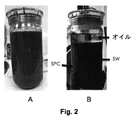
次いで、分離工程から得られた軟部8kgは、軟部との均質化を確実にするために容量10リットルのパイロット反応器中で熟成のために送られる。当該反応器は、350rpmでの機械的攪拌下で50℃に予熱されている。軟部の温度が徐々に上昇した後、その塊の温度は、直接90℃に制御される。90℃で1時間加熱した後、反応器は、空にされる。加熱された軟部は、それから分離される。トリカンターの使用は、実験室レベルでは不可能であるため、得られた異なる相を分離するために、軟部は、10000gで15分間遠心分離される(図2参照)。各相(TMO、SW及びSPC)は、手動で回収され、そして物理化学的分析を待つ間-20℃で貯蔵される。 The 8 kg of soft parts obtained from the separation process are then sent for maturation in a pilot reactor of 10 liter capacity to ensure homogenization with the soft parts. The reactor is preheated to 50° C. under mechanical stirring at 350 rpm. After the temperature of the soft part gradually rises, the temperature of the mass is directly controlled to 90°C. After heating for 1 hour at 90° C., the reactor is emptied. The heated soft part is then separated. In order to separate the different phases obtained, the soft tissue is centrifuged at 10000 g for 15 minutes (see Figure 2), since the use of a tricanter is not possible at the laboratory level. Each phase (TMO, SW and SPC) is manually harvested and stored at −20° C. pending physicochemical analysis.
2.比較方法
分離工程から生じる8kgの軟部が用いられる。この軟部は、本発明による方法に用いられたものと同じバッチの軟部から生じた。
2.
比較方法は、本発明による方法とは以下の2段階異なる:
- 分離の終わりに、軟部を凝固させる追加の工程が、反応器壁温度を100℃に20分間固定しながらパイロット反応器中で4kgの軟部から開始し、攪拌下(350rpm)で行われる;次いで
- 軟部が、水を加えることによって希釈され、そして加熱される。これらのアッセイについて1:0.5(w/w、重量/重量)及び1:0.75(w/w)のソフト部分の2つの希釈が行われた。具体的には、50℃の容量の水(希釈の関数としては2リットル又は3リットル)がパイロット反応器に加えられた。パルプ塊の温度は、1時間90℃に調節され、次いで反応器が空にされる。次いで、希釈した軟部は、上記と同じ条件下で遠心分離され、そして3相が回収され、そして物理化学的分析を待つ間-20℃で貯蔵される。
The comparative method differs from the method according to the invention in two steps:
- At the end of the separation, an additional step of solidifying the soft part is carried out under stirring (350 rpm) in the pilot reactor, starting with 4 kg soft part, while fixing the reactor wall temperature at 100°C for 20 minutes;
- The soft part is diluted by adding water and heated. Two dilutions of the soft portion were made for these assays, 1:0.5 (w/w, weight/weight) and 1:0.75 (w/w). Specifically, a 50° C. volume of water (2 or 3 liters as a function of dilution) was added to the pilot reactor. The pulp mass temperature is adjusted to 90° C. for 1 hour and then the reactor is emptied. The diluted soft tissue is then centrifuged under the same conditions as above and the three phases are recovered and stored at -20°C pending physicochemical analysis.
II.サンプルの分析
サンプルの乾物量の決定
TMO、SW及びSPCの乾物量は、標準ISO6496に従って105℃で一定の質量に乾燥することによって測定される。乾燥前後の生成物の重量差が、乾物含量の尺度として役立つ。これらの含有量は、重量%として表される。水分含有量は、値100から乾物を差し引くことによって得られる。
II. Analysis of Samples Determination of Dry Matter of Samples The dry matter of TMO, SW and SPC is determined by drying to constant weight at 105° C. according to standard ISO6496. The difference in weight of the product before and after drying serves as a measure of the dry matter content. These contents are expressed as % by weight. The moisture content is obtained by subtracting the dry matter from the
・TMOの過酸化物価の決定
過酸化物価は、フランス規格NF EN ISO 3960(2010年6月)に従って測定され、そして活性酸素のmeq/kg油で表される。
• Determination of the peroxide number of TMO The peroxide number is measured according to French standard NF EN ISO 3960 (June 2010) and is expressed in meq of active oxygen/kg oil.
・TMO及びSWの堆積物含有量
使用されるフィルターは、予め較正された、50μmの孔を有するステンレス鋼篩である。沈殿物の定量化は、300mLのTMO又は750mLのSW(750mL)を篩内に量り入れることによって通過させた後に行われる。
TMO and SW sediment content The filters used are pre-calibrated stainless steel sieves with 50 μm pores. Quantification of the precipitate is done after passing by weighing 300 mL of TMO or 750 mL of SW (750 mL) into the sieve.
SWの場合、堆積物の乾物は、上述のように決定される。 For SW, the sediment dry matter is determined as described above.
・SWのエマルジョンの評価
SW中のエマルジョンの評価は、50mLの回収されたSWを遠心分離した後に行われる。エマルジョン(上清)の回収は、分離を容易にするためにチューブを-20℃に置いた後に行われる。次いでエマルジョンは秤量され、そして結果はスティックウォーター中のエマルジョンの%として表される。
• Emulsion evaluation of SW Emulsion evaluation in SW is performed after centrifugation of 50 mL of collected SW. Recovery of the emulsion (supernatant) is performed after placing the tube at -20°C to facilitate separation. The emulsion was then weighed and the results expressed as % emulsion in stick water.
・SWにおける脂肪の決定
SWサンプル中の脂肪又は脂質の測定は、ECレギュレーション152/2009に従って加水分解後に石油エーテルで抽出することによって行われる。脂質の量は、考慮されるサンプルの乾物(SW又はSPC)に関連する。
Determination of Fat in SW The determination of fat or lipids in SW samples is performed by extraction with petroleum ether after hydrolysis according to EC Regulation 152/2009. The amount of lipid is related to the dry matter (SW or SPC) of the considered sample.
・SWのペプシン消化率の決定
ペプシン消化率は、脱脂することなく、指令72/199/ECに従ってSWで決定される。
• Determination of pepsin digestibility of SW Pepsin digestibility is determined in SW according to Directive 72/199/EC without defatting.
・SW及びSPCにおけるトレハロースのアッセイ
トレハロースは、それらの凍結乾燥後にSW及びSPCにおいて測定される。乾燥サンプル40mgは、80℃で攪拌しながら、2mLのDMSOを用いて1時間抽出される。次に、250μLの抽出液は、50μLのミオイノシトールと混合され、これは内部標準として用いられる。ホモジナイズの後、100μLのこの混合液を、100μLのBSTFA-TMCS(99:1)でGC-MSバイアル中で60℃30分間誘導体化する。注入前に、600μLのアセトニトリルが、GC-MSバイアルに加えられる。結果は、同じ条件下で実施された標準範囲を用いて、mgトレハロース/g乾燥で表される(図3)。
- Assay of trehalose in SW and SPC Trehalose is measured in SW and SPC after their lyophilization. 40 mg of dry sample is extracted with 2 mL of DMSO for 1 hour while stirring at 80°C. 250 μL of extract is then mixed with 50 μL of myo-inositol, which is used as an internal standard. After homogenization, 100 μL of this mixture is derivatized with 100 μL of BSTFA-TMCS (99:1) in a GC-MS vial at 60° C. for 30 minutes. 600 μL of acetonitrile is added to the GC-MS vial before injection. Results are expressed in mg trehalose/g dry using standard ranges performed under the same conditions (Figure 3).
誘導体化された抽出物及び標準範囲の異なる点は、Shimadzu製GC-MS-QP2010で分析される。使用したカラムは、長さ30m、直径0.25mm、厚さ0.25μのSH-Rxi 5msカラム(Shimadzu)である。GC-MSの温度プログラムは、以下の通りである: 100℃、続いて300℃まで10℃/分の上昇、2分間の維持。 Different points of derivatized extracts and standard ranges are analyzed by Shimadzu GC-MS-QP2010. The column used is a 30 m long, 0.25 mm diameter, 0.25 μm SH-Rxi 5 ms column (Shimadzu). The temperature program for the GC-MS is as follows: 100°C, then 10°C/min up to 300°C, hold for 2 minutes.
インジェクタの温度は、280℃、インターフェースの温度は、250℃、分割比は、10、注入量は、1μLである。検出は、ミオイノシトールについては、305、トレハロースについては361の特定のm/z値を用いてSIM(選択イオンモニタリング)モードで行われる。 The injector temperature is 280° C., the interface temperature is 250° C., the split ratio is 10, and the injection volume is 1 μL. Detection is performed in SIM (Selected Ion Monitoring) mode using specific m/z values of 305 for myo-inositol and 361 for trehalose.
・凍結乾燥SWの色の測定
色は、カラーチャート(RAL クラッシックK7カラーチャート)と比較され、このカラーチャートのカラーコードによって特徴付けられた。
Measurement of the color of the freeze-dried SW The colors were compared to a color chart (RAL Classic K7 color chart) and characterized by the color code of this color chart.
・SPCの可溶性画分の決定
実験は、凍結乾燥SPCから開始し、実施された。1gのサンプルは、予め較正された50mLの試験管中で秤量(mi)された。周囲温度で30mLの水を加え、チューブが、数分間振とう(ボルテックス)された。遠心分離の後、上清が除去され、1回目と同じ条件で2回目の洗浄が行われる。上清が除去された後、洗浄したSPCペレットは、60℃のオーブンに48時間入れられ、その後秤量される。実際の乾物の割合を測定し、洗浄前のサンプルの初期重量を補正するために(%DM)、コントロール(未洗浄SPC)もまた、オーブンに入れられる。
• Determination of the soluble fraction of SPC Experiments were performed starting from lyophilized SPC. A 1 g sample was weighed (mi) in a pre-calibrated 50 mL test tube. 30 mL of water at ambient temperature was added and the tube was shaken (vortexed) for several minutes. After centrifugation, the supernatant is removed and a second wash is performed under the same conditions as the first. After the supernatant is removed, the washed SPC pellets are placed in a 60° C. oven for 48 hours and then weighed. A control (unwashed SPC) is also placed in the oven to measure the actual percent dry matter and correct for the initial weight of the sample before washing (%DM).
溶解度の割合は次のように決定される。

・SPCの可溶性タンパク質の大きさの決定
SPCの可溶性タンパク質のサイズは、立体排除クロマトグラフィーにより決定される。
• Determination of SPC soluble protein size The SPC soluble protein size is determined by steric exclusion chromatography.
凍結乾燥サンプル40mgは、30mg/mLの濃度に達するようにアセトニトリル/H2O/TFA(トリフルオロ酢酸)(30/70/0.1)を含む移動相に溶解され、Chromafil Xtra PES-45/25フィルターを用いて遠心分離した後に、45μmに濾過される。同時に、移動相中の乾燥SW及び乾燥SPCの溶解度は、遠心分離残差をオーブン中で乾燥した後に決定される。 40 mg of the lyophilized sample was dissolved in a mobile phase containing acetonitrile/H 2 O/TFA (trifluoroacetic acid) (30/70/0.1) to reach a concentration of 30 mg/mL, Chromafil Xtra PES-45/ After centrifugation using a 25 filter, it is filtered to 45 μm. At the same time, the solubility of dry SW and dry SPC in the mobile phase is determined after drying the centrifugation residue in an oven.
Shimadzu製Nexera XR HPLCチェーンで実施したクロマトグラフィーを実施するための条件は以下の通りである:使用したカラムは、Superdex Peptide GL 10/300(GEヘルスケア)であり、検出は、215nmでDAD検出器によって行われ、移動相の速度(アイソクラティックモード)は、0.3mL/分である。それは、アセトニトリル/H2O/TFA(トリフルオロ酢酸)混合物(30/70/0.1)を含み、分析は、25℃で行われる。
The conditions for performing the chromatography performed on a Shimadzu Nexera XR HPLC chain are as follows: The column used was
分子量分布を決定するために、異なる分子量に相当する保持時間間隔を規定するために、既知の分子量の4つの「標準」タンパク質を最初に注入した。サンプルの分子分布を分析するために、クロマトグラフの全面積は、最初に、215nmで積分され、次いで5つの分子量カテゴリーに相当する画分に分離された。結果は、分子サイズカテゴリー当たりの可溶性タンパク質の%として表される。 To determine the molecular weight distribution, four 'standard' proteins of known molecular weight were first injected to define retention time intervals corresponding to different molecular weights. To analyze the molecular distribution of the sample, the total chromatographic area was first integrated at 215 nm and then separated into fractions corresponding to five molecular weight categories. Results are expressed as % soluble protein per molecular size category.
移動相中の可溶性部分の決定値は、水中において、それと同様の方法で得られるが、25%(分析温度)である。 The determination of the soluble portion in the mobile phase is obtained in a similar manner in water, but is 25% (analytical temperature).
III.結果
1.脂肪画分
脂肪画分の結果は、図4、5及び6に示される。
III. Results 1. Fat Fraction Fat fraction results are shown in FIGS.
水分含有量及び沈殿物含有量に関して、図4及び5は、脂肪画分の分離が本発明による方法において著しく改善されることを実証する。実際、これらの図から、比較方法によれば、脂肪画分中の水分含有量及び沈殿物含有量が、より高いことが分かる。この結果は、相の増大及び/又は加熱が、通常、媒体混合物中での相の分離を改善することを可能にすることが当業者に周知であるため、予想外である。 With respect to water content and sediment content, Figures 4 and 5 demonstrate that the separation of the fat fraction is significantly improved in the method according to the invention. Indeed, from these figures it can be seen that according to the comparative method the water content and the sediment content in the fat fraction are higher. This result is unexpected as it is well known to those skilled in the art that phase enrichment and/or heating can usually improve phase separation in media mixtures.
さらに、図6において、本発明による方法によって得られた脂肪相の過酸化物価が、比較方法によって得られる脂肪相のその結果よりも低いことが記される。従って、本発明による方法によって得られる脂肪相は、向上した保存能力を有する。これは、酸化防止剤等の防腐剤の添加を回避又は減少させることを可能にするため、利点である。 Furthermore, in FIG. 6 it is noted that the peroxide value of the fat phase obtained by the method according to the invention is lower than that of the fat phase obtained by the comparative method. The fatty phase obtained by the method according to the invention therefore has an improved storage capacity. This is an advantage as it allows the addition of preservatives such as antioxidants to be avoided or reduced.
2.水性画分
脂肪画分の結果が、図7~13に示される。
2. Aqueous fraction Fat fraction results are shown in Figures 7-13.
図7において、本発明による方法によって得られた水性画分に関し、より低い水分含有量であることが記される。希釈に起因して、乾物含有量は、比較方法においてより低くなり、その結果、目的の部分(乾物)を回収するためにより大きな装置を必要とし、及び特により強烈なエネルギー消費及び水分消費を有する。 In FIG. 7 it is noted that for the aqueous fraction obtained by the method according to the invention there is a lower water content. Due to the dilution, the dry matter content is lower in the comparative method, as a result of which larger equipment is required to recover the desired fraction (dry matter) and has, in particular, more intense energy and moisture consumption. .
沈殿物含有量、エマルジョン含有量及び脂肪含有量に関して、図8~10は、本発明による方法において水性画分の分離が、著しく改善されることを実証する。実際に、これらの図から、比較方法によれば、脂肪画分中の沈殿物、エマルジョン及び脂質の含有量がより高いことが記される。この結果は、相の増大及び/又は加熱が、通常、媒体混合物中での相の分離を改善することを可能にすることが当業者に周知であるため、予想外である。 With respect to sediment content, emulsion content and fat content, FIGS. 8-10 demonstrate that the separation of the aqueous fraction is significantly improved in the process according to the invention. Indeed, these figures note a higher content of sediments, emulsions and lipids in the fat fraction according to the comparison method. This result is unexpected as it is well known to those skilled in the art that phase enrichment and/or heating can usually improve phase separation in media mixtures.
また、
- 図11において、本発明によって得られる水性画分のタンパク質のペプシン消化率は、比較方法によって得られるものよりも良好であり; 及び
- 図12において、本発明によって得られる水性フラクションのトレハロース含有量は、比較方法によって得られるものよりも良好である、
ことが記載される。
again,
- in figure 11 the protein pepsin digestibility of the aqueous fraction obtained by the invention is better than that obtained by the comparative method;
- in figure 12 the trehalose content of the aqueous fraction obtained according to the invention is better than that obtained by the comparative method,
is described.
トレハロースは、タンパク質を安定化する能力を有し、このために天然の生物学的保存剤であると考えられているので、トレハロースの存在は興味深い。 The presence of trehalose is of interest because it has the ability to stabilize proteins and is therefore considered a natural biological preservative.
最後に、図13は、本発明による方法、又は比較方法の何れかによって得られた、及び凍結乾燥された水性画分の3枚の写真を提示する。本発明による方法によって得られる水性画分は、特により明るい色を有する。これらの図から、本発明による方法によって異なる生成物が得られることが明らかである。この色の違いは、比較方法で行われる水性媒体中での凝固及び加熱工程中に起こり得るメイラード反応によって潜在的に説明され得る。メイラード反応の間、溶媒中に存在する小さいサイズのタンパク質は、より反応しやすく、従って、溶媒の小さいサイズのタンパク質の含有量を減少させる。これは、特に水性画分の消化能力の減少をもたらし得る。 Finally, Figure 13 presents three photographs of the freeze-dried aqueous fraction obtained either by the method according to the invention or by the comparative method. The aqueous fraction obtained by the process according to the invention has a particularly lighter color. From these figures it is clear that different products are obtained by the process according to the invention. This color difference can potentially be explained by the possible Maillard reaction during the coagulation and heating steps in the aqueous medium carried out in the comparative method. During the Maillard reaction, small size proteins present in the solvent are more reactive, thus reducing the small size protein content of the solvent. This can result in a reduced digestibility, especially of the aqueous fraction.
3.固体画分
固体画分についての結果が、図14~17に示される。
3. Solid Fraction The results for the solid fraction are shown in Figures 14-17.
図14において、本発明によって得られた固体画分のトレハロース含有量は、比較方法によって得られたものよりも良好であることが記載され得る。 In Figure 14 it can be noted that the trehalose content of the solid fraction obtained according to the invention is better than that obtained by the comparative method.
図15において、本発明によって得られた固体画分の可溶性部分の含有量は、比較方法によって得られたものよりも良好であることが記載され得る。可溶性部分は、特により小さいサイズのタンパク質を放出することによって、可溶性部分が、飼料の製剤化を容易にし、向上したバイオアベイラビリティを付与するため、可溶性部分をかなりの含有量で有することは興味深い。 In Figure 15 it can be noted that the content of soluble parts of the solid fraction obtained according to the invention is better than that obtained by the comparative method. It is interesting to have a significant content of the soluble part, as it facilitates feed formulation and confers improved bioavailability, especially by releasing proteins of smaller size.
図16及び17において、小さいタンパク質、すなわち550Daより小さいタンパク質含有量は、本発明による方法によって得られた固体画分において、比較方法によって得られたものよりも高いことが実証される。 In Figures 16 and 17 it is demonstrated that the content of small proteins, i.e. proteins smaller than 550 Da, is higher in the solid fraction obtained by the method according to the invention than that obtained by the comparative method.
従って、小さいサイズのタンパク質が、本発明による方法によってより保存されることが記載され得る。これは、水中又は移動相中でのより高い溶解度へと、及びこの固体画分中のより小さいサイズのタンパク質をより高い割合へと移し、比較方法は、凝固段階及び加熱段階中にこれら産物の破壊に寄与したように思われる。 It can thus be stated that proteins of small size are better conserved by the method according to the invention. This translates to a higher solubility in water or mobile phase and to a higher proportion of smaller sized proteins in this solid fraction, a comparative method being the conversion of these products during the solidification and heating steps. appears to have contributed to the destruction.
4.エネルギー消費
最後に、本発明による方法を、2つの比較方法と比較するために、エネルギー消費計算が行われた。
4. Energy Consumption Finally, energy consumption calculations were performed to compare the method according to the invention with the two comparative methods.
1:0.5の希釈における比較方法は、本発明によるものより19.8倍高いコストが掛かり、及び1:0.75の希釈における比較方法は、本発明によるものより20.2倍高いコストが掛かる。 The comparative method at a dilution of 1:0.5 costs 19.8 times more than according to the invention, and the comparative method at a dilution of 1:0.75 costs 20.2 times more than according to the invention. hangs.
Claims (11)
- 前記昆虫の軟部からクチクラを分離する工程、
- 前記昆虫の前記軟部を成熟する工程、当該成熟工程は、昆虫の軟部が撹拌に供される工程を意味する、次いで
- 前記昆虫の前記軟部を、脂肪画分、固体画分及び水性画分に分離する工程、
を含む方法。 A method of treating insects comprising:
- separating the cuticle from the soft part of said insect;
- maturation of said soft parts of said insect, said maturation step means that the soft parts of the insect are subjected to agitation, then
- separating the soft parts of the insect into fat, solid and aqueous fractions;
method including.
- 前記濃縮水性画分の全部又は一部; 及び/又は
- 前記クチクラの全部又は一部、
と混合する工程をさらに含む、請求項1~6の何れか1項に記載の方法。 To obtain a mixture, the solid fraction is:
- all or part of said enriched aqueous fraction; and/or
- all or part of said cuticle,
The method of any one of claims 1-6 , further comprising the step of mixing with.
Applications Claiming Priority (5)
| Application Number | Priority Date | Filing Date | Title |
|---|---|---|---|
| FR1663478 | 2016-12-28 | ||
| FR1663478A FR3060947B1 (en) | 2016-12-28 | 2016-12-28 | INSECT TREATMENT METHOD COMPRISING THE SEPARATION OF CUTICLE FROM THE SOFT PART OF THE INSECTS AND THEN THE SEPARATION OF THE SOFT PART INTO THREE FRACTIONS |
| FRPCT/FR2017/050554 | 2017-03-10 | ||
| PCT/FR2017/050554 WO2018122476A1 (en) | 2016-12-28 | 2017-03-10 | Method for treating insects, in which the cuticles are separated from the soft part of the insects, and the soft part is then separated into three fractions |
| PCT/EP2017/084774 WO2018122352A1 (en) | 2016-12-28 | 2017-12-28 | Method for treating insects, in which the cuticles are separated from the soft part of the insects, and the soft part is then separated into three fractions |
Publications (3)
| Publication Number | Publication Date |
|---|---|
| JP2020504617A JP2020504617A (en) | 2020-02-13 |
| JP2020504617A5 JP2020504617A5 (en) | 2021-01-14 |
| JP7127030B2 true JP7127030B2 (en) | 2022-08-29 |
Family
ID=58464589
Family Applications (2)
| Application Number | Title | Priority Date | Filing Date |
|---|---|---|---|
| JP2019535310A Active JP7184777B2 (en) | 2016-12-28 | 2017-03-10 | A method of treating insects, wherein the cuticle is separated from the soft part of the insect, said soft part being divided into three fractions. |
| JP2019535288A Active JP7127030B2 (en) | 2016-12-28 | 2017-12-28 | A method of treating insects, wherein the cuticle is separated from the soft part of the insect and then the soft part is separated into three fractions. |
Family Applications Before (1)
| Application Number | Title | Priority Date | Filing Date |
|---|---|---|---|
| JP2019535310A Active JP7184777B2 (en) | 2016-12-28 | 2017-03-10 | A method of treating insects, wherein the cuticle is separated from the soft part of the insect, said soft part being divided into three fractions. |
Country Status (16)
| Country | Link |
|---|---|
| US (3) | US11998029B2 (en) |
| EP (2) | EP3562316B1 (en) |
| JP (2) | JP7184777B2 (en) |
| KR (3) | KR102718285B1 (en) |
| CN (2) | CN110099573A (en) |
| AU (3) | AU2017387972B2 (en) |
| BR (1) | BR112019013421A2 (en) |
| CA (1) | CA3047512A1 (en) |
| CO (2) | CO2019007202A2 (en) |
| DK (1) | DK3562316T3 (en) |
| ES (1) | ES3011334T3 (en) |
| FR (1) | FR3060947B1 (en) |
| MX (1) | MX2019007884A (en) |
| MY (2) | MY198155A (en) |
| PL (1) | PL3562316T3 (en) |
| WO (1) | WO2018122476A1 (en) |
Families Citing this family (12)
| Publication number | Priority date | Publication date | Assignee | Title |
|---|---|---|---|---|
| FR3098687B1 (en) * | 2019-07-19 | 2022-05-20 | Veolia Environnement Ve | METHOD FOR OBTAINING PROTEIN-ENRICHED FLOUR FROM LARVA USED FOR THE BIOCONVERSION OF ORGANIC WASTE |
| FR3105261B1 (en) * | 2019-12-19 | 2024-08-23 | Ynsect | Process for obtaining chitin and/or chitosan using two enzymatic hydrolyses |
| KR102325312B1 (en) * | 2020-01-02 | 2021-11-11 | 한국식품연구원 | Preparing method of food protein derived from edible insects and food derived from edible insects prepared thereby |
| EP3991567A1 (en) * | 2020-10-28 | 2022-05-04 | Bühler Insect Technology Solutions AG | Method for the preparation of protein meal from insects, in particular from insect larvae and from insect pupae, or from worms, and drying device for use in such a method |
| KR102393124B1 (en) * | 2021-01-13 | 2022-05-03 | 농업회사법인 (주)한국유용곤충연구소 | Method for preparing fermented insect feed additive comprising Ptecticus tenebrifer and insect chitin, and fermented insect feed additive prepared by the same |
| JP2022180759A (en) * | 2021-05-25 | 2022-12-07 | 株式会社明治 | Method for treating arthropod or part thereof, and body interior fraction of arthropod |
| PL4118974T3 (en) * | 2021-07-13 | 2025-11-03 | Alfa Laval Corporate Ab | Method and system for providing an insect-based, low-fat protein meal from an insect-based raw material |
| FR3131183B1 (en) | 2021-12-24 | 2025-08-15 | Innovafeed | FACILITY FOR THE TREATMENT OF ARTHROPOD LARVAE, AND IN PARTICULAR INSECTS AND MORE SPECIFICALLY DIPTERAN LARVAE. |
| FR3134501B1 (en) | 2022-04-13 | 2024-03-22 | Nutriearth | FOOD OILY COMPOSITION CONTAINING 7-DESHYDROCHOLESTEROL, PREVITAMIN D3 AND VITAMIN D3 – ASSOCIATED PRODUCTS |
| KR102800760B1 (en) * | 2022-05-10 | 2025-04-28 | 한국식품연구원 | Method for preparing feed additive comprising insect hydrolysate and feed additive prepared by the same |
| EP4642257A1 (en) * | 2022-12-30 | 2025-11-05 | Ynsect | Hydrolysate obtained from insects and method for producing said hydrolysate |
| FR3145259A1 (en) | 2023-01-30 | 2024-08-02 | Innovafeed | Process for treating insects and powders obtained |
Citations (2)
| Publication number | Priority date | Publication date | Assignee | Title |
|---|---|---|---|---|
| US20150132433A1 (en) | 2013-11-11 | 2015-05-14 | Aaron T. Dossey | Insect products and methods of manufacture and use thereof |
| US20150374005A1 (en) | 2013-02-07 | 2015-12-31 | Protix Biosystems B.V. | Method to Convert Insects or Worms into Nutrient Streams and Compositions Obtained Thereby |
Family Cites Families (39)
| Publication number | Priority date | Publication date | Assignee | Title |
|---|---|---|---|---|
| US3106571A (en) * | 1955-10-14 | 1963-10-08 | Thomas C Fisher | Physico-mechanical process of obtaining high quality cocoanut oil |
| CH678684A5 (en) * | 1987-08-19 | 1991-10-31 | Bucher Guyer Ag Masch | |
| US5197916A (en) * | 1992-06-23 | 1993-03-30 | Star-Kist, Inc. | Fish skinner |
| US6440446B1 (en) * | 1998-04-22 | 2002-08-27 | Kabushiki Kaisha Hayashibara Seibutsu Kagaku Kenkyujo | Agent for anti-osteoporosis |
| JP3748022B2 (en) | 1999-11-19 | 2006-02-22 | ユニ・チャーム株式会社 | Water-decomposable absorbent article and method for producing the same |
| CN1100490C (en) * | 1999-12-01 | 2003-02-05 | 中国科学院动物研究所 | Separation and extraction process of effective component in resource insect |
| JP2004504863A (en) * | 2000-08-11 | 2004-02-19 | ナチュラ・ホールディングス・プロプライエタリー・リミテッド | Processing of oilseed |
| CA2363451C (en) * | 2001-11-20 | 2005-05-10 | Mcn Bioproducts Inc. | Oilseed processing |
| KR100494358B1 (en) | 2004-07-30 | 2005-06-10 | 주식회사 바이오그랜드 | Compositions for Improving Brain or Cognitive Function |
| WO2006053253A2 (en) * | 2004-11-12 | 2006-05-18 | Chesapeake Perl, Inc. | Recovery of proteins from insect larvae |
| CN101117359B (en) * | 2006-08-01 | 2012-04-25 | 西安市轻工业研究所 | Edible insect chitosan and production method and application thereof |
| US20080194003A1 (en) * | 2007-02-13 | 2008-08-14 | Jere Northrop | System for producing food and feed |
| CN101144097B (en) | 2007-09-18 | 2010-12-01 | 重庆百奥帝克微生态科技有限公司 | Method for preparing chitin and its chitosan and chitosan oligosaccharide |
| CA2670245A1 (en) * | 2009-06-25 | 2010-12-25 | James Haythornthwaite | Alignment mechanism for food separator |
| DE202010001849U1 (en) | 2010-01-30 | 2010-05-20 | Nordischer Maschinenbau Rud. Baader Gmbh + Co. Kg | Device for separating mixed substances of different flowability |
| CN102558387A (en) * | 2010-12-13 | 2012-07-11 | 青岛中仁药业有限公司 | Method for extracting chitin and antibacterial peptide from fly larvae |
| FR2975706B1 (en) * | 2011-05-26 | 2017-07-21 | Ifremer (Institut Francais De Rech Pour L'exploitation De La Mer) | EXTRACTION OF CHITINS IN ONE STEP BY ENZYMATIC HYDROLYSIS IN ACID |
| CN102578390A (en) * | 2012-02-17 | 2012-07-18 | 郎影菲 | Insect additive for poultry and livestock feeds and application of insect additive |
| NL2009044C2 (en) | 2012-06-21 | 2013-12-24 | Protix Biosystems B V | Method to convert insects or worms into nutrient streams and compositions obtained thereby. |
| CN102696740B (en) | 2012-07-06 | 2014-07-09 | 中国水产科学研究院渔业机械仪器研究所 | Method for mechanically separating river crab shell and meat |
| US20150164109A1 (en) | 2013-12-17 | 2015-06-18 | Bradley N. Ruben | Recycled food processing, products therefrom, and devices useful therein |
| US20150223493A1 (en) * | 2014-02-10 | 2015-08-13 | Lee Tech Llc | System for and method of converting agricultural waste to animal feed and other valuable raw materials |
| JP6730992B2 (en) | 2014-12-31 | 2020-07-29 | インセクト | Beetle powder |
| FR3031115B1 (en) * | 2014-12-31 | 2018-03-02 | Ynsect | PRODUCTION OF CHITINES FROM INSECTS BY ENZYMATIC HYDROLYSIS COMPRISING A COMBINATION OF PRELIMINARY STEPS |
| FR3031113B1 (en) * | 2014-12-31 | 2018-03-16 | Ynsect | PROCESS FOR PRODUCTION OF PRODUCT (S) OF INTEREST FROM INSECT BY ENZYMATIC HYDROLYSIS |
| HUE050257T2 (en) | 2014-12-31 | 2020-11-30 | Ynsect | Composition containing chitin and digestible proteins |
| EP3078277A1 (en) * | 2015-03-12 | 2016-10-12 | Krauß, Stefan | Method for the manufacture of insect powder |
| WO2018088813A2 (en) * | 2016-11-09 | 2018-05-17 | 아이씨엠 주식회사 | Nkx3.2 fragment and pharmaceutical composition comprising same as active ingredient |
| KR102645243B1 (en) | 2016-11-23 | 2024-03-11 | 알닐람 파마슈티칼스 인코포레이티드 | Modified RNA agents with reduced off-target effects |
| FR3061856B1 (en) * | 2017-01-18 | 2021-04-02 | Ynsect | THERAPEUTIC USES OF AN INSECT POWDER |
| FR3070577B1 (en) * | 2017-09-06 | 2021-07-30 | Ynsect | INSECT POWDER TO PREVENT OR REDUCE STRESS IN FISH DURING BREEDING |
| BE1025664B9 (en) * | 2017-10-26 | 2019-06-21 | Millibeter N V | Method for separating the biomass from living larvae into a pulp and a liquid fraction |
| FR3075205B1 (en) * | 2017-12-15 | 2020-11-06 | Ynsect | CHITINE AND PROCESS FOR OBTAINING CHITINE AND / OR CHITOSAN BY ENZYMO-CHEMICAL ROUTE |
| FR3075204B1 (en) * | 2017-12-15 | 2020-11-20 | Ynsect | CHITINE AND PROCESS FOR OBTAINING CHITINE AND / OR CHITOSAN BY CHEMICAL MEANS |
| FR3087092B1 (en) * | 2018-10-12 | 2020-11-13 | Ynsect | INSECT POWDER TO AVOID SKELETAL DEFORMATION OF A FISH AND / OR TO REINFORCE THE STRENGTH OF A FISH AREA DURING FARMING |
| NL2027744B1 (en) * | 2019-09-17 | 2022-09-16 | Protix Bv | Hydrolysate of water soluble insect proteins |
| DE102019219928A1 (en) * | 2019-12-17 | 2021-06-17 | Deutsches Institut Für Lebensmitteltechnik E.V. | Process for the production of protein mass |
| FR3105261B1 (en) * | 2019-12-19 | 2024-08-23 | Ynsect | Process for obtaining chitin and/or chitosan using two enzymatic hydrolyses |
| EP3991567A1 (en) * | 2020-10-28 | 2022-05-04 | Bühler Insect Technology Solutions AG | Method for the preparation of protein meal from insects, in particular from insect larvae and from insect pupae, or from worms, and drying device for use in such a method |
-
2016
- 2016-12-28 FR FR1663478A patent/FR3060947B1/en active Active
-
2017
- 2017-03-10 MY MYPI2019003699A patent/MY198155A/en unknown
- 2017-03-10 DK DK17715223.8T patent/DK3562316T3/en active
- 2017-03-10 AU AU2017387972A patent/AU2017387972B2/en active Active
- 2017-03-10 CN CN201780081603.0A patent/CN110099573A/en active Pending
- 2017-03-10 US US16/473,871 patent/US11998029B2/en active Active
- 2017-03-10 KR KR1020197021713A patent/KR102718285B1/en active Active
- 2017-03-10 ES ES17715223T patent/ES3011334T3/en active Active
- 2017-03-10 JP JP2019535310A patent/JP7184777B2/en active Active
- 2017-03-10 BR BR112019013421A patent/BR112019013421A2/en not_active Application Discontinuation
- 2017-03-10 WO PCT/FR2017/050554 patent/WO2018122476A1/en not_active Ceased
- 2017-03-10 KR KR1020237027638A patent/KR20230124761A/en not_active Ceased
- 2017-03-10 EP EP17715223.8A patent/EP3562316B1/en active Active
- 2017-03-10 PL PL17715223.8T patent/PL3562316T3/en unknown
- 2017-12-28 MY MYPI2019003739A patent/MY199031A/en unknown
- 2017-12-28 CA CA3047512A patent/CA3047512A1/en not_active Abandoned
- 2017-12-28 EP EP17825881.0A patent/EP3562317A1/en not_active Withdrawn
- 2017-12-28 CN CN201780081410.5A patent/CN110099571A/en active Pending
- 2017-12-28 AU AU2017385712A patent/AU2017385712B2/en active Active
- 2017-12-28 MX MX2019007884A patent/MX2019007884A/en unknown
- 2017-12-28 KR KR1020197021715A patent/KR102683683B1/en active Active
- 2017-12-28 JP JP2019535288A patent/JP7127030B2/en active Active
- 2017-12-28 US US16/473,465 patent/US20200107560A1/en not_active Abandoned
-
2019
- 2019-07-03 CO CONC2019/0007202A patent/CO2019007202A2/en unknown
- 2019-07-03 CO CONC2019/0007204A patent/CO2019007204A2/en unknown
-
2022
- 2022-01-28 US US17/587,625 patent/US20220174989A1/en not_active Abandoned
-
2023
- 2023-03-20 AU AU2023201702A patent/AU2023201702B2/en active Active
Patent Citations (2)
| Publication number | Priority date | Publication date | Assignee | Title |
|---|---|---|---|---|
| US20150374005A1 (en) | 2013-02-07 | 2015-12-31 | Protix Biosystems B.V. | Method to Convert Insects or Worms into Nutrient Streams and Compositions Obtained Thereby |
| US20150132433A1 (en) | 2013-11-11 | 2015-05-14 | Aaron T. Dossey | Insect products and methods of manufacture and use thereof |
Also Published As
Similar Documents
| Publication | Publication Date | Title |
|---|---|---|
| JP7127030B2 (en) | A method of treating insects, wherein the cuticle is separated from the soft part of the insect and then the soft part is separated into three fractions. | |
| JP2020518230A (en) | Insect treatment method for separating cuticle from insect soft parts using a belt separator | |
| WO2018122352A1 (en) | Method for treating insects, in which the cuticles are separated from the soft part of the insects, and the soft part is then separated into three fractions | |
| RU2790403C2 (en) | Method for treatment of insects, including separation of cuticle from soft part of insects, using belt separator, with subsequent separation of soft part into three fractions | |
| EA046666B1 (en) | METHOD FOR PROCESSING INSECTS FOR FOOD | |
| WO2018122353A1 (en) | Method for treating insects, in which the cuticles are separated from the soft part of the insects using a belt separator | |
| RU2775236C2 (en) | Method for processing insects, including separation of cuticle from soft part of insects, using belt separator | |
| EA045208B1 (en) | SOLID FRACTION FOR NUTRITION OBTAINED FROM INSECTS | |
| CA3047521C (en) | Method for treating insects, in which the cuticles are separated from the soft part of the insects, and the soft part is then separated into three fractions | |
| BR112019013482B1 (en) | PROCESS FOR TREATING INSECTS WHICH COMPRISES SEPARATING THE CUTICLES FROM THE SOFT PART OF THE INSECTS AND SAID SOFT PART INTO THREE FRACTIONS, POWDER OBTAINABLE BY THE PROCESS AND USE OF THE SAME IN NUTRITION | |
| FI20235704A1 (en) | Fibre rich composition, method for producing fibre rich composition and foodstuff |
Legal Events
| Date | Code | Title | Description |
|---|---|---|---|
| A521 | Request for written amendment filed |
Free format text: JAPANESE INTERMEDIATE CODE: A523 Effective date: 20201125 |
|
| A621 | Written request for application examination |
Free format text: JAPANESE INTERMEDIATE CODE: A621 Effective date: 20201125 |
|
| A977 | Report on retrieval |
Free format text: JAPANESE INTERMEDIATE CODE: A971007 Effective date: 20211013 |
|
| A131 | Notification of reasons for refusal |
Free format text: JAPANESE INTERMEDIATE CODE: A131 Effective date: 20211102 |
|
| A601 | Written request for extension of time |
Free format text: JAPANESE INTERMEDIATE CODE: A601 Effective date: 20220128 |
|
| A521 | Request for written amendment filed |
Free format text: JAPANESE INTERMEDIATE CODE: A523 Effective date: 20220502 |
|
| TRDD | Decision of grant or rejection written | ||
| A01 | Written decision to grant a patent or to grant a registration (utility model) |
Free format text: JAPANESE INTERMEDIATE CODE: A01 Effective date: 20220719 |
|
| A61 | First payment of annual fees (during grant procedure) |
Free format text: JAPANESE INTERMEDIATE CODE: A61 Effective date: 20220817 |
|
| R150 | Certificate of patent or registration of utility model |
Ref document number: 7127030 Country of ref document: JP Free format text: JAPANESE INTERMEDIATE CODE: R150 |
|
| R250 | Receipt of annual fees |
Free format text: JAPANESE INTERMEDIATE CODE: R250 |