JP6957872B2 - Optical film and its manufacturing method, polarizing plate, liquid crystal display device - Google Patents
Optical film and its manufacturing method, polarizing plate, liquid crystal display device Download PDFInfo
- Publication number
- JP6957872B2 JP6957872B2 JP2016243707A JP2016243707A JP6957872B2 JP 6957872 B2 JP6957872 B2 JP 6957872B2 JP 2016243707 A JP2016243707 A JP 2016243707A JP 2016243707 A JP2016243707 A JP 2016243707A JP 6957872 B2 JP6957872 B2 JP 6957872B2
- Authority
- JP
- Japan
- Prior art keywords
- cycloolefin
- polymer
- fluorene skeleton
- film
- structural unit
- Prior art date
- Legal status (The legal status is an assumption and is not a legal conclusion. Google has not performed a legal analysis and makes no representation as to the accuracy of the status listed.)
- Active
Links
- 239000012788 optical film Substances 0.000 title claims description 114
- 239000004973 liquid crystal related substance Substances 0.000 title claims description 37
- 238000004519 manufacturing process Methods 0.000 title claims description 16
- 229920000642 polymer Polymers 0.000 claims description 196
- 150000001925 cycloalkenes Chemical class 0.000 claims description 140
- 125000003983 fluorenyl group Chemical group C1(=CC=CC=2C3=CC=CC=C3CC12)* 0.000 claims description 140
- 239000010408 film Substances 0.000 claims description 112
- 239000000178 monomer Substances 0.000 claims description 87
- 238000000034 method Methods 0.000 claims description 50
- 150000001491 aromatic compounds Chemical class 0.000 claims description 48
- 239000002904 solvent Substances 0.000 claims description 43
- 150000002009 diols Chemical class 0.000 claims description 39
- 239000000463 material Substances 0.000 claims description 36
- 150000001875 compounds Chemical class 0.000 claims description 33
- NIXOWILDQLNWCW-UHFFFAOYSA-M Acrylate Chemical compound [O-]C(=O)C=C NIXOWILDQLNWCW-UHFFFAOYSA-M 0.000 claims description 31
- 230000001681 protective effect Effects 0.000 claims description 26
- 210000002858 crystal cell Anatomy 0.000 claims description 23
- 229920000728 polyester Polymers 0.000 claims description 22
- 125000002915 carbonyl group Chemical group [*:2]C([*:1])=O 0.000 claims description 16
- 238000005266 casting Methods 0.000 claims description 16
- OFOBLEOULBTSOW-UHFFFAOYSA-N Malonic acid Chemical compound OC(=O)CC(O)=O OFOBLEOULBTSOW-UHFFFAOYSA-N 0.000 claims description 15
- 238000001035 drying Methods 0.000 claims description 15
- 239000004417 polycarbonate Substances 0.000 claims description 14
- 229920000515 polycarbonate Polymers 0.000 claims description 14
- 239000000126 substance Substances 0.000 claims description 14
- 125000004453 alkoxycarbonyl group Chemical group 0.000 claims description 3
- -1 fluorene compound Chemical class 0.000 description 45
- 239000000243 solution Substances 0.000 description 40
- YMWUJEATGCHHMB-UHFFFAOYSA-N Dichloromethane Chemical compound ClCCl YMWUJEATGCHHMB-UHFFFAOYSA-N 0.000 description 36
- OKKJLVBELUTLKV-UHFFFAOYSA-N Methanol Chemical compound OC OKKJLVBELUTLKV-UHFFFAOYSA-N 0.000 description 36
- JFNLZVQOOSMTJK-KNVOCYPGSA-N norbornene Chemical compound C1[C@@H]2CC[C@H]1C=C2 JFNLZVQOOSMTJK-KNVOCYPGSA-N 0.000 description 36
- 229920000089 Cyclic olefin copolymer Polymers 0.000 description 34
- LYCAIKOWRPUZTN-UHFFFAOYSA-N Ethylene glycol Chemical compound OCCO LYCAIKOWRPUZTN-UHFFFAOYSA-N 0.000 description 27
- NIHNNTQXNPWCJQ-UHFFFAOYSA-N fluorene Chemical compound C1=CC=C2CC3=CC=CC=C3C2=C1 NIHNNTQXNPWCJQ-UHFFFAOYSA-N 0.000 description 27
- 238000006243 chemical reaction Methods 0.000 description 26
- 239000012071 phase Substances 0.000 description 22
- YXFVVABEGXRONW-UHFFFAOYSA-N Toluene Chemical compound CC1=CC=CC=C1 YXFVVABEGXRONW-UHFFFAOYSA-N 0.000 description 21
- 125000003118 aryl group Chemical group 0.000 description 19
- 0 C*(*(C1)C1*C1(C)N)C1(C)N Chemical compound C*(*(C1)C1*C1(C)N)C1(C)N 0.000 description 15
- 229920001577 copolymer Polymers 0.000 description 15
- 238000010438 heat treatment Methods 0.000 description 15
- 239000000047 product Substances 0.000 description 15
- DKGAVHZHDRPRBM-UHFFFAOYSA-N Tert-Butanol Chemical compound CC(C)(C)O DKGAVHZHDRPRBM-UHFFFAOYSA-N 0.000 description 14
- 125000004432 carbon atom Chemical group C* 0.000 description 14
- 239000013557 residual solvent Substances 0.000 description 14
- LFQSCWFLJHTTHZ-UHFFFAOYSA-N Ethanol Chemical compound CCO LFQSCWFLJHTTHZ-UHFFFAOYSA-N 0.000 description 13
- 239000000654 additive Substances 0.000 description 13
- IISBACLAFKSPIT-UHFFFAOYSA-N bisphenol A Chemical compound C=1C=C(O)C=CC=1C(C)(C)C1=CC=C(O)C=C1 IISBACLAFKSPIT-UHFFFAOYSA-N 0.000 description 13
- 230000003993 interaction Effects 0.000 description 13
- 230000000996 additive effect Effects 0.000 description 12
- 239000010419 fine particle Substances 0.000 description 12
- 238000003756 stirring Methods 0.000 description 12
- 229920000058 polyacrylate Polymers 0.000 description 10
- XLYOFNOQVPJJNP-UHFFFAOYSA-N water Substances O XLYOFNOQVPJJNP-UHFFFAOYSA-N 0.000 description 10
- 238000006116 polymerization reaction Methods 0.000 description 9
- VYPSYNLAJGMNEJ-UHFFFAOYSA-N Silicium dioxide Chemical compound O=[Si]=O VYPSYNLAJGMNEJ-UHFFFAOYSA-N 0.000 description 8
- 125000002029 aromatic hydrocarbon group Chemical group 0.000 description 8
- 230000001771 impaired effect Effects 0.000 description 8
- 239000006224 matting agent Substances 0.000 description 8
- 150000001252 acrylic acid derivatives Chemical class 0.000 description 7
- 238000007792 addition Methods 0.000 description 7
- 125000000217 alkyl group Chemical group 0.000 description 7
- 229920001519 homopolymer Polymers 0.000 description 7
- 229910052751 metal Inorganic materials 0.000 description 7
- 239000002184 metal Substances 0.000 description 7
- 238000007151 ring opening polymerisation reaction Methods 0.000 description 7
- LIKMAJRDDDTEIG-UHFFFAOYSA-N 1-hexene Chemical compound CCCCC=C LIKMAJRDDDTEIG-UHFFFAOYSA-N 0.000 description 6
- NQXNYVAALXGLQT-UHFFFAOYSA-N 2-[4-[9-[4-(2-hydroxyethoxy)phenyl]fluoren-9-yl]phenoxy]ethanol Chemical compound C1=CC(OCCO)=CC=C1C1(C=2C=CC(OCCO)=CC=2)C2=CC=CC=C2C2=CC=CC=C21 NQXNYVAALXGLQT-UHFFFAOYSA-N 0.000 description 6
- UFHFLCQGNIYNRP-UHFFFAOYSA-N Hydrogen Chemical compound [H][H] UFHFLCQGNIYNRP-UHFFFAOYSA-N 0.000 description 6
- 239000004372 Polyvinyl alcohol Substances 0.000 description 6
- HEMHJVSKTPXQMS-UHFFFAOYSA-M Sodium hydroxide Chemical compound [OH-].[Na+] HEMHJVSKTPXQMS-UHFFFAOYSA-M 0.000 description 6
- 230000015572 biosynthetic process Effects 0.000 description 6
- WERYXYBDKMZEQL-UHFFFAOYSA-N butane-1,4-diol Chemical compound OCCCCO WERYXYBDKMZEQL-UHFFFAOYSA-N 0.000 description 6
- MTHSVFCYNBDYFN-UHFFFAOYSA-N diethylene glycol Chemical compound OCCOCCO MTHSVFCYNBDYFN-UHFFFAOYSA-N 0.000 description 6
- 125000001997 phenyl group Chemical group [H]C1=C([H])C([H])=C(*)C([H])=C1[H] 0.000 description 6
- 229920002451 polyvinyl alcohol Polymers 0.000 description 6
- 238000007142 ring opening reaction Methods 0.000 description 6
- 239000004793 Polystyrene Substances 0.000 description 5
- 239000003054 catalyst Substances 0.000 description 5
- 125000004435 hydrogen atom Chemical group [H]* 0.000 description 5
- 238000005984 hydrogenation reaction Methods 0.000 description 5
- 125000002496 methyl group Chemical group [H]C([H])([H])* 0.000 description 5
- 229920002223 polystyrene Polymers 0.000 description 5
- 239000011347 resin Substances 0.000 description 5
- 229920005989 resin Polymers 0.000 description 5
- 229910002012 Aerosil® Inorganic materials 0.000 description 4
- VTYYLEPIZMXCLO-UHFFFAOYSA-L Calcium carbonate Chemical compound [Ca+2].[O-]C([O-])=O VTYYLEPIZMXCLO-UHFFFAOYSA-L 0.000 description 4
- QIGBRXMKCJKVMJ-UHFFFAOYSA-N Hydroquinone Chemical compound OC1=CC=C(O)C=C1 QIGBRXMKCJKVMJ-UHFFFAOYSA-N 0.000 description 4
- KKEYFWRCBNTPAC-UHFFFAOYSA-N Terephthalic acid Chemical compound OC(=O)C1=CC=C(C(O)=O)C=C1 KKEYFWRCBNTPAC-UHFFFAOYSA-N 0.000 description 4
- 125000003647 acryloyl group Chemical group O=C([*])C([H])=C([H])[H] 0.000 description 4
- 125000000753 cycloalkyl group Chemical group 0.000 description 4
- WOZVHXUHUFLZGK-UHFFFAOYSA-N dimethyl terephthalate Chemical compound COC(=O)C1=CC=C(C(=O)OC)C=C1 WOZVHXUHUFLZGK-UHFFFAOYSA-N 0.000 description 4
- 238000005227 gel permeation chromatography Methods 0.000 description 4
- 125000005843 halogen group Chemical group 0.000 description 4
- 150000002430 hydrocarbons Chemical group 0.000 description 4
- 125000002887 hydroxy group Chemical group [H]O* 0.000 description 4
- 238000005259 measurement Methods 0.000 description 4
- 239000000203 mixture Substances 0.000 description 4
- DNIAPMSPPWPWGF-UHFFFAOYSA-N monopropylene glycol Natural products CC(O)CO DNIAPMSPPWPWGF-UHFFFAOYSA-N 0.000 description 4
- 238000000465 moulding Methods 0.000 description 4
- 229910052757 nitrogen Inorganic materials 0.000 description 4
- GHMLBKRAJCXXBS-UHFFFAOYSA-N resorcinol Chemical compound OC1=CC=CC(O)=C1 GHMLBKRAJCXXBS-UHFFFAOYSA-N 0.000 description 4
- 238000005809 transesterification reaction Methods 0.000 description 4
- KPGXUAIFQMJJFB-UHFFFAOYSA-H tungsten hexachloride Chemical compound Cl[W](Cl)(Cl)(Cl)(Cl)Cl KPGXUAIFQMJJFB-UHFFFAOYSA-H 0.000 description 4
- 125000000391 vinyl group Chemical group [H]C([*])=C([H])[H] 0.000 description 4
- 229920002554 vinyl polymer Polymers 0.000 description 4
- FUGYGGDSWSUORM-UHFFFAOYSA-N 4-hydroxystyrene Chemical compound OC1=CC=C(C=C)C=C1 FUGYGGDSWSUORM-UHFFFAOYSA-N 0.000 description 3
- ZCYVEMRRCGMTRW-UHFFFAOYSA-N 7553-56-2 Chemical compound [I] ZCYVEMRRCGMTRW-UHFFFAOYSA-N 0.000 description 3
- CSCPPACGZOOCGX-UHFFFAOYSA-N Acetone Chemical compound CC(C)=O CSCPPACGZOOCGX-UHFFFAOYSA-N 0.000 description 3
- XEKOWRVHYACXOJ-UHFFFAOYSA-N Ethyl acetate Chemical compound CCOC(C)=O XEKOWRVHYACXOJ-UHFFFAOYSA-N 0.000 description 3
- YGYAWVDWMABLBF-UHFFFAOYSA-N Phosgene Chemical compound ClC(Cl)=O YGYAWVDWMABLBF-UHFFFAOYSA-N 0.000 description 3
- ZMANZCXQSJIPKH-UHFFFAOYSA-N Triethylamine Chemical compound CCN(CC)CC ZMANZCXQSJIPKH-UHFFFAOYSA-N 0.000 description 3
- 238000010521 absorption reaction Methods 0.000 description 3
- 239000000853 adhesive Substances 0.000 description 3
- 230000001070 adhesive effect Effects 0.000 description 3
- 239000003963 antioxidant agent Substances 0.000 description 3
- 125000000484 butyl group Chemical group [H]C([*])([H])C([H])([H])C([H])([H])C([H])([H])[H] 0.000 description 3
- 230000000052 comparative effect Effects 0.000 description 3
- 229940125904 compound 1 Drugs 0.000 description 3
- 238000001816 cooling Methods 0.000 description 3
- 238000007334 copolymerization reaction Methods 0.000 description 3
- 125000001495 ethyl group Chemical group [H]C([H])([H])C([H])([H])* 0.000 description 3
- 238000001914 filtration Methods 0.000 description 3
- 230000009477 glass transition Effects 0.000 description 3
- WGCNASOHLSPBMP-UHFFFAOYSA-N hydroxyacetaldehyde Natural products OCC=O WGCNASOHLSPBMP-UHFFFAOYSA-N 0.000 description 3
- RAXXELZNTBOGNW-UHFFFAOYSA-N imidazole Natural products C1=CNC=N1 RAXXELZNTBOGNW-UHFFFAOYSA-N 0.000 description 3
- 229910052740 iodine Inorganic materials 0.000 description 3
- 239000011630 iodine Substances 0.000 description 3
- 239000003607 modifier Substances 0.000 description 3
- VLKZOEOYAKHREP-UHFFFAOYSA-N n-Hexane Chemical compound CCCCCC VLKZOEOYAKHREP-UHFFFAOYSA-N 0.000 description 3
- IJGRMHOSHXDMSA-UHFFFAOYSA-N nitrogen Substances N#N IJGRMHOSHXDMSA-UHFFFAOYSA-N 0.000 description 3
- QJGQUHMNIGDVPM-UHFFFAOYSA-N nitrogen group Chemical group [N] QJGQUHMNIGDVPM-UHFFFAOYSA-N 0.000 description 3
- 239000003960 organic solvent Substances 0.000 description 3
- QBDSZLJBMIMQRS-UHFFFAOYSA-N p-Cumylphenol Chemical group C=1C=C(O)C=CC=1C(C)(C)C1=CC=CC=C1 QBDSZLJBMIMQRS-UHFFFAOYSA-N 0.000 description 3
- FJKROLUGYXJWQN-UHFFFAOYSA-N papa-hydroxy-benzoic acid Natural products OC(=O)C1=CC=C(O)C=C1 FJKROLUGYXJWQN-UHFFFAOYSA-N 0.000 description 3
- 239000002245 particle Substances 0.000 description 3
- 239000002685 polymerization catalyst Substances 0.000 description 3
- 238000002360 preparation method Methods 0.000 description 3
- 239000011164 primary particle Substances 0.000 description 3
- 239000000377 silicon dioxide Substances 0.000 description 3
- 235000012239 silicon dioxide Nutrition 0.000 description 3
- 238000003786 synthesis reaction Methods 0.000 description 3
- VOITXYVAKOUIBA-UHFFFAOYSA-N triethylaluminium Chemical compound CC[Al](CC)CC VOITXYVAKOUIBA-UHFFFAOYSA-N 0.000 description 3
- WFKWXMTUELFFGS-UHFFFAOYSA-N tungsten Chemical compound [W] WFKWXMTUELFFGS-UHFFFAOYSA-N 0.000 description 3
- 239000010937 tungsten Substances 0.000 description 3
- 229910052721 tungsten Inorganic materials 0.000 description 3
- PUPZLCDOIYMWBV-UHFFFAOYSA-N (+/-)-1,3-Butanediol Chemical compound CC(O)CCO PUPZLCDOIYMWBV-UHFFFAOYSA-N 0.000 description 2
- DNIAPMSPPWPWGF-GSVOUGTGSA-N (R)-(-)-Propylene glycol Chemical compound C[C@@H](O)CO DNIAPMSPPWPWGF-GSVOUGTGSA-N 0.000 description 2
- ICKWICRCANNIBI-UHFFFAOYSA-N 2,4-di-tert-butylphenol Chemical compound CC(C)(C)C1=CC=C(O)C(C(C)(C)C)=C1 ICKWICRCANNIBI-UHFFFAOYSA-N 0.000 description 2
- OZAIFHULBGXAKX-UHFFFAOYSA-N 2-(2-cyanopropan-2-yldiazenyl)-2-methylpropanenitrile Chemical compound N#CC(C)(C)N=NC(C)(C)C#N OZAIFHULBGXAKX-UHFFFAOYSA-N 0.000 description 2
- JECYUBVRTQDVAT-UHFFFAOYSA-N 2-acetylphenol Chemical compound CC(=O)C1=CC=CC=C1O JECYUBVRTQDVAT-UHFFFAOYSA-N 0.000 description 2
- CFFZDZCDUFSOFZ-UHFFFAOYSA-N 3,4-Dihydroxy-phenylacetic acid Chemical compound OC(=O)CC1=CC=C(O)C(O)=C1 CFFZDZCDUFSOFZ-UHFFFAOYSA-N 0.000 description 2
- AMQIPHZFLIDOCB-UHFFFAOYSA-N 3-(2-hydroxyethyl)phenol Chemical group OCCC1=CC=CC(O)=C1 AMQIPHZFLIDOCB-UHFFFAOYSA-N 0.000 description 2
- ASHGTJPOSUFTGB-UHFFFAOYSA-N 3-methoxyphenol Chemical compound COC1=CC=CC(O)=C1 ASHGTJPOSUFTGB-UHFFFAOYSA-N 0.000 description 2
- NUDSREQIJYWLRA-UHFFFAOYSA-N 4-[9-(4-hydroxy-3-methylphenyl)fluoren-9-yl]-2-methylphenol Chemical compound C1=C(O)C(C)=CC(C2(C3=CC=CC=C3C3=CC=CC=C32)C=2C=C(C)C(O)=CC=2)=C1 NUDSREQIJYWLRA-UHFFFAOYSA-N 0.000 description 2
- HXDOZKJGKXYMEW-UHFFFAOYSA-N 4-ethylphenol Chemical compound CCC1=CC=C(O)C=C1 HXDOZKJGKXYMEW-UHFFFAOYSA-N 0.000 description 2
- IGFHQQFPSIBGKE-UHFFFAOYSA-N 4-nonylphenol Chemical compound CCCCCCCCCC1=CC=C(O)C=C1 IGFHQQFPSIBGKE-UHFFFAOYSA-N 0.000 description 2
- ZSBDGXGICLIJGD-UHFFFAOYSA-N 4-phenoxyphenol Chemical compound C1=CC(O)=CC=C1OC1=CC=CC=C1 ZSBDGXGICLIJGD-UHFFFAOYSA-N 0.000 description 2
- QHPQWRBYOIRBIT-UHFFFAOYSA-N 4-tert-butylphenol Chemical compound CC(C)(C)C1=CC=C(O)C=C1 QHPQWRBYOIRBIT-UHFFFAOYSA-N 0.000 description 2
- SDDLEVPIDBLVHC-UHFFFAOYSA-N Bisphenol Z Chemical compound C1=CC(O)=CC=C1C1(C=2C=CC(O)=CC=2)CCCCC1 SDDLEVPIDBLVHC-UHFFFAOYSA-N 0.000 description 2
- ZAMOUSCENKQFHK-UHFFFAOYSA-N Chlorine atom Chemical compound [Cl] ZAMOUSCENKQFHK-UHFFFAOYSA-N 0.000 description 2
- 238000005727 Friedel-Crafts reaction Methods 0.000 description 2
- VEXZGXHMUGYJMC-UHFFFAOYSA-N Hydrochloric acid Chemical compound Cl VEXZGXHMUGYJMC-UHFFFAOYSA-N 0.000 description 2
- KFZMGEQAYNKOFK-UHFFFAOYSA-N Isopropanol Chemical compound CC(C)O KFZMGEQAYNKOFK-UHFFFAOYSA-N 0.000 description 2
- VVQNEPGJFQJSBK-UHFFFAOYSA-N Methyl methacrylate Chemical compound COC(=O)C(C)=C VVQNEPGJFQJSBK-UHFFFAOYSA-N 0.000 description 2
- LRHPLDYGYMQRHN-UHFFFAOYSA-N N-Butanol Chemical compound CCCCO LRHPLDYGYMQRHN-UHFFFAOYSA-N 0.000 description 2
- 241000209094 Oryza Species 0.000 description 2
- 235000007164 Oryza sativa Nutrition 0.000 description 2
- ISWSIDIOOBJBQZ-UHFFFAOYSA-N Phenol Chemical compound OC1=CC=CC=C1 ISWSIDIOOBJBQZ-UHFFFAOYSA-N 0.000 description 2
- 239000002202 Polyethylene glycol Substances 0.000 description 2
- SMWDFEZZVXVKRB-UHFFFAOYSA-N Quinoline Chemical compound N1=CC=CC2=CC=CC=C21 SMWDFEZZVXVKRB-UHFFFAOYSA-N 0.000 description 2
- 229910004298 SiO 2 Inorganic materials 0.000 description 2
- PPBRXRYQALVLMV-UHFFFAOYSA-N Styrene Chemical compound C=CC1=CC=CC=C1 PPBRXRYQALVLMV-UHFFFAOYSA-N 0.000 description 2
- WYURNTSHIVDZCO-UHFFFAOYSA-N Tetrahydrofuran Chemical compound C1CCOC1 WYURNTSHIVDZCO-UHFFFAOYSA-N 0.000 description 2
- GWEVSGVZZGPLCZ-UHFFFAOYSA-N Titan oxide Chemical compound O=[Ti]=O GWEVSGVZZGPLCZ-UHFFFAOYSA-N 0.000 description 2
- 238000012644 addition polymerization Methods 0.000 description 2
- 125000001931 aliphatic group Chemical group 0.000 description 2
- 125000002947 alkylene group Chemical group 0.000 description 2
- 125000005577 anthracene group Chemical group 0.000 description 2
- 230000003078 antioxidant effect Effects 0.000 description 2
- 239000007864 aqueous solution Substances 0.000 description 2
- 230000001588 bifunctional effect Effects 0.000 description 2
- YXVFYQXJAXKLAK-UHFFFAOYSA-N biphenyl-4-ol Chemical compound C1=CC(O)=CC=C1C1=CC=CC=C1 YXVFYQXJAXKLAK-UHFFFAOYSA-N 0.000 description 2
- 150000001639 boron compounds Chemical class 0.000 description 2
- BTANRVKWQNVYAZ-UHFFFAOYSA-N butan-2-ol Chemical compound CCC(C)O BTANRVKWQNVYAZ-UHFFFAOYSA-N 0.000 description 2
- VSGNNIFQASZAOI-UHFFFAOYSA-L calcium acetate Chemical compound [Ca+2].CC([O-])=O.CC([O-])=O VSGNNIFQASZAOI-UHFFFAOYSA-L 0.000 description 2
- 239000001639 calcium acetate Substances 0.000 description 2
- 235000011092 calcium acetate Nutrition 0.000 description 2
- 229960005147 calcium acetate Drugs 0.000 description 2
- 229910000019 calcium carbonate Inorganic materials 0.000 description 2
- 239000000378 calcium silicate Substances 0.000 description 2
- 229910052918 calcium silicate Inorganic materials 0.000 description 2
- OYACROKNLOSFPA-UHFFFAOYSA-N calcium;dioxido(oxo)silane Chemical compound [Ca+2].[O-][Si]([O-])=O OYACROKNLOSFPA-UHFFFAOYSA-N 0.000 description 2
- 238000011088 calibration curve Methods 0.000 description 2
- YCIMNLLNPGFGHC-UHFFFAOYSA-N catechol Chemical compound OC1=CC=CC=C1O YCIMNLLNPGFGHC-UHFFFAOYSA-N 0.000 description 2
- 239000000460 chlorine Substances 0.000 description 2
- 229910052801 chlorine Inorganic materials 0.000 description 2
- 238000004040 coloring Methods 0.000 description 2
- 238000007796 conventional method Methods 0.000 description 2
- RWGFKTVRMDUZSP-UHFFFAOYSA-N cumene Chemical compound CC(C)C1=CC=CC=C1 RWGFKTVRMDUZSP-UHFFFAOYSA-N 0.000 description 2
- JHIVVAPYMSGYDF-UHFFFAOYSA-N cyclohexanone Chemical compound O=C1CCCCC1 JHIVVAPYMSGYDF-UHFFFAOYSA-N 0.000 description 2
- 125000000113 cyclohexyl group Chemical group [H]C1([H])C([H])([H])C([H])([H])C([H])(*)C([H])([H])C1([H])[H] 0.000 description 2
- LPIQUOYDBNQMRZ-UHFFFAOYSA-N cyclopentene Chemical compound C1CC=CC1 LPIQUOYDBNQMRZ-UHFFFAOYSA-N 0.000 description 2
- 230000003247 decreasing effect Effects 0.000 description 2
- 238000004090 dissolution Methods 0.000 description 2
- 238000004043 dyeing Methods 0.000 description 2
- 230000000694 effects Effects 0.000 description 2
- 150000002148 esters Chemical class 0.000 description 2
- 238000011156 evaluation Methods 0.000 description 2
- 150000002220 fluorenes Chemical class 0.000 description 2
- YBMRDBCBODYGJE-UHFFFAOYSA-N germanium oxide Inorganic materials O=[Ge]=O YBMRDBCBODYGJE-UHFFFAOYSA-N 0.000 description 2
- 125000004356 hydroxy functional group Chemical group O* 0.000 description 2
- QQVIHTHCMHWDBS-UHFFFAOYSA-N isophthalic acid Chemical compound OC(=O)C1=CC=CC(C(O)=O)=C1 QQVIHTHCMHWDBS-UHFFFAOYSA-N 0.000 description 2
- 125000005647 linker group Chemical group 0.000 description 2
- 229940071125 manganese acetate Drugs 0.000 description 2
- UOGMEBQRZBEZQT-UHFFFAOYSA-L manganese(2+);diacetate Chemical compound [Mn+2].CC([O-])=O.CC([O-])=O UOGMEBQRZBEZQT-UHFFFAOYSA-L 0.000 description 2
- 239000011159 matrix material Substances 0.000 description 2
- XRAMJHXWXCMGJM-UHFFFAOYSA-N methyl 3-(4-hydroxyphenyl)propionate Chemical compound COC(=O)CCC1=CC=C(O)C=C1 XRAMJHXWXCMGJM-UHFFFAOYSA-N 0.000 description 2
- 235000010270 methyl p-hydroxybenzoate Nutrition 0.000 description 2
- 239000004292 methyl p-hydroxybenzoate Substances 0.000 description 2
- LXCFILQKKLGQFO-UHFFFAOYSA-N methylparaben Chemical compound COC(=O)C1=CC=C(O)C=C1 LXCFILQKKLGQFO-UHFFFAOYSA-N 0.000 description 2
- 238000000324 molecular mechanic Methods 0.000 description 2
- 238000004219 molecular orbital method Methods 0.000 description 2
- 125000001624 naphthyl group Chemical group 0.000 description 2
- 230000003287 optical effect Effects 0.000 description 2
- 238000005457 optimization Methods 0.000 description 2
- PVADDRMAFCOOPC-UHFFFAOYSA-N oxogermanium Chemical compound [Ge]=O PVADDRMAFCOOPC-UHFFFAOYSA-N 0.000 description 2
- 239000008188 pellet Substances 0.000 description 2
- 230000002093 peripheral effect Effects 0.000 description 2
- WLJVXDMOQOGPHL-UHFFFAOYSA-N phenylacetic acid Chemical compound OC(=O)CC1=CC=CC=C1 WLJVXDMOQOGPHL-UHFFFAOYSA-N 0.000 description 2
- NMHMNPHRMNGLLB-UHFFFAOYSA-N phloretic acid Chemical compound OC(=O)CCC1=CC=C(O)C=C1 NMHMNPHRMNGLLB-UHFFFAOYSA-N 0.000 description 2
- LJEUFNYVXWRPPW-UHFFFAOYSA-N phosphoric acid;triethyl phosphate Chemical compound OP(O)(O)=O.CCOP(=O)(OCC)OCC LJEUFNYVXWRPPW-UHFFFAOYSA-N 0.000 description 2
- 125000005575 polycyclic aromatic hydrocarbon group Chemical group 0.000 description 2
- 229920001223 polyethylene glycol Polymers 0.000 description 2
- 239000002244 precipitate Substances 0.000 description 2
- BDERNNFJNOPAEC-UHFFFAOYSA-N propan-1-ol Chemical compound CCCO BDERNNFJNOPAEC-UHFFFAOYSA-N 0.000 description 2
- 125000001436 propyl group Chemical group [H]C([*])([H])C([H])([H])C([H])([H])[H] 0.000 description 2
- 235000013772 propylene glycol Nutrition 0.000 description 2
- 239000002994 raw material Substances 0.000 description 2
- 239000011342 resin composition Substances 0.000 description 2
- 235000009566 rice Nutrition 0.000 description 2
- SMQUZDBALVYZAC-UHFFFAOYSA-N salicylaldehyde Chemical compound OC1=CC=CC=C1C=O SMQUZDBALVYZAC-UHFFFAOYSA-N 0.000 description 2
- YGSDEFSMJLZEOE-UHFFFAOYSA-N salicylic acid Chemical compound OC(=O)C1=CC=CC=C1O YGSDEFSMJLZEOE-UHFFFAOYSA-N 0.000 description 2
- 229910001220 stainless steel Inorganic materials 0.000 description 2
- 239000010935 stainless steel Substances 0.000 description 2
- 125000001424 substituent group Chemical group 0.000 description 2
- CNHDIAIOKMXOLK-UHFFFAOYSA-N toluquinol Chemical compound CC1=CC(O)=CC=C1O CNHDIAIOKMXOLK-UHFFFAOYSA-N 0.000 description 2
- 238000009834 vaporization Methods 0.000 description 2
- 230000008016 vaporization Effects 0.000 description 2
- DNIAPMSPPWPWGF-VKHMYHEASA-N (+)-propylene glycol Chemical compound C[C@H](O)CO DNIAPMSPPWPWGF-VKHMYHEASA-N 0.000 description 1
- 125000003837 (C1-C20) alkyl group Chemical group 0.000 description 1
- 125000004178 (C1-C4) alkyl group Chemical group 0.000 description 1
- ODIGIKRIUKFKHP-UHFFFAOYSA-N (n-propan-2-yloxycarbonylanilino) acetate Chemical compound CC(C)OC(=O)N(OC(C)=O)C1=CC=CC=C1 ODIGIKRIUKFKHP-UHFFFAOYSA-N 0.000 description 1
- HCNHNBLSNVSJTJ-UHFFFAOYSA-N 1,1-Bis(4-hydroxyphenyl)ethane Chemical compound C=1C=C(O)C=CC=1C(C)C1=CC=C(O)C=C1 HCNHNBLSNVSJTJ-UHFFFAOYSA-N 0.000 description 1
- OWEYKIWAZBBXJK-UHFFFAOYSA-N 1,1-Dichloro-2,2-bis(4-hydroxyphenyl)ethylene Chemical compound C1=CC(O)=CC=C1C(=C(Cl)Cl)C1=CC=C(O)C=C1 OWEYKIWAZBBXJK-UHFFFAOYSA-N 0.000 description 1
- YPFDHNVEDLHUCE-UHFFFAOYSA-N 1,3-propanediol Substances OCCCO YPFDHNVEDLHUCE-UHFFFAOYSA-N 0.000 description 1
- VXNZUUAINFGPBY-UHFFFAOYSA-N 1-Butene Chemical compound CCC=C VXNZUUAINFGPBY-UHFFFAOYSA-N 0.000 description 1
- ISSYTHPTTMFJKL-UHFFFAOYSA-N 1-ethenylcyclopentene Chemical compound C=CC1=CCCC1 ISSYTHPTTMFJKL-UHFFFAOYSA-N 0.000 description 1
- NZOUVKQMNUZMHI-UHFFFAOYSA-N 1-methyl-4-prop-1-en-2-ylcyclopentene Chemical compound CC(=C)C1CC=C(C)C1 NZOUVKQMNUZMHI-UHFFFAOYSA-N 0.000 description 1
- KJCVRFUGPWSIIH-UHFFFAOYSA-N 1-naphthol Chemical compound C1=CC=C2C(O)=CC=CC2=C1 KJCVRFUGPWSIIH-UHFFFAOYSA-N 0.000 description 1
- HECLRDQVFMWTQS-RGOKHQFPSA-N 1755-01-7 Chemical compound C1[C@H]2[C@@H]3CC=C[C@@H]3[C@@H]1C=C2 HECLRDQVFMWTQS-RGOKHQFPSA-N 0.000 description 1
- MEKOFIRRDATTAG-UHFFFAOYSA-N 2,2,5,8-tetramethyl-3,4-dihydrochromen-6-ol Chemical compound C1CC(C)(C)OC2=C1C(C)=C(O)C=C2C MEKOFIRRDATTAG-UHFFFAOYSA-N 0.000 description 1
- XKZQKPRCPNGNFR-UHFFFAOYSA-N 2-(3-hydroxyphenyl)phenol Chemical compound OC1=CC=CC(C=2C(=CC=CC=2)O)=C1 XKZQKPRCPNGNFR-UHFFFAOYSA-N 0.000 description 1
- YCPMSWJCWKUXRH-UHFFFAOYSA-N 2-[4-[9-[4-(2-prop-2-enoyloxyethoxy)phenyl]fluoren-9-yl]phenoxy]ethyl prop-2-enoate Chemical compound C1=CC(OCCOC(=O)C=C)=CC=C1C1(C=2C=CC(OCCOC(=O)C=C)=CC=2)C2=CC=CC=C2C2=CC=CC=C21 YCPMSWJCWKUXRH-UHFFFAOYSA-N 0.000 description 1
- DNUYOWCKBJFOGS-UHFFFAOYSA-N 2-[[10-(2,2-dicarboxyethyl)anthracen-9-yl]methyl]propanedioic acid Chemical compound C1=CC=C2C(CC(C(=O)O)C(O)=O)=C(C=CC=C3)C3=C(CC(C(O)=O)C(O)=O)C2=C1 DNUYOWCKBJFOGS-UHFFFAOYSA-N 0.000 description 1
- 125000000954 2-hydroxyethyl group Chemical group [H]C([*])([H])C([H])([H])O[H] 0.000 description 1
- QTWJRLJHJPIABL-UHFFFAOYSA-N 2-methylphenol;3-methylphenol;4-methylphenol Chemical compound CC1=CC=C(O)C=C1.CC1=CC=CC(O)=C1.CC1=CC=CC=C1O QTWJRLJHJPIABL-UHFFFAOYSA-N 0.000 description 1
- YMTYZTXUZLQUSF-UHFFFAOYSA-N 3,3'-Dimethylbisphenol A Chemical compound C1=C(O)C(C)=CC(C(C)(C)C=2C=C(C)C(O)=CC=2)=C1 YMTYZTXUZLQUSF-UHFFFAOYSA-N 0.000 description 1
- ALKYHXVLJMQRLQ-UHFFFAOYSA-N 3-Hydroxy-2-naphthoate Chemical compound C1=CC=C2C=C(O)C(C(=O)O)=CC2=C1 ALKYHXVLJMQRLQ-UHFFFAOYSA-N 0.000 description 1
- KUYNRCIZTNCSRC-UHFFFAOYSA-N 3-[4-[9-[4-(3-hydroxypropoxy)phenyl]fluoren-9-yl]phenoxy]propan-1-ol Chemical compound C1=CC(OCCCO)=CC=C1C1(C=2C=CC(OCCCO)=CC=2)C2=CC=CC=C2C2=CC=CC=C21 KUYNRCIZTNCSRC-UHFFFAOYSA-N 0.000 description 1
- JTGCXYYDAVPSFD-UHFFFAOYSA-N 4-(4-hydroxyphenyl)benzoic acid Chemical compound C1=CC(C(=O)O)=CC=C1C1=CC=C(O)C=C1 JTGCXYYDAVPSFD-UHFFFAOYSA-N 0.000 description 1
- KJWMCPYEODZESQ-UHFFFAOYSA-N 4-Dodecylphenol Chemical compound CCCCCCCCCCCCC1=CC=C(O)C=C1 KJWMCPYEODZESQ-UHFFFAOYSA-N 0.000 description 1
- HDPBBNNDDQOWPJ-UHFFFAOYSA-N 4-[1,2,2-tris(4-hydroxyphenyl)ethyl]phenol Chemical group C1=CC(O)=CC=C1C(C=1C=CC(O)=CC=1)C(C=1C=CC(O)=CC=1)C1=CC=C(O)C=C1 HDPBBNNDDQOWPJ-UHFFFAOYSA-N 0.000 description 1
- UMPGNGRIGSEMTC-UHFFFAOYSA-N 4-[1-(4-hydroxyphenyl)-3,3,5-trimethylcyclohexyl]phenol Chemical compound C1C(C)CC(C)(C)CC1(C=1C=CC(O)=CC=1)C1=CC=C(O)C=C1 UMPGNGRIGSEMTC-UHFFFAOYSA-N 0.000 description 1
- UJCYBTZHUJWCMB-UHFFFAOYSA-N 4-[1-(4-hydroxyphenyl)-4-propan-2-ylcyclohexyl]phenol Chemical compound C1CC(C(C)C)CCC1(C=1C=CC(O)=CC=1)C1=CC=C(O)C=C1 UJCYBTZHUJWCMB-UHFFFAOYSA-N 0.000 description 1
- WJZHBPSXJJQGJO-UHFFFAOYSA-N 4-[2,6-di(propan-2-yl)phenyl]phenol Chemical compound CC(C)C1=CC=CC(C(C)C)=C1C1=CC=C(O)C=C1 WJZHBPSXJJQGJO-UHFFFAOYSA-N 0.000 description 1
- WCUDAIJOADOKAW-UHFFFAOYSA-N 4-[2-(4-hydroxyphenyl)pentan-2-yl]phenol Chemical compound C=1C=C(O)C=CC=1C(C)(CCC)C1=CC=C(O)C=C1 WCUDAIJOADOKAW-UHFFFAOYSA-N 0.000 description 1
- PVFQHGDIOXNKIC-UHFFFAOYSA-N 4-[2-[3-[2-(4-hydroxyphenyl)propan-2-yl]phenyl]propan-2-yl]phenol Chemical compound C=1C=CC(C(C)(C)C=2C=CC(O)=CC=2)=CC=1C(C)(C)C1=CC=C(O)C=C1 PVFQHGDIOXNKIC-UHFFFAOYSA-N 0.000 description 1
- SBAMFAXGFRIYFD-UHFFFAOYSA-N 4-ethenylcyclopentene Chemical compound C=CC1CC=CC1 SBAMFAXGFRIYFD-UHFFFAOYSA-N 0.000 description 1
- 229940090248 4-hydroxybenzoic acid Drugs 0.000 description 1
- 125000004203 4-hydroxyphenyl group Chemical group [H]OC1=C([H])C([H])=C(*)C([H])=C1[H] 0.000 description 1
- KKADPXVIOXHVKN-UHFFFAOYSA-N 4-hydroxyphenylpyruvic acid Chemical compound OC(=O)C(=O)CC1=CC=C(O)C=C1 KKADPXVIOXHVKN-UHFFFAOYSA-N 0.000 description 1
- XESZUVZBAMCAEJ-UHFFFAOYSA-N 4-tert-butylcatechol Chemical compound CC(C)(C)C1=CC=C(O)C(O)=C1 XESZUVZBAMCAEJ-UHFFFAOYSA-N 0.000 description 1
- OZAIFHULBGXAKX-VAWYXSNFSA-N AIBN Substances N#CC(C)(C)\N=N\C(C)(C)C#N OZAIFHULBGXAKX-VAWYXSNFSA-N 0.000 description 1
- 239000005995 Aluminium silicate Substances 0.000 description 1
- 229930185605 Bisphenol Natural products 0.000 description 1
- VOWWYDCFAISREI-UHFFFAOYSA-N Bisphenol AP Chemical compound C=1C=C(O)C=CC=1C(C=1C=CC(O)=CC=1)(C)C1=CC=CC=C1 VOWWYDCFAISREI-UHFFFAOYSA-N 0.000 description 1
- HTVITOHKHWFJKO-UHFFFAOYSA-N Bisphenol B Chemical compound C=1C=C(O)C=CC=1C(C)(CC)C1=CC=C(O)C=C1 HTVITOHKHWFJKO-UHFFFAOYSA-N 0.000 description 1
- NPSFQCMKVXIIAM-UHFFFAOYSA-N CC1C(C2C3C4C=CC2C4)=CC3C1(C)N Chemical compound CC1C(C2C3C4C=CC2C4)=CC3C1(C)N NPSFQCMKVXIIAM-UHFFFAOYSA-N 0.000 description 1
- VTGZQGAUQUXTHI-UHFFFAOYSA-N CCCC(C1)(C2C=C1C1C(C3)=C=CC3C21)O Chemical compound CCCC(C1)(C2C=C1C1C(C3)=C=CC3C21)O VTGZQGAUQUXTHI-UHFFFAOYSA-N 0.000 description 1
- SCRPPCUELAHTGT-VYGZZCQESA-N CCCC(CC1C2)(C2C2C1[C@H]1C=CC2C1)O Chemical compound CCCC(CC1C2)(C2C2C1[C@H]1C=CC2C1)O SCRPPCUELAHTGT-VYGZZCQESA-N 0.000 description 1
- AYVJBQZBBSTGNN-UHFFFAOYSA-N CCOC(C1CC2=CC1)C2OCC Chemical compound CCOC(C1CC2=CC1)C2OCC AYVJBQZBBSTGNN-UHFFFAOYSA-N 0.000 description 1
- OKTJSMMVPCPJKN-UHFFFAOYSA-N Carbon Chemical group [C] OKTJSMMVPCPJKN-UHFFFAOYSA-N 0.000 description 1
- OTMSDBZUPAUEDD-UHFFFAOYSA-N Ethane Chemical compound CC OTMSDBZUPAUEDD-UHFFFAOYSA-N 0.000 description 1
- GYCKQBWUSACYIF-UHFFFAOYSA-N Ethyl salicylate Chemical compound CCOC(=O)C1=CC=CC=C1O GYCKQBWUSACYIF-UHFFFAOYSA-N 0.000 description 1
- CERQOIWHTDAKMF-UHFFFAOYSA-N Methacrylic acid Chemical compound CC(=C)C(O)=O CERQOIWHTDAKMF-UHFFFAOYSA-N 0.000 description 1
- ZCQWOFVYLHDMMC-UHFFFAOYSA-N Oxazole Chemical compound C1=COC=N1 ZCQWOFVYLHDMMC-UHFFFAOYSA-N 0.000 description 1
- XBDQKXXYIPTUBI-UHFFFAOYSA-M Propionate Chemical compound CCC([O-])=O XBDQKXXYIPTUBI-UHFFFAOYSA-M 0.000 description 1
- WTKZEGDFNFYCGP-UHFFFAOYSA-N Pyrazole Chemical compound C=1C=NNC=1 WTKZEGDFNFYCGP-UHFFFAOYSA-N 0.000 description 1
- JUJWROOIHBZHMG-UHFFFAOYSA-N Pyridine Chemical group C1=CC=NC=C1 JUJWROOIHBZHMG-UHFFFAOYSA-N 0.000 description 1
- XUIMIQQOPSSXEZ-UHFFFAOYSA-N Silicon Chemical group [Si] XUIMIQQOPSSXEZ-UHFFFAOYSA-N 0.000 description 1
- BGNXCDMCOKJUMV-UHFFFAOYSA-N Tert-Butylhydroquinone Chemical compound CC(C)(C)C1=CC(O)=CC=C1O BGNXCDMCOKJUMV-UHFFFAOYSA-N 0.000 description 1
- 229910003091 WCl6 Inorganic materials 0.000 description 1
- YKTSYUJCYHOUJP-UHFFFAOYSA-N [O--].[Al+3].[Al+3].[O-][Si]([O-])([O-])[O-] Chemical compound [O--].[Al+3].[Al+3].[O-][Si]([O-])([O-])[O-] YKTSYUJCYHOUJP-UHFFFAOYSA-N 0.000 description 1
- 239000006096 absorbing agent Substances 0.000 description 1
- KXKVLQRXCPHEJC-UHFFFAOYSA-N acetic acid trimethyl ester Natural products COC(C)=O KXKVLQRXCPHEJC-UHFFFAOYSA-N 0.000 description 1
- 239000002253 acid Substances 0.000 description 1
- 150000007513 acids Chemical class 0.000 description 1
- 125000002723 alicyclic group Chemical group 0.000 description 1
- 125000004171 alkoxy aryl group Chemical group 0.000 description 1
- 125000003545 alkoxy group Chemical group 0.000 description 1
- XYLMUPLGERFSHI-UHFFFAOYSA-N alpha-Methylstyrene Chemical compound CC(=C)C1=CC=CC=C1 XYLMUPLGERFSHI-UHFFFAOYSA-N 0.000 description 1
- 238000012648 alternating copolymerization Methods 0.000 description 1
- 235000012211 aluminium silicate Nutrition 0.000 description 1
- 125000003368 amide group Chemical group 0.000 description 1
- 125000003277 amino group Chemical group 0.000 description 1
- 239000008346 aqueous phase Substances 0.000 description 1
- 125000006615 aromatic heterocyclic group Chemical group 0.000 description 1
- VCCBEIPGXKNHFW-UHFFFAOYSA-N biphenyl-4,4'-diol Chemical compound C1=CC(O)=CC=C1C1=CC=C(O)C=C1 VCCBEIPGXKNHFW-UHFFFAOYSA-N 0.000 description 1
- 238000009835 boiling Methods 0.000 description 1
- 239000001273 butane Substances 0.000 description 1
- BMRWNKZVCUKKSR-UHFFFAOYSA-N butane-1,2-diol Chemical compound CCC(O)CO BMRWNKZVCUKKSR-UHFFFAOYSA-N 0.000 description 1
- IAQRGUVFOMOMEM-UHFFFAOYSA-N butene Natural products CC=CC IAQRGUVFOMOMEM-UHFFFAOYSA-N 0.000 description 1
- 239000001506 calcium phosphate Substances 0.000 description 1
- 229910000389 calcium phosphate Inorganic materials 0.000 description 1
- 235000011010 calcium phosphates Nutrition 0.000 description 1
- 229910052799 carbon Inorganic materials 0.000 description 1
- 150000004650 carbonic acid diesters Chemical class 0.000 description 1
- 125000003178 carboxy group Chemical group [H]OC(*)=O 0.000 description 1
- 239000001913 cellulose Substances 0.000 description 1
- 229920002678 cellulose Polymers 0.000 description 1
- 239000003795 chemical substances by application Substances 0.000 description 1
- 125000001309 chloro group Chemical group Cl* 0.000 description 1
- 239000004927 clay Substances 0.000 description 1
- 229910052570 clay Inorganic materials 0.000 description 1
- 229940125782 compound 2 Drugs 0.000 description 1
- 229940126214 compound 3 Drugs 0.000 description 1
- 229930003836 cresol Natural products 0.000 description 1
- 125000004093 cyano group Chemical group *C#N 0.000 description 1
- CFBGXYDUODCMNS-UHFFFAOYSA-N cyclobutene Chemical compound C1CC=C1 CFBGXYDUODCMNS-UHFFFAOYSA-N 0.000 description 1
- ZXIJMRYMVAMXQP-UHFFFAOYSA-N cycloheptene Chemical compound C1CCC=CCC1 ZXIJMRYMVAMXQP-UHFFFAOYSA-N 0.000 description 1
- URYYVOIYTNXXBN-UPHRSURJSA-N cyclooctene Chemical compound C1CCC\C=C/CC1 URYYVOIYTNXXBN-UPHRSURJSA-N 0.000 description 1
- 239000004913 cyclooctene Substances 0.000 description 1
- 230000006866 deterioration Effects 0.000 description 1
- 150000001990 dicarboxylic acid derivatives Chemical class 0.000 description 1
- 238000009792 diffusion process Methods 0.000 description 1
- SZXQTJUDPRGNJN-UHFFFAOYSA-N dipropylene glycol Chemical compound OCCCOCCCO SZXQTJUDPRGNJN-UHFFFAOYSA-N 0.000 description 1
- 238000007599 discharging Methods 0.000 description 1
- GRWZHXKQBITJKP-UHFFFAOYSA-L dithionite(2-) Chemical compound [O-]S(=O)S([O-])=O GRWZHXKQBITJKP-UHFFFAOYSA-L 0.000 description 1
- 238000004049 embossing Methods 0.000 description 1
- 238000004945 emulsification Methods 0.000 description 1
- RTZKZFJDLAIYFH-UHFFFAOYSA-N ether Substances CCOCC RTZKZFJDLAIYFH-UHFFFAOYSA-N 0.000 description 1
- 229940005667 ethyl salicylate Drugs 0.000 description 1
- 125000000816 ethylene group Chemical group [H]C([H])([*:1])C([H])([H])[*:2] 0.000 description 1
- 238000001704 evaporation Methods 0.000 description 1
- 125000001153 fluoro group Chemical group F* 0.000 description 1
- 239000003292 glue Substances 0.000 description 1
- ACCCMOQWYVYDOT-UHFFFAOYSA-N hexane-1,1-diol Chemical compound CCCCCC(O)O ACCCMOQWYVYDOT-UHFFFAOYSA-N 0.000 description 1
- NWVVVBRKAWDGAB-UHFFFAOYSA-N hydroquinone methyl ether Natural products COC1=CC=C(O)C=C1 NWVVVBRKAWDGAB-UHFFFAOYSA-N 0.000 description 1
- 125000004464 hydroxyphenyl group Chemical group 0.000 description 1
- 125000001841 imino group Chemical group [H]N=* 0.000 description 1
- 238000002347 injection Methods 0.000 description 1
- 239000007924 injection Substances 0.000 description 1
- 238000001746 injection moulding Methods 0.000 description 1
- 230000001788 irregular Effects 0.000 description 1
- 229960004592 isopropanol Drugs 0.000 description 1
- NLYAJNPCOHFWQQ-UHFFFAOYSA-N kaolin Chemical compound O.O.O=[Al]O[Si](=O)O[Si](=O)O[Al]=O NLYAJNPCOHFWQQ-UHFFFAOYSA-N 0.000 description 1
- 239000007788 liquid Substances 0.000 description 1
- HCWCAKKEBCNQJP-UHFFFAOYSA-N magnesium orthosilicate Chemical compound [Mg+2].[Mg+2].[O-][Si]([O-])([O-])[O-] HCWCAKKEBCNQJP-UHFFFAOYSA-N 0.000 description 1
- 239000000391 magnesium silicate Substances 0.000 description 1
- 229910052919 magnesium silicate Inorganic materials 0.000 description 1
- 235000019792 magnesium silicate Nutrition 0.000 description 1
- 238000002844 melting Methods 0.000 description 1
- 230000008018 melting Effects 0.000 description 1
- IJFXRHURBJZNAO-UHFFFAOYSA-N meta--hydroxybenzoic acid Natural products OC(=O)C1=CC=CC(O)=C1 IJFXRHURBJZNAO-UHFFFAOYSA-N 0.000 description 1
- 125000001570 methylene group Chemical group [H]C([H])([*:1])[*:2] 0.000 description 1
- 238000002156 mixing Methods 0.000 description 1
- 125000002950 monocyclic group Chemical group 0.000 description 1
- KYTZHLUVELPASH-UHFFFAOYSA-N naphthalene-1,2-dicarboxylic acid Chemical compound C1=CC=CC2=C(C(O)=O)C(C(=O)O)=CC=C21 KYTZHLUVELPASH-UHFFFAOYSA-N 0.000 description 1
- JRNGUTKWMSBIBF-UHFFFAOYSA-N naphthalene-2,3-diol Chemical compound C1=CC=C2C=C(O)C(O)=CC2=C1 JRNGUTKWMSBIBF-UHFFFAOYSA-N 0.000 description 1
- SLCVBVWXLSEKPL-UHFFFAOYSA-N neopentyl glycol Chemical compound OCC(C)(C)CO SLCVBVWXLSEKPL-UHFFFAOYSA-N 0.000 description 1
- 125000004433 nitrogen atom Chemical group N* 0.000 description 1
- 125000003518 norbornenyl group Chemical group C12(C=CC(CC1)C2)* 0.000 description 1
- JRZJOMJEPLMPRA-UHFFFAOYSA-N olefin Natural products CCCCCCCC=C JRZJOMJEPLMPRA-UHFFFAOYSA-N 0.000 description 1
- TWNQGVIAIRXVLR-UHFFFAOYSA-N oxo(oxoalumanyloxy)alumane Chemical compound O=[Al]O[Al]=O TWNQGVIAIRXVLR-UHFFFAOYSA-N 0.000 description 1
- 125000004430 oxygen atom Chemical group O* 0.000 description 1
- RVTZCBVAJQQJTK-UHFFFAOYSA-N oxygen(2-);zirconium(4+) Chemical compound [O-2].[O-2].[Zr+4] RVTZCBVAJQQJTK-UHFFFAOYSA-N 0.000 description 1
- VWMVAQHMFFZQGD-UHFFFAOYSA-N p-Hydroxybenzyl acetone Natural products CC(=O)CC1=CC=C(O)C=C1 VWMVAQHMFFZQGD-UHFFFAOYSA-N 0.000 description 1
- RGSFGYAAUTVSQA-UHFFFAOYSA-N pentamethylene Natural products C1CCCC1 RGSFGYAAUTVSQA-UHFFFAOYSA-N 0.000 description 1
- 229960003424 phenylacetic acid Drugs 0.000 description 1
- 239000003279 phenylacetic acid Substances 0.000 description 1
- 230000010287 polarization Effects 0.000 description 1
- 230000000379 polymerizing effect Effects 0.000 description 1
- 229920000166 polytrimethylene carbonate Polymers 0.000 description 1
- 125000004805 propylene group Chemical group [H]C([H])([H])C([H])([*:1])C([H])([H])[*:2] 0.000 description 1
- UBQKCCHYAOITMY-UHFFFAOYSA-N pyridin-2-ol Chemical compound OC1=CC=CC=N1 UBQKCCHYAOITMY-UHFFFAOYSA-N 0.000 description 1
- NJGBTKGETPDVIK-UHFFFAOYSA-N raspberry ketone Chemical compound CC(=O)CCC1=CC=C(O)C=C1 NJGBTKGETPDVIK-UHFFFAOYSA-N 0.000 description 1
- 238000010992 reflux Methods 0.000 description 1
- 238000005096 rolling process Methods 0.000 description 1
- 229960004889 salicylic acid Drugs 0.000 description 1
- 229920006395 saturated elastomer Polymers 0.000 description 1
- 229910052710 silicon Inorganic materials 0.000 description 1
- 125000003808 silyl group Chemical group [H][Si]([H])([H])[*] 0.000 description 1
- 239000007787 solid Substances 0.000 description 1
- 239000000758 substrate Substances 0.000 description 1
- 229910052717 sulfur Inorganic materials 0.000 description 1
- 125000004434 sulfur atom Chemical group 0.000 description 1
- 239000000454 talc Substances 0.000 description 1
- 229910052623 talc Inorganic materials 0.000 description 1
- 239000004250 tert-Butylhydroquinone Substances 0.000 description 1
- 235000019281 tert-butylhydroquinone Nutrition 0.000 description 1
- YLQBMQCUIZJEEH-UHFFFAOYSA-N tetrahydrofuran Natural products C=1C=COC=1 YLQBMQCUIZJEEH-UHFFFAOYSA-N 0.000 description 1
- 125000000383 tetramethylene group Chemical group [H]C([H])([*:1])C([H])([H])C([H])([H])C([H])([H])[*:2] 0.000 description 1
- 125000003396 thiol group Chemical group [H]S* 0.000 description 1
- NBOMNTLFRHMDEZ-UHFFFAOYSA-N thiosalicylic acid Chemical compound OC(=O)C1=CC=CC=C1S NBOMNTLFRHMDEZ-UHFFFAOYSA-N 0.000 description 1
- 229940103494 thiosalicylic acid Drugs 0.000 description 1
- 239000004408 titanium dioxide Substances 0.000 description 1
- QORWJWZARLRLPR-UHFFFAOYSA-H tricalcium bis(phosphate) Chemical compound [Ca+2].[Ca+2].[Ca+2].[O-]P([O-])([O-])=O.[O-]P([O-])([O-])=O QORWJWZARLRLPR-UHFFFAOYSA-H 0.000 description 1
- ZIBGPFATKBEMQZ-UHFFFAOYSA-N triethylene glycol Chemical compound OCCOCCOCCO ZIBGPFATKBEMQZ-UHFFFAOYSA-N 0.000 description 1
- 230000000007 visual effect Effects 0.000 description 1
- 125000002256 xylenyl group Chemical class C1(C(C=CC=C1)C)(C)* 0.000 description 1
- 229910001928 zirconium oxide Inorganic materials 0.000 description 1
Images
Landscapes
- Polarising Elements (AREA)
- Liquid Crystal (AREA)
- Compositions Of Macromolecular Compounds (AREA)
Description
本発明は、光学フィルム及びその製造方法、偏光板、液晶表示装置に関する。 The present invention relates to an optical film, a method for producing the same, a polarizing plate, and a liquid crystal display device.
液晶表示装置は、テレビやノートパソコン、スマートフォン等に広く用いられている。液晶表示装置は、液晶セルと、それを挟持する一対の偏光板とを含み;偏光板は、偏光子と、それを挟持する一対の保護フィルムとを含む。 Liquid crystal displays are widely used in televisions, notebook computers, smartphones, and the like. The liquid crystal display device includes a liquid crystal cell and a pair of polarizing plates that sandwich the liquid crystal cell; the polarizing plate includes a polarizing element and a pair of protective films that sandwich the polarizing element.
保護フィルムとしては、高い耐水性を有することから、シクロオレフィン系重合体を主成分とするフィルムを用いることが検討されている。しかしながら、シクロオレフィン系重合体を主成分とするフィルムは、機械的強度が不十分であるという問題があった。 As the protective film, a film containing a cycloolefin-based polymer as a main component has been studied because it has high water resistance. However, the film containing a cycloolefin polymer as a main component has a problem of insufficient mechanical strength.
これに対し、フルオレン骨格を有する化合物又は重合体を添加することで、フィルムの機械的強度を向上させることが知られている(例えば特許文献1〜3参照)。特許文献1及び2では、シクロオレフィン系重合体と、強度向上剤として9,9−ビスアリールフルオレン骨格を有する化合物とを含む樹脂組成物から得られるフィルムが開示されている。特許文献3では、芳香族ポリカーボネートと、フルオレン骨格含有ポリエステル重合体とを含む樹脂組成物から得られるフィルムが開示されている。 On the other hand, it is known that the mechanical strength of the film is improved by adding a compound or a polymer having a fluorene skeleton (see, for example, Patent Documents 1 to 3). Patent Documents 1 and 2 disclose a film obtained from a resin composition containing a cycloolefin-based polymer and a compound having a 9,9-bisarylfluorene skeleton as a strength improver. Patent Document 3 discloses a film obtained from a resin composition containing an aromatic polycarbonate and a fluorene skeleton-containing polyester polymer.
ところで、シクロオレフィン系重合体を主成分とするフィルムは、種々の方法で製造されうるが、生産効率が良く、膜厚均一性の高いフィルムが得られやすい点から、溶液流延法で製造されることが望まれる。溶液流延法では、シクロオレフィン系重合体を溶媒に溶解させてドープを得る工程;当該ドープを支持体上に流延した後、乾燥させて膜状物を得る工程;得られた膜状物を支持体から剥離する工程を経て、シクロオレフィン系重合体を主成分とするフィルムを製造することができる。 By the way, a film containing a cycloolefin polymer as a main component can be produced by various methods, but it is produced by a solution casting method because it is easy to obtain a film having high production efficiency and high film thickness uniformity. Is desired. In the solution casting method, a step of dissolving a cycloolefin polymer in a solvent to obtain a dope; a step of casting the dope on a support and then drying it to obtain a film-like substance; A film containing a cycloolefin-based polymer as a main component can be produced through a step of peeling the film from the support.
しかしながら、上記ドープを乾燥させて得られる膜状物は、溶媒含有状態での強度が低いことから、支持体から剥離する時又は搬送時に膜状物の端部が裂ける場合があり、生産効率が低下するという問題があった。 However, since the film-like material obtained by drying the above-mentioned dope has low strength in the solvent-containing state, the end portion of the film-like material may be torn when peeling from the support or during transportation, resulting in high production efficiency. There was a problem of lowering.
特許文献1及び2のフィルムは、溶融混合した後プレス成形して製造されており、特許文献3のフィルムは、射出成形により製造されており、いずれも溶液流延法における上記問題は示されていない。本発明者らは、特許文献1及び2のフィルムを溶液流延法で製造したところ、得られるフィルムの機械的強度は比較的良好であるものの、溶媒含有状態での膜状物の強度は低いことがわかった。また、特許文献3のフィルムを溶液流延法で製造したところ、溶媒含有状態での膜状物の強度は十分には向上しないだけでなく、シクロオレフィン系重合体とフルオレン骨格含有ポリエステル重合体との相溶性が低いことから透明性が損なわれやすく、光学フィルムとしても不適であることがわかった。 The films of Patent Documents 1 and 2 are produced by melt-mixing and then press molding, and the films of Patent Document 3 are produced by injection molding, both of which show the above-mentioned problems in the solution casting method. No. When the films of Patent Documents 1 and 2 were produced by the solution casting method, the present inventors had relatively good mechanical strength of the obtained film, but the strength of the film-like material in the solvent-containing state was low. I understand. Further, when the film of Patent Document 3 was produced by a solution casting method, not only the strength of the film-like material in the solvent-containing state was not sufficiently improved, but also a cycloolefin-based polymer and a fluorene skeleton-containing polyester polymer were used. Since the compatibility of fluorene is low, the transparency is easily impaired, and it has been found that the film is not suitable as an optical film.
また、近年の表示装置の小型軽量化に伴い、光学フィルムの薄膜化が求められている。薄膜化された光学フィルムは、機械的強度が低くなりやすいので、溶媒含有状態での強度の向上が一層求められる。 Further, with the recent reduction in size and weight of display devices, it is required to reduce the thickness of optical films. Since the thinned optical film tends to have low mechanical strength, it is further required to improve the strength in the solvent-containing state.
本発明は上記事情に鑑みてなされたものであり、溶液流延法で製造される際の溶媒含有状態での膜状物の強度が高く、膜状物の裂けや切れを抑制しつつ製造される光学フィルムであって、高い透明性と良好な機械的強度とを有する光学フィルムを提供することを目的とする。 The present invention has been made in view of the above circumstances, and the film-like material has high strength in a solvent-containing state when it is manufactured by the solution casting method, and is manufactured while suppressing tearing or breaking of the film-like material. It is an object of the present invention to provide an optical film having high transparency and good mechanical strength.
[1] 極性基を有するシクロオレフィン単量体由来の構造単位を含むシクロオレフィン系重合体と、フルオレン骨格含有化合物由来の構造単位を含むフルオレン骨格含有重合体と、プロトン供与性基又はカルボニル含有基を有するシクロオレフィン単量体由来の構造単位を含むシクロオレフィン系オリゴマー(但し、前記シクロオレフィン系オリゴマーは、前記シクロオレフィン系重合体とは異なる)又はプロトン供与性基を有する芳香族化合物とを含む、光学フィルム。
[2] 前記フルオレン骨格含有重合体は、フルオレン骨格含有ジオール由来の構造単位と、ジカルボン酸由来の構造単位とを含む、ポリエステル重合体、フルオレン骨格含有ジオール由来の構造単位を含むポリカーボネート重合体、又は重合性不飽和結合を有するフルオレン骨格含有化合物由来の構造単位と、(メタ)アクリレート単量体由来の構造単位とを含む(メタ)アクリレート重合体である、[1]に記載の光学フィルム。
[3] 前記フルオレン骨格含有重合体の重量平均分子量は、5000〜1000000である、[1]又は[2]に記載の光学フィルム。
[4] 前記シクロオレフィン系オリゴマー又は前記芳香族化合物の含有量は、前記シクロオレフィン系重合体と前記フルオレン骨格含有重合体の合計質量に対して1〜30質量%である、[1]〜[3]のいずれかに記載の光学フィルム。
[5] 偏光子と、その少なくとも一方の面に配置された[1]〜[4]のいずれかに記載の光学フィルムとを含む、偏光板。
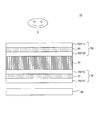
[6] 第一の偏光板と、液晶セルと、第二の偏光板と、バックライトとをこの順に有する液晶表示装置であって、前記第一の偏光板は、第一の偏光子と、前記第一の偏光子の前記液晶セルとは反対側の面に配置された保護フィルムF1と、前記第一の偏光子の前記液晶セル側の面に配置された保護フィルムF2とを有し、前記第二の偏光板は、第二の偏光子と、前記第二の偏光子の前記液晶セルと側の面に配置された保護フィルムF3と、前記第二の偏光子の前記液晶セルとは反対側の面に配置された保護フィルムF4とを有し、
前記保護フィルムF2及びF3の少なくとも一方が、[1]〜[4]のいずれかに記載の光学フィルムである、液晶表示装置。
[7] 極性基を有するシクロオレフィン単量体由来の構造単位を含むシクロオレフィン系重合体と、フルオレン骨格含有化合物由来の構造単位を含むフルオレン骨格含有重合体と、プロトン供与性基又はカルボニル含有基を有するシクロオレフィン単量体由来の構造単位を含むシクロオレフィン系オリゴマー(但し、前記シクロオレフィン系オリゴマーは、前記シクロオレフィン系重合体とは異なる)又はプロトン供与性基を有する芳香族化合物と、溶剤とを含むドープを得る工程と、前記ドープを支持体上に流延した後、乾燥させて膜状物を得る工程と、前記膜状物を、前記支持体から剥離する工程とを含む、光学フィルムの製造方法。
[1] A cycloolefin-based polymer containing a structural unit derived from a cycloolefin monomer having a polar group, a fluorene skeleton-containing polymer containing a structural unit derived from a fluorene skeleton-containing compound, and a proton-donating group or a carbonyl-containing group. Includes a cycloolefin-based oligomer containing a structural unit derived from a cycloolefin-based monomer having (however, the cycloolefin-based oligomer is different from the cycloolefin-based polymer) or an aromatic compound having a proton-donating group. , Optical film.
[2] The fluorene skeleton-containing polymer is a polyester polymer containing a structural unit derived from a fluorene skeleton-containing diol and a structural unit derived from a dicarboxylic acid, a polycarbonate polymer containing a structural unit derived from a fluorene skeleton-containing diol, or a polycarbonate polymer containing a structural unit derived from a fluorene skeleton-containing diol. The optical film according to [1], which is a (meth) acrylate polymer containing a structural unit derived from a fluorene skeleton-containing compound having a polymerizable unsaturated bond and a structural unit derived from a (meth) acrylate monomer.
[3] The optical film according to [1] or [2], wherein the fluorene skeleton-containing polymer has a weight average molecular weight of 5,000 to 1,000,000.
[4] The content of the cycloolefin-based oligomer or the aromatic compound is 1 to 30% by mass with respect to the total mass of the cycloolefin-based polymer and the fluorene skeleton-containing polymer, [1] to [ 3] The optical film according to any one of.
[5] A polarizing plate including a polarizing element and an optical film according to any one of [1] to [4] arranged on at least one surface thereof.
[6] A liquid crystal display device having a first polarizing plate, a liquid crystal cell, a second polarizing plate, and a backlight in this order, wherein the first polarizing plate includes a first polarizing element. It has a protective film F1 arranged on the surface of the first polarizing element on the side opposite to the liquid crystal cell, and a protective film F2 arranged on the surface of the first polarizing element on the surface of the first polarizing element on the liquid crystal cell side. The second polarizing plate includes a second polarizing element, a protective film F3 arranged on a surface of the second polarizing element on a side surface with the liquid crystal cell, and the liquid crystal cell of the second polarizing element. It has a protective film F4 arranged on the opposite surface and has.
A liquid crystal display device in which at least one of the protective films F2 and F3 is the optical film according to any one of [1] to [4].
[7] A cycloolefin-based polymer containing a structural unit derived from a cycloolefin monomer having a polar group, a fluorene skeleton-containing polymer containing a structural unit derived from a fluorene skeleton-containing compound, and a proton-donating group or a carbonyl-containing group. A cycloolefin-based oligomer containing a structural unit derived from a cycloolefin-based monomer having a Optical including a step of obtaining a dope containing the above, a step of casting the dope on a support and then drying it to obtain a film-like substance, and a step of peeling the film-like substance from the support How to make a film.
本発明は、溶液流延法で製造される際の溶媒含有状態での膜状物の強度が高く、膜状物の裂けや切れを抑制しつつ製造される光学フィルムであって、高い透明性と良好な機械的強度とを有する光学フィルムを提供することができる。 The present invention is an optical film produced by a solution casting method in which the strength of the film-like material in a solvent-containing state is high and the film-like material is suppressed from tearing or breaking, and has high transparency. And an optical film having good mechanical strength can be provided.
前述の通り、シクロオレフィン系重合体にフルオレン化合物を添加することで、フィルムの機械的強度を高めることができる。これは、シクロオレフィン系重合体の近傍にフルオレン化合物が存在し、相互作用することによると考えられる。しかしながら、溶媒含有状態では、シクロオレフィン系重合体とフルオレン化合物との間に溶媒が存在するため、シクロオレフィン系重合体とフルオレン化合物との相互作用が十分には得られず、フルオレン化合物を添加しても、溶媒含有状態での膜状物の強度は向上しにくい。 As described above, the mechanical strength of the film can be increased by adding the fluorene compound to the cycloolefin polymer. It is considered that this is because the fluorene compound exists in the vicinity of the cycloolefin polymer and interacts with the fluorene compound. However, in the solvent-containing state, since the solvent exists between the cycloolefin-based polymer and the fluorene compound, the interaction between the cycloolefin-based polymer and the fluorene compound cannot be sufficiently obtained, and the fluorene compound is added. However, it is difficult to improve the strength of the film-like substance in the solvent-containing state.
溶媒含有状態での膜状物の強度を向上させるためには、溶媒含有状態でもシクロオレフィン系重合体とフルオレン化合物とを近傍に存在させて、相互作用を生じさせることが有効であり;そのためには、フルオレン化合物をポリマー化して、シクロオレフィン系重合体の分子鎖とフルオレン化合物の分子鎖が絡み合うようにすることが有効であると考えられる。一方で、フルオレン化合物をポリマー化すると、分子量が大きくなるため、シクロオレフィン系重合体との相溶性が低下し、得られるフィルムの透明性が損なわれやすい。また、相溶性が低下すると、シクロオレフィン系重合体とフルオレン重合体とがそれぞれ単独で凝集しやすくなるため、分子鎖の絡み合いが少なくなり、相互作用が生じにくい場合がある。 In order to improve the strength of the film-like substance in the solvent-containing state, it is effective to allow the cycloolefin polymer and the fluorene compound to be present in the vicinity even in the solvent-containing state to cause an interaction; for that purpose. It is considered effective to polymerize the fluorene compound so that the molecular chain of the cycloolefin polymer and the molecular chain of the fluorene compound are entangled with each other. On the other hand, when the fluorene compound is polymerized, the molecular weight becomes large, so that the compatibility with the cycloolefin-based polymer is lowered, and the transparency of the obtained film is likely to be impaired. Further, when the compatibility is lowered, the cycloolefin polymer and the fluorene polymer are likely to be aggregated independently, so that the entanglement of the molecular chains is reduced and the interaction may be difficult to occur.
これに対し、シクロオレフィン系重合体とフルオレン骨格含有重合体に加えて、「プロトン供与性基又はカルボニル基を有するシクロオレフィン系オリゴマー/又はプロトン供与性基を有する芳香族化合物」をさらに添加することで、相溶性を損なうことなく、シクロオレフィン系重合体とフルオレン骨格含有重合体との間で相互作用を生じさせやすくすることができる。 On the other hand, in addition to the cycloolefin-based polymer and the fluorene skeleton-containing polymer, "a cycloolefin-based oligomer having a proton-donating group or a carbonyl group / or an aromatic compound having a proton-donating group" is further added. Therefore, it is possible to easily cause an interaction between the cycloolefin-based polymer and the fluorene skeleton-containing polymer without impairing the compatibility.
即ち、プロトン供与性基又はカルボニル基を有するシクロオレフィン系オリゴマーは、シクロオレフィン系重合体と類似の構造を有するため、シクロオレフィン系重合体と相互作用しやすく;一定以上の長さの分子鎖を有するので、フルオレン骨格含有重合体の分子鎖とも絡みやすく相互作用しやすいと考えられる。プロトン供与性基を有する芳香族化合物は、そのプロトン供与性基がシクロオレフィン系重合体の極性基と相互作用しやすく;芳香族環がフルオレン骨格含有重合体のフルオレン骨格の芳香族環と相互作用しやすいと考えられる。 That is, since a cycloolefin-based oligomer having a proton-donating group or a carbonyl group has a structure similar to that of a cycloolefin-based polymer, it easily interacts with the cycloolefin-based polymer; Since it has, it is considered that it is easily entangled with the molecular chain of the fluorene skeleton-containing polymer and easily interacts with it. Aromatic compounds having a proton donating group are such that the proton donating group easily interacts with the polar group of the cycloolefin-based polymer; the aromatic ring interacts with the aromatic ring of the fluorene skeleton of the fluorene skeleton-containing polymer. It is considered easy to do.
このように、プロトン供与性基又はカルボニル基を有するシクロオレフィン系オリゴマー/又はプロトン供与性基を有する芳香族化合物によって、相溶性を損なうことなく、シクロオレフィン系重合体とフルオレン骨格含有重合体との間で相互作用を生じさせやすくすることができる。従って、溶液流延法による製膜工程において、溶媒含有状態での膜状物の機械的強度を高めることができるので、膜状物を金属支持体から剥離する時やロール搬送する時の膜状物の端部の裂けや切れの発生を抑制できる。また、得られる光学フィルムの透明性も高めることができる。本発明は、このような知見に基づいてなされたものである。 As described above, the cycloolefin-based oligomer having a proton-donating group or the carbonyl group / or the aromatic compound having a proton-donating group allows the cycloolefin-based polymer and the fluorene skeleton-containing polymer to be mixed without impairing the compatibility. It is possible to facilitate the interaction between them. Therefore, in the film forming process by the solution casting method, the mechanical strength of the film-like material in the solvent-containing state can be increased, so that the film-like material is formed when the film-like material is peeled from the metal support or when the film-like material is transported by roll. It is possible to suppress the occurrence of tears and breaks at the edges of objects. In addition, the transparency of the obtained optical film can be enhanced. The present invention has been made based on such findings.
1.光学フィルム
本発明の光学フィルムは、シクロオレフィン系重合体と、フルオレン骨格含有重合体と、プロトン供与性基又はカルボニル含有基を有するシクロオレフィン系オリゴマー又はプロトン供与性基を有する芳香族化合物とを含む。
1. 1. Optical Film The optical film of the present invention contains a cycloolefin-based polymer, a fluorene skeleton-containing polymer, and a cycloolefin-based oligomer having a proton-donating group or a carbonyl-containing group or an aromatic compound having a proton-donating group. ..
1−1.シクロオレフィン系重合体
シクロオレフィン系重合体は、極性基を有するシクロオレフィン単量体を含むシクロオレフィン単量体の重合体、又は当該シクロオレフィン単量体とそれ以外の共重合性単量体との共重合体である。
1-1. Cycloolefin-based polymer The cycloolefin-based polymer is a polymer of a cycloolefin monomer containing a cycloolefin monomer having a polar group, or a copolymer of the cycloolefin monomer and other monomer. It is a copolymer of.
極性基を有するシクロオレフィン単量体における「極性基」の例には、カルボキシ基、ヒドロキシ基、アルコキシ基、アルコキシカルボニル基、アリロキシカルボニル基、アミノ基、アミド基、シアノ基及びアリール基が含まれる。アリール基は、シクロオレフィン環に置換基として結合していてもよいし、シクロオレフィン環に縮合していてもよい。 Examples of a "polar group" in a cycloolefin monomer having a polar group include a carboxy group, a hydroxy group, an alkoxy group, an alkoxycarbonyl group, an allyloxycarbonyl group, an amino group, an amide group, a cyano group and an aryl group. Is done. The aryl group may be bonded to the cycloolefin ring as a substituent, or may be fused to the cycloolefin ring.
シクロオレフィン系重合体を構成するシクロオレフィン単量体は、ノルボルネン系単量体であることが好ましい。 The cycloolefin monomer constituting the cycloolefin-based polymer is preferably a norbornene-based monomer.
極性基を有するノルボルネン系単量体は、下記一般式(A)で表されるノルボルネン系単量体であることが好ましい。

一般式(A)のR1〜R4は、それぞれ水素原子、ハロゲン原子、炭素原子数1〜5の炭化水素基又は極性基を表す。 R 1 to R 4 of the general formula (A) represent a hydrogen atom, a halogen atom, and a hydrocarbon group or a polar group having 1 to 5 carbon atoms, respectively.
ハロゲン原子の例には、フッ素原子、塩素原子等が含まれる。炭素原子数1〜5の炭化水素基の例には、メチル基、エチル基、プロピル基、ブチル基等が含まれる。炭素原子数1〜5の炭化水素基は、ハロゲン原子、酸素原子、窒素原子、硫黄原子又はケイ素原子を含む連結基;例えばカルボニル基、イミノ基、エーテル結合、シリルエーテル結合、チオエーテル結合等の2価の連結基をさらに有していてもよい。 Examples of halogen atoms include fluorine atoms, chlorine atoms and the like. Examples of the hydrocarbon group having 1 to 5 carbon atoms include a methyl group, an ethyl group, a propyl group, a butyl group and the like. The hydrocarbon group having 1 to 5 carbon atoms is a linking group containing a halogen atom, an oxygen atom, a nitrogen atom, a sulfur atom or a silicon atom; for example, 2 such as a carbonyl group, an imino group, an ether bond, a silyl ether bond, and a thioether bond. It may further have a valence linking group.
R2とR3は、互いに結合して芳香族環又は脂肪族環を形成してもよい。 R 2 and R 3 may combine with each other to form an aromatic ring or an aliphatic ring.
但し、R1〜R4のうち少なくとも一つは、極性基である。極性基は、前述の極性基と同義である。 However, at least one of R 1 to R 4 is a polar group. The polar group is synonymous with the polar group described above.
また、R1〜R4のうちR1とR2が同時に水素原子であるか、又はR1、R2及びR3が同時に水素原子であってもよい。そのようなノルボルネン系単量体は、置換基が片側炭素に置換されているので、分子の対称性が低く、製膜工程における溶媒揮発時の樹脂と添加剤同士の拡散運動を促進しうる。 Also, if R 1 and R 2 of R 1 to R 4 are not hydrogen atoms at the same time, or R 1, R 2 and R 3 may be hydrogen atoms at the same time. Since the substituent of such a norbornene-based monomer is substituted with carbon on one side, the molecular symmetry is low, and the diffusion motion between the resin and the additive at the time of solvent volatilization in the film forming process can be promoted.
一般式(A)のpは、0〜2の整数を示す。光学フィルムの耐熱性を高める観点では、pは、1〜2であることが好ましい。pが1〜2であると、得られる樹脂が嵩高くなり、ガラス転移温度が向上しやすいからである。 P in the general formula (A) represents an integer of 0 to 2. From the viewpoint of increasing the heat resistance of the optical film, p is preferably 1 to 2. This is because when p is 1 to 2, the obtained resin becomes bulky and the glass transition temperature tends to improve.
一般式(A)で表されるノルボルネン系単量体の具体例を以下に示す。このうち、極性基を有するノルボルネン系単量体の例には、以下の化合物が含まれる。
シクロオレフィン系重合体を構成するノルボルネン系単量体は、極性基を有するノルボルネン系単量体だけでなく、極性基を有しないノルボルネン系単量体をさらに含んでいてもよい。 The norbornene-based monomer constituting the cycloolefin-based polymer may further contain not only the norbornene-based monomer having a polar group but also the norbornene-based monomer having no polar group.
極性基を有しないノルボルネン系単量体は、例えば一般式(A)のR1〜R4が、それぞれ独立に水素原子、ハロゲン原子、シリル基、又は炭素数1〜5の炭化水素基である単量体でありうる。 In the norbornene-based monomer having no polar group, for example, R 1 to R 4 of the general formula (A) are independently hydrogen atoms, halogen atoms, silyl groups, or hydrocarbon groups having 1 to 5 carbon atoms. It can be a monomer.
極性基を有しないノルボルネン系単量体の例には、以下の化合物が含まれる。
極性基を有するノルボルネン系単量体由来の構造単位の含有割合は、シクロオレフィン系重合体を構成するノルボルネン系単量体由来の構造単位の合計に対して例えば50モル%以上、好ましくは70モル%以上、より好ましくは100モル%とし得る。極性基を有するノルボルネン系単量体由来の構造単位を一定以上含むと、樹脂の極性が高まりやすく、シクロオレフィン系重合体を溶媒に溶解させやすくすることができるので、溶液製膜法(キャスト法)での製膜が容易となる。 The content ratio of the structural units derived from the norbornene-based monomer having a polar group is, for example, 50 mol% or more, preferably 70 mol% or more, based on the total of the structural units derived from the norbornene-based monomers constituting the cycloolefin polymer. % Or more, more preferably 100 mol%. When the structural unit derived from the norbornene-based monomer having a polar group is contained in a certain amount or more, the polarity of the resin is likely to increase, and the cycloolefin-based polymer can be easily dissolved in the solvent. ) Makes it easier to form a film.
ノルボルネン系単量体と共重合可能な共重合性単量体の例には、ノルボルネン系単量体と開環共重合可能な共重合性単量体、ノルボルネン系単量体と付加共重合可能な共重合性単量体が含まれる。 Examples of copolymerizable monomers that can be copolymerized with norbornene-based monomers include copolymerizable monomers that can be ring-opened copolymerized with norbornene-based monomers and addition copolymerizable with norbornene-based monomers. Copolymerizable monomer is included.
ノルボルネン系単量体と開環共重合可能な共重合性単量体の例には、シクロブテン、シクロペンテン、シクロヘプテン、シクロオクテン、ジシクロペンタジエン等のノルボルネン系単量体以外のシクロオレフィンが含まれる。 Examples of copolymerizable monomers that can be open-ring copolymerized with norbornene-based monomers include cycloolefins other than norbornene-based monomers such as cyclobutene, cyclopentene, cycloheptene, cyclooctene, and dicyclopentadiene.
ノルボルネン系単量体と付加共重合可能な共重合性単量体の例には、不飽和二重結合含有化合物、ビニル系環状炭化水素単量体、(メタ)アクリレートが含まれる。不飽和二重結合含有化合物の例には、炭素原子数2〜12(好ましくは2〜8)のオレフィン系化合物であり、その例には、エチレン、プロピレン、ブテンが含まれる。ビニル系環状炭化水素単量体の例には、4−ビニルシクロペンテン、2−メチル−4−イソプロペニルシクロペンテン等のビニルシクロペンテン系単量体が含まれる。(メタ)アクリレートの例には、メチル(メタ)アクリレート、2−エチルヘキシル(メタ)アクリレート、シクロヘキシル(メタ)アクリレート等の炭素原子数1〜20のアルキル(メタ)アクリレートが含まれる。 Examples of copolymerizable monomers that can be additionally copolymerized with norbornene-based monomers include unsaturated double bond-containing compounds, vinyl-based cyclic hydrocarbon monomers, and (meth) acrylates. Examples of unsaturated double bond-containing compounds are olefin compounds having 2 to 12 (preferably 2 to 8) carbon atoms, and examples thereof include ethylene, propylene, and butene. Examples of vinyl-based cyclic hydrocarbon monomers include vinyl cyclopentene-based monomers such as 4-vinylcyclopentene and 2-methyl-4-isopropenylcyclopentene. Examples of the (meth) acrylate include alkyl (meth) acrylates having 1 to 20 carbon atoms such as methyl (meth) acrylate, 2-ethylhexyl (meth) acrylate, and cyclohexyl (meth) acrylate.
ノルボルネン系単量体由来の構造単位の含有割合は、シクロオレフィン系重合体を構成する構造単位の合計に対して50〜100モル%、好ましくは60〜100モル%、より好ましくは70〜100モル%とし得る。 The content ratio of the structural units derived from the norbornene-based monomer is 50 to 100 mol%, preferably 60 to 100 mol%, and more preferably 70 to 100 mol% with respect to the total of the structural units constituting the cycloolefin-based polymer. Can be%.
シクロオレフィン系重合体は、前述の通り、極性基を有するノルボルネン系単量体を含むノルボルネン系単量体を重合又は共重合して得られる重合体である。重合又は共重合は、開環重合又は開環共重合であってもよいし、付加重合又は付加共重合であってもよい。重合体の例には、以下のものが含まれる。
(1)ノルボルネン系単量体の開環重合体
(2)ノルボルネン系単量体とそれと開環共重合可能な共重合性単量体との開環共重合体
(3)上記(1)又は(2)の開環(共)重合体の水素添加物
(4)上記(1)又は(2)の開環(共)重合体をフリーデルクラフツ反応により環化した後、水素添加した(共)重合体
(5)ノルボルネン系単量体と不飽和二重結合含有化合物との付加共重合体
(6)ノルボルネン系単量体のビニル系環状炭化水素単量体との付加共重合体及びその水素添加物
(7)ノルボルネン系単量体と(メタ)アクリレートとの付加共重合体
As described above, the cycloolefin-based polymer is a polymer obtained by polymerizing or copolymerizing a norbornene-based monomer containing a norbornene-based monomer having a polar group. The polymerization or copolymerization may be ring-opening polymerization or ring-opening copolymerization, or addition polymerization or addition copolymerization. Examples of polymers include:
(1) Ring-opening polymer of norbornene-based monomer (2) Ring-opening copolymer of norbornene-based monomer and a copolymerizable monomer capable of ring-opening copolymerization (3) The above (1) or Hydrogenation of the ring-opening (co) polymer of (2) (4) The ring-opening (co) polymer of (1) or (2) above was cyclized by the Friedelcrafts reaction and then hydrogenated (co). ) Polymer (5) Addition copolymer of norbornene-based monomer and unsaturated double bond-containing compound (6) Addition copolymer of norbornene-based monomer with vinyl-based cyclic hydrocarbon monomer and its Hydrogenated product (7) Addition polymer of norbornene-based monomer and (meth) acrylate
(1)〜(7)の重合体は、いずれも公知の方法、例えば特開2008−107534号公報や特開2005−227606号公報に記載の方法で得ることができる。例えば、(2)の開環共重合に用いる触媒や溶媒は、特開2008−107534号公報の段落0019〜0024に記載のものを使用できる。(3)及び(6)の水素添加に用いる触媒は、特開2008−107534号公報の段落0025〜0028に記載のものを使用できる。(4)のフリーデルクラフツ反応に用いる酸性化合物は、特開2008−107534号公報の段落0029に記載のものを使用できる。(5)〜(7)の付加重合に用いる触媒は、例えば特開2005−227606号公報の段落0058〜0063を使用できる。(7)の交互共重合反応は、特開2005−227606号公報の段落0071及び0072に記載の方法で行うことができる。 The polymers (1) to (7) can all be obtained by known methods, for example, the methods described in JP-A-2008-107534 and JP-A-2005-227606. For example, as the catalyst and solvent used for the ring-opening copolymerization of (2), those described in paragraphs 0019 to 0024 of JP-A-2008-107534 can be used. As the catalyst used for hydrogenation of (3) and (6), those described in paragraphs 0025 to 0028 of JP-A-2008-107534 can be used. As the acidic compound used in the Friedel-Crafts reaction of (4), those described in paragraph 0029 of JP-A-2008-107534 can be used. As the catalyst used for the addition polymerization of (5) to (7), for example, paragraphs 0058 to 0063 of JP-A-2005-227606 can be used. The alternating copolymerization reaction of (7) can be carried out by the method described in paragraphs 0071 and 0072 of JP-A-2005-227606.
中でも、(1)〜(3)及び(5)が好ましく、(1)〜(3)がより好ましい。即ち、シクロオレフィン系重合体は、ノルボルネン系単量体の開環重合体若しくは開環共重合体又はそれらの水素添加物であることが好ましい。そのようなシクロオレフィン系重合体は、下記一般式(B)で表される構造単位を含みうる。一般式(B)で表される構造単位は、前述の一般式(A)で表されるノルボルネン系単量体の開環物に由来する。 Among them, (1) to (3) and (5) are preferable, and (1) to (3) are more preferable. That is, the cycloolefin-based polymer is preferably a ring-opening polymer or a ring-opening copolymer of a norbornene-based monomer, or a hydrogenated product thereof. Such a cycloolefin-based polymer may contain a structural unit represented by the following general formula (B). The structural unit represented by the general formula (B) is derived from the ring-opened product of the norbornene-based monomer represented by the general formula (A) described above.
一般式(B)のXは、−CH=CH−又は−CH2CH2−である。 X in the general formula (B) is, -CH = CH- or -CH 2 CH 2 -.
一般式(B)のR1〜R4及びpは、一般式(A)のR1〜R4及びpとそれぞれ同義である。 R 1 to R 4 and p in the general formula (B) are respectively R 1 to R 4 and p in the general formula (A) synonymous.
シクロオレフィン系重合体は、市販品であってもよい。シクロオレフィン系重合体の市販品の例には、JSR(株)製のアートン(Arton)G(例えばG7810等)、アートンF、アートンR(例えばR4500、R4900及びR5000等)、及びアートンRXが含まれる。 The cycloolefin-based polymer may be a commercially available product. Examples of commercially available cycloolefin polymers include Arton G (eg, G7810, etc.), Arton F, Arton R (eg, R4500, R4900, R5000, etc.), and Arton RX, manufactured by JSR Corporation. Is done.
シクロオレフィン系重合体の双極子モーメントは、0.5〜8.0debyeであることが好ましい。シクロオレフィン系重合体の双極子モーメントが0.5debye以上であると、一定以上の極性を有するので、溶媒に溶解しやすく、溶液製膜法(キャスト法)での製膜が行いやすい。シクロオレフィン系重合体の双極子モーメントが8.0debye以下であると、極性が高まりすぎないので、他の成分との相溶性が損なわれにくい。シクロオレフィン系重合体の双極子モーメントは、0.5〜5.0debyeであることがより好ましい。 The dipole moment of the cycloolefin polymer is preferably 0.5 to 8.0 debye. When the dipole moment of the cycloolefin polymer is 0.5 debye or more, it has a polarity of a certain level or more, so that it is easily dissolved in a solvent and it is easy to form a film by a solution film forming method (cast method). When the dipole moment of the cycloolefin polymer is 8.0 debye or less, the polarity does not increase too much, so that the compatibility with other components is not easily impaired. The dipole moment of the cycloolefin polymer is more preferably 0.5 to 5.0 debye.
シクロオレフィン系重合体の双極子モーメントは、以下の方法で算出することができる。
シクロオレフィン系重合体が単独重合体である場合、1)分子力学法(MM3法)と半経験的分子軌道法(AM1法、PM6法)により、分子構造の最適化及び空間配座の最適化を行った後、2)富士通(株)製のシミュレーション・ソフトウェアであるFUJITSU Technical Computing Solution SCIGRESSを用いて、双極子モーメントを算出する。
The dipole moment of the cycloolefin polymer can be calculated by the following method.
When the cycloolefin polymer is a homopolymer, 1) optimization of the molecular structure and optimization of the spatial arrangement by the molecular mechanics method (MM3 method) and the semi-empirical molecular orbital method (AM1 method, PM6 method). 2) Calculate the dipole moment using FUJITSU Technical Computing Solution SCIGRESS, which is simulation software manufactured by Fujitsu Limited.
シクロオレフィン系重合体が二以上の単量体の共重合体である場合、共重合体における各単量体の含有比率と各単量体の単独重合体について算出した双極子モーメントの積の和を採ることにより、双極子モーメントを算出することができる。例えば、シクロオレフィン系重合体が、単量体1と単量体2の80/20の共重合体である場合、双極子モーメント=(単量体1の単独重合体の双極子モーメント1×単量体1の含有比率)+(単量体2の単独重合体の双極子モーメント2×単量体2の含有比率)として算出することができる。 When the cycloolefin-based polymer is a copolymer of two or more monomers, the sum of the product of the content ratio of each monomer in the copolymer and the dipole moment calculated for the homopolymer of each monomer. The dipole moment can be calculated by taking. For example, when the cycloolefin-based polymer is an 80/20 copolymer of monomer 1 and monomer 2, dipole moment = (dipole moment 1 × monomer of the homopolymer of monomer 1). It can be calculated as (content ratio of metric 1) + (dipole moment 2 of homopolymer of monomer 2 × content ratio of monomer 2).
シクロオレフィン系重合体の双極子モーメントは、極性基の種類や極性基を有するノルボルネン系単量体の含有比率によって調整することができる。 The dipole moment of the cycloolefin-based polymer can be adjusted by the type of polar group and the content ratio of the norbornene-based monomer having a polar group.
シクロオレフィン系重合体の重量平均分子量(Mw)は、20000〜300000であることが好ましい。重量平均分子量が上記範囲にあると、シクロオレフィン系重合体の耐熱性、耐水性、耐薬品性、機械的特性とフィルムとしての成形加工性が良好となる。シクロオレフィン系重合体の重量平均分子量(Mw)は、30000〜250000であることがより好ましく、40000〜200000であることがさらに好ましい。シクロオレフィン系重合体の重量平均分子量は、ゲルパーミエーションクロマトグラフィー(GPC)にてポリスチレン換算にて測定することができる。 The weight average molecular weight (Mw) of the cycloolefin polymer is preferably 20000 to 300000. When the weight average molecular weight is in the above range, the heat resistance, water resistance, chemical resistance, mechanical properties and molding processability of the film of the cycloolefin polymer are improved. The weight average molecular weight (Mw) of the cycloolefin polymer is more preferably 30,000 to 250,000, and even more preferably 40,000 to 200,000. The weight average molecular weight of the cycloolefin polymer can be measured by gel permeation chromatography (GPC) in terms of polystyrene.
シクロオレフィン系重合体のガラス転移温度(Tg)は、通常、110℃以上であり、110〜350℃であることが好ましく、120〜250℃であることがより好ましく、120〜220℃であることがさらに好ましい。Tgが110℃以上であると、高温条件下での変形を抑制しやすい。一方、Tgが350℃以下であると、成形加工が容易となり、成形加工時の熱による樹脂の劣化も抑制しやすい。 The glass transition temperature (Tg) of the cycloolefin polymer is usually 110 ° C. or higher, preferably 110 to 350 ° C., more preferably 120 to 250 ° C., and 120 to 220 ° C. Is even more preferable. When Tg is 110 ° C. or higher, deformation under high temperature conditions can be easily suppressed. On the other hand, when Tg is 350 ° C. or lower, the molding process becomes easy, and the deterioration of the resin due to the heat during the molding process is also easily suppressed.
1−2.フルオレン骨格含有重合体
フルオレン骨格含有重合体は、フィルムの機械的強度を高めつつ、シクロオレフィン系重合体と組み合わせることで、位相差を低減させる機能を有しうる。フルオレン骨格含有重合体は、フルオレン骨格含有化合物由来の構造単位を含む重合体である。
1-2. Fluorene skeleton-containing polymer The fluorene skeleton-containing polymer may have a function of reducing the phase difference by combining with a cycloolefin-based polymer while increasing the mechanical strength of the film. The fluorene skeleton-containing polymer is a polymer containing a structural unit derived from a fluorene skeleton-containing compound.
フルオレン骨格含有化合物由来の構造単位の含有比率は、重合体を構成する単量体由来の構造単位の合計モル数に対して2モル%以上、好ましくは10モル%以上でありうる。 The content ratio of the structural unit derived from the fluorene skeleton-containing compound may be 2 mol% or more, preferably 10 mol% or more, based on the total number of moles of the structural unit derived from the monomer constituting the polymer.
フルオレン骨格含有重合体の例には、フルオレン骨格含有ポリエステル重合体、フルオレン骨格含有ポリカーボネート重合体、及びフルオレン骨格含有(メタ)アクリレート重合体が含まれる。 Examples of the fluorene skeleton-containing polymer include a fluorene skeleton-containing polyester polymer, a fluorene skeleton-containing polycarbonate polymer, and a fluorene skeleton-containing (meth) acrylate polymer.
(フルオレン骨格含有ポリエステル重合体)
フルオレン骨格含有ポリエステル重合体は、フルオレン骨格含有ジオールを含むジオール成分と、ジカルボン酸成分とを反応させて得られる重合体である。即ち、フルオレン骨格含有ポリエステル重合体は、フルオレン骨格含有ジオール構造単位を含むジオール構造単位と、ジカルボン酸構造単位とを含む。
(Polyester polymer containing fluorene skeleton)
The fluorene skeleton-containing polyester polymer is a polymer obtained by reacting a diol component containing a fluorene skeleton-containing diol with a dicarboxylic acid component. That is, the fluorene skeleton-containing polyester polymer contains a diol structural unit containing a fluorene skeleton-containing diol structural unit and a dicarboxylic acid structural unit.
ジオール構造単位は、フルオレン骨格含有ジオール由来の構造単位を含む。フルオレン骨格含有ジオールは、9,9−ビスアリールフルオレン骨格を有する化合物であることが好ましく、下記式(1)で表される化合物であることがより好ましい。
式(1)のZは、芳香族炭化水素環を示す。芳香族炭化水素環は、ベンゼン環;又はナフタレン環、アントラセン環等の縮合多環式芳香族炭化水素環であり、好ましくはベンゼン環である。 Z in the formula (1) represents an aromatic hydrocarbon ring. The aromatic hydrocarbon ring is a benzene ring; or a fused polycyclic aromatic hydrocarbon ring such as a naphthalene ring or an anthracene ring, and is preferably a benzene ring.
式(1)のR1及びR2は、それぞれ炭素数1〜4のアルキル基を示す。アルキル基の例には、メチル基、エチル基、プロピル基、ブチル基が含まれる。R3は、炭素数1〜4のアルキレン基を示す。アルキレン基の例には、メチレン基、エチレン基、プロピレン基、ブチレン基が含まれる。 R 1 and R 2 of the formula (1) represent alkyl groups having 1 to 4 carbon atoms, respectively. Examples of alkyl groups include methyl, ethyl, propyl and butyl groups. R 3 represents an alkylene group having 1 to 4 carbon atoms. Examples of the alkylene group include a methylene group, an ethylene group, a propylene group and a butylene group.
式(1)のkは、0〜4の整数であり、好ましくは0である。mは、0以上の整数であり、好ましくは1又は2である。nは、0以上の整数であり、好ましくは1である。pは、1以上の整数であり、好ましくは1である。 K in the formula (1) is an integer of 0 to 4, preferably 0. m is an integer of 0 or more, preferably 1 or 2. n is an integer of 0 or more, preferably 1. p is an integer of 1 or more, preferably 1.
式(1)で表される化合物は、下記式(1A)で表される化合物であることがより好ましい。式(1A)のR2及びR3は、式(1)のR2及びR3とそれぞれ同義である。
式(1A)で表されるフルオレン骨格含有ジオールの例には、9,9−ビス−(4−ヒドロキシエトキシフェニル)−フルオレン、9,9−ビス−(4−ヒドロキシプロポキシフェニル)−フルオレン、9,9−ビス−(4−ヒドロキシブトキシフェニル)−フルオレン等が含まれる。中でも、9,9−ビス−(4−ヒドロキシエトキシフェニル)−フルオレンが好ましい。 Examples of the fluorene skeleton-containing diol represented by the formula (1A) include 9,9-bis- (4-hydroxyethoxyphenyl) -fluorene, 9,9-bis- (4-hydroxypropoxyphenyl) -fluorene, 9. , 9-Bis- (4-Hydroxybutoxyphenyl) -fluorene and the like. Of these, 9,9-bis- (4-hydroxyethoxyphenyl) -fluorene is preferable.
ジオール構造単位は、フルオレン骨格含有ジオール以外の他のジオールに由来する構造単位をさらに含んでいてもよい。他のジオールの例には、脂肪族ジオール、脂環族ジオール、フルオレン骨格含有ジオール以外の芳香族ジオールが含まれ、好ましくは脂肪族ジオールである。 The diol structural unit may further contain structural units derived from other diols other than the fluorene skeleton-containing diol. Examples of other diols include aliphatic diols, alicyclic diols, and aromatic diols other than fluorene skeleton-containing diols, preferably aliphatic diols.
脂肪族ジオールは、炭素数2〜4の脂肪族ジオールであることが好ましい。炭素数2〜4の脂肪族ジオールの例には、エチレングリコール、1,3−プロパンジオール、1,2−プロパンジオール、1,4−ブタンジオール、1,2−ブタンジオール、1,3−ブタンジオールが含まれる。中でも、エチレングリコール、1,4−ブタンジオールが好ましく、エチレングリコールがより好ましい。 The aliphatic diol is preferably an aliphatic diol having 2 to 4 carbon atoms. Examples of aliphatic diols having 2 to 4 carbon atoms include ethylene glycol, 1,3-propanediol, 1,2-propanediol, 1,4-butanediol, 1,2-butanediol, and 1,3-butane. Contains diol. Of these, ethylene glycol and 1,4-butanediol are preferable, and ethylene glycol is more preferable.
フルオレン骨格含有ジオール構造単位の含有比率は、ジオール構造単位の合計モル数に対して5〜100モル%であることが好ましい。フルオレン骨格含有ジオール構造単位の含有比率が5モル%以上であると、芳香族化合物やシクロオレフィンオリゴマーとの間で相互作用を生じやすいだけでなく、フィルムに十分な機械的強度を付与しやすい。また、フィルムの位相差値を十分に低減しやすい。フルオレン骨格含有ジオール構造単位の含有比率は、ジオール構造単位の合計モル数に対して15〜95モル%であることがより好ましい。 The content ratio of the fluorene skeleton-containing diol structural unit is preferably 5 to 100 mol% with respect to the total number of moles of the diol structural unit. When the content ratio of the fluorene skeleton-containing diol structural unit is 5 mol% or more, not only the interaction with the aromatic compound or the cycloolefin oligomer is likely to occur, but also sufficient mechanical strength is likely to be imparted to the film. In addition, it is easy to sufficiently reduce the phase difference value of the film. The content ratio of the fluorene skeleton-containing diol structural unit is more preferably 15 to 95 mol% with respect to the total number of moles of the diol structural unit.
ジカルボン酸構造単位は、芳香族ジカルボン酸由来の構造単位を含むことが好ましい。芳香族ジカルボン酸は、炭素数8〜15の芳香族ジカルボン酸であることが好ましく、その例には、テレフタル酸、イソフタル酸、ナフタレンジカルボン酸、及びこれらのエステル等が含まれる。中でも、テレフタル酸又はそのエステルが好ましい。 The dicarboxylic acid structural unit preferably contains a structural unit derived from an aromatic dicarboxylic acid. The aromatic dicarboxylic acid is preferably an aromatic dicarboxylic acid having 8 to 15 carbon atoms, and examples thereof include terephthalic acid, isophthalic acid, naphthalenedicarboxylic acid, and esters thereof. Of these, terephthalic acid or an ester thereof is preferable.
ジカルボン酸誘導体構造単位は、必要に応じて脂肪族ジカルボン酸や脂環族ジカルボン酸に由来する構造単位をさらに含んでいてもよい。 The dicarboxylic acid derivative structural unit may further contain a structural unit derived from an aliphatic dicarboxylic acid or an alicyclic dicarboxylic acid, if necessary.
芳香族ジカルボン酸構造単位の含有比率は、ジカルボン酸構造単位の合計モル数に対して50〜100モル%であることが好ましい。芳香族ジカルボン酸構造単位の含有比率が50モル%以上であると、フィルムに十分な機械的強度を付与しやすい。芳香族ジカルボン酸構造単位の含有比率は、ジカルボン酸構造単位の合計モル数に対して70〜100モル%であることがより好ましい。 The content ratio of the aromatic dicarboxylic acid structural unit is preferably 50 to 100 mol% with respect to the total number of moles of the dicarboxylic acid structural unit. When the content ratio of the aromatic dicarboxylic acid structural unit is 50 mol% or more, it is easy to impart sufficient mechanical strength to the film. The content ratio of the aromatic dicarboxylic acid structural unit is more preferably 70 to 100 mol% with respect to the total number of moles of the dicarboxylic acid structural unit.
(フルオレン骨格含有ポリカーボネート重合体)
フルオレン骨格含有ポリカーボネート重合体は、フルオレン骨格含有ジオールを含む芳香族ジオール成分を、ホスゲンや炭酸ジエステルと反応させて得られる重合体である。即ち、フルオレン骨格含有ポリカーボネート重合体は、フルオレン骨格含有ジオールを含む芳香族ジオール成分由来の構造単位を含む。
(Fluorene skeleton-containing polycarbonate polymer)
The fluorene skeleton-containing polycarbonate polymer is a polymer obtained by reacting an aromatic diol component containing a fluorene skeleton-containing diol with phosgene or a carbonic acid diester. That is, the fluorene skeleton-containing polycarbonate polymer contains a structural unit derived from an aromatic diol component containing a fluorene skeleton-containing diol.
フルオレン骨格含有ジオールは、フルオレン骨格含有ポリエステル重合体を構成するフルオレン骨格含有ジオールと同様のものを用いることができる。 As the fluorene skeleton-containing diol, the same fluorene skeleton-containing diol as the fluorene skeleton-containing diol constituting the fluorene skeleton-containing polyester polymer can be used.
芳香族ジオール成分は、フルオレン骨格含有ジオール以外の他の芳香族ジオールをさらに含んでいてもよい。他の芳香族ジオールは、通常、芳香族ポリカーボネートのジオール成分として使用されているものであればよく、その例には、ハイドロキノン、レゾルシノール、4,4′−ビフェノール、1,1−ビス(4−ヒドロキシフェニル)エタン(ビスフェノールE)、2,2−ビス(4−ヒドロキシフェニル)プロパン(ビスフェノールA)、2,2−ビス(4−ヒドロキシ−3−メチルフェニル)プロパン(ビスフェノールC)、2,2−ビス(4−ヒドロキシフェニル)ブタン、1,1−ビス(4−ヒドロキシフェニル)−1−フェニルエタン、1,1−ビス(4−ヒドロキシフェニル)シクロヘキサン(ビスフェノールZ)、1,1−ビス(4−ヒドロキシフェニル)−3,3,5−トリメチルシクロヘキサン、2,2−ビス(4−ヒドロキシフェニル)ペンタン、4,4′−(p−フェニレンジイソプロピリデン)ジフェノール、α,α′−ビス(4−ヒドロキシフェニル)−m−ジイソプロピルベンゼン(ビスフェノールM)、1,1−ビス(4−ヒドロキシフェニル)−4−イソプロピルシクロヘキサン等が含まれる。中でも、ビスフェノールが好ましく、ビスフェノールAがより好ましい。 The aromatic diol component may further contain other aromatic diols other than the fluorene skeleton-containing diol. Other aromatic diols may be those usually used as a diol component of aromatic polycarbonate, and examples thereof include hydroquinone, resorcinol, 4,4'-biphenol, 1,1-bis (4-). Hydroxyphenyl) ethane (bisphenol E), 2,2-bis (4-hydroxyphenyl) propane (bisphenol A), 2,2-bis (4-hydroxy-3-methylphenyl) propane (bisphenol C), 2,2 -Bis (4-hydroxyphenyl) butane, 1,1-bis (4-hydroxyphenyl) -1-phenylethane, 1,1-bis (4-hydroxyphenyl) cyclohexane (bisphenol Z), 1,1-bis ( 4-Hydroxyphenyl) -3,3,5-trimethylcyclohexane, 2,2-bis (4-hydroxyphenyl) pentane, 4,4'-(p-phenylenediisopropylidene) diphenol, α, α'-bis (4-Hydroxyphenyl) -m-diisopropylbenzene (bisphenol M), 1,1-bis (4-hydroxyphenyl) -4-isopropylcyclohexane and the like are included. Among them, bisphenol is preferable, and bisphenol A is more preferable.
フルオレン骨格含有ジオール由来の構造単位の含有比率は、芳香族ジオール成分由来の構造単位の合計モル数に対して2〜100モル%であることが好ましい。フルオレン骨格含有ジオール由来の構造単位の含有比率が5モル%以上であると、芳香族化合物やシクロオレフィンオリゴマーとの間で相互作用を生じやすいだけでなく、フィルムに十分な機械的強度を付与しやすい。フルオレン骨格含有ジオール由来の構造単位の含有比率は、芳香族ジオール成分由来の構造単位の合計モル数に対して10〜95モル%であることがより好ましい。 The content ratio of the structural unit derived from the fluorene skeleton-containing diol is preferably 2 to 100 mol% with respect to the total number of moles of the structural unit derived from the aromatic diol component. When the content ratio of the structural unit derived from the fluorene skeleton-containing diol is 5 mol% or more, not only the interaction with the aromatic compound or the cycloolefin oligomer is likely to occur, but also sufficient mechanical strength is imparted to the film. Cheap. The content ratio of the structural unit derived from the fluorene skeleton-containing diol is more preferably 10 to 95 mol% with respect to the total number of moles of the structural unit derived from the aromatic diol component.
(フルオレン骨格含有(メタ)アクリレート重合体)
フルオレン骨格含有(メタ)アクリレート重合体は、重合性不飽和結合を有するフルオレン骨格含有化合物と(メタ)アクリレート化合物とを付加共重合反応させて得られる重合体である。即ち、フルオレン骨格含有(メタ)アクリレート重合体は、重合性不飽和結合を有するフルオレン骨格含有化合物由来の構造単位と、(メタ)アクリレート化合物由来の構造単位とを含む。
(Fluorene skeleton-containing (meth) acrylate polymer)
The fluorene skeleton-containing (meth) acrylate polymer is a polymer obtained by subjecting a fluorene skeleton-containing compound having a polymerizable unsaturated bond and a (meth) acrylate compound to an addition copolymerization reaction. That is, the fluorene skeleton-containing (meth) acrylate polymer contains a structural unit derived from a fluorene skeleton-containing compound having a polymerizable unsaturated bond and a structural unit derived from a (meth) acrylate compound.
重合性不飽和結合を有するフルオレン骨格含有化合物における「重合性不飽和結合」は、(メタ)アクリロイル基であることが好ましい。 The "polymerizable unsaturated bond" in the fluorene skeleton-containing compound having a polymerizable unsaturated bond is preferably a (meth) acryloyl group.
重合性不飽和結合((メタ)アクリロイル基)の数は、1個以上であればよく、2個以上(例えば、2〜6個、好ましくは2〜4個、特に2個)であることが好ましい。このようなフルオレン骨格含有化合物を用いると、ポリマーの一部に架橋構造(三次元構造)を導入でき、得られるフィルムの耐熱性や機械的強度を高めやすい。 The number of polymerizable unsaturated bonds ((meth) acryloyl groups) may be 1 or more, and may be 2 or more (for example, 2 to 6, preferably 2 to 4, particularly 2). preferable. When such a fluorene skeleton-containing compound is used, a crosslinked structure (three-dimensional structure) can be introduced into a part of the polymer, and the heat resistance and mechanical strength of the obtained film can be easily increased.
重合性不飽和結合を有するフルオレン骨格含有化合物は、9,9−ビスアリールフルオレン骨格を有する化合物であることが好ましく、下記式(2)で表される化合物であることがより好ましい。
式(2)のZ、R1、R2、R3、k、m、n及びpは、式(1)のR1、R2、R3、k、m、n及びpとそれぞれ同義である。R4は、水素原子又はメチル基を示す。 Z of formula (2), R 1, R 2, R 3, k, m, n and p are, R 1, R 2, R 3, k in Formula (1), m, respectively and n and p interchangeably be. R 4 represents a hydrogen atom or a methyl group.
式(2)で表される化合物の例には、9,9−ビス(4−(メタ)アクリロイルオキシフェニル)フルオレン、9,9−ビス(4−(メタ)アクリロイルオキシ−3−メチルフェニル)フルオレン、9,9−ビス(4−(メタ)アクリロイルオキシ−3,5−ジメチルフェニル)フルオレン、9,9−ビス(4−(メタ)アクリロイルオキシ−3−フェニルフェニル)フルオレン等の9,9−ビス((メタ)アクリロイルオキシアリール)フルオレン類;9,9−ビス(4−(2−(メタ)アクリロイルオキシエトキシ)フェニル)フルオレン等の9,9−ビス((メタ)アクリロイルオキシ(ポリ)アルコキシアリール)フルオレン類が含まれる。 Examples of the compound represented by the formula (2) include 9,9-bis (4- (meth) acryloyloxyphenyl) fluorene and 9,9-bis (4- (meth) acryloyloxy-3-methylphenyl). Fluorene, 9,9-bis (4- (meth) acryloyloxy-3,5-dimethylphenyl) fluorene, 9,9-bis (4- (meth) acryloyloxy-3-phenylphenyl) fluorene, etc. 9,9 -Bis ((meth) acryloyloxyaryl) fluorenes; 9,9-bis ((meth) acryloyloxy (poly)) such as 9,9-bis (4- (2- (meth) acryloyloxyethoxy) phenyl) fluorene. Alkoxyaryl) Fluorenes are included.
重合性不飽和結合を有するフルオレン骨格含有化合物由来の構造単位の含有比率は、重合体を構成する単量体由来の構造単位の合計モル数に対して2〜50モル%であることが好ましい。上記含有比率が2モル%以上であると、芳香族化合物やシクロオレフィンオリゴマーとの間で相互作用を生じやすいだけでなく、フィルムに十分な機械的強度を付与しやすい。上記含有比率は、フルオレン骨格含有(メタ)アクリレート重合体を構成する構造単位の合計モル数に対して2〜20モル%であることがより好ましい。 The content ratio of the structural unit derived from the fluorene skeleton-containing compound having a polymerizable unsaturated bond is preferably 2 to 50 mol% with respect to the total number of moles of the structural unit derived from the monomer constituting the polymer. When the content ratio is 2 mol% or more, not only is it easy to cause an interaction with an aromatic compound or a cycloolefin oligomer, but also it is easy to impart sufficient mechanical strength to the film. The content ratio is more preferably 2 to 20 mol% with respect to the total number of moles of the structural units constituting the fluorene skeleton-containing (meth) acrylate polymer.
(メタ)アクリレート化合物は、(メタ)アクリロイル基を有し、且つフルオレン骨格を有しない化合物である。(メタ)アクリレート化合物は、単官能の(メタ)アクリレート化合物であってもよいし、二官能以上の(メタ)アクリレート化合物であってもよい。 The (meth) acrylate compound is a compound having a (meth) acryloyl group and not having a fluorene skeleton. The (meth) acrylate compound may be a monofunctional (meth) acrylate compound or a bifunctional or higher functional (meth) acrylate compound.
単官能の(メタ)アクリレート化合物の例には、(メタ)アクリル酸メチル、(メタ)アクリル酸エチル、(メタ)アクリル酸ブチル等の(メタ)アクリル酸C1−20アルキル(好ましくはC1−10アルキル、より好ましくはC1−4アルキル);(メタ)アクリル酸シクロヘキシル等の(メタ)アクリル酸シクロアルキル;(メタ)アクリル酸フェニル等の(メタ)アクリル酸アリール;2−ヒドロキシエチル(メタ)アクリレート、2−ヒドロキシプロピル(メタ)アクリレート、2−ヒドロキシブチル(メタ)アクリレート等のヒドロキシC2−10アルキル(メタ)アクリレート;ジエチレングリコールモノ(メタ)アクリレート、ポリエチレングリコールモノ(メタ)アクリレート等の(ポリ)オキシC2−6アルキレングリコールモノ(メタ)アクリレートが含まれる。 Examples of monofunctional (meth) acrylate compounds include C1-20 alkyl (meth) acrylates (preferably C1-10) such as methyl (meth) acrylate, ethyl (meth) acrylate, and butyl (meth) acrylate. Alkyl, more preferably C1-4 alkyl); cycloalkyl (meth) acrylate such as cyclohexyl (meth) acrylate; aryl (meth) acrylate such as phenyl (meth) acrylate; 2-hydroxyethyl (meth) acrylate , 2-Hydroxypropyl (meth) acrylate, 2-hydroxybutyl (meth) acrylate and other hydroxy C2-10 alkyl (meth) acrylate; diethylene glycol mono (meth) acrylate, polyethylene glycol mono (meth) acrylate and other (poly) oxy Includes C2-6 alkylene glycol mono (meth) acrylate.
二官能以上の(メタ)アクリレート化合物の例には、エチレングリコールジ(メタ)アクリレート、プロピレングリコールジ(メタ)アクリレート、1,4−ブタンジオールジ(メタ)アクリレート、ヘキサンジオールジ(メタ)アクリレート、ネオペンチルグリコールジ(メタ)アクリレート等のC2−10アルキレングリコールジ(メタ)アクリレート;ジエチレングリコールジ(メタ)アクリレート、トリエチレングリコールジ(メタ)アクリレート、ポリエチレングリコールジ(メタ)アクリレート、ジプロピレングリコールジ(メタ)アクリレート等の(ポリ)オキシC2−6アルキレングリコールジ(メタ)アクリレートが含まれる。 Examples of bifunctional or higher (meth) acrylate compounds include ethylene glycol di (meth) acrylate, propylene glycol di (meth) acrylate, 1,4-butanediol di (meth) acrylate, and hexanediol di (meth) acrylate. C2-10 alkylene glycol di (meth) acrylate such as neopentyl glycol di (meth) acrylate; diethylene glycol di (meth) acrylate, triethylene glycol di (meth) acrylate, polyethylene glycol di (meth) acrylate, dipropylene glycol di (meth). Includes (poly) oxy C2-6 alkylene glycol di (meth) acrylates such as meta) acrylates.
これらのフルオレン骨格含有重合体の中でも、シクロオレフィン系重合体との相溶性が良好である点から、フルオレン骨格含有ポリエステル重合体が好ましい。 Among these fluorene skeleton-containing polymers, a fluorene skeleton-containing polyester polymer is preferable because it has good compatibility with cycloolefin-based polymers.
フルオレン骨格含有重合体の重量平均分子量は、2000〜150万であることが好ましい。フルオレン骨格含有重合体の重量平均分子量が2000以上であると、分子鎖が一定以上の長さを有し、シクロオレフィン系重合体の分子鎖との絡み合いを生じやすいので、製膜工程での膜状物の強度を一層高めやすく、且つ位相差も一層低くできる。フルオレン骨格含有重合体の重量平均分子量が150万以下であると、シクロオレフィン系重合体との相溶性が損なわれにくいので、得られるフィルムのヘイズを一層低くできる。フルオレン骨格含有重合体の重量平均分子量は、5000〜100万であることがより好ましい。フルオレン骨格含有重合体の重量平均分子量は、シクロオレフィン系重合体の重量平均分子量と同様の方法で測定されうる。 The weight average molecular weight of the fluorene skeleton-containing polymer is preferably 20 to 1.5 million. When the weight average molecular weight of the fluorene skeleton-containing polymer is 2000 or more, the molecular chain has a certain length or more and is likely to be entangled with the molecular chain of the cycloolefin-based polymer. The strength of the state can be further increased, and the phase difference can be further reduced. When the weight average molecular weight of the fluorene skeleton-containing polymer is 1.5 million or less, the compatibility with the cycloolefin-based polymer is not easily impaired, so that the haze of the obtained film can be further lowered. The weight average molecular weight of the fluorene skeleton-containing polymer is more preferably 5000 to 1,000,000. The weight average molecular weight of the fluorene skeleton-containing polymer can be measured in the same manner as the weight average molecular weight of the cycloolefin-based polymer.
シクロオレフィン系重合体とフルオレン骨格含有重合体の合計含有量は、光学フィルムの全質量に対して60質量%以上であることが好ましい。上記合計含有量が60質量%以上であると、得られるフィルムの耐水性を一定以上に高めやすく、且つ位相差(RoやRt)を一定以下に調整しやすい。シクロオレフィン系重合体とフルオレン骨格含有重合体の合計含有量は、70質量%以上であることがより好ましく、80質量%以上であることがさらに好ましい。 The total content of the cycloolefin-based polymer and the fluorene skeleton-containing polymer is preferably 60% by mass or more with respect to the total mass of the optical film. When the total content is 60% by mass or more, the water resistance of the obtained film can be easily increased to a certain level or more, and the phase difference (Ro or Rt) can be easily adjusted to a certain level or less. The total content of the cycloolefin-based polymer and the fluorene skeleton-containing polymer is more preferably 70% by mass or more, and further preferably 80% by mass or more.
シクロオレフィン系重合体とフルオレン骨格含有重合体の含有比率は、99/1〜40/60(質量比)であることが好ましい。上記含有比率が上記範囲内にあると、得られるフィルムの透明性と機械的強度のバランスが一層良好であり、位相差も一定以下に調整しやすい。シクロオレフィン系重合体とフルオレン骨格含有重合体の含有比率は、95/5〜50/50(質量比)であることがより好ましい。 The content ratio of the cycloolefin-based polymer to the fluorene skeleton-containing polymer is preferably 99/1 to 40/60 (mass ratio). When the content ratio is within the above range, the balance between the transparency and the mechanical strength of the obtained film is more good, and the phase difference can be easily adjusted to a certain level or less. The content ratio of the cycloolefin-based polymer to the fluorene skeleton-containing polymer is more preferably 95/5 to 50/50 (mass ratio).
1−3.シクロオレフィン系オリゴマー又は芳香族化合物
シクロオレフィン系オリゴマー又は芳香族化合物は、シクロオレフィン系重合体とフルオレン骨格含有重合体との間で相互作用を生じさせやすくし、相溶させやすくする機能を有する。
1-3. Cycloolefin-based oligomer or aromatic compound The cycloolefin-based oligomer or aromatic compound has a function of facilitating interaction between the cycloolefin-based polymer and the fluorene skeleton-containing polymer, and facilitating compatibility.
(シクロオレフィン系オリゴマー)
シクロオレフィン系オリゴマーは、プロトン供与性基又はカルボニル含有基を有するシクロオレフィン単量体の低分子量重合体である。即ち、シクロオレフィン系オリゴマーは、プロトン供与性基又はカルボニル含有基を有するシクロオレフィン単量体由来の構造単位を含む。但し、シクロオレフィン系オリゴマーは、前述のシクロオレフィン系重合体とは異なるものである。
(Cycloolefin oligomer)
The cycloolefin-based oligomer is a low molecular weight polymer of a cycloolefin monomer having a proton-donating group or a carbonyl-containing group. That is, the cycloolefin-based oligomer contains a structural unit derived from a cycloolefin monomer having a proton-donating group or a carbonyl-containing group. However, the cycloolefin-based oligomer is different from the above-mentioned cycloolefin-based polymer.
プロトン供与性基の例には、−OH、−SHが含まれる。カルボニル含有基の例には、−COOR(R:アルキル基又はアリール基)が含まれる。 Examples of proton donating groups include -OH, -SH. Examples of carbonyl-containing groups include -COOR (R: alkyl or aryl groups).
シクロオレフィン系オリゴマーを構成するシクロオレフィン単量体は、ノルボルネン系単量体であることがより好ましい。ノルボルネン系単量体の例には、シクロオレフィン系重合体を構成するノルボルネン系単量体と同様のものが含まれる。 The cycloolefin monomer constituting the cycloolefin-based oligomer is more preferably a norbornene-based monomer. Examples of the norbornene-based monomer include those similar to the norbornene-based monomer constituting the cycloolefin-based polymer.
シクロオレフィン系オリゴマーの重量平均分子量は、シクロオレフィン系重合体の重量平均分子量よりも低く、1000〜10000であることが好ましい。シクロオレフィン系オリゴマーの重量平均分子量が1000以上であると、その分子鎖がフルオレン骨格含有重合体の分子鎖と絡みやすいので、フルオレン骨格含有重合体との間で十分な相互作用を生じやすく、相溶性も得られやすい。シクロオレフィン系オリゴマーの重量平均分子量が10000以下であると、相溶性が損なわれにくい。シクロオレフィン系オリゴマーの重量平均分子量は、3000〜6000であることがより好ましい。シクロオレフィン系オリゴマーの重量平均分子量は、シクロオレフィン系重合体の重量平均分子量と同様の方法で測定されうる。 The weight average molecular weight of the cycloolefin-based oligomer is lower than the weight average molecular weight of the cycloolefin-based polymer, and is preferably 1000 to 10000. When the weight average molecular weight of the cycloolefin-based oligomer is 1000 or more, the molecular chain is likely to be entangled with the molecular chain of the fluorene skeleton-containing polymer, so that sufficient interaction with the fluorene skeleton-containing polymer is likely to occur, and the phase is likely to occur. Solubility is also easy to obtain. When the weight average molecular weight of the cycloolefin-based oligomer is 10,000 or less, the compatibility is not easily impaired. The weight average molecular weight of the cycloolefin-based oligomer is more preferably 3000 to 6000. The weight average molecular weight of the cycloolefin-based oligomer can be measured in the same manner as the weight average molecular weight of the cycloolefin-based polymer.
(芳香族化合物)
プロトン供与性基を有する芳香族化合物は、芳香族炭化水素環又は芳香族複素環と、これらの環に結合したプロトン供与性基とを有する化合物である。プロトン供与性基は、前述したプロトン供与性基と同義である。
(Aromatic compounds)
An aromatic compound having a proton-donating group is a compound having an aromatic hydrocarbon ring or an aromatic heterocycle and a proton-donating group bonded to these rings. The proton donating group is synonymous with the proton donating group described above.
芳香族炭化水素環の例には、ベンゼン環等の単環式芳香族炭化水素環;ナフタレン環、アントラセン環等の縮合多環式芳香族炭化水素環が含まれる。芳香族複素環の例には、ピリジン環、イミダゾール、ピラゾール、オキサゾール等の単環式芳香族複素環;キノリン、クメン等の縮合多環式芳香族複素環が含まれる。芳香族炭化水素環又は芳香族複素環は、二以上の芳香族炭化水素環又は芳香族複素環が単結合を介して結合したものであってもよい。中でも、芳香族炭化水素環が好ましく、ベンゼン環がより好ましい。 Examples of aromatic hydrocarbon rings include monocyclic aromatic hydrocarbon rings such as benzene rings; condensed polycyclic aromatic hydrocarbon rings such as naphthalene rings and anthracene rings. Examples of aromatic heterocycles include monocyclic aromatic heterocycles such as pyridine ring, imidazole, pyrazole and oxazole; fused polycyclic aromatic heterocycles such as quinoline and cumene. The aromatic hydrocarbon ring or aromatic heterocycle may be one in which two or more aromatic hydrocarbon rings or aromatic heterocycles are bonded via a single bond. Among them, an aromatic hydrocarbon ring is preferable, and a benzene ring is more preferable.
プロトン供与性基を有する芳香族化合物の例には、
チオフェノール等のチオール基を有する芳香族化合物;
フェノール、p−エチルフェノール、p−tert−ブチルフェノール、2,4−ジ−tert−ブチルフェノール、3−メトキシフェノール、4−ノニルフェノール、p−ドデシルフェノール、カテコール、4−tert−ブチルピロカテコール、レゾルシノール、ヒドロキノン、tert−ブチルヒドロキノン、メチルヒドロキノン、クレゾール、キシレノール、ナフトール、2,3−ジヒドロキシナフタレン、3−ヒドロキシ−2−ナフトエ酸、ビフェノール、4−フェニルフェノール、4−フェノキシフェノール、4,4’−スルホニルジフェノール、ビスフェノールA、p−(α−クミル)フェノール、1,1,2,2‐テトラキス(4‐ヒドロキシフェニル)エタン、2−(3−ヒドロキシフェニル)エタノール等のヒドロキシ基を有する芳香族化合物;
ピリジノール等のヒドロキシ基を有する芳香族複素環化合物;
4−(4−ヒドロキシフェニル)−2−ブタノン、p−ヒドロキシフェニルピルビン酸、3−(4−ヒドロキシフェニル)プロピオン酸、3−(4−ヒドロキシフェニル)プロピオン酸メチル、4−(4−ヒドロキシフェニル)シクロヘキサノン、サリチル酸、サリチル酸エチル、チオサリチル酸、o−ヒドロキシアセトフェノン、m−ヒドロキシ安息香酸、p−ヒドロキシ安息香酸、p−ヒドロキシ安息香酸メチル、サリチルアルデヒド、4−(4−ヒドロキシフェニル)安息香酸、ヒドロキシフェニル酢酸、3,4−ジヒドロキシフェニル酢酸等のヒドロキシ基とカルボニル含有基とを有する芳香族化合物等が含まれる。
Examples of aromatic compounds having a proton donating group include
Aromatic compounds with thiol groups such as thiophenols;
Phenol, p-ethylphenol, p-tert-butylphenol, 2,4-di-tert-butylphenol, 3-methoxyphenol, 4-nonylphenol, p-dodecylphenol, catechol, 4-tert-butylpyrocatechol, resorcinol, hydroquinone , Tert-Butylhydroquinone, methylhydroquinone, cresol, xylenol, naphthol, 2,3-dihydroxynaphthalene, 3-hydroxy-2-naphthoic acid, biphenol, 4-phenylphenol, 4-phenoxyphenol, 4,4'-sulfonyldi Aromatic compounds with hydroxy groups such as phenol, bisphenol A, p- (α-cumyl) phenol, 1,1,2,2-tetrakis (4-hydroxyphenyl) ethane, 2- (3-hydroxyphenyl) ethanol;
Aromatic heterocyclic compounds having a hydroxy group such as pyridinol;
4- (4-Hydroxyphenyl) -2-butanone, p-hydroxyphenylpyruvate, 3- (4-hydroxyphenyl) propionic acid, methyl 3- (4-hydroxyphenyl) propionate, 4- (4-hydroxyphenyl) ) Cyclohexanone, salicylic acid, ethyl salicylate, thiosalicylic acid, o-hydroxyacetophenone, m-hydroxybenzoic acid, p-hydroxybenzoic acid, methyl p-hydroxybenzoate, salicylaldehyde, 4- (4-hydroxyphenyl) benzoic acid, hydroxy It contains an aromatic compound having a hydroxy group such as phenylacetic acid and 3,4-dihydroxyphenylacetic acid and a carbonyl-containing group.
プロトン供与性基を有する芳香族化合物は、重合体であってもよい。そのような重合体は、重合性不飽和結合とプロトン供与性基とを有する芳香族単量体の単独重合体又はそれと共重合可能な共重合性単量体との共重合体でありうる。 The aromatic compound having a proton donating group may be a polymer. Such a polymer can be a homopolymer of an aromatic monomer having a polymerizable unsaturated bond and a proton donating group, or a copolymer of a copolymerizable monomer thereof.
重合性不飽和結合とプロトン供与性基とを有する芳香族単量体における「重合性不飽和結合」は、ビニル基や(メタ)アクリロイル基でありうる。重合性不飽和結合とプロトン供与性基とを有する芳香族単量体の例には、パラビニルフェノールが含まれる。 The "polymerizable unsaturated bond" in an aromatic monomer having a polymerizable unsaturated bond and a proton donating group can be a vinyl group or a (meth) acryloyl group. Examples of aromatic monomers having a polymerizable unsaturated bond and a proton donating group include paravinylphenol.
パラビニルフェノールと共重合可能な共重合性単量体の例には、(メタ)アクリル酸アルキルエステル(アルキル部分の炭素数が1〜18);(メタ)アクリル酸等のα,β−不飽和酸;スチレン、α−メチルスチレン等の芳香族ビニル化合物等が含まれる。 Examples of copolymerizable monomers copolymerizable with paravinylphenol include (meth) acrylic acid alkyl ester (alkyl portion having 1 to 18 carbon atoms); (meth) acrylic acid and the like α, β-non. Saturated acid; includes aromatic vinyl compounds such as styrene and α-methylstyrene.
重合性不飽和結合とプロトン供与性基とを有する芳香族単量体の単独重合体又はそれと共重合可能な共重合性単量体との共重合体の市販品の例には、マルカリンカーM、S−1〜S−4、CMM、CST(丸善石油化学株式会社製)等が含まれる。 An example of a commercially available product of a homopolymer of an aromatic monomer having a polymerizable unsaturated bond and a proton donating group or a copolymer of a copolymerizable copolymer thereof is Marcalinker M. , S-1 to S-4, CMM, CST (manufactured by Maruzen Petrochemical Co., Ltd.) and the like.
プロトン供与性基を有する芳香族化合物の重量平均分子量は、100〜10000でありうる。プロトン供与性基を有する芳香族化合物の重量平均分子量が上記範囲内であると、他の成分との相溶性を損なうことなく、シクロオレフィン系重合体とフルオレン骨格含有重合体とを相互作用させやすい。
プロトン供与性基を有する芳香族化合物が重合体ではない場合、その重量平均分子量は100〜300であることがより好ましく;プロトン供与性基を有する芳香族化合物が重合体である場合、その重量平均分子量は1000〜10000であることがより好ましく、1500〜8000であることがさらに好ましい。
プロトン供与性基を有する芳香族化合物の重量平均分子量は、シクロオレフィン系重合体の重量平均分子量と同様の方法で測定されうる。
The weight average molecular weight of an aromatic compound having a proton donating group can be 100 to 10,000. When the weight average molecular weight of the aromatic compound having a proton-donating group is within the above range, the cycloolefin-based polymer and the fluorene skeleton-containing polymer can easily interact with each other without impairing the compatibility with other components. ..
When the aromatic compound having a proton donating group is not a polymer, its weight average molecular weight is more preferably 100 to 300; when the aromatic compound having a proton donating group is a polymer, its weight average is The molecular weight is more preferably 1000 to 10000, and even more preferably 1500 to 8000.
The weight average molecular weight of the aromatic compound having a proton donating group can be measured in the same manner as the weight average molecular weight of the cycloolefin polymer.
シクロオレフィン系オリゴマー又は芳香族化合物の含有量は、シクロオレフィン系重合体とフルオレン骨格含有重合体の合計質量に対して0.1〜50質量%であることが好ましい。シクロオレフィン系オリゴマー又は芳香族化合物の含有量が0.1質量%以上であると、溶媒含有状態での膜状物の機械的強度を高めやすく、50質量%以下であると、シクロオレフィン系オリゴマー又は芳香族化合物の他の成分との相溶性が損なわれにくい。 The content of the cycloolefin-based oligomer or aromatic compound is preferably 0.1 to 50% by mass with respect to the total mass of the cycloolefin-based polymer and the fluorene skeleton-containing polymer. When the content of the cycloolefin-based oligomer or aromatic compound is 0.1% by mass or more, the mechanical strength of the film-like substance in the solvent-containing state can be easily increased, and when it is 50% by mass or less, the cycloolefin-based oligomer is used. Alternatively, the compatibility with other components of the aromatic compound is not easily impaired.
また、シクロオレフィン系オリゴマー又は芳香族化合物の添加により、シクロオレフィン系重合体とフルオレン骨格含有重合体との間で相互作用を生じさせることで溶媒含有状態での膜状物の機械的強度が向上するが、一方で、シクロオレフィン系重合体とフルオレン骨格含有重合体とを含むポリマー成分に対して、シクロオレフィン系オリゴマー又は芳香族化合物の量が多すぎると、溶媒含有状態での膜状物の機械的強度が得られにくいことがある。即ち、シクロオレフィン系オリゴマー又は芳香族化合物そのもの同志の相互作用はそれほど強くないため、シクロオレフィン系オリゴマー又は芳香族化合物がシクロオレフィン系重合体とフルオレン骨格含有重合体の間に多量に存在しすぎると、シクロオレフィン系重合体分子とフルオレン骨格含有重合体分子とが近傍に存在しにくくなる場合があり、重合体間で十分な相互作用が得られにくい場合がある。また、シクロオレフィン系オリゴマー又は芳香族化合物は比較的低分子量のため、これが多量に存在しすぎると、シクロオレフィン系重合体とフルオレン骨格含有重合体の分子鎖の絡み合いが十分には得られにくい場合もある。従って、シクロオレフィン系オリゴマー又は芳香族化合物の含有量は、シクロオレフィン系重合体とフルオレン骨格含有重合体の合計質量に対して1〜30質量%であることがより好ましい。 In addition, the addition of a cycloolefin-based oligomer or aromatic compound causes an interaction between the cycloolefin-based polymer and the fluorene skeleton-containing polymer, thereby improving the mechanical strength of the film-like material in the solvent-containing state. However, on the other hand, if the amount of the cycloolefin-based oligomer or aromatic compound is too large with respect to the polymer component containing the cycloolefin-based polymer and the fluorene skeleton-containing polymer, the film-like product in the solvent-containing state It may be difficult to obtain mechanical strength. That is, since the interaction between cycloolefin-based oligomers or aromatic compounds themselves is not so strong, if a large amount of cycloolefin-based oligomers or aromatic compounds is present between the cycloolefin-based polymer and the fluorene skeleton-containing polymer. , The cycloolefin-based polymer molecule and the fluorene skeleton-containing polymer molecule may be difficult to exist in the vicinity, and it may be difficult to obtain sufficient interaction between the polymers. Further, since the cycloolefin-based oligomer or aromatic compound has a relatively low molecular weight, if it is present in a large amount, it is difficult to sufficiently obtain entanglement of the molecular chains of the cycloolefin-based polymer and the fluorene skeleton-containing polymer. There is also. Therefore, the content of the cycloolefin-based oligomer or aromatic compound is more preferably 1 to 30% by mass with respect to the total mass of the cycloolefin-based polymer and the fluorene skeleton-containing polymer.
1−4.その他の成分
光学フィルムは、本発明の効果を損なわない範囲で、他の成分をさらに含んでいてもよい。他の成分の例には、微粒子(マット剤)や紫外線吸収剤、酸化防止剤等が含まれる。
1-4. Other Components The optical film may further contain other components as long as the effects of the present invention are not impaired. Examples of other components include fine particles (matting agents), ultraviolet absorbers, antioxidants and the like.
微粒子(マット剤)は、光学フィルムの滑り性を高める機能を有する。微粒子の例には、二酸化珪素(SiO2)、二酸化チタン、酸化アルミニウム、酸化ジルコニウム、炭酸カルシウム、炭酸カルシウム、タルク、クレイ、焼成カオリン、焼成ケイ酸カルシウム、水和ケイ酸カルシウム、ケイ酸アルミニウム、ケイ酸マグネシウム及びリン酸カルシウム等の無機微粒子が含まれる。 The fine particles (matting agent) have a function of increasing the slipperiness of the optical film. Examples of fine particles include silicon dioxide (SiO 2 ), titanium dioxide, aluminum oxide, zirconium oxide, calcium carbonate, calcium carbonate, talc, clay, calcined kaolin, calcined calcium silicate, hydrated calcium silicate, aluminum silicate, Inorganic fine particles such as magnesium silicate and calcium phosphate are included.
中でも、得られるフィルムのヘイズの増大を少なくするためには、二酸化ケイ素が好ましい。二酸化ケイ素粒子の市販品の例には、アエロジルR812、R972(日本アエロジル社製)、NanoTek SiO2(シーアイ化成社製)等が含まれる。 Of these, silicon dioxide is preferred in order to reduce the increase in haze of the resulting film. Examples of commercially available silicon dioxide particles include Aerosil R812, R972 (manufactured by Nippon Aerosil Co., Ltd.), NanoTek SiO 2 (manufactured by CI Kasei Co., Ltd.) and the like.
微粒子の形状は、不定形、針状、扁平、球状のいずれであってもよく、得られるフィルムの透明性が損なわれにくい点から、球状であることが好ましい。 The shape of the fine particles may be irregular, needle-shaped, flat, or spherical, and is preferably spherical because the transparency of the obtained film is not easily impaired.
微粒子は、一種類で用いてもよいし、二種以上を併用してもよい。また、粒径や形状(例えば針状と球状など)の異なる粒子を併用することで、透明性と滑り性を高度に両立させてもよい。 The fine particles may be used alone or in combination of two or more. Further, by using particles having different particle sizes and shapes (for example, needle-like and spherical) in combination, transparency and slipperiness may be highly compatible.
微粒子の平均一次粒子径は、5〜50nmであることが好ましい。微粒子の平均一次粒子径が5nm以上であると、フィルムの表面を粗面化することができるので、滑り性を付与しやすく、50nm以下であると、ヘイズの増大を抑制しやすい。微粒子の平均一次粒子径は、5〜30nmであることがより好ましい。 The average primary particle size of the fine particles is preferably 5 to 50 nm. When the average primary particle size of the fine particles is 5 nm or more, the surface of the film can be roughened, so that slipperiness can be easily imparted, and when it is 50 nm or less, an increase in haze can be easily suppressed. The average primary particle size of the fine particles is more preferably 5 to 30 nm.
微粒子の含有量は、シクロオレフィン系重合体の全質量に対して例えば0.1〜5質量%とし得る。無機微粒子の含有量が0.1質量%以上であると、光学フィルムの表面の滑り性を十分に高めやすく、5質量%以下であると、光学フィルムのヘイズの増大を抑制しやすい。微粒子の含有量は、シクロオレフィン系重合体の全質量に対して0.1〜2.5質量%であることがより好ましく、0.3〜2質量%であることがさらに好ましい。 The content of the fine particles may be, for example, 0.1 to 5% by mass with respect to the total mass of the cycloolefin polymer. When the content of the inorganic fine particles is 0.1% by mass or more, the slipperiness of the surface of the optical film is likely to be sufficiently increased, and when the content is 5% by mass or less, the increase in haze of the optical film is likely to be suppressed. The content of the fine particles is more preferably 0.1 to 2.5% by mass and further preferably 0.3 to 2% by mass with respect to the total mass of the cycloolefin polymer.
1−5.フィルム物性
(ヘイズ)
光学フィルムのヘイズは、0.01〜2.0であることが好ましい。光学フィルムのヘイズが2.0以下であると、ディスプレイの表示画像のコントラストを高めうる。光学フィルムのヘイズは、0.01〜1.0であることがより好ましい。光学フィルムのヘイズは、ヘイズメーター(型式NDH 2000、日本電色(株)製)により測定することができる。
1-5. Film physical characteristics (haze)
The haze of the optical film is preferably 0.01 to 2.0. When the haze of the optical film is 2.0 or less, the contrast of the display image on the display can be increased. The haze of the optical film is more preferably 0.01 to 1.0. The haze of the optical film can be measured with a haze meter (model NDH 2000, manufactured by Nippon Denshoku Co., Ltd.).
光学フィルムのヘイズは、例えばプロトン供与性基を有する芳香族化合物又はプロトン供与性基又はカルボニル含有基を有するシクロオレフィン系オリゴマーの添加量によって調整することができる。光学フィルムのヘイズを低くするためには、例えばプロトン供与性基を有する芳香族化合物又はプロトン供与性基又はカルボニル含有基を有するシクロオレフィン系オリゴマーの添加量を一定以上とすることが好ましい。 The haze of the optical film can be adjusted, for example, by adding an aromatic compound having a proton-donating group or a cycloolefin-based oligomer having a proton-donating group or a carbonyl-containing group. In order to reduce the haze of the optical film, for example, it is preferable to add an aromatic compound having a proton-donating group or a cycloolefin-based oligomer having a proton-donating group or a carbonyl-containing group to a certain amount or more.
(位相差Ro及びRt)
光学フィルムが、偏光板保護フィルム又は位相差フィルムとして用いられる場合、その用途に応じた位相差値Ro及びRtを有しうる。例えば、光学フィルムがゼロ位相差フィルムとして用いられる場合、測定波長590nm、23℃55%RHの環境下で測定される面内方向の位相差Roは、0nm≦Ro≦3nmを満たすことが好ましく、厚み方向の位相差Rtは、−5nm≦Rt≦5nmを満たすことが好ましい。
(Phase difference Ro and Rt)
When the optical film is used as a polarizing plate protective film or a retardation film, it may have retardation values Ro and Rt depending on the application. For example, when an optical film is used as a zero retardation film, the in-plane retardation Ro measured in an environment with a measurement wavelength of 590 nm and 23 ° C. and 55% RH preferably satisfies 0 nm ≦ Ro ≦ 3 nm. The phase difference Rt in the thickness direction preferably satisfies −5 nm ≦ Rt ≦ 5 nm.
光学フィルムのRo及びRtは、それぞれ下記式で定義される。
式(2a):Ro=(nx−ny)×d
式(2b):Rt=((nx+ny)/2−nz)×d
(式中、
nxは、光学フィルムの面内遅相軸方向(屈折率が最大となる方向)の屈折率を表し、
nyは、光学フィルムの面内遅相軸に直交する方向の屈折率を表し、
nzは、光学フィルムの厚み方向の屈折率を表し、
dは、光学フィルムの厚み(nm)を表す。)
Ro and Rt of the optical film are defined by the following formulas, respectively.
Equation (2a): Ro = (nx-ny) × d
Equation (2b): Rt = ((nx + ny) /2-nz) × d
(During the ceremony,
nx represents the refractive index in the in-plane slow-phase axial direction (the direction in which the refractive index is maximized) of the optical film.
ny represents the refractive index in the direction orthogonal to the in-plane slow phase axis of the optical film.
nz represents the refractive index in the thickness direction of the optical film.
d represents the thickness (nm) of the optical film. )
光学フィルムの面内遅相軸とは、フィルム面において屈折率が最大となる軸をいう。光学フィルムの面内遅相軸は、自動複屈折率計アクソスキャン(AxoScan Mueller Matrix Polarimeter:アクソメトリックス社製)により確認することができる。 The in-plane slow-phase axis of the optical film means the axis having the maximum refractive index on the film surface. The in-plane slow-phase axis of the optical film can be confirmed by an automatic birefringence meter Axoscan (AxoScan Mueller Matrix Polarimeter: manufactured by Axometrics).
光学フィルムのRo及びRtの測定は、以下の方法で行うことができる。
1)光学フィルムを23℃55%RHの環境下で24時間調湿する。この光学フィルムの平均屈折率をアッベ屈折計で測定し、厚みdを市販のマイクロメーターを用いて測定する。
2)調湿後の光学フィルムの、測定波長590nmにおけるリターデーションRo及びRtを、それぞれ自動複屈折率計アクソスキャン(AxoScan Mueller Matrix Polarimeter:アクソメトリックス社製)を用いて、23℃55%RHの環境下で測定する。
The Ro and Rt of the optical film can be measured by the following method.
1) The optical film is humidity-controlled for 24 hours in an environment of 23 ° C. and 55% RH. The average refractive index of this optical film is measured with an Abbe refractometer, and the thickness d is measured with a commercially available micrometer.
2) The retardation Ro and Rt of the optical film after humidity control at the measurement wavelength of 590 nm were measured at 23 ° C. and 55% RH using an automatic birefringence meter Axoscan (AxoScan Mueller Matrix Polarimeter). Measure in the environment.
光学フィルムの位相差Ro及びRtは、シクロオレフィン系重合体とフルオレン骨格含有重合体の含有比率、シクロオレフィン系オリゴマーや芳香族化合物の含有量、延伸倍率等によって調整することができる。光学フィルムの位相差Ro及びRtを一定以下とするためには、シクロオレフィン系重合体とフルオレン骨格含有重合体の含有比率を前述の範囲内としたり、シクロオレフィン系オリゴマーや芳香族化合物の含有量を一定以上としたり、延伸倍率を低くしたりすることが好ましい。 The phase difference Ro and Rt of the optical film can be adjusted by the content ratio of the cycloolefin-based polymer and the fluorene skeleton-containing polymer, the content of the cycloolefin-based oligomer and the aromatic compound, the stretching ratio, and the like. In order to keep the phase difference Ro and Rt of the optical film below a certain level, the content ratio of the cycloolefin-based polymer and the fluorene skeleton-containing polymer should be within the above range, or the content of the cycloolefin-based oligomer or aromatic compound. It is preferable that the amount is equal to or higher than a certain level or the draw ratio is lowered.
(厚み)
光学フィルムの厚みは、例えば5〜100μm、好ましくは5〜40μm、より好ましくは10〜30μmとし得る。
(Thickness)
The thickness of the optical film can be, for example, 5 to 100 μm, preferably 5 to 40 μm, and more preferably 10 to 30 μm.
2.光学フィルムの製造方法
本発明の光学フィルムは、任意の方法で製造されうるが、生産効率が良く、膜厚均一性の高いフィルムが得られやすい等の点から、溶液製膜法(キャスト法)で製造されることが好ましい。
2. Method for Producing Optical Film The optical film of the present invention can be produced by any method, but the solution film forming method (casting method) is used because the production efficiency is high and a film having high film thickness uniformity can be easily obtained. It is preferably manufactured in.
即ち、本発明の光学フィルムは、1)前述のシクロオレフィン系重合体と、前述のフルオレン骨格含有重合体と、前述のシクロオレフィン系オリゴマー又は芳香族化合物と、溶剤とを含むドープを得る工程、2)当該ドープを支持体上に流延した後、乾燥させて膜状物を得る工程、3)得られた膜状物を支持体から剥離する工程、及び4)得られた膜状物を乾燥するか、又は乾燥しながら延伸する工程を経て製造されうる。 That is, the optical film of the present invention is a step of obtaining a dope containing the above-mentioned cycloolefin-based polymer, the above-mentioned fluorene skeleton-containing polymer, the above-mentioned cycloolefin-based oligomer or aromatic compound, and a solvent. 2) A step of casting the dope on the support and then drying it to obtain a film-like substance, 3) a step of peeling the obtained film-like substance from the support, and 4) a step of peeling the obtained film-like substance from the support. It can be produced through the steps of drying or stretching while drying.
1)の工程について
ドープに用いられる溶媒は、前述のシクロオレフィン系重合体を溶解させ得る有機溶媒(良溶媒)を含むことが好ましい。そのような良溶媒の例には、塩化メチレン(メチレンクロライド)等の塩素系有機溶媒;酢酸メチル、酢酸エチル、アセトン、テトラヒドロフラン等の非塩素系有機溶媒が含まれる。中でも、塩化メチレン(メチレンクロライド)が好ましい。
Step 1) The solvent used for doping preferably contains an organic solvent (good solvent) capable of dissolving the above-mentioned cycloolefin polymer. Examples of such good solvents include chlorine-based organic solvents such as methylene chloride (methylene chloride); non-chlorine-based organic solvents such as methyl acetate, ethyl acetate, acetone and tetrahydrofuran. Of these, methylene chloride (methylene chloride) is preferable.
ドープに用いられる溶媒は、貧溶媒をさらに含んでいてもよい。貧溶媒の例には、炭素原子数1〜4の直鎖又は分岐鎖状の脂肪族アルコールが含まれる。ドープ中のアルコールの比率が高くなると、膜状物がゲル化しやすく、金属支持体からの剥離が容易になりやすい。炭素原子数1〜4の直鎖又は分岐鎖状の脂肪族アルコールとしては、メタノール、エタノール、n−プロパノール、iso−プロパノール、n−ブタノール、sec−ブタノール、tert−ブタノールを挙げることができる。これらのうちドープの安定性、沸点も比較的低く、乾燥性もよいこと等からエタノールが好ましい。 The solvent used for doping may further contain a poor solvent. Examples of poor solvents include straight-chain or branched-chain aliphatic alcohols having 1 to 4 carbon atoms. When the ratio of alcohol in the dope is high, the film-like substance tends to gel and peels off from the metal support easily. Examples of the linear or branched aliphatic alcohol having 1 to 4 carbon atoms include methanol, ethanol, n-propanol, iso-propanol, n-butanol, sec-butanol, and tert-butanol. Of these, ethanol is preferable because it has relatively low dope stability, a relatively low boiling point, and good drying properties.
2)の工程について
得られたドープを、金属支持体上に流延する。ドープの流延は、流延ダイから吐出させて行うことができる。次いで、金属支持体上に流延されたドープ中の溶媒を蒸発させ、乾燥させて、膜状物を得る。
The dope obtained in step 2) is cast on a metal support. Dope casting can be performed by discharging from a casting die. The solvent in the dope cast on the metal support is then evaporated and dried to give a film.
3)の工程について
得られた膜状物を、乾燥されたドープを金属支持体から剥離する。金属支持体から剥離する際のドープの残留溶媒量(剥離時の残留溶媒量S0)は、得られる光学フィルムの位相差RoやRtを低減しやすくする点では、30〜120質量%であることが好ましい。剥離時の残留溶媒量S0が30質量%以上であると、乾燥又は延伸時にシクロオレフィン系重合体が流動しやすく無配向にしやすいため、得られる光学フィルムのRoやRtを低減しやすい。剥離時の残留溶媒量S0が120質量%以下であると、ドープを剥離する際に要する力が過剰に大きくなりにくいので、ドープの破断を抑制しやすい。
Step 3) The obtained film-like material is stripped of the dried dope from the metal support. The residual solvent amount of the dope when peeling from the metal support (residual solvent amount S 0 at the time of peeling) is 30 to 120% by mass in terms of facilitating reduction of the phase difference Ro and Rt of the obtained optical film. Is preferable. When the residual solvent amount S 0 at the time of peeling is 30% by mass or more, the cycloolefin-based polymer easily flows during drying or stretching and tends to be unoriented, so that Ro and Rt of the obtained optical film can be easily reduced. When the residual solvent amount S 0 at the time of peeling is 120% by mass or less, the force required for peeling the dope is unlikely to be excessively large, so that it is easy to suppress the breakage of the dope.
ドープの残留溶媒量は、下記式で定義される。以下においても同様である。
ドープの残留溶媒量(質量%)=(ドープの加熱処理前質量-ドープの加熱処理後質量)/ドープの加熱処理後質量×100
尚、残留溶媒量を測定する際の加熱処理とは、120℃60分の加熱処理をいう。
The amount of residual solvent in the dope is defined by the following formula. The same applies to the following.
Residual solvent amount of dope (mass%) = (mass before heat treatment of dope-mass after heat treatment of dope) / mass after heat treatment of dope × 100
The heat treatment for measuring the amount of residual solvent means a heat treatment at 120 ° C. for 60 minutes.
4)の工程について
得られた膜状物を乾燥するか、又は乾燥しながら延伸する。延伸は、少なくとも一方向に行うことができる。延伸方向は、膜状物の長手方向(MD方向)と膜状物の長手方向と直交する幅手方向(TD方向)のいずれであってもよい。
About step 4) The obtained film-like substance is dried or stretched while being dried. Stretching can be done in at least one direction. The stretching direction may be either the longitudinal direction of the film-like object (MD direction) or the width direction (TD direction) orthogonal to the longitudinal direction of the film-like object.
延伸倍率は、求められる光学性能に応じて設定されるが、光学フィルムをゼロ位相差フィルムとして機能させる観点では、例えば1.01〜1.3倍とすることができる。延伸倍率は、(延伸後のフィルムの延伸方向大きさ)/(延伸前のフィルムの延伸方向大きさ)として定義される。 The draw ratio is set according to the required optical performance, but can be, for example, 1.01 to 1.3 times from the viewpoint of allowing the optical film to function as a zero retardation film. The stretch ratio is defined as (size of the film after stretching in the stretching direction) / (size of the film before stretching in the stretching direction).
延伸温度は、シクロオレフィン系重合体のガラス転移温度をTgとしたとき、(Tg−30)℃〜(Tg+60)℃であることが好ましく、(Tg−10)℃〜(Tg+50)℃であることがより好ましい。延伸温度が(Tg−30)℃以上であると、乾燥又は延伸時に膜状物に加わる張力が過剰には大きくなりにくいので、得られる光学フィルムのRoやRtが過剰には増大しにくい。延伸温度が(Tg+60)℃以下であると、膜状物中の溶媒の気化による気泡の発生を高度に抑制しやすい。延伸温度は、具体的には140〜220℃とし得る。 The stretching temperature is preferably (Tg-30) ° C. to (Tg + 60) ° C., preferably (Tg-10) ° C. to (Tg + 50) ° C., where Tg is the glass transition temperature of the cycloolefin polymer. Is more preferable. When the stretching temperature is (Tg-30) ° C. or higher, the tension applied to the film-like material during drying or stretching is unlikely to be excessively increased, so that Ro and Rt of the obtained optical film are unlikely to be excessively increased. When the stretching temperature is (Tg + 60) ° C. or lower, it is easy to highly suppress the generation of bubbles due to the vaporization of the solvent in the film-like material. Specifically, the stretching temperature can be 140 to 220 ° C.
延伸開始時の膜状物中の残留溶媒量S1は、5〜20質量%であることが好ましい。延伸開始時の残留溶媒量S1が5質量%以上であると、残留溶媒による可塑化効果で、延伸時の膜状物の実質的なTgが低くなるため、光学フィルムのRoやRtが増大しにくい。延伸開始時の残留溶媒量S1が20質量%以下であると、膜状物中の溶媒の気化による気泡の発生を高度に抑制できる。延伸開始時の膜状物中の残留溶媒量S1は、8〜15質量%であることがより好ましい。 The amount of residual solvent S 1 in the film-like material at the start of stretching is preferably 5 to 20% by mass. When the residual solvent amount S 1 at the start of stretching is 5% by mass or more, the substantial Tg of the film-like substance at the time of stretching is lowered due to the plasticizing effect of the residual solvent, so that Ro and Rt of the optical film are increased. It's hard to do. When the residual solvent amount S 1 at the start of stretching is 20% by mass or less, the generation of bubbles due to the vaporization of the solvent in the film-like material can be highly suppressed. The amount of residual solvent S 1 in the film-like material at the start of stretching is more preferably 8 to 15% by mass.
膜状物のMD方向の延伸は、例えば複数のロールに周速差をつけ、その間でロール周速差を利用する方法(ロール法)で行うことができる。膜状物のTD方向の延伸は、例えば膜状物の両端をクリップやピンで固定し、クリップやピンの間隔を進行方向に広げる方法(テンター法)で行うことができる。 Stretching of the film-like material in the MD direction can be performed by, for example, a method (roll method) in which a plurality of rolls are provided with a peripheral speed difference and the roll peripheral speed difference is used between them. Stretching of the film-like object in the TD direction can be performed, for example, by fixing both ends of the film-like object with clips or pins and widening the distance between the clips or pins in the traveling direction (tenter method).
本発明では、ドープを乾燥させて得られる膜状物が、前述のシクロオレフィン系オリゴマー又は芳香族化合物を含むことから、シクロオレフィン系重合体と、フルオレン骨格含有重合体との相溶性が十分に高められている。従って、溶媒含有状態での膜状物の機械的強度が高められているので、金属支持体から膜状物を剥離するときや(3)の工程)、膜状物をロール搬送するときに(4)の工程)、膜状物の端部に裂けや切れ目が発生するのを抑制することができる。従って、透明性が高く、且つ機械的強度が高い光学フィルムを得ることができる。 In the present invention, since the film-like product obtained by drying the dope contains the above-mentioned cycloolefin-based oligomer or aromatic compound, the compatibility between the cycloolefin-based polymer and the fluorene skeleton-containing polymer is sufficient. It has been raised. Therefore, since the mechanical strength of the film-like material in the solvent-containing state is increased, when the film-like material is peeled off from the metal support (step (3)) or when the film-like material is roll-transported (step (3)). Step 4)), it is possible to suppress the occurrence of tears and cuts at the edges of the film-like material. Therefore, it is possible to obtain an optical film having high transparency and high mechanical strength.
3.用途
本発明の光学フィルムは、高い透明性と、良好な機械的強度とを有することから、表示装置の偏光板保護フィルムや位相差フィルム、透明基板、表示画面用保護フィルム、タッチパネル用フィルム(電極フィルム)等に用いることができる。中でも、本発明の光学フィルムは、位相差を一定以下に調整しうることから、偏光板保護フィルムや位相差フィルムとして好ましく用いることができる。
3. 3. Applications Since the optical film of the present invention has high transparency and good mechanical strength, it has a polarizing plate protective film or a retardation film for a display device, a transparent substrate, a protective film for a display screen, and a film for a touch panel (electrodes). It can be used for films) and the like. Above all, the optical film of the present invention can be preferably used as a polarizing plate protective film or a retardation film because the retardation can be adjusted to a certain level or less.
3−1.偏光板
本発明の偏光板は、偏光子と、本発明の光学フィルムとを含む。
3-1. Polarizing Plate The polarizing plate of the present invention includes a polarizing element and an optical film of the present invention.
偏光子は、一定方向の偏波面の光だけを通す素子であり、現在知られている代表的な偏光子は、ポリビニルアルコール系偏光フィルムである。ポリビニルアルコール系偏光フィルムには、ポリビニルアルコール系フィルムにヨウ素を染色させたものと、二色性染料を染色させたものとがある。 A polarizer is an element that allows only light on a plane of polarization in a certain direction to pass through, and a typical currently known polarizer is a polyvinyl alcohol-based polarizing film. The polyvinyl alcohol-based polarizing film includes a polyvinyl alcohol-based film dyed with iodine and a film obtained by dyeing a dichroic dye.
ポリビニルアルコール系偏光フィルムは、ポリビニルアルコール系フィルムを一軸延伸した後、ヨウ素又は二色性染料で染色したフィルム(好ましくはさらにホウ素化合物で耐久性処理を施したフィルム)であってもよいし;ポリビニルアルコール系フィルムをヨウ素又は二色性染料で染色した後、一軸延伸したフィルム(好ましくは、さらにホウ素化合物で耐久性処理を施したフィルム)であってもよい。偏光子の吸収軸は、通常、最大延伸方向と平行である。 The polyvinyl alcohol-based polarizing film may be a film obtained by uniaxially stretching a polyvinyl alcohol-based film and then dyeing it with iodine or a bicolor dye (preferably a film further subjected to a durability treatment with a boron compound); polyvinyl. An alcohol-based film may be a film that has been dyed with iodine or a bicolor dye and then uniaxially stretched (preferably a film that has been further subjected to a durability treatment with a boron compound). The absorption axis of the polarizer is usually parallel to the maximum stretching direction.
偏光子の厚みは、5〜30μmであることが好ましく、偏光板を薄型化するため等から、5〜20μmであることがより好ましい。 The thickness of the polarizer is preferably 5 to 30 μm, and more preferably 5 to 20 μm in order to reduce the thickness of the polarizing plate.
偏光子の一方の面のみに本発明の光学フィルムが配置される場合、他方の面には、他の光学フィルムが配置されてもよい。他の光学フィルムの例には、市販のセルロースアシレートフィルム(例えば、コニカミノルタタックKC8UX、KC4UX、KC5UX、KC8UY、KC4UY、KC12UR、KC8UCR−3、KC8UCR−4、KC8UCR−5、KC4FR−1、KC8UY−HA、KC8UX−RHA、KC8UE、KC4UE、KC4HR−1、KC4KR−1、KC4UA、KC6UA以上コニカミノルタオプト(株)製)等が含まれる。 When the optical film of the present invention is arranged on only one surface of the polarizer, another optical film may be arranged on the other surface. Examples of other optical films include commercially available cellulose acylate films (eg, Konica Minolta Tuck KC8UX, KC4UX, KC5UX, KC8UY, KC4UY, KC12UR, KC8UCR-3, KC8UCR-4, KC8UCR-5, KC4FR-1, KC8UY. -HA, KC8UX-RHA, KC8UE, KC4UE, KC4HR-1, KC4KR-1, KC4UA, KC6UA or more, manufactured by Konica Minolta Opto Co., Ltd. and the like are included.
本発明の偏光板は、偏光子と本発明の光学フィルムとを接着剤を介して貼り合わせて得ることができる。接着剤は、完全ケン化型ポリビニルアルコール水溶液(水糊)や活性エネルギー線硬化性接着剤でありうる。 The polarizing plate of the present invention can be obtained by bonding a polarizing element and an optical film of the present invention via an adhesive. The adhesive may be a fully saponified polyvinyl alcohol aqueous solution (water glue) or an active energy ray-curable adhesive.
3−2.液晶表示装置
本発明の液晶表示装置は、液晶セルと、それを挟持する一対の偏光板とを含む。
3-2. Liquid crystal display device The liquid crystal display device of the present invention includes a liquid crystal cell and a pair of polarizing plates sandwiching the liquid crystal cell.
図1は、液晶表示装置の基本的な構成の一例を示す模式図である。図1に示されるように、本発明の液晶表示装置10は、液晶セル30と、それを挟持する第一の偏光板50及び第二の偏光板70と、バックライト90とを含む。
FIG. 1 is a schematic view showing an example of a basic configuration of a liquid crystal display device. As shown in FIG. 1, the liquid
液晶セル30の表示モードは、例えばTN(Twisted Nematic)、VA(Vistical Alignment)、又はIPS(InPlane Switching)等のいずれの表示モードであってよい。例えば、モバイル機器向けの液晶セルとしては、IPSモードが好ましい。
The display mode of the
第一の偏光板50は、液晶セル30の視認側の面に配置されており、第一の偏光子51と、第一の偏光子51の視認側の面に配置された保護フィルム53(F1)と、第一の偏光子51の液晶セル側の面に配置された保護フィルム55(F2)とを含む。
The first
第二の偏光板70は、液晶セル30のバックライト側の面に配置されており、第二の偏光子71と、第二の偏光子71の液晶セル側の面に配置された保護フィルム73(F3)と、第二の偏光子71のバックライト側の面に配置された保護フィルム75(F4)とを含む。
The second
第一の偏光子51の吸収軸と第二の偏光子71の吸収軸とは直交している(クロスニコルとなっている)ことが好ましい。
It is preferable that the absorption axis of the
保護フィルム53(F1)、55(F2)、73(F3)及び75(F4)の少なくとも一つを、本発明の光学フィルムとしうる。中でも、本発明の光学フィルムは、ゼロ位相差フィルムとして機能しうることから、保護フィルム55(F2)又は73(F3)として用いられることが好ましい。 At least one of the protective films 53 (F1), 55 (F2), 73 (F3) and 75 (F4) can be the optical film of the present invention. Above all, since the optical film of the present invention can function as a zero retardation film, it is preferable to use it as a protective film 55 (F2) or 73 (F3).
以下、実施例により本発明を具体的に説明するが、本発明はこれらに限定されるものではない。 Hereinafter, the present invention will be specifically described with reference to Examples, but the present invention is not limited thereto.
1.光学フィルムの材料
(1)シクロオレフィン系重合体
<シクロオレフィン系重合体1>
シクロオレフィン単量体(ノルボルネン系単量体)として、下記化合物を100質量部と、分子量調節剤である1−ヘキセンを3.6質量部と、トルエンを200質量部とを窒素置換した反応容器に仕込み、80℃に加熱した。これに、重合触媒としてトリエチルアルミニウム((C2H5)3Al)1.5モル/lのトルエン溶液を0.17質量部と、t−ブタノ−ル及びメタノールで変性した六塩化タングステン(WCl6)を含み、t−ブタノール:メタノール:タングステン=0.35:0.3:1(モル比)であるWCl6溶液(濃度0.05モル/l)を1.0質量部とを加え、80℃で3時間加熱攪拌して開環重合反応させて、重合体溶液を得た。この重合反応における重合転化率は98%であった。
As a cycloolefin monomer (norbornene-based monomer), a reaction vessel in which 100 parts by mass of the following compound, 3.6 parts by mass of 1-hexene as a molecular weight modifier, and 200 parts by mass of toluene are substituted with nitrogen. And heated to 80 ° C. To this, 0.17 parts by mass of a toluene solution of triethylaluminum ((C 2 H 5 ) 3 Al) 1.5 mol / l as a polymerization catalyst and tungsten hexachloride (WCl) modified with t-butanol and methanol were added. Add 1.0 part by mass of a WCl6 solution (concentration 0.05 mol / l) containing 6 ) and t-butanol: methanol: tungsten = 0.35: 0.3: 1 (molar ratio) to 80. A polymer solution was obtained by carrying out a ring-opening polymerization reaction by heating and stirring at ° C. for 3 hours. The polymerization conversion rate in this polymerization reaction was 98%.
得られた重合体溶液の4000質量部をオートクレーブに入れ、この重合体溶液にRuHCl(CO)[P(C6H5)3]3を0.48質量部加え、水素ガス圧を10MPa、反応温度160℃の条件で3時間加熱攪拌して、水素添加反応を行った。
得られた反応溶液を冷却した後、水素ガスを放圧し、この反応溶液を大量のメタノール中に注いで凝固物を分離回収した。回収した凝固物を乾燥させて、シクロオレフィン系重合体1(COP1)を得た。
4000 parts by mass of the obtained polymer solution was placed in an autoclave, 0.48 parts by mass of RuHCl (CO) [P (C 6 H 5 ) 3 ] 3 was added to the polymer solution, the hydrogen gas pressure was 10 MPa, and the reaction was carried out. The hydrogenation reaction was carried out by heating and stirring for 3 hours under the condition of a temperature of 160 ° C.
After cooling the obtained reaction solution, hydrogen gas was released and the reaction solution was poured into a large amount of methanol to separate and recover the coagulated product. The recovered coagulated product was dried to obtain a cycloolefin polymer 1 (COP1).
得られたシクロオレフィン系重合体1の重量平均分子量と双極子モーメントを、それぞれ以下の方法で測定したところ、重量平均分子量は140000であり、双極子モーメントは4.79debyeであった。 When the weight average molecular weight and the dipole moment of the obtained cycloolefin polymer 1 were measured by the following methods, the weight average molecular weight was 140,000 and the dipole moment was 4.79 debye.
(重量平均分子量)
シクロオレフィン系重合体1の重量平均分子量は、ゲルパーミエーションクロマトグラフィー(GPC)にてポリスチレン換算にて測定した。具体的な測定条件は、以下の通りである。
(測定条件)
溶媒:メチレンクロライド
カラム:Shodex K806、K805、K803G(昭和電工(株)製を3本接続して使用した)
カラム温度:25℃
試料濃度:0.1質量%
検出器:RI Model 504(GLサイエンス社製)
ポンプ:L6000(日立製作所(株)製)
流量:1.0ml/min
校正曲線:標準ポリスチレンSTK standard ポリスチレン(東ソー(株)製)Mw=1000000〜500の13サンプルによる校正曲線を使用した。13サンプルは、ほぼ等間隔に用いた。
(Weight average molecular weight)
The weight average molecular weight of the cycloolefin polymer 1 was measured by gel permeation chromatography (GPC) in terms of polystyrene. The specific measurement conditions are as follows.
(Measurement condition)
Solvent: Methylene chloride Column: Shodex K806, K805, K803G (Three made by Showa Denko KK were connected and used)
Column temperature: 25 ° C
Sample concentration: 0.1% by mass
Detector: RI Model 504 (manufactured by GL Science)
Pump: L6000 (manufactured by Hitachi, Ltd.)
Flow rate: 1.0 ml / min
Calibration curve: Standard polystyrene STK standard polystyrene (manufactured by Tosoh Corporation) Mw = 1000000 to 500 A calibration curve of 13 samples was used. 13 samples were used at approximately equal intervals.
(双極子モーメント)
シクロオレフィン系重合体1の双極子モーメントは、1)分子力学法(MM3法)と半経験的分子軌道法(AM1法、PM6法)により、分子構造の最適化及び空間配座の最適化を行った後、2)富士通(株)製のシミュレーション・ソフトウェアであるFUJITSU Technical Computing Solution SCIGRESSを用いて、双極子モーメントを算出した。
(Dipole moment)
The dipole moment of the cycloolefin polymer 1 is optimized by 1) molecular mechanics method (MM3 method) and semi-empirical molecular orbital method (AM1 method, PM6 method) to optimize the molecular structure and spatial arrangement. After that, 2) the dipole moment was calculated using FUJITSU Technical Computing Solution SCIGRESS, which is simulation software manufactured by Fujitsu Limited.
(2)フルオレン骨格含有重合体
(2−1)フルオレン骨格含有ポリエステル重合体
<フルオレン骨格含有ポリエステル重合体1>
テレフタル酸ジメチルエステル230質量部、9,9−ビス[4−(2−ヒドロキシエトキシ)フェニル]−フルオレン210質量部、エチレングリコール130質量部を原料とし、エステル交換触媒として酢酸カルシウム1.5質量部及び酢酸マンガン0.04質量部を用い、これらを反応槽に投入し、攪拌しながら常法に従って150℃から230℃に徐々に加熱してエステル交換反応を行った。所定のメタノールを系外に抜き出した後、重合触媒として酸化ゲルマニウム0.2質量部、着色、酸化防止剤としてリン酸トリエチルエステル0.26質量部を添加して、昇温と減圧を徐々に行い、発生するエチレングリコールを抜きながら、加熱温度を270℃、真空度を0.5Torr以下に到達させた。この条件を維持し、粘度の上昇を待ち、攪拌にかかるトルクが所定の値に達した時点で反応を終了し、水中に押し出してフルオレン骨格含有ポリエステル重合体1(フルオレン骨格含有ジオール構造単位の全ジオール構造単位の合計モル数に対する含有比率=18.6モル%)のペレットを得た。得られたフルオレン骨格含有ポリエステル重合体1の重量平均分子量を前述の方法で測定したところ、11万であった。
(2) Fluorene skeleton-containing polymer (2-1) Fluorene skeleton-containing polyester polymer <Fluorene skeleton-containing polyester polymer 1>
230 parts by mass of terephthalic acid dimethyl ester, 210 parts by mass of 9,9-bis [4- (2-hydroxyethoxy) phenyl] -fluorene, 130 parts by mass of ethylene glycol are used as raw materials, and 1.5 parts by mass of calcium acetate as a transesterification catalyst. And 0.04 part by mass of manganese acetate was put into a reaction vessel, and the transesterification reaction was carried out by gradually heating from 150 ° C. to 230 ° C. according to a conventional method while stirring. After extracting the predetermined methanol from the system, 0.2 parts by mass of germanium oxide and 0.26 parts by mass of triethyl phosphate phosphate as a coloring and antioxidant are added, and the temperature is gradually increased and decreased. While removing the generated ethylene glycol, the heating temperature was brought to 270 ° C. and the degree of vacuum was brought to 0.5 Torr or less. Maintaining this condition, waiting for the viscosity to increase, and when the torque applied to stirring reaches a predetermined value, the reaction is terminated and extruded into water to extrude the fluorene skeleton-containing polyester polymer 1 (all of the fluorene skeleton-containing diol structural units). Pellets with a content ratio of diol structural unit to the total number of moles = 18.6 mol%) were obtained. The weight average molecular weight of the obtained fluorene skeleton-containing polyester polymer 1 was measured by the above-mentioned method and found to be 110,000.
<フルオレン骨格含有ポリエステル重合体2〜7>
フルオレン骨格含有ポリエステル重合体1の合成において、粘度上昇後のトルクの値を変更して、表1に示される重量平均分子量とした以外は同様にして、フルオレン骨格含有ポリエステル重合体2〜7を得た。
<Fluorene skeleton-containing polyester polymer 2-7>
In the synthesis of the fluorene skeleton-containing polyester polymer 1, the fluorene skeleton-containing polyester polymers 2 to 7 were obtained in the same manner except that the torque value after the viscosity increase was changed to obtain the weight average molecular weight shown in Table 1. rice field.
<フルオレン骨格含有ポリエステル重合体8>
テレフタル酸ジメチルエステル230質量部、9,9−ビス[4−(2−ヒドロキシエトキシ)フェニル]−フルオレン50質量部、エチレングリコール130質量部を原料とし、エステル交換触媒として酢酸カルシウム1.5質量部及び酢酸マンガン0.04質量部を用いこれらを反応槽に投入し、攪拌しながら常法に従って150℃から230℃に徐々に加熱してエステル交換反応を行った。所定のメタノールを系外に抜き出した後、重合触媒として酸化ゲルマニウム0.2質量部、着色、酸化防止剤としてリン酸トリエチルエステル0.26質量部を添加して、昇温と減圧を徐々に行い、発生するエチレングリコールを抜きながら、加熱温度を270℃、真空度を0.5Torr以下に到達させた。この条件を維持し、粘度の上昇を待ち、攪拌にかかるトルクが所定の値に達した時点で反応を終了し、水中に押し出してフルオレン骨格含有ポリエステル重合体8(フルオレン骨格含有ジオール構造単位の全ジオール構造単位の合計モル数に対する含有比率=5.1モル%)のペレットを得た。得られたフルオレン骨格含有ポリエステル重合体8の重量平均分子量を前述の方法で測定したところ、11万であった。
<Fluorene skeleton-containing polyester polymer 8>
230 parts by mass of terephthalic acid dimethyl ester, 50 parts by mass of 9,9-bis [4- (2-hydroxyethoxy) phenyl] -fluorene, 130 parts by mass of ethylene glycol are used as raw materials, and 1.5 parts by mass of calcium acetate as a transesterification catalyst. And 0.04 part by mass of manganese acetate was put into a reaction vessel, and the transesterification reaction was carried out by gradually heating from 150 ° C. to 230 ° C. according to a conventional method while stirring. After extracting the predetermined methanol from the system, 0.2 parts by mass of germanium oxide and 0.26 parts by mass of triethyl phosphate phosphate as a coloring and antioxidant are added, and the temperature is gradually increased and decreased. While removing the generated ethylene glycol, the heating temperature was brought to 270 ° C. and the degree of vacuum was brought to 0.5 Torr or less. Maintaining this condition, waiting for the viscosity to increase, and when the torque applied to stirring reaches a predetermined value, the reaction is terminated and extruded into water to extrude the fluorene skeleton-containing polyester polymer 8 (all of the fluorene skeleton-containing diol structural units). Pellets with a content ratio of diol structural unit to the total number of moles = 5.1 mol%) were obtained. The weight average molecular weight of the obtained fluorene skeleton-containing polyester polymer 8 was measured by the above-mentioned method and found to be 110,000.
(2−2)フルオレン骨格含有(メタ)アクリレート重合体
<フルオレン骨格含有(メタ)アクリレート重合体1>
無水トルエン520質量部に、メタクリル酸メチル(関東化学(株)製)30質量部、9,9−ビス[4−(2−アクリロイルオキシエトキシ)フェニル]フルオレン7.5質量部(重合成分全体に対して5モル%)、α,α’−アゾビスイソブチロニトリル(AIBN)0.4質量部(重合成分100質量部に対して1質量部)を投入し、50℃で5時間反応させた。反応後、へキサンに投じて沈殿物を分離し、洗浄乾燥させて、フルオレン骨格含有(メタ)アクリレート重合体1(メタクリル酸メチル/9,9−ビス[4−(2−アクリロイルオキシエトキシ)フェニル]フルオレン共重合体)を得た。得られたフルオレン骨格含有(メタ)アクリレート重合体1の重量平均分子量を前述の方法で測定したところ、12万であった。
(2-2) Fluorene skeleton-containing (meth) acrylate polymer <Fluorene skeleton-containing (meth) acrylate polymer 1>
In addition to 520 parts by mass of anhydrous toluene, 30 parts by mass of methyl methacrylate (manufactured by Kanto Chemical Co., Ltd.), 7.5 parts by mass of 9,9-bis [4- (2-acryloyloxyethoxy) phenyl] fluorene (for the entire polymerization component). 5 mol%), 0.4 parts by mass of α, α'-azobisisobutyronitrile (AIBN) (1 part by mass with respect to 100 parts by mass of the polymerization component) was added and reacted at 50 ° C. for 5 hours. rice field. After the reaction, the precipitate is poured into a hexane to separate the precipitate, washed and dried, and the fluorene skeleton-containing (meth) acrylate polymer 1 (methyl methacrylate / 9,9-bis [4- (2-acryloyloxyethoxy) phenyl) is used. ] Fluorene copolymer) was obtained. The weight average molecular weight of the obtained fluorene skeleton-containing (meth) acrylate polymer 1 was measured by the above-mentioned method and found to be 120,000.
(2−3)フルオレン骨格含有ポリカーボネート重合体
<フルオレン骨格含有ポリカーボネート重合体1>
温度計、撹拌機、還流冷却器付き反応器にイオン交換水380質量部、25%水酸化ナトリウム水溶液210質量部を入れ、9,9−ビス(4−ヒドロキシ−3−メチルフェニル)フルオレン(以下“ビスクレゾールフルオレン”と略称することがある)87質量部、2,2−ビス(4−ヒドロキシフェニル)プロパン(以下“ビスフェノールA”と略称することがある)23質量部、及びハイドロサルファイト0.22質量部を溶解した後、塩化メチレン360質量部を加えた後、撹拌下15〜25℃でホスゲン45質量部を、60分を要して吹き込んだ。ホスゲンの吹き込みが終了した後、p−tert−ブチルフェノール0.4質量部を塩化メチレン7質量部に溶解させた溶液と、25%水酸化ナトリウム水溶液26質量部とを加え、乳化後、トリエチルアミン0.08質量部を加えて28〜33℃で1時間撹拌して反応を終了した。反応終了後、生成物を塩化メチレンで希釈して水洗した後、塩酸酸性にして水洗し、水相の導電率がイオン交換水と殆ど同じになったところで、塩化メチレン相を濃縮、脱水して、フルオレン骨格含有ポリカーボネート重合体の濃度が20%の溶液を得た。この溶液から溶媒を除去して、フルオレン骨格含有ポリカーボネート重合体1(フルオレン骨格含有ジオール構造単位の芳香族ジオール構造単位の合計モル数に対する含有比率=69.5モル%)を得た。フルオレン骨格含有ポリカーボネート重合体1の重量平均分子量を前述の方法で測定したところ、8万であった。
(2-3) Fluorene skeleton-containing polycarbonate polymer <Fluorene skeleton-containing polycarbonate polymer 1>
Put 380 parts by mass of ion-exchanged water and 210 parts by mass of 25% sodium hydroxide aqueous solution into a reactor with a thermometer, agitator, and a reflux cooler, and add 9,9-bis (4-hydroxy-3-methylphenyl) fluorene (hereinafter). 87 parts by mass (sometimes abbreviated as "biscresol fluorene"), 23 parts by mass of 2,2-bis (4-hydroxyphenyl) propane (sometimes abbreviated as "bisphenol A"), and 0 hydrosulfite. After dissolving .22 parts by mass, 360 parts by mass of methylene chloride was added, and then 45 parts by mass of phosgen was blown in at 15 to 25 ° C. under stirring for 60 minutes. After the injection of phosgen was completed, a solution prepared by dissolving 0.4 parts by mass of p-tert-butylphenol in 7 parts by mass of methylene chloride and 26 parts by mass of a 25% aqueous sodium hydroxide solution were added, and after emulsification, triethylamine 0. 08 parts by mass was added and the mixture was stirred at 28 to 33 ° C. for 1 hour to complete the reaction. After completion of the reaction, the product was diluted with methylene chloride and washed with water, acidified with hydrochloric acid and washed with water. When the conductivity of the aqueous phase became almost the same as that of ion-exchanged water, the methylene chloride phase was concentrated and dehydrated. , A solution having a concentration of fluorene skeleton-containing polycarbonate polymer of 20% was obtained. The solvent was removed from this solution to obtain fluorene skeleton-containing polycarbonate polymer 1 (content ratio of fluorene skeleton-containing diol structural unit to the total number of moles of aromatic diol structural unit = 69.5 mol%). The weight average molecular weight of the fluorene skeleton-containing polycarbonate polymer 1 was measured by the above-mentioned method and found to be 80,000.
(3)特定の添加剤
(3−1)プロトン供与性基又はカルボニル基を有するシクロオレフィン系オリゴマー
<シクロオレフィン系オリゴマー1の合成>
シクロオレフィン単量体(ノルボルネン系単量体)として、下記化合物を100質量部、分子量調節剤である1−ヘキセンを10質量部と、トルエン200質量部を、窒素置換した反応容器に仕込み、80℃に加熱した。これに、重合触媒としてトリエチルアルミニウム[(C2H5)3Al]の1.5モル/Lのトルエン溶液0.17質量部と、t−ブタノ−ル及びメタノールで六塩化タングステン(WCl6)を変性し、t−ブタノール、メタノール、タングステンのモル比を0.35:0.3:1としたWCl6溶液(濃度0.05モル/L)1.0質量部を加え、80℃で3時間加熱攪拌することにより開環重合反応させて重合体溶液を得た。この重合反応における重合転化率は98%であった。
As a cycloolefin monomer (norbornene-based monomer), 100 parts by mass of the following compound, 10 parts by mass of 1-hexene as a molecular weight modifier, and 200 parts by mass of toluene were charged in a reaction vessel substituted with nitrogen, and 80 parts by mass was charged. Heated to ° C. To this, 0.17 parts by mass of a 1.5 mol / L toluene solution of triethylaluminum [(C 2 H 5 ) 3 Al] as a polymerization catalyst, and tungsten hexachloride (WCl 6 ) with t-butanol and methanol. Was modified, and 1.0 part by mass of a WCl 6 solution (concentration: 0.05 mol / L) having a molar ratio of t-butanol, methanol, and tungsten of 0.35: 0.3: 1 was added, and 3 at 80 ° C. A polymer solution was obtained by carrying out a ring-opening polymerization reaction by heating and stirring for a period of time. The polymerization conversion rate in this polymerization reaction was 98%.
得られた重合体溶液の4000質量部をオートクレーブに入れ、これの重合体溶液にRuHCl(CO)[P(C6H5)3]3を0.48質量部加え、水素ガス圧を10MPa、反応温度160℃の条件で3時間加熱攪拌して水素添加反応を行った。
得られた反応溶液を冷却した後、水素ガスを放圧し、この反応溶液を大量のメタノール中に注いで凝固物を分離回収した。回収した凝固物を乾燥して、シクロオレフィン系オリゴマー1を得た。シクロオレフィン系オリゴマー1の重量平均分子量を前述の方法で測定したところ、5000であった。
4000 parts by mass of the obtained polymer solution was placed in an autoclave, 0.48 parts by mass of RuHCl (CO) [P (C 6 H 5 ) 3 ] 3 was added to the polymer solution, and the hydrogen gas pressure was 10 MPa. The hydrogenation reaction was carried out by heating and stirring for 3 hours under the condition of a reaction temperature of 160 ° C.
After cooling the obtained reaction solution, hydrogen gas was released and the reaction solution was poured into a large amount of methanol to separate and recover the coagulated product. The recovered coagulated product was dried to obtain a cycloolefin-based oligomer 1. The weight average molecular weight of the cycloolefin-based oligomer 1 was measured by the above-mentioned method and found to be 5000.
<シクロオレフィン系オリゴマー2の合成>
シクロオレフィン単量体(ノルボルネン系単量体)として、下記化合物を100質量部、分子量調節剤である1−ヘキセン12質量部とトルエン200質量部を、窒素置換した反応容器に仕込み、90℃に加熱した。これに、重合触媒としてトリエチルアルミニウム((C2H5)3Al)の1.8モル/Lのトルエン溶液0.22質量部と、t−ブタノ−ル及びメタノールで変性した六塩化タングステン(WCl6)を変性し、t−ブタノールとメタノール及びタングステンのモル比が0.35:0.3:1とされたWCl6溶液(濃度0.05モル/L)1.0質量部を加え、80℃で5時間加熱攪拌することにより開環重合反応させて重合体溶液を得た。この重合反応における重合転化率は97%であった。
As a cycloolefin monomer (norbornene-based monomer), 100 parts by mass of the following compound, 12 parts by mass of 1-hexene as a molecular weight modifier and 200 parts by mass of toluene were charged in a reaction vessel substituted with nitrogen, and the temperature was adjusted to 90 ° C. It was heated. To this, 0.22 parts by mass of a 1.8 mol / L toluene solution of triethylaluminum ((C 2 H 5 ) 3 Al) as a polymerization catalyst, and tungsten hexachloride (WCl) modified with t-butanol and methanol. 6 ) was modified, and 1.0 part by mass of a WCl 6 solution (concentration: 0.05 mol / L) having a molar ratio of t-butanol to methanol and tungsten of 0.35: 0.3: 1 was added, and 80 parts were added. A ring-opening polymerization reaction was carried out by heating and stirring at ° C. for 5 hours to obtain a polymer solution. The polymerization conversion rate in this polymerization reaction was 97%.
得られた重合体溶液の4000質量部をオートクレーブに入れ、これの重合体溶液にRuHCl(CO)[P(C6H5)3]3を0.48質量部加え、水素ガス圧を10MPa、反応温度160℃の条件で3時間加熱攪拌して水素添加反応を行った。
得られた反応溶液を冷却した後、水素ガスを放圧し、この反応溶液を大量のメタノール中に注いで凝固物を分離回収した。回収した凝固物を乾燥して、シクロオレフィン系オリゴマー2を得た。シクロオレフィン系オリゴマー2の重量平均分子量を、前述の方法で測定したところ、3500であった。
4000 parts by mass of the obtained polymer solution was placed in an autoclave, 0.48 parts by mass of RuHCl (CO) [P (C 6 H 5 ) 3 ] 3 was added to the polymer solution, and the hydrogen gas pressure was 10 MPa. The hydrogenation reaction was carried out by heating and stirring for 3 hours under the condition of a reaction temperature of 160 ° C.
After cooling the obtained reaction solution, hydrogen gas was released and the reaction solution was poured into a large amount of methanol to separate and recover the coagulated product. The recovered coagulated product was dried to obtain a cycloolefin-based oligomer 2. The weight average molecular weight of the cycloolefin-based oligomer 2 was measured by the method described above and found to be 3500.
(3−2)プロトン供与性基を有する芳香族化合物
芳香族化合物1:p−ヒドロキシ安息香酸メチル(下記式参照、分子量152)
(4)比較用化合物
ポリスチレン(重量平均分子量22万)
BPEF:ビスフェノキシエタノールフルオレン(重量平均分子量438.5)
(4) Comparative compound polystyrene (weight average molecular weight 220,000)
BPEF: Bisphenoxyethanol fluorene (weight average molecular weight 438.5)
2.光学フィルムの作製・評価
(実施例1)
<光学フィルム1の作製>
(マット剤添加液の調製)
下記材料をディゾルバーで50分間撹拌混合した後、マントンゴーリンで分散を行った。これを日本精線(株)製のファインメットNFで濾過し、マット剤含有量が4.0質量%のマット剤添加液1を調製した。
マット剤:アエロジルR812(日本アエロジル株式会社製):4質量部
ジクロロメタン:48質量部
エタノール:48質量部
2. Fabrication and evaluation of optical film (Example 1)
<Manufacturing of optical film 1>
(Preparation of matting agent additive liquid)
The following materials were stirred and mixed with a dissolver for 50 minutes, and then dispersed with menton golin. This was filtered through Finemet NF manufactured by Nippon Seisen Co., Ltd. to prepare a matting agent additive solution 1 having a matting agent content of 4.0% by mass.
Matte agent: Aerosil R812 (manufactured by Nippon Aerosil Co., Ltd.): 4 parts by mass Dichloromethane: 48 parts by mass Ethanol: 48 parts by mass
(ドープの調製)
はじめに、加圧溶解タンクにメチレンクロライドとエタノールを投入した。次いで、前記加圧溶解タンクに、シクロオレフィン系重合体1(COP1)を撹拌しながら投入した。これを安積濾紙(株)製の安積濾紙No.244(濾過精度0.005mm)を使用して濾過流量300L/m2・h、濾圧1.0×106Paにて濾過し、ドープを調製した。
(ドープの組成)
COP1(シクロオレフィン系重合体):83.0質量部
フルオレン骨格含有ポリエステル重合体1(フルオレン骨格含有重合体):13.0質量部
芳香族化合物1(特定の添加剤):2.5質量部
ジクロロメタン:300.0質量部
エタノール:20.0質量部
4質量%マット剤添加液1:37.5質量部(マット剤量:1.5質量部)
上記ドープにおける固形物は、シクロオレフィン系重合体1(83.0質量%)、フルオレン骨格含有ポリエステル重合体1(13.0質量%)、芳香族化合物1(2.5質量%)、マット剤(1.5質量%)の組成を有する。
(Preparation of dope)
First, methylene chloride and ethanol were put into a pressurized dissolution tank. Next, the cycloolefin polymer 1 (COP1) was charged into the pressure dissolution tank with stirring. This is Azumi Filter Paper No. made by Azumi Filter Paper Co., Ltd. 244 (Filtration accuracy 0.005 mm) using a filtration flow 300L / m 2 · h, and filtered through a filtration pressure 1.0 × 10 6 Pa, to prepare a dope.
(Doping composition)
COP1 (cycloolefin polymer): 83.0 parts by mass Fluorene skeleton-containing polyester polymer 1 (fluorene skeleton-containing polymer): 13.0 parts by mass Aromatic compound 1 (specific additive): 2.5 parts by mass Dichloromethane: 300.0 parts by mass Ethanol: 20.0 parts by mass 4% by mass Matting agent additive solution 1: 37.5 parts by mass (Matting agent amount: 1.5 parts by mass)
The solids in the above dope are cycloolefin polymer 1 (83.0% by mass), fluorene skeleton-containing polyester polymer 1 (13.0% by mass), aromatic compound 1 (2.5% by mass), and matting agent. It has a composition of (1.5% by mass).
(製膜)
上記調製したドープを加圧溶解タンクからギヤポンプで加圧ダイスまで送液し、ステンレス製無端支持体(ベルト)上に流延(キャスト)した。流延したドープ中の残留溶媒量が40質量%になるまで溶媒を蒸発させた後、得られた膜状物をステンレス製無端支持体上から剥離張力130N/mで剥離した。剥離した膜状物を乾燥しながらテンター延伸装置に搬送し、幅方向に延伸倍率5%(1.05倍)でテンター中を搬送した。このとき、延伸時の残留溶媒量が11質量%になるように、剥離からテンターまでの乾燥条件を調整した。また、テンター延伸装置の温度は160℃にし、延伸速度は200%/minとした。
次いで、乾燥装置内を多数のローラーで搬送させながら乾燥を終了させた。乾燥温度は130℃で、搬送張力は100N/mとした。その後、得られた光学フィルムの両端部をスリットした後、エンボス加工を施し、乾燥膜厚が20μmの光学フィルム1を作製した。
(Film formation)
The prepared dope was sent from the pressure melting tank to the pressure die by a gear pump and cast on a stainless steel endless support (belt). After evaporating the solvent until the amount of the residual solvent in the cast dope became 40% by mass, the obtained film-like material was peeled off from the stainless steel endless support with a peeling tension of 130 N / m. The peeled film-like material was conveyed to the tenter stretching apparatus while being dried, and was conveyed in the tenter at a stretching ratio of 5% (1.05 times) in the width direction. At this time, the drying conditions from peeling to tenter were adjusted so that the amount of residual solvent during stretching was 11% by mass. The temperature of the tenter stretching apparatus was 160 ° C., and the stretching speed was 200% / min.
Next, the drying was completed while being conveyed in the drying apparatus by a large number of rollers. The drying temperature was 130 ° C., and the transport tension was 100 N / m. Then, after slitting both ends of the obtained optical film, embossing was performed to prepare an optical film 1 having a dry film thickness of 20 μm.
<光学フィルム2〜5の作製>
特定の添加剤の種類を表1に示されるように変更した以外は光学フィルム1と同様にして光学フィルム2〜5を得た。
<Preparation of optical films 2-5>
Optical films 2 to 5 were obtained in the same manner as in optical film 1 except that the types of specific additives were changed as shown in Table 1.
<光学フィルム6〜10の作製>
フルオレン骨格含有重合体とシクロオレフィン系重合体の含有量を表1に示されるように変更した以外は光学フィルム1と同様にして光学フィルム6〜10を得た。
<Manufacturing of optical films 6 to 10>
Optical films 6 to 10 were obtained in the same manner as in the optical film 1 except that the contents of the fluorene skeleton-containing polymer and the cycloolefin-based polymer were changed as shown in Table 1.
<光学フィルム11〜16の作製>
特定の添加剤とシクロオレフィン系重合体とフルオレン骨格含有重合体の含有量を表1に示されるように変更した以外は光学フィルム1と同様にして光学フィルム11〜16を得た。
<Manufacturing of optical films 11 to 16>
Optical films 11 to 16 were obtained in the same manner as in the optical film 1 except that the contents of the specific additive, the cycloolefin polymer, and the fluorene skeleton-containing polymer were changed as shown in Table 1.
<光学フィルム17〜23の作製>
フルオレン骨格含有重合体の重量平均分子量Mwを表1に示されるように変更した以外は光学フィルム1と同様にして光学フィルム17〜23を得た。
<Manufacturing of optical films 17 to 23>
Optical films 17 to 23 were obtained in the same manner as in the optical film 1 except that the weight average molecular weight Mw of the fluorene skeleton-containing polymer was changed as shown in Table 1.
<光学フィルム24〜29の作製>
フルオレン骨格含有重合体と特定の添加剤の組み合わせを表1に示されるように変更した以外は光学フィルム1と同様にして光学フィルム24〜29を得た。
<Manufacturing of optical films 24-29>
Optical films 24-29 were obtained in the same manner as in the optical film 1 except that the combination of the fluorene skeleton-containing polymer and the specific additive was changed as shown in Table 1.
<光学フィルム30の作製>
フルオレン骨格含有重合体と特定の添加剤の両方を添加しなかった以外は光学フィルム1と同様にして光学フィルム30を得た。
<Manufacturing of
An
<光学フィルム31〜32の作製>
フルオレン骨格含有重合体に代えて表1に示される比較用重合体を添加し、特定の添加剤を添加しなかった以外は光学フィルム1と同様にして光学フィルム31〜32を得た。
<Manufacturing of optical films 31 to 32>
The comparative polymer shown in Table 1 was added in place of the fluorene skeleton-containing polymer, and optical films 31 to 32 were obtained in the same manner as in optical film 1 except that no specific additive was added.
<光学フィルム33〜35の作製>
フルオレン骨格含有重合体として表1に示されるものを添加し、且つ特定の添加剤を添加しなかった以外は光学フィルム1と同様にして光学フィルム33〜35を得た。
<Manufacturing of optical films 33 to 35>
Optical films 33 to 35 were obtained in the same manner as in the optical film 1 except that the fluorene skeleton-containing polymer shown in Table 1 was added and no specific additive was added.
光学フィルム1〜35の主要な組成を表1に示す。 The main compositions of the optical films 1 to 35 are shown in Table 1.
光学フィルム1〜35を製膜する工程における、溶媒含有状態でのフィルム強度と相溶性を、以下の方法で評価した。 The film strength and compatibility in the solvent-containing state in the step of forming the optical films 1 to 35 were evaluated by the following methods.
(溶媒含有状態での膜状物の強度)
溶媒含有状態での膜状物の強度が十分でないと、膜状物の剥離及び搬送時に、フィルム端部から裂けや切れ目が発生する。極端な場合は、この裂けや切れ目から、搬送中の膜状物(又はフィルム)が完全に破断してしまい、著しく生産性が低下する。
従って、溶媒含有状態での膜状物の強度は、支持体上に流延したドープを支持体から剥離するときの剥離部分を目視観察し、1000mの製膜を行う間に端部の裂けや切れ目が確認された回数をカウントした。
裂けや切れ目が確認された回数が、5回以下であれば良好であると判断した。
(Strength of film-like material in solvent-containing state)
If the strength of the film-like material in the solvent-containing state is not sufficient, tears and cuts will occur from the edge of the film during peeling and transportation of the film-like material. In extreme cases, the film-like material (or film) being transported is completely broken from the tears and cuts, and the productivity is significantly reduced.
Therefore, the strength of the film-like material in the solvent-containing state is such that the dope spread on the support is visually observed at the peeled portion when the dope is peeled from the support, and the end portion is torn during the film formation of 1000 m. The number of times the break was confirmed was counted.
It was judged to be good if the number of times that tears and cuts were confirmed was 5 times or less.
(相溶性)
ドープを調製するときの樹脂の溶解状態を目視観察して、以下の基準により評価した
◎:まったく濁りがなく透明
○:ほとんど濁りがない
△:少し濁りがある
×:明らかに濁りがある
(Compatibility)
The dissolved state of the resin when preparing the dope was visually observed and evaluated according to the following criteria.
さらに、得られた光学フィルム1〜35の透明性と位相差を、それぞれ以下の方法で評価した。 Further, the transparency and the phase difference of the obtained optical films 1 to 35 were evaluated by the following methods, respectively.
(透明性)
得られたフィルムのヘイズを、JIS K−7136に準拠して、23℃55%RHの環境下で、日本電色工業株式会社製ヘイズメーターNDH−2000にて測定した。
ヘイズは、2以下であると良好であると判断した。
(transparency)
The haze of the obtained film was measured with a haze meter NDH-2000 manufactured by Nippon Denshoku Industries Co., Ltd. in an environment of 23 ° C. and 55% RH in accordance with JIS K-7136.
Haze was judged to be good if it was 2 or less.
(位相差)
得られたフィルムを、温度23℃、相対湿度55%RHの環境下で24時間調湿した。その後、フィルムの波長550nmにおける3次元の屈折率(nx、ny及びnz)を、Axometrics社製Axoscanを用いて測定した。得られた屈折率nx及びny、nzを、下記式に当てはめて、面内方向の位相差Ro、及び厚み方向の位相差Rtを算出した。
Ro=(nx−ny)×d
Rt=((nx+ny)/2−nz)×d
Roは3nm以下であり、Rtは−5nm〜5nmの範囲であれば良好であると判断した。
(Phase difference)
The obtained film was humidity-controlled for 24 hours in an environment of a temperature of 23 ° C. and a relative humidity of 55% RH. Then, the three-dimensional refractive index (nx, ny and nz) of the film at a wavelength of 550 nm was measured using Axoscan manufactured by Axometrics. The obtained refractive indexes nx, ny, and nz were applied to the following equations to calculate the phase difference Ro in the in-plane direction and the phase difference Rt in the thickness direction.
Ro = (nx-ny) x d
Rt = ((nx + ny) /2-nz) × d
Ro was 3 nm or less, and Rt was judged to be good if it was in the range of −5 nm to 5 nm.
光学フィルム1〜35の評価結果を表2に示す。 Table 2 shows the evaluation results of the optical films 1 to 35.
表2に示されるように、本発明の光学フィルム1〜29は、製膜工程での裂けや切れ目の発生回数が少なく、溶媒含有状態でのフィルム強度が高いことがわかる。また、相溶性も良好であることがわかる。また、製膜後に得られる光学フィルムのヘイズ(透明性)も低く、位相差RoやRtも低いことがわかる。 As shown in Table 2, it can be seen that the optical films 1 to 29 of the present invention have a small number of tears and cuts in the film forming process and have high film strength in the solvent-containing state. It can also be seen that the compatibility is also good. Further, it can be seen that the haze (transparency) of the optical film obtained after film formation is low, and the phase difference Ro and Rt are also low.
特に、フルオレン骨格含有重合体の重量平均分子量を5000以上とすることで、製膜工程での裂けや切れ目の発生回数を一層少なくし、且つ位相差も一層低くできることがわかる(光学フィルム17と18〜21との対比)。フルオレン骨格含有重合体の重量平均分子量を100万以下とすることで、製膜工程でのドープの相溶性を一層高め、得られるフィルムのヘイズを一層低くできることがわかる(光学フィルム18〜21と22との対比)。 In particular, it can be seen that by setting the weight average molecular weight of the fluorene skeleton-containing polymer to 5000 or more, the number of tears and breaks generated in the film forming process can be further reduced, and the phase difference can be further reduced (optical films 17 and 18). Comparison with ~ 21). It can be seen that by setting the weight average molecular weight of the fluorene skeleton-containing polymer to 1 million or less, the compatibility of the dope in the film forming process can be further enhanced and the haze of the obtained film can be further lowered (optical films 18 to 21 and 22). Contrast with).
また、シクロオレフィン系オリゴマー又は芳香族化合物の含有量が、シクロオレフィン系重合体とフルオレン骨格含有重合体の合計質量に対して1〜45質量%の範囲内であると、溶媒含有状態でのフィルム強度や相溶性が一層高いことがわかる(光学フィルム12〜15と、12又は16との対比)。 Further, when the content of the cycloolefin-based oligomer or the aromatic compound is within the range of 1 to 45% by mass with respect to the total mass of the cycloolefin-based polymer and the fluorene skeleton-containing polymer, the film in the solvent-containing state. It can be seen that the strength and compatibility are even higher (comparison between optical films 12 to 15 and 12 or 16).
これに対して、フルオレン骨格含有重合体を含まない光学フィルム30や比較用重合体を含む光学フィルム31及び32は、いずれも製膜工程で裂けや切れ目が多く発生し、溶媒含有状態でのフィルム強度が低いことがわかる。また、フルオレン骨格含有重合体を含んでいても、特定の添加剤を含まない光学フィルム33〜35は、製膜工程での裂けや切れ目が依然として発生するだけでなく、相溶性が低く、得られるフィルムのヘイズが高いことがわかる。
On the other hand, the
本発明によれば、溶液流延法で製造される際の溶媒含有状態での膜状物の強度が高く、膜状物の裂けや切れを抑制しつつ製造される光学フィルムであって、高い透明性と良好な機械的強度とを有する光学フィルムを提供することができる。 According to the present invention, the strength of the film-like material in the solvent-containing state when produced by the solution casting method is high, and the optical film is produced while suppressing tearing or breaking of the film-like material, and is high. An optical film having transparency and good mechanical strength can be provided.
10 液晶表示装置
30 液晶セル
50 第一の偏光板
51 第一の偏光子
53 偏光板保護フィルム(F1)
55 偏光板保護フィルム(F2)
70 第二の偏光板
71 第二の偏光子
73 偏光板保護フィルム(F3)
75 偏光板保護フィルム(F4)
90 バックライト
10 Liquid
55 Polarizing plate protective film (F2)
70
75 Polarizing plate protective film (F4)
90 backlight
Claims (7)
フルオレン骨格含有化合物由来の構造単位を含むフルオレン骨格含有重合体と、
プロトン供与性基又はカルボニル含有基を有するシクロオレフィン単量体由来の構造単位を含むシクロオレフィン系オリゴマー(但し、前記シクロオレフィン系オリゴマーは、前記シクロオレフィン系重合体とは異なる)又はプロトン供与性基を有する芳香族化合物とを含む、
光学フィルム。 A cycloolefin-based polymer containing a structural unit derived from a cycloolefin monomer having an alkoxycarbonyl group, and
A fluorene skeleton-containing polymer containing a structural unit derived from a fluorene skeleton-containing compound,
A cycloolefin-based oligomer containing a structural unit derived from a cycloolefin monomer having a proton-donating group or a carbonyl-containing group (however, the cycloolefin-based oligomer is different from the cycloolefin-based polymer) or a proton-donating group. Including aromatic compounds with
Optical film.
フルオレン骨格含有ジオール由来の構造単位と、ジカルボン酸由来の構造単位とを含む、ポリエステル重合体、
フルオレン骨格含有ジオール由来の構造単位を含むポリカーボネート重合体、又は
重合性不飽和結合を有するフルオレン骨格含有化合物由来の構造単位と、(メタ)アクリレート単量体由来の構造単位とを含む(メタ)アクリレート重合体
である、
請求項1に記載の光学フィルム。 The fluorene skeleton-containing polymer is
A polyester polymer containing a structural unit derived from a fluorene skeleton-containing diol and a structural unit derived from a dicarboxylic acid.
A (meth) acrylate containing a polycarbonate polymer containing a structural unit derived from a fluorene skeleton-containing diol, or a structural unit derived from a fluorene skeleton-containing compound having a polymerizable unsaturated bond, and a structural unit derived from a (meth) acrylate monomer. It is a polymer,
The optical film according to claim 1.
請求項1又は2に記載の光学フィルム。 The weight average molecular weight of the fluorene skeleton-containing polymer is 5000 to 1,000,000.
The optical film according to claim 1 or 2.
請求項1〜3のいずれか一項に記載の光学フィルム。 The content of the cycloolefin-based oligomer or the aromatic compound is 1 to 30% by mass with respect to the total mass of the cycloolefin-based polymer and the fluorene skeleton-containing polymer.
The optical film according to any one of claims 1 to 3.
偏光板。 The optical film according to any one of claims 1 to 4 , which includes a polarizer and an optical film arranged on at least one surface thereof.
Polarizer.
前記第一の偏光板は、第一の偏光子と、前記第一の偏光子の前記液晶セルとは反対側の面に配置された保護フィルムF1と、前記第一の偏光子の前記液晶セル側の面に配置された保護フィルムF2とを有し、
前記第二の偏光板は、第二の偏光子と、前記第二の偏光子の前記液晶セルと側の面に配置された保護フィルムF3と、前記第二の偏光子の前記液晶セルとは反対側の面に配置された保護フィルムF4とを有し、
前記保護フィルムF2及びF3の少なくとも一方が、請求項1〜4のいずれか一項に記載の光学フィルムである、
液晶表示装置。 A liquid crystal display device having a first polarizing plate, a liquid crystal cell, a second polarizing plate, and a backlight in this order.
The first polarizing plate includes a first polarizing element, a protective film F1 arranged on a surface of the first polarizing element opposite to the liquid crystal cell, and the liquid crystal cell of the first polarizing element. It has a protective film F2 arranged on the side surface and has.
The second polarizing plate includes a second polarizing element, a protective film F3 arranged on a surface of the second polarizing element on the liquid crystal cell side, and the liquid crystal cell of the second polarizing element. It has a protective film F4 arranged on the opposite surface and has.
At least one of the protective films F2 and F3 is the optical film according to any one of claims 1 to 4.
Liquid crystal display device.
前記ドープを支持体上に流延した後、乾燥させて膜状物を得る工程と、
前記膜状物を、前記支持体から剥離する工程と、
を含む、
光学フィルムの製造方法。
It has a cycloolefin-based polymer containing a structural unit derived from a cycloolefin monomer having an alkoxycarbonyl group , a fluorene skeleton-containing polymer containing a structural unit derived from a fluorene skeleton-containing compound, and a proton-donating group or a carbonyl-containing group. A cycloolefin-based oligomer containing a structural unit derived from a cycloolefin monomer (however, the cycloolefin-based oligomer is different from the cycloolefin-based polymer) or an aromatic compound having a proton-donating group, and a solvent. The process of obtaining the containing dope and
A step of casting the dope on a support and then drying it to obtain a film-like substance.
The step of peeling the film-like material from the support and
including,
A method for manufacturing an optical film.
Priority Applications (1)
| Application Number | Priority Date | Filing Date | Title |
|---|---|---|---|
| JP2016243707A JP6957872B2 (en) | 2016-12-15 | 2016-12-15 | Optical film and its manufacturing method, polarizing plate, liquid crystal display device |
Applications Claiming Priority (1)
| Application Number | Priority Date | Filing Date | Title |
|---|---|---|---|
| JP2016243707A JP6957872B2 (en) | 2016-12-15 | 2016-12-15 | Optical film and its manufacturing method, polarizing plate, liquid crystal display device |
Publications (2)
| Publication Number | Publication Date |
|---|---|
| JP2018097270A JP2018097270A (en) | 2018-06-21 |
| JP6957872B2 true JP6957872B2 (en) | 2021-11-02 |
Family
ID=62632842
Family Applications (1)
| Application Number | Title | Priority Date | Filing Date |
|---|---|---|---|
| JP2016243707A Active JP6957872B2 (en) | 2016-12-15 | 2016-12-15 | Optical film and its manufacturing method, polarizing plate, liquid crystal display device |
Country Status (1)
| Country | Link |
|---|---|
| JP (1) | JP6957872B2 (en) |
Families Citing this family (3)
| Publication number | Priority date | Publication date | Assignee | Title |
|---|---|---|---|---|
| WO2020090338A1 (en) * | 2018-10-30 | 2020-05-07 | 富士フイルム株式会社 | Film, method for producing film, optical device and foldable device |
| WO2022190262A1 (en) * | 2021-03-10 | 2022-09-15 | 大阪ガスケミカル株式会社 | Optical film and application thereof |
| JP7788230B2 (en) * | 2021-06-25 | 2025-12-18 | 日東電工株式会社 | Phase difference film, polarizing plate and image display device |
Family Cites Families (6)
| Publication number | Priority date | Publication date | Assignee | Title |
|---|---|---|---|---|
| JP4759680B2 (en) * | 2004-07-15 | 2011-08-31 | 大阪瓦斯株式会社 | Infrared absorption filter |
| JP2008233530A (en) * | 2007-03-20 | 2008-10-02 | Fujifilm Corp | Manufacturing method of optical film, polarizing plate and liquid crystal display device |
| US8093532B2 (en) * | 2008-03-31 | 2012-01-10 | Electro Scientific Industries, Inc. | Laser machining of fired ceramic and other hard and/or thick materials |
| JP2013194186A (en) * | 2012-03-21 | 2013-09-30 | Nippon Shokubai Co Ltd | Transparent resin composition, transparent film and image display device |
| JP5905440B2 (en) * | 2012-12-04 | 2016-04-20 | 富士フイルム株式会社 | Cycloolefin resin film, polarizing plate, and liquid crystal display device |
| JP6235959B2 (en) * | 2013-04-10 | 2017-11-22 | 大阪瓦斯株式会社 | Cyclic olefin resin composition |
-
2016
- 2016-12-15 JP JP2016243707A patent/JP6957872B2/en active Active
Also Published As
| Publication number | Publication date |
|---|---|
| JP2018097270A (en) | 2018-06-21 |
Similar Documents
| Publication | Publication Date | Title |
|---|---|---|
| JP4697098B2 (en) | Retardation film | |
| JP5234113B2 (en) | Retardation film, polarizing plate, liquid crystal display | |
| KR20150104220A (en) | Polarizing plate and organic el panel | |
| TWI573810B (en) | Diisopropyl fumarate-cinnamic acid derivative and a retardation film using the same | |
| KR20090031364A (en) | Polarizing plate protective film, polarizing plate, liquid crystal display device | |
| JP2017097111A (en) | Optical film excellent in irregular shape punching, polarizing plate, and liquid crystal display device | |
| JP6957872B2 (en) | Optical film and its manufacturing method, polarizing plate, liquid crystal display device | |
| JP5838835B2 (en) | Liquid crystal display | |
| WO2008056568A1 (en) | Polarization plate and liquid crystal display device | |
| JP5740971B2 (en) | Fumaric acid diester resin and retardation film using the same | |
| WO2007026593A1 (en) | Liquid crystal display | |
| JP2018092770A (en) | Optical film | |
| JP7314942B2 (en) | Optical films, protective films for polarizers and polarizers | |
| KR101361251B1 (en) | Phase difference film, polarization plate using the same, and liquid crystal display unit | |
| JP2009300918A (en) | Retardation film, method of manufacturing retardation film, polarizing plate, and liquid crystal display device | |
| TWI454801B (en) | Phase differential film, polarizing film and liquid crystal display device | |
| JP6930100B2 (en) | Optical film | |
| TW201506469A (en) | Production method of polarizing plate | |
| JP2007304559A (en) | Polarizing plate protective film having polarized light scattering anisotropy, polarizing plate using the same and liquid crystal display device | |
| JP6728665B2 (en) | Method for manufacturing optical film | |
| CN108431652B (en) | Optical films, polarizers and display devices | |
| JP2009025442A (en) | Polarizing plate and liquid crystal display device | |
| JP6720810B2 (en) | Optical film, polarizing plate and liquid crystal display device | |
| JP2008309997A (en) | Retardation film, polarizing plate using the same, and liquid crystal display device | |
| JP5983300B2 (en) | Diisopropyl fumarate-cinnamic acid copolymer and retardation film using the same |
Legal Events
| Date | Code | Title | Description |
|---|---|---|---|
| A621 | Written request for application examination |
Free format text: JAPANESE INTERMEDIATE CODE: A621 Effective date: 20190620 |
|
| RD02 | Notification of acceptance of power of attorney |
Free format text: JAPANESE INTERMEDIATE CODE: A7422 Effective date: 20190708 |
|
| RD04 | Notification of resignation of power of attorney |
Free format text: JAPANESE INTERMEDIATE CODE: A7424 Effective date: 20191011 |
|
| A977 | Report on retrieval |
Free format text: JAPANESE INTERMEDIATE CODE: A971007 Effective date: 20200526 |
|
| A131 | Notification of reasons for refusal |
Free format text: JAPANESE INTERMEDIATE CODE: A131 Effective date: 20200707 |
|
| A521 | Written amendment |
Free format text: JAPANESE INTERMEDIATE CODE: A523 Effective date: 20200831 |
|
| A131 | Notification of reasons for refusal |
Free format text: JAPANESE INTERMEDIATE CODE: A131 Effective date: 20210105 |
|
| A521 | Written amendment |
Free format text: JAPANESE INTERMEDIATE CODE: A523 Effective date: 20210305 |
|
| TRDD | Decision of grant or rejection written | ||
| A01 | Written decision to grant a patent or to grant a registration (utility model) |
Free format text: JAPANESE INTERMEDIATE CODE: A01 Effective date: 20210907 |
|
| A61 | First payment of annual fees (during grant procedure) |
Free format text: JAPANESE INTERMEDIATE CODE: A61 Effective date: 20210920 |
|
| R150 | Certificate of patent or registration of utility model |
Ref document number: 6957872 Country of ref document: JP Free format text: JAPANESE INTERMEDIATE CODE: R150 |