JP6868552B2 - Equipment for manufacturing cultured cell products - Google Patents
Equipment for manufacturing cultured cell products Download PDFInfo
- Publication number
- JP6868552B2 JP6868552B2 JP2017506446A JP2017506446A JP6868552B2 JP 6868552 B2 JP6868552 B2 JP 6868552B2 JP 2017506446 A JP2017506446 A JP 2017506446A JP 2017506446 A JP2017506446 A JP 2017506446A JP 6868552 B2 JP6868552 B2 JP 6868552B2
- Authority
- JP
- Japan
- Prior art keywords
- cells
- robot arm
- cell culture
- centrifuge tube
- cell
- Prior art date
- Legal status (The legal status is an assumption and is not a legal conclusion. Google has not performed a legal analysis and makes no representation as to the accuracy of the status listed.)
- Active
Links
Images








Classifications
-
- C—CHEMISTRY; METALLURGY
- C12—BIOCHEMISTRY; BEER; SPIRITS; WINE; VINEGAR; MICROBIOLOGY; ENZYMOLOGY; MUTATION OR GENETIC ENGINEERING
- C12M—APPARATUS FOR ENZYMOLOGY OR MICROBIOLOGY; APPARATUS FOR CULTURING MICROORGANISMS FOR PRODUCING BIOMASS, FOR GROWING CELLS OR FOR OBTAINING FERMENTATION OR METABOLIC PRODUCTS, i.e. BIOREACTORS OR FERMENTERS
- C12M1/00—Apparatus for enzymology or microbiology
- C12M1/26—Inoculator or sampler
- C12M1/32—Inoculator or sampler multiple field or continuous type
-
- C—CHEMISTRY; METALLURGY
- C12—BIOCHEMISTRY; BEER; SPIRITS; WINE; VINEGAR; MICROBIOLOGY; ENZYMOLOGY; MUTATION OR GENETIC ENGINEERING
- C12M—APPARATUS FOR ENZYMOLOGY OR MICROBIOLOGY; APPARATUS FOR CULTURING MICROORGANISMS FOR PRODUCING BIOMASS, FOR GROWING CELLS OR FOR OBTAINING FERMENTATION OR METABOLIC PRODUCTS, i.e. BIOREACTORS OR FERMENTERS
- C12M3/00—Tissue, human, animal or plant cell, or virus culture apparatus
-
- B—PERFORMING OPERATIONS; TRANSPORTING
- B25—HAND TOOLS; PORTABLE POWER-DRIVEN TOOLS; MANIPULATORS
- B25J—MANIPULATORS; CHAMBERS PROVIDED WITH MANIPULATION DEVICES
- B25J15/00—Gripping heads and other end effectors
- B25J15/08—Gripping heads and other end effectors having finger members
-
- B—PERFORMING OPERATIONS; TRANSPORTING
- B25—HAND TOOLS; PORTABLE POWER-DRIVEN TOOLS; MANIPULATORS
- B25J—MANIPULATORS; CHAMBERS PROVIDED WITH MANIPULATION DEVICES
- B25J18/00—Arms
- B25J18/007—Arms the end effector rotating around a fixed point
-
- C—CHEMISTRY; METALLURGY
- C12—BIOCHEMISTRY; BEER; SPIRITS; WINE; VINEGAR; MICROBIOLOGY; ENZYMOLOGY; MUTATION OR GENETIC ENGINEERING
- C12M—APPARATUS FOR ENZYMOLOGY OR MICROBIOLOGY; APPARATUS FOR CULTURING MICROORGANISMS FOR PRODUCING BIOMASS, FOR GROWING CELLS OR FOR OBTAINING FERMENTATION OR METABOLIC PRODUCTS, i.e. BIOREACTORS OR FERMENTERS
- C12M23/00—Constructional details, e.g. recesses, hinges
- C12M23/38—Caps; Covers; Plugs; Pouring means
-
- C—CHEMISTRY; METALLURGY
- C12—BIOCHEMISTRY; BEER; SPIRITS; WINE; VINEGAR; MICROBIOLOGY; ENZYMOLOGY; MUTATION OR GENETIC ENGINEERING
- C12M—APPARATUS FOR ENZYMOLOGY OR MICROBIOLOGY; APPARATUS FOR CULTURING MICROORGANISMS FOR PRODUCING BIOMASS, FOR GROWING CELLS OR FOR OBTAINING FERMENTATION OR METABOLIC PRODUCTS, i.e. BIOREACTORS OR FERMENTERS
- C12M23/00—Constructional details, e.g. recesses, hinges
- C12M23/44—Multiple separable units; Modules
-
- C—CHEMISTRY; METALLURGY
- C12—BIOCHEMISTRY; BEER; SPIRITS; WINE; VINEGAR; MICROBIOLOGY; ENZYMOLOGY; MUTATION OR GENETIC ENGINEERING
- C12M—APPARATUS FOR ENZYMOLOGY OR MICROBIOLOGY; APPARATUS FOR CULTURING MICROORGANISMS FOR PRODUCING BIOMASS, FOR GROWING CELLS OR FOR OBTAINING FERMENTATION OR METABOLIC PRODUCTS, i.e. BIOREACTORS OR FERMENTERS
- C12M23/00—Constructional details, e.g. recesses, hinges
- C12M23/50—Means for positioning or orientating the apparatus
-
- C—CHEMISTRY; METALLURGY
- C12—BIOCHEMISTRY; BEER; SPIRITS; WINE; VINEGAR; MICROBIOLOGY; ENZYMOLOGY; MUTATION OR GENETIC ENGINEERING
- C12M—APPARATUS FOR ENZYMOLOGY OR MICROBIOLOGY; APPARATUS FOR CULTURING MICROORGANISMS FOR PRODUCING BIOMASS, FOR GROWING CELLS OR FOR OBTAINING FERMENTATION OR METABOLIC PRODUCTS, i.e. BIOREACTORS OR FERMENTERS
- C12M33/00—Means for introduction, transport, positioning, extraction, harvesting, peeling or sampling of biological material in or from the apparatus
- C12M33/10—Means for introduction, transport, positioning, extraction, harvesting, peeling or sampling of biological material in or from the apparatus by centrifugation ; Cyclones
-
- C—CHEMISTRY; METALLURGY
- C12—BIOCHEMISTRY; BEER; SPIRITS; WINE; VINEGAR; MICROBIOLOGY; ENZYMOLOGY; MUTATION OR GENETIC ENGINEERING
- C12M—APPARATUS FOR ENZYMOLOGY OR MICROBIOLOGY; APPARATUS FOR CULTURING MICROORGANISMS FOR PRODUCING BIOMASS, FOR GROWING CELLS OR FOR OBTAINING FERMENTATION OR METABOLIC PRODUCTS, i.e. BIOREACTORS OR FERMENTERS
- C12M37/00—Means for sterilizing, maintaining sterile conditions or avoiding chemical or biological contamination
-
- C—CHEMISTRY; METALLURGY
- C12—BIOCHEMISTRY; BEER; SPIRITS; WINE; VINEGAR; MICROBIOLOGY; ENZYMOLOGY; MUTATION OR GENETIC ENGINEERING
- C12M—APPARATUS FOR ENZYMOLOGY OR MICROBIOLOGY; APPARATUS FOR CULTURING MICROORGANISMS FOR PRODUCING BIOMASS, FOR GROWING CELLS OR FOR OBTAINING FERMENTATION OR METABOLIC PRODUCTS, i.e. BIOREACTORS OR FERMENTERS
- C12M41/00—Means for regulation, monitoring, measurement or control, e.g. flow regulation
- C12M41/12—Means for regulation, monitoring, measurement or control, e.g. flow regulation of temperature
- C12M41/14—Incubators; Climatic chambers
-
- C—CHEMISTRY; METALLURGY
- C12—BIOCHEMISTRY; BEER; SPIRITS; WINE; VINEGAR; MICROBIOLOGY; ENZYMOLOGY; MUTATION OR GENETIC ENGINEERING
- C12M—APPARATUS FOR ENZYMOLOGY OR MICROBIOLOGY; APPARATUS FOR CULTURING MICROORGANISMS FOR PRODUCING BIOMASS, FOR GROWING CELLS OR FOR OBTAINING FERMENTATION OR METABOLIC PRODUCTS, i.e. BIOREACTORS OR FERMENTERS
- C12M41/00—Means for regulation, monitoring, measurement or control, e.g. flow regulation
- C12M41/30—Means for regulation, monitoring, measurement or control, e.g. flow regulation of concentration
- C12M41/36—Means for regulation, monitoring, measurement or control, e.g. flow regulation of concentration of biomass, e.g. colony counters or by turbidity measurements
-
- C—CHEMISTRY; METALLURGY
- C12—BIOCHEMISTRY; BEER; SPIRITS; WINE; VINEGAR; MICROBIOLOGY; ENZYMOLOGY; MUTATION OR GENETIC ENGINEERING
- C12M—APPARATUS FOR ENZYMOLOGY OR MICROBIOLOGY; APPARATUS FOR CULTURING MICROORGANISMS FOR PRODUCING BIOMASS, FOR GROWING CELLS OR FOR OBTAINING FERMENTATION OR METABOLIC PRODUCTS, i.e. BIOREACTORS OR FERMENTERS
- C12M41/00—Means for regulation, monitoring, measurement or control, e.g. flow regulation
- C12M41/48—Automatic or computerized control
Landscapes
- Health & Medical Sciences (AREA)
- Engineering & Computer Science (AREA)
- Chemical & Material Sciences (AREA)
- Life Sciences & Earth Sciences (AREA)
- Bioinformatics & Cheminformatics (AREA)
- Wood Science & Technology (AREA)
- Organic Chemistry (AREA)
- Zoology (AREA)
- Biomedical Technology (AREA)
- Biotechnology (AREA)
- General Engineering & Computer Science (AREA)
- Microbiology (AREA)
- Biochemistry (AREA)
- General Health & Medical Sciences (AREA)
- Genetics & Genomics (AREA)
- Sustainable Development (AREA)
- Analytical Chemistry (AREA)
- Clinical Laboratory Science (AREA)
- Molecular Biology (AREA)
- Robotics (AREA)
- Mechanical Engineering (AREA)
- Virology (AREA)
- Cell Biology (AREA)
- Thermal Sciences (AREA)
- Computer Hardware Design (AREA)
- Physics & Mathematics (AREA)
- Medicinal Chemistry (AREA)
- Apparatus Associated With Microorganisms And Enzymes (AREA)
Description
本願は、日本国特願2015−054654号に基づく優先権を主張し、引用によって本願明細書の記載に組み込まれる。 The present application claims priority under Japanese Patent Application No. 2015-054654 and is incorporated herein by reference.
本発明は、培養された培養細胞を多数の容器に小分けした培養細胞製品を大量生産するための培養細胞製品の製造装置に関する。 The present invention relates to an apparatus for producing a cultured cell product for mass-producing a cultured cell product in which cultured cultured cells are subdivided into a large number of containers.
近年、人体の様々な部位の組織、細胞、受精卵等を用いて細胞培養を行い、再生医療に使用することが実用化されている。この細胞培養は、培養中に細胞等が細菌等に汚染されないようにすることが重要である。そのため、内部が無菌状態に維持できる構成の筐体内で、ロボットを用いて細胞の培養が行えるようにした自動培養装置が既に提案されている(例えば、特許文献1)。 In recent years, it has been put into practical use to culture cells using tissues, cells, fertilized eggs and the like of various parts of the human body and use them for regenerative medicine. In this cell culture, it is important that the cells and the like are not contaminated by bacteria and the like during the culture. Therefore, an automatic culturing device has already been proposed in which cells can be cultured using a robot in a housing having a structure in which the inside can be maintained in an aseptic state (for example, Patent Document 1).
上記自動培養装置は、筐体内に、細胞を培養する培養容器を格納するためのインキュベータ、薬品を保存するための冷蔵保管庫、遠心分離機、培養に必要となる薬液容器や培養容器等の各種容器の他、それらを取り扱う1台の操作ロボットを配置して構成されている。 The automatic culture device includes various types such as an incubator for storing a culture container for culturing cells, a refrigerated storage for storing chemicals, a centrifuge, a chemical solution container and a culture container required for culturing, etc. in a housing. In addition to the containers, one operating robot that handles them is arranged and configured.
ところで現在、再生医療が脚光を浴びてきていることにより、再生医療等に用いることができる細胞を大量に培養し、培養細胞製品を大量生産することが望まれている。 By the way, now that regenerative medicine is in the limelight, it is desired to culture a large amount of cells that can be used for regenerative medicine and mass-produce cultured cell products.
上記特許文献1の構成では、操作ロボットが細胞を単に培養するだけの処理しか行っていない。そのため、培養された細胞の取り出しを人手作業で行わなければならない。よって、大量生産ができず、再生医療の普及が進まないという不都合があった。
In the configuration of
そこで、本発明は、かかる事情に鑑みてなされたもので、細胞を大量に培養し、大量に培養した細胞を小分けして大量の培養細胞製品の生産が行える培養細胞製品の製造装置を提供することを課題とする。 Therefore, the present invention has been made in view of such circumstances, and provides an apparatus for producing a cultured cell product capable of culturing a large amount of cells, subdividing the cultured cells in a large amount, and producing a large amount of cultured cell products. That is the issue.
本発明に係る培養細胞製品の製造装置は、細胞培養容器を収容するインキュベータと、内部を無菌状態に維持でき、前記インキュベータから送られた細胞培養容器を処理するためのアイソレータと、前記細胞培養容器にて培養された細胞を小分けして投入するために必要となる、製品容器を含む複数種の容器等の物品及び試薬を前記アイソレータに搬入可能なパスボックスと、を備え、前記アイソレータは、前記インキュベータから取り出した細胞培養容器内の細胞の増殖度合いを確認すべく該細胞培養容器を観察位置まで移動させるための、1台又は複数台の第1ロボットアームを備える観察部と、前記観察部に連設され、該観察部で観察された細胞培養容器のうちの所定数の細胞を有する細胞培養容器内の細胞を、前記パスボックスから搬入された多数の製品容器に移し替えるための各種処理を行う、1台又は複数台の第2ロボットアームを備える処理部と、前記移し替えた多数の製品容器を取り出すための取出口と、を備えていることを特徴とする。 The apparatus for producing a cultured cell product according to the present invention includes an incubator that houses a cell culture container, an isolator that can maintain the inside in a sterile state and processes the cell culture container sent from the incubator, and the cell culture container. The incubator is provided with a pass box capable of carrying articles and reagents such as a plurality of types of containers including a product container, which are necessary for subdividing and inputting the cells cultured in the above. An observation unit equipped with one or a plurality of first robot arms for moving the cell culture container to an observation position in order to confirm the degree of proliferation of cells in the cell culture container taken out from the incubator, and the observation unit. Various treatments for transferring the cells in the cell culture container having a predetermined number of cells among the cell culture containers observed in the observation unit to a large number of product containers carried in from the pass box are performed. It is characterized in that it includes a processing unit including one or a plurality of second robot arms, and an outlet for taking out a large number of transferred product containers.
また、本発明に係る培養細胞製品の製造装置においては、前記処理部が、前記第2ロボットアームにより、前記第1ロボットアームから受け取った細胞培養容器に収容されている細胞含有液体を遠沈管に移し替える第1移し替え処理手段と、前記第2ロボットアームにより、前記遠沈管を遠心分離機にかけて細胞と液体とを分離させる分離処理手段と、前記第2ロボットアームにより、前記分離手段で分離された液体の少なくとも一部を遠沈管から取り除いてから、遠沈管に保存液を投入し、この状態で遠沈管内の所定数の細胞を前記多数の製品容器に移し替える第2移し替え手段と、を備えていてもよい。 Further, in the apparatus for producing a cultured cell product according to the present invention, the processing unit uses the second robot arm to put the cell-containing liquid contained in the cell culture container received from the first robot arm into a centrifuge tube. The first transfer processing means to be transferred, the separation processing means for separating the cell and the liquid by centrifuging the centrifuge tube with the second robot arm, and the second robot arm are separated by the separation means. After removing at least a part of the liquid from the centrifuge tube, the preservative solution is put into the centrifuge tube, and in this state, a predetermined number of cells in the centrifuge tube are transferred to the large number of product containers. May be provided.
また、本発明に係る培養細胞製品の製造装置においては、前記処理部が、前記第2ロボットアームが前記インキュベータから取り出した細胞培養容器内の培地を交換する培地交換処理手段を備え、該培地交換処理手段は、前記第2ロボットアームが前記第1ロボットアームから受け取った前記細胞培養容器が備える蓋を開放して該細胞培養容器内の培地を廃棄し、新たな培地を該細胞培養容器内に供給してから、該細胞培養容器に蓋をして前記第1ロボットアームに戻すように構成されていてもよい。 Further, in the apparatus for producing a cultured cell product according to the present invention, the processing unit includes a medium exchange processing means for exchanging the medium in the cell culture container taken out from the incubator by the second robot arm, and the medium exchange. The processing means opens the lid provided by the cell culture container received from the first robot arm by the second robot arm, discards the medium in the cell culture container, and puts a new medium in the cell culture container. After being supplied, the cell culture vessel may be covered and returned to the first robot arm.
また、本発明に係る培養細胞製品の製造装置においては、前記第2ロボットアームは、前記複数種の容器が備える回転式の蓋を開閉するためのプログラムが記憶されていてもよい。 Further, in the apparatus for manufacturing a cultured cell product according to the present invention, the second robot arm may store a program for opening and closing a rotary lid included in the plurality of types of containers.
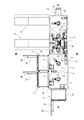
以下、本発明の一実施形態に係る培養細胞製品の製造装置(以下、製造装置という)、及び、この製造装置により実施される培養細胞製品の製造方法について説明する。尚、以下の説明における前後左右の説明は、左右に関しては図1及び図2に示された状態に対応しており、前後に関しては、図2における下方が「前方」に対応し、同上方が「後方」に対応する(方向は図2にも記載している)。 Hereinafter, an apparatus for producing a cultured cell product according to an embodiment of the present invention (hereinafter referred to as a manufacturing apparatus) and a method for producing a cultured cell product carried out by this manufacturing apparatus will be described. In the following description, the front, back, left, and right explanations correspond to the states shown in FIGS. 1 and 2 for the left and right, and for the front and back, the lower part in FIG. 2 corresponds to the "front" and the upper part corresponds to the "front". Corresponds to "backward" (directions are also shown in FIG. 2).
図1〜図3に、本実施形態の製造装置が示されている。この製造装置は、細胞培養容器(以下において培養容器という)1を収容する複数台のインキュベータ2と、内部を無菌状態に維持でき、インキュベータ2から送られた培養容器1を処理するための横長状のアイソレータ3と、培養容器1にて培養された細胞を小分けして投入するために必要となる物品及び試薬をアイソレータ3に搬入可能な複数(図2では2台)のパスボックス4を備えている。培養容器1としては、例えば多層に細胞を培養することができるハイパーフラスコ(日本国所在のコーニングインターナショナル(株)製)を用いることができる。各部は図1に概略的に示す制御装置Xによって制御される。制御装置Xは製造装置に一体に備えられていてもよいし、製造装置とは別体でケーブルや無線によって接続されたもの(例えばパーソナルコンピュータ)であってもよい。また、制御装置Xが製造装置に一体に備えられ、オペレータが操作する制御装置Xの操作部(例えばタブレット端末)だけを製造装置と別体にしてもよい。
1 to 3 show the manufacturing apparatus of this embodiment. This manufacturing device has a plurality of
インキュベータ2は、図1に示すように上下2段に積み重ねた状態で設けられ、図2に示すようにアイソレータ3の左端1箇所とアイソレータ3の後側の左端部2箇所の合計3箇所に設けられ、全部で6台備えている。上段及び下段のインキュベータ2,2は、同一構成であり、各インキュベータ2は、ケーシング2A内に多数の培養容器1を収容可能なラック(図示せず)を備えている。ケーシング2Aは、一側面から培養容器1を出し入れすることができるように一側面が開放された箱型形状である。そのケーシング2Aの一側面の開口を閉じる2枚の扉2B,2Cが開閉自在にケーシング2Aに取り付けられている。例えば、内側の扉2Cを、透明な材料で構成することによって、外側の扉2Bを開放するだけで、収容されている培養容器1の収容数や細胞の培養状態を内側の扉2Cで開口を閉じた状態で確認することができる。また、インキュベータ2の内部には、培養雰囲気を調整するための二酸化炭素ガスが供給されるように構成されている。また、インキュベータ2内のラックに収容されている培養容器1は、図示していない送出し機構により、アイソレータ3内に設けている複数の載置台5上へ送り出されるように構成されている。載置台5は、インキュベータ2に対応して同数の6個配置されている。
The
前記のように、アイソレータ3は横長状(本実施形態では平面視長方形状)であって、アイソレータ3の短手側の側面(本実施形態では左側面)に1組(上下2台)のインキュベータ2が位置し、長手側の側面(本実施形態では後側面)に複数組(本実施形態では2組(4台))のインキュベータ2が位置する。この構成により、培養細胞数を減らすことなく製造装置を小型化できる。
As described above, the
アイソレータ3は、インキュベータ2から取り出した培養容器1の増殖度合いを確認すべく培養容器1を観察位置まで移動させるための、2台の第1ロボットアーム6,7を備える観察部8と、観察部8に連設され、観察部8で観察された培養容器1のうちの所定数の細胞を有する培養容器1内の細胞を、パスボックス4,4から搬入された多数の製品容器9(例えばバイアル瓶、図1の拡大図参照)に移し替えるための各種処理を行う、3台の第2ロボットアーム10,11,12を備える処理部13と、移し替えた多数の製品容器9を取り出すための取出口14とを備えている。アイソレータ3の前後壁には、アイソレータ3内にオペレータが手を入れて作業をすることができる多数の作業用グローブ(図示せず)が取り付けられる。図2に示すように、5台のロボットアーム6,7,10,11,12は、アイソレータ3の長手方向に沿い、左右方向に延びる一直線上に配置されている。
The
左右方向基準で左側の第1ロボットアーム6は、アイソレータ3の短手側の側面(本実施形態では左側面)に位置する1組のインキュベータ2と、長手側の側面(本実施形態では後側面)に位置するうちで左側1組のインキュベータ2とに対応しており、これらインキュベータ2に収容される培養容器1を取り扱うことができる(各ロボットアームの届く範囲(平面視)を図2に二点鎖線の円で示している)。また、右側の第1ロボットアーム7は、アイソレータ3の長手側の側面に位置するうちで右側1組のインキュベータ2に対応しており、このインキュベータ2に収容される培養容器1を取り扱うことができる。
The
また、左右方向基準で左側の第2ロボットアーム10及び中側の第2ロボットアーム11は、アイソレータ3の長手側の側面(本実施形態では後側面)に位置するうちで左側のパスボックス4に対応しており、このパスボックス4に収容される(または収容されていた)物品及び試薬を取り扱うことができる。
Further, the
また、右側の第2ロボットアーム12は、アイソレータ3の長手側の側面(本実施形態では後側面)に位置するうちで右側のパスボックス4と、製品容器9の搬出用のボックス22とに対応しており、このパスボックス4に収容される(または収容されていた)物品及び試薬、ボックス22に収容される製品容器9を取り扱うことができる。
Further, the
更に、図2に示した二点鎖線の円が重なり合っていることで示されるように、5台のロボットアーム6,7,10,11,12は、相互に物品の受け渡しが可能な位置関係に配置されている。
Further, as shown by the overlapping circles of the alternate long and short dash lines shown in FIG. 2, the five
このように、アイソレータ3内に各ロボットアーム6,7,10,11,12が位置することにより、各ロボットアーム6,7,10,11,12はインキュベータ2、アイソレータ3、パスボックス4、ボックス22の各々に対して、目的に適した動作が可能である。このため、作業効率を向上でき、培養細胞製品を大量生産することに資することができる。
By locating the
本実施形態における第1ロボットアーム6,7及び第2ロボットアーム10,11,12は、同一構成であるため、左端に位置する第1ロボットアーム6についてのみ説明する。第1ロボットアーム6は、多関節型のロボットアームからなり、アイソレータ3のベース部材15に固定される固定部6Aと、固定部6Aの先端部に縦軸回りで回動自在なベース部6Bと、このベース部6Bの先端部に横軸回りで揺動自在な第1アーム6Cと、第1アーム6Cの先端部に横軸回りで揺動自在な第2アーム6Dと、第2アーム6Dの先端部に横軸回りで揺動自在な第3アーム6Eと、第3アーム6Eの先端に対向して取り付けられた一対の把持部6F,6Fとを備えている。一対の把持部6F,6Fは、接近及び離間可能に構成されている。このように構成された多関節型の第1ロボットアーム6,7は、インキュベータ2から送り出された培養容器1を一対の把持部6F,6Fで掴んで(図1参照)観察位置にある顕微鏡16まで移動させる。第2ロボットアーム10,11,12は、前記培養容器1の他、図1に示す遠沈管17、調合タンク18等を掴んで各種処理を行うことができるようになっている。
Since the
観察位置にある顕微鏡16は、2台の第1ロボットアーム6,7の間に配置されている。このように顕微鏡16を配置することによって、左側の第1ロボットアーム6で培養容器1を顕微鏡16まで移動させて細胞を観察し、観察した結果、所定数の細胞を有すると判断された培養容器1を右側の第1ロボットアーム7で掴んで処理部13側へ迅速に移動させることができる。要するに、左側の第1ロボットアーム6は、主として顕微鏡16まで培養容器1を移動させる作業を行い、右側の第1ロボットアーム7は、所定数の細胞を有すると判断された培養容器1を処理部13側へ移動させる作業を行うことによって、作業の迅速化を図ることができる。所定数の細胞を有しているとの判断は、製造装置のオペレータ(人)が目視にて細胞数を数えることによって判断してもよいし、アイソレータ3に設けられたカメラで撮像した画像を解析して自動的に細胞数を算出し、その算出した細胞数によって制御装置Xが自動的に判断してもよい。尚、右側の第1ロボットアーム7に対向位置するインキュベータ2から送り出される培養容器1は、右側の第1ロボットアーム7で掴んで顕微鏡16まで移動させることになる。また、処理部13にも細胞を観察するための顕微鏡25が設置されている。この顕微鏡25で観察する血球計算盤等の対象物は、右端の第2ロボットアーム12が掴んで移動させることになる。
The
また、観察後の培養容器1は、右側の第1ロボットアーム7から処理部13の左端に配置された第2ロボットアーム10に直接渡すことにより搬送されるだけではない。観察後の培養容器1は、例えば第2ロボットアーム10が処理作業中である場合に、搬送装置19によって処理部13の左端の第2ロボットアーム10又は処理部13の左右中央に配置された第2ロボットアーム11が把持できる位置まで搬送される。この搬送装置19は、アイソレータ3の前側壁に沿って設けられ、アイソレータ3の観察部8の右端部から処理部13の左右中央部まで搬送することができる搬送長さに設定されている。従って、右側の第1ロボットアーム7が観察後の培養容器1を搬送装置19の搬送始端部に渡すと、搬送装置19は、2台の第2ロボットアーム10又は11が把持できる位置まで培養容器1を搬送する。
Further, the
この搬送装置19は、観察部8に位置する少なくとも1台のロボットアーム(本実施形態では第1ロボットアーム7)と処理部13に位置する複数のロボットアーム(本実施形態では2台の第2ロボットアーム10,11)とに対応して設けられる。第1ロボットアーム7は第2ロボットアーム10に対して直接物品の受け渡しが可能である。そして搬送装置19は、直接物品の受け渡しができない第1ロボットアーム7と第3ロボットアーム11とに対して物品の受け渡しを可能とする。このため、第2ロボットアーム10が作動中で、第1ロボットアーム7から第2ロボットアーム10を介して第3ロボットアーム11に物品の受け渡しが不可能な場合でも、第1ロボットアーム7から搬送装置19を介して第3ロボットアーム11に物品の受け渡しが可能である。このことから、アイソレータ3内で並行して(複数ルートで)物品を搬送できる。よって、アイソレータ3内での作業効率を向上できるので生産性を向上できる。
The transfer device 19 includes at least one robot arm (first robot arm 7 in the present embodiment) located in the
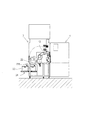
処理部13には、3台の第2ロボットアーム10,11,12が同一間隔で配置され、その間隔は、2台の第1ロボットアーム6,7同士の間隔よりも小さい間隔に設定して、第2ロボットアーム10,11又は11,12同士で行う各種の処理スピードが速くなるようにしている。図4に示すように、各第2ロボットアーム10,11,12の近傍位置でかつ各第2ロボットアーム10,11,12よりも下方位置に、移動不能な固定型の補助アーム20を設置している。補助アーム20は、固定部材21に固定された固定部20Aと、固定部20Aに接近及び離間可能に取り付けられた一対の把持部20B,20B(図4では手前しか図示していない)とを備えている。図4では、例えば、調合タンク18の上端部を第2ロボットアーム10,11,12で掴んでから、補助アーム20の一対の把持部20B,20Bで掴める位置まで移動して補助アーム20の一対の把持部20B,20Bで調合タンク18の下端部を掴むことになる。このようにすれば、一台の第2ロボットアーム10,11,12で、調合タンク18の蓋18Aを開けたり閉じたりすることができる。また、第2ロボットアーム10,11,12には、複数種の容器に備える回転式の蓋を開閉するためのプログラムが記憶されており、第2ロボットアーム10,11,12で複数種の容器に備える回転式の蓋を開閉することができる。このため、製造装置で用いる容器を同一種類の容器に統一しなくても済み、培養細胞製品の製造装置を容易に実現することができる。尚、第1ロボットアーム6,7においても前記プログラムを記憶しておいてもよい。
Three
また、処理部13の後側壁には、2つのパスボックス4,4が連設されている。一方(左側)のパスボックス4は、左端に位置する第2ロボットアーム10と中央に位置する第2ロボットアーム11との間から製品容器9、培養容器1、遠沈管17を含む複数種の容器や薬剤が入った容器である調合タンク18等の物品が搬入されるように配置されている。他方(右側)のパスボックス4は、右端に位置する第2ロボットアーム12へ前記物品が搬入されるように配置されている。
Further, two pass boxes 4 and 4 are continuously provided on the rear side wall of the
前記のようにアイソレータ3は横長状であって、アイソレータ3の長手側の側面(本実施形態では後側面)に複数(本実施形態では2つ)のパスボックス4が位置する。この構成により、アイソレータ3に搬入すべき物品量を制限することなく製造装置を小型化できる。
As described above, the
取出口14の開口は、右端に位置する第2ロボットアーム12が容易に入り込むことができる程度の大きさに構成され、取出口14には、開閉自在な電動シャッター(図示せず)が設けられるとともに、取出口14からアイソレータ3の外部へ移動された製品容器9を一旦置いておくための空間を形成するためのボックス22が連設されている。
The opening of the
観察部8及び処理部13のそれぞれには、不要となった培地、洗浄液等を回収するためのステンレス製の回収容器23を備えている。回収容器23は、上端に上端側ほど拡径された回収筒23Aを備えている。この回収容器23は、観察部8及び処理部13に設けられたガイド機構24によって、回収筒23Aの開口が観察部8及び処理部13に形成した排出口の真下に位置するセット位置と、回収筒23Aの開口が排出口から外れて回収容器23を移動できる退避位置とに位置変更可能に構成されている。
Each of the
処理部13は、第2ロボットアーム10により、前記第1ロボットアーム7から受け取った培養容器1に収容されている細胞含有液体を遠沈管17に移し替える第1移し替え処理手段と、第2ロボットアーム10により、遠沈管17を遠心分離機26にかけて細胞と液体とを分離させる分離処理手段と、第2ロボットアーム10により、分離処理手段で分離された液体の少なくとも一部を遠沈管17から取り除いてから遠沈管17に保存液(凍結保存液)を投入した状態で遠沈管17内の所定数の細胞を多数の製品容器9に移し替える第2移し替え手段とを備えている。尚、本実施形態の説明における「細胞含有液体」は、単に「細胞を含有する液体」を意味しており、特定の状態の液体に限定されない。
The
また、処理部13は、第1ロボットアーム7がインキュベータ2から取り出した培養容器1内の培地を交換する培地交換処理手段を備え、培地交換処理手段は、第2ロボットアーム10が第1ロボットアーム7から受け取った培養容器1が備える蓋を開放して培養容器1内の培地を廃棄し、新たな培地を細胞培養容器1内に供給してから、蓋をして第1ロボットアーム7に戻すように構成されている。
Further, the
前記のような構成を備えている処理部13は、凍結している細胞を起眠して播種するための第1処理、細胞を回収して多数の培養容器に播種する第2処理(継代処理)、継代処理されて培養された培養容器の細胞を回収し回収した細胞を小分けして製品容器9に移し替えて取出口14から搬出する第3処理を行えるようになっている。それらの処理をフローチャートに基づいて説明する。尚、以下に説明する処理内容はあくまでも一例であって、この例のみに限定されない。よって、個々の処理順序の入れ替え、処理内容の一部の省略または置換、処理内容の付加が可能である。
The
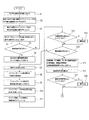
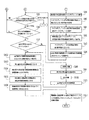
第1処理を、図5〜図7のフローチャートに基づいて説明する。このフローチャートにおいて確認、判断、記憶は、オペレータ又は制御装置Xが行い、その他の操作は、第2ロボットアーム10,11,12が行う。特記のない処理は、第2ロボットアーム10,11,12によって行うものとする。
The first process will be described with reference to the flowcharts of FIGS. 5 to 7. In this flowchart, the operator or the control device X performs confirmation, judgment, and storage, and the
まず、遠沈管17を取って所定量の培地を遠沈管17に入れる(S1)。次に、完全に解凍する前に複数のクライオチューブ(生物試料等の保存用チューブ)内の所定量の懸濁液をそれぞれ混ぜて(撹拌して)(S2)から、全てのクライオチューブ内の所定量の懸濁液を遠沈管17に入れる(S3)。各クライオチューブ内に残っている細胞を取るために各クライオチューブに所定量の培地を入れて混ぜた(撹拌した)のち遠沈管17に入れる(洗浄、S4)。前記洗浄を所定回行って次の工程に移る(S5)。オペレータは、遠沈管17内の細胞懸濁液量をカメラで撮像して確認する。オペレータは、その液量を制御装置Xに記憶させる(S6)。液量の記憶後に遠沈管17内の液を混ぜる(撹拌する)(S7)。続いて、マイクロプレートに遠沈管17内の所定量の液を移し(S8)てから、マイクロプレートに所定量の染色細胞液を添加して混ぜる(撹拌する)(S9)。マイクロプレート内の所定量の液を血球計算盤に入れる(S10)。オペレータは、カメラで撮像して生(存)細胞数と死細胞数をカウントし(S11)、生(存)細胞数が所定数以上であるかを確認し(S12)、所定数未満であれば、その結果を制御装置Xへ入力し、細胞処理へ移行する(S13)。生(存)細胞数が所定数以上である場合、又は細胞処理を行ってからは、測定が所定回行われたかどうかを制御装置Xが、確認する(S14)。測定が所定回行われたことを確認すると、制御装置Xは、生細胞数、死細胞数、式に従い生細胞濃度と死細胞濃度、播種必要細胞数、必要細胞懸濁液量を算出し記憶する(S15)。続いて、遠沈管17内の液を混ぜる(撹拌する)(S16)。オペレータは、濃度が所定濃度以上になっているかどうかを確認し(S17)、次の工程に移る。濃度が所定濃度以上になっていない場合には、濃度処理を行って(S18)から、次の工程に移る。 First, the centrifuge tube 17 is taken and a predetermined amount of medium is put into the centrifuge tube 17 (S1). Next, before completely thawing, a predetermined amount of suspension in a plurality of cryotubes (tubes for storing biological samples, etc.) is mixed (stirred), and then in all cryotubes (S2). A predetermined amount of suspension is placed in the centrifuge tube 17 (S3). In order to remove the cells remaining in each cryotube, a predetermined amount of medium was added to each cryotube, mixed (stirred), and then placed in a centrifuge tube 17 (washing, S4). The washing is performed a predetermined time to move to the next step (S5). The operator captures and confirms the amount of cell suspension in the centrifuge tube 17 with a camera. The operator stores the liquid amount in the control device X (S6). After storing the amount of the liquid, the liquid in the centrifuge tube 17 is mixed (stirred) (S7). Subsequently, a predetermined amount of the solution in the centrifuge tube 17 is transferred to the microplate (S8), and then a predetermined amount of the stained cell solution is added to the microplate and mixed (stirred) (S9). A predetermined amount of liquid in the microplate is placed in the hemocytometer (S10). The operator takes an image with a camera to count the number of living (existing) cells and the number of dead cells (S11), confirms whether the number of living (existing) cells is equal to or greater than the predetermined number (S12), and if the number is less than the predetermined number. For example, the result is input to the control device X, and the process proceeds to cell processing (S13). When the number of living (existing) cells is equal to or greater than a predetermined number, or after the cell treatment is performed, the control device X confirms whether or not the measurement has been performed a predetermined number of times (S14). After confirming that the measurement was performed a predetermined number of times, the control device X calculates and stores the number of living cells, the number of dead cells, the concentration of living cells and the concentration of dead cells, the number of cells required for seeding, and the required cell suspension amount according to the formula. (S15). Subsequently, the liquid in the centrifuge tube 17 is mixed (stirred) (S16). The operator confirms whether the concentration is equal to or higher than the predetermined concentration (S17), and proceeds to the next step. If the concentration is not equal to or higher than the predetermined concentration, the concentration treatment is performed (S18), and then the process proceeds to the next step.
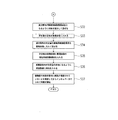
細胞処理は、図6Aに示すように、遠沈管17に所定量の培地を添加し(S19)てから、遠心分離機26へ遠沈管17を投入して遠心分離を行う(S20)。遠心分離後に遠沈管17の上清を所定量除去した(S21)後、遠沈管17に所定量の培地を添加する(S22)。オペレータは、遠沈管17の残液量をカメラで撮像して測定し、その液量を制御装置Xに記憶させるとともに第2ロボットアームは液を混ぜる(撹拌する)(S23)。マイクロプレートに遠沈管17内の所定量の液を移し(S24)てから、マイクロプレートに所定量の染色細胞液を添加して混ぜる(撹拌する)(S25)。次に、マイクロプレート内の所定量の液を血球計算盤に入れた(S26)後、オペレータは、カメラで撮像して生(存)細胞数と死細胞数をカウントした(カウント回数を1回目とする、S27)後、ステップS14へ移行する。
In the cell treatment, as shown in FIG. 6A, a predetermined amount of medium is added to the centrifuge tube 17 (S19), and then the centrifuge tube 17 is put into the
濃度処理は、図6Bに示すように、遠心分離機26へ遠沈管17を投入して再遠心分離を行って(S28)から、遠沈管17に所定量の培地を添加し(S29)、遠心分離機26へ遠沈管17を投入して遠心分離を行う(S30)。遠心分離を行った後、遠沈管17の上清を所定量除去し(S31)、ステップS32へ移行する。
In the concentration treatment, as shown in FIG. 6B, the centrifuge tube 17 is put into the
遠沈管17内の濃度が所定濃度以上になっている場合又は濃度処理が終了した後は、図7に示すように、遠沈管17内が播種用細胞懸濁液量となるように培地を添加して混ぜる(撹拌する)(S32)。次に、所定量の培地を懸濁容器に入れ(S33)てから、遠沈管17内の所定量の播種用細胞懸濁液(細胞含有液体)を懸濁容器に入れて混ぜる(撹拌する)(S34)。続いて、所定数の培養容器1に懸濁容器の播種用細胞懸濁液を入れて(S35)から、培養容器1内が所定量の培地になるように培養容器1に培地を入れる(S36)。この後、オペレータは、顕微鏡25で培養容器1内に細胞が播種されていることを確認し、細胞が播種されていると確認すると、製造装置に設けられているOKボタンを押す。OKボタンを押すと、第2ロボットアーム10,11,12及び第1ロボットアーム6,7により培養容器1をインキュベータ2に入れて培養を開始し(S37)、処理が終了する。
When the concentration in the centrifuge tube 17 is equal to or higher than the predetermined concentration or after the concentration treatment is completed, the medium is added so that the amount of the cell suspension for seeding is in the centrifuge tube 17 as shown in FIG. And mix (stir) (S32). Next, a predetermined amount of medium is placed in a suspension container (S33), and then a predetermined amount of seeding cell suspension (cell-containing liquid) in the centrifuge tube 17 is placed in the suspension container and mixed (stirred). (S34). Subsequently, the cell suspension for seeding of the suspension container is put into a predetermined number of culture containers 1 (S35), and then the medium is put into the
次に、第2処理(継代処理)を図8〜図11のフローチャートに基づいて説明する。この場合も、フローチャートにおいて確認、判断、記憶は、オペレータ又は制御装置Xが行い、その他の操作は、第2ロボットアーム10,11,12が行う。特記のない処理は、第2ロボットアーム10,11,12によって行うものとする。
Next, the second process (passage process) will be described with reference to the flowcharts of FIGS. 8 to 11. Also in this case, the operator or the control device X performs confirmation, judgment, and storage in the flowchart, and the
まず、第1ロボットアーム6,7を介して培養容器1をインキュベータ2から取り出し(S50)、細胞が所定量増殖しているかどうかを確認し(S51)、増殖していない場合には、第1ロボットアーム6,7を介してインキュベータ2に培養容器1を戻す(S52)。増殖している場合には、次に、培養容器1内の培地を回収し(S53)てから、洗浄液(例えばリン酸緩衝生理食塩水(PBS))を培養容器1内に注入する(S54)。続いて、培養容器1内の洗浄液を除去する(S55)。この後、培養容器1内に細胞剥離液(例えばトリプシン等の酵素が含まれた液)を注入する(S56)。そして、第1ロボットアーム6,7を介して培養容器1をインキュベータ2内に所定時間戻し(S57)てから、第1ロボットアーム6,7を介して培養容器1をインキュベータ2内から取り出し、オペレータは、細胞の剥離状態をカメラで確認する(S58)。オペレータは、培養容器1において細胞が剥がれていると判断する(S59)と、製造装置に設けられているOKボタンを押す。OKボタンを押すと、培養容器1内の細胞含有剥離液を遠沈管17に入れ(S60)てから、培養容器1内に所定量の培地を添加する(S61)。添加後、培養容器1内の洗浄液を遠沈管17に入れる(S62)。ステップS61〜ステップS62の洗浄を所定回行ってから次のステップへ移行する(S63)。次に、遠沈管17内の液を混ぜて(撹拌して)(S64)から、マイクロプレートに遠沈管17内の所定量の液を移す(S65)。続いて、マイクロプレートに所定量の染色細胞液を入れて混ぜて(撹拌して)(S66)から、マイクロプレート内の所定量の液を血球計算盤に入れる(S67)。この後、オペレータは、カメラで撮像して生(存)細胞数と死細胞数をカウントする(S68)。ステップS64〜ステップS68までの測定を2回以上行い(S69)、オペレータは、2回とも生(存)細胞数が所定数以上であるかどうかを確認する(S70)。生(存)細胞数が所定数以上になっていることが2回確認されるまで、測定を行う。測定回数が所定回を超える場合には、処理を終了する(S69)。生(存)細胞数が所定数以上になっていることが2回確認できると、オペレータは、製造装置に設けられているOKボタンを押す。OKボタンを押すと、遠沈管17に所定量の培地を添加し(S71)てから、遠沈管17を遠心分離機26に投入して遠心分離する(S72)。遠沈管17の上清を所定量除去し(S73)てから、2本の遠沈管17のうちの一方の遠沈管17に他方の遠沈管17の細胞含有液を入れる(S74)。排出した側の遠沈管17に洗浄液を入れて細胞含有液が入った側の遠沈管17に細胞含有洗浄液を入れる(洗浄)(S75)。洗浄を所定回行って(S76)から、遠沈管17に所定量の培地を添加し(S77)て、遠沈管17を遠心分離機26に投入し遠心分離する(S78)。遠心分離後、遠沈管17の上清を所定量除去して液を混ぜる(撹拌する)(S79)。オペレータは、遠沈管17内の細胞懸濁液の残量をカメラで撮像して制御装置Xに記憶させる(S80)。次に、ピペットで遠沈管17内の液を混ぜて(撹拌して)(S81)から、マイクロプレートに遠沈管17内から所定量の液を移す(S82)。液を移した後、マイクロプレートに所定量の培地を添加し希釈倍率を記憶する(S83)。希釈倍率を記憶後は、マイクロプレートから所定量の希釈溶液を別のマイクロプレートに移し(S84)てから、マイクロプレートに所定量の染色細胞液を添加して混ぜる(撹拌する)(S85)。この後、マイクロプレートの所定量の液を血球計算盤に注入する(S86)。オペレータは、カメラで撮像して生(存)細胞数と死細胞数をカウントする(S87)。このとき、オペレータは、生(存)細胞が所定数以上になっているかどうかを確認する(S88)。
First, the
オペレータが、生(存)細胞が所定数未満であると判断した場合には、遠沈管17内の所定量の液をマイクロプレートに移し(S89)てから、マイクロプレートに所定量の培地を添加して混ぜる(撹拌する)とともに希釈倍率を記憶する(S90)。次に、マイクロプレートから所定量の希釈溶液を別のマイクロプレートに移し(S91)てから、希釈液を入れたマイクロプレートに所定量の染色細胞液を添加して混ぜる(撹拌する)(S92)。続いて、マイクロプレートから所定量の液を血球計算盤に注入する(S93)。オペレータは、血球計算盤を顕微鏡25の下で生(存)細胞数と死細胞数とをカウントして記憶し(S94)、ステップS95へ移行する。
When the operator determines that the number of live (existing) cells is less than a predetermined number, a predetermined amount of the solution in the centrifuge tube 17 is transferred to the microplate (S89), and then a predetermined amount of medium is added to the microplate. And mix (stir) and memorize the dilution ratio (S90). Next, a predetermined amount of the diluted solution is transferred from the microplate to another microplate (S91), and then a predetermined amount of the stained cell solution is added to the microplate containing the diluted solution and mixed (stirred) (S92). .. Subsequently, a predetermined amount of liquid is injected from the microplate into the hemocytometer (S93). The operator counts and stores the number of live (existing) cells and the number of dead cells under the
オペレータは、ステップS87における1回目のカウント時に、生(存)細胞が所定数以上になっていると判断する(S88の「Yes」)、又は、ステップS89〜S94を経ると、生(存)細胞数が所定数以上になっていることが2回確認される(S96)まで、所定回カウントを行う(S95)。ステップS95においてカウントが1回、またはステップS96において生(存)細胞数が所定数以上になっていることが2回確認されない場合はステップS81に戻る。尚、測定回数が所定回を超える場合には、処理を終了する(S95)。生(存)細胞数が所定数以上になっていることが2回確認できると、オペレータは、製造装置に設けられているOKボタンを押す。OKボタンを押すと、濃度が所定%以上になっているかを確認する(S97)。濃度が所定%以上になっていない場合には、濃度調整を行う。つまり、遠沈管17を遠心分離機26に投入し再遠心分離する(S98)。次に、遠沈管17に所定量の培地を添加し(S99)てから、遠沈管17を遠心分離機26に投入し遠心分離(S100)する。遠心分離後、遠沈管17の上清を所定量除去し(S101)て、濃度を所定%以上にする処理を終了する。
The operator determines that the number of living (existing) cells is equal to or greater than the predetermined number at the first count in step S87 (“Yes” in S88), or after passing through steps S89 to S94, the living (existing) cells. Counting is performed a predetermined number of times until it is confirmed twice that the number of cells is equal to or greater than a predetermined number (S96) (S95). If it is not confirmed once in step S95 or twice in step S96 that the number of living (existing) cells is equal to or greater than the predetermined number, the process returns to step S81. If the number of measurements exceeds a predetermined number, the process ends (S95). When it is confirmed twice that the number of living (existing) cells is equal to or higher than the predetermined number, the operator presses the OK button provided in the manufacturing apparatus. When the OK button is pressed, it is confirmed whether the concentration is at least a predetermined percentage (S97). If the concentration is not more than the predetermined%, adjust the concentration. That is, the centrifuge tube 17 is put into the
濃度が所定%以上になっている場合又は濃度を所定%以上にする処理が終了すると、遠沈管17内が播種用細胞懸濁液量となるように培地を添加して混ぜる(撹拌する)(S102)。次に、培地を懸濁容器に入れ(S103)てから、遠沈管17内の所定量の播種用細胞懸濁液を懸濁容器に入れて混ぜる(撹拌する)(S104)。続いて、所定数の培養容器1に懸濁容器の播種用細胞懸濁液を入れ(S105)た後、培養容器1内が所定量の培地になるように培養容器1に培地を入れる(S106)。この後、オペレータは、顕微鏡25で培養容器1内に細胞が播種されていることを確認し、確認ができると、製造装置に設けられているOKボタンを押す。OKボタンを押すと、第1ロボットアーム6,7を介して培養容器1をインキュベータ2に入れて培養を開始し(S107)、処理を終了する。
When the concentration is at least a predetermined percentage or when the treatment to make the concentration at least a predetermined% is completed, the medium is added and mixed (stirred) so that the amount of the cell suspension for seeding is in the centrifuge tube 17. S102). Next, the medium is placed in a suspension container (S103), and then a predetermined amount of the cell suspension for seeding in the centrifuge tube 17 is placed in the suspension container and mixed (stirred) (S104). Subsequently, the cell suspension for seeding of the suspension container is put into a predetermined number of culture containers 1 (S105), and then the medium is put into the
次に、第3処理を図12〜図15のフローチャートに基づいて説明する。この場合も、フローチャートにおいて確認、判断、記憶は、オペレータ又は制御装置Xが行い、その他の操作は、第2ロボットアーム10,11,12が行う。特記のない処理は、第2ロボットアーム10,11,12によって行うものとする。
Next, the third process will be described with reference to the flowcharts of FIGS. 12 to 15. Also in this case, the operator or the control device X performs confirmation, judgment, and storage in the flowchart, and the
まず、第1ロボットアーム6,7を介して培養容器1をインキュベータ2から取り出し(S120)、細胞が所定量増殖しているかどうかを確認し(S121)、増殖していない場合には、第1ロボットアーム6,7を介してインキュベータ2に培養容器1を戻す(S122)。増殖している場合には、次に、培養容器1内の培地を除去し(S123)てから、洗浄液を培養容器1内に注入する(S124)。続いて、培養容器1内の洗浄液を回収する(S125)。この後、培養容器1内に細胞剥離液を注入する(S126)。そして、第1ロボットアーム6,7を介して培養容器1をインキュベータ2内に所定時間戻し(S127)てから、第1ロボットアーム6,7を介して培養容器1をインキュベータ2内から取り出し、オペレータは、細胞の剥離状態をカメラで確認する(S128)。オペレータは、細胞が剥がれていると判断する(S129)と、製造装置に設けられているOKボタンを押す。そうでない場合、再び第1ロボットアーム6,7を介して培養容器1をインキュベータ2内に所定時間戻す(S127)。OKボタンを押すと、複数(ここでは2つ)の培養容器1内の細胞含有剥離液を1本の遠沈管17に入れ(集約し)(S130)てから、2つの培養容器1内に所定量の洗浄液を入れる(S131)。添加後、培養容器1内の洗浄液を遠沈管17に入れて混ぜる(撹拌する)(S132)。次に、マイクロプレートに遠沈管17内の所定量の液を移す(S133)。続いて、マイクロプレートに所定量の染色細胞液を入れて混ぜて(撹拌して)(S134)から、マイクロプレート内の所定量の液を血球計算盤に入れる(S135)。この後、オペレータは、カメラで撮像して生(存)細胞数と死細胞数をカウントする(S136)。ステップS133〜ステップS136までの測定を2回以上行い(S137)、オペレータは、2回とも生(存)細胞数が所定数以上であるかどうかを確認する(S138)。この確認は、生産できる細胞の総数を確認するためである。この確認をした方がよいが、この確認を省略して、後のステップS162だけで済ませてもよい。生(存)細胞数が所定数以上になっていることが2回確認されるまで、測定を行う。測定回数が所定回を超える場合には、処理を終了する(S137)。生(存)細胞数が所定数以上になっていることが2回確認できると、オペレータは、製造装置に設けられているOKボタンを押す。OKボタンを押すと、遠沈管17を遠心分離機26に投入して遠心分離する(S139)。遠沈管17の上清を所定量除去し(S140)てから、オペレータは、遠沈管17内の液量と生(存)細胞数をカメラで撮像する。オペレータは、液量と生(存)細胞数を制御装置Xに記憶させる(S141)。次に、複数本の遠沈管17の細胞含有液体を1本の遠沈管17に集める(集約する)(S142)。このとき、細胞含有液体が集められた前記1本を除くそれぞれの遠沈管17に残っている細胞を1本の遠沈管17に集めるために、各遠沈管17に洗浄液を入れてから、それら細胞含有洗浄液を1本の遠沈管17に入れる(洗浄)(S143)。この洗浄を所定回行って(S144)から、遠沈管17を遠心分離機26に投入して遠心分離する(S145)。遠心分離後、遠沈管17の上清を所定量除去し(S146)、オペレータは、遠沈管17内の細胞懸濁液の残量をカメラで撮像して制御装置Xに記憶させる(S147)。次に、遠沈管17に所定量の凍結保存液を添加して混ぜて(撹拌して)(S148)から、遠沈管17を遠心分離機26に投入して遠心分離する(S149)。遠心分離後、遠沈管17の上清を所定量除去し(S150)、オペレータは、遠沈管17内の残液量をカメラで撮像して測定し、制御装置Xに記憶させる(S151)。続いて、遠沈管17に所定量の凍結保存液を添加し、オペレータはその添加量を制御装置Xに記憶させる(S152)。
First, the
次に、オペレータは、遠沈管17内の保存液中の溶剤(例えばDMSO(ジメチルスルホキシド))の濃度が所定%以上になっているかどうかを確認する(S153)。遠沈管17内の濃度が所定%以上になっていない場合には、濃度調整を行う。つまり、遠沈管17に所定量の凍結保存液を添加して混ぜて(撹拌して)(S154)から、ステップS149〜ステップS152までの処理を行ってから次の処理に移る。遠沈管17内の濃度が所定%以上になっている場合、又は遠沈管17に所定量の凍結保存液を添加して混ぜて(撹拌して)(S154)から、ステップS149〜ステップS152までの処理を行った後には、ピペットで遠沈管17内の液を混ぜて(撹拌して)(S155)から、マイクロプレートに遠沈管17内から所定量の液を移す(S156)。液を移した後、マイクロプレートに所定量の希釈溶液を添加し希釈倍率を記憶する(S157)。希釈倍率を記憶後は、マイクロプレートから所定量の希釈溶液を別のマイクロプレートに移し(S158)てから、マイクロプレートに所定量の染色細胞液(例えばトリパンブルー)を添加して混ぜる(撹拌する)(S159)。この後、マイクロプレートの所定量を血球計算盤に注入する(S160)。オペレータは、カメラで撮像して生(存)細胞数と死細胞数をカウントする(S161)。このとき、オペレータは、生(存)細胞が所定数以上になっているかどうかを確認する(S162)。この確認は、処理中に細胞が死する場合があることから、最終の生存細胞数の確認と最終の製品容器に詰める際に必要となる液量を確定するために濃度を確認するためである。 Next, the operator confirms whether or not the concentration of the solvent (for example, DMSO (dimethyl sulfoxide)) in the storage liquid in the centrifuge tube 17 is a predetermined percentage or more (S153). If the concentration in the centrifuge tube 17 is not more than a predetermined percentage, the concentration is adjusted. That is, after adding a predetermined amount of the cryopreservation solution to the centrifuge tube 17 and mixing (stirring) (S154), the processes from step S149 to step S152 are performed, and then the next process is performed. When the concentration in the centrifuge tube 17 is a predetermined% or more, or when a predetermined amount of cryopreservation solution is added to the centrifuge tube 17 and mixed (stirred) (S154), steps S149 to S152 are performed. After the treatment, the liquid in the centrifuge tube 17 is mixed (stirred) with a pipette (S155), and then a predetermined amount of the liquid is transferred from the centrifuge tube 17 to the microplate (S156). After transferring the liquid, a predetermined amount of the diluted solution is added to the microplate and the dilution ratio is stored (S157). After memorizing the dilution ratio, transfer a predetermined amount of the diluted solution from the microplate to another microplate (S158), add a predetermined amount of stained cell solution (for example, trypan blue) to the microplate, and mix (stir). ) (S159). After that, a predetermined amount of the microplate is injected into the hemocytometer (S160). The operator takes an image with a camera and counts the number of live (existing) cells and the number of dead cells (S161). At this time, the operator confirms whether or not the number of living (existing) cells is equal to or greater than a predetermined number (S162). This confirmation is to confirm the final viable cell count and the concentration to determine the amount of fluid required for packing in the final product container, as cells may die during processing. ..
オペレータが、生(存)細胞が所定数未満であると判断した場合には、遠沈管17内の所定量の液をマイクロプレートに移し(S163)てから、マイクロプレートに所定量の洗浄液を注入して混ぜる(撹拌する)とともに希釈倍率を記憶する(S164)。次に、マイクロプレートから所定量の希釈溶液を別のマイクロプレートに移し(S165)てから、希釈液を入れたマイクロプレートに所定量の染色細胞液を添加して混ぜる(撹拌する)(S166)。続いて、マイクロプレートから所定量の液を血球計算盤に注入する(S167)。オペレータは、血球計算盤を顕微鏡25の下で生(存)細胞数と死細胞数とをカウントして記憶し(S168)、ステップS169へ移行する。
When the operator determines that the number of living (existing) cells is less than the predetermined number, the predetermined amount of the liquid in the centrifuge tube 17 is transferred to the microplate (S163), and then the predetermined amount of the washing liquid is injected into the microplate. And mix (stir) and memorize the dilution ratio (S164). Next, a predetermined amount of the diluted solution is transferred from the microplate to another microplate (S165), and then a predetermined amount of the stained cell solution is added to the microplate containing the diluted solution and mixed (stirred) (S166). .. Subsequently, a predetermined amount of liquid is injected from the microplate into the hemocytometer (S167). The operator counts and stores the number of live (existing) cells and the number of dead cells under the
オペレータは、ステップS161における1回目のカウント時に、生(存)細胞が所定数以上になっていると判断する(S162の「Yes」)、又は、ステップS163〜S168を経ると、生(存)細胞数が所定数以上になっていることが2回確認される(S170)まで、所定回カウントを行う(S169)。ステップS169においてカウントが1回、またはステップS170において生(存)細胞数が所定数以上になっていることが2回確認されない場合はステップS155に戻る。尚、測定回数が所定回を超える場合には、処理を終了する(S169)。生(存)細胞数が所定数以上になっていることが2回確認できると、オペレータは、製造装置に設けられているOKボタンを押す。OKボタンを押すと、生(存)細胞数、生(存)細胞濃度、液量を制御装置Xに記憶させる(S171)。続いてオペレータは、凍結する細胞数、凍結細胞濃度、分注量から作製できる凍結する容器(製品容器9)の本数を算出し制御装置Xに記憶させる(S172)。そして遠沈管17に、最終状態である培養細胞製品の規定された凍結細胞濃度となる量の凍結保存液を添加し、その添加量を制御装置Xに記憶させる(S173)。次に、遠沈管17内の液を混ぜて(撹拌して)(S174)から、遠沈管17内の液を所定量ずつ容器(製品容器9)に入れる(S175)。入れ終わったら、容器(製品容器9)に蓋をし(S176)、オペレータは、蓋が閉まっているかどうかをカメラで確認(S177)する。尚この時点では、蓋はまだ仮止め状態である。ステップS177で蓋が閉まっていることが確認されなかった場合はステップS176に戻る。容器(製品容器9)に液を入れる作業が所定回数になったと制御装置Xが判断すると(S178)、処理を終了する。尚、入れ終わった容器(製品容器9)は、取出口14からボックス22内へ移動させる。ステップS178で容器(製品容器9)に液を入れる作業が所定回数になったと制御装置Xが判断しなかった場合はステップS174に戻る。
The operator determines that the number of living (existing) cells is equal to or greater than a predetermined number at the first count in step S161 (“Yes” in S162), or after passing through steps S163 to S168, the living (existing) cells. Counting is performed a predetermined number of times (S169) until it is confirmed twice that the number of cells is equal to or greater than a predetermined number (S170). If it is not confirmed once in step S169 or twice in step S170 that the number of living (existing) cells is equal to or greater than the predetermined number, the process returns to step S155. If the number of measurements exceeds a predetermined number, the process ends (S169). When it is confirmed twice that the number of living (existing) cells is equal to or higher than the predetermined number, the operator presses the OK button provided in the manufacturing apparatus. When the OK button is pressed, the number of living (existing) cells, the concentration of living (existing) cells, and the amount of liquid are stored in the control device X (S171). Subsequently, the operator calculates the number of frozen containers (product container 9) that can be produced from the number of frozen cells, the concentration of frozen cells, and the dispensing amount, and stores them in the control device X (S172). Then, an amount of the cryopreservation solution having a specified frozen cell concentration of the cultured cell product in the final state is added to the centrifuge tube 17, and the added amount is stored in the control device X (S173). Next, the liquid in the centrifuge tube 17 is mixed (stirred) (S174), and then the liquid in the centrifuge tube 17 is put into a container (product container 9) in predetermined amounts (S175). When the container (product container 9) is completely filled, the container (product container 9) is covered (S176), and the operator confirms with a camera whether the lid is closed (S177). At this point, the lid is still temporarily fixed. If it is not confirmed in step S177 that the lid is closed, the process returns to step S176. When the control device X determines that the work of filling the container (product container 9) with the liquid has reached a predetermined number of times (S178), the process ends. The container (product container 9) that has been put in is moved from the
尚、フローチャートには記載していないが、ボックス22内へ移動された容器(製品容器9)はオペレータによりボックス22から出され、前記蓋のかしめ及びラベル貼付がなされて培養細胞製品が完成する。この培養細胞製品は冷凍され、冷凍状態のまま流通する(医療機関や研究機関に運ばれる)。
Although not described in the flowchart, the container (product container 9) moved into the
前述した第3処理にて、製造装置は、培養容器1により培養された細胞を取り出す取り出し工程(フローチャート記載のS120〜S147に相当)と、前記取り出された細胞が含まれる細胞含有液体における該細胞の密度を調整する細胞密度調整工程(同S149〜S171に相当)と、前記密度の調整がなされた細胞含有液体を複数の製品容器9へ小分けして投入する小分け工程(同S175〜S178に相当)とを実行して、培養細胞製品を完成させる。尚、これら工程とフローチャート記載の各処理との関係はあくまでも一例に過ぎず、前記対応関係に限定されない(以下の対応関係も同じ)。 In the third treatment described above, the manufacturing apparatus takes out the cells cultured in the culture vessel 1 (corresponding to S120 to S147 described in the flowchart), and the cells in the cell-containing liquid containing the taken out cells. A cell density adjusting step (corresponding to S149 to S171) for adjusting the density of cells, and a subdivision step (corresponding to S175 to S178) in which the cell-containing liquid having the adjusted density is subdivided and charged into a plurality of product containers 9. ) And to complete the cultured cell product. It should be noted that the relationship between these steps and each process described in the flowchart is merely an example, and is not limited to the above-mentioned correspondence relationship (the same applies to the following correspondence relationship).
前記細胞密度調整工程の実行により、製造された培養細胞製品の品質を均一にできるため、製造された培養細胞製品は高品質(具体的には、培養細胞製品中の生(存)細胞の数が均一であること)となる。 By executing the cell density adjusting step, the quality of the produced cultured cell product can be made uniform, so that the produced cultured cell product is of high quality (specifically, the number of living (existing) cells in the cultured cell product. Is uniform).
また、前記細胞密度調整工程は、前記取り出し工程により取り出された複数の細胞の一部又は全部を観察して生(存)細胞数を計数することを製造装置が支援する計数支援工程(フローチャート記載のS155〜S161、S163〜S168に相当)と、前記計数により得られた生(存)細胞数の数量に対応した量の保存液(凍結保存液)を、前記取り出された細胞に添加する保存液添加工程(同S173に相当)とを含む。計数支援工程の実行により、オペレータ等により行われる計数を製造装置の支援を受けて迅速に行うことができる。そして、計数支援工程を経て得られた生(存)細胞数の数量により保存液の量が決定される。よって、所定の生(存)細胞密度に調整された液体を迅速に得られる。 Further, in the cell density adjusting step, a counting support step (described in the flowchart) in which the manufacturing apparatus supports counting the number of living (existing) cells by observing a part or all of the plurality of cells taken out by the taking-out step. S155 to S161 and S163 to S168) and a storage solution (cryopreservation solution) in an amount corresponding to the number of live (existing) cells obtained by the above counting are added to the extracted cells. It includes a liquid addition step (corresponding to S173). By executing the counting support step, counting performed by an operator or the like can be performed quickly with the support of the manufacturing apparatus. Then, the amount of the preservation solution is determined by the number of live (existing) cells obtained through the counting support step. Therefore, a liquid adjusted to a predetermined living (existing) cell density can be quickly obtained.
また、前記小分け工程を実行するに先立ち、製造装置は、前記計数により得られた生(存)細胞数の数量に基づいて製品容器9の数量を導出する容器数導出工程(フローチャート記載のS172に相当)を実行する。この工程で、用意すべき製品容器9の数量が小分け工程の前に定まるため、迅速に製品容器9への小分け投入を行うことができる。なお、本実施形態では算出により製品容器9の数量が導出されていたが、計算によらない導出であってもよい。
Further, prior to executing the subdivision step, the manufacturing apparatus derives the quantity of the
また、前記細胞密度調整工程の前と、前記小分け工程の前とに懸濁工程(フローチャート記載のS148、S174に相当)が実行される。この懸濁工程は、前記細胞含有液体を撹拌することにより、前記細胞が均等に分散した状態の懸濁液とする工程である。懸濁工程を経た懸濁液は培養された細胞が均等に分散した状態となっているので、細胞密度調整工程及び小分け工程にて取り出される生存細胞の密度を均一にできる。このため、培養細胞製品の品質を均一化に寄与できる。 Further, a suspension step (corresponding to S148 and S174 described in the flowchart) is executed before the cell density adjusting step and before the subdivision step. This suspension step is a step of stirring the cell-containing liquid to prepare a suspension in a state in which the cells are evenly dispersed. Since the cultured cells are evenly dispersed in the suspension that has undergone the suspension step, the density of viable cells taken out in the cell density adjusting step and the subdivision step can be made uniform. Therefore, the quality of the cultured cell product can be contributed to homogenization.
尚、本発明に係る培養細胞製品の製造装置は、上記実施形態に限定されるものではなく、本発明の要旨を逸脱しない範囲で種々の変更が可能である。 The apparatus for producing a cultured cell product according to the present invention is not limited to the above embodiment, and various modifications can be made without departing from the gist of the present invention.
前記実施形態では、観察部8に2台のロボットアーム6,7を設け、処理部13に3台のロボットアーム10,11,12を設けたが、観察部8に少なくとも1台のロボットアームを設け、処理部13にも少なくとも1台のロボットアームを設けて実施することができる。
In the above embodiment, the
また、前記実施形態では、アイソレータ3を横長状のものから構成したが、正方形状や円形状のものから構成してもよい。また、屈曲した形状で構成してもよい。
Further, in the above-described embodiment, the
また、前記実施形態では、細胞を観察するために顕微鏡16,25を用いたが、顕微鏡に限定されず、観察対象の細胞をとらえた画像を拡大できる種々の画像拡大装置を用いることができる。画像拡大装置を用いることにより、生(存)細胞数の計数を正確に行うことができる。
Further, in the above embodiment, the
前記実施形態に関する構成と作用につき、以下にまとめて記載する。前記実施形態に係る培養細胞製品の製造装置は、細胞培養容器1を収容するインキュベータ2と、内部を無菌状態に維持でき、前記インキュベータ2から送られた細胞培養容器1を処理するためのアイソレータ3と、前記細胞培養容器1にて培養された細胞を小分けして投入するために必要となる、製品容器9を含む複数種の容器等の物品及び試薬を前記アイソレータ3に搬入可能なパスボックス4と、を備え、前記アイソレータ3は、前記インキュベータ2から取り出した細胞培養容器1内の細胞の増殖度合いを確認すべく該細胞培養容器1を観察位置まで移動させるための、1台又は複数台の第1ロボットアーム6,7を備える観察部8と、前記観察部8に連設され、該観察部8で観察された細胞培養容器1のうちの所定数の細胞を有する細胞培養容器1内の細胞を、前記パスボックス4から搬入された多数の製品容器9に移し替えるための各種処理を行う、1台又は複数台の第2ロボットアーム10〜12を備える処理部13と、前記移し替えた多数の製品容器9を取り出すための取出口14と、を備えていることを特徴とする。
The configuration and operation of the embodiment are summarized below. The apparatus for producing a cultured cell product according to the embodiment has an
かかる構成によれば、観察部8と処理部13とを分けることによって、第1ロボットアーム6,7で観察位置まで移動された細胞培養容器1内の細胞を観察している間でも、観察部8から処理部13に移動させた細胞培養容器1内の細胞を第2ロボットアーム10〜12で多数の製品容器9に移し替えるための各種の処理を行うことができ、迅速な処理が行える。これにより細胞を大量に培養して培養した大量の細胞を小分けして多数の製品容器9に投入し、取出口14から取り出すことができる。
According to this configuration, by separating the
また、前記実施形態に係る培養細胞製品の製造装置においては、前記処理部13が、前記第2ロボットアーム10〜12により、前記第1ロボットアーム6,7から受け取った細胞培養容器1に収容されている細胞含有液体を遠沈管17に移し替える第1移し替え処理手段と、前記第2ロボットアーム10〜12により、前記遠沈管17を遠心分離機26にかけて細胞と液体とを分離させる分離処理手段と、前記第2ロボットアーム10〜12により、前記分離手段で分離された液体の少なくとも一部を遠沈管17から取り除いてから、遠沈管17に保存液を投入し、この状態で遠沈管17内の所定数の細胞を前記多数の製品容器9に移し替える第2移し替え手段と、を備えていてもよい。
Further, in the cultured cell product manufacturing apparatus according to the embodiment, the
かかる構成によれば、処理部13が、第1移し替え処理手段、分離処理手段、第2移し替え手段を備えることによって、第2ロボットアーム10〜12が細胞培養容器1から細胞含有液体を遠沈管17へ移してから所定数の細胞を多数の製品容器9に移し替えることができる。
According to this configuration, the
また、前記実施形態に係る培養細胞製品の製造装置においては、前記処理部13が、前記第2ロボットアーム10〜12が前記インキュベータ2から取り出した細胞培養容器1内の培地を交換する培地交換処理手段を備え、該培地交換処理手段は、前記第2ロボットアーム10〜12が前記第1ロボットアーム6,7から受け取った前記細胞培養容器1が備える蓋を開放して該細胞培養容器1内の培地を廃棄し、新たな培地を該細胞培養容器1内に供給してから、該細胞培養容器1に蓋をして前記第1ロボットアーム6,7に戻すように構成されていてもよい。
Further, in the apparatus for producing a cultured cell product according to the embodiment, a medium exchange process in which the
かかる構成によれば、第1ロボットアーム6,7で観察位置まで移動された細胞培養容器1内の細胞を観察している間でも、観察部8から処理部13に移動させた細胞培養容器1を第2ロボットアーム10〜12で培地交換処理することができる。
According to this configuration, the
また、前記実施形態に係る培養細胞製品の製造装置においては、前記第2ロボットアーム10〜12は、前記複数種の容器が備える回転式の蓋を開閉するためのプログラムが記憶されていてもよい。
Further, in the apparatus for manufacturing a cultured cell product according to the embodiment, the
かかる構成によれば、第2ロボットアーム10〜12で複数種の容器に備える回転式の蓋を開閉することができるので、同一種類の容器にしなくても済み、培養細胞製品の製造装置を容易に実現することができる。
According to such a configuration, since the rotary lids provided in a plurality of types of containers can be opened and closed by the
以上の如く、前記実施形態では、観察部8と処理部13とを分けることによって、処理スピードアップを図ることができるため、細胞を大量に培養して、大量に培養した細胞を小分けして大量の培養細胞製品の生産が行える培養細胞製品の製造装置を提供することができる。
As described above, in the above-described embodiment, the processing speed can be increased by separating the
Claims (4)
内部を無菌状態に維持でき、前記インキュベータから送られた細胞培養容器を処理するためのアイソレータと、
前記細胞培養容器にて培養された細胞を小分けして投入するために必要となる、製品容器を含む複数種の容器等の物品及び試薬を前記アイソレータに搬入可能なパスボックスと、を備え、
前記アイソレータは、
前記インキュベータから取り出した細胞培養容器内の細胞の増殖度合いを確認すべく該細胞培養容器を観察位置まで移動させるための、複数台の第1ロボットアームを備える観察部と、
前記観察部に連設され、該観察部で観察された細胞培養容器のうちの所定数の細胞を有する細胞培養容器内の細胞を、前記パスボックスから搬入された多数の製品容器に移し替えるための各種処理を行う、複数台の第2ロボットアームを備える処理部と、
前記移し替えた多数の製品容器を取り出すための取出口と、
を備えており、
前記複数台の第1ロボットアームの各々の回動範囲は前記インキュベータに面し、
前記複数台の第2ロボットアームの各々の回動範囲は前記パスボックス及び前記取出口に面し、
隣り合う前記第1ロボットアーム同士の回動範囲、隣り合う前記第1ロボットアームと前記第2ロボットアームの回動範囲、隣り合う前記第2ロボットアーム同士の回動範囲、の各々は物品の受け渡しが直接可能なように重なっていることを特徴とする培養細胞製品の製造装置。 An incubator that houses a cell culture vessel and
An isolator for processing the cell culture vessel sent from the incubator, which can maintain the inside aseptically,
It is provided with a pass box capable of carrying articles and reagents such as a plurality of types of containers including a product container, which are necessary for subdividing and charging cells cultured in the cell culture container, into the isolator .
The isolator is
An observation unit comprising a first robot arm, allows several to move the cell culture vessel so as to check the growth degree of the cells in the cell culture vessel taken out from the incubator to the observation position,
In order to transfer the cells in the cell culture container, which is connected to the observation unit and has a predetermined number of cells among the cell culture containers observed in the observation unit, to a large number of product containers carried in from the pass box. performs various processes, a processing unit comprising a second robotic arm allows several,
An outlet for taking out a large number of transferred product containers,
Equipped with a,
The rotation range of each of the plurality of first robot arms faces the incubator.
The rotation range of each of the plurality of second robot arms faces the pass box and the outlet.
The rotation range of the adjacent first robot arms, the rotation range of the adjacent first robot arm and the second robot arm, and the rotation range of the adjacent second robot arms are each of the delivery of articles. An apparatus for producing a cultured cell product, characterized in that the cells are overlapped so as to be directly possible.
前記第2ロボットアームにより、前記第1ロボットアームから受け取った細胞培養容器に収容されている細胞含有液体を遠沈管に移し替える第1移し替え処理手段と、
前記第2ロボットアームにより、前記遠沈管を遠心分離機にかけて細胞と液体とを分離させる分離処理手段と、
前記第2ロボットアームにより、前記分離処理手段で分離された液体の少なくとも一部を遠沈管から取り除いてから、遠沈管に保存液を投入し、この状態で遠沈管内の所定数の細胞を前記多数の製品容器に移し替える第2移し替え手段と、
を備えていることを特徴とする請求項1に記載の培養細胞製品の製造装置。 The processing unit
The first transfer processing means for transferring the cell-containing liquid contained in the cell culture container received from the first robot arm to the centrifuge tube by the second robot arm.
A separation processing means for separating cells and liquid by centrifuging the centrifuge tube with the second robot arm.
After removing at least a part of the liquid separated by the separation processing means from the centrifuge tube by the second robot arm, the storage solution is poured into the centrifuge tube, and in this state, a predetermined number of cells in the centrifuge tube are removed. A second transfer method for transferring to a large number of product containers,
The apparatus for producing a cultured cell product according to claim 1, further comprising.
該培地交換処理手段は、前記第2ロボットアームが前記第1ロボットアームから受け取った前記細胞培養容器が備える蓋を開放して該細胞培養容器内の培地を廃棄し、新たな培地を該細胞培養容器内に供給してから、該細胞培養容器に蓋をして前記第1ロボットアームに戻すように構成されていることを特徴とする請求項1又は2に記載の培養細胞製品の製造装置。 The processing unit includes a medium exchange processing means for exchanging the medium in the cell culture container taken out from the incubator by the second robot arm.
In the medium exchange treatment means, the lid of the cell culture container received by the second robot arm from the first robot arm is opened, the medium in the cell culture container is discarded, and a new medium is used for the cell culture. The apparatus for producing a cultured cell product according to claim 1 or 2, wherein the cell culture container is supplied to the inside of the container, and then the cell culture container is covered and returned to the first robot arm.
Applications Claiming Priority (3)
| Application Number | Priority Date | Filing Date | Title |
|---|---|---|---|
| JP2015054654 | 2015-03-18 | ||
| JP2015054654 | 2015-03-18 | ||
| PCT/JP2016/056678 WO2016147897A1 (en) | 2015-03-18 | 2016-03-03 | Production device for cultured-cell product |
Publications (2)
| Publication Number | Publication Date |
|---|---|
| JPWO2016147897A1 JPWO2016147897A1 (en) | 2017-12-28 |
| JP6868552B2 true JP6868552B2 (en) | 2021-05-12 |
Family
ID=56919930
Family Applications (1)
| Application Number | Title | Priority Date | Filing Date |
|---|---|---|---|
| JP2017506446A Active JP6868552B2 (en) | 2015-03-18 | 2016-03-03 | Equipment for manufacturing cultured cell products |
Country Status (4)
| Country | Link |
|---|---|
| US (1) | US20180066218A1 (en) |
| EP (1) | EP3287516B1 (en) |
| JP (1) | JP6868552B2 (en) |
| WO (1) | WO2016147897A1 (en) |
Families Citing this family (21)
| Publication number | Priority date | Publication date | Assignee | Title |
|---|---|---|---|---|
| US11168297B2 (en) * | 2015-03-31 | 2021-11-09 | Thrive Bioscience, Inc. | Cell maintainer for autologous cell therapy production |
| US10696937B2 (en) | 2015-03-31 | 2020-06-30 | Thrive Bioscience, Inc. | Cell culture incubators with integrated cell manipulation systems |
| WO2016161155A2 (en) | 2015-03-31 | 2016-10-06 | Thrive Bioscience, Inc. | Automated cell culture incubator |
| US20180282681A1 (en) * | 2015-10-20 | 2018-10-04 | Rohto Pharmaceutical Co., Ltd. | Cell treatment apparatus |
| EP3366761A4 (en) * | 2015-10-20 | 2019-05-15 | Rohto Pharmaceutical Co., Ltd. | DEVICE FOR TREATING CELLS |
| US10863737B2 (en) * | 2017-05-22 | 2020-12-15 | Drobot Biotechnology Limited Company | Culture container, and system and method of transferring a cultured organism between culture containers |
| SG11202004133YA (en) * | 2017-11-08 | 2020-06-29 | Ihi Corp | Connection unit for cell culture device, incubator device, and cell culture device |
| WO2019138796A1 (en) * | 2018-01-15 | 2019-07-18 | 富士フイルム株式会社 | Cell culture device and cell culture method |
| KR102220125B1 (en) * | 2018-04-26 | 2021-02-25 | (주)세포바이오 | Automated cell culturing device and method thereof |
| WO2020017408A1 (en) * | 2018-07-17 | 2020-01-23 | 国立大学法人神戸大学 | Cap attaching/detaching device, and sampling device and pre-processing device provided with same |
| JP7531170B2 (en) | 2019-03-05 | 2024-08-09 | ファナック株式会社 | Cell Manufacturing System |
| JP7623304B2 (en) * | 2019-06-17 | 2025-01-28 | デカ・プロダクツ・リミテッド・パートナーシップ | Systems and methods for cell and tissue preparation - Patents.com |
| US12195722B2 (en) * | 2019-06-18 | 2025-01-14 | Chongqing Coretech Medical Technology Co., Ltd. | Intelligent microbial sample treatment system |
| CN110387325A (en) * | 2019-08-13 | 2019-10-29 | 广州市华南医学研究中心 | A kind of very fast PCR reaction checking device and detection method |
| JP7606066B2 (en) * | 2020-02-27 | 2024-12-25 | 澁谷工業株式会社 | Cell Culture Systems |
| CN112226348B (en) * | 2020-10-26 | 2023-06-16 | 达尔文实验机器人成都有限公司 | Bacteria collecting method of microbial detection robot system using biological medicine injection |
| EP4281540A1 (en) | 2021-01-20 | 2023-11-29 | DEKA Products Limited Partnership | Modular, configurable bioreactor system for a manufacturing line |
| CN114525206A (en) * | 2021-11-22 | 2022-05-24 | 浙江泰林医学工程有限公司 | Automatic cell preparation device |
| JP2024068948A (en) * | 2022-11-09 | 2024-05-21 | オムロン株式会社 | Robot System |
| IT202300019491A1 (en) * | 2023-09-21 | 2025-03-21 | P B L Srl | APPARATUS FOR THE TREATMENT OF A MATERIAL, IN PARTICULAR FOR THE CARE OF THE HUMAN BODY |
| WO2025062251A1 (en) * | 2023-09-21 | 2025-03-27 | P.B.L. Srl | Apparatus for treating a material, especially for the human body care |
Family Cites Families (10)
| Publication number | Priority date | Publication date | Assignee | Title |
|---|---|---|---|---|
| JPH02295418A (en) * | 1989-05-09 | 1990-12-06 | Iseki & Co Ltd | Automatic extraction and implantation apparatus for explant in tissue culture |
| JP2005034142A (en) * | 2003-07-02 | 2005-02-10 | Olympus Corp | Culture treatment apparatus and automatic culture apparatus |
| JP4549806B2 (en) * | 2004-10-25 | 2010-09-22 | 川崎重工業株式会社 | Automatic cell culture apparatus using autoclave sterilization and method of using the same |
| JP5459817B2 (en) * | 2004-11-29 | 2014-04-02 | 川崎重工業株式会社 | Automatic cell culture device with articulated robot |
| JP4632806B2 (en) * | 2005-02-18 | 2011-02-16 | 三洋電機株式会社 | Cell culture facility |
| JP2007037422A (en) * | 2005-08-01 | 2007-02-15 | Olympus Corp | Culture treatment apparatus and culture treatment method |
| JP5416919B2 (en) * | 2008-06-04 | 2014-02-12 | 川崎重工業株式会社 | Automatic cell culture equipment |
| JP5399297B2 (en) * | 2010-02-26 | 2014-01-29 | パナソニックヘルスケア株式会社 | Isolator |
| WO2011130865A2 (en) * | 2010-04-21 | 2011-10-27 | Yves Larcher | Automated cell culture system |
| JP6358429B2 (en) * | 2014-06-30 | 2018-07-18 | 澁谷工業株式会社 | Automatic culture operation device |
-
2016
- 2016-03-03 US US15/553,847 patent/US20180066218A1/en not_active Abandoned
- 2016-03-03 WO PCT/JP2016/056678 patent/WO2016147897A1/en not_active Ceased
- 2016-03-03 JP JP2017506446A patent/JP6868552B2/en active Active
- 2016-03-03 EP EP16764727.0A patent/EP3287516B1/en active Active
Also Published As
| Publication number | Publication date |
|---|---|
| EP3287516A1 (en) | 2018-02-28 |
| US20180066218A1 (en) | 2018-03-08 |
| JPWO2016147897A1 (en) | 2017-12-28 |
| WO2016147897A1 (en) | 2016-09-22 |
| EP3287516A4 (en) | 2019-01-09 |
| EP3287516B1 (en) | 2026-05-06 |
| EP3287516C0 (en) | 2026-05-06 |
Similar Documents
| Publication | Publication Date | Title |
|---|---|---|
| JP6934418B2 (en) | Manufacturing equipment and manufacturing method for cultured cell products | |
| EP3287516B1 (en) | Production device for cultured-cell product | |
| US11796552B2 (en) | Automated cell processing systems and methods | |
| KR101873580B1 (en) | System for producing cellular therapeutic agents | |
| JP2023518207A (en) | Systems, devices and methods for cell processing | |
| JP6216481B2 (en) | Cell processing equipment | |
| CN115261208A (en) | Full-automatic cell culture system and method thereof | |
| JP2009189362A (en) | Cell culture equipment | |
| US20180265832A1 (en) | Cell treatment apparatus | |
| JP6850258B2 (en) | Cell processing device | |
| US20180290136A1 (en) | Cell treatment apparatus | |
| US20180272329A1 (en) | Cell treatment apparatus | |
| KR101793032B1 (en) | Cell culture apparatus and method of using the same | |
| CN219194991U (en) | Sterile isolator for cell medicine cultivation | |
| JP2020178572A (en) | Microorganism testing method of bottled beverage and beverage production apparatus | |
| JPS5953023B2 (en) | Pipette feeding device |
Legal Events
| Date | Code | Title | Description |
|---|---|---|---|
| A621 | Written request for application examination |
Free format text: JAPANESE INTERMEDIATE CODE: A621 Effective date: 20190107 |
|
| A131 | Notification of reasons for refusal |
Free format text: JAPANESE INTERMEDIATE CODE: A131 Effective date: 20200124 |
|
| A521 | Request for written amendment filed |
Free format text: JAPANESE INTERMEDIATE CODE: A523 Effective date: 20200313 |
|
| A131 | Notification of reasons for refusal |
Free format text: JAPANESE INTERMEDIATE CODE: A131 Effective date: 20200904 |
|
| A521 | Request for written amendment filed |
Free format text: JAPANESE INTERMEDIATE CODE: A523 Effective date: 20201026 |
|
| TRDD | Decision of grant or rejection written | ||
| A01 | Written decision to grant a patent or to grant a registration (utility model) |
Free format text: JAPANESE INTERMEDIATE CODE: A01 Effective date: 20210326 |
|
| A61 | First payment of annual fees (during grant procedure) |
Free format text: JAPANESE INTERMEDIATE CODE: A61 Effective date: 20210412 |
|
| R150 | Certificate of patent or registration of utility model |
Ref document number: 6868552 Country of ref document: JP Free format text: JAPANESE INTERMEDIATE CODE: R150 |
|
| R250 | Receipt of annual fees |
Free format text: JAPANESE INTERMEDIATE CODE: R250 |
|
| R250 | Receipt of annual fees |
Free format text: JAPANESE INTERMEDIATE CODE: R250 |
|
| R250 | Receipt of annual fees |
Free format text: JAPANESE INTERMEDIATE CODE: R250 |