JP6324321B2 - Analysis of analytes with estradiol and phenolic OH using labeling chemistry and LC-MSMS - Google Patents
Analysis of analytes with estradiol and phenolic OH using labeling chemistry and LC-MSMS Download PDFInfo
- Publication number
- JP6324321B2 JP6324321B2 JP2014552706A JP2014552706A JP6324321B2 JP 6324321 B2 JP6324321 B2 JP 6324321B2 JP 2014552706 A JP2014552706 A JP 2014552706A JP 2014552706 A JP2014552706 A JP 2014552706A JP 6324321 B2 JP6324321 B2 JP 6324321B2
- Authority
- JP
- Japan
- Prior art keywords
- phenolic
- analyte
- qaoc
- sample
- adduct
- Prior art date
- Legal status (The legal status is an assumption and is not a legal conclusion. Google has not performed a legal analysis and makes no representation as to the accuracy of the status listed.)
- Expired - Fee Related
Links
- 0 *N(*)C(N(*)*)=O Chemical compound *N(*)C(N(*)*)=O 0.000 description 13
- UZEKTDVGUQCDBI-UHFFFAOYSA-N CC(C)N=C(N)N Chemical compound CC(C)N=C(N)N UZEKTDVGUQCDBI-UHFFFAOYSA-N 0.000 description 1
- LOBSVGRXQAHJDT-UHFFFAOYSA-N CC(CN1CCOCC1)=O Chemical compound CC(CN1CCOCC1)=O LOBSVGRXQAHJDT-UHFFFAOYSA-N 0.000 description 1
- GNKZMNRKLCTJAY-UHFFFAOYSA-N CC(c1ccc(C)cc1)=O Chemical compound CC(c1ccc(C)cc1)=O GNKZMNRKLCTJAY-UHFFFAOYSA-N 0.000 description 1
- GDIRQJJOGLAOJK-UHFFFAOYSA-N CCCCNC(CN1CCN(C)CC1)=O Chemical compound CCCCNC(CN1CCN(C)CC1)=O GDIRQJJOGLAOJK-UHFFFAOYSA-N 0.000 description 1
Images
Classifications
-
- G—PHYSICS
- G01—MEASURING; TESTING
- G01N—INVESTIGATING OR ANALYSING MATERIALS BY DETERMINING THEIR CHEMICAL OR PHYSICAL PROPERTIES
- G01N33/00—Investigating or analysing materials by specific methods not covered by groups G01N1/00 - G01N31/00
- G01N33/48—Biological material, e.g. blood, urine; Haemocytometers
- G01N33/50—Chemical analysis of biological material, e.g. blood, urine; Testing involving biospecific ligand binding methods; Immunological testing
- G01N33/74—Chemical analysis of biological material, e.g. blood, urine; Testing involving biospecific ligand binding methods; Immunological testing involving hormones or other non-cytokine intercellular protein regulatory factors such as growth factors, including receptors to hormones and growth factors
- G01N33/743—Steroid hormones
-
- G—PHYSICS
- G01—MEASURING; TESTING
- G01N—INVESTIGATING OR ANALYSING MATERIALS BY DETERMINING THEIR CHEMICAL OR PHYSICAL PROPERTIES
- G01N33/00—Investigating or analysing materials by specific methods not covered by groups G01N1/00 - G01N31/00
- G01N33/48—Biological material, e.g. blood, urine; Haemocytometers
- G01N33/50—Chemical analysis of biological material, e.g. blood, urine; Testing involving biospecific ligand binding methods; Immunological testing
- G01N33/58—Chemical analysis of biological material, e.g. blood, urine; Testing involving biospecific ligand binding methods; Immunological testing involving labelled substances
-
- G—PHYSICS
- G01—MEASURING; TESTING
- G01N—INVESTIGATING OR ANALYSING MATERIALS BY DETERMINING THEIR CHEMICAL OR PHYSICAL PROPERTIES
- G01N2560/00—Chemical aspects of mass spectrometric analysis of biological material
-
- G—PHYSICS
- G01—MEASURING; TESTING
- G01N—INVESTIGATING OR ANALYSING MATERIALS BY DETERMINING THEIR CHEMICAL OR PHYSICAL PROPERTIES
- G01N30/00—Investigating or analysing materials by separation into components using adsorption, absorption or similar phenomena or using ion-exchange, e.g. chromatography or field flow fractionation
- G01N30/02—Column chromatography
- G01N30/62—Detectors specially adapted therefor
- G01N30/72—Mass spectrometers
- G01N30/7233—Mass spectrometers interfaced to liquid or supercritical fluid chromatograph
-
- Y—GENERAL TAGGING OF NEW TECHNOLOGICAL DEVELOPMENTS; GENERAL TAGGING OF CROSS-SECTIONAL TECHNOLOGIES SPANNING OVER SEVERAL SECTIONS OF THE IPC; TECHNICAL SUBJECTS COVERED BY FORMER USPC CROSS-REFERENCE ART COLLECTIONS [XRACs] AND DIGESTS
- Y10—TECHNICAL SUBJECTS COVERED BY FORMER USPC
- Y10T—TECHNICAL SUBJECTS COVERED BY FORMER US CLASSIFICATION
- Y10T436/00—Chemistry: analytical and immunological testing
- Y10T436/18—Sulfur containing
-
- Y—GENERAL TAGGING OF NEW TECHNOLOGICAL DEVELOPMENTS; GENERAL TAGGING OF CROSS-SECTIONAL TECHNOLOGIES SPANNING OVER SEVERAL SECTIONS OF THE IPC; TECHNICAL SUBJECTS COVERED BY FORMER USPC CROSS-REFERENCE ART COLLECTIONS [XRACs] AND DIGESTS
- Y10—TECHNICAL SUBJECTS COVERED BY FORMER USPC
- Y10T—TECHNICAL SUBJECTS COVERED BY FORMER US CLASSIFICATION
- Y10T436/00—Chemistry: analytical and immunological testing
- Y10T436/20—Oxygen containing
- Y10T436/200833—Carbonyl, ether, aldehyde or ketone containing
-
- Y—GENERAL TAGGING OF NEW TECHNOLOGICAL DEVELOPMENTS; GENERAL TAGGING OF CROSS-SECTIONAL TECHNOLOGIES SPANNING OVER SEVERAL SECTIONS OF THE IPC; TECHNICAL SUBJECTS COVERED BY FORMER USPC CROSS-REFERENCE ART COLLECTIONS [XRACs] AND DIGESTS
- Y10—TECHNICAL SUBJECTS COVERED BY FORMER USPC
- Y10T—TECHNICAL SUBJECTS COVERED BY FORMER US CLASSIFICATION
- Y10T436/00—Chemistry: analytical and immunological testing
- Y10T436/20—Oxygen containing
- Y10T436/203332—Hydroxyl containing
Landscapes
- Life Sciences & Earth Sciences (AREA)
- Health & Medical Sciences (AREA)
- Engineering & Computer Science (AREA)
- Molecular Biology (AREA)
- Immunology (AREA)
- Chemical & Material Sciences (AREA)
- Biomedical Technology (AREA)
- Urology & Nephrology (AREA)
- Hematology (AREA)
- Microbiology (AREA)
- Analytical Chemistry (AREA)
- Biotechnology (AREA)
- Pathology (AREA)
- Food Science & Technology (AREA)
- Medicinal Chemistry (AREA)
- Physics & Mathematics (AREA)
- Cell Biology (AREA)
- Biochemistry (AREA)
- General Health & Medical Sciences (AREA)
- General Physics & Mathematics (AREA)
- Endocrinology (AREA)
- Other Investigation Or Analysis Of Materials By Electrical Means (AREA)
- Investigating Or Analysing Biological Materials (AREA)
Description
関連する米国出願
本出願は、米国仮出願第61/588902号からの優先権の利益を主張し、それの全教示は、参照により本明細書で援用される。
RELATED US APPLICATION This application claims the benefit of priority from US Provisional Application No. 61/588902, the entire teachings of which are incorporated herein by reference.
分野
本教示は、マススペクトロメトリー分野およびマススペクトロメトリーに有用なタグ付け試薬(tagging reagent)に関する。
FIELD The present teachings relate to the field of mass spectrometry and tagging reagents useful for mass spectrometry.
標識化学(labeling chemistry)は、概して、マススペクトロメトリーシグナルを改善するために使用される。 Labeling chemistry is generally used to improve the mass spectrometry signal.
試薬4−フェニル−3H−1,2,4−トリアゾール−3,5(4H)−ジオン(一般にPTADまたはクックソン試薬として公知である)を使用してチロシンを誘導体化するのに水性エン型反応を使用するコンジュゲーションは、二重特異性抗体の合成のために特に有用なコンジュゲートを提供可能である(Hitoshi Ban、Jilia Gavrilyuk、Carlos F. Barbas、J. Am. Chem. Soc. 2010年、132巻、1523〜1525頁(非特許文献1))。PTADはまた、マススペクトロメトリー分析のために、ビタミンDクラスの化合物とのコンジュゲーションに使用されている(Kazutake Shimada、Tomoyuki Oe、Tatsuhito Mizuguchi、Analyst、1991年、116巻、1393〜1397頁(非特許文献2))。 An aqueous ene-type reaction is used to derivatize tyrosine using the reagent 4-phenyl-3H-1,2,4-triazole-3,5 (4H) -dione (commonly known as PTAD or Cookson reagent). The conjugation used can provide conjugates that are particularly useful for the synthesis of bispecific antibodies (Hitoshi Ban, Jilia Gavrilyuk, Carlos F. Barbas, J. Am. Chem. Soc. 2010, 132). Vol., Pages 1523 to 1525 (Non-Patent Document 1)). PTAD has also been used for conjugation with vitamin D class compounds for mass spectrometry analysis (Kazutake Shimada, Tomoyuki Oe, Tatsuhito Mizuguchi, Analyst, 1991, 116, 1393-1397 (non- Patent Document 2)).
PTADと同じ反応性コアを有する試薬である第四級アミノオキシクックソン(「QAOC」)は、米国特許出願公開第2011/0212534号(特許文献1)に記載のように、ビタミンD3代謝産物の分析のために開発され、当該米国特許出願公開は、その全体が参照によって本明細書で援用される。この試薬は、ビタミンD3のコンジュゲート化ジエン官能基と反応して、ビタミンD3のマススペクトロメトリー(MS)分析についてイオン化特性およびフラグメンテーション特性を改善することが見出された。 Quaternary aminooxy cookson ("QAOC"), a reagent having the same reactive core as PTAD, is a vitamin D3 metabolite as described in US Patent Application Publication No. 2011/0212534 (Patent Document 1). Developed for analysis, the US patent application publication is hereby incorporated by reference in its entirety. This reagent has been found to react with the conjugated diene functional group of vitamin D3 to improve ionization and fragmentation properties for mass spectrometry (MS) analysis of vitamin D3.
ホルモンとフェノール性OHを含む他の化合物との正確な分析および定量化は、ますます重要になっている。例えばエストロゲンおよびエストロゲン様化合物は、ホルモン補充療法を通して、今日の社会におけるその役割がますます大きくなっている。また、エストロゲンおよびエストロゲン様化合物の分析および定量化は、乳癌などのエストロゲン関連疾患を管理する手助けになる。 Accurate analysis and quantification of hormones and other compounds, including phenolic OH, is becoming increasingly important. For example, estrogens and estrogenic compounds are playing an increasingly important role in today's society through hormone replacement therapy. Also, analysis and quantification of estrogens and estrogen-like compounds can help manage estrogen-related diseases such as breast cancer.
しかし、フェノール性OHを含む化合物、例えばステロイドまたはエストロゲンの、マススペクトロメトリー分析を改善するための標識に対する必要性が、依然として存在する。従来、エストラジオールなどのホルモンを含み得るこれらの化合物をマススペクトロメトリーによって分析することは、困難であった。例えば、これらの化合物の多くは、イオン化可能な基を含んでいない。ゆえに、生物学的なマトリックス中に特に低濃度で存在するこれらの分子、例えばエストラジオールを定量することは、困難な場合がある。 However, there is still a need for labels for compounds that contain phenolic OH, such as steroids or estrogens, to improve mass spectrometry analysis. Traditionally, it has been difficult to analyze by mass spectrometry these compounds that may contain hormones such as estradiol. For example, many of these compounds do not contain ionizable groups. Therefore, it can be difficult to quantify these molecules, such as estradiol, present in biological matrices in particularly low concentrations.
マススペクトロメトリーを使用してエストラジオールを分析するための誘導体化の戦略では、一般的に、ペンタフルオロベンジルブロミドおよびダンシルクロリドなどの試薬が使用されるが、フェノール性OHを含む分析物のこのような誘導体化を活用するのにLC/MSMSを伴う現在の戦略は、臨床アッセイで必要とされる検出限界を達成できない(Shimadaら、Analyst、116巻、1393〜1397頁(1991年)(非特許文献2);Higashiら、Chem. Pharm. Bull.、54巻(11号)、1479〜1485頁(2006年)(非特許文献3))。こうした欠点を克服するこれらの分析物の定量化方法の必要性が存在する。 Derivatization strategies for analyzing estradiol using mass spectrometry generally use reagents such as pentafluorobenzyl bromide and dansyl chloride, but such for analytes containing phenolic OH Current strategies involving LC / MSMS to take advantage of derivatization cannot achieve the detection limits required in clinical assays (Shimada et al., Analyst, 116, 1393-1397 (1991)). 2); Higashi et al., Chem. Pharm. Bull., 54 (11), 1479-1485 (2006) (Non-patent Document 3)). There is a need for a method for quantifying these analytes that overcomes these disadvantages.
様々な実施形態に従い、本教示は、1つまたはそれよりも多くのフェノール性OH部分およびその代謝産物を有する化合物を定量する方法を提供し、それらの化合物は、本明細書ではまとめてフェノール性OH分析物と呼ばれる。 In accordance with various embodiments, the present teachings provide a method for quantifying compounds having one or more phenolic OH moieties and metabolites thereof, which are collectively referred to herein as phenolic. Called OH analyte.
様々な実施形態に従い、フェノール性OH分析物のマススペクトロメトリー分析方法が開示され、この方法は、分析物をQAOC試薬で標識して付加物を作製すること、およびマススペクトロメトリー(MS)を使用してその付加物を分析することを含み得る。いくつかの実施形態では、付加物は、LC−MSMSを使用して同定および定量可能である。いくつかの実施形態では、付加物は、LC−MSMSおよび多重反応モニタリング(MRM)ワークフローを使用して分析可能である。いくつかの実施形態では、付加物は、逆相カラムで特徴的な保持時間を有し、特徴的な質量を有することができる。いくつかの実施形態では、レポーター基は、高エネルギー衝突下で作製され得る。いくつかの実施形態では、各レポーター基ごとに検出された強度またはピーク面積は、同定だけでなく定量化にも使用可能である。様々な実施形態に従い、該方法はまた、例えば分析物をQAOC試薬で標識する前に、試料を濃縮することを含み得る。 In accordance with various embodiments, a method for mass spectrometry analysis of a phenolic OH analyte is disclosed that uses the analyte to be labeled with a QAOC reagent to create an adduct and uses mass spectrometry (MS) Analyzing the adduct. In some embodiments, adducts can be identified and quantified using LC-MSMS. In some embodiments, adducts can be analyzed using LC-MSMS and multiple reaction monitoring (MRM) workflows. In some embodiments, the adduct has a characteristic retention time on a reverse phase column and can have a characteristic mass. In some embodiments, reporter groups can be created under high energy collisions. In some embodiments, the intensity or peak area detected for each reporter group can be used for quantification as well as identification. According to various embodiments, the method can also include concentrating the sample, for example, prior to labeling the analyte with a QAOC reagent.
いくつかの実施形態では、付加物は、例えば三連四重極MSプラットフォームを使用する親娘イオン遷移モニタリング(PDITM)を使用して分析可能である。 In some embodiments, the adduct can be analyzed using parent-daughter ion transition monitoring (PDITM) using, for example, a triple quadrupole MS platform.
いくつかの実施形態では、QAOC試薬で標識されたフェノール性OH基を有する複数の異なる分析物を、マススペクトロメトリーを使用して同時に分析可能である。例えば、異なる複数のQAOC試薬を利用して、異なる複数の分析物を標識可能であり、標識された分析物は、マススペクトロメトリー、例えばLC−MSMSを使用して分析可能である。いくつかの実施形態では、QAOC試薬は、1つまたはそれよりも多くの同位体標識された原子を含む。 In some embodiments, multiple different analytes having phenolic OH groups labeled with a QAOC reagent can be analyzed simultaneously using mass spectrometry. For example, different QAOC reagents can be utilized to label different analytes, and the labeled analytes can be analyzed using mass spectrometry, eg, LC-MSMS. In some embodiments, the QAOC reagent contains one or more isotopically labeled atoms.
様々な実施形態に従い、フェノール性OH分析物は、ステロイドおよびエストロゲンであり得る。例えば、フェノール性OH分析物は、エストロゲン化合物、例えばエストロン(E1)、エストロンサルフェート(E1s)、17α−エストラジオール(E2a)、17β−エストラジオール(E2b)、エストラジオールサルフェート(E2s)、エキリン(EQ)、17α−ジヒドロエキリン(EQa)、17β−ジヒドロエキリン(EQa)、エキレニン(EN)、17α−ジヒドロエキレニン(ENa)、17β−ジヒドロエキレニン(ENb)、Δ8,9−デヒドロエストロン(dE1)、Δ8,9−デヒドロエストロンサルフェート(dE1s)、エストリオール、16−エピエストリオール、17−エピエストリオールおよび16,17−エピエストリオールであり得る。 According to various embodiments, the phenolic OH analyte can be a steroid and an estrogen. For example, the phenolic OH analyte can be an estrogenic compound such as estrone (E1), estrone sulfate (E1s), 17α-estradiol (E2a), 17β-estradiol (E2b), estradiol sulfate (E2s), equilin (EQ), 17α. -Dihydroequirin (EQa), 17β-dihydroequilin (EQa), echilenin (EN), 17α-dihydroequilenin (ENa), 17β-dihydroequilenin (ENb), Δ8,9-dehydroestrone (dE1), It may be Δ8,9-dehydroestrone sulfate (dE1s), estriol, 16-epiestriol, 17-epiestriol and 16,17-epiestriol.
いくつかの実施形態では、カルボニル置換フェニル−3H−1,2,4−トリアゾール−3,5(4H)−ジオン(カルボニル−PTAD)ベースの試薬を、アミノオキシタグ付け剤とカップリングさせた後、フェノール性OH分析物を標識可能である(この過程は、本明細書では1ステップ標識反応と呼ばれる)。他の実施形態では、アミノオキシタグ付け剤を含まないカルボニル置換PTADベースの試薬を、フェノール性OH分析物と反応させて、分析物を標識可能である。次いで、標識した分析物を質量分析可能である。代替的に、標識した分析物は、そのカルボニル部分をアミノオキシタグでタグ付けした後に、質量分析可能である(この過程は、本明細書では2ステップ標識反応と呼ばれる)。 In some embodiments, after coupling a carbonyl-substituted phenyl-3H-1,2,4-triazole-3,5 (4H) -dione (carbonyl-PTAD) based reagent with an aminooxy tagging agent. The phenolic OH analyte can be labeled (this process is referred to herein as a one-step labeling reaction). In other embodiments, a carbonyl-substituted PTAD-based reagent that does not include an aminooxy tagging agent can be reacted with a phenolic OH analyte to label the analyte. The labeled analyte can then be mass analyzed. Alternatively, the labeled analyte can be mass analyzed after tagging its carbonyl moiety with an aminooxy tag (this process is referred to herein as a two-step labeling reaction).
QAOC試薬は、次式によって記載可能であり、
R2は、環式、分岐もしくは直鎖の、置換もしくは非置換C1〜C18アルキル、C1〜C18アルケン、もしくはC1〜C18アルキン、または置換もしくは非置換芳香族基であり、
R3は、存在しないか、または同じかもしくは異なっている1つもしくはそれよりも多くの置換基であり、この置換基は、環式、分岐もしくは直鎖C1〜C18アルキル、C1〜C18アルケン、もしくはC1〜C18アルキン;ハロゲン(例えば、Cl、Br、IもしくはF);−NO2;置換もしくは非置換芳香族(アリール)基;保護されているかもしくは保護されていないアミノ基、アシル基、カルボン酸基もしくはチオール基;−SO3H、−PO4 −、チオエーテル、エーテル、エポキシド、チオ−エポキシド、アジドもしくはアジリジンであり、
各R4は、独立して、H、または環式、分岐もしくは直鎖C1〜C18アルキル、C1〜C18アルケン、もしくはC1〜C18アルキンであり、
mは、1〜20の整数であり、
Xは、アニオンであり、
L1およびL2は、独立して、結合またはリンカーであり、
Arは、結合、アリール基、またはヘテロアリール基である。
The QAOC reagent can be described by the following formula:
R 2 is a cyclic, branched or straight chain, substituted or unsubstituted C 1 -C 18 alkyl, C 1 -C 18 alkene, or C 1 -C 18 alkyne, or substituted or unsubstituted aromatic group;
R 3 is one or more substituents that are absent, or the same or different, and these substituents are cyclic, branched or straight chain C 1 -C 18 alkyl, C 1- C 18 alkene, or C 1 -C 18 alkyne; halogen (eg, Cl, Br, I or F); —NO 2 ; substituted or unsubstituted aromatic (aryl) group; protected or unprotected amino group, an acyl group, a carboxylic acid group or a thiol group; -SO 3 H, -PO 4 - , thioether, ether, epoxide, thio - epoxide, azido or aziridine,
Each R 4 is independently H, or cyclic, branched or straight chain C 1 -C 18 alkyl, C 1 -C 18 alkene, or C 1 -C 18 alkyne;
m is an integer of 1 to 20,
X is an anion,
L1 and L2 are independently a bond or a linker;
Ar is a bond, an aryl group, or a heteroaryl group.
いくつかの実施形態では、Arは、アリールである。いくつかの実施形態では、Arは、フェニル基またはナフチル基である。いくつかの実施形態では、L1およびL2は、独立して、結合、ペプチド、オリゴマー、PEG、C1〜C20アルキレン鎖、C1〜C6アルキレン鎖、またはC2〜C4アルキレン鎖である。いくつかの実施形態では、Xは、ペルフルオロカルボキシレートである。いくつかの実施形態では、Xは、CF3COO−、CF3CF2COO−、CF3CF2CF2COO−、CF3SO3COO、または(C6H5)4B−である。 In some embodiments, Ar is aryl. In some embodiments, Ar is a phenyl group or a naphthyl group. In some embodiments, the L1 and L2, independently a bond, a peptide, oligomer, PEG, is C 1 -C 20 alkylene chain, C 1 -C 6 alkylene or C 2 -C 4 alkylene chain, . In some embodiments, X is perfluorocarboxylate. In some embodiments, X is CF 3 COO—, CF 3 CF 2 COO—, CF 3 CF 2 CF 2 COO—, CF 3 SO 3 COO, or (C 6 H 5 ) 4 B—.
いくつかの実施形態では、QAOC試薬は、次式によっ記載可能である。
いくつかの実施形態では、QAOC試薬は、アミノオキシタグ付け剤を含むことができ、例えば1ステップ標識反応で使用されるQAOC試薬は、L2がC1〜C20アルキレン基である上記の構造を有することができる。 In some embodiments, QAOC reagent can include an aminooxy tagging agents, QAOC reagents used in one step labeling reaction for example, L2 is the structure which is C 1 -C 20 alkylene group Can have.
いくつかの実施形態では、上記の構造のいずれかにおいて、R2は、メチルまたはエチルである。いくつかの実施形態では、R3は存在しない。いくつかの実施形態では、R4はメチルである。いくつかの実施形態では、mは、1〜6の整数、または1〜3の整数である。いくつかの実施形態では、nは、1〜10の整数、1〜5の整数、または2〜4の整数である。いくつかの実施形態では、Xは、ペルフルオロカルボキシレートである。いくつかの実施形態では、Xは、CF3COO−、CF3CF2COO−、CF3CF2CF2COO−、CF3SO3COO、または(C6H5)4B−である。 In some embodiments, in any of the above structures, R 2 is methyl or ethyl. In some embodiments, R 3 is absent. In some embodiments, R 4 is methyl. In some embodiments, m is an integer from 1 to 6, or an integer from 1 to 3. In some embodiments, n is an integer from 1 to 10, an integer from 1 to 5, or an integer from 2 to 4. In some embodiments, X is perfluorocarboxylate. In some embodiments, X is CF 3 COO—, CF 3 CF 2 COO—, CF 3 CF 2 CF 2 COO—, CF 3 SO 3 COO, or (C 6 H 5 ) 4 B—.
いくつかの実施形態では、QAOC試薬は、下記の化合物である。
さらなる態様では、試料中の1つまたはそれよりも多くのフェノール性OH分析物を同定および定量するための方法が開示され、該方法は、試料をQAOC試薬で処理して、試料中にもしあれば、1つまたはそれよりも多くのフェノール性OH分析物を標識することを含む。次いで、処理した試料をマススペクトロメトリーによって分析して、1つまたはそれよりも多くのフェノール性OH分析物を同定および定量可能である。例えば、処理された試料は、1つまたはそれよりも多くのフェノール性OH分析物を同定および定量するために、LC−MSMS分析にかけることができる。 In a further aspect, a method for identifying and quantifying one or more phenolic OH analytes in a sample is disclosed, the method comprising treating the sample with a QAOC reagent and also displacing in the sample. For example, labeling one or more phenolic OH analytes. The treated sample can then be analyzed by mass spectrometry to identify and quantify one or more phenolic OH analytes. For example, the processed sample can be subjected to LC-MSMS analysis to identify and quantify one or more phenolic OH analytes.
いくつかの実施形態では、試料は、生物学的試料、例えば血液、血漿、血清、尿または唾液である。さらに、いくつかの実施形態では、フェノール性OH分析物は、ステロイドまたはエストロゲン、例えば、エストロン(E1)、エストロンサルフェート(E1s)、17α−エストラジオール(E2a)、17β−エストラジオール(E2b)、エストラジオールサルフェート(E2s)、エキリン(EQ)、17α−ジヒドロエキリン(EQa)、17β−ジヒドロエキリン(EQb)、エキレニン(EN)、17α−ジヒドロエキレニン(ENa)、17β−ジヒドロエキレニン(ENb)、Δ8,9−デヒドロエストロン(dE1)、Δ8,9−デヒドロエストロンサルフェート(dE1s)、エストリオール、16−エピエストリオール、17−エピエストリオールおよび16,17−エピエストリオールである。いくつかの実施形態では、上記の方法において、フェノール性OH分析物はステロイドであり、該方法は、フェノール性OH分析物が枯渇した公知の量の生物学的試料に、公知の量の1つまたはそれよりも多くのフェノール性OH内標準物質、および公知の増分濃度を有する1つまたはそれよりも多くのフェノール性OH分析物をスパイク添加(spiking)することによって、一組の較正マトリックスを作り出すステップと、ステップ(a)から得られた試料を、QAOC試薬で処理し、その結果、少なくとも1つのフェノール性OH分析物および対応する内標準物質を標識するステップと、ステップ(b)の較正マトリックスを、LC−MSMSを使用して分析するステップと、ステップ(c)の分析から得られたデータを使用して、較正曲線を作製するステップと、試料中の上記フェノール性OH分析物に、公知の量の1つまたはそれよりも多くのフェノール性OH内標準物質をスパイク添加するステップと、上記較正曲線を使用して、試料中のステロイドであり得る上記少なくとも1つのフェノール性OH分析物の量を推定するステップとをさらに含む。いくつかの実施形態では、該方法は、試料調製を行って、較正マトリックス中のフェノール性OH分析物および1つまたはそれよりも多くのフェノール性OH内標準物質を濃縮するステップか、または浄化するステップのいずれかをさらに含むことができる。 In some embodiments, the sample is a biological sample, such as blood, plasma, serum, urine or saliva. Further, in some embodiments, the phenolic OH analyte is a steroid or estrogen, such as estrone (E1), estrone sulfate (E1s), 17α-estradiol (E2a), 17β-estradiol (E2b), estradiol sulfate ( E2s), Echirin (EQ), 17α-dihydroequine (EQa), 17β-dihydroequine (EQb), Echilenin (EN), 17α-dihydroequilenin (ENa), 17β-dihydroequilenin (ENb), Δ8 , 9-dehydroestrone (dE1), Δ8,9-dehydroestrone sulfate (dE1s), estriol, 16-epiestriol, 17-epiestriol and 16,17-epiestriol. In some embodiments, in the above method, the phenolic OH analyte is a steroid, and the method adds a known amount of one of the known amounts to the biological sample depleted of the phenolic OH analyte. Create a set of calibration matrices by spiking with or more phenolic OH internal standards and one or more phenolic OH analytes with known incremental concentrations Treating the sample obtained from step (a) with a QAOC reagent so that at least one phenolic OH analyte and the corresponding internal standard are labeled; and the calibration matrix of step (b) Using LC-MSMS and using the data obtained from the analysis of step (c) Using a calibration curve, spike-adding a known amount of one or more phenolic OH internal standards to the phenolic OH analyte in a sample, and using the calibration curve And estimating the amount of the at least one phenolic OH analyte that may be a steroid in the sample. In some embodiments, the method performs sample preparation to concentrate or purify the phenolic OH analyte and one or more phenolic OH internal standards in the calibration matrix. Any of the steps can further be included.
いくつかの実施形態では、上記の方法において、フェノール性OHを含む公知の濃度の分析物、例えばフェノール性OHを含むステロイド分析物を含む内標準物質または外標準物質を、QAOC試薬で処理し、標準物質中の少なくとも1つのフェノール性OH分析物を標識して、フェノール性QAOC標準物質を作り出す。次いで、標準物質および分析物を、例えば液体クロマトグラフィー(LC)/マススペクトロメトリー(MS)によって分析可能である。標準物質と分析物は、混合物として分析しても、別個に分析してもよい。較正曲線は、フェノール性QAOC標準物質の分析から得られたデータから作製可能であり、上記少なくとも1つのフェノール性OH分析物(例えば、試料中のステロイド)の量を推定可能である。標準物質と分析物の混合物では、その混合物を例えばLC分離にかけて、標識された標準付加物および標識された分析物を、LCカラム上の異なる保持時間に起因して時間を隔てて溶出させることができる。次いで、各溶出液をマススペクトロメトリーによって分析可能である。例えば、親娘イオン遷移モニタリング(PDITM)を用いることができる。標識された試料に関して、標識された標準物質から作製されたレポーターシグナルのピーク面積のシグナル強度の比によって、試料中の標識された分析物の相対濃度を得ることができる。標識された標準付加物の濃度は公知なので、試料中の標識された分析物の具体的な濃度を求めることができる。 In some embodiments, in the method described above, a known concentration of an analyte comprising phenolic OH, such as an internal standard or external standard comprising a steroidal analyte comprising phenolic OH, is treated with a QAOC reagent, At least one phenolic OH analyte in the standard is labeled to create a phenolic QAOC standard. Standards and analytes can then be analyzed, for example, by liquid chromatography (LC) / mass spectrometry (MS). The reference material and the analyte may be analyzed as a mixture or separately. A calibration curve can be generated from data obtained from analysis of phenolic QAOC standards, and the amount of the at least one phenolic OH analyte (eg, steroid in the sample) can be estimated. In a mixture of standards and analytes, the mixture can be subjected to, for example, LC separation, and the labeled standard adduct and labeled analyte can be eluted at different times due to different retention times on the LC column. it can. Each eluate can then be analyzed by mass spectrometry. For example, parent-daughter ion transition monitoring (PDITM) can be used. For a labeled sample, the ratio of the signal intensity of the peak area of the reporter signal generated from the labeled standard can give the relative concentration of the labeled analyte in the sample. Since the concentration of the labeled standard adduct is known, the specific concentration of the labeled analyte in the sample can be determined.
いくつかの実施形態では、公知の濃度の1つまたはそれよりも多くの選択されたフェノール性OH分析物を含む標準物質を、QAOC試薬で標識して、1つまたはそれよりも多くの標準付加物を形成可能である。例えば、標準付加物は、上記で論じた1ステップまたは2ステップ標識反応のいずれかによって作製可能である。標準付加物は、マススペクトロメトリーを使用して分析可能であり、次いでこの分析から得られたデータを、もしあれば試料中のフェノール性OH分析物を標識するためにQAOC試薬と反応させた試料を分析して得られたデータと比較して、試料のフェノール性OH分析物(単数または複数)の特定の濃度を求めることができる。 In some embodiments, a standard comprising a known concentration of one or more selected phenolic OH analytes is labeled with a QAOC reagent and one or more standard additions are made. Can form things. For example, standard adducts can be made by either the one-step or two-step labeling reactions discussed above. Standard adducts can be analyzed using mass spectrometry and then the data obtained from this analysis is reacted with QAOC reagent to label the phenolic OH analyte, if any, in the sample The specific concentration of the phenolic OH analyte (s) in the sample can be determined by comparison with the data obtained from analyzing the.
さらなる態様では、QAOC試薬と、公知の濃度の、QAOC試薬で標識された選択されたフェノール性OH分析物を含む1つまたはそれよりも多くの標準物質とを含むキットが提供される。 In a further aspect, a kit is provided comprising a QAOC reagent and one or more standards containing a known concentration of a selected phenolic OH analyte labeled with the QAOC reagent.
さらなる態様では、QAOC試薬と、公知の濃度の、選択されたフェノール性OH分析物を含む1つまたはそれよりも多くの標準物質とを含むキットが提供される。 In a further aspect, a kit is provided that includes a QAOC reagent and one or more standards containing a known concentration of a selected phenolic OH analyte.
いくつかの実施形態では、フェノール性OH分析物およびビタミンDを、同時に分析可能である。例えば、フェノール性OH分析物およびビタミンDを含んでいる試料を、QOAC試薬で処理して、フェノール性OH分析物およびビタミンDを標識可能である。次いで、標識された試料を、例えば単回のLC/MSMS分析計の実施で分析して、フェノール性OH分析物およびビタミンDの両方を定量可能である。 In some embodiments, the phenolic OH analyte and vitamin D can be analyzed simultaneously. For example, a sample containing phenolic OH analyte and vitamin D can be treated with a QOAC reagent to label the phenolic OH analyte and vitamin D. The labeled sample can then be analyzed, for example, in a single LC / MSMS analyzer run to quantify both phenolic OH analyte and vitamin D.
いくつかの実施形態では、多重化能を可能にする2ステップ標識反応を提供可能である。例えば、いくつかの実施形態では、異なる複数のフェノール性OH分析物を、異なる複数のQAOC試薬で標識可能である。他の実施形態では、異なる複数のフェノール性OH分析物を、単一のQAOC試薬で標識可能であり、得られた付加物を、異なる複数のアミノオキシタグと反応可能である。 In some embodiments, a two-step labeling reaction that allows multiplexing capability can be provided. For example, in some embodiments, different phenolic OH analytes can be labeled with different QAOC reagents. In other embodiments, different phenolic OH analytes can be labeled with a single QAOC reagent and the resulting adduct can be reacted with different aminooxy tags.
本教示は、添付の図を参照することによってさらに完全に理解される。図は例示的であり、本教示を制限するものではないことが意図される。
本発明の実施形態において、例えば以下の項目が提供される。
(項目1)
試料のマススペクトロメトリー分析方法であって、
前記試料をQAOC試薬で処理し、その結果として、前記試料中の少なくとも1つのフェノール性OH分析物を標識することにより、フェノール性QAOC付加物を作り出すステップと、
前記フェノール性QAOC付加物を質量分析計を使用して分析するステップと
を含む、方法。
(項目2)
前記QAOC試薬が次式を有し、
式中、R 1 は、
であり、
R 2 は、環式、分岐もしくは直鎖の、置換もしくは非置換C 1 〜C 18 アルキル、C 1 〜C 18 アルケン、もしくはC 1 〜C 18 アルキン、または置換もしくは非置換芳香族基であり、
R 3 は、存在しないか、または同じかもしくは異なっている1つもしくはそれよりも多くの置換基であり、この置換基は、環式、分岐もしくは直鎖C 1 〜C 18 アルキル、C 1 〜C 18 アルケン、もしくはC 1 〜C 18 アルキン;ハロゲン;−NO 2 ;置換もしくは非置換芳香族基;保護されているかもしくは保護されていないアミノ基、アシル基、カルボン酸基もしくはチオール基;−SO 3 H、−PO 4 − 、チオエーテル、エーテル、エポキシド、チオ−エポキシド、アジドもしくはアジリジンであり、
各R 4 は、独立して、H、または環式、分岐もしくは直鎖C 1 〜C 18 アルキル、C 1 〜C 18 アルケン、もしくはC 1 〜C 18 アルキンであり、
mは、1〜20の整数であり、
Xは、アニオンであり、
L1およびL2は、独立して、結合またはリンカーであり、
Arは、結合、アリール基、またはヘテロアリール基である、
項目1に記載の方法。
(項目3)
R 2 が、メチルもしくはエチルであり、R 3 が存在せず、
かつ/またはL1およびL2が、独立して、結合、ペプチド、オリゴマー、PEGもしくはC 1 〜C 20 アルキレン鎖である、
項目2に記載の方法。
(項目4)
前記少なくとも1つのフェノール性OH分析物が、ステロイドであり、必要に応じて、
前記ステロイドが、エストリオール、16−エピエストリオール、17−エピエストリオールおよび16,17−エピエストリオール、エストロン(E1)、エストロンサルフェート(E1s)、17α−エストラジオール(E2a)、17β−エストラジオール(E2b)、エストラジオールサルフェート(E2s)、エキリン(EQ)、17α−ジヒドロエキリン(EQa)、17β−ジヒドロエキリン(EQb)、エキレニン(EN)、17α−ジヒドロエキレニン(ENa)、17β−ジヒドロエキレニン(ENb)、Δ8,9−デヒドロエストロン(dE1)、Δ8,9−デヒドロエストロンサルフェート(dE
1s)からなる群から選択されたエストロゲン化合物である、項目2に記載の方法。
(項目5)
前記QAOC試薬が、構造
を有する化合物をアミノオキシタグと反応させることにより、構造
[式中、nは、1〜20の整数である]、
を有するタグ付きQAOC試薬を形成することによって作製される、項目2に記載の方法。
(項目6)
R 2 が、メチルもしくはエチルであり、R 3 が存在せず、R 4 がメチルであり、mが1〜5の整数であり、Xがペルフルオロカルボキシレートであり、かつ/またはL1が結合であり、Arがフェニル基であり、nが1〜8の整数である、項目5に記載の方法。
(項目7)
前記タグ付きQAOC試薬が、構造
を有する、項目5に記載の方法。
(項目8)
前記フェノール性QAOC付加物をアミノオキシタグと反応させることにより、下記の下位構造
を有するタグ付き付加物を形成するステップをさらに含む、項目2に記載の方法。
(項目9)
R 2 が、メチルまたはエチルであり、R 3 が存在せず、R 4 がメチルであり、nが2〜4の整数であり、Xがペルフルオロカルボキシレートである、項目8に記載の方法。
(項目10)
Xが、CF 3 COO−、CF 3 CF 2 COO−、CF 3 CF 2 CF 2 COO−、CF 3 SO 3 COO−、(C 6 H 5 ) 4 B−である、項目2または8に記載の方法。
(項目11)
前記タグ付き付加物が、下位構造
を有する、項目8に記載の方法。
(項目12)
前記試料が、生物学的試料であり、前記生物学的試料が、血液、血漿、血清、尿または唾液、脳脊髄液、組織、毛髪、体液から必要に応じて選択される、項目1に記載の方法。
(項目13)
前記少なくとも1つのフェノール性OH分析物が、ステロイドであり、前記方法が、
(a)公知の量の、1つまたはそれよりも多くのフェノール性OH分析物が枯渇した生物学的試料に、公知の量の1つまたはそれよりも多くのフェノール性OH内標準物質、および公知の増分濃度を有する1つまたはそれよりも多くのフェノール性OH分析物をスパイク添加することによって、一組の較正マトリックスを作り出すステップと、
(b)ステップ(a)から得られた前記試料をQAOC試薬で処理し、その結果、少なくとも1つのフェノール性OH分析物および対応する内標準物質を標識するステップと、
(c)ステップ(b)の前記較正マトリックスを、LC−MSMSを使用して分析するステップと、
(d)前記ステップ(c)の分析から得られたデータを使用して、較正曲線を作成するステップと、
(e)前記試料中の前記フェノール性OH分析物に、公知の量の1つまたはそれよりも多くのフェノール性OH内標準物質をスパイク添加するステップと、
(f)前記較正曲線を使用して、試料中のステロイドである前記少なくとも1つのフェノール性OH分析物の量を推定するステップと
をさらに含み、
必要に応じて、前記混合物を分析するステップが、マススペクトロメトリーを使用する前に前記標準付加物および前記フェノール性QAOC付加物を時間を隔てて溶出させることを含み、必要に応じて、前記方法が、試料調製を行って、前記較正マトリックス中の前記フェノール性OH分析物および前記1つまたはそれよりも多くのフェノール性OH内標準物質を濃縮または浄化するステップをさらに含む、項目1に記載の方法。
(項目14)
前記混合物を分析することが、三連四重極MSプラットフォームを使用して、前記フェノール性QAOC付加物の親娘イオン遷移モニタリング(PDITM)を行うことをさらに含む、項目13に記載の方法。
(項目15)
前記少なくとも1つのフェノール性OH分析物が、ステロイドであり、前記方法が、
(a)フェノール性OHを含む公知の濃度のステロイド分析物を含む内標準物質または外標準物質を提供するステップと、
(b)前記標準物質を前記QAOC試薬で処理することにより、標準付加物を形成するステップと、
(c)前記標準付加物をマススペクトロメトリーを使用して分析するステップと、
(d)前記試料中のステロイドである前記少なくとも1つのフェノール性OH分析物の量を推定するステップと
をさらに含み、
必要に応じて、前記フェノール性QAOC付加物を分析するステップおよび前記標準付加物を分析するステップが、三連四重極MSプラットフォームを使用して、前記フェノール性AOC付加物および前記標準付加物の親娘イオン遷移モニタリング(PDITM)を行うことを含む、項目1に記載の方法。
(項目16)
少なくとも2つのフェノール性OH分析物、および必要に応じて4つのフェノール性OH分析物が、同時に測定される、項目1に記載の方法。
(項目17)
前記フェノール性OH分析物を、前記QAOC試薬の1つまたはそれよりも多くの同位体変種と反応させることにより、少なくとも1つのフェノール性OH内標準物質を形成することのステップをさらに含む、項目1に記載の方法。
(項目18)
1つまたはそれよりも多くのビタミンD−QAOCおよびフェノール性QAOC付加物を、同時に定量することをさらに含む、項目1に記載の方法。
(項目19)
試料のマススペクトロメトリー分析で使用するためのキットであって、
1つのパッケージ内に、
QAOC試薬と、
フェノール性OHを含む公知の濃度のステロイド分析物を含む標準物質と
を含み、
必要に応じて、前記QAOC試薬は、アミノオキシマススペクトロメトリータグ付け剤を含む、
キット。
(項目20)
試料のマススペクトロメトリー分析で使用するためのキットであって、
1つのパッケージ内に、
カルボニル置換PTADベースの試薬と、
アミノオキシマススペクトロメトリータグ付け剤と、
フェノール性OHを含む公知の濃度のステロイド分析物を含む標準物質と
を含む、キット。
The present teachings can be more fully understood with reference to the accompanying figures. The figures are exemplary and are not intended to limit the present teachings.
In the embodiment of the present invention, for example, the following items are provided.
(Item 1)
A method for mass spectrometry analysis of a sample, comprising:
Treating the sample with a QAOC reagent, thereby producing a phenolic QAOC adduct by labeling at least one phenolic OH analyte in the sample;
Analyzing the phenolic QAOC adduct using a mass spectrometer;
Including a method.
(Item 2)
The QAOC reagent has the following formula:
Where R 1 is
And
R 2 is a cyclic, branched or straight chain, substituted or unsubstituted C 1 -C 18 alkyl, C 1 -C 18 alkene, or C 1 -C 18 alkyne, or substituted or unsubstituted aromatic group;
R 3 is absent, or is the same or different and are one or more substituents than the substituents, the cyclic, branched or straight-chain C 1 -C 18 alkyl, C 1 ~ C 18 alkene, or C 1 -C 18 alkyne, halogen, -NO 2; substituted or unsubstituted aromatic group; an amino group which is not either or protected is protected, acyl group, a carboxylic acid group or a thiol group; -SO 3 H, —PO 4 — , thioether, ether, epoxide, thio-epoxide, azide or aziridine,
Each R 4 is independently H, or cyclic, branched or straight chain C 1 -C 18 alkyl, C 1 -C 18 alkene, or C 1 -C 18 alkyne;
m is an integer of 1 to 20,
X is an anion,
L1 and L2 are independently a bond or a linker;
Ar is a bond, an aryl group, or a heteroaryl group.
The method according to item 1.
(Item 3)
R 2 is methyl or ethyl, R 3 is absent,
And / or L1 and L2 are independently a bond, a peptide, oligomer, a PEG or C 1 -C 20 alkylene chain,
(Item 4)
The at least one phenolic OH analyte is a steroid, and optionally,
The steroid is estriol, 16-epiestriol, 17-epiestriol and 16,17-epiestriol, estrone (E1), estrone sulfate (E1s), 17α-estradiol (E2a), 17β-estradiol (E2b) ), Estradiol sulfate (E2s), equilin (EQ), 17α-dihydroequine (EQa), 17β-dihydroequine (EQb), equilenin (EN), 17α-dihydroequilenin (ENa), 17β-dihydroequilenin (ENb), Δ8,9-dehydroestrone (dE1), Δ8,9-dehydroestrone sulfate (dE
(Item 5)
The QAOC reagent has a structure
By reacting a compound having an aminooxy tag with a structure
[Wherein n is an integer of 1 to 20,]
3. The method of
(Item 6)
R 2 is methyl or ethyl, R 3 is absent, R 4 is methyl, m is an integer from 1 to 5, X is perfluorocarboxylate and / or L1 is a bond Item 6. The method according to Item 5, wherein Ar is a phenyl group and n is an integer of 1 to 8.
(Item 7)
The tagged QAOC reagent has a structure
The method according to item 5, comprising:
(Item 8)
By reacting the phenolic QAOC adduct with an aminooxy tag, the following substructure
The method of
(Item 9)
9. The method of item 8, wherein R 2 is methyl or ethyl, R 3 is absent, R 4 is methyl, n is an integer of 2 to 4, and X is perfluorocarboxylate.
(Item 10)
The
(Item 11)
The tagged appendage is a substructure
9. The method according to item 8, comprising:
(Item 12)
Item 1. The sample is a biological sample, and the biological sample is selected from blood, plasma, serum, urine or saliva, cerebrospinal fluid, tissue, hair, body fluid as necessary. the method of.
(Item 13)
The at least one phenolic OH analyte is a steroid;
(A) a known amount of one or more phenolic OH analytes in a biological sample depleted in a known amount of one or more phenolic OH internal standards, and Creating a set of calibration matrices by spiking one or more phenolic OH analytes with known incremental concentrations;
(B) treating the sample obtained from step (a) with a QAOC reagent, thereby labeling at least one phenolic OH analyte and the corresponding internal standard;
(C) analyzing the calibration matrix of step (b) using LC-MSMS;
(D) creating a calibration curve using the data obtained from the analysis of step (c);
(E) spike adding a known amount of one or more phenolic OH internal standards to the phenolic OH analyte in the sample;
(F) estimating the amount of the at least one phenolic OH analyte that is a steroid in the sample using the calibration curve;
Further including
Optionally, the step of analyzing the mixture comprises eluting the standard adduct and the phenolic QAOC adduct at intervals prior to using mass spectrometry, and optionally, the method The method of claim 1, further comprising: performing sample preparation to concentrate or purify the phenolic OH analyte and the one or more phenolic OH internal standards in the calibration matrix. Method.
(Item 14)
14. The method of item 13, wherein analyzing the mixture further comprises performing parent-daughter ion transition monitoring (PDITM) of the phenolic QAOC adduct using a triple quadrupole MS platform.
(Item 15)
The at least one phenolic OH analyte is a steroid;
(A) providing an internal standard or external standard comprising a known concentration of a steroid analyte comprising phenolic OH;
(B) treating the standard with the QAOC reagent to form a standard adduct;
(C) analyzing the standard adduct using mass spectrometry;
(D) estimating the amount of the at least one phenolic OH analyte that is a steroid in the sample;
Further including
Optionally, the step of analyzing the phenolic QAOC adduct and the step of analyzing the standard adduct are carried out using a triple quadrupole MS platform using the phenolic AOC adduct and the standard adduct. The method of item 1, comprising performing parent-daughter ion transition monitoring (PDITM).
(Item 16)
(Item 17)
Item 1 further comprising the step of reacting the phenolic OH analyte with one or more isotopic variants of the QAOC reagent to form at least one phenolic OH internal standard. The method described in 1.
(Item 18)
2. The method of item 1, further comprising quantifying one or more vitamin D-QAOC and phenolic QAOC adducts simultaneously.
(Item 19)
A kit for use in mass spectrometry analysis of a sample,
In one package,
QAOC reagent,
Standards containing known concentrations of steroid analytes including phenolic OH and
Including
Optionally, the QAOC reagent includes an aminooxymass spectrometry tagging agent,
kit.
(Item 20)
A kit for use in mass spectrometry analysis of a sample,
In one package,
A carbonyl-substituted PTAD-based reagent;
An aminooxymass spectrometry tagging agent;
Standards containing known concentrations of steroid analytes including phenolic OH and
Including a kit.
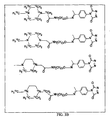
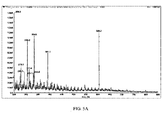
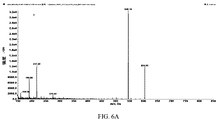
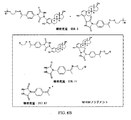
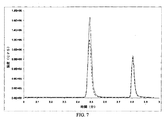
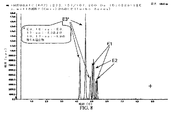
様々な実施形態の詳細な説明を、例えば下記の図を参照しながら本明細書で以下に記載する。図は単に例示的であり、図へのあらゆる言及は、単に例示目的であり、本明細書で以下に任意の方式で説明された実施形態の範囲を制限するものではないことが、理解される。便宜上、類似の成分または特徴を示すために、図全体にわたり参照符号を(枝符号(offset)をつけてまたはつけずに)反復する場合もある。 A detailed description of various embodiments is provided herein below, for example with reference to the following figures. It is understood that the figures are exemplary only, and any reference to the figures is for illustration purposes only and is not intended to limit the scope of the embodiments described herein in any manner. . For convenience, reference numerals may be repeated (with or without branch codes) throughout the figures to indicate similar components or features.
(様々な実施形態の詳細な説明)
明確にするために、下記の論述によって、本出願人らの教示による実施形態の様々な態様を詳説するが、好都合または適切な場合には、いくつかの具体的な詳細を省いていることが、理解される。例えば、代替的な実施形態における同様または類似の特徴の論述は、ある程度省略され得る。周知の発想または概念についても、簡潔にするために詳細には論じていない場合がある。いくつかの実施形態は、実施ごとに具体的に説明された詳細のいくつかを必要としない場合があり、これらは、それらの実施形態を十分な理解を提供するためだけに本明細書に記載されることを、当業者は認識する。同様に、記載の実施形態には、本開示の範囲から逸脱することなく、一般的な共通の知識に従ってわずかな変更または変動を受け入れる余地のあることが明らかとなる。本出願人らの教示の態様は、下記の実施例および様々な実施形態の記載を考慮することにより、さらに理解され得るが、それらは、本出願人らの教示の範囲をいかなる方式であっても制限するものと解釈されるべきでない。
(Detailed description of various embodiments)
For clarity, the following discussion details various aspects of the embodiments taught by the applicants, but omits some specific details where convenient or appropriate. Understood. For example, discussion of similar or similar features in alternative embodiments may be omitted to some extent. Well-known ideas or concepts may not be discussed in detail for brevity. Some embodiments may not require some of the details specifically described for each implementation, and these are described herein only to provide a thorough understanding of those embodiments. Those skilled in the art will recognize that this is done. Similarly, it will be apparent that the described embodiments are susceptible to minor modifications or variations in accordance with common common knowledge without departing from the scope of the present disclosure. Applicants 'aspects of teaching can be further understood by considering the following examples and the description of various embodiments, which are intended to limit the scope of applicants' teachings in any way. Should not be construed as limiting.
様々な実施形態に従い、フェノール性OHを含む分析物、例えばエストロゲンを、QAOC試薬で定量する方法が提供される。いくつかの実施形態では、該方法は、試料の濃縮、誘導体化およびLC−MSMS分析を含むことができる。試料は、1つまたはそれよりも多くのフェノール性OH分析物またはその代謝産物を含み得る。様々な実施形態に従い、試料は、複数の異なるフェノール性OH分析物を含み得るが、標識化は、各分析物を異なるQAOC試薬で標識することを含み得る。 In accordance with various embodiments, a method is provided for quantifying an analyte comprising phenolic OH, such as estrogen, with a QAOC reagent. In some embodiments, the method can include sample concentration, derivatization and LC-MSMS analysis. The sample may contain one or more phenolic OH analytes or metabolites thereof. According to various embodiments, the sample can include a plurality of different phenolic OH analytes, but labeling can include labeling each analyte with a different QAOC reagent.
フェノール性OH分析物は、フェノール基
いくつかの実施形態では、分析される試料は、1つまたはそれよりも多くのフェノール性OH分析物またはその代謝産物を含有可能である。例えば、様々な実施形態に従い、試料は、1つまたはそれよりも多くのステロイド、ステロイド様化合物、エストロゲン、エストロゲン様化合物、エストロン(E1)、エストラジオール(E2)、17α−エストラジオール、17β−エストラジオール、エストリオール(E3)、16−エピエストリオール、17−エピエストリオールおよび16,17−エピエストリオール、ならびに/またはその代謝産物を含み得る。様々な実施形態では、代謝産物は、例えばエストリオール、16−エピエストリオール(16−epiE3)、17−エピエストリオール(17−epiE3)、16,17−エピエストリオール(16,17−epiE3)、16−ケトエストラジオール(16−ketoE2)、16α−ヒドロキシエストロン(16α−OHE1)、2−メトキシエストロン(2−MeOE1)、4−メトキシエストロン(4−MeOE1)、2−ヒドロキシエストロン−3−メチルエーテル(3−MeOE1)、2−メトキシエストラジオール(2−MeOE2)、4−メトキシエストラジオール(4−MeOE2)、2−ヒドロキシエストロン(2OHE1)、4−ヒドロキシエストロン(4−OHE1)、2−ヒドロキシエストラジオール(2−OHE2)、エストロン(E1)、エストロンサルフェート(E1s)、17α−エストラジオール(E2a)、17β−エストラジオール(E2b)、エストラジオールサルフェート(E2s)、エキリン(EQ)、17α−ジヒドロエキリン(EQa)、17β−ジヒドロエキリン(EQb)、エキレニン(EN)、17α−ジヒドロエキレニン(ENa)、17β−ジヒドロエキレニン(ENb)、Δ8,9−デヒドロエストロン(dE1)、Δ8,9−デヒドロエストロンサルフェート(dE1s)であり得る。いくつかの実施形態では、フェノール性OH分析物は、ステロイドまたはステロイド様化合物であり得、それは、sp2混成しているA環と、そのA環の3位にOH基とを有する。 In some embodiments, the sample to be analyzed can contain one or more phenolic OH analytes or metabolites thereof. For example, according to various embodiments, the sample is one or more steroids, steroid-like compounds, estrogens, estrogen-like compounds, estrone (E1), estradiol (E2), 17α-estradiol, 17β-estradiol, Triol (E3), 16-epiestriol, 17-epiestriol and 16,17-epiestriol, and / or metabolites thereof may be included. In various embodiments, the metabolite is, for example, estriol, 16-epiestriol (16-epiE3), 17-epiestriol (17-epiE3), 16,17-epiestriol (16,17-epiE3). 16-ketoestradiol (16-ketoE2), 16α-hydroxyestrone (16α-OHE1), 2-methoxyestrone (2-MeOE1), 4-methoxyestrone (4-MeOE1), 2-hydroxyestrone-3-methyl ether (3-MeOE1), 2-methoxyestradiol (2-MeOE2), 4-methoxyestradiol (4-MeOE2), 2-hydroxyestrone (2OHE1), 4-hydroxyestrone (4-OHE1), 2-hydroxyestradiol (2 -O HE2), estrone (E1), estrone sulfate (E1s), 17α-estradiol (E2a), 17β-estradiol (E2b), estradiol sulfate (E2s), equilin (EQ), 17α-dihydroequine (EQa), 17β- Dihydroequin (EQb), equilenin (EN), 17α-dihydroequilenin (ENa), 17β-dihydroequilenin (ENb), Δ8,9-dehydroestrone (dE1), Δ8,9-dehydroestrone sulfate (dE1s) It can be. In some embodiments, the phenolic OH analyte can be a steroid or steroid-like compound, which has an A ring that is sp 2 hybridized and an OH group at the 3-position of the A ring.
様々な実施形態に従い、1ステップ標識反応を用いて、フェノール性OH分析物を標識可能である。例えば、該方法は、下記の構造のうちの1つを有するQAOC試薬を、分析物のフェノール性OH基と反応させることを含むことができ、ここでQAOC試薬は、次式によって記載され、
R2は、環式、分岐もしくは直鎖の、置換もしくは非置換C1〜C18アルキル、C1〜C18アルケン、もしくはC1〜C18アルキン、または置換もしくは非置換芳香族基であり、
R3は、存在しないか、または同じかもしくは異なっている1つもしくはそれよりも多くの置換基であり、この置換基は、環式、分岐もしくは直鎖C1〜C18アルキル、C1〜C18アルケン、もしくはC1〜C18アルキン;ハロゲン(例えば、Cl、Br、IもしくはF);−NO2;置換もしくは非置換芳香族(アリール)基;保護されているかもしくは保護されていないアミノ基、アシル基、カルボン酸基もしくはチオール基;−SO3H、−PO4 −、チオエーテル、エーテル、エポキシド、チオ−エポキシド、アジドもしくはアジリジンであり、
各R4は、独立して、H、または環式、分岐もしくは直鎖C1〜C18アルキル、C1〜C18アルケン、もしくはC1〜C18アルキンであり、
mは、1〜20の整数であり、
Xは、アニオンであり、
L1およびL2は、独立して、結合またはリンカーであり、
Arは、結合、アリール基、またはヘテロアリール基である。
According to various embodiments, phenolic OH analytes can be labeled using a one-step labeling reaction. For example, the method can include reacting a QAOC reagent having one of the following structures with a phenolic OH group of an analyte, wherein the QAOC reagent is described by the following formula:
R 2 is a cyclic, branched or straight chain, substituted or unsubstituted C 1 -C 18 alkyl, C 1 -C 18 alkene, or C 1 -C 18 alkyne, or substituted or unsubstituted aromatic group;
R 3 is one or more substituents that are absent, or the same or different, and these substituents are cyclic, branched or straight chain C 1 -C 18 alkyl, C 1- C 18 alkene, or C 1 -C 18 alkyne; halogen (eg, Cl, Br, I or F); —NO 2 ; substituted or unsubstituted aromatic (aryl) group; protected or unprotected amino group, an acyl group, a carboxylic acid group or a thiol group; -SO 3 H, -PO 4 - , thioether, ether, epoxide, thio - epoxide, azido or aziridine,
Each R 4 is independently H, or cyclic, branched or straight chain C 1 -C 18 alkyl, C 1 -C 18 alkene, or C 1 -C 18 alkyne;
m is an integer of 1 to 20,
X is an anion,
L1 and L2 are independently a bond or a linker;
Ar is a bond, an aryl group, or a heteroaryl group.
用語「アリール」は、別段に指定されない限り、置換または非置換の多価不飽和の芳香族炭化水素置換基を意味し、これは、単一の環であっても、一緒に縮合しているかもしくは共有結合によって連結している複数の環(好ましくは、1〜3個の環)であってもよい。用語「ヘテロアリール」は、N、OおよびSから選択される1〜4個のヘテロ原子を含むアリール基(または環)を指し、ここで、この窒素、炭素および硫黄原子は、必要に応じて酸化されており、窒素原子(単数または複数)は、必要に応じて四級化されている。ヘテロアリール基は、ヘテロ原子を介して分子の残りに付着していてもよい。アリールおよびヘテロアリール基の非限定的な例には、フェニル、1−ナフチル、2−ナフチル、4−ビフェニル、1−ピロリル、2−ピロリル、3−ピロリル、3−ピラゾリル、2−イミダゾリル、4−イミダゾリル、ピラジニル、2−オキサゾリル、4−オキサゾリル、2−フェニル−4−オキサゾリル、5−オキサゾリル、3−イソオキサゾリル、4−イソオキサゾリル、5−イソオキサゾリル、2−チアゾリル、4−チアゾリル、5−チアゾリル、2−フリル、3−フリル、2−チエニル、3−チエニル、2−ピリジル、3−ピリジル、4−ピリジル、2−ピリミジル、4−ピリミジル、5−ベンゾチアゾリル、プリニル、2−ベンゾイミダゾリル、5−インドリル、1−イソキノリル、5−イソキノリル、2−キノキサリニル、5−キノキサリニル、3−キノリル、および6−キノリルが含まれる。上記で記述したアリールおよびヘテロアリール環系の各々に対する置換基は、下記の許容可能な置換基の群から選択される。「アリール」および「ヘテロアリール」はまた、1つまたはそれよりも多くの非芳香環系が、縮合しているか、またはそうでなければアリールもしくはヘテロアリール系に結合している環系を包含する。 The term “aryl”, unless otherwise specified, means a substituted or unsubstituted polyunsaturated aromatic hydrocarbon substituent, which may be a single ring or fused together. Alternatively, it may be a plurality of rings (preferably 1 to 3 rings) linked by a covalent bond. The term “heteroaryl” refers to an aryl group (or ring) containing 1 to 4 heteroatoms selected from N, O and S, where the nitrogen, carbon and sulfur atoms are optionally Oxidized and nitrogen atom (s) are quaternized as needed. A heteroaryl group may be attached to the remainder of the molecule through a heteroatom. Non-limiting examples of aryl and heteroaryl groups include phenyl, 1-naphthyl, 2-naphthyl, 4-biphenyl, 1-pyrrolyl, 2-pyrrolyl, 3-pyrrolyl, 3-pyrazolyl, 2-imidazolyl, 4- Imidazolyl, pyrazinyl, 2-oxazolyl, 4-oxazolyl, 2-phenyl-4-oxazolyl, 5-oxazolyl, 3-isoxazolyl, 4-isoxazolyl, 5-isoxazolyl, 2-thiazolyl, 4-thiazolyl, 5-thiazolyl, 2- Furyl, 3-furyl, 2-thienyl, 3-thienyl, 2-pyridyl, 3-pyridyl, 4-pyridyl, 2-pyrimidyl, 4-pyrimidyl, 5-benzothiazolyl, purinyl, 2-benzimidazolyl, 5-indolyl, 1- Isoquinolyl, 5-isoquinolyl, 2-quinoxalinyl, 5 Quinoxalinyl, 3-quinolyl, and 6-quinolyl. The substituents for each of the aryl and heteroaryl ring systems described above are selected from the group of acceptable substituents described below. “Aryl” and “heteroaryl” also include ring systems in which one or more non-aromatic ring systems are fused or otherwise attached to an aryl or heteroaryl system. .
用語「リンカー」または「リンキング剤(linking agent)」は、2つの分子をつなぐ二官能性部分(アルキレン鎖、ペプチド、モノマー、オリゴマーまたはポリマーなど)を指す。リンカーの非限定的な例は、アルキル鎖、ポリエチレングリコール(PEG)、およびペプチド鎖またはペプチド模倣鎖(peptidomemetic chain)である。 The term “linker” or “linking agent” refers to a bifunctional moiety (such as an alkylene chain, peptide, monomer, oligomer or polymer) that connects two molecules. Non-limiting examples of linkers are alkyl chains, polyethylene glycol (PEG), and peptide chains or peptidomimetic chains.
いくつかの実施形態では、Arはアリールである。いくつかの実施形態では、Arは、フェニル基またはナフチル基である。 In some embodiments, Ar is aryl. In some embodiments, Ar is a phenyl group or a naphthyl group.
いくつかの実施形態では、L1およびL2は、独立して、結合、ペプチド、オリゴマー、PEG、C1〜C20アルキレン鎖、C1〜C6アルキレン鎖、またはC2〜C4アルキレン鎖である。いくつかの実施形態では、L1およびL2は、独立して、結合、ペプチド、C1〜C6アルキレン鎖、またはC2〜C4アルキレン鎖である。
In some embodiments, the L1 and L2, independently a bond, a peptide, oligomer, PEG, is C 1 -C 20 alkylene chain, C 1 -C 6 alkylene or C 2 -C 4 alkylene chain, . In some embodiments, L 1 and
いくつかの実施形態では、R2は、メチルまたはエチルである。いくつかの実施形態では、R3は、存在しないか、またはC1〜C8アルキル(分岐または直鎖)、ハロ、NO2、アミノ、アシルもしくはカルボン酸基である。いくつかの実施形態では、R3は存在しない。いくつかの実施形態では、各R4は、独立して、H、または分岐もしくは直鎖C1〜C10アルキルであるか、あるいは各R4は、独立して、H、または分岐もしくは直鎖C1〜C6アルキルである。いくつかの実施形態では、各R4は同じである。いくつかの実施形態では、R4はメチルである。いくつかの実施形態では、mは、1〜6の整数であるか、または1〜3の整数である。いくつかの実施形態では、Xは、ペルフルオロカルボキシレートである。いくつかの実施形態では、Xは、CF3COO−、CF3CF2COO−、CF3CF2CF2COO−、CF3SO3COO、または(C6H5)4B−である。 In some embodiments, R 2 is methyl or ethyl. In some embodiments, R 3 is absent or is a C 1 -C 8 alkyl (branched or straight chain), halo, NO 2 , amino, acyl, or carboxylic acid group. In some embodiments, R 3 is absent. In some embodiments, each R 4 is independently H, or branched or straight chain C 1 -C 10 alkyl, or each R 4 is independently H, or branched or straight chain. C 1 -C 6 alkyl. In some embodiments, each R 4 is the same. In some embodiments, R 4 is methyl. In some embodiments, m is an integer from 1 to 6, or an integer from 1 to 3. In some embodiments, X is perfluorocarboxylate. In some embodiments, X is CF 3 COO—, CF 3 CF 2 COO—, CF 3 CF 2 CF 2 COO—, CF 3 SO 3 COO, or (C 6 H 5 ) 4 B—.
いくつかの実施形態では、QAOC試薬は、次式
式中、R1は、
R2は、環式、分岐もしくは直鎖の、置換もしくは非置換C1〜C18アルキル、C1〜C18アルケン、もしくはC1〜C18アルキン、または置換もしくは非置換芳香族基であり、
R3は、存在しないか、または同じかもしくは異なっている1つもしくはそれよりも多くの置換基であり、この置換基は、環式、分岐もしくは直鎖C1〜C18アルキル、C1〜C18アルケン、もしくはC1〜C18アルキン;ハロゲン(例えば、Cl、Br、IもしくはF);−NO2;置換もしくは非置換芳香族(アリール)基;保護されているかもしくは保護されていないアミノ基、アシル基、カルボン酸基もしくはチオール基;−SO3H、−PO4 −、チオエーテル、エーテル、エポキシド、チオ−エポキシド、アジドもしくはアジリジンであり、
各R4は、独立して、H、または環式、分岐もしくは直鎖C1〜C18アルキル、C1〜C18アルケン、もしくはC1〜C18アルキンであり、
mおよびnは、独立して、1〜20の整数であり、
Xは、アニオンであり、
L2は、結合またはリンカーであり、
Arは、存在しないか、アリール基、またはヘテロアリール基である。
In some embodiments, the QAOC reagent has the formula:
Where R 1 is
R 2 is a cyclic, branched or straight chain, substituted or unsubstituted C 1 -C 18 alkyl, C 1 -C 18 alkene, or C 1 -C 18 alkyne, or substituted or unsubstituted aromatic group;
R 3 is one or more substituents that are absent, or the same or different, and these substituents are cyclic, branched or straight chain C 1 -C 18 alkyl, C 1- C 18 alkene, or C 1 -C 18 alkyne; halogen (eg, Cl, Br, I or F); —NO 2 ; substituted or unsubstituted aromatic (aryl) group; protected or unprotected amino group, an acyl group, a carboxylic acid group or a thiol group; -SO 3 H, -PO 4 - , thioether, ether, epoxide, thio - epoxide, azido or aziridine,
Each R 4 is independently H, or cyclic, branched or straight chain C 1 -C 18 alkyl, C 1 -C 18 alkene, or C 1 -C 18 alkyne;
m and n are each independently an integer of 1 to 20,
X is an anion,
L2 is a bond or a linker;
Ar is absent, is an aryl group, or a heteroaryl group.
いくつかの実施形態では、上記の構造において、R2は、メチルまたはエチルである。いくつかの実施形態では、R3は存在しない。いくつかの実施形態では、R4はメチルである。いくつかの実施形態では、L2は、結合、ペプチド、オリゴマー、PEG、C1〜C20アルキレン鎖、C1〜C6アルキレン鎖、またはC2〜C4アルキレン鎖である。いくつかの実施形態では、mは、1〜6の整数であるか、または1〜3の整数である。いくつかの実施形態では、nは、1〜10の整数、1〜5の整数、または2〜4の整数である。いくつかの実施形態では、Xは、ペルフルオロカルボキシレートアニオンである。いくつかの実施形態では、Xは、CF3COO−、CF3CF2COO−、CF3CF2CF2COO−、CF3SO3COO−、または(C6H5)4B−である。 In some embodiments, in the above structure, R 2 is methyl or ethyl. In some embodiments, R 3 is absent. In some embodiments, R 4 is methyl. In some embodiments, L2 is a bond, a peptide, oligomer, PEG, is a C 1 -C 20 alkylene chain, C 1 -C 6 alkylene or C 2 -C 4 alkylene chain. In some embodiments, m is an integer from 1 to 6, or an integer from 1 to 3. In some embodiments, n is an integer from 1 to 10, an integer from 1 to 5, or an integer from 2 to 4. In some embodiments, X is a perfluorocarboxylate anion. In some embodiments, X is CF 3 COO—, CF 3 CF 2 COO—, CF 3 CF 2 CF 2 COO—, CF 3 SO 3 COO—, or (C 6 H 5 ) 4 B—. .
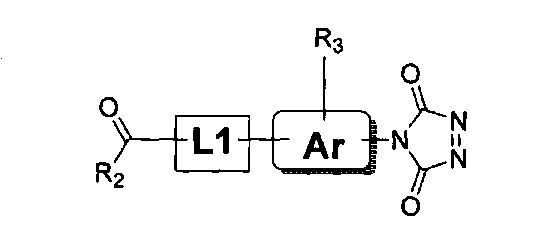
様々な実施形態に従い、フェノール性OH分析物は、2ステップ標識反応を介して標識可能であり、ここで、フェノール性OH基の芳香環を、最初、アミノオキシタグ付け剤を含んでいないカルボニル置換PTADベースの試薬と反応させて付加物を形成し、その後、その付加物をアミノオキシタグ付け剤でタグ付けして、タグ付き付加物を形成する。例えば、様々な実施形態に従い、2ステップ標識反応は、フェノール性OH基を、下記の構造を有するカルボニル置換PTADベースの試薬と反応させることを含み得、
R3は、存在しないか、または同じかもしくは異なっている1つもしくはそれよりも多くの置換基であり、この置換基は、環式、分岐もしくは直鎖C1〜C18アルキル、C1〜C18アルケン、もしくはC1〜C18アルキン;ハロゲン(例えば、Cl、Br、IもしくはF);−NO2;置換もしくは非置換芳香族(アリール)基;保護されているかもしくは保護されていないアミノ基、アシル基、カルボン酸基もしくはチオール基;−SO3H、−PO4 −、チオエーテル、エーテル、エポキシド、チオ−エポキシド、アジドもしくはアジリジンであり、
Arは、結合、アリール基、またはヘテロアリール基であり、
L1は、結合またはリンカーである。
According to various embodiments, the phenolic OH analyte can be labeled via a two-step labeling reaction, wherein the aromatic ring of the phenolic OH group is first replaced with a carbonyl substitution that does not include an aminooxy tagging agent. It reacts with a PTAD-based reagent to form an adduct, which is then tagged with an aminooxy tagging agent to form a tagged adduct. For example, according to various embodiments, a two-step labeling reaction can include reacting a phenolic OH group with a carbonyl-substituted PTAD-based reagent having the structure:
R 3 is one or more substituents that are absent, or the same or different, and these substituents are cyclic, branched or straight chain C 1 -C 18 alkyl, C 1- C 18 alkene, or C 1 -C 18 alkyne; halogen (eg, Cl, Br, I or F); —NO 2 ; substituted or unsubstituted aromatic (aryl) group; protected or unprotected amino group, an acyl group, a carboxylic acid group or a thiol group; -SO 3 H, -PO 4 - , thioether, ether, epoxide, thio - epoxide, azido or aziridine,
Ar is a bond, an aryl group, or a heteroaryl group;
L1 is a bond or a linker.
いくつかの実施形態では、Arはアリールである。いくつかの実施形態では、アリールは、フェニル基またはナフチル基である。いくつかの実施形態では、L1は、結合、ペプチド、オリゴマー、PEG、C1〜C20アルキレン鎖、C1〜C6アルキレン鎖、またはC2〜C4アルキレン鎖である。いくつかの実施形態では、R3は、存在しないか、またはC1〜C8アルキル、C1〜C8アルケン、C1〜C8アルキン、ハロゲンもしくは−NO2である。いくつかの実施形態では、R3は存在しない。フェノール性OH基の芳香環と、上記のカルボニル置換PTADベースの試薬との反応によって、下記の下位構造を含む付加物を作り出すことができる。
次いで、その付加物を、下記の構造を有するタグなどのアミノオキシタグと反応させて、タグ付き付加物を形成可能である
mは、1〜20の整数であり、Xはアニオンである]。タグ付き付加物は、下記の下位構造を有する。
m is an integer from 1 to 20 and X is an anion]. The tagged appendage has the following substructure.
ゆえに、様々な実施形態に従う2ステップ反応は、フェノール性OH試料をカルボニル置換PTADベースの試薬で処理して付加物を作り出し、その付加物をアミノオキシタグと反応させて、分析のためのタグ付き付加物を形成することを含む。いくつかの実施形態では、タグ付き付加物は、下記の下位構造を含む。
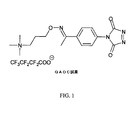
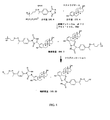
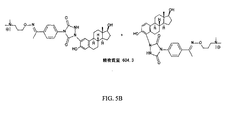
図4は、エストラジオールとQAOC試薬との間の例示的な反応を示している。例示的な反応は、1ステップ反応であるが、例えば2ステップ反応などの複数ステップの反応も可能である。いくつかの実施形態では、1ステップ標識反応が使用され、ここで、例えば図1に例示したように、アミノオキシMSタグにカップリングしたカルボニル置換PTADベースの試薬(QAOC試薬)を用いて、フェノール性OH分析物を標識する。本明細書で使用される場合、用語「アミノオキシMSタグ」は、「アミノオキシタグ」と交換可能に使用される。他の実施形態では、該方法は、最初にフェノール性OH分析物をカルボニル置換PTADベースの試薬で処理して付加物を生成し、次いでその付加物をアミノオキシマススペクトロメトリー(MS)タグ付け剤でタグ付けして、標識された付加物を形成することを含む。本明細書で使用される場合、用語「アミノオキシMSタグ付け剤」は、「アミノオキシタグ付け剤」と交換可能に使用される。標識された付加物は、マススペクトロメトリーを使用して分析可能である。 FIG. 4 shows an exemplary reaction between estradiol and QAOC reagent. An exemplary reaction is a one-step reaction, but multiple-step reactions such as a two-step reaction are possible. In some embodiments, a one-step labeling reaction is used, where a phenol-substituted PTAD-based reagent (QAOC reagent) coupled to an aminooxy MS tag is used, for example as illustrated in FIG. Label the sex OH analyte. As used herein, the term “aminooxy MS tag” is used interchangeably with “aminooxy tag”. In other embodiments, the method first treats the phenolic OH analyte with a carbonyl-substituted PTAD-based reagent to produce an adduct, which is then treated with an aminooxymass spectrometry (MS) tagging agent. To form a labeled adduct. As used herein, the term “aminooxy MS tagging agent” is used interchangeably with “aminooxy tagging agent”. Labeled adducts can be analyzed using mass spectrometry.
該方法はさらに、公知のフェノール性OH分析物を含む標準物質を提供すること、標準物質の公知のフェノール性OH分析物をQAOC試薬で処理して、標準付加物を形成することを含み得る。様々な実施形態では、標準物質を、本教示に従う1ステップまたは2ステップ標識反応を介して、QAOC試薬またはカルボニル置換PTADベースの試薬で処理して、標準付加物を形成可能である。次いで、標準付加物を、フェノール性OH分析物をQAOC試薬またはカルボニル置換PTADベースの試薬で標識し、その後アミノオキシMSタグと反応させることによって形成した付加物と混合して、混合物を形成可能である。次いで、その混合物を、マススペクトロメトリー、例えばLC−MSMSスペクトロメトリーを使用して分析可能である。いくつかの実施形態では、フェノール性OH分析物の相対濃度を得ることができる。他の実施形態では、公知の濃度の標準物質を使用することによって、フェノール性OH分析物を絶対的定量を得ることが可能である。 The method can further include providing a standard containing a known phenolic OH analyte, treating the known phenolic OH analyte of the standard with a QAOC reagent to form a standard adduct. In various embodiments, a standard can be treated with a QAOC reagent or a carbonyl-substituted PTAD-based reagent via a one-step or two-step labeling reaction according to the present teachings to form a standard adduct. The standard adduct can then be mixed with the adduct formed by labeling the phenolic OH analyte with a QAOC reagent or a carbonyl-substituted PTAD-based reagent and then reacting with an aminooxy MS tag to form a mixture. is there. The mixture can then be analyzed using mass spectrometry, such as LC-MSMS spectrometry. In some embodiments, the relative concentration of the phenolic OH analyte can be obtained. In other embodiments, absolute quantification of the phenolic OH analyte can be obtained by using known concentrations of standards.
様々な実施形態に従い、1つまたはそれよりも多くのフェノール性OH分析物を相対的に定量するための方法は、1つまたはそれよりも多くの分析物を標識し、その後マススペクトロメトリーを使用して分析することを含み得る。いくつかの実施形態に従い、1つまたはそれよりも多くのフェノール性OH分析物および/あるいはその代謝産物を定量可能である。いくつかの実施形態に従い、アミノオキシタグ付け剤は、一組の同重体タグを含むことができる。いくつかの実施形態に従い、第1のステップにおいて、標準物質中の少なくとも1つのフェノール性OH分析物をカルボニル置換PTADベースの試薬で標識して、標準付加物を形成可能である。第2のステップでは、標準付加物を、一組の同重体タグ由来の第1の同重体タグでタグ付け可能である。試験試料をカルボニル置換PTADベースの試薬と反応させて、もしあれば試験試料中の1つまたはそれよりも多くのフェノール性OH分析物を標識可能である。次いで、試験試料中の標識されたフェノール性OH分析物を、第1の同重体タグとは異なるが同じ組の同重体タグに由来する第2の同重体タグでタグ付け可能である。次いで、標識された標準物質および標識された試験試料を、組み合わせることができ、得られた混合物を、逆相カラムでの液体クロマトグラフィー(LC)分離にかけることができる。標識されたフェノール性OHおよび/またはフェノール性OH代謝産物は、特徴的な保持時間を有し得、カラムから時間を隔てて溶出させることができる。溶出ピークは、標識された分析物を含むピーク、および標識された標準物質を含むピークを含み得る。その後、カラムからの溶出液を、マススペクトロメトリーを使用して分析可能である。 In accordance with various embodiments, a method for relative quantitation of one or more phenolic OH analytes labels one or more analytes and then uses mass spectrometry Analyzing. According to some embodiments, one or more phenolic OH analytes and / or metabolites thereof can be quantified. According to some embodiments, the aminooxy tagging agent can include a set of isobaric tags. According to some embodiments, in a first step, at least one phenolic OH analyte in the standard can be labeled with a carbonyl-substituted PTAD-based reagent to form a standard adduct. In the second step, standard adducts can be tagged with a first isobaric tag from a set of isobaric tags. The test sample can be reacted with a carbonyl-substituted PTAD-based reagent to label one or more phenolic OH analytes, if any, in the test sample. The labeled phenolic OH analyte in the test sample can then be tagged with a second isobaric tag that is different from the first isobaric tag but is derived from the same set of isobaric tags. The labeled standard and the labeled test sample can then be combined and the resulting mixture can be subjected to liquid chromatography (LC) separation on a reverse phase column. Labeled phenolic OH and / or phenolic OH metabolites can have characteristic retention times and can be eluted from the column at intervals. The elution peak can include a peak containing a labeled analyte and a peak containing a labeled standard. The eluate from the column can then be analyzed using mass spectrometry.
フェノール性OH分析物の絶対的な定量は、標準物質が公知の濃度のフェノール性OH分析物を有している場合、相対的な定量について上記で説明したのと同じ方式で実施できることが、理解されるべきである。また、フェノール性OH分析物および/またはフェノール性OH分析物の代謝産物が、先で言及されている場合には、任意のフェノール性OH分析物が使用され得ることが、理解されるべきである。 It is understood that absolute quantification of phenolic OH analytes can be performed in the same manner as described above for relative quantification if the standard has a known concentration of phenolic OH analyte. It should be. It should also be understood that any phenolic OH analyte can be used where phenolic OH analytes and / or metabolites of phenolic OH analytes are referred to above. .
様々な実施形態に従い、複数の異なるフェノール性OH分析物を含む1つの試料を、異なる複数のQAOC試薬で処理して、フェノール性OH分析物の2つまたはそれよりも多くのうちの各々を、上記複数の試薬のうちの異なる1つで標識可能である。次いで、標識された試料を、マススペクトロメトリー、例えばLC/MSMSを使用して分析して、標識されたフェノール性分析物を定量可能である。いくつかの実施形態では、試料のこのような分析は、スペクトル計の単回実施で行うことができる。上記で論じた通り、いくつかの実施形態では、フェノール性OH分析物は、ステロイドまたはステロイド様分析物であり得る。 In accordance with various embodiments, a sample containing a plurality of different phenolic OH analytes is treated with a plurality of different QAOC reagents to each of two or more of the phenolic OH analytes. It can be labeled with a different one of the plurality of reagents. The labeled sample can then be analyzed using mass spectrometry, eg, LC / MSMS, to quantify the labeled phenolic analyte. In some embodiments, such analysis of the sample can be performed with a single run of the spectrometer. As discussed above, in some embodiments, the phenolic OH analyte can be a steroid or a steroid-like analyte.
様々な実施形態に従い、フェノール性OHを有する1つまたはそれよりも多くの化合物を含んでいる試料を、分析する前に様々な方法で濃縮し得る。濃縮法は、血液(新鮮なまたは乾燥させた)、血漿、血清、尿または唾液などの試料のタイプに依り得る。例示的な濃縮法は、タンパク質沈殿法、液液抽出、固液抽出、親和性捕捉/放出、抗体媒介性濃縮および限外濾過を含むことができるが、それらに限定されない。他の濃縮法、または2つまたはそれよりも多くの濃縮法の組合せを使用し得る。例示的な試料濃縮過程を、下記の実施例1で提供する。 In accordance with various embodiments, a sample containing one or more compounds having phenolic OH can be concentrated in various ways before analysis. The concentration method may depend on the type of sample such as blood (fresh or dried), plasma, serum, urine or saliva. Exemplary concentration methods can include, but are not limited to, protein precipitation methods, liquid-liquid extraction, solid-liquid extraction, affinity capture / release, antibody-mediated concentration, and ultrafiltration. Other enrichment methods or a combination of two or more enrichment methods may be used. An exemplary sample concentration process is provided in Example 1 below.
いくつかの実施形態では、フェノール性OH分析物の分析は、例えば、質量分析計における高エネルギー衝突によってレポーターイオンを作製することと、レポーターイオンの強度またはピーク面積を定量のために利用することとを含み得る。例えば、上記で示したQAOC試薬は、高エネルギー衝突(MSMS)の最中に中性損失を受けて、荷電分析物種をレポーターイオンとして残すことができ、次いで、そのレポーターイオンをMS3分析にかけることができる。いくつかの実施形態では、QAOC試薬は、高エネルギー衝突時にタグフラグメントを作製可能なので、次いで、そのタグフラグメントをMS3分析にかけることができる。 In some embodiments, the analysis of the phenolic OH analyte includes, for example, generating reporter ions by high energy collisions in a mass spectrometer and utilizing the intensity or peak area of the reporter ions for quantification. Can be included. For example, the QAOC reagent shown above can undergo neutral loss during high energy collisions (MSMS), leaving the charged analyte species as a reporter ion, which is then subjected to MS 3 analysis. be able to. In some embodiments, the QAOC reagent can generate a tag fragment upon high energy collision, which can then be subjected to MS 3 analysis.
様々な実施形態に従い、1つまたはそれよりも多くのフェノール性OH分析物および/または本教示に従って形成されたその付加物を標識するために、複数のマススペクトロメトリー(MS)タグ付け剤を使用可能である。いくつかの実施形態に従い、アミノオキシタグ付け剤は、強力なレポーターイオンを提供するのに十分にフラグメント化(fragment)可能である。いくつかの実施形態に従い、アミノオキシタグ付け剤は、マススペクトロメトリーのために特定して設計されているタグ付け剤を含むことができ、いくつかの実施形態に従い、アミノオキシタグ付け剤は、多重反応モニタリング(MRM)アッセイのために特定して設計されている。いくつかの実施形態では、アミノオキシタグ付け剤を使用して、フェノール性OH分析物を標識することによって作製された付加物をタグ付け可能である。標準付加物がフェノール性OH分析物の定量のために使用されるいくつかの実施形態では、アミノオキシタグ付け剤を使用して、標準付加物をタグ付け可能である。様々な実施形態では、標準付加物は、標準付加物と比較して分析物を相対的に定量するために使用可能である。標準付加物の濃度が公知であるいくつかの実施形態では、標準付加物は、分析物を絶対的に定量するために使用可能である。いくつかの実施形態では、様々なアミノオキシMSタグ付け剤を使用して、様々な分析物を標識可能である。例えば、アミノオキシMSタグ付け剤は、異なる同重体タグまたは異なる質量差タグであり得る。例えば、標準付加物をタグ付けするために使用されるアミノオキシMSタグ付け剤が、一組の同重体タグに由来する第1の同重体タグを含むことができる一方で、試料に由来する付加物をタグ付けするために使用されるアミノオキシMSタグ付け剤は、第1の同重体タグとは異なるが同じ組の同重体タグに由来する第2の同重体タグを含むことができる。 In accordance with various embodiments, multiple mass spectrometry (MS) tagging agents are used to label one or more phenolic OH analytes and / or their adducts formed in accordance with the present teachings Is possible. According to some embodiments, the aminooxy tagging agent can be sufficiently fragmented to provide a strong reporter ion. According to some embodiments, the aminooxy tagging agent can include a tagging agent specifically designed for mass spectrometry, and according to some embodiments, the aminooxy tagging agent comprises: Designed specifically for multiple reaction monitoring (MRM) assays. In some embodiments, aminooxy tagging agents can be used to tag adducts made by labeling phenolic OH analytes. In some embodiments where standard adducts are used for the quantification of phenolic OH analytes, aminooxy tagging agents can be used to tag standard adducts. In various embodiments, standard adducts can be used to relatively quantify analytes compared to standard adducts. In some embodiments where the concentration of standard adduct is known, the standard adduct can be used to absolute quantitate the analyte. In some embodiments, different aminooxy MS tagging agents can be used to label different analytes. For example, the aminooxy MS tagging agent can be a different isobaric tag or a different mass difference tag. For example, an aminooxy MS tagging agent used to tag a standard adduct can include a first isobaric tag derived from a set of isobaric tags while an addition derived from a sample. The aminooxy MS tagging agent used to tag an object can include a second isobaric tag that is different from the first isobaric tag but is derived from the same set of isobaric tags.
いくつかの実施形態に従い、少なくとも2つの異なるカテゴリのアミノオキシタグ付け剤を使用して、高エネルギー衝突下でレポーター基を作製可能である。QAOC試薬は、1ステップまたは2ステップタグ付け反応のいずれかを使用することによって、これらのアミノオキシタグ付け剤を下記の構造を有する化合物(カルボニル置換PTADベースの試薬)と組み合わせて使用し形成可能であり、
R3は、存在しないか、または同じかもしくは異なっている1つもしくはそれよりも多くの置換基であり、この置換基は、環式、分岐もしくは直鎖C1〜C18アルキル、C1〜C18アルケン、もしくはC1〜C18アルキン;ハロゲン(例えば、Cl、Br、IもしくはF);−NO2;置換もしくは非置換芳香族(アリール)基;保護されているかもしくは保護されていないアミノ基、アシル基、カルボン酸基もしくはチオール基;−SO3H、−PO4 −、チオエーテル、エーテル、エポキシド、チオ−エポキシド、アジドもしくはアジリジンであり、
L1は、結合またはリンカーであり、
Arは、結合、アリール基、またはヘテロアリール基である。
According to some embodiments, at least two different categories of aminooxy tagging agents can be used to create reporter groups under high energy collisions. QAOC reagents can be formed using these aminooxy tagging agents in combination with compounds having the following structure (carbonyl-substituted PTAD-based reagents) by using either one-step or two-step tagging reactions And
R 3 is one or more substituents that are absent, or the same or different, and these substituents are cyclic, branched or straight chain C 1 -C 18 alkyl, C 1- C 18 alkene, or C 1 -C 18 alkyne; halogen (eg, Cl, Br, I or F); —NO 2 ; substituted or unsubstituted aromatic (aryl) group; protected or unprotected amino group, an acyl group, a carboxylic acid group or a thiol group; -SO 3 H, -PO 4 - , thioether, ether, epoxide, thio - epoxide, azido or aziridine,
L1 is a bond or a linker;
Ar is a bond, an aryl group, or a heteroaryl group.
使用できるアミノオキシMSタグ付け剤の第1および第2のカテゴリまたは組に由来する例示的な化合物を、下記に示す。 Exemplary compounds from the first and second categories or sets of aminooxy MS tagging agents that can be used are shown below.
第1のカテゴリでは、アミノオキシMSタグ付け剤は、
R1−(CH2)n−ONH2
であり、式中、R1は、第四級アミンもしくはホスフェート、または例えば下記の構造を有する置換基であり、
R 1 — (CH 2 ) n —ONH 2
Where R 1 is a quaternary amine or phosphate, or a substituent having, for example, the following structure:
第2のカテゴリでは、アミノオキシMSタグ付け剤は、
R1−(CH2)n−ONH2
であり、式中、R1は、限定されるものではないが、下記の5つの構造のうちの1つまたはそれよりも多くであってよく、
R 1 — (CH 2 ) n —ONH 2
Where R 1 can be, but is not limited to, one or more of the following five structures:
第1のカテゴリのアミノオキシMSタグ付け剤に由来するアミノオキシMSタグ付け剤は、高エネルギー衝突(MSMS)の最中に中性損失を受けて、荷電分析物種(charged analyte species)をレポーターイオンとして残すことができ、次いで、それをMS3分析にかけることができる。第2のカテゴリのアミノオキシMSタグ付け剤に由来するアミノオキシMSタグ付け剤によって、高エネルギー衝突時にタグフラグメントをレポーターイオンとして得ることができる。 Aminooxy MS tagging agents derived from the first category of aminooxy MS tagging agents undergo neutral loss during high energy collisions (MSMS) and charge charged analyte species as reporter ions. As it can then be subjected to MS 3 analysis. Aminooxy MS tagging agents derived from the second category of aminooxy MS tagging agents allow tag fragments to be obtained as reporter ions during high energy collisions.
上記で説明したように、アミノオキシMSタグ付け剤を、フェノール性OH分析物をカルボニル置換PTADベースの試薬で標識することによって形成された付加物のカルボニル部分と組み合わせて、タグ付き付加物を作り出すことができる。 As explained above, the aminooxy MS tagging agent is combined with the carbonyl moiety of the adduct formed by labeling the phenolic OH analyte with a carbonyl-substituted PTAD-based reagent to create a tagged adduct. be able to.
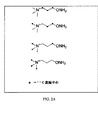
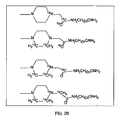
様々な実施形態に従い、アミノオキシMSタグ付け剤の各タイプについて、複数の同重体タグ付け剤または質量差タグ付け剤を配合および使用可能である。各図2Aおよび2Bには、それぞれ一組の同重体四重アミノオキシMSタグ付け剤が図示されている。同重体タグ付け剤の各組は、同一の化学構造および質量を有し得るが、同位体の異なる組合せおよび/または位置を含み得る。 In accordance with various embodiments, multiple isobaric or mass difference tagging agents can be formulated and used for each type of aminooxy MS tagging agent. Each set of FIGS. 2A and 2B illustrates a set of isobaric quadruple aminooxy MS tagging agents. Each set of isobaric tagging agents may have the same chemical structure and mass, but may contain different combinations and / or positions of isotopes.
いくつかの実施形態では、標識されたフェノール性OH分析物の親娘イオン遷移モニタリング(PDITM)を、三連四重極MSプラットフォームを使用して実施可能である。PDITMおよびその使用に関するさらなる詳細については、その全体が参照によって本明細書で援用される米国特許出願公開第2006/0183238A1号に記載されている。本明細書に記載のように、標識されたフェノール性OH分析物に対して実施されるマススペクトロメトリー分析のタイプは、限定されない。様々な実施形態では、LC−MSMSを用いることができる。いくつかの実施形態では、アミノオキシMSタグ付け剤は、MSMSの最中に中性損失を受け、荷電分析物種であるレポーターイオンを残す。いくつかの実施形態では、アミノオキシMSタグ付け剤は、MSMSの最中にタグフラグメントであるレポーターイオンを形成する。 In some embodiments, parent-daughter ion transition monitoring (PDITM) of labeled phenolic OH analytes can be performed using a triple quadrupole MS platform. Further details regarding PDITM and its use are described in US Patent Application Publication No. 2006/0183238 A1, which is hereby incorporated by reference in its entirety. As described herein, the type of mass spectrometry analysis performed on a labeled phenolic OH analyte is not limited. In various embodiments, LC-MSMS can be used. In some embodiments, the aminooxy MS tagging agent undergoes neutral loss during MSMS, leaving a reporter ion that is a charged analyte species. In some embodiments, the aminooxy MS tagging agent forms a reporter ion that is a tag fragment during MSMS.
いくつかの実施形態では、本教示に従うフェノール性OH分析物を含んでいる試料の分析のための方法では、内標準物質を用いることができる。いくつかの実施形態では、このような内標準物質は、フェノール性OH分析物を、QAOC標識試薬の1つまたはそれよりも多くの同位体変種(isotopic variant)と反応させることによって生成可能である。本教示のタグ付け化学および方法論によって、公知の方法よりも高い感度を提供可能であり、様々な実施形態において、フェノール性OH分析物の2H含有標準物質、13C含有標準物質、15N含有標準物質および18O含有標準物質の必要性を排除し得る。いくつかのフェノール性OH分析物の同位体標識された標準物質は、市販されておらず、それによって、本教示なしでこれらの分析物を絶対的に定量することは困難となる。本教示によれば、いくつかの実施形態では、各分析物は、それ自体の内標準物質を有し得る。レポーターシグナルは、標準試料および試験試料に特異的であり得る。 In some embodiments, an internal standard can be used in a method for analysis of a sample containing a phenolic OH analyte according to the present teachings. In some embodiments, such internal standards can be generated by reacting a phenolic OH analyte with one or more isotopic variants of a QAOC labeling reagent. . Tagging chemistry and methodology of the present teachings, it can provide a higher sensitivity than known methods, in various embodiments, 2 H-containing standard phenolic OH analyte, 13 C-containing standard, 15 N-containing The need for standards and 18 O-containing standards can be eliminated. Isotopically labeled standards for some phenolic OH analytes are not commercially available, thereby making it difficult to absolutely quantify these analytes without the present teachings. In accordance with the present teachings, in some embodiments, each analyte can have its own internal standard. The reporter signal can be specific for standard and test samples.
いくつかの実施形態では、標識された標準物質のために使用されるQAOC試薬は、一組の質量差タグに由来する第1の質量差タグを含むことができる。標識された試料は、第1の質量差タグとは異なるが同じ組の質量差タグに由来する第2の質量差タグを含むことができる。次いで、標識された試料を、標識された試料のマススペクトロメトリー、LC−MSMS分析、それらの組合せ等を使用して分析可能である。様々な実施形態に従い、1つまたはそれよりも多くのフェノール性OH分析物を定量するための方法は、マススペクトロメトリーを使用して質量分析する前に、分析物を修飾する2ステップの化学反応を含むことができる。様々な実施形態に従い、2ステップの化学反応は、最初に、フェノール性OH分析物中のフェノール性OH官能基の芳香環を、カルボニル置換PTADベースの試薬で誘導体化して付加物を形成することと、次いで、その付加物を、(MS)タグ付け剤、例えばアミノオキシMSタグ付け剤で標識することとを含み得る。いくつかの実施形態に従い、液体クロマトグラフィー−タンデムマススペクトロメトリー(LC−MSMS)を使用して、修飾された分析物を分析可能である。異なる分析物の付加物は、逆相カラムで異なる特徴的な保持時間を有し得、特徴的な質量を有し得るので、カラムから時間を隔てて溶出させることができる。カラムからの溶出液は、MSMS分析にかけることができる。レポーター基は、高エネルギー衝突下で作製され得る。レポーター基の強度またはピーク面積は、同定および/または定量のために使用可能である。 In some embodiments, the QAOC reagent used for the labeled standard can include a first mass difference tag derived from a set of mass difference tags. The labeled sample can include a second mass difference tag that is different from the first mass difference tag but is derived from the same set of mass difference tags. The labeled sample can then be analyzed using mass spectrometry of the labeled sample, LC-MSMS analysis, combinations thereof, and the like. In accordance with various embodiments, a method for quantifying one or more phenolic OH analytes is a two-step chemical reaction that modifies an analyte prior to mass spectrometry using mass spectrometry. Can be included. In accordance with various embodiments, the two-step chemical reaction involves first derivatizing the aromatic ring of the phenolic OH functional group in the phenolic OH analyte with a carbonyl-substituted PTAD-based reagent to form an adduct. And then labeling the adduct with a (MS) tagging agent, such as an aminooxy MS tagging agent. In accordance with some embodiments, the modified analyte can be analyzed using liquid chromatography-tandem mass spectrometry (LC-MSMS). Different analyte adducts can have different characteristic retention times on the reverse phase column and can have characteristic masses and can be eluted from the column at time intervals. The eluate from the column can be subjected to MSMS analysis. Reporter groups can be created under high energy collisions. The intensity or peak area of the reporter group can be used for identification and / or quantification.
同重体タグによって多重化が可能になり、試料当たりの処理能力が高く、費用がより低いフェノール性OH分析物の多重分析のための方法が提供される。フェノール性OH分析物のすべてに1つの共通の官能基が存在するので、様々な実施形態では、各分析物ごとに1つのタグしか必要としない。いくつかの実施形態では、PDITMを使用すると、特異度が増大し、誤差の危険性が低下する。試薬設計により、その試薬がFlashQuantTM適用にとって良好な手段となり、分析物の同一性を確認するのを手助けするMS3能を可能にし得る。 Isobaric tags allow for multiplexing, provide a method for multiplex analysis of phenolic OH analytes with higher throughput per sample and lower cost. Because there is one common functional group for all of the phenolic OH analytes, in various embodiments, only one tag is required for each analyte. In some embodiments, the use of PDITM increases specificity and reduces the risk of error. The reagent design may make the reagent a good tool for FlashQuant ™ application and allow the MS 3 capability to help confirm the identity of the analyte.
様々な実施形態に従い、一組の同重体試薬に由来する第1の同重体タグは、例えば公知の濃度で、公知のフェノール性OH分析物を含み得る標準物質と接触させることができる。この接触は、第1の同重体タグと標準物質との間の反応にとって好ましい条件下で行うことができる。第1の同重体タグと同じ組の同重体試薬に由来する第2の同重体タグは、未知の濃度のフェノール性OH分析物を含む試料と接触させることができる。下記でさらに記載する通り、標準物質および試料のタグ付けされた分析物を一緒に混合し、分析して、試料中の分析物の濃度を求めることができる。この分析は、混合物を分離して、分離した分析物を形成することと、分離した分析物を分析することとを含み得る。使用可能である分離方法には、ガスクロマトグラフィー法、液体クロマトグラフィー法、他のクロマトグラフィー法、電気泳動法、電気浸透法、質量差分離法等が含まれる。例示的な一実施形態では、液体クロマトグラフィーを使用して、混合物中の様々な分析物を分離し、それで、分離した分析物を形成する。 In accordance with various embodiments, a first isobaric tag derived from a set of isobaric reagents can be contacted with a standard that can include a known phenolic OH analyte, for example, at a known concentration. This contact can be performed under conditions that are favorable for the reaction between the first isobaric tag and the standard. A second isobaric tag derived from the same set of isobaric reagents as the first isobaric tag can be contacted with a sample containing an unknown concentration of phenolic OH analyte. As described further below, standards and sample-tagged analytes can be mixed together and analyzed to determine the concentration of the analyte in the sample. This analysis can include separating the mixture to form a separated analyte and analyzing the separated analyte. Separation methods that can be used include gas chromatography, liquid chromatography, other chromatographic methods, electrophoresis, electroosmosis, mass difference separation, and the like. In one exemplary embodiment, liquid chromatography is used to separate the various analytes in the mixture, thus forming separated analytes.
いくつかの実施形態では、クロマトグラフィーによる分離は、逆相カラムで実施可能であり、カラムから溶出するピークを、その後の分析にかけることができる。いくつかの実施形態では、その後の分析は、マススペクトロメトリー、またはより具体的には親娘イオン遷移モニタリング(PDITM)を含むことができる。下記でより詳細に説明するように、PDITMから得られた結果を比較することによって、試料中のフェノール性OH分析物の濃度を求めることができる。PDITMおよびその使用に関するさらなる詳細については、その全体が参照によって本明細書で援用される米国特許出願第2006/0183238A1号に見出すことができる。 In some embodiments, chromatographic separation can be performed on a reverse phase column and the peak eluting from the column can be subjected to subsequent analysis. In some embodiments, subsequent analysis can include mass spectrometry, or more specifically parent-daughter ion transition monitoring (PDITM). As described in more detail below, the concentration of the phenolic OH analyte in the sample can be determined by comparing the results obtained from PDITM. Further details regarding PDITM and its use can be found in US Patent Application No. 2006/0183238 A1, which is hereby incorporated by reference in its entirety.
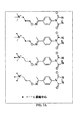
いくつかの実施形態に従い、同重体タグ付け試薬の代わりに、質量差タグ付け剤を使用可能である。例示的な質量差剤の対は、図3Aおよび3Bに図示されている。様々な実施形態に従い、アミノオキシMSタグ付け剤は、多重アッセイにおける相対的かつ絶対的な定量のために使用できる。いくつかの実施形態に従い、アミノオキシMSタグ付け剤は、二重、三重、四重、および他の多重アッセイで使用可能である。 In accordance with some embodiments, mass difference tagging agents can be used in place of isobaric tagging reagents. An exemplary mass difference agent pair is illustrated in FIGS. 3A and 3B. According to various embodiments, aminooxy MS tagging agents can be used for relative and absolute quantification in multiplex assays. According to some embodiments, aminooxy MS tagging agents can be used in duplex, triple, quadruple, and other multiplex assays.
いくつかの実施形態では、試薬は、参照によって本明細書で援用される米国特許出願公開第2011/0212534号に記載のように、1つまたはそれよりも多くのビタミンD化合物を含む試料と反応可能であり、両方のクラスの化合物の多重分析のために本明細書に記載のフェノール性OH分析物と反応させることもできる。 In some embodiments, the reagent reacts with a sample comprising one or more vitamin D compounds, as described in US Patent Application Publication No. 2011/0212534, incorporated herein by reference. It is possible to react with the phenolic OH analytes described herein for multiplex analysis of both classes of compounds.
いくつかの実施形態では、QAOC試薬は、フェノール性OH部分と等モル濃度で試料と組み合わされる。いくつかの実施形態では、フェノール性OH部分に対して過剰(例えば約10%、約20%、約2倍過剰、または約4倍過剰)のQAOC試薬が、フェノール性OH試料に加えられる。いくつかの実施形態では、等モル濃度未満のQAOCが使用され、例えば、QAOC濃度は、フェノール性OH部分のモル濃度の約25%、約50%または約75%であり得る。いくつかの実施形態では、QAOC試薬は、試料溶液中1μg/mL〜100mg/mLまたは100μg/mL〜10mg/mLの濃度で試料と組み合わされる。 In some embodiments, the QAOC reagent is combined with the sample at an equimolar concentration with the phenolic OH moiety. In some embodiments, an excess (eg, about 10%, about 20%, about 2-fold excess, or about 4-fold excess) of QAOC reagent relative to the phenolic OH moiety is added to the phenolic OH sample. In some embodiments, less than equimolar QAOC is used, for example, the QAOC concentration can be about 25%, about 50%, or about 75% of the molar concentration of the phenolic OH moiety. In some embodiments, the QAOC reagent is combined with the sample at a concentration of 1 μg / mL to 100 mg / mL or 100 μg / mL to 10 mg / mL in the sample solution.
いくつかの実施形態では、タグ付け化学および方法は、任意の三連四重極装置、例えばFlashQuantTMをMALDI源と共に含む装置で実施可能である。いくつかの実施形態では、フェノール性OH分析物およびそれらの代謝産物のための分析器として、試薬キット、データ分析ソフトウェアおよびMSプラットフォームが提供される。 In some embodiments, tagging chemistry and methods can be performed with any triple quadrupole device, such as a device that includes a FlashQuant ™ with a MALDI source. In some embodiments, reagent kits, data analysis software, and MS platforms are provided as analyzers for phenolic OH analytes and their metabolites.
本教示の様々な実施形態に従って使用できる異なる液体クロマトグラフィーおよびマススペクトロメトリー法、システム、およびソフトウェアには、2009年5月31日出願の米国仮特許出願第61/182,748号、および2006年8月17日公開の米国特許出願第2006/0183238A1号に記載されているものが含まれる。これらの参考文献は、共に参照によって本明細書で援用される。 Different liquid chromatography and mass spectrometry methods, systems, and software that can be used in accordance with various embodiments of the present teachings include US Provisional Patent Application Nos. 61 / 182,748, filed May 31, 2009, and 2006. This includes those described in U.S. Patent Application No. 2006 / 0183238A1, published Aug. 17. Both of these references are hereby incorporated by reference.
本教示のさらに他の実施形態に従い、上記で論じたものなどのQAOC試薬を含むキットが提供される。他の実施形態では、カルボニル置換PTADベースの試薬、および1つまたはそれよりも多くのアミノオキシMSタグ付け剤を含むキットが提供される。アミノオキシMSタグ付け剤は、上記で説明した第1のおよび/または第2のカテゴリまたは組のアミノオキシMSタグ付け剤に由来する化合物を含むことができる。いくつかの実施形態では、キットは、公知のフェノール性OH分析物を含む標準物質を含むことができる。 In accordance with yet other embodiments of the present teachings, kits are provided that include QAOC reagents, such as those discussed above. In other embodiments, kits are provided that include a carbonyl-substituted PTAD-based reagent and one or more aminooxy MS tagging agents. Aminooxy MS tagging agents can include compounds derived from the first and / or second category or set of aminooxy MS tagging agents described above. In some embodiments, the kit can include a standard containing a known phenolic OH analyte.
本教示の様々な実施形態に従い、カルボニル置換PTADベースの試薬およびアミノオキシMSタグ付け剤のうちの1つまたはそれよりも多くを含むことができるキットが提供される。いくつかの実施形態では、キットは、フェノール性OHを含む公知の濃度のステロイド分析物を含む標準物質を含むことができる。 In accordance with various embodiments of the present teachings, kits are provided that can include one or more of a carbonyl-substituted PTAD-based reagent and an aminooxy MS tagging agent. In some embodiments, the kit can include a standard containing a known concentration of a steroid analyte including phenolic OH.
いくつかの実施形態では、キットは、公知の濃度の公知のフェノール性OH分析物を含む少なくとも1つの標準物質を含むことができる。いくつかの実施形態に従い、アミノオキシMSタグ付け剤は、一組の同重体タグに由来する同重体タグであってよく、いくつかの実施形態では、キットは、一組の同重体タグに由来する複数の異なる同重体タグを含むことができる。いくつかの実施形態に従い、アミノオキシMSタグ付け剤は、一組の質量差タグに由来する質量差タグであってよく、いくつかの実施形態では、キットは、一組の質量差タグに由来する複数の異なる質量差タグを含むことができる。いくつかの実施形態に従い、キットは、カルボニル置換PTADベースの試薬、アミノオキシMSタグ付け剤、公知のフェノール性OH分析物を含む標準物質、および/または公知の濃度の公知のフェノール性OH分析物を含むことができ、さらに、フェノール性OH分析物を標識するための指示を含むこともできる。 In some embodiments, the kit can include at least one standard containing a known concentration of a known phenolic OH analyte. According to some embodiments, the aminooxy MS tagging agent may be an isobaric tag derived from a set of isobaric tags, and in some embodiments, the kit is derived from a set of isobaric tags. A plurality of different isobaric tags can be included. According to some embodiments, the aminooxy MS tagging agent may be a mass difference tag derived from a set of mass difference tags, and in some embodiments, the kit is derived from a set of mass difference tags. A plurality of different mass difference tags can be included. According to some embodiments, the kit comprises a carbonyl-substituted PTAD-based reagent, an aminooxy MS tagging agent, a standard containing a known phenolic OH analyte, and / or a known concentration of a known phenolic OH analyte. And may further include instructions for labeling the phenolic OH analyte.
本教示のさらに他の実施形態に従い、キットは、図1に示したQAOC試薬、異なるQAOC試薬、それらの組み合わせ等を含むことができる。キットはまた、公知のフェノール性OH分析物を含む標準物質を含むことができる。いくつかの実施形態では、標準物質は、公知の濃度の公知のフェノール性OH分析物を含むことができる。いくつかの実施形態では、キットに含まれるQAOC試薬は、一組の同重体タグに由来する1つまたはそれよりも多くの同重体タグを含むことができる。いくつかの実施形態では、キットは、一組の同重体タグに由来する複数の異なる同重体タグを含むことができる。いくつかの実施形態では、キットに含まれるQAOC試薬は、一組の質量差タグに由来する1つまたはそれよりも多くの質量差タグを含むことができる。いくつかの実施形態では、キットは、一組の質量差タグに由来する複数の異なる質量差タグを含むことができる。 In accordance with yet other embodiments of the present teachings, the kit can include the QAOC reagents shown in FIG. 1, different QAOC reagents, combinations thereof, and the like. The kit can also include a standard containing a known phenolic OH analyte. In some embodiments, the standard can include a known concentration of a known phenolic OH analyte. In some embodiments, the QAOC reagent included in the kit can include one or more isobaric tags derived from a set of isobaric tags. In some embodiments, the kit can include a plurality of different isobaric tags derived from a set of isobaric tags. In some embodiments, the QAOC reagent included in the kit can include one or more mass difference tags from a set of mass difference tags. In some embodiments, the kit can include a plurality of different mass difference tags derived from a set of mass difference tags.
様々な実施形態に従い、キットは、緩衝液、1つまたはそれよりも多くのクロマトグラフィーカラム、ならびに必要に応じて、アッセイを実施するのに有用な他の試薬および/または成分を含むことができる。いくつかの実施形態では、キットは、使用者が試料を加えることのみを必要とするように、例えば均一系アッセイ(homogeneous assay)を含むことができる。いくつかの実施形態では、キットは、較正用または標準化用の試薬または標準物質を含むことができる。アッセイを実施するために使用できるか、または使用すべき機器設定に関する情報も、キットに含まれ得る。いくつかの実施形態では、試料の調製、操作条件、容積測定量、温度設定等に関する情報が、キットに含まれる。 According to various embodiments, the kit can include a buffer, one or more chromatographic columns, and optionally other reagents and / or components useful for performing the assay. . In some embodiments, the kit can include a homogeneous assay, for example, so that the user only needs to add a sample. In some embodiments, the kit can include calibration or standardization reagents or standards. Information regarding instrument settings that can or can be used to perform the assay can also be included in the kit. In some embodiments, information regarding sample preparation, operating conditions, volumetric volume, temperature settings, etc. is included in the kit.
キットは、1つまたはそれよりも多くの試薬容器および適切な指示を含む密封容器内にパッケージ可能である。1つまたはそれよりも多くのアッセイ、測定値、遷移ペア(transition pair)、操作指示、操作を実施するためのソフトウェア、それらの組み合わせ等に関連する電子情報を保存した電子媒体が、キットに含まれ得る。様々な実施形態に従い、QAOC試薬およびその中間体を合成するための方法が提供され得る。 The kit can be packaged in a sealed container containing one or more reagent containers and appropriate instructions. The kit includes an electronic medium that stores electronic information related to one or more assays, measurements, transition pairs, operating instructions, software for performing the operation, combinations thereof, etc. Can be. In accordance with various embodiments, a method for synthesizing QAOC reagents and intermediates thereof can be provided.
本教示の態様は、下記の実施例を考慮することによりさらに理解可能であるが、これらの実施例は、いかなる方式でも本教示の範囲を制限すると解釈されるべきでない。 Aspects of the present teachings can be further understood by considering the following examples, which should not be construed as limiting the scope of the present teachings in any way.
(実施例1)
標識されたQAOC試薬の合成におけるステップの例示
Illustrative steps in the synthesis of labeled QAOC reagents
p−アセチル−4−フェニル−1−カルボエトキシセミカルバジド(carbethoxysemicarbazide)(1)の合成 Synthesis of p-acetyl-4-phenyl-1-carboethoxysemicarbazide (1)
カルバジド酸エチル(6.46g、62.05mmol)のトルエン(100mL)溶液に、イソシアン酸4−アセチルフェニル(10g、62.05mmol)のトルエン(250mL)溶液を添加した。反応混合物を室温で2時間撹拌し、次いで80℃で2時間撹拌した。反応で形成された沈殿物を濾過し、真空オーブン中で乾燥させて、p−アセチル−4−フェニル−1−カルボエトキシセミカルバジド1(p−acetyl−4−phenyl−l−carbethoxysemicarbazide 1)(16.5g、90%)を得た。これを、さらなる精製なしに次の反応ステップで使用した(合成は、Organic Syntheses、Coll. 6巻、936頁(1988年);51巻、121頁(1971年)から採用。4−フェニル−1,2,4−トリアゾリン−3,5−ジオン)。様々な態様では、この実施例で使用される成分のそれぞれの値は、約5%〜約20%の範囲にある量で増加または減少する場合があり、例えば各成分は、この実施例で使用される値よりも5%少ない量から5%多い量で使用可能であり、各成分は、この実施例で使用される値よりも10%少ない量から10%多い量で使用可能であり、各成分は、この実施例で使用される値よりも15%少ない量から15%多い量で使用可能であり、または各成分は、この実施例で使用される値よりも20%少ない量から20%多い量で使用可能である。様々な態様では、その値は、±約5%〜20%で変わり得る。
p−アセチル−4−フェニルウラゾール(2)の合成
To a toluene (100 mL) solution of ethyl carbazate (6.46 g, 62.05 mmol) was added a toluene (250 mL) solution of 4-acetylphenyl isocyanate (10 g, 62.05 mmol). The reaction mixture was stirred at room temperature for 2 hours and then at 80 ° C. for 2 hours. The precipitate formed in the reaction was filtered and dried in a vacuum oven to give p-acetyl-4-phenyl-1-carbethoxysemicarbazide 1 (16. 5 g, 90%). This was used in the next reaction step without further purification (synthesis adopted from Organic Synthesis, Coll. 6, 936 (1988); 51, 121 (1971). 4-Phenyl-1 , 2,4-triazoline-3,5-dione). In various aspects, the value of each of the components used in this example may increase or decrease by an amount in the range of about 5% to about 20%, for example, each component used in this example Each component can be used in an amount that is 10% less than the value used in this example, and 5% less than the value used in this example. Ingredients can be used in an amount 15% to 15% greater than the value used in this example, or each ingredient can be used in an amount 20% less than the value used in this example. It can be used in large quantities. In various embodiments, the value can vary from ± about 5% to 20%.
Synthesis of p-acetyl-4-phenylurazole (2)
p−アセチル−4−フェニル−1−カルボエトキシセミカルバジド1(15g、56mmol)を、4MのKOH水溶液(28mL、112mmol)と共に70℃で約2時間加熱した。焼結フィルター漏斗を使用して、残った粒状固体を濾別した。濾液を室温に冷却し、濃HClで酸性にした。形成された沈殿物を濾過し、真空オーブン中で乾燥させて、p−アセチル−4−フェニルウラゾール2を淡黄色固体として得た(12.4g、85%)。1H NMR(400MHz、DMSO−d6):s=1.65(s,3H)、6.70(d,2H)、7.10(d,2H)、9.50(s,2H)(合成は、Organic Syntheses、Coll. 6巻、936頁(1988年);51巻、121頁(1971年)から採用。4−フェニル−1,2,4−トリアゾリン−3,5−ジオン)。様々な態様では、この実施例で使用される成分のそれぞれの値は、約5%〜約20%の範囲にある量で増加または減少する場合があり、例えば各成分は、この実施例で使用される値よりも5%少ない量から5%多い量で使用可能であり、各成分は、この実施例で使用される値よりも10%少ない量から10%多い量で使用可能であり、各成分は、この実施例で使用される値よりも15%少ない量から15%多い量で使用可能であり、または各成分は、この実施例で使用される値よりも20%少ない量から20%多い量で使用可能である。様々な態様では、その値は、±約5%〜20%で変わり得る。
p−アセチル−4−フェニルウラゾール第四級アミノオキシ付加臭化物(4)の合成
p-Acetyl-4-phenyl-1-carboethoxysemicarbazide 1 (15 g, 56 mmol) was heated with 4 M aqueous KOH (28 mL, 112 mmol) at 70 ° C. for about 2 hours. The remaining granular solid was filtered off using a sintered filter funnel. The filtrate was cooled to room temperature and acidified with concentrated HCl. The formed precipitate was filtered and dried in a vacuum oven to give p-acetyl-4-
Synthesis of p-acetyl-4-phenylurazole quaternary aminooxy addition bromide (4)
p−アセチル−4−フェニルウラゾール2(2.10g、9.58mmol)および第四級アミノオキシタグ3(メタノール−酢酸(95:5v/v)100mL中6.74g、20.6mmol(標識試薬としての第四級アミノオキシタグは、その全体が参照によって本明細書で援用される米国特許出願公開第2011−0003395号に記載されている)の懸濁液を、周囲温度で48時間撹拌した。この段階でHPLC分析を行うと、2が、生成物であるp−アセチル−4−フェニルウラゾール第四級アミノオキシ付加物4に95%変換されたことが示された。カラム:DeltaPak C18、3.9×150mm、緩衝液A:水+0.1%TFA、緩衝液B:アセトニトリル+0.085%TFA、波長(シグナル=254nm、参照=360nm)、流速=1mL/分。分析物の濃度は、メタノール中およそ0.25mg/mLであった。p−アセチル−4−フェニルウラゾール2の保持時間=5.1分、p−アセチル−4−フェニルウラゾール第四級アミノオキシ付加物4の保持時間=5.5分。ES−MSデータ:M+(算出値M+=C16H24N5O3+=334.19、観測値M+=334.20および275.50(−Me3N))。メタノールを除去した後、粗製生成物を白色固体として単離した。様々な態様では、この実施例で使用される成分のそれぞれの値は、約5%〜約20%の範囲にある量で増加または減少する場合があり、例えば各成分は、この実施例で使用される値よりも5%少ない量から5%多い量で使用可能であり、各成分は、この実施例で使用される値よりも10%少ない量から10%多い量で使用可能であり、各成分は、この実施例で使用される値よりも15%少ない量から15%多い量で使用可能であり、または各成分は、この実施例で使用される値よりも20%少ない量から20%多い量で使用可能である。様々な態様では、その値は、±約5%〜20%で変わり得る。
p-Acetyl-4-phenylurazole 2 (2.10 g, 9.58 mmol) and quaternary aminooxy tag 3 (methanol-acetic acid (95: 5 v / v) 6.74 g in 100 mL, 20.6 mmol (labeling reagent) As a quaternary aminooxy tag as described in U.S. Patent Application Publication No. 2011-0003395, which is incorporated herein by reference in its entirety, was stirred at ambient temperature for 48 hours. HPLC analysis at this stage showed that 2 was 95% converted to the product p-acetyl-4-phenylurazole quaternary aminooxy
対イオン交換:こうして得られた固体を、水40mLに溶解し、そのうち30mL(11.50mmolの4)を、交換のために使用した。この溶液に(50mLのFalcon管中)、ヘプタフルオロ酪酸銀の溶液(脱イオン水15mL中3.69g、11.53mmol)を一度に加え、管を振って簡単に混合した。沈殿物を、3000rpmで2分間遠心分離処理することによって分離した。ヘプタフルオロ酪酸銀の希釈溶液(1滴)を加えることによって、任意の臭化物イオン(Br−)について上清をチェックした。濁りが生じたら、Br−が存在することを示す。臭化物イオンが完全に沈殿したことを確かめるために、別の0.2当量(水5mL中0.738mg)のヘプタフルオロ酪酸銀を加え、混合し、遠心分離処理し、Br−についてチェックした。透明溶液は、すべてのBr−全体が消費されたことを示す。濾液をシリンジに入れ、5ミクロンフィルター(25mm、Millex LCR、PTEF、25mL/フィルター)を介して再び濾過し、フラッシュクロマトグラフィーによって精製した(2つのバッチで精製した:43g、C18Iscoカラム、流速=40ml/分、溶媒A:水、溶媒B:メタノール。カラムを、100mLの50%B、次いで250mLの2%Bで平衡化した。試料を溶液としてカラムに入れる。2%Bで0〜6分、次いで2〜85%Bで6〜35分、波長=254nm)。生成物を含む画分を、分析HPLCによって純度について分析し、純粋な(>95%)画分をプールし、ロータリーエバポレーターで乾燥させて、p−アセチル−4−フェニルウラゾール第四級アミノオキシ付加ヘプタフルオロブチレート5を白色固体として得た。固体をトルエン20mLと共に蒸発させ、真空下で乾燥させて、水を完全に除去した。最終収率およびHPLC純度は、2.6g(65%)および>98%であった。様々な態様では、この実施例で使用される成分のそれぞれの値は、約5%〜約20%の範囲にある量で増加または減少する場合があり、例えば各成分は、この実施例で使用される値よりも5%少ない量から5%多い量で使用可能であり、各成分は、この実施例で使用される値よりも10%少ない量から10%多い量で使用可能であり、各成分は、この実施例で使用される値よりも15%少ない量から15%多い量で使用可能であり、または各成分は、この実施例で使用される値よりも20%少ない量から20%多い量で使用可能である。様々な態様では、その値は、±約5%〜20%で変わり得る。
標識されたQAOC試薬(6)の合成
Counter ion exchange: The solid thus obtained was dissolved in 40 mL of water, of which 30 mL (11.50 mmol of 4) was used for exchange. To this solution (in a 50 mL Falcon tube), a solution of silver heptafluorobutyrate (3.69 g, 11.53 mmol in 15 mL deionized water) was added in one portion and mixed briefly by shaking the tube. The precipitate was separated by centrifuging at 3000 rpm for 2 minutes. The supernatant was checked for any bromide ions (Br − ) by adding a diluted solution of silver heptafluorobutyrate (1 drop). If turbidity occurs, it indicates that Br − is present. To ensure that bromide ions were completely precipitated, another 0.2 equivalent (0.738 mg in 5 mL of water) of silver heptafluorobutyrate was added, mixed, centrifuged and checked for Br − . A clear solution indicates that all the Br - total was consumed. The filtrate was placed in a syringe and filtered again through a 5 micron filter (25 mm, Millex LCR, PTEF, 25 mL / filter) and purified by flash chromatography (purified in two batches: 43 g, C18 Isco column, flow rate = 40 ml. / Min, solvent A: water, solvent B: methanol The column was equilibrated with 100 mL of 50% B and then 250 mL of 2% B. The sample was placed in the column as a solution, 0-6 min at 2% B, Then 2 to 85% B for 6 to 35 minutes, wavelength = 254 nm). Fractions containing product were analyzed for purity by analytical HPLC and pure (> 95%) fractions were pooled and dried on a rotary evaporator to give p-acetyl-4-phenylurazole quaternary aminooxy. Addition heptafluorobutyrate 5 was obtained as a white solid. The solid was evaporated with 20 mL of toluene and dried under vacuum to completely remove water. Final yield and HPLC purity were 2.6 g (65%) and> 98%. In various aspects, the value of each of the components used in this example may increase or decrease by an amount in the range of about 5% to about 20%, for example, each component used in this example Each component can be used in an amount that is 10% less than the value used in this example, and 5% less than the value used in this example. Ingredients can be used in an amount 15% to 15% greater than the value used in this example, or each ingredient can be used in an amount 20% less than the value used in this example. It can be used in large quantities. In various embodiments, the value can vary from ± about 5% to 20%.
Synthesis of labeled QAOC reagent (6)
冷却したp−アセチル−4−フェニルウラゾール第四級アミノオキシ付加ヘプタフルオロブチレート5(800mg、1.46mmol、アルゴン雰囲気下)の懸濁液に、tBuOCl溶液(無水アセトニトリル7mL中0.175mL、1.46mmol)を、撹拌しながら滴加した(2〜3分間加えた)。滴加が完了したら、反応混合物を0〜5℃で30分間撹拌した。アセトニトリルをロータリーエバポレーター(窒素を通気)で除去し、ピンク色の固体を無水EtOAcで洗浄した(アルゴンブランケット下でパスツールピペットによって上部から除去した)。真空下で乾燥させた後、0.65g(80%)の6を、オレンジ色から赤色固体として得た。生成物を、湿気がない状態で−40℃において保存し、明るい光から保護した。様々な態様では、この実施例で使用される成分のそれぞれの値は、約5%〜約20%の範囲にある量で増加または減少する場合があり、例えば各成分は、この実施例で使用される値よりも5%少ない量から5%多い量で使用可能であり、各成分は、この実施例で使用される値よりも10%少ない量から10%多い量で使用可能であり、各成分は、この実施例で使用される値よりも15%少ない量から15%多い量で使用可能であり、または各成分は、この実施例で使用される値よりも20%少ない量から20%多い量で使用可能である。様々な態様では、その値は、±約5%〜20%で変わり得る。
(実施例2)
試料の濃縮
To a cooled suspension of p-acetyl-4-phenylurazole quaternary aminooxy-added heptafluorobutyrate 5 (800 mg, 1.46 mmol, under argon atmosphere), a tBuOCl solution (0.175 mL in 7 mL of anhydrous acetonitrile, 1.46 mmol) was added dropwise with stirring (added for 2-3 minutes). When the addition was complete, the reaction mixture was stirred at 0-5 ° C. for 30 minutes. The acetonitrile was removed on a rotary evaporator (nitrogen bubbling) and the pink solid was washed with anhydrous EtOAc (removed from the top with a Pasteur pipette under an argon blanket). After drying under vacuum, 0.65 g (80%) of 6 was obtained as an orange to red solid. The product was stored at −40 ° C. in the absence of moisture and protected from bright light. In various aspects, the value of each of the components used in this example may increase or decrease by an amount in the range of about 5% to about 20%, for example, each component used in this example Each component can be used in an amount that is 10% less than the value used in this example, and 5% less than the value used in this example. Ingredients can be used in an amount 15% to 15% greater than the value used in this example, or each ingredient can be used in an amount 20% less than the value used in this example. It can be used in large quantities. In various embodiments, the value can vary from ± about 5% to 20%.
(Example 2)
Sample concentration
試料、抽出溶媒およびそれらの組成物の体積、試薬溶液、抽出培地の量、ならびに分子量カットオフ膜タイプは、典型的なものである。 Samples, extraction solvents and their composition volumes, reagent solutions, amounts of extraction media, and molecular weight cut-off membrane types are typical.
乾燥血斑:濾紙上にある乾燥させたヒトまたは動物の血液試料(3〜10μL)に、内標準物質(単数または複数)をスパイク添加し、好ましくは1:1の組成の酢酸エチル−ヘキサン100μLで、より好ましくは複数回抽出した(抽出効率を強化するのに、超音波処理が必要な場合がある)。次いで、組み合わせた酢酸エチル−ヘキサン層を、真空遠心濃縮器または熱を用いるガス流またはそれらすべての組合せを使用して乾燥させた。乾燥させた試料に、試薬溶液50μL(アセトニトリル中2mg/mL)を加えた。試料をボルテックス混合し、次いで室温で少なくとも30分間インキュベートした。水(20μL)を加え、試料をボルテックス混合し、次いで、試料をLC−MSMSによって分析した。 Dry blood spots: spiked internal standard (s) to a dried human or animal blood sample (3-10 μL) on filter paper, preferably 100 μL of ethyl acetate-hexane with 1: 1 composition More preferably, extraction was performed a plurality of times (sonication may be necessary in order to enhance extraction efficiency). The combined ethyl acetate-hexane layers were then dried using a vacuum centrifugal concentrator or a gas stream using heat or a combination of all. To the dried sample, 50 μL of reagent solution (2 mg / mL in acetonitrile) was added. Samples were vortex mixed and then incubated at room temperature for at least 30 minutes. Water (20 μL) was added, the sample was vortex mixed, and then the sample was analyzed by LC-MSMS.
タンパク質沈殿:内標準物質(単数または複数)を含むヒトまたは動物の血清または血漿試料(200μL)に、アセトニトリル0.8mLを加えた。試料をボルテックス混合し、次いで、10,000×gで5分間、遠心分離処理した。上清(750μL)を除去し、次いで、真空遠心濃縮器または熱を用いるガス流またはそれらすべての組合せを使用して乾燥させた。乾燥させた試料に、試薬溶液50μL(アセトニトリル中2mg/mL)を加えた。試料をボルテックス混合し、次いで、室温で少なくとも30分間インキュベートした。水(20μL)を加え、試料をボルテックス混合し、次いで、試料をLC−MSMSによって分析した。 Protein precipitation: 0.8 mL of acetonitrile was added to a human or animal serum or plasma sample (200 μL) containing internal standard (s). Samples were vortex mixed and then centrifuged at 10,000 × g for 5 minutes. The supernatant (750 μL) was removed and then dried using a vacuum centrifugal concentrator or a gas stream using heat or a combination of all. To the dried sample, 50 μL of reagent solution (2 mg / mL in acetonitrile) was added. Samples were vortex mixed and then incubated at room temperature for at least 30 minutes. Water (20 μL) was added, the sample was vortex mixed, and then the sample was analyzed by LC-MSMS.
液液抽出(LLE):内標準物質(単数または複数)を含むヒトまたは動物の血清または血漿試料(200μL)を、好ましくは1:1の組成の酢酸エチル−ヘキサン1mLで、好ましくは複数回抽出した。次いで、組み合わせた酢酸エチル−ヘキサン層を、真空遠心濃縮器または熱を用いるガス流またはそれらすべての組合せを使用して乾燥させた。乾燥させた試料に、試薬溶液50μL(アセトニトリル中2mg/mL)を加えた。試料をボルテックス混合し、次いで、室温で少なくとも30分間インキュベートした。水(20μL)を加え、試料をボルテックス混合し、次いで、試料をLC−MSMSによって分析した。 Liquid-Liquid Extraction (LLE): Human or animal serum or plasma sample (200 μL) containing internal standard (s) is preferably extracted multiple times with 1 mL of ethyl acetate-hexane of preferably 1: 1 composition. did. The combined ethyl acetate-hexane layers were then dried using a vacuum centrifugal concentrator or a gas stream using heat or a combination of all. To the dried sample, 50 μL of reagent solution (2 mg / mL in acetonitrile) was added. Samples were vortex mixed and then incubated at room temperature for at least 30 minutes. Water (20 μL) was added, the sample was vortex mixed, and then the sample was analyzed by LC-MSMS.
固液抽出(SLE):内標準物質(単数または複数)を含むヒトまたは動物の血清または血漿試料(200μL)を、好ましくはカートリッジまたは96ウェルプレートまたは任意の他の適切なフォーマットにおいて、珪藻土培地200mg上に適用し、5〜10分間吸着させ、次いで、ジイソプロピルエーテル1mLで、好ましくは複数回抽出した。次いで、組み合わせたジイソプロピルエーテル抽出物を、真空遠心濃縮器もしくは熱を用いるガス流またはそれらすべての組合せを使用して乾燥させた。乾燥させた試料に、試薬溶液50μL(アセトニトリル中2mg/mL)を加えた。試料をボルテックス混合し、次いで、室温で少なくとも30分間インキュベートした。水(20μL)を加え、試料をボルテックス混合し、次いで、試料をLC−MSMSによって分析した。 Solid-liquid extraction (SLE): Human or animal serum or plasma sample (200 μL) containing internal standard (s), preferably 200 mg of diatomaceous earth medium in a cartridge or 96-well plate or any other suitable format. Applied above and allowed to adsorb for 5-10 minutes, then extracted with 1 mL of diisopropyl ether, preferably multiple times. The combined diisopropyl ether extracts were then dried using a vacuum centrifugal concentrator or a gas stream using heat or a combination of all. To the dried sample, 50 μL of reagent solution (2 mg / mL in acetonitrile) was added. Samples were vortex mixed and then incubated at room temperature for at least 30 minutes. Water (20 μL) was added, the sample was vortex mixed, and then the sample was analyzed by LC-MSMS.
遊離(非結合)エストロゲン:ヒトまたは動物の血清または血漿試料(400μL)を、30kDa限外濾過(UF)膜またはデバイスに適用し、3000〜5000gで1時間遠心分離処理した。次いで、濾液に内標準物質(単数または複数)をスパイク添加し、ジイソプロピルエーテル1mLで、好ましくは複数回抽出した。次いで、組み合わせたジイソプロピルエーテル抽出物を、真空遠心濃縮器または熱を用いるガス流またはそれらすべての組合せを使用して乾燥させた。乾燥させた試料に、試薬溶液50μL(アセトニトリル中2mg/mL)を加えた。試料をボルテックス混合し、次いで、室温で少なくとも30分間インキュベートした。水(20μL)を加え、試料をボルテックス混合し、次いで、試料をLC−MSMSによって分析した。
(実施例3)
マススペクトロメトリー分析
Free (unbound) estrogen: Human or animal serum or plasma samples (400 μL) were applied to a 30 kDa ultrafiltration (UF) membrane or device and centrifuged at 3000-5000 g for 1 hour. The filtrate was then spiked with the internal standard (s) and extracted with 1 mL of diisopropyl ether, preferably multiple times. The combined diisopropyl ether extracts were then dried using a vacuum centrifugal concentrator or a gas stream using heat or a combination of all. To the dried sample, 50 μL of reagent solution (2 mg / mL in acetonitrile) was added. Samples were vortex mixed and then incubated at room temperature for at least 30 minutes. Water (20 μL) was added, the sample was vortex mixed, and then the sample was analyzed by LC-MSMS.
(Example 3)
Mass spectrometry analysis
試料を、LC−MSMS分析において下記のパラメータを使用して分析し得る。 Samples can be analyzed using the following parameters in LC-MSMS analysis.
HPLCパラメータ
カラム:AAA C18カラム(C18逆相、5μm、4.6mm×150mm)
温度:50℃
移動相:A=H2O+0.1%FA B=アセトニトリル+0.1%FA
注入量:20μL
Temperature: 50 ° C
Mobile phase: A = H 2 O + 0.1% FA B = acetonitrile + 0.1% FA
Injection volume: 20 μL
HPLCおよびMSパラメータは、典型的な値であり、それらに限定されるものではない。
(実施例4)
API−5500QTRPでのエストロゲンの分析
The HPLC and MS parameters are typical values and are not limited thereto.
Example 4
Analysis of estrogen with API-5500QTRP
類似の過程を使用して、エストラジオールを、図4に示した機序に従って式Iの標識されたQAOCと反応させ、Q1−MS−Q1スキャンを使用して分析した。図5Aは、AB SCIEX製のAPI−5500QTRPTM質量分析計を使用する反応混合物のスキャンを提供している。示されている通り、期待値はM+=604.35であり、実測値は604.2であった。 Using a similar process, estradiol was reacted with labeled QAOC of Formula I according to the mechanism shown in FIG. 4 and analyzed using a Q1-MS-Q1 scan. FIG. 5A provides a scan of the reaction mixture using an API-5500QTRP ™ mass spectrometer from AB SCIEX. As shown, the expected value was M + = 604.35 and the measured value was 604.2.
いくつかの実施形態に従い、同重体タグがアミノオキシMSタグ付け剤である場合、レポーターシグナルを、さらなるフラグメンテーション(MS3)にかけることができる。レポーターシグナルをさらなるフラグメンテーションにかけることによってピークを得ることができ、そのピークを標準データベースと比較することによって、分析物の同定を確証可能である。いくつかの実施形態に従い、カラムからの溶出液を、親娘イオン遷移モニタリング(PDITM)にかけることができる。m/z 604.3におけるこの生成物イオンを、衝突エネルギースキャンにかけた。その結果を図6Aに示す。親イオンならびに545.1における中性損失フラグメントを含むMRMフラグメントのうちのいくつかは、図6Bに見ることができる。次いで、この反応混合物を、両方のMRM遷移:604.3→545.1および604.3→217.2についてLC−MRMプロファイルにかけた。それらのプロファイルを図7に示す(点線および実線)。反応混合物を、Waters製Acquity C8 UPLCカラムに、8分間でアセトニトリル−水(0.1%ギ酸)勾配5→95%Bにより0.7mL/分、注入量5μL、カラム区画40℃で流した。
実施例5−3200QTRAPでのエストロゲンの分析
According to some embodiments, if the isobaric tag is an aminooxy MS tagging agent, the reporter signal can be subjected to further fragmentation (MS 3 ). Peaks can be obtained by subjecting the reporter signal to further fragmentation, and the identity of the analyte can be confirmed by comparing the peaks to a standard database. According to some embodiments, the eluate from the column can be subjected to parent-daughter ion transition monitoring (PDITM). This product ion at m / z 604.3 was subjected to a collision energy scan. The result is shown in FIG. 6A. Some of the MRM fragments including the parent ion as well as the neutral loss fragment at 545.1 can be seen in FIG. 6B. The reaction mixture was then subjected to LC-MRM profiles for both MRM transitions: 604.3 → 545.1 and 604.3 → 217.2. Their profiles are shown in FIG. 7 (dotted line and solid line). The reaction mixture was passed through a Waters Acquity C8 UPLC column over 8 minutes with an acetonitrile-water (0.1% formic acid) gradient 5 → 95% B at 0.7 mL / min, injection volume 5 μL,
Example 5-3 Analysis of estrogen with 200QTRAP
エストロン、エストラジオールおよびエストリオールを、各々、濃縮し、式Iの標識されたQAOC試薬と反応させ、生成物イオンのフラグメンテーションパターンを求めた。3200QTRAP機器を使用して、下記のようにMSMSパラメータを得た。
使用した供給源/ガスパラメータは、下記のとおりであった。
図8は、図1のQAOC試薬で標識されたエストロン、エストラジオールおよびエストリオールを含む反応物のLC−MRMプロファイルを提供している。 FIG. 8 provides an LC-MRM profile of a reaction comprising estrone, estradiol and estriol labeled with the QAOC reagent of FIG.
本明細書で使用した各節の見出しは、単に構成上の目的のためであり、いかなる方式でも記載された主題を制限するものとして解釈されるべきではない。 The section headings used herein are for organizational purposes only and are not to be construed as limiting the subject matter described in any way.
本出願人らの教示を、様々な実施形態と併せて記載してきたが、本出願人らの教示は、このような実施形態に限定されることを意図されない。対照的に、本出願人らの教示は、当業者によって理解されるように、様々な変更、改変および等価物を包含する。 While the applicants 'teachings have been described in conjunction with various embodiments, the applicants' teachings are not intended to be limited to such embodiments. In contrast, Applicants' teachings encompass various changes, modifications, and equivalents, as will be appreciated by those skilled in the art.
上記の説明が、実施例および様々な実施形態の特定の詳細を提供してきたが、説明された実施形態のいくつかの特徴および/または機能は、説明された実施形態の範囲から逸脱することなく改変が認められることが、理解される。上記の説明は、本発明を例示するように意図され、その範囲は、添付の特許請求の範囲の文言によってのみ制限される。本教示の他の実施形態は、本明細書を考慮し、本明細書に開示されている本教示を実施することによって、当業者に明らかとなる。本明細書および実施例は、単に例示的と考えられるように意図される。 While the above description has provided examples and specific details of various embodiments, some features and / or functions of the described embodiments may be set forth without departing from the scope of the described embodiments. It will be appreciated that modifications are permitted. The above description is intended to illustrate the present invention, the scope of which is limited only by the language of the appended claims. Other embodiments of the present teachings will be apparent to those skilled in the art from consideration of the present specification and practice of the present teachings disclosed herein. The specification and examples are intended to be considered merely exemplary.
Claims (27)
前記試料をQAOC試薬で処理し、その結果として、前記試料中の少なくとも1つのフェノール性OH分析物を標識することにより、フェノール性QAOC付加物を作り出すステップと、
前記フェノール性QAOC付加物を質量分析計を使用して分析するステップと
を含む、方法。 A method for mass spectrometry analysis of a sample, comprising:
Treating the sample with a QAOC reagent, thereby producing a phenolic QAOC adduct by labeling at least one phenolic OH analyte in the sample;
Analyzing the phenolic QAOC adduct using a mass spectrometer.
式中、R1は、
であり、
R2は、環式、分岐もしくは直鎖の、置換もしくは非置換C1〜C18アルキル、C1〜C18アルケン、もしくはC1〜C18アルキン、または置換もしくは非置換芳香族基であり、
R3は、存在しないか、または同じかもしくは異なっている1つもしくはそれよりも多くの置換基であり、この置換基は、環式、分岐もしくは直鎖C1〜C18アルキル、C1〜C18アルケン、もしくはC1〜C18アルキン;ハロゲン;−NO2;置換もしくは非置換芳香族基;保護されているかもしくは保護されていないアミノ基、アシル基、カルボン酸基もしくはチオール基;−SO3H、−PO4 −、チオエーテル、エーテル、エポキシド、チオ−エポキシド、アジドもしくはアジリジンであり、
各R4は、独立して、H、または環式、分岐もしくは直鎖C1〜C18アルキル、C1〜C18アルケン、もしくはC1〜C18アルキンであり、
mは、1〜20の整数であり、
Xは、アニオンであり、
L1およびL2は、独立して、結合またはリンカーであり、
Arは、結合、アリール基、またはヘテロアリール基である、
請求項1に記載の方法。 The QAOC reagent has the following formula:
Where R 1 is
And
R 2 is a cyclic, branched or straight chain, substituted or unsubstituted C 1 -C 18 alkyl, C 1 -C 18 alkene, or C 1 -C 18 alkyne, or substituted or unsubstituted aromatic group;
R 3 is one or more substituents that are absent, or the same or different, and these substituents are cyclic, branched or straight chain C 1 -C 18 alkyl, C 1- C 18 alkene, or C 1 -C 18 alkyne, halogen, -NO 2; substituted or unsubstituted aromatic group; an amino group which is not either or protected is protected, acyl group, a carboxylic acid group or a thiol group; -SO 3 H, —PO 4 — , thioether, ether, epoxide, thio-epoxide, azide or aziridine,
Each R 4 is independently H, or cyclic, branched or straight chain C 1 -C 18 alkyl, C 1 -C 18 alkene, or C 1 -C 18 alkyne;
m is an integer of 1 to 20,
X is an anion,
L1 and L2 are independently a bond or a linker;
Ar is a bond, an aryl group, or a heteroaryl group.
The method of claim 1.
かつ/またはL1およびL2が、独立して、結合、ペプチド、オリゴマー、PEGもしくはC1〜C20アルキレン鎖である、
請求項2に記載の方法。 R 2 is methyl or ethyl, R 3 is absent,
And / or L1 and L2 are independently a bond, a peptide, oligomer, a PEG or C 1 -C 20 alkylene chain,
The method of claim 2.
を有する化合物をアミノオキシタグと反応させることにより、構造
[式中、nは、1〜20の整数である]、
を有するタグ付きQAOC試薬を形成することによって作製される、請求項2に記載の方法。 The QAOC reagent has a structure
By reacting a compound having an aminooxy tag with a structure
[Wherein n is an integer of 1 to 20,]
3. The method of claim 2, wherein the method is made by forming a tagged QAOC reagent having:
を有する、請求項6に記載の方法。 The tagged QAOC reagent has a structure
The method of claim 6, comprising:
を有するタグ付き付加物を形成するステップをさらに含む、請求項2に記載の方法。 By reacting the phenolic QAOC adduct with an aminooxy tag, the following substructure
The method of claim 2, further comprising forming a tagged adduct having:
を有する、請求項9に記載の方法。 The tagged appendage is a substructure
The method of claim 9, comprising:
(a)公知の量の、1つまたはそれよりも多くのフェノール性OH分析物が枯渇した生物学的試料に、公知の量の1つまたはそれよりも多くのフェノール性OH内標準物質、および公知の増分濃度を有する1つまたはそれよりも多くのフェノール性OH分析物をスパイク添加することによって、一組の較正マトリックスを作り出すステップと、
(b)ステップ(a)から得られた前記試料をQAOC試薬で処理し、その結果、少なくとも1つのフェノール性OH分析物および対応する内標準物質を標識するステップと、
(c)ステップ(b)の前記較正マトリックスを、LC−MSMSを使用して分析するステップと、
(d)前記ステップ(c)の分析から得られたデータを使用して、較正曲線を作成するステップと、
(e)前記試料中の前記フェノール性OH分析物に、公知の量の1つまたはそれよりも多くのフェノール性OH内標準物質をスパイク添加するステップと、
(f)前記較正曲線を使用して、試料中のステロイドである前記少なくとも1つのフェノール性OH分析物の量を推定するステップと
をさらに含む、請求項1に記載の方法。 The at least one phenolic OH analyte is a steroid;
(A) a known amount of one or more phenolic OH analytes in a biological sample depleted in a known amount of one or more phenolic OH internal standards, and Creating a set of calibration matrices by spiking one or more phenolic OH analytes with known incremental concentrations;
(B) treating the sample obtained from step (a) with a QAOC reagent, thereby labeling at least one phenolic OH analyte and the corresponding internal standard;
(C) analyzing the calibration matrix of step (b) using LC-MSMS;
(D) creating a calibration curve using the data obtained from the analysis of step (c);
(E) spike adding a known amount of one or more phenolic OH internal standards to the phenolic OH analyte in the sample;
And (f) using the calibration curve to estimate the amount of the at least one phenolic OH analyte that is a steroid in a sample.
(a)フェノール性OHを含む公知の濃度のステロイド分析物を含む内標準物質または外標準物質を提供するステップと、
(b)前記標準物質を前記QAOC試薬で処理することにより、標準付加物を形成するステップと、
(c)前記標準付加物をマススペクトロメトリーを使用して分析するステップと、
(d)前記試料中のステロイドである前記少なくとも1つのフェノール性OH分析物の量を推定するステップと
をさらに含む、請求項1に記載の方法。 The at least one phenolic OH analyte is a steroid;
(A) providing an internal standard or external standard comprising a known concentration of a steroid analyte comprising phenolic OH;
(B) treating the standard with the QAOC reagent to form a standard adduct;
(C) analyzing the standard adduct using mass spectrometry;
And (d) estimating the amount of the at least one phenolic OH analyte that is a steroid in the sample.
1つのパッケージ内に、
QAOC試薬と、
フェノール性OHを含む公知の濃度のステロイド分析物を含む標準物質と
を含む、
キット。 A kit for use in mass spectrometry analysis of a sample,
In one package,
QAOC reagent,
A standard substance containing a known concentration of a steroid analyte containing phenolic OH,
kit.
1つのパッケージ内に、
カルボニル置換PTADベースの試薬と、
アミノオキシマススペクトロメトリータグ付け剤と、
フェノール性OHを含む公知の濃度のステロイド分析物を含む標準物質と
を含む、キット。
A kit for use in mass spectrometry analysis of a sample,
In one package,
A carbonyl-substituted PTAD-based reagent;
An aminooxymass spectrometry tagging agent;
And a standard containing a known concentration of a steroid analyte containing phenolic OH.
Applications Claiming Priority (3)
| Application Number | Priority Date | Filing Date | Title |
|---|---|---|---|
| US201261588902P | 2012-01-20 | 2012-01-20 | |
| US61/588,902 | 2012-01-20 | ||
| PCT/IB2013/000055 WO2013108113A1 (en) | 2012-01-20 | 2013-01-16 | Analysis of estradiol and analytes with phenolic oh using labeling chemistry and lc-msms workflow |
Publications (2)
| Publication Number | Publication Date |
|---|---|
| JP2015508504A JP2015508504A (en) | 2015-03-19 |
| JP6324321B2 true JP6324321B2 (en) | 2018-05-16 |
Family
ID=48798726
Family Applications (1)
| Application Number | Title | Priority Date | Filing Date |
|---|---|---|---|
| JP2014552706A Expired - Fee Related JP6324321B2 (en) | 2012-01-20 | 2013-01-16 | Analysis of analytes with estradiol and phenolic OH using labeling chemistry and LC-MSMS |
Country Status (5)
| Country | Link |
|---|---|
| US (1) | US9874575B2 (en) |
| EP (1) | EP2807482B1 (en) |
| JP (1) | JP6324321B2 (en) |
| CN (1) | CN104040332B (en) |
| WO (1) | WO2013108113A1 (en) |
Families Citing this family (15)
| Publication number | Priority date | Publication date | Assignee | Title |
|---|---|---|---|---|
| EP2673631B1 (en) * | 2011-02-07 | 2020-04-29 | Laboratory Corporation of America Holdings | Method for determining the presence or amount of testosterone in a sample |
| CN104040343A (en) * | 2012-01-05 | 2014-09-10 | Dh科技发展私人贸易有限公司 | Enhancement Of Sensitivity And Specificity Of Ketosteroids And Keto Or Aldehyde Containing Analytes |
| CN104569167A (en) * | 2013-10-17 | 2015-04-29 | 苏州市产品质量监督检验所 | Liquid chromatography-tandem mass spectrometry detection method of hydrazo dicarbonamide |
| CN103728382B (en) * | 2013-11-25 | 2016-04-13 | 华润紫竹药业有限公司 | The analytical approach of estriol |
| CN105842379A (en) * | 2016-06-02 | 2016-08-10 | 云南省农业科学院质量标准与检测技术研究所 | Method for measuring phenolic estrogen by means of derivation |
| CN110383071B (en) * | 2017-01-31 | 2023-10-03 | 豪夫迈·罗氏有限公司 | Reagents for mass spectrometry |
| WO2020020850A1 (en) * | 2018-07-24 | 2020-01-30 | F. Hoffmann-La Roche Ag | Reagent for mass spectrometry |
| JP7547314B2 (en) * | 2018-07-24 | 2024-09-09 | エフ. ホフマン-ラ ロシュ アーゲー | Reagents for Mass Spectrometry |
| CN109959743A (en) * | 2019-03-27 | 2019-07-02 | 上海市环境科学研究院 | Simultaneous detection of seven conjugated estrogens in agricultural wastewater by solid-phase extraction pretreatment combined with liquid chromatography-mass spectrometry |
| CN115667934A (en) * | 2020-05-20 | 2023-01-31 | 豪夫迈·罗氏有限公司 | Reagent for mass spectrometry |
| EP4153565B1 (en) | 2020-05-20 | 2026-02-18 | F. Hoffmann-La Roche AG | Benzylpyridinium reagent for mass spectrometry |
| CN112125827A (en) * | 2020-09-30 | 2020-12-25 | 华中科技大学 | A kind of synthetic method for carbonyl-containing steroid compound derivatization reagent |
| CN112763590A (en) * | 2020-12-14 | 2021-05-07 | 上海明捷医药科技有限公司 | Determination of sodium azide in antibiotics by LC-MS derivatization method |
| CN112903855B (en) * | 2021-01-22 | 2022-01-04 | 山东英盛生物技术有限公司 | Method for quantitatively detecting derivatized vitamin K1 by high performance liquid chromatography-tandem mass spectrometry |
| CN114594176B (en) * | 2022-01-19 | 2024-08-06 | 杭州盛弗泰新材料科技有限公司 | Method for detecting residual raw materials in aziridine crosslinking agent |
Family Cites Families (9)
| Publication number | Priority date | Publication date | Assignee | Title |
|---|---|---|---|---|
| EP1588145B1 (en) | 2003-01-30 | 2011-07-06 | Life Technologies Corporation | Methods, mixtures, kits and compositions pertaining to analyte determination |
| US8012693B2 (en) | 2003-12-16 | 2011-09-06 | 3M Innovative Properties Company | Analysis of chemically crosslinked cellular samples |
| US20090215111A1 (en) * | 2005-06-07 | 2009-08-27 | Veenstra Timothy D | Analysis of steroid hormones in thin tissue sections |
| US7972868B2 (en) * | 2007-11-28 | 2011-07-05 | Quest Diagnostics Investments Incorporated | Methods for detecting dihydroxyvitamin D metabolites by mass spectrometry |
| US20110212534A1 (en) | 2008-08-11 | 2011-09-01 | Taylor Robert L | Methods for determining levels of 1,25 dihydroxy vitamin d2 and d3 |
| WO2010141075A1 (en) * | 2009-05-31 | 2010-12-09 | Dh Technologies Development Pte. Ltd. | Specific analysis of ketone and aldehyde analytes using reagent compounds labeling strategies, and mass spectrometry workflow |
| JP5739903B2 (en) * | 2009-12-11 | 2015-06-24 | クエスト ダイアグノスティックス インヴェストメンツ インコーポレイテッド | Mass spectrometry of steroidal compounds in complex samples |
| EP2526428B1 (en) | 2010-01-22 | 2016-03-30 | DH Technologies Development Pte. Ltd. | Mass tag reagents for simultaneous quantitation and identification of small molecules |
| WO2011091436A1 (en) * | 2010-01-25 | 2011-07-28 | Dh Technologies Development Pte. Ltd. | Quantitative analysis of vitamin d3, vitamin d2, and metabolites thereof |
-
2013
- 2013-01-16 US US14/367,230 patent/US9874575B2/en not_active Expired - Fee Related
- 2013-01-16 WO PCT/IB2013/000055 patent/WO2013108113A1/en not_active Ceased
- 2013-01-16 JP JP2014552706A patent/JP6324321B2/en not_active Expired - Fee Related
- 2013-01-16 CN CN201380005066.3A patent/CN104040332B/en not_active Expired - Fee Related
- 2013-01-16 EP EP13738395.6A patent/EP2807482B1/en not_active Not-in-force
Also Published As
| Publication number | Publication date |
|---|---|
| US20150051111A1 (en) | 2015-02-19 |
| JP2015508504A (en) | 2015-03-19 |
| EP2807482A1 (en) | 2014-12-03 |
| EP2807482A4 (en) | 2015-06-10 |
| US9874575B2 (en) | 2018-01-23 |
| CN104040332B (en) | 2017-10-20 |
| CN104040332A (en) | 2014-09-10 |
| WO2013108113A1 (en) | 2013-07-25 |
| EP2807482B1 (en) | 2018-03-14 |
Similar Documents
| Publication | Publication Date | Title |
|---|---|---|
| CN104040332B (en) | There is phenol system OH estradiol and analyte using mark chemistry and LC MSMS workflow analysis | |
| JP6276435B2 (en) | Mass spectrometry of steroidal compounds in complex samples | |
| Toyo’oka | LC–MS determination of bioactive molecules based upon stable isotope-coded derivatization method | |
| CN103443621B (en) | Methods and systems for determining the presence or amount of testosterone in a sample | |
| CN101467048A (en) | Improved measurement of vitamin D | |
| BRPI0819605B1 (en) | methods for detecting dihydroxyvitamin d metabolites by mass spectrometry | |
| JP2021532128A (en) | Reagents for mass spectrometry | |
| CA2860418A1 (en) | Enhancement of sensitivity and specificity of ketosteroids and keto or aldehyde containing analytes | |
| US20250244343A1 (en) | Mass spectrometry assay for estrogenic compounds | |
| Deng et al. | Towards improved steroid hormone analysis: the shift from immunoassays to mass spectrometry | |
| CN116323568A (en) | Detection of target analytes by nanoESI mass spectrometry | |
| JP2023525915A (en) | Reagents for mass spectrometry | |
| JP7747664B2 (en) | Benzylpyridinium Reagents for Mass Spectrometry | |
| Fu et al. | Click chemoselective probe with a photoswitchable handle for highly sensitive determination of steroid hormones in food samples | |
| CN116710783A (en) | Detection of target analytes by cross-spray ESI mass spectrometry | |
| US20230324398A1 (en) | Reagent for mass spectrometry | |
| JP7839107B2 (en) | Imidazolium reagent for mass spectrometry | |
| Armbruster | Isotope Tagging for High-Throughput Metabolomics | |
| Singh et al. | Analytical Chemistry Across Biomedical, Pharmaceutical, and Environmental | |
| EP4196794A1 (en) | Phenacylbromide-based mass tags for carboxyl and phenolic functional group containing analytes | |
| Houghton et al. | Current research into new analytical procedures |
Legal Events
| Date | Code | Title | Description |
|---|---|---|---|
| A621 | Written request for application examination |
Free format text: JAPANESE INTERMEDIATE CODE: A621 Effective date: 20160114 |
|
| A131 | Notification of reasons for refusal |
Free format text: JAPANESE INTERMEDIATE CODE: A131 Effective date: 20161202 |
|
| A521 | Request for written amendment filed |
Free format text: JAPANESE INTERMEDIATE CODE: A523 Effective date: 20170222 |
|
| A131 | Notification of reasons for refusal |
Free format text: JAPANESE INTERMEDIATE CODE: A131 Effective date: 20170802 |
|
| A601 | Written request for extension of time |
Free format text: JAPANESE INTERMEDIATE CODE: A601 Effective date: 20171031 |
|
| A521 | Request for written amendment filed |
Free format text: JAPANESE INTERMEDIATE CODE: A523 Effective date: 20180117 |
|
| TRDD | Decision of grant or rejection written | ||
| A01 | Written decision to grant a patent or to grant a registration (utility model) |
Free format text: JAPANESE INTERMEDIATE CODE: A01 Effective date: 20180312 |
|
| A61 | First payment of annual fees (during grant procedure) |
Free format text: JAPANESE INTERMEDIATE CODE: A61 Effective date: 20180410 |
|
| R150 | Certificate of patent or registration of utility model |
Ref document number: 6324321 Country of ref document: JP Free format text: JAPANESE INTERMEDIATE CODE: R150 |
|
| R250 | Receipt of annual fees |
Free format text: JAPANESE INTERMEDIATE CODE: R250 |
|
| R250 | Receipt of annual fees |
Free format text: JAPANESE INTERMEDIATE CODE: R250 |
|
| R250 | Receipt of annual fees |
Free format text: JAPANESE INTERMEDIATE CODE: R250 |
|
| R250 | Receipt of annual fees |
Free format text: JAPANESE INTERMEDIATE CODE: R250 |
|
| LAPS | Cancellation because of no payment of annual fees |