JP6232073B2 - Production of biofuel from biological carboxylic acid ester - Google Patents
Production of biofuel from biological carboxylic acid ester Download PDFInfo
- Publication number
- JP6232073B2 JP6232073B2 JP2015549446A JP2015549446A JP6232073B2 JP 6232073 B2 JP6232073 B2 JP 6232073B2 JP 2015549446 A JP2015549446 A JP 2015549446A JP 2015549446 A JP2015549446 A JP 2015549446A JP 6232073 B2 JP6232073 B2 JP 6232073B2
- Authority
- JP
- Japan
- Prior art keywords
- acid
- ester
- reaction
- carboxylic acid
- fermentation
- Prior art date
- Legal status (The legal status is an assumption and is not a legal conclusion. Google has not performed a legal analysis and makes no representation as to the accuracy of the status listed.)
- Active
Links
Images
Classifications
-
- C—CHEMISTRY; METALLURGY
- C07—ORGANIC CHEMISTRY
- C07C—ACYCLIC OR CARBOCYCLIC COMPOUNDS
- C07C67/00—Preparation of carboxylic acid esters
- C07C67/08—Preparation of carboxylic acid esters by reacting carboxylic acids or symmetrical anhydrides with the hydroxy or O-metal group of organic compounds
-
- C—CHEMISTRY; METALLURGY
- C07—ORGANIC CHEMISTRY
- C07C—ACYCLIC OR CARBOCYCLIC COMPOUNDS
- C07C29/00—Preparation of compounds having hydroxy or O-metal groups bound to a carbon atom not belonging to a six-membered aromatic ring
- C07C29/132—Preparation of compounds having hydroxy or O-metal groups bound to a carbon atom not belonging to a six-membered aromatic ring by reduction of an oxygen containing functional group
- C07C29/136—Preparation of compounds having hydroxy or O-metal groups bound to a carbon atom not belonging to a six-membered aromatic ring by reduction of an oxygen containing functional group of >C=O containing groups, e.g. —COOH
- C07C29/147—Preparation of compounds having hydroxy or O-metal groups bound to a carbon atom not belonging to a six-membered aromatic ring by reduction of an oxygen containing functional group of >C=O containing groups, e.g. —COOH of carboxylic acids or derivatives thereof
- C07C29/149—Preparation of compounds having hydroxy or O-metal groups bound to a carbon atom not belonging to a six-membered aromatic ring by reduction of an oxygen containing functional group of >C=O containing groups, e.g. —COOH of carboxylic acids or derivatives thereof with hydrogen or hydrogen-containing gases
-
- C—CHEMISTRY; METALLURGY
- C07—ORGANIC CHEMISTRY
- C07C—ACYCLIC OR CARBOCYCLIC COMPOUNDS
- C07C67/00—Preparation of carboxylic acid esters
- C07C67/28—Preparation of carboxylic acid esters by modifying the hydroxylic moiety of the ester, such modification not being an introduction of an ester group
- C07C67/297—Preparation of carboxylic acid esters by modifying the hydroxylic moiety of the ester, such modification not being an introduction of an ester group by splitting-off hydrogen or functional groups; by hydrogenolysis of functional groups
-
- C—CHEMISTRY; METALLURGY
- C07—ORGANIC CHEMISTRY
- C07D—HETEROCYCLIC COMPOUNDS
- C07D307/00—Heterocyclic compounds containing five-membered rings having one oxygen atom as the only ring hetero atom
- C07D307/02—Heterocyclic compounds containing five-membered rings having one oxygen atom as the only ring hetero atom not condensed with other rings
- C07D307/04—Heterocyclic compounds containing five-membered rings having one oxygen atom as the only ring hetero atom not condensed with other rings having no double bonds between ring members or between ring members and non-ring members
- C07D307/06—Heterocyclic compounds containing five-membered rings having one oxygen atom as the only ring hetero atom not condensed with other rings having no double bonds between ring members or between ring members and non-ring members with only hydrogen atoms or radicals containing only hydrogen and carbon atoms, directly attached to ring carbon atoms
- C07D307/08—Preparation of tetrahydrofuran
-
- C—CHEMISTRY; METALLURGY
- C10—PETROLEUM, GAS OR COKE INDUSTRIES; TECHNICAL GASES CONTAINING CARBON MONOXIDE; FUELS; LUBRICANTS; PEAT
- C10G—CRACKING HYDROCARBON OILS; PRODUCTION OF LIQUID HYDROCARBON MIXTURES, e.g. BY DESTRUCTIVE HYDROGENATION, OLIGOMERISATION, POLYMERISATION; RECOVERY OF HYDROCARBON OILS FROM OIL-SHALE, OIL-SAND, OR GASES; REFINING MIXTURES MAINLY CONSISTING OF HYDROCARBONS; REFORMING OF NAPHTHA; MINERAL WAXES
- C10G3/00—Production of liquid hydrocarbon mixtures from oxygen-containing organic materials, e.g. fatty oils, fatty acids
- C10G3/50—Production of liquid hydrocarbon mixtures from oxygen-containing organic materials, e.g. fatty oils, fatty acids in the presence of hydrogen, hydrogen donors or hydrogen generating compounds
-
- C—CHEMISTRY; METALLURGY
- C10—PETROLEUM, GAS OR COKE INDUSTRIES; TECHNICAL GASES CONTAINING CARBON MONOXIDE; FUELS; LUBRICANTS; PEAT
- C10L—FUELS NOT OTHERWISE PROVIDED FOR; NATURAL GAS; SYNTHETIC NATURAL GAS OBTAINED BY PROCESSES NOT COVERED BY SUBCLASSES C10G OR C10K; LIQUIFIED PETROLEUM GAS; USE OF ADDITIVES TO FUELS OR FIRES; FIRE-LIGHTERS
- C10L1/00—Liquid carbonaceous fuels
- C10L1/02—Liquid carbonaceous fuels essentially based on components consisting of carbon, hydrogen, and oxygen only
-
- C—CHEMISTRY; METALLURGY
- C10—PETROLEUM, GAS OR COKE INDUSTRIES; TECHNICAL GASES CONTAINING CARBON MONOXIDE; FUELS; LUBRICANTS; PEAT
- C10L—FUELS NOT OTHERWISE PROVIDED FOR; NATURAL GAS; SYNTHETIC NATURAL GAS OBTAINED BY PROCESSES NOT COVERED BY SUBCLASSES C10G OR C10K; LIQUIFIED PETROLEUM GAS; USE OF ADDITIVES TO FUELS OR FIRES; FIRE-LIGHTERS
- C10L1/00—Liquid carbonaceous fuels
- C10L1/02—Liquid carbonaceous fuels essentially based on components consisting of carbon, hydrogen, and oxygen only
- C10L1/023—Liquid carbonaceous fuels essentially based on components consisting of carbon, hydrogen, and oxygen only for spark ignition
-
- C—CHEMISTRY; METALLURGY
- C10—PETROLEUM, GAS OR COKE INDUSTRIES; TECHNICAL GASES CONTAINING CARBON MONOXIDE; FUELS; LUBRICANTS; PEAT
- C10L—FUELS NOT OTHERWISE PROVIDED FOR; NATURAL GAS; SYNTHETIC NATURAL GAS OBTAINED BY PROCESSES NOT COVERED BY SUBCLASSES C10G OR C10K; LIQUIFIED PETROLEUM GAS; USE OF ADDITIVES TO FUELS OR FIRES; FIRE-LIGHTERS
- C10L1/00—Liquid carbonaceous fuels
- C10L1/04—Liquid carbonaceous fuels essentially based on blends of hydrocarbons
-
- C—CHEMISTRY; METALLURGY
- C10—PETROLEUM, GAS OR COKE INDUSTRIES; TECHNICAL GASES CONTAINING CARBON MONOXIDE; FUELS; LUBRICANTS; PEAT
- C10L—FUELS NOT OTHERWISE PROVIDED FOR; NATURAL GAS; SYNTHETIC NATURAL GAS OBTAINED BY PROCESSES NOT COVERED BY SUBCLASSES C10G OR C10K; LIQUIFIED PETROLEUM GAS; USE OF ADDITIVES TO FUELS OR FIRES; FIRE-LIGHTERS
- C10L1/00—Liquid carbonaceous fuels
- C10L1/04—Liquid carbonaceous fuels essentially based on blends of hydrocarbons
- C10L1/06—Liquid carbonaceous fuels essentially based on blends of hydrocarbons for spark ignition
-
- C—CHEMISTRY; METALLURGY
- C07—ORGANIC CHEMISTRY
- C07C—ACYCLIC OR CARBOCYCLIC COMPOUNDS
- C07C29/00—Preparation of compounds having hydroxy or O-metal groups bound to a carbon atom not belonging to a six-membered aromatic ring
- C07C29/132—Preparation of compounds having hydroxy or O-metal groups bound to a carbon atom not belonging to a six-membered aromatic ring by reduction of an oxygen containing functional group
- C07C29/136—Preparation of compounds having hydroxy or O-metal groups bound to a carbon atom not belonging to a six-membered aromatic ring by reduction of an oxygen containing functional group of >C=O containing groups, e.g. —COOH
- C07C29/147—Preparation of compounds having hydroxy or O-metal groups bound to a carbon atom not belonging to a six-membered aromatic ring by reduction of an oxygen containing functional group of >C=O containing groups, e.g. —COOH of carboxylic acids or derivatives thereof
-
- C—CHEMISTRY; METALLURGY
- C07—ORGANIC CHEMISTRY
- C07D—HETEROCYCLIC COMPOUNDS
- C07D307/00—Heterocyclic compounds containing five-membered rings having one oxygen atom as the only ring hetero atom
- C07D307/02—Heterocyclic compounds containing five-membered rings having one oxygen atom as the only ring hetero atom not condensed with other rings
- C07D307/26—Heterocyclic compounds containing five-membered rings having one oxygen atom as the only ring hetero atom not condensed with other rings having one double bond between ring members or between a ring member and a non-ring member
- C07D307/30—Heterocyclic compounds containing five-membered rings having one oxygen atom as the only ring hetero atom not condensed with other rings having one double bond between ring members or between a ring member and a non-ring member with hetero atoms or with carbon atoms having three bonds to hetero atoms with at the most one bond to halogen, e.g. ester or nitrile radicals, directly attached to ring carbon atoms
- C07D307/32—Oxygen atoms
- C07D307/33—Oxygen atoms in position 2, the oxygen atom being in its keto or unsubstituted enol form
-
- C—CHEMISTRY; METALLURGY
- C10—PETROLEUM, GAS OR COKE INDUSTRIES; TECHNICAL GASES CONTAINING CARBON MONOXIDE; FUELS; LUBRICANTS; PEAT
- C10L—FUELS NOT OTHERWISE PROVIDED FOR; NATURAL GAS; SYNTHETIC NATURAL GAS OBTAINED BY PROCESSES NOT COVERED BY SUBCLASSES C10G OR C10K; LIQUIFIED PETROLEUM GAS; USE OF ADDITIVES TO FUELS OR FIRES; FIRE-LIGHTERS
- C10L2200/00—Components of fuel compositions
- C10L2200/04—Organic compounds
- C10L2200/0461—Fractions defined by their origin
- C10L2200/0469—Renewables or materials of biological origin
-
- C—CHEMISTRY; METALLURGY
- C10—PETROLEUM, GAS OR COKE INDUSTRIES; TECHNICAL GASES CONTAINING CARBON MONOXIDE; FUELS; LUBRICANTS; PEAT
- C10L—FUELS NOT OTHERWISE PROVIDED FOR; NATURAL GAS; SYNTHETIC NATURAL GAS OBTAINED BY PROCESSES NOT COVERED BY SUBCLASSES C10G OR C10K; LIQUIFIED PETROLEUM GAS; USE OF ADDITIVES TO FUELS OR FIRES; FIRE-LIGHTERS
- C10L2290/00—Fuel preparation or upgrading, processes or apparatus therefore, comprising specific process steps or apparatus units
- C10L2290/26—Composting, fermenting or anaerobic digestion fuel components or materials from which fuels are prepared
-
- C—CHEMISTRY; METALLURGY
- C12—BIOCHEMISTRY; BEER; SPIRITS; WINE; VINEGAR; MICROBIOLOGY; ENZYMOLOGY; MUTATION OR GENETIC ENGINEERING
- C12P—FERMENTATION OR ENZYME-USING PROCESSES TO SYNTHESISE A DESIRED CHEMICAL COMPOUND OR COMPOSITION OR TO SEPARATE OPTICAL ISOMERS FROM A RACEMIC MIXTURE
- C12P7/00—Preparation of oxygen-containing organic compounds
- C12P7/40—Preparation of oxygen-containing organic compounds containing a carboxyl group including Peroxycarboxylic acids
-
- C—CHEMISTRY; METALLURGY
- C12—BIOCHEMISTRY; BEER; SPIRITS; WINE; VINEGAR; MICROBIOLOGY; ENZYMOLOGY; MUTATION OR GENETIC ENGINEERING
- C12P—FERMENTATION OR ENZYME-USING PROCESSES TO SYNTHESISE A DESIRED CHEMICAL COMPOUND OR COMPOSITION OR TO SEPARATE OPTICAL ISOMERS FROM A RACEMIC MIXTURE
- C12P7/00—Preparation of oxygen-containing organic compounds
- C12P7/40—Preparation of oxygen-containing organic compounds containing a carboxyl group including Peroxycarboxylic acids
- C12P7/44—Polycarboxylic acids
- C12P7/46—Dicarboxylic acids having four or less carbon atoms, e.g. fumaric acid, maleic acid
-
- C—CHEMISTRY; METALLURGY
- C12—BIOCHEMISTRY; BEER; SPIRITS; WINE; VINEGAR; MICROBIOLOGY; ENZYMOLOGY; MUTATION OR GENETIC ENGINEERING
- C12P—FERMENTATION OR ENZYME-USING PROCESSES TO SYNTHESISE A DESIRED CHEMICAL COMPOUND OR COMPOSITION OR TO SEPARATE OPTICAL ISOMERS FROM A RACEMIC MIXTURE
- C12P7/00—Preparation of oxygen-containing organic compounds
- C12P7/40—Preparation of oxygen-containing organic compounds containing a carboxyl group including Peroxycarboxylic acids
- C12P7/44—Polycarboxylic acids
- C12P7/48—Tricarboxylic acids, e.g. citric acid
-
- Y—GENERAL TAGGING OF NEW TECHNOLOGICAL DEVELOPMENTS; GENERAL TAGGING OF CROSS-SECTIONAL TECHNOLOGIES SPANNING OVER SEVERAL SECTIONS OF THE IPC; TECHNICAL SUBJECTS COVERED BY FORMER USPC CROSS-REFERENCE ART COLLECTIONS [XRACs] AND DIGESTS
- Y02—TECHNOLOGIES OR APPLICATIONS FOR MITIGATION OR ADAPTATION AGAINST CLIMATE CHANGE
- Y02E—REDUCTION OF GREENHOUSE GAS [GHG] EMISSIONS, RELATED TO ENERGY GENERATION, TRANSMISSION OR DISTRIBUTION
- Y02E50/00—Technologies for the production of fuel of non-fossil origin
- Y02E50/10—Biofuels, e.g. bio-diesel
-
- Y—GENERAL TAGGING OF NEW TECHNOLOGICAL DEVELOPMENTS; GENERAL TAGGING OF CROSS-SECTIONAL TECHNOLOGIES SPANNING OVER SEVERAL SECTIONS OF THE IPC; TECHNICAL SUBJECTS COVERED BY FORMER USPC CROSS-REFERENCE ART COLLECTIONS [XRACs] AND DIGESTS
- Y02—TECHNOLOGIES OR APPLICATIONS FOR MITIGATION OR ADAPTATION AGAINST CLIMATE CHANGE
- Y02P—CLIMATE CHANGE MITIGATION TECHNOLOGIES IN THE PRODUCTION OR PROCESSING OF GOODS
- Y02P20/00—Technologies relating to chemical industry
- Y02P20/50—Improvements relating to the production of bulk chemicals
- Y02P20/54—Improvements relating to the production of bulk chemicals using solvents, e.g. supercritical solvents or ionic liquids
-
- Y—GENERAL TAGGING OF NEW TECHNOLOGICAL DEVELOPMENTS; GENERAL TAGGING OF CROSS-SECTIONAL TECHNOLOGIES SPANNING OVER SEVERAL SECTIONS OF THE IPC; TECHNICAL SUBJECTS COVERED BY FORMER USPC CROSS-REFERENCE ART COLLECTIONS [XRACs] AND DIGESTS
- Y02—TECHNOLOGIES OR APPLICATIONS FOR MITIGATION OR ADAPTATION AGAINST CLIMATE CHANGE
- Y02P—CLIMATE CHANGE MITIGATION TECHNOLOGIES IN THE PRODUCTION OR PROCESSING OF GOODS
- Y02P30/00—Technologies relating to oil refining and petrochemical industry
- Y02P30/20—Technologies relating to oil refining and petrochemical industry using bio-feedstock
Landscapes
- Chemical & Material Sciences (AREA)
- Organic Chemistry (AREA)
- Oil, Petroleum & Natural Gas (AREA)
- Engineering & Computer Science (AREA)
- Chemical Kinetics & Catalysis (AREA)
- General Chemical & Material Sciences (AREA)
- Organic Low-Molecular-Weight Compounds And Preparation Thereof (AREA)
- Wood Science & Technology (AREA)
- Zoology (AREA)
- Life Sciences & Earth Sciences (AREA)
- Health & Medical Sciences (AREA)
- Bioinformatics & Cheminformatics (AREA)
- Microbiology (AREA)
- Biochemistry (AREA)
- Biotechnology (AREA)
- General Engineering & Computer Science (AREA)
- General Health & Medical Sciences (AREA)
- Genetics & Genomics (AREA)
- Emergency Medicine (AREA)
- Liquid Carbonaceous Fuels (AREA)
- Low-Molecular Organic Synthesis Reactions Using Catalysts (AREA)
Description
優先権の主張
本特許出願は、2012年12月20日に出願された米国仮特許出願第61/739,790号に基づく優先権を主張するものであり、当該明細書の内容を本明細書の一部を構成するものとしてここに援用する。
This patent application claims priority based on US Provisional Patent Application No. 61 / 739,790 filed on December 20, 2012, the contents of which are incorporated herein by reference. Is incorporated herein by reference as a part thereof.
発明の分野
本発明は、特定のバイオ燃料を製造するためのプロセスに関する。特に本発明は、水素化または水素化分解のいずれかにより生体由来のカルボン酸のエステルからバイオ燃料製品を製造するための方法に関する。
The present invention relates to a process for producing certain biofuels. In particular, the present invention relates to a method for producing biofuel products from esters of biologically derived carboxylic acids by either hydrogenation or hydrocracking.
背景
環境問題に対する認識の高まりと共に、石油をはじめとした化石由来資源の供給の不安定化に伴う経済的圧力や燃料コストの増大に起因して、代替燃料の開発が重要視されるようになっている。政策担当者らもその重要性を認識しており、バイオ燃料の生産および使用を奨励するようになった。石油化学または天然ガス由来の炭化水素資源依存からの脱却に関心が集まるようになり、再生可能かつ持続可能な「環境負荷の少ない(green process)」炭素資源の探索に注力する者もいる。初期のいわゆる第1世代バイオ燃料の製造は、食料生産物(例えば、デンプンおよび糖類を含むトウモロコシ、コムギ、サトウキビ等の植物)を発酵させることにより短鎖アルコール(例えば、エタノール、ブタノール)を得ることによるかまたは植物油(例えば、菜種、大豆)をグリセロール分解に付し、遊離した脂肪酸をエステル交換することによって、バイオディーゼルとして使用される脂肪酸メチルエステルを得ることにより行われていた。(例えば、Cesar B. Grandaら、“Sustainable Liquid Biofuels and Their Environmental Impact,” ENVIRONMENTAL PROGRESS, Vol. 26, No. 3, pp. 233- 250 (Oct. 2007)参照。当該文献を本明細書の一部を構成するものとしてここに援用する。)
Background With the growing awareness of environmental issues, the development of alternative fuels has become more important due to the economic pressure and increased fuel costs associated with the unstable supply of fossil and other resources. ing. Policymakers are also aware of its importance and encouraged the production and use of biofuels. Some have become interested in moving away from dependence on petrochemical or natural gas-derived hydrocarbon resources, while others are focused on the search for renewable and sustainable “green process” carbon resources. Early so-called first generation biofuel production involves obtaining short chain alcohols (eg, ethanol, butanol) by fermenting food products (eg, corn, wheat, sugarcane, etc. plants containing starch and sugar). Or by subjecting vegetable oils (eg, rapeseed, soy) to glycerolysis and transesterifying the free fatty acids to obtain fatty acid methyl esters used as biodiesel. (See, for example, Cesar B. Granda et al. “Sustainable Liquid Biofuels and Their Environmental Impact,” ENVIRONMENTAL PROGRESS, Vol. 26, No. 3, pp. 233-250 (Oct. 2007). This is incorporated herein as a component.)
バイオディーゼルの製造等に使用されるカルボン酸は、植物油から誘導する以外に、発酵によって炭水化物供給源から製造することもできる。リンゴ酸やコハク酸等のカルボン酸の発酵による生産は石油化学系燃料と比較して幾つか利点があるものの、バイオベースのカルボン酸は製造コストが高過ぎるため、バイオベースの製造は石油化学製品の生産体制とコスト競争できるまでには至らなかった(例えば、James McKinlayら、“Prospects for a Bio-based Succinate Industry,” APPL. MICROBIOL. BIOTECHNOL., (2007) 76:727−740参照。当該文献を、本明細書を構成するものとしてここに援用する)。デンプンおよび糖類の発酵においては、微生物を利用することによってカルボン酸が生成する。微生物を機能させるためには一定の条件が必要である。例えば、文献に記載されている商業的実用性が最も高いコハク酸エステルを産生する微生物を用いる場合、増殖性、変換率および生産性を最大にするためにpHを適切な値に保つよう発酵培養液(broth)を中和することが必要である。 Carboxylic acids used for biodiesel production and the like can be produced from a carbohydrate source by fermentation in addition to being derived from vegetable oil. Production of fermented carboxylic acids such as malic acid and succinic acid has several advantages over petrochemical fuels, but biobased carboxylic acids are too expensive to produce, so biobased manufacturing is petrochemical. (See, for example, James McKinlay et al., “Prospects for a Bio-based Succinate Industry,” APPL. MICROBIOL. BIOTECHNOL., (2007) 76: 727-740). Are hereby incorporated by reference as if constituting the present specification). In the fermentation of starch and saccharides, carboxylic acids are produced by utilizing microorganisms. Certain conditions are necessary for the microorganisms to function. For example, when using microorganisms that produce the most commercially practical succinic acid esters described in the literature, fermentation culture to maintain the pH at an appropriate value to maximize growth, conversion and productivity It is necessary to neutralize the broth.
現在、カルボン酸は、発酵培養液から遊離酸ではなく塩として回収されている。通常、発酵培養液のpHは、水酸化アンモニウムまたは他の塩基を培養液に導入することによってpH7付近に維持されており、それによってカルボン酸が対応する酸塩に変換される。カルボン酸塩を生成させると、遊離有機酸の形態で生成させた場合と比較して処理費用がかなり高くなる。発酵培養液中の酸およびその塩の分離および精製は困難であるため、製造費用全体の約60%が下流の処理で発生する。 Currently, carboxylic acids are recovered from fermentation broth as salts rather than free acids. Usually, the pH of the fermentation broth is maintained around pH 7 by introducing ammonium hydroxide or other base into the broth, thereby converting the carboxylic acid to the corresponding acid salt. The formation of the carboxylate salt is considerably more expensive to process than when formed in the form of a free organic acid. Since the separation and purification of acids and their salts in fermentation broth is difficult, about 60% of the total production costs occur in downstream processing.
カルボン酸を塩として回収することには多くの問題が伴い、また、発酵後の下流の処理において、遊離酸を単離するため、および化学的変換に用いるためのカルボン酸を調製するため、および未処理の酸を有用な化合物に変換するために、幾つかの異なる段階を経ることが必要となる。従来の発酵プロセスにおいて塩を生成する場合、酸の各当量を中和する当量の塩基が必要となる。使用される試薬の量によってコストが増大する可能性がある。さらに、遊離酸を得るために塩の対イオンを除去することが必要であり、その結果として生成する廃棄物や副生成物を除去および廃棄することが必要となる。例えば、C4二酸のカルシウム塩は水性の培養液に対する溶解性が非常に低いため(通常は室温で3g/リットル未満)、遊離酸種が必要となる多くの用途(ブタンジオールやバイオ燃料等の派生品を得るための化学的変換等)に適していない。したがって、カルシウム塩は通常は硫酸に溶解させており、それによって不溶な硫酸カルシウムが生成する。硫酸カルシウムは遊離二酸から容易に分離することができる。硫酸カルシウムは商業的な用途がほとんどない生成物であるため、通常は固形廃棄物として埋立地または他の固形廃棄物廃棄場に廃棄される。これらの各作業単位が全てプロセス全体のコストに影響を及ぼす。 Recovering the carboxylic acid as a salt involves many problems, and in the downstream processing after fermentation, to isolate the free acid and to prepare the carboxylic acid for use in chemical conversion, and In order to convert the raw acid into a useful compound, it is necessary to go through several different steps. When producing a salt in a conventional fermentation process, an equivalent amount of base is required to neutralize each equivalent of acid. The amount of reagent used can increase cost. Furthermore, it is necessary to remove the counter ion of the salt in order to obtain the free acid, and it is necessary to remove and discard the resulting waste and by-products. For example, C 4 diacid calcium salt has very low solubility in aqueous cultures (usually less than 3 g / liter at room temperature), so many uses that require free acid species (butanediol, biofuel, etc.) It is not suitable for chemical conversion to obtain a derivative of Accordingly, calcium salts are usually dissolved in sulfuric acid, thereby producing insoluble calcium sulfate. Calcium sulfate can be easily separated from the free diacid. Since calcium sulfate is a product that has little commercial use, it is usually disposed of as solid waste in landfills or other solid waste disposal sites. Each of these units of work all affects the overall process cost.
遊離カルボン酸の生成に付随する廃棄物およびコストを低減すると共に、回収率を改善するために、リンゴ酸やコハク酸等の様々なカルボン酸を回収するためのより優れたより直接的な方法であって、生物学的に誘導された炭化水素原料を、水素化または水素化分解によるエタン、プロパン、プロパノール、ブタノール等の様々なバイオ燃料製品の製造にうまく結びつける経路を提供することができる方法が必要とされている。このような効率的で環境負荷の少ないプロセスが考案されれば歓迎されるであろう。 It is a better and more direct method for recovering various carboxylic acids such as malic acid and succinic acid in order to reduce the waste and costs associated with the production of free carboxylic acids and to improve recovery. And a method that can provide a route to successfully link biologically derived hydrocarbon feedstocks to the production of various biofuel products such as ethane, propane, propanol, butanol, etc. by hydrogenation or hydrocracking It is said that. If such an efficient and environmentally friendly process is devised, it will be welcomed.
本発明の概要
本発明は、バイオ燃料を製造するためのプロセスに関する。このプロセスは:a)少なくとも1種の遊離カルボン酸またはカルボン酸の混合物または少なくとも1種のカルボン酸のカルボン酸およびこれに付随する(associated)アルカリ金属塩もしくはアルカリ土類金属塩の混合物を含む発酵培養液を得る工程と;b)遊離カルボン酸を含む上記発酵培養液を粉末に乾燥させる工程と;c)対応する1種または複数種のエステルを合成するために、上記粉末中の上記カルボン酸と、アルコール溶媒または少なくとも1種のアルコールの混合物とを、CO2雰囲気中、他の酸触媒の実質的な不在下に、このアルコールまたはCO2の超臨界、臨界または臨界近傍条件に相当する反応温度および圧力下で反応させる工程と;d)1種以上のバイオ燃料を生成するために、生成したエステルを水素化分解または水素化のいずれかに供する工程と;e)1種以上のバイオ燃料を回収する工程とを含む。このエステルは、モノエステル、ジエステルまたはトリエステルとすることができる。好ましくは、エステルはジエステルまたはトリエステルである。モノエステルはモノアルコールに、ジエステルはジオールに、トリエステルはトリオールに変換することができる。バイオ燃料製品はアルカンまたはアルコールのいずれかとすることができる。
SUMMARY OF THE INVENTION The present invention relates to a process for producing biofuel. The process comprises: a) a fermentation comprising a mixture of at least one free carboxylic acid or a mixture of carboxylic acids or at least one carboxylic acid of a carboxylic acid and an associated alkali metal salt or alkaline earth metal salt B) a step of drying the fermentation broth containing free carboxylic acid into powder; c) the carboxylic acid in the powder to synthesize the corresponding one or more esters. Reaction with an alcohol solvent or a mixture of at least one alcohol in a CO 2 atmosphere, in the substantial absence of other acid catalysts, corresponding to the supercritical, critical or near critical conditions of the alcohol or CO 2 Reacting under temperature and pressure; and d) hydrocracking the produced ester or producing one or more biofuels And subjecting to any one of the fluorinated; e) a step of recovering one or more biofuels. The ester can be a monoester, diester or triester. Preferably, the ester is a diester or triester. Monoesters can be converted to monoalcohols, diesters can be converted to diols, and triesters can be converted to triols. The biofuel product can be either an alkane or an alcohol.
エステル化反応温度は約150℃〜約250℃であり、運転可能な反応圧力は約400psi〜約3,000psiである。所望の結果に応じて、エステル化反応を少なくとも約4時間運転することができる。 The esterification reaction temperature is about 150 ° C. to about 250 ° C., and the operable reaction pressure is about 400 psi to about 3,000 psi. Depending on the desired result, the esterification reaction can be run for at least about 4 hours.
次に記載する詳細な説明において本発明の方法のさらなる特徴および利点を開示する。上述の概要も次に述べる詳細な説明および実施例も単に本発明の代表的なものであり、特許請求される本発明を理解するための概要を提供することを意図するものである。 Additional features and advantages of the method of the present invention are disclosed in the detailed description that follows. The foregoing summary, as well as the following detailed description and examples, are merely exemplary of the invention and are intended to provide an overview for understanding the claimed invention.
発明の詳細な説明
第I項−説明
A.
本開示の一部においては、糖類や他の植物系炭水化物等の生物体由来の炭素資源から水素化または水素化分解のいずれかを行うことによって様々なバイオ燃料製品を製造するためのプロセスについて記載する。このプロセスは、カルボン酸を発酵培養液から回収する機能と、バイオ燃料を生成する反応の原料として酸を使用する機能とを効率的な流れで結びつけたものである。本プロセスは、カルボン酸をその対応するエステル(例えば、モノエステル、ジエステルまたはトリエステル)に、比較的効率的かつ費用対効果の高い形で変換する方法を含む。
Detailed Description of the Invention Section I-Description A.1.
Part of this disclosure describes a process for producing various biofuel products by either hydrogenation or hydrocracking from organism-derived carbon resources such as sugars and other plant carbohydrates. To do. This process combines the function of recovering carboxylic acid from a fermentation broth and the function of using an acid as a raw material for a reaction that produces biofuel in an efficient flow. The process includes a method for converting a carboxylic acid to its corresponding ester (eg, a monoester, diester or triester) in a relatively efficient and cost-effective manner.
本明細書において用いられる「バイオ燃料」という語は、植物バイオマス、セルロース系バイオマスもしくは農業バイオマスまたはこれらの誘導体等の再生可能な生物資源から製造される、燃料として使用される気体、液体または固体物質を指す。特に、バイオ燃料とは、内燃機関の特定の機構を作動させる運輸燃料中にもしくは運輸燃料として使用することができるか、またはエネルギー発生用途に使用することができる材料を指す。例えば、プロパノールおよびブタノールはガソリン添加剤として用いることができ、エタノールと大差はない。液化石油ガス(LPG)に含まれるブタンおよびプロパンならびに天然ガスに含まれるエタンは特定の輸送機構の燃料に適合させることができる。他の生物学的に誘導された炭化水素(オクタノール/オクタンまたはC5もしくはC6よりも高級なアルカン等)もバイオ燃料とすることができる。 As used herein, the term “biofuel” refers to a gaseous, liquid or solid material used as a fuel produced from renewable biological resources such as plant biomass, cellulosic biomass or agricultural biomass or derivatives thereof. Point to. In particular, biofuel refers to a material that can be used in or as a transportation fuel that operates a particular mechanism of an internal combustion engine, or that can be used for energy generation applications. For example, propanol and butanol can be used as gasoline additives and are not much different from ethanol. Butane and propane contained in liquefied petroleum gas (LPG) and ethane contained in natural gas can be adapted to the fuel of a particular transport mechanism. Other biologically derived hydrocarbons (octanol / octane or C 5 or higher alkanes such than C 6) can also be a biofuel.
特に本プロセスは、対象の遊離カルボン酸と、場合により付随するアルカリ金属またはアルカリ土類金属塩(例えば、ナトリウム、カリウムまたはマグネシウム塩)との混合物を含む発酵培養液(細胞塊および不溶性化合物は除去されていてもいなくてもよい)を得る工程と;遊離カルボン酸を含む未精製または清澄化された発酵培養液を粉末に乾燥させる工程と;エステルを合成するために、粉末中のカルボン酸とアルコールとを、CO2含有雰囲気中で、他の酸触媒の実質的な不在下に、アルコールおよび/またはCO2の超臨界、臨界または臨界近傍条件に相当する反応温度および圧力で反応させる工程と;バイオ燃料製品を生成するために、このエステルを水素化または水素化分解のいずれかに供する工程とを含む。本明細書において用いられる「遊離カルボン酸」という語は、そのpKa値以下の溶液中で少なくとも50%がそのプロトン化状態にあるカルボン酸化合物を指す。本明細書において用いられる「実質的な不在下」という語は、酸触媒がほとんどもしくは全く存在しないかまたは触媒作用を示す量よりも少ない極小量(de minimis)もしくは微量で存在する状態を指す。換言すれば、他の触媒は全く存在しないかまたは反応物中のカルボン酸に対し10%、5%、3%もしくは1%(重量/重量)未満の量で存在する。 In particular, the process involves fermentation broth containing a mixture of the subject free carboxylic acid and optionally accompanying alkali or alkaline earth metal salts (eg, sodium, potassium or magnesium salts) to remove cell clumps and insoluble compounds. A process of drying an unpurified or clarified fermentation broth containing free carboxylic acid into a powder; and a carboxylic acid in the powder to synthesize an ester; Reacting the alcohol in a CO 2 containing atmosphere in the substantial absence of other acid catalysts at a reaction temperature and pressure corresponding to the supercritical, critical or near critical conditions of the alcohol and / or CO 2 ; Subjecting the ester to either hydrogenation or hydrocracking to produce a biofuel product. As used herein, the term “free carboxylic acid” refers to a carboxylic acid compound that is at least 50% in its protonated state in a solution below its pKa value. As used herein, the term “substantially absent” refers to a state where little or no acid catalyst is present or in a deminimis or trace amount less than that which is catalytic. In other words, no other catalyst is present or present in an amount of less than 10%, 5%, 3% or 1% (w / w) based on the carboxylic acid in the reaction.
他の態様においては、本発明は、他の形態では単離が困難で費用がかかるカルボン酸からエステルを生成する、簡素かつ有効な方法の発見を含む。本発明の利点は、従来の培養液からの酸の抽出に必要であった、発酵培養液からの酸の単離および精製を行う必要なく、発酵培養液から直接遊離カルボン酸を使用することおよびそこから対応するエステルを生成することができることにある。 In other embodiments, the present invention involves the discovery of a simple and effective method for producing esters from carboxylic acids that are otherwise difficult and expensive to isolate. The advantages of the present invention are the use of free carboxylic acids directly from the fermentation broth without the need for isolation and purification of the acid from the fermentation broth, which was necessary for the extraction of acid from conventional broths and The corresponding ester can be produced therefrom.
本プロセスは、有機酸を中和または変換によってその塩にする特定の発酵プロセスよりも容易に有機酸を発酵培養液から単離および抽出する方法を提供する。本プロセスにより、発酵培養液から金属塩を析出させることができる滴定および中和ならびに貯蔵用プラットフォーム化合物を製造するための特定の精製段階が不要となる。遊離有機酸はエステルに変換され、このエステルは、高価で複雑なクロマトグラフィー分離用カラムまたは樹脂を使用することなく、蒸留または他の精製技法によってより容易に処理および抽出される。例えば、従来のプロセスにおいては、酸を単離するためにはイオン交換クロマトグラフィーの使用が必要となるであろう。イオン交換後も少量の塩が持ち越される可能性は避けられない。したがって、許容可能な品質水準に到達するまで酸を精製するには複数の作業単位が必要となる可能性がある。作業単位を追加する毎にプロセス全体の費用が増大する。これとは対照的に、本プロセスを用いると、酸のエステルの合成においては、塩を炭酸塩または水酸化物として回収することができ、これは発酵培養液の再生に使用することができるので、廃棄物が最小限に抑えられる。寧ろ、本プロセスの利点は、合成の副生成物を直接発酵培養液に戻してさらに再利用できることにある。カルボン酸をその対応するエステルに変換することにより、この種の問題を回避することができる。 The process provides a method for isolating and extracting organic acids from fermentation broths more easily than certain fermentation processes that neutralize or convert organic acids to their salts. This process eliminates the need for specific purification steps to produce titration and neutralization and storage platform compounds that can precipitate metal salts from the fermentation broth. The free organic acid is converted to an ester that is more easily processed and extracted by distillation or other purification techniques without the use of expensive and complex chromatographic separation columns or resins. For example, conventional processes may require the use of ion exchange chromatography to isolate the acid. The possibility that a small amount of salt is carried over after ion exchange is inevitable. Thus, multiple units of work may be required to purify the acid until an acceptable quality level is reached. Each additional unit of work increases the overall cost of the process. In contrast, with this process, in the synthesis of acid esters, the salt can be recovered as carbonate or hydroxide, which can be used to regenerate the fermentation broth. Waste is minimized. Rather, the advantage of this process is that the synthetic by-products can be returned directly to the fermentation broth for further reuse. By converting a carboxylic acid to its corresponding ester, this type of problem can be avoided.
B.
従来、エステルは、カルボン酸を酸触媒の存在下にアルコールと一緒に加熱することにより生成する。エステルが酸およびアルコールから生成する機構は、酸を触媒としてエステルが加水分解する工程の逆である。この反応は、用いた条件に応じてどちらの方向にも進行し得る。通常のエステル化プロセスにおいては、触媒として強酸が用いられない限り、カルボン酸はアルコールと反応しない。通常、触媒は濃硫酸または塩化水素である。プロトン化によりカルボニル基の求電子性が強くなり、弱い求核試薬であるアルコールと反応することが可能になる。
B.
Traditionally, esters are formed by heating a carboxylic acid with an alcohol in the presence of an acid catalyst. The mechanism by which an ester is formed from an acid and an alcohol is the reverse of the process in which an ester is hydrolyzed using an acid as a catalyst. This reaction can proceed in either direction depending on the conditions used. In normal esterification processes, carboxylic acids do not react with alcohols unless a strong acid is used as a catalyst. Usually the catalyst is concentrated sulfuric acid or hydrogen chloride. Protonation increases the electrophilicity of the carbonyl group, allowing it to react with alcohols, which are weak nucleophiles.
一般には、本エステル化方法は、発酵に由来する遊離有機カルボン酸とアルコールとを、二酸化炭素(CO2)含有雰囲気中で、他の酸触媒の実質的な不在下に反応させることによってエステルを生成することを含む。エステル化反応は、アルコールおよび/またはCO2のいずれかの超臨界、臨界または臨界近傍のいずれかの温度および/または圧力条件下に溶液中で行われる。このような条件下において、CO2は酸触媒を自然発生させるかまたはその場で酸触媒として機能し、エステル化反応が完了した後は元に戻ると本発明者らは考えている。エステル化を誘導して、エステル生成に影響を与えるのに十分に多い量の反応性を有する中間体(モノアルキル炭酸)がその場で生成すると考えられている。この中間体は、遊離カルボン酸と同程度のpKa(例えば、約4〜5)を有し、通常の強酸よりもはるかに弱い炭酸として機能する。温度が高い方がエステルの転化率が高くなる傾向が観測されており、これは、このプロセスの活性化エネルギーが比較的高いことを例証するものである。 In general, the esterification process involves reacting a free organic carboxylic acid derived from fermentation with an alcohol in a carbon dioxide (CO 2 ) containing atmosphere in the substantial absence of other acid catalysts. Including generating. The esterification reaction is carried out either supercritical alcohol and / or CO 2, to any temperature and / or pressure conditions of the supercritical or critical vicinity in solution. Under these conditions, the present inventors consider that CO 2 spontaneously generates an acid catalyst or functions as an acid catalyst in situ, and returns after the esterification reaction is completed. It is believed that an intermediate (monoalkyl carbonate) with a sufficiently high amount of reactivity to induce esterification and affect ester formation is generated in situ. This intermediate has a pKa comparable to the free carboxylic acid (eg, about 4-5) and functions as a much weaker carbonic acid than normal strong acids. A trend towards higher ester conversion at higher temperatures has been observed, illustrating the relatively high activation energy of this process.
本発明のプロセスの有利な特徴は、一部の他の技法と異なり、遊離カルボン酸をハロゲン化(例えば、フッ化、塩化、臭化)アシルとして活性化することまたは強鉱酸を使用することが不要になることにある。ハロゲン化アシルは、本来反応性が高く、安定性や廃棄物処理に関わる問題があり、製造が煩雑で費用がかかる可能性があるため使用が難しい。 An advantageous feature of the process of the invention is that, unlike some other techniques, activating free carboxylic acids as halogenated (eg, fluorinated, chlorinated, brominated) acyls or using strong mineral acids. Is to become unnecessary. Acyl halides are inherently highly reactive, have problems with stability and waste disposal, are difficult to use because they can be complex and expensive to manufacture.
本プロセスにおいては、通常の強酸に替えて二酸化炭素を触媒として機能させることにより、強酸をエステル化反応に導入することが不要になる。この特徴により、通常は触媒として使用された酸を除去するために必要となるpH値の調整を回避することができるので、より簡素かつより夾雑物の少ない(clean)合成が可能になる。結果として得られる生成物からアルカリ金属もしくはアルカリ土類金属炭酸塩または他の塩を除去するための濾過に単純に進むことができる。より夾雑物の少ない生成物が得られることにより、精製および他の化学原料に変換するための下流の処理における費用が節減されるであろう。 In this process, it is not necessary to introduce a strong acid into the esterification reaction by using carbon dioxide as a catalyst instead of a normal strong acid. This feature allows for a simpler and cleaner synthesis since the adjustment of the pH value normally required to remove the acid used as the catalyst can be avoided. One can simply proceed to filtration to remove alkali metal or alkaline earth metal carbonates or other salts from the resulting product. Obtaining less contaminated products will save costs in purification and downstream processing to convert to other chemical feedstocks.
本明細書に記載するプロセスは、エステルを製造するためのより環境に優しい方法である。アルコールの存在下におけるエステル化反応の最中に二酸化炭素が酸触媒を自然発生させることができると考えられているので、本方法は、他の酸触媒の使用または追加が不要である。換言すれば、CO2単独の場合の反応速度論では、他の酸触媒の実質的な不在下でエステル化を誘発することができる。繰り返しになるが、本プロセスは、遊離酸の活性化(例えば、塩化アシルとして、または強酸による(すなわち、フィッシャーエステル化))が不要である。 The process described herein is a more environmentally friendly method for producing esters. Since it is believed that carbon dioxide can spontaneously generate an acid catalyst during the esterification reaction in the presence of an alcohol, the present method does not require the use or addition of other acid catalysts. In other words, the reaction kinetics in the case of CO 2 alone can induce esterification in the substantial absence of other acid catalysts. Again, the process does not require free acid activation (eg, as acyl chloride or with a strong acid (ie, Fischer esterification)).
一般に、エステル化は、約150℃〜約250℃の運転すなわち反応温度、約400psi〜2,500psiの反応圧力で、約12時間までの長時間、例えば4時間行われる。通常、温度は約170℃または190℃〜約230℃または245℃の範囲(例えば、175℃、187℃、195℃または215℃)とすることができ、運転圧力は約900psiまたは950psi〜約2,200psiまたは2,400psiの範囲にある(例えば、960psi、980psi、1020psiまたは1050psi)。あるいは、温度は、約180℃〜約245℃の範囲(例えば、約185℃または200℃または210℃〜約220℃または235℃または240℃)、運転圧力は約1000psi〜2,350psiの範囲(例えば、1,100psi、1,200psi、1,550psi、1,750psi、1,810psiまたは1,900psi)とすることができる。他の温度、例えば、約160℃または185℃〜約210℃または225℃もこの範囲に包含することができ、他の運転圧力、例えば、約1,150psiまたは1,500psi〜約1,800psiまたは2,000psiもこの範囲に包含することができる。 In general, esterification is carried out at an operating temperature of about 150 ° C. to about 250 ° C. or reaction temperature, a reaction pressure of about 400 psi to 2500 psi, for an extended time period up to about 12 hours, for example 4 hours. Typically, the temperature can range from about 170 ° C. or 190 ° C. to about 230 ° C. or 245 ° C. (eg, 175 ° C., 187 ° C., 195 ° C. or 215 ° C.) and the operating pressure is about 900 psi or 950 psi to about 2 , 200 psi or 2,400 psi (eg, 960 psi, 980 psi, 1020 psi, or 1050 psi). Alternatively, the temperature ranges from about 180 ° C. to about 245 ° C. (eg, about 185 ° C. or 200 ° C. or 210 ° C. to about 220 ° C. or 235 ° C. or 240 ° C.) and the operating pressure ranges from about 1000 psi to 2,350 psi ( For example, 1,100 psi, 1,200 psi, 1,550 psi, 1,750 psi, 1,810 psi, or 1,900 psi). Other temperatures, such as about 160 ° C. or 185 ° C. to about 210 ° C. or 225 ° C. can also be included in this range, and other operating pressures such as about 1,150 psi or 1,500 psi to about 1,800 psi or 2,000 psi can also be included in this range.
これらの反応温度および圧力は、アルコールまたはCO2の超臨界、臨界または臨界近傍条件に相当する。表1に、例示を目的として、一部の一般的な溶媒(すなわち、メタノール、エタノール、1−プロパノール、1−ブタノール、水およびCO2)の臨界パラメータを示す。 These reaction temperature and pressure are supercritical alcohol or CO 2, which corresponds to a critical or critical neighborhood condition. Table 1 shows the critical parameters of some common solvents (ie, methanol, ethanol, 1-propanol, 1-butanol, water and CO 2 ) for illustrative purposes.
臨界点(すなわち臨界温度および/または圧力)を超える条件下では、流体は超臨界相中に存在し、ここでは液体および気体の中間の性質を示す。より具体的には、超臨界流体は、液体様の密度および気体様の輸送特性(すなわち、拡散係数および粘度)を示す。このことは表2から分かる。表2においては、これらの特性の典型的な値を3種の流体形態、すなわち従来の液体、超臨界流体および気体の間で比較する。 Under conditions above the critical point (ie critical temperature and / or pressure), the fluid exists in the supercritical phase, where it exhibits intermediate properties between liquids and gases. More specifically, supercritical fluids exhibit liquid-like density and gas-like transport properties (ie, diffusion coefficient and viscosity). This can be seen from Table 2. In Table 2, typical values for these properties are compared between three fluid forms: conventional liquid, supercritical fluid, and gas.
同様に、「臨界近傍」は、少なくともアルコール種またはCO2ガスの温度または圧力のいずれかが、それぞれの臨界点を下回ってはいるが、臨界点から150K以内(例えば、50〜100K以内)または220psi以内(例えば、30〜150psi以内)にある状態を指す。温度および圧力が臨界近傍、臨界または超臨界条件に到達すると、試薬の溶解性は向上し、それによってエステル化反応が促進されると考えられている。換言すれば、CO2ガス、アルコールおよび酸種は、臨界近傍、臨界または超臨界条件下の方が、それよりも温和な条件下よりも高度に相互作用することができる。この反応には、アルコール種およびCO2ガスが両方共臨界近傍、臨界または超臨界条件にあることは必要ではなく、これらの種のどちらか一方でもこのような条件を満たしていれば反応を起こすことができる。 Similarly, “near criticality” means that at least either the alcohol species or the temperature or pressure of the CO 2 gas is below the respective critical point, but within 150K (eg, within 50-100K) from the critical point, or A state within 220 psi (for example, within 30 to 150 psi). It is believed that when the temperature and pressure reach near critical, critical or supercritical conditions, the solubility of the reagent improves, thereby promoting the esterification reaction. In other words, CO 2 gas, alcohol and acid species can interact more highly under near-critical, critical or supercritical conditions than under milder conditions. This reaction does not require both the alcohol species and the CO 2 gas to be near critical, critical or supercritical conditions, and will react if either of these species meets such conditions. be able to.
本エステル化反応をそれぞれ約250℃までおよび2,500psiまたは3,000psiまでのより高い温度およびより高い圧力で、約10または12時間までの反応時間で実施した場合、エステル生成物を比較的高い選択性かつ高い純度で、従来よりも短い反応時間(従来は約18〜20時間であった)で多量に生成させることができる。より低い運転温度(<190℃)においては、多価カルボン酸のモノエステル分子の生成がより支配的であり、一方、190℃または195℃以上の温度で反応させると、多価カルボン酸は優先的にジエステルに変換されるであろう。約190℃または195℃または200℃〜約245℃または250℃のより高い範囲の温度を選択することにより、ジエステルに転化する割合がより多くなる反応を優先的に誘発させることができる。このエステル化により最低でも約50%、望ましくは少なくとも65%または70%のカルボン酸のジエステルを得ることができる。反応を超臨界または超臨界近傍の運転条件で実施した方が良好な結果が得られる傾向がある。臨界または臨界近傍条件である約230℃または約240℃(メタノールの場合)および約31℃/1000psi(CO2の場合)で運転する場合、転化率を約90%以上、通常は約93%または95%に到達させることができる。異なる温度および反応時間の組合せ(例えば、より高い温度およびより短い反応時間(例えば、10または12時間未満、4〜8時間)またはその逆)を調整することにより高収率を達成することができ、現行の手法よりも有利となる可能性がある。最適化を行うと、250℃において、同一またはより高いCO2圧力のいずれかでエステル化を実施することにより、定量に近い(すなわち、収率≧95%)、例えば、約98%、99%または99.9%までの転化率が達成されるであろう。 If the esterification reaction is carried out at higher temperatures and pressures up to about 250 ° C. and 2500 psi or 3000 psi, respectively, with reaction times up to about 10 or 12 hours, the ester product is relatively high With high selectivity and high purity, it can be produced in large quantities with a shorter reaction time than before (previously it was about 18 to 20 hours). At lower operating temperatures (<190 ° C.), the formation of polyester carboxylic acid monoester molecules is more dominant, whereas when reacted at temperatures above 190 ° C. or 195 ° C., polycarboxylic acids are preferred. Will be converted to a diester. By selecting a temperature in the higher range of about 190 ° C. or 195 ° C. or 200 ° C. to about 245 ° C. or 250 ° C., a reaction with a higher rate of conversion to diester can be preferentially triggered. This esterification can yield a diester of carboxylic acid of at least about 50%, desirably at least 65% or 70%. Better results tend to be obtained if the reaction is carried out under supercritical or near supercritical operating conditions. When operating at critical or near critical conditions of about 230 ° C. or about 240 ° C. (in the case of methanol) and about 31 ° C./1000 psi (in the case of CO 2 ), the conversion is about 90% or more, usually about 93% or 95% can be reached. High yields can be achieved by adjusting different temperature and reaction time combinations (eg, higher temperatures and shorter reaction times (eg, less than 10 or 12 hours, 4-8 hours) or vice versa). May be advantageous over current methods. With optimization, esterification is carried out at 250 ° C. at either the same or higher CO 2 pressure, which is close to quantification (ie, yield ≧ 95%), eg, about 98%, 99% Or a conversion of up to 99.9% will be achieved.
添付の実施例から分かるように、反応条件を変化させ、より高い温度および/またはより長い反応時間を用いることによってより多くのジエステル生成物を生成させることができることが示唆される。しかしながら、上に述べたように、異なる温度に組み換えると、同量のエステル生成物を生成するためのエステル化反応に要する時間が影響を受ける可能性がある。本方法に従う反応は、多量の副生成物の生成を誘導しない。したがって、カルボン酸および他の出発試薬の環化を回避することができる。高温(すなわち、>145℃または>150℃)において脱炭酸が起こり得る可能性は本方法においては認められない。 As can be seen from the accompanying examples, it is suggested that more diester products can be produced by changing reaction conditions and using higher temperatures and / or longer reaction times. However, as noted above, recombination at different temperatures can affect the time required for the esterification reaction to produce the same amount of ester product. Reactions according to this method do not induce the production of large amounts of by-products. Thus, cyclization of the carboxylic acid and other starting reagents can be avoided. The possibility that decarboxylation can occur at high temperatures (ie> 145 ° C. or> 150 ° C.) is not observed in the present method.
アルコール溶媒をカルボン酸に対し過剰量で用いると、非常に夾雑物の少ないエステル化を行うことができる。本合成プロセスは、高温において酸を触媒とする標準的なエステル化で通常認められる可能性がある低分子量酸(酢酸やギ酸)等の副生成物を多量に生成したり、分子の転位が起こったり、環状生成物を生成することなく、非常に夾雑物の少ないエステル生成物を約70%〜72%の初期純度で生成する。このエステルを高純度化することにより約90〜98%の純度を達成することができる。精製は、例えば、結晶化、クロマトグラフィーまたは蒸留により達成することができる。 When the alcohol solvent is used in an excess amount with respect to the carboxylic acid, esterification with very few impurities can be performed. This synthesis process produces large amounts of by-products such as low molecular weight acids (acetic acid and formic acid) that may normally be found in standard esterification catalyzed by acids at high temperatures, and molecular rearrangement occurs. Without producing a cyclic product, an ester product with very low contamination is produced with an initial purity of about 70% to 72%. A purity of about 90-98% can be achieved by purifying the ester. Purification can be achieved, for example, by crystallization, chromatography or distillation.
結果として得られるエステル生成物は、通常、モノエステルまたはジエステルのどちらかにすることもできるし、または両者の混合物を形成することもできる。反応を制御して、エステル化がある1種のエステル形態または他の形態のどちらかの方向に進行するように誘導することができる。例えば、エステル化反応をジエステル分子が優先的に生成する方向に誘導するように運転温度および圧力を選択することができる。同様に、発酵培養液中に存在し得るかまたは発酵培養液から得ることができるカルボン酸の中で、単一種のカルボン酸(例えば、コハク酸)からエステルを生成させるかまたは異なる複数種のカルボン酸の混合物(例えば、酢酸、クエン酸、乳酸、リンゴ酸、マレイン酸、コハク酸)からエステルを生成させるかを操作することができる。換言すれば、本エステル化反応に従い様々な異なるエステルを生成するために、様々な異なる種類のカルボン酸を使用することができる。今度は、これらのエステルを単離し、下流の化学プロセスにおいてさらに改質し、特定の実施形態においては、医薬品材料、化粧品材料、食品材料、供給原料、ポリマー材料、バイオ燃料等の有用な化合物に変換することができる。例えば、コハク酸エステルは、ポリブチレンサクシネート(PBS)等のポリマーに変換することができる。 The resulting ester product can usually be either a monoester or a diester, or can form a mixture of both. The reaction can be controlled to induce esterification to proceed in either direction of one ester form or the other. For example, the operating temperature and pressure can be selected to induce the esterification reaction in a direction that preferentially produces diester molecules. Similarly, among the carboxylic acids that may be present in or obtained from the fermentation broth, an ester is produced from a single carboxylic acid (eg, succinic acid) or different carboxylic acids. It can be manipulated whether an ester is formed from a mixture of acids (eg, acetic acid, citric acid, lactic acid, malic acid, maleic acid, succinic acid). In other words, a variety of different types of carboxylic acids can be used to produce a variety of different esters according to the present esterification reaction. In turn, these esters are isolated and further modified in downstream chemical processes, and in certain embodiments, useful compounds such as pharmaceutical materials, cosmetic materials, food materials, feedstocks, polymer materials, biofuels, etc. Can be converted. For example, succinate can be converted to a polymer such as polybutylene succinate (PBS).
本エステル化プロセスにおいては、触媒(CO2)もエステル化試薬(アルコール)も遊離カルボン酸の量に対し大過剰で存在する。反応は高温で行われるので、CO2は、反応段階においては、起源が何であるか(例えば、ガスタンクまたはドライアイス)に関わらず、気相中に存在するはずである。密閉した高圧反応器が使用される場合、反応装置を組み立てた後に気体のCO2を徐々に昇華させることができるので、固体のCO2を追加することも戦略の一つである。こうすることによりCO2の損失を最小限に抑えることができる。CO2(すなわちCO2含有)雰囲気中における反応雰囲気中のCO2の濃度は、少なくとも10体積%または15体積%、有利には約25%または30%、好ましくは50%超とすることができる。より良好な反応結果を得るためには、CO2濃度を最大限にすべきである。望ましいCO2の濃度は約75%または80%〜約99.9体積%、通常は約85%〜約98%である。窒素(N2)ガスまたは空気は反応器中に存在しても許容されるが、好ましくは、CO2以外の気体の濃度は、半分未満(<50%)または極小量のいずれかに維持される。 In this esterification process, both the catalyst (CO 2 ) and the esterification reagent (alcohol) are present in a large excess relative to the amount of free carboxylic acid. Since the reaction takes place at high temperatures, CO 2 should be present in the gas phase during the reaction stage, regardless of what it originates from (eg gas tank or dry ice). If a closed high pressure reactor is used, adding solid CO 2 is also a strategy, as gaseous CO 2 can be gradually sublimated after the reactor is assembled. In this way, CO 2 loss can be minimized. The concentration of CO 2 in the reaction atmosphere in the CO 2 (ie CO 2 containing) atmosphere can be at least 10% by volume or 15% by volume, advantageously about 25% or 30%, preferably more than 50%. . In order to obtain better reaction results should be the CO 2 concentration to the maximum. Desired CO 2 concentration is about 75% or 80% to about 99.9% by volume, usually about 85% to about 98%. Nitrogen (N 2 ) gas or air is allowed to be present in the reactor, but preferably the concentration of gases other than CO 2 is maintained at either less than half (<50%) or minimal. The
C1〜C20のR基を有する任意の液体アルコールが溶媒試薬または第1アルコール種の役割を果たすことができる。R基は、飽和、不飽和または芳香族とすることができる。異なる種類のアルコールの混合物(例えば、C1〜C12)を反応に使用することもできるが、具体的なR基に応じて対応する異なるエステルの混合物が生成するであろう。C1〜C6アルキル基を有する特定の低級アルコール種は、広く入手できること、安価であることおよびエステル化反応の機構の単純さという観点で、CO2を用いる第1エステル化の試薬として好ましい。さらに、メタノール、エタノール、プロパノール、ブタノール等のアルコールが好ましい。その理由は、これらが比較的構造が単純である等の要素を有し、また、本反応が、これらのアルコール種の超臨界、臨界または臨界近傍温度および圧力に対しより容易に制御できるためである。別法として、幾つかの実施形態においては、アルコールとしてC2〜C6ジオールを用いることもできる。ジオールを用いたエステル化を行うことにより、容易に重合させることができるモノマーまたは低分子量オリゴマーを生成することができる。 C 1 any liquid alcohol having a R group -C 20 can play the role of solvent reagent or first alcohol species. The R group can be saturated, unsaturated or aromatic. Mixtures of different types of alcohols (eg C 1 -C 12 ) can be used in the reaction, but depending on the specific R group, a corresponding mixture of different esters will be formed. The specific lower alcohol species having a C 1 -C 6 alkyl group are preferred as the first esterification reagent using CO 2 from the viewpoints of wide availability, low cost, and simplicity of the mechanism of the esterification reaction. Furthermore, alcohols such as methanol, ethanol, propanol and butanol are preferred. The reason is that they have factors such as relatively simple structure, and that the reaction can be more easily controlled for the supercritical, critical or near-critical temperature and pressure of these alcohol species. is there. Alternatively, in some embodiments, it can also be used C 2 -C 6 diol as the alcohol. By performing esterification using a diol, a monomer or low molecular weight oligomer that can be easily polymerized can be produced.
様々な異なるカルボン酸、例えば:a)モノカルボン酸:ギ酸、酢酸、プロピオン酸、乳酸、酪酸、イソ酪酸、吉草酸、ヘキサン酸、ヘプタン酸、デカン酸、ラウリン酸、ミリスチン酸、およびC15〜C18脂肪酸;b)ジカルボン酸:フマル酸、イタコン酸、リンゴ酸、コハク酸、マレイン酸、マロン酸、グルタル酸、グルカル酸、シュウ酸、アジピン酸、ピメリン酸、スベリン酸、アゼライン酸、セバシン酸、ドデカン二酸、グルタコン酸、オルトフタル酸、イソフタル酸、テレフタル酸;またはc)トリカルボン酸:クエン酸、イソクエン酸、アコニット酸、トリカルバリル酸およびトリメシン酸からなる群から選択されるもの使用することができる。カルボン酸には、これらのカルボン酸に付随するアルカリ金属またはアルカリ土類金属(例えば、ナトリウム、カリウムまたはマグネシウム)塩の混合物も含まれる。望ましくは、カルボン酸は、ジカルボン酸やトリカルボン酸等の多価カルボン酸である。 A variety of different carboxylic acids, such as: a) monocarboxylic acids: formic acid, acetic acid, propionic acid, lactic acid, butyric acid, isobutyric acid, valeric acid, hexanoic acid, heptanoic acid, decanoic acid, lauric acid, myristic acid, and C 15 ~ C18 fatty acid; b) dicarboxylic acid: fumaric acid, itaconic acid, malic acid, succinic acid, maleic acid, malonic acid, glutaric acid, glucaric acid, oxalic acid, adipic acid, pimelic acid, suberic acid, azelaic acid, sebacic acid , Dodecanedioic acid, glutaconic acid, orthophthalic acid, isophthalic acid, terephthalic acid; or c) tricarboxylic acid: use selected from the group consisting of citric acid, isocitric acid, aconitic acid, tricarbaric acid and trimesic acid it can. Carboxylic acids also include mixtures of alkali metal or alkaline earth metal (eg, sodium, potassium or magnesium) salts associated with these carboxylic acids. Desirably, the carboxylic acid is a polyvalent carboxylic acid such as a dicarboxylic acid or a tricarboxylic acid.
本プロセスは、連続式またはバッチ式のいずれかのプロセスで副生成物を発酵培養液に戻して再利用することにより、廃棄物の量を低減することができる。本発明者らは、本エステル化プロセスにおいて、遊離カルボン酸をアルコールおよびCO2と、他の酸触媒の不在下で反応させる場合、アルコール溶媒への溶解性は、カルボン酸の遊離したプロトン化形態の方が、その対応する塩よりもはるかに高いことも見出した。類似の反応条件下で、遊離カルボン酸を試薬として用いてエステル化反応を実施すると、試薬として塩を用いた場合と比較して約2〜3倍の量のエステル生成物が得られるであろう(添付の図3B(遊離酸)の反応を図5A(酸塩)の反応と比較し、また、表4の実施例2および3(酸塩)を実施例5および6(遊離酸)とそれぞれ比較すると、この結果を理解することができる)。この違いの要因は溶解性にあると考えられている。例えば、マグネシウム塩のメタノールおよびエタノールへの溶解性はカルシウム塩の溶解性よりもはるかに高いので、カルシウム塩の反応による生成物の収率は、対応するマグネシウム塩を出発試薬として用いた場合よりもはるかに低い。 This process can reduce the amount of waste by returning the by-products to the fermentation broth for reuse either in a continuous or batch process. When the present inventors react free carboxylic acid with alcohol and CO 2 in the absence of other acid catalysts in the present esterification process, the solubility in alcohol solvent is determined by the free protonated form of the carboxylic acid. We also found that is much higher than its corresponding salt. Performing an esterification reaction using free carboxylic acid as a reagent under similar reaction conditions will yield about 2-3 times as much ester product as using a salt as a reagent. (The reaction of attached FIG. 3B (free acid) is compared to the reaction of FIG. 5A (acid salt), and Examples 2 and 3 (acid salt) in Table 4 are compared with Examples 5 and 6 (free acid), respectively. If you compare, you can understand this result). The reason for this difference is believed to be solubility. For example, the solubility of magnesium salts in methanol and ethanol is much higher than that of calcium salts, so the yield of product from the reaction of calcium salts is higher than when the corresponding magnesium salts are used as starting reagents. Much lower.
本発明は、多価カルボン酸をエステル化するための方法を含む。このエステル化方法は:1種以上の遊離カルボン酸の溶液を提供し、アルコールと、CO2雰囲気中で、他の酸触媒の不在下に反応させる工程と;エステルを得るために、アルコールおよび/またはCO2の超臨界、臨界または臨界近傍条件に相当する運転反応温度または反応圧力を選択する工程とを含む。カルボン酸が多価カルボン酸である場合は、モノエステル分子よりも少なくともジエステル分子を生成する方向に反応が優先的に誘導される反応温度および圧力条件を用いる。上記回収プロセスと同様に、運転反応温度は約150℃〜約250℃であり、運転反応圧力は約400psi〜約2,500psiである。所望の結果に応じて、反応は約12時間まで運転することができる。 The present invention includes a method for esterifying a polyvalent carboxylic acid. This esterification method provides a solution of one or more free carboxylic acids and reacts with the alcohol in a CO 2 atmosphere in the absence of other acid catalysts; to obtain the ester, the alcohol and / or Or selecting an operating reaction temperature or pressure corresponding to CO 2 supercritical, critical, or near-critical conditions. When the carboxylic acid is a polyvalent carboxylic acid, the reaction temperature and pressure conditions are used so that the reaction is preferentially induced in the direction of generating at least a diester molecule rather than a monoester molecule. Similar to the above recovery process, the operating reaction temperature is about 150 ° C. to about 250 ° C. and the operating reaction pressure is about 400 psi to about 2500 psi. Depending on the desired result, the reaction can be run for up to about 12 hours.
C.
上述のエステル化プロセスは、発酵をベースとする炭素鎖原料の製造に統合することができ、これは、再生可能資源由来のカルボン酸からエステルを生成するより好都合な方法を提供するものである。本発明は、生物体由来のカルボン酸を、発酵培養液から簡素かつ費用対効果の高いプロセスで回収し、エステルに変換し、次いで水素化または水素化分解に供することによりバイオ燃料を製造することができる、直接的な経路を提供する。添付の図面に、エステルをさらなる下流プロセスに統合する方法を例示する。
C.
The esterification process described above can be integrated into the production of fermentation-based carbon chain feedstocks, which provides a more convenient way of producing esters from carboxylic acids derived from renewable resources. The present invention produces a biofuel by recovering a carboxylic acid derived from an organism from a fermentation broth in a simple and cost-effective process, converting it to an ester, and then subjecting it to hydrogenation or hydrocracking. Provide a direct route that can. The accompanying drawings illustrate a method for integrating esters into further downstream processes.
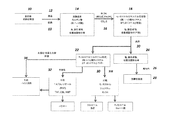
図1は、発酵培養液からカルボン酸を抽出する一般的なプロセスを示す略図であり、本エステル化反応の結果として得られたエステルを利用することができるさらなるプロセスを統合した形態を含む。図に示すように、反応器から得られた発酵培養液10を(限外)濾過12して細胞塊等の生体物質を除去することにより、カルボン酸(その塩、副生成物および他の化合物を含む)を得る。次いでこれらの材料を全て乾燥13させることにより高純度化前の混合物14を得る。次いでこの乾燥した材料の混合物を、液体系において、アルコール(R−OH;R=アルキルC1〜C12)およびCO2と、高い運転反応温度および圧力で反応16させることにより、モノエステルまたはジエステルまたは両者の混合物を得る。溶液中で反応するのはカルボン酸のみである。結果として得られる混合物18を濾過20することによりエステル22および他の副生成物24を分離する。エステルは可溶であるが、他の副生成物は不溶である。副生成物には、カルシウム、マグネシウムまたはナトリウムの炭酸塩が含まれ、これは回収して反応器10内の発酵培養液28に戻して再利用26することができる。この再利用により、コストが大幅に削減されると共に、発酵および抽出プロセス全体の効率が改善される。次いで異なるエステルを分離するために、エステルをそれぞれ蒸留30、水素化32または水素化分解処理34のいずれかによって処理し、C4プラットフォーム化合物およびバイオ燃料(例えば、エタン、エタノール、ブタン、ブタノール等)を生成することができる。
FIG. 1 is a schematic diagram illustrating a general process for extracting carboxylic acid from a fermentation broth, including an integrated form of additional processes that can utilize the ester obtained as a result of the present esterification reaction. As shown in the figure, the
蒸留プロセスによりアルコールを追い出すことによってエステルを濃縮することができ、次いで、エステル合成によって生じた副生成物を濾過する。さらに混合酸エステル生成物の混合物を異なるエステル種の沸点に従い蒸留することにより様々な個々のエステルを分離することが可能になる。例えば、表3に本発明によるエステル生成物混合物中に存在し得る一般的なエステルの試料の沸点を示す。 The ester can be concentrated by driving off the alcohol by a distillation process, and then the by-product resulting from the ester synthesis is filtered. Furthermore, it is possible to separate the various individual esters by distilling the mixture of mixed acid ester products according to the boiling point of the different ester species. For example, Table 3 shows the boiling points of common ester samples that may be present in an ester product mixture according to the present invention.
残留溶液中のエステルを回収した後は、この材料はそのまま使用できる形態にある。あるいは、異なるエステル種および残留アルコールを分離するためにエステル混合物を蒸留することもできる。エステルを回収したら、モノエステルはキレート剤に変換される前駆体として使用することができ、ジエステルは溶媒として使用することができる。 After recovering the ester in the residual solution, the material is in a ready-to-use form. Alternatively, the ester mixture can be distilled to separate different ester species and residual alcohol. Once the ester is recovered, the monoester can be used as a precursor that is converted to a chelator and the diester can be used as a solvent.
発酵由来のカルボン酸を対応するエステルの形態で回収することの利点は、下流の処理において、エステルは、遊離酸よりも水素化のエネルギー消費量が少ないことにある。本エステル化プロセスの他の利点は、本プロセスが、C4化学プラットフォームを得るために発酵由来のカルボン酸を高純度化する他の手法と比較して、より簡素かつより容易であることが分かることである。本プロセスにより、エステルを他の不溶な物質から分離する作業が簡素化することに加えて、分離すべき塩の量が最小限になる。統合されたプロセスにおいては、低pH発酵(この発酵は、カルボン酸のpKa未満のpHで行われる)において製造された遊離酸および塩の組合せを直接エステル化することが可能になる。 The advantage of recovering the fermentation-derived carboxylic acid in the form of the corresponding ester is that, in downstream processing, the ester consumes less energy for hydrogenation than the free acid. Another advantage of the present esterification process, the present process, the carboxylic acid derived from fermentation in order to obtain a C 4 chemistry platform compared to other techniques for highly purified, is understood to be a simpler and easier That is. In addition to simplifying the task of separating the ester from other insoluble materials, this process minimizes the amount of salt to be separated. In an integrated process, it is possible to directly esterify the free acid and salt combination produced in a low pH fermentation (this fermentation takes place at a pH below the pKa of the carboxylic acid).
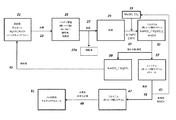
図2は、本エステル化プロセスの手順を組み込んだ下流の処理の略図を示すものである。具体的には、図2は、発酵培養液由来のコハク酸または他の種類のカルボン酸を抽出し、これを用いて過剰のCO2の存在下にアルコールと反応させることによりエステルを生成する例を示すものである。本プロセスのこの手順によれば、グルコース、コーンスティープリカーまたは他の糖類およびMg(OH)2/NaOHを発酵反応器21に導入し、発酵23させることによりカルボン酸が生成する。カルボン酸、塩(例えば、コハク酸およびそのナトリウムまたはマグネシウム塩)および他の副生成物の混合物を含む発酵培養液25を濾過27することにより細胞塊および他の不溶物27aを除去する。発酵は低pH値で行う(より高いpH(例えば、pH約7または8)から開始し、発酵の最中にpH値が約2〜3に低下する)。存在する遊離酸および塩の混合物(例えば、塩対酸の比率は約9:1(w/w)〜7:3(w/w))が生成するであろう。発酵培養液を発酵反応器からカルボン酸のpKa(例えば、pH5)未満のpH値で回収する。通常、発酵培養液のpH値は、約1.5〜約4.5の範囲にある。
FIG. 2 shows a schematic diagram of downstream processing incorporating the procedure of the esterification process. Specifically, FIG. 2 shows an example of producing an ester by extracting succinic acid or other types of carboxylic acid derived from a fermentation broth and reacting with alcohol in the presence of excess CO 2 using this. Is shown. According to this procedure of the process, carboxylic acid is produced by introducing glucose, corn steep liquor or other sugars and Mg (OH) 2 / NaOH into the
次いで発酵液抽出物を乾燥29させて粉末にする。混合酸の濾液を乾燥させる際は可能な限り水を除去するべきである。この乾燥工程は、例えば、噴霧乾燥、ドラム乾燥または凍結乾燥によって達成することができる。一般的なエステル化と同様、水分は比較的少ないことが望ましい。そうしないと可逆反応が起こり、加水分解によってジカルボン酸に戻りやすくなるであろう。本プロセスにおいては、残留水分率の最大値を約5重量%に維持すべきである。水分含有率が3重量%未満の試料であれば、エステルの収率が約98または99%まで増加することが期待できるであろう。 The fermented liquor extract is then dried 29 to a powder. When drying the mixed acid filtrate, water should be removed as much as possible. This drying step can be achieved, for example, by spray drying, drum drying or freeze drying. Similar to general esterification, it is desirable that the water content be relatively low. Otherwise, a reversible reaction will occur and the hydrolysis will tend to return to the dicarboxylic acid. In this process, the maximum residual moisture content should be maintained at about 5% by weight. For samples with a moisture content of less than 3% by weight, the yield of ester could be expected to increase to about 98 or 99%.
次いで乾燥した粉末(平均水分含有率は約1重量%〜5重量%、望ましくは≦3重量%)を、アルキル化試薬の役割を果たすアルコール33と、過剰のCO2の存在下に、約180℃〜約250℃の温度で約4時間以上反応31させることにより、カルボン酸をエステル化する。この例においては、コハク酸をメタノールおよびCO2中で反応させることによりコハク酸ジメチルが生成する。遊離カルボン酸と一緒に、発酵培養液中に存在していた残留遊離アミノ酸もエステル化される。
The dried powder (average moisture content is about 1% to 5% by weight, preferably ≦ 3% by weight) is then added in the presence of
生成したカルボン酸エステルを発酵培養液から回収したら、これらを水素化または水素化分解系のいずれかの供給原料としてさらに処理することができる。水素化または水素化分解は:米国特許第7,498,450B2号(ジカルボン酸および/または無水物の均一水素化に関する)、米国特許第6,433,193B号または米国特許第5,969,164号(無水マレイン酸の水素化によりテトラヒドロフランおよびγ−ブチロラクトンを製造するためのプロセスに関する)、米国特許第4,584,419A号(C4ジカルボン酸ジ(C1〜C3アルキル)エステルの水素化を含むブタン−1,4−ジオールを製造するためのプロセスに関する)、英国特許出願公開第2207914A号(マレイン酸エステルおよびフマル酸エステルからブタン1,4−ジオール、γ−ブチロラクトンおよびテトラヒドロフランの混合物を製造するためのプロセスに関する);国際公開第8800937A号(マレイン酸ジアルキルの水素化によりブタン−1,4−ジオールおよびγ−ブチロラクトンを同時に生成するためのプロセスに関する)または国際公開第82/03854号(カルボン酸エステルを水素化分解するためのプロセスに関する)または論文であるS. Varadarajanら、“Catalytic Upgrading of Fermentation-Derived Organic Acids,” BIOTECHNOL. PROG. 1999, 15, 845-854(前述の開示内容全体を本明細書の一部を構成するものとしてここに援用する)等に記載されている様々な異なる方法、機構およびこれらの変形に従い実施することができる。
Once the produced carboxylic esters are recovered from the fermentation broth, they can be further processed as a feedstock for either hydrogenation or hydrocracking systems. Hydrogenation or hydrocracking: US Pat. No. 7,498,450 B2 (for homogeneous hydrogenation of dicarboxylic acids and / or anhydrides), US Pat. No. 6,433,193 B or US Pat. No. 5,969,164 No. (to a process for producing tetrahydrofuran and γ- butyrolactone by hydrogenation of maleic acid), U.S. Patent No. 4,584,419A (C 4 dicarboxylic acid di (C 1 -C 3 alkyl) hydrogenation of the ester British Patent Application Publication No. 2207914A (manufacturing a mixture of
図2を説明するための例として、コハク酸を、上に定義した反応温度および圧力パラメータに従いメタノールと反応させてエステル化することにより、コハク酸ジメチル(主要な生成物として)、NaHCO3、MgCO3/Mg(HCO3)2および過剰のメタノール35が生成する。コハク酸ジメチルおよびメタノール37はNaHCO3およびMgCO339から分離される。炭酸塩は、CaSO4とは異なり、連続式プロセスまたは新たなバッチを用いるバッチ式プロセスのいずれかにより反応器21に戻して再利用41することができる。コハク酸ジメチルおよびメタノールはさらに互いに分離43され、メタノール33は再利用45される。次いで、コハク酸ジメチル47は水素化または水素化分解49のいずれかに供され、アルカンおよび/またはアルコール、例えば、エタン、エタノール、プロパン、プロパノール、ブタンまたはブタノールを含む様々なバイオ燃料製品51に変換される。
As an example to illustrate FIG. 2, succinic acid is reacted with methanol according to the reaction temperature and pressure parameters defined above and esterified to give dimethyl succinate (as the main product), NaHCO 3 , MgCO 3 . 3 / Mg (HCO 3 ) 2 and
本プロセスの他の利点は、発酵製品を得るための作物の輸送および処理を簡素化できることにある。例えば、発酵培養液の乾燥粉末を用いることにより、湿潤したまたは液体の貯蔵品を用いて作業することに付随する問題から解放される。発酵培養液の乾燥粉末は、発酵培養液が製造または入手された場所とは異なる場所へより経済的に輸送することができる。それにより、発酵培養液が入手された場所とは異なる離れた場所でエステル合成反応を実施することが可能になり、最終処理施設を配置することができる地理条件を拡張することができる。 Another advantage of the process is that it can simplify the transport and processing of crops to obtain a fermented product. For example, using a dry powder of fermentation broth frees you from the problems associated with working with wet or liquid stocks. The dried powder of the fermentation broth can be transported more economically to a location different from where the fermentation broth is manufactured or obtained. Thereby, it is possible to carry out the ester synthesis reaction at a different location from where the fermentation broth was obtained, and it is possible to expand the geographical conditions where the final treatment facility can be located.
第II項−実施例
A.
遊離カルボン酸を発酵培養液から単離するためのプロセスに、本エステル化方法に従い調製を行う実施例を統合する。この方法は、概して、次の工程:a)発酵培養液から細胞塊および他の生物片を除去するために、未精製の発酵培養液を濾過する工程と;b)発酵培養液を乾燥させる工程と;c)モノエステルおよびジエステルならびに炭酸塩(NaHCO3/MgCO3)の混合物を生成するために、乾燥した発酵培養液を過剰のメタノール(CH3OH)またはエタノール(C2H5OH)および二酸化炭素(CO2)と、約150℃〜アルコールおよび/またはCO2試薬の臨界近傍または臨界温度までの温度および臨界近傍または臨界圧力で反応させる工程と;d)副生成物を除去するために反応生成物を濾過する工程と;e)エステルを蒸留することにより精製する工程とを含む。
Section II-Example A.1.
The process for isolating free carboxylic acid from fermentation broth is integrated with an example of preparation according to the present esterification method. The method generally includes the following steps: a) filtering the unpurified fermentation broth to remove cell clumps and other biological debris from the fermentation broth; and b) drying the fermentation broth. And c) to produce a mixture of monoesters and diesters and carbonates (NaHCO 3 / MgCO 3 ), dry the fermentation broth with excess methanol (CH 3 OH) or ethanol (C 2 H 5 OH) and Reacting with carbon dioxide (CO 2 ) at a temperature from about 150 ° C. to near or to the critical temperature of the alcohol and / or CO 2 reagent and at or near critical temperature; and d) to remove by-products Filtering the reaction product; and e) purifying the ester by distillation.
発酵培養液の濾液を乾燥させて水分の全部またはほぼ全部を除去することにより、混合有機物の粉末を生成した。噴霧乾燥機またはドラム乾燥機を用いることにより、混合カルボン酸を含む未精製の溶液がエアゾール化して乾燥し、粉末になる。乾燥した粉末をアルコール溶媒に懸濁させる。粉末は、本明細書に記載した条件に応じてアルコールと反応し、エステル化することによりモノエステルまたはジエステルのいずれかとなる。 The filtrate of the fermentation broth was dried to remove all or almost all of the water to produce a mixed organic powder. By using a spray dryer or drum dryer, the unpurified solution containing the mixed carboxylic acid is aerosolized and dried to form a powder. Suspend the dried powder in an alcohol solvent. The powder becomes either a monoester or a diester by reacting with an alcohol and esterifying according to the conditions described herein.
次に示す一般的な手順に従い下に示す各実施例を実施した。但し、ここに示す反応温度、圧力、時間および/または酸の種類に関する変化量は必要に応じて変化させた。凍結乾燥させたコハク酸発酵培養液(オフホワイト色の粉末)を10g、およびメタノール300gを、Parr反応装置に取り付けたジャケット付きの1L容のステンレス鋼槽に装入した。1100rpmで機械的に撹拌しながら、反応槽内部のヘッドスペースをN2で置換し、次いで最初にCO2で400psiに加圧し、180℃で5時間加熱した。内圧は180℃で約1650psiであることが観測された。反応時間が経過した後、反応器本体を室温に到達するまで水浴で冷却し、圧力を解放した。次いで不均一混合物を濾過して固体を真空下で一夜乾燥させた。固体物質および溶液の試料をガスクロマトグラフィー/質量スペクトル(GC/MS)を用いて定量分析した。コハク酸ジメチルの収率を算出したところ31.9%であり、利用可能なコハク酸マグネシウムの95%超が反応で消費されていた。生成物の残余は、大半部分(約60%〜約65%の範囲)として、対応するモノエステルを含んでいた。 The following examples were carried out according to the following general procedure. However, the amount of change related to the reaction temperature, pressure, time and / or acid type shown here was changed as necessary. 10 g of freeze-dried succinic acid fermentation broth (off-white powder) and 300 g of methanol were charged into a 1 L stainless steel tank with a jacket attached to a Parr reactor. While mechanically stirring at 1100 rpm, the head space inside the reactor was replaced with N 2 , then first pressurized to 400 psi with CO 2 and heated at 180 ° C. for 5 hours. The internal pressure was observed to be about 1650 psi at 180 ° C. After the reaction time had elapsed, the reactor body was cooled in a water bath until it reached room temperature, and the pressure was released. The heterogeneous mixture was then filtered and the solid was dried overnight under vacuum. Samples of solid material and solution were quantitatively analyzed using gas chromatography / mass spectrum (GC / MS). The yield of dimethyl succinate was calculated to be 31.9%, and more than 95% of the available magnesium succinate was consumed in the reaction. The remainder of the product contained the corresponding monoester as a majority (ranging from about 60% to about 65%).
添付の図面および表に示した反応から分かるように、特定の温度および圧力パラメータを修正および選択することにより、ジエステル化合物がより多く優先的に生成するような反応が起こる。本プロセスの特定の実施例においては、エステル化反応により、50%超、通常は70%または80%超のコハク酸またはマレイン酸ジアルキルが得られる。上に述べたように、未反応の材料および望ましくない生成物は発酵反応槽で再利用される。これに続くモノエステルおよびジエステルの分離は結晶化によって達成される。 As can be seen from the reactions shown in the accompanying drawings and tables, modifications and selection of specific temperature and pressure parameters result in reactions that preferentially produce more diester compounds. In particular examples of the process, the esterification reaction yields more than 50%, usually more than 70% or 80% succinic acid or dialkyl maleate. As stated above, unreacted material and undesirable products are recycled in the fermentation reactor. Subsequent separation of the monoester and diester is accomplished by crystallization.
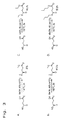
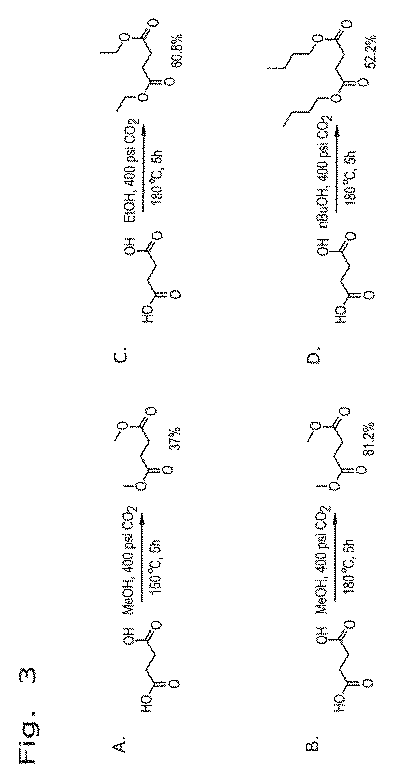
図3は、様々なアルコール中におけるCO2を利用した遊離コハク酸のエステル化の概要を示す一連のエステル化反応を表すものである。図3Aは、コハク酸とメタノールとを、400psiのCO2ガス中、150℃で5時間反応させることにより約37%のコハク酸ジメチル収率が達成されることを示している。図3Bの反応においては運転温度を180℃に上昇させ、他の全てのパラメータを図3Aと同一に維持すると、コハク酸ジメチルの収率は2倍を超える約81.2%に上昇した。 FIG. 3 represents a series of esterification reactions outlining the esterification of free succinic acid using CO 2 in various alcohols. FIG. 3A shows that a dimethyl succinate yield of approximately 37% is achieved by reacting succinic acid and methanol in 400 psi CO 2 gas at 150 ° C. for 5 hours. In the reaction of FIG. 3B, increasing the operating temperature to 180 ° C. and keeping all other parameters the same as in FIG. 3A increased the yield of dimethyl succinate to approximately 81.2%, more than doubled.
図3Cは、本運転条件下における、180℃のエタノール中での遊離コハク酸の反応を表すものであり、コハク酸ジエチルが約60.8%という良好な収率で得られる。図3Dにおいては、遊離コハク酸をn−ブタノール中の運転条件下において180℃で反応させると、コハク酸ジブチルが約52.2%という収率で生成した。これらの例は、本エステル化反応が、異なる種類のアルコールが使用できるという観点で多様性を有することを実証するものである。 FIG. 3C represents the reaction of free succinic acid in ethanol at 180 ° C. under the operating conditions, and diethyl succinate is obtained in a good yield of about 60.8%. In FIG. 3D, free succinic acid was reacted at 180 ° C. under operating conditions in n-butanol, yielding dibutyl succinate in a yield of about 52.2%. These examples demonstrate that the esterification reaction has diversity in terms of the ability to use different types of alcohols.
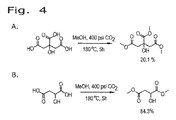
図4は、他の種類の多価カルボン酸のCO2を利用したエステル化の例を示すものである。図4Aおよび4Bにおいては、コハク酸をそれぞれトリカルボン酸であるクエン酸およびリンゴ酸に置き換えている。クエン酸トリメチルの収率は約20.1%と妥当であり、CO2を利用した手順がトリカルボン酸にも適用できることを示している。リンゴ酸のジメチル類縁体の収率は約84.3%と良好であった。したがって、本新規なエステル化方法は使用する酸を他の酸に拡張しても実現可能である。 FIG. 4 shows an example of esterification using other types of polyvalent carboxylic acids using CO 2 . In FIGS. 4A and 4B, the succinic acid is replaced by the tricarboxylic acids citric acid and malic acid, respectively. The yield of trimethyl citrate is reasonable at about 20.1%, indicating that the procedure using CO 2 can also be applied to tricarboxylic acids. The yield of dimethyl analog of malic acid was as good as about 84.3%. Therefore, this novel esterification method can be realized by extending the acid used to other acids.
表4は、図5、6および7に示すように、本開示のエステル化方法に従い実施した幾つかの反応の結果をまとめたものである。それぞれの実施例の組は、反応を実施する際に変化させた運転条件:A)温度、B)圧力およびC)反応時間ごとに並べてある。各実施例においては、発酵培養液由来のコハク酸を基質として用いる。濾過により清澄化した遊離酸および塩を含む培養液を乾燥させ、後段でメタノールおよびCO2と溶液中で反応させる(反応物を加熱すると、反応槽内の実際の運転温度および圧力は本明細書に記載した初期温度および圧力を超えるであろう)。 Table 4 summarizes the results of several reactions performed in accordance with the esterification method of the present disclosure, as shown in FIGS. Each example set is arranged according to the operating conditions changed when carrying out the reaction: A) temperature, B) pressure and C) reaction time. In each example, succinic acid derived from a fermentation broth is used as a substrate. The culture medium containing the free acid and salt clarified by filtration is dried and subsequently reacted in methanol and CO 2 in solution (when the reaction is heated, the actual operating temperature and pressure in the reaction vessel are described herein). Will exceed the initial temperature and pressure described in).
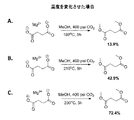
A組の3つの例において、本発明者らは、初期CO2圧力を400psiとし、異なる温度:実施例A−1は180℃、実施例A−2は210℃、実施例A−3は230℃で反応を5時間行った。本発明の酸から対応するジエステルへの転化率は運転温度が高くなるにつれ上昇した。図6は、コハク酸およびその塩の一連のエステル化反応において温度を変化させた効果を示すものである。図5Aにおいては、コハク酸のエステル化を、約180℃の温度で5時間を超えて行う。この反応により約13.9%の収率でコハク酸ジメチルが生成した。図5Bは、図5Aと同一の反応を示すものであり、反応時間を一定に維持しながら温度を約210℃に昇温すると、収率が約42.9%となる。図5Cは、230℃で反応を行ったことを示すものであり、収率は約72.4%となる。これは、反応速度論により、温度が上昇するに従い、より多くの酸およびアルキル化試薬が、反応が完結する方向に誘導され、ジアルキルエステルの収率がより高くなることを示唆している。臨界または臨界近傍の温度および/または圧力条件で行った反応では、転化率は少なくとも95%となり、≧97%または98%となることが見込まれる。 In the three examples of set A, we have an initial CO 2 pressure of 400 psi, different temperatures: 180 ° C. for Example A-1, 210 ° C. for Example A-2, 230 for Example A-3. The reaction was carried out at 5 ° C. for 5 hours. The conversion of the acid of the present invention to the corresponding diester increased as the operating temperature increased. FIG. 6 shows the effect of changing the temperature in a series of esterification reactions of succinic acid and its salts. In FIG. 5A, succinic acid esterification is carried out at a temperature of about 180 ° C. for more than 5 hours. This reaction produced dimethyl succinate in a yield of about 13.9%. FIG. 5B shows the same reaction as FIG. 5A. When the temperature is raised to about 210 ° C. while maintaining the reaction time constant, the yield becomes about 42.9%. FIG. 5C shows that the reaction was performed at 230 ° C., and the yield was about 72.4%. This suggests that, due to reaction kinetics, as the temperature increases, more acid and alkylating reagent are induced in the direction of completion of the reaction, resulting in a higher yield of dialkyl ester. In reactions carried out at critical or near critical temperature and / or pressure conditions, the conversion is expected to be at least 95% and ≧ 97% or 98%.
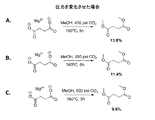
B組および図6においては、本発明者らは、初期温度を180℃とし、CO2ガスの初期圧力を:実施例B−1は400psi、実施例B−2は500psi、実施例B−3は600psiに変化させてエステル化反応を5時間行った。酸からその対応するジエステルへの転化率は中程度であり、収率は統計学的には大きな差は見られなかった。反応器内のCO2ガスの初期圧力は、酸からそのジエステルへの転化に大きな効果を発揮しなかったが、反応中における反応器内の運転圧力は収率に影響することを示唆している。 In Group B and FIG. 6, we set the initial temperature to 180 ° C. and the initial pressure of the CO 2 gas: 400 psi for Example B-1, 500 psi for Example B-2, Example B-3 Was changed to 600 psi and the esterification reaction was carried out for 5 hours. The conversion of the acid to its corresponding diester was moderate, and the yield was not statistically significant. The initial pressure of CO 2 gas in the reactor did not exert a significant effect on the conversion of the acid to its diester, suggesting that the operating pressure in the reactor during the reaction affects the yield. .
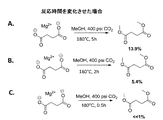
C組および図7においては、本発明者らは、一定の圧力および温度でエステル化反応を行い、反応時間を:実施例C−1は5時間、実施例C−2は2時間、実施例C−3は0.5時間と変化させた。図8に示す実施例は、反応時間が長くなるとより多量の酸がジエステルに転化したことを示唆している。 In group C and FIG. 7, we perform the esterification reaction at a constant pressure and temperature, and the reaction time is: 5 hours for Example C-1 and 2 hours for Example C-2. C-3 was changed to 0.5 hours. The example shown in FIG. 8 suggests that a greater amount of acid was converted to a diester as the reaction time increased.
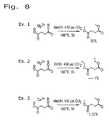
図8は、濃度約4%(w/w)のコハク酸塩を用いてCO2を利用したエステル化反応を行った第1組を示している。これを表5の実施例1〜3に示す。実施例1および2においては、コハク酸およびそのマグネシウム(Mg2+)塩をメタノールおよびエタノール中においてそれぞれ210℃および180℃で反応時間を5時間として反応させた。この反応によりそれぞれコハク酸ジメチルが約33%およびコハク酸ジエチルが約1%生成された。メタノールはコハク酸塩を溶解する能力がエタノールよりも高い。コハク酸マグネシウムのメタノールへの溶解性は妥当な水準であり、一方、エタノールへの溶解性は例え高温であっても限られている。そのため、コハク酸ジエチルの収率はほぼゼロとなった。実施例3は、コハク酸カルシウム(Ca2+)を用いて180℃で5時間行った反応を示すものである。この反応による対応するコハク酸ジメチルの収率はわずか約1.33%であった。実施例2および3の比較的低い転化率は、対応するアルカリ金属塩の溶解性の差を反映している。コハク酸のカルシウム塩は例え高温であってもメタノールに不溶である。CO2実験において使用したメタノール対塩のモル比はメタノール対コハク酸マグネシウムの場合は約110:1とした。同様に、メタノール対他のカルボン酸の場合、この比は約100:1とした。 FIG. 8 shows a first set of esterification reactions using CO 2 using succinate having a concentration of about 4% (w / w). This is shown in Examples 1 to 3 in Table 5. In Examples 1 and 2, succinic acid and its magnesium (Mg 2+ ) salt were reacted in methanol and ethanol at 210 ° C. and 180 ° C. for 5 hours, respectively. This reaction produced about 33% dimethyl succinate and about 1% diethyl succinate, respectively. Methanol has a higher ability to dissolve succinate than ethanol. The solubility of magnesium succinate in methanol is reasonable, while the solubility in ethanol is limited even at high temperatures. Therefore, the yield of diethyl succinate was almost zero. Example 3 shows a reaction performed using calcium succinate (Ca 2+ ) at 180 ° C. for 5 hours. The corresponding dimethyl succinate yield from this reaction was only about 1.33%. The relatively low conversion of Examples 2 and 3 reflects the difference in solubility of the corresponding alkali metal salts. The calcium salt of succinic acid is insoluble in methanol even at high temperatures. The molar ratio of methanol to salt used in the CO 2 experiment was about 110: 1 for methanol to magnesium succinate. Similarly, for methanol to other carboxylic acids, this ratio was about 100: 1.
表5は、本方法に従うエステル化反応の他の実施例の結果の一覧である。実施例1、2および3から、コハク酸の塩よりもコハク酸の方の基質溶解性が重要になることを示している。実施例4〜7は、反応の第2の組であり、遊離コハク酸をメタノール、エタノールおよび1−ブタノール中において同様の方法で反応させたものである。実施例8および9は、クエン酸やリンゴ酸等の他のカルボン酸を用いた反応を示すものであり、それぞれ約20%および86%という比較的良好な収率を達成することができている。 Table 5 lists the results of other examples of esterification reactions according to this method. Examples 1, 2 and 3 show that the substrate solubility of succinic acid is more important than the salt of succinic acid. Examples 4-7 are the second set of reactions, in which free succinic acid was reacted in the same manner in methanol, ethanol and 1-butanol. Examples 8 and 9 show reactions with other carboxylic acids such as citric acid and malic acid, and have achieved relatively good yields of about 20% and 86%, respectively. .
遊離コハク酸は、メタノール、エタノール、ブタノールおよび、オクタノール(C8アルコール)までの他のアルコール(オクタノールも含む)に完全に可溶であるため、アルコールと容易に反応する。実施例6および7においては、コハク酸はエタノールおよび1−ブタノールと反応し、転化率はそれぞれ60.8%および52.2%となった。 Free succinic acid reacts easily with alcohol because it is completely soluble in methanol, ethanol, butanol and other alcohols (including octanol) up to octanol (C8 alcohol). In Examples 6 and 7, succinic acid reacted with ethanol and 1-butanol, resulting in conversions of 60.8% and 52.2%, respectively.
カルボン酸塩の特定の溶媒への溶解性はエステル化プロセスに影響を与える可能性がある。溶解性がより高い遊離酸は、酸の官能性が失われたカルボン酸塩よりも反応性が高くなる。したがって、対応するエステルの収率は、2組の反応を比較すると、対照試料よりもはるかに高くなる傾向がある。実施例4〜7の反応により、実施例1〜3よりもはるかに多い量の対応するジエステルが得られている。カルボン酸自体は、本運転温度および圧力条件下においてエステル化反応を触媒するのに十分であろう。本方法に従うエステル化を首尾よく行うために基質の溶解性を調整することができる。 The solubility of the carboxylate in a particular solvent can affect the esterification process. Free acids with higher solubility are more reactive than carboxylates that have lost acid functionality. Thus, the yield of the corresponding ester tends to be much higher than the control sample when the two sets of reactions are compared. The reaction of Examples 4-7 yields much greater amounts of the corresponding diester than Examples 1-3. The carboxylic acid itself will be sufficient to catalyze the esterification reaction under the present operating temperature and pressure conditions. The substrate solubility can be adjusted for successful esterification according to this method.
B.
実施例:水素化
上に引用した参考文献に記載されているもの等のプロセスを用いて、上述のエステル化プロセスから回収したカルボン酸エステルを直接水素化することができる。例えば、コハク酸ジアルキルエステルをBDO、GBLおよびTHFに水素化するために金属銅触媒を使用することができる。次に水素化プロセスの例を記載する。
B.
Example: Hydrogenation A process such as that described in the references cited above can be used to directly hydrogenate the carboxylic acid ester recovered from the esterification process described above. For example, a copper metal catalyst can be used to hydrogenate dialkyl succinate to BDO, GBL and THF. Next, an example of a hydrogenation process will be described.
銅触媒を、次に示す担体:シリカ−アルミナ(シリカ93%、アルミナ7%、Sigma Chemicals)および2種のクロマトグラフ用シリカ(Phase Separations,Inc.)(XOA−400およびXOB−030)(全て−16+30メッシュ)上に銅塩を湿式含浸法によって担持させることにより調製した。所望の担持量を与える硝酸銅を含有する溶液10ミリリットルを担体10gに加えた。このスラリーを室温で2時間撹拌した後、真空中、60℃〜70℃で2時間乾燥させた。次いで乾燥した固体を500℃の炉内で11〜12時間空気中で焼成することにより酸化銅を得た。次いで触媒材料を反応器に装入し、純粋な水素中、200℃、200psigでその場で3時間還元した。触媒担体を反応前後に窒素BET表面積および水銀圧入法で特性評価した。乾燥ベンゼン中でn−ブチルアミンを滴定剤として、p−ジメチルアミンアゾベンゼン(pKa=3.9)を指示薬として用いて担体の酸性度測定を行った。 The copper catalyst was supported by the following carriers: silica-alumina (93% silica, 7% alumina, Sigma Chemicals) and two chromatographic silicas (Phase Separations, Inc.) (XOA-400 and XOB-030) (all -16 + 30 mesh) was prepared by supporting a copper salt by a wet impregnation method. 10 ml of a solution containing copper nitrate giving the desired loading was added to 10 g of support. The slurry was stirred at room temperature for 2 hours and then dried at 60 ° C. to 70 ° C. for 2 hours in a vacuum. Subsequently, the dried solid was baked in air in a furnace at 500 ° C. for 11 to 12 hours to obtain copper oxide. The catalyst material was then charged to the reactor and reduced in situ in pure hydrogen at 200 ° C. and 200 psig for 3 hours. The catalyst support was characterized before and after the reaction by nitrogen BET surface area and mercury intrusion method. The acidity of the carrier was measured in dry benzene using n-butylamine as a titrant and p-dimethylamine azobenzene (pKa = 3.9) as an indicator.
316ステンレス鋼製の、長さ167mm×内径(i.d.)5mmのコーン型閉鎖反応器(cone closure reactor)(Autoclave Engineers,Inc.)に触媒1グラムを装入し、石英フリットで支持した。反応器をクラムシェル型炉で囲み、プログラム可能な温度コントローラ(Omega series CN-2010)で温度制御した。コハク酸ジメチルを30重量%のメタノール溶液としてBiorad社製HPLCポンプを用いて反応器頂部から供給した。水素ガスを、標準的なタンクおよび高圧レギュレータを介して反応器頂部から供給した。反応器出口のガス流量をロータメータで監視した。液体供給量を0.05mL/分に固定し、水素供給量を400mL STP/分に設定して、重量空時速度(WHSV)を0.9g DMS/触媒g/hとし、H2/コハク酸エステル比が200:1となるようにした。 A 316 stainless steel cone closure reactor (Autoclave Engineers, Inc.) with a length of 167 mm x inner diameter (id) of 5 mm was charged with 1 gram of catalyst and supported by a quartz frit. . The reactor was enclosed in a clamshell furnace and temperature controlled with a programmable temperature controller (Omega series CN-2010). Dimethyl succinate was fed as a 30 wt% methanol solution from the top of the reactor using a Biorad HPLC pump. Hydrogen gas was fed from the top of the reactor via a standard tank and high pressure regulator. The gas flow rate at the reactor outlet was monitored with a rotameter. The liquid supply rate was fixed at 0.05 mL / min, the hydrogen supply rate was set at 400 mL STP / min, the weight hourly space velocity (WHSV) was 0.9 g DMS / catalyst g / h, and H 2 / succinic acid The ester ratio was 200: 1.
凝縮可能な生成物を氷浴に浸けた10mL容の1口型Whiteyサンプルシリンダに回収した。三方弁を使用して反応生成物を2本のサンプルシリンダのいずれかに流入させた。反応中は、凝縮可能な生成物を所定の時間捕集器で回収し、その後、捕集器を外して秤量し、内容物を分析のために取り出した。回収用ボンベから流出する気体はラプチャーディスク機構を通過させ、背圧レギュレータを用いて段階的に大気圧まで降圧した。凝縮不可能な生成物の生成を定量化するためのガスクロマトグラフィーを用いた分析用に気体生成物を捕集袋に回収した。 The condensable product was collected in a 10 mL 1-neck Whitey sample cylinder immersed in an ice bath. A reaction product was flowed into one of the two sample cylinders using a three-way valve. During the reaction, the condensable product was collected by a collector for a predetermined time, and then the collector was removed and weighed, and the contents were taken out for analysis. The gas flowing out of the recovery cylinder was passed through the rupture disk mechanism and stepped down to atmospheric pressure stepwise using a back pressure regulator. The gaseous product was collected in a collection bag for analysis using gas chromatography to quantify the production of non-condensable product.
回収された凝縮可能な生成物を秤量し、水素炎イオン化検出器およびSupelco SPB-1大口径(0.5mm)キャピラリーカラムを取り付けたVarian 3300ガスクロマトグラフで分析した(50〜200℃、12℃/分、200℃で保持)。生成物濃度を算出するための内部標準物質として乳酸メチルを使用した。 The recovered condensable product was weighed and analyzed on a Varian 3300 gas chromatograph equipped with a flame ionization detector and a Supelco SPB-1 large diameter (0.5 mm) capillary column (50-200 ° C., 12 ° C./min. , Held at 200 ° C.). Methyl lactate was used as an internal standard for calculating the product concentration.
実施例:水素化分解
上述した発酵抽出により得られるエステルは、次いで触媒(例えば、還元CuO/ZnO)上で水素化分解される。これにより高い転化率(>98%)および選択性が達成されるはずである(例えば、国際公開第82/03854号)。
Example: Hydrocracking The ester obtained by the fermentation extraction described above is then hydrocracked over a catalyst (eg reduced CuO / ZnO). This should achieve high conversion (> 98%) and selectivity (eg, WO 82/03854).
別法として、米国特許第4,584,419号に記載されたもの等のプロセスに従うこともできる。231℃に維持されたオイルジャケットを備えたステンレス鋼をこの反応に使用した。水素を圧力レギュレータおよびフローコントローラ(図示せず)を用いて、複数のスチールボールを含む気化器の底部に接続されたラインを介して導入した。別のラインを介してエステルを液体として計量供給し、気化器に導入した。結果として得られたエステルおよび水素の蒸気混合物を、予熱コイルを通過させて反応器に導入した。これはガラス球の層の上に触媒床を含むものとした。反応器の残りはガラス球で満たし、反応器の上端には冷却器(図示せず)に続いて減圧弁に繋がる排出管を取り付けた。排出ガスの流量は湿式ガスメータを用いて冷却器の下流で測定した。 Alternatively, a process such as that described in US Pat. No. 4,584,419 can be followed. Stainless steel with an oil jacket maintained at 231 ° C. was used for this reaction. Hydrogen was introduced using a pressure regulator and flow controller (not shown) through a line connected to the bottom of the vaporizer containing a plurality of steel balls. The ester was metered in as a liquid via a separate line and introduced into the vaporizer. The resulting ester and hydrogen vapor mixture was introduced into the reactor through a preheating coil. This included a catalyst bed on a layer of glass spheres. The remainder of the reactor was filled with glass spheres, and a discharge pipe connected to a pressure reducing valve was attached to the upper end of the reactor, followed by a cooler (not shown). The exhaust gas flow rate was measured downstream of the cooler using a wet gas meter.
粒状クロム酸銅触媒30mlを反応器に装入し、次いで42barの窒素で置換した。油浴の温度231℃に昇温した。次いで、N2中にH2を2%含む気体混合物を42barで触媒上を8時間通過させた後、N2中にH.2を10%含む気体混合物(同じく42bar)をさらに16時間通過させ、次いで純粋なH2(同様に42bar)をさらに12時間通過させた。 30 ml of granular copper chromate catalyst was charged to the reactor and then replaced with 42 bar of nitrogen. The temperature of the oil bath was raised to 231 ° C. Next, after the above catalyst was passed for 8 hours at 42bar a gas mixture comprising H 2 2% in N 2, H. in N 2 A gas mixture containing 10% of 2 (also 42 bar) was passed for another 16 hours, then pure H 2 (also 42 bar) was passed for another 12 hours.
次いでコハク酸ジエチルを液時空間速度が0.2/hrになるように気化器に導入した。蒸気混合物の水素ガス:エステルのモル比が313:1となるようにした。サンドバスの温度を231℃に維持した。凝縮物を、Chromosorb PAW上に10%コハク酸ジエチレングリコールエステルを含む長さ1.82メートルのステンレス鋼カラム(内径3.18mm)を用いてガスクロマトグラフィーにて分析した。ヘリウムガスの流量を30ml/分とし、水素炎イオン化検出器を使用した。この機器にピーク積分器を備えたチャート記録装置を取り付け、既知の組成のマレイン酸ジエチル、コハク酸ジアルキル、ブチロラクトン、ブタン−1,4−ジオール、テトラヒドロフランおよび水の混合物を用いて校正した。排出ガスも採取して同一の技法でガスクロマトグラフィーにより分析した。ピークの同定は対象物質の基準試料に関し観測される保持時間の比較および質量スペクトルから確認した。次に示す化合物を反応混合物から検出した:コハク酸ジエチル、ブチロラクトン、ブタン−1,4−ジオール、テトラヒドロフランおよび水。2−エトキシテトラヒドロフランおよび2−エトキシブタン−1,4−ジオールを含む微量の主要でない副生成物も反応混合物から検出した。得られた結果から、コハク酸ジエチルがスムーズに生成物に変換されたことが分かった。テトラヒドロフランの選択性は52.2mol%、n−ブタノールの選択性は11.6mol%、ガンマ−ブチロラクトンの選択性は26.1mol%、ブタン−1,4−ジオールの選択性は10.1mol%であり、残余は主要でない副生成物である。 Next, diethyl succinate was introduced into the vaporizer so that the liquid hourly space velocity was 0.2 / hr. The hydrogen gas: ester molar ratio of the steam mixture was 313: 1. The temperature of the sand bath was maintained at 231 ° C. The condensate was analyzed by gas chromatography using a 1.82 meter long stainless steel column (inner diameter 3.18 mm) containing 10% diethylene glycol ester on Chromosorb PAW. The flow rate of helium gas was 30 ml / min, and a flame ionization detector was used. The instrument was equipped with a chart recorder equipped with a peak integrator and calibrated using a mixture of diethyl maleate, dialkyl succinate, butyrolactone, butane-1,4-diol, tetrahydrofuran and water of known composition. The exhaust gas was also collected and analyzed by gas chromatography using the same technique. The identification of the peak was confirmed from the comparison of the retention times observed for the reference sample of the target substance and the mass spectrum. The following compounds were detected from the reaction mixture: diethyl succinate, butyrolactone, butane-1,4-diol, tetrahydrofuran and water. Traces of minor by-products including 2-ethoxytetrahydrofuran and 2-ethoxybutane-1,4-diol were also detected from the reaction mixture. From the obtained results, it was found that diethyl succinate was smoothly converted into a product. Tetrahydrofuran selectivity is 52.2 mol%, n-butanol selectivity is 11.6 mol%, gamma-butyrolactone selectivity is 26.1 mol%, butane-1,4-diol selectivity is 10.1 mol%. Yes, the rest are minor by-products.
本発明を、実施例を用いて一般的におよび詳細に説明してきた。当業者らは、本発明が必ずしも具体的に開示された実施形態に制限されるわけではなく、以下に示す特許請求の範囲に定義された本発明の範囲またはその均等物(本発明の範囲内で使用することができる現時点において知られているかまたは今後開発される他の均等な構成要素を含む)から逸脱することなく修正および変形を行うことができることを理解する。したがって、変更が本発明の範囲を逸脱しない限り、その変更も本明細書に包含されると見なすべきである。 The invention has been described in general and in detail using examples. The person skilled in the art does not necessarily limit the present invention to the specifically disclosed embodiments, but the scope of the present invention as defined in the following claims or equivalents thereof (within the scope of the present invention). It is understood that modifications and variations can be made without departing from (including other equivalent components currently known or later developed) that may be used in Thus, unless changes otherwise depart from the scope of the invention, the changes should be considered to be included herein.
Claims (21)
Applications Claiming Priority (3)
| Application Number | Priority Date | Filing Date | Title |
|---|---|---|---|
| US201261739790P | 2012-12-20 | 2012-12-20 | |
| US61/739,790 | 2012-12-20 | ||
| PCT/US2013/073793 WO2014099433A1 (en) | 2012-12-20 | 2013-12-09 | Biofuels production from bio-derived carboxylic-acid esters |
Publications (2)
| Publication Number | Publication Date |
|---|---|
| JP2016501964A JP2016501964A (en) | 2016-01-21 |
| JP6232073B2 true JP6232073B2 (en) | 2017-11-15 |
Family
ID=50979030
Family Applications (1)
| Application Number | Title | Priority Date | Filing Date |
|---|---|---|---|
| JP2015549446A Active JP6232073B2 (en) | 2012-12-20 | 2013-12-09 | Production of biofuel from biological carboxylic acid ester |
Country Status (11)
| Country | Link |
|---|---|
| US (2) | US20150368574A1 (en) |
| EP (1) | EP2935532B1 (en) |
| JP (1) | JP6232073B2 (en) |
| KR (1) | KR102046209B1 (en) |
| CN (1) | CN104854222B (en) |
| AU (1) | AU2013363496B2 (en) |
| BR (1) | BR112015014315B1 (en) |
| CA (1) | CA2895316C (en) |
| MX (1) | MX374839B (en) |
| SG (1) | SG11201503746VA (en) |
| WO (1) | WO2014099433A1 (en) |
Families Citing this family (5)
| Publication number | Priority date | Publication date | Assignee | Title |
|---|---|---|---|---|
| AU2013338397B2 (en) * | 2012-10-29 | 2017-11-16 | Archer Daniels Midland Company | Alcohol-mediated esterification of carboxylic acids with carbonates |
| SG11201503745SA (en) * | 2012-12-20 | 2015-07-30 | Archer Daniels Midland Co | Recovering and using carboxylic acids from a fermentation broth |
| TWI485242B (en) * | 2012-12-22 | 2015-05-21 | Univ Nat Pingtung Sci & Tech | Manufacturing method of biodiesel |
| KR101766956B1 (en) | 2015-05-14 | 2017-08-23 | 한양대학교 산학협력단 | Method for producing esters from microbial fermentation using high-pressure carbon dioxide gas |
| KR102368472B1 (en) * | 2019-02-28 | 2022-02-25 | 서울대학교산학협력단 | Method for preparing biodiesel |
Family Cites Families (23)
| Publication number | Priority date | Publication date | Assignee | Title |
|---|---|---|---|---|
| IT1190783B (en) * | 1981-04-29 | 1988-02-24 | Davy Mckee Oil & Chem | PROCESS FOR HYDROGENOLYSIS OF ESTERS OF CARBOXYLIC ACIDS |
| GB8518576D0 (en) * | 1985-07-23 | 1985-08-29 | Bp Chem Int Ltd | Hydrogenation of carboxylic acid esters to alcohols |
| IL117232A0 (en) * | 1996-02-22 | 1996-06-18 | Yissum Res Dev Co | A process for the production of an ester or polyester of carboxylic acid from a concentrated fermentation liquor |
| ES2312337T3 (en) * | 1999-03-11 | 2009-03-01 | Zeachem Inc. | PROCESS TO PRODUCE ETHANOL. |
| BR0012953A (en) * | 1999-08-03 | 2002-09-24 | Archer Daniels Midland Co | Process for recovering organic acids |
| US6902917B1 (en) * | 1999-08-03 | 2005-06-07 | Archer-Daniels-Midland Company | Process for recovery of organic acids from fermentration broths |
| JP4204926B2 (en) * | 2003-08-07 | 2009-01-07 | 花王株式会社 | Method for producing fatty acid ester |
| KR101163807B1 (en) * | 2004-06-16 | 2012-07-09 | 더 텍사스 에이 & 엠 유니버시티 시스템 | Methods and systems for biomass conversion to carboxylic acids and alcohols |
| US20070161095A1 (en) * | 2005-01-18 | 2007-07-12 | Gurin Michael H | Biomass Fuel Synthesis Methods for Increased Energy Efficiency |
| US7772414B1 (en) * | 2006-11-14 | 2010-08-10 | Aerophase, Inc. | Process for producing biodiesel fuel products |
| WO2008124490A1 (en) * | 2007-04-03 | 2008-10-16 | The Ohio State University | Methods of producing butanol |
| US20090076985A1 (en) * | 2007-09-19 | 2009-03-19 | Endicott Biofuels Ii, Llc | Method for Obtaining Biodiesel, Alternative Fuels and Renewable Fuels Tax Credits and Treatment |
| CA2625511A1 (en) * | 2008-03-13 | 2009-09-13 | Dilum Dunuwila | Process for the direct production of esters of carboxylic acids from fermentation broths |
| WO2009150145A1 (en) * | 2008-06-12 | 2009-12-17 | Basf Se | Use of solubilizers for homogenizing additive concentrates |
| CN102076863A (en) * | 2008-06-30 | 2011-05-25 | 丰田自动车株式会社 | Process for producing organic acid |
| WO2011015918A2 (en) * | 2009-08-03 | 2011-02-10 | Avesthagen Limited | Vectors and compounds for expression of recombinant cetuximab |
| US8674131B2 (en) * | 2009-09-07 | 2014-03-18 | Council Of Scientific And Industrial Research | Process for preparation of pure alkyl esters from alkali metal salt of carboxylic acid |
| US20110177564A1 (en) * | 2010-01-15 | 2011-07-21 | Massachusetts Institute Of Technology | Bioprocess and microbe engineering for total carbon utilization in biofuel production |
| EP2582817A4 (en) * | 2010-04-27 | 2016-07-06 | Kiverdi Inc | USE OF OXYHYDROGENATION MICROORGANISMS FOR NON-PHOTOSYNTHETIC CARBON CAPTURE AND CONVERSION OF INORGANIC CARBON AND / OR CI SOURCES TO USEFUL ORGANIC COMPOUNDS |
| ES2640100T3 (en) * | 2010-06-28 | 2017-10-31 | Commonwealth Scientific And Industrial Research Organisation | Methods to produce lipids |
| CN103189516A (en) * | 2010-11-02 | 2013-07-03 | 科德克希思公司 | Compositions and methods for production of fermentable sugars |
| US8846587B2 (en) * | 2011-03-24 | 2014-09-30 | Elevance Renewable Sciences, Inc. | Functionalized monomers and polymers |
| CN102557870A (en) * | 2011-12-15 | 2012-07-11 | 北京金骄生物质化工有限公司 | Method for preparing fuel ethanol by using acetic acid and methanol |
-
2013
- 2013-12-09 US US14/650,475 patent/US20150368574A1/en not_active Abandoned
- 2013-12-09 KR KR1020157019671A patent/KR102046209B1/en active Active
- 2013-12-09 EP EP13866239.0A patent/EP2935532B1/en not_active Not-in-force
- 2013-12-09 CN CN201380065924.3A patent/CN104854222B/en active Active
- 2013-12-09 SG SG11201503746VA patent/SG11201503746VA/en unknown
- 2013-12-09 CA CA2895316A patent/CA2895316C/en active Active
- 2013-12-09 BR BR112015014315-6A patent/BR112015014315B1/en active IP Right Grant
- 2013-12-09 WO PCT/US2013/073793 patent/WO2014099433A1/en not_active Ceased
- 2013-12-09 JP JP2015549446A patent/JP6232073B2/en active Active
- 2013-12-09 MX MX2015007907A patent/MX374839B/en active IP Right Grant
- 2013-12-09 AU AU2013363496A patent/AU2013363496B2/en active Active
-
2016
- 2016-10-19 US US15/297,610 patent/US10118886B2/en active Active
Also Published As
| Publication number | Publication date |
|---|---|
| BR112015014315A2 (en) | 2017-07-11 |
| US20150368574A1 (en) | 2015-12-24 |
| SG11201503746VA (en) | 2015-07-30 |
| BR112015014315B1 (en) | 2020-10-13 |
| AU2013363496B2 (en) | 2017-08-31 |
| CN104854222B (en) | 2018-04-10 |
| MX374839B (en) | 2025-03-06 |
| EP2935532A1 (en) | 2015-10-28 |
| CA2895316C (en) | 2019-12-03 |
| MX2015007907A (en) | 2015-10-05 |
| CN104854222A (en) | 2015-08-19 |
| CA2895316A1 (en) | 2014-06-26 |
| AU2013363496A1 (en) | 2015-06-04 |
| US10118886B2 (en) | 2018-11-06 |
| KR102046209B1 (en) | 2019-11-18 |
| EP2935532A4 (en) | 2016-09-07 |
| JP2016501964A (en) | 2016-01-21 |
| US20170044086A1 (en) | 2017-02-16 |
| EP2935532B1 (en) | 2019-06-19 |
| WO2014099433A1 (en) | 2014-06-26 |
| KR20150096521A (en) | 2015-08-24 |
Similar Documents
| Publication | Publication Date | Title |
|---|---|---|
| JP6230616B2 (en) | Recovery and use of carboxylic acids from fermentation broth | |
| US10118886B2 (en) | Biofuels production from bio-derived carboxylic-acid esters | |
| JP6230617B2 (en) | Hydrogenation products from biologically derived carboxylates | |
| TW201332951A (en) | Esterifying acetic acid to produce ester feed for hydrogenolysis | |
| WO2008124490A1 (en) | Methods of producing butanol | |
| US9834531B2 (en) | Use of carboxylic acids and furanic molecules for esterification | |
| TW201527274A (en) | Process | |
| TW201542517A (en) | Process |
Legal Events
| Date | Code | Title | Description |
|---|---|---|---|
| A621 | Written request for application examination |
Free format text: JAPANESE INTERMEDIATE CODE: A621 Effective date: 20161121 |
|
| A131 | Notification of reasons for refusal |
Free format text: JAPANESE INTERMEDIATE CODE: A131 Effective date: 20170615 |
|
| A977 | Report on retrieval |
Free format text: JAPANESE INTERMEDIATE CODE: A971007 Effective date: 20170623 |
|
| A521 | Request for written amendment filed |
Free format text: JAPANESE INTERMEDIATE CODE: A523 Effective date: 20170912 |
|
| TRDD | Decision of grant or rejection written | ||
| A01 | Written decision to grant a patent or to grant a registration (utility model) |
Free format text: JAPANESE INTERMEDIATE CODE: A01 Effective date: 20170921 |
|
| A61 | First payment of annual fees (during grant procedure) |
Free format text: JAPANESE INTERMEDIATE CODE: A61 Effective date: 20171020 |
|
| R150 | Certificate of patent or registration of utility model |
Ref document number: 6232073 Country of ref document: JP Free format text: JAPANESE INTERMEDIATE CODE: R150 |
|
| R250 | Receipt of annual fees |
Free format text: JAPANESE INTERMEDIATE CODE: R250 |
|
| R250 | Receipt of annual fees |
Free format text: JAPANESE INTERMEDIATE CODE: R250 |
|
| R250 | Receipt of annual fees |
Free format text: JAPANESE INTERMEDIATE CODE: R250 |
|
| R250 | Receipt of annual fees |
Free format text: JAPANESE INTERMEDIATE CODE: R250 |
|
| R250 | Receipt of annual fees |
Free format text: JAPANESE INTERMEDIATE CODE: R250 |