JP5654792B2 - Complex model creation method and complex model creation apparatus - Google Patents
Complex model creation method and complex model creation apparatus Download PDFInfo
- Publication number
- JP5654792B2 JP5654792B2 JP2010159187A JP2010159187A JP5654792B2 JP 5654792 B2 JP5654792 B2 JP 5654792B2 JP 2010159187 A JP2010159187 A JP 2010159187A JP 2010159187 A JP2010159187 A JP 2010159187A JP 5654792 B2 JP5654792 B2 JP 5654792B2
- Authority
- JP
- Japan
- Prior art keywords
- model
- tire
- composite
- complex
- wheel
- Prior art date
- Legal status (The legal status is an assumption and is not a legal conclusion. Google has not performed a legal analysis and makes no representation as to the accuracy of the status listed.)
- Expired - Fee Related
Links
- 238000000034 method Methods 0.000 title claims description 53
- 239000002131 composite material Substances 0.000 claims description 58
- 238000006073 displacement reaction Methods 0.000 claims description 14
- 238000004458 analytical method Methods 0.000 description 35
- 230000000052 comparative effect Effects 0.000 description 23
- 239000011324 bead Substances 0.000 description 10
- 238000004364 calculation method Methods 0.000 description 6
- 238000012545 processing Methods 0.000 description 6
- 238000003860 storage Methods 0.000 description 6
- 238000010586 diagram Methods 0.000 description 5
- 239000000463 material Substances 0.000 description 5
- 238000005096 rolling process Methods 0.000 description 5
- 238000010835 comparative analysis Methods 0.000 description 4
- 238000011156 evaluation Methods 0.000 description 4
- 238000002360 preparation method Methods 0.000 description 4
- 238000013461 design Methods 0.000 description 3
- 230000000694 effects Effects 0.000 description 3
- 238000011161 development Methods 0.000 description 2
- 239000007787 solid Substances 0.000 description 2
- 230000002159 abnormal effect Effects 0.000 description 1
- 238000004590 computer program Methods 0.000 description 1
- 239000012530 fluid Substances 0.000 description 1
- 238000004519 manufacturing process Methods 0.000 description 1
- 238000005259 measurement Methods 0.000 description 1
- 239000012528 membrane Substances 0.000 description 1
- 239000004065 semiconductor Substances 0.000 description 1
- 238000004088 simulation Methods 0.000 description 1
- 238000012360 testing method Methods 0.000 description 1
Images

Classifications
-
- Y—GENERAL TAGGING OF NEW TECHNOLOGICAL DEVELOPMENTS; GENERAL TAGGING OF CROSS-SECTIONAL TECHNOLOGIES SPANNING OVER SEVERAL SECTIONS OF THE IPC; TECHNICAL SUBJECTS COVERED BY FORMER USPC CROSS-REFERENCE ART COLLECTIONS [XRACs] AND DIGESTS
- Y02—TECHNOLOGIES OR APPLICATIONS FOR MITIGATION OR ADAPTATION AGAINST CLIMATE CHANGE
- Y02T—CLIMATE CHANGE MITIGATION TECHNOLOGIES RELATED TO TRANSPORTATION
- Y02T10/00—Road transport of goods or passengers
- Y02T10/80—Technologies aiming to reduce greenhouse gasses emissions common to all road transportation technologies
- Y02T10/82—Elements for improving aerodynamics
Landscapes
- Tires In General (AREA)
Description
空気入りタイヤを複数要素でモデル化したタイヤモデルとホイールを複数要素でモデル化したホイールモデルとの複合体モデルを作成する複合体モデル作成方法、及び複合体モデル作成方法を実行する複合体モデル作成装置に関する。 A composite model creation method for creating a composite model of a tire model in which a pneumatic tire is modeled with multiple elements and a wheel model in which a wheel is modeled with multiple elements, and a composite model creation for executing the composite model creation method Relates to the device.
近年、空気入りタイヤの開発において、有限要素法などの数値解析手法や計算機環境の発達により、実際に空気入りタイヤを製造し、自動車に装着して走行試験を行わなくても、新たに設計した空気入りタイヤの走行性能や特性などのタイヤ性能をシミュレートすることが可能になった。 In recent years, in the development of pneumatic tires, due to the development of numerical analysis methods such as the finite element method and computer environment, pneumatic tires were actually manufactured and newly designed without being mounted on automobiles and running tests It has become possible to simulate tire performance such as the running performance and characteristics of pneumatic tires.
有限要素法では、要素の数を増やすことにより、シミュレート結果の精度を向上させることができるが、解析に掛かる時間が増大する。また、有限要素法では、例えば、タイヤモデルと路面モデルとの間、タイヤモデルに設定された溝の壁面、タイヤモデルとホイールモデルとの間のように、モデルが接触する接触部分には接触の境界条件を定義するが、接触部分にかかる応力や変形量が周囲に比べて極端に大きくなる場合には、境界条件が複雑化し、解析に掛かる時間が増大する。このように、有限要素法では、演算精度と処理時間との両立が困難である。 In the finite element method, the accuracy of simulation results can be improved by increasing the number of elements, but the time required for analysis increases. In the finite element method, for example, contact between the tire model and the road surface model, the groove wall surface set in the tire model, and between the tire model and the wheel model is not in contact with the model. Although the boundary condition is defined, when the stress or deformation amount applied to the contact portion becomes extremely larger than the surrounding area, the boundary condition becomes complicated and the time required for the analysis increases. Thus, in the finite element method, it is difficult to achieve both computation accuracy and processing time.
これに対して、ソリッド要素で構成される複合体モデルの一部にシェル要素を導入した複合体モデルを作成する方法が提案されている(例えば、特許文献1参照)。この方法により、演算精度と処理時間とを実用可能なレベルにすることができる。 On the other hand, a method for creating a composite model in which a shell element is introduced into a part of a composite model composed of solid elements has been proposed (see, for example, Patent Document 1). By this method, the calculation accuracy and processing time can be brought to a practical level.
しかしながら、タイヤモデルとホイールモデルとの間のようにモデル同士が接触する接触部分における接触の境界条件の設定の仕方には、依然として改善の余地が残されている。例えば、実際のタイヤでは、タイヤをホイールに嵌めて空気を充填すると、内圧によりタイヤのビード部の間隔が幅方向外側に拡げられてホイールのリム部と係合する。 However, there is still room for improvement in the method of setting the contact boundary condition at the contact portion where the models contact each other, such as between the tire model and the wheel model. For example, in an actual tire, when the tire is fitted to the wheel and filled with air, the interval between the bead portions of the tire is expanded outward in the width direction by the internal pressure, and is engaged with the rim portion of the wheel.
しかし、複合体モデルでは、リム部の表面の形状や、ビード部が幅方向外側に押し戻されるときの応力の設定値によっては、タイヤモデルが異常変形し、演算不可能に陥るケースがあることがわかった。 However, in the composite model, depending on the shape of the surface of the rim part and the set value of the stress when the bead part is pushed back outward in the width direction, the tire model may be deformed abnormally and may be unable to be calculated. all right.
そこで、本発明は、タイヤモデルとホイールモデルの複合体モデルを確実に作成できる複合体モデル作成方法及び複合体モデル作成装置の提供を目的とする。 Then, an object of this invention is to provide the composite model preparation method and composite model preparation apparatus which can produce the composite model of a tire model and a wheel model reliably.
上述した課題を解決するため、本発明は、以下の特徴を備える。本発明の第1の特徴は、空気入りタイヤを複数要素でモデル化したタイヤモデルとホイールを複数要素でモデル化したホイールモデルとの複合体である複合体モデルを作成する複合体モデル作成方法であって、前記タイヤモデルと前記ホイールモデルとの接触部分に両者が接触する接触境界条件を設定して前記タイヤモデルに前記ホイールモデルが組み付けられた複合体モデルを作成する組付ステップと、前記複合体モデルに対して所定の空気圧を設定する内圧設定ステップと、内圧が設定された複合体モデルの前記タイヤモデルと前記ホイールモデルとの接触部分における少なくとも1つの節点の接触圧を閾値と比較する比較ステップと、前記節点の接触圧が閾値を超えていた場合に、前記接触圧の閾値を超えた節点に変位境界条件を設定して前記複合体モデルを更新するモデル更新ステップとを有することを要旨とする。 In order to solve the above-described problems, the present invention has the following features. A first feature of the present invention is a composite model creation method for creating a composite model that is a composite of a tire model in which a pneumatic tire is modeled by a plurality of elements and a wheel model in which a wheel is modeled by a plurality of elements. An assembly step for creating a composite model in which the wheel model is assembled to the tire model by setting a contact boundary condition where the tire model and the wheel model are in contact with each other, and the composite An internal pressure setting step for setting a predetermined air pressure for the body model, and a comparison for comparing a contact pressure of at least one node in a contact portion between the tire model and the wheel model of the composite model in which the internal pressure is set with a threshold value If the contact pressure of the step and the node exceeds a threshold, a displacement boundary condition is set for the node that exceeds the threshold of the contact pressure. Having a model updating step of updating the complex model Te is summarized as.
本発明によれば、内圧が設定された複合体モデルのタイヤモデルとホイールモデルとの接触部分における少なくとも1つの節点の接触圧が閾値を超えた場合には、この節点に変位境界条件を設定して複合体モデルを更新することにより、タイヤモデルとホイールモデルとの接触部分に接触境界条件と変位境界条件とが混在した複合体モデルが作成される。 According to the present invention, when the contact pressure of at least one node at the contact portion between the tire model and the wheel model of the composite model in which the internal pressure is set exceeds a threshold value, a displacement boundary condition is set at this node. By updating the composite model, a composite model in which the contact boundary condition and the displacement boundary condition are mixed in the contact portion between the tire model and the wheel model is created.
本発明によれば、タイヤモデルをホイールモデルに組み付けた複合体モデルを作成するとき、タイヤモデルとホイールモデルとの接触部分に過剰な応力が加わることによって発生する演算エラーの発生を防止できる。従って、タイヤモデルとホイールモデルとを複合した複合体モデルを確実に作成できる。 According to the present invention, when creating a composite model in which a tire model is assembled to a wheel model, it is possible to prevent the occurrence of a calculation error that occurs due to excessive stress being applied to the contact portion between the tire model and the wheel model. Therefore, it is possible to reliably create a composite model in which the tire model and the wheel model are combined.
本発明によれば、タイヤモデルとホイールモデルの複合体モデルを確実に作成できる複合体モデル作成方法及び複合体モデル作成装置を提供できる。 ADVANTAGE OF THE INVENTION According to this invention, the composite model preparation method and composite model preparation apparatus which can produce the composite model of a tire model and a wheel model reliably can be provided.
本発明に係る複合体モデル作成方法の実施形態について、図面を参照しながら説明する。具体的には、(1)複合体モデル作成方法、(2)複合体モデル作成装置、(3)作用・効果、(4)その他の実施形態、(5)比較評価について説明する。なお、以下の図面の記載において、同一の部分には同一の符号を付している。ただし、図面は模式的なのものであり、各寸法の比率などは現実のものとは異なることを留意すべきである。従って、具体的な寸法などは以下の説明を参酌して判断すべきものである。また、図面相互間においても互いの寸法の関係や比率が異なる部分が含まれる。 An embodiment of a complex model creation method according to the present invention will be described with reference to the drawings. Specifically, (1) a complex model creation method, (2) a complex model creation device, (3) actions and effects, (4) other embodiments, and (5) comparative evaluation will be described. In the following description of the drawings, the same portions are denoted by the same reference numerals. However, it should be noted that the drawings are schematic and ratios of dimensions are different from actual ones. Accordingly, specific dimensions and the like should be determined in consideration of the following description. Moreover, the part from which the relationship and ratio of a mutual dimension differ also in between drawings is contained.
(1)複合体モデル作成方法
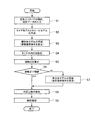
図1は、発明の実施形態として示す複合体モデル作成方法を説明するフローチャートである。実施形態に係る複合体モデル作成方法を説明する。ステップS1は、設計ステップである。設計ステップでは、複合体モデル作成方法の評価対象とする新たな空気入りタイヤが設計される。具体的には、空気入りタイヤのタイヤサイズ、形状、構造、材料、トレッドパターンなどが定められる。空気入りタイヤのタイヤサイズ、形状、構造、材料、トレッドパターンなどの設計データが入力される。
(1) Complex Model Creation Method FIG. 1 is a flowchart for explaining a complex model creation method shown as an embodiment of the invention. A composite model creation method according to the embodiment will be described. Step S1 is a design step. In the design step, a new pneumatic tire to be evaluated in the composite model creation method is designed. Specifically, the tire size, shape, structure, material, tread pattern, etc. of the pneumatic tire are determined. Design data such as tire size, shape, structure, material, and tread pattern of a pneumatic tire are input.
ステップS2は、ステップS1で設計された空気入りタイヤの形状、構造、材料を有限個の要素に分割したタイヤモデル10を設定する。本実施形態では、有限要素法(FEM)を適用することによってタイヤモデル10を作成する。タイヤモデル10は、実際の空気入りタイヤを数値的・解析的手法に基づいて作成されたコンピュータプログラムヘインプット可能なデータ形式に数値化したものである。
In step S2, a
上記ステップS2で作成するタイヤモデル10は、複数の要素に分割されている。要素分割とは、空気入りタイヤ、路面、流体等を有限個の小部分(要素という)に分割することである。すなわち、タイヤモデル10は、複数個の要素から構成されている。有限要素法は、例えば、変形、熱、粘弾性などの物理量の計算を、タイヤモデル10を構成する全要素について個別に計算した後、全要素に対する計算結果を積算することによって、タイヤモデル全体の物理量を算出する方法である。
The
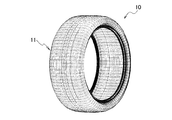
図2は、複合体モデル作成方法において設定されるタイヤモデル10を説明する模式図である。図2に示すタイヤモデル10には、空気入りタイヤのトレッド部11に形成された溝と陸部との基本構造を有限個の要素に分割したトレッドパターンモデルを設定することができる。また、タイヤモデル10には、ビードワイヤ12,ビード部13,サイド部14、内部のゴム部材15、ベルト16、カーカスプライ17を設定することができる(図2には不図示、図4参照)。
FIG. 2 is a schematic diagram illustrating the
トレッド部11、サイド部14及び内部のゴム部材15は、シェル要素、膜要素、リバー要素などでモデル化することができる。また、ビードワイヤ12は、ソリッド要素を用いてモデル化できる。ゴム部材15は、Mooney-Rivln材料、Ogdcn材料などの超弾性体を用いてモデル化できる。ゴム部材15は、粘性を考慮した粘弾性体でモデル化することもできる。粘性は、線形粘弾性やProny級数を用いてモデル化できる。
The
ステップS2では、タイヤモデル10と同様にして、ホイールモデル20が作成される。図3は、本実施形態に係る複合体モデル作成方法において設定されるホイールモデル20を説明する模式図である。ホイールモデル20には、リム部21とディスク部22が設定されている。また、ボルト、ナット等を用いてホイールを車両に取り付けるためのボルト孔23が設定されている。
In step S2, the
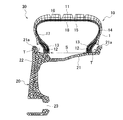
ステップS3では、タイヤモデル10とホイールモデル20との接触部分に接触境界条件を設定して、タイヤモデル10にホイールモデル20が組み付けられた複合体モデル30を作成する。図4は、本実施形態に係る複合体モデル作成方法において設定される複合体モデル30の断面図である。ステップS3は、組付ステップを構成する。
In step S3, a contact boundary condition is set at a contact portion between the
ステップS4は、内圧設定ステップである。内圧設定ステップでは、ステップS3で作成された複合体モデル30に、所定の空気圧が設定される。所定の空気圧が設定されると、タイヤモデル10のビード部13の間隔Sがタイヤの幅方向外側に拡げられて、リムフランジ21aに接触する挙動がシミュレートされる。
Step S4 is an internal pressure setting step. In the internal pressure setting step, a predetermined air pressure is set in the
ステップS5において、内圧が設定された複合体モデル30を構成するタイヤモデル10とホイールモデル20との接触部分における少なくとも1つの節点の接触圧を算出する。
In step S5, the contact pressure of at least one node at the contact portion between the
ステップS6において、算出された節点の接触圧と接触圧の閾値とを比較する。節点の接触圧が閾値を超えるとき(ステップS6、yes)、ステップS7において、少なくとも閾値を超えた節点に対し、初期位置(ステップS3)からリムフランジ21aとの接触後(ステップS4)までの変位を規定する変位境界条件を設定し、複合体モデルを作成し直す。具体的には、閾値以下である節点に対しては接触境界条件を維持し、閾値を超える節点に対しては接触境界条件を解除し、抽出した変位を変位境界条件として設定する。すなわち、接触境界条件と変位境界条件とが設定された混合境界条件を設定する。ステップS6は、比較ステップであり、ステップS7は、タイヤモデル10の一部を変位境界条件として複合体モデルを更新する更新ステップである。
In step S6, the calculated contact pressure of the node is compared with a threshold value of the contact pressure. When the contact pressure of the node exceeds the threshold value (step S6, yes), the displacement from the initial position (step S3) to after the contact with the
ステップS7において更新した複合体モデルを用いて、ステップS8において、内圧設定以降の解析を行う。具体的には、内圧が設定された後の複合体モデル30に荷重を負荷したときのリムフランジ21aから受ける応力によるビード部13の変形挙動について解析する。さらに、ステップS9において、転動時の解析を行う。具体的には、複合体モデル30が転動するとき転動中にビード部がホイールモデルのリムフランジから受ける応力で生じる変形挙動について解析する。一方、ステップS6において、接触圧が閾値を超える節点がない場合には(ステップS6、no)、この複合体モデルを用いて、ステップ8における内圧以降の解析、さらにはステップ9における転動時の解析処理を行う。
Using the complex model updated in step S7, the analysis after the internal pressure setting is performed in step S8. Specifically, the deformation behavior of the
(2)複合体モデル作成装置
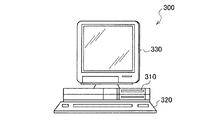
図5には、実施形態の複合体モデル作成方法を実行する複合体モデル作成装置として、コンピュータ300の概略が示されている。図5に示すように、コンピュータ300は、半導体メモリー、ハードディスクなどの記憶部(不図示)、処理部(不図示)などを備えた本体部310と、入力部320と、表示部330とを備える。処理部は、図1を用いて説明した複合体モデル作成方法を実行する。
(2) Complex Model Creation Device FIG. 5 shows an outline of a
コンピュータ300は、図示しないが着脱可能な記憶媒体と、この記憶媒体に対して書き込み・読み出しを可能にするドライバが備えられていてもよい。図1を用いて説明した複合体モデル作成方法を実行するプログラムを予め記憶媒体に記録しておき、記憶媒体から読み出されたプログラムを実行してもよい。コンピュータ300の記憶部にプログラムを格納(インストール)して実行してもよい。コンピュータ300は、図示しないが、例えば、ネットワークに接続可能であってもよい。ネットワークを介して、複合体モデル作成方法を実行するプログラムを取得してもよい。
The
(3)作用・効果
実施形態に係る複合体モデル作成方法によれば、内圧が設定された複合体モデル30のタイヤモデル10とホイールモデル20との接触部分Tにおける少なくとも1つの節点の接触圧が閾値を超えた場合には、この節点に変位境界条件を設定して複合体モデル30を更新する。これにより、タイヤモデル10とホイールモデル20との接触部分Tに接触境界条件と変位境界条件とが混在した複合体モデル30が作成される。
(3) Action / Effect According to the composite model creation method according to the embodiment, the contact pressure of at least one node in the contact portion T between the
これにより、タイヤモデル10をホイールモデル20に貫入する設定を行うとき、過剰な応力が加わることによって発生する、タイヤモデル10を構成する要素の異常変形のようなエラーの発生を防止できる。従って、タイヤモデル10とホイールモデル20とを複合した複合体モデル30を確実に作成できる。
Thereby, when setting to penetrate the
これにより、タイヤモデル10を構成する要素構成節点の位置関係が入れ替わるようなエラーの発生を防止できるため、解析処理の難易度を低減することができる。その結果、荷重や転動等に起因するタイヤの変形について、実測に近い解析を行うことができるとともに、解析のための時間を低減することによって解析処理の効率化が可能となる。結果として、解析コストを低減することができる。
Thereby, since the generation | occurrence | production of the error which the positional relationship of the element component node which comprises the
(4)その他の実施形態
上述したように、本発明の実施形態を通じて本発明の内容を開示したが、この開示の一部をなす論述及び図面は、本発明を限定するものであると理解すべきではない。この開示から当業者には様々な代替実施の形態、実施例が明らかとなる。例えば、本発明の実施形態は、次のように変更することができる。
(4) Other Embodiments As described above, the contents of the present invention have been disclosed through the embodiments of the present invention. However, it is understood that the descriptions and drawings constituting a part of this disclosure limit the present invention. Should not. From this disclosure, various alternative embodiments and examples will be apparent to those skilled in the art. For example, the embodiment of the present invention can be modified as follows.
本実施形態に係る複合体モデル作成方法は、大域解析(Global・Analysis:以下、G解析という)と局所解析(Local・Analysis:以下、L解析という)とを組み合わせたGL解析(Global−Local・Analysis)の演算の一部に適用することも可能である。 The complex model creation method according to the present embodiment includes a GL analysis (Global-Local-Analysis: hereinafter referred to as G analysis) and a local analysis (Local Analysis: hereinafter referred to as L analysis). It is also possible to apply to a part of the calculation of (Analysis).
このように、本発明は、ここでは記載していない様々な実施の形態などを含むことは勿論である。したがって、本発明の技術的範囲は、上述の説明から妥当な特許請求の範囲に係る発明特定事項によってのみ定められるものである。 As described above, the present invention naturally includes various embodiments that are not described herein. Therefore, the technical scope of the present invention is defined only by the invention specifying matters according to the scope of claims reasonable from the above description.
(5)比較評価
次に、本発明の効果を更に明確にするために、図面を参照して、以下の実施例及び比較例1,2に係るモデルを用いて行った比較評価について説明する。具体的には、(5.1)評価方法、(5.2)評価結果について説明する。なお、本発明はこれらの例によって何ら限定されるものではない。
(5) Comparative Evaluation Next, in order to further clarify the effects of the present invention, a comparative evaluation performed using models according to the following examples and comparative examples 1 and 2 will be described with reference to the drawings. Specifically, (5.1) Evaluation method and (5.2) Evaluation result will be described. In addition, this invention is not limited at all by these examples.
(5.1)評価方法
比較評価に用いたサンプルのタイヤモデルは、溝、陸部、陸部に細溝が形成された空気入りタイヤとした。実施例、及び比較例2に用いたモデルは、標準ホイールのホイールモデルに装着された状態の複合モデルをそれぞれ用いて作成した。なお、負荷をかけていない状態であるステップ3におけるそれぞれのタイヤモデルの断面形状は、実施例及び比較例1,2全て同一である。
(5.1) Evaluation Method The sample tire model used for the comparative evaluation was a pneumatic tire in which narrow grooves were formed in the grooves, land portions, and land portions. The models used in the examples and comparative example 2 were created using composite models in a state of being attached to a wheel model of a standard wheel. In addition, the cross-sectional shape of each tire model in
また、実施例、比較例1,2のモデルについての条件設定は下記のとおりである。 Moreover, the condition setting about the model of an Example and Comparative Examples 1 and 2 is as follows.
・タイヤサイズ TBR11R22.5
・内圧 700kPa
・荷重 24.5kN
・ Tire size TBR11R22.5
・ Internal pressure 700kPa
・ Load 24.5kN
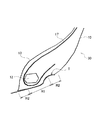
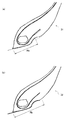
図6は、実施例に係る複合体モデル作成方法によって作成した複合体モデル30の一部を拡大した拡大図である。図7(a)は、比較例1に係るタイヤ単体モデル作成方法によって、作成したタイヤ単体モデル31の一部を拡大した拡大図である。図7(b)は、比較例2に係る複合体モデル作成方法によって作成した複合体モデル32の一部を拡大した拡大図である。なお、図6及び図7(a),(b)は全て内圧、荷重を加えた時のビード部の変形を示しており、各図において、実線は実測したタイヤの変形形状を示し、点線は各モデル作成方法によって作成したタイヤモデルを示している。
FIG. 6 is an enlarged view of a part of the
実施例に係る複合体モデル30は、混合境界条件を設定した本実施形態に係る複合体モデル作成方法によって作成された複合体モデルであり、図6に示すように、接触圧の値が閾値以を超えた節点を有する領域R1には変位境界条件を設定し、接触圧の値が閾値以下であった節点を有する領域R2には接触境界条件を設定している。
The
比較例1に係るタイヤ単体モデル31は、従来のタイヤ単体モデル作成方法によって作成されたタイヤ単体モデルであり、図7(a)に示すように、領域Raに固定境界条件が設定されている。
The tire
比較例2に係る複合体モデル32は、接触境界条件を設定した複合体モデル作成方法によって作成された複合体モデルであり、図7(b)に示すように、領域Rbに接触境界条件が設定されている。
The
図6及び図7(a),(b)に示すように、実施例に係る複合体モデル30、及び比較例2に係る複合体モデル32では、それぞれの複合体モデルに内圧や荷重を加えても、タイヤがリムフランジを超える位置に変形するようなことはなく、適正に変形していることがわかる。一方、比較例1に係る従来のタイヤ単体モデル31では、内圧や荷重が加わった時に固定境界条件端部での変形が大きくなっていることがわかる。その結果、本来リムフランジと接触して変形が抑制されるべき部位が、リムフランジを超える位置まで変形している。
As shown in FIG. 6 and FIGS. 7A and 7B, in the
ここで、実施例及び比較例1,2のモデルを転動させ、転動中にビード部13がホイールモデル20のリムフランジ21aから受ける応力で生じて変形した変形挙動を解析し、解析にかかった時間と、不平衡力とを調べた。
Here, the models of the example and comparative examples 1 and 2 are rolled, and the deformation behavior caused by the stress generated by the
(5.2評価結果)
各モデルの解析にかかった時間について、表1を参照しながら説明する。なお、表1における解析時間は比較例1を100として指数化している。
(5.2 Evaluation results)
The time taken for the analysis of each model will be described with reference to Table 1. The analysis time in Table 1 is indexed with Comparative Example 1 as 100.

表1に示すように、比較例2の複合体モデル32は解析時間が1200であり、比較例1のタイヤ単体モデル31及び実施例の複合体モデル30と比較した場合、解析時間がとても多く必要であることがわかった。
As shown in Table 1, the
一方、実施例の複合体モデル30は、解析時間が150であった。このことから、実施例の複合体モデル30は、比較例2の複合体モデル32とは、解析できる変形に大きな差がなく、且つ同等の解析を実施することができる上に、大幅に解析時間を短縮することが可能となることがわかった。
On the other hand, the analysis time of the
次に、解析の収束性判定の一つである不平衡力について表2を参照しながら説明する。なお、不平衡力は小さいほど良い。 Next, the unbalance force, which is one of analysis convergence determinations, will be described with reference to Table 2. In addition, the smaller the unbalance force, the better.
表2に示すように、実施例の複合体モデル30を使用した場合の不平衡力は0.0007%であり、比較例1のタイヤ単体モデル31を使用したの不平衡力は0.0002%であり、比較例2の複合体モデル32を使用した場合の不平衡力(6.3%)に比べて大幅に小さいことがわかった。すなわち、解析処理の収束性においては、実施例の複合体モデル30は、比較例1のタイヤ単体モデル31と同等であり、比較例2の複合体モデル32と比べて非常によいことがわかった。この結果は、本来であればより多くの繰り返し計算を行うことで収束性を改善する必要があることを示唆しているが、表1に示したように、比較例2の複合体モデル32を使用した解析処理の場合は、解析に多くの時間を必要とするため、さらに解析のための時間を増やすことは実用的ではない。
As shown in Table 2, the unbalance force when the
以上の結果から、実施例の複合体モデル30の作成方法によれば、比較例1のタイヤ単体モデル31の作成方法と同等の解析時間と解析収束性でありながら、本来課すべき境界条件とほぼ同様の解析結果を得ることが可能となる。その結果として、タイヤの変形の解析を短時間で精度良く行うことが可能となる。
From the above results, according to the method of creating the
10…タイヤモデル、 20…ホイールモデル、 21…リム部、 リムフランジ…21a、 30,32…複合体モデル、 31…タイヤ単体モデル、 300…コンピュータ、 310…本体部、 320…入力部、 330…表示部、R1,R2,Ra,Rb…条件設定領域
DESCRIPTION OF
Claims (3)
前記タイヤモデルと前記ホイールモデルとの接触部分に両者が接触する接触境界条件を設定して前記タイヤモデルに前記ホイールモデルが組み付けられた複合体モデルを作成する組付ステップと、
前記複合体モデルに対して所定の空気圧を設定する内圧設定ステップと、
内圧が設定された複合体モデルの前記タイヤモデルと前記ホイールモデルとの接触部分における少なくとも1つの節点の接触圧を閾値と比較する比較ステップと、
前記節点の接触圧が閾値を超えていた場合に、前記接触圧の閾値を超えた節点の接触境界条件を解除するとともに変位境界条件を設定して前記複合体モデルを更新するモデル更新ステップと
を有する複合体モデル作成方法。 A composite model creation method for creating a composite model that is a composite of a tire model in which a pneumatic tire is modeled with multiple elements and a wheel model in which a wheel is modeled with multiple elements,
An assembly step of creating a composite model in which the wheel model is assembled to the tire model by setting a contact boundary condition in which the tire model and the wheel model are in contact with each other at the contact portion;
An internal pressure setting step for setting a predetermined air pressure for the complex model;
A comparison step of comparing a contact pressure of at least one node in a contact portion between the tire model and the wheel model of the composite model in which an internal pressure is set with a threshold value;
A model updating step of releasing the contact boundary condition of the node exceeding the threshold value of the contact pressure and setting the displacement boundary condition and updating the complex model when the contact pressure of the node exceeds the threshold value; A method for creating a complex model.
A complex model creating apparatus that executes the complex model creating method according to claim 1.
Priority Applications (1)
| Application Number | Priority Date | Filing Date | Title |
|---|---|---|---|
| JP2010159187A JP5654792B2 (en) | 2010-07-13 | 2010-07-13 | Complex model creation method and complex model creation apparatus |
Applications Claiming Priority (1)
| Application Number | Priority Date | Filing Date | Title |
|---|---|---|---|
| JP2010159187A JP5654792B2 (en) | 2010-07-13 | 2010-07-13 | Complex model creation method and complex model creation apparatus |
Publications (2)
| Publication Number | Publication Date |
|---|---|
| JP2012020629A JP2012020629A (en) | 2012-02-02 |
| JP5654792B2 true JP5654792B2 (en) | 2015-01-14 |
Family
ID=45775255
Family Applications (1)
| Application Number | Title | Priority Date | Filing Date |
|---|---|---|---|
| JP2010159187A Expired - Fee Related JP5654792B2 (en) | 2010-07-13 | 2010-07-13 | Complex model creation method and complex model creation apparatus |
Country Status (1)
| Country | Link |
|---|---|
| JP (1) | JP5654792B2 (en) |
Families Citing this family (1)
| Publication number | Priority date | Publication date | Assignee | Title |
|---|---|---|---|---|
| CN103425830B (en) * | 2013-08-06 | 2017-02-08 | 西北工业大学 | Structural topological optimization method based on multi-point displacement coordination constraint |
Family Cites Families (4)
| Publication number | Priority date | Publication date | Assignee | Title |
|---|---|---|---|---|
| JP4452085B2 (en) * | 2004-01-27 | 2010-04-21 | 住友ゴム工業株式会社 | Tire simulation method and tire manufacturing method |
| JP5151040B2 (en) * | 2005-03-31 | 2013-02-27 | 横浜ゴム株式会社 | Tire fitting process prediction method, tire fitting process prediction computer program, tire analysis method, and tire analysis computer program |
| JP4620565B2 (en) * | 2005-10-06 | 2011-01-26 | 株式会社日立製作所 | Analysis mesh generator |
| JP2009154861A (en) * | 2007-12-06 | 2009-07-16 | Bridgestone Corp | Pneumatic tire |
-
2010
- 2010-07-13 JP JP2010159187A patent/JP5654792B2/en not_active Expired - Fee Related
Also Published As
| Publication number | Publication date |
|---|---|
| JP2012020629A (en) | 2012-02-02 |
Similar Documents
| Publication | Publication Date | Title |
|---|---|---|
| US7308390B2 (en) | Method and apparatus for estimating tire/wheel performance by simulation | |
| JP4608306B2 (en) | Tire simulation method | |
| JP2013014200A (en) | Simulation method and simulation device | |
| CN115422806A (en) | Wheel rigidity simulation method, application, equipment and computer program product | |
| JP5654792B2 (en) | Complex model creation method and complex model creation apparatus | |
| JP2011235758A (en) | Method and apparatus for simulation | |
| JP5189318B2 (en) | Method for predicting rolling characteristics of pneumatic tires | |
| JP2006111168A (en) | Tire performance prediction method, tire simulation method, tire performance prediction program, and recording medium | |
| JP5513200B2 (en) | How to create a tire model | |
| JP5304093B2 (en) | Method and apparatus for simulating tire rolling resistance | |
| JP5814740B2 (en) | Tire simulation method | |
| JP2018099936A (en) | Tire performance evaluation method | |
| CN118114483A (en) | A tire longitudinal slip characteristics prediction method, application and computer software | |
| JP5320806B2 (en) | Rotating body simulation method | |
| JP5650445B2 (en) | Simulation method | |
| JP7585703B2 (en) | How to create a tire numerical analysis model | |
| JP6336358B2 (en) | Tire simulation method and tire manufacturing method | |
| JP6393027B2 (en) | Tire simulation method | |
| JP5584004B2 (en) | Tire performance prediction method and tire performance prediction apparatus | |
| JP2011226991A (en) | Rolling resistance prediction method and rolling resistance prediction apparatus | |
| JP6424543B2 (en) | Tire simulation method and tire performance evaluation method | |
| JP2011235747A (en) | Method and device for creating complex model | |
| JP2013018353A (en) | Simulation method and simulation apparatus | |
| JP2016011103A (en) | Tire simulation method | |
| JP2012171477A (en) | Tire model making method, tire model making device and tire model making program |
Legal Events
| Date | Code | Title | Description |
|---|---|---|---|
| A621 | Written request for application examination |
Free format text: JAPANESE INTERMEDIATE CODE: A621 Effective date: 20130604 |
|
| A977 | Report on retrieval |
Free format text: JAPANESE INTERMEDIATE CODE: A971007 Effective date: 20131211 |
|
| A131 | Notification of reasons for refusal |
Free format text: JAPANESE INTERMEDIATE CODE: A131 Effective date: 20131217 |
|
| A131 | Notification of reasons for refusal |
Free format text: JAPANESE INTERMEDIATE CODE: A131 Effective date: 20140805 |
|
| A521 | Written amendment |
Free format text: JAPANESE INTERMEDIATE CODE: A523 Effective date: 20141003 |
|
| TRDD | Decision of grant or rejection written | ||
| A01 | Written decision to grant a patent or to grant a registration (utility model) |
Free format text: JAPANESE INTERMEDIATE CODE: A01 Effective date: 20141104 |
|
| A61 | First payment of annual fees (during grant procedure) |
Free format text: JAPANESE INTERMEDIATE CODE: A61 Effective date: 20141121 |
|
| R150 | Certificate of patent or registration of utility model |
Ref document number: 5654792 Country of ref document: JP Free format text: JAPANESE INTERMEDIATE CODE: R150 |
|
| R250 | Receipt of annual fees |
Free format text: JAPANESE INTERMEDIATE CODE: R250 |
|
| R250 | Receipt of annual fees |
Free format text: JAPANESE INTERMEDIATE CODE: R250 |
|
| LAPS | Cancellation because of no payment of annual fees |