JP5486552B2 - Decorative sheet - Google Patents
Decorative sheet Download PDFInfo
- Publication number
- JP5486552B2 JP5486552B2 JP2011115868A JP2011115868A JP5486552B2 JP 5486552 B2 JP5486552 B2 JP 5486552B2 JP 2011115868 A JP2011115868 A JP 2011115868A JP 2011115868 A JP2011115868 A JP 2011115868A JP 5486552 B2 JP5486552 B2 JP 5486552B2
- Authority
- JP
- Japan
- Prior art keywords
- layer
- average particle
- curable resin
- beads
- resin composition
- Prior art date
- Legal status (The legal status is an assumption and is not a legal conclusion. Google has not performed a legal analysis and makes no representation as to the accuracy of the status listed.)
- Active
Links
Images

Landscapes
- Laminated Bodies (AREA)
Description
本発明は、化粧シートに関する。 The present invention relates to a decorative sheet.
近年、我が国では3人に1人がアトピー性皮膚炎、気管支喘息、アレルギー性鼻炎等のアレルギー疾患を患っていると言われている。アレルギー疾患の原因としては、ダニ、花粉、カビ、ペットの毛等が挙げられる。 In recent years, one in three people in Japan are said to suffer from allergic diseases such as atopic dermatitis, bronchial asthma, and allergic rhinitis. Causes of allergic diseases include mites, pollen, mold, pet hair and the like.
特に、室内から検出されるダニの70%以上を占めるチリダニのアレルゲン(以下「ダニアレルゲン」という。)が問題となっている。このチリダニは、虫体、死骸、抜け殻、フン等の全てがアレルゲンになると言われている。中でもフン由来のダニアレルゲンはアレルゲン活性が高く、しかも粒子が非常に小さく舞い上がり易いため人体に接触することが多いことから、最も問題とされている。 In particular, dust mite allergens (hereinafter referred to as “mite allergens”), which account for 70% or more of the mites detected from indoors, are a problem. It is said that the dust mites are allergens such as worms, carcasses, shells, and fungi. Among them, mite-derived mite allergens are the most problematic because they have high allergen activity, and the particles are very small and easily come up so that they often come into contact with the human body.
建築物の外装、内装、建具、家具、車両内装などの表面装飾に用いられる化粧シートにおいても、日常接触する機会の多い部分であり、特に抗アレルゲン性が望まれる。 Even in a decorative sheet used for surface decoration such as exterior, interior, joinery, furniture, and vehicle interior of a building, it is a part that is frequently contacted daily, and anti-allergenicity is particularly desired.
化粧シートに効率よく抗アレルゲン性を付与するには、化粧シートを構成する基材シート表面に積層される表面保護層に抗アレルゲン剤を添加する方法が考えられる。抗アレルゲン剤としては、塗料に相溶し、長期に安定して抗アレルゲン性を発現することができる非水溶性の高分子材料が適している。この抗アレルゲン剤は、一般的にフェノール性OH基を有しており、平衡吸水率が約6〜15%にも達する。そのため、室内に存在するアレルゲンに対して、十分な抗アレルゲン効果を得るために必要量の抗アレルゲン剤を表面保護層に添加した場合、化粧シート製造時のシート巻取り工程にて、ブロッキングを起こす問題が生じた。 In order to efficiently impart anti-allergen properties to the decorative sheet, a method of adding an anti-allergen agent to the surface protective layer laminated on the surface of the base sheet constituting the decorative sheet can be considered. As the anti-allergen agent, a water-insoluble polymer material that is compatible with the paint and can stably exhibit anti-allergenic properties for a long time is suitable. This antiallergen generally has a phenolic OH group, and the equilibrium water absorption reaches about 6 to 15%. Therefore, when a necessary amount of an antiallergen agent is added to the surface protective layer to obtain a sufficient antiallergen effect against allergens present in the room, blocking occurs in the sheet winding process during the manufacture of the decorative sheet. There was a problem.
化粧シートのブロッキング対処方法としては、化粧シート基材裏面に体質顔料として、シリカと沈降性の硫酸バリウム、またはシリカと炭酸カルシウムを含有した塗膜層を塗工する方法(特許文献1)が報告されている。 As a method for coping with blocking of a decorative sheet, a method of applying a coating layer containing silica and precipitated barium sulfate or silica and calcium carbonate as an extender pigment on the back of the decorative sheet substrate is reported (Patent Document 1). Has been.
しかしながら、特許文献1記載の方法は、ブロッキングは防止できるが、アレルゲンの体質顔料への可逆的な吸着が起こるため、抗アレルゲン性の発現が不安定となる問題が生じた。また、耐傷性に関しても不十分であり、粒径などの制御が必要であった。
本発明は、以上の通りの事情に鑑みてなされたものであり、耐ブロッキング性、耐傷性を有し、抗アレルゲン性を効率良く発現させることができる化粧シートを提供することを課題としている。
However, although the method described in Patent Document 1 can prevent blocking, reversible adsorption of allergens to the extender pigment occurs, which causes a problem that the expression of antiallergenicity becomes unstable. Further, the scratch resistance is insufficient, and control of the particle size and the like is necessary.
The present invention has been made in view of the circumstances as described above, and it is an object of the present invention to provide a decorative sheet that has blocking resistance and scratch resistance and can efficiently exhibit antiallergenicity.
上記の課題を解決するために、本発明の化粧シートは、基材シートの表面に単一層または複数層からなる機能層を備え、機能層の最外表面を構成する層が、フェノール性水酸基を有する非水溶性高分子からなる抗アレルゲン剤と、平均粒径3μm以上10μm以下のシリカ微粒子と、平均粒径3μm以上15μm以下の樹脂ビーズおよび平均粒径3μm以上15μm以下のガラスビーズのうち少なくとも一方のビーズとを含有する硬化性樹脂組成物の硬化物塗膜で厚さ5μm以上15μm以下であり、抗アレルゲン剤の含有量が、シリカ微粒子とビーズの合計量に対して質量比で0.2以上3.0以下であることを特徴とする。
In order to solve the above problems, the decorative sheet of the present invention comprises a functional layer consisting of a single layer or a plurality of layers on the surface of a base sheet, and the layer constituting the outermost surface of the functional layer has a phenolic hydroxyl group. At least one of an antiallergen agent comprising a water-insoluble polymer, silica fine particles having an average particle diameter of 3 μm to 10 μm, resin beads having an average particle diameter of 3 μm to 15 μm, and glass beads having an average particle diameter of 3 μm to 15
この化粧シートにおいて、硬化性樹脂組成物は、活性エネルギー線硬化型樹脂組成物であることが好ましい。 In this decorative sheet, the curable resin composition is preferably an active energy ray-curable resin composition.
本発明においては、所定の平均粒径を有するシリカ微粒子およびビーズと特定の抗アレルゲン剤とが所定の質量比率で組み合わせられ、塗膜が所定の厚さを有するので、耐ブロッキング性と耐傷性が向上し、抗アレルゲン性が効率良く発現される。 In the present invention, silica fine particles and beads having a predetermined average particle diameter are combined with a specific anti-allergen agent at a predetermined mass ratio, and the coating film has a predetermined thickness, so that it has blocking resistance and scratch resistance. And anti-allergenicity is efficiently expressed.
以下、本発明を詳細に説明する。 Hereinafter, the present invention will be described in detail.
本発明の化粧シートは、基材シートの表面に単一層または複数層からなる機能層を備えており、機能層の最外表面を構成する層は、硬化性樹脂組成物を塗布、硬化して形成された厚さ5μm以上15μm以下の硬化物塗膜である。そして、硬化性樹脂組成物は、フェノール性水酸基を有する非水溶性高分子からなる抗アレルゲン剤と、平均粒径3μm以上10μm以下のシリカ微粒子とを含有する。さらに、平均粒径3μm以上15μm以下の樹脂ビーズおよび平均粒径3μm以上15μm以下のガラスビーズのうち少なくとも一方のビーズをも含有する。
抗アレルゲン剤の含有量は、シリカ微粒子とビーズの合計量に対して質量比で0.2以上3.0以下である。
The decorative sheet of the present invention includes a functional layer composed of a single layer or a plurality of layers on the surface of the base sheet, and the layer constituting the outermost surface of the functional layer is obtained by applying and curing a curable resin composition. It is a formed cured film having a thickness of 5 μm to 15 μm. The curable resin composition contains an anti-allergen agent composed of a water-insoluble polymer having a phenolic hydroxyl group and silica fine particles having an average particle size of 3 μm or more and 10 μm or less. Furthermore, at least one of the resin beads having an average particle diameter of 3 μm to 15 μm and glass beads having an average particle diameter of 3 μm to 15 μm is also contained.
The content of the anti-allergen agent is 0.2 to 3.0 in terms of mass ratio with respect to the total amount of silica fine particles and beads.
化粧シートに用いられる基材シートとしては、環境問題の観点から、分子中に塩素原子などのハロゲン原子を含まない各種の熱可塑性樹脂からなるシートが用いられることが好ましい。特に、柔軟性、耐候性等を有するオレフィン系樹脂からなるシートが用いられることが好ましい。 As the base sheet used for the decorative sheet, from the viewpoint of environmental problems, it is preferable to use sheets made of various thermoplastic resins that do not contain halogen atoms such as chlorine atoms in the molecule. In particular, it is preferable to use a sheet made of an olefin resin having flexibility, weather resistance, and the like.
オレフィン系樹脂は、具体的には、ポリエチレン(低密度、中密度又は高密度)、ポリプロピレン(アイソタクチック型、シンジオタクチック型、又はこれらの混合型)、ポリメチルペンテン、ポリブテン、エチレン−プロピレン共重合体、エチレン−酢酸ビニル共重合体、プロピレン−ブテン共重合体、エチレン−アクリル酸エチル共重合体、エチレンープロピレンーブテン共重合体、アイオノマー等の高結晶質の非エラストマーポリオレフィン系樹脂、あるいは下記に記載した各種のオレフィン系熱可塑性エラストマーが挙げられる。 Specific examples of the olefin resin include polyethylene (low density, medium density or high density), polypropylene (isotactic type, syndiotactic type, or a mixed type thereof), polymethylpentene, polybutene, and ethylene-propylene. Copolymer, ethylene-vinyl acetate copolymer, propylene-butene copolymer, ethylene-ethyl acrylate copolymer, ethylene-propylene-butene copolymer, ionomer and other highly crystalline non-elastomeric polyolefin resins, Or the various olefin type thermoplastic elastomer described below is mentioned.
オレフィン系熱可塑性エラストマーは、主原料がハードセグメントである高密度ポリエチレンまたはポリプロピレンのいずれかからなり、これにソフトセグメントとしてのエラストマー、必要に応じて充填剤を添加してなるものが挙げられる。高密度ポリエチレンとしては、好ましくは、比重0.94〜0.96のポリエチレンであり、低圧法で得られる結晶化度が高く分子に枝分かれ構造の少ない高分子である高密度ポリエチレンが用いられる。ポリプロピレンとしては、好ましくは、アイソタクチック型ポリプロピレンが用いられる。 The olefin-based thermoplastic elastomer is made of either high-density polyethylene or polypropylene whose main raw material is a hard segment, and includes an elastomer as a soft segment to which a filler is added if necessary. The high-density polyethylene is preferably polyethylene having a specific gravity of 0.94 to 0.96, and high-density polyethylene which is a polymer having a high degree of crystallinity obtained by a low-pressure method and having few branched structures in the molecule. As the polypropylene, isotactic polypropylene is preferably used.
基材シートは、カレンダー成形、熔融押し出し成形等の常用の方法により、厚さ50μm〜200μm程度に製膜して得られる。 The base sheet is obtained by forming a film to a thickness of about 50 μm to 200 μm by a conventional method such as calender molding or melt extrusion molding.
基材シートを構成する熱可塑性樹脂には、必要に応じて、充填剤、発泡剤、難燃剤、滑剤、酸化防止剤、紫外線吸収剤、光安定剤等の各種の添加剤が添加される。 Various additives such as a filler, a foaming agent, a flame retardant, a lubricant, an antioxidant, an ultraviolet absorber, and a light stabilizer are added to the thermoplastic resin constituting the base sheet as necessary.
紫外線吸収剤としては、ベンゾフェノン系、ベンゾトリアゾール系、アクリレート系、サリシレート系、オキザニリド系の有機系紫外線吸収剤、微粒子状の酸化チタン、酸化亜鉛、酸化セリウム等の無機系紫外線吸収剤が挙げられる。これらは1種単独で用いてもよく、2種以上を併用してもよい。 Examples of the ultraviolet absorber include benzophenone-based, benzotriazole-based, acrylate-based, salicylate-based, and oxanilide-based organic ultraviolet absorbers, and particulate inorganic ultraviolet absorbers such as titanium oxide, zinc oxide, and cerium oxide. These may be used alone or in combination of two or more.
これらの紫外線吸収剤を適用する割合は、添加する対象の層の樹脂分に対し、好ましくは、0.1〜2質量%の範囲である。0.1質量%以上とすることで添加効果が向上するので好ましい。2質量%以下とすることで、効果の更なる向上が見られ、特に有機系紫外線吸収剤の場合、経時的に、あるいは熱加工時に表面にブリード(滲出)し難くなるので好ましい。 The ratio in which these ultraviolet absorbers are applied is preferably in the range of 0.1 to 2% by mass with respect to the resin content of the layer to be added. Since the addition effect improves by setting it as 0.1 mass% or more, it is preferable. When the content is 2% by mass or less, the effect is further improved, and particularly in the case of an organic ultraviolet absorber, it is difficult to bleed (exude) to the surface over time or during heat processing, which is preferable.
光安定剤としては、例えば、ヒンダードアミン系の光安定剤が用いられる。光安定剤を添加する割合は、添加する対象の層の樹脂分に対し、好ましくは、0.1〜2質量%の範囲である。0.1質量%以上とすることで添加効果が向上するので好ましい。また、2質量%以下とすることで、効果の向上が見られるので好ましい。 As the light stabilizer, for example, a hindered amine light stabilizer is used. The ratio of adding the light stabilizer is preferably in the range of 0.1 to 2% by mass with respect to the resin content of the target layer to be added. Since the addition effect improves by setting it as 0.1 mass% or more, it is preferable. Moreover, since the improvement of an effect is seen by setting it as 2 mass% or less, it is preferable.
なお、紫外線吸収剤と光安定剤は、それぞれを単独で使用した場合でも効果はあるが、併用した方が、相乗的に効果が向上するため、併用することが望ましい。また紫外線吸収剤と光安定剤は、単に混合しただけでは使用中のブリードが避けがたいために、上記のヒンダードアミン系の光安定剤に代えて、下記の化合物を使用して、ブリードを防止することが望ましい。ヒンダードアミン系の光安定剤に代わる化合物としては、4−(メタ)アクリロイルオキシ−2,2,6,6−テトラメチルピペリジン、4−(メタ)アクリロイルオキシ−1,2,2,6,6−ペンタメチルピペリジン、4−(メタ)アクリロイルオキシ−1−プロピル−2,2,6,6−テトラメチルビペリジン、または4−(メタ)アクリロイルオキシ−1−ブチル2,2,2,6,6−テトラメチルピペリジン等の(メタ)アクリロイルオキシ基を持つ化合物、もしくは4−クロトノイルオキシ−2,2,6.8−テトラメチルピペリジン、または4−クロトノイルオキシ−1−プロピル−2,2,6,6−テトラメチルピペリジン等のクロトノイルオキシ基を持つ化合物をグラフト共重合させた樹脂等が挙げられる。 In addition, although an ultraviolet absorber and a light stabilizer are effective even when each is used independently, since the effect improves synergistically, it is desirable to use together. In addition, the ultraviolet absorber and the light stabilizer are unavoidable to bleed during use by simply mixing them. Therefore, the following compound is used in place of the above hindered amine light stabilizer to prevent bleed. It is desirable. Examples of compounds that can replace hindered amine light stabilizers include 4- (meth) acryloyloxy-2,2,6,6-tetramethylpiperidine, 4- (meth) acryloyloxy-1,2,2,6,6- Pentamethylpiperidine, 4- (meth) acryloyloxy-1-propyl-2,2,6,6-tetramethylbiperidine, or 4- (meth) acryloyloxy-1-butyl 2,2,2,6 A compound having a (meth) acryloyloxy group such as 6-tetramethylpiperidine, or 4-crotonoyloxy-2,2,6.8-tetramethylpiperidine, or 4-crotonoyloxy-1-propyl-2,2 And a resin obtained by graft copolymerization of a compound having a crotonoyloxy group such as 6,6-tetramethylpiperidine.
また、熱可塑性樹脂には、顔料等の着色剤が添加されていてもよい。これによって、基材シートは不透明(隠蔽性)に形成される。 In addition, a coloring agent such as a pigment may be added to the thermoplastic resin. As a result, the base sheet is formed opaque (concealment).
基材シートを構成する熱可塑性樹脂としてオレフィン系樹脂を用いた場合には、基材シートの表面にコロナ放電処理、プラズマ処理、オゾン処理等の易接着処理を施すことが好ましい。この易接着処理は、この種の基材シートにおいて通常使用される方法を用いることができる。このような易接着処理を行うことによって、オレフィン系樹脂で構成される基材シートの表面に、水酸基、カルボキシル基等の活性水素原子含有官能基を生成することができる。なお、基材シートを熔融押し出し法で製膜する場合には、基材シートの表面に極性官能基がある程度生成されるので、極性官能基の生成が十分であれば、易接着処理は省いてもよい。 When an olefin resin is used as the thermoplastic resin constituting the base sheet, it is preferable to subject the surface of the base sheet to easy adhesion treatment such as corona discharge treatment, plasma treatment, and ozone treatment. For this easy adhesion treatment, a method usually used in this type of substrate sheet can be used. By performing such easy adhesion treatment, an active hydrogen atom-containing functional group such as a hydroxyl group or a carboxyl group can be generated on the surface of the base sheet composed of the olefin resin. In addition, when the base sheet is formed by the melt extrusion method, a polar functional group is generated to some extent on the surface of the base sheet. Therefore, if the generation of the polar functional group is sufficient, the easy adhesion treatment is omitted. Also good.
本発明においては、上記のとおり、機能層の最外表面を構成する層の形成に用いられる硬化性樹脂組成物には、抗アレルゲン剤、シリカ微粒子、樹脂ビーズおよびガラスビーズのうち少なくとも一方のビーズが配合されている。 In the present invention, as described above, the curable resin composition used for forming the layer constituting the outermost surface of the functional layer includes at least one of anti-allergen agent, silica fine particles, resin beads, and glass beads. Is blended.
抗アレルゲン剤を構成するフェノール性水酸基を有する非水溶性高分子は、そのフェノール性水酸基によりアレルゲン物質を吸着捕捉し、そのエネルギー活性を不活化(抑制)する。また、非水溶性高分子であるため、水の存在下や高湿度条件におけるブリードや溶け出しを防止できる。 The water-insoluble polymer having a phenolic hydroxyl group constituting the anti-allergen agent adsorbs and captures the allergen substance by the phenolic hydroxyl group and inactivates (suppresses) its energy activity. Moreover, since it is a water-insoluble polymer, it can prevent bleeding and dissolution in the presence of water and high humidity conditions.
フェノール性水酸基を有する非水溶性高分子は、一価のフェノール性水酸基を有する単量体を重合または共重合させたものである。例えば、ポリ(3,4,5−ヒドロキシ安息香酸ビニル)、ポリ(4−ビニルフェノール)等のポリビニルフェノール、ポリチロシン、ポリ(1−ビニル−5−ヒドロキシナフタレン)、ポリ(1−ビニル−6−ヒドロキシナフタレン)、ポリ(1−ビニル−5−ヒドロキシアントラセン)等が挙げられる。これらは1種単独で用いてもよく、2種以上を併用してもよい。中でも、ポリビニルフェノールは、モノフェノールであるため着色レベルが低く、素地の外観を損ねることがなく、加工性が高く、市販品として容易に入手できる点から好ましく用いられる。 The water-insoluble polymer having a phenolic hydroxyl group is obtained by polymerizing or copolymerizing a monomer having a monovalent phenolic hydroxyl group. For example, polyvinylphenol such as poly (vinyl 3,3,4-hydroxyhydroxybenzoate) and poly (4-vinylphenol), polytyrosine, poly (1-vinyl-5-hydroxynaphthalene), poly (1-vinyl-6) -Hydroxynaphthalene), poly (1-vinyl-5-hydroxyanthracene) and the like. These may be used alone or in combination of two or more. Among them, polyvinylphenol is preferably used because it is a monophenol, has a low coloring level, does not impair the appearance of the substrate, has high workability, and is easily available as a commercial product.
抗アレルゲン剤の含有量は、硬化性樹脂組成物の全量に対して好ましくは、3質量%以上15質量%以下である。3質量%以上とすることで、十分な抗アレルゲン性を発現することができるので好ましい。15質量%以下とすることで、耐ブロッキング性を確保することができるので好ましい。 The content of the anti-allergen agent is preferably 3% by mass or more and 15% by mass or less with respect to the total amount of the curable resin composition. A content of 3% by mass or more is preferable because sufficient antiallergenicity can be expressed. It is preferable for the content to be 15% by mass or less because blocking resistance can be ensured.
硬化性樹脂組成物に配合されるシリカ微粒子は、レーザー回折・散乱法によって測定した平均粒径が3μm以上10μm以下のものである。また、硬化性樹脂組成物に配合されるビーズは、レーザー回折・散乱法によって測定した平均粒径が3μm以上15μm以下のものである。このような平均粒径を有するシリカ微粒子とビーズを抗アレルゲン剤に組み合わせて配合することで、耐ブロッキング性と耐傷性が効果的に確保されるだけではなく、抗アレルゲン性能が向上する。抗アレルゲン性能が向上する理由は、定かではないが、シリカ微粒子とビーズを組み合わせることで、抗アレルゲン剤の分散性が向上し、抗アレルゲン剤の性能の効率化に寄与していると考えられる。なお、シリカ微粒子およびビーズのうちどちらか一方だけを用いて抗アレルゲン剤に組み合わせても、抗アレルゲン性能、耐ブロッキング性と耐傷性をすべて満足させることができない。 Silica fine particles blended in the curable resin composition have an average particle size of 3 μm or more and 10 μm or less as measured by a laser diffraction / scattering method. Moreover, the beads blended in the curable resin composition have an average particle diameter measured by a laser diffraction / scattering method of 3 μm or more and 15 μm or less. By blending silica fine particles and beads having such an average particle size in combination with an anti-allergen agent, not only blocking resistance and scratch resistance are effectively ensured, but also anti-allergen performance is improved. The reason why the anti-allergen performance is improved is not clear, but it is thought that the combination of silica fine particles and beads improves the dispersibility of the anti-allergen agent and contributes to the efficiency improvement of the anti-allergen agent. In addition, even if only one of silica fine particles and beads is used and combined with the anti-allergen agent, all of the anti-allergen performance, blocking resistance and scratch resistance cannot be satisfied.
シリカ微粒子は、硬化性樹脂組成物の抗アレルゲン性能を低下させずに、主に耐ブロッキング性を付与する目的で配合される。 The silica fine particles are blended mainly for the purpose of imparting blocking resistance without reducing the antiallergen performance of the curable resin composition.
このようなシリカ微粒子は、レーザー回折・散乱法によって測定した平均粒径が3μm以上10μm以下のものが使用されるが、好ましくは、平均粒径4μm以上8μm以下のものが使用される。平均粒径が3μm以上10μm以下の範囲内であると、抗アレルゲン性能を低下させずに、耐ブロッキング性を付与することができる。平均粒径が3μmより小さい場合は、十分な抗アレルゲン性能と耐ブロッキング性能を発現することができない。また、平均粒径が10μmより大きい場合は、アレルゲンのシリカ微粒子への可逆的な吸着が大きくなり、安定した抗アレルゲン性能が発現しない。また、耐傷性も著しく低下する。 As such silica fine particles, those having an average particle size of 3 μm or more and 10 μm or less measured by a laser diffraction / scattering method are used, and preferably those having an average particle size of 4 μm or more and 8 μm or less. When the average particle size is in the range of 3 μm or more and 10 μm or less, blocking resistance can be imparted without reducing the antiallergen performance. When the average particle size is smaller than 3 μm, sufficient anti-allergen performance and anti-blocking performance cannot be expressed. On the other hand, when the average particle size is larger than 10 μm, the reversible adsorption of allergen to the silica fine particles is increased, and stable antiallergen performance is not exhibited. In addition, scratch resistance is significantly reduced.
樹脂ビーズ(樹脂を材質とするビーズ)は、例えば、従来知られている方法、すなわちホモポリマーを重合して製造する方法や、高分子量ポリマーを分解して製造する方法等により得ることができる。例えば、ウレタン樹脂系、アクリル樹脂系、ポリスチレン樹脂系、およびシリコン樹脂系の樹脂ビーズ等が挙げられる。これらは1種単独で用いてもよく、2種以上を併用してもよい。中でも、安価で耐汚染性が高いアクリル樹脂系の樹脂ビーズや、感触を重視する用途の場合には触感が優れるウレタン樹脂系の樹脂ビーズが好ましい。 Resin beads (beads made of resin) can be obtained by, for example, a conventionally known method, that is, a method of producing a polymer by polymerizing a homopolymer, a method of producing a polymer by decomposing a high molecular weight polymer, or the like. Examples thereof include urethane resin-based, acrylic resin-based, polystyrene resin-based, and silicon resin-based resin beads. These may be used alone or in combination of two or more. Of these, acrylic resin-based resin beads that are inexpensive and highly resistant to contamination, and urethane resin-based resin beads that are excellent in tactile sensation are preferred for applications that emphasize touch.
ガラスビーズ(ガラスを材質とするビーズ)は、内部が均質で透明度が高く、真球に近くしかも表面が平滑な球状粒子が好適である。具体例としては、プリズマライト社製ミクロスフィアP2011SL(平均粒径5μm)、プリズマライト社製ミクロスフィアP2015SL(平均粒径9μm)、ポッターズ社製EMB−10(平均粒径5μm)、ポッターズ社製EMB−20(平均粒径10μm)等が挙げられる。
Glass beads (beads made of glass) are preferably spherical particles having a uniform inside, high transparency, close to a true sphere, and a smooth surface. As specific examples, microsphere P2011SL (
このような樹脂ビーズおよびガラスビーズは、レーザー回折・散乱法によって測定した平均粒径が3μm以上15μm以下のものが使用されるが、好ましくは、平均粒径4μm以上8μm以下のものが使用される。平均粒径が3μmより小さい場合は、ビーズが塗膜中に埋没するため、耐ブロッキング性や耐傷性に寄与しない。また、平均粒径が15μmより大きい場合は、耐ブロッキング性を確保することはできるが、ビーズの欠けが生じるなど耐傷性が発現しにくい。 As such resin beads and glass beads, those having an average particle diameter measured by a laser diffraction / scattering method of 3 μm or more and 15 μm or less are used, but preferably those having an average particle diameter of 4 μm or more and 8 μm or less are used. . When the average particle size is smaller than 3 μm, the beads are buried in the coating film, and thus do not contribute to blocking resistance and scratch resistance. In addition, when the average particle size is larger than 15 μm, blocking resistance can be ensured, but scratch resistance is hardly exhibited such as chipping of beads.
なお、シリカ微粒子やビーズは、平均粒径が上記した範囲内であれば、異なる平均粒径を持つものを組み合わせて用いてもよい。ビーズの平均粒径がシリカ微粒子の平均粒径と比較して小さいと、抗アレルゲン性能がより向上する傾向にある。逆に、ビーズの平均粒径がシリカ微粒子の平均粒径と比較して大きいと、耐ブロッキング性と耐傷性がより向上する傾向にある。このため、ビーズの平均粒径が、シリカ微粒子の平均粒径に対して大きなものと小さなものを組み合わせて用いることが好ましい。 In addition, as long as an average particle diameter is in the above-mentioned range, you may use for a silica fine particle and a bead combining what has a different average particle diameter. When the average particle size of the beads is smaller than the average particle size of the silica fine particles, the antiallergen performance tends to be further improved. Conversely, when the average particle size of the beads is larger than the average particle size of the silica fine particles, the blocking resistance and the scratch resistance tend to be further improved. For this reason, it is preferable to use a combination of beads having an average particle size larger and smaller than the average particle size of silica fine particles.
本発明においては、上記のとおり、抗アレルゲン剤の含有量は、シリカ微粒子とビーズの合計量に対して質量比で0.2以上3.0以下としている。樹脂ビーズとガラスビーズの両方を含む場合は、シリカ微粒子と樹脂ビーズとガラスビーズの合計量に対して、抗アレルゲン剤の含有量を、質量比で0.2以上3.0以下としている。抗アレルゲン剤の含有量がこの質量比よりも小さいと体質顔料へのアレルゲンの可逆的吸着が起こり、抗アレルゲン性能の発現が不安定になる。また、抗アレルゲン剤の含有量がこの質量比より大きいと耐ブロッキング性と耐傷性を十分に確保することができない。 In the present invention, as described above, the content of the anti-allergen agent is 0.2 to 3.0 in terms of mass ratio with respect to the total amount of silica fine particles and beads. When both resin beads and glass beads are included, the content of the anti-allergen agent is 0.2 to 3.0 in terms of mass ratio with respect to the total amount of silica fine particles, resin beads, and glass beads. If the content of the anti-allergen agent is smaller than this mass ratio, reversible adsorption of the allergen to the extender pigment occurs, and the expression of the anti-allergen performance becomes unstable. Further, if the content of the anti-allergen agent is larger than this mass ratio, sufficient blocking resistance and scratch resistance cannot be ensured.
機能層の最外表面を構成する層は、硬化性樹脂組成物を架橋により硬化させて厚さ5μm以上15μm以下の塗膜で形成される。塗膜厚さは、好ましくは、7μm以上14μm以下である。塗膜厚さが5μm以上15μm以下であることにより、特に耐ブロッキング性と耐傷性が向上する。塗膜厚さが5μm未満では、抗アレルゲン剤、シリカ微粒子およびビーズを効率よく分散させることができず、また、安定に塗布することが困難となり、抗アレルゲン性能、耐ブロッキング性、耐傷性が低下する。塗膜厚さが15μmを超える場合には、塗膜割れを起こすなど耐ブロッキング性、耐傷性が低下する。 The layer constituting the outermost surface of the functional layer is formed of a coating film having a thickness of 5 μm or more and 15 μm or less by curing the curable resin composition by crosslinking. The coating thickness is preferably 7 μm or more and 14 μm or less. When the coating film thickness is 5 μm or more and 15 μm or less, blocking resistance and scratch resistance are particularly improved. When the coating thickness is less than 5 μm, the anti-allergen agent, silica fine particles and beads cannot be efficiently dispersed, and it becomes difficult to apply stably, resulting in a decrease in anti-allergen performance, blocking resistance and scratch resistance. To do. When the coating thickness exceeds 15 μm, blocking resistance and scratch resistance are reduced, for example, causing cracking of the coating film.
硬化性樹脂組成物としては、例えば、硬化性樹脂として活性エネルギー線硬化型樹脂、熱硬化型樹脂等を用いたものが挙げられる。 Examples of the curable resin composition include those using an active energy ray curable resin, a thermosetting resin, or the like as the curable resin.
活性エネルギー線硬化型樹脂としては、例えば、紫外線硬化型樹脂、電子線硬化型樹脂等が挙げられる。 Examples of the active energy ray curable resin include an ultraviolet curable resin and an electron beam curable resin.
熱硬化型樹脂としては、例えば、ポリエステル樹脂、ウレタン樹脂、メラミン樹脂、エポキシ樹脂、シリコーン樹脂等が挙げられる。 Examples of the thermosetting resin include polyester resin, urethane resin, melamine resin, epoxy resin, and silicone resin.
本発明では、短時間で容易に耐久性を有する緻密な硬化物塗膜が得られるので、活性エネルギー線硬化型樹脂が好ましく用いられる。 In the present invention, an active energy ray-curable resin is preferably used since a dense cured coating film having durability can be easily obtained in a short time.
以下、活性エネルギー線硬化型樹脂を用いた硬化性樹脂組成物について説明する。この硬化性樹脂組成物は、上記した抗アレルゲン剤、シリカ微粒子、およびビーズとともに、活性エネルギー線硬化型樹脂として反応性オリゴマーおよび反応性モノマーから選ばれる少なくとも1種を含有する。 Hereinafter, the curable resin composition using the active energy ray-curable resin will be described. This curable resin composition contains at least one selected from a reactive oligomer and a reactive monomer as an active energy ray-curable resin, together with the above-described anti-allergen agent, silica fine particles, and beads.
上記の反応性オリゴマーは、これを硬化性樹脂組成物に配合することで、耐汚染性や耐擦傷性等の塗膜強度を向上させることができる。反応性オリゴマーは、好ましくは1分子中に2個以上のアクリロイル基またはメタクリロイル基を有する光硬化性(メタ)アクリレートモノマーを重合して得られる樹脂である。反応性オリゴマーとしては、例えば、ウレタン(メタ)アクリレート、ポリエステル(メタ)アクリレート、ポリエーテル(メタ)アクリレート、エポキシ(メタ)アクリレート、ポリブタジエン(メタ)アクリレート、シリコーン(メタ)アクリレート、アクリル酸エステル共重合体の側鎖にアクリロイル基またはメタクリロイル基を導入した共重合系(メタ)アクリレート等が挙げられる。また、フッ素含有オレフィンから誘導されるユニット、重合性不飽和基含有シリコーンから誘導されるユニット、または水酸基含有不飽和エーテルから誘導されるユニットを含有する共重合体であってもよい。 The reactive oligomer can improve the coating strength such as stain resistance and scratch resistance by blending it with the curable resin composition. The reactive oligomer is preferably a resin obtained by polymerizing a photocurable (meth) acrylate monomer having two or more acryloyl groups or methacryloyl groups in one molecule. Examples of reactive oligomers include urethane (meth) acrylate, polyester (meth) acrylate, polyether (meth) acrylate, epoxy (meth) acrylate, polybutadiene (meth) acrylate, silicone (meth) acrylate, and acrylic ester co-polymerization. Examples thereof include a copolymer (meth) acrylate having an acryloyl group or a methacryloyl group introduced into the side chain of the coalescence. Further, it may be a copolymer containing a unit derived from a fluorine-containing olefin, a unit derived from a polymerizable unsaturated group-containing silicone, or a unit derived from a hydroxyl group-containing unsaturated ether.
上記の反応性オリゴマーは、1種単独で用いてもよく、2種以上を併用してもよい。好ましくは、1分子中に3個以上のアクリロイル基を有するウレタンアクリレートまたはエステル変性されたエポキシアクリレートが用いられる。 Said reactive oligomer may be used individually by 1 type, and may use 2 or more types together. Preferably, urethane acrylate or ester-modified epoxy acrylate having 3 or more acryloyl groups in one molecule is used.
反応性オリゴマーの分子量(Mw)は、好ましくは500〜4000の範囲内である。分子量(Mw)を500以上とすることで、十分な塗膜強度とすることができるので好ましい。分子量(Mw)を4000以下とすることで、硬化性樹脂組成物の粘度と、耐汚染性と、抗アレルゲン性能との良好なバランスを得ることが容易となるので好ましい。 The molecular weight (Mw) of the reactive oligomer is preferably in the range of 500 to 4000. It is preferable for the molecular weight (Mw) to be 500 or more because sufficient coating strength can be obtained. It is preferable for the molecular weight (Mw) to be 4000 or less because it becomes easy to obtain a good balance between the viscosity of the curable resin composition, the stain resistance, and the antiallergen performance.
反応性オリゴマーの配合量は、硬化性樹脂組成物全量に対して好ましくは10〜70質量%、より好ましくは20〜50質量%である。配合量を10質量%以上とすることで、十分な塗膜強度とすることができるので好ましい。配合量を70質量%以下とすることで、塗膜が硬くなり過ぎず、脆くなりにくくなるので好ましい。 The compounding amount of the reactive oligomer is preferably 10 to 70% by mass, more preferably 20 to 50% by mass with respect to the total amount of the curable resin composition. A blending amount of 10% by mass or more is preferable because sufficient coating strength can be obtained. A blending amount of 70% by mass or less is preferable because the coating film does not become too hard and is difficult to become brittle.
上記の反応性モノマーは、反応性希釈剤や架橋剤として用いられる。反応性モノマーの具体例としては、アクリル酸、メタアクリル酸、アクリロイルモルフォリン、N−ビニルホルムアミド、2−エチルヘキシルアクリレート、ラウリルアクリレート、イソボニルアクリレート、3−メトキシジブチルアクリレート、エチルカルビトールアクリレート、メトキシトリプロピレングリコールアクリレート、フェノキシエチルアクリレート、フェノキシポリエチレングリコールアクリレート、2−エチルヘキシルアクリレート、1,4ブタンジオールジアクリレート、1,6−ヘキサンジオールジアクリレート、ネオペンチルグリコールジアクリレート、ヒドロキシピバリン酸ネオペンチルグリコールアクリレート、2−(2−エトキシエトキシ)エチルアクリレート、テトラヒドロフルフリルアクリレート、2−フェノキシエチルアクリレート、ジエチレングリコールジアクリレート、テトラエチレングリコールジアクリレート、1,3−ブチレングリコールジアクリレート、トリプロピレングリコールジアクリレート、1,9−ノナンジオールジアクリレート、1,10−デカンジオールジアクリレート、トリシクロデカンジメタノールジアクリレート、グリセリントリアクリレート、トリメチロールプロパントリアクリレート、ペンタエリスリトールテトラアクリレート、ペンタエリスリトールトリアクリレート、ジトリメチロールプロパンテトラアクリレート、ジペンタエリスリトールヘキサアクリレート、ジペンタエリスリトールペンタ(ヘキサ)アクリレート、メトキシポリエチレングリコール#400アクリレート、イソシアヌル酸エチレンオキサイド変性ジアクリレート、トリス(アクリロキシエチル)イソシアヌレート等が挙げられる。これらは1種単独で用いてもよく、2種以上を併用してもよい。 The reactive monomer is used as a reactive diluent or a crosslinking agent. Specific examples of the reactive monomer include acrylic acid, methacrylic acid, acryloylmorpholine, N-vinylformamide, 2-ethylhexyl acrylate, lauryl acrylate, isobornyl acrylate, 3-methoxydibutyl acrylate, ethyl carbitol acrylate, methoxytril Propylene glycol acrylate, phenoxyethyl acrylate, phenoxy polyethylene glycol acrylate, 2-ethylhexyl acrylate, 1,4 butanediol diacrylate, 1,6-hexanediol diacrylate, neopentyl glycol diacrylate, hydroxypivalate neopentyl glycol acrylate, 2 -(2-ethoxyethoxy) ethyl acrylate, tetrahydrofurfuryl acrylate, 2- Enoxyethyl acrylate, diethylene glycol diacrylate, tetraethylene glycol diacrylate, 1,3-butylene glycol diacrylate, tripropylene glycol diacrylate, 1,9-nonanediol diacrylate, 1,10-decanediol diacrylate, tri Cyclodecane dimethanol diacrylate, glycerin triacrylate, trimethylolpropane triacrylate, pentaerythritol tetraacrylate, pentaerythritol triacrylate, ditrimethylolpropane tetraacrylate, dipentaerythritol hexaacrylate, dipentaerythritol penta (hexa) acrylate, methoxypolyethylene Glycol # 400 acrylate, ethyl isocyanurate Oxide-modified diacrylate, tris (acryloxyethyl) isocyanurate. These may be used alone or in combination of two or more.
上記の反応性モノマーの中でも、1〜3個の(メタ)アクリロイル基を有するTg(ガラス転移温度)100℃以上のモノマーは、これを硬化性樹脂組成物に配合することで、硬化性樹脂塗膜の耐汚染性、耐擦傷性、耐クラック性をともに向上させることができる。このようなTg100℃以上のモノマーとしては、例えば、イソボニルアクリレート、2−ヒドロキシ−3−フェノキシプロピルアクリレート、アクリロイルモルフォリン、トリシクロデカンジメチロールジ(メタ)アクリレート、イソシアヌル酸エチレンオキサイド変性ジアクリレート、トリス(アクリロキシエチル)イソシアヌレート等が挙げられる。これらは1種単独で用いてもよく、2種以上を併用してもよい。 Among the above-mentioned reactive monomers, a monomer having 1 to 3 (meth) acryloyl groups and having a Tg (glass transition temperature) of 100 ° C. or higher is added to the curable resin composition so that the curable resin coating is used. The contamination resistance, scratch resistance and crack resistance of the film can be improved together. Examples of such monomers having a Tg of 100 ° C. or higher include isobornyl acrylate, 2-hydroxy-3-phenoxypropyl acrylate, acryloyl morpholine, tricyclodecane dimethylol di (meth) acrylate, isocyanuric acid ethylene oxide-modified diacrylate, And tris (acryloxyethyl) isocyanurate. These may be used alone or in combination of two or more.
また、上記の反応性モノマーの中でも、1〜2個の(メタ)アクリロイル基を有する脂肪族炭化水素系モノマーは、これを配合することで、抗アレルゲン性能を低下することなく硬化性樹脂組成物を低粘度化することができる。 Among the above reactive monomers, an aliphatic hydrocarbon monomer having 1 to 2 (meth) acryloyl groups is blended with the curable resin composition without deteriorating the antiallergen performance. Can be reduced in viscosity.
抗アレルゲン剤は、通常、水素結合能力の高い官能基を持つため、カルボニル基やエーテル基を有するポリマーとの間に相互作用が働く。しかし、アレルゲン物質を不活化する活性点である水素結合能力の高い官能基とポリマーとの間に水素結合による相互作用が働くと、十分な抗アレルゲン性能が発現しにくくなる場合がある。これに対して、抗アレルゲン剤を分散可能な脂肪族炭化水素系モノマーを用いることにより、抗アレルゲン性能を低下することなく硬化性樹脂組成物を低粘度化することができる。 Since an antiallergen usually has a functional group having a high hydrogen bonding ability, an interaction works with a polymer having a carbonyl group or an ether group. However, if an interaction due to hydrogen bonding acts between a functional group having a high hydrogen bonding ability, which is an active site that inactivates an allergen substance, and a polymer, sufficient antiallergen performance may be difficult to develop. On the other hand, by using an aliphatic hydrocarbon monomer capable of dispersing an anti-allergen agent, the viscosity of the curable resin composition can be reduced without reducing the anti-allergen performance.
脂肪族炭化水素系モノマーとしては、例えば、1,4−ブタンジオールジアクリレート、1,6−ヘキサンジオールジアクリレート、ネオペンチルグリコールジアクリレート、ヒドロキシピバリン酸ネオペンチルグリコールアクリレート、1,9−ノナンジオールジアクリレート、1,10−デカンジオールジアクリレート、グリセリントリアクリレート、トリメチロールプロパントリアクリレート、ペンタエリスリトールトリアクリレート等が挙げられる。これらは1種単独で用いてもよく、2種以上を併用してもよい。 Examples of the aliphatic hydrocarbon monomer include 1,4-butanediol diacrylate, 1,6-hexanediol diacrylate, neopentyl glycol diacrylate, hydroxypivalate neopentyl glycol acrylate, and 1,9-nonanediol diester. Examples include acrylate, 1,10-decanediol diacrylate, glycerin triacrylate, trimethylolpropane triacrylate, and pentaerythritol triacrylate. These may be used alone or in combination of two or more.
反応性モノマーの配合量は、抗アレルゲン性能を低下することなく硬化性樹脂組成物の低粘度化を実現するとともに、他の塗膜物性も確保する点からは、硬化性樹脂組成物全量に対して好ましくは3〜45質量%、より好ましくは5〜40質量%である。 The amount of the reactive monomer blended with respect to the total amount of the curable resin composition from the viewpoint of achieving a low viscosity of the curable resin composition without reducing the antiallergen performance and securing other coating film properties. Preferably, it is 3-45 mass%, More preferably, it is 5-40 mass%.
硬化性樹脂組成物には、抗アレルゲン剤、シリカ微粒子、ビーズ、反応性オリゴマー、および反応性モノマーに加えて、本発明の効果を損なわない範囲内において光重合開始剤を配合することができる。 In addition to the anti-allergen agent, silica fine particles, beads, reactive oligomer, and reactive monomer, the curable resin composition may contain a photopolymerization initiator within a range that does not impair the effects of the present invention.
光重合開始剤としては、水素引き抜き型あるいは分子内開裂型のものを用いることができる。 As the photopolymerization initiator, a hydrogen abstraction type or an intramolecular cleavage type can be used.
水素引き抜き型の光重合開始剤としては、例えば、ベンゾフェノン/アミン系、ミヒラーケトン/ベンゾフェノン系、チオキサントン/アミン系の光重合開始剤等が挙げられる。 Examples of the hydrogen abstraction type photopolymerization initiator include benzophenone / amine-based, Michler ketone / benzophenone-based, and thioxanthone / amine-based photopolymerization initiators.
分子内開裂型の光重合開始剤としては、例えば、ベンゾイン型、アセトフェノン型、ベンゾフェノン型、チオキサントン型、アシルフォスフィンオキサイド型の光重合開始剤等が挙げられる。中でも、反応性が高いアセトフェノン型の2,2−ジメトキシー2−フェニルアセトフェノン、1−ヒドロキシシクロヘキシルフェニルケトン、2−ヒドロキシ2−メチル−1−フェニルプロパン−1−オン、1−〔4−(2−ヒドロキシエトキシ)−フェニル〕−2−ヒドロキシ−2−メチル−1−プロパン−1−オン、フェニルグリオキシリックアシッドメチルエステル、長波長まで吸収端が伸びているアシルフォスフィンオキサイド型のモノアシルフォスフィンオキサイド、ビスアシルフォスフィンオキサイドが好ましい。 Examples of the intramolecular cleavage type photopolymerization initiator include benzoin type, acetophenone type, benzophenone type, thioxanthone type, and acylphosphine oxide type photopolymerization initiators. Among them, highly reactive acetophenone type 2,2-dimethoxy-2-phenylacetophenone, 1-hydroxycyclohexyl phenyl ketone, 2-hydroxy-2-methyl-1-phenylpropan-1-one, 1- [4- (2- Hydroxyethoxy) -phenyl] -2-hydroxy-2-methyl-1-propan-1-one, phenylglyoxylic acid methyl ester, acylphosphine oxide type monoacylphosphine whose absorption edge extends to a long wavelength Oxide and bisacylphosphine oxide are preferred.
光重合開始剤の配合量は、反応性を高め、かつ塗膜物性等も損なわないようにする点からは、硬化性樹脂組成物全量に対して好ましくは1〜10質量%、より好ましくは3〜6質量%である。 The blending amount of the photopolymerization initiator is preferably 1 to 10% by mass, more preferably 3 with respect to the total amount of the curable resin composition, from the viewpoint of enhancing the reactivity and not impairing the physical properties of the coating film. -6 mass%.
硬化性樹脂組成物には、本発明の効果を損なわない範囲内において、反応性オリゴマー、反応性モノマー、および光重合開始剤以外の他の添加剤を配合することができる。このような添加剤としては、例えば、ワックス、抗菌剤、防黴剤、非反応性希釈剤、重合禁止剤、艶消し材、消泡剤、沈降防止剤、レベリング剤、分散剤、熱安定剤、紫外線吸収剤が挙げられる。 In the curable resin composition, other additives than the reactive oligomer, the reactive monomer, and the photopolymerization initiator can be blended within a range not impairing the effects of the present invention. Examples of such additives include waxes, antibacterial agents, antifungal agents, non-reactive diluents, polymerization inhibitors, matting materials, antifoaming agents, antisettling agents, leveling agents, dispersing agents, heat stabilizers. And ultraviolet absorbers.
機能層の最外表面を構成する層の形成は、硬化性樹脂組成物を適宜手段で塗工し、紫外線もしくは電子線を照射して硬化させる。硬化性樹脂組成物には、粘度を調整するために、樹脂の成分を溶解可能であり常圧における沸点が70℃〜150℃の溶剤を、硬化性樹脂組成物中に30質量%以下の範囲で用いることができる。溶剤の添加量が30質量%以下の範囲であれば、乾燥がスムーズであり、生産スピードの大きな低下がない。上記の溶剤としては、塗料、インキ等に通常使用されるものが使用できる。具体例としては、トルエン、キシレン等の芳香族炭化水素、アセトン、メチルエチルケトン、メチルイソブチルケトン、シクロヘキサノン等のケトン類、酢酸エチル、酢酸イソプロピル、酢酸ブチル、酢酸アミルなどの酢酸エステル類、メチルアルコール、エチルアルコール、イソプロピルアルコールなどのアルコール類、ジオキサン、テトラヒドロフラン、ジイソプロピルエーテルなどのエーテル類およびこれらの2種以上の混合物が挙げられる。なかでも、ケトン類、酢酸エステル類などの電子供与性の高い溶剤は、より溶解しやすく好適である。 Formation of the layer constituting the outermost surface of the functional layer is performed by applying a curable resin composition by an appropriate means and irradiating it with ultraviolet rays or electron beams. In the curable resin composition, in order to adjust the viscosity, a solvent capable of dissolving the resin components and having a boiling point of 70 ° C. to 150 ° C. at normal pressure is within a range of 30% by mass or less in the curable resin composition. Can be used. If the amount of the solvent added is in the range of 30% by mass or less, the drying is smooth and the production speed is not greatly reduced. As said solvent, what is normally used for a coating material, ink, etc. can be used. Specific examples include aromatic hydrocarbons such as toluene and xylene, ketones such as acetone, methyl ethyl ketone, methyl isobutyl ketone and cyclohexanone, acetates such as ethyl acetate, isopropyl acetate, butyl acetate and amyl acetate, methyl alcohol and ethyl. Examples thereof include alcohols such as alcohol and isopropyl alcohol, ethers such as dioxane, tetrahydrofuran and diisopropyl ether, and mixtures of two or more thereof. Among these, solvents having high electron donating properties such as ketones and acetates are preferable because they are more easily dissolved.
硬化性樹脂組成物の塗工は、グラビア(ロール)コート、グラビアリバース(ロール)コート、グラビアオフセットコート、ロールコート、リバースロールコート、キスコート、ディップコート、シルクスクリーンによるベタコート、ワイヤーバーコート、フローコート、コンマコート、かけ流しコート、刷毛塗り、スプレーコート等を用いることができる。好ましいのはリバースロールコートである。 Coating of curable resin composition is gravure (roll) coat, gravure reverse (roll) coat, gravure offset coat, roll coat, reverse roll coat, kiss coat, dip coat, solid coat with silk screen, wire bar coat, flow coat Comma coat, pouring coat, brush coating, spray coating and the like can be used. A reverse roll coat is preferred.
また、機能層の最外表面を構成する層の形成は、転写コーティング法を用いてもよい。これは、基材シートの表面に直接塗工せず、一旦、剥離性を有する薄いシート(フィルム)基材等に硬化性樹脂組成物の塗膜を形成する。次いでこのシート基材を、塗膜を間に挟んで基材シートの表面に積層してこれを被覆、紫外線照射・電子線照射により塗膜を架橋硬化せしめ、しかる後にシート基材を剥離する方法である。なお、薄いシート基材に硬化性樹脂組成物の塗膜を形成する手段は、上記の直接コーティング法と同じ各種のコーティング手段を用いることができる。 In addition, a transfer coating method may be used to form the layer constituting the outermost surface of the functional layer. This does not apply directly to the surface of the substrate sheet, but once forms a coating film of the curable resin composition on a thin sheet (film) substrate having releasability. Next, this sheet base material is laminated on the surface of the base material sheet with the coating film interposed therebetween, and this is coated, and the coating film is crosslinked and cured by ultraviolet irradiation / electron beam irradiation, and then the sheet base material is peeled off. It is. In addition, as a means for forming a coating film of the curable resin composition on a thin sheet base material, the same various coating means as the above direct coating method can be used.
このようにして得られる本発明の化粧シートは、基材シートの表面に単一層または複数層からなる機能層を備え、機能層の最外表面を構成する層は、硬化性樹脂組成物を塗布、硬化して形成された塗膜である。機能層はこの塗膜の単一層であってもよいが、この塗膜を含む複数層から機能層を構成することもできる。例えば、図1に一例を示すように、基材シート1上に、ベタ層2と絵柄印刷層3からなるインキ絵柄層4、接着剤層5、透明樹脂層6、透明なプライマー層7、そして最外表面を構成する層8として上記した硬化性樹脂組成物の塗膜が順次積層され、これらが機能層10を構成していてもよい。
The decorative sheet of the present invention thus obtained comprises a functional layer consisting of a single layer or multiple layers on the surface of the base sheet, and the layer constituting the outermost surface of the functional layer is coated with a curable resin composition. It is a coating film formed by curing. The functional layer may be a single layer of this coating film, but the functional layer may be composed of a plurality of layers including this coating film. For example, as shown in FIG. 1, an
インキ絵柄層4として用いられるベタ層2は、隠蔽性を有しプライマーとしての特性も持つ着色インキにて全面にベタ印刷して形成したものであり、ベタ印刷層であるとともに基材シート1と透明樹脂層6との接着性を改良するためのプライマーとしての機能を有する。ベタ層2は、基材シート1表面の全面を覆うように全面ベタに形成しても、あるいは部分的ベタに形成してもいずれでもよい。ベタ層2の厚みは、例えば、1μm〜5μmとされる。
The solid layer 2 used as the
インキ絵柄層4として用いられる絵柄印刷層3は、木目模様、石目模様、各種抽象模様の絵柄を印刷形成したものである。絵柄印刷層3は、一般的な絵柄印刷用のインキを用いて印刷あるいは塗工することで形成できる。インキは、バインダーと着色剤とからなる。絵柄印刷層3の厚みは、例えば、1μm〜3μmとされる。
The pattern print layer 3 used as the
インキ絵柄層4は、図1に示すようにベタ層2と絵柄印刷層3の両者から構成されていてもよいが、ベタ層2のみ、あるいは絵柄印刷層3のみから構成されていてもよい。ベタ層2および絵柄印刷層3の形成は、グラビア印刷、オフセット印刷、フレキソ印刷、シルクスクリーン印刷等の既知の手段を用いて形成することができる。インキ絵柄層4の形成は、基材シート1の表面に、ベタ層2、絵柄印刷層3の順に設けられる。
The
接着剤層5は、透明樹脂層6を積層するのに用いられる。接着剤層5としては、2液硬化型のポリウレタン樹脂、エポキシ樹脂、ポリエステル樹脂などのドライラミネート接着剤が好ましく用いられる。また上記方法以外にも、特に接着剤を用いずに、インキ絵柄層4の表面に、透明樹脂層6を構成する樹脂を熔融押し出し塗工により、透明樹脂層6をシート製膜と同時に積層する方法を用いてもよい。
The
透明樹脂層6を構成する樹脂は、基材シート1を構成する樹脂と同種または異種の熱可塑性樹脂であり、透明樹脂層6は、基材シート1と同様、カレンダー成形、熔融押し出し成形等の常用の方法により形成される。透明樹脂層6の厚みは、例えば、50μm〜200μmとされる。 The resin constituting the transparent resin layer 6 is the same or different type of thermoplastic resin as the resin constituting the base sheet 1, and the transparent resin layer 6 is similar to the base sheet 1 such as calender molding, melt extrusion molding, etc. Formed by conventional methods. The thickness of the transparent resin layer 6 is, for example, 50 μm to 200 μm.
透明樹脂層6を構成する熱可塑性樹脂には、基材シート1を構成する熱可塑性樹脂と同様、必要に応じて、充填剤、発泡剤、難燃剤、滑剤、酸化防止剤、紫外線吸収剤、光安定剤等の各種の添加剤が添加される。透明樹脂層6は、非着色の透明に形成されるが、必要に応じて着色剤を添加して着色透明に形成することもできる。透明樹脂層6を構成する樹脂としてオレフィン系樹脂を用いた場合には、基材シート1としてオレフィン系樹脂を用いた場合と同様、表面に、コロナ放電処理、プラズマ処理、オゾン処理等の易接着処理を施すことができる。また、透明樹脂層6の表面に、樹脂溶液を塗布してプライマー層7を形成することもできる。プライマー層7の樹脂としては、アクリル、塩化ビニル−酢酸ビニル共重合体、ポリエステル、ポリウレタン、塩素化ポリプロピレン、塩素化ポリエチレン等が挙げられる。 The thermoplastic resin constituting the transparent resin layer 6 includes, as necessary, a filler, a foaming agent, a flame retardant, a lubricant, an antioxidant, an ultraviolet absorber, as in the thermoplastic resin constituting the base sheet 1. Various additives such as a light stabilizer are added. The transparent resin layer 6 is formed to be non-colored and transparent, but may be formed to be colored and transparent by adding a colorant as necessary. When an olefin resin is used as the resin constituting the transparent resin layer 6, as with the case where an olefin resin is used as the base sheet 1, easy adhesion such as corona discharge treatment, plasma treatment, and ozone treatment is applied to the surface. Processing can be performed. Alternatively, the primer layer 7 can be formed by applying a resin solution to the surface of the transparent resin layer 6. Examples of the resin for the primer layer 7 include acrylic, vinyl chloride-vinyl acetate copolymer, polyester, polyurethane, chlorinated polypropylene, and chlorinated polyethylene.
そして、プライマー層7の表面には、上記したように、カレンダー成形、熔融押し出し成形等の常用の方法により最外表面を構成する層8である硬化性樹脂組成物の塗膜が形成される。 As described above, a coating film of the curable resin composition, which is the layer 8 constituting the outermost surface, is formed on the surface of the primer layer 7 by a conventional method such as calender molding or melt extrusion molding.
本発明の化粧シートは、表面に、エンボス加工が施されていてもよい。エンボス加工は、常用の方法により形成される。例えば、最外表面を構成する層8を加熱軟化させた後、所望の凹凸形状を有するエンボス板で加圧・賦形し、冷却固定することによりエンボスを施すものである。エンボスの凹凸形状は、木目導管溝、石板表面凹凸、梨目、砂目、ヘアライン等である。 The decorative sheet of the present invention may be embossed on the surface. Embossing is formed by conventional methods. For example, after the layer 8 constituting the outermost surface is heated and softened, embossing is performed by pressing and shaping with an embossed plate having a desired uneven shape, and cooling and fixing. Embossed irregularities include wood grain conduit grooves, stone plate surface irregularities, pear eyes, sand texture, hairlines, and the like.
さらに、図1の化粧シートは、基材シート1の裏面側に硬質のバッカー層9が積層されている。バッカー層9は、樹脂層の単独層、発泡樹脂からなる発泡層の単独層、樹脂層または発泡層に繊維層を積層したものが用いられる。バッカー層9の厚みは1〜5mm程度である。バッカー層9を備えることで、耐キャスター性・耐凹み性を化粧シートに容易に付与することができる。
Further, in the decorative sheet of FIG. 1, a
バッカー層9の樹脂層に用いられる樹脂は、ポリプロピレン、ポリエチレン、エチレン−酢酸ビニル共重合体、エチレン−アクリル酸エチル共重合体、エチレン−アクリル酸メチル共重合体等が挙げられる。これらは1種単独で用いてもよく、2種以上を併用してもよい。これらは塩素原子等のハロゲン原子を含まない樹脂である。また、上記樹脂中にシリカ、ガラスビーズ等の充填剤を添加しても良い。バッカー層9は、図1に示すように基材シート1の裏面に直接積層してもよいが、接着剤層を介して積層してもよい。接着剤層は、上記した接着剤層5と同様のものを用いることができる。
Examples of the resin used for the resin layer of the
以下、実施例により本発明をさらに詳しく説明するが、本発明はこれらの実施例に何ら限定されるものではない。 EXAMPLES Hereinafter, although an Example demonstrates this invention further in detail, this invention is not limited to these Examples at all.
実施例および比較例で用いた配合成分は以下の通りである。(配合表1、2参照)
(1)フェノール性水酸基を有する非水溶性高分子よりなる抗アレルゲン剤
・丸善化学株式会社製「マルカリンカーS−2P」、(ポリ-4−ビニルフェノール)
(2)シリカ微粒子
・富士シリシア社製「サイロホービック702」(平均粒径4.1μm)
・富士シリシア社製「サイロホービック4004」(平均粒径8.0μm)
・富士シリシア社製「サイリシア430」(平均粒径4.1μm)
・水澤化学社製「P−527」(平均粒径2μm)
・水澤化学社製「P−78F」(平均粒径18μm)
(3)
樹脂ビーズ
・ガンツ化成社製「GM-0401S」(平均粒径4μm)
・ガンツ化成社製「GM-0801S」(平均粒径8μm)
・ガンツ化成社製「GM-0201S」(平均粒径2μm)
・ガンツ化成社製「GM-2001」(平均粒径20μm)
ガラスビーズ
・プリズマライト社製「ミクロスフィアP2011SL」(平均粒径5μm)
・プリズマライト社製「ミクロスフィアP2015SL」(平均粒径9μm)
・ユニチカ社製「SPL−30」(平均粒径30μm)
(4)オリゴマー樹脂
・日本合成化学社製「UV−7550B」ウレタンアクリレート
(5)反応性モノマー
・第一工業製薬社製「ME−3」メトキシトリエチレングリコールアクリレート
・第一工業製薬社製「L−C9A」2個のメタアクリロイル基を有する脂肪族炭化水素モノマー
・東亞合成社製「M−220」トリプロピレングリコールジアクリレート
・東亞合成社製「M−310」トリメチロールプロパンPO変性トリアクリレート
(6)光重合開始剤
・Ciba社製「ダロキュアMBF」メチルベンゾイルホルマート
上記の配合成分を表1および表2に示す配合量(質量部)で配合し、均一に混合することにより硬化性樹脂組成物を調製した。
The compounding components used in Examples and Comparative Examples are as follows. (See Formulation Tables 1 and 2)
(1) Antiallergen agent comprising a water-insoluble polymer having a phenolic hydroxyl group, “Marcalinker S-2P” manufactured by Maruzen Chemical Co., Ltd. (poly-4-vinylphenol)
(2) Silica fine particles, “Silo Hovic 702” manufactured by Fuji Silysia Co. (average particle size 4.1 μm)
-“Silo Hovic 4004” (average particle size: 8.0 μm) manufactured by Fuji Silysia
-“Silicia 430” (average particle size: 4.1 μm) manufactured by Fuji Silysia
・ "P-527" manufactured by Mizusawa Chemical Co., Ltd. (average particle size 2 μm)
・ "P-78F" manufactured by Mizusawa Chemical Co., Ltd. (average particle size 18μm)
(3)
Resin beads "GM-0401S" manufactured by Ganz Kasei Co., Ltd. (average particle size 4μm)
・ "GM-0801S" manufactured by Ganz Kasei Co., Ltd. (average particle size 8μm)
・ "GM-0201S" (average particle size 2μm) manufactured by Gantz Kasei
・ "GM-2001" manufactured by Ganz Kasei Co., Ltd. (average particle size 20 μm)
“Microsphere P2011SL” manufactured by Glass Beads Prismalite (
-“Microsphere P2015SL” manufactured by Prismalite (
-“SPL-30” (average particle size 30 μm) manufactured by Unitika
(4) Oligomer resin • “UV-7550B” urethane acrylate manufactured by Nippon Synthetic Chemical Co., Ltd. (5) Reactive monomer • “ME-3” methoxytriethylene glycol acrylate manufactured by Daiichi Kogyo Seiyaku Co., Ltd. “L” manufactured by Daiichi Kogyo Seiyaku Co., Ltd. -C9A "aliphatic hydrocarbon monomer having two methacryloyl groups," M-220 "tripropylene glycol diacrylate manufactured by Toagosei Co., Ltd.," M-310 "trimethylolpropane PO-modified triacrylate manufactured by Toagosei Co., Ltd. (6 ) Photopolymerization initiator Ciba "Darocur MBF" methyl benzoyl formate The above ingredients are blended in the blending amounts (parts by mass) shown in Tables 1 and 2 and mixed uniformly to obtain a curable resin composition. Was prepared.
この硬化性樹脂組成物を用いて、次の方法により化粧シートを作製した。厚さ80μmのオレフィン樹脂系の基材シートに、木目柄のインキ絵柄層、接着剤層、透明樹脂層を順次設けた。次いで、最外表面にトップコート層として、上記を配合して調製した硬化性樹脂組成物をリバースロールコートにて塗工した。その後、紫外線照射もしくは電子線照射を行い硬化反応させた。 Using this curable resin composition, a decorative sheet was prepared by the following method. A wood pattern ink pattern layer, an adhesive layer, and a transparent resin layer were sequentially provided on an olefin resin-based substrate sheet having a thickness of 80 μm. Next, a curable resin composition prepared by blending the above as a top coat layer on the outermost surface was applied by reverse roll coating. Then, the ultraviolet ray irradiation or the electron beam irradiation was performed and the curing reaction was carried out.
紫外線照射は、空気中、120mW/cm、350mj/cm2で行った。電子線照射は、上記配合より、光重合開始剤を添加せずに配合を実施し、窒素雰囲気下中、150kv、50kGyで行った。 Ultraviolet irradiation was performed in air at 120 mW / cm and 350 mj / cm 2. The electron beam irradiation was carried out at 150 kv and 50 kGy in a nitrogen atmosphere from the above formulation without adding a photopolymerization initiator.
このようにして得られた実施例および比較例の化粧シートについて、下記のとおり、塗膜厚さの測定と評価を行った。
[塗膜厚さ]
化粧シートの断面を切断し、化粧シートの最表面に配設された層の塗膜厚さを走査線電子顕微鏡(SEM)により測定した。
[抗アレルゲン性能]
予め調製したダニ抗原(アサヒビール(株)製、精製ダニ抗原Derf2)の水溶液0.4mlを化粧シートの塗膜に滴下した(初期濃度33.3ng/ml)。6時間後、化粧シート上のダニ抗原液を回収し、ELISAキット(INDOOR社製)でダニアレルゲン不活化率を測定した。測定結果に基づき下記の基準により抗アレルゲン性能を評価した。
○:初期のダニ抗原濃度に比較して、6時間後にダニ抗原濃度の不活化率が80%以上低下した。
×:初期のダニ抗原濃度に比較して、6時間後にダニ抗原濃度の不活化率が80%以上低下しなかった。
[耐傷性]
スチールウール#0000を荷重300g/cm2で20往復擦ったときの外観艶変化を評価した。
○:著しい艶変化なし
×:著しい艶変化あり
[耐ブロッキング性]
化粧シートを水平台上に複数枚を同じ向きで重ねた上から、5kg/cm2の荷重を40℃にて48時間加えた後、重ねた化粧シートを剥がしたときにブロッキングが起きたか否かで評価した。
○:ブロッキングが全くない場合
×:ブロッキングがある場合
[耐汚染性]
(耐アルカリ性試験)
化粧シートの塗膜に1%炭酸ナトリウム水溶液を滴下し、水分が蒸発しないように時計皿を被せて24時間保持した。24時間後、水洗いし、外観状態より下記の基準により評価した。
○:外観異常なし
×:塗膜に白化あり
(耐酸性試験)
化粧シートの塗膜に5%酢酸水溶液を滴下し、水分が蒸発しないように時計皿を被せて24時間保持した。24時間後、水洗いし、外観状態より下記の基準により評価した。
○:外観異常なし
×:塗膜に白化あり
評価結果を表1および表2に示す。
Thus, about the decorative sheet of the Example and the comparative example which were obtained in this way, the coating-film thickness was measured and evaluated as follows.
[Coating thickness]
The cross section of the decorative sheet was cut, and the coating thickness of the layer disposed on the outermost surface of the decorative sheet was measured with a scanning electron microscope (SEM).
[Anti-allergen performance]
0.4 ml of an aqueous solution of mite antigen prepared in advance (manufactured by Asahi Breweries Co., Ltd., purified mite antigen Derf2) was dropped onto the coating film of the decorative sheet (initial concentration 33.3 ng / ml). After 6 hours, the mite antigen solution on the decorative sheet was collected, and the mite allergen inactivation rate was measured with an ELISA kit (manufactured by INDOROR). Based on the measurement results, antiallergen performance was evaluated according to the following criteria.
○: The inactivation rate of the mite antigen concentration decreased by 80% or more after 6 hours as compared with the initial mite antigen concentration.
X: The inactivation rate of the mite antigen concentration did not decrease by 80% or more after 6 hours as compared with the initial mite antigen concentration.
[Scratch resistance]
The appearance gloss change when steel wool # 0000 was rubbed 20 times with a load of 300 g / cm 2 was evaluated.
○: No significant gloss change ×: Significant gloss change
[Blocking resistance]
Whether or not blocking occurred when the decorative sheets were peeled off after applying a load of 5 kg / cm2 at 40 ° C. for 48 hours after stacking a plurality of decorative sheets on the horizontal table in the same direction. evaluated.
○: When there is no blocking at all ×: When there is blocking
[Contamination resistance]
(Alkali resistance test)
A 1% sodium carbonate aqueous solution was dropped onto the decorative sheet coating, and the watch was put on a watch glass for 24 hours to prevent evaporation of water. After 24 hours, it was washed with water and evaluated according to the following criteria from the appearance.
○: No abnormality in appearance ×: Whitening of coating film (acid resistance test)
A 5% aqueous acetic acid solution was dropped onto the decorative sheet coating, and the watch was put on a watch glass to keep the water from evaporating, and held for 24 hours. After 24 hours, it was washed with water and evaluated according to the following criteria from the appearance.
○: No abnormality in appearance ×: Whitening of coating film Evaluation results are shown in Tables 1 and 2.
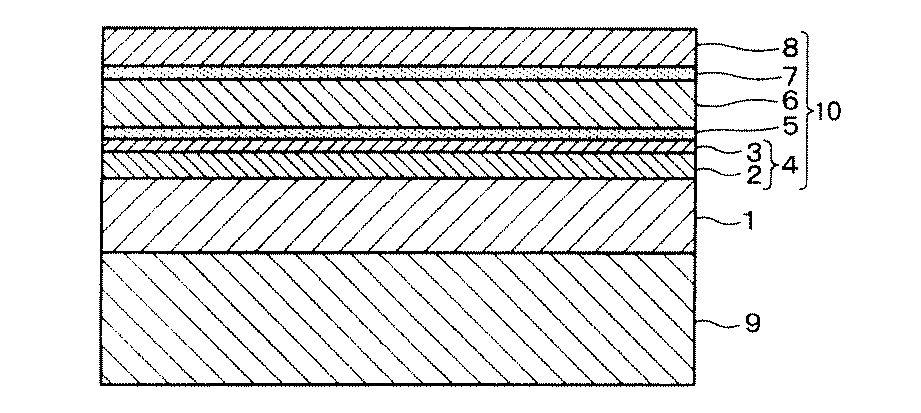
表1より、実施例1〜8の化粧シートは、抗アレルゲン性能、耐傷性、耐ブロッキング性、耐汚染性が優れることが確認された。一方、表2より、比較例1〜6、11の化粧シートは、平均粒径3μm以上10μm以下のシリカ微粒子、または平均粒径3μm以上15μm以下のビーズを含有していないので、抗アレルゲン性能、耐傷性、耐ブロッキング性すべてを満足するものではなかった。比較例7〜8の化粧シートは、抗アレルゲン剤の含有量が、シリカ微粒子とビーズの合計量に対して質量比で0.2以上3.0以下でないので、抗アレルゲン性能、耐傷性、耐ブロッキング性すべてを満足するものではなかった。また、比較例9〜10の化粧シートは、塗膜厚さが5μm以上15μm以下でないので、抗アレルゲン性能、耐傷性、耐ブロッキング性すべてを満足するものではなかった。なお、耐汚染性(耐アルカリ性試験、耐酸性試験)については、実施例1〜8および比較例1〜11の化粧シートのすべてにおいて、塗膜に白化が見られなかった。 From Table 1, it was confirmed that the decorative sheets of Examples 1 to 8 were excellent in antiallergen performance, scratch resistance, blocking resistance and stain resistance. On the other hand, from Table 2, since the decorative sheets of Comparative Examples 1 to 6 and 11 do not contain silica fine particles having an average particle diameter of 3 μm or more and 10 μm or less, or beads having an average particle diameter of 3 μm or more and 15 μm or less, antiallergen performance, The scratch resistance and blocking resistance were not all satisfied. In the decorative sheets of Comparative Examples 7 to 8, the content of the anti-allergen agent is not 0.2 or more and 3.0 or less in terms of mass ratio with respect to the total amount of silica fine particles and beads, so that the anti-allergen performance, scratch resistance, Not all blocking properties were satisfied. Moreover, since the coating film thickness of Comparative Examples 9-10 is not 5 micrometers or more and 15 micrometers or less, it did not satisfy all anti-allergen performance, scratch resistance, and blocking resistance. In addition, about stain resistance (an alkali resistance test, an acid resistance test), whitening was not seen in the coating film in all of the decorative sheets of Examples 1 to 8 and Comparative Examples 1 to 11.
1 基材シート
8 最外表面を構成する層
10 機能層
DESCRIPTION OF SYMBOLS 1 Base material sheet 8 Layer which comprises
Claims (2)
Priority Applications (1)
| Application Number | Priority Date | Filing Date | Title |
|---|---|---|---|
| JP2011115868A JP5486552B2 (en) | 2010-05-25 | 2011-05-24 | Decorative sheet |
Applications Claiming Priority (3)
| Application Number | Priority Date | Filing Date | Title |
|---|---|---|---|
| JP2010119885 | 2010-05-25 | ||
| JP2010119885 | 2010-05-25 | ||
| JP2011115868A JP5486552B2 (en) | 2010-05-25 | 2011-05-24 | Decorative sheet |
Publications (2)
| Publication Number | Publication Date |
|---|---|
| JP2012006384A JP2012006384A (en) | 2012-01-12 |
| JP5486552B2 true JP5486552B2 (en) | 2014-05-07 |
Family
ID=45537485
Family Applications (1)
| Application Number | Title | Priority Date | Filing Date |
|---|---|---|---|
| JP2011115868A Active JP5486552B2 (en) | 2010-05-25 | 2011-05-24 | Decorative sheet |
Country Status (1)
| Country | Link |
|---|---|
| JP (1) | JP5486552B2 (en) |
Cited By (1)
| Publication number | Priority date | Publication date | Assignee | Title |
|---|---|---|---|---|
| JP2012240399A (en) * | 2011-05-24 | 2012-12-10 | Panasonic Corp | Decorative sheet |
Families Citing this family (3)
| Publication number | Priority date | Publication date | Assignee | Title |
|---|---|---|---|---|
| JP6857078B2 (en) * | 2016-05-10 | 2021-04-14 | フクビ化学工業株式会社 | Decorative board and its manufacturing method |
| JP2016186215A (en) * | 2016-06-13 | 2016-10-27 | 凸版印刷株式会社 | Anti-slip decorative sheet |
| JP6985873B2 (en) * | 2017-09-26 | 2021-12-22 | フクビ化学工業株式会社 | Floor material |
Family Cites Families (8)
| Publication number | Priority date | Publication date | Assignee | Title |
|---|---|---|---|---|
| JP4690071B2 (en) * | 2005-02-22 | 2011-06-01 | 大日本印刷株式会社 | Decorative sheet manufacturing method and decorative sheet |
| JP2008080210A (en) * | 2006-09-26 | 2008-04-10 | Matsushita Electric Works Ltd | Functional building material and its manufacturing method |
| JP5037983B2 (en) * | 2007-03-26 | 2012-10-03 | パナソニック株式会社 | Photocurable paint for flooring top coat and flooring material coated with the same |
| JP4961284B2 (en) * | 2007-07-12 | 2012-06-27 | 株式会社Nbcメッシュテック | Composite material with antiallergenic and dustproof properties |
| JP2010173115A (en) * | 2009-01-27 | 2010-08-12 | Panasonic Electric Works Co Ltd | Woody plate |
| JP5462498B2 (en) * | 2009-02-23 | 2014-04-02 | パナソニック株式会社 | Wood board and manufacturing method thereof |
| JP5065343B2 (en) * | 2009-06-25 | 2012-10-31 | パナソニック株式会社 | Wood board with antiallergenic properties |
| JP5385862B2 (en) * | 2009-06-25 | 2014-01-08 | パナソニック株式会社 | Wood board with antiallergenic properties |
-
2011
- 2011-05-24 JP JP2011115868A patent/JP5486552B2/en active Active
Cited By (1)
| Publication number | Priority date | Publication date | Assignee | Title |
|---|---|---|---|---|
| JP2012240399A (en) * | 2011-05-24 | 2012-12-10 | Panasonic Corp | Decorative sheet |
Also Published As
| Publication number | Publication date |
|---|---|
| JP2012006384A (en) | 2012-01-12 |
Similar Documents
| Publication | Publication Date | Title |
|---|---|---|
| JP5426479B2 (en) | Decorative sheet and wood board using the same | |
| CN100569506C (en) | decorative sheet | |
| CN101544086B (en) | Decorative sheet for construction material | |
| JP2013067038A (en) | Decorative sheet for floor and method for manufacturing the same | |
| TW201634281A (en) | Hard-coat laminated film | |
| JP2010173115A (en) | Woody plate | |
| JP5799268B2 (en) | Decorative sheet | |
| JP5603150B2 (en) | Wood board with antiallergenic properties | |
| JP2012006384A (en) | Decorative sheet | |
| JP5385862B2 (en) | Wood board with antiallergenic properties | |
| TWI705891B (en) | Transparent resin laminate | |
| JP5486551B2 (en) | Decorative sheet | |
| JP2022067036A (en) | Decorative sheet and decorative material | |
| JP2005187576A (en) | Hydrophilic hard coat composition, hard coat material, and method of forming hard coat film | |
| CN103025843B (en) | Allergen reducing agents and processed products, paints, and wooden building materials using them | |
| JP2010195618A (en) | Decorated laminated glass | |
| JP2001287314A (en) | Decorative sheet | |
| JP5065343B2 (en) | Wood board with antiallergenic properties | |
| JP5587682B2 (en) | Wood board with antiallergenic properties | |
| JP2022100444A (en) | Coated film laminate film | |
| JP5065342B2 (en) | Wood board with antiallergenic properties | |
| JP5385863B2 (en) | Wood board with antiallergenic properties | |
| CN115087540A (en) | Acrylic multilayer foil with improved mechanical properties and high weatherability | |
| JP5277775B2 (en) | Scratch-resistant resin plate and its use | |
| JP2025145883A (en) | Transfer sheet, method for manufacturing molded product, and molded product |
Legal Events
| Date | Code | Title | Description |
|---|---|---|---|
| A711 | Notification of change in applicant |
Free format text: JAPANESE INTERMEDIATE CODE: A712 Effective date: 20120117 |
|
| A621 | Written request for application examination |
Free format text: JAPANESE INTERMEDIATE CODE: A621 Effective date: 20130805 |
|
| TRDD | Decision of grant or rejection written | ||
| A01 | Written decision to grant a patent or to grant a registration (utility model) |
Free format text: JAPANESE INTERMEDIATE CODE: A01 Effective date: 20140128 |
|
| A977 | Report on retrieval |
Free format text: JAPANESE INTERMEDIATE CODE: A971007 Effective date: 20140131 |
|
| A61 | First payment of annual fees (during grant procedure) |
Free format text: JAPANESE INTERMEDIATE CODE: A61 Effective date: 20140221 |
|
| R151 | Written notification of patent or utility model registration |
Ref document number: 5486552 Country of ref document: JP Free format text: JAPANESE INTERMEDIATE CODE: R151 |
|
| S533 | Written request for registration of change of name |
Free format text: JAPANESE INTERMEDIATE CODE: R313533 |
|
| S111 | Request for change of ownership or part of ownership |
Free format text: JAPANESE INTERMEDIATE CODE: R313113 |
|
| R350 | Written notification of registration of transfer |
Free format text: JAPANESE INTERMEDIATE CODE: R350 |
|
| R350 | Written notification of registration of transfer |
Free format text: JAPANESE INTERMEDIATE CODE: R350 |