JP5259596B2 - Recovery from resource mismatch in wireless communication systems - Google Patents
Recovery from resource mismatch in wireless communication systems Download PDFInfo
- Publication number
- JP5259596B2 JP5259596B2 JP2009527547A JP2009527547A JP5259596B2 JP 5259596 B2 JP5259596 B2 JP 5259596B2 JP 2009527547 A JP2009527547 A JP 2009527547A JP 2009527547 A JP2009527547 A JP 2009527547A JP 5259596 B2 JP5259596 B2 JP 5259596B2
- Authority
- JP
- Japan
- Prior art keywords
- communication
- resource
- communication resource
- level
- predicted
- Prior art date
- Legal status (The legal status is an assumption and is not a legal conclusion. Google has not performed a legal analysis and makes no representation as to the accuracy of the status listed.)
- Expired - Fee Related
Links
Images


Classifications
-
- H—ELECTRICITY
- H04—ELECTRIC COMMUNICATION TECHNIQUE
- H04W—WIRELESS COMMUNICATION NETWORKS
- H04W28/00—Network traffic management; Network resource management
- H04W28/16—Central resource management; Negotiation of resources or communication parameters, e.g. negotiating bandwidth or QoS [Quality of Service]
-
- H—ELECTRICITY
- H04—ELECTRIC COMMUNICATION TECHNIQUE
- H04W—WIRELESS COMMUNICATION NETWORKS
- H04W72/00—Local resource management
- H04W72/50—Allocation or scheduling criteria for wireless resources
- H04W72/52—Allocation or scheduling criteria for wireless resources based on load
Landscapes
- Engineering & Computer Science (AREA)
- Computer Networks & Wireless Communication (AREA)
- Signal Processing (AREA)
- Quality & Reliability (AREA)
- Mobile Radio Communication Systems (AREA)
Description
本出願は、2006年9月8日出願の米国仮特許出願第60/843,154号および2007年9月4日出願の米国特許出願第11/849,646号の便益を主張する。これら出願の全体は、参照によって本明細書に組み込まれる。 This application claims the benefits of US Provisional Patent Application No. 60 / 843,154, filed September 8, 2006, and US Patent Application No. 11 / 849,646, filed September 4, 2007. The entirety of these applications is incorporated herein by reference.
本開示は、一般には無線通信に関し、より詳細には無線通信システムにおけるリソース不整合から回復するための技法に関する。 The present disclosure relates generally to wireless communications, and more particularly to techniques for recovering from resource mismatch in a wireless communication system.
無線通信が個人の日常業務のほとんどあらゆる局面に浸透している。娯楽のみならず仕事/学校での活動も促進するために、無線システムは広範に配備され、音声、データ、ビデオなど様々なタイプの通信コンテンツを提供している。これらのシステムは、使用可能なシステムリソースの共有によって複数の端末用の通信をサポートできる多元接続システムであり得る。かかる多元接続システムの例としては、符号分割多元接続(CDMA)システム、時分割多元接続(TDMA)システム、周波数分割多元接続(FDMA)システム、および直交周波数分割多元接続(OFDMA)システムが挙げられる。 Wireless communication has permeated almost every aspect of an individual's daily work. In order to promote not only entertainment but also work / school activities, wireless systems are widely deployed to provide various types of communication content such as voice, data, video and so on. These systems may be multiple access systems that can support communication for multiple terminals by sharing available system resources. Examples of such multiple access systems include code division multiple access (CDMA) systems, time division multiple access (TDMA) systems, frequency division multiple access (FDMA) systems, and orthogonal frequency division multiple access (OFDMA) systems.
無線多元接続通信システムは、複数の無線端末用の通信を同時にサポートすることができる。かかるシステムでは、各端末は順方向リンクおよび逆方向リンク上での伝送を介して1つまたは複数のセクタと通信することができる。順方向リンク(または下りリンク)とはセクタから端末への通信リンクを指し、逆方向リンク(または上りリンク)とは端末からセクタへの通信リンクを指す。これらの通信リンクは1入力1出力(SISO)、多入力1出力(MISO)および/または多入力多出力(MIMO)のシステムを介して確立され得る。 A wireless multiple-access communication system can simultaneously support communication for multiple wireless terminals. In such a system, each terminal can communicate with one or more sectors via transmissions on the forward and reverse links. The forward link (or downlink) refers to the communication link from the sector to the terminal, and the reverse link (or uplink) refers to the communication link from the terminal to the sector. These communication links may be established via a 1-input 1-output (SISO), multiple-input 1-output (MISO), and / or multiple-input multiple-output (MIMO) system.
複数の端末は、これら端末の伝送を、時間、周波数および/または符号の領域中で互いに直交であるように多重化することにより、逆方向リンク上で同時に伝送することができる。伝送間において完全な直交性が達成される場合、各端末からの伝送は、受信セクタにおける他の端末からの伝送に干渉しない。しかし、異なる端末からの伝送間の完全な直交性は、チャネル条件、受信機の不備および他の要素ゆえに実現されないことがしばしばである。その結果、端末は、同じセクタと通信している他の端末に対して若干量の干渉を引き起こすことが多い。さらに、異なるセクタと通信している端末からの伝送は通常、互いに直交ではないので、各端末は、隣接セクタと通信している端末に対して干渉を引き起こすこともあり得る。この干渉は、システム内のそれぞれの端末の性能低下をもたらし、その結果としてサービス品質(QoS)が劣化する。QoSを維持するために、通信は、干渉レベルを、通信用に割当てられるリソースに適合させる必要がある。ゆえに、当技術分野では、無線通信システムにおいて、干渉作用を軽減し、動作可能な干渉レベルに適合するリソースを割当てるための効果的技法の必要性が存在する。 Multiple terminals can simultaneously transmit on the reverse link by multiplexing their transmissions to be orthogonal to one another in the time, frequency and / or code domain. If perfect orthogonality is achieved between transmissions, transmissions from each terminal do not interfere with transmissions from other terminals in the receiving sector. However, complete orthogonality between transmissions from different terminals is often not achieved due to channel conditions, receiver deficiencies and other factors. As a result, a terminal often causes some amount of interference with other terminals communicating with the same sector. Further, since transmissions from terminals communicating with different sectors are typically not orthogonal to each other, each terminal can cause interference to terminals communicating with adjacent sectors. This interference results in degraded performance of each terminal in the system, resulting in degraded quality of service (QoS). In order to maintain QoS, communications need to adapt the interference level to the resources allocated for communications. Therefore, there exists a need in the art for effective techniques for allocating resources that mitigate interference effects and that are compatible with operable interference levels in wireless communication systems.
開示される実施形態のいくつかの態様についての基本的な理解を与えるため、以下に簡単な概要を提示する。この概要は、包括的な概説ではなく、重要なもしくは不可欠な要素を示すことも、またかかる諸実施形態の範囲を正確に説明することも意図するものでない。この概要の目的は、以下に示されるより詳細な説明の前置きとして、説明される諸実施形態のいくつかの概念を簡単な形で提示することである。 The following presents a simplified summary in order to provide a basic understanding of some aspects of the disclosed embodiments. This summary is not an extensive overview, and it is not intended to present key or critical elements or to accurately describe the scope of such embodiments. The purpose of this summary is to present some concepts of the described embodiments in a simplified form as a prelude to the more detailed description that is presented later.
一態様では、本明細書において、無線通信システムにおいて使用される通信リソース不整合から回復するための方法であって、通信リソース割当てを受信すること、リソース不整合がリソース割当てと予測通信リソースレベルとの間に存在すると判定すること、および通信リソース不整合に対してリソース調整を用いて応答することを備える方法が開示される。 In one aspect, a method for recovering from communication resource mismatch used in a wireless communication system, comprising: receiving a communication resource allocation; wherein the resource mismatch is a resource allocation and a predicted communication resource level; A method comprising determining to exist between and responding to a communication resource mismatch with a resource adjustment is disclosed.
他の一態様では、本明細書において、無線通信装置であって、かかるシステムは、リソーススケジュールを受信すること、リソース予測レベルを計算し不整合がスケジュール対象のリソースと予測リソースとの間に存在すると判定すること、およびリソース不整合を回復することを行うように構成される集積回路と、集積回路に結合されデータを格納するメモリとを備える、無線通信装置が開示される。 In another aspect, herein, a wireless communication apparatus, such a system receives a resource schedule, calculates a resource prediction level, and an inconsistency exists between the scheduled resource and the predicted resource. A wireless communication device is disclosed comprising an integrated circuit configured to determine and recovering resource mismatch and a memory coupled to the integrated circuit for storing data.
さらに他の一態様では、リソース不整合からの回復を促進する無線通信において使用される装置であって、通信リソース予測を確定するための手段と、通信リソース予測とスケジュール対象の通信リソースとの間のリソース割当て不整合に対する適応型応答を生成するための手段と、リソース割当て不整合に対する適応型応答を伝送するための手段とを備える装置が開示される。 In yet another aspect, an apparatus used in wireless communication that facilitates recovery from resource mismatch, between means for determining a communication resource prediction and the communication resource prediction and a scheduled communication resource. An apparatus comprising means for generating an adaptive response to a resource allocation mismatch and means for transmitting an adaptive response to a resource allocation mismatch is disclosed.
さらに他の一態様では、1つまたは複数の通信制約に従って無線通信するのに必要なリソースの開ループ推定値を計算することをコンピュータに行わせるためのコードと、リソース割当てを受信することをコンピュータに行わせるためのコードと、1つまたは複数の通信制約に従って無線通信するのに必要なリソースの推定値と割当てられたリソースとを比較することおよび前記必要なリソースと前記割当てられたリソースとが不整合であるかどうか判定することをコンピュータに行わせるためのコードと、割当てられたリソース群から1つまたは複数の調整されたリソースを伝送することによってリソース不整合に応答することをコンピュータに行わせるためのコードとを備えるコンピュータ可読媒体が開示される。 In yet another aspect, a code for causing a computer to calculate an open-loop estimate of a resource required to communicate wirelessly according to one or more communication constraints and a computer to receive the resource assignment Comparing the allocated code with the estimated resource required for wireless communication according to one or more communication constraints and the allocated resource, and the required resource and the allocated resource Code to cause a computer to determine if it is inconsistent and to respond to the resource inconsistency by transmitting one or more coordinated resources from the assigned resources A computer-readable medium comprising code for causing
一態様では、無線環境において動作する装置であって、1つまたは複数の通信リソースをスケジューリングするための手段と、通信リソースの代替のセットを伝達している受信された通信に応答してスケジュール対象の通信リソースを調整するための手段と、代替の通信リソースのセットを再スケジューリングするための手段とを備える装置が開示される。 In one aspect, an apparatus operating in a wireless environment is scheduled in response to a received communication carrying an alternative set of communication resources and means for scheduling one or more communication resources. Disclosed is an apparatus comprising means for coordinating communication resources and means for rescheduling an alternative set of communication resources.
他の一態様では、無線通信システムにおいて、時間/周波数リソースのセットを割当てること、調整されたリソースのセットを受信すること、および調整されたリソースを使用する通信を実行することを行うように構成される集積回路と、集積回路に結合されデータおよびアルゴリズムを格納するメモリとを備える装置が開示される。 In another aspect, configured in a wireless communication system to assign a set of time / frequency resources, receive a coordinated set of resources, and perform communication using the coordinated resource And an integrated circuit coupled to the integrated circuit and a memory for storing data and algorithms are disclosed.
さらに他の一態様では、無線通信システムにおいて使用される方法であって、通信リソースの第1のセットをスケジューリングすることと、スケジュール対象の通信リソースの第1のセットに応答して通信リソースの第2のセットを受信することと、受信されたリソースの第2のセットに従って通信の第1のセットを再スケジューリングすべきかどうか判定することとを備える方法が開示される。 In yet another aspect, a method for use in a wireless communication system, the method comprising scheduling a first set of communication resources and responding to the first set of communication resources to be scheduled. A method comprising receiving two sets and determining whether to reschedule the first set of communications according to the received second set of resources is disclosed.
無線通信するためにリソースの第1のセットを割当てることをコンピュータに行わせるためのコードと、通信リソースの第1のセットが予測リソースのセットと不整合であることを伝達している受信された通信に応答してリソースの第1のセットを再割当てすることをコンピュータに行わせるためのコードとを備えるコンピュータ可読媒体が開示される。 Code for causing a computer to allocate a first set of resources for wireless communication and received communicating that the first set of communication resources is inconsistent with the set of predicted resources Disclosed is a computer-readable medium comprising code for causing a computer to reallocate a first set of resources in response to a communication.
上述のおよび関連する目標を達成するために、1つまたは複数の実施形態は、本明細書で以下に完全に説明され特許請求の範囲で具体的に示される特徴を備える。以下の記述および添付図面は、いくつかの例示的態様を詳細に説明し、これらの実施形態の原理が使用され得る様々なやり方のうち少数のみを示すものである。他の利点および新規な特徴が、以下の詳細な説明から図面と併せて考慮されるときに明らかとなろう。開示される諸実施形態は、すべてのかかる態様およびこれら態様の均等物を含むことが意図される。 To achieve the above and related goals, one or more embodiments comprise the features fully described herein below and specifically set forth in the claims. The following description and the annexed drawings set forth in detail certain illustrative aspects and show only a few of the various ways in which the principles of these embodiments may be used. Other advantages and novel features will become apparent from the following detailed description when considered in conjunction with the drawings. The disclosed embodiments are intended to include all such aspects and equivalents thereof.
各種実施形態を図面を参照して説明する。この図面中では、図面全体を通して同じ要素を参照するのに同じ参照符号が使用される。以下の記述において、説明の目的で多数の個別の詳細が1つまたは複数の実施形態の完全な理解を与えるために述べられる。しかしながら、かかる(1つまたは複数の)実施形態はこれら個別の詳細を有さなくとも実践され得ることが明白であろう。別の場合には、よく知られた構造およびデバイスは1つまたは複数の実施形態の説明を円滑にするためにブロック図形式で示される。 Various embodiments will be described with reference to the drawings. In the drawings, the same reference numerals are used throughout the drawings to refer to the same elements. In the following description, for the purposes of explanation, numerous specific details are set forth in order to provide a thorough understanding of one or more embodiments. It may be evident, however, that such embodiment (s) can be practiced without these specific details. In other instances, well-known structures and devices are shown in block diagram form in order to facilitate describing one or more embodiments.
さらに、用語「または」は、排他的な「または」ではなく包含的な「または」を意味することが意図される。すなわち、別段の指示があるまたは文脈から明らかである場合を除き、「XはAまたはBを使用する」は、包含的な自然順列(natural inclusive permutation)のいずれをも意味することが意図される。すなわち、XはAを使用する、XはBを使用する、またはXはAおよびBの両方を使用するとき、「XはAまたはBを使用する」は、前記の場合のいずれでも満たされる。加えて、本出願および添付の請求の範囲で使用する冠詞「a」および「an」は、一般に、別段の指示があるまたは文脈から明らかであって単数形を指す場合を除き、「1つまたは複数の」を意味するものと解されたい。 Further, the term “or” is intended to mean an inclusive “or” rather than an exclusive “or”. That is, unless otherwise indicated or apparent from the context, “X uses A or B” is intended to mean any inclusive natural permutation. . That is, when X uses A, X uses B, or X uses both A and B, “X uses A or B” is satisfied in any of the above cases. In addition, the articles “a” and “an” as used in the present application and the appended claims generally refer to “one or the other” unless otherwise indicated or apparent from the context and refer to the singular. It should be understood as meaning "multiple".
本出願で使用する用語「コンポーネント」、「モジュール」、「システム」などは、コンピュータ関連のエンティティ、すなわちハードウェア、ファームウェア、ハードウェアとソフトウェアの組合せ、ソフトウェア、または実行中のソフトウェアのいずれかを示すことが意図される。たとえばコンポーネントは、プロセッサで実行中のプロセス、プロセッサ、オブジェクト、実行可能ファイル、実行スレッド、プログラムおよび/またはコンピュータであり得るが、これらに限定されるものでない。例として、コンピューティングデバイスで実行中のアプリケーションおよびコンピューティングデバイスはいずれも、コンポーネントであり得る。1つまたは複数のコンポーネントはプロセスおよび/または実行スレッド中に存在でき、1つのコンポーネントは1台のコンピュータ上に局在化されるかつ/または2台以上のコンピュータ間に分散されることが可能である。加えて、これらのコンポーネントは様々なデータ構造が格納された種々のコンピュータ可読媒体から実行されることが可能である。これらのコンポーネントはローカルおよび/または遠隔のプロセスを介して、たとえば1つまたは複数のデータパケットを有する信号(例として、信号を介することで、ローカルシステム、分散システム内の他のコンポーネントと、かつ/または別のシステムを有するインターネットなどのネットワーク全体にわたる他のコンポーネントと相互作用する1つのコンポーネントからのデータ)に従うなどで通信することができる。 The terms “component”, “module”, “system”, etc. as used in this application refer to computer-related entities, ie, hardware, firmware, a combination of hardware and software, software, or running software. Is intended. For example, a component can be, but is not limited to being, a process running on a processor, a processor, an object, an executable, a thread of execution, a program, and / or a computer. By way of illustration, both an application running on a computing device and the computing device can be a component. One or more components can exist in a process and / or thread of execution, and one component can be localized on one computer and / or distributed between two or more computers. is there. In addition, these components can execute from various computer readable media having various data structures stored thereon. These components can be transmitted via a local and / or remote process, for example a signal having one or more data packets (e.g. via the signal, with other components in the local system, distributed system, and / or Or data from one component that interacts with other components across the network, such as the Internet with another system).
さらに、各種実施形態は、本明細書において移動体デバイスに関連して説明される。移動体デバイスは、システム、加入者ユニット、加入者設備、移動局、移動体、遠隔局、遠隔端末、アクセス端末、ユーザ端末、端末、無線通信デバイス、ユーザエージェント、ユーザデバイス、またはユーザ機器(UE)とも呼ばれ得る。移動体デバイスは、携帯電話、コードレス電話、セッション開始プロトコル(SIP)電話、無線ローカルループ(WLL)ステーション、携帯情報端末(PDA)、無線接続機能を有するハンドヘルドデバイス、コンピューティングデバイス、または無線モデムに接続されている他の処理デバイスであってよい。さらに、各種実施形態は、本明細書において基地局に関連して説明される。基地局は、(1つまたは複数の)移動体デバイスとの通信に使用でき、アクセスポイント、ノードB、進化型ノードB(eNodeB)または他の何らかの用語でも呼ばれることがある。 Moreover, various embodiments are described herein in connection with a mobile device. A mobile device is a system, subscriber unit, subscriber equipment, mobile station, mobile, remote station, remote terminal, access terminal, user terminal, terminal, wireless communication device, user agent, user device, or user equipment (UE ). Mobile devices can be mobile phones, cordless phones, session initiation protocol (SIP) phones, wireless local loop (WLL) stations, personal digital assistants (PDAs), handheld devices with wireless connectivity, computing devices, or wireless modems It may be another connected processing device. Moreover, various embodiments are described herein in connection with a base station. A base station may be used for communication with mobile device (s) and may also be referred to as an access point, Node B, evolved Node B (eNodeB) or some other terminology.
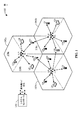
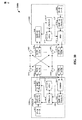
次に図面を参照すれば、図1は各種態様による無線多元接続通信システム100の説明図である。一例において、無線多元接続通信システム100は複数の基地局110および複数の端末120を含む。さらに、1つまたは複数の基地局110は1つまたは複数の端末120と通信することができる。限定的でない例示として、基地局110はアクセスポイント、ノードB、および/または他の適切なネットワークエンティティであり得る。それぞれの基地局110は特定の地理的エリア102a〜cに対し通信カバレージを提供する。本明細書においてかつ当技術分野で一般に使用される用語「セル」は、この用語が用いられる文脈に応じて、基地局110および/またはこの基地局のカバレージエリア102a〜cを意味する。
Referring now to the drawings, FIG. 1 is an illustration of a wireless multiple-
システム容量を増強するために、基地局110に対応するカバレージエリア102a、102bまたは102cは、複数のより小さいエリア(たとえば、エリア104a、104bおよび104c)に分割される。これらのより小さいエリア104a、104bおよび104cの各々は、それぞれの基地トランシーバサブシステム(BTS(図示せず))によってサービスされる。本明細書においてかつ当技術分野で一般に使用される用語「セクタ」は、この用語が用いられる文脈に応じて、BTSおよび/またはこのBTSのカバレージエリアを意味する。一例において、セル102a、102b、102c内のセクタ104a、104b、104cは、基地局110におけるアンテナ群(図示せず)によって形成され、この基地局110においてそれぞれのアンテナ群は、セル102a、102bまたは102cの一部の中にある端末120と通信する役目を負っている。たとえば、セル102aにサービスする基地局110は、セクタ104aに対応する第1のアンテナ群、セクタ104bに対応する第2のアンテナ群、およびセクタ104cに対応する第3のアンテナ群を有する。しかしながら、本明細書で開示される各種態様は、セルがセクタ化されたかつ/またはセクタ化されていないシステムにおいて使用できるものと理解されたい。さらに、任意の数のセルがセクタ化された、および/またはセクタ化されていないあらゆる適切な無線通信ネットワークが、本明細書に添付される特許請求の範囲内に包含されることが意図されるものと理解されたい。簡単にするため、本明細書で使用する用語「基地局」は、セクタにサービスするステーションおよびセルにサービスするステーションの両方を意味する。本明細書でさらに使用される「サービング(serving)」アクセスポイントは、このアクセスポイントを用いることによって端末がRLトラヒック(データ)伝送を有しているアクセスポイントであり、「隣接(neighbor)」(非サービング)アクセスポイントは、このアクセスポイントを用いることによって端末がFLトラヒック伝送ならびに/またはFLおよびRL制御伝送を有するが、まったくRLトラヒックを有し得ないアクセスポイントである。本明細書で使用する、独立リンクシナリオにおけるFLセクタは、隣接セクタであるものと理解されたい。簡単にするため、以下の説明は、概して言うと、各端末が1つのサービングアクセスポイントと通信するシステムに関するが、しかし端末はどんな個数のサービングアクセスポイントとも通信できるものと理解されたい。
To increase system capacity, the
一態様によれば、端末120はシステム100全体にわたって分散される。それぞれの端末120は固定式または移動式であってよい。限定的でない例示として、端末120はアクセス端末(AT)、移動局、ユーザ機器、加入者ステーション、および/または他の適切なネットワークエンティティであり得る。端末120は、無線デバイス、携帯電話、携帯情報端末(PDA)、無線モデム、ハンドヘルドデバイス、または他の適切なデバイスであり得る。さらに、端末120は、任意の所与の時点において、いかなる数の基地局110とも通信でき、あるいはまったく基地局110と通信しなくてもよい。
According to one aspect,
他の一例において、システム100は、1つまたは複数の基地局110に結合されこの基地局110に対して連係および制御を提供し得るシステムコントローラ130を用いることにより、集中型アーキテクチャを使用する。代替の諸態様によれば、システムコントローラ130は、単一のネットワークエンティティ、またはネットワークエンティティの集合である。加えて、システム100は、必要に応じて基地局110が互いに通信することを可能にする分散アーキテクチャを使用する。一例では、システムコントローラ130は、追加として、複数のネットワークに対する1つまたは複数の接続を含む。これらのネットワークは、インターネット、他のパケットベースのネットワーク、ならびに/あるいはシステム100内の1つまたは複数の基地局110と通信している端末120におよび/またはこの端末120から情報を提供できる回路交換音声ネットワークを含む。他の一例において、システムコントローラ130は、端末120へのかつ/または端末120からの伝送をスケジューリングできるスケジューラ(図示せず)を含み、あるいはこのスケジューラに結合される。代替として、このスケジューラは、それぞれの独立セル102、各セクタ104、またはこれらの組合せの中に存在する。
In another example, the
一例では、システム100は、1つまたは複数の多元接続方式、たとえばCDMA、TDMA、FDMA、OFDMA、単一搬送波FDMA(SC−FDMA)および/または他の適切な多元接続方式を使用する。TDMAでは、異なる端末120に関する伝送を、異なる時間間隔で伝送することによって直交させる時分割多重(TDM)が用いられる。FDMAでは、異なる端末120に関する伝送を、異なる周波数副搬送波で伝送することによって直交させる周波数分割多重(FDM)が用いられる。一例において、TDMAシステムおよびFDMAシステムでは、複数の端末に関する伝送を、これら伝送が同じ時間間隔または周波数副搬送波で送達されるにもかかわらず、異なる直交符号(たとえばウォルシュ符号)によって直交させることが可能な符号分割多重(CDM)を使用する。OFDMAでは、直交周波数分割多重(OFDM)が使用され、SC−FDMAでは、単一搬送波周波数分割多重(SC−FDM)が使用される。OFDMおよびSC−FDMは、システム帯域幅を複数の直交副搬送波(たとえば、トーン、ビン(bin)、...)に分割でき、これら直交副搬送波の各々は、データを用いて変調される。通常、変調シンボルは、OFDMの場合は周波数領域に、SC−FDMの場合は時間領域に送達される。追加および/または代替として、システム帯域幅を1つまたは複数の周波数搬送波に分けることができ、これら周波数搬送波の各々は、1つまたは複数の副搬送波を含む。またシステム100は、OFDMAおよびCDMAなどの多元接続方式の組合せを使用することもできる。本明細書において示す電力制御技法は概してOFDMAシステムについて述べるが、しかしながら本明細書において説明する技法は、いかなる無線通信システムにも同様に適用され得るものと理解されたい。
In one example,
他の一例において、システム100内の基地局110および端末120は、1つまたは複数のデータチャネルを用いてデータを通信し、1つまたは複数の制御チャネルを用いてシグナリング(signaling)を通信する。システム100によって用いられるデータチャネルは、任意の所与の時点において各データチャネルが1つの端末のみによって使用されるように、アクティブな端末120に割当てる。あるいは、データチャネルを複数の端末120に割当て、これら複数の端末120を、データチャネル上で重ね合わせるまたは直交的にスケジューリングする。システムリソースを節約するために、システム100によって使用される制御チャネルを、たとえば符号分割多重を用いることにより複数の端末120間で共有する。一例では、周波数および時間のみで直交的に多重化されたデータチャネル(たとえば、CDMを用いて多重化されていないデータチャネル)は、対応する制御チャネルよりも、チャネル条件および受信機の不備に起因する直交性の損失による影響をより受けにくい。
In another example,
一態様によれば、システム100は、たとえばシステムコントローラ130および/または各基地局110に実装される1つまたは複数のスケジューラを介する集中型スケジューリングを使用する。集中型スケジューリングを使用するシステムでは、(1つまたは複数の)スケジューラは、適切なスケジューリング判断を下すために、端末120からのフィードバックに依拠する。一例において、スケジューラが、かかるフィードバックが受信される源である端末120についてサポート可能な逆方向リンクピークレートを推定しこれに応じてシステム帯域幅を割り振るために、このフィードバックは、フィードバック用のOSI情報に追加されるデルタオフセットを含む。
According to one aspect,
他の一態様によれば、最低限のシステム安定性およびサービス品質(QoS)のシステムパラメータを保証するために、本明細書で後述するリソース割当て不整合回復をシステム100が使用する。一例として、逆方向リンク(RL)肯定応答メッセージの復号誤り確率により、すべての順方向リンク伝送用の誤りフロア(error floor)がもたらされる。すなわち、かかる確率を用いて、サービスセクタ104内の基地局によって発行されたスケジューリング割当てについてのリソース予測要件を確定する。システム100は、特定の不整合回復応答を用いることにより、制御およびQoSのトラヒックならびに/または他のトラヒックを、厳しい誤り要件を満たしつつ電力効率良く伝送することを促進する。
According to another aspect, the
図2は、無線システムにおけるリソース割当て不整合からの回復を促進する例示的システムのブロック図を示す。アクセス端末(AT)220がサービングアクセスポイント(AP)250と通信し、このアクセスポイント250は、順方向リンク(FL)265を介してAT220にデータおよび制御のコードシンボルを送信し、逆方向リンク(RL)245を通じてデータおよび制御を受信する。特に、サービングAP250は、リソース割当てを端末220に通信する。かかるリソース割当てにより、通信リソース、たとえば電力レベルおよび/または電力スペクトル密度、パケットフォーマット、帯域幅、周波数繰り返しパターンまたはインデックス、副搬送波割当て、副搬送波間隔などに関する情報が伝達され、AT220はこの情報を用いてAP250と通信を行う。リソース割当ては、スケジューラ254によって管理され、このスケジューラ254は、QoS;ビット当たりのエネルギー;サービングセル内のトラヒック負荷;セル内の信号対雑音比(SNR)および信号対雑音干渉比(SINR);その他に関するプロバイダ目標基準(provider target standards)に基づいて割当てを決定する。スケジューリング判定を行うために、スケジューラ254は、スケジューラ254が採用したスケジューリングアルゴリズム(たとえばラウンドロビン、フェアキューイング(fair queuing)、最大スループット、プロポーショナルフェアネス(proportional fairness)など)の一部を実行するプロセッサ258に結合される。メモリ262は、スケジューリングアルゴリズム、スケジューリング割当て、およびスケジューラの動作に関連する他のデータを格納する。
FIG. 2 illustrates a block diagram of an example system that facilitates recovery from resource allocation mismatch in a wireless system. An access terminal (AT) 220 communicates with a serving access point (AP) 250, which transmits data and control code symbols to the
加えて、スケジューラ254は、リソースの(再)割当てを発行するために、AT220からRL245を介して受信されたフィードバック情報を使用する。一態様において、フィードバック情報は、割当てられたリソース(たとえば電力、または電力スペクトル密度)に関連するオフセット値(Δ)を含む。このΔを、スケジューラ254によって使用して、リソースレベルを調整しかかるΔに従ってリソースを再割当てする。かかる一態様では、AP220が、メモリ262に格納されたアルゴリズムにアクセスし、このアルゴリズムがプロセッサ258によって実行されて、再割当てされるリソースのレベルが再計算される。かかる再割当ては、他セクタのアクセス端末(図示せず)上のAT220によって引き起こされる干渉を軽減するために使用できるものと理解されたい。すなわちAP250が、Δ値を受信することに応答してより低い動作電力をAT220に再割当てするとき、干渉を軽減することができる。さらに、リソース再割当ては、アクセスポイントの通信を、チャネル条件または端末能力ならびに上述した他の制約に適合する通信に変更するために実施することができる。
In addition, the
次に、フィードバック情報、およびリソース割当てに対する応答としての該フィードバック情報の生成、ならびにリソース割当て不整合からの回復のための手段としての該フィードバック情報の使用について説明する。説明に裏付けを与え本発明の諸態様を完全に説明するために、図3Aおよび3B、ならびに図4A、4Bおよび4Cに示した例示的ブロック図を参照する。 Next, feedback information and generation of the feedback information as a response to resource allocation, and use of the feedback information as a means for recovery from resource allocation mismatch will be described. To support the description and fully describe aspects of the present invention, reference is made to the example block diagrams shown in FIGS. 3A and 3B and FIGS. 4A, 4B and 4C.
フィードバック情報生成は、リソース予測コンポーネント224および不整合応答コンポーネント228から開始される。リソース割当ての前に、無線デバイスは、コンポーネント224を介することで、以下のことを行うのに必要な複数のリソースの予測を生成する:(i)QoS目標基準(QoS target standards)(たとえばピークデータレート、スペクトル効率、待ち時間、容量)を満たす;(ii)特定のスペクトル効率、パケットサイズ、コードレートおよび変調、ならびにハイブリッド自動再送要求(HARQ)のステップ数(もしくは順序)から構成され得る特定のパケットフォーマットを用いて、定められた帯域幅および最大割当て電力の範囲内で送信する、かつ/または特定のチャネル状態条件(例として、特定のチャネル品質指標(たとえばSNRおよびSINR、動作端末によって引き起こされるセル間およびセル内干渉))の範囲内で送信する;かつ/あるいは(iii)部分負荷された(partially-loaded)セルのシナリオにおけるバースト的なユーザによって生じる大幅な干渉増加に起因する性能損失量を制限する。加えて、リソース予測生成には、マルチセクタ/セル無線システム(図1)における特定の周波数繰り返しパターンが関与することがある。(i)〜(iii)以外の制約については、リソース予測コンポーネント224を介することでリソース予測の生成が可能となるものと理解されたい。条件(i)〜(iii)は、隣接セクタ内でのパケット誤りまたは不良な逆方向リンク(たとえばRL245)肯定応答メッセージのレートに応じて、携帯無線システム(図1)において相互に関連し得るものと理解されたい。すなわち、上述のパケット誤りの何らかのレベルは、関連するフルレングス(full−length)HARQプロセス、ピークデータレートおよび待ち時間と一緒に、目標QoS未満のレベルに達する可能性がある。
Feedback information generation begins with a
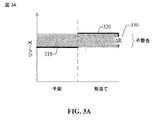
図3Aは、一般化されたリソース座標における、予測リソース値310を概略的に示す。一般化された座標として、図3Aのレベルは、予測リソース値のセットに対応し得るものと理解されたい。すなわち、一態様では、かかるセットは、コードレートR(ただし0<R≦1)、ならびに、たとえば2相シフトキーイング(BPSK)、4相シフトキーイング(QPSK)、多相シフトキーイング(M−PSK)または多値直交振幅変調(M−QAM)から選択される変調方式である。その一方、他の一態様では、予測リソース値のセットは、周波数分散(インタリーブ)スケジューリングにおける電力レベル、帯域幅、および副搬送波のセットに対応する。 FIG. 3A schematically illustrates a predicted resource value 310 in generalized resource coordinates. As a generalized coordinate, it should be understood that the level of FIG. 3A may correspond to a set of predicted resource values. That is, in one aspect, such a set includes code rate R (where 0 <R ≦ 1), as well as, for example, two-phase shift keying (BPSK), four-phase shift keying (QPSK), and polyphase shift keying (M-PSK). Or it is a modulation system selected from multi-value quadrature amplitude modulation (M-QAM). On the other hand, in another aspect, the set of predicted resource values corresponds to a set of power level, bandwidth, and subcarrier in frequency dispersion (interleaved) scheduling.
一態様において、前述の特徴(iii)に関連するリソースは、典型的には、電力アウトプットまたは電力スペクトル密度(PSD)を調整することを必要とする。アクセス端末(たとえばAT220)は、周波数適応型干渉軽減(たとえば、一体的または部分的周波数繰り返し)も利用できるものと理解されたい。この周波数適応干渉軽減では、該端末が、他セクタの干渉を低減するために通信に使用される周波数副帯域(たとえば、p個のトーン{νK、νK+p}を有する副帯域)を変更する。一態様において、かかる周波数適応型機構は、セクタ化された通信(図1)に向いている。このセクタ化された通信では、マルチプルセクタ、多出力のスマートアンテナが、周波数繰り返しを利用する端末のサービングアクセスポイント(たとえばAP250)によって用いられる。かかるシナリオでは、ビームフォーミングが、他セクタの干渉軽減の所望レベルを達成するために周波数適応と並行して使用される。ビームフォーミングに使用可能な電力、PSD、周波数副帯域およびアンテナなど、前述の割当てられるリソースは、リソース予測レベルに対して不整合である。このような場合、本明細書で後述される手法を用いて、かかる不整合から回復することが可能である。 In one aspect, the resources associated with feature (iii) above typically require adjustment of power output or power spectral density (PSD). It should be understood that an access terminal (eg, AT 220) can also utilize frequency adaptive interference mitigation (eg, integral or partial frequency repetition). In this frequency adaptive interference mitigation, the terminal changes a frequency subband (for example, a subband having p tones {ν K , ν K + p }) used for communication to reduce interference of other sectors. . In one aspect, such a frequency-adaptive mechanism is suitable for sectorized communication (FIG. 1). In this sectorized communication, multiple sector, multiple output smart antennas are used by a serving access point (eg, AP 250) of a terminal using frequency repetition. In such a scenario, beamforming is used in parallel with frequency adaptation to achieve the desired level of interference mitigation for other sectors. The above allocated resources such as power, PSD, frequency subband and antenna that can be used for beamforming are inconsistent with the resource prediction level. In such a case, it is possible to recover from such inconsistency using the technique described later in this specification.
所定の制約(たとえば(i)〜(iii))を満たすのに必要なリソースを決定するために、リソース予測コンポーネント224は、開ループ予測を適用して必要なリソースの設定点を確定する。概して言うと、開ループの決定により、開ループコントローラ(この場合AT220)において依拠しているシステムのインプット信号およびモデル応答から、基準レベル(図3A)または予測リソース値を生成する。一態様では、リソース予測コンポーネント224で計測されるインプット信号は、サービングアクセスポイント(たとえばAP250)および複数の非サービングセクタからのパイロット信号である。リソース予測コンポーネント224は次いで、開ループ予測を計算するために、モデル応答におけるサービングセクタと優勢な非サービングセクタとの間のパイロット信号強度の差異を用いる。他の一態様では、このモデル応答は、アクセスポイントが監視できる熱雑音に関するセクタ/セル干渉の平均値を含む。かかる平均値は、通信時に使用される各々の副帯域の干渉電力を推定し、個々の副帯域の干渉電力推定値に基づいて平均干渉電力を計算することによって求めることができる。この平均干渉電力は、種々の平均値算出技法、たとえば算術的平均算出、幾何学的平均算出、効果的なSNRベースの平均算出などを用いて求めることができる。リソース予測コンポーネント224に結合されるプロセッサ232は、予測される設定点値310を確定するのに必要なすべての計算のうち一部を行うことが可能である。メモリ236は、予測リソースレベル、平均算出アルゴリズム、および開ループ予測に関連する他の操作データ/命令を保持する。
In order to determine the resources required to satisfy a predetermined constraint (eg, (i)-(iii)), the
アクセス端末220が、リソース予測レベル310を決定し、リソース割当て320を受信したならば、端末220は、予測と割当ての間に不整合ΔR330が存在するかどうか判定する。しかしながら、アクセス端末が、サービングアクセスポイント(たとえば250)に予測リソースレベル310をフィードバックし、前記APが割当てをスケジューリングするときにこの予測値を採用する可能性があり得るので、不整合が存在しないことがあることに留意されたい。スケジューラ(たとえばスケジューラ254)が、多元接続に使用可能であるリソース(たとえばアンテナ、副搬送波および副帯域、電力)、セル内のトラヒック負荷、通信またはアプリケーションにおいて予想される待ち時間などの複数の要因のうち少なくとも1つに基づいて、この予測値または異なる値を移動体220に割当てるべきかどうか判定できるものと理解されたい。
If the
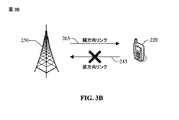
アクセス端末(たとえばAT220)が、不整合が存在する(たとえばΔR330)と判定するとき、たとえば割当てられた帯域幅Wがリソース予測要件と一致しない場合、たとえば割当てられたWが、PSD制約または他の制約セットに適合する最大帯域幅のWMAX予測よりも大きいなどのときに、不整合応答コンポーネント228が応答を判定する。かかる応答は、通信の障害許容力を表す少なくとも以下の3つのカテゴリ、すなわち(a)抑制型(suppressive)、(b)支援型(supportive)、または(c)適応型(adaptive)のうちの1つに分類されることが可能である(この障害許容力については、以降の考察で明らかとなる)。抑制型応答は、通信を中止する(suspend)ことをもたらす。一例として、抑制型のケースでは、コンポーネント228は伝送を中断し、リソース(たとえば、上の例では帯域幅W)の割当てを取り消す。かかる応答は、結果的にセクタのQoSを劣化させ、サービングセルを再取得する必要をもたらすことがある。とはいえ、伝送を中止することにより、端末が及ぼし得るセル間およびセル内干渉をかなり抑制することが可能となる。図3Bは、リソース不整合(ΔR330)に対する静的応答のブロック図である。AT220とAP250を結んでいるRL245の×記号が、このタイプの応答で通信が中止されていることを示す。
When an access terminal (eg, AT 220) determines that a mismatch exists (eg, ΔR330), for example, if the allocated bandwidth W does not match the resource prediction requirements, the assigned W may be a PSD constraint or other The
リソース割当て不整合に対する支援型および適応型の応答に関して、かかる応答は、以下の点から不整合回復と見なすことができる。すなわち、これらの応答は、(i)リソース不整合の存在を判定する加入者ユニット(たとえばAT220)と、該ユニットにサービスするアクセスポイント(たとえばAP250)との間の通信を維持でき、(ii)不整合を生成するリソースをスケジューリングしているサービングアクセスポイントに、適応されたリソースを通信することが可能であるからである。支援型応答は、スケジューリングアクセスポイント(たとえばAP250)の判断で通信の終了をもたらすことがある一方、適応型応答は、典型的には、通信の中断に至らない(アクセス端末およびアクセスポイントの複雑さならびに通信オーバヘッドが追加されることの代償に獲得される障害許容力)ものと理解されたい。例示として、支援型応答の一例、および不整合(たとえば割当てが開ループ予測に反する)に対する適応型応答の2つの例を次に述べる。 With respect to assisted and adaptive responses to resource allocation inconsistencies, such responses can be considered as inconsistency recovery in the following respects. That is, these responses can maintain communication between (i) a subscriber unit (eg, AT 220) that determines the presence of a resource mismatch and an access point (eg, AP 250) that serves the unit; (ii) This is because the adapted resource can be communicated to the serving access point that is scheduling the resource that generates the mismatch. Assisted responses may result in termination of communication at the judgment of the scheduling access point (eg, AP 250), while adaptive responses typically do not result in communication interruption (complexity of access terminals and access points). As well as the fault tolerance gained at the cost of additional communication overhead. By way of illustration, an example of an assisted response and two examples of an adaptive response to inconsistencies (eg, assignments violate open loop prediction) are described next.
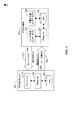
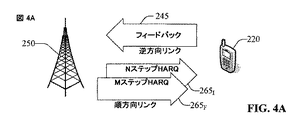
(1)支援型。アクセス端末(たとえば220)は、通信用の予測リソースレベル(たとえば、PSDに関して予想される開ループ値)を使用する。ただし、この予測リソースレベルは割当てとは不整合になる。サービングアクセスポイントは、順次、不整合なリソースに基づいて通信を受信する;チャネル品質指標が、スケジュール対象のリソースに適合しない(たとえば、端末からのチャネルアウトプット電力;APは、ATに割当てられた5dBではなく2dBを計測する)ことを検出し、伝送がかかるチャネル条件で完了され得ないと判定する;その後にスケジューリングされるリソース、たとえばアクセスポイントにおいて復号に成功する可能性を増大させるために通信に使用されるHARQプロセス順序など(例として、最初の通信(265I)におけるNステップHARQから、次の通信(265F)のMステップHARQへ(ただし、M>N))を適応させることができる。この最後のステップの代わりに、アクセスポイントは、端末の不整合状態と通信し伝送を中止しようとする試みを無視してもよい。スケジューラ254などのスケジューラは、HARQプロセスまたは他の実質的に任意のリソース(たとえば、割当てられた副搬送波もしくは副帯域、帯域幅、または電力)が、無線デバイスとの通信を支援するように調製され得るかどうか判定することができるものと理解されたい。かかる判定は、スケジューラが使用できる種々のスケジューリングアルゴリズム(上記参照)に基づく。図4Aが、リソース割当て不整合に対するこの適応型応答を示す。
(1) Support type. The access terminal (eg, 220) uses the predicted resource level for communication (eg, the expected open loop value for PSD). However, this predicted resource level is inconsistent with the allocation. The serving access point sequentially receives communications based on inconsistent resources; the channel quality indicator does not match the scheduled resource (eg, channel output power from the terminal; AP assigned to AT Measuring 2 dB instead of 5 dB) and determining that the transmission cannot be completed with such channel conditions; communication to increase the likelihood of successful decoding at a subsequently scheduled resource, eg, an access point To adapt the HARQ process order, etc. used for (for example, from N-step HARQ in the first communication (265 I ) to M-step HARQ in the next communication (265 F ) (where M> N)) it can. As an alternative to this last step, the access point may ignore attempts to communicate with the terminal's inconsistency state and abort the transmission. A scheduler, such as
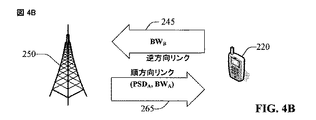
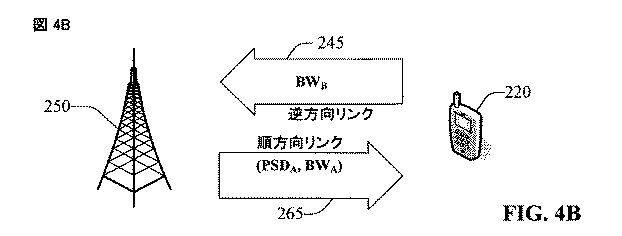
(2)適応型。アクセス端末(たとえばAT220)は、スケジュール対象の割当て(たとえばPSDAおよびBWA)を部分的に採用し、伝送(PSDMIN)が端末の割当てと異なるにもかかわらず、かかるPSDMINを可能にするできる限り低い電力密度を使用しているスケジューリングアクセスポイント(たとえばAP250)と通信する。この通信は、パケットが、予測リソースに適合する帯域幅(BWB)値を示しているパケット伝送から構成され得る。スケジューリングAPは、代替のリソースを受信するとただちに次の割当てにおいて帯域幅を再スケジューリングし、BWBを移動局に割当てる。調整されたリソースをサービングAPに伝送することに関連するオーバヘッドが存在するものと理解されたい。この調整されたリソースレベルは伝送されるデータパケットヘッダーで伝達される。図4Bが、この例示的適応型応答を示す。 (2) Adaptive type. The access terminal (eg, AT 220) partially adopts the scheduled assignment (eg, PSD A and BW A ) to allow such PSD MIN even though the transmission (PSD MIN ) is different from the terminal assignment. Communicate with a scheduling access point (eg, AP 250) using the lowest possible power density. This communication may consist of a packet transmission in which the packet exhibits a bandwidth (BW B ) value that matches the predicted resource. Scheduling the AP, reschedule bandwidth in immediately subsequent allocation receives the alternative resource, assign BW B to the mobile station. It should be understood that there is overhead associated with transmitting coordinated resources to the serving AP. This adjusted resource level is conveyed in the transmitted data packet header. FIG. 4B shows this exemplary adaptive response.
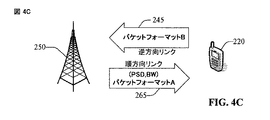
(3)適応型。アクセス端末は、PSDおよびBW、ならびにデータパケットフォーマット割当てを受信する。ATが、たとえば割当てられたPSDと、(たとえば開ループ予測において生じた)より低い予測PSD(op)との間に不整合が存在すると判定する場合、アクセス端末は、割当てられたデータパケットフォーマットに対して、PSD(op)を採用している通信が現在のチャネル条件下で完了され得るかどうか評価する。かかる評価が、通信が失敗するかもしれないことを示す場合、ATは、割当てを部分的に維持し、スペクトル効率、符号化レートおよび/または変調などがより低い(既存のチャネル品質指標を有するより低いPSD(op)で伝達され得る)フォーマットにデータパケットフォーマットを落とすことによって不整合に応答する。図4Cが、リソース割当て不整合に対するこの例示的適応型応答を示す。 (3) Adaptive type. The access terminal receives PSD and BW and data packet format assignments. If the AT determines that there is a mismatch between, for example, the assigned PSD and a lower predicted PSD (op) (eg, that occurred in open-loop prediction), the access terminal may be in the assigned data packet format. In contrast, it evaluates whether communications employing PSD (op) can be completed under current channel conditions. If such an evaluation indicates that the communication may fail, the AT partially maintains the allocation and has lower spectral efficiency, coding rate and / or modulation, etc. (rather than having existing channel quality indicators). Respond to inconsistencies by dropping the data packet format into a format that can be transmitted with a low PSD (op) . FIG. 4C illustrates this example adaptive response to resource allocation mismatch.
システム仕様が原因となって、通信が行われる無線ネットワークがパケットフォーマット変更を提供する場合に先に説明した適応型応答が可能になるものと理解されたい。一態様において、かかるネットワークにおけるアクセスポイント(たとえばAP250)は、無線システム(たとえば、第3世代ロングタームエボリューション(3G LTE)、第3世代ウルトラモバイルブロードバンド(3G UMB)など)の標準仕様に適合する適合データパケットフォーマット(たとえば、特定のスペクトル効率、パケットサイズ、コードレートおよび変調、ならびにHARQの順序)のリスティングを伝送する。なお、本明細書で使用する適合パケットフォーマットとは、一般に、互いに適合するパケットフォーマットのセット、または該セットのうちの特定(たとえば「マスター」)要素のサブセットに適合するパケットフォーマットのセットであって、端末(たとえばAT220)に対して、このセットの要素、または「マスター」要素の1つが割当てられるとき、該端末は、前記セットの他の要素を選択し、割当て上の所与のパケットに関する割当てられているパケットフォーマットに対する操作上の適正な代替として前記他の要素を使用する、パケットフォーマットのセットを指すことに留意されたい。フォーマットのリスティングは各APによって伝送され、その結果、端末が、このリスティングを取得し、アクティブなセット内に組み込み(たとえばセルIDを割当て)、メモリ236などの端末メモリ内に格納する。他の一態様では、リソース適応されたパケットを符号化するまたはビルドするのに使用されるパケットフォーマットは、パケットヘッダー内の(無線システムの仕様に基づく)所定の数の変調シンボルにおいて示すことができる。さらに他の一態様では、専用チャネル、たとえば逆方向リンクレート指示チャネル(本明細書ではR−RICHと称される)を、リソース適応されたデータパケットフォーマットを伝達するために用いられる。
It should be understood that due to system specifications, the adaptive response described above is possible when the wireless network in which the communication takes place provides a packet format change. In one aspect, an access point (eg, AP 250) in such a network is adapted to meet the standard specifications of a wireless system (eg, third generation long term evolution (3G LTE), third generation ultra mobile broadband (3G UMB), etc.). Transmits a listing of data packet formats (eg, specific spectral efficiency, packet size, code rate and modulation, and HARQ order). As used herein, a conforming packet format generally refers to a set of packet formats that conform to each other, or a set of packet formats that conform to a subset of specific (eg, “master”) elements of the set. When a terminal (eg, AT 220) is assigned an element of this set, or one of the “master” elements, the terminal selects the other element of the set and assigns for a given packet on the assignment. Note that it refers to a set of packet formats that uses the other elements as a reasonable operational alternative to the packet format being considered. The format listing is transmitted by each AP so that the terminal obtains this listing, incorporates it into the active set (eg, assigns a cell ID), and stores it in terminal memory, such as
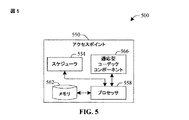
図5は、前述のリソース適応されたデータパケットフォーマットが関与する不整合回復応答を処理するシステムの例示的実施形態500である。このシステムは、スケジューラ554、プロセッサ558、メモリ562、および適応型コーデックコンポーネント566を含むアクセスポイント550内で実施される。コンポーネント554は、スケジューラ254とほぼ同じ機能を有し、したがってセクタ/セルAP550のサービス内にあるユーザ機器にリソース割当てを通信する。先述のように、例示的不整合回復は、複数フォーマットを有する複数の異種データパケットを生成および伝送するアクセス端末(たとえばAT220)が関与することがある。適応型コーデックコンポーネント566は、かかる複数のデータパケットを復号化する。復号は、複数の仮説的(たとえばパケットフォーマット)復号化アルゴリズム、たとえばビーム探索、グリーディー復号化(greedy decoding)、スタックマルチプル仮説アプローチ(stack multiple hypotheses approach)などに基づく。加えて、コンポーネント566は、データパケットフォーマットの復号/受信に失敗したことに関連する誤りメッセージを発行および通信することができる。一態様において、サポートされるパケット形式はメモリ562内に存在し、コンポーネント566は、情報伝送に使用されるフォーマットに関連して異種フォーマットが受信されたと判定するとただちに、かかる情報にアクセスする。他の一態様では、パケットフォーマット、ならびに符号化の詳細が、上述した一態様に従って、データパケットそれ自体と一緒に受信される。復号化アルゴリズムは、メモリ562に格納され、プロセッサ558によって部分的に実行される。コンポーネント566は、本明細書では、このコンポーネント566が、種々のデータフォーマットを時間の関数として受信するように適応可能であることを示すように適応型であると述べられることに留意されたい。
FIG. 5 is an
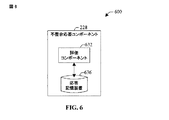
図6は、本明細書で前述した諸態様によるリソース不整合回復を完全にまたは部分的に判定および実行する不整合応答コンポーネント228の例示的実施形態600を示す。不整合応答コンポーネントは評価コンポーネント632を利用でき、この評価コンポーネント632は、無線システムの諸条件(たとえば開ループリソース予測の設定点、チャネル条件、セルトラヒック負荷、サービングアクセスポイントによって監視されるなどの平均セル干渉、平均セル干渉、他セクタ干渉の指示、サービングアクセスポイントにおいて使用可能なアンテナ)を評価し、抑制型、支援型または適応型の応答、たとえば前述の応答例(1)〜(3)を選択する。応答アルゴリズムは応答記憶装置636から取り出され、プロセッサ236は、応答選択を導き出す評価の一部を行うように構成する。
FIG. 6 illustrates an
一態様において、不整合回復応答を判定するために、評価コンポーネント632は、特定の状況または動作を識別するための人工知能(AI)に依拠し、あるいは無線システムの特定の状態または複数の端末の挙動の確率分布を生成する。人工知能は、システムまたはユーザにおいて使用可能なデータ(情報)のセットに、高度な数学的アルゴリズム、たとえば決定木(decision tree)、ニューラルネットワーク、回帰分析、クラスタ分析、遺伝的アルゴリズム、および強化学習を適用することに依拠する。具体的には、したがって評価コンポーネント632は、確率論ベースまたは統計学ベースの手法を、たとえば判定または推測を行うことに関連して用いることができる。この推測は、部分的に、システムを使用する前の(1つもしくは複数の)分類器(図示せず)の明示的トレーニング、または少なくともシステムの使用中における以前または現在の動作、コマンド、命令などに基づく暗黙的トレーニングに基づくことが可能である。
In one aspect, to determine the inconsistency recovery response, the
評価コンポーネント632はまた、データから学習し、次いで、本明細書で述べられる種々の自動化態様を実施することに基づいて構築されるモデル(例として、隠れマルコフモデル(HMM)および関連する原型依存モデル(prototypical dependency model)、より一般的な確率的グラフィカルモデル(例として、たとえばベイズモデルのスコアまたは近似を用いる構造探索によって作成されるベイジアンネットワーク)、線形分類器(たとえばサポートベクターマシン(SVM))、非線形分類器(たとえば「ニューラルネットワーク」手法と呼ばれる方法、ファジー論理手法、およびデータ融合を行う他のアプローチなど))から推測を引き出すための多数の手法のうちの1つを使用することもできる。
The
図示され上述された例示的システムに鑑みて、開示された内容に従って実施可能である手法は、図7、8および9の流れ図を参照することでよりよく理解されよう。説明を簡潔にするために、手法は、一連のブロックとして図示および説明されるが、特許請求される内容は、ブロックの数または順番によって限定されないものと理解および認識されたい。なぜならば、一部のブロックは、本明細書で図示および説明されたものに対して、異なる順番でかつ/または他のブロックと並行して動作され得るからである。またなお、図示したすべてのブロックが、本明細書に記した手法を実施することを必要とされなくてよい。これらのブロックに関連する機能は、ソフトウェア、ハードウェア、ソフトウェアとハードウェアの組合せ、または他の任意の適切な手段(たとえばデバイス、システム、プロセス、コンポーネント、...)によって実施できるものと理解されたい。加えて、以下におよび本明細書全体にわたって開示される手法は、かかる手法を各種デバイスに運搬および移動するのを容易にするために製品に格納されることが可能であるものとさらに理解されたい。あるいは手法は、一連の相互に関連する状態またはイベントとして、たとえば状態図でのように表され得ることを当業者ならば理解および認識されよう。 In view of the exemplary system shown and described above, techniques that can be implemented in accordance with the disclosed content will be better understood with reference to the flowcharts of FIGS. For simplicity of illustration, the techniques are illustrated and described as a series of blocks, but it should be understood and appreciated that the claimed subject matter is not limited by the number or order of the blocks. This is because some blocks may be operated in a different order and / or in parallel with other blocks than those shown and described herein. Still, not all illustrated blocks may be required to implement the techniques described herein. It is understood that the functions associated with these blocks can be implemented by software, hardware, a combination of software and hardware, or any other suitable means (eg, device, system, process, component,...). I want. In addition, it should be further understood that the techniques disclosed below and throughout this specification can be stored in a product to facilitate transporting and moving such techniques to various devices. . Alternatively, those skilled in the art will understand and appreciate that an approach may be represented as a series of interrelated states or events, such as in a state diagram.
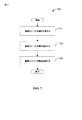
図7は、無線システムにおける通信リソース予測を生成および操作するための方法700の流れ図を示す。動作(act)710において通信リソース予測が生成される。この予測は、特定の通信制約、例としてサービスプロバイダによって課されるQoS目標レベル、たとえば所定のアプリケーション(たとえばオンラインゲーム)におけるセル/セクタ容量、ピークデータレートおよび待ち時間などに準拠することに基づく。他のリソース予測は、動作要件から生じ、したがって時間依存である;一例として、このリソースは、部分負荷されたシステムにおけるバースト的な加入者ユニットによってシステム上に課される他セクタの推測量を限定するように予測され得る。かかるシナリオでは、リソースは、電力、または電力スペクトル密度であり得、リソース予測は、相当の沈黙期間の後に通信を開始するバースト的なユーザに提供される電力アウトプットのレベルであり得る。干渉軽減、たとえばオフセットベースの(Δベースの)高速OSI軽減のためのフィードバック機構は、効果的な干渉の差動制御に必要とされる基準リソースレベルとして710において生成された、予測リソースレベルを採用できるものと理解されたい。さらに、他のリソース(たとえば、一体的および部分的周波数繰り返しの両方における副搬送波の割当て)の予測レベルが、動作710において生成されるものと理解されたい。部分周波数繰り返しでは、予測リソースは、低電力/高電力チャネル、およびセクタ/セル境界に対する移動体の近さ(図1を参照)に基づく、これらチャネルの予測される割当てであり得る。一態様では、この予測は、開ループ計算におけるインプット信号として複数のパイロット信号を使用することによって、開ループ推定値から導出することができる。
FIG. 7 shows a flowchart of a
動作720および730は操作動作である。720において、予測リソースレベルが、後での使用および分析用に(たとえばメモリ236に)格納される一方、730において、この予測が、フィードバック処理を行うために伝送される。一態様では、フィードバックは、通信リソースをスケジューリングするサービスアクセスポイント、たとえばAP250に提供される。リソース割当ての前に、スケジューラ(たとえばスケジューラ254)を媒介するかかるアクセスポイントは、動作730を実行する加入者ユニット用の推奨される動作レベルとして前記動作において伝送された予測レベルを採用する。これにより、前記加入者ユニットが、リソース推定値710を生じさせた通信制約を満たすことを確実にすることができる。
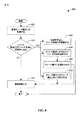
図8は、無線通信システムにおける通信不整合に応答するための方法800の流れ図である。動作810において、通信リソース割当てが受信される。一態様では、アクセスポイント(たとえばAP250)が、通信用の移動体(たとえば220)に、リソースのセット(たとえば電力、PSD、帯域幅、副搬送波、アンテナ選択、繰り返し周波数パターンなど)をスケジューリングする。動作820は、複数の条件(たとえば、他セクタの干渉レベル、データピークレート、指定パケットフォーマットでの成功した通信など)を満たすのに必要なリソースの設定点予測を用いて、リソース割当てが不整合を示すかどうか検査する確認動作である。態様において、かかる設定点は、本明細書で前述した手法700を用いて判定される。不整合がない場合、動作830において、通信が維持し続けられる。他の一態様では、かかる通信を3G UMB無線システムで行う。この3G UMB無線システムは、数ある特徴の中でも特に、柔軟な帯域幅使用(たとえば1.25MHzから最大20MHzまでのBWを利用できる)、低い待ち時間(たとえば約16ms以下)、MIMOモードでの動作(図10および11を参照)などの特徴を示すパケット交換無線通信プロトコルである。
FIG. 8 is a flow diagram of a
確認チェック820が、リソース割当てと予測リソースとの間に不整合が存在することを示す場合、応答が生成される。かかる応答は動作840で実行される。この動作840において、伝送が中止され、動作810のリソース割当てが破棄される。あるいは、動作850において、予測リソースが動作810のリソース割当ての代わりに採用される。動作860において、割当てられた通信リソースは、通信がリソース予測の生成時に採用された条件を超えることなく進行するのを可能にするレベルに適応される。一態様において、適応は、たとえばデータパケットフォーマットの変更、HARQプロセス順序の変更、その他から構成される。不整合の判定(動作820)に対するさらなる応答が870で実行され、この870では、リソース割当てがリソース調整しないで採用される。
If the
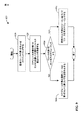
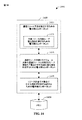
図9は、無線通信システムにおける割当て不整合を判定した端末からリソースの代替のセットを受信することに応答して通信リソースをスケジューリング/再スケジューリングするための方法900の流れ図である。動作910において、通信リソースの第1のセットがスケジューリングされる。一態様では、このリソースのセットは、このリソースをスケジューリングしているアクセスポイント(たとえばAP250)と通信する端末(たとえば移動体220)に対してスケジューリングされる。920において、リソースの第2のセットが、リソースの第1のセットに応答して受信される。この態様の他の一局面において、かかる第2のセットは、スケジューリングAPと通信している端末であって、スケジュール対象のリソースの第1のセット(動作910)が、端末によって確定されたリソース予測と不整合になっている(図4A、4Bおよび4Cならびに手法700を参照)と判定した端末から発生する。動作930において、リソースの第1のセットを受信された代替のセットに鑑みて再スケジューリングすべきかどうかについて判定がなされる。この態様のさらに他の一局面において、リソースの第1のセットを再スケジューリングすることにより、ステップ920を引き起こし得た不整合からの回復をもたらす(800も参照)。リソースを再スケジューリングしないと判定された場合、動作940において伝送が中止され、そうでない場合、950においてリソースの第1のセットが再スケジューリングされる。
FIG. 9 is a flow diagram of a
図10は、本明細書で述べられる1つまたは複数の態様による無線通信環境におけるセル/セクタ通信を提供できる多入力多出力(MIMO)システムの送信機システム1010(たとえば基地局110)および受信機システム1050(たとえばアクセス端末220)の実施形態のブロック図1000である。送信機システム1010では、多数のデータの流れに関するトラヒックデータが、データソース1012から送信(TX)データプロセッサ1014に提供される。一実施形態において、各々のデータの流れは、それぞれの送信アンテナを通じて伝送される。TXデータプロセッサ1014は、各々のデータの流れが符号化データを提供するように選択される特定のコーディング方式に基づいて、当該のデータの流れに関するトラヒックデータをフォーマット、符号化およびインタリーブする。各々のデータの流れに関する符号化データは、OFDM技法を用いてパイロットデータで多重化される。このパイロットデータは通常、知られているやり方で処理され、受信機システムにおいてチャネル応答を推定するのに使用される、知られているデータパターンである。多重化されたパイロットデータおよび各々のデータの流れに関する符号化データは、次いで、当該のデータの流れが変調シンボルを提供するように選択される特定の変調スキーム(たとえばBPSK、QPSK、M−PSKまたはM−QAM)に基づいて変調される(たとえば、シンボルマッピングされる)。各々のデータの流れに関するデータレート、コーディングおよび変調は、プロセッサ1030によって実行される命令によって決定され、データのみならずこの命令も、メモリ1032内に格納される。加えて、本発明の一態様によれば、送信機は、リソース不整合に応答して受信機から受信されたフィードバックによって変調方式を切り換えることができる。
FIG. 10 illustrates a transmitter system 1010 (eg, base station 110 ) and receiver of a multiple-input multiple-output (MIMO) system that can provide cell / sector communication in a wireless communication environment in accordance with one or more aspects set forth herein. 1 is a block diagram 1000 of an embodiment of a system 1050 (eg, access terminal 220). In transmitter system 1010, traffic data for multiple data streams is provided from a
すべてのデータの流れに関する変調シンボルは、次いで、TX MIMOプロセッサ1020に渡される。かかるプロセッサは、この変調シンボルをさらに処理する(たとえばOFDM)。TX MIMOプロセッサ1020は次いで、NT個の変調シンボルの流れをNT台のトランシーバ(TMTR/RCVR)1022A〜1022Tに渡す。いくつかの実施形態では、TX MIMOプロセッサ1020は、ビームフォーミング重み(またはプリコーディング)を、データの流れのシンボルに対して、かつシンボルが伝送されているアンテナに対して適用する。各トランシーバ1022は、それぞれのシンボルの流れを受信および処理して1つまたは複数のアナログ信号を提供し、さらにMIMOチャネル上での伝送に適した変調信号を提供するようにこのアナログ信号を調節する(たとえば増幅、フィルタリングおよびアップコンバートする)。次いでトランシーバ1022A〜1022TからのNT個の変調信号は、それぞれNT本のアンテナ10241〜1024Tから伝送される。受信機システム1050では、これらの伝送された変調信号が、NR本のアンテナ10521〜1052Rによって受信され、各アンテナ1052からのかかる受信信号は、それぞれのトランシーバ(TMTR/RCVR)1054A〜1054Rに渡される。各トランシーバ1054A〜1054Rは、それぞれの受信信号を調節し(たとえばフィルタリング、増幅およびダウンコンバートし)、この調節された信号をディジタル化してサンプルを提供し、さらにこのサンプルを処理して、対応する「受信」シンボルの流れを提供する。
The modulation symbols for all data streams are then passed to
RXデータプロセッサ1060は次いで、特定の受信機処理技法に基づいてNR台のトランシーバ1054A〜1054RからNR個の受信シンボルの流れを受信および処理して、NT個の「検出」シンボルの流れを出力する。RXデータプロセッサ1060は次いで、各々の検出されたシンボルの流れを復調、ディインタリーブおよび復号化して、データの流れに関するトラヒックデータを回復する。RXデータプロセッサ1060による処理は、送信機システム1010のTX MIMOプロセッサ1020およびTXデータプロセッサ1014によって行われる処理に対して相補的である。プロセッサ1070は、どのプリコーディング行列を使用すべきか定期的に決定し、かかる行列をメモリ1072内に格納する。プロセッサ1070は、行列インデックス部およびランク値部を備える逆方向リンクメッセージを作成する。メモリ1072は、プロセッサ1070によって実行されると逆方向リンクメッセージを作成する結果をもたらす命令を格納する。例として、かかる情報は、調整された通信リソース、スケジュール対象のリソースを調整するためのオフセット値、およびデータパケットフォーマットを復号化するための情報を備える。この逆方向リンクメッセージは、通信リンクもしくは受信データの流れ、またはこれら通信リンクもしくは受信データの流れの組合せに関する様々なタイプの情報を備える。この逆方向リンクメッセージは次いで、TXデータプロセッサ1038によって処理され、このプロセッサ1038はまた、データソース1036から多数のデータの流れに関するトラヒックデータを受信する。かかる逆方向リンクメッセージは、変調器1080によって変調され、トランシーバ1054A〜1054Rによって調節され、送信機システム1010へと返送される。
送信機システム1010において、受信機システム1050からのかかる変調信号は、アンテナ10241〜1024Tによって受信され、トランシーバ1022A〜1022Tによって調節され、復調器1040によって復調され、RXデータプロセッサ1042によって処理されて、受信機システム1050によって伝送されたリザーブリンクメッセージ(reserve link message)を抽出する。プロセッサ1030は次いで、ビームフォーミング重みを決定するためにどのプリコーディング行列を使用すべきかについて判定し、この抽出されたメッセージを処理する。
At transmitter system 1010, such modulated signals from
図10に示したように、以上の動作によれば、シングルユーザMIMO動作モードは、単一の受信機システム1050が送信機システム1010と通信する場合に対応する。このようなシステムでは、NT台の送信機10241〜1024T(TXアンテナとも呼ばれる)およびNR台の受信機10521〜1052R(RXアンテナとも呼ばれる)が、無線通信用の行列チャネル(たとえば、レイリーチャネルまたはガウスチャネル)を形成する。SU−MIMOチャネルは、ランダムな複素数からなるNR×NTの行列によって記述される。チャネルのランクは、NR×NTチャネルの階数(algebraic rank)に等しい。時空間符号化または空間周波数符号化では、このランクは、チャネルを介して送達されるデータの流れまたは層の個数に等しい。このランクは、最大でもmin{NT,NR}に等しいものと理解されたい。NT本の送信アンテナとNR本の受信アンテナによって形成されるMIMOチャネルは、NV個の独立チャネル(空間チャネルとも呼ばれる)(ただし、NV≦min{NT,NR})に分解することができる。NV個の独立チャネルの各々は次元に対応する。
As shown in FIG. 10, according to the above operation, the single user MIMO operation mode corresponds to the case where a
一態様において、OFDMを用いてトーンωで送受信されるシンボルは、次式のようにモデル化することができる。
式中、y(ω)は、受信データの流れでありかつNR×1ベクトルであり、H(ω)は、トーンωにおけるチャネル応答NR×NT行列(たとえば時間依存チャネル応答行列hのフーリエ変換)であり、c(ω)は、NT×1アウトプットシンボルベクトルであり、n(ω)は、NR×1雑音ベクトル(たとえば付加白色ガウス雑音)である。プリコーディングにより、NV×1層ベクトルをNT×1プリコーディングアウトプットベクトルに変換することができる。NVは、送信機1010によって伝送されたデータの流れ(層)の実際の数値であり、NVは、少なくとも部分的に端末によって報告されるチャネル条件およびランクに基づいて、送信機(たとえばアクセスポイント250)の判断でスケジューリングされる。c(ω)は、送信機によって適用される少なくとも1つの多重化方式および少なくとも1つのプリコーディング(またはビームフォーミング)方式の結果であるものと理解されたい。加えて、c(ω)は、電力利得行列を用いて畳み込まれ、それによって、送信機1010が、各々のデータの流れNVを伝送するために割り振っている電力量が算出される。かかる電力利得行列は、アクセス端末220に割当てられるリソースであり得、本明細書で説明されるオフセットの調整を通して操作され得るものと理解されたい。無線チャネルのFL/RL相互関係に鑑みて、MIMO受信機1050からの伝送は、実質的に同じ要素を算入することにより、やはり式(1)のような形でモデル化することができる。加えて、受信機1050は、逆方向リンクのデータを伝送する前にプリコーディング方式を適用することもできる。
Where y (ω) is the stream of received data and is an N R × 1 vector, and H (ω) is the channel response N R × N T matrix (eg, of the time-dependent channel response matrix h in tone ω). Fourier transform), c (ω) is an N T × 1 output symbol vector, and n (ω) is an N R × 1 noise vector (eg, additive white Gaussian noise). By precoding, an N V × 1 layer vector can be converted to an N T × 1 precoding output vector. N V is the actual number of data streams (layers) transmitted by transmitter 1010, and N V is based on the channel conditions and rank reported at least in part by the terminal (eg, access Scheduling is performed according to the determination of point 250). It should be understood that c (ω) is the result of at least one multiplexing scheme and at least one precoding (or beamforming) scheme applied by the transmitter. Additionally, c (omega) is convolved with a power gain matrix, which causes the transmitter 1010, the amount of power that is allocated to transmit a stream N V of each data is calculated. It should be understood that such a power gain matrix may be a resource allocated to access terminal 220 and may be manipulated through offset adjustment as described herein. In view of the FL / RL interrelationship of the wireless channel, transmission from the
システム1000(図10)において、NT=NR=1のとき、このシステムは、1入力1出力(SISO)システムに変化する一方、NT>1およびNR=1のときは、多入力1出力(MISO)に変化する。いずれのシステムも、本明細書で述べられる1つまたは複数の態様による無線通信環境におけるセクタ通信を提供することができる。 In system 1000 (FIG. 10), when N T = N R = 1, the system changes to a 1-input 1-output (SISO) system, while N T > 1 and N R = 1, multiple inputs It changes to 1 output (MISO). Any system may provide sector communication in a wireless communication environment in accordance with one or more aspects set forth herein.
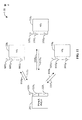
図11は、例示的マルチユーザMIMOシステム1100を示し、このシステム1100内では、3つのAT220P、220Uおよび220Sが、本明細書で開示される態様に従ってアクセスポイント250と通信する。アクセスポイントは、NT本のTXアンテナ10241〜1024Tを有し、ATの各々は、複数のRXアンテナを有する。すなわち、ATPは、NP本のアンテナ10521〜1052Pを有し、APUは、NU本のアンテナ10521〜1052Uを有し、APSは、NS本のアンテナ10521〜1052Sを有する。端末と基地局の間の通信は、上りリンク1115P、1115Uおよび1115Sを介して行われる。同様に、下りリンク1110P、1110Uおよび1110Sは、それぞれアクセスポイント250と端末ATP、ATUおよびATSとの間の通信を促進する。加えて、各端末とアクセスポイントの間の通信は、図10および図10に対応する説明において示したのと実質的に同じ仕方で、実質的に同じコンポーネントによって実施される。各端末は、アクセスポイント250によってサービスされるセル内での実質的に異なる位置に配置できるので、それぞれのユーザ機器220P、220Uおよび220Sは、当該のユーザ機器自身のランクで当該のユーザ機器自身の行列チャネルhαおよび応答行列Hα(α=P、UおよびS)を有する。基地局250によってサービスされるセル内に複数のユーザがいることが原因で、セル内干渉が存在することがある。図11には3つの端末が示されているが、MU(multiple user)−MIMOシステムは、(以下において添え字kで示した)任意の数の端末を備え得るものと理解されたい。アクセス端末220P、220Uおよび220Sの各々は、割当てられたリソースに関するフィードバック情報をAT250に伝送する。このフィードバック情報の例としては、1つまたは複数の調整された通信リソース、スケジュール対象のリソースを調整するためのオフセット、および先述したようなリソース割当て不整合に鑑みて伝送に用いられる適応されたデータパケットフォーマットを復号化するための情報が挙げられる。さらに、AT250は、端末220P、220Uおよび220Sの各々に関するリソースを、適宜にかつ互いの他のリソース割当てから独立して再スケジューリングする。
FIG. 11 shows an exemplary
一態様において、OFDMを用いてk番目のユーザにトーンωで送受信されるシンボルは、次式のようにモデル化することができる。
式中、各シンボルは、式(1)と同じ意味を有する。マルチユーザダイバーシティが原因で、k番目のユーザによって受信される信号における他ユーザの干渉は、式(2)の左辺第2項によってモデル化されるものと理解されたい。プライム(′)記号は、伝送されるシンボルベクトルckが総和から除外されることを示す。数列の各項は、送信機(たとえばアクセスポイント250)がセル内の他ユーザに伝送するシンボルの、k番目のユーザによって(このユーザのチャネル応答Hkを介して)される受信を表す。 In the formula, each symbol has the same meaning as in formula (1). It should be understood that due to multi-user diversity, the interference of other users in the signal received by the kth user is modeled by the second term on the left side of equation (2). The prime (') symbol indicates that the transmitted symbol vector ck is excluded from the sum. Each term in the sequence represents the reception (via the channel response H k of this user) of the symbols that the transmitter (eg, access point 250) transmits to other users in the cell.
図12は、本明細書で述べられる各種態様による無線通信システムにおける逆方向リンク通信リソースとリソース割当て不整合からの回復とを連係させるシステム1200のブロック図である。一例において、システム1200はアクセス端末1202を含む。図示のとおり、アクセス端末1202は、1つまたは複数のアクセスポイント1204から(1つまたは複数の)信号を受信し、1つまたは複数のアクセスポイント1204にアンテナ1208を介して送信する。加えて、アクセス端末1202は、アンテナ1208から情報を受信する受信機1210を備える。一例において、受信機1210は、受信した情報を復調する復調器(Demod)1212と動作的に連結させる。復調されたシンボルは、次いで、プロセッサ1214によって分析される。プロセッサ1214はメモリ1216に結合され、このメモリ1216は、アクセス端末1202に関連するデータおよび/またはプログラムコードを格納する。加えて、アクセス端末1202はプロセッサ1214を使用して、手法700、800および900ならびに/または他の適切な手法を実施する。またアクセス端末1202は、変調器1218を含み、この変調器1218は信号を多重化して、送信機1220がアンテナ1208を介して1つまたは複数のアクセスポイント1204に送信する。
FIG. 12 is a block diagram of a
図13は、本明細書で述べられる各種態様による無線通信システムにおける逆方向リンク通信リソースと干渉処理とを連係させるシステム1300のブロック図である。一例において、システム1300は、基地局またはアクセスポイント1302を含む。図示のとおり、アクセスポイント1302は、(1つまたは複数の)信号を1つまたは複数のアクセス端末1304から受信(RX)アンテナ1306を介して受信し、送信(TX)アンテナ1308を介して1つまたは複数のアクセス端末1304に送信する。
FIG. 13 is a block diagram of a
加えて、アクセスポイント1302は、受信アンテナ1306から情報を受信する受信機1310を備える。一例では、受信機1310は、受信した情報を復調する復調器(Demod)1312と動作的に関係付けられる。復調されたシンボルは、次いで、プロセッサ1314によって分析される。プロセッサ1314はメモリ1316に結合され、このメモリ1316は、コードクラスタ(code cluster)、アクセス端末割当て、アクセス端末割当てに関するルックアップテーブル、固有スクランブルシーケンス(unique scrambling sequence)、および/または他の適切なタイプの情報に関連する情報を格納する。またアクセスポイント1302は、変調器1318を含み、この変調器1318が信号を多重化して、送信機1320が送信アンテナ1308を介して1つまたは複数のアクセス端末1304に送信する。
In addition,
次に、開示される内容の諸態様を可能にし得るシステムを、図14および15に関連して説明する。かかるシステムは機能ブロックを含み、この機能ブロックは、プロセッサもしくは電子マシン(electronic machine)、ソフトウェア、またはこれらの組合せ(たとえばファームウェア)によって実施される機能を表す機能ブロックであってよい。 Next, systems that may enable aspects of the disclosed content are described with respect to FIGS. Such a system includes functional blocks, which may be functional blocks that represent functions performed by a processor or electronic machine, software, or a combination thereof (eg, firmware).
図14は、本明細書で説明される諸態様による無線システムにおけるリソース割当て不整合からの回復を可能にする例示的システムのブロック図を示す。システム1400は、少なくとも部分的に、移動体(たとえばアクセス端末220)の中に存在する。システム1400は、一緒に動作し得る電子的コンポーネントの論理的グルーピング1410を含む。一態様において、論理的グルーピング1410は、通信リソース予測を確定するための電子的コンポーネント1415であって、無線システムにおける予測リソースとチャネル品質条件の開ループ推定値とを計算するための電子的コンポーネント1425に並行して、このコンポーネント1425に引き続いて、またはこのコンポーネント1425の代わりに動作し、開ループに対するインプット信号として使用される電子的コンポーネント1415と、通信リソース予測とスケジュール対象の通信リソースとの間のリソース割当て不整合に対する適応型応答を生成するための電子的コンポーネント1435と、リソース割当て不整合に対する適応型応答を伝送するための電子的コンポーネント1445とを含む。
FIG. 14 illustrates a block diagram of an example system that enables recovery from resource allocation mismatch in a wireless system in accordance with aspects described herein.
システム1400はまた、電子的コンポーネント1415、1425、1435および1445に関連する機能を実行するための命令、ならびにかかる機能の実行中に生成される計測および計算されたデータを保持するメモリ1450を含む。電子的コンポーネント1415、1425、1435および1445の1つまたは複数は、メモリ1450の外部に存在するように示されているが、メモリ1450内部に存在するものと理解されたい。
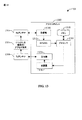
次に図15を参照すると、この図15は、本発明の一態様による無線通信システムにおけるリソースのスケジューリング/再スケジューリングを可能にする例示的システム1500のブロック図を示している。システム1500は、少なくとも部分的に基地局(たとえばアクセスポイント550)の中に存在し、一緒に動作し得る電子的コンポーネントの論理的グルーピング1510を含む。一態様において、論理的グルーピング1510は、1つまたは複数の通信リソースをスケジューリングするための電子的コンポーネント1515と、通信リソースの代替のセットを伝達している受信された通信に応答してスケジュール対象の通信リソースを調整するための電子的コンポーネント1525と、代替の通信リソースのセットを再スケジューリングするためのコンポーネント1535とを含む。
Reference is now made to FIG. 15, which shows a block diagram of an
図示したように、例示的システム1500はまた、電子的コンポーネント1515、1525および1535に関連する機能を実行するための命令、ならびにかかる機能の実行中に生成され得る計測および計算されたデータを保持するメモリ1540を含む。電子的コンポーネント1515、1525および1535の1つまたは複数は、メモリ1540の外部に存在するように示されているが、メモリ1540内部に存在するものと理解されたい。
As shown,
本明細書で説明されている諸実施形態は、ハードウェア、ソフトウェア、ファームウェア、ミドルウェア、マイクロコード、またはこれらの任意の組合せによって実施できるものと理解されたい。システムおよび/または方法が、ソフトウェア、ファームウェア、ミドルウェアまたはマイクロコード、プログラムコードまたはコードセグメント内に実装されるとき、これらのものを、機械可読媒体、ストレージコンポーネントに格納可能である。コードセグメントは、プロシージャ、関数、サブプログラム、プログラム、ルーチン、サブルーチン、モジュール、ソフトウェアパッケージ、クラス、または、命令、データ構造もしくはプログラム文の任意の組合せを表し得る。コードセグメントは、情報、データ、引数、パラメータもしくはメモリ内容を引き渡すかつ/または受信することにより、他のコードセグメントまたはハードウェア回路に結合され得る。情報、引数、パラメータ、データなどは、メモリ共有、メッセージパッシング、トークンパッシング、ネットワーク伝送などを含めた適切ないかなる手段を使用して引き渡す、転送する、または伝送することも可能である。 It is to be understood that the embodiments described herein can be implemented by hardware, software, firmware, middleware, microcode, or any combination thereof. When the system and / or method is implemented in software, firmware, middleware or microcode, program code or code segments, these can be stored in machine-readable media, storage components. A code segment may represent a procedure, function, subprogram, program, routine, subroutine, module, software package, class, or any combination of instructions, data structures, or program statements. A code segment can be coupled to another code segment or a hardware circuit by passing and / or receiving information, data, arguments, parameters, or memory contents. Information, arguments, parameters, data, etc. may be delivered, forwarded, or transmitted using any suitable means including memory sharing, message passing, token passing, network transmission, etc.
ソフトウェア実装については、本明細書で説明した技法を、本明細書で述べた諸機能を実行するモジュール(たとえばプロシージャ、関数など)を用いて実施することができる。ソフトウェアコードは、メモリユニットに格納されプロセッサによって実行されることが可能である。このメモリユニットは、かかるプロセッサの内部またはプロセッサの外部に実装可能であり、その場合、当技術分野で知られているように種々の手段を通してかかるプロセッサに対して通信的に結合され得る。 For software implementation, the techniques described herein may be implemented using modules (eg, procedures, functions, etc.) that perform the functions described herein. The software code can be stored in a memory unit and executed by a processor. The memory unit can be implemented within such a processor or external to such processor, in which case it can be communicatively coupled to such processor through various means as is known in the art.
本明細書で使用する用語「プロセッサ」は、古典的アーキテクチャ、または量子コンピュータを意味し得る。古典的アーキテクチャには、シングルコアプロセッサ;ソフトウェアマルチスレッド実行機能を有するシングルプロセッサ;マルチコアプロセッサ;ソフトウェアマルチスレッド実行機能を有するマルチコアプロセッサ;ハードウェアマルチスレッド技術を用いるマルチコアプロセッサ;並列プラットフォーム;および、分散共有メモリを用いる並列プラットフォームが含まれるが、これらが含まれることに限定されるものでない。加えて、プロセッサは、集積回路、特定用途向け集積回路(ASIC)、ディジタルシグナルプロセッサ(DSP)、フィールドプログラマブルゲートアレイ(FPGA)、プログラマブルロジックコントローラ(PLC)、コンプレックスプログラマブルロジックデバイス(CPLD)、個別ゲートロジック(discrete gate logic)もしくは個別トランジスタロジック(discrete transistor logic)、個別ハードウェアコンポーネント、または本明細書で説明した機能を実施するように設計されたこれらの任意の組合せを意味し得る。量子コンピュータアーキテクチャは、ゲーテッドまたは自己形成量子ドット(gated or self-assembled quantum dot)、核磁気共鳴プラットフォーム、超伝導ジョセフソン接合などにおいて実施される量子ビットに基づくことが可能である。プロセッサは、スペース使用を最適化するためまたはユーザ機器の性能を強化するために、分子および量子ドットベースのトランジスタ、スイッチおよびゲートなどのナノスケールアーキテクチャを利用することができるが、これらに限定されない。プロセッサはまた、コンピューティングデバイスの組合せとして、たとえば、DSPとマイクロプロセッサの組合せ、複数のマイクロプロセッサ、DSPコアと協働する1つまたは複数のマイクロプロセッサ、または他の任意のかかる配位として実装してもよい。 As used herein, the term “processor” can mean a classical architecture or a quantum computer. The classic architecture includes a single-core processor; a single processor with software multi-thread execution capability; a multi-core processor; a multi-core processor with software multi-thread execution capability; a multi-core processor using hardware multi-thread technology; a parallel platform; and a distributed sharing Parallel platforms that use memory are included, but are not limited to these. In addition, the processor can be an integrated circuit, application specific integrated circuit (ASIC), digital signal processor (DSP), field programmable gate array (FPGA), programmable logic controller (PLC), complex programmable logic device (CPLD), individual gate It can mean logic or discrete transistor logic, discrete hardware components, or any combination of these designed to perform the functions described herein. Quantum computer architectures can be based on qubits implemented in gated or self-assembled quantum dots, nuclear magnetic resonance platforms, superconducting Josephson junctions, and the like. The processor can utilize, but is not limited to, nanoscale architectures such as molecular and quantum dot based transistors, switches and gates to optimize space usage or enhance the performance of user equipment. The processor may also be implemented as a combination of computing devices, eg, a DSP and microprocessor combination, multiple microprocessors, one or more microprocessors that cooperate with the DSP core, or any other such configuration. May be.
さらに、本明細書において用語「メモリ」は、データ記憶装置、アルゴリズム記憶装置、および他の情報記憶装置を指し、たとえば、限定するものでないが、画像記憶装置、ディジタル音楽およびビデオ記憶装置、チャートおよびデータベースなどが挙げられる。本明細書で述べたメモリコンポーネントは、揮発性メモリまたは不揮発性メモリであってよく、あるいは揮発性および不揮発性メモリの両方を含み得ることが理解されよう。限定ではなく例示の目的で、不揮発性メモリには読取り専用メモリ(ROM)、プログラム可能ROM(PROM)、電気的プログラム可能ROM(EPROM)、電気的消去可能ROM(EEPROM)またはフラッシュメモリを挙げることができる。揮発性メモリには、外部キャッシュメモリとして動作するランダムアクセスメモリ(RAM)を挙げることができる。限定ではなく例示の目的で、RAMは、多くの形態で使用可能であり、たとえば同期式RAM(SRAM)、ダイナミックRAM(DRAM)、同期式DRAM(SDRAM)、ダブルデータレートSDRAM(DDR SDRAM)、エンハンストSDRAM(ESDRAM)、シンクリンクDRAM(Synchlink DRAM)(SLDRAM)およびダイレクトラムバスRAM(direct Rambus RAM)(DRRAM)などが挙げられる。加えて、本明細書において、システムおよび/または方法に関して開示されたメモリコンポーネントは、限定されることなくこれらのおよび他の任意の適切なタイプのメモリを備えることが意図される。 Further, the term “memory” as used herein refers to data storage, algorithm storage, and other information storage devices, such as, but not limited to, image storage devices, digital music and video storage devices, charts and Examples include databases. It will be appreciated that the memory components described herein may be volatile memory or nonvolatile memory, or may include both volatile and nonvolatile memory. For purposes of illustration and not limitation, non-volatile memory may include read only memory (ROM), programmable ROM (PROM), electrically programmable ROM (EPROM), electrically erasable ROM (EEPROM) or flash memory. Can do. Volatile memory can include random access memory (RAM) that operates as external cache memory. For purposes of illustration and not limitation, the RAM can be used in many forms, such as synchronous RAM (SRAM), dynamic RAM (DRAM), synchronous DRAM (SDRAM), double data rate SDRAM (DDR SDRAM), Examples include enhanced SDRAM (ESDRAM), Synchlink DRAM (SLDRAM), and direct Rambus RAM (DRRAM). In addition, the memory components disclosed herein with respect to the systems and / or methods are intended to comprise these and any other suitable type of memory without limitation.
以上に記述した内容は、1つまたは複数の態様の例を含む。上述の諸態様を説明するためにコンポーネントまたは手法の考えられ得るあらゆる組合せを記述することは当然不可能であるが、各種態様のさらなる多くの組合せおよび置き換えが可能であるものと当業者であれば認識されよう。したがって、説明した諸態様は、添付の特許請求の範囲の趣旨および範囲に含まれるあらゆるかかる変更形態、修正形態および変形形態を包含することが意図される。さらに、用語「含む(includes)」が詳細な説明または特許請求の範囲で用いられる範囲内においては、かかる用語は、用語「備える(comprising)」が請求項の中の移行語として使用される際に解釈されるときの「備える」と同じような形で包含することが意図される。
以下に本願の当初の特許請求の範囲に記載された発明を付記する。
[1]
無線通信システムにおいて使用される通信リソース不整合から回復するための方法であって、
通信リソース割当てを受信することと、
リソース不整合が前記リソース割当てと予測通信リソースレベルとの間に存在することを判定することと、
前記通信リソース不整合に対してリソース調整を用いて応答することと、
を備える方法。
[2]
前記リソース調整を伝送することをさらに備える、[1]に記載の方法。
[3]
前記通信リソース割当ては、電力アウトプットレベルおよび電力スペクトル密度からなる群より選択される1つまたは複数を含む、[1]に記載の方法。
[4]
前記通信リソース割当てはデータパケットフォーマットを含む、[1]に記載の方法。
[5]
前記通信リソース割当ては、帯域幅、周波数繰り返しインデックス、副搬送波間隔からなる群より選択される1つまたは複数を含む、[1]に記載の方法。
[6]
前記リソース調整は、前記割当てられたリソースの代わりに前記予測通信リソースレベルを使用することを含む、[1]に記載の方法。
[7]
前記リソース調整は、前記割当てられたリソースの一部を使用し、前記予測通信リソースレベルを伝達するために最小の電力スペクトル密度で伝送すること含む、[1]に記載の方法。
[8]
前記リソース調整は、割当てられた電力スペクトル密度(PSD)よりも小さいPSDでの伝送に適合するフォーマットにデータパケットフォーマットを適応させることを含む、[1]に記載の方法。
[9]
前記適応されたデータパケットフォーマットに適合するPSDでデータパケットを伝送することをさらに備える、[8]に記載の方法。
[10]
前記伝送されるデータパケットで前記予測通信リソースレベルを伝達することをさらに備える、[9]に記載の方法。
[11]
前記予測通信リソースレベルを伝達することは、前記データパケットのヘッダーで伝送されるmビット(ただし、mは前記無線通信システムの仕様または所定の数の変調シンボルに適合する)のオーバヘッドを生じさせる、[10]に記載の方法。
[12]
前記予測通信リソースレベルを伝達することは、専用逆方向リンクレート指示チャネルを使用する、[10]に記載の方法。
[13]
[1]に記載の方法を実行するための電子デバイス。
[14]
無線通信装置であって、前記システムは、
リソーススケジュールを受信し、リソース予測レベルを計算し不整合が前記スケジュール対象のリソースと前記予測リソースとの間に存在することを判定し、および前記リソース不整合を回復するように構成された集積回路と、
前記集積回路に結合され、データを格納するメモリと、
を備える無線通信装置。
[15]
前記集積回路は、不整合が前記スケジュール対象のリソースと前記予測リソースとの間に存在すると判定されると、ただちに通信伝送を中止して前記リソーススケジュールを破棄するようにさらに構成される、[14]に記載の無線通信装置。
[16]
前記リソース不整合を回復するために、前記集積回路は、前記予測リソースを使用することを通信するようにさらに構成される、[14]に記載の無線通信装置。
[17]
前記リソース不整合を回復するために、前記集積回路は、スケジュール対象のリソースを調整し、前記調整されたリソースを使用することを通信するようにさらに構成される、[14]に記載の無線通信装置。
[18]
前記集積回路は、パケットフォーマット、帯域幅、ハイブリッド自動再送要求のプロセス順序、電力、および電力スペクトル密度からなる群より選択される少なくとも1つを調整するように構成される、[17]に記載の無線通信装置。
[19]
前記調整されたパケットフォーマットは、スペクトル効率、パケットサイズ、コードレート、およびハイブリッド再送要求処理で使用されるべき変調方式の指定を含む、[18]に記載の無線通信装置。
[20]
前記集積回路は、調整されたリソースを前記無線通信システムの物理層における専用チャネルを介して伝送するようにさらに構成される、[17]に記載の無線通信装置。
[21]
前記集積回路は、セルトラヒック負荷、平均セル干渉、他セクタ干渉の指示、およびサービングアクセスポイントで使用可能なアンテナのセットからなる群から選択される少なくとも1つに基づいて前記リソース不整合を回復するための応答を推測するようにさらに構成される、[14]に記載の無線通信装置。
[22]
前記メモリは、前記計算されたリソース予測を格納する、[14]に記載の無線通信装置。
[23]
前記メモリは、リソース予測レベルを計算するためのアルゴリズムを格納する、[14]に記載の無線装置。
[24]
前記集積回路は、パイロット強度を計測するようにさらに構成され、前記パイロット強度は、受信されたパイロット信号、および受信されたパイロット信号の信号対熱雑音比からなる群より選択される1つである、[14]に記載の無線通信装置。
[25]
リソース不整合からの回復を促進する無線通信において使用される装置であって、
通信リソース予測を確立するための手段と、
前記通信リソース予測とスケジュール対象の通信リソースとの間のリソース割当て不整合に対する適応型応答を生成するための手段と、
前記リソース割当て不整合に対する前記適応型応答を伝送するための手段と、
を備える装置。
[26]
通信リソース予測を確立するための前記手段は、予測リソースの開ループ推定値を計算するための手段を含む、[25]に記載の装置。
[27]
1つまたは複数の通信制約に従って無線通信するのに必要なリソースの開ループ推定値を計算することをコンピュータに行わせるためのコードと、
リソース割当てを受信することをコンピュータに行わせるためのコードと、
1つまたは複数の通信制約に従って無線通信するのに必要なリソースの前記推定値と前記割当てられたリソースとを比較することおよび前記必要なリソースと前記割当てられたリソースとが不整合であるかどうか判定することをコンピュータに行わせるためのコードと、
前記割当てられたリソース群から1つまたは複数の調整されたリソースを伝送することによってリソース不整合に応答することをコンピュータに行わせるためのコードと、
を備えるコンピュータ可読媒体。
[28]
受信されたパイロット信号の前記強度を計測することをコンピュータに行わせるためのコードをさらに備える、[27]に記載のコンピュータ可読媒体。
[29]
受信されたパイロット信号の信号対熱雑音振幅を計測することをコンピュータに行わせるためのコードをさらに備える、[27]に記載のコンピュータ可読媒体。
[30]
無線通信するのに必要なリソースの開ループ推定値を計算するときに前記信号対熱雑音比を使用することをコンピュータに行わせるためのコードをさらに備える、[27]に記載のコンピュータ可読媒体。
[31]
前記割当てられたリソース群から1つまたは複数の調整されたリソースを使用して無線通信することによってリソースに応答することをコンピュータに行わせるためのコードをさらに備える[27]に記載のコンピュータ可読媒体。
[32]
無線環境において動作する装置であって、
1つまたは複数の通信リソースをスケジューリングするための手段と、
通信リソースの代替のセットを伝達している受信された通信に応答して前記スケジュール対象の通信リソースを調整するための手段と、
前記代替の通信リソースのセットを再スケジューリングするための手段と、
を備える装置。
[33]
無線通信システムにおいて、
時間/周波数リソースのセットを割当て、調整されたリソースのセットを受信し、および調整されたリソースを使用する通信を実行するように構成された集積回路と、
前記集積回路に結合され、データおよびアルゴリズムを格納するメモリと、
を備える装置。
[34]
前記集積回路は、代替の通信リソースの要求を受信することに応答して通信を中止するように構成される、[33]に記載の装置。
[35]
前記集積回路は、リソース調整を促進するようにさらに構成され、前記リソース調整は、少なくともNステップハイブリッド自動再送要求(HARQ)プロセスからMステップHARQへの変更(ただし、MはNよりも大きく、MおよびNは自然数)である、[33]に記載の装置。
[36]
前記集積回路は、複数のデータパケットフォーマットを復号化するように構成される、[33]に記載の装置。
[37]
前記集積回路は、前記複数のデータパケットフォーマットを復号化するために複数の仮説的復号化を使用する、[34]に記載の装置。
[38]
前記集積回路は、データパケットフォーマットのリスティングを伝達するようにさらに構成され、リスティングされたデータパケットフォーマットのセットの要素は、通信を実行するために前記集積回路によって前記受信および調整されたリソースのセット内の要素の代わりに使用される、[34]に記載の装置。
[39]
前記リスティングされたデータパケットフォーマットのセットの第1の要素は前記セットの第2の要素に適合し、適合する要素は前記集積回路によって交換可能なように使用される、[34]に記載の装置。
[40]
前記集積回路は、周波数繰り返しパターンおよび帯域幅を割当てるように構成される、[33]に記載の装置。
[41]
前記集積回路は、電力アウトプットレベルおよび電力スペクトル密度からなる群より選択される1つまたは複数のリソースを割当てるように構成される、[33]に記載の装置。
[42]
前記集積回路は、通信用に周波数分散された副搬送波または周波数局所化された副搬送波のセットをスケジューリングするように構成される、[33]に記載の装置。
[43]
無線通信システムにおいて使用される方法であって、
通信リソースの第1のセットをスケジューリングすることと、
前記スケジュール対象の通信リソースの第1のセットに応答して通信リソースの第2のセットを受信することと、
前記受信されたリソースの第2のセットに従って前記通信の第1のセットを再スケジューリングすべきかどうかを決定することと、
を備える方法。
[44]
再スケジューリングすべきかどうかの決定がなされる場合、前記リソースの第2のセットに従って前記リソースの第1のセットを再スケジューリングすることをさらに備える、[43]に記載の方法。
[45]
再スケジューリングすべきでないという決定がなされるとき、伝送を中止することをさらに備える、[43]に記載の方法。
[46]
通信リソースの第1のセットをスケジューリングすることは、パケットフォーマット、帯域幅、周波数繰り返しパターン、ハイブリッド自動再送要求のプロセス順序、電力、および電力スペクトル密度からなる群より選択される1つまたは複数のリソースをスケジューリングすることを含む、[43]に記載の方法。
[47]
前記リソースの第1のセットを再スケジューリングすることは、複数のデータパケットフォーマットのセットからデータパケットフォーマットを割当てることを含む、[43]に記載の方法。
[48]
前記リソースの第1のセットを再スケジューリングすることは、Mステップハイブリッド自動再送要求(HARQ)プロセスを割当てることを含み、前記Mステッププロセスは、第1のスケジュール対象のHARQプロセスよりも長い、[43]に記載の方法。
[49]
無線通信するためにリソースの第1のセットを割当てることをコンピュータに行わせるためのコードと、
前記通信リソースの第1のセットが予測リソースのセットと不整合であることを伝達している受信された通信に応答して、前記リソースの第1のセットを再割当てすることをコンピュータに行わせるためのコードと、
を備えるコンピュータ可読媒体。
What has been described above includes examples of one or more aspects. Although it is not possible to describe every possible combination of components or techniques to illustrate the above aspects, those skilled in the art will recognize that many more combinations and substitutions of various aspects are possible. Be recognized. Accordingly, the described aspects are intended to embrace all such alterations, modifications and variations that fall within the spirit and scope of the appended claims. Further, to the extent that the term “includes” is used in the detailed description or claims, such terms are used when the term “comprising” is used as a transition term in the claims. It is intended to be encompassed in the same manner as “comprising” as interpreted.
The invention described in the scope of the claims of the present application will be appended below.
[1]
A method for recovering from communication resource mismatch used in a wireless communication system, comprising:
Receiving a communication resource assignment;
Determining that a resource mismatch exists between the resource allocation and a predicted communication resource level;
Responding to the communication resource mismatch with a resource adjustment;
A method comprising:
[2]
The method of [1], further comprising transmitting the resource adjustment.
[3]
The method of [1], wherein the communication resource allocation includes one or more selected from the group consisting of a power output level and a power spectral density.
[4]
The method of [1], wherein the communication resource allocation includes a data packet format.
[5]
The method according to [1], wherein the communication resource allocation includes one or more selected from the group consisting of a bandwidth, a frequency repetition index, and a subcarrier interval.
[6]
The method of [1], wherein the resource adjustment includes using the predicted communication resource level instead of the allocated resource.
[7]
The method of [1], wherein the resource adjustment includes using a portion of the allocated resource and transmitting at a minimum power spectral density to convey the predicted communication resource level.
[8]
The method of [1], wherein the resource adjustment includes adapting a data packet format to a format compatible with transmission on a PSD that is smaller than an assigned power spectral density (PSD).
[9]
The method of [8], further comprising transmitting a data packet with a PSD that conforms to the adapted data packet format.
[10]
The method of [9], further comprising conveying the predicted communication resource level in the transmitted data packet.
[11]
Carrying the predicted communication resource level results in an overhead of m bits (where m conforms to the specifications of the wireless communication system or a predetermined number of modulation symbols) transmitted in the header of the data packet. The method according to [10].
[12]
The method of [10], wherein conveying the predicted communication resource level uses a dedicated reverse link rate indication channel.
[13]
An electronic device for executing the method according to [1].
[14]
A wireless communication device, the system comprising:
An integrated circuit configured to receive a resource schedule, calculate a resource prediction level, determine that a mismatch exists between the scheduled resource and the predicted resource, and recover the resource mismatch When,
A memory coupled to the integrated circuit for storing data;
A wireless communication device comprising:
[15]
The integrated circuit is further configured to immediately stop communication transmission and discard the resource schedule when it is determined that a mismatch exists between the scheduled resource and the predicted resource [14 ] The wireless communication device according to [1].
[16]
The wireless communications apparatus of [14], wherein the integrated circuit is further configured to communicate using the predicted resource to recover the resource mismatch.
[17]
The wireless communication of [14], wherein the integrated circuit is further configured to communicate scheduling resources and using the adjusted resources to recover the resource mismatch. apparatus.
[18]
The integrated circuit according to [17], wherein the integrated circuit is configured to adjust at least one selected from the group consisting of packet format, bandwidth, process order of hybrid automatic repeat request, power, and power spectral density. Wireless communication device.
[19]
The wireless communication apparatus according to [18], wherein the adjusted packet format includes specification of a modulation scheme to be used in spectrum efficiency, packet size, code rate, and hybrid retransmission request processing.
[20]
The wireless communication apparatus of [17], wherein the integrated circuit is further configured to transmit the coordinated resource via a dedicated channel in a physical layer of the wireless communication system.
[21]
The integrated circuit recovers the resource mismatch based on at least one selected from the group consisting of cell traffic load, average cell interference, indication of other sector interference, and a set of antennas usable at a serving access point. The wireless communication apparatus of [14], further configured to infer a response for.
[22]
The wireless communication device according to [14], wherein the memory stores the calculated resource prediction.
[23]
The wireless device according to [14], wherein the memory stores an algorithm for calculating a resource prediction level.
[24]
The integrated circuit is further configured to measure a pilot strength, wherein the pilot strength is one selected from the group consisting of a received pilot signal and a signal to thermal noise ratio of the received pilot signal. [14] The wireless communication device according to [14].
[25]
A device used in wireless communications to facilitate recovery from resource mismatch,
Means for establishing communication resource prediction;
Means for generating an adaptive response to a resource allocation mismatch between the communication resource prediction and a scheduled communication resource;
Means for transmitting the adaptive response to the resource allocation mismatch;
A device comprising:
[26]
The apparatus of [25], wherein the means for establishing a communication resource prediction includes means for calculating an open-loop estimate of the prediction resource.
[27]
Code for causing a computer to calculate an open-loop estimate of resources required to communicate wirelessly according to one or more communication constraints;
Code for causing a computer to receive a resource allocation;
Comparing the estimated value of resources required to communicate wirelessly according to one or more communication constraints and the allocated resources and whether the required resources and the allocated resources are inconsistent Code to make the computer do the decision,
Code for causing a computer to respond to a resource mismatch by transmitting one or more coordinated resources from the allocated resources;
A computer-readable medium comprising:
[28]
The computer readable medium of [27], further comprising code for causing a computer to measure the strength of the received pilot signal.
[29]
The computer-readable medium of [27], further comprising code for causing a computer to measure a signal versus thermal noise amplitude of a received pilot signal.
[30]
[27] The computer-readable medium of [27], further comprising code for causing a computer to use the signal-to-thermal noise ratio when calculating an open-loop estimate of a resource required for wireless communication.
[31]
[27] The computer-readable medium of [27], further comprising code for causing a computer to respond to a resource by wirelessly communicating using one or more coordinated resources from the assigned resource group .
[32]
A device that operates in a wireless environment,
Means for scheduling one or more communication resources;
Means for adjusting the scheduled communication resource in response to a received communication conveying an alternative set of communication resources;
Means for rescheduling said alternative set of communication resources;
A device comprising:
[33]
In a wireless communication system,
An integrated circuit configured to allocate a set of time / frequency resources, receive the adjusted set of resources, and perform communication using the adjusted resource;
A memory coupled to the integrated circuit for storing data and algorithms;
A device comprising:
[34]
The apparatus of [33], wherein the integrated circuit is configured to cease communication in response to receiving a request for an alternative communication resource.
[35]
The integrated circuit is further configured to facilitate resource coordination, wherein the resource coordination is a change from at least an N-step hybrid automatic repeat request (HARQ) process to an M-step HARQ (where M is greater than N, M And N is a natural number).
[36]
The apparatus of [33], wherein the integrated circuit is configured to decode a plurality of data packet formats.
[37]
The apparatus of [34], wherein the integrated circuit uses a plurality of hypothetical decoding to decode the plurality of data packet formats.
[38]
The integrated circuit is further configured to convey a listing of data packet formats, and the elements of the set of listed data packet formats are the set of resources received and coordinated by the integrated circuit to perform communications. The apparatus according to [34], which is used in place of an element within.
[39]
The apparatus of [34], wherein a first element of the set of listed data packet formats is adapted to a second element of the set, and the adapted element is used interchangeably by the integrated circuit. .
[40]
The apparatus of [33], wherein the integrated circuit is configured to assign a frequency repetition pattern and a bandwidth.
[41]
The apparatus of [33], wherein the integrated circuit is configured to allocate one or more resources selected from the group consisting of power output level and power spectral density.
[42]
The apparatus of [33], wherein the integrated circuit is configured to schedule a set of frequency-distributed subcarriers or frequency localized subcarriers for communication.
[43]
A method used in a wireless communication system, comprising:
Scheduling a first set of communication resources;
Receiving a second set of communication resources in response to the first set of communication resources to be scheduled;
Determining whether to reschedule the first set of communications according to the second set of received resources;
A method comprising:
[44]
The method of [43], further comprising rescheduling the first set of resources according to the second set of resources if a determination is made as to whether to reschedule.
[45]
The method of [43], further comprising aborting the transmission when a decision is made not to reschedule.
[46]
Scheduling the first set of communication resources includes one or more resources selected from the group consisting of packet format, bandwidth, frequency repetition pattern, process order of hybrid automatic repeat request, power, and power spectral density The method according to [43], including scheduling.
[47]
The method of [43], wherein rescheduling the first set of resources includes assigning a data packet format from a set of data packet formats.
[48]
Rescheduling the first set of resources includes assigning an M-step hybrid automatic repeat request (HARQ) process, wherein the M-step process is longer than the first scheduled HARQ process [43 ] Method.
[49]
Code for causing a computer to allocate a first set of resources for wireless communication;
Responsive to a received communication conveying that the first set of communication resources is inconsistent with the set of predicted resources, causing the computer to reallocate the first set of resources. And a code for
A computer-readable medium comprising:
Claims (21)
アクセス端末において、所与の通信制約を満たすために通信のための予測通信リソースレベルを開ループ推定することと、なお、前記開ループ推定することは、少なくとも、サービングセクタと優勢な非サービングセクタとの間のパイロット信号強度の差に基づく、
アクセス端末において、パケットフォーマット、電力アウトプットレベル、コードレート、変調方式、帯域幅、電力スペクトル密度、ビームフォーミングのためのアンテナ、周波数繰り返しインデックス及び副搬送波間隔のうちの1つ、又はこれらの任意の組み合わせを含む通信リソース割当てを受信することと、
アクセス端末において、前記通信リソース割当てと前記予測通信リソースレベルとの間に通信リソース不整合が存在するかどうかを判定することと、
アクセス端末において、前記通信リソース不整合に対して通信リソース調整を用いて応答することと、
を備え、
前記通信リソース調整を用いて応答することは、前記通信リソース割当てを前記予測通信リソースレベルに適合するレベルに適応することを含み、前記適応することは、前記通信リソース割当ての一部分を採用することと、前記通信リソース割当ての他の部分の代わりに代替の調整を選択することとを含む、
方法。 A method for recovering from communication resource mismatch used in a wireless communication system, comprising:
In an access terminal, an open loop estimate of a predicted communication resource level for communication to satisfy a given communication constraint , wherein the open loop estimate includes at least a serving sector and a dominant non-serving sector Based on the difference in pilot signal strength between
At the access terminal, one of packet format, power output level, code rate, modulation scheme, bandwidth, power spectral density, antenna for beamforming, frequency repetition index and subcarrier spacing, or any of these Receiving a communication resource assignment including the combination ;
Determining whether a communication resource mismatch exists between the communication resource allocation and the predicted communication resource level at the access terminal ;
In the access terminal, responding to the communication resource mismatch using communication resource adjustment;
Equipped with a,
Responding with the communication resource adjustment includes adapting the communication resource allocation to a level that matches the predicted communication resource level, wherein the adapting employs a portion of the communication resource allocation; Selecting alternative adjustments in place of other parts of the communication resource allocation,
Method.
前記方法はさらに、前記予測通信リソースレベルを伝達する信号を前記最小電力スペクトル密度で送信することを備える、
請求項1に記載の方法。 The communication resource allocation includes an allocated bandwidth and an allocated power spectral density, wherein the adopting employs the allocated bandwidth and the selecting comprises the allocated power spectral density. Selecting a minimum power spectral density that is lower than the power spectral density and capable of communicating with an access point based on the predicted communication resource level;
The method further comprises transmitting a signal conveying the predicted communication resource level at the minimum power spectral density.
The method of claim 1.
パケットフォーマット、電力アウトプットレベル、コードレート、変調方式、帯域幅、電力スペクトル密度、ビームフォーミングのためのアンテナ、周波数繰り返しインデックス及び副搬送波間隔のうちの1つ、又はこれらの任意の組み合わせを含む通信リソース割当てを受信し、所与の通信制約を満たすために、少なくとも、干渉状態の開ループ推定に基づいて、通信のための予測通信リソースレベルを計算し、なお、前記開ループ推定は、少なくとも、サービングセクタと優勢な非サービングセクタとの間のパイロット信号強度の差に基づく、前記スケジュールされたリソースと前記予測通信リソースレベルとの間に不整合が存在するかどうかを判定し、かつ、前記リソース不整合から回復するように構成された集積回路と、
前記集積回路に結合され、データを格納するように構成されたメモリと、
を備え、
前記集積回路は、前記リソース不整合から回復するために、通信リソースを調整するようにさらに構成され、さらに、前記通信リソースを調整するために、前記通信リソース割当ての一部分を採用し、かつ、前記通信リソース割当ての他の部分の代わりに代替の調整を選択することによって、前記通信リソース割当てを前記予測通信リソースレベルに適合するレベルに適応するように構成される、
無線通信装置。 A wireless communication device,
Communication including one of packet format, power output level, code rate, modulation scheme, bandwidth, power spectral density, antenna for beamforming, frequency repetition index and subcarrier spacing, or any combination thereof Receiving a resource allocation and calculating a predicted communication resource level for communication based on at least an open-loop estimate of interference conditions to satisfy a given communication constraint , wherein the open-loop estimate is at least Determining whether a mismatch exists between the scheduled resource and the predicted communication resource level based on a difference in pilot signal strength between a serving sector and a dominant non-serving sector, and the resource An integrated circuit configured to recover from the mismatch;
A memory coupled to the integrated circuit and configured to store data;
Equipped with a,
The integrated circuit is further configured to adjust communication resources to recover from the resource mismatch, and further employs a portion of the communication resource allocation to adjust the communication resources; and Configured to adapt the communication resource assignment to a level that matches the predicted communication resource level by selecting an alternative adjustment in place of other portions of the communication resource assignment;
Wireless communication device.
所与の通信制約を満たすために、少なくとも、干渉状態の開ループ推定に基づいて予測通信リソースレベルを確立するための手段と、なお、前記開ループ推定は、少なくとも、サービングセクタと優勢な非サービングセクタとの間のパイロット信号強度の差に基づく、
パケットフォーマット、電力アウトプットレベル、コードレート、変調方式、帯域幅、電力スペクトル密度、ビームフォーミングのためのアンテナ、周波数繰り返しインデックス及び副搬送波間隔のうちの1つ、又はこれらの任意の組み合わせを含む通信リソース割当てを受信するための手段と、
前記通信リソース割当てと前記予測通信リソースレベルとの間に通信リソース不整合が存在するかどうかを判定するための手段と、
前記予測通信リソースレベルと前記受信された通信リソース割当てとの間のリソース割当て不整合に対して適応型応答を生成するための手段と、なお、前記適応型応答を生成するための手段は、前記通信リソース割当てを前記予測通信リソースレベルに適合するレベルに適応するための手段を含み、前記通信リソース割当てを適応するための手段は、前記通信リソース割当ての一部分を採用するための手段と、前記通信リソース割当ての他の部分の代わりに代替の調整を選択するための手段とを含む、
前記リソース割当て不整合に対する前記適応型応答を伝送するための手段と、
を備える装置。 A device used in wireless communications to facilitate recovery from resource mismatch,
Means for establishing a predicted communication resource level based at least on an open-loop estimate of interference conditions to satisfy a given communication constraint , wherein said open-loop estimate is at least a non-serving dominant with a serving sector Based on pilot signal strength differences between sectors,
Communication including one of packet format, power output level, code rate, modulation scheme, bandwidth, power spectral density, antenna for beamforming, frequency repetition index and subcarrier spacing, or any combination thereof Means for receiving a resource assignment;
Means for determining whether a communication resource mismatch exists between the communication resource assignment and the predicted communication resource level;
Means for generating an adaptive response to a resource allocation mismatch between the predicted communication resource level and the received communication resource allocation , wherein the means for generating the adaptive response comprises: Means for adapting a communication resource allocation to a level compatible with the predicted communication resource level, the means for adapting the communication resource allocation comprising: means for employing a portion of the communication resource allocation; Means for selecting alternative adjustments in place of other parts of the resource allocation,
Means for transmitting the adaptive response to the resource allocation mismatch;
A device comprising:
コンピュータに、パケットフォーマット、電力アウトプットレベル、コードレート、変調方式、帯域幅、電力スペクトル密度、ビームフォーミングのためのアンテナ、周波数繰り返しインデックス及び副搬送波間隔のうちの1つ、又はこれらの任意の組み合わせを含む通信リソース割当てを受信させるためのコードと、
コンピュータに、1つまたは複数の通信制約に従って無線通信するための必要なリソースの前記推定値と前記割当てられたリソースとを比較させ、かつ、前記必要なリソースと前記割当てられたリソースとが不整合であるかどうかを決定させるためのコードと、
コンピュータに、前記通信リソース割当てを前記予測通信リソースレベルに適合するレベルに適応させるためのコードと、なお、前記適応させることは、前記通信リソース割当ての一部分を採用することと、前記通信リソース割当ての他の部分の代わりに代替の調整を選択することを含む、
を備えるコンピュータ可読記録媒体。 Code for causing a computer to calculate an open-loop estimate of a required communication resource level for wireless communication in accordance with one or more communication constraints, wherein the calculation of the open-loop estimate is at least a serving sector; Based on the difference in pilot signal strength with the dominant non-serving sector,
The computer can include one of a packet format, power output level, code rate, modulation scheme, bandwidth, power spectral density, antenna for beamforming, frequency repetition index and subcarrier spacing, or any combination thereof. A code for receiving a communication resource allocation including :
Causing a computer to compare the estimate of a required resource for wireless communication according to one or more communication constraints and the allocated resource, and the required resource and the allocated resource are inconsistent Code to determine whether or not
Code for adapting the communication resource allocation to a level that matches the predicted communication resource level to the computer , wherein the adapting employs a portion of the communication resource allocation; and Including selecting alternative adjustments in place of other parts,
A computer-readable recording medium comprising:
Applications Claiming Priority (5)
| Application Number | Priority Date | Filing Date | Title |
|---|---|---|---|
| US84315406P | 2006-09-08 | 2006-09-08 | |
| US60/843,154 | 2006-09-08 | ||
| US11/849,646 | 2007-09-04 | ||
| US11/849,646 US9420603B2 (en) | 2006-09-08 | 2007-09-04 | Recovery from resource mismatch in a wireless communication system |
| PCT/US2007/077670 WO2008030896A2 (en) | 2006-09-08 | 2007-09-05 | Recovery from resource mismatch in a wireless communication system |
Publications (3)
| Publication Number | Publication Date |
|---|---|
| JP2010503340A JP2010503340A (en) | 2010-01-28 |
| JP2010503340A5 JP2010503340A5 (en) | 2010-10-28 |
| JP5259596B2 true JP5259596B2 (en) | 2013-08-07 |
Family
ID=39034413
Family Applications (1)
| Application Number | Title | Priority Date | Filing Date |
|---|---|---|---|
| JP2009527547A Expired - Fee Related JP5259596B2 (en) | 2006-09-08 | 2007-09-05 | Recovery from resource mismatch in wireless communication systems |
Country Status (9)
| Country | Link |
|---|---|
| US (1) | US9420603B2 (en) |
| EP (1) | EP2082604B1 (en) |
| JP (1) | JP5259596B2 (en) |
| KR (1) | KR101081093B1 (en) |
| CN (1) | CN101513093B (en) |
| CA (1) | CA2660687A1 (en) |
| RU (1) | RU2421939C2 (en) |
| TW (1) | TWI363539B (en) |
| WO (1) | WO2008030896A2 (en) |
Families Citing this family (51)
| Publication number | Priority date | Publication date | Assignee | Title |
|---|---|---|---|---|
| JP4835465B2 (en) * | 2007-02-26 | 2011-12-14 | 株式会社日立製作所 | Wireless communication system and terminal |
| CN101335971B (en) * | 2007-06-28 | 2011-04-27 | 联想(北京)有限公司 | Resource scheduling method of multi-hop wireless network based on relay station |
| US9681454B2 (en) * | 2007-12-06 | 2017-06-13 | Alcatel-Lucent Usa Inc. | Uplink scheduler algorithm for orthogonal division multiple access systems |
| US8218540B1 (en) * | 2007-12-28 | 2012-07-10 | World Wide Packets, Inc. | Modifying a duplicated packet and forwarding encapsulated packets |
| US20110116408A1 (en) * | 2008-07-08 | 2011-05-19 | Dong Cheol Kim | Substrate conveying device |
| WO2010018643A1 (en) * | 2008-08-12 | 2010-02-18 | 株式会社日立コミュニケーションテクノロジー | Radio communication system, radio communication device, and radio resource management method |
| US8687605B2 (en) * | 2009-04-21 | 2014-04-01 | Blackberry Limited | System and method for adjusting monitoring of timeslots during data transmission |
| KR101352171B1 (en) | 2009-04-21 | 2014-01-15 | 블랙베리 리미티드 | System and method for adjusting monitoring of timeslots during data transmission |
| US8477741B2 (en) * | 2009-04-21 | 2013-07-02 | Research In Motion Limited | System and method for adjusting monitoring of timeslots during data transmission |
| US8477740B2 (en) * | 2009-04-21 | 2013-07-02 | Research In Motion Limited | System and method for adjusting monitoring of timeslots during data transmission |
| US8824424B2 (en) | 2009-04-21 | 2014-09-02 | Blackberry Limited | System and method for adjusting monitoring of timeslots during data transmission |
| US20110002231A1 (en) * | 2009-04-21 | 2011-01-06 | David Philip Hole | System and method for adjusting monitoring of timeslots during data transmission |
| US8477738B2 (en) * | 2009-04-21 | 2013-07-02 | Research In Motion Limited | System and method for adjusting monitoring of timeslots during data transmission |
| GB2470066A (en) * | 2009-05-08 | 2010-11-10 | Nec Corp | THE ESTIMATION OF AND SHEDULING OF RESOURCES REQUIRED FOR A RADIO BEARER TO MEET A DEFINED QoS IN DEPENDENCE UPON RADIO CONDITIONS |
| US20100284346A1 (en) * | 2009-05-11 | 2010-11-11 | Rudrapatna Ashok N | System and method for cell-edge performance management in wireless systems using centralized scheduling |
| KR20110033079A (en) * | 2009-09-23 | 2011-03-30 | 한국전자통신연구원 | Method and apparatus for managing neighbor cell interference with multiple transmit / receive nodes |
| EP2484168B1 (en) * | 2009-10-01 | 2021-12-08 | Nokia Solutions and Networks Oy | A method and apparatus to control scheduling |
| CN102149141B (en) * | 2010-02-10 | 2014-04-02 | 电信科学技术研究院 | Resource dispatching method and device |
| US8655399B2 (en) * | 2010-04-16 | 2014-02-18 | Telefonaktiebolaget Lm Ericsson (Publ) | Determining a maximum SIR target for power control in a cellular network |
| FR2961050B1 (en) * | 2010-06-04 | 2012-07-20 | Commissariat Energie Atomique | ENERGY SAVING SCHEDULING METHOD |
| US9531522B2 (en) | 2010-09-28 | 2016-12-27 | Hesham El Gamal | System and method for proactive resource allocation |
| US9680766B2 (en) * | 2010-09-28 | 2017-06-13 | Ohio State Innovation Foundation | Predictive network system and method |
| US9015093B1 (en) | 2010-10-26 | 2015-04-21 | Michael Lamport Commons | Intelligent control with hierarchical stacked neural networks |
| US8775341B1 (en) | 2010-10-26 | 2014-07-08 | Michael Lamport Commons | Intelligent control with hierarchical stacked neural networks |
| US8848698B2 (en) * | 2011-10-22 | 2014-09-30 | Lg Electronics Inc. | Scheduling method in multiple access system and apparatus using the same |
| US9628214B2 (en) | 2011-11-09 | 2017-04-18 | Qualcomm Incorporated | Handling mismatch of control spans between serving cell and interfering cells for control and data channel interference cancellation |
| US8634352B2 (en) | 2011-12-13 | 2014-01-21 | Motorola Solutions, Inc. | Method and apparatus for resource negotiation in a direct communication link network |
| US8964678B2 (en) | 2011-12-23 | 2015-02-24 | Blackberry Limited | Method implemented in an eNodeB base station |
| US9088971B2 (en) | 2011-12-23 | 2015-07-21 | Blackberry Limited | Method implemented in a user equipment |
| US8989122B2 (en) | 2011-12-23 | 2015-03-24 | Blackberry Limited | Method implemented in a user equipment UE for use in a wireless system |
| US8964679B2 (en) | 2011-12-23 | 2015-02-24 | Blackberry Limited | Method implemented in an eNodeB base station |
| US9247563B2 (en) * | 2011-12-23 | 2016-01-26 | Blackberry Limited | Method implemented in a user equipment |
| US8929319B2 (en) | 2011-12-23 | 2015-01-06 | Blackberry Limited | Updating scheduling request resources |
| US9584297B2 (en) | 2012-05-11 | 2017-02-28 | Qualcomm Incorporated | Interference management for adaptive TDD with frequency domain separations |
| CN102870447B (en) * | 2012-06-26 | 2016-01-13 | 华为技术有限公司 | The method of Microwave Network Planning and device |
| US10178580B2 (en) | 2012-08-14 | 2019-01-08 | Ohio State Innovation Foundation | System and method for efficient use of network bandwidth based on user profiles and other data |
| JP6040636B2 (en) * | 2012-08-27 | 2016-12-07 | 株式会社バッファロー | Method for restoring client device system and wireless connection device |
| US20160218406A1 (en) | 2013-02-04 | 2016-07-28 | John R. Sanford | Coaxial rf dual-polarized waveguide filter and method |
| US20150227950A1 (en) * | 2014-02-13 | 2015-08-13 | Rentrak Corporation | Systems and methods for ascertaining network market subscription coverage |
| EP3143788B1 (en) * | 2014-05-12 | 2020-03-18 | Telefonaktiebolaget LM Ericsson (publ) | Method and network node for adapting capacity to capacity need |
| US10057021B2 (en) | 2015-04-24 | 2018-08-21 | Ubiquiti Networks, Inc. | Resource allocation in a wireless communication system |
| US10192763B2 (en) * | 2015-10-05 | 2019-01-29 | Applied Materials, Inc. | Methodology for chamber performance matching for semiconductor equipment |
| EP3397014B1 (en) * | 2016-01-28 | 2021-06-16 | LG Electronics Inc. | Method for operating terminal in accordance with semi-persistent scheduling in wireless communication system, and terminal device using method |
| WO2017200223A2 (en) * | 2016-05-18 | 2017-11-23 | 엘지전자 주식회사 | Information transmitting method for transmitting beam-related uplink control information in wireless communication system |
| CN107017929B (en) * | 2017-04-28 | 2020-02-18 | 电子科技大学 | MIMO system signal transmission and reception method |
| WO2018227480A1 (en) * | 2017-06-15 | 2018-12-20 | Qualcomm Incorporated | Refreshing security keys in 5g wireless systems |
| CN109660946A (en) | 2017-10-09 | 2019-04-19 | 索尼公司 | Electronic device, wireless communications method and computer-readable medium |
| US11121302B2 (en) | 2018-10-11 | 2021-09-14 | SeeQC, Inc. | System and method for superconducting multi-chip module |
| US11234245B1 (en) * | 2019-08-21 | 2022-01-25 | T-Mobile Innovations Llc | Beamforming in massive MIMO networks |
| WO2022084376A1 (en) * | 2020-10-22 | 2022-04-28 | Telefonaktiebolaget Lm Ericsson (Publ) | Power control for multi-channels and power prioritization |
| KR102730630B1 (en) * | 2022-10-23 | 2024-11-14 | 엑스멤스 랩스 인코포레이티드 | Method of table learning with reduced learning rate applied in driving circuit and driving circuit using the same |
Family Cites Families (39)
| Publication number | Priority date | Publication date | Assignee | Title |
|---|---|---|---|---|
| DE3527329A1 (en) * | 1985-07-31 | 1987-02-05 | Philips Patentverwaltung | DIGITAL RADIO TRANSMISSION SYSTEM WITH VARIABLE TIME SLOT DURATION OF TIME SLOTS IN TIME MULTIPLEX FRAME |
| US5535238A (en) * | 1990-11-16 | 1996-07-09 | Interdigital Technology Corporation | Spread spectrum adaptive power control communications system and method |
| US5727033A (en) * | 1994-11-30 | 1998-03-10 | Lucent Technologies Inc. | Symbol error based power control for mobile telecommunication system |
| US5602833A (en) | 1994-12-19 | 1997-02-11 | Qualcomm Incorporated | Method and apparatus for using Walsh shift keying in a spread spectrum communication system |
| KR19980014313A (en) | 1996-08-09 | 1998-05-25 | 김광호 | How to connect base station management devices and network management center |
| US5914950A (en) * | 1997-04-08 | 1999-06-22 | Qualcomm Incorporated | Method and apparatus for reverse link rate scheduling |
| JPH10341474A (en) | 1997-06-09 | 1998-12-22 | Hitachi Ltd | Wireless communication system |
| US6219342B1 (en) * | 1998-03-31 | 2001-04-17 | Lucent Technologies Inc. | Non-adaptive symbol error count based algorithm for CDMA reverse link outer loop power control |
| US6246880B1 (en) * | 1998-11-13 | 2001-06-12 | Telefonaktiebolaget Lm Ericsson (Publ) | Determining subscriber demands on a communications system |
| FI107505B (en) | 1999-02-16 | 2001-08-15 | Nokia Networks Oy | Access control procedure |
| EP1083723A1 (en) | 1999-09-10 | 2001-03-14 | Telefonaktiebolaget L M Ericsson (Publ) | Data routing means and method |
| DE60039456D1 (en) * | 1999-12-20 | 2008-08-21 | Ericsson Telefon Ab L M | WIRELESS NETWORK CONTROL USING MOBILE TRANSMISSION POWER ON THE UPWARD CONNECTION |
| KR100547851B1 (en) | 1999-12-29 | 2006-02-01 | 삼성전자주식회사 | Data transmission method in code division multiple access system |
| US6542736B1 (en) * | 2000-04-04 | 2003-04-01 | Telefonaktiebolaget Lm Ericsson (Publ) | Efficient radio link adaptation and base station sector selection in a radio communication system |
| CN1135746C (en) | 2000-10-19 | 2004-01-21 | 华为技术有限公司 | Multiple-job load monitoring and forecasting device in CDMA cellular communication system and its calculation method |
| US6657980B2 (en) * | 2001-04-12 | 2003-12-02 | Qualcomm Incorporated | Method and apparatus for scheduling packet data transmissions in a wireless communication system |
| US7193966B2 (en) | 2001-06-25 | 2007-03-20 | Telefonakitebolaget Lm Ericsson (Publ) | Triggered packet data rate change in a communication system |
| US7036020B2 (en) * | 2001-07-25 | 2006-04-25 | Antique Books, Inc | Methods and systems for promoting security in a computer system employing attached storage devices |
| US6947750B2 (en) * | 2002-02-01 | 2005-09-20 | Nokia Corporation | Method and system for service rate allocation, traffic learning process, and QoS provisioning measurement of traffic flows |
| US6901063B2 (en) * | 2002-05-13 | 2005-05-31 | Qualcomm, Incorporated | Data delivery in conjunction with a hybrid automatic retransmission mechanism in CDMA communication systems |
| US20040030992A1 (en) * | 2002-08-06 | 2004-02-12 | Trandafir Moisa | System and method for management of a virtual enterprise |
| US8320301B2 (en) | 2002-10-25 | 2012-11-27 | Qualcomm Incorporated | MIMO WLAN system |
| US7839882B2 (en) * | 2002-10-31 | 2010-11-23 | Qualcomm Incorporated | Resource allocation in a wireless communication system |
| ES2214121B1 (en) * | 2002-12-20 | 2006-01-01 | T.O.P. Optimized Technologies, S.L. | METHOD AND APPARATUS FOR THE EXTERNAL LOOP OF THE POWER CONTROL SYSTEM OF A MOBILE COMMUNICATIONS SYSTEM. |
| US7583637B2 (en) * | 2003-01-31 | 2009-09-01 | Alcatel-Lucent Usa Inc. | Methods of controlling data rate in wireless communications systems |
| KR100547805B1 (en) | 2003-08-30 | 2006-01-31 | 삼성전자주식회사 | Reverse Link Coupling Apparatus and Method in Mobile Communication System Supporting Softener Handoff |
| KR100985104B1 (en) * | 2003-09-03 | 2010-10-05 | 엘지전자 주식회사 | Power Control Method of Retransmission Packet |
| US20050068917A1 (en) | 2003-09-17 | 2005-03-31 | Sayeedi Shahab M. | Providing and maintaining F-PDCH service in a mobile communication system |
| US20050124347A1 (en) * | 2003-12-05 | 2005-06-09 | Hosein Patrick A. | Method and apparatus for congestion control in high speed wireless packet data networks |
| CN100571070C (en) * | 2003-12-26 | 2009-12-16 | 中兴通讯股份有限公司 | A rate adjustment method for speech adaptive multi-rate |
| US7583645B2 (en) * | 2004-09-01 | 2009-09-01 | Intel Corporation | Adaptive MAC architecture for wireless networks |
| CN1753515A (en) | 2004-09-20 | 2006-03-29 | 北京三星通信技术研究有限公司 | The method of transmitting coding efficiency appointment that is used for the power dispatching of base stations control |
| US8224368B2 (en) * | 2004-09-27 | 2012-07-17 | Alcatel Lucent | Method and apparatus for controlling transmission power in a wireless network |
| US7453849B2 (en) * | 2004-12-22 | 2008-11-18 | Qualcomm Incorporated | Method of implicit deassignment of resources |
| JP4588548B2 (en) * | 2005-06-15 | 2010-12-01 | 株式会社エヌ・ティ・ティ・ドコモ | Receiving apparatus and receiving method |
| KR100880991B1 (en) * | 2005-06-16 | 2009-02-03 | 삼성전자주식회사 | Pilot Transceiver and Method Using Multiple Antennas in Mobile Communication System |
| US7570975B2 (en) * | 2005-10-26 | 2009-08-04 | Motorola, Inc. | Method and apparatus for management of low-battery mobile stations |
| JP4740778B2 (en) * | 2006-03-27 | 2011-08-03 | 富士通東芝モバイルコミュニケーションズ株式会社 | OFDM wireless communication system, transmitter, and receiver |
| CN101123788B (en) * | 2006-08-07 | 2010-06-23 | 创新音速有限公司 | Method of measuring variance of data payload in wireless communications system and related apparatus |
-
2007
- 2007-09-04 US US11/849,646 patent/US9420603B2/en active Active
- 2007-09-05 CN CN200780033010.3A patent/CN101513093B/en not_active Expired - Fee Related
- 2007-09-05 JP JP2009527547A patent/JP5259596B2/en not_active Expired - Fee Related
- 2007-09-05 KR KR1020097007124A patent/KR101081093B1/en not_active Expired - Fee Related
- 2007-09-05 EP EP07841909.0A patent/EP2082604B1/en not_active Not-in-force
- 2007-09-05 WO PCT/US2007/077670 patent/WO2008030896A2/en not_active Ceased
- 2007-09-05 CA CA002660687A patent/CA2660687A1/en not_active Abandoned
- 2007-09-05 RU RU2009113036/09A patent/RU2421939C2/en active
- 2007-09-07 TW TW096133599A patent/TWI363539B/en not_active IP Right Cessation
Also Published As
| Publication number | Publication date |
|---|---|
| KR20090058013A (en) | 2009-06-08 |
| WO2008030896A3 (en) | 2008-06-19 |
| TWI363539B (en) | 2012-05-01 |
| TW200822770A (en) | 2008-05-16 |
| US20080123520A1 (en) | 2008-05-29 |
| US9420603B2 (en) | 2016-08-16 |
| WO2008030896A2 (en) | 2008-03-13 |
| CN101513093A (en) | 2009-08-19 |
| KR101081093B1 (en) | 2011-11-07 |
| RU2009113036A (en) | 2010-10-20 |
| CA2660687A1 (en) | 2008-03-13 |
| EP2082604B1 (en) | 2016-11-16 |
| CN101513093B (en) | 2015-09-16 |
| RU2421939C2 (en) | 2011-06-20 |
| JP2010503340A (en) | 2010-01-28 |
| EP2082604A2 (en) | 2009-07-29 |
Similar Documents
| Publication | Publication Date | Title |
|---|---|---|
| JP2010503340A (en) | Recovery from resource mismatch in wireless communication systems | |
| JP4903872B2 (en) | Method and apparatus for data and control multiplexing | |
| KR101107940B1 (en) | Hierarchical modulation for communication channels in single-carrier frequency division multiple access | |
| KR101226985B1 (en) | Multiplexing of control and data with varying power offsets in a sc-fdma system | |
| JP5456486B2 (en) | Flexible channel quality indicator report | |
| JP5199451B2 (en) | Integrated design and centralized scheduling for dynamic SIMO, SU-MIMO and MU-MIMO operations for RL transmission | |
| CN101641988B (en) | Scheduling of dynamic broadcast channel | |
| JP5453240B2 (en) | Handover mechanism that utilizes the uplink channel quality of the target cell | |
| US20110176498A1 (en) | Uplink control and data transmission in a mixed single and multiple carrier network | |
| HK1134875A (en) | Recovery from resource mismatch in a wireless communication system | |
| HK1175332B (en) | Method and apparatus for data symbol and control symbol multiplexing | |
| HK1141190B (en) | Scheduling of dynamic broadcast channel |
Legal Events
| Date | Code | Title | Description |
|---|---|---|---|
| A521 | Request for written amendment filed |
Free format text: JAPANESE INTERMEDIATE CODE: A523 Effective date: 20100909 |
|
| A131 | Notification of reasons for refusal |
Free format text: JAPANESE INTERMEDIATE CODE: A131 Effective date: 20120313 |
|
| A521 | Request for written amendment filed |
Free format text: JAPANESE INTERMEDIATE CODE: A523 Effective date: 20120612 |
|
| A131 | Notification of reasons for refusal |
Free format text: JAPANESE INTERMEDIATE CODE: A131 Effective date: 20121120 |
|
| A521 | Request for written amendment filed |
Free format text: JAPANESE INTERMEDIATE CODE: A523 Effective date: 20130219 |
|
| TRDD | Decision of grant or rejection written | ||
| A01 | Written decision to grant a patent or to grant a registration (utility model) |
Free format text: JAPANESE INTERMEDIATE CODE: A01 Effective date: 20130326 |
|
| A61 | First payment of annual fees (during grant procedure) |
Free format text: JAPANESE INTERMEDIATE CODE: A61 Effective date: 20130424 |
|
| FPAY | Renewal fee payment (event date is renewal date of database) |
Free format text: PAYMENT UNTIL: 20160502 Year of fee payment: 3 |
|
| R150 | Certificate of patent or registration of utility model |
Ref document number: 5259596 Country of ref document: JP Free format text: JAPANESE INTERMEDIATE CODE: R150 Free format text: JAPANESE INTERMEDIATE CODE: R150 |
|
| R250 | Receipt of annual fees |
Free format text: JAPANESE INTERMEDIATE CODE: R250 |
|
| R250 | Receipt of annual fees |
Free format text: JAPANESE INTERMEDIATE CODE: R250 |
|
| R250 | Receipt of annual fees |
Free format text: JAPANESE INTERMEDIATE CODE: R250 |
|
| R250 | Receipt of annual fees |
Free format text: JAPANESE INTERMEDIATE CODE: R250 |
|
| R250 | Receipt of annual fees |
Free format text: JAPANESE INTERMEDIATE CODE: R250 |
|
| LAPS | Cancellation because of no payment of annual fees |