JP5259293B2 - Catalyst activity evaluation method and cluster catalyst - Google Patents
Catalyst activity evaluation method and cluster catalyst Download PDFInfo
- Publication number
- JP5259293B2 JP5259293B2 JP2008196854A JP2008196854A JP5259293B2 JP 5259293 B2 JP5259293 B2 JP 5259293B2 JP 2008196854 A JP2008196854 A JP 2008196854A JP 2008196854 A JP2008196854 A JP 2008196854A JP 5259293 B2 JP5259293 B2 JP 5259293B2
- Authority
- JP
- Japan
- Prior art keywords
- cluster
- specific
- atoms
- catalyst
- spectrum
- Prior art date
- Legal status (The legal status is an assumption and is not a legal conclusion. Google has not performed a legal analysis and makes no representation as to the accuracy of the status listed.)
- Expired - Fee Related
Links
Images

Classifications
-
- Y—GENERAL TAGGING OF NEW TECHNOLOGICAL DEVELOPMENTS; GENERAL TAGGING OF CROSS-SECTIONAL TECHNOLOGIES SPANNING OVER SEVERAL SECTIONS OF THE IPC; TECHNICAL SUBJECTS COVERED BY FORMER USPC CROSS-REFERENCE ART COLLECTIONS [XRACs] AND DIGESTS
- Y02—TECHNOLOGIES OR APPLICATIONS FOR MITIGATION OR ADAPTATION AGAINST CLIMATE CHANGE
- Y02E—REDUCTION OF GREENHOUSE GAS [GHG] EMISSIONS, RELATED TO ENERGY GENERATION, TRANSMISSION OR DISTRIBUTION
- Y02E60/00—Enabling technologies; Technologies with a potential or indirect contribution to GHG emissions mitigation
- Y02E60/30—Hydrogen technology
- Y02E60/50—Fuel cells
Landscapes
- Other Investigation Or Analysis Of Materials By Electrical Means (AREA)
- Exhaust Gas Treatment By Means Of Catalyst (AREA)
- Hydrogen, Water And Hydrids (AREA)
- Catalysts (AREA)
- Inert Electrodes (AREA)
- Fuel Cell (AREA)
Description
本発明は、複数種の金属原子からなるクラスターの触媒活性を評価する方法と、その方法によって活性が高いと評価された排ガス浄化用触媒、燃料電池の電極触媒などのクラスター触媒に関する。 The present invention relates to a method for evaluating the catalytic activity of a cluster composed of a plurality of types of metal atoms, and a cluster catalyst such as an exhaust gas purifying catalyst and a fuel cell electrode catalyst that are evaluated to have high activity.
高分子固体電解質型燃料電池、ダイレクトメタノール型燃料電池などの燃料電池の電極触媒、あるいは自動車の排ガス浄化用触媒には、白金(Pt)が用いられている。例えば燃料電池の電極触媒にはPtのナノ粒子が用いられ、微細なPt粒子の表面に水素分子を吸着して、吸着点で分子から原子状態に解離させるので、低い温度でも反応が起きやすく室温でも動作可能である。 Platinum (Pt) is used as an electrode catalyst for fuel cells such as polymer solid electrolyte fuel cells and direct methanol fuel cells, or as an exhaust gas purification catalyst for automobiles. For example, Pt nanoparticles are used for the electrode catalyst of fuel cells, and hydrogen molecules are adsorbed on the surface of fine Pt particles and dissociated from the molecule to the atomic state at the adsorption point. But it can work.
高分子固体電解質型燃料電池やダイレクトメタノール形燃料電池の心臓部は電極であり、アノード極とカソード極からなる。この種の燃料電池では一般にカソード極の電極材料にPtを、アノード極の電極材料にPt−Ruを使用しているため、電池材料コストが高いという問題がある。また電池のオン・オフを繰り返すことによってPtが電解質層に溶出してしまい、その結果電池の起電力が低下してしまう「触媒の劣化」が大きな問題となっている。自動車の運転では車が走り出すときと止まるときにオン・オフを繰り返すことが必要なので、この問題の解決は燃料電池自動車が実現するためには重要な課題である。 The heart of the solid polymer electrolyte fuel cell or direct methanol fuel cell is an electrode, which consists of an anode and a cathode. Since this type of fuel cell generally uses Pt for the cathode electrode material and Pt-Ru for the anode electrode material, there is a problem that the battery material cost is high. Further, “catalyst deterioration”, in which Pt is eluted into the electrolyte layer by repeatedly turning the battery on and off, and as a result, the electromotive force of the battery is lowered, is a serious problem. Since driving an automobile requires repeated turning on and off when the car starts and stops, the solution of this problem is an important issue for realizing a fuel cell vehicle.
そこでPtの代替触媒が検討され、例えば特開2008−123810号公報には、Fe、Cu、Coなどの金属クラスターをフラーレンなどの炭素担体に担持した電極触媒が提案されている。触媒作用は触媒粒子の表面で進行することから、表面に出ている原子の割合が大きなクラスターは、触媒の基礎研究の対象として相応しいと考えられる。また複数種の金属原子からなる多成分系クラスターとすることで、Ptの欠点であるCO被毒による触媒能の低下が解消することも期待される。 Accordingly, alternative catalysts for Pt have been studied. For example, JP 2008-123810 A proposes an electrode catalyst in which metal clusters such as Fe, Cu, and Co are supported on a carbon carrier such as fullerene. Since the catalytic action proceeds on the surface of the catalyst particles, clusters with a large proportion of atoms appearing on the surface are considered suitable for basic research of the catalyst. In addition, by using multi-component clusters composed of multiple types of metal atoms, it is expected that the decrease in catalytic ability due to CO poisoning, which is a drawback of Pt, will be solved.
なお非特許文献1には、複数個のニオブ原子からなるクラスターと重水素(D2)との反応物を、飛行時間型質量分析にて分析することで、クラスターの原子数と重水素との反応性との関係を求めたことが記載されている。しかし、複数種の金属元素からなる多成分系クラスターと水素などのガスとの反応性に関する研究は、非特許文献2を除いて未だなされていない。
ところが触媒の候補となる複数の金属から多成分系クラスターを形成する場合、その種類と組成比との組み合わせは膨大な数となる。そのため、そのそれぞれについて触媒活性を評価するのは、現実的とは云えない。 However, when a multi-component cluster is formed from a plurality of metals that are candidate catalysts, the number of combinations of types and composition ratios is enormous. Therefore, it is not realistic to evaluate the catalyst activity for each of them.
本発明はこのような事情に鑑みてなされたものであり、複数種の金属原子からなる多成分系クラスターの触媒活性を短時間で正確に評価することを目的とする。また本発明は、本発明の評価方法により触媒活性が高いと評価された多成分クラスター触媒を提供することを目的とする。 The present invention has been made in view of such circumstances, and an object thereof is to accurately evaluate the catalytic activity of a multicomponent cluster composed of a plurality of types of metal atoms in a short time. Another object of the present invention is to provide a multi-component cluster catalyst evaluated as having high catalytic activity by the evaluation method of the present invention.
上記課題を解決する本発明の触媒活性評価方法の特徴は、Nb、V及びTaから選ばれる二種の特定元素、又はNbとCoからなる特定元素、又はAuとNbからなる特定元素の原子からなるクラスターの触媒活性を評価する方法であって、二種の特定元素を蒸発させて複数種のクラスターを生成させる工程と、複数種のクラスターの質量スペクトルを測定し基スペクトルとする工程と、複数種のクラスターに被吸着ガスを接触させた後の質量スペクトルを測定し測定スペクトルとする工程と、測定スペクトルと基スペクトルとを比較し被吸着ガスの接触前後における複数種のクラスターの量的変化を解析する解析工程と、量的変化が所定値以上であるクラスターの触媒活性を高いと評価し特定クラスターとして選別するとともに、特定クラスターを構成する二種の特定元素の原子数をそれぞれ求める選別工程と、からなることにある。 The feature of the catalytic activity evaluation method of the present invention that solves the above-mentioned problems is that two specific elements selected from Nb, V, and Ta, a specific element consisting of Nb and Co, or an atom of a specific element consisting of Au and Nb A method of evaluating the catalytic activity of a cluster comprising: evaporating two types of specific elements to generate a plurality of types of clusters; measuring a mass spectrum of the plurality of types of clusters to obtain a base spectrum; The process of measuring the mass spectrum after bringing the adsorbed gas into contact with the cluster of species and making it the measurement spectrum, and comparing the measured spectrum with the base spectrum, the quantitative change of the multiple types of clusters before and after the contact of the adsorbed gas Analyzing process to be analyzed and the catalytic activity of the cluster whose quantitative change is greater than or equal to a predetermined value is evaluated as high and selected as a specific cluster, and the specific cluster is configured And a screening step for determining the number of atoms of the two specific elements .
解析工程では基スペクトル中のピーク面積強度に対する測定スペクトル中のピーク面積強度の割合を各ピークについてそれぞれ算出し、選別工程では割合が所定値以上であるクラスターを特定クラスターとして選別することができる。この場合、選別工程では各ピークに対応するクラスターにおける二種の特定元素の組成と前記割合との関係をマップに作成して行うことが好ましい。 In the analysis step, the ratio of the peak area intensity in the measurement spectrum to the peak area intensity in the base spectrum is calculated for each peak, and in the selection step, clusters having a ratio equal to or greater than a predetermined value can be selected as specific clusters. In this case, it is preferable that the selection step is performed by creating a map of the relationship between the composition of the two specific elements in the cluster corresponding to each peak and the ratio.
また本発明のクラスター触媒の特徴は、本発明の触媒活性評価方法によって触媒活性が高いと評価されたクラスター触媒であって、Nb、V及びTaから選ばれる二種の特定元素の原子からなり、特定クラスターを構成する二種の特定元素の原子数の和が4〜6の範囲にあるか、又はNbとCoからなる特定元素の原子からなり特定クラスターにおけるNbの原子数が3以上かつCoの原子数が2以下であるか、又はAuとNbからなる特定元素の原子からなり特定クラスターにおけるAuの原子数が5以下かつNbの原子数が3〜5の範囲にあることにある。 The feature of the cluster catalyst of the present invention is a cluster catalyst evaluated as having high catalytic activity by the catalytic activity evaluation method of the present invention, comprising atoms of two specific elements selected from Nb, V and Ta , The sum of the number of atoms of two kinds of specific elements constituting a specific cluster is in the range of 4-6 , or consists of atoms of a specific element consisting of Nb and Co, and the number of Nb atoms in the specific cluster is 3 or more and Co The number of atoms is 2 or less, or the number of Au atoms in a specific cluster is 5 or less and the number of Nb atoms is in the range of 3 to 5 consisting of atoms of a specific element consisting of Au and Nb .
そして特定元素がNbとVであり、被吸着ガスとして水素を用いて本発明の触媒活性評価方法を行った場合には、特定クラスターを構成するNbの原子数nとVの原子数mとの合計が4〜6の範囲にあることが好ましく、5であることが望ましい。この特定クラスターからなるクラスター触媒は、水素の吸着特性に優れる。 When the specific elements are Nb and V, and the catalytic activity evaluation method of the present invention is performed using hydrogen as an adsorbed gas, the number of Nb atoms constituting the specific cluster and the number of V atoms m The total is preferably in the range of 4-6, and is preferably 5. The cluster catalyst composed of this specific cluster is excellent in hydrogen adsorption characteristics.
本発明の触媒活性評価方法によれば、Nb、V及びTaから選ばれる二種の特定元素、又はNbとCoからなる特定元素、又はAuとNbからなる特定元素の各原子が種々の組成で含まれる複数種のクラスターのうち、被吸着ガスの吸着特性に優れた特定クラスタを容易かつ正確に選別することができる。すなわち二種の特定元素の各原子が種々の組成で含まれる複数種のクラスターを、被吸着ガスの吸着特性の程度に応じて選別することができる。例えば被吸着ガスとして水素を用いれば、燃料電池の電極触媒として利用可能な特定クラスターを容易かつ正確に選別することができる。 According to the catalytic activity evaluation method of the present invention, each atom of two specific elements selected from Nb, V and Ta, a specific element composed of Nb and Co, or a specific element composed of Au and Nb has various compositions. Among the plural types of clusters included, it is possible to easily and accurately select a specific cluster having excellent adsorption characteristics of the gas to be adsorbed. That is, a plurality of types of clusters in which the atoms of the two types of specific elements are contained in various compositions can be selected according to the degree of adsorption characteristics of the gas to be adsorbed. For example, when hydrogen is used as the gas to be adsorbed, a specific cluster that can be used as an electrode catalyst for a fuel cell can be easily and accurately selected.
そして二種の特定元素の組成が特定の範囲にある特定クラスターからなる本発明のクラスター触媒は、被吸着ガスの吸着特性に優れている。例えば特定元素がNbとVであり、被吸着ガスとして水素を用いた場合には、特定クラスターを構成するNbの原子数nとVの原子数mとの合計が5の範囲にあるクラスター触媒とすることで、水素の吸着特性に優れ、Ptに替わる燃料電池の電極触媒として利用することができる。 And the cluster catalyst of this invention which consists of a specific cluster which has a composition of two types of specific elements in a specific range is excellent in the adsorption | suction characteristic of to-be-adsorbed gas. For example, when the specific elements are Nb and V, and hydrogen is used as the gas to be adsorbed, a cluster catalyst in which the total number of N atoms of Nb and m of V atoms constituting the specific cluster is in the range of 5 By doing so, it has excellent hydrogen adsorption characteristics and can be used as an electrode catalyst for a fuel cell that replaces Pt.
本発明の触媒活性評価方法は、Nb、V及びTaから選ばれる二種の特定元素、又はNbとCoからなる特定元素、又はAuとNbからなる特定元素の原子からなるクラスターの触媒活性を評価する方法である。 The catalytic activity evaluation method of the present invention evaluates the catalytic activity of a cluster consisting of atoms of two specific elements selected from Nb, V and Ta, a specific element consisting of Nb and Co, or a specific element consisting of Au and Nb. It is a method to do.
特定元素は、Nb、V及びTaから選ばれる二種、又はNbとCo、又はAuとNbからなる。その組み合わせは、触媒の用途や目的に応じて種々選択することができる。 The specific element is composed of two kinds selected from Nb, V and Ta, or Nb and Co, or Au and Nb. The combination can be variously selected according to the use and purpose of the catalyst.
本発明の触媒活性評価方法では、先ず二種の特定元素を蒸発させて複数種のクラスターを生成させる。例えば金属Aと金属Bとをそれぞれ蒸発源とし、レーザー光を照射するなどして蒸発させる。あるいは金属Aと金属Bとの合金を蒸発源としてもよい。蒸発は真空中で行うことが望ましいが、不活性ガスの存在下で行うことも可能である。また複数の蒸発源から同時に蒸発させることが望ましいが、先ず金属Aを蒸発させ次いで金属Bを蒸発させることもできる。 In the catalyst activity evaluation method of the present invention, first, two types of specific elements are evaporated to generate a plurality of types of clusters. For example, the metal A and the metal B are vaporized by irradiating them with laser light, for example. Alternatively, an alloy of metal A and metal B may be used as the evaporation source. Evaporation is preferably performed in a vacuum, but can also be performed in the presence of an inert gas. Although it is desirable to evaporate from a plurality of evaporation sources at the same time, the metal A can be evaporated first, and then the metal B can be evaporated.
蒸発した二種の特定元素を冷却することで、各原子どうしが種々の比率で凝集した複数種のクラスターが生成するので、複数種のクラスターの質量スペクトルを測定し、基スペクトルとする。複数種のクラスターの質量スペクトルを測定するには、生成したクラスターを加速電極で加速して質量分析計へ送ることで測定することができる。質量分析計としては、飛行時間型質量分析計が用いられる。 By cooling the two kinds of specific elements that have evaporated, a plurality of types of clusters in which the atoms are aggregated at various ratios are generated. Therefore, the mass spectrum of the plurality of types of clusters is measured and used as a base spectrum. In order to measure mass spectra of a plurality of types of clusters, the generated clusters can be measured by accelerating them with an accelerating electrode and sending them to a mass spectrometer. A time-of-flight mass spectrometer is used as the mass spectrometer.
質量分析計では、加速されたクラスターをリフレクトロン電極で折り返してMCP(Micro Channel Plate)で検出することが望ましい。リフレクトロンを用いることで、質量分解能(m/Δm)を1000程度に高めることができ、質量差が小さなクラスターも分離して検出することが可能となる。 In the mass spectrometer, it is desirable that the accelerated cluster is folded by a reflectron electrode and detected by an MCP (Micro Channel Plate). By using the reflectron, the mass resolution (m / Δm) can be increased to about 1000, and a cluster having a small mass difference can be separated and detected.
次いで本発明では、複数種のクラスターに被吸着ガスを接触させた後の質量スペクトルを測定し測定スペクトルとする。被吸着ガスは、触媒の用途に応じて決定される。例えば燃料電池の電極触媒を評価する場合には水素(H2)が用いられ、NOx浄化触媒を評価する場合にはNO2などが用いられる。またHC吸着浄化触媒を評価する場合には、メタン、エタンなどの炭化水素を用いることができる。 Next, in the present invention, the mass spectrum after the adsorbed gas is brought into contact with a plurality of types of clusters is measured to obtain a measurement spectrum. The gas to be adsorbed is determined according to the application of the catalyst. For example, when evaluating an electrode catalyst of a fuel cell, hydrogen (H 2 ) is used, and when evaluating a NO x purification catalyst, NO 2 or the like is used. When evaluating the HC adsorption purification catalyst, hydrocarbons such as methane and ethane can be used.
複数種のクラスターに被吸着ガスを接触させるには、蒸発源から二種の特定元素を蒸発させて複数種のクラスターを生成した後に、系内へ被吸着ガスを供給する。すると被吸着ガスを吸着可能なクラスターは、被吸着ガスが吸着することで質量が増加するため、その質量スペクトルでは質量大側にピークが生成し、元のピークは縮小あるいは消滅して基スペクトルと異なるものとなるので、これを測定スペクトルとする。なお質量スペクトルの測定は、上記と同様に行うことができる。 In order to bring the adsorbed gas into contact with a plurality of types of clusters, two types of specific elements are evaporated from an evaporation source to generate a plurality of types of clusters, and then the adsorbed gas is supplied into the system. Then, since the mass of the cluster capable of adsorbing the adsorbed gas increases as the adsorbed gas is adsorbed, a peak is generated on the mass side in the mass spectrum, and the original peak is reduced or disappears and becomes the base spectrum. Since these are different, this is the measurement spectrum. The mass spectrum can be measured in the same manner as described above.
そして本発明の触媒活性評価方法では、測定スペクトルと基スペクトルとを比較し、被吸着ガスの接触前後における複数種のクラスターの量的変化を解析する解析工程を行う。この解析工程は、複数種のクラスターに対応する基スペクトル中のピーク全てについて行うことが望ましい。 In the catalytic activity evaluation method of the present invention, an analysis process is performed in which the measurement spectrum and the base spectrum are compared, and quantitative changes of a plurality of types of clusters before and after contact with the adsorbed gas are analyzed. This analysis step is desirably performed for all peaks in the base spectrum corresponding to a plurality of types of clusters.
例えば、解析工程では、基スペクトル中のピーク面積強度に対する測定スペクトル中のピーク面積強度の割合を各ピークについて算出する。基スペクトルの中で、あるピークに対応する質量をもつクラスターに被吸着ガスが吸着すると、その分質量が増大するため、測定スペクトルではピークの位置が質量大側へずれ、基スペクトルのピーク位置に対応する位置のピーク面積強度は減少する。そのピーク面積強度の減少程度は、被吸着ガスの吸着量が多いほど大きくなるので、割合が所定値以上であるピークに対応する特定クラスターを特定クラスターとして選別する。 For example, in the analysis step, the ratio of the peak area intensity in the measurement spectrum to the peak area intensity in the base spectrum is calculated for each peak. In the base spectrum, if the gas to be adsorbed is adsorbed to a cluster having a mass corresponding to a certain peak, the mass increases accordingly. The peak area intensity at the corresponding position decreases. Since the degree of decrease in the peak area intensity increases as the amount of adsorbed gas increases, the specific cluster corresponding to the peak whose ratio is equal to or greater than a predetermined value is selected as the specific cluster.
すなわち特定クラスターは、被吸着ガスを多く吸着できるクラスターであるので、触媒活性が高いと評価することができる。 That is, since the specific cluster is a cluster that can adsorb a large amount of the gas to be adsorbed, it can be evaluated that the catalytic activity is high.
このようにして触媒活性が高いと評価された特定クラスターは、二種の特定元素の原子数が特定の範囲にあることがわかっている。例えばNbとVを特定元素とする二元系のクラスターはNbnVmと表されるが、本発明の触媒活性評価方法で触媒活性が特に高いと評価される特定クラスターは、nとmの和が4〜6の範囲にある場合に水素をよく吸着することが明らかとなり、n+m=5のクラスターが特に水素吸着性が高いことが明らかとなった。 Thus, the specific cluster evaluated as having high catalytic activity is known to have a specific range of the number of atoms of the two specific elements. For example, a binary cluster having Nb and V as specific elements is expressed as Nb n V m , but a specific cluster evaluated as having a particularly high catalytic activity by the catalytic activity evaluation method of the present invention is n and m. It became clear that hydrogen was well adsorbed when the sum was in the range of 4-6, and it was revealed that the cluster of n + m = 5 had particularly high hydrogen adsorptivity.
したがってNbnVmからなりn+m=4〜6の組成の特定クラスターを燃料電池の電極触媒として用いれば、水素を吸着し易く、従来のPtの代替として用いることができる可能性がある。これにより安価な触媒となるとともに、劣化やCO被毒などの問題も解消する可能性がある。 Therefore, if a specific cluster composed of Nb n V m and having a composition of n + m = 4 to 6 is used as an electrode catalyst for a fuel cell, it is easy to adsorb hydrogen and may be used as a substitute for conventional Pt. This makes it an inexpensive catalyst and may also eliminate problems such as degradation and CO poisoning.
特定クラスターを触媒として利用するには、本発明の触媒活性評価方法で生成した複数種のクラスターから特定クラスターを分離して触媒化することができる。あるいは特定クラスターを構成する二種の特定元素の可溶性塩を特定元素の組成が特定の範囲になるように混合し、それをポリビニルピロリドンとエタノールと純水からなる溶液に溶解し、還流してコロイド溶液を調製した後、活性アルミナなどの担体粉末を混合し、十分に吸水させた後に溶媒を除去して焼成し有機成分を除去することで、触媒粉末を調製することができる。また、二種の特定元素のアルコキシドを特定元素の組成が特定の範囲になるように混合し、それを担体上で加水分解した後に焼成して触媒粉末を調製してもよい。 In order to use a specific cluster as a catalyst, the specific cluster can be separated from a plurality of types of clusters generated by the catalytic activity evaluation method of the present invention and catalyzed. Alternatively, soluble salts of two specific elements that constitute a specific cluster are mixed so that the composition of the specific element is within a specific range, dissolved in a solution composed of polyvinylpyrrolidone, ethanol, and pure water, and refluxed to colloid. After preparing the solution, a carrier powder such as activated alumina is mixed, and after sufficiently absorbing water, the solvent is removed and calcination is performed to remove the organic component, whereby the catalyst powder can be prepared. Further, the catalyst powder may be prepared by mixing alkoxides of two kinds of specific elements so that the composition of the specific elements is in a specific range, hydrolyzing the alkoxide on the support, and calcining.
以下、実施例により本発明を具体的に説明する。 Hereinafter, the present invention will be described specifically by way of examples.
(実施例1)
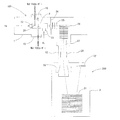
図1に、本実施例で用いた実験装置の概要を示す。この実験装置は、クラスター生成部100と、飛行時間型質量分析部(TOF-MS)200とからなる。
Example 1
FIG. 1 shows an outline of the experimental apparatus used in this example. This experimental apparatus includes a
クラスター生成部100は、有底筒状のメインチャンバー1と、メインチャンバー1内に配置された成長管2とからなる。成長管2の上流側には、蒸発源である金属Nbからなる直径5mmの棒状のNbロッド20と、金属Vからなる直径5mmの棒状のVロッド21とが回転可能に保持されている。また成長管2には、Heガスが供給されるHe供給口22と、H2ガスが供給されるH2供給口23が形成されている。He供給口22はNbロッド20及びVロッド21の上流側で成長管2の軸方向にHeを供給可能に形成され、H2供給口23はNbロッド20及びVロッド21の下流側で成長管2の軸方向に対して垂直方向にH2を供給可能に形成されている。
The
またメインチャンバー1には、Nbロッド20及びVロッド21にそれぞれ対向する位置に一対の窓部10、11が形成され、Nd:YAGレーザーが窓部10、11を介してNbロッド20及びVロッド21にそれぞれ照射可能に配置されている。
The
成長管2の下流側には、スキマー24とイオンレンズ25がそれぞれ配置され、その下流側には、メインチャンバー1からその軸方向に対して垂直方向に分岐してメインチャンバー1と連通する飛行管12を有している。飛行管12の内部には、加速電極26とポテンシャルスイッチ27が列設され、ポテンシャルスイッチ27のさらに下流側には偏向板28が配置されている。
A
飛行時間型質量分析部200は、飛行管12に連通する副チャンバー3を備える。副チャンバー3の内部には、偏向板28の下流側に偏向電極30が配置され、その下流側にはリフレクトロン31が配置されている。そしてリフレクトロン31に対向する部位には、MCP(Micro Channel Plate)32が配置されている。
The time-of-
以下、上記実験装置を用いてNbとVからなる二成分系クラスターを生成し、質量分析により各クラスターの組成を同定した。先ず図示しないターボ分子ポンプとロータリーポンプを用い、メインチャンバー1、飛行管12、副チャンバー3の排気を行った。装置内の真空度は、メインチャンバー1内で1.3×10⁻¹Pa〜1.3×10⁻³Paであり、飛行管12と副チャンバー3の内部では1.3×10⁻³Pa〜1.3×10⁻⁴Paである。
Hereinafter, a binary cluster composed of Nb and V was generated using the experimental apparatus, and the composition of each cluster was identified by mass spectrometry. First, the
次いでNd:YAGレーザーの第二高調波(532nm、10mJ/pulse)を10Hzのパルスで窓部10、11を介してNbロッド20及びVロッド21に照射し、Nb及びVを蒸発させるとともに、He供給口22からHeをキャリアガスとして0.9MPaの背圧で供給し、蒸気を冷却・凝集させることによってクラスターを生成した。
Next, the second harmonic of the Nd: YAG laser (532 nm, 10 mJ / pulse) is irradiated to the
生成したクラスター(正イオン)は、スキマー24とイオンレンズ25を通過してクラスタービームとなり、加速電極26によって加速されながら飛行管12に入り、ポテンシャルスイッチ27によって電位が0Vまで引き上げられた後、偏向板28で偏向されて飛行時間型質量分析部200に入る。
The generated cluster (positive ions) passes through the
飛行時間型質量分析部200では、クラスターがMCP32に到達するまでの時間を検出する。すなわち、クラスターが受け取るエネルギーは電荷量が等しければ一定であるため、質量電荷比が大きいものほど飛行速度が遅くなり、MCP32に到達するまで時間がかかる。この到達時間差を検出することで質量を割り出すことができる。
The time-of-
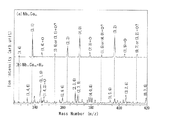
クラスタービームは偏向電極30を通過する際に流れ方向が曲げられ、リフレクトロン31で折り返されてMCP32に到達する。MCP32で観測された基スペクトルを図2の上段(a)に示す。NbとVからなる正イオンクラスターは、m/z<1200程度まで観測できた。同図からわかるように、Nb-V二成分クラスターの組成をNbnVm=(n,m)と表記すると、n+m≦10の組成において数多くの組成のクラスターが観測された。
When the cluster beam passes through the
次に、さらにH2供給口23から水素ガスを300KPaの圧力で供給したこと以外は上記と同様に行い、MCP32で観測された測定スペクトルを図2の下段(b)に示す。同図からわかるように、測定スペクトルには基スペクトルとは異なるピークが存在し、基スペクトルには存在しているが測定スペクトルでは消滅したピークもある。基スペクトルとは異なるピークは、NbnVmクラスターに水素が吸着したものであり、NbnVmHk=(n,m,k)と表記している。 Next, the measurement spectrum observed by MCP32 is shown in the lower part (b) of FIG. 2 except that hydrogen gas was further supplied from the H 2 supply port 23 at a pressure of 300 KPa. As can be seen from the figure, there are peaks different from the base spectrum in the measurement spectrum, and there are peaks that exist in the base spectrum but disappear in the measurement spectrum. The peak different from the base spectrum is a hydrogen adsorbed on the Nb n V m cluster and is expressed as Nb n V m H k = (n, m, k).
なお水素原子数で「2k」とあるのは、水素原子が2の倍数で複数吸着していることを示す。また水素原子数で「2」とあるのは、水素原子が2個のみ吸着していることを示す。すなわちクラスターがH2ガスと接触したことで水素を吸着し、それによって基スペクトルに存在していたピーク面積強度が減少するとともに質量大側に新たなピークが生成しているので、ピーク面積強度の変化度合いを水素の吸着性の指標とすることができる。 Note that “2k” in terms of the number of hydrogen atoms indicates that a plurality of hydrogen atoms are adsorbed in multiples of two. Further, “2” in the number of hydrogen atoms indicates that only two hydrogen atoms are adsorbed. That is, when the cluster is in contact with the H 2 gas, hydrogen is adsorbed, thereby reducing the peak area intensity existing in the base spectrum and generating a new peak on the larger mass side. The degree of change can be used as an index of hydrogen adsorption.
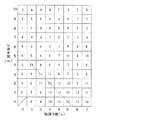
そこで基スペクトルに存在する各ピークについて、基スペクトルにおけるピーク面積強度に対する測定スペクトルにおけるピーク面積強度の割合を算出し、そのピークに対応するNbnVmクラスターのnとmの値について整理した結果を図3に示す。図3では、横軸にNbの原子数(n)をとり、縦軸にVの原子数(m)をとり、算出された割合を表1に示すように1〜13の数値に換算して示している。数値が大きいほど割合が小さく(ピークの変化度合いが大きく)水素の吸着特性に優れていることが示されている。 Therefore, for each peak present in the base spectrum, the ratio of the peak area intensity in the measurement spectrum to the peak area intensity in the base spectrum is calculated, and the results of arranging the values of n and m of the Nb n V m cluster corresponding to the peak are summarized. As shown in FIG. In FIG. 3, the horizontal axis represents the number of Nb atoms (n), the vertical axis represents the number of V atoms (m), and the calculated ratio is converted to a numerical value of 1 to 13 as shown in Table 1. Show. It is shown that the larger the numerical value, the smaller the ratio (the greater the degree of peak change), and the better the hydrogen adsorption characteristics.
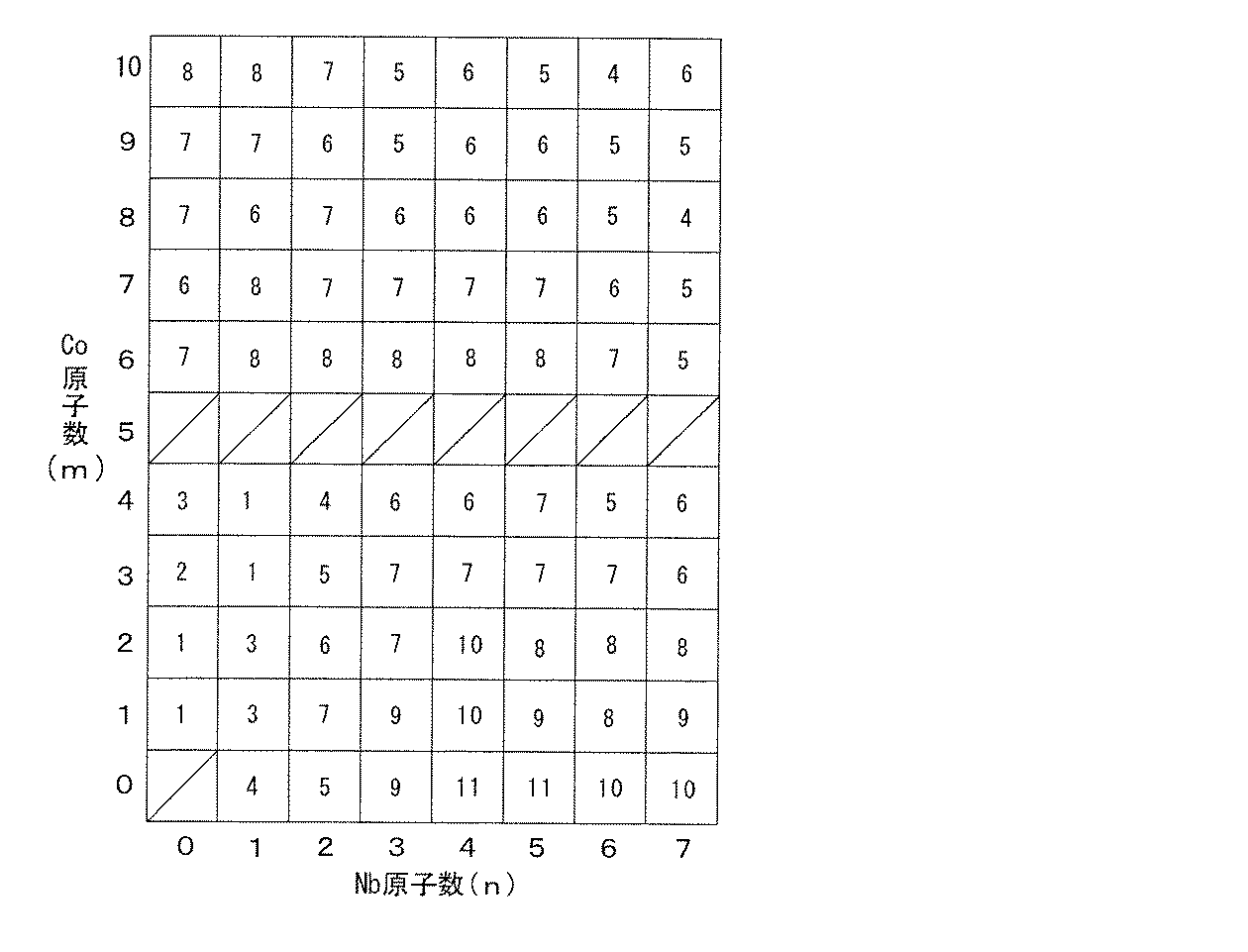
図3から、n+mの値が4〜6の範囲にある特定クラスターが水素の吸着特性に優れていることがわかり、破線で示したn+m=5の範囲にある特定クラスターが特に水素の吸着性が高いことが明らかである。したがってn+m=5の範囲にあるNbnVmクラスターを燃料電池の電極触媒に用いれば、微細なクラスターの表面に水素分子を吸着して、吸着点で分子から原子状態に解離させる可能性があるので、低い温度でも反応が起きやすく室温でも動作可能であり、Ptの代替触媒としてきわめて有用である。 From FIG. 3, it can be seen that a specific cluster having a value of n + m in the range of 4 to 6 is excellent in hydrogen adsorption characteristics, and a specific cluster in the range of n + m = 5 indicated by a broken line has particularly high hydrogen adsorptivity. Clearly high. Therefore, if Nb n V m clusters in the range of n + m = 5 are used as fuel cell electrode catalysts, hydrogen molecules may be adsorbed on the surface of fine clusters and dissociated from molecules to atomic states at the adsorption points. Therefore, the reaction easily occurs even at a low temperature and can be operated at room temperature, and is extremely useful as an alternative catalyst for Pt.
(実施例2)
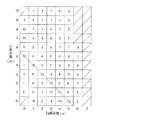
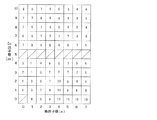
Nbロッドに代えて金属TaからなるTaロッドを用いたこと以外は実施例1と同様にして基スペクトルと測定スペクトルを測定し、実施例1と同様にして基スペクトルにおけるピーク面積強度に対する測定スペクトルにおけるピーク面積強度の割合を算出し、そのピークに対応するTanVmクラスターのnとmの値について実施例1と同様に整理した。結果を図4に示す。
(Example 2)
The base spectrum and the measurement spectrum were measured in the same manner as in Example 1 except that a Ta rod made of metal Ta was used instead of the Nb rod, and in the measurement spectrum with respect to the peak area intensity in the base spectrum as in Example 1. calculating a ratio of the peak area intensity was organized similarly to Ta n V m example 1 for the values of n and m in the cluster corresponding to that peak. The results are shown in FIG.
図4から、n+mの値が5の範囲にある特定クラスターが水素の吸着特性に優れていることが明らかである。したがってn+m=5の範囲にあるTanVmクラスターを燃料電池の電極触媒に用いれば、微細なクラスターの表面に水素分子を吸着して、吸着点で分子から原子状態に解離させるので、低い温度でも反応が起きやすく室温でも動作可能であり、Ptの代替触媒としてきわめて有用である。 From FIG. 4, it is clear that a specific cluster having a value of n + m in the range of 5 is excellent in hydrogen adsorption characteristics. Therefore the use of the Ta n V m clusters in the range of n + m = 5 in the electrode catalyst of the fuel cell, adsorbed hydrogen molecules to the surface of fine clusters, since dissociated into atomic state from the molecular adsorption point, low temperature However, it is easy to react and can be operated at room temperature, making it extremely useful as an alternative catalyst for Pt.
(実施例3)
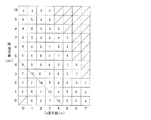
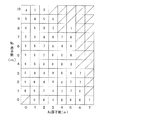
Vロッドに代えて金属TaからなるTaロッドを用いたこと以外は実施例1と同様にして基スペクトルと測定スペクトルを測定し、実施例1と同様にして基スペクトルにおけるピーク面積強度に対する測定スペクトルにおけるピーク面積強度の割合を算出し、そのピークに対応するTanNbmクラスターのnとmの値について実施例1と同様に整理した。結果を図5に示す。
(Example 3)
The base spectrum and the measurement spectrum were measured in the same manner as in Example 1 except that a Ta rod made of metal Ta was used in place of the V rod, and in the measurement spectrum for the peak area intensity in the base spectrum as in Example 1. calculating a ratio of the peak area intensity was organized similarly to Ta n Nb m example 1 for the values of n and m in the cluster corresponding to that peak. The results are shown in FIG.
図5から、n+mの値が4の範囲にある特定クラスターが水素の吸着特性に優れていることが明らかである。したがってn+m=4の範囲にあるTanNbmクラスターを燃料電池の電極触媒に用いれば、微細なクラスターの表面に水素分子を吸着して、吸着点で分子から原子状態に解離させるので、低い温度でも反応が起きやすく室温でも動作可能であり、Ptの代替触媒としてきわめて有用である。 From FIG. 5, it is clear that a specific cluster having a value of n + m in the range of 4 is excellent in hydrogen adsorption characteristics. Therefore the use of the Ta n Nb m clusters in the range of n + m = 4 in the electrode catalyst of the fuel cell, adsorbed hydrogen molecules to the surface of fine clusters, since dissociated into atomic state from the molecular adsorption point, low temperature However, it is easy to react and can be operated at room temperature, making it extremely useful as an alternative catalyst for Pt.
なお実施例1〜3では、周期表第5族元素から二元素を選択して二成分系クラスターを形成したが、いずれも原子数の合計が4〜6の範囲にある特定クラスターが水素の吸着特性に優れている。
In Examples 1 to 3, a binary cluster was formed by selecting two elements from
(実施例4)
Vロッドに代えて金属CoからなるCoロッドを用いたこと以外は実施例1と同様にして、基スペクトルと測定スペクトルを測定した。結果を図6に示す。そして実施例1と同様にして基スペクトルにおけるピーク面積強度に対する測定スペクトルにおけるピーク面積強度の割合を算出し、そのピークに対応するNbnComクラスターのnとmの値について実施例1と同様に整理した。結果を図7に示す。なおCo5とNb3Oの質量が等しいので、Co原子数が5の場合を図7から除外している。
Example 4
A base spectrum and a measurement spectrum were measured in the same manner as in Example 1 except that a Co rod made of metal Co was used instead of the V rod. The results are shown in FIG. The Example 1 and in the same manner to calculate the ratio of the peak area intensity in the measured spectrum to the peak area intensity in group spectrum, similarly to Nb n Co m Example 1 for the values of n and m in the cluster corresponding to that peak Tidy. The results are shown in FIG. Since the masses of Co 5 and Nb 3 O are equal, the case where the number of Co atoms is 5 is excluded from FIG.
図7から、Nb原子数(n)値が3以上でCo原子数(m)値が2以下の範囲にある特定クラスターが水素の吸着特性に優れる傾向が認められる。これは実施例1〜3の結果とは傾向を異にし、異族元素どうしのクラスターは同族元素どうしのクラスターとは異なる特性を示すようである。しかし特定クラスターは、複数種の特定元素の組成が特定の範囲にあることには変わりがない。 From FIG. 7, it is recognized that the specific cluster in which the number of Nb atoms (n) value is 3 or more and the number of Co atoms (m) value is 2 or less tends to be excellent in hydrogen adsorption characteristics. This is different from the results of Examples 1 to 3, and the clusters of different elements seem to exhibit different characteristics from the clusters of the same elements. However, the specific cluster does not change that the composition of a plurality of specific elements is in a specific range.
(実施例5)
Vロッドに代えて金属AuからなるAuロッドを用いたこと以外は実施例1と同様にして基スペクトルと測定スペクトルを測定し、実施例1と同様にして基スペクトルにおけるピーク面積強度に対する測定スペクトルにおけるピーク面積強度の割合を算出し、そのピークに対応するAunNbmクラスターのnとmの値について実施例1と同様に整理した。結果を図8に示す。
(Example 5)
The base spectrum and the measurement spectrum were measured in the same manner as in Example 1 except that an Au rod made of metal Au was used instead of the V rod, and in the measurement spectrum for the peak area intensity in the base spectrum in the same manner as in Example 1. The ratio of the peak area intensity was calculated, and the values of n and m of the Au n Nb m cluster corresponding to the peak were arranged in the same manner as in Example 1. The results are shown in FIG.
図8から、Au原子数(n)値が5以下でNb原子数(m)値が3〜5の範囲にある特定クラスターが水素の吸着特性に優れる傾向が認められ、Au原子数(n)値が2〜4でNb原子数(m)値が3の範囲にある特定クラスターが特に好ましいことがわかる。 From FIG. 8, it is recognized that the specific cluster in which the number of Au atoms (n) is 5 or less and the number of Nb atoms (m) is in the range of 3 to 5 tends to be excellent in hydrogen adsorption characteristics, and the number of Au atoms (n) It can be seen that specific clusters having a value of 2 to 4 and a number of Nb atoms (m) in the range of 3 are particularly preferred.
本発明の触媒活性評価方法は、触媒特性を示すと考えられる複数の金属元素から、最適な組み合わせを容易に選別できる。したがって資源の枯渇化が懸念されている高価な貴金属触媒に代わる触媒を素早く発見することができ、触媒の分野における進歩に大きく貢献するものである。 The catalytic activity evaluation method of the present invention can easily select an optimal combination from a plurality of metal elements considered to exhibit catalytic properties. Therefore, it is possible to quickly find a catalyst that replaces an expensive noble metal catalyst that is concerned about the depletion of resources, and greatly contributes to progress in the field of catalysts.
また本発明のクラスター触媒は、燃料電池の電極触媒としてきわめて有用であるが、水素吸蔵触媒として排ガス浄化用触媒の分野にも用いることができる。 The cluster catalyst of the present invention is extremely useful as an electrode catalyst for fuel cells, but can also be used in the field of exhaust gas purification catalysts as hydrogen storage catalysts.
1:メインチャンバー 2:成長管
20:Nbロッド(蒸発源) 21:Vロッド(蒸発源)
27:ポテンシャルスイッチ 31:リフレクトロン
32:MCP 100:クラスター生成部
200:飛行時間型質量分析部
1: Main chamber 2: Growth tube
20: Nb rod (evaporation source) 21: V rod (evaporation source)
27: Potential switch 31: Reflectron
32: MCP 100: Cluster generator
200: Time-of-flight mass spectrometry
Claims (5)
二種の該特定元素の金属を蒸発させて複数種のクラスターを生成させる工程と、
複数種の該クラスターの質量スペクトルを測定し基スペクトルとする工程と、
複数種の該クラスターに被吸着ガスを接触させた後の質量スペクトルを測定し測定スペクトルとする工程と、
該測定スペクトルと該基スペクトルとを比較し該被吸着ガスの接触前後における複数種の該クラスターの量的変化を解析する解析工程と、
該量的変化が所定値以上であるクラスターの触媒活性を高いと評価し特定クラスターとして選別するとともに、該特定クラスターを構成する二種の該特定元素の原子数をそれぞれ求める選別工程と、からなることを特徴とする触媒活性評価方法。 A method for evaluating the catalytic activity of a cluster consisting of atoms of two specific elements selected from Nb, V and Ta, a specific element consisting of Nb and Co, or a specific element consisting of Au and Nb ,
A step of evaporating two kinds of metals of the specific element to form a plurality of kinds of clusters;
Measuring a mass spectrum of the plurality of types of clusters to form a base spectrum;
A step of measuring a mass spectrum after bringing the adsorbed gas into contact with the plurality of types of clusters to obtain a measurement spectrum;
An analysis step of comparing the measured spectrum with the base spectrum and analyzing quantitative changes of the plurality of types of clusters before and after contact with the adsorbed gas;
A screening step in which the catalytic activity of the cluster having a quantitative change equal to or greater than a predetermined value is evaluated as high and selected as a specific cluster, and the number of atoms of the two specific elements constituting the specific cluster is respectively determined. A method for evaluating catalytic activity.
Nb、V及びTaから選ばれる二種の特定元素の原子からなり前記特定クラスターを構成する二種の該特定元素の原子数の和が4〜6の範囲にあるか、又はNbとCoからなる特定元素の原子からなり前記特定クラスターにおけるNbの原子数が3以上かつCoの原子数が2以下であるか、又はAuとNbからなる特定元素の原子からなり前記特定クラスターにおけるAuの原子数が5以下かつNbの原子数が3〜5の範囲にあることを特徴とするクラスター触媒。 A cluster catalyst evaluated as having high catalytic activity by the catalytic activity evaluation method according to claim 1,
It consists of atoms of two kinds of specific elements selected from Nb, V and Ta, and the sum of the number of atoms of the two kinds of specific elements constituting the specific cluster is in the range of 4 to 6, or consists of Nb and Co The number of Nb atoms in the specific cluster is 3 or more and the number of Co atoms is 2 or less, or the number of Au atoms in the specific cluster is composed of atoms of the specific element consisting of Au and Nb. A cluster catalyst having 5 or less and the number of Nb atoms in the range of 3 to 5 .
Priority Applications (1)
| Application Number | Priority Date | Filing Date | Title |
|---|---|---|---|
| JP2008196854A JP5259293B2 (en) | 2008-07-30 | 2008-07-30 | Catalyst activity evaluation method and cluster catalyst |
Applications Claiming Priority (1)
| Application Number | Priority Date | Filing Date | Title |
|---|---|---|---|
| JP2008196854A JP5259293B2 (en) | 2008-07-30 | 2008-07-30 | Catalyst activity evaluation method and cluster catalyst |
Publications (2)
| Publication Number | Publication Date |
|---|---|
| JP2010032438A JP2010032438A (en) | 2010-02-12 |
| JP5259293B2 true JP5259293B2 (en) | 2013-08-07 |
Family
ID=41737075
Family Applications (1)
| Application Number | Title | Priority Date | Filing Date |
|---|---|---|---|
| JP2008196854A Expired - Fee Related JP5259293B2 (en) | 2008-07-30 | 2008-07-30 | Catalyst activity evaluation method and cluster catalyst |
Country Status (1)
| Country | Link |
|---|---|
| JP (1) | JP5259293B2 (en) |
Families Citing this family (1)
| Publication number | Priority date | Publication date | Assignee | Title |
|---|---|---|---|---|
| JP6050501B2 (en) * | 2013-12-18 | 2016-12-21 | 功平 田口 | Metal-based structure or nanoparticles containing hydrogen, and method for producing the same |
Family Cites Families (6)
| Publication number | Priority date | Publication date | Assignee | Title |
|---|---|---|---|---|
| JP4070992B2 (en) * | 2001-12-18 | 2008-04-02 | トヨタ自動車株式会社 | Reaction analysis method, reaction analysis apparatus, catalyst production method, and catalyst |
| JP4185694B2 (en) * | 2002-02-26 | 2008-11-26 | トヨタ自動車株式会社 | Catalyst production method and catalyst |
| JP2006202687A (en) * | 2005-01-24 | 2006-08-03 | Asahi Kasei Corp | Metal cluster fuel cell electrode catalyst |
| JP4386045B2 (en) * | 2006-03-01 | 2009-12-16 | トヨタ自動車株式会社 | Method for producing supported catalyst |
| JP4984678B2 (en) * | 2006-06-28 | 2012-07-25 | 株式会社日立製作所 | CO oxidation method |
| JP5059378B2 (en) * | 2006-11-10 | 2012-10-24 | 株式会社日立製作所 | Fuel cell electrode catalyst, method for producing the same, and fuel cell |
-
2008
- 2008-07-30 JP JP2008196854A patent/JP5259293B2/en not_active Expired - Fee Related
Also Published As
| Publication number | Publication date |
|---|---|
| JP2010032438A (en) | 2010-02-12 |
Similar Documents
| Publication | Publication Date | Title |
|---|---|---|
| Jusys et al. | Composition and activity of high surface area PtRu catalysts towards adsorbed CO and methanol electrooxidation—: A DEMS study | |
| Bittins-Cattaneo et al. | New developments in electrochemical mass spectroscopy | |
| Shi et al. | Controllable CO2 conversion in high performance proton conducting solid oxide electrolysis cells and the possible mechanisms | |
| Limbach et al. | Observation of the doubly charged, gas-phase fullerene anions C602-and C702 | |
| JP4724783B1 (en) | Carbon dioxide reduction method, carbon dioxide reduction catalyst and carbon dioxide reduction device used therefor | |
| Smolinka et al. | CO2 reduction on Pt electrocatalysts and its impact on H2 oxidation in CO2 containing fuel cell feed gas–A combined in situ infrared spectroscopy, mass spectrometry and fuel cell performance study | |
| Kunz et al. | Size-selected clusters as heterogeneous model catalysts under applied reaction conditions | |
| JP4907745B2 (en) | How to reduce carbon dioxide | |
| JP2017200674A (en) | Oxidation catalyst | |
| JPWO2011135782A1 (en) | How to reduce carbon dioxide | |
| JP4185694B2 (en) | Catalyst production method and catalyst | |
| JP2010032438A (en) | Catalytic activity evaluation method and cluster catalyst | |
| Hubkowska et al. | Characterization and electrochemical behavior of Pd-rich Pd-Ru alloys | |
| Cha et al. | Selectively oxygen reduction reaction and strongly suppressed CO poisoning on PtZn nanoalloys decorated on N-doped carbon sphere | |
| Theußl et al. | Early-stage performance change of gas diffusion electrodes for CO2 electroreduction to formate | |
| Delchar et al. | Adsorbate Effects in Electron Ejection by Rare‐Gas Metastable Atoms | |
| Rodrı́guez et al. | DEMS study on the adsorption and reactivity of benzyl alcohol on palladium and platinum | |
| Christmann | Thermodynamics and kinetics of adsorption | |
| Poplavsky et al. | Ion beam formation of electrocatalysts for direct methanol and ethanol fuel cells on the basis of carbon catalyst supports | |
| Page | Combinatorial Studies of Noble Metal Catalysts for Carbon Utilization | |
| JP7854690B2 (en) | Carbon materials, catalysts, dispersions, electrodes, batteries, and electrolysis apparatus | |
| Jahromi | Synthesis, characterization and testing of graphene-based materials for proton-exchange membrane fuel cell catalysts | |
| Shirzadi Jahromi | Synthesis, Characterization and Testing of Graphene-Based Materials for Proton-Exchange Membrane Fuel Cell Catalysts | |
| Mu et al. | Synergetic effect of WC/Porous graphite carbon supports on electrocatalytic reactivity of Pt for methanol electrooxidation | |
| Pajootan | Surface Modification of Multi-Walled Carbon Nanotubes Directly Grown On a Stainless Steel Mesh for Energy Storage and Conversion |
Legal Events
| Date | Code | Title | Description |
|---|---|---|---|
| A711 | Notification of change in applicant |
Free format text: JAPANESE INTERMEDIATE CODE: A711 Effective date: 20101222 |
|
| A521 | Request for written amendment filed |
Free format text: JAPANESE INTERMEDIATE CODE: A821 Effective date: 20101222 |
|
| A621 | Written request for application examination |
Free format text: JAPANESE INTERMEDIATE CODE: A621 Effective date: 20110119 |
|
| A977 | Report on retrieval |
Free format text: JAPANESE INTERMEDIATE CODE: A971007 Effective date: 20120828 |
|
| A131 | Notification of reasons for refusal |
Free format text: JAPANESE INTERMEDIATE CODE: A131 Effective date: 20120904 |
|
| A521 | Request for written amendment filed |
Free format text: JAPANESE INTERMEDIATE CODE: A523 Effective date: 20121101 |
|
| TRDD | Decision of grant or rejection written | ||
| A01 | Written decision to grant a patent or to grant a registration (utility model) |
Free format text: JAPANESE INTERMEDIATE CODE: A01 Effective date: 20130402 |
|
| A61 | First payment of annual fees (during grant procedure) |
Free format text: JAPANESE INTERMEDIATE CODE: A61 Effective date: 20130424 |
|
| FPAY | Renewal fee payment (event date is renewal date of database) |
Free format text: PAYMENT UNTIL: 20160502 Year of fee payment: 3 |
|
| R150 | Certificate of patent or registration of utility model |
Ref document number: 5259293 Country of ref document: JP Free format text: JAPANESE INTERMEDIATE CODE: R150 Free format text: JAPANESE INTERMEDIATE CODE: R150 |
|
| R250 | Receipt of annual fees |
Free format text: JAPANESE INTERMEDIATE CODE: R250 |
|
| R250 | Receipt of annual fees |
Free format text: JAPANESE INTERMEDIATE CODE: R250 |
|
| R250 | Receipt of annual fees |
Free format text: JAPANESE INTERMEDIATE CODE: R250 |
|
| R250 | Receipt of annual fees |
Free format text: JAPANESE INTERMEDIATE CODE: R250 |
|
| R250 | Receipt of annual fees |
Free format text: JAPANESE INTERMEDIATE CODE: R250 |
|
| R250 | Receipt of annual fees |
Free format text: JAPANESE INTERMEDIATE CODE: R250 |
|
| R250 | Receipt of annual fees |
Free format text: JAPANESE INTERMEDIATE CODE: R250 |
|
| LAPS | Cancellation because of no payment of annual fees |