JP5073777B2 - Composition containing Yunnan bitter tea ingredients - Google Patents
Composition containing Yunnan bitter tea ingredients Download PDFInfo
- Publication number
- JP5073777B2 JP5073777B2 JP2010103708A JP2010103708A JP5073777B2 JP 5073777 B2 JP5073777 B2 JP 5073777B2 JP 2010103708 A JP2010103708 A JP 2010103708A JP 2010103708 A JP2010103708 A JP 2010103708A JP 5073777 B2 JP5073777 B2 JP 5073777B2
- Authority
- JP
- Japan
- Prior art keywords
- bitter tea
- yunnan bitter
- extract
- yunnan
- tea extract
- Prior art date
- Legal status (The legal status is an assumption and is not a legal conclusion. Google has not performed a legal analysis and makes no representation as to the accuracy of the status listed.)
- Expired - Fee Related
Links
- 0 C[C@@](*)(C(C(C1O)OC)O)OC1OC(C(C(OCCc(cc1)ccc1O)OC1CO)O)*1OC(C=Cc(cc1)ccc1O)=O Chemical compound C[C@@](*)(C(C(C1O)OC)O)OC1OC(C(C(OCCc(cc1)ccc1O)OC1CO)O)*1OC(C=Cc(cc1)ccc1O)=O 0.000 description 1
Images
Landscapes
- Medicines That Contain Protein Lipid Enzymes And Other Medicines (AREA)
- Pharmaceuticals Containing Other Organic And Inorganic Compounds (AREA)
- Medicines Containing Plant Substances (AREA)
- Acyclic And Carbocyclic Compounds In Medicinal Compositions (AREA)
Description
本発明は、雲南苦丁茶より得られるポリフェノール成分を主要成分とする雲南苦丁茶成分含有エキスを有効成分とする組成物に関する。さらに詳しく言えば、抗酸化活性及びアルドース還元酵素阻害活性を有し、生体に対する過酸化脂質抑制、コレステロール低下、中性脂質低下、高脂血症改善、糖尿病改善、学習機能改善、脳機能改善、痴呆症の予防等各種生活習慣病の治療及び予防に有用な医薬組成物及び健康食品組成物に関する。 The present invention relates to a composition comprising, as an active ingredient, an extract containing Yunnan bitter tea component, the main component of which is a polyphenol component obtained from Yunnan bitter tea. More specifically, it has antioxidant activity and aldose reductase inhibitory activity, lipid peroxide suppression for the living body, cholesterol lowering, neutral lipid lowering, hyperlipidemia improvement, diabetes improvement, learning function improvement, brain function improvement, The present invention relates to a pharmaceutical composition and a health food composition useful for the treatment and prevention of various lifestyle-related diseases such as prevention of dementia.
今日、食生活の変化による脂肪摂取過多が原因で、高脂血症、高コレステロール血症患者が増加しており、これらが脳、心臓、肝臓等の臓器障害を引起し、一般に生活習慣病と呼ばれる高血圧、糖尿病、癌等の疾病の原因ともなっている。また、アレルギー患者、痴呆症など脳疾患等の患者も増加しつつあり、特に今後高齢化社会を迎え、これらの疾患、特に痴呆、アルツハイマー症候群の患者が増えることが危惧されている。その要因には生体内で生成される活性酸素種の関与が指摘されているが、活性酸素種の完全な生成抑制ないし制御技術は十分開発されておらず、従って現状では脳疾患等に有効・確実な予防及び治療技術は確立していない。 Today, patients with hyperlipidemia and hypercholesterolemia are increasing due to excessive fat intake due to changes in dietary habits. These cause organ damage such as brain, heart, liver, etc. It is also the cause of diseases such as hypertension, diabetes, and cancer. In addition, allergic patients and patients with brain diseases such as dementia are increasing, and there is a concern that the number of patients with these diseases, particularly dementia and Alzheimer's syndrome, will increase especially in the future. The cause of this is the involvement of reactive oxygen species generated in vivo, but no complete generation suppression or control technology for reactive oxygen species has been fully developed. Certain prevention and treatment techniques have not been established.
近年、植物等に存在し生理活性を示す天然物質についての関心が高まっている。
中国では古くから苦丁茶と呼ばれる茶が飲用されている。苦丁茶は中国長江以南地方、雲南省等で一般に生産されて、モチノキ科(Aquifoliaceae)やモクセイ科(Oleaceae)の植物を起源とし、その葉を乾燥し蒸して茶としたものである。通常の茶と同様、葉に湯を注いで主に食後に飲用するが、その名の通り極めて強い苦みがある。原料として用いられる植物は産地によって変動があり、これまでに前記モチノキ科やモクセイ科植物を含む下記に示す5科5属10種が知られている。
In recent years, there has been an increasing interest in natural substances that exist in plants and exhibit physiological activity.
In China, tea has been drunk for a long time. Biting tea is generally produced in the southern region of China's Yangtze River, Yunnan Province, etc., and originates from plants of Aquifoliaceae and Oleaceae, and its leaves are dried and steamed to make tea. As with regular tea, hot water is poured into the leaves and it is drunk mainly after meals. Plants used as raw materials vary depending on the place of production. So far, the following 5 families, 5 genera and 10 species including the aforementioned aceae and oleaceae plants have been known.
(1)紫茎女貞(学名:Ligustrum purpurascens Y.C.Yang.,科名:モクセイ科(Oleaceae),産地:雲南)
(2)序梗女貞(学名:Ligustrum pedunculare Rehd.,科名:モクセイ科(Oleaceae),産地:四川)
(3)日本毛女貞(学名:L.japonicum var.pubescens Koidz.,科名:モクセイ科(Oleaceae),産地:貴州)
(4)粗壮女貞(学名:L.robustum (Roxb.) Bl.,科名:モクセイ科(Oleaceae),産地:貴州)
(5)枸骨(学名:Ilex cornuta Lindl. ex Paxt.,科名:モチノキ科(Aquifoliaceae),産地:浙江)
(6)苦丁茶冬青(学名:Ilex kudincha C.J.Tseng.,科名:モチノキ科(Aquifoliaceae),産地:広西)
(7)大葉冬青(学名:Ilex latifolia Thunb.,科名:モチノキ科(Aquifoliaceae),産地:浙江・湖南)
(8)毛葉牛黄木(学名:Cratoxylum prunifolium(Kurz)Dyer,科名:オトギリソウ科(Guttiferae),産地:広西)
(9)厚売樹(学名:Ehretia thysiflora(S.etZ.)Nakai,科名:ムラサキ科(Boraginaceae),産地:広西)
(10)石南(学名:Photinia serrulata Lindl.,科名:バラ科(Rosaceae),産地:浙江)
(1) Purple stem virgin (Scientific name: Ligustrum purpurascens YCYang., Family name: Oleaceae, Origin: Yunnan)
(2) Infamy Woman Sada (Scientific name: Ligustrum pedunculare Rehd., Family name: Oleaceae, Origin: Sichuan)
(3) Nihon Mao Sada (Scientific name: L.japonicum var.pubescens Koidz., Family name: Oleaceae, Origin: Guizhou)
(4) Ryoro Sada (Scientific name: L.robustum (Roxb.) Bl., Family name: Oleaceae, Origin: Guizhou)
(5) Ribs (Scientific name: Ilex cornuta Lindl. Ex Paxt., Family name: Aquifoliaceae, Origin: Zhejiang)
(6) Biting tea winter blue (scientific name: Ilex kudincha CJTseng., Department name: Aquifoliaceae, production area: Guangxi)
(7) Ooba Fuyuo (Scientific name: Ilex latifolia Thunb., Family name: Aquifoliaceae, Origin: Zhejiang, Hunan)
(8) Hairy beef yellowwood (Scientific name: Cratoxylum prunifolium (Kurz) Dyer, Family name: Hypericaceae (Guttiferae), Origin: Guangxi)
(9) Thick tree (scientific name: Ehretia thysiflora (S.etZ.) Nakai, family name: Boraginaceae, production area: Guangxi)
(10) Ishinan (Scientific name: Photinia serrulata Lindl., Family name: Rosaceae, Origin: Zhejiang)
苦丁茶はその産地によって特徴があり、例えば、一般に流通している前記(5)の枸骨(Ilex cornuta Lindl. ex Paxt.)や(6)の苦丁茶冬青(Ilex kudincha C.J.Tseng.)は強い苦みを有し、トリテルペンを主な有効成分とし、減脂、抗炎症作用があるといわれており、また、本発明の実施例で原料として使用している(1)の紫茎女貞(Ligustrum purpuracens Y.n OC.Yang)(以下、雲南苦丁茶と称する。)は、比較的柔らかな苦みを有し、古くから「風熱を散らし、頭目を清め、煩渇を除き、頭痛、歯痛、目赤、聹耳、熱病煩渇及び痢疾を治す」薬効が有るといわれている。 The bitter tea is characterized by its production area. For example, the ribs (Ilex cornuta Lindl. Ex Paxt.) And (6) bitter tea winter blue (Ilex kudincha CJTseng.) Has a strong bitterness, triterpene is the main active ingredient, and is said to have a fat-reducing and anti-inflammatory action, and also used as a raw material in the examples of the present invention (1) (Ligustrum purpuracens Yn OC.Yang) (hereinafter referred to as Yunnan bitter tea) has a relatively soft bitterness, and since ancient times, “wind disperses, cleans the eyes, eliminates thirst, headache, toothache It is said to have a medicinal effect that cures redness, ear loss, heat exhaustion, and diarrhea.
雲南苦丁茶の成分についてはこれまでにいくつかの報告がなされており、ポリフェノール類が含まれていることが明らかとなっている(例えば、H. E. Zheng-Dan et al., "Glycosides from Ligustrum purpurascens", Acta Botanica Yunnanica, 14(3), 328-336 (1992)(非特許文献1)等)。 There have been several reports on the ingredients of Yunnan bitter tea and it has been shown that polyphenols are contained (eg, HE Zheng-Dan et al., “Glycosides from Ligustrum purpurascens Acta Botanica Yunnanica, 14 (3), 328-336 (1992) (Non-Patent Document 1), etc.).
ポリフェノール化合物は植物の二次代謝産物として植物界に普遍的、かつ多種・多量に存在することが知られている。これらの化合物は多彩な生理活性を示す点で古くから薬学、植物化学の分野などにおいて、また近年、健康食品の分野において注目されている。そのうち、特に茶ポリフェノールについての研究が盛んに行われており、茶ポリフェノール、特にカテキン類において、抗菌、抗ウイルス、抗突然変異、抗酸化、血圧上昇抑制、血中コレステロール低下、抗う蝕、抗アレルギー、腸内フローラ改善、消臭など非常に広範な生理活性を有することが知られている。 Polyphenolic compounds are known to exist in the plant kingdom as a secondary metabolite of plants in a wide variety and in large quantities. These compounds have attracted attention for a long time in the fields of pharmacy, phytochemistry, etc., and in recent years in the field of health foods because they exhibit various physiological activities. Among them, research on tea polyphenols has been actively conducted, and tea polyphenols, especially catechins, have antibacterial, antiviral, antimutation, antioxidant, antihypertensive, blood cholesterol lowering, anticarious, antiallergic. It is known to have a very wide range of physiological activities such as intestinal flora improvement and deodorization.
雲南苦丁茶の利用については、成分を特定することなく、紫茎女貞(L.purpuracens)を用いた血清中の脂質バランス改善食品や医薬品に関する利用が提案されている(例えば、動脈硬化抑制剤及びこれを含有する組成物(特開平7-33672号公報(特許文献1)、3−ヒドロキシ−3−メチルグリタリルコエンザイムAリダクターゼ阻害活性剤(特開平9-67263号公報(特許文献2)、アシルコエンザイムAコレステロールアシルトランスフェラーゼ活性阻害剤及びそれを配合した組成物(特開平9-077676号公報(特許文献3)、フォスファチジルコリンステロールアシルトランスフェラーゼステロールAT活性促進剤及びそれを含有する組成物(特開平9-077678号公報(特許文献4))。
しかし、これまで雲南苦丁茶中の有効成分を特定し、その成分の生理活性作用に着目した利用例についての報告はない。
Regarding the use of Yunnan bitter tea, the use of L. purpuracens for serum lipid balance improvement foods and pharmaceuticals has been proposed (for example, suppression of arteriosclerosis) without specifying the ingredients. And a composition containing the same (Japanese Patent Laid-Open No. 7-33672 (Patent Document 1), 3-hydroxy-3-methylglutaryl coenzyme A reductase inhibitor (Japanese Patent Laid-Open No. 9-67263 (Patent Document 2)) , Acylcoenzyme A cholesterol acyltransferase activity inhibitor and composition containing the same (JP 9-077676 A (patent document 3), phosphatidylcholine sterol acyltransferase sterol AT activity promoter and composition containing the same (Japanese Patent Laid-Open No. 9-077678 (Patent Document 4)).
However, there has been no report on an example of use in which an active ingredient in Yunnan bitter tea has been identified and focused on the physiological activity of the ingredient.
このように、今後予想される高齢化社会とそれに付随する疾病を治療、予防するにあたり、食品または食品に準ずるものから有効成分を見出すことが考えられる。そのような中、本発明の課題は、長期間の飲用経験があり、食品として既に安全性が確認されている雲南苦丁茶に含まれる生理活性成分の未知の作用を探索し、その作用を有効利用した医薬組成物及び健康食品組成物を提供することにある。 Thus, it is conceivable to find an active ingredient from a food or something similar to food in the treatment and prevention of an aging society expected in the future and the diseases associated therewith. Under such circumstances, the problem of the present invention is to search for an unknown action of a physiologically active ingredient contained in Yunnan bitter tea that has been drunk for a long time and has already been confirmed to be safe as food. It is to provide a pharmaceutical composition and a health food composition that are effectively utilized.
本発明者らは、雲南苦丁茶を水及び/または有機溶剤の混合物で抽出処理して得られる抽出物について鋭意検討した結果、その抽出物がポリフェノール成分を多量に含み、かつ抗酸化活性(ラジカル消去作用)及びアルドース還元酵素阻害活性を有することを初めて見出し、さらに血中の過酸化脂質の減少、血中SOD(スーパーオキシドディスムターゼ)活性の上昇、血中コレステロール及び中性脂肪の低下、血糖値の低下作用を有することを確認した。これら本発明者らが今回見出した作用は、生体の過酸化脂質抑制、コレステロール低下、中性脂質低下、高脂血症改善、糖尿病改善、学習機能改善、脳機能改善、痴呆症の予防等各種生活習慣病の治療及び予防に有効な作用であり、これらの知見に基づいて本発明を完成した。 As a result of intensive studies on an extract obtained by extracting Yunnan bitter tea with a mixture of water and / or an organic solvent, the present inventors have found that the extract contains a large amount of a polyphenol component and has an antioxidant activity ( It has been found for the first time that it has radical scavenging action and aldose reductase inhibitory activity, and also decreases blood lipid peroxide, increases blood SOD (superoxide dismutase) activity, decreases blood cholesterol and triglycerides, blood sugar It was confirmed to have a lowering effect. These actions that the present inventors have found this time include various lipid peroxidation suppression, cholesterol lowering, neutral lipid lowering, hyperlipidemia improvement, diabetes improvement, learning function improvement, brain function improvement, prevention of dementia, etc. This is an effective action for the treatment and prevention of lifestyle-related diseases, and the present invention has been completed based on these findings.
すなわち、本発明は以下の雲南苦丁茶成分を含有する組成物に関する。
1.雲南苦丁茶を、水または有機溶剤単独、またはそれらの混合物で抽出処理して得られるポリフェノール成分を主要成分とする雲南苦丁茶成分含有抽出物であって、抗酸化活性及び/またはアルドース還元酵素阻害活性を有する成分を有効成分とする組成物。
2.雲南苦丁茶としてモクセイ科リグストルム(Ligustrum)属植物を使用する前項1記載の組成物。
3.モクセイ科リグストルム(Ligustrum)属植物が紫茎女貞(リグストルム・プルプラセンス;Ligustrum purpurascens Y.C.Yang)である前項2記載の組成物。
4.生活習慣病の治療及び/または予防用の医薬組成物である前項1乃至3のいずれかに記載の組成物。
5.生体に対する過酸化脂質抑制、コレステロール低下、中性脂質低下、高脂血症改善、糖尿病改善、学習機能改善、脳機能改善、または痴呆症予防の作用を有する前項4記載の医薬品組成物。
6.生活習慣病が、糖尿病及びその合併症である前項5記載の医薬品組成物。
7.生活習慣病の改善及び/また予防用の健康食品組成物である前項1乃至3のいずれかに記載の組成物。
8.生体に対する過酸化脂質抑制、コレステロール低下、中性脂質低下、高脂血症改善、糖尿病改善、学習機能改善、脳機能改善、または痴呆症予防の作用を有する前項7記載の健康食品組成物。
9.生活習慣病が、糖尿病及びその合併症である前項8記載の健康食品組成物。
That is, this invention relates to the composition containing the following Yunnan bitter tea components.
1. A Yunnan bitter tea component-containing extract mainly composed of a polyphenol component obtained by extracting Yunnan bitter tea with water or an organic solvent alone or a mixture thereof, and having antioxidant activity and / or aldose reduction A composition comprising an ingredient having enzyme inhibitory activity as an active ingredient.
2. 2. The composition according to item 1, wherein a plant belonging to the genus Ligustrum is used as Yunnan bitter tea.
3. 3. The composition according to
4). 4. The composition according to any one of items 1 to 3, which is a pharmaceutical composition for treatment and / or prevention of lifestyle-related diseases.
5. 5. The pharmaceutical composition according to
6). 6. The pharmaceutical composition according to 5 above, wherein the lifestyle-related disease is diabetes and its complications.
7). 4. The composition according to any one of items 1 to 3, which is a health food composition for improving and / or preventing lifestyle-related diseases.
8). 8. The health food composition according to 7 above, which has an action of inhibiting lipid peroxide, lowering cholesterol, neutral lipid, improving hyperlipidemia, improving diabetes, improving learning function, improving brain function, or preventing dementia on a living body.
9. 9. The health food composition according to 8 above, wherein the lifestyle-related disease is diabetes and its complications.
本発明は、長期間の飲用経験があり、食品として既に安全性が確認されている雲南苦丁茶を抽出処理したエキス及び適宜分画した画分を有効成分とする組成物を提供するものである。本発明により、雲南苦丁茶から優れた酸化変性抑制、脂質過酸化抑制等の効果を示す組成物を生産できる。本発明による組成物は、医薬品、食品、化粧品として安全に利用できる。 The present invention provides an extract obtained by extracting Yunnan bitter tea, which has been drunk for a long time and has already been confirmed as safe as a food, and a composition comprising an appropriately fractionated fraction as an active ingredient. is there. According to the present invention, it is possible to produce a composition exhibiting excellent effects such as inhibition of oxidative denaturation and lipid peroxidation from Yunnan bitter tea. The composition according to the present invention can be safely used as pharmaceuticals, foods and cosmetics.
以下、本発明を詳しく説明する。
本発明における雲南苦丁茶成分含有抽出物は、雲南苦丁茶を水または有機溶媒単独、またはこれらの混合物で抽出し、ろ過、濃縮等の処理を経て得られたエキス(抽出物)、またはこれを吸着、分離、溶出などの処理をしたものである。
The present invention will be described in detail below.
The Yunnan bitter tea component-containing extract in the present invention is an extract (extract) obtained by extracting Yunnan bitter tea with water or an organic solvent alone, or a mixture thereof, and performing a treatment such as filtration and concentration, or This is processed by adsorption, separation, elution and the like.
抽出に際しては、水、アルコール類、親水性有機溶媒、またはこれらの混合物等が用いられるが、抽出エキスを食品、医薬品等に利用する場合は、人体に悪影響を及ぼさない溶媒が用いられる。
抽出は通常、常圧または加圧下で常温ないし60℃程度で1〜3時間行われるが、必要により抽出温度を70〜90℃に上げてもよく、抽出時間も1時間以下の短時間、あるいは3時間以上で行ってもよい。抽出処理後、ろ過あるいは遠心分離等の適宜の手段で抽出液を回収し、必要により溶媒除去、エキス分の濃縮、乾燥、粉末化等の処理を行う。
In the extraction, water, alcohols, hydrophilic organic solvents, or a mixture thereof is used. When the extract is used for food, medicine, etc., a solvent that does not adversely affect the human body is used.
The extraction is usually performed at normal temperature or under pressure at normal temperature to about 60 ° C. for 1 to 3 hours, but if necessary, the extraction temperature may be raised to 70 to 90 ° C., and the extraction time may be as short as 1 hour or less, or It may be performed in 3 hours or more. After the extraction treatment, the extract is recovered by appropriate means such as filtration or centrifugation, and if necessary, treatments such as solvent removal, concentration of the extract, drying, and powdering are performed.
このようにして得られる雲南苦丁茶成分含有抽出物は、後述の試験結果に示されるようにAAPH(2,2’−アゾビス(2−アミノプロパン)ジヒドロクロリド)及びDDPH(1,1−ジフェニル−2−ピクリルヒドラジル)を用いた試験で強いラジカル消去作用を示し、糖尿病モデル動物を用いた試験ではコントロール群に対して有意に血糖値を低下させ、糖尿病の合併症において水晶体、網膜、末梢神経、腎臓及び血管等の組織に出現するアルドース還元酵素(aldose reductase)を阻害する作用を有することが確認された。また、ボランティアに対する投与試験で雲南苦丁茶成分含有抽出物には抗酸化作用、血清中コレステロール低下作用及び中性脂肪低減作用を有することが確認された。 The Yunnan bitter tea component-containing extract thus obtained has AAPH (2,2′-azobis (2-aminopropane) dihydrochloride) and DDPH (1,1-diphenyl) as shown in the test results described below. -2-picrylhydrazyl) showed a strong radical scavenging action, and in a test using a diabetic model animal, the blood glucose level was significantly reduced compared to the control group. It was confirmed to have an action of inhibiting aldose reductase appearing in tissues such as peripheral nerves, kidneys and blood vessels. Moreover, it was confirmed by the administration test with respect to a volunteer that the extract containing a Yunnan bitter tea component has an antioxidant action, a serum cholesterol lowering action, and a neutral fat reducing action.
また、エキスの各種クロマトグラフィーによる分画精製を試み、種々のポリフェノール化合物を特定した。すなわち、ポリフェノール化合物画分の精製は抽出エキスを吸着剤で処理することにより行った。吸着剤としては、スチレン−ジビニルベンゼン系吸着剤、メタクリル酸系吸着剤、親水性ビニルポリマー、修飾デキストランゲル、ポリアクリルアミドゲル、逆相系シリカゲル、イオン交換樹脂等が用いられる。これらの吸着剤を用いる場合には、これに吸着する画分(以下、吸着画分とする。)にポリフェノール化合物及び未知の活性成分が含まれている。この吸着画分を含水アルコール、アルコール、含水アセトン等で溶出させることにより種々のポリフェノール化合物を確認した(後述の製造例1の分画精製の項参照)。 In addition, fraction purification by various chromatography of the extract was attempted, and various polyphenol compounds were identified. That is, the polyphenol compound fraction was purified by treating the extract with an adsorbent. As the adsorbent, styrene-divinylbenzene adsorbent, methacrylic acid adsorbent, hydrophilic vinyl polymer, modified dextran gel, polyacrylamide gel, reverse phase silica gel, ion exchange resin and the like are used. When these adsorbents are used, a polyphenol compound and an unknown active ingredient are contained in a fraction adsorbed thereto (hereinafter referred to as an adsorbed fraction). By eluting the adsorbed fraction with hydrous alcohol, alcohol, hydrous acetone or the like, various polyphenol compounds were confirmed (see the section of fraction purification in Production Example 1 described later).
従って、本発明による雲南苦丁茶成分含有抽出物を有効成分とする組成物は、生体内の過酸化脂質抑制、血中コレステロール及び中性脂肪低下、高脂血症改善、糖尿病改善等の効果を有するほか、生体内の過酸化脂質生成抑制効果、すなわち生体内での抗酸化効果によって臓器等の障害や老化を防ぐ効果を有し、特に、糖尿病及びその合併症の治療及び予防に有用であり、さらに脳の老化に起因すると考えられる痴呆症等の脳障害の抑制・防止やその治療にも有効と考えられる。同時に脳機能の改善により、学習機能の向上、イライラ減少、不眠症解消、落着き回復等の効果をも期待できる。
従って本発明の組成物は医薬組成物及び健康食品組成物として利用することができる。
Therefore, the composition containing the extract containing Yunnan bitter tea component according to the present invention as an active ingredient is effective in suppressing lipid peroxide in vivo, lowering blood cholesterol and neutral fat, improving hyperlipidemia, improving diabetes, etc. In addition, it has the effect of inhibiting the production of lipid peroxides in vivo, that is, the effect of preventing injuries and aging of organs and the like by in vivo antioxidant effects, and is particularly useful for the treatment and prevention of diabetes and its complications. In addition, it is also considered effective for the suppression and prevention of brain disorders such as dementia, which are thought to be caused by aging of the brain, and the treatment thereof. At the same time, improvement of brain function can be expected to improve learning function, reduce irritability, eliminate insomnia, and recover from calmness.
Therefore, the composition of the present invention can be used as a pharmaceutical composition and a health food composition.
医薬組成物としては、いわゆる生活習慣病、例えば高コレステロール血症、高脂血症、動脈硬化症、虚血性心疾患その他の心疾患及び各種臓器障害、各種脳疾患、例えば脳卒中、痴呆症、アルツハイマー症、脳梗塞、脳血管障害、記憶障害等の予防・改善及び治療等の効果が期待される。
健康食品組成物としては、いわゆる生活習慣病、例えば高コレステロール血症、高脂血症、動脈硬化症、虚血性心疾患その他の心疾患及び各種臓器障害、各種脳疾患例えば脳卒中、痴呆症、アルツハイマー症、脳梗塞、脳血管障害、記憶障害等の予防・改善等の健康維持の効果が期待される。
Pharmaceutical compositions include so-called lifestyle-related diseases such as hypercholesterolemia, hyperlipidemia, arteriosclerosis, ischemic heart disease and other heart diseases and various organ disorders, various brain diseases such as stroke, dementia, Alzheimer Effects such as prevention / improvement and treatment of cerebral infarction, cerebral infarction, cerebrovascular disorder and memory disorder are expected.
Health food compositions include so-called lifestyle-related diseases such as hypercholesterolemia, hyperlipidemia, arteriosclerosis, ischemic heart disease and other heart diseases and various organ disorders, various brain diseases such as stroke, dementia, Alzheimer's Health maintenance effects such as prevention / improvement of cerebral infarction, cerebral infarction, cerebrovascular disorder, memory disorder, etc. are expected
本発明による組成物には全く毒性は認められず、十分安全に使用できる。
本発明の組成物は、経口または非経口で用いられるが、経口的に使用される場合の投与量は、年齢、体重、症状、目的とする治療あるいは改善効果、投与方法等により異なるが、通常、成人一人当たり、一回につき、100から2000mgの範囲である。本発明組成物を投与する際には、経口投与として一般に錠剤、丸剤、カプセル剤、散剤、顆粒剤、シロップ剤等として用いられる。造粒、錠剤化あるいはシロップ剤とする際に、必要により適宜の補助資材(澱粉類、デキストリン、甘味剤類、色素、香料等)を使用することもできる。
The composition according to the present invention shows no toxicity and can be used safely.
The composition of the present invention is used orally or parenterally. When used orally, the dosage varies depending on age, weight, symptoms, intended treatment or improvement effect, administration method, etc. In the range of 100 to 2000 mg per adult per serving. When the composition of the present invention is administered, it is generally used as an oral administration as a tablet, pill, capsule, powder, granule, syrup or the like. When granulating, tableting or preparing a syrup, an appropriate auxiliary material (starch, dextrin, sweetener, pigment, fragrance, etc.) can be used as necessary.
以下に雲南苦丁茶抽出成分の製造例及び試験例を挙げ、本発明をさらに具体的に説明するが、本発明はこれらの範囲内に限定されるものではない。 Although the manufacture example and test example of a Yunnan bitter tea extraction component are given to the following and this invention is demonstrated further more concretely, this invention is not limited within these ranges.
製造例1:雲南苦丁茶エキスの製造
(1-1) 雲南苦丁茶エキスの抽出
雲南苦丁茶は中国雲南省産の「雲南苦丁茶(Ligustrum purpurascens Y.C.Yang.)」の乾燥葉を粉砕し、その100kgについて60℃の温水1500Lで60分間の抽出を行い、不溶物を遠心分離し抽出液とした。抽出液を減圧濃縮し凍結乾燥粉末として雲南苦丁茶エキスとした。
得られた抽出液の性状は以下の通り:
pH5.2、Brix 2.4、比重1.006、固形分1.85%(上記製造例で27.75kg)、ポリフェノール濃度25.6%(固形分当たり)。
Production example 1: Manufacture of Yunnan bitter tea extract (1-1) Extraction of Yunnan bitter tea extract Yunnan bitter tea extract crushes dried leaves of "Ligustrum purpurascens YCYang." The 100 kg was extracted with 1500 L of hot water at 60 ° C. for 60 minutes, and the insoluble matter was centrifuged to obtain an extract. The extract was concentrated under reduced pressure to obtain Yunnan bitter tea extract as a lyophilized powder.
The properties of the resulting extract are as follows:
pH 5.2, Brix 2.4, specific gravity 1.006, solid content 1.85% (27.75 kg in the above production example), polyphenol concentration 25.6% (per solid content).
(1-2)雲南苦丁茶エキスの分画精製
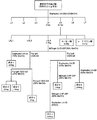
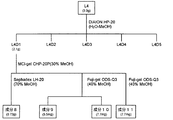
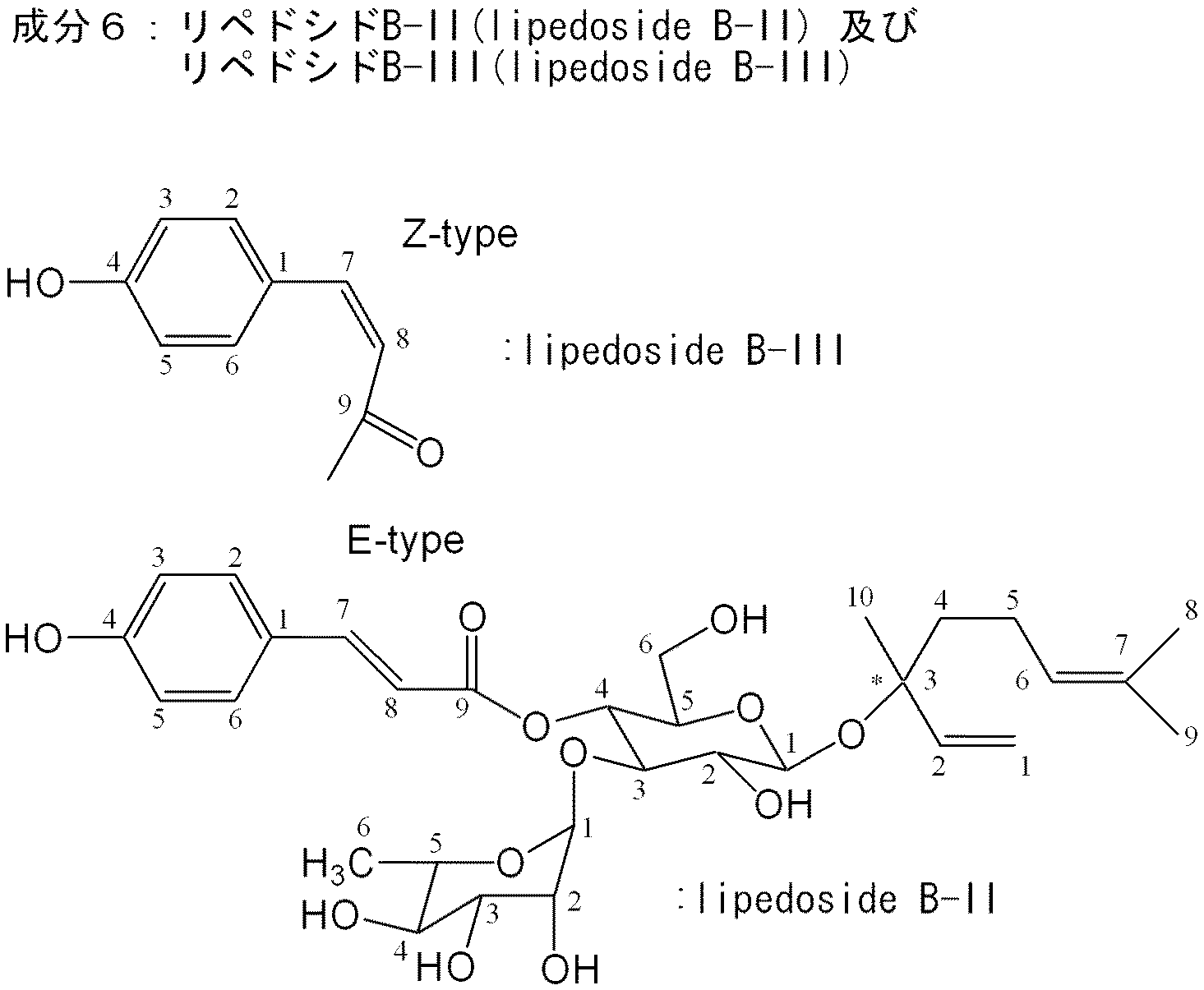
上記雲南苦丁茶エキス20gについて、分画精製操作を行った。分画精製操作の概要のフローを図1及び図2に示す。図1及び2中の分画精製物である、コーヒー酸(caffeic acid)、p−クマル酸(p-coumaric acid)及び精製成分1〜10の構造を以下に示す。
(1-2) Fractionation purification of Yunnan bitter tea extract A fraction purification operation was performed on 20 g of the above Yunnan bitter tea extract. An outline flow of the fraction purification operation is shown in FIG. 1 and FIG. The structures of caffeic acid, p-coumaric acid and purified components 1 to 10, which are fraction purified products in FIGS. 1 and 2, are shown below.
試験例1:AAPHラジカル消去作用(富山医科薬科大学横澤先生データ)
(1-1)背景
蛍光性のタンパク質であるアロフィコシアニン(allophycocyanin)はフリーラジカルによる攻撃を受けると蛍光性を失う。この性質を利用してアロフィコシアニンをフリーラジカル発生物質と試験物質の共存下でインキュベートし蛍光を測定しフリーラジカルの除去作用を調べた。
Test Example 1: AAPH radical scavenging action (data from Dr. Yokozawa, Toyama Medical and Pharmaceutical University)
(1-1) Background Allophycocyanin, a fluorescent protein, loses fluorescence when attacked by free radicals. Utilizing this property, allophycocyanin was incubated in the presence of a free radical generator and a test substance, and fluorescence was measured to investigate the free radical removal effect.
(1-2) 実験方法
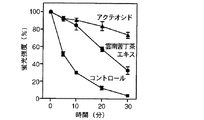
75mMリン酸バッファー(pH7.0)に37.5nM アロフィコシアニンを加えて3mM 2,2’−アゾビス(2−アミノプロパン)ジヒドロクロリド)(AAPH)をフリーラジカル発生試薬として加え、試験試料として雲南苦丁茶エキス、アクテオシド(acteoside)、及びイオン交換水をそれぞれ1μg/mL加えて37℃で反応させ、反応開始から0、5、10、20、30分後のEm 651nm、Ex598nmにおける蛍光強度を測定した。
(1-2) Experimental method Add 37.5 nM allophycocyanin to 75 mM phosphate buffer (pH 7.0) and add 3
(1-3)実験結果
図3に示すように雲南苦丁茶エキスは強いラジカル消去作用を示し、雲南苦丁茶エキスに含まれる成分であるアクテオシドにも強い活性が認められた。
(1-3) Experimental Results As shown in FIG. 3, Yunnan bitter tea extract showed a strong radical scavenging action, and acteoside, which is a component contained in Yunnan bitter tea extract, was also found to have a strong activity.
試験例2:糖尿病モデル動物を用いた試験(富山医科薬科大学横澤先生データ)
(2-1)背景
ストレプトゾトシンは酸化剤として臓器に作用して様々な障害を起こす。特に膵臓を障害することで動物は糖尿病の容態を呈するので、ストレプトゾトシン投与動物は糖尿病のモデル動物として用いられる。腎臓を3/4摘出後にストレプトゾトシンを低容量投与することにより糖尿病性腎症モデルを作成することができる。
Test Example 2: Test using diabetes model animals (data from Dr. Yokozawa, Toyama Medical and Pharmaceutical University)
(2-1) Background Streptozotocin acts as an oxidizing agent on organs and causes various disorders. In particular, since the animal exhibits a condition of diabetes due to damage to the pancreas, the streptozotocin-administered animal is used as a model animal for diabetes. A diabetic nephropathy model can be created by administering a low volume of streptozotocin after 3/4 excision of the kidney.
(2-2)実験方法
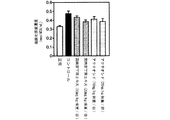
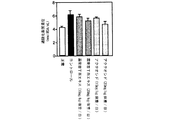
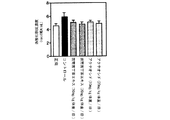
糖尿病の動物モデルは、雄性ウィスターラットの左腎を半分摘出し、1週間術後の回復を待って右腎を全摘出し、3/4腎摘状態にする。さらに1週間術後の回復を待ってストレプトゾトシンを25mg/kg体重、腹腔内投与し4週間後に血糖値(Serum Glucose)、血清中過酸化脂質(Serum MDA)、肝臓ミトコンドリア中過酸化脂質(Liver mitochondria MDA)及び腎臓ミトコンドリア中過酸化脂質濃度(Kidney mitochondria MDA)を測定した。雲南苦丁茶エキス(100mg/kg体重/日及び200mg/kg体重/日)、アクテオシド(100mg/kg体重/日及び200mg/kg体重/日)を経口投与し、コントロールには蒸留水を投与した。
(2-2) Experimental method In the animal model of diabetes, the left kidney of male Wistar rats is half-extracted, and after the recovery for 1 week after surgery, the right kidney is completely excised and put into a 3/4 nephrectomy state. After waiting for 1 week postoperative recovery, streptozotocin was administered intraperitoneally at 25 mg / kg body weight, and after 4 weeks blood glucose (Serum Glucose), serum lipid peroxide (Serum MDA), liver mitochondria lipid peroxide (Liver mitochondria MDA) and the concentration of lipid peroxide in kidney mitochondria (Kidney mitochondria MDA) were measured. Yunnan bitter tea extract (100 mg / kg body weight / day and 200 mg / kg body weight / day) and acteoside (100 mg / kg body weight / day and 200 mg / kg body weight / day) were orally administered, and distilled water was administered to the control. .
(2-3) 実験結果
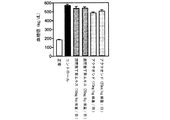
図4に示すように血糖値は雲南苦丁茶群で低下傾向でありアクテオシド投与群ではコントロール群に対して有意に血糖値が低下した。図5〜7に示すようにストレプトゾトシンによる臓器の酸化障害を示す過酸化脂質濃度では雲南苦丁茶エキス及びアクテオシドの200mg/kg体重/日の高用量投与群でコントロール群にくらべ有意に低い値を示し、酸化障害による臓器障害が抑えられることが示された。
(2-3) Experimental Results As shown in FIG. 4, the blood glucose level tended to decrease in the Yunnan bitter tea group, and the blood glucose level significantly decreased in the acteoside administration group compared to the control group. As shown in FIGS. 5 to 7, the lipid peroxide concentration indicating oxidative damage of the organ by streptozotocin was significantly lower than that of the control group in the 200 mg / kg body weight / day high dose administration group of Yunnan bitter tea extract and acteoside. It was shown that organ damage due to oxidative damage can be suppressed.
試験例3:イン・ビトロ(in vitro)アルドース還元酵素阻害(富山医科薬科大学横澤先生データ)
(3-1)背景
アルドース還元酵素(aldose reductase)は水晶体、網膜、末梢神経、腎臓及び血管といった糖尿病の合併症が出現する種々の組織に存在し、病体発症において重要な役割を演じている。通常、グルコースはヘキソキナーゼにより解糖系へと代謝されるが、糖尿病時にはアルドース還元酵素活性が亢進しポリオール経路での代謝が促進される。その際に産生されるD−ソルビトールやフルクトースは比較的安定であるため、細胞内に蓄積し、浸透圧上昇、水分貯留を招き細胞障害を引き起こす。
糖尿病の発症にはアルドース還元酵素を介した機構が関与していると考えられており、アルドース還元酵素阻害剤は糖尿病の治療薬としての開発も行われている。
Test Example 3: In vitro aldose reductase inhibition (Prof. Yokozawa, Toyama Medical and Pharmaceutical University data)
(3-1) Background Aldose reductase is present in various tissues where diabetic complications appear, such as the lens, retina, peripheral nerve, kidney and blood vessels, and plays an important role in the pathogenesis of the disease. Normally, glucose is metabolized to a glycolytic system by hexokinase, but in diabetes, aldose reductase activity is enhanced and metabolism in the polyol pathway is promoted. Since D-sorbitol and fructose produced at that time are relatively stable, they accumulate in the cells, leading to increased osmotic pressure and water retention, causing cell damage.
It is thought that a mechanism mediated by aldose reductase is involved in the onset of diabetes, and aldose reductase inhibitors have been developed as therapeutic agents for diabetes.
(3-2)実験方法
豚の目から水晶体を取出し、PBS(phosphate buffered saline)で洗浄した。水晶体一つに対し1mLのイオン交換水を加えて氷冷下でホモジナイズし、11000×gで20分間遠心分離し上清を得た。得られた上清に40%飽和になるように硫酸アンモニウムを加え、よく撹拌し、4℃で30分間静置して不溶物を沈澱させた。4℃で11000×gで20分間遠心分離し、上清を0.05M NaClで透析した。透析後の溶液を、アルドース還元酵素溶液(タンパク質量を測定しておいた)とした。
(3-2) Experimental method The lens was taken out from the eyes of the pig and washed with PBS (phosphate buffered saline). One mL of ion-exchanged water was added to one lens, homogenized under ice-cooling, and centrifuged at 11000 × g for 20 minutes to obtain a supernatant. Ammonium sulfate was added to the obtained supernatant so as to be 40% saturated, stirred well, and allowed to stand at 4 ° C. for 30 minutes to precipitate insoluble matter. Centrifuged at 11000 × g for 20 minutes at 4 ° C. and the supernatant was dialyzed against 0.05M NaCl. The solution after dialysis was used as an aldose reductase solution (the amount of protein had been measured).
アルドース還元酵素活性は、試験溶液10μL(最終濃度で10μg/mL、1μg/mL、0.1μg/mLになるように調製)、80mMリン酸カリウムバッファー(1.2mM DL−グリセルアルデヒド及び0.4M LiSO4を含有、pH6.2)380μLを試験管に入れ、25℃で予備加温し、アルドース還元酵素溶液100μL、15mM NADPH溶液10μLを加えて撹拌した。340nmの吸光度の初期値(A1)の3分後の吸光度(A2)を測定した。試験試料の代わりにイオン交換水を加えた空試験を行い吸光度の初期(B1)及び3分後の吸光度(B2)を測定した。下式によってアルドース還元酵素活性抑制率を算出した。また、10μg/mL、1μg/mL、0.1μg/mLの濃度と阻害活性を一次近似して得られる相関直線から50%阻害濃度(IC50)を算出した。
(3-3)実験結果
雲南苦丁茶エキスの分画物について同様な試験を行った。雲南苦丁茶エキス及びその分画物、それぞれ10μg/mLによるアルドース還元酵素活性抑制率及びIC50を雲南苦丁茶エキス粉末20g中の各成分の分画収量と共に表1に示す。
(3-3) Experimental results A similar test was performed on the fractions of Yunnan bitter tea extract. Table 1 shows the inhibition rate of aldose reductase activity and IC50 by 10 μg / mL, as well as the fraction yield of each component in 20 g of Yunnan bitter tea extract.
雲南苦丁茶エキス(10μg/mL)によるアルドース還元酵素活性抑制率は67.4%であり、高い阻害活性を示した。
雲南苦丁茶エキスのアルドース還元酵素阻害におけるIC50は8.4μg/mLであり、低い濃度でアルドース還元酵素を阻害する作用があることが分かった。
この結果から雲南苦丁茶エキスには強いアルドース還元酵素阻害活性があり、その活性はアクテオシド及びその類縁体において強いことが分かった。その含有量比から考えて雲南苦丁茶におけるアルドース還元酵素阻害活性はアクテオシド及びその類縁体のみによるものではなくその他の未知の成分による相乗作用であることが明らかとなった。
The inhibition rate of aldose reductase activity by Yunnan bitter tea extract (10 μg / mL) was 67.4%, indicating a high inhibitory activity.
IC50 in the inhibition of aldose reductase of Yunnan bitter tea extract was 8.4 μg / mL, and it was found that there was an action of inhibiting aldose reductase at a low concentration.
This result indicates that Yunnan bitter tea extract has strong aldose reductase inhibitory activity, and its activity is strong in acteoside and its analogs. In view of the content ratio, it was revealed that the aldose reductase inhibitory activity in Yunnan bitter tea is not only due to acteoside and its analogs, but is synergistic with other unknown components.
試験例4:雲南苦丁茶分画物によるDPPHラジカル消去作用
(4-1)背景
雲南苦丁茶エキスより分画して得られた物質の構造活性相関を得るために、1,1−ジフェニル−2−ピクリルヒドラジル(1,1-diphenyl-2-picrylhydrazyl)(DPPH)ラジカルの消去作用を測定した。
Test Example 4: DPPH radical scavenging action by Yunnan bitter tea fraction
(4-1) Background In order to obtain the structure-activity relationship of substances obtained by fractionation from Yunnan bitter tea extract, 1,1-diphenyl-2-picrylhydrazyl (1,1-diphenyl-2- The scavenging action of (picrylhydrazyl) (DPPH) radicals was measured.
(4-2)実験方法
96穴のマイクロプレートに100μLのDPPH溶液(60μMエタノール溶液)を入れ、試験試料のエタノール溶液100μLまたはコントロールとしてエタノールを100μLそれぞれ加え、静かに混合し室温で30分間放置した後、520nmの吸光度を測定した。抑制率を下記の式で算出し、段階的に希釈した試験試料の抑制率と濃度から50%阻害濃度(IC50)を算出した。
(4-3)実験結果
実験結果を表2に示す。
(4-3) Experimental results Table 2 shows the experimental results.
雲南苦丁茶エキスは強いDPPHラジカル消去作用を示し、その作用はコーヒー酸、アクテオシド、リグプルプロシドA及びそれらの類縁体であるポリフェノールによることが分かった。 Yunnan bitter tea extract showed a strong DPPH radical scavenging action, which was found to be due to caffeic acid, acteoside, ligpuruproside A, and their related polyphenols.
(4-4)まとめ
粉末にした雲南苦丁茶を熱水または温水で抽出し、不要物を除去してエキスを得る。エキスは通常行われる方法で粉末化することができ、必要に応じて賦形剤や添加物を添加しても良い。エキスをカラムクロマトグラフィーにより分画し効果試験に供することによりその中のコーヒー酸、コーヒー酸誘導体、アクテオシド及びそれらの類縁体が有効成分の一部であることが判明した。しかし、それらの活性の総和はエキスそのものの活性を表わしていないことから、それら成分の混在による相乗作用あるいは未知の有効性分の存在の可能性が示唆された。
(4-4) Summary Extract the powdered Yunnan bitter tea with hot or warm water, and remove unnecessary substances to obtain an extract. The extract can be pulverized by a usual method, and an excipient or an additive may be added as necessary. It was found that caffeic acid, caffeic acid derivatives, acteoside and analogs thereof were part of the active ingredient by fractionating the extract by column chromatography and subjecting it to an effect test. However, the sum of their activities does not represent the activity of the extract itself, suggesting the possibility of synergistic effects due to the mixture of these components or the existence of unknown efficacy components.
試験例5:ボランティアに対する雲南苦丁茶抽出エキスの抗酸化作用、血清中コレステロール低下作用及び中性脂肪低減作用
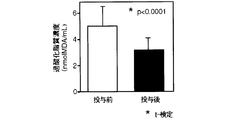
予め血液の採取を行ったボランティア21名(男性12名、女性9名)に対して、上記抽出エキス250mg入りカプセルを8カプセル/日(2.0g/日)(無水物換算)を14日間経口投与した。投与開始から15日目に血液を採取し、抽出エキス投与前の血液と投与後の血液について、過酸化脂質量、SOD(スーパーオキシドディスムターゼ)活性、コレステロール量及び中性脂肪量を測定した。
Test Example 5: Antioxidant, serum cholesterol lowering and neutral fat reducing effects of Yunnan bitter tea extract on volunteers For 21 volunteers (12 men, 9 women) who previously collected blood Then, 8 capsules / day (2.0 g / day) (anhydrous equivalent) of the above-mentioned 250 mg extract extract capsules were orally administered for 14 days. On the 15th day from the start of administration, blood was collected, and the lipid level, SOD (superoxide dismutase) activity, cholesterol level, and neutral fat level were measured for blood before and after administration of the extract.
過酸化脂質量は、以下のTBAと反応する過酸化脂質量を求める方法により測定した。すなわち、試験管に生理食塩水1ml、血液0.05mlを入れ、3000rpmで10分間遠心分離した。この上清0.5mlに1/12N硫酸4.0mlを加え撹拌し、これに10%リンタングステン酸水溶液0.5mlを加え撹拌した後5分間放置した。これを3000rpmで10分間遠心分離し、生じた沈殿に再び1/12N硫酸2.0mlを加え撹拌し、これに10%リンタングステン酸水溶液0.3mlを加え撹拌した後、これを3000rpmで10分間遠心分離し沈殿を得た。この沈殿に水4.0mlを加え、懸濁させた後TBA試薬(2−チオバルビツール酸3.35mg/ml、酢酸8.8mol/l)1.0mlを加え、沸騰水浴上で60分間加熱した後、冷水で冷却した。得られた反応物にn−ブタノール5.0mlを加え、十分に混合して、反応生成物をブタノール層に抽出して、3000rpmで10分間遠心分離を行ない、上層のブタノール層中のMDA(マロンアルデヒド)量を測定した。
雲南苦丁茶抽出エキス投与前後の過酸化脂質量の測定結果(nmolMDA/ml)を図8に示す。
図8から明らかなように、雲南苦丁茶抽出エキスを投与することにより抽出エキス投与前に比較し過酸化脂質量の生成が抑制された。
The amount of lipid peroxide was measured by the following method for determining the amount of lipid peroxide that reacts with TBA. That is, 1 ml of physiological saline and 0.05 ml of blood were placed in a test tube and centrifuged at 3000 rpm for 10 minutes. To 0.5 ml of the supernatant, 4.0 ml of 1 / 12N sulfuric acid was added and stirred. To this, 0.5 ml of 10% aqueous phosphotungstic acid solution was added and stirred, and then left for 5 minutes. This was centrifuged at 3000 rpm for 10 minutes, and 2.0 ml of 1 / 12N sulfuric acid was again added to the resulting precipitate and stirred. Then, 0.3 ml of 10% phosphotungstic acid aqueous solution was added and stirred, and then this was centrifuged at 3000 rpm for 10 minutes. A precipitate was obtained. After adding 4.0 ml of water to this precipitate and suspending it, adding 1.0 ml of TBA reagent (2-thiobarbituric acid 3.35 mg / ml, acetic acid 8.8 mol / l), heating on a boiling water bath for 60 minutes, It was cooled with. To the obtained reaction product, 5.0 ml of n-butanol was added, mixed well, the reaction product was extracted into a butanol layer, centrifuged at 3000 rpm for 10 minutes, and MDA (malonaldehyde in the upper butanol layer was collected. ) The amount was measured.
FIG. 8 shows the measurement results (nmol MDA / ml) of lipid peroxide levels before and after administration of Yunnan bitter tea extract.
As is clear from FIG. 8, the administration of Yunnan bitter tea extract extracts suppressed the production of lipid peroxide amounts as compared to before the extract extract was administered.
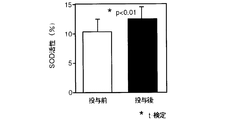
また、SOD(スーパーオキシドディスムターゼ)活性は、和光純薬工業(株)社製のSOD測定キットを用いたNBT還元法により測定した。NBT還元法はスーパーオキシドアニオンの検出剤としてニトロブルーテトラゾリウムを用い、スーパーオキシドアニオンの生成反応(キサンチン・キサンチンオキシダーゼ)とSODによる不均化反応とを共役させ、スーパーオキシドアニオンによる還元呈色が低下する程度を阻害率として求める方法である。具体的には、発色試薬1.0ml、酵素溶液1.0mlに血液0.1mlを加え、混合したのち37℃で20分間反応させた。次いで、酵素反応停止溶液を2.0ml加えてよく振り混ぜた後、560nmのフィルターをもつ比色計または分光光度計で560nmの吸光度を測定した。発色試薬1.0ml、酵素溶液1.0mlに蒸留水0.1mlを加えて同様の処理を行い測定した値をブランク値とし、ブランク値との差によりSOD活性値(阻害率%)を求めた。
雲南苦丁茶抽出エキス投与前後のSOD活性の測定結果(%)を図9に示す。
図9から明らかなように、雲南苦丁茶抽出エキスを投与することにより抽出エキス投与前に比較しSOD活性が上昇した。
The SOD (superoxide dismutase) activity was measured by the NBT reduction method using an SOD measurement kit manufactured by Wako Pure Chemical Industries, Ltd. The NBT reduction method uses nitro blue tetrazolium as a superoxide anion detector and conjugates the superoxide anion formation reaction (xanthine / xanthine oxidase) with the disproportionation reaction by SOD, reducing the reduction coloration by the superoxide anion. This is a method for obtaining the degree of inhibition as an inhibition rate. Specifically, 0.1 ml of blood was added to 1.0 ml of the coloring reagent and 1.0 ml of the enzyme solution, mixed, and then reacted at 37 ° C. for 20 minutes. Next, 2.0 ml of the enzyme reaction stop solution was added and shaken well, and then the absorbance at 560 nm was measured with a colorimeter or spectrophotometer having a 560 nm filter. A value obtained by adding 0.1 ml of distilled water to 1.0 ml of the coloring reagent and 1.0 ml of the enzyme solution and carrying out the same treatment was taken as a blank value, and the SOD activity value (inhibition rate%) was determined from the difference from the blank value.
FIG. 9 shows the measurement results (%) of SOD activity before and after administration of the Yunnan bitter tea extract.
As is clear from FIG. 9, the SOD activity increased by administering Yunnan bitter tea extract compared to before administration of the extract.
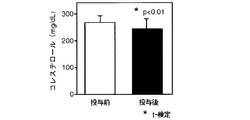
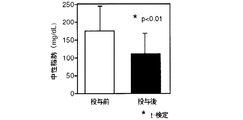
雲南苦丁茶抽出エキス投与前後のコレステロール量及び中性脂肪量の測定結果(濃度:mg/dl)を図10及び図11に示す。図10は血液中のコレステロールの量を、図11は血液中の中性脂肪の量を示す。 The measurement results (concentration: mg / dl) of the amount of cholesterol and the amount of triglyceride before and after administration of the Yunnan bitter tea extract are shown in FIGS. FIG. 10 shows the amount of cholesterol in the blood, and FIG. 11 shows the amount of neutral fat in the blood.
図10及び図11から明らかなように、雲南苦丁茶抽出エキスを投与することにより抽出エキス投与前に比較しコレステロール及び中性脂肪の量を低下する作用が認められた。この場合、抽出エキス投与前にコレステロール及び中性脂肪の値が正常であった者については変化がみられず、コレステロール及び中性脂肪の値が異常高値を示した者についてはコレステロール及び中性脂肪の量を低下する作用が認められ、特に、中性脂肪については、正常値にまで低下した。 As is clear from FIGS. 10 and 11, the administration of Yunnan bitter tea extract has an effect of lowering the amount of cholesterol and neutral fat compared to before administration of the extract. In this case, no change was observed for those who had normal cholesterol and triglyceride values before administration of the extract, and cholesterol and triglyceride fat for those who had abnormally high cholesterol and triglyceride values. In particular, neutral fat was reduced to a normal value.
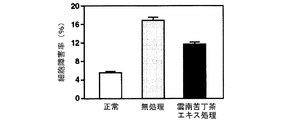
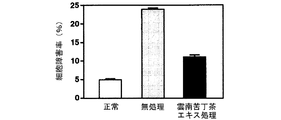
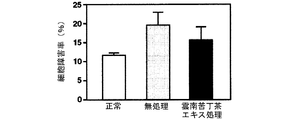
試験例6:海馬初代培養細胞におけるグルタミン酸、カイニン酸、過酸化水素及びβアミロイドの神経細胞毒性に対する雲南苦丁茶の保護効果
(6-1)背景
痴呆の原因ともなる脳血管性障害の予防及び治療の目的で、in vitroの脳虚血モデルを用いて雲南苦丁茶エキスの抗酸化ストレス作用を検討した。ラット海馬初代培養細胞にグルタミン酸、AMPA受容体作用薬であるカイニン酸、ラジカル誘発剤である過酸化水素、アルツハイマー病の原因物質であるβアミロイドを用い、これらによる神経細胞毒性に対する雲南苦丁茶エキスの保護作用を調べた。
Test Example 6: Protective effect of Yunnan bitter tea on neurotoxicity of glutamic acid, kainate, hydrogen peroxide and β-amyloid in primary cultured cells of hippocampus
(6-1) Background For the purpose of preventing and treating cerebrovascular disorders that cause dementia, we investigated the antioxidant stress action of Yunnan bitter tea extract using an in vitro cerebral ischemia model. Yunnan bitter tea extract against neuronal cytotoxicity caused by glutamic acid, kainic acid, an AMPA receptor agonist, hydrogen peroxide, a radical inducer, and β-amyloid, a causative agent of Alzheimer's disease, in rat hippocampal primary cells The protective effect of was investigated.
(6-2)実験方法
ウィスター系雌性ラット(胎児17日齢)から摘出した海馬より神経細胞を取出し、無血清培地で7日間、96穴のプレートにて2.5×10⁵細胞/穴の密度で培養し、これを海馬初代培養細胞として実験に供した。グルタミン酸、カイニン酸、過酸化水素及びβアミロイドにより誘発される細胞毒性を培養液中のLDH(乳酸脱水素酵素)を和光純薬社製の測定キット(LDH-Cytotoxic Test Wako)を用いて560nmの吸光度により測定し、細胞障害の指標とした。細胞障害率は下記の式により算出した。
陰性対照には無血清培地のみを加えたもの、陽性対照には0.2%ツィーンで15分間処理した無血清培地を用いた。グルタミン酸は終濃度が100μMの濃度になるように1mMのグルタミン酸溶液を添加した。カイニン酸は終濃度が1mMの濃度になるように100mMのカイニン酸溶液を添加した。βアミロイドは終濃度が10μMの濃度になるように10mM βアミロイド溶液を添加した。過酸化水素は終濃度が300μMの濃度になるよう3mMの過酸化水素溶液を添加した。グルタミン酸、カイニン酸、βアミロイド及び過酸化水素それぞれと雲南苦丁茶エキス(固形分100μg/mL)を同時に添加し24時間培養後にLDHを測定した。 As a negative control, a serum-free medium alone was added, and as a positive control, a serum-free medium treated with 0.2% Tween for 15 minutes was used. A 1 mM glutamic acid solution was added so that the final concentration of glutamic acid was 100 μM. A 100 mM kainic acid solution was added so that the final concentration of kainic acid was 1 mM. A 10 mM β-amyloid solution was added so that the final concentration of β-amyloid was 10 μM. A 3 mM hydrogen peroxide solution was added so that the final concentration of hydrogen peroxide was 300 μM. Glutamic acid, kainic acid, β-amyloid, hydrogen peroxide and Yunnan bitter tea extract (solid content: 100 μg / mL) were added simultaneously, and LDH was measured after 24 hours of culture.
(6-3)実験結果
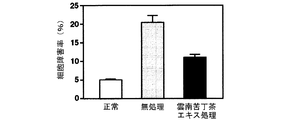
海馬初代培養細胞に対するグルタミン酸毒性、カイニン酸毒性、βアミロイド毒性及び過酸化水素毒性による細胞障害率及びその細胞障害率に及ぼす雲南苦丁茶エキスの影響を調べた結果を図12(グルタミン酸毒性)、図13(カイニン酸毒性)、図14(βアミロイド毒性)及び図15(過酸化水素毒性)に示す。
雲南苦丁茶エキスは海馬初代培養細胞におけるグルタミン酸、カイニン酸、βアミロイド及び過酸化水素による細胞障害を抑制した。このことから雲南苦丁茶エキスにはラジカルの消去による脳細胞の保護効果があることが明らかとなり、酸化ストレスによる脳細胞の障害、痴呆の予防・治療に効果があることが示された。
(6-3) Experimental results The results of the examination of the effects of Yunnan bitter tea extract on the cytotoxicity of glutamate, kainate, β-amyloid toxicity and hydrogen peroxide toxicity on the hippocampal primary cultured cells and the cytotoxicity FIG. 12 (glutamic acid toxicity), FIG. 13 (kainic acid toxicity), FIG. 14 (β amyloid toxicity) and FIG. 15 (hydrogen peroxide toxicity).
Yunnan bitter tea extract suppressed cell damage caused by glutamic acid, kainic acid, β-amyloid and hydrogen peroxide in primary cultured hippocampal cells. This indicates that Yunnan bitter tea extract has an effect of protecting brain cells by eliminating radicals, and is effective in preventing and treating brain cell damage and dementia caused by oxidative stress.
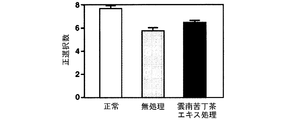
試験例7:スコポラミンにより誘発される八方放射状迷路における空間認知記憶障害ラットモデルにおける雲南苦丁茶エキスの効果
(7-1)背景
試験例7と同様の目的で、in vivoの脳虚血モデルを用いて雲南苦丁茶エキスの抗酸化ストレス作用を検討した。学習・記憶障害を誘発させることが知られている抗コリン剤であるスコポラミンを用いて、スコポラミンによる空間認知記憶障害ラットモデルにおける雲南苦丁茶エキスの効果について調べた。
Test Example 7: Effects of Yunnan bitter tea extract in a rat model of spatial cognitive memory impairment in the haploradial maze induced by scopolamine
(7-1) Background For the same purpose as in Test Example 7, the antioxidative stress action of Yunnan bitter tea extract was examined using an in vivo cerebral ischemia model. Using scopolamine, an anticholinergic agent known to induce learning and memory impairment, we investigated the effects of Yunnan bitter tea extract in a rat model of spatial cognitive memory impairment by scopolamine.
(7-2)実験方法
食餌制限下のウィスター系雄性ラット(7週齢、体重200−250g)を八方放射状迷路(アーム長48cm、幅10cm、地上高40cm)の中央に置き、アーム先端部分に置いた餌を効率良く摂取できるようになるまで訓練を行い、ラットが初めて訪れたアームの選択数(正選択数)、二回以上訪れたアームの選択数(誤選択数)及び試行終了までの走行時間を最大10分まで測定した。初期選択数7以上で誤選択数が1以下の成績を3試行以上連続して示すように訓練されたラットを空間認知記憶が完成したラットとした。空間認知記憶が完成したラットにスコポラミン(0.5mg/kg体重)を腹腔内投与し、その30分後に発現する空間認知記憶障害に対する雲南苦丁茶エキスの効果を調べた。雲南苦丁茶エキス(100mg/kg体重)は試行60分前に経口投与した。
(7-2) Experimental method A Wistar male rat (7 weeks old, weight 200-250 g) under dietary restriction is placed in the center of an eight-way radial maze (arm length 48 cm,
(7-3)実験結果
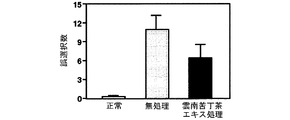
スコポラミンにより誘発される八方放射状迷路における空間認知障害に対する雲南苦丁茶エキスの効果を図16(正選択数)及び図17(誤選択数)に示す。
雲南苦丁茶エキスはスコポラミンにより空間認知障害を誘発されたラットを八方放射状迷路に試行した際の正選択数を増加させ、誤選択数を減少させた。このことから、雲南苦丁茶エキスには学習・記憶能力改善効果があることが示された。
(7-3) Experimental Results FIG. 16 (positive selection number) and FIG. 17 (false selection number) show the effects of Yunnan bitter tea extract on spatial cognitive impairment in the haploradial maze induced by scopolamine.
Yunnan bitter tea extract increased the number of positive selections and decreased the number of false selections when rats with spatial cognitive impairment induced by scopolamine were tried in the eight-way radial maze. This indicates that Yunnan bitter tea extract has an effect of improving learning and memory ability.
試験例8:中大脳動脈閉塞マウスの梗塞領域に対する雲南苦丁茶エキスの効果
(8-1)実験方法
ナイロン糸の先端を加工した塞栓(約11mm)をddY系マウス(5週齢、体重20−25g)の左内頸動脈内に4時間挿入した。挿入1週間後に、大脳皮質を含む脳の前額断スライスを作成し、TTC(トリフェニルテトラゾリウムクロリド)染色により梗塞巣の体積を測定した。雲南苦丁茶エキス(100mg/kg体重)は2週間経口投与した。
Test Example 8: Effect of Yunnan bitter tea extract on infarct area of middle cerebral artery occluded mice
(8-1) Experimental Method An embolus (about 11 mm) in which the tip of a nylon thread was processed was inserted into the left internal carotid artery of a ddY mouse (5 weeks old, body weight 20-25 g) for 4 hours. One week after insertion, a pre-slice slice of the brain containing the cerebral cortex was prepared, and the volume of the infarct was measured by TTC (triphenyltetrazolium chloride) staining. Yunnan bitter tea extract (100 mg / kg body weight) was orally administered for 2 weeks.
(8-2)実験結果
実験結果を表3に示す。
(8-2) Experimental results Table 3 shows the experimental results.
Claims (2)
Priority Applications (1)
| Application Number | Priority Date | Filing Date | Title |
|---|---|---|---|
| JP2010103708A JP5073777B2 (en) | 2010-04-28 | 2010-04-28 | Composition containing Yunnan bitter tea ingredients |
Applications Claiming Priority (1)
| Application Number | Priority Date | Filing Date | Title |
|---|---|---|---|
| JP2010103708A JP5073777B2 (en) | 2010-04-28 | 2010-04-28 | Composition containing Yunnan bitter tea ingredients |
Related Parent Applications (1)
| Application Number | Title | Priority Date | Filing Date |
|---|---|---|---|
| JP2003110234A Division JP4544503B2 (en) | 2003-04-15 | 2003-04-15 | Composition containing Yunnan bitter tea ingredients |
Publications (2)
| Publication Number | Publication Date |
|---|---|
| JP2010163460A JP2010163460A (en) | 2010-07-29 |
| JP5073777B2 true JP5073777B2 (en) | 2012-11-14 |
Family
ID=42579897
Family Applications (1)
| Application Number | Title | Priority Date | Filing Date |
|---|---|---|---|
| JP2010103708A Expired - Fee Related JP5073777B2 (en) | 2010-04-28 | 2010-04-28 | Composition containing Yunnan bitter tea ingredients |
Country Status (1)
| Country | Link |
|---|---|
| JP (1) | JP5073777B2 (en) |
Families Citing this family (2)
| Publication number | Priority date | Publication date | Assignee | Title |
|---|---|---|---|---|
| JP2014141437A (en) * | 2013-01-24 | 2014-08-07 | Oriza Yuka Kk | Learning memory improving agent |
| EP3632421B1 (en) | 2017-05-30 | 2025-08-13 | Morinaga Milk Industry Co., Ltd. | Acetic acid and/or an acetic acid salt for use in the treatment of alzheimer-type dementia |
Family Cites Families (7)
| Publication number | Priority date | Publication date | Assignee | Title |
|---|---|---|---|---|
| JP3183754B2 (en) * | 1993-07-20 | 2001-07-09 | ポーラ化成工業株式会社 | Arteriosclerosis inhibitor and composition containing the same |
| JPH0977678A (en) * | 1995-09-14 | 1997-03-25 | Pola Chem Ind Inc | Phosphatidyl choline sterol acyl transferase activity accelerator and composition containing the same |
| JPH0977676A (en) * | 1995-09-14 | 1997-03-25 | Pola Chem Ind Inc | Acyl coenzyme-a cholesterol acyl transferase activity inhibitor and composition mixed with the same |
| JP4071835B2 (en) * | 1995-09-18 | 2008-04-02 | ポーラ化成工業株式会社 | Acylcoenzyme A cholesterol acyltransferase activity inhibitor and composition containing the same |
| JP3839082B2 (en) * | 1995-10-11 | 2006-11-01 | ポーラ化成工業株式会社 | New terpenoid compounds |
| JP4001395B2 (en) * | 1995-10-11 | 2007-10-31 | ポーラ化成工業株式会社 | Cholesterol acyltransferase activity inhibitor and composition |
| CN102670453A (en) * | 2001-10-09 | 2012-09-19 | 株式会社芳凯尔 | Compositions for potentiating glutatthione |
-
2010
- 2010-04-28 JP JP2010103708A patent/JP5073777B2/en not_active Expired - Fee Related
Also Published As
| Publication number | Publication date |
|---|---|
| JP2010163460A (en) | 2010-07-29 |
Similar Documents
| Publication | Publication Date | Title |
|---|---|---|
| Mohagheghi et al. | The neuroprotective effect of olive leaf extract is related to improved blood–brain barrier permeability and brain edema in rat with experimental focal cerebral ischemia | |
| CN102274244B (en) | Cassia bark polyphenol extract and preparation method and application thereof | |
| KR101977954B1 (en) | Compositions for Treating or Preventing Inflammatory Disease Comprising Extract of Hibiscus Syriacus | |
| AU2014352441A1 (en) | Use of ginsenoside-Rg3 in preparing medicine for preventing or/and treating dementia and medicine | |
| JP4544503B2 (en) | Composition containing Yunnan bitter tea ingredients | |
| CN100382798C (en) | A pharmaceutical composition containing caffeoylquinic acid | |
| WO2009093255A2 (en) | A new nutraceutical composition from garcinia mangostana | |
| CN101637492B (en) | Preparation method of total flavonoids in persimmon leaves | |
| HK1210597A1 (en) | Novel extracts of cynara scolymus, coffea spp. and olea europaea for the treatment of metabolic syndrome | |
| KR102588130B1 (en) | Composition for preventing or treating inflammatory raspiratory diseases caused by ultrafine dust containing mugwort and lizard’s tail extract as an active ingredient | |
| CN100420440C (en) | Antiallergic agent, medicine, food or cosmetic containing it and their preparation method | |
| JP5751981B2 (en) | Novel phenylethanoid glycosides and skin cosmetics | |
| KR101965061B1 (en) | Composition for prevention or treatment of metabolic disorder comprising peanut sprout extracts and fractions thereof | |
| US11141449B2 (en) | Method of extracting flavonoids and/or polyphenols from dried and powdered citrus peels, compositions therefrom, and methods of treatment of diseases associated with chronic inflammation | |
| CN106798762A (en) | One Plant Extracts and its preparation method and application | |
| JP7303582B2 (en) | A composition for prevention, amelioration and treatment of metabolic syndrome associated with obesity and/or diabetes, containing a compound of an Indian gooseberry extract and a young barley leaf extract (IB compound) as an active ingredient | |
| TWI708609B (en) | Composition for preventing, improving or treating burn out syndrome | |
| CN102432690A (en) | Application of Opuntia ficus-indica Milpa Alta polysaccharides to prevention and treatment of chronic neurodegenerative disease | |
| KR102566546B1 (en) | Silybin-containing pharmaceutical composition | |
| CN102091088A (en) | Application of Polysaccharides from Milponta Cactus in Prevention and Treatment of Chronic Neurodegenerative Diseases | |
| KR101384423B1 (en) | Medical composition comprising Perilla frutescens extract for preventing or treating brain neuronal disease | |
| JP2010163460A (en) | Composition containing yunnan kudingcha component | |
| US20160375076A1 (en) | Herbal Combinations for Treating Eczema | |
| CN100571708C (en) | A pharmaceutical composition with synergistic effect | |
| KR100963643B1 (en) | A composition for preventing and treating hepatotoxic diseases containing seed extract of palm cactus fruit or a compound isolated therefrom |
Legal Events
| Date | Code | Title | Description |
|---|---|---|---|
| A621 | Written request for application examination |
Free format text: JAPANESE INTERMEDIATE CODE: A621 Effective date: 20100428 |
|
| TRDD | Decision of grant or rejection written | ||
| A01 | Written decision to grant a patent or to grant a registration (utility model) |
Free format text: JAPANESE INTERMEDIATE CODE: A01 Effective date: 20120821 |
|
| A01 | Written decision to grant a patent or to grant a registration (utility model) |
Free format text: JAPANESE INTERMEDIATE CODE: A01 |
|
| A61 | First payment of annual fees (during grant procedure) |
Free format text: JAPANESE INTERMEDIATE CODE: A61 Effective date: 20120822 |
|
| R150 | Certificate of patent or registration of utility model |
Ref document number: 5073777 Country of ref document: JP Free format text: JAPANESE INTERMEDIATE CODE: R150 Free format text: JAPANESE INTERMEDIATE CODE: R150 |
|
| FPAY | Renewal fee payment (event date is renewal date of database) |
Free format text: PAYMENT UNTIL: 20150831 Year of fee payment: 3 |
|
| R250 | Receipt of annual fees |
Free format text: JAPANESE INTERMEDIATE CODE: R250 |
|
| R250 | Receipt of annual fees |
Free format text: JAPANESE INTERMEDIATE CODE: R250 |
|
| R250 | Receipt of annual fees |
Free format text: JAPANESE INTERMEDIATE CODE: R250 |
|
| R250 | Receipt of annual fees |
Free format text: JAPANESE INTERMEDIATE CODE: R250 |
|
| S533 | Written request for registration of change of name |
Free format text: JAPANESE INTERMEDIATE CODE: R313533 |
|
| R350 | Written notification of registration of transfer |
Free format text: JAPANESE INTERMEDIATE CODE: R350 |
|
| R250 | Receipt of annual fees |
Free format text: JAPANESE INTERMEDIATE CODE: R250 |
|
| R250 | Receipt of annual fees |
Free format text: JAPANESE INTERMEDIATE CODE: R250 |
|
| LAPS | Cancellation because of no payment of annual fees |