JP4926331B2 - Recycled thermoplastic resin design device and recycled thermoplastic resin design method - Google Patents
Recycled thermoplastic resin design device and recycled thermoplastic resin design method Download PDFInfo
- Publication number
- JP4926331B2 JP4926331B2 JP2001118537A JP2001118537A JP4926331B2 JP 4926331 B2 JP4926331 B2 JP 4926331B2 JP 2001118537 A JP2001118537 A JP 2001118537A JP 2001118537 A JP2001118537 A JP 2001118537A JP 4926331 B2 JP4926331 B2 JP 4926331B2
- Authority
- JP
- Japan
- Prior art keywords
- thermoplastic resin
- recycled thermoplastic
- recycled
- physical properties
- rubber
- Prior art date
- Legal status (The legal status is an assumption and is not a legal conclusion. Google has not performed a legal analysis and makes no representation as to the accuracy of the status listed.)
- Expired - Fee Related
Links
- 229920005992 thermoplastic resin Polymers 0.000 title claims abstract description 190
- 238000013461 design Methods 0.000 title claims description 32
- 238000000034 method Methods 0.000 title claims description 22
- 239000000463 material Substances 0.000 claims abstract description 145
- 230000000704 physical effect Effects 0.000 claims abstract description 106
- 239000003063 flame retardant Substances 0.000 claims abstract description 43
- RNFJDJUURJAICM-UHFFFAOYSA-N 2,2,4,4,6,6-hexaphenoxy-1,3,5-triaza-2$l^{5},4$l^{5},6$l^{5}-triphosphacyclohexa-1,3,5-triene Chemical compound N=1P(OC=2C=CC=CC=2)(OC=2C=CC=CC=2)=NP(OC=2C=CC=CC=2)(OC=2C=CC=CC=2)=NP=1(OC=1C=CC=CC=1)OC1=CC=CC=C1 RNFJDJUURJAICM-UHFFFAOYSA-N 0.000 claims abstract description 40
- 229920005989 resin Polymers 0.000 claims abstract description 25
- 239000011347 resin Substances 0.000 claims abstract description 25
- 239000000155 melt Substances 0.000 claims abstract description 19
- 238000004064 recycling Methods 0.000 claims description 15
- 229920001971 elastomer Polymers 0.000 claims description 14
- 239000000203 mixture Substances 0.000 claims description 14
- 239000005060 rubber Substances 0.000 claims description 14
- 238000004590 computer program Methods 0.000 claims description 11
- 238000004364 calculation method Methods 0.000 claims description 10
- 238000002156 mixing Methods 0.000 claims description 9
- 238000011084 recovery Methods 0.000 claims description 9
- 238000003860 storage Methods 0.000 claims description 9
- 238000005452 bending Methods 0.000 claims description 8
- 238000013329 compounding Methods 0.000 claims description 3
- 239000011159 matrix material Substances 0.000 abstract description 9
- 238000004519 manufacturing process Methods 0.000 abstract description 4
- 238000011088 calibration curve Methods 0.000 abstract description 3
- 230000010365 information processing Effects 0.000 abstract description 2
- 229920000578 graft copolymer Polymers 0.000 abstract 2
- 230000010485 coping Effects 0.000 abstract 1
- 239000013598 vector Substances 0.000 description 19
- 230000014509 gene expression Effects 0.000 description 15
- 239000004676 acrylonitrile butadiene styrene Substances 0.000 description 12
- 229920000122 acrylonitrile butadiene styrene Polymers 0.000 description 10
- -1 polyethylene Polymers 0.000 description 10
- 229910052698 phosphorus Inorganic materials 0.000 description 7
- XECAHXYUAAWDEL-UHFFFAOYSA-N acrylonitrile butadiene styrene Chemical compound C=CC=C.C=CC#N.C=CC1=CC=CC=C1 XECAHXYUAAWDEL-UHFFFAOYSA-N 0.000 description 6
- 229910052794 bromium Inorganic materials 0.000 description 6
- 239000000460 chlorine Substances 0.000 description 6
- VEORPZCZECFIRK-UHFFFAOYSA-N 3,3',5,5'-tetrabromobisphenol A Chemical compound C=1C(Br)=C(O)C(Br)=CC=1C(C)(C)C1=CC(Br)=C(O)C(Br)=C1 VEORPZCZECFIRK-UHFFFAOYSA-N 0.000 description 5
- 229910052787 antimony Inorganic materials 0.000 description 5
- 229910052801 chlorine Inorganic materials 0.000 description 5
- 238000004891 communication Methods 0.000 description 5
- 239000004793 Polystyrene Substances 0.000 description 4
- 239000000956 alloy Substances 0.000 description 4
- 229910045601 alloy Inorganic materials 0.000 description 4
- 239000011574 phosphorus Substances 0.000 description 4
- 229920002223 polystyrene Polymers 0.000 description 4
- OAICVXFJPJFONN-UHFFFAOYSA-N Phosphorus Chemical compound [P] OAICVXFJPJFONN-UHFFFAOYSA-N 0.000 description 3
- 238000010586 diagram Methods 0.000 description 3
- 238000009472 formulation Methods 0.000 description 3
- 230000006870 function Effects 0.000 description 3
- 229920000515 polycarbonate Polymers 0.000 description 3
- 239000004417 polycarbonate Substances 0.000 description 3
- 229920000642 polymer Polymers 0.000 description 3
- NLHHRLWOUZZQLW-UHFFFAOYSA-N Acrylonitrile Chemical compound C=CC#N NLHHRLWOUZZQLW-UHFFFAOYSA-N 0.000 description 2
- WKBOTKDWSSQWDR-UHFFFAOYSA-N Bromine atom Chemical compound [Br] WKBOTKDWSSQWDR-UHFFFAOYSA-N 0.000 description 2
- 239000004709 Chlorinated polyethylene Substances 0.000 description 2
- RTZKZFJDLAIYFH-UHFFFAOYSA-N Diethyl ether Chemical compound CCOCC RTZKZFJDLAIYFH-UHFFFAOYSA-N 0.000 description 2
- 239000004952 Polyamide Substances 0.000 description 2
- PPBRXRYQALVLMV-UHFFFAOYSA-N Styrene Chemical compound C=CC1=CC=CC=C1 PPBRXRYQALVLMV-UHFFFAOYSA-N 0.000 description 2
- 238000004458 analytical method Methods 0.000 description 2
- LJCFOYOSGPHIOO-UHFFFAOYSA-N antimony pentoxide Chemical compound O=[Sb](=O)O[Sb](=O)=O LJCFOYOSGPHIOO-UHFFFAOYSA-N 0.000 description 2
- ADCOVFLJGNWWNZ-UHFFFAOYSA-N antimony trioxide Chemical compound O=[Sb]O[Sb]=O ADCOVFLJGNWWNZ-UHFFFAOYSA-N 0.000 description 2
- GDTBXPJZTBHREO-UHFFFAOYSA-N bromine Substances BrBr GDTBXPJZTBHREO-UHFFFAOYSA-N 0.000 description 2
- 239000003795 chemical substances by application Substances 0.000 description 2
- 239000000470 constituent Substances 0.000 description 2
- 230000000694 effects Effects 0.000 description 2
- 229920002647 polyamide Polymers 0.000 description 2
- 229920001707 polybutylene terephthalate Polymers 0.000 description 2
- 229920001955 polyphenylene ether Polymers 0.000 description 2
- 238000012545 processing Methods 0.000 description 2
- 239000000126 substance Substances 0.000 description 2
- 229920001169 thermoplastic Polymers 0.000 description 2
- 239000004416 thermosoftening plastic Substances 0.000 description 2
- GRPTWLLWXYXFLX-UHFFFAOYSA-N 1,1,2,2,3,3-hexabromocyclodecane Chemical compound BrC1(Br)CCCCCCCC(Br)(Br)C1(Br)Br GRPTWLLWXYXFLX-UHFFFAOYSA-N 0.000 description 1
- YATIGPZCMOYEGE-UHFFFAOYSA-N 1,3,5-tribromo-2-[2-(2,4,6-tribromophenoxy)ethoxy]benzene Chemical compound BrC1=CC(Br)=CC(Br)=C1OCCOC1=C(Br)C=C(Br)C=C1Br YATIGPZCMOYEGE-UHFFFAOYSA-N 0.000 description 1
- PWXTUWQHMIFLKL-UHFFFAOYSA-N 1,3-dibromo-5-[2-(3,5-dibromo-4-prop-2-enoxyphenyl)propan-2-yl]-2-prop-2-enoxybenzene Chemical compound C=1C(Br)=C(OCC=C)C(Br)=CC=1C(C)(C)C1=CC(Br)=C(OCC=C)C(Br)=C1 PWXTUWQHMIFLKL-UHFFFAOYSA-N 0.000 description 1
- LXIZRZRTWSDLKK-UHFFFAOYSA-N 1,3-dibromo-5-[2-[3,5-dibromo-4-(2,3-dibromopropoxy)phenyl]propan-2-yl]-2-(2,3-dibromopropoxy)benzene Chemical compound C=1C(Br)=C(OCC(Br)CBr)C(Br)=CC=1C(C)(C)C1=CC(Br)=C(OCC(Br)CBr)C(Br)=C1 LXIZRZRTWSDLKK-UHFFFAOYSA-N 0.000 description 1
- OEPOKWHJYJXUGD-UHFFFAOYSA-N 2-(3-phenylmethoxyphenyl)-1,3-thiazole-4-carbaldehyde Chemical compound O=CC1=CSC(C=2C=C(OCC=3C=CC=CC=3)C=CC=2)=N1 OEPOKWHJYJXUGD-UHFFFAOYSA-N 0.000 description 1
- LIAWCKFOFPPVGF-UHFFFAOYSA-N 2-ethyladamantane Chemical compound C1C(C2)CC3CC1C(CC)C2C3 LIAWCKFOFPPVGF-UHFFFAOYSA-N 0.000 description 1
- BVKZGUZCCUSVTD-UHFFFAOYSA-L Carbonate Chemical compound [O-]C([O-])=O BVKZGUZCCUSVTD-UHFFFAOYSA-L 0.000 description 1
- ZAMOUSCENKQFHK-UHFFFAOYSA-N Chlorine atom Chemical compound [Cl] ZAMOUSCENKQFHK-UHFFFAOYSA-N 0.000 description 1
- 239000004593 Epoxy Substances 0.000 description 1
- OTMSDBZUPAUEDD-UHFFFAOYSA-N Ethane Chemical compound CC OTMSDBZUPAUEDD-UHFFFAOYSA-N 0.000 description 1
- 229920002292 Nylon 6 Polymers 0.000 description 1
- 229920002302 Nylon 6,6 Polymers 0.000 description 1
- 229910019142 PO4 Inorganic materials 0.000 description 1
- 239000005062 Polybutadiene Substances 0.000 description 1
- 239000004695 Polyether sulfone Substances 0.000 description 1
- 239000004698 Polyethylene Substances 0.000 description 1
- 239000004743 Polypropylene Substances 0.000 description 1
- 229920007962 Styrene Methyl Methacrylate Polymers 0.000 description 1
- YSMRWXYRXBRSND-UHFFFAOYSA-N TOTP Chemical compound CC1=CC=CC=C1OP(=O)(OC=1C(=CC=CC=1)C)OC1=CC=CC=C1C YSMRWXYRXBRSND-UHFFFAOYSA-N 0.000 description 1
- 239000004809 Teflon Substances 0.000 description 1
- 229920006362 Teflon® Polymers 0.000 description 1
- BZHJMEDXRYGGRV-UHFFFAOYSA-N Vinyl chloride Chemical compound ClC=C BZHJMEDXRYGGRV-UHFFFAOYSA-N 0.000 description 1
- 239000002253 acid Substances 0.000 description 1
- 229920001893 acrylonitrile styrene Polymers 0.000 description 1
- 230000000996 additive effect Effects 0.000 description 1
- WATWJIUSRGPENY-UHFFFAOYSA-N antimony atom Chemical compound [Sb] WATWJIUSRGPENY-UHFFFAOYSA-N 0.000 description 1
- 229920006164 aromatic vinyl copolymer Polymers 0.000 description 1
- 125000003118 aryl group Chemical group 0.000 description 1
- 150000001875 compounds Chemical class 0.000 description 1
- 229920001577 copolymer Polymers 0.000 description 1
- MTHSVFCYNBDYFN-UHFFFAOYSA-N diethylene glycol Chemical compound OCCOCCO MTHSVFCYNBDYFN-UHFFFAOYSA-N 0.000 description 1
- 150000002148 esters Chemical class 0.000 description 1
- 239000000835 fiber Substances 0.000 description 1
- 229910052736 halogen Inorganic materials 0.000 description 1
- 150000002367 halogens Chemical class 0.000 description 1
- 238000012844 infrared spectroscopy analysis Methods 0.000 description 1
- 239000004973 liquid crystal related substance Substances 0.000 description 1
- 230000005923 long-lasting effect Effects 0.000 description 1
- ADFPJHOAARPYLP-UHFFFAOYSA-N methyl 2-methylprop-2-enoate;styrene Chemical compound COC(=O)C(C)=C.C=CC1=CC=CC=C1 ADFPJHOAARPYLP-UHFFFAOYSA-N 0.000 description 1
- 230000002093 peripheral effect Effects 0.000 description 1
- 239000010452 phosphate Substances 0.000 description 1
- 229920003207 poly(ethylene-2,6-naphthalate) Polymers 0.000 description 1
- 229920002492 poly(sulfone) Polymers 0.000 description 1
- 229920002857 polybutadiene Polymers 0.000 description 1
- 229920000728 polyester Polymers 0.000 description 1
- 229920001225 polyester resin Polymers 0.000 description 1
- 239000004645 polyester resin Substances 0.000 description 1
- 229920006393 polyether sulfone Polymers 0.000 description 1
- 229920000573 polyethylene Polymers 0.000 description 1
- 239000011112 polyethylene naphthalate Substances 0.000 description 1
- 229920000139 polyethylene terephthalate Polymers 0.000 description 1
- 239000005020 polyethylene terephthalate Substances 0.000 description 1
- 229920002959 polymer blend Polymers 0.000 description 1
- 229920000098 polyolefin Polymers 0.000 description 1
- 229920005672 polyolefin resin Polymers 0.000 description 1
- 229920013636 polyphenyl ether polymer Polymers 0.000 description 1
- 229920001155 polypropylene Polymers 0.000 description 1
- 229920002635 polyurethane Polymers 0.000 description 1
- 239000004814 polyurethane Substances 0.000 description 1
- SCUZVMOVTVSBLE-UHFFFAOYSA-N prop-2-enenitrile;styrene Chemical compound C=CC#N.C=CC1=CC=CC=C1 SCUZVMOVTVSBLE-UHFFFAOYSA-N 0.000 description 1
- 238000011002 quantification Methods 0.000 description 1
- 238000004445 quantitative analysis Methods 0.000 description 1
- 239000002994 raw material Substances 0.000 description 1
- 239000004065 semiconductor Substances 0.000 description 1
- 238000007619 statistical method Methods 0.000 description 1
- 150000003440 styrenes Chemical class 0.000 description 1
- 229920002725 thermoplastic elastomer Polymers 0.000 description 1
- XZZNDPSIHUTMOC-UHFFFAOYSA-N triphenyl phosphate Chemical compound C=1C=CC=CC=1OP(OC=1C=CC=CC=1)(=O)OC1=CC=CC=C1 XZZNDPSIHUTMOC-UHFFFAOYSA-N 0.000 description 1
- KOWVWXQNQNCRRS-UHFFFAOYSA-N tris(2,4-dimethylphenyl) phosphate Chemical compound CC1=CC(C)=CC=C1OP(=O)(OC=1C(=CC(C)=CC=1)C)OC1=CC=C(C)C=C1C KOWVWXQNQNCRRS-UHFFFAOYSA-N 0.000 description 1
- LIPMRGQQBZJCTM-UHFFFAOYSA-N tris(2-propan-2-ylphenyl) phosphate Chemical compound CC(C)C1=CC=CC=C1OP(=O)(OC=1C(=CC=CC=1)C(C)C)OC1=CC=CC=C1C(C)C LIPMRGQQBZJCTM-UHFFFAOYSA-N 0.000 description 1
- 239000002699 waste material Substances 0.000 description 1
Images

Classifications
-
- Y—GENERAL TAGGING OF NEW TECHNOLOGICAL DEVELOPMENTS; GENERAL TAGGING OF CROSS-SECTIONAL TECHNOLOGIES SPANNING OVER SEVERAL SECTIONS OF THE IPC; TECHNICAL SUBJECTS COVERED BY FORMER USPC CROSS-REFERENCE ART COLLECTIONS [XRACs] AND DIGESTS
- Y02—TECHNOLOGIES OR APPLICATIONS FOR MITIGATION OR ADAPTATION AGAINST CLIMATE CHANGE
- Y02P—CLIMATE CHANGE MITIGATION TECHNOLOGIES IN THE PRODUCTION OR PROCESSING OF GOODS
- Y02P90/00—Enabling technologies with a potential contribution to greenhouse gas [GHG] emissions mitigation
- Y02P90/30—Computing systems specially adapted for manufacturing
-
- Y—GENERAL TAGGING OF NEW TECHNOLOGICAL DEVELOPMENTS; GENERAL TAGGING OF CROSS-SECTIONAL TECHNOLOGIES SPANNING OVER SEVERAL SECTIONS OF THE IPC; TECHNICAL SUBJECTS COVERED BY FORMER USPC CROSS-REFERENCE ART COLLECTIONS [XRACs] AND DIGESTS
- Y02—TECHNOLOGIES OR APPLICATIONS FOR MITIGATION OR ADAPTATION AGAINST CLIMATE CHANGE
- Y02W—CLIMATE CHANGE MITIGATION TECHNOLOGIES RELATED TO WASTEWATER TREATMENT OR WASTE MANAGEMENT
- Y02W30/00—Technologies for solid waste management
- Y02W30/50—Reuse, recycling or recovery technologies
- Y02W30/62—Plastics recycling; Rubber recycling
Landscapes
- Processes Of Treating Macromolecular Substances (AREA)
- Separation, Recovery Or Treatment Of Waste Materials Containing Plastics (AREA)
- Management, Administration, Business Operations System, And Electronic Commerce (AREA)
Abstract
Description
【0001】
【発明の属する技術分野】
本発明は、リサイクル熱可塑性樹脂設計装置、リサイクル熱可塑性樹脂設計方法、コンピュータ読取可能な記録媒体およびコンピュータ・プログラムに関する。
【0002】
【従来の技術】
熱可塑性樹脂は、軽量で錆びることなく長持ちし、しかもいろんな形に成形できることから、フィルム、繊維、成形品などとして多種の用途に広く用いられている。とりわけ近年の情報化社会の進展で、軽量で機械的強度に優れる熱可塑性樹脂は、家電、各種機器などの内部部品、外装材料などに多用されている。
【0003】
しかし、熱可塑性樹脂の使用量が増えると共にその端材や廃棄物の処理が社会問題となってきており、熱可塑性樹脂を経済的にリサイクルする仕組みの構築が望まれている。
【0004】
特に、回収された樹脂を再び同じ用途で使用するクローズドリサイクルは、より付加価値が高く望ましい形態の1つである。
【0005】
現時点で実施されている熱可塑性樹脂のクローズドリサイクルの流れは、まず、使用済みの機器から回収された熱可塑性樹脂製部品(回収材)は、付着した汚れ、シール類を除去された後、破砕または粉砕され、樹脂メーカーに送られる。樹脂メーカーでは回収材と、新たな追加材料(バージン材料)とを混合して成型し、リサイクル熱可塑性樹脂として再び市場へ出荷される。
【0006】
【発明が解決しようとする課題】
しかしながら、上述したリサイクル処理は、回収材の種類とグレードを指定して回収した特定グレードから成る物性が均一の回収材であることを前提として行われているものであり、複数の異なるグレードから成る、物性が均一でない回収材に基づいてリサイクル熱可塑性樹脂の製造を行うことは困難である。
【0007】
例えば、種々のメーカーの種々のグレードが混在する特定種類の熱可塑性樹脂を回収し、原料として使用することを想定する。この場合、リサイクル樹脂メーカーが受け入れた回収材の物性は均一ではないため、一定の品質を有するリサイクル熱可塑性樹脂を製造するには、回収材毎に面倒な熱可塑性樹脂の配合処方の検討をしなければならない。ここで特定種類とは樹脂の主要な構成成分が同一であることを意味する。
【0008】
このような処理の煩雑さにより、リサイクル熱可塑性樹脂の製造に使用する回収材の対象を広げることができないという問題があった。
【0009】
本発明は、このような問題に鑑みてなされたものであり、その目的とするところは、リサイクル熱可塑性樹脂の製造に使用する回収材の対象の拡大に対応可能な情報処理を行うリサイクル熱可塑性樹脂設計装置、リサイクル熱可塑性樹脂設計方法、コンピュータ読取可能な記録媒体およびコンピュータ・プログラムを提供することにある。
【0010】
【課題を解決するための手段】
このような目的を達成するために、請求項1に記載の発明は、少なくとも1種類の熱可塑性樹脂回収材を用いたリサイクル熱可塑性樹脂を設計するリサイクル熱可塑性樹脂設計装置であって、回収材の物性と、目標とするリサイクル熱可塑性樹脂の物性とを入力する入力手段と、前記入力された回収材の物性とリサイクル熱可塑性樹脂の物性とに基づいて、前記回収材に追加する同種の追加材料の配合成分を求める計算手段とを備え、前記リサイクル熱可塑性樹脂は、ゴム変性熱可塑性樹脂であり、前記入力された物性は、ロックウェル・ハードネスおよび曲げ弾性率のいずれかと、メルトフローレートとを含み、前記計算手段は、前記求められた追加材料中のゴム変性熱可塑性樹脂のロックウェル・ハードネスおよび曲げ弾性率のいずれかに基づいて、前記追加材料中のゴム量を更に求めることを特徴とする。
また、請求項2に記載の発明は、請求項1に記載のリサイクル熱可塑性樹脂設計装置において、前記入力された物性は、難燃剤の量を含むことを特徴とする。
【0011】
また、請求項3に記載の発明は、請求項1または2に記載のリサイクル熱可塑性樹脂設計装置において、前記リサイクル熱可塑性樹脂中の回収材の量を表すリサイクル率を更に記憶する記憶手段を更に備え、前記計算手段は、前記記憶されたリサイクル率に基づいて、前記追加材料の配合成分を求めることを特徴とする。
【0017】
また、請求項2に記載の発明は、その実施態様1として、当該リサイクル熱可塑性樹脂設計装置において、前記難燃剤は、Br(臭素)、Sb(アンチモン)、Cl(塩素)およびP(リン)のいずれかを含むことを特徴とする。
【0018】
また、請求項2に記載の発明は、その実施態様2として、当該リサイクル熱可塑性樹脂設計装置において、前記計算手段は、前記入力された難燃剤の量に基づいて、前記追加材料中の難燃剤量を更に求めることを特徴とする。
【0019】
また、実施態様2の発明は、その実施態様3として、当該リサイクル熱可塑性樹脂設計装置において、前記計算手段は、前記求められた追加材料中の難燃剤量に基づいて、前記追加材料中に必要なゴム変性熱可塑性樹脂の配合成分を求めることを特徴とする。
【0020】
また、請求項1に記載の発明は、その実施態様4として、当該リサイクル熱可塑性樹脂設計装置において、前記計算手段は、前記求められた追加材料中のゴム変性熱可塑性樹脂のメルトフローレートに基づいて、前記追加材料のマトリックス樹脂の配合比率を更に求めることを特徴とする。
【0021】
また、請求項4に記載の発明は、請求項1ないし3のいずれかに記載のリサイクル熱可塑性樹脂設計装置において、前記回収材および前記リサイクル熱可塑性樹脂の物性の類似度を判断する判断手段を更に備えたことを特徴とする。
【0022】
また、請求項5に記載の発明は、少なくとも1種類の熱可塑性樹脂回収材を用いたリサイクル熱可塑性樹脂を設計するリサイクル熱可塑性樹脂設計方法であって、回収材の物性と、目標とするリサイクル熱可塑性樹脂の物性とを入力し、前記入力された回収材の物性とリサイクル熱可塑性樹脂の物性とに基づいて、前記回収材に追加する同種の追加材料の配合成分を求めることを含み、前記リサイクル熱可塑性樹脂は、ゴム変性熱可塑性樹脂であり、前記入力された物性は、ロックウェル・ハードネスおよび曲げ弾性率のいずれかと、メルトフローレートとを含み、前記求められた追加材料中のゴム変性熱可塑性樹脂のロックウェル・ハードネスおよび曲げ弾性率のいずれかに基づいて、前記追加材料中のゴム量を求めることを更に含むことを特徴とする。
また、請求項6に記載の発明は、請求項5に記載のリサイクル熱可塑性樹脂設計方法において、前記入力された物性は、難燃剤の量を含むことを特徴とする。
【0023】
また、請求項5に記載の発明は、その実施態様5として、当該リサイクル熱可塑性樹脂設計方法において、更に、記憶手段に記憶されたリサイクル熱可塑性樹脂中の回収材の量を表すリサイクル率に基づいて、前記追加材料の配合成分を求めることを特徴とする。
【0028】
また、請求項6に記載の発明は、請求項5に記載のリサイクル熱可塑性樹脂設計方法において、当該リサイクル熱可塑性樹脂設計方法において、前記入力された物性は、難燃剤の量を含むことを特徴とする。
【0029】
また、請求項6に記載の発明は、その実施態様6として、当該のリサイクル熱可塑性樹脂設計方法において、前記難燃剤は、Br、Sb、ClおよびPのいずれかを含むことを特徴とする。
【0030】
また、請求項6に記載の発明は、その実施態様7として、当該リサイクル熱可塑性樹脂設計方法において、更に、前記入力された難燃剤の量に基づいて、前記追加材料中の難燃剤量を求めることを特徴とする。
【0031】
また、実施態様7の発明は、その実施態様8として、当該リサイクル熱可塑性樹脂設計方法において、更に、前記求められた追加材料中の難燃剤量に基づいて、前記追加材料中のゴム変性熱可塑性樹脂の配合組成を求めることを特徴とする。
【0032】
また、請求項5に記載の発明は、その実施態様9として、当該リサイクル熱可塑性樹脂設計方法において、更に、前記求められた追加材料中のゴム変性熱可塑性樹脂のメルトフローレートに基づいて、前記追加材料のマトリックス樹脂の配合比率を求めることを特徴とする。
【0033】
また、請求項5に記載の発明は、その実施態様10として、当該リサイクル熱可塑性樹脂設計方法において、更に、前記回収材および前記リサイクル熱可塑性樹脂の物性の類似度を判断することを特徴とする。
【0034】
また、請求項7に記載の発明は、少なくとも1種類の回収材を用いたリサイクル熱可塑性樹脂を設計するリサイクル熱可塑性樹脂設計プログラムを記録したコンピュータ読取可能な記録媒体であって、前記プログラムは、コンピュータに対して、回収材の物性と、目標とするリサイクル熱可塑性樹脂の物性とを入力させ、前記入力された回収材の物性とリサイクル熱可塑性樹脂の物性とに基づいて、前記回収材に追加する追加材料の配合組成を求めさせ、前記リサイクル熱可塑性樹脂は、ゴム変性熱可塑性樹脂であり、前記入力された物性は、ロックウェル・ハードネスおよび曲げ弾性率のいずれかと、メルトフローレートとを含み、前記プログラムは、前記コンピュータに対して、前記求められた追加材料中のゴム変性熱可塑性樹脂のロックウェル・ハードネスおよび曲げ弾性率のいずれかに基づいて、前記追加材料中のゴム量を更に求めさせることを特徴とする。
また、請求項8に記載の発明は、請求項7に記載のコンピュータ読取可能な記録媒体において、前記入力された物性は、難燃剤の量を含むことを特徴とする。
【0035】
また、請求項9に記載の発明は、少なくとも1種類の回収材を用いたリサイクル熱可塑性樹脂を設計するコンピュータ・プログラムであって、コンピュータに対して、回収材の物性と、目標とするリサイクル熱可塑性樹脂の物性とを入力させ、前記入力された回収材の物性とリサイクル熱可塑性樹脂の物性とに基づいて、前記回収材に追加する追加材料の配合組成を求めさせ、前記リサイクル熱可塑性樹脂は、ゴム変性熱可塑性樹脂であり、前記入力された物性は、ロックウェル・ハードネスおよび曲げ弾性率のいずれかと、メルトフローレートとを含み、前記コンピュータに対して、前記求められた追加材料中のゴム変性熱可塑性樹脂のロックウェル・ハードネスおよび曲げ弾性率のいずれかに基づいて、前記追加材料中のゴム量を更に求めさせることを特徴とする。
更に、請求項10に記載の発明は、請求項9に記載のコンピュータ・プログラムにおいて、前記入力された物性は、難燃剤の量を含むことを特徴とする。
【0036】
上記においてリサイクルに供せられる熱可塑性樹脂としては、ポリエチレン、ポリプロピレンなどのポリオレフィン樹脂、ポリスチレン、アクリロニトリル−スチレン共重合体、スチレン−メチルメタクリレート共重合体等のスチレン系重合体、、ポリブチレンテレフタレ−ト、ポリエチレンテレフタレ−ト、ポリエチレンナフタレ−ト等のポリエステル樹脂、塩化ビニル樹脂、塩化ビニリデン樹脂、塩素化ポリエチレン等のハロゲン含有ポリマー、6ナイロン、66ナイロンなどのポリアミド、ゴム変性ポリスチレン、アクリロニトリル−ブタジエン−スチレン共重合体(ABS樹脂)などのゴム変性熱可塑性樹脂、その他にポリカーボネート、ポリサルホン、ポリフェニレンエーテル、ポリエーテルサルホン、ポリアリールサルホン、ポリアミドイミドなどを挙げることができ、ポリエステル系、ポリアミド系、ポリウレタン系、ポリオレフィン系、ポリスチレン系等の熱可塑性エラストマーなども適用することができる。更に、これらの樹脂のポリマーブレンドまたはポリマーアロイ、例えばポリカーボネート/ABSアロイ、ポリカーボネート/ポリスチレンアロイ、変性PPE、ポリブチレンテレフタレート/ABS樹脂アロイにも適応することができる。本発明の効果を良好に発揮しうる熱可塑性樹脂は、ゴム変性熱可塑性樹脂、特にゴム変性スチレン系樹脂を含有する樹脂である。
【0037】
なお、本発明においてリサイクルする熱可塑性樹脂は、主たる構成成分が化学構造的に類似または同等とみなせる樹脂から構成されるが、必ずしも完全に同一である必要はない。例えば、80重量%以上、好ましくは90重量%以上、更に好ましくは95重量%以上の構成成分が化学構造的に類似または同等であれば良い。
【0038】
熱可塑性樹脂の同一性を定量する手段としては、例えば赤外分光分析をを用いた成分分析を挙げることができ、高精度で選別することが可能である。
【0039】
これらの熱可塑性樹脂は、難燃剤を含むことができる。この難燃剤としては、リン系化合物、臭素系化合物を挙げることができる。
【0040】
難燃剤としてのリン系化合物としては非ハロゲン化合物が好ましく、トリフェニルホスフェート、トリクレジルホスフェート、トリキシレニルホスフェート、クレジルジフェニルホスフェート、キシレニルホスフェート、トリス(イソプロピルフェニル)ホスフェート、芳香族縮合リン酸エステルなどが用いられる。
【0041】
また臭素系化合物としては、テトラブロモビスフェノールA、テトラブロモビスフェノールAエポキシ、テトラブロモビスフェノールAビス(2,3−ジブロモプロピルエーテル)、テトラブロモビスフェノールAビス(アリルエーテル)、テトラブロモビスフェノールAビス(2−ヒドロキシエチルエーテル)、テトラブロモビスフェノールAエチルエーテルオリゴマー、テトラブロモビスフェノールAカーボネートオリゴマー、ビス(トリブロモフェノキシ)エタン、ヘキサブロモフェノキシ)エタン、ヘキサブロモシクロデカンなどが用いられる。
【0042】
これらの難燃剤には三酸化アンチモン、五酸化アンチモンなどの難燃助剤を添加することができる。
【0043】
また熱可塑性樹脂の難燃特性向上のため、ドリッピング防止剤として塩素化ポリエチレン、テフロン樹脂なども使用されている。
【0044】
熱可塑性樹脂中のこれら難燃剤に由来する、例えばBr、Sb、ClまたはPを測定することで回収材料中に含まれる難燃剤の量を求めることができる。また、これら元素の定量には、蛍光X線を用いた分析方法を採用することが精度も良好で簡便であり好ましい。
【0045】
【発明の実施の形態】
以下、ゴム変性熱可塑性樹脂のリサイクル熱可塑性樹脂を設計する場合を例に挙げて、図面を参照し、本発明の実施の形態について詳細に説明する。
【0046】
(第1実施形態)
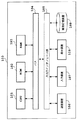
図1は、本実施形態のリサイクル熱可塑性樹脂設計装置のハードウェア構成の一例を示す。リサイクル熱可塑性樹脂設計装置100は、サーバ全体の制御を行う中央処理装置(CPU)101と、プログラムが格納されたROM102と、プログラムの実行に必要なデータを一時的に格納するRAM103とを備えており、これらはバス104を介して接続されている。
【0047】
バス104には、周辺装置を制御するための入出力インタフェース部105が接続されている。この入出力インタフェース部105には、通信装置106と、入力装置107と、表示装置108と、補助記憶装置109とが接続されている。
【0048】
通信装置106は、LANやインターネット等の通信ネットワークとの接続を行う機能を有する。入力装置107は、データの入力を行うキーボードや、カーソルの制御を行うマウス等のポインティングデバイスとして構成される。表示装置108は、CRT(Cathode-Ray Tube)あるいはLCD(Liquid Crystal Display)等のディスプレイとして構成される。
【0049】
補助記憶装置109には、本発明に関わるリサイクル熱可塑性樹脂の設計に使用されるデータの集合、すなわちデータベースが記憶されている。なお、補助記憶装置109の具体的なハードウェア構成としては、例えばハードディスクが使用される。
【0050】
データベースには、特定の物性を有する回収材から、特定の物性を有するリサイクル製品を製造するために、物性の加成性の原則を利用して、物性を調整するために混合する追加材料の配合組成を求めるために関係式が記憶されている。本実施形態では、物性として、回収材またはリサイクル熱可塑性樹脂中の難燃剤の含有量、ロックウェル・ハードネス(Rh)およびメルトフローレート(MFR)が使用されるが、曲げ弾性率が使用されることもある。
【0051】
難燃剤の含有量は、回収材またはリサイクル熱可塑性樹脂中に含まれるBr、Sb、Cl、P等の元素の量をもって示す。これらの値は、蛍光X線を使用した定量分析により得られる実測値である。また、ロックウェル・ハードネスは、回収材またはリサイクル熱可塑性樹脂の硬度を示す。また、メルトフローレートとは、回収材またはリサイクル熱可塑性樹脂に熱を加えたときにどれぐらいの流動性を有するか、すなわちどの程度の熱可塑性を持つかを示す。また、曲げ弾性率は、回収材またはリサイクル熱可塑性樹脂の剛性を示す値である。
【0052】
本発明に関わるリサイクル熱可塑性樹脂設計装置100の諸機能は、ROM102に格納されたデータベース制御用プログラムを、CPU101が実行することにより達成される。なお、CPU101にプログラムコードを供給するための記録媒体はROMに限定されず、例えばハードディスクやCD−ROM、メモリカード等の媒体を使用することも可能である。また、本実施形態の動作を実行するためのプログラムコードを記録した記録媒体から、そのプログラムを通信ネットワークを介してリサイクル熱可塑性樹脂設計装置100に配信することとしてもよい。
【0053】
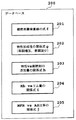
図2は、補助記憶装置109中のデータベースに登録されたデータの構成例を示す。
【0054】
データベース200には、難燃剤量検量線の式201、物性加成性の関係式202、物性に対する難燃剤添加量の関係式203、ロックウェル・ハードネスとゴム変性熱可塑性樹脂中のゴム量の関係式204、およびメルトフローレートとゴム変性熱可塑性樹脂中のマトリックス樹脂比率の関係式205が記憶されている。これらの式は、入力装置から入力されるリサイクル率を使用して計算される。
【0055】
ここで、ゴム変性熱可塑性樹脂としてアクリロニトリル−ブタジエン−スチレン共重合体(ABS樹脂)を例にとると、ゴム量とはABS樹脂中のブタジエン系ゴムの含量であり、マトリックス樹脂とはシアン化ビニル−芳香族ビニル共重合体(AS樹脂)を示す。また、リサイクル率とは、目標とするリサイクル熱可塑性樹脂と回収材の比率を示す値である。
【0056】
以下、データベース200に記憶されている各関係式について説明する。以下の説明では、回収剤中の難燃剤量(実測値)をfr1、リサイクル熱可塑性樹脂の難燃剤量(目標値)をfr2、追加材料中の難燃剤量をfr3、リサイクル率をR、回収材のロックウェル・ハードネスおよびメルトフローレートの実測値をrh1およびmfr1、リサイクル熱可塑性樹脂のロックウェル・ハードネスおよびメルトフローレートの目標値をrh2およびmfr2、追加材料のロックウェル・ハードネスおよびメルトフローレートの計算値をrh3およびmfr3、追加材料中のゴム変性熱可塑性樹脂のロックウェル・ハードネスおよびメルトフローレートの計算値をrh3_ABSおよびmfr3_ABSとする。
【0057】
難燃剤量検量線の式201は、ゴム変性熱可塑性樹脂中に含まれるBr、SbおよびCl等の難燃剤の量を表す式であり、
f(fr1,fr2,R)=fr3
と表される。リサイクル熱可塑性樹脂設計装置に蛍光X線を使用した回収材中の難燃剤量と、目標とするリサイクル熱可塑性樹脂中の難燃剤量とが入力されると、この式に基づいて、追加材料の処方に必要な難燃剤の量が決定される。
【0058】
物性加成性の関係式202は、回収材とリサイクル熱可塑性樹脂の物性から追加材料に必要なゴム変性熱可塑性樹脂の物性を求める式であり、
g(rh1,mfr1,rh2,mfr2,R)=(rh3,mfr3)
と表される。物性に対する難燃剤添加量の関係式hは、ゴム変性熱可塑性樹脂に難燃剤を添加した場合の物性の変化を表す式であり、
h(rh3,mfr3,fr3,R)=(rh3_ABS,mfr3_ABS)
と表される。
【0059】
関係式iは、ゴム変性熱可塑性樹脂のロックウェル・ハードネスと、ゴム変性熱可塑性樹脂中のゴム量との関係を表す式であり、追加材料中のゴム量をgr3とすると、
i(rh3_ABS,R)=gr3
と表される。
【0060】
関係式jは、ゴム変性熱可塑性樹脂のメルトフローレートと、ゴム変性熱可塑性樹脂のマトリックス樹脂の比率との関係を表す式であり、追加材料中のマトリックス樹脂比率をas3とすると、
j(mfr3_ABS,R)=as3
と表される。
【0061】
これらの関係式は、回収材およびリサイクル熱可塑性樹脂の物性から求めることとしても良い。この場合、回収材の物性、回収材と混合する追加材料の物性、および生成されたリサイクル熱可塑性樹脂の物性の実測値を複数データベースに予め記憶しておく。そして、記憶された物性の値に基づいて、上述の関係式を求めて、データベースに記憶する。
【0062】
次に、図3のフローチャートを参照し、データベース制御プログラムにより実行されるリサイクル熱可塑性樹脂の設計の手順を示す。
【0063】
まず、入力装置から、蛍光X線を使用して測定された回収材中の難燃剤量、回収材のロックウェル・ハードネスおよびメルトフローレートの実測値rh1およびmfr1、目標とするリサイクル熱可塑性樹脂中の難燃剤量fr2、ロックウェル・ハードネスおよびメルトフローレートの目標値rh2およびmfr2、およびリサイクル率Rを入力する(ステップS301)。
【0064】
次に、入力されたfr1およびfr2に式fを適用してfr3を算出し(ステップS302)、入力されたrh1、mfr1、rh2およびmfr2に式gを適用してrh3およびmfr3を算出する(ステップS303)。次に、ステップS302で算出されたfr3、およびステップS303で算出されたrh3およびmfr3に式hを適用し、rh3_ABSおよびmfr3_ABSを算出する(ステップS304)。
【0065】
次に、ステップS304において算出された追加材料のrh3_ABSに式iを適用して、gr3を算出し(ステップS305)、ステップS304において算出されたmfr3_ABSに式jを適用して、追加材料のマトリックス樹脂比率を決定する(ステップS306)。
【0066】
最後に、ステップS302において求められたfr3、ステップS305において求められたgr3、およびステップS306において求められたas3を出力し、RAMあるいは補助記憶装置に記憶する(ステップS307)。このように出力され記憶された値は、リサイクル熱可塑性樹脂設計における追加材料の処方を構成する。
【0067】
(第2実施形態)
上述した実施形態により、種々の物性を有する回収材を使用したリサイクル熱可塑性樹脂の設計が可能となる。しかしながら、回収材とリサイクル熱可塑性樹脂との物性がかけ離れている場合は設計の精度が低くなる。すなわち、追加材料の処方を算出することができても、実際にリサイクル熱可塑性樹脂を製造した場合の物性が目標とする物性(目標物性)から離れてしまう。そこで、計算の精度を高めるため、回収材とリサイクル熱可塑性樹脂の類似度を求めることとしても良い。
【0068】
本実施形態では、リサイクル熱可塑性樹脂の設計に使用するロックウェル・ハードネス等の物性をパラメータとして、ゴム変性熱可塑性樹脂の物性をベクトルで表現する。この物性ベクトルの内積を計算して、類似度を求める。以下、類似度の判断の具体的方法について説明する。なお、以下の説明では、上述のように表現されるベクトルを物性ベクトルという。
【0069】
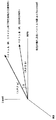
図4は、回収材とリサイクル熱可塑性樹脂の物性の類似度を判断する方法の例を示す。図4に示す例では、パラメータとして、ロックウェル・ハードネス、メルトフローレート、および耐衝撃強度の一例としてIzodを使用している。また、ベクトルAは、リサイクル熱可塑性樹脂の目標物性の物性ベクトルを、ベクトルBは回収材の物性ベクトルであり、大きさはそれぞれaおよびbである。また、ベクトルAおよびベクトルBのなす角はθである。
【0070】
物性の類似度は、ベクトルの内積=abcosθによって求められる。また、回収材と目標物性との離れ具合は、
(回収材の物性ベクトルと目標物性ベクトルとの内積)/
(目標物性ベクトル同士の内積)=abcosθ/a2
により求められる。この式により求められた値が1から遠いほど、回収材の物性が目標物性から離れていることとなる。
【0071】
また、実際に製造されたリサイクル熱可塑性樹脂の物性と、リサイクル熱可塑性樹脂の目標物性とを使用して、目標物性の再現性の評価を行うことができる。この場合、実際に製造されたリサイクル熱可塑性樹脂の物性を測定し、第2実施形態と同様に物性ベクトルを計算する。目標物性の再現性は、
(リサイクル熱可塑性樹脂の物性ベクトルと目標物性のベクトルとの内積)/(目標物性ベクトル同士の内積)
により求めることができる。この式の値も上述と同様に、1から遠いほど回収材の物性が目標物性から離れていることとなる。
【0072】
このように類似度を求めることにより、目標物性に類似する回収材を選択使用して、リサイクル熱可塑性樹脂の設計および製造を行うこともできる。
【0073】
以上、本発明の好適な実施形態を説明したが、本発明はこの実施形態のみに限定されることなく他の種々の態様でも実施することができることは言うまでもない。例えば、追加材料の処方を決めるための物性は、ロックウェル・ハードネス、メルトフローレート、曲げ弾性率および耐衝撃強度に限定されるものではない。
【0074】
また、回収材とリサイクル熱可塑性樹脂の物性の類似度の計算は、ベクトルの内積に限られず、例えば統計的手法を使用して算出することも可能である。
【0075】
また、上述の実施形態では、ゴム変性熱可塑性樹脂のリサイクル熱可塑性樹脂を設計する場合を例に挙げて説明したが、本発明は他のリサイクル熱可塑性樹脂を設計する場合にも適用可能であることはいうまでもない。
【0076】
本発明は、上述した実施の形態の機能を実施するコンピュータ・プログラムのプログラムコードをサーバまたはクライアントのコンピュータに供給し、そのコンピュータ内部のCPUがプログラムコードを読み出して実行することにより達成される。コンピュータ・プログラムに使用されるプログラミング言語としては、BASICやC言語等の高級言語、オブジェクト指向プログラミング言語、アセンブラ言語、機械語、HTML(HyperText Markup Language)等のマークアップランゲージその他の言語を使用できる。
【0077】
したがって、プロセッサは、コンピュータ・プログラムを記録媒体から受け取ることができる。コンピュータ・プログラムの命令を実体的に組み入れる記録媒体としては、例えばフラッシュメモリ素子などの半導体メモリ素子、ハードディスクやリムーバブルディスクなどの磁気ディスク、CD−R等の媒体を使用することができる。
【0078】
【発明の効果】
本発明によれば、少なくとも1種類の熱可塑性樹脂回収材を用いたリサイクル熱可塑性樹脂を設計するリサイクル熱可塑性樹脂設計装置であって、回収材の物性と、目標とするリサイクル熱可塑性樹脂の物性とを入力する入力手段と、入力された回収材の物性とリサイクル熱可塑性樹脂の物性とに基づいて、回収材に追加する同種の追加材料の配合組成を求める計算手段とを備え、前記リサイクル熱可塑性樹脂は、ゴム変性熱可塑性樹脂であり、前記入力された物性は、ロックウェル・ハードネスおよび曲げ弾性率のいずれかと、メルトフローレートとを含み、前記計算手段は、前記求められた追加材料中のゴム変性熱可塑性樹脂のロックウェル・ハードネスおよび曲げ弾性率のいずれかに基づいて、前記追加材料中のゴム量を更に求めるので、物性の異なる回収材を用いたリサイクルを容易に行うことができる。
【0079】
また、回収材とリサイクル熱可塑性樹脂との物性の類似度を判断することにより、物性が類似する回収材を選択使用してリサイクル熱可塑性樹脂を製造することができる。結果として、リサイクル熱可塑性樹脂設計の精度を高めることができる。
【図面の簡単な説明】
【図1】本実施形態のリサイクル熱可塑性樹脂設計装置のハードウェア構成を示すブロック図である。
【図2】データベースに登録されたデータの構成例を示す図である。
【図3】データベース制御プログラムにより実行されるリサイクル熱可塑性樹脂の設計の手順を示すフローチャートである。
【図4】回収材とリサイクル熱可塑性樹脂の物性の類似度を判断する方法の例を示す図である。
【符号の説明】
100 リサイクル熱可塑性樹脂設計装置
101 CPU
102 ROM
103 RAM
104 バス
105 入出力インタフェース部
106 通信装置
107 入力装置
108 表示装置
109 補助記憶装置
200 データベース[0001]
BACKGROUND OF THE INVENTION
The present invention relates to a recycled thermoplastic resin design apparatus, a recycled thermoplastic resin design method, a computer-readable recording medium, and a computer program.
[0002]
[Prior art]
Thermoplastic resins are lightweight and long-lasting without rusting, and can be molded into various shapes, so that they are widely used as films, fibers, molded articles, and the like. In particular, with the progress of the information-oriented society in recent years, thermoplastic resins that are lightweight and excellent in mechanical strength are widely used in interior parts and exterior materials of home appliances and various devices.
[0003]
However, as the amount of thermoplastic resin used increases, the processing of scraps and waste has become a social problem, and it is desired to establish a mechanism for economically recycling the thermoplastic resin.
[0004]
In particular, closed recycling, in which the recovered resin is used again for the same purpose, is one of desirable forms with higher added value.
[0005]
The flow of closed recycling of thermoplastic resin currently being implemented is as follows. First, the thermoplastic resin parts (collected material) recovered from used equipment are crushed after the attached dirt and seals are removed. Or it is crushed and sent to the resin manufacturer. The resin manufacturer mixes and collects the recovered material and a new additional material (virgin material), and then ships it to the market again as a recycled thermoplastic resin.
[0006]
[Problems to be solved by the invention]
However, the above-described recycling process is performed on the assumption that the physical properties of the specific grade collected by specifying the type and grade of the recovered material are uniform, and are composed of a plurality of different grades. It is difficult to produce a recycled thermoplastic resin based on a recovered material whose physical properties are not uniform.
[0007]
For example, it is assumed that a specific kind of thermoplastic resin in which various grades from various manufacturers are mixed and used as a raw material. In this case, the physical properties of the recovered material accepted by the recycled resin manufacturer are not uniform. Therefore, in order to produce a recycled thermoplastic resin with a certain quality, it is necessary to study a complicated formulation of thermoplastic resin for each recovered material. There must be. Here, the specific type means that the main constituent components of the resin are the same.
[0008]
Due to the complexity of such treatment, there has been a problem that it is not possible to expand the scope of recovered materials used in the production of recycled thermoplastic resins.
[0009]
The present invention has been made in view of such problems, and the object of the present invention is to provide recycled thermoplastics that perform information processing that can cope with the expansion of the scope of recovered materials used in the production of recycled thermoplastic resins. It is an object to provide a resin design apparatus, a recycled thermoplastic resin design method, a computer-readable recording medium, and a computer program.
[0010]
[Means for Solving the Problems]
In order to achieve such an object, the invention described in claim 1 is a recycled thermoplastic resin design device for designing a recycled thermoplastic resin using at least one kind of thermoplastic resin recovered material, wherein the recovered material is a recovered material. Input means for inputting the physical properties of the recycled thermoplastic resin and the physical properties of the target recycled thermoplastic resin, and the same type of addition to the recovered material based on the physical properties of the input recovered material and the recycled thermoplastic resin And a calculation means for obtaining the blending component of the materialThe recycled thermoplastic resin is a rubber-modified thermoplastic resin, and the input physical property includes any of Rockwell Hardness and bending elastic modulus, and a melt flow rate, and the calculating means is calculated as described above. Further, the amount of rubber in the additional material is further determined based on either the Rockwell hardness or the flexural modulus of the rubber-modified thermoplastic resin in the additional material.It is characterized by that.
The invention according to claim 2 is the recycled thermoplastic resin designing apparatus according to claim 1, wherein the inputted physical properties include an amount of a flame retardant.
[0011]
Claims3The invention described in,Claim 1Or 2In the recycled thermoplastic resin designing device according to claim 1, further comprising storage means for further storing a recycling rate indicating the amount of the recovered material in the recycled thermoplastic resin, wherein the calculating means is based on the stored recycling rate. The compounding component of the additional material is obtained.
[0017]
Also,Claim 2The invention is an embodiment thereof1 andIn the recycled thermoplastic resin designing apparatus, the flame retardant includes any one of Br (bromine), Sb (antimony), Cl (chlorine), and P (phosphorus).
[0018]
Also,Claim 2The invention is an embodiment thereof2In the recycled thermoplastic resin designing apparatus, the calculation means further determines the amount of the flame retardant in the additional material based on the amount of the input flame retardant.
[0019]
In addition, the embodiment2The invention is an embodiment thereof3In the recycled thermoplastic resin design apparatus, the calculation means obtains a necessary component of the rubber-modified thermoplastic resin in the additional material based on the obtained amount of the flame retardant in the additional material. Features.
[0020]
Also,Claim 1The invention is an embodiment thereof4In the recycled thermoplastic resin design apparatus, the calculation means further determines the blending ratio of the matrix resin of the additional material based on the melt flow rate of the rubber-modified thermoplastic resin in the obtained additional material. It is characterized by.
[0021]
Claims4The invention described in claim 1One of 3The recycled thermoplastic resin design apparatus described in 1) further includes a judging means for judging the similarity of physical properties of the recovered material and the recycled thermoplastic resin.
[0022]
Claims5The invention described in 1 is a recycled thermoplastic resin design method for designing a recycled thermoplastic resin using at least one thermoplastic resin recovery material, and the physical properties of the recovered material and the target properties of the recycled thermoplastic resin And, based on the input physical properties of the recovered material and the physical properties of the recycled thermoplastic resin, the blending component of the same additional material to be added to the recovered material is obtained.The recycled thermoplastic resin is a rubber-modified thermoplastic resin, and the input physical properties include any of Rockwell Hardness and bending elastic modulus, and a melt flow rate, and the obtained additional material Further comprising determining the amount of rubber in the additional material based on any of Rockwell Hardness and flexural modulus of the rubber-modified thermoplastic resin therein.It is characterized by.
The invention according to claim 6 is the method for designing a recycled thermoplastic resin according to claim 5, wherein the inputted physical property includes an amount of a flame retardant.
[0023]
Claims5The invention described in is an embodiment thereof5In the recycled thermoplastic resin design method, the blending component of the additional material is obtained based on the recycling rate that represents the amount of the recovered material in the recycled thermoplastic resin stored in the storage means. .
[0028]
Also,Claim 6The invention ofIn the recycling thermoplastic resin design method according to claim 5.In the recycled thermoplastic resin designing method, the inputted physical property includes an amount of a flame retardant.
[0029]
Also,Claim 6The invention is an embodiment thereof6In the recycled thermoplastic resin designing method, the flame retardant contains any one of Br, Sb, Cl, and P.
[0030]
Also,Claim 6The invention is an embodiment thereof7In the recycled thermoplastic resin designing method, the amount of the flame retardant in the additional material is obtained based on the amount of the inputted flame retardant.
[0031]
In addition, the embodiment7The invention is an embodiment thereof8In the recycled thermoplastic resin designing method, the blending composition of the rubber-modified thermoplastic resin in the additional material is further obtained based on the obtained amount of the flame retardant in the additional material.
[0032]
Also,Claim 5The invention is an embodiment thereof9AsConcernedIn the recycled thermoplastic resin designing method, the blending ratio of the matrix resin of the additional material is further obtained based on the melt flow rate of the rubber-modified thermoplastic resin in the obtained additional material.
[0033]
Claims5The invention described in is an embodiment thereof1As 0The concernedIn the recycled thermoplastic resin design method, the similarity of physical properties of the recovered material and the recycled thermoplastic resin is further determined.
[0034]
Claims7The invention described in (1) is a computer-readable recording medium that records a recycled thermoplastic resin design program for designing a recycled thermoplastic resin using at least one type of recovered material, and the program is Enter the physical properties of the recovered material and the physical properties of the target recycled thermoplastic resin, and add additional materials to be added to the recovered material based on the physical properties of the input recovered material and the recycled thermoplastic resin Let the composition be soughtThe recycled thermoplastic resin is a rubber-modified thermoplastic resin, and the inputted physical property includes any of Rockwell Hardness and bending elastic modulus, and a melt flow rate, and the program is stored in the computer. Based on either the Rockwell hardness or the flexural modulus of the rubber-modified thermoplastic resin in the obtained additional material, the amount of rubber in the additional material is further obtained.It is characterized by that.
According to an eighth aspect of the present invention, in the computer-readable recording medium according to the seventh aspect, the input physical property includes an amount of a flame retardant.
[0035]
Also, Claims9The invention described in the above is a computer program for designing a recycled thermoplastic resin using at least one type of recovered material, and the physical properties of the recovered material and the target properties of the recycled thermoplastic resin for the computer Based on the input physical properties of the recovered material and the physical properties of the recycled thermoplastic resin, the composition of the additional material to be added to the recovered material is obtained.The recycled thermoplastic resin is a rubber-modified thermoplastic resin, and the input physical properties include any of Rockwell Hardness and bending elastic modulus, and a melt flow rate. The amount of rubber in the additional material is further determined based on either the Rockwell hardness or the flexural modulus of the rubber-modified thermoplastic resin in the obtained additional material.It is characterized by that.
Furthermore, the invention described in claim 10 is the computer program according to claim 9, wherein the inputted physical property includes an amount of a flame retardant.
[0036]
Examples of the thermoplastic resin to be recycled in the above include polyolefin resins such as polyethylene and polypropylene, polystyrene, styrene polymers such as acrylonitrile-styrene copolymer, styrene-methyl methacrylate copolymer, and polybutylene terephthalate. Polyester resins such as polyethylene terephthalate and polyethylene naphthalate, halogen-containing polymers such as vinyl chloride resin, vinylidene chloride resin and chlorinated polyethylene, polyamides such as nylon 6 and nylon 66, rubber-modified polystyrene, acrylonitrile Rubber-modified thermoplastic resin such as butadiene-styrene copolymer (ABS resin), polycarbonate, polysulfone, polyphenylene ether, polyethersulfone, polyarylsulfone, poly Etc. can be mentioned amide-imide, polyester, polyamide, polyurethane, polyolefin, can also be applied, such as a thermoplastic elastomer of polystyrene or the like. Furthermore, it can be applied to polymer blends or polymer alloys of these resins, such as polycarbonate / ABS alloys, polycarbonate / polystyrene alloys, modified PPE, polybutylene terephthalate / ABS resin alloys. The thermoplastic resin that can satisfactorily exhibit the effects of the present invention is a rubber-modified thermoplastic resin, particularly a resin containing a rubber-modified styrene resin.
[0037]
The thermoplastic resin recycled in the present invention is composed of a resin whose main constituent components can be regarded as similar or equivalent in chemical structure, but need not be completely the same. For example, the components may be 80% by weight or more, preferably 90% by weight or more, and more preferably 95% by weight or more if they are similar or equivalent in chemical structure.
[0038]
As a means for quantifying the identity of the thermoplastic resin, for example, component analysis using infrared spectroscopic analysis can be mentioned, and it is possible to select with high accuracy.
[0039]
These thermoplastic resins can contain a flame retardant. Examples of the flame retardant include a phosphorus compound and a bromine compound.
[0040]
Non-halogen compounds are preferred as phosphorus-based compounds as flame retardants, and include triphenyl phosphate, tricresyl phosphate, trixylenyl phosphate, cresyl diphenyl phosphate, xylenyl phosphate, tris (isopropylphenyl) phosphate, aromatic condensed phosphorus. Acid esters and the like are used.
[0041]
Examples of bromine compounds include tetrabromobisphenol A, tetrabromobisphenol A epoxy, tetrabromobisphenol A bis (2,3-dibromopropyl ether), tetrabromobisphenol A bis (allyl ether), tetrabromobisphenol A bis (2 -Hydroxyethyl ether), tetrabromobisphenol A ethyl ether oligomer, tetrabromobisphenol A carbonate oligomer, bis (tribromophenoxy) ethane, hexabromophenoxy) ethane, hexabromocyclodecane and the like are used.
[0042]
Flame retardant aids such as antimony trioxide and antimony pentoxide can be added to these flame retardants.
[0043]
Moreover, chlorinated polyethylene, Teflon resin, etc. are also used as an anti-dripping agent in order to improve the flame retardancy of thermoplastic resins.
[0044]
The amount of the flame retardant contained in the recovered material can be determined by measuring, for example, Br, Sb, Cl or P derived from these flame retardants in the thermoplastic resin. In addition, for quantification of these elements, it is preferable to employ an analysis method using fluorescent X-rays because it has good accuracy and is simple.
[0045]
DETAILED DESCRIPTION OF THE INVENTION
Hereinafter, embodiments of the present invention will be described in detail with reference to the drawings, taking as an example the case of designing a recycled thermoplastic resin of a rubber-modified thermoplastic resin.
[0046]
(First embodiment)
FIG. 1 shows an example of a hardware configuration of a recycled thermoplastic resin design apparatus according to this embodiment. The recycled thermoplastic
[0047]
An input /
[0048]
The
[0049]
The
[0050]
In the database, in order to produce recycled products with specific physical properties from recovered materials with specific physical properties, blending of additional materials to be mixed to adjust physical properties using the principle of additive properties of physical properties Relational expressions are stored to determine the composition. In this embodiment, as the physical properties, the content of the flame retardant in the recovered material or the recycled thermoplastic resin, the Rockwell hardness (Rh), and the melt flow rate (MFR) are used, but the flexural modulus is used. Sometimes.
[0051]
The content of the flame retardant is indicated by the amount of elements such as Br, Sb, Cl, and P contained in the recovered material or the recycled thermoplastic resin. These values are actual values obtained by quantitative analysis using fluorescent X-rays. Rockwell hardness indicates the hardness of the recovered material or recycled thermoplastic resin. The melt flow rate indicates how much fluidity is present when heat is applied to the recovered material or the recycled thermoplastic resin, that is, how much thermoplasticity it has. The flexural modulus is a value indicating the rigidity of the recovered material or the recycled thermoplastic resin.
[0052]
Various functions of the recycled thermoplastic
[0053]
FIG. 2 shows a configuration example of data registered in the database in the
[0054]
The
[0055]
Here, when an acrylonitrile-butadiene-styrene copolymer (ABS resin) is taken as an example of the rubber-modified thermoplastic resin, the rubber amount is the content of the butadiene rubber in the ABS resin, and the matrix resin is vinyl cyanide. -An aromatic vinyl copolymer (AS resin) is shown. The recycling rate is a value indicating the target ratio of recycled thermoplastic resin and recovered material.
[0056]
Hereinafter, each relational expression stored in the
[0057]
The flame retardant
f (fr1, Fr2, R) = frThree
It is expressed. When the amount of flame retardant in the recovered material using fluorescent X-rays and the target amount of flame retardant in the recycled thermoplastic resin are input to the recycled thermoplastic resin design device, the additional material The amount of flame retardant required for the formulation is determined.
[0058]
The physical property additivity
g (rh1, Mfr1, Rh2, Mfr2, R) = (rhThree, MfrThree)
It is expressed. The relational expression h of the amount of flame retardant added to the physical properties is an expression representing the change in physical properties when a flame retardant is added to the rubber-modified thermoplastic resin,
h (rhThree, MfrThree, FrThree, R) = (rh3_ABS, Mfr3_ABS)
It is expressed.
[0059]
The relational expression i is an expression representing the relationship between the Rockwell hardness of the rubber-modified thermoplastic resin and the amount of rubber in the rubber-modified thermoplastic resin. The amount of rubber in the additional material is expressed as gr.ThreeThen,
i (rh3_ABS, R) = grThree
It is expressed.
[0060]
The relational expression j is an expression representing the relationship between the melt flow rate of the rubber-modified thermoplastic resin and the ratio of the matrix resin of the rubber-modified thermoplastic resin, and the ratio of the matrix resin in the additional material is represented by asThreeThen,
j (mfr3_ABS, R) = asThree
It is expressed.
[0061]
These relational expressions may be obtained from the physical properties of the recovered material and the recycled thermoplastic resin. In this case, the physical properties of the recovered material, the physical properties of the additional material mixed with the recovered material, and the actual measured values of the physical properties of the generated recycled thermoplastic resin are stored in advance in a plurality of databases. And based on the value of the stored physical property, the above-mentioned relational expression is obtained and stored in the database.
[0062]
Next, referring to the flowchart of FIG. 3, a procedure for designing a recycled thermoplastic resin executed by the database control program will be described.
[0063]
First, from the input device, the amount of the flame retardant in the recovered material measured using fluorescent X-rays, the measured value of the rockwell / hardness of the recovered material and the melt flow rate rh1And mfr1Target amount of flame retardant in recycled thermoplastic resin fr2, Rockwell Hardness and melt flow rate target value rh2And mfr2And the recycling rate R are input (step S301).
[0064]
Next, the input fr1And fr2Fr to the expression fThreeIs calculated (step S302) and the input rh1, Mfr1, Rh2And mfr2Applying the formula g to rhThreeAnd mfrThreeIs calculated (step S303). Next, fr calculated in step S302Three, And rh calculated in step S303ThreeAnd mfrThreeApplying the formula h to rh3_ABSAnd mfr3_ABSIs calculated (step S304).
[0065]
Next, rh of the additional material calculated in step S3043_ABSApplying equation i to grThreeIs calculated (step S305), and mfr calculated in step S304 is calculated.3_ABSEquation j is applied to the matrix resin ratio of the additional material (step S306).
[0066]
Finally, fr obtained in step S302Three, Gr obtained in step S305Three, And as determined in step S306ThreeIs stored in the RAM or the auxiliary storage device (step S307). The values output and stored in this way constitute a prescription for additional materials in the design of recycled thermoplastics.
[0067]
(Second Embodiment)
According to the embodiment described above, it is possible to design a recycled thermoplastic resin using a recovery material having various physical properties. However, when the physical properties of the recovered material and the recycled thermoplastic resin are far from each other, the design accuracy is lowered. That is, even if the prescription of the additional material can be calculated, the physical properties when the recycled thermoplastic resin is actually manufactured deviate from the target physical properties (target physical properties). Therefore, in order to increase the calculation accuracy, the similarity between the recovered material and the recycled thermoplastic resin may be obtained.
[0068]
In the present embodiment, the physical properties of the rubber-modified thermoplastic resin are expressed by vectors using physical properties such as Rockwell and hardness used for the design of the recycled thermoplastic resin as parameters. The inner product of the physical property vectors is calculated to obtain the similarity. Hereinafter, a specific method for determining the similarity will be described. In the following description, a vector expressed as described above is referred to as a physical property vector.
[0069]
FIG. 4 shows an example of a method for judging the similarity between the physical properties of the recovered material and the recycled thermoplastic resin. In the example shown in FIG. 4, Izod is used as an example of Rockwell Hardness, melt flow rate, and impact strength. Further, vector A is a physical property vector of the target physical property of the recycled thermoplastic resin, vector B is a physical property vector of the recovered material, and the sizes are a and b, respectively. The angle formed by the vector A and the vector B is θ.
[0070]
The similarity of physical properties is obtained by the inner product of vectors = ab cos θ. In addition, the distance between the recovered material and the target physical property is
(Inner product of recovered material physical property vector and target physical property vector) /
(Inner product of target physical property vectors) = ab cos θ / a2
Is required. The farther the value obtained from this equation is from 1, the farther the physical property of the recovered material is from the target physical property.
[0071]
Moreover, the reproducibility of the target physical property can be evaluated using the physical property of the actually produced recycled thermoplastic resin and the target physical property of the recycled thermoplastic resin. In this case, the physical property of the actually produced recycled thermoplastic resin is measured, and the physical property vector is calculated as in the second embodiment. The reproducibility of the target physical properties is
(Inner product of physical property vector of recycled thermoplastic resin and target physical property vector) / (Inner product of target physical property vector)
It can ask for. Similarly to the above, the value of this formula is further away from the target physical property as the distance from 1 increases.
[0072]
Thus, by calculating | requiring a similarity degree, the design and manufacture of a recycled thermoplastic resin can also be performed selectively using the collection | recovery material similar to a target physical property.
[0073]
The preferred embodiment of the present invention has been described above, but it goes without saying that the present invention is not limited to this embodiment and can be implemented in various other modes. For example, the physical properties for determining the formulation of the additional material are not limited to Rockwell hardness, melt flow rate, flexural modulus and impact strength.
[0074]
Moreover, the calculation of the similarity between the properties of the recovered material and the recycled thermoplastic resin is not limited to the inner product of the vectors, and can be calculated using, for example, a statistical method.
[0075]
In the above-described embodiment, the case of designing a recycled thermoplastic resin of a rubber-modified thermoplastic resin has been described as an example. However, the present invention can also be applied to the case of designing another recycled thermoplastic resin. Needless to say.
[0076]
The present invention is achieved by supplying the program code of a computer program that implements the functions of the above-described embodiments to a server or client computer, and the CPU in the computer reads and executes the program code. As a programming language used for the computer program, high-level languages such as BASIC and C language, object-oriented programming languages, assembler languages, machine languages, markup languages such as HTML (HyperText Markup Language), and other languages can be used.
[0077]
Therefore, the processor can receive the computer program from the recording medium. As a recording medium into which the instructions of the computer program are substantively incorporated, for example, a semiconductor memory element such as a flash memory element, a magnetic disk such as a hard disk or a removable disk, a medium such as a CD-R can be used.
[0078]
【The invention's effect】
According to the present invention, there is provided a recycled thermoplastic resin design device for designing a recycled thermoplastic resin using at least one thermoplastic resin recovery material, and the physical properties of the recovered material and the target properties of the recycled thermoplastic resin And a calculation means for obtaining a blend composition of the same kind of additional material added to the recovered material based on the input physical property of the recovered material and the physical property of the recycled thermoplastic resin.The recycled thermoplastic resin is a rubber-modified thermoplastic resin, and the input physical property includes any of Rockwell Hardness and bending elastic modulus, and a melt flow rate, and the calculating means is calculated as described above. Further, the amount of rubber in the additional material is further determined based on either the Rockwell hardness or the flexural modulus of the rubber-modified thermoplastic resin in the additional material.Therefore, recycling using recovered materials having different physical properties can be easily performed.
[0079]
Further, by judging the similarity of physical properties between the recovered material and the recycled thermoplastic resin, the recycled thermoplastic resin can be manufactured by selectively using the recovered material having similar physical properties. As a result, the accuracy of the recycled thermoplastic resin design can be increased.
[Brief description of the drawings]
FIG. 1 is a block diagram illustrating a hardware configuration of a recycled thermoplastic resin design apparatus according to an embodiment.
FIG. 2 is a diagram illustrating a configuration example of data registered in a database.
FIG. 3 is a flowchart showing a procedure for designing a recycled thermoplastic resin executed by a database control program.
FIG. 4 is a diagram illustrating an example of a method for determining a similarity between physical properties of a collected material and a recycled thermoplastic resin.
[Explanation of symbols]
100 Recycled thermoplastic resin design equipment
101 CPU
102 ROM
103 RAM
104 bus
105 I / O interface section
106 Communication device
107 Input device
108 Display device
109 Auxiliary storage device
200 database
Claims (10)
回収材の物性と、目標とするリサイクル熱可塑性樹脂の物性とを入力する入力手段と、
前記入力された回収材の物性とリサイクル熱可塑性樹脂の物性とに基づいて、前記回収材に追加する同種の追加材料の配合組成を求める計算手段と
を備え、前記リサイクル熱可塑性樹脂は、ゴム変性熱可塑性樹脂であり、前記入力された物性は、ロックウェル・ハードネスおよび曲げ弾性率のいずれかと、メルトフローレートとを含み、前記計算手段は、前記求められた追加材料中のゴム変性熱可塑性樹脂のロックウェル・ハードネスおよび曲げ弾性率のいずれかに基づいて、前記追加材料中のゴム量を更に求めることを特徴とするリサイクル熱可塑性樹脂設計装置。A recycled thermoplastic resin design device for designing a recycled thermoplastic resin using at least one thermoplastic resin recovery material,
Input means for inputting the physical properties of the recovered material and the physical properties of the target recycled thermoplastic resin;
A calculation means for obtaining a blending composition of the same kind of additional material to be added to the recovered material based on the inputted physical properties of the recovered material and physical properties of the recycled thermoplastic resin, and the recycled thermoplastic resin is a rubber-modified A physical property of the thermoplastic resin, wherein the input physical property includes any of Rockwell Hardness and flexural modulus and a melt flow rate, and the calculation means includes the rubber-modified thermoplastic resin in the obtained additional material. A recycle thermoplastic resin design apparatus , wherein the amount of rubber in the additional material is further determined based on any of Rockwell Hardness and flexural modulus .
回収材の物性と、目標とするリサイクル熱可塑性樹脂の物性とを入力し、
前記入力された回収材の物性とリサイクル熱可塑性樹脂の物性とに基づいて、前記回収材に追加する同種の追加材料の配合組成を求めること
を含み、前記リサイクル熱可塑性樹脂は、ゴム変性熱可塑性樹脂であり、前記入力された物性は、ロックウェル・ハードネスおよび曲げ弾性率のいずれかと、メルトフローレートとを含み、
前記求められた追加材料中のゴム変性熱可塑性樹脂のロックウェル・ハードネスおよび曲げ弾性率のいずれかに基づいて、前記追加材料中のゴム量を求めることを更に含むことを特徴とするリサイクル熱可塑性樹脂設計方法。A recycled thermoplastic resin design method for designing a recycled thermoplastic resin using at least one thermoplastic resin recovery material,
Enter the physical properties of the recovered material and the target properties of the recycled thermoplastic resin.
Based on the inputted physical properties of the recovered material and physical properties of the recycled thermoplastic resin, the blending composition of the same kind of additional material added to the recovered material is obtained.
The recycled thermoplastic resin is a rubber-modified thermoplastic resin, and the input physical properties include any of Rockwell Hardness and bending elastic modulus, and a melt flow rate,
Recycled thermoplasticity further comprising determining the amount of rubber in the additional material based on either the Rockwell hardness or the flexural modulus of the rubber-modified thermoplastic resin in the determined additional material Resin design method.
回収材の物性と、目標とするリサイクル熱可塑性樹脂の物性とを入力させ、
前記入力された回収材の物性とリサイクル熱可塑性樹脂の物性とに基づいて、前記回収材に追加する同種の追加材料の配合組成を求めさせ、
前記リサイクル熱可塑性樹脂は、ゴム変性熱可塑性樹脂であり、前記入力された物性は、ロックウェル・ハードネスおよび曲げ弾性率のいずれかと、メルトフローレートとを含み、
前記プログラムは、前記コンピュータに対して、前記求められた追加材料中のゴム変性熱可塑性樹脂のロックウェル・ハードネスおよび曲げ弾性率のいずれかに基づいて、前記追加材料中のゴム量を更に求めさせることを特徴とするコンピュータ読取可能な記録媒体。A computer-readable recording medium recording a recycled thermoplastic resin design program for designing a recycled thermoplastic resin using at least one kind of thermoplastic resin recovery material, wherein the program is
Enter the physical properties of the recovered material and the target properties of the recycled thermoplastic resin,
Based on the physical properties of the input recovered material and the properties of the recycled thermoplastic resin, the compounding composition of the same kind of additional material added to the recovered material is obtained ,
The recycled thermoplastic resin is a rubber-modified thermoplastic resin, and the inputted physical properties include any of Rockwell hardness and bending elastic modulus, and a melt flow rate.
The program causes the computer to further determine the amount of rubber in the additional material based on either the Rockwell hardness or the flexural modulus of the rubber-modified thermoplastic resin in the determined additional material. A computer-readable recording medium.
回収材の物性と、目標とするリサイクル熱可塑性樹脂の物性とを入力させ、
前記入力された回収材の物性とリサイクル熱可塑性樹脂の物性とに基づいて、前記回収材に追加する同種の追加材料の配合組成を求めさせ、
前記リサイクル熱可塑性樹脂は、ゴム変性熱可塑性樹脂であり、前記入力された物性は、ロックウェル・ハードネスおよび曲げ弾性率のいずれかと、メルトフローレートとを含み、
前記コンピュータに対して、前記求められた追加材料中のゴム変性熱可塑性樹脂のロックウェル・ハードネスおよび曲げ弾性率のいずれかに基づいて、前記追加材料中のゴム量を更に求めさせることを特徴とするコンピュータ・プログラム。A computer program for designing a recycled thermoplastic resin using at least one thermoplastic resin recovery material,
Enter the physical properties of the recovered material and the target properties of the recycled thermoplastic resin,
Based on the physical properties of the input recovered material and the properties of the recycled thermoplastic resin, the compounding composition of the same kind of additional material added to the recovered material is obtained ,
The recycled thermoplastic resin is a rubber-modified thermoplastic resin, and the inputted physical properties include any of Rockwell hardness and bending elastic modulus, and a melt flow rate.
To the computer, based on any of Rockwell Hardness and flexural modulus of the rubber modified thermoplastic resin of the additional material that the obtained, further obtains let characterized Rukoto the rubber amount of the additional material Computer program.
Priority Applications (1)
| Application Number | Priority Date | Filing Date | Title |
|---|---|---|---|
| JP2001118537A JP4926331B2 (en) | 2001-04-17 | 2001-04-17 | Recycled thermoplastic resin design device and recycled thermoplastic resin design method |
Applications Claiming Priority (1)
| Application Number | Priority Date | Filing Date | Title |
|---|---|---|---|
| JP2001118537A JP4926331B2 (en) | 2001-04-17 | 2001-04-17 | Recycled thermoplastic resin design device and recycled thermoplastic resin design method |
Publications (2)
| Publication Number | Publication Date |
|---|---|
| JP2002308998A JP2002308998A (en) | 2002-10-23 |
| JP4926331B2 true JP4926331B2 (en) | 2012-05-09 |
Family
ID=18968914
Family Applications (1)
| Application Number | Title | Priority Date | Filing Date |
|---|---|---|---|
| JP2001118537A Expired - Fee Related JP4926331B2 (en) | 2001-04-17 | 2001-04-17 | Recycled thermoplastic resin design device and recycled thermoplastic resin design method |
Country Status (1)
| Country | Link |
|---|---|
| JP (1) | JP4926331B2 (en) |
Families Citing this family (2)
| Publication number | Priority date | Publication date | Assignee | Title |
|---|---|---|---|---|
| JP5468317B2 (en) * | 2009-06-29 | 2014-04-09 | 日産自動車株式会社 | Method for producing additive-containing thermoplastic resin component molding material from thermoplastic resin-containing recovered material |
| JP6951150B2 (en) * | 2017-08-15 | 2021-10-20 | シャープ株式会社 | Method for manufacturing recycled polystyrene resin composition |
Family Cites Families (5)
| Publication number | Priority date | Publication date | Assignee | Title |
|---|---|---|---|---|
| JPS588612A (en) * | 1981-07-08 | 1983-01-18 | Nippon Telegr & Teleph Corp <Ntt> | Manufacture of reclaimed material from waste plastics |
| JP3275462B2 (en) * | 1993-07-14 | 2002-04-15 | 株式会社日立製作所 | Recycling system and recycling method |
| JPH08207042A (en) * | 1995-02-08 | 1996-08-13 | Olympus Optical Co Ltd | Method and apparatus for weighing and mixing plastic resin pellet |
| JPH11327212A (en) * | 1999-04-09 | 1999-11-26 | Fuji Xerox Co Ltd | Toner for full color |
| JP2001038729A (en) * | 1999-07-29 | 2001-02-13 | Hitachi Ltd | Recycling system for home appliances and OA equipment products |
-
2001
- 2001-04-17 JP JP2001118537A patent/JP4926331B2/en not_active Expired - Fee Related
Also Published As
| Publication number | Publication date |
|---|---|
| JP2002308998A (en) | 2002-10-23 |
Similar Documents
| Publication | Publication Date | Title |
|---|---|---|
| Vedernikov et al. | Effects of additives on the cure kinetics of vinyl ester pultrusion resins | |
| Ehm et al. | An integrated high throughput experimentation/predictive QSAR modeling approach to ansa-zirconocene catalysts for isotactic polypropylene | |
| KR20130044305A (en) | Iterative Manufacturing Process Control | |
| DE10329071A1 (en) | Evaluation support device and method for evaluating recyclability / environmental impact | |
| JP4926331B2 (en) | Recycled thermoplastic resin design device and recycled thermoplastic resin design method | |
| Hall et al. | Solving the problem of building models of crosslinked polymers: An example focussing on validation of the properties of crosslinked epoxy resins | |
| EP0668320B1 (en) | ABS polymer compositions for obtaining even matt surfaces | |
| Brown et al. | A novel workflow for the inverse QSPR problem using multiobjective optimization | |
| US20030220852A1 (en) | Bill of materials change management schema | |
| Ravi et al. | A focused simulation-based optimization of print time and material usage with respect to orientation, layer height and support settings for multi-pathological anatomical models in inverted vat photopolymerization 3D printing | |
| Contreras et al. | Optimization of injection parameters to obtain selected properties on foamed PP with hollow glass microspheres and thermally expandable microspheres using Taguchi method | |
| Shete et al. | Genomic imprinting and linkage test for quantitative-trait loci in extended pedigrees | |
| Zhu et al. | A review of statistical methods for identifying trait-relevant tissues and cell types | |
| Farooq et al. | A computational approach to drug design for multiple sclerosis via QSPR modeling, chemical graph theory, and multi-criteria decision analysis | |
| Tseng et al. | Numerical predictions of fiber orientation and mechanical properties for injection‐molded long‐carbon‐fiber thermoplastic composites | |
| Corsi et al. | Correlation between production parameters and mechanical properties of ABS plus p430 fused deposition material | |
| Banh et al. | Optimization of process parameters for sink marks and shrinkage reduction in family molds using Grey-based Taguchi method | |
| Wu | Temperature-Transferable Coarse-Grained Models for Volumetric Properties of Poly (lactic Acid) | |
| Golkaram et al. | RecyQMeter: Application-specific quality of recycled plastics | |
| Van Cauter et al. | Comparative study of kinetics and reactivity indices of free radical polymerization reactions | |
| Fairuz et al. | Prototype expert system for material selection of polymeric-based composites for fishing boat components | |
| Wagner et al. | Recycling of plastics from Waste Electrical and Electronic Equipment–defining minimum requirements for the reapplication in injection moulded products | |
| Martin | Bayesian inference for heterogeneous event counts | |
| US20250390626A1 (en) | Method and device for generating recipe of polymer composite material | |
| US20250265501A1 (en) | Method for Predicting Characteristic of Polymer Composite Materials Based on Material and Device Thereof |
Legal Events
| Date | Code | Title | Description |
|---|---|---|---|
| A621 | Written request for application examination |
Free format text: JAPANESE INTERMEDIATE CODE: A621 Effective date: 20080321 |
|
| RD04 | Notification of resignation of power of attorney |
Free format text: JAPANESE INTERMEDIATE CODE: A7424 Effective date: 20080321 |
|
| A977 | Report on retrieval |
Free format text: JAPANESE INTERMEDIATE CODE: A971007 Effective date: 20110302 |
|
| A131 | Notification of reasons for refusal |
Free format text: JAPANESE INTERMEDIATE CODE: A131 Effective date: 20110308 |
|
| A521 | Request for written amendment filed |
Free format text: JAPANESE INTERMEDIATE CODE: A523 Effective date: 20110426 |
|
| TRDD | Decision of grant or rejection written | ||
| A01 | Written decision to grant a patent or to grant a registration (utility model) |
Free format text: JAPANESE INTERMEDIATE CODE: A01 Effective date: 20120203 |
|
| A01 | Written decision to grant a patent or to grant a registration (utility model) |
Free format text: JAPANESE INTERMEDIATE CODE: A01 |
|
| A61 | First payment of annual fees (during grant procedure) |
Free format text: JAPANESE INTERMEDIATE CODE: A61 Effective date: 20120208 |
|
| FPAY | Renewal fee payment (event date is renewal date of database) |
Free format text: PAYMENT UNTIL: 20150217 Year of fee payment: 3 |
|
| R150 | Certificate of patent or registration of utility model |
Free format text: JAPANESE INTERMEDIATE CODE: R150 |
|
| R250 | Receipt of annual fees |
Free format text: JAPANESE INTERMEDIATE CODE: R250 |
|
| LAPS | Cancellation because of no payment of annual fees |