JP4865713B2 - ATP treatment for tachyarrhythmia - Google Patents
ATP treatment for tachyarrhythmia Download PDFInfo
- Publication number
- JP4865713B2 JP4865713B2 JP2007524861A JP2007524861A JP4865713B2 JP 4865713 B2 JP4865713 B2 JP 4865713B2 JP 2007524861 A JP2007524861 A JP 2007524861A JP 2007524861 A JP2007524861 A JP 2007524861A JP 4865713 B2 JP4865713 B2 JP 4865713B2
- Authority
- JP
- Japan
- Prior art keywords
- ventricular
- heart rate
- tachyarrhythmia
- atp
- controller
- Prior art date
- Legal status (The legal status is an assumption and is not a legal conclusion. Google has not performed a legal analysis and makes no representation as to the accuracy of the status listed.)
- Expired - Fee Related
Links
- 208000001871 Tachycardia Diseases 0.000 title claims description 68
- 206010049447 Tachyarrhythmia Diseases 0.000 title claims description 33
- 238000011282 treatment Methods 0.000 title claims description 20
- 206010047302 ventricular tachycardia Diseases 0.000 claims description 54
- 230000002861 ventricular Effects 0.000 claims description 37
- 238000002560 therapeutic procedure Methods 0.000 claims description 18
- 230000006794 tachycardia Effects 0.000 claims description 17
- 238000001514 detection method Methods 0.000 claims description 12
- 238000002633 shock therapy Methods 0.000 claims description 11
- 206010061592 cardiac fibrillation Diseases 0.000 claims description 10
- 230000002600 fibrillogenic effect Effects 0.000 claims description 10
- 206010065341 Ventricular tachyarrhythmia Diseases 0.000 claims description 9
- 230000000747 cardiac effect Effects 0.000 claims description 8
- 230000000694 effects Effects 0.000 claims description 7
- 238000002635 electroconvulsive therapy Methods 0.000 claims description 6
- 206010003119 arrhythmia Diseases 0.000 claims description 3
- 230000006793 arrhythmia Effects 0.000 claims 2
- 230000035939 shock Effects 0.000 description 16
- 208000003663 ventricular fibrillation Diseases 0.000 description 15
- 230000033764 rhythmic process Effects 0.000 description 12
- 238000000718 qrs complex Methods 0.000 description 8
- 230000000877 morphologic effect Effects 0.000 description 7
- 238000004458 analytical method Methods 0.000 description 6
- 238000013194 cardioversion Methods 0.000 description 6
- 238000007726 management method Methods 0.000 description 6
- 239000011159 matrix material Substances 0.000 description 5
- 208000014321 polymorphic ventricular tachycardia Diseases 0.000 description 5
- 238000010586 diagram Methods 0.000 description 4
- 210000004165 myocardium Anatomy 0.000 description 4
- 208000003734 Supraventricular Tachycardia Diseases 0.000 description 3
- 230000001746 atrial effect Effects 0.000 description 3
- 230000028161 membrane depolarization Effects 0.000 description 3
- 238000000034 method Methods 0.000 description 3
- 206010003658 Atrial Fibrillation Diseases 0.000 description 2
- 230000002159 abnormal effect Effects 0.000 description 2
- 206010003668 atrial tachycardia Diseases 0.000 description 2
- 208000006218 bradycardia Diseases 0.000 description 2
- 230000036471 bradycardia Effects 0.000 description 2
- 239000004020 conductor Substances 0.000 description 2
- 230000001276 controlling effect Effects 0.000 description 2
- 230000002999 depolarising effect Effects 0.000 description 2
- 230000002964 excitative effect Effects 0.000 description 2
- 210000002837 heart atrium Anatomy 0.000 description 2
- 230000003902 lesion Effects 0.000 description 2
- 238000012986 modification Methods 0.000 description 2
- 230000004048 modification Effects 0.000 description 2
- 230000034225 regulation of ventricular cardiomyocyte membrane depolarization Effects 0.000 description 2
- 230000004044 response Effects 0.000 description 2
- 208000010496 Heart Arrest Diseases 0.000 description 1
- 208000007888 Sinus Tachycardia Diseases 0.000 description 1
- 206010049418 Sudden Cardiac Death Diseases 0.000 description 1
- 208000018452 Torsade de pointes Diseases 0.000 description 1
- 208000002363 Torsades de Pointes Diseases 0.000 description 1
- 206010047281 Ventricular arrhythmia Diseases 0.000 description 1
- 238000003491 array Methods 0.000 description 1
- 210000004204 blood vessel Anatomy 0.000 description 1
- 230000000739 chaotic effect Effects 0.000 description 1
- 230000008602 contraction Effects 0.000 description 1
- 230000002596 correlated effect Effects 0.000 description 1
- 230000008878 coupling Effects 0.000 description 1
- 238000010168 coupling process Methods 0.000 description 1
- 238000005859 coupling reaction Methods 0.000 description 1
- 238000013500 data storage Methods 0.000 description 1
- 238000013461 design Methods 0.000 description 1
- 230000006870 function Effects 0.000 description 1
- 238000001990 intravenous administration Methods 0.000 description 1
- 238000005259 measurement Methods 0.000 description 1
- 229910044991 metal oxide Inorganic materials 0.000 description 1
- 150000004706 metal oxides Chemical class 0.000 description 1
- 230000010287 polarization Effects 0.000 description 1
- 230000036279 refractory period Effects 0.000 description 1
- 230000002336 repolarization Effects 0.000 description 1
- 239000004065 semiconductor Substances 0.000 description 1
- 210000001013 sinoatrial node Anatomy 0.000 description 1
- 238000007920 subcutaneous administration Methods 0.000 description 1
- 238000012360 testing method Methods 0.000 description 1
Images

Classifications
-
- A—HUMAN NECESSITIES
- A61—MEDICAL OR VETERINARY SCIENCE; HYGIENE
- A61N—ELECTROTHERAPY; MAGNETOTHERAPY; RADIATION THERAPY; ULTRASOUND THERAPY
- A61N1/00—Electrotherapy; Circuits therefor
- A61N1/18—Applying electric currents by contact electrodes
- A61N1/32—Applying electric currents by contact electrodes alternating or intermittent currents
- A61N1/36—Applying electric currents by contact electrodes alternating or intermittent currents for stimulation
- A61N1/362—Heart stimulators
- A61N1/3621—Heart stimulators for treating or preventing abnormally high heart rate
- A61N1/3622—Heart stimulators for treating or preventing abnormally high heart rate comprising two or more electrodes co-operating with different heart regions
-
- A—HUMAN NECESSITIES
- A61—MEDICAL OR VETERINARY SCIENCE; HYGIENE
- A61N—ELECTROTHERAPY; MAGNETOTHERAPY; RADIATION THERAPY; ULTRASOUND THERAPY
- A61N1/00—Electrotherapy; Circuits therefor
- A61N1/18—Applying electric currents by contact electrodes
- A61N1/32—Applying electric currents by contact electrodes alternating or intermittent currents
- A61N1/38—Applying electric currents by contact electrodes alternating or intermittent currents for producing shock effects
- A61N1/39—Heart defibrillators
- A61N1/3956—Implantable devices for applying electric shocks to the heart, e.g. for cardioversion
- A61N1/3962—Implantable devices for applying electric shocks to the heart, e.g. for cardioversion in combination with another heart therapy
- A61N1/39622—Pacing therapy
Landscapes
- Health & Medical Sciences (AREA)
- Cardiology (AREA)
- Heart & Thoracic Surgery (AREA)
- Engineering & Computer Science (AREA)
- Biomedical Technology (AREA)
- Nuclear Medicine, Radiotherapy & Molecular Imaging (AREA)
- Radiology & Medical Imaging (AREA)
- Life Sciences & Earth Sciences (AREA)
- Animal Behavior & Ethology (AREA)
- General Health & Medical Sciences (AREA)
- Public Health (AREA)
- Veterinary Medicine (AREA)
- Electrotherapy Devices (AREA)
Description
(優先権の請求)
出願が参照によって本明細書に組み込まれる、2004年8月2日に提出された米国特許出願整理番号第10/909,740号に対して、本明細書で優先権が請求される。
(Request for priority)
Priority is claimed herein for US Patent Application Serial No. 10 / 909,740, filed August 2, 2004, the application of which is incorporated herein by reference.
本発明は、抗頻拍ペーシングを用いて心臓不整脈を治療するための方法およびシステムに関する。 The present invention relates to methods and systems for treating cardiac arrhythmias using anti-tachycardia pacing.
頻拍性不整脈は、速い心拍数を特徴とする異常な心臓律動であり、毎分拍動(bpm)の単位で通常表される。頻拍性不整脈の例は、洞頻拍、心房頻拍(AT)、および心房細動(AF)などの上室頻拍症(SVT)を含む。しかし、最も危険な頻拍性不整脈は、心室頻拍性不整脈、すなわち、心室頻拍(VT)および心室細動(VF)である。異なる伝導特性を有する心室心筋の領域内で再分極化波面の再入が自続するようになるとき、または心室内の興奮性病巣が、洞房結節からの心拍数の制御を阻害するとき、心室律動が生じる。その結果は、心房との電気機械的同調のない心室の急速かつ非効果的な収縮である。大部分の心室律動は、正常な心室伝導システムを使用しないため、心電図で異常QRS群を示し、それどころか興奮性病巣または再入点から心筋内へ直接脱分極化が拡張する。心室頻拍は通常、速い速度で生じる歪んだQRS群を特徴とするが、心室細動は、心室が、識別可能なQRS群のない無秩序な方式で脱分極化するときに診断される。心室頻拍と心室細動は両方、血流力学的に危険であり、両方とも生命にかかわる。しかし、心室細動は、数秒内に循環停止を生じさせ、突然の心臓死の最も一般的な原因となっている。 Tachyarrhythmia is an abnormal heart rhythm characterized by a fast heart rate and is usually expressed in units of beats per minute (bpm). Examples of tachyarrhythmias include sinus tachycardia, atrial tachycardia (AT), and supraventricular tachycardia (SVT) such as atrial fibrillation (AF). However, the most dangerous tachyarrhythmias are ventricular tachyarrhythmias, namely ventricular tachycardia (VT) and ventricular fibrillation (VF). When the repolarization wavefront reentry becomes self-sustaining within a region of ventricular myocardium with different conduction characteristics, or when an excitatory lesion in the ventricle inhibits control of the heart rate from the sinoatrial node Rhythm occurs. The result is a rapid and ineffective contraction of the ventricle without electromechanical synchronization with the atria. Most ventricular rhythms do not use the normal ventricular conduction system and thus show an abnormal QRS complex on the electrocardiogram, rather the depolarization extends directly from the excitatory lesion or reentry point into the myocardium. Ventricular tachycardia is usually characterized by a distorted QRS complex that occurs at a fast rate, but ventricular fibrillation is diagnosed when the ventricle depolarizes in a chaotic manner without an identifiable QRS complex. Both ventricular tachycardia and ventricular fibrillation are both hemodynamically dangerous and both life-threatening. However, ventricular fibrillation causes circulatory arrest within seconds and is the most common cause of sudden cardiac death.
電気的除細動(VTを終結させるためにQRS群と同調して心臓に与えられる電気ショック)と除細動(VTを終結させるためにQRS群との同調なしで与えられる電気ショック)が、SVT、VT、VFを含む大部分の頻拍性不整脈を終結させるために使用される。電気ショックは、心筋のすべてを同時に脱分極化させ、それを不応にすることによって頻拍性不整脈を終結させる。埋込み型除細動器(ICD)として公知である、あるクラスの心臓律動管理デバイスは、デバイスが頻拍性不整脈を検知したときに心臓にショック・パルスを与えることによって、この種の治療を行う。 Cardioversion (electric shock delivered to the heart in synchrony with QRS complex to terminate VT) and defibrillation (electric shock delivered without synchronism with QRS complex to terminate VT) Used to terminate most tachyarrhythmias, including SVT, VT, VF. Electric shock terminates tachyarrhythmia by simultaneously depolarizing all of the myocardium and making it refractory. A class of cardiac rhythm management devices, known as implantable cardioverter defibrillators (ICDs), provide this type of treatment by delivering a shock pulse to the heart when the device detects a tachyarrhythmia. .
頻拍のための別のタイプの電気的治療は、抗頻拍ペーシング(ATP)である。心室ATPでは、心室が、頻拍を生じさせる再入回路を妨害するように、1つまたは複数のペーシング・パルスによって競合的にペーシングされる。最近のICDは通常、VTが検知されたときATP治療が行われるようにATP能力を有するが、一方、VTとVFの両方に対してショック・パルスが供給される。電気的除細動/除細動は心室頻拍を終結させるであろうが、バッテリから大量の内蔵電力を消費し、ショック・パルスの高電圧による患者の不快感を結果として生じさせる。したがって、ICDが、可能な限りいつでも頻拍性不整脈を終結させるためにATPを使用することが望ましい。したがって、デバイスは、細動やある高心拍数の頻拍を終結させるために電気的除細動/除細動ショックを使用し、低心拍数の頻拍を治療するためにATPを使用するようにプログラミングされている。 Another type of electrical therapy for tachycardia is anti-tachycardia pacing (ATP). In ventricular ATP, the ventricles are competitively paced with one or more pacing pulses to interfere with the reentry circuit that causes the tachycardia. Modern ICDs typically have ATP capability so that ATP therapy is performed when VT is detected, while shock pulses are delivered to both VT and VF. Cardioversion / defibrillation will terminate ventricular tachycardia, but consumes a large amount of internal power from the battery, resulting in patient discomfort due to the high voltage of the shock pulse. Therefore, it is desirable for ICDs to use ATP to terminate tachyarrhythmias whenever possible. Thus, the device uses cardioversion / defibrillation shocks to terminate fibrillation and certain high heart rate tachycardia, and uses ATP to treat low heart rate tachycardia. Is programmed.
ATP能力を有する大部分のICDでは、ATPまたはショック治療が必要に応じて行われるように、心拍数ベースの基準のみを使用してVFがVTと区別され、VFゾーンではATP治療がない。心室心拍数は、連続するR波(すなわち心室の脱分極化)の間の時間を検知することによって、通常測定される。心拍数が、頻拍検知心拍数(TDR)を超えるが細動検知心拍数(FDR)を下回る心拍数の範囲として定義されたVTゾーン内にあるとき、測定された心室心拍数が頻拍として分類される。他方、FDRを超える測定された心室心拍数は、VFゾーン内にあり、心室細動として分類される。通常のデバイスでは、頻拍ゾーン内の心拍数を有する頻拍性不整脈は、患者への不必要な苦痛のあるショックを回避するためにATP治療によって治療され、ペーシングが頻拍性不整脈を終結させることができなかった場合、除細動ショックが与えられる。通常引用される効果尺度は、70bpmの正常な洞律動を有する患者に対して、150bpmの心拍数が頻拍、200bpmを超える心拍数が細動とみなされる。頻拍検知ゾーン限界(すなわちTDR)と細動検知ゾーン限界(すなわち、FDR)もまた、頻拍が、故意に誘導され、その心拍数、心電図波形や治療の応答に基づいて特徴付けられる手法によって、個々の患者に対して決定される。 In most ICDs with ATP capability, VF is differentiated from VT using only heart rate-based criteria so that ATP or shock treatment is performed as needed, and there is no ATP treatment in the VF zone. Ventricular heart rate is usually measured by sensing the time between successive R waves (ie, ventricular depolarization). When the heart rate is in a VT zone defined as a heart rate range that exceeds the tachycardia detection heart rate (TDR) but below the fibrillation detection heart rate (FDR), the measured ventricular heart rate is a tachycardia. being classified. On the other hand, the measured ventricular heart rate above the FDR is within the VF zone and is classified as ventricular fibrillation. In a typical device, a tachyarrhythmia with a heart rate in the tachycardia zone is treated with ATP therapy to avoid unnecessary painful shock to the patient, and pacing terminates the tachyarrhythmia If that fails, a defibrillation shock is given. The commonly quoted effect measures are considered to be tachycardia with a heart rate of 150 bpm and fibrillation with a heart rate of over 200 bpm for a patient with a normal sinus rhythm of 70 bpm. Tachycardia detection zone limits (ie, TDR) and fibrillation detection zone limits (ie, FDR) are also determined by the manner in which tachycardia is deliberately derived and characterized based on its heart rate, ECG waveform, and treatment response. Determined for individual patients.
しかし、心室頻拍性不整脈をATP治療によっておそらく終結可能であるものとして分類するために心拍数基準のみを使用することは、不十分であることがあり、頻拍性不整脈がATP治療によってうまく治療される可能性があるとき、ショック治療の不必要な付加をもたらす。これは、心室頻拍が、同じ心拍数を有することがあるが、その分極化パターンと、ATP治療による終結しやすさが異なるからである。その一般的な変形形態がトルサード・ド・ポワントと呼ばれる多形性心室頻拍(PVT)は、QRS群の形態が、心拍ごとに変動する心室頻拍である。PVTはVFと同様の方式でATP治療に応答すると考えられており、したがって通常ショック治療によって治療されなければならない。したがって、FDRが、PVTが生じると予想される最小心拍数以下の値に通常設定される。他方、単形性心室頻拍(MVT)は、QRS群が歪んでいるが、一定の形態と安定した心拍数を示す心室頻拍である。MVTは、ATP治療によってうまく治療可能であるとして公知である。PVTとMVTが、同じ心室心拍数で起こるため、ショックを与えるかATP治療を行うかを決定するために心拍数基準のみを採用することは、MVTが、ATP治療でうまく終結される可能性があるときにショック治療で治療される場合があることを意味する。 However, using only heart rate criteria to classify ventricular tachyarrhythmias as possibly possibly terminated by ATP treatment may be inadequate and tachyarrhythmias are successfully treated with ATP treatment. When it can be done, it creates an unnecessary addition of shock therapy. This is because ventricular tachycardia may have the same heart rate, but their polarization pattern and the ease of termination by ATP treatment are different. Polymorphic ventricular tachycardia (PVT), a common variant of which is called torsade de pointe, is a ventricular tachycardia where the morphology of the QRS complex varies from heartbeat to heartbeat. PVT is believed to respond to ATP treatment in a manner similar to VF and therefore must usually be treated with shock treatment. Therefore, the FDR is usually set to a value below the minimum heart rate at which PVT is expected to occur. On the other hand, monomorphic ventricular tachycardia (MVT) is a ventricular tachycardia that shows a constant morphology and a stable heart rate, although the QRS complex is distorted. MVT is known to be successfully treated with ATP therapy. Since PVT and MVT occur at the same ventricular heart rate, adopting only heart rate criteria to determine whether to shock or perform ATP treatment may result in MVT successfully ending with ATP treatment. It means that you may be treated with shock therapy at some time.
本開示は、心室頻拍性不整脈を終結させるために、ショック治療を試行するかATP治療を試行するかの決定を行う際に、心室心拍数に加えて他の基準を採用するようにプログラミングされたICDを記載している。例示的な実施形態では、デバイスが、検知された心室心拍数が特定のTTRを超えるとき、心室頻拍性不整脈を検知する。心室心拍数が、これもFDRを超えるが、MVT上限(MVTUL)と呼ばれる、MVTが起こると考えられるいずれの心拍数よりも大きい別の特定の心拍数以下であるとき、デバイスは、ATP治療の試行を実施するかどうかを決定するために、心拍数安定性基準と単形性形態基準を採用する。この動作モードは、FDPを超える心拍数を有するいかなる心室頻拍性不整脈も、ATP治療の先行する試行なしでショック治療によって治療される、以前のデバイスとは異なっている。この技術を実行するための例示的なハードウェアプラットフォームが以下で説明され、特定の実施アルゴリズムの説明によって追従される。 The present disclosure is programmed to employ other criteria in addition to ventricular heart rate in deciding whether to attempt shock therapy or ATP therapy to terminate ventricular tachyarrhythmia. ICD is described. In an exemplary embodiment, the device detects a ventricular tachyarrhythmia when the detected ventricular heart rate exceeds a particular TTR. When the ventricular heart rate is also above the FDR, but below another specific heart rate, greater than any heart rate at which MVT is likely to occur, called the MVT upper limit (MVTUL), the device Heart rate stability criteria and monomorphic morphology criteria are employed to determine whether trials will be performed. This mode of operation is different from previous devices where any ventricular tachyarrhythmia with a heart rate above the FDP is treated with shock therapy without prior trial of ATP therapy. An exemplary hardware platform for performing this technique is described below and is followed by a description of a specific implementation algorithm.
1.ハードウェアプラットフォーム
図1は、心室または心房のいずれかに、電気的除細動/除細動ショックを与えるだけでなく、抗頻拍ペーシング治療を行う能力を有するマイクロプロセッサ・ベースの心臓律動管理デバイスのシステム図である。デバイスは、従来型の(たとえば徐脈)ペーシングを同様に行うように構成されてもよい。このようなデバイスは通常、患者の胸に皮下的に埋め込まれ、上部静脈系の血管を通って心臓内に通された導線によって電極と接続される。電極は、電極部位での心臓の電気的活動を示す電気記録信号を発生させる感知チャネル内に組み込まれ、および/またはペーシングまたはショック・パルスをその部位に与えるためのペーシングまたはショッキング・チャネルに組み込まれる。
1. Hardware Platform FIG. 1 shows a microprocessor-based cardiac rhythm management device that has the ability to deliver cardioversion / defibrillation shocks to either the ventricle or the atrium as well as provide anti-tachycardia pacing therapy FIG. The device may be configured to perform conventional (eg bradycardia) pacing as well. Such devices are usually implanted subcutaneously in the patient's chest and connected to the electrodes by wires that pass through the blood vessels of the upper venous system and into the heart. The electrode is incorporated into a sensing channel that generates an electrorecorded signal indicative of cardiac electrical activity at the electrode site and / or incorporated into a pacing or shocking channel to deliver pacing or shock pulses to the site. .
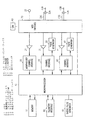
埋込み可能な心臓律動管理デバイスのブロック図が、図1に示されている。デバイスのコントローラは、双方向データ・バスを介してメモリ12と連絡されたマイクロプロセッサ10で構成されており、ここで、メモリ12は、プログラム保管のためのROM(読み込み専用メモリ)やデータ保管のためのRAM(ランダム・アクセス・メモリ)を通常備えている。コントローラは、状態機械タイプのデザインを使用した他のタイプの論理回路(たとえば、離散型部品またはプログラム可能な論理アレイ)によって実装されてもよいが、マイクロプロセッサ・ベースのシステムが好ましい。本明細書で使用されるとき、コントローラのプログラミングは、特定の機能を行うように構成された離散型論理回路、またはメモリまたはその他の保管媒体内に保管された実行可能なコードのいずれかを参照するようにされるべきである。コントローラは、検知された心臓活動に応答していくつかの異なる治療を行うようにデバイスを操作することができる。遠隔操作インターフェイス80もまた、無線遠隔操作リンクを介して外部プログラマまたはその他のデバイスと通信するようにコントローラを有効化することが可能である。
A block diagram of an implantable cardiac rhythm management device is shown in FIG. The controller of the device consists of a
図1に示すデバイスは、2つの感知/ペーシング・チャネルを有する。ここで、ペーシング・チャネルは、電極と接続されたパルス発生器で構成され、一方、感知チャネルは、電極と接続された感知増幅器で構成されている。マイクロプロセッサによって制御されるMOS(酸化金属半導体)スイッチ・マトリクス70が、感知増幅器の入力からパルス発生器の出力へ電極を切り替えるために使用される。スイッチ・マトリクス70は、感知チャネルとペーシング・チャネルが、使用可能な電極の異なる組合せを備えるコントローラによって構成されるようにする。例示的な構成では、1つの感知/ペーシング・チャネルが、両極性導線43cのリング電極43aとチップ電極43b、感知増幅器41、パルス発生器42、チャネル・インターフェイス40を備えるが、別の感知/ペーシング・チャネルは、両極性導線33cのリング電極33aとチップ電極33b、感知増幅器31、パルス発生器32、チャネル・インターフェイス30を備える。チャネルは、心房チャネルまたは心室チャネルのいずれかとして構成されてもよい。追加の感知/ペーシング・チャネルが、たとえば、多部位または両心室ペーシングするために提供されてもよい。
The device shown in FIG. 1 has two sensing / pacing channels. Here, the pacing channel consists of a pulse generator connected to the electrode, while the sensing channel consists of a sense amplifier connected to the electrode. A microprocessor controlled MOS (metal oxide semiconductor)
チャネル・インターフェイスが、マイクロプロセッサ10のポートと双方向通信し、感知増幅器からの感知信号入力をデジタル化するためのアナログ・デジタル変換器と、感知増幅器の利得と閾値を調節するための書込み可能であるレジスタと、ペーシング・パルスの出力を制御するおよび/またはペーシング・パルス振幅を変更するためのレジスタとを備えてもよい。ショッキング・チャネルは、スイッチ・マトリクスによって選択されたときにショック電極とハウジングまたはカン60の間で除細動ショックを送るためにコントローラと接続されたショック・パルス発生器90を備える。図示された実施形態では、デバイスは、ペーシング・パルスを出力するおよび/または固有活性を感知するために使用される2つの電極を備える双極導線を備える。他の実施形態は、スイッチ・マトリクス70によってデバイス・ハウジングまたはカン60(または別の電極)に参照される感知とペーシングのための1つの電極を備える単極導線を使用してもよい。
A channel interface communicates bidirectionally with the port of the
以下で説明するように、デバイスは、心室頻拍性不整脈をATP治療によっておそらく終結可能なものとして分類するために、心室心電図の形態を解析するようにプログラミングされてもよい。形態解析は、心室ペーシング電極からの心電図を用いて可能である。しかし、形態解析のための心電図信号は、好ましくは、全体的な心室動態を捕捉する信号を記録する電極から得られる。このような電極は単極形状を有するとして説明されてもよく、したがって、電極が別の電極に参照され、数センチメートル電極が離れており、電極は心臓の大部分がそれらの間にあるように配置される。そのとき、電極が、心筋の大きな部分を「見て」、心室の脱分極化のパターンの変化が、より容易に心電図に反映されることになる。この目的のために便利な電極は、電気的除細動/除細動ショックを送るためにデバイスが通常使用するショック電極である。形態解析に適した心電図を生成するために使用できる別の電極は、デバイス・ハウジングに装着された皮下電極である。形態解析のための心電図を生成するために使用される感知チャネルが、形態チャネルとしてここで参照される。専用の形態チャネルが、チャネル・インターフェイス20、感知増幅器21、および電極23で構成されるとして示されている図1のデバイスのために提供される。電極23は、ショック電極、デバイス・ハウジング上に装着された電極、または静脈内導線に組み込まれた別の電極であってよい。スイッチ・マトリクスが、形態チャネルの入力を、デバイス・ハウジング60に参照される電極23に、または使用可能な電極のいずれかに切り替える。
As described below, the device may be programmed to analyze ventricular electrocardiogram morphology to classify ventricular tachyarrhythmias as possibly possibly terminated by ATP therapy. Morphological analysis is possible using an electrocardiogram from a ventricular pacing electrode. However, an electrocardiogram signal for morphological analysis is preferably obtained from electrodes that record signals that capture global ventricular dynamics. Such electrodes may be described as having a unipolar shape, so that an electrode is referenced to another electrode, a few centimeter electrodes apart, and the electrode seems to be mostly between them Placed in. The electrode then “looks” at a large portion of the myocardium and changes in the ventricular depolarization pattern are more easily reflected in the electrocardiogram. A convenient electrode for this purpose is the shock electrode normally used by the device to deliver cardioversion / defibrillation shocks. Another electrode that can be used to generate an electrocardiogram suitable for morphological analysis is a subcutaneous electrode attached to the device housing. The sensing channel used to generate an electrocardiogram for morphological analysis is referred to herein as the morphological channel. A dedicated configuration channel is provided for the device of FIG. 1 shown as being composed of a
コントローラ10はメモリ内に保管されたプログラミングされた命令に従って、デバイスの全体的な動作を制御する。その中には、ペーシング・チャネルを介したペーシングを制御すること、感知チャネルから受信された感知信号を判断すること、補充収縮間隔や間隔不応期を決めるためのタイマを実施することを含む。ペースメーカーの感知回路が、特定のチャネルによって生成された心電図信号が特定の固有検知閾値を超えたとき、チャンバ感知を検知する。チャンバ感知は、心房感知チャネル内で生じたか心室感知チャネル内で生じたかに応じて、心房感知または心室感知のいずれかである。特定のペーシング・モードで使用されるペーシング・アルゴリズムが、ペーシングを起動させるまたは阻止するために、このような感知を使用する。徐脈および抗頻拍ペーシング・モードの両方が、コントローラによって実行されるコード内に実装されてもよい。
コントローラが、抗頻拍ペーシングが行われる方式を決める、複数の選択可能なATPペーシング・プロトコルによってプログラミングされてもよい。マイクロプロセッサ・ベースのデバイスでは、ペーシング・パルスの出力が、様々なパラメータによって定義されるように選択されたペーシング・プロトコルを実施するペーシング・ルーチンによって制御される。メモリ内に保管されるデータ・ストラクチャは、使用可能なペーシング・プロトコルのそれぞれを定義するパラメータ・セットを含む。ATP治療のためのペーシング・プロトコルは、ペーシング・パルスのバーストによって作成される波面を脱分極化することで、頻拍を生じさせる再入脱分極化波面をブロックしようとする。(バーストは、この用語が本明細書で使用されるとき、1つまたは複数のペーシング・パルスから成る)。プロトコルは、与えられるパルスの数や採用される特定のタイミングを定義するパラメータに応じて様々であってよい。たとえば、プロトコルが、特定の時間の間、特定のペーシング間隔で(またはペーシング間隔を変化させることによって)、かつ最後に感知された脱分極化とバーストの最初のペーシング・パルスの間の特定の結合間隔で、与えられるパルスのバーストを定義してもよい。プロトコルはさらに、ペーシング・パルスの持続時間や振幅を定義してもよい。異なるプロトコルが、心拍数および/または脱分極化パターンに関して異なる特定の頻拍性不整脈を終結させることで、他のものよりも成功する傾向がある。この理由で、現代の心臓律動管理デバイスは、治療を行うためにいくつかの異なるATPプロトコルを採用することが可能である。 The controller may be programmed with multiple selectable ATP pacing protocols that determine how anti-tachycardia pacing is performed. In microprocessor-based devices, the output of pacing pulses is controlled by a pacing routine that implements a pacing protocol that is selected as defined by various parameters. The data structure stored in memory includes a set of parameters that define each of the available pacing protocols. The pacing protocol for ATP therapy attempts to block the reentrant depolarized wavefront that causes tachycardia by depolarizing the wavefront created by the burst of pacing pulses. (A burst consists of one or more pacing pulses when the term is used herein). The protocol can vary depending on the number of pulses applied and the parameters that define the particular timing employed. For example, if the protocol is at a specific pacing interval for a specific time (or by changing the pacing interval) and a specific coupling between the last sensed depolarization and the first pacing pulse of the burst The interval may define a given burst of pulses. The protocol may further define the duration and amplitude of the pacing pulse. Different protocols tend to be more successful than others by terminating certain tachyarrhythmias that differ with respect to heart rate and / or depolarization pattern. For this reason, modern heart rhythm management devices can employ a number of different ATP protocols to perform therapy.
2.抗頻拍性不整脈治療の実施
デバイスは、感知チャネルからの感知された活動に応答して、マイクロプロセッサのプログラミンクされた制御の下で、抗頻拍性不整脈治療(すなわち、ATP治療または徐細動ショック)を行う。感知ルーチンが、頻拍性不整脈を検知するために感知チャネルから受信された電気的活動を解析する。心室心拍数が、RR間隔と呼ばれる、連続する心室感知の間の時間間隔を測定することによって決定される。測定された心室心拍数が、頻拍検知心拍数TDRを超える場合、心室頻拍性不整脈が検知される。頻拍性不整脈が検知される前の最後のM個のRR間隔のうちのN個(たとえば最後の10個のRR間隔のうちの8個)が速く(たとえば1/TDR未満)なければならないように、追加の基準が採用されてもよい。いったん頻拍性不整脈が検知された後、心拍数を細動検知心拍数FDRと比較することによって、律動が、頻拍か細動ゾーンのいずれかに分類される。頻拍性不整脈が頻拍として分類された場合、マイクロプロセッサによって実行されるペーシング・ルーチンが、選択されたプロトコルのパラメータに従ってATPパルスを供給する。頻拍性不整脈が細動ゾーン内にあると分類された場合、デバイスが、律動が心拍数基準によって細動であると分類されているが、単形性VT(MVT)に過ぎないのかを決定するために、心拍数安定性と頻拍の形態を解析する。デバイスは、このようにしてMVTの存在のために細動ゾーン内のすべての頻拍性不整脈を試験する、または、MVT上限すなわちMVTULと呼ばれる、MVTが生じると考えられる最高心拍数以下の心拍数を有する頻拍性不整脈のみを試験してもよい。後者のオプションが、極めて高い心拍数の頻拍に対して遅延なくショック治療を行うことができるため、安全性の理由で好ましいと考えられる。FDRとMVTULの例示的な値は、それぞれ200bpmと250bpmとなる。MVTが見出された場合、デバイスが、選択されたプロトコルに従ってATP治療を行う。心拍数安定性と形態解析が、律動がVFまたは多形性VTのいずれかであることを示した場合、デバイスがショック治療を行う。ATP治療が、頻拍性不整脈を終結させることができなかった場合、さらなる遅延なしでか、頻拍性不整脈が終結されることなく特定の時間が経過するまでATP治療を繰り返した後でか、のいずれかでショック治療が行われる。
2. Performing Anti-Tachyarrhythmia Treatment The device is responsive to sensed activity from the sensing channel and under programmed control of the microprocessor, anti-tachyarrhythmia therapy (ie, ATP therapy or gradual therapy). Motion shock). A sensing routine analyzes the electrical activity received from the sensing channel to detect tachyarrhythmias. Ventricular heart rate is determined by measuring the time interval between successive ventricular sensings, called the RR interval. If the measured ventricular heart rate exceeds the tachycardia detection heart rate TDR, a ventricular tachyarrhythmia is detected. N of the last M RR intervals (eg, 8 of the last 10 RR intervals) before tachyarrhythmia is detected must be fast (eg, less than 1 / TDR) In addition, additional criteria may be employed. Once a tachyarrhythmia is detected, the rhythm is classified as either a tachycardia or a fibrillation zone by comparing the heart rate with the fibrillation detection heart rate FDR. When a tachyarrhythmia is classified as a tachycardia, a pacing routine executed by the microprocessor supplies ATP pulses according to the parameters of the selected protocol. If the tachyarrhythmia is classified as being within the fibrillation zone, the device determines if the rhythm is classified as fibrillation by heart rate criteria but is only monomorphic VT (MVT) In order to analyze the heart rate stability and tachycardia morphology. The device thus tests all tachyarrhythmias in the fibrillation zone due to the presence of MVT, or the heart rate below the highest heart rate at which MVT is likely to occur, referred to as the MVT upper limit or MVTUL Only tachyarrhythmias having: The latter option may be preferred for safety reasons because shock therapy can be performed without delay for very high heart rate tachycardia. Exemplary values for FDR and MVTUL are 200 bpm and 250 bpm, respectively. If MVT is found, the device performs ATP therapy according to the selected protocol. If heart rate stability and morphological analysis indicate that the rhythm is either VF or polymorphic VT, the device performs shock therapy. If ATP treatment was unable to terminate tachyarrhythmia, after further ATP treatment until no more delay or until a certain time has passed without termination of tachyarrhythmia, Shock treatment is performed in either of these.
MVTを検知するために、デバイスは、心拍数安定性と単形性形態の両方の基準の満たされているかを判定しなければならない。心拍数安定性基準は、頻拍性不整脈中の心室心拍数の間の間隔が比較的規則的であり、特定の量以上の変動を示さないことを必要とする。頻拍性不整脈の心拍数が安定であるかどうかが、特定の数(たとえば5)の連続するRR間隔の変動を、所定の安定性パラメータと比較することによって判定される。たとえば、間隔測定値の変化または同様の統計値が、数値計算され、心拍数安定性限界値と比較される。心拍数安定限界値を超えていない場合、安定性基準が満たされたと判断される。単形性形態基準は、頻拍性不整脈中の心室心電図のQRS群が、心拍ごとに比較的一定であることを必要とする。頻拍性不整脈の形態が、特定の数(たとえば5)の連続する心室心拍数の心電図波形の間の類似性の程度を判定することによって解析される。それによって心電図波形が比較される1つの手段は、連続する心室心拍の波形の間の相互相関をとることによる。ここで相互相関操作は、心電図の振幅またはその他の導出可能な特徴に付加される。心電図がうまく相関された場合、頻拍性不整脈の形態は一定であると判断される。 In order to detect MVT, the device must determine if both heart rate stability and monomorphic form criteria are met. The heart rate stability criterion requires that the interval between ventricular heart rates during tachyarrhythmia is relatively regular and does not exhibit more than a certain amount of variation. Whether the tachyarrhythmia heart rate is stable is determined by comparing a certain number (eg, 5) of consecutive RR interval variations to a predetermined stability parameter. For example, interval measurement changes or similar statistics are numerically calculated and compared to the heart rate stability limit. If the heart rate stability limit is not exceeded, it is determined that the stability criteria have been met. Monomorphic morphology criteria require that the QRS complex of the ventricular electrocardiogram during tachyarrhythmia is relatively constant from heartbeat to heartbeat. Tachyarrhythmia morphology is analyzed by determining the degree of similarity between ECG waveforms of a particular number (eg, 5) consecutive ventricular heart rates. One means by which ECG waveforms are compared is by taking a cross-correlation between successive ventricular heartbeat waveforms. Here, the cross-correlation operation is added to the ECG amplitude or other derivable features. If the electrocardiogram is successfully correlated, the tachyarrhythmia morphology is determined to be constant.
図2は、上記で説明した手法を使用して、心室ATP治療のための特定のアルゴリズムで心臓律動管理デバイスによって行われるステップを示すフロー図である。ステップS1で、デバイスがRR間隔を測定し、現在の心拍数HRcurrentを保管する。ステップS2で、デバイスが、現在の心拍数をTDRと比較することによって、頻拍性不整脈が存在するかどうかを判定する。頻拍性不整脈が検知され(たとえば、前の10個のRR間隔のうちの8個が速い、すなわち(1/TDR)未満)、かつ現在の心拍数がステップ3で判定されたときFDR未満であった場合、ステップS6でATP治療が行われる。ステップS7で心室頻拍性不整脈が再検知された場合、ショック治療が行われる前に特定の時間の間ATP治療がオプションで繰り返され、ステップS8でショック治療が行われる。ステップS7での頻拍性不整脈の再検知の異なる基準が、ATP治療がVFゾーンで行われたかVTゾーンで行われたかに応じて使用される。たとえば、ATPがVTゾーンで行われた場合、頻拍性不整脈検知基準は、最初の検知に対してステップS2で使用されたものと同じである(たとえば、10個のRR間隔のうちの8個が速い)が、ATPがVFゾーンで行われた場合、再検知基準は、より少ない数の速いRR間隔(たとえば、3個のRR間隔のうちの2個が速い)を必要とすることがある。現在の心拍数が、FDRを超えるが、ステップS4で判定されるようなMVT上限(MVTUL)以下である場合、頻拍性不整脈がMVTであると考慮できるかどうかを判定するために、心拍数安定性と形態解析が、ステップS9で行われる。MVTに対する心拍数安定性と形態基準が、ステップS10で満たされる場合、デバイスは、ステップS6でATP治療を行い、頻拍性不整脈再検知基準がステップS7で付加される。現在の心拍数がMVTULを超えるか、MVTに対する心拍数安定性と形態基準が満たされないか、のいずれかである場合、デバイスは、ステップS5でショック治療を行う。
FIG. 2 is a flow diagram illustrating the steps performed by a cardiac rhythm management device with a specific algorithm for ventricular ATP therapy using the techniques described above. In step S1, the device measures the RR interval and stores the current heart rate HR current . In step S2, the device determines whether a tachyarrhythmia is present by comparing the current heart rate with the TDR. Tachyarrhythmia is detected (eg, 8 of the previous 10 RR intervals are fast, ie less than (1 / TDR)) and less than FDR when the current heart rate is determined in
本発明は、前記の特定の実施形態とともに説明されてきたが、多くの代替形態、変形形態および修正形態が、当業者に明らかであろう。このような代替形態、変形形態および修正形態は、頭記の特許請求の範囲内にあることを意図されている。 Although the invention has been described with the specific embodiments described above, many alternatives, variations and modifications will be apparent to those skilled in the art. Such alternatives, variations, and modifications are intended to be within the scope of the appended claims.
Claims (14)
抗頻拍ペーシング(ATP)を心室へ供給するためのペーシング・チャネルと、
ショック治療を心室で行うためのショッキング・チャネルと、
コントローラと
を備える心臓デバイスであって、
前記コントローラは、
現在の心室心拍数を決定するために、心室感知を検知し、心室感知の間の時間間隔(RR間隔)を測定し、
心室心拍数が特定の頻拍検知心拍数(TDR)を超えたとき、心室頻拍性不整脈を検知し、
心室頻拍性不整脈が検知された場合において、心室心拍数が細動検知心拍数(FDR)よりも下である場合に、抗頻拍ペーシング(ATP)治療を行い、
心室頻拍性不整脈が検知された場合において、心室心拍数がFDRを超えた場合に、頻拍性不整脈中の特定の心拍数が、特定の心拍数安定性基準および特定の単形性形態基準を満たすかどうかを判定し、
前記特定の心拍数安定性基準および前記特定の単形性形態基準の両方が満たされた場合、抗頻拍ペーシング(ATP)治療を行い、
前記特定の心拍数安定性基準および前記特定の単形性形態基準の両方が満たされなかった場合、ショック治療を行う
ようにプログラミングされている、心臓デバイス。A sensing channel for generating an electrocardiogram signal representative of electrical activity within the ventricle;
A pacing channel for delivering anti-tachycardia pacing (ATP) to the ventricles;
A shocking channel to perform shock therapy in the ventricle;
A cardiac device comprising a controller,
The controller is
To determine the current ventricular heart rate, detect ventricular sensing, measure the time interval (RR interval) between ventricular sensing,
When a ventricular heart rate exceeds a specific tachycardia detection heart rate (TDR), a ventricular tachyarrhythmia is detected,
When ventricular tachyarrhythmia is detected , if the ventricular heart rate is below the fibrillation detection heart rate (FDR), anti-tachycardia pacing (ATP) treatment is performed,
When the ventricular tachyarrhythmia is detected, if the ventricular rate exceeds the FDR, certain heart rate tachyarrhythmia in arrhythmia, a particular heart rate stability criteria and certain monomorphic form reference To determine whether
If both of the specific heart rate stability criterion and the particular monomorphic form criteria are met, it performs antitachycardia pacing (ATP) therapy,
Wherein if both of the specific heart rate stability criterion and the particular monomorphic embodiment criterion was not met, it is programmed to perform a shock therapy, the heart device.
Applications Claiming Priority (3)
| Application Number | Priority Date | Filing Date | Title |
|---|---|---|---|
| US10/909,740 | 2004-08-02 | ||
| US10/909,740 US7477942B2 (en) | 2004-08-02 | 2004-08-02 | ATP therapy for tachyarrhythmias in VF zone |
| PCT/US2005/026955 WO2006017381A1 (en) | 2004-08-02 | 2005-08-01 | Atp therapy for tachyarrythmias |
Publications (2)
| Publication Number | Publication Date |
|---|---|
| JP2008508074A JP2008508074A (en) | 2008-03-21 |
| JP4865713B2 true JP4865713B2 (en) | 2012-02-01 |
Family
ID=35253812
Family Applications (1)
| Application Number | Title | Priority Date | Filing Date |
|---|---|---|---|
| JP2007524861A Expired - Fee Related JP4865713B2 (en) | 2004-08-02 | 2005-08-01 | ATP treatment for tachyarrhythmia |
Country Status (4)
| Country | Link |
|---|---|
| US (1) | US7477942B2 (en) |
| EP (1) | EP1838387B1 (en) |
| JP (1) | JP4865713B2 (en) |
| WO (1) | WO2006017381A1 (en) |
Families Citing this family (18)
| Publication number | Priority date | Publication date | Assignee | Title |
|---|---|---|---|---|
| US7110811B2 (en) * | 2002-12-30 | 2006-09-19 | Cardiac Pacemakers, Inc. | Method and apparatus for atrial tachyarrhythmia cardioversion |
| US7477942B2 (en) | 2004-08-02 | 2009-01-13 | Cardiac Pacemakers, Inc. | ATP therapy for tachyarrhythmias in VF zone |
| DE102006023517A1 (en) * | 2006-05-19 | 2007-11-22 | Biotronik Crm Patent Ag | cardiac stimulator |
| US8301233B2 (en) * | 2009-03-31 | 2012-10-30 | Medtronic, Inc. | Detecting a condition of a patient using a probability-correlation based model |
| US8855755B2 (en) * | 2009-04-27 | 2014-10-07 | Medtronic, Inc. | Distinguishing between treatable and non-treatable heart rhythms |
| US9526908B2 (en) * | 2014-04-01 | 2016-12-27 | Medtronic, Inc. | Method and apparatus for discriminating tachycardia events in a medical device |
| JP6526702B2 (en) * | 2014-04-01 | 2019-06-05 | メドトロニック,インコーポレイテッド | Method and apparatus for differentiating tachycardia events in a medical device |
| US10376705B2 (en) | 2014-04-01 | 2019-08-13 | Medtronic, Inc. | Method and apparatus for discriminating tachycardia events in a medical device |
| US9808640B2 (en) | 2014-04-10 | 2017-11-07 | Medtronic, Inc. | Method and apparatus for discriminating tachycardia events in a medical device using two sensing vectors |
| US9352165B2 (en) | 2014-04-17 | 2016-05-31 | Medtronic, Inc. | Method and apparatus for verifying discriminating of tachycardia events in a medical device having dual sensing vectors |
| US10244957B2 (en) | 2014-04-24 | 2019-04-02 | Medtronic, Inc. | Method and apparatus for selecting a sensing vector configuration in a medical device |
| US10278601B2 (en) | 2014-04-24 | 2019-05-07 | Medtronic, Inc. | Method and apparatus for selecting a sensing vector configuration in a medical device |
| US10252067B2 (en) | 2014-04-24 | 2019-04-09 | Medtronic, Inc. | Method and apparatus for adjusting a blanking period during transitioning between operating states in a medical device |
| US9795312B2 (en) | 2014-04-24 | 2017-10-24 | Medtronic, Inc. | Method and apparatus for adjusting a blanking period for selecting a sensing vector configuration in a medical device |
| US9610025B2 (en) | 2014-07-01 | 2017-04-04 | Medtronic, Inc. | Method and apparatus for verifying discriminating of tachycardia events in a medical device having dual sensing vectors |
| JP6510660B2 (en) * | 2015-02-06 | 2019-05-08 | カーディアック ペースメイカーズ, インコーポレイテッド | System and method for treating cardiac arrhythmias |
| ES2713231T3 (en) | 2015-02-06 | 2019-05-20 | Cardiac Pacemakers Inc | Systems for the safe supply of electrical stimulation therapy |
| WO2019060302A1 (en) | 2017-09-20 | 2019-03-28 | Cardiac Pacemakers, Inc. | Implantable medical device with multiple modes of operation |
Citations (2)
| Publication number | Priority date | Publication date | Assignee | Title |
|---|---|---|---|---|
| WO2003011391A2 (en) * | 2001-07-30 | 2003-02-13 | Medtronic, Inc. | Method and apparatus to control delivery of high-voltage and anti-tachy pacing therapy in an implantable medical device |
| WO2004050185A2 (en) * | 2002-12-04 | 2004-06-17 | Medtronic, Inc. | Methods and apparatus for discriminating polymorphic from monomorphic tachyarrhythmias |
Family Cites Families (20)
| Publication number | Priority date | Publication date | Assignee | Title |
|---|---|---|---|---|
| US5257621A (en) * | 1991-08-27 | 1993-11-02 | Medtronic, Inc. | Apparatus for detection of and discrimination between tachycardia and fibrillation and for treatment of both |
| US5193535A (en) * | 1991-08-27 | 1993-03-16 | Medtronic, Inc. | Method and apparatus for discrimination of ventricular tachycardia from ventricular fibrillation and for treatment thereof |
| DE69319641T2 (en) * | 1992-03-09 | 1999-02-18 | Angeion Corp., Plymouth, Minn. | Detection of tachycardia and cardiac fibrillation |
| US5330508A (en) * | 1993-03-02 | 1994-07-19 | Medtronic, Inc. | Apparatus for detection and treatment of tachycardia and fibrillation |
| US5400795A (en) * | 1993-10-22 | 1995-03-28 | Telectronics Pacing Systems, Inc. | Method of classifying heart rhythms by analyzing several morphology defining metrics derived for a patient's QRS complex |
| US5713367A (en) * | 1994-01-26 | 1998-02-03 | Cambridge Heart, Inc. | Measuring and assessing cardiac electrical stability |
| US5447519A (en) * | 1994-03-19 | 1995-09-05 | Medtronic, Inc. | Method and apparatus for discrimination of monomorphic and polymorphic arrhythmias and for treatment thereof |
| US5545186A (en) * | 1995-03-30 | 1996-08-13 | Medtronic, Inc. | Prioritized rule based method and apparatus for diagnosis and treatment of arrhythmias |
| EP0993842B1 (en) * | 1996-05-14 | 2003-01-15 | Medtronic, Inc. | Prioritized rule based apparatus for diagnosis and treatment of arrhythmias |
| US5730141A (en) * | 1996-06-07 | 1998-03-24 | Pacesetter, Inc. | Tachyarrhythmia detection method |
| US5779645A (en) * | 1996-12-17 | 1998-07-14 | Pacesetter, Inc. | System and method for waveform morphology comparison |
| US5978707A (en) * | 1997-04-30 | 1999-11-02 | Cardiac Pacemakers, Inc. | Apparatus and method for treating ventricular tachyarrhythmias |
| US5978704A (en) * | 1997-06-03 | 1999-11-02 | Uab Research Foundation | Method and apparatus for treating cardiac arrhythmia |
| US5873897A (en) * | 1997-09-19 | 1999-02-23 | Sulzer Intermedics Inc. | Method and apparatus for dual chambered tachyarrhythmia classification and therapy |
| US5967995A (en) * | 1998-04-28 | 1999-10-19 | University Of Pittsburgh Of The Commonwealth System Of Higher Education | System for prediction of life-threatening cardiac arrhythmias |
| US6108578A (en) * | 1998-09-02 | 2000-08-22 | Heartstream, Inc. | Configurable arrhythmia analysis algorithm |
| US6731982B1 (en) | 2001-10-19 | 2004-05-04 | Pacesetter, Inc. | Anti-tachycardia pacing methods and devices |
| US6754531B1 (en) * | 2001-10-19 | 2004-06-22 | Pacesetter, Inc. | Anti-tachycardia pacing methods and devices |
| US7149577B2 (en) * | 2002-12-02 | 2006-12-12 | Medtronic, Inc. | Apparatus and method using ATP return cycle length for arrhythmia discrimination |
| US7477942B2 (en) | 2004-08-02 | 2009-01-13 | Cardiac Pacemakers, Inc. | ATP therapy for tachyarrhythmias in VF zone |
-
2004
- 2004-08-02 US US10/909,740 patent/US7477942B2/en not_active Expired - Fee Related
-
2005
- 2005-08-01 JP JP2007524861A patent/JP4865713B2/en not_active Expired - Fee Related
- 2005-08-01 WO PCT/US2005/026955 patent/WO2006017381A1/en not_active Ceased
- 2005-08-01 EP EP05778035.5A patent/EP1838387B1/en not_active Expired - Lifetime
Patent Citations (2)
| Publication number | Priority date | Publication date | Assignee | Title |
|---|---|---|---|---|
| WO2003011391A2 (en) * | 2001-07-30 | 2003-02-13 | Medtronic, Inc. | Method and apparatus to control delivery of high-voltage and anti-tachy pacing therapy in an implantable medical device |
| WO2004050185A2 (en) * | 2002-12-04 | 2004-06-17 | Medtronic, Inc. | Methods and apparatus for discriminating polymorphic from monomorphic tachyarrhythmias |
Also Published As
| Publication number | Publication date |
|---|---|
| EP1838387A1 (en) | 2007-10-03 |
| US7477942B2 (en) | 2009-01-13 |
| EP1838387B1 (en) | 2015-10-14 |
| JP2008508074A (en) | 2008-03-21 |
| US20060025822A1 (en) | 2006-02-02 |
| WO2006017381A1 (en) | 2006-02-16 |
Similar Documents
| Publication | Publication Date | Title |
|---|---|---|
| US8214038B2 (en) | Post-shock recovery monitoring for tachyarrhythmia discrimination | |
| US8036746B2 (en) | Temporary disablement feature for implantable device with anti-tachyarrhythmia functions | |
| EP1622678B1 (en) | System for elimination of ventricular pro-arrhythmic effect caused by atrial therapy | |
| EP1077740B1 (en) | Atrial anti-arrhythmia pacemaker | |
| US7142912B2 (en) | Method and apparatus for assessing and treating atrial fibrillation risk | |
| JP4440781B2 (en) | Apparatus and method for using ATP return cycle length to distinguish arrhythmias | |
| JP4865713B2 (en) | ATP treatment for tachyarrhythmia | |
| WO1998043699A1 (en) | Method and apparatus for treatment of atrial fibrillation | |
| JP2005529690A (en) | Method and apparatus for preventing arrhythmia clusters using overdriven pacing | |
| US7184832B2 (en) | Refractory period tracking and arrhythmia detection | |
| US7110811B2 (en) | Method and apparatus for atrial tachyarrhythmia cardioversion | |
| JP2008173513A (en) | Atp pacing with entrainment monitoring | |
| US8644924B2 (en) | Preferential mechanical unloading during anti-tachycardia pacing | |
| US7181273B2 (en) | Tachycardia synchronization delays | |
| US7313438B2 (en) | Selective chamber ATP pacing |
Legal Events
| Date | Code | Title | Description |
|---|---|---|---|
| A621 | Written request for application examination |
Free format text: JAPANESE INTERMEDIATE CODE: A621 Effective date: 20080501 |
|
| A521 | Request for written amendment filed |
Free format text: JAPANESE INTERMEDIATE CODE: A821 Effective date: 20090224 |
|
| RD02 | Notification of acceptance of power of attorney |
Free format text: JAPANESE INTERMEDIATE CODE: A7422 Effective date: 20090224 |
|
| A521 | Request for written amendment filed |
Free format text: JAPANESE INTERMEDIATE CODE: A821 Effective date: 20090402 |
|
| RD04 | Notification of resignation of power of attorney |
Free format text: JAPANESE INTERMEDIATE CODE: A7424 Effective date: 20090402 |
|
| A131 | Notification of reasons for refusal |
Free format text: JAPANESE INTERMEDIATE CODE: A131 Effective date: 20110428 |
|
| A521 | Request for written amendment filed |
Free format text: JAPANESE INTERMEDIATE CODE: A523 Effective date: 20110728 |
|
| TRDD | Decision of grant or rejection written | ||
| A01 | Written decision to grant a patent or to grant a registration (utility model) |
Free format text: JAPANESE INTERMEDIATE CODE: A01 Effective date: 20111028 |
|
| A01 | Written decision to grant a patent or to grant a registration (utility model) |
Free format text: JAPANESE INTERMEDIATE CODE: A01 |
|
| A61 | First payment of annual fees (during grant procedure) |
Free format text: JAPANESE INTERMEDIATE CODE: A61 Effective date: 20111110 |
|
| FPAY | Renewal fee payment (event date is renewal date of database) |
Free format text: PAYMENT UNTIL: 20141118 Year of fee payment: 3 |
|
| R150 | Certificate of patent or registration of utility model |
Free format text: JAPANESE INTERMEDIATE CODE: R150 |
|
| R250 | Receipt of annual fees |
Free format text: JAPANESE INTERMEDIATE CODE: R250 |
|
| RD03 | Notification of appointment of power of attorney |
Free format text: JAPANESE INTERMEDIATE CODE: R3D03 |
|
| LAPS | Cancellation because of no payment of annual fees |