JP4784792B2 - Multiprocessor - Google Patents
Multiprocessor Download PDFInfo
- Publication number
- JP4784792B2 JP4784792B2 JP36370299A JP36370299A JP4784792B2 JP 4784792 B2 JP4784792 B2 JP 4784792B2 JP 36370299 A JP36370299 A JP 36370299A JP 36370299 A JP36370299 A JP 36370299A JP 4784792 B2 JP4784792 B2 JP 4784792B2
- Authority
- JP
- Japan
- Prior art keywords
- shared memory
- data
- memory
- chip
- processing
- Prior art date
- Legal status (The legal status is an assumption and is not a legal conclusion. Google has not performed a legal analysis and makes no representation as to the accuracy of the status listed.)
- Expired - Lifetime
Links
Images
Landscapes
- Multi Processors (AREA)
Description
【0001】
【発明の属する技術分野】
本発明は、複数のCPUを単一のチップに納めたシングルチッププロセッサのアーキテクチャに関し、より具体的には、マルチグレインのコンパイラ協調型シングルチップマルチプロセッサアーキテクチャと、それらを接続した高性能マルチプロセッサシステムアーキテクチャとに関する。
【0002】
【従来の技術】
現在、日本のスーパーコンピュータメーカは世界でもトップのハードウエア技術を有し、現時点でのピーク性能は、数TFLOPSを越え、21世紀初頭には数十TFLOPS以上のピーク性能を持つマシンが開発されると予想される。しかし、現在のスーパーコンピュータは、ピーク性能の向上とともにプログラムを実行したときの実効性能との差が大きくなっている、すなわち価格性能比が必ずしも優れているとはいえない状況になっている。また、使い勝手としても、ユーザは問題中の並列性を抽出し、HPF、MPI,PVMなどの拡張言語あるいはライブラリを用いハードウエアを効果的に使用できるようなプログラムを作成しなければならず、一般のユーザには使い方が難しい、あるいは使いこなせないという問題が生じている。さらに、これらにも起因して、世界の高性能コンピュータの市場を拡大できないということが大きな問題となっている。
【0003】
この価格性能比、使いやすさの問題を解決し、スーパーコンピュータの市場を拡大するためには、ユーザが使い慣れているフォートラン、C等の逐次型言語で書かれたプログラムを自動的に並列化する自動並列化コンパイラの開発が重要となる。
【0004】
特に、21世紀初頭の汎用並びに組み込み用マイクロプロセッサ、家庭用サーバからスーパーコンピュータに至るマルチプロセッサシステムの主要アーキテクチャの一つとなると考えられるシングルチップマルチプロセッサについて検討を行うことは重要である。さらに、シングルチップマルチプロセッサについても、従来からある主記憶共有アーキテクチャでは十分な性能と優れた価格性能比は得られない。したがって、プログラム中の命令レベルの並列性、ループ並列性、粗粒度並列性をフルに使用できるマルチグレイン並列処理のように、真に実行すべき命令列からより多くの並列性を抽出し、システムの価格性能比を向上し、誰にでも使えるユーザフレンドリなシステムの構築を可能とする新しい自動並列化コンパイル技術と、それを生かせるようなアーキテクチャの開発が重要である。
【0005】
【発明が解決しようとする課題】
したがって、本発明は、マルチグレイン並列化をサポートするコンパイラ協調型のシングルチップマルチプロセッサおよびそれを結合したハイパフォーマンスマルチプロセッサシステムを提供することを目的とする。
【0006】
【課題を解決するための手段】
本発明は、CPUと、前記CPUに接続されているネットワークインタフェースと、コンパイラによりスタティックスケジューリングされたプログラムの実行時に転送されるデータを格納し、他の前記プロセッシングエレメントからアクセス可能な分散共有メモリと、当該プロセッシングエレメントだけからアクセス可能なローカルデータメモリと、を備える複数のプロセッシングエレメントと、前記各プロセッシングエレメントに接続され、前記各プロセッシングエレメントによって共有され、コンパイラによりダイナミックスケジューリングされたプログラムの実行時に使用されるデータを格納する集中共有メモリと、を備えるマルチプロセッサであって、前記集中共有メモリには、前記各プロセッシングエレメントと同じチップに設けられたオンチップの第1集中共有メモリと、前記いずれのプロセッシングエレメントとも異なるチップに設けられたオフチップの第2集中共有メモリとを含み、前記分散共有メモリは、スタティックスケジューリングされたプログラムの実行時に、プロセシングエレメント間のデータ転送に使用され、前記ローカルデータメモリは、当該プロセッシングエレメントに割り当てられたタスクにおいて使用されるローカルデータを保持するために使用され、前記各プロセッシングエレメントに割り当てられたタスク間で共通に使用されるデータが、前記各タスクで必要とされるとき以前に、データの消費先の前記プロセッシングエレメントの前記分散共有メモリへ転送され、前記集中共有メモリは、粗粒度並列処理において条件分岐に対応するために使用されるダイナミックスケジューリングにおいて、プログラムの実行時までどのCPUにより使用されるかが決まっていないデータを格納することを特徴とするマルチプロセッサを提供する。
【0007】
また、本発明は、前記マルチプロセッサは、前記分散共有メモリの一つのポートに接続されるデータ転送コントローラを備え、前記データ転送コントローラは、前記ローカルデータメモリから転送指示を読み出し、前記分散共有メモリからデータを読み出して、前記データの消費先のプロセッシングエレメントの分散共有メモリへ転送することを特徴とするマルチプロセッサを提供する。
【0008】
【発明の実施の形態】
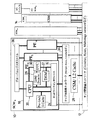
本発明はマルチグレイン並列化をサポートするシングルチップマルチプロセッサを提供する。本発明の一実施形態であるシングルチップマルチプロセッサのアーキテクチャを図1に示す。図1においては、複数のプロセッシングエレメント(PE0,PE1,...,PEn)を含んでなる複数(m+1個)のシングルチップマルチプロセッサ(SCM0、SCM1、SCM2、...、SCMm、...)10と、共有メモリのみからなる複数(j+1個)の集中共有メモリチップ(CSM0,....,CSMj)(ただし、CSMは要求されるシステム条件によっては1個もなくてもよい)と、入出力制御を行う複数(k+1個)のシングルチップマルチプロセッサで構成される入出力チップ(I/O SCM0,...,I/O SCMk)(ただし、入出力制御に関しては既存技術のプロセッサを用いることもできる)とが、チップ間接続ネットワーク12によって接続されている。このインタチップ接続ネットワーク12は、クロスバー、バス、マルチステージネットワークなど既存のネットワーク技術を利用して実現できるものである。
【0009】
図1に示した形態においては、I/Oデバイスは要求される入出力機能に応じてk+1個のSCMで構成される入出力制御チップに接続している構成となっている。さらに、このチップ間接続ネットワーク12には、システム中の全プロセッシングエレメントにより共有されているメモリのみから構成されるj+1個の集中共有メモリ(CSM:centralized shared memory)チップ14が接続されている。これは、SCM10内にある集中共有メモリを補完する働きをするものである。
【0010】
マルチグレイン並列処理とは、サブルーチン、ループ、基本ブロック間の粗粒度並列性、ループタイプイタレーション間の中粒度並列性(ループ並列性)、ステートメントあるいは命令間の(近)細粒度並列性を階層的に利用する並列処理方式である。この方式により、従来の市販マルチプロセッサシステム用自動並列化コンパイラで用いられていたループ並列化、あるいはスーパースカラ、VLIWにおける命令レベル並列化のような局所的で単一粒度の並列化とは異なり、プログラム全域にわたるグローバルかつ複数粒度によるフレキシブルな並列処理が可能となる。
【0011】
[粗粒度タスク並列処理(マクロデータフロー処理)]
単一プログラム中のサブルーチン、ループ、基本ブロック間の並列性を利用する粗粒度並列処理は、マクロデータフロー処理とも呼ばれる。ソースとなる例えばフォートランプログラムを、粗粒度タスク(マクロタスク)として、繰り返しブロック(RB:repetition block)、サブルーチンブロック(SB:subroutine block)、疑似代入文ブロック(BPA:block of pseudo assignment statements)の3種類のマクロタスク(MT)に分解する。RBは、各階層での最も外側のナチュラルループであり、SBはサブルーチン、BPAはスケジューリングオーバヘッドあるいは並列性を考慮し融合あるいは分割された基本ブロックである。ここで、BPAは、基本的には通常の基本ブロックであるが、並列性抽出のために単一の基本ブロックを複数に分割したり、逆に一つのBPAの処理時間が短く、ダイナミックスケジューリング時のオーバヘッドが無視できない場合には、複数のBPAを融合し得一つのBPAを生成する。最外側ループであるRBがDoallループであるときは、ループインデクスを分割することにより複数の部分Doallループに分割し、分割後の部分Doallループを新たにRBと定義する。また、サブルーチンSBは、可能な限りインライン展開するが、コード長を考慮し効果的にインライン展開ができないサブルーチンはそのままSBとして定義する。さらに、SBやDoall不可能なRBの場合、これらの内部の並列性に対し、階層的マクロデータフロー処理を適用する。
【0012】
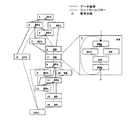
次に、マクロタスク間の制御フローとデータ依存を解析し、図2のようなマクロフローグラフ(MFG)を生成する。MFGでは、各ノードがマクロタスク(MT)、点線のエッジが制御フロー、実線のエッジがデータ依存、ノード内の小円が条件分岐文を表している。また、MT7のループ(RB)は、内部で階層的にMTおよびMFGを定義できることを示している。
【0013】
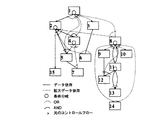
次に、マクロタスク間制御依存およびデータ依存より各マクロタスクが最も早く実行できる条件(最早実行可能条件)すなわちマクロタスク間の並列性を検出する。この並列性をグラフ表現したのが図3に示すマクロタスクグラフ(MTG)である。MTGでも、ノードはMT、実線のエッジがデータ依存、ノード内の小円が条件分岐文を表す。ただし、点線のエッジは拡張された制御依存を表し、矢印のついたエッジは元のMFGにおける分岐先、実線の円弧はAND関係、点線の円弧はOR関係を表している。例えば、MT6へのエッジは、MT2中の条件分岐がMT4の方向に分岐するか、MT3の実行が終了したとき、MT6が最も早く実行が可能になることを示している。
【0014】
そして、コンパイラは、MTG上のMTをプロセッサクラスタ(コンパイラあるいはユーザによりソフトウェア的に実現されるプロセッサのグループ)へコンパイル時に割り当てを行う(スタティックスケジューリング)か、実行時に割り当てを行うためのダイナミックスケジューリングコードを、ダイナミックCPアルゴリズムを用いて生成し、これをプログラム中に埋め込む。これは、従来のマルチプロセッサのようにOSあるいはライブラリに粗粒度タスクの生成、スケジューリングを依頼すると、数千から数万クロックのオーバヘッドが生じてしまう可能性があり、それを避けるためである。このダイナミックなスケジューリング時には、実行時までどのプロセッサでタスクが実行されるか分からないため、タスク間共有データは全プロセッサから等距離に見える集中共有メモリに割り当てられる。
【0015】
また、このスタティックスケジューリングおよびダイナミックスケジューリングコードの生成の時には、各プロセッサ上のローカルメモリあるいは分散共有メモリを有効に使用し、プロセッサ間のデータ転送量を最小化するためのデータローカライゼーション手法も用いられる。
【0016】
データローカライゼーションは、MTG上でデータ依存のある複数の異なるループにわたりイタレーション間のデータ依存を解析し(インターループデータ依存解析)、データ転送が最小になるようにループとデータを分割(ループ整合分割)後、それらのループとデータが同一のプロセッサにスケジューリングされるように、コンパイル時にそれらのループを融合するタスク融合方式か、実行時に同一プロセッサへ割り当てられるようにコンパイラが指定するパーシャルスタティックスケジューリングアルゴリズムを用いてダイナミックスケジューリングコードを生成する。このデータローカライゼーション機能を用いて各ローカルメモリの有効利用を行うことができる。
【0017】
またこの際、データローカライゼーションによっても除去できなかったプロセッサ間のデータ転送を、データ転送とマクロタスク処理をオーバーラップして行うことにより、データ転送オーバヘッドを隠蔽しようとするプレロード・ポストストアスケジューリングアルゴリズムも使用される。このスケジューリングの結果に基づいて各プロセッサ上のデータ転送コントローラを利用したデータ転送が実現される。
【0018】
[ループ並列処理(中粒度並列処理)]
マルチグレイン並列化では、マクロデータフロー処理によりプロセッサクラスタ(PC)に割り当てられるループ(RB)は、そのRBがDoallあるいはDoacrossループの場合、PC内のプロセッシングエレメント(PE)に対してイタレーションレベルで並列化処理(分割)される。
【0019】
ループストラクチャリングとしては、以下のような従来の技術をそのまま利用できる。
(a)ステートメントの実行順序の変更
(b)ループディストリビューション
(c)ノードスプリッティングスカラエクスパンション
(d)ループインターチェンジ
(e)ループアンローリング
(f)ストリップマイニング
(g)アレイプライベタイゼーション
(h)ユニモジュラー変換(ループリバーサル、パーミュテーション、スキューイング)
【0020】
また、ループ並列化処理が適用できないループに関しては、図4のようにループボディ部を次に述べる(近)細粒度並列処理か、ボディ部を階層的にマクロタスクに分割しマクロデータフロー処理(粗粒度タスク並列処理)を適用する。
【0021】
[(近)細粒度並列処理]
PCに割り当てられるMTがBPAまたはループ並列化或いは階層的にマクロデータフロー処理を適用できないRB等の場合には、BPA内部のステートメント或いは命令を近細粒度タスクとしてPC内プロセッサで並列処理する。
【0022】
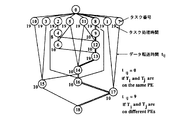
マルチプロセッサシステム或いはシングルチップマルチプロセッサ上での近細粒度並列処理では、プロセッサ間の負荷バランスだけでなくプロセッサ間データ転送をも最少にするようにタスクをプロセッサにスケジューリングしなければ、効率よい並列処理は実現できない。さらに、この近細粒度並列処理で要求されるスケジューリングでは、図4のタスクグラフに示すように、タスク間にはデータ依存による実行順序の制約があるため強NP完全な非常に難しいスケジューリング問題となる。このグラフは、無サイクル有向グラフである。図中、各タスクは各ノードに対応している。ノード内の数字はタスク番号iを表し、ノードの脇の数字はプロセッシングエレメント上でのタスク処理時間tiを表す。また、ノードNiからNjに向けて引かれたエッジは、タスクTiがTjに先行するという半順序制約を表している。タスク間のデータ転送時間も考慮する場合、各々のエッジは一般に可変な重みを持つ。タスクTiとTjが異なるプロセッシングエレメントへ割り当てられた場合、この重みtijがデータ転送時間となる。図4においては、データ転送および同期に要する時間を9クロックと仮定している。逆にこれらのタスクが同一プロセッシングエレメントに割り当てられた場合、重みtijは0となる。
【0023】
このようにして生成されたタスクグラフを各プロセッサにスタティックにスケジューリングする。この際、スケジューリングアルゴリズムとして、データ転送オーバヘッドを考慮し実行時間を最小化するヒューリスティックアルゴリズム、例えばCP/DT/MISF法、CP/ETF/MISF法、ETF/CP法、あるいはDT/CP法の4手法を自動的に適用し最良のスケジュールを選ぶことができる。また、このようにタスクをスタティックにプロセッサに割り当てることにより、BPA内で用いられるデータのローカルメモリ、分散共有メモリ、レジスタへの配置等、データのメモリへの最適化やデータ転送・同期オーバヘッドの最小化といった各種の最適化が可能になる。
【0024】
スケジューリング後、コンパイラはプロセッシングエレメントに割り当てられたタスクの命令列を順番に並べ、データ転送命令や同期命令を必要な箇所に挿入することにより、各プロセッサ用のマシンコードを生成する。近細粒度タスク間の同期にはバージョンナンバー法を用い、同期フラグの受信は受信側プロセッシングエレメントのビジーウェイトによって行われる。ここで、データ転送および同期フラグのセットは、送信側のプロセッサが受信側のプロセッサ上の分散共有メモリに直接書き込むことにより低オーバヘッドで行うことができる。
【0025】
マシンコード生成時、コンパイラはスタティックスケジューリングの情報を用いたコード最適化を行うことができる。例えば、同一データを使用する異なるタスクが同一プロセッシングエレメントに割り当てられたとき、レジスタを介してそのデータを受け渡しすることができる。また、同期のオーバヘッドを最小化するため、タスクの割り当て状況や実行順序から、冗長な同期を除去することもできる。特に、シングルチップマルチプロセッサでは、コード生成時に厳密なコード実行スケジューリングを行うことにより、実行時のデータ転送タイミングを含めたすべての命令実行をコンパイラが制御し、すべての同期コードを除去して並列実行を可能とする無同期並列化のような究極的な最適化も行える。
【0026】
上述のようなマルチグレイン並列処理をマルチプロセッサシステム上で実現するため、一例として、シングルチップマルチプロセッサ(SCM)10は図1に示すようなアーキテクチャを有する。
【0027】
図1において示したアーキテクチャにおいては、CPU20に加えて、分散共有メモリ(DSM:distributed shared memory)22とアジャスタブルプリフェッチ命令キャッシュ24が各SCM10に設けられている。ここで用いられるCPU20は、特に限定されず、整数演算や浮動小数点演算が可能なものであればよい。例えば、ロード/ストアアーキテクチャのシンプルなシングルイッシューRISCアーキテクチャのCPUを用いることができるほか、スーパースカラプロセッサ、VLIWプロセッサなども用いることができる。分散共有メモリ22は、デュアルポートメモリで構成されており、他のプロセッシングエレメントからも直接リード/ライトができるようになっており、上に説明した近細粒度タスク間のデータ転送に使用する。
【0028】
アジャスタブルプリフェッチ命令キャッシュ24は、コンパイラあるいはユーザからの指示で、将来実行すべき命令をメモリあるいは低レベルキャッシュからプリフェッチするものである。このアジャスタブルプリフェッチ命令キャッシュ24は、複数ウェイのセットアソシアティブキャッシュにおいて、コンパイラ等のソフトから指示される、あるいはハードにより事前に決められたウェイに、将来実行されるライン(命令列)をフェッチできるようにするものである。その際、フェッチの単位としては、複数ラインの連続転送指示も行える。アジャスタブルプリフェッチ命令キャッシュ24は、命令キャッシュへのミスヒットを最小化させ、命令実行の高速化を可能にするコンパイラによる調整および制御を可能にするキャッシュシステムである。
【0029】
すなわち、このアジャスタブルプリフェッチ命令キャッシュ24は、すべてのプログラム(命令列)がメモリサイズより小さいことを仮定しているローカルプログラムメモリとは異なり、大きなプログラムにも対応することができ、プログラムの特徴に応じ、プリフェッチをしない通常のキャッシュとしても使用できるし、逆にすべてコンパイラ制御によるプリフェッチキャッシュとして使え、ミスヒットのない(ノーミスヒット)キャッシュとして使用できるものである。
【0030】
このようなアジャスタブルプリフェッチ命令キャッシュの構造の一例を図5に示す。図5に示されたnウェイのセットアソシエイティブキャッシュにおいては、コンパイラあるいはユーザがプログラムに応じて指定するjウェイをプリフェッチ(事前読み出し)するエリアとして使用できるものである。コンパイラにより挿入されたプリフェッチ命令(ラインごとではなく複数ラインのプリフェッチも可能)により、命令実行の前に必要な命令が命令キャッシュ上に存在することを可能とし、高速化が実現できる。プロセッシングエレメントは、nウェイすべてを通常のキャッシュと同様に読み出すことができる。ラインのリプレースは通常のLRU(least recently used)法で行われる。そして、各セット(集合)中のウェイには、通常、自由に転送されたラインを格納できるが、プリフェッチ用に指定されたウェイにはプリフェッチ命令によってCSMから転送されたラインのみ格納される。それ以外のウェイは通常のキャッシュと同様にラインを割り当てられる。プリフェッチキャッシュコントローラは、コンパイラからの指示により、命令をCSMからプリフェッチする。このときの転送の単位は、1ラインから複数ラインである。コンパイラがjウェイ分のプリフェッチエリアを指定し、それ以外の(n−j)ウェイ分のエリアは通常のキャッシュとして使用される。
【0031】
さらに、図1のアーキテクチャにおいては、ローカルデータメモリ(LDM)26が設けられている。このローカルデータメモリ26は、各プロセッシングエレメント16内だけでアクセスできるメモリであり、データローカライゼーション技術などにより、各プロセッシングエレメント16に割り当てられたタスク間で使用されるローカルデータを保持するために使用される。また、このローカルデータメモリ26は、対象とするアプリケーションプログラムに対しコンパイラあるいはユーザがデータのローカルメモリへの分割配置が可能な場合には、ローカルメモリとして使用され、ローカルメモリを有効に使用できない場合には、レベル1キャッシュ(Dキャッシュ)に切り替えて使用できるようにすることが好ましい。また、ゲーム機等のリアルタイム応用に専ら用いられるような場合には、ローカルメモリだけとして設計することも可能である。基本的に各プロセッシングエレメント内で使用されるメモリであるため、共有メモリに比べチップ面積を消費しないので、相対的に大きな容量をとれるものである。
【0032】
粗粒度並列処理では、条件分岐に対処するためにダイナミックスケジューリングが使用される。この場合、マクロタスクがどのプロセッサで実行されるかは、コンパイル時には分からない。したがって、ダイナミックにスケジューリングされるマクロタスク間の共有データは、集中共有メモリ(CSM:centralized shared memory)に配置できることが好ましい。そのため、本実施形態においては、各プロセッシングエレメント16が共有するデータを格納する集中共有メモリ28を各SCM内に設けるほか、さらに、チップ間接続ネットワーク12につながれた集中共有メモリ14を設けている。このチップ内の集中共有メモリ28は、チップ10内のすべてのプロセッシングエレメント16から、そして複数チップの構成では他のチップ上のプロセッシングエレメントからも共有されるデータを保存するメモリである。チップ外の集中共有メモリ14も同様に各プロセッシングエレメントにより共有されるメモリである。したがって、実際の設計上、集中共有メモリ28、14は、物理的に各チップに分散されているが、論理的にはどのプロセッシングエレメントからも等しく共有することができるものである。すべてのプロセッシングエレメントから等距離に見えるようにインプリメントすることもできるし、自チップ内のプロセッシングエレメントからは近く見えるようにインプリメントすることをも可能である。
【0033】
単一のSCMチップからなるシステムでは、チップ内のプロセッシングエレメント(PE)16間で共有される等距離の共有メモリとしてこの集中共有メモリ28を用いることができる。また、コンパイラの最適化が困難である場合には、L2キャッシュとして使用することができる。このメモリ28,14には、ダイナミックタスクスケジューリング時にタスク間で共有されるデータを主に格納する。また、別のチップとなった集中共有メモリ14は、SCMチップ10内の集中共有メモリ28の容量が足りない場合、必要に応じて、メモリのみからなる大容量集中共有メモリチップを任意の数接続することができる。
【0034】
また、粒度によらずスタティックスケジューリングが適用できる場合には、あるマクロタスクが定義する共有データをどのプロセッサが必要とするかはコンパイル時に分かるため、生産側のプロセッサが消費側のプロセッサの分散共有メモリにデータと同期用のフラグを直接書き込めることが好ましい。
【0035】
データ転送コントローラ(DTC)30は、コンパイラあるいはユーザの指示により自プロセッシングエレメント上のDSM22や、自あるいは他のSCM10内のCSM28、あるいは他のプロセッシングエレメント上のDSMとの間でデータ転送を行う。複数のSCMからなる構成を採用する場合には、他のSCM上のCSMやDSMとの間でのデータ転送、あるいは、独立したCSMとの間でのデータ転送を行う。
【0036】
図1におけるローカルデータメモリ26とデータ転送コントローラ30との間の点線は、用途に応じて、データ転送コントローラ30がローカルデータメモリ(Dキャッシュ)26にアクセスできる構成をとってもよいことを表している。このような場合、ローカルデータメモリ26を介してCPU20が転送指示をデータ転送コントローラ30に与えたり、転送終了のチェックを行う構成をとることができる。
【0037】
データ転送コントローラ30へのデータ転送の指示は、ローカルデータメモリ26、DSM22、あるいは専用のバッファ(図示しない)を介して行い、データ転送コントローラ30からCPU20へのデータ転送終了の報告は、ローカルメモリ、DSMあるいは専用のバッファを介して行う。このとき、どれを使うかはプロセッサの用途に応じプロセッサ設計時に決めるかあるいはハード的に複数の方法を用意し、プログラムの特性に応じコンパイラあるいはユーザがソフト的に使い分けられるようにする。
【0038】
データ転送コントローラ30へのデータ転送指示(例えば何番地から内バイトのデータをどこにストアし、またロードするか、データ転送のモード(連続データ転送、ストライド、ストライド・ストライド転送など)など)は、コンパイラが、データ転送命令をメモリあるいは専用バッファに格納しておき、実行時にはどのデータ転送命令を実行するかの指示のみを出すようにして、データ転送コントローラ20の駆動のためのオーバヘッドを削減することが好ましい。
【0039】
各SCMチップ10内のプロセッシングエレメント16の間の接続は、各プロセッシングエレメントに設けられたネットワークインタフェース32を介して、チップ内接続ネットワーク(マルチバス、クロスバーなどからなる)34によって達成されており、このチップ内接続ネットワーク34を介して、プロセッシングエレメントが共通の集中共有メモリ28に接続される。集中共有メモリ28は、チップの外にあるチップ間接続ネットワーク12に接続している。このチップ間接続ネットワークは、クロスバーネットワークあるいはバス(複数バスも含む)が特に好ましいが、多段結合網等でもかまわず、予算、SCMの数、アプリケーションの特性に応じて選ぶことができるものである。また、このチップ内接続ネットワーク34を介さずに、外部のチップ間接続ネットワーク12とネットワークインタフェース32を接続することも可能であり、このような構成は、システム中の全プロセッシングエレメントが平等に各チップ上に分散された集中共有メモリ、分散共有メモリにアクセスすることを可能にするほか、チップ間でのデータ転送が多い場合には、この直結パスを設けることにより、システム全体のデータ転送能力を大幅に高めることができる。
【0040】
グローバルレジスタファイル36は、マルチポートレジスタであり、チップ内のプロセッシングエレメントにより共有されるレジスタである。たとえば、近細粒度タスク(分散共有メモリを用いた場合など)のデータ転送および同期に使用することができる。このグローバルレジスタファイルは、プロセッサの用途に応じて、省略することも可能なものである。
【0041】
図1において、点線は、通信線を必要に応じて用意できることを意味しており、コストあるいはピン数などを考えて不必要あるいは困難な場合には、点線の接続はなくても動作することを示すものである。
【0042】
以上のように、特定の実施の形態に基づいて本発明を説明してきたが、本発明の技術的範囲はこのような実施の形態に限定されるものではなく、当業者にとって容易な種々の変形を含むものである。
【0043】
【発明の効果】
上述のように、本発明のシングルチップマルチプロセッサによれば、価格性能比を改善し、高まりつつある半導体集積度にスケーラブルな性能向上が可能である。また、本発明は、このようなシングルチップマルチプロセッサを複数含むシステムをも提供するが、そのようなシステムは、より一層の高速処理を可能にするものである。
【図面の簡単な説明】
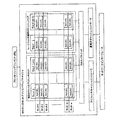
【図1】本発明の1実施形態であるマルチグレイン並列処理用システムを示すブロックダイアグラムである。
【図2】本発明において用いることができるコンパイラにおける粗粒度並列処理のためのマクロフローグラフの一例を示すグラフである。
【図3】本発明において用いることができるコンパイラにおける粗粒度並列処理のためのマクロタスクグラフの一例を示すグラフである。
【図4】本発明において用いることができるコンパイラにおける近細粒度並列処理のための近細粒度タスクグラフの一例を示すグラフである。
【図5】本発明において用いることができるアジャスタブルプリフェッチ命令キャッシュの構成を示すブロックダイアグラムである。
【符号の説明】
10 シングルチップマルチプロセッサ
12 チップ間接続ネットワーク
14 集中共有メモリ(チップ)
16 プロセッシングエレメント
20 CPU
22 分散共有メモリ
24 アジャスタブルプリフェッチ命令キャッシュ
26 ローカルデータメモリ
28 集中共有メモリ
30 データ転送コントローラ
32 ネットワークインタフェース
34 チップ内接続ネットワーク[0001]
BACKGROUND OF THE INVENTION
The present invention relates to an architecture of a single-chip processor in which a plurality of CPUs are accommodated in a single chip, and more specifically, a multi-grain compiler cooperative single-chip multiprocessor architecture and a high-performance multiprocessor system connecting them. Concerning architecture.
[0002]
[Prior art]
Currently, Japanese supercomputer manufacturers have the world's top hardware technology, and the peak performance at the present time exceeds several TFLOPS, and in the beginning of the 21st century machines with peak performance of several tens of TFLOPS will be developed. It is expected to be. However, with current supercomputers, the difference between the peak performance and the effective performance when the program is executed is large, that is, the price-performance ratio is not necessarily excellent. In terms of usability, the user must extract the parallelism in question and create a program that can use the hardware effectively using an extended language or library such as HPF, MPI, PVM, etc. The problem is that it is difficult or impossible to use for users. Furthermore, due to these reasons, the inability to expand the world's high-performance computer market is a major problem.
[0003]
To solve this price-performance ratio and ease-of-use problem and expand the supercomputer market, programs written in sequential languages such as Fortran and C, which users are accustomed to, are automatically parallelized. Development of an automatic parallelizing compiler is important.
[0004]
In particular, it is important to study a single-chip multiprocessor that is considered to be one of the main architectures of general-purpose and embedded microprocessors in the early 21st century and multiprocessor systems ranging from home servers to supercomputers. Furthermore, even with a single-chip multiprocessor, a conventional main memory sharing architecture cannot provide sufficient performance and an excellent price / performance ratio. Therefore, the system extracts more parallelism from the instruction sequence to be executed truly, like multi-grain parallel processing that can fully use instruction level parallelism, loop parallelism, and coarse grain parallelism in the program. It is important to develop a new automatic parallel compilation technology that can improve the price-performance ratio of the system and to build a user-friendly system that can be used by anyone, and an architecture that can make use of it.
[0005]
[Problems to be solved by the invention]
Accordingly, it is an object of the present invention to provide a compiler-cooperative single-chip multiprocessor that supports multigrain parallelization and a high performance multiprocessor system that combines them.
[0006]
[Means for Solving the Problems]
The present invention includes a CPU, a network interface connected to the CPU, a distributed shared memory that stores data transferred when executing a program that is statically scheduled by a compiler, and is accessible from other processing elements, A plurality of processing elements including a local data memory accessible only from the processing element, and connected to the processing elements, shared by the processing elements, and used when executing a program dynamically scheduled by the compiler And a centralized shared memory for storing data, wherein the centralized shared memory is provided on the same chip as each of the processing elements. On-chip first centralized shared memory and off-chip second centralized shared memory provided on a different chip from any of the processing elements, and the distributed shared memory is configured to execute a statically scheduled program. Used to transfer data between processing elements, and the local data memory is used to hold local data used in tasks assigned to the processing elements, and between tasks assigned to the processing elements. The data used in common is transferred to the distributed shared memory of the processing element to which data is consumed before it is required for each task, and the centralized shared memory performs conditional branching in coarse-grain parallel processing. Corresponding to In the dynamic scheduling is used, to provide a multi-processor and storing data that is not determined either used by any CPU execution until the program.
[0007]
In the present invention, the multiprocessor includes a data transfer controller connected to one port of the distributed shared memory, the data transfer controller reads a transfer instruction from the local data memory, and reads from the distributed shared memory. There is provided a multiprocessor characterized in that data is read out and transferred to a distributed shared memory of a processing element that consumes the data.
[0008]
DETAILED DESCRIPTION OF THE INVENTION
The present invention provides a single chip multiprocessor that supports multigrain parallelism. FIG. 1 shows the architecture of a single chip multiprocessor according to an embodiment of the present invention. In FIG. 1, a plurality of processing elements (PE0, PE1,. . . , PEn(M + 1) single chip multiprocessor (SCM)0, SCM1, SCM2,. . . , SCMm,. . . ) 10 and a plurality (j + 1) of centralized shared memory chips (CSM) consisting only of shared memory0,. . . . , CSMj(However, one CSM may not be provided depending on the required system condition)0,. . . , I / O SCMk(However, an existing processor can be used for input / output control) is connected by an
[0009]
In the form shown in FIG. 1, the I / O device is connected to an input / output control chip composed of k + 1 SCMs according to required input / output functions. Furthermore, j + 1 centralized shared memory (CSM)
[0010]
Multi-grain parallel processing is a hierarchy of coarse-grained parallelism between subroutines, loops and basic blocks, medium-grained parallelism between loop type iterations (loop parallelism), and (near) fine-grained parallelism between statements or instructions. This is a parallel processing method that is used in an automated manner. This method is different from local parallel processing of single-granularity such as loop parallelization used in the conventional automatic parallelizing compiler for commercial multiprocessor systems, or instruction level parallelization in superscalar and VLIW, Flexible parallel processing with global and multiple granularity over the entire program is possible.
[0011]
[Coarse grain task parallel processing (macro data flow processing)]
Coarse-grain parallel processing that uses parallelism between subroutines, loops, and basic blocks in a single program is also called macro data flow processing. For example, a Fortran program as a source is a coarse-grained task (macro task), and is a repetition block (RB), a subroutine block (SB), a pseudo assignment statement (BPA) block 3 Break down into types of macrotasks (MT). RB is the outermost natural loop in each layer, SB is a subroutine, and BPA is a basic block that is merged or divided in consideration of scheduling overhead or parallelism. Here, BPA is basically a normal basic block, but a single basic block is divided into a plurality of parts for parallelism extraction, or conversely, the processing time of one BPA is short, and dynamic scheduling If the overhead is not negligible, a plurality of BPAs can be merged to generate one BPA. When the RB that is the outermost loop is a Doall loop, the loop index is divided into a plurality of partial Doall loops, and the divided partial Doall loop is newly defined as an RB. Subroutine SB is expanded inline as much as possible, but a subroutine that cannot be effectively expanded inline is defined as SB as it is in consideration of the code length. Furthermore, in the case of RBs and RBs that cannot be dealt with, hierarchical macro data flow processing is applied to the internal parallelism.
[0012]
Next, the control flow and data dependency between macro tasks are analyzed, and a macro flow graph (MFG) as shown in FIG. 2 is generated. In the MFG, each node is a macrotask (MT), a dotted edge represents a control flow, a solid line edge represents data dependence, and a small circle in the node represents a conditional branch sentence. The MT7 loop (RB) indicates that MT and MFG can be defined hierarchically inside.
[0013]
Next, the condition that each macrotask can be executed earliest than the control dependency between macrotasks and data dependency (early executable condition), that is, the parallelism between macrotasks is detected. A macrotask graph (MTG) shown in FIG. 3 expresses this parallelism in a graph. Even in MTG, a node is MT, a solid line edge is data-dependent, and a small circle in the node represents a conditional branch sentence. However, the dotted edge represents the extended control dependence, the edge with the arrow represents the branch destination in the original MFG, the solid arc represents the AND relationship, and the dotted arc represents the OR relationship. For example, the edge to MT6 indicates that MT6 can execute the earliest when the conditional branch in MT2 branches in the direction of MT4 or when the execution of MT3 ends.
[0014]
Then, the compiler assigns MT on MTG to a processor cluster (a compiler or a group of processors realized by software by a user) at the time of compilation (static scheduling) or dynamic scheduling code for assigning at the time of execution. The dynamic CP algorithm is generated and embedded in the program. This is to avoid the overhead of several thousand to several tens of thousands of clocks when the OS or library is requested to generate and schedule coarse-grained tasks as in the conventional multiprocessor. During this dynamic scheduling, it is not known which processor will execute the task until the execution time, so the shared data between tasks is allocated to a centralized shared memory that appears equidistant from all the processors.
[0015]
In addition, when generating the static scheduling and dynamic scheduling code, a data localization method for effectively using the local memory or the distributed shared memory on each processor and minimizing the data transfer amount between the processors is also used.
[0016]
Data localization analyzes data dependence between iterations over multiple different loops with data dependence on MTG (inter-loop data dependence analysis), and splits loops and data to minimize data transfer (loop-consistent division) ) Later, either a task fusion method that fuses these loops at compile time so that the loop and data are scheduled to the same processor, or a partial static scheduling algorithm that the compiler specifies to be assigned to the same processor at runtime To generate dynamic scheduling code. Using this data localization function, each local memory can be effectively used.
[0017]
At this time, preload / poststore scheduling algorithms that attempt to conceal the data transfer overhead by overlapping the data transfer and macrotask processing are also used for data transfer between processors that could not be removed by data localization. Is done. Based on the scheduling result, data transfer using the data transfer controller on each processor is realized.
[0018]
[Loop parallel processing (medium grain parallel processing)]
In multi-grain parallelization, a loop (RB) assigned to a processor cluster (PC) by macro data flow processing is an iteration level with respect to a processing element (PE) in the PC when the RB is a Doall or Doacross loop. Parallelized (divided).
[0019]
For loop structuring, the following conventional techniques can be used as they are.
(A) Changing the statement execution order
(B) Loop distribution
(C) Node splitting scalar expansion
(D) Loop interchange
(E) Loop unrolling
(F) Strip mining
(G) Array privateization
(H) Unimodular transformation (loop reversal, permutation, skewing)
[0020]
For loops to which loop parallelization processing is not applicable, the loop body part is described as follows (near) fine-grain parallel processing as shown in FIG. Coarse grain task parallel processing) is applied.
[0021]
[(Near) Fine Grain Parallel Processing]
When the MT assigned to the PC is BPA, loop parallelization, or RB that cannot apply the macro data flow processing hierarchically, a statement or instruction inside the BPA is processed in parallel by a processor in the PC as a near-fine-grain task.
[0022]
In near-fine-grain parallel processing on a multiprocessor system or single-chip multiprocessor, efficient parallel processing can be achieved if tasks are not scheduled to the processor to minimize not only the load balance between processors but also the data transfer between processors. Cannot be realized. Furthermore, in the scheduling required for this near-fine-grain parallel processing, as shown in the task graph of FIG. 4, there is a restriction of the execution order due to data dependence between tasks, which makes a strong NP complete and very difficult scheduling problem. . This graph is a non-cycle directed graph. In the figure, each task corresponds to each node. The number in the node represents the task number i, and the number beside the node is the task processing time t on the processing element.iRepresents. Node NiTo NjThe edge drawn towardiIs TjRepresents a partial order constraint that precedes. When considering the data transfer time between tasks, each edge generally has a variable weight. Task TiAnd TjIs assigned to a different processing element, this weight tijIs the data transfer time. In FIG. 4, it is assumed that the time required for data transfer and synchronization is 9 clocks. Conversely, if these tasks are assigned to the same processing element, the weight tijBecomes 0.
[0023]
The task graph generated in this manner is statically scheduled to each processor. At this time, as a scheduling algorithm, a heuristic algorithm that minimizes execution time in consideration of data transfer overhead, for example, four methods of CP / DT / MISF method, CP / ETF / MISF method, ETF / CP method, or DT / CP method Can be applied automatically to choose the best schedule. In addition, by assigning tasks to processors in this way, the optimization of data in memory such as local memory, distributed shared memory, and register allocation of data used in BPA, and minimum data transfer / synchronization overhead Various optimizations such as optimization are possible.
[0024]
After scheduling, the compiler arranges the instruction sequences of tasks assigned to the processing elements in order, and inserts data transfer instructions and synchronization instructions at necessary locations, thereby generating machine code for each processor. The version number method is used for synchronization between near-fine-grain tasks, and the synchronization flag is received by the busy wait of the receiving processing element. Here, the data transfer and the setting of the synchronization flag can be performed with low overhead by the transmitting processor directly writing to the distributed shared memory on the receiving processor.
[0025]
When generating machine code, the compiler can perform code optimization using static scheduling information. For example, when different tasks using the same data are assigned to the same processing element, the data can be passed through a register. Further, in order to minimize synchronization overhead, redundant synchronization can be removed from the task assignment status and execution order. In particular, in single-chip multiprocessors, strict code execution scheduling is performed during code generation, so that the compiler controls all instruction execution including data transfer timing during execution, and all synchronous code is removed to execute in parallel. Ultimate optimization such as asynchronous parallelization that enables
[0026]
In order to realize the multigrain parallel processing as described above on a multiprocessor system, as an example, a single chip multiprocessor (SCM) 10 has an architecture as shown in FIG.
[0027]
In the architecture shown in FIG. 1, in addition to the
[0028]
The adjustable
[0029]
In other words, this adjustable
[0030]
An example of the structure of such an adjustable prefetch instruction cache is shown in FIG. The n-way set associative cache shown in FIG. 5 can be used as an area for prefetching (pre-reading) the j-way designated by the compiler or the user according to the program. The prefetch instruction inserted by the compiler (prefetching of a plurality of lines instead of each line is possible) enables necessary instructions to be present on the instruction cache before the instruction is executed, thereby realizing high speed. The processing element can read all n ways in the same way as a normal cache. The replacement of the line is performed by a normal LRU (least recently used) method. A way in each set (aggregation) can normally store freely transferred lines, but a way designated for prefetch stores only lines transferred from the CSM by a prefetch instruction. The other ways are assigned lines in the same way as a normal cache. The prefetch cache controller prefetches instructions from the CSM according to instructions from the compiler. The unit of transfer at this time is from one line to a plurality of lines. The compiler designates a prefetch area for j ways, and the other (n−j) way areas are used as a normal cache.
[0031]
Further, in the architecture of FIG. 1, a local data memory (LDM) 26 is provided. The
[0032]
In coarse grain parallel processing, dynamic scheduling is used to deal with conditional branches. In this case, it is not known at the time of compilation which processor the macrotask is executed on. Therefore, it is preferable that shared data between dynamically scheduled macrotasks can be placed in a centralized shared memory (CSM). Therefore, in this embodiment, a centralized shared
[0033]
In a system composed of a single SCM chip, this centralized shared
[0034]
In addition, when static scheduling can be applied regardless of the granularity, it is possible to know which processor needs shared data defined by a macrotask at compile time, so that the processor on the production side distributes the shared shared memory of the processor on the consumption side. It is preferable to directly write data and a synchronization flag.
[0035]
The data transfer controller (DTC) 30 performs data transfer between the
[0036]
The dotted line between the
[0037]
The data transfer instruction to the
[0038]
The data transfer instruction to the data transfer controller 30 (for example, from where to store and load the internal byte data, the data transfer mode (continuous data transfer, stride, stride / stride transfer, etc.), etc.) However, it is possible to reduce the overhead for driving the
[0039]
The connection between the
[0040]
The
[0041]
In FIG. 1, a dotted line means that a communication line can be prepared as needed, and if it is unnecessary or difficult considering the cost or the number of pins, it can be operated without a dotted line connection. It is shown.
[0042]
As described above, the present invention has been described based on specific embodiments. However, the technical scope of the present invention is not limited to such embodiments, and various modifications that are easy for those skilled in the art can be made. Is included.
[0043]
【The invention's effect】
As described above, according to the single chip multiprocessor of the present invention, it is possible to improve the price / performance ratio and to improve the performance scalable to the increasing degree of semiconductor integration. The present invention also provides a system including a plurality of such single-chip multiprocessors, but such a system enables higher-speed processing.
[Brief description of the drawings]
FIG. 1 is a block diagram showing a multigrain parallel processing system according to an embodiment of the present invention.
FIG. 2 is a graph showing an example of a macroflow graph for coarse grain parallel processing in a compiler that can be used in the present invention.
FIG. 3 is a graph showing an example of a macrotask graph for coarse grain parallel processing in a compiler that can be used in the present invention.
FIG. 4 is a graph showing an example of a near-fine-grain task graph for near-fine-grain parallel processing in a compiler that can be used in the present invention.
FIG. 5 is a block diagram showing a configuration of an adjustable prefetch instruction cache that can be used in the present invention.
[Explanation of symbols]
10 Single-chip multiprocessor
12 Chip-to-chip connection network
14 Centralized shared memory (chip)
16 processing elements
20 CPU
22 Distributed shared memory
24 Adjustable prefetch instruction cache
26 Local data memory
28 Centralized shared memory
30 Data transfer controller
32 Network interface
34 On-chip connection network
Claims (5)
前記各プロセッシングエレメントに接続され、前記各プロセッシングエレメントによって共有され、コンパイラによりダイナミックスケジューリングされたプログラムの実行時に使用されるデータを格納する集中共有メモリと、を備えるマルチプロセッサであって、
前記集中共有メモリは、前記各プロセッシングエレメントと同じチップに設けられたオンチップの第1集中共有メモリと、前記いずれのプロセッシングエレメントとも異なるチップに設けられたオフチップの第2集中共有メモリとを含み、
前記分散共有メモリは、スタティックスケジューリングされたプログラムの実行時に、プロセシングエレメント間のデータ転送に使用され、
前記ローカルデータメモリは、当該プロセッシングエレメントに割り当てられたタスクにおいて使用されるローカルデータを保持するために使用され、
前記各プロセッシングエレメントに割り当てられたタスク間で共通に使用されるデータが、前記各タスクで必要とされるとき以前に、データの消費先の前記プロセッシングエレメントの前記分散共有メモリへ転送され、
前記集中共有メモリは、粗粒度並列処理において条件分岐に対応するために使用されるダイナミックスケジューリングにおいて、プログラムの実行時までどのCPUにより使用されるかが決まっていないデータを格納することを特徴とするマルチプロセッサ。A CPU, a network interface connected to the CPU, a distributed shared memory that stores data transferred during execution of a statically scheduled program by a compiler and can be accessed from other processing elements, and only from the processing element A plurality of processing elements comprising : local data memory accessible ;
A centralized shared memory that is connected to each processing element, is shared by each processing element, and stores data used when executing a program dynamically scheduled by a compiler;
The centralized shared memory includes an on-chip first centralized shared memory provided on the same chip as each processing element, and an off-chip second centralized shared memory provided on a chip different from any of the processing elements. ,
The distributed shared memory is used for data transfer between processing elements when executing a statically scheduled program,
The local data memory is used to hold local data used in tasks assigned to the processing element;
Data commonly used among tasks assigned to each processing element is transferred to the distributed shared memory of the processing element to which data is consumed before being required by each task ,
The centralized shared memory stores data in which dynamic CPU used for coping with conditional branching in coarse-grained parallel processing is not determined by which CPU until the program is executed. Multiprocessor.
前記データ転送コントローラは、前記ローカルデータメモリから転送指示を読み出し、前記分散共有メモリからデータを読み出して、前記データの消費先のプロセッシングエレメントの分散共有メモリへ転送することを特徴とする請求項1に記載のマルチプロセッサ。 The data transfer controller reads a transfer instruction from the local data memory, reads data from the distributed shared memory, and transfers the data to the distributed shared memory of a processing element that consumes the data. The described multiprocessor.
前記データ転送コントローラは、前記分散共有メモリの一つのポートに接続されることを特徴とする請求項2に記載のマルチプロセッサ。 The multiprocessor according to claim 2, wherein the data transfer controller is connected to one port of the distributed shared memory.
前記第2集中共有メモリは、大容量の集中共有メモリであることを特徴とする請求項1から3のいずれか一つに記載のマルチプロセッサ。 The multiprocessor according to any one of claims 1 to 3, wherein the second centralized shared memory is a large-capacity centralized shared memory.
Priority Applications (1)
| Application Number | Priority Date | Filing Date | Title |
|---|---|---|---|
| JP36370299A JP4784792B2 (en) | 1999-12-22 | 1999-12-22 | Multiprocessor |
Applications Claiming Priority (1)
| Application Number | Priority Date | Filing Date | Title |
|---|---|---|---|
| JP36370299A JP4784792B2 (en) | 1999-12-22 | 1999-12-22 | Multiprocessor |
Related Child Applications (2)
| Application Number | Title | Priority Date | Filing Date |
|---|---|---|---|
| JP2008090853A Division JP4784842B2 (en) | 2008-03-31 | 2008-03-31 | Multiprocessor and multiprocessor system |
| JP2009159744A Division JP2009230764A (en) | 2009-07-06 | 2009-07-06 | Multiprocessor system |
Publications (3)
| Publication Number | Publication Date |
|---|---|
| JP2001175619A JP2001175619A (en) | 2001-06-29 |
| JP2001175619A5 JP2001175619A5 (en) | 2007-07-26 |
| JP4784792B2 true JP4784792B2 (en) | 2011-10-05 |
Family
ID=18479979
Family Applications (1)
| Application Number | Title | Priority Date | Filing Date |
|---|---|---|---|
| JP36370299A Expired - Lifetime JP4784792B2 (en) | 1999-12-22 | 1999-12-22 | Multiprocessor |
Country Status (1)
| Country | Link |
|---|---|
| JP (1) | JP4784792B2 (en) |
Families Citing this family (12)
| Publication number | Priority date | Publication date | Assignee | Title |
|---|---|---|---|---|
| FI20021314A0 (en) | 2002-07-03 | 2002-07-03 | Nokia Corp | Communication method and arrangement |
| JP4082706B2 (en) | 2005-04-12 | 2008-04-30 | 学校法人早稲田大学 | Multiprocessor system and multigrain parallelizing compiler |
| JP4784827B2 (en) * | 2006-06-06 | 2011-10-05 | 学校法人早稲田大学 | Global compiler for heterogeneous multiprocessors |
| JP4936517B2 (en) | 2006-06-06 | 2012-05-23 | 学校法人早稲田大学 | Control method for heterogeneous multiprocessor system and multi-grain parallelizing compiler |
| JP5224498B2 (en) | 2007-02-28 | 2013-07-03 | 学校法人早稲田大学 | MEMORY MANAGEMENT METHOD, INFORMATION PROCESSING DEVICE, PROGRAM CREATION METHOD, AND PROGRAM |
| JP5293609B2 (en) | 2007-11-01 | 2013-09-18 | 日本電気株式会社 | Multiprocessor and cache synchronization control method and program thereof |
| JP5541491B2 (en) * | 2010-01-07 | 2014-07-09 | 日本電気株式会社 | Multiprocessor, computer system using the same, and multiprocessor processing method |
| JPWO2011096016A1 (en) * | 2010-02-05 | 2013-06-06 | 株式会社東芝 | Compiler device |
| WO2013001614A1 (en) * | 2011-06-28 | 2013-01-03 | 富士通株式会社 | Data processing method and data processing system |
| JPWO2013001614A1 (en) * | 2011-06-28 | 2015-02-23 | 富士通株式会社 | Data processing method and data processing system |
| CN107402891B (en) * | 2012-12-25 | 2020-12-22 | 华为技术有限公司 | Method and related device for determining shared virtual memory page management mode |
| WO2014115613A1 (en) | 2013-01-23 | 2014-07-31 | 学校法人 早稲田大学 | Parallelism extraction method and method for making program |
-
1999
- 1999-12-22 JP JP36370299A patent/JP4784792B2/en not_active Expired - Lifetime
Also Published As
| Publication number | Publication date |
|---|---|
| JP2001175619A (en) | 2001-06-29 |
Similar Documents
| Publication | Publication Date | Title |
|---|---|---|
| Krashinsky et al. | The vector-thread architecture | |
| US7490218B2 (en) | Building a wavecache | |
| JP5224498B2 (en) | MEMORY MANAGEMENT METHOD, INFORMATION PROCESSING DEVICE, PROGRAM CREATION METHOD, AND PROGRAM | |
| Burger et al. | Scaling to the end of silicon with EDGE architectures | |
| Etsion et al. | Task superscalar: An out-of-order task pipeline | |
| Byrd et al. | Multithreaded processor architectures | |
| US6978389B2 (en) | Variable clocking in an embedded symmetric multiprocessor system | |
| Keckler et al. | Multicore processors and systems | |
| EP1422618A2 (en) | Clustered VLIW coprocessor with runtime reconfigurable inter-cluster bus | |
| JPH08212070A (en) | Apparatus and method for distributed control in a processor architecture | |
| WO2005072307A2 (en) | Wavescalar architecture having a wave order memory | |
| JP2001175619A (en) | Single-chip multiprocessor | |
| JP4304347B2 (en) | Multiprocessor | |
| Bousias et al. | Instruction level parallelism through microthreading—a scalable approach to chip multiprocessors | |
| JP4784842B2 (en) | Multiprocessor and multiprocessor system | |
| US20040117597A1 (en) | Method and apparatus for providing fast remote register access in a clustered VLIW processor using partitioned register files | |
| Leback et al. | Tesla vs. xeon phi vs. radeon a compiler writer’s perspective | |
| Owaida et al. | Massively parallel programming models used as hardware description languages: The OpenCL case | |
| US9003168B1 (en) | Control system for resource selection between or among conjoined-cores | |
| JP2009230764A (en) | Multiprocessor system | |
| US8732368B1 (en) | Control system for resource selection between or among conjoined-cores | |
| Tsai | Superthreading: Integrating compilation technology and processor architecture for cost-effective concurrent multithreading | |
| Zhong | Architectural and compiler mechanisms for accelerating single thread applications on multicore processors | |
| Hammond | Hydra: a chip multiprocessor with support for speculative thread-level parallelization | |
| Takano | Performance scalability of adaptive processor architecture |
Legal Events
| Date | Code | Title | Description |
|---|---|---|---|
| A621 | Written request for application examination |
Free format text: JAPANESE INTERMEDIATE CODE: A621 Effective date: 20060425 |
|
| RD03 | Notification of appointment of power of attorney |
Free format text: JAPANESE INTERMEDIATE CODE: A7423 Effective date: 20060904 |
|
| A521 | Written amendment |
Free format text: JAPANESE INTERMEDIATE CODE: A821 Effective date: 20060912 |
|
| RD04 | Notification of resignation of power of attorney |
Free format text: JAPANESE INTERMEDIATE CODE: A7424 Effective date: 20060912 |
|
| A521 | Written amendment |
Free format text: JAPANESE INTERMEDIATE CODE: A523 Effective date: 20070531 |
|
| A977 | Report on retrieval |
Free format text: JAPANESE INTERMEDIATE CODE: A971007 Effective date: 20080117 |
|
| A131 | Notification of reasons for refusal |
Free format text: JAPANESE INTERMEDIATE CODE: A131 Effective date: 20080129 |
|
| A521 | Written amendment |
Free format text: JAPANESE INTERMEDIATE CODE: A523 Effective date: 20080331 |
|
| A131 | Notification of reasons for refusal |
Free format text: JAPANESE INTERMEDIATE CODE: A131 Effective date: 20080916 |
|
| A521 | Written amendment |
Free format text: JAPANESE INTERMEDIATE CODE: A523 Effective date: 20081117 |
|
| A02 | Decision of refusal |
Free format text: JAPANESE INTERMEDIATE CODE: A02 Effective date: 20090407 |
|
| A521 | Written amendment |
Free format text: JAPANESE INTERMEDIATE CODE: A523 Effective date: 20090706 |
|
| A911 | Transfer to examiner for re-examination before appeal (zenchi) |
Free format text: JAPANESE INTERMEDIATE CODE: A911 Effective date: 20090721 |
|
| A912 | Re-examination (zenchi) completed and case transferred to appeal board |
Free format text: JAPANESE INTERMEDIATE CODE: A912 Effective date: 20090904 |
|
| A01 | Written decision to grant a patent or to grant a registration (utility model) |
Free format text: JAPANESE INTERMEDIATE CODE: A01 |
|
| A61 | First payment of annual fees (during grant procedure) |
Free format text: JAPANESE INTERMEDIATE CODE: A61 Effective date: 20110629 |
|
| R150 | Certificate of patent or registration of utility model |
Ref document number: 4784792 Country of ref document: JP Free format text: JAPANESE INTERMEDIATE CODE: R150 Free format text: JAPANESE INTERMEDIATE CODE: R150 |
|
| FPAY | Renewal fee payment (event date is renewal date of database) |
Free format text: PAYMENT UNTIL: 20140722 Year of fee payment: 3 |
|
| R250 | Receipt of annual fees |
Free format text: JAPANESE INTERMEDIATE CODE: R250 |
|
| S201 | Request for registration of exclusive licence |
Free format text: JAPANESE INTERMEDIATE CODE: R314201 |
|
| R350 | Written notification of registration of transfer |
Free format text: JAPANESE INTERMEDIATE CODE: R350 |
|
| R250 | Receipt of annual fees |
Free format text: JAPANESE INTERMEDIATE CODE: R250 |
|
| R250 | Receipt of annual fees |
Free format text: JAPANESE INTERMEDIATE CODE: R250 |
|
| R250 | Receipt of annual fees |
Free format text: JAPANESE INTERMEDIATE CODE: R250 |
|
| R250 | Receipt of annual fees |
Free format text: JAPANESE INTERMEDIATE CODE: R250 |
|
| R250 | Receipt of annual fees |
Free format text: JAPANESE INTERMEDIATE CODE: R250 |
|
| EXPY | Cancellation because of completion of term |