JP4734603B2 - Indium recovery method - Google Patents
Indium recovery method Download PDFInfo
- Publication number
- JP4734603B2 JP4734603B2 JP2005033578A JP2005033578A JP4734603B2 JP 4734603 B2 JP4734603 B2 JP 4734603B2 JP 2005033578 A JP2005033578 A JP 2005033578A JP 2005033578 A JP2005033578 A JP 2005033578A JP 4734603 B2 JP4734603 B2 JP 4734603B2
- Authority
- JP
- Japan
- Prior art keywords
- indium
- leachate
- leaching
- added
- concentration
- Prior art date
- Legal status (The legal status is an assumption and is not a legal conclusion. Google has not performed a legal analysis and makes no representation as to the accuracy of the status listed.)
- Expired - Fee Related
Links
Images
Classifications
-
- Y—GENERAL TAGGING OF NEW TECHNOLOGICAL DEVELOPMENTS; GENERAL TAGGING OF CROSS-SECTIONAL TECHNOLOGIES SPANNING OVER SEVERAL SECTIONS OF THE IPC; TECHNICAL SUBJECTS COVERED BY FORMER USPC CROSS-REFERENCE ART COLLECTIONS [XRACs] AND DIGESTS
- Y02—TECHNOLOGIES OR APPLICATIONS FOR MITIGATION OR ADAPTATION AGAINST CLIMATE CHANGE
- Y02P—CLIMATE CHANGE MITIGATION TECHNOLOGIES IN THE PRODUCTION OR PROCESSING OF GOODS
- Y02P10/00—Technologies related to metal processing
- Y02P10/20—Recycling
Landscapes
- Manufacture And Refinement Of Metals (AREA)
- Electrolytic Production Of Metals (AREA)
Description
本発明は、インジウム含有物からインジウムを回収する方法に関する。 The present invention relates to a method for recovering indium from an indium-containing material.
現在、インジウムは、III-V族化合物半導体としてInP、InAs等の金属間化合物に、あるいは太陽電池用材料等として、錫をドープした酸化インジウム(ITO)の形で透明導電性薄膜に利用されており、今後その需要は益々伸長するものと期待されている。しかし、インジウムには主たる鉱石がなく、工業的には亜鉛製錬、鉛製錬の副産物として、例えば、製錬時のばい煙中に濃縮されたインジウムを回収することにより生産されている。したがってインジウム回収の原料は、Zn、Fe、Cu、Al、Ga、As、Cd等の金属不純物を多く含んでおり、またこれら金属成分以外にも微量に含まれる成分の種類が多い。このため、これら金属不純物を除去し、高純度のインジウムを回収するには複雑な工程が必要となる。 At present, indium is used for a transparent conductive thin film in the form of indium oxide (ITO) doped with tin as an III-V group compound semiconductor such as InP or InAs or as a solar cell material. The demand is expected to grow more and more in the future. However, indium has no main ore and is industrially produced as a by-product of zinc smelting and lead smelting, for example, by collecting indium concentrated in the smoke during smelting. Accordingly, the raw material for indium recovery contains a large amount of metal impurities such as Zn, Fe, Cu, Al, Ga, As, and Cd, and there are many kinds of components contained in trace amounts in addition to these metal components. Therefore, a complicated process is required to remove these metal impurities and recover high-purity indium.
そこで、本発明の出願人は、インジウム含有物からインジウムを回収する方法について、特許文献1を提案した。
以下、図面を参照しながら特許文献1に係るインジウム含有物からインジウムを回収する方法について簡単に説明する。
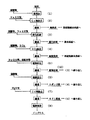
図3は、従来の技術に係るインジウムの回収工程の一例を示すフロー図である。
(1)は、原料であるインジウム含有物を酸で浸出処理し、インジウムと共に酸に可溶な金属を溶解して浸出液を得る連続的な第1の酸浸出工程である。
(2)は、酸化還元電位を調整しながら、前記(1)の工程で得られた浸出液に硫化剤を添加し、Cu等のインジウム以外の金属を沈殿除去する、脱銅(Cu等の除去)工程である。
(3)は、前記(2)の工程で得られたインジウム含有浸出液に硫酸と硫化剤とを添加して、インジウムを硫化物として沈殿濃縮する硫化沈殿工程である。
(4)は、前記(3)の工程で得られたインジウム硫化物に硫酸酸性下でSO2ガスを吹き込むことによりインジウムを選択的に浸出してインジウム含有浸出液を得るSO2浸出工程である。
(5)は、前記(4)の工程で得られたインジウム含有浸出液へ、アルカリ金属を添加してpH2〜2.5とし、金属粉(亜鉛粉)を添加し、インジウムスポンジを置換析出させる置換析出工程である。
(6)は、前記(5)の工程で得られたインジウムスポンジを塩酸等の酸で浸出し、インジウム含有浸出液を得る第2の酸浸出工程である。残渣となったスポンジ滓は、(4)で説明したSO2浸出工程へ循環される。
(7)は、前記(6)の工程で得られたインジウム含有浸出液に硫化剤を添加し、Cd等の残留金属イオンを沈殿除去して電解元液を得るCd等の除去工程である。生成したカドミ残渣は、(4)で説明したSO2浸出工程へ循環される。
(8)は、前記(7)の工程で得られた電解元液を電解して高純度の金属インジウムを得る電解回収工程である。
尚、(5)の工程で生成した、インジウムスポンジ析出後のろ過液(置換后液)(10)は、(3)で説明した硫化沈殿工程へ循環される。
Then, the applicant of this invention proposed
Hereinafter, a method for recovering indium from an indium-containing material according to
FIG. 3 is a flowchart showing an example of a recovery process of indium according to a conventional technique.
(1) is a continuous first acid leaching process in which an indium-containing material as a raw material is leached with an acid to dissolve an acid-soluble metal together with indium to obtain a leaching solution.
(2) Decopperization (removal of Cu, etc.), adding a sulfiding agent to the leachate obtained in the step (1) while adjusting the redox potential to precipitate and remove metals other than indium such as Cu ) Process.
(3) is a sulfidation precipitation step in which sulfuric acid and a sulfiding agent are added to the indium-containing leachate obtained in the step (2) to precipitate and concentrate indium as a sulfide.
(4) is an SO 2 leaching step in which an indium-containing leachate is obtained by selectively leaching indium by blowing SO 2 gas into the indium sulfide obtained in the step (3) under sulfuric acid acidity.
(5) is a replacement in which an alkali metal is added to the indium-containing leachate obtained in the step (4) to adjust the pH to 2 to 2.5, metal powder (zinc powder) is added, and indium sponge is replaced and deposited. It is a precipitation process.
(6) is a second acid leaching step in which the indium sponge obtained in the step (5) is leached with an acid such as hydrochloric acid to obtain an indium-containing leachate. The remaining sponge cake is circulated to the SO 2 leaching process described in (4).
(7) is a step of removing Cd or the like, in which a sulfurizing agent is added to the indium-containing leachate obtained in the step (6), and residual metal ions such as Cd are precipitated and removed to obtain an electrolytic source solution. The produced cadmium residue is circulated to the SO 2 leaching step described in (4).
(8) is an electrolytic recovery step of electrolyzing the electrolytic base solution obtained in the step (7) to obtain high-purity metal indium.
In addition, the filtrate (post-substitution liquid) (10) after the indium sponge deposition produced in the step (5) is circulated to the sulfide precipitation step described in (3).
特許文献1に記載した発明により、Zn、Fe、Cu、Al、Ga、As、Cd等の金属不純物を含むインジウム含有物から、高純度のインジウムを回収することが可能になった。しかし、当該方法では、(5)で説明したインジウムスポンジを置換析出させる置換析出工程において、インジウムは、亜鉛末との置換反応により一旦はインジウムメタルとして沈殿するが、このインジウムメタルをろ過回収している間に、インジウムメタルが再溶解してしまい、排出される置換后液(10)中のインジウム濃度が0.5g/lと高くなるため、インジウムの回収率が低い。そこで、特許文献1に記載した発明では、当該置換后液(10)を、硫化沈殿工程(3)へ繰り返し、再度インジウムを回収する構成を採っている。しかし当該構成を採ることで、インジウム回収率を上げるのに限界があるのと同時に、当該繰り返しのため、硫化沈殿回収工程以降の設備が大規模なものとなるという課題があった。
本発明は、上述の課題を解決するために成されたものであり、Zn、Fe、Cu、Al、Ga、As、Cd等の金属不純物を含むインジウム含有物から、高い回収率をもってインジウムを回収することができ、且つ、当該設備をコンパクトなものとすることのできるインジウムの回収方法を提供するものである。
The invention described in
The present invention has been made to solve the above-described problems, and recovers indium with high recovery rate from indium-containing materials containing metal impurities such as Zn, Fe, Cu, Al, Ga, As, and Cd. In addition, the present invention provides a method for recovering indium that can make the equipment compact.
本発明者らは、上記の課題を解決すべく鋭意研究を続けた結果、本発明に到達することができた。 As a result of continuing intensive studies to solve the above problems, the present inventors have reached the present invention.
すなわち、課題を解決するための第1の構成は、
亜鉛鉱石から亜鉛成分を採取した後の残渣であるインジウム含有物に酸を加えて浸出処理し、インジウムを含有する第1の浸出液を得る工程と、
第1の浸出液へ硫化剤を加えてインジウム硫化物を得、得られたインジウム硫化物を硫酸酸性下でSO2浸出して第2の浸出液を得る工程と、
第2の浸出液に中和剤を添加して中和した後、当該中和された浸出液からインジウムを置換析出させ、当該置換析出したインジウムに酸を加えて浸出処理し、第3の浸出液を得る工程と、
第3の浸出液を電解して金属インジウムを得る工程と、を有するインジウムの回収方法であって 前記第2の浸出液へ添加する中和剤として、水酸化カルシウムおよび/または炭酸カルシウムと、水酸化ナトリウムとを添加することを特徴とするインジウムの回収方法である。
That is, the first configuration for solving the problem is:
A step of adding an acid to the indium-containing material, which is a residue after collecting the zinc component from the zinc ore , and leaching to obtain a first leachate containing indium ;
Adding a sulfiding agent to the first leachate to obtain indium sulfide, and leaching the obtained indium sulfide under SO 2 acidity to obtain a second leachate;
After neutralizing by adding a neutralizing agent to the second leachate, indium is substituted and precipitated from the neutralized leachate, and an acid is added to the substitutionally deposited indium to leach to obtain a third leachate. Process,
A step of electrolyzing a third leachate to obtain metal indium, and a method for recovering indium, comprising: calcium hydroxide and / or calcium carbonate and sodium hydroxide as a neutralizing agent to be added to the second leachate And a method for recovering indium.
第2の構成は、
前記第2の浸出液へ、中和剤として水酸化カルシウムおよび/または炭酸カルシウムと、水酸化ナトリウムとを、添加する際、まず、水酸化カルシウムおよび/または炭酸カルシウムを添加し、次に、水酸化ナトリウムを添加して、前記第2の浸出液のpHを2〜2.5とすることを特徴とする第1の構成に記載のインジウムの回収方法である。
The second configuration is
When adding calcium hydroxide and / or calcium carbonate and sodium hydroxide as neutralizing agents to the second leachate, first, calcium hydroxide and / or calcium carbonate is added, and then hydroxylated. The method for recovering indium according to the first configuration, wherein sodium is added to adjust the pH of the second leachate to 2 to 2.5.
第1または第2の構成のいずれかに記載のインジウムの回収方法によれば、各種の金属不純物を含むインジウム含有物から、高い回収率をもってインジウムを回収することができた。 According to the indium recovery method described in either the first or the second configuration , indium can be recovered with a high recovery rate from an indium-containing material containing various metal impurities.
本発明は、Zn、Fe、Cu、Al、Ga、As、Cd等の金属不純物を含むインジウム含有物を広く出発原料として採用し得るが、ここでは、湿式亜鉛製錬に際して副生するインジウム含有物に適用する場合を例として説明する。
以下、本発明に係るインジウム回収方法の工程を、図面を参照しながら説明する。
In the present invention, indium-containing materials containing metal impurities such as Zn, Fe, Cu, Al, Ga, As, and Cd can be widely used as starting materials. Here, indium-containing materials by-produced during wet zinc smelting As an example, a case of applying to the above will be described.
Hereinafter, the steps of the indium recovery method according to the present invention will be described with reference to the drawings.
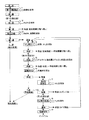
図1は、本発明に係るインジウムの回収工程の一例を示すフロー図である。
図1において(1)の工程は、第1の酸浸出工程である。
当該工程は、中和石こうを硫酸等の酸で浸出する工程で、インジウムと共にCu、As、Al、Fe、Zn、Ga等の酸に可溶な不純物金属イオンが浸出され、不溶性石こうとのスラリーが形成される。当該第1の酸浸出に使用する酸としては、硫酸の他に塩酸、硝酸等を使用でき、硫酸に制限されるものではないが硫酸が最も安価で好ましい。尚、インジウムを浸出する場合の最終硫酸濃度は、20〜40g/lが好ましい。尚、最終硫酸濃度とは、前記酸に可溶な不純物金属の溶解が終了した時点での硫酸濃度の意味である。
FIG. 1 is a flowchart showing an example of an indium recovery process according to the present invention.
In FIG. 1, step (1) is a first acid leaching step.
This step is a step of leaching neutralized gypsum with an acid such as sulfuric acid, in which impurity metal ions soluble in acids such as Cu, As, Al, Fe, Zn, and Ga are leached together with indium to form a slurry with insoluble gypsum. Is formed. As the acid used for the first acid leaching, hydrochloric acid, nitric acid or the like can be used in addition to sulfuric acid, and although it is not limited to sulfuric acid, sulfuric acid is the cheapest and preferable. The final sulfuric acid concentration when leaching indium is preferably 20 to 40 g / l. The final sulfuric acid concentration means the sulfuric acid concentration at the time when the dissolution of the acid-soluble impurity metal is completed.
(2)の工程は、脱銅工程である。
第1の酸浸出工程で得られたスラリー状の第1の浸出液へ、H2S、NaSH等の硫化剤を加え、当該第1の浸出液の酸化還元電位(以下、Ehと記載する。)が50〜320mV(Ag/AgCl電極を使用して測定した場合)の範囲内に入るように制御する。すると、当該硫化剤の添加により、Cu、As等の不純物が硫化物として沈殿除去される。このとき、上述したように、硫酸濃度が20〜40g/lに制御されているとインジウムは沈殿しない。この結果、当初の中和石こう中に含まれるインジウムの90%以上が硫酸酸性溶液中に移行する。
第1の酸浸出工程および脱銅工程の処理により、インジウムの90%以上が硫酸酸性溶液中に移行しているので、例えばフィルタープレス等を用いて、当該硫酸酸性溶液と沈殿物(銅残渣)とを固液分離する。この時、一般的には硫化物の濾過性は悪いが、浸出時の不溶性石こうが濾過助剤の働きをするため濾過性が著しく改善される。分離された銅残渣は亜鉛製錬の本系統へ送ることができる。
The process (2) is a copper removal process.
A sulfurizing agent such as H 2 S or NaSH is added to the slurry-like first leachate obtained in the first acid leaching step, and an oxidation-reduction potential (hereinafter referred to as Eh) of the first leachate. Control to be within a range of 50 to 320 mV (when measured using an Ag / AgCl electrode). Then, the addition of the sulfurizing agent precipitates and removes impurities such as Cu and As as sulfides. At this time, as described above, indium does not precipitate when the sulfuric acid concentration is controlled to 20 to 40 g / l. As a result, 90% or more of the indium contained in the initial neutralized gypsum is transferred to the sulfuric acid acidic solution.
Since 90% or more of indium has been transferred into the sulfuric acid acidic solution by the treatment of the first acid leaching step and the copper removal step, the sulfuric acid acidic solution and the precipitate (copper residue), for example, using a filter press or the like. And solid-liquid separation. At this time, the filterability of sulfides is generally poor, but the filterability is remarkably improved because the insoluble gypsum during leaching functions as a filter aid. The separated copper residue can be sent to the main line of zinc smelting.
(3)の工程は、硫化沈殿工程である。
脱銅工程で得られたインジウムを含有する硫酸酸性溶液へ、H2S、NaSH等の硫化剤と硫酸と同時に添加して、インジウムを硫化物(硫化インジウム)として沈殿させる。そして当該インジウムの硫化物を、フィルタープレス等を用いて固液分離して回収することで、液中に残るZn、Fe、Al、Ga等の不純物を分離除去する。この時、インジウムを含有する硫酸酸性溶液中からのインジウム回収率は95%以上であり、ろ液(硫化后液)のインジウム濃度は、最大でも0.15g/l以下であるので、当該ろ液は排水系統へ送ることができる。
The step (3) is a sulfide precipitation step.
The indium-containing sulfuric acid solution obtained in the copper removal step is added simultaneously with a sulfurizing agent such as H 2 S and NaSH and sulfuric acid to precipitate indium as sulfide (indium sulfide). The indium sulfide is recovered by solid-liquid separation using a filter press or the like, thereby separating and removing impurities such as Zn, Fe, Al, and Ga remaining in the liquid. At this time, the recovery rate of indium from the sulfuric acid acidic solution containing indium is 95% or more, and the indium concentration of the filtrate (post-sulfurization solution) is 0.15 g / l or less at the maximum. Can be sent to the drainage system.
(4)の工程は、SO2浸出工程である。
硫酸酸性下の硫化沈殿工程で得られた硫化インジウムに硫酸等の酸を加え、SO2ガスを吹き込みながらへ浸出する。
ここで、硫化物の浸出法には一般に、(a)硫化水素発生型、(b)硫黄生成型、(c)硫酸生成型の3通りの反応型があるが、硫化インジウムを浸出する場合、(a)の反応では溶解度積が小さいため、インジウムを完全に浸出することができない。一方、(b)、(c)の反応では酸化剤として酸素を用いる場合、反応温度、圧力をそれぞれ150℃、12kg/cm2のように高くする必要があるためオートクレーブ等の圧力容器を反応槽としなければならない。さらに、この(b)、(c)の反応でインジウムを浸出することは可能であるが、酸化力が強力であるため、含有している不純物も同様に浸出されてしまう。
Step (4) is an SO 2 leaching step.
An acid such as sulfuric acid is added to indium sulfide obtained in the sulfide precipitation step under sulfuric acid acidity, and leached while blowing SO 2 gas.
Here, the sulfide leaching method generally has three reaction types: (a) hydrogen sulfide generation type, (b) sulfur generation type, and (c) sulfuric acid generation type. When leaching indium sulfide, In the reaction (a), since the solubility product is small, indium cannot be completely leached. On the other hand, when oxygen is used as the oxidant in the reactions (b) and (c), the reaction temperature and pressure need to be increased to 150 ° C. and 12 kg / cm 2 , respectively. And shall be. Further, indium can be leached by the reactions (b) and (c), but since the oxidizing power is strong, the contained impurities are also leached.
そこで、酸化剤としてSO2を用い、(a)と(b)との反応の組み合わせを行ない、酸化力を適度に制御しインジウムは浸出しつつ、他の不純物の浸出を抑える構成を採ることが好ましい。当該構成を採ることで、選択的にインジウムを浸出することができる。この時の温度は常温でもよく、圧力も大気圧でよいため、通常の反応槽を使用することができ好ましい。当該反応後、インジウムの90%以上が浸出液に移行するため、フィルタープレス等を用いて固液分離することで、第2の浸出液であるインジウム含有浸出液を得ることができる。一方、硫黄残渣(ケーキ)は亜鉛製錬の本系統へ送ることができる。 Therefore, SO 2 is used as an oxidant, and a combination of reactions (a) and (b) is performed to appropriately control the oxidizing power and leaching indium while suppressing leaching of other impurities. preferable. By adopting this configuration, indium can be selectively leached. Since the temperature at this time may be room temperature and the pressure may be atmospheric pressure, a normal reaction vessel can be used, which is preferable. After the reaction, 90% or more of indium is transferred to the leachate, so that the indium-containing leachate that is the second leachate can be obtained by solid-liquid separation using a filter press or the like. On the other hand, sulfur residue (cake) can be sent to the main line of zinc smelting.
(5)の工程は、中和工程である。
SO2浸出工程で得られた第2の浸出液であるインジウム含有浸出液へ、アルカリを中和剤として添加して中和して置換元液を得るが、従来、水酸化ナトリウム等のアルカリ金属化合物を中和剤として用いていたことに替えて、本発明ではアルカリ土類金属化合物とアルカリ金属化合物とを用いて中和をおこなう。当該中和の目安はpH1〜3.5の範囲、より好ましくはpH2〜2.5の範囲に制御するのが好ましい。pHが1より高ければ、後の工程で置換剤として加える亜鉛末の使用量が過剰となるのを回避でき、pHが3.5以下であればインジウムの水酸化物の生成を回避できるからである。さらに、pHが2〜2.5の範囲にあると、後述するインジウム回収の際の回収率を上げることができる。当該中和に用いるアルカリ金属化合物としては、水酸化ナトリウムが好ましい。一方、アルカリ土類金属化合物としては、炭酸カルシウム、さらに好ましくは水酸化カルシウムであるが、これらを混合して用いても良い。
Step (5) is a neutralization step.
The indium-containing leachate, which is the second leachate obtained in the SO 2 leaching step, is neutralized by adding alkali as a neutralizing agent to obtain a substitution source solution. Conventionally, an alkali metal compound such as sodium hydroxide has been used. Instead of being used as a neutralizing agent, in the present invention, neutralization is performed using an alkaline earth metal compound and an alkali metal compound. The neutralization standard is preferably controlled in the range of
まず第2の浸出液であるインジウム含有浸出液へ、所定量のアルカリ土類金属化合物を添加する。ここで、アルカリ土類金属化合物の添加量は、第2の浸出液であるインジウム含有浸出液に含有されるインジウム1g当たり、0.2g〜4gの範囲とすることが好ましい。アルカリ土類金属化合物を、インジウム1g当たり、0.2g以上添加すれば当該添加効果が現れ、4g以下の添加とすれば、生成する石膏に付着することによるインジウムのロスを抑制することが出来るからである。当該アルカリ土類金属化合物の添加後、さらに、アルカリ金属化合物を添加するが、当該添加量を調整してインジウム含有SO2浸出液のpH値を上述した値へ調整し置換元液を調製する。
当該アルカリ土類金属化合物の添加により、置換元液中の硫酸分と反応して不溶性の塩が形成され、例えば、アルカリ土類金属としてカルシウムを用いた場合は石膏が形成される。ここで、形成された不溶性の塩(例えば石膏)をフィルタープレス等によりろ過し、置換元液中より除去する。除去された石膏等は亜鉛製錬の本系統へ送ることができる。
First, a predetermined amount of an alkaline earth metal compound is added to the indium-containing leachate that is the second leachate. Here, the addition amount of the alkaline earth metal compound is preferably in the range of 0.2 g to 4 g per 1 g of indium contained in the indium-containing leachate which is the second leachate. If an alkaline earth metal compound is added in an amount of 0.2 g or more per 1 g of indium, the addition effect appears, and if it is added in an amount of 4 g or less, loss of indium due to adhering to the generated gypsum can be suppressed. It is. After the addition of the alkaline earth metal compound, an alkali metal compound is further added. The addition amount is adjusted to adjust the pH value of the indium-containing SO 2 leaching solution to the above-described value to prepare a substitution source solution.
By the addition of the alkaline earth metal compound, an insoluble salt is formed by reacting with the sulfuric acid content in the substitution source solution. For example, when calcium is used as the alkaline earth metal, gypsum is formed. Here, the formed insoluble salt (for example, gypsum) is filtered by a filter press or the like, and removed from the substitution source solution. The removed gypsum can be sent to the main line of zinc smelting.
(6)の工程は、置換析出工程である。
置換元液のpHの調整後、インジウムよりイオン化傾向の大きい金属の粉末、例えば亜鉛末を添加して、インジウムをインジウムスポンジとして置換析出させる。好ましいことに(4)の工程で浸出にSO2 を使用しているため(5)の工程に供するインジウム浸出液中にはSO2 が溶存している。この濃度を0.05〜0.3g/lにコントロールすることによりインジウムスポンジの塊状化を防止することができ、粉状のインジウムスポンジを得ることができる。
The step (6) is a substitution precipitation step.
After adjusting the pH of the substitution source solution, a metal powder having a higher ionization tendency than indium, for example, zinc powder, is added, and indium is substituted and deposited as an indium sponge. Preferably, since SO 2 is used for leaching in the step (4), SO 2 is dissolved in the indium leaching solution used in the step (5). By controlling this concentration to 0.05 to 0.3 g / l, the indium sponge can be prevented from being agglomerated and a powdery indium sponge can be obtained.
当該置換析出工程においては、置換元液中では、含有されるインジウムがインジウムスポンジとして析出する反応と、一旦はインジウムスポンジとして析出したインジウムが、置換元液に再溶解する反応が進行する。この結果、当該置換元液中のインジウム濃度は、まず低下し、極小値を経た後、再び上昇する。そこで、当該インジウム濃度の極小値前後(即ち、インジウムスポンジ生成量の極大値前後)において、当該置換元液を、フィルタープレス等を用いたろ過により、インジウムスポンジと置換后液(10)とに分離する。 In the substitution deposition step, in the substitution source solution, a reaction in which contained indium precipitates as an indium sponge and a reaction in which the indium once deposited as an indium sponge re-dissolves in the substitution source solution proceeds. As a result, the indium concentration in the substitution source solution first decreases, passes through the minimum value, and then increases again. Therefore, before and after the minimum value of the indium concentration (that is, around the maximum value of the indium sponge generation amount), the replacement source liquid is separated into the indium sponge and the replacement liquid (10) by filtration using a filter press or the like. To do.
ここで本発明では、上述したように中和剤としてアルカリ金属化合物とアルカリ土類金属化合物とを用いたことで、置換元液中よりのインジウムスポンジの析出を加速し、且つ、当該インジウムスポンジが、置換元液へ再溶解するのを遅延させることができた。その結果、置換元液中でのインジウム濃度の極小値の値自体が減少し、且つ、当該極小値をとっている時間が延長されて、上述したフィルタープレス等を用いたろ過工程の間、当該状態を保つことが可能となった。
この結果、当該ろ過工程におけるインジウムスポンジの収率を上げることができたと同時に、置換后液(10)に含有されるインジウム濃度を、0.1g/l以下と十分に低下させることができ、各種の金属不純物を含むインジウム含有物から、高い収率をもってインジウムを回収することができる様になった。加えて、置換后液(10)を、硫化沈殿工程(3)へ繰り返すことなく、そのまま排水処理工程へ送ることが可能になった。このため、(3)の硫化沈殿回収工程以降の設備を大幅にコンパクト化することができたと伴に、当該硫化沈殿回収工程における金属濃度(亜鉛濃度)の上昇を回避できるので、SO2使用量を削減することが可能となり、生産コストの削減と環境負荷の軽減という効果を上げることができた。
Here, in the present invention, as described above, by using an alkali metal compound and an alkaline earth metal compound as a neutralizing agent, the deposition of indium sponge from the substitution source liquid is accelerated, and the indium sponge is , It was possible to delay the re-dissolution in the replacement original solution. As a result, the minimum value of the indium concentration in the substitution source solution itself is reduced, and the time for taking the minimum value is extended, and during the filtration process using the above-described filter press or the like, It became possible to keep the state.
As a result, the yield of indium sponge in the filtration step could be increased, and at the same time, the concentration of indium contained in the post-substitution liquid (10) could be sufficiently reduced to 0.1 g / l or less. It has become possible to recover indium with high yield from indium-containing materials containing metal impurities. In addition, the post-replacement solution (10) can be sent to the wastewater treatment step as it is without repeating the sulfide precipitation step (3). Therefore, (3) the sulfide precipitate recovery step subsequent equipment accompanied to that can significantly compact, it is possible to avoid the increase of metal concentration (concentration of zinc) in the sulphide precipitation recovery step, SO 2 amount It has become possible to reduce the production cost and the environmental load.
(7)の工程は、第2の酸浸出工程である。
ろ過工程で分離されたインジウムスポンジを、塩酸等の酸を用いてpHを0.5〜1.5の範囲内、Ehを−400〜−500mVの範囲内にそれぞれコントロールして浸出し、第3の浸出液を得る。この時、インジウムスポンジ中におけるインジウムの90%以上が第3の浸出液に移行するため、フィルタープレス等を用いて固液分離する。浸出残渣(スポンジ滓)にはCd、Pb、Ni、As等の微量金属が濃縮されて除去できる。そして、浸出残渣(スポンジ滓)は前記(4)SO2浸出工程へ繰り返される。
Step (7) is a second acid leaching step.
The indium sponge separated in the filtration step was leached using an acid such as hydrochloric acid to control the pH within a range of 0.5 to 1.5 and the Eh within a range of −400 to −500 mV. Get the leachate. At this time, since 90% or more of indium in the indium sponge is transferred to the third leachate, solid-liquid separation is performed using a filter press or the like. Trace metals such as Cd, Pb, Ni, As, etc. can be concentrated and removed from the leach residue (sponge sponge). The leaching residue (sponge soot) is repeated in the (4) SO 2 leaching step.
(8)の工程は、Cd等の除去(浄液)工程である。
インジウムを含有した第3の浸出液には、まだCdイオン、Asイオン等が残留している場合がある。そこで、当該第3の浸出液へ硫化剤(例えばH2Sガス)を吹き込み、当該残留物を残渣として沈殿させることで最終浄液を行なう。当該残渣(カドミ残渣)を固液分離した後の濾液を電解元液とし、当該残渣(カドミ残渣)は前記(4)の工程へ繰り返される。
Step (8) is a step of removing (cleaning) Cd and the like.
In the third leaching solution containing indium, Cd ions, As ions, or the like may still remain. Therefore, the final cleaning solution is performed by blowing a sulfiding agent (for example, H 2 S gas) into the third leachate and precipitating the residue as a residue . The filtrate after solid-liquid separation of the residue (cadomi residue) is used as an electrolytic base solution, and the residue (cadomi residue) is repeated in the step (4).
(9)の工程は、電解回収工程である。
浄液工程で得られた電解元液を、アノードにDSA(寸法適格陽極)、カソードにTi板を用いて電解回収を行ない、高純度の金属インジウムを得る。
Step (9) is an electrolytic recovery step.
The electrolytic source solution obtained in the liquid purification process is subjected to electrolytic recovery using a DSA (dimension qualified anode) for the anode and a Ti plate for the cathode to obtain high-purity metallic indium.
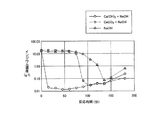
以下、実施例に基づき、上述した本発明に係る中和工程、置換析出工程、およびろ過工程について図面を参照しながら具体的に説明する。ここで、図2は、縦軸にインジウム濃度(g/l)をとり、横軸には反応時間(分)をとった、置換元液中におけるインジウム濃度の経時変化を示したグラフである。 Hereinafter, based on an Example, the neutralization process, the displacement precipitation process, and the filtration process which concern on this invention mentioned above are demonstrated concretely, referring drawings. Here, FIG. 2 is a graph showing the change in indium concentration in the substitution source solution with time, with the indium concentration (g / l) on the vertical axis and the reaction time (minutes) on the horizontal axis.
(実施例1)
上述したインジウム回収工程における、SO2浸出工程で得られたインジウム含有浸出液を、アルカリ金属化合物とアルカリ土類金属化合物とを用いて中和をおこなった。
当該インジウム含有浸出液の組成分析結果は、Zn:40g/l、In:18g/l、Cu:トレース、As:0.1g/lであった。
当該インジウム含有浸出液1リットルに対し、アルカリ土類金属化合物としてCa(OH)2を選択して10g添加した後、さらにアルカリ金属化合物として25%Na(OH)水溶液を選択し、pHが2.2となるように添加して中和をおこない置換元液を得た。
得られた置換元液1リットル中に含有されるインジウムに対し、1.5当量の亜鉛末を添加し、インジウムスポンジを置換析出させた。尚、当該置換析出の反応温度は60℃、反応時間は3hrとした。この時の、置換元液中におけるインジウム濃度の経時変化を図2に実線を用いて示した。
Example 1
The indium-containing leachate obtained in the SO 2 leaching step in the indium recovery step described above was neutralized using an alkali metal compound and an alkaline earth metal compound.
The composition analysis results of the indium-containing leachate were Zn: 40 g / l, In: 18 g / l, Cu: trace, As: 0.1 g / l.
After adding 10 g of Ca (OH) 2 as the alkaline earth metal compound and adding 10 g of the alkaline metal compound to 1 liter of the indium-containing leachate, a 25% Na (OH) aqueous solution is selected as the alkali metal compound, and the pH is 2.2. Then, neutralization was performed to obtain a substitution source solution.
To the indium contained in 1 liter of the obtained substitution source solution, 1.5 equivalents of zinc powder was added to deposit and deposit indium sponge. The reaction temperature for the substitution deposition was 60 ° C., and the reaction time was 3 hours. The change over time in the indium concentration in the substitution source solution at this time is shown in FIG. 2 using a solid line.
図2より、置換元液中におけるインジウム濃度は、15分後には約0.02g/l迄低下し、50分〜60分後に極小値となり、その後、徐々に増加するが90分後でも約0.02g/lであることが判明した。
このことから、中和工程においてアルカリ土類金属化合物としてCa(OH)2を選択し、10g添加した後、さらにアルカリ金属化合物としてNa(OH)を選択した場合、置換析出開始5分間よりインジウムスポンジを置換析出可能となり、15分後には置換元液中のインジウム濃度が0.1g/l以下となり、当該濃度を150分間維持していた。
即ち、実生産規模のろ過工程においても、全ての液をろ過するのに十分な時間が確保でき、且つ、置換后液中のインジウム濃度を十分に低下させることが可能となった。
この結果、置換后液を、再び硫化沈殿工程へ戻す操作が不要となり、当該置換后液は、そのまま排水処理工程へ送ることが可能になった。
From FIG. 2, the indium concentration in the substitution source solution decreases to about 0.02 g / l after 15 minutes, reaches a minimum value after 50 to 60 minutes, and then gradually increases, but is about 0 even after 90 minutes. It was found to be 0.02 g / l.
From this, when Ca (OH) 2 is selected as the alkaline earth metal compound and 10 g is added in the neutralization step, and Na (OH) is further selected as the alkali metal compound, the indium sponge starts from 5 minutes after the start of substitutional precipitation. After 15 minutes, the indium concentration in the substitution source solution became 0.1 g / l or less, and the concentration was maintained for 150 minutes.
That is, even in the actual production scale filtration process, it was possible to secure a sufficient time to filter all the liquids and to sufficiently reduce the indium concentration in the liquid after replacement.
As a result, there is no need to return the replacement solution to the sulfidation precipitation step, and the replacement solution can be sent to the waste water treatment step as it is.
(実施例2)
アルカリ土類金属化合物としてCa(CO3)を選択し、インジウム含有浸出液へ10g添加した以外は、実施例1と同様の操作をおこなった。
この時の、置換元液中におけるインジウム濃度の経時変化を図2に一点鎖線を用いて示した。
(Example 2)
The same operation as in Example 1 was carried out except that Ca (CO 3 ) was selected as the alkaline earth metal compound and 10 g was added to the indium-containing leachate.
The change over time in the indium concentration in the substitution source solution at this time is shown in FIG.
図2より、置換元液中におけるインジウム濃度は、90分後には約0.09g/l迄低下し、110分後に極小値となり、その後、徐々に増加するが150分後でも約0.09g/lであることが判明した。
このことから、中和工程においてアルカリ土類金属化合物としてCa(CO3)を選択し、10g添加した後、さらにアルカリ金属化合物として25%Na(OH)水溶液を選択した場合も、置換析出開始75分間よりインジウムスポンジを置換析出可能となり、95分後には置換元液中のインジウム濃度が0.1g/l以下となり、当該濃度を60分間維持していた。
即ち、実生産規模のろ過工程においても、全ての液をろ過するのに十分な時間が確保でき、且つ、置換后液中のインジウム濃度を十分に低下させることが可能となった。
この結果、置換后液を、再び硫化沈殿工程へ戻す操作が不要となり、当該置換后液は、そのまま排水処理工程へ送ることが可能になった。
From FIG. 2, the indium concentration in the substitution source solution decreases to about 0.09 g / l after 90 minutes, reaches a minimum value after 110 minutes, and then gradually increases, but then gradually increases to about 0.09 g / l even after 150 minutes. was found to be l.
From this, even when 10% of Ca (CO 3 ) is selected as the alkaline earth metal compound in the neutralization step and 25% Na (OH) aqueous solution is further selected as the alkali metal compound, substitution precipitation start 75 The indium sponge can be deposited by substitution from the beginning of the minute, and after 95 minutes, the concentration of indium in the substitution source solution becomes 0.1 g / l or less, and the concentration is maintained for 60 minutes.
That is, even in the actual production scale filtration process, it was possible to secure a sufficient time to filter all the liquids and to sufficiently reduce the indium concentration in the liquid after replacement.
As a result, there is no need to return the replacement solution to the sulfidation precipitation step, and the replacement solution can be sent to the waste water treatment step as it is.
(比較例1)
実施例1と同様のインジウム含有浸出液へ、25%Na(OH)水溶液を添加してpHが2.2となるように中和をおこない置換元液を得た。
得られえた置換元液1リットル中に含有されるインジウムに対し、1.5当量の亜鉛末を添加し、インジウムスポンジを置換析出させた。尚、反応温度は60℃、反応時間は3hrとした。この時の、置換元液中におけるインジウム濃度の経時変化を図2に破線を用いて示した。
(Comparative Example 1)
A 25% Na (OH) aqueous solution was added to the same indium-containing leachate as in Example 1 to perform neutralization so that the pH was 2.2, thereby obtaining a substitution source solution.
To the indium contained in 1 liter of the obtained substitution source solution, 1.5 equivalents of zinc powder was added to deposit and deposit indium sponge. The reaction temperature was 60 ° C. and the reaction time was 3 hours. The time-dependent change of the indium concentration in the substitution source solution at this time is shown by a broken line in FIG.
図2より、置換元液中におけるインジウム濃度は、140分後に約0.09g/l迄低下し、それを極小値として、増加に転じするが150分後には約0.10g/lを超えることが判明した。
このことから、中和工程においてNa(OH)を用いた場合、置換析出開始90分間よりインジウムスポンジを置換析出可能となり、135分後には置換元液中のインジウム濃度が0.1g/l以下となり、当該濃度を維持していたのは15分間以下であった。
即ち、中和工程において25%Na(OH)水溶液を選択した場合、実生産規模のろ過工程において、全ての液をろ過するのに十分な時間が確保することが困難であり、且つ、置換后液中のインジウム濃度を0.10g/l以下に低下させることが困難であった。
この結果、当該置換后液を、そのまま排水処理工程へ送ることは好ましくなく、再び硫化沈殿工程へ繰り返す操作が必要であることが判明した。
From FIG. 2, the indium concentration in the substitution source solution decreases to about 0.09 g / l after 140 minutes and starts to increase as a minimum value, but exceeds about 0.10 g / l after 150 minutes. There was found.
Therefore, when Na (OH) is used in the neutralization step, indium sponge can be substituted and deposited from the beginning of substitution deposition 90 minutes, and after 135 minutes, the indium concentration in the substitution source solution becomes 0.1 g / l or less. The concentration was maintained for 15 minutes or less.
That is, when a 25% Na (OH) aqueous solution is selected in the neutralization step, it is difficult to secure sufficient time to filter all the liquids in the actual production scale filtration step, and after replacement. It was difficult to reduce the indium concentration in the liquid to 0.10 g / l or less.
As a result, it was found that it is not preferable to send the post-replacement solution as it is to the wastewater treatment process, and it was found that an operation to repeat the sulfide precipitation process again is necessary.
Claims (2)
第1の浸出液へ硫化剤を加えてインジウム硫化物を得、得られたインジウム硫化物を硫酸酸性下でSO2浸出して第2の浸出液を得る工程と、
第2の浸出液に中和剤を添加して中和した後、当該中和された浸出液からインジウムを置換析出させ、当該置換析出したインジウムに酸を加えて浸出処理し、第3の浸出液を得る工程と、
第3の浸出液を電解して金属インジウムを得る工程と、を有するインジウムの回収方法であって
前記第2の浸出液へ添加する中和剤として、水酸化カルシウムおよび/または炭酸カルシウムと、水酸化ナトリウムとを添加することを特徴とするインジウムの回収方法。 A step of adding an acid to the indium-containing material, which is a residue after collecting the zinc component from the zinc ore , and leaching to obtain a first leachate containing indium ;
Adding a sulfiding agent to the first leachate to obtain indium sulfide, and leaching the obtained indium sulfide under SO 2 acidity to obtain a second leachate;
After neutralizing by adding a neutralizing agent to the second leachate, indium is substituted and precipitated from the neutralized leachate, and an acid is added to the substitutionally deposited indium to leach to obtain a third leachate. Process,
A step of electrolyzing a third leachate to obtain metal indium, and a method for recovering indium, comprising: calcium hydroxide and / or calcium carbonate and sodium hydroxide as a neutralizing agent to be added to the second leachate And a method for recovering indium.
Priority Applications (1)
| Application Number | Priority Date | Filing Date | Title |
|---|---|---|---|
| JP2005033578A JP4734603B2 (en) | 2005-02-09 | 2005-02-09 | Indium recovery method |
Applications Claiming Priority (1)
| Application Number | Priority Date | Filing Date | Title |
|---|---|---|---|
| JP2005033578A JP4734603B2 (en) | 2005-02-09 | 2005-02-09 | Indium recovery method |
Publications (2)
| Publication Number | Publication Date |
|---|---|
| JP2006219719A JP2006219719A (en) | 2006-08-24 |
| JP4734603B2 true JP4734603B2 (en) | 2011-07-27 |
Family
ID=36982231
Family Applications (1)
| Application Number | Title | Priority Date | Filing Date |
|---|---|---|---|
| JP2005033578A Expired - Fee Related JP4734603B2 (en) | 2005-02-09 | 2005-02-09 | Indium recovery method |
Country Status (1)
| Country | Link |
|---|---|
| JP (1) | JP4734603B2 (en) |
Cited By (1)
| Publication number | Priority date | Publication date | Assignee | Title |
|---|---|---|---|---|
| CN109943720A (en) * | 2017-12-20 | 2019-06-28 | 北京有色金属研究总院 | A kind of method of low indium high-speed rail zinc-containing solution synthetical recovery zinc indium |
Families Citing this family (8)
| Publication number | Priority date | Publication date | Assignee | Title |
|---|---|---|---|---|
| JP4806820B2 (en) * | 2005-09-26 | 2011-11-02 | Dowaメタルマイン株式会社 | Method for indium sulfide from indium-containing material and method for recovering indium |
| FI122676B (en) * | 2010-10-12 | 2012-05-15 | Outotec Oyj | Process for the treatment of a zinc sulphate-containing solution |
| CN104018186B (en) * | 2014-06-24 | 2016-08-31 | 株洲冶炼集团股份有限公司 | A kind of recovery method of CIGS |
| CN108486365B (en) * | 2018-02-01 | 2019-10-25 | 云南云铜锌业股份有限公司 | A method of the Enrichment Indium from the low material of zinc abstraction containing indium |
| JP7130497B2 (en) * | 2018-08-31 | 2022-09-05 | Dowaメタルマイン株式会社 | Tin recovery method |
| CN110016566A (en) * | 2019-05-17 | 2019-07-16 | 河海大学常州校区 | A method for recycling indium in waste photovoltaic modules |
| CN114703368A (en) * | 2022-02-21 | 2022-07-05 | 云锡文山锌铟冶炼有限公司 | Method for treating zinc-indium-containing gypsum slag |
| CN117418118A (en) * | 2023-10-19 | 2024-01-19 | 河南豫光锌业有限公司 | A method for removing impurities from indium sponge by using pH control during the leaching process |
Family Cites Families (2)
| Publication number | Priority date | Publication date | Assignee | Title |
|---|---|---|---|---|
| JP3602329B2 (en) * | 1998-03-20 | 2004-12-15 | 同和鉱業株式会社 | Method for recovering indium from indium-containing material |
| JP3536901B2 (en) * | 1998-10-01 | 2004-06-14 | 三菱マテリアル株式会社 | Method of recovering valuable metals from fly ash |
-
2005
- 2005-02-09 JP JP2005033578A patent/JP4734603B2/en not_active Expired - Fee Related
Cited By (1)
| Publication number | Priority date | Publication date | Assignee | Title |
|---|---|---|---|---|
| CN109943720A (en) * | 2017-12-20 | 2019-06-28 | 北京有色金属研究总院 | A kind of method of low indium high-speed rail zinc-containing solution synthetical recovery zinc indium |
Also Published As
| Publication number | Publication date |
|---|---|
| JP2006219719A (en) | 2006-08-24 |
Similar Documents
| Publication | Publication Date | Title |
|---|---|---|
| KR101155359B1 (en) | Method for collection of valuable metal from ito scrap | |
| KR101134336B1 (en) | Method of recovering valuable metal from scrap containing conductive oxide | |
| JP6622998B2 (en) | Method for removing iron and aluminum from lithium ion battery scrap and method for recovering valuable metals | |
| KR101134335B1 (en) | Method for recovering valuable metals from scrap containing conductive oxides | |
| JP3602329B2 (en) | Method for recovering indium from indium-containing material | |
| TWI432609B (en) | Method for recovering valuable metal from indium - zinc oxide waste | |
| KR20090055651A (en) | Recovery method of valuable metals from ITO scrap | |
| WO2008053616A1 (en) | Method for collection of valuable metal from ito scrap | |
| JP7016463B2 (en) | How to collect tellurium | |
| KR100940621B1 (en) | How to recover indium from indium inclusions | |
| JP5760954B2 (en) | Method for recovering copper from sulfide minerals containing copper and iron | |
| WO2009101863A1 (en) | Method of recovering valuable metals from izo scrap | |
| JP5628610B2 (en) | Indium recovery method | |
| JP2006219719A (en) | Indium recovery method | |
| JP4852720B2 (en) | Indium recovery method | |
| JP6017876B2 (en) | A method for recovering gallium from waste copper gallium. | |
| KR102460255B1 (en) | Purification method of cobalt chloride aqueous solution | |
| JP6256491B2 (en) | Scandium recovery method | |
| JP6233177B2 (en) | Method for producing rhenium sulfide | |
| JP7627436B2 (en) | How to manufacture cadmium metal | |
| JP5156992B2 (en) | Method for recovering indium from indium-containing material | |
| JP4914975B2 (en) | Manufacturing method of high purity indium metal | |
| JP4806820B2 (en) | Method for indium sulfide from indium-containing material and method for recovering indium | |
| WO2016194658A1 (en) | Aqueous cobalt chloride solution purification method | |
| JP2019189891A (en) | Method for separating selenium and tellurium from mixture containing selenium and tellurium |
Legal Events
| Date | Code | Title | Description |
|---|---|---|---|
| A621 | Written request for application examination |
Free format text: JAPANESE INTERMEDIATE CODE: A621 Effective date: 20080125 |
|
| A977 | Report on retrieval |
Free format text: JAPANESE INTERMEDIATE CODE: A971007 Effective date: 20100531 |
|
| A131 | Notification of reasons for refusal |
Free format text: JAPANESE INTERMEDIATE CODE: A131 Effective date: 20100608 |
|
| A521 | Written amendment |
Free format text: JAPANESE INTERMEDIATE CODE: A523 Effective date: 20100721 |
|
| A01 | Written decision to grant a patent or to grant a registration (utility model) |
Free format text: JAPANESE INTERMEDIATE CODE: A01 Effective date: 20110324 |
|
| A711 | Notification of change in applicant |
Free format text: JAPANESE INTERMEDIATE CODE: A712 Effective date: 20110405 |
|
| A61 | First payment of annual fees (during grant procedure) |
Free format text: JAPANESE INTERMEDIATE CODE: A61 Effective date: 20110405 |
|
| A521 | Written amendment |
Free format text: JAPANESE INTERMEDIATE CODE: A821 Effective date: 20110405 |
|
| R150 | Certificate of patent or registration of utility model |
Free format text: JAPANESE INTERMEDIATE CODE: R150 |
|
| FPAY | Renewal fee payment (event date is renewal date of database) |
Free format text: PAYMENT UNTIL: 20140513 Year of fee payment: 3 |
|
| LAPS | Cancellation because of no payment of annual fees |