JP3837726B2 - battery - Google Patents
battery Download PDFInfo
- Publication number
- JP3837726B2 JP3837726B2 JP21348897A JP21348897A JP3837726B2 JP 3837726 B2 JP3837726 B2 JP 3837726B2 JP 21348897 A JP21348897 A JP 21348897A JP 21348897 A JP21348897 A JP 21348897A JP 3837726 B2 JP3837726 B2 JP 3837726B2
- Authority
- JP
- Japan
- Prior art keywords
- aqueous electrolyte
- battery
- lithium
- negative electrode
- cellulose derivative
- Prior art date
- Legal status (The legal status is an assumption and is not a legal conclusion. Google has not performed a legal analysis and makes no representation as to the accuracy of the status listed.)
- Expired - Fee Related
Links
Images
Classifications
-
- Y—GENERAL TAGGING OF NEW TECHNOLOGICAL DEVELOPMENTS; GENERAL TAGGING OF CROSS-SECTIONAL TECHNOLOGIES SPANNING OVER SEVERAL SECTIONS OF THE IPC; TECHNICAL SUBJECTS COVERED BY FORMER USPC CROSS-REFERENCE ART COLLECTIONS [XRACs] AND DIGESTS
- Y02—TECHNOLOGIES OR APPLICATIONS FOR MITIGATION OR ADAPTATION AGAINST CLIMATE CHANGE
- Y02E—REDUCTION OF GREENHOUSE GAS [GHG] EMISSIONS, RELATED TO ENERGY GENERATION, TRANSMISSION OR DISTRIBUTION
- Y02E60/00—Enabling technologies; Technologies with a potential or indirect contribution to GHG emissions mitigation
- Y02E60/10—Energy storage using batteries
Landscapes
- Primary Cells (AREA)
- Secondary Cells (AREA)
Description
【0001】
【発明の属する技術分野】
本発明は高容量で、且つ高温保存特性に優れた非水電解質電池に関する。
【0002】
【従来の技術】
近年、ビデオカメラ等のポータブル機器の普及に伴い、使い捨ての一次電池に替わって繰り返し使用可能な二次電池に対する需要が高まってきている。現在使用されている二次電池の殆どは、アルカリ電解液を用いたニッケルカドミウム電池である。しかし、この電池の電圧は約1.2Vであるため、電池のエネルギー密度を更に向上させることは困難であった。また、常温での自己放電率が1ケ月で20%以上と高い問題点もあった。
【0003】
そこで、電解液に非水溶媒を使用し、また、負極にリチウム等の軽金属を使用することにより電圧を3V以上に高めてエネルギー密度を高くし、更に自己放電率の低い非水電解質二次電池が検討されてきた。しかしながら、このような二次電池では、負極に用いる金属リチウム等が充放電の繰り返しによりデンドライト状に成長して正極と接触し、この結果、電池内部において短絡が生じ寿命が短いという欠点を有し、実用化が困難であった。
【0004】
このため、リチウム等を他の金属と合金化し、この合金を負極に使用するようにした非水電解質二次電池が検討された。しかしこの場合も、合金が充放電を繰り返すことにより微細粒子となり、やはり寿命が短くなるという欠点があった。
【0005】
また、上述した欠点を改善するために、例えば特開昭62−90863号公報に開示されているように、コークス等の炭素質材料を負極活物質として使用する非水電解質二次電池が提案されている。この二次電池は負極における上述したような欠点がないためサイクル寿命特性に優れている。また、正極活物質として本発明者等が特開昭63−135099号公報で開示したようにLixMO2 (Mは1種類または1種類よりも多い遷移金属を表し、また、0.05≦x≦1.10である)を用いると、電池寿命が向上し、エネルギー密度の高い非水電解質二次電池を形成できることが示されている。
【0006】
ところで、通常、非水電解質電池用の電解液はエステル、エーテル等の溶剤に、電解質として6フッ化燐酸リチウム等を溶解させて用いられていて、高温になるにつれて導電率が向上し電気特性が向上するが、副反応も増加し自己放電や容量劣化が大きくなるという問題点があった。
【0007】
【発明が解決しようとする課題】
従って本発明の課題は、炭素質材料を負極活物質に用いた非水電解質電池であって、高容量で、且つ、高温保存特性、安全性に優れた電池を提供しようとするものである。
【0008】
【課題を解決するための手段】
本発明は上記課題に鑑みなされたものであり、正極および負極と共に非水電解液を備えたものであって、非水電解液は、セルロース誘導体を0.1重量%以上3重量%以下の範囲内で含有するものである。また、前記セルロース誘導体としてメチルセルロース、ヒドロキシエチルセルロース、ヒドロキシプロピルセルロース等を用いて上記課題を解決する。
【0009】
非水電解液にセルロース誘導体を添加することにより、高容量で、且つ、高温保存特性、安全性に優れた電池が得られる。
【0010】
【発明の実施の形態】
本発明者は鋭意検討の結果、前述した炭素質材料を用い、非水電解液にセルロース誘導体を添加することにより、高容量で、且つ、高温保存特性、安全性に優れた非水電解質電池の作製が可能であることを見い出した。
【0011】
つぎに、本発明の実施の形態について、非水電解質二次電池に関して説明するが、本発明は二次電池に限定されるものではない。
【0012】
まず、負極活物質の炭素質材料として原材料を所定の温度、雰囲気にて焼結、または焼成後粉砕した炭素粉体を使用する。この出発原料として石油ピッチ、バインダーピッチ、高分子樹脂、グリーンコークス等、また、完全に炭素化した黒鉛、熱分解炭素類、コークス類(石炭コークス、ピッチコークス、石油コークス等)、カーボンブラック(アセチレンブラック等)、ガラス状炭素、有機高分子材料焼成体(有機高分子材料を不活性ガス気流中、或いは真空中で500℃以上の適当な温度で焼成したもの)、炭素繊維等と樹脂分を含んだピッチ類や、焼結性の高い樹脂、例えばフラン樹脂、ジビニルベンゼン、ポリフッ化ビニリデン、ポリ塩化ビニリデン等を使用し、混合体を作成した後、焼成体を作成し、粉砕等の粒度調整して炭素粉体を形成する。
【0013】
一方、正極にはLixMO2 (ここでMは一種類以上の遷移金属、好ましくはCo、Ni、Feの中の一種を表し、また、xは0.05≦x≦1.10の範囲である。)を含んだ活物質を使用する。かかる活物質としてはLiCoO2 、LiNiO2 、LiNiyCo(1−y)O2 (但し、0.05≦x≦1.10、0<y<1)で表される複合酸化物が挙げられる。また、LiMn2 O4 を用いることも可能である。
【0014】
前記複合酸化物は例えばリチウム、コバルト、ニッケル等の炭酸塩を組成に応じて混合し、酸素存在雰囲気下、600℃〜1000℃の温度範囲で焼成することにより得られる。尚、出発原料は炭酸塩に限定することなく、水酸化物、酸化物からも同様に合成が可能である。
【0015】
非水電解液も、有機溶剤に電解質を溶解したものであれば、従来から知られているものがいずれも使用できる。従って有機溶剤としては例えばプロピレンカーボネート、エチレンカーボネート、γ−ブチルラクトン等のエステル類や、ジエチルエーテル、テトラヒドロフラン、置換テトラヒドロフラン、ジオキソラン、ピランおよびその誘導体、ジメトキシエタン、ジエトキシエタン等のエーテル類や、3−メチル−2−オキサゾリジノン等の3置換−2−オキサゾリジノン類や、スルホラン、メチルスルホラン、アセトニトリル、プロピオニトル等が挙げられ、これらを単独もしくは2種類以上を混合して使用する。
【0016】
また、電解質として、過塩素酸リチウム、ホウフッ化リチウム、リンフッ化リチウム、塩化アルミン酸リチウム、ハロゲン化リチウム、トリフルオロメタンスルホン酸リチウム等が使用できる。
【0017】
【実施例】
つぎに実施例について説明するが、本発明はこれら実施例に限定されるものではない。
【0018】
実施例1
まず、正極ペレットを以下のように作成した。
正極化合物は、炭酸リチウム0.5モルと炭酸コバルト1モルとを混合し、900℃の空気中で5時間焼成することによりLiCoO2 を得た。このLiCoO2 を粉砕することによって平均粒径10μmの粉体を得た。つぎに、このLiCoO2 を91重量部と、導電剤としてグラファイトを6重量部と、結着剤としてポリフッ化ビニリデンを3重量部とを混合し、これにN−メチルピロリドンを分散剤として加えて、ペーストを作成した。その後、このペーストを乾燥し、5トンにて成形して体積密度d=3.5g/cm3 、直径が15.5mmの正極ペレットを得た。
【0019】
つぎに負極ペレットを以下のように作成した。
炭素材料は出発原料として石油ピッチを用い、これに酸素を含む官能基を10〜20重量%導入した後、不活性ガス気流中、温度1000℃で焼成してガラス状カーボンに近い性質を持った炭素質材料を得た。この材料についてX線回折測定を行った結果、(002)面の面間隔は3.76Åであり、ピクノメータの測定により真比重は1.58g/cm3 であった。この炭素質材料を粉砕し、平均粒径が10μmの粉末とした。
【0020】
このようにして得た炭素質材料粉末を負極活物質担持体とし、この炭素材料を90重量部と結着剤としてポリフッ化ビニリデンを10重量部の割合で混合し、これにN−メチルピロリドンを分散剤として加えて、ペーストを作成した。その後、このペーストを乾燥し、直径が16.0mmの負極ペレットを得た。
【0021】
非水電解液として、炭酸エチレンとジエチルカーボネートとの混合液にLiPF6 を1モル/リットル溶解し、添加剤としてセルロース誘導体の中で炭酸エステルに溶解することが可能であるメチルセルロースを1重量%溶解させたものを用いた。
【0022】
上述した正極ペレットと負極ペレットを用いた二次電池は、図1に示すように、負極カップ1、前記負極活物質による負極ペレット2、ポリプロピレン製の薄膜のセパレータ3、前述した正極ペレット4、ガスケット5、および正極缶6から構成されている。正極ペレット4、セパレータ3、負極ペレット2からなる順で積層し、非水電解液を注入し、かしめてCR2025型と同一形状の直径が20mm、厚みが2.5mmのリチウムイオンコイン型電池を作製した。
【0023】
実施例2
非水電解液に添加するセルロース誘導体としてヒドロキシエチルセルロースを用いたこと以外は実施例1と同様にしてリチウムイオンコイン型電池を作製した。
【0024】
実施例3
非水電解液に添加するセルロース誘導体としてヒドロキシプロピルセルロースを用いたこと以外は実施例1と同様にしてリチウムイオンコイン型電池を作製した。
【0025】
実施例4
非水電解液に添加するセルロース誘導体としてヒドロキシエチルセルロースを用い、0.1重量%の割合で溶解させたこと以外は実施例1と同様にしてリチウムイオンコイン型電池を作製した。
【0026】
実施例5
非水電解液に添加するセルロース誘導体としてヒドロキシエチルセルロースを用い、3重量%の割合で溶解させたこと以外は実施例1と同様にしてリチウムイオンコイン型電池を作製した。
【0027】
比較例1
非水電解液に添加剤を加えず、それ以外は実施例1と同様にしてリチウムイオンコイン型電池を作製した。
【0028】
比較例2
非水電解液に添加するセルロース誘導体としてヒドロキシエチルセルロースを用い、5重量%の割合で溶解させたこと以外は実施例1と同様にしてリチウムイオンコイン型電池を作製した。
【0029】
上述した実施例1〜5と比較例1〜2の非水電解質二次電池について、充電電流1mA、終止電圧4.2Vまでの定電流充電を行い、つぎに、放電電流3mA、終止電圧2.5Vまでの定電流放電を行い、充放電のテストを行った。また、充電状態にて85℃、10日間保存後の容量、保存後の回復容量を測定した。その結果を表1に示す。
【0030】
【表1】
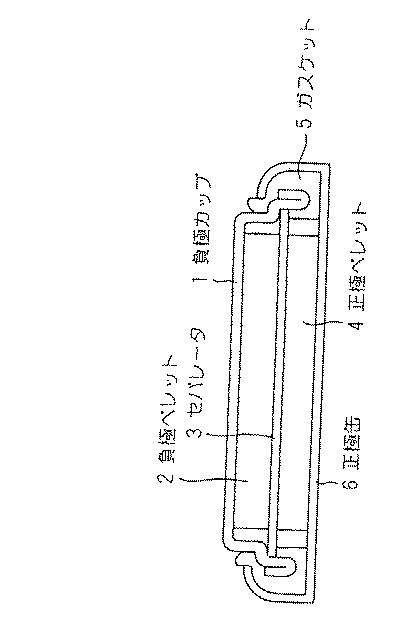
表1より、本実施例は保存後の容量、保存後の回復容量が優れていることが分かる。これはセルロース誘導体を非水電解液中に溶解させた場合、高温、特に60℃以上でセルロースと非水電解液がゲル化し、導電率が低下することにより副反応が抑制され、保存、回復特性が向上するためと推測される。
【0032】
一方、比較例2の結果に示されるように過大な量のセルロース誘導体(ヒドロキシエチルセルロース)を添加すると初期容量、保存後の容量、保存後の回復容量の低下が認められ、おのずと添加割合の最適な範囲があることが想定され、最適な効果を得るためには添加量の調整が必要であることは当然である。
【0033】
上述した実施例において1種類の炭素質材料を用いたが、これに限定するものではない。また、リチウム金属、リチウム合金、リチウム含有酸化物、その他のリチウム系の負極を有する電池にも適用することができる。さらに一次電池に本発明を適用しても効果は大きい。
【0034】
尚、本実施例ではコイン型非水電解質二次電池を作成して、本発明を検証したが、角形の電池、或いは渦巻き状の電極形態を有する電池等、他の形状の電池に用いてもよいことは当然である。
【0035】
【発明の効果】
以上の説明からも明らかなように、非水電解液にセルロース誘導体であるメチルセルロース、ヒドロキシエチルセルロース、ヒドロキシプロピルセルロース等を添加することにより、高温環境での保存後の容量、保存後の回復容量が増加し、自己放電率の小さな電池を提供することが可能となる。
【図面の簡単な説明】
【図1】 本発明による非水電解質二次電池の断面図である。
【符号の説明】
1…負極カップ、2…負極ペレット、3…セパレータ、4…正極ペレット、5…ガスケット、6…正極缶[0001]
BACKGROUND OF THE INVENTION
The present invention relates to a non-aqueous electrolyte battery having high capacity and excellent high-temperature storage characteristics.
[0002]
[Prior art]
In recent years, with the spread of portable devices such as video cameras, there is an increasing demand for secondary batteries that can be used repeatedly instead of disposable primary batteries. Most secondary batteries currently in use are nickel cadmium batteries using an alkaline electrolyte. However, since the voltage of this battery is about 1.2 V, it has been difficult to further improve the energy density of the battery. There is also a problem that the self-discharge rate at room temperature is as high as 20% or more per month.
[0003]
Therefore, by using a non-aqueous solvent for the electrolyte and using a light metal such as lithium for the negative electrode, the voltage is increased to 3 V or higher to increase the energy density, and the non-aqueous electrolyte secondary battery has a low self-discharge rate. Has been studied. However, in such a secondary battery, metal lithium used for the negative electrode grows in a dendrite shape due to repeated charge and discharge and comes into contact with the positive electrode. As a result, a short circuit occurs in the battery, resulting in a short life. The practical application was difficult.
[0004]
Therefore, a nonaqueous electrolyte secondary battery in which lithium or the like is alloyed with another metal and this alloy is used for the negative electrode has been studied. However, in this case as well, there is a drawback that the alloy becomes fine particles by repeated charge and discharge, and the life is shortened.
[0005]
In addition, in order to improve the above-described drawbacks, a non-aqueous electrolyte secondary battery using a carbonaceous material such as coke as a negative electrode active material has been proposed as disclosed in, for example, Japanese Patent Laid-Open No. 62-90863. ing. Since this secondary battery does not have the above-mentioned defects in the negative electrode, it has excellent cycle life characteristics. Further, as disclosed in JP-A-63-135099, the present inventors have disclosed LixMO 2 (M represents one or more transition metals, and 0.05 ≦ x ≦ 1), it is shown that the battery life is improved and a non-aqueous electrolyte secondary battery with high energy density can be formed.
[0006]
By the way, an electrolyte solution for a non-aqueous electrolyte battery is usually used by dissolving lithium hexafluorophosphate as an electrolyte in a solvent such as ester or ether, and the electrical properties improve and the electrical characteristics increase as the temperature rises. Although improved, there was a problem that side reactions also increased and self-discharge and capacity deterioration increased.
[0007]
[Problems to be solved by the invention]
Accordingly, an object of the present invention is to provide a non-aqueous electrolyte battery using a carbonaceous material as a negative electrode active material and having a high capacity, excellent high-temperature storage characteristics and safety.
[0008]
[Means for Solving the Problems]
The present invention has been made in view of the above problems, and includes a non-aqueous electrolyte solution together with a positive electrode and a negative electrode, and the non-aqueous electrolyte solution has a cellulose derivative content in the range of 0.1 wt% to 3 wt%. It is contained within. Moreover, the said subject is solved using methylcellulose, hydroxyethylcellulose, hydroxypropylcellulose, etc. as said cellulose derivative.
[0009]
By adding a cellulose derivative to the non-aqueous electrolyte, a battery having a high capacity, excellent high-temperature storage characteristics and safety can be obtained .
[0010]
DETAILED DESCRIPTION OF THE INVENTION
As a result of intensive studies, the inventor of the present invention uses a carbonaceous material as described above, and adds a cellulose derivative to a non-aqueous electrolyte solution, thereby providing a high-capacity non-aqueous electrolyte battery with excellent high-temperature storage characteristics and safety. It was found that it was possible to make it.
[0011]
Next, embodiments of the present invention will be described with reference to a non-aqueous electrolyte secondary battery, but the present invention is not limited to secondary batteries.
[0012]
First, a carbon powder obtained by sintering a raw material at a predetermined temperature and atmosphere or pulverizing after firing is used as a carbonaceous material of the negative electrode active material. The starting materials are petroleum pitch, binder pitch, polymer resin, green coke, etc., fully carbonized graphite, pyrolytic carbons, cokes (coal coke, pitch coke, petroleum coke, etc.), carbon black (acetylene) Black, etc.), glassy carbon, organic polymer material fired body (organic polymer material fired at an appropriate temperature of 500 ° C. or higher in an inert gas stream or vacuum), carbon fiber, etc. and resin content Use pitches and highly sinterable resins such as furan resin, divinylbenzene, polyvinylidene fluoride, polyvinylidene chloride, etc. to create a mixture, then create a fired body and adjust the particle size such as grinding To form carbon powder.
[0013]
On the other hand, LixMO 2 (wherein M represents one or more transition metals, preferably one of Co, Ni, and Fe, and x is in the range of 0.05 ≦ x ≦ 1.10. )) Is used. Examples of such an active material include composite oxides represented by LiCoO 2 , LiNiO 2 , LiNiyCo (1-y) O 2 (where 0.05 ≦ x ≦ 1.10, 0 <y <1). It is also possible to use LiMn 2 O 4 .
[0014]
The composite oxide can be obtained, for example, by mixing carbonates such as lithium, cobalt, and nickel according to the composition and firing in a temperature range of 600 ° C. to 1000 ° C. in an oxygen-existing atmosphere. The starting material is not limited to carbonates, and can be synthesized in the same manner from hydroxides and oxides.
[0015]
Any known non-aqueous electrolyte can be used as long as the electrolyte is dissolved in an organic solvent. Accordingly, examples of the organic solvent include esters such as propylene carbonate, ethylene carbonate, and γ-butyl lactone, ethers such as diethyl ether, tetrahydrofuran, substituted tetrahydrofuran, dioxolane, pyran and derivatives thereof, dimethoxyethane, and diethoxyethane. -Trisubstituted-2-oxazolidinones such as methyl-2-oxazolidinone, sulfolane, methylsulfolane, acetonitrile, propionitol and the like are used, and these are used alone or in admixture of two or more.
[0016]
As the electrolyte, lithium perchlorate, lithium borofluoride, lithium phosphofluoride, lithium chloroaluminate, lithium halide, lithium trifluoromethanesulfonate, or the like can be used.
[0017]
【Example】
Next, examples will be described, but the present invention is not limited to these examples.
[0018]
Example 1
First, a positive electrode pellet was prepared as follows.
As the positive electrode compound, 0.5 mol of lithium carbonate and 1 mol of cobalt carbonate were mixed and baked in air at 900 ° C. for 5 hours to obtain LiCoO 2 . The LiCoO 2 was pulverized to obtain a powder having an average particle size of 10 μm. Next, 91 parts by weight of this LiCoO 2 , 6 parts by weight of graphite as a conductive agent, and 3 parts by weight of polyvinylidene fluoride as a binder are mixed, and N-methylpyrrolidone is added as a dispersing agent thereto. Created a paste. Thereafter, this paste was dried and molded at 5 tons to obtain a positive electrode pellet having a volume density d = 3.5 g / cm 3 and a diameter of 15.5 mm.
[0019]
Next, a negative electrode pellet was prepared as follows.
The carbon material used petroleum pitch as a starting material, and after introducing 10 to 20% by weight of a functional group containing oxygen, it was fired at a temperature of 1000 ° C. in an inert gas stream and had properties similar to glassy carbon. A carbonaceous material was obtained. As a result of X-ray diffraction measurement of this material, the (002) plane spacing was 3.76 mm, and the true specific gravity was 1.58 g / cm 3 as measured by a pycnometer. This carbonaceous material was pulverized to obtain a powder having an average particle size of 10 μm.
[0020]
The carbonaceous material powder thus obtained was used as a negative electrode active material carrier, 90 parts by weight of this carbon material and 10 parts by weight of polyvinylidene fluoride as a binder, and N-methylpyrrolidone was mixed therewith. In addition to the dispersant, a paste was made. Thereafter, this paste was dried to obtain a negative electrode pellet having a diameter of 16.0 mm.
[0021]
As the non-aqueous electrolyte solution, a LiPF 6 was dissolved 1 mol / liter in a mixture of ethylene carbonate and diethyl carbonate ne over preparative, methyl cellulose can be dissolved in carbonate in a cellulose derivative as an additive 1 What was dissolved in weight% was used.
[0022]
A secondary battery using the positive electrode pellet and the negative electrode pellet described above, as shown in FIG. 1, the anode cup 1, the negative active anode pellet 2 by a substance, polypropylene film separator 3, positive electrode pellet 4 described above, the gasket 5 and the positive electrode can 6. Laminate in the order consisting of positive electrode pellet 4, separator 3 and negative electrode pellet 2, inject a non-aqueous electrolyte, and caulk to produce a lithium ion coin type battery having the same shape as CR2025 type, 20 mm in diameter and 2.5 mm in thickness. did.
[0023]
Example 2
A lithium ion coin-type battery was produced in the same manner as in Example 1 except that hydroxyethyl cellulose was used as the cellulose derivative added to the non-aqueous electrolyte.
[0024]
Example 3
A lithium ion coin-type battery was produced in the same manner as in Example 1 except that hydroxypropylcellulose was used as the cellulose derivative added to the non-aqueous electrolyte.
[0025]
Example 4
A lithium ion coin-type battery was fabricated in the same manner as in Example 1 except that hydroxyethyl cellulose was used as the cellulose derivative added to the non-aqueous electrolyte and dissolved at a rate of 0.1% by weight.
[0026]
Example 5
A lithium ion coin-type battery was produced in the same manner as in Example 1 except that hydroxyethyl cellulose was used as the cellulose derivative added to the non-aqueous electrolyte and dissolved in a proportion of 3% by weight.
[0027]
Comparative Example 1
A lithium ion coin-type battery was produced in the same manner as in Example 1 except that no additive was added to the non-aqueous electrolyte.
[0028]
Comparative Example 2
A lithium ion coin-type battery was fabricated in the same manner as in Example 1 except that hydroxyethyl cellulose was used as the cellulose derivative added to the non-aqueous electrolyte and dissolved at a rate of 5% by weight.
[0029]
The nonaqueous electrolyte secondary batteries of Examples 1 to 5 and Comparative Examples 1 and 2 described above were charged at a constant current up to a charging current of 1 mA and a final voltage of 4.2 V, followed by a discharge current of 3 mA and a final voltage of 2. A constant current discharge up to 5V was performed, and a charge / discharge test was performed. Further, the capacity after storage at 85 ° C. for 10 days and the recovery capacity after storage were measured in a charged state. The results are shown in Table 1.
[0030]
[Table 1]
From Table 1, it can be seen that this example is superior in capacity after storage and recovery capacity after storage. If this is to dissolve the cellulose derivative in the nonaqueous electrolytic solution, high temperature, in particular cellulose and a non-aqueous electrolyte solution is gelled at 60 ° C. or higher, conductivity is side reaction suppression by reducing, storage, recovery properties Is estimated to improve.
[0032]
On the other hand, as shown in the results of Comparative Example 2, when an excessive amount of cellulose derivative (hydroxyethyl cellulose) is added, the initial capacity, the capacity after storage, and the recovery capacity after storage are decreased, and the optimum addition ratio is naturally obtained. It is assumed that there is a range, and it is natural that adjustment of the amount of addition is necessary to obtain the optimum effect.
[0033]
Although one type of carbonaceous material is used in the above-described embodiments, the present invention is not limited to this. Further, the present invention can also be applied to a battery having lithium metal, a lithium alloy, a lithium-containing oxide, and other lithium-based negative electrodes. Furthermore, even if the present invention is applied to the primary battery, the effect is great.
[0034]
In this example, a coin-type non-aqueous electrolyte secondary battery was created and the present invention was verified. However, the present invention may be used for batteries of other shapes such as a square battery or a battery having a spiral electrode configuration. It is natural to be good.
[0035]
【The invention's effect】
As is clear from the above explanation, the capacity after storage in a high temperature environment and the recovery capacity after storage are increased by adding cellulose derivatives such as methyl cellulose, hydroxyethyl cellulose, and hydroxypropyl cellulose to the non-aqueous electrolyte. In addition, it is possible to provide a battery with a small self-discharge rate.
[Brief description of the drawings]
FIG. 1 is a cross-sectional view of a nonaqueous electrolyte secondary battery according to the present invention.
[Explanation of symbols]
DESCRIPTION OF SYMBOLS 1 ... Negative electrode cup, 2 ... Negative electrode pellet, 3 ... Separator, 4 ... Positive electrode pellet, 5 ... Gasket, 6 ... Positive electrode can
Claims (6)
前記非水電解液は、セルロース誘導体を0.1重量%以上3重量%以下の範囲内で含有することを特徴とする電池。A battery comprising a non-aqueous electrolyte together with a positive electrode and a negative electrode,
The non-aqueous electrolyte contains a cellulose derivative within a range of 0.1 wt% to 3 wt%.
Priority Applications (1)
| Application Number | Priority Date | Filing Date | Title |
|---|---|---|---|
| JP21348897A JP3837726B2 (en) | 1997-08-07 | 1997-08-07 | battery |
Applications Claiming Priority (1)
| Application Number | Priority Date | Filing Date | Title |
|---|---|---|---|
| JP21348897A JP3837726B2 (en) | 1997-08-07 | 1997-08-07 | battery |
Publications (2)
| Publication Number | Publication Date |
|---|---|
| JPH1154149A JPH1154149A (en) | 1999-02-26 |
| JP3837726B2 true JP3837726B2 (en) | 2006-10-25 |
Family
ID=16640036
Family Applications (1)
| Application Number | Title | Priority Date | Filing Date |
|---|---|---|---|
| JP21348897A Expired - Fee Related JP3837726B2 (en) | 1997-08-07 | 1997-08-07 | battery |
Country Status (1)
| Country | Link |
|---|---|
| JP (1) | JP3837726B2 (en) |
Families Citing this family (4)
| Publication number | Priority date | Publication date | Assignee | Title |
|---|---|---|---|---|
| JP4568922B2 (en) * | 1999-04-19 | 2010-10-27 | パナソニック株式会社 | Non-aqueous electrolyte secondary battery |
| JP7853817B2 (en) * | 2022-03-29 | 2026-04-30 | 旭化成株式会社 | Non-aqueous secondary battery |
| JP7839676B2 (en) * | 2022-03-29 | 2026-04-02 | 旭化成株式会社 | Non-aqueous secondary battery |
| CN116190777A (en) * | 2022-12-20 | 2023-05-30 | 重庆太蓝新能源有限公司 | Cellulose-based eutectic gel electrolyte, its preparation method and application |
-
1997
- 1997-08-07 JP JP21348897A patent/JP3837726B2/en not_active Expired - Fee Related
Also Published As
| Publication number | Publication date |
|---|---|
| JPH1154149A (en) | 1999-02-26 |
Similar Documents
| Publication | Publication Date | Title |
|---|---|---|
| JP3669064B2 (en) | Nonaqueous electrolyte secondary battery | |
| US20220216471A1 (en) | Lithium supplementing material and positive electrode containing same | |
| JP4524881B2 (en) | Nonaqueous electrolyte secondary battery | |
| JP3427570B2 (en) | Non-aqueous electrolyte secondary battery | |
| JP3918311B2 (en) | Negative electrode material and non-aqueous electrolyte secondary battery using the same | |
| KR100674011B1 (en) | Electrode additive coated with an electronic conductive material and lithium secondary battery comprising the same | |
| JP3598153B2 (en) | Non-aqueous electrolyte secondary battery | |
| JP4910243B2 (en) | Nonaqueous electrolyte secondary battery | |
| CN113169338A (en) | Positive electrode additive for lithium secondary battery, method for preparing same, positive electrode for lithium secondary battery comprising same, and lithium secondary battery comprising same | |
| JP7177277B2 (en) | Electrodes for lithium secondary batteries | |
| JP2015023021A (en) | Positive electrode active material for lithium secondary battery, method for producing the same, positive electrode including the same, and lithium secondary battery | |
| JPH0982325A (en) | Method for manufacturing positive electrode active material | |
| JP3771846B2 (en) | Non-aqueous secondary battery and charging method thereof | |
| JP3837726B2 (en) | battery | |
| JP2002075444A (en) | Non-aqueous electrolyte battery | |
| JPH10270079A (en) | Non-aqueous electrolyte battery | |
| JPH07183047A (en) | Non-aqueous electrolyte secondary battery | |
| KR100378012B1 (en) | Positive active material composition for lithium secondary battery and lithium secondary battery using same | |
| JP3624516B2 (en) | Non-aqueous electrolyte secondary battery | |
| JP2000188107A (en) | Positive electrode material and secondary battery using the same | |
| JP2003086181A (en) | Cathode active material and lithium ion secondary battery | |
| JP3163642B2 (en) | Non-aqueous electrolyte secondary battery | |
| JP3355644B2 (en) | Non-aqueous electrolyte secondary battery | |
| JP4747392B2 (en) | Nonaqueous electrolyte secondary battery | |
| JP3644128B2 (en) | Negative electrode active material, production method thereof, and nonaqueous electrolyte secondary battery using the negative electrode active material |
Legal Events
| Date | Code | Title | Description |
|---|---|---|---|
| A977 | Report on retrieval |
Free format text: JAPANESE INTERMEDIATE CODE: A971007 Effective date: 20051118 |
|
| A131 | Notification of reasons for refusal |
Free format text: JAPANESE INTERMEDIATE CODE: A131 Effective date: 20051122 |
|
| A521 | Written amendment |
Free format text: JAPANESE INTERMEDIATE CODE: A523 Effective date: 20060118 |
|
| A131 | Notification of reasons for refusal |
Free format text: JAPANESE INTERMEDIATE CODE: A131 Effective date: 20060227 |
|
| A521 | Written amendment |
Free format text: JAPANESE INTERMEDIATE CODE: A523 Effective date: 20060427 |
|
| TRDD | Decision of grant or rejection written | ||
| A01 | Written decision to grant a patent or to grant a registration (utility model) |
Free format text: JAPANESE INTERMEDIATE CODE: A01 Effective date: 20060710 |
|
| A61 | First payment of annual fees (during grant procedure) |
Free format text: JAPANESE INTERMEDIATE CODE: A61 Effective date: 20060723 |
|
| LAPS | Cancellation because of no payment of annual fees |