JP3697828B2 - Document angle correction method and document angle correction device - Google Patents
Document angle correction method and document angle correction device Download PDFInfo
- Publication number
- JP3697828B2 JP3697828B2 JP08379497A JP8379497A JP3697828B2 JP 3697828 B2 JP3697828 B2 JP 3697828B2 JP 08379497 A JP08379497 A JP 08379497A JP 8379497 A JP8379497 A JP 8379497A JP 3697828 B2 JP3697828 B2 JP 3697828B2
- Authority
- JP
- Japan
- Prior art keywords
- document
- inclination
- image data
- scanning direction
- scaling
- Prior art date
- Legal status (The legal status is an assumption and is not a legal conclusion. Google has not performed a legal analysis and makes no representation as to the accuracy of the status listed.)
- Expired - Fee Related
Links
- 238000000034 method Methods 0.000 title claims description 88
- 238000012937 correction Methods 0.000 title claims description 40
- 238000012545 processing Methods 0.000 claims description 37
- 238000001514 detection method Methods 0.000 description 11
- PXFBZOLANLWPMH-UHFFFAOYSA-N 16-Epiaffinine Natural products C1C(C2=CC=CC=C2N2)=C2C(=O)CC2C(=CC)CN(C)C1C2CO PXFBZOLANLWPMH-UHFFFAOYSA-N 0.000 description 10
- 230000009466 transformation Effects 0.000 description 10
- 238000010586 diagram Methods 0.000 description 8
- 230000006870 function Effects 0.000 description 8
- 239000011159 matrix material Substances 0.000 description 7
- 230000007257 malfunction Effects 0.000 description 5
- 238000000844 transformation Methods 0.000 description 5
- 238000006243 chemical reaction Methods 0.000 description 3
- 230000000694 effects Effects 0.000 description 3
- 230000003247 decreasing effect Effects 0.000 description 2
- 239000000284 extract Substances 0.000 description 2
- 230000000630 rising effect Effects 0.000 description 2
- 241001442654 Percnon planissimum Species 0.000 description 1
- 238000009792 diffusion process Methods 0.000 description 1
- 239000002932 luster Substances 0.000 description 1
- 238000012544 monitoring process Methods 0.000 description 1
- 238000012546 transfer Methods 0.000 description 1
Images



Landscapes
- Image Input (AREA)
- Editing Of Facsimile Originals (AREA)
Description
【0001】
【発明が属する技術分野】
本発明は、各種原稿読み取り装置で傾いた状態の原稿を読み取った際に傾き検出及び傾き補正を行って原稿角度補正をすることが可能な原稿角度補正方法及び原稿角度補正装置に関する。
【0002】
【従来の技術】
スキャナ,ファクシミリ装置,ディジタル複写機などの各種画像読み取り装置において、読み取り状態によって傾いた状態で読み取ることがある。また、傾きが一切ない状態で読み取ることは極めて困難である。
【0003】
【発明が解決しようとする課題】
(1)このような場合には、読み取った原稿の画像データに含まれる文字の並びを抽出し、その文字の並びの傾きを検出することにより、原稿の傾きを求めるようにしていた。
【0004】
このような原稿の傾きの検出は、計算が複雑であり、多くのメモリを使用するという問題があった。また、故意に文字の並びを傾けたレイアウトの原稿では、原稿自体の傾きを正確に求められないという問題もあった。
【0005】
(2)また、求められた傾きを補正する場合、三角関数を使い、マトリクス演算を行うアフィン変換を行うことが一般的であった。このアフィン変換では、計算量が多く、装置が複雑化するといった問題があった。また、処理の際には、処理前の画像データと処理後の画像データとの両方を一時的に蓄積しておく必要があり、多くのメモリも必要であった。
【0006】
本発明は上述した課題を解決するためになされたものであり、その目的は、複雑な計算や装置を必要とせずに、簡易に傾きを検出し補正することが可能な原稿角度補正方法及び装置を提供することにある。
【0007】
【課題を解決するための手段】
従って、課題を解決する手段としての発明は、以下に説明するものである。
(1)請求項1記載の発明は、原稿を読み取って生成した画像データに含まれる原稿の縁の情報により原稿の傾き角を検出する工程と、原稿を読み取る読み取り手段の読み取り速度を変えて読み取ることで副走査方向への変倍を行って大きさの補正を行う変倍工程と、前記変倍工程の後に行われる工程であって、主走査方向と副走査方向を有する画像データを、原稿の傾き角に応じて一方の方向へシフトした後に、他方の方向へシフトして傾きの補正を行うデータシフト処理工程と、を有することを特徴とする原稿角度補正方法である。
【0012】
この請求項1記載の原稿角度補正方法の発明では、読み取った画像データに含まれる原稿の縁の情報を抽出し、この原稿の縁の情報から原稿の傾きを検出している。この原稿の縁の情報は、画像データの信号変化タイミングにより抽出することが可能である。
【0013】
従って、画像データに含まれる文字の並びの傾きを検出する必要はなく、複雑な計算や多くのメモリも必要ない。そして、原稿中に傾いた文字列が存在していても、誤動作することもない。
【0014】
また、原稿の傾き角に応じた変倍処理とデータシフト処理を行うことにより、原稿の傾きの補正を行うようにしている。この傾きの補正では、傾き角に応じてデータを縦方向及び横方向にシフト処理して傾きを除去し、このシフト処理により生じた大きさの変化を、傾き角に応じた変倍処理により戻すようにしている。尚、変倍処理とデータシフト処理とは、いずれを先にしてもよい。
【0015】
従って、三角関数を用いてマトリクス演算を行うアフィン変換を行う必要はなく、また、処理前と処理後の両方の画像データを保持する必要もなく、膨大な計算や多くのメモリを搭載した複雑な演算装置は必要なくなる。
【0016】
このため、複雑な計算や装置を必要とせずに、簡易に傾きを検出し補正することが可能な原稿角度補正方法を実現できる。
【0022】
(2)請求項2記載の発明は、原稿を読み取り画像データを生成する読み取り手段と、画像データから原稿の縁を抽出して原稿の傾き角を検出する傾き検出手段と、画像データの傾きの補正を行う傾き補正手段と、を備え、前記傾き補正手段は、主走査方向と副走査方向を有する画像データを、原稿の傾き角に応じて大きさと傾きとを補正するため、変倍処理と、該変倍処理の後にデータシフト処理とを行うものであって、前記変倍処理における副走査方向への変倍処理が、原稿を読み取る前記読み取り手段の読み取り速度を変えて読み取ることで、副走査方向へ変倍された画像データを生成する処理であり、前記データシフト処理は主走査方向と副走査方向を有する画像データを、原稿の傾き角に応じて一方の方向へシフトした後に、他方の方向へシフトする処理である、ことを特徴とする原稿角度補正装置である。
【0023】
この請求項2記載の原稿角度補正装置の発明では、読み取った画像データに含まれる原稿の縁の情報を抽出し、この原稿の縁の情報から原稿の傾きを検出している。この原稿の縁の情報は、画像データの信号変化タイミングにより抽出することが可能である。
【0024】
従って、画像データに含まれる文字の並びの傾きを検出する必要はなく、複雑な計算や多くのメモリも必要ない。そして、原稿中に傾いた文字列が存在していても、誤動作することもない。
【0025】
また、原稿の傾き角に応じた変倍処理とデータシフト処理を行うことにより、原稿の傾きの補正を行うようにしている。この傾きの補正では、傾き角に応じてデータを縦方向及び横方向にシフト処理して傾きを除去し、このシフト処理により生じた大きさの変化を、傾き角に応じた変倍処理により戻すようにしている。尚、変倍処理とデータシフト処理とは、いずれを先にしてもよい。
【0026】
従って、三角関数を用いてマトリクス演算を行うアフィン変換を行う必要はなく、また、処理前と処理後の両方の画像データを保持する必要もなく、膨大な計算や多くのメモリを搭載した複雑な演算装置は必要なくなる。
【0031】
【発明の実施の形態】
次に、本発明の実施の形態例について図面を参照しつつ説明する。
<原稿角度補正装置の構成>
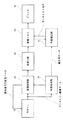
図1は本発明の各実施の形態例における原稿角度補正装置、または、本発明の各実施の形態例の原稿角度補正方法を実施する装置の一例を示す構成図である。
【0032】
この図1において、スキャナ10は原稿画像を読み取る読み取り手段を構成するであり、画像データを生成するものである。
角度検出部20は画像データに含まれる原稿の縁の情報を抽出し、この原稿の縁の情報から原稿の傾きを検出する傾き検出手段を構成するものであり、画像データの信号変化タイミングを参照して原稿の縁の情報や傾きを検出するものである。
【0033】
変倍処理部30は後述するデータシフト処理によって生じる原稿サイズの変化を除去するために主走査方向変倍と副走査方向変倍とを実行するもので、傾き補正手段の一部を構成している。
【0034】
多値化部40は変倍処理された画像データを画像メモリでの処理階調に合わせて多値データに変換する変換手段である。
画像メモリ50は傾きに応じてデータシフト処理を実行する際の作業エリアであり、傾き補正手段の一部の構成する角度補正部60により画像データのデータシフト処理が行われる。
【0035】
プリンタ70は傾き角の補正が行われた原稿の画像データをプリントする出力手段である。
<原稿角度補正装置の動作、原稿角度補正方法の手順>
ここで、図2のフローチャート及び図3以降の説明図を参照して、本実施の形態例の原稿角度補正装置の動作及び原稿角度補正方法の処理手順の説明を行う。
【0036】
尚、本発明では原稿角度補正として変倍処理とデータシフト処理とを行うようにしているため、データシフト処理した後に変倍処理を行うことも考えられるが、この実施の形態例では変倍処理の後にデータシフト処理を行うものについて説明する。このように変倍処理の後にデータシフト処理を行うものは、スキャナ10において副走査方向の変倍処理を行う装置に適している。
【0037】
[角度検出]
まず、スキャナ10が予備スキャンを行い、画像データを生成する(図2S1)。この際、後述するように原稿の縁を抽出する必要があるため、スキャナ10のプラテンカバー(原稿の周囲の読み取られる面)は、原稿の地肌とは異なる濃度,反射率を有することが必要である。
【0038】
尚、原稿の地肌とは異なる濃度,反射率とは、原稿地肌より濃い色や、逆に原稿地肌より高い反射率を有する色(蛍光色や金属光沢)などが該当する。また、このような濃度,反射率を有する面は、プラテンカバーの全面であってもよいし、傾いた原稿の周囲をもれなくカバーできる部分的な範囲であってもよい。
【0039】
以上のようにして得られたプラテンカバーをも読み取って生成した画像データについて、角度検出部20は画像データに含まれる原稿の縁の情報を抽出し、この原稿の縁の情報から原稿の傾きを検出する(図2S2)。
【0040】
ここでは、X軸方向(読み取りのセンサの方向)を主走査方向、Y軸方向(読み取る際のセンサの移動方向、若しくは原稿の送り方向)を副走査方向として説明を行う。
【0041】
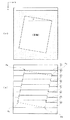
図3(a)はセンサの側から見た原稿とプラテンカバーの様子を模式的に示したもので、低反射率(高濃度)のプラテンカバーと角度θに傾いた原稿が配置された様子を示している。
【0042】
このように配置された原稿をスキャナ10で読み取った場合、受光信号は図3(b)▲1▼〜▲8▼のようになる。ここでは、説明を簡略化するために▲1▼〜▲8▼の8本の受光信号のプロファイルを示している。
【0043】
すなわち、あるラインのプロファイルに注目すると、原稿の領域外(プラテンカバー面)ではプロファイルは一様な低輝度を示しており、原稿端にたどり着くと高輝度の立ち上がりを示す。そして、ほぼ一様な高輝度を続け、反対側の原稿端で低輝度への立ち下がりを示す。そして、プラテンカバーの端部まで低輝度が続く。尚、原稿が全く存在しない領域では、低輝度のままである。
【0044】
そして、このような画像データにおいてY方向に順に見ていくと、立ち上がりはPaで発生した後、徐々にXの値を小さくしながらPcに達した後、急激にXの値を大きくしてPdに達した後に消滅する。
【0045】
また、このような画像データにおいてY方向に順に見ていくと、立ち下がりはPaで発生した後、急激にXの値を大きくしながらPbに達した後、徐々にXの値を小さくしてPdに達した後に消滅する。
【0046】
このようにして、立ち上がりと立ち下がりのタイミングを監視することで、原稿の四隅であるPa,Pb,Pc,Pdの位置を求められる。尚、このようにして立ち上がりと立ち下がりとを見出す際には、1〜5ライン前と注目ラインとの差を求めることで容易に検出できる。
【0047】
すなわち、角度検出部20は、まず原稿の縁の情報として四隅の位置データを求め記憶しておく。尚、この位置データについて、Pa=(xa ,ya )、Pb=(xb ,yb )、Pc=(xc ,yc )、Pd=(xd ,yd )とする。
【0048】
そして、角度検出部20は、上述した位置データより原稿の傾き角θを以下のようにして求める。
θ=tan-1{(yb −ya )/(xb −xa )}
または、
θ=tan-1{(yd −yc )/(xd −xc )}
尚、以上の場合には、原点(x=0,y=0)に一番近い原稿の隅の位置Paを原稿基準点として定めている。
【0049】
[変倍処理]
この実施の形態例では、後述するデータシフト処理によって最初にY軸の傾きを修正し、次にX軸の傾きを修正するようにしている。このため、Y軸(副走査方向)で大きさがcosθ倍になり、X軸(主走査方向)で大きさが1/cosθになる。従って、このようなデータシフト処理によって生じる原稿サイズの変化を除去するために主走査方向変倍と副走査方向変倍とを実行する。
【0050】
但し、傾き角が小さい場合には、後述するデータシフト処理によって生じる原稿サイズの変化はわずかである。従って、原稿サイズの変化が問題にならない程度である場合には、この変倍処理を省略することが可能である。
【0051】
まず、以上のようにして求めた原稿の傾き角θに対して、副走査方向が1/cosθ倍になるような変倍処理を行う。
すなわち、読み取り速度によって副走査方向の変倍が可能なスキャナ10にあっては、変倍処理部30からの副走査方向変倍データを参照して、スキャン速度を通常の1/cosθ倍にして本スキャンを実行することで読み取りと副走査方向の変倍とを行って、画像データを生成する(図2S3)。
【0052】
そして、このようにして副走査方向の変倍が行われた画像データについて、主走査方向がcosθ倍になるような変倍処理を行う。すなわち、変倍処理部30内で線形補間を行うことで、主走査方向の変倍を行って画像データを生成する(図2S4)。
【0053】
このようにして主走査方向と副走査方向との変倍処理を行った画像データについて、誤差拡散法やディザ法などの画像サイズを圧縮可能な多値化処理を多値化部40で行なうようにする。そして、多値化された画像データは画像メモリ50に記憶される。
【0054】
以上のようにして変倍処理された画像データは、主走査方向と副走査方向とに別々の倍率で変倍処理されているため、元は長方形(図4(a))であったものが平行四辺形(図4(b))になっている。
【0055】
ここで、図4(b)のようにY軸と変倍後の原稿がなす角をθ’、X軸と変倍後の原稿がなす角をθ”とすると、
θ’=tan-1(tanθ・cos2θ)
θ”=tan-1(tanθ/cos2θ)
と表すことができる。
【0056】
[データシフト処理]
このデータシフト処理では、最初にY軸の傾きを修正(X方向シフト処理)し、次にX軸の傾きを修正(Y方向シフト処理)するようにしている(図2S5)。
【0057】
すなわち、図5(a)においてデータシフト処理前の原稿画像データについて、Pa−PcをY軸に一致させるように、原稿画像データの各ピクセルの内容をX軸に平行な方向にシフトさせる。このデータシフト処理の際には、Y軸方向にはシフトしないようにする。
【0058】
この場合、Y軸に接している(若しくは、Y軸に一番近い)点Pcを原稿基準点(X,Y)として、Y軸に対する傾きに応じた量Iだけシフトさせるようにする。
【0059】
ここで、原稿画像データ内の任意の点(x,y)の移動量Iは、画像データ領域の始点を(x0 ,y0 )とした場合、以下の式で求めることができる。
I=(y−Y)・tanθ’−(X−x0 )
ここでは、Y=y0 =0,x0 =0であるので、
I=y・tanθ’−X
と表すことができる。
【0060】
従って、Y軸方向の位置が等しいデータは等しい移動量であるので、データシフト処理前の原稿画像データを図6(a)のようにY軸に垂直なX軸方向のピクセル同士でまとめておいて、上記移動量Iに従ってシフトさせて図6(b)のようにすることが可能である。
【0061】
この処理はX軸方向の単なる移動であり、かつ、複数の画素をまとめて行うことが可能であるので、従来のアフィン変換のような画素毎の計算を行う必要が無く、迅速に行うことが可能である。
【0062】
以上のようなX方向シフト処理により、原稿画像データは図5(a)の太実線のようなPa’−Pc−Pb’−Pd’になる。この場合の∠PaPa’Pb’をδとすると、

【0063】
この場合、X軸に接している(若しくは、X軸に一番近い)点Pa’を原稿基準点(X,Y)として、X軸に対する傾きに応じた量Jだけシフトさせるようにする。
【0064】
ここで、原稿画像データ内の任意の点(x,y)の移動量Jは、画像データ領域の始点を(x0 ,y0 )とした場合、以下の式で求めることができる。
J=(x−X)・tanδ−(Y−y0 )
ここでは、J<0では図5の上方向、J>0では図5の下方向に移動させるようにする。
【0065】
また、ここでは、X=x0 =0,Y=y0 =0であるので、
J=−x・tanδ
と表すことができる。
【0066】
従って、X軸方向の位置が等しいデータは等しい移動量であるので、データシフト処理前の原稿画像データを図7(a)のようにX軸に垂直なY軸方向のピクセル同士でまとめておいて、上記移動量Jに従ってシフトさせて図7(b)のようにすることが可能である。
【0067】
この処理はY軸方向の単なる移動であり、かつ、複数の画素をまとめて行うことが可能であるので、従来のアフィン変換のような画素毎の計算を行う必要が無く、迅速に行うことが可能である。
【0068】
以上のようなデータシフト処理により、角度補正部60によって画像メモリ50内の画像データが、原稿の傾きがなくなるように補正される。そして、このように傾きの補正された画像データがプリンタ70に送られて、転写紙上に傾きのない画像が形成される。
【0069】
<その他の実施の形態例>
以上の実施の形態例では、副走査方向の軸に対する傾きを補正した後に主走査方向の軸に対する傾きを補正するようにしたが、この順序を逆にすることも可能である。その際には、画像データの変形の様子が縦横逆になるので、変倍処理を上述したものと縦横を逆にする必要がある。
【0070】
また、上述した実施の形態例では変倍処理の後にデータシフト処理を行ったが、この順序を逆にすることも可能である。尚、変倍処理を後に行う場合には画像メモリ50上で変倍処理を行うことになる。
【0071】
<各実施の形態例により得られる効果>
以上の原稿角度補正では、読み取った画像データに含まれる原稿の縁の情報を抽出し、この原稿の縁の情報から原稿の傾きを検出している。この原稿の縁の情報は、画像データの信号変化タイミングにより抽出することが可能であり、画像データに含まれる文字の並びの傾きを検出する必要はなく、複雑な計算や多くのメモリも必要ない。そして、原稿中に傾いた文字列が存在していても、誤動作することもない。
また、原稿の傾き角に応じたデータシフト処理を行うことにより、原稿の傾きの補正を行うようにしている。この傾きの補正では、傾き角に応じてデータを縦方向及び横方向にシフト処理して傾きを除去するようにしている。従って、三角関数を用いてマトリクス演算を行うアフィン変換を行う必要はなく、また、処理前と処理後の両方の画像データを保持する必要もなく、膨大な計算や多くのメモリを搭載した複雑な演算装置は必要なくなる。
【0072】
このため、複雑な計算や装置を必要とせずに、簡易に傾きを検出し補正することが可能な原稿角度補正を実現できる。そして、以上のように膨大な計算や多くのメモリが不要になるため、廉価な装置で構成することが可能である。
【0073】
また、必要に応じて、原稿の傾き角に応じた変倍処理とデータシフト処理の両方の処理を行うことにより、原稿の傾きの補正を行うようにしている。この傾きの補正では、傾き角に応じてデータを縦方向及び横方向にシフト処理して傾きを除去し、このシフト処理により生じた大きさの変化を、傾き角に応じた変倍処理により戻すようにしている。従って、三角関数を用いてマトリクス演算を行うアフィン変換を行う必要はなく、また、処理前と処理後の両方の画像データを保持する必要もなく、膨大な計算や多くのメモリを搭載した複雑な演算装置は必要なくなる。
【0074】
このため、複雑な計算や装置を必要とせずに、簡易に傾きを検出し補正することが可能な原稿角度補正を実現できる。そして、以上のように膨大な計算や多くのメモリが不要になるため、廉価な装置で構成することが可能である。
【0075】
【発明の効果】
以上詳細に説明したように、この明細書に記載の各発明によれば以下のような効果が得られる。
【0079】
(1)請求項1記載の原稿角度補正方法の発明では、原稿を読み取って生成した画像データに含まれる原稿の縁の情報により原稿の傾き角を検出する工程と、原稿を読み取る読み取り手段の読み取り速度を変えて読み取ることで副走査方向への変倍を行って大きさの補正を行う変倍工程と、前記変倍工程の後に行われる工程であって、主走査方向と副走査方向を有する画像データを、原稿の傾き角に応じて一方の方向へシフトした後に、他方の方向へシフトして傾きの補正を行うデータシフト処理工程と、を有している。従って、画像データに含まれる文字の並びの傾きを検出する必要はなく、複雑な計算や多くのメモリも必要ない。そして、原稿中に傾いた文字列が存在していても、誤動作することもない。
【0080】
また、原稿の傾き角に応じた変倍処理とデータシフト処理を行うことにより、原稿の傾きの補正を行うようにしている。この傾きの補正では、傾き角に応じてデータを縦方向及び横方向にシフト処理して傾きを除去し、このシフト処理により生じた大きさの変化を、傾き角に応じた変倍処理により戻すようにしている。
【0081】
従って、三角関数を用いてマトリクス演算を行うアフィン変換を行う必要はなく、また、処理前と処理後の両方の画像データを保持する必要もなく、膨大な計算や多くのメモリを搭載した複雑な演算装置は必要なくなる。このため、複雑な計算や装置を必要とせずに、簡易に傾きを検出し補正することが可能な原稿角度補正方法を実現できる。
【0086】
(2)請求項2記載の原稿角度補正装置の発明では、原稿を読み取り画像データを生成する読み取り手段と、画像データから原稿の縁を抽出して原稿の傾き角を検出する傾き検出手段と、画像データの傾きの補正を行う傾き補正手段と、を備え、前記傾き補正手段は、主走査方向と副走査方向を有する画像データを、原稿の傾き角に応じて大きさと傾きとを補正するため、変倍処理と、該変倍処理の後にデータシフト処理とを行うものであって、前記変倍処理における副走査方向への変倍処理が、原稿を読み取る前記読み取り手段の読み取り速度を変えて読み取ることで、副走査方向へ変倍された画像データを生成する処理であり、前記データシフト処理は主走査方向と副走査方向を有する画像データを、原稿の傾き角に応じて一方の方向へシフトした後に、他方の方向へシフトする処理である。
【0087】
従って、画像データに含まれる文字の並びの傾きを検出する必要はなく、複雑な計算や多くのメモリも必要ない。そして、原稿中に傾いた文字列が存在していても、誤動作することもない。
【0088】
また、原稿の傾き角に応じた変倍処理とデータシフト処理を行うことにより、原稿の傾きの補正を行うようにしている。この傾きの補正では、傾き角に応じてデータを縦方向及び横方向にシフト処理して傾きを除去し、このシフト処理により生じた大きさの変化を、傾き角に応じた変倍処理により戻すようにしている。
【0089】
従って、三角関数を用いてマトリクス演算を行うアフィン変換を行う必要はなく、また、処理前と処理後の両方の画像データを保持する必要もなく、膨大な計算や多くのメモリを搭載した複雑な演算装置は必要なくなる。このため、複雑な計算や装置を必要とせずに、簡易に傾きを検出し補正することが可能な原稿角度補正装置を実現できる。
【図面の簡単な説明】
【図1】本発明の実施の形態例で用いる原稿角度補正装置の全体の構成を示す構成図である。
【図2】本発明の実施の形態例の原稿角度補正の様子を示すフローチャートである。
【図3】本発明の実施の形態例における原稿の縁の検出を受光信号の信号変化タイミングによって検出する様子を説明する説明図である。
【図4】本発明の実施の形態例における変倍処理の様子を説明する説明図である。
【図5】本発明の実施の形態例におけるデータシフト処理の様子を説明する説明図である。
【図6】本発明の実施の形態例におけるデータシフト処理におけるデータ移動の様子を説明する説明図である。
【図7】本発明の実施の形態例におけるデータシフト処理におけるデータ移動の様子を説明する説明図である。
【符号の説明】
10 スキャナ
20 角度検出部
30 変倍処理部
40 多値化部
50 画像メモリ
60 角度補正部
70 プリンタ[0001]
[Technical field to which the invention belongs]
The present invention relates to a document angle correction method and a document angle correction apparatus capable of correcting a document angle by performing tilt detection and tilt correction when a document in a tilted state is read by various document reading devices.
[0002]
[Prior art]
In various image reading apparatuses such as a scanner, a facsimile machine, and a digital copying machine, reading may be performed in a tilted state depending on the reading state. Also, it is extremely difficult to read without any tilt.
[0003]
[Problems to be solved by the invention]
(1) In such a case, the arrangement of characters included in the image data of the read original is extracted, and the inclination of the original is obtained by detecting the inclination of the arrangement of the characters.
[0004]
Such detection of the inclination of the document has a problem in that the calculation is complicated and a lot of memory is used. In addition, there is a problem in that an original with a layout in which characters are intentionally inclined cannot accurately determine the inclination of the original.
[0005]
(2) In addition, when correcting the obtained inclination, it is common to use trigonometric functions to perform affine transformation that performs matrix calculation. This affine transformation has a problem that the amount of calculation is large and the apparatus becomes complicated. Further, at the time of processing, it is necessary to temporarily store both image data before processing and image data after processing, and a lot of memory is also required.
[0006]
SUMMARY OF THE INVENTION The present invention has been made to solve the above-described problems, and an object of the present invention is to provide a document angle correction method and apparatus capable of easily detecting and correcting an inclination without requiring a complicated calculation or apparatus. Is to provide.
[0007]
[Means for Solving the Problems]
Therefore, the invention as means for solving the problems will be described below.
(1) According to the first aspect of the present invention, the step of detecting the inclination angle of the document based on the information on the edge of the document included in the image data generated by reading the document, and the reading speed of the reading means for reading the document is changed. A scaling process for correcting the size by performing scaling in the sub-scanning direction, and a process performed after the scaling process, and image data having a main scanning direction and a sub-scanning direction And a data shift processing step of correcting the inclination by shifting in the other direction after shifting in one direction in accordance with the inclination angle of the document.
[0012]
In the invention of
[0013]
Therefore, it is not necessary to detect the inclination of the arrangement of characters included in the image data, and complicated calculations and a large amount of memory are not required. Even if there is a tilted character string in the document, no malfunction occurs.
[0014]
Further, the document inclination is corrected by performing a scaling process and a data shift process in accordance with the document inclination angle. In this inclination correction, the data is shifted in the vertical and horizontal directions according to the inclination angle to remove the inclination, and the change in size caused by this shift processing is returned by the scaling process according to the inclination angle. I am doing so. Note that either the scaling process or the data shift process may be performed first.
[0015]
Therefore, there is no need to perform affine transformations that perform matrix operations using trigonometric functions, and it is not necessary to store both pre-processed and post-processed image data. An arithmetic unit is not necessary.
[0016]
For this reason, it is possible to realize a document angle correction method that can easily detect and correct the inclination without requiring complicated calculation and apparatus .
[0022]
(2) The invention described in
[0023]
In the document angle correcting apparatus according to the second aspect , document edge information included in the read image data is extracted, and the document inclination is detected from the document edge information. This document edge information can be extracted by the signal change timing of the image data.
[0024]
Therefore, it is not necessary to detect the inclination of the arrangement of characters included in the image data, and complicated calculations and a large amount of memory are not required. Even if there is a tilted character string in the document, no malfunction occurs.
[0025]
Further, the document inclination is corrected by performing a scaling process and a data shift process in accordance with the document inclination angle. In this inclination correction, the data is shifted in the vertical and horizontal directions according to the inclination angle to remove the inclination, and the change in size caused by this shift processing is returned by the scaling process according to the inclination angle. I am doing so. Note that either the scaling process or the data shift process may be performed first.
[0026]
Therefore, there is no need to perform affine transformations that perform matrix operations using trigonometric functions, and it is not necessary to store both pre-processed and post-processed image data. An arithmetic unit is not necessary.
[0031]
DETAILED DESCRIPTION OF THE INVENTION
Next, embodiments of the present invention will be described with reference to the drawings.
<Configuration of Document Angle Correction Device>
FIG. 1 is a block diagram showing an example of a document angle correcting apparatus in each embodiment of the present invention or an apparatus for performing a document angle correcting method in each embodiment of the present invention.
[0032]
In FIG. 1, a scanner 10 constitutes a reading means for reading a document image, and generates image data.
The
[0033]
The scaling
[0034]
The
The
[0035]
The
<Operation of Document Angle Correction Device, Procedure of Document Angle Correction Method>
Here, with reference to the flowchart of FIG. 2 and the explanatory diagrams of FIG. 3 and subsequent figures, the operation of the document angle correcting apparatus of this embodiment and the processing procedure of the document angle correcting method will be described.
[0036]
In the present invention, since the scaling process and the data shift process are performed as the document angle correction, the scaling process may be performed after the data shift process. In this embodiment, the scaling process is performed. After that, what performs data shift processing will be described. Thus, what performs the data shift process after the scaling process is suitable for an apparatus that performs the scaling process in the sub-scanning direction in the scanner 10.
[0037]
[Angle detection]
First, the scanner 10 performs a preliminary scan to generate image data (S1 in FIG. 2). At this time, since it is necessary to extract the edge of the document as will be described later, the platen cover (the surface to be read around the document) of the scanner 10 needs to have a density and reflectance different from the background of the document. is there.
[0038]
Note that the density and reflectance different from the background of the document correspond to a color darker than the background of the document or a color having a higher reflectance than the background of the document (fluorescent color or metallic luster). Further, the surface having such density and reflectance may be the entire surface of the platen cover, or may be a partial range that can completely cover the periphery of the inclined document.
[0039]
For the image data generated by reading the platen cover obtained as described above, the
[0040]
Here, the X-axis direction (the direction of the reading sensor) will be described as the main scanning direction, and the Y-axis direction (the sensor moving direction during reading or the document feeding direction) will be described as the sub-scanning direction.
[0041]
FIG. 3A schematically shows the state of the original and the platen cover as viewed from the sensor side, and shows a state in which a low reflectance (high density) platen cover and an original inclined at an angle θ are arranged. Show.
[0042]
When the original placed in this way is read by the scanner 10, the received light signals are as shown in (1) to (8) in FIG. Here, in order to simplify the description, profiles of eight received light signals (1) to (8) are shown.
[0043]
That is, when paying attention to the profile of a certain line, the profile shows a uniform low luminance outside the area of the original (platen cover surface), and when the end of the original is reached, a high luminance rises. Then, almost uniform high brightness is continued, and the fall to low brightness is shown at the opposite document edge. And low brightness continues to the edge of the platen cover. Note that the luminance remains low in an area where no document exists.
[0044]
In such image data, when the image data is viewed in order in the Y direction, the rise occurs at Pa, and after reaching Pc while gradually decreasing the value of X, the value of X is rapidly increased to Pd. Disappears after reaching.
[0045]
Further, in such image data, when the image data is viewed in order in the Y direction, the fall occurs at Pa, and after reaching Pb while rapidly increasing the value of X, the value of X is gradually decreased. It disappears after reaching Pd.
[0046]
In this way, by monitoring the rising and falling timings, the positions of Pa, Pb, Pc, and Pd that are the four corners of the document can be obtained. It should be noted that when the rising edge and the falling edge are found in this way, it can be easily detected by obtaining the difference between the previous line and the attention line.
[0047]
That is, the
[0048]
Then, the
θ = tan −1 {(yb −ya) / (xb −xa)}
Or
θ = tan −1 {(yd −yc) / (xd −xc)}
In the above case, the position Pa of the corner of the document closest to the origin (x = 0, y = 0) is determined as the document reference point.
[0049]
[Scale processing]
In this embodiment, the Y-axis inclination is first corrected by the data shift process described later, and then the X-axis inclination is corrected. For this reason, the magnitude is cos θ times on the Y axis (sub-scanning direction), and the magnitude is 1 / cos θ on the X axis (main scanning direction). Accordingly, the main scanning direction scaling and the sub-scanning direction scaling are executed in order to remove the change in the document size caused by such data shift processing.
[0050]
However, when the tilt angle is small, the change in the document size caused by the data shift processing described later is slight. Therefore, if the change in the document size is not a problem, the scaling process can be omitted.
[0051]
First, a scaling process is performed such that the sub-scanning direction is multiplied by 1 / cos θ with respect to the document inclination angle θ obtained as described above.
That is, in the scanner 10 capable of scaling in the sub-scanning direction depending on the reading speed, the scanning speed is set to 1 / cos θ times the normal by referring to the sub-scanning direction scaling data from the scaling
[0052]
Then, the image data subjected to the scaling in the sub-scanning direction is subjected to scaling processing so that the main scanning direction becomes cos θ times. That is, by performing linear interpolation in the
[0053]
For the image data that has been subjected to the scaling process in the main scanning direction and the sub-scanning direction in this way, the
[0054]
Since the image data subjected to the scaling process as described above is subjected to the scaling process at different magnifications in the main scanning direction and the sub-scanning direction, the original image data is a rectangle (FIG. 4A). It is a parallelogram (FIG. 4B).
[0055]
Here, as shown in FIG. 4B, if the angle between the Y axis and the original after scaling is θ ′, and the angle between the X axis and the original after scaling is θ ″,
θ ′ = tan −1 (tan θ · cos 2 θ)
θ ″ = tan −1 (tan θ / cos 2 θ)
It can be expressed as.
[0056]
[Data shift processing]
In this data shift process, the Y-axis inclination is first corrected (X-direction shift process), and then the X-axis inclination is corrected (Y-direction shift process) (S5 in FIG. 2).
[0057]
That is, in FIG. 5A, for the document image data before the data shift process, the contents of each pixel of the document image data are shifted in a direction parallel to the X axis so that Pa-Pc matches the Y axis. At the time of this data shift processing, the shift is not performed in the Y-axis direction.
[0058]
In this case, the point Pc that is in contact with the Y axis (or closest to the Y axis) is set as the document reference point (X, Y), and is shifted by an amount I corresponding to the inclination with respect to the Y axis.
[0059]
Here, the movement amount I of an arbitrary point (x, y) in the document image data can be obtained by the following equation when the starting point of the image data area is (x0, y0).
I = (y−Y) · tan θ ′ − (X−x0)
Here, Y = y0 = 0 and x0 = 0, so
I = y · tan θ′−X
It can be expressed as.
[0060]
Therefore, since the data having the same position in the Y-axis direction has the same movement amount, the original image data before the data shift processing is collected by the pixels in the X-axis direction perpendicular to the Y-axis as shown in FIG. It is possible to shift according to the movement amount I as shown in FIG.
[0061]
Since this process is a simple movement in the X-axis direction and a plurality of pixels can be performed together, it is not necessary to perform pixel-by-pixel calculations as in the conventional affine transformation, and can be performed quickly. Is possible.
[0062]
By the X-direction shift processing as described above, the document image data becomes Pa′−Pc−Pb′−Pd ′ as shown by the thick solid line in FIG. If ∠PaPa'Pb 'in this case is δ,
[0063]
In this case, a point Pa ′ that is in contact with the X axis (or closest to the X axis) is set as the document reference point (X, Y), and is shifted by an amount J corresponding to the inclination with respect to the X axis.
[0064]
Here, the movement amount J of an arbitrary point (x, y) in the document image data can be obtained by the following equation when the starting point of the image data area is (x0, y0).
J = (x-X) .tan.delta .- (Y-y0)
Here, when J <0, it is moved upward in FIG. 5, and when J> 0, it is moved downward in FIG.
[0065]
Here, since X = x0 = 0 and Y = y0 = 0,
J = −x · tan δ
It can be expressed as.
[0066]
Therefore, since the data having the same position in the X-axis direction has the same movement amount, the original image data before the data shift processing is collected by the pixels in the Y-axis direction perpendicular to the X-axis as shown in FIG. It is possible to shift according to the movement amount J as shown in FIG.
[0067]
Since this process is simply a movement in the Y-axis direction and a plurality of pixels can be performed together, it is not necessary to perform calculation for each pixel as in the conventional affine transformation, and can be performed quickly. Is possible.
[0068]
By the data shift processing as described above, the angle correction unit 60 corrects the image data in the
[0069]
<Other embodiments>
In the above embodiment, the inclination with respect to the axis in the main scanning direction is corrected after the inclination with respect to the axis in the sub-scanning direction is corrected. However, this order can be reversed. At that time, since the state of deformation of the image data is reversed vertically and horizontally, it is necessary to reverse the vertical and horizontal directions of the scaling process described above.
[0070]
In the above-described embodiment, the data shift process is performed after the scaling process. However, this order can be reversed. If the scaling process is performed later, the scaling process is performed on the
[0071]
<Effects obtained by each embodiment>
In the document angle correction described above, document edge information included in the read image data is extracted, and the document inclination is detected from the document edge information. The document edge information can be extracted based on the signal change timing of the image data, so that it is not necessary to detect the inclination of the arrangement of characters included in the image data, and no complicated calculation or a large amount of memory is required. . Even if there is a tilted character string in the document, no malfunction occurs.
Further, the inclination of the original is corrected by performing a data shift process according to the inclination angle of the original. In this inclination correction, data is shifted in the vertical and horizontal directions according to the inclination angle to remove the inclination. Therefore, there is no need to perform affine transformations that perform matrix operations using trigonometric functions, and it is not necessary to store both pre-processed and post-processed image data. An arithmetic unit is not necessary.
[0072]
Therefore, it is possible to realize document angle correction that can easily detect and correct the inclination without requiring complicated calculation and apparatus. Since a huge amount of calculations and a large amount of memory are not required as described above, it can be configured with an inexpensive apparatus.
[0073]
Further, if necessary, both the scaling process and the data shift process corresponding to the inclination angle of the document are performed to correct the document inclination. In this inclination correction, the data is shifted in the vertical and horizontal directions according to the inclination angle to remove the inclination, and the change in size caused by this shift processing is returned by the scaling process according to the inclination angle. I am doing so. Therefore, there is no need to perform affine transformations that perform matrix operations using trigonometric functions, and it is not necessary to store both pre-processed and post-processed image data. An arithmetic unit is not necessary.
[0074]
Therefore, it is possible to realize document angle correction that can easily detect and correct the inclination without requiring complicated calculation and apparatus. Since a huge amount of calculations and a large amount of memory are not required as described above, it can be configured with an inexpensive apparatus.
[0075]
【The invention's effect】
As described above in detail, according to each invention described in this specification, the following effects can be obtained.
[0079]
(1) In the document angle correction method according to the first aspect of the present invention, the step of detecting the inclination angle of the document based on the information on the edge of the document included in the image data generated by reading the document, and the reading of the reading means for reading the document A scaling process for correcting the size by performing scaling in the sub-scanning direction by reading at a different speed, and a process performed after the scaling process, and having a main scanning direction and a sub-scanning direction A data shift processing step of correcting the inclination by shifting the image data in one direction according to the inclination angle of the document and then shifting in the other direction . Therefore, it is not necessary to detect the inclination of the arrangement of characters included in the image data, and complicated calculations and a large amount of memory are not required. Even if there is a tilted character string in the document, no malfunction occurs.
[0080]
Further, the document inclination is corrected by performing a scaling process and a data shift process in accordance with the document inclination angle. In this inclination correction, the data is shifted in the vertical and horizontal directions according to the inclination angle to remove the inclination, and the change in size caused by this shift processing is returned by the scaling process according to the inclination angle. I am doing so.
[0081]
Therefore, there is no need to perform affine transformations that perform matrix operations using trigonometric functions, and it is not necessary to store both pre-processed and post-processed image data. An arithmetic unit is not necessary. For this reason, it is possible to realize a document angle correction method that can easily detect and correct the inclination without requiring complicated calculation and apparatus.
[0086]
(2) In the document angle correction device according to the second aspect of the present invention, a reading unit that reads a document and generates image data, a tilt detection unit that extracts a document edge from the image data and detects a tilt angle of the document, Inclination correction means for correcting the inclination of the image data, and the inclination correction means corrects the size and inclination of the image data having the main scanning direction and the sub scanning direction according to the inclination angle of the document. Therefore, the scaling process and the data shift process after the scaling process are performed, and the scaling process in the sub-scanning direction in the scaling process changes the reading speed of the reading unit that reads the document. The image data scaled in the sub-scanning direction is read , and the data shift processing is performed in one direction according to the inclination angle of the document. What After shift, a process for shifting to the other direction.
[0087]
Therefore, it is not necessary to detect the inclination of the arrangement of characters included in the image data, and complicated calculations and a large amount of memory are not required. Even if there is a tilted character string in the document, no malfunction occurs.
[0088]
Further, the document inclination is corrected by performing a scaling process and a data shift process in accordance with the document inclination angle. In this inclination correction, the data is shifted in the vertical and horizontal directions according to the inclination angle to remove the inclination, and the change in size caused by this shift processing is returned by the scaling process according to the inclination angle. I am doing so.
[0089]
Therefore, it is not necessary to perform affine transformation that performs matrix operation using trigonometric functions, and it is not necessary to hold both pre-processed and post-processed image data. An arithmetic unit is not necessary. For this reason, it is possible to realize a document angle correction device that can easily detect and correct the inclination without requiring complicated calculations and devices.
[Brief description of the drawings]
FIG. 1 is a configuration diagram showing the overall configuration of a document angle correction apparatus used in an embodiment of the present invention.
FIG. 2 is a flowchart showing a state of document angle correction according to the embodiment of the present invention.
FIG. 3 is an explanatory diagram for explaining a state in which detection of an edge of a document is detected based on a signal change timing of a light reception signal in the embodiment of the present invention.
FIG. 4 is an explanatory diagram for explaining a state of a scaling process in the embodiment of the present invention.
FIG. 5 is an explanatory diagram for explaining a state of data shift processing in the embodiment of the present invention.
FIG. 6 is an explanatory diagram illustrating a state of data movement in data shift processing according to an embodiment of the present invention.
FIG. 7 is an explanatory diagram for explaining a state of data movement in data shift processing according to an embodiment of the present invention.
[Explanation of symbols]
DESCRIPTION OF SYMBOLS 10
Claims (2)
原稿を読み取る読み取り手段の読み取り速度を変えて読み取ることで副走査方向への変倍を行って大きさの補正を行う変倍工程と、
前記変倍工程の後に行われる工程であって、主走査方向と副走査方向を有する画像データを、原稿の傾き角に応じて一方の方向へシフトした後に、他方の方向へシフトして傾きの補正を行うデータシフト処理工程と、
を有することを特徴とする原稿角度補正方法。Detecting the tilt angle of the document based on information about the edge of the document included in the image data generated by reading the document;
A scaling process for correcting the size by performing scaling in the sub-scanning direction by changing the reading speed of the reading means for reading the document ,
This step is performed after the scaling step, and the image data having the main scanning direction and the sub-scanning direction is shifted in one direction according to the inclination angle of the document, and then shifted in the other direction. A data shift processing step for performing correction ;
A document angle correction method characterized by comprising:
画像データから原稿の縁を抽出して原稿の傾き角を検出する傾き検出手段と、
画像データの傾きの補正を行う傾き補正手段と、を備え、
前記傾き補正手段は、主走査方向と副走査方向を有する画像データを、原稿の傾き角に応じて大きさと傾きとを補正するため、変倍処理と、該変倍処理の後にデータシフト処理とを行うものであって、
前記変倍処理における副走査方向への変倍処理が、原稿を読み取る前記読み取り手段の読み取り速度を変えて読み取ることで、副走査方向へ変倍された画像データを生成する処理であり、
前記データシフト処理は主走査方向と副走査方向を有する画像データを、原稿の傾き角に応じて一方の方向へシフトした後に、他方の方向へシフトする処理である、
ことを特徴とする原稿角度補正装置。Reading means for reading an original and generating image data;
An inclination detecting means for extracting an edge of the original from the image data and detecting an inclination angle of the original;
An inclination correction means for correcting the inclination of the image data,
The inclination correcting means corrects the size and inclination of the image data having the main scanning direction and the sub-scanning direction according to the inclination angle of the document, and performs a scaling process and a data shift process after the scaling process. And do what
The scaling process in the sub-scanning direction in the scaling process is a process of generating image data scaled in the sub-scanning direction by changing the reading speed of the reading unit that reads a document ,
The data shift process is a process of shifting image data having a main scanning direction and a sub-scanning direction in one direction according to the inclination angle of the document and then shifting in the other direction .
A document angle correction apparatus characterized by the above.
Priority Applications (4)
| Application Number | Priority Date | Filing Date | Title |
|---|---|---|---|
| JP08379497A JP3697828B2 (en) | 1997-04-02 | 1997-04-02 | Document angle correction method and document angle correction device |
| US09/049,846 US6301022B1 (en) | 1997-04-02 | 1998-03-27 | Correction method of document inclination angle |
| DE69818894T DE69818894T2 (en) | 1997-04-02 | 1998-03-31 | Procedure for correcting the angle of inclination of a document |
| EP98105835A EP0869659B1 (en) | 1997-04-02 | 1998-03-31 | Correction method of document inclination angle |
Applications Claiming Priority (1)
| Application Number | Priority Date | Filing Date | Title |
|---|---|---|---|
| JP08379497A JP3697828B2 (en) | 1997-04-02 | 1997-04-02 | Document angle correction method and document angle correction device |
Publications (2)
| Publication Number | Publication Date |
|---|---|
| JPH10285379A JPH10285379A (en) | 1998-10-23 |
| JP3697828B2 true JP3697828B2 (en) | 2005-09-21 |
Family
ID=13812565
Family Applications (1)
| Application Number | Title | Priority Date | Filing Date |
|---|---|---|---|
| JP08379497A Expired - Fee Related JP3697828B2 (en) | 1997-04-02 | 1997-04-02 | Document angle correction method and document angle correction device |
Country Status (1)
| Country | Link |
|---|---|
| JP (1) | JP3697828B2 (en) |
Families Citing this family (7)
| Publication number | Priority date | Publication date | Assignee | Title |
|---|---|---|---|---|
| JPH11252351A (en) | 1998-03-02 | 1999-09-17 | Konica Corp | Image reader |
| JP2000284641A (en) | 1999-03-30 | 2000-10-13 | Konica Corp | Image forming device |
| JP2001036727A (en) | 1999-07-21 | 2001-02-09 | Konica Corp | Image reader and image forming device |
| JP4998257B2 (en) * | 2007-12-28 | 2012-08-15 | ブラザー工業株式会社 | Image reading device |
| JP5742857B2 (en) * | 2013-01-10 | 2015-07-01 | コニカミノルタ株式会社 | Image processing apparatus and image processing method |
| JP6330376B2 (en) * | 2014-03-06 | 2018-05-30 | 富士ゼロックス株式会社 | Image reading apparatus and copying machine |
| JP7091792B2 (en) * | 2018-04-10 | 2022-06-28 | 富士フイルムビジネスイノベーション株式会社 | Image processing device, document reading device, image output device and image processing system |
-
1997
- 1997-04-02 JP JP08379497A patent/JP3697828B2/en not_active Expired - Fee Related
Also Published As
| Publication number | Publication date |
|---|---|
| JPH10285379A (en) | 1998-10-23 |
Similar Documents
| Publication | Publication Date | Title |
|---|---|---|
| US8285080B2 (en) | Image processing apparatus and image processing method | |
| JP3631333B2 (en) | Image processing device | |
| US8009931B2 (en) | Real-time processing of grayscale image data | |
| KR101657162B1 (en) | Image forming apparatus and method for deskewing thereof | |
| US8503024B2 (en) | Image processing apparatus and image processing method | |
| JP4762327B2 (en) | Image processing apparatus and image forming apparatus | |
| JP3697828B2 (en) | Document angle correction method and document angle correction device | |
| KR20110064076A (en) | Image forming apparatus and skew correction method | |
| US20100091037A1 (en) | Image rotation | |
| JP4947314B2 (en) | Image processing apparatus, image reading apparatus, image processing method, and image processing program | |
| US7161706B2 (en) | System for improving digital coplers and multifunction peripheral devices | |
| JPH05161002A (en) | Original reader | |
| US9886648B2 (en) | Image processing device generating arranged image data representing arranged image in which images are arranged according to determined relative position | |
| JP2009284190A (en) | Image reading apparatus and image reading system | |
| JP2010136036A (en) | Image processor, image conversion method, and computer program | |
| JPH08237486A (en) | Method for smoothing character in scanner/printer | |
| JP2001358914A (en) | Image reading device | |
| JP3163703B2 (en) | Document reading device | |
| JP2947126B2 (en) | Original image capture device | |
| JPH02170280A (en) | Document inclination corrector | |
| JPH05161000A (en) | Original reader | |
| US7466459B2 (en) | Method for enhancing scan resolution | |
| JP3014257B2 (en) | Document reading device | |
| US8208177B2 (en) | Method of correcting scan data and image forming device to perform the method | |
| JPH04219882A (en) | Manuscript reading device and character recognition device using it |
Legal Events
| Date | Code | Title | Description |
|---|---|---|---|
| A977 | Report on retrieval |
Free format text: JAPANESE INTERMEDIATE CODE: A971007 Effective date: 20040113 |
|
| A131 | Notification of reasons for refusal |
Free format text: JAPANESE INTERMEDIATE CODE: A131 Effective date: 20040127 |
|
| A521 | Written amendment |
Free format text: JAPANESE INTERMEDIATE CODE: A523 Effective date: 20040329 |
|
| A131 | Notification of reasons for refusal |
Free format text: JAPANESE INTERMEDIATE CODE: A131 Effective date: 20041012 |
|
| A521 | Written amendment |
Free format text: JAPANESE INTERMEDIATE CODE: A523 Effective date: 20041213 |
|
| TRDD | Decision of grant or rejection written | ||
| A01 | Written decision to grant a patent or to grant a registration (utility model) |
Free format text: JAPANESE INTERMEDIATE CODE: A01 Effective date: 20050614 |
|
| A61 | First payment of annual fees (during grant procedure) |
Free format text: JAPANESE INTERMEDIATE CODE: A61 Effective date: 20050627 |
|
| R150 | Certificate of patent or registration of utility model |
Free format text: JAPANESE INTERMEDIATE CODE: R150 |
|
| FPAY | Renewal fee payment (event date is renewal date of database) |
Free format text: PAYMENT UNTIL: 20090715 Year of fee payment: 4 |
|
| FPAY | Renewal fee payment (event date is renewal date of database) |
Free format text: PAYMENT UNTIL: 20100715 Year of fee payment: 5 |
|
| FPAY | Renewal fee payment (event date is renewal date of database) |
Free format text: PAYMENT UNTIL: 20110715 Year of fee payment: 6 |
|
| FPAY | Renewal fee payment (event date is renewal date of database) |
Free format text: PAYMENT UNTIL: 20120715 Year of fee payment: 7 |
|
| FPAY | Renewal fee payment (event date is renewal date of database) |
Free format text: PAYMENT UNTIL: 20120715 Year of fee payment: 7 |
|
| FPAY | Renewal fee payment (event date is renewal date of database) |
Free format text: PAYMENT UNTIL: 20130715 Year of fee payment: 8 |
|
| S531 | Written request for registration of change of domicile |
Free format text: JAPANESE INTERMEDIATE CODE: R313531 |
|
| S533 | Written request for registration of change of name |
Free format text: JAPANESE INTERMEDIATE CODE: R313533 |
|
| R350 | Written notification of registration of transfer |
Free format text: JAPANESE INTERMEDIATE CODE: R350 |
|
| LAPS | Cancellation because of no payment of annual fees |