JP3662945B2 - Catalyst composition and method of use thereof - Google Patents
Catalyst composition and method of use thereof Download PDFInfo
- Publication number
- JP3662945B2 JP3662945B2 JP21457393A JP21457393A JP3662945B2 JP 3662945 B2 JP3662945 B2 JP 3662945B2 JP 21457393 A JP21457393 A JP 21457393A JP 21457393 A JP21457393 A JP 21457393A JP 3662945 B2 JP3662945 B2 JP 3662945B2
- Authority
- JP
- Japan
- Prior art keywords
- xylene
- isomerization
- catalyst
- mgapso
- hydrocarbon
- Prior art date
- Legal status (The legal status is an assumption and is not a legal conclusion. Google has not performed a legal analysis and makes no representation as to the accuracy of the status listed.)
- Expired - Fee Related
Links
- 239000000203 mixture Substances 0.000 title claims description 76
- 238000000034 method Methods 0.000 title claims description 54
- 239000003054 catalyst Substances 0.000 title description 71
- YNQLUTRBYVCPMQ-UHFFFAOYSA-N Ethylbenzene Chemical compound CCC1=CC=CC=C1 YNQLUTRBYVCPMQ-UHFFFAOYSA-N 0.000 claims description 60
- CTQNGGLPUBDAKN-UHFFFAOYSA-N O-Xylene Chemical compound CC1=CC=CC=C1C CTQNGGLPUBDAKN-UHFFFAOYSA-N 0.000 claims description 50
- 238000006317 isomerization reaction Methods 0.000 claims description 48
- URLKBWYHVLBVBO-UHFFFAOYSA-N Para-Xylene Chemical group CC1=CC=C(C)C=C1 URLKBWYHVLBVBO-UHFFFAOYSA-N 0.000 claims description 46
- 238000006243 chemical reaction Methods 0.000 claims description 44
- 239000002808 molecular sieve Substances 0.000 claims description 42
- URGAHOPLAPQHLN-UHFFFAOYSA-N sodium aluminosilicate Chemical compound [Na+].[Al+3].[O-][Si]([O-])=O.[O-][Si]([O-])=O URGAHOPLAPQHLN-UHFFFAOYSA-N 0.000 claims description 40
- 239000011777 magnesium Substances 0.000 claims description 36
- 229930195733 hydrocarbon Natural products 0.000 claims description 32
- 229910052749 magnesium Inorganic materials 0.000 claims description 32
- FYYHWMGAXLPEAU-UHFFFAOYSA-N Magnesium Chemical compound [Mg] FYYHWMGAXLPEAU-UHFFFAOYSA-N 0.000 claims description 31
- 150000002430 hydrocarbons Chemical class 0.000 claims description 31
- 239000004215 Carbon black (E152) Substances 0.000 claims description 29
- 229910052751 metal Inorganic materials 0.000 claims description 27
- 239000002184 metal Substances 0.000 claims description 27
- 230000008569 process Effects 0.000 claims description 24
- 239000008096 xylene Substances 0.000 claims description 23
- BASFCYQUMIYNBI-UHFFFAOYSA-N platinum Chemical group [Pt] BASFCYQUMIYNBI-UHFFFAOYSA-N 0.000 claims description 22
- 230000003197 catalytic effect Effects 0.000 claims description 18
- PNEYBMLMFCGWSK-UHFFFAOYSA-N aluminium oxide Inorganic materials [O-2].[O-2].[O-2].[Al+3].[Al+3] PNEYBMLMFCGWSK-UHFFFAOYSA-N 0.000 claims description 16
- 239000001257 hydrogen Substances 0.000 claims description 13
- 229910052739 hydrogen Inorganic materials 0.000 claims description 13
- UFHFLCQGNIYNRP-UHFFFAOYSA-N Hydrogen Chemical compound [H][H] UFHFLCQGNIYNRP-UHFFFAOYSA-N 0.000 claims description 12
- -1 molecular sieves hydrocarbon Chemical class 0.000 claims description 12
- 125000003118 aryl group Chemical group 0.000 claims description 11
- 229910052809 inorganic oxide Inorganic materials 0.000 claims description 10
- 239000011159 matrix material Substances 0.000 claims description 9
- 229910017119 AlPO Inorganic materials 0.000 claims description 6
- 238000001179 sorption measurement Methods 0.000 claims description 3
- 239000007788 liquid Substances 0.000 claims description 2
- VYPSYNLAJGMNEJ-UHFFFAOYSA-N silicon dioxide Inorganic materials O=[Si]=O VYPSYNLAJGMNEJ-UHFFFAOYSA-N 0.000 description 43
- 239000000047 product Substances 0.000 description 24
- 229910052736 halogen Inorganic materials 0.000 description 16
- 150000002367 halogens Chemical class 0.000 description 16
- 239000002994 raw material Substances 0.000 description 15
- UHOVQNZJYSORNB-UHFFFAOYSA-N Benzene Chemical compound C1=CC=CC=C1 UHOVQNZJYSORNB-UHFFFAOYSA-N 0.000 description 12
- 239000002131 composite material Substances 0.000 description 12
- 230000000694 effects Effects 0.000 description 12
- IJDNQMDRQITEOD-UHFFFAOYSA-N n-butane Chemical group CCCC IJDNQMDRQITEOD-UHFFFAOYSA-N 0.000 description 11
- IJGRMHOSHXDMSA-UHFFFAOYSA-N Atomic nitrogen Chemical compound N#N IJGRMHOSHXDMSA-UHFFFAOYSA-N 0.000 description 10
- IVSZLXZYQVIEFR-UHFFFAOYSA-N m-xylene Chemical group CC1=CC=CC(C)=C1 IVSZLXZYQVIEFR-UHFFFAOYSA-N 0.000 description 10
- 239000011541 reaction mixture Substances 0.000 description 9
- 239000000377 silicon dioxide Substances 0.000 description 9
- OAICVXFJPJFONN-UHFFFAOYSA-N Phosphorus Chemical compound [P] OAICVXFJPJFONN-UHFFFAOYSA-N 0.000 description 8
- 229910052782 aluminium Inorganic materials 0.000 description 8
- 150000001491 aromatic compounds Chemical class 0.000 description 8
- 239000001273 butane Substances 0.000 description 8
- 239000003795 chemical substances by application Substances 0.000 description 8
- 150000001875 compounds Chemical class 0.000 description 8
- OFBQJSOFQDEBGM-UHFFFAOYSA-N n-pentane Natural products CCCCC OFBQJSOFQDEBGM-UHFFFAOYSA-N 0.000 description 8
- 229910052698 phosphorus Inorganic materials 0.000 description 8
- 239000011574 phosphorus Substances 0.000 description 8
- XLYOFNOQVPJJNP-UHFFFAOYSA-N water Substances O XLYOFNOQVPJJNP-UHFFFAOYSA-N 0.000 description 8
- 239000010457 zeolite Substances 0.000 description 8
- 230000009471 action Effects 0.000 description 7
- XAGFODPZIPBFFR-UHFFFAOYSA-N aluminium Chemical compound [Al] XAGFODPZIPBFFR-UHFFFAOYSA-N 0.000 description 7
- 238000002425 crystallisation Methods 0.000 description 7
- 230000008025 crystallization Effects 0.000 description 7
- 239000000463 material Substances 0.000 description 7
- 239000000126 substance Substances 0.000 description 7
- CPLXHLVBOLITMK-UHFFFAOYSA-N Magnesium oxide Chemical compound [Mg]=O CPLXHLVBOLITMK-UHFFFAOYSA-N 0.000 description 6
- NBIIXXVUZAFLBC-UHFFFAOYSA-N Phosphoric acid Chemical compound OP(O)(O)=O NBIIXXVUZAFLBC-UHFFFAOYSA-N 0.000 description 6
- 239000011230 binding agent Substances 0.000 description 6
- 238000006356 dehydrogenation reaction Methods 0.000 description 6
- HNPSIPDUKPIQMN-UHFFFAOYSA-N dioxosilane;oxo(oxoalumanyloxy)alumane Chemical compound O=[Si]=O.O=[Al]O[Al]=O HNPSIPDUKPIQMN-UHFFFAOYSA-N 0.000 description 6
- 239000012071 phase Substances 0.000 description 6
- 238000002407 reforming Methods 0.000 description 6
- 241000894007 species Species 0.000 description 6
- 238000012360 testing method Methods 0.000 description 6
- UFWIBTONFRDIAS-UHFFFAOYSA-N Naphthalene Chemical compound C1=CC=CC2=CC=CC=C21 UFWIBTONFRDIAS-UHFFFAOYSA-N 0.000 description 5
- NINIDFKCEFEMDL-UHFFFAOYSA-N Sulfur Chemical compound [S] NINIDFKCEFEMDL-UHFFFAOYSA-N 0.000 description 5
- 230000015572 biosynthetic process Effects 0.000 description 5
- 238000000354 decomposition reaction Methods 0.000 description 5
- 229910052757 nitrogen Inorganic materials 0.000 description 5
- 239000003921 oil Substances 0.000 description 5
- 229910052697 platinum Inorganic materials 0.000 description 5
- 238000000926 separation method Methods 0.000 description 5
- 229910052710 silicon Inorganic materials 0.000 description 5
- 239000010703 silicon Substances 0.000 description 5
- 239000011593 sulfur Substances 0.000 description 5
- 229910052717 sulfur Inorganic materials 0.000 description 5
- 150000003738 xylenes Chemical class 0.000 description 5
- RWSOTUBLDIXVET-UHFFFAOYSA-N Dihydrogen sulfide Chemical compound S RWSOTUBLDIXVET-UHFFFAOYSA-N 0.000 description 4
- XUIMIQQOPSSXEZ-UHFFFAOYSA-N Silicon Chemical compound [Si] XUIMIQQOPSSXEZ-UHFFFAOYSA-N 0.000 description 4
- 229910021536 Zeolite Inorganic materials 0.000 description 4
- MCMNRKCIXSYSNV-UHFFFAOYSA-N ZrO2 Inorganic materials O=[Zr]=O MCMNRKCIXSYSNV-UHFFFAOYSA-N 0.000 description 4
- 229910000323 aluminium silicate Inorganic materials 0.000 description 4
- 229910052733 gallium Inorganic materials 0.000 description 4
- 239000007789 gas Substances 0.000 description 4
- 150000002739 metals Chemical class 0.000 description 4
- 239000002245 particle Substances 0.000 description 4
- 238000011282 treatment Methods 0.000 description 4
- GYHNNYVSQQEPJS-UHFFFAOYSA-N Gallium Chemical compound [Ga] GYHNNYVSQQEPJS-UHFFFAOYSA-N 0.000 description 3
- YXFVVABEGXRONW-UHFFFAOYSA-N Toluene Chemical compound CC1=CC=CC=C1 YXFVVABEGXRONW-UHFFFAOYSA-N 0.000 description 3
- ZMANZCXQSJIPKH-UHFFFAOYSA-N Triethylamine Chemical compound CCN(CC)CC ZMANZCXQSJIPKH-UHFFFAOYSA-N 0.000 description 3
- 229910000147 aluminium phosphate Inorganic materials 0.000 description 3
- 150000004945 aromatic hydrocarbons Chemical class 0.000 description 3
- 230000008901 benefit Effects 0.000 description 3
- 238000001354 calcination Methods 0.000 description 3
- 238000004517 catalytic hydrocracking Methods 0.000 description 3
- 150000001768 cations Chemical class 0.000 description 3
- 239000000460 chlorine Substances 0.000 description 3
- 229910052801 chlorine Inorganic materials 0.000 description 3
- 239000013078 crystal Substances 0.000 description 3
- UAOMVDZJSHZZME-UHFFFAOYSA-N diisopropylamine Chemical compound CC(C)NC(C)C UAOMVDZJSHZZME-UHFFFAOYSA-N 0.000 description 3
- 238000007323 disproportionation reaction Methods 0.000 description 3
- 235000012438 extruded product Nutrition 0.000 description 3
- 238000001125 extrusion Methods 0.000 description 3
- 239000001307 helium Substances 0.000 description 3
- 229910052734 helium Inorganic materials 0.000 description 3
- SWQJXJOGLNCZEY-UHFFFAOYSA-N helium atom Chemical compound [He] SWQJXJOGLNCZEY-UHFFFAOYSA-N 0.000 description 3
- 239000000017 hydrogel Substances 0.000 description 3
- 229910000037 hydrogen sulfide Inorganic materials 0.000 description 3
- 239000000395 magnesium oxide Substances 0.000 description 3
- 239000003607 modifier Substances 0.000 description 3
- 235000012239 silicon dioxide Nutrition 0.000 description 3
- 239000000243 solution Substances 0.000 description 3
- 238000003786 synthesis reaction Methods 0.000 description 3
- 238000010555 transalkylation reaction Methods 0.000 description 3
- FYGHSUNMUKGBRK-UHFFFAOYSA-N 1,2,3-trimethylbenzene Chemical compound CC1=CC=CC(C)=C1C FYGHSUNMUKGBRK-UHFFFAOYSA-N 0.000 description 2
- KVNYFPKFSJIPBJ-UHFFFAOYSA-N 1,2-diethylbenzene Chemical compound CCC1=CC=CC=C1CC KVNYFPKFSJIPBJ-UHFFFAOYSA-N 0.000 description 2
- XKRFYHLGVUSROY-UHFFFAOYSA-N Argon Chemical compound [Ar] XKRFYHLGVUSROY-UHFFFAOYSA-N 0.000 description 2
- ZAMOUSCENKQFHK-UHFFFAOYSA-N Chlorine atom Chemical compound [Cl] ZAMOUSCENKQFHK-UHFFFAOYSA-N 0.000 description 2
- 239000005909 Kieselgur Substances 0.000 description 2
- PXHVJJICTQNCMI-UHFFFAOYSA-N Nickel Chemical compound [Ni] PXHVJJICTQNCMI-UHFFFAOYSA-N 0.000 description 2
- 229910019142 PO4 Inorganic materials 0.000 description 2
- KDLHZDBZIXYQEI-UHFFFAOYSA-N Palladium Chemical compound [Pd] KDLHZDBZIXYQEI-UHFFFAOYSA-N 0.000 description 2
- GWEVSGVZZGPLCZ-UHFFFAOYSA-N Titan oxide Chemical compound O=[Ti]=O GWEVSGVZZGPLCZ-UHFFFAOYSA-N 0.000 description 2
- XLOMVQKBTHCTTD-UHFFFAOYSA-N Zinc monoxide Chemical compound [Zn]=O XLOMVQKBTHCTTD-UHFFFAOYSA-N 0.000 description 2
- 239000002253 acid Substances 0.000 description 2
- 229910052784 alkaline earth metal Inorganic materials 0.000 description 2
- 230000029936 alkylation Effects 0.000 description 2
- 238000005804 alkylation reaction Methods 0.000 description 2
- VXAUWWUXCIMFIM-UHFFFAOYSA-M aluminum;oxygen(2-);hydroxide Chemical compound [OH-].[O-2].[Al+3] VXAUWWUXCIMFIM-UHFFFAOYSA-M 0.000 description 2
- 150000001412 amines Chemical class 0.000 description 2
- 150000003868 ammonium compounds Chemical class 0.000 description 2
- 239000002585 base Substances 0.000 description 2
- 238000004523 catalytic cracking Methods 0.000 description 2
- 239000003638 chemical reducing agent Substances 0.000 description 2
- 229910052681 coesite Inorganic materials 0.000 description 2
- 238000005336 cracking Methods 0.000 description 2
- 229910052906 cristobalite Inorganic materials 0.000 description 2
- 239000006185 dispersion Substances 0.000 description 2
- 238000004821 distillation Methods 0.000 description 2
- 238000004508 fractional distillation Methods 0.000 description 2
- 238000004817 gas chromatography Methods 0.000 description 2
- 150000004820 halides Chemical class 0.000 description 2
- 125000005842 heteroatom Chemical group 0.000 description 2
- 238000005984 hydrogenation reaction Methods 0.000 description 2
- 238000005342 ion exchange Methods 0.000 description 2
- 238000004519 manufacturing process Methods 0.000 description 2
- QHCCDDQKNUYGNC-UHFFFAOYSA-N n-ethylbutan-1-amine Chemical compound CCCCNCC QHCCDDQKNUYGNC-UHFFFAOYSA-N 0.000 description 2
- 239000012188 paraffin wax Substances 0.000 description 2
- 229920001343 polytetrafluoroethylene Polymers 0.000 description 2
- 239000004810 polytetrafluoroethylene Substances 0.000 description 2
- 239000011148 porous material Substances 0.000 description 2
- 238000012545 processing Methods 0.000 description 2
- 239000010453 quartz Substances 0.000 description 2
- 239000000376 reactant Substances 0.000 description 2
- 238000011084 recovery Methods 0.000 description 2
- 229910052702 rhenium Inorganic materials 0.000 description 2
- WUAPFZMCVAUBPE-UHFFFAOYSA-N rhenium atom Chemical compound [Re] WUAPFZMCVAUBPE-UHFFFAOYSA-N 0.000 description 2
- 238000007086 side reaction Methods 0.000 description 2
- 229910002027 silica gel Inorganic materials 0.000 description 2
- 239000000741 silica gel Substances 0.000 description 2
- RMAQACBXLXPBSY-UHFFFAOYSA-N silicic acid Chemical compound O[Si](O)(O)O RMAQACBXLXPBSY-UHFFFAOYSA-N 0.000 description 2
- 238000003756 stirring Methods 0.000 description 2
- 229910052682 stishovite Inorganic materials 0.000 description 2
- 239000000758 substrate Substances 0.000 description 2
- 150000004763 sulfides Chemical class 0.000 description 2
- 229910052905 tridymite Inorganic materials 0.000 description 2
- 229910052725 zinc Inorganic materials 0.000 description 2
- 239000011701 zinc Substances 0.000 description 2
- VIDOPANCAUPXNH-UHFFFAOYSA-N 1,2,3-triethylbenzene Chemical compound CCC1=CC=CC(CC)=C1CC VIDOPANCAUPXNH-UHFFFAOYSA-N 0.000 description 1
- OKIRBHVFJGXOIS-UHFFFAOYSA-N 1,2-di(propan-2-yl)benzene Chemical compound CC(C)C1=CC=CC=C1C(C)C OKIRBHVFJGXOIS-UHFFFAOYSA-N 0.000 description 1
- YQZBFMJOASEONC-UHFFFAOYSA-N 1-Methyl-2-propylbenzene Chemical compound CCCC1=CC=CC=C1C YQZBFMJOASEONC-UHFFFAOYSA-N 0.000 description 1
- HYFLWBNQFMXCPA-UHFFFAOYSA-N 1-ethyl-2-methylbenzene Chemical compound CCC1=CC=CC=C1C HYFLWBNQFMXCPA-UHFFFAOYSA-N 0.000 description 1
- DMUVQFCRCMDZPW-UHFFFAOYSA-N 1-ethyl-2-propylbenzene Chemical compound CCCC1=CC=CC=C1CC DMUVQFCRCMDZPW-UHFFFAOYSA-N 0.000 description 1
- 125000003903 2-propenyl group Chemical group [H]C([*])([H])C([H])=C([H])[H] 0.000 description 1
- 239000005995 Aluminium silicate Substances 0.000 description 1
- 241000269350 Anura Species 0.000 description 1
- WKBOTKDWSSQWDR-UHFFFAOYSA-N Bromine atom Chemical compound [Br] WKBOTKDWSSQWDR-UHFFFAOYSA-N 0.000 description 1
- 229910014780 CaAl2 Inorganic materials 0.000 description 1
- 229920000742 Cotton Polymers 0.000 description 1
- 229910052692 Dysprosium Inorganic materials 0.000 description 1
- OTMSDBZUPAUEDD-UHFFFAOYSA-N Ethane Chemical compound CC OTMSDBZUPAUEDD-UHFFFAOYSA-N 0.000 description 1
- 229910015370 FeAl2 Inorganic materials 0.000 description 1
- PXGOKWXKJXAPGV-UHFFFAOYSA-N Fluorine Chemical compound FF PXGOKWXKJXAPGV-UHFFFAOYSA-N 0.000 description 1
- 229910020068 MgAl Inorganic materials 0.000 description 1
- KJTLSVCANCCWHF-UHFFFAOYSA-N Ruthenium Chemical compound [Ru] KJTLSVCANCCWHF-UHFFFAOYSA-N 0.000 description 1
- ATJFFYVFTNAWJD-UHFFFAOYSA-N Tin Chemical compound [Sn] ATJFFYVFTNAWJD-UHFFFAOYSA-N 0.000 description 1
- WGLPBDUCMAPZCE-UHFFFAOYSA-N Trioxochromium Chemical compound O=[Cr](=O)=O WGLPBDUCMAPZCE-UHFFFAOYSA-N 0.000 description 1
- 229910052770 Uranium Inorganic materials 0.000 description 1
- HCHKCACWOHOZIP-UHFFFAOYSA-N Zinc Chemical compound [Zn] HCHKCACWOHOZIP-UHFFFAOYSA-N 0.000 description 1
- 150000001242 acetic acid derivatives Chemical class 0.000 description 1
- 239000003377 acid catalyst Substances 0.000 description 1
- 230000000274 adsorptive effect Effects 0.000 description 1
- 230000032683 aging Effects 0.000 description 1
- 239000003513 alkali Substances 0.000 description 1
- 150000001342 alkaline earth metals Chemical class 0.000 description 1
- 150000001336 alkenes Chemical class 0.000 description 1
- 150000004703 alkoxides Chemical class 0.000 description 1
- 125000000217 alkyl group Chemical group 0.000 description 1
- 235000012211 aluminium silicate Nutrition 0.000 description 1
- VSCWAEJMTAWNJL-UHFFFAOYSA-K aluminium trichloride Chemical compound Cl[Al](Cl)Cl VSCWAEJMTAWNJL-UHFFFAOYSA-K 0.000 description 1
- IXWIAFSBWGYQOE-UHFFFAOYSA-M aluminum;magnesium;oxygen(2-);silicon(4+);hydroxide;tetrahydrate Chemical compound O.O.O.O.[OH-].[O-2].[O-2].[O-2].[O-2].[O-2].[O-2].[O-2].[O-2].[O-2].[O-2].[Mg+2].[Al+3].[Si+4].[Si+4].[Si+4].[Si+4] IXWIAFSBWGYQOE-UHFFFAOYSA-M 0.000 description 1
- ANBBXQWFNXMHLD-UHFFFAOYSA-N aluminum;sodium;oxygen(2-) Chemical compound [O-2].[O-2].[Na+].[Al+3] ANBBXQWFNXMHLD-UHFFFAOYSA-N 0.000 description 1
- 238000013459 approach Methods 0.000 description 1
- 229910052786 argon Inorganic materials 0.000 description 1
- 229910052785 arsenic Inorganic materials 0.000 description 1
- 239000012298 atmosphere Substances 0.000 description 1
- 125000004429 atom Chemical group 0.000 description 1
- 238000011021 bench scale process Methods 0.000 description 1
- 230000009286 beneficial effect Effects 0.000 description 1
- 229910052790 beryllium Inorganic materials 0.000 description 1
- 238000009835 boiling Methods 0.000 description 1
- 229910052796 boron Inorganic materials 0.000 description 1
- GDTBXPJZTBHREO-UHFFFAOYSA-N bromine Substances BrBr GDTBXPJZTBHREO-UHFFFAOYSA-N 0.000 description 1
- 229910052794 bromium Inorganic materials 0.000 description 1
- 239000006227 byproduct Substances 0.000 description 1
- 125000004432 carbon atom Chemical group C* 0.000 description 1
- 150000007942 carboxylates Chemical class 0.000 description 1
- 238000005119 centrifugation Methods 0.000 description 1
- 239000000919 ceramic Substances 0.000 description 1
- 125000001309 chloro group Chemical group Cl* 0.000 description 1
- 229910052804 chromium Inorganic materials 0.000 description 1
- 239000011651 chromium Substances 0.000 description 1
- 229910000423 chromium oxide Inorganic materials 0.000 description 1
- 239000004927 clay Substances 0.000 description 1
- 229910052570 clay Inorganic materials 0.000 description 1
- 229910017052 cobalt Inorganic materials 0.000 description 1
- 239000010941 cobalt Substances 0.000 description 1
- GUTLYIVDDKVIGB-UHFFFAOYSA-N cobalt atom Chemical compound [Co] GUTLYIVDDKVIGB-UHFFFAOYSA-N 0.000 description 1
- 239000000470 constituent Substances 0.000 description 1
- 239000012084 conversion product Substances 0.000 description 1
- 238000001816 cooling Methods 0.000 description 1
- 230000020335 dealkylation Effects 0.000 description 1
- 238000006900 dealkylation reaction Methods 0.000 description 1
- 238000003795 desorption Methods 0.000 description 1
- 229940043279 diisopropylamine Drugs 0.000 description 1
- WEHWNAOGRSTTBQ-UHFFFAOYSA-N dipropylamine Chemical compound CCCNCCC WEHWNAOGRSTTBQ-UHFFFAOYSA-N 0.000 description 1
- 238000011143 downstream manufacturing Methods 0.000 description 1
- 238000001035 drying Methods 0.000 description 1
- KBQHZAAAGSGFKK-UHFFFAOYSA-N dysprosium atom Chemical compound [Dy] KBQHZAAAGSGFKK-UHFFFAOYSA-N 0.000 description 1
- 230000007613 environmental effect Effects 0.000 description 1
- 238000011156 evaluation Methods 0.000 description 1
- 238000000605 extraction Methods 0.000 description 1
- 238000001914 filtration Methods 0.000 description 1
- 229910052731 fluorine Inorganic materials 0.000 description 1
- 239000011737 fluorine Substances 0.000 description 1
- 238000005194 fractionation Methods 0.000 description 1
- 239000003205 fragrance Substances 0.000 description 1
- 239000003349 gelling agent Substances 0.000 description 1
- 229910052732 germanium Inorganic materials 0.000 description 1
- GNPVGFCGXDBREM-UHFFFAOYSA-N germanium atom Chemical compound [Ge] GNPVGFCGXDBREM-UHFFFAOYSA-N 0.000 description 1
- 239000008187 granular material Substances 0.000 description 1
- 238000010438 heat treatment Methods 0.000 description 1
- 150000002431 hydrogen Chemical class 0.000 description 1
- 125000004435 hydrogen atom Chemical group [H]* 0.000 description 1
- 150000004679 hydroxides Chemical class 0.000 description 1
- 238000010348 incorporation Methods 0.000 description 1
- 229910052738 indium Inorganic materials 0.000 description 1
- APFVFJFRJDLVQX-UHFFFAOYSA-N indium atom Chemical compound [In] APFVFJFRJDLVQX-UHFFFAOYSA-N 0.000 description 1
- 239000003701 inert diluent Substances 0.000 description 1
- 239000004615 ingredient Substances 0.000 description 1
- 238000011835 investigation Methods 0.000 description 1
- PNDPGZBMCMUPRI-UHFFFAOYSA-N iodine Chemical compound II PNDPGZBMCMUPRI-UHFFFAOYSA-N 0.000 description 1
- 229910052741 iridium Inorganic materials 0.000 description 1
- GKOZUEZYRPOHIO-UHFFFAOYSA-N iridium atom Chemical compound [Ir] GKOZUEZYRPOHIO-UHFFFAOYSA-N 0.000 description 1
- 229910052742 iron Inorganic materials 0.000 description 1
- NLYAJNPCOHFWQQ-UHFFFAOYSA-N kaolin Chemical compound O.O.O=[Al]O[Si](=O)O[Si](=O)O[Al]=O NLYAJNPCOHFWQQ-UHFFFAOYSA-N 0.000 description 1
- 239000011133 lead Substances 0.000 description 1
- 239000007791 liquid phase Substances 0.000 description 1
- 239000012263 liquid product Substances 0.000 description 1
- 229910052744 lithium Inorganic materials 0.000 description 1
- JCCNYMKQOSZNPW-UHFFFAOYSA-N loratadine Chemical compound C1CN(C(=O)OCC)CCC1=C1C2=NC=CC=C2CCC2=CC(Cl)=CC=C21 JCCNYMKQOSZNPW-UHFFFAOYSA-N 0.000 description 1
- UEGPKNKPLBYCNK-UHFFFAOYSA-L magnesium acetate Chemical compound [Mg+2].CC([O-])=O.CC([O-])=O UEGPKNKPLBYCNK-UHFFFAOYSA-L 0.000 description 1
- 239000011654 magnesium acetate Substances 0.000 description 1
- 235000011285 magnesium acetate Nutrition 0.000 description 1
- 229940069446 magnesium acetate Drugs 0.000 description 1
- 150000002681 magnesium compounds Chemical class 0.000 description 1
- 229910052748 manganese Inorganic materials 0.000 description 1
- 230000007246 mechanism Effects 0.000 description 1
- 238000002156 mixing Methods 0.000 description 1
- 230000004048 modification Effects 0.000 description 1
- 238000012986 modification Methods 0.000 description 1
- 229910052759 nickel Inorganic materials 0.000 description 1
- 150000002823 nitrates Chemical class 0.000 description 1
- 230000024121 nodulation Effects 0.000 description 1
- 150000002892 organic cations Chemical class 0.000 description 1
- 239000011368 organic material Substances 0.000 description 1
- 150000002903 organophosphorus compounds Chemical class 0.000 description 1
- 229910052762 osmium Inorganic materials 0.000 description 1
- SYQBFIAQOQZEGI-UHFFFAOYSA-N osmium atom Chemical compound [Os] SYQBFIAQOQZEGI-UHFFFAOYSA-N 0.000 description 1
- RVTZCBVAJQQJTK-UHFFFAOYSA-N oxygen(2-);zirconium(4+) Chemical compound [O-2].[O-2].[Zr+4] RVTZCBVAJQQJTK-UHFFFAOYSA-N 0.000 description 1
- 229910052763 palladium Inorganic materials 0.000 description 1
- 238000011056 performance test Methods 0.000 description 1
- 230000000737 periodic effect Effects 0.000 description 1
- 238000005504 petroleum refining Methods 0.000 description 1
- 238000010587 phase diagram Methods 0.000 description 1
- 239000010452 phosphate Substances 0.000 description 1
- 150000003014 phosphoric acid esters Chemical class 0.000 description 1
- 230000000704 physical effect Effects 0.000 description 1
- 239000004033 plastic Substances 0.000 description 1
- 238000006116 polymerization reaction Methods 0.000 description 1
- 229910052573 porcelain Inorganic materials 0.000 description 1
- 239000000843 powder Substances 0.000 description 1
- 238000000634 powder X-ray diffraction Methods 0.000 description 1
- 238000002360 preparation method Methods 0.000 description 1
- 238000011946 reduction process Methods 0.000 description 1
- 239000011819 refractory material Substances 0.000 description 1
- 229910052703 rhodium Inorganic materials 0.000 description 1
- 239000010948 rhodium Substances 0.000 description 1
- MHOVAHRLVXNVSD-UHFFFAOYSA-N rhodium atom Chemical compound [Rh] MHOVAHRLVXNVSD-UHFFFAOYSA-N 0.000 description 1
- 229910052707 ruthenium Inorganic materials 0.000 description 1
- 238000007873 sieving Methods 0.000 description 1
- HBMJWWWQQXIZIP-UHFFFAOYSA-N silicon carbide Chemical compound [Si+]#[C-] HBMJWWWQQXIZIP-UHFFFAOYSA-N 0.000 description 1
- 229910010271 silicon carbide Inorganic materials 0.000 description 1
- 229910001388 sodium aluminate Inorganic materials 0.000 description 1
- 239000007787 solid Substances 0.000 description 1
- 238000005563 spheronization Methods 0.000 description 1
- 229910052566 spinel group Inorganic materials 0.000 description 1
- 230000002269 spontaneous effect Effects 0.000 description 1
- 238000001694 spray drying Methods 0.000 description 1
- 229910001220 stainless steel Inorganic materials 0.000 description 1
- 239000010935 stainless steel Substances 0.000 description 1
- 230000003068 static effect Effects 0.000 description 1
- 238000010025 steaming Methods 0.000 description 1
- 238000005486 sulfidation Methods 0.000 description 1
- CCEKAJIANROZEO-UHFFFAOYSA-N sulfluramid Chemical group CCNS(=O)(=O)C(F)(F)C(F)(F)C(F)(F)C(F)(F)C(F)(F)C(F)(F)C(F)(F)C(F)(F)F CCEKAJIANROZEO-UHFFFAOYSA-N 0.000 description 1
- XTQHKBHJIVJGKJ-UHFFFAOYSA-N sulfur monoxide Chemical class S=O XTQHKBHJIVJGKJ-UHFFFAOYSA-N 0.000 description 1
- 239000000725 suspension Substances 0.000 description 1
- 239000003826 tablet Substances 0.000 description 1
- 229910052716 thallium Inorganic materials 0.000 description 1
- BKVIYDNLLOSFOA-UHFFFAOYSA-N thallium Chemical compound [Tl] BKVIYDNLLOSFOA-UHFFFAOYSA-N 0.000 description 1
- 229910052718 tin Inorganic materials 0.000 description 1
- 239000010936 titanium Substances 0.000 description 1
- 229910052719 titanium Inorganic materials 0.000 description 1
- 239000004408 titanium dioxide Substances 0.000 description 1
- DQWPFSLDHJDLRL-UHFFFAOYSA-N triethyl phosphate Chemical compound CCOP(=O)(OCC)OCC DQWPFSLDHJDLRL-UHFFFAOYSA-N 0.000 description 1
- DNYWZCXLKNTFFI-UHFFFAOYSA-N uranium Chemical compound [U][U][U][U][U][U][U][U][U][U][U][U][U][U][U][U][U][U][U][U][U][U][U][U][U][U][U][U][U][U][U][U][U][U][U][U][U][U][U][U][U][U][U][U][U][U][U][U][U][U][U][U][U][U][U][U][U][U][U][U][U][U][U][U][U][U][U][U][U][U][U][U][U][U][U][U][U][U][U][U][U][U][U][U][U][U][U][U][U][U][U][U][U][U][U][U][U][U][U][U][U][U][U][U][U][U][U][U][U][U][U][U][U][U] DNYWZCXLKNTFFI-UHFFFAOYSA-N 0.000 description 1
- 229910052720 vanadium Inorganic materials 0.000 description 1
- 239000011787 zinc oxide Substances 0.000 description 1
Images


Classifications
-
- C—CHEMISTRY; METALLURGY
- C01—INORGANIC CHEMISTRY
- C01B—NON-METALLIC ELEMENTS; COMPOUNDS THEREOF; METALLOIDS OR COMPOUNDS THEREOF NOT COVERED BY SUBCLASS C01C
- C01B37/00—Compounds having molecular sieve properties but not having base-exchange properties
- C01B37/06—Aluminophosphates containing other elements, e.g. metals, boron
- C01B37/08—Silicoaluminophosphates [SAPO compounds], e.g. CoSAPO
-
- B—PERFORMING OPERATIONS; TRANSPORTING
- B01—PHYSICAL OR CHEMICAL PROCESSES OR APPARATUS IN GENERAL
- B01J—CHEMICAL OR PHYSICAL PROCESSES, e.g. CATALYSIS OR COLLOID CHEMISTRY; THEIR RELEVANT APPARATUS
- B01J29/00—Catalysts comprising molecular sieves
- B01J29/82—Phosphates
- B01J29/84—Aluminophosphates containing other elements, e.g. metals, boron
- B01J29/85—Silicoaluminophosphates [SAPO compounds]
-
- C—CHEMISTRY; METALLURGY
- C07—ORGANIC CHEMISTRY
- C07C—ACYCLIC OR CARBOCYCLIC COMPOUNDS
- C07C5/00—Preparation of hydrocarbons from hydrocarbons containing the same number of carbon atoms
- C07C5/22—Preparation of hydrocarbons from hydrocarbons containing the same number of carbon atoms by isomerisation
- C07C5/27—Rearrangement of carbon atoms in the hydrocarbon skeleton
- C07C5/2702—Catalytic processes not covered by C07C5/2732 - C07C5/31; Catalytic processes covered by both C07C5/2732 and C07C5/277 simultaneously
- C07C5/2724—Catalytic processes not covered by C07C5/2732 - C07C5/31; Catalytic processes covered by both C07C5/2732 and C07C5/277 simultaneously with metals
-
- B—PERFORMING OPERATIONS; TRANSPORTING
- B01—PHYSICAL OR CHEMICAL PROCESSES OR APPARATUS IN GENERAL
- B01J—CHEMICAL OR PHYSICAL PROCESSES, e.g. CATALYSIS OR COLLOID CHEMISTRY; THEIR RELEVANT APPARATUS
- B01J2229/00—Aspects of molecular sieve catalysts not covered by B01J29/00
- B01J2229/10—After treatment, characterised by the effect to be obtained
- B01J2229/26—After treatment, characterised by the effect to be obtained to stabilize the total catalyst structure
-
- B—PERFORMING OPERATIONS; TRANSPORTING
- B01—PHYSICAL OR CHEMICAL PROCESSES OR APPARATUS IN GENERAL
- B01J—CHEMICAL OR PHYSICAL PROCESSES, e.g. CATALYSIS OR COLLOID CHEMISTRY; THEIR RELEVANT APPARATUS
- B01J2229/00—Aspects of molecular sieve catalysts not covered by B01J29/00
- B01J2229/30—After treatment, characterised by the means used
- B01J2229/42—Addition of matrix or binder particles
Landscapes
- Chemical & Material Sciences (AREA)
- Organic Chemistry (AREA)
- Chemical Kinetics & Catalysis (AREA)
- Engineering & Computer Science (AREA)
- Materials Engineering (AREA)
- Inorganic Chemistry (AREA)
- Organic Low-Molecular-Weight Compounds And Preparation Thereof (AREA)
- Low-Molecular Organic Synthesis Reactions Using Catalysts (AREA)
- Catalysts (AREA)
- Silicates, Zeolites, And Molecular Sieves (AREA)
Description
【0001】
【産業上の利用分野】
本発明は炭化水素転化のための改良分子ふるいおよびその使用法に関するものである。より具体的には、本発明はひとつの限定された組成物を有し、特に異性体化のために有益なマグネシウム含有非ゼオライト性分子ふるいに関するものである。
【0002】
【従来の技術】
炭化水素添加用触媒においては非常に多数の分子ふるいが有益なものとして開示されている。最も良く知られているのはコーナー共有AlO2およびSiO2四面体から形成される結晶性アルミノシリケート・ゼオライト類である。これらゼオライト類は一般的には均一な寸法の孔開口部、かなりのイオン交換能力、および、恒常的結晶構造を構成しているどの原子も置換することなく、その結晶の内部空間全体に分散された吸着相を可逆的に脱着する能力を特徴としている。ゼオライト類は、しばしば、臨海、通常最少シリカ/アルミナ比によって特徴付けられる。
【0003】
より最近、アルミニウム(AlO2)の骨格四面体単位(TO2)、リン酸(PO2)および少なくともひとつの追加要素EL(ELO2)を含む一定の有益な非ゼオライト性分子ふるいが発見された。『非ゼオライト性分子ふるい』は米国特許第4,793,984に開示されている“ELAPSO”分子ふるい、米国特許第4,440,871の“SAPO”分子ふるい、および、“Me”が米国特許第4,567,029に開示されているようにMg,Mn,CoおよびZnのひとつである結晶性金属アルミノ-リン酸エステル-MeAPO類を含んでいる。骨格(framework)As,Be,B,Cr,Fe,Ga,Gs,Li,TiあるいはVおよび二価金属アルミノ-リン酸エステルが種々の特許で開示されている。特に本発明に関連しているのは米国特許第4,758,419で、これはMgMgAPSO非ゼオライト性分子ふるいを開示している。一般的に、上述の特許は幅の広い骨格金属濃度を教示しており、例えば、米国特許第4,758,419においては、(マグネシウム+けい素)のモル分率は0.02から0.98の間であることができ、好ましい上限は0.35モル分率、そしてマグネシウム濃度は最低0.01である。
異性体化のためのゼオライト性分子ふるいおよびマグネシウムを含んでいる触媒の使用は米国特許第4,482,773および米国特許第4,861,740および米国特許第4,861,740に開示されている。異性体化を含む炭化水素転化におけるMgMgAPSO非ゼオライト性分子ふるいを含む触媒の使用は上に述べた米国特許第4,758,419に開示されている。米国特許第4,740,650は、MgMgAPSOであっても差し支えない少なくともひとつの非ゼオライト性分子ふるいを含む触媒を用いたキシレンの異性体化を教示している。しかしながら、これらの引例のいずれも本発明の特徴である非ゼオライト性分子ふるいのマグネシウム含有率の厳密な臨界については開示も示唆もしていない。
【0004】
【発明が解決しようとする手段】
C8芳香族異性体化のための触媒は通常、キシレン異性体と結びついたエチルベンゼンの処理方法によって分類される。エチルベンゼンのキシレンへの異性体化は容易ではないが、通常、精密蒸留あるいは吸着によるキシレンからの分離は非常に高くつくので、異性体化装置内で転化される。広く用いられている方式はキシレン類を近平衡混合物に異性体化しながら基本的にはベンゼンを形成するためにエチルベンゼンを脱アルキル化する方式である。もうひとつの方式はキシレン混合物を形成するために水素化−脱水素化作用を有する酸触媒の存在下エチルベンゼンを反応させる方法である。前の方式は通常高いエチルベンゼン転化をもたらし、パラ-キシレン回収装置への循環量とそれに伴う処理コストを低減させるが、後者の方法はエチルベンゼンからキシレンを形成することによってキシレン収量を増大させる。後者の方法による転化を促す、つまり、高い転嫁率でエチルベンゼンのキシレンへの異性体化を達成するための触媒組成物およびプロセスはかなり高い実用性をもたらすであろうし、そうした触媒組成物およびプロセスが本発明によって提供される。
【0005】
【課題を解決するための手段】
本発明の主要な目的は炭化水素の転化に有益な新しい分子ふるいを提供することである。より具体的には、本発明は収量を増大させ、さらに/または処理コストを低減させるキシレンおよびエチルベンゼンの混合物の異性体化のための新しい分子ふるいおよびプロセスで構成される触媒性組成物である。
本発明は臨界範囲内で調整された骨格マグネシウム含有量を有するMgAPSO分子ふるいが炭化水素転化作用において『火山』効果を示すという発見に基づいている。
【0006】
したがって、本発明の広義の実施態様はマグネシウムの骨格濃度が臨界範囲内であるMgAPSO分子ふるいに向けられたものである。ここで、マグネシウムの骨格濃度とは、マグネシウムを含む四面体単位で、分子ふるいの微孔結晶性骨格構造からのものである四面体単位のモル分率を意味している。好ましくは、そのふるいはプラチナ族金属で構成される触媒性組成物に組み込まれ、最適の触媒性組成物は無機性酸化物マトリックスも含んでいる。別の実施態様において、触媒性組成物はAlPO4分子ふるいも含んでいる。
別の実施態様はマグネシウムの含有量が臨界範囲であるMgAPSO分子ふるいを含んでいる触媒性組成物を用いた炭化水素転化のためのプロセスに向けられたものである。好ましくは、このプロセスは異性体化のステップで構成されており、さらに好ましくは、パラ-キシレン含有量が増大した生成物を得るために、異性体化条件下で、キシレン類およびエチルベンゼンの非平衡混合物で構成された原料流の異性体化のステップで構成されている。
【0007】
本発明によるMgAPSO分子ふるいは明細書中に引例として組み込まれている米国特許第4,758,419の開示を参照することによって理解することができる。MgAPSO
【外2】
【0008】
【化1】
mR:(MgwAlxPySiz)O2
【0009】
ここで、“R”は結晶内微孔系内にある少なくともひとつの有機性鋳型(template)剤を示しており、“m”は(MgwAlxPySiz)O2の1モルあたりに存在する“R”の量を示しており、ゼロから0.3程度の値を有しており、“w”,“x”,“y”および“z”はそれぞれ四面体酸化物として存在している成分マグネシウム、アルミニウム、りん、およびけい素のモル分率を示している。分子ふるいの各骨格構成成分のモル分率は米国特許第4,758,419の状態図に示されている組成値として定義されている。モル分率“w”,“x”,“y”および“z”は一般的には以下のような限界組成値あるいは点以内として、以下のように定義されている。
【0010】
MgAPSOふるいのマグネシウム含有量が狭い限度範囲内でコントロールされている点が本発明の基本的な側面である。具体的には、本発明の分子ふるいにおける骨格マグネシウムのモル分率“w”は0.003から0.035の範囲である。最良の結果は骨格マグネシウムのモル分率が0.005と0.025の範囲の場合に得られる。
『火山』効果はふるいのマグネシウム成分が本発明にしたがって上の限度範囲内にコントロールされているブタン分解作用“kA”で観察されている。火山効果とはマグネシウム含有量が高い、あるいは低いふるいと比較しての、本発明のふるいにおけるkAの異常な、そして驚く程の増大を意味している。ブタン分解作用は異性体化、改質、脱水素環化、脱水素化、不均化、トランスアルキル化、脱アルキル化、アルキル化、ポリマー化、および触媒性分解などの領域における水素転化作用のわかりやすい表現である。
ブタン分解KAは事例IIでより具体的に述べるように円筒型石英チューブ内に充填した20−40メッシュMgAPSO分子ふるいの0.5−5グラムのサンプルをテストすることによって決められる。ふるいの量はブタンがヘリウム担体内に2モル%の濃度で存在している場合に5%から90%へのブタン転化を起こさせるように決められる。原料および反応容器流出液は通常のガス・クロマトグラフィーによって分析され、そして分析データから擬一次速度定数KA(pseudo-first-order rate constant)が求められる。
【0012】
このクラスのMgAPSOのメンバーを表すためにここで用いられている用語法は上に述べた特許において用いられている用語法と同じである。ひとつのクラスの特定のメンバーは一般的には“-n”種として表され、ここで“n”は整数で、例えば、MgAPSO-11,MgAPSO-31およびMgAPSO-41などのように表される。本発明による好ましい種は少なくとも以下のようなd-間隔を含んでいる特徴的なX線粉末回析パターンを有するMgAPSO-31である。
【0013】
【表1】
MgAPSOふるいは通常、マグネシウム、けい素、アルミニウム、およびリンの反応源と有機鋳型剤を含む水溶性反応混合物から圧力および温度の有効条件下で、有効な時間だけ水熱結晶化作用を行うことによって合成される。反応混合組成物は好ましくはモル比で以下のように表される:
【0015】
【化2】
aR:(MgrAlsPtSiu)bH2O
【0016】
ここで、(r+s+t+u)=1.00モルとなっているので、分子ふるいの上記骨格構成成分“w”,“x”,“y”および“z”が上に述べたような組成値を有しており、有機テンプレート剤の量“a”は好ましくは0から6程度の正の値を有しており、そして水の量“b”は0から500の範囲で、好ましくは2から300の範囲である。
有機性鋳型剤が用いられる場合、米国特許第4,758,419に開示されているものの中から選択することができる。一般的に、この物質は周期律表のVA(IUPAC15)グループから選択されるひとつあるいはふたつの元素[CottonおよびWilkinson,Advanced Inorganic Chemistry,Jon Wilye & Sons(第五版、1988)参照]、好ましくは窒素またはリン、そして窒素、そして少なくとも1−8の炭素原子を含むひとつのアルキルまたはアリル基を含んでいる。好ましい化合物としてはアミン類および四価リンおよび四価アンモニウム化合物を含んでいる。モノ、ジ、およびトリ-アミン類は単独ででも、あるいは四価アンモニウム化合物との組み合わせででも活用することができる。特に好ましいアミン類としてはジイソプロピルアミン、ジ-n-プロピルアミン、トリエチルアミン、そして、エチルブチルアミンなどがある。
【0017】
けい素の反応源はシリカ、形態としてシリカ・ゾル、あるいは霧化シリカ、反応性固体アモルファス沈降シリカ、シリカ・ゲル、シリコンのアルコキシド、けい酸、およびそれらの混合物のいずれであってもよい。
すぐに反応を起こさせるための、まだ見い出されていないリンの最適の反応源はリン酸であるが、トリエチル・フォスフェートのような有機リン酸エステルの場合満足の行く結果が得られることが確認されており、米国特許第4,310,440のAlPO4組成物などの結晶性、あるいはアモルファス・アルミノフォスフェート類についても同様のことが認められている。鋳型剤として選択される有機リン化合物は、見かけ上はリンの反応源として機能しないが、これらの化合物は実際の反応中に適切なプロセス条件の下でリンの反応源に変わる場合がある。
【0018】
好ましいアルミニウム源はアルミニウム・イソプロキサイドなどのアルミニウム・アルコキシドか、あるいはシュードベーマイトのいずれかである。リンの適切な反応源である結晶性、あるいはアモルファス・アルミノフォスフェートはもちろん、適切なアルミニウム源でもある。ジブサイト、アルミン酸ナトリウム、およびアルミニウム・トリクロライドなど、ゼオライト合成に用いられる他のアルミニウム源も用いることができるが、好ましいものではない。
【0019】
マグネシウムの反応源は実際のプロセスでマグネシウムの反応形態、例えば、
【外3】
【0020】
結晶化は一般的には密封された圧力容器、好ましくはポリテトラフルオロエチレンなどの不活性プラスチック性物質で覆った圧力容器内で行われる。MgAPSO組成物の合成に絶対に不可欠という訳ではないが、撹拌、あるいは他の適切な反応混合物のかきまぜ、および/あるいは、つくりだされるべきMgAPSO種か、あるいはトロロジー的に類似したアルミノフォスフェート、アルミノシリケート、あるいはその他の分子ふるい組成物の種結晶を含んだ反応混合物を混入すると、結晶化作用が促進される。この反応混合物は、自然発生圧力下、50℃から250℃の温度、好ましくは100℃から200℃の温度範囲で、数時間から数週間、うまく保存することができる。結晶化期間は4時間程度から20日間程度の期間がよいであろう。MgAPSO生成物は遠心分離、あるいはろ過など、いずれかの適切な方法で回収される。
【0021】
結晶化の後、MgAPSO生成物は分離し、水で洗い、空気中で乾燥することができる。合成されたままのMgAPSOは通常、その内部微孔系内部に少なくともひとつの形態の、その形成で用いられ、ここでは『有機分』とも表現されるいずれかの鋳型剤を含んでいる。最も一般的には、この有機分は、少なくともその一部は、電荷バランス・カチオンとして存在している。いくつかの場合、MgAPSOの微孔は十分な大きさを持っており、また、有機分子は十分な小ささを持っているので、後者の除去は通常の脱着手順で行うことができる。しかしながら、一般的には有機分は大きすぎてMgAPSO生成物の微孔系内部を自由に動くことができない閉塞分子種であり、熱で分解したり、あるいは200℃から700℃の温度でか焼して除去しなければならない。
【0022】
MgAPSO組成物は、それぞれ−2,−1,+1および0の電荷を有するMgO2,AlO2、PO2およびSiO2四面体単位から形成される。AlO2四面体はPO2四面体あるいは
【外4】
本発明によるMgAPSOから調製される触媒性組成物がひとつ、あるいは複数の別の非ゼオライト性分子ふるいを含むのは本発明の範囲内である。好ましくは、非ゼオライト性ふるいは連続相を有する多重組成(multi-compositional)、多面複合体、通常の結晶性骨格構造として存在し、組成に明らかな不均一性を示し、特にその場合、ひとつの相はその上部に別の相が沈降される沈降基質で構成されている。こうした複合体は本資料中に引例として組み込まれている米国特許第4,861,739に述べられている。適切な非ゼオライト性分子ふるいとしては、引例として組み込まれている米国特許第4,440,871、米国特許第4,567,029および米国特許第4,793,984に示されているようなものがあるが、これらに限定はされない。非常に好ましい実施例においては、層状触媒組成物は、引例として組み込まれている米国特許第4,310,440の結晶性アルミノフォスフェートで構成されている。この実施態様のAlPO4は結晶性アルミノフォスフェートで、その基本的な骨格構造は、酸化物のモル比で以下のように表される化学組成を有している。
【0023】
【化3】
Al2O3:1.0±0.2P2O5
【0024】
基質としてはAlPO4-31が特に好ましく、外部層としてはMgAPSO-31が特に好ましい。
触媒性組成物は好ましくは、触媒粒子を形成するために本発明による分子ふるいを結合剤と組み合わせて調製される。この結合剤は25から500m2/gの表面積を有し、組成が均一で、炭化水素転化プロセスで用いられる条件に対しては比較的抵抗性の高い多孔性、吸着性保持体でなければならない。『組成における均一性』という用語は、層状になっておらず、その組成に固有の種の濃度勾配がなく、組成が完全に均一な保持体を意味している。したがって、もしその保持体が二つ以上の耐火性素材の混合物である場合、これらの素材の相対的な量はその保持体全体で一定しており、均一であり、(1) アルミナ、二酸化チタン、二酸化ジルコニウム、酸化クロム、酸化亜鉛、マグネシア、トリア、ボリア、シリカ-アルミナ、クロミア-アルミナ、アルミナ-ボリア、シリカ-ジルコニアなどの耐火性無機酸化物、(2) セラミックス、磁器、ボーキサイドなど、(3) シリカあるいはシリカ・ゲル、シリコン・カーバイド、粘土、合成されたものと天然由来のものの両方を含み、例えば、アタパルガス粘土、けいそう土、フラー土、カオリン、ケイソウ土など、酸処理したものを含む場合と含まない場合とがあるけい酸塩、(4) FAU,MEL,MFI,MOR,MTW(ゼオライト命名法に関するIUPAC委員会)など天然由来あるいは合成されたものの両方を含み、形態的には水素形態、あるいは金属陽イオンと交換された形態のいずれかの、結晶性ゼオライト性アルミノシリケート類、(5) MgAl2O4,FeAl2O4,ZnAl2O4,CaAl2O4,およびMが二価である金属としてMO-Al2O3の式を有する他の同様の化合物などのスピネル、および(6) これらのグループのひとつ、あるいは複数からの物質の組み合わせ:などの炭化水素転化触媒中で用いられてきた担体物質も本発明の範囲内とする。
【0025】
本発明で使用するのに好ましい物質は耐火性無機酸化物で、最良の結果はアルミナで構成される結合剤を用いた場合に得られる。適切なアルミナはガンマ、エータ、およびテータ-アルミナとして知られている結晶性アルミナ類である。かなり純粋なアルミナを用いた場合、良好な結果が得られる。さらに、いくつかの実施例においては、アルミナ・マトリックスはシリカ、ジルコニア、マグネシアなどの他の公知の耐火性無機酸化物を少量含んでいてもよい。どのようなマトリックスが用いられようとも、乾燥、か焼、およびスチーミングなどのひとつ、あるいは複数の措置によって用いる前に活性化してもよい。
【0026】
当業者に知られている技術を用いて、本発明による触媒性組成物を球体、錠剤型、ケーキ状、押し出し成型物、粉末、粒状、タブレットなど、有効などのような形状にでも成型することができ、また、必要などのようなサイズででも用いることができる。これらの形状はスプレイ乾燥、タブレット化、球状化、押し出し成型、およびノジュール化などのいずれかの公知の操作を用いて調製することができる。
触媒複合体の好ましい形態は押し出し成型物状の場合である。有名な押し出し成型法では、最初に、金属性成分を加える前か後のいずれかに、非ゼオライト性分子ふるいを結合剤および素練り促進剤と混合して、直接のか焼に耐えられるだけの状態の押し出し成型物の形成を可能にしてくれる正確な水分含有量を有する均一な練粉状、あるいは濃いペーストを形成する。押し出し成型性はその練粉状ペーストの水分含有量を分析することによって判定することができ、30−50重量%の水分含有量が好ましい。次にこの練粉を複数の穴のあいた型から押し出し、スパゲッティ状押し出し成型物を切断して、この技術分野でよく知られた手法で粒子を形成する。円筒状、クローバの葉状、左右対称あるいは非対称ポリロベートなど多数の異なった押し出し形状が可能である。また、押し出し成型物がいずれかの公知の手段を用いて球などのいずれかの必要な形状に加工される場合も本発明の範囲内である。
【0027】
この複合体の別の形状としては良く知られている油滴法で継続的に製造される球がある。好ましくは、この方法においては、分子ふるい、アルミナ・ゾル、およびゲル化剤を昇温状態で維持されているオイル・バス内に滴下される。この混合物の液滴は、それらが安定してヒドロゲル球を形成するまでオイル・バス内にとどまる。つぎに、それらの球を連続的にオイル・バスから引き出し、通常は、オイルおよびアンモニア性溶液内で特殊な熟成処理を施して、その物理的特性をさらに改善する。その結果作成される熟成、ゲル化された粒子を水洗いし、50−200℃の比較的低い温度で乾燥し、450−700℃の温度で、1から20時間か焼処理する。これらの処理によって、ヒドロゲルは対応するアルミナ・マトリックスに転化される。
【0028】
本触媒性組成物の好ましい構成成分は、プラチナ、パラジウム、ロジウム、ルテニウム、オスミウム、およびイリジウムのうちのひとつ、あるいは複数のものを含むプラチナ族金属である。好ましいプラチナ族金属はプラチナである。最終的な触媒複合体にはプラチナ族金属成分が酸化物、スルフィド、ハロゲン化物、酸硫化物などの化合物として、あるいは金属体そのものとして、あるいはまた触媒組成物のひとつ、あるいは複数の他の成分と結合した形で、存在している場合がある。基本的にはすべてのプラチナ族金属成分が還元された状態で存在している場合に最良の結果が得られると考えられている。プラチナ族金属成分は一般的には、元素ベースで計算して、最終的な触媒複合体の0.1−5重量%を構成している。
プラチナ金属成分は適切な方法であればどんな方法で触媒複合体に組み込んでも良い。この触媒を調製する好ましい方法においては、か焼されたゼオライト/結合剤複合体を含浸させるために、水に溶ける、分解可能化合物が用いられる。例えば、か焼された複合体をクロロプラチニックまたはクロロパラジック酸水溶液と混合することによって、か焼ヒドロゲルに加えることができる。
【0029】
触媒性組成物が、プラチナ族金属成分の影響を変えることが分かっている他の金属成分を含むこともでき、これは本発明の範囲内である。そうした金属改質剤としては、レニウム、錫、ゲルマニウム、鉛、コバルト、ニッケル、インジウム、ガリウム、亜鉛、ウラニウム、ジスプロシウム、タリウム、およびそれらの混合物などがある。こうした金属改質剤の触媒的に見て有効な量を、この分野で公知のいかなる手段を用いてでも触媒に組み込むことができる。
【0030】
本発明による触媒組成物は、ハロゲン成分を含むことができる。そのハロゲン成分はふっ素、塩素、臭素または沃素、あるいはそれらの混合物のいずれであってもよい。好ましいハロゲン成分は塩素である。ハロゲン成分は、通常、無期酸化物保持体と結合した状態で存在している。このハロゲン成分は触媒全体に均一して分散されているのが好ましく、元素ベースで計算して、最終的な触媒の0.2−15重量%を構成していてもよい。
ハロゲン成分は、他の触媒成分が組み込まれている最中か、あるいはその後に、無機酸化物保持体の調製中、あるいはその前に、いずれかの適切な方法で触媒組成物中に組み込むことができる。例えば、その担体物質はハロゲンを含むことができ、したがって、最終的に作成される触媒中のハロゲン含有量の一定部分を構成することができる。そのハロゲン成分、あるいはその一部は、例えば、プラチナ成分を含浸させる際、クロロプラチニック酸を用いて、保持体中に他の触媒成分を組み込む際にその触媒に加えても良い。また、ハロゲン成分またはその一部を、そのハロゲン、あるいは当該ハロゲンを含む化合物、溶液、懸濁液、あるいは分散液と接触させることによって、その触媒につけ加えることができる。
【0031】
この触媒複合体は100℃から320℃の温度で、2から24時間乾燥され、次いで、大気中、400℃から650℃の温度で、1−10時間、存在している金属成分が基本的に酸化物状態に転化されるまでか焼される。選択可能なハロゲン成分は空気中でハロゲンあるいはハロゲン含有化合物を取り込むことによって、調製される場合もある。
その結果作成されるか焼された複合体を基本的には水を含まない還元工程を通過させて、必要に応じて金属成分の均一で最終的に分割された分散が確実に行われるようにしても良い。好ましくは、この工程における還元剤として、基本的には純粋で乾燥したハロゲン(例えば、20vol . ppm . H 2 O 以下)が用いられる。この還元剤は、基本的にはすべてのプラチナ族金属成分を金属状態に還元するのに有効な、200℃から650℃の温度と0.5−10時間の期間を含む条件下で触媒と接触する。
結果としてできる還元された触媒複合体は、いくつかのケースでは、元素ベースで計算して0.05−0.5重量ベースの硫黄からその触媒複合体に取り込まれるように設定された予備硫化操作を受けさせた場合、利点がある場合もある。この予備硫化措置は水素と硫化水素、低分子量メルカプタン、有機スルフィドなどの適切な硫黄含有化合物の存在下で行われるのが好ましい。通常、この手順は、望み通りの硫黄の取り入れが行われるのに十分な、一般的には、10℃から593℃以上の温度を含む条件の下で、還元された触媒を硫化水素1モルあたり10モルの水素を有する水素と硫化水素との混合物などのような硫化ガスによって処理する工程を含んでいる。基本的には水を含まない条件の下でこの予備硫化操作を行うのは一般的にはよいやり方である。
【0032】
本発明によるMgAPSOふるいは転化生成物を得るための炭化水素の転化に有益である。このふるいは好ましくは少なくともひとつの無機酸化物マトリックスおよびここに述べたようなひとつ、あるいは複数の金属との組み合わせで用いるのが望ましい。炭化水素原料は、大気圧から200気圧(101.3−20260kPa)の温度、50
【外5】
本発明によるMgAPSOふるいを含んでいる触媒性複合体を用いた場合に利益が生じるであろう炭化水素転化プロセスとしては、異性体化、改質、脱水素循環、脱水素化、不均化、トランスアルキル化、非アルキル化、ポリマー化、水素化分解、そして触媒性分解などである。
改質プロセスで用いられるMgAPSO触媒組成物は好ましくはプラチナ族金属、オプションとしてレニウムおよびIVA(14)金属などの、ひとつまたは複数の改質剤、そして無機酸化物結合剤などの水素化促進剤を含んでいる。炭化水素原料、好ましくはナフサは、大気圧から40気圧(101.3−4052kPa)の圧力、300℃から
【外6】
【0033】
軽量炭化水素の異性体化は改質プロセスの場合の条件範囲でMgAPSO触媒を用いてうまく行うことができる。軽量炭化水素原料は大気圧から70気圧(101.3−709
【外7】
水素化分解プロセスで用いられるMgAPSO触媒組成物は、好ましくは、VIII(8−10)族およびVIB(6)族のひとつ、あるいは複数の金属のような水素化促進剤と無機酸化物マトリックスを含んでいる。大気圧下あるいは真空留出物、サイクル原料、および残分などを含む種々の原料は、30−200気圧(3039−20260kPa
【外8】
水素化分解の用いられたのと基本的には同様な触媒組成物はハイドロトリーテングおよび水素化精製においても有益である。種々のナフサ、大気圧下あるいは真空留出分、分解あるいはサイクル原料、および残分が30から150気圧(3039−
【外9】
【0035】
不均化も改質プロセスとの関連で上に述べたようなMgAPSO触媒組成物を使って行われ、必要ならば、触媒はひとつか複数のVIA(6)族金属も含んでいる。適切な原料としては単環芳香族化合物、ナフタレン、軽量オレフィン類などであり、この反応は同じ炭化水素種でも貴重な生成物をつくりだす。異性体化およびトランスアルキル化も10−70気圧(1013−7091kPa)、200℃−500℃の温度、そし
【外10】
【0036】
本発明によるMgAPSO分子ふるいの特に有利な使い方は、nを2から5の整数、RをCH3,C2H5,C3H7、あるいはC4H9、それらの組み合わせ、あるいはそのすべての異性体を含むものとして、アルキル芳香族のより価値の高い生成物を得るための、C6H(6-n)Rnの一般式で表される異性体化可能アルキル芳香族炭化水素の異性体化である。適切なアルキル芳香族炭化水素としては、例えば、オルトキシレン、パラキシレン、エチルベンゼン、エチルトルエン、トリメチルベンセン、ジエチルベンゼン、トリエチルベンゼン、メチルプロピルベンゼン、エチルプロピルベンゼン、ジイソプロピルベンゼン、およびそれらの混合物などである。
エチルベンゼンおよびキシレンを含むC8-芳香族化合物の混合物の異性体化は本発明によるMgAPSOの特に好ましい応用分野である。一般的に、こうした混合物はおおよそ5−50重量%のエチルベンゼン含有量、0−35重量%程度のオルトキシレン含有量、20−95重量%程度のメタキシレン含有量、そして0−15重量%程度のパラキシレン含有量を有している。上述のC8芳香族化合物は非平衡混合物で構成されているのが好ましく、つまり、少なくともひとつのC8-芳香族異性体が異性体化条件における平衡濃度とはかなり違った濃度で存在していることが好ましい。通常、こうした非平衡混合物は、芳香族化合物生産プロセスから得られる新鮮なC8芳香族混合物からのパラ-および/またはオルトキシレンを除去することによって調製される。
例えば、個別の成分、あるいは触媒的に分解あるいは改質される炭化水素の選択的精留あるいは蒸留によって得られるある種の沸騰範囲留分などの形で種々の石油精製ストリームからの適切な留分に見られるアルキル芳香族炭化水素も本発明において活用できる。異性体化可能芳香族炭化水素は濃縮する必要はなく、種々のストリーム中に少量存在していても構わない。本発明のプロセスは接触改質のようなアルキル芳香族含有ストリームの異性体化を可能にし、その場合、特定のキシレン異性体、特にパラキシレンをつくりだすために、後で芳香族抽出が行われる場合と、行われない場合とがある。本プロセスで使われるC8芳香族原料は、例えば、ナフテンやパラフィンなどの非芳香族炭化水素を最大30重量%までなら含んでいても差し支えない。
【0037】
本発明のプロセスによれば、好ましくは水素と混合されたアルキル芳香族炭化水素原料は、アルキル芳香族異性体化域で、上に述べたようなタイプの触媒と接触させられる。接触は固定床システム、移動床システム、流動床システムに触媒を置いて、あるいはバッチ・タイプ操作で行われる。貴重な触媒の摩滅ロスの危険性とその操作の単純性を考えれば、固定床を用いるのが好ましい。このシステムにおいては、水素を多く含んだガスおよび供給原料は適切な加熱手段を用いて望ましい反応温度まで予め加熱され、次いで、触媒の固定床を含んでいる異性体化域に送り込まれる。転化域はひとつか複数の個別反応器で構成され、複数の場合、それぞれの反応器の間に、各域の入口で望ましい異性体化温度が維持されるように適切な手段が設けられている。反応物は昇流、降流、あるいは放射流などの方式で触媒床を接触させられ、また反応物は触媒と接触する際、液相、でも液体−気体混合相でも、あるいは気相のいずれであってもよい。
【0038】
アルキル芳香族原料、好ましくはC8芳香族化合物の非平衡混合物は、上で異性体化ゾーンで述べたような触媒条件で接触され、その際その域は適切なアルキル芳香族異性体化条件に維持される。その条件は0℃から600℃以上の温度範囲を含んでおり、好ましくは300℃から500℃の温度範囲である。圧力は、通常、1程度から100気圧(101.3−10130kPa)であり、好ましくは、50気圧(5065kPa)
【外10】
濃縮された液体生成物は次に、重量の軽い、あるいは重い副産物が除去し、異性体化された生成物を得るために分別される。いくつかの例では、オルトキシレンなどのある種の生成物が選択的分別によってこの異性体化された生成物から取り出される場合もある。C8芳香族化合物の異性体化によって得られる生成物は、通常、パラキシレン異性体を、オプションとしては結晶化によって選択的に回収するために処理される。米国特許第3,201,491による結晶性アルミノシリケートを用いた選択的吸着が望ましい。
エチルベンゼン/キシレン混合物の処理に関した分離と異性体化を組み合わせたプロセスにおいては、新鮮なC8芳香族原料は異性体化反応域からのC8芳香族化合物およびナフタレンで構成される異性体化生成物と組み合わされ、パラキシレン・ゾーンに供給され、C8芳香族化合物の非平衡混合物で構成されたパラキシレン枯渇ストリームが異性体化反応域に供給され、そこでC8芳香族異性体が平衡に近いレベルまで異性体化され、異性体化された生成物が得られる。このプロセス構成においては、回収されないC8芳香族異性体は好ましくは、パラキシレンに転化されるか、あるいは副反応によってなくなるまで、循環されて除去される。オルトキシレンの、好ましくは分留による分離も、パラキシレン分離前に、新鮮なC8芳香族原料、あるいは異性体化生成物、あるいはそれらの組み合わせの上で行うことができる。
【0039】
実施例
以下の実施例は本発明による分子ふるい中のマグネシウム濃度の重要性をブタン分解作用によって示し、ブタン分解および異性体化作用を関連づけ、そしてその触媒のC8芳香族化合物の異性体化に対する有益性を実証するためのものである。
MgAPSO-31組成物が調製され、以下の式で示されるモル構成を有する反応混合物を用いてテストされた。
【0040】
【化4】
aR:rMgO:sAl2O3:tP2O5:uSiO2:bH2O
【0041】
ここで、値a,r,s,t,uおよびbはそれぞれテンプレートR、マグネシウム(酸化物として示されている)、Al2O3,P2O5(H3PO4をP2O5として表示)、SiO2およびH2Oのモル数を示している。これらの数値はt=1とした場合、以下の通りである。
【0042】
a 1.5−2.0
r 以下に示す通り。
s 0.75−1.1
u 0.1−1.2(通常0.6)
b 40−80
しかしながら、これらの数値は上に述べたような本発明の適用性を限定するためのものではない。
【0043】
実施例I
以下のようなモル構成を有する反応混合物を通じて調製されたMgAPSO組成物に関する結果を以下に示す。
【0044】
【化5】
1.5R:rMgO:0.9Al2O3:P2O5:0.3SiO2:50H2O:
【0045】
値rは以下のような、前に述べた式における骨格マグネシウムのモル分率が得られるように変更された。
【0046】
【化6】
(MgwAlxPySiz)
【0047】
ここで、(w+x+y+z)=100であり、wは骨格マグネシウムのモル分率である。
【0048】
この反応混合物はシュードベーマイト(Versal 250)の形態のAl2O3をH3PO4および水にゆっくりと混ぜ、均一な混合物が観察されるようになるまで混合することによって調製された。水の一部に酢酸マグネシウムを溶かし、次に、LUDOX-LSを加えた。結合混合物は、その混合物が均一な状態になるまでかき混ぜられた。この混合物に有機性鋳型剤(エチルブチルアミン)およびAlPO4-31種を加えて、合物が均一になるまでかき混ぜられた。その結果得られる混合物のいくつかの部分を静止結晶化のための(ポリテトラフルオロエチレンで)被膜した圧力容器か、あるいは被膜していない撹拌ステンレス圧力容器に入れて、200℃程度まで加熱し、自然発生圧力下で結晶化をする。生成物は圧力容器から取り出され、冷却後、以下に述べるような検査が行われた。
【0049】
以下の実施例は、本発明による触媒の異性体化プロセスでの評価が行われた場合のテスト結果を示すものである。これらの触媒は52.0重量%メタキシレン、18.5重量%のオルトキシレン、0.1重量%のパラキシレン、21.3重量%のエチルベンゼン、および0.1重量%のトルエンと残りは非芳香族炭化水素で構成された非平衡C8芳香族原料を処理するパイロット・プラント・フロー反応器を用いて評価が行われた。この原料は液体時間空間速度2、そして水素/炭化水素モル比4の条件下で100ccの触媒と接触させられた。反応器の圧力と温度は(生成物パラキシレン対総キシレン・モル比で決められる)C8環ロスとキシレン平衡への接近との間に一定の関係ができあがるように、一定の範囲の転化値をカバーするように調節された。同時に、各温度で、C8ナフテンとC8芳香族化合物とのモル比が0.06程度の一定の値に維持されるように、圧力が設定された。
【0050】
実施例 II
このクラスの中ぐらいの大きさの穴を有する分子ふるいの炭化水素転化作用を示すのはベンチスケール装置を使って判定されるブタン分解作用“kA”である。この作用を測定することにより、例えば、パイロット・プラントにおける異性体化性能テストの場合より多数のサンプルについて調査を行うことができ、より一致した結果を得ることができる。反応器は長さ254mm、内径10.3mmの円筒型石英チューブである。各テストにおいて、反応器には0.5−52グラムのMgAPSO-31分子ふるいの0−40メッシュ(米国標準)粒子(0.42−0.83mm)を充填し、その量はテスト条件下でn-ブタンの転化が少なくとも5%、そして90%以上とはならないように設定された。有機物を含んでいる合成されたままのサンプルは先ず実際の反応器内で、空気中、600℃の温度で、1時間か焼処理を行って、微孔系から有機物質を取り除き、次に、流れているヘリウム流中、500℃の温度で、最低10分間処理される。次に、反応器中を50cc/分の速度で通過させられる2モル%のn-ブタンを含有するヘリウム/n-ブタン混合物で構成される原料を用いて、作用kAについての判定が行われた。そして、原料と反応器流出液とは通常のガス・クロマトグラフィー技術を用いて分析され、反応器流出液の分析は500℃の温度下でのオン-ストリーム操作の10分後に行われた。この分析データから、擬一次速度定数KAが求められた。
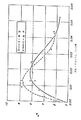
種々のマグネシウム濃度を持つMgAPSO-31の18通りのサンプルと、マグネシウムを含まない2つのコントロールが、実施例Iの手順に従って調製された。8つの静止反応混合物と10の撹拌サンプルを用いて、200℃の温度で結晶化が行われた。これらサンプルの作用KAは上に述べ、さらに図1に示す手順に従って判定が行われた。これらのサンプルはマグネシウムが0.005−0.025モル分率の場合に特に高い活性を示し、0.003および0.03−0.035モル分率のマグネシウムの場合には活性がやや低く、そしてこれらの範囲の限度あたりでは低い活性が示された。この範囲の中央の11の最も活性の高いサンプルの活性は骨格マグネシウムの濃度が最も高いサンプルの2倍か3倍高かった。
【0051】
実施例 III
エタン分解作用KAとエチルベンゼン転化の関係が調べられた。20気圧(2026kPa)の圧力、427℃の温度、そして、質量時間空間速度4の条件下で、17重量%のエチルベンゼンと83重量%のメタキシレンにより構成される原料を用いて、7つの非ゼオライト性分子ふるいサンプルのテストが行われた。エチルベンゼンはC8芳香族異性体としては異性体化プロセスで最も転化しずらい物質であるので、エチルベンゼン(“EB”)転化が比較の尺度として選ばれた。実施例IIの手順に従って、7つのサンプルについての作用kAの判定が行われた。結果は以下の通りで、図2にも示してある。
【0052】
【表2】
種々の分子ふるいのテスト結果から予測できるように、データには多少のばらつきはあったものの、kAとエチルベンゼン転化の間には明らかに相関関係がある。
【0054】
実施例 IV
本発明による触媒組成物の有用性は、種々の条件でのエチルベンゼン転化でキシレンに対する選択性を測定することにより実証された。この場合、キシレン選択性トは生成物中に存在し得るキシレンと実際に存在しているキシレンとの比率と定義されている。
触媒ベースは0.013モル分のマグネシウムを含むMgAPSOを50重量%と、アルミナを50重量%含んでいた。最終的に得られた触媒は重量%ベースで以下の成分を含んでいた。
プラチナ 0.24%
塩素 0.25%
硫黄 0.07%
これらの結果とC8芳香族化合物の異性体化に有効であると実証されている従来の触媒との比較が行われた。先行技術に基づくひとつの触媒は米国特許第4,740,650により調製された、0.48重量%のプラチナを含む触媒で、SAPO-11がベースの40重量%、アルミナが40重量%、そしてシリカが20重量%の成分構成を有していた。もうひとつの先行技術に基づく触媒は、米国特許第4,957,891によって調製されたガリウムを含んでいた。
この例で用いられた原料の成分構成は重量%で以下の通りであった。
エチルベンゼン 17%
メタキシレン 58%
オルトキシレン 25%
本発明による触媒と先行技術に基づく触媒のテスト結果を図2に示す。本発明による触媒はガリウム調製ZSM-5触媒よりキシレン選択性において2%程度優れ、先行技術に基づくSAPO-11触媒よりはさらに優れた選択性を示した。
【0055】
実施例V
基本的には純粋なエチルベンゼン原料の異性体化について、本発明による触媒を用いた調査が行われた。例IVのアルミナ結合MgAPSO-31触媒が、一定の範囲のエチルベンゼン転化を達成するために必要な、427℃の温度と種々の質量空間速度の条件下で用いられた。生成物のキシレン部分のパラキシレンの比率が427℃の温度での熱力学平衡値と比較された。結果は以下の通りであった。
【0056】
【表3】
パラキシレンの超平衡収量(super-equillibrium yield)は、本発明を限定するものではないが、エチルベンゼン転化のメカニズムがパラキシレン生産に対して選択性を持っていることを示唆している。
【0058】
実施例 VI
オルトキシレンが除去された原料を処理する際の本発明による触媒の異性体化性能が調べられた。上にも述べたように産業的に重要な中間物であるアルトキシレンは、しばしば、芳香族化合物複合体中の混合キシレン異性体から分留によって分離される。分離/異性体化プロセスを組み合わせた本実施例においては、新鮮なC8芳香族化合物が異性体化域から取り出されたC8芳香族化合物とナフテンで構成された異性体化生成物と組み合わされて、ボトム・ストリームでオルトキシレン生成物を分離する分留器に送られる。オルトキシレン分留器からの塔頂流出物がパラキシレン分離域に送られ、パラキシレン枯渇ストリームは異性体化域に送られ、オルトキシレン枯渇ストリームは異性体化反応域に送られて、そこでC8芳香族異性体が近平衡レベルに再び異性体化される。こうしたプロセス構成において、C8芳香族化合物異性体は、それらがオルト、あるいはパラキシレンに転化されるか、あるいは副反応によって失われるまで循環されて、除去される。
オルトおよびパラキシレン減少原料は、実施例IIIで述べたように、基本的には17重量%のエチルベンゼンと83重量%のメタキシレンで構成されていた。パラキシレン平衡の%および100%を越える超平衡が達成されたかどうかを調べるために、異性体化された生成物のキシレン部分のパラキシレン含有量と427℃での熱力学平衡値との比較が行われた。結果は図4に示す通りで、パラキシレン平衡の%は広いエチルベンゼン転化範囲で100%を上回っており、40%エチルベンゼン転化の場合120%に近い値であった。
【0059】
【発明の効果】
上述の通り、本発明の新規分子ふるいは、これをプラチナ族金属、無機マトリクスで構成した触媒は特に炭化水素の転化に顕著な転化率を有する工業的に極めて有用な発明である。
【図面の簡単な説明】
【図1】一定の範囲の骨格マグネシウム含有量を有するMgAPSO分子ふるいの作用kAの比較を示すものである。
【図2】いくつかの異なった分子ふるいにおけるkAとエチルベンゼン転化との関係を示している。
【図3】本発明による触媒と従来技術に基づく2つの触媒をキシレン選択性とエチルベンゼン転換の関係において比較したものである。
【図4】原料からのオルトキシレン除去の本発明による触媒の性能に対する影響について示すものである。[0001]
[Industrial application fields]
The present invention relates to an improved molecular sieve and its use for hydrocarbon conversion. More specifically, the present invention relates to magnesium-containing non-zeolitic molecular sieves that have one limited composition and are particularly useful for isomerization.
[0002]
[Prior art]
A large number of molecular sieves are disclosed as useful in hydrocarbon addition catalysts. The best known is corner sharing AlO2And SiO2Crystalline aluminosilicate zeolites formed from tetrahedra. These zeolites are generally distributed throughout the interior space of the crystal without replacing any of the atoms of uniform pore size, considerable ion exchange capacity, and the permanent crystal structure. It is characterized by the ability to reversibly desorb the adsorbed phase. Zeolites are often characterized by a coastal, usually minimal silica / alumina ratio.
[0003]
More recently, aluminum (AlO2) Skeletal tetrahedral units (TO2), Phosphoric acid (PO2) And at least one additional element EL (ELO)2Certain beneficial non-zeolitic molecular sieves have been discovered, including “Non-Zeolite Molecular Sieve” is an “ELAPSO” molecular sieve disclosed in US Pat. No. 4,793,984, an “SAPO” molecular sieve of US Pat. No. 4,440,871, and “Me” is disclosed in US Pat. No. 4,567,029. Contains crystalline metal alumino-phosphate ester-MeAPO, which is one of Mg, Mn, Co and Zn. Frameworks As, Be, B, Cr, Fe, Ga, Gs, Li, Ti or V and divalent metal alumino-phosphates are disclosed in various patents. Of particular relevance to the present invention is US Pat. No. 4,758,419, which discloses a MgMgAPSO non-zeolitic molecular sieve. In general, the above patents teach a wide range of skeletal metal concentrations, for example, in US Pat. No. 4,758,419, the molar fraction of (magnesium + silicon) can be between 0.02 and 0.98. The preferred upper limit is 0.35 mole fraction and the magnesium concentration is at least 0.01.
The use of zeolitic molecular sieves and catalysts containing magnesium for isomerization is disclosed in US Pat. No. 4,482,773 and US Pat. No. 4,861,740 and US Pat. No. 4,861,740. The use of catalysts containing MgMgAPSO non-zeolitic molecular sieves in hydrocarbon conversion including isomerization is disclosed in the above-mentioned US Pat. No. 4,758,419. US Pat. No. 4,740,650 teaches xylene isomerization using a catalyst containing at least one non-zeolitic molecular sieve, which may be MgMgAPSO. However, none of these references disclose or suggest the exact criticality of the magnesium content of the non-zeolitic molecular sieve that is a feature of the present invention.
[0004]
Means to be Solved by the Invention
C8Catalysts for aromatic isomerization are usually classified by the method of treating ethylbenzene combined with the xylene isomer. Although isomerization of ethylbenzene to xylene is not easy, it is usually very expensive to separate from xylene by precision distillation or adsorption and is therefore converted in an isomerizer. A widely used method is a method in which ethylbenzene is dealkylated to form benzene while isomerizing xylenes into a near equilibrium mixture. Another method is a method in which ethylbenzene is reacted in the presence of an acid catalyst having a hydrogenation-dehydrogenation action to form a xylene mixture. The former scheme usually results in high ethylbenzene conversion and reduces the amount of recycle to the para-xylene recovery unit and the associated processing costs, while the latter method increases xylene yield by forming xylene from ethylbenzene. Catalyst compositions and processes that facilitate conversion by the latter method, i.e., to achieve isomerization of ethylbenzene to xylene with high pass-through rates, will provide a fairly high utility, and such catalyst compositions and processes Provided by the present invention.
[0005]
[Means for Solving the Problems]
The main objective of the present invention is to provide a new molecular sieve useful for hydrocarbon conversion. More specifically, the present invention is a catalytic composition comprised of a new molecular sieve and process for the isomerization of a mixture of xylene and ethylbenzene that increases yield and / or reduces processing costs.
The present invention is based on the discovery that MgAPSO molecular sieves with skeletal magnesium content adjusted within a critical range exhibit a “volcano” effect in hydrocarbon conversion.
[0006]
Thus, the broad embodiment of the present invention is directed to MgAPSO molecular sieves in which the magnesium skeletal concentration is within the critical range. Here, the skeletal concentration of magnesium means a tetrahedron unit containing magnesium and a mole fraction of the tetrahedron unit that is derived from the microporous crystalline skeleton structure of the molecular sieve. Preferably, the sieve is incorporated into a catalytic composition comprised of a platinum group metal, and the optimal catalytic composition also includes an inorganic oxide matrix. In another embodiment, the catalytic composition is AlPO.FourIncludes molecular sieves.
Another embodiment is directed to a process for hydrocarbon conversion using a catalytic composition containing MgAPSO molecular sieves with a magnesium content in the critical range. Preferably, the process consists of an isomerization step, more preferably a non-equilibrium of xylenes and ethylbenzene under isomerization conditions to obtain a product with increased para-xylene content. It consists of a step of isomerization of a feed stream composed of a mixture.
[0007]
The MgAPSO molecular sieve according to the present invention can be understood by reference to the disclosure of US Pat. No. 4,758,419, which is incorporated herein by reference. MgAPSO
[Outside 2]
[0008]
[Chemical 1]
mR: (MgwAlxPySiz) O2
[0009]
Here, “R” indicates at least one organic template agent in the intracrystalline microporous system, and “m” indicates (MgwAlxPySiz) O2Represents the amount of “R” present per mole of the catalyst, and has a value of about zero to about 0.3. “W”, “x”, “y” and “z” are tetrahedral oxides, respectively. Shows the mole fractions of the components magnesium, aluminum, phosphorus, and silicon present as The mole fraction of each skeletal component of the molecular sieve is defined as the composition value shown in the phase diagram of US Pat. No. 4,758,419. The molar fractions “w”, “x”, “y”, and “z” are generally defined as follows, with the limit composition value or within the following points.
[0010]
The basic aspect of the present invention is that the magnesium content of the MgAPSO sieve is controlled within a narrow range. Specifically, the molar fraction “w” of skeletal magnesium in the molecular sieve of the present invention is in the range of 0.003 to 0.035. Best results are obtained when the molar fraction of skeletal magnesium is in the range of 0.005 and 0.025.
The “volcanic” effect is a butane decomposition action in which the magnesium content of the sieve is controlled within the upper limits according to the invention.AThe volcanic effect is observed in the screen of the present invention compared to screens with high or low magnesium content.AMeans an unusual and surprising increase in Butane cracking is a process of hydroconversion in areas such as isomerization, reforming, dehydrocyclization, dehydrogenation, disproportionation, transalkylation, dealkylation, alkylation, polymerization, and catalytic cracking. Easy to understand.
Butane decomposition KAIs determined by testing a 0.5-5 gram sample of a 20-40 mesh MgAPSO molecular sieve packed in a cylindrical quartz tube as described more specifically in Example II. The amount of sieve is determined to cause 5% to 90% butane conversion when butane is present in the helium support at a concentration of 2 mole%. The raw material and reaction vessel effluent are analyzed by conventional gas chromatography and the quasi-first order rate constant KA(Pseudo-first-order rate constant) is required.
[0012]
The terminology used here to describe members of this class of MgAPSO is the same as that used in the patents mentioned above. Specific members of a class are generally represented as “-n” species, where “n” is an integer, eg, MgAPSO-11, MgAPSO-31, and MgAPSO-41. . A preferred species according to the present invention is MgAPSO-31 having a characteristic X-ray powder diffraction pattern including at least the d-spacing as follows.
[0013]
[Table 1]
MgAPSO sieves are usually hydrothermally crystallized for an effective period of time under effective pressure and temperature conditions from a water-soluble reaction mixture containing magnesium, silicon, aluminum, and phosphorus reaction sources and an organic templating agent. Synthesized. The reaction mixture composition is preferably expressed as a molar ratio as follows:
[0015]
[Chemical 2]
aR: (MgrAlsPtSiu) bH2O
[0016]
Here, since (r + s + t + u) = 1.00 mol, the skeletal constituents “w”, “x”, “y” and “z” of the molecular sieve have the composition values as described above. The amount of organic templating agent “a” preferably has a positive value on the order of 0 to 6 and the amount of water “b” is in the range of 0 to 500, preferably in the range of 2 to 300. is there.
If an organic templating agent is used, it can be selected from those disclosed in US Pat. No. 4,758,419. In general, this substance is one or two elements selected from the VA (IUPAC15) group of the periodic table [see Cotton and Wilkinson, Advanced Inorganic Chemistry, Jon Wilye & Sons (5th edition, 1988)], preferably It contains nitrogen or phosphorus, and nitrogen and one alkyl or allyl group containing at least 1-8 carbon atoms. Preferred compounds include amines and tetravalent phosphorus and tetravalent ammonium compounds. Mono, di, and tri-amines can be utilized alone or in combination with a tetravalent ammonium compound. Particularly preferred amines include diisopropylamine, di-n-propylamine, triethylamine, and ethylbutylamine.
[0017]
The silicon reaction source may be any of silica, silica sol as form, or atomized silica, reactive solid amorphous precipitated silica, silica gel, silicon alkoxide, silicic acid, and mixtures thereof.
Phosphoric acid is the best source of phosphorus not yet found for immediate reaction, but organic phosphate esters such as triethyl phosphate give satisfactory results AlPO of U.S. Pat.No. 4,310,440FourThe same is recognized for crystalline or amorphous aluminophosphates such as compositions. Organophosphorus compounds selected as templating agents do not apparently function as phosphorus reaction sources, but these compounds may be converted to phosphorus reaction sources under appropriate process conditions during the actual reaction.
[0018]
A preferred aluminum source is either an aluminum alkoxide such as aluminum isopropylide or pseudoboehmite. Crystalline or amorphous aluminophosphate, which is a suitable source of phosphorus, is of course a suitable source of aluminum. Other aluminum sources used for zeolite synthesis such as dibsite, sodium aluminate, and aluminum trichloride can also be used, but are not preferred.
[0019]
Magnesium reaction source is the reaction form of magnesium in the actual process, for example,
[Outside 3]
[0020]
Crystallization is generally performed in a sealed pressure vessel, preferably a pressure vessel covered with an inert plastic material such as polytetrafluoroethylene. Although not absolutely essential to the synthesis of the MgAPSO composition, stirring, or stirring of other suitable reaction mixtures, and / or MgAPSO species to be produced, or atrologically similar aluminophosphates, When a reaction mixture containing seed crystals of aluminosilicate or other molecular sieving composition is mixed, the crystallization action is promoted. The reaction mixture can be stored successfully under natural pressure at a temperature of 50 ° C. to 250 ° C., preferably at a temperature range of 100 ° C. to 200 ° C., for several hours to several weeks. The crystallization period should be about 4 hours to 20 days. The MgAPSO product is recovered by any suitable method such as centrifugation or filtration.
[0021]
After crystallization, the MgAPSO product can be separated, washed with water and dried in air. As-synthesized MgAPSO usually contains any templating agent used in its formation, at least one form within its internal microporous system, here also expressed as “organic”. Most commonly, this organic component is at least partially present as a charge balance cation. In some cases, the pores of MgAPSO are large enough, and the organic molecules are small enough so that the latter removal can be done with normal desorption procedures. However, in general, the organic content is too large to be a clogging molecular species that cannot move freely inside the microporous system of the MgAPSO product, decomposes thermally, or is calcined at temperatures between 200 ° C and 700 ° C. And must be removed.
[0022]
MgAPSO compositions are MgO having a charge of -2, -1, +1 and 0, respectively.2, AlO2, PO2And SiO2Formed from tetrahedral units. AlO2The tetrahedron is PO2Tetrahedron or
[Outside 4]
It is within the scope of the present invention that the catalytic composition prepared from MgAPSO according to the present invention contains one or more other non-zeolitic molecular sieves. Preferably, the non-zeolitic sieve is present as a multi-compositional, multi-faceted composite with a continuous phase, a normal crystalline framework structure, and exhibits obvious heterogeneity in the composition, especially in that case A phase consists of a sedimented substrate on which another phase is precipitated. Such composites are described in US Pat. No. 4,861,739, which is incorporated herein by reference. Suitable non-zeolitic molecular sieves include, but are not limited to, those shown in US Pat. No. 4,440,871, US Pat. No. 4,567,029 and US Pat. No. 4,793,984, which are incorporated by reference. In a highly preferred embodiment, the layered catalyst composition is composed of the crystalline aluminophosphate of US Pat. No. 4,310,440, which is incorporated by reference. AlPO of this embodimentFourIs a crystalline aluminophosphate, and its basic skeleton structure has a chemical composition represented by the following molar ratio of oxide.
[0023]
[Chemical 3]
Al2OThree: 1.0 ± 0.2P2OFive
[0024]
AlPO as substrateFour-31 is particularly preferred, and MgAPSO-31 is particularly preferred as the outer layer.
The catalytic composition is preferably prepared by combining the molecular sieve according to the invention with a binder to form catalyst particles. This binder is 25 to 500m2It must be a porous, adsorptive support with a surface area of / g, a uniform composition, and relatively resistant to the conditions used in the hydrocarbon conversion process. The term “uniformity in composition” means a carrier that is not layered, has no species concentration gradient inherent in the composition, and is completely uniform in composition. Therefore, if the holder is a mixture of two or more refractory materials, the relative amounts of these materials are constant and uniform throughout the holder, and (1) alumina, titanium dioxide , Refractory inorganic oxides such as zirconium dioxide, chromium oxide, zinc oxide, magnesia, tria, boria, silica-alumina, chromia-alumina, alumina-boria, silica-zirconia, (2) ceramics, porcelain, bauxside, etc. 3) Including silica or silica gel, silicon carbide, clay, both synthesized and naturally derived, such as attapulgus clay, diatomaceous earth, fuller earth, kaolin, diatomaceous earth (4) FAU, MEL, MFI, MOR, MTW (IUPAC Committee on Zeolite Nomenclature) and other natural sources (5) MgAl, crystalline zeolitic aluminosilicates, both morphologically and synthesized, either in hydrogen form or exchanged with metal cations2OFour, FeAl2OFour, ZnAl2OFour, CaAl2OFourMO-Al as a metal in which M is divalent2OThreeSupport materials that have been used in hydrocarbon conversion catalysts such as spinels such as other similar compounds having the formula: and (6) combinations of materials from one or more of these groups: Within.
[0025]
The preferred material for use in the present invention is a refractory inorganic oxide, with the best results being obtained with a binder composed of alumina. Suitable aluminas are crystalline aluminas known as gamma, eta, and theta-alumina. Good results are obtained when fairly pure alumina is used. Further, in some embodiments, the alumina matrix may contain minor amounts of other known refractory inorganic oxides such as silica, zirconia, magnesia. Whatever matrix is used, it may be activated prior to use by one or more measures such as drying, calcination, and steaming.
[0026]
Using techniques known to those skilled in the art, the catalytic composition according to the present invention can be molded into effective shapes such as spheres, tablets, cakes, extrudates, powders, granules, tablets, etc. It can also be used in sizes as required. These shapes can be prepared using any known operation such as spray drying, tableting, spheronization, extrusion, and nodulation.
A preferable form of the catalyst composite is an extruded product. In a well-known extrusion process, the non-zeolitic molecular sieve is first mixed with a binder and peptizer, either before or after adding the metallic component, so that it can withstand direct calcination. A uniform paste-like or thick paste having an accurate water content that enables the formation of an extruded product is formed. Extrudability can be determined by analyzing the moisture content of the paste paste, with a moisture content of 30-50% by weight being preferred. Next, the dough is extruded from a mold having a plurality of holes, and the spaghetti-like extrudate is cut to form particles by a technique well known in the art. Many different extrusion shapes are possible, such as cylindrical, cloverleaf, bilaterally symmetric or asymmetric polylobates. It is also within the scope of the present invention that the extruded product is processed into any required shape such as a sphere using any known means.
[0027]
Another form of the composite is a sphere that is continuously produced by the well-known oil droplet method. Preferably, in this method, molecular sieve, alumina sol, and gelling agent are dropped into an oil bath maintained at elevated temperature. The droplets of this mixture remain in the oil bath until they stably form hydrogel spheres. The balls are then continuously withdrawn from the oil bath and usually subjected to a special aging treatment in oil and ammoniacal solution to further improve their physical properties. The resulting aged and gelled particles are washed with water, dried at a relatively low temperature of 50-200 ° C. and calcined at a temperature of 450-700 ° C. for 1 to 20 hours. These treatments convert the hydrogel into the corresponding alumina matrix.
[0028]
A preferred component of the present catalytic composition is a platinum group metal comprising one or more of platinum, palladium, rhodium, ruthenium, osmium, and iridium. A preferred platinum group metal is platinum. The final catalyst composite contains platinum group metal components as oxides, sulfides, halides, oxysulfides, etc., as metal bodies themselves, or alternatively with one or more other components of the catalyst composition. May exist in combined form. Basically, it is believed that the best results are obtained when all platinum group metal components are present in a reduced state. The platinum group metal component generally constitutes 0.1-5% by weight of the final catalyst composite, calculated on an element basis.
The platinum metal component may be incorporated into the catalyst composite by any suitable method. In a preferred method of preparing the catalyst, a decomposable compound that is soluble in water is used to impregnate the calcined zeolite / binder complex. For example, the calcined complex can be added to the calcined hydrogel by mixing with an aqueous chloroplatinic or chloroparadic acid solution.
[0029]
The catalytic composition can also include other metal components known to alter the effects of the platinum group metal component, and this is within the scope of the present invention. Such metal modifiers include rhenium, tin, germanium, lead, cobalt, nickel, indium, gallium, zinc, uranium, dysprosium, thallium, and mixtures thereof. A catalytically effective amount of such a metal modifier can be incorporated into the catalyst using any means known in the art.
[0030]
The catalyst composition according to the present invention may contain a halogen component. The halogen component may be any of fluorine, chlorine, bromine or iodine, or a mixture thereof. A preferred halogen component is chlorine. The halogen component is usually present in a state bound to the indefinite oxide carrier. The halogen component is preferably uniformly dispersed throughout the catalyst and may comprise 0.2-15% by weight of the final catalyst, calculated on an element basis.
The halogen component may be incorporated into the catalyst composition in any suitable manner during the incorporation of other catalyst components, or subsequently, during or prior to the preparation of the inorganic oxide support. it can. For example, the support material can contain halogen and can therefore constitute a certain part of the halogen content in the final catalyst produced. The halogen component, or a part thereof, may be added to the catalyst when, for example, chloroplatinic acid is used when impregnating the platinum component, and other catalyst components are incorporated into the support. Alternatively, the halogen component or a part thereof can be added to the catalyst by contacting with the halogen or a compound, solution, suspension or dispersion containing the halogen.
[0031]
The catalyst composite is dried for 2 to 24 hours at a temperature of 100 ° C. to 320 ° C., and then the metal components present in the atmosphere at a temperature of 400 ° C. to 650 ° C. for 1-10 hours are basically Calcination until converted to oxide state. Selectable halogen components may be prepared by incorporating halogen or halogen-containing compounds in air.
The resulting calcined composite is essentially passed through a water-free reduction process to ensure uniform and finally divided dispersion of the metal components as required. May be. Preferably, the reducing agent in this step is essentially pure and dry halogen (eg20vol . ppm . H 2 O Less than) Is used. This reducing agent is contacted with the catalyst under conditions including a temperature of 200 ° C. to 650 ° C. and a period of 0.5-10 hours, which is effective to reduce all platinum group metal components to the metallic state.
The resulting reduced catalyst composite was, in some cases, subjected to a presulfidation operation set to be incorporated into the catalyst composite from 0.05-0.5 weight basis sulfur calculated on an element basis. If so, there can be advantages. This preliminary sulfidation procedure is preferably carried out in the presence of a suitable sulfur-containing compound such as hydrogen and hydrogen sulfide, low molecular weight mercaptans, organic sulfides and the like. Typically, this procedure involves reducing the reduced catalyst per mole of hydrogen sulfide under conditions that include a temperature of 10 ° C. to 593 ° C. or higher, sufficient for the desired sulfur uptake to occur. Treatment with a sulfurizing gas such as a mixture of hydrogen and hydrogen sulfide having 10 moles of hydrogen. It is generally a good practice to perform this presulfidation operation under conditions that are essentially free of water.
[0032]
The MgAPSO sieve according to the present invention is useful for the conversion of hydrocarbons to obtain conversion products. This sieve is preferably used in combination with at least one inorganic oxide matrix and one or more metals as described herein. Hydrocarbon feedstock is from atmospheric to 200 atm (101.3-20260kPa), 50
[Outside 5]
Hydrocarbon conversion processes that would benefit when using catalytic composites containing MgAPSO sieves according to the present invention include isomerization, reforming, dehydrogenation circulation, dehydrogenation, disproportionation, Transalkylation, non-alkylation, polymerisation, hydrocracking, catalytic cracking and the like.
The MgAPSO catalyst composition used in the reforming process preferably contains a hydrogenation promoter such as a platinum group metal, optionally one or more modifiers such as rhenium and IVA (14) metal, and an inorganic oxide binder. Contains. Hydrocarbon feedstock, preferably naphtha, from atmospheric pressure to 40 atmospheres (101.3-4052kPa) from 300 ° C
[Outside 6]
[0033]
Light hydrocarbon isomerization can be successfully performed using MgAPSO catalyst in the range of conditions for reforming process. Light hydrocarbon feedstock is from atmospheric pressure to 70 atmospheres (101.3-709
[Outside 7]
The MgAPSO catalyst composition used in the hydrocracking process preferably comprises a hydrogenation promoter and an inorganic oxide matrix, such as one or more metals of group VIII (8-10) and VIB (6). It is out. Various raw materials, including those under atmospheric pressure or vacuum distillate, cycle raw materials, and residue, are 30-200 atmospheres (3039-20260kPa
[Outside 8]
A catalyst composition essentially the same as that used for hydrocracking is also useful in hydrotreating and hydrorefining. Various naphtha, atmospheric or vacuum distillate, cracked or cycled raw materials, and residue of 30 to 150 atmospheres (3039-
[Outside 9]
[0035]
Disproportionation is also performed using the MgAPSO catalyst composition as described above in the context of the reforming process, and if necessary, the catalyst also contains one or more Group VIA (6) metals. Suitable raw materials include monocyclic aromatic compounds, naphthalene, light olefins, etc., and this reaction produces valuable products even with the same hydrocarbon species. Isomerization and transalkylation are also performed at 10-70 atm (1013-7091 kPa), 200 ° C-500 ° C,
[Outside 10]
[0036]
A particularly advantageous use of the MgAPSO molecular sieve according to the invention is that n is an integer from 2 to 5 and R is CH.Three, C2HFive, CThreeH7Or CFourH9C to obtain more valuable products of alkylaromatics, including combinations thereof, or all isomers thereof,6H (6-n) RnIs an isomerization of an isomerizable alkyl aromatic hydrocarbon represented by the general formula: Suitable alkyl aromatic hydrocarbons include, for example, orthoxylene, paraxylene, ethylbenzene, ethyltoluene, trimethylbenzene, diethylbenzene, triethylbenzene, methylpropylbenzene, ethylpropylbenzene, diisopropylbenzene, and mixtures thereof.
C containing ethylbenzene and xylene8-Isomerization of mixtures of aromatic compounds is a particularly preferred field of application of MgAPSO according to the invention. Generally, such mixtures have an ethylbenzene content of approximately 5-50% by weight, an orthoxylene content of 0-35% by weight, a metaxylene content of 20-95% by weight, and a weight of 0-15% by weight. Has para-xylene content. C above8The aromatic compound is preferably composed of a non-equilibrium mixture, i.e. at least one C8-It is preferred that the aromatic isomer is present at a concentration that is significantly different from the equilibrium concentration under the isomerization conditions. Typically, such non-equilibrium mixtures are fresh C that are obtained from aromatics production processes.8Prepared by removing para- and / or ortho-xylene from the aromatic mixture.
Appropriate fractions from various petroleum refining streams, for example in the form of individual components or certain boiling range fractions obtained by selective rectification or distillation of hydrocarbons that are catalytically cracked or reformed Alkyl aromatic hydrocarbons found in can also be utilized in the present invention. The isomerizable aromatic hydrocarbon need not be concentrated and may be present in small amounts in the various streams. The process of the present invention allows isomerization of an alkyl aromatic-containing stream such as catalytic modification, in which case aromatic extraction is later performed to produce specific xylene isomers, particularly para-xylene. There are cases where it is not done. C used in this process8The aromatic raw material may contain up to 30% by weight of non-aromatic hydrocarbons such as naphthene and paraffin.
[0037]
According to the process of the present invention, the alkyl aromatic hydrocarbon feed, preferably mixed with hydrogen, is contacted with a catalyst of the type described above in the alkyl aromatic isomerization zone. Contact is carried out with the catalyst in a fixed bed system, moving bed system, fluidized bed system or in a batch type operation. Considering the risk of loss of valuable catalyst wear and the simplicity of its operation, it is preferable to use a fixed bed. In this system, the hydrogen rich gas and feed are preheated to the desired reaction temperature using suitable heating means and then fed to the isomerization zone containing a fixed bed of catalyst. The conversion zone consists of one or more individual reactors, and in some cases, appropriate means are provided between each reactor to maintain the desired isomerization temperature at the inlet of each zone. . The reactants can be brought into contact with the catalyst bed in the manner of upflow, downflow, or radiant flow, and the reactants can be in liquid phase, liquid-gas mixed phase, or gas phase when contacting the catalyst. There may be.
[0038]
Alkyl aromatic raw material, preferably C8The non-equilibrium mixture of aromatics is contacted under catalytic conditions as described above for the isomerization zone, while maintaining the zone at the appropriate alkyl aromatic isomerization conditions. The conditions include a temperature range of 0 ° C. to 600 ° C. or more, preferably a temperature range of 300 ° C. to 500 ° C. The pressure is usually about 1 to 100 atmospheres (101.3-10130 kPa), preferably 50 atmospheres (5065 kPa).
[Outside 10]
The concentrated liquid product is then fractionated to remove light or heavy by-products and to obtain an isomerized product. In some instances, certain products such as orthoxylene may be removed from this isomerized product by selective fractionation. C8Products obtained by isomerization of aromatic compounds are usually processed to selectively recover the paraxylene isomer, optionally by crystallization. Selective adsorption using crystalline aluminosilicate according to US Pat. No. 3,201,491 is desirable.
In the combined separation and isomerization process for the treatment of ethylbenzene / xylene mixtures, fresh C8Aromatic feedstock is C from the isomerization reaction zone.8Combined with an isomerization product composed of aromatics and naphthalene, fed to the paraxylene zone, C8A para-xylene depleted stream composed of a non-equilibrium mixture of aromatic compounds is fed to the isomerization reaction zone where C8Aromatic isomers are isomerized to near-equilibrium levels, resulting in isomerized products. In this process configuration, C that is not recovered8Aromatic isomers are preferably removed by circulation until converted to para-xylene or eliminated by side reactions. Separation of orthoxylene, preferably by fractional distillation, can also be carried out with fresh C8It can be carried out on aromatic raw materials, isomerized products, or combinations thereof.
[0039]
Example
The following examples demonstrate the importance of magnesium concentration in molecular sieves according to the present invention by butane decomposition, correlate butane decomposition and isomerization, and the catalyst C8It is for demonstrating the benefit with respect to the isomerization of an aromatic compound.
A MgAPSO-31 composition was prepared and tested using a reaction mixture having a molar configuration represented by the following formula:
[0040]
[Formula 4]
aR: rMgO: sAl2OThree: TP2OFive: USiO2: bH2O
[0041]
Where the values a, r, s, t, u and b are respectively template R, magnesium (shown as oxide), Al2OThree, P2OFive(HThreePOFourP2OFiveSiO)2And H2The number of moles of O is shown. These numerical values are as follows when t = 1.
[0042]
a 1.5-2.0
r As shown below.
s 0.75-1.1
u 0.1-1.2 (usually 0.6)
b 40-80
However, these numerical values are not intended to limit the applicability of the present invention as described above.
[0043]
Example I
The results for the MgAPSO composition prepared through a reaction mixture having the following molar configuration are shown below.
[0044]
[Chemical formula 5]
1.5R: rMgO: 0.9Al2OThree: P2OFive: 0.3SiO2: 50H2O:
[0045]
The value r was changed to give the molar fraction of skeletal magnesium in the previously described formula as follows:
[0046]
[Chemical 6]
(MgwAlxPySiz)
[0047]
Here, (w + x + y + z) = 100, and w is the molar fraction of skeletal magnesium.
[0048]
The reaction mixture is Al in the form of pseudoboehmite (Versal 250).2OThreeHThreePOFourAnd slowly mixed in water and mixed until a uniform mixture is observed. Magnesium acetate was dissolved in a portion of the water, and then LUDOX-LS was added. The binding mixture was agitated until the mixture was homogeneous. Add organic templating agent (ethylbutylamine) and AlPO to this mixtureFour-31 seeds were added and stirred until the compound was uniform. Some parts of the resulting mixture are placed in a pressure vessel (polytetrafluoroethylene) coated for static crystallization or in an uncoated stirred stainless steel pressure vessel and heated to about 200 ° C., Crystallize under spontaneous pressure. The product was removed from the pressure vessel and, after cooling, examined as described below.
[0049]
The following examples show the test results when the catalyst according to the invention is evaluated in the isomerization process. These catalysts are non-equilibrium composed of 52.0% by weight meta-xylene, 18.5% by weight ortho-xylene, 0.1% by weight para-xylene, 21.3% by weight ethylbenzene, and 0.1% by weight toluene with the rest being non-aromatic hydrocarbons C8The evaluation was performed using a pilot plant flow reactor for treating aromatic feedstocks. This feed was contacted with 100 cc of catalyst under conditions of liquid
[0050]
Example II
Hydrocarbon conversion of molecular sieves with medium-sized holes in this class is demonstrated by the butane cracking action “k” determined using a bench-scale apparatus.ABy measuring this effect, for example, more samples can be investigated and more consistent results can be obtained than in the case of an isomerization performance test in a pilot plant. A cylindrical quartz tube with a length of 254 mm and an inner diameter of 10.3 mm In each test, the reactor was loaded with 0.5-52 grams of MgAPSO-31 molecular sieve 0-40 mesh (US standard) particles (0.42-0.83 mm). The amount was set so that the conversion of n-butane was not at least 5% and not more than 90% under the test conditions.The as-synthesized sample containing organics was first the actual reactor. In the air at a temperature of 600 ° C for 1 hour to remove organic material from the microporous system, then in a flowing helium stream at a temperature of 500 ° C for a minimum of 10 minutes Next, the reactor Was determined for action kA using a feedstock composed of a helium / n-butane mixture containing 2 mol% n-butane that was passed through at a rate of 50 cc / min. The reactor effluent was analyzed using conventional gas chromatography techniques, and the reactor effluent was analyzed 10 minutes after on-stream operation at a temperature of 500 ° C. From this analytical data, Primary speed constant KAWas requested.
Eighteen samples of MgAPSO-31 with various magnesium concentrations and two controls without magnesium were prepared according to the procedure of Example I. Crystallization was carried out at a temperature of 200 ° C. using 8 stationary reaction mixtures and 10 stirred samples. The action KA of these samples was described above and further determined according to the procedure shown in FIG. These samples show particularly high activity with 0.005-0.025 mole fraction of magnesium, slightly less activity with 0.003 and 0.03-0.035 mole fraction magnesium, and low activity around the limits of these ranges It has been shown. The activity of the 11 most active samples in the middle of this range was twice or three times higher than the sample with the highest skeletal magnesium concentration.
[0051]
Example III
Ethane decomposition action KAThe relationship between benzene and ethylbenzene conversion was investigated. Seven non-zeolites using a raw material composed of 17% by weight ethylbenzene and 83% by weight metaxylene under the conditions of 20 atm (2026 kPa), 427 ° C., and a mass hour space velocity of 4 Sex molecular sieve samples were tested. Ethylbenzene is C8As an aromatic isomer, ethylbenzene (“EB”) conversion was chosen as a measure of comparison because it is the most difficult to convert in the isomerization process. Effect on 7 samples according to the procedure of Example IIAJudgment was made. The results are as follows and are also shown in FIG.
[0052]
[Table 2]
As can be predicted from the test results of various molecular sieves, the data was somewhat variable, but kAThere is a clear correlation between benzene and ethylbenzene conversion.
[0054]
Example IV
The usefulness of the catalyst composition according to the present invention has been demonstrated by measuring its selectivity for xylene with ethylbenzene conversion at various conditions. In this case, xylene selectivity is defined as the ratio of xylene that may be present in the product to xylene that is actually present.
The catalyst base contained 50 wt% MgAPSO containing 0.013 mole magnesium and 50 wt% alumina. The final catalyst contained the following components on a weight percent basis:
Platinum 0.24%
Chlorine 0.25%
Sulfur 0.07%
These results and C8A comparison was made with conventional catalysts that have proven effective in the isomerization of aromatic compounds. One catalyst based on the prior art was prepared according to US Pat. No. 4,740,650, containing 0.48 wt% platinum, 40 wt% SAPO-11 base, 40 wt% alumina, and 20 wt% silica. It had an ingredient composition. Another prior art catalyst contained gallium prepared by US Pat. No. 4,957,891.
The component composition of the raw material used in this example was as follows by weight%.
Ethylbenzene 17%
Meta-xylene 58%
Ortho-
The test results of the catalyst according to the invention and the catalyst based on the prior art are shown in FIG. The catalyst according to the present invention is about 2% better in xylene selectivity than the gallium prepared ZSM-5 catalyst, and even better than the SAPO-11 catalyst based on the prior art.
[0055]
Example V
Basically, investigations were carried out on the isomerization of pure ethylbenzene raw materials using the catalyst according to the present invention. The alumina-bound MgAPSO-31 catalyst of Example IV was used under the conditions of 427 ° C. temperature and various mass space velocities necessary to achieve a range of ethylbenzene conversion. The ratio of para-xylene in the xylene portion of the product was compared to the thermodynamic equilibrium value at a temperature of 427 ° C. The results were as follows.
[0056]
[Table 3]
The super-equillibrium yield of para-xylene, while not limiting the present invention, suggests that the ethylbenzene conversion mechanism is selective for para-xylene production.
[0058]
Example VI
The isomerization performance of the catalyst according to the invention in treating raw materials from which orthoxylene has been removed was investigated. As mentioned above, altxylene, an industrially important intermediate, is often separated from the mixed xylene isomers in the aromatic compound complex by fractional distillation. In this example, combined separation / isomerization process, fresh C8C from which aromatics were removed from the isomerization zone8Combined with an isomerization product composed of aromatics and naphthenes, it is sent to a fractionator that separates the orthoxylene product in the bottom stream. The overhead effluent from the orthoxylene fractionator is sent to the paraxylene separation zone, the paraxylene depleted stream is sent to the isomerization zone, and the orthoxylene depleted stream is sent to the isomerization reaction zone where C8Aromatic isomers are isomerized again to near-equilibrium levels. In such a process configuration, C8Aromatic isomers are removed by circulation until they are converted to ortho, or para-xylene, or lost by side reactions.
The ortho and paraxylene reduced feedstock was basically composed of 17 wt% ethylbenzene and 83 wt% metaxylene as described in Example III. To examine whether the para-xylene equilibrium% and super-equilibrium above 100% were achieved, a comparison of the para-xylene content of the xylene moiety of the isomerized product with the thermodynamic equilibrium value at 427 ° C It was conducted. The results are as shown in FIG. 4. The% of para-xylene equilibrium exceeded 100% in the wide ethylbenzene conversion range, and was close to 120% in the case of 40% ethylbenzene conversion.
[0059]
【The invention's effect】
As described above, the novel molecular sieve of the present invention is a very industrially useful invention in which a catalyst composed of a platinum group metal and an inorganic matrix has a remarkable conversion rate particularly for hydrocarbon conversion.
[Brief description of the drawings]
FIG. 1 Effect of MgAPSO molecular sieve with a range of skeletal magnesium content kAThis is a comparison.
FIG. 2: k in several different molecular sievesAShows the relationship between benzene and ethylbenzene conversion.
FIG. 3 compares the catalyst according to the invention and two catalysts based on the prior art in relation to xylene selectivity and ethylbenzene conversion.
FIG. 4 shows the influence of the removal of ortho-xylene from the raw material on the performance of the catalyst according to the present invention.
Claims (9)
Priority Applications (8)
| Application Number | Priority Date | Filing Date | Title |
|---|---|---|---|
| US07/814,749 US5240891A (en) | 1991-12-26 | 1991-12-26 | Discrete molecular sieve and use |
| US08/018,121 US5276236A (en) | 1991-12-26 | 1993-02-16 | Discrete molecular sieve and use |
| EP93306667A EP0640389B1 (en) | 1991-12-26 | 1993-08-23 | Magnesium containing non zeolitic molecular sieve and use as isomerization catalyst |
| DE69318150T DE69318150T2 (en) | 1991-12-26 | 1993-08-23 | Magnesium-containing non-zeolitic molecular sieve, and its use as an isomerization catalyst |
| ES93306667T ES2115020T3 (en) | 1991-12-26 | 1993-08-23 | NON-ZEOLYTIC MOLECULAR SCREEN CONTAINING MAGNESIUM AND USE AS ISOMERIZATION CATALYST. |
| CA002104822A CA2104822C (en) | 1991-12-26 | 1993-08-25 | Mgapso molecular sieve and use thereof |
| JP21457393A JP3662945B2 (en) | 1991-12-26 | 1993-08-30 | Catalyst composition and method of use thereof |
| US08/176,140 US5434326A (en) | 1991-12-26 | 1993-12-30 | Discrete molecular sieve and use in aromatic-olefin alkylation |
Applications Claiming Priority (6)
| Application Number | Priority Date | Filing Date | Title |
|---|---|---|---|
| US07/814,749 US5240891A (en) | 1991-12-26 | 1991-12-26 | Discrete molecular sieve and use |
| US08/018,121 US5276236A (en) | 1991-12-26 | 1993-02-16 | Discrete molecular sieve and use |
| EP93306667A EP0640389B1 (en) | 1991-12-26 | 1993-08-23 | Magnesium containing non zeolitic molecular sieve and use as isomerization catalyst |
| CA002104822A CA2104822C (en) | 1991-12-26 | 1993-08-25 | Mgapso molecular sieve and use thereof |
| JP21457393A JP3662945B2 (en) | 1991-12-26 | 1993-08-30 | Catalyst composition and method of use thereof |
| US08/176,140 US5434326A (en) | 1991-12-26 | 1993-12-30 | Discrete molecular sieve and use in aromatic-olefin alkylation |
Publications (2)
| Publication Number | Publication Date |
|---|---|
| JPH0760127A JPH0760127A (en) | 1995-03-07 |
| JP3662945B2 true JP3662945B2 (en) | 2005-06-22 |
Family
ID=27543469
Family Applications (1)
| Application Number | Title | Priority Date | Filing Date |
|---|---|---|---|
| JP21457393A Expired - Fee Related JP3662945B2 (en) | 1991-12-26 | 1993-08-30 | Catalyst composition and method of use thereof |
Country Status (6)
| Country | Link |
|---|---|
| US (3) | US5240891A (en) |
| EP (1) | EP0640389B1 (en) |
| JP (1) | JP3662945B2 (en) |
| CA (1) | CA2104822C (en) |
| DE (1) | DE69318150T2 (en) |
| ES (1) | ES2115020T3 (en) |
Families Citing this family (47)
| Publication number | Priority date | Publication date | Assignee | Title |
|---|---|---|---|---|
| US5478787A (en) * | 1991-12-26 | 1995-12-26 | Uop | Discrete molecular sieve and use |
| US5384296A (en) * | 1993-08-16 | 1995-01-24 | Mobil Oil Corporation | Thermally stable noble metal-container zeolite catalyst |
| FR2715648B1 (en) * | 1994-01-31 | 1996-04-05 | Elf Aquitaine | Microporous crystalline solids consisting of aluminophosphates substituted by a metal and optionally by silicon and belonging to the structural type Fau, their syntheses and applications. |
| JPH09509967A (en) * | 1994-12-30 | 1997-10-07 | シェブロン ケミカル カンパニー | Catalysts and methods for alkylating aromatics |
| US6040264A (en) * | 1996-04-04 | 2000-03-21 | Exxon Chemical Patents Inc. | Use of alkaline earth metal containing small pore non-zeolitic molecular sieve catalysts in oxygenate conversion |
| US5851949A (en) * | 1996-07-24 | 1998-12-22 | Uop Llc | Sulfur tolerant hydrocarbon conversion catalyst |
| US5932512A (en) * | 1997-08-19 | 1999-08-03 | Exxon Chemical Patents, Inc. | Fluorination of synthesized molecular sieve catalysts for increased selectivity to ethylene during conversion of oxygenates to olefins |
| EP0999183B1 (en) * | 1998-11-02 | 2003-06-18 | Institut Francais Du Petrole | Process for the preparation of EUO-type zeolite using structuring agent precursors and use thereof as catalyst for isomerizing eight carbon aromatics |
| EP0999182B1 (en) * | 1998-11-02 | 2003-05-14 | Institut Francais Du Petrole | Process for the preparation of EUO-type zeolite using zeolitic seeds and use thereof as catalyst for isomerizing eight carbon-aromatics |
| US6222086B1 (en) | 1999-07-02 | 2001-04-24 | Uop Llc | Aromatics isomerization using a dual-catalyst system |
| US6512155B1 (en) | 2000-04-25 | 2003-01-28 | Uop Llc | Process for the activation of an alkylaromatic isomerization catalyst by water |
| US6448197B1 (en) | 2000-07-13 | 2002-09-10 | Exxonmobil Chemical Patents Inc. | Method for making a metal containing small pore molecular sieve catalyst |
| WO2003004444A1 (en) * | 2001-07-02 | 2003-01-16 | Exxonmobil Chemical Patents Inc. | Inhibiting catalyst coke formation in the manufacture of an olefin |
| US6897175B2 (en) * | 2001-10-09 | 2005-05-24 | General Electric | Catalyst and method for the alkylation of hydroxyaromatic compounds |
| US7227048B2 (en) | 2001-12-31 | 2007-06-05 | Exxonmobil Chemical Patents Inc. | Converting oxygenates to olefins over a catalyst comprising acidic molecular sieve of controlled carbon atom to acid site ratio |
| WO2004016574A1 (en) | 2002-08-14 | 2004-02-26 | Exxonmobil Chemical Patents Inc. | Process for preparing olefins from oxygenates |
| JP4632787B2 (en) * | 2002-09-13 | 2011-02-16 | オートモーティブ システムズ ラボラトリー インコーポレーテッド | Inflator |
| CN1735577A (en) * | 2003-01-27 | 2006-02-15 | 环球油品公司 | Process for the activation of an alkylaromatic isomerization catalyst by water |
| US6660896B1 (en) | 2003-04-16 | 2003-12-09 | Exxonmobil Chemical Patents Inc. | Isomerization of ethylbenzene and xylenes |
| US7081432B2 (en) | 2003-07-10 | 2006-07-25 | General Electric Company | Alkylation catalyst and method for making alkylated phenols |
| US7122500B2 (en) | 2003-09-22 | 2006-10-17 | Exxonmobil Chemical Patents Inc. | Molecular sieve catalyst composition, its making and use in conversion processes |
| US7241716B2 (en) | 2003-11-10 | 2007-07-10 | Exxonmobil Chemical Patents Inc. | Protecting catalytic sites of metalloaluminophosphate molecular sieves |
| US7087705B2 (en) * | 2004-03-31 | 2006-08-08 | General Electric Company | Process for the monoalkylation of dihydroxy aromatic compounds |
| US7205376B2 (en) * | 2004-05-04 | 2007-04-17 | General Electric Company | Processes for the production of cumene, polyetherimides, and polycarbonates |
| US7220885B2 (en) * | 2004-05-27 | 2007-05-22 | Uop Llc | Catalyst treatment useful for aromatics conversion process |
| EP1843847B1 (en) | 2005-01-31 | 2018-06-13 | ExxonMobil Chemical Patents Inc. | Molecular sieve catalyst composition, its making and use in conversion processes |
| US20060194998A1 (en) * | 2005-02-28 | 2006-08-31 | Umansky Benjamin S | Process for making high octane gasoline with reduced benzene content |
| US7379799B2 (en) * | 2005-06-29 | 2008-05-27 | General Electric Company | Method and system for hierarchical fault classification and diagnosis in large systems |
| US7371913B2 (en) * | 2005-06-30 | 2008-05-13 | Uop Llc | Selective aromatics isomerization process |
| US7368620B2 (en) * | 2005-06-30 | 2008-05-06 | Uop Llc | Two-stage aromatics isomerization process |
| US7566810B2 (en) * | 2006-09-12 | 2009-07-28 | Uop Llc | Xylene production processes employing rhenium-containing catalysts |
| US7655824B2 (en) * | 2006-10-30 | 2010-02-02 | Uop Llc | Processes for producing alkylbenzenes over solid acid catalyst at low benzene to olefin ratios and low heavies make |
| US20080227630A1 (en) * | 2007-03-16 | 2008-09-18 | Riley Mark G | Layered Catalyst for Transalkylation of Heavy Alkylate |
| US7803977B2 (en) | 2007-03-16 | 2010-09-28 | Uop Llc | Transalkylation of heavy alkylate using a layered catalyst |
| US20090143218A1 (en) * | 2007-12-03 | 2009-06-04 | Bogdan Paula L | Regeneration process for a c8 alkylaromatic isomerization catalyst |
| US8431760B2 (en) * | 2008-12-17 | 2013-04-30 | Uop Llc | Hydrocarbon conversion using an improved molecular sieve |
| US8304593B2 (en) * | 2008-12-17 | 2012-11-06 | Uop Llc | Hydrocarbon conversion using an improved molecular sieve |
| US8395006B2 (en) * | 2009-03-13 | 2013-03-12 | Exxonmobil Research And Engineering Company | Process for making high octane gasoline with reduced benzene content by benzene alkylation at high benzene conversion |
| US8609917B2 (en) * | 2010-01-19 | 2013-12-17 | Uop Llc | Process for increasing methyl to phenyl mole ratios and reducing benzene content in a motor fuel product |
| US8598395B2 (en) * | 2010-01-19 | 2013-12-03 | Uop Llc | Process for increasing a mole ratio of methyl to phenyl |
| US8563795B2 (en) * | 2010-01-19 | 2013-10-22 | Uop Llc | Aromatic aklylating agent and an aromatic production apparatus |
| US9174892B2 (en) * | 2010-01-19 | 2015-11-03 | Uop Llc | Process for increasing a mole ratio of methyl to phenyl |
| CN102309979B (en) * | 2010-07-07 | 2013-05-01 | 中国石油化工股份有限公司 | Catalyst for isomerizing ethyl benzene into dimethyl benzene and preparation method and application thereof |
| EP3016738B1 (en) | 2013-07-04 | 2019-04-24 | Total Research & Technology Feluy | Catalyst compositions comprising small size molecular sieves crystals deposited on a porous material |
| WO2015094696A1 (en) | 2013-12-20 | 2015-06-25 | Exxonmobil Chemical Patents Inc. | Process for converting oxygenates to aromatic hydrocarbons |
| US9783463B2 (en) | 2014-09-30 | 2017-10-10 | Exxonmobil Chemical Patents Inc. | Conversion of acetylene and methanol to aromatics |
| US10059638B2 (en) | 2015-03-31 | 2018-08-28 | Exxonmobil Chemical Patents Inc. | Oxygenated hydrocarbon conversion zoned method |
Family Cites Families (13)
| Publication number | Priority date | Publication date | Assignee | Title |
|---|---|---|---|---|
| US3751504A (en) * | 1972-05-12 | 1973-08-07 | Mobil Oil Corp | Vapor-phase alkylation in presence of crystalline aluminosilicate catalyst with separate transalkylation |
| US4034053A (en) * | 1975-12-08 | 1977-07-05 | Mobil Oil Corporation | Selective production of para-xylene |
| US4482773A (en) * | 1982-02-25 | 1984-11-13 | Mobil Oil Corporation | Catalyst for xylene isomerization |
| US4440871A (en) * | 1982-07-26 | 1984-04-03 | Union Carbide Corporation | Crystalline silicoaluminophosphates |
| US4567029A (en) * | 1983-07-15 | 1986-01-28 | Union Carbide Corporation | Crystalline metal aluminophosphates |
| US4793984A (en) * | 1984-04-13 | 1988-12-27 | Union Carbide Corporation | Molecular sieve compositions |
| US4882038A (en) * | 1984-04-13 | 1989-11-21 | Uop | Process for the use of magnesium-aluminum-phosphorus-silicon-oxide molecular sieve compositions |
| US4758419A (en) * | 1984-04-13 | 1988-07-19 | Union Carbide Corporation | Magnesium-aluminum-phosphorus-silicon-oxide molecular sieve compositions |
| US4721827A (en) * | 1985-02-20 | 1988-01-26 | Aristech Chemical Corportion | Crystalline magnesia-silica composites and process for producing same |
| US4740650A (en) * | 1986-06-16 | 1988-04-26 | Union Carbide Corporation | Xylene isomerization |
| US4861740A (en) * | 1987-06-10 | 1989-08-29 | Uop | Magnesium-exchanged zeolitic catalyst for isomerization of alkylaromatics |
| US4762957A (en) * | 1987-06-10 | 1988-08-09 | Uop Inc. | Process for isomerization of alkylaromatics |
| FR2619319B1 (en) * | 1987-08-14 | 1990-01-12 | Inst Francais Du Petrole | ALUMINOSILICATE TYPE CATALYST CONTAINING AT LEAST ONE NOBLE METAL AND ITS USE IN ISOMERIZATION OF AN AROMATIC C8 CUT |
-
1991
- 1991-12-26 US US07/814,749 patent/US5240891A/en not_active Expired - Lifetime
-
1993
- 1993-02-16 US US08/018,121 patent/US5276236A/en not_active Expired - Fee Related
- 1993-08-23 DE DE69318150T patent/DE69318150T2/en not_active Expired - Fee Related
- 1993-08-23 EP EP93306667A patent/EP0640389B1/en not_active Expired - Lifetime
- 1993-08-23 ES ES93306667T patent/ES2115020T3/en not_active Expired - Lifetime
- 1993-08-25 CA CA002104822A patent/CA2104822C/en not_active Expired - Fee Related
- 1993-08-30 JP JP21457393A patent/JP3662945B2/en not_active Expired - Fee Related
- 1993-12-30 US US08/176,140 patent/US5434326A/en not_active Expired - Fee Related
Also Published As
| Publication number | Publication date |
|---|---|
| ES2115020T3 (en) | 1998-06-16 |
| US5434326A (en) | 1995-07-18 |
| JPH0760127A (en) | 1995-03-07 |
| EP0640389A1 (en) | 1995-03-01 |
| DE69318150T2 (en) | 1998-08-13 |
| CA2104822A1 (en) | 1995-02-26 |
| DE69318150D1 (en) | 1998-05-28 |
| EP0640389B1 (en) | 1998-04-22 |
| US5276236A (en) | 1994-01-04 |
| CA2104822C (en) | 2004-03-30 |
| US5240891A (en) | 1993-08-31 |
Similar Documents
| Publication | Publication Date | Title |
|---|---|---|
| JP3662945B2 (en) | Catalyst composition and method of use thereof | |
| RU2125977C1 (en) | Process of catalytic isomerization nonequilibrium mixture of c8-aromatic hydrocarbons | |
| US5516957A (en) | Discrete molecular sieve and use | |
| EP0234684B1 (en) | Xylene isomerization process | |
| KR100991482B1 (en) | Process and catalyst for C8 alkylaromatic isomerization | |
| RU2365573C1 (en) | Two-stage method of aromatic compounds isomerisation | |
| CN104870407B (en) | Aromatic transalkylation process using UZM‑44 aluminosilicate zeolite | |
| US7247762B2 (en) | Process for xylene isomerization and ethylbenzene conversion | |
| KR101061961B1 (en) | Aromatic isomerization catalyst | |
| US6388159B1 (en) | Xylene isomerization process using UZM-5 and UZM-6 zeolites | |
| US4962259A (en) | Catalyst for isomerizing alkylaromatics | |
| US5081084A (en) | Catalyst for isomerizing alkylaromatics | |
| US8431760B2 (en) | Hydrocarbon conversion using an improved molecular sieve | |
| US8304593B2 (en) | Hydrocarbon conversion using an improved molecular sieve | |
| US20100152025A1 (en) | Molecular Sieve | |
| KR100871402B1 (en) | Water activation method of alkylaromatic isomerization catalyst | |
| KR920000586B1 (en) | Isomerization Method of Alkylaromatics |
Legal Events
| Date | Code | Title | Description |
|---|---|---|---|
| TRDD | Decision of grant or rejection written | ||
| A01 | Written decision to grant a patent or to grant a registration (utility model) |
Free format text: JAPANESE INTERMEDIATE CODE: A01 Effective date: 20050302 |
|
| A61 | First payment of annual fees (during grant procedure) |
Free format text: JAPANESE INTERMEDIATE CODE: A61 Effective date: 20050325 |
|
| R150 | Certificate of patent or registration of utility model |
Free format text: JAPANESE INTERMEDIATE CODE: R150 |
|
| FPAY | Renewal fee payment (event date is renewal date of database) |
Free format text: PAYMENT UNTIL: 20080401 Year of fee payment: 3 |
|
| FPAY | Renewal fee payment (event date is renewal date of database) |
Free format text: PAYMENT UNTIL: 20090401 Year of fee payment: 4 |
|
| LAPS | Cancellation because of no payment of annual fees |