JP2023550737A - New coolants and formulations containing them - Google Patents
New coolants and formulations containing them Download PDFInfo
- Publication number
- JP2023550737A JP2023550737A JP2023529901A JP2023529901A JP2023550737A JP 2023550737 A JP2023550737 A JP 2023550737A JP 2023529901 A JP2023529901 A JP 2023529901A JP 2023529901 A JP2023529901 A JP 2023529901A JP 2023550737 A JP2023550737 A JP 2023550737A
- Authority
- JP
- Japan
- Prior art keywords
- group
- optionally substituted
- acid
- methyl
- ethyl
- Prior art date
- Legal status (The legal status is an assumption and is not a legal conclusion. Google has not performed a legal analysis and makes no representation as to the accuracy of the status listed.)
- Granted
Links
Classifications
-
- C—CHEMISTRY; METALLURGY
- C07—ORGANIC CHEMISTRY
- C07D—HETEROCYCLIC COMPOUNDS
- C07D405/00—Heterocyclic compounds containing both one or more hetero rings having oxygen atoms as the only ring hetero atoms, and one or more rings having nitrogen as the only ring hetero atom
- C07D405/02—Heterocyclic compounds containing both one or more hetero rings having oxygen atoms as the only ring hetero atoms, and one or more rings having nitrogen as the only ring hetero atom containing two hetero rings
- C07D405/12—Heterocyclic compounds containing both one or more hetero rings having oxygen atoms as the only ring hetero atoms, and one or more rings having nitrogen as the only ring hetero atom containing two hetero rings linked by a chain containing hetero atoms as chain links
-
- A—HUMAN NECESSITIES
- A61—MEDICAL OR VETERINARY SCIENCE; HYGIENE
- A61K—PREPARATIONS FOR MEDICAL, DENTAL OR TOILETRY PURPOSES
- A61K31/00—Medicinal preparations containing organic active ingredients
- A61K31/33—Heterocyclic compounds
- A61K31/335—Heterocyclic compounds having oxygen as the only ring hetero atom, e.g. fungichromin
- A61K31/357—Heterocyclic compounds having oxygen as the only ring hetero atom, e.g. fungichromin having two or more oxygen atoms in the same ring, e.g. crown ethers, guanadrel
-
- C—CHEMISTRY; METALLURGY
- C07—ORGANIC CHEMISTRY
- C07D—HETEROCYCLIC COMPOUNDS
- C07D405/00—Heterocyclic compounds containing both one or more hetero rings having oxygen atoms as the only ring hetero atoms, and one or more rings having nitrogen as the only ring hetero atom
- C07D405/14—Heterocyclic compounds containing both one or more hetero rings having oxygen atoms as the only ring hetero atoms, and one or more rings having nitrogen as the only ring hetero atom containing three or more hetero rings
-
- A—HUMAN NECESSITIES
- A23—FOODS OR FOODSTUFFS; TREATMENT THEREOF, NOT COVERED BY OTHER CLASSES
- A23L—FOODS, FOODSTUFFS OR NON-ALCOHOLIC BEVERAGES, NOT OTHERWISE PROVIDED FOR; PREPARATION OR TREATMENT THEREOF
- A23L27/00—Spices; Flavouring agents or condiments; Artificial sweetening agents; Table salts; Dietetic salt substitutes; Preparation or treatment thereof
- A23L27/70—Fixation, conservation, or encapsulation of flavouring agents
- A23L27/74—Fixation, conservation, or encapsulation of flavouring agents with a synthetic polymer matrix or excipient, e.g. vinylic, acrylic polymers
-
- A—HUMAN NECESSITIES
- A23—FOODS OR FOODSTUFFS; TREATMENT THEREOF, NOT COVERED BY OTHER CLASSES
- A23L—FOODS, FOODSTUFFS OR NON-ALCOHOLIC BEVERAGES, NOT OTHERWISE PROVIDED FOR; PREPARATION OR TREATMENT THEREOF
- A23L27/00—Spices; Flavouring agents or condiments; Artificial sweetening agents; Table salts; Dietetic salt substitutes; Preparation or treatment thereof
- A23L27/84—Flavour masking or reducing agents
-
- A—HUMAN NECESSITIES
- A61—MEDICAL OR VETERINARY SCIENCE; HYGIENE
- A61K—PREPARATIONS FOR MEDICAL, DENTAL OR TOILETRY PURPOSES
- A61K31/00—Medicinal preparations containing organic active ingredients
- A61K31/33—Heterocyclic compounds
- A61K31/335—Heterocyclic compounds having oxygen as the only ring hetero atom, e.g. fungichromin
- A61K31/34—Heterocyclic compounds having oxygen as the only ring hetero atom, e.g. fungichromin having five-membered rings with one oxygen as the only ring hetero atom, e.g. isosorbide
- A61K31/341—Heterocyclic compounds having oxygen as the only ring hetero atom, e.g. fungichromin having five-membered rings with one oxygen as the only ring hetero atom, e.g. isosorbide not condensed with another ring, e.g. ranitidine, furosemide, bufetolol, muscarine
-
- A—HUMAN NECESSITIES
- A61—MEDICAL OR VETERINARY SCIENCE; HYGIENE
- A61K—PREPARATIONS FOR MEDICAL, DENTAL OR TOILETRY PURPOSES
- A61K31/00—Medicinal preparations containing organic active ingredients
- A61K31/33—Heterocyclic compounds
- A61K31/395—Heterocyclic compounds having nitrogen as a ring hetero atom, e.g. guanethidine or rifamycins
- A61K31/41—Heterocyclic compounds having nitrogen as a ring hetero atom, e.g. guanethidine or rifamycins having five-membered rings with two or more ring hetero atoms, at least one of which being nitrogen, e.g. tetrazole
- A61K31/415—1,2-Diazoles
- A61K31/4155—1,2-Diazoles non condensed and containing further heterocyclic rings
-
- A—HUMAN NECESSITIES
- A61—MEDICAL OR VETERINARY SCIENCE; HYGIENE
- A61K—PREPARATIONS FOR MEDICAL, DENTAL OR TOILETRY PURPOSES
- A61K31/00—Medicinal preparations containing organic active ingredients
- A61K31/33—Heterocyclic compounds
- A61K31/395—Heterocyclic compounds having nitrogen as a ring hetero atom, e.g. guanethidine or rifamycins
- A61K31/435—Heterocyclic compounds having nitrogen as a ring hetero atom, e.g. guanethidine or rifamycins having six-membered rings with one nitrogen as the only ring hetero atom
- A61K31/44—Non condensed pyridines; Hydrogenated derivatives thereof
- A61K31/4427—Non condensed pyridines; Hydrogenated derivatives thereof containing further heterocyclic ring systems
- A61K31/443—Non condensed pyridines; Hydrogenated derivatives thereof containing further heterocyclic ring systems containing a five-membered ring with oxygen as a ring hetero atom
-
- A—HUMAN NECESSITIES
- A61—MEDICAL OR VETERINARY SCIENCE; HYGIENE
- A61K—PREPARATIONS FOR MEDICAL, DENTAL OR TOILETRY PURPOSES
- A61K31/00—Medicinal preparations containing organic active ingredients
- A61K31/33—Heterocyclic compounds
- A61K31/395—Heterocyclic compounds having nitrogen as a ring hetero atom, e.g. guanethidine or rifamycins
- A61K31/435—Heterocyclic compounds having nitrogen as a ring hetero atom, e.g. guanethidine or rifamycins having six-membered rings with one nitrogen as the only ring hetero atom
- A61K31/44—Non condensed pyridines; Hydrogenated derivatives thereof
- A61K31/4427—Non condensed pyridines; Hydrogenated derivatives thereof containing further heterocyclic ring systems
- A61K31/4436—Non condensed pyridines; Hydrogenated derivatives thereof containing further heterocyclic ring systems containing a heterocyclic ring having sulfur as a ring hetero atom
-
- A—HUMAN NECESSITIES
- A61—MEDICAL OR VETERINARY SCIENCE; HYGIENE
- A61K—PREPARATIONS FOR MEDICAL, DENTAL OR TOILETRY PURPOSES
- A61K31/00—Medicinal preparations containing organic active ingredients
- A61K31/33—Heterocyclic compounds
- A61K31/395—Heterocyclic compounds having nitrogen as a ring hetero atom, e.g. guanethidine or rifamycins
- A61K31/435—Heterocyclic compounds having nitrogen as a ring hetero atom, e.g. guanethidine or rifamycins having six-membered rings with one nitrogen as the only ring hetero atom
- A61K31/44—Non condensed pyridines; Hydrogenated derivatives thereof
- A61K31/4427—Non condensed pyridines; Hydrogenated derivatives thereof containing further heterocyclic ring systems
- A61K31/444—Non condensed pyridines; Hydrogenated derivatives thereof containing further heterocyclic ring systems containing a six-membered ring with nitrogen as a ring heteroatom, e.g. amrinone
-
- A—HUMAN NECESSITIES
- A61—MEDICAL OR VETERINARY SCIENCE; HYGIENE
- A61K—PREPARATIONS FOR MEDICAL, DENTAL OR TOILETRY PURPOSES
- A61K47/00—Medicinal preparations characterised by the non-active ingredients used, e.g. carriers or inert additives; Targeting or modifying agents chemically bound to the active ingredient
- A61K47/06—Organic compounds, e.g. natural or synthetic hydrocarbons, polyolefins, mineral oil, petrolatum or ozokerite
- A61K47/22—Heterocyclic compounds, e.g. ascorbic acid, tocopherol or pyrrolidones
-
- A—HUMAN NECESSITIES
- A61—MEDICAL OR VETERINARY SCIENCE; HYGIENE
- A61K—PREPARATIONS FOR MEDICAL, DENTAL OR TOILETRY PURPOSES
- A61K8/00—Cosmetics or similar toiletry preparations
- A61K8/18—Cosmetics or similar toiletry preparations characterised by the composition
- A61K8/30—Cosmetics or similar toiletry preparations characterised by the composition containing organic compounds
- A61K8/40—Cosmetics or similar toiletry preparations characterised by the composition containing organic compounds containing nitrogen
- A61K8/41—Amines
-
- A—HUMAN NECESSITIES
- A61—MEDICAL OR VETERINARY SCIENCE; HYGIENE
- A61K—PREPARATIONS FOR MEDICAL, DENTAL OR TOILETRY PURPOSES
- A61K8/00—Cosmetics or similar toiletry preparations
- A61K8/18—Cosmetics or similar toiletry preparations characterised by the composition
- A61K8/30—Cosmetics or similar toiletry preparations characterised by the composition containing organic compounds
- A61K8/49—Cosmetics or similar toiletry preparations characterised by the composition containing organic compounds containing heterocyclic compounds
-
- A—HUMAN NECESSITIES
- A61—MEDICAL OR VETERINARY SCIENCE; HYGIENE
- A61K—PREPARATIONS FOR MEDICAL, DENTAL OR TOILETRY PURPOSES
- A61K8/00—Cosmetics or similar toiletry preparations
- A61K8/18—Cosmetics or similar toiletry preparations characterised by the composition
- A61K8/30—Cosmetics or similar toiletry preparations characterised by the composition containing organic compounds
- A61K8/49—Cosmetics or similar toiletry preparations characterised by the composition containing organic compounds containing heterocyclic compounds
- A61K8/4906—Cosmetics or similar toiletry preparations characterised by the composition containing organic compounds containing heterocyclic compounds with one nitrogen as the only hetero atom
- A61K8/4926—Cosmetics or similar toiletry preparations characterised by the composition containing organic compounds containing heterocyclic compounds with one nitrogen as the only hetero atom having six membered rings
-
- A—HUMAN NECESSITIES
- A61—MEDICAL OR VETERINARY SCIENCE; HYGIENE
- A61K—PREPARATIONS FOR MEDICAL, DENTAL OR TOILETRY PURPOSES
- A61K8/00—Cosmetics or similar toiletry preparations
- A61K8/18—Cosmetics or similar toiletry preparations characterised by the composition
- A61K8/30—Cosmetics or similar toiletry preparations characterised by the composition containing organic compounds
- A61K8/49—Cosmetics or similar toiletry preparations characterised by the composition containing organic compounds containing heterocyclic compounds
- A61K8/4973—Cosmetics or similar toiletry preparations characterised by the composition containing organic compounds containing heterocyclic compounds with oxygen as the only hetero atom
-
- A—HUMAN NECESSITIES
- A61—MEDICAL OR VETERINARY SCIENCE; HYGIENE
- A61K—PREPARATIONS FOR MEDICAL, DENTAL OR TOILETRY PURPOSES
- A61K8/00—Cosmetics or similar toiletry preparations
- A61K8/18—Cosmetics or similar toiletry preparations characterised by the composition
- A61K8/30—Cosmetics or similar toiletry preparations characterised by the composition containing organic compounds
- A61K8/49—Cosmetics or similar toiletry preparations characterised by the composition containing organic compounds containing heterocyclic compounds
- A61K8/4986—Cosmetics or similar toiletry preparations characterised by the composition containing organic compounds containing heterocyclic compounds with sulfur as the only hetero atom
-
- A—HUMAN NECESSITIES
- A61—MEDICAL OR VETERINARY SCIENCE; HYGIENE
- A61P—SPECIFIC THERAPEUTIC ACTIVITY OF CHEMICAL COMPOUNDS OR MEDICINAL PREPARATIONS
- A61P29/00—Non-central analgesic, antipyretic or antiinflammatory agents, e.g. antirheumatic agents; Non-steroidal antiinflammatory drugs [NSAID]
-
- A—HUMAN NECESSITIES
- A61—MEDICAL OR VETERINARY SCIENCE; HYGIENE
- A61P—SPECIFIC THERAPEUTIC ACTIVITY OF CHEMICAL COMPOUNDS OR MEDICINAL PREPARATIONS
- A61P35/00—Antineoplastic agents
-
- A—HUMAN NECESSITIES
- A61—MEDICAL OR VETERINARY SCIENCE; HYGIENE
- A61Q—SPECIFIC USE OF COSMETICS OR SIMILAR TOILETRY PREPARATIONS
- A61Q11/00—Preparations for care of the teeth, of the oral cavity or of dentures; Dentifrices, e.g. toothpastes; Mouth rinses
-
- A—HUMAN NECESSITIES
- A61—MEDICAL OR VETERINARY SCIENCE; HYGIENE
- A61Q—SPECIFIC USE OF COSMETICS OR SIMILAR TOILETRY PREPARATIONS
- A61Q17/00—Barrier preparations; Preparations brought into direct contact with the skin for affording protection against external influences, e.g. sunlight, X-rays or other harmful rays, corrosive materials, bacteria or insect stings
-
- A—HUMAN NECESSITIES
- A61—MEDICAL OR VETERINARY SCIENCE; HYGIENE
- A61Q—SPECIFIC USE OF COSMETICS OR SIMILAR TOILETRY PREPARATIONS
- A61Q19/00—Preparations for care of the skin
-
- A—HUMAN NECESSITIES
- A61—MEDICAL OR VETERINARY SCIENCE; HYGIENE
- A61Q—SPECIFIC USE OF COSMETICS OR SIMILAR TOILETRY PREPARATIONS
- A61Q5/00—Preparations for care of the hair
-
- C—CHEMISTRY; METALLURGY
- C07—ORGANIC CHEMISTRY
- C07C—ACYCLIC OR CARBOCYCLIC COMPOUNDS
- C07C217/00—Compounds containing amino and etherified hydroxy groups bound to the same carbon skeleton
- C07C217/54—Compounds containing amino and etherified hydroxy groups bound to the same carbon skeleton having etherified hydroxy groups bound to carbon atoms of at least one six-membered aromatic ring and amino groups bound to acyclic carbon atoms or to carbon atoms of rings other than six-membered aromatic rings of the same carbon skeleton
- C07C217/56—Compounds containing amino and etherified hydroxy groups bound to the same carbon skeleton having etherified hydroxy groups bound to carbon atoms of at least one six-membered aromatic ring and amino groups bound to acyclic carbon atoms or to carbon atoms of rings other than six-membered aromatic rings of the same carbon skeleton with amino groups linked to the six-membered aromatic ring, or to the condensed ring system containing that ring, by carbon chains not further substituted by singly-bound oxygen atoms
- C07C217/58—Compounds containing amino and etherified hydroxy groups bound to the same carbon skeleton having etherified hydroxy groups bound to carbon atoms of at least one six-membered aromatic ring and amino groups bound to acyclic carbon atoms or to carbon atoms of rings other than six-membered aromatic rings of the same carbon skeleton with amino groups linked to the six-membered aromatic ring, or to the condensed ring system containing that ring, by carbon chains not further substituted by singly-bound oxygen atoms with amino groups and the six-membered aromatic ring, or the condensed ring system containing that ring, bound to the same carbon atom of the carbon chain
-
- C—CHEMISTRY; METALLURGY
- C07—ORGANIC CHEMISTRY
- C07D—HETEROCYCLIC COMPOUNDS
- C07D213/00—Heterocyclic compounds containing six-membered rings, not condensed with other rings, with one nitrogen atom as the only ring hetero atom and three or more double bonds between ring members or between ring members and non-ring members
- C07D213/02—Heterocyclic compounds containing six-membered rings, not condensed with other rings, with one nitrogen atom as the only ring hetero atom and three or more double bonds between ring members or between ring members and non-ring members having three double bonds between ring members or between ring members and non-ring members
- C07D213/04—Heterocyclic compounds containing six-membered rings, not condensed with other rings, with one nitrogen atom as the only ring hetero atom and three or more double bonds between ring members or between ring members and non-ring members having three double bonds between ring members or between ring members and non-ring members having no bond between the ring nitrogen atom and a non-ring member or having only hydrogen or carbon atoms directly attached to the ring nitrogen atom
- C07D213/60—Heterocyclic compounds containing six-membered rings, not condensed with other rings, with one nitrogen atom as the only ring hetero atom and three or more double bonds between ring members or between ring members and non-ring members having three double bonds between ring members or between ring members and non-ring members having no bond between the ring nitrogen atom and a non-ring member or having only hydrogen or carbon atoms directly attached to the ring nitrogen atom with hetero atoms or with carbon atoms having three bonds to hetero atoms with at the most one bond to halogen, e.g. ester or nitrile radicals, directly attached to ring carbon atoms
- C07D213/72—Nitrogen atoms
- C07D213/74—Amino or imino radicals substituted by hydrocarbon or substituted hydrocarbon radicals
-
- C—CHEMISTRY; METALLURGY
- C07—ORGANIC CHEMISTRY
- C07D—HETEROCYCLIC COMPOUNDS
- C07D241/00—Heterocyclic compounds containing 1,4-diazine or hydrogenated 1,4-diazine rings
- C07D241/02—Heterocyclic compounds containing 1,4-diazine or hydrogenated 1,4-diazine rings not condensed with other rings
- C07D241/10—Heterocyclic compounds containing 1,4-diazine or hydrogenated 1,4-diazine rings not condensed with other rings having three double bonds between ring members or between ring members and non-ring members
- C07D241/14—Heterocyclic compounds containing 1,4-diazine or hydrogenated 1,4-diazine rings not condensed with other rings having three double bonds between ring members or between ring members and non-ring members with hetero atoms or with carbon atoms having three bonds to hetero atoms with at the most one bond to halogen, e.g. ester or nitrile radicals, directly attached to ring carbon atoms
- C07D241/20—Nitrogen atoms
-
- C—CHEMISTRY; METALLURGY
- C07—ORGANIC CHEMISTRY
- C07D—HETEROCYCLIC COMPOUNDS
- C07D295/00—Heterocyclic compounds containing polymethylene-imine rings with at least five ring members, 3-azabicyclo [3.2.2] nonane, piperazine, morpholine or thiomorpholine rings, having only hydrogen atoms directly attached to the ring carbon atoms
- C07D295/04—Heterocyclic compounds containing polymethylene-imine rings with at least five ring members, 3-azabicyclo [3.2.2] nonane, piperazine, morpholine or thiomorpholine rings, having only hydrogen atoms directly attached to the ring carbon atoms with substituted hydrocarbon radicals attached to ring nitrogen atoms
- C07D295/12—Heterocyclic compounds containing polymethylene-imine rings with at least five ring members, 3-azabicyclo [3.2.2] nonane, piperazine, morpholine or thiomorpholine rings, having only hydrogen atoms directly attached to the ring carbon atoms with substituted hydrocarbon radicals attached to ring nitrogen atoms substituted by singly or doubly bound nitrogen atoms
- C07D295/135—Heterocyclic compounds containing polymethylene-imine rings with at least five ring members, 3-azabicyclo [3.2.2] nonane, piperazine, morpholine or thiomorpholine rings, having only hydrogen atoms directly attached to the ring carbon atoms with substituted hydrocarbon radicals attached to ring nitrogen atoms substituted by singly or doubly bound nitrogen atoms with the ring nitrogen atoms and the substituent nitrogen atoms separated by carbocyclic rings or by carbon chains interrupted by carbocyclic rings
-
- C—CHEMISTRY; METALLURGY
- C07—ORGANIC CHEMISTRY
- C07D—HETEROCYCLIC COMPOUNDS
- C07D317/00—Heterocyclic compounds containing five-membered rings having two oxygen atoms as the only ring hetero atoms
- C07D317/08—Heterocyclic compounds containing five-membered rings having two oxygen atoms as the only ring hetero atoms having the hetero atoms in positions 1 and 3
- C07D317/44—Heterocyclic compounds containing five-membered rings having two oxygen atoms as the only ring hetero atoms having the hetero atoms in positions 1 and 3 ortho- or peri-condensed with carbocyclic rings or ring systems
- C07D317/46—Heterocyclic compounds containing five-membered rings having two oxygen atoms as the only ring hetero atoms having the hetero atoms in positions 1 and 3 ortho- or peri-condensed with carbocyclic rings or ring systems condensed with one six-membered ring
- C07D317/48—Methylenedioxybenzenes or hydrogenated methylenedioxybenzenes, unsubstituted on the hetero ring
-
- C—CHEMISTRY; METALLURGY
- C07—ORGANIC CHEMISTRY
- C07D—HETEROCYCLIC COMPOUNDS
- C07D317/00—Heterocyclic compounds containing five-membered rings having two oxygen atoms as the only ring hetero atoms
- C07D317/08—Heterocyclic compounds containing five-membered rings having two oxygen atoms as the only ring hetero atoms having the hetero atoms in positions 1 and 3
- C07D317/44—Heterocyclic compounds containing five-membered rings having two oxygen atoms as the only ring hetero atoms having the hetero atoms in positions 1 and 3 ortho- or peri-condensed with carbocyclic rings or ring systems
- C07D317/46—Heterocyclic compounds containing five-membered rings having two oxygen atoms as the only ring hetero atoms having the hetero atoms in positions 1 and 3 ortho- or peri-condensed with carbocyclic rings or ring systems condensed with one six-membered ring
- C07D317/48—Methylenedioxybenzenes or hydrogenated methylenedioxybenzenes, unsubstituted on the hetero ring
- C07D317/50—Methylenedioxybenzenes or hydrogenated methylenedioxybenzenes, unsubstituted on the hetero ring with only hydrogen atoms, hydrocarbon or substituted hydrocarbon radicals, directly attached to atoms of the carbocyclic ring
- C07D317/58—Radicals substituted by nitrogen atoms
-
- C—CHEMISTRY; METALLURGY
- C07—ORGANIC CHEMISTRY
- C07D—HETEROCYCLIC COMPOUNDS
- C07D333/00—Heterocyclic compounds containing five-membered rings having one sulfur atom as the only ring hetero atom
- C07D333/50—Heterocyclic compounds containing five-membered rings having one sulfur atom as the only ring hetero atom condensed with carbocyclic rings or ring systems
- C07D333/52—Benzo[b]thiophenes; Hydrogenated benzo[b]thiophenes
- C07D333/62—Benzo[b]thiophenes; Hydrogenated benzo[b]thiophenes with hetero atoms or with carbon atoms having three bonds to hetero atoms with at the most one bond to halogen, e.g. ester or nitrile radicals, directly attached to carbon atoms of the hetero ring
- C07D333/68—Carbon atoms having three bonds to hetero atoms with at the most one bond to halogen
- C07D333/70—Carbon atoms having three bonds to hetero atoms with at the most one bond to halogen attached in position 2
-
- C—CHEMISTRY; METALLURGY
- C07—ORGANIC CHEMISTRY
- C07D—HETEROCYCLIC COMPOUNDS
- C07D401/00—Heterocyclic compounds containing two or more hetero rings, having nitrogen atoms as the only ring hetero atoms, at least one ring being a six-membered ring with only one nitrogen atom
- C07D401/02—Heterocyclic compounds containing two or more hetero rings, having nitrogen atoms as the only ring hetero atoms, at least one ring being a six-membered ring with only one nitrogen atom containing two hetero rings
- C07D401/04—Heterocyclic compounds containing two or more hetero rings, having nitrogen atoms as the only ring hetero atoms, at least one ring being a six-membered ring with only one nitrogen atom containing two hetero rings directly linked by a ring-member-to-ring-member bond
-
- C—CHEMISTRY; METALLURGY
- C07—ORGANIC CHEMISTRY
- C07D—HETEROCYCLIC COMPOUNDS
- C07D407/00—Heterocyclic compounds containing two or more hetero rings, at least one ring having oxygen atoms as the only ring hetero atoms, not provided for by group C07D405/00
- C07D407/02—Heterocyclic compounds containing two or more hetero rings, at least one ring having oxygen atoms as the only ring hetero atoms, not provided for by group C07D405/00 containing two hetero rings
- C07D407/12—Heterocyclic compounds containing two or more hetero rings, at least one ring having oxygen atoms as the only ring hetero atoms, not provided for by group C07D405/00 containing two hetero rings linked by a chain containing hetero atoms as chain links
-
- C—CHEMISTRY; METALLURGY
- C07—ORGANIC CHEMISTRY
- C07D—HETEROCYCLIC COMPOUNDS
- C07D409/00—Heterocyclic compounds containing two or more hetero rings, at least one ring having sulfur atoms as the only ring hetero atoms
- C07D409/02—Heterocyclic compounds containing two or more hetero rings, at least one ring having sulfur atoms as the only ring hetero atoms containing two hetero rings
- C07D409/12—Heterocyclic compounds containing two or more hetero rings, at least one ring having sulfur atoms as the only ring hetero atoms containing two hetero rings linked by a chain containing hetero atoms as chain links
-
- C—CHEMISTRY; METALLURGY
- C07—ORGANIC CHEMISTRY
- C07D—HETEROCYCLIC COMPOUNDS
- C07D409/00—Heterocyclic compounds containing two or more hetero rings, at least one ring having sulfur atoms as the only ring hetero atoms
- C07D409/14—Heterocyclic compounds containing two or more hetero rings, at least one ring having sulfur atoms as the only ring hetero atoms containing three or more hetero rings
-
- A—HUMAN NECESSITIES
- A61—MEDICAL OR VETERINARY SCIENCE; HYGIENE
- A61K—PREPARATIONS FOR MEDICAL, DENTAL OR TOILETRY PURPOSES
- A61K2800/00—Properties of cosmetic compositions or active ingredients thereof or formulation aids used therein and process related aspects
- A61K2800/10—General cosmetic use
-
- A—HUMAN NECESSITIES
- A61—MEDICAL OR VETERINARY SCIENCE; HYGIENE
- A61K—PREPARATIONS FOR MEDICAL, DENTAL OR TOILETRY PURPOSES
- A61K2800/00—Properties of cosmetic compositions or active ingredients thereof or formulation aids used therein and process related aspects
- A61K2800/20—Chemical, physico-chemical or functional or structural properties of the composition as a whole
- A61K2800/24—Thermal properties
- A61K2800/244—Endothermic; Cooling; Cooling sensation
-
- A—HUMAN NECESSITIES
- A61—MEDICAL OR VETERINARY SCIENCE; HYGIENE
- A61Q—SPECIFIC USE OF COSMETICS OR SIMILAR TOILETRY PREPARATIONS
- A61Q15/00—Anti-perspirants or body deodorants
-
- A—HUMAN NECESSITIES
- A61—MEDICAL OR VETERINARY SCIENCE; HYGIENE
- A61Q—SPECIFIC USE OF COSMETICS OR SIMILAR TOILETRY PREPARATIONS
- A61Q19/00—Preparations for care of the skin
- A61Q19/08—Anti-ageing preparations
-
- A—HUMAN NECESSITIES
- A61—MEDICAL OR VETERINARY SCIENCE; HYGIENE
- A61Q—SPECIFIC USE OF COSMETICS OR SIMILAR TOILETRY PREPARATIONS
- A61Q19/00—Preparations for care of the skin
- A61Q19/10—Washing or bathing preparations
-
- A—HUMAN NECESSITIES
- A61—MEDICAL OR VETERINARY SCIENCE; HYGIENE
- A61Q—SPECIFIC USE OF COSMETICS OR SIMILAR TOILETRY PREPARATIONS
- A61Q5/00—Preparations for care of the hair
- A61Q5/02—Preparations for cleaning the hair
-
- A—HUMAN NECESSITIES
- A61—MEDICAL OR VETERINARY SCIENCE; HYGIENE
- A61Q—SPECIFIC USE OF COSMETICS OR SIMILAR TOILETRY PREPARATIONS
- A61Q5/00—Preparations for care of the hair
- A61Q5/12—Preparations containing hair conditioners
-
- A—HUMAN NECESSITIES
- A61—MEDICAL OR VETERINARY SCIENCE; HYGIENE
- A61Q—SPECIFIC USE OF COSMETICS OR SIMILAR TOILETRY PREPARATIONS
- A61Q9/00—Preparations for removing hair or for aiding hair removal
- A61Q9/02—Shaving preparations
-
- A—HUMAN NECESSITIES
- A61—MEDICAL OR VETERINARY SCIENCE; HYGIENE
- A61Q—SPECIFIC USE OF COSMETICS OR SIMILAR TOILETRY PREPARATIONS
- A61Q9/00—Preparations for removing hair or for aiding hair removal
- A61Q9/04—Depilatories
-
- C—CHEMISTRY; METALLURGY
- C07—ORGANIC CHEMISTRY
- C07C—ACYCLIC OR CARBOCYCLIC COMPOUNDS
- C07C2601/00—Systems containing only non-condensed rings
- C07C2601/12—Systems containing only non-condensed rings with a six-membered ring
- C07C2601/14—The ring being saturated
Landscapes
- Chemical & Material Sciences (AREA)
- Organic Chemistry (AREA)
- Health & Medical Sciences (AREA)
- Life Sciences & Earth Sciences (AREA)
- Animal Behavior & Ethology (AREA)
- General Health & Medical Sciences (AREA)
- Public Health (AREA)
- Veterinary Medicine (AREA)
- Epidemiology (AREA)
- Medicinal Chemistry (AREA)
- Pharmacology & Pharmacy (AREA)
- Birds (AREA)
- Dermatology (AREA)
- Engineering & Computer Science (AREA)
- Chemical Kinetics & Catalysis (AREA)
- General Chemical & Material Sciences (AREA)
- Nutrition Science (AREA)
- Food Science & Technology (AREA)
- Polymers & Plastics (AREA)
- Nuclear Medicine, Radiotherapy & Molecular Imaging (AREA)
- Oral & Maxillofacial Surgery (AREA)
- Oil, Petroleum & Natural Gas (AREA)
- Rheumatology (AREA)
- Pain & Pain Management (AREA)
- Pharmaceuticals Containing Other Organic And Inorganic Compounds (AREA)
- Medicinal Preparation (AREA)
- Cosmetics (AREA)
- Fodder In General (AREA)
- Seasonings (AREA)
- Organic Low-Molecular-Weight Compounds And Preparation Thereof (AREA)
Abstract
本発明は、新規の生理的冷却剤、前記新規の冷却剤を含有する冷却剤混合物、前記冷却剤の香味剤との混合物、前記冷却剤の使用、ならびに前記生理的冷却剤または冷却剤混合物を含有する物品及び最終消費者調製品に関する。【選択図】なしThe present invention relates to novel physiological cooling agents, cooling agent mixtures containing said novel cooling agents, mixtures of said cooling agents with flavoring agents, uses of said cooling agents, and the use of said physiological cooling agents or cooling agent mixtures. Containing articles and final consumer preparations. [Selection diagram] None
Description
本発明は生理的冷却剤の分野にあり、この群の新しい代表的なもの、これらの冷却剤の使用ならびにこれらの冷却剤を含む物品及び製剤(調製品)に関する。 The present invention is in the field of physiological cooling agents and relates to new representatives of this group, the use of these cooling agents and articles and preparations containing these cooling agents.
例えば、溶媒の蒸発のように生理的な冷却は実際に起きないが、生理的冷却剤は普通に使用されて皮膚または粘膜、例えば、口、鼻及び/または喉の粘膜に対して冷たい感覚印象を生み出す。個々の成分及び混合物の双方が生理的冷却剤として使用され得る。生理的冷却効果への介在に関与する受容体に試験管内で(in vitro)影響を及ぼす化合物のすべてが、実際に生体内で(in vivo)皮膚や粘膜に対してそのような効果をもたらすとは限らないことを考慮に入れる必要がある。特に、そのような効果は常に同一であるとは限らないであろう。このことは、例えば、特定の化合物が冷却印象への介在に関与する受容体のアゴニストであるという事実だけでは、時間に対する冷却効果の強度の経過および介在した生理的冷却効果の強度は結論付けられないことを意味する。 For example, although physiological cooling does not actually occur, such as evaporation of a solvent, physiological cooling agents are commonly used to create a cold sensory impression on the skin or mucous membranes, e.g., the mucous membranes of the mouth, nose, and/or throat. produce. Both individual components and mixtures can be used as physiological cooling agents. All compounds that affect receptors involved in mediating physiological cooling effects in vitro actually produce such effects on skin and mucous membranes in vivo. It is necessary to take into account that In particular, such effects may not always be the same. This means, for example, that the course of the intensity of the cooling effect over time and the intensity of the mediated physiological cooling effect cannot be concluded from the mere fact that a particular compound is an agonist of a receptor involved in mediating the cooling impression. It means no.
TRPチャネルは温度の認知(熱冷)にて重要な役割を担っている。TRPチャネル(一過性の光受容器電位チャネル)は7つのサブファミリーに分割することができる細胞性イオンチャネルの広範なファミリーである。 TRP channels play an important role in temperature perception (hot and cold). TRP channels (transient photoreceptor potential channels) are a broad family of cellular ion channels that can be divided into seven subfamilies.
冷メントール受容体TRPM8(冷感膜受容体(CMR1)とも呼ばれる)は「一過性の光受容器電位イオンチャネル」のファミリーに属し、ニューロンの特定の群にて特異的に発現され、細胞膜にて細孔を形成し(それぞれ四量体を形成する4ユニット)、それはCa2+イオンを選択的に通過させる。タンパク質は6つの膜貫通ドメインと細胞質のC末端とN末端とを有する。低温(好ましくは10~25℃)はこの受容体を刺激し、冷たさの感覚として神経系によって解釈されるシグナル伝達をもたらす。 The cold menthol receptor TRPM8 (also called cold membrane receptor (CMR1)) belongs to the family of "transient photoreceptor potential ion channels" and is specifically expressed in certain groups of neurons and is attached to the cell membrane. form a pore (4 units each forming a tetramer), which selectively allows Ca 2+ ions to pass through. The protein has six transmembrane domains and a cytoplasmic C-terminus and an N-terminus. Low temperatures (preferably 10-25°C) stimulate this receptor, resulting in signaling that is interpreted by the nervous system as a sensation of coldness.
いくつかのTRPチャネルについては、それらは成長制御に重要であるという証拠がある。これらのチャネルの一部の発現における変化が癌の発生に寄与してもよい。例えば、TRPM8遺伝子の発現は前立腺癌で上方調節される。したがって、TRPM8は前立腺癌または膀胱癌の治療について魅力的な標的でもある。 There is evidence for some TRP channels that they are important in growth control. Changes in the expression of some of these channels may contribute to cancer development. For example, expression of the TRPM8 gene is upregulated in prostate cancer. Therefore, TRPM8 is also an attractive target for the treatment of prostate or bladder cancer.
メントールのような冷却化合物は香辛料業界及び香水業界で長いこと重要な役割を担い、新鮮味及び清浄度との関連を作り出してきた。 Cooling compounds such as menthol have long played an important role in the spice and perfume industries, creating an association with freshness and cleanliness.
最もよく知られている生理的に効果的な冷却剤はL-メントールである。化合物メントールは受容体TRPM8の天然のメディエーターとして作用することが示されている。メントールの適用はTRPM8を活性化し、それは低温感受性ニューロンへのCa2+の流入を引き起こす。これによって生成される電気シグナルは最終的に冷たさの感覚として認知される。 The best known physiologically effective cooling agent is L-menthol. The compound menthol has been shown to act as a natural mediator of the receptor TRPM8. Application of menthol activates TRPM8, which causes an influx of Ca 2+ into cold-sensitive neurons. The electrical signal this generates is ultimately perceived as a sensation of coldness.
しかしながら、メントールは、例えば、強い臭い、高い揮発性、及び高濃度では苦味及び/または辛味、及び皮膚に対する刺激効果のようないくつかの短所を有する。過剰なメントール濃度はまた皮膚または粘膜に対して刺激効果及び麻酔効果も引き起こすことができる。 However, menthol has some disadvantages, such as strong odor, high volatility, and at high concentrations a bitter and/or pungent taste, and an irritating effect on the skin. Excessive menthol concentrations can also cause irritating and anesthetic effects on the skin or mucous membranes.
L-メントールの有害特性を有さない強力な冷却剤が以前求められていた。 There has previously been a need for a powerful coolant that does not have the harmful properties of L-menthol.
例えば、DE2608226A1に係るメントール(複数可)の乳酸エステル及びDE4226043A1に係るメントール(複数可)との炭酸塩とポリオールの混合物及びEP0507190B1に係るメントンケタールが記載されている。 For example, lactic acid esters of menthol(s) according to DE2608226A1 and mixtures of carbonates and polyols with menthol(s) according to DE4226043A1 and menthone ketals according to EP0507190B1 are described.
加えて、類似の効果を持つメントール誘導体が種々の刊行物に記載されている。 In addition, menthol derivatives with similar effects have been described in various publications.
US5,725,865及びUS5,843,466に係る二酸のメンチルモノエステルは興味深い天然に存在する代替物であるが、感覚検査にて以前記載された冷却剤の強度に到達できない。 Menthyl monoesters of diacids according to US 5,725,865 and US 5,843,466 are interesting naturally occurring alternatives, but cannot reach the strength of previously described coolants in sensory tests.
化合物L-メンタンカルボン酸-N-エチルアミド(「WS-3」)及び特に、Nα-(L-メンタンカルボニル)グリシンエチルエーテル(「WS-5」)は強力な冷却剤であることが見いだされた。強力な効果を有しているが、しかしながら、後者は加水分解しやすいので、それ自体非常に弱い冷却効果しか示さない対応する遊離の酸であるNα-(L-メンタンカルボニル)グリシンを形成するという短所を有する。記載されている詳細な調査にもかかわらず、潜在的な冷却剤の特性、特にその苦味及び/または三叉神経への影響に対する体系的な予測は可能ではなく、記載もされていない。したがって、メンタンカルボン酸アミドのクラスに入るさらに多くの分子が強く冷却しているが、同時に顕著な苦い香調を示すことが多く、例えば、US2005 0222256A1に係るWS-5と指定されたN-[[5-メチル-2-(1-メチルエチル)シクロヘキシル]カルボニル]グリシンエチルエステルのような、例えば、JP2004 059474A2に係るメンタンカルボン酸N-(アルキルオキシアルキル)アミドはさらに強く刺激性なので、そのような化合物は食品の調製などでの使用には好適ではない。 The compounds L-menthanecarboxylic acid-N-ethylamide ("WS-3") and, in particular, Nα-(L-menthanecarbonyl)glycine ethyl ether ("WS-5") were found to be powerful coolants. . However, the latter is easily hydrolyzed to form the corresponding free acid Nα-(L-menthanecarbonyl)glycine, which itself has a very weak cooling effect. Has disadvantages. Despite the detailed investigations described, no systematic predictions for the properties of potential coolants, in particular their bitterness and/or their effects on the trigeminal nerve, are possible or described. Therefore, many more molecules that fall into the class of menthanecarboxylic acid amides are strongly cooling, but at the same time they often exhibit a pronounced bitter aroma, for example the N-[ designated as WS-5 according to US2005 0222256A1. Menthanecarboxylic acid N-(alkyloxyalkyl)amides, such as [5-methyl-2-(1-methylethyl)cyclohexyl]carbonyl]glycine ethyl ester, according to JP2004 059474A2, are even more irritating, so such compounds are not suitable for use in food preparation, etc.
Nα-(メンタンカルボニル)アルキルオキシアルキルアミドはJP2004 059474A2に記載されている。しかしながら、強力な冷却効果と高い加水分解安定性があるこれらは、非常に苦いという短所を有するので、食材及び顔面ケアに使用される化粧品での使用には好適ではない。 Nα-(menthanecarbonyl)alkyloxyalkylamides are described in JP2004 059474A2. However, although they have a strong cooling effect and high hydrolytic stability, they have the disadvantage of being very bitter and are therefore not suitable for use in food products and cosmetics used for facial care.
さらに、グリオキシル酸メンチル及びその加水分解物は冷却物質としてJP2005 343795A2に記載されている。 Furthermore, menthyl glyoxylate and its hydrolyzate are described in JP2005 343795A2 as cooling substances.
今までに製造され、使用されている冷却剤の概要は当業者に知られている。 A summary of the coolants that have been produced and used up to now is known to those skilled in the art.
例えば、冷却剤WS-23または特許出願WO2007019719A1に列挙された化合物のような、有意なTRPM8調節を引き起こすメントールと構造的に無関係な単離された化合物もある。 There are also isolated compounds structurally unrelated to menthol that cause significant TRPM8 modulation, such as, for example, the coolant WS-23 or the compounds listed in patent application WO2007019719A1.
しかしながら、今までに見いだされているTRPM8のモジュレーターの多くは効力、作用の持続時間、皮膚/粘膜への刺激、臭い、味、溶解性、および揮発性という点で欠陥を有する。 However, many of the modulators of TRPM8 found to date have deficiencies in potency, duration of action, skin/mucosal irritation, odor, taste, solubility, and volatility.
WO201002694A1はTRPM8受容体を調節するための個々の化合物を開示している。 WO201002694A1 discloses individual compounds for modulating the TRPM8 receptor.
TRPM8受容体を調節するためのさらなる化合物はWO2011061330A2にも提案されている。 Further compounds for modulating the TRPM8 receptor are also proposed in WO2011061330A2.
カルボキサミド構造(I)を持つ特殊な冷却剤:

はWO2012061698A1からも知られている。
Special coolants with carboxamide structure (I):
is also known from WO2012061698A1.
口腔粘膜では、上述の従来の及び従来技術の冷却物質の多くからすべては多かれ少なかれ同一の冷却挙動を示す。それらが付与する新鮮さの冷却知覚は約0.5分後に開始するが、3~5分でのピークの後、相対的に速やかに再びレベルが落ち、それによって冷却は全体として最大30分間、明瞭に認知でき、経験によれば、投与量を変化させることによって強度及び持続時間という点でわずかに影響を与えるのみである。消費者の側では、しかしながら、特に長く続く冷却効果に対する願望があり、それはユーザーにとっての対応する爽快感及び幸福感に関連する。 On the oral mucosa, many to all of the conventional and prior art cooling substances mentioned above exhibit more or less the same cooling behavior. The cooling sensation of freshness they impart starts after about 0.5 minutes, but after a peak at 3-5 minutes the level falls off again relatively quickly, so that the overall cooling lasts for up to 30 minutes. It is clearly perceptible and experience shows that varying the dosage has only a small effect in terms of intensity and duration. On the part of the consumer, however, there is a desire for a particularly long-lasting cooling effect, which is associated with a corresponding feeling of refreshment and well-being for the user.
したがって、本発明の主要な課題は、特別な生理的冷却効果を有する新しい物質、好ましくは今までに知られているモジュレーターよりもさらに好適な薬剤として、代替物として使用することができる、好ましくはTRPM8受容体の調節をもたらすもの(いわゆるモジュレーター)を特定することである。そのような化合物は、化粧品、栄養物、織物製品、OTC製品(例えば、熱傷軟膏)、医薬品(例えば、腫瘍の治療、膀胱脱力の分野)または包装の分野での適用に特に好適であるべきである。示される化合物または化合物の混合物は好ましくは固有の味ができるだけ弱く、特に苦味がほとんどなく、またはない、且つ好ましくは非刺激性であるべきである。 Therefore, the main problem of the present invention is a new substance with a special physiological cooling effect, preferably as an even more suitable agent than the modulators known up to now, which can be used as a substitute, preferably The aim is to identify those that bring about the regulation of the TRPM8 receptor (so-called modulators). Such compounds should be particularly suitable for applications in the field of cosmetics, nutrition, textile products, OTC products (e.g. burn ointments), pharmaceuticals (e.g. in the field of tumor treatment, bladder weakness) or packaging. be. The compounds or mixtures of compounds indicated should preferably have as low an inherent taste as possible, in particular should have little or no bitter taste and preferably be non-irritating.
本発明に係る課題の解決については、特に長く続く冷却感覚を付与することができる活性物質について主として検索した。好ましくは、これらの活性物質はまた、特に強力な冷却知覚及び/または冷却知覚の速やかな発現を付与することができなければならない。冷却剤は効率的でなければならない、すなわち、それらは低濃度でさえ高い冷却効果または冷却知覚を発生しなければならない。 For the solution of the problem according to the invention, the search was primarily for active substances that are able to impart a particularly long-lasting cooling sensation. Preferably, these active substances should also be able to impart a particularly strong cooling sensation and/or a rapid onset of a cooling sensation. Coolants must be efficient, that is, they must generate a high cooling effect or sensation of cooling even at low concentrations.
別の課題は、多数の香味料、特にステビオシド群の代表のような甘味料が示す異香味を補うことである。これは特に苦い、渋い及び金属性の後味に関する。 Another challenge is to compensate for the off-flavors exhibited by many flavorants, especially sweeteners such as representatives of the stevioside group. This particularly concerns bitter, astringent and metallic aftertastes.
問題は独立特許クレームの目的によって解決される。本発明のさらなる態様は従属特許クレーム、以下の説明及び実施例の表現から明らかである。 The problem is solved by the object of the independent patent claim. Further aspects of the invention are apparent from the dependent patent claims, the following description and the examples.
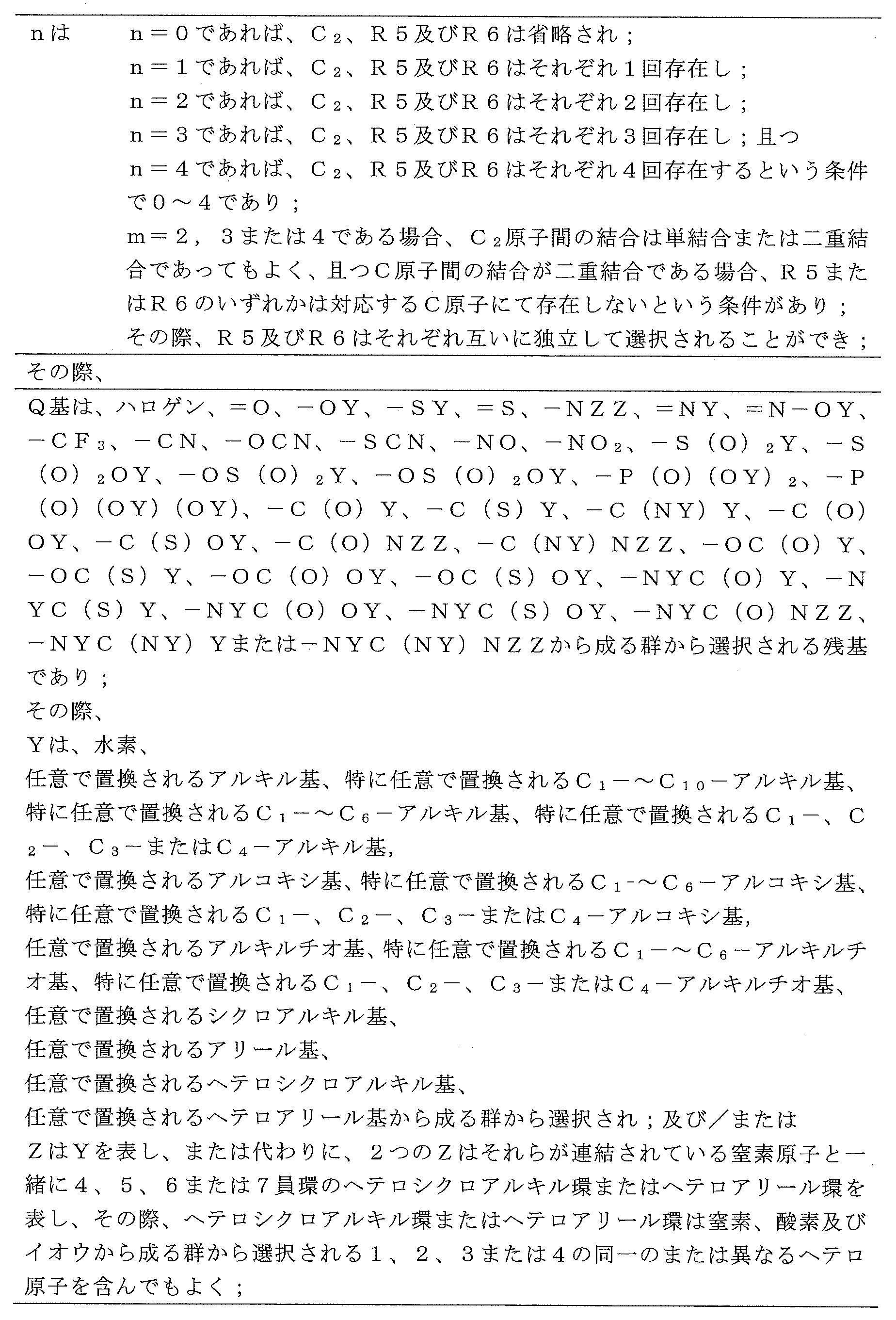
本発明によれば、本発明の主要な課題は一般式(I):
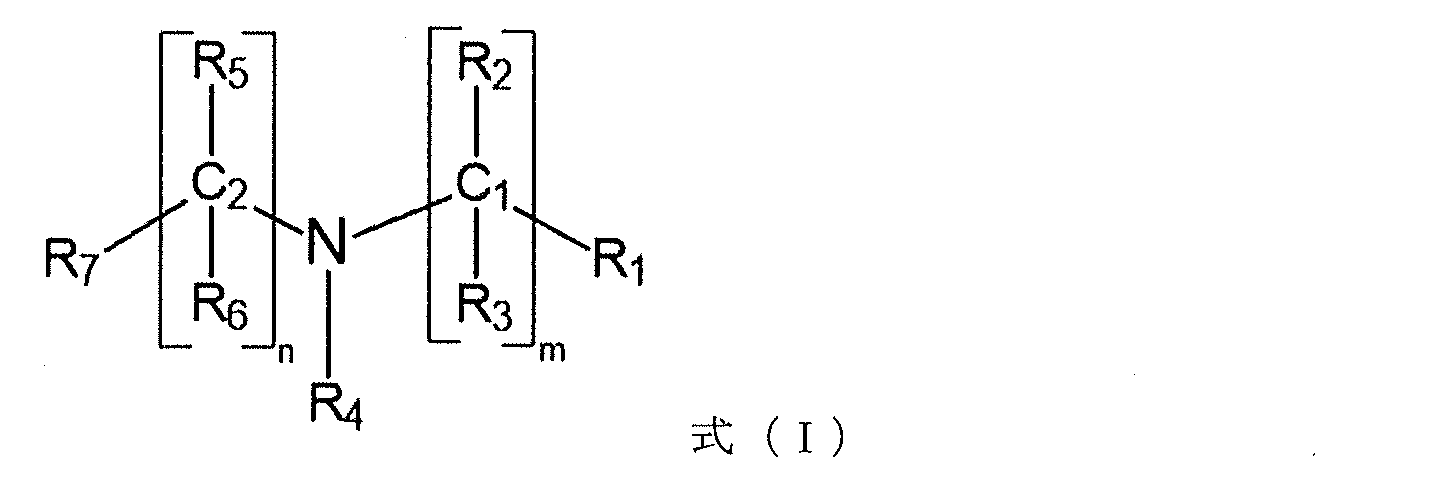
によって表される化合物及びそれらの塩から成る群から選択される生理的冷却剤により解決され、
式中、残基R1~R7はそれぞれ同一である、または異なることができ、互いに独立して以下の意味を有する。
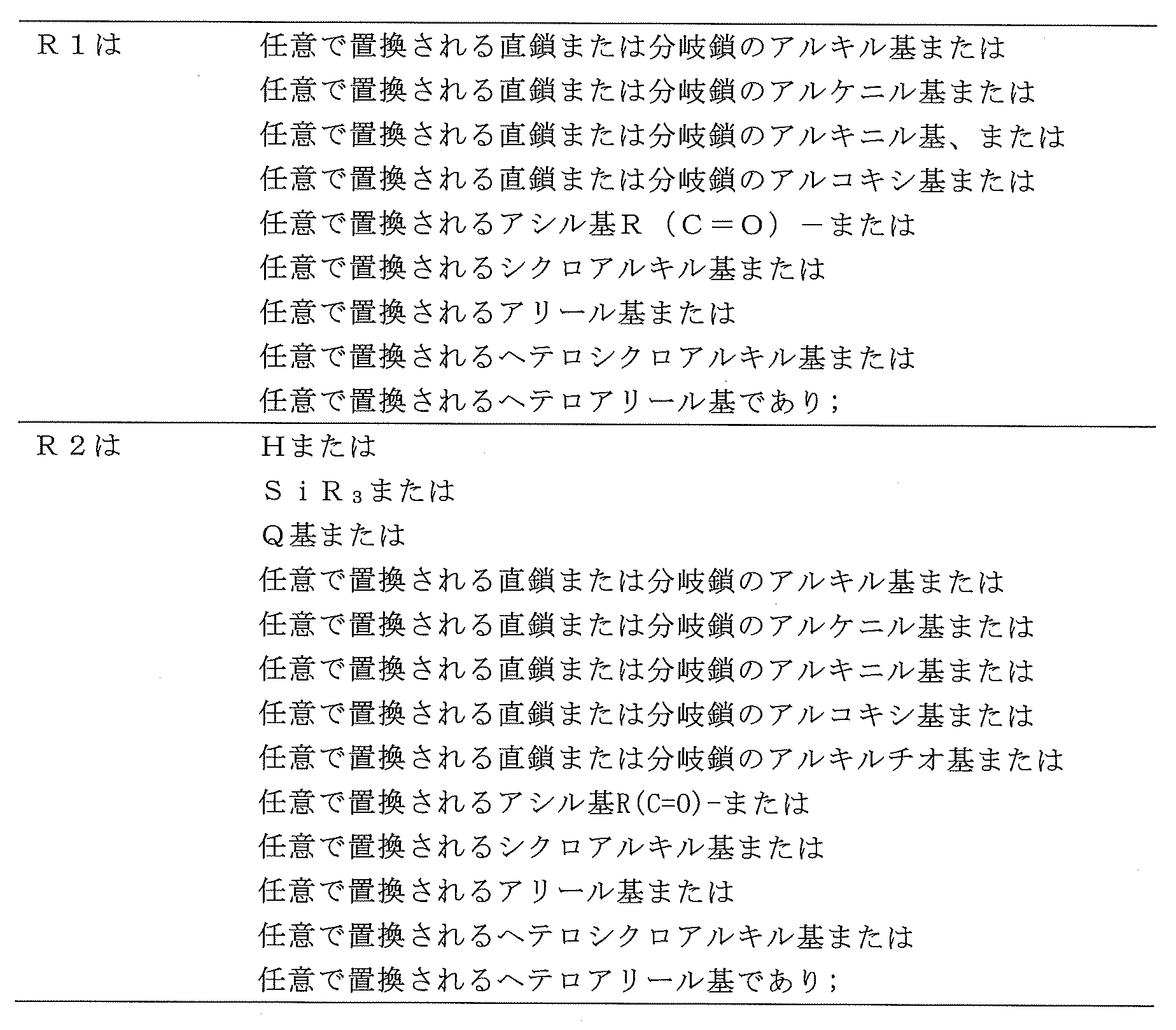
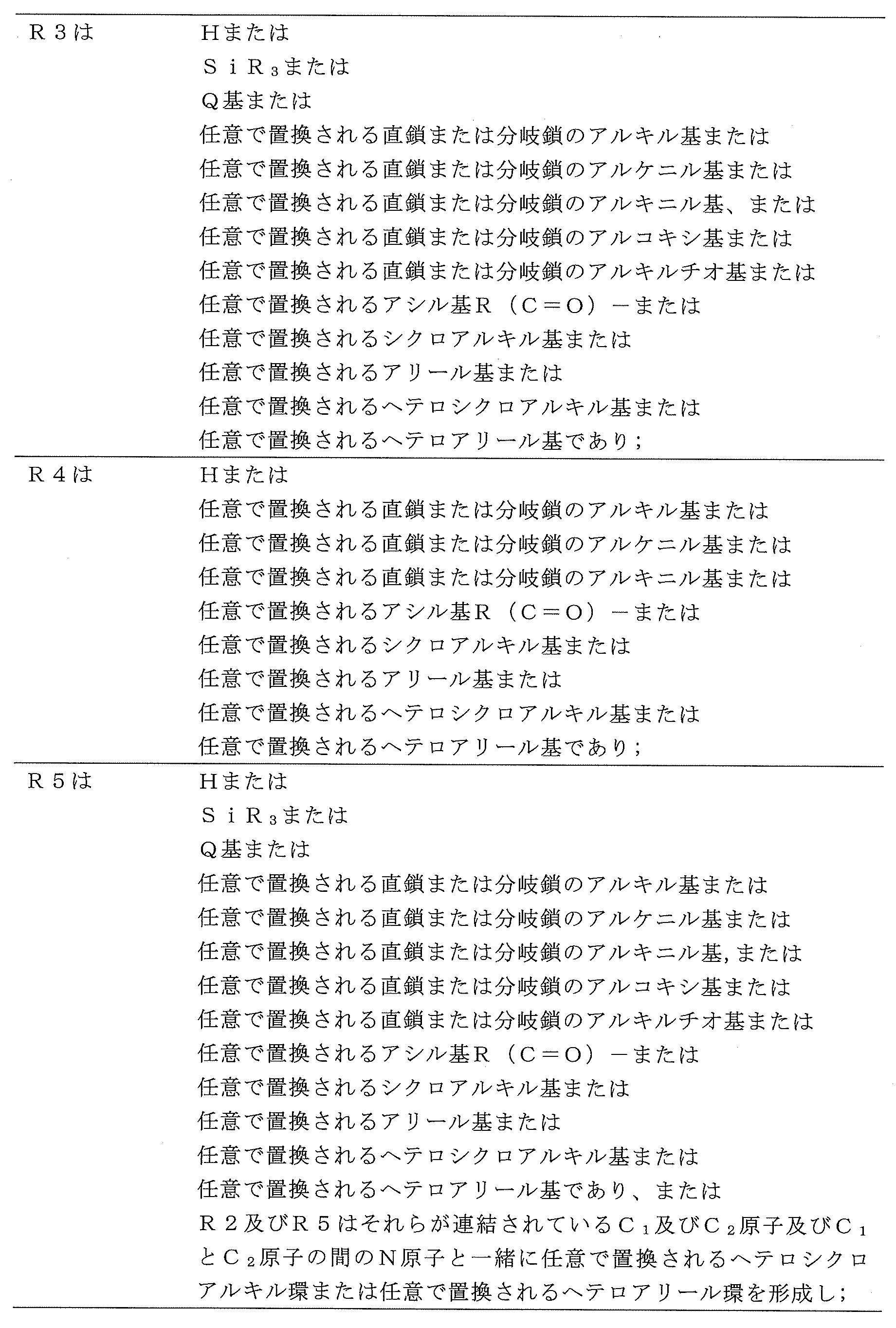
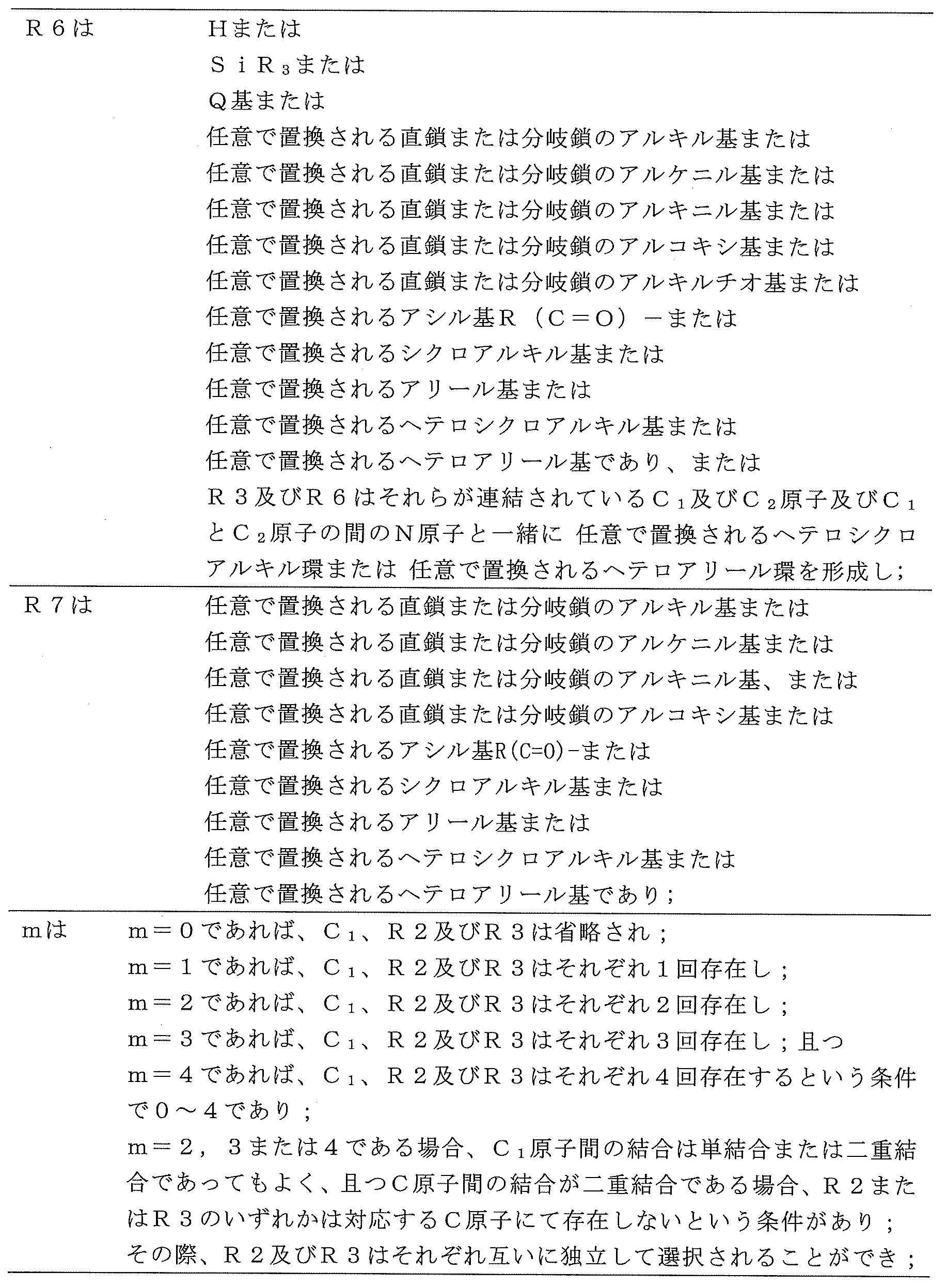
a physiological cooling agent selected from the group consisting of compounds represented by and salts thereof;
In the formula, the residues R1 to R7 can each be the same or different and independently of each other have the following meanings:
例えば、R1とR7が同一であり且つR2とR5が同一であり、またはR3とR6が同一であるならば、対称性のアミンを表すことができ、それも本発明の文脈では好適な冷却剤である。 For example, if R1 and R7 are the same and R2 and R5 are the same, or R3 and R6 are the same, this can represent a symmetrical amine, which is also a suitable coolant in the context of the present invention. It is.
式(I)に係る本発明の冷却剤は立体異性体として純粋な形態で、または異なる立体異性体の混合物としての双方で存在することができる。 The inventive coolant according to formula (I) can exist both in stereoisomerically pure form or as a mixture of different stereoisomers.
本発明の第1の態様に係る好ましい実施形態では、それは一般式(II):
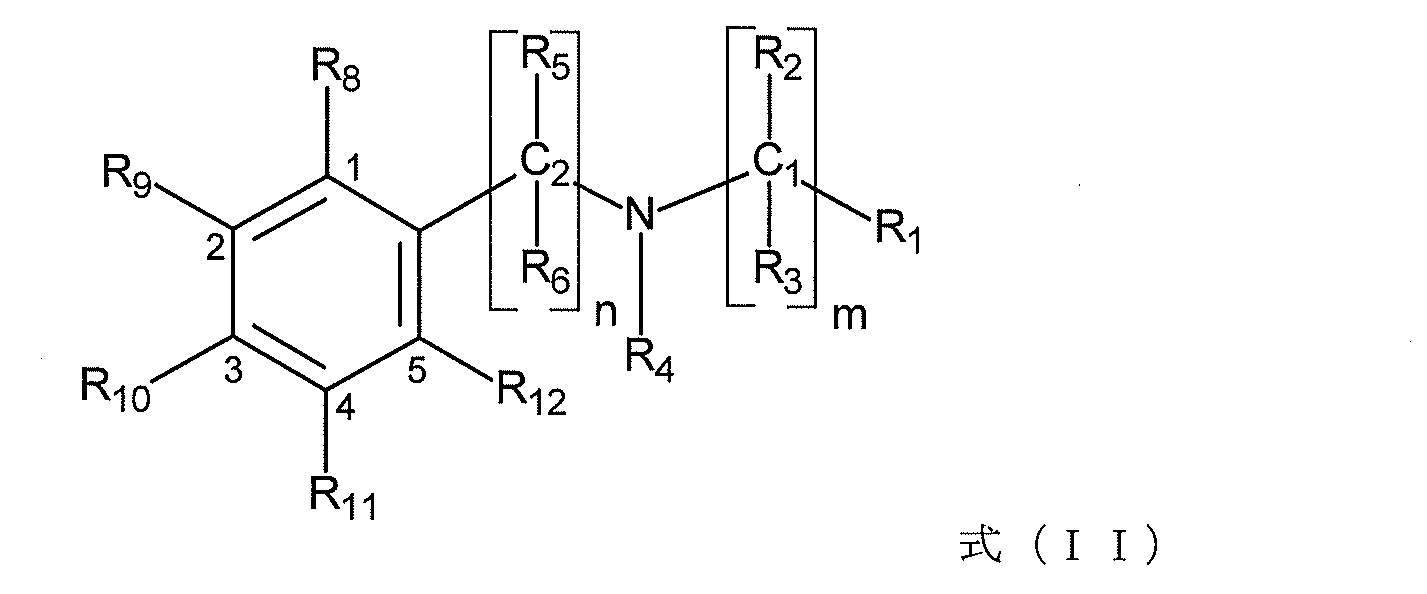
によって表される化合物及びそれらの塩から成る群から選択される生理的冷却剤であり、
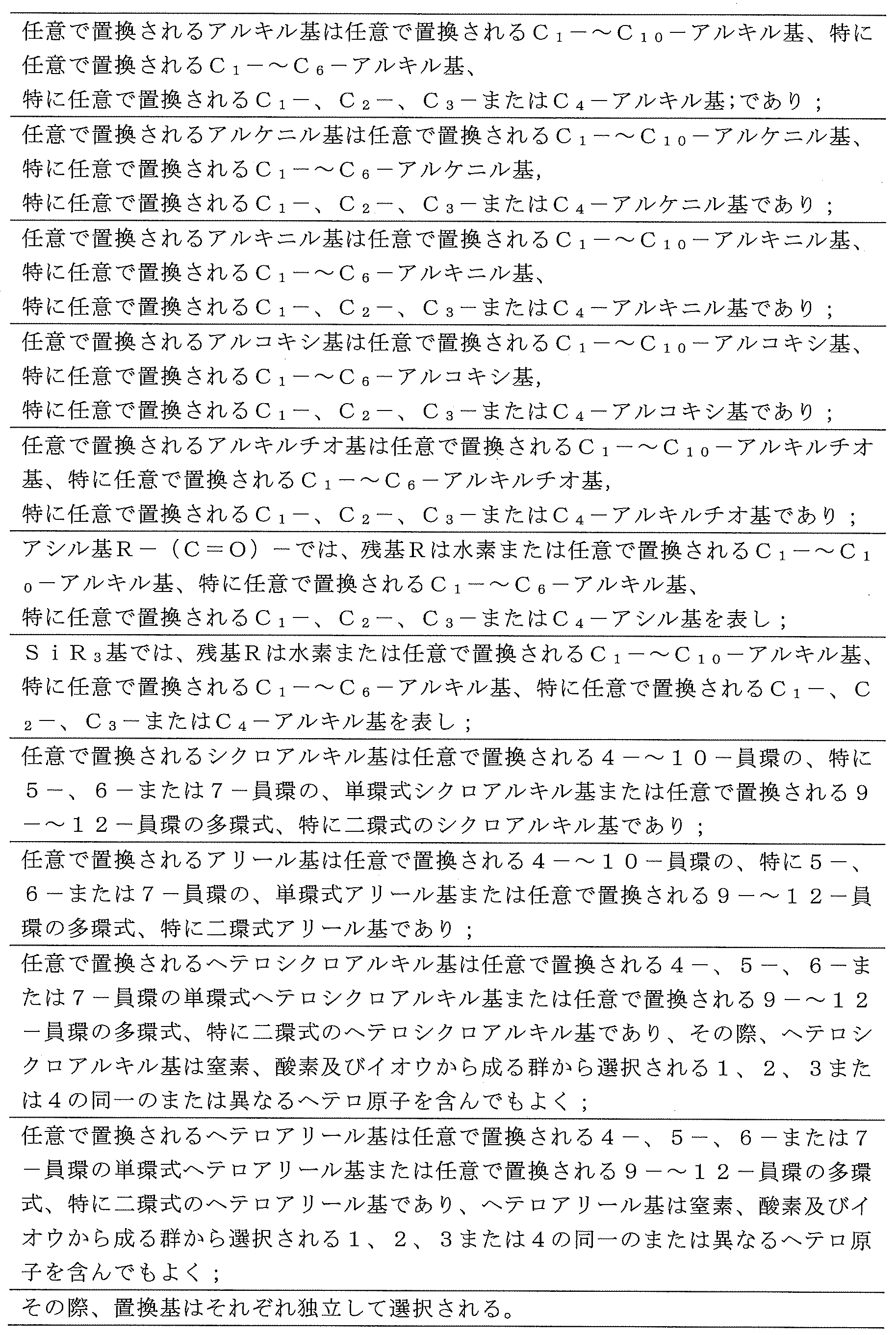
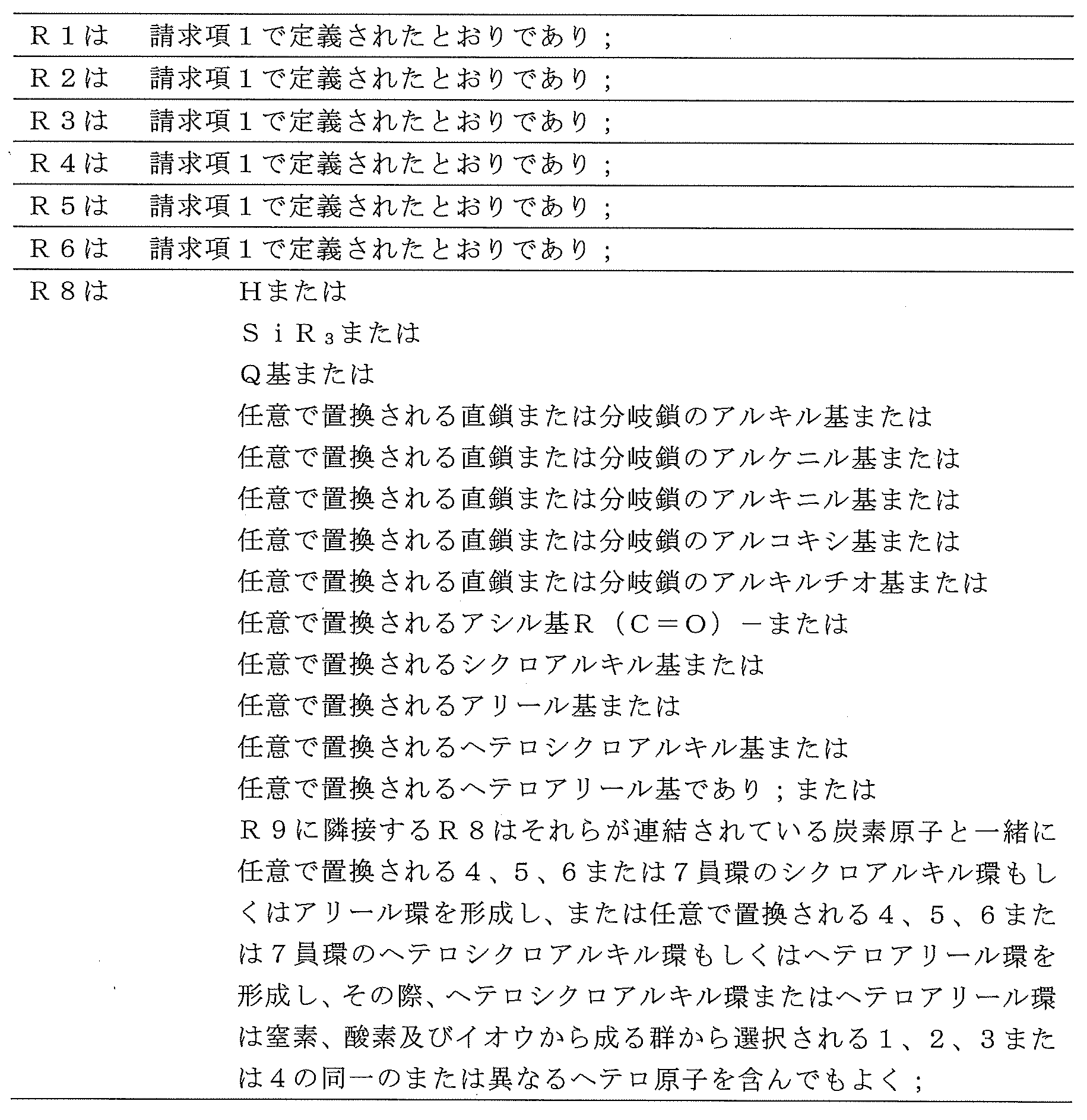
式中、残基R1~R6及びR8~R12はそれぞれ同一であることができ、または異なることができ、互いに独立して以下の意味を有することができる:
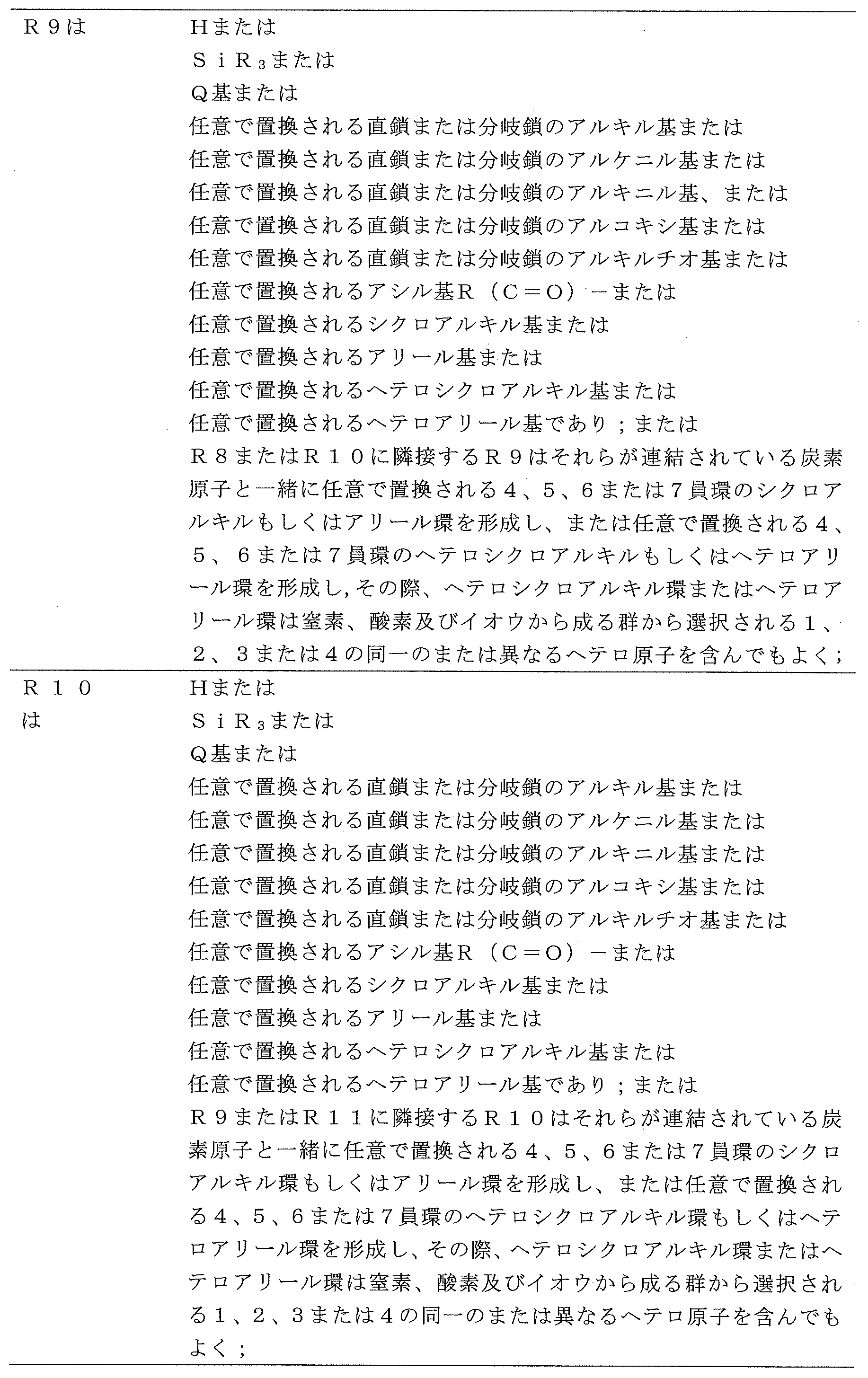
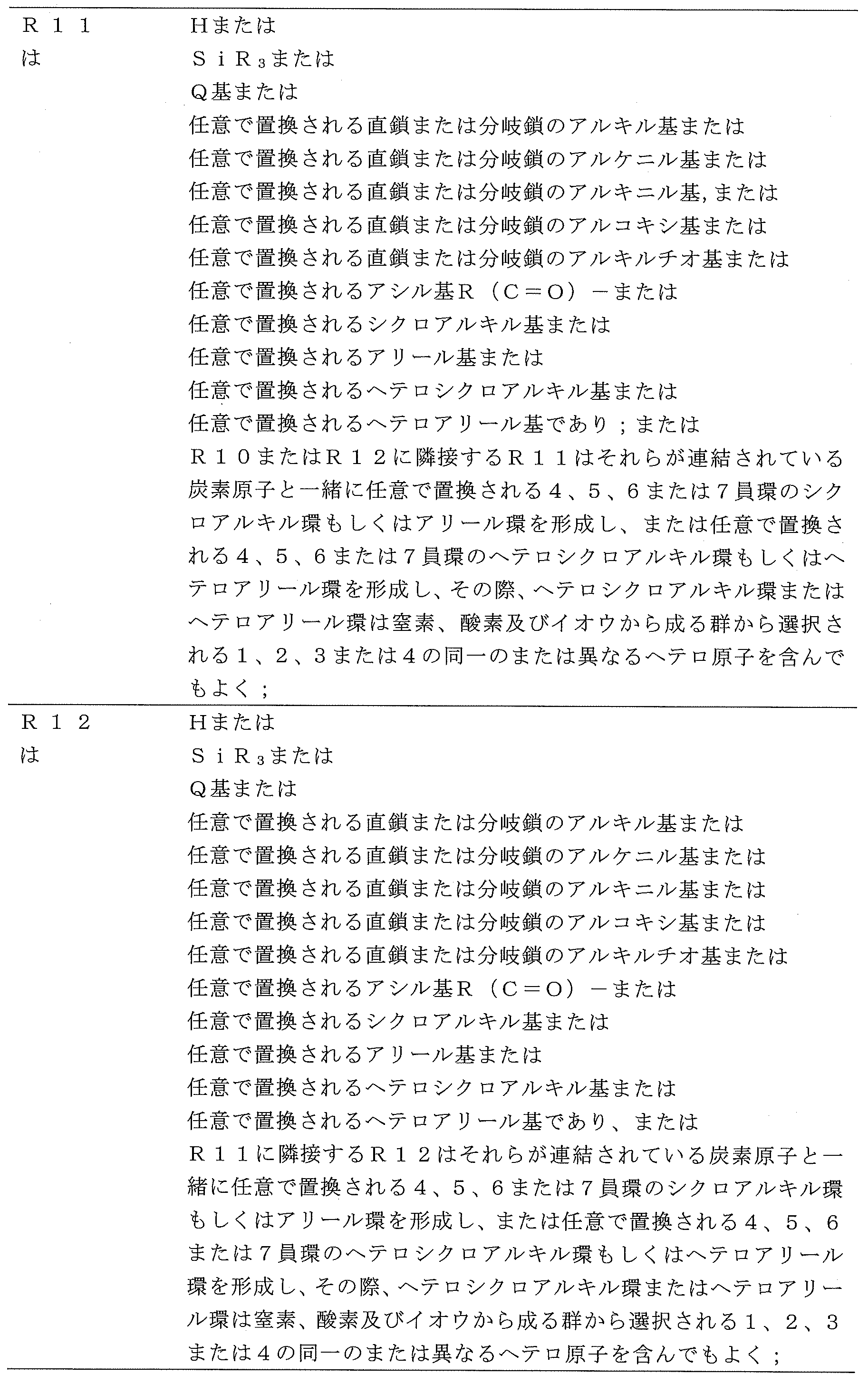
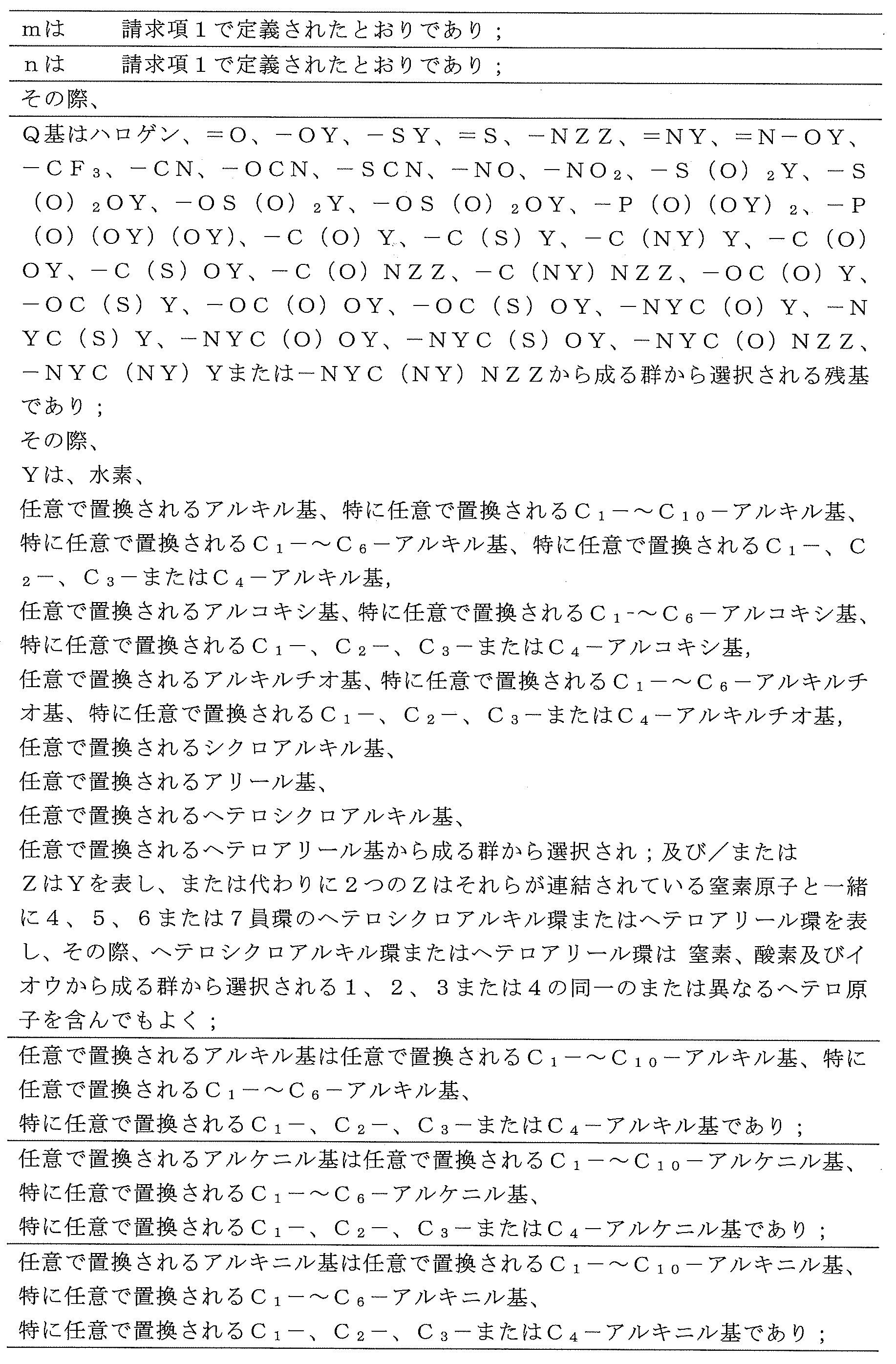
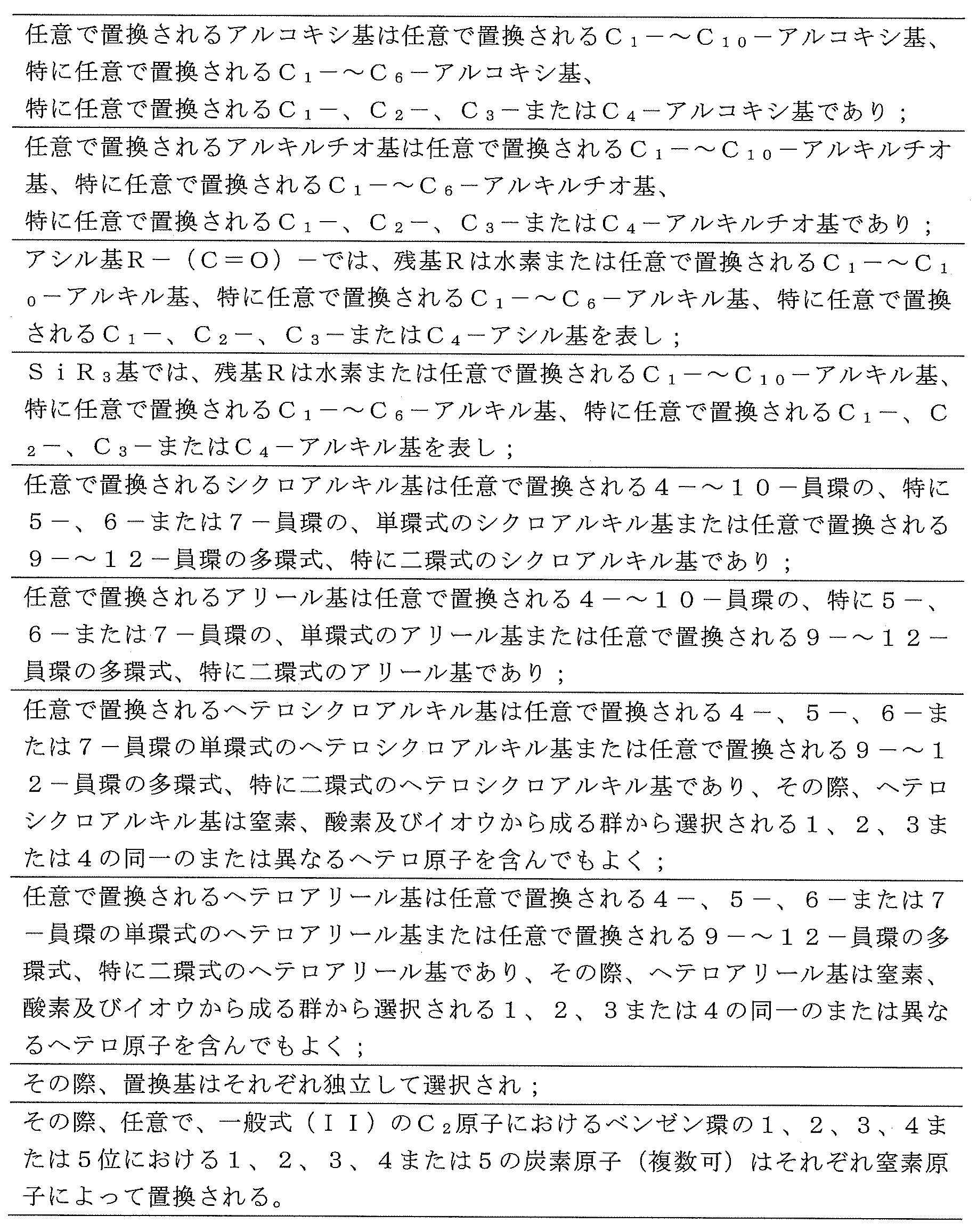
a physiological cooling agent selected from the group consisting of compounds represented by and salts thereof;
In the formula, the residues R1 to R6 and R8 to R12 can each be identical or different and independently of each other have the following meanings:
本発明の式(II)に係る冷却剤もまた、立体異性体として純粋な形態で、または異なる立体異性体の混合物としての双方で存在することができる。 The coolant according to formula (II) according to the invention can also exist both in stereoisomerically pure form or as a mixture of different stereoisomers.
本発明の文脈では、特に一般式(I)及び一般式(II)の定義について、以下の一般的な意味が適用される: In the context of the present invention, the following general meanings apply, in particular for the definitions of general formula (I) and general formula (II):
「または」または「及び/または」という用語は2つの単語または語句が一緒にまたは別々に解釈されるべきであることを示す機能語として使用される。 The terms "or" or "and/or" are used as function words to indicate that two words or phrases are to be taken together or separately.
「comprising(含む)」、「with(とともに)」、「including(含む」、「containing(含有する)」という用語はオープン用語として、すなわち、「comprising(含む)」、「including(含む」、または「containing(含有する)」として、しかし、「それらに限定されない」として理解されるべきである。 The terms "comprising," "with," "including," and "containing" are used as open terms, i.e., "comprising," "including," "containing" should be understood as, but not limited to, "containing";
同一の成分または特性に向けられる範囲すべての端点は包括的であり、独立して組み合わせ可能である。 All endpoints of ranges directed to the same component or property are inclusive and independently combinable.
「化合物(複数可)」または「本発明の化合物(複数可)」という用語は本明細書で開示されている構造式、式(I)及び/または式(II)によって包含される化合物すべてを指し、その構造が本明細書で開示されている式の範囲内のどんな亜属及びどんな特定の化合物も含む。化合物はその化学構造及び/またはその化学名のいずれかによって特定されてもよい。化学構造と化学名が矛盾する場合、化学構造が化合物の固有性を決定する。本明細書に記載されている化合物は1以上のキラル中心及び/または二重結合を含有してもよいので、例えば、二重結合異性体、すなわち、幾何異性体、エナンチオマーまたはジアステレオマーのような立体異性体として存在してもよい。したがって、ここで示される一般式(I)及び/または一般式(II)の化学構造は考えられるすべてのエナンチオマー及びジアステレオマーまたは立体異性体を含む。 The term "compound(s)" or "compound(s) of the invention" includes all compounds encompassed by structural formula, formula (I) and/or formula (II) disclosed herein. and includes any subgenera and any specific compounds whose structures are within the scope of the formulas disclosed herein. A compound may be identified either by its chemical structure and/or by its chemical name. When chemical structure and chemical name conflict, the chemical structure determines the uniqueness of the compound. The compounds described herein may contain one or more chiral centers and/or double bonds, such as, for example, double bond isomers, i.e., geometric isomers, enantiomers or diastereomers. may exist as stereoisomers. Therefore, the chemical structures of general formula (I) and/or general formula (II) shown herein include all possible enantiomers and diastereomers or stereoisomers.
「アルキル」という用語は単独で、または本発明に係る別の置換基の一部として、対応する親アルカンの単一炭素原子から水素原子を取り除くことによって得られる飽和または一価不飽和または多価不飽和の直鎖または分岐鎖の一価炭化水素ラジカルを指す。 The term "alkyl", alone or as part of another substituent according to the invention, refers to saturated or monounsaturated or polyvalent Refers to an unsaturated straight-chain or branched monovalent hydrocarbon radical.
好ましい変形では、「アルキル」という用語はまた、1~10、1~8、1~6、または1~4の炭素原子を有するアルコキシ、アルキルチオ、アルキルスルホニル飽和の直鎖または分岐鎖の炭化水素ラジカルのような、それらに由来する残基におけるアルキル部分も含む。 In a preferred variant, the term "alkyl" also refers to an alkoxy, alkylthio, alkylsulfonyl saturated straight-chain or branched hydrocarbon radical having 1 to 10, 1 to 8, 1 to 6, or 1 to 4 carbon atoms. Also includes alkyl moieties in residues derived therefrom, such as.
アルキルラジカルがさらに別の原子に結合すると、それはアルキレン残基またはアルキレン基になる。言い換えれば、「アルキレン」という用語は二価のアルキルも指す。例えば、-CH2CH3はエチルである一方で、-CH2CH2-はエチレンである。 When an alkyl radical is further bonded to another atom, it becomes an alkylene residue or group. In other words, the term "alkylene" also refers to divalent alkyl. For example, -CH 2 CH 3 is ethyl, while -CH 2 CH 2 - is ethylene.
「アルキレン」という用語は単独で、または別の置換基の一部として、出発アルカンの単一炭素原子または2つの異なる炭素原子から2つの水素原子を取り除くことによって得られる飽和した直鎖または分岐鎖の二価炭化水素ラジカルを指す。 The term "alkylene", alone or as part of another substituent, refers to a saturated straight or branched chain obtained by removing two hydrogen atoms from a single carbon atom or from two different carbon atoms of a starting alkane. refers to divalent hydrocarbon radicals.
本発明に係る好ましい変形では、アルキル基またはアルキレン基は1~10の炭素原子を含む。他の一層さらに好ましい変形では、アルキル基またはアルキレン基は1~6の炭素原子を含む。 In a preferred variant according to the invention, the alkyl or alkylene group contains 1 to 10 carbon atoms. In another even more preferred variant, the alkyl or alkylene group contains 1 to 6 carbon atoms.
最も好ましいのは1~4の炭素原子を持つアルキル基またはアルキレン基である。 Most preferred are alkyl or alkylene groups having 1 to 4 carbon atoms.
好ましいアルキル残基またはアルキル基は、メチル、エチル、プロピル、1-メチルエチル、ブチル、1-メチルプロピル、2-メチルプロピル、1,1-ジメチルエチル、ペンチル、1-メチルブチル、2-メチルブチル、3-メチルブチル、2,2-ジメチルプロピル、1-エチルプロピル、ヘキシル、1,1-ジメチルプロピル、1,2-ジメチルプロピル、1-メチルペンチル、2-メチルペンチル、3-メチルペンチル、4-メチルペンチル、1,1-ジメチルブチル、1,2-ジメチルブチル、1,3-ジメチルブチル、2,2-ジメチルブチル、2,3-ジメチルブチル、3,3-ジメチルブチル、1-エチルブチル、2-エチルブチル、1,1,2-トリメチルプロピル、1,2,2-トリメチルプロピル、1-エチル-1-メチルプロピル及び1-エチル-2-メチルプロピルを含むC1-C6アルキル;例えば、メトキシ、エトキシ、n-プロポキシ、1-メチルエトキシ、ブトキシ、1-メチルプロポキシ、2-メチルプロポキシまたは1,1-ジメチルエトキシのようなC1-C4アルコキシを含むC1-C6-アルコキシ;およびペントキシ、1-メチルブトキシ、2-メチルブトキシ、3-メチルブトキシ、1,1-ジメチルプロポキシ、1,2-ジメチルプロポキシ、2,2-ジメチルプロポキシ、1-エチルプロポキシ、ヘキソキシ、1-メチルペントキシ、2-メチルペントキシ、3-メチルペントキシ、4-メチルペントキシ、1,1-ジメチルブトキシ、1,2-ジメチルブトキシ、1,3-ジメチルブトキシ、2,2-ジメチルブトキシ、2,3-ジメチルブトキシ、3,3-ジメチルブトキシ、1-エチルブトキシ、2-エチルブトキシ、1,1,2-トリメチルプロポキシ、1,2,2-トリメチルプロポキシ、1-エチル-1-メチルプロポキシまたは1-エチル-2-メチルプロポキシを含むが、これらに限定されない。 Preferred alkyl residues or groups are methyl, ethyl, propyl, 1-methylethyl, butyl, 1-methylpropyl, 2-methylpropyl, 1,1-dimethylethyl, pentyl, 1-methylbutyl, 2-methylbutyl, 3 -Methylbutyl, 2,2-dimethylpropyl, 1-ethylpropyl, hexyl, 1,1-dimethylpropyl, 1,2-dimethylpropyl, 1-methylpentyl, 2-methylpentyl, 3-methylpentyl, 4-methylpentyl , 1,1-dimethylbutyl, 1,2-dimethylbutyl, 1,3-dimethylbutyl, 2,2-dimethylbutyl, 2,3-dimethylbutyl, 3,3-dimethylbutyl, 1-ethylbutyl, 2-ethylbutyl , 1,1,2-trimethylpropyl, 1,2,2-trimethylpropyl, 1-ethyl-1-methylpropyl and 1 -ethyl-2- methylpropyl ; for example, methoxy, ethoxy , C 1 -C 6 -alkoxy, including C 1 -C 4 alkoxy such as n-propoxy, 1-methylethoxy, butoxy, 1-methylpropoxy, 2-methylpropoxy or 1,1-dimethylethoxy; and pentoxy, 1-methylbutoxy, 2-methylbutoxy, 3-methylbutoxy, 1,1-dimethylpropoxy, 1,2-dimethylpropoxy, 2,2-dimethylpropoxy, 1-ethylpropoxy, hexoxy, 1-methylpentoxy, 2 -Methylpentoxy, 3-methylpentoxy, 4-methylpentoxy, 1,1-dimethylbutoxy, 1,2-dimethylbutoxy, 1,3-dimethylbutoxy, 2,2-dimethylbutoxy, 2,3-dimethyl Butoxy, 3,3-dimethylbutoxy, 1-ethylbutoxy, 2-ethylbutoxy, 1,1,2-trimethylpropoxy, 1,2,2-trimethylpropoxy, 1-ethyl-1-methylpropoxy or 1-ethyl- Including, but not limited to, 2-methylpropoxy.
本発明によれば最も好ましいのは飽和した直鎖または分岐鎖のC1-C6アルキル基または飽和した直鎖または分岐鎖のC1-C6アルキレン基である。 Most preferred according to the invention are saturated linear or branched C 1 -C 6 alkyl groups or saturated linear or branched C 1 -C 6 alkylene groups.
「アルキル」または「アルキレン」という用語はさらに、任意の程度の飽和を伴う残基または基、すなわち、たった1つの炭素-炭素結合を持つ基(「アルキル」または「アルキレン」)、1以上の二重炭素-炭素結合を持つ基(「アルケニル」)、1以上の三重炭素-炭素結合を持つ残基(「アルキニル」)及び単、二重及び/または三重の炭素-炭素結合の混合を持つ基を含む。 The term "alkyl" or "alkylene" further refers to residues or groups with any degree of saturation, i.e., groups with only one carbon-carbon bond ("alkyl" or "alkylene"), one or more Groups with heavy carbon-carbon bonds (“alkenyl”), residues with one or more triple carbon-carbon bonds (“alkynyl”) and groups with a mixture of single, double and/or triple carbon-carbon bonds including.
「アルケニル」という用語は単独で、または本発明に係る別の置換基の一部として、少なくとも1つの炭素-炭素二重結合(C=C二重結合)を有する不飽和の直鎖または分岐鎖の一価炭化水素ラジカルを指す。残基は二重結合(複数可)の周辺でシスまたはトランスの配置のいずれであってもよい。だから「アルケニル」という用語はまた、対応するシス/トランス異性体も含む。 The term "alkenyl", alone or as part of another substituent according to the invention, refers to an unsaturated straight or branched chain having at least one carbon-carbon double bond (C=C double bond). refers to monovalent hydrocarbon radicals. The residues may be in either a cis or trans configuration around the double bond(s). Thus, the term "alkenyl" also includes the corresponding cis/trans isomers.
典型的なアルケニル残基またはアルケニル基はエテニル;例えば、プロプ-1-エン-1-イル、プロプ-1-エン-2-イル、プロプ-2-エン-1-イル(アリル)、プロプ-2-エン-2-イル、シクロプロプ-1-エン-1-イル、シクロプロプ-2-エン-1-イルのようなプロペニル;例えば、ブタ-1-エン-1-イル、ブタ-1-エン-2-イル、2-メチル-プロプ-1-エン-1-イル、ブタ-2-エン-1-イル、ブタ-2-エン-2-イル、ブタ-1,3-ジエン-1-イル、ブタ-1,3-ジエン-2-イルのようなブテニルなどを含むが、これらに限定されない。 Typical alkenyl residues or groups are ethenyl; for example, prop-1-en-1-yl, prop-1-en-2-yl, prop-2-en-1-yl (allyl), prop-2 propenyl, such as -en-2-yl, cycloprop-1-en-1-yl, cycloprop-2-en-1-yl; for example, but-1-en-1-yl, but-1-en-2 -yl, 2-methyl-prop-1-en-1-yl, but-2-en-1-yl, but-2-en-2-yl, but-1,3-dien-1-yl, but-yl butenyl, such as -1,3-dien-2-yl, and the like.
本発明に係る好ましい変形では、アルケニル基は2~10の炭素原子を含む。他の好ましい変形では、アルケニル基は2~6の炭素原子を含む。一層さらに好ましい変形では、アルケニル基は2~4の炭素原子を含む。 In a preferred variant according to the invention, the alkenyl group contains 2 to 10 carbon atoms. In other preferred variations, the alkenyl group contains 2 to 6 carbon atoms. In an even more preferred variant, the alkenyl group contains 2 to 4 carbon atoms.
本発明によれば最も好ましいのは一価不飽和または二価不飽和の直鎖または分岐鎖のC1-C6アルケニル基である。 Most preferred according to the invention are monounsaturated or diunsaturated straight-chain or branched C 1 -C 6 alkenyl groups.
「アルキニル」という用語は単独で、または本発明に係る別の置換基の一部として、少なくとも1つの炭素-炭素三重結合(C≡C三重結合)を有する不飽和の直鎖または分岐鎖の一価炭化水素ラジカルを指す。 The term "alkynyl", alone or as part of another substituent according to the invention, refers to an unsaturated straight or branched chain having at least one carbon-carbon triple bond (C≡C triple bond). refers to valent hydrocarbon radicals.
典型的なアルキニル残基またはアルキニル基は、エチニル;例えば、プロプ-1-イン-1-イル、プロプ-2-イン-1-イルなどのようなプロピニル;例えば、ブタ-1-イン-1-イル、ブタ-1-イン-3-イル、ブタ-3-イン-1-イルなどのようなブチニルを含むが、これらに限定されない。 Typical alkynyl residues or groups include ethynyl; propynyl, for example, prop-1-yn-1-yl, prop-2-yn-1-yl, etc.; for example, but-1-yn-1-yl; butynyl, butynyl, butynyl, but-1-yn-3-yl, but-3-yn-1-yl, and the like.
本発明に係る好ましい変形では、アルケニル基は2~10の炭素原子を含む。他の好ましい変形では、アルケニル基は2~6の炭素原子を含む。一層さらに好ましい変形では、アルケニル基は2~4の炭素原子を含む。 In a preferred variant according to the invention, the alkenyl group contains 2 to 10 carbon atoms. In other preferred variations, the alkenyl group contains 2 to 6 carbon atoms. In an even more preferred variant, the alkenyl group contains 2 to 4 carbon atoms.
「アルコキシ」という用語は単独で、または本発明に係る別の置換基の一部として、Rが本明細書で定義されているようなアルキルまたは置換されたアルキルである式-O-R-のラジカルを指す。 The term "alkoxy", alone or as part of another substituent according to the invention, refers to the formula -OR-, wherein R is alkyl or substituted alkyl as defined herein. Refers to radicals.
「アルキルチオ」または「チオアルコキシ」という用語は単独で、または本発明に係る別の置換基の一部として、Rが本明細書で定義されているようなアルキルまたは置換されたアルキルである式-S-R-のラジカルを指す。 The term "alkylthio" or "thioalkoxy", alone or as part of another substituent according to the invention, refers to the formula - Refers to the SR- radical.
本発明によれば、「アルキル」または「アルキレン」という用語はまた、ヘテロアルキル残基またはヘテロアルキル基も含む。「ヘテロアルキル」という用語はそれ自体でまたは他の置換基の一部として炭素原子(複数可)の1以上が独立して同一のもしくは別のヘテロ原子または同一のもしくは別のヘテロ原子基(複数可)によって置き換えられているアルキル基を指す。炭素原子を置き換えてもよい典型的なヘテロ原子またはヘテロ原子基は、-O-、-S-、-N-、-Si-、-NH-、-S(O)-、-S(O)2-、-S(O)NH-、-S(O)2NH-など及びそれらの組み合わせを含むが、これらに限定されない。ヘテロ原子またはヘテロ原子基はアルキル基の内部位置に配置されてもよい。前記群に含まれてもよい典型的なヘテロ原子基は-O-、-S-、-O-O-、-S-S-、-O-S-、-NRR-、=NN=、-N=N-、-N=N-NRR、-PR-、-P(O)2-、-POR-、-O-P(O)2-、-SO-、-SO2-、-SR2OR-などを含むが、これらに限定されず、その際、Rは独立して本明細書で定義されているような水素、アルキル、置換アルキル、アリール、置換アリール、アリールアルキル、置換アリールアルキル、シクロアルキル、置換シクロアルキル、シクロヘテロアルキル、置換シクロヘテロアルキル、ヘテロアルキル、置換ヘテロアルキル、ヘテロアリール、置換ヘテロアリール、ヘテロアリールアルキルまたは置換ヘテロアリールアルキルである。 According to the invention, the term "alkyl" or "alkylene" also includes heteroalkyl residues or groups. The term "heteroalkyl" by itself or as part of another substituent means that one or more of the carbon atom(s) is independently the same or another heteroatom or the same or another heteroatom group(s). Refers to an alkyl group substituted with (acceptable). Typical heteroatoms or heteroatomic groups that may replace carbon atoms are -O-, -S-, -N-, -Si-, -NH-, -S(O)-, -S(O) 2- , -S(O)NH-, -S(O) 2NH- , and combinations thereof. A heteroatom or heteroatom group may be placed at an internal position of an alkyl group. Typical heteroatomic groups that may be included in the group are -O-, -S-, -O-O-, -S-S-, -O-S-, -NRR-, =NN=, - N=N-, -N=N-NRR, -PR-, -P(O) 2 -, -POR-, -OP(O) 2 -, -SO-, -SO 2 -, -SR 2 OR- and the like, where R is independently hydrogen, alkyl, substituted alkyl, aryl, substituted aryl, arylalkyl, substituted arylalkyl, as defined herein; Cycloalkyl, substituted cycloalkyl, cycloheteroalkyl, substituted cycloheteroalkyl, heteroalkyl, substituted heteroalkyl, heteroaryl, substituted heteroaryl, heteroarylalkyl or substituted heteroarylalkyl.
上記で定義されているようなアルキル基またはアルキレン基はさらに置換されてもよい。 Alkyl or alkylene groups as defined above may be further substituted.
「アシル」という用語は単独で、または本発明に係る別の置換基の一部として、ラジカル-R(C=O)-を指し、その際、Rは本明細書で定義されているような水素、アルキル、置換アルキル、シクロアルキル、置換シクロアルキル、アリール、置換アリール、アリールアルキル、置換アリールアルキル、ヘテロアルキル、置換ヘテロアルキル、ヘテロアリールアルキルまたは置換ヘテロアリールアルキルである。 The term "acyl" alone or as part of another substituent according to the invention refers to the radical -R(C=O)-, where R is as defined herein. hydrogen, alkyl, substituted alkyl, cycloalkyl, substituted cycloalkyl, aryl, substituted aryl, arylalkyl, substituted arylalkyl, heteroalkyl, substituted heteroalkyl, heteroarylalkyl or substituted heteroarylalkyl.
代表的な例は、ホルミル、アセチル、プロピニル、ブチリル、バレリル、ベンゾイル、シクロヘキシルカルボニル、シクロヘキシルメチルカルボニル、ベンジルカルボニルなどを含むが、これらに限定されない。 Representative examples include, but are not limited to, formyl, acetyl, propynyl, butyryl, valeryl, benzoyl, cyclohexylcarbonyl, cyclohexylmethylcarbonyl, benzylcarbonyl, and the like.
「シクロアルキル」という用語は単独で、または本発明に係る別の置換基の一部として、飽和または一価不飽和または多価不飽和の非芳香族の環状一価の炭化水素ラジカルを指し、その際、炭素原子は環内で一緒に連結され、ヘテロ原子を有さない。 The term "cycloalkyl" alone or as part of another substituent according to the invention refers to a saturated or monounsaturated or polyunsaturated non-aromatic cyclic monovalent hydrocarbon radical; The carbon atoms are then linked together in the ring and have no heteroatoms.
炭素環は、1つだけの環を有する単環式化合物として、または2以上の環を有する多環式化合物として存在することができる。 Carbocycles can exist as monocyclic compounds with only one ring or as polycyclic compounds with two or more rings.
好ましい変形では、「シクロアルキル」という用語は、3~10員環の単環式シクロアルキル残基もしくはシクロアルキル基、または9~12員環の多環式シクロアルキル残基もしくはシクロアルキル基を含む。他の一層さらに好ましい変形では、シクロアルキル残基は5-、6-もしくは7員環の単環式シクロアルキル残基、または9~12員環の二環式シクロアルキル部分を含む。 In a preferred variant, the term "cycloalkyl" includes monocyclic cycloalkyl residues or groups of 3 to 10 members, or polycyclic cycloalkyl residues or groups of 9 to 12 members. . In other even more preferred variations, the cycloalkyl residue comprises a 5-, 6- or 7-membered monocyclic cycloalkyl residue, or a 9- to 12-membered bicyclic cycloalkyl moiety.
本発明に係る好ましい変形では、シクロアルキル残基またはシクロアルキル基は3~20の炭素原子を含む。一層さらに好ましい変形では、シクロアルキル残基は6~15の炭素原子を含む。最も好ましい変形では、シクロアルキル残基は6~10の炭素原子を含む。最も好ましいのは単環式のC3-C7シクロアルキル基である。 In a preferred variant according to the invention, the cycloalkyl residue or group contains 3 to 20 carbon atoms. In an even more preferred variant, the cycloalkyl residue contains 6 to 15 carbon atoms. In the most preferred variant, the cycloalkyl residue contains 6 to 10 carbon atoms. Most preferred are monocyclic C 3 -C 7 cycloalkyl groups.
典型的なシクロアルキル基は、シクロプロピル、シクロブチル、シクロペンチル、シクロヘキシル、シクロヘプチル、シクロオクチル、シクロノニル、シクロデシル、シクロウンデシル及びシクロドデシル;好ましくはシクロペンチル、シクロヘキシル、シクロヘプチル、およびシクロプロピル-メチル、シクロプロピル-エチル、シクロブチル-メチル、シクロブチル-エチル、シクロペンチル-メチル、シクロペンチル-エチル、シクロヘキシル-メチルを含むC3-C12カルボシクリル、またはシクロプロピル、シクロブチル、シクロペンチル、シクロヘキシル、シクロヘプチル、シクロプロピル-メチル、シクロプロピル-エチル、シクロブチル-メチル、シクロペンチル-エチル、シクロヘキシル-メチル、シクロブタ-1-エン-1-イル、シクロブタ-1-エン-3-イル、シクロブタ-1,3-ジエン-1-イルなどを含むC3-C7-カルボシクリルのような3~20の炭素原子を有する飽和炭素環残基を含むが、これらに限定されない。 Typical cycloalkyl groups are cyclopropyl, cyclobutyl, cyclopentyl, cyclohexyl, cycloheptyl, cyclooctyl, cyclononyl, cyclodecyl, cycloundecyl and cyclododecyl; preferably cyclopentyl, cyclohexyl, cycloheptyl, and cyclopropyl-methyl, cyclo C 3 -C 12 carbocyclyl, including propyl-ethyl, cyclobutyl-methyl, cyclobutyl-ethyl, cyclopentyl-methyl, cyclopentyl-ethyl, cyclohexyl-methyl, or cyclopropyl, cyclobutyl, cyclopentyl, cyclohexyl, cycloheptyl, cyclopropyl-methyl, cyclopropyl-ethyl, cyclobutyl-methyl, cyclopentyl-ethyl, cyclohexyl-methyl, cyclobut-1-en-1-yl, cyclobut-1-en-3-yl, cyclobut-1,3-dien-1-yl, etc. including, but not limited to, saturated carbocyclic residues having from 3 to 20 carbon atoms, such as C 3 -C 7 -carbocyclyl.
本発明に従って好ましい飽和多環式シクロアルキル残基またはシクロアルキル基は、例えば、アダマンチル基などを含むが、これらに限定されない。 Saturated polycyclic cycloalkyl residues or cycloalkyl groups preferred according to the invention include, but are not limited to, for example, adamantyl groups and the like.
本発明によれば、「シクロアルキル基」という用語は、シクロアルケニル、すなわち、環分子の2つの炭素原子の間でC=C二重結合を含有する不飽和環状炭化水素ラジカルも含む。広義には、シクロアルケニルは1、2以上の二重結合(複数可)を持つ化合物であり、それによって分子における考えられる、主としてコンジュゲートした二重結合の数は環サイズに依存する。 According to the invention, the term "cycloalkyl group" also includes cycloalkenyl, ie unsaturated cyclic hydrocarbon radicals containing a C=C double bond between two carbon atoms of the ring molecule. In a broad sense, a cycloalkenyl is a compound with one, two or more double bond(s), whereby the number of possible, primarily conjugated, double bonds in a molecule depends on the ring size.
典型的なシクロアルケニルはシクロプロペンチル、シクロペンテニル、シクロヘキセニル、シクロペンタジエニルなどを含むが、これらに限定されない。 Typical cycloalkenyls include, but are not limited to, cyclopropentyl, cyclopentenyl, cyclohexenyl, cyclopentadienyl, and the like.
本発明によれば、「シクロアルキル」という用語はまた、シクロアルキニル、すなわち、環分子の2つの炭素原子の間で-C≡C-三重結合を含有する不飽和環状炭化水素ラジカルも含み、三重結合は環張力という理由で環サイズに依存する。 According to the present invention, the term "cycloalkyl" also includes cycloalkynyl, i.e., an unsaturated cyclic hydrocarbon radical containing a -C≡C- triple bond between two carbon atoms of the ring molecule; Bonding depends on ring size because of ring tension.
典型的なシクロアルキンはシクロオクチンを含む。 Typical cycloalkynes include cyclooctyne.
シクロアルキル残基またはシクロアルキル基は任意の好適なC原子を介して式(I)及び/または式(II)の分子の残基に結合することができる。 The cycloalkyl residue or group can be attached to the residue of the molecule of formula (I) and/or formula (II) via any suitable C atom.
上記で定義されているようなシクロアルキル残基またはシクロアルキル基はさらに置換されてもよい。 A cycloalkyl residue or group as defined above may be further substituted.
「アリール」という用語は単独で、または本発明に係る別の置換基の一部として、芳香族環系の単一の炭素原子から水素原子を取り除くことによって導出される一価の芳香族炭化水素ラジカルを指す。 The term "aryl", alone or as part of another substituent according to the invention, refers to a monovalent aromatic hydrocarbon derived by removing a hydrogen atom from a single carbon atom of an aromatic ring system. Refers to radicals.
好ましい変形では、「アリール」という用語は、3~10員環の単環式アリール部分もしくはアリール基、または9~12員環の多環式アリール部分もしくはアリール基を含む。他の一層さらに好ましい変形では、カルボアリール部分は5-、6-もしくは7員環の単環式カルボアリール部分、または9~12員環の二環式カルボアリール部分を含む。 In a preferred variant, the term "aryl" includes monocyclic aryl moieties or aryl groups of 3 to 10 members, or polycyclic aryl moieties or aryl groups of 9 to 12 members. In other even more preferred variations, the carboaryl moiety comprises a 5-, 6- or 7-membered monocyclic carboaryl moiety, or a 9- to 12-membered bicyclic carboaryl moiety.
本発明に係る好ましい変形では、アリール部分は3~20の炭素原子を含む。一層さらに好ましい変形では、アリール部分は6~15の炭素原子を含む。最も好ましい変形では、アリール残基は6~10の炭素原子を含む。本発明に従って最も好ましいのは単環式C3-C12アリール基である。最も好ましいのは単環式C3-C7アリール基である。 In a preferred variant according to the invention, the aryl moiety contains 3 to 20 carbon atoms. In an even more preferred variant, the aryl moiety contains 6 to 15 carbon atoms. In the most preferred variant, the aryl residue contains 6 to 10 carbon atoms. Most preferred according to the invention are monocyclic C 3 -C 12 aryl groups. Most preferred are monocyclic C 3 -C 7 aryl groups.
典型的なアリール残基はベンゼン、フェニル、ビフェニル、例えば、1-または2-ナフチル、テトラヒドロナフチルのようなナフチル、フルオレニル、インデニル及びフェナントレニルを含むが、これらに限定されない。典型的なカルボアリール部分はさらに、アセアントリレン、アセナフチレン、アセフェナントリレン、アントラセン、アズレン、ベンゼン、クリセン、コロネン、フルオランテン、フルオレン、ヘキサセン、ヘキサフェン、ヘキサレン、as-インダセン、S-インダセン、インダン、インデン、ナフタレン、オクタセン、オクタフェン、オクタレン、オバレン、ペンタ-2,4-ジエン、ペンタセン、ペンタレン、ペンタフェン、ペリレン、フェナレン、フェナントレン、ピセン、プレイアデン、ピレン、ピラントレン、ルビセン、トリフェニレン、トリナフタレンなどに由来する基を含むが、これらに限定されない。 Typical aryl residues include, but are not limited to, benzene, phenyl, biphenyl, naphthyl such as 1- or 2-naphthyl, tetrahydronaphthyl, fluorenyl, indenyl, and phenanthrenyl. Typical carboaryl moieties further include aceantrylene, acenaphthylene, acephenanthrylene, anthracene, azulene, benzene, chrysene, coronene, fluoranthene, fluorene, hexacene, hexaphene, hexalene, as-indacene, S-indacene, indan, Derived from indene, naphthalene, octacene, octaphene, octalene, obalene, penta-2,4-diene, pentacene, pentalene, pentaphene, perylene, phenalene, phenanthrene, picene, pleiadene, pyrene, pyrantrene, rubicene, triphenylene, trinaphthalene, etc. including, but not limited to, groups.
本発明に従って好ましい芳香族多環式のアリール残基またはアリール基はナフタレン、ビフェニルなどを含むが、これらに限定されない。 Preferred aromatic polycyclic aryl residues or groups according to the present invention include, but are not limited to, naphthalene, biphenyl, and the like.
アリール残基またはアリール基の式(I)または式(II)の分子の残基への結合は任意の好適なC原子を介して行われ得る。 The attachment of the aryl residue or group to the residue of the molecule of formula (I) or formula (II) may be effected via any suitable C atom.
上記で定義されているようなアリール残基またはアリール基はさらに置換されてもよい。例えば、アリール残基はアニソール基を形成する。 Aryl residues or groups as defined above may be further substituted. For example, aryl residues form anisole groups.
「アリールアルキル」という用語は単独で、または本発明に係る別の置換基の一部として、炭素原子、通常、末端またはspの炭素原子に結合した水素原子のうち1つが本明細書で定義されているようなアリール基によって置き換えられている非環式アルキル基を指す。言い換えれば、アリールアルキルはアリールで置換されたアルキルと見なされてもよい。典型的なアリールアルキル基はベンジル、2-フェニルエタン-1-イル、2-フェニルエテン-1-イル、ナフチルメチル、2-ナフチルエタン-1-イル、2-ナフチルエテン-1-イル、ナフトベンジル、2-ナフトフェニルエタン-1-イルなどを含むが、これらに限定されない。 The term "arylalkyl", alone or as part of another substituent according to the present invention, means that one of the hydrogen atoms attached to a carbon atom, usually a terminal or sp carbon atom, is defined herein as refers to an acyclic alkyl group that is replaced by an aryl group such as In other words, arylalkyl may be considered alkyl substituted with aryl. Typical arylalkyl groups are benzyl, 2-phenylethan-1-yl, 2-phenylethen-1-yl, naphthylmethyl, 2-naphthylethan-1-yl, 2-naphthylethen-1-yl, naphthobenzyl, Including, but not limited to, 2-naphthophenylethan-1-yl and the like.
「ヘテロアリールアルキル」という用語は単独で、または別の置換基の一部として、炭素原子に結合した水素原子のうち1つがヘテロアリール基によって置き換えられている環状アルキル基を指す。 The term "heteroarylalkyl," alone or as part of another substituent, refers to a cyclic alkyl group in which one of the hydrogen atoms attached to a carbon atom is replaced by a heteroaryl group.
本発明に係る好ましい実施形態では、ヘテロアリールアルキル基は6~20員環のヘテロアリールアルキルであり、例えば、ヘテロアリールアルキルのアルカニル基、アルケニル基またはアルキニル基はC1-C6アルキルであり、ヘテロアリール基は5~15員環のヘテロアリール基である。他の実施形態では、ヘテロアリールアルキル基は6~13員環のヘテロアリールアルキルであり、例えば、アルカニル基、アルケニル基またはアルキニル基はC1-C3アルキルであり、ヘテロアリール基は5~10員環のヘテロアリールである。 In a preferred embodiment according to the invention, the heteroarylalkyl group is a 6- to 20-membered heteroarylalkyl, for example the alkanyl, alkenyl or alkynyl group of the heteroarylalkyl is C 1 -C 6 alkyl; A heteroaryl group is a 5- to 15-membered ring heteroaryl group. In other embodiments, the heteroarylalkyl group is a 6- to 13-membered heteroarylalkyl, for example, the alkanyl, alkenyl, or alkynyl group is C 1 -C 3 alkyl, and the heteroaryl group is a 6- to 13-membered heteroarylalkyl. It is a membered ring heteroaryl.
「ヘテロシクロアルキル」という用語は単独で、または本発明に係る別の置換基の一部として、1以上の炭素原子(複数可)が独立して同一のまたは異なるヘテロ原子で置き換えられている飽和非芳香族環状一価の炭化水素ラジカルを指す。炭素原子(複数可)を置き換える典型的なヘテロ原子はN、P、O、S、Siなどを含むが、これらに限定されない。典型的なヘテロシクロアルキル基はエポキシド、アジリン、チイラン、イミダゾリジン、モルフォリン、ピペラジン、ピペリジン、ピラゾリジン、ピロリドン、キヌクリジンなどに由来する基を含むが、これらに限定されない。 The term "heterocycloalkyl", alone or as part of another substituent according to the invention, means a saturated Refers to a non-aromatic cyclic monovalent hydrocarbon radical. Typical heteroatoms replacing carbon atom(s) include, but are not limited to, N, P, O, S, Si, and the like. Typical heterocycloalkyl groups include, but are not limited to, those derived from epoxide, azirine, thiirane, imidazolidine, morpholine, piperazine, piperidine, pyrazolidine, pyrrolidone, quinuclidine, and the like.
ヘテロシクロアルキル部分はたった1つの環を有する単環式化合物として、または2以上の環を有する多環式化合物として存在してもよい。 A heterocycloalkyl moiety may exist as a monocyclic compound having only one ring or as a polycyclic compound having two or more rings.
好ましくは、「ヘテロシクロアルキル」という用語は、O、N及びSから成る群から選択される1、2、3または4のヘテロ原子を含む3~7員環の飽和または一価不飽和または多価不飽和のヘテロシクロアルキル残基を含む。ヘテロ原子(単数)またはヘテロ原子(複数)はヘテロシクロアルキル環のどの位置を占有してもよい。 Preferably, the term "heterocycloalkyl" refers to a saturated or monounsaturated or polycyclic ring containing 1, 2, 3 or 4 heteroatoms selected from the group consisting of O, N and S. Contains unsaturated heterocycloalkyl residues. The heteroatom(s) may occupy any position on the heterocycloalkyl ring.
好ましい一変形では、「ヘテロシクロアルキル」という用語は3~10員環の単環式ヘテロシクロアルキルラジカル、または9~12員環の多環式ヘテロシクロアルキル残基を含む。他の一層さらに好ましい変形では、ヘテロシクロアルキル残基は5-、6-もしくは7員環の単環式ヘテロシクロアルキル残基、または9~12員環の二環式ヘテロシクロアルキル残基を含む。 In a preferred variant, the term "heterocycloalkyl" includes a 3- to 10-membered monocyclic heterocycloalkyl radical, or a 9- to 12-membered polycyclic heterocycloalkyl radical. In another even more preferred variant, the heterocycloalkyl residue comprises a 5-, 6- or 7-membered monocyclic heterocycloalkyl residue, or a 9- to 12-membered bicyclic heterocycloalkyl residue. .
本発明に従って好ましい変形では、「ヘテロシクロアルキル」残基またはヘテロシクロアルキル基は3~20の環原子を含む。好ましい変形では、ヘテロシクロアルキル残基は6~15の環原子を含む。一層さらに好ましい変形では、ヘテロシクロアルキル残基は6~10の炭素原子を含む。本発明に従って最も好ましいのは3~12の炭素原子を含む単環式ヘテロシクロアルキル残基である。最も好ましいのは5~7の環原子を有する単環式ヘテロシクロアルキル残基である。 In a variant preferred according to the invention, the “heterocycloalkyl” residue or heterocycloalkyl group contains 3 to 20 ring atoms. In preferred variations, the heterocycloalkyl residue contains 6 to 15 ring atoms. In an even more preferred variant, the heterocycloalkyl residue contains 6 to 10 carbon atoms. Most preferred according to the invention are monocyclic heterocycloalkyl residues containing from 3 to 12 carbon atoms. Most preferred are monocyclic heterocycloalkyl residues having 5 to 7 ring atoms.
典型的なヘテロシクロアルキル残基は、2-テトラヒドロフラニル、3-テトラヒドロフラニル、2-テトラヒドロチエニル、3-テトラヒドロチエニル、1-ピロリジニル、2-ピロリジニル、3-ピロリジニル、3-イソキサゾリジニル、4-イソキサゾリジニル、5-イソキサゾリジニル、3-イソチアゾリジニル、4-イソチアゾリジニル、5-イソチアゾリジニル、3-ピペラゾリジニル、4-ピペラゾリジニル、5-ピペラゾリジニル、2-オキサゾリジニル、4-オキサゾリジニル、5-オキサゾリジニル、2-チアゾリジニル、4-チアゾリジニル、5-チアゾリジニル、2-イミダゾリジニル、4-イミダゾリジニル、2-ピロリン-2-イル、2-ピロリン-3-イル、3-ピロリン-2-イル、3-ピロリン-3-イル、1-ピペリジニル、2-ピペリジニル、3-ピペリジニル、4-ピペリジニル、1,3-ジオキサン-5-イル、2-テトラヒドロピラニル、4-テトラヒドロピラニル、2-テトラヒドロチエニル、3-ヘキサヒドロピリダジニル、4-ヘキサヒドロピリダジニル、2-ヘキサヒドロピリミジニル、4-ヘキサヒドロピリミジニル、5-ヘキサヒドロピリミジニル、2-ピペラジニルなどを含む、環メンバーとして1もしくは2の窒素原子及び/または1つの酸素もしくはイオウ原子または1もしくは2の酸素及び/またはイオウ原子を含有する5または6員環の飽和または一価不飽和のヘテロシクロアルキルを含むが、これらに限定されない。 Typical heterocycloalkyl residues are 2-tetrahydrofuranyl, 3-tetrahydrofuranyl, 2-tetrahydrothienyl, 3-tetrahydrothienyl, 1-pyrrolidinyl, 2-pyrrolidinyl, 3-pyrrolidinyl, 3-isoxazolidinyl, 4-Isoxazolidinyl, 5-isoxazolidinyl, 3-isothiazolidinyl, 4-isothiazolidinyl, 5-isothiazolidinyl, 3-piperazolidinyl, 4-piperazolidinyl, 5-piperazolidinyl, 2 -Oxazolidinyl, 4-oxazolidinyl, 5-oxazolidinyl, 2-thiazolidinyl, 4-thiazolidinyl, 5-thiazolidinyl, 2-imidazolidinyl, 4-imidazolidinyl, 2-pyrrolin-2-yl, 2-pyrrolin-3-yl, 3-pyrroline -2-yl, 3-pyrrolin-3-yl, 1-piperidinyl, 2-piperidinyl, 3-piperidinyl, 4-piperidinyl, 1,3-dioxan-5-yl, 2-tetrahydropyranyl, 4-tetrahydropyranyl , 2-tetrahydrothienyl, 3-hexahydropyridazinyl, 4-hexahydropyridazinyl, 2-hexahydropyrimidinyl, 4-hexahydropyrimidinyl, 5-hexahydropyrimidinyl, 2-piperazinyl, etc. 5- or 6-membered saturated or monounsaturated heterocycloalkyl containing as members 1 or 2 nitrogen atoms and/or 1 oxygen or sulfur atom or 1 or 2 oxygen and/or sulfur atoms; , but not limited to.
上記で定義されているようなヘテロシクロアルキル残基またはヘテロシクロアルキル基はさらに置換されてもよい。 A heterocycloalkyl residue or group as defined above may be further substituted.
ヘテロシクロアルキルラジカルまたはヘテロシクロアルキル基は環炭素原子または環ヘテロ原子を介して式(I)または式(II)の分子の残基に結合されてもよい。 A heterocycloalkyl radical or heterocycloalkyl group may be attached to the residue of a molecule of formula (I) or formula (II) via a ring carbon atom or ring heteroatom.
「ヘテロアリール」という用語はそれ自体で、または本発明に係る別の置換基の一部として、ヘテロ芳香族環系の単一原子から水素原子を取り除くことによって得られる一価のヘテロ芳香族ラジカルを指す。典型的なヘテロアリール残基またはヘテロアリール基は、アクリジン、β-カルボリン、クロマン、クロメン、シンノリン、フラン、イミダゾール、インダゾール、インドール、インドリン、インドリジン、イソベンゾフラン、イソクロメン、イソインドール、イソインドリン、イソキノリン、イソチアゾール、イソキサゾール、ナフチリジン、オキサジアゾール、オキサゾール、ペリミジン、フェナントリジン、フェナントロリン、フェナジン、フタラジン、プテリジン、プリン、ピラン、ピラジン、ピラゾール、ピリダジン、ピリジン、ピリミジン、ピロール、チアゾール、チオフェン、トリアゾール、キサンテンなどに由来する基を含むが、これらに限定されない。 The term "heteroaryl" by itself or as part of another substituent according to the invention refers to a monovalent heteroaromatic radical obtained by removing a hydrogen atom from a single atom of a heteroaromatic ring system. refers to Typical heteroaryl residues or groups are acridine, β-carboline, chroman, chromene, cinnoline, furan, imidazole, indazole, indole, indoline, indolizine, isobenzofuran, isochromene, isoindole, isoindoline, isoquinoline. , isothiazole, isoxazole, naphthyridine, oxadiazole, oxazole, perimidine, phenanthridine, phenanthroline, phenazine, phthalazine, pteridine, purine, pyran, pyrazine, pyrazole, pyridazine, pyridine, pyrimidine, pyrrole, thiazole, thiophene, triazole, Including, but not limited to, groups derived from xanthenes and the like.
ヘテロアリール残基はたった1つの環を有する単環式化合物として、または2以上の環を有する多環式化合物として存在することができる。 Heteroaryl residues can exist as monocyclic compounds having only one ring or as polycyclic compounds having two or more rings.
好ましい変形では、「ヘテロアリール」という用語は、3~10員環の単環式ヘテロアリール残基、または9~12員環の多環式ヘテロアリール残基を含む。他の一層さらに好ましい変形では、ヘテロアリール部分は5、6もしくは7員環の単環式ヘテロアリール部分、または9~12員環の二環式ヘテロアリール部分を含む。 In a preferred variant, the term "heteroaryl" includes monocyclic heteroaryl residues of 3 to 10 members, or polycyclic heteroaryl residues of 9 to 12 members. In other even more preferred variations, the heteroaryl moiety comprises a monocyclic heteroaryl moiety of 5, 6 or 7 members, or a bicyclic heteroaryl moiety of 9 to 12 members.
好ましくは「ヘテロアリール」という用語は、O、N及びSから成る群から選択される1、2,3または4のヘテロ原子を含む3~7員環の単環式ヘテロアリール残基を含む。ヘテロ原子(単数)またはヘテロ原子(複数)はヘテロアリール環にてどの位置を占有してもよい。 Preferably, the term "heteroaryl" includes 3- to 7-membered monocyclic heteroaryl residues containing 1, 2, 3 or 4 heteroatoms selected from the group consisting of O, N and S. The heteroatom(s) may occupy any position in the heteroaryl ring.
本発明に係る好ましい変形では、ヘテロアリール部分またはヘテロアリール基は3~20の環原子を含む。一層さらに好ましい変形では、ヘテロアリール部分は6~15の環原子を含む。最も好ましい変形では、ヘテロアリール基は6~10の環原子を含む。本発明に従って最も好ましいのは単環式C3-C7のヘテロアリール基である。 In a preferred variant according to the invention, the heteroaryl moiety or heteroaryl group contains 3 to 20 ring atoms. In an even more preferred variant, the heteroaryl moiety contains 6 to 15 ring atoms. In the most preferred variations, the heteroaryl group contains 6 to 10 ring atoms. Most preferred according to the invention are monocyclic C 3 -C 7 heteroaryl groups.
特に好ましいヘテロアリール残基またはヘテロアリール基はフラン、チオフェン、ピロール、ベンゾチオフェン、ベンゾフラン、ベンズイミダゾール、インドール、ピリジン、ピラゾール、キノリン、イミダゾール、オキサゾール、イソキサゾール及びピラジンに由来するものを含むが、これらに限定されない。 Particularly preferred heteroaryl residues or groups include those derived from furan, thiophene, pyrrole, benzothiophene, benzofuran, benzimidazole, indole, pyridine, pyrazole, quinoline, imidazole, oxazole, isoxazole and pyrazine. Not limited.
炭素原子に加えて、1、2もしくは3の窒素原子または1もしくは2の窒素原子及びイオウもしくは酸素原子1つを環原子として含有する5員環の芳香族ヘテロアリール残基は2-フリル、3-フリル、2-チエニル、3-チエニル、2-ピロリル、3-ピロリル、3-ピラゾリル、4-ピラゾリル、5-ピラゾリル、2-オキサゾリル、4-オキサゾリル、5-オキサゾリル、2-チアゾリル、4-チアゾリル、5-チアゾリル、2-イミダゾリル、4-イミダゾリル、及び1,3,4-トリアゾール-2-イルを含む。 5-membered aromatic heteroaryl residues containing, in addition to carbon atoms, 1, 2 or 3 nitrogen atoms or 1 or 2 nitrogen atoms and 1 sulfur or oxygen atom as ring atoms are 2-furyl, 3 -furyl, 2-thienyl, 3-thienyl, 2-pyrrolyl, 3-pyrrolyl, 3-pyrazolyl, 4-pyrazolyl, 5-pyrazolyl, 2-oxazolyl, 4-oxazolyl, 5-oxazolyl, 2-thiazolyl, 4-thiazolyl , 5-thiazolyl, 2-imidazolyl, 4-imidazolyl, and 1,3,4-triazol-2-yl.
1、2、3または4の窒素原子を環原子として含有する5員環の芳香族ヘテロアリール残基は1-、2-または3-ピロリル、1-、3-または4-ピラゾリル、1-、2-または4-イミダゾリル、1,2,3-[1H]-トリアゾール-1-イル、1,2,3-[2H]-トリアゾール-2-イル、1,2,3-[1H]-トリアゾール-4-イル、1,2,3-[1H]-トリアゾール-5-イル、1,2,3-[2H]-トリアゾール-4-イル、1,2,4-[1H]-トリアゾール-1-イル、1,2,4-[1H]-トリアゾール-3-イル、1,2,4-[1H]-トリアゾール-5-イル、1,2,4-[4H]-トリアゾール-4-イル、1,2,4-[4H]-トリアゾール-3-イル、[1H]-テトラゾール-1-イル、[1H]-テトラゾール-5-イル、[2H]-テトラゾール-2-イル、[2H]-テトラゾール-5-イルを含む。 5-membered aromatic heteroaryl residues containing 1, 2, 3 or 4 nitrogen atoms as ring atoms are 1-, 2- or 3-pyrrolyl, 1-, 3- or 4-pyrazolyl, 1-, 2- or 4-imidazolyl, 1,2,3-[1H]-triazol-1-yl, 1,2,3-[2H]-triazol-2-yl, 1,2,3-[1H]-triazole -4-yl, 1,2,3-[1H]-triazol-5-yl, 1,2,3-[2H]-triazol-4-yl, 1,2,4-[1H]-triazol-1 -yl, 1,2,4-[1H]-triazol-3-yl, 1,2,4-[1H]-triazol-5-yl, 1,2,4-[4H]-triazol-4-yl , 1,2,4-[4H]-triazol-3-yl, [1H]-tetrazol-1-yl, [1H]-tetrazol-5-yl, [2H]-tetrazol-2-yl, [2H] -tetrazol-5-yl.
酸素またはイオウ及び任意で1、2もしくは3の窒素原子を環原子として含有する5員環の芳香族ヘテロアリール残基は2-フリル、3-フリル、2-チエニル、3-チエニル、3-または4-イソキサゾリル、3-または4-イソチアゾリル、2-4-または5-オキサゾリル、2-4-または5-チアゾリル、1,2,4-チアジアゾール-3-イル、1,2,4-チアジアゾール-5-イル、1,3,4-チアジアゾール-2-イル、1,2,4-オキサジアゾール-3-イル、1,2,4-オキサジアゾール-5-イル及び1,3,4-オキサジアゾール-2-イルを含む。 5-membered aromatic heteroaryl residues containing oxygen or sulfur and optionally 1, 2 or 3 nitrogen atoms as ring atoms are 2-furyl, 3-furyl, 2-thienyl, 3-thienyl, 3- or 4-Isoxazolyl, 3- or 4-isothiazolyl, 2-4- or 5-oxazolyl, 2-4- or 5-thiazolyl, 1,2,4-thiadiazol-3-yl, 1,2,4-thiadiazol-5 -yl, 1,3,4-thiadiazol-2-yl, 1,2,4-oxadiazol-3-yl, 1,2,4-oxadiazol-5-yl and 1,3,4-oxa Contains diazol-2-yl.
炭素原子に加えて1もしくは2、または1、2もしくは3の窒素原子を環原子として含有する6員環のヘテロアリール残基は、例えば、2-ピリジニル、3-ピリジニル、4-ピリジニル、3-ピリダジニル、4-ピリダジニル、2-ピリミジニル、4-ピリミジニル、5-ピリミジニル、2-ピラジニル、1,2,4-トリアジン-3-イル;1,2,4-トリアジン-5-イル、1,2,4-トリアジン-6-イル及び1,3,5-トリアジン-2-イルを含む。 Six-membered heteroaryl residues containing 1 or 2 or 1, 2 or 3 nitrogen atoms as ring atoms in addition to carbon atoms are, for example, 2-pyridinyl, 3-pyridinyl, 4-pyridinyl, 3-pyridinyl, Pyridazinyl, 4-pyridazinyl, 2-pyrimidinyl, 4-pyrimidinyl, 5-pyrimidinyl, 2-pyrazinyl, 1,2,4-triazin-3-yl; 1,2,4-triazin-5-yl, 1,2, Includes 4-triazin-6-yl and 1,3,5-triazin-2-yl.
上記で定義されているようなヘテロアリール残基またはヘテロアリール基はさらに置換され得る。 A heteroaryl residue or group as defined above may be further substituted.
ヘテロアリール残基またはヘテロアリール基は環炭素原子または環ヘテロ原子を介して式(I)または式(II)の分子の残基に結合されてもよい。 A heteroaryl residue or group may be attached to the residue of a molecule of formula (I) or formula (II) through a ring carbon atom or ring heteroatom.
上述の単環式ヘテロアリール残基のうち、本発明の文脈で特に好ましいのは、ピロリドン、テトラヒドロフラン、テトラヒドロチオフェン、ピペリジン、テトラヒドロピラン、テトラヒドロチピランを含む5もしくは6員環の飽和化合物に由来する、またはピロール、フラン、チオフェン、ピリジン、ピりリウムイオン及びチオピりリウムイオン、ピラゾール、イミダゾール、イミダゾリン、ピリミジン、オキサゾール、チアゾール及び1,4-チアジンを含む5もしくは6員環の芳香族化合物に由来するヘテロアリール残基である。 Among the monocyclic heteroaryl residues mentioned above, particularly preferred in the context of the present invention are derived from 5- or 6-membered ring saturated compounds, including pyrrolidone, tetrahydrofuran, tetrahydrothiophene, piperidine, tetrahydropyran, tetrahydrothipyran. or from 5- or 6-membered aromatic compounds, including pyrrole, furan, thiophene, pyridine, pyrylium and thiopyrylium ions, pyrazoles, imidazoles, imidazolines, pyrimidines, oxazoles, thiazoles and 1,4-thiazines It is a heteroaryl residue.
上述の多環式ヘテロシクロアルキル環系のうち、ベンズイミダゾール、ベンゾキサゾール、キノリン、またはベンゾキサジン、1,3-ベンゾジオキソール及びベンゾジオキサンは本発明の文脈で特に好ましい。 Among the polycyclic heterocycloalkyl ring systems mentioned above, benzimidazole, benzoxazole, quinoline or benzoxazine, 1,3-benzodioxole and benzodioxane are particularly preferred in the context of the present invention.
上述の多環式シクロアルキル環系のうち、1,3-ベンゾジオキソールは本発明の文脈で特に好ましい。 Among the polycyclic cycloalkyl ring systems mentioned above, 1,3-benzodioxole is particularly preferred in the context of the present invention.
上述の多環式ヘテロアリール環系のうち、ベンゾチオフェン、ベンゾフラン、インドール(ベンゾピロール)、及び例えば、キナゾリン、キノキサリンのようなキノリンに由来することができるものは本発明の文脈で特に好ましい。 Among the polycyclic heteroaryl ring systems mentioned above, those which can be derived from benzothiophene, benzofuran, indole (benzopyrrole) and quinoline, such as for example quinazoline, quinoxaline, are particularly preferred in the context of the present invention.
本発明の文脈で「置換される」という用語は、示された残基またはラジカルの1以上の水素原子が同一のまたは異なる置換基によって独立して置き換えられることを意味する。 The term "substituted" in the context of the present invention means that one or more hydrogen atoms of the indicated residue or radical are independently replaced by the same or different substituents.
示される基または残基にて飽和炭素原子を置換するのに有用な置換基または置換の基は、-X、ハロ、=O、-OY、-SiR3、-SY、=S、-NZZ、=NY、=N-OY、トリハロメチル、-CF3、-CN、-OCN、-SCN、-NO、-NO2、=N2、-N3、-S(O)2Y、-S(O)2OY、-OS(O)2Y、-OS(O)2OY、-P(O)(OY)2、-P(O)(OY)(OY)、-C(O)Y、-C(S)Y、-C(NY)Y、-C(O)OY、-C(S)OY、-C(O)NZZ、-C(NY)NZZ、-OC(O)Y、-OC(S)Y、-OC(O)OY、-OC(S)OY、-NYC(O)Y、-NYC(S)Y、-NYC(O)OY、-NYC(S)OY、-NYC(O)NZZ、-NYC(NY)Yまたは-NYC(NY)NZZを含むが、これらに限定されず;その際、Xは、任意で置換されるアルキル、特に任意で置換されるC1-C10アルキル、特に任意で置換されるC1-C6アルキル、特に任意で置換されるC1-、C2-、C3-またはC4アルキル基、任意で置換されるアルコキシ残基、特に任意で置換されるC1-C6アルコキシ残基、特に任意で置換されるC1-、C2-、C3-またはC4アルコキシ基、任意で置換されるアルキルチオ残基、特に任意で置換されるC1-C6アルキルチオ残基、特に任意で置換されるC1-、C2-、C3-またはC4アルキルチオ基、任意で置換されるシクロアルキル残基、任意で置換されるアリール残基、任意で置換されるカルボアリール残基、任意で置換されるカルボアリールアルキル残基、任意で置換されるヘテロアルキル残基、任意で置換されるヘテロシクロアルキル残基、任意で置換されるヘテロアリール残基及び任意で置換されるヘテロアリールアルキル残基から成る群から選択され、且つ上記で定義されているとおりであり;及び/または
Yは水素またはXを意味し;及び/または
ZはYであり、または代わりに2つのZはそれが連結されている窒素原子と一緒に4、5、6または7員環のヘテロシクロアルキル環またはヘテロアリール環を形成し、その際、ヘテロシクロアルキル環またはヘテロアリール環は窒素、酸素及びイオウから成る群から選択される1、2、3または4の同一のまたは異なるヘテロ原子を含んでもよい。
Substituents or groups useful for replacing saturated carbon atoms in the groups or residues shown include -X, halo, =O, -OY, -SiR 3 , -SY, =S, -NZZ, =NY, =N-OY, trihalomethyl, -CF 3 , -CN, -OCN, -SCN, -NO, -NO 2 , =N 2 , -N 3 , -S(O) 2 Y, -S( O) 2 OY, -OS(O) 2 Y, -OS(O) 2 OY, -P(O)(OY) 2 , -P(O)(OY)(OY), -C(O)Y, -C(S)Y, -C(NY)Y, -C(O)OY, -C(S)OY, -C(O)NZZ, -C(NY)NZZ, -OC(O)Y, - OC(S)Y, -OC(O)OY, -OC(S)OY, -NYC(O)Y, -NYC(S)Y, -NYC(O)OY, -NYC(S)OY, -NYC (O)NZZ, including, but not limited to, -NYC(NY)Y or -NYC(NY)NZZ; where X is optionally substituted alkyl, especially optionally substituted C 1 - C 10 alkyl, especially optionally substituted C 1 -C 6 alkyl, especially optionally substituted C 1 -, C 2 -, C 3 - or C 4 alkyl groups, optionally substituted alkoxy residues, especially optionally substituted C 1 -C 6 alkoxy residues, especially optionally substituted C 1 -, C 2 -, C 3 - or C 4 alkoxy groups, optionally substituted alkylthio residues, especially optionally substituted C 1 -C 6 alkylthio residues, in particular optionally substituted C 1 -, C 2 -, C 3 - or C 4 alkylthio groups, optionally substituted cycloalkyl residues, optionally substituted aryl residue, optionally substituted carboaryl residue, optionally substituted carboarylalkyl residue, optionally substituted heteroalkyl residue, optionally substituted heterocycloalkyl residue, optionally substituted selected from the group consisting of heteroaryl residues and optionally substituted heteroarylalkyl residues and as defined above; and/or Y means hydrogen or X; and/or Z is Y, or alternatively the two Z together with the nitrogen atom to which it is linked form a 4-, 5-, 6- or 7-membered heterocycloalkyl ring or a heteroaryl ring, in which case heterocycloalkyl The ring or heteroaryl ring may contain 1, 2, 3 or 4 identical or different heteroatoms selected from the group consisting of nitrogen, oxygen and sulfur.
例えば、R2はまた、二重結合を介して対応するC1原子に結合される酸素原子を表すこともでき、その結果、C1原子とケト基を形成することができる。R3、R5及びR6及びC1またはC2の原子に関しても同様である。 For example, R2 can also represent an oxygen atom that is bonded to the corresponding C1 atom via a double bond, so that it can form a keto group with the C1 atom. The same applies to R3, R5, R6 and C1 or C2 atoms.
具体例として、-NZZは-NH2、-NH-アルキル、N-ピロリジニル及びN-モルフォリニルを含むものとする。さらなる具体例として、置換は-アルキレン-O-アルキル、-アルキレン-ヘテロアリール、-アルキレン-シクロヘテロアルキル、-アルキレン-C(O)OY、-アルキレン-C(O)NYY及び-CH2-CH2-C(O)-CH3を含むものとし、その際、Yは上述の意味を有する。 By way of example, -NZZ is intended to include -NH 2 , -NH-alkyl, N-pyrrolidinyl and N-morpholinyl. As further specific examples, substitutions include -alkylene-O-alkyl, -alkylene-heteroaryl, -alkylene-cycloheteroalkyl, -alkylene-C(O)OY, -alkylene-C(O)NYY, and -CH 2 -CH 2 -C(O)-CH 3 , in which Y has the meaning given above.
さらなる変形では、1以上の置換基(複数可)はそれが連結されている原子と一緒に、シクロアルキルまたはヘテロシクロアルキルを含む環状環を形成してもよい。 In a further variation, one or more substituent(s) may together with the atom to which it is attached form a cyclic ring comprising cycloalkyl or heterocycloalkyl.
同様に、示される基またはラジカルにて不飽和炭素原子を置換するのに有用な置換基は、-X、ハロ、=O、-OY、-SiR3、-SY、=S、-NZZ、=NY、=N-OY、トリハロメチル、-CF3、-CN、-OCN、-SCN、-NO、-NO2、=N2、-N3、-S(O)2Y、-S(O)2OY、-OS(O)2Y、-OS(O)2OY、-P(O)(OY)2、-P(O)(OY)(OY)、-C(O)Y、-C(S)Y、-C(NY)Y、-C(O)OY、-C(S)OY、-C(O)NZZ、-C(NY)NZZ、-OC(O)Y、-OC(S)Y、-OC(O)OY、-OC(S)OY、-NYC(O)Y、-NYC(S)Y、-NYC(O)OY、-NYC(S)OY、-NYC(O)NZZ、-NYC(NY)Y及び-NYC(NY)NZZを含むが、これらに限定されず、その際、X、Y及びZは上記で定義されているのと同じ意味を有する。 Similarly, substituents useful for replacing unsaturated carbon atoms with the groups or radicals shown include -X, halo, =O, -OY, -SiR 3 , -SY, =S, -NZZ, = NY, =N-OY, trihalomethyl, -CF 3 , -CN, -OCN, -SCN, -NO, -NO 2 , =N 2 , -N 3 , -S(O) 2 Y, -S(O ) 2 OY, -OS(O) 2 Y, -OS(O) 2 OY, -P(O)(OY) 2 , -P(O)(OY)(OY), -C(O)Y, - C(S)Y, -C(NY)Y, -C(O)OY, -C(S)OY, -C(O)NZZ, -C(NY)NZZ, -OC(O)Y, -OC (S)Y, -OC(O)OY, -OC(S)OY, -NYC(O)Y, -NYC(S)Y, -NYC(O)OY, -NYC(S)OY, -NYC( O) NZZ, including, but not limited to, -NYC(NY)Y and -NYC(NY)NZZ, where X, Y and Z have the same meanings as defined above.
ヘテロアルキル残基及びヘテロシクロアルキル残基にて窒素原子を置換するための置換基または置換の基は限定しないで、-X、-OY、-SiR3、-SY、-NZZ、トリハロメチル、-CF3、-CN、-OCN、-SCN、-NO、-NO2、=N2、-N3、-S(O)2Y、-S(O)2OY、-OS(O)2Y、-OS(O)2OY、-P(O)(OY)2、-P(O)(OY)(OY)、-C(O)Y、-C(S)Y、-C(NY)Y、-C(O)OY、-C(S)OY、-C(O)NZZ、-C(NY)NZZ、-OC(O)Y、-OC(S)Y、-OC(O)OY、-OC(S)OY、-NYC(O)Y、-NYC(S)Y、-NYC(O)OY、-NYC(S)OY、-NYC(O)NZZ、-NYC(NY)Y及び-NYC(NY)NZZを含み、その際、X、Y及びZは上記で定義されているのと同じ意味を有する。 Substituents or substituent groups for substituting nitrogen atoms in heteroalkyl residues and heterocycloalkyl residues are not limited, and include -X, -OY, -SiR 3 , -SY, -NZZ, trihalomethyl, - CF 3 , -CN, -OCN, -SCN, -NO, -NO 2 , =N 2 , -N 3, -S(O) 2 Y, -S(O) 2 OY, -OS(O) 2 Y , -OS(O) 2 OY, -P(O)(OY) 2 , -P(O)(OY)(OY), -C(O)Y, -C(S)Y, -C(NY) Y, -C(O)OY, -C(S)OY, -C(O)NZZ, -C(NY)NZZ, -OC(O)Y, -OC(S)Y, -OC(O)OY , -OC(S)OY, -NYC(O)Y, -NYC(S)Y, -NYC(O)OY, -NYC(S)OY, -NYC(O)NZZ, -NYC(NY)Y and - NYC (NY) NZZ, where X, Y and Z have the same meanings as defined above.
「置換される」という用語は具体的には、1以上の、すなわち、2、3、4、5、6以上の、当該技術分野で共通する置換を提供する。しかしながら、化合物の有用な特性またはその機能に悪影響を及ぼさないように置換が選択されるべきであることは当業者に一般に知られている。 The term "substituted" specifically provides one or more, ie, 2, 3, 4, 5, 6 or more, substitutions common in the art. However, it is generally known to those skilled in the art that substitutions should be selected so as not to adversely affect the useful properties of the compound or its function.
本発明の文脈で好適な置換基には好ましくは、ハロゲン基、パーフルオロアルキル基、パーフルオロアルコキシ基、アルキル基、アルケニル基、アルキニル基、ヒドロキシ基、オキソ基、メルカプト基、アルキルチオ基、アルコキシ基、アリールまたはヘテロアリール基、アリールオキシ基またはヘテロアリールオキシ基、アリールアルキルまたはヘテロアリールアルキル基、アリールアルコキシまたはヘテロアリールアルコキシ基、アミノ基、アルキル及びジアルキルアミノ基、カルバモイル基、アルキルカルボニル基、カルボキシル基、アルコキシカルボニル基、アルキルアミノカルボニル基、ジアルキルアミノカルボニル基、アリールカルボニル基、アリールオキシカルボニル基、アルキルスルホニル基、アリールスルホニル基、シクロアルキル基、シアノ基、C1-C6アルキルチオ基、アリールチオ基、ニトロ基、ケト基、アシル基、ボロネートまたはボロニル基、ホスフェートまたはホスホニル基、スルファミル基、スルホニル基、スルフィニル基及びそれらの組み合わせが挙げられる。置換アリールアルキルのような置換された組み合わせの場合、アリール基もしくはアルキル基のいずれかが置換されてもよく、またはアリール基及びアルキル基の双方が1以上の置換基で置換されてもよい。 Substituents suitable in the context of the present invention preferably include halogen, perfluoroalkyl, perfluoroalkoxy, alkyl, alkenyl, alkynyl, hydroxy, oxo, mercapto, alkylthio, alkoxy , aryl or heteroaryl groups, aryloxy or heteroaryloxy groups, arylalkyl or heteroarylalkyl groups, arylalkoxy or heteroarylalkoxy groups, amino groups, alkyl and dialkylamino groups, carbamoyl groups, alkylcarbonyl groups, carboxyl groups , alkoxycarbonyl group, alkylaminocarbonyl group, dialkylaminocarbonyl group, arylcarbonyl group, aryloxycarbonyl group, alkylsulfonyl group, arylsulfonyl group, cycloalkyl group, cyano group, C 1 -C 6 alkylthio group, arylthio group, Included are nitro groups, keto groups, acyl groups, boronate or boronyl groups, phosphate or phosphonyl groups, sulfamyl groups, sulfonyl groups, sulfinyl groups and combinations thereof. In the case of substituted combinations, such as substituted arylalkyl, either the aryl group or the alkyl group may be substituted, or both the aryl group and the alkyl group may be substituted with one or more substituents.
上述の基または残基について好ましい置換基は、特にCOOH、COO-アルキル、NH2、NO2、OH、SH、CN、Si、ハロゲン、直鎖もしくは分岐鎖のC1-C6アルキル基、直鎖もしくは分岐鎖のC1-C6アルコキシ基または直鎖もしくは分岐鎖のC1-C6アルキルチオ基から選択され、その際、アルキル基における1以上のH原子はハロゲンによって置換されてもよい。 Preferred substituents for the above-mentioned groups or residues are in particular COOH, COO-alkyl, NH 2 , NO 2 , OH, SH, CN, Si, halogen, straight-chain or branched C 1 -C 6 alkyl groups, linear It is selected from chain or branched C 1 -C 6 alkoxy groups or straight or branched C 1 -C 6 alkylthio groups, with one or more H atoms in the alkyl group optionally being replaced by halogen.
さらに、場合によっては、好適な置換基を組み合わせて当業者に知られている1以上の環を形成してもよい。 Additionally, suitable substituents may optionally be combined to form one or more rings known to those skilled in the art.
本発明の文脈で「任意で置換される」という用語は置換基(複数可)の存在または非存在を意味し、すなわち、「置換される」または「置換されない」を意味する。例えば、「任意で置換されるアルキル」は非置換アルキル及び置換アルキルの双方を含む。 The term "optionally substituted" in the context of the present invention means the presence or absence of substituent(s), ie, "substituted" or "unsubstituted." For example, "optionally substituted alkyl" includes both unsubstituted and substituted alkyl.
本発明によれば、特定の残基またはラジカルを置換するのに使用される置換基は次に、上記で示された及び上記で詳細に定義されたような種々の基から選択される通常、1以上の同一のまたは異なる残基でさらに置換されてもよい。 According to the invention, the substituents used to replace a particular residue or radical are then typically selected from the various groups as indicated above and defined in detail above; Further substitutions may be made with one or more identical or different residues.
一般式(I)または(II)に係る生理的冷却剤は、中性の、すなわち、非荷電の形態で、またはそれらの塩、例えば、無機もしくは有機の酸との、一価もしくは多価のカルボン酸との酸付加塩の形態でのいずれかで存在する。 Physiological coolants according to general formula (I) or (II) can be used in neutral, i.e. uncharged, form or in mono- or polyhydric salts, for example with inorganic or organic acids. Exists either in the form of acid addition salts with carboxylic acids.
本発明の文脈で「塩」という用語は、親化合物の所望の効果または医薬活性を有する化合物の塩を指す。そのような塩は
(1)無機酸と形成される、もしくは有機酸、好ましくは一価もしくは多価のカルボン酸と形成される酸付加塩;または
(2)親化合物に存在する酸性プロトンが金属イオン、例えば、アルカリ金属イオン、アルカリ土類イオンもしくはアルミニウムイオンによって置換されるときに形成される、または有機塩基と配座して形成される塩
を含む。
The term "salt" in the context of the present invention refers to a salt of a compound that has the desired effect or pharmaceutical activity of the parent compound. Such salts include (1) acid addition salts formed with inorganic acids or with organic acids, preferably mono- or polyhydric carboxylic acids; or (2) acid protons present in the parent compound are metal. Includes salts formed when substituted by ions, such as alkali metal ions, alkaline earth ions or aluminum ions, or in conformation with organic bases.
塩の間では、一般式(I)または(II)に係る生理的冷却剤はそのC1-N-C2リンカー基にてプロトン化可能なN原子を含むので、酸付加塩は再び特に好ましい。 Among the salts, acid addition salts are again particularly preferred, since the physiological coolant according to general formula (I) or (II) contains a protonatable N atom in its C 1 -N-C 2 linker group. .
本発明の生理的冷却剤と酸付加塩を形成する無機酸は好ましくは塩酸、臭化水素酸、硫酸、硝酸、リン酸などから成る群から選択される。塩の中で最も好ましいのは塩酸塩または硫酸塩である。特に好ましいのは、C1-N-C2リンカー基の中心窒素原子での塩酸塩または硫酸塩である。 The inorganic acids which form acid addition salts with the physiological coolants of the present invention are preferably selected from the group consisting of hydrochloric acid, hydrobromic acid, sulfuric acid, nitric acid, phosphoric acid, and the like. Most preferred among the salts are hydrochloride or sulfate. Particularly preferred are the hydrochloride or sulfate salts at the central nitrogen atom of the C 1 -N-C 2 linker group.
一層さらに好ましいのは有機モノカルボン酸またはポリカルボン酸との酸付加塩である。さらに好ましいのは有機モノカルボン酸またはポリカルボン酸との酸付加塩であり、その際、カルボン酸は飽和または一価不飽和または多価不飽和のC1-C30モノカルボン酸、飽和または一価不飽和または多価不飽和のC3-10のジカルボン酸またはトリカルボン酸から選択される。カルボン酸は、ヒドロキシ基によって単置換または多置換されてもよく、好ましくはヒドロキシ基がカルボキシ基に隣接する炭素原子上に配置されるα-ヒドロキシカルボン酸であってもよい。多数の代表的なものがいわゆるフルーツ酸として天然に存在する。好ましいα-ヒドロキシカルボン酸はリンゴ酸、クエン酸、2-ヒドロキシ-4-メチルメルカプト酪酸、グリコール酸、イソクエン酸、マンデル酸、乳酸、タルトロン酸、または酒石酸である。 Even more preferred are acid addition salts with organic monocarboxylic acids or polycarboxylic acids. More preferred are acid addition salts with organic monocarboxylic acids or polycarboxylic acids, where the carboxylic acids are saturated or monounsaturated or polyunsaturated C1-C30 monocarboxylic acids, saturated or monounsaturated Selected from saturated or polyunsaturated C3-10 dicarboxylic or tricarboxylic acids. The carboxylic acid may be mono- or polysubstituted by hydroxy groups, preferably alpha-hydroxy carboxylic acids in which the hydroxy group is located on the carbon atom adjacent to the carboxy group. A large number of representative ones occur naturally as so-called fruit acids. Preferred alpha-hydroxycarboxylic acids are malic acid, citric acid, 2-hydroxy-4-methylmercaptobutyric acid, glycolic acid, isocitric acid, mandelic acid, lactic acid, tartronic acid, or tartaric acid.
本発明に係る生理的冷却剤と酸付加塩を形成する有機酸は好ましくは、アミノ酸、酢酸、トリフルオロ酢酸、プロピオン酸、ヘキサン酸、シクロペンタンプロピオン酸、グリコール酸、ピルビン酸、乳酸、マロン酸、シュウ酸、コハク酸、リンゴ酸、マレイン酸、フマル酸、酒石酸、クエン酸、安息香酸、3-(4-ヒドロキシベンゾイル)安息香酸、桂皮酸、マンデル酸、メタンスルホン酸、エタンスルホン酸、1,2-エタンジスルホン酸、2-ヒドロキシエタンスルホン酸、ベンゼンスルホン酸、4-クロロベンゼンスルホン酸、2-ナフタレンスルホン酸、4-トルエンスルホン酸、カンファ―スルホン酸、4-メチルビシクロ[2.2.2]-オクト-2-エン-1-カルボン酸、グルコヘプトン酸、3-フェニルプロピオン酸、トリメチル酢酸、tert.ブチル酢酸、ラウリル硫酸、グルコン酸、グルタミン酸、ヒドロキシナフトエ酸、サリチル酸、ステアリン酸、ムコン酸、4-ヒドロキシ酪酸、などから成る群から選択される。 Organic acids which form acid addition salts with the physiological cooling agent according to the invention are preferably amino acids, acetic acid, trifluoroacetic acid, propionic acid, hexanoic acid, cyclopentanepropionic acid, glycolic acid, pyruvic acid, lactic acid, malonic acid. , oxalic acid, succinic acid, malic acid, maleic acid, fumaric acid, tartaric acid, citric acid, benzoic acid, 3-(4-hydroxybenzoyl)benzoic acid, cinnamic acid, mandelic acid, methanesulfonic acid, ethanesulfonic acid, 1 , 2-ethanedisulfonic acid, 2-hydroxyethanesulfonic acid, benzenesulfonic acid, 4-chlorobenzenesulfonic acid, 2-naphthalenesulfonic acid, 4-toluenesulfonic acid, camphorsulfonic acid, 4-methylbicyclo[2.2. 2]-oct-2-ene-1-carboxylic acid, glucoheptonic acid, 3-phenylpropionic acid, trimethylacetic acid, tert. selected from the group consisting of butylacetic acid, lauryl sulfate, gluconic acid, glutamic acid, hydroxynaphthoic acid, salicylic acid, stearic acid, muconic acid, 4-hydroxybutyric acid, and the like.
本発明に係る生理的冷却剤と酸付加塩を形成する有機酸の間で、酢酸、乳酸、マロン酸、コハク酸、リンゴ酸、クエン酸または酒石酸が最も好ましい。 Among the organic acids which form acid addition salts with the physiological cooling agents according to the invention, acetic acid, lactic acid, malonic acid, succinic acid, malic acid, citric acid or tartaric acid are most preferred.
出発化合物に存在する酸性プロトンを置換する塩形成のための金属イオンはアルカリ金属イオン、好ましくはNa+またはK+、アルカリ土類金属イオン、好ましくはCa++、Mg++、及びアルミニウム+++から成る群から選択される。 The metal ions for salt formation replacing the acidic protons present in the starting compound are alkali metal ions, preferably Na + or K + , alkaline earth metal ions, preferably Ca ++ , Mg ++ , and aluminum +++ . selected from.
塩形成に同調する有機塩基はエタノールアミン、ジエタノールアミン、トリエタノールアミン、N-メチルグルカミンなどから成る群から選択される。 Organic bases that are amenable to salt formation are selected from the group consisting of ethanolamine, diethanolamine, triethanolamine, N-methylglucamine, and the like.
以下の説明及び特許クレームでは、「生理的冷却剤」または「化合物」という用語は、冷却剤/化合物の中性の非荷電形態及び同等に冷却剤/化合物の塩形態の双方を含む。 In the following description and patent claims, the term "physiological coolant" or "compound" includes both neutral, uncharged forms of the coolant/compound and equally salt forms of the coolant/compound.
そのさらに良好な溶解性のため、本発明に係る生理的冷却剤の塩は特に好ましい。さらに良好な水溶性は冷却剤または化合物がさらに容易に使用できることも意味する。 Owing to their better solubility, the salts of the physiological coolant according to the invention are particularly preferred. Better water solubility also means that the coolant or compound can be used more easily.
驚くべきことに、本発明に係る化合物またはその塩は少ない投与量でさえ生体内での皮膚または粘膜に対する特に長い且つ強力な冷却効果を生じる共通の特性を有することが見いだされた。これは、強力な冷却効果をもたらすために本発明に係る冷却化合物またはその塩または本発明に係る冷却混合物は低投与量で済むことを意味する。したがって、本明細書に記載されている化合物は特に効率的な冷却物質である。これは本出願で言及されているTRPM8モジュレーターについて予測できなかったし、これらのモジュレーターすべてに当てはまるわけではない。 Surprisingly, it has been found that the compounds according to the invention or their salts have the common property of producing a particularly long and powerful cooling effect on the skin or mucous membranes in vivo even at low doses. This means that low doses of the cooling compounds or salts thereof according to the invention or the cooling mixtures according to the invention are required in order to produce a strong cooling effect. The compounds described herein are therefore particularly efficient cooling materials. This was not expected for the TRPM8 modulators mentioned in this application and is not true for all of these modulators.
さらに、本発明に係る冷却剤または本発明に係る冷却剤混合物は無色であり、且つ変色性ではなく、それは特に最終製品の保存及び/または応用に非常に有利である。その結果、本明細書に記載されている化合物は種々の調製品にて特に好適な添加剤として傑出している。加えて、本発明に係る化合物は味覚及び臭気にてほとんど中性なので、それらは、例えば、苦味のような否定的に認知される味覚印象を作り出すことなく、または意図される味覚または臭気の印象に悪影響を及ぼすことなく、中性の及び/または香味付けした調製品への組み込みに見事に適合している。 Furthermore, the coolant according to the invention or the coolant mixture according to the invention is colorless and non-discoloring, which is very advantageous in particular for the storage and/or application of the final product. As a result, the compounds described herein stand out as particularly suitable additives in various preparations. In addition, the compounds according to the invention are almost neutral in taste and odor, so that they can be used without creating negatively perceived taste impressions, such as bitterness, or with the intended taste or odor impression. It is well suited for incorporation into neutral and/or flavored preparations without adversely affecting the product.
本発明に係る冷却剤の塩はその中性で非荷電の同等物よりも良好な試験管内での効果を示し、それは口腔ケア部門で使用されると特に有利である。試験管内試験はまた、本発明に係る化合物の塩がその非荷電同等物よりも良好なTRPM8活性を示し、その結果、さらに強烈で且つ同時に効率的な冷却効果を示すことも示している。したがって、強力な冷却効果を生み出すのはほんの少量の本発明に係る化合物で済む(低いEC50値)。 The coolant salt according to the invention shows better in vitro effectiveness than its neutral, uncharged counterpart, which is particularly advantageous when used in the oral care sector. In vitro tests have also shown that the salts of the compounds according to the invention exhibit better TRPM8 activity than their uncharged counterparts and, as a result, exhibit a more intense and at the same time efficient cooling effect. Therefore, only a small amount of the compound according to the invention is required to produce a strong cooling effect (low EC50 value).
実験セクションで以下に示すように、化合物87の酸付加塩は133%のTRPM8活性化を有し、0.00695μMのEC値を有する。その対応物、すなわち、中性で非荷電の化合物27は同じ桁の、すなわち129.7%のTRPM8活性化を有する一方で、EC値は0.1μMである。その結果、塩化合物は同じ濃度にてその非荷電同等物よりも強烈で且つ同時に効率的な冷却効果を示す。したがって、強力な冷却効果を生み出すために化合物87は化合物27よりも少量で済む(低いEC50値)。 As shown below in the experimental section, the acid addition salt of compound 87 has TRPM8 activation of 133% and has an EC value of 0.00695 μM. Its counterpart, neutral and uncharged compound 27, has TRPM8 activation of the same order of magnitude, i.e. 129.7%, while the EC value is 0.1 μM. As a result, salt compounds exhibit a more intense and at the same time efficient cooling effect than their uncharged counterparts at the same concentration. Therefore, a smaller amount of compound 87 is required than compound 27 to produce a strong cooling effect (lower EC50 value).
これまで、特に本発明に従って使用される化合物またはその塩がとにかく任意の冷却効果、且つ確かに特に長続きするわけではない冷却効果を有することができるという証拠は従来技術には存在しなかった。 Hitherto, there has been no evidence in the prior art that the compounds or salts thereof used in particular according to the invention are capable of having any cooling effect, and certainly not a particularly long-lasting cooling effect.
それと同時に驚くべきことは、本発明の冷却剤またはその塩が香味料、特にステビオシドのような甘味料の既知の味覚短所を隠すことができるという事実である。特に、辛味の、苦味の及び金属性の後味は少量を加えただけでも効果的に隠される。 At the same time surprising is the fact that the cooling agent or salt thereof of the present invention is able to mask the known taste disadvantages of flavorants, especially sweeteners such as stevioside. In particular, pungent, bitter and metallic aftertastes are effectively masked even with the addition of small amounts.
したがって、本明細書に記載されている化合物は特に効率的な冷却物質として好適であり、それは種々の製剤に特に上手く組み込むことができる。そのさらに良好な溶解性のために、本発明に係る化合物の塩及び一層さらに好ましくは酸付加塩は口腔ケア部門での使用に特に有利である。 The compounds described herein are therefore particularly suitable as efficient cooling substances, which can be particularly well incorporated into various formulations. Owing to their better solubility, the salts and even more preferably acid addition salts of the compounds according to the invention are particularly advantageous for use in the oral care sector.
特に有利な特性、すなわち、特に強力で且つ効果的な及び好ましくは同時に長続きする冷却効果及び/または任意で望ましくない味覚印象の特に効率的なマスキングを伴う式(I)の冷却剤は、R1が、任意で置換されるフェニル基、任意で置換されるベンジル基、任意で置換されるトリル基、任意で置換されるキシロリル基、任意で置換されるフェノール基、任意で置換されるジヒドロキシベンゼン基、任意で置換されるピリジニル基、任意で置換されるピペリジニル基、任意で置換されるテトラヒドロピラニル基、任意で置換されるピロリル基、任意で置換されるイミダゾリル基、任意で置換されるピリミジニル基、任意で置換されるオキサゾリル基、任意で置換されるインドリル基、任意で置換されるベンゾチオフェニル基、任意で置換されるフラニル基、任意で置換されるベンゾフラニル基、任意で置換されるチオフェニル基、任意で置換される1,3-ベンゾジオキソリル基、任意で置換されるベンゾジオキサニル基、任意で置換されるモルフォリニル基または任意で置換されるキノリニル基を表し、及び/またはR7が、任意で置換されるフェニル基、任意で置換されるトリル基、任意で置換されるキシロリル基、任意で置換されるフェノール基、任意で置換されるジヒドロキシベンゼン基、任意で置換されるピリジニル基、任意で置換されるピペリジニル基、任意で置換されるテトラヒドロピラニル基、任意で置換されるピロリル基、任意で置換されるイミダゾリル基、任意で置換されるピリミジニル基、任意で置換されるオキサゾリル基、任意で置換されるインドリル基、任意で置換されるベンゾチオフェニル基、任意で置換されるフラニル基、任意で置換されるベンゾフラニル基、任意で置換されるチオフェニル基、任意で置換されるベンゾジオキソリル基、任意で置換されるベンゾジオキサニル基、任意で置換されるモルフォリニル基または任意で置換されるキノリニル基を表す構造にて定常的に見いだされる。 Refrigerants of formula (I) with particularly advantageous properties, namely a particularly strong and effective and preferably at the same time long-lasting cooling effect and/or a particularly efficient masking of optionally undesirable taste impressions, have , an optionally substituted phenyl group, an optionally substituted benzyl group, an optionally substituted tolyl group, an optionally substituted xyloryl group, an optionally substituted phenol group, an optionally substituted dihydroxybenzene group, an optionally substituted pyridinyl group, an optionally substituted piperidinyl group, an optionally substituted tetrahydropyranyl group, an optionally substituted pyrrolyl group, an optionally substituted imidazolyl group, an optionally substituted pyrimidinyl group, an optionally substituted oxazolyl group, an optionally substituted indolyl group, an optionally substituted benzothiophenyl group, an optionally substituted furanyl group, an optionally substituted benzofuranyl group, an optionally substituted thiophenyl group, represents an optionally substituted 1,3-benzodioxolyl group, an optionally substituted benzodioxanyl group, an optionally substituted morpholinyl group, or an optionally substituted quinolinyl group, and/or R7 is optionally substituted phenyl group, optionally substituted tolyl group, optionally substituted xyloryl group, optionally substituted phenol group, optionally substituted dihydroxybenzene group, optionally substituted pyridinyl group, optionally substituted piperidinyl group substituted with, optionally substituted tetrahydropyranyl group, optionally substituted pyrrolyl group, optionally substituted imidazolyl group, optionally substituted pyrimidinyl group, optionally substituted oxazolyl group, optionally substituted Indolyl group substituted with , optionally substituted benzothiophenyl group, optionally substituted furanyl group, optionally substituted benzofuranyl group, optionally substituted thiophenyl group, optionally substituted benzodioxolyl is routinely found in structures representing groups, optionally substituted benzodioxanyl groups, optionally substituted morpholinyl groups, or optionally substituted quinolinyl groups.
さらに好ましいのは、R1が任意で置換されるピリジニル基、任意で置換される1,3-ベンゾジオキソリル基、任意で置換されるインドリル基、任意で置換されるフラニル基、任意で置換されるキノリニル基、任意で置換されるベンゾフラニル基、任意で置換されるベンジル基、任意で置換されるフェニル基、任意で置換されるチオフェニル基、任意で置換されるベンゾチオフェニル基を表し、及び/またはR7が任意で置換されるピリジニル基、任意で置換されるピペリジニル基、任意で置換される1,3-ベンゾジオキソリル基、任意で置換されるジヒドロキシベンゼン基、任意で置換されるベンゾジオキサニル基、任意で置換されるフェノール基、任意で置換されるフェニル基、任意で置換されるチオフェニル基及び任意で置換されるトリル基を表す化合物である。 More preferably, R1 is an optionally substituted pyridinyl group, an optionally substituted 1,3-benzodioxolyl group, an optionally substituted indolyl group, an optionally substituted furanyl group, or an optionally substituted furanyl group. represents a quinolinyl group, an optionally substituted benzofuranyl group, an optionally substituted benzyl group, an optionally substituted phenyl group, an optionally substituted thiophenyl group, an optionally substituted benzothiophenyl group, and/ or R7 is an optionally substituted pyridinyl group, an optionally substituted piperidinyl group, an optionally substituted 1,3-benzodioxolyl group, an optionally substituted dihydroxybenzene group, an optionally substituted benzodi These are compounds representing an oxanyl group, an optionally substituted phenol group, an optionally substituted phenyl group, an optionally substituted thiophenyl group, and an optionally substituted tolyl group.
この文脈では、R1及びR7はそれぞれ互いに独立して選択され得るが、同じ基を表すこともでき、それによって好ましくはR1及びR7はそれぞれ任意で置換されるフェニル基及び/または任意で置換されるピリジニル基及び/または任意で置換されるチオフェニル基及び/または任意で置換される1,3-ベンゾジオキソリル基を表す。これらの化合物は特に優れたTRPM8活性を示し、少量の適用でさえ並外れた強度の感覚的な冷却効果を生じることができる。 In this context, R1 and R7 can each be selected independently of each other, but can also represent the same group, whereby preferably R1 and R7 are each an optionally substituted phenyl group and/or an optionally substituted Represents a pyridinyl group and/or an optionally substituted thiophenyl group and/or an optionally substituted 1,3-benzodioxolyl group. These compounds exhibit particularly good TRPM8 activity and can produce a sensory cooling effect of extraordinary intensity even when applied in small amounts.
本発明に従って好ましいのはまた、R1が任意で置換されるフェニル基、任意で置換されるピリジニル基、任意で置換されるピペリジニル基、任意で置換される1,3-ベンゾジオキソリル基、任意で置換されるベンゾジオキサニル基または任意で置換されるチオフェニル基を表し、及び/またはR7が任意で置換されるフェニル基、任意で置換されるピリジニル基、任意で置換される1,3-ベンゾジオキソリル基、任意で置換されるインドリル基、任意で置換されるフラニル基、任意で置換されるベンゾフラニル基、任意で置換されるチオフェニル基、任意で置換されるベンゾチオフェニル基または任意で置換されるキノリニル基を表す式(I)のそれら冷却剤である。 Also preferred according to the invention are R1 for an optionally substituted phenyl group, an optionally substituted pyridinyl group, an optionally substituted piperidinyl group, an optionally substituted 1,3-benzodioxolyl group, an optionally substituted represents a benzodioxanyl group substituted with or an optionally substituted thiophenyl group, and/or R7 represents an optionally substituted phenyl group, an optionally substituted pyridinyl group, an optionally substituted 1,3- benzodioxolyl group, optionally substituted indolyl group, optionally substituted furanyl group, optionally substituted benzofuranyl group, optionally substituted thiophenyl group, optionally substituted benzothiophenyl group, or optionally substituted benzofuranyl group Those coolants of formula (I) representing a substituted quinolinyl group.
特に好ましいのは以下の構造:
R1=任意で置換されるフェニル基及びR7=任意で置換されるフェニル基または任意で置換されるピリジニル基または任意で置換されるベンゾジオキソリル基または任意で置換されるインドリル基または任意で置換されるフラニル基または任意で置換されるベンゾフラニル基または任意で置換されるチオフェニル基または任意で置換されるベンゾチオフェニル基または任意で置換されるキノリニル基;あるいは
R1=任意で置換されるピリジニル基及びR7=任意で置換されるフェニル基または任意で置換されるピリジニル基または任意で置換されるベンゾジオキソリル基または任意で置換されるインドリル基または任意で置換されるフラニル基または任意で置換されるベンゾフラニル基または任意で置換されるチオフェニル基または任意で置換されるベンゾチオフェニル基または任意で置換されるキノリニル基;あるいは
R1=任意で置換されるピペリジニル基及びR7=任意で置換されるフェニル基または任意で置換されるピリジニル基または任意で置換されるベンゾジオキソリル基または任意で置換されるインドリル基または任意で置換されるフラニル基または任意で置換されるベンゾフラニル基または任意で置換されるチオフェニル基または任意で置換されるベンゾチオフェニル基または任意で置換されるキノリニル基;あるいは
R1=任意で置換されるベンゾジオキソリル基及びR7=任意で置換されるフェニル基または任意で置換されるピリジニル基または任意で置換されるベンゾジオキソリル基または任意で置換されるインドリル基または任意で置換されるフラニル基または任意で置換されるベンゾフラニル基または任意で置換されるチオフェニル基または任意で置換されるベンゾチオフェニル基または任意で置換されるキノリニル基;あるいは
R1=任意で置換されるベンゾジオキサニル基及びR7=任意で置換されるフェニル基または任意で置換されるピリジニル基または任意で置換されるベンゾジオキソリル基または任意で置換されるインドリル基または任意で置換されるフラニル基または任意で置換されるベンゾフラニル基または任意で置換されるチオフェニル基または任意で置換されるベンゾチオフェニル基または任意で置換されるキノリニル基;あるいは
R1=任意で置換されるチオフェニル基及びR7=任意で置換されるフェニル基または任意で置換されるピリジニル基または任意で置換されるベンゾジオキソリル基または任意で置換されるインドリル基または任意で置換されるフラニル基または任意で置換されるベンゾフラニル基または任意で置換されるチオフェニル基または任意で置換されるベンゾチオフェニル基または任意で置換されるキノリニル基;あるいは
R7=任意で置換されるフェニル基及びR1=任意で置換されるフェニル基または任意で置換されるピリジニル基または任意で置換されるピペリジニル基または任意で置換されるベンゾジオキソリル基または任意で置換されるベンゾジオキサニル基または任意で置換されるチオフェニル基;あるいは
R7=任意で置換されるピリジニル基及びR1=任意で置換されるフェニル基または任意で置換されるピリジニル基または任意で置換されるピペリジニル基または任意で置換されるベンゾジオキソリル基または任意で置換されるベンゾジオキサニル基または任意で置換されるチオフェニル基;あるいは
R7=任意で置換されるベンゾジオキソリル基及びR1=任意で置換されるフェニル基または任意で置換されるピリジニル基または任意で置換されるピペリジニル基または任意で置換されるベンゾジオキソリル基または任意で置換されるベンゾジオキサニル基または任意で置換されるチオフェニル基;あるいは
R7=任意で置換されるインドリル基及びR1=任意で置換されるフェニル基または任意で置換されるピリジニル基または任意で置換されるピペリジニル基または任意で置換されるベンゾジオキソリル基または任意で置換されるベンゾジオキサニル基または任意で置換されるチオフェニル基;あるいは
R7=任意で置換されるフラニル基及びR1=任意で置換されるフェニル基または任意で置換されるピリジニル基または任意で置換されるピペリジニル基または任意で置換されるベンゾジオキソリル基または任意で置換されるベンゾジオキサニル基または任意で置換されるチオフェニル基;あるいは
R7=任意で置換されるベンゾフラニル基及びR1=任意で置換されるフェニル基または任意で置換されるピリジニル基または任意で置換されるピペリジニル基または任意で置換されるベンゾジオキソリル基または任意で置換されるベンゾジオキサニル基または任意で置換されるチオフェニル基;あるいは
R7=任意で置換されるチオフェニル基及びR1=任意で置換されるフェニル基または任意で置換されるピリジニル基または任意で置換されるピペリジニル基または任意で置換されるベンゾジオキソリル基または任意で置換されるベンゾジオキサニル基または任意で置換されるチオフェニル基;あるいは
R7=任意で置換されるベンゾチオフェニル基及びR1=任意で置換されるフェニル基または任意で置換されるピリジニル基または任意で置換されるピペリジニル基または任意で置換されるベンゾジオキソリル基または任意で置換されるベンゾジオキサニル基または任意で置換されるチオフェニル基;あるいは
R7=任意で置換されるキノリニル基及びR1=任意で置換されるフェニル基または任意で置換されるピリジニル基または任意で置換されるピペリジニル基または任意で置換されるベンゾジオキソリル基または任意で置換されるベンゾジオキサニル基または任意で置換されるチオフェニル基を有する式(I)のそれら冷却剤である。
Particularly preferred are the following structures:
R1 = optionally substituted phenyl group and R7 = optionally substituted phenyl group or optionally substituted pyridinyl group or optionally substituted benzodioxolyl group or optionally substituted indolyl group or optionally substituted a furanyl group or an optionally substituted benzofuranyl group or an optionally substituted thiophenyl group or an optionally substituted benzothiophenyl group or an optionally substituted quinolinyl group; or R1 = an optionally substituted pyridinyl group and R7 = optionally substituted phenyl group, optionally substituted pyridinyl group, optionally substituted benzodioxolyl group, optionally substituted indolyl group, optionally substituted furanyl group, or optionally substituted benzofuranyl group or optionally substituted thiophenyl group or optionally substituted benzothiophenyl group or optionally substituted quinolinyl group; or R1 = optionally substituted piperidinyl group and R7 = optionally substituted phenyl group, or an optionally substituted pyridinyl group, an optionally substituted benzodioxolyl group, an optionally substituted indolyl group, an optionally substituted furanyl group, an optionally substituted benzofuranyl group, or an optionally substituted thiophenyl group or an optionally substituted benzothiophenyl group or an optionally substituted quinolinyl group; or R1 = an optionally substituted benzodioxolyl group and R7 = an optionally substituted phenyl group or an optionally substituted pyridinyl group or an optionally substituted benzodioxolyl group, an optionally substituted indolyl group, an optionally substituted furanyl group, an optionally substituted benzofuranyl group, an optionally substituted thiophenyl group, or an optionally substituted benzo thiophenyl group or optionally substituted quinolinyl group; or R1 = optionally substituted benzodioxanyl group and R7 = optionally substituted phenyl group or optionally substituted pyridinyl group or optionally substituted benzo dioxoryl group or optionally substituted indolyl group or optionally substituted furanyl group or optionally substituted benzofuranyl group or optionally substituted thiophenyl group or optionally substituted benzothiophenyl group or optionally substituted or R1 = optionally substituted thiophenyl group and R7 = optionally substituted phenyl group or optionally substituted pyridinyl group or optionally substituted benzodioxolyl group or optionally substituted indolyl group or optionally substituted furanyl group or optionally substituted benzofuranyl group or optionally substituted thiophenyl group or optionally substituted benzothiophenyl group or optionally substituted quinolinyl group; or R7 = optionally substituted Substituted phenyl group and R1 = optionally substituted phenyl group, optionally substituted pyridinyl group, optionally substituted piperidinyl group, optionally substituted benzodioxolyl group, or optionally substituted benzodi oxanyl group or optionally substituted thiophenyl group; or R7 = optionally substituted pyridinyl group and R1 = optionally substituted phenyl group or optionally substituted pyridinyl group or optionally substituted piperidinyl group or optionally benzodioxolyl group substituted with or optionally substituted benzodioxanyl group or optionally substituted thiophenyl group; or R7 = optionally substituted benzodioxolyl group and R1 = optionally substituted a phenyl group or an optionally substituted pyridinyl group or an optionally substituted piperidinyl group or an optionally substituted benzodioxolyl group or an optionally substituted benzodioxanyl group or an optionally substituted thiophenyl group; or R7 = optionally substituted indolyl group and R1 = optionally substituted phenyl group or optionally substituted pyridinyl group or optionally substituted piperidinyl group or optionally substituted benzodioxolyl group or optionally substituted benzodioxanyl group or optionally substituted thiophenyl group; or R7 = optionally substituted furanyl group and R1 = optionally substituted phenyl group or optionally substituted pyridinyl group or optionally substituted piperidinyl group or optionally substituted benzodioxolyl group or optionally substituted benzodioxanyl group or optionally substituted thiophenyl group; or R7 = optionally substituted benzofuranyl group and R1 = optionally substituted a phenyl group, an optionally substituted pyridinyl group, an optionally substituted piperidinyl group, an optionally substituted benzodioxolyl group, an optionally substituted benzodioxanyl group, or an optionally substituted thiophenyl group; or R7=optionally substituted thiophenyl group and R1=optionally substituted phenyl group or optionally substituted pyridinyl group or optionally substituted piperidinyl group or optionally substituted benzodioxolyl group or optionally substituted benzodioxolyl group or a substituted benzodioxanyl group or an optionally substituted thiophenyl group; or R7 = an optionally substituted benzothiophenyl group and R1 = an optionally substituted phenyl group or an optionally substituted pyridinyl group; a substituted piperidinyl group or an optionally substituted benzodioxolyl group or an optionally substituted benzodioxanyl group or an optionally substituted thiophenyl group; or R7 = an optionally substituted quinolinyl group and R1 = optional phenyl group substituted with or optionally substituted pyridinyl group or optionally substituted piperidinyl group or optionally substituted benzodioxolyl group or optionally substituted benzodioxanyl group or optionally substituted Those coolants of formula (I) having a thiophenyl group.
さらなる変形では、本発明はR1及びR7が同一であるまたは異なる一般式(I)の化合物に関する。好ましくはR1及びR7は異なる。 In a further variant, the invention relates to compounds of general formula (I) in which R1 and R7 are the same or different. Preferably R1 and R7 are different.
さらに好ましい変形では、したがって、一般式(I)では、R1及びR7は同一である、またはR1及びR7はそれぞれ独立して任意で置換されるフェニル基及び/または任意で置換されるピリジニル基及び/または任意で置換されるチオフェニル基及び/または任意で置換される1,3-ベンゾジオキソリル基を表す。特に強力なTRPM8活性は異なる残基R1及びR7について観察された。 In a further preferred variant, therefore, in general formula (I), R1 and R7 are the same, or R1 and R7 are each independently an optionally substituted phenyl group and/or an optionally substituted pyridinyl group and/or or represents an optionally substituted thiophenyl group and/or an optionally substituted 1,3-benzodioxolyl group. Particularly strong TRPM8 activity was observed for different residues R1 and R7.
本発明に従って特に好ましいのは、R1が任意で置換されるフェニル基、任意で置換されるピリジニル基、任意で置換されるピペリジニル基、任意で置換される1,3-ベンゾジオキソリル基、任意で置換されるベンゾジオキサニル基または任意で置換されるチオフェニル基を表す式(II)の冷却剤、一層さらに好ましくはR1が任意で置換されるフェニル基、任意で置換されるピリジニル基または任意で置換される1,3-ベンゾジオキソリル基またはチオフェニル基を表す式(II)の冷却剤であり、前記フェニル基、ピリジニル基及び1,3-ベンゾジオキソリル基は特に好ましい。そのような物質は特に感覚調査にて特に効果的な冷却物質であることが判明しており、顕著に高い冷却強度及びTRPM8活性化を示す。 Particularly preferred according to the invention are R1 for an optionally substituted phenyl group, an optionally substituted pyridinyl group, an optionally substituted piperidinyl group, an optionally substituted 1,3-benzodioxoryl group, an optionally substituted A refrigerant of formula (II) representing a benzodioxanyl group substituted with or an optionally substituted thiophenyl group, even more preferably R1 represents an optionally substituted phenyl group, an optionally substituted pyridinyl group or an optionally substituted pyridinyl group A cooling agent of formula (II) representing a 1,3-benzodioxolyl group or a thiophenyl group substituted with , the phenyl group, pyridinyl group and 1,3-benzodioxolyl group being particularly preferred. Such substances have been found to be particularly effective cooling substances, especially in sensory studies, showing significantly high cooling intensity and TRPM8 activation.
一層さらに好ましい変形では、一般式(I)にてR1とR7、R2とR5及びR3とR6はそれぞれ同一であり、好ましくは対称性アミン化合物を形成する。 In an even more preferred variant, in general formula (I) R1 and R7, R2 and R5 and R3 and R6 are each identical and preferably form a symmetrical amine compound.
本発明の特に好ましい変形では、一般式(I)には少なくとも1つの芳香族構造、例えば、少なくとも1つの芳香族置換基R1~R7、例えば、任意で置換されるフェニル基及び/または任意で置換されるピリジニル基及び/または任意で置換されるチオフェニル基が含有される。驚くべきことに、これらの化合物は強力なTRPM8活性化による特に強烈で同時に効率的な冷却効果をもたらし、それによって強力で且つ効率的な冷却感覚を惹起するのに本発明に係る物質は低濃度で済むことが示されている。 In a particularly preferred variant of the invention, the general formula (I) has at least one aromatic structure, such as at least one aromatic substituent R1 to R7, such as an optionally substituted phenyl group and/or an optionally substituted pyridinyl groups and/or optionally substituted thiophenyl groups. Surprisingly, although these compounds produce a particularly intense and at the same time efficient cooling effect due to strong TRPM8 activation, thereby evoking a strong and efficient cooling sensation, the substances according to the invention can be used at low concentrations. It has been shown that this can be done.
さらに、前述の任意で置換される基R1及び/またはR7は任意でそれ自体、任意で置換されるピペリジニル基、任意で置換されるモルフォリニル基、任意で置換されるヘキサメチレンイミニル基、任意で置換されるピリジニル基、任意で置換されるテトラヒドロピロリル基、任意で置換されるアルキル-ピペリジニル基、任意で置換されるチオモルフォリニル基、任意で置換されるピロリル基、任意で置換されるチオアルコキシ基、任意で置換されるアルコキシ基及び任意で置換されるフェニル基から成る群から置換基として選択される1以上の置換基を有する。特に好ましい置換基は置換基としての任意で置換されるピリジニル基及び/または任意で置換されるアルコキシ基である。 Furthermore, the aforementioned optionally substituted groups R1 and/or R7 may themselves optionally represent an optionally substituted piperidinyl group, an optionally substituted morpholinyl group, an optionally substituted hexamethyleneiminyl group, an optionally substituted hexamethyleneiminyl group, an optionally substituted hexamethyleneiminyl group, an optionally substituted hexamethyleneiminyl group, an optionally substituted Substituted pyridinyl group, optionally substituted tetrahydropyrrolyl group, optionally substituted alkyl-piperidinyl group, optionally substituted thiomorpholinyl group, optionally substituted pyrrolyl group, optionally substituted It has one or more substituents selected from the group consisting of a thioalkoxy group, an optionally substituted alkoxy group, and an optionally substituted phenyl group. Particularly preferred substituents are optionally substituted pyridinyl groups and/or optionally substituted alkoxy groups.
特に高いTRPM8活性化または効率的な冷却効果を達成するために、任意で置換されるピペリジニル基による残基R1及び/またはR7の置換は特に好ましい。 In order to achieve particularly high TRPM8 activation or efficient cooling effects, the substitution of residues R1 and/or R7 by optionally substituted piperidinyl groups is particularly preferred.
一般式(I)または一般式(II)によって定義されているような生理的冷却剤のうち、以下の構造を有する化合物は明白に除外される。
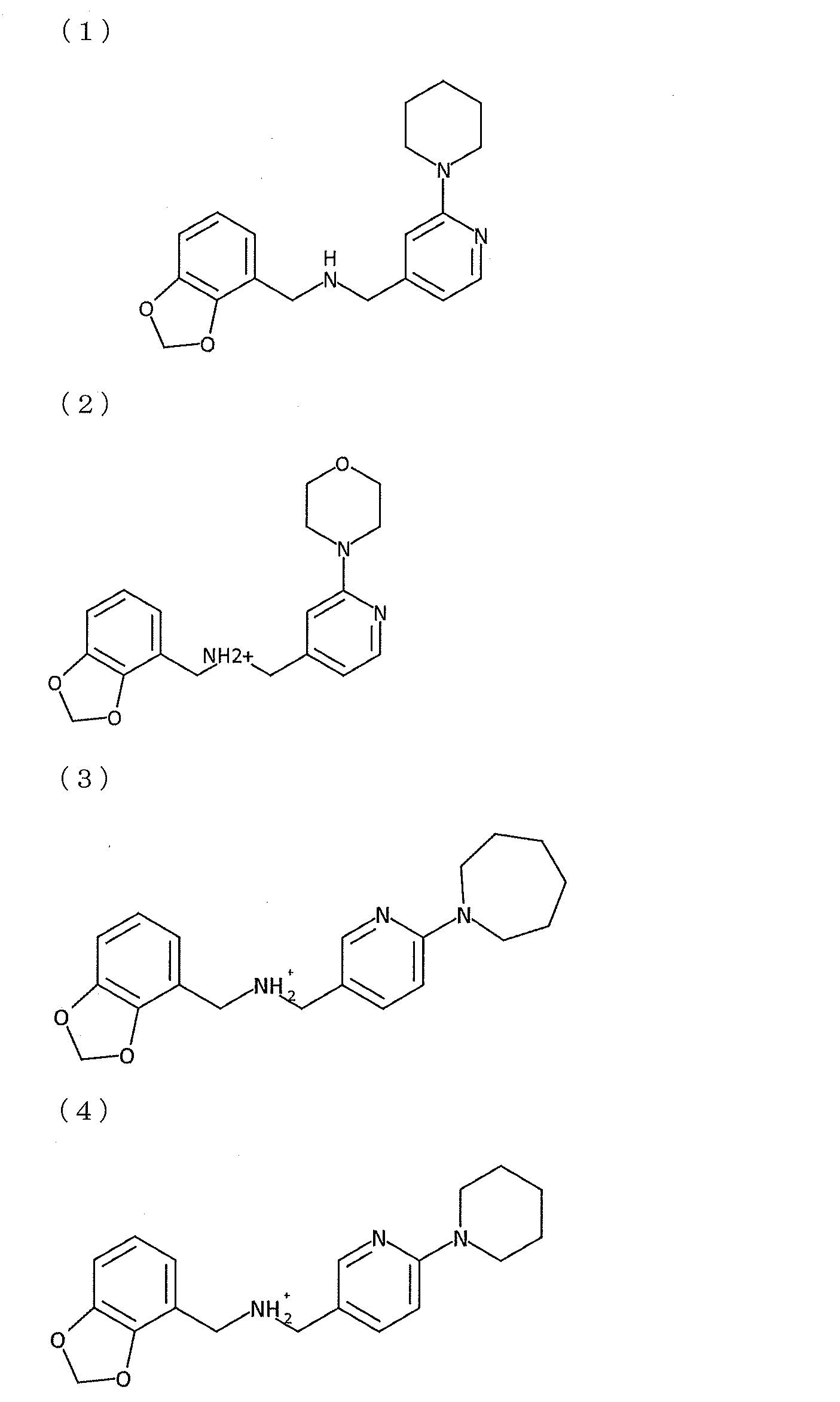
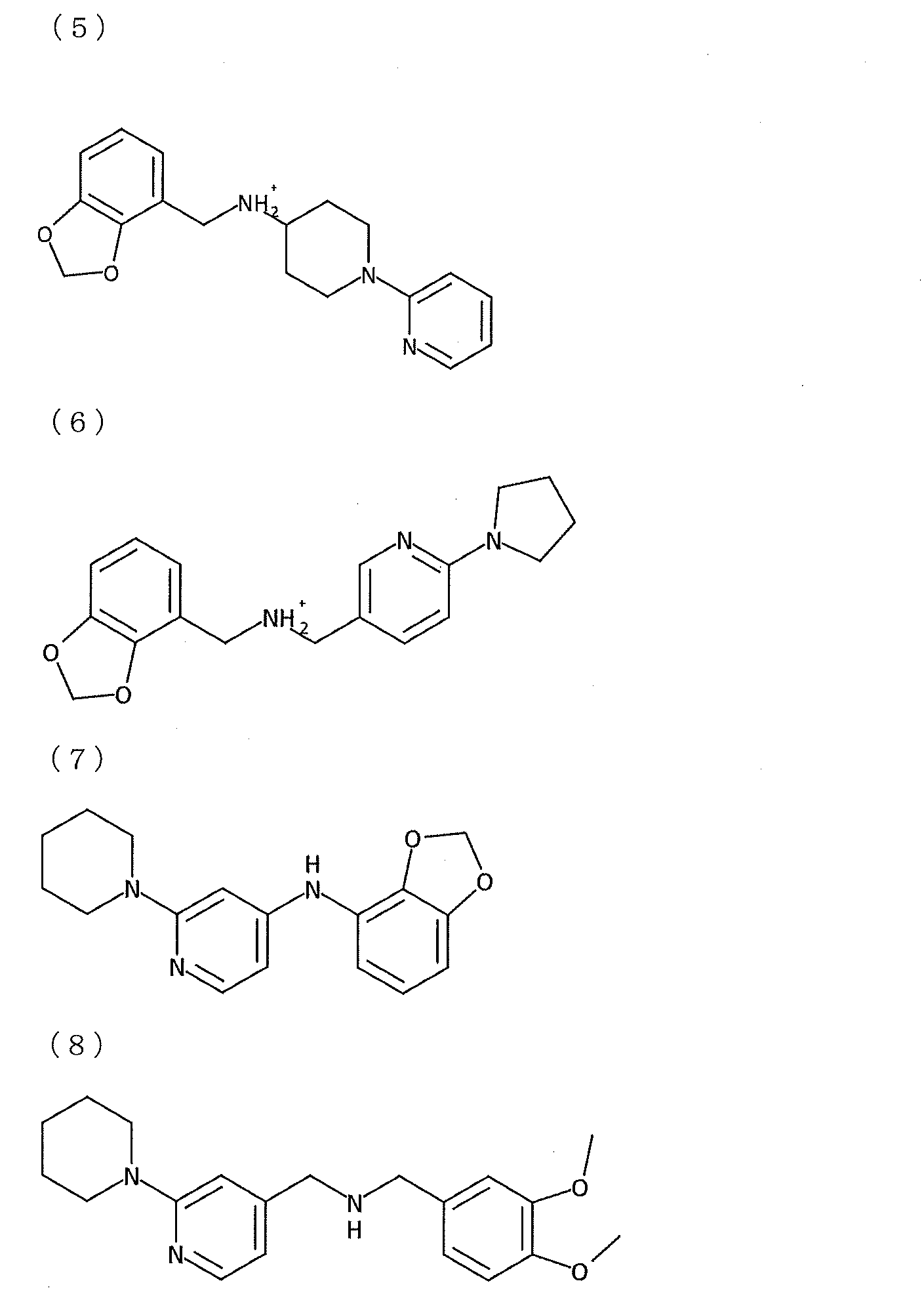
しかしながら、この排除は、それが以下で詳細に説明するようなこれらの特定の化合物の使用に関する限り、適用されない。 However, this exclusion does not apply insofar as it concerns the use of these specific compounds as described in detail below.
特に好ましいのは、表1に示す化合物から成る群から選択される一般式(I)または一般式(II)の生理的冷却剤である。 Particular preference is given to physiological cooling agents of general formula (I) or general formula (II) selected from the group consisting of the compounds shown in Table 1.
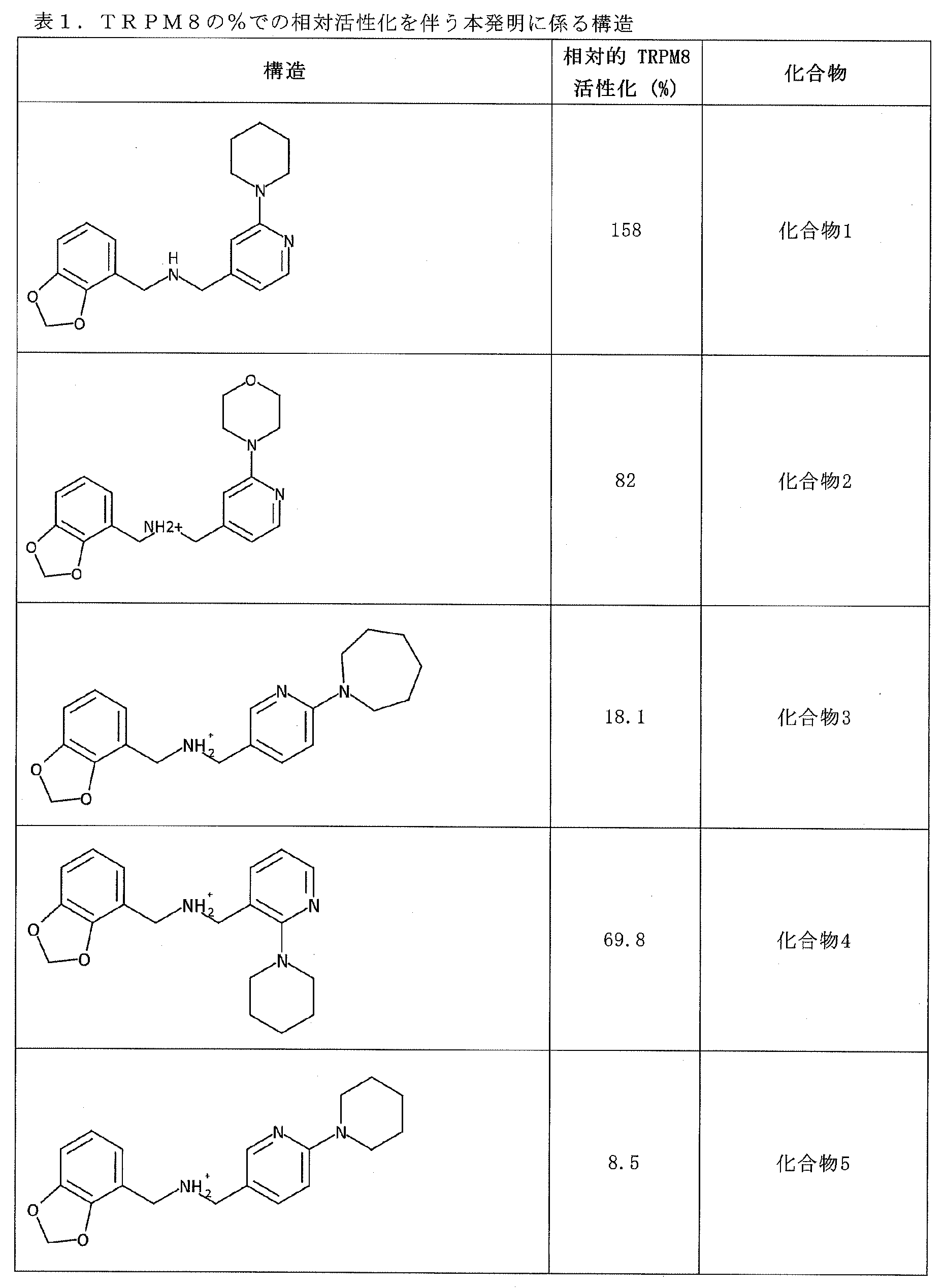
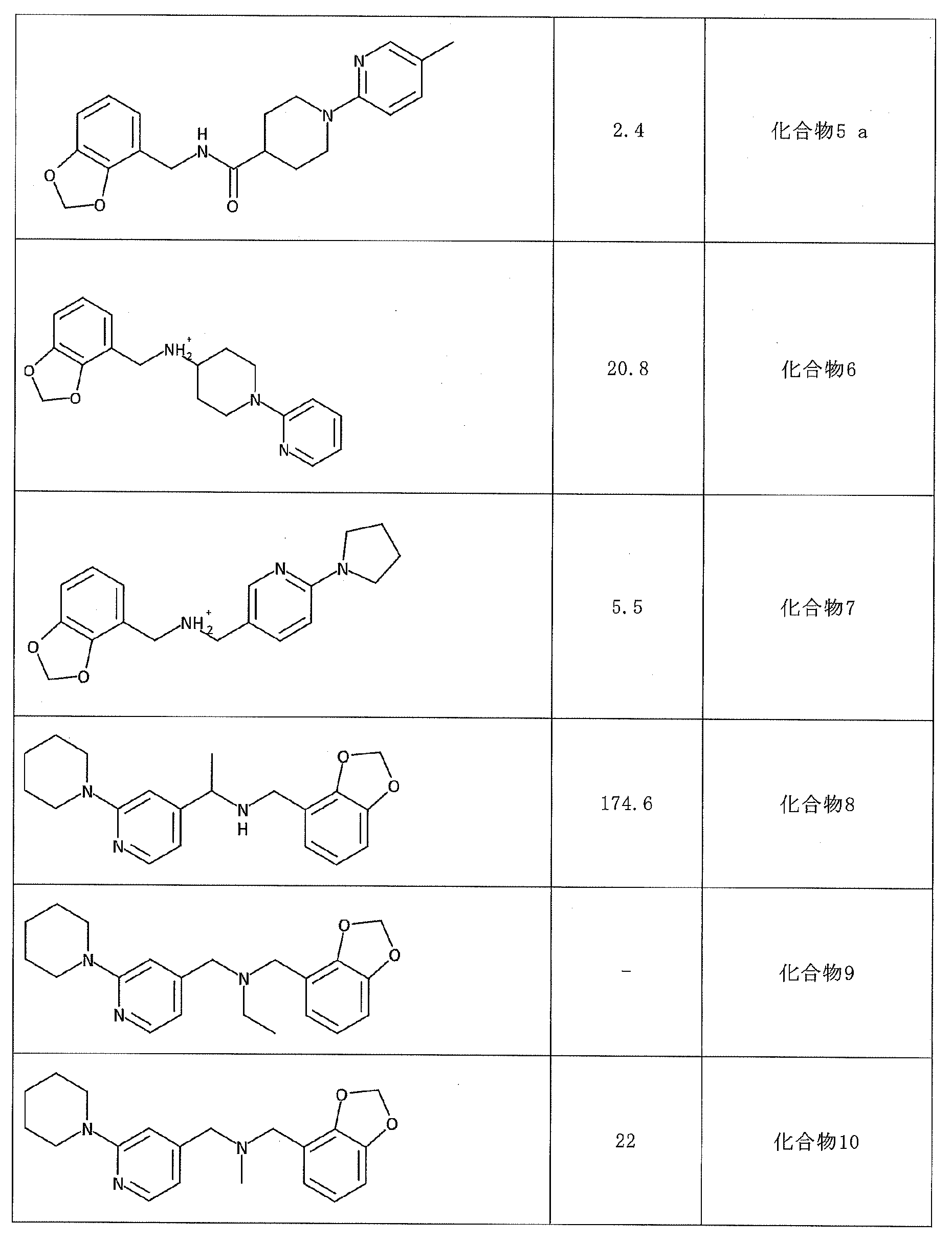

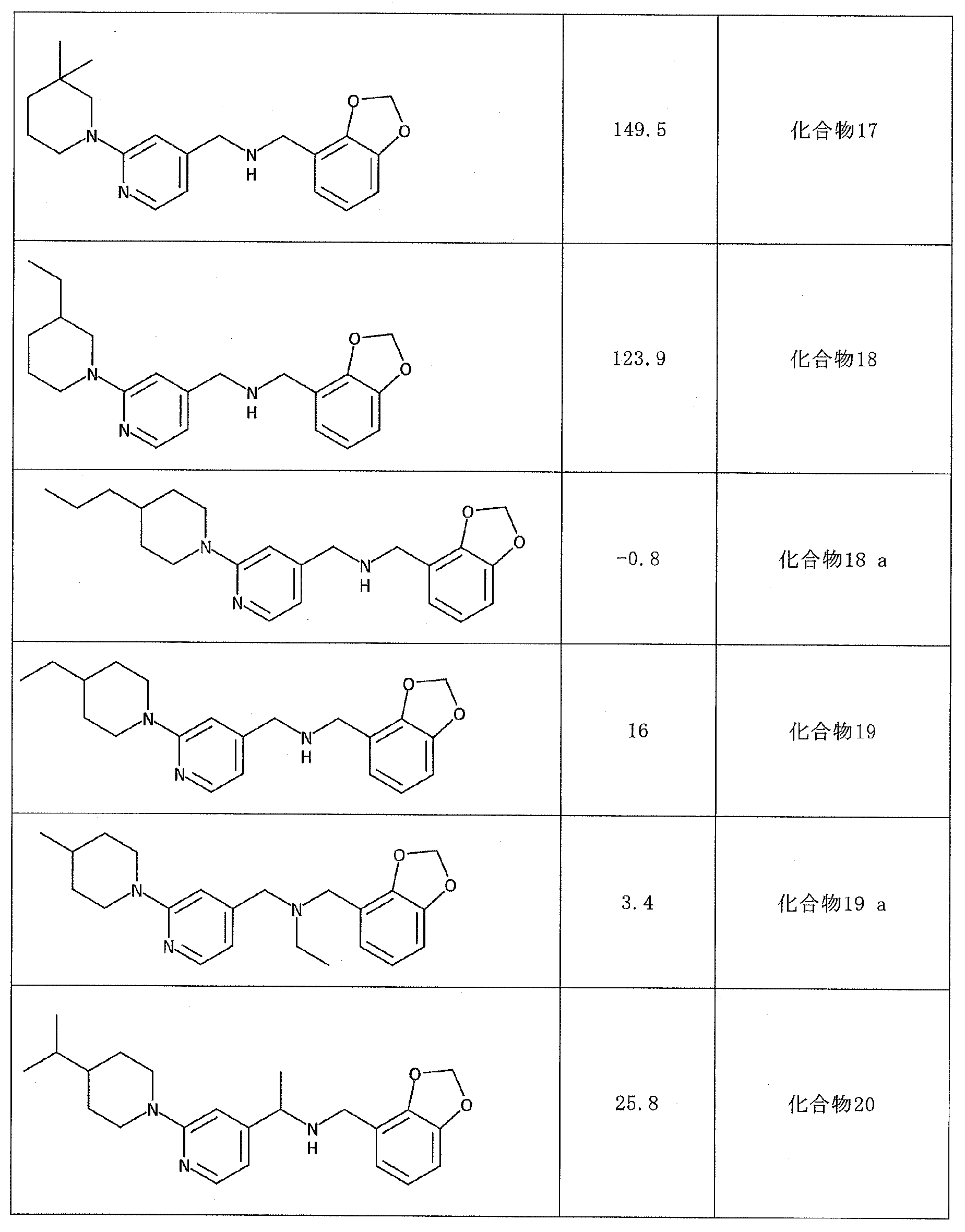
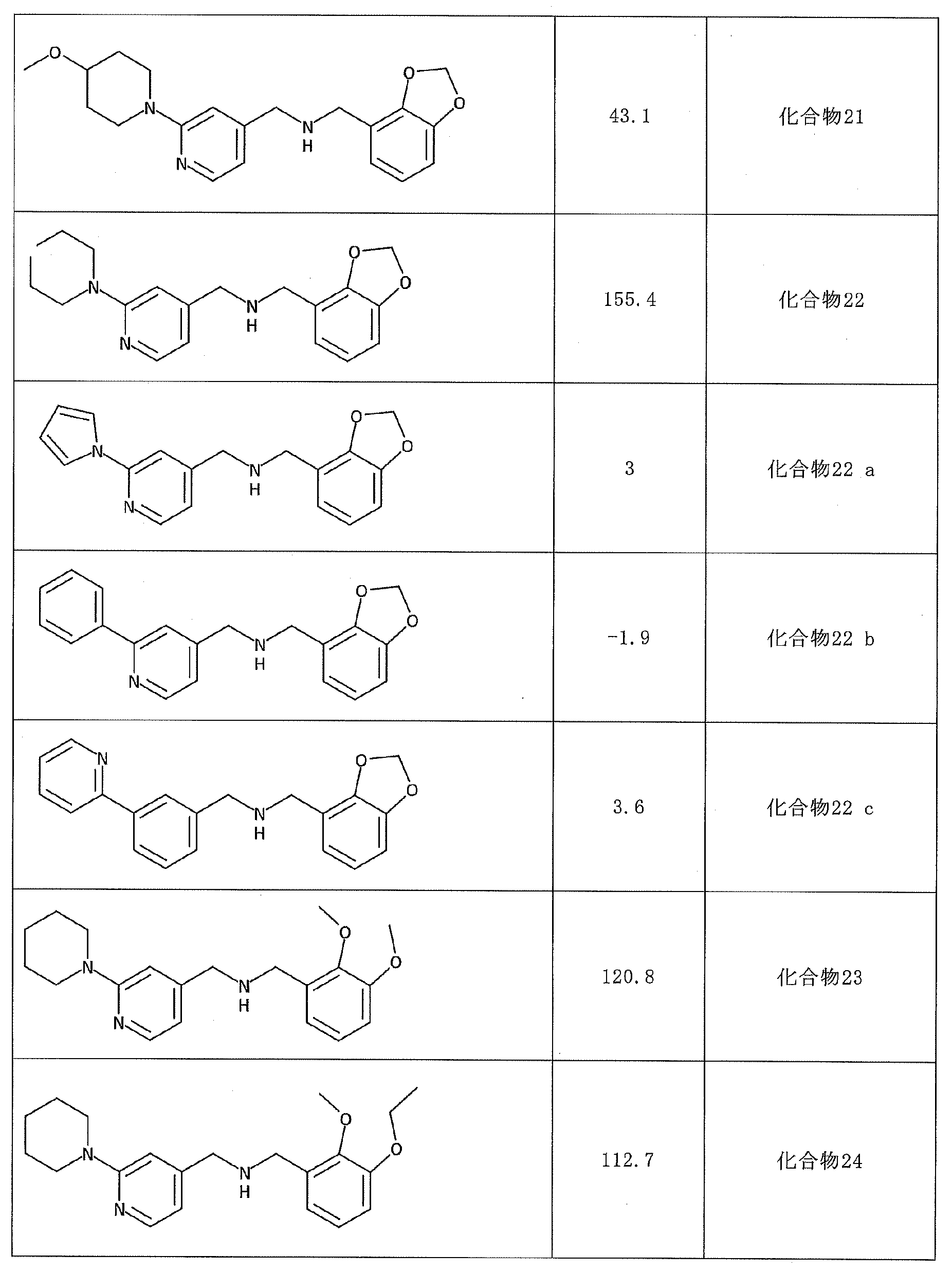


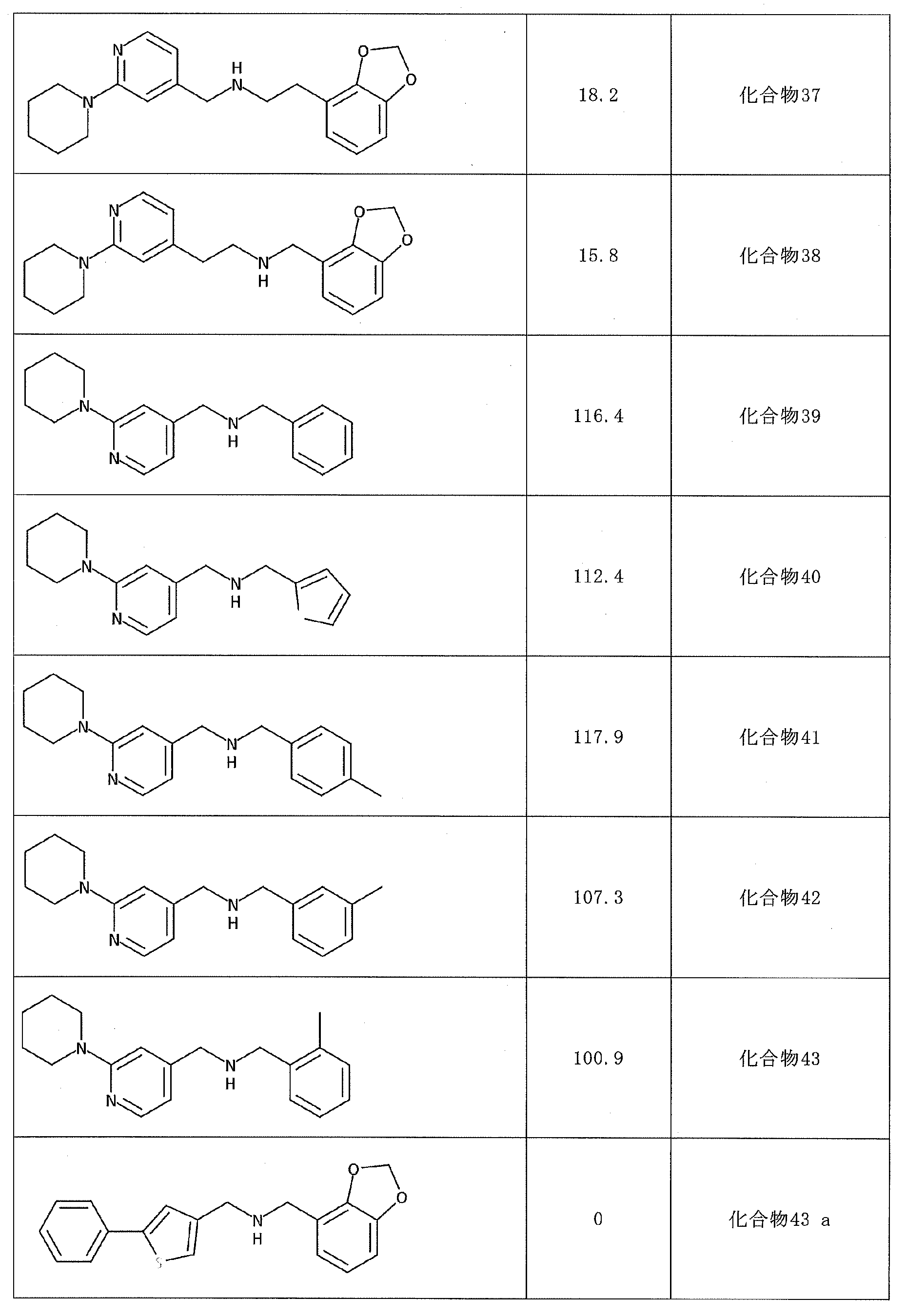
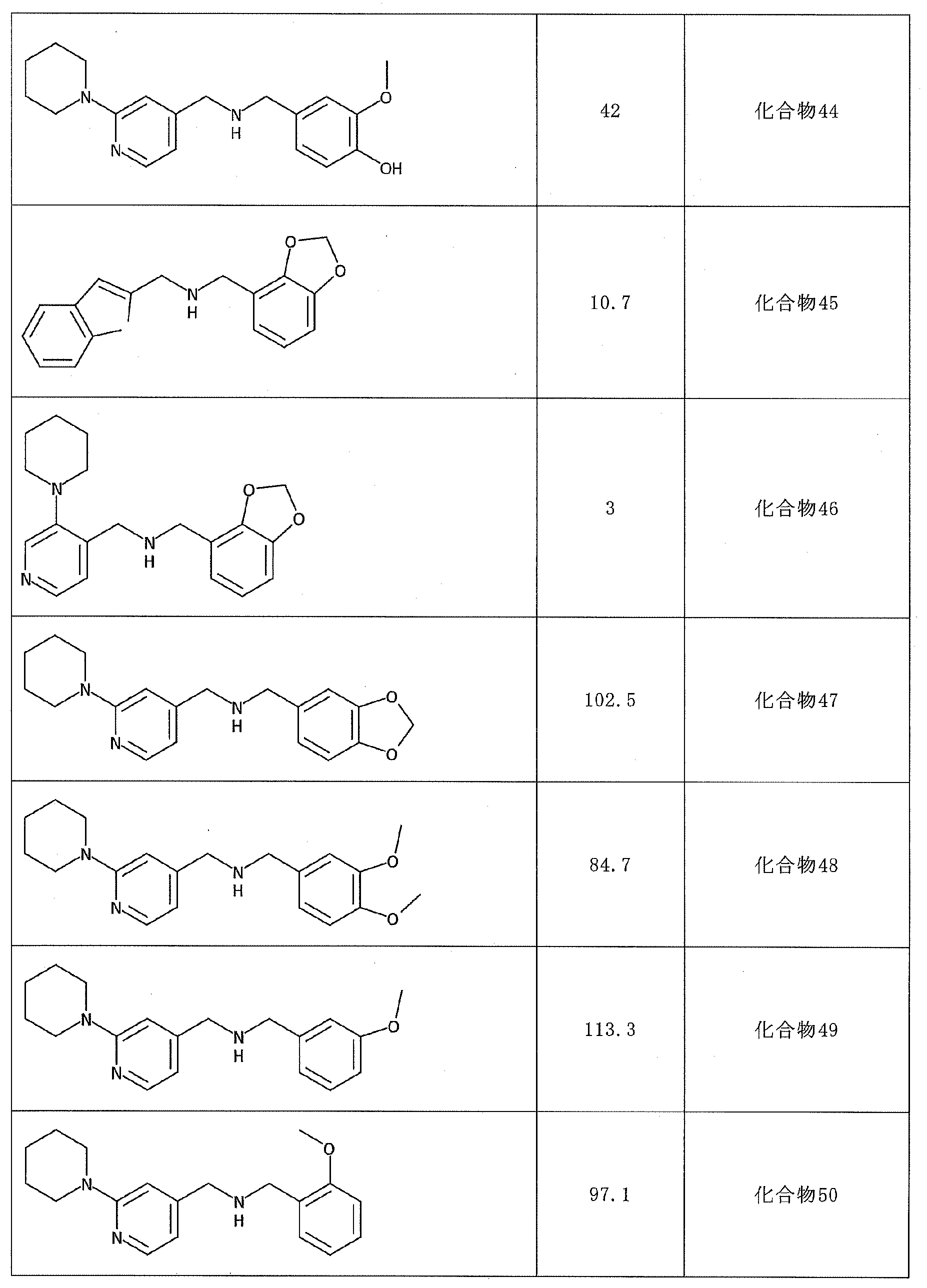
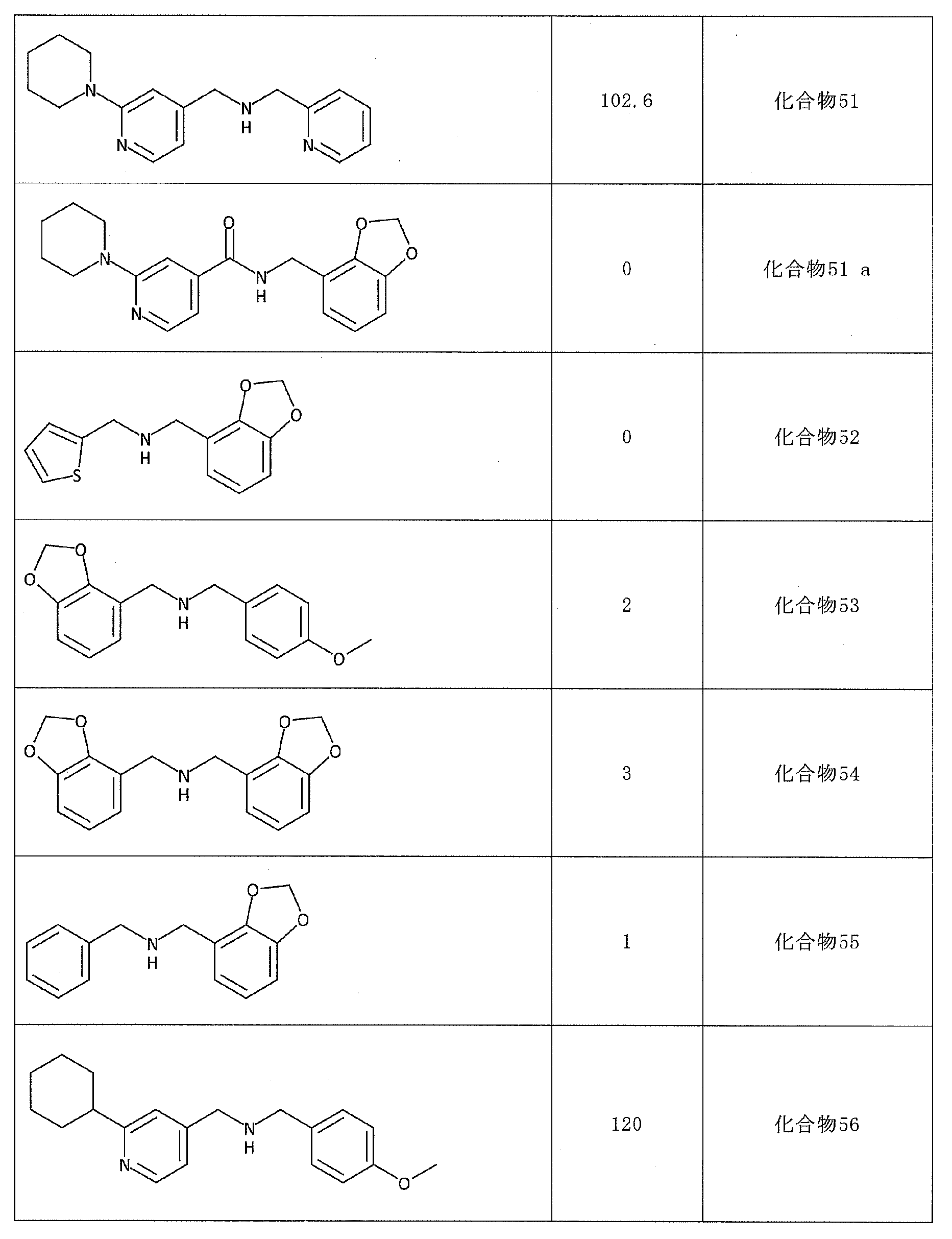
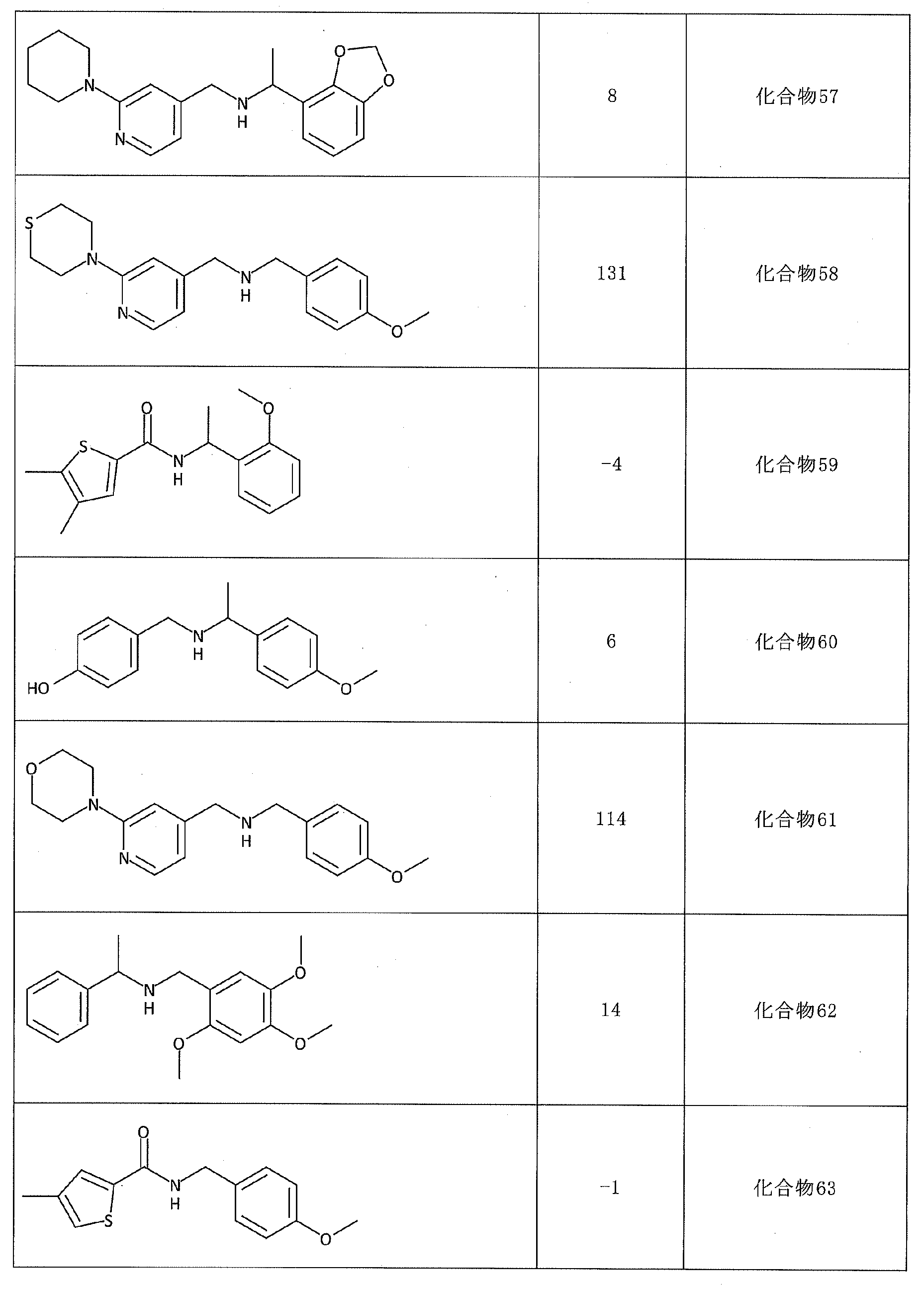
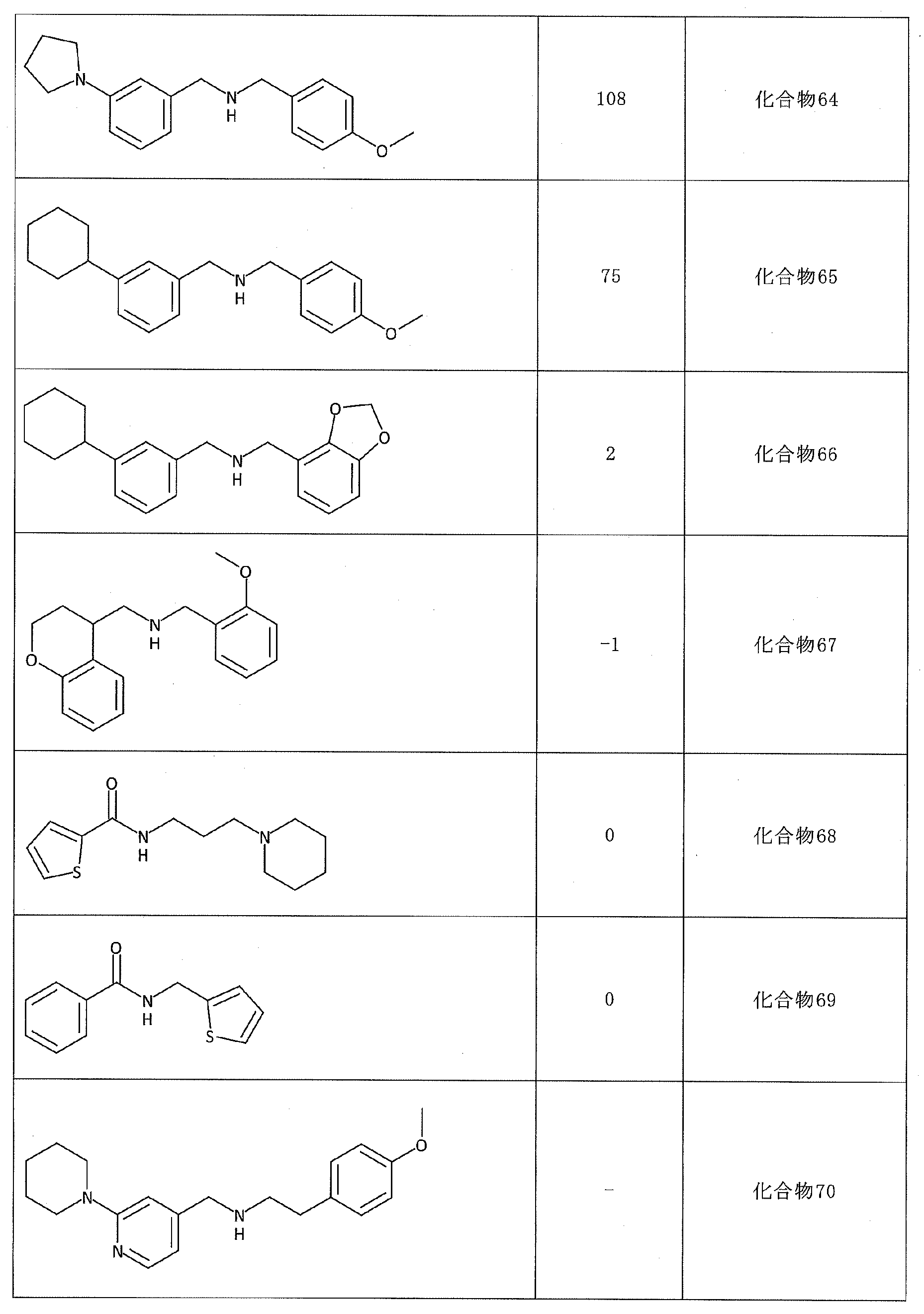
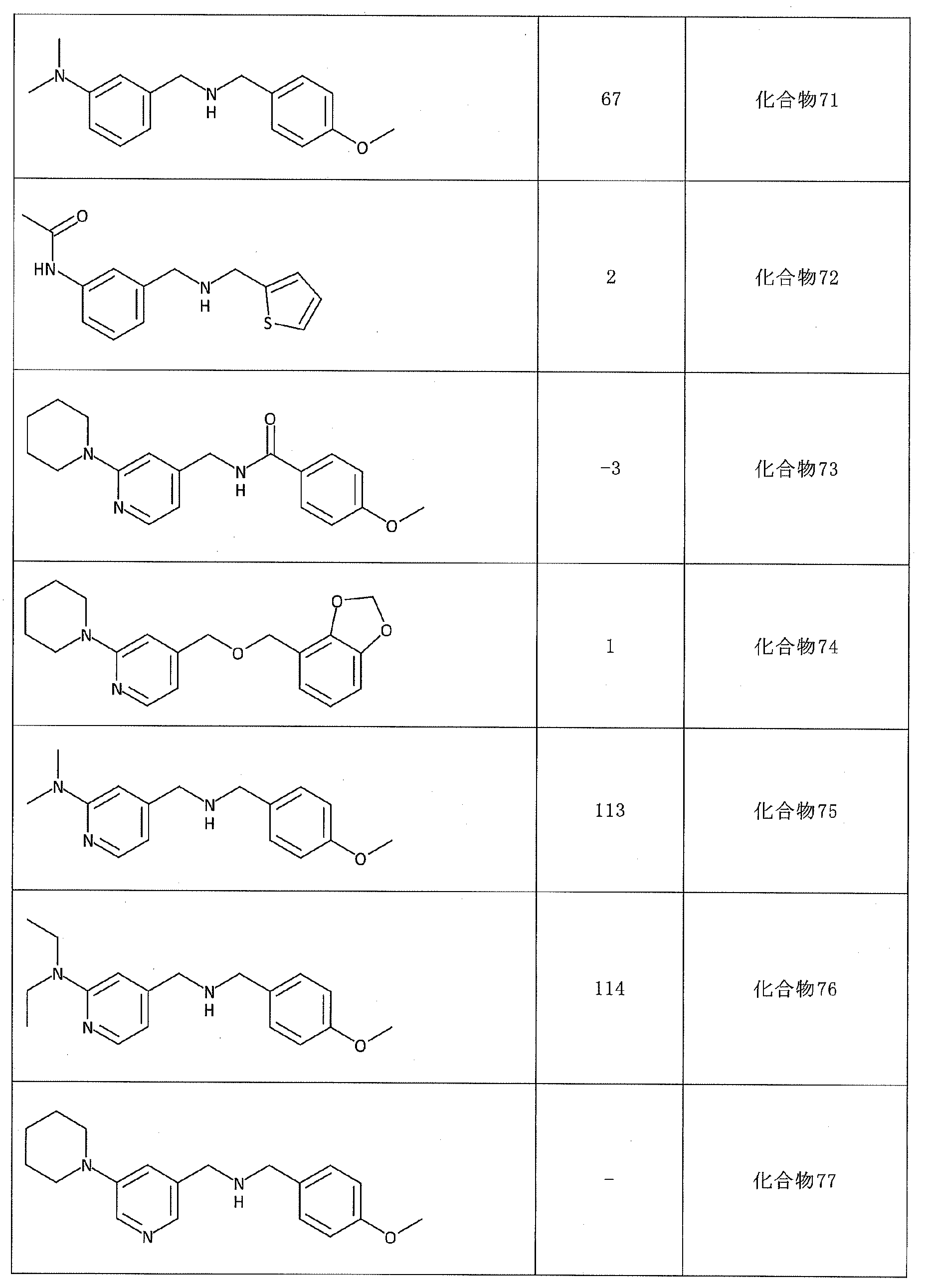
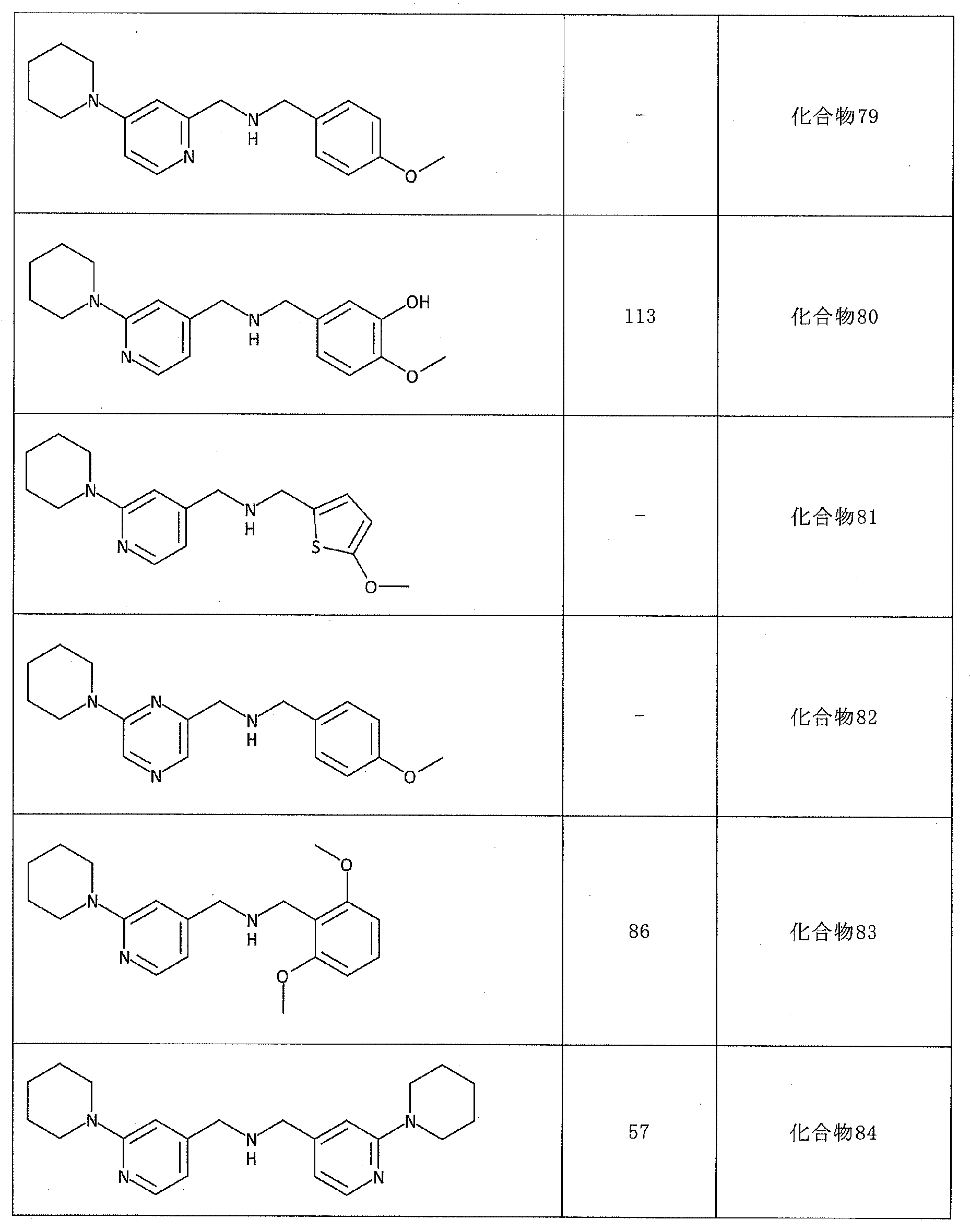
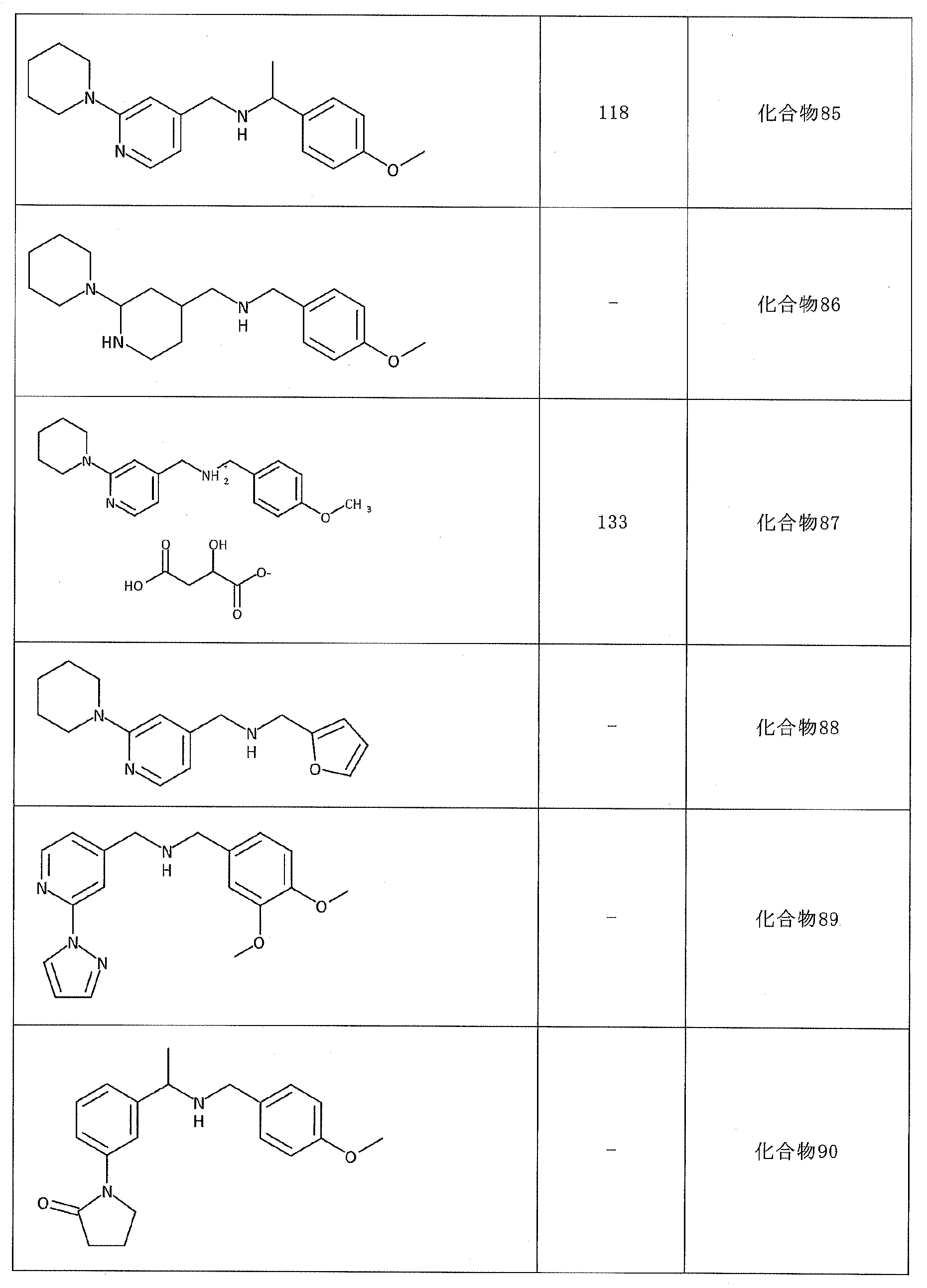
特に化合物1、2、4、8、11、12、13、14、15、16、17、18、22、23、24、25、26、27、29、39、40、41、42、43、47、48、49、50、51、56、58、61、64、65、71、75、76、80、83、84、85及び87ならびにさらに好ましくは化合物1、8、11、12、13、14、15、16、17、18、22、23、24、27、39、40、41、42、43、47、49、51、56、58、61、64、75、76、80、85及び87ならびに特に好ましくは化合物1、8、11、13、14、16、17、18、22、23、24、27、39、40、41、49、56、58、61、75、76、80、85及び87。
Especially compounds 1, 2, 4, 8, 11, 12, 13, 14, 15, 16, 17, 18, 22, 23, 24, 25, 26, 27, 29, 39, 40, 41, 42, 43, 47, 48, 49, 50, 51, 56, 58, 61, 64, 65, 71, 75, 76, 80, 83, 84, 85 and 87 and more preferably compounds 1, 8, 11, 12, 13, 14, 15, 16, 17, 18, 22, 23, 24, 27, 39, 40, 41, 42, 43, 47, 49, 51, 56, 58, 61, 64, 75, 76, 80, 85 and 87 and particularly preferably compounds 1, 8, 11, 13, 14, 16, 17, 18, 22, 23, 24, 27, 39, 40, 41, 49, 56, 58, 61, 75, 76, 80, 85 and 87.
表1に列挙されている一般式(I)または(II)に係る冷却剤は、中性の非荷電形態、または上記で詳細に記載されたような無機もしくは有機の酸、一価もしくは多価のカルボン酸との酸付加塩のような塩の形態でのいずれかで存在する。この点で、前述したことがここでも同様に適用される。 The refrigerants according to the general formula (I) or (II) listed in Table 1 may be in neutral, uncharged form or in inorganic or organic acids, monovalent or polyhydric, as described in detail above. It exists either in the form of a salt, such as an acid addition salt with a carboxylic acid. In this respect, what has been said above applies here as well.
表1に係る冷却剤は立体異性体として純粋な形態で、または異なる立体異性体の混合物として存在することができ、その結果、この方法で製剤にて使用することができる。 The cooling agents according to Table 1 can be present in stereoisomerically pure form or as a mixture of different stereoisomers and can therefore be used in formulations in this way.
驚くべきことに、本発明の化合物は特に高いTRPM8活性化を示すので冷却剤として見事に適合している。 Surprisingly, the compounds of the invention exhibit particularly high TRPM8 activation and are therefore well suited as coolants.
最も好ましい冷却剤、すなわち、特に効率的で強力なTRPM8活性化、すなわち、低適用率にて効率的で強力な冷却効果を持つ冷却剤は、化合物1、2、4、8、11、12、13、14、15、16、17、18、22、23、24、25、26、27、29、39、40、41、42、43、47、48、49、50、51、56、58、61、64、65、71、75、76、80、83、84、85及び87(TRPM8活性化≧50%)ならびに特に化合物1、8、11、12、13、14、15、16、17、18、22、23、24、27、39、40、41、42、43、47、49、51、56、58、61、64、75、76、80、85及び87(TRPM8活性化≧100%)である。特に好ましいのは、並外れて高いTRPM8活性(TRPM8活性化≧110%)を示す化合物1、8、11、13、14、16、17、18、22、23、24、27、39、40、41、49、56、58、61、75、76、80、85及び87である。 The most preferred coolants, i.e. those with particularly efficient and strong TRPM8 activation, i.e., efficient and strong cooling effect at low application rates, are compounds 1, 2, 4, 8, 11, 12, 13, 14, 15, 16, 17, 18, 22, 23, 24, 25, 26, 27, 29, 39, 40, 41, 42, 43, 47, 48, 49, 50, 51, 56, 58, 61, 64, 65, 71, 75, 76, 80, 83, 84, 85 and 87 (TRPM8 activation ≧50%) and especially compounds 1, 8, 11, 12, 13, 14, 15, 16, 17, 18, 22, 23, 24, 27, 39, 40, 41, 42, 43, 47, 49, 51, 56, 58, 61, 64, 75, 76, 80, 85 and 87 (TRPM8 activation ≧100% ). Particularly preferred are compounds 1, 8, 11, 13, 14, 16, 17, 18, 22, 23, 24, 27, 39, 40, 41 that exhibit exceptionally high TRPM8 activity (TRPM8 activation ≧110%). , 49, 56, 58, 61, 75, 76, 80, 85 and 87.
傑出したTRPM8の相対的活性化のために、化合物8(174.6%のTRPM8活性)、27(129.7%のTRPM8活性化)及び39(116.4%のTRPM8活性化)は最も好ましい。 Due to the outstanding relative activation of TRPM8, compounds 8 (174.6% TRPM8 activity), 27 (129.7% TRPM8 activation) and 39 (116.4% TRPM8 activation) are the most preferred. .
加えて、n及びmが双方とも1である式(I)及び(II)の化合物は決定されたTRPM8活性に関して好ましいと思われる。 In addition, compounds of formula (I) and (II) in which n and m are both 1 appear to be preferred with respect to the determined TRPM8 activity.
一層さらに好ましいのは表2に示す化合物から成る群から選択される一般式(I)または(II)の生理的冷却剤である。 Even more preferred are physiological cooling agents of general formula (I) or (II) selected from the group consisting of the compounds shown in Table 2.
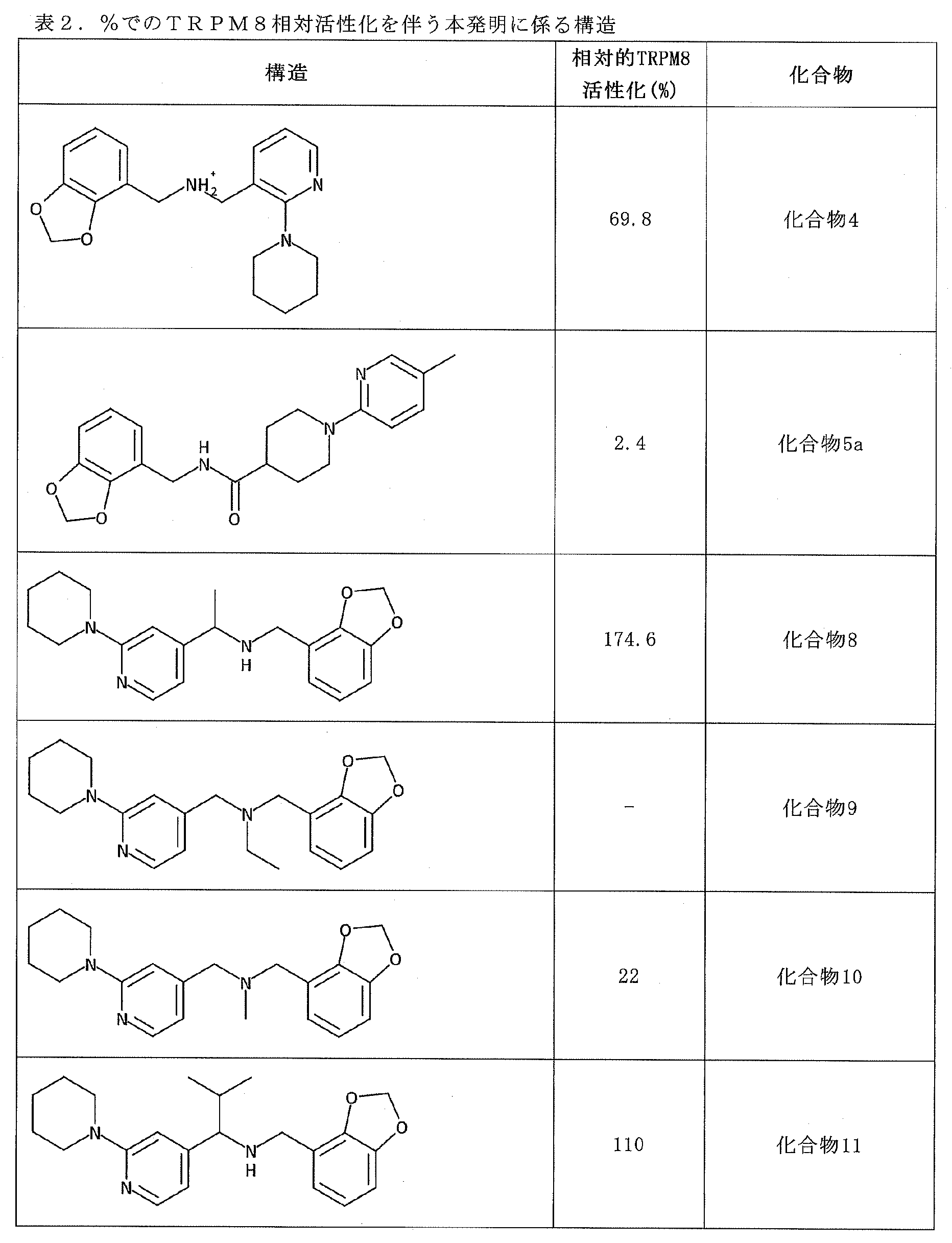
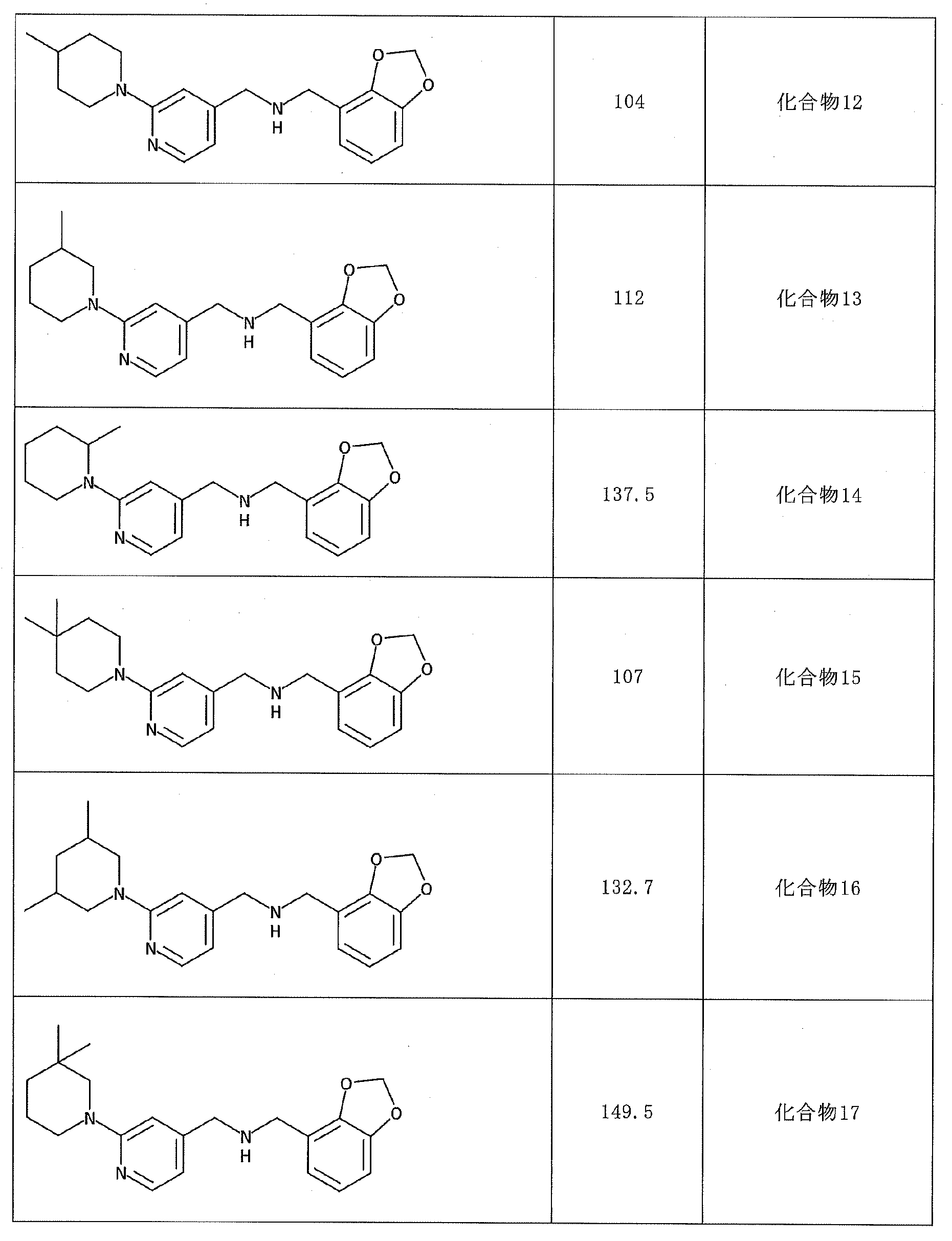
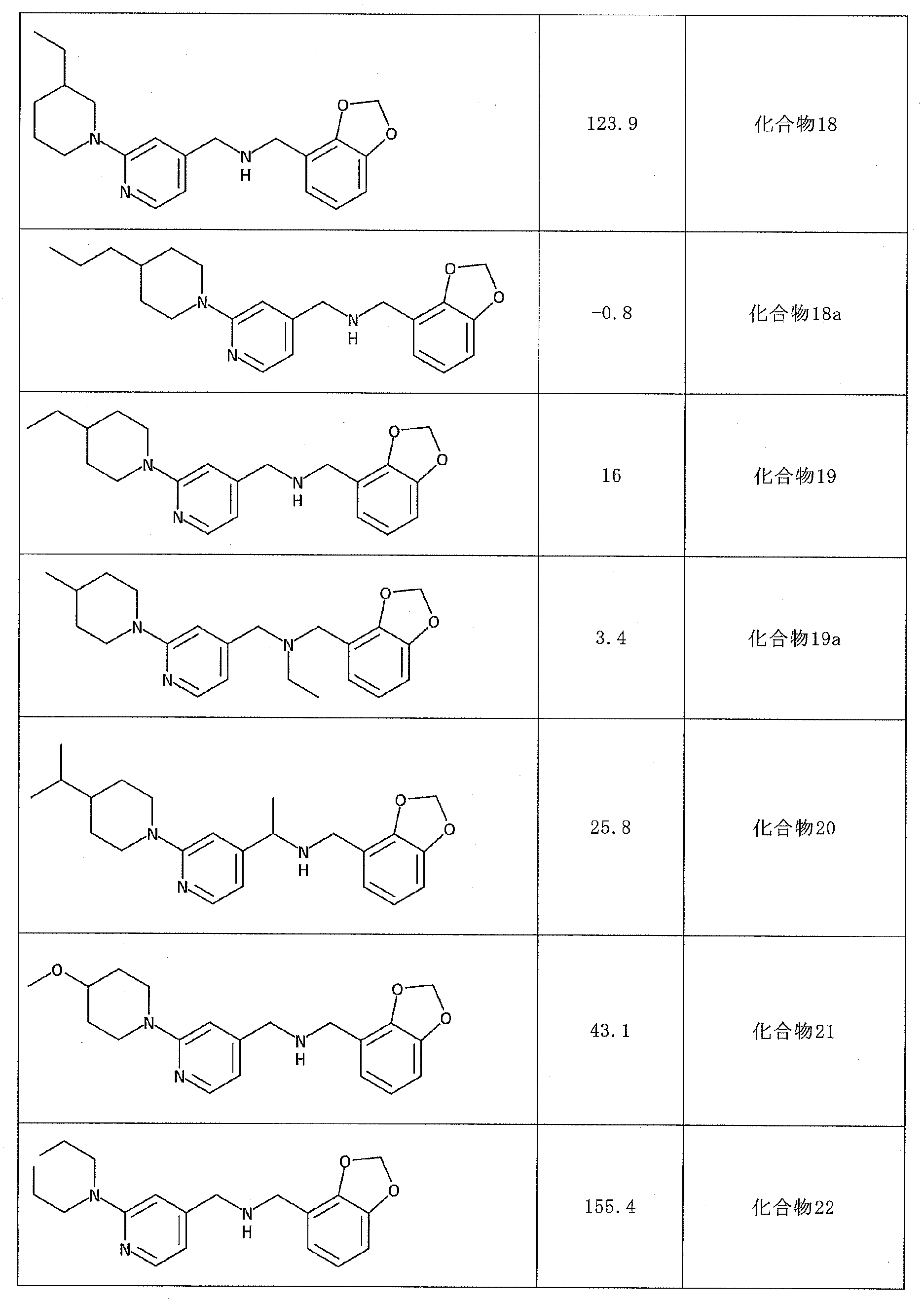

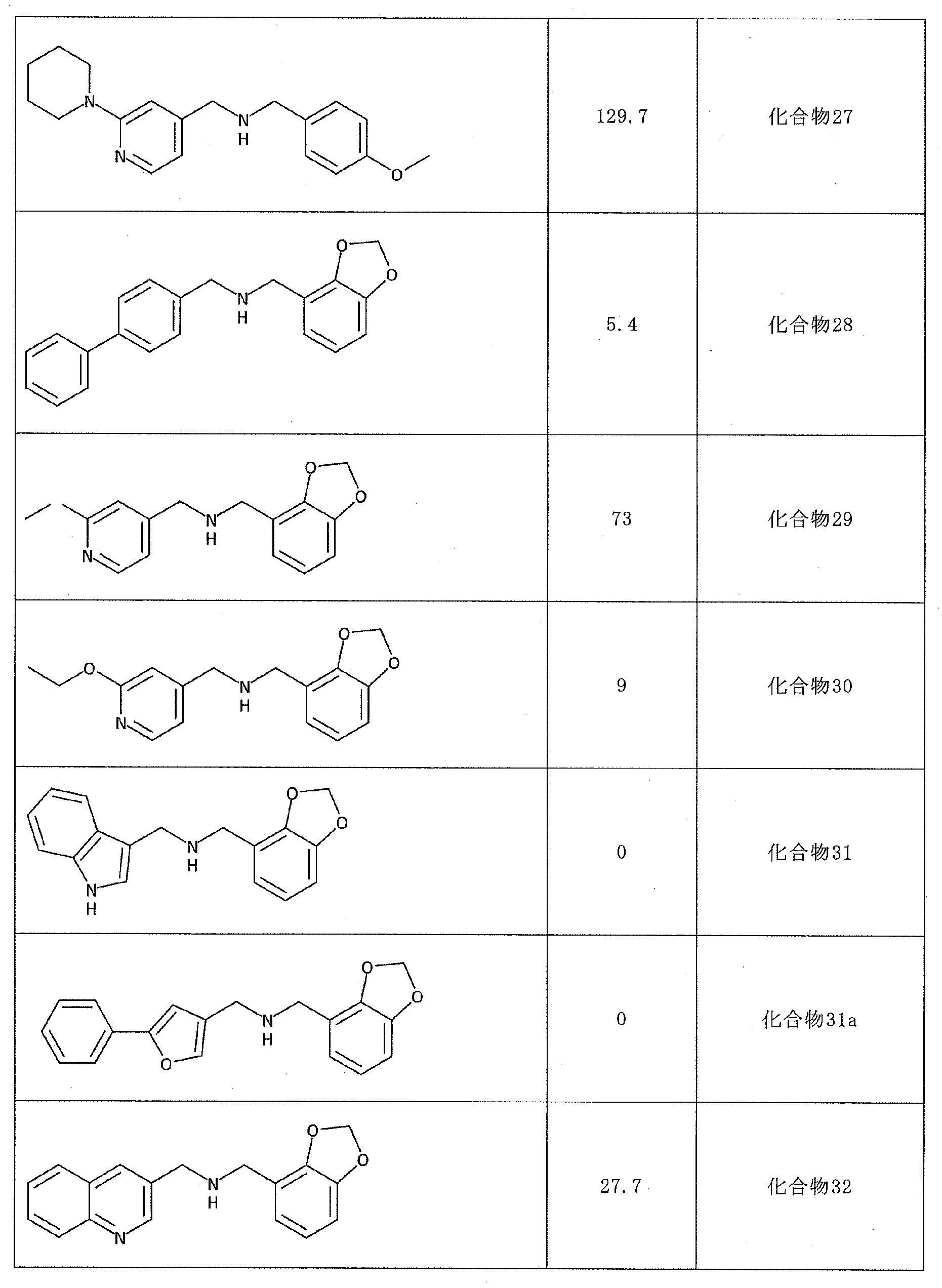
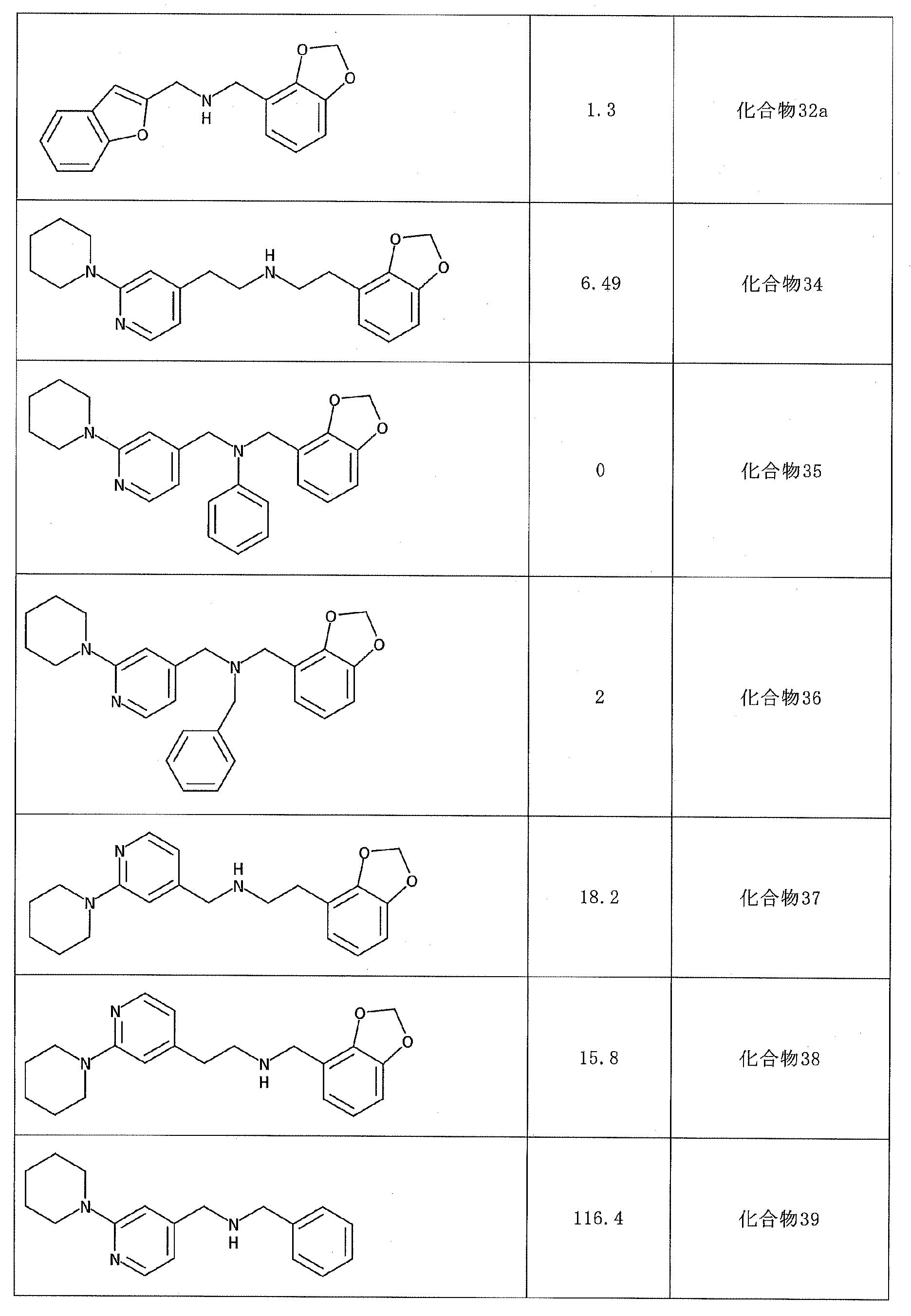
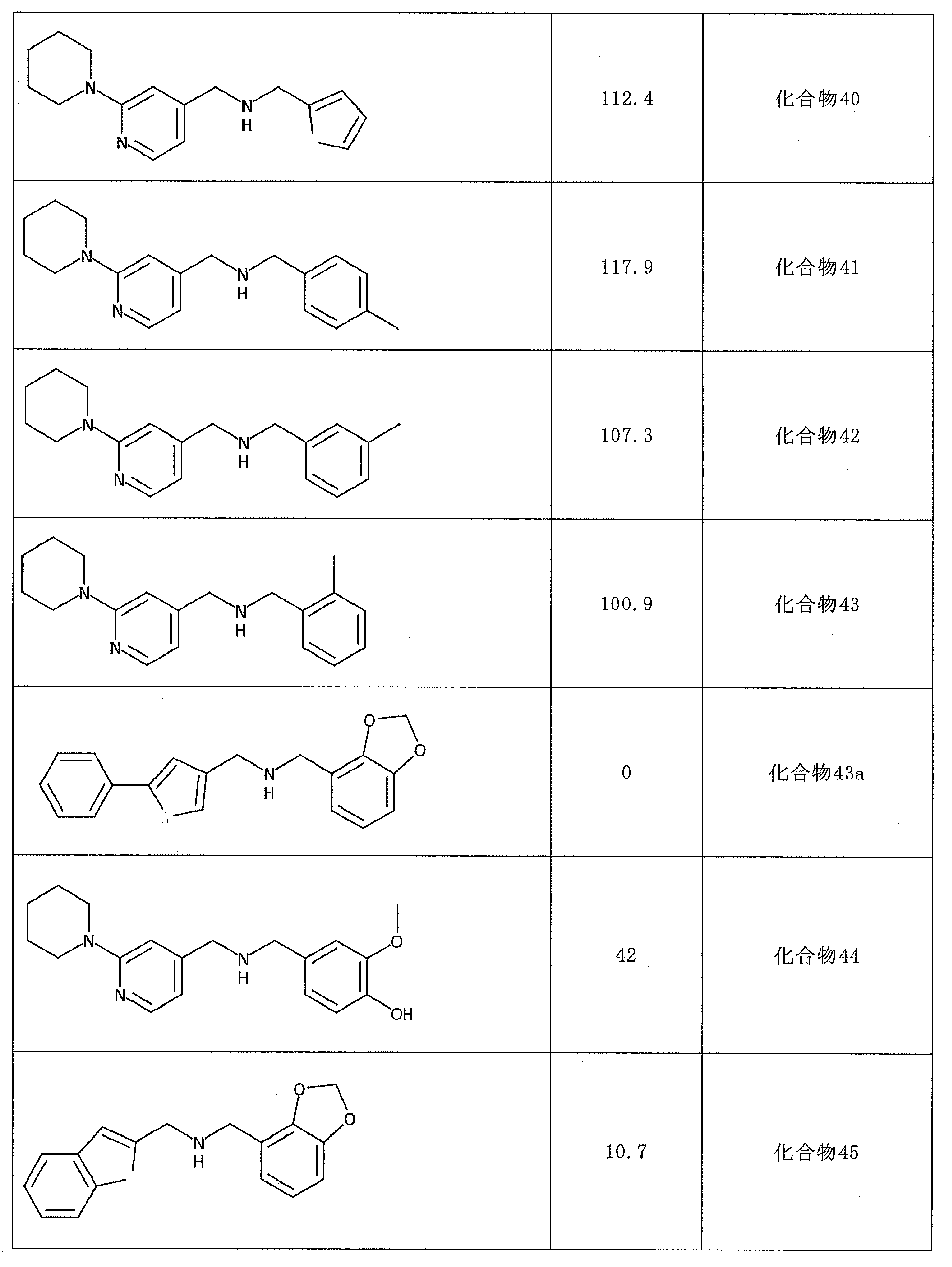
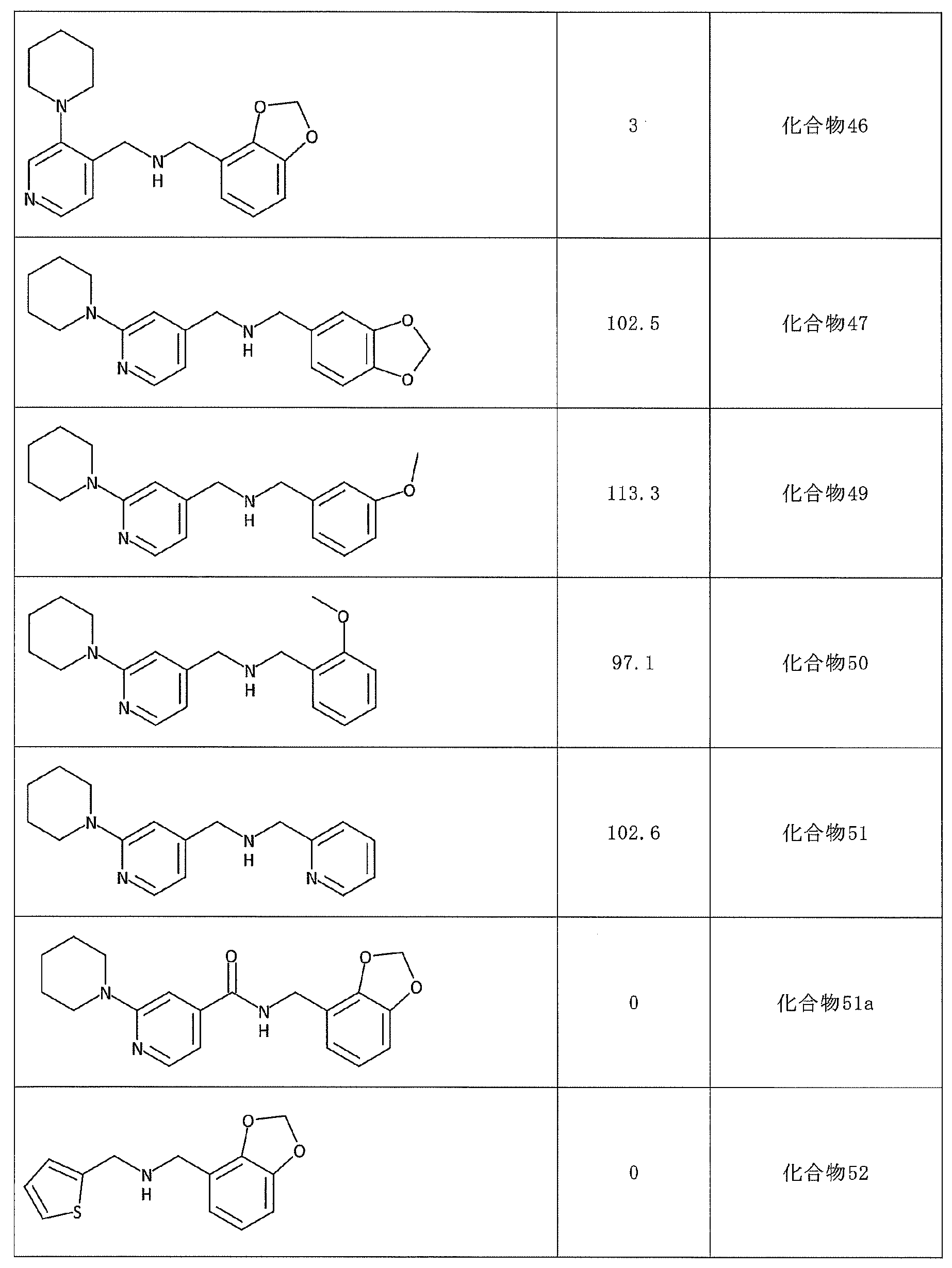
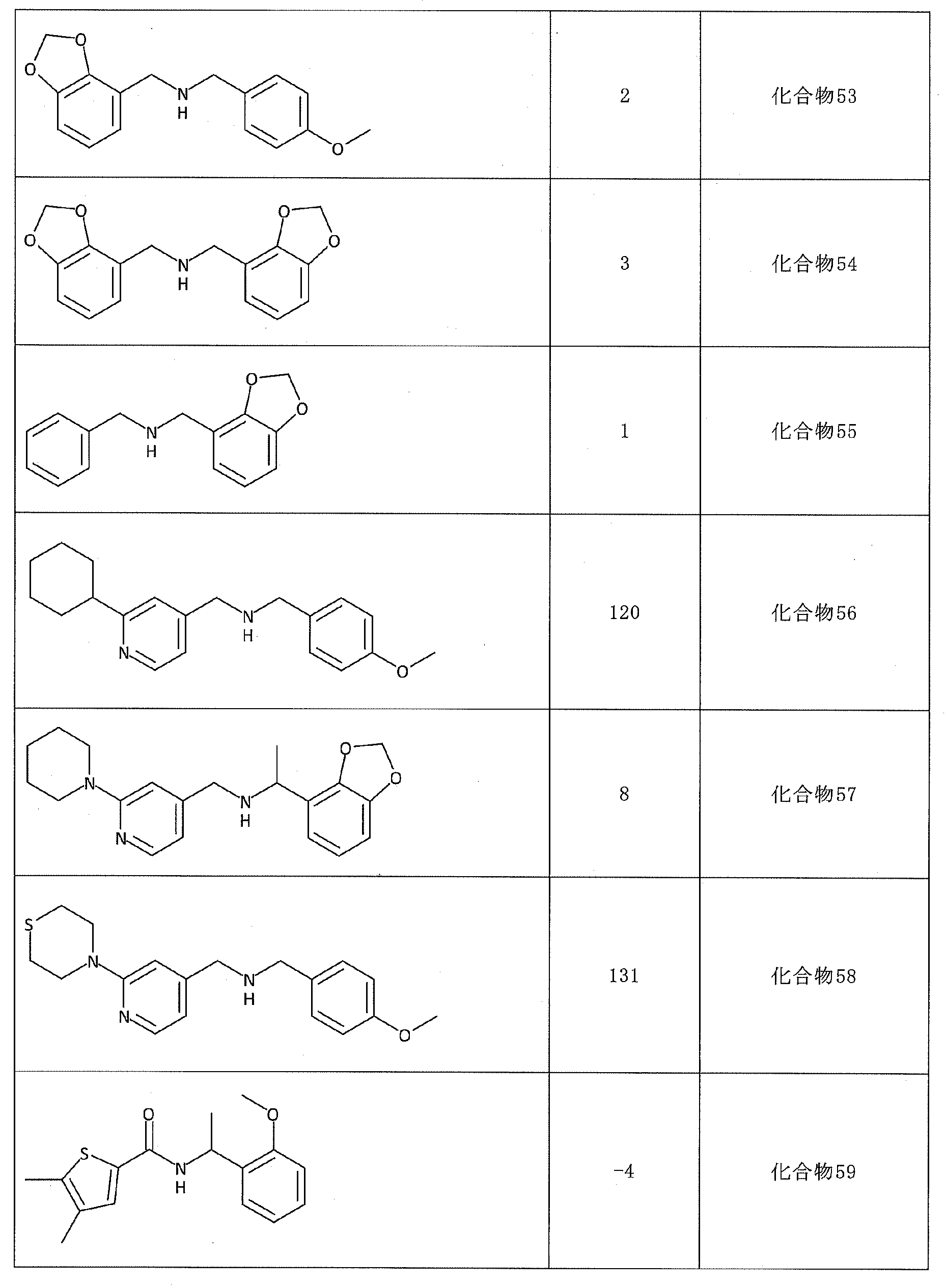
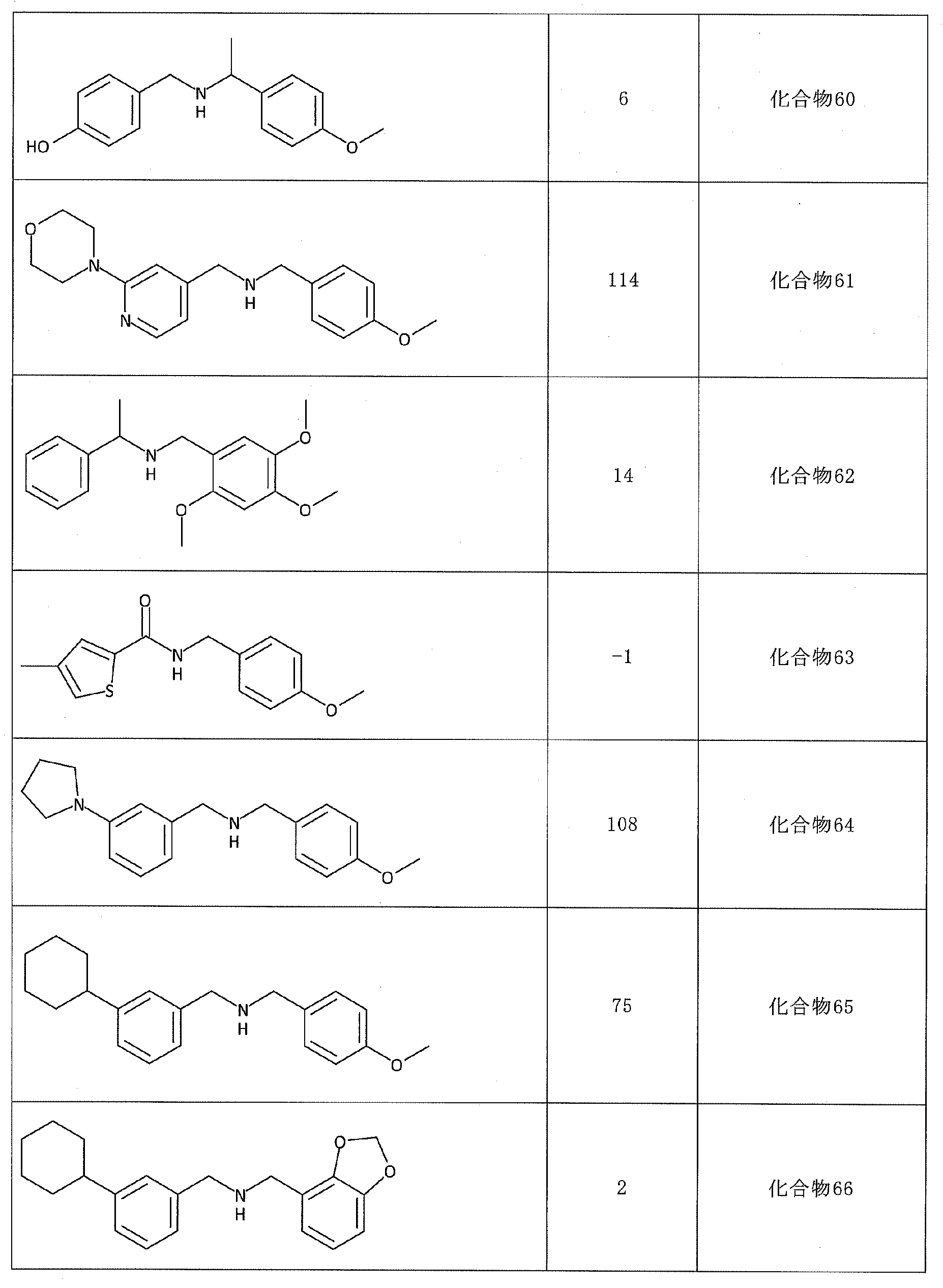
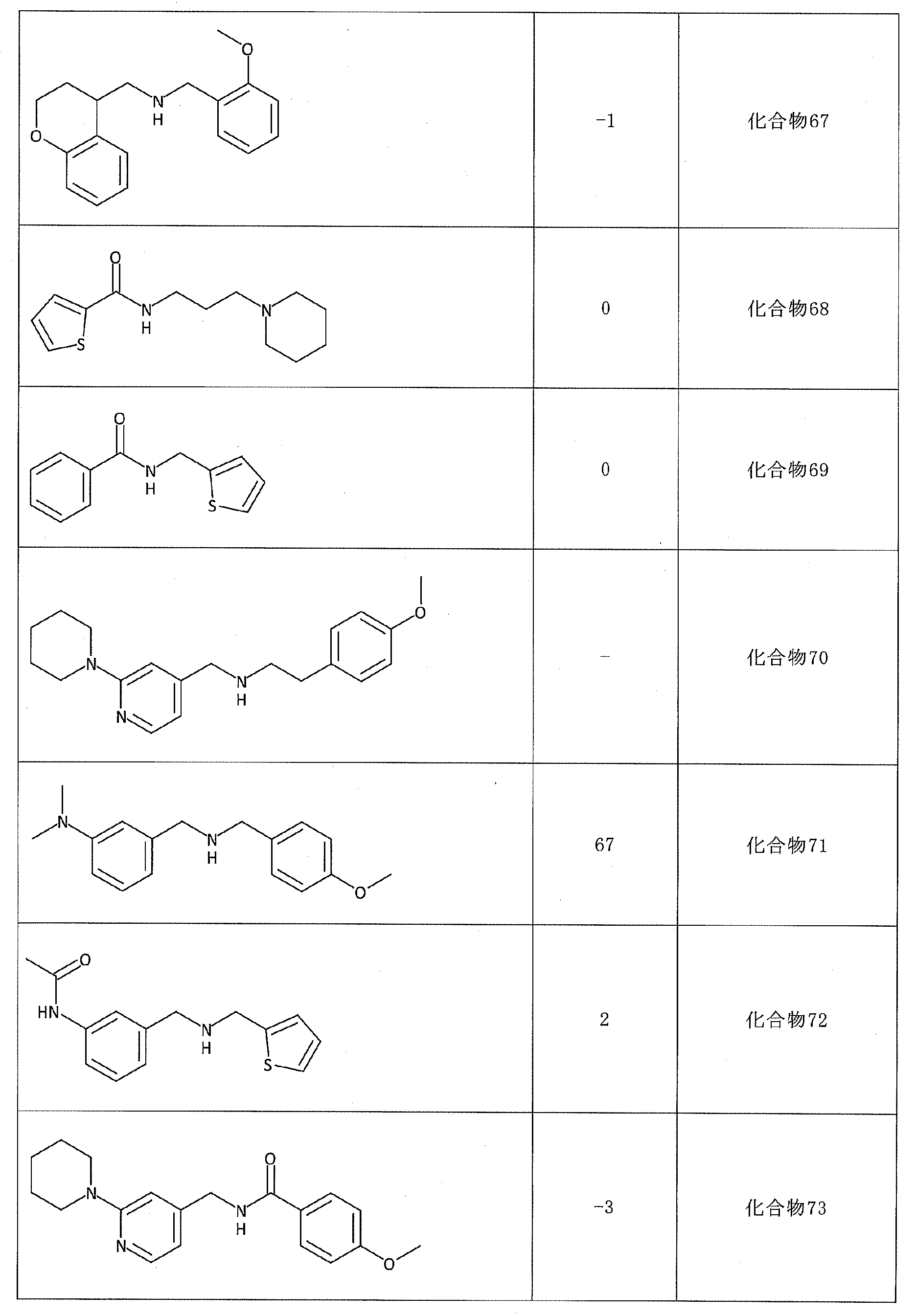

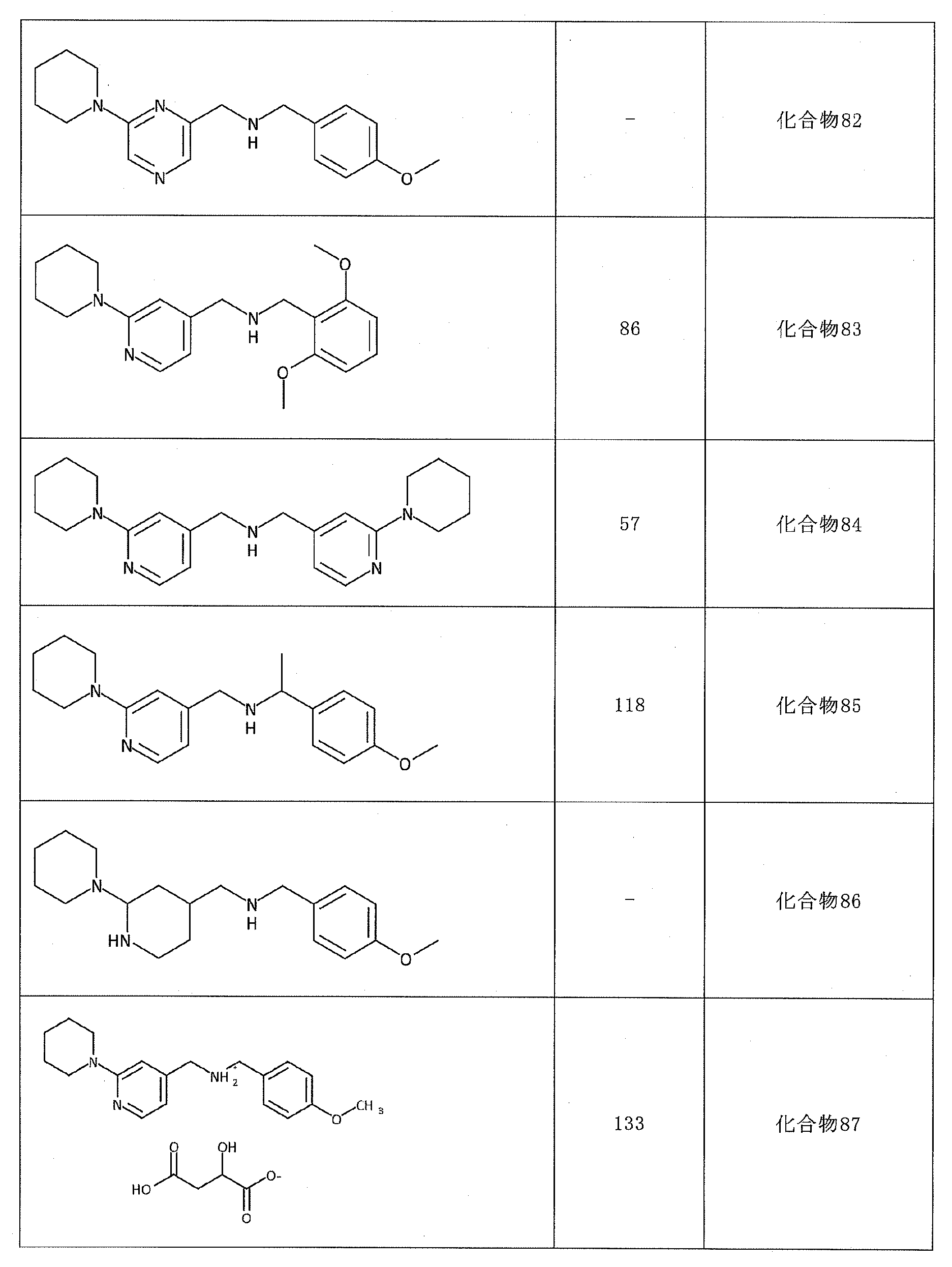
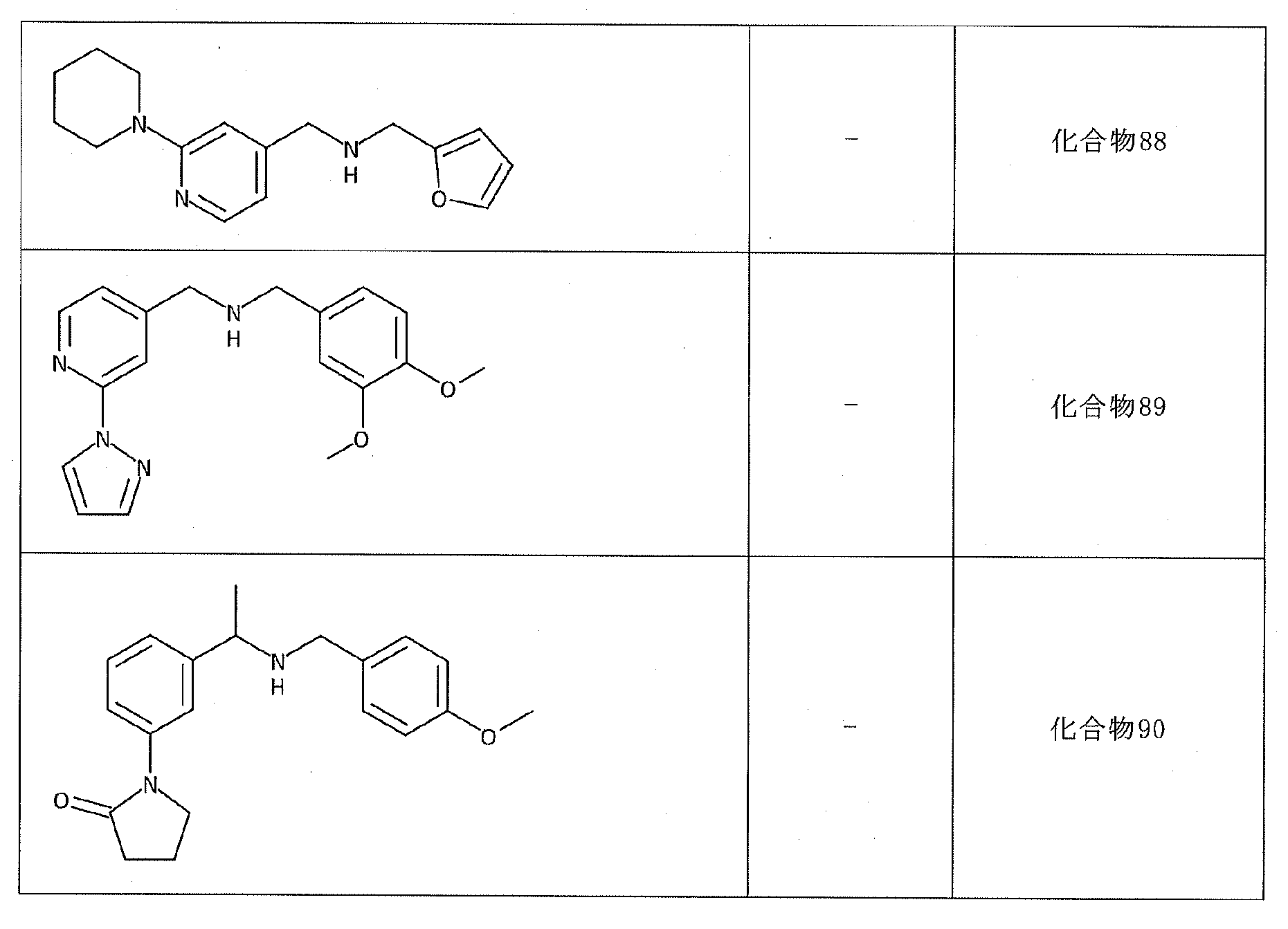
特に化合物4、8、11、12、13、14、15、16、17、18、22、23、24、25、26、27、29、39、40、41、42、43、47、49、50、51、56、58、61、64、65、71、75、76、80、83、84、85及び87(TRPM8活性≧50%)及びさらに好ましくは化合物8、11、12、13、14、15、16、17、18、22、23、24、27、39、40、41、42、43、47、49、51、56、58、61、64、75、76、80、85及び87(TRPM8活性≧100%)及び特に好ましくは化合物8、11、13、14、16、17、18、22、23、24、27、39、40、41、49、56、58、61、75、76、80、85及び87(TRPM8活性≧110%)。
Especially compounds 4, 8, 11, 12, 13, 14, 15, 16, 17, 18, 22, 23, 24, 25, 26, 27, 29, 39, 40, 41, 42, 43, 47, 49, 50, 51, 56, 58, 61, 64, 65, 71, 75, 76, 80, 83, 84, 85 and 87 (TRPM8 activity ≧50%) and more preferably compounds 8, 11, 12, 13, 14 , 15, 16, 17, 18, 22, 23, 24, 27, 39, 40, 41, 42, 43, 47, 49, 51, 56, 58, 61, 64, 75, 76, 80, 85 and 87 (TRPM8 activity ≧100%) and particularly preferably compounds 8, 11, 13, 14, 16, 17, 18, 22, 23, 24, 27, 39, 40, 41, 49, 56, 58, 61, 75, 76, 80, 85 and 87 (TRPM8 activity ≧110%).
表2に列挙されている一般式(I)または(II)に係る冷却剤は、中性の非荷電形態、または上記で詳細に記載されたような無機もしくは有機の酸、一価もしくは多価のカルボン酸との酸付加塩のような塩の形態でのいずれかで存在する。この点で、前述したことがここでも同様に適用される。 The refrigerants according to general formula (I) or (II) listed in Table 2 may be in neutral, uncharged form or in inorganic or organic acids, monovalent or polyhydric, as described in detail above. It exists either in the form of a salt, such as an acid addition salt with a carboxylic acid. In this respect, what has been said above applies here as well.
特に好ましいのは、一般式(I)または(II)にてR1が任意で置換されるフェニル基(アリール基)及び/または任意で置換されるチオフェニル基(ヘテロアリール基)及び/または任意で置換されるピリジニル基(ヘテロアリール基)及び/または任意で置換される1,3-ベンゾジオキソリル基であり、且つR7が任意で置換されるフェニル基(アリール基)及び/または任意で置換されるチオフェニル基(ヘテロアリール基)及び/または任意で置換されるピリジニル基(ヘテロアリール基)及び/または任意で置換される1,3-ベンゾジオキソリル基を表す化合物である。これらの化合物については、特に高いTRPM8活性及び感覚的な強力な冷却効果が決定されてもよい。非常に少量の適用でさえ、化合物は従来技術の化合物と比べて有意に高い冷却強度を示す。 In general formula (I) or (II), R1 is particularly preferably an optionally substituted phenyl group (aryl group) and/or an optionally substituted thiophenyl group (heteroaryl group) and/or an optionally substituted is a pyridinyl group (heteroaryl group) and/or an optionally substituted 1,3-benzodioxolyl group, and R7 is an optionally substituted phenyl group (aryl group) and/or an optionally substituted A compound representing a thiophenyl group (heteroaryl group), an optionally substituted pyridinyl group (heteroaryl group), and/or an optionally substituted 1,3-benzodioxolyl group. A particularly high TRPM8 activity and a strong sensory cooling effect may be determined for these compounds. Even at very low volume applications, the compounds exhibit significantly higher cooling intensity compared to prior art compounds.
そのTRPM8の相対活性化のために、化合物8(174.6%のTRPM8活性化)、27(129.7%のTRPM8活性化)及び39(116.4%のTRPM8活性化)は最も好ましい。 Due to their relative activation of TRPM8, compounds 8 (174.6% TRPM8 activation), 27 (129.7% TRPM8 activation) and 39 (116.4% TRPM8 activation) are most preferred.
化合物8はR1がベンゾジオキソール-4-イル基を表し、且つR7が置換ヘテロアリール基(ここでは置換ピリジニル基)を表すことを特徴とする。さらに正確には、ピリジニル基はヘテロシクロアルキル基(ピペリジニル基)によって置換される。 Compound 8 is characterized in that R1 represents a benzodioxol-4-yl group, and R7 represents a substituted heteroaryl group (here, a substituted pyridinyl group). More precisely, the pyridinyl group is substituted by a heterocycloalkyl group (piperidinyl group).
化合物27はR1がアニソール基、すなわち、置換された痰環式及び6員環のアリール残基(ここではアルコキシ基で置換されたフェニル基)を表し、且つR7が置換されたヘテロアリール基(ここでは、ピリジニル基で置換された)を表すことを特徴とする。さらに正確には、ピリジニル基はヘテロシクロアルキル基(ピペリジニル基)によって置換される。 In compound 27, R1 represents an anisole group, that is, a substituted sputum ring type and 6-membered aryl residue (here, a phenyl group substituted with an alkoxy group), and R7 represents a substituted heteroaryl group (here, a phenyl group substituted with an alkoxy group). is characterized in that it represents (substituted with a pyridinyl group). More precisely, the pyridinyl group is substituted by a heterocycloalkyl group (piperidinyl group).
化合物39では、その一方で、例えば、アリール残基、すなわち、フェニル基はさらに置換されることはない。 In compound 39, on the other hand, for example, the aryl residue, ie the phenyl group, is not further substituted.
これらの化合物は特に高いTRPM8活性を有し、その結果、強力で、同時に効率的な冷却効果を示し、すなわち、強力な冷却効果を生み出すのに本発明に係る物質は少量で済む(低いEC50値、表5の実験データを参照のこと)ことが示されている。強力な冷却効果は感覚評価、すなわち、代表的な試料の試食にて実証されてもよい。したがって、パネリストらは6.84を持つ化合物27の冷却効果及び7.02を持つ化合物39の冷却効果(5ppmの適用量での各場合)を評価した。したがって、双方の化合物の使用量を考慮して感覚的に評価された冷却強度は、参照としての冷却物質WS-3を6倍高濃度で測定した値をはるかに上回っていた(使用した量:30ppm;感覚で判定した冷却強度:5.4)。 These compounds have a particularly high TRPM8 activity and, as a result, exhibit a strong and at the same time efficient cooling effect, i.e. only a small amount of the substance according to the invention is required to produce a strong cooling effect (low EC50 value). , see experimental data in Table 5). A strong cooling effect may be demonstrated by sensory evaluation, ie, by tasting representative samples. Therefore, the panelists evaluated the cooling effect of Compound 27 with 6.84 and Compound 39 with 7.02 (in each case at a dosage of 5 ppm). Therefore, the cooling intensity, evaluated sensory-wise, taking into account the amounts used of both compounds, was much higher than the value measured at a 6 times higher concentration of the cooling substance WS-3 as a reference (amounts used: 30 ppm; cooling intensity determined by sensation: 5.4).
R1が任意で置換されるチオフェニル基(ヘテロアリール基)、且つR7が任意で置換されるピリジニル基(ヘテロアリール基)である化合物40は非常に高いTRPM8活性および感覚的に強烈に認知されれる冷却効果(感覚的冷却強度:7.5)も示すので、特に効率的な冷却剤として好適である。 Compound 40, in which R1 is an optionally substituted thiophenyl group (heteroaryl group) and R7 is an optionally substituted pyridinyl group (heteroaryl group), has very high TRPM8 activity and intense sensory cooling. It also exhibits good cooling effect (sensory cooling strength: 7.5), making it particularly suitable as an efficient cooling agent.
言及されている化合物はすべて、残基R1及び/またはR7として少なくとも1つの芳香族構造を有するという共通点がある。前記物質は非常に高い冷却強度を感覚的に示し、並外れて高いTRPM8活性化を特徴とする。 All mentioned compounds have in common that they have at least one aromatic structure as residue R1 and/or R7. The substance exhibits a very high sensory cooling intensity and is characterized by an exceptionally high TRPM8 activation.
上記の表に基づいて、一般式(IIIa)または(IIIb)のもとでさらに要約され、特定され得る、特に一般式(I)または(II)の化合物は特に高いTRPM8活性を示し、その結果、高い冷却強度とともに特に効率的な冷却効果も示すと結論付けることができる。

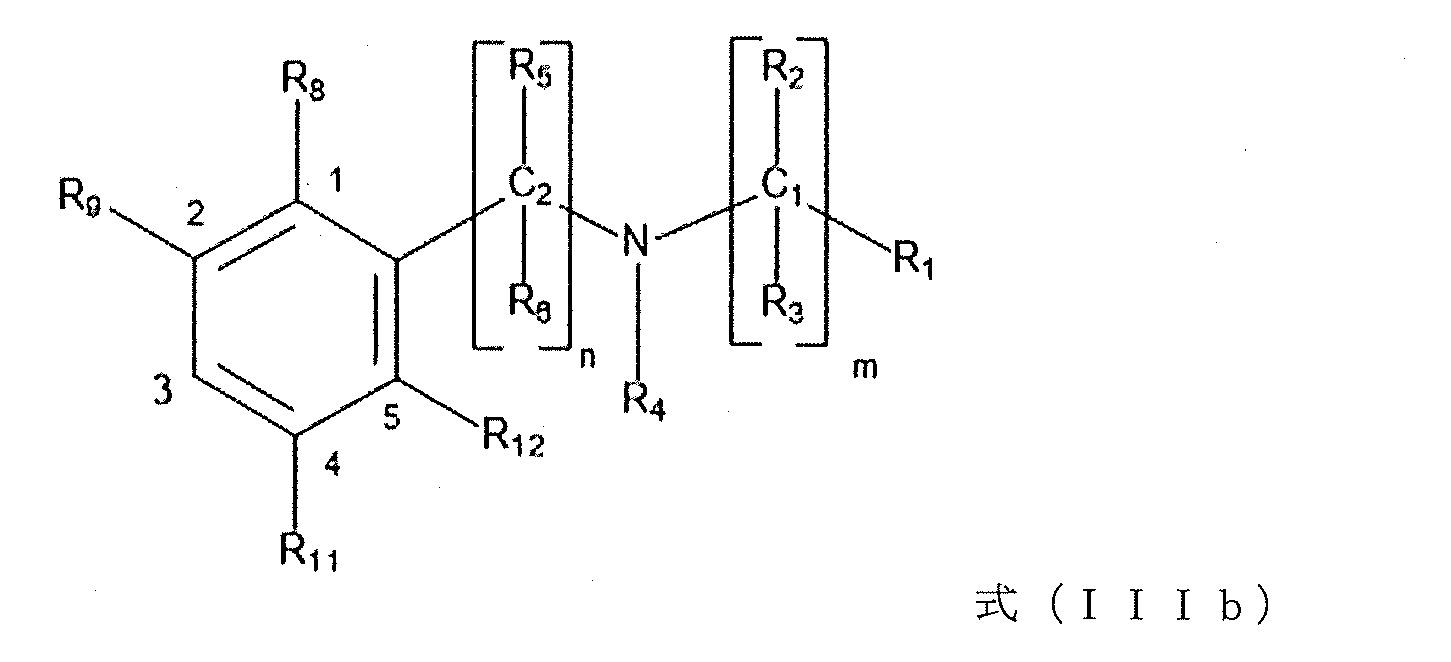
式中、残基はそれぞれ、式(I)に従って上記で定義された意味を有し、その際、好ましくは残基は以下の基を表す:
R1は好ましくは任意で置換されるアリールまたはヘテロアリール基、さらに好ましくは任意で置換されるフェニル基または任意で置換されるチオフェニル基または任意で置換される1,3-ベンゾジオキソリル基を表し;
その際、好ましくは任意で置換されるヘテロアリール基の残基R8、R9、R11及びR12のうちの少なくとも1つは水素原子を表さないが、好ましくは残基R9が水素原子を表さず、その際、R9は好ましくは任意で置換されるヘテロシクロアルキル基を表し、さらに好ましくは任意で置換されるピペリジニル基を表す。
On the basis of the above table, in particular the compounds of general formula (I) or (II), which can be further summarized and specified under general formula (IIIa) or (IIIb), exhibit particularly high TRPM8 activity, resulting in It can be concluded that, together with a high cooling intensity, it also shows a particularly efficient cooling effect.
In the formula, the residues each have the meaning defined above according to formula (I), where preferably the residues represent the following radicals:
R1 preferably represents an optionally substituted aryl or heteroaryl group, more preferably an optionally substituted phenyl group, an optionally substituted thiophenyl group, or an optionally substituted 1,3-benzodioxolyl group. ;
In this case, preferably at least one of the residues R8, R9, R11 and R12 of the optionally substituted heteroaryl group does not represent a hydrogen atom, but preferably the residue R9 does not represent a hydrogen atom. , in which case R9 preferably represents an optionally substituted heterocycloalkyl group, more preferably an optionally substituted piperidinyl group.
式(IIIa)の好ましい変形では、R1は任意で置換されるフェニル基、任意で置換されるベンジル基、任意で置換されるトリル基、任意で置換されるキシロリル基、任意で置換されるフェノール基、任意で置換されるジヒドロキシベンゼン基、任意で置換されるピリジニル基、任意で置換されるピペリジニル基、任意で置換されるテトラヒドロピラニル基、任意で置換されるピロリル基、任意で置換されるイミダゾリル基、任意で置換されるピリミジニル基、任意で置換されるオキサゾリル基、任意で置換されるインドリル基、任意で置換されるベンゾチオフェニル基、任意で置換されるフラニル基、任意で置換されるベンゾフラニル基、任意で置換されるチオフェニル基、任意で置換される1,3-ベンゾジオキソリル基、任意で置換されるベンゾジオキサニル基、任意で置換されるモルフォリニル基または任意で置換されるキノリニル基を表す。 In a preferred variant of formula (IIIa), R1 is an optionally substituted phenyl group, an optionally substituted benzyl group, an optionally substituted tolyl group, an optionally substituted xyloryl group, an optionally substituted phenol group , optionally substituted dihydroxybenzene group, optionally substituted pyridinyl group, optionally substituted piperidinyl group, optionally substituted tetrahydropyranyl group, optionally substituted pyrrolyl group, optionally substituted imidazolyl group, optionally substituted pyrimidinyl group, optionally substituted oxazolyl group, optionally substituted indolyl group, optionally substituted benzothiophenyl group, optionally substituted furanyl group, optionally substituted benzofuranyl group, an optionally substituted thiophenyl group, an optionally substituted 1,3-benzodioxolyl group, an optionally substituted benzodioxanyl group, an optionally substituted morpholinyl group, or an optionally substituted quinolinyl group represents a group.
式(IIIa)の一層さらに好ましい変形では、
R1は任意で置換されるベンゾジオキソリル基を表す、または
R1は任意で置換されるフェニル基を表す、または
R1は任意で置換されるベンゾジオキサニル基を表す、または
R1は任意で置換されるチオフェニル基を表す、または
R1は任意で置換されるピリジニル基を表す、または
R1は任意で置換されるフラニル基を表す。
そのような化合物は特に高いTRPM8活性を示す。
In an even more preferred variant of formula (IIIa),
R1 represents an optionally substituted benzodioxolyl group, or R1 represents an optionally substituted phenyl group, or R1 represents an optionally substituted benzodioxanyl group, or R1 is optionally substituted. R1 represents an optionally substituted pyridinyl group, or R1 represents an optionally substituted furanyl group.
Such compounds exhibit particularly high TRPM8 activity.
一般式(IIIa)の最も好ましい変形では、
R1は任意で置換されるベンゾジオキソリル基を表す、または
R1は任意で置換されるフェニル基を表す、または
R1は任意で置換されるチオフェニル基を表す、または
R1は任意で置換されるピリジニル基を表す。
そのような化合物は特に高いTRPM8活性≧100%を有する。
In the most preferred variant of general formula (IIIa),
R1 represents an optionally substituted benzodioxolyl group, or R1 represents an optionally substituted phenyl group, or R1 represents an optionally substituted thiophenyl group, or R1 represents an optionally substituted pyridinyl group. represents a group.
Such compounds have particularly high TRPM8 activity ≧100%.
一層さらに好ましくは、一般式(IIIa)のR1-ベンゾジオキソリル基は置換されない;または一般式(IIIa)のR1-フェニル基は少なくとも1つのOH基で、または少なくとも1つのアルキル基で、好ましくはメチルもしくはエチルもしくはそれらの混合物で、または少なくとも1つのアルコキシ基で、好ましくはエトキシもしくはメトキシもしくはそれらの混合物で、または少なくとも1つのフェニル基で、または少なくとも1つのアルキルチオ基で、好ましくはメチルチオで置換される;あるいはR1-チオフェニル基は少なくとも1つのアルコキシ基で、好ましくはエトキシもしくはメトキシもしくはそれらの混合物で置換される。 Even more preferably, the R1-benzodioxolyl group of general formula (IIIa) is unsubstituted; or the R1-phenyl group of general formula (IIIa) is preferably with at least one OH group or with at least one alkyl group. is substituted with methyl or ethyl or a mixture thereof, or with at least one alkoxy group, preferably with ethoxy or methoxy or a mixture thereof, or with at least one phenyl group, or with at least one alkylthio group, preferably with methylthio or the R1-thiophenyl group is substituted with at least one alkoxy group, preferably with ethoxy or methoxy or mixtures thereof.
少なくとも1つのアルキル置換基または少なくとも1つのアルコキシ置換基はC2-N-C1リンカーに対してオルト位、メタ位、またはパラ位でR1-フェニル基に連結されるが、好ましくは一般式(IIIa)のリンカーに対してパラ位で連結される。そのような化合物は特に高いTRPM8活性を示す。 At least one alkyl substituent or at least one alkoxy substituent is linked to the R1-phenyl group in the ortho, meta, or para position relative to the C 2 -N-C 1 linker, preferably in the general formula ( It is linked in the para position to the linker of IIIa). Such compounds exhibit particularly high TRPM8 activity.
一般式(IIIa)の残基R2、R3、R4、R5及びR6は互いに独立して水素、直鎖または分岐鎖のアルキル基、好ましくは、メチル基、エチル基、プロピル基、ブチル基、フェニル基、またはベンジル基を表す。 Residues R2, R3, R4, R5 and R6 of general formula (IIIa) are each independently hydrogen, a linear or branched alkyl group, preferably a methyl group, ethyl group, propyl group, butyl group, phenyl group , or represents a benzyl group.
残基R2、R3、R5またはR6は好ましくはそれぞれ水素原子及び/またはアルキル基を表す。一層さらに好ましいのはそれぞれR2、R3、R5またはR6のメチル、エチルまたは直鎖または分岐鎖のプロピルであり、一層さらに好ましいのはメチル基である。しかしながら、水素ラジカルは特に好ましい。 Residues R2, R3, R5 or R6 preferably each represent a hydrogen atom and/or an alkyl group. Even more preferred are methyl, ethyl or straight-chain or branched propyl for R2, R3, R5 or R6, respectively, and even more preferred is a methyl group. However, hydrogen radicals are particularly preferred.
好ましくは、C2-N-C1リンカーの窒素原子上のR4は水素、メチルまたはエチルである。 Preferably, R4 on the nitrogen atom of the C 2 -N-C 1 linker is hydrogen, methyl or ethyl.
式(IIIa)におけるピリジン環上の残基R8、R9、R11及びR12は独立して水素、任意で置換されるピペリジニル基、任意で置換されるモルフォリニル基、任意で置換されるチオモルフォリニル基、任意で置換されるヘキサメチレンイミン基、任意で置換されるイミダゾリル基、任意で置換されるピリジニル基、任意で置換されるピロリジニル基、任意で置換されるピロリル基、任意で置換されるフェニル基、アルキルチオ基、アルコキシ基、好ましくはエトキシ基またはメトキシ基、または-N-(アルキル)2基を表し、その際、アルキルは好ましくはメチル基またはエチル基、または任意で置換されるシクロヘキシル基である。 Residues R8, R9, R11 and R12 on the pyridine ring in formula (IIIa) are independently hydrogen, an optionally substituted piperidinyl group, an optionally substituted morpholinyl group, an optionally substituted thiomorpholinyl group , an optionally substituted hexamethyleneimine group, an optionally substituted imidazolyl group, an optionally substituted pyridinyl group, an optionally substituted pyrrolidinyl group, an optionally substituted pyrrolyl group, an optionally substituted phenyl group , alkylthio, alkoxy, preferably ethoxy or methoxy, or -N-(alkyl) 2 , where alkyl is preferably a methyl or ethyl group or an optionally substituted cyclohexyl group .
好ましい変形では、一般式(IIIa)にて残基R8、R9、R11及びR12の少なくとも1つは、ピペリジニル基またはモルフォリニル基、任意で置換されるチオモルフォリニル基またはヘキサメチレンイミン基,または任意で置換されるイミダゾリル基、またはピリジニル基またはピロリジニル基またはピロリル基またはフェニル基またはアルキルチオ基またはアルコキシ基、好ましくはエトキシ基またはメトキシ基,または-N-(アルキル)2基であり、その際、アルキルは好ましくはメチル基またはエチル基、またはシクロヘキシル基である。 In a preferred variant, at least one of the residues R8, R9, R11 and R12 in general formula (IIIa) is a piperidinyl group or a morpholinyl group, an optionally substituted thiomorpholinyl group or a hexamethyleneimine group, or an optional an imidazolyl group, or a pyridinyl group, or a pyrrolidinyl group, or a pyrrolyl group, or a phenyl group, or an alkylthio group, or an alkoxy group, preferably an ethoxy group or a methoxy group, or an -N-(alkyl) group substituted with is preferably a methyl group, an ethyl group, or a cyclohexyl group.
好ましくは、一般式(IIIa)における残基R8、R9、R11及びR12の少なくとも1つは任意で置換されるピペリジニル基である。ピペリジニル基は好ましくは窒素原子を介してオルト位、メタ位またはパラ位にて一般式(IIIa)のピリジン環に結合される。一層さらに好ましくは、ピペリジニル基は式(IIIa)のピリジン環の窒素原子に対してオルト位にて窒素原子を介して結合される。 Preferably, at least one of the residues R8, R9, R11 and R12 in general formula (IIIa) is an optionally substituted piperidinyl group. The piperidinyl group is preferably bonded via the nitrogen atom to the pyridine ring of general formula (IIIa) in the ortho, meta or para position. Even more preferably, the piperidinyl group is bonded via a nitrogen atom ortho to the nitrogen atom of the pyridine ring of formula (IIIa).
最も好ましくは、一般式(IIIa)における残基R9はピペリジニル基またはモルフォリニル基またはヘキサメチレンイミン基またはピリジニル基またはピロリジニル基またはピロリル基またはフェニル基またはアルキルチオ基またはアルキルオキシ基、好ましくは、エトキシ基またはメトキシ基、または-N-(アルキル)2基を表し、その際、アルキルは好ましくはメチル基またはエチル基、またはシクロヘキシル基であるので、以前定義された残基は一般式(III)のピリジン環の窒素原子に対してオルト位で結合される。 Most preferably, residue R9 in general formula (IIIa) is a piperidinyl group or a morpholinyl group or a hexamethyleneimine group or a pyridinyl group or a pyrrolidinyl group or a pyrrolyl group or a phenyl group or an alkylthio group or an alkyloxy group, preferably an ethoxy group or represents a methoxy group, or a -N-(alkyl) 2 group, where alkyl is preferably a methyl or ethyl group, or a cyclohexyl group, so that the previously defined residues represent a pyridine ring of the general formula (III). is bonded at the ortho position to the nitrogen atom of
一層さらに好ましくは、以前定義されたピペリジニル基は今度はアルキル基、好ましくはメチル、エチルもしくは直鎖もしくは分岐鎖のプロピルによって少なくとも単置換され、またはアルコキシ基、好ましくはメトキシもしくはエトキシによって少なくとも単置換される。 Even more preferably, the piperidinyl group as previously defined is in turn at least monosubstituted by an alkyl group, preferably methyl, ethyl or straight-chain or branched propyl, or at least monosubstituted by an alkoxy group, preferably methoxy or ethoxy. Ru.
好ましくは、一般式(IIIa)では、m及びnはそれぞれ独立して0、1または2である。最も好ましくは、m及びnはそれぞれ1である。 Preferably, in general formula (IIIa), m and n are each independently 0, 1 or 2. Most preferably m and n are each 1.
特に好ましい化合物1、8、11、12、13、14、15、16、17、18、22、23、24、27、39、40、41、42、43、47、49、51、56、58、61、64、75、76、80、85及び87のような、一般式(IIIa)によって表されるような以前に記載され、定義された構造を有するそのような化合物は特に優れたTRPM8活性化≧100%を示す。 Particularly preferred compounds 1, 8, 11, 12, 13, 14, 15, 16, 17, 18, 22, 23, 24, 27, 39, 40, 41, 42, 43, 47, 49, 51, 56, 58 , 61, 64, 75, 76, 80, 85 and 87, such compounds with previously described and defined structures as represented by general formula (IIIa) have particularly good TRPM8 activity. indicates ≧100%.
しかしながら、式(IIIa)におけるピリジン環の窒素原子はヘテロ芳香族環の別の位置、例えば、それぞれC2-N-C1鎖またはC2-N-C1リンカーに対してオルト位またはメタ位でも配置され得ることに留意すべきである。好ましくは、ピリジン環の窒素原子はC2-N-C1鎖に対してパラ位に配置される。 However, the nitrogen atom of the pyridine ring in formula (IIIa) may be located at another position on the heteroaromatic ring, such as the ortho or meta position relative to the C 2 -N-C 1 chain or the C 2 -N-C 1 linker, respectively. It should be noted that it can also be placed. Preferably, the nitrogen atom of the pyridine ring is positioned para to the C 2 -N-C 1 chain.
さらなる変形では、式(IIIa)におけるピリジン環の窒素原子はC原子で置き換えることができるので、残基R8、R9、R11及びR12を伴う芳香族環はフェニルを表し、本発明に係る化合物は上記一般式(IIIb)によって表される。例えば、化合物22c、28、53、55、59、60、62、63、64、65、66、67、69、71、72または82は一般式(III)のこの代替構造に該当する。 In a further variant, the nitrogen atom of the pyridine ring in formula (IIIa) can be replaced by a C atom, so that the aromatic ring with residues R8, R9, R11 and R12 represents phenyl, and the compounds according to the invention It is represented by general formula (IIIb). For example, compounds 22c, 28, 53, 55, 59, 60, 62, 63, 64, 65, 66, 67, 69, 71, 72 or 82 fall under this alternative structure of general formula (III).
そのような構造については、残基または置換基の定義は一般式(IIIa)についてのものと同一である。 For such structures, the definitions of residues or substituents are the same as for general formula (IIIa).
好ましくは、一般式(IIIb)のそのような構造では、
R1は任意で置換されるベンゾジオキソリル基を表し、または
R1は任意で置換されるチオフェニル基を表し、または
R1は任意で置換されるフェニル基を表し、または
R1は任意で置換されるクロマニル基または
R1は任意で置換されるピリミジニル基を表す。
Preferably, in such structures of general formula (IIIb),
R1 represents an optionally substituted benzodioxolyl group, or R1 represents an optionally substituted thiophenyl group, or R1 represents an optionally substituted phenyl group, or R1 represents an optionally substituted chromanyl group. The group or R1 represents an optionally substituted pyrimidinyl group.
一般式(IIIb)の最も好ましい変形では、
R1は任意で置換されるベンゾジオキソリル基を表し、または
R1は任意で置換されるチオフェニル基を表し、または
R1は任意で置換されるフェニル基を表す。
In the most preferred variant of general formula (IIIb),
R1 represents an optionally substituted benzodioxolyl group, or R1 represents an optionally substituted thiophenyl group, or R1 represents an optionally substituted phenyl group.
一層さらに好ましくは、一般式(IIIb)のR1-ベンゾジオキソリル基は置換されない;または一般式(IIIb)のR1-チオフェニル基は置換されない、または少なくとも1つのアルキル基、好ましくはメチルで置換される;あるいは一般式(IIIb)のR1-フェニル基は少なくとも1つのOH基で、または少なくとも1つのアルキル基で、好ましくはメチルもしくはエチルもしくはそれらの混合物で、または少なくとも1つのアルコキシ基で、好ましくはエトキシもしくはメトキシもしくはそれらの混合物で置換される。 Even more preferably, the R1-benzodioxolyl group of general formula (IIIb) is unsubstituted; or the R1-thiophenyl group of general formula (IIIb) is unsubstituted or substituted with at least one alkyl group, preferably methyl. or the R1-phenyl group of general formula (IIIb) is at least one OH group, or at least one alkyl group, preferably methyl or ethyl or a mixture thereof, or at least one alkoxy group, preferably Substituted with ethoxy or methoxy or mixtures thereof.
最も好ましくは、一般式(IIIb)では、残基R1はアルコキシ化され、好ましくはメトキシ化されたフェニル基である。 Most preferably, in general formula (IIIb), residue R1 is an alkoxylated, preferably methoxylated phenyl group.
式(IIIb)におけるフェニル環上の残基R8、R9、R11及びR12は互いに独立して水素、任意で置換されるピリジニル基、アルコキシ基、好ましくはエトキシまたはメトキシまたはそれらの混合物、任意で置換されるシクロヘキシル基、-N(アルキル)2基、好ましくは-N(メチル)2基、または-NH-(C=O)-CH3基を表す。 The residues R8, R9, R11 and R12 on the phenyl ring in formula (IIIb) are independently of each other hydrogen, an optionally substituted pyridinyl group, an alkoxy group, preferably ethoxy or methoxy or a mixture thereof, optionally substituted. represents a cyclohexyl group, -N(alkyl) 2 groups, preferably -N(methyl) 2 groups, or -NH-(C=O)-CH 3 groups.
好ましい変形では、一般式(IIIb)では、残基R8、R9、R11及びR12の少なくとも1つはピリジニル基、アルコキシ基、好ましくはエトキシまたはメトキシまたはそれらの混合物、シクロヘキシル基、-N(アルキル)2基、好ましくは-N(メチル)2基、または-NH-(C=O)-CH3基である。 In a preferred variant, in general formula (IIIb), at least one of the residues R8, R9, R11 and R12 is a pyridinyl group, an alkoxy group, preferably an ethoxy or methoxy group or a mixture thereof, a cyclohexyl group, -N(alkyl) 2 group, preferably -N(methyl) 2 group or -NH-(C=O)-CH 3 group.
好ましくは、一般式(IIIb)では、m及びnはそれぞれ独立して0、1または2である。最も好ましくは、m及びnはそれぞれ1である。 Preferably, in general formula (IIIb), m and n are each independently 0, 1 or 2. Most preferably m and n are each 1.
上記で定義された一般式(IIIa)または(IIIb)の化合物のうち、一般式(IIIa)の化合物が最も好ましい。これらの冷却物質は高いTRPM8活性化を特徴とし、同時に非常に高い冷却強度を感覚的に示す。低濃度でさえ、それらは強力な冷却効果を引き起こし、以下の実験セクションで示すように物質WS-3の1.72μMのEC50参照値をふつう十分に下回る。 Among the compounds of general formula (IIIa) or (IIIb) defined above, compounds of general formula (IIIa) are most preferred. These cooling substances are characterized by high TRPM8 activation and at the same time exhibit a very high cooling intensity perceptually. Even at low concentrations, they cause a strong cooling effect and are usually well below the EC50 reference value of 1.72 μM for substance WS-3, as shown in the experimental section below.
一般式(IIIa)または(IIIb)によって定義されている生理的冷却剤のうち、以下の構造を有する化合物は明白に除外される。
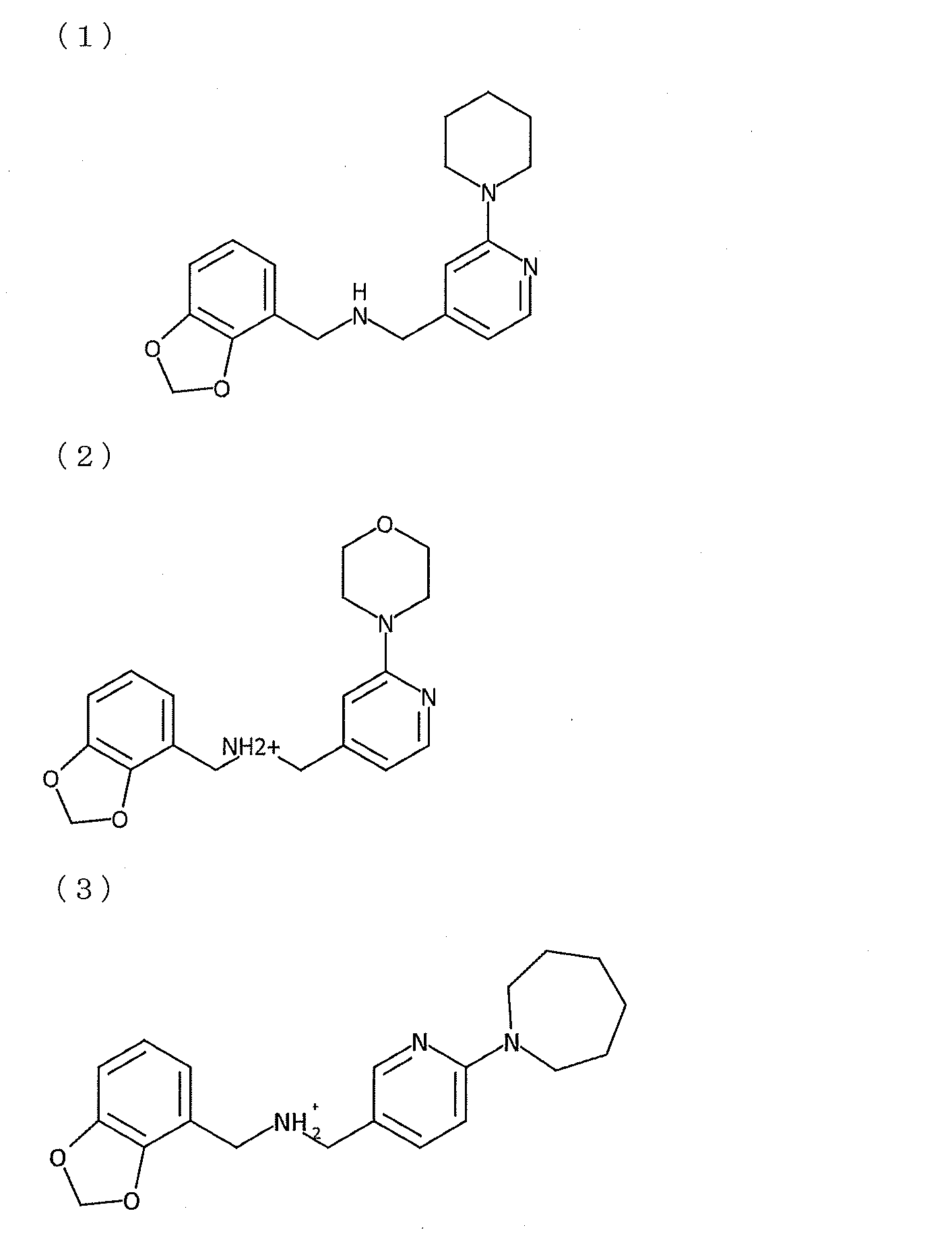
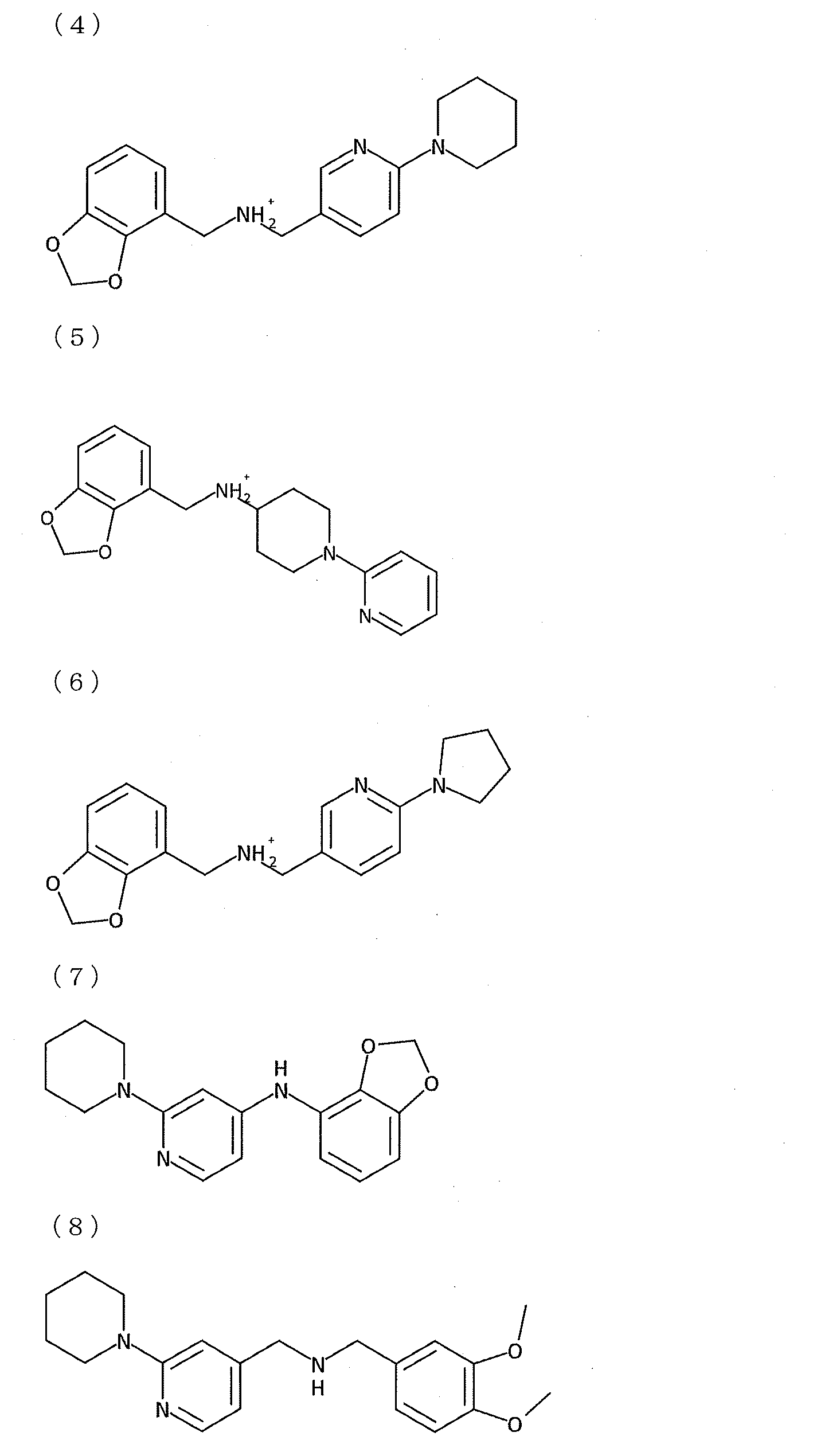
しかしながら、以下で詳細に記載されるようなこれら特定の化合物の使用に関する限りにおいてこの排除は適用されない。 However, this exclusion does not apply insofar as it relates to the use of these specific compounds as described in detail below.
表からも分かるように、R1が任意で置換されるフェニル基を表し、R9が任意で置換されるピペリジニル基を表し、式(IV)に係る以下の基本構造に由来することができる、式(III)に係る化合物も特に好ましい:
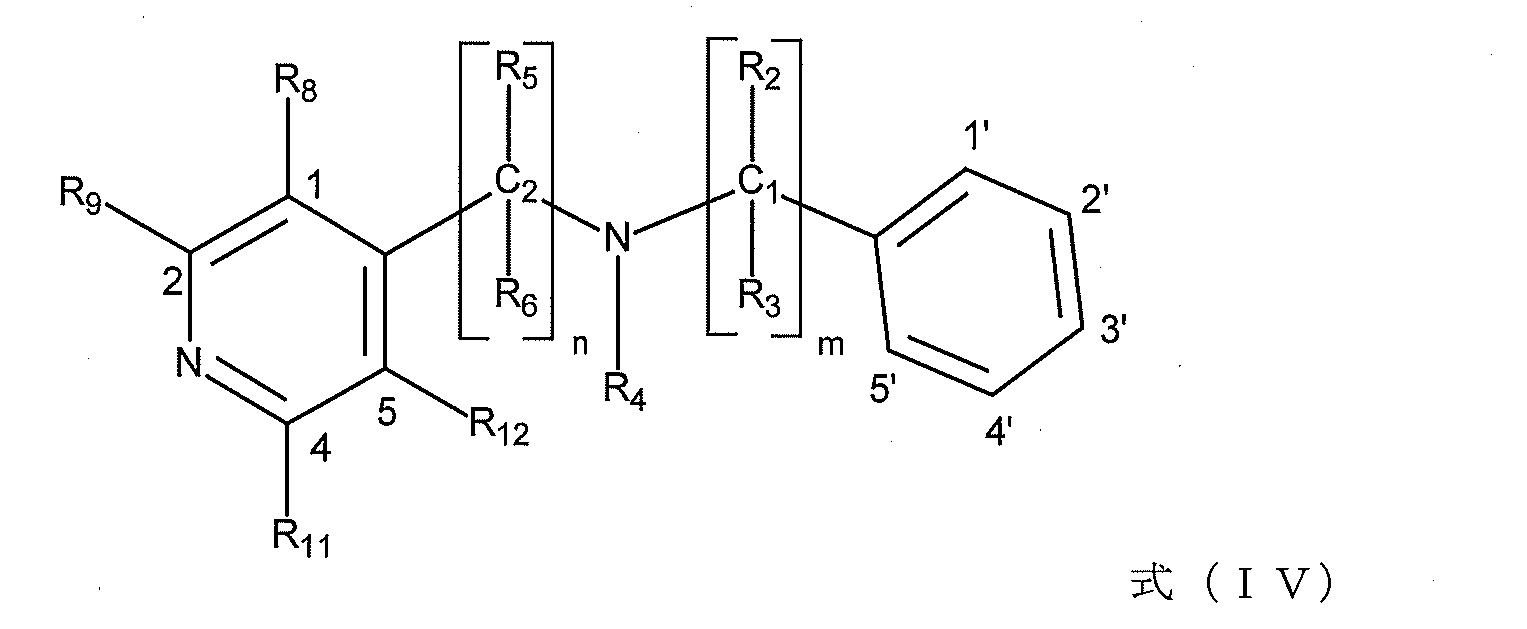
式中、
一般式(IV)の各芳香族部分の1、2、4または5位または1’、2’、3’、4’または5’位のうち1、2、3、4または5にて、式(III)で示されているような置換基/残基は、例えば、ヘテロ芳香族環の2位でのピペリジニル基または例えば、フェニル基の3’位でのメトキシ基のように、各場合にて任意で配置されてもよい。好適な置換基は一般式(I)または(II)と併せた上記の記載及びそこで記載されている残基に由来する。
As can be seen from the table, R1 represents an optionally substituted phenyl group, R9 represents an optionally substituted piperidinyl group, and can be derived from the following basic structure related to formula (IV). Particular preference is also given to compounds according to III):
During the ceremony,
At the 1, 2, 4 or 5 position or the 1', 2', 3', 4' or 5' position of each aromatic moiety of general formula (IV), the formula Substituents/residues as indicated by (III) are in each case such as, for example, a piperidinyl group in the 2-position of a heteroaromatic ring or, for example, a methoxy group in the 3'-position of a phenyl group. It may be arranged arbitrarily. Suitable substituents are derived from the above description in conjunction with general formula (I) or (II) and the residues described therein.
再び、m及びnがそれぞれ1であり、及び/または水素原子が残基としては好ましいが、R2~R6が好ましくは水素原子及び/またはメチル基のようなアルキル基を表す化合物は特に有利であると思われる。 Again, compounds in which m and n are each 1 and/or a hydrogen atom are preferred as residues, but compounds in which R2 to R6 preferably represent a hydrogen atom and/or an alkyl group such as a methyl group are particularly advantageous. I think that the.
好ましいのはまた、n及びmが好ましくはそれぞれ1であり、置換の可能性に関して上述のことも適用される、式(V)に係る以下の代替構造に由来することができる化合物である:
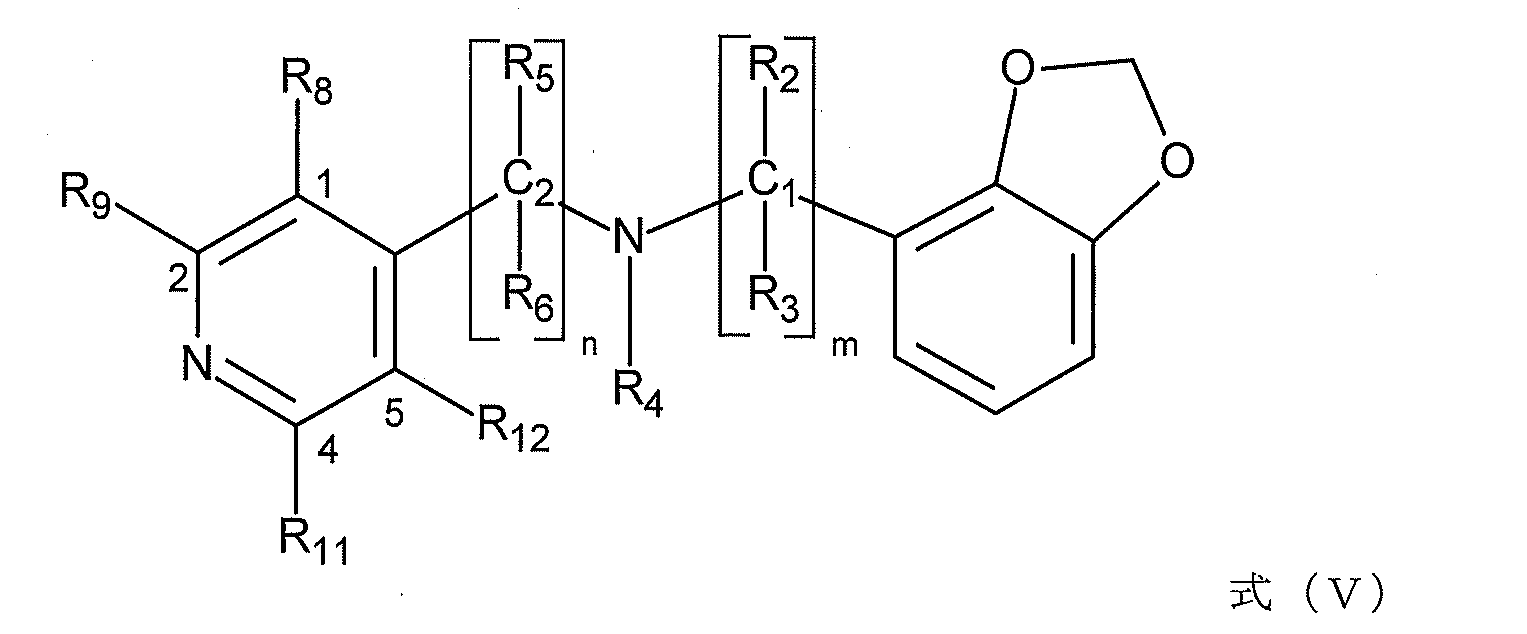
上記の記載については、一般式(VI)に係る以下の好ましい構造もしたがって固有である:
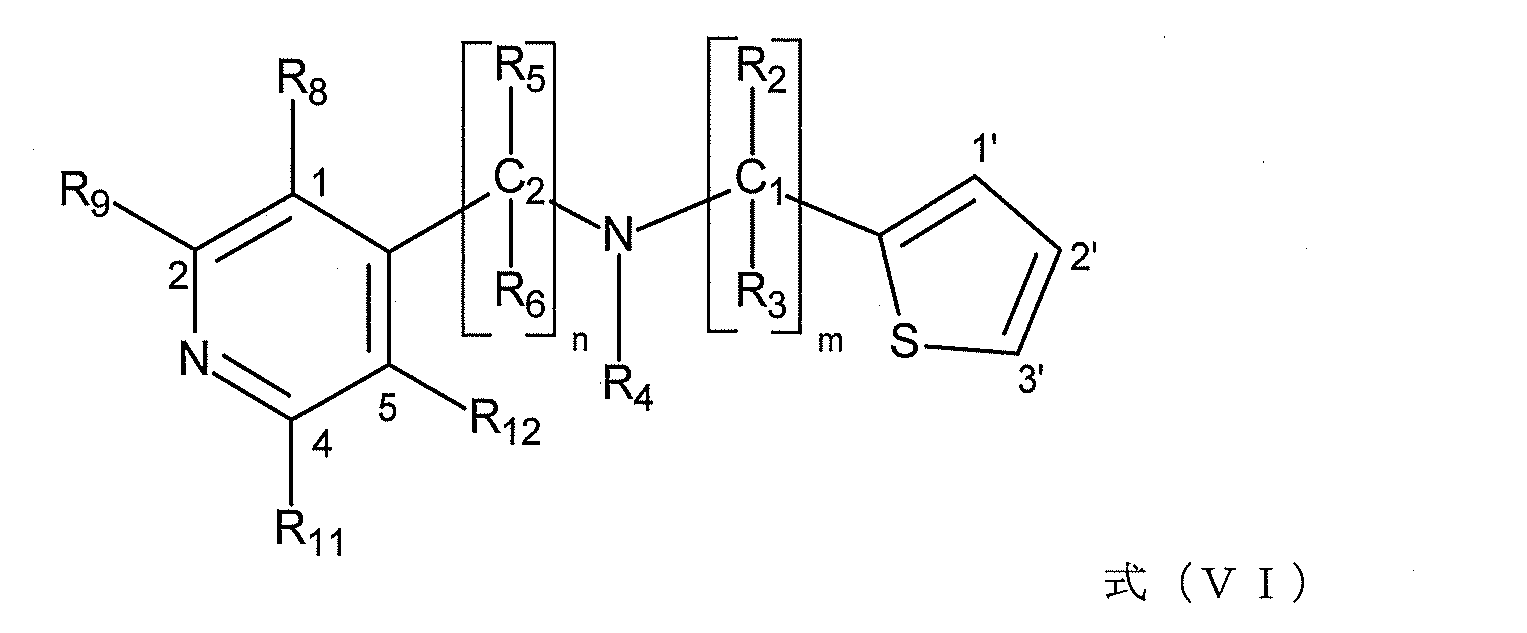
式中、一般式(VI)の各芳香族部分の1、2、4または5位または1’、2’または3’位のうちの1、2、3または4にて、置換基/残基は、例えば、ヘテロ芳香族環の2位でのピペリジニル基のように、各場合にて任意で配置されてもよい。好適な置換基は一般式(I)または(II)と併せた上記の記載及びそこに記載されている残基に由来するので、式(I)及び(II)の枠組み内での上記の定義に従った置換の可能性及び残基もここで保持され、適用可能である。
For the above description, the following preferred structures according to general formula (VI) are also specific:
where at the 1, 2, 4 or 5 position or 1', 2' or 3' or 1', 2' or 3' position of each aromatic moiety of general formula (VI), a substituent/residue may be optionally placed in each case, such as, for example, a piperidinyl group in the 2-position of the heteroaromatic ring. Suitable substituents are derived from the above description in conjunction with general formula (I) or (II) and the residues described therein, so that the above definitions within the framework of formulas (I) and (II) The possibilities of substitution and residues according to are also retained here and are applicable.
式(IV)~(VI)に関して、窒素原子は、例えば、C2-N-C1鎖に対するオルト位またはメタ位のように、ヘテロ芳香族環の異なる位置にて配置できることに留意すべきである。しかしながら、好ましくは窒素原子は示されているように配置される。そのような構造は特に高く且つ効率的な冷却効果及びTRPM8活性を誘導することができることが示されている。 It should be noted with respect to formulas (IV) to (VI) that the nitrogen atom can be placed in different positions of the heteroaromatic ring, for example in the ortho or meta position to the C 2 -N-C 1 chain. be. However, preferably the nitrogen atoms are arranged as shown. It has been shown that such structures can induce particularly high and efficient cooling effects and TRPM8 activity.
任意で置換されるヘテロシクロアルキル基、及び特に好ましくは任意で置換されるピペリジニル基は好ましくは2位に配置されるので、以下の式(VII)に係るピペリジニル基の1”、2”、3”、4”、または5”位における任意の置換によって特に効率的な冷却剤が得られることも示されている:

式中、残基R2~R6及びR8、R11及びR12および1”、2”、3”、4”、または5”位における各置換基は互いに独立して上記でまたは式(I)及び(II)の文脈で定義されている官能基であってもよく、且つR1は好ましくは任意で置換されるアリールまたはヘテロアリール基,一層さらに好ましくは任意で置換されるフェニル基または任意で置換されるチオフェニル基または任意で置換される1,3-ベンゾジオキソリル基を表す。
The optionally substituted heterocycloalkyl group, and particularly preferably the optionally substituted piperidinyl group, is preferably located in the 2-position, so that the 1", 2", 3 of the piperidinyl group according to formula (VII) below It has also been shown that optional substitutions in the ", 4", or 5" positions result in particularly efficient coolants:
wherein residues R2 to R6 and R8, R11 and R12 and each substituent in the 1'', 2'', 3'', 4'' or 5'' position are independently of each other as defined above or in formulas (I) and (II). ), and R1 is preferably an optionally substituted aryl or heteroaryl group, even more preferably an optionally substituted phenyl group or an optionally substituted thiophenyl group. group or an optionally substituted 1,3-benzodioxolyl group.
ここでも、m及びnは好ましくは1である。 Again, m and n are preferably 1.
これらの構造は特に、効率的な冷却効果及び高いTRPM8活性を特徴としているので、特に好ましい。 These structures are particularly preferred as they are characterized by an efficient cooling effect and high TRPM8 activity.
本発明に係る生理的アミン冷却剤は従来技術からは知られていないが、調合有機化学の一般的に知られている標準的な方法に従って調製することができ、それは以下のスキームにて一般化された形態で示されている。 Physiological amine coolants according to the invention are not known from the prior art, but can be prepared according to commonly known standard methods of compounding organic chemistry, which are generalized in the following scheme. It is shown in the following form.

ハロアルキル誘導体を無水DCMに溶解し、対応するピリジン誘導体及び窒素含有塩基と反応させる。 The haloalkyl derivative is dissolved in anhydrous DCM and reacted with the corresponding pyridine derivative and nitrogenous base.

アルデヒドをTHFに溶解し、対応するアミンと反応させ、続いて還元剤を加える。 The aldehyde is dissolved in THF and reacted with the corresponding amine, followed by addition of the reducing agent.
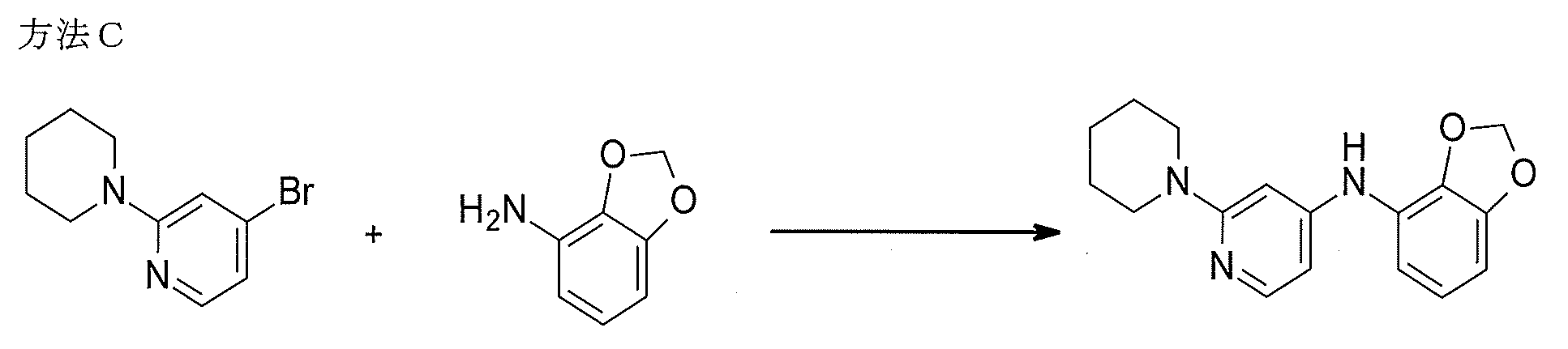
対応するハロゲン誘導体とアミンを無水トルエンに溶解し、トリ-tert-ブチルホスフィン及びリン酸カリウムを加えて反応させる。対応するハロゲン誘導体(1.0当量)とアミン(1.1当量)を無水トルエンに溶解し、トリ-tert-ブチルホスフィン(0.1当量)及びリン酸カリウム(3.0当量)を加える。反応混合物をアルゴンで15分間パージし、Pd2(dba)3を加え、再びアルゴンで15分間パージする。反応混合物を100℃で一晩撹拌する。ワークアップのために水(160mL)とDCM(160mL)を加える。得られた相を分離し、水性相をDCMで抽出する(3×160mL)。合わせた有機相をNa2SO4上で乾燥させ、濾過し、真空にて溶媒を取り除く。粗生成物をカラムクロマトグラフィー(逆相、0~100%のアセトニトリル水溶液)によって精製した。 The corresponding halogen derivative and amine are dissolved in anhydrous toluene, and tri-tert-butylphosphine and potassium phosphate are added to react. The corresponding halogen derivative (1.0 eq.) and amine (1.1 eq.) are dissolved in anhydrous toluene and tri-tert-butylphosphine (0.1 eq.) and potassium phosphate (3.0 eq.) are added. The reaction mixture is purged with argon for 15 minutes, Pd 2 (dba) 3 is added and purged again with argon for 15 minutes. The reaction mixture is stirred at 100° C. overnight. Add water (160 mL) and DCM (160 mL) for work-up. The resulting phases are separated and the aqueous phase is extracted with DCM (3 x 160 mL). The combined organic phases are dried over Na 2 SO 4 , filtered and freed from the solvent in vacuo. The crude product was purified by column chromatography (reverse phase, 0-100% acetonitrile in water).

DCMにおけるアミンとCs2CO3から成る懸濁液を所望のハロゲン置換試薬と反応させる。 A suspension of the amine and Cs 2 CO 3 in DCM is reacted with the desired halogen substitution reagent.

対応するカルボン酸、HBTU及びEDC×HClを溶解し、次いで所望のアミン及びDIPEAと反応させる。 The corresponding carboxylic acid, HBTU and EDC×HCl are dissolved and then reacted with the desired amine and DIPEA.

アルゴン雰囲気下で所望のアミンを無水THFに溶解し、ボラン硫化ジメチル錯体を0℃にてゆっくり加える。 The desired amine is dissolved in anhydrous THF under an argon atmosphere and the borane dimethyl sulfide complex is slowly added at 0°C.
原則として、本発明は式(I)及び式(II)(及びその結果として式(III)~(VII))の個々の化合物ならびに冷却剤または冷却剤混合物としてのその使用を対象としている。それにもかかわらず、本化合物は他の、すでに知られている冷却剤と混合することについても好適である。 In principle, the invention is directed to the individual compounds of formula (I) and formula (II) (and thus formulas (III) to (VII)) and their use as coolants or coolant mixtures. Nevertheless, the present compounds are also suitable for mixing with other already known coolants.
したがって、本発明の別の目的は、
(a)式(I)または式(II)の、または表1または表2で設定したような、且つ上記に定義されている1、2、3以上の冷却剤(複数可);及び任意で
(b)少なくとも1つのさらなる生理的冷却剤;及び/または任意で
(c)少なくとも1つの溶媒
を含む、またはそれらから成る生理的冷却剤混合物に関する。
Therefore, another object of the invention is to
(a) one, two, three or more coolant(s) of formula (I) or formula (II) or as set out in Table 1 or Table 2 and as defined above; and optionally (b) at least one further physiological coolant; and/or optionally (c) at least one solvent.
好ましい実施形態では、本発明は、上記で定義されているような式(I)及び/または(II)または(III)~(VII)に係る化合物の少なくとも1つを含む冷却剤混合物に関する。任意で、冷却剤混合物はまた、さらなる生理的冷却剤及び任意で少なくとも1つの好適な溶媒も含む。 In a preferred embodiment, the invention relates to a coolant mixture comprising at least one of the compounds according to formula (I) and/or (II) or (III) to (VII) as defined above. Optionally, the coolant mixture also includes an additional physiological coolant and optionally at least one suitable solvent.
そのような冷却剤混合物の特定の利点は冷却効果の相乗的な増強が観察され得ることである。 A particular advantage of such coolant mixtures is that a synergistic enhancement of the cooling effect can be observed.
成分(b)を形成し、成分(a)を形成する冷却剤とは異なる好適な冷却剤は、メントール、メントールメチルエーテル(FEMA GRAS 4054)、グルタミン酸モノメチル(FEMA GRAS 4006)、メントキシ-1,2-プロパンジオール(FEMA GRAS 3784)、グルタル酸ジメチル(FEMA GRAS 4604)、ヒドロキシメチルシクロヘキシルエタノン(FEMA GRAS 4742)、2-(4-エチルフェノキシ)-N-(1H-ピラゾール-3-イル)-N-(チオフェン-2-イルメチル)アセトアミド(FEMA GRAS 4880)、WS-23(2-イソプロピル-N,2,3-トリメチルブチルアミド、FEMA GRAS 3804)、N-(4-(シアノメチル)フェニル)-2-イソプロピル-5,5-ジメチルシクロヘキサンカルボキサミド(FEMA GRAS 4882)、N-(3-ヒドロキシ-4-メトキシフェニル)-2-イソプロピル-5,5-ジメチルシクロヘキサンカルボキサミド(FEMA GRAS 4881)、N-(2-ヒドロキシ-2-フェニルエチル)-2-イソプロピル-5,5-ジメチルシクロヘキサン-1-カルボキサミド(FEMA GRAS 4896)、3,4-メチレンジオキシ桂皮酸、(E)-3-ベンゾ[1,3]ジオキソール-5-イル-N,N-ジフェニル-2-プロペンアミド(FEMA GRAS 4788)、炭酸メントールプロピレングリコール(FEMA GRAS 3806)、N-エチルオキサミン酸メンチル、コハク酸モノメチル(FEMA GRAS 3810)、WS-3(N-エチル-p-メンタン-3-カルボキサミド、FEMA GRAS 3455)、炭酸メントールエチレングリコール(FEMA GRAS 3805)、WS-5(3-(p-メンタン-3-カルボキサミド)酢酸エチル、FEMA GRAS 4309)、WS-12(1R,2S,5R)-N-(4-メトキシフェニル)-p-メンタンカルボキサミド(FEMA GRAS 4681)、WS-27(N-エチル-2,2-ジイソプロピルブタンアミド、FEMA GRAS 4557)、N-シクロプロピル-5-メチル-2-イソプロピルシクロヘキサンカルボキサミド(FEMA GRAS 4693)、WS-116(N-(1,1-ジメチル-2-ヒドロキシエチル)-2,2-ジエチルブタンアミド、FEMA GRAS 4603)、メントキシエタノール(FEMA GRAS 4154)、N-(4-シアノメチルフェニル)-p-メンタンカルボキサミド(FEMA GRAS 4496)、N-(2-(ピリジン-2-イル)エチル)-3-p-メンタンカルボキサミド(FEMA GRAS 4549)、N-(2-ヒドロキシエチル)-2-イソプロピル-1-2,3-ジメチルブタンアミド(FEMA GRAS 4602)、(2S,5R)-N-[4-(2-アミノ-2-oxoエチル)フェニル]-p-メンタンカルボキサミド(FEMA GRAS 4684)、N-シクロプロピル-5-メチル-2-イソプロピルシクロヘキサンカルボキサミド(FEMA GRAS 4693)、
2-[(2-p-メントキシ)エトキシ]エタノール(FEMA GRAS 4718)、(2,6-ジエチル-5-イソプロピル-2-メチルテトラヒドロピラン(FEMA GRAS 4680)、trans-4-tert-ブチルシクロヘキサノール(FEMA GRAS 4724)、2-(p-トリルオキシ)-N-(1H-ピラゾール-5-イル)-N-((チオフェン-2-イル)メチル)アセトアミド(FEMA GRAS 4809)、メントングリセロールケタール(FEMA GRAS 3807及び3808)、(-)-メントキシプロパン-1,2-ジオール、3-(1-メントキシ)-2-メチルプロパン-1,2-ジオール(FEMA GRAS 3849)、イソプレゴール、(+)-cis及び(-)-trans-p-メンタン-3,8-ジオール(62:38、FEMA GRAS 4053)、2,3-ジヒドロキシ-p-メンタン、3,3,5-トリメチルシクロヘキサノングリセロールケタール、メンチルピロリドンカルボン酸、(1R,3R,4S)-3-メンチル-3,6-ジオキサヘプタノエート、(1R,2S,5R)-3-メンチル-メトキシアセテート、(1R,2S,5R)-3-メンチル-3,6,9-トリオキサデカノエート、(1R,2S,5R)-3-メンチル-3,6,9-トリオキサデカノエート、(1R,2S,5R)-3-メンチル-(2-ヒドロキシエトキシ)アセテート、(1R,2S,5R)-メンチル-11-ヒドロキシ-3,6,9-トリオキサウンデカノエート、クベボール(FEMA GRAS 4497)、2-イソプロピル-5-メチルシクロヘキシル-4-(ジメチルアミノ)-4-オキソブタノエート(FEMA GRAS 4230)、乳酸メンチル(FEMA GRAS 3748)、6-イソプロピル-3,9-ジメチル-1,4-ジオキサスピロ[4.5]デカン-2-オン(FEMA GRAS 4285)、N-ベンゾ[1,3]ジオキソール-5-イル-3-p-メンタンカルボキサミド、N-(1-イソプロピル-1,2-ジメチルプロピル)-1,3-ベンゾジオキソール-5-カルボキサミド、N-(R)-2-オキソテトラヒドロフラン-3-イル-(1R,2S,5R)-p-メンタン-3-カルボキサミド、2,2,5,6,6-ペンタメチル-2,3,6,6a-テトラヒドロペンタレン-3a(1H)-オールと5-(2-ヒドロキシ-2-メチルプロピル)-3,4,4-トリメチルシクロペント-2-エン-1-オンの混合物;(2S,5R)-2-イソプロピル-5-メチル-N-(2-(ピリジン-4-イル)エチル)シクロヘキサンカルボキサミド;(1S,2S,5R)-N-(4-(シアノメチル)フェニル)-2-イソプロピル-5-メチルシクロヘキサンカルボキサミド、1,7-イソプロピル-4,5-メチル-ビシクロ[2.2.2]オクト-5-エン誘導体、4-メトキシ-N-フェニル-N-[2-(ピリジン-2-イル)エチル]ベンズアミド、4-メトキシ-N-フェニル-N-[2-(ピリジン-2-イル)エチル]ベンゼンスルホンアミド、4-クロロ-N-フェニル-N-[2-(ピリジン-2-イル)エチル]ベンゼンスルホンアミド、4-シアノ-N-フェニル-N-[2-(ピリジン-2-イル)エチル]ベンゼンスルホンアミド、
4-((ベンズヒドリルアミノ)メチル)-2-メトキシフェノール、4-((ビス(4-メトキシフェニル)メチルアミノ)メチル)-2-メトキシフェノール、4-((1,2-ジフェニルエチルアミノ)メチル)-2-メトキシフェノール、4-((ベンズヒドリルオキシ)メチル)-2-メトキシフェノール、4-((9H-フルオレン-9-イルアミノ)メチル)-2-メトキシフェノール、4-((ベンズヒドリルアミノ)メチル)-2-エトキシフェノール、1-(4-メトキシフェニル)-2-(1-メチル-1H-ベンゾ[d]イミダゾール-2-イル)ビニル-4-メトキシ安息香酸、2-(1-イソプロピル-6-メチル-1H-エンゾ[d]イミダゾール-2-イル)-1-(4-メトキシフェニル)ビニル-4-メトキシ安息香酸、(Z)-2-(1-イソプロピル-5-メチル-1H-ベンゾ[d]イミダゾール-2-イル)-1-(4-メトキシフェニル)ビニル-4-メトキシ安息香酸、3-アルキル-p-メタン-3-オール誘導体、フェンキル、D-ボルニル、L-ボルニル、エクソ-ノルボルニル、2-メチルイソボルニル、2-エチルフェンキル、2-メチルボルニル、cis-ピナン-2-イル、ベルバニル及びイソボルニルの誘導体、メンチルオキサメート誘導体、メンチル3-オキソカルボン酸エステル、N-アルファ-(メンタンカルボニル)アミノ酸アミド、p-メンタンカルボキサミド及びWS-23類似体、(-)-(1R,2R,4S)-ジヒドロウンベルロール、p-メンタンアルキルオキシアミド、シクロヘキサン誘導体、ブタノン誘導体、3-メントキシ-1-プロパノールと1-メントキシ-2-プロパノール、1-[2-ヒドロキシフェニル]-4-[2-ニトロフェニル]-1,2,3,6-テトラヒドロピリミジン-2-オンの混合物、4-メチル-3-(1-ピロリジニル)-2-[5H]-フラノンならびにそれらの混合物から成る群から選択される。FEMAはアメリカ食品香料製造者協会を表し、GRASは安全基準合格と定義される。FEMA GRASの指定はそのように指定された物質が標準的な方法によって調べられ、毒物学上安全であると見なされることを意味する。
Suitable coolants forming component (b) and different from the coolant forming component (a) are menthol, menthol methyl ether (FEMA GRAS 4054), monomethyl glutamate (FEMA GRAS 4006), mentholoxy-1,2 -Propanediol (FEMA GRAS 3784), dimethyl glutarate (FEMA GRAS 4604), hydroxymethylcyclohexylethanone (FEMA GRAS 4742), 2-(4-ethylphenoxy)-N-(1H-pyrazol-3-yl)- N-(thiophen-2-ylmethyl)acetamide (FEMA GRAS 4880), WS-23 (2-isopropyl-N,2,3-trimethylbutyramide, FEMA GRAS 3804), N-(4-(cyanomethyl)phenyl)- 2-isopropyl-5,5-dimethylcyclohexanecarboxamide (FEMA GRAS 4882), N-(3-hydroxy-4-methoxyphenyl)-2-isopropyl-5,5-dimethylcyclohexanecarboxamide (FEMA GRAS 4881), N-( 2-Hydroxy-2-phenylethyl)-2-isopropyl-5,5-dimethylcyclohexane-1-carboxamide (FEMA GRAS 4896), 3,4-methylenedioxycinnamic acid, (E)-3-benzo[1, 3] Dioxol-5-yl-N,N-diphenyl-2-propenamide (FEMA GRAS 4788), menthol propylene glycol carbonate (FEMA GRAS 3806), menthyl N-ethyloxamate, monomethyl succinate (FEMA GRAS 3810) , WS-3 (N-ethyl-p-menthane-3-carboxamide, FEMA GRAS 3455), menthol ethylene glycol carbonate (FEMA GRAS 3805), WS-5 (3-(p-menthane-3-carboxamide) ethyl acetate, FEMA GRAS 4309), WS-12 (1R,2S,5R)-N-(4-methoxyphenyl)-p-menthanecarboxamide (FEMA GRAS 4681), WS-27 (N-ethyl-2,2-diisopropylbutanamide , FEMA GRAS 4557), N-cyclopropyl-5-methyl-2-isopropylcyclohexanecarboxamide (FEMA GRAS 4693), WS-116 (N-(1,1-dimethyl-2-hydroxyethyl)-2,2-diethyl butanamide, FEMA GRAS 4603), menthoxyethanol (FEMA GRAS 4154), N-(4-cyanomethylphenyl)-p-menthanecarboxamide (FEMA GRAS 4496), N-(2-(pyridin-2-yl)ethyl )-3-p-menthanecarboxamide (FEMA GRAS 4549), N-(2-hydroxyethyl)-2-isopropyl-1-2,3-dimethylbutanamide (FEMA GRAS 4602), (2S,5R)-N- [4-(2-amino-2-oxoethyl)phenyl]-p-menthanecarboxamide (FEMA GRAS 4684), N-cyclopropyl-5-methyl-2-isopropylcyclohexanecarboxamide (FEMA GRAS 4693),
2-[(2-p-menthoxy)ethoxy]ethanol (FEMA GRAS 4718), (2,6-diethyl-5-isopropyl-2-methyltetrahydropyran (FEMA GRAS 4680), trans-4-tert-butylcyclohexanol (FEMA GRAS 4724), 2-(p-tolyloxy)-N-(1H-pyrazol-5-yl)-N-((thiophen-2-yl)methyl)acetamide (FEMA GRAS 4809), menthone glycerol ketal (FEMA GRAS 3807 and 3808), (-)-menthoxypropane-1,2-diol, 3-(1-menthoxy)-2-methylpropane-1,2-diol (FEMA GRAS 3849), isopulegol, (+)- cis and (-)-trans-p-menthane-3,8-diol (62:38, FEMA GRAS 4053), 2,3-dihydroxy-p-menthane, 3,3,5-trimethylcyclohexanone glycerol ketal, menthylpyrrolidone Carboxylic acid, (1R,3R,4S)-3-menthyl-3,6-dioxaheptanoate, (1R,2S,5R)-3-menthyl-methoxyacetate, (1R,2S,5R)-3- Menthyl-3,6,9-trioxadecanoate, (1R,2S,5R)-3-menthyl-3,6,9-trioxadecanoate, (1R,2S,5R)-3-menthyl- (2-hydroxyethoxy)acetate, (1R,2S,5R)-menthyl-11-hydroxy-3,6,9-trioxaundecanoate, cubebol (FEMA GRAS 4497), 2-isopropyl-5-methylcyclohexyl- 4-(dimethylamino)-4-oxobutanoate (FEMA GRAS 4230), Menthyl lactate (FEMA GRAS 3748), 6-isopropyl-3,9-dimethyl-1,4-dioxaspiro[4.5]decane-2 -one (FEMA GRAS 4285), N-benzo[1,3]dioxol-5-yl-3-p-menthanecarboxamide, N-(1-isopropyl-1,2-dimethylpropyl)-1,3-benzodio Xol-5-carboxamide, N-(R)-2-oxotetrahydrofuran-3-yl-(1R,2S,5R)-p-menthane-3-carboxamide, 2,2,5,6,6-pentamethyl- of 2,3,6,6a-tetrahydropentalen-3a(1H)-ol and 5-(2-hydroxy-2-methylpropyl)-3,4,4-trimethylcyclopent-2-en-1-one. Mixture; (2S,5R)-2-isopropyl-5-methyl-N-(2-(pyridin-4-yl)ethyl)cyclohexanecarboxamide; (1S,2S,5R)-N-(4-(cyanomethyl)phenyl )-2-isopropyl-5-methylcyclohexanecarboxamide, 1,7-isopropyl-4,5-methyl-bicyclo[2.2.2]oct-5-ene derivative, 4-methoxy-N-phenyl-N-[ 2-(pyridin-2-yl)ethyl]benzamide, 4-methoxy-N-phenyl-N-[2-(pyridin-2-yl)ethyl]benzenesulfonamide, 4-chloro-N-phenyl-N-[ 2-(pyridin-2-yl)ethyl]benzenesulfonamide, 4-cyano-N-phenyl-N-[2-(pyridin-2-yl)ethyl]benzenesulfonamide,
4-((benzhydrylamino)methyl)-2-methoxyphenol, 4-((bis(4-methoxyphenyl)methylamino)methyl)-2-methoxyphenol, 4-((1,2-diphenylethylamino) ) methyl)-2-methoxyphenol, 4-((benzhydryloxy)methyl)-2-methoxyphenol, 4-((9H-fluoren-9-ylamino)methyl)-2-methoxyphenol, 4-(( Benzhydrylamino)methyl)-2-ethoxyphenol, 1-(4-methoxyphenyl)-2-(1-methyl-1H-benzo[d]imidazol-2-yl)vinyl-4-methoxybenzoic acid, 2 -(1-isopropyl-6-methyl-1H-enzo[d]imidazol-2-yl)-1-(4-methoxyphenyl)vinyl-4-methoxybenzoic acid, (Z)-2-(1-isopropyl- 5-Methyl-1H-benzo[d]imidazol-2-yl)-1-(4-methoxyphenyl)vinyl-4-methoxybenzoic acid, 3-alkyl-p-methane-3-ol derivative, fhenkyl, D- Bornyl, L-bornyl, exo-norbornyl, 2-methylisobornyl, 2-ethylfenkyl, 2-methylbornyl, cis-pinan-2-yl, verbanyl and isobornyl derivatives, menthyl oxamate derivatives, menthyl 3-oxo Carboxylic acid esters, N-alpha-(menthane carbonyl) amino acid amides, p-menthane carboxamides and WS-23 analogs, (-)-(1R,2R,4S)-dihydroumberol, p-menthane alkyloxyamides, Cyclohexane derivatives, butanone derivatives, 3-menthoxy-1-propanol and 1-menthoxy-2-propanol, 1-[2-hydroxyphenyl]-4-[2-nitrophenyl]-1,2,3,6-tetrahydropyrimidine -2-one, 4-methyl-3-(1-pyrrolidinyl)-2-[5H]-furanone and mixtures thereof. FEMA stands for Food and Flavor Manufacturers Association of America, and GRAS is defined as passing safety standards. A FEMA GRAS designation means that a substance so designated has been tested by standard methods and is considered toxicologically safe.
原則として、冷却効果を持つ既知の物質はすべて成分(b)として好適である。しかしながら、食品安全上の理由から、FEMA GRASに係る指定を有する化合物、または問題の冷却混合物がこれを必要とする場合、それらの化合物が好ましい。 In principle, all known substances with a cooling effect are suitable as component (b). However, for food safety reasons, compounds with a FEMA GRAS designation, or where the cooling mixture in question requires this, are preferred.
成分(b)を形成する物質の第1の重要な代表はコハク酸モノメンチル(FEMA GRAS 3810)である。そのコハク酸エステル及び類似のグルタル酸モノメンチル(FEMA GRAS 4006)はジカルボン酸及びポリカルボン酸に基づくモノメンチルエステルの重要な代表である。 A first important representative of the substances forming component (b) is monomenthyl succinate (FEMA GRAS 3810). Its succinate ester and the analogous monomenthyl glutarate (FEMA GRAS 4006) are important representatives of monomenthyl esters based on dicarboxylic and polycarboxylic acids.
本発明という意味で好ましいメントール化合物の次に重要な基は、炭酸メントールエチレングリコール(FEMA GRAS 3805=Frescolat(登録商標)MGC)、炭酸メントールプロピレングリコール(FEMA GRAS 3784=Frescolat(登録商標)MPC)、炭酸メントール2-メチル-1,2-プロパンジオール(FEMA GRAS 3849)のようなグリコール、グリセロール、または炭水化物のようなメントール及びポリオールの炭酸エステル、または対応する糖誘導体を含む。好ましいのはまた、成分(b)としてのN-(4-シアノメチルフェニル)-p-メンタンカルボキサミド(FEMA GRAS 4496)、N-(2-(ピリジン-2-イル)エチル)-3-p-メンタンカルボキサミド(FEMA GRAS 4549)及び(E)-3-ベンゾ[1,3]ジオキソール-5-イル-N,N-ジフェニル-2-プロペンアミド(FEMA GRAS 4788)である。 The next important groups of preferred menthol compounds in the sense of the present invention are menthol ethylene glycol carbonate (FEMA GRAS 3805=Frescolat® MGC), menthol propylene glycol carbonate (FEMA GRAS 3784=Frescolat® MPC), Includes carbonate esters of menthol and polyols, such as glycols, glycerol, or carbohydrates, such as menthol carbonate 2-methyl-1,2-propanediol (FEMA GRAS 3849), or corresponding sugar derivatives. Also preferred as component (b) is N-(4-cyanomethylphenyl)-p-menthanecarboxamide (FEMA GRAS 4496), N-(2-(pyridin-2-yl)ethyl)-3-p- Menthane carboxamide (FEMA GRAS 4549) and (E)-3-benzo[1,3]dioxol-5-yl-N,N-diphenyl-2-propenamide (FEMA GRAS 4788).
本発明という意味で、メントール化合物乳酸メンチル(FEMA GRAS 3748=Frescolat(登録商標)ML)及び特にメントングリセリルアセタール(FEMA GRAS 3807)または名称Frescolat(登録商標)MGAのもとで市場に出されているメントングリセリルケタール(FEMA GRAS 3808)は好ましい。 In the sense of the present invention, the menthol compounds menthyl lactate (FEMA GRAS 3748 = Frescolat® ML) and in particular menthone glyceryl acetal (FEMA GRAS 3807) or marketed under the name Frescolat® MGA Menthone glyceryl ketal (FEMA GRAS 3808) is preferred.
化合物のこの群には、冷却剤10(FEMA GRAS 3784)としても知られる3-(1-メトキシ)-1,2-プロパンジオール及び追加のメチル基を有する3-(1-メトキシ)-2-メチル-1,2-プロパンジオール(FEMA GRAS 3849)も含まれる。 This group of compounds includes 3-(1-methoxy)-1,2-propanediol, also known as Refrigerant 10 (FEMA GRAS 3784) and 3-(1-methoxy)-2- with an additional methyl group. Also included is methyl-1,2-propanediol (FEMA GRAS 3849).
上述の物質の間で、本出願者が名称Frescolat(登録商標)MGA、Frescolat(登録商標)ML、Frecolat(登録商標)MGC及びFrescolat(登録商標)MPCのもとで市場に出しているメントングリセリルアセタール/ケタール及び乳酸メントンおよび炭酸メントールエチレングリコール及び炭酸メントールプロピレングリコールは特に有利であることが判明している。 Among the substances mentioned above, menthone glyceryl is marketed by the applicant under the names Frecolat® MGA, Frecolat® ML, Frecolat® MGC and Frecolat® MPC. Acetals/ketals and menthone lactate and menthol ethylene glycol carbonate and menthol propylene glycol carbonate have proven to be particularly advantageous.
さらに好ましい化合物は以下の表(表3)に由来する。 Further preferred compounds are derived from the table below (Table 3).
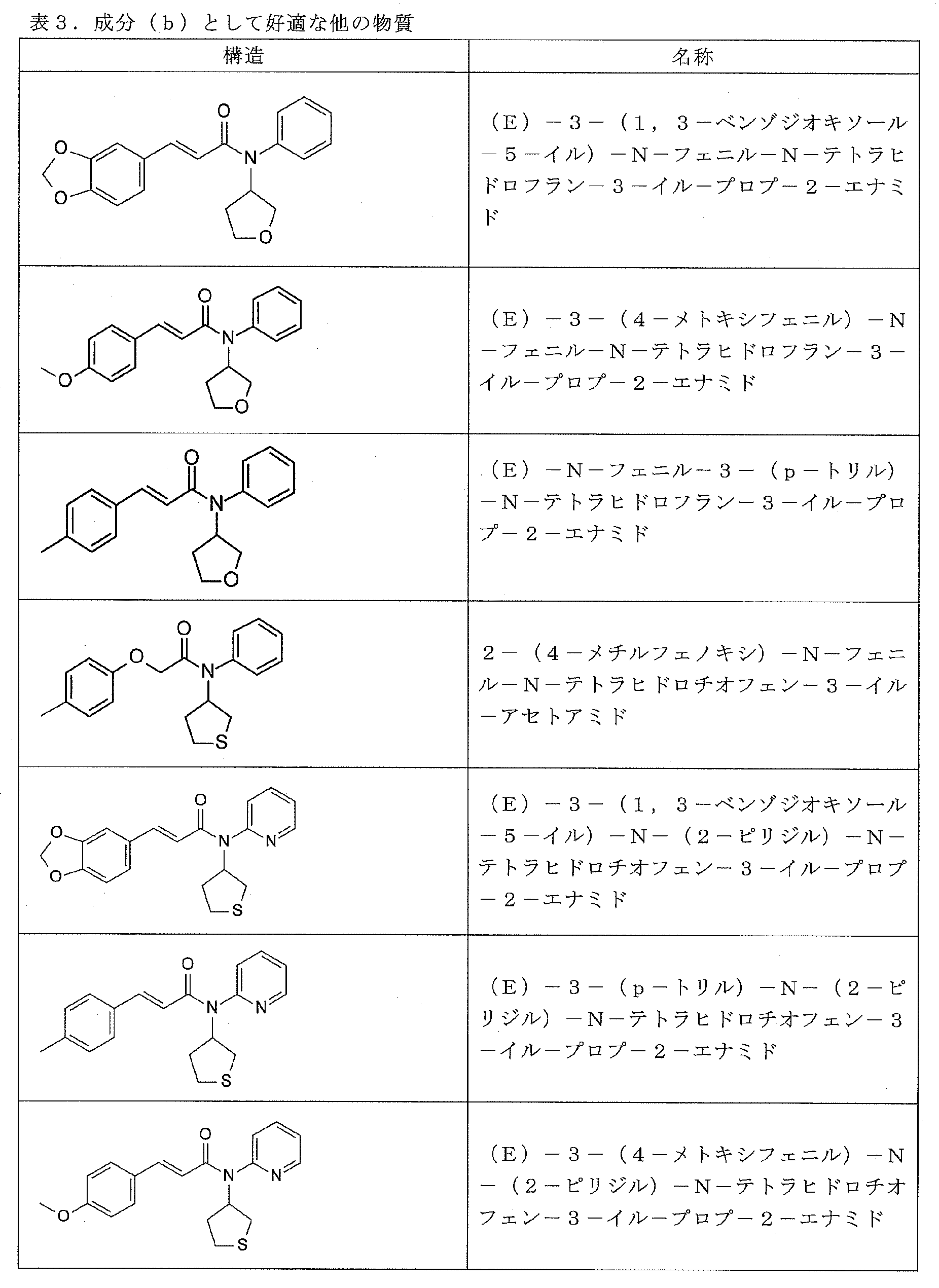

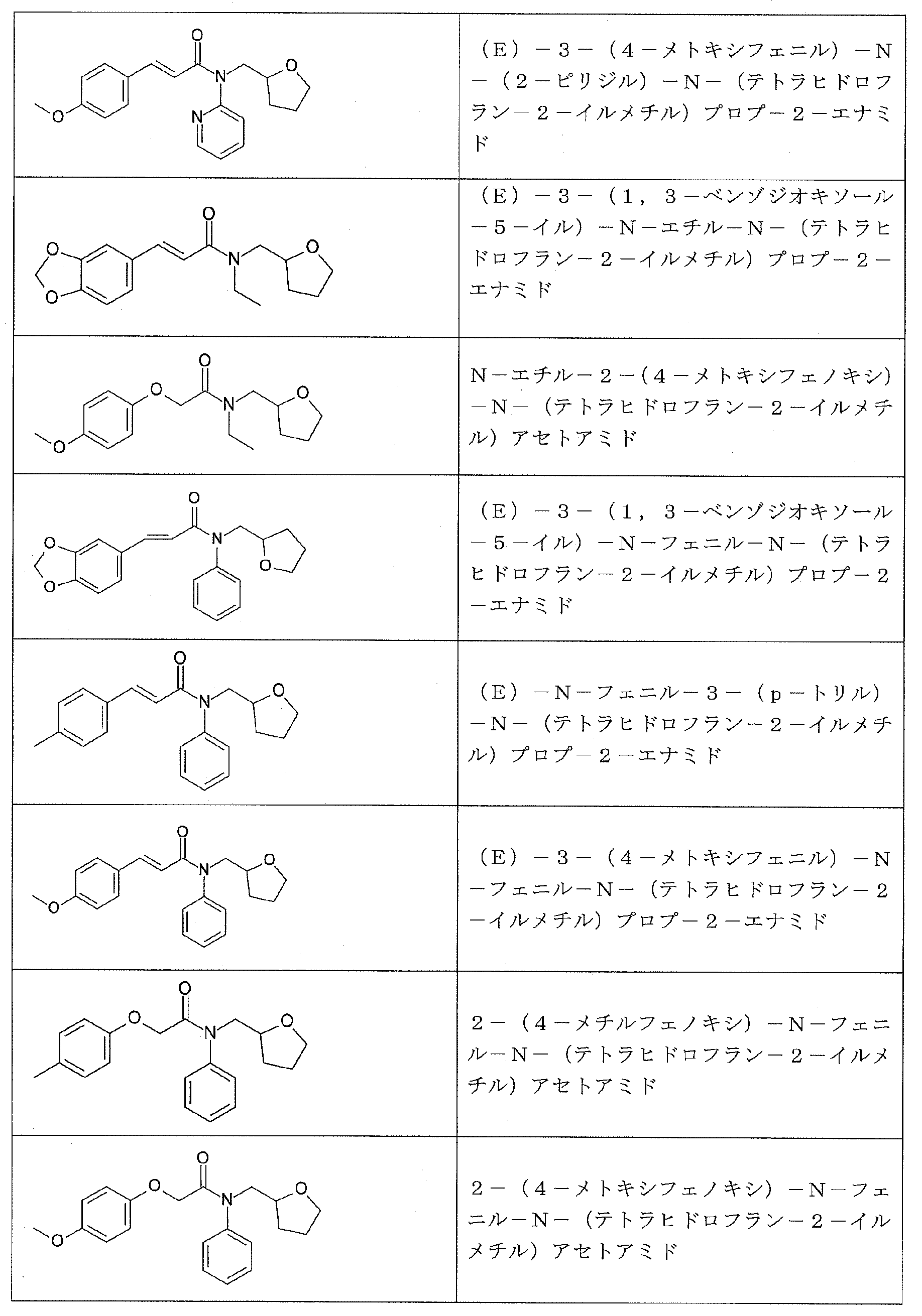
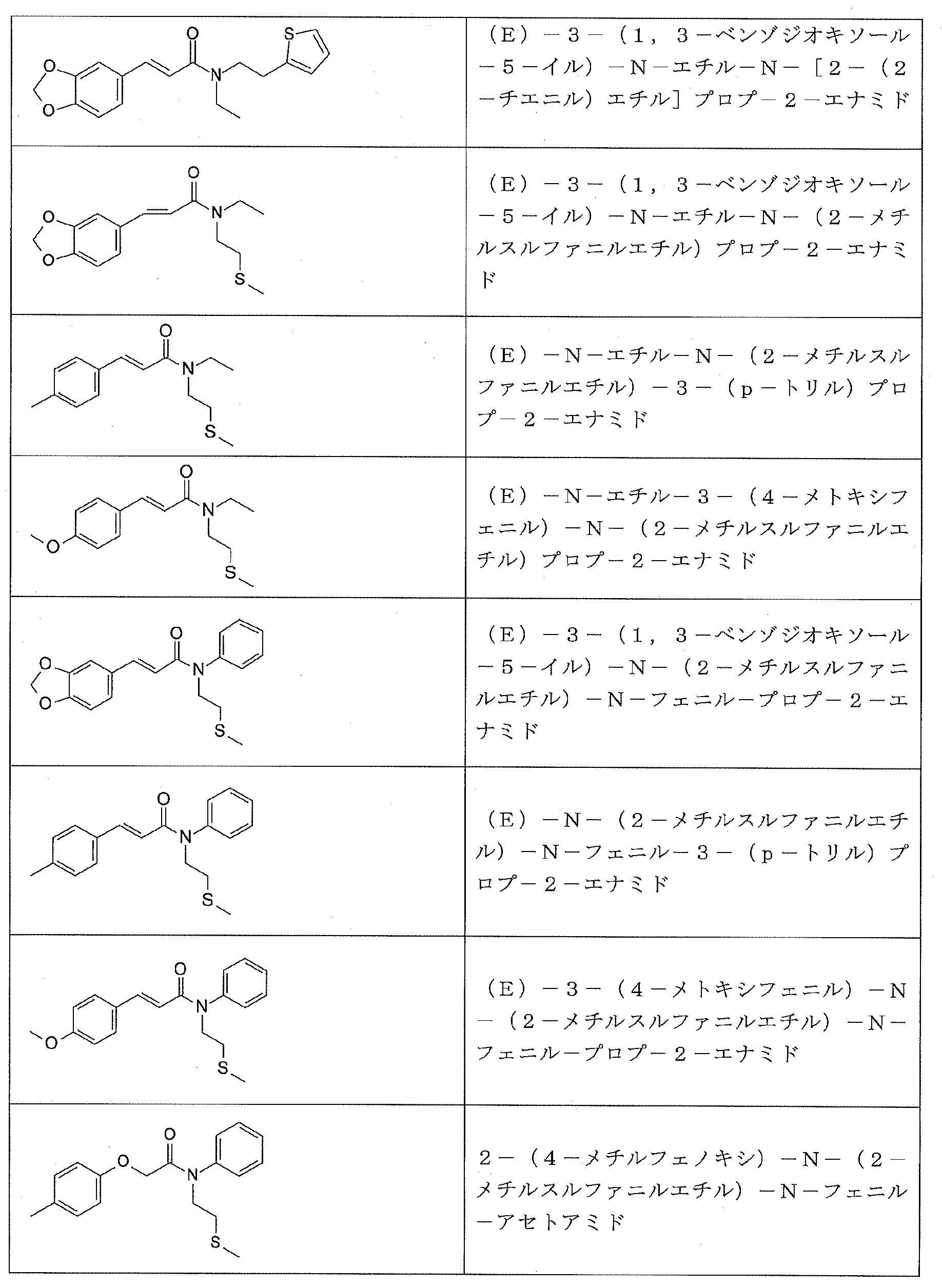
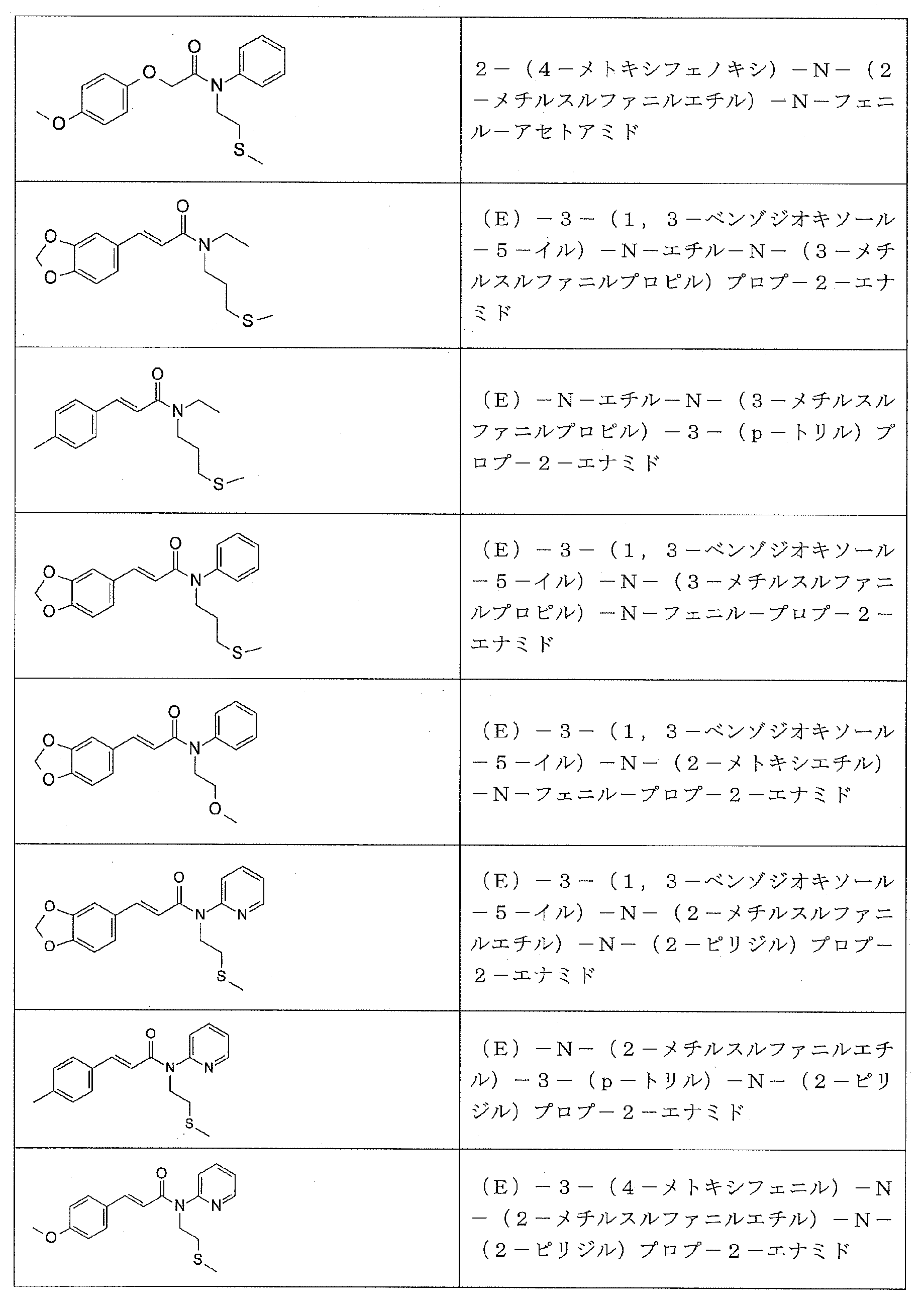
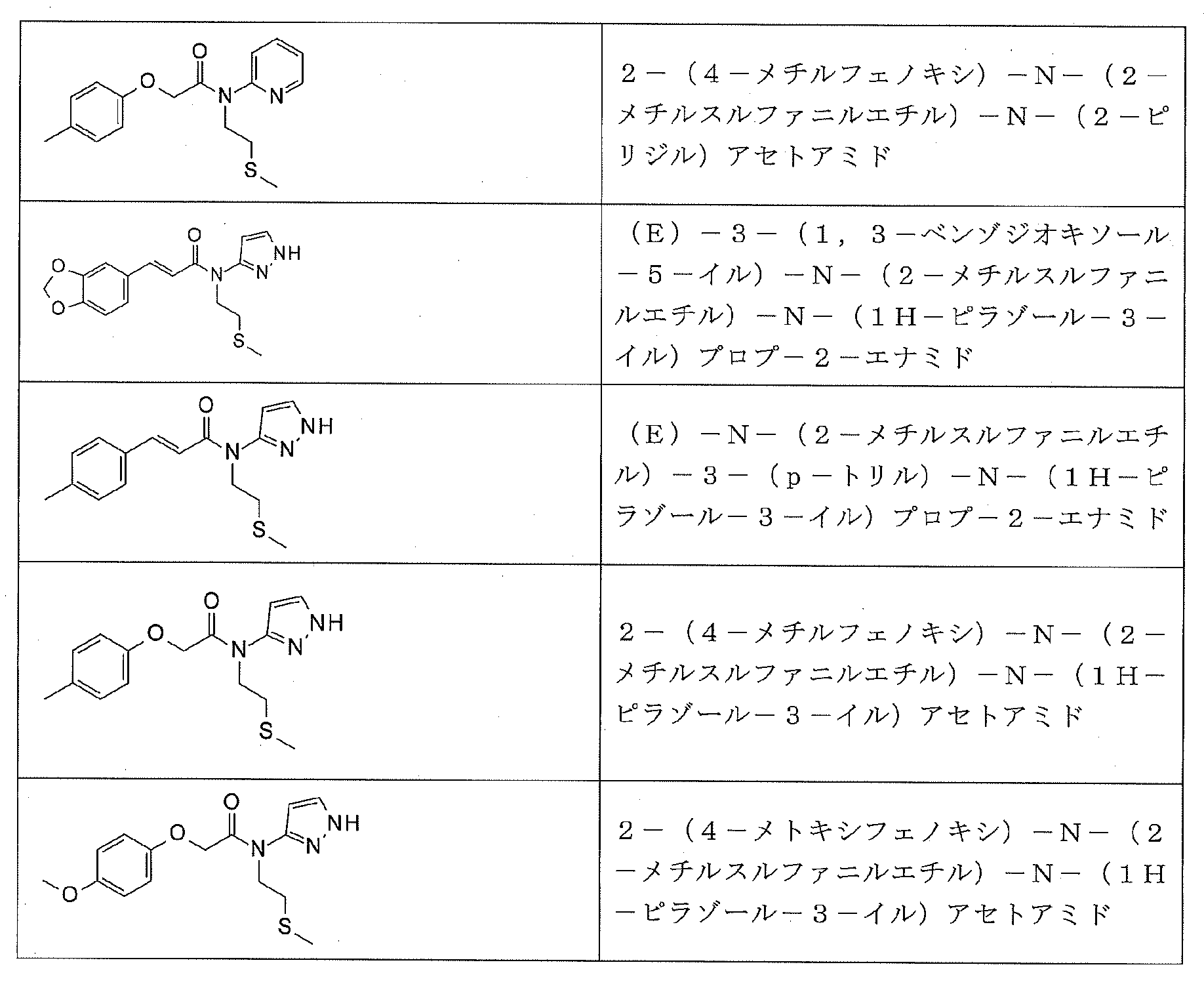
1970年代に、3位にC-C結合を有し、その多数の代表的なものを本発明の意味でも使用することができるメントール化合物が最初に開発された。これらの物質は一般にWS型と呼ばれている。基本体はヒドロキシル基がカルボキシル基で置換されているメントール誘導体(WS-1)である。例えば、本発明の意味でも好ましい種WS-3、WS-4、WS-5、WS-12、WS-14、WS-23、WS-27及びWS-30のような他のWS型はすべて、または前述の化合物のエステルもしくはN置換アミドはこの構造に由来する。 In the 1970s, menthol compounds were first developed which have a CC bond in the 3-position, a number of representatives of which can also be used in the sense of the present invention. These substances are generally called WS type. The basic substance is a menthol derivative (WS-1) in which the hydroxyl group is substituted with a carboxyl group. For example, all other WS types such as the species WS-3, WS-4, WS-5, WS-12, WS-14, WS-23, WS-27 and WS-30, which are also preferred in the sense of the present invention, or esters or N-substituted amides of the aforementioned compounds are derived from this structure.
さらに特に好ましいのは冷却剤2-(p-トリルオキシ)-N-(1H-ピラゾール-5-イル)-N-((チオフェン-2-イル)メチル)アセトアミド(FEMA GRAS 4809)である。加えて、2-(4-エチルフェノキシ)-N-(1H-ピラゾール-3-イル)-N-(チオフェン-2-イルメチル)アセトアミド(FEMA GRAS 4880)及び/またはN-(3-ヒドロキシ-4-メトキシフェニル)-2-イソプロピル-5,5-ジメチルシクロヘキサンカルボキサミド(FEMA GRAS 4881)及び/またはN-(4-(シアノメチル)フェニル)-2-イソプロピル-5,5-ジメチルシクロヘキサンカルボキサミド(FEMA GRAS 4882)。 More particularly preferred is the coolant 2-(p-tolyloxy)-N-(1H-pyrazol-5-yl)-N-((thiophen-2-yl)methyl)acetamide (FEMA GRAS 4809). In addition, 2-(4-ethylphenoxy)-N-(1H-pyrazol-3-yl)-N-(thiophen-2-ylmethyl)acetamide (FEMA GRAS 4880) and/or N-(3-hydroxy-4 -methoxyphenyl)-2-isopropyl-5,5-dimethylcyclohexanecarboxamide (FEMA GRAS 4881) and/or N-(4-(cyanomethyl)phenyl)-2-isopropyl-5,5-dimethylcyclohexanecarboxamide (FEMA GRAS 4882) ).
本発明に係る冷却剤混合物は、冷却剤混合物合計に対して成分(a)と成分(b)を約0.1:99.9~約99.0~0.1、好ましくは約1:99~約99:1、一層さらに好ましくは約10:90~約90:10、その上さらに好ましくは約25:75~約75:25、特に約40:60~約60:40の重量比で含有してもよい。 The coolant mixture according to the present invention comprises component (a) and component (b) in a ratio of about 0.1:99.9 to about 99.0-0.1, preferably about 1:99, based on the total coolant mixture. Contains in a weight ratio of from about 99:1, even more preferably from about 10:90 to about 90:10, even more preferably from about 25:75 to about 75:25, especially from about 40:60 to about 60:40. You may.
冷却剤の冷却効果を活用し、最適化し、且つ香味料及び半製品または他の最終製品にて容易な加工を確保するために、冷却剤は加工の前に溶液に変換する必要がある。しかしながら、場合によっては本発明に係る冷却剤の溶解性が不十分なので、これが保存、取り扱いまたはさらなる加工の間に問題を引き起こす。 In order to exploit and optimize the cooling effect of the coolant and to ensure easy processing in flavorings and semi-finished products or other finished products, the coolant needs to be converted into a solution before processing. However, in some cases the solubility of the coolant according to the invention is insufficient, which causes problems during storage, handling or further processing.
一方では、冷却剤混合物の成分(b)を形成する前述の冷却剤は冷却剤混合物の成分(a)を形成する冷却剤(複数可)のための溶媒として作用してもよい。 On the one hand, the aforementioned coolant forming component (b) of the coolant mixture may act as a solvent for the coolant(s) forming component (a) of the coolant mixture.
有利なことに、本発明に係る冷却剤混合物はさらなる成分(c)として少なくとも1つの溶媒も含む。 Advantageously, the coolant mixture according to the invention also comprises at least one solvent as further component (c).
溶媒がベンジルアルコール、2-フェニルエタノール、安息香酸ベンジル、コハク酸ジエチル、クエン酸トリエチル、トリアセチン、エタノール、ペパーミント油、アネトール、オプタミント、プロピレングリコール、フェノキシエタノール及びそれらの混合物から成る群から選択される単一溶媒または溶媒系は有利であることが判明している。 A single solvent in which the solvent is selected from the group consisting of benzyl alcohol, 2-phenylethanol, benzyl benzoate, diethyl succinate, triethyl citrate, triacetin, ethanol, peppermint oil, anethole, optamin, propylene glycol, phenoxyethanol, and mixtures thereof. Solvents or solvent systems have proven advantageous.
オプタミントは、例えば、50を超えるさまざまな天然の精油または天然のもしくは天然に見いだされる香味料物質の混合物である。オプタミントは、好ましくは、例えば、さまざまなペパーミント油及びスペアミント油、およびユーカリグロブルス油、スターアニス油、メントール、メントン、イソメントン、酢酸メンチル、アネトール、ユーカリプトールなどの混合物を表すさまざまな(部分分画した)油の可変の組成を有する。したがって、オプタミントの組成の正確な再現は可能ではない。Optamint(登録商標)製品シリーズはSymriseAGから市販されている。 Optamint, for example, is a mixture of over 50 different natural essential oils or natural or naturally found flavoring substances. Optamint preferably represents a mixture of, for example, various peppermint and spearmint oils, and eucalyptus globulus oil, star anise oil, menthol, menthone, isomenthone, menthyl acetate, anethole, eucalyptol, etc. ) with variable composition of oil. Therefore, an exact reproduction of the composition of Optamint is not possible. The Optamint® product series is commercially available from Symrise AG.
例えば、ベンジルアルコールまたは2-フェニルエタノールまたは安息香酸ベンジルは本発明に係る冷却剤混合物にて溶媒として使用されてもよい。 For example, benzyl alcohol or 2-phenylethanol or benzyl benzoate may be used as solvent in the coolant mixture according to the invention.
ベンジルアルコールまたは2-フェニルエタノールまたは安息香酸ベンジルを使用して、例えば、本発明の冷却剤を溶液にすることができ、安定な溶液、すなわち、適当な保存のために冷却剤混合物を得ることもできる。 Using benzyl alcohol or 2-phenylethanol or benzyl benzoate, for example, the coolant of the invention can be brought into solution and a stable solution, i.e. the coolant mixture, can be obtained for suitable storage. can.
溶媒系、すなわち、2以上の溶媒の溶媒組み合わせを使用して本発明に係る冷却剤を溶解することもできる。特に適用の後者の分野に関して、冷却効果も示すことができる溶媒の使用は(最終)製造工程にてさらなる工程を省くことができる。 Solvent systems, ie solvent combinations of two or more solvents, can also be used to dissolve the coolant according to the invention. Especially with regard to the latter field of application, the use of solvents that can also exhibit a cooling effect can save further steps in the (final) manufacturing process.
例示的な実施形態では、したがって、冷却剤混合物における溶媒は、ベンジルアルコール、2-フェニルエタノール、安息香酸ベンジル、コハク酸ジエチル、クエン酸トリエチル、トリアセチン、エタノール、ペパーミント油、アネトール、オプタミント、プロピレングリコール、フェノキシエタノール及び成分(b)として上記に記載されているさらなる冷却剤から成る群から選択される2つの溶媒物質の二成分系である。 In an exemplary embodiment, the solvents in the coolant mixture thus include benzyl alcohol, 2-phenylethanol, benzyl benzoate, diethyl succinate, triethyl citrate, triacetin, ethanol, peppermint oil, anethole, optamin, propylene glycol, A binary system of two solvent substances selected from the group consisting of phenoxyethanol and a further coolant as described above as component (b).
本発明に従って好適なのは、例えば、ベンジルアルコールと、2-フェニルエタノール、安息香酸ベンジル、コハク酸ジエチル、クエン酸トリエチル、トリアセチン、エタノール、ペパーミント油、アネトール、オプタミント、プロピレングリコール、フェノキシエタノール、及び成分(b)として上記に記載されているようなさらなる冷却剤から成る群から選択されるさらなる物質との二成分溶媒系である。 Suitable according to the invention are, for example, benzyl alcohol and 2-phenylethanol, benzyl benzoate, diethyl succinate, triethyl citrate, triacetin, ethanol, peppermint oil, anethole, optamin, propylene glycol, phenoxyethanol, and component (b) A binary solvent system with a further substance selected from the group consisting of further refrigerants as described above.
好適なのはまた、例えば、別の溶媒とともにベンジルアルコールを含有する、またはそれから成る二成分溶媒の組み合わせまたは混合物である。したがって、ベンジルアルコールと2-フェニルエタノール、ベンジルアルコールと安息香酸ベンジル、ベンジルアルコールとコハク酸ジエチル、ベンジルアルコールとクエン酸トリエチル、ベンジルアルコールとトリアセチン、ベンジルアルコールとエタノール、ベンジルアルコールとペパーミント油、ベンジルアルコールとアネトール、ベンジルアルコールとオプタミント、ベンジルアルコールとプロピレングリコール、ベンジルアルコールとメントール、ベンジルアルコールと乳酸メンチル(Frescolat(登録商標)ML)、ベンジルアルコールと炭酸メントールプロピレングリコール(Frescolat(登録商標)MPC)、ベンジルアルコールと炭酸メントールエチレングリコール(Frescolat(登録商標)MGC)、ベンジルアルコールとメントングリセリルアセタール(Frescolat(登録商標)MGA)、ベンジルアルコールとカルボン酸メントンエステル及びアミドから選択される二成分溶媒の組み合わせまたは混合物も好適である。 Also suitable are binary solvent combinations or mixtures containing or consisting of, for example, benzyl alcohol together with another solvent. Therefore, benzyl alcohol and 2-phenylethanol, benzyl alcohol and benzyl benzoate, benzyl alcohol and diethyl succinate, benzyl alcohol and triethyl citrate, benzyl alcohol and triacetin, benzyl alcohol and ethanol, benzyl alcohol and peppermint oil, benzyl alcohol and Anethole, benzyl alcohol and optamin, benzyl alcohol and propylene glycol, benzyl alcohol and menthol, benzyl alcohol and menthyl lactate (Frescolat® ML), benzyl alcohol and menthol propylene glycol carbonate (Frescolat® MPC), benzyl alcohol and combinations or mixtures of binary solvents selected from menthol ethylene glycol carbonate (Frescolat® MGC), benzyl alcohol and menthone glyceryl acetal (Frescolat® MGA), benzyl alcohol and carboxylic acid menthone esters and amides. suitable.
さらに、以下の二成分溶媒の組み合わせまたは二成分溶媒の混合物は好適である。-混合物は好適である:2-フェニルエタノールと炭酸メントールプロピレングリコール(Frescolat(登録商標)MPC)、コハク酸ジエチルと2-フェニルエタノール、トリアセチンと安息香酸ベンジル、クエン酸トリエチルとトリアセチン、2-フェニルエタノールとペパーミント油、2-フェニルエタノールとオプタミント、アネトールとトリアセチン、ペパーミント油と乳酸メンチル(Frescolat(登録商標)ML)、トリアセチンとメントングリセリルアセタール(Frescolat(登録商標)MAG)、オプタミントと乳酸メンチル(Frescolat(登録商標)ML)、クエン酸トリエチルと炭酸メントールエチレングリコール(Frescolat(登録商標)MGC)。 Furthermore, the following binary solvent combinations or mixtures of binary solvents are suitable: - Mixtures are preferred: 2-phenylethanol and menthol propylene glycol carbonate (Frescolat® MPC), diethyl succinate and 2-phenylethanol, triacetin and benzyl benzoate, triethyl citrate and triacetin, 2-phenylethanol and peppermint oil, 2-phenylethanol and optamin, anethole and triacetin, peppermint oil and menthyl lactate (Frescolat® ML), triacetin and menthyl glyceryl acetal (Frescolat® MAG), optamin and menthyl lactate (Frescolat®) ML), triethyl citrate and menthol ethylene glycol carbonate (Frescolat® MGC).
したがって、本発明の意味での好適な冷却剤混合物は溶媒(c)として、例えば、上記に記載されているような二成分溶媒の組み合わせまたは混合物を含有する。 Suitable coolant mixtures in the sense of the invention therefore contain as solvent (c), for example combinations or mixtures of binary solvents as described above.
本発明の意味での二成分溶媒の混合物は、例えば、溶媒(1):溶媒(2)の以下の比率:10:1~1:10の比率、好ましくは8:2~2:8の比率、一層さらに好ましくは6:4~4~6の比率、最も好ましくは5:5の比率を有する。 Mixtures of binary solvents in the sense of the invention are, for example, in the following ratios of solvent (1):solvent (2): in a ratio of 10:1 to 1:10, preferably in a ratio of 8:2 to 2:8. , even more preferably a ratio of 6:4 to 4-6, most preferably a ratio of 5:5.
前述の好適な二成分溶媒混合物は本発明に係る冷却剤を溶解することができ、溶媒または前記溶媒の組み合わせに応じて2重量%~50重量%。好ましくは5重量%~40重量%、さらに好ましくは5重量%~20重量%の量にて可変的に広い範囲で溶媒にて冷却剤を安定に保持することができる。 The aforementioned suitable binary solvent mixtures are capable of dissolving the coolant according to the invention, depending on the solvent or combination of said solvents, from 2% to 50% by weight. The coolant can be held stable in the solvent over a variably wide range, preferably in an amount of 5% to 40% by weight, more preferably 5% to 20% by weight.
別の例示的な実施形態では、本発明に係る冷却剤のための溶媒または溶媒系はベンジルアルコール、2-フェニルエタノール、安息香酸ベンジル、コハク酸ジエチル、クエン酸トリエチル、トリアセチン、エタノール、ペパーミント油、アネトール、オプタミント、プロピレングリコール、フェノキシエタノール及び成分(b)として上記に記載されているようなさらなる冷却剤から成る群から選択される3つの溶媒の三成分系である。 In another exemplary embodiment, the solvent or solvent system for the coolant according to the invention is benzyl alcohol, 2-phenylethanol, benzyl benzoate, diethyl succinate, triethyl citrate, triacetin, ethanol, peppermint oil, A ternary system of three solvents selected from the group consisting of anethole, optamin, propylene glycol, phenoxyethanol and a further coolant as described above as component (b).
ここで好適なのは、例えば、ベンジルアルコールと、2-フェニルエタノール、安息香酸ベンジル、コハク酸ジエチル、クエン酸トリエチル、トリアセチン、エタノール、ペパーミント油、アネトール、オプタミント、プロピレングリコール、フェノキシエタノール及び成分(b)として上記に記載されているようなさらなる冷却剤から成る群から選択される2つのさらなる物質との三成分溶媒の組み合わせまたは混合物である。 Suitable here are, for example, benzyl alcohol and 2-phenylethanol, benzyl benzoate, diethyl succinate, triethyl citrate, triacetin, ethanol, peppermint oil, anethole, optamin, propylene glycol, phenoxyethanol and the above as component (b). A combination or mixture of a ternary solvent with two further substances selected from the group consisting of further coolants as described in .
好適なのは、例えば、2つのさらなる溶媒とともにベンジルアルコールを含有する、またはそれから成る三成分溶媒の組み合わせまたは混合物であり、2つのさらなる溶媒は2-フェニルエタノールと安息香酸ベンジル、2-フェニルエタノールとコハク酸ジエチル、クエン酸トリエチルとトリアセチン、トリアセチンとエタノール、トリアセチンとペパーミント油、炭酸メントールエチレングリコール(Frescolat(登録商標)MGC)とアネトール、2-フェニルエタノールとオプタミント、オプタミントとプロピレングリコール、コハク酸ジエチルとメントール、トリアセチンと乳酸メンチル(Frescolat(登録商標)ML)、アネトールと炭酸メントールプロピレングリコール(Frescolat(登録商標)MPC)、トリアセチンと炭酸メントールエチレングリコール(Frescolat(登録商標)MGC)、2-フェニルエタノールとメントングリセリルアセタール(Frescolat(登録商標)MGA)、2-フェニルエタノールとカルボン酸メントンエステルとアミド、2-フェニルエタノールと炭酸メントールプロピレングリコール(Frescolat(登録商標)MPC)、トリアセチンと安息香酸ベンジル、2-フェニルエタノールとペパーミント油、アネトールとトリアセチン、ペパーミント油と乳酸メンチル(Frescolat(登録商標)ML)、トリアセチンとメントールグリセリルアセタール(Frescolat(登録商標)MGA)、オプタミントと乳酸メンチル(Frescolat(登録商標)ML)、クエン酸トリエチルと炭酸メントールエチレングリコール(Frescolat(登録商標)MGC).安息香酸ベンジルと炭酸メントールエチレングリコール(Frescolat(登録商標)MGC)、2-フェニルエタノールとクエン酸トリエチル、クエン酸トリエチルとコハク酸ジエチル、ペパーミント油と乳酸メンチル(Frescolat(登録商標)ML)、及びエタノールと乳酸メンチル(Frescolat(登録商標)ML)から成る群から選択される。 Suitable are, for example, ternary solvent combinations or mixtures containing or consisting of benzyl alcohol together with two further solvents, the two further solvents being 2-phenylethanol and benzyl benzoate, 2-phenylethanol and succinic acid. Diethyl, triethyl citrate and triacetin, triacetin and ethanol, triacetin and peppermint oil, menthol ethylene glycol carbonate (Frescolat® MGC) and anethole, 2-phenylethanol and optamin, optamin and propylene glycol, diethyl succinate and menthol, Triacetin and menthyl lactate (Frescolat® ML), Anethole and menthol propylene glycol carbonate (Frescolat® MPC), Triacetin and menthol ethylene glycol carbonate (Frescolat® MGC), 2-phenylethanol and menthone glyceryl Acetal (Frescolat® MGA), 2-phenylethanol and carboxylic acid menthone ester and amide, 2-phenylethanol and menthol propylene glycol carbonate (Frescolat® MPC), triacetin and benzyl benzoate, 2-phenylethanol and peppermint oil, anethole and triacetin, peppermint oil and menthyl lactate (Frescolat® ML), triacetin and menthol glyceryl acetal (Frescolat® MGA), optamin and menthyl lactate (Frescolat® ML), citric acid Triethyl acid and menthol ethylene glycol carbonate (Frescolat® MGC). Benzyl benzoate and menthol ethylene glycol carbonate (Frescolat® MGC), 2-phenylethanol and triethyl citrate, triethyl citrate and diethyl succinate, peppermint oil and menthyl lactate (Frescolat® ML), and ethanol and menthyl lactate (Frescolat® ML).
さらに、以下の三成分溶媒の組み合わせまたは混合物:例えば、
クエン酸トリエチルとトリアセチンと乳酸メンチル(Frescolat(登録商標)ML)、
トリアセチンと2-フェニルエタノールとペパーミント油、
2-フェニルエタノールとオプタミントとペパーミント油、
2-フェニルエタノールとトリアセチンとオプタミント、
アネトールとベンジルアルコールとトリアセチン、
2-フェニルエタノールと安息香酸ベンジルとオプタミント、
2-フェニルエタノールとコハク酸ジエチルとオプタミント、
クエン酸トリエチルとトリアセチンとペパーミント油、
オプタミントとトリアセチンとエタノール、
トリアセチンと炭酸メントールエチレングリコール(Frescolat(登録商標)MGC)とアネトール、
2-フェニルエタノールとオプタミントとプロピレングリコール、
コハク酸ジエチルとトリアセチンとメントール、
トリアセチンと安息香酸ベンジルと乳酸メンチル(Frescolat(登録商標)ML),
アネトールと炭酸メントールプロピレングリコール(Frescolat(登録商標)MPC)と炭酸メントールエチレングリコール(Frescolat(登録商標)MGC)、
トリアセチンと2-フェニルエタノールとメントングリセリルアセタール(Frescolat(登録商標)MGA)、
ペパーミント油と2-フェニルエタノールとカルボン酸メンタンエステルとアミド、
トリアセチンと2-フェニルエタノールと炭酸メントールプロピレングリコール(Frescolat(登録商標)MPC)、
乳酸メンチル(Frescolat(登録商標)ML)と2-フェニルエタノールとペパーミント油、
アネトールとトリアセチンとメントングリセリルアセタール(Frescolat(登録商標)MGA)、
オプタミントと安息香酸ベンジルと乳酸メンチル(Frescolat(登録商標)ML)、及び
安息香酸ベンジルとクエン酸トリエチルと炭酸メントールエチレングリコール(Frescolat(登録商標)MGC)も好適である。
Additionally, combinations or mixtures of the following ternary solvents: e.g.
Triethyl citrate and triacetin and menthyl lactate (Frescolat® ML),
triacetin, 2-phenylethanol, and peppermint oil,
2-Phenylethanol, optamin and peppermint oil,
2-phenylethanol, triacetin and optamin,
Anethole, benzyl alcohol and triacetin,
2-phenylethanol, benzyl benzoate and optamin,
2-phenylethanol, diethyl succinate and optamint,
triethyl citrate, triacetin and peppermint oil,
Optamin, triacetin and ethanol,
triacetin and menthol ethylene glycol carbonate (Frescolat® MGC) and anethole,
2-phenylethanol, optamin and propylene glycol,
diethyl succinate, triacetin and menthol,
triacetin and benzyl benzoate and menthyl lactate (Frescolat® ML),
Anethole and menthol propylene glycol carbonate (Frescolat® MPC) and menthol ethylene glycol carbonate (Frescolat® MGC),
triacetin and 2-phenylethanol and menthone glyceryl acetal (Frescolat® MGA),
Peppermint oil, 2-phenylethanol, carboxylic acid menthane ester and amide,
triacetin and 2-phenylethanol and menthol propylene glycol carbonate (Frescolat® MPC),
Menthyl lactate (Frescolat® ML) and 2-phenylethanol and peppermint oil,
Anethole and triacetin and menthone glyceryl acetal (Frescolat® MGA),
Optamint and benzyl benzoate and menthyl lactate (Frescolat® ML) and benzyl benzoate and triethyl citrate and menthol ethylene glycol carbonate (Frescolat® MGC) are also suitable.
本発明の意味での三成分溶媒混合物は、例えば、以下の比率、10:1:15~5:1:3の比率、または4:1:7~7:1:4の比率、または2:2:4~4:4:2の比率の溶媒(1):溶媒(2):溶媒(3)を有する。 Ternary solvent mixtures in the sense of the invention are, for example, in the following ratios: from 10:1:15 to 5:1:3, or from 4:1:7 to 7:1:4, or from 2: Having a ratio of solvent (1):solvent (2):solvent (3) from 2:4 to 4:4:2.
前述の好適な三成分溶媒混合物は本発明の冷却剤を溶解する能力で特に良好であり、溶媒または前記溶媒の組み合わせに応じて2重量%~50重量%。好ましくは5重量%~40重量%、さらに好ましくは5重量%~20重量%の量にて広い範囲で溶液にて冷却剤を安定に且つ可変に保持することが示された。 The preferred ternary solvent mixtures mentioned above are particularly good in their ability to dissolve the coolant of the invention, from 2% to 50% by weight, depending on the solvent or combination of said solvents. It has been shown to stably and variably retain the coolant in solution over a wide range, preferably in amounts from 5% to 40% by weight, more preferably from 5% to 20% by weight.
これは、本発明に係る冷却剤(複数可)がそれによって最終製剤に好適な可変の量にて調製され得るので、冷却剤(複数可)が溶解された形態で存在する冷却剤混合物の範囲が広いという利点を有する。 This is a range of coolant mixtures in which the coolant(s) are present in dissolved form, since the coolant(s) according to the invention can thereby be prepared in variable amounts suitable for the final formulation. It has the advantage of being wide.
別の好適な実施形態では、本発明に係る冷却剤のための溶媒または溶媒系はベンジルアルコール、2-フェニルエタノール、安息香酸ベンジル、コハク酸ジエチル、クエン酸トリエチル、トリアセチン、エタノール、ペパーミント油、アネトール、オプタミント、プロピレングリコール、フェノキシエタノール及び成分(b)として上記に記載されているようなさらなる冷却剤から成る群から選択される4つの溶媒の四成分系である。 In another preferred embodiment, the solvent or solvent system for the coolant according to the invention is benzyl alcohol, 2-phenylethanol, benzyl benzoate, diethyl succinate, triethyl citrate, triacetin, ethanol, peppermint oil, anethole. , Optamin, propylene glycol, phenoxyethanol and a further coolant as described above as component (b).
ここで好適なのは、例えば、ベンジルアルコールと、2-フェニルエタノール、安息香酸ベンジル、コハク酸ジエチル、クエン酸トリエチル、トリアセチン、エタノール、ペパーミント油、アネトール、オプタミント、プロピレングリコール、フェノキシエタノール及び成分(b)として上記に記載されているようなさらなる冷却剤から成る群から選択される3つのさらなる物質との四成分溶媒の組み合わせである。 Suitable here are, for example, benzyl alcohol and 2-phenylethanol, benzyl benzoate, diethyl succinate, triethyl citrate, triacetin, ethanol, peppermint oil, anethole, optamin, propylene glycol, phenoxyethanol and the above as component (b). The combination of a quaternary solvent with three further substances selected from the group consisting of further coolants as described in .
好適な四成分溶媒の組み合わせまたは混合物は、例えば、3つのさらなる溶媒とともにベンジルアルコールを含有する、またはそれらから成るものであり、3つのさらなる溶媒は
2-フェニルエタノールとクエン酸トリエチルとトリアセチン、
ペパーミント油と2-フェニルエタノールとクエン酸トリエチル、
クエン酸トリエチルと乳酸メンチル(Frescolat(登録商標)ML)とコハク酸ジエチル
クエン酸トリエチルとトリアセチンとアネトール、
2-フェニルエタノールとトリアセチンとオプタミント、
ペパーミント油とベンジルアルコールと乳酸メンチル(Frescolat(登録商標)ML)、
オプタミントとエタノールと乳酸メンチル(Frescolat(登録商標)ML)、
2-フェニルエタノールと安息香酸ベンジルとコハク酸ジエチル、
クエン酸トリエチルとトリアセチンとエタノール、
ペパーミント油とアネトールとオプタミント、
2-フェニルエタノールと安息香酸ベンジルとプロピレングリコール、
2-フェニルエタノールと安息香酸ベンジルと炭酸メントールプロピレングリコール (Frescolat(登録商標)MPC)、
クエン酸トリエチルとオプタミントとエタノール、
トリアセチンと安息香酸ベンジルとメトキシ-2-メチル-1,2-プロパンジオール、
メントングリセリルアセタール(Frescolat(登録商標)MGA)とトリアセチンとアネトールから成る群から選択される。
A suitable quaternary solvent combination or mixture is, for example, one containing or consisting of benzyl alcohol together with three further solvents, the three further solvents being 2-phenylethanol, triethyl citrate and triacetin;
peppermint oil, 2-phenylethanol and triethyl citrate,
Triethyl citrate and menthyl lactate (Frescolat® ML) and diethyl succinate triethyl citrate and triacetin and anethole,
2-phenylethanol, triacetin and optamin,
peppermint oil and benzyl alcohol and menthyl lactate (Frescolat® ML),
Optamint and ethanol and menthyl lactate (Frescolat® ML),
2-phenylethanol, benzyl benzoate, and diethyl succinate,
Triethyl citrate, triacetin and ethanol,
peppermint oil, anethole and optamint,
2-phenylethanol, benzyl benzoate and propylene glycol,
2-phenylethanol and benzyl benzoate and menthol propylene glycol carbonate (Frescolat® MPC),
triethyl citrate, optamin and ethanol,
triacetin and benzyl benzoate and methoxy-2-methyl-1,2-propanediol,
selected from the group consisting of menthone glyceryl acetal (Frescolat® MGA), triacetin and anethole.
以下の四成分の溶媒の組み合わせ及び溶媒の混合物:
アネトールとトリアセチンとペパーミント油と炭酸メントールエチレングリコール(Frescolat(登録商標)MGC)、
トリアセチンとエタノールと2-フェニルエタノールとペパーミント油、
2-フェニルエタノールとオプタミントとコハク酸ジエチルとペパーミント油、
アネトールと2-フェニルエタノールとベンジルアルコールとトリアセチンも好適である。
The following four-component solvent combinations and solvent mixtures:
Anethole and triacetin and peppermint oil and menthol ethylene glycol carbonate (Frescolat® MGC),
triacetin, ethanol, 2-phenylethanol, and peppermint oil,
2-phenylethanol, optamin, diethyl succinate, and peppermint oil,
Also suitable are anethole, 2-phenylethanol, benzyl alcohol and triacetin.
前述の好適な四成分溶媒の混合物は本発明の冷却剤を溶解する能力で特に良好であり、溶媒または前記溶媒の組み合わせに応じて2重量%~50重量%。好ましくは5重量%~40重量%、さらに好ましくは5重量%~20重量%の量にて広い範囲で溶液にて冷却剤を安定に且つ可変に保持することが示された。 Mixtures of the preferred quaternary solvents mentioned above are particularly good in their ability to dissolve the coolants of the invention, from 2% to 50% by weight, depending on the solvent or combination of said solvents. It has been shown to stably and variably retain the coolant in solution over a wide range, preferably in amounts from 5% to 40% by weight, more preferably from 5% to 20% by weight.
これは、本発明に係る冷却剤(複数可)がそれによって最終製剤に好適な可変の量にて調製され得るので、冷却剤(複数可)が溶解された形態で存在する冷却剤混合物の範囲が広いという利点を有する。 This is a range of coolant mixtures in which the coolant(s) are present in dissolved form, since the coolant(s) according to the invention can thereby be prepared in variable amounts suitable for the final formulation. It has the advantage of being wide.
本発明に係る冷却剤混合物は好ましくは、成分(a)及び/または(b)及び/または(c)が一緒に100%になるという条件で、冷却剤混合物の合計を基にして2重量%~20重量%、好ましくは2重量%~10重量%、一層さらに好ましくは5重量%~10重量%、非常に特に好ましくは5重量%~8重量%の量で成分(a)及び/または成分(b)、及び/または80重量%~98重量%、好ましくは90重量%~98重量%、一層さらに好ましくは90重量%~95重量%、非常に特に好ましくは92重量%~95重量%の量で成分(c)を含有する、またはそれらから成る。 The coolant mixture according to the invention is preferably 2% by weight, based on the total of the coolant mixture, provided that components (a) and/or (b) and/or (c) together amount to 100%. Component (a) and/or the components (b), and/or 80% to 98% by weight, preferably 90% to 98% by weight, even more preferably 90% to 95% by weight, very particularly preferably 92% to 95% by weight. containing or consisting of component (c) in an amount.
本発明に係る冷却剤混合物のこの組成は、最終製剤における冷却剤(複数可)の量を制御できるので、特に有利である。 This composition of the coolant mixture according to the invention is particularly advantageous since it allows the amount of coolant(s) in the final formulation to be controlled.
特に口腔ケア組成物の場合、好ましくは最終製品は最終製品の重量を基にして約0.00001重量%~50重量%、好ましくは0.0001重量%~10重量%、さらに好ましくは0.001重量%~5重量%、さらに好ましくは0.005重量%~1重量%または0.1重量%~20重量%、さらに好ましくは0.5重量%~15重量%または1重量%~5重量%の量で冷却剤(複数可)を含有する。 Particularly for oral care compositions, preferably the final product is about 0.00001% to 50%, preferably 0.0001% to 10%, more preferably 0.001% by weight, based on the weight of the final product. wt% to 5 wt%, more preferably 0.005 wt% to 1 wt% or 0.1 wt% to 20 wt%, even more preferably 0.5 wt% to 15 wt% or 1 wt% to 5 wt% containing coolant(s) in an amount of .
本発明に係る好適な冷却剤混合物は、例えば、以下の組成:
・95~90重量%のベンジルアルコールにおける5~10重量%の冷却剤(複数可)、もしくは92~90重量%のベンジルアルコールにおける8~10重量%の冷却剤(複数可)、または
・99~96重量%のクエン酸トリエチルにおける1~4重量%の冷却剤(複数可)、または
・99~97重量%のトリアセチンにおける1~3重量%の冷却剤(複数可)、または
・97~94重量%のコハク酸ジエチルにおける3~6重量%の冷却剤(複数可)、または
・95~85重量%の2-フェニルエタノールにおける5~15重量%の冷却剤(複数可)、または
・95~90重量%の安息香酸ベンジルにおける5~10重量%の冷却剤(複数可)、または
・99~97重量%のオプタミントにおける1~3重量%の冷却剤(複数可)、または
・99~96重量%の成分(b)として上記に記載されている他の冷却剤における1~4重量%の冷却剤(複数可)、または
・98~96重量%のプロピレングリコールにおける2~4重量%の冷却剤(複数可)、または
・95.5~98重量%のエタノールにおける0.5~2重量%の冷却剤(複数可)、または
・95.5~98重量%の酢酸メンチルにおける0.5~2重量%の冷却剤(複数可)、または
・99~96重量%のペパーミント油における1~4重量%の冷却剤(複数可)、または
・98~95重量%のアネトールにおける2~5重量%の冷却剤(複数可)を有し、またはそれらから成り;
それによって冷却剤混合物における双方の成分(冷却剤(複数可)と溶媒)は常に合計100重量%になる。例えば、本発明に係る好適な冷却剤混合物は95~90重量%のベンジルアルコールにおける5~10重量%の冷却剤(複数可)、特に好ましくは92~90重量%のベンジルアルコールにおける8~10重量%の冷却剤(複数可)から成る。
Suitable coolant mixtures according to the invention have, for example, the following composition:
5-10 wt.% coolant(s) in 95-90 wt.% benzyl alcohol, or 8-10 wt.% coolant(s) in 92-90 wt.% benzyl alcohol, or 1-4 wt.% coolant(s) in 96 wt.% triethyl citrate, or 1-3 wt.% coolant(s) in 99-97 wt.% triacetin, or 97-94 wt. 3-6% by weight of coolant(s) in % diethyl succinate, or 5-15% by weight of coolant(s) in 95-85% 2-phenylethanol, or 95-90% by weight of coolant(s) in 2-phenylethanol. 5-10 wt.% coolant(s) in benzyl benzoate, or 1-3 wt.% coolant(s) in 99-97 wt.% Optamint, or 99-96 wt.%. 1 to 4 wt.% refrigerant(s) in other refrigerants listed above as component (b) of; or 2 to 4 wt.% refrigerant(s) in 98 to 96 wt.% propylene glycol ( 0.5-2 wt. % coolant(s) in 95.5-98 wt.% ethanol, or 0.5-2 wt. in 95.5-98 wt.% menthyl acetate. % cooling agent(s), or 1-4% cooling agent(s) in 99-96% peppermint oil, or 2-5% cooling in 98-95% anethole. comprising or consisting of agent(s);
Thereby, both components (coolant(s) and solvent) in the coolant mixture always total 100% by weight. For example, suitable coolant mixtures according to the invention include 5 to 10% by weight of coolant(s) in 95 to 90% by weight of benzyl alcohol, particularly preferably 8 to 10% by weight of coolant(s) in 92 to 90% by weight of benzyl alcohol. % coolant(s).
本発明の別の態様は
(d)式(I)または式(II)(または式(I)~(VII)のいずれか)の、または表1または表2で提示されたような及び上記で定義された1、2、3以上の冷却剤(複数可)と
(e)少なくとも1つの香味料とを含む、またはそれらから成る風味調製品に関する。
Another aspect of the invention is (d) of formula (I) or formula (II) (or any of formulas (I) to (VII)), or as presented in Table 1 or Table 2 and above. Flavored preparations comprising or consisting of one, two, three or more coolant(s) as defined and (e) at least one flavoring agent.
これらの混合物または風味調製品の特定の利点は、冷却剤が低濃度でさえ、香味料、特に甘味料の不快な、例えば、苦味または渋味、味覚を隠すことができる一方で、同時に強力で且つ効率的な冷却効果を付与することである。 A particular advantage of these mixtures or flavor preparations is that the coolant, even at low concentrations, can mask the unpleasant, e.g. bitter or astringent, taste of flavorants, especially sweeteners, while at the same time being powerful. Another purpose is to provide an efficient cooling effect.
本発明に係る調製品は、アセトフェノン、カプロン酸アリル、アルファ-イオノン、ベータ-イオノン、アニスアルデヒド、酢酸アニシル、ギ酸アニシル、アネトール、ベンズアルデヒド、ベンゾチアゾール、酢酸ベンジル、ベンジルアルコール、安息香酸ベンジル、ベータ-イオノン、酪酸ブチル、カプロン酸ブチル、ブチリデンフタリド、カルボン、カンフェン、カリオフィレン、シネオール、酢酸シンナミル、シトラル、シトロネロール、シトロネラール、酢酸シトロネリル、酢酸シクロヘキシル、シメン、ダマスコン、デカラクトン、ジヒドロクマリン、アントラニル酸ジメチル、アントラニル酸ジメチル、ドデカラクトン、酢酸エトキシエチル、エチル酪酸、酪酸エチル、カプリン酸エチル、カプロン酸エチル、クロトン酸エチル、エチルフラネオール、エチルグアイアコール、イソ酪酸エチル、イソ吉草酸エチル、乳酸エチル、酪酸エチルメチル、プロピオン酸エチル、ユーカリプトール、ユーゲノール、ヘプチル酸エチル、4-(p-ヒドロキシフェニル)-2-ブタノン、ガンマ-デカラクトン、ゲラニオール、酢酸ゲラニル、酢酸ゲラニル、グレープフルーツアルデヒド、ジヒドロジャスモン酸メチル(例えば、Hedion(登録商標))、ヘリオトロピン、2-ヘプタノン、3-ヘプタノン、4-ヘプタノン、trans-2-ヘプテナール、cis-4-ヘプテナール、trans-2-ヘキセナール、cis-3-ヘキセノール、trans-2-ヘキセン酸、trans-3-ヘキセン酸、酢酸cis-2-ヘキセニル、酢酸cis-3-ヘキセニル、カプロン酸cis-3-ヘキセニル、カプロン酸trans-2-ヘキセニル、ギ酸cis-3-ヘキセニル、酢酸cis-2-ヘキシル、酢酸cis-3-ヘキシル、酢酸trans-2-ヘキシル、ギ酸cis-3-ヘキシル、para-ヒドロキシベンジルアセトン、イソアミルアルコール、イソ吉草酸イソアミル、酪酸イソブチル、イソブチルアルデヒド、イソユーゲノールメチルエーテル、イソプロピルメチルチアゾール、ラウリン酸、レブリン酸、リナロール、リナロールオキシド、酢酸リナリル、メントール、メントフラン、アントラニル酸メチル、メチルブタノール、メチル酪酸、酢酸2-メチルブチル、カプロン酸メチル、桂皮酸メチル、5-メチルフルフラル、3,2,2-メチルシクロペンテノロン、6,5,2-メチルヘプテノン、ジヒドロジャスモン酸メチル、ジャスモン酸メチル、メチル酪酸2-メチル、2-メチル2-ペンテン酸、チオ酪酸メチル、3,1-メチルチオヘキサノール、酢酸3-メチルチオヘキシル、ネロール、ネリルアセテート、trans,trans-2,4-ノナジエナール、2,4-ノナジエノール、2,6-ノナジエノール、2,4-ノナジエノール、ノートカトン、デルタオクタラクトン、ガンマオクタラクトン、2-オクタノール、3-オクタノール、1,3-オクテノール、酢酸1-オクチル、酢酸3-オクチル、パルミチン酸、パラアルデヒド、フェランドレン、ペンタンジオン、酢酸フェニルエチル、フェニルエチルアルコール、フェニルエチルアルコール、イソ吉草酸フェニルエチル、ピペロナール、プロピオンアルデヒド、酪酸プロピル、プレゴン、プレゴール、シネンサール、スルフロール、テルピネン、テルピネオール、テルピノレン、8,3-チオメンタノン、4,4,2-チオメチルペンタノン、チモール、デルタ-ウンデカラクトン、ガンマ-ウンデカラクトン、バレンセン、吉草酸、バニリン、アセトイン、エチルバニリン、イソ酪酸エチルバニリン(=3-エトキシ-4-イソブチリルオキシベンズアルデヒド)、2,5-ジメチル-4-ヒドロキシ-3(2H)-フラノン及びその誘導体(好ましくはホモフラネオール(=2-エチル-4-ヒドロキシ-5-メチル-3(2H)-フラノン)、ホモフロノール(=2-エチル-5-メチル-4-ヒドロキシ-3(2H)-フラノン及び5-エチル-2-メチル-4-ヒドロキシ-3(2H)-フラノン)、
マルトール及びマルトール誘導体(好ましくはエチルマルトール)、クマリン及びクマリン誘導体、ガンマ-ラクトン(好ましくはガンマ-ウンデカラクトン、ガンマ-ノナラクトン、ガンマ-デカラクトン)、デルタ-ラクトン(好ましくは4-メチルデルタデカラクトン、マソイラクトン、デルタデカラクトン、ツベロラクトン)、ソルビン酸メチル、ジバニリン、4-ヒドロキシ-2(または5)-エチル-5(または2)-メチル-3(2H)-フラノン、2-ヒドロキシ-3-メチル-2-シクロペンテノン、3-ヒドロキシ-4,5-ジメチル-2(5H)-フラノン、酢酸イソアミルエステル、酪酸エチルエステル、酪酸n-ブチルエステル、酪酸イソアミルエステル、3-メチル酪酸エチルエステル、n-ヘキサン酸エチルエステル、n-ヘキサン酸アリルエステル、n-ヘキサン酸n-ブチルエステル、n-オクタン酸エチルエステル、3-メチル-3-フェニルグリシド酸エチル、2-trans-4-cis-デカジエン酸エチル、4-(p-ヒドロキシフェニル)-2-ブタノン、1,1-ジメトキシ-2,2,5-トリメチル-4-ヘキサン、2,6-ジメチル-5-ヘプタン-1-アル及びフェニルアセトアルデヒド、2-メチル-3-(メチルチオ)フラン、2-メチル-3-フランチオール、ビス(2-メチル-3-フリル)ジスルフィド、フルフリルメルカプタン、メチオナール、2-アセチル-2-チアゾリン、3-メルカプト-2-ペンタノン、2,5-ジメチル-3-フランチオール、2,4,5-トリメチルチアゾール、2-アセチルチアゾール、2,4-ジメチル-5-エチルチアゾール、2-アセチル-1-ピロリン、2-メチル-3-エチルピラジン、2-エチル-3,5-ジメチルピラジン、2-エチル-3,6-ジメチルピラジン、2,3-ジエチル-5-メチルピラジン、3-イソプロピル-2-メトキシピラジン、3-イソブチル-2-メトキシピラジン、2-アセチルピラジン、2-ペンチルピリジン、(E,E)-2,4-デカジエナール、(E,E)-2,4-ノナジエナール、(E)-2-オクテナール、(E)-2-ノネナール、2-ウンデセナール、12-メチルトリデカナール、1-ペンテン-3-オン、4-ヒドロキシ-2,5-ジメチル-3(2H)-フラノン、グアイアコール、3-ヒドロキシ-4,5-ジメチル-2(5H)-フラノン、3-ヒドロキシ-4-メチル-5-エチル-2(5H)-フラノン、シンナムアルデヒド、シンナムアルコール、サリチル酸メチル、イソプレゴール、およびこれらの物質の立体異性体、エナンチオマー、位置異性体、ジアステレオマー、シス/トランス異性体またはエピマー(ここで明白には言及されていない)によって形成される群から選択される1以上の香味料物質(成分(e))を含有してもよい。
The preparations according to the invention include acetophenone, allyl caproate, alpha-ionone, beta-ionone, anisaldehyde, anisyl acetate, anisyl formate, anethole, benzaldehyde, benzothiazole, benzyl acetate, benzyl alcohol, benzyl benzoate, beta- Ionone, butyl butyrate, butyl caproate, butylidenephthalide, carvone, camphene, caryophyllene, cineol, cinnamyl acetate, citral, citronellol, citronellal, citronellyl acetate, cyclohexyl acetate, cymene, damascone, decalactone, dihydrocoumarin, dimethyl anthranilate, anthranil Dimethyl acid, dodecalactone, ethoxyethyl acetate, ethyl butyrate, ethyl butyrate, ethyl caprate, ethyl caproate, ethyl crotonate, ethylfuraneol, ethylguaiacol, ethyl isobutyrate, ethyl isovalerate, ethyl lactate, ethyl methyl butyrate , ethyl propionate, eucalyptol, eugenol, ethyl heptylate, 4-(p-hydroxyphenyl)-2-butanone, gamma-decalactone, geraniol, geranyl acetate, geranyl acetate, grapefruit aldehyde, methyl dihydrojasmonate (e.g. Hedion (registered trademark)), heliotropin, 2-heptanone, 3-heptanone, 4-heptanone, trans-2-heptenal, cis-4-heptenal, trans-2-hexenal, cis-3-hexenol, trans-2- Hexenoic acid, trans-3-hexenoic acid, cis-2-hexenyl acetate, cis-3-hexenyl acetate, cis-3-hexenyl caproate, trans-2-hexenyl caproate, cis-3-hexenyl formate, cis-acetate 2-hexyl, cis-3-hexyl acetate, trans-2-hexyl acetate, cis-3-hexyl formate, para-hydroxybenzylacetone, isoamyl alcohol, isoamyl isovalerate, isobutyl butyrate, isobutyraldehyde, isoeugenol methyl ether , isopropylmethylthiazole, lauric acid, levulinic acid, linalool, linalool oxide, linalyl acetate, menthol, mentofuran, methyl anthranilate, methylbutanol, methylbutyric acid, 2-methylbutyl acetate, methyl caproate, methyl cinnamate, 5-methyl Furfural, 3,2,2-methylcyclopentenolone, 6,5,2-methylheptenone, methyl dihydrojasmonate, methyl jasmonate, 2-methyl methylbutyrate, 2-methyl 2-pentenoic acid, methyl thiobutyrate, 3 , 1-methylthiohexanol, 3-methylthiohexyl acetate, nerol, neryl acetate, trans, trans-2,4-nonadienal, 2,4-nonadienol, 2,6-nonadienol, 2,4-nonadienol, nautokatone, delta octalactone , gamma octalactone, 2-octanol, 3-octanol, 1,3-octenol, 1-octyl acetate, 3-octyl acetate, palmitic acid, paraldehyde, phellandrene, pentanedione, phenylethyl acetate, phenylethyl alcohol, phenyl Ethyl alcohol, phenylethyl isovalerate, piperonal, propionaldehyde, propyl butyrate, pulegone, pulegol, sinensal, sulfurol, terpinene, terpineol, terpinolene, 8,3-thiomenthanone, 4,4,2-thiomethylpentanone, thymol, Delta-undecalactone, gamma-undecalactone, valencene, valeric acid, vanillin, acetoin, ethyl vanillin, ethyl vanillin isobutyrate (=3-ethoxy-4-isobutyryloxybenzaldehyde), 2,5-dimethyl-4 -Hydroxy-3(2H)-furanone and its derivatives (preferably homofuraneol (=2-ethyl-4-hydroxy-5-methyl-3(2H)-furanone), homofuranol (=2-ethyl-5-methyl) -4-hydroxy-3(2H)-furanone and 5-ethyl-2-methyl-4-hydroxy-3(2H)-furanone),
Maltol and maltol derivatives (preferably ethyl maltol), coumarins and coumarin derivatives, gamma-lactones (preferably gamma-undecalactone, gamma-nonalactone, gamma-decalactone), delta-lactones (preferably 4-methyldeltadecalactone, masoilactone, deltadecalactone, tuberolactone), methyl sorbate, divanillin, 4-hydroxy-2(or 5)-ethyl-5(or 2)-methyl-3(2H)-furanone, 2-hydroxy-3-methyl- 2-cyclopentenone, 3-hydroxy-4,5-dimethyl-2(5H)-furanone, isoamyl acetate, ethyl butyrate, n-butyl butyrate, isoamyl butyrate, ethyl 3-methylbutyrate, n- Hexanoic acid ethyl ester, n-hexanoic acid allyl ester, n-hexanoic acid n-butyl ester, n-octanoic acid ethyl ester, ethyl 3-methyl-3-phenylglycidate, 2-trans-4-cis-decadienoic acid Ethyl, 4-(p-hydroxyphenyl)-2-butanone, 1,1-dimethoxy-2,2,5-trimethyl-4-hexane, 2,6-dimethyl-5-heptan-1-al and phenylacetaldehyde, 2-Methyl-3-(methylthio)furan, 2-methyl-3-furanthiol, bis(2-methyl-3-furyl) disulfide, furfuryl mercaptan, methional, 2-acetyl-2-thiazoline, 3-mercapto- 2-pentanone, 2,5-dimethyl-3-furanthiol, 2,4,5-trimethylthiazole, 2-acetylthiazole, 2,4-dimethyl-5-ethylthiazole, 2-acetyl-1-pyrroline, 2- Methyl-3-ethylpyrazine, 2-ethyl-3,5-dimethylpyrazine, 2-ethyl-3,6-dimethylpyrazine, 2,3-diethyl-5-methylpyrazine, 3-isopropyl-2-methoxypyrazine, 3 -isobutyl-2-methoxypyrazine, 2-acetylpyrazine, 2-pentylpyridine, (E,E)-2,4-decadienal, (E,E)-2,4-nonadienal, (E)-2-octenal, (E)-2-nonenal, 2-undecenal, 12-methyltridecanal, 1-penten-3-one, 4-hydroxy-2,5-dimethyl-3(2H)-furanone, guaiacol, 3-hydroxy-4 , 5-dimethyl-2(5H)-furanone, 3-hydroxy-4-methyl-5-ethyl-2(5H)-furanone, cinnamaldehyde, cinnamic alcohol, methyl salicylate, isopulegol, and stereoisomerism of these substances. one or more flavoring substances (ingredient (e)) selected from the group formed by ) may also be included.
本発明の目的で、人工の及び天然の甘味料及び甘味料増強剤も成分(e)の香味料物質として特に好適である。これらは、
・糖アルコール(例えば、エリスリトール、スレイトール、アラビトール、リボトール、キシリトール、ソルビトール、マンニトール、ズルシトール、ラクチトール);
・タンパク質(例えば、ミラクリン、モネリン、タウマチン、クルクリン、ブラゼイン);
・合成甘味料(例えば、マガップ(Magap)、サイクラミン酸ナトリウム、アセスルファムK、ネオヘスペリジンジヒドロカルコン、サッカリンナトリウム塩、アスパルテーム、スーパーアスパルテーム、ネオテーム、アリテーム、スクラロース、ステビノシド、レバウジオシド、ラグドゥネーム、カレラーム、スクロノネート、スクロオクテート、モナチン、フェニルオドゥルシン);
・甘い味がするアミノ酸(例えば、グリシン、D-ロイシン、D-スレオニン、D-アスパラギン、D-フェニルアラニン、D-トリプトファン、L-プロリン);
・甘い味がする低分子量の物質、例えば、ヘルナンドゥルシン、ジヒドロカルコングリコシド、グリシリジン、グリチルレチン酸、それらの誘導体及び塩、甘草(Glycyrrhizza glabra ssp.)の抽出物、Lippia dulcis抽出物、Momordica ssp.抽出物及び/または
・植物抽出物、例えば、Momordica grosvenori[Luo Han Guo]及びそれらから得られるモグロシド、Hydrangea dulcisまたはStevia ssp.(例えば、Stevia rebaudiana)抽出物またはそれらから得られるステビオシドから成る群から選択され得る。
For the purposes of the present invention, artificial and natural sweeteners and sweetener enhancers are also particularly suitable as component (e) flavoring substances. these are,
Sugar alcohols (e.g. erythritol, threitol, arabitol, ribotol, xylitol, sorbitol, mannitol, dulcitol, lactitol);
- Proteins (e.g. miraculin, monellin, thaumatin, curculin, brazein);
- Synthetic sweeteners (e.g. Magap, sodium cyclamate, acesulfame K, neohesperidin dihydrochalcone, saccharin sodium salt, aspartame, super aspartame, neotame, alitame, sucralose, stevinoside, rebaudioside, ragduname, carerame, sucrononate, sucrooctate, monatin, phenylodulcin);
Amino acids that taste sweet (e.g., glycine, D-leucine, D-threonine, D-asparagine, D-phenylalanine, D-tryptophan, L-proline);
- Low molecular weight substances with a sweet taste, such as hernandursin, dihydrochalcone glycosides, glycyridine, glycyrrhetinic acid, derivatives and salts thereof, extracts of licorice (Glycyrrhizza glabra ssp.), Lippia dulcis extracts, Momordica ssp. .. Extracts and/or plant extracts, such as Momordica grosvenori [Luo Han Guo] and the mogrosides obtained therefrom, Hydrongea dulcis or Stevia ssp. (eg Stevia rebaudiana) extract or stevioside obtained therefrom.
成分(e)は上記で言及された香味料物質の少なくとも1つを含む。 Component (e) comprises at least one of the flavoring substances mentioned above.
本発明に係る香味調製品は約1:99~約99:1、好ましくは約10:90~約90:10、さらに好ましくは約25:75~約75~25、特に約40:60~約60:40の重量比で成分(d)及び成分(e)を含有してもよい。 The flavor preparation according to the invention is about 1:99 to about 99:1, preferably about 10:90 to about 90:10, more preferably about 25:75 to about 75-25, especially about 40:60 to about Component (d) and component (e) may be contained in a weight ratio of 60:40.
さらなる好ましい変形では、1以上の冷却剤(複数可)または冷却剤混合物またはアロマ製剤はカプセル化形態で存在する。例えば、1以上の冷却剤(複数可)を詰め込んだカプセルが、例えば、布地柔軟剤または洗濯物後処理剤の成分として布地表面に適用される場合、あるいは、1以上の冷却剤(複数可)が詰め込まれたカプセルを使用して、例えば、パンティストッキング上への強制塗布によって仕上げが得られる場合、これは特に興味深い。 In a further preferred variant, the one or more coolant(s) or coolant mixture or aroma formulation is present in encapsulated form. For example, if a capsule filled with one or more coolant(s) is applied to a fabric surface, e.g. as a component of a fabric softener or laundry treatment agent; This is of particular interest if the finish is obtained by forced application onto pantyhose, for example, using capsules filled with.
カプセルは少なくとも1つの連続するシェルに封入された少なくとも1つの固形または液状のコアを含有する球状の集合体である。カプセル化の間、1以上の冷却剤(複数可)または冷却剤混合物または風味調製品は、それらが約0.1~約5mmの直径を持つマクロカプセルまたは約0.0001~約0.1mmの直径を持つマイクロカプセルの形態であるようにコーティング材/エンベロープ材によってカプセル化される。 A capsule is a spherical mass containing at least one solid or liquid core enclosed in at least one continuous shell. During encapsulation, the one or more coolant(s) or coolant mixtures or flavor preparations are packaged into macrocapsules that have a diameter of about 0.1 to about 5 mm or a diameter of about 0.0001 to about 0.1 mm. encapsulated by the coating/envelope material to be in the form of microcapsules with a diameter.
その結果、本発明のさらなる実施形態はまた、カプセル化された形態の生理的冷却剤または生理的冷却剤混合物または香味調製品にも関する。 Consequently, further embodiments of the invention also relate to physiological coolants or physiological coolant mixtures or flavor preparations in encapsulated form.
好適なコーティング材は、例えば、その分解産物及び化学的にまたは物理的に作り出される誘導体(特にデキストリン及びマルトデキストリン)を含むデンプン、ゼラチン、アラビアゴム、寒天、ガティガム、ゲランガム、修飾及び非修飾セルロース、プルラン、カードラン、カラーギーナン、アルギン酸、アルギネート、ペクチン、イヌリン、キサンタンガム及び2以上のこれらの物質の混合物である。 Suitable coating materials are, for example, starch, gelatin, gum arabic, agar, gati gum, gellan gum, modified and unmodified cellulose, including their degradation products and chemically or physically produced derivatives (in particular dextrins and maltodextrins). pullulan, curdlan, carrageenan, alginic acid, alginate, pectin, inulin, xanthan gum and mixtures of two or more of these substances.
上述のコーティング材の間で、20以上の、好ましくは24以上の膨潤率を有するゼラチン(特に豚肉、牛肉、鶏肉及び/または魚類のゼラチン)が好ましい。さらに、ゼラチンは利用しやすく、さまざまな膨潤率で得ることができるので特に好ましい。 Among the coating materials mentioned above, gelatins (especially pork, beef, poultry and/or fish gelatins) with a swelling ratio of 20 or more, preferably 24 or more are preferred. Furthermore, gelatin is particularly preferred because it is readily available and can be obtained with various swelling ratios.
好ましいのはまた、好ましくは10~20の範囲でDE値を有するマルトデキストリン(特に穀類、特にトウモロコシ、コムギ、タピオカまたはジャガイモに基づく)である。さらに好ましいのは、セルロース(例えば、セルロースエーテル)、アルギン酸塩(アルギン酸ナトリウム)、カラーギーナン(例えば、ベータ-、イオタ-、ラムダ-及び/またはカッパ-カラーギーナン)、アラビアゴム、カードラン及び/または寒天である。 Preference is also given to maltodextrins (especially based on cereals, especially corn, wheat, tapioca or potato), preferably with a DE value in the range from 10 to 20. Further preference is given to cellulose (eg cellulose ethers), alginates (sodium alginate), carrageenan (eg beta-, iota-, lambda- and/or kappa-carrageenan), gum arabic, curdlan and/or agar. be.
好ましいのはまた、以下の刊行物EP0389700A1、US4,251,195、US6,214,376、WO2003055587またはWO2004050069A1に詳細に記載されているもののようなアルギネートカプセルである。 Preference is also given to alginate capsules such as those described in detail in the following publications EP0389700A1, US4,251,195, US6,214,376, WO2003055587 or WO2004050069A1.
別の好ましい実施形態では、カプセルのシェルはメラミン・ホルムアルデヒド樹脂、またはカチオン性モノマーもしくは生体高分子(例えば、キトサン)及びアニオン性モノマー、例えば、(メタ)アクリレートもしくはアルギネートのコアセルベーション産物から成る。 In another preferred embodiment, the shell of the capsule consists of a melamine formaldehyde resin or a coacervation product of a cationic monomer or biopolymer (eg chitosan) and an anionic monomer such as (meth)acrylate or alginate.
カプセルは一般に、成膜ポリマーでコーティングされた微分散系相または固相であり、その製造中に、ポリマーは、乳化及びコアセルベーションまたは界面重合の後にコーティングされる材料上に堆積される。別のプロセスによれば、溶融ワックスをマトリックスに取り込み(「マイクロスポンジ」)、それをさらに微粒子としての成膜ポリマーでコーティングしてもよい。第3の方法によれば、異なる電荷の多価電解質で代わりに粒子をコーティングする(層ごとの方法)。顕微鏡的に小さなカプセルを乾燥させ、粉末のように使用することができる。 Capsules are generally microdispersed or solid phases coated with film-forming polymers, during their manufacture, the polymers are deposited onto the coated material after emulsification and coacervation or interfacial polymerization. According to another process, molten wax may be incorporated into a matrix (a "microsponge") which is further coated with a film-forming polymer as particulates. According to a third method, the particles are instead coated with polyelectrolytes of different charges (layer-by-layer method). Microscopically small capsules can be dried and used like a powder.
単核マイクロカプセルに加えて、ミクロスフェアとも呼ばれる、連続的なシェル材料に分配された2以上の核を含有する多核集合体も知られている。単核または多核のマイクロカプセルも追加の第2、第3などのシェルによって封入することができる。シェルは天然の、半合成の、または合成の材料で作られてもよい。天然のシェル材料は、例えば、アラビアゴム、寒天、アガロース、マルトデキストリン、アルギン酸またはその塩、アルギン酸ナトリウムまたはカルシウム、脂肪及び脂肪酸、セチルアルコール、コラーゲン、キトサン、レシチン、ゼラチン、アルブミン、シェラック、多糖類、例えば、デンプンまたはデキストラン、ポリペプチド、タンパク質加水分解物、スクロース及びワックスである。半合成の封入材には化学的に修飾されたセルロース、特にセルロースエステル及びエーテル、例えば、セルロースアセテート、エチルセルロース、ヒドロキシプロピルセルロース、ヒドロキシプロピルメチルセルロース及びカルボキシメチルセルロース、およびデンプン誘導体、特に、デンプンエーテル及びエステルが挙げられる。合成のコーティング材は、例えば、ポリアクリレート、ポリアミド、ポリビニルアルコールまたはポリビニルピロリドンのようなポリマーである。 In addition to mononuclear microcapsules, multinuclear aggregates containing two or more nuclei distributed in a continuous shell material, also called microspheres, are also known. Mononuclear or polynuclear microcapsules can also be encapsulated by additional second, third, etc. shells. The shell may be made of natural, semi-synthetic or synthetic materials. Natural shell materials include, for example, gum arabic, agar, agarose, maltodextrin, alginic acid or its salts, sodium or calcium alginate, fats and fatty acids, cetyl alcohol, collagen, chitosan, lecithin, gelatin, albumin, shellac, polysaccharides, For example, starch or dextran, polypeptides, protein hydrolysates, sucrose and waxes. Semi-synthetic encapsulating materials include chemically modified celluloses, especially cellulose esters and ethers, such as cellulose acetate, ethylcellulose, hydroxypropylcellulose, hydroxypropylmethylcellulose and carboxymethylcellulose, and starch derivatives, especially starch ethers and esters. Can be mentioned. Synthetic coatings are, for example, polymers such as polyacrylates, polyamides, polyvinyl alcohol or polyvinylpyrrolidone.
マイクロカプセル製造のための従来技術のコーティング材/封入材の例は以下の市販製品(各場合、封入材は括弧内に示す):Hallcrest Microcapsules(ゼラチン、アラビアゴム)、Coletica Thalaspheres(海洋コラーゲン)、Lipotec Millicapseln(アルギン酸、寒天)、Induchem Unispheres(ラクトース、微細結晶性セルロース、ヒドロキシプロピルメチルセルロース)、Unicerin C30(ラクトース、微細結晶性セルロース、ヒドロキシプロピルメチルセルロース)、Kobo Glycospheres(修飾デンプン、脂肪酸エステル、リン脂質)、Softspheres(修飾寒天)及びKuhs Probiol Nanospheres(リン脂質)およびPrimaspheres及びPrimasponges(キトサン、アルギネート)及びPrimasys(リン脂質)である。 Examples of prior art coatings/encapsulating materials for microcapsule production are the following commercial products (in each case, the encapsulating material is indicated in parentheses): Hallcrest Microcapsules (gelatin, gum arabic), Coletica Thalaspheres (marine collagen), Lipotec Millicapseln (alginic acid, agar), Induchem Unispheres (lactose, microcrystalline cellulose, hydroxypropyl methylcellulose), Unicerin C30 (lactose, microcrystalline cellulose, hydroxypropyl methylcellulose), Kobo Glycospheres (modified starch, fatty acid esters, phosphorus) lipids) , Softspheres (modified agar) and Kuhs Probiol Nanospheres (phospholipids) and Primaspheres and Primasponges (chitosan, alginate) and Primasys (phospholipids).
キトサンのマイクロカプセル及びその製造方法は従来技術:WO01/01926、WO01/01927、WO01/01928、WO01/01929から十分に知られている。0.0001mm~5mm、好ましくは0.001mm~0.5mm、特に0.005mm~0.1mmの範囲の平均直径を持ち、シェル膜と活性物質を含有するマトリックスとから成るマイクロカプセルは、例えば、
(1)ゲル成形剤とカチオン性ポリマーと有効成分とからマトリックスを調製することと、
(2)必要に応じて油相にマトリックスを分散することと、
(3)分散したマトリックスをアニオン性ポリマーの水溶液で処理し、必要に応じてプロセスにて油相を取り除くこととによって得ることができる。
Chitosan microcapsules and methods for their production are well known from the prior art: WO01/01926, WO01/01927, WO01/01928, WO01/01929. Microcapsules having an average diameter in the range from 0.0001 mm to 5 mm, preferably from 0.001 mm to 0.5 mm, in particular from 0.005 mm to 0.1 mm, and consisting of a shell membrane and a matrix containing the active substance, are for example
(1) preparing a matrix from a gel forming agent, a cationic polymer, and an active ingredient;
(2) dispersing the matrix in the oil phase as necessary;
(3) It can be obtained by treating a dispersed matrix with an aqueous solution of an anionic polymer and optionally removing the oil phase in the process.
前述の工程(1)と(3)は、工程(1)にてカチオン性ポリマーの代わりにアニオン性ポリマーを使用する且つ逆もまた同様という点で相互交換可能である。 Steps (1) and (3) above are interchangeable in that an anionic polymer is used instead of a cationic polymer in step (1) and vice versa.
異なって荷電する多価電解質の層で活性物質を代わりにコーティングすることによってもカプセルを作り出すこともできる(層ごとの技術)。この文脈では、欧州特許EP1064088B1(Max Planck Society)を参照する。 Capsules can also be created by alternatively coating the active substance with layers of differently charged polyelectrolytes (layer-by-layer technique). In this context, reference is made to European patent EP 1064088B1 (Max Plank Society).
新しい冷却物質または新しい冷却物質混合物の2つの本質的な特性は言及されているように、一方では、アンタゴニストまたはアゴニストとしてTRPM8受容体を調節し、この方法で生理的反応、すなわち、皮膚または粘膜に対する強力で且つ効率的な冷却効果を誘発することであり、他方では、不快な風味を減らすまたは隠すことである。しかしながら、主として、少量が適用されたときでさえ強力で且つ効率的な冷却効果を誘導する能力が強調されるべきである。 The two essential properties of the new cooling substances or new cooling substance mixtures are as mentioned: on the one hand, they modulate the TRPM8 receptor as antagonists or agonists and in this way produce physiological responses, i.e. On the one hand, it is to induce a strong and efficient cooling effect, and on the other hand, to reduce or hide unpleasant flavors. However, primarily the ability to induce a strong and efficient cooling effect even when applied in small quantities should be emphasized.
したがって、本発明のさらなる態様は、特にTRPM8受容体アゴニストとしてまたはTRPM8受容体アンタゴニストとしての、冷メントール受容体TRPM8のモジュレーターとしての、好ましくは生体内及び/または試験管内での調節のための、本発明に係る生理的冷却剤または生理的冷却剤混合物の使用に関する。 Accordingly, a further aspect of the invention provides for the use of the present invention as a modulator of the cold menthol receptor TRPM8, in particular as a TRPM8 receptor agonist or as a TRPM8 receptor antagonist, preferably for the in vivo and/or in vitro modulation. It relates to the use of a physiological coolant or a physiological coolant mixture according to the invention.
本発明に係る使用では、受容体TRPM8を本発明に係る少なくとも1つの冷却剤または本発明に係る生理的冷却剤混合物と接触させ、組換えでヒトTRPM8受容体を発現している細胞を使用する細胞性活性アッセイにてCa2+イオンに対するこれら細胞の透過性を調節する。 The use according to the invention involves contacting the receptor TRPM8 with at least one cooling agent according to the invention or a physiological cooling agent mixture according to the invention and using cells recombinantly expressing the human TRPM8 receptor. The permeability of these cells to Ca 2+ ions is modulated in a cellular activity assay.
好適なモジュレーターはアンタゴニストまたはアゴニストのいずれかとしてのみ、特にアゴニストとしてのみ、またはアンタゴニスト及びアゴニストの双方として作用することができる。特に、選択される各モジュレーターの濃度に応じてアゴニスト効果またはアンタゴニスト効果が発生し得る。 Suitable modulators can act either solely as antagonists or agonists, particularly only as agonists, or both as antagonists and agonists. In particular, agonist or antagonist effects may occur depending on the concentration of each modulator chosen.
「アゴニスト」はTRPM8受容体の活性化に介在する、すなわち、低温感受性ニューロンへのCa2+イオンの流入を誘導するので、冷感を伝える。 "Agonists" mediate the activation of TRPM8 receptors, ie, induce the influx of Ca 2+ ions into cold-sensitive neurons, thus conveying the sensation of cold.
他方では、「アンタゴニスト」はTRPM8受容体のこの活性化に対抗することができる化合物である。 On the other hand, an "antagonist" is a compound that can counteract this activation of the TRPM8 receptor.
本発明に係るモジュレーター、すなわち、1つの生理的冷却剤または冷却剤混合物はTRPM8受容体分子に可逆的にまたは不可逆的に、特異的にまたは非特異的に結合することによってその効果を発揮することができる。ふつう、結合は、受容体分子とのイオン性及び/または非イオン性、例えば、疎水性の相互作用を介して非共有結合で発生する。「特異的な」という用語は1以上の異なるTRPM8受容体分子(例えば、異なる起源または異なる異性体のTRPM8分子)との排他的な相互作用の双方を含む。「非特異的な」という用語は他方で、機能及び/又は配列が異なる複数の異なる受容体分子とモジュレーターが相互作用するが、結果としてTRPM8受容体の所望の作動性及び/又は拮抗性の調節(上記のとおり)を検出することができる場合である。 The modulator according to the invention, i.e. a physiological cooling agent or cooling agent mixture, exerts its effect by binding reversibly or irreversibly, specifically or non-specifically, to TRPM8 receptor molecules. I can do it. Usually, binding occurs non-covalently through ionic and/or non-ionic, eg hydrophobic, interactions with the receptor molecule. The term "specific" includes both exclusive interactions with one or more different TRPM8 receptor molecules (eg, TRPM8 molecules of different origin or different isomeric forms). The term "non-specific", on the other hand, indicates that the modulator interacts with several different receptor molecules that differ in function and/or sequence, resulting in the desired agonistic and/or antagonistic modulation of the TRPM8 receptor. (as described above) can be detected.
本発明に係る使用では、好ましくは、好ましいと上記に記載されている変形では、モジュレーターは細胞のCa2+イオンの透過性に対してアゴニスト効果またはアンタゴニスト効果を有する。 In the use according to the invention, preferably, in the variant described above as preferred, the modulator has an agonistic or antagonistic effect on the permeability of cells to Ca 2+ ions.
特に好ましいのは、モジュレーターがTRPM8受容体アゴニストである本発明に係る使用の変形である。 Particularly preferred is a variant of the use according to the invention in which the modulator is a TRPM8 receptor agonist.
皮膚または粘膜に対する冷却効果を誘導するその生理的特性のため、本発明の別の態様はヒトまたは動物にて皮膚または粘膜に対する生理的冷却効果を生み出すための本発明に係る冷却剤または本発明に係る冷却剤混合物の使用に関する。 Due to its physiological properties of inducing a cooling effect on the skin or mucous membranes, another aspect of the invention is the use of a cooling agent according to the invention or a method according to the invention for producing a physiological cooling effect on the skin or mucous membranes in humans or animals. Regarding the use of such coolant mixtures.
あるいは、本発明に係る冷却剤または本発明に係る冷却剤混合物を使用して、生理的冷却剤もしくは生理的冷却剤混合物を含有する包装、または生理的冷却剤もしくは生理的冷却剤混合物を含有する布地によって冷却効果を誘導する。 Alternatively, the coolant according to the invention or the coolant mixture according to the invention is used to produce a package containing a physiological coolant or a physiological coolant mixture, or a physiological coolant or a physiological coolant mixture. The fabric induces a cooling effect.
その追加の特性、すなわち、不快な、例えば、苦いまたは渋い風味を減らすまたは隠す特性のため、本発明のさらなる態様は香味料の風味特性を改善するための本発明に係る生理的冷却剤または本発明に係る冷却剤混合物の使用に関する。この方法で、香味料、特に甘味料、例えば、ステビオシドの既知の味覚短所を減らすことができ、または隠すことができる。特に、少量を加えたとしても辛い、苦いまたは金属性の後味が効果的に減らされ、または隠される。 Due to its additional properties, i.e. the properties of reducing or masking unpleasant, e.g. bitter or astringent flavours, a further aspect of the present invention is the physiological cooling agent or the present invention for improving the flavor properties of flavorants. Concerning the use of the coolant mixture according to the invention. In this way, the known taste disadvantages of flavorants, especially sweeteners, such as stevioside, can be reduced or masked. In particular, the spicy, bitter or metallic aftertaste is effectively reduced or hidden even when added in small amounts.
本発明に係る冷却剤または本発明に係る生理的冷却剤混合物または本発明に係る香味調製品は広い分野の適用、特に食品、栄養補助食品、化粧品または医薬品、動物飼料、布地、包装またはタバコ製品にて適用を有する。 The coolant according to the invention or the physiological coolant mixture according to the invention or the flavor preparation according to the invention has a wide range of applications, in particular in foods, nutraceuticals, cosmetics or pharmaceuticals, animal feed, textiles, packaging or tobacco products. Applicable to.
特に、その冷却特性及び/または風味増強特性のために、本発明に係る生理的冷却剤または生理的冷却剤混合物または香味調製品は、食品、栄養補助食品、化粧品または医薬品、動物飼料、布地、包装またはタバコ製品の製造にて使用される。 In particular, due to its cooling and/or flavor-enhancing properties, the physiological cooling agent or physiological cooling agent mixture or flavor preparation according to the invention can be used in foods, nutraceuticals, cosmetics or pharmaceuticals, animal feed, textiles, Used in packaging or in the manufacture of tobacco products.
したがって、本発明のさらなる態様は、食品、栄養補助食品、化粧品または医薬品、動物飼料、布地、包装またはタバコ製品の製造のための1以上の本発明に係る冷却剤または本発明に係る冷却剤混合物または本発明に係る香味調製品の使用である。 A further aspect of the invention therefore provides one or more coolants according to the invention or coolant mixtures according to the invention for the manufacture of foods, nutraceuticals, cosmetics or pharmaceuticals, animal feed, textiles, packaging or tobacco products. Or use of the flavor preparation according to the invention.
記載されている有利な特性に基づいて、一般式(I)または(II)によって表され、定義されているような本発明に係る冷却剤は、本発明に係る使用に、すなわち、ヒトもしくは動物の皮膚もしくは粘膜に対して生理的冷却効果を生成するための、または冷却効果を誘導するための、または香味物質の味覚特性を改善する、特に不快な味覚を減らすもしくは隠すための、または食品、栄養補助食品、化粧品または医薬品、動物飼料、布地、包装またはタバコ製品の調製のためのモジュレーターとしての使用に、または本明細書に詳細に記載されているような、好ましくは表4に設定されている化合物から成る群から選択される薬物としての使用に好適である。 On the basis of the advantageous properties described, the coolant according to the invention as defined and represented by the general formula (I) or (II) is suitable for the use according to the invention, i.e. for humans or animals. for producing or inducing a physiological cooling effect on the skin or mucous membranes of, or for improving the taste properties of flavoring substances, in particular for reducing or masking unpleasant taste, or for food, For use as a modulator for the preparation of nutraceuticals, cosmetics or pharmaceuticals, animal feed, textiles, packaging or tobacco products, or as described in detail herein, preferably as set out in Table 4. Compounds selected from the group consisting of:
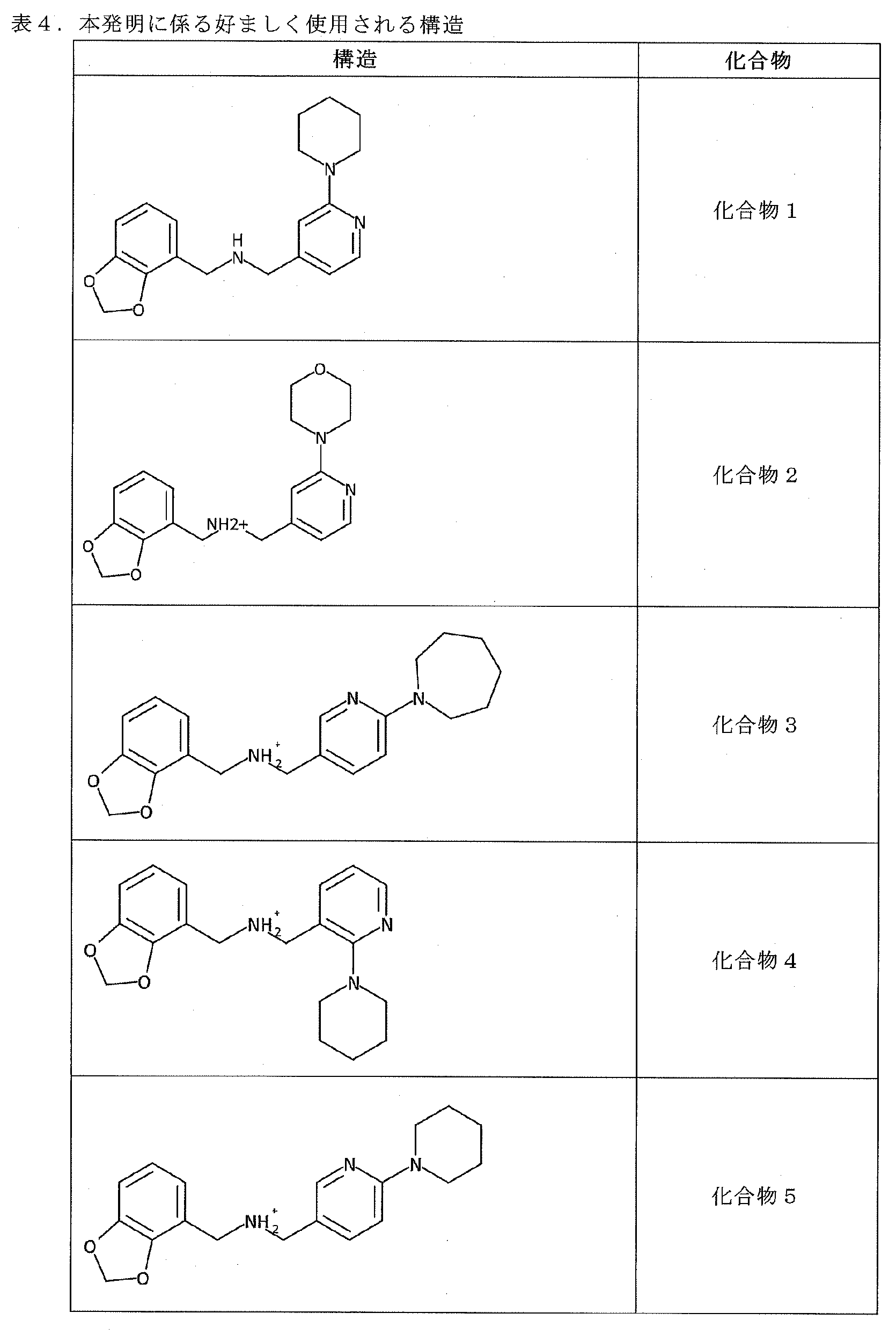
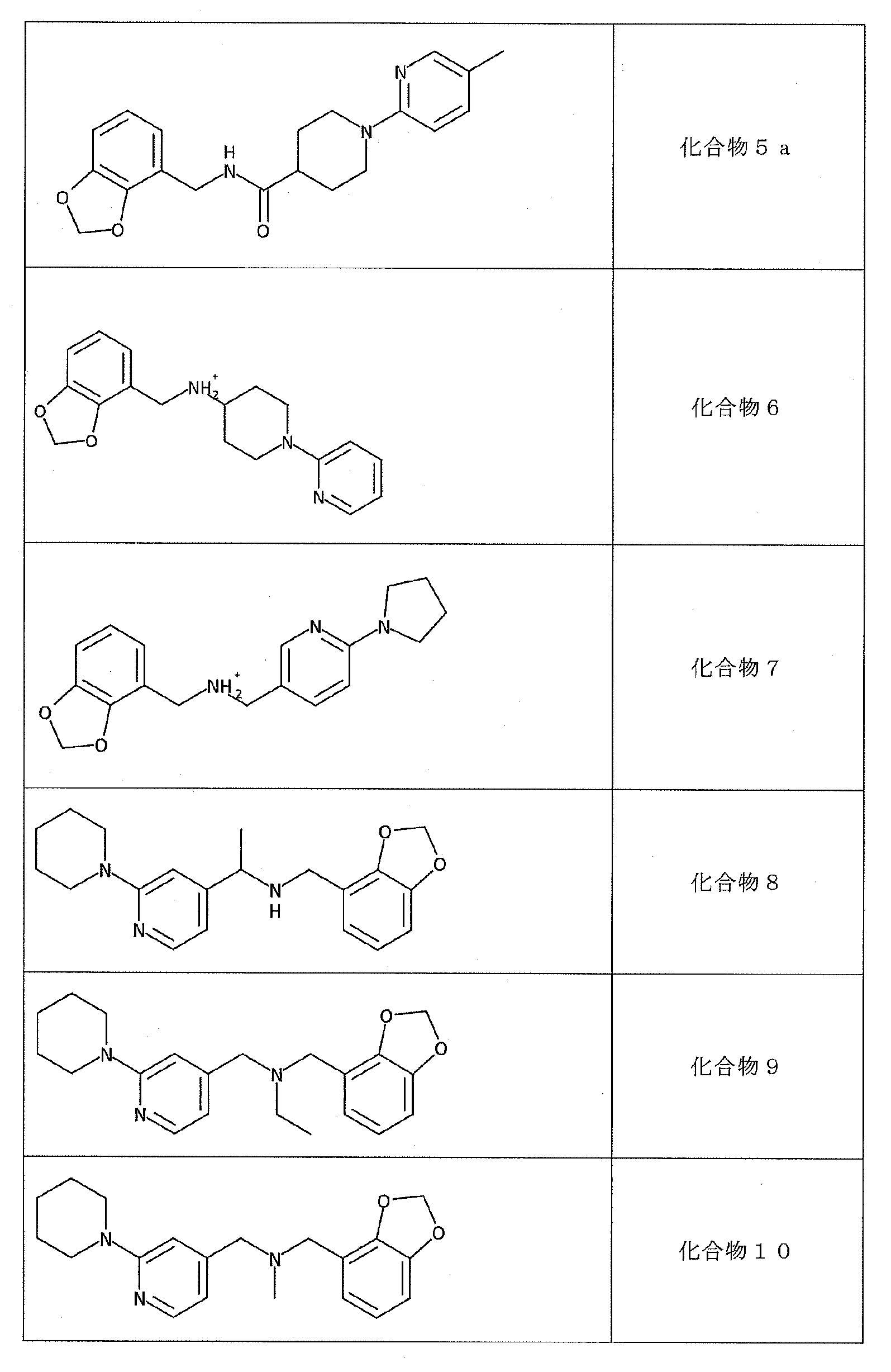
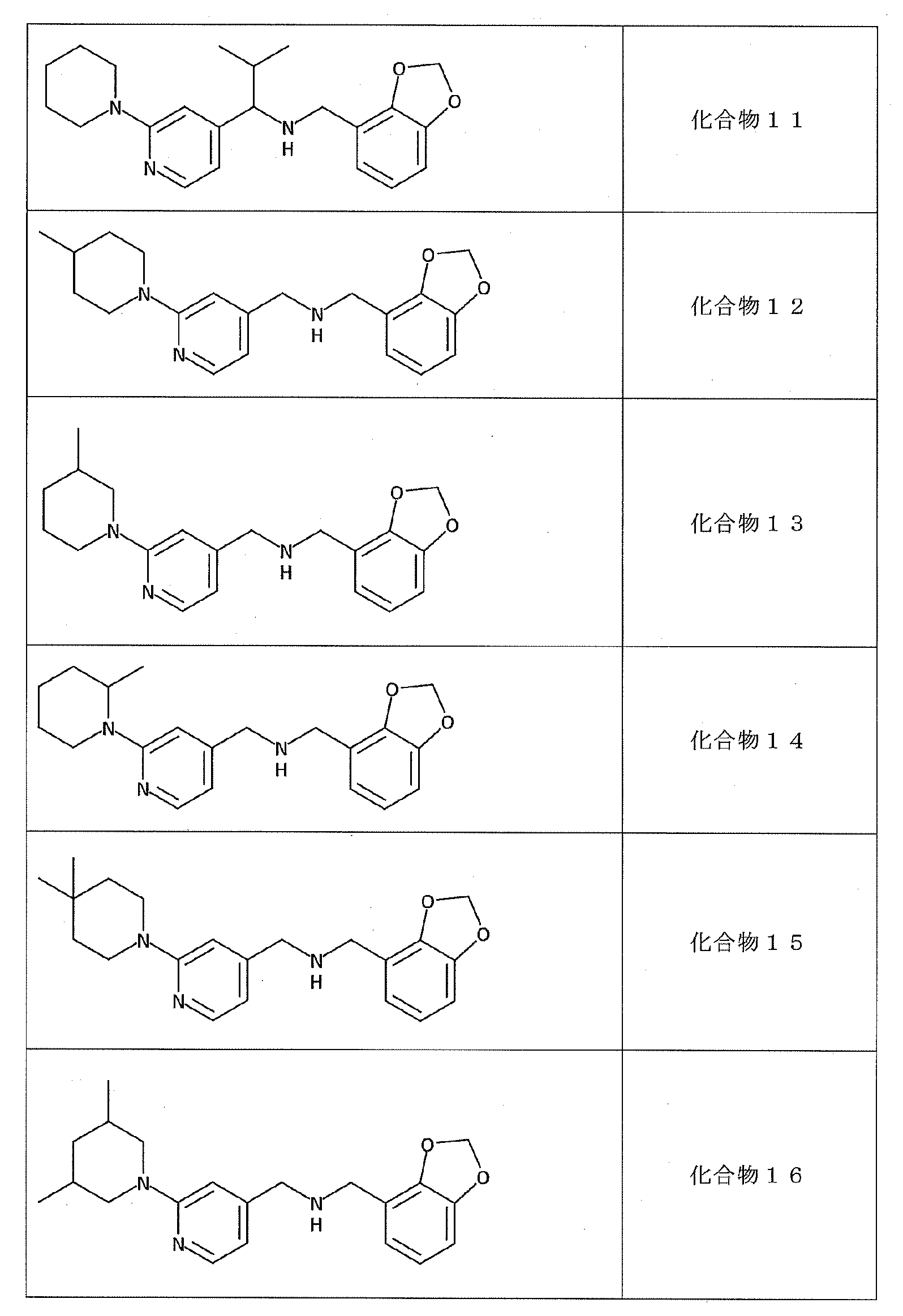
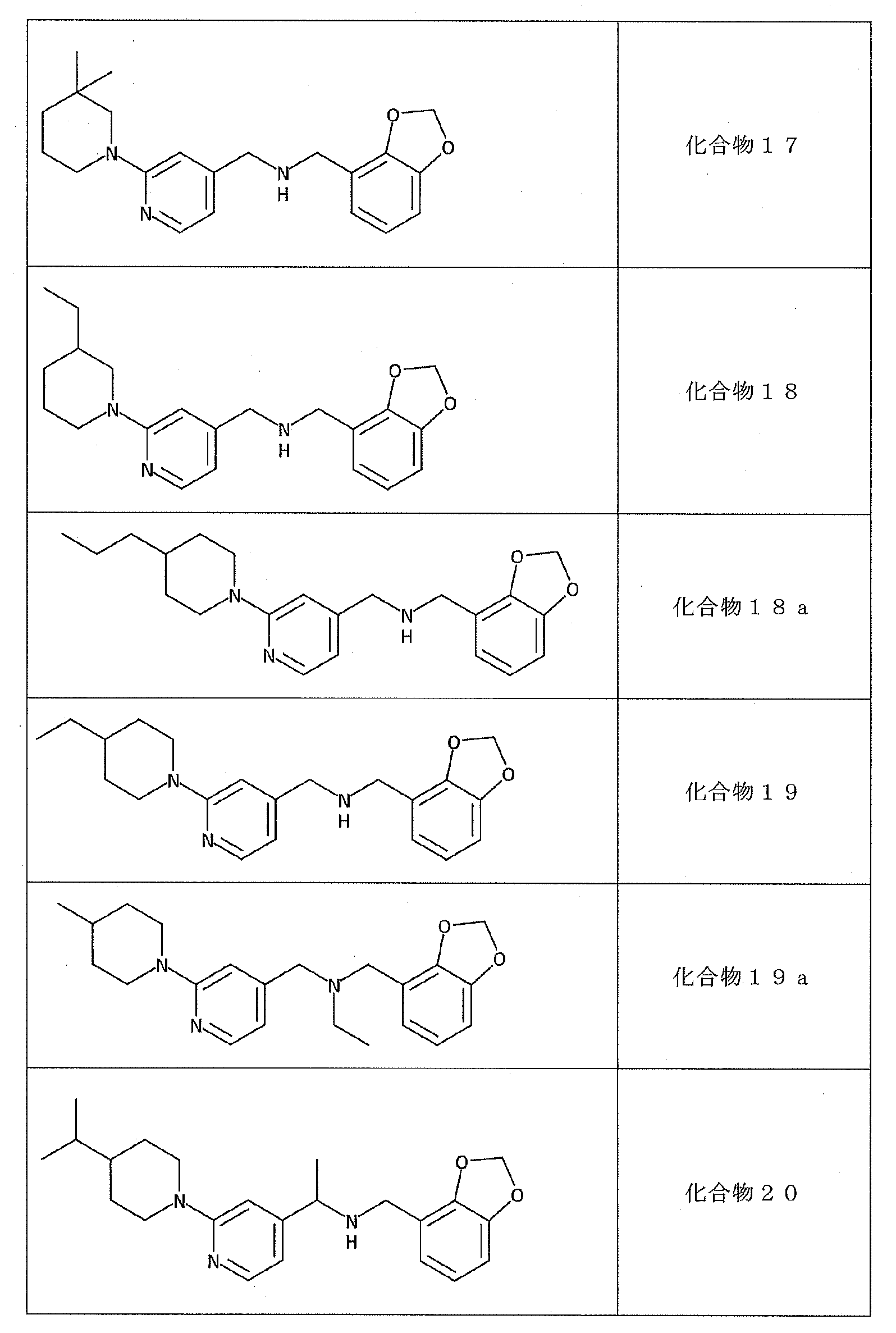
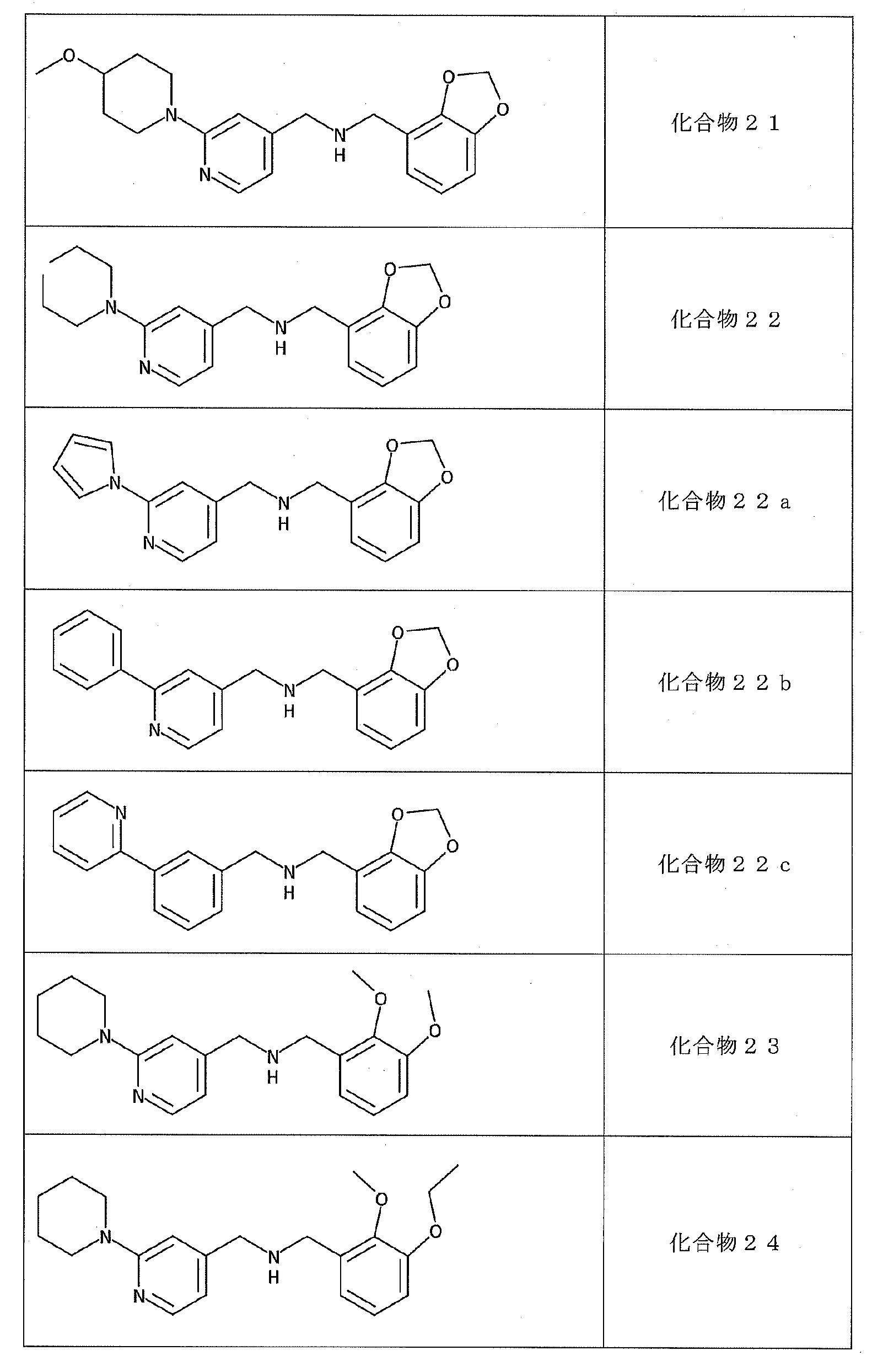
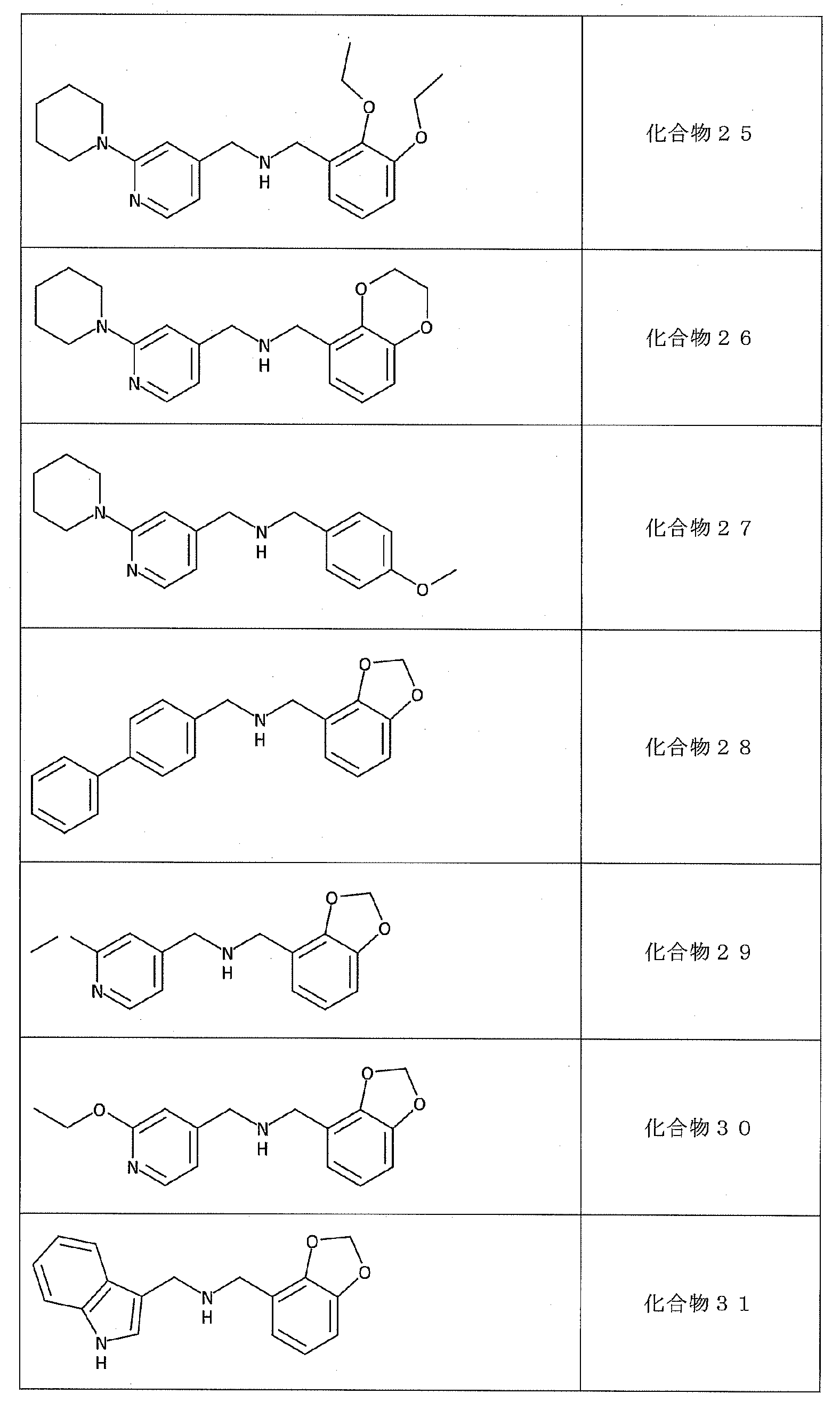
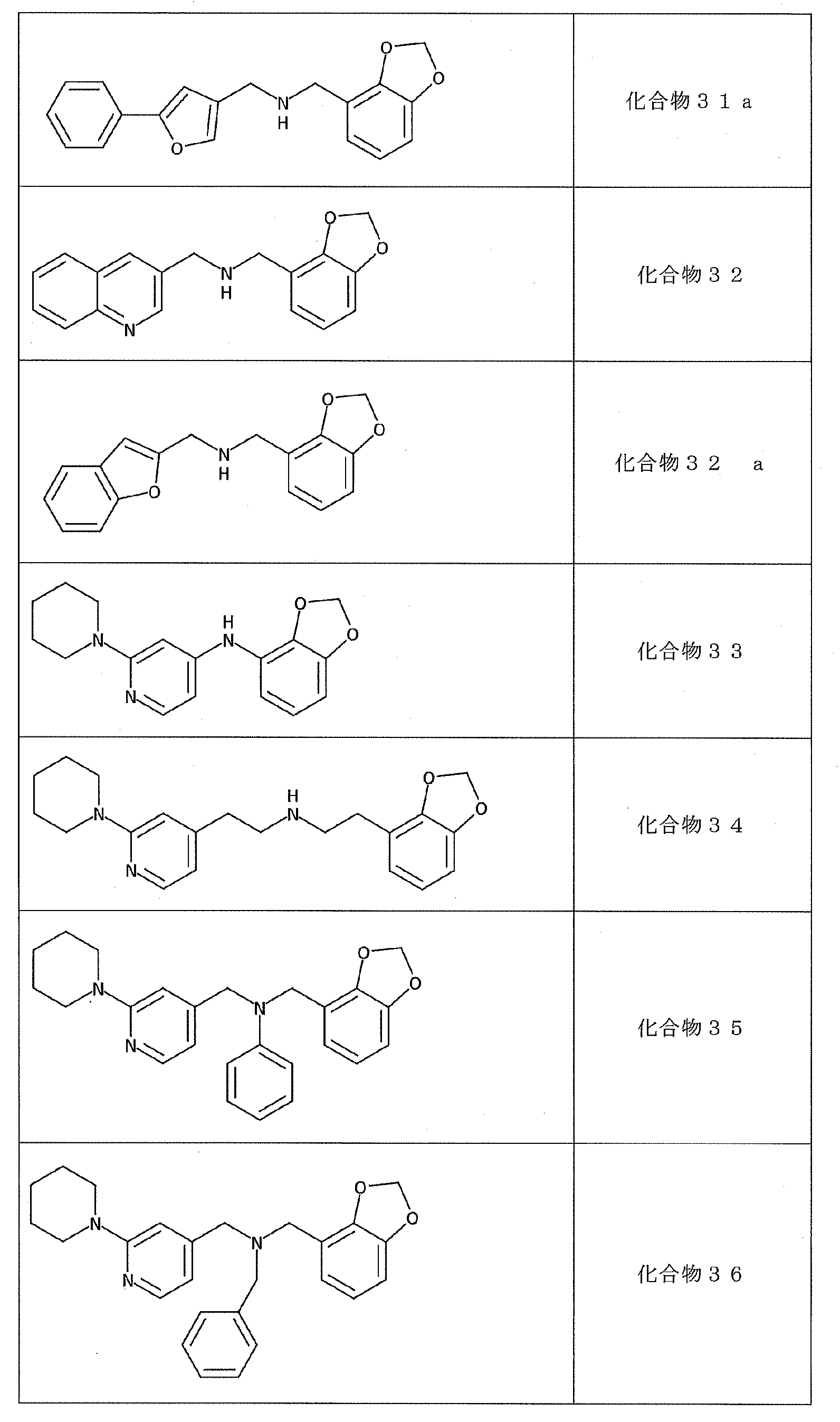
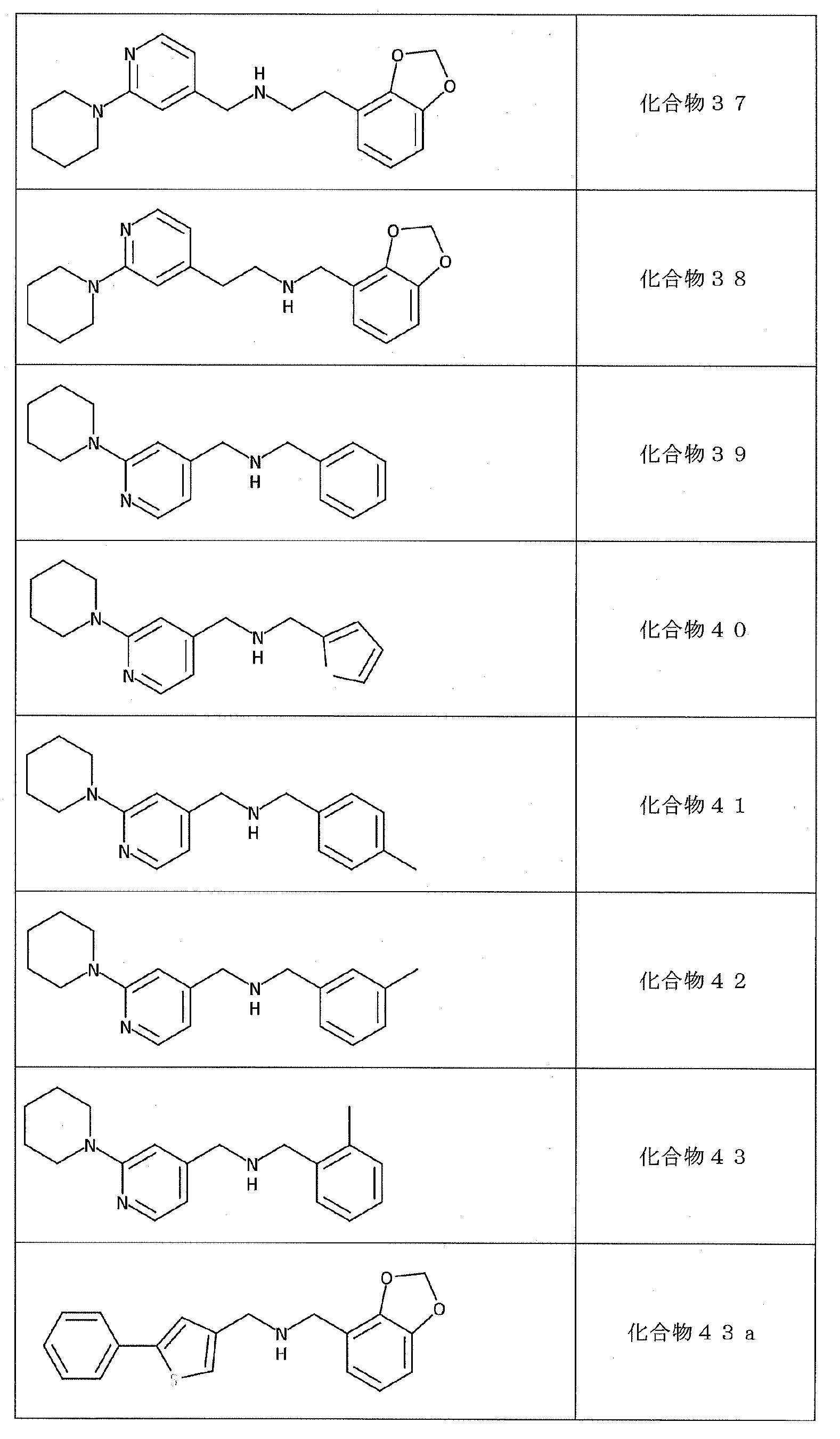
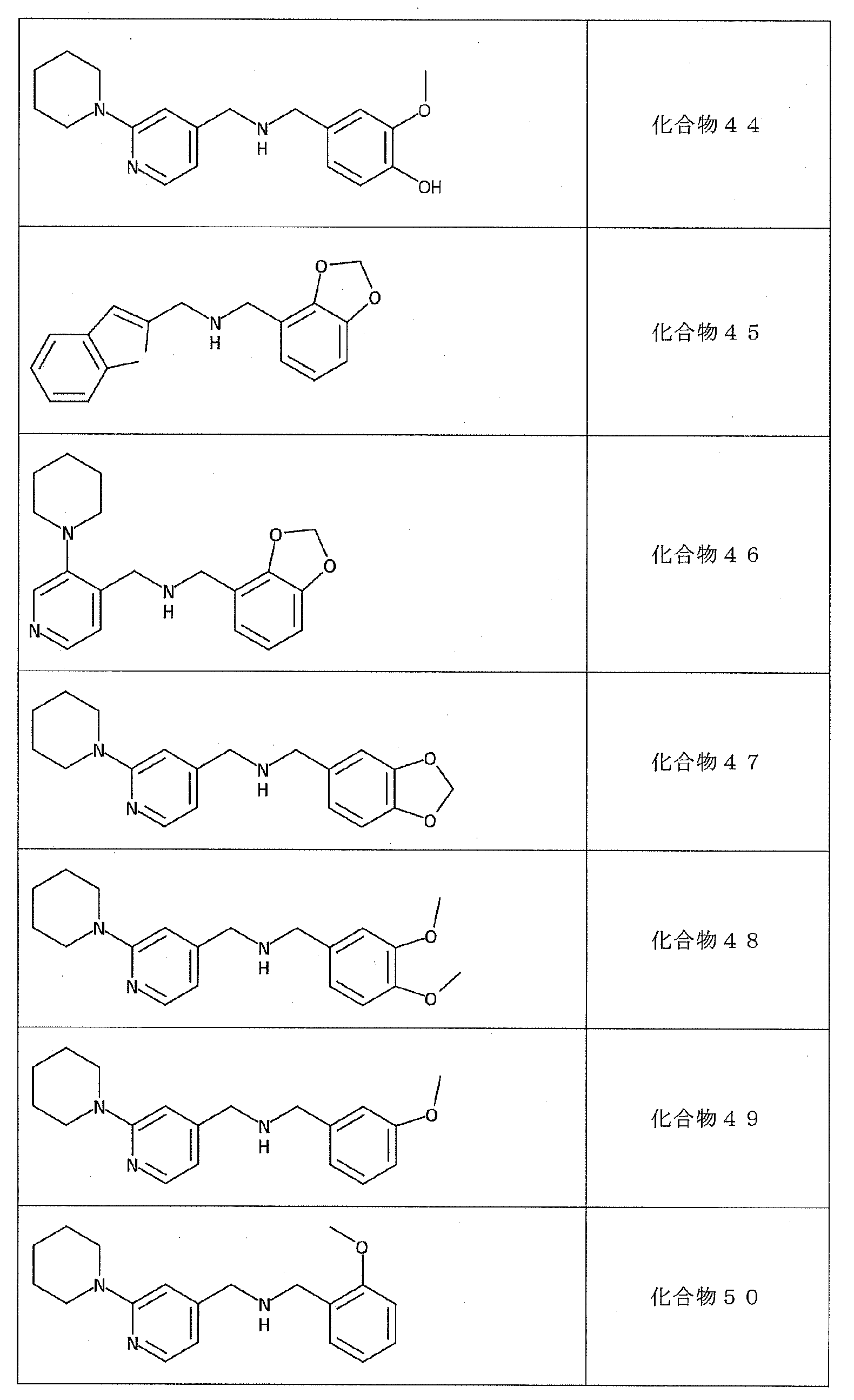
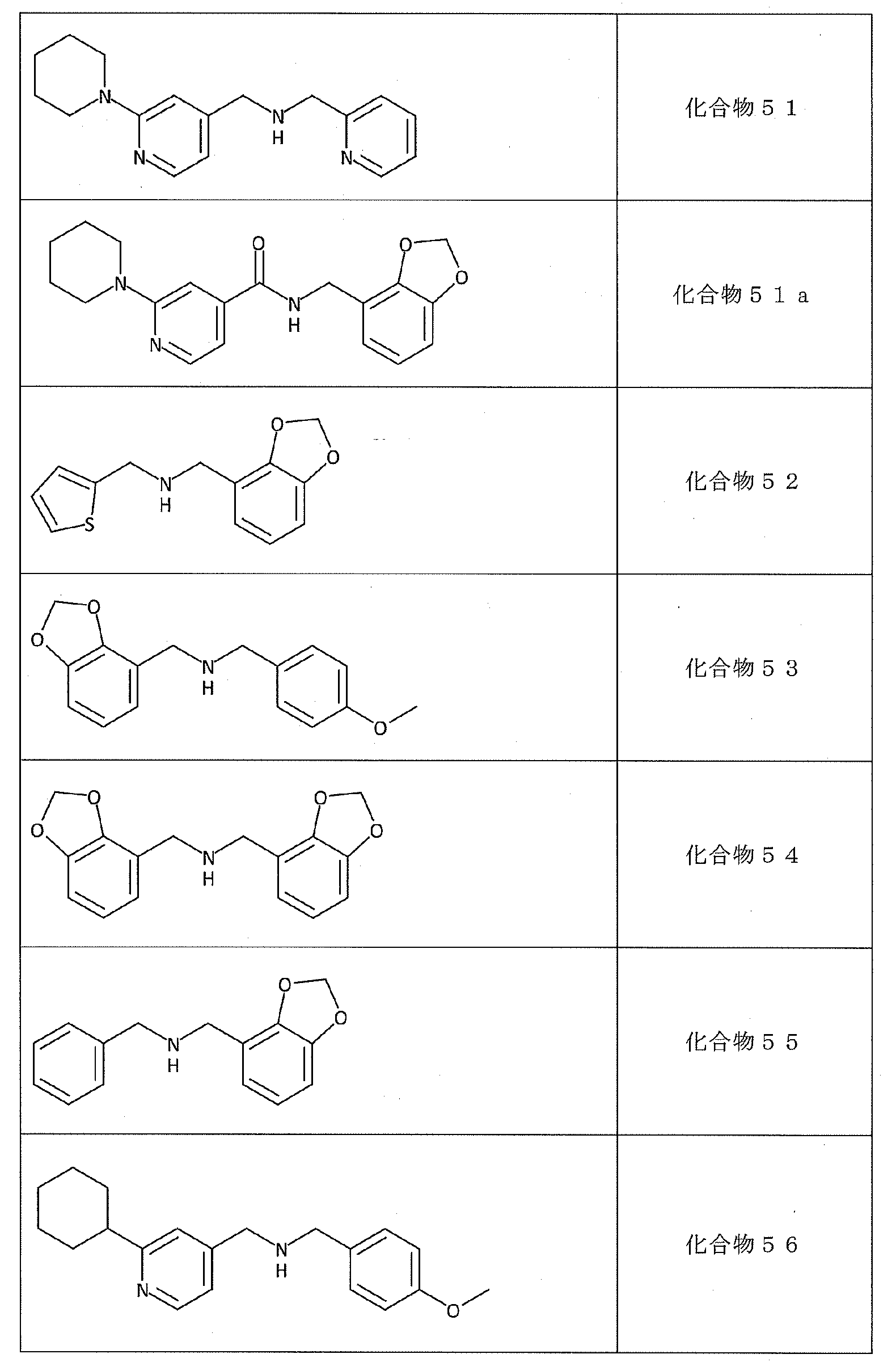
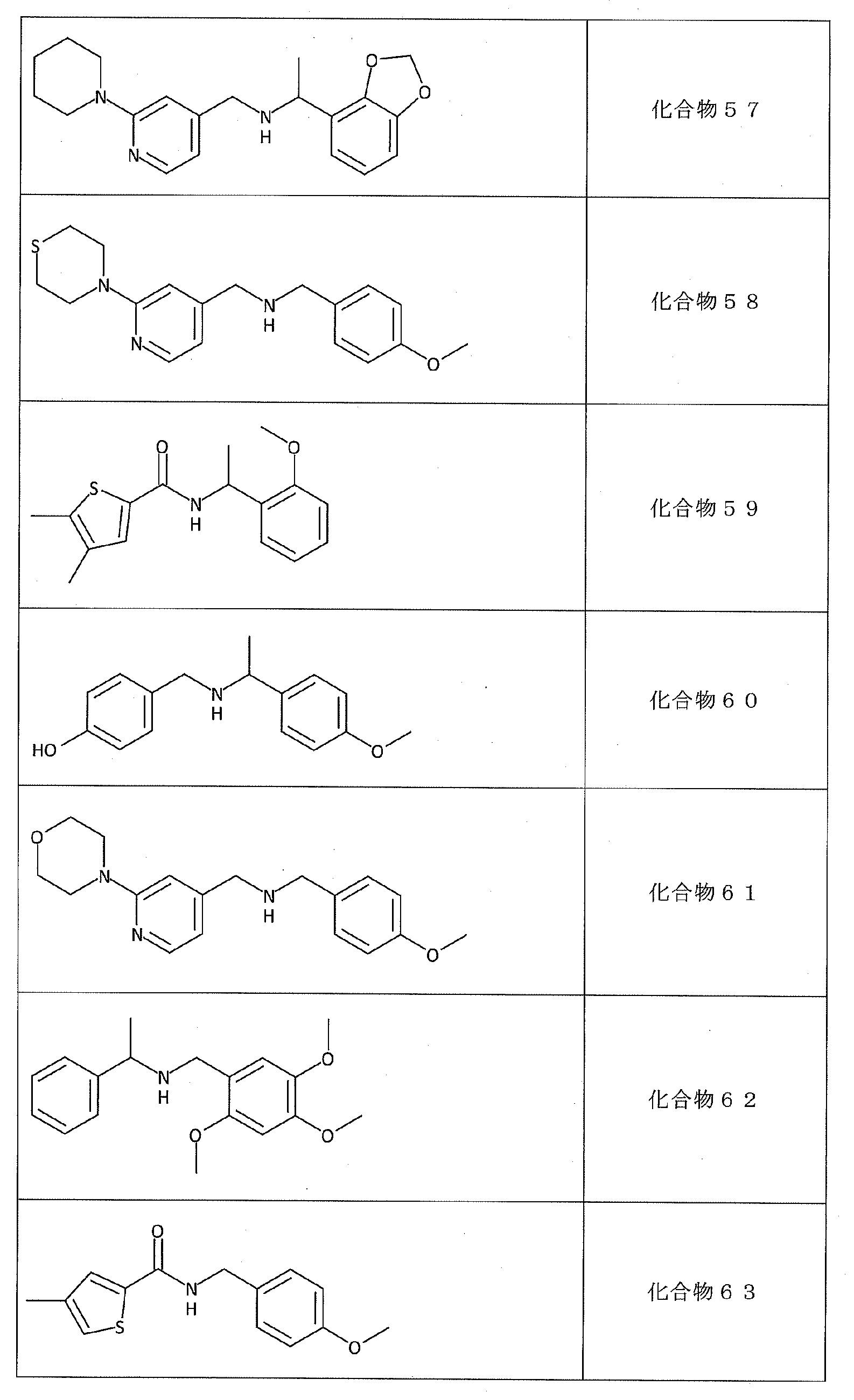
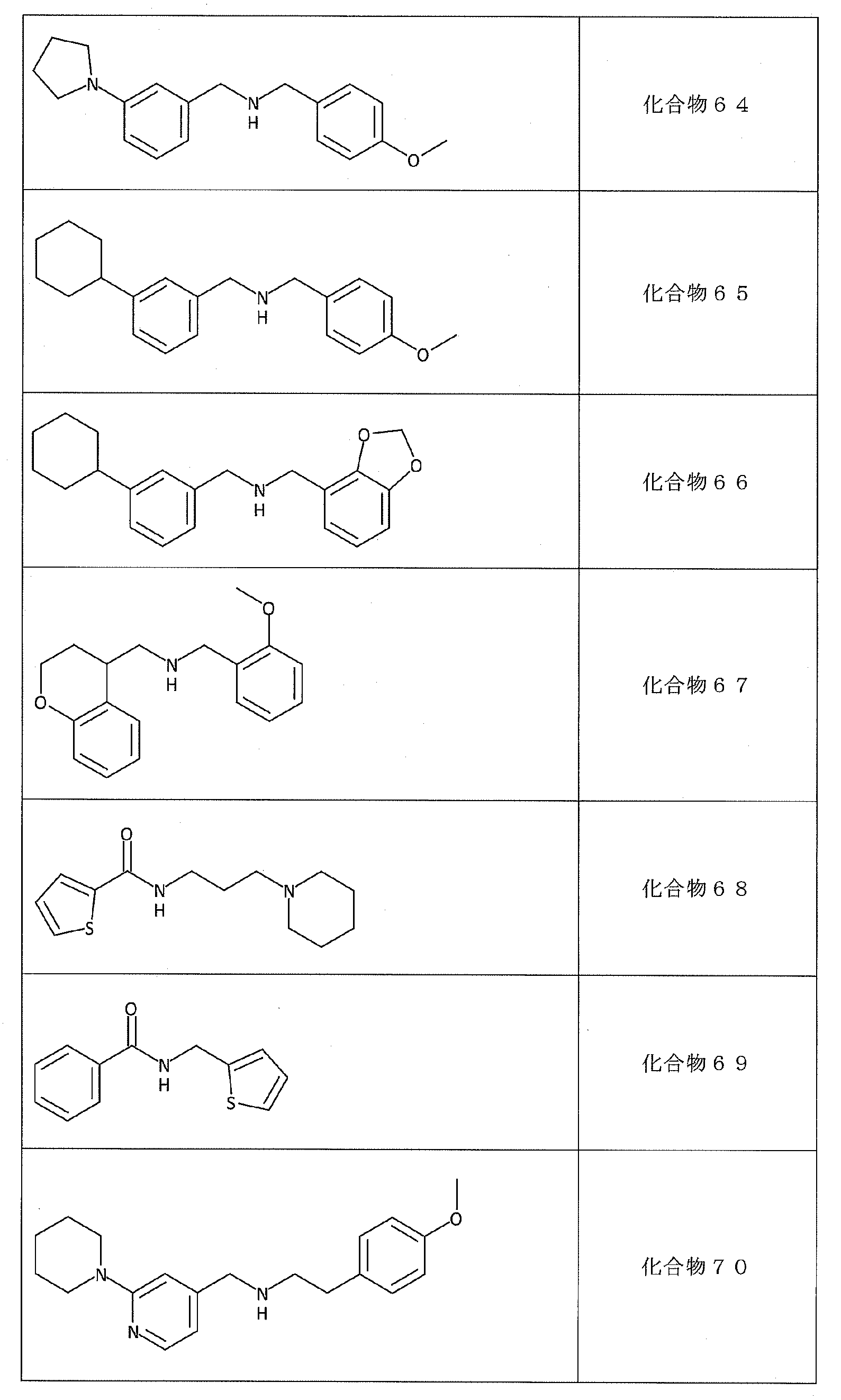
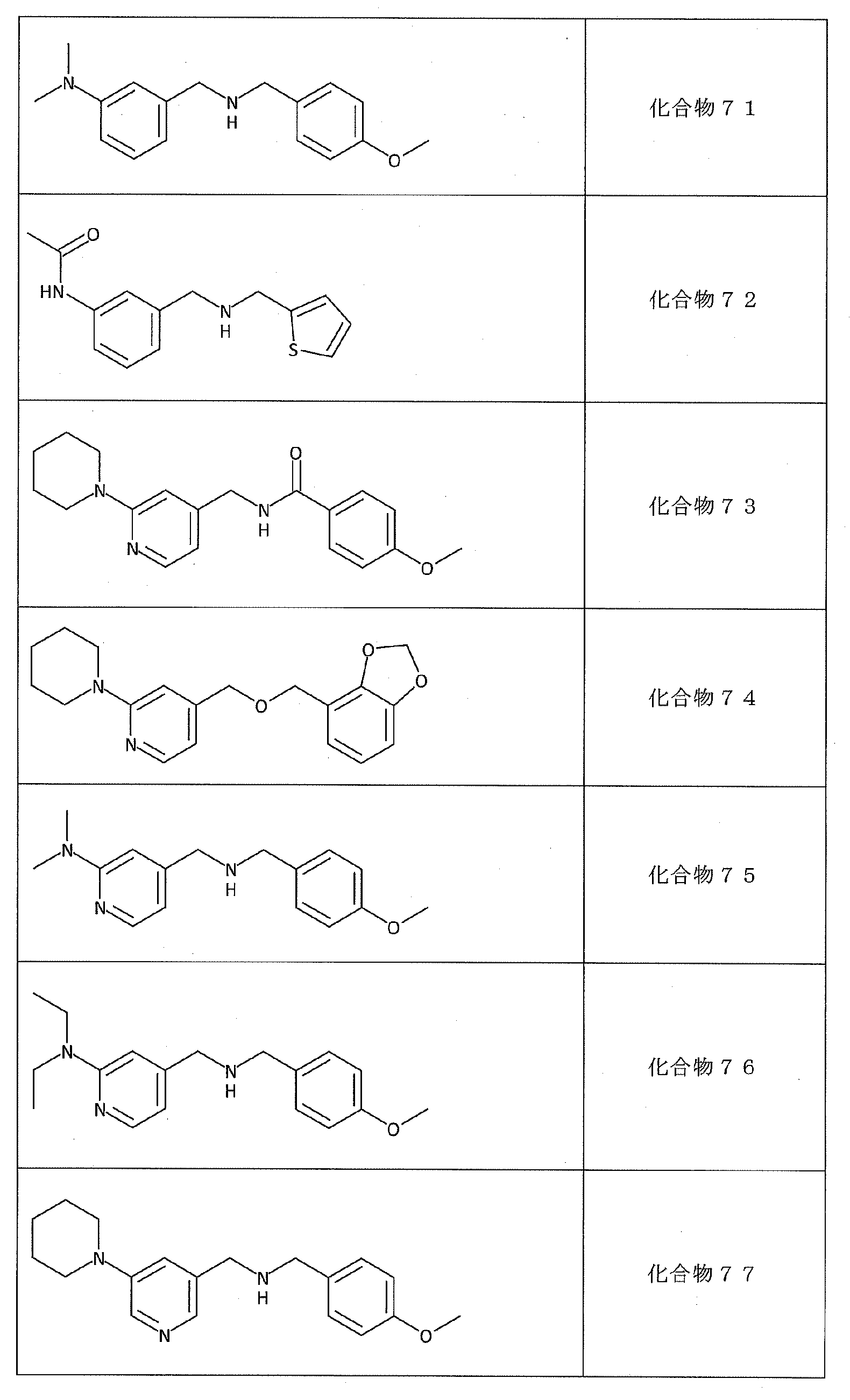
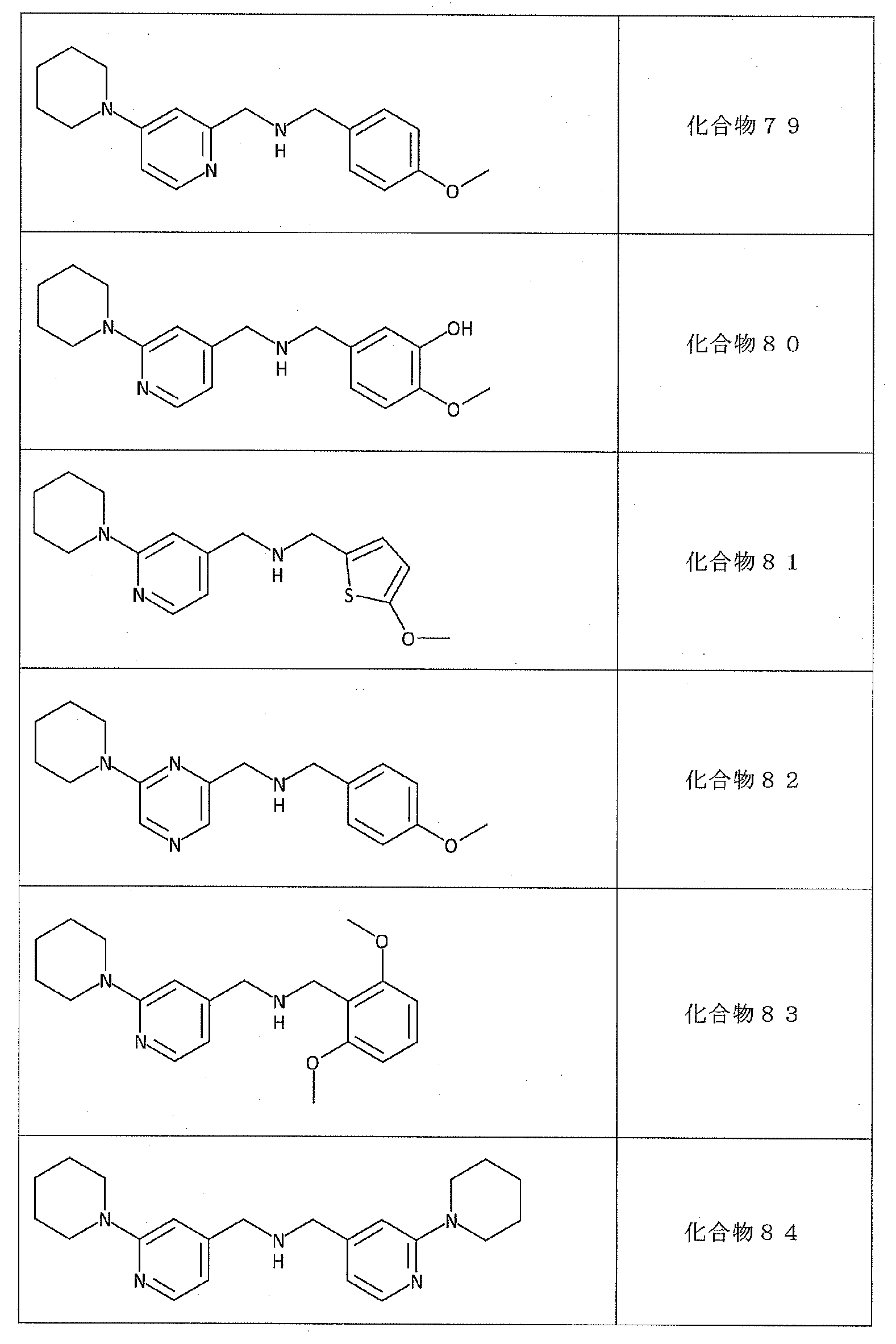

上記化合物のうちで、その顕著なTRPM8活性化、EC50値及び冷却強度のために化合物8、27及び39の使用が最も好ましい。 Among the above compounds, the use of compounds 8, 27 and 39 is most preferred due to their pronounced TRPM8 activation, EC50 value and cooling strength.
さらなる態様では、したがって、本発明は、本発明に係る生理的冷却剤または生理的冷却剤混合物または本発明に係る香味調製品を含む食品、栄養補助食品、化粧品または医薬品、動物飼料、布地、包装またはタバコ製品も包含する。 In a further aspect, the invention therefore provides a food product, a dietary supplement, a cosmetic or a pharmaceutical product, an animal feed, a fabric, a packaging product comprising a physiological cooling agent or physiological cooling agent mixture according to the invention or a flavor preparation according to the invention. or tobacco products.
1以上の冷却剤(複数可)の含量は前述の製品の種類及び用途に依存し、好ましくは最終製品の総重量を基にして約0.1ppm~10重量%、好ましくは1重量%~10重量%である。口腔ケア応用、例えば、練り歯磨きまたは洗口剤では、含量は0.1ppm~500ppmの1以上の冷却剤である。 The content of one or more coolant(s) depends on the type and application of the aforementioned product and preferably ranges from about 0.1 ppm to 10% by weight, preferably from 1% to 10% by weight, based on the total weight of the final product. Weight%. In oral care applications, such as toothpastes or mouthwashes, the content is from 0.1 ppm to 500 ppm of one or more coolants.
所望のレベルの感受性調節を提供するのに通常使用される広い濃度範囲は、約0.001ppm~1000ppm、または約0.01ppm~約500ppm、または約0.05ppm~約300ppm、または約0.1ppm~約200ppm、または約0.5ppm~約150ppm、または約1ppm~約100ppmであってもよい。 Broad concentration ranges commonly used to provide a desired level of sensitivity modulation include about 0.001 ppm to 1000 ppm, or about 0.01 ppm to about 500 ppm, or about 0.05 ppm to about 300 ppm, or about 0.1 ppm. It may be from about 200 ppm, or from about 0.5 ppm to about 150 ppm, or from about 1 ppm to about 100 ppm.
好ましくは、食品はパン・菓子製品、例えば、パン、乾燥ビスケット、ケーキ、他のペストリー、菓子(例えば、チョコレート、チョコレート棒製品、他の棒製品、フルーツガム、硬質及び軟質のキャラメル、チューインガム)、アルコール性または非アルコール性の飲料(例えば、コーヒー、茶、アイスティー、ワイン、ワイン系飲料、ビール、ビール系飲料、リキュール、蒸留酒、ブランデー、(含炭酸)フルーツ系ソフトドリンク、(含炭酸)等張飲料、(含炭酸)ソフトドリンク、ネクター、スピリッツァー、フルーツ及び野菜ジュース、フルーツまたは野菜ジュース調製品、即席飲料(例えば、即席ココア飲料、即席茶飲料、即席コーヒー飲料、即席フルーツ飲料)、肉製品(例えば、ハム、フレッシュソーセージまたは生ソーセージ調製品、味付けしたまたはマリネにした新鮮なまたは燻製の肉製品)、卵または卵製品(乾燥卵、卵白、卵黄)、穀類製品(例えば、朝食用シリアル、シリアル棒、予め調理した準備済みの米製品)、乳製品(例えば、乳飲料、バターミルク飲料、生アイスクリーム、ヨーグルト、ケフィア、クリームチーズ、ソフトチーズ、ハードチーズ、粉乳、乳清、乳清飲料、バター、バターミルク、部分的にまたは全体的に加水分解した乳タンパク質製品)、ダイズタンパク質または他のダイズ画分から作った製品(例えば、豆乳及びそれから作った製品、ダイズタンパク質を含有するフルーツ飲料、ダイズレシチンを含有する調製品、豆腐またはテンペまたはそれらに由来する製品のような発酵製品)、他の植物タンパク質供給源に由来する製品、例えば、カラスムギタンパク質飲料、フルーツ調製品(例えば、ジャム、フルーツアイスクリーム、フルーツソース、フルーツ充填物、フルーツ充填物)、野菜調製品(例えば、ケチャップ、ソース、乾燥野菜、冷凍野菜、予め調理した野菜、缶詰野菜)、スナック食品(例えば、焼いたまたは揚げたチップスまたはジャガイモ生地製品、コーンまたはピーナッツに基づく成形品)、油脂に基づく製品またはそのエマルション(例えば、マヨネーズ、タルタルソース、ドレッシング)、他の調理済み食品及びスープ(例えば、乾燥スープ、即席スープ、予め調理したスープ)、香辛料、味付け混合物及び特に例えば、スナックのセクターで使用される調味料である。 Preferably, the food product is a bakery/confectionery product, such as bread, dry biscuits, cakes, other pastries, confectionery (e.g. chocolate, chocolate bars, other bar products, fruit gums, hard and soft caramels, chewing gum), Alcoholic or non-alcoholic beverages (e.g. coffee, tea, iced tea, wine, wine drinks, beer, beer drinks, liqueurs, spirits, brandy, (carbonated) fruit soft drinks, (carbonated) isotonic drinks, (carbonated) soft drinks, nectars, spiritzers, fruit and vegetable juices, fruit or vegetable juice preparations, ready-to-drink drinks (e.g. ready-to-drink cocoa drinks, ready-to-eat tea drinks, ready-to-eat coffee drinks, ready-to-eat fruit drinks); Meat products (e.g. ham, fresh or raw sausage preparations, seasoned or marinated fresh or smoked meat products), eggs or egg products (dried eggs, egg whites, egg yolks), cereal products (e.g. breakfast cereals, cereal bars, pre-cooked and prepared rice products), dairy products (e.g. milk drinks, buttermilk drinks, fresh ice cream, yogurt, kefir, cream cheese, soft cheese, hard cheese, milk powder, whey, milk) soft drinks, butter, buttermilk, partially or totally hydrolyzed milk protein products), products made from soy protein or other soy fractions (e.g. soy milk and products made therefrom, fruits containing soy protein) beverages, preparations containing soy lecithin, fermented products such as tofu or tempeh or products derived therefrom), products derived from other plant protein sources, e.g. oat protein drinks, fruit preparations (e.g. jams). , fruit ice cream, fruit sauces, fruit fillings, fruit fillings), vegetable preparations (e.g. ketchup, sauces, dried vegetables, frozen vegetables, pre-cooked vegetables, canned vegetables), snack foods (e.g. baked or fried chips or potato dough products, molded products based on corn or peanuts), fat-based products or their emulsions (e.g. mayonnaise, tartar sauce, dressings), other prepared foods and soups (e.g. dry soups, instant soups) , pre-cooked soups), spices, seasoning mixtures and especially seasonings used in the snack sector, for example.
上述の食品は、従来の食品成分に加えて、少なくとも有効な、すなわち、冷却量の少なくとも1つの本発明に係る冷却剤または本発明に係る冷却剤混合物または本発明に係る香味調製品を含有する。 The food products mentioned above contain, in addition to conventional food ingredients, at least an effective, i.e. cooling amount, of at least one coolant according to the invention or a coolant mixture according to the invention or a flavor preparation according to the invention. .
これらの調製品における冷却剤または冷却剤混合物または香味調製品の含量は最終調整品の総重量を基にして好ましくは約0.1重量%~約10重量%、特に約1重量%~約2重量%である。 The content of coolant or coolant mixture or flavor preparation in these preparations is preferably from about 0.1% to about 10% by weight, especially from about 1% to about 2% by weight, based on the total weight of the final preparation. Weight%.
本発明に係る食品の製造では、好適な賦形剤が使用されてもよい。好適な賦形剤には、乳化剤、増粘剤、食用酸、酸性度調節剤、ビタミン、酸化防止剤、風味増強剤、不快な風味を遮蔽するための薬剤、食品着色剤などが挙げられるが、これらに限定されない。 Suitable excipients may be used in the production of the food product according to the invention. Suitable excipients include emulsifiers, thickeners, food acids, acidity regulators, vitamins, antioxidants, flavor enhancers, agents to mask unpleasant flavors, food coloring agents, and the like. , but not limited to.
乳化剤は水と脂肪の双方に可溶性であるという重要な特性を特徴とする。乳化剤はふつう、脂溶性部分と水溶性部分とから成る。それらは水と油を一貫した均質な混合物にする場合に常に使用される。 Emulsifiers are characterized by the important property of being soluble in both water and fat. Emulsifiers usually consist of a fat-soluble part and a water-soluble part. They are used whenever water and oil are made into a consistent homogeneous mixture.
乳化剤:食品加工産業で使用される好適な乳化剤は、パルミチン酸アスコルビル(E304)、レシチン(E322)、リン酸(E338)、リン酸ナトリウム(E339)、リン酸カリウム(E340)、リン酸カルシウム(E341)、オルソリン酸マグネシウム(E343)、アルギン酸プロピレングリコール(E405)、ステアリン酸ポリオキシエチレン(8)(E430)、ステアリン酸ポリオキシエチレン(E431)、アンモニウムホスファチド(E442)、リン酸ナトリウム及びリン酸カリウム(E450)、脂肪酸のナトリウム塩(E470a)、脂肪酸のモノ-及びジグリセリド(E471)、酢酸 モノグリセリド(E472a)、乳酸モノグリセリド(E472b)、クエン酸モノグリセリド(E472c)、酒石酸モノグリセリド(E472d)、ジアセチル酒石酸モノグリセリド(E472e)、脂肪酸の糖エステル(E473)、糖グリセリド(E474)、脂肪酸のポリグリセリド(E475)、ポリリシノール酸ポリグリセロール(E476)、脂肪酸のプロピレングリコールエステル(E477)、ステアロイルラクチル酸ナトリウム(E481)、ステアロイル2-ラクチル酸カルシウム(E482)、酒石酸ステアリル(E483)、モノステアリン酸ソルビタン(E491)、ステアリン酸(E570)から選択される。 Emulsifiers: Suitable emulsifiers used in the food processing industry are ascorbyl palmitate (E304), lecithin (E322), phosphoric acid (E338), sodium phosphate (E339), potassium phosphate (E340), calcium phosphate (E341) , Magnesium Orthophosphate (E343), Propylene Glycol Alginate (E405), Polyoxyethylene Stearate (8) (E430), Polyoxyethylene Stearate (E431), Ammonium Phosphatide (E442), Sodium Phosphate and Phosphoric Acid Potassium (E450), sodium salts of fatty acids (E470a), mono- and diglycerides of fatty acids (E471), acetic acid monoglyceride (E472a), lactic acid monoglyceride (E472b), citric acid monoglyceride (E472c), tartaric acid monoglyceride (E472d), diacetyl tartaric acid Monoglyceride (E472e), sugar ester of fatty acid (E473), sugar glyceride (E474), polyglyceride of fatty acid (E475), polyglycerol polyricinoleate (E476), propylene glycol ester of fatty acid (E477), sodium stearoyl lactylate (E481), calcium stearoyl 2-lactylate (E482), stearyl tartrate (E483), sorbitan monostearate (E491), stearic acid (E570).
増粘剤:増粘剤は主として水を結合することができる物質である。未結合の水を取り除けば粘度が上昇する。各増粘剤の特徴的な濃度を上回れば、この効果に加えてネットワーク効果も発生し、それはふつう、不均衡な粘度の上昇につながる。この場合、分子同士が「交信」する、つまり「もつれる」ことを言う。ほとんどの増粘剤は、例えば、水素結合、疎水性相互作用、またはイオン性の関係のような分子間相互作用を介して互いに相互作用することができる直鎖または分岐鎖の高分子(例えば、多糖類またはタンパク質)である。増粘剤の極端な例は、粒子として分散され、固形様構造にて水を結合することができる、または記載されている相互作用のため互いに相互作用することができる層状珪酸塩(ベントナイト、ヘクトライト)または水和SiO2粒子である。例は、
E400-アルギン酸
E401-アルギン酸ナトリウム
E402-アルギン酸カリウム
E403-アルギン酸アンモニウム
E404- アルギン酸カルシウム
E405-アルギン酸プロピレングリコール
E406-寒天
E407- カラーギーン,フルセレラン
E407- ローカストビーンガム
E412- グアーガム
E413-トラガカント
E414- アラビアゴム
E41- キサンタンガム
E416-カラヤ(インドトラガント)
E417-タラガム(ペルーローカストビーンガム)
E418-ゲラン
E440- ペクチン,オペクタ
E440ii-アミド化ペクチン
E460- 微細結晶性セルロース,セルロース粉末
E461- メチルセルロース
E462- エチルセルロース
E463-ヒドロキシプロピルセルロース
E465- メチルエチルセルロース
E466- カルボキシメチルセルロース,ナトリウムカルボキシメチルセルロースである。
Thickeners: Thickeners are substances primarily capable of binding water. Removal of unbound water increases viscosity. In addition to this effect, network effects also occur when the characteristic concentration of each thickener is exceeded, which usually leads to a disproportionate increase in viscosity. In this case, molecules "communicate" with each other, or "entangle" with each other. Most thickeners are linear or branched macromolecules (e.g., polysaccharides or proteins). Extreme examples of thickeners are phyllosilicates (bentonite, hectonite, etc.) which are dispersed as particles and can bind water in a solid-like structure or interact with each other due to the interactions described. light) or hydrated SiO2 particles. An example is
E400 - Alginate E401 - Sodium alginate E402 - Potassium alginate E403 - Ammonium alginate E404 - Calcium alginate E405 - Propylene glycol alginate E406 - Agar E407 - Carrageen, Furseleran E407 - Locust bean gum E412 - Guar gum E413 - Tragacanth E414 - Gum arabic E41 - Xanthan Gum E416-Karaya (Indian Tragacanth)
E417- Tara Gum (Peruvian Locust Bean Gum)
E418 - Guerlain E440 - Pectin, Opecta E440ii - Amidated pectin E460 - Microcrystalline cellulose, cellulose powder E461 - Methylcellulose E462 - Ethylcellulose E463 - Hydroxypropylcellulose E465 - Methylethylcellulose E466 - Carboxymethylcellulose, sodium carboxymethylcellulose.
食用酸:食品はカルボン酸を含有してもよい。本発明の意味での酸は好ましくは食品で許可された酸、特に本明細書で言及されている酸である:
E260-酢酸
E270-乳酸
E290-二酸化炭素
E296-リンゴ酸
E297-フマル酸
E330-クエン酸
E331-クエン酸ナトリウム
E332-クエン酸カリウム
E333-クエン酸カルシウム
E334-酒石酸
E335-酒石酸ナトリウム
E336-酒石酸カリウム
E337-酒石酸ナトリウムカリウム
E338-リン酸
E353-メタ酒石酸
E354-酒石酸カルシウム
E355-アジピン酸
E363-コハク酸
E380-クエン酸三アンモニウム
E513-硫酸
E574-グルコン酸
E575-グルコノ-デルタ-ラクトン
Edible Acids: Foods may contain carboxylic acids. Acids in the sense of the present invention are preferably food-permissible acids, in particular the acids mentioned herein:
E260 - Acetic acid E270 - Lactic acid E290 - Carbon dioxide E296 - Malic acid E297 - Fumaric acid E330 - Citric acid E331 - Sodium citrate E332 - Potassium citrate E333 - Calcium citrate E334 - Tartrate E335 - Sodium tartrate E336 - Potassium tartrate E337 - Sodium potassium tartrate E338 - Phosphate E353 - Metatartrate E354 - Calcium tartrate E355 - Adipic acid E363 - Succinate E380 - Triammonium citrate E513 - Sulfate E574 - Gluconate E575 - Glucono-delta-lactone
酸性度調節剤:酸性度調節剤は酸性度または塩基性度を保持するので食品の所望のpH値を一定に保つ食品添加剤である。それらは大部分、有機酸及びその塩、炭酸塩であり、さらに稀には無機酸及びその塩である。酸性度調節剤の添加は食品の安定性及び濃度を部分的に高め、所望の沈殿を引き起こし、防腐剤の効果を改善する。酸性化剤とは対照的に、それらは食品の味覚を変えるのには使用されない。その効果は、酸性物質または塩基性物質の添加の際にpH値が変化しないまたはわずかにしか変化しない食品の緩衝系の形成に基づく。例は、
E170-炭酸カルシウム
E260~263-酢酸及び酢酸塩
E270-乳酸
E296-リンゴ酸
E297-フマル酸
E325~327-乳酸塩(乳酸)
E330~333-クエン酸及びクエン酸塩
E334~337-酒石酸及び酒石酸塩
E339~341-オルソホスフェートs
E350~352-リンゴ酸塩(リンゴ酸)
E450~452-二-、三-及びポリリン酸塩
E500-504- 炭酸塩(炭酸)
E507-塩酸及び塩化物
E513~517-硫酸及び硫酸塩
E524~528-水酸化物
E529~530-酸化物
E355~357-アジピン酸及びアジピン酸塩
E574~578-グルコン酸及びグルコン酸塩である。
Acidity regulator: Acidity regulator is a food additive that maintains the acidity or basicity and thus keeps the desired pH value of the food constant. They are mostly organic acids and their salts, carbonates, and more rarely inorganic acids and their salts. The addition of acidity regulators partially increases the stability and consistency of the food product, causes the desired precipitation and improves the effectiveness of preservatives. In contrast to acidifying agents, they are not used to change the taste of foods. Its effect is based on the formation of a buffer system in the food product, in which the pH value does not change or changes only slightly upon addition of acidic or basic substances. An example is
E170 - Calcium carbonate E260-263 - Acetic acid and acetate E270 - Lactic acid E296 - Malic acid E297 - Fumaric acid E325 - 327 - Lactate (lactic acid)
E330-333-Citric acid and citrate E334-337-Tartaric acid and tartrate E339-341-Orthophosphates
E350-352-malate (malic acid)
E450-452-di-, tri- and polyphosphate E500-504- carbonate (carbonic acid)
E507 - Hydrochloric acid and chloride E513-517 - Sulfuric acid and sulfate E524-528 - Hydroxide E529-530 - Oxide E355-357 - Adipic acid and adipate salt E574-578 - Gluconic acid and gluconate salt.
ビタミン:本発明の別の実施形態では、食品添加剤は添加剤の別の任意の群としてビタミンを含んでもよい。ビタミンは多種多様な生化学的機序の作用を有する。一部はホルモンのように作用し、ミネラル代謝を調節し(例えば、ビタミンD)、または細胞や組織の増殖及び細胞の分化に作用する(例えば、ビタミンAの一部の形態)。他は酸化防止剤である(例えば、ビタミンE、及び特定の状況下ではビタミンC)。最大数のビタミン(例えば、ビタミンB)は酵素が代謝の特定のプロセスを触媒するのを助ける酵素補因子のための前駆体である。この文脈で、ビタミンは、例えば、補欠分子族の一部として酵素に強固に結合できることがあり、この例は脂肪酸の蓄積に関与する酵素の一部であるビオチンである。他方、ビタミンは、例えば、分子間の化学基または電子を容易に分割し、輸送することができる基のように、さほど強く結合せず、次いで共触媒として作用することができる。例えば、葉酸は細胞にメチル基、ホルミル基及びメチレン基を輸送する。酵素-基質反応におけるそのサポートは周知であるが、その他の特性は身体にとって非常に重要である。 Vitamins: In another embodiment of the invention, the food additive may include vitamins as another optional group of additives. Vitamins have a wide variety of biochemical mechanisms of action. Some act like hormones, regulating mineral metabolism (eg, vitamin D) or acting on cell and tissue growth and differentiation (eg, some forms of vitamin A). Others are antioxidants (eg, vitamin E and, under certain circumstances, vitamin C). The largest number of vitamins (eg, vitamin B) are precursors for enzyme cofactors that help enzymes catalyze certain processes of metabolism. In this context, vitamins may for example be tightly bound to enzymes as part of a prosthetic group, an example of this being biotin, which is part of an enzyme involved in fatty acid accumulation. On the other hand, vitamins can bind less strongly, such as chemical groups between molecules or groups that can easily split and transport electrons, and then act as co-catalysts. For example, folic acid transports methyl, formyl, and methylene groups into cells. Although its support in enzyme-substrate reactions is well known, other properties are of great importance to the body.
本発明の文脈では、ビタミンは
ビタミンA(レチノール、レチナール、ベータ-カロテン)、
ビタミンB1(チアミン)、
ビタミンB2(リオフラビン)、
ビタミンB3(ナイアシン、ナイアシンアミド)、
ビタミンB5(パントテン酸)、
ビタミンB6(ピリドキシン、ピリドキシアミン、パリドキサール)、
ビタミンB7(ビオチン)、
ビタミンB9(葉酸、フォリン酸)、
ビタミンB12(シアノバラミン、ヒドロキシコバルミン、メチルコバルミン)、
ビタミンC(アスコルビン酸)、
ビタミンD(コレカルシフェロール)、
ビタミンE(トコフェロール、トコトリエノール)及び
ビタミンK(フィロールキノン、メナキノン)
から成る群から選択される物質である。
アスコルビン酸に加えて、好ましいビタミンはトコフェロールの群である。
In the context of the present invention, vitamins include vitamin A (retinol, retinal, beta-carotene),
Vitamin B1 (thiamin),
vitamin B2 (lioflavin),
Vitamin B3 (niacin, niacinamide),
Vitamin B5 (pantothenic acid),
Vitamin B6 (pyridoxine, pyridoxyamine, palidoxal),
Vitamin B7 (biotin),
Vitamin B9 (folic acid, folinic acid),
Vitamin B12 (cyanobalamin, hydroxycobalmin, methylcobalmin),
vitamin C (ascorbic acid),
vitamin D (cholecalciferol),
Vitamin E (tocopherol, tocotrienol) and vitamin K (phyllolquinone, menaquinone)
A substance selected from the group consisting of:
In addition to ascorbic acid, preferred vitamins are the group of tocopherols.
酸化防止剤:天然の及び人工の酸化防止剤双方が食品産業で使用されている。天然の及び人工の酸化防止剤は、前者が食品に自然に存在し、後者が人工的に作り出されるという点で主として異なる。例えば、天然の酸化防止剤は、食品添加剤として使用されるならば、植物油から得られる。例えば、トコフェロールとしても知られているビタミンEは、例えば、ダイズ油から作られることが多い。例えば、没食子酸プロピル、没食子酸オクチル及び没食子酸ドデシルのような合成酸化防止剤は、他方で化学合成によって得られる。没食子酸塩は敏感な人でアレルギーを引き起こし得る。本発明の組成物で使用できる他の酸化防止剤は、二酸化イオウ(E220)、亜硫酸塩、亜硫酸ナトリウム(E221)、亜硫酸水素ナトリウム(E222)、二亜硫酸ナトリウム(E223)、二亜硫酸カリウム(E224)、亜硫酸カルシウム(E226)、亜硫酸水素カルシウム(E227)、亜硫酸水素カリウム(E228)、乳酸(E270)、アスコルビン酸(E300)、L-アスコルビン酸ナトリウム(E301)、L-アスコルビン酸カルシウム(E302)、アスコルビン酸エステル(E304)、トコフェロール(E306)、アルファ-トコフェロール(E307)、ガンマ-トコフェロール(E308)、デルタ-トコフェロール(E309)、没食子酸プロピル(E310)、没食子酸オクチル(E311)、没食子酸ドデシル(E312)、イソアスコルビン酸(E315)、イソアスコルビン酸ナトリウム(E316)、三級ブチルヒドロキノン(TBHQ、E319)、ブチルヒドロキシアニソール(E320)、ブチルヒドロキシトルエン(E321)、レシチン(E322)、クエン酸(E330)、クエン酸の塩(E331とE332)クエン酸ナトリウム(E331)、クエン酸カリウム(E332)、EDTAカルシウム二ナトリウム(E385)、二リン酸塩(E450)、二リン酸二ナトリウム(E450a)、二リン酸三ナトリウム(E450b)、二リン酸四ナトリウム(E450c)、二リン酸二カリウム(E450d)、二リン酸三カリウム(E450e)、二リン酸二カルシウム(E450f)、二リン酸二水素カルシウム(E450g)、三リン酸塩(E451)、三リン酸五ナトリウム(E451a)、三リン酸五カリウム(E451b)、ポリリン酸塩452)、ポリリン酸ナトリウム(E452a)、ポリリン酸カリウム(E452b)、ポリリン酸ナトリウムカルシウム(E452c)、ポリリン酸カルシウム(E452d)、塩化スズ(II)(E512)である。 Antioxidants: Both natural and artificial antioxidants are used in the food industry. Natural and artificial antioxidants differ primarily in that the former are naturally present in foods and the latter are artificially created. For example, natural antioxidants are obtained from vegetable oils if used as food additives. For example, vitamin E, also known as tocopherol, is often made from, for example, soybean oil. Synthetic antioxidants, such as propyl gallate, octyl gallate and dodecyl gallate, on the other hand, are obtained by chemical synthesis. Gallates can cause allergies in sensitive people. Other antioxidants that can be used in the compositions of the invention are sulfur dioxide (E220), sulfites, sodium sulfite (E221), sodium bisulfite (E222), sodium disulfite (E223), potassium disulfite (E224). , calcium sulfite (E226), calcium hydrogen sulfite (E227), potassium hydrogen sulfite (E228), lactic acid (E270), ascorbic acid (E300), sodium L-ascorbate (E301), calcium L-ascorbate (E302), Ascorbic acid ester (E304), tocopherol (E306), alpha-tocopherol (E307), gamma-tocopherol (E308), delta-tocopherol (E309), propyl gallate (E310), octyl gallate (E311), dodecyl gallate (E312), isoascorbic acid (E315), sodium isoascorbate (E316), tertiary butylhydroquinone (TBHQ, E319), butylhydroxyanisole (E320), butylhydroxytoluene (E321), lecithin (E322), citric acid (E330), salts of citric acid (E331 and E332), sodium citrate (E331), potassium citrate (E332), EDTA calcium disodium (E385), diphosphate (E450), disodium diphosphate (E450a) ), trisodium diphosphate (E450b), tetrasodium diphosphate (E450c), dipotassium diphosphate (E450d), tripotassium diphosphate (E450e), dicalcium diphosphate (E450f), diphosphoric acid Calcium dihydrogen (E450g), triphosphate (E451), pentasodium triphosphate (E451a), pentapotassium triphosphate (E451b), polyphosphate 452), sodium polyphosphate (E452a), potassium polyphosphate ( E452b), sodium calcium polyphosphate (E452c), calcium polyphosphate (E452d), and tin(II) chloride (E512).
風味増強剤:これらの調製品は風味混合物および追加の香味物質を含有して塩気の強い、たぶんやや酸っぱい及び/または旨味の風味印象を増強してもよい。したがって、本発明に係る製品または香味混合物は心地よい味覚印象(塩気の強い、旨味のある、任意でやや酸っぱい)を増強するのに好適な少なくとも1つのさらなる物質と組み合わせて使用される。好ましい化合物は塩味がある化合物及び塩分を高めた化合物である。好ましい化合物はWO2007/045566にて開示されている。好ましいのはまた、WO2008/046895及びEP1989944に記載されているような旨味のある化合物である。 Flavor enhancers: These preparations may contain flavor mixtures and additional flavoring substances to enhance the salty, perhaps slightly sour and/or umami flavor impression. The product or flavor mixture according to the invention is therefore used in combination with at least one further substance suitable for enhancing the pleasant taste impression (salty, umami, optionally slightly sour). Preferred compounds are salty compounds and compounds with increased salinity. Preferred compounds are disclosed in WO2007/045566. Also preferred are umami-tasting compounds as described in WO2008/046895 and EP1989944.
風味矯味剤:さらに、本発明に従って好ましい風味調製品及びその製品はまた、苦い及び/または渋い味の感覚を隠す香味物質(風味矯味剤)を含んでもよい。(さらなる)風味矯味剤は、例えば、以下のリスト:ヌクレオチド(例えば、アデノシン5’一リン酸、シチジン5’一リン酸)または薬学的に許容されるそれらの塩、ラクチソール、ナトリウム塩(例えば、塩化ナトリウム、乳酸ナトリウム、クエン酸ナトリウム、酢酸ナトリウム、グルコン酸ナトリウム)、特にUS2002/0188019に係るさらなるヒドロキシフラバノン(例えば、エリオジクチオール、ホモエリオジクチオールまたはそれらのナトリウム塩)、DE10 2004 041 496に係るヒドロキシ安息香酸アミド(例えば、2,4-ジヒドロキシ安息香酸バニリルアミド、2,4-ジヒドロキシ安息香酸N-(4-ヒドロキシ-3-メトキシベンジル)アミド、2,4,6-triヒドロキシ安息香酸N-(4-ヒドロキシ-3-メトキシベンジル)アミド、2-ヒドロキシ安息香酸-N-4-(ヒドロキシ-3-メトキシベンジル)アミド、4-ヒドロキシ安息香酸-N-(4-ヒドロキシ-3-メトキシベンジル)アミド、2,4-ジヒドロキシ安息香酸-N-(4-ヒドロキシ-3-メトキシベンジル)アミド一ナトリウム塩、2,4-ジヒドロキシ安息香酸-N-2-(4-ヒドロキシ-3-メトキシフェニル)-エチルアミド、2,4-ジヒドロキシ安息香酸-N-(4-ヒドロキシ-3-エトキシベンジル)アミド、2,4-ジヒドロキシ安息香酸-N-(3,4-ジヒドロキシベンジル)アミド及び2-ヒドロキシ-5-メトキシ-N-[2-(4-ヒドロキシ-3-メトキシフェニル)エチル]アミド(アダンカミド)、4-ヒドロキシ安息香酸バニリルアミド)、例えば、WO2006/106023に係る苦味を隠すヒドロキシデオキシベンゾイン(例えば、2-(4-ヒドロキシ-3-メトキシフェニル)-1-(2,4,6-トリヒドロキシフェニル)エタノン、1-(2,4-ジヒドロキシフェニル)-2-(4-ヒドロキシ-3-メトキシフェニル)エタノン、1-(2-ヒドロキシ-4-メトキシフェニル)-2-(4-ヒドロキシ-3-メトキシ-フェニル)エタノン)、アミノ酸(例えば、苦味のような不快な味覚印象を減らすまたは隠すための、WO2005/096841に係るガンマ-アミノ酪酸)、WO2006/003107に係るリンゴ酸グリコシド、PCT/EP2006/067120に係る塩味混合物、WO2006/058893に係るジアセチル三量体、WO2007/003527に係る、レシチン及び/またはジンジャージオンのような苦味を隠す物質との乳清タンパク質の混合物から選択される。 Flavoring agents: Furthermore, the flavor preparations and products thereof preferred according to the invention may also contain flavoring substances (flavoring agents) that mask the sensation of bitter and/or astringent taste. (Further) flavoring agents are for example those listed below: nucleotides (e.g. adenosine 5' monophosphate, cytidine 5' monophosphate) or pharmaceutically acceptable salts thereof, lactisol, sodium salts (e.g. sodium chloride, sodium lactate, sodium citrate, sodium acetate, sodium gluconate), in particular further hydroxyflavanones (e.g. eriodictyol, homoeriodictyol or their sodium salts) according to US 2002/0188019, to DE 10 2004 041 496 Such hydroxybenzoic acid amides (for example, 2,4-dihydroxybenzoic acid vanillylamide, 2,4-dihydroxybenzoic acid N-(4-hydroxy-3-methoxybenzyl)amide, 2,4,6-trihydroxybenzoic acid N- (4-hydroxy-3-methoxybenzyl)amide, 2-hydroxybenzoic acid-N-4-(hydroxy-3-methoxybenzyl)amide, 4-hydroxybenzoic acid-N-(4-hydroxy-3-methoxybenzyl) Amide, 2,4-dihydroxybenzoic acid-N-(4-hydroxy-3-methoxybenzyl)amide monosodium salt, 2,4-dihydroxybenzoic acid-N-2-(4-hydroxy-3-methoxyphenyl)- Ethylamide, 2,4-dihydroxybenzoic acid-N-(4-hydroxy-3-ethoxybenzyl)amide, 2,4-dihydroxybenzoic acid-N-(3,4-dihydroxybenzyl)amide and 2-hydroxy-5- Methoxy-N-[2-(4-hydroxy-3-methoxyphenyl)ethyl]amide (adankamide), 4-hydroxybenzoic acid vanillylamide), for example hydroxydeoxybenzoin (e.g. 2- (4-hydroxy-3-methoxyphenyl)-1-(2,4,6-trihydroxyphenyl)ethanone, 1-(2,4-dihydroxyphenyl)-2-(4-hydroxy-3-methoxyphenyl)ethanone , 1-(2-hydroxy-4-methoxyphenyl)-2-(4-hydroxy-3-methoxy-phenyl)ethanone), amino acids (e.g. for reducing or masking unpleasant taste impressions such as bitterness, WO2005 gamma-aminobutyric acid) according to WO2006/003107, salty mixture according to PCT/EP2006/067120, diacetyl trimer according to WO2006/058893, lecithin and/or ginger according to WO2007/003527 Selected from mixtures of whey proteins with bitter taste masking substances such as diones.
香味物質:好ましい香味物質は甘い匂い印象を引き起こすものであり、それによって、甘い匂い印象を引き起こすさらなる複数の香味物質が好ましくはバニリン、エチルバニリン、イソ酪酸エチルバニリン(=3エトキシ-4-イソブチリルオキシベンズアルデヒド)、フラネオール(2,5-ジメチル-4-ヒドロキシ-3(2H)-フラノン)及び誘導体(例えば、ホモフラネオール、2-エチル-4-ヒドロキシ-5-メチル-3(2H)-フラノン)、ホモフロノール(2-エチル-5-メチル-4-ヒドロキシ-3(2H)-フラノン及び5-エチル-2-メチル-4-ヒドロキシ-3(2H)-フラノン)、マルトール及び誘導体(例えば、エチルマルトール)、クマリン及び誘導体、ガンマ-ラクトン(例えば、ガンマ-ウンデカラクトン、ガンマ-ノナラクトン)、デルタ-ラクトン(例えば、4-メチルデルタラクトン、マソイラクトン、デルタデカラクトン、ツベロラクトン)、ソルビン酸メチル、ジバニリン、4-ヒドロキシ-2(または5)-エチル-5(または2)-メチル-3(2H)フラノン、2-ヒドロキシ-3-メチル-2-シクロペンテノン、3-ヒドロキシ-4,5-ジメチル-2(5H)-フラノン、フルーツエステル及びフルーツラクトン(例えば、酢酸n-ブチルエステル、酢酸イソアミルエステル、プロピオン酸エチルエステル、酪酸エチルエステル、酪酸n-ブチルエステル、酪酸イソアミルエステル、3-メチル酪酸エチルエステル、n-ヘキサン酸エチルエステル、n-ヘキサン酸アリルエステル、n-ヘキサン酸n-ブチルエステル、n-オクタン酸エチルエステル、3-メチル-3-フェニルグリシド酸エチル、2-trans-4-cis-デカジエン酸エチル)、4-(p-ヒドロキシフェニル)-2-ブタノン、1,1-ジメトキシ-2,2,5-トリメチル-4-ヘキサン、2,6-ジメチル-5-ヘプタン-1-アル、4-ヒドロキシ桂皮酸、4-メトキシ-3-ヒドロキシ桂皮酸、3-メトキシ-4-ヒドロキシ桂皮酸、2-ヒドロキシ桂皮酸、2,4-ジヒドロキシ安息香酸、3-ヒドロキシ安息香酸、3,4-ジヒドロキシ安息香酸、バニリン酸、ホモバニリン酸、バニロマンデル酸及びフェニルアセトアルデヒドから成る群から選択される。 Flavoring substances: Preferred flavoring substances are those that cause a sweet odor impression, whereby further flavoring substances that cause a sweet odor impression are preferably vanillin, ethyl vanillin, ethyl vanillin isobutyrate (=3ethoxy-4-isobutyric acid). lyloxybenzaldehyde), furaneol (2,5-dimethyl-4-hydroxy-3(2H)-furanone) and derivatives (e.g. homofuraneol, 2-ethyl-4-hydroxy-5-methyl-3(2H)- furanone), homofuronol (2-ethyl-5-methyl-4-hydroxy-3(2H)-furanone and 5-ethyl-2-methyl-4-hydroxy-3(2H)-furanone), maltol and derivatives (e.g. ethyl maltol), coumarins and derivatives, gamma-lactones (e.g. gamma-undecalactone, gamma-nonalactone), delta-lactones (e.g. 4-methyl delta-lactone, masolactone, delta-decalactone, tuberolactone), methyl sorbate, Divanillin, 4-hydroxy-2(or 5)-ethyl-5(or 2)-methyl-3(2H) furanone, 2-hydroxy-3-methyl-2-cyclopentenone, 3-hydroxy-4,5- Dimethyl-2(5H)-furanone, fruit esters and fruit lactones (e.g. n-butyl acetate, isoamyl acetate, ethyl propionate, ethyl butyrate, n-butyl butyrate, isoamyl butyrate, 3-methylbutyric acid) Ethyl ester, n-hexanoic acid ethyl ester, n-hexanoic acid allyl ester, n-hexanoic acid n-butyl ester, n-octanoic acid ethyl ester, ethyl 3-methyl-3-phenylglycidate, 2-trans-4 -cis-ethyl decadienoate), 4-(p-hydroxyphenyl)-2-butanone, 1,1-dimethoxy-2,2,5-trimethyl-4-hexane, 2,6-dimethyl-5-heptane-1 -al, 4-hydroxycinnamic acid, 4-methoxy-3-hydroxycinnamic acid, 3-methoxy-4-hydroxycinnamic acid, 2-hydroxycinnamic acid, 2,4-dihydroxybenzoic acid, 3-hydroxybenzoic acid, 3 , 4-dihydroxybenzoic acid, vanillic acid, homovanillic acid, vanillomandelic acid and phenylacetaldehyde.
不快な味覚を隠すための活性物質:さらに、経口調製品は苦い及び/または渋い味覚印象を隠すのに役立つさらなる物質も含んでもよい。これらのさらなる味覚矯味剤は、例えば、以下のリスト:ヌクレオチド(例えば、アデノシン5’一リン酸、シチジン5’一リン酸)またはそれらの生理的に許容される塩、ラクチソール、ナトリウム塩(例えば、塩化ナトリウム、乳酸ナトリウム、クエン酸ナトリウム、酢酸ナトリウム、グルコン酸ナトリウム)、ヒドロキシフラバノン、好ましくは、エリオジクチオール、ステルビン(エリオジクチオール-7-メチルエーテル)、ホモエリオジクチオール、及びそれらのナトリウム塩、カリウム塩、カルシウム塩、マグネシウム塩または亜鉛塩(特にEP1258200A2に記載されているようなもの)、ヒドロキシ安息香酸アミド、好ましくは、2,4-ジヒドロキシ安息香酸バニリルアミド、2,4-ジヒドロキシ安息香酸N-(4-ヒドロキシ-3-メトキシベンジル)アミド、2,4,6-トリヒドロキシ安息香酸-N-(4-ヒドロキシ-3-メトキシベンジル)アミド、2-ヒドロキシ安息香酸-N-4-(ヒドロキシ-3-メトキシベンジル)アミド、4-ヒドロキシ安息香酸-N-(4-ヒドロキシ-3-メトキシベンジル)アミド、2,4-ジヒドロキシ安息香酸-N-(4-ヒドロキシ-3-メトキシベンジル)アミド一ナトリウム塩、2,4-ジヒドロキシ安息香酸-N-2-(4-ヒドロキシ-3-メトキシ-フェニル)エチルアミド、2,4-ジヒドロキシ安息香酸-N-(4-ヒドロキシ-3-エトキシベンジル)アミド、2,4-ジヒドロキシ安息香酸-N-(3,4-ジヒドロキシベンジル)アミド及び2-ヒドロキシ-5-メトキシ-N-[2-(4-ヒドロキシ-3-メトキシフェニル)エチル]アミド;4-ヒドロキシ安息香酸バニリルアミド(特にWO2006/024587に記載されているようなもの);ヒドロキシデオキシベンゾイン、好ましくは、2-(4-ヒドロキシ-3-メトキシフェニル)-1-(2,4,6-トリヒドロキシフェニル)エタノン、1-(2,4-ジヒドロキシフェニル)-2-(4-ヒドロキシ-3-メトキシフェニル)エタノン及び1-(2-ヒドロキシ-4-メトキシフェニル)-2-(4-ヒドロキシ-3-メトキシフェニル)エタノン)(特にWO2006/106023に記載されているようなもの);ヒドロキシフェニルアルカンジオン、例えば、ジンジャージオン-[2]、ジンジャージオン-[3]、ジンジャージオン-[4]、デヒドロジンジャージオン-[2]、デヒドロジンジャージオン-[3]、デヒドロジンジャージオン-[4])(特にWO2007/003527に記載されているようなもの);ジアセチル三量体(特にWO2006/058893に記載されているようなもの);ガンマ-アミノ酪酸(特にWO2005/096841に記載されているようなもの);ジバニリン(特にWO2004/078302に記載されているようなもの)及び4-ヒドロキシジヒドロカルコン(好ましくは、US2008/0227867A1に記載されているようなもの)、特にフロレチン及びダビジゲニン;アミノ酸または乳清タンパク質のレシチンとの混合物;WO2007/014879で開示されているようなヘスペレチン;WO2007/107596で開示されているような4-ヒドロキシジヒドロカルコン、またはEP1955601A1に記載されているようなプロペンチルフェニルグリコシド(カビコールグリコシド)、またはEP2298084A1に記載されているようなRubus suavissimusからの抽出物、Hydrangea macrophyllaからの抽出物、EP2008530A1に記載されているようなペリトリン及び導出されるアロマ組成物、WO2008/046895A1及びEP1989944A1に記載されているような旨味化合物、EP2064959A1resp.EP2135516A1に記載されているような旨味化合物、バニリルリグナン、エンテロジオール、およびN-デカジエノイルアミノ酸及びそれらの混合物から選択される。 Active substances for masking unpleasant taste sensations: Furthermore, oral products may also contain further substances that serve to mask bitter and/or astringent taste impressions. These further taste-masking agents are, for example, the following list: nucleotides (e.g. adenosine 5' monophosphate, cytidine 5' monophosphate) or their physiologically acceptable salts, lactisol, sodium salts (e.g. sodium chloride, sodium lactate, sodium citrate, sodium acetate, sodium gluconate), hydroxyflavanones, preferably eriodictyol, sterubine (eriodictyol-7-methylether), homoeriodictyol, and their sodium salts , potassium salts, calcium salts, magnesium salts or zinc salts (especially as described in EP 1258200A2), hydroxybenzoic acid amides, preferably 2,4-dihydroxybenzoic acid vanillylamide, 2,4-dihydroxybenzoic acid N -(4-hydroxy-3-methoxybenzyl)amide, 2,4,6-trihydroxybenzoic acid-N-(4-hydroxy-3-methoxybenzyl)amide, 2-hydroxybenzoic acid-N-4-(hydroxy -3-methoxybenzyl)amide, 4-hydroxybenzoic acid-N-(4-hydroxy-3-methoxybenzyl)amide, 2,4-dihydroxybenzoic acid-N-(4-hydroxy-3-methoxybenzyl)amide Sodium salt, 2,4-dihydroxybenzoic acid-N-2-(4-hydroxy-3-methoxy-phenyl)ethylamide, 2,4-dihydroxybenzoic acid-N-(4-hydroxy-3-ethoxybenzyl)amide, 2,4-dihydroxybenzoic acid-N-(3,4-dihydroxybenzyl)amide and 2-hydroxy-5-methoxy-N-[2-(4-hydroxy-3-methoxyphenyl)ethyl]amide; 4-hydroxy benzoic acid vanillylamide (especially as described in WO 2006/024587); hydroxydeoxybenzoin, preferably 2-(4-hydroxy-3-methoxyphenyl)-1-(2,4,6-trihydroxyphenyl ) ethanone, 1-(2,4-dihydroxyphenyl)-2-(4-hydroxy-3-methoxyphenyl)ethanone and 1-(2-hydroxy-4-methoxyphenyl)-2-(4-hydroxy-3- methoxyphenyl)ethanone) (in particular as described in WO 2006/106023); hydroxyphenylalkanediones, such as gingerdione-[2], gingerdione-[3], gingerdione-[4], dehydroginger dione-[2], dehydrozingerdione-[3], dehydrozingerdione-[4]) (especially as described in WO2007/003527); diacetyl trimer (especially as described in WO2006/058893) gamma-aminobutyric acid (especially as described in WO 2005/096841); divanillin (especially as described in WO 2004/078302) and 4-hydroxydihydrochalcone (preferably, mixtures of amino acids or whey proteins with lecithin; hesperetin as disclosed in WO 2007/014879; as disclosed in WO 2007/107596 4-hydroxydihydrochalcone, or propentylphenyl glycoside (mavicol glycoside) as described in EP 1955601A1, or extract from Rubus suavissimus, extract from Hydrongea macrophylla as described in EP 2298084A1, EP 2008530A1 peritrin and derived aroma compositions as described in WO2008/046895A1 and EP1989944A1, umami compounds as described in EP2064959A1resp. selected from umami compounds, vanillyl lignans, enterodiols, and N-decadienoyl amino acids and mixtures thereof, as described in EP2135516A1.
食品着色料:食品着色料、または略して着色料は食品に色付けするのに使用される食品添加剤である。着色料は天然着色料の群と合成着色料の群に分けられる。天然に見いだされる着色剤も合成起源である。天然に見いだされる着色剤は天然に存在する着色料物質の合成レプリカである。本組成物での使用に好適な着色剤はクルクミン(E100)、リボフラビン(ラクトフラビン、ビタミンB2、E101)、タートラジン(E102)、キノリンイエロー(E104)、イエローオレンジS(イエローオレンジRGL、E110)、コチニール(カルミン酸、トゥルーカルミン、E120)、アゾルビン(カルモイシン、E122)、アマランス(E123)、コチニールレッドA(ポンソー4R、ビクトリアスカーレット4R、E124)、エリスロシン(E127)、アルラレッドAC(E129)、パテントブルーV(E131)、インジゴチン(インジゴカルミン、E132)、ブリリアントブルーFCF(パテントブルーAE、アミドブルーAE、E133)、クロロフィル、クロロフィリン(E140)、クロロフィルの銅錯体、銅クロロフィリン錯体(E141)、ブリリアント酸グリーン(グリーンS、E142)、キャラメル着色剤(糖色調、E150a)、苛性亜硫酸キャラメル(E150b)、アンモニアキャラメル(E150c)、亜硫酸アンモニアキャラメル(E150d)、ブリリアントブラックFCF、ブリリアントブラックPN、ブラックPN(E151)、植物炭末(E153)、ブラウンFK(E154)、ブラウンHT(E155)、カロテン(カロチン、E160a)、アナトー(ビキシン、ノルビキシン、E160b)、カプサンチン(カプソルビン、E160c)、リコペン(E160d)、ベータ-アポ-8’-カロテナール(アポカロテナール、ベータ-アポカロテナール、E160e)、ベータ-アポ-8’-カロチン酸エチルエステル(C30)、アポカロチン酸エステル、ベータ-カロチン酸エステル(E160f)、ルテイン(キサントフィル、E161b)、カンタキサンチン(E161g)、ベタイン、ベテンレッド(E162)、アントシアニン(E163)、炭酸カルシウム(E170)、二酸化チタン(E171)、酸化鉄、鉄ヒドロキシド(E172)、アルミニウム(E173)、銀(E174)、金(E175)、リトルブリンBK、ルビー色素BK(E180)から選択される。 Food Coloring: Food coloring, or colorants for short, are food additives used to color foods. Coloring agents are divided into the group of natural coloring agents and the group of synthetic coloring agents. Colorants found in nature are also of synthetic origin. Colorants found in nature are synthetic replicas of naturally occurring colorant substances. Colorants suitable for use in the present compositions are curcumin (E100), riboflavin (lactoflavin, vitamin B2, E101), tartrazine (E102), quinoline yellow (E104), yellow orange S (yellow orange RGL, E110), Cochineal (Carminic Acid, True Carmine, E120), Azorubine (Carmoisin, E122), Amaranth (E123), Cochineal Red A (Ponceau 4R, Victoria Scarlet 4R, E124), Erythrosine (E127), Allura Red AC (E129), Patent Blue V (E131), indigotin (indigo carmine, E132), brilliant blue FCF (patent blue AE, amide blue AE, E133), chlorophyll, chlorophyllin (E140), copper complex of chlorophyll, copper chlorophyllin complex (E141), brilliant acid green (Green S, E142), caramel colorant (sugar tone, E150a), caustic sulfite caramel (E150b), ammonia caramel (E150c), ammonia sulfite caramel (E150d), brilliant black FCF, brilliant black PN, black PN (E151) , vegetable charcoal powder (E153), Brown FK (E154), Brown HT (E155), carotene (carotene, E160a), annatto (bixin, norbixin, E160b), capsanthin (capsorubin, E160c), lycopene (E160d), beta- Apo-8'-carotenal (apocarotenal, beta-apocarotenal, E160e), beta-apo-8'-carotenic acid ethyl ester (C30), apocarotic acid ester, beta-carotenic acid ester (E160f), lutein (xanthophyll, E161b) , canthaxanthin (E161g), betaine, betaine red (E162), anthocyanin (E163), calcium carbonate (E170), titanium dioxide (E171), iron oxide, iron hydroxide (E172), aluminum (E173), silver (E174) , gold (E175), Little Blein BK, and ruby pigment BK (E180).
本発明の別の態様は、本発明に係る冷却剤または本発明に係る冷却剤混合物または本発明に係る香味調製品のいずれか1以上を含有する化粧製剤または医薬品に関する。 Another aspect of the invention relates to cosmetic preparations or medicaments containing one or more of the cooling agents according to the invention or the cooling agent mixtures according to the invention or the flavor preparations according to the invention.
本発明に係る組成物は、特に皮膚化粧用、毛髪化粧用、皮膚用、衛生用の組成物または医薬組成物であってもよい。特に、本発明に係る有効成分、特に冷却効果を有するものは皮膚及び/または毛髪の化粧品に、または口腔ケア剤として使用される。 The composition according to the invention may in particular be a skin cosmetic, hair cosmetic, dermatological, hygiene composition or a pharmaceutical composition. In particular, the active ingredients according to the invention, especially those with a cooling effect, are used in skin and/or hair cosmetics or as oral care agents.
本発明に係る毛髪または皮膚のケア組成物またはケア調製品は好ましくはエマルション、分散系、懸濁液の形態、水性界面活性剤調製品、ミルクローション、クリーム、バルム、軟膏、ジェル、顆粒、粉末、リップスティックのようなスティック品、泡状物、エアロゾルまたはスプレーの形態である。そのような製剤は局所調製品に上手く適合する。好適なエマルションは水中油エマルションまたは油中水エマルションまたはマイクロエマルションである。通例、毛髪または皮膚の化粧品は皮膚(局所)または毛髪への塗布に使用される。「局所調製品」は、例えば、皮膚によって吸収され得る形態で微細分布にて皮膚に活性物質を塗布するのに好適な調製品である。この目的で好適な調製品は、例えば、水性及び水性・アルコール性の溶液、スプレー、泡状物、泡状エアロゾル、軟膏、水性ジェル、O/W型またはW/O型のエマルション、マイクロエマルション、またはスティック化粧品である。本発明の化粧用組成物の一実施形態によれば、化粧用組成物は担体を含む。担体として好ましいのは水、気体、水系液体、油、ゲル、エマルションまたはマイクロエマルション、分散系、またはそれらの混合物である。前記担体は良好な皮膚適合性を示す。局所調製品に特に有利なのは水性ゲル、エマルションまたはマイクロエマルションである。 The hair or skin care compositions or care preparations according to the invention are preferably in the form of emulsions, dispersions, suspensions, aqueous surfactant preparations, milk lotions, creams, balms, ointments, gels, granules, powders. , in the form of stick products such as lipsticks, foams, aerosols or sprays. Such formulations are well suited for topical preparations. Suitable emulsions are oil-in-water or water-in-oil emulsions or microemulsions. Hair or skin cosmetics are typically used for application to the skin (topically) or to the hair. "Topical preparations" are, for example, preparations suitable for applying active substances to the skin in fine distribution in a form that can be absorbed by the skin. Preparations suitable for this purpose are, for example, aqueous and aqueous-alcoholic solutions, sprays, foams, foam aerosols, ointments, aqueous gels, O/W or W/O emulsions, microemulsions, Or stick cosmetics. According to one embodiment of the cosmetic composition of the invention, the cosmetic composition comprises a carrier. Preferred carriers are water, gases, aqueous liquids, oils, gels, emulsions or microemulsions, dispersions, or mixtures thereof. The carrier exhibits good skin compatibility. Particularly advantageous for topical preparations are aqueous gels, emulsions or microemulsions.
本発明に係る教示はまた、特に、個体の、好ましくは哺乳類の、特にヒト、家畜または飼い慣らした動物の治療のための医薬組成物での医学目的で本明細書に記載されている有効成分の使用を含む。この目的で、有効成分は、本発明に係る少なくとも1つの有効成分及び任意でさらなる有効成分とともに薬学上許容できる賦形剤を含む医薬組成物の形態で投与される。これらの組成物は、例えば、経口、直腸、経皮、皮下、静脈内、筋肉内または鼻内の経路によって投与されてもよい。 The teaching according to the invention also applies to the active ingredients described herein for medical purposes, in particular in pharmaceutical compositions for the treatment of individuals, preferably mammals, in particular humans, livestock or domesticated animals. including the use of For this purpose, the active ingredients are administered in the form of a pharmaceutical composition comprising at least one active ingredient according to the invention and optionally further active ingredients together with pharmaceutically acceptable excipients. These compositions may be administered, for example, by oral, rectal, transdermal, subcutaneous, intravenous, intramuscular or intranasal routes.
好適な医薬製剤または医薬組成物の例には、例えば、粉剤、顆粒剤、錠剤、トローチ剤、サシェ、カシェー、糖衣錠、カプセル剤、例えば、硬質もしくは軟質のゼラチンカプセル剤のような固形剤形、坐薬または膣内の剤形、例えば、軟膏、クリーム、ハイドロゲル、ペースト、または硬膏のような半固形剤形、および、例えば、溶液、エマルション、特に水中油エマルション、懸濁液、例えば、ローション、注射及び注入用の調製品、点眼剤及び点耳剤のような液状剤形が挙げられる。本発明に係る阻害剤を投与するのに埋め込み型の送達用具も使用することができる。さらに、リポソーム、ミクロスフェアまたはポリマーマトリックスも使用されてもよい。使用されてもよい医薬剤には、例えば、冷シロップ、創傷軟膏または創傷スプレーが挙げられる。特にそれ自体不快な味覚を有する活性物質を含有するのであれば、その物質を硬膏または錠剤に組み込むことも可能である。 Examples of suitable pharmaceutical formulations or compositions include solid dosage forms such as powders, granules, tablets, lozenges, sachets, cachets, dragees, capsules, e.g. hard or soft gelatin capsules; Suppositories or intravaginal dosage forms, such as ointments, creams, hydrogels, pastes or plasters, and semi-solid dosage forms, such as solutions, emulsions, especially oil-in-water emulsions, suspensions, such as lotions, Liquid dosage forms such as preparations for injection and infusion, eye drops and ear drops may be mentioned. Implantable delivery devices can also be used to administer the inhibitors of the invention. Additionally, liposomes, microspheres or polymeric matrices may also be used. Pharmaceutical agents that may be used include, for example, cold syrups, wound ointments or wound sprays. It is also possible to incorporate active substances into plasters or tablets, especially if they contain active substances which themselves have an unpleasant taste.
したがって、本発明のさらなる態様は、薬物として、特に皮膚及び粘膜の疼痛及び炎症状態を緩和するのに使用するための薬物として本発明に係る冷却剤または冷却剤混合物を含む。その冷却特性のため、本発明に係る冷却剤は咳、風邪、炎症、咽頭痛または嗄声を防ぐ、それと闘う、またはそれを緩和するのに特に好適である。 A further aspect of the invention therefore comprises a cooling agent or cooling agent mixture according to the invention as a medicament, in particular for use in alleviating pain and inflammatory conditions of the skin and mucous membranes. Due to its cooling properties, the coolant according to the invention is particularly suitable for preventing, combating or alleviating coughs, colds, inflammations, sore throats or hoarseness.
さらに、本明細書に記載されている物質及び調製品は、その効率的な冷却効果のため、皮膚及び粘膜および関節の炎症状態の治療に好適である。 Furthermore, the substances and preparations described herein are suitable for the treatment of inflammatory conditions of the skin and mucous membranes and joints due to their efficient cooling effect.
受容体TRPM8を調節するその特性に起因して、その遺伝子発現、すなわち、TRPM8遺伝子の発現は癌、例えば、前立腺癌で上方調節され、本発明に係る医薬品は好ましくは腫瘍学、好ましくは前立腺癌もしくは膀胱癌の治療で、または膀胱脱力の治療のためにも使用される。細胞における対応するタンパク質は細胞核における対応する遺伝子によってコードされている。核における遺伝子の読み取り(転写)はメッセンジャーRNA(mRNA)の生成をもたらし、それは次いでリボソームにて細胞でタンパク質に「翻訳される」(翻訳)。双方のプロセスの全体性は遺伝子発現と呼ばれることが多い。 Due to its property of regulating the receptor TRPM8, its gene expression, i.e. the expression of the TRPM8 gene, is up-regulated in cancer, for example prostate cancer, and the medicament according to the invention is preferably used in oncology, preferably prostate cancer. or in the treatment of bladder cancer, or also for the treatment of bladder weakness. The corresponding protein in the cell is encoded by the corresponding gene in the cell nucleus. Reading of genes in the nucleus (transcription) results in the production of messenger RNA (mRNA), which is then "translated" into proteins in the cell by ribosomes (translation). The totality of both processes is often referred to as gene expression.
しかしながら、渋い、苦い及び/または金属性の味覚は上記に記載されているような香味料及び甘味料で見いだされるだけでなく、多数の活性がある医薬成分と併せても見いだされ、それが特に小児での服用を困難にしている。そのような活性がある医薬成分の典型例は以下:アスピリン、ミノキシジル、エリスロマイシン、フェニスチル、ベタメタゾン、イブプロフェン、ケトプロフェン、ジシクロフェナク、メトロニダゾール、アシクロビル、イミキモド、テルバフィン、シクロピロキソラミン、パラセタモール、及び非ステロイド性抗炎症薬(NSAID)型の他の医薬剤、及びそれらの混合物である。 However, astringent, bitter and/or metallic tastes are not only found in flavorants and sweeteners such as those mentioned above, but also in conjunction with a number of active pharmaceutical ingredients, and are particularly This makes it difficult to administer to children. Typical examples of such active pharmaceutical ingredients are: aspirin, minoxidil, erythromycin, fenistil, betamethasone, ibuprofen, ketoprofen, dicyclofenac, metronidazole, acyclovir, imiquimod, terbafine, cyclopyroxolamine, paracetamol, and non-steroidal anti-inflammatory drugs. other pharmaceutical agents of the inflammatory drug (NSAID) type, and mixtures thereof.
したがって、本発明は、アスピリン、ミノキシジル、エリスロマイシン、フェニスチル、ベタメタゾン、イブプロフェン、ケトプロフェン、ジシクロフェナク、メトロニダゾール、アシクロビル、イミキモド、テルバフィン、シクロピロキソラミン、パラセタモール、及びそれらの混合物から成る群から選択される少なくとも1つのさらなる医薬有効成分と併用した1以上の本発明に係る冷却剤または本発明に係る冷却剤混合物または本発明に係る芳香調製品を含む薬物も包含する。 Accordingly, the present invention provides at least one selected from the group consisting of aspirin, minoxidil, erythromycin, fenistil, betamethasone, ibuprofen, ketoprofen, dicyclofenac, metronidazole, acyclovir, imiquimod, terbafine, cyclopyroxolamine, paracetamol, and mixtures thereof. Also included are medicaments comprising one or more coolants according to the invention or coolant mixtures according to the invention or fragrance preparations according to the invention in combination with two further pharmaceutically active ingredients.
志願者による試験では、本発明に係る冷却剤または本発明に係る冷却剤混合物は、非ステロイド性抗炎症薬(NSAID)、特にイブプロフェン及びケトプロフェンの鎮痛作用を冷却効果以上に増強することが示されているが、これも当業者には予想外であった。したがって、本発明はまた、特に非ステロイド性抗炎症薬(NSAID)型の医薬剤との併用に関する。 Tests with volunteers have shown that the cooling agent according to the invention or the cooling agent mixture according to the invention enhances the analgesic effect of non-steroidal anti-inflammatory drugs (NSAIDs), in particular ibuprofen and ketoprofen, over and above the cooling effect. However, this was also unexpected for those skilled in the art. The invention therefore also relates to combinations with pharmaceutical agents, particularly of the non-steroidal anti-inflammatory drug (NSAID) type.
したがって、そのような医薬の組み合わせは皮膚及び粘膜および関節の炎症状態の治療での使用に特に有益である。 Such pharmaceutical combinations are therefore particularly useful for use in the treatment of inflammatory conditions of the skin and mucous membranes and joints.
薬物は本発明に係る冷却剤または本発明に係る冷却剤混合物と医薬活性物質とを約1:99~約10:90、特に2:98~5:95の重量比で含有してもよい。 The medicament may contain the coolant according to the invention or the coolant mixture according to the invention and the pharmaceutically active substance in a weight ratio of about 1:99 to about 10:90, especially 2:98 to 5:95.
生理的冷却効果はまた、創傷及び火傷の軟膏度同様に虫刺されに対する調製品の製剤でも使用される。 Physiological cooling effects are also used in the formulation of preparations for insect bites as well as in ointments for wounds and burns.
本発明に係る化粧品または医薬品の製造では、本発明に係る冷却剤(複数可)または冷却剤混合物はふつう、賦形剤と混合される、または賦形剤で希釈される。賦形剤は、有効成分のためのビヒクル、担体または媒体として役立つ固形、半固形または液状の物質であってもよい。有効成分(本発明に係る1以上の同時に含有される冷却有効成分)の含量は広い範囲で変化することができ、各場合、調製品の総重量を基にして近似的に約0.05ppm~10重量%、好ましくは0.1ppm~10重量%である。 In the production of cosmetic or pharmaceutical products according to the invention, the coolant(s) or coolant mixtures according to the invention are usually mixed with excipients or diluted with excipients. Excipients may be solid, semi-solid or liquid substances that serve as vehicles, carriers or mediums for the active ingredient. The content of the active ingredient (one or more simultaneously present cooling active ingredients according to the invention) can vary within a wide range and in each case approximately from about 0.05 ppm, based on the total weight of the preparation. 10% by weight, preferably 0.1 ppm to 10% by weight.
好適な賦形剤には、例えば、ラクトース、デキストロース、スクロース、ソルビトール、マンニトール、デンプン、アカシアゴム、リン酸カルシウム、アルギネート、トラガカント、ゼラチン、珪酸カルシウム、微細結晶性セルロース、ポリビニルピロリドン、セルロース、水、シロップ及びメチルセルロースが挙げられる。さらに、製剤は薬学上許容される担体または一般的な賦形剤、例えば、潤滑剤、例えば、タロウ、ステアリン酸マグネシウム及び鉱油、湿潤剤、乳化剤及び懸濁剤、防腐剤、例えば、ヒドロキシ安息香酸メチル及びプロピル;酸化防止剤;刺激防止剤;キレート剤;潤滑助剤;エマルション安定剤、成膜剤;ゲル形成剤;臭気遮蔽剤;味覚矯正剤;樹脂;ハイドロコロイド;溶媒;可溶化剤;中和剤;透過加速剤;顔料;四級アンモニウム化合物;再脂肪剤及び過脂肪剤;軟膏;クリームまたは油基剤;シリコーン誘導体;展着助剤;安定剤;滅菌剤;坐薬基剤;錠剤賦形剤、例えば、結合剤、充填剤、潤滑剤、崩壊剤またはコーティング剤;高圧ガス;乾燥剤;乳白剤;増粘剤;ワックス;可塑剤;ホワイトオイルを含有してもよい。関連する実施形態は専門的な知識に基づき、関連する技術文献に十分に記載されている。 Suitable excipients include, for example, lactose, dextrose, sucrose, sorbitol, mannitol, starch, gum acacia, calcium phosphate, alginate, tragacanth, gelatin, calcium silicate, microcrystalline cellulose, polyvinylpyrrolidone, cellulose, water, syrup and Examples include methylcellulose. In addition, the formulation may contain pharmaceutically acceptable carriers or common excipients, such as lubricants such as tallow, magnesium stearate and mineral oil, wetting agents, emulsifying and suspending agents, preservatives such as hydroxybenzoic acid. Methyl and propyl; antioxidant; anti-irritant; chelating agent; lubricating aid; emulsion stabilizer, film-forming agent; gel forming agent; odor masking agent; Penetration accelerators; Pigments; Quaternary ammonium compounds; Refatting and superfatting agents; Ointments; Cream or oil bases; Silicone derivatives; Spreading aids; Stabilizers; Sterilizing agents; Suppository bases; Tablet excipients It may contain excipients such as binders, fillers, lubricants, disintegrants or coatings; propellants; desiccants; opacifiers; thickeners; waxes; plasticizers; white oils. Related embodiments are based on expert knowledge and are fully described in the relevant technical literature.
本発明に係る調製品はさらに、従来の添加剤または賦形剤に加えて、化粧品としての及び/または皮膚の及び/または薬学上の有効成分を含有してもよい。好適なさらなる活性物質の非限定的な例は以下である。 The preparations according to the invention may furthermore contain cosmetically and/or dermatologically and/or pharmaceutically active ingredients in addition to conventional additives or excipients. Non-limiting examples of suitable further active substances are:
化粧品としての及び/または皮膚の有効成分:好適な化粧品としての及び/または皮膚の有効成分は、例えば、着色有効成分、皮膚及び毛髪用の色素沈着剤、薄色着色剤;日焼け剤、漂白剤、ケラチン硬化物質、抗菌有効成分、光フィルター有効成分、撥水有効成分、超乳化有効成分、角質溶解及び角質形成の有効成分、フケ防止有効成分、抗炎症剤、角質化有効成分、酸化防止またはフリーラジカル捕捉有効成分、皮膚保湿または保湿剤、再脂肪活性物質、抗紅斑または抗アレルギーの活性がある活性物質、分岐鎖脂肪酸、例えば、18-メチルエイコサン酸及びそれらの混合物である。天然のまたは人工的な紫外線照射をせずに皮膚を日焼けさせるのに好適な人工的に皮膚を日焼けさせる有効成分;これらは、例えば、ジヒドロキシアセトン、アロキサン、及びクルミ殻抽出物である。好適なケラチン硬化物質はふつう、制汗剤で使用されるもののような有効成分、例えば、硫酸カリウムアルミニウム、ヒドロキシ塩化アルミニウム、乳酸アルミニウムなどである。 Cosmetic and/or dermatological active ingredients: Suitable cosmetic and/or dermatological active ingredients are, for example, coloring active ingredients, pigmenting agents for the skin and hair, lightening colorants; tanning agents, bleaching agents. , keratin hardening substance, antibacterial active ingredient, light filter active ingredient, water repellent active ingredient, super emulsifying active ingredient, keratolytic and keratinogenic active ingredient, anti-dandruff active ingredient, anti-inflammatory agent, keratinizing active ingredient, antioxidant or Free radical scavenging active ingredients, skin moisturizing or moisturizing agents, refatting actives, actives with antierythematous or antiallergic activity, branched chain fatty acids, such as 18-methyleicosanoic acid and mixtures thereof. Artificial skin tanning active ingredients suitable for tanning the skin without natural or artificial UV irradiation; these are, for example, dihydroxyacetone, alloxan and walnut shell extract. Suitable keratin-hardening substances are commonly active ingredients such as those used in antiperspirants, such as potassium aluminum sulfate, aluminum hydroxychloride, aluminum lactate, and the like.
抗菌剤:抗菌剤を使用して微生物を破壊し、その増殖を阻害する。したがって、それらは体臭の発生または強さを減らす防腐剤及び脱臭物質の双方として役立つ。これらには、例えば、当業者に知られる一般の防腐剤、例えば、p-ヒドロキシ安息香酸エステル、イミダゾリジニル尿素、ホルムアルデヒド、ソルビン酸、安息香酸、サリチル酸などが挙げられる。そのような脱臭物質は、例えば、リシノール酸亜鉛、トリクロサン、ウンデシレン酸アルキロールアミド、クエン酸トリエチルエステル、クロルヘキシジンなどである。 Antibacterial agents: Antibacterial agents are used to destroy microorganisms and inhibit their growth. They therefore serve both as preservatives and deodorizing substances that reduce the occurrence or intensity of body odor. These include, for example, common preservatives known to those skilled in the art, such as p-hydroxybenzoic acid esters, imidazolidinyl ureas, formaldehyde, sorbic acid, benzoic acid, salicylic acid, and the like. Such deodorizing substances are, for example, zinc ricinoleate, triclosan, undecylenic acid alkylolamide, citric acid triethyl ester, chlorhexidine, and the like.
補助的な物質及び添加剤:毛髪化粧品または皮膚化粧品の製造に好適な補助的な物質及び添加剤は当業者に精通しており、化粧品マニュアル、すなわち、対応する技術文献から理解することができる。添加される賦形剤及び添加剤は好ましくは化粧品で及び/または薬学上許容される賦形剤である。薬学上許容される賦形剤は調剤学、食品技術の分野、及び関連する分野で使用できることが知られているもの、特に関連する薬局方(例えば、DAB、Ph.Eur.、BP、NF)で列挙されているもの、およびその特性が生理的適用と矛盾しない他の賦形剤である。 Auxiliary substances and additives: Auxiliary substances and additives suitable for the production of hair or skin cosmetics are familiar to the person skilled in the art and can be gleaned from cosmetic manuals, ie from the corresponding technical literature. The excipients and additives added are preferably cosmetically and/or pharmaceutically acceptable excipients. Pharmaceutically acceptable excipients are those known to be usable in the field of pharmacy, food technology and related fields, in particular those in the relevant pharmacopeias (e.g. DAB, Ph.Eur., BP, NF). and other excipients whose properties are consistent with physiological applications.
好適な賦形剤は、潤滑剤、湿潤剤、乳化剤及び懸濁剤、防腐剤、酸化防止剤、刺激防止剤、キレート剤、エマルション安定剤、成膜剤、ゲル形成剤、臭気遮蔽剤、ハイドロコロイド、溶媒、可溶化剤、中和剤、透過加速剤、顔料、四級アンモニウム化合物、再脂肪剤及び過脂肪剤、軟膏、クリームまたは油基剤;シリコーン誘導体、安定剤、滅菌剤、高圧ガス、乾燥剤、乳白剤、増粘剤、ワックス、可塑剤、ホワイトオイルであってもよい。この点での設計は関連する技術文献に見いだされるような専門的な知識に基づく。 Suitable excipients include lubricants, wetting agents, emulsifying and suspending agents, preservatives, antioxidants, anti-irritants, chelating agents, emulsion stabilizers, film forming agents, gel formers, odor masking agents, hydrocolloids. , solvents, solubilizers, neutralizing agents, permeation accelerators, pigments, quaternary ammonium compounds, refatting and superfatting agents, ointments, creams or oil bases; silicone derivatives, stabilizers, sterilizing agents, propellants, It may be a desiccant, an opacifier, a thickener, a wax, a plasticizer, a white oil. The design in this respect is based on specialized knowledge as found in the relevant technical literature.
他の好適な添加剤は、香油、毛髪ポリマー、毛髪及び皮膚用コンディショナー、グラフトポリマー、水溶性または分散性のシリコーン含有ポリマー、光安定剤、漂白剤、ケア製品、着色剤、薄色着色剤、日焼け剤、染料、粘度増強剤、保湿剤、再脂肪剤、コラーゲン、タンパク質加水分解物、脂質、酸化防止剤、消泡剤、帯電防止剤、皮膚軟化剤、可塑剤、過酸化物分解剤から選択される。 Other suitable additives are perfume oils, hair polymers, hair and skin conditioners, graft polymers, water-soluble or dispersible silicone-containing polymers, light stabilizers, bleaching agents, care products, colorants, tinting colorants, From tanning agents, dyes, viscosity enhancers, humectants, refatting agents, collagen, protein hydrolysates, lipids, antioxidants, antifoaming agents, antistatic agents, emollients, plasticizers, peroxide decomposers selected.
本発明に係る調製品はさらに、典型的な補助剤及び添加剤、例えば、穏やかな界面活性剤、油体、乳化剤、真珠光沢のあるワックス、粘度剤、増粘剤、過脂肪剤、安定剤、ポリマー、シリコーン化合物、脂肪、ワックス、レシチン、リン脂質、UV光保護因子、保湿剤、生物起源剤、酸化防止剤、脱臭剤、制汗剤、フケ防止剤、成膜剤、膨潤剤、防虫剤、自己日焼け剤、チロシン阻害剤(脱色素沈着剤)、ヒドロトロープ、可溶化剤、防腐剤、香油、着色剤などを含有してもよい。 The preparations according to the invention may furthermore contain typical auxiliaries and additives, such as mild surfactants, oil bodies, emulsifiers, pearlescent waxes, viscosity agents, thickeners, superfatting agents, stabilizers. , polymers, silicone compounds, fats, waxes, lecithins, phospholipids, UV photoprotective factors, humectants, biogenic agents, antioxidants, deodorants, antiperspirants, anti-dandruff agents, film-forming agents, swelling agents, insect repellents. It may contain agents, self-tanning agents, tyrosine inhibitors (depigmenting agents), hydrotropes, solubilizers, preservatives, perfume oils, coloring agents, and the like.
界面活性剤:アニオン性、非イオン性、カチオン性、及び/または両親媒性または両性の界面活性剤は表面活性剤として存在してもよく、薬剤におけるその比率はふつう、約1重量%~70重量%、好ましくは5重量%~50重量%、特に10重量%~30重量%である。 Surfactants: Anionic, nonionic, cationic, and/or amphiphilic or amphoteric surfactants may be present as surfactants, the proportion of which in the drug usually ranges from about 1% to 70% by weight. % by weight, preferably 5% to 50% by weight, especially 10% to 30% by weight.
アニオン性界面活性剤:アニオン性界面活性剤の典型例は、セッケン、アルキルベンゼンスルホネート、アルカンスルホネート、オレフィンスルホネート、アルキルエーテルスルホネート、グリセロールエーテルスルホネート、α-メチルエーテルスルホネート、スルホ脂肪酸、アルキルサルフェート、アルキルエーテルサルフェート、グリセロールエーテルサルフェート、脂肪酸エーテルサルフェート、ヒドロキシエーテルサルフェート、モノグリセリド(エーテル)サルフェート、脂肪酸アミド(エーテル)サルフェート、モノ-及びジアルキルスルホコハク酸、モノ-及びジアルキルスルホスクシナメート、スルホトリグリセリド、アミドセッケン、エーテルカルボン酸及びそれらの塩、脂肪酸 イセチオネート、脂肪酸サルコシネート、脂肪酸タウリド、N-アシルアミノ酸、アルキルオリゴグルコシドサルフェート、タンパク質脂肪酸縮合物(特にコムギに基づく植物生成物)及びアルキル(エーテル)ホスフェートである。アニオン性界面活性剤がポリグリコールエーテル鎖を含有するならば、これらは従来の、しかし好ましくは狭い同族体分布を有してもよい。この文脈で特に好ましいのは:
(a)グルタル酸アシル、例えば、グルタル酸アシルナトリウム、アスパラギン酸ジ-TEAパルミトイル及びカプリル酸/カプリン酸グルタル酸ナトリウム、アシルペプチドのようなアシルアミノ酸塩、例えば、パルミトイル加水分解乳タンパク質、ナトリウムココイル加水分解ダイズタンパク質及びナトリウム/カリウムココイル加水分解コラーゲン及びアラニネート;
(b)ラクチル酸アシル、ラクチル酸ラウロイル、ラクチル酸カプロイル
(c)サルフェート、例えば、
アルキルエーテルサルフェート、例えば、特にナトリウム、アンモニウム、マグネシウム、MIPA、TIPAラウレスサルフェート、ナトリウムミレスサルフェート及びナトリウムC12-13パレスサルフェート;
アルキルサルフェート、例えば、ナトリウム、アンモニウム及びTEAラウリルサルフェート;
グリセリドサルフェート、例えば、ナトリウムココモノグリセリドサルフェート,
アミドサルフェート、例えば、マグネシウムPEG-3コカミドサルフェート;
(d)スルホネート、例えば、
アルキルスルホネート、
アルキルアリールスルホネート、特に、ナトリウムC12-14オレフィンスルホネート,
(e)スルホスクシネート、例えば、ジオクチルナトリウムスルホスクシネート、二ナトリウムラウレススルホスクシネート、二ナトリウムラウリルスルホスクシネート及び二ナトリウムウンデシルエナミドMEAスルホスクシネート;
(f)スルホアセテート、例えば、ナトリウムラウリルスルホアセテート;
(g)サルコシネート、例えば、ミリストイルサルコシン、TEAラウロイルサルコシネート、ナトリウムラウロイルサルコシネート及びナトリウムココイルサルコシネート
(l)イセチオネート、例えば、ナトリウム/アンモニウムココイルイセチオネート
(h)タウレート、例えば、ナトリウムラウロイルタウレート及びナトリウムメチルココイルタウレート,
(i)カルボキシレート、例えば、
セッケン、例えば、TEAステアレート、
エーテルカルボキシレート、例えば、ナトリウムラウレス-13-カルボキシレート及びナトリウムPEG-6-コカミドカルボキシレート,
(j)ホスフェート、例えば、セチルホスフェート(モノ-、ジ-セチル及びそれらの混合物)、カリウムセチルホスフェート、(モノ-、ジ-セチル及びそれらの混合物)、DEAセチルホスフェート(モノ-、ジ-セチル及びそれらの混合物)、DEAオレス-10-ホスフェート及びジラウレス-4-ホスフェートである。
Anionic surfactants: Typical examples of anionic surfactants are soaps, alkylbenzene sulfonates, alkanesulfonates, olefin sulfonates, alkyl ether sulfonates, glycerol ether sulfonates, α-methyl ether sulfonates, sulfo fatty acids, alkyl sulfates, alkyl ether sulfates. , glycerol ether sulfate, fatty acid ether sulfate, hydroxyether sulfate, monoglyceride (ether) sulfate, fatty acid amide (ether) sulfate, mono- and dialkyl sulfosuccinic acid, mono- and dialkyl sulfosuccinamate, sulfotriglyceride, amide soap, ether carbone Acids and their salts, fatty acid isethionates, fatty acid sarcosinates, fatty acid taurides, N-acylamino acids, alkyl oligoglucoside sulfates, protein fatty acid condensates (particularly wheat-based plant products) and alkyl (ether) phosphates. If the anionic surfactants contain polyglycol ether chains, these may have a conventional, but preferably narrow, homolog distribution. Particularly preferred in this context:
(a) Acyl amino acid salts such as acyl glutarate, e.g. sodium acyl glutarate, di-TEA palmitoyl aspartate and sodium caprylic/capric glutarate, acyl peptides, e.g. palmitoyl hydrolyzed milk protein, sodium cocoyl hydrate; Decomposed soy protein and sodium/potassium cocoyl hydrolyzed collagen and alaninate;
(b) Acyl lactylate, lauroyl lactylate, caproyl lactylate (c) Sulfate, e.g.
Alkyl ether sulfates, such as especially sodium, ammonium, magnesium, MIPA, TIPA laureth sulfate, sodium milles sulfate and sodium C12-13 pares sulfate;
Alkyl sulfates such as sodium, ammonium and TEA lauryl sulfate;
Glyceride sulfates, such as sodium cocomoglyceride sulfate,
Amidosulfates, such as magnesium PEG-3 cocamidosulfate;
(d) Sulfonates, e.g.
alkyl sulfonate,
Alkylaryl sulfonates, especially sodium C12-14 olefin sulfonates,
(e) sulfosuccinates, such as dioctyl sodium sulfosuccinate, disodium laureth sulfosuccinate, disodium lauryl sulfosuccinate and disodium undecyl enamide MEA sulfosuccinate;
(f) a sulfoacetate, such as sodium lauryl sulfoacetate;
(g) Sarcosinates, such as myristoyl sarcosine, TEA lauroyl sarcosinate, sodium lauroyl sarcosinate and sodium cocoyl sarcosinate (l) Isethionates, such as sodium/ammonium cocoyl isethionate (h) Taurates, such as sodium lauroyl Taurate and sodium methyl cocoyl taurate,
(i) carboxylates, e.g.
Soaps, such as TEA stearate,
Ether carboxylates, such as sodium laureth-13-carboxylate and sodium PEG-6-cocamide carboxylate,
(j) Phosphates, such as cetyl phosphate (mono-, di-cetyl and mixtures thereof), potassium cetyl phosphate, (mono-, di-cetyl and mixtures thereof), DEA cetyl phosphate (mono-, di-cetyl and mixtures thereof); mixtures thereof), DEA oleth-10-phosphate and dilaureth-4-phosphate.
非イオン性界面活性剤:非イオン性界面活性剤の典型例は脂肪アルコールポリグリコールエーテル、アルキルフェノールポリグリコールエーテル、脂肪酸ポリグリコールエステル、脂肪酸アミドポリグリコールエーテル、脂肪酸アミンポリグリコールエーテル、アルコキシ化トリグリセリド、混合エーテルまたは混合ホルマール、任意で部分的に酸化されたアルキル(アルケニル)オリゴグリコシドまたはグルクロン酸誘導体、脂肪酸N-アルキルグルカミド、タンパク質加水分解物(特にコムギに基づく植物生成物)、ポリオール脂肪酸エステル、糖エステル、ソルビタンエステル、ポリソルビン酸及びアミンオキシドである。非イオン性界面活性剤がポリグリコールエーテル鎖を含有するならば、これらは従来の、しかし好ましくは狭い同族体分布を有してもよい。 Nonionic surfactants: Typical examples of nonionic surfactants are fatty alcohol polyglycol ethers, alkylphenol polyglycol ethers, fatty acid polyglycol esters, fatty acid amide polyglycol ethers, fatty acid amine polyglycol ethers, alkoxylated triglycerides, and mixtures. Ethers or mixed formals, optionally partially oxidized alkyl (alkenyl) oligoglycosides or glucuronic acid derivatives, fatty acid N-alkyl glucamides, protein hydrolysates (especially wheat-based plant products), polyol fatty acid esters, sugars esters, sorbitan esters, polysorbic acid and amine oxides. If the nonionic surfactants contain polyglycol ether chains, these may have a conventional, but preferably narrow, homolog distribution.
カチオン性界面活性剤:カチオン性界面活性剤は4つのアルキル基またはアリール基に共有結合する少なくとも1つのN原子を含有する。これはpH値にかかわらず正の電荷をもたらす。アルキルベタイン、アルキルアミドプロピルベタイン及びアルキルアミドプロピルヒドロキシスルファインが有利である。使用されるカチオン性界面活性剤はさらに好ましくは四級アンモニウム化合物、特に塩化または臭化ベンジルトリアルキルアンモニウム、例えば、塩化ベンジルジメチルステアリルアンモニウム、及びアルキルトリアルキルアンモニウム塩、例えば、塩化または臭化セチルトリメチルアンモニウム、塩化または臭化アルキルジメチルヒドロキシエチルアンモニウム、塩化または臭化ジアルキルジメチルアンモニウム、アルキルアミドエチルトリメチルアンモニウムエーテルサルフェート、アルキルピリジニウム塩、例えば、塩化ラウリルまたはセチルピリジニウム、イミダゾリン誘導体及びカチオン性の特徴を有する化合物、例えば、アミンオキシド、例えば、アルキルジメチルアミンオキシドまたはアルキルアミノエチルジメチルアミンオキシドから成る群から選択されてもよい。特にセチルトリメチルアンモニウム塩は有利に使用されている。特に好ましいのは
アルキルアミン,
アルキルイミダゾール,
エトキシ化アミン,
四級アンモニウム塩;
RNH2CH2CH2COO-(pH=7で)
RNHCH2CH2COO-B+(pH=12で)B+=任意の所望のカチオン、および
エステクワット
である。
Cationic surfactants: Cationic surfactants contain at least one N atom covalently bonded to four alkyl or aryl groups. This results in a positive charge regardless of the pH value. Preference is given to alkyl betaines, alkylamidopropyl betaines and alkylamidopropyl hydroxysulfines. The cationic surfactants used are more preferably quaternary ammonium compounds, especially benzyltrialkylammonium chloride or bromide, such as benzyldimethylstearylammonium chloride, and alkyltrialkylammonium salts, such as cetyltrimethyl chloride or bromide. ammonium, alkyldimethylhydroxyethylammonium chloride or bromide, dialkyldimethylammonium chloride or bromide, alkylamidoethyltrimethylammonium ether sulfate, alkylpyridinium salts, such as lauryl or cetylpyridinium chloride, imidazoline derivatives and compounds with cationic characteristics , for example, an amine oxide, such as an alkyl dimethyl amine oxide or an alkylaminoethyl dimethyl amine oxide. Cetyltrimethylammonium salt is particularly advantageously used. Particularly preferred are alkylamines,
alkylimidazole,
ethoxylated amine,
Quaternary ammonium salt;
RNH 2 CH 2 CH 2 COO - (at pH=7)
RNHCH 2 CH 2 COO − B + (at pH=12) B+ = any desired cation, and estequat.
両親媒性または両性の界面活性剤:両親媒性または両性の界面活性剤の典型例はアルキルベタイン、アルキルアミドベタイン、アミノプロピオネート、アミノグリシネート、イミダゾリニウムベタイン及びスルホベタインである。言及されている界面活性剤はもっぱら既知の化合物である。 Amphiphilic or amphoteric surfactants: Typical examples of amphiphilic or amphoteric surfactants are alkylbetaines, alkylamidobetaines, aminopropionates, aminoglycinates, imidazolinium betaines and sulfobetaines. The surfactants mentioned are exclusively known compounds.
特に好適で穏やかな、すなわち、特に皮膚適合性の界面活性剤の典型例は脂肪アルコールポリグリコールエーテルサルフェート、モノグリセリドサルフェート、モノ-及び/またはジアルキルスルホスクシネート、脂肪酸イセチオネート、脂肪酸サルコシネート、脂肪酸タウリド、脂肪酸グルタメート、α-オレフィンスルホネート、エーテルカルボン酸、アルキルオリゴグルコシド、脂肪酸グルカミド、アルキルアミドベタイン、アンホアセタール及び/またはタンパク質脂肪酸縮合物であり、後者は好ましくはコムギタンパク質に基づく。 Typical examples of particularly suitable mild, i.e. particularly skin-compatible, surfactants are fatty alcohol polyglycol ether sulfates, monoglyceride sulfates, mono- and/or dialkyl sulfosuccinates, fatty acid isethionates, fatty acid sarcosinates, fatty acid taurides, fatty acid glutamates, α-olefin sulfonates, ether carboxylic acids, alkyl oligoglucosides, fatty acid glucamides, alkylamidobetaines, amphoacetals and/or protein fatty acid condensates, the latter preferably based on wheat proteins.
油体:油体の例は、6~18、好ましくは8~10の炭素原子を持つ脂肪アルコールに基づくゲルベアルコール、直鎖または分岐鎖のC6~C22脂肪アルコールとの直鎖C6~C22脂肪酸のエステル、またはC6~C22脂肪アルコールとの分岐鎖C6~C13カルボン酸のエステル、例えば、ミリスチン酸ミリスチル、パルミチン酸ミリスチル、ステアリン酸ミリスチル、イソステアリン酸ミリスチル、オレイン酸ミリスチル、ベヘン酸ミリスチル、エルカ酸ミリスチル、ミリスチン酸セチル、パルミチン酸セチル、ステアリン酸セチル、イソステアリン酸セチル、オレイン酸セチル、ベヘン酸セチル、エルカ酸セチル、ミリスチン酸ステアリル、パルミチン酸ステアリル、ステアリン酸ステアリル、イソステアリン酸ステアリル、オレイン酸ステアリル、ベヘン酸ステアリル、エルカ酸ステアリル、ミリスチン酸イソステアリル、パルミチン酸イソステアリル、ステアリン酸イソステアリル、イソステアリン酸イソステアリル、オレイン酸イソステアリル、ベヘン酸イソステアリル、オレイン酸イソステアリル、ミリスチン酸オレイル、パルミチン酸オレイル、ステアリン酸オレイル、イソステアリン酸オレイル、オレイン酸オレイル、ベヘン酸オレイル、エルカ酸オレイル、ミリスチン酸ベヘニル、パルミチン酸ベヘニル、ステアリン酸ベヘニル、イソステアリン酸ベヘニル、オレイン酸ベヘニル、ベヘン酸ベヘニル、エルカ酸ベヘニル、ミリスチン酸エルシル、パルミチン酸エルシル、ステアリン酸エルシル、イソステアリン酸エルシル、オレイン酸エルシル、ベヘン酸エルシル及びエルカ酸エルシルである。エチルヘキサン酸セテアリル、ノナン酸セテアリル、ヘプタン酸ステアリル及びカプリル酸ステアリル及びそれらの混合物が特に好ましい。 Oil bodies: Examples of oil bodies are Guerbet alcohols based on fatty alcohols with 6 to 18, preferably 8 to 10 carbon atoms, linear C 6 -C with linear or branched C 6 -C 22 fatty alcohols . Esters of C 22 fatty acids or branched C 6 -C 13 carboxylic acids with C 6 -C 22 fatty alcohols, such as myristyl myristate, myristyl palmitate, myristyl stearate, myristyl isostearate, myristyl oleate, Myristyl behenate, myristyl erucate, cetyl myristate, cetyl palmitate, cetyl stearate, cetyl isostearate, cetyl oleate, cetyl behenate, cetyl erucate, stearyl myristate, stearyl palmitate, stearyl stearate, isostearic acid Stearyl, stearyl oleate, stearyl behenate, stearyl erucate, isostearyl myristate, isostearyl palmitate, isostearyl stearate, isostearyl isostearate, isostearyl oleate, isostearyl behenate, isostearyl oleate, myristicin Acid oleyl, oleyl palmitate, oleyl stearate, oleyl isostearate, oleyl oleate, oleyl behenate, oleyl erucate, behenyl myristate, behenyl palmitate, behenyl stearate, behenyl isostearate, behenyl oleate, behenyl behenyl , behenyl erucate, erucyl myristate, erucyl palmitate, erucyl stearate, erucyl isostearate, erucyl oleate, erucyl behenate and erucyl erucate. Particularly preferred are cetearyl ethylhexanoate, cetearyl nonanoate, stearyl heptanoate and stearyl caprylate and mixtures thereof.
加えて、分岐鎖アルコール、特に2-エチルヘキサノールとの直鎖C6-C22脂肪酸のエステル、直鎖または分岐鎖C6-C22脂肪アルコール、特にジオクチルマレートとのC18-C38アルキルヒドロキシカルボン酸のエステル、直鎖または分岐鎖C6-C13アルコール、例えば、エチルヘキシルイソノナノエートとの直鎖または分岐鎖C6-C13カルボン酸のエステル、多価アルコール(例えば、プロピレングリコール、二量体ジオールまたは三量体トリオール)及び/またはゲルベアルコールとの直鎖及び/または分岐鎖脂肪酸のエステル、C6-C10脂肪酸に基づくトリグリセリド、C6-C18脂肪酸に基づく液状モノ-/ジ-/トリグリセリド混合物、C6-C22脂肪アルコール及び/またはゲルベアルコールの芳香族カルボン酸、特に安息香酸とのエステル、C2-C12ジカルボン酸の1~22の炭素原子を持つ直鎖または分岐鎖アルコールまたは2~10の炭素原子と2~6のヒドロキシル基を持つポリオールとのエステル、植物油、分岐鎖第1級アルコール、置換されたシクロヘキサン、直鎖及び分岐鎖C6-C22脂肪アルコールカーボネート、例えば、炭酸ジカプリリル(Cetiol(登録商標)CC)、6~18、好ましくは8~10のC原子を持つ脂肪アルコールに基づくゲルベカーボネート、安息香酸の直鎖及び/または分岐鎖C6-C22アルコールとのエステル(例えば、Finsolv(登録商標)TN)、直鎖または分岐鎖、対称性または非対称性のアルキル基あたり6~22の炭素原子を持つジアルキルエーテル、例えば、ジカプリリルエーテル(Cetiol(登録商標)OE)、ポリオールとのエポキシ化脂肪酸エステルの開環生成物、シリコーン油(シクロメチコン、シリコンメチコン型など)及び/または脂肪族またはナフタレン性の炭化水素、例えば、スクアラン、スクアレンまたはジアルキルシクロヘキサンは好適である。 In addition, esters of linear C 6 -C 22 fatty acids with branched alcohols, especially 2-ethylhexanol, C 18 -C 38 alkyls with linear or branched C 6 -C 22 fatty alcohols, especially dioctyl maleate. Esters of hydroxycarboxylic acids, straight-chain or branched C6-C13 alcohols, e.g. esters of straight-chain or branched C6-C13 carboxylic acids with ethylhexyl isononanoate, polyhydric alcohols (e.g. propylene glycol, dimeric diols) or trimeric triols) and/or esters of straight-chain and/or branched-chain fatty acids with Guerbet alcohols, triglycerides based on C 6 -C 10 fatty acids, liquid mono-/di-/triglycerides based on C 6 -C 18 fatty acids. mixtures, esters of C 6 -C 22 fatty alcohols and/or Guerbet alcohols with aromatic carboxylic acids, especially benzoic acid, straight-chain or branched alcohols with 1 to 22 carbon atoms of C 2 -C 12 dicarboxylic acids; Esters of polyols with 2 to 10 carbon atoms and 2 to 6 hydroxyl groups, vegetable oils, branched primary alcohols, substituted cyclohexanes, linear and branched C 6 -C 22 fatty alcohol carbonates, e.g. Dicaprylyl carbonate (Cetiol® CC), Guerbet carbonate based on fatty alcohols with 6 to 18, preferably 8 to 10 C atoms, with linear and/or branched C 6 -C 22 alcohols of benzoic acid esters (e.g. Finsolv® TN), dialkyl ethers with 6 to 22 carbon atoms per alkyl group, linear or branched, symmetrical or asymmetrical, e.g. dicaprylylether (Cetiol® OE) ), ring-opening products of epoxidized fatty acid esters with polyols, silicone oils (cyclomethicone, siliconmethicone type, etc.) and/or aliphatic or naphthalic hydrocarbons such as squalane, squalene or dialkylcyclohexane are suitable. .
使用される量は、最終製剤を基にして5重量%~80重量%の間、好ましくは10重量%~50重量%の間、特に20重量%~40重量%の間であることができる。 The amount used can be between 5% and 80% by weight, preferably between 10% and 50% by weight, especially between 20% and 40% by weight, based on the final formulation.
乳化剤:好適な乳化剤には、例えば、以下の群の少なくとも1つに由来する非イオン性界面活性剤が挙げられる:
2~30モルのエチレンオキシド及び/または0~5モルのプロピレンオキシドの8~22の炭素原子を持つ直鎖脂肪アルコールへの、12~22の炭素原子を持つ脂肪酸への、アルキル基にて8~15の炭素原子を持つアルキルフェノールへの及びアルキル基にて8~22の炭素原子を持つアルキルアミンへの付加生成物;
アルキル/アルケニル残基にて8~22の炭素原子を持つアルキル及び/またはアルケニルオリゴグリコシド及びそのエトキシ化類似体;
1~15モルのエチレンオキシドのヒマシ油及び/または硬化ヒマシ油への付加生成物;
15~60モルのエチレンオキシドのヒマシ油及び/または硬化ヒマシ油への付加生成物;
グリセロール及び/またはソルビタンの12~22の炭素原子を持つ不飽和、直鎖または飽和、分岐鎖脂肪酸及び/または3~18の炭素原子を持つヒドロキシカルボン酸との部分エステル及び1~30モルのエチレンオキシドとのそれらの付加物;
ポリグリセロール(平均自己縮合度2~8)、ポリエチレングリコール(分子量400~5000)、トリメチロールプロパン、ペンタエリスリトール、糖アルコール(例えば、ソルビトール)、アルキルグルコシド(例えば、メチルグルコシド、ブチルグルコシド、ラウリルグルコシド)及びポリグルコシド(例えば、セルロース)の12~22の炭素原子を持つ飽和及び/または不飽和、直鎖または分岐鎖脂肪酸及び/または3~18の炭素原子を持つヒドロキシカルボン酸との部分エステル、および1~30モルのエチレンオキシドとのそれらの付加物;
ペンタエリスリトール、脂肪酸、クエン酸及び脂肪アルコールの混合エステル及び/または6~22の炭素原子を持つ脂肪酸、メチルグルコース及びポリオール、好ましくはグリセロールまたはポリグリセロールの混合エステル;
ウールワックスアルコール;
ポリシロキサン-ポリアルキル-ポリエーテルコポリマーまたは対応する誘導体;
ブロックコポリマー、例えば、ポリエチレングリコール-30 ジポリヒドロキシステアリン酸;
ポリマー乳化剤、例えば、LubrizolのPemulen型(TR-1、TR-2)またはBASFのCosmedia(登録商標)SP;
ポリアルキルレングリコールならびに
炭酸グリセロール。
Emulsifiers: Suitable emulsifiers include, for example, nonionic surfactants from at least one of the following groups:
2 to 30 mol of ethylene oxide and/or 0 to 5 mol of propylene oxide to straight chain fatty alcohols with 8 to 22 carbon atoms, to fatty acids with 12 to 22 carbon atoms, 8 to 8 in alkyl groups addition products to alkylphenols with 15 carbon atoms and to alkylamines with 8 to 22 carbon atoms in the alkyl group;
Alkyl and/or alkenyl oligoglycosides having 8 to 22 carbon atoms in the alkyl/alkenyl residue and ethoxylated analogues thereof;
addition products of 1 to 15 moles of ethylene oxide to castor oil and/or hydrogenated castor oil;
an addition product of 15 to 60 moles of ethylene oxide to castor oil and/or hydrogenated castor oil;
Partial esters of glycerol and/or sorbitan with unsaturated, linear or saturated, branched fatty acids with 12 to 22 carbon atoms and/or hydroxycarboxylic acids with 3 to 18 carbon atoms and 1 to 30 mol of ethylene oxide their adjuncts with;
Polyglycerol (average degree of self-condensation 2-8), polyethylene glycol (molecular weight 400-5000), trimethylolpropane, pentaerythritol, sugar alcohol (e.g. sorbitol), alkyl glucoside (e.g. methyl glucoside, butyl glucoside, lauryl glucoside) and partial esters of polyglucosides (e.g. cellulose) with saturated and/or unsaturated, linear or branched fatty acids with 12 to 22 carbon atoms and/or hydroxycarboxylic acids with 3 to 18 carbon atoms, and their adducts with 1 to 30 mol of ethylene oxide;
pentaerythritol, mixed esters of fatty acids, citric acid and fatty alcohols and/or mixed esters of fatty acids, methylglucose and polyols with 6 to 22 carbon atoms, preferably glycerol or polyglycerol;
wool wax alcohol;
polysiloxane-polyalkyl-polyether copolymers or corresponding derivatives;
Block copolymers, such as polyethylene glycol-30 dipolyhydroxystearic acid;
Polymeric emulsifiers, such as Lubrizol's Pemulen type (TR-1, TR-2) or BASF's Cosmedia® SP;
Polyalkylene glycols and glycerol carbonate.
特に好適な乳化剤は以下でさらに詳細に説明されている。 Particularly suitable emulsifiers are explained in more detail below.
アルコキシレート:エチレンオキシド及び/またはプロピレンオキシドの脂肪アルコール、脂肪酸、アルキルフェノールまたはヒマシ油への付加生成物は市販されている既知の製品である。それらは、その平均アルコキシ化度が付加反応を行うエチレンオキシド及び/またはプロピレンオキシドと基質との量の比に相当する同族混合物である。グリセロールに対するエチレンオキシドの付加生成物のC12/18脂肪酸モノエステル及びジエステルは化粧品の再脂肪剤として知られている。 Alkoxylates: Addition products of ethylene oxide and/or propylene oxide to fatty alcohols, fatty acids, alkylphenols or castor oil are known commercially available products. They are homologous mixtures whose average degree of alkoxylation corresponds to the ratio of the amounts of ethylene oxide and/or propylene oxide carrying out the addition reaction and substrate. C 12/18 fatty acid monoesters and diesters of addition products of ethylene oxide to glycerol are known as cosmetic refatting agents.
アルキル及び/またはアルケニルオリゴグリコシド:アルキル及び/またはアルケニルオリゴグリコシド、それらの調製品及び使用は従来技術から知られている。それらの調製は特に、グルコースまたはオリゴ糖を8~18の炭素原子を持つ第1級アルコールと反応させることによって実施される。グリコシド残基に関しては、環状糖残基が脂肪アルコールにグリコシド結合しているモノグリコシドおよび好ましくは最大で約8のオリゴマー化度を持つオリゴグリコシドが好適である。オリゴマー化度はそのような技術的生成物にとってふつうである同族体分布に基づく統計的平均値である。 Alkyl and/or alkenyl oligoglycosides: Alkyl and/or alkenyl oligoglycosides, their preparation and use are known from the prior art. Their preparation is carried out in particular by reacting glucose or oligosaccharides with primary alcohols having 8 to 18 carbon atoms. Regarding glycosidic residues, monoglycosides in which a cyclic sugar residue is glycosidically linked to a fatty alcohol and oligoglycosides, preferably with a degree of oligomerization of at most about 8, are suitable. The degree of oligomerization is a statistical average value based on the homolog distribution customary for such technical products.
部分グリセリド:好適な部分グリセリドの典型例は、製造過程に由来する少量のトリグリセリドを依然として含有してもよい、ヒドロキシステアリン酸モノグリセリド、ヒドロキシステアリン酸ジグリセリド、イソステアリン酸モノグリセリド、イソステアリン酸ジグリセリド、オレイン酸モノグリセリド、オレイン酸ジグリセリド、リシンオレイン酸モノグリセリド、リシンオレイン酸ジグリセリド、リノール酸モノグリセリド、リノール酸ジグリセリド、リノレン酸モノグリセリド、リノール酸ジグリセリド、エルカ酸モノグリセリド、エルカ酸ジグリセリド、酒石酸モノグリセリド、酒石酸ジグリセリド、クエン酸モノグリセリド、クエン酸ジグリセリド、リンゴ酸モノグリセリド、リンゴ酸ジグリセリドおよびそれらの技術的混合物である。好適なのはまた、1~30モル、好ましくは5~10モルのエチレンオキシドの言及されている部分グリセリドへの付加生成物である。 Partial glycerides: Typical examples of suitable partial glycerides are hydroxystearate monoglyceride, hydroxystearate diglyceride, isostearate monoglyceride, isostearate diglyceride, oleate monoglyceride, which may still contain small amounts of triglycerides from the manufacturing process. Oleic acid diglyceride, lysine oleic acid monoglyceride, lysine oleic acid monoglyceride, linoleic acid monoglyceride, linoleic acid diglyceride, linoleic acid monoglyceride, linoleic acid diglyceride, erucic acid monoglyceride, erucic acid diglyceride, tartrate monoglyceride, tartrate diglyceride, citric acid monoglyceride, citric acid diglyceride, malic acid monoglyceride, malic acid diglyceride and technical mixtures thereof. Also suitable are addition products of 1 to 30 mol, preferably 5 to 10 mol, of ethylene oxide to the mentioned partial glycerides.
ソルビタンエステル:ソルビタンエステルにはモノイソステアリン酸ソルビタン、セスキイソステアリン酸ソルビタン、ジイソステアリン酸ソルビタン、トリイソステアリン酸ソルビタン、モノオレイン酸ソルビタン、セスキオレイン酸ソルビタン、ジオレイン酸ソルビタン、トリオレイン酸ソルビタン、モノエルカ酸ソルビタン、セスキエルカ酸ソルビタン、ジエルカ酸ソルビタン、トリエルカ酸ソルビタン、モノリシノール酸ソルビタン、セスキリシノール酸ソルビタン、ジリシノール酸ソルビタン、トリリシノール酸ソルビタン、モノヒドロキシステアリン酸ソルビタン、セスキヒドロキシステアリン酸ソルビタン、ジヒドロキシステアリン酸ソルビタン、トリヒドロキシステアリン酸ソルビタン、モノ酒石酸ソルビタン、セスキ-酒石酸ソルビタン、二酒石酸ソルビタン、三酒石酸ソルビタン、モノクエン酸ソルビタン、セスキクエン酸ソルビタン、二クエン酸ソルビタン、三クエン酸ソルビタン、モノマレイン酸ソルビタン、セスキマレイン酸ソルビタン、ジマレイン酸ソルビタン、トリマレイン酸ソルビタン及びそれらの技術的混合物が挙げられる。好適なのはまた、1~30モル、好ましくは5~10モルのエチレンオキシドの言及されているソルビタンエステルへの付加生成物である。 Sorbitan esters: Sorbitan esters include sorbitan monoisostearate, sorbitan sesquiisostearate, sorbitan diisostearate, sorbitan triisostearate, sorbitan monooleate, sorbitan sesquioleate, sorbitan dioleate, sorbitan trioleate, sorbitan monoerucate, and sesquierucate. Sorbitan acid, sorbitan dierucate, sorbitan trierucate, sorbitan monoricinoleate, sorbitan sesquiricinolate, sorbitan diricinoleate, sorbitan triricinoleate, sorbitan monohydroxystearate, sorbitan sesquihydroxystearate, sorbitan dihydroxystearate, trihydroxystearin Acid sorbitan, sorbitan monotartrate, sorbitan sesqui-tartrate, sorbitan bitartrate, sorbitan tritartrate, sorbitan monocitrate, sorbitan sesquicitrate, sorbitan dicitrate, sorbitan tricitrate, sorbitan monomaleate, sorbitan sesquimaleate, dimaleic acid Mention may be made of sorbitan, sorbitan trimaleate and technical mixtures thereof. Also suitable are addition products of 1 to 30 mol, preferably 5 to 10 mol, of ethylene oxide to the mentioned sorbitan esters.
ポリグリセロールエステル:好適なポリグリセロールエステルの典型例は、ジポリヒドロキシステアリン酸ポリグリセリル-2(Dehymuls(登録商標)PGPH)、ジイソステアリン酸ポリグリセロール-3(Lameform(登録商標)TGI)、イソステアリン酸ポリグリセリル-4(Isolan(登録商標)GI34)、オレイン酸ポリグリセリル-3、ジイソステアリン酸ジイソステアロイルポリグリセリル-3(Isolan(登録商標)PDI)、メチルグルコースジステアリン酸ポリグリセリル-3(Tego Care(登録商標)450)、ポリグリセリル-3蜜蝋(Cera Bellina(登録商標))、カプリン酸ポリグリセリル-4(カプリン酸ポリグリセロールT2010/90)、ポリグリセリル-3セチルエーテル(Chimexane(登録商標)NL)、ジステアリン酸ポリグリセリル-3(Cremophor(登録商標)GS32)及びポリリシノール酸ポリグリセリル(Admul(登録商標)WOL1403)ダイマー酸イソステアリン酸ポリグリセリル及びそれらの混合物である。さらに好適なポリオールエステルの例は、1~30モルのエチレンオキシドと任意で反応する、トリメチロールプロパンまたはペンタエリスリトールのラウリン酸、ココナッツ脂肪酸、タロウ脂肪酸、パルミチン酸、ステアリン酸、オレイン酸、ベヘン酸などとのモノ-、ジ-及びトリ-エステルである。 Polyglycerol esters: Typical examples of suitable polyglycerol esters are polyglyceryl-2 dipolyhydroxystearate (Dehymuls® PGPH), polyglycerol-3 diisostearate (Lameform® TGI), polyglyceryl-isostearate. 4 (Isolan® GI34), polyglyceryl-3 oleate, polyglyceryl diisostearoyl-3 diisostearate (Isolan® PDI), polyglyceryl-3 methylglucose distearate (Tego Care® 450), Polyglyceryl-3 beeswax (Cera Bellina®), polyglyceryl-4 caprate (Polyglycerol caprate T2010/90), polyglyceryl-3 cetyl ether (Chimexane® NL), polyglyceryl-3 distearate (Cremophor ( GS32) and polyglyceryl polyricinoleate (Admul® WOL1403) polyglyceryl dimer acid isostearate and mixtures thereof. Further examples of suitable polyol esters are lauric acid, coconut fatty acids, tallow fatty acids, palmitic acid, stearic acid, oleic acid, behenic acid, etc. of trimethylolpropane or pentaerythritol, optionally reacted with 1 to 30 moles of ethylene oxide. mono-, di- and tri-esters of
アニオン性乳化剤:典型的なアニオン性乳化剤は、例えば、パルミチン酸、ステアリン酸またはベヘン酸のような12~22の炭素原子を持つ脂肪族脂肪酸、及びアゼライン酸またはセバシン酸のような12~22の炭素原子を持つジカルボン酸である。 Anionic emulsifiers: Typical anionic emulsifiers are, for example, aliphatic fatty acids with 12 to 22 carbon atoms, such as palmitic acid, stearic acid or behenic acid, and 12 to 22 carbon atoms, such as azelaic acid or sebacic acid. It is a dicarboxylic acid with a carbon atom.
好適なのはまた、モノ-、ジ-及びトリアルキルホスフェートおよびモノ-、ジ-及び/またはトリ-PEG-アルキルホスフェート及びそれらの塩、例えば、セチルリン酸カリウム塩およびクエン酸エステル、特にオレイン酸クエン酸グリセリル及びクエン酸グリセリルステアリルである。 Also suitable are mono-, di- and trialkyl phosphates and mono-, di- and/or tri-PEG-alkyl phosphates and their salts, such as cetyl phosphate potassium salt and citric acid esters, especially glyceryl oleate citrate. and glycerylstearyl citrate.
両親媒性及びカチオン性の乳化剤:さらに、両性界面活性剤を乳白剤として使用することができる。分子にて少なくとも1つの四級アンモニウム基と少なくとも1つのカルボン酸基とスルホン酸基1つとを有する表面活性化合物は両性イオン性界面活性剤と呼ばれる。特に好適な両性イオン性界面活性剤は、例えば、それぞれアルキル基またはアシル基に8~18のC原子を有する、グリシン酸N-アルキル-N,N-ジメチルアンモニウム、例えば、グリシン酸ココナッツアルキルジメチルアンモニウム、グリシン酸N-アシルアミノプロピル-N,N-ジメチルアンモニウム、例えば、グリシン酸ココナッツアシルアミノプロピルジメチルアンモニウム、及び2-アルキル-3-カルボキシルメチル-3-ヒドロキシエチルイミダゾリン、およびグリシン酸ココナッツアシルアミノエチルヒドロキシエチルカルボキシメチルのようないわゆるベタインである。CTFA指定のコカミドプロピルベタインのもとで知られている脂肪酸アミド誘導体は特に好ましい。さらに好適な乳化剤は両親媒性界面活性剤である。両親媒性界面活性剤は、分子におけるC8/18のアルキル基またはアシル基に加えて、少なくとも1つの遊離のアミノ基及び少なくとも1つのCOOH基または-SO3H基を含有し、内塩を形成することができる表面活性がある化合物である。両親媒性界面活性剤の好適な例は、それぞれアルキル基に約8~18の炭素原子を有するN-アルキルグリシン、N-アルキルプロピオン酸、N-アルキルアミノ酪酸、N-アルキルイミドジプロピオン酸、N-ヒドロキシエチル-N-アルキルアミドプロピルグリシン、N-アルキルタウリン、N-アルキルサルコシン、2-アルキルアミノプロピオン酸及びアルキルアミノ酢酸である。特に好ましい両親媒性界面活性剤はN-ココナッツアルキルアミノプロピオネート、ココナッツアシルアミノエチルアミノプロピオネート及びC12/18-アシルサルコシンである。最後に、カチオン性界面活性剤も乳化剤と見なすことができ、それによって、エステルクワット型のそれら、好ましくはメチル-四級化二脂肪酸トリエタノールアミンエステル塩は特に好ましい。 Amphiphilic and cationic emulsifiers: Additionally, amphoteric surfactants can be used as opacifying agents. Surface-active compounds having at least one quaternary ammonium group, at least one carboxylic acid group and one sulfonic acid group in the molecule are called zwitterionic surfactants. Particularly suitable zwitterionic surfactants are, for example, N-alkyl-N,N-dimethylammonium glycinates having 8 to 18 C atoms in each alkyl or acyl group, such as coconut alkyldimethylammonium glycinates. , N-acylaminopropyl-N,N-dimethylammonium glycinate, such as coconut acylaminopropyldimethylammonium glycinate, and 2-alkyl-3-carboxylmethyl-3-hydroxyethylimidazoline, and coconut acylaminoethyl glycinate. It is a so-called betaine such as hydroxyethylcarboxymethyl. Particularly preferred are fatty acid amide derivatives known under the CTFA designation cocamidopropyl betaine. Further suitable emulsifiers are amphiphilic surfactants. Amphiphilic surfactants contain, in addition to the C8/18 alkyl or acyl groups in the molecule, at least one free amino group and at least one COOH or -SO H group to form an inner salt. It is a compound with surface activity that can Suitable examples of amphiphilic surfactants are N-alkylglycine, N-alkylpropionic acid, N-alkylaminobutyric acid, N-alkylimidodipropionic acid, each having about 8 to 18 carbon atoms in the alkyl group. These are N-hydroxyethyl-N-alkylamidopropylglycine, N-alkyltaurine, N-alkylsarcosine, 2-alkylaminopropionic acid and alkylaminoacetic acid. Particularly preferred amphiphilic surfactants are N-coconut alkylaminopropionate, coconut acylaminoethylaminopropionate and C 12/18 -acylsarcosine. Finally, cationic surfactants can also be considered emulsifiers, whereby those of the esterquat type, preferably methyl-quaternized difatty acid triethanolamine ester salts, are particularly preferred.
使用される乳化剤の量は通常、約0.5重量%~約10重量%、好ましくは約1重量%~約5重量%の範囲である。 The amount of emulsifier used typically ranges from about 0.5% to about 10% by weight, preferably from about 1% to about 5% by weight.
脂肪及びワックス:脂肪の典型例は、グリセリド、すなわち、高級脂肪酸の混合グリセロールエステルから本質的に成る固形または液状の植物または動物の産物であり、ワックスにはとりわけ、天然または合成のワックス、例えば、カンデリラ蝋、カルナウバ蝋、木蝋、アフリカハネガヤ蝋、コルク蝋、グアルマ蝋(guaruma wax)、米糠油蝋、サトウキビ蝋、オーリキュリ蝋(ouricury wax)、モンタン蝋、蜜蝋、シェラック蝋、鯨蝋、ラノリン(羊毛蝋)、ブラッシング脂肪、セレシン、オゾケライト(地蝋)、ワセリン、パラフィン蝋、微結晶ワックス;化学修飾ワックス(硬蝋)、例えばモンタンエステル蝋、サソール蝋、水素化ホホバ蝋、および合成ワックス、例えばポリアルキレンワックスおよびポリエチレングリコールワックスが挙げられる。脂肪に加えて、脂肪様物質、例えば、レシチン及びリン脂質も添加剤として使用することができる。レシチンという用語によって、当業者は脂肪酸とグリセロールとリン酸とコリンからエステル化によって形成されるグリセロリン脂質を理解する。したがって、レシチンは当該技術分野ではホスファチジルコリン(PC)と呼ばれることも多い。天然のレシチンの例はホスファチジン酸とも呼ばれ、1,2-diアシル-sn-グリセロール-3-リン酸の誘導体であるケファリンである。対照的に、リン脂質はふつう、リン酸のグリセロールとのモノエステル及び好ましくはジエステル(グリセロリン酸)であり、一般に脂肪として分類される。加えて、スフィンゴシンまたはスフィンゴ脂質も考慮される。 Fats and waxes: Typical examples of fats are glycerides, i.e. solid or liquid vegetable or animal products consisting essentially of mixed glycerol esters of higher fatty acids; waxes include, inter alia, natural or synthetic waxes, e.g. Candelilla wax, carnauba wax, wood wax, African honey wax, cork wax, guaruma wax, rice bran oil wax, sugar cane wax, ouricury wax, montan wax, beeswax, shellac wax, spermaceti wax, lanolin ( wool wax), brushing fat, ceresin, ozokerite, petrolatum, paraffin wax, microcrystalline wax; chemically modified waxes (hard wax), such as montane ester wax, Sasol wax, hydrogenated jojoba wax, and synthetic waxes, such as Mention may be made of polyalkylene waxes and polyethylene glycol waxes. In addition to fats, fat-like substances such as lecithins and phospholipids can also be used as additives. By the term lecithin, those skilled in the art understand glycerophospholipids formed by esterification from fatty acids, glycerol, phosphoric acid and choline. Therefore, lecithin is often referred to in the art as phosphatidylcholine (PC). An example of a natural lecithin is cephalin, also called phosphatidic acid, which is a derivative of 1,2-diacyl-sn-glycerol-3-phosphate. In contrast, phospholipids are usually monoesters and preferably diesters of phosphoric acid with glycerol (glycerophosphoric acid) and are generally classified as fats. Additionally, sphingosine or sphingolipids are also considered.
真珠光沢のあるワックス:好適な真珠光沢のあるワックス、例えば、アルキレングリコールエステル、特にジステアリン酸エチレングリコール;脂肪酸アルカノールアミド、特にココナッツ脂肪酸ジエタノールアミド;部分グリセリド、特にステアリン酸モノグリセリド;多価の、任意でヒドロキシ-置換されたカルボン酸の6~22の炭素原子を有する脂肪アルコールとのエステル、特に酒石酸の長鎖エステル;脂肪物質、例えば、合計で少なくとも24の炭素原子を有する脂肪アルコール、脂肪ケトン、脂肪アルデヒド、脂肪エーテル及び脂肪炭酸、特にラウロン及びジステアリルエーテル;脂肪酸、例えば、ステアリン酸、ヒドロキシステアリン酸またはベヘン酸、12~22の炭素原子を有するオレフィン性エポキシドの12~22の炭素原子を有する脂肪アルコールとの開環生成物及び/または2~15の炭素原子及び2~10のヒドロキシル基を有するポリオール、及びそれらの混合物である。 Pearlescent wax: Suitable pearlescent waxes, such as alkylene glycol esters, especially ethylene glycol distearate; fatty acid alkanolamides, especially coconut fatty acid diethanolamide; partial glycerides, especially stearic acid monoglyceride; polyhydric, optionally Esters of hydroxy-substituted carboxylic acids with fatty alcohols having from 6 to 22 carbon atoms, especially long-chain esters of tartaric acid; fatty substances, such as fatty alcohols, fatty ketones, fatty alcohols having a total of at least 24 carbon atoms; aldehydes, fatty ethers and fatty carbonates, especially laurone and distearyl ethers; fatty acids, such as stearic acid, hydroxystearic acid or behenic acid, fats with 12 to 22 carbon atoms of olefinic epoxides with 12 to 22 carbon atoms Ring-opening products with alcohols and/or polyols having 2 to 15 carbon atoms and 2 to 10 hydroxyl groups, and mixtures thereof.
粘度増強剤及び増粘剤:部分グリセリド、脂肪酸またはヒドロキシ脂肪酸に加えて12~22、好ましくは16~18の炭素原子を有する脂肪アルコールまたはヒドロキシ脂肪アルコールは粘度増強剤と見なすことができる。これらの物質のアルキルオリゴグルコシド及び/または同じ鎖長の脂肪酸N-メチルグルカミド及び/またはポリ-12-ヒドロキシステアリン酸ポリグリセロールとの組み合わせが好ましい。好適な増粘剤は、例えば、アエロジル型(親水性シリカ)、多糖類、特にキサンタンガム、グアーガム、寒天、アルギネート及びチロース、カルボキシメチルセルロース及びヒドロキシエチル及びヒドロキシプロピルセルロース、脂肪酸のその上さらに高い分子量のポリエチレングリコールモノ-及びジエステル、ポリアクリレート(例えば、Lubrizol由来のCarbopole(登録商標)及びPemulen型;SigmaのSynthalene(登録商標);KelcoのKeltrol型;SeppicのSepigel型;BASFのSalcare型)、ポリアクリルアミド、ポリマー、ポリビニルアルコール及びポリビニルピロリドンである。シクロペンタシロキサン、ジステアルジモニウムヘクトライト及び炭酸プロピレンの混合物であるBentone(登録商標)Gel VS-5PC(Elementis)のようなベントナイトも特に有効であることが判明している。他の考えられる界面活性剤にはエトキシ化脂肪酸グリセリド、脂肪酸のポリオール、例えば、ペンタエリスリトールまたはトリメチロールプロパンとのエステル、狭い同族体分布を持つ脂肪アルコールエトキシ化物またはアルキルオリゴグルコシドおよび食塩及び塩化アンモニウムのような電解質が挙げられる。 Viscosity enhancers and thickeners: In addition to partial glycerides, fatty acids or hydroxy fatty acids, fatty alcohols or hydroxy fatty alcohols having 12 to 22, preferably 16 to 18 carbon atoms can be considered as viscosity enhancers. Combinations of these substances with alkyl oligoglucosides and/or fatty acid N-methylglucamides of the same chain length and/or polyglycerol poly-12-hydroxystearates are preferred. Suitable thickeners are, for example, the Aerosil type (hydrophilic silica), polysaccharides, especially xanthan gum, guar gum, agar, alginates and tylose, carboxymethyl cellulose and hydroxyethyl and hydroxypropyl cellulose, fatty acids and even higher molecular weight polyethylenes. Glycol mono- and diesters, polyacrylates (e.g. Carbopole® and Pemulen types from Lubrizol; Synthalene® from Sigma; Keltrol types from Kelco; Sepigel types from Seppic; Salcare types from BASF), polyacrylamides , Polymers, polyvinyl alcohol and polyvinylpyrrolidone. Bentonites such as Bentone® Gel VS-5PC (Elementis), a mixture of cyclopentasiloxane, disteardimonium hectorite and propylene carbonate, have also been found to be particularly effective. Other possible surfactants include ethoxylated fatty acid glycerides, esters of fatty acids with polyols such as pentaerythritol or trimethylolpropane, fatty alcohol ethoxides or alkyl oligoglucosides with a narrow homolog distribution and salts and ammonium chloride. Electrolytes such as
過脂肪剤及び安定剤:ラノリン及びレシチンおよびポリエトキシ化またはアシル化ラノリン及びレシチン誘導体、ポリオール脂肪酸エステル、モノグリセリド及び脂肪酸アルカノールアミドのような物質は過脂肪剤として使用することができ、後者は泡安定剤としても役立つ。脂肪酸の金属塩、例えば、ステアリン酸マグネシウム、ステアリン酸アルミニウム及び/またはステアリン酸亜鉛、またはリシノール酸塩は安定剤として使用することができる。 Superfatting agents and stabilizers: Substances such as lanolin and lecithin and polyethoxylated or acylated lanolin and lecithin derivatives, polyol fatty acid esters, monoglycerides and fatty acid alkanolamides can be used as superfatting agents, the latter as foam stabilizers. Also useful. Metal salts of fatty acids, such as magnesium stearate, aluminum stearate and/or zinc stearate, or ricinoleates can be used as stabilizers.
ポリマー:好適なカチオン性ポリマーは、例えば、カチオン性セルロース誘導体、例えばDowの名称ポリマーJR 400(登録商標)のもとで入手できる四級化ヒドロキシエチルセルロース、カチオン性デンプン、ジアリルアンモニウム塩及びアクリルアミドのコポリマー、四級化ビニルピロリドン/ビニルイミダゾールポリマー、例えばLuviquat(登録商標)(BASF)、ポリグリコールとアミンの縮合生成物、四級化コラーゲンポリペプチド、例えばラウリルジモニウムヒドロキシプロピル加水分解コラーゲン(Lamequat(登録商標)L、BASF)、四級化コムギポリペプチド、ポリエチルエニミン、カチオン性シリコーンポリマー、例えば、アモジメチコン、アジピン酸とジメチルアミノヒドロキシプロピルジエチレントリアミンのコポリマー(Cartaretine(登録商標)、Sandoz)、アクリル酸の塩化ジメチル-ジアリルアンモニウムとのコポリマー(Merquat(登録商標)550、Lubrizol)、ポリアミノポリアミド及びそれらの架橋された水溶性のポリマー、任意で微細結晶性形態に分配されるカチオン性キチン誘導体、例えば四級化キトサン、ジハロアルキレン、例えばジブロモブタンのビスジアルキルアミン、例えばビス-ジメチルアミノ-1,3-プロパンとの縮合生成物、カチオン性グアーガム、例えばJaguar(登録商標)CBS、Jaguar(登録商標)C-17、Jaguar(登録商標)C-16(Solvay)、四級化アンモニウム塩ポリマー、例えばMirapol(登録商標)A-15、Mirapol(登録商標)AD-1、Mirapol(登録商標)AZ-1(Solvay)である。 Polymers: Suitable cationic polymers are, for example, cationic cellulose derivatives, such as quaternized hydroxyethyl cellulose available under the name Polymer JR 400® from Dow, copolymers of cationic starch, diallylammonium salts and acrylamide. , quaternized vinylpyrrolidone/vinylimidazole polymers such as Luviquat® (BASF), condensation products of polyglycols and amines, quaternized collagen polypeptides such as lauryl dimonium hydroxypropyl hydrolyzed collagen (Lamequat® Trademark) L, BASF), quaternized wheat polypeptides, polyethylenimine, cationic silicone polymers such as amodimethicone, copolymers of adipic acid and dimethylaminohydroxypropyldiethylenetriamine (Cartaretine®, Sandoz), acrylics Copolymers of acids with dimethyl-diallylammonium chloride (Merquat® 550, Lubrizol), polyaminopolyamides and their crosslinked water-soluble polymers, cationic chitin derivatives optionally distributed in finely crystalline form, e.g. Quaternized chitosans, condensation products of dihaloalkylenes such as dibromobutane with bisdialkylamines such as bis-dimethylamino-1,3-propane, cationic guar gums such as Jaguar® CBS, Jaguar® ) C-17, Jaguar® C-16 (Solvay), quaternized ammonium salt polymers such as Mirapol® A-15, Mirapol® AD-1, Mirapol® AZ- 1 (Solvay).
アニオン性、両性、両親媒性及び非イオン性のポリマーの例は、酢酸ビニル/クロトン酸コポリマー、ビニルピロリドン/アクリル酸ビニルコポリマー、酢酸ビニル/マレイン酸ブチル/アクリル酸イソボルニルコポリマー、メチルビニルエーテル/無水マレイン酸コポリマー及びそれらのエステル、非架橋の及びポリオール架橋したポリアクリル酸、塩化アクリルアミドプロピルトリメチルアンモニウム/アクリル酸コポリマー、オクチルアクリルアミド/メタクリル酸メチル/メタクリル酸tert-ブチルアミノエチル/メタクリル酸2-ヒドロキシプロピルコポリマー、ポリ-ビニルピロリドン、ビニルピロリドン/酢酸ビニルコポリマー、ビニルピロリドン/メタクリル酸ジメチルアミノエチル/ビニルカプロラクタムターポリマー及び任意で誘導体化されるセルロースエーテル及びシリコーンである。 Examples of anionic, amphoteric, amphiphilic and nonionic polymers are vinyl acetate/crotonic acid copolymer, vinylpyrrolidone/vinyl acrylate copolymer, vinyl acetate/butyl maleate/isobornyl acrylate copolymer, methyl vinyl ether/ Maleic anhydride copolymers and their esters, uncrosslinked and polyol-crosslinked polyacrylic acids, acrylamide propyltrimethylammonium chloride/acrylic acid copolymers, octylacrylamide/methyl methacrylate/tert-butylaminoethyl methacrylate/2-hydroxy methacrylate Propyl copolymers, poly-vinylpyrrolidone, vinylpyrrolidone/vinyl acetate copolymers, vinylpyrrolidone/dimethylaminoethyl methacrylate/vinylcaprolactam terpolymers and optionally derivatized cellulose ethers and silicones.
シリコーン化合物:好適なシリコーン化合物には、例えば、室温にて液状形態または樹脂形態で存在してもよいジメチルポリシロキサン、メチルフェニルポリシロキサン、環状シリコーン及びアミノ-、脂肪酸-、アルコール-、ポリエーテル-、エポキシ-、フッ素-、グリコシド-及び/またはアルキル-修飾したシリコーン化合物が挙げられる。平均鎖長200~300のジメチルシロキサン単位を持つジメチコンと水素化珪酸塩との混合物であるシメチコンも好適である。 Silicone compounds: Suitable silicone compounds include, for example, dimethylpolysiloxanes, methylphenylpolysiloxanes, cyclic silicones and amino-, fatty-acid-, alcohol-, polyether- , epoxy-, fluorine-, glycoside- and/or alkyl-modified silicone compounds. Also suitable is simethicone, which is a mixture of dimethicone and a hydrogenated silicate having dimethylsiloxane units with an average chain length of 200 to 300.
UV光保護フィルター:本発明に係るジエステルは多数のUVフィルターに典型的な粘性を特に克服することができることが見いだされた。したがって、本発明の別の態様はジエステルに加えて少なくとも1つのUVフィルターをさらに含む調製品に関する。特に
(a)ジカプリル酸/カプリン酸1,3-プロパンジオール;と
(b)成分(a)が全体的に植物基準で作り出されるという条件で少なくとも1つのUV光フィルターとを含有するそのような調製品が好ましい。典型的なのはまた、
(a)約0.1重量%~約30重量%のジカプリル酸/カプリン酸1,3-プロパンジオールと
(b)溶媒及び他の化粧品補助剤及び添加剤の量が最大100重量%までであるという条件で約1重量%~約50重量%のUV光フィルターとを含有する調製品である。
UV light protection filters: It has been found that the diesters according to the invention are particularly able to overcome the viscosity typical of many UV filters. Another aspect of the invention therefore relates to a preparation which, in addition to the diester, further comprises at least one UV filter. In particular such preparations containing (a) dicaprylic acid/capric acid 1,3-propanediol; and (b) at least one UV light filter, provided that component (a) is produced entirely on a plant basis. Product preferred. Also typical is
(a) from about 0.1% to about 30% by weight of 1,3-propanediol dicaprylic acid/capric acid; and (b) up to 100% by weight of solvents and other cosmetic adjuvants and additives. from about 1% to about 50% by weight of a UV light filter.
UV光保護フィルター(同義的にはUV光保護因子とも呼ばれることが多い)は、例えば、室温で液状または結晶性であり、紫外線を吸収することができ、吸収したエネルギーを長波放射線、例えば、熱の形態で放出することができる有機物質である。ふつう、UV光保護フィルターは0.1重量%~50重量%、好ましくは1重量%~45重量%の量で存在する。 UV light protection filters (often synonymously referred to as UV light protection factors) are, for example, liquid or crystalline at room temperature, capable of absorbing ultraviolet light and transferring the absorbed energy to long-wave radiation, e.g. It is an organic substance that can be released in the form of Usually the UV light protection filter is present in an amount of 0.1% to 50% by weight, preferably 1% to 45% by weight.
典型的なUV-Aフィルターは、例えば、1-(4’-tert-ブチルフェニル)-3-(4’-メトキシフェニル)プロパン-1,3-ジオン、4-tert-ブチル-4’-メトキシジベンゾイルメタン(Parsol(登録商標)1789)、2-(4-ジエチルアミノ-2-ヒドロキシベンゾイル)-安息香酸ヘキシルエステル(Uvinul(登録商標)A Plus)、1-フェニル-3-(4’-イソプロピルフェニル)プロパン-1,3-ジオンのようなベンゾイルメタンの誘導体、およびエナミン化合物である。特に好ましいのは、
テレフタリリデンジボルナンスルホン酸及びその塩(Mexoryl(登録商標)SX);
2-(4-ジエチルアミノ-2-ヒドロキシベンゾイル)安息香酸ヘキシル(Uvinul(登録商標)A Plus);
2,2’-(1,4-フェニレン)ビス-[1H-ベンズイミダゾール-4,5-ジスルホン酸]、二ナトリウム塩(Neo Heliopan(登録商標)AP);
アントラニル酸メンチル(Neo Heliopan(登録商標)MA);
アボベンゾン(Neo Heliopan(登録商標)357)
及びそれらの混合物である。
Typical UV-A filters include, for example, 1-(4'-tert-butylphenyl)-3-(4'-methoxyphenyl)propane-1,3-dione, 4-tert-butyl-4'-methoxy Dibenzoylmethane (Parsol® 1789), 2-(4-diethylamino-2-hydroxybenzoyl)-benzoic acid hexyl ester (Uvinul® A Plus), 1-phenyl-3-(4'-isopropyl derivatives of benzoylmethane, such as phenyl)propane-1,3-dione, and enamine compounds. Particularly preferred is
Terephthalylidene dibornane sulfonic acid and its salts (Mexoryl (registered trademark) SX);
Hexyl 2-(4-diethylamino-2-hydroxybenzoyl)benzoate (Uvinul® A Plus);
2,2'-(1,4-phenylene)bis-[1H-benzimidazole-4,5-disulfonic acid], disodium salt (Neo Heliopan® AP);
Menthyl anthranilate (Neo Heliopan® MA);
Avobenzone (Neo Heliopan® 357)
and mixtures thereof.
UVBフィルターは油溶性または水溶性であることができる。油溶性物質には、例えば、
オクトクリレン;
ホモサレート;
サリチル酸オクチル;
p-アミノ安息香酸;
p-アミノ安息香酸エチル+25EO;
p-ジメチルアミノ安息香酸2-エチルヘキシル;
サリチル酸トリエタノールアミン(Neo Heliopan(登録商標)TS);
アントラニル酸メンチル(Neo Heliopan(登録商標)MA);
p-メトキシ桂皮酸2-エチルヘキシル(Neo Heliopan(登録商標)AV);
p-メトキシ桂皮酸イソアミル(Neo Heliopan(登録商標)E 1000);
2-フェニルベンズイミダゾールスルホン酸(Neo Heliopan(登録商標)Hydro)及びその塩;
硫酸3-(4’-トリメチルアンモニウム)ベンジリデンボルナン-2-オンメチル;
3-(4’-スルホ)ベンジリデンボルナン-2-オン及びその塩;
3-(4’-メチルベンジリデン)-d,1-カンファ―(Neo Heliopan(登録商標)MBC);
N-[(2,4)-[2-(オキソボルン-3-イリデン)メチル]ベンジル]アクリルアミドポリマー;
4,4’-[(6-[4-(1,1-ジメチル)アミノカルボニル)フェニルアミノ]-1,3,5-トリアジン-2,4-ジイル)ジイミノ]ビス(安息香酸-2-エチルヘキシルエステル)(Uvasorb(登録商標)HEB);
マロン酸ベンジリデンポリシロキサン(Parsol(登録商標)SLX);
トリス(2-エチルヘキシル)-4,4’,4”-(1,3,5-トリアジン-2,4,6-トリイルトリイミノ)トリベンゾエート(Uvinul(登録商標)T150);
メトキシプロピルアミノシクロヘキセニリデンエトキシエチルシアノアセテート
及びそれらの混合物が挙げられる。
UVB filters can be oil-soluble or water-soluble. Oil-soluble substances include, for example,
Octocrylene;
homosalate;
Octyl salicylate;
p-aminobenzoic acid;
Ethyl p-aminobenzoate + 25EO;
2-ethylhexyl p-dimethylaminobenzoate;
Triethanolamine salicylate (Neo Heliopan® TS);
Menthyl anthranilate (Neo Heliopan® MA);
2-ethylhexyl p-methoxycinnamate (Neo Heliopan® AV);
Isoamyl p-methoxycinnamate (Neo Heliopan® E 1000);
2-phenylbenzimidazole sulfonic acid (Neo Heliopan (registered trademark) Hydro) and its salts;
3-(4'-trimethylammonium)benzylidenebornan-2-onemethyl sulfate;
3-(4'-sulfo)benzylidenebornan-2-one and its salt;
3-(4'-methylbenzylidene)-d,1-camphor- (Neo Heliopan® MBC);
N-[(2,4)-[2-(oxoborn-3-ylidene)methyl]benzyl]acrylamide polymer;
4,4'-[(6-[4-(1,1-dimethyl)aminocarbonyl)phenylamino]-1,3,5-triazine-2,4-diyl)diimino]bis(2-ethylhexyl benzoate) ester) (Uvasorb® HEB);
Benzylidene malonate polysiloxane (Parsol® SLX);
Tris(2-ethylhexyl)-4,4′,4”-(1,3,5-triazine-2,4,6-tolyltriimino)tribenzoate (Uvinul® T150);
Mention may be made of methoxypropylaminocyclohexenylidene ethoxyethylcyanoacetate and mixtures thereof.
好適な広帯域フィルターには、例えば、
2-ヒドロキシ-4-メトキシベンゾフェノン-5-スルホン酸(Sulisobenzone、 ベエンゾフェノン-4)及びそれらの塩;
2-ヒドロキシ-4-メトキシベンゾフェノン(Neo Heliopan(登録商標)BB);
二ナトリウム-2,2’-ジヒドロキシ-4,4’-ジメトキシ-5,5’-ジスルホベンゾフェノン;
フェノール-(2H-ベンゾトリアゾール-2-イル-4-メチル-6-(2-メチル-3-(1,3,3,3-テトラメチル-1-(トリメチルシリル)オキシ)ジシロキサニル)プロピル)、(Mexoryl(登録商標)XL);
2,2’-メチレンビス(6-(2H-ベンズトリアゾール-2-イル)-4-1,1,3,3-テトラメチルブチル)-フェノール(Tinosorb(登録商標)M);
トリス-ビフェニルトリアジン(Tinosorb(登録商標)A2B);
ベモトリジノール(Neo Heliopan(登録商標)BMT);
2,4-ビス[[(4-(3-スルホナト)-2-ヒドロキシプロピルオキシ)-2-ヒドロキシ]フェニル]-6-(4-メトキシフェニル)-1,3,5-トリアジンナトリウム塩;
2,4-ビス[[(3-(2-プロピルオキシ)-2-ヒドロキシプロピルオキシ)-2-ヒドロキシ]フェニル]-6-(4-メトキシフェニル)-1,3,5-トリアジン;
2,4-ビス[[4-(2-エチルヘキシルオキシ)-2-ヒドロキシ]フェニル]-6-[4-(2-メトキシエチルカルボニル)フェニルアミノ]-1,3,5-トリアジン;
2,4-ビス[[4-(3-(2-プロピルオキシ)-2-ヒドロキシプロピルオキシ)-2-ヒドロキシ]フェニル]-6-[4-(2-エチル
カルボキシル)フェニルアミノ]-1,3,5-トリアジン;
2,4-ビス[[4-(2-エチルヘキシルオキシ)-2-ヒドロキシ]フェニル]-6-(1-メチルピロール-2-イル)-1,3,5-トリアジンe;
2,4-ビス[[4-トリス(トリメチルシロキシシリルプロピルオキシ)-2-ヒドロキシ]フェニル]-6-(4-メトキシフェニル)-1,3,5-トリアジン;
2,4-ビス[[4-(2”-メチルプロペンチルオキシ)-2-ヒドロキシ]フェニル]-6-(4-メトキシフェニル)-1,3,5-トリアジン;
2,4-ビス[[4-(1’,1’,1’,3’,5’,5’,5’-ヘプタメチルシロキシ-2”-メチルプロピルオキシ)-2 ヒドロキシ]フェニル]-6-(4-メトキシフェニル)-1,3,5-トリアジン;
(5,6,5’,6’-テトラフェニル-3,3’-(1,4-フェニレン)ビス(1,2,4-トリアジン)及びそれらの混合物が挙げられる。
Suitable broadband filters include, for example:
2-Hydroxy-4-methoxybenzophenone-5-sulfonic acid (Sulisobenzone, beenzophenone-4) and salts thereof;
2-Hydroxy-4-methoxybenzophenone (Neo Heliopan® BB);
Disodium-2,2'-dihydroxy-4,4'-dimethoxy-5,5'-disulfobenzophenone;
Phenol-(2H-benzotriazol-2-yl-4-methyl-6-(2-methyl-3-(1,3,3,3-tetramethyl-1-(trimethylsilyl)oxy)disiloxanyl)propyl), ( Mexoryl (registered trademark) XL);
2,2'-methylenebis(6-(2H-benztriazol-2-yl)-4-1,1,3,3-tetramethylbutyl)-phenol (Tinosorb® M);
Tris-biphenyltriazine (Tinosorb® A2B);
Bemotriginol (Neo Heliopan® BMT);
2,4-bis[[(4-(3-sulfonato)-2-hydroxypropyloxy)-2-hydroxy]phenyl]-6-(4-methoxyphenyl)-1,3,5-triazine sodium salt;
2,4-bis[[(3-(2-propyloxy)-2-hydroxypropyloxy)-2-hydroxy]phenyl]-6-(4-methoxyphenyl)-1,3,5-triazine;
2,4-bis[[4-(2-ethylhexyloxy)-2-hydroxy]phenyl]-6-[4-(2-methoxyethylcarbonyl)phenylamino]-1,3,5-triazine;
2,4-bis[[4-(3-(2-propyloxy)-2-hydroxypropyloxy)-2-hydroxy]phenyl]-6-[4-(2-ethyl carboxyl)phenylamino]-1, 3,5-triazine;
2,4-bis[[4-(2-ethylhexyloxy)-2-hydroxy]phenyl]-6-(1-methylpyrrol-2-yl)-1,3,5-triazine e;
2,4-bis[[4-tris(trimethylsiloxysilylpropyloxy)-2-hydroxy]phenyl]-6-(4-methoxyphenyl)-1,3,5-triazine;
2,4-bis[[4-(2″-methylpropentyloxy)-2-hydroxy]phenyl]-6-(4-methoxyphenyl)-1,3,5-triazine;
2,4-bis[[4-(1',1',1',3',5',5',5'-heptamethylsiloxy-2''-methylpropyloxy)-2 hydroxy]phenyl]-6 -(4-methoxyphenyl)-1,3,5-triazine;
(5,6,5',6'-tetraphenyl-3,3'-(1,4-phenylene)bis(1,2,4-triazine) and mixtures thereof.
UV-Aフィルター及びUV-Bフィルターは当然、混合物で使用することもできる。特に好都合な組み合わせは、桂皮酸のエステル、好ましくは4-メトキシ桂皮酸-2-エチルヘキシルエステル及び/または4-メトキシ桂皮酸プロピルエステル及び/または4-メトキシ桂皮酸イソアミルエステルと組み合わせたベンゾイルメタンの誘導体、例えば、4-tert-ブチル-4’-メトキシジベンゾイルメタン(Parsol(登録商標)1789)及び2-シアノ-3,3-フェニル桂皮酸-2-エチル-ヘキシルエステル(オクトクリレン)から成る。有利なことに、そのような組み合わせは水溶性フィルター、例えば、2-フェニルベンズイミダゾール-5-スルホン酸及びそのアルカリ金属塩、アルカリ土類金属塩、アンモニウム塩、アルキルアンモニウム塩、アルカノールアンモニウム塩及びグルカモニウム塩と組み合わせられる。 UV-A filters and UV-B filters can of course also be used in mixtures. A particularly advantageous combination is a derivative of benzoylmethane in combination with an ester of cinnamic acid, preferably 4-methoxycinnamic acid-2-ethylhexyl ester and/or 4-methoxycinnamic acid propyl ester and/or 4-methoxycinnamic acid isoamyl ester. , for example, 4-tert-butyl-4'-methoxydibenzoylmethane (Parsol® 1789) and 2-cyano-3,3-phenylcinnamic acid-2-ethyl-hexyl ester (octocrylene). Advantageously, such combinations are suitable for water-soluble filters such as 2-phenylbenzimidazole-5-sulfonic acid and its alkali metal salts, alkaline earth metal salts, ammonium salts, alkyl ammonium salts, alkanol ammonium salts and glucosulfonic acid. Combined with monium salts.
色素、特に光保護色素:言及されている可溶性物質に加えて、不溶性の光保護色素、すなわち、微細分散させた金属酸化物または金属塩もこの目的で使用することができる。好適な金属酸化物の例は特に、酸化亜鉛及び二酸化チタン及びまた、鉄、ジルコニウム、珪素、マンガン、アルミニウム及びセリウムの酸化物およびそれらの混合物である。珪酸塩(タルク)、硫酸バリウムまたはステアリン酸亜鉛は塩として使用することができる。酸化物及び塩は色素の形態でスキンケアエマルション及び皮膚保護エマルション及び装飾化粧品に使用される。粒子は100nm未満、5~50nmの間、特に15~30nmの間の平均直径を有するべきである。それらは球状の形状を有してもよいが、楕円形状またはそうでなければ球状形状から逸脱する形状を有する粒子も使用されてもよい。色素は表面処理されてもよく、すなわち、親水化または疎水化されてもよい。典型例はコーティングされた二酸化チタン、例えば、二酸化チタンT805(Degussa)またはEusolex(登録商標)T2000、Eusolex(登録商標)T、Eusolex(登録商標)T-ECO、Eusolex(登録商標)T-S、Eusolex(登録商標)T-Aqua、Eusolex(登録商標)T-45D(すべてMerck)、Uvinul TiO2(BASF)である。シリコーン及び特にトリアルコキシオクチルシランまたはシメチコンは疎水性コーティング剤として使用される。いわゆるマイクロ色素またはナノ色素は好ましくは日焼け止め剤で使用される。マイクロ化された酸化亜鉛、たとえば、Z-COTE(登録商標)またはZ-COTE HP1(登録商標)は好ましく使用される。 Dyes, especially photoprotective dyes: In addition to the soluble substances mentioned, insoluble photoprotective dyes, ie finely dispersed metal oxides or metal salts, can also be used for this purpose. Examples of suitable metal oxides are in particular zinc oxide and titanium dioxide and also oxides of iron, zirconium, silicon, manganese, aluminum and cerium and mixtures thereof. Silicates (talc), barium sulfate or zinc stearate can be used as salts. Oxides and salts are used in the form of pigments in skin care and skin protection emulsions and decorative cosmetics. The particles should have an average diameter of less than 100 nm, between 5 and 50 nm, especially between 15 and 30 nm. They may have a spherical shape, but particles having an elliptical shape or a shape that otherwise deviates from a spherical shape may also be used. The dye may be surface treated, ie made hydrophilic or hydrophobic. Typical examples are coated titanium dioxide, such as titanium dioxide T805 (Degussa) or Eusolex® T2000, Eusolex® T, Eusolex® T-ECO, Eusolex® T-S, Eusolex® T-Aqua, Eusolex® T-45D (all Merck), and Uvinul TiO 2 (BASF). Silicones and especially trialkoxyoctylsilanes or simethicone are used as hydrophobic coating agents. So-called micro- or nano-pigments are preferably used in sunscreens. Micronized zinc oxide, such as Z-COTE® or Z-COTE HP1®, is preferably used.
保湿剤:保湿剤は組成物の感覚特性をさらに最適化するおよび皮膚の水分を調節するのに役立つ。同時に、特にエマルションの場合、本発明に係る調製品の低温安定性を高める。保湿剤はふつう、0.1重量%~15重量%、好ましくは1重量%~約10重量%、さらに好ましくは5重量%~10重量%の量で存在する。 Humectants: Humectants further optimize the sensory properties of the composition and serve to regulate skin moisture. At the same time, it increases the low-temperature stability of the preparations according to the invention, especially in the case of emulsions. Humectants are usually present in amounts of 0.1% to 15%, preferably 1% to about 10%, more preferably 5% to 10% by weight.
本発明に係る好適な物質には、アミノ酸、ピロリドンカルボン酸、乳酸及びそれらの塩、ラクチトール、尿素及び尿素誘導体、尿酸、グルコサミン、クレアチニン、コラーゲン、キトサンまたはキトサン塩/誘導体の切断生成物、及び特にポリオール及びポリオール誘導体(例えば、グリセロール、ジグリセロール、トリグリセロール、エチレングリコール、プロピレングリコール、ブチレングリコール、エリスリトール、1,2,6-ヘキサントリオール、ポリエチレングリコール、例えば、PEG-4、PEG-6、PEG-7、PEG-8、PEG-9、PEG-10、PEG-12、PEG-14、PEG-16、PEG-18、PEG-20)、糖及び糖誘導体(フルクトース、グルコース、マルトース、マルチトール、マンニトール、イノシトール、ソルビトール、ソルビチルシランジオール、スクロース、トレハロース、キシロース、キシリトール、グルクロン酸及びそれらの塩を含む)、エトキシ化ソルビトール(ソルベス-6、ソルベス-20、ソルベス-30、ソルベス-40)、ハチミツ及び水素化ハチミツ、水素化デンプン加水分解物及び水素化コムギタンパク質とPEG-20アセテートコポリマーとの混合物が挙げられる。本発明に係る好ましい保湿剤はグリセロール、ジグリセロール、トリグリセロール、及びブチレングリコールである。 Suitable substances according to the invention include cleavage products of amino acids, pyrrolidone carboxylic acids, lactic acid and their salts, lactitol, urea and urea derivatives, uric acid, glucosamine, creatinine, collagen, chitosan or chitosan salts/derivatives, and especially Polyols and polyol derivatives (e.g. glycerol, diglycerol, triglycerol, ethylene glycol, propylene glycol, butylene glycol, erythritol, 1,2,6-hexanetriol, polyethylene glycol, e.g. PEG-4, PEG-6, PEG- 7, PEG-8, PEG-9, PEG-10, PEG-12, PEG-14, PEG-16, PEG-18, PEG-20), sugars and sugar derivatives (fructose, glucose, maltose, maltitol, mannitol) , inositol, sorbitol, sorbitylsilanediol, sucrose, trehalose, xylose, xylitol, glucuronic acid and their salts), ethoxylated sorbitol (sorbes-6, sorbes-20, sorbes-30, sorbes-40), honey and hydrogenated honey, hydrogenated starch hydrolysates and mixtures of hydrogenated wheat protein and PEG-20 acetate copolymers. Preferred humectants according to the invention are glycerol, diglycerol, triglycerol, and butylene glycol.
生物起源有効成分及び酸化防止剤:生物起源有効成分は、例えば、トコフェロール、酢酸トコフェロール、パルミチン酸トコフェロール、アスコルビン酸、(デオキシ)リボ核酸及びその断片化生成物、β-グルカン、レチノール、ビサボロール、アラントイン、フィタントリオール、ペンテノール、AHA酸、アミノ酸、セラミド、偽セラミド、精油、サクラ属抽出物、バンバラヌス(bambaranus)抽出物のような植物抽出物及びビタミン錯体である。 Biogenic active ingredients and antioxidants: Biogenic active ingredients include, for example, tocopherol, tocopherol acetate, tocopherol palmitate, ascorbic acid, (deoxy)ribonucleic acid and its fragmentation products, β-glucan, retinol, bisabolol, allantoin. , phytantriol, pentenol, AHA acids, amino acids, ceramides, pseudoceramides, essential oils, plant extracts such as Prunus extract, Bambaranus extract, and vitamin complexes.
酸化防止剤は、紫外線が皮膚を透過したときに引き起こされる光化学反応連鎖を中断させる。典型例は、アミノ酸(例えば、グリシン、ヒスチジン、チロシン、トリプトファン)及びそれらの誘導体、イミダゾール(例えば、ウロカニン酸)及びそれらの誘導体、ペプチド、例えば、D,L-カルノシン、D-カルノシン、L-カルノシン及びそれらの誘導体(例えば、アンセリン)、カロテノイド、カロテン(例えば、α-カロテン、β-カロテン、リコペン)及びそれらの誘導体、クロロゲン酸及びその誘導体、リポ酸及びその誘導体(例えば、ジヒドロリポ酸)、アウロチオグルコース、プロピルチオウラシル及び他のチオール(例えば、チオレドキシン、グルタチオン、システイン、シスチン、シスタミン及びそれらのグリコシル、N-アセチル、メチル、エチル、プロピル、アミル、ブチル及びラウリル、パルミトイル、オレイル、γ-リノレイル、コレステリル及びグリセリルエステル)及びそれらの塩、ジラウリルチオジプロピオン酸、ジステアリルチオジプロピオン酸、チオジプロピオン酸及びそれらの誘導体(エステル、エーテル、ペプチド、脂質、ヌクレオチド、ヌクレオシド及び塩)、および非常に低い許容投与量(例えば、pmol~μmol/kg)でのスルホキシミン化合物(例えば、ブチオニンスルホキシミン、ホモシステインスルホキシミン、ブチオニンスルホン、ペンタ-、ヘキサ-、ヘプタチオニンスルホキシミン)、さらに(金属)キレート剤(例えば、α-ヒドロキシ脂肪酸、パルミチン酸、フィチン酸、ラクトフェリン)、α-ヒドロキシ酸(例えば、クエン酸、乳酸、リンゴ酸)、フミン酸、胆汁酸、胆汁抽出物、ビリルビン、ビリベルジン、EDTA、EGTA及びそれらの誘導体、不飽和脂肪酸及びそれらの誘導体(例えば、γ-リノレン酸、リノール酸、オレイン酸)、葉酸及びそれらの誘導体、ユビキノン及びユビキノール及びそれらの誘導体、ビタミンC及び誘導体(例えば、パルミチン酸アスコルビル、Mg-リン酸アスコルビル、酢酸アスコルビル)、トコフェロール及び誘導体(例えば、ビタミンE酢酸塩)、ビタミンA及び誘導体(ビタミンAパルミチン酸塩)、および安息香酸樹脂の安息香酸コニフェリル、ルチン酸及びその誘導体、α-グリコシルルチン、フェルラ酸、フルフリリデングルシトール、カルノシン、ブチルヒドロキシトルエン、ブチルヒドロキシアニソール、ノルジヒドログアイアク樹脂酸、ノルジヒドログアヤレチン酸、トリヒドロキシブチロフェノン、尿酸及びそれらの誘導体、マンノース及びそれらの誘導体、スーパーオキシドジスムターゼ、亜鉛及びそれらの誘導体(例えば、ZnO、ZnSO4)、セレニウム及びその誘導体(例えば、セレノメチオニン)、スチルベン及びそれらの誘導体(例えば、スチルベンオキシド、trans-スチルベンオキシド)及び本発明に係るこれらの活性物質の誘導体(塩、エステル、エーテル、糖、ヌクレオチド、ヌクレオシド、ペプチド及び脂質)である。 Antioxidants interrupt the photochemical reaction chain that is triggered when ultraviolet light passes through the skin. Typical examples are amino acids (e.g. glycine, histidine, tyrosine, tryptophan) and their derivatives, imidazoles (e.g. urocanic acid) and their derivatives, peptides such as D,L-carnosine, D-carnosine, L-carnosine. and their derivatives (e.g. anserine), carotenoids, carotenes (e.g. α-carotene, β-carotene, lycopene) and their derivatives, chlorogenic acid and its derivatives, lipoic acid and its derivatives (e.g. dihydrolipoic acid), auro Thioglucose, propylthiouracil and other thiols (e.g. thioredoxin, glutathione, cysteine, cystine, cystamine and their glycosyl, N-acetyl, methyl, ethyl, propyl, amyl, butyl and lauryl, palmitoyl, oleyl, gamma-linoleyl) , cholesteryl and glyceryl esters) and their salts, dilaurylthiodipropionic acid, distearylthiodipropionic acid, thiodipropionic acid and their derivatives (esters, ethers, peptides, lipids, nucleotides, nucleosides and salts), and Sulfoximine compounds (e.g., buthionine sulfoximine, homocysteine sulfoximine, buthionine sulfone, penta-, hexa-, heptathionine sulfoximine) at very low tolerated doses (e.g. pmol to μmol/kg) , as well as (metal) chelating agents (e.g. α-hydroxy fatty acids, palmitic acid, phytic acid, lactoferrin), α-hydroxy acids (e.g. citric acid, lactic acid, malic acid), humic acids, bile acids, bile extracts, Bilirubin, biliverdin, EDTA, EGTA and their derivatives, unsaturated fatty acids and their derivatives (e.g. γ-linolenic acid, linoleic acid, oleic acid), folic acid and their derivatives, ubiquinone and ubiquinol and their derivatives, vitamin C and derivatives (e.g. ascorbyl palmitate, Mg-ascorbyl phosphate, ascorbyl acetate), tocopherols and derivatives (e.g. vitamin E acetate), vitamin A and derivatives (vitamin A palmitate), and benzoic acid of benzoic acid resins. Coniferyl, rutic acid and its derivatives, α-glycosylrutin, ferulic acid, furfurylidenglucitol, carnosine, butylated hydroxytoluene, butylated hydroxyanisole, nordihydroguaiacu resin acid, nordihydroguaiaretic acid, trihydroxybutyrophenone, Uric acid and its derivatives, mannose and its derivatives, superoxide dismutase, zinc and its derivatives (e.g. ZnO, ZnSO 4 ), selenium and its derivatives (e.g. selenomethionine), stilbene and its derivatives (e.g. stilbene). oxide, trans-stilbene oxide) and derivatives of these active substances according to the invention (salts, esters, ethers, sugars, nucleotides, nucleosides, peptides and lipids).
脱臭剤及び殺菌剤:美容脱臭剤(脱臭剤)は体臭に対抗する、それを隠すまたは取り除く。体臭はアポクリン汗腺における皮膚細菌の作用によって引き起こされ、それによって不快な臭気の分解産物が形成される。したがって、脱臭剤は、細菌抑制剤、酵素阻害剤、臭気吸収剤または臭気遮蔽剤として作用する有効成分を含有する。 Deodorants and Disinfectants: Cosmetic deodorants (deodorants) combat, hide or remove body odor. Body odor is caused by the action of skin bacteria in apocrine sweat glands, which form unpleasant odor breakdown products. Thus, deodorants contain active ingredients that act as bacterial inhibitors, enzyme inhibitors, odor absorbers or odor maskers.
殺菌剤:原則として、グラム陽性細菌に対して有効な物質はすべて、例えば、2-メチル-5-シクロヘキシルペンタノール、1,2-デシレングリコール、4-ヒドロキシ安息香酸及びその塩及びエステル、N-(4-クロロフェニル)-N’-(3,4-ジクロロフェニル)尿素、2,4,4’-トリクロロ-2’-ヒドロキシ-ジフェニルエーテル(トリクロサン)、4-クロロ-3,5-ジメチル-フェノール、2,2’-メチレン-ビス(6-ブロモ-4-クロロフェノール)、3-メチル-4-(1-メチルエチル)-フェノール、2-ベンジル-4-クロロフェノール、3-(4-クロロフェノキシ)-1,2-プロパンジオール、ブチルカルバミン酸3-ヨード-2-プロピニル、クロルヘキシジン、3,4,4’-トリクロロカルバニリド(TTC)、抗菌香料、チモール、タイム油、ユーゲノール、クローブ油、メントール、ミント油、ファルネソール、フェノキシエタノール、モノカプリン酸グリセロール、モノカプリル酸グリセロール、モノラウリン酸グリセロール(GML)、モノカプリン酸ジグリセロール(DMC)、サリチル酸-N-アルキルアミド、例えば、サリチル酸-n-オクチルアミドまたはサリチル酸-n-デシルアミドは殺菌剤として好適である。 Disinfectants: In principle, all substances active against Gram-positive bacteria, for example 2-methyl-5-cyclohexylpentanol, 1,2-decylene glycol, 4-hydroxybenzoic acid and its salts and esters, N -(4-chlorophenyl)-N'-(3,4-dichlorophenyl)urea, 2,4,4'-trichloro-2'-hydroxy-diphenyl ether (triclosan), 4-chloro-3,5-dimethyl-phenol, 2,2'-methylene-bis(6-bromo-4-chlorophenol), 3-methyl-4-(1-methylethyl)-phenol, 2-benzyl-4-chlorophenol, 3-(4-chlorophenol) )-1,2-propanediol, 3-iodo-2-propynyl butylcarbamate, chlorhexidine, 3,4,4'-trichlorocarbanilide (TTC), antibacterial fragrance, thymol, thyme oil, eugenol, clove oil, Menthol, mint oil, farnesol, phenoxyethanol, glycerol monocaprate, glycerol monocaprylate, glycerol monolaurate (GML), diglycerol monocaprate (DMC), salicylic acid-N-alkylamide, e.g. salicylic acid-n-octylamide Alternatively, salicylic acid-n-decylamide is suitable as a disinfectant.
酵素阻害剤:好適な酵素阻害剤は、例えば、エステラーゼ阻害剤である。これらは好ましくはクエン酸トリメチル、クエン酸トリプロピル、クエン酸トリイソプロピル、クエン酸トリブチル及び特にクエン酸トリエチル(Hydagen(登録商標)CAT)のようなクエン酸トリアルキルである。これらの物質は酵素活性を阻害するので臭気形成を減らす。エステラーゼ阻害剤と見なすことができる他の物質は硫酸またはリン酸ステロール、例えば、硫酸またはリン酸ラノステロール、コレステロール、カンペステロール、スチグマステロール及びシトステロール、ジカルボン酸及びそれらのエステル、例えば、グルタル酸、グルタル酸モノエチルエステル、グルタル酸ジエチルエステル、アジピン酸、アジピン酸モノエチルエステル、アジピン酸ジエチルエステル、マロン酸及びマロン酸ジエチルエステル、ヒドロキシカルボン酸及びそれらのエステル、例えば、クエン酸、リンゴ酸、酒石酸または酒石酸のジエチルエステル、及びグリシン酸亜鉛である。 Enzyme inhibitors: Suitable enzyme inhibitors are, for example, esterase inhibitors. These are preferably trialkyl citrates, such as trimethyl citrate, tripropyl citrate, triisopropyl citrate, tributyl citrate and especially triethyl citrate (Hydagen® CAT). These substances inhibit enzyme activity and thus reduce odor formation. Other substances that can be considered as esterase inhibitors are sulfate or phosphate sterols, e.g. lanosterol sulfate or phosphate, cholesterol, campesterol, stigmasterol and sitosterol, dicarboxylic acids and their esters, e.g. glutaric acid, glutaric acid. acid monoethyl esters, glutaric acid diethyl ester, adipic acid, adipic acid monoethyl ester, adipic acid diethyl ester, malonic acid and malonic acid diethyl ester, hydroxycarboxylic acids and their esters, such as citric acid, malic acid, tartaric acid or diethyl ester of tartaric acid, and zinc glycinate.
臭気吸収剤:好適な臭気吸収剤は臭気形成化合物を吸収し、大部分保持することができる物質である。それらは個々の成分の分圧を下げるので分散の速度も減らす。このプロセスで香料が影響を受けないままであることは重要である。臭気吸収剤は細菌に対して有効ではない。それらは、例えば、リシノール酸の複合亜鉛塩を主成分とするものや、当業者には「固定剤」として知られている、ラブダナムまたはエゴノキの抽出物または特定のアビエチン酸誘導体のような特殊でほとんど匂いのない香料を含有する。香料または香油は臭気マスキング剤としての機能に加えて、脱臭剤にそれぞれの芳香香調を与える臭気マスキング剤として作用する。香油は、例えば、天然の香料と合成の香料の混合物である。天然の香料は花、茎及び葉、果実、果皮、根茎、木材、ハーブ及び草、針葉及び小枝の抽出物および樹脂及びバルサムである。シベット及び海狸香のような動物原料も使用される。典型的な合成の香料化合物はエステル型、エーテル型、アルデヒド型、ケトン型、アルコール型及び炭化水素型の生成物である。エステル型の香料化合物には酢酸ベンジル、酢酸p-tert-ブチルシクロヘキシル、酢酸リナリル、酢酸フェニルエチル、安息香酸リナリル、ギ酸ベンジル、プロピオン酸アリルシクロヘキシル、プロピオン酸スチルアリル及びサリチル酸ベンジルが挙げられる。エーテルには、例えば、ベンジルエチルエーテルが挙げられ、アルデヒドには、例えば、8~18の炭素原子を持つ直鎖アルカナール、シトラル、シトロネラール、シトロネリルオキシアセトアルデヒド、シクラメンアルデヒド、ヒドロキシシトロネラール、リリアル及びブルゲオナールが挙げられ、ケトンには、例えば、イオノン及びメチルセドリルケトンが挙げられ、アルコールにはアネトール、シトロネロール、ユーゲノール、イソユーゲノール、ゲラニオール、リナロール、フェニルエチルアルコール及びテルピネオールが挙げられ、炭化水素には主としてテルペン及びバルサムが挙げられる。しかしながら、魅力的な芳香を一緒に作り出すさまざまな香料の混合物が好ましい。芳香成分として最も使用されている揮発性の低い精油、例えば、セージ油、カモミール油、クローブ油、メリッサ油、ミント油、シナモン葉油、ライム花油、ジュニパーベリー油、ベチベル油、オリバナム油、ガルバナム油、ラブダナム油及びラベンダー油は香油としても好適である。好ましくはベルガモット油、ジヒドロミルセノール、リリアール、リラール(lyral)、シトロネロール、フェニルエチルアルコール、α-ヘキシルシンナムアルデヒド、ゲラニオール、ベンジルアセトン、シクラメンアルデヒド、リナロール、ボイサムブレンフォルテ(Boisambrene Forte)、アムブロキサン、インドール、エディオン、サンデリス、レモン油、マンダリン油、オレンジ油、アリルアミルグリコラート、シクロベルタール、ラバンジン油、マスカットサージ油、β-ダマスコン、ゼラニウム油バーボン、サリチル酸シクロヘキシル、バートフィックスコオイル(Vertofix Coeur)、イソイースーパー(Iso-E-Super)、フィキソリドNP(Fixolide NP)、エバーニル、イラルダインガンマ(iraldein ガンマ)、フェニル酢酸、酢酸ゲラニル、酢酸ベンジル、ローズオキシド、ロミラート、イロチルおよびフローラマットが単独で、または混合物で使用される。 Odor absorbers: Suitable odor absorbers are materials that are capable of absorbing and largely retaining odor-forming compounds. They also reduce the rate of dispersion since they reduce the partial pressure of the individual components. It is important that the perfume remains unaffected in this process. Odor absorbers are not effective against bacteria. They can be, for example, those based on complex zinc salts of ricinoleic acid or special substances such as labdanum or styrax extracts or certain abietic acid derivatives, known to those skilled in the art as "fixatives". Contains almost odorless fragrance. In addition to acting as an odor masking agent, the perfume or perfume oil also acts as an odor masking agent, giving the deodorant its respective aromatic note. Perfume oils are, for example, mixtures of natural and synthetic fragrances. Natural fragrances are extracts of flowers, stems and leaves, fruits, pericarp, rhizomes, wood, herbs and grasses, needles and twigs and resins and balsams. Animal sources such as civet and beavera are also used. Typical synthetic fragrance compounds are products of the ester, ether, aldehyde, ketone, alcohol and hydrocarbon types. Ester-type fragrance compounds include benzyl acetate, p-tert-butylcyclohexyl acetate, linalyl acetate, phenylethyl acetate, linalyl benzoate, benzyl formate, allylcyclohexyl propionate, stylaryl propionate, and benzyl salicylate. Ethers include, for example, benzyl ethyl ether, and aldehydes include, for example, straight-chain alkanals having 8 to 18 carbon atoms, citral, citronellal, citronellyloxyacetaldehyde, cyclamenaldehyde, hydroxycitronellal, lilyal. and bourgeonal; ketones include, for example, ionone and methyl cedryl ketone; alcohols include anethole, citronellol, eugenol, isoeugenol, geraniol, linalool, phenylethyl alcohol and terpineol; hydrocarbons include, for example, Mainly terpenes and balsams are mentioned. However, mixtures of various fragrances which together create an attractive fragrance are preferred. Low-volatile essential oils most used as aromatic ingredients, such as sage oil, chamomile oil, clove oil, melissa oil, mint oil, cinnamon leaf oil, lime flower oil, juniper berry oil, vetiver oil, olibanum oil, galbanum oil The oils labdanum oil and lavender oil are also suitable as perfume oils. Preferably bergamot oil, dihydromircenol, lyral, lyral, citronellol, phenylethyl alcohol, α-hexylcinnamaldehyde, geraniol, benzylacetone, cyclamenaldehyde, linalool, Boisambrene Forte, ambroxan, Indole, Edion, Sandelis, Lemon oil, Mandarin oil, Orange oil, Allyl amyl glycolate, Cyclobertal, Lavandin oil, Muscat surge oil, β-Damascone, Geranium oil bourbon, Cyclohexyl salicylate, Vertofix Coeur. , Iso-E-Super, Fixolide NP, Evernyl, iraldein gamma, phenylacetic acid, geranyl acetate, benzyl acetate, rose oxide, lomilate, ilotyl and floramat alone , or used in a mixture.
制汗剤:制汗剤はエクリン汗腺の活動に影響を与えることによって発汗を減らすので腋窩湿潤及び体臭を弱める。制汗剤の水性製剤または無水製剤は通常、以下の成分を含有する:
収れん性有効成分、
油成分、
非イオン性乳化剤、
共乳化剤、
粘度付与剤、
増粘剤または錯化剤のような賦形剤及び/または
エタノール、プロピレングリコール及び/またはグリセリンのような非水性溶媒。
Antiperspirants: Antiperspirants reduce sweating by affecting the activity of eccrine sweat glands, thus attenuating axillary wetness and body odor. Aqueous or anhydrous formulations of antiperspirants typically contain the following ingredients:
astringent active ingredient,
oil component,
nonionic emulsifier,
co-emulsifier,
viscosity imparting agent,
Excipients such as thickeners or complexing agents and/or non-aqueous solvents such as ethanol, propylene glycol and/or glycerin.
アルミニウム、ジルコニウムまたは亜鉛の塩は収れん性制汗剤として特に好適である。そのような好適な汗止め有効成分は、例えば、塩化アルミニウム、クロルヒドロキシアルミニウム、ジクロルヒドロキシアルミニウム、セスキクロルヒドロキシアルミニウム、及び、例えば、プロピレングリコール-1,2とのそれらの錯体化合物、ヒドロキシアラントイン酸アルミニウム、塩化酒石酸アルミニウム、トリクロルヒドロキシアルミニウムジルコニウム、テトラクロルヒドロキシアルミニウムジルコニウム、ペンタクロルヒドロキシアルミニウムジルコニウム、及び、例えば、アミノ酸、例えば、グリシンとのそれらの錯体化合物である。加えて、制汗剤は一般的な油溶性及び水溶性の賦形剤を少量で含有してもよい。そのような油溶性賦形剤は、例えば、
抗炎症性の油、皮膚保護油、または芳香精油、
合成の皮膚保護活性物質及び/または
油溶性香油であってもよい。
Aluminum, zirconium or zinc salts are particularly suitable as astringent antiperspirants. Such suitable antiperspirant active ingredients are, for example, aluminum chloride, aluminum chloride, aluminum dichlorohydroxy, aluminum sesquichlorohydroxy, and their complex compounds, for example with propylene glycol-1,2, hydroxyallantoic acid. Aluminum, aluminum chlortartrate, trichlorohydroxyaluminum zirconium, tetrachlorohydroxyaluminum zirconium, pentachlorohydroxyaluminum zirconium, and their complex compounds, for example with amino acids, such as glycine. Additionally, antiperspirants may contain small amounts of common oil- and water-soluble excipients. Such oil-soluble excipients include, for example:
anti-inflammatory oils, skin-protective oils, or aromatic essential oils;
It may also be a synthetic skin protection active and/or an oil-soluble perfume oil.
一般的な水溶性添加剤は、例えば、防腐剤、水溶性香料、pH調整剤、例えば、緩衝液混合物、水溶性増粘剤、例えば、水溶性の天然のまたは合成のポリマー、例えば、キサンタンガム、ヒドロキシエチルセルロース、ポリビニルピロリドンまたは高分子量ポリエチレンオキシドである。 Common water-soluble additives are, for example, preservatives, water-soluble fragrances, pH regulators, such as buffer mixtures, water-soluble thickeners, such as water-soluble natural or synthetic polymers, such as xanthan gum, Hydroxyethylcellulose, polyvinylpyrrolidone or high molecular weight polyethylene oxide.
成膜剤:一般的な成膜剤は、例えば、キトサン、微細結晶性キトサン、四級化キトサン、ポリビニルピロリドン、ビニルピロリドン-酢酸ビニルコポリマー、アクリル酸シリーズのポリマー、四級セルロース誘導体、加水分解ホホバエステル、コラーゲン、ヒアルロン酸またはその塩及び類似の化合物である。 Film-forming agents: Common film-forming agents are, for example, chitosan, microcrystalline chitosan, quaternized chitosan, polyvinylpyrrolidone, vinylpyrrolidone-vinyl acetate copolymers, acrylic acid series polymers, quaternary cellulose derivatives, hydrolyzed jojoba. esters, collagen, hyaluronic acid or its salts and similar compounds.
フケ防止剤:フケ防止剤にはピロクトンオラミン(1-ヒドロキシ-4-メチル-6-(2,4,4-トリメチルペンチル)-2-(1H)-ピリジノンモノエタノールアミン塩)、Crinipan(登録商標)AD(Climbazole)、Ketoconazol(登録商標)、(4-アセチル-1-{-4-[2-(2.4-ジクロロフェニル)r-2-(1H-イミダゾール-1-イルメチル)-1,3-ジオキシラン-c-4-イルメトキシフェニル}ピペラジン、ケトコナゾール、エルビオール、二硫化セレニウム、コロイド状イオウ、モノオレイン酸イオウポリエチレングリコールソルビタン、イオウリジノールポリエトキシレート、イオウタール蒸留物、サリチル酸(またはヘキサクロロフェンとの併用)、ウンデシレン酸モノエタノールアミドスルホコハク酸Na塩、Lamepon(登録商標)UD(タンパク質ウンデシレン酸縮合物)、亜鉛ピリチオン、アルミニウムピリチオン及び硫酸マグネシウムピリチオン/ジピリチオンマグネシウムが挙げられる。 Anti-dandruff agents: Anti-dandruff agents include Piroctone olamine (1-hydroxy-4-methyl-6-(2,4,4-trimethylpentyl)-2-(1H)-pyridinone monoethanolamine salt), Crinipan (registered trademark) AD (Climbazole), Ketoconazol (registered trademark), (4-acetyl-1-{-4-[2-(2,4-dichlorophenyl)r-2-(1H-imidazol-1-ylmethyl)- 1,3-Dioxirane-c-4-ylmethoxyphenyl}piperazine, ketoconazole, erubiol, selenium disulfide, colloidal sulfur, sulfur monooleate polyethylene glycol sorbitan, sulfur diol polyethoxylate, sulfur tar distillate, salicylic acid (or undecylenic acid monoethanolamide sulfosuccinic acid Na salt, Lamepon® UD (protein undecylenic acid condensate), zinc pyrithione, aluminum pyrithione and magnesium sulfate pyrithione/magnesium dipyrithione.
膨潤剤:モンモリロナイト、粘土鉱物、ペミュレン及びアルキル修飾カルボポール型(Lubrizol)は水性相について膨潤剤として役立つことができる。他の好適なポリマーまたは膨潤剤は関連技術文献から当業者に知られている。 Swelling agents: Montmorillonite, clay minerals, pemulene and alkyl-modified carbopol types (Lubrizol) can serve as swelling agents for the aqueous phase. Other suitable polymers or swelling agents are known to those skilled in the art from the relevant technical literature.
防虫剤:N,N-ジエチル-m-トルアミド、1,2-ペンタンジオールまたはエチルブチルアセチルアミノプロピオネートは好適な防虫剤である。ジヒドロキシアセトンは自己日焼け剤として好適である。メラニンの形成を妨げ、脱色素形成剤で使用されるチロシン阻害剤には、アルブチン、フェルラ酸、コウジ酸、クマル酸及びアスコルビン酸(ビタミンC)が挙げられる。 Insect repellents: N,N-diethyl-m-toluamide, 1,2-pentanediol or ethyl butylacetylaminopropionate are suitable insect repellents. Dihydroxyacetone is suitable as a self-tanning agent. Tyrosine inhibitors that prevent melanin formation and are used in depigmenting agents include arbutin, ferulic acid, kojic acid, coumaric acid and ascorbic acid (vitamin C).
ヒドロトロープ:エタノール、イソプロピルアルコールまたはポリオールのようなヒドロトロープは流動挙動を改善するのにも使用することができ;これらの物質は大部分、最初に記載されている担体に対応する。ここで検討されているポリオールは好ましくは2~15の炭素原子及び少なくとも2つのヒドロキシル基を有する。ポリオールはさらなる官能基、特にアミノ基を含有してもよく、または窒素で修飾されてもよい。
典型例は:
グリセロール;
アルキレングリコール、例えば、エチレングリコール、ジエチレングリコール、プロピレングリコール、ブチレングリコール、ペンチレングリコール、カプリリルグリコールおよび100~1000ダルトンの平均分子量を持つポリエチレングリコール;
1.5~10の固有縮合度を持つ工業的オリゴグリセロール混合物、例えば、40~50重量%のジグリセロール含量を持つ工業的ジグリセロール混合物;
メチオール化合物、例えば特に、トリメチロールエタン、トリメチロールプロパン、トリメチロールブタン、ペンタエリスリトール及びジペンタエリスリトール;
低級アルキルグルコシド、特にアルキル残基に1~8の炭素を持つもの、例えば、メチルグルコシド及びブチルグルコシド;
5~12に炭素原子を持つ糖アルコール、例えばソルビトールまたはマンニトール;
5~12の炭素原子を持つ糖、例えばグルコースまたはスクロース;
アミノ糖、例えば、グルカミン;
ジアルコールアミン、例えば、ジエタノールアミンまたは2-アミノ-1,3-プロパンジオールである。
Hydrotropes: Hydrotropes such as ethanol, isopropyl alcohol or polyols can also be used to improve the flow behavior; these substances correspond to the first mentioned carriers to a large extent. The polyols contemplated herein preferably have 2 to 15 carbon atoms and at least two hydroxyl groups. The polyols may contain further functional groups, especially amino groups, or may be modified with nitrogen.
Typical examples are:
Glycerol;
alkylene glycols, such as ethylene glycol, diethylene glycol, propylene glycol, butylene glycol, pentylene glycol, caprylyl glycol and polyethylene glycols with an average molecular weight of 100 to 1000 Daltons;
technical oligoglycerol mixtures with an inherent degree of condensation of 1.5 to 10, for example technical diglycerol mixtures with a diglycerol content of 40 to 50% by weight;
Methiol compounds, such as in particular trimethylolethane, trimethylolpropane, trimethylolbutane, pentaerythritol and dipentaerythritol;
lower alkyl glucosides, especially those with 1 to 8 carbons in the alkyl residue, such as methyl glucoside and butyl glucoside;
sugar alcohols with 5 to 12 carbon atoms, such as sorbitol or mannitol;
sugars with 5 to 12 carbon atoms, such as glucose or sucrose;
Amino sugars, such as glucamine;
Dialcoholamines, such as diethanolamine or 2-amino-1,3-propanediol.
防腐剤:好適な防腐剤は、例えば、フェノキシエタノール、ホルムアルデヒド溶液、パラベン、o-シメン-5-オール、4-ヒドロキシアセトフェノン、トロポロンまたはソルビン酸および名称Surfacine(登録商標)のもとで知られている銀錯体、及び関連する文献に見いだすことができるので、当業者にも知られている他のクラスの物質である。 Preservatives: Suitable preservatives are, for example, phenoxyethanol, formaldehyde solution, parabens, o-cymen-5-ol, 4-hydroxyacetophenone, tropolone or sorbic acid and known under the name Surfacine®. silver complexes, and other classes of substances that are also known to those skilled in the art as they can be found in the relevant literature.
香油及び芳香:香油として、天然の及び合成の香料が言及されるべきである。天然の香料は花(ユリ、ラベンダー、バラ、ジャスミン、ネロリ、イランイラン)、茎及び葉(ゲラニウム、パチョリ、プチグレン)、果実(アニス、コリアンダー、クミン、ジュニパー)、果皮(ベルガモット、レモン、オレンジ)、根茎(メース、アンゼリカ、セロリ、カルダモン、コスツス、アヤメ、カルムス)、木材(マツ、ビャクダン、グアヤク、ヒマラヤスギ、ローズウッド)、ハーブ及び草(タラゴン、レモングラス、セージ、タイム)、針葉及び小枝(トウヒ、モミ、マツ、アメリカマツノキ)、樹脂及びバルサム(ガルバナム、エレミ、ベンゾイン、ミルラ、オリバナム、オポポナックス)の抽出物である。シベット及び海狸香のような動物原料も使用される。典型的な合成香料化合物はエステル型、エーテル型、アルデヒド型、ケトン型、アルコール型及び炭化水素型の生成物である。エステル型の香料化合物には酢酸ベンジル、イソ酪酸フェノキシエチル、酢酸p-tert-ブチルシクロヘキシル、酢酸リナリル、酢酸ジメチルベンジルカルビニル、酢酸フェニルエチル、安息香酸リナリル、ギ酸ベンジル、グリシン酸エチルメチルフェニル、プロピオン酸アリルシクロヘキシル、プロピオン酸スチルアリル及びサリチル酸ベンジルが挙げられる。エーテルには、例えば、ベンジルエチルエーテルが挙げられ、アルデヒドには、例えば、8~18の炭素原子を持つ直鎖アルカナール、シトラル、シトロネラール、シトロネリルオキシアセトアルデヒド、シクラメンアルデヒド、ヒドロキシシトロネラール、リリアル及びブルゲオナが挙げられ、ケトンには、例えば、ジョノン、α-イソメチルイオノン及びメチルセドリルケトンが挙げられ,アルコールにはアネトール、シトロネロール、ユーゲノール、イソユーゲノール、ゲラニオール、リナロール、フェニルエチルアルコール及びテルピネオールが挙げられ、及び炭化水素には主としてテルペン及びバルサムが挙げられる。好ましくはしかしながら、魅力的な芳香を一緒に作り出すさまざまな香料の混合物が使用される。芳香成分として最も使用されている揮発性の低い精油、例えば、セージ油、カモミール油、クローブ油、メリッサ油、ミント油、シナモン葉油、ライム花油、ジュニパーベリー油、ベチベル油、オリバナム油、ガルバナム油、ラブダナム油及びラベンダー油は香油としても好適である。好ましくはベルガモット油、ジヒドロミルセノール、リリアール、リラール(lyral)、シトロネロール、フェニルエチルアルコール、α-ヘキシルシンナムアルデヒド、ゲラニオール、ベンジルアセトン、シクラメンアルデヒド、リナロール、ボイサムブレンフォルテ(Boisambrene Forte)、アムブロキサン、インドール、エディオン、サンデリス、レモン油、マンダリン油、オレンジ油、アリルアミルグリコラート、シクロベルタールが好ましく、ラバンジン油、マスカットサージ油、β-ダマスコン、ゼラニウム油バーボン、サリチル酸シクロヘキシル、バートフィックスコオイル(Vertofix Coeur)、イソイースーパー(Iso-E-Super)、フィキソリドNP(Fixolide NP)、エバーニル、イラルダインガンマ(iraldein ガンマ)、フェニル酢酸、酢酸ゲラニル、酢酸ベンジル、ローズオキシド、ロミラート、イロチルおよびフローラマットが単独で、または混合物で使用される。 Perfume oils and fragrances: As perfume oils, natural and synthetic fragrances should be mentioned. Natural fragrances include flowers (lily, lavender, rose, jasmine, neroli, ylang-ylang), stems and leaves (geranium, patchouli, petitgrain), fruits (anise, coriander, cumin, juniper), and peels (bergamot, lemon, orange). , rhizomes (mace, angelica, celery, cardamom, costus, iris, callus), wood (pine, sandalwood, guaiac, cedar, rosewood), herbs and grasses (tarragon, lemongrass, sage, thyme), needles and Extracts of twigs (spruce, fir, pine, pine), resins and balsams (galbanum, elemi, benzoin, myrrh, olibanum, opoponax). Animal sources such as civet and beavera are also used. Typical synthetic fragrance compounds are products of the ester, ether, aldehyde, ketone, alcohol and hydrocarbon types. Ester type fragrance compounds include benzyl acetate, phenoxyethyl isobutyrate, p-tert-butylcyclohexyl acetate, linalyl acetate, dimethylbenzyl carbinyl acetate, phenylethyl acetate, linalyl benzoate, benzyl formate, ethylmethylphenyl glycinate, propion Mention may be made of allylcyclohexyl acid, stylaryl propionate and benzyl salicylate. Ethers include, for example, benzyl ethyl ether, and aldehydes include, for example, straight-chain alkanals having 8 to 18 carbon atoms, citral, citronellal, citronellyloxyacetaldehyde, cyclamenaldehyde, hydroxycitronellal, lilyal. Ketones include, for example, joone, α-isomethylionone and methyl cedryl ketone; alcohols include anethole, citronellol, eugenol, isoeugenol, geraniol, linalool, phenylethyl alcohol and terpineol; and hydrocarbons primarily include terpenes and balsams. Preferably, however, mixtures of different fragrances are used which together create an attractive fragrance. Low-volatile essential oils most used as aromatic ingredients, such as sage oil, chamomile oil, clove oil, melissa oil, mint oil, cinnamon leaf oil, lime flower oil, juniper berry oil, vetiver oil, olibanum oil, galbanum oil The oils labdanum oil and lavender oil are also suitable as perfume oils. Preferably bergamot oil, dihydromircenol, lyral, lyral, citronellol, phenylethyl alcohol, α-hexylcinnamaldehyde, geraniol, benzylacetone, cyclamenaldehyde, linalool, Boisambrene Forte, ambroxan, Preferred are indole, edion, sandelis, lemon oil, mandarin oil, orange oil, allyl amyl glycolate, cyclobertal, lavandin oil, muscat serge oil, β-damascone, geranium oil bourbon, cyclohexyl salicylate, Vertofix oil (Vertofix). Coeur), Iso-E-Super, Fixolide NP, Evernyl, iraldein gamma, phenylacetic acid, geranyl acetate, benzyl acetate, rose oxide, Lomilate, Ilotyl and Floramat. Used alone or in mixtures.
好適な芳香には、ペパーミント油、スペアミント油、アニス油、スターアニス油、カラウェー油、ユーカリ油、ウイキョウ油、レモン油、ウインターグラス油、クローブ油、メントールなどが挙げられる。 Suitable fragrances include peppermint oil, spearmint oil, anise oil, star anise oil, caraway oil, eucalyptus oil, fennel oil, lemon oil, wintergrass oil, clove oil, menthol, and the like.
着色物質:例えば、コチニールレッドA(C.I.16255)、パテントブルーV(C.I.42051)、インジゴチン(C.I.73015)、クロロフィリン(C.I.75810)、キノリンイエロー(C.I.47005)、二酸化チタン(C.I.77891)、インダンスレンブルーRS(C.I.69800)及びマダーレーキ(C.I.58000)のような着色物質は、技術文献に列挙されているような化粧品用途または医薬品用途に好適な及び認可された物質であってもよい。これらの染料はふつう、混合物全体を基にして0.001重量%~0.1重量%の濃度で使用される。 Coloring substances: For example, cochineal red A (C.I. 16255), patent blue V (C.I. 42051), indigotine (C.I. 73015), chlorophyllin (C.I. 75810), quinoline yellow (C.I. Coloring substances such as titanium dioxide (C.I. 47005), titanium dioxide (C.I. 77891), indanthrene blue RS (C.I. 69800) and madder lake (C.I. 58000) are listed in the technical literature. It may be a suitable and approved substance for such cosmetic or pharmaceutical uses. These dyes are usually used in concentrations of 0.001% to 0.1% by weight, based on the total mixture.
本発明に係る好ましい調製品は、皮膚及び/または毛髪の処理、保護、ケア及び洗浄のための製品、または付けたまま製品もしくは洗い流し製品のいずれかとしての仕上げ用化粧品としての製品から成る群から選択される。 Preferred preparations according to the invention are from the group consisting of products for the treatment, protection, care and cleaning of the skin and/or hair or as finishing cosmetics, either as leave-on or wash-off products. selected.
製剤には、例えば、製造方法及び成分に応じた分散系、懸濁液、クリーム、ローションまたはミルクが挙げられ、ゲル(ヒドロゲル、例えば、水分散ゲル、オレオゲルを含む)、スプレー(例えば、ポンプスプレーまたは高圧ガス付きスプレー)、拭い取りのための泡状物または含侵液、石鹸、洗浄液、シャワー剤及び浴剤、浴用製品(カプセル、油、錠剤、塩、バスソルト、石鹸、など)、発泡剤、スキンケア製品、例えば、エマルション、軟膏、ペースト、ジェル(上記に記載されているような)、油、バルム、セラム、粉末(例えば、おしろい、ボディパウダー)、マスク、スティック、ロールオンスティック、エアロゾル(発泡性、非発泡性または発泡後)、脱臭剤及び/または制汗剤、洗口剤及び口内洗浄液、防虫剤、日焼け止め剤、日焼け後製剤、髭剃り製品、髭剃り後バルム、髭剃り前及び髭剃り後のローション、脱毛剤、ヘアケア製品、例えば、シャンプー(リンス入りシャンプー、フケ防止シャンプー、ボディシャンプー、乾燥頭皮用シャンプー、濃縮シャンプー)、コンディショナー、ヘアトニック、ヘアトニック、ヘアコンディショナー、整髪用クリーム、ポマード、パーマ及びセット用のローション、ヘアスプレー、例えば、整髪助剤(例えば、ジェルまたはワックス)、ストレートヘア・アイロン(絡まり防止剤、縮毛矯正剤)、染髪剤、例えば、一時的な染髪剤、半永続的な染髪剤、永続的な染髪剤、ヘアコンディショナー、ヘアムース、アイケア製品、仕上げ用品、仕上げ用剥離剤またはベビー製品が挙げられる。 Formulations include, for example, dispersions, suspensions, creams, lotions or milks, depending on the manufacturing method and ingredients, gels (including hydrogels, e.g. water-dispersed gels, oleogels), sprays (e.g. pump sprays). or sprays with high pressure gas), foams or impregnating liquids for wiping, soaps, cleaning solutions, shower and bath preparations, bath products (capsules, oils, tablets, salts, bath salts, soaps, etc.), foaming agents, skin care products, such as emulsions, ointments, pastes, gels (as mentioned above), oils, balms, serums, powders (e.g. powder, body powder), masks, sticks, roll-on sticks, aerosols ( (foaming, non-foaming or post-foaming), deodorants and/or antiperspirants, mouth rinses and rinses, insect repellents, sunscreens, after-sun preparations, shaving products, post-shave balms, pre-shave and post-shave lotions, hair removers, hair care products, such as shampoos (conditioner shampoos, anti-dandruff shampoos, body shampoos, dry scalp shampoos, concentrated shampoos), conditioners, hair tonics, hair tonics, hair conditioners, hair styling. Creams, pomades, perming and setting lotions, hairsprays, e.g. hair styling aids (e.g. gels or waxes), hair straighteners (anti-tangling agents, hair straighteners), hair dyes, e.g. temporary Hair dyes, semi-permanent hair dyes, permanent hair dyes, hair conditioners, hair mousses, eye care products, finishing products, finishing strippers or baby products.
特に好ましくは、本発明に係る製剤はエマルションの形態、特にW/O、O/W、W/O/W、O/W/Oエマルション、PITエマルション、例えば、Pickeringエマルション、低油含量のエマルション、マイクロエマルションまたはナノエマルション、ゲル(ヒドロゲル、水分散ゲル、オレオゲルを含む)または溶液の形態である。 Particularly preferably, the formulation according to the invention is in the form of an emulsion, in particular a W/O, O/W, W/O/W, O/W/O emulsion, a PIT emulsion, such as a Pickering emulsion, an emulsion with a low oil content, In the form of microemulsions or nanoemulsions, gels (including hydrogels, water-dispersed gels, oleogels) or solutions.
賦形剤及び添加剤の総比率は最終調製品を基にして1重量%~50重量%、好ましくは5重量%~40重量%であってもよい。薬剤の調製は従来のコールドまたはホットのプロセスによって実施されてもよく、好ましくは位相反転温度法が使用される。 The total proportion of excipients and additives may be from 1% to 50% by weight, preferably from 5% to 40% by weight, based on the final preparation. Preparation of the medicament may be carried out by conventional cold or hot processes, preferably phase inversion temperature methods are used.
本発明はまた、1以上の本発明に係る冷却剤または本発明に係る冷却剤混合物または本発明に係る香味調製品を含有する口腔ケア組成物を含む。 The present invention also includes oral care compositions containing one or more coolants according to the present invention or coolant mixtures according to the present invention or flavor preparations according to the present invention.
例えば、練り歯磨き、歯磨きジェル、または水性もしくは水性・アルコール性の口腔ケア組成物のような本発明に係る口腔ケア組成物(洗口剤)はそれ自体既知の方法で製剤化されてもよい。 The oral care compositions (mouthwashes) according to the invention, such as, for example, toothpastes, tooth gels, or aqueous or aqueous-alcoholic oral care compositions, may be formulated in a manner known per se.
練り歯磨きまたは歯磨き剤は一般に、水、増粘剤、保湿剤、研磨剤または洗浄剤、界面活性剤、甘味剤、香味剤、脱臭剤及び口腔及び歯科の病気に対する薬剤のジェル様またはペースト様の調製品であると理解されている。例えば、胡粉、ジリン酸カルシウム、不溶性メタリン酸ナトリウム、珪酸アルミニウム、ピロリン酸カルシウム、微粉化した合成樹脂、珪酸、酸化アルミニウム及び酸化アルミニウム三水和物のような従来の洗浄剤はすべて本発明に係る練り歯磨きで使用することができる。 Toothpastes or dentifrices generally contain a gel-like or paste-like mixture of water, thickeners, humectants, abrasives or cleaning agents, surfactants, sweeteners, flavoring agents, deodorizing agents and drugs for oral and dental diseases. It is understood that it is a prepared product. For example, conventional detergents such as chalk, calcium diphosphate, insoluble sodium metaphosphate, aluminum silicate, calcium pyrophosphate, micronized synthetic resins, silicic acid, aluminum oxide and aluminum oxide trihydrate are all present in the toothpaste according to the invention. It can be used in
好ましくは、本発明に係る練り歯磨きに好適な洗浄剤は練り歯磨きの15~40重量%の量での上記のすべて、微粉化したキセロゲルシリカ、ヒドロゲルシリカ、沈殿シリカ、アルミナ三水和物、及び微粉化したα-アルミナまたはこれら洗浄剤の混合物である。好適な保湿剤は、最大50重量%の量での主に低分子量のポリエチレングリコール、グリセロール、ソルビトールまたはこれら生成物の混合物である。既知の増粘剤の間で、増粘性の微粒子ゲルシリカ及びハイドロコロイド、例えば、カルボキシメチルセルロース、ヒドロキシエチルセルロース、ヒドロキシプロピルグアー、ヒドロキシエチルデンプン、ポリビニルピロリドン、高分子量のポリエチレングリコール、植物ガム、例えば、トラガント、寒天、カラーギーンモス、アラビアゴム、キサンタンガム及びカルボキシビニルポリマー(例えば、Carbopol(登録商標)型)が好適である。メントフラン及びメントール化合物の混合物に加えて、口腔ケア剤及び歯の手入れ剤は特に、表面活性物質、好ましくはアニオン性及び非イオン性の高発泡性界面活性剤、例えば、上記ですでに言及された物質、しかし、特に硫酸アルキルエーテル、アルキルポリグルコシド及びそれらの混合物を含有してもよい。 Preferably, detergents suitable for the toothpaste according to the invention include all of the above, micronized xerogel silica, hydrogel silica, precipitated silica, alumina trihydrate, and the like in an amount of 15 to 40% by weight of the toothpaste. Micronized α-alumina or a mixture of these detergents. Suitable humectants are mainly low molecular weight polyethylene glycols, glycerol, sorbitol or mixtures of these products in amounts of up to 50% by weight. Among the known thickeners, thickening particulate gel silicas and hydrocolloids, such as carboxymethyl cellulose, hydroxyethyl cellulose, hydroxypropyl guar, hydroxyethyl starch, polyvinylpyrrolidone, high molecular weight polyethylene glycols, vegetable gums such as tragacanth, agar , color geen moss, gum arabic, xanthan gum and carboxyvinyl polymers (eg of the Carbopol® type) are suitable. In addition to the mixture of menthofuran and menthol compounds, oral care and dental care agents may in particular contain surface-active substances, preferably anionic and nonionic high-foaming surfactants, such as those already mentioned above. but in particular alkyl ether sulfates, alkyl polyglucosides and mixtures thereof.
他の一般的な練り歯磨き添加剤は:
防腐剤及び抗菌剤、例えば、p-ヒドロキシ安息香酸メチル、エチルまたはプロピル、ソルビン酸ナトリウム、安息香酸ナトリウム、ブロモクロロフェン、フェニルサリチル酸エステル、チモール;
歯石防止剤、例えば、オルガノホスフェート、例えば、1-ヒドロキシエタン-1,1-二リン酸、1-ホスホンプロパン-1,2,3-トリカルボン酸及び、例えば、US3,488,419、DE2224430A1及びDE2343196A1から知られている他のもの;
他の虫歯抑制物質、例えば、フッ化ナトリウム、モノフルオロリン酸ナトリウム、フッ化スズ;
甘味剤、例えば、サッカリンナトリウム、サイクラミン酸ナトリウム、スクロース、ラクトース、マルトース、フルクトースまたはApartam(登録商標)、(L-アスパルチル-L-フェニルアラニンメチルエステル)、スチビア抽出物またはその甘味成分、特にレバウジオシド;
追加の芳香、例えば、ユーカリ油、アニス油、フェンネル油、キャラウェイ油、酢酸メチル、シンナムアルデヒド、アネトール、バニリン、チモール及びこれらの混合物及び他の天然の及び合成の芳香;
二酸化チタンのような色素;
染料;
緩衝物質、例えば、1級、2級または3級アルカリホスフェートまたはクエン酸/クエン酸ナトリウム;
創傷治癒物質及び抗炎症性物質、例えば、アラントイン、尿素、アズレン、カモミール有効成分及びアセチルサリチル酸誘導体である。
Other common toothpaste additives are:
Preservatives and antibacterial agents, such as methyl, ethyl or propyl p-hydroxybenzoate, sodium sorbate, sodium benzoate, bromochlorophene, phenylsalicylate, thymol;
Anti-tartar agents, such as organophosphates, such as 1-hydroxyethane-1,1-diphosphoric acid, 1-phosphonpropane-1,2,3-tricarboxylic acid and, for example, US 3,488,419, DE 2224430A1 and DE 2343196A1 Others known from;
Other caries-inhibiting substances, such as sodium fluoride, sodium monofluorophosphate, tin fluoride;
Sweeteners, such as sodium saccharin, sodium cyclamate, sucrose, lactose, maltose, fructose or Apartam®, (L-aspartyl-L-phenylalanine methyl ester), Stibia extract or its sweetening components, especially rebaudioside;
Additional fragrances, such as eucalyptus oil, anise oil, fennel oil, caraway oil, methyl acetate, cinnamaldehyde, anethole, vanillin, thymol and mixtures thereof and other natural and synthetic fragrances;
Pigments such as titanium dioxide;
dye;
Buffer substances, such as primary, secondary or tertiary alkali phosphates or citric acid/sodium citrate;
Wound healing and anti-inflammatory substances, such as allantoin, urea, azulene, chamomile active ingredients and acetylsalicylic acid derivatives.
エタノール、イソプロピルアルコールまたはポリオールのようなヒドロトロープは流動挙動を改善するのにも使用することができ;これらの物質は大部分、最初に記載されている担体に対応する。ここで検討されるポリオールは好ましくは2~15の炭素原子且つ少なくとも2つのヒドロキシル基を有する。ポリオールはさらなる官能基、特にアミノ基を含有してもよく、または窒素で修飾されてもよい。
典型例は:
グリセロール;
アルキレングリコール、例えば、エチレングリコール、ジエチレングリコール、プロピレングリコール、ブチレングリコール、ペンチレングリコール、カプリリルグリコールおよび100~1000ダルトンの平均分子量を持つポリエチレングリコール;
1.5~10の固有縮合度を持つ工業的オリゴグリセロール混合物、例えば、40~50重量%のグリセロール含量を持つ工業的ジグリセロール混合物;
メチオール化合物、例えば特に、トリメチロールエタン、トリメチロールプロパン、トリメチロールブタン、ペンタエリスリトール及びdiペンタエリスリトール;
低級アルキルグルコシド、特にアルキル残基に1~8の炭素を持つもの、例えば、メチル及びブチルグルコシド;
5~12に炭素原子を持つ糖アルコール、例えばソルビトールまたはマンニトール;
5~12の炭素原子を持つ糖、例えばグルコースまたはスクロース;
アミノ糖、例えば、グルカミン;
ジアルコールアミン、例えば、ジエタノールアミンまたは2-アミノ-1,3-プロパンジオールである。
Hydrotropes such as ethanol, isopropyl alcohol or polyols can also be used to improve the flow behavior; these substances correspond to the first mentioned supports to a large extent. The polyols contemplated herein preferably have 2 to 15 carbon atoms and at least two hydroxyl groups. The polyols may contain further functional groups, especially amino groups, or may be modified with nitrogen.
Typical examples are:
Glycerol;
alkylene glycols, such as ethylene glycol, diethylene glycol, propylene glycol, butylene glycol, pentylene glycol, caprylyl glycol and polyethylene glycols with an average molecular weight of 100 to 1000 Daltons;
technical oligoglycerol mixtures with an inherent degree of condensation of 1.5 to 10, for example technical diglycerol mixtures with a glycerol content of 40 to 50% by weight;
Methiol compounds, such as in particular trimethylolethane, trimethylolpropane, trimethylolbutane, pentaerythritol and dipentaerythritol;
lower alkyl glucosides, especially those with 1 to 8 carbons in the alkyl residue, such as methyl and butyl glucosides;
sugar alcohols with 5 to 12 carbon atoms, such as sorbitol or mannitol;
sugars with 5 to 12 carbon atoms, such as glucose or sucrose;
Amino sugars, such as glucamine;
Dialcoholamines, such as diethanolamine or 2-amino-1,3-propanediol.
好適な防腐剤には、例えば、フェノキシエタノール、ホルムアルデヒド溶液、パラベン、ペンタンジオールまたはソルビン酸および名称Surfacine(登録商標)のもとで知られている銀錯体、及び当業者に知られており、この目的に好適な他のクラスの物質が挙げられる。 Suitable preservatives include, for example, phenoxyethanol, formaldehyde solutions, parabens, pentanediol or sorbic acid and the silver complex known under the name Surfacine®, as well as those known to those skilled in the art and used for this purpose. Other classes of substances suitable for use include:
香油はすでに上記で定義されているものである。特にペパーミント油、スペアミント油、アニス油、スターアニス油、キャラウェイ油、ユーカリ油、ウイキョウ油、シトロン油、ウインターグラス油、クローブ油、メントールなどが芳香として使用されてもよい。 Perfumes are those already defined above. In particular, peppermint oil, spearmint oil, anise oil, star anise oil, caraway oil, eucalyptus oil, fennel oil, citron oil, wintergrass oil, clove oil, menthol, etc. may be used as fragrances.
化粧品の好ましい実施形態は、研磨剤、保湿剤、粘度調節剤及び任意で他の通常の成分を含有し、同様に0.5~2重量%の量でメントフランとメントール化合物の混合物を含有する水性のペースト状分散系の形態での練り歯磨きである。 A preferred embodiment of the cosmetic product contains abrasives, humectants, viscosity modifiers and optionally other conventional ingredients, as well as a mixture of menthofuran and menthol compounds in an amount of 0.5 to 2% by weight. A toothpaste in the form of an aqueous pasty dispersion.
洗口剤では、種々の程度の精油、乳化剤、収れん剤及び強壮薬抽出物、歯石防止剤、抗菌添加剤及び風味矯正剤の水性・アルコール性溶液の組み合わせが容易に可能である。本発明の別の好ましい実施形態は、0.5~2重量%の量でメントフランとメントール化合物の混合物を含有する水溶液または水性・アルコール性溶液の形態での洗口剤である。使用前に希釈する洗口剤では、意図される希釈比率に従ってさらに高い濃度で十分な効果を達成することができる。 In mouth rinses, combinations of aqueous and alcoholic solutions of varying degrees of essential oils, emulsifiers, astringent and tonic extracts, anti-scalar agents, anti-microbial additives and flavor correctors are readily possible. Another preferred embodiment of the invention is a mouthwash in the form of an aqueous or aqueous-alcoholic solution containing a mixture of menthofuran and menthol compounds in an amount of 0.5 to 2% by weight. For mouthwashes that are diluted before use, the full effect can be achieved at even higher concentrations according to the intended dilution ratio.
本発明に係る口腔ケア調製品は組成物の総重量を基にして好ましくは0.1ppm~10重量%、好ましくは1ppm~10重量%の本発明に係る少なくとも1つの有効成分、すなわち、冷却剤または有効成分混合物、すなわち、冷却剤混合物または香味調製品を含有する。 The oral care preparation according to the invention preferably contains from 0.1 ppm to 10% by weight, preferably from 1 ppm to 10% by weight, based on the total weight of the composition, of at least one active ingredient according to the invention, namely a cooling agent. or contain active ingredient mixtures, i.e. coolant mixtures or flavor preparations.
本発明はまた、本発明に係る1以上の冷却剤または本発明に係る冷却剤混合物または本発明に係る香味調製品を含有するチューインガムも含む。 The invention also includes chewing gums containing one or more coolants according to the invention or coolant mixtures according to the invention or flavor preparations according to the invention.
チューインガム組成物は通常、水不溶性及び水溶性の成分を含有する。「ガム基剤」とも呼ばれる水不溶性の基剤は通常、天然のまたは合成のエラストマー、樹脂、油脂、可塑剤、充填剤、着色剤、及び任意でワックスを含む。組成物全体における基剤の比率はふつう、5~95重量%、好ましくは10~50重量%、特に20~35重量%を構成する。本発明の典型的な実施形態では、基剤は、それらが多くても微量にて水溶性であるという条件で20~60重量%の合成エラストマー、0~30重量%の天然エラストマー、5~55重量%の可塑剤、4~35重量%の充填剤、及び微量での、例えば、染料、酸化防止剤などのような添加剤で構成される。 Chewing gum compositions typically contain water-insoluble and water-soluble components. Water-insoluble bases, also referred to as "gum bases", typically include natural or synthetic elastomers, resins, oils, plasticizers, fillers, colorants, and optionally waxes. The proportion of base in the total composition usually constitutes 5 to 95% by weight, preferably 10 to 50% by weight, especially 20 to 35% by weight. In a typical embodiment of the invention, the base comprises 20-60% by weight of synthetic elastomer, 0-30% by weight of natural elastomer, 5-55% by weight of natural elastomer, provided that they are water soluble in at most trace amounts. It consists of % by weight of plasticizer, 4-35% by weight of filler, and trace amounts of additives such as dyes, antioxidants, etc.
好適な合成エラストマーは、例えば、10,000~100,000及び好ましくは50,000~80,000の平均分子量(GPCによる)を持つポリイソブチレン、イソブチレン-イソプレンコポリマー(ブチルエラストマー)、スチレン-ブタジエンコポリマー(スチレン:ブタジエンの比、例えば、1:3~3:1)、2,000~90,000及び好ましくは10,000~65,000の平均分子量(GPCによる)を持つポリ酢酸ビニル、ポリイソプレン、ポリエチレン、酢酸ビニル-ラウリン酸ビニルコポリマー及びそれらの混合物である。好適な天然エラストマーの例には、ゴム、例えば、燻製処理したまたは液状のラテックスまたはグアユールゴム、及び天然ゴム、例えば、ジェルトン、レチ・カスピ(lechi caspi)、ペリロ(perillo)、ソルバ、マッサランドバ・バラタ(massaranduba balata)、マッサランドバ・チョコレート(massaranduba chocolate)、ニスペロ(nispero)、ロシンジンハ(rosindinha)、チクル、グッタ・ハン・カン(gutta hang kang)及びそれらの混合物が挙げられる。合成エラストマー及び天然エラストマーの選択及びそれらの混合比はチューインガムが気泡を作り出すように意図される(「風船ガム」)かどうかによって本質的に決定される。ジェルトン、チクル、ソルバ及びマッサランドバを含有するエラストマー混合物が好ましく使用される。 Suitable synthetic elastomers are, for example, polyisobutylene, isobutylene-isoprene copolymers (butyl elastomers), styrene-butadiene copolymers with an average molecular weight (according to GPC) of from 10,000 to 100,000 and preferably from 50,000 to 80,000. (styrene:butadiene ratio, e.g. 1:3 to 3:1), polyvinyl acetate, polyisoprene with an average molecular weight (by GPC) of 2,000 to 90,000 and preferably 10,000 to 65,000. , polyethylene, vinyl acetate-vinyl laurate copolymers and mixtures thereof. Examples of suitable natural elastomers include rubbers, such as smoked or liquid latex or guayule rubber, and natural rubbers, such as jelutong, lechi caspi, perillo, sorba, massarandova balata ( Massaranduba balata, massaranduba chocolate, nispero, rosindinha, chicle, gutta hang kang and mixtures thereof. The choice of synthetic and natural elastomers and their mixing ratios are essentially determined by whether the chewing gum is intended to produce bubbles ("bubble gum"). Elastomer mixtures containing jelutong, chicle, solva and massaranduba are preferably used.
ほとんどの場合、エラストマーは加工中、硬すぎてほとんど変形できないことが判明しているので、同様に特殊な可塑剤を使用することが有利であると判明しており、それは当然、特に食品添加物としての認可のための要件すべてを満たす必要がある。この点で、樹脂酸のエステル、例えば、低級脂肪族アルコールのエステル、または全体的にもしくは部分的に硬化させたモノマーまたはオリゴマーの樹脂酸とのポリオールは特に好適である。特に、メチルエステル、グリセロールエステルまたはペンタエリスリトールエステル及びそれらの混合物はこの目的で使用される。あるいは、α-ピネン、β-ピネン、δ-リモネンまたはそれらの混合物に由来することができるテルペン樹脂も考慮され得る。 Since in most cases elastomers during processing turn out to be too hard and can hardly be deformed, it likewise turns out to be advantageous to use special plasticizers, which naturally applies especially to food additives. must meet all requirements for approval. In this respect, esters of resin acids, for example esters of lower aliphatic alcohols, or polyols with wholly or partially cured monomeric or oligomeric resin acids are particularly suitable. In particular, methyl esters, glycerol esters or pentaerythritol esters and mixtures thereof are used for this purpose. Alternatively, terpene resins may also be considered which can be derived from α-pinene, β-pinene, δ-limonene or mixtures thereof.
好適な充填剤または質感付与剤には、炭酸マグネシウムまたはカルシウム、軽石粉、珪酸塩、特に珪酸マグネシウムまたはアルミニウム、粘土、酸化アルミニウム、タルク、二酸化チタン、一、二及び三リン酸カルシウム及びセルロースポリマーが挙げられる。 Suitable fillers or texturizers include magnesium or calcium carbonate, pumice powder, silicates, especially magnesium or aluminum silicates, clay, aluminum oxide, talc, titanium dioxide, calcium mono-, di- and triphosphates and cellulose polymers. .
好適な乳化剤は、タロウ、硬化タロウ、硬化または部分硬化の植物油、ココアバター、部分グリセリド、レシチン、トリアセチン及び6~22、好ましくは12~18の炭素原子を持つ飽和または不飽和の脂肪酸及びそれらの混合物である。 Suitable emulsifiers are tallow, hydrogenated tallow, hydrogenated or partially hydrogenated vegetable oils, cocoa butter, partial glycerides, lecithin, triacetin and saturated or unsaturated fatty acids having 6 to 22, preferably 12 to 18 carbon atoms and their It is a mixture.
好適な着色剤及び増白剤は、例えば、食品、植物及び果実の抽出物の着色について認可されたFD型及びC型、ならびに二酸化チタンである。 Suitable colorants and brighteners are, for example, types FD and C, which are approved for the coloring of food, plant and fruit extracts, and titanium dioxide.
基剤化合物はワックスを含有してもよく、またはワックスを含まなくてもよい;ワックスを含まない組成物の例はとりわけ、特許明細書US5,286,500に見いだすことができる。 The base compound may contain wax or be wax-free; examples of wax-free compositions can be found, inter alia, in patent specification US 5,286,500.
水不溶性のガム基剤に加えて、チューインガム調製品は通常は、構成成分が少なくとも十分な水溶性を有するという条件で、柔軟剤、甘味剤、充填剤、香味剤、風味増強剤、乳化剤、着色剤、酸性化剤、酸化防止剤などによって形成される水溶性部分を含有する。特定の代表の水溶性に応じて、したがって、個々の成分は水不溶性相及び水溶性相の双方に属することができる。しかしながら、例えば、水溶性乳白剤と水不溶性乳白剤の組み合わせを使用することも可能であり、その場合、個々の代表は異なる相にある。ふつう、水不溶性部分は調製品の5~95重量%、好ましくは20~80重量%を構成する。 In addition to water-insoluble gum bases, chewing gum preparations typically contain softeners, sweeteners, fillers, flavoring agents, flavor enhancers, emulsifiers, colorants, provided that the constituents have at least sufficient water solubility. contains water-soluble portions formed by agents, acidifying agents, antioxidants, etc. Depending on the water solubility of the particular representative, individual components can therefore belong to both the water-insoluble phase and the water-soluble phase. However, it is also possible, for example, to use a combination of water-soluble and water-insoluble opacifiers, in which case the individual representatives are in different phases. Usually the water-insoluble portion constitutes 5 to 95% by weight of the preparation, preferably 20 to 80%.
水溶性の柔軟剤または可塑剤をチューインガム組成物に加えてチュアブル性及びチュアブル感を改善し、それは通常、0.5重量%~15重量%の量で存在する。典型的な例は、グリセロール、レシチン及びソルビトールの水溶液、水素化デンプン加水分解物またはコーンシロップである。 Water-soluble softeners or plasticizers are added to chewing gum compositions to improve chewability and feel, and are usually present in amounts of 0.5% to 15% by weight. Typical examples are aqueous solutions of glycerol, lecithin and sorbitol, hydrogenated starch hydrolysates or corn syrup.
糖含有化合物及び無糖化合物の双方は、チューインガム組成物を基にして5~95重量%、好ましくは20~80重量%、特に30~60重量%の量で使用される好適な甘味剤である。典型的なサッカリド甘味剤はスクロース、デキストロース、マルトース、デキストリン、乾燥転化糖、フルクトース、レブロース、ガラクトース、コーンシロップ及びそれらの混合物である。糖置換基にはソルビトール、マンニトール、キシリトール、水素化デンプン加水分解物、マルチトール及びそれらの混合物が挙げられる。さらに、いわゆるHIAS(「高強度人工甘味剤」)、例えば、単独でのまたは混合物でのスクラロース、アスパルテーム、アセスルファム塩、アリテーム、サッカリン及びサッカリン塩、サイクラミン酸及びその塩、グリシリジン、ジヒドロカルコン、タウマチン、モネリンなども添加剤として考慮され得る。特に有効なのはまた、国際特許出願WO2002091849A1(Wrigleys)の主題である疎水性HIAS、およびステビア抽出物及びその有効成分、特にレバウジオシドAである。これらの物質の使用される量は主としてその性能容量に依存し、通常、0.02~8重量%の範囲である。 Both sugar-containing and sugar-free compounds are suitable sweeteners used in amounts of 5 to 95%, preferably 20 to 80%, especially 30 to 60% by weight, based on the chewing gum composition. . Typical saccharide sweeteners are sucrose, dextrose, maltose, dextrin, dry invert sugar, fructose, levulose, galactose, corn syrup and mixtures thereof. Sugar substituents include sorbitol, mannitol, xylitol, hydrogenated starch hydrolysates, maltitol and mixtures thereof. Furthermore, so-called HIAS ("high-intensity artificial sweeteners"), such as sucralose alone or in mixtures, aspartame, acesulfame salts, alitame, saccharin and saccharin salts, cyclamic acid and its salts, glycyridine, dihydrochalcones, thaumatin, Monellin and the like may also be considered as additives. Particularly effective are also the hydrophobic HIAS, which is the subject of international patent application WO2002091849A1 (Wrigleys), and stevia extract and its active ingredients, especially rebaudioside A. The amount of these materials used depends primarily on their performance capacity and usually ranges from 0.02 to 8% by weight.
例えば、ポリデキストロース、ラフチロース、ラフィチリン、フルクトオリゴサッカリド(NutraFlora)、パラチノースオリゴサッカリド、グアーガム加水分解物(Sun Fiber)及びデキストリンのような充填剤は低カロリーのチューインガムの製造に特に好適である。 For example, fillers such as polydextrose, lafutylose, raffitirin, fructooligosaccharides (NutraFlora), palatinose oligosaccharides, guar gum hydrolysate (Sun Fiber) and dextrins are particularly suitable for the production of low-calorie chewing gums.
他の香味剤の選択は実際には無制限であり、本発明の本質には重要ではない。通常、香味剤すべての総比率はチューインガム組成物を基にして0.1~15重量%、好ましくは0.2~5重量%である。好適なさらなる香味剤は、例えば、口腔ケア組成物及び歯の手入れ組成物でも使用されるような、精油、合成香味剤など、例えば、アニス油、スターアニス油、キャラウェイ油、ユーカリ油、フェンネル油、シトロン油、ウインターグリーン油、クローブ油などである。 The choice of other flavoring agents is practically unlimited and is not critical to the essence of the invention. Usually the total proportion of all flavoring agents is from 0.1 to 15% by weight, preferably from 0.2 to 5% by weight, based on the chewing gum composition. Suitable further flavoring agents are, for example, essential oils, synthetic flavoring agents, etc., such as those also used in oral care and dental care compositions, such as, for example, anise oil, star anise oil, caraway oil, eucalyptus oil, fennel oil. oil, citron oil, wintergreen oil, clove oil, etc.
チューインガムはまた、特に歯垢及び歯肉炎と闘うための歯の手入れに好適な、クロルヘキシジン、CPCまたはトリクロサンのような賦形剤及び添加剤も含有することができる。さらに、これらの物質が食品について認可され、望ましくない方法で互いに相互作用しない限り、pH調節剤(例えば、緩衝液または尿素)、虫歯に対する有効成分(例えば、リン酸塩またはフッ化物)、生物起源の有効成分(抗体、酵素、カフェイン、植物抽出物)が含有され得る。 The chewing gum may also contain excipients and additives, such as chlorhexidine, CPC or triclosan, which are suitable for dental care, especially for combating plaque and gingivitis. In addition, pH regulators (e.g. buffers or urea), anti-caries active ingredients (e.g. phosphates or fluorides), biological sources, as long as these substances are approved for food and do not interact with each other in an undesirable way. active ingredients (antibodies, enzymes, caffeine, plant extracts).
本発明は冷却硬膏剤も含む。本発明に係る硬膏剤はどんな方法でも、例えば、マトリックス系、膜系または不織布系に従って構築することができる。 The invention also includes cooling plasters. The plaster according to the invention can be constructed in any way, for example according to a matrix system, a membrane system or a nonwoven system.
本発明に係る硬膏剤はふつうの方法で製造される。 The plaster according to the invention is manufactured in a conventional manner.
その最も単純な形態では、マトリックス系は3つの部分:柔軟なサポート薄膜、有効成分を含有する接着性マトリックス及び放出薄膜から成る。非接着性マトリックスが使用されるならば、サポート薄膜の輪郭域には皮膚への接着のための接着剤が提供される必要がある。 In its simplest form, the matrix system consists of three parts: a flexible support film, an adhesive matrix containing the active ingredient, and a release film. If a non-adhesive matrix is used, the contour areas of the support membrane need to be provided with an adhesive for adhesion to the skin.
他方、膜系は少なくとも5つの部分:柔軟なサポート薄膜、溶解されたまたは懸濁された有効成分が入ったリザーバー、有効成分の放出を制御するための膜、膜に適用される接着層及び放出薄膜を有する。 A membrane system, on the other hand, has at least five parts: a flexible support membrane, a reservoir containing the dissolved or suspended active ingredient, a membrane for controlling the release of the active ingredient, an adhesive layer applied to the membrane, and a release layer. It has a thin film.
不織布系では、有効成分を含有する層は有効成分の溶液または懸濁液を含侵させた吸着性不織布または多孔性ポリマーから成る。サポート薄膜に堅く連結されるこの層は剥離式薄膜で覆われる。サポート薄膜の輪郭には皮膚への適用のための接着剤が提供される。 In non-woven systems, the layer containing the active ingredient consists of an absorbent non-woven fabric or a porous polymer impregnated with a solution or suspension of the active ingredient. This layer, which is rigidly connected to the support membrane, is covered with a peelable membrane. The contours of the support membrane are provided with an adhesive for application to the skin.
原則として、本発明に係る有効成分はすべてこのように製剤化することができる。使用される賦形剤は硬膏剤の製造に普通のものである。接着剤に加えて、ふつう、-70~-10℃の間、特に-55~-25℃の間のガラス転移温度を持つポリマー、およびこの接着剤で覆われる担体薄膜、及び有効成分、乳化剤、増粘剤、及び有効成分の放出に影響を与えるように意図される物質、及び他の補助剤が加えられることが多い。 In principle, all active ingredients according to the invention can be formulated in this way. The excipients used are those conventional for the manufacture of plasters. In addition to the adhesive, there is usually a polymer with a glass transition temperature between -70 and -10°C, in particular between -55 and -25°C, and a carrier film coated with this adhesive, and active ingredients, emulsifiers, Thickeners and substances intended to influence the release of the active ingredient and other auxiliaries are often added.
上記で言及した低いガラス転移温度を持つ粘着性ポリマーが知られている。自己粘着のテープや薄膜は、単なる接触で人肌に接着することを意図しているが、粘着層の凝集力や担体薄膜との接着力は、人肌への接着力よりも大きくなることを意図しているので、それらは残留物を残さずに大部分再び取り外すことができる。これらはふつう、2~12、特に4~8の炭素原子を持つアルコールのアクリル酸エステル及びメタクリル酸エステルに基づくコポリマーであり、それは共重合単位としての多数の他のコモノマー、例えば、(メタ)アクリル酸、(メタ)アクリロニトリル、(メタ)アクリルアミド、N-tert-ブチル(メタ)アクリルアミド、ビニルエステル、例えば、酢酸ビニル、プロピオン酸ビニルまたは酪酸ビニル、他のビニル化合物、例えば、スチレン、及びまたブタジエンを含有してもよい。特に強調されるのはアクリル酸ブチル及びアクリル酸2-エチルヘキシルである。ポリマーは、2以上の共重合可能な二重結合を有する少量のコモノマー、すなわち、例えば、ジアクリレート、例えば、ジアクリル酸ブタンジオールもしくはジビニル化合物、例えば、ジビニルベンゼンの付加によって、または他の架橋剤、例えば、メラミンホルムアルデヒド樹脂の付加によって架橋されてもよい。さらに、さまざまな分子量のポリイソブチレン及びポリビニルエーテルを粘着性ポリマーとして使用することができる。 Adhesive polymers with low glass transition temperatures mentioned above are known. Self-adhesive tapes and thin films are intended to adhere to human skin through mere contact, but it is important to note that the cohesive force of the adhesive layer and the adhesive force with the carrier thin film are greater than the adhesive force to human skin. As intended, they can largely be removed again without leaving any residue. These are usually copolymers based on acrylic and methacrylic esters of alcohols with 2 to 12, especially 4 to 8 carbon atoms, which contain a number of other comonomers as copolymerized units, for example (meth)acrylic Acids, (meth)acrylonitrile, (meth)acrylamide, N-tert-butyl (meth)acrylamide, vinyl esters such as vinyl acetate, vinyl propionate or vinyl butyrate, other vinyl compounds such as styrene, and also butadiene. May be contained. Particular emphasis is placed on butyl acrylate and 2-ethylhexyl acrylate. The polymer can be prepared by addition of small amounts of comonomers with two or more copolymerizable double bonds, i.e., for example diacrylates, such as butanediol diacrylate or divinyl compounds, such as divinylbenzene, or other crosslinking agents, For example, it may be crosslinked by addition of melamine formaldehyde resin. Additionally, polyisobutylene and polyvinyl ether of various molecular weights can be used as adhesive polymers.
分散系の粒度は50~500nmの間、特に50~200nmの間とすべきである。粒度及び架橋度は重合条件及びコモノマーに応じて既知の方法で調整することができる。小さな粒度及び高い架橋度は活性物質の放出の上昇を引き起こすことができる。 The particle size of the dispersion should be between 50 and 500 nm, especially between 50 and 200 nm. The particle size and degree of crosslinking can be adjusted in known manner depending on the polymerization conditions and comonomers. Small particle size and high degree of crosslinking can lead to increased release of active substances.
マトリックスパッチは、有効成分を好適なポリマー溶液に溶解または微分散させ、次いで有効成分を含有するこの自己接着性の塊をローラーまたはドクターブレードによる塗布工程によって引き延ばして薄膜を形成することにより、通常の方法で調製することができる。場合によっては、ポリマー溶液に加える前に有効成分を有機溶媒、例えば、エタノールまたはアセトンに溶解するまたは微分散させることが有益である。この方法で、ポリマーにおける有効成分のさらに良好な分布を達成することができる。 Matrix patches are produced in the conventional manner by dissolving or microdispersing the active ingredient in a suitable polymer solution and then stretching this self-adhesive mass containing the active ingredient to form a thin film by an application process with a roller or doctor blade. It can be prepared by a method. In some cases it may be advantageous to dissolve or microdisperse the active ingredient in an organic solvent, for example ethanol or acetone, before adding it to the polymer solution. In this way an even better distribution of the active ingredient in the polymer can be achieved.
パッチはまた、微粉末形態の有効成分(200μmを下回る、特に50μmを下回る粒度)を水性ラテックス分散系に組み込むことによって、または水性乳化剤溶液にそれを分散させ、または溶解し、10~80℃、特に30~70℃の温度にてこの混合物を水性ラテックス分散系と混合することによって調製することもできる。加えて、水溶液における活性物質の塩を、活性物質が大部分、水溶性イオン化形態で存在するpHにてポリマー分散系と混合することもできる。次いでpHシフトによって有効成分を非荷電の水不溶性形態にし、同時に分散系に乳化する。 The patch can also be prepared by incorporating the active ingredient in finely powdered form (particle size below 200 μm, especially below 50 μm) into an aqueous latex dispersion, or by dispersing or dissolving it in an aqueous emulsifier solution, at 10-80°C. It can also be prepared by mixing this mixture with an aqueous latex dispersion, especially at a temperature of 30-70°C. In addition, salts of the active substance in aqueous solution can also be mixed with the polymer dispersion at a pH at which the active substance is predominantly present in water-soluble ionized form. The active ingredient is then brought to an uncharged, water-insoluble form by a pH shift and simultaneously emulsified into a dispersion.
活性物質を調製し、乳白剤及び水を加え、次いでポリマー分散系と混合することが有益である。この方法で得られる有効成分を含有する分散系には任意でさらなる賦形剤が提供され、上記で言及されたようにそれ自体既知の方法で引き延ばされてサポート薄膜上にて薄膜を形成し、乾燥される。乾燥温度は室温~100℃の間であることができ、それによって所望の迅速な乾燥と回避されるべき薄膜における気泡の形成および有効成分における熱応力との間の最適値は35~45℃である。このプロセスは有機溶媒を回避するという大きな利点を有する。しかしながら、原則として、マトリックスマッチを製造する一般的な他のプロセスもすべて考慮され得る。 It is advantageous to prepare the active substance, add opacifying agent and water and then mix with the polymer dispersion. The dispersion containing the active ingredient obtained in this way is optionally provided with further excipients and is stretched in a manner known per se as mentioned above to form a thin film on the support film. and dried. The drying temperature can be between room temperature and 100°C, whereby the optimum value between the desired rapid drying and the formation of bubbles in the thin film and thermal stress in the active ingredient to be avoided is between 35 and 45°C. be. This process has the great advantage of avoiding organic solvents. However, in principle all other common processes for producing matrix matches can also be considered.
得られる薄膜は10~800μm、好ましくは50~300μmの厚さを有する。薄膜製造は連続的または不連続であることができる。塗布プロセスは薄膜が所望の厚さに達するまで数回反復することができる。粘着性ポリマー層は1~40重量%、特に5~25重量%の範囲での濃度で有効成分を含有する。同じ濃度が膜系のリザーバー液、及び不織布系で不織布または多孔性ポリマーに含侵される有効成分の溶液または分散系にも適用される。 The thin film obtained has a thickness of 10 to 800 μm, preferably 50 to 300 μm. Thin film production can be continuous or discontinuous. The coating process can be repeated several times until the film reaches the desired thickness. The adhesive polymer layer contains the active ingredient in a concentration in the range from 1 to 40% by weight, in particular from 5 to 25% by weight. The same concentrations also apply to the reservoir liquid of membrane systems and to the solutions or dispersions of active ingredients impregnated into nonwovens or porous polymers in nonwoven systems.
本発明に係る有効成分、すなわち、本発明に係る冷却剤または本発明に係る冷却剤混合物または本発明に係る香味調製品、およびポリマーの双方のための乳化剤として、この目的に通例の界面活性剤、例えば、アニオン性界面活性剤の例としての長鎖脂肪酸のナトリウム塩及び(たぶんオキシエチル化された)脂肪アルコールの硫酸半エステル、および非イオン性界面活性剤の例としてのポリオキシエチル化アルキルフェノール及び長鎖脂肪アルコール(例えば、ヘキサデカン-(I)-オール)及びグリセロール脂肪酸部分エステル、並びに共乳化剤が使用される。 As emulsifiers for both the active ingredient according to the invention, i.e. the coolant according to the invention or the coolant mixture according to the invention or the flavor preparation according to the invention, and the polymer, the surfactants customary for this purpose. , for example, sodium salts of long-chain fatty acids and sulfuric half-esters of (possibly oxyethylated) fatty alcohols as examples of anionic surfactants, and polyoxyethylated alkylphenols and as examples of nonionic surfactants. Long chain fatty alcohols (eg hexadecane-(I)-ol) and glycerol fatty acid partial esters, as well as co-emulsifiers are used.
抽出準備済みの塊の所望の粘度は、例えば、ポリアクリル酸またはセルロース誘導体によって調整することができる。メラミン・ホルムアルデヒド樹脂は、例えば、凝集力を改善するので薄膜の接着特性を改善する追加の架橋剤として使用することができる。 The desired viscosity of the extraction-ready mass can be adjusted, for example, by means of polyacrylic acid or cellulose derivatives. Melamine-formaldehyde resins, for example, can be used as additional crosslinking agents to improve the adhesive properties of thin films because they improve cohesive strength.
例えば、ポリビニルピロリドン、セルロース誘導体またはポリアクリレートのような膨潤剤は、薄膜がさらに多くの水を吸収することができ、その結果、拡散抵抗が低下するので、有効成分の放出を改善する効果を有する。有効成分の放出はまた、例えば、グリセロール、ポリエチレングリコールの1,2-プロパンジオールのような親水性可塑剤、及び、例えば、トリアセチン、フタル酸ジブチルまたはミリスチン酸イソプロピルのような親油性可塑剤の添加によっても改善することができる。 Swelling agents, such as polyvinylpyrrolidone, cellulose derivatives or polyacrylates, for example, have the effect of improving the release of the active ingredient, since the thin film can absorb more water and, as a result, the diffusion resistance is lowered. . Release of the active ingredient can also be achieved by the addition of hydrophilic plasticizers, such as, for example, glycerol, 1,2-propanediol of polyethylene glycol, and lipophilic plasticizers, such as, for example, triacetin, dibutyl phthalate or isopropyl myristate. It can also be improved by
マトリックスパッチはふつう、有効成分の一次放出をもたらす。例えば、アエロジル、微細結晶性セルロースまたはラクトースのような、有効成分を吸収する充填剤の使用はほぼ0次の放出をもたらす。 Matrix patches usually provide primary release of the active ingredient. For example, the use of fillers that absorb the active ingredient, such as Aerosil, microcrystalline cellulose or lactose, results in near zero-order release.
その上で有効成分を含有する自己接着性組成物を乾燥させるサポート薄膜は有効成分及び水蒸気の双方に対して実際的に非透過性である。それは、例えば、アルミニウム・プラスチック複合薄膜、金属化プラスチック薄膜、活性物質側に向けた例えば、ポリ塩化ビニリデンのバリア層または単純なプラスチック薄膜、例えば、ポリエステル薄膜のバリア層が提供されるプラスチック薄膜から成ることができる。 The support film on which the self-adhesive composition containing the active ingredient is dried is practically impermeable to both the active ingredient and water vapor. It consists of a plastic film provided with a barrier layer, e.g. of an aluminum-plastic composite film, a metallized plastic film, a barrier layer of e.g. polyvinylidene chloride or a simple plastic film, e.g. a polyester film, towards the active substance side. be able to.
膜系に従って構築される本発明に係る硬膏剤もふつうの方法で製造される。不織布系に従って構築される硬膏剤はサポート薄膜に連結した不織布または多孔性ポリマーに親水性または親油性の溶媒または溶媒混合物中の活性物質の溶液または分散系を含侵させることによって製造される。次いで非透過性の剥離型薄膜を適用する。 Plasters according to the invention constructed according to the membrane system are also produced in a conventional manner. Plasters constructed according to non-woven systems are produced by impregnating a non-woven fabric or a porous polymer connected to a support membrane with a solution or dispersion of the active substance in a hydrophilic or lipophilic solvent or solvent mixture. A non-permeable peel-off film is then applied.
原則として、有効成分の含量は、例えば、0.1ppm~10重量%、好ましくは1ppm~10重量%のように広い範囲にわたって変化することができる。 In principle, the content of active ingredient can vary over a wide range, for example from 0.1 ppm to 10% by weight, preferably from 1 ppm to 10% by weight.
さらに、本発明は本発明に係る冷却剤または冷却剤混合物を備えた織物製品に関する。 Furthermore, the invention relates to textile products comprising a coolant or a coolant mixture according to the invention.
活性物質が経皮移行を介して、例えば、局所性にまたは全身性にその効果を発生することができるように、特に衣類が皮膚に直接接触できる場合、冷却物質による布地の仕上げ加工が使用される。最近、いわゆる健康添加剤、すなわち、健康を促進する物質を備える布地が報告されている。 Finishing of fabrics with cooling substances is used, especially when the clothing can come into direct contact with the skin, so that the active substance can generate its effect via transdermal transfer, e.g. locally or systemically. Ru. Recently, fabrics with so-called health additives, ie, health-promoting substances, have been reported.
一方、殺虫仕上げは、材料保護に関して、例えば、蛾の被害などに対する布地の仕上げ加工だけでなく、特に蚊のような寄生性昆虫を追い払うために関心がある。 Insecticidal finishes, on the other hand, are of interest with respect to material protection, for example for finishing fabrics against moth damage, etc., but especially for repelling parasitic insects such as mosquitoes.
活性物質による布地の仕上げ加工における基本的な問題は活性物質の布地担体への結合であり、それは一方で仕上げの性能を保証する必要があり、他方では活性物質がその効果を失わない方法で選択される必要がある。種々のアプローチが最先端で提案されている。 A fundamental problem in the finishing of textiles with active substances is the binding of the active substance to the fabric carrier, which on the one hand must guarantee the performance of the finishing and on the other hand the active substance must be selected in such a way that it does not lose its effectiveness. need to be done. Various approaches have been proposed in the state of the art.
例えば、布地に対して有効成分を結合するためにシクロデキストリンが提案されている。シクロデキストリンはデンプンの酵素分解によって形成される環状のオリゴサッカリドである。最も一般的なシクロデキストリンは、それぞれ6、7及び8のα-1,4結合グルコース単位から成るα-、β-及びγ-シクロデキストリンである。シクロデキストリン分子の特徴的な特性は大部分不変の寸法のその環構造である。環の内径はα-シクロデキストリンについては約570pm、β-シクロデキストリンについては約780pm及びγ-シクロデキストリンについては約950pmである。その構造に起因して、シクロデキストリンは飽和まで種々の量でゲスト分子、特に疎水性ゲスト分子を捕捉することができる。 For example, cyclodextrins have been proposed for binding active ingredients to fabrics. Cyclodextrins are cyclic oligosaccharides formed by enzymatic degradation of starch. The most common cyclodextrins are α-, β-, and γ-cyclodextrins, which are composed of 6, 7, and 8 α-1,4-linked glucose units, respectively. A characteristic property of the cyclodextrin molecule is its ring structure of largely constant dimensions. The inner diameter of the ring is approximately 570 pm for α-cyclodextrin, approximately 780 pm for β-cyclodextrin and approximately 950 pm for γ-cyclodextrin. Due to their structure, cyclodextrins are able to trap guest molecules, especially hydrophobic guest molecules, in varying amounts up to saturation.
最先端技術は、少なくとも30%のアミロース含量でアミロースを含有する物質を介して布地に結合する香料及び他の低分子有機有効成分による布地の仕上げ加工を記載している。そのアミロース含量のアミロース含有物質は有効成分を布地に結合し、長期間にわたって効果が維持されるような制御された方法でそれを放出する。シクロデキストリンに類似して、包接化合物という意味でのアミロースのらせん構造によって形成される空洞に活性物質が可逆的に結合され、それによって一方では布地の表面への活性物質の固定が達成され、他方では制御された放出が可能であると想定される。 The state of the art describes the finishing of textiles with perfumes and other small organic active ingredients bound to the textiles via amylose-containing substances with an amylose content of at least 30%. The amylose-containing material, with its amylose content, binds the active ingredient to the fabric and releases it in a controlled manner such that its effectiveness is maintained over a long period of time. Analogous to cyclodextrins, the active substance is reversibly bound to the cavity formed by the helical structure of amylose in the sense of an clathrate, thereby achieving, on the one hand, the immobilization of the active substance on the surface of the fabric; On the other hand, it is assumed that a controlled release is possible.
アミロースに加えて、そのアミロース含量が少なくとも30重量%、特に少なくとも40重量%である物質はすべて、特にアミロースを含有するデンプン、すなわち、天然のデンプン、修飾デンプン及びデンプン誘導体は本発明に係る布地の仕上げ加工に好適である。デンプンは、天然デンプンの部分消化によって得られるまたは化学的に修飾された天然の、例えば、トウモロコシデンプン、コムギデンプン、ジャガイモデンプン、ソルガムデンプン、コメデンプン、またはマランタデンプンであってもよい。好適なのはまた、純粋なアミロース、例えば、酵素的に得られるアミロース、例えば、スクロースから得られるアミロースである。アミロースの合計含量が混合物の総重量を基にして少なくとも30重量%であるという条件でアミロースとデンプンの混合物も好適である。アミロースまたはアミロース含有物質に言及する重量%の表示はすべて、ここでも以下でも、明示的に別段の記載がない限り、アミロースとデンプンの混合物の場合、常にアミロース+デンプンの総重量を指すと理解される。本発明に従って特に好適なのは、そのアミロース含量が物質の総重量を基にして少なくとも40重量%、特に少なくとも45重量%であるアミロース含有物質、特にアミロース及びアミロース含有デンプンである。通例、アミロース含量は90重量%、特に80重量%を超えない。そのような物質は既知であり、市販されている。例えば、アミロース含量デンプンはCerestarによって商品名Amylogel(登録商標)のもとで及びNational Starchによって商品名HYLON(登録商標)V及びVIIのもとで販売されている。 In addition to amylose, all substances whose amylose content is at least 30% by weight, in particular at least 40% by weight, especially starches containing amylose, i.e. natural starches, modified starches and starch derivatives, are suitable for use in the fabrics according to the invention. Suitable for finishing. The starch may be natural, such as corn starch, wheat starch, potato starch, sorghum starch, rice starch, or maranta starch, obtained by partial digestion of natural starch or chemically modified. Also suitable is pure amylose, for example enzymatically obtained amylose, for example amylose obtained from sucrose. Mixtures of amylose and starch are also suitable, provided that the total content of amylose is at least 30% by weight, based on the total weight of the mixture. All indications of weight percentages referring to amylose or amylose-containing substances are to be understood, both here and below, as always referring, in the case of mixtures of amylose and starch, to the total weight of amylose + starch, unless expressly stated otherwise. Ru. Particularly suitable according to the invention are amylose-containing substances, especially amylose and amylose-containing starches, the amylose content of which is at least 40% by weight, in particular at least 45% by weight, based on the total weight of the substance. As a rule, the amylose content does not exceed 90% by weight, in particular 80% by weight. Such materials are known and commercially available. For example, amylose content starches are sold by Cerestar under the trade name Amylogel® and by National Starch under the trade names HYLON® V and VII.
活性物質(複数可)の布地への結合を達成するために、それぞれ布地の重量を基にしてふつう少なくとも0.5重量%、好ましくは少なくとも1重量%、特に少なくとも2重量%の量でアミロース含有物質が布地に提供されてもよい。通例、布地の触覚特性に悪影響を及ぼさないように布地の重量を基にして25重量%以下、多くは20重量%以下、特に15重量%以下の量でアミロース含有物質は使用される。先ず、布地材料をそのようにアミロース含有物質で仕上げ、次いでこうして仕上げた布地を活性物質の好適な調製品で処理する。このように、布地上に存在するアミロース含有物質に活性物質を負荷する。しかしながら、活性物質と一緒にアミロース含有物質を使用して布地を仕上げることも可能である。この場合、有効成分及びアミロース含有物質は、別々の成分の混合物として、及びアミロース・有効成分複合体のすでに予め作られた形態にての双方で使用され得る。通例、有効成分は所望の効果に十分である量で使用される。上限は使用されるアミロース含有物質のアミロース単位の最大吸収能によって決定され、ふつう、物質のアミロース含量に基づいて20重量%、多くは10重量%を超えない。所望であれば、活性物質は一般に、アミロース含有物質のアミロース部分を基にして0.00001~15重量%、0.0001~10重量%、0.001~5重量%、0.005~1重量%、または0.1~10重量%、または0.5~5重量%の量で使用される。 In order to achieve the binding of the active substance(s) to the fabric, it usually contains amylose in an amount of at least 0.5% by weight, preferably at least 1% by weight, in particular at least 2% by weight, in each case based on the weight of the fabric. A substance may be provided on the fabric. Typically, amylose-containing materials are used in amounts of up to 25% by weight, often up to 20%, especially up to 15% by weight, based on the weight of the fabric, so as not to adversely affect the tactile properties of the fabric. First, the textile material is so finished with an amylose-containing substance and then the fabric thus finished is treated with a suitable preparation of the active substance. In this way, the amylose-containing material present on the fabric is loaded with active substance. However, it is also possible to use amylose-containing substances together with active substances to finish the fabric. In this case, the active ingredient and the amylose-containing substance can be used both as a mixture of the separate ingredients and already in the preformed form of an amylose/active ingredient complex. Generally, the active ingredients are used in amounts that are sufficient for the desired effect. The upper limit is determined by the maximum absorption capacity of the amylose units of the amylose-containing material used and usually does not exceed 20% by weight, often 10% by weight, based on the amylose content of the material. If desired, the active agent will generally be 0.00001 to 15%, 0.0001 to 10%, 0.001 to 5%, 0.005 to 1% by weight based on the amylose portion of the amylose-containing material. %, or from 0.1 to 10% by weight, or from 0.5 to 5% by weight.
本発明に係る活性物質のそれ自体既知であり、布地の仕上げ加工に好適な他の活性物質との組み合わせも布地仕上げ加工に使用することができる。 Combinations of the active substances according to the invention with other active substances known per se and suitable for the finishing of textiles can also be used for the finishing of textiles.
原則として、活性物質であることが知られており、微生物を含むヒトや動物のような生命体にて生理的効果を誘導する有機化合物及び有機化合物の混合物はすべてさらなる活性物質として好適である。シクロデキストリンとの包接化合物を形成できることが知られている活性物質が言及されるべきである。特に好適なのは、炭化水素基、特に脂肪族、脂環式及び/または芳香族の構造を有する活性物質である。有効成分の分子量は通常1000ダルトンを下回り、100~600ダルトンの範囲であることが多い。好適なのはまた、シクロデキストリンにて結合できることが知られている過酸化水素のような無機化合物である。 In principle, all organic compounds and mixtures of organic compounds which are known to be active substances and which induce physiological effects in living organisms such as humans and animals, including microorganisms, are suitable as further active substances. Mention should be made of active substances which are known to be able to form inclusion compounds with cyclodextrins. Particularly suitable are active substances having hydrocarbon groups, especially aliphatic, cycloaliphatic and/or aromatic structures. The molecular weight of the active ingredient is usually less than 1000 Daltons and often ranges from 100 to 600 Daltons. Also suitable are inorganic compounds such as hydrogen peroxide, which are known to be able to be combined in cyclodextrins.
他の有効成分には、特に医薬有効成分及び生命体、特にヒトの健康を促進する、一般的には「健康添加剤」と呼ばれている有効成分が挙げられる。医薬有効成分とは異なって、健康添加剤は必ずしも治療効果を有する必要はない。むしろ、健康を促進する効果は、ケアする、刺激する、審美上のまたは他の効果のような種々の因子に基づくことができる。等しく好適なのは寄生性生物に対して作用する有機活性物質である。これらには、例えば、真菌及び/または微生物に対して作用する活性物質、例えば、殺真菌剤及び殺菌剤、または害虫、例えば、カタツムリ、蠕虫、ダニ、昆虫及び/または齧歯類に対して作用する有機活性物質、例えば、殺線虫剤、軟体動物駆除剤、殺昆虫剤、ダニ駆除剤、殺鼠剤及び防虫剤、および雑草に対する活性物質、すなわち、除草剤または香料が挙げられる。 Other active ingredients include, in particular, pharmaceutical active ingredients and active ingredients that promote the health of living organisms, especially humans, and are commonly referred to as "health additives." Unlike active pharmaceutical ingredients, health additives do not necessarily have to have a therapeutic effect. Rather, the health-promoting effect can be based on various factors, such as caring, stimulating, aesthetic or other effects. Equally suitable are organic active substances that act against parasitic organisms. These include, for example, active substances acting against fungi and/or microorganisms, such as fungicides and fungicides, or acting against pests, such as snails, worms, mites, insects and/or rodents. organic active substances such as nematicides, molluscicides, insecticides, acaricides, rodenticides and repellents, and active substances against weeds, ie herbicides or perfumes.
好ましい医薬有効成分は皮膚を介して吸収できることが知られているものである。これらには、例えば、イブプロフェン、フルルビプロフェン、アセチルサリチル酸、アセトアミドフェン、アポモルフィン、ブチル化ヒドロキシトルエン、カマズレン、グヤアズレン、クロルタリドン、コレカルシフェロール、ジクマロール、ジゴキシン、ジフェニルヒダントイン、フロセミド、ヒドロフルメチアジン、インドメタシン、リン酸イプロニアジド、ニトログリセリン、ニコチン、ニコチンアミド、ウバイン、オキシプレノロール、パパベリンアルカロイド類、例えば、パパベリン、ラウダノシン、エタベリン及びナルコチン、およびベルベリン、さらに、レチオノール、trans-レチノイン酸、プレチノール、スピロノラクトン、スルピリド、テオフィリン、テオブロミン、コルチコステロイド及び誘導体、例えば、テストステロン、17-メチルテストステロン、コルチゾン、コルチコステロン、デキサメタゾン、トリアムシノロン、メチルプレドニゾロン、フルドロコルチゾン、フルオコルトロン、プレドニゾン、プレドニゾロン、プロゲステロン、エストロゲン及びゲスターゲンを含めて、例えば、エストラジオール、エストリオール、エチニルエストラジオール-3-メチルエーテル、ノルエチステロン及びエチステロン、およびフェネチルアミン及び誘導体、例えば、チラミン、アドレナリン、ノルアドレナリン及びドーパミンが挙げられる。寄生性生物に対する活性を持つ本発明に従って好適な有効成分の例は、例えば、殺線虫剤、殺菌剤、殺真菌剤、殺昆虫剤、防虫剤、ダニ駆除剤及び軟体動物駆除剤である。殺菌剤物質及び殺真菌剤物質の例には、抗生剤、例えば、シクロヘキシミド、グリセオフルビン、カスガマイシン、ナタマイシン、ポリオキシン、ストレプトマイシン、ペニシリンまたはゲンタマイシン;
有機化合物及び殺生物性金属の錯体、例えば、銀、銅、スズ及び/または亜鉛の錯体、例えば、ビス(トリブチルチン)オキシド、ナフテン酸銅、亜鉛及びスズ、オキシン銅、例えば、Cu-8、トリス-N-(シクロヘキシルジアゼニウムジオキシ)アルミニウム、N-(シクロヘキシルジアゼニウムジオキシ)トリブチルチン、ビス-N-(シクロヘキシルジアゼニウムジオキシ)銅;
四級アンモニウム塩、例えば、ベンジル-Cs-~cis-アルキルジメチルアンモニウムハロゲン化合物、特に塩化物(塩化ベンザルコニウム);
脂肪族窒素殺真菌剤及び殺菌剤、例えば、シモキサニル、ドジン、ドジシン、グアジジン、イミンオクタジン、ドデモルフ、フェンプロピモルフ、フェンプロピジン、トリデモルフ;
過酸化基を伴う物質、例えば、過酸化水素、及び有機過酸化物、例えば、過酸化ジベンゾイル;
有機塩素化合物、例えば、クロルヘキシジン;
トリアゾール殺真菌剤、例えば、アザコナゾール、シプロコナゾール、ジクロブトラゾール、ジフェノコナゾール、ジニコナゾール、エポキシコナゾール、フェンブコナゾール、フルキンコナゾール、フルシラゾール、フルトリアフォール、ヘキサコナゾール、メトコナゾール、プロピコナゾール、テトラコナゾール、テブコナゾール及びトリチコナゾール;ストロビルリン、例えば、ジモキシストロビン、フルオキサストロビン、クレソキシム-メチル、メトミノストロビン、オリサストロビン、ピコキシストロビン、ピラクロストロビン及びトリフロキシストロビン;
スルホンアミド、例えば、トリルフルアニド及びジクロフルアニド;
ヨウ素化合物、例えば、ジヨードメチル-p-トリルスルホン、ナプコシド3-ロド-2-プロピニルアルコール、4-クロロフェニル-3-ヨードプロパルギルホルマール、炭酸3-ブロモ-2,3-ジヨード-3-プロペンチルエチル、2,3,3-triヨードアリルアルコール、n-ヘキシルカルバミン酸3-ヨード-2-プロピニル、3-ブロモ-2,3-ジヨード-2-プロペンチルアルコール、フェニルカルバミン酸3-ヨード-2-プロピニル、n-ブチルカルバミン酸3-ヨード-2-プロピニル、カルバミン酸0-1-(6-ヨード-3-オキソhex-5-イニル)フェニル、カルバミン酸0-1-(6-ヨード-3-オキソhex-5-イニル)ブチル;
イソチアゾリノン、例えば、N-メチルイソチアゾリン-3-オン、5-クロロ-N-メチルイソチアゾリン-3-オン、4,5-ジクロロ-N-オクチルイソチアゾリン-3-オン、1,2-ベンジソチアゾール-3(2H)オン、4,5-トリメチルイソチアゾール-3-オン及びN-オクチル-イソチアゾリン-3-オンが挙げられる。
Preferred pharmaceutical active ingredients are those known to be able to be absorbed through the skin. These include, for example, ibuprofen, flurbiprofen, acetylsalicylic acid, acetamidophen, apomorphine, butylated hydroxytoluene, chamazulene, guya azulene, chlorthalidone, cholecalciferol, dicoumarol, digoxin, diphenylhydantoin, furosemide, hydroflumethiazine, Indomethacin, iproniazide phosphate, nitroglycerin, nicotine, nicotinamide, ubain, oxyprenolol, papaverine alkaloids such as papaverine, laudanosine, etaverine and narcotine, and berberine, as well as rethionol, trans-retinoic acid, pretinol, spironolactone, sulpiride, theophylline, theobromine, corticosteroids and derivatives, such as testosterone, 17-methyltestosterone, cortisone, corticosterone, dexamethasone, triamcinolone, methylprednisolone, fludrocortisone, fluocortone, prednisone, prednisolone, progesterone, Including estrogens and gestagens, such as estradiol, estriol, ethinyl estradiol-3-methyl ether, norethisterone and ethisterone, and phenethylamines and derivatives such as tyramine, adrenaline, noradrenaline and dopamine. Examples of active ingredients suitable according to the invention with activity against parasitic organisms are, for example, nematicides, fungicides, fungicides, insecticides, repellents, acaricides and molluscicides. Examples of bactericidal and fungicidal substances include antibiotics, such as cycloheximide, griseofulvin, kasugamycin, natamycin, polyoxin, streptomycin, penicillin or gentamicin;
Complexes of organic compounds and biocidal metals, such as complexes of silver, copper, tin and/or zinc, such as bis(tributyltin) oxide, copper naphthenate, zinc and tin, oxine copper, such as Cu-8, Tris-N-(cyclohexyldiazeniumdioxy)aluminum, N-(cyclohexyldiazeniumdioxy)tributyltin, bis-N-(cyclohexyldiazeniumdioxy)copper;
Quaternary ammonium salts, such as benzyl-Cs- to cis-alkyldimethylammonium halogen compounds, especially chlorides (benzalkonium chloride);
Aliphatic nitrogen fungicides and fungicides, such as cymoxanil, dodine, dodicine, guazidine, imineoctadine, dodemorph, fenpropimorph, fenpropidine, tridemorph;
Substances with peroxide groups, such as hydrogen peroxide, and organic peroxides, such as dibenzoyl peroxide;
Organochlorine compounds, such as chlorhexidine;
Triazole fungicides, such as azaconazole, cyproconazole, diclobutrazole, difenoconazole, diniconazole, epoxiconazole, fenbuconazole, fluquinconazole, flusilazole, flutriafol, hexaconazole, metconazole, propiconazole, Tetraconazole, tebuconazole and triticonazole; strobilurins such as dimoxystrobin, fluoxastrobin, cresoxime-methyl, metominostrobin, orisastrobin, picoxystrobin, pyraclostrobin and trifloxystrobin;
Sulfonamides, such as tolylfluanid and dichlorofluanid;
Iodine compounds, such as diiodomethyl-p-tolylsulfone, napcoside 3-rhodo-2-propynyl alcohol, 4-chlorophenyl-3-iodopropargyl formal, 3-bromo-2,3-diiodo-3-propentylethyl carbonate, 2 , 3,3-tri iodoallylic alcohol, 3-iodo-2-propynyl n-hexylcarbamate, 3-bromo-2,3-diiodo-2-propentyl alcohol, 3-iodo-2-propynyl phenylcarbamate, 3-iodo-2-propynyl n-butylcarbamate, 0-1-(6-iodo-3-oxohex-5-ynyl)phenyl carbamate, 0-1-(6-iodo-3-oxohex-carbamate) -5-ynyl)butyl;
Isothiazolinones, such as N-methylisothiazolin-3-one, 5-chloro-N-methylisothiazolin-3-one, 4,5-dichloro-N-octylisothiazolin-3-one, 1,2-bendisothiazolin-3-one (2H)one, 4,5-trimethylisothiazol-3-one and N-octyl-isothiazolin-3-one.
殺昆虫剤及びダニ駆除剤の例は、オルガノホスフェート類、例えば、アセフェート、アザメチホス、アジンホス-メチル、クロルピリフォス、クロルピリホス-メチル、クロルフェンビンホス、ジアジノン、ジクロルボス、ジクロトホス、ジメトエート、ジスルフォトン、エチオン、フェニトロチオン、フェンチオン、イソキサチオン、マラチオン、メタミドホス、メチダチオン、メチルパラチオン、メビンホス、モノクロトホス、オキシデメトン-メチル、パラオキソン、パラチオン、フェントペート、ホサロン、ホスメト、ホスファミドン、ホレート、ホキシム、ピリミホス-メチル、プロフェノフォス、プロチオフォス、スルプロホス、トリアゾホス、トリクロルフォン;特に、ピレスロイド類、例えば、アクリナトリン、アレトリン、バイオアレトリン、バルトリン、ビフェントリン、バイオエタノメトリン、シクレトリン、シクロプロトリン、シフルトリン、ベータ-シフルトリン、シハロトリン、ガンマ-シハロトリン、ラムダ-シハロトリン、シペルメトリン、α-シペルメトリン、β-シペルメトリン、λ-シペルメトリン、ゼータ-シペルメトリン、シフェノトリン、デルタメトリン、ジメフルトリン、ジメトリン、エムペントリン、フェンフルトリン、フェンプリトリン、フェンプロパトリン、フェンバレレート、エスフェンバレレート、フルシトリネート、フルビネート、タウ-フルビネート、フレトリン、パーメトリン、バイオパーメトリン、trans-パーメトリン、フェノトリン、プラレトリン、プロフルトリン、ピレスメトリン、レスメトリン、バイオレスメトリン、シスメトリン、テフルトリン、テラレトリン、テトラメトリン、トラロメトリン、トランスフルトリン、エトフェンプロックス、フルフェンプロックス、ハルフェンプロックス、プロトリフェンブテ及びシラフルフェン;ピロール及びピラゾール殺昆虫剤、例えば、アセトプロール、エチプロール、フィプロニル、テブフェンピラド、トルフェンピラド、クロルフェナピル及びバニリプロールである。 Examples of insecticides and acaricides are organophosphates, such as acephate, azamethyphos, azinphos-methyl, chlorpyrifos, chlorpyrifos-methyl, chlorfenvinphos, diazinon, dichlorvos, dicrotophos, dimethoate, disulfoton, ethion, Fenitrothion, fenthion, isoxathion, malathion, methamidophos, methidathion, methylparathion, mevinphos, monocrotophos, oxydemeton-methyl, paraoxon, parathion, fentopate, fosalone, phosmet, phosphamidone, phorate, phoxim, pirimiphos-methyl, profenofos, prothiofos, sulprofos , triazophos, trichlorfon; in particular, pyrethroids such as acrinathrin, allethrin, bioallethrin, barthorin, bifenthrin, bioethanomethrin, ciclethrin, cycloprothrin, cyfluthrin, beta-cyfluthrin, cyhalothrin, gamma-cyhalothrin, lambda-cyhalothrin , cypermethrin, α-cypermethrin, β-cypermethrin, λ-cypermethrin, zeta-cypermethrin, cyphenothrin, deltamethrin, dimefluthrin, dimethrin, empenthrin, fenfluthrin, fenpythrin, fenpropathrin, fenvalerate, Esfenvalerate, flucitrinate, fulvinate, tau-fulvinate, frethrin, permethrin, biopermethrin, trans-permethrin, phenothrin, prarethrin, profluthrin, pyresmethrin, resmethrin, bioresmethrin, cismethrin, tefluthrin, telarethrin, tetramethrin, tralomethrin, transfluthrin, etofenprox, flufenprox, halfenprox, protrifenbute and silaflufen; pyrrole and pyrazole insecticides such as acetoprole, ethiprole, fipronil, tebufenpyrad, tolfenpyrad, chlorfenapyr and vaniliprole .
防虫剤有効成分の例は、特にアントラキノン、アクリジン塩基、ナフテン酸銅、ブトピロノキシル、フタル酸ジブチル、フタル酸ジメチル、炭酸ジメチル、エトヘキサジオール、ヘキサミド、メト-キン-ブチル、N-メチルネオデカンアミド、カンファ―、ベルガモット油、ジョチュウギク、クローブ油、ゲラニウム油、タイム油及び特に、ジエチル-m-トルアミド及び1-ピペリジンカルボン酸2-(2-ヒドロキシエチル)-1-メチルプロピルエステル(Picardin)である。健康添加剤の例は特に、以下に列挙された物質及び物質の混合物、例えば、好ましくは植物起源の脂肪、例えば、レシチン、植物油、例えば、ホホバ油、ティーツリー油、クローブ油、月見草油、アーモンド油、ココナッツ油、アボカド油、ダイズ油など、脂肪酸、例えば、ω-6-脂肪酸、リノレン酸、リノール酸、動物または植物起源のワックス、例えば、蜜蝋、カンデリラ蝋、シアバター、サラソウジュバター、マンゴー種子バター、木蝋など、ビタミン、特に、脂溶性ビタミン、例えば、トコフェロール、ビタミンE、ビタミンAなど、コルチコステロイド、例えば、コルチゾン、コルチコステロン、デキサメサゾン、トリアムシノロン、メチルプレドニゾロン、フルドロコルチゾン、フルオコルトロン、プレドニゾン、プレドニゾロン、プロゲステロン、アミノ酸、例えば、アルギニン、メチオニン;植物抽出物、例えば、藻類抽出物、マロニエ抽出物、マンゴー抽出物などである。 Examples of insect repellent active ingredients are inter alia anthraquinone, acridine base, copper naphthenate, butopyronoxyl, dibutyl phthalate, dimethyl phthalate, dimethyl carbonate, ethohexadiol, hexamide, methquine-butyl, N-methylneodecanamide, camphor -, bergamot oil, hemlock, clove oil, geranium oil, thyme oil and especially diethyl-m-toluamide and 1-piperidinecarboxylic acid 2-(2-hydroxyethyl)-1-methylpropyl ester (Picardin). Examples of health additives are in particular substances and mixtures of substances listed below, such as fats, preferably of vegetable origin, such as lecithin, vegetable oils, such as jojoba oil, tea tree oil, clove oil, evening primrose oil, almond oils such as coconut oil, avocado oil, soybean oil, fatty acids such as omega-6 fatty acids, linolenic acid, linoleic acid, waxes of animal or vegetable origin such as beeswax, candelilla wax, shea butter, salasouju butter, Mango seed butter, wax, etc., vitamins, especially fat-soluble vitamins, such as tocopherols, vitamin E, vitamin A, etc., corticosteroids, such as cortisone, corticosterone, dexamethasone, triamcinolone, methylprednisolone, fludrocortisone, fluorocarbons. Cortolon, prednisone, prednisolone, progesterone, amino acids such as arginine, methionine; plant extracts such as algae extract, horse chestnut extract, mango extract, etc.
本発明に係る仕上げの洗浄性能を改善するために、アミロース含有物質を結合剤によって布地に固定することが有益であることが判明している。好適な結合剤には成膜性の水不溶性ポリマー及び加熱すると重合する低分子の反応性物質が挙げられる。通例、結合剤はアミロース含有物質の水不溶性ポリマーに対する重量比が1:1~100:1の範囲、好ましくは1.5:1~50:1の範囲、及び特に2:1~20:1の範囲であるような量で使用される。 In order to improve the cleaning performance of the finish according to the invention, it has been found to be advantageous to fix the amylose-containing substance to the fabric by means of a binder. Suitable binders include film-forming, water-insoluble polymers and low molecular weight reactive materials that polymerize upon heating. Typically, the binder has a weight ratio of amylose-containing material to water-insoluble polymer in the range 1:1 to 100:1, preferably in the range 1.5:1 to 50:1, and especially in the range 2:1 to 20:1. Used in amounts such as range.
通例、成膜性ポリマーは微粉化したポリマー粒子の水性分散系の形態で使用される。粒度は本発明に係る成功のために二次的に重要である。しかしながら、それは一般に5μm(重量平均)を下回り、ふつう50nm~2μmである。 Typically, film-forming polymers are used in the form of aqueous dispersions of micronized polymer particles. Particle size is of secondary importance to the success of the present invention. However, it is generally less than 5 μm (weight average), usually between 50 nm and 2 μm.
特に、成膜性ポリマーは、-40~100℃、好ましくは-30~+60℃、特に-20~+40℃の範囲でガラス転移温度TGを有してもよい。ポリマー結合剤が幾つかのポリマー成分を含む場合、少なくとも主成分はこの範囲でガラス転移温度を有するべきである。特に、主成分のガラス転移温度は-30℃~+60℃、さらに好ましくは-20℃~+40℃の範囲内である。好ましくはポリマー成分すべてがこれらの範囲でガラス転移温度を有する。示されたガラス転移温度はASTM-D3418-82に従ったDSCによって決定される「中点温度」を指す。架橋できる結合剤の場合、ガラス転移温度は非架橋状態を指す。 In particular, the film-forming polymer may have a glass transition temperature TG in the range -40 to 100°C, preferably -30 to +60°C, especially -20 to +40°C. If the polymeric binder contains several polymeric components, at least the main component should have a glass transition temperature in this range. In particular, the glass transition temperature of the main component is within the range of -30°C to +60°C, more preferably -20°C to +40°C. Preferably all polymer components have glass transition temperatures in these ranges. The glass transition temperature indicated refers to the "midpoint temperature" as determined by DSC according to ASTM-D3418-82. In the case of crosslinkable binders, the glass transition temperature refers to the non-crosslinked state.
好適な成膜性ポリマーの例は以下のクラスのポリマーに基づく:
(1)ポリウレタン樹脂;
(2)アクリル樹脂(純粋なアクリレート:アクリル酸アルキル及びメタクリル酸アルキルのコポリマー);
(3)アクリル酸スチレン(スチレンとアクリル酸アルキルのコポリマー);
(4)スチレン/ブタジエンコポリマー;
(5)ポリビニルエステル,特にポリ酢酸ビニル及び酢酸ビニルのプロピオン酸ビニルとのコポリマー;
(6)ビニルエステルオレフィンコポリマー、例えば、酢酸ビニル/エチレンコポリマー;
(7)アクリル酸ビニルエステルコポリマー、例えば、酢酸ビニル/アクリル酸アルキルコポリマー及び酢酸ビニル/アクリル酸アルキルエチレンターポリマー。
Examples of suitable film-forming polymers are based on the following classes of polymers:
(1) Polyurethane resin;
(2) acrylic resin (pure acrylate: copolymer of alkyl acrylate and alkyl methacrylate);
(3) Styrene acrylate (copolymer of styrene and alkyl acrylate);
(4) Styrene/butadiene copolymer;
(5) polyvinyl esters, especially polyvinyl acetate and copolymers of vinyl acetate with vinyl propionate;
(6) vinyl ester olefin copolymers, such as vinyl acetate/ethylene copolymers;
(7) Vinyl acrylate ester copolymers, such as vinyl acetate/alkyl acrylate copolymers and vinyl acetate/alkyl acrylate ethylene terpolymers.
そのようなポリマー、例えば、名称ACRONAL、STYROFAN、BUTOFAN (BASF-AG)、MOWILITH、MOWIPLUS、APPRETAN(Clariant)、VINNAPAS、VINNOL(WACKER)のもとで水性分散系の形態でのクラス(2)~(7)のポリマーは既知であり、市販されている。本発明に係るプロセスに好適な水性ポリウレタン分散系(1)は特に布地をコーティングするのに使用されるものである。好適な物質は当業者に十分に知られている。水性ポリウレタン分散系は、例えば、Alberdingk社の商品名Alberdingk(登録商標)、BAYER AG社のImpranil(登録商標)、Stahl社のPermutex(登録商標)、BASF SE社のWaalwijk、Netherlandsのもとで市販されており、または、例えば、関連技術文献に記載されているもののような既知のプロセスに従って製造することができる。成膜性ポリマーは自己架橋してもよく、すなわち、該ポリマーは、組成物が乾燥すると、任意で加熱されるとアミロースの官能基または低分子の架橋剤と互いに反応して結合を形成する官能基(架橋可能な基)を有する。架橋可能な官能基の例には、脂肪族で結合したOH基、NH-CH2-OH基、カルボン酸基、無水基、キャップされたイソシアン酸基及びアミノ基が挙げられる。多くの場合、反応性基として遊離のOH基が残っているポリマーを使用するであろう。通例、反応性官能基の比率はポリマーのkgあたり0.1~3モルである。架橋は補完的な反応性官能基の反応によってポリマー内で達成され得る。好ましくは、ポリマーの架橋は、架橋剤の官能基に対する反応性で補完的である反応性基を有する架橋剤の添加によって達成される。補完的な反応性を有する官能基の好適なペアは当業者に知られている。そのようなペアの例はOH/COOH、OH/NCO、NH2/COOH、NH2/NCO及びM2+/COOHであり、その際、M2+はZn2+、Ca2+、またはMg2+のような二価の金属イオンである。好適な架橋剤の例は、ポリウレタンについて以下で言及されるジオールまたはポリオール;第1級または第2級ジアミン、好ましくは第1級ジアミン、例えば、アルキレンジアミン、例えば、ヘキサメチレンジアミン、ジエチレントリアミン、トリエチレンテトラアミン、テトラエチレンペンタミン、N,N-ビス[(アミノプロピル)アミノ]-エタン、3,6-ジオキサオクタンジアミン、3,7-ジオキサンonanediアミン、3,6,9-トリオキサウンデカンジアミンまたはジェファミン、(4,4-ジアミノジシクロヘキシル)メタン、(4,4’-ジアミノ-3,3-ジメチルジシクロヘキシル)メタン;アミノアルコール、例えば、エタノールアミン、ヒドロキシプロピルアミン;エトキシ化ジ-及びオリゴアミン;脂肪族または芳香族ジカルボン酸のジヒドラジド、例えば、アジピン酸ジヒドラジド;ジアルデヒド、例えば、グリオキサール;部分的にまたは完全にO-メチル化されたメラミン、および平均で2以上、好ましくは、3以上のイソシアネート基を含有する、または可逆的に、例えば、亜硫酸水素でブロックされたイソシアネート基を含有する化合物またはオリゴマーである。この場合、架橋剤のポリマー結合剤に対する重量比は、ポリマー結合剤における反応性基(ポリマーにおける反応性基の総量)の架橋剤における反応性基に対するモル比がふつう1:10~10:1の範囲、好ましくは3:1~1:3の範囲にあるようにする。ふつう、ポリマー結合剤(固形物として算出)の架橋剤に対する重量比は100:1~1:1の範囲、特に50:1~5:1の範囲にある。 Such polymers, for example, classes (2) in the form of aqueous dispersions under the names ACRONAL, STYROFAN, BUTOFAN (BASF-AG), MOWILITH, MOWIPLUS, APPRETAN (Clariant), VINNAPAS, VINNOL (WACKER) Polymers (7) are known and commercially available. Aqueous polyurethane dispersions (1) suitable for the process according to the invention are in particular those used for coating textiles. Suitable substances are well known to those skilled in the art. Aqueous polyurethane dispersions are commercially available, for example, under the trade name Alberdingk® from Alberdingk, Impranil® from BAYER AG, Permutex® from Stahl, Waalwijk, Netherlands from BASF SE. or can be manufactured according to known processes, such as those described in the relevant technical literature. The film-forming polymer may be self-crosslinked, i.e., the polymer has functional groups that react with each other to form bonds with amylose functional groups or small molecule cross-linking agents when the composition is dried and optionally heated. group (crosslinkable group). Examples of crosslinkable functional groups include aliphatically bonded OH groups, NH-- CH2 -OH groups, carboxylic acid groups, anhydride groups, capped isocyanate groups, and amino groups. In many cases, one will use polymers in which free OH groups remain as reactive groups. As a rule, the proportion of reactive functional groups is between 0.1 and 3 mol per kg of polymer. Crosslinking can be achieved within the polymer by reaction of complementary reactive functional groups. Preferably, crosslinking of the polymer is achieved by the addition of a crosslinker having reactive groups complementary in reactivity to the functional groups of the crosslinker. Suitable pairs of functional groups with complementary reactivities are known to those skilled in the art. Examples of such pairs are OH/COOH, OH/NCO, NH 2 /COOH, NH 2 /NCO and M 2+ /COOH, where M 2+ is a group such as Zn 2+ , Ca 2+ or Mg 2+ It is a divalent metal ion. Examples of suitable crosslinking agents are the diols or polyols mentioned below for polyurethanes; primary or secondary diamines, preferably primary diamines, such as alkylene diamines, such as hexamethylene diamine, diethylene triamine, triethylene Tetraamine, tetraethylenepentamine, N,N-bis[(aminopropyl)amino]-ethane, 3,6-dioxaoctanediamine, 3,7-dioxaneonanediamine, 3,6,9-trioxaundecanediamine or Jeffamine, (4,4-diaminodicyclohexyl)methane, (4,4'-diamino-3,3-dimethyldicyclohexyl)methane; amino alcohols such as ethanolamine, hydroxypropylamine; ethoxylated di- and oligoamines; Dihydrazides of aliphatic or aromatic dicarboxylic acids, such as adipic dihydrazide; dialdehydes, such as glyoxal; partially or fully O-methylated melamines, and on average 2 or more, preferably 3 or more isocyanates. compounds or oligomers containing isocyanate groups or reversibly blocked, for example with bisulfite. In this case, the weight ratio of crosslinker to polymer binder is such that the molar ratio of reactive groups in the polymer binder (total amount of reactive groups in the polymer) to reactive groups in the crosslinker is usually between 1:10 and 10:1. range, preferably between 3:1 and 1:3. Usually the weight ratio of polymeric binder (calculated as solids) to crosslinking agent is in the range 100:1 to 1:1, in particular in the range 50:1 to 5:1.
水不溶性ポリマーによってアミロース含有物質を固定することに代わるものとして、アミロースまたはアミロース含有物質を、アミロースのOH基について反応性である少なくとも1つの基と布地材料の繊維上の官能基、例えば、OH基、NH2基またはCOOH基について反応性である少なくとも1つのさらなる官能基とを有する反応性化合物によって布地材料に固定することもできる。反応性化合物には、上記で言及されている架橋剤、およびシクロデキストリンの固定についてDE4035378Aにて提案された物質、例えば、尿素または尿素様化合物のN-ヒドロキシメチル及びN-アルコキシメチル誘導体、例えば、ジメチロール尿素(ビス(ヒドロキシメチル)尿素)、ジ(メトキシメチル)尿素、ジメチロールアルカンジオールジウレタン、例えば、N,N-ジメチロールエチレン尿素(N,N-ビス(ヒドロキシメチル)イミダゾリン-2-オン)、N,N-ジメチロール-ジヒドロキシエチレン尿素(N,N-ビス(ヒドロキシメチル)-4,5-ジヒドロキシイミダゾリン-2-オン)、ジメチロールプロピレン尿素などが挙げられる。そのような物質は、例えば、BASF SEの商品名Fixapret(登録商標)及びFixapret(登録商標)-ecoのもとで布地の仕上げ加工用の水性製剤の形態で市販されている。アミロース含有物質を布地材料に固定するのに使用することができる反応性物質には、特に、2、3、4以上の(たぶん、可逆的に阻止される)イソシアネート基を持つ化合物、特にビスルフィトを持つものまたはCH-酸性化合物またはオキシメン、例えば、ブタノンオキシム、DE2837851、DE19919816及びさらに早期の特許出願EP03015121に記載されたポリエーテル及びポリエステルウレタンに基づく可逆的にブロックされるポリイソシアネートプレポリマーが挙げられる。そのような製品もまた、例えば、MannheimのRotta GmbHからの商品名PROTOLAN(登録商標)367及びPROTOLAN(登録商標)357のもとで市販されている。 As an alternative to immobilizing amylose-containing substances by water-insoluble polymers, amylose or amylose-containing substances can be combined with at least one group reactive with the OH groups of amylose and functional groups on the fibers of the textile material, e.g. , and at least one further functional group reactive with NH 2 groups or COOH groups. Reactive compounds include the crosslinkers mentioned above and the substances proposed in DE 4035378A for the immobilization of cyclodextrins, such as N-hydroxymethyl and N-alkoxymethyl derivatives of urea or urea-like compounds, e.g. Dimethylolurea (bis(hydroxymethyl)urea), di(methoxymethyl)urea, dimethylolalkanediol diurethane, such as N,N-dimethylolethyleneurea (N,N-bis(hydroxymethyl)imidazolin-2-one) ), N,N-dimethylol-dihydroxyethyleneurea (N,N-bis(hydroxymethyl)-4,5-dihydroxyimidazolin-2-one), dimethylolpropyleneurea, and the like. Such substances are commercially available, for example, in the form of aqueous preparations for the finishing of textiles under the trade names Fixapret® and Fixapret®-eco from BASF SE. Reactive substances that can be used to fix amylose-containing substances to textile materials include, in particular, compounds with two, three, four or more (possibly reversibly blocked) isocyanate groups, especially bisulfites. or CH-acidic compounds or oximenes, such as butanone oxime, reversibly blocked polyisocyanate prepolymers based on polyethers and polyesterurethanes as described in DE 2837851, DE19919816 and even earlier patent application EP 03015121. Such products are also commercially available, for example under the trade names PROTOLAN® 367 and PROTOLAN® 357 from Rotta GmbH of Mannheim.
アミロース含有物質の固定については、シクロデキストリンの固定について知られている手順を類似の方法で使用することもでき、その際、シクロデキストリン、またはこの場合、アミロース含有物質には、これらの化合物に存在する官能性の1つだけがアミロース含有物質のOH基と反応し、他は繊維材料の反応性基に結合するために保持されるようなそれ自体既知の方法で、それをジカルボン酸もしくはジカルボン酸無水物、例えば、マレイン酸、フマル酸、マレイン酸無水物、コハク酸、コハク酸無水物によって、ジイソシアネート、例えば、トルエンジイソシアネート、イソホロンジイソシアネート、テトラメチレンジイソシアネートもしくはヘキサメチレンジイソシアネート、例えば、トルエンジイソシアネート、イソホロンジイソシアネート、テトラメチレンジイソシアネートもしくはヘキサメチレンジイソシアネートによって、またはアミノカルボン酸によって処理することにより反応性アンカーが提供される。反応性アンカーは1,3,5-トリクロロトリアジン、2,3-ジクロロキノキサリン-5,6-カルボン酸塩化物との反応およびクロロジフルオロピリミジンとの反応によってアミロース含有物質上でも作り出すことができる。さらに、アルコキシシラン、例えば、ジエトキシジメチルシラン、ジメトキシジメチルシラン、トリエトキシフェニルシラン、テトラエトキシシランおよびこれらの化合物の二量体、三量体及びさらに高次の縮合生成物をアミロースの固定に使用することができる。 For the immobilization of amylose-containing substances, the procedures known for the immobilization of cyclodextrins can also be used in an analogous manner, in which case the cyclodextrins, or in this case the amylose-containing substances, are present in these compounds. It is converted into dicarboxylic or dicarboxylic acids in a manner known per se, such that only one of the functionalities to react with the OH groups of the amylose-containing substance and the other is retained for bonding to the reactive groups of the fiber material. By anhydrides, such as maleic acid, fumaric acid, maleic anhydride, succinic acid, succinic anhydride, diisocyanates, such as toluene diisocyanate, isophorone diisocyanate, tetramethylene diisocyanate or hexamethylene diisocyanate, such as toluene diisocyanate, isophorone diisocyanate. , tetramethylene diisocyanate or hexamethylene diisocyanate, or by treatment with an aminocarboxylic acid to provide a reactive anchor. Reactive anchors can also be created on amylose-containing materials by reaction with 1,3,5-trichlorotriazine, 2,3-dichloroquinoxaline-5,6-carboxylic acid chloride and with chlorodifluoropyrimidine. Furthermore, alkoxysilanes such as diethoxydimethylsilane, dimethoxydimethylsilane, triethoxyphenylsilane, tetraethoxysilane and dimers, trimers and higher condensation products of these compounds are used for fixing amylose. can do.
原則として、布地材料はすべて、すなわち、非製造品および製造品をこの方法で仕上げることができる。ここでの及び以下での布地材料は織った布、編んだ布、縦編みの布及び不織の布を含む。布地材料は天然の繊維糸、合成の繊維糸、及び/または混合の糸で構成され得る。原則として、布地の製造に一般に使用される繊維材料すべてを繊維材料と見なすことができる。これらには、綿、羊毛、麻繊維、サイザル繊維、亜麻、ラミー、ポリアクリロニトリル繊維、ポリエステル繊維、ポリアミド酸繊維、ビスコース繊維、絹、アセテート繊維、トリアセテート繊維、アラミド繊維、など、およびこれら繊維材料の混合物が挙げられる。 In principle, all textile materials, i.e. non-manufactured and manufactured products, can be finished in this way. Textile materials herein and below include woven fabrics, knitted fabrics, warp knitted fabrics, and nonwoven fabrics. The textile material may be composed of natural fiber yarns, synthetic fiber yarns, and/or mixed yarns. In principle, all textile materials commonly used for the production of textiles can be considered textile materials. These include cotton, wool, linen fibers, sisal fibers, flax, ramie, polyacrylonitrile fibers, polyester fibers, polyamic acid fibers, viscose fibers, silk, acetate fibers, triacetate fibers, aramid fibers, etc., and these fiber materials. A mixture of the following may be mentioned.
布地材料は、例えば、シクロデキストリンによる布地の仕上げ加工について記載されているプロセスによって、それ自体既知の方法でアミロース含有物質により仕上げるまたは処理することができる。 The textile material can be finished or treated with amylose-containing substances in a manner known per se, for example by the processes described for the finishing of textiles with cyclodextrins.
例えば、任意で有効成分との複合体としてのアミロース含有物質が布地の原料である繊維、細繊維及び/または糸にすでに紡ぎ込まれているプロセスが言及されるべきである。 Mention should be made, for example, of processes in which amylose-containing substances, optionally in complex with active ingredients, are already spun into the fibers, fibres, and/or yarns from which the fabric is made.
しかしながら、布地材料は仕上げ加工前または仕上げ加工後にアミロース含有物質またはアミロース含有物質と有効成分の複合体によって処理されることが多い。通例、布地は十分量のアミロース含有物質及び必要に応じて有効成分を含有する水溶液で処理される。アミロース含有物質が適用されることになる適用の種類及び所望の量に応じて、溶液におけるアミロース含有物質の濃度は1~40重量%の範囲、特に2~20重量%の範囲、特に4~15重量%の範囲である。 However, textile materials are often treated with amylose-containing substances or complexes of amylose-containing substances and active ingredients before or after finishing. Typically, the fabric is treated with an aqueous solution containing a sufficient amount of the amylose-containing substance and optionally the active ingredient. Depending on the type of application to which the amylose-containing substance is to be applied and the desired amount, the concentration of the amylose-containing substance in the solution may range from 1 to 40% by weight, in particular from 2 to 20% by weight, in particular from 4 to 15% by weight. % by weight.
処理の種類は二次的に重要であり、例えば、最小限の塗布として、例えばスプレー塗布によって、パダーでの通常の塗布として、または高湿度塗布として適用することができる。この場合、布地材料を水溶液に浸す。必要に応じて約30~120%の溶液吸収まで絞ることによって過剰な溶液をその後取り除くことができる。アミロース含有物質またはアミロース含有物質と有効成分の複合体で布地を処理するための別の実現性は、所望の量のアミロース含有物質とたぶん有効成分、例えば、0.5~20重量%(仕上げる布地の質量を基にして)を含有する水で溶液を調製することである。布地材料をこの目的に好適な仕上げ加工ユニット(例えば、リールスキッド、ロールスキッド、パドルなど)にて処理溶液に特定の時間、例えば、10~60分間浸し、次いで上記に示すように絞る及び/またはスピンオフする。ここでの溶液比はふつう1:2~1:50の範囲、特に1:3~1:20の範囲である。 The type of treatment is of secondary importance, for example it can be applied as a minimal application, for example by spray application, as a regular application with a padder or as a high humidity application. In this case, the textile material is soaked in an aqueous solution. Excess solution can then be removed by throttling to about 30-120% solution absorption if desired. Another possibility for treating fabrics with amylose-containing substances or complexes of amylose-containing substances and active ingredients is to provide a desired amount of amylose-containing substances and possibly active ingredients, for example 0.5 to 20% by weight (in the finished fabric). (based on the mass of ) in water. The textile material is immersed in the treatment solution in a finishing unit suitable for this purpose (e.g. reel skid, roll skid, paddle, etc.) for a specified period of time, e.g. 10 to 60 minutes, and then squeezed and/or as indicated above. Spin off. The solution ratio here is usually in the range 1:2 to 1:50, in particular in the range 1:3 to 1:20.
そのような手順は関連する技術文献から当業者に既知である。 Such procedures are known to those skilled in the art from the relevant technical literature.
通例、溶液による処理には乾燥プロセスが続く。温度はふつう100~200℃の範囲、好ましくは120~180℃の範囲である。乾燥は、この目的用のふつうの装置にて、例えば、既製の製品の場合、上記で指定した温度にて回転ドラム乾燥によって実施することができる。非製造品の場合、布地材料をふつう塗布の後、1以上のテンターフレームに通す。 Typically, solution treatment is followed by a drying process. The temperature is usually in the range 100-200°C, preferably in the range 120-180°C. Drying can be carried out in the usual equipment for this purpose, for example, in the case of ready-made products, by rotating drum drying at the temperatures specified above. For non-manufactured products, the textile material is usually passed through one or more tenter frames after application.
アミロース含有物質を成膜ポリマーと一緒に使用するならば、乾燥は布地繊維上でのアミロース含有物質の固定をもたらす。通例そのとき、乾燥温度は100℃を下回らず、好ましくは120~200℃の範囲、特に140~180℃の範囲である。さらに長い乾燥時間も好適ではあるが、一般に、乾燥は1~10分間、特に1~2分間行われる。水溶液による処理については、水溶液がアミロース含有物質及び任意で活性物質に加えて、水溶液にてアミロース含有物質及び活性物質を分散させるのに好適である少なくとも1つの表面活性物質(または界面活性剤)を含有する場合は有利であることが示されている。好ましくは、界面活性剤はオリゴマーまたはポリマーの分散剤である。オリゴマーまたはポリマーの分散剤という用語は、低分子量の界面活性剤とは対照的に、その数平均分子量がふつう少なくとも2000ダルトン、例えば、2000~約100000ダルトン、特に約3000~70000ダルトンの範囲である分散剤を含む。通例、水溶液はアミロース含有物質を基にして0.5~20重量%、好ましくは1~18重量%、特に5~15重量%の量でオリゴマーまたはポリマーの分散剤を含有する。 If an amylose-containing material is used with a film-forming polymer, drying results in immobilization of the amylose-containing material on the fabric fibers. As a rule, the drying temperature then does not fall below 100°C, preferably in the range from 120 to 200°C, especially in the range from 140 to 180°C. Generally, drying is carried out for 1 to 10 minutes, especially 1 to 2 minutes, although longer drying times are suitable. For treatment with aqueous solutions, the aqueous solution contains, in addition to the amylose-containing substance and optionally the active substance, at least one surface-active substance (or surfactant) suitable for dispersing the amylose-containing substance and the active substance in the aqueous solution. It has been shown that it is advantageous when it is contained. Preferably, the surfactant is an oligomeric or polymeric dispersant. The term oligomeric or polymeric dispersant, in contrast to low molecular weight surfactants, usually has a number average molecular weight in the range of at least 2000 Daltons, such as from 2000 to about 100,000 Daltons, especially from about 3000 to 70,000 Daltons. Contains dispersant. As a rule, the aqueous solution contains oligomeric or polymeric dispersants in an amount of 0.5 to 20% by weight, preferably 1 to 18% and especially 5 to 15% by weight, based on the amylose-containing substance.
好適なオリゴマーまたはポリマーの分散剤は水溶性であり、中性及び両親媒性の水溶性ポリマーおよびカチオン性及びアニオン性のポリマーを含み、後者が好ましい。中性ポリマーの分散剤の例には、ポリエチレンオキシド、エチレンオキシド/プロピレンオキシドコポリマー、好ましくは、ブロックコポリマー、ポリビニルピロリドン、及び酢酸ビニルのビニルピロリドンとのコポリマーが挙げられる。 Suitable oligomeric or polymeric dispersants are water soluble and include neutral and amphiphilic water soluble polymers and cationic and anionic polymers, with the latter being preferred. Examples of neutral polymeric dispersants include polyethylene oxide, ethylene oxide/propylene oxide copolymers, preferably block copolymers, polyvinylpyrrolidone, and copolymers of vinyl acetate with vinylpyrrolidone.
好ましいアニオン性のオリゴマーまたはポリマーの分散剤は、それらがカルボキシル基及び/またはスルホン酸基を有し、ふつう塩として、例えば、アルカリ金属塩またはアンモニウム塩として使用されるという事実を特徴とする。好ましいアニオン性分散剤は、例えば、カルボキシメチルセルロースのようなセルロースのカルボキシル化誘導体、エチレンが不飽和のC3~C8のモノカルボン酸及びC4~C8のジカルボン酸、例えば、アクリル酸、メタクリル酸、マレイン酸、イタコン酸のホモポリマー、少なくとも2つの異なるエチレンが不飽和の上述のようなC3~C8のモノカルボン酸及びC4~C8のジカルボン酸のコポリマー、ならびに上述のエチレンが不飽和のC3~C8のモノカルボン酸及びC4~C8のジカルボン酸の少なくとも1つの少なくとも1つの中性コモノマーとのコポリマーである。中性コモノマーの例はN-ビニルラクタム、例えば、N-ビニルピロリドン、脂肪族C2~C16カルボン酸のビニルエステル、例えば、酢酸ビニル、プロピオン酸ビニル、前述のエチレン不飽和のカルボン酸のアミド、例えば、アクリルアミド、メタクリルアミドなど、ヒドロキシ-C1~C4(メタ)アクリル酸アルキル、例えば、アクリル酸及びメタクリル酸ヒドロキシエチル、エチレン不飽和のC3~C8モノ-またはC4-~C8-ジカルボン酸のポリエーテルとのエステル、例えば、アクリル酸またはメタクリル酸のポリエチレンオキシドまたはエチレンオキシド/プロピレンオキシドブロックコポリマーとのエステル、ビニル芳香族化合物、例えば、スチレン及びC2-~C16-オレフィン、例えば、エチレン、プロペン、1-ヘキセン、1-オクテン、1-デセン、1-ドデセンなどである。さらに好ましいのは、エチレン不飽和のスルホン酸、例えば、スチレンスルホン酸及びアクリルアミドプロパンスルホン酸のホモポリマー及び前述のコモノマーとのそれらのコポリマーである。コポリマーでは、エチレン不飽和の酸の比率は、ポリマーを構成するモノマーすべての総重量に基づいて各場合、一般に少なくとも20重量%であり、且つ90重量%及び特に80重量%の値を超えない。上述の酸の少なくとも1つと少なくとも1つのコモノマーのコポリマーはこの目的で既知であり、例えば、BASF SEのSokalanの商標としてアクリル酸とマレイン酸のコポリマーが市販されている。 Preferred anionic oligomeric or polymeric dispersants are characterized by the fact that they have carboxyl and/or sulfonic acid groups and are usually used as salts, for example as alkali metal or ammonium salts. Preferred anionic dispersants are, for example, carboxylated derivatives of cellulose such as carboxymethylcellulose, ethylenically unsaturated C3-C8 monocarboxylic acids and C4-C8 dicarboxylic acids, such as acrylic acid, methacrylic acid, maleic acid. , homopolymers of itaconic acid, copolymers of at least two different ethylenically unsaturated C3-C8 monocarboxylic acids and C4-C8 dicarboxylic acids as described above, and ethylenically unsaturated C3-C8 monocarboxylic acids as described above. A copolymer of at least one of a carboxylic acid and a C4-C8 dicarboxylic acid with at least one neutral comonomer. Examples of neutral comonomers are N-vinyl lactams, e.g. N-vinylpyrrolidone, vinyl esters of aliphatic C2-C16 carboxylic acids, e.g. vinyl acetate, vinyl propionate, amides of the ethylenically unsaturated carboxylic acids mentioned above, e.g. , acrylamide, methacrylamide, hydroxy-C1-C4 (meth)alkyl acrylates, such as acrylic acid and hydroxyethyl methacrylate, polyethers of ethylenically unsaturated C3-C8 mono- or C4- to C8-dicarboxylic acids; esters of acrylic acid or methacrylic acid with polyethylene oxide or ethylene oxide/propylene oxide block copolymers, vinyl aromatic compounds such as styrene and C2- to C16-olefins such as ethylene, propene, 1-hexene, These include 1-octene, 1-decene, 1-dodecene, etc. Further preferred are homopolymers of ethylenically unsaturated sulfonic acids, such as styrene sulfonic acid and acrylamide propane sulfonic acid, and copolymers thereof with the aforementioned comonomers. In the copolymers, the proportion of ethylenically unsaturated acids is in each case at least 20% by weight, based on the total weight of all monomers constituting the polymer, and does not exceed a value of 90% and especially 80% by weight. Copolymers of at least one of the acids mentioned above and at least one comonomer are known for this purpose; for example, copolymers of acrylic acid and maleic acid are commercially available under the Sokalan trademark of BASF SE.
好ましいアニオン性分散剤はまた、フェノールスルホン酸・ホルムアルデヒドの縮合物及びナフタレンスルホン酸・ホルムアルデヒドの縮合物(例えば、BASFのTamol及びSetamolの商標)及びリグノスルホネートである。 Preferred anionic dispersants are also phenolsulfonic acid-formaldehyde condensates and naphthalenesulfonic acid-formaldehyde condensates (eg BASF's Tamol and Setamol trademarks) and lignosulfonates.
好適な分散剤はまた、低分子量のアニオン性、非イオン性、カチオン性、両親媒性及び両性の界面活性剤である。好適な界面活性剤は、例えば、C8~C18硫酸アルキルアルカリ金属塩、アンモニウム塩またはアミン塩、例えば、ラウリル硫酸ナトリウム;C8~C18スルホン酸アルキル、例えば、スルホン酸ドデシル;C8~C18硫酸アルキルエーテル;およびC8~C18アルキルエトキシレート;ポリオキシエチレンソルビタンエステル;C8~C18グリシン酸アルキル;C8~C18アルキルジメチルアミンオキシド;ベタインなどである。好ましいのは硫酸アルキル及びスルホン酸アルキルである。 Suitable dispersants are also low molecular weight anionic, nonionic, cationic, amphiphilic and amphoteric surfactants. Suitable surfactants are, for example, C8-C18 alkyl sulfate alkali metal salts, ammonium salts or amine salts, such as sodium lauryl sulfate; C8-C18 alkyl sulfonates, such as dodecyl sulfonate; C8-C18 alkyl sulfate ethers; and C8-C18 alkyl ethoxylate; polyoxyethylene sorbitan ester; C8-C18 alkyl glycinate; C8-C18 alkyl dimethylamine oxide; betaine, and the like. Preferred are alkyl sulfates and alkyl sulfonates.
アミロース含有物質を成膜性水不溶性ポリマーと一緒に使用しないのであれば、布地を別の工程にてポリマーで処理することができる。特に、処理はアミロース含有物質と一緒に実施される。したがって、特定の実施形態は水溶液がさらに、上記に記載されている種類の分散された成膜性の水不溶性ポリマーを含むプロセスに関する。成膜性ポリマーの量は、アミロース含有物質の水不溶性ポリマーに対する重量比が1:1~100:1の範囲、好ましくは1.5:1~1:50の範囲、特に2:1~20:1の範囲にあるように選択される。 If the amylose-containing material is not used with the film-forming water-insoluble polymer, the fabric can be treated with the polymer in a separate step. In particular, the treatment is carried out together with amylose-containing substances. Accordingly, certain embodiments relate to processes in which the aqueous solution further comprises a dispersed film-forming water-insoluble polymer of the type described above. The amount of film-forming polymer is such that the weight ratio of amylose-containing material to water-insoluble polymer is in the range 1:1 to 100:1, preferably in the range 1.5:1 to 1:50, especially in the range 2:1 to 20:1. 1.
本発明に係る冷却物質または本発明に係る冷却物質混合物による布地の仕上げ加工はアミロース含有物質による仕上げ加工とは別の操作で、またはそれと一緒に1つの操作で実施することができる。 The finishing of the fabric with the cooling substance according to the invention or the cooling substance mixture according to the invention can be carried out in a separate operation from the finishing with the amylose-containing substance or together with it in one operation.
布地が別の工程にて有効成分で処理されるならば、布地は有効成分の水溶液でも処理される。この目的で、ふつう水不溶性である有効成分は必要に応じて好適な表面活性物質を使用して、ふつう水にて乳化されるまたは分散される。好適な表面活性物質は特に、上述の低分子量界面活性剤であり、その中で、好ましくは非イオン性界面活性剤であり、特にポリオキシエチレンソルビタンエステル、単糖類または二糖類のC6~C18脂肪酸とのエステル、特に好ましくはC8~C18アルキルエトキシレート、特に6~50の範囲のエトキシ化度を持つものである。 If the fabric is treated with the active ingredient in a separate step, the fabric is also treated with an aqueous solution of the active ingredient. For this purpose, the normally water-insoluble active ingredients are usually emulsified or dispersed in water, if necessary using suitable surface-active substances. Suitable surface-active substances are in particular the low molecular weight surfactants mentioned above, among which are preferably non-ionic surfactants, especially polyoxyethylene sorbitan esters, C6-C18 fatty acids of monosaccharides or disaccharides. Particularly preferred are C8-C18 alkyl ethoxylates, especially those with a degree of ethoxylation in the range from 6 to 50.
通例、水溶液は0.1~10重量%の量で、特に0.2~5重量%の量で活性物質を含有する。表面活性物質の量はふつう、活性物質に基づいて0.5~50重量%の範囲、特に3~30重量%の範囲である。水溶液からの活性物質の適用はこの目的で通常の方法によって、例えば、パッダーによって実施することができる。しかしながら、1つの工程で活性物質及びアミロース含有物質を仕上げることも可能である。この場合、アミロース含有物質による仕上げ加工について記載されているように基本的に進めることができ、それによってアミロース含有物質の水溶液は今やさらに少なくとも1つの活性物質を含有する。活性物質は溶液に別々に加えることができ、または包接化合物の形態で、すなわち、アミロース含有物質とのホスト・ゲスト複合体の形態で加えることができる。 As a rule, the aqueous solutions contain the active substance in an amount of 0.1 to 10% by weight, in particular 0.2 to 5% by weight. The amount of surface-active substance is usually in the range from 0.5 to 50% by weight, in particular from 3 to 30% by weight, based on the active substance. Application of the active substance from an aqueous solution can be carried out for this purpose by the customary methods, for example by means of a padder. However, it is also possible to work up the active substance and the amylose-containing substance in one step. In this case, one can proceed essentially as described for finishing with amylose-containing substances, so that the aqueous solution of amylose-containing substances now additionally contains at least one active substance. The active substance can be added to the solution separately or in the form of an clathrate, ie in the form of a host-guest complex with an amylose-containing substance.
本発明を使用して、任意の布地、すなわち、製造品および非製造品を仕上げることができる。布地材料はここで及び以降、織った布、編んだ布、縦編みの布及び不織の布を含む。布地材料は天然の繊維糸、合成の繊維糸、及び/または混合の糸で構成され得る。原則として、布地の製造に通常使用される繊維材料すべてを繊維材料と見なすことができる。これらには、綿、羊毛、麻繊維、サイザル繊維、亜麻、ラミー、ポリアクリロニトリル繊維、ポリエステル繊維、ポリアミド繊維、ビスコース繊維、絹、アセテート繊維、トリアセテート繊維、アラミド繊維、など、およびこれら繊維材料の混合物が挙げられる。好適なのはまたガラス繊維およびガラス繊維との前述の繊維材料のブレンド、例えば、ガラス繊維/ケブラー(登録商標)のブレンドである。布地材料の種類は主として所望の適用に依存する。仕上げられる布地は、既製品、例えば、下着及び上着、例えば、シャツ、ズボン、ジャケットを含む衣服、アウトドア用品、トレッキング用品及び軍装備品、屋根、テント、ネット、例えば、昆虫ネット及びカーテン、ハンドタオル及びバスタオル、シーツと枕カバーなどであってもよい。同様に、仕上げ加工はベール形態またはロール形態の原布で行うことができる。 The present invention can be used to finish any fabric, manufactured and non-manufactured. Textile materials herein and hereinafter include woven fabrics, knitted fabrics, warp knitted fabrics and non-woven fabrics. The textile material may be composed of natural fiber yarns, synthetic fiber yarns, and/or mixed yarns. In principle, all textile materials that are normally used for the production of textiles can be considered textile materials. These include cotton, wool, linen fibers, sisal fibers, flax, ramie, polyacrylonitrile fibers, polyester fibers, polyamide fibers, viscose fibers, silk, acetate fibers, triacetate fibers, aramid fibers, etc., and the use of these fiber materials. Mixtures may be mentioned. Also suitable are glass fibers and blends of the aforementioned fiber materials with glass fibers, such as glass fiber/Kevlar® blends. The type of textile material depends primarily on the desired application. The finished fabrics can be used for ready-made products, such as underwear and outerwear, clothing including shirts, trousers, jackets, outdoor equipment, trekking equipment and military equipment, roofs, tents, nets, such as insect nets and curtains, hand towels. and bath towels, sheets and pillowcases. Similarly, finishing can be carried out on raw fabric in bale or roll form.
アミロースに基づく有効成分の仕上げによって、有効成分は数回洗浄した後でさえ、それで仕上げた布地に残る。加えて、こうして仕上げた布地は、これらの布地で出来た衣服の着用心地良さに特に有利である快適感を特徴とする。 Due to the amylose-based active ingredient finishing, the active ingredient remains on the fabrics finished with it even after several washings. In addition, fabrics finished in this way are characterized by a comfort feeling that is particularly advantageous for the wearing comfort of garments made of these fabrics.
昆虫及びコナダニのような寄生性生物に対する活性物質を備えた布地は、ヒトを保護することに加えて、マダニ、コダニ、ノミなどに対する保護について動物の保護にて特に好適である。 Fabrics with active substances against insects and parasitic organisms such as mites, in addition to protecting humans, are particularly suitable in animal protection for protection against ticks, mites, fleas, etc.
本発明はさらに冷却タバコ製品に関する。 The invention further relates to chilled tobacco products.
本発明に係る有効成分、すなわち、本発明に係る冷却有効成分または本発明に係る冷却剤混合物または本発明に係る香味調製品はタバコ製品を製造するのにも有利に使用することができる。そのようなタバコ製品の例には葉巻、播きタバコ、パイプタバコ、かみタバコ及び嗅ぎタバコが挙げられる。冷却添加剤で補完されたタバコ製品の製造はそれ自体既知である。 The active ingredients according to the invention, ie the cooling active ingredients according to the invention or the cooling agent mixtures according to the invention or the flavor preparations according to the invention, can also be used advantageously for producing tobacco products. Examples of such tobacco products include cigars, tobacco, pipe tobacco, chewing tobacco, and snuff. The production of tobacco products supplemented with cooling additives is known per se.
原則として、有効成分の含量、すなわち、本発明に係る冷却剤または本発明に係る冷却剤混合物の含量は広い範囲、例えば、0.05ppm~10重量%、好ましくは0.1ppm~10重量%にわたって変化することができる。 In principle, the content of the active ingredient, i.e. the content of the coolant according to the invention or the coolant mixture according to the invention, can vary over a wide range, for example from 0.05 ppm to 10% by weight, preferably from 0.1 ppm to 10% by weight. Can change.
本発明に係る有効成分はまた、包装材料の製造にも有利に好適である。 The active ingredients according to the invention are also advantageously suitable for the production of packaging materials.
製造はそれ自体既知の方法でも実施される。有効成分はフリーな形態でもしくは、例えば、カプセル化された形態で包装材料に組み込むことができ、またはフリーな形態でもしくはカプセル化された形態で包装材料に塗布することができる。この方法で、好適に仕上げられたプラスチックの包装材料がポリマー薄膜の製造に関する文献における情報に従って製造され得る。好適にコーティングされた紙の製造も当業者に既知である。 The production is also carried out in a manner known per se. The active ingredient can be incorporated into the packaging material in free form or, for example, in encapsulated form, or can be applied to the packaging material in free form or in encapsulated form. In this way, suitably finished plastic packaging materials can be produced in accordance with the information in the literature regarding the production of polymeric thin films. The manufacture of suitably coated papers is also known to those skilled in the art.
最後に、本発明は以下の工程:
(i)少なくとも1つの本発明に係る生理的冷却剤もしくは冷却剤混合物を提供する、または本発明に係る化粧品もしくは医薬品を提供する工程と;
(ii)工程(i)の冷却剤または冷却剤混合物または化粧品または医薬品を受容体と接触させる工程とを含む、冷メントール受容体TRPM8を調節する、特に試験管内及び/または生体内で調節する方法、あるいは
以下の工程:
(iii)少なくとも1つの本発明に係る生理的冷却剤もしくは冷却剤混合物を提供する、または本発明に係る化粧品もしくは医薬品を提供する工程と;
(iv)工程(iii)の冷却剤または冷却剤混合物または化粧品または医薬品をヒトの皮膚または粘膜と接触させる工程とを含む、皮膚または粘膜に対する生理的冷却効果を作り出す方法、あるいは
以下の工程:
(v)少なくとも1つの本発明に係る生理的冷却剤もしくは本発明に係る冷却剤混合物を提供する、または本発明に係る化粧品もしくは医薬品及び少なくとも1つの香味剤を提供する工程と;
(vi)2つの成分を混合する工程と、必要に応じて
(vii)混合物を口腔調製品に組み込む工程とを含む、香味物質の風味特性を改善する方法に関する。
Finally, the present invention provides the following steps:
(i) providing at least one physiological coolant or coolant mixture according to the invention or providing a cosmetic or pharmaceutical product according to the invention;
(ii) contacting the receptor with the coolant or coolant mixture or the cosmetic or pharmaceutical product of step (i). , or the following process:
(iii) providing at least one physiological coolant or coolant mixture according to the invention or providing a cosmetic or pharmaceutical product according to the invention;
(iv) contacting the coolant or coolant mixture or cosmetic or pharmaceutical product of step (iii) with the skin or mucous membranes of a human, or the step of:
(v) providing at least one physiological cooling agent according to the invention or a cooling agent mixture according to the invention, or a cosmetic or pharmaceutical product according to the invention and at least one flavoring agent;
The present invention relates to a method for improving the flavor properties of a flavoring substance, comprising (vi) mixing two components and optionally (vii) incorporating the mixture into an oral preparation.
本発明のさらなる態様は以下の実施例及び添付の特許クレームから明らかであろう。 Further aspects of the invention will be apparent from the following examples and the appended patent claims.
以下の実施例は本発明を限定することなく本発明を説明するのに役立つ。別段の指示がない限り、データはすべて重量を指す。 The following examples serve to explain the invention without limiting it. All data refer to weight unless otherwise indicated.
活性物質の製造:本発明に従って使用される活性物質は以下でさらに詳細に記載されているように既知の合成法に従って有機合成の当業者が製造することができる。 Preparation of the active substances: The active substances used according to the invention can be prepared by those skilled in the art of organic synthesis according to known synthetic methods, as described in more detail below.
ヒトTRPM8のクローニング Cloning of human TRPM8
ヒトTRPM8受容体をクローニングする出発点はLnCap cDNAバンクである。これは市販されており(例えば、BioChain,Hayward,USA)、標準のキットを使用してアンドロゲン感受性ヒト前立腺腺癌細胞株LnCaP(例えば、ATCC,CRL1740またはECACC,891 1021 1)から作り出すことができる。 The starting point for cloning the human TRPM8 receptor is the LnCap cDNA bank. It is commercially available (e.g. BioChain, Hayward, USA) and can be generated from the androgen-sensitive human prostate adenocarcinoma cell line LnCaP (e.g. ATCC, CRL1740 or ECACC, 891 1021 1) using standard kits. .
TRPM8のコード配列(例えば、http://www.ncbi.nlm.nih.gov/entrez/viewer.fcgi?db=nuccore&id=109689694を参照のこと)をPCRで増幅し、常法を使用してクローニングすることができる。この方法で単離したヒトTRPM8の遺伝子を使用してプラスミドplnd_M8を作り出した。あるいは、TRPM8遺伝子は合成で作り出すこともできる。 The coding sequence of TRPM8 (see e.g. http://www.ncbi.nlm.nih.gov/entrez/viewer.fcgi?db=nuccore&id=109689694) was amplified by PCR and cloned using standard methods. can do. The human TRPM8 gene isolated in this manner was used to create plasmid plnd_M8. Alternatively, the TRPM8 gene can also be produced synthetically.
HEK293試験細胞の生成 Generation of HEK293 test cells
試験細胞系として、ヒトTRPM8のDNAを安定して形質移入したHEK293細胞株を作り出した。導入したプラスミドを介してテトラサイクリンでTRPM8の発現を誘導する実現性を提供するHEK293を優先して使用する。 As a test cell line, the HEK293 cell line stably transfected with human TRPM8 DNA was created. HEK293 is preferentially used as it offers the possibility of inducing expression of TRPM8 with tetracycline via the introduced plasmid.
好適な試験細胞系の製造方法は当業者に既知であり、関連技術文献に見いだすことができる。 Methods for producing suitable test cell lines are known to those skilled in the art and can be found in the relevant technical literature.
TRPM8モジュレーターに対するアッセイ Assay for TRPM8 modulators
Behrendt H.J.et al.,Br.J.Pharmacol.141,2004,737-745による文献にすでに記載されているものに類似した試験を実施する。受容体の作動化または拮抗化をCa2+感受性色素(例えば、FURA。Fluo-4など)によって定量することができる。例えば、メントールの存在下でアゴニストのみではCa2+シグナルの上昇を引き起こし、アンタゴニストはCa2+シグナルの低下を引き起こす(各場合、Ca2+イオンに起因して異なる蛍光特性を有する色素Fluo-4を介して検出される)。 Behrendt H. J. et al. , Br. J. Pharmacol. 141, 2004, 737-745 is performed. Receptor agonism or antagonism can be quantified by Ca 2+ sensitive dyes (eg, FURA, Fluo-4, etc.). For example, in the presence of menthol, the agonist alone causes an increase in the Ca 2+ signal, while the antagonist causes a decrease in the Ca 2+ signal (in each case via the dye Fluo-4, which has different fluorescence properties due to Ca 2+ ions). detected).
先ず、それ自体既知の方法で細胞培養フラスコにて形質移入したHEK細胞の新鮮な培養物を調製する。トリプシンを使用してHEK293-TRPM8試験細胞を細胞培養フラスコから剥がし、96穴プレート(Greiner #655948、ポリ-D-リジンでコーティングした)にて100μlの培地に40,000個の細胞/ウェルを播種する。テトラサイクリンを増殖培地に加え、受容体TRPM8を誘導する(DMEM/HG,テトラサイクリンを含まない10%FCS,4mMのL-グルタミン,15μg/mlのブラスチシジン,100μg/mlのハイグロマイシンB,1μg/mlのテトラサイクリン)。 First, fresh cultures of transfected HEK cells are prepared in cell culture flasks in a manner known per se. HEK293-TRPM8 test cells were detached from cell culture flasks using trypsin and seeded at 40,000 cells/well in 100 μl of medium in 96-well plates (Greiner #655948, coated with poly-D-lysine). do. Tetracycline is added to the growth medium to induce receptor TRPM8 (DMEM/HG, 10% FCS without tetracycline, 4mM L-glutamine, 15μg/ml blasticidin, 100μg/ml hygromycin B, 1μg/ml tetracycline).
翌日、細胞にFluo-4AM色素を負荷し、試験を実行する。手順は以下のとおりである:100μΙ/ウェルの染色溶液Ca-4キット(RB141,Molecular Devices)の各100μlの培地(DMEM/HG,テトラサイクリンを含まない10%FCS,4mML-グルタミン,15μg/mlのブラスチシジン,100μg/mlのハイグロマイシンB、1μg/mlテトラサイクリン)への添加。 The next day, cells are loaded with Fluo-4AM dye and the test is performed. The procedure is as follows: 100 μl/well of staining solution Ca-4 kit (RB141, Molecular Devices) each in 100 μl of culture medium (DMEM/HG, 10% FCS without tetracycline, 4mM L-glutamine, 15 μg/ml). blasticidin, 100 μg/ml hygromycin B, 1 μg/ml tetracycline).
インキュベーターにて30分間/37℃/5%CO2、30分間/RTでインキュベートする。 Incubate in incubator for 30 min/37°C/5% CO 2 , 30 min/RT.
試験物質(200μlのHBSS緩衝液にてさまざまな濃度)、および陽性対照(200μlのHBSS緩衝液にてさまざまな濃度のメントール、イシリンまたはイオノマイシン)及び陰性対照(200μlのHBSS緩衝液のみ)の調製;50μl/ウェルの量での試験物質の添加、及び485nmの励起、520nmの発光での蛍光変化の測定(アッセイ装置FLIPR,Molecular Devices またはNovoStar,BMGにて)、及びさまざまな物質の効力/濃度の評価及びEC50値の決定。 Preparation of test substances (various concentrations in 200 μl HBSS buffer) and positive controls (menthol, icilin or ionomycin at various concentrations in 200 μl HBSS buffer) and negative controls (200 μl HBSS buffer only); Addition of test substances in a volume of 50 μl/well and measurement of fluorescence changes with excitation at 485 nm and emission at 520 nm (in assay equipment FLIPR, Molecular Devices or NovoStar, BMG) and determination of potency/concentration of various substances. Evaluation and determination of EC50 value.
試験物質は、アッセイでは0.1~200μMの濃度にて3つ組で使用される。通常、化合物はDMSO溶液で準備しておき、アッセイ用に2%のDMSO最高濃度に希釈する。驚くべきことに、記載されているアッセイの実行中での我々自身の評価は、本発明に従って使用される(本明細書に記載されているような)化合物がTRPM8のアゴニストとして特に好適であることを示した。 Test substances are used in triplicates in the assay at concentrations of 0.1-200 μM. Typically, compounds are prepared in DMSO solution and diluted to a maximum concentration of 2% DMSO for assay. Surprisingly, our own evaluation during the performance of the described assay shows that the compounds used according to the invention (as described herein) are particularly suitable as agonists of TRPM8. showed that.
記載されているアッセイの助けを借りて、TRPM8チャネルの活性化に関して活性物質の活性を決定する。これは濃度依存性に行われる。基準として、各活性物質について6~10の濃度を測定する。決定した活性値から、数学的な方法(4パラメーターまたは5パラメーターのロジスティック曲線の適合)を使用してS字曲線の変曲点としてEC50値を決定することができる。これらは当業者に全くよく知られた生化学の常法である。 With the help of the assay described, the activity of the active substance with respect to activation of the TRPM8 channel is determined. This takes place in a concentration-dependent manner. As a reference, 6 to 10 concentrations are determined for each active substance. From the determined activity values, the EC50 value can be determined as the inflection point of the S-curve using mathematical methods (4-parameter or 5-parameter logistic curve fitting). These are routine methods of biochemistry that are completely familiar to those skilled in the art.
本発明に係る選択されたモジュレーターについて決定されたEC50値を以下の表5に示す。1.72μMのEC50値は参照として役立つ物質WS-3について決定された。 The EC50 values determined for selected modulators according to the invention are shown in Table 5 below. An EC50 value of 1.72 μM was determined for substance WS-3, which served as reference.
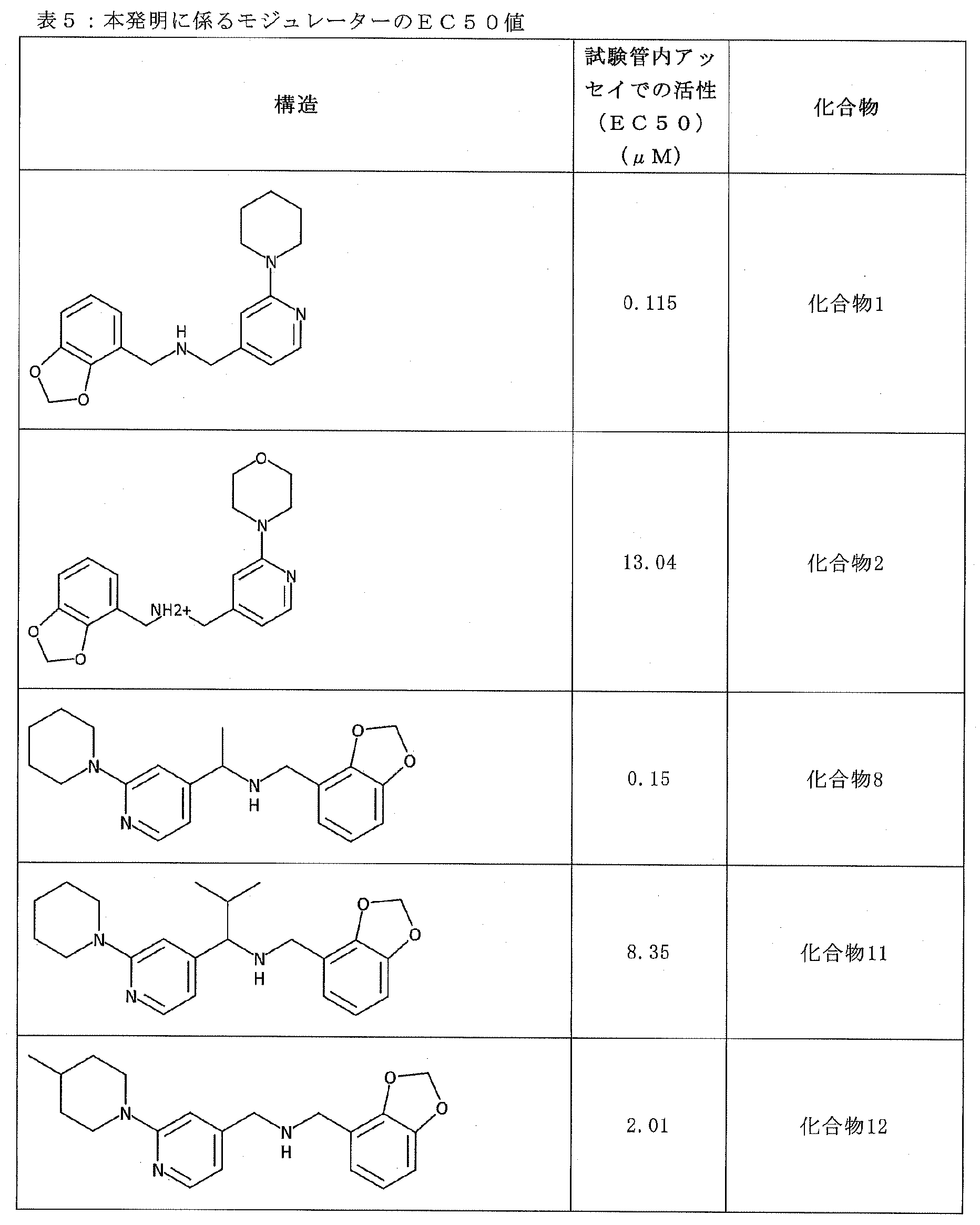
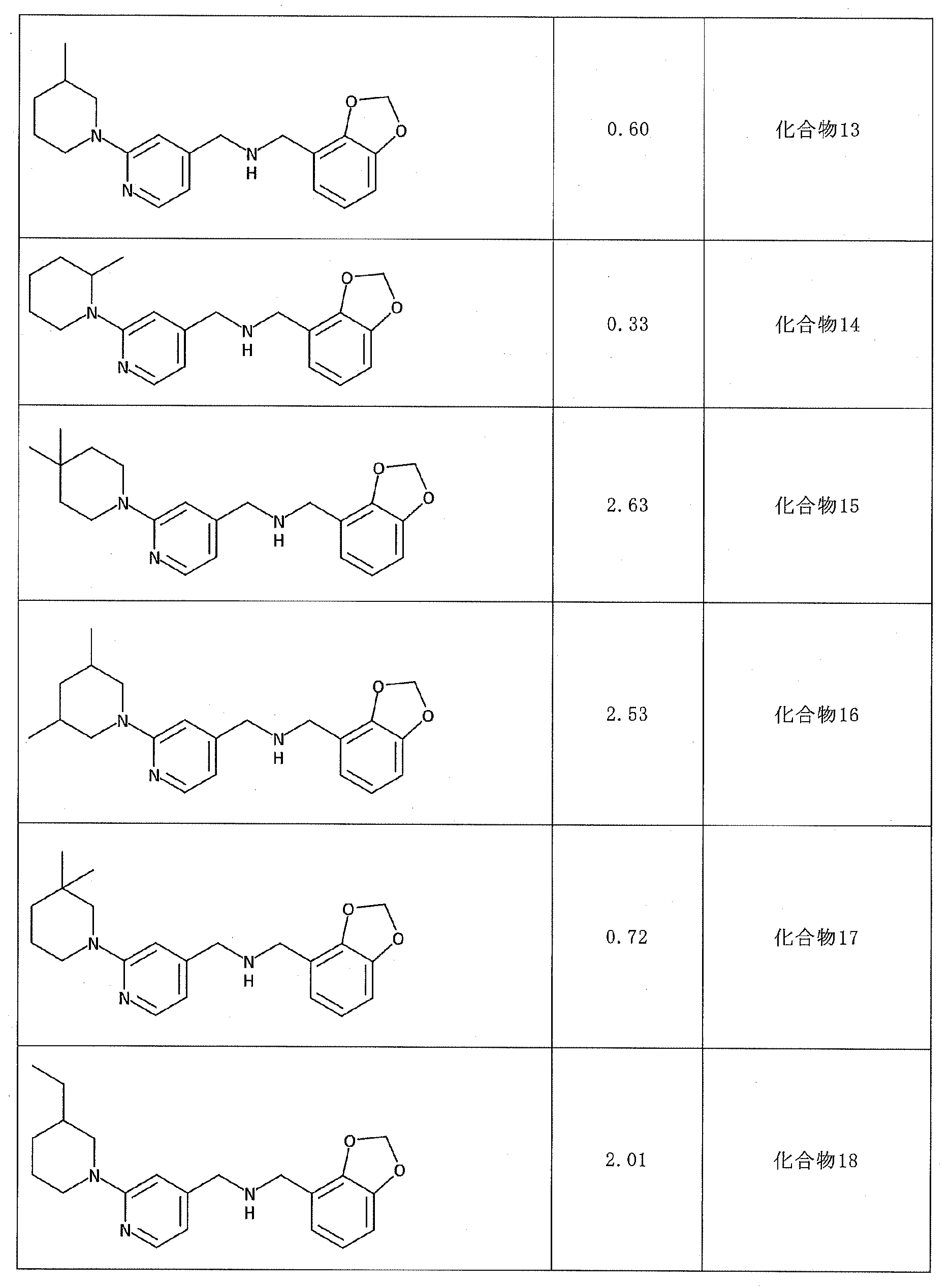
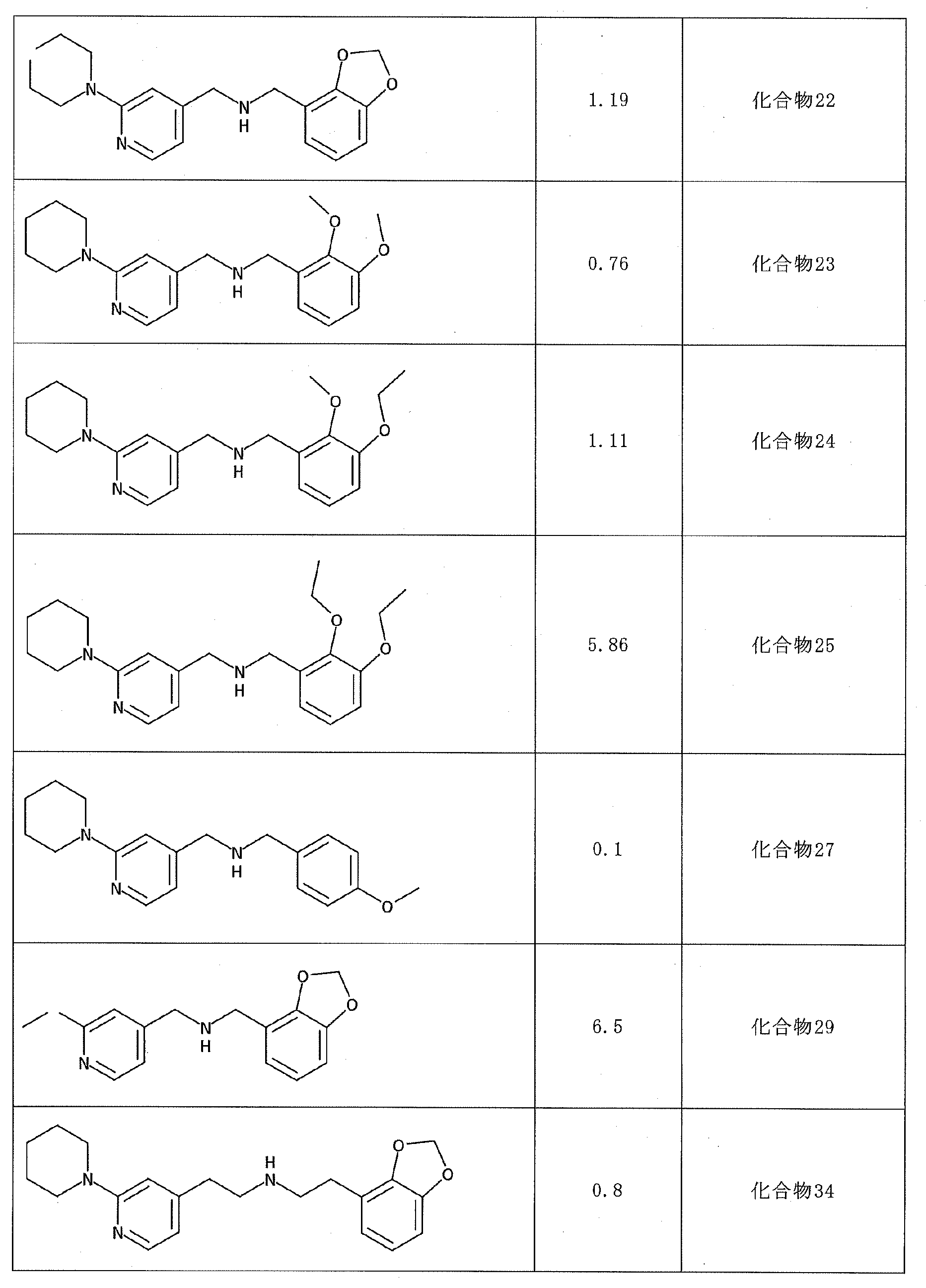
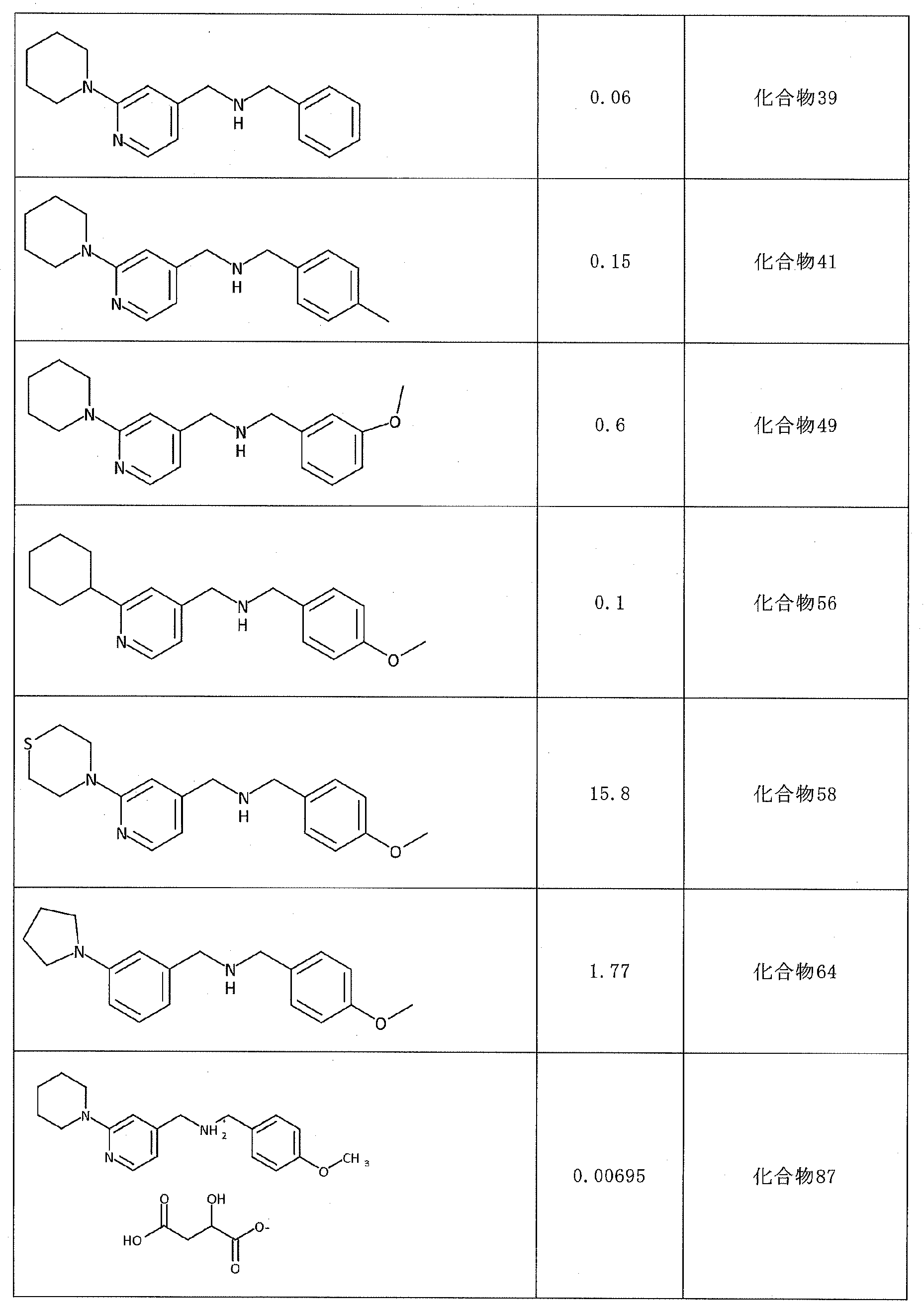
EC50値は最大値の半分の効果に必要な冷却物質の濃度を記載するので、作動性医薬の効力(用量または濃度の関数としての医薬の効力)の評価基準であり、その際、効力はEC50値の逆数値に相当する。その結果、低いEC50値は活性物質の高い効力に相当する。 The EC50 value is a measure of the efficacy of an agonistic drug (the efficacy of the drug as a function of dose or concentration), as it describes the concentration of a cooling substance required for half-maximal efficacy, where efficacy is determined by the EC50 value. Corresponds to the inverse of the value. As a result, a low EC50 value corresponds to a high potency of the active substance.
したがって、上記の表5から、本明細書に記載されている本発明の化合物は優れた冷却特性を有し、低濃度でさえ強力な冷却効果を生み出すことができ、一般に、物質WS-3についての1.72μMのEC50参照値を大きく下回ることが分かる。 Therefore, from Table 5 above, it can be seen that the compounds of the invention described herein have excellent cooling properties and can produce strong cooling effects even at low concentrations, and in general for the substance WS-3. It can be seen that the EC50 reference value of 1.72 μM is significantly lower than that of 1.72 μM.
上記表が示すように、R1が任意で置換されるフェニル基または任意で置換される1,3-ベンゾジオキソリル基を表し、且つR7が任意で置換されるピリジニル基を表す一般式(I)のそれらの構造は特に有利であることが判明している。後者は好ましくはピペリジニル基で置換される。対応する特に好適な構造は式(III)~(VII)に見いだすこともできる。 As shown in the above table, the general formula (I ) have been found to be particularly advantageous. The latter is preferably substituted with a piperidinyl group. Corresponding particularly suitable structures can also be found in formulas (III) to (VII).
さらに、前記構造ではm及びnは大部分1であることが観察された。その結果、m及び/またはnが1である一般式(I)~(VII)に係る構造が好ましい。 Furthermore, it was observed that m and n are mostly 1 in the above structure. As a result, structures according to general formulas (I) to (VII) in which m and/or n are 1 are preferred.
したがって、化合物1、8、13、17、14、17、22、23、24、27、34、39、41、49及び56(EC50値≦1.0μM)はEC50値に関して特に好ましい。最低のEC50値、すなわち、活性物質の高い効力は0.00695μMの値の化合物87の酸付加塩によって示されている。対応化合物、すなわち、中性の非荷電化合物27は0.1μMのEC値を有する。その結果、同一濃度で塩化合物の方が非荷電の同等化合物よりも強力なTRPM8の活性化を示す。 Therefore, compounds 1, 8, 13, 17, 14, 17, 22, 23, 24, 27, 34, 39, 41, 49 and 56 (EC50 value ≦1.0 μM) are particularly preferred with respect to EC50 value. The lowest EC50 value, ie high potency of the active substance, is shown by the acid addition salt of compound 87 with a value of 0.00695 μM. The corresponding compound, the neutral uncharged compound 27, has an EC value of 0.1 μM. As a result, salt compounds exhibit stronger activation of TRPM8 than their uncharged counterparts at the same concentration.
TRPM8活性およびEC50値という点で特に効率的な冷却効果は化合物1、8、13、17、14、17、22、23、24、27、34、39、41、49及び56について観察され得る。TRPM8活性化およびEC50値に関して特に効率的な冷却効果は化合物87の酸付加塩によって示されている。 A particularly efficient cooling effect in terms of TRPM8 activity and EC50 values can be observed for compounds 1, 8, 13, 17, 14, 17, 22, 23, 24, 27, 34, 39, 41, 49 and 56. A particularly efficient cooling effect with respect to TRPM8 activation and EC50 values has been shown by the acid addition salt of compound 87.
上記に記載されているTRPM8活性及び有効成分の効力(EC50値)に加えて、本発明に係る化合物は強力な冷却効果も示す。 In addition to the TRPM8 activity and active ingredient potency (EC50 values) described above, the compounds according to the invention also exhibit a strong cooling effect.
冷却効果を定量するために、参照としてメンタン-3-カルボン酸-N-エチルアミドを使用して比較試験を実施する。これらの比較試験については、当業者は本発明に従って使用される化合物(単数)または化合物(複数)をメンタン-3-カルボン酸-N-エチルアミド(WS-3とも呼ばれる)で置き換える。次いで、以下に記載されているように訓練されたパネリスト(n=10~11)によって各化合物または活性物質の冷却効果の強度が感覚的に評価され、互いに比較される。 In order to quantify the cooling effect, a comparative test is carried out using menthane-3-carboxylic acid-N-ethylamide as a reference. For these comparative tests, the person skilled in the art replaces the compound or compounds used according to the invention with menthane-3-carboxylic acid-N-ethylamide (also called WS-3). The strength of the cooling effect of each compound or active substance is then sensory assessed and compared with each other by trained panelists (n=10-11) as described below.
冷却強度の調査は以下のように実施した:5ppmの本発明の化合物を含有する試験溶液を5%糖溶液にてそれぞれ調べ、同様に30ppmの参照物質WS-3を含有する対応溶液を調べた。WS-3のこの濃度は、そのような濃度でWS-3が良好な冷却効果を呈することが示されたので、選択された。対応する試験溶液を正確に40秒間パネリストが味見し、対応する試験溶液で口腔全体をゆすぎ、次いで試料溶液または参照溶液に吐き出した。味見に続いて、試験官は1(非常に弱い)~9(非常に強い)の尺度に従って1分後、各冷却強度を評点付けした。 The investigation of the cooling intensity was carried out as follows: test solutions containing 5 ppm of the compound of the invention were each tested in a 5% sugar solution, as well as corresponding solutions containing 30 ppm of the reference substance WS-3. . This concentration of WS-3 was chosen because it has been shown that at such a concentration WS-3 exhibits a good cooling effect. The panelists tasted the corresponding test solution for exactly 40 seconds, rinsed the entire oral cavity with the corresponding test solution, and then spit into the sample or reference solution. Following tasting, the examiner rated each cooling intensity after 1 minute according to a scale of 1 (very weak) to 9 (very strong).
例示的に選択した本発明に係る化合物の感覚的味見の結果を以下の表6に示す。 The results of sensory tasting of illustratively selected compounds according to the invention are shown in Table 6 below.

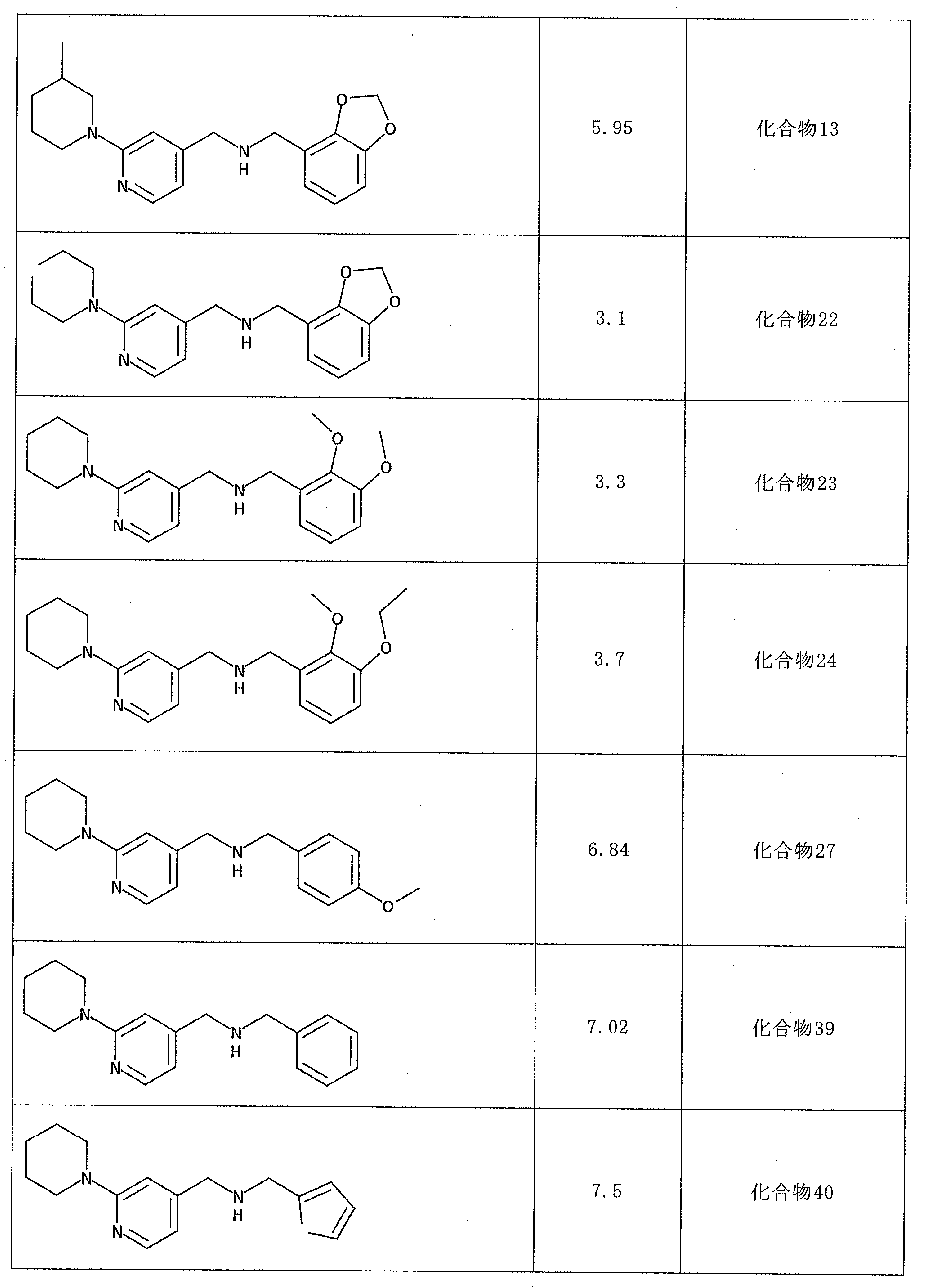
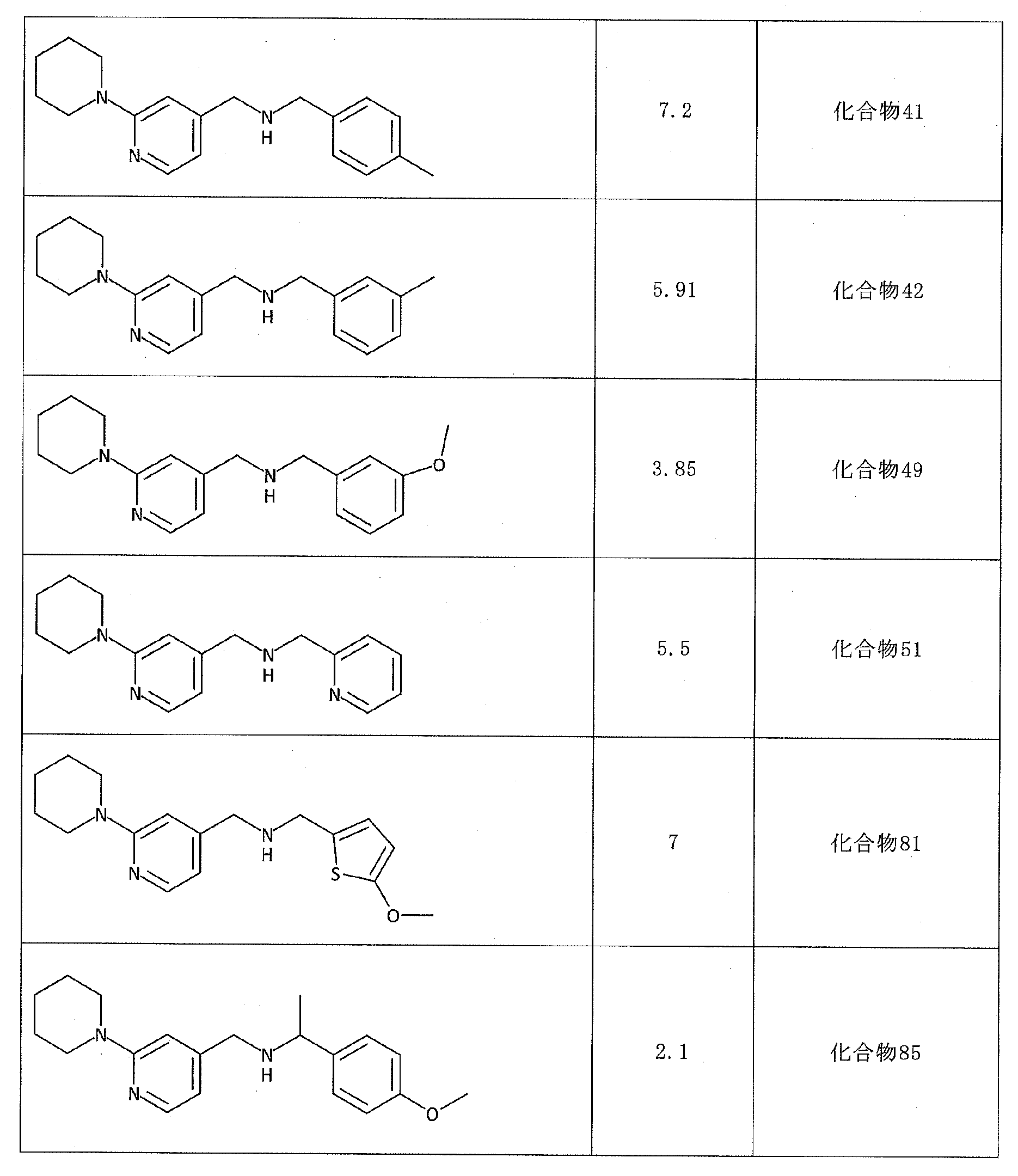
驚くべきことに、本明細書に記載されている化合物はWS-3参照試料と比べて著しく強烈な冷却効果を生み出すことが示された。特に、WS-3を含有する参照試料は感覚評価にて約5.4の冷却強度を示した一方で、化合物51のような本発明に係る化合物の冷却強度は驚くべきことに5.5として評価され、化合物N-(1,3-ベンゾジオキソール-4-イルメチル)-1-[2-(1-ピペリジル)-4-ピリジル]エタンアミン(化合物1)は約5.8と評価された一方で、化合物13は5.95と評価され;1-(4-メトキシフェニル)-N-[[2-(1-ピペリジル)-4-ピリジル]メチル]メタンアミン(化合物27)は驚くべきことに6.84と高く評点付けされ、化合物8は7であり、1-フェニル-N-[[2-(1-ピペリジル)-4-ピリジル]メチル]メタンアミン(化合物39)は7.02及び1-[2-(1-ピペリジル)-4-ピリジル]-N-(2-チエニルメチル)メタンアミン(化合物40)は7.5であった。化合物39、40、41及び42はそれぞれ7.02、7.5、7.2及び5.91の評点を得た。化合物81も7の高い評点を得た。 Surprisingly, the compounds described herein were shown to produce a significantly more intense cooling effect compared to the WS-3 reference sample. In particular, the reference sample containing WS-3 showed a cooling intensity of approximately 5.4 in the sensory evaluation, whereas the cooling intensity of compounds according to the invention such as compound 51 was surprisingly as low as 5.5. The compound N-(1,3-benzodioxol-4-ylmethyl)-1-[2-(1-piperidyl)-4-pyridyl]ethanamine (Compound 1) was evaluated to be approximately 5.8. On the other hand, compound 13 was evaluated as 5.95; 1-(4-methoxyphenyl)-N-[[2-(1-piperidyl)-4-pyridyl]methyl]methanamine (compound 27) was surprisingly 6.84, compound 8 was rated 7, 1-phenyl-N-[[2-(1-piperidyl)-4-pyridyl]methyl]methanamine (compound 39) was rated 7.02 and 1- [2-(1-piperidyl)-4-pyridyl]-N-(2-thienylmethyl)methanamine (compound 40) was 7.5. Compounds 39, 40, 41 and 42 obtained scores of 7.02, 7.5, 7.2 and 5.91, respectively. Compound 81 also received a high score of 7.
WS-3は6倍高い濃度にもかかわらず、顕著に低い冷却強度を生じ得ることも留意すべきである。逆に、一般的な冷却物質(WS-3)と比べて有意に強い冷却効果を生み出すのに本発明に係る化合物は有意に低い濃度で済む。このことは、本発明に係る化合物は低濃度で使用されるとき強力なので有効性が高い冷却効果をすでに生じ、強力であると認知される冷却効果を生じるためにはこれらの冷却物質を含有する製品製剤のような対応する最終製剤でごく少量しか使う必要がないことを示している。 It should also be noted that WS-3 can produce significantly lower cooling intensity despite its 6 times higher concentration. Conversely, the compounds according to the invention require significantly lower concentrations to produce a significantly stronger cooling effect compared to the common cooling substance (WS-3). This means that the compounds according to the invention already produce a cooling effect that is strong and therefore highly effective when used in low concentrations, and that in order to produce a cooling effect that is perceived as strong, it is necessary to contain these cooling substances. This indicates that only very small amounts need to be used in the corresponding final formulation, such as the product formulation.
調べた冷却物質の間でTRPM8の活性化、EC50値及び冷却強度の特に顕著な組み合わせは化合物1、8、13、23、27、39及び41によって示され、それはこれらの化合物が最も好ましい理由である。 Among the cooling substances investigated, a particularly striking combination of TRPM8 activation, EC50 value and cooling intensity was shown by compounds 1, 8, 13, 23, 27, 39 and 41, which is why these compounds are the most preferred. be.
この文脈では、対応する比較にて、本発明に従って使用される化合物(複数可)を伴う試料の冷却効果は参照試料と比べて好ましくは少なくとも10分、好ましくは少なくとも15分、さらに好ましくは少なくとも20分、特に好ましくは少なくとも30分、延長されることが好ましい。 In this context, in a corresponding comparison, the cooling effect of the sample with the compound(s) used according to the invention is preferably at least 10 minutes, preferably at least 15 minutes, more preferably at least 20 minutes compared to the reference sample. Preferably, the duration is extended by 30 minutes, particularly preferably at least 30 minutes.
合成実施例 Synthesis examples
以下の実施例では、小数点はドットによって表される。 In the examples below, the decimal point is represented by a dot.
本発明に係るアミンの調製 Preparation of amines according to the invention

ハロアルキル誘導体(1.0当量)を無水DCMに溶解し、対応するピリジン誘導体(1.1当量)及び窒素含有塩基(2.0当量)を加えた。反応混合物を室温で一晩撹拌した。水とDCMを反応溶液に加え、2つの相を分離した。有機相をNa2SO4上で乾燥させ、濾過し、真空にて溶媒を除いた。粗精製の物質をカラムクロマトグラフィーによって精製し、所望の生成物を油または固形物として得た。 The haloalkyl derivative (1.0 eq.) was dissolved in anhydrous DCM and the corresponding pyridine derivative (1.1 eq.) and nitrogenous base (2.0 eq.) were added. The reaction mixture was stirred at room temperature overnight. Water and DCM were added to the reaction solution and the two phases were separated. The organic phase was dried over Na 2 SO 4 , filtered and the solvent was removed in vacuo. The crude material was purified by column chromatography to give the desired product as an oil or solid.

アルデヒド(1.0当量)をTHFに溶解し、対応するアミン(1.0当量)を室温で加えた。これに酢酸(3.0当量)の添加が続いた。反応混合物を5分間撹拌し、次いでSTAB(1.5当量)を還元剤として加えた。アルゴン雰囲気のもと反応混合物を室温で一晩撹拌した。沈殿した結晶を濾別し、THFで洗浄した。濾液を真空で濃縮し、粗精製の物質をカラムクロマトグラフィー(DCM:MeOH、95:5)によって精製した。無色の油として所望の生成物を得た。 The aldehyde (1.0 eq.) was dissolved in THF and the corresponding amine (1.0 eq.) was added at room temperature. This was followed by the addition of acetic acid (3.0 eq.). The reaction mixture was stirred for 5 minutes and then STAB (1.5 eq.) was added as a reducing agent. The reaction mixture was stirred at room temperature overnight under an argon atmosphere. The precipitated crystals were filtered off and washed with THF. The filtrate was concentrated in vacuo and the crude material was purified by column chromatography (DCM:MeOH, 95:5). The desired product was obtained as a colorless oil.
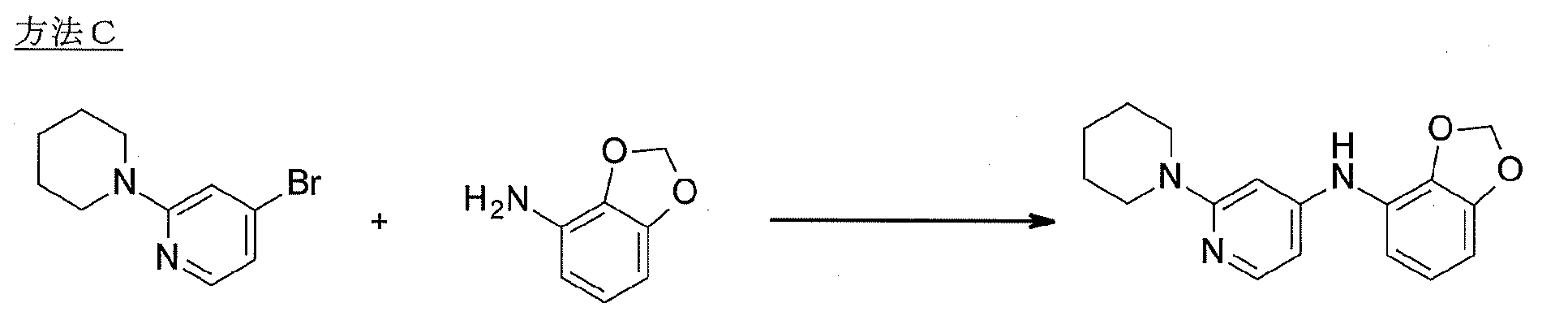
対応するハロゲン誘導体(1.0当量)及びアミン(1.1当量)を無水トルエンに溶解し、トリ-tert-ブチルホスフィン(0.1当量)及びリン酸カリウム(3.0当量)を加えた。反応混合物をアルゴンで15分間パージし、次いでPd2(dba)3を加え、再びアルゴンで15分間パージした。反応混合物を100℃で一晩撹拌した。後処理のために水(160mL)及びDCM(160mL)を加えた。得られた相を分離し、水性相をDCM(3×160mL)で抽出した。合わせた有機相をNa2SO4上で乾燥させ、濾過し、真空にて溶媒を除いた。粗生成物をカラムクロマトグラフィー(逆相、0~100%のアクリロニトリル水溶液)によって精製した。 The corresponding halogen derivative (1.0 eq.) and amine (1.1 eq.) were dissolved in anhydrous toluene, and tri-tert-butylphosphine (0.1 eq.) and potassium phosphate (3.0 eq.) were added. . The reaction mixture was purged with argon for 15 minutes, then Pd 2 (dba) 3 was added and purged again with argon for 15 minutes. The reaction mixture was stirred at 100°C overnight. Water (160 mL) and DCM (160 mL) were added for work-up. The resulting phases were separated and the aqueous phase was extracted with DCM (3 x 160 mL). The combined organic phases were dried over Na 2 SO 4 , filtered and the solvent was removed in vacuo. The crude product was purified by column chromatography (reverse phase, 0-100% acrylonitrile in water).

DMF中のアミン(1.0当量)、Cs2CO3(3.0当量)から成る懸濁液に0℃にて所望のハロゲン置換試薬(1.7当量)を加えた。反応物を40℃に加熱し、48時間撹拌した。次いで反応溶液に水とジクロロメタン(比、1:4)を加えた。2つの相を分離し、水性相をジクロロメタンで3回洗浄した。合わせた有機相をNa2SO4上で乾燥させ、濾過し、真空にて溶媒を除いた。粗精製の物質を分取用薄層クロマトグラフィーによって精製し、油または固形物として所望の生成物を得た。 To a suspension consisting of the amine (1.0 eq.), Cs 2 CO 3 (3.0 eq.) in DMF at 0° C. was added the desired halogen substitution reagent (1.7 eq.). The reaction was heated to 40°C and stirred for 48 hours. Then water and dichloromethane (ratio, 1:4) were added to the reaction solution. The two phases were separated and the aqueous phase was washed three times with dichloromethane. The combined organic phases were dried over Na 2 SO 4 , filtered and the solvent was removed in vacuo. The crude material was purified by preparative thin layer chromatography to yield the desired product as an oil or solid.

対応するカルボン酸(1.0当量)、HBTU(1.15当量)、EDC×HCl(1.3当量)をDMFに溶解し、室温で3時間撹拌した。次いで反応混合物に所望のアミン(1.1当量)及び塩基DIPEA(3.5当量)を加え、反応溶液を室温で一晩撹拌した。次いで反応物に水を加え、ヘキサン/酢酸エチル(1:3)の混合物で生成物を2回抽出した。有機相をNa2SO4上で乾燥させ、濾過し、真空にて溶媒を除いた。粗精製の物質を分取用薄層クロマトグラフィーによって精製し、油または固形物として所望の生成物を得た。 The corresponding carboxylic acid (1.0 eq.), HBTU (1.15 eq.), EDC×HCl (1.3 eq.) were dissolved in DMF and stirred at room temperature for 3 hours. The desired amine (1.1 eq.) and base DIPEA (3.5 eq.) were then added to the reaction mixture and the reaction solution was stirred at room temperature overnight. Water was then added to the reaction and the product was extracted twice with a mixture of hexane/ethyl acetate (1:3). The organic phase was dried over Na 2 SO 4 , filtered and the solvent was removed in vacuo. The crude material was purified by preparative thin layer chromatography to yield the desired product as an oil or solid.

アルゴン雰囲気のもと、所望のアミンを無水THFに溶解した。反応混合物を0℃に冷却し、ボランジメチルスルフィド錯体をゆっくり加えた。反応物を室温で16時間撹拌し、その後、水及び2MのNaOHを慎重に加えた。次いでDCMを加え、相を分離した。水性相をDCMで抽出した。合わせた有機相をNa2SO4上で乾燥させ、濾過し、真空にて濃縮した。粗生成物をカラムクロマトグラフィー(逆相)によって精製し、生成物をBH3錯体として単離した。この錯体をMeOH、水及び35%HClに溶解し、反応混合物を40℃に加熱した。次いで真空にて溶媒を取り除き、生成物を2MのNaOHで処理した。次いで生成物をDCMで抽出し、溶媒を再び真空にて取り除き、所望の生成物を油として得た。 The desired amine was dissolved in anhydrous THF under an argon atmosphere. The reaction mixture was cooled to 0° C. and the borane dimethyl sulfide complex was added slowly. The reaction was stirred at room temperature for 16 hours, then water and 2M NaOH were carefully added. DCM was then added and the phases were separated. The aqueous phase was extracted with DCM. The combined organic phases were dried over Na 2 SO 4 , filtered and concentrated in vacuo. The crude product was purified by column chromatography (reverse phase) and the product was isolated as a BH3 complex. The complex was dissolved in MeOH, water and 35% HCl and the reaction mixture was heated to 40°C. The solvent was then removed in vacuo and the product treated with 2M NaOH. The product was then extracted with DCM and the solvent was again removed in vacuo to give the desired product as an oil.
以下の合成実施例に関して、実施例の番号付けは表1に係る化合物の命名に必ずしも対応しないことに留意すべきである。 Regarding the synthetic examples below, it should be noted that the numbering of the examples does not necessarily correspond to the nomenclature of the compounds according to Table 1.
以下の1H NMRデータでは、少数点はドットに置き換えられる。 In the 1 H NMR data below, decimal points are replaced with dots.
実施例1:N-(1,3-ベンゾジオキソール-4-イルメチル)-1-[2-(1-ピペリジル)-4-ピリジル]エタンアミンの調製

類似の方法B:9%の収率
1H NMR(300MHz,クロロホルム-d)δ8.05(d,J=5.1Hz,1H),6.79-6.56(m,4H),6.49(dd,J=5.2,1.3Hz,1H),5.88(dd,J=8.2,1.5Hz,2H),3.61(q,J=6.7Hz,2H),3.54(s,1H),3.52-3.40(m,4H),1.58(t,J=3.1Hz,6H),1.26(d,J=6.6Hz,3H).
Example 1: Preparation of N-(1,3-benzodioxol-4-ylmethyl)-1-[2-(1-piperidyl)-4-pyridyl]ethanamine
Similar method B: 9% yield
1H NMR (300MHz, chloroform-d) δ8.05 (d, J = 5.1Hz, 1H), 6.79-6.56 (m, 4H), 6.49 (dd, J = 5.2, 1.3Hz, 1H), 5.88 (dd, J=8.2, 1.5Hz, 2H), 3.61 (q, J=6.7Hz, 2H), 3.54 (s, 1H), 3.52-3.40 (m, 4H), 1.58 (t, J=3.1Hz, 6H), 1.26 (d, J=6.6Hz, 3H).
実施例2:N-(1,3-ベンゾジオキソール-4-イルメチル)-N-[[2-(1-ピペリジル)-4-ピリジル]メチル]エタンアミンの調製

方法D:36%の収率
1H NMR(400MHz,クロロホルム-d)δ8.10(d,J=5.1Hz,1H),6.94(dd,J=7.8,1.3Hz,1H),6.82(t,J=7.7Hz,1H),6.75(dd,J=7.7,1.3Hz,2H),6.62(dd,J=5.2,1.2Hz,1H),5.95(s,2H),3.61(s,2H),3.53(d,J=5.5Hz,6H),2.55(q,J=7.1Hz,2H),1.66(d,J=3.1Hz,6H),1.10(t,J=7.1Hz,3H).
Example 2: Preparation of N-(1,3-benzodioxol-4-ylmethyl)-N-[[2-(1-piperidyl)-4-pyridyl]methyl]ethanamine
Method D: 36% yield
1H NMR (400MHz, chloroform-d) δ8.10 (d, J = 5.1Hz, 1H), 6.94 (dd, J = 7.8, 1.3Hz, 1H), 6.82 (t, J=7.7Hz, 1H), 6.75 (dd, J=7.7, 1.3Hz, 2H), 6.62 (dd, J=5.2, 1.2Hz, 1H), 5.95 (s, 2H), 3.61 (s, 2H), 3.53 (d, J = 5.5Hz, 6H), 2.55 (q, J = 7.1Hz, 2H), 1.66 (d , J=3.1Hz, 6H), 1.10(t, J=7.1Hz, 3H).
実施例3:N-(1,3-ベンゾジオキソール-4-イルメチル)-N-メチル-1-[2-(1-ピペリジル)-4-ピリジル]メタンアミンの調製

方法A:23%の収率
1H NMR(300MHz,クロロホルム-d):δ8.10(dd,J=5.1,0.7Hz,1H),6.89-6.69(m,4H),6.58(dd,J=5.1,1.3Hz,1H),5.95(s,2H),3.53(s,6H),3.45(s,2H),2.23(s,3H),1.64(d,J=2.8Hz,6H).
Example 3: Preparation of N-(1,3-benzodioxol-4-ylmethyl)-N-methyl-1-[2-(1-piperidyl)-4-pyridyl]methanamine
Method A: 23% yield
1H NMR (300MHz, chloroform-d): δ8.10 (dd, J = 5.1, 0.7Hz, 1H), 6.89-6.69 (m, 4H), 6.58 (dd, J =5.1, 1.3Hz, 1H), 5.95 (s, 2H), 3.53 (s, 6H), 3.45 (s, 2H), 2.23 (s, 3H), 1. 64 (d, J=2.8Hz, 6H).
実施例4:N-(1,3-ベンゾジオキソール-4-イルメチル)-2-メチル-1-[2-(1-ピペリジル)-4-ピリジル]プロパン-1-アミンの調製

方法B:5%の収率
1H NMR(300MHz,クロロホルム-d)δ8.04(d,J=5.1Hz,1H),6.77-6.57(m,3H),6.54(s,1H),6.45(dd,J=5.2,1.3Hz,1H),5.86(q,J=1.5Hz,2H),3.61(d,J=13.6Hz,1H),3.48-3.36(m,5H),3.13(d,J=6.8Hz,1H),1.85-1.70(m,1H),1.59(q,J=3.0Hz,6H),0.88(d,J=6.7Hz,3H),0.70(d,J=6.8Hz,3H).
Example 4: Preparation of N-(1,3-benzodioxol-4-ylmethyl)-2-methyl-1-[2-(1-piperidyl)-4-pyridyl]propan-1-amine
Method B: 5% yield
1H NMR (300MHz, chloroform-d) δ8.04 (d, J = 5.1Hz, 1H), 6.77-6.57 (m, 3H), 6.54 (s, 1H), 6.45 (dd, J=5.2, 1.3Hz, 1H), 5.86 (q, J=1.5Hz, 2H), 3.61 (d, J=13.6Hz, 1H), 3.48- 3.36 (m, 5H), 3.13 (d, J = 6.8Hz, 1H), 1.85-1.70 (m, 1H), 1.59 (q, J = 3.0Hz, 6H ), 0.88 (d, J=6.7Hz, 3H), 0.70 (d, J=6.8Hz, 3H).
実施例5:N-(1,3-ベンゾジオキソール-4-イルメチル)-1-[2-(4-メチル-1-ピペリジル)-4-ピリジル]メタンアミンの調製

方法A:21%の収率
1H NMR(400MHz,DMSO)δ:7.99(d,J=5.1Hz,1H),6.91(dd,J=5.5,3.6Hz,1H),6.84-6.76(m,3H),6.56(d,J=5.1Hz,1H),5.98(s,2H),4.26(d,J=12.9Hz,2H),3.62(s,2H),3.60(s,2H),2.74(td,J=12.6,2.5Hz,2H),2.60(br,1H),1.69-1.52(m,3H),1.13-1.01(m,2H),0.92(d,J=6.4Hz,3H).
Example 5: Preparation of N-(1,3-benzodioxol-4-ylmethyl)-1-[2-(4-methyl-1-piperidyl)-4-pyridyl]methanamine
Method A: 21% yield
1H NMR (400MHz, DMSO) δ: 7.99 (d, J=5.1Hz, 1H), 6.91 (dd, J=5.5, 3.6Hz, 1H), 6.84-6. 76 (m, 3H), 6.56 (d, J = 5.1Hz, 1H), 5.98 (s, 2H), 4.26 (d, J = 12.9Hz, 2H), 3.62 ( s, 2H), 3.60 (s, 2H), 2.74 (td, J=12.6, 2.5Hz, 2H), 2.60 (br, 1H), 1.69-1.52 ( m, 3H), 1.13-1.01 (m, 2H), 0.92 (d, J=6.4Hz, 3H).
実施例6:N-(1,3-ベンゾジオキソール-4-イルメチル)-1-[2-(3-メチル-1-ピペリジル)-4-ピリジル]メタンアミンの調製

方法A:41%の収率
1H NMR(300MHz,DMSO)δ:7.98(d,J=5.1Hz,1H),6.94-6.86(m,1H),6.83-6.73(m,3H),6.55(dd,J=5.1,1.2Hz,1H),5.97(s,2H),4.23-4.12(m,2H),3.61(s,2H),3.59(s,2H),2.71(td,J=12.4,2.9Hz,1H),2.60(s,1H),2.39(dd,J=12.8,10.6Hz,1H),1.82-1.72(m,1H),1.69-1.34(m,3H),1.10(qd,J=12.2,3.8Hz,1H),0.89(d,J=6.6Hz,3H).
Example 6: Preparation of N-(1,3-benzodioxol-4-ylmethyl)-1-[2-(3-methyl-1-piperidyl)-4-pyridyl]methanamine
Method A: 41% yield
1H NMR (300MHz, DMSO) δ: 7.98 (d, J = 5.1Hz, 1H), 6.94-6.86 (m, 1H), 6.83-6.73 (m, 3H) , 6.55 (dd, J=5.1, 1.2Hz, 1H), 5.97 (s, 2H), 4.23-4.12 (m, 2H), 3.61 (s, 2H) , 3.59 (s, 2H), 2.71 (td, J=12.4, 2.9Hz, 1H), 2.60 (s, 1H), 2.39 (dd, J=12.8, 10.6Hz, 1H), 1.82-1.72 (m, 1H), 1.69-1.34 (m, 3H), 1.10 (qd, J=12.2, 3.8Hz, 1H ), 0.89 (d, J=6.6Hz, 3H).
実施例7:N-(1,3-ベンゾジオキソール-4-イルメチル)-1-[2-(2-メチル-1-ピペリジル)-4-ピリジル]メタンアミンの調製

方法A:32%の収率
1H NMR(300MHz,DMSO)δ:7.98(d,J=5.1Hz,1H),6.90(dd,J=5.2,4.0Hz,1H),6.85-6.77(m,2H),6.72(s,1H),6.53(dd,J=5.0,1.2Hz,1H),5.97(s,2H),4.63(d,J=7.1Hz,1H),4.09(d,J=13.2Hz,1H),3.60(s,4H),2.88-2.76(m,1H),2.59(s,1H),1.74-1.53(m,5H),1.38(dd,J=8.6,4.3Hz,1H),1.05(d,J=6.8Hz,3H)
Example 7: Preparation of N-(1,3-benzodioxol-4-ylmethyl)-1-[2-(2-methyl-1-piperidyl)-4-pyridyl]methanamine
Method A: 32% yield
1H NMR (300MHz, DMSO) δ: 7.98 (d, J=5.1Hz, 1H), 6.90 (dd, J=5.2, 4.0Hz, 1H), 6.85-6. 77 (m, 2H), 6.72 (s, 1H), 6.53 (dd, J=5.0, 1.2Hz, 1H), 5.97 (s, 2H), 4.63 (d, J = 7.1Hz, 1H), 4.09 (d, J = 13.2Hz, 1H), 3.60 (s, 4H), 2.88-2.76 (m, 1H), 2.59 ( s, 1H), 1.74-1.53 (m, 5H), 1.38 (dd, J = 8.6, 4.3Hz, 1H), 1.05 (d, J = 6.8Hz, 3H )
実施例8:N-(1,3-ベンゾジオキソール-4-イルメチル)-1-[2-(4,4-ジメチル-1-ピペリジル)-4-ピリジル]メタンアミンの調製

方法A:20%の収率
1H NMR(300MHz,DMSO)δ:7.99(d,J=5.1Hz,1H),6.91(dd,J=5.5,3.6Hz,1H),6.84-6.77(m,3H),6.57(dd,J=5.1,1.1Hz,1H),5.98(s,2H),3.62(s,2H),3.61(s,2H),3.53-3.47(m,4H),1.38-1.32(m,4H),0.96(s,6H).
Example 8: Preparation of N-(1,3-benzodioxol-4-ylmethyl)-1-[2-(4,4-dimethyl-1-piperidyl)-4-pyridyl]methanamine
Method A: 20% yield
1H NMR (300MHz, DMSO) δ: 7.99 (d, J=5.1Hz, 1H), 6.91 (dd, J=5.5, 3.6Hz, 1H), 6.84-6. 77 (m, 3H), 6.57 (dd, J=5.1, 1.1Hz, 1H), 5.98 (s, 2H), 3.62 (s, 2H), 3.61 (s, 2H), 3.53-3.47 (m, 4H), 1.38-1.32 (m, 4H), 0.96 (s, 6H).
実施例9:N-(1,3-ベンゾジオキソール-4-イルメチル)-1-[2-(3,5-ジメチル-1-ピペリジル)-4-ピリジル]メタンアミンの調製
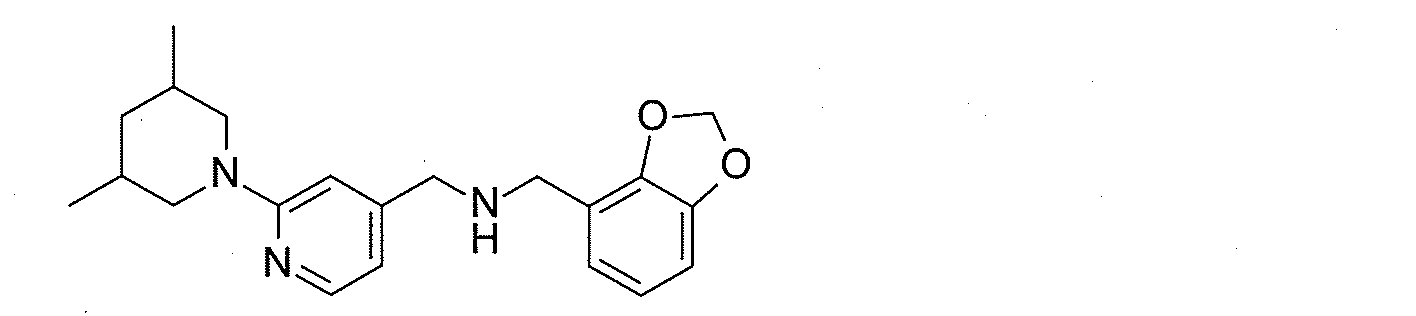
方法A:6%の収率
1H NMR(300MHz,DMSO)δ:7.98(d,J=5.1Hz,1H),6.91(dd,J=5.2,4.0Hz,1H),6.84-6.76(m,3H),6.56(dd,J=5.1,1.1Hz,1H),5.97(s,2H),4.27(dd,J=12.8,3.8Hz,2H),3.62(s,2H),3.60(s,2H),2.68(s,1H),2.21(dd,J=12.8,11.3Hz,2H),1.76(d,J=12.9Hz,1H),1.62-1.45(m,2H),0.89(d,J=6.6Hz,6H),0.82-0.69(m,1H)
Example 9: Preparation of N-(1,3-benzodioxol-4-ylmethyl)-1-[2-(3,5-dimethyl-1-piperidyl)-4-pyridyl]methanamine
Method A: 6% yield
1H NMR (300MHz, DMSO) δ: 7.98 (d, J=5.1Hz, 1H), 6.91 (dd, J=5.2, 4.0Hz, 1H), 6.84-6. 76 (m, 3H), 6.56 (dd, J = 5.1, 1.1Hz, 1H), 5.97 (s, 2H), 4.27 (dd, J = 12.8, 3.8Hz , 2H), 3.62 (s, 2H), 3.60 (s, 2H), 2.68 (s, 1H), 2.21 (dd, J=12.8, 11.3Hz, 2H), 1.76 (d, J = 12.9Hz, 1H), 1.62-1.45 (m, 2H), 0.89 (d, J = 6.6Hz, 6H), 0.82-0.69 (m, 1H)
実施例10:N-(1,3-ベンゾジオキソール-4-イルメチル)-1-[2-(3,3-ジメチル-1-ピペリジル)-4-ピリジル]メタンアミンの調製
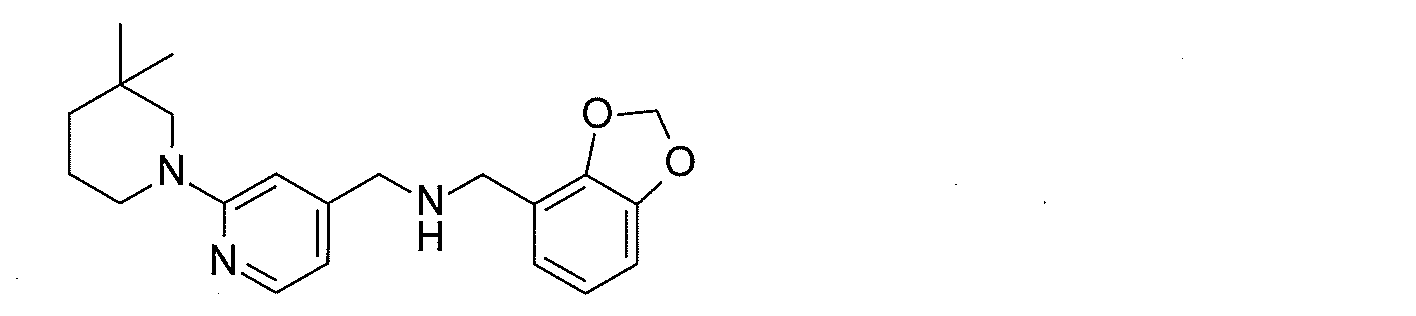
方法A:26%の収率
1H NMR(300MHz,DMSO)δ:7.95(d,J=5.1Hz,1H),6.90(dd,J=5.2,4.0Hz,1H),6.84-6.78(m,2H),6.76(s,1H),6.55-6.50(m,1H),5.97(s,2H),3.61(s,2H),3.59(s,2H),3.45(t,J=5.6Hz,2H),3.23(s,2H),1.61-1.52(m,2H),1.42-1.34(m,2H),0.90(s,6H).
Example 10: Preparation of N-(1,3-benzodioxol-4-ylmethyl)-1-[2-(3,3-dimethyl-1-piperidyl)-4-pyridyl]methanamine
Method A: 26% yield
1H NMR (300MHz, DMSO) δ: 7.95 (d, J=5.1Hz, 1H), 6.90 (dd, J=5.2, 4.0Hz, 1H), 6.84-6. 78 (m, 2H), 6.76 (s, 1H), 6.55-6.50 (m, 1H), 5.97 (s, 2H), 3.61 (s, 2H), 3.59 (s, 2H), 3.45 (t, J=5.6Hz, 2H), 3.23 (s, 2H), 1.61-1.52 (m, 2H), 1.42-1.34 (m, 2H), 0.90 (s, 6H).
実施例11:N-(1,3-ベンゾジオキソール-4-イルメチル)-1-[2-(3-エチル-1-ピペリジル)-4-ピリジル]メタンアミンの調製
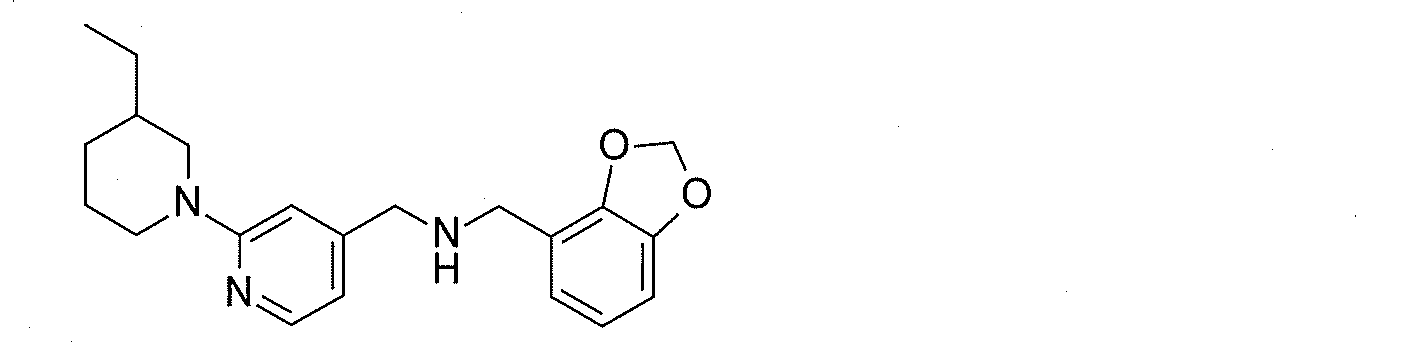
方法A:31%の収率
1H NMR(300MHz,DMSO)δ:7.98(d,J=5.1Hz,1H),6.94-6.86(m,1H),6.84-6.70(m,3H),6.55(d,J=5.1Hz,1H),5.97(s,2H),4.18(dd,J=20.1,13.8Hz,2H),3.61(s,2H),3.60(s,2H),2.82-2.58(m,2H),2.46-2.39(m,1H),1.83(d,J=12.9Hz,1H),1.66(d,J=12.8Hz,1H),1.48-1.00(m,5H),0.90(t,J=7.1Hz,3H).
Example 11: Preparation of N-(1,3-benzodioxol-4-ylmethyl)-1-[2-(3-ethyl-1-piperidyl)-4-pyridyl]methanamine
Method A: 31% yield
1H NMR (300MHz, DMSO) δ: 7.98 (d, J = 5.1Hz, 1H), 6.94-6.86 (m, 1H), 6.84-6.70 (m, 3H) , 6.55 (d, J=5.1Hz, 1H), 5.97 (s, 2H), 4.18 (dd, J=20.1, 13.8Hz, 2H), 3.61 (s, 2H), 3.60 (s, 2H), 2.82-2.58 (m, 2H), 2.46-2.39 (m, 1H), 1.83 (d, J = 12.9Hz, 1H), 1.66 (d, J=12.8Hz, 1H), 1.48-1.00 (m, 5H), 0.90 (t, J=7.1Hz, 3H).
実施例12:N-(1,3-ベンゾジオキソール-4-イルメチル)-1-[2-(4-プロピル-1-ピペリジル)-4-ピリジル]メタンアミンの調製

方法A:34%の収率
1H NMR(300MHz,DMSO)δ:7.98(d,J=5.0Hz,1H),6.90(dd,J=5.2,4.0Hz,1H),6.84-6.75(m,3H),6.56(dd,J=5.1,1.2Hz,1H),5.97(s,2H),4.27(dt,J=13.3,3.2Hz,2H),3.62(s,2H),3.60(s,2H),2.79-2.60(m,3H),1.74-1.64(m,2H),1.58-0.94(m,8H),0.87(t,J=7.2Hz,3H).
Example 12: Preparation of N-(1,3-benzodioxol-4-ylmethyl)-1-[2-(4-propyl-1-piperidyl)-4-pyridyl]methanamine
Method A: 34% yield
1H NMR (300MHz, DMSO) δ: 7.98 (d, J=5.0Hz, 1H), 6.90 (dd, J=5.2, 4.0Hz, 1H), 6.84-6. 75 (m, 3H), 6.56 (dd, J = 5.1, 1.2Hz, 1H), 5.97 (s, 2H), 4.27 (dt, J = 13.3, 3.2Hz , 2H), 3.62 (s, 2H), 3.60 (s, 2H), 2.79-2.60 (m, 3H), 1.74-1.64 (m, 2H), 1. 58-0.94 (m, 8H), 0.87 (t, J=7.2Hz, 3H).
実施例13:N-(1,3-ベンゾジオキソール-4-イルメチル)-1-[2-(4-エチル-1-ピペリジル)-4-ピリジル]メタンアミンの調製

方法A:16%の収率
1H NMR(300MHz,DMSO)δ:8.06(d,J=5.0Hz,1H),6.98(dd,J=5.5,3.6Hz,1H),6.91-6.84(m,3H),6.64(dd,J=5.1,1.1Hz,1H),6.05(s,2H),4.35(d,J=13.0Hz,2H),3.69(s,2H),3.68(s,2H),2.80(td,J=12.7,2.6Hz,2H),1.83-1.74(m,2H),1.49-1.39(m,1H),1.32(p,J=7.3Hz,2H),1.19-1.08(m,2H),0.96(t,J=7.4Hz,3H)
Example 13: Preparation of N-(1,3-benzodioxol-4-ylmethyl)-1-[2-(4-ethyl-1-piperidyl)-4-pyridyl]methanamine
Method A: 16% yield
1H NMR (300MHz, DMSO) δ: 8.06 (d, J=5.0Hz, 1H), 6.98 (dd, J=5.5, 3.6Hz, 1H), 6.91-6. 84 (m, 3H), 6.64 (dd, J = 5.1, 1.1Hz, 1H), 6.05 (s, 2H), 4.35 (d, J = 13.0Hz, 2H), 3.69 (s, 2H), 3.68 (s, 2H), 2.80 (td, J=12.7, 2.6Hz, 2H), 1.83-1.74 (m, 2H), 1.49-1.39 (m, 1H), 1.32 (p, J = 7.3Hz, 2H), 1.19-1.08 (m, 2H), 0.96 (t, J = 7 .4Hz, 3H)
実施例14:N-(1,3-ベンゾジオキソール-4-イルメチル)-N-[[2-(4-メチル-1-ピペリジル)-4-ピリジル]メチル]エタンアミンの調製
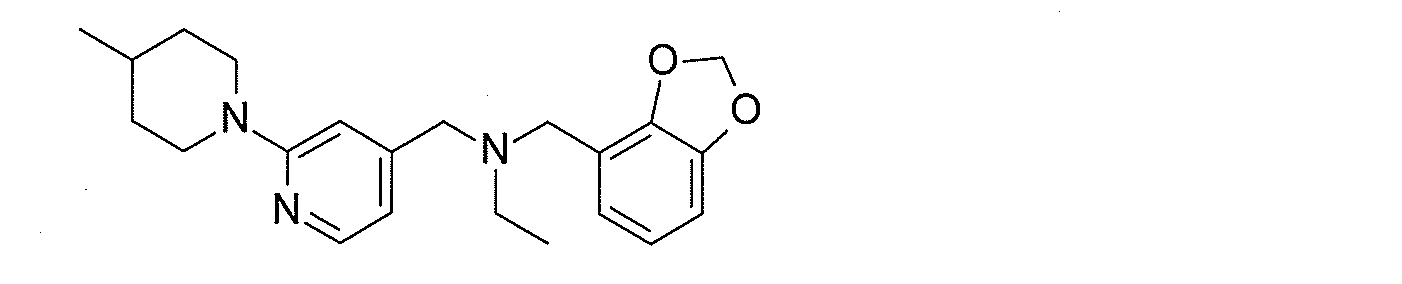
方法D:37%の収率
1H NMR(400MHz,DMSO)δ:7.98(d,J=5.1Hz,1H),6.90-6.75(m,4H),6.57(dd,J=5.1,1.1Hz,1H),5.98(s,2H),4.22(dt,J=13.0,2.9Hz,2H),3.52(s,2H),3.47(s,2H),2.74(td,J=12.7,2.6Hz,2H),2.43(q,J=7.1Hz,2H),1.68-1.52(m,3H),1.08(td,J=12.1,4.1Hz,2H),1.01(t,J=7.1Hz,3H),0.91(d,J=6.4Hz,3H).
Example 14: Preparation of N-(1,3-benzodioxol-4-ylmethyl)-N-[[2-(4-methyl-1-piperidyl)-4-pyridyl]methyl]ethanamine
Method D: 37% yield
1H NMR (400MHz, DMSO) δ: 7.98 (d, J = 5.1Hz, 1H), 6.90-6.75 (m, 4H), 6.57 (dd, J = 5.1, 1.1Hz, 1H), 5.98 (s, 2H), 4.22 (dt, J=13.0, 2.9Hz, 2H), 3.52 (s, 2H), 3.47 (s, 2H), 2.74 (td, J = 12.7, 2.6Hz, 2H), 2.43 (q, J = 7.1Hz, 2H), 1.68-1.52 (m, 3H), 1.08 (td, J=12.1, 4.1Hz, 2H), 1.01 (t, J=7.1Hz, 3H), 0.91 (d, J=6.4Hz, 3H).
実施例15:N-(1,3-ベンゾジオキソール-4-イルメチル)-1-[2-(4-イソプロピル-1-ピペリジル)-4-ピリジル]エタンアミンの調製
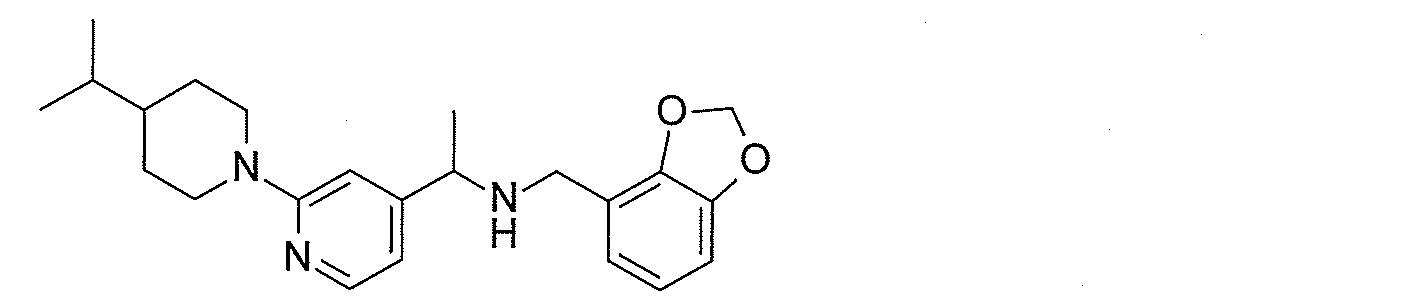
方法B:13%の収率
1H NMR(300MHz,クロロホルム-d)δ8.05(d,J=5.1Hz,1H),6.76-6.59(m,4H),6.49(dd,J=5.2,1.3Hz,1H),5.91-5.81(m,2H),4.28(d,J=12.7Hz,2H),3.67-3.46(m,3H),2.68(t,J=11.7Hz,2H),1.70(d,J=10.4Hz,2H),1.39(p,J=6.5Hz,1H),1.26(d,J=6.6Hz,3H),1.20(d,J=6.3Hz,3H),0.84(d,J=6.7Hz,6H).
Example 15: Preparation of N-(1,3-benzodioxol-4-ylmethyl)-1-[2-(4-isopropyl-1-piperidyl)-4-pyridyl]ethanamine
Method B: 13% yield
1H NMR (300MHz, chloroform-d) δ8.05 (d, J = 5.1Hz, 1H), 6.76-6.59 (m, 4H), 6.49 (dd, J = 5.2, 1.3Hz, 1H), 5.91-5.81 (m, 2H), 4.28 (d, J=12.7Hz, 2H), 3.67-3.46 (m, 3H), 2. 68 (t, J = 11.7Hz, 2H), 1.70 (d, J = 10.4Hz, 2H), 1.39 (p, J = 6.5Hz, 1H), 1.26 (d, J =6.6Hz, 3H), 1.20 (d, J=6.3Hz, 3H), 0.84 (d, J=6.7Hz, 6H).
実施例16:N-(1,3-ベンゾジオキソール-4-イルメチル)-2-(1-ピペリジル)ピリジン-4-カルボキサミドの調製

方法E:47%の収率
1H NMR(300MHz,DMSO)δ:9.08(t,J=5.8Hz,1H),8.18(d,J=5.1Hz,1H),7.18(d,J=1.4Hz,1H),7.02-6.92(m,1H),6.82(qt,J=6.9,3.6Hz,3H),6.02(s,2H),4.43(d,J=5.7Hz,2H),3.56(t,J=5.2Hz,4H),1.66-1.48(m,6H)
Example 16: Preparation of N-(1,3-benzodioxol-4-ylmethyl)-2-(1-piperidyl)pyridine-4-carboxamide
Method E: 47% yield
1H NMR (300MHz, DMSO) δ: 9.08 (t, J=5.8Hz, 1H), 8.18 (d, J=5.1Hz, 1H), 7.18 (d, J=1. 4Hz, 1H), 7.02-6.92 (m, 1H), 6.82 (qt, J=6.9, 3.6Hz, 3H), 6.02 (s, 2H), 4.43 ( d, J=5.7Hz, 2H), 3.56 (t, J=5.2Hz, 4H), 1.66-1.48 (m, 6H)
実施例17:N-(1,3-ベンゾジオキソール-4-イルメチル)-1-[2-(4-メトキシ-1-ピペリジル)-4-ピリジル]メタンアミンの調製

方法A:36%の収率
1H NMR(300MHz,DMSO)δ:7.99(d,J=5.1Hz,1H),6.93-6.86(m,1H),6.85-6.75(m,3H),6.58(d,J=5.1Hz,1H),5.97(s,2H),3.93(dd,J=12.2,5.7Hz,2H),3.61(s,4H),3.35-3.44(m,1H),3.16-3.04(m,2H),2.65(s,1H),1.93-1.82(m,2H),1.45-1.30(m,2H).
Example 17: Preparation of N-(1,3-benzodioxol-4-ylmethyl)-1-[2-(4-methoxy-1-piperidyl)-4-pyridyl]methanamine
Method A: 36% yield
1H NMR (300MHz, DMSO) δ: 7.99 (d, J = 5.1Hz, 1H), 6.93-6.86 (m, 1H), 6.85-6.75 (m, 3H) , 6.58 (d, J=5.1Hz, 1H), 5.97 (s, 2H), 3.93 (dd, J=12.2, 5.7Hz, 2H), 3.61 (s, 4H), 3.35-3.44 (m, 1H), 3.16-3.04 (m, 2H), 2.65 (s, 1H), 1.93-1.82 (m, 2H) , 1.45-1.30 (m, 2H).
実施例18:N-(1,3-ベンゾジオキソール-4-イルメチル)-1-(2-チオモルフォリノ-4-ピリジル)メタンアミンの調製

方法A:30の収率
1H NMR(300MHz,クロロホルム-d)δ8.10(d,J=5.1Hz,1H),6.82-6.73(m,3H),6.65(s,1H),6.57(dd,J=5.1,1.3Hz,1H),5.96(s,2H),3.99-3.91(m,4H),3.79(s,2H),3.73(s,2H),2.71-2.61(m,4H),1.69(s,1H).
Example 18: Preparation of N-(1,3-benzodioxol-4-ylmethyl)-1-(2-thiomorpholino-4-pyridyl)methanamine
Method A: Yield of 30
1H NMR (300MHz, chloroform-d) δ8.10 (d, J = 5.1Hz, 1H), 6.82-6.73 (m, 3H), 6.65 (s, 1H), 6.57 (dd, J=5.1, 1.3Hz, 1H), 5.96 (s, 2H), 3.99-3.91 (m, 4H), 3.79 (s, 2H), 3.73 (s, 2H), 2.71-2.61 (m, 4H), 1.69 (s, 1H).
実施例19:N-(1,3-ベンゾジオキソール-4-イルメチル)-1-(2-ピロール-1-イル-4-ピリジル)メタンアミンの調製

方法A:5%の収率
1H NMR(300MHz,クロロホルム-d)δ8.36(d,J=5.1Hz,1H),7.55(t,J=2.3Hz,2H),7.40(s,1H),7.13-7.07(m,1H),6.91-6.74(m,3H),6.37(t,J=2.3Hz,2H),5.99(s,2H),3.88(s,2H),3.83(s,2H),1.82(s,1H).
Example 19: Preparation of N-(1,3-benzodioxol-4-ylmethyl)-1-(2-pyrrol-1-yl-4-pyridyl)methanamine
Method A: 5% yield
1H NMR (300MHz, chloroform-d) δ8.36 (d, J = 5.1Hz, 1H), 7.55 (t, J = 2.3Hz, 2H), 7.40 (s, 1H), 7 .13-7.07 (m, 1H), 6.91-6.74 (m, 3H), 6.37 (t, J=2.3Hz, 2H), 5.99 (s, 2H), 3 .88 (s, 2H), 3.83 (s, 2H), 1.82 (s, 1H).
実施例20:N-(1,3-ベンゾジオキソール-4-イルメチル)-1-(2-フェニル-4-ピリジル)メタンアミンの調製

方法A:25%の収率
1H NMR(300MHz,DMSO)δ:8.57(d,J=5.2Hz,1H),8.16-8.02(m,2H),7.94(s,1H),7.56-7.38(m,3H),7.33(dd,J=5.0,1.4Hz,1H),6.94(dd,J=5.8,3.4Hz,1H),6.87-6.75(m,2H),5.97(s,2H),3.80(s,2H),3.67(s,2H),2.84(s,1H)
Example 20: Preparation of N-(1,3-benzodioxol-4-ylmethyl)-1-(2-phenyl-4-pyridyl)methanamine
Method A: 25% yield
1H NMR (300MHz, DMSO) δ: 8.57 (d, J = 5.2Hz, 1H), 8.16-8.02 (m, 2H), 7.94 (s, 1H), 7.56 -7.38 (m, 3H), 7.33 (dd, J=5.0, 1.4Hz, 1H), 6.94 (dd, J=5.8, 3.4Hz, 1H), 6. 87-6.75 (m, 2H), 5.97 (s, 2H), 3.80 (s, 2H), 3.67 (s, 2H), 2.84 (s, 1H)
実施例21:N-(1,3-ベンゾジオキソール-4-イルメチル)-1-[3-(2-ピリジル)フェニル]メタン-アミンの調製

類似の方法A:32%の収率
1H NMR(300MHz,クロロホルム-d)δ8.69(dt,J=4.8,1.5Hz,1H),7.98(d,J=1.9Hz,1H),7.87(dt,J=6.8,2.1Hz,1H),7.77-7.72(m,2H),7.48-7.38(m,2H),7.25-7.18(m,1H),6.84-6.71(m,3H),5.95(s,2H),3.90(s,2H),3.84(s,2H),1.84(s,1H).
Example 21: Preparation of N-(1,3-benzodioxol-4-ylmethyl)-1-[3-(2-pyridyl)phenyl]methane-amine
Similar method A: 32% yield
1H NMR (300MHz, chloroform-d) δ8.69 (dt, J = 4.8, 1.5Hz, 1H), 7.98 (d, J = 1.9Hz, 1H), 7.87 (dt, J = 6.8, 2.1Hz, 1H), 7.77-7.72 (m, 2H), 7.48-7.38 (m, 2H), 7.25-7.18 (m, 1H ), 6.84-6.71 (m, 3H), 5.95 (s, 2H), 3.90 (s, 2H), 3.84 (s, 2H), 1.84 (s, 1H) ..
実施例22:N-[(2,3-ジメトキシフェニル)メチル]-1-[2-(1-ピペリジル)-4-ピリジル]メタンアミンの調製

方法B:40%の収率
1H NMR(300MHz,CDCl3)δ8.03(d,J=5.1Hz,1H),6.96(t,J=7.9Hz,1H),6.80(td,J=7.8,1.6Hz,2H),6.60(s,1H),6.48(dd,J=5.2,1.3Hz,1H),3.80(s,3H),3.76(s,3H),3.73(s,2H),3.62(s,2H),3.45(d,J=4.7Hz,4H),1.70(s,1H),1.58(s,6H).
Example 22: Preparation of N-[(2,3-dimethoxyphenyl)methyl]-1-[2-(1-piperidyl)-4-pyridyl]methanamine
Method B: 40% yield
1H NMR (300MHz, CDCl3) δ8.03 (d, J=5.1Hz, 1H), 6.96 (t, J=7.9Hz, 1H), 6.80 (td, J=7.8, 1.6Hz, 2H), 6.60 (s, 1H), 6.48 (dd, J=5.2, 1.3Hz, 1H), 3.80 (s, 3H), 3.76 (s, 3H), 3.73 (s, 2H), 3.62 (s, 2H), 3.45 (d, J = 4.7Hz, 4H), 1.70 (s, 1H), 1.58 (s , 6H).
実施例23:N-[(3-エトキシ-2-メトキシ-フェニル)メチル]-1-[2-(1-ピペリジル)-4-ピリジル]メタンアミンの調製
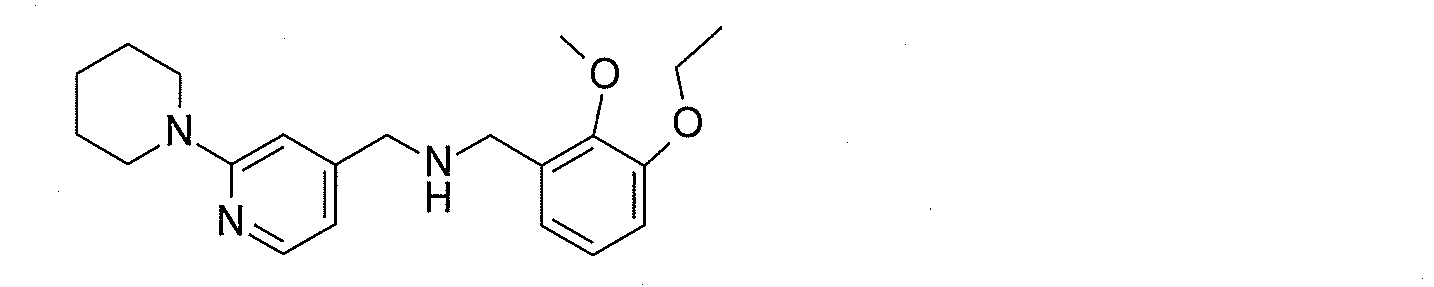
方法B:30%の収率
1H NMR(300MHz,CDCl3)δ8.09(d,J=5.3Hz,1H),7.00(t,J=7.8Hz,1H),6.85(dq,J=7.8,1.6Hz,2H),6.67(s,1H),6.54(dd,J=5.1,1.3Hz,1H),4.08(q,J=7.0Hz,2H),3.85(s,3H),3.79(s,2H),3.68(s,2H),3.52(d,J=4.7Hz,4H),1.77(s,1H),1.64(d,J=6.5Hz,6H),1.46(t,J=7.0Hz,3H).
Example 23: Preparation of N-[(3-ethoxy-2-methoxy-phenyl)methyl]-1-[2-(1-piperidyl)-4-pyridyl]methanamine
Method B: 30% yield
1H NMR (300MHz, CDCl3) δ8.09 (d, J=5.3Hz, 1H), 7.00 (t, J=7.8Hz, 1H), 6.85 (dq, J=7.8, 1.6Hz, 2H), 6.67 (s, 1H), 6.54 (dd, J=5.1, 1.3Hz, 1H), 4.08 (q, J=7.0Hz, 2H), 3.85 (s, 3H), 3.79 (s, 2H), 3.68 (s, 2H), 3.52 (d, J = 4.7Hz, 4H), 1.77 (s, 1H) , 1.64 (d, J=6.5Hz, 6H), 1.46 (t, J=7.0Hz, 3H).
実施例24:N-[(2,3-ジエトキシフェニル)メチル]-1-[2-(1-ピペリジル)-4-ピリジル]メタンアミンの調製

方法B:30%の収率
1H NMR(400MHz,DMSO)δ:7.99(d,J=5.1Hz,1H),7.01-6.94(m,2H),6.89(dd,J=6.8,2.9Hz,1H),6.76(s,1H),6.57(dd,J=5.1,1.1Hz,1H),4.01(q,J=7.0Hz,2H),3.92(q,J=7.0Hz,2H),3.65(s,2H),3.60(s,2H),3.48(t,J=5.4Hz,4H),1.61-1.49(m,6H),1.33(t,J=7.0Hz,3H),1.20(t,J=7.0Hz,3H).
Example 24: Preparation of N-[(2,3-diethoxyphenyl)methyl]-1-[2-(1-piperidyl)-4-pyridyl]methanamine
Method B: 30% yield 1H NMR (400MHz, DMSO) δ: 7.99 (d, J = 5.1Hz, 1H), 7.01-6.94 (m, 2H), 6.89 (dd , J=6.8, 2.9Hz, 1H), 6.76 (s, 1H), 6.57 (dd, J=5.1, 1.1Hz, 1H), 4.01 (q, J= 7.0Hz, 2H), 3.92 (q, J = 7.0Hz, 2H), 3.65 (s, 2H), 3.60 (s, 2H), 3.48 (t, J = 5. 4Hz, 4H), 1.61-1.49 (m, 6H), 1.33 (t, J=7.0Hz, 3H), 1.20 (t, J=7.0Hz, 3H).
実施例25:N-(2,3-ジヒドロ-1,4-ベンゾジオキシン-5-イルメチル)-1-[2-(1-ピペリジル)-4-ピリジル]メタンアミンの調製

方法B:29%の収率
1H NMR(300MHz,CDCl3)δ8.10(d,J=5.1Hz,1H),6.80(s,3H),6.68(s,1H),6.54(dd,J=5.1,1.3Hz,1H),4.34-4.19(m,4H),3.77(s,2H),3.70(s,2H),3.53(t,J=4.6Hz,4H),1.81(s,1H),1.70-1.56(m,6H).
Example 25: Preparation of N-(2,3-dihydro-1,4-benzodioxin-5-ylmethyl)-1-[2-(1-piperidyl)-4-pyridyl]methanamine
Method B: 29% yield
1H NMR (300MHz, CDCl3) δ8.10 (d, J = 5.1Hz, 1H), 6.80 (s, 3H), 6.68 (s, 1H), 6.54 (dd, J = 5 .1, 1.3Hz, 1H), 4.34-4.19 (m, 4H), 3.77 (s, 2H), 3.70 (s, 2H), 3.53 (t, J=4 .6Hz, 4H), 1.81 (s, 1H), 1.70-1.56 (m, 6H).
実施例26:1-(4-メトキシフェニル)-N-[[2-(1-ピペリジル)-4-ピリジル]メチル]メタンアミンの調製

方法B:24%の収率
1H NMR(300MHz,クロロホルム-d)δ8.11(d,J=5.1Hz,1H),7.24(d,J=2.1Hz,2H),6.91-6.84(m,2H),6.64(s,1H),6.54(dd,J=5.1,1.3Hz,1H),3.80(s,3H),3.73(s,2H),3.70(s,2H),3.54(d,J=4.9Hz,4H),1.64(s,6H),1.58(s,1H).
Example 26: Preparation of 1-(4-methoxyphenyl)-N-[[2-(1-piperidyl)-4-pyridyl]methyl]methanamine
Method B: 24% yield
1 H NMR (300 MHz, chloroform-d) δ8.11 (d, J = 5.1 Hz, 1H), 7.24 (d, J = 2.1 Hz, 2H), 6.91-6.84 (m, 2H), 6.64 (s, 1H), 6.54 (dd, J=5.1, 1.3Hz, 1H), 3.80 (s, 3H), 3.73 (s, 2H), 3 .70 (s, 2H), 3.54 (d, J=4.9Hz, 4H), 1.64 (s, 6H), 1.58 (s, 1H).
実施例27:N-(1,3-ベンゾジオキソール-4-イルメチル)-1-(4-フェニルフェニル)メタンアミンの調製
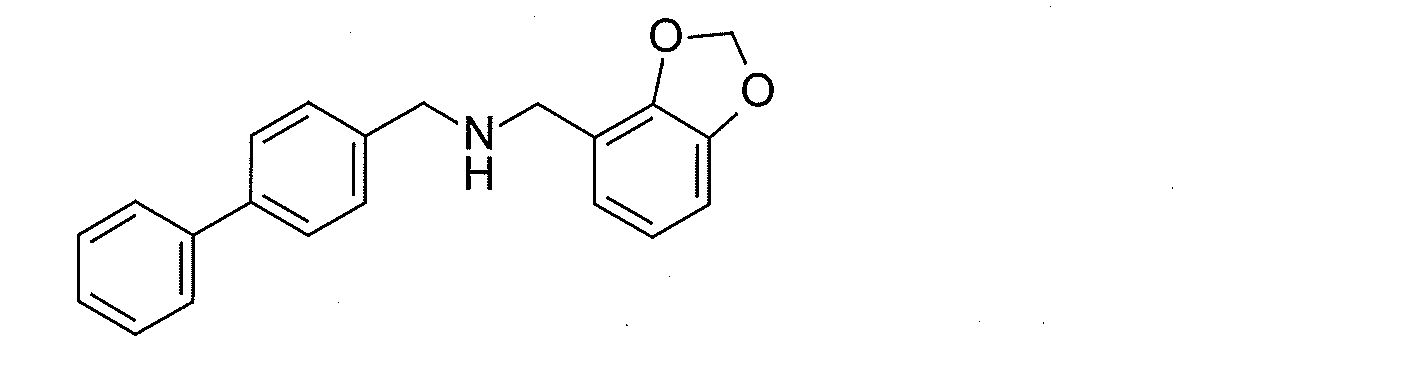
類似の方法A:32%の収率
1H NMR(300MHz,CDCl3)δ7.48(dd,J=9.3,7.3Hz,4H),7.39-7.29(m,4H),7.24(t,J=7.3Hz,1H),6.75-6.62(m,3H),5.87(s,2H),3.75(d,J=3.5Hz,4H),1.64(s,1H).
Example 27: Preparation of N-(1,3-benzodioxol-4-ylmethyl)-1-(4-phenylphenyl)methanamine
Similar method A: 32% yield
1H NMR (300MHz, CDCl3) δ7.48 (dd, J=9.3, 7.3Hz, 4H), 7.39-7.29 (m, 4H), 7.24 (t, J=7. 3Hz, 1H), 6.75-6.62 (m, 3H), 5.87 (s, 2H), 3.75 (d, J=3.5Hz, 4H), 1.64 (s, 1H) ..
実施例28:N-(1,3-ベンゾジオキソール-4-イルメチル)-1-(2-メチルスルファニル-4-ピリジル)メタンアミンの調製

方法A:58%の収率
1H NMR(400MHz,クロロホルム-d)δ8.39(dd,J=5.1,0.8Hz,1H),7.23(dd,J=1.5,0.8Hz,1H),6.99(dd,J=5.2,1.4Hz,1H),6.88-6.74(m,3H),5.99(s,2H),3.81(s,2H),3.78(s,2H),2.59(s,3H).
Example 28: Preparation of N-(1,3-benzodioxol-4-ylmethyl)-1-(2-methylsulfanyl-4-pyridyl)methanamine
Method A: 58% yield
1H NMR (400MHz, chloroform-d) δ8.39 (dd, J=5.1, 0.8Hz, 1H), 7.23 (dd, J=1.5, 0.8Hz, 1H), 6. 99 (dd, J=5.2, 1.4Hz, 1H), 6.88-6.74 (m, 3H), 5.99 (s, 2H), 3.81 (s, 2H), 3. 78 (s, 2H), 2.59 (s, 3H).
実施例29:N-(1,3-ベンゾジオキソール-4-イルメチル)-1-(2-エトキシ-4-ピリジル)メタンアミンの調製

方法A:11%の収率
1HNMR(300MHz,DMSO)δ:8.04(d,J=5.2Hz,1H),6.95-6.86(m,2H),6.84-6.78(m,2H),6.75(s,1H),5.97(s,2H),4.27(q,J=7.1Hz,2H),3.66(s,2H),3.62(s,2H),1.30(t,J=7.0Hz,3H).
Example 29: Preparation of N-(1,3-benzodioxol-4-ylmethyl)-1-(2-ethoxy-4-pyridyl)methanamine
Method A: 11% yield
1 HNMR (300MHz, DMSO) δ: 8.04 (d, J = 5.2Hz, 1H), 6.95-6.86 (m, 2H), 6.84-6.78 (m, 2H), 6.75 (s, 1H), 5.97 (s, 2H), 4.27 (q, J=7.1Hz, 2H), 3.66 (s, 2H), 3.62 (s, 2H) , 1.30 (t, J=7.0Hz, 3H).
実施例30:1-(1,3-ベンゾジオキソール-4-イル)-N-(1H-インドール-2-イルメチル)メタンアミンの調製

類似の方法A:13%の収率
1H NMR(300MHz,DMSO-d6)δ10.84(s,1H),7.57(d,J=7.7Hz,1H),7.35-7.30(m,1H),7.22(d,J=2.4Hz,1H),7.06(ddd,J=8.1,6.9,1.3Hz,1H),6.99-6.91(m,2H),6.84-6.76(m,2H),5.97(s,2H),3.84(s,2H),3.70(s,2H).
Example 30: Preparation of 1-(1,3-benzodioxol-4-yl)-N-(1H-indol-2-ylmethyl)methanamine
Similar method A: 13% yield
1H NMR (300MHz, DMSO-d 6 ) δ10.84 (s, 1H), 7.57 (d, J=7.7Hz, 1H), 7.35-7.30 (m, 1H), 7. 22 (d, J=2.4Hz, 1H), 7.06 (ddd, J=8.1, 6.9, 1.3Hz, 1H), 6.99-6.91 (m, 2H), 6 .84-6.76 (m, 2H), 5.97 (s, 2H), 3.84 (s, 2H), 3.70 (s, 2H).
実施例31:1-(1,3-ベンゾジオキソール-4-イル)-N-[(5-フェニル-3-フリル)メチル]メタンアミンの調製

類似の方法B:12%の収率
1H NMR(300MHz,クロロホルム-d)δ7.75-7.62(m,2H),7.48-7.35(m,3H),7.28-7.23(m,1H),6.90-6.75(m,3H),6.70(d,J=0.8Hz,1H),5.99(s,2H),3.86(s,2H),3.71(d,J=0.9Hz,2H).
Example 31: Preparation of 1-(1,3-benzodioxol-4-yl)-N-[(5-phenyl-3-furyl)methyl]methanamine
Similar method B: 12% yield
1H NMR (300MHz, chloroform-d) δ7.75-7.62 (m, 2H), 7.48-7.35 (m, 3H), 7.28-7.23 (m, 1H), 6 .90-6.75 (m, 3H), 6.70 (d, J=0.8Hz, 1H), 5.99 (s, 2H), 3.86 (s, 2H), 3.71 (d , J=0.9Hz, 2H).
実施例32:1-(1,3-ベンゾジオキソール-4-イル)-N-(3-キノリルメチル)メタンアミンの調製

類似の方法A:26%の収率
1H NMR(300MHz,クロロホルム-d)δ8.83(d,J=2.2Hz,1H),8.03(d,J=7.9Hz,2H),7.73(dd,J=8.1,1.5Hz,1H),7.62(ddd,J=8.4,6.9,1.5Hz,1H),7.47(ddd,J=8.1,6.9,1.2Hz,1H),6.79-6.61(m,3H),5.89(s,2H),3.93(s,2H),3.79(s,2H),1.75(s,1H).
Example 32: Preparation of 1-(1,3-benzodioxol-4-yl)-N-(3-quinolylmethyl)methanamine
Similar method A: 26% yield
1 H NMR (300 MHz, chloroform-d) δ 8.83 (d, J = 2.2 Hz, 1H), 8.03 (d, J = 7.9 Hz, 2H), 7.73 (dd, J = 8. 1, 1.5Hz, 1H), 7.62 (ddd, J=8.4, 6.9, 1.5Hz, 1H), 7.47 (ddd, J=8.1, 6.9, 1. 2Hz, 1H), 6.79-6.61 (m, 3H), 5.89 (s, 2H), 3.93 (s, 2H), 3.79 (s, 2H), 1.75 (s , 1H).
実施例33:1-(1,3-ベンゾジオキソール-4-イル)-N-(ベンゾフラン-2-イルメチル)メタンアミンの調製

類似の方法A:22%の収率
1H NMR(300MHz,CDCl3)δ7.65-7.55(m,2H),7.51-7.45(m,1H),7.34-7.21(m,2H),6.85-6.73(m,3H),5.96(s,2H),3.93(d,J=1.1Hz,2H),3.87(s,2H),1.69(s,1H).
Example 33: Preparation of 1-(1,3-benzodioxol-4-yl)-N-(benzofuran-2-ylmethyl)methanamine
Similar method A: 22% yield
1 H NMR (300 MHz, CDCl 3 ) δ7.65-7.55 (m, 2H), 7.51-7.45 (m, 1H), 7.34-7.21 (m, 2H), 6. 85-6.73 (m, 3H), 5.96 (s, 2H), 3.93 (d, J=1.1Hz, 2H), 3.87 (s, 2H), 1.69 (s, 1H).
実施例34:N-(1,3-ベンゾジオキソール-4-イル)-2-(1-ピペリジル)ピリジン-4-アミンの調製

方法C:17%の収率
1H NMR(300MHz,DMSO-d6)δ8.27(s,1H),7.75(d,J=5.6Hz,1H),6.86-6.78(m,1H),6.70(ddd,J=11.2,8.0,1.3Hz,2H),6.11(dd,J=5.7,1.8Hz,1H),6.04(d,J=1.9Hz,1H),6.00(s,2H),3.38(t,J=5.2Hz,4H),1.59-1.45(m,6H).
Example 34: Preparation of N-(1,3-benzodioxol-4-yl)-2-(1-piperidyl)pyridin-4-amine
Method C: 17% yield
1 H NMR (300 MHz, DMSO-d 6 ) δ8.27 (s, 1H), 7.75 (d, J=5.6Hz, 1H), 6.86-6.78 (m, 1H), 6. 70 (ddd, J=11.2, 8.0, 1.3Hz, 2H), 6.11 (dd, J=5.7, 1.8Hz, 1H), 6.04 (d, J=1. 9Hz, 1H), 6.00 (s, 2H), 3.38 (t, J=5.2Hz, 4H), 1.59-1.45 (m, 6H).
実施例35:N-[2-(1,3-ベンゾジオキソール-4-イル)エチル]-2-[2-(1-ピペリジル)-4-ピリジル]エタンアミンの調製

類似の方法E:40%の収率;次に類似の方法F:23%の収率
1H NMR(300MHz,クロロホルム-d)δ8.07(d,J=5.1Hz,1H),6.83-6.59(m,3H),6.48(s,1H),6.42(dd,J=5.1,1.3Hz,1H),5.92(s,2H),3.53(d,J=4.8Hz,4H),3.01-2.85(m,4H),2.84-2.57(m,4H),1.66(d,J=3.1Hz,6H).
Example 35: Preparation of N-[2-(1,3-benzodioxol-4-yl)ethyl]-2-[2-(1-piperidyl)-4-pyridyl]ethanamine
Similar method E: 40% yield; then similar method F: 23% yield 1H NMR (300 MHz, chloroform-d) δ 8.07 (d, J = 5.1 Hz, 1H), 6.83 -6.59 (m, 3H), 6.48 (s, 1H), 6.42 (dd, J=5.1, 1.3Hz, 1H), 5.92 (s, 2H), 3.53 (d, J=4.8Hz, 4H), 3.01-2.85 (m, 4H), 2.84-2.57 (m, 4H), 1.66 (d, J=3.1Hz, 6H).
実施例36:N-(1,3-ベンゾジオキソール-4-イルメチル)-N-[[2-(1-ピペリジル)-4-ピリジル]メチル]アニリンの調製
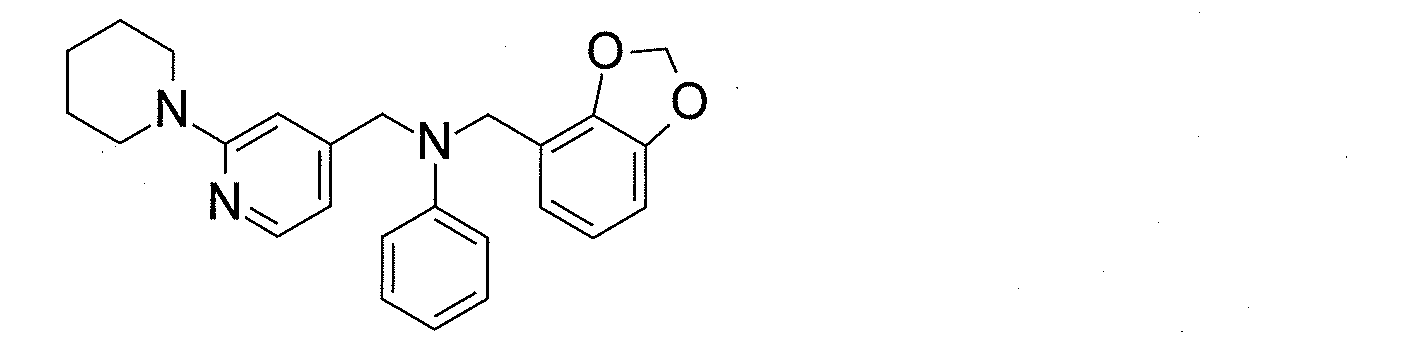
方法A:29%の収率
1H NMR(300MHz,DMSO-d6)δ7.98(d,J=5.1Hz,1H),6.90(dd,J=5.3,3.9Hz,1H),6.84-6.76(m,3H),6.56(dd,J=5.1,1.2Hz,1H),5.97(s,2H),3.60(d,J=4.6Hz,4H),3.48(t,J=5.2Hz,4H),2.59(s,1H),1.56(d,J=18.8Hz,6H).
次に方法Dに従ったベンジル化:44%の収率
1H NMR(300MHz,クロロホルム-d)δ8.09(d,J=5.2Hz,1H),7.18(dd,J=8.7,7.2Hz,2H),6.77-6.69(m,6H),6.55-6.45(m,2H),5.95(s,2H),4.58(s,2H),4.53(s,2H),3.49(d,J=5.6Hz,4H),1.62(d,J=2.9Hz,6H).
Example 36: Preparation of N-(1,3-benzodioxol-4-ylmethyl)-N-[[2-(1-piperidyl)-4-pyridyl]methyl]aniline
Method A: 29% yield
1H NMR (300MHz, DMSO- d6 ) δ7.98 (d, J=5.1Hz, 1H), 6.90 (dd, J=5.3, 3.9Hz, 1H), 6.84-6 .76 (m, 3H), 6.56 (dd, J=5.1, 1.2Hz, 1H), 5.97 (s, 2H), 3.60 (d, J=4.6Hz, 4H) , 3.48 (t, J=5.2Hz, 4H), 2.59 (s, 1H), 1.56 (d, J=18.8Hz, 6H).
Then benzylation according to method D: 44% yield
1H NMR (300MHz, chloroform-d) δ8.09 (d, J=5.2Hz, 1H), 7.18 (dd, J=8.7, 7.2Hz, 2H), 6.77-6. 69 (m, 6H), 6.55-6.45 (m, 2H), 5.95 (s, 2H), 4.58 (s, 2H), 4.53 (s, 2H), 3.49 (d, J=5.6Hz, 4H), 1.62 (d, J=2.9Hz, 6H).
実施例37:N-(1,3-ベンゾジオキソール-4-イルメチル)-1-フェニル-N-[[2-(1-ピペリジル)-4-ピリジル]メチル]メタンアミンの調製
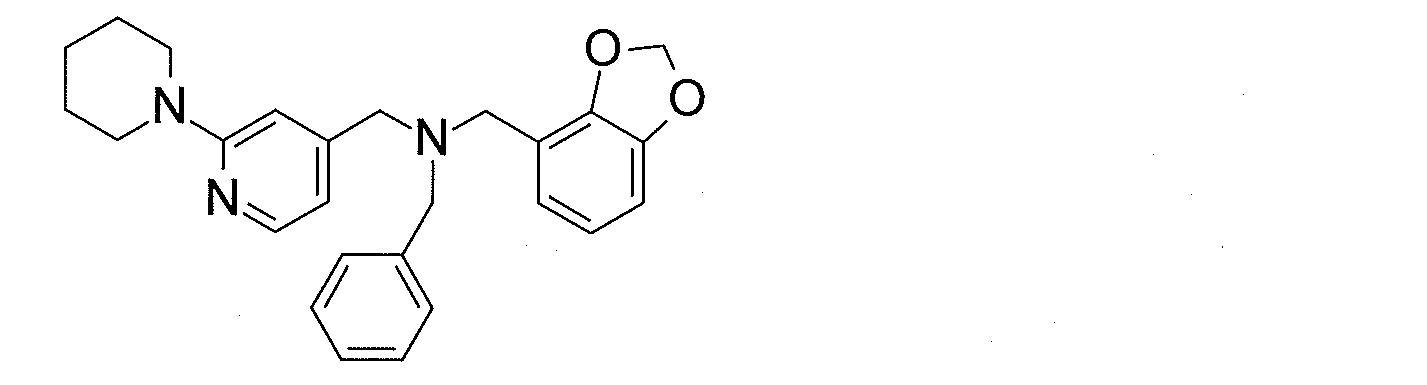
方法D:36%の収率
1H NMR(400MHz,クロロホルム-d)δ8.12(d,J=5.1Hz,1H),7.44-7.39(m,2H),7.37-7.31(m,2H),7.28-7.21(m,1H),6.98(dd,J=7.9,1.2Hz,1H),6.83(t,J=7.8Hz,1H),6.79-6.72(m,2H),6.67(dd,J=5.1,1.2Hz,1H),5.96(s,2H),3.61(s,4H),3.55(d,J=4.8Hz,4H),3.51(s,2H),1.66(d,J=3.3Hz,6H)
Example 37: Preparation of N-(1,3-benzodioxol-4-ylmethyl)-1-phenyl-N-[[2-(1-piperidyl)-4-pyridyl]methyl]methanamine
Method D: 36% yield
1H NMR (400MHz, chloroform-d) δ8.12 (d, J = 5.1Hz, 1H), 7.44-7.39 (m, 2H), 7.37-7.31 (m, 2H) , 7.28-7.21 (m, 1H), 6.98 (dd, J=7.9, 1.2Hz, 1H), 6.83 (t, J=7.8Hz, 1H), 6. 79-6.72 (m, 2H), 6.67 (dd, J=5.1, 1.2Hz, 1H), 5.96 (s, 2H), 3.61 (s, 4H), 3. 55 (d, J=4.8Hz, 4H), 3.51 (s, 2H), 1.66 (d, J=3.3Hz, 6H)
実施例38:2-(1,3-ベンゾジオキソール-4-イル)-N-[[2-(1-ピペリジル)-4-ピリジル]メチル]エタンアミンの調製

類似の方法E:36%の収率,次に類似の方法F:36%の収率
1H NMR(300MHz,クロロホルム-d)δ8.10(dd,J=5.1,0.7Hz,1H),6.86-6.64(m,3H),6.60(s,1H),6.50(dd,J=5.1,1.3Hz,1H),5.93(s,2H),3.74(s,2H),3.53(d,J=5.0Hz,4H),2.92(td,J=6.5,1.5Hz,2H),2.82(td,J=6.5,1.5Hz,2H),1.65(q,J=3.2,2.6Hz,7H).
Example 38: Preparation of 2-(1,3-benzodioxol-4-yl)-N-[[2-(1-piperidyl)-4-pyridyl]methyl]ethanamine
Similar method E: 36% yield, then similar method F: 36% yield
1H NMR (300MHz, chloroform-d) δ8.10 (dd, J=5.1, 0.7Hz, 1H), 6.86-6.64 (m, 3H), 6.60 (s, 1H) , 6.50 (dd, J=5.1, 1.3Hz, 1H), 5.93 (s, 2H), 3.74 (s, 2H), 3.53 (d, J=5.0Hz, 4H), 2.92 (td, J=6.5, 1.5Hz, 2H), 2.82 (td, J=6.5, 1.5Hz, 2H), 1.65 (q, J=3 .2, 2.6Hz, 7H).
実施例39:N-(1,3-ベンゾジオキソール-4-イルメチル)-2-[2-(1-ピペリジル)-4-ピリジル]エタンアミンの調製

方法A:13%の収率
1H NMR(300MHz,クロロホルム-d)δ8.06-7.91(m,1H),6.78-6.59(m,3H),6.45-6.26(m,2H),5.84(s,2H),3.72(s,2H),3.44(d,J=4.8Hz,4H),2.87-2.75(m,2H),2.65(t,J=6.9Hz,2H),1.57(q,J=2.4Hz,6H).
Example 39: Preparation of N-(1,3-benzodioxol-4-ylmethyl)-2-[2-(1-piperidyl)-4-pyridyl]ethanamine
Method A: 13% yield
1H NMR (300MHz, chloroform-d) δ8.06-7.91 (m, 1H), 6.78-6.59 (m, 3H), 6.45-6.26 (m, 2H), 5 .84 (s, 2H), 3.72 (s, 2H), 3.44 (d, J = 4.8Hz, 4H), 2.87-2.75 (m, 2H), 2.65 (t , J=6.9Hz, 2H), 1.57(q, J=2.4Hz, 6H).
実施例40:1-フェニル-N-[[2-(1-ピペリジル)-4-ピリジル]メチル]メタンアミンの調製

類似の方法A:15%の収率
1H NMR(300MHz,CDCl3)δ8.04(d,J=5.1Hz,1H),7.29-7.17(m,5H),6.58(s,1H),6.48(dd,J=5.1,1.3Hz,1H),3.73(s,2H),3.65(s,2H),3.45(d,J=4.8Hz,4H),1.57(d,J=6.0Hz,7H).
Example 40: Preparation of 1-phenyl-N-[[2-(1-piperidyl)-4-pyridyl]methyl]methanamine
Similar method A: 15% yield
1H NMR (300MHz, CDCl3 ) δ8.04 (d, J=5.1Hz, 1H), 7.29-7.17 (m, 5H), 6.58 (s, 1H), 6.48 ( dd, J=5.1, 1.3Hz, 1H), 3.73 (s, 2H), 3.65 (s, 2H), 3.45 (d, J=4.8Hz, 4H), 1. 57 (d, J=6.0Hz, 7H).
実施例41:1-[2-(1-ピペリジル)-4-ピリジル]-N-(2-チエニルメチル)メタンアミンの調製

類似の方法A:28%の収率
1H NMR(300MHz,CDCl3)δ8.04(d,J=5.1Hz,1H),7.20-7.13(m,1H),6.93-6.81(m,2H),6.59(s,1H),6.47(dd,J=5.1,1.3Hz,1H),3.92(d,J=0.9Hz,2H),3.68(s,2H),3.47(t,J=4.6Hz,4H),1.64(s,1H),1.58-1.51(m,6H).
Example 41: Preparation of 1-[2-(1-piperidyl)-4-pyridyl]-N-(2-thienylmethyl)methanamine
Similar method A: 28% yield
1H NMR (300MHz, CDCl3 ) δ8.04 (d, J=5.1Hz, 1H), 7.20-7.13 (m, 1H), 6.93-6.81 (m, 2H), 6.59 (s, 1H), 6.47 (dd, J = 5.1, 1.3Hz, 1H), 3.92 (d, J = 0.9Hz, 2H), 3.68 (s, 2H ), 3.47 (t, J=4.6Hz, 4H), 1.64 (s, 1H), 1.58-1.51 (m, 6H).
実施例42:N-[[2-(1-ピペリジル)-4-ピリジル]メチル]-1-(p-トリル)メタンアミンの調製

類似の方法A:32%の収率
1H NMR(300MHz,クロロホルム-d)δ8.11(d,J=5.1Hz,1H),7.22(d,J=8.0Hz,2H),7.15(d,J=7.8Hz,2H),6.65(s,1H),6.54(dd,J=5.1,1.3Hz,1H),3.76(s,2H),3.71(s,2H),3.53(t,J=4.6Hz,4H),2.34(s,3H),1.62(s,7H).
Example 42: Preparation of N-[[2-(1-piperidyl)-4-pyridyl]methyl]-1-(p-tolyl)methanamine
Similar method A: 32% yield
1 H NMR (300 MHz, chloroform-d) δ8.11 (d, J=5.1 Hz, 1H), 7.22 (d, J=8.0 Hz, 2H), 7.15 (d, J=7. 8Hz, 2H), 6.65 (s, 1H), 6.54 (dd, J=5.1, 1.3Hz, 1H), 3.76 (s, 2H), 3.71 (s, 2H) , 3.53 (t, J=4.6Hz, 4H), 2.34 (s, 3H), 1.62 (s, 7H).
実施例43:1-(m-トリル)-N-[[2-(1-ピペリジル)-4-ピリジル]メチル]メタンアミンの調製

類似の方法A:33%の収率
1H NMR(300MHz,DMSO-d6)δ7.99(d,J=5.1Hz,1H),7.23-7.08(m,3H),7.03(d,J=7.4Hz,1H),6.76(s,1H),6.57(dd,J=5.1,1.2Hz,1H),3.61(s,2H),3.57(s,2H),3.51-3.46(m,4H),2.65(s,1H),2.28(s,3H),1.61-1.48(m,6H).
Example 43: Preparation of 1-(m-tolyl)-N-[[2-(1-piperidyl)-4-pyridyl]methyl]methanamine
Similar method A: 33% yield
1H NMR (300MHz, DMSO- d6 ) δ7.99 (d, J=5.1Hz, 1H), 7.23-7.08 (m, 3H), 7.03 (d, J=7.4Hz , 1H), 6.76 (s, 1H), 6.57 (dd, J=5.1, 1.2Hz, 1H), 3.61 (s, 2H), 3.57 (s, 2H), 3.51-3.46 (m, 4H), 2.65 (s, 1H), 2.28 (s, 3H), 1.61-1.48 (m, 6H).
実施例44:N-(o-トリルメチル)-1-[2-(1-ピペリジル)-4-ピリジル]メタンアミンの調製

方法A:26%の収率
1HNMR(300MHz,CDCl3)δ8.12(d,J=5.1Hz,1H),7.31(tt,J=4.6,2.5Hz,1H),7.22-7.12(m,3H),6.68(s,1H),6.57(dd,J=5.2,1.3Hz,1H),3.77(d,J=2.1Hz,4H),3.53(d,J=4.6Hz,4H),2.34(s,3H),1.64(q,J=2.4,1.9Hz,6H),1.58(s,1H).
Example 44: Preparation of N-(o-tolylmethyl)-1-[2-(1-piperidyl)-4-pyridyl]methanamine
Method A: 26% yield
1 HNMR (300MHz, CDCl3) δ8.12 (d, J = 5.1Hz, 1H), 7.31 (tt, J = 4.6, 2.5Hz, 1H), 7.22-7.12 (m , 3H), 6.68 (s, 1H), 6.57 (dd, J = 5.2, 1.3Hz, 1H), 3.77 (d, J = 2.1Hz, 4H), 3.53 (d, J=4.6Hz, 4H), 2.34 (s, 3H), 1.64 (q, J=2.4, 1.9Hz, 6H), 1.58 (s, 1H).
実施例45:1-(1,3-ベンゾジオキソール-4-イル)-N-[(5-フェニル-3-チエニル)メチル]メタンアミンの調製

方法E:64%の収率,
1H NMR(300MHz,クロロホルム-d)δ7.70(d,J=1.5Hz,1H),7.59-7.44(m,3H),7.40-7.21(m,3H),6.85-6.65(m,3H),6.33(s,1H),5.91(s,2H),4.55(d,J=5.7Hz,2H).
次に方法F:41%の収率
1H NMR(300MHz,クロロホルム-d)δ7.56-7.48(m,2H),7.34-7.25(m,2H),7.23-7.16(m,2H),7.01(q,J=1.0Hz,1H),6.78-6.63(m,3H),5.90(s,2H),4.06-3.29(m,4H).
Example 45: Preparation of 1-(1,3-benzodioxol-4-yl)-N-[(5-phenyl-3-thienyl)methyl]methanamine
Method E: 64% yield,
1H NMR (300MHz, chloroform-d) δ7.70 (d, J = 1.5Hz, 1H), 7.59-7.44 (m, 3H), 7.40-7.21 (m, 3H) , 6.85-6.65 (m, 3H), 6.33 (s, 1H), 5.91 (s, 2H), 4.55 (d, J=5.7Hz, 2H).
Then method F: 41% yield
1 H NMR (300MHz, chloroform-d) δ7.56-7.48 (m, 2H), 7.34-7.25 (m, 2H), 7.23-7.16 (m, 2H), 7 .01 (q, J=1.0Hz, 1H), 6.78-6.63 (m, 3H), 5.90 (s, 2H), 4.06-3.29 (m, 4H).
実施例46:2-メトキシ-4-[[[2-(1-ピペリジル)-4-ピリジル]メチルアミノ]-メチル]フェノールの調製
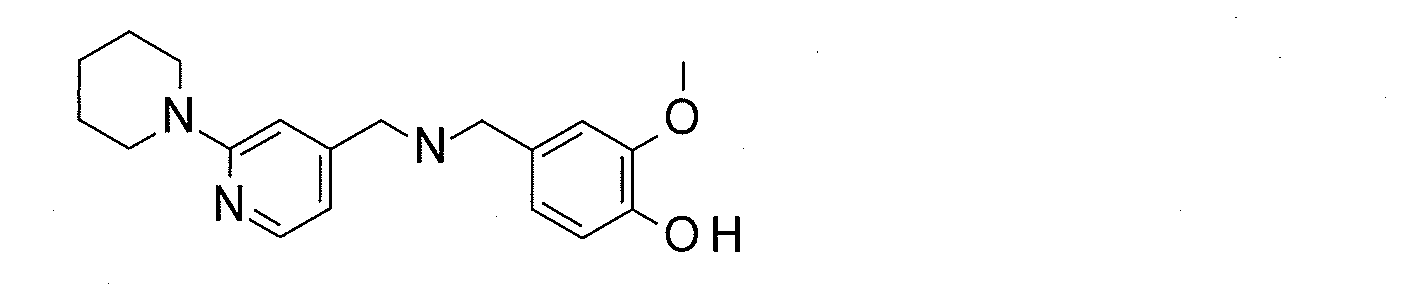
方法B:13%の収率
1H NMR(300MHz,クロロホルム-d)δ8.11(d,J=5.1Hz,1H),6.89-6.84(m,2H),6.79(dd,J=8.0,1.8Hz,1H),6.64(s,1H),6.54(dd,J=5.1,1.3Hz,1H),5.30(s,1H),3.88(s,3H),3.71(d,J=3.1Hz,4H),3.53(d,J=5.0Hz,4H),1.63(d,J=3.3Hz,6H).
Example 46: Preparation of 2-methoxy-4-[[[2-(1-piperidyl)-4-pyridyl]methylamino]-methyl]phenol
Method B: 13% yield
1H NMR (300MHz, chloroform-d) δ8.11 (d, J = 5.1Hz, 1H), 6.89-6.84 (m, 2H), 6.79 (dd, J = 8.0, 1.8Hz, 1H), 6.64 (s, 1H), 6.54 (dd, J=5.1, 1.3Hz, 1H), 5.30 (s, 1H), 3.88 (s, 3H), 3.71 (d, J=3.1Hz, 4H), 3.53 (d, J=5.0Hz, 4H), 1.63 (d, J=3.3Hz, 6H).
実施例47:1-(1,3-ベンゾジオキソール-4-イル)-N-(ベンゾチオフェン-2-イルメチル)メタンアミンの調製

類似の方法A:29%の収率
1H NMR(300MHz,CDCl3)δ7.85-7.76(m,1H),7.70(dd,J=7.0,1.9Hz,1H),7.32(qd,J=7.0,1.6Hz,2H),7.16(s,1H),6.85-6.73(m,3H),5.97(s,2H),4.08(d,J=1.1Hz,2H),3.87(s,2H),1.82(s,1H).
Example 47: Preparation of 1-(1,3-benzodioxol-4-yl)-N-(benzothiophen-2-ylmethyl)methanamine
Similar method A: 29% yield
1H NMR (300MHz, CDCl3) δ7.85-7.76 (m, 1H), 7.70 (dd, J=7.0, 1.9Hz, 1H), 7.32 (qd, J=7. 0, 1.6Hz, 2H), 7.16 (s, 1H), 6.85-6.73 (m, 3H), 5.97 (s, 2H), 4.08 (d, J=1. 1Hz, 2H), 3.87 (s, 2H), 1.82 (s, 1H).
実施例48:1-(1,3-ベンゾジオキソール-4-イル)-N-[[3-(1-ピペリジル)-4-ピリジル]メチル]メタンアミンの調製
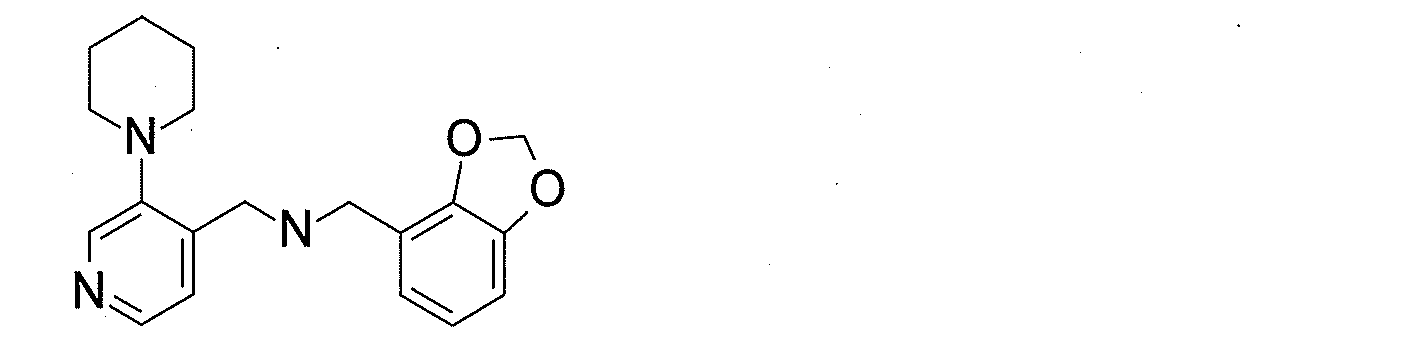
方法A:10%の収率
1H NMR(400MHz,クロロホルム-d)δ8.34(s,1H),8.30(d,J=4.8Hz,1H),7.34(d,J=4.8Hz,1H),6.86-6.74(m,3H),5.98(s,2H),3.86(s,2H),3.79(s,2H),2.96-2.86(m,4H),1.68(p,J=5.5Hz,4H),1.59(d,J=5.5Hz,2H).
Example 48: Preparation of 1-(1,3-benzodioxol-4-yl)-N-[[3-(1-piperidyl)-4-pyridyl]methyl]methanamine
Method A: 10% yield
1H NMR (400MHz, chloroform-d) δ8.34 (s, 1H), 8.30 (d, J = 4.8Hz, 1H), 7.34 (d, J = 4.8Hz, 1H), 6 .86-6.74 (m, 3H), 5.98 (s, 2H), 3.86 (s, 2H), 3.79 (s, 2H), 2.96-2.86 (m, 4H ), 1.68 (p, J=5.5Hz, 4H), 1.59 (d, J=5.5Hz, 2H).
実施例49:1-(1,3-ベンゾジオキソール-5-イル)-N-[[2-(1-ピペリジル)-4-ピリジル]メチル]メタンアミンの調製

方法A:19%の収率
1H NMR(300MHz,DMSO-d6)δ7.98(d,J=5.1Hz,1H),6.90(dd,J=5.3,3.9Hz,1H),6.84-6.76(m,3H),6.56(dd,J=5.1,1.2Hz,1H),5.97(s,2H),3.60(d,J=4.6Hz,4H),3.48(t,J=5.2Hz,4H),2.59(s,1H),1.56(d,J=18.8Hz,6H).
Example 49: Preparation of 1-(1,3-benzodioxol-5-yl)-N-[[2-(1-piperidyl)-4-pyridyl]methyl]methanamine
Method A: 19% yield
1H NMR (300MHz, DMSO-d6) δ7.98 (d, J=5.1Hz, 1H), 6.90 (dd, J=5.3, 3.9Hz, 1H), 6.84-6. 76 (m, 3H), 6.56 (dd, J = 5.1, 1.2Hz, 1H), 5.97 (s, 2H), 3.60 (d, J = 4.6Hz, 4H), 3.48 (t, J=5.2Hz, 4H), 2.59 (s, 1H), 1.56 (d, J=18.8Hz, 6H).
実施例50:1-(3,4-ジメトキシフェニル)-N-[[2-(1-ピペリジル)-4-ピリジル]メチル]メタンアミンの調製

方法B:53%の収率
1H NMR(300MHz,DMSO-d6)δ7.98(d,J=5.1Hz,1H),6.94(d,J=1.8Hz,1H),6.89-6.74(m,3H),6.56(dd,J=5.0,1.2Hz,1H),3.72(d,J=4.0Hz,6H),3.57(d,J=6.6Hz,4H),3.48(t,J=5.2Hz,4H),2.64(s,1H),1.63-1.46(m,6H).
Example 50: Preparation of 1-(3,4-dimethoxyphenyl)-N-[[2-(1-piperidyl)-4-pyridyl]methyl]methanamine
Method B: 53% yield
1H NMR (300MHz, DMSO-d6) δ7.98 (d, J = 5.1Hz, 1H), 6.94 (d, J = 1.8Hz, 1H), 6.89-6.74 (m, 3H), 6.56 (dd, J = 5.0, 1.2Hz, 1H), 3.72 (d, J = 4.0Hz, 6H), 3.57 (d, J = 6.6Hz, 4H) ), 3.48 (t, J=5.2Hz, 4H), 2.64 (s, 1H), 1.63-1.46 (m, 6H).
実施例51:1-(3-メトキシフェニル)-N-[[2-(1-ピペリジル)-4-ピリジル]メチル]メタンアミンの調製

方法A:20%の収率
1H NMR(300MHz,DMSO-d6)δ7.99(d,J=5.1Hz,1H),7.21(t,J=7.8Hz,1H),6.94-6.87(m,2H),6.81-6.75(m,2H),6.57(dd,J=5.1,1.2Hz,1H),3.73(s,3H),3.63(s,2H),3.57(s,2H),3.48(t,J=5.1Hz,4H),2.74-2.69(m,1H),1.54(td,J=10.7,9.1,5.3Hz,6H).
Example 51: Preparation of 1-(3-methoxyphenyl)-N-[[2-(1-piperidyl)-4-pyridyl]methyl]methanamine
Method A: 20% yield
1H NMR (300MHz, DMSO-d6) δ7.99 (d, J = 5.1Hz, 1H), 7.21 (t, J = 7.8Hz, 1H), 6.94-6.87 (m, 2H), 6.81-6.75 (m, 2H), 6.57 (dd, J=5.1, 1.2Hz, 1H), 3.73 (s, 3H), 3.63 (s, 2H), 3.57 (s, 2H), 3.48 (t, J=5.1Hz, 4H), 2.74-2.69 (m, 1H), 1.54 (td, J=10. 7, 9.1, 5.3Hz, 6H).
実施例52:N-[(2-メトキシフェニル)メチル]-1-[2-(1-ピペリジル)-4-ピリジル]メタンアミンの調製

方法A:15%の収率
1H NMR(300MHz,DMSO-d6)δ7.99(d,J=5.1Hz,1H),7.34(dd,J=7.4,1.8Hz,1H),7.22(ddd,J=9.1,7.4,1.8Hz,1H),6.92(qd,J=7.8,1.1Hz,2H),6.77(s,1H),6.57(dd,J=5.1,1.2Hz,1H),3.76(s,3H),3.62(d,J=3.7Hz,4H),3.48(t,J=5.2Hz,4H),1.61-1.48(m,6H).
Example 52: Preparation of N-[(2-methoxyphenyl)methyl]-1-[2-(1-piperidyl)-4-pyridyl]methanamine
Method A: 15% yield
1H NMR (300MHz, DMSO-d6) δ7.99 (d, J = 5.1Hz, 1H), 7.34 (dd, J = 7.4, 1.8Hz, 1H), 7.22 (ddd, J = 9.1, 7.4, 1.8Hz, 1H), 6.92 (qd, J = 7.8, 1.1Hz, 2H), 6.77 (s, 1H), 6.57 (dd , J=5.1, 1.2Hz, 1H), 3.76 (s, 3H), 3.62 (d, J=3.7Hz, 4H), 3.48 (t, J=5.2Hz, 4H), 1.61-1.48 (m, 6H).
実施例53:N-[(2-メトキシフェニル)メチル]-1-[2-(1-ピペリジル)-4-ピリジル]メタンアミンの調製
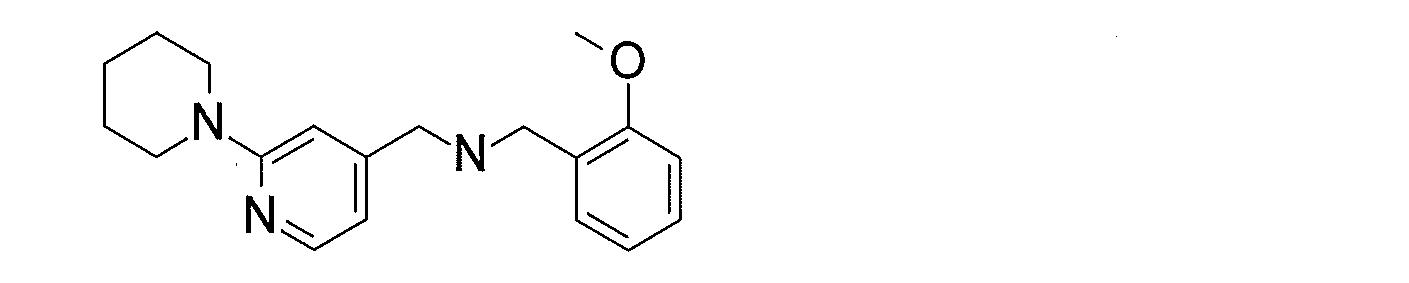
方法A:15%の収率
1H NMR(300MHz,DMSO-d6)δ8.48(ddd,J=4.9,1.9,0.9Hz,1H),7.99(d,J=5.1Hz,1H),7.75(td,J=7.7,1.9Hz,1H),7.46(d,J=7.8Hz,1H),7.24(ddd,J=7.6,4.8,1.2Hz,1H),6.77(s,1H),6.57(dd,J=5.1,1.2Hz,1H),3.76(s,2H),3.63(s,2H),3.48(t,J=5.3Hz,4H),2.84(s,1H),1.66-1.45(m,6H).
Example 53: Preparation of N-[(2-methoxyphenyl)methyl]-1-[2-(1-piperidyl)-4-pyridyl]methanamine
Method A: 15% yield
1H NMR (300MHz, DMSO-d6) δ8.48 (ddd, J=4.9, 1.9, 0.9Hz, 1H), 7.99 (d, J=5.1Hz, 1H), 7. 75 (td, J=7.7, 1.9Hz, 1H), 7.46 (d, J=7.8Hz, 1H), 7.24 (ddd, J=7.6, 4.8, 1. 2Hz, 1H), 6.77 (s, 1H), 6.57 (dd, J=5.1, 1.2Hz, 1H), 3.76 (s, 2H), 3.63 (s, 2H) , 3.48 (t, J=5.3Hz, 4H), 2.84 (s, 1H), 1.66-1.45 (m, 6H).
実施例54:1-(1,3-ベンゾジオキソール-4-イル)-N-(2-チエニルメチル)メタンアミンの調製

類似の方法B:35%の収率
1H NMR(300MHz,DMSO)δ:7.40-7.34(m,1H),6.95(d,J=3.4Hz,2H),6.90(dd,J=5.6,3.6Hz,1H),6.84-6.77(m,2H),5.97(s,2H),3.86(s,2H),3.66(s,2H),2.78-2.55(br,1H).
Example 54: Preparation of 1-(1,3-benzodioxol-4-yl)-N-(2-thienylmethyl)methanamine
Similar method B: 35% yield
1H NMR (300MHz, DMSO) δ: 7.40-7.34 (m, 1H), 6.95 (d, J = 3.4Hz, 2H), 6.90 (dd, J = 5.6, 3.6Hz, 1H), 6.84-6.77 (m, 2H), 5.97 (s, 2H), 3.86 (s, 2H), 3.66 (s, 2H), 2.78 -2.55 (br, 1H).
実施例55:N-(1,3-ベンゾジオキソール-4-イルメチル)-1-(4-メトキシフェニル)-メタンアミンの調製

方法A:35%の収率
1H NMR(300MHz,DMSO-d6)δ3.79(s,3H),3.67(s,4H),7.30(d,J=8.6Hz,2H),6.98-6.85(m,5H),6.03(s,2H).
Example 55: Preparation of N-(1,3-benzodioxol-4-ylmethyl)-1-(4-methoxyphenyl)-methanamine
Method A: 35% yield
1H NMR (300MHz, DMSO-d6) δ3.79 (s, 3H), 3.67 (s, 4H), 7.30 (d, J=8.6Hz, 2H), 6.98-6.85 (m, 5H), 6.03 (s, 2H).
実施例56:1-(1,3-ベンゾジオキソール-4-イル)-N-(1,3-ベンゾジオキソール-4-イルメチル)メタンアミンの調製

方法A:20%の収率
1H NMR(300MHz,DMSO-d6)δ6.98-6.85(m,2H),6.82-6.74(m,4H),5.97(s,4H),3.65(s,4H).
Example 56: Preparation of 1-(1,3-benzodioxol-4-yl)-N-(1,3-benzodioxol-4-ylmethyl)methanamine
Method A: 20% yield
1H NMR (300MHz, DMSO-d6) δ6.98-6.85 (m, 2H), 6.82-6.74 (m, 4H), 5.97 (s, 4H), 3.65 (s , 4H).
実施例57:N-(1,3-ベンゾジオキソール-4-イルメチル)-1-フェニル-メタンアミンの調製

方法A:47%の収率
1H NMR(300MHz,DMSO-d6)δ7.40-7.10(m,5H),6.99-6.69(m,3H),5.97(s,2H),3.66(d,J=15.1Hz,4H).
Example 57: Preparation of N-(1,3-benzodioxol-4-ylmethyl)-1-phenyl-methanamine
Method A: 47% yield
1H NMR (300MHz, DMSO-d6) δ 7.40-7.10 (m, 5H), 6.99-6.69 (m, 3H), 5.97 (s, 2H), 3.66 (d , J=15.1Hz, 4H).
実施例58:N-[(2-シクロヘキシル-4-ピリジル)メチル]-1-(4-メトキシフェニル)メタンアミンの調製

方法A:22%の収率
1H NMR(300MHz,DMSO-d6)δ8.40-8.31(m,1H),7.30-7.10(m,4H),6.93-6.82(m,2H),3.73(s,3H),3.62(d,J=12.3Hz,4H),2.62(tt,J=11.7,3.3Hz,1H),1.93-1.64(m,5H),1.58-1.04(m,5H).
Example 58: Preparation of N-[(2-cyclohexyl-4-pyridyl)methyl]-1-(4-methoxyphenyl)methanamine
Method A: 22% yield
1H NMR (300MHz, DMSO-d6) δ8.40-8.31 (m, 1H), 7.30-7.10 (m, 4H), 6.93-6.82 (m, 2H), 3 .73 (s, 3H), 3.62 (d, J = 12.3Hz, 4H), 2.62 (tt, J = 11.7, 3.3Hz, 1H), 1.93-1.64 ( m, 5H), 1.58-1.04 (m, 5H).
実施例59:1-(1,3-ベンゾジオキソール-4-イル)-N-[[2-(1-ピペリジル)-4-ピリジル]-メチル]エタンアミンの調製

方法B:11%の収率
1H NMR(300MHz,DMSO-d6)δ7.96(d,J=5.1Hz,1H),6.94(dd,J=7.6,1.7Hz,1H),6.90-6.75(m,2H),6.69(s,1H),6.52(dd,J=5.1,1.2Hz,1H),5.96(dd,J=9.6,1.0Hz,2H),3.82(q,J=6.7Hz,1H),3.58-3.37(m,6H),2.55(d,J=8.6Hz,1H),1.55(d,J=19.5Hz,6H),1.27(d,J=6.6Hz,3H).
Example 59: Preparation of 1-(1,3-benzodioxol-4-yl)-N-[[2-(1-piperidyl)-4-pyridyl]-methyl]ethanamine
Method B: 11% yield
1H NMR (300MHz, DMSO-d6) δ7.96 (d, J=5.1Hz, 1H), 6.94 (dd, J=7.6, 1.7Hz, 1H), 6.90-6. 75 (m, 2H), 6.69 (s, 1H), 6.52 (dd, J=5.1, 1.2Hz, 1H), 5.96 (dd, J=9.6, 1.0Hz , 2H), 3.82 (q, J = 6.7Hz, 1H), 3.58-3.37 (m, 6H), 2.55 (d, J = 8.6Hz, 1H), 1.55 (d, J=19.5Hz, 6H), 1.27 (d, J=6.6Hz, 3H).
実施例60:1-(4-メトキシフェニル)-N-[(2-チオモルフォリノ-4-ピリジル)メチル]メタンアミンの調製
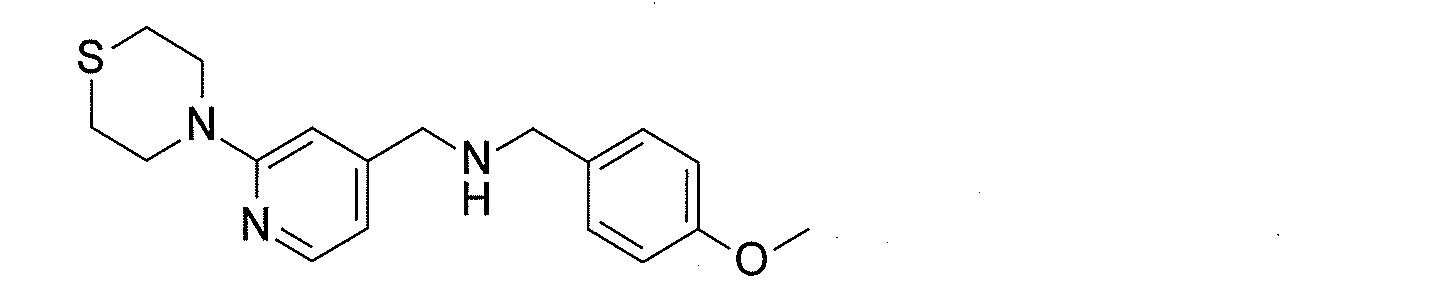
方法B:47%の収率
1H NMR(300MHz,DMSO)δ:8.01(d,J=5.1Hz,1H),7.28-7.19(m,2H),6.91-6.83(m,2H),6.78(s,1H),6.60(d,J=5.2Hz,1H),3.93-3.83(m,4H),3.73(s,3H),3.58(d,J=5.9Hz,4H),2.61-2.55(m,4H).
Example 60: Preparation of 1-(4-methoxyphenyl)-N-[(2-thiomorpholino-4-pyridyl)methyl]methanamine
Method B: 47% yield
1H NMR (300MHz, DMSO) δ: 8.01 (d, J = 5.1Hz, 1H), 7.28-7.19 (m, 2H), 6.91-6.83 (m, 2H) , 6.78 (s, 1H), 6.60 (d, J=5.2Hz, 1H), 3.93-3.83 (m, 4H), 3.73 (s, 3H), 3.58 (d, J=5.9Hz, 4H), 2.61-2.55 (m, 4H).
実施例61:N-[1-(2-メトキシフェニル)エチル]-4,5-ジメチル-チオフェン-2-カルボキサミドの調製
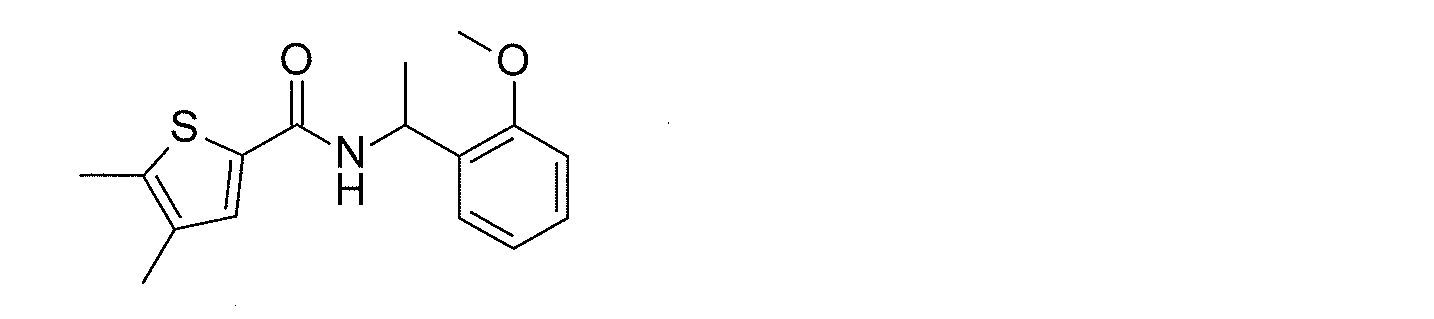
方法E:70%の収率
1H NMR(300MHz,DMSO-d6)δ8.52(d,J=8.3Hz,1H),7.65(s,1H),7.31(dd,J=7.5,1.7Hz,1H),7.20(ddd,J=9.0,7.4,1.7Hz,1H),7.01-6.80(m,2H),5.36(p,J=7.1Hz,1H),3.82(s,3H),2.31(s,3H),2.12(s,3H),1.35(d,J=6.9Hz,3H).
Example 61: Preparation of N-[1-(2-methoxyphenyl)ethyl]-4,5-dimethyl-thiophene-2-carboxamide
Method E: 70% yield
1H NMR (300MHz, DMSO-d6) δ8.52 (d, J=8.3Hz, 1H), 7.65 (s, 1H), 7.31 (dd, J=7.5, 1.7Hz, 1H), 7.20 (ddd, J = 9.0, 7.4, 1.7Hz, 1H), 7.01-6.80 (m, 2H), 5.36 (p, J = 7.1Hz , 1H), 3.82 (s, 3H), 2.31 (s, 3H), 2.12 (s, 3H), 1.35 (d, J=6.9Hz, 3H).
実施例62:N-[1-(2-メトキシフェニル)エチル]-4,5-ジメチル-チオフェン-2-カルボキサミドの調製

方法B:19%の収率
1H NMR(300MHz,DMSO)δ:9.16(s,1H),7.28-7.21(m,2H),7.09-7.00(m,2H),6.91-6.84(m,2H),6.71-6.62(m,2H),3.73(s,3H),3.61(q,J=6.5Hz,1H),3.42-3.33(m,2H),2.31-2.11(BR,1H),1.21(d,J=6.6Hz,3H).
Example 62: Preparation of N-[1-(2-methoxyphenyl)ethyl]-4,5-dimethyl-thiophene-2-carboxamide
Method B: 19% yield
1H NMR (300MHz, DMSO) δ: 9.16 (s, 1H), 7.28-7.21 (m, 2H), 7.09-7.00 (m, 2H), 6.91-6 .84 (m, 2H), 6.71-6.62 (m, 2H), 3.73 (s, 3H), 3.61 (q, J=6.5Hz, 1H), 3.42-3 .33 (m, 2H), 2.31-2.11 (BR, 1H), 1.21 (d, J=6.6Hz, 3H).
実施例63:1-(4-メトキシフェニル)-N-[(2-モルフォリノ-4-ピリジル)メチル]メタンアミンの調製

方法B:30%の収率
1H NMR(300MHz,DMSO)δ:8.03(d,J=5.0Hz,1H),7.29-7.19(m,2H),6.90-6.82(m,2H),6.78(s,1H),6.67(d,J=5.2Hz,1H),3.73(s,3H),3.71-3.64(m,4H),3.59(s,4H),3.46-3.37(m,4H),2.76-2.56(br,1H).
Example 63: Preparation of 1-(4-methoxyphenyl)-N-[(2-morpholino-4-pyridyl)methyl]methanamine
Method B: 30% yield
1H NMR (300MHz, DMSO) δ: 8.03 (d, J = 5.0Hz, 1H), 7.29-7.19 (m, 2H), 6.90-6.82 (m, 2H) , 6.78 (s, 1H), 6.67 (d, J=5.2Hz, 1H), 3.73 (s, 3H), 3.71-3.64 (m, 4H), 3.59 (s, 4H), 3.46-3.37 (m, 4H), 2.76-2.56 (br, 1H).
実施例64:1-フェニル-N-[(2,4,5-トリメトキシフェニル)メチル]エタンアミンの調製
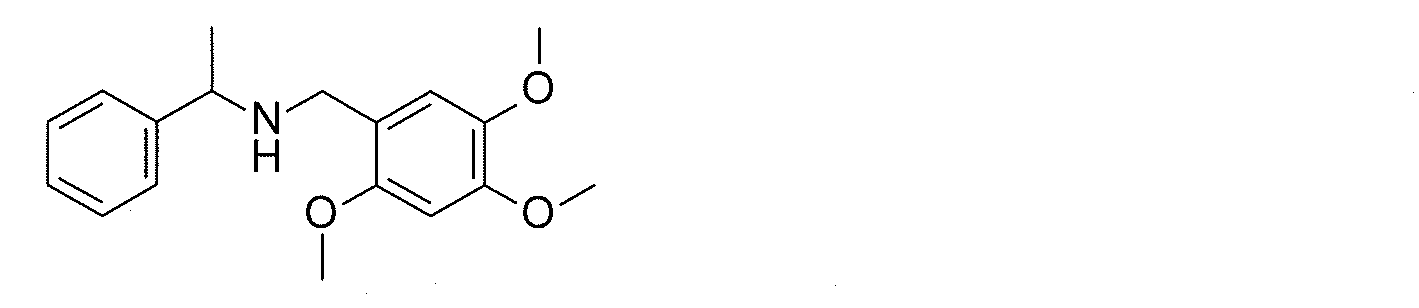
方法B:88%の収率
1H NMR(300MHz,DMSO-d6)δ7.41-7.15(m,5H),6.90(s,1H),6.63(s,1H),3.76(s,3H),3.69(d,J=3.1Hz,6H),3.43-3.35(m,2H),1.24(d,J=6.5Hz,3H).
Example 64: Preparation of 1-phenyl-N-[(2,4,5-trimethoxyphenyl)methyl]ethanamine
Method B: 88% yield
1H NMR (300MHz, DMSO-d6) δ7.41-7.15 (m, 5H), 6.90 (s, 1H), 6.63 (s, 1H), 3.76 (s, 3H), 3.69 (d, J=3.1Hz, 6H), 3.43-3.35 (m, 2H), 1.24 (d, J=6.5Hz, 3H).
実施例65:N-[(4-メトキシフェニル)メチル]-4-メチル-チオフェン-2-カルボキサミドの調製

方法E:48%の収率
1H NMR(300MHz,DMSO)δ:8.88(t,J=6.0Hz,1H),7.59(d,J=1.4Hz,1H),7.36-7.30(m,1H),7.26-7.18(m,2H),6.92-6.84(m,2H),4.35(d,J=6.0Hz,2H),3.72(s,3H),2.21(d,J=1.0Hz,3H).
Example 65: Preparation of N-[(4-methoxyphenyl)methyl]-4-methyl-thiophene-2-carboxamide
Method E: 48% yield
1H NMR (300MHz, DMSO) δ: 8.88 (t, J = 6.0Hz, 1H), 7.59 (d, J = 1.4Hz, 1H), 7.36-7.30 (m, 1H), 7.26-7.18 (m, 2H), 6.92-6.84 (m, 2H), 4.35 (d, J = 6.0Hz, 2H), 3.72 (s, 3H), 2.21 (d, J=1.0Hz, 3H).
実施例66:1-(4-メトキシフェニル)-N-[(3-ピロリジン-1-イルフェニル)メチル]メタンアミンの調製

方法B:49%の収率
1H NMR(300MHz,DMSO-d6)δ7.27-7.20(m,2H),7.08(t,J=7.7Hz,1H),6.91-6.81(m,2H),6.58-6.50(m,2H),6.45-6.30(m,1H),3.73(s,3H),3.57(s,4H),3.20(q,J=3.6Hz,4H),1.97-1.89(m,4H).
Example 66: Preparation of 1-(4-methoxyphenyl)-N-[(3-pyrrolidin-1-ylphenyl)methyl]methanamine
Method B: 49% yield
1H NMR (300MHz, DMSO-d6) δ7.27-7.20 (m, 2H), 7.08 (t, J = 7.7Hz, 1H), 6.91-6.81 (m, 2H) , 6.58-6.50 (m, 2H), 6.45-6.30 (m, 1H), 3.73 (s, 3H), 3.57 (s, 4H), 3.20 (q , J=3.6Hz, 4H), 1.97-1.89(m, 4H).
実施例67:N-[(3-シクロヘキシルフェニル)メチル]-1-(4-メトキシフェニル)メタンアミンの調製

方法A:15%の収率
1H NMR(300MHz,DMSO)δ:7.27-7.03(m,6H),6.91-6.82(m,2H),3.73(s,3H),3.60(d,J=5.5Hz,4H),2.46-2.41(br,1H),1.82-1.65(m,5H),1.46-1.15(m,6H).
Example 67: Preparation of N-[(3-cyclohexylphenyl)methyl]-1-(4-methoxyphenyl)methanamine
Method A: 15% yield
1H NMR (300MHz, DMSO) δ: 7.27-7.03 (m, 6H), 6.91-6.82 (m, 2H), 3.73 (s, 3H), 3.60 (d , J=5.5Hz, 4H), 2.46-2.41 (br, 1H), 1.82-1.65 (m, 5H), 1.46-1.15 (m, 6H).
実施例68:N-(1,3-ベンゾジオキソール-4-イルメチル)-1-(3-シクロヘキシルフェニル-)-メタンアミンの調製

方法A:29%の収率
1H NMR(300MHz,DMSO)δ:7.19(d,J=7.4Hz,2H),7.12(dt,J=7.4,1.6Hz,1H),7.06(dt,J=7.2,1.6Hz,1H),6.91(dd,J=5.7,3.5Hz,1H),6.84-6.77(m,2H),5.97(s,2H),3.65(s,2H),3.63(s,2H),2.45(s,1H),1.85-1.64(m,5H),1.45-1.18(m,5H)
Example 68: Preparation of N-(1,3-benzodioxol-4-ylmethyl)-1-(3-cyclohexylphenyl-)-methanamine
Method A: 29% yield
1H NMR (300MHz, DMSO) δ: 7.19 (d, J = 7.4Hz, 2H), 7.12 (dt, J = 7.4, 1.6Hz, 1H), 7.06 (dt, J = 7.2, 1.6Hz, 1H), 6.91 (dd, J = 5.7, 3.5Hz, 1H), 6.84-6.77 (m, 2H), 5.97 (s , 2H), 3.65 (s, 2H), 3.63 (s, 2H), 2.45 (s, 1H), 1.85-1.64 (m, 5H), 1.45-1. 18 (m, 5H)
実施例69:N-(クロマン-4-イルメチル)-1-(2-メトキシフェニル)メタンアミンの調製
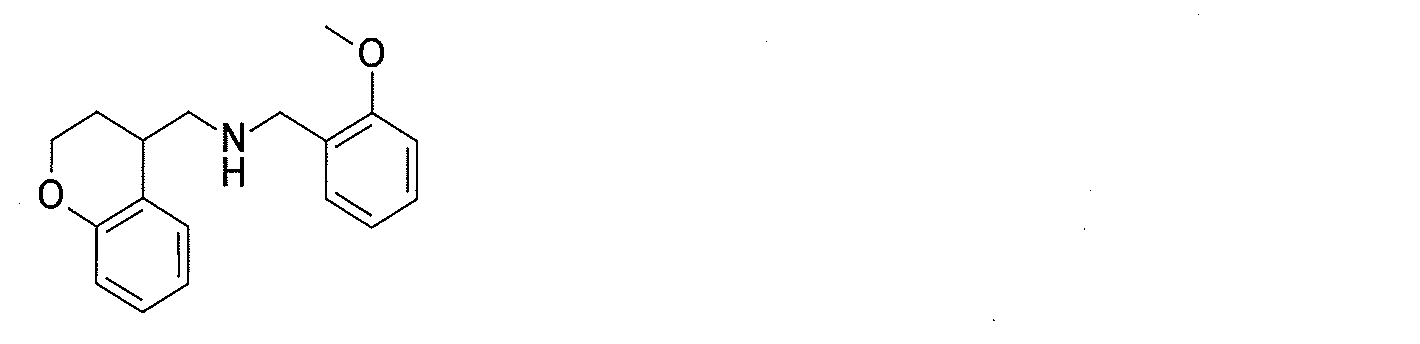
方法B:94%の収率
1H NMR(300MHz,DMSO-d6)δ7.32(dd,J=7.4,1.8Hz,1H),7.21(dd,J=7.8,1.8Hz,1H),7.14(dd,J=7.7,1.7Hz,1H),7.08-7.00(m,1H),6.99-6.87(m,2H),6.80(td,J=7.4,1.3Hz,1H),6.71(dd,J=8.1,1.3Hz,1H),4.17-4.00(m,2H),3.77(s,3H),3.72(d,J=3.7Hz,2H),2.89(dd,J=9.7,4.8Hz,1H),2.79(dd,J=11.8,4.6Hz,1H),2.64(dd,J=11.8,9.3Hz,1H),1.99(dddd,J=14.4,13.2,7.1,4.1Hz,2H).
Example 69: Preparation of N-(chroman-4-ylmethyl)-1-(2-methoxyphenyl)methanamine
Method B: 94% yield
1H NMR (300MHz, DMSO-d6) δ7.32 (dd, J=7.4, 1.8Hz, 1H), 7.21 (dd, J=7.8, 1.8Hz, 1H), 7. 14 (dd, J=7.7, 1.7Hz, 1H), 7.08-7.00 (m, 1H), 6.99-6.87 (m, 2H), 6.80 (td, J =7.4, 1.3Hz, 1H), 6.71 (dd, J=8.1, 1.3Hz, 1H), 4.17-4.00 (m, 2H), 3.77 (s, 3H), 3.72 (d, J = 3.7Hz, 2H), 2.89 (dd, J = 9.7, 4.8Hz, 1H), 2.79 (dd, J = 11.8, 4 .6Hz, 1H), 2.64 (dd, J=11.8, 9.3Hz, 1H), 1.99 (dddd, J=14.4, 13.2, 7.1, 4.1Hz, 2H ).
実施例70:N-[3-(1-ピペリジル)プロピル]チオフェン-2-カルボキサミドの調製
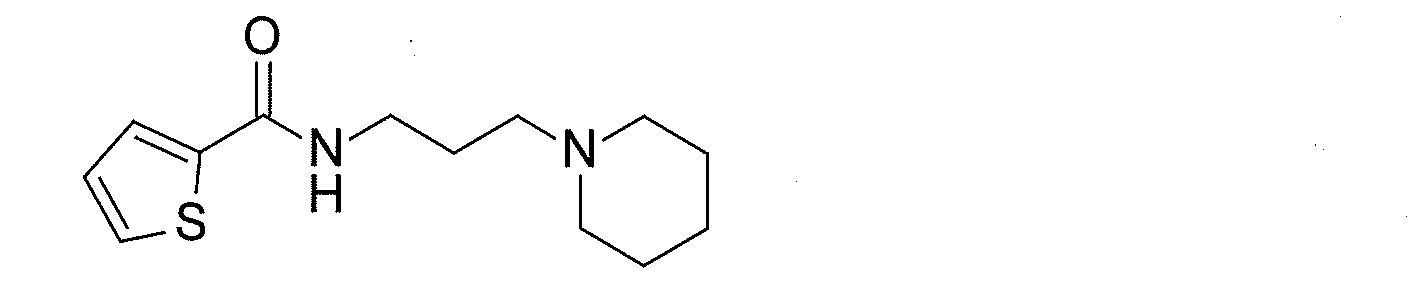
方法E:27%の収率
1H NMR(300MHz,DMSO-d6)δ8.48(t,J=5.7Hz,1H),7.72(td,J=4.7,4.1,1.2Hz,2H),7.13(dd,J=5.0,3.7Hz,1H),3.24(td,J=7.1,5.7Hz,2H),2.36-2.22(m,6H),1.78-1.54(m,2H),1.48(q,J=5.4Hz,4H),1.37(t,J=4.7Hz,2H).
Example 70: Preparation of N-[3-(1-piperidyl)propyl]thiophene-2-carboxamide
Method E: 27% yield
1H NMR (300MHz, DMSO-d6) δ8.48 (t, J=5.7Hz, 1H), 7.72 (td, J=4.7, 4.1, 1.2Hz, 2H), 7. 13 (dd, J=5.0, 3.7Hz, 1H), 3.24 (td, J=7.1, 5.7Hz, 2H), 2.36-2.22 (m, 6H), 1 .78-1.54 (m, 2H), 1.48 (q, J=5.4Hz, 4H), 1.37 (t, J=4.7Hz, 2H).
実施例71:N-(2-チエニルメチル)ベンズアミドの調製

方法E:8%の収率
1H NMR(300MHz,DMSO)δ:9.13(t,J=5.9Hz,1H),7.87(dt,J=6.8,1.6Hz,2H),7.59-7.42(m,3H),7.38(dd,J=5.0,1.3Hz,1H),7.06-6.99(m,1H),6.96(dd,J=5.0,3.5Hz,1H),4.63(d,J=5.9Hz,2H).
Example 71: Preparation of N-(2-thienylmethyl)benzamide
Method E: 8% yield
1 H NMR (300 MHz, DMSO) δ: 9.13 (t, J = 5.9 Hz, 1H), 7.87 (dt, J = 6.8, 1.6 Hz, 2H), 7.59-7. 42 (m, 3H), 7.38 (dd, J = 5.0, 1.3Hz, 1H), 7.06-6.99 (m, 1H), 6.96 (dd, J = 5.0 , 3.5Hz, 1H), 4.63 (d, J=5.9Hz, 2H).
実施例72:3-[[(4-メトキシフェニル)メチルアミノ]メチル]-N,N-ジメチル-アニリンの調製

方法B:10%の収率
1H NMR(300MHz,DMSO-d6)δ7.98(d,J=5.1Hz,1H),7.25(d,J=8.5Hz,2H),6.92-6.82(m,2H),6.61-6.48(m,2H),3.73(s,3H),3.58(d,J=6.6Hz,4H),3.00(s,6H).
Example 72: Preparation of 3-[[(4-methoxyphenyl)methylamino]methyl]-N,N-dimethyl-aniline
Method B: 10% yield
1H NMR (300MHz, DMSO-d6) δ7.98 (d, J = 5.1Hz, 1H), 7.25 (d, J = 8.5Hz, 2H), 6.92-6.82 (m, 2H), 6.61-6.48 (m, 2H), 3.73 (s, 3H), 3.58 (d, J=6.6Hz, 4H), 3.00 (s, 6H).
実施例73:N-[3-[(2-チエニルメチルアミノ)メチル]フェニル]アセトアミドの調製

方法A:9%の収率
1H NMR(300MHz,DMSO-d6)δ9.89(s,1H),7.58-7.39(m,2H),7.41-7.29(m,1H),7.22(t,J=7.8Hz,1H),7.05-6.85(m,3H),3.85(s,2H),3.65(s,2H),2.03(s,3H).
Example 73: Preparation of N-[3-[(2-thienylmethylamino)methyl]phenyl]acetamide
Method A: 9% yield
1H NMR (300MHz, DMSO-d6) δ9.89 (s, 1H), 7.58-7.39 (m, 2H), 7.41-7.29 (m, 1H), 7.22 (t , J=7.8Hz, 1H), 7.05-6.85 (m, 3H), 3.85 (s, 2H), 3.65 (s, 2H), 2.03 (s, 3H).
実施例74:4-メトキシ-N-[[2-(1-ピペリジル)-4-ピリジル]メチル]ベンズアミドの調製

方法E:16%の収率
1H NMR(300MHz,DMSO)δ:8.86(s,1H),7.99(d,J=4.9Hz,1H),7.87(d,J=8.2Hz,2H),7.01(d,J=8.3Hz,2H),6.70(s,1H),6.50(d,J=5.0Hz,1H),4.36(d,J=5.9Hz,2H),3.81(s,3H),3.47(s,4H),1.52(s,6H).
Example 74: Preparation of 4-methoxy-N-[[2-(1-piperidyl)-4-pyridyl]methyl]benzamide
Method E: 16% yield
1H NMR (300MHz, DMSO) δ: 8.86 (s, 1H), 7.99 (d, J = 4.9Hz, 1H), 7.87 (d, J = 8.2Hz, 2H), 7 .01 (d, J=8.3Hz, 2H), 6.70 (s, 1H), 6.50 (d, J=5.0Hz, 1H), 4.36 (d, J=5.9Hz, 2H), 3.81 (s, 3H), 3.47 (s, 4H), 1.52 (s, 6H).
実施例75:4-[[(4-メトキシフェニル)メチルアミノ]メチル]-N,N-ジメチル-ピリジン-2-アミンの調製

方法B:33%の収率
1H NMR(300MHz,DMSO-d6)δ7.32-7.19(m,2H),7.10(t,J=7.8Hz,1H),6.89-6.84(m,2H),6.71(t,J=2.0Hz,1H),6.63-6.53(m,2H),3.73(s,3H),3.59(d,J=2.2Hz,4H),2.88(s,6H).
Example 75: Preparation of 4-[[(4-methoxyphenyl)methylamino]methyl]-N,N-dimethyl-pyridin-2-amine
Method B: 33% yield
1H NMR (300MHz, DMSO-d6) δ7.32-7.19 (m, 2H), 7.10 (t, J = 7.8Hz, 1H), 6.89-6.84 (m, 2H) , 6.71 (t, J=2.0Hz, 1H), 6.63-6.53 (m, 2H), 3.73 (s, 3H), 3.59 (d, J=2.2Hz, 4H), 2.88(s, 6H).
実施例76:N,N-ジエチル-4-[[(4-メトキシフェニル)メチルアミノ]メチル]ピリジン-2-アミンの調製

方法B:16の収率
1H NMR(300MHz,DMSO)δ:7.94(d,J=5.1Hz,1H),7.28-7.20(m,2H),6.90-6.84(m,2H),6.53(s,1H),6.46(dd,J=5.1,1.2Hz,1H),3.73(s,3H),3.59(s,2H),3.55(s,2H),3.46(q,J=7.0Hz,4H),2.65-2.54(br,1H),1.08(t,J=6.9Hz,6H).
Example 76: Preparation of N,N-diethyl-4-[[(4-methoxyphenyl)methylamino]methyl]pyridin-2-amine
Method B: Yield of 16
1H NMR (300MHz, DMSO) δ: 7.94 (d, J = 5.1Hz, 1H), 7.28-7.20 (m, 2H), 6.90-6.84 (m, 2H) , 6.53 (s, 1H), 6.46 (dd, J=5.1, 1.2Hz, 1H), 3.73 (s, 3H), 3.59 (s, 2H), 3.55 (s, 2H), 3.46 (q, J=7.0Hz, 4H), 2.65-2.54 (br, 1H), 1.08 (t, J=6.9Hz, 6H).
実施例77:1-(3,4-ジメトキシフェニル)-N-[[2-(1-ピペリジル)-4-ピリジル]メチル]メタンアミンの調製

方法B:13%の収率
1H NMR(300MHz,DMSO)δ:7.98(d,J=5.0Hz,1H),6.94(d,J=1.8Hz,1H),6.89-6.79(m,2H),6.76(s,1H),6.58-6.54(m,1H),3.73(s,3H),3.72(s,3H),3.57(d,J=6.6Hz,4H),3.48(t,J=5.3Hz,4H),2.71-2.58(br,1H),1.61-1.47(m,6H)
Example 77: Preparation of 1-(3,4-dimethoxyphenyl)-N-[[2-(1-piperidyl)-4-pyridyl]methyl]methanamine
Method B: 13% yield
1H NMR (300MHz, DMSO) δ: 7.98 (d, J = 5.0Hz, 1H), 6.94 (d, J = 1.8Hz, 1H), 6.89-6.79 (m, 2H), 6.76 (s, 1H), 6.58-6.54 (m, 1H), 3.73 (s, 3H), 3.72 (s, 3H), 3.57 (d, J = 6.6Hz, 4H), 3.48 (t, J = 5.3Hz, 4H), 2.71-2.58 (br, 1H), 1.61-1.47 (m, 6H)
実施例78:2-メトキシ-5-[[[2-(1-ピペリジル)-4-ピリジル]メチルアミノ]-メチル]フェノールの調製

方法B:22%の収率
1H NMR(300MHz,DMSO-d6)δ8.82(s,1H),7.98(d,J=5.0Hz,1H),6.86-6.69(m,5H),6.59-6.52(m,1H),3.73(s,3H),3.55(s,4H),3.48(t,J=5.3Hz,4H),1.56(d,J=15.1Hz,6H).
Example 78: Preparation of 2-methoxy-5-[[[2-(1-piperidyl)-4-pyridyl]methylamino]-methyl]phenol
Method B: 22% yield
1H NMR (300MHz, DMSO-d6) δ8.82 (s, 1H), 7.98 (d, J=5.0Hz, 1H), 6.86-6.69 (m, 5H), 6.59 -6.52 (m, 1H), 3.73 (s, 3H), 3.55 (s, 4H), 3.48 (t, J = 5.3Hz, 4H), 1.56 (d, J =15.1Hz, 6H).
実施例79:N-[(5-メトキシ-2-チエニル)メチル]-1-[2-(1-ピペリジル)-4-ピリジル]メタンアミンの調製
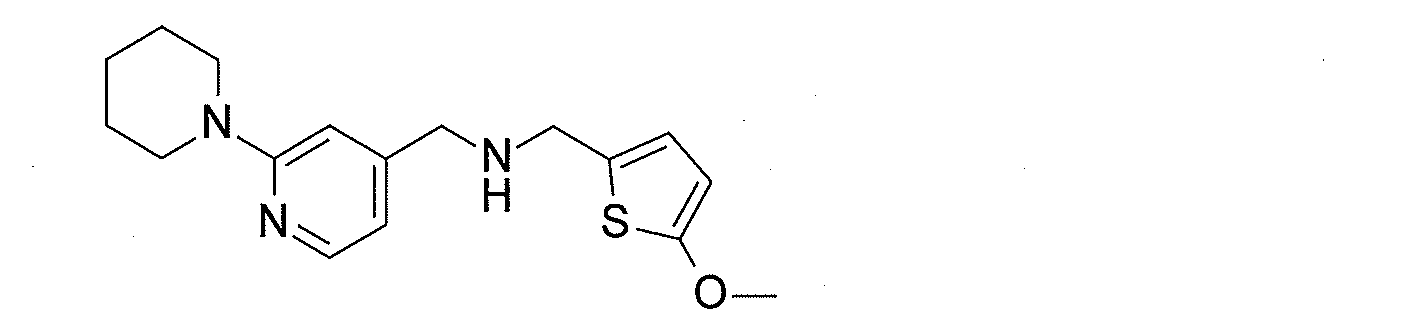
方法B:44%の収率
1H NMR(300MHz,DMSO-d6)δ7.99(d,J=5.1Hz,1H),6.75(s,1H),6.55-6.50(m,2H),6.08(d,J=3.8Hz,1H),3.80(s,3H),3.67(s,2H),3.58(s,2H),3.49(t,J=5.2Hz,4H),1.60-1.48(m,6H).
Example 79: Preparation of N-[(5-methoxy-2-thienyl)methyl]-1-[2-(1-piperidyl)-4-pyridyl]methanamine
Method B: 44% yield
1H NMR (300MHz, DMSO-d6) δ7.99 (d, J = 5.1Hz, 1H), 6.75 (s, 1H), 6.55-6.50 (m, 2H), 6.08 (d, J=3.8Hz, 1H), 3.80 (s, 3H), 3.67 (s, 2H), 3.58 (s, 2H), 3.49 (t, J=5.2Hz , 4H), 1.60-1.48 (m, 6H).
実施例80:N-[(2,6-ジメトキシフェニル)メチル]-1-[2-(1-ピペリジル)-4-ピリジル]メタンアミンの調製
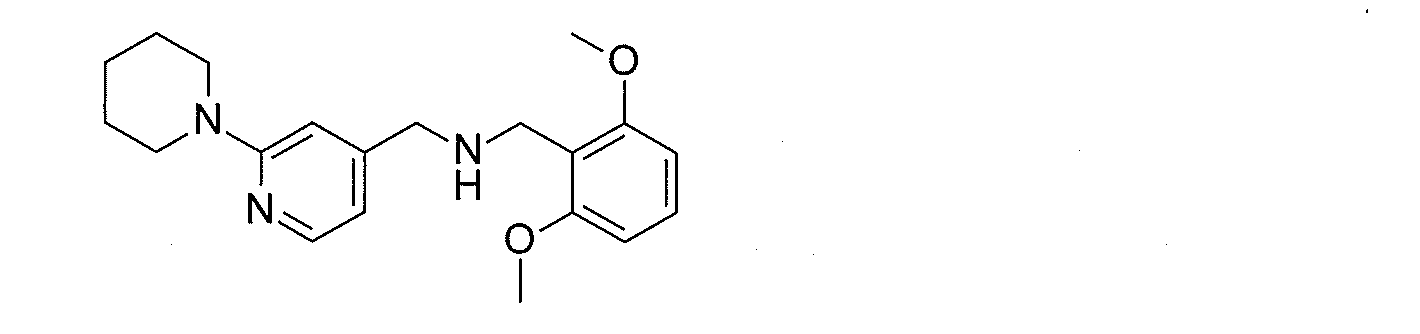
方法B:26%の収率
1H NMR(300MHz,DMSO-d6)δ7.98(d,J=5.0Hz,1H),7.20(t,J=8.3Hz,1H),6.74(s,1H),6.64(d,J=8.3Hz,2H),6.53(d,J=5.1Hz,1H),3.75(s,6H),3.65(s,2H),3.55(s,2H),3.47(d,J=4.4Hz,4H),1.54(s,6H).
Example 80: Preparation of N-[(2,6-dimethoxyphenyl)methyl]-1-[2-(1-piperidyl)-4-pyridyl]methanamine
Method B: 26% yield
1H NMR (300MHz, DMSO-d6) δ7.98 (d, J=5.0Hz, 1H), 7.20 (t, J=8.3Hz, 1H), 6.74 (s, 1H), 6 .64 (d, J=8.3Hz, 2H), 6.53 (d, J=5.1Hz, 1H), 3.75 (s, 6H), 3.65 (s, 2H), 3.55 (s, 2H), 3.47 (d, J=4.4Hz, 4H), 1.54 (s, 6H).
実施例81:1-[2-(1-ピペリジル)-4-ピリジル]-N-[[2-(1-ピペリジル)-4-ピリジル]メチル]メタンアミンの調製

方法A:11%の収率
1H NMR(300MHz,DMSO)δ:7.99(d,J=5.1Hz,2H),6.75(s,2H),6.56(d,J=5.1Hz,2H),3.57(s,4H),3.48(t,J=5.2Hz,8H),1.62-1.47(m,12H).
Example 81: Preparation of 1-[2-(1-piperidyl)-4-pyridyl]-N-[[2-(1-piperidyl)-4-pyridyl]methyl]methanamine
Method A: 11% yield
1H NMR (300MHz, DMSO) δ: 7.99 (d, J = 5.1Hz, 2H), 6.75 (s, 2H), 6.56 (d, J = 5.1Hz, 2H), 3 .57 (s, 4H), 3.48 (t, J=5.2Hz, 8H), 1.62-1.47 (m, 12H).
実施例82:1-(4-メトキシフェニル)-N-[[2-(1-ピペリジル)-4-ピリジル]-メチル]エタンアミンの調製

方法B:48%の収率
1H NMR(300MHz,DMSO-d6)δ7.96(d,J=5.1Hz,1H),7.30-7.17(m,2H),6.94-6.78(m,2H),6.68(s,1H),6.56-6.45(m,1H),3.73(s,3H),3.60(d,J=6.8Hz,1H),3.47(s,4H),3.40(s,1H),1.55(d,J=14.9Hz,6H),1.23(d,J=6.5Hz,3H)
Example 82: Preparation of 1-(4-methoxyphenyl)-N-[[2-(1-piperidyl)-4-pyridyl]-methyl]ethanamine
Method B: 48% yield
1H NMR (300MHz, DMSO-d6) δ7.96 (d, J=5.1Hz, 1H), 7.30-7.17 (m, 2H), 6.94-6.78 (m, 2H) , 6.68 (s, 1H), 6.56-6.45 (m, 1H), 3.73 (s, 3H), 3.60 (d, J=6.8Hz, 1H), 3.47 (s, 4H), 3.40 (s, 1H), 1.55 (d, J=14.9Hz, 6H), 1.23 (d, J=6.5Hz, 3H)
製剤化実施例 Formulation example
化粧品用の製剤化実施例 Example of formulation for cosmetics
以下の表では、小数点はドットで表す。 In the table below, the decimal point is represented by a dot.
以下の製剤化実施例F1~F54は化粧品及び医薬品のための多種多様な製剤を示す。冷却剤1は化合物1に係る本発明に係る冷却剤を意味し、冷却剤2は化合物8を意味し、冷却剤3は化合物14を意味し、冷却剤4は化合物27を意味し、冷却剤5は化合物39を意味し、冷却剤6は化合物40を意味し、冷却剤7は化合物41を意味し、冷却剤8は化合物42を意味し、冷却剤9は化合物51を意味する。
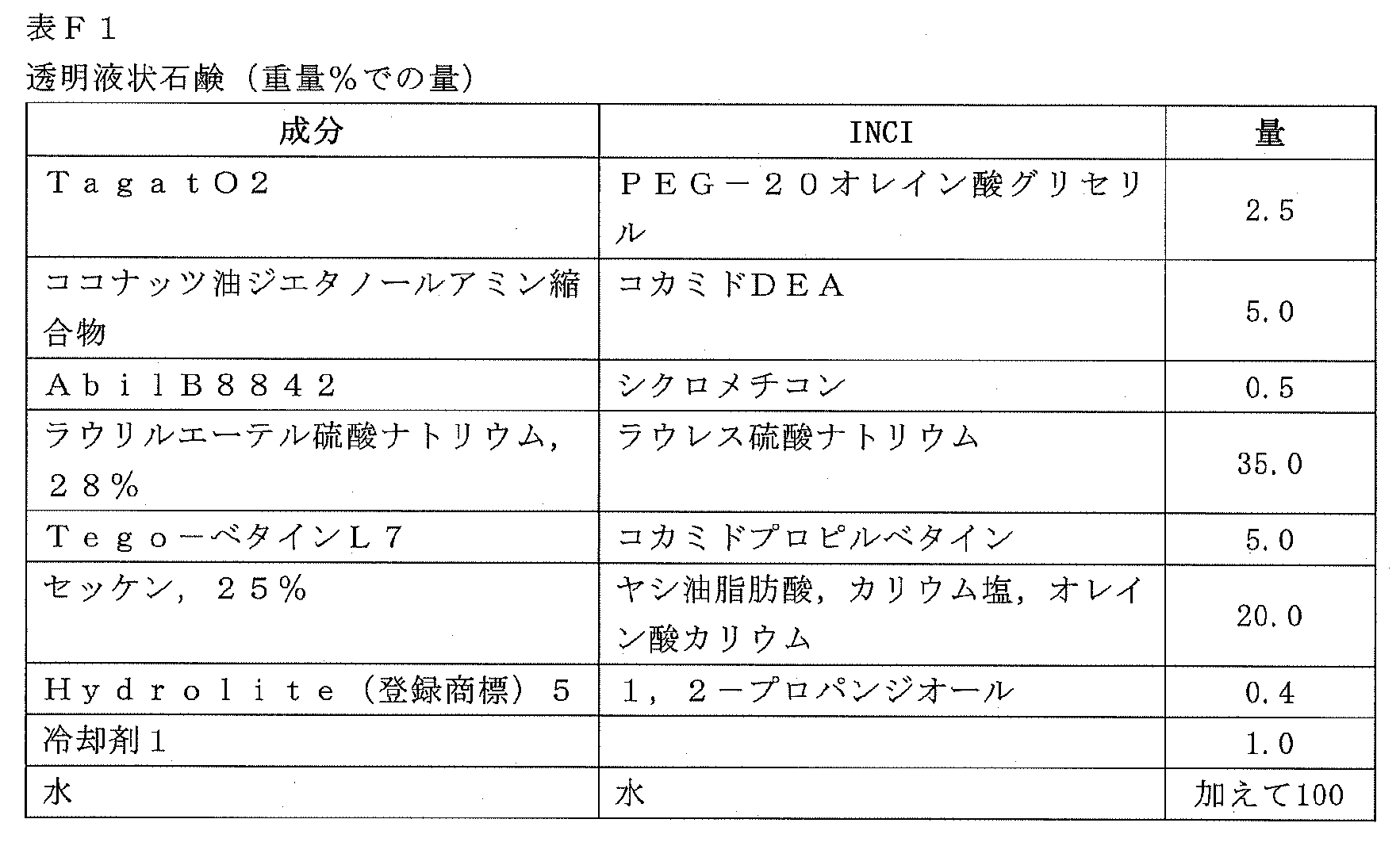
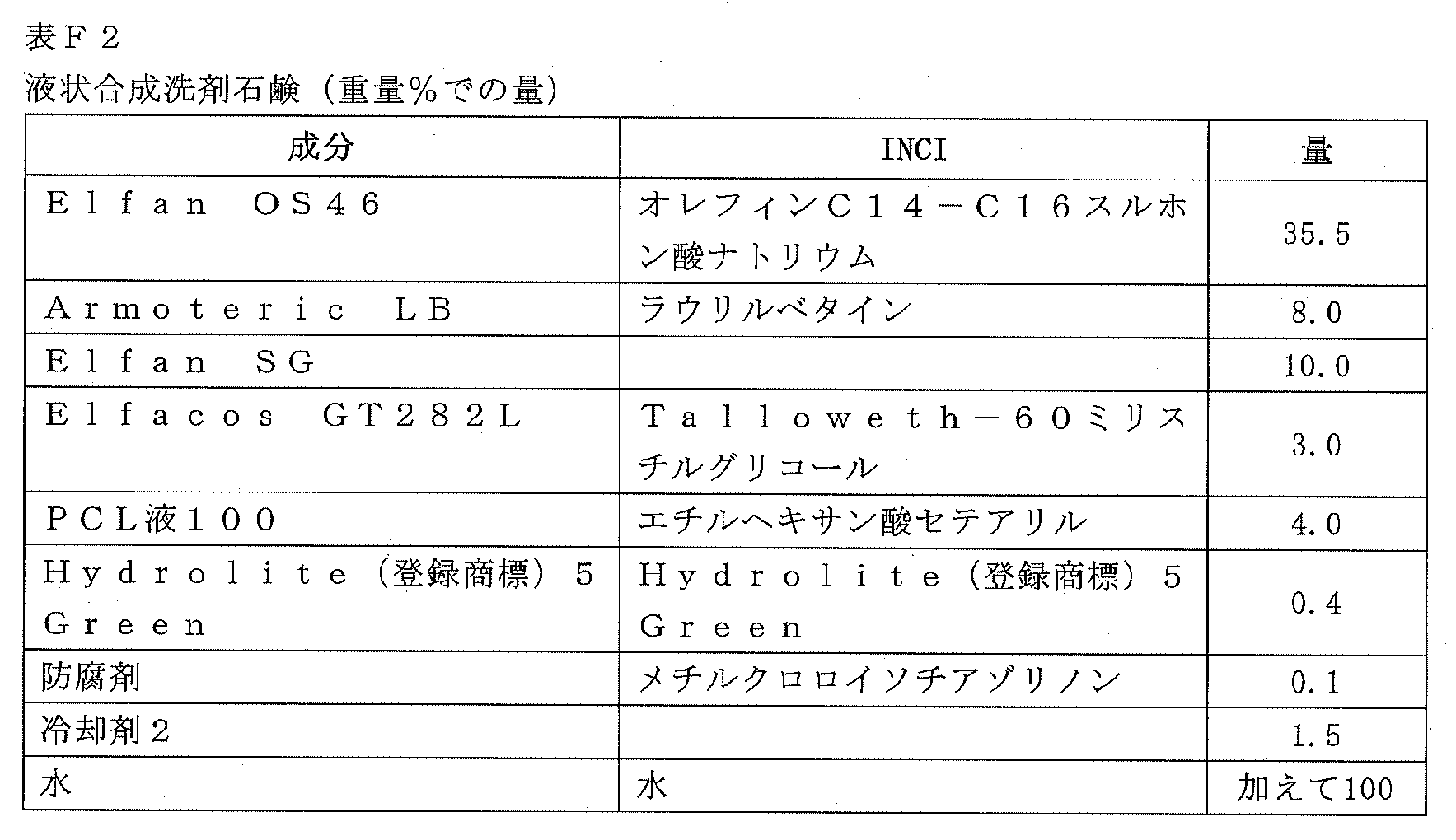
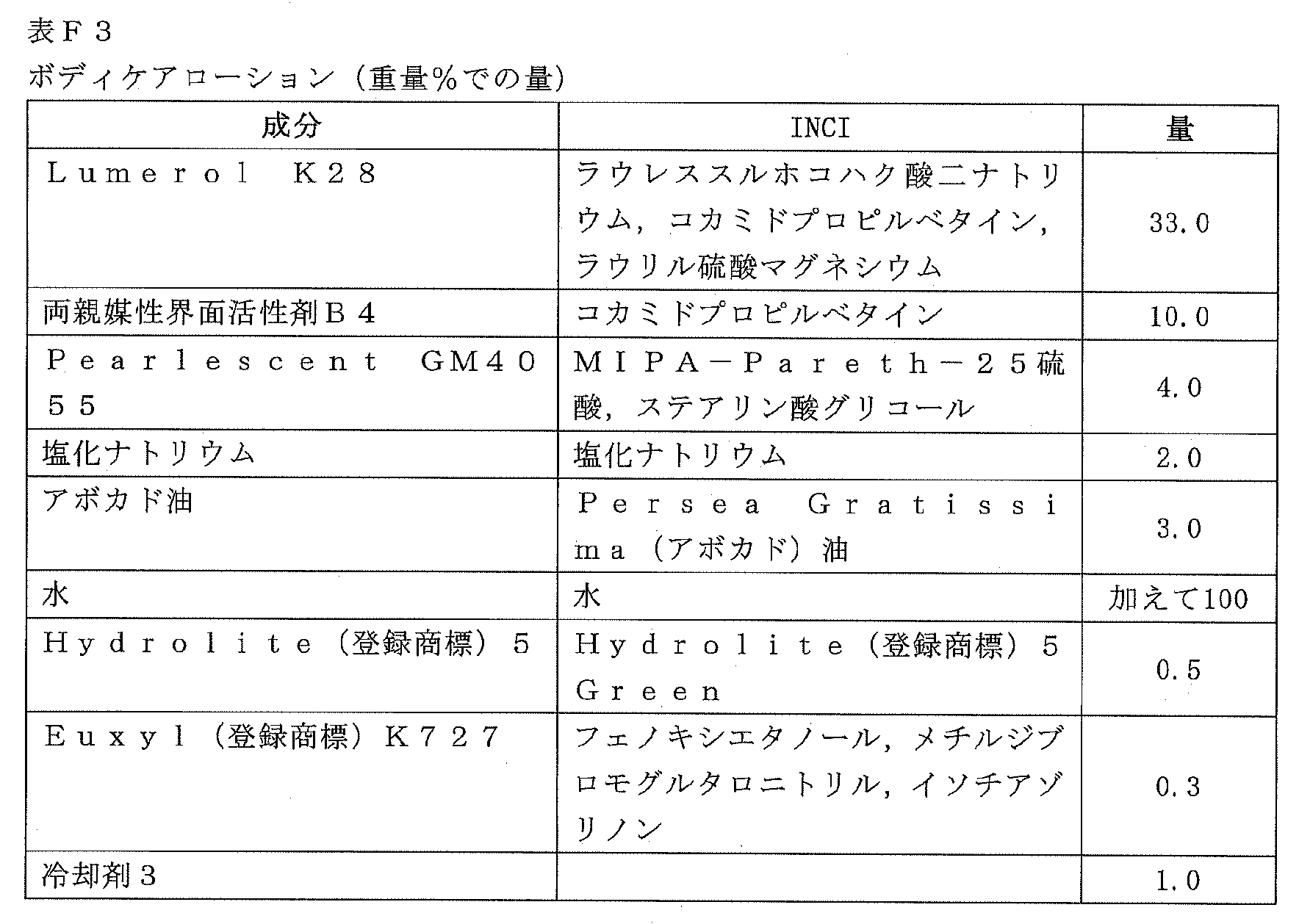

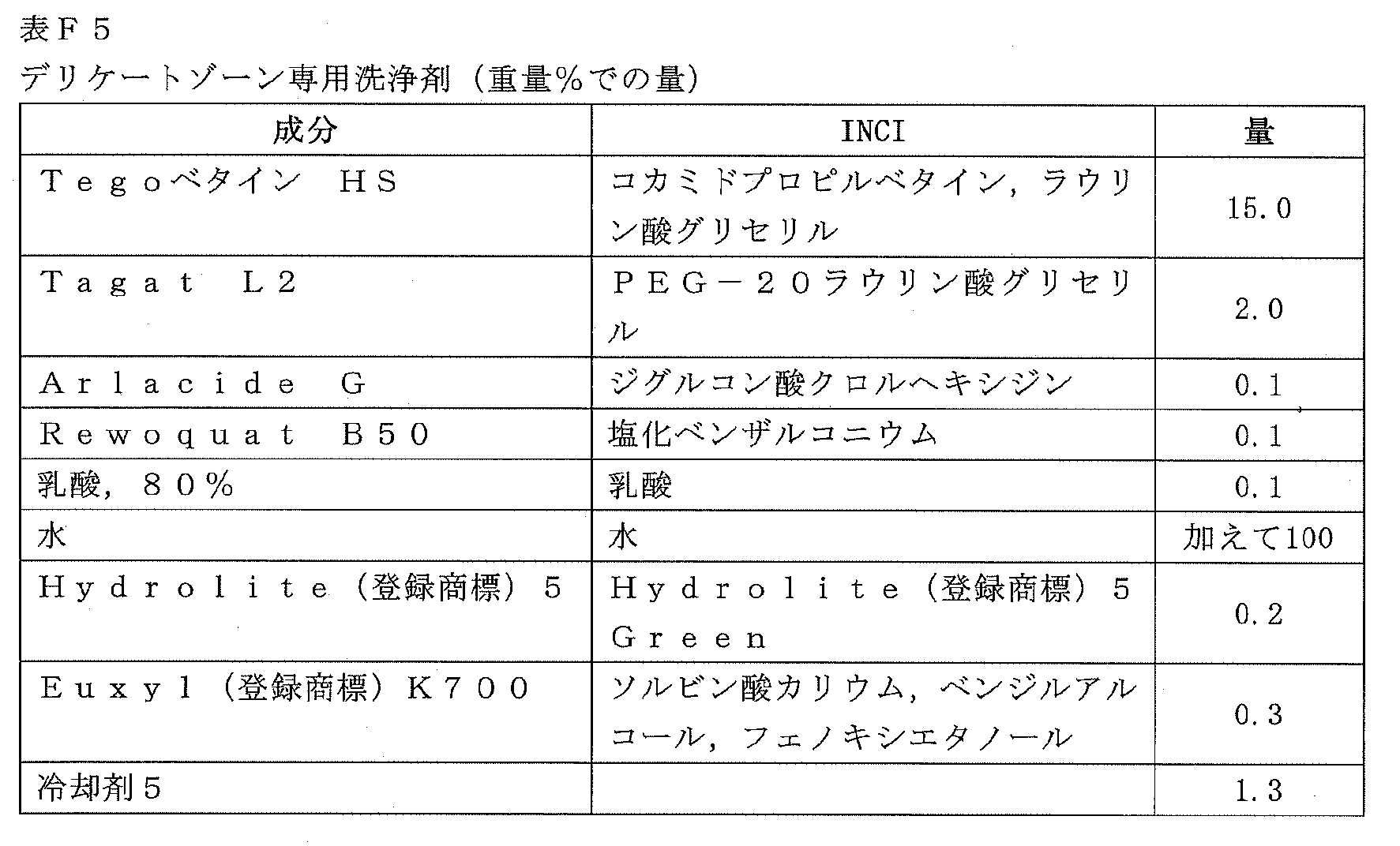
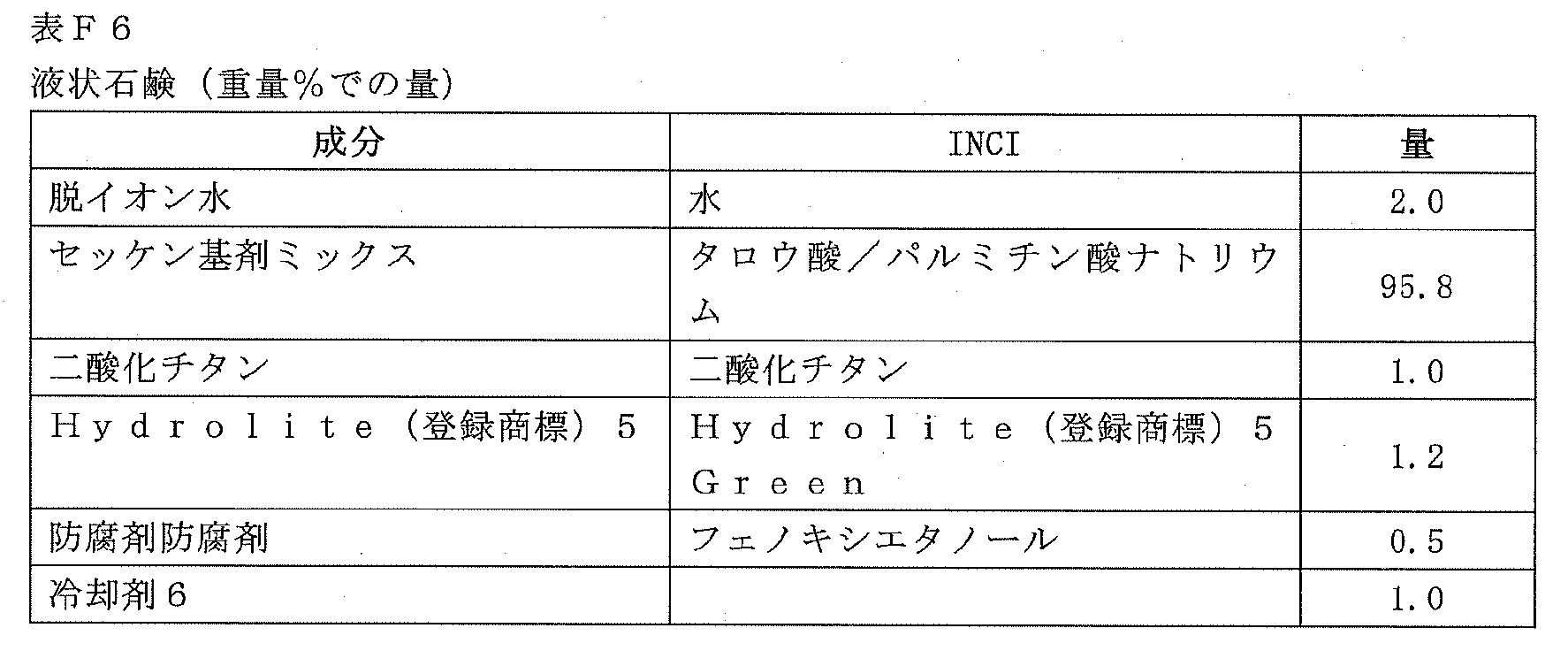


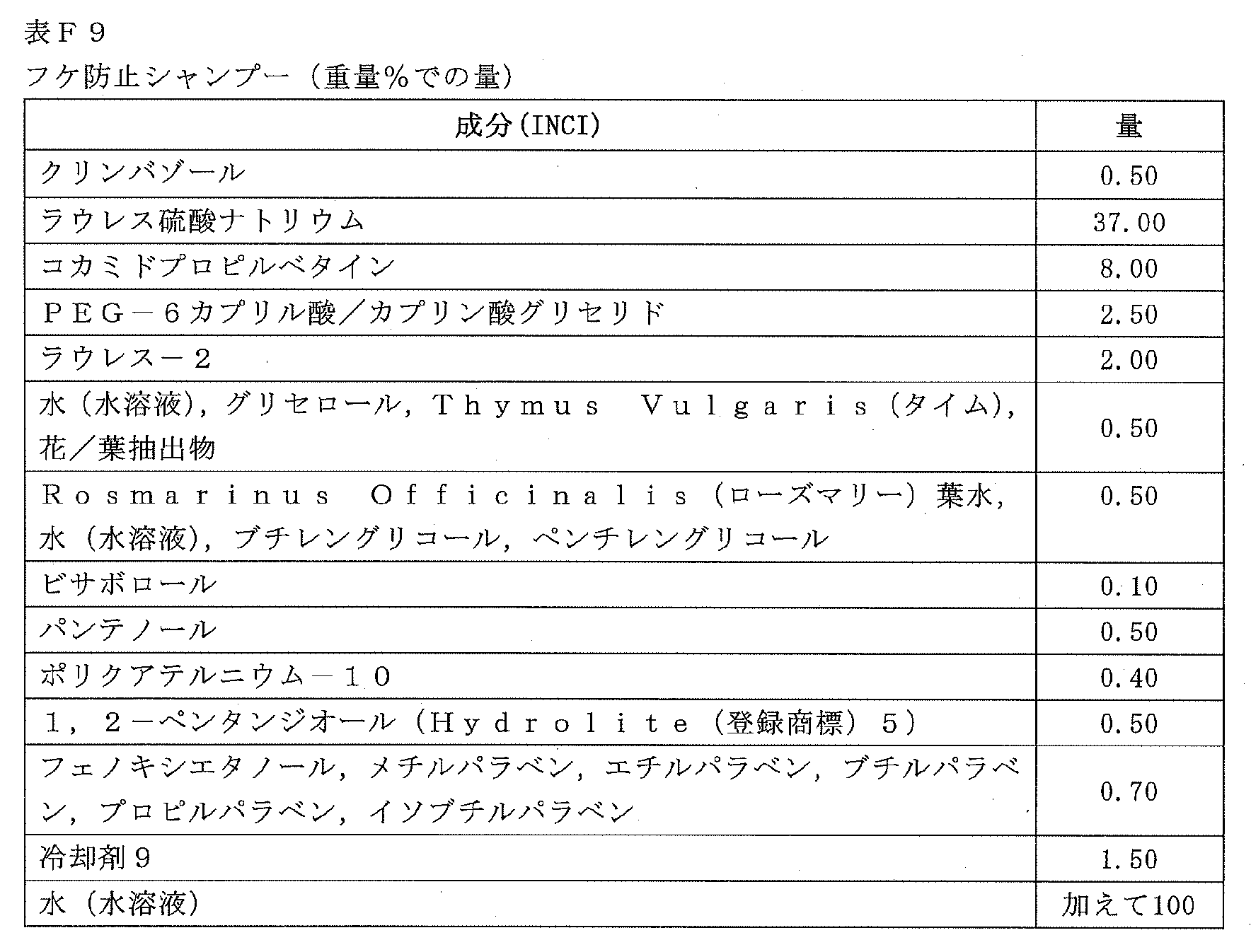
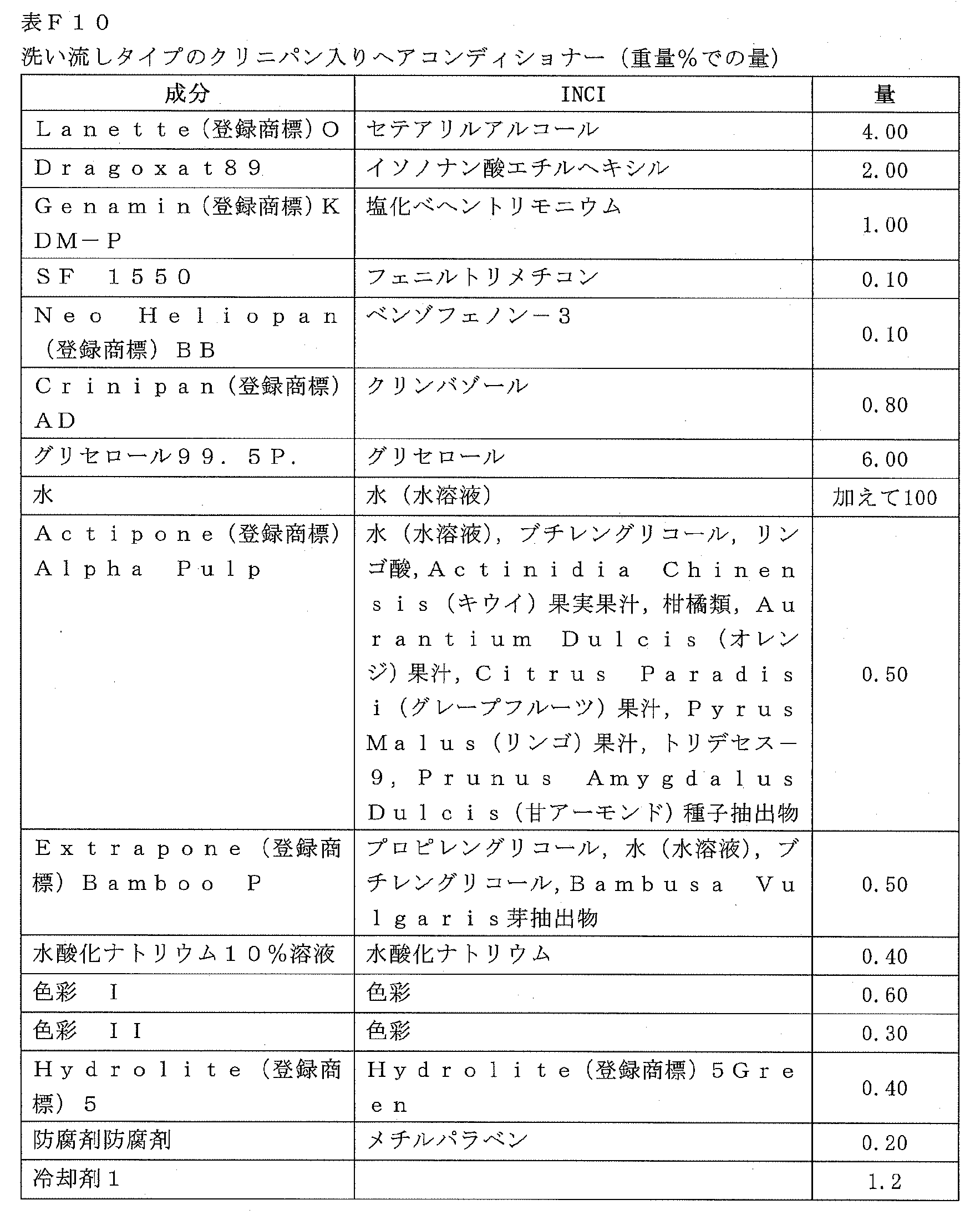
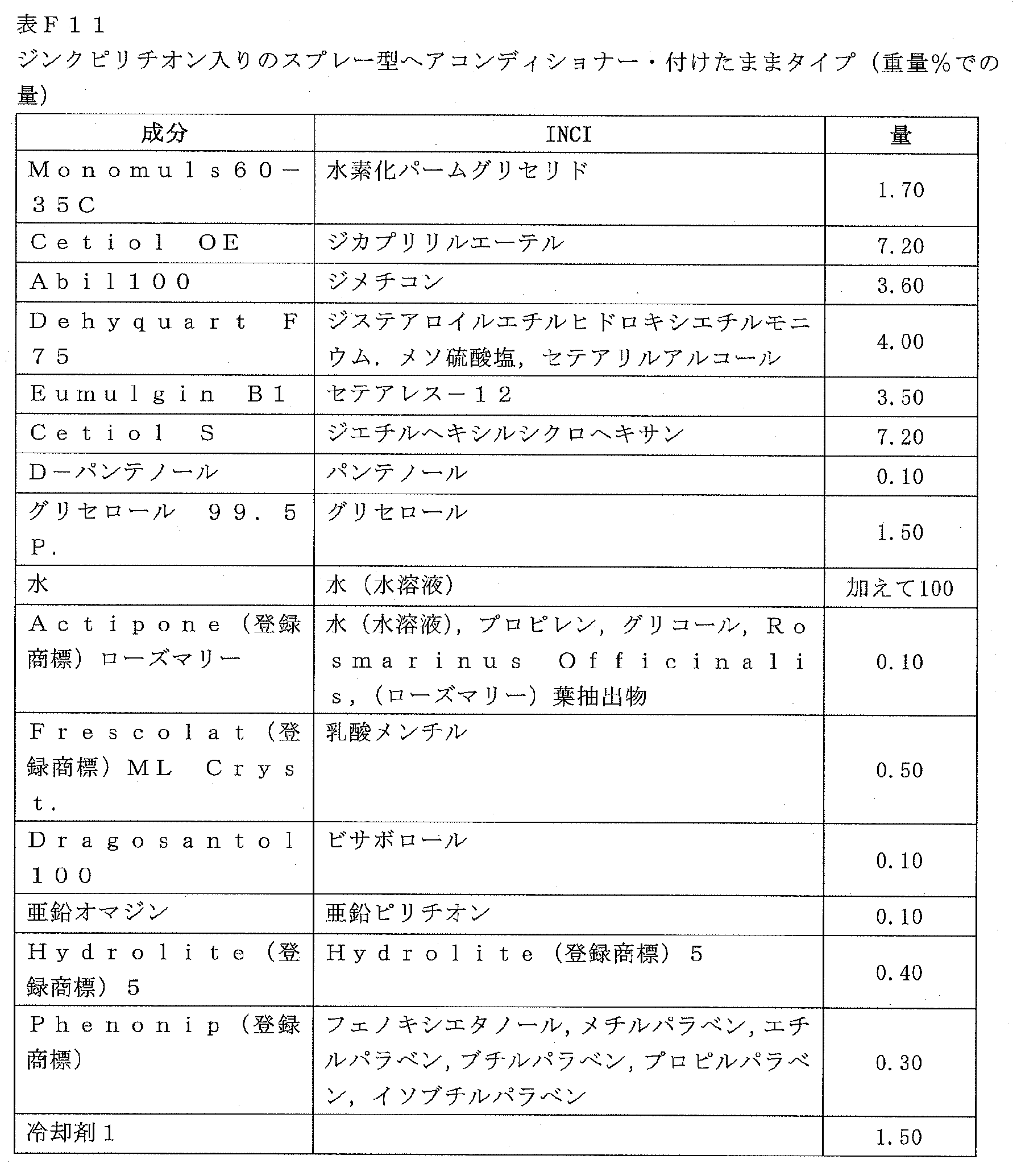
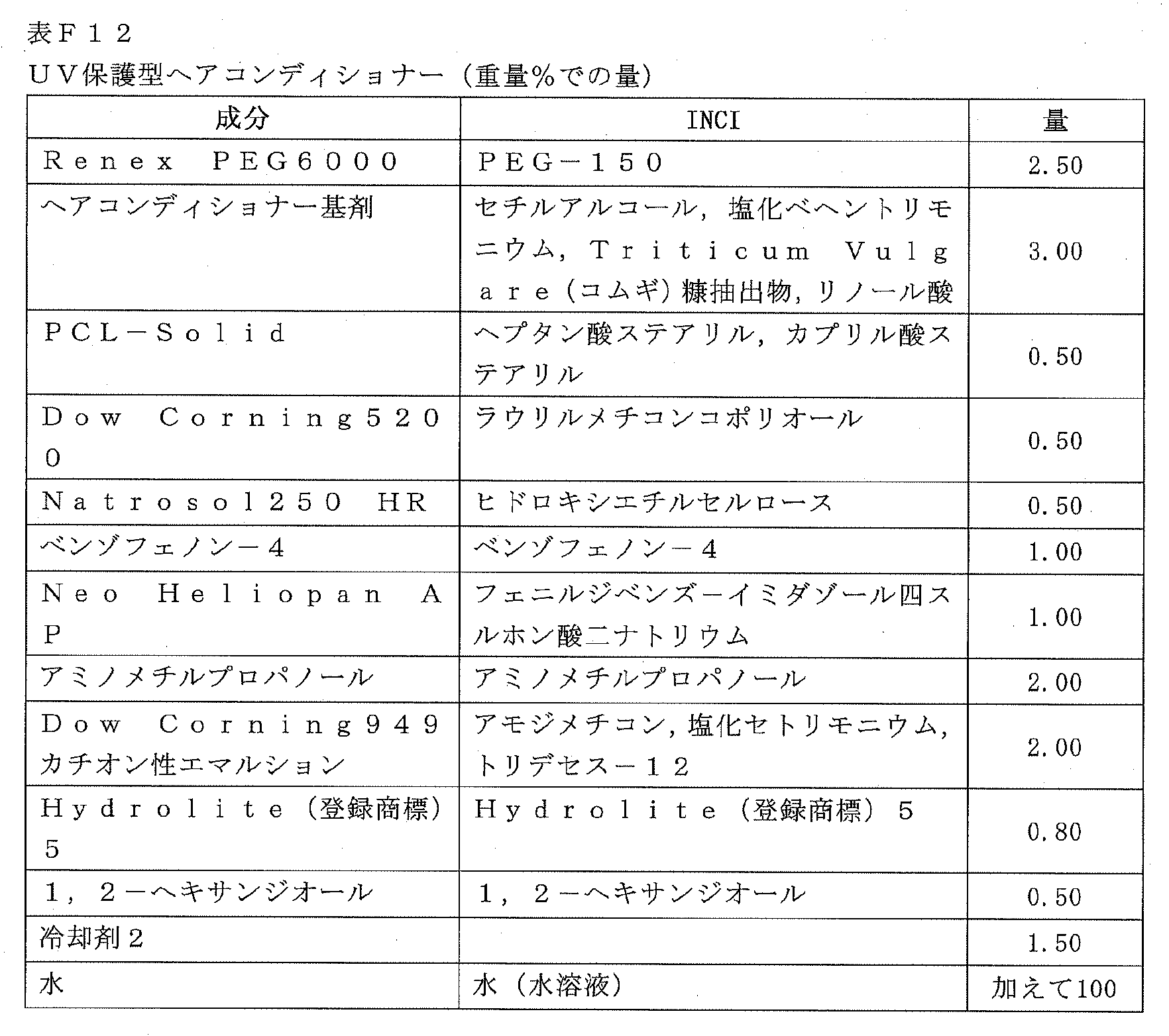
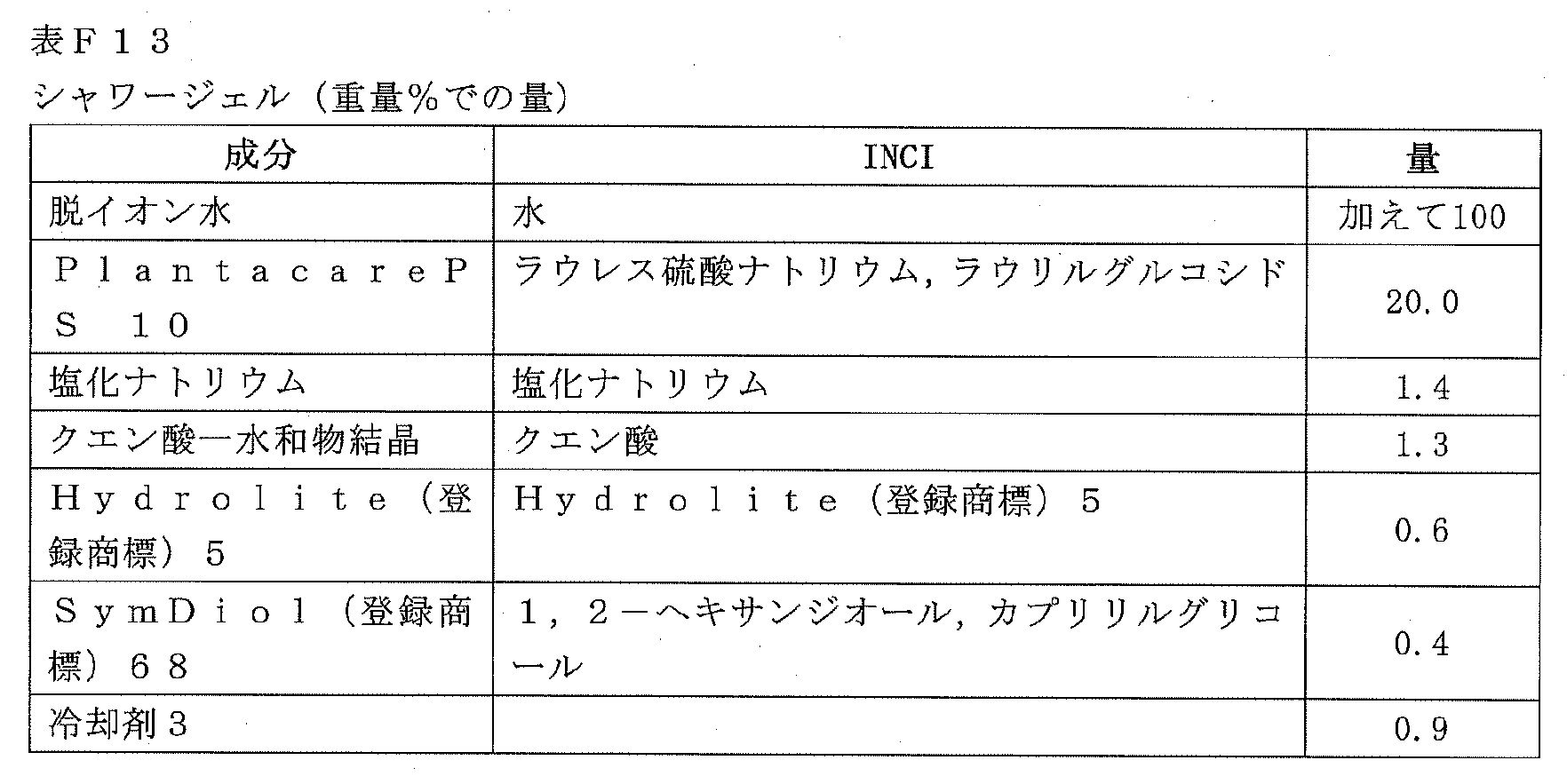
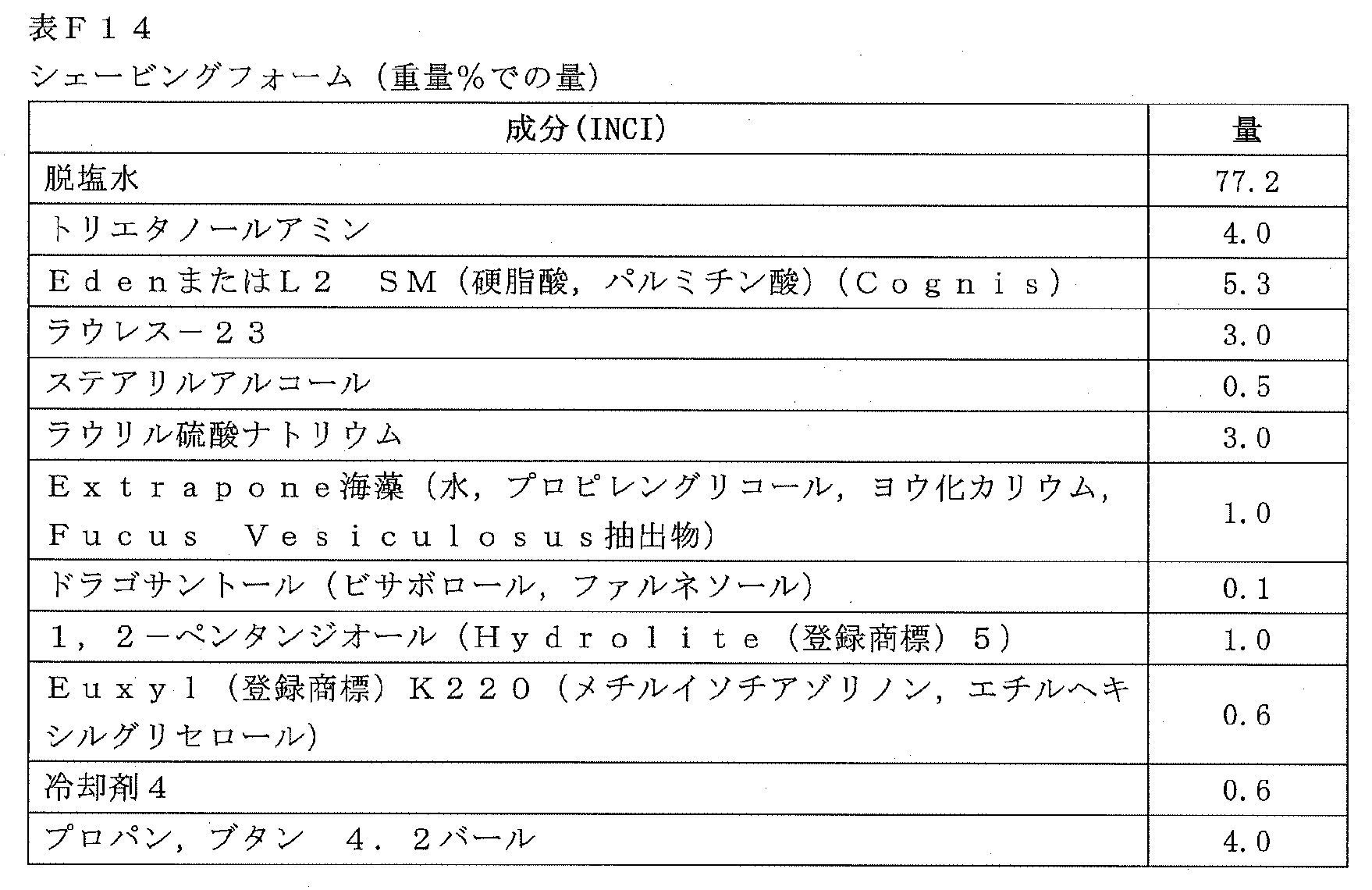
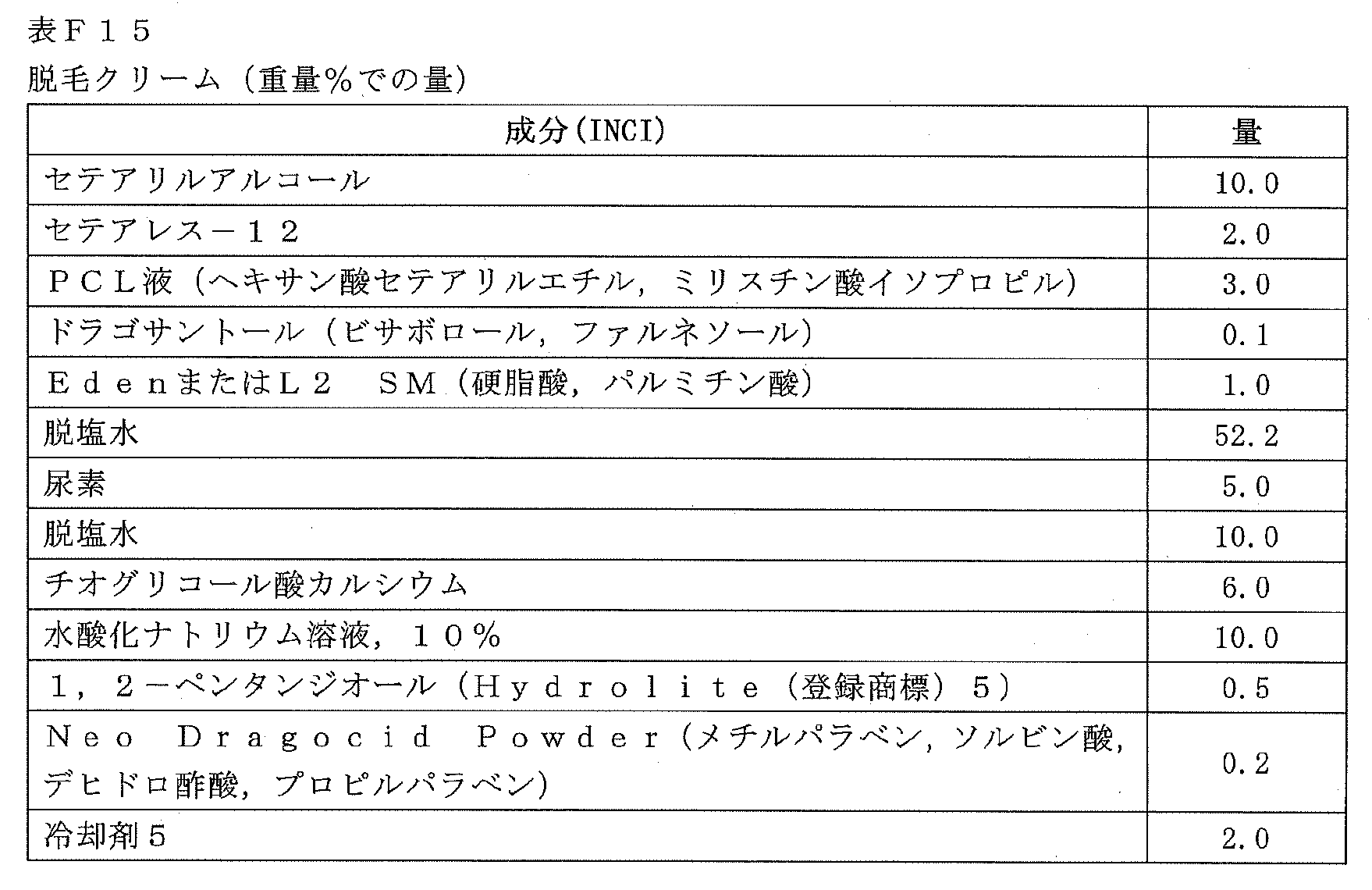
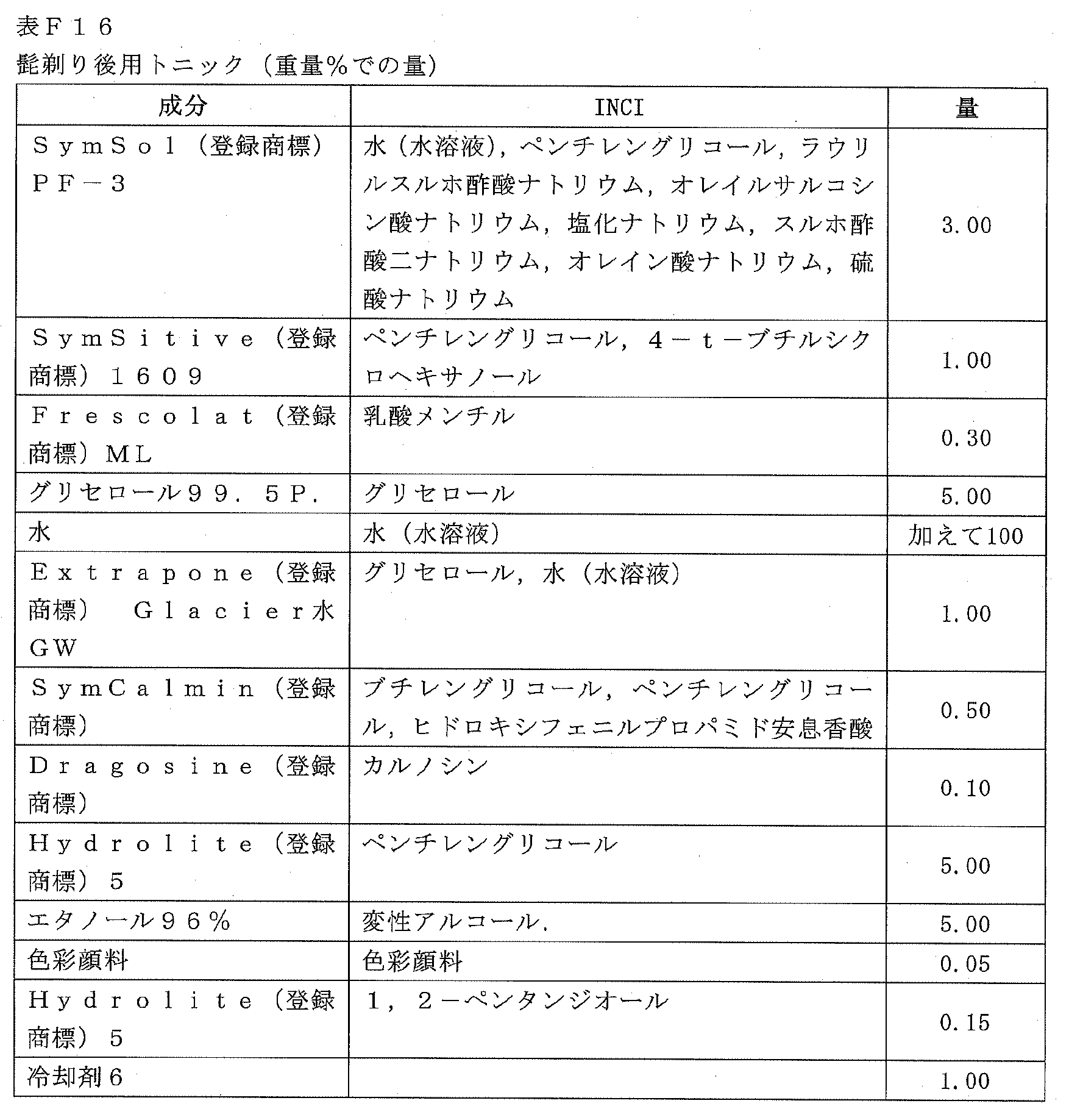
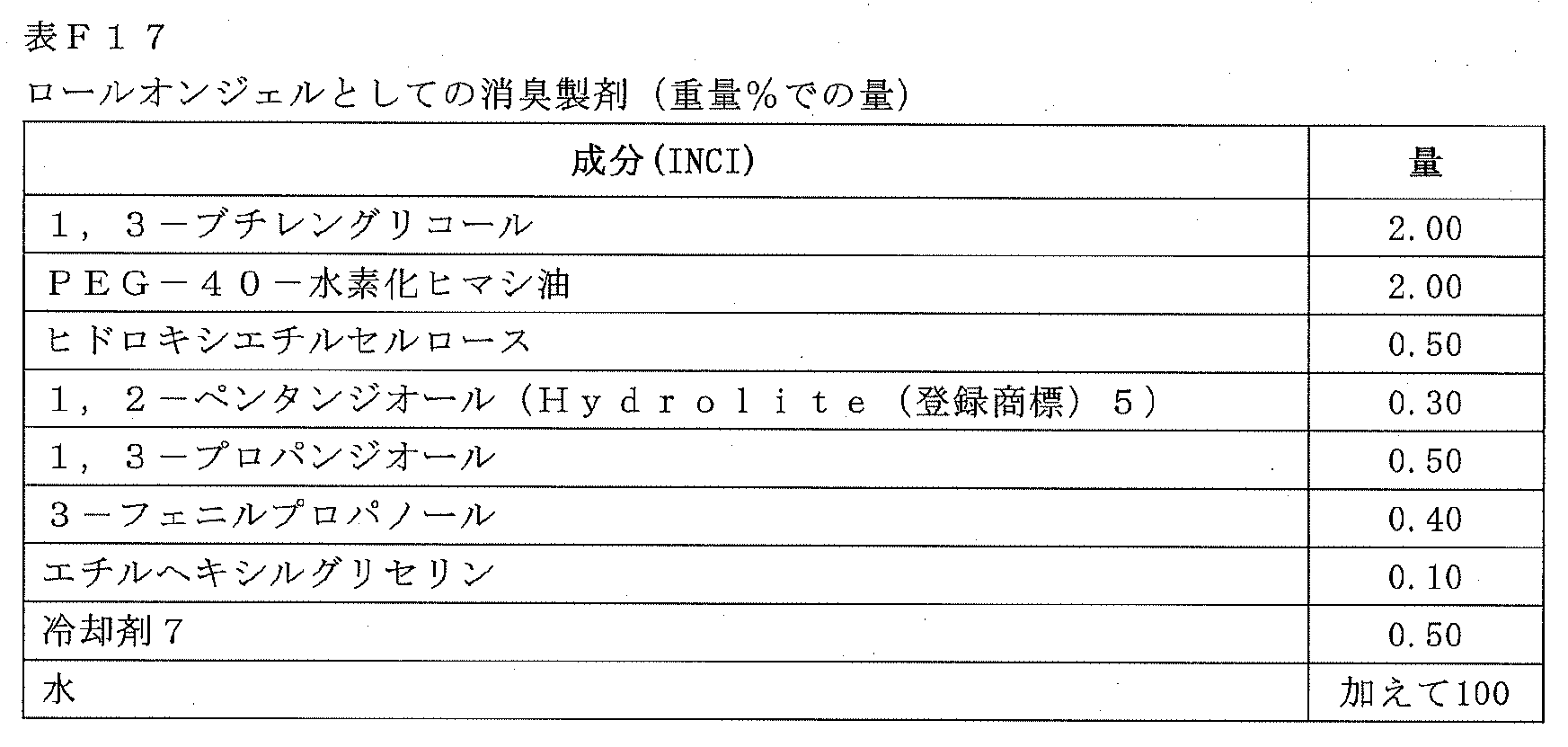
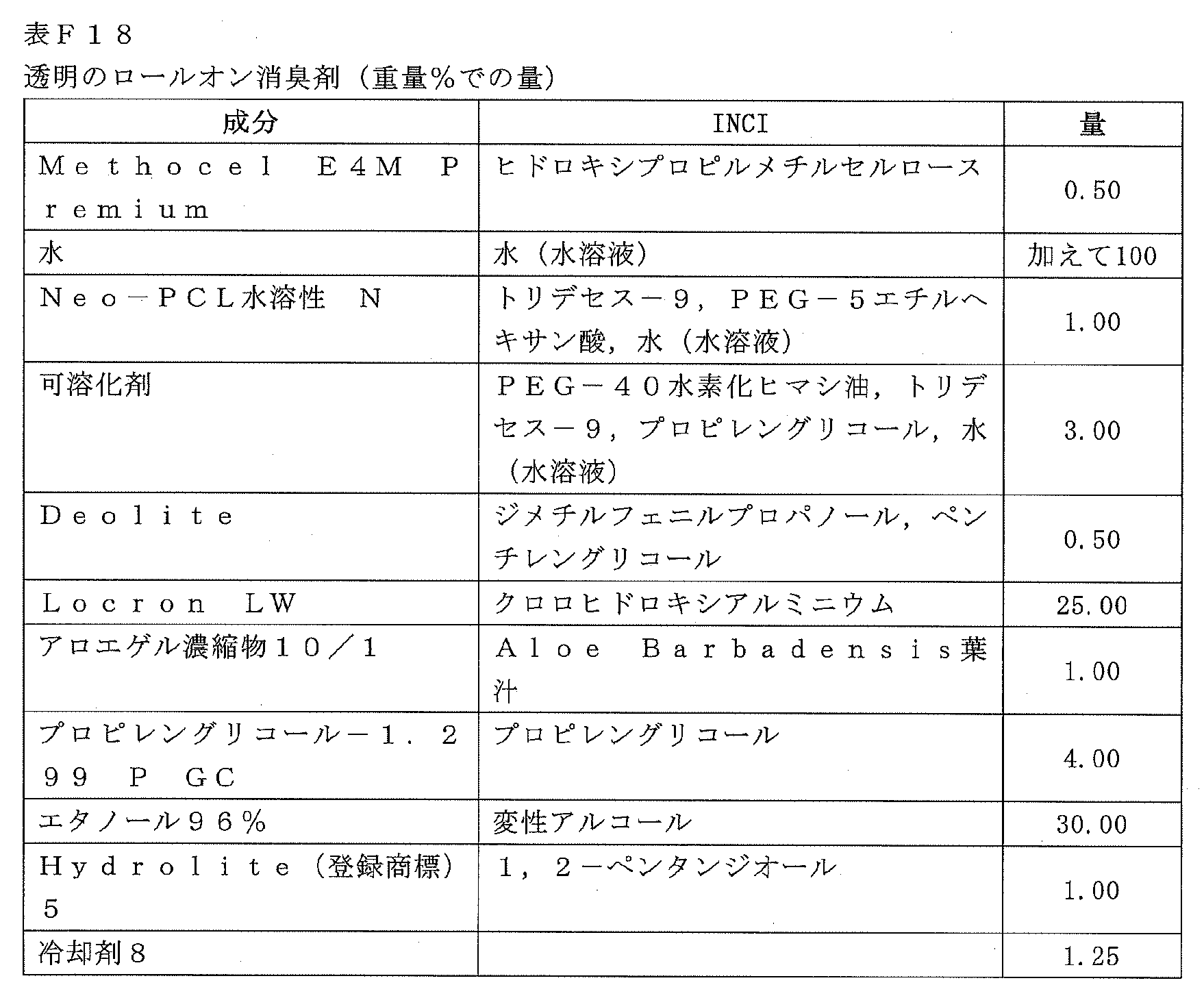

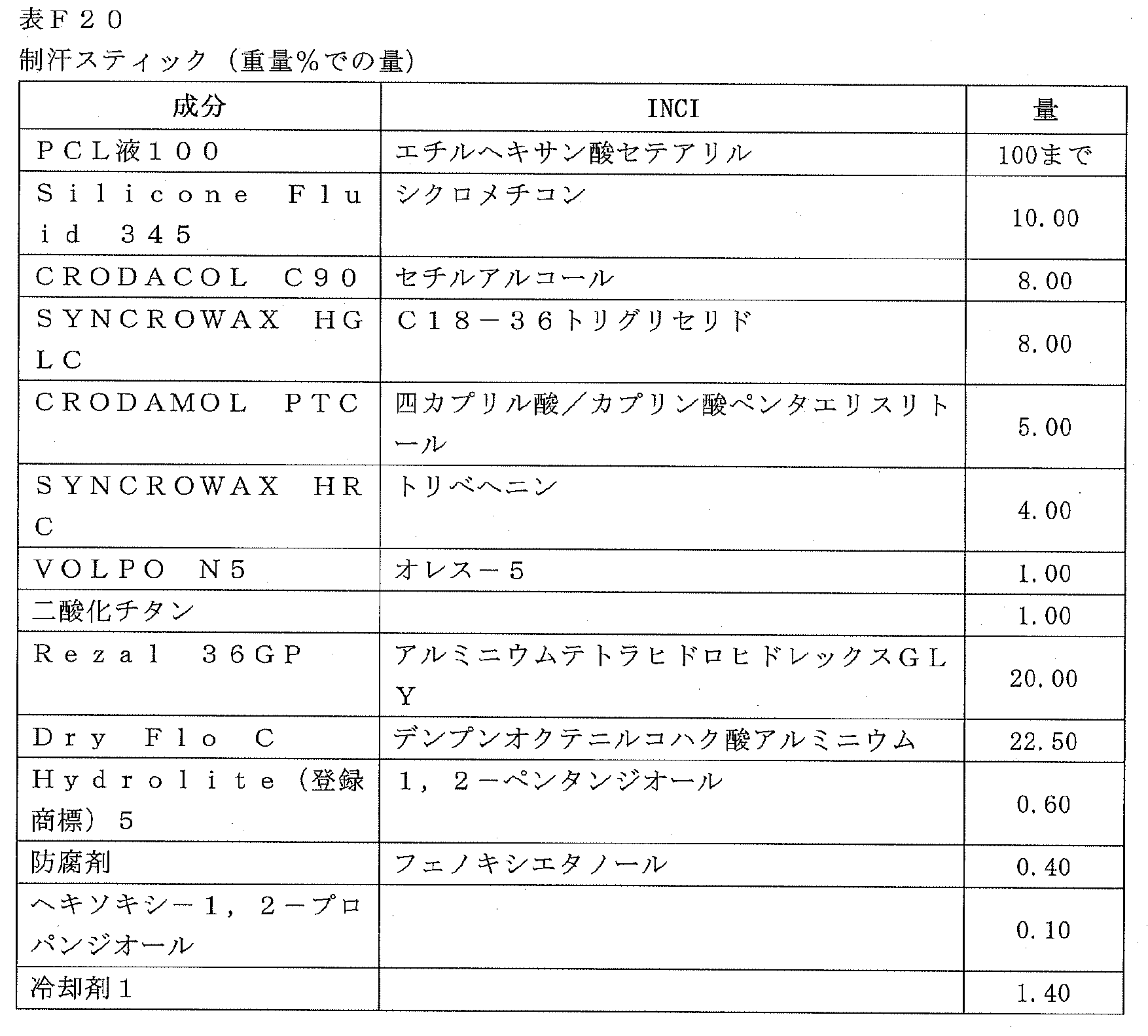
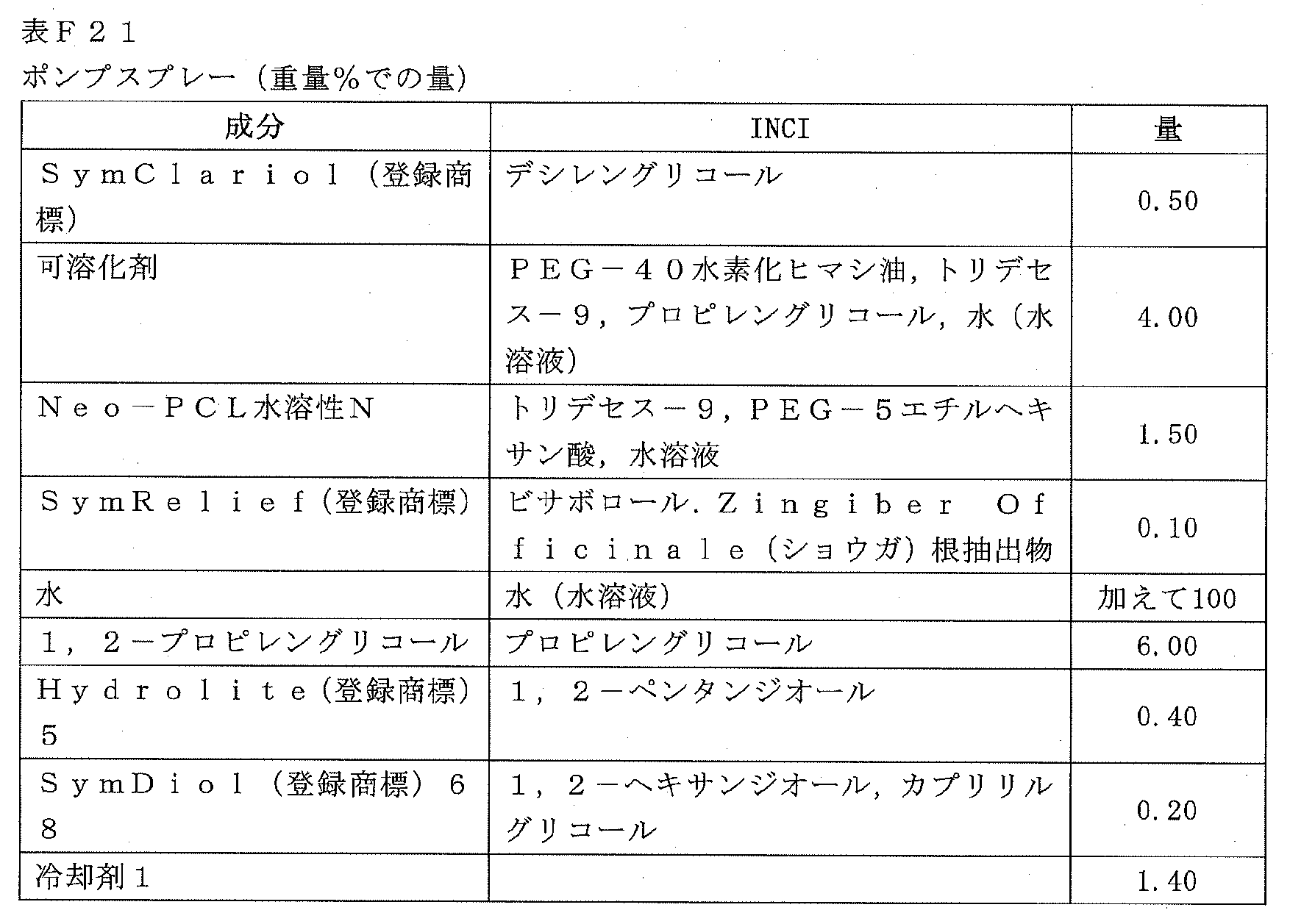
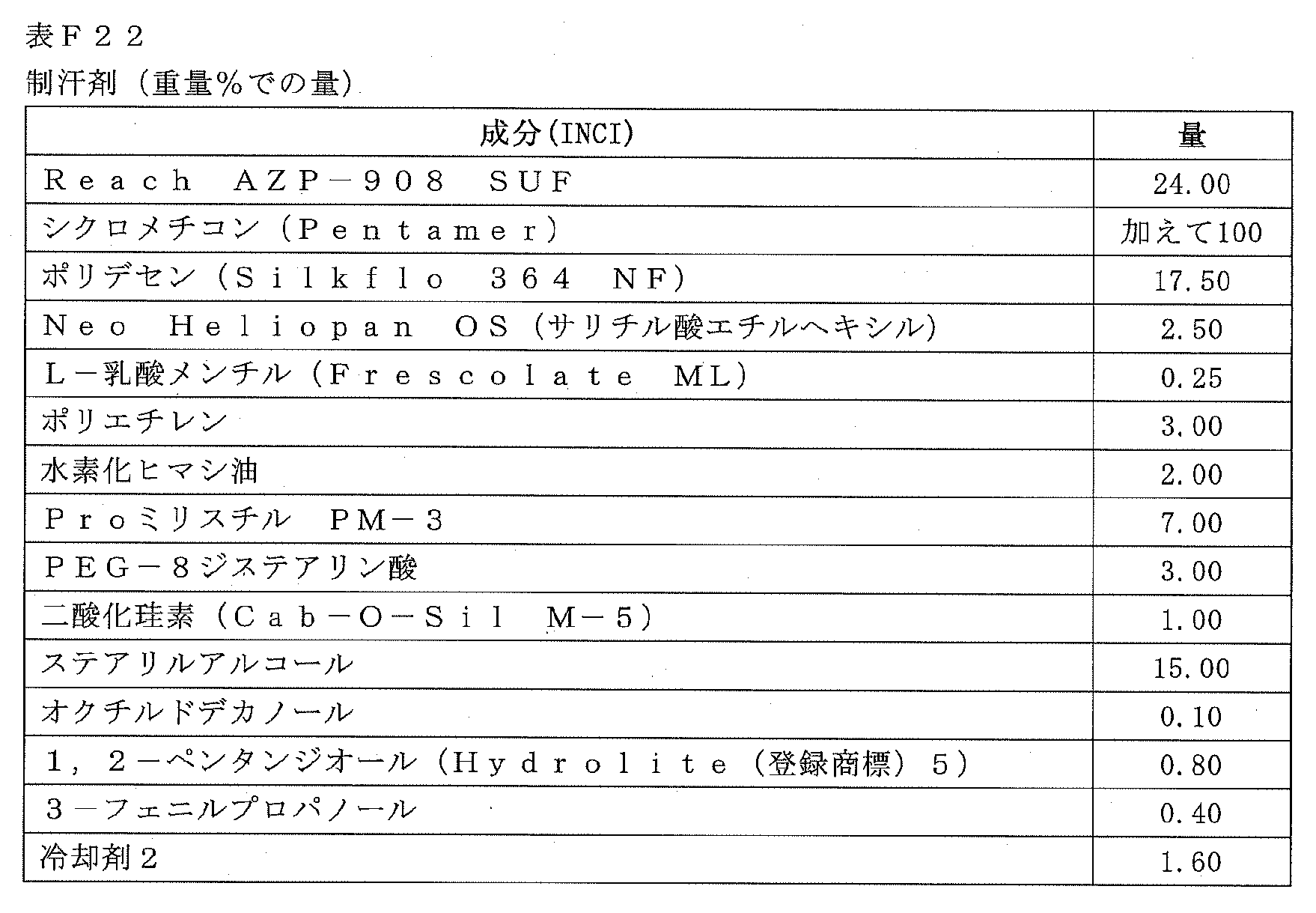
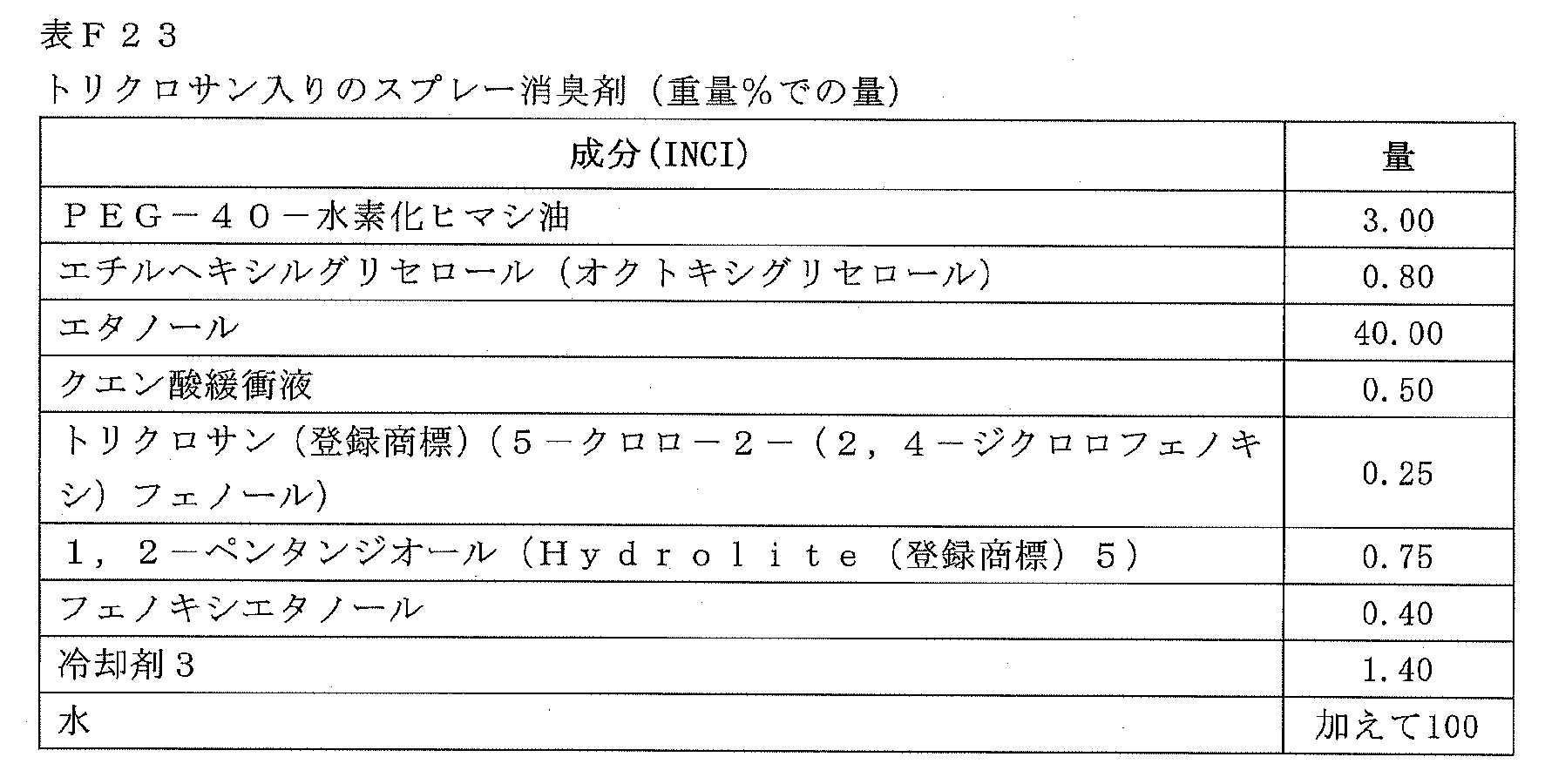
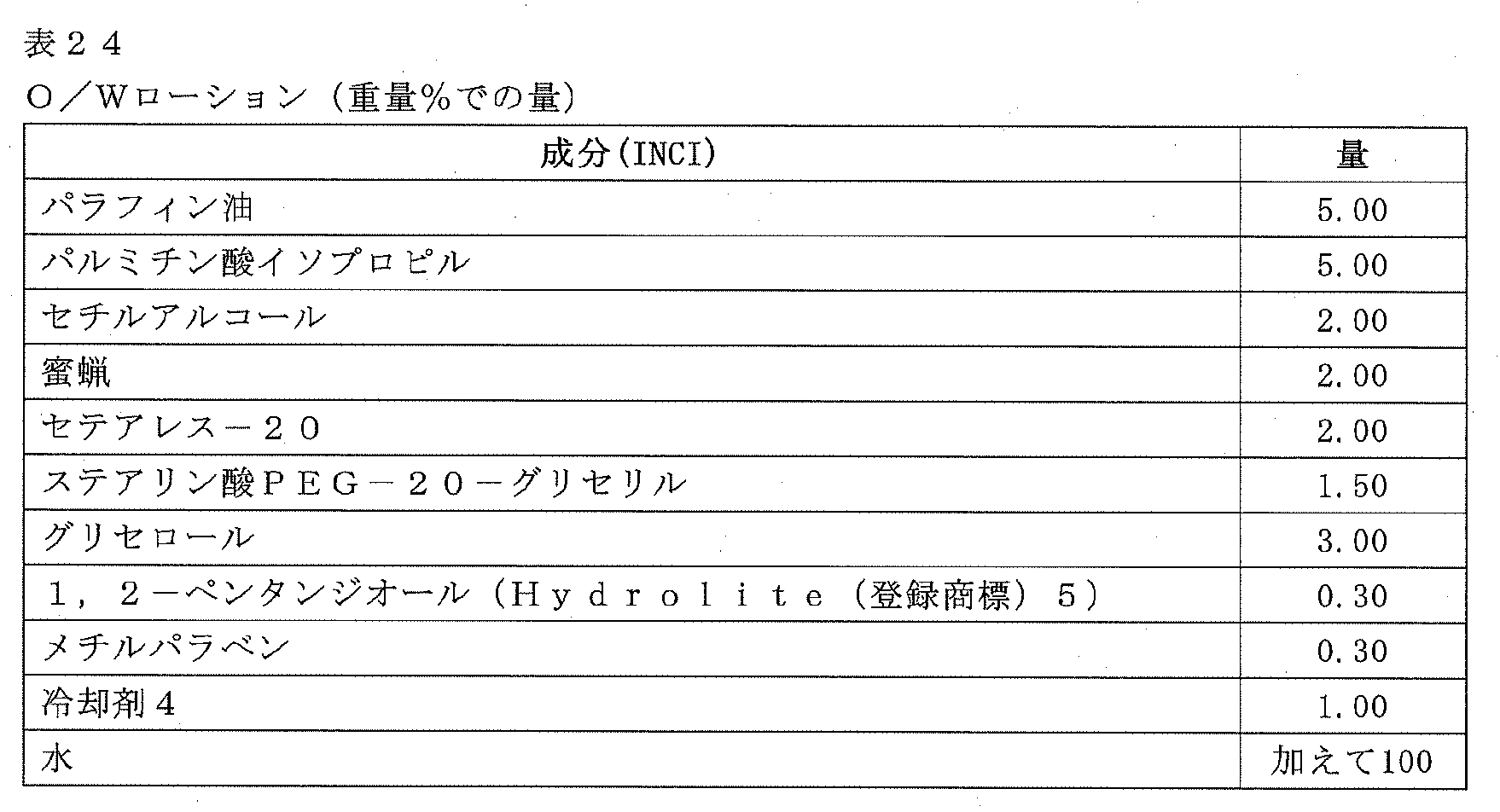

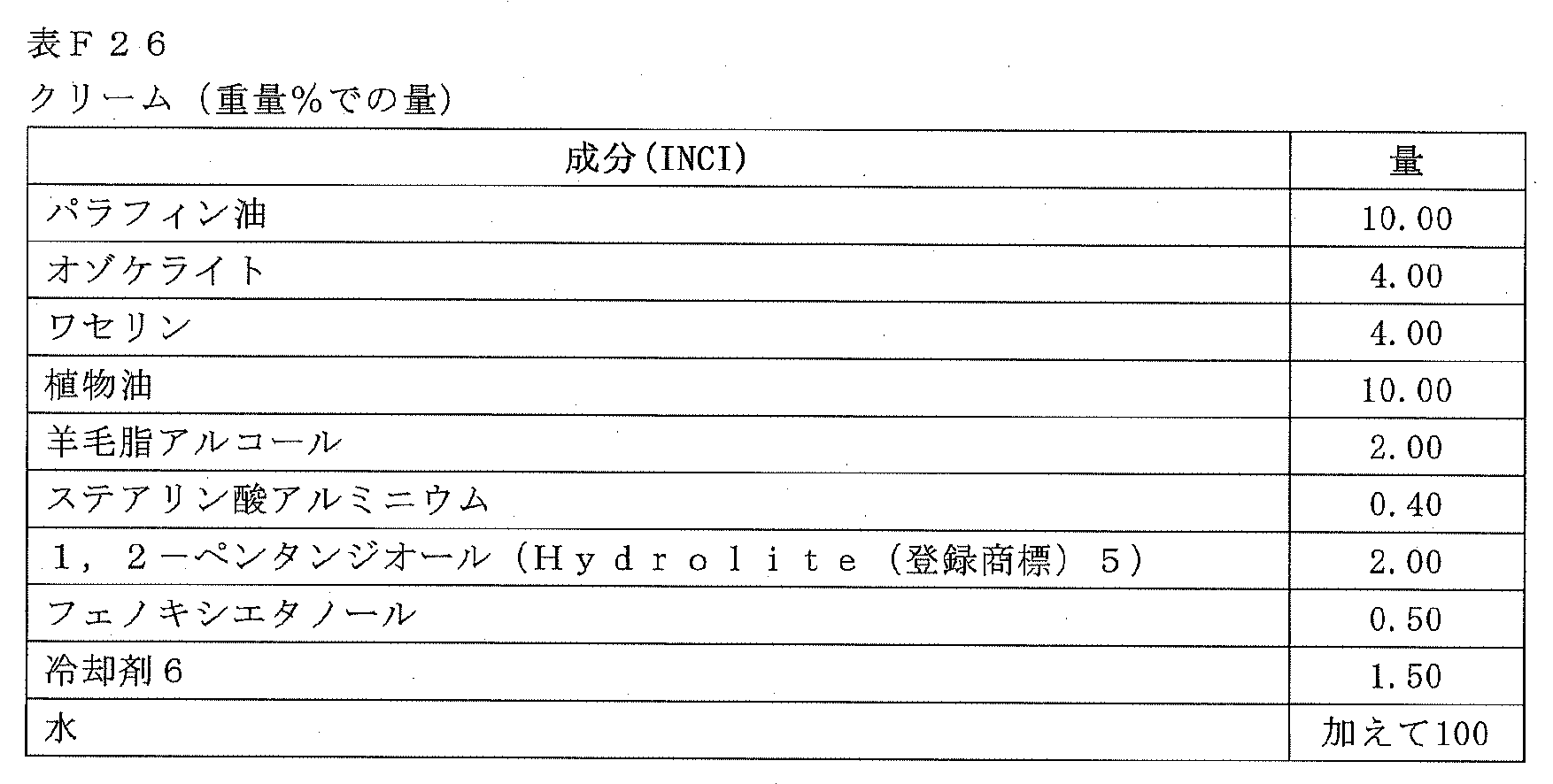
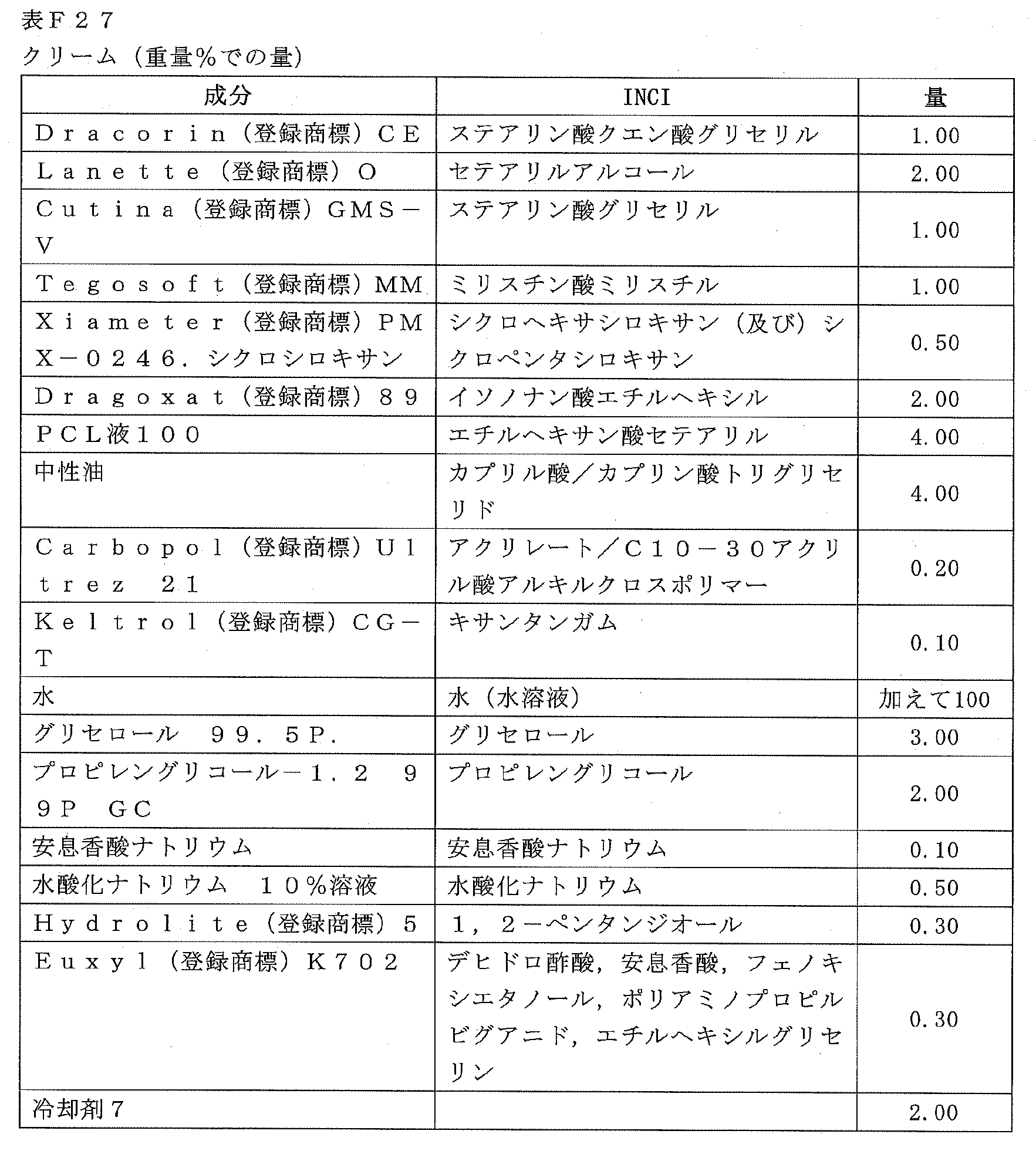
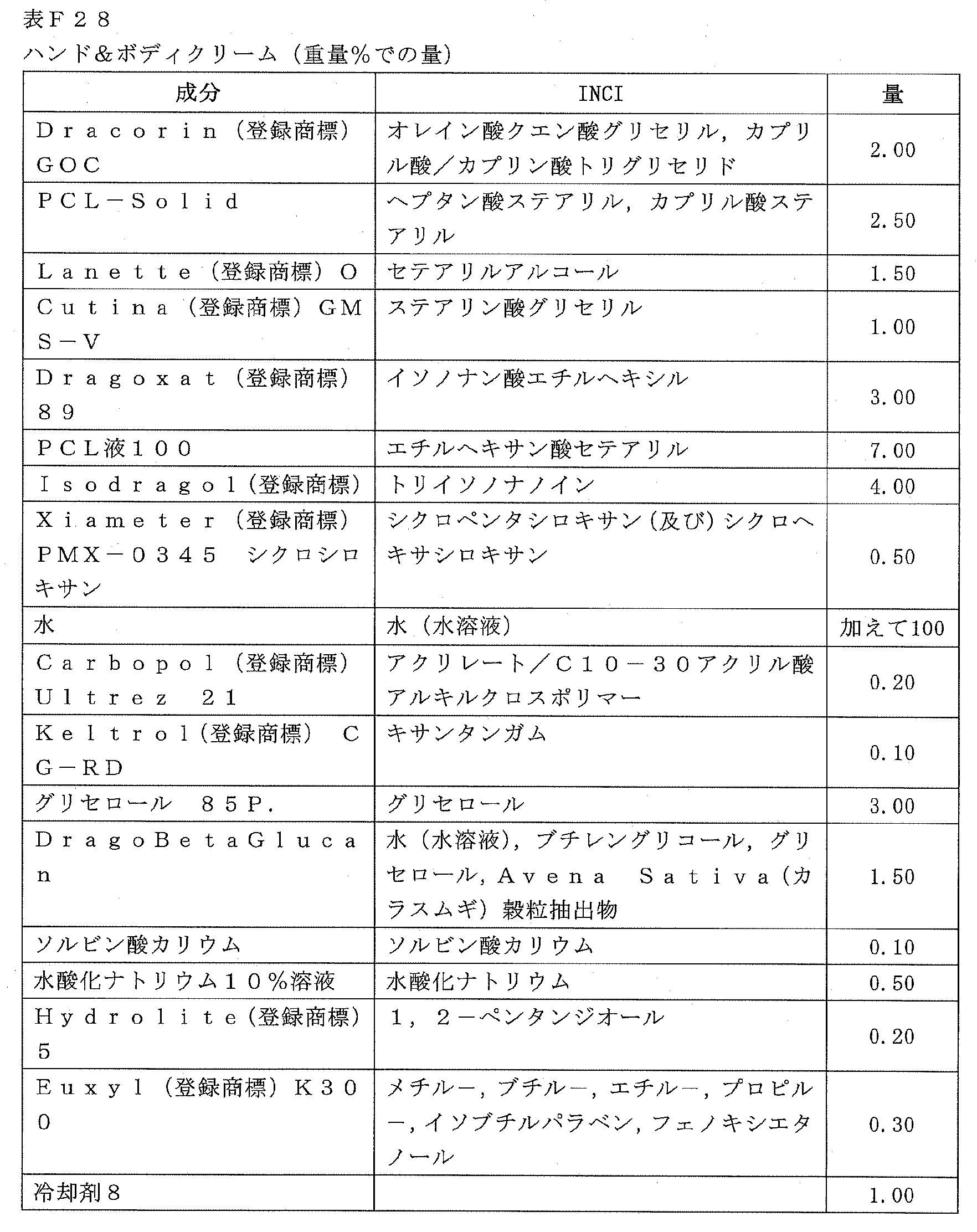
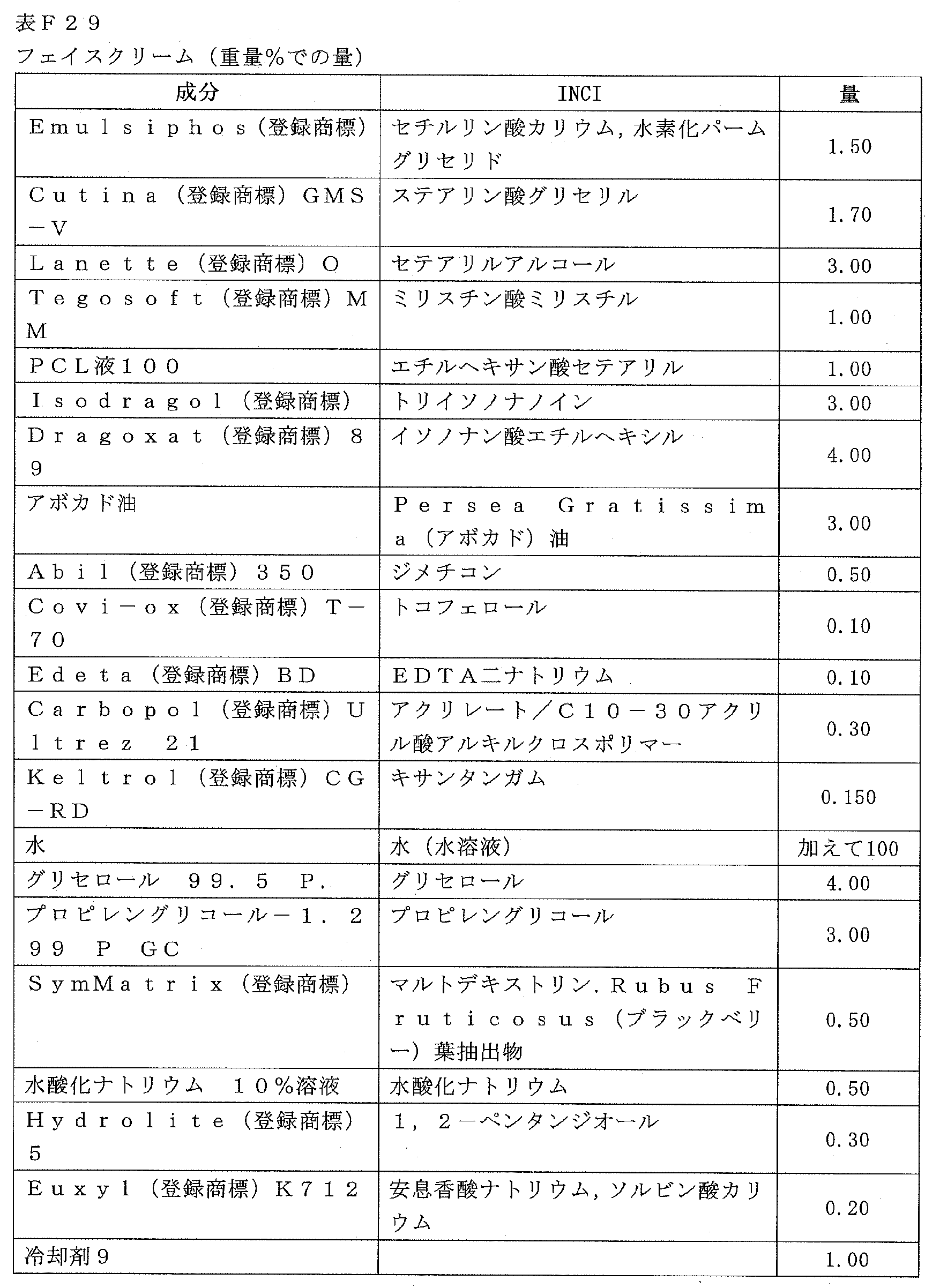
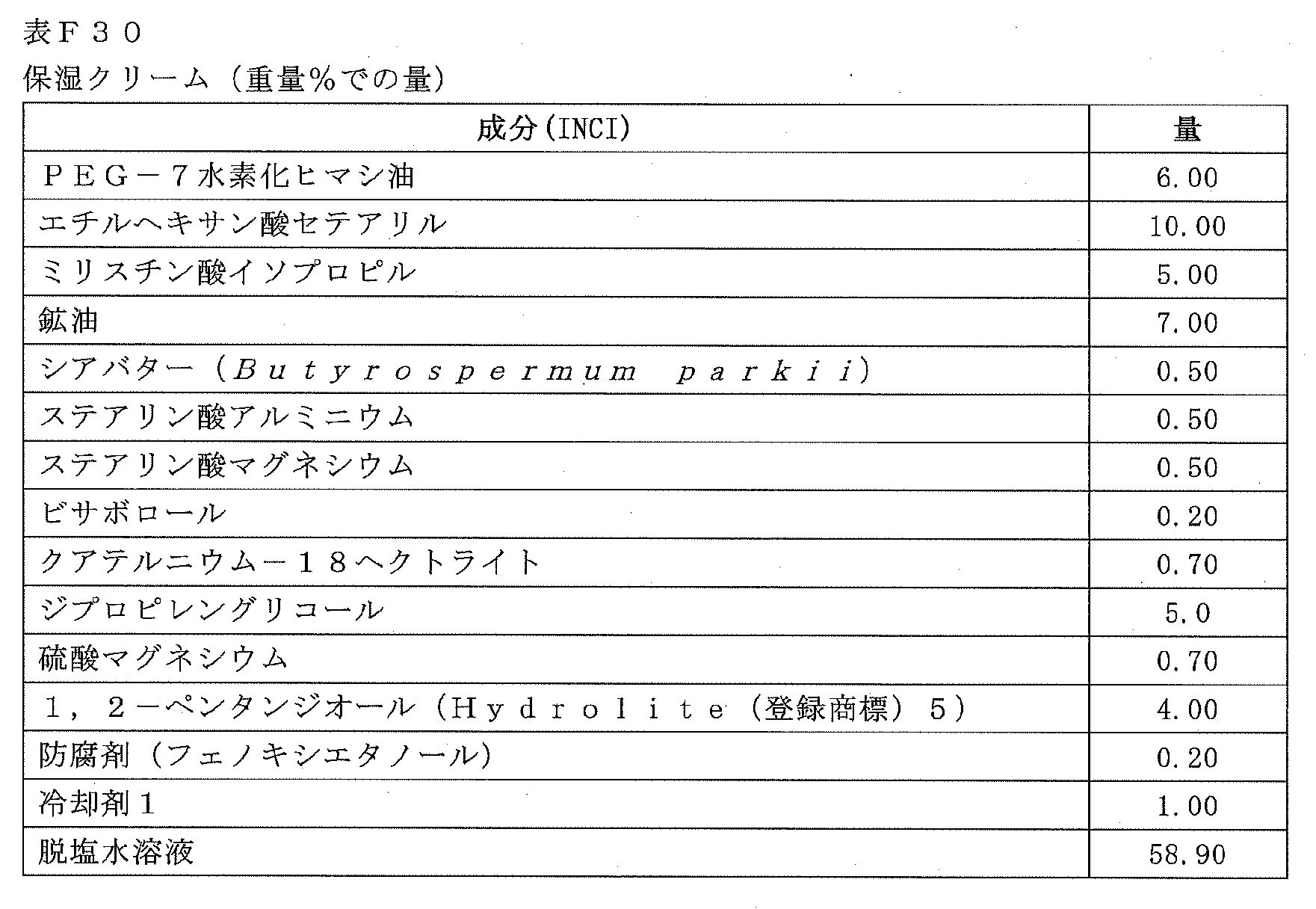
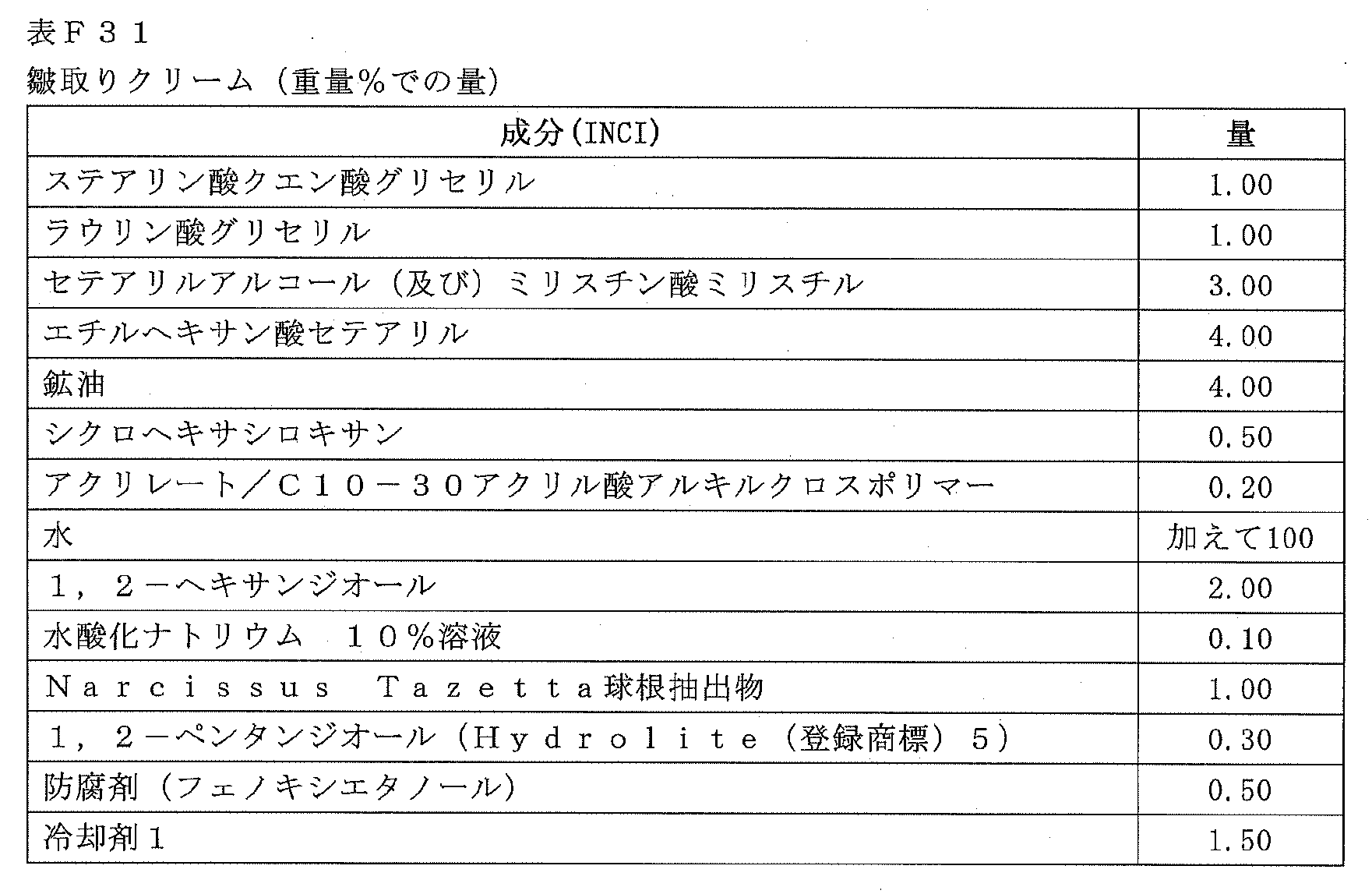

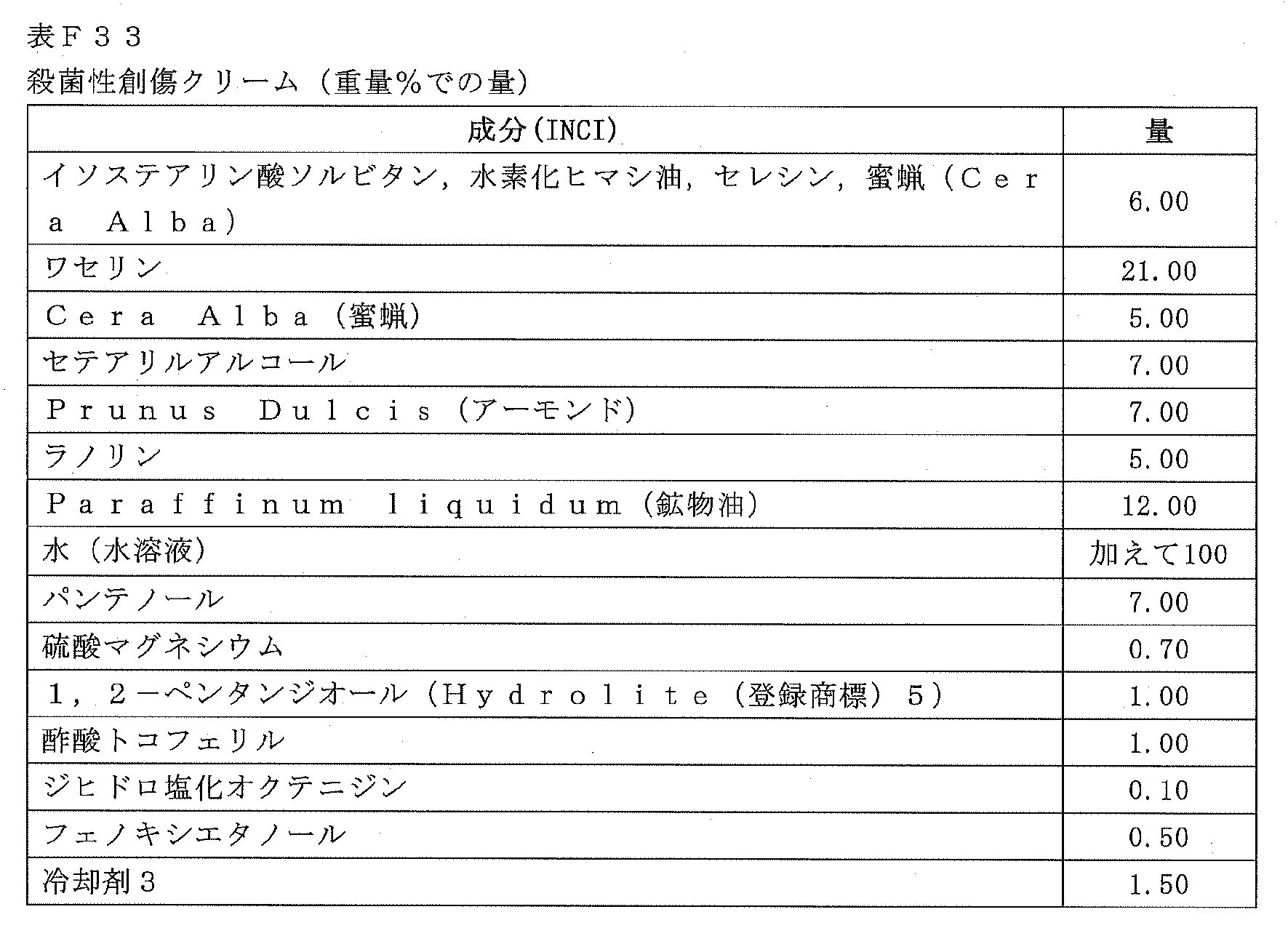
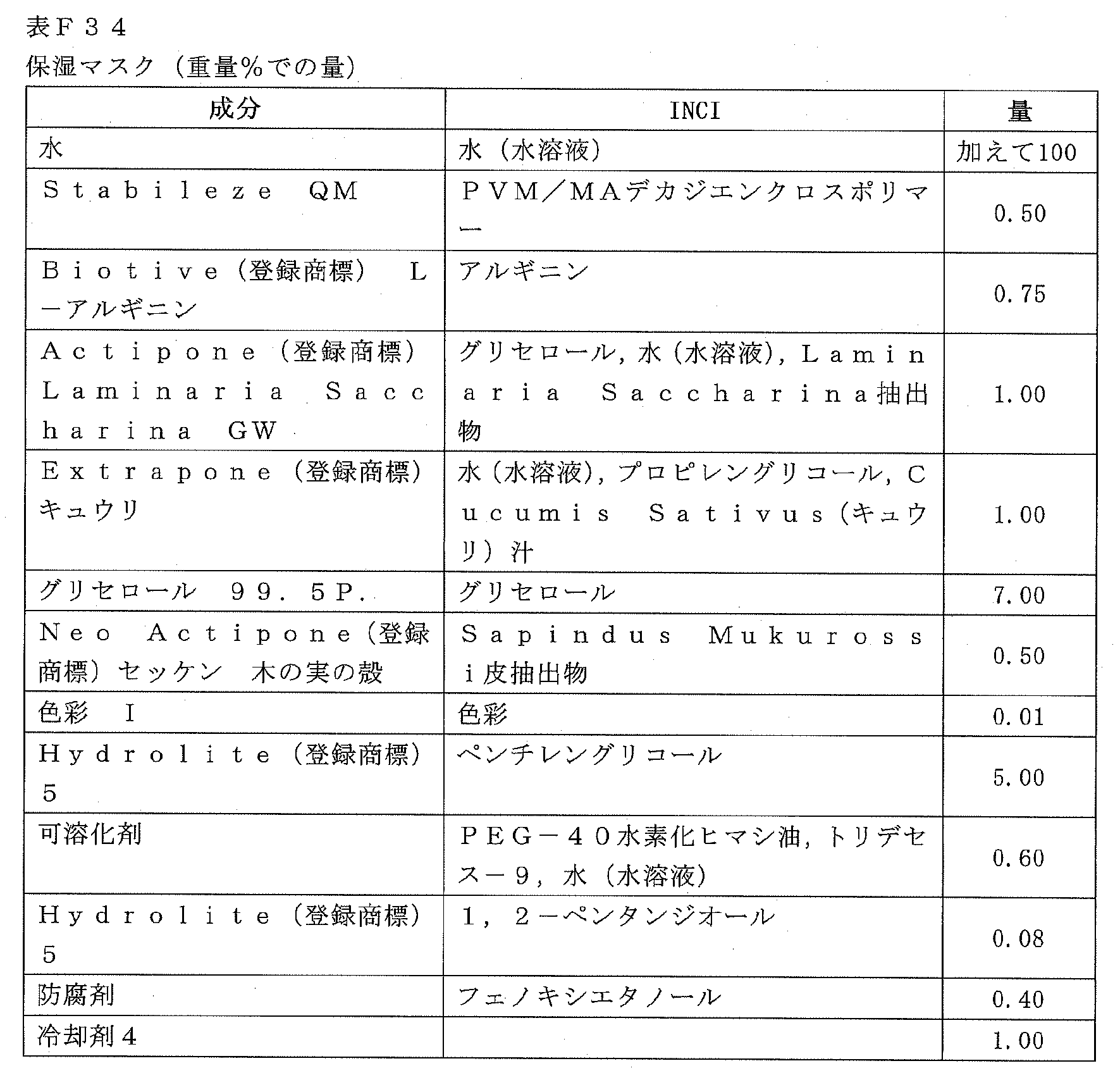
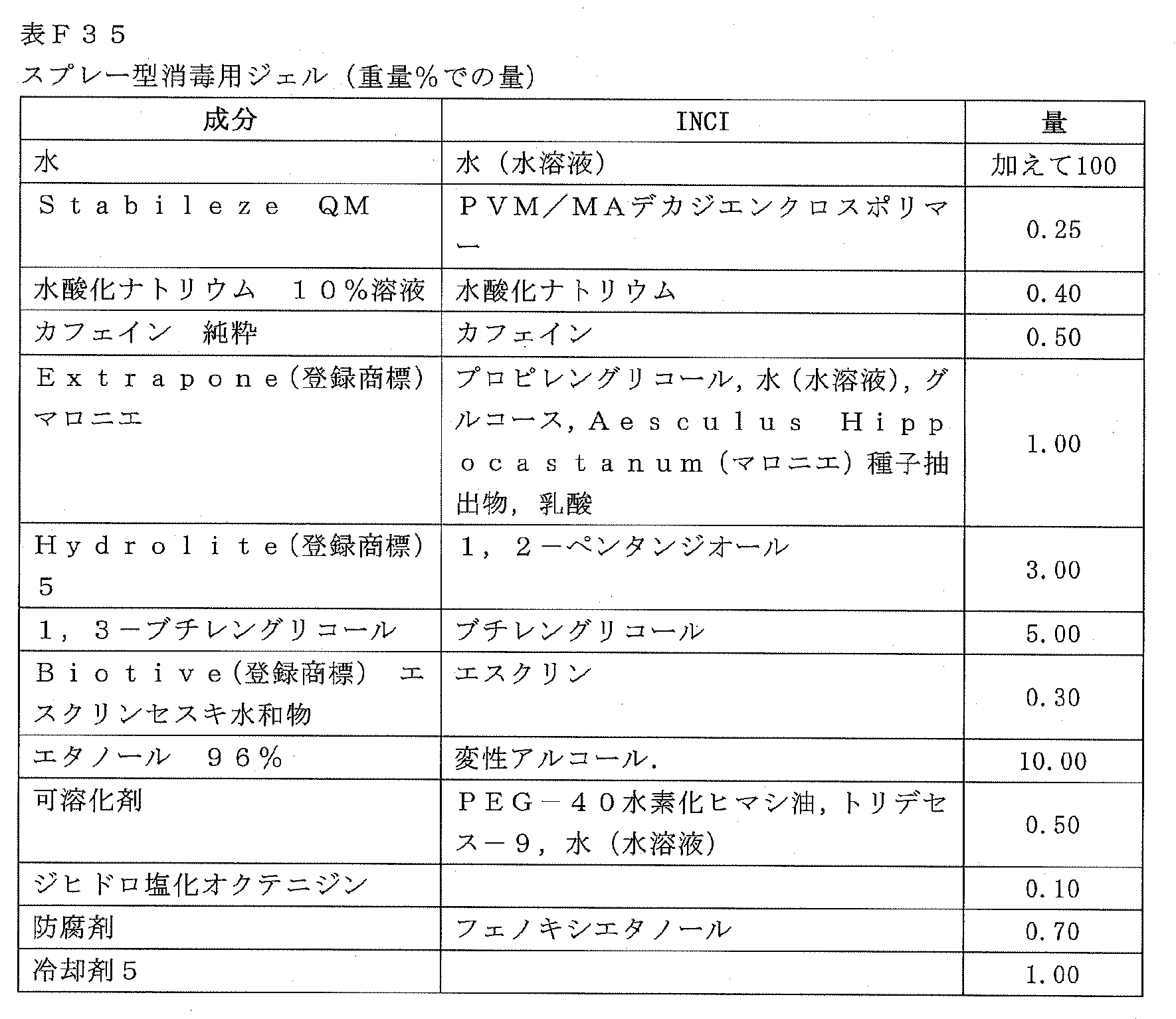
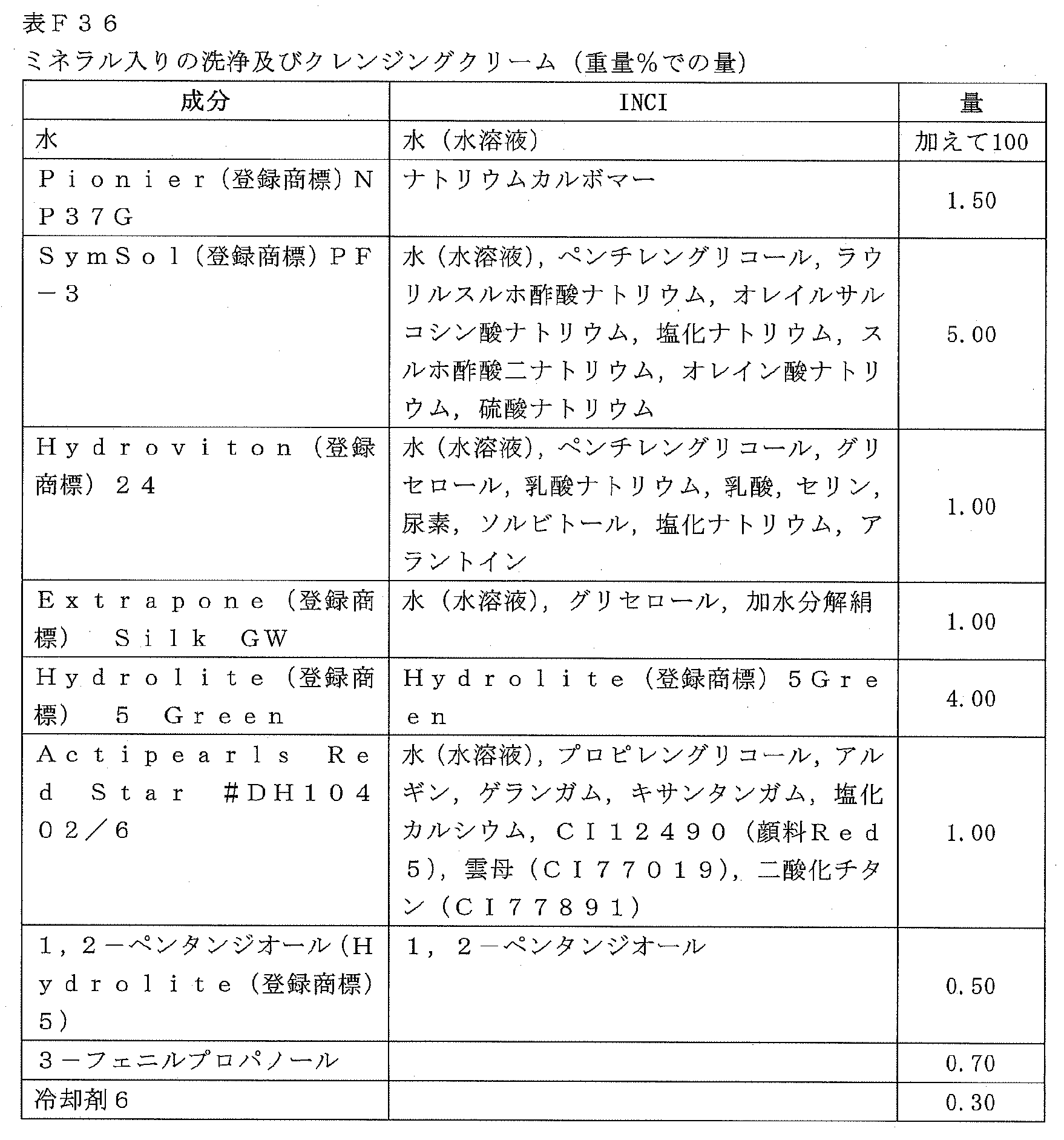
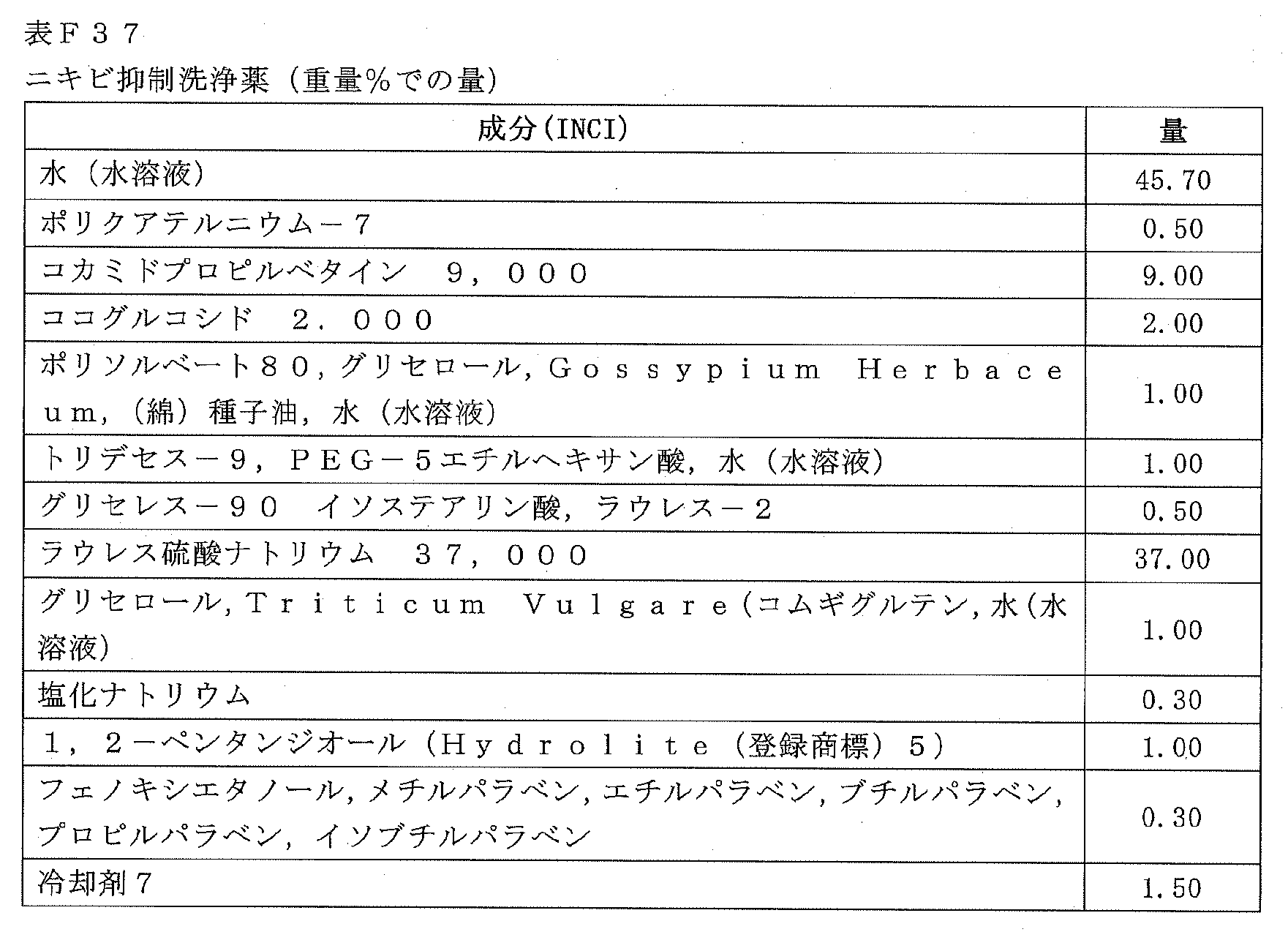
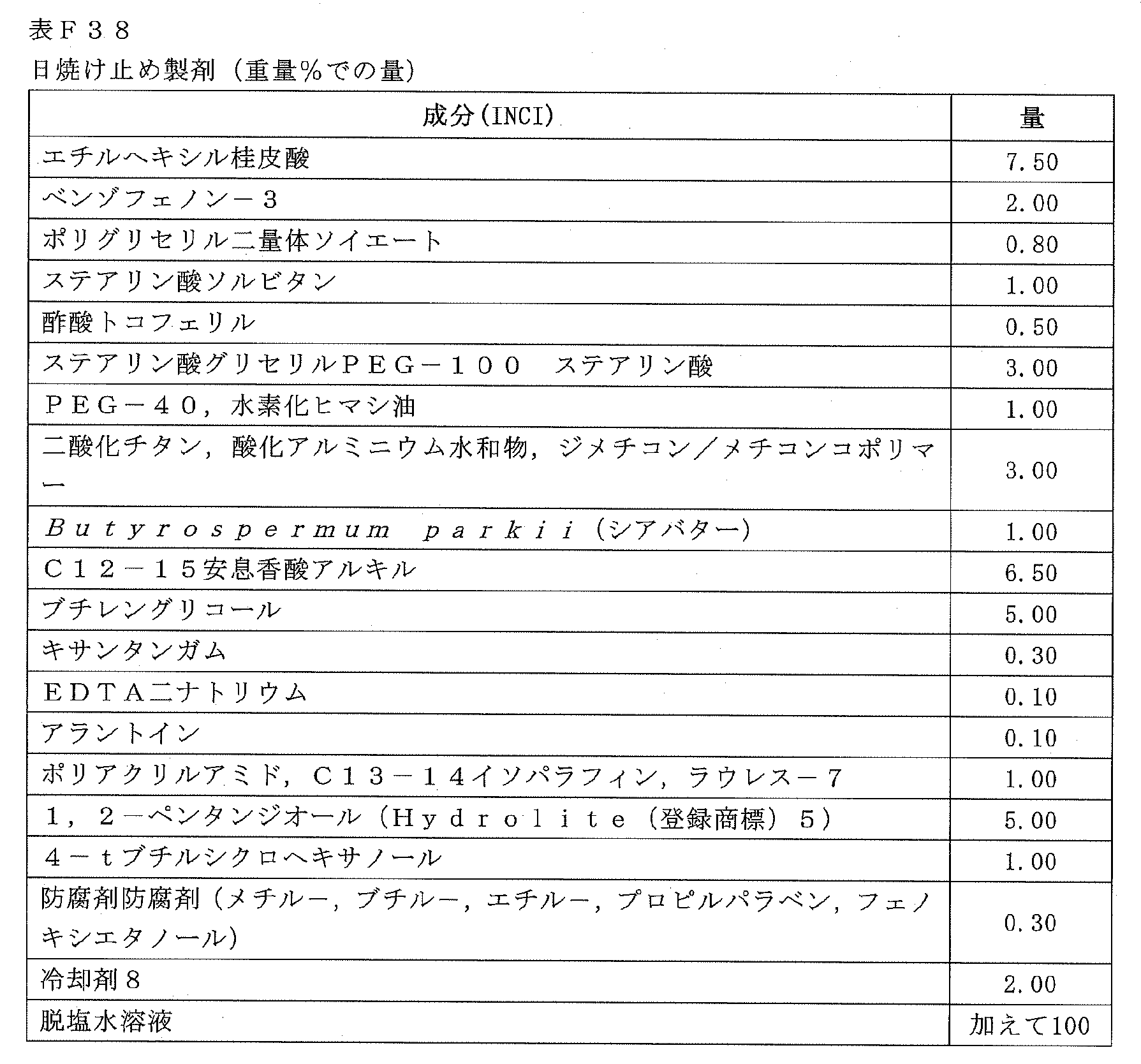

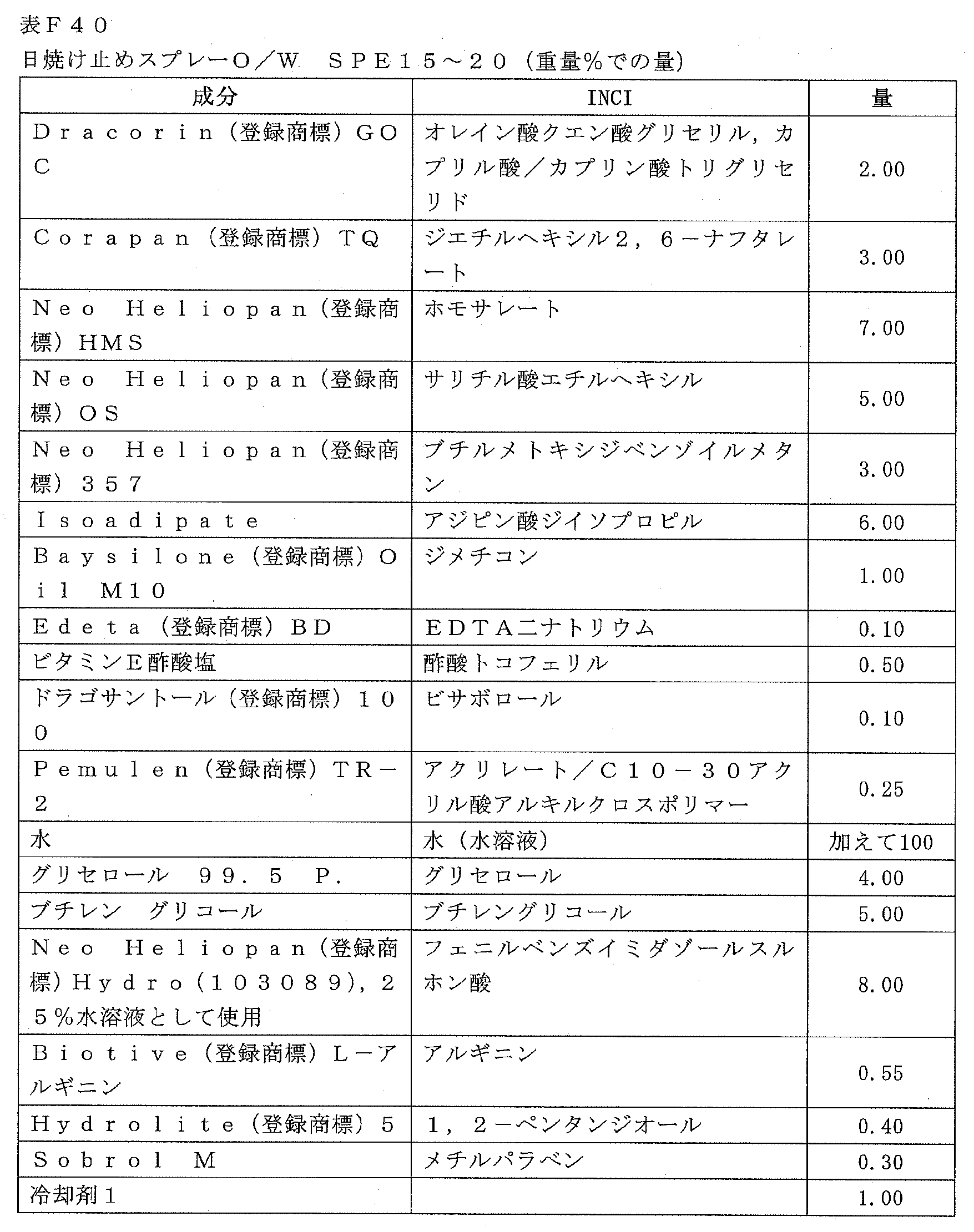
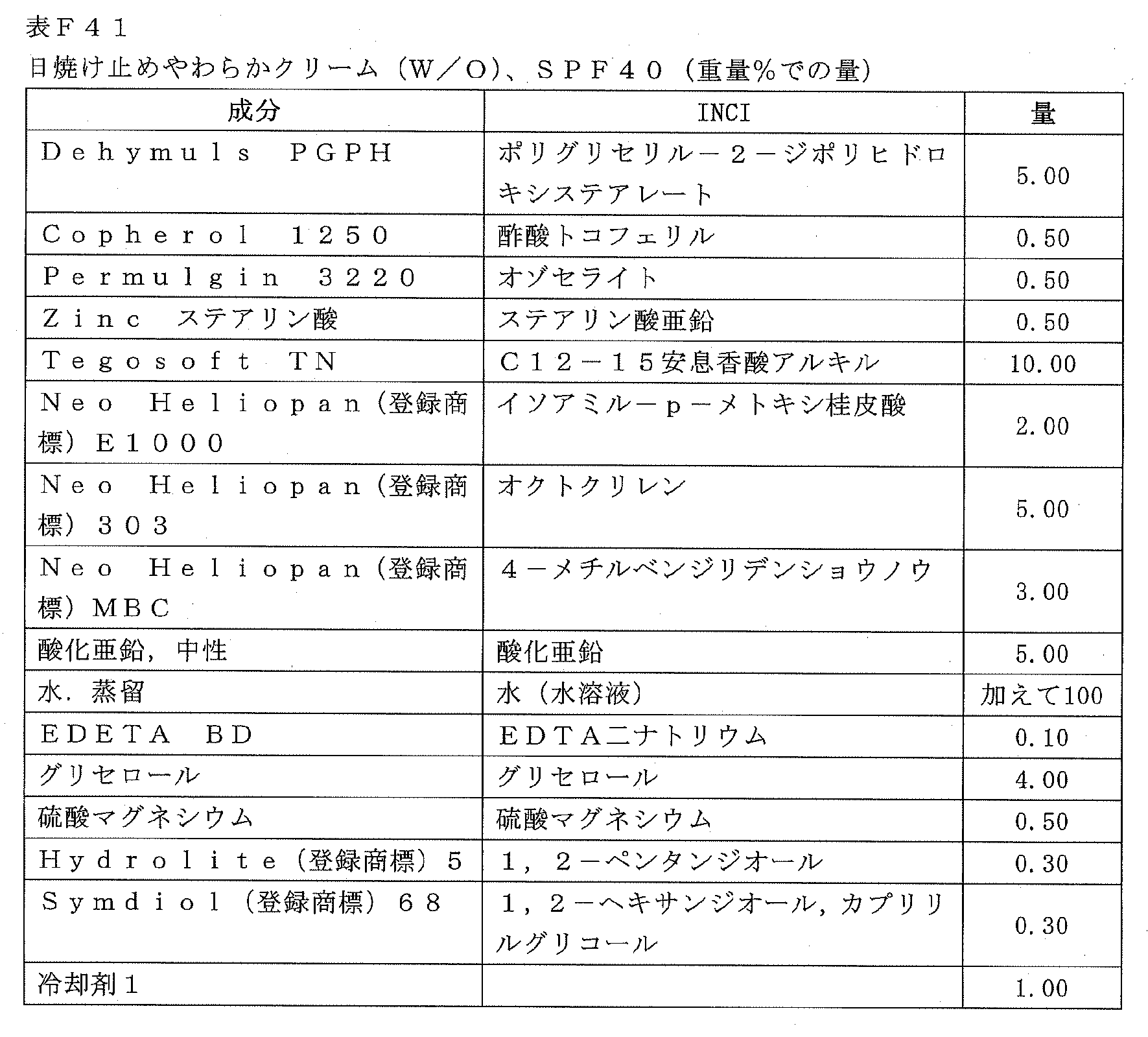
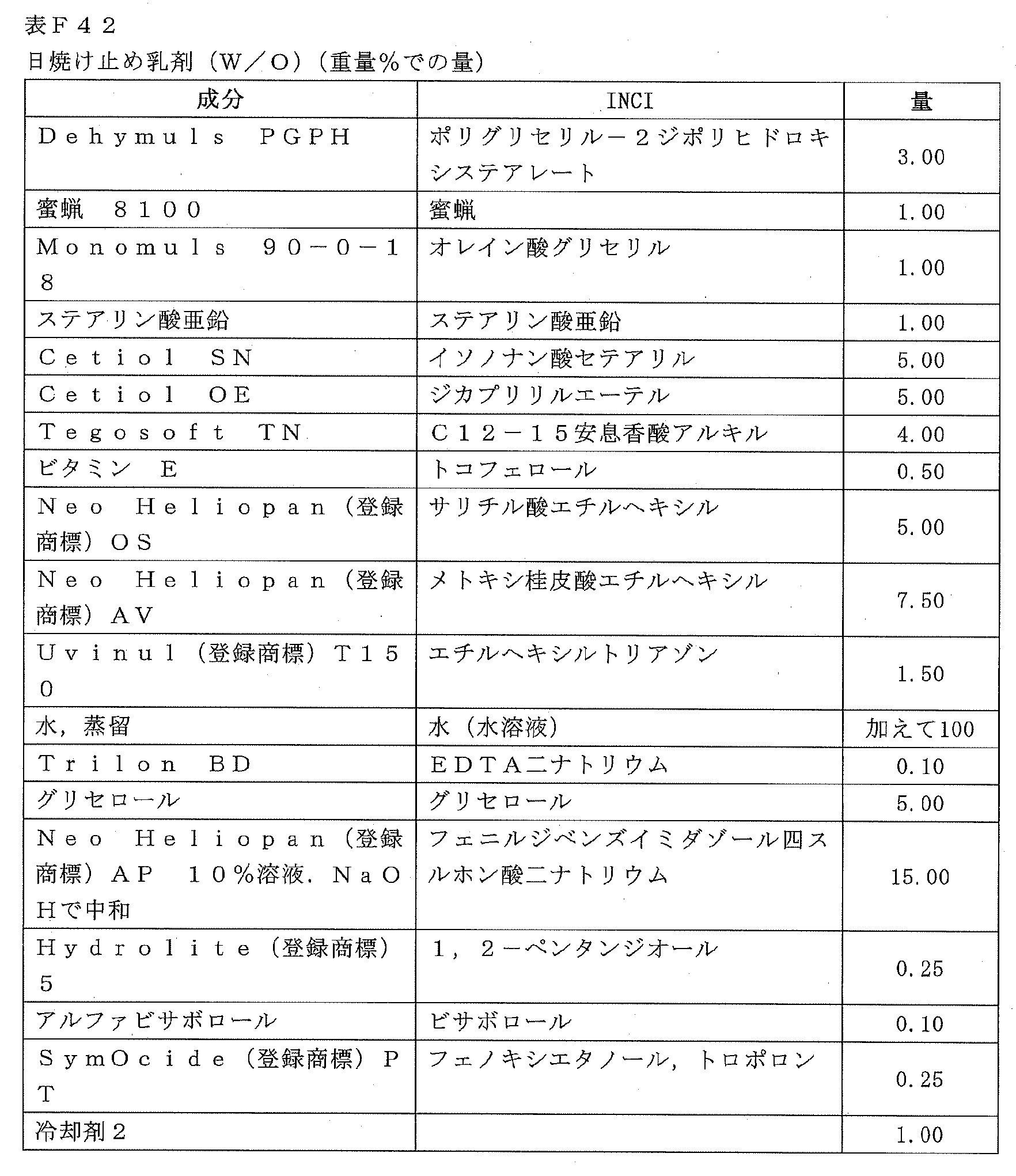
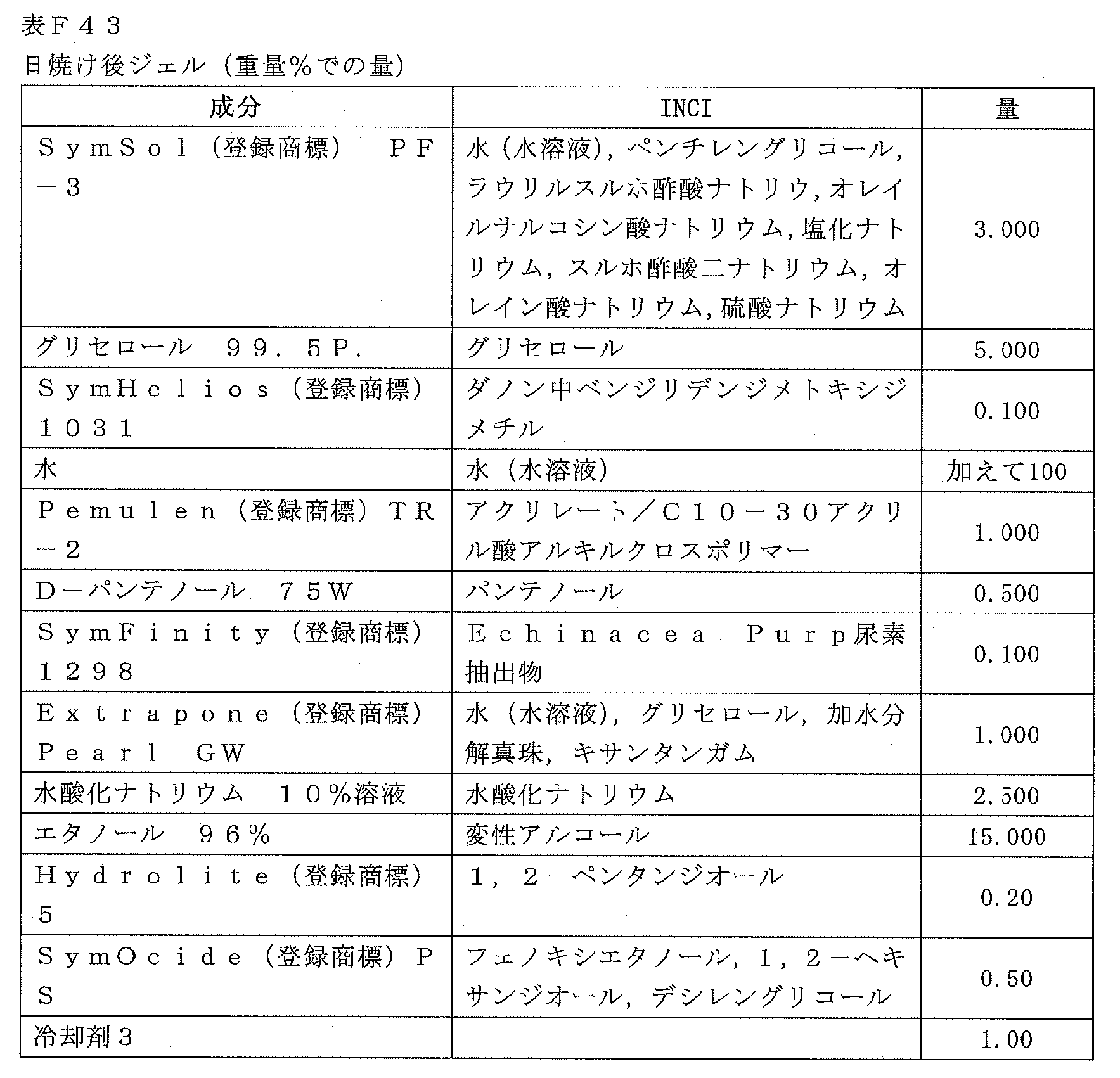

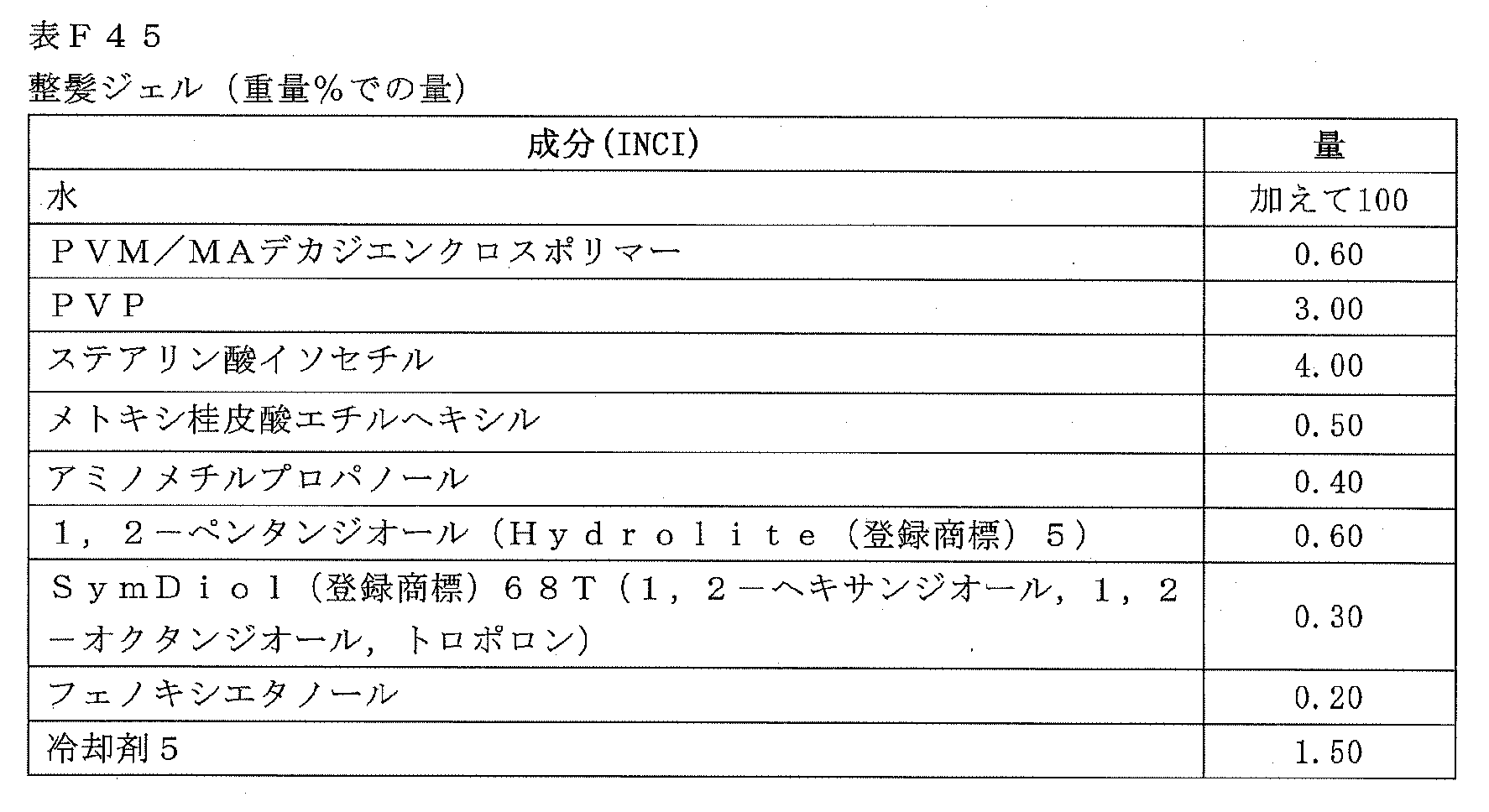
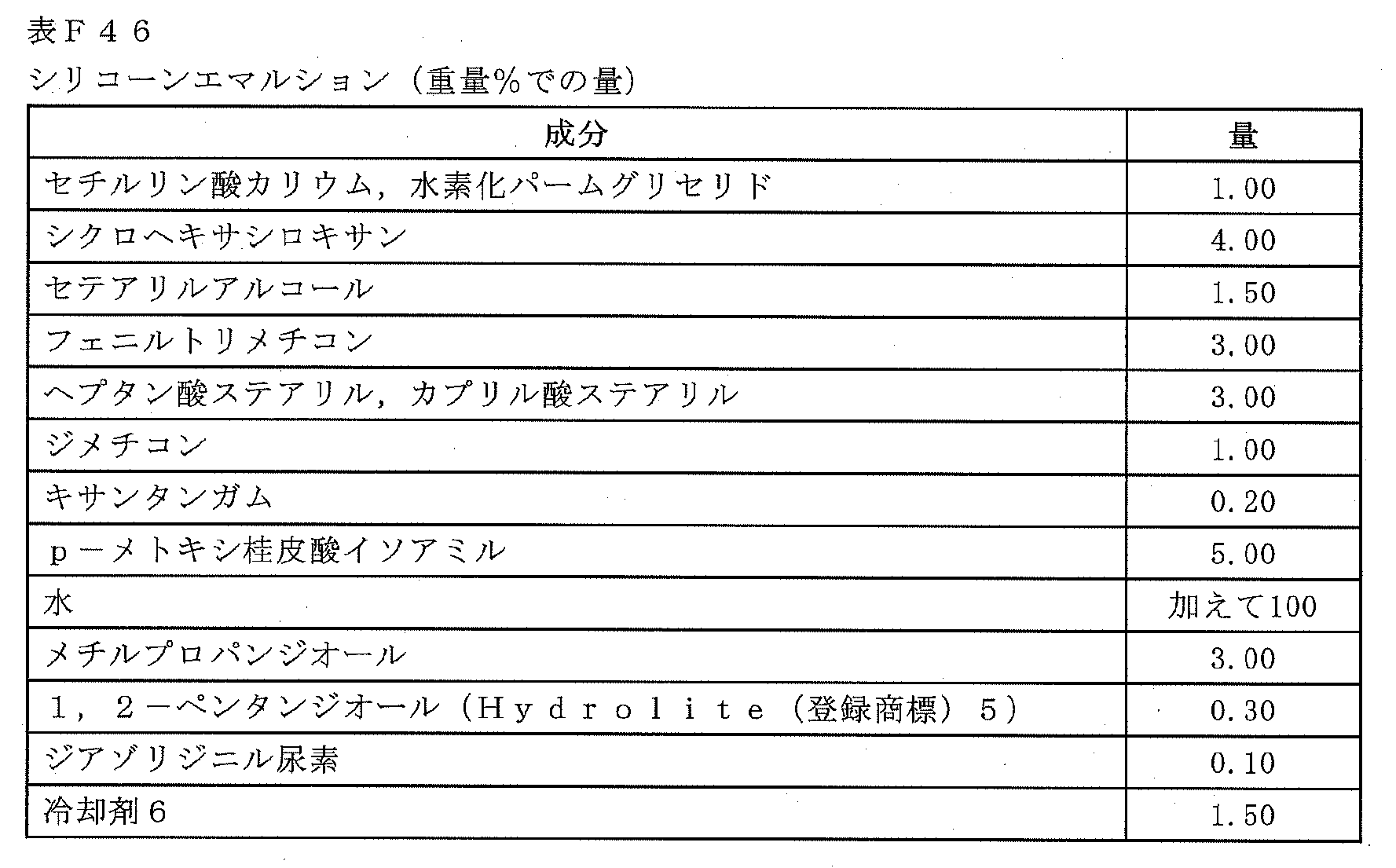
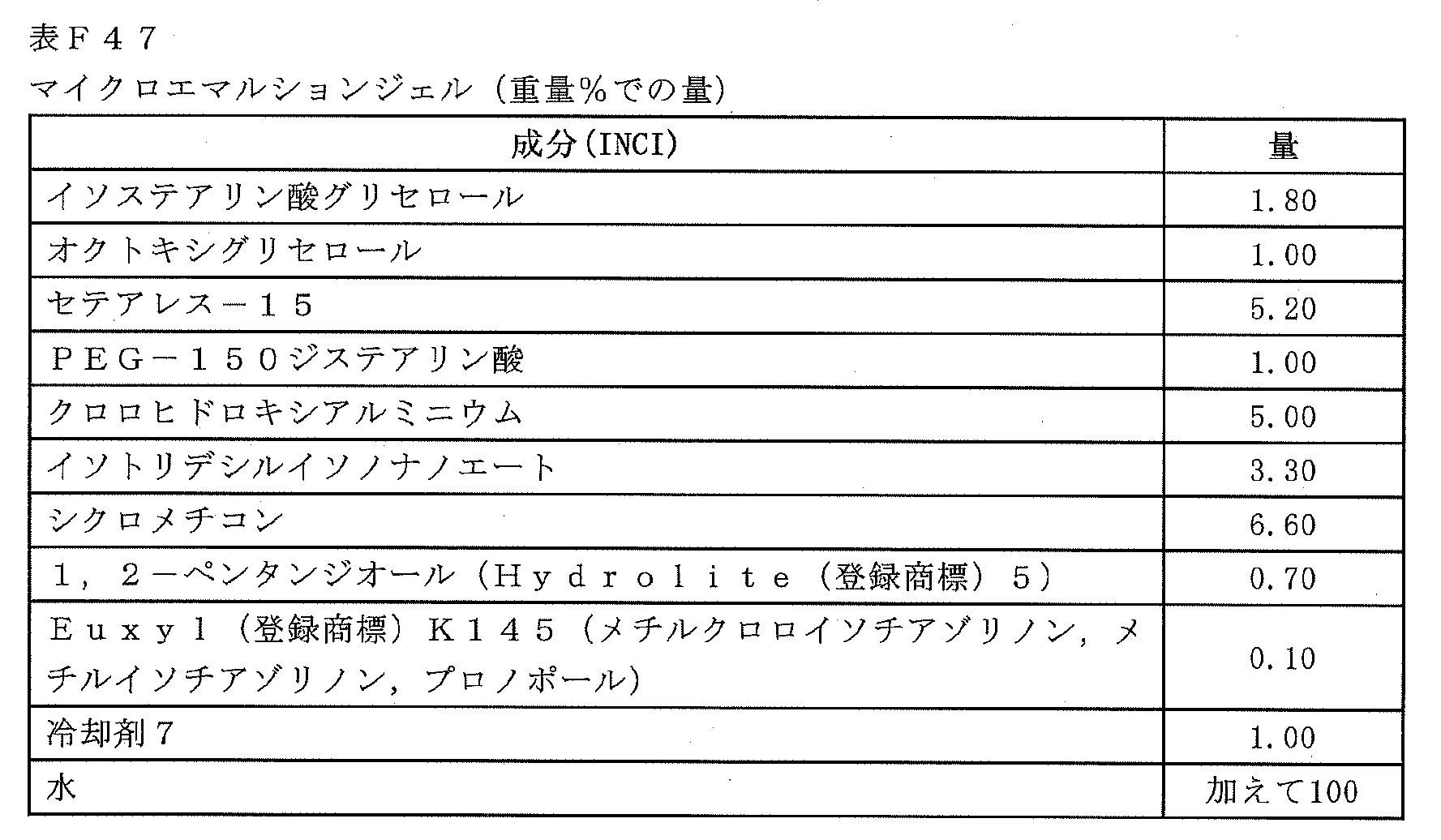
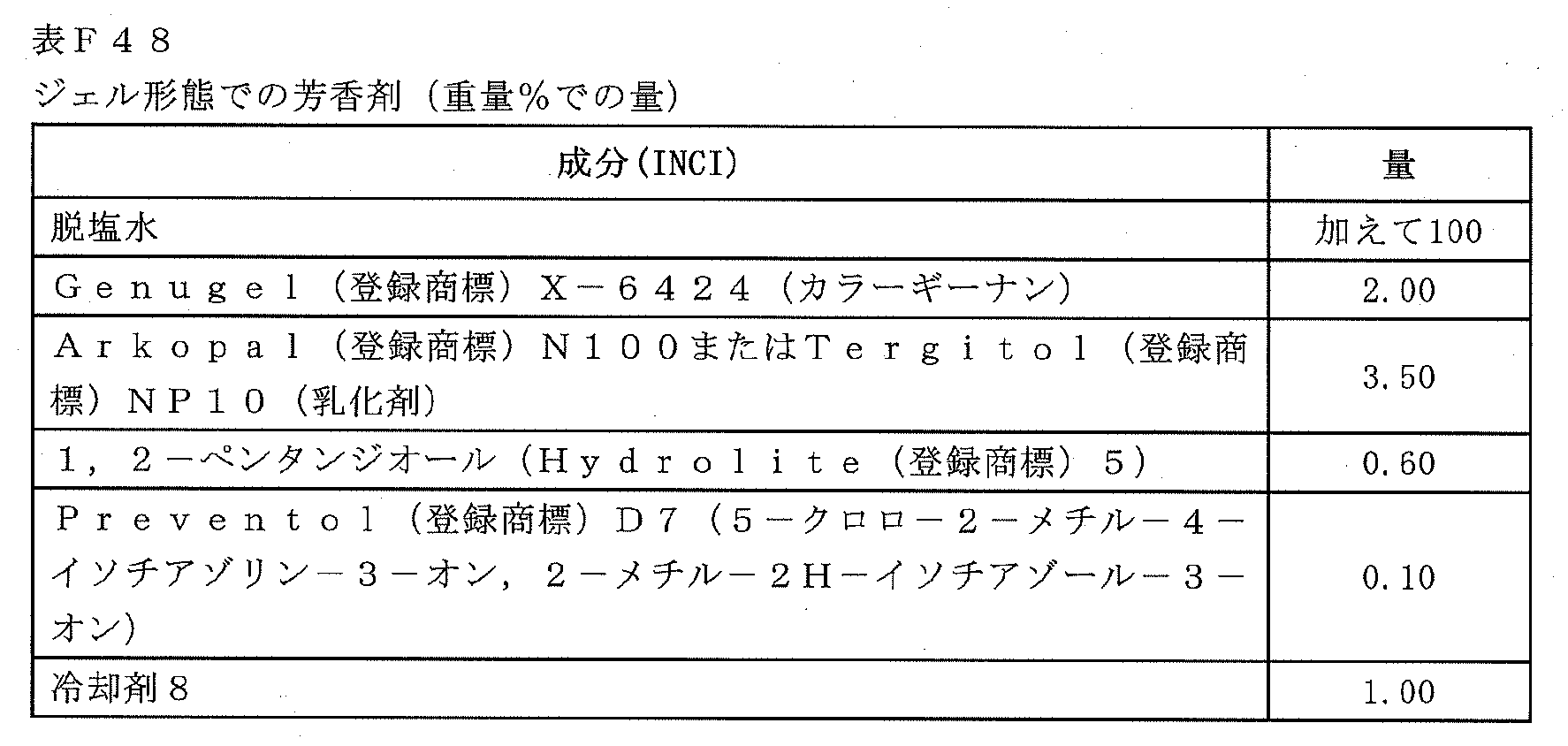
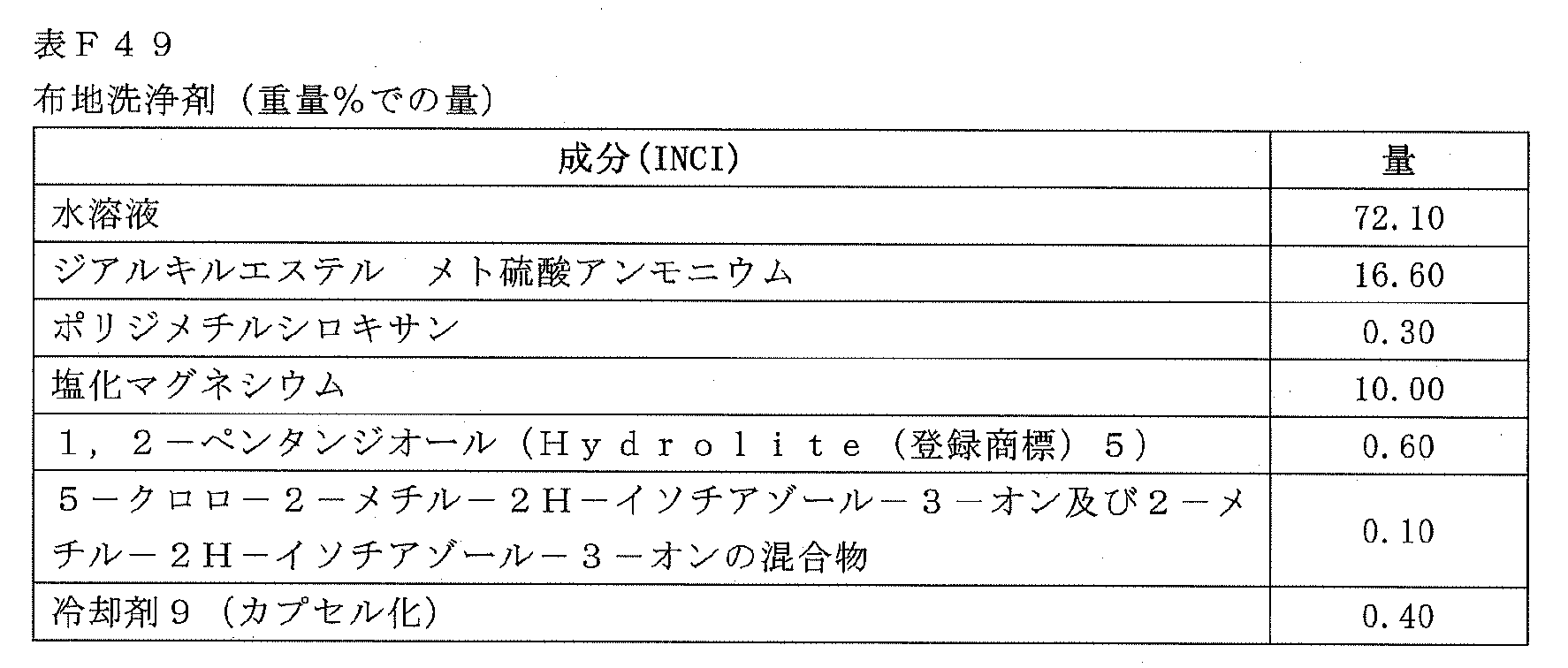
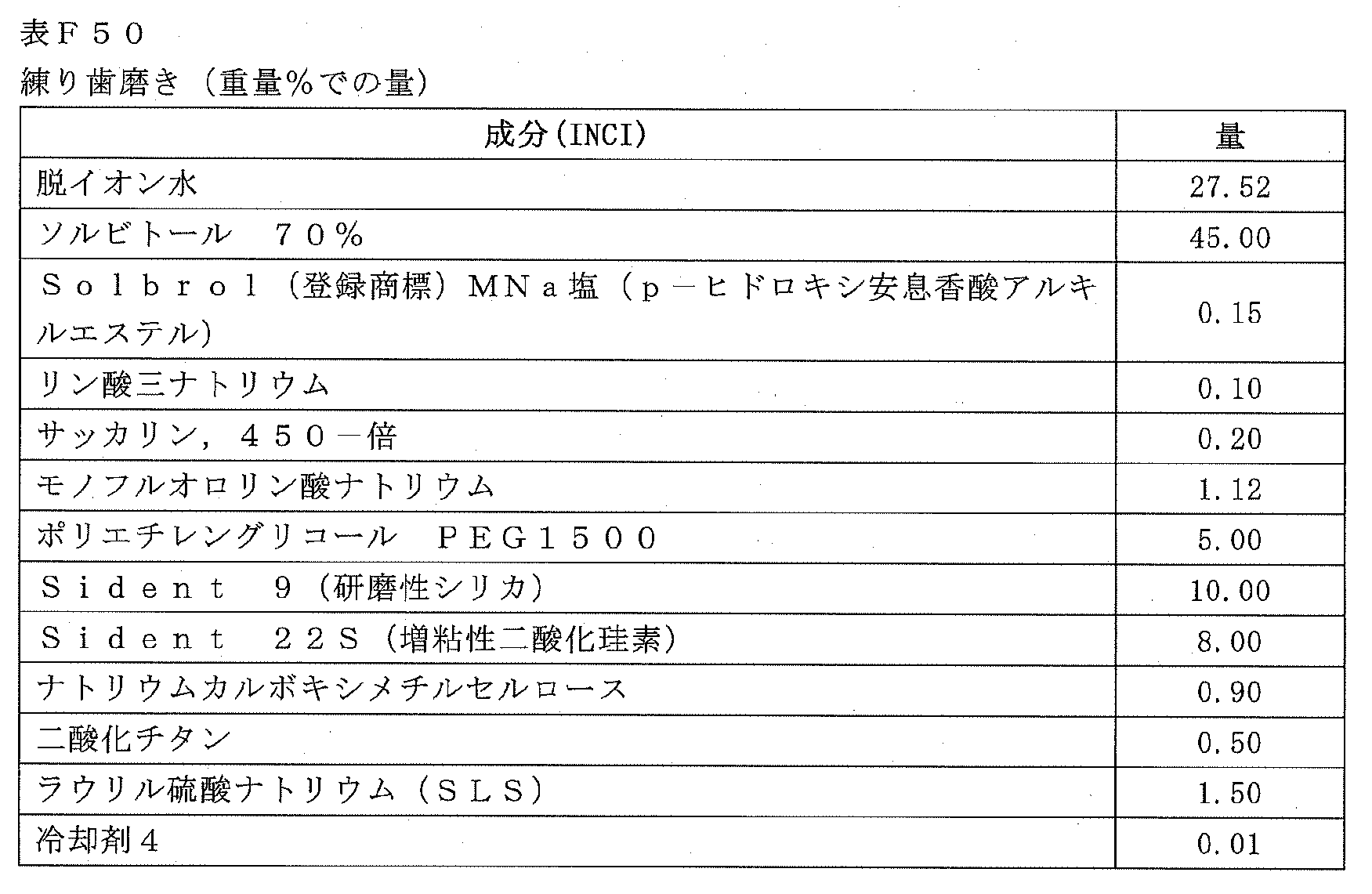
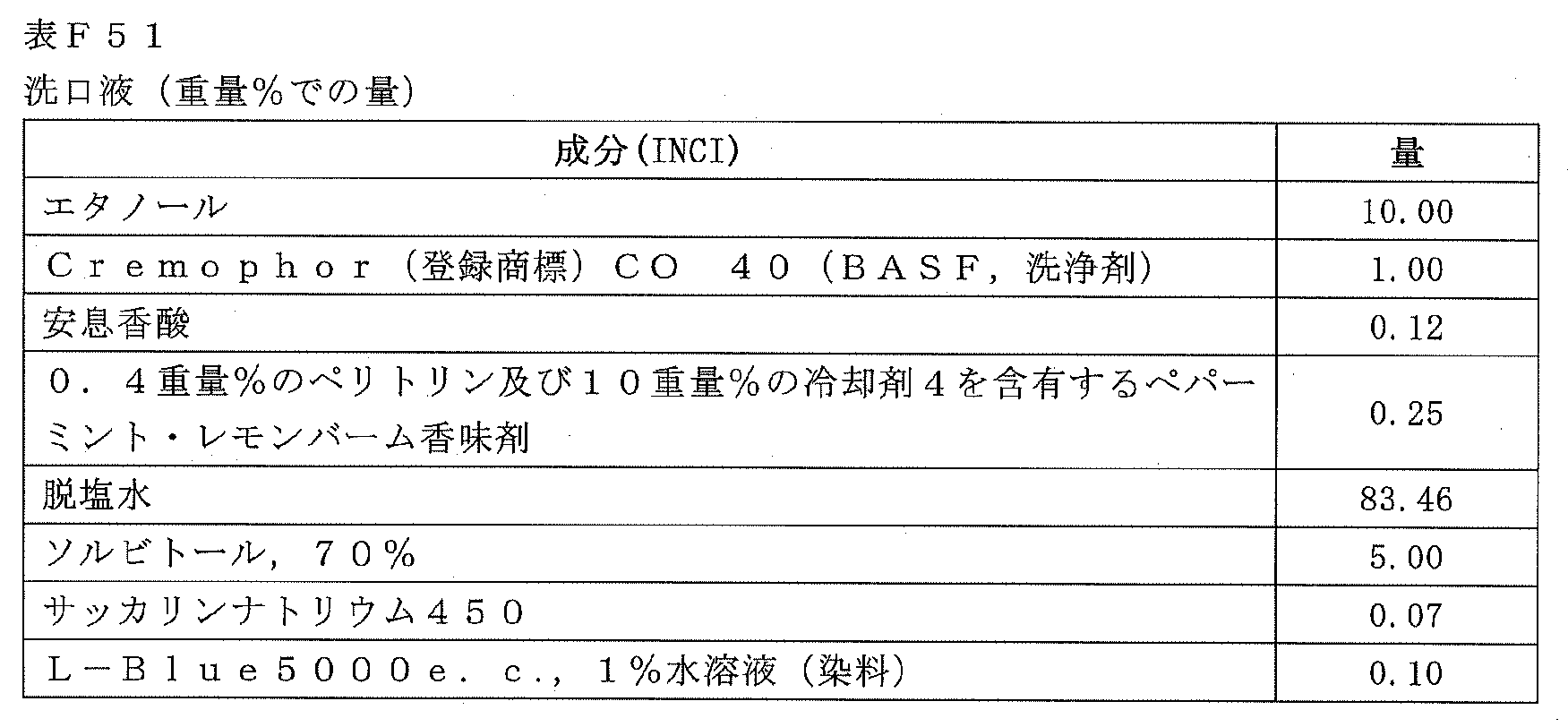
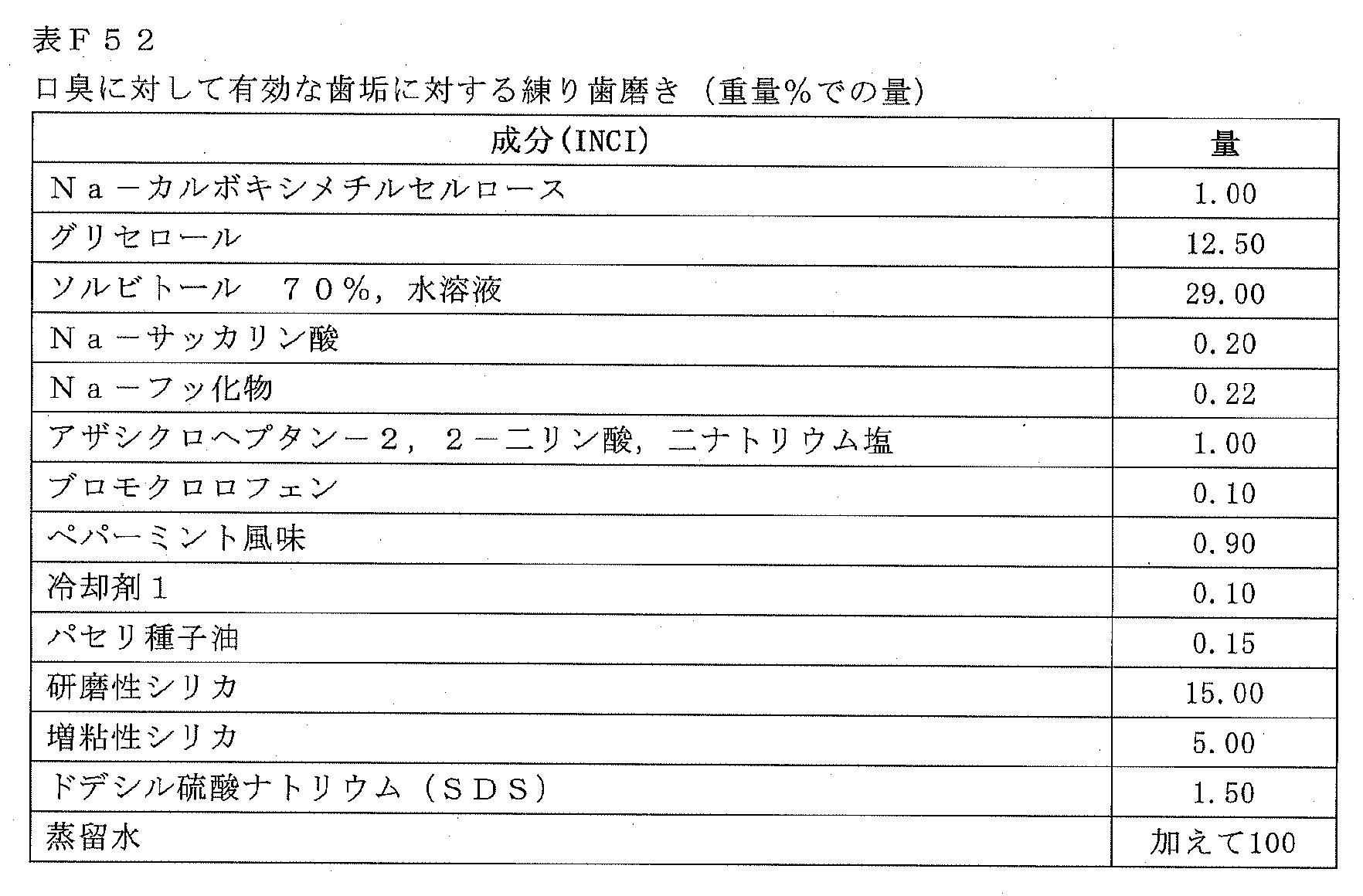
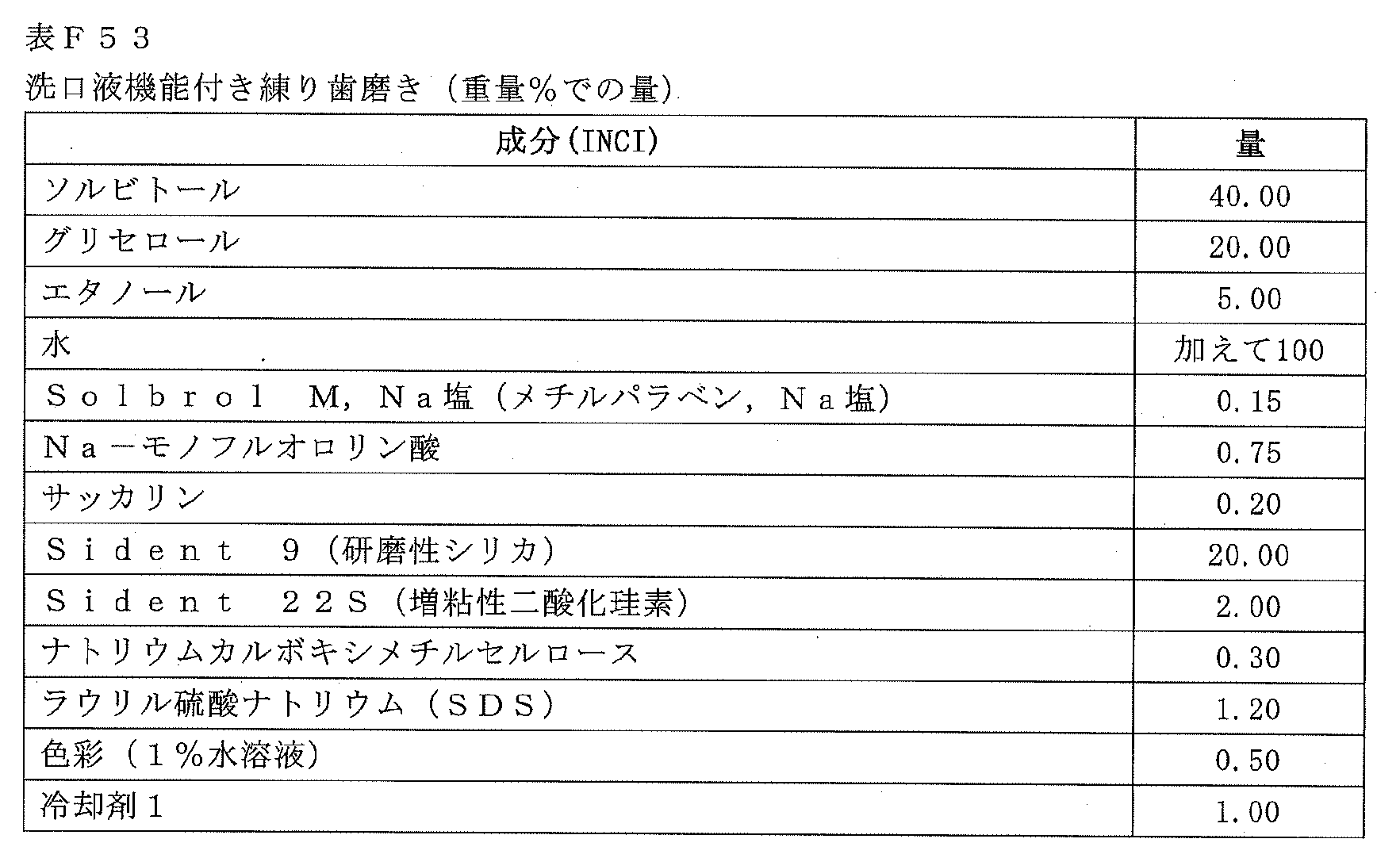
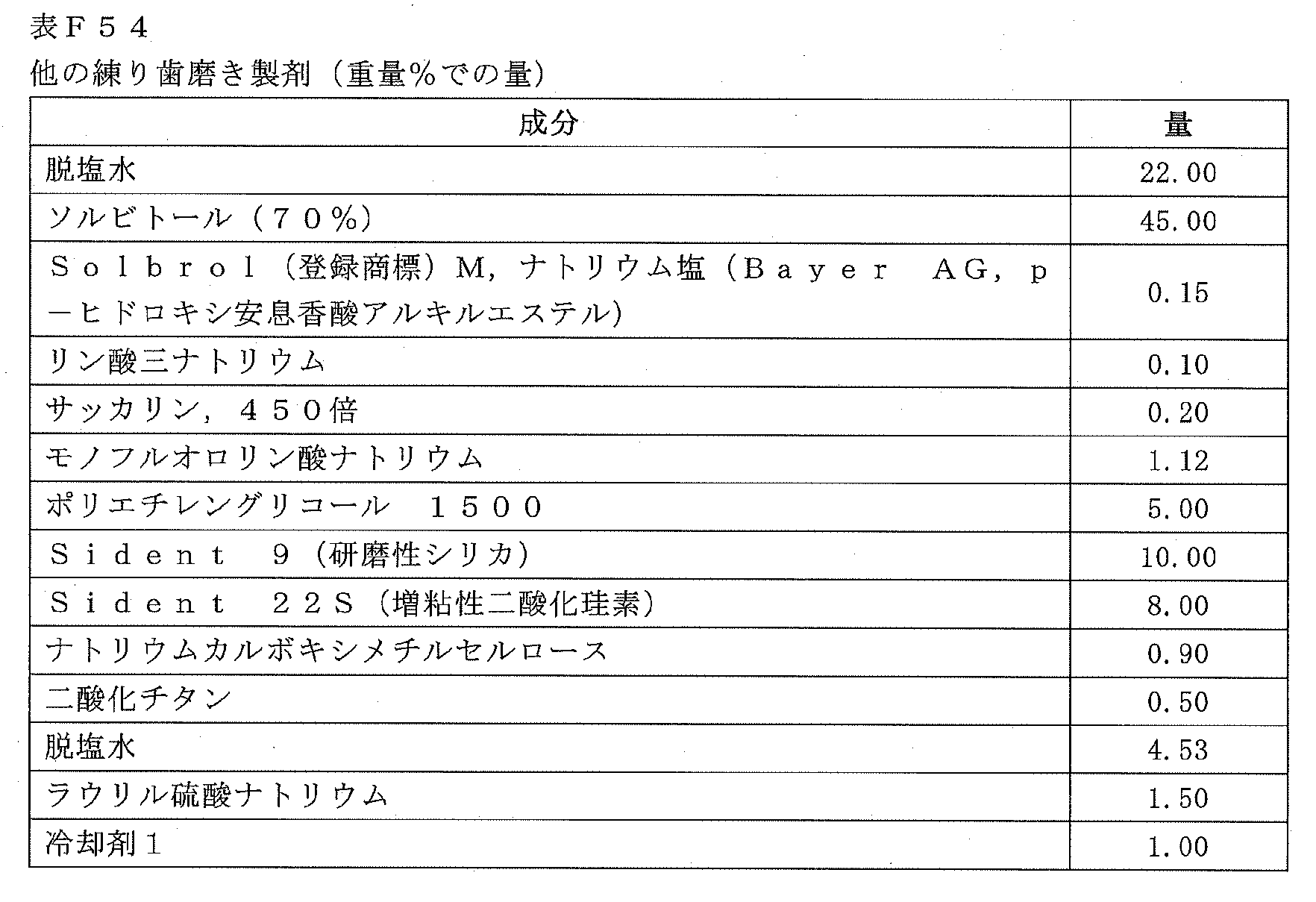
食品のための製剤化実施例 Formulation Examples for Foods
以下の製剤化実施例F55~F63は化粧品及び医薬品のための多種多様な製剤を示す。冷却剤1はここでは化合物1に係る本発明に係る冷却剤を意味し、冷却剤2は化合物8を意味し、冷却剤3は化合物14を意味し、冷却剤4は化合物27を意味し、冷却剤5は化合物39を意味し、冷却剤6は化合物40を意味し、冷却剤7は化合物41を意味し、冷却剤8は化合物42を意味し、冷却剤9は化合物51を意味する。
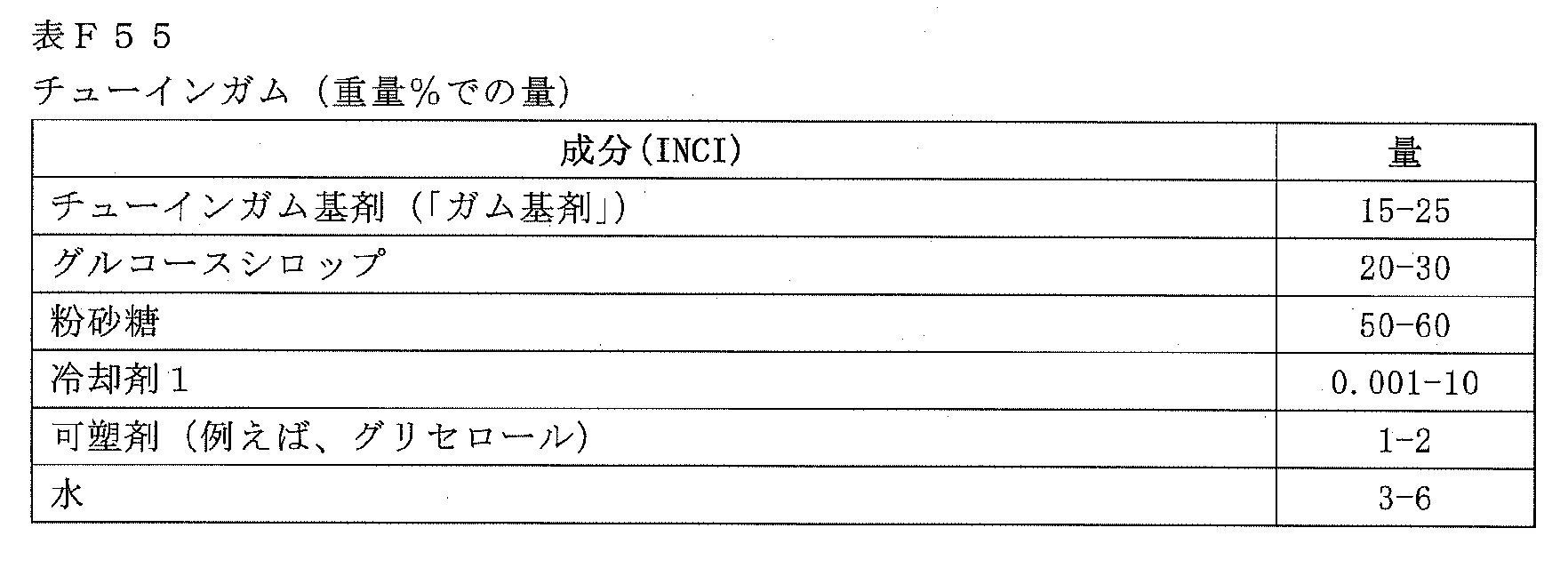
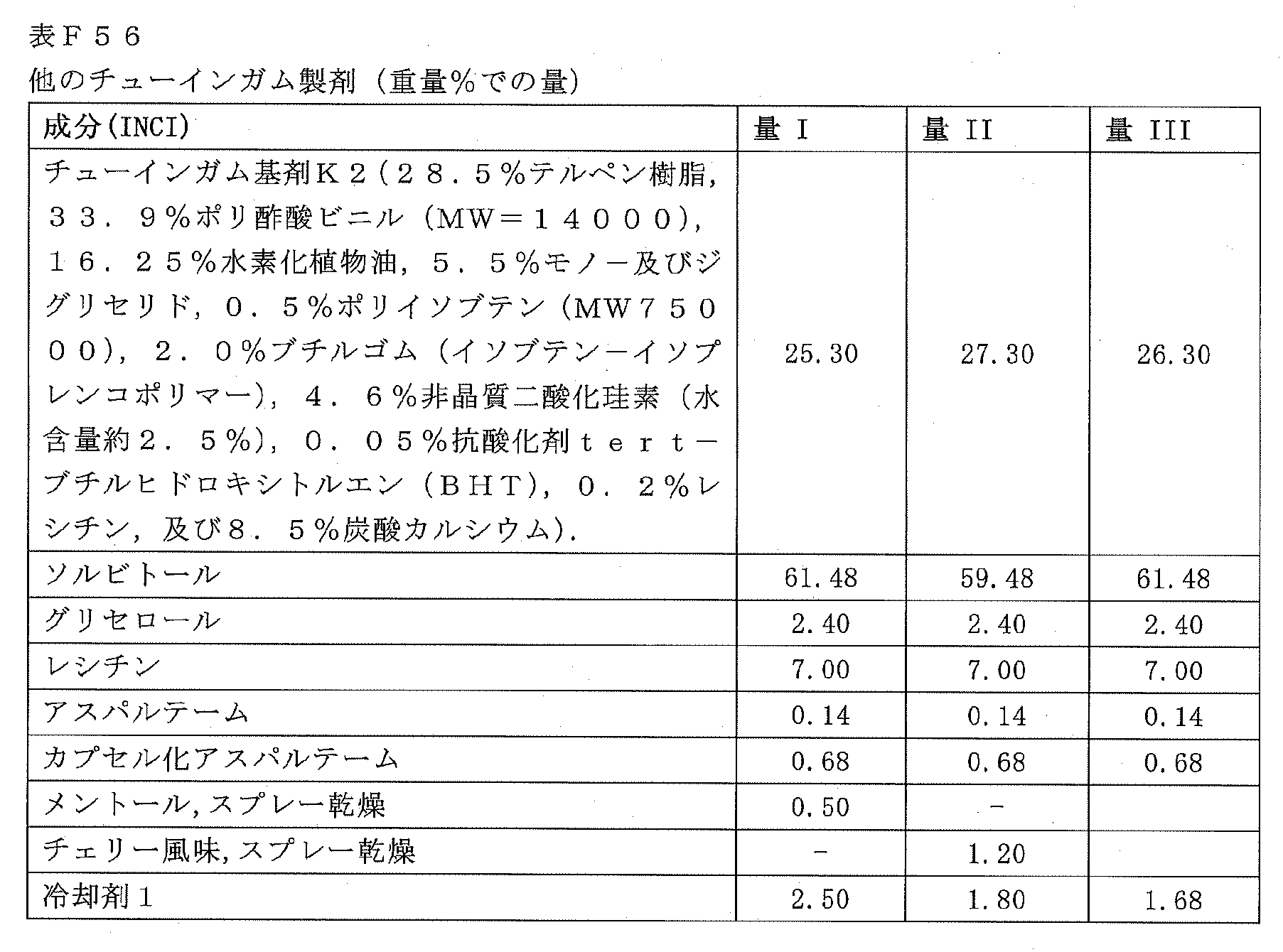
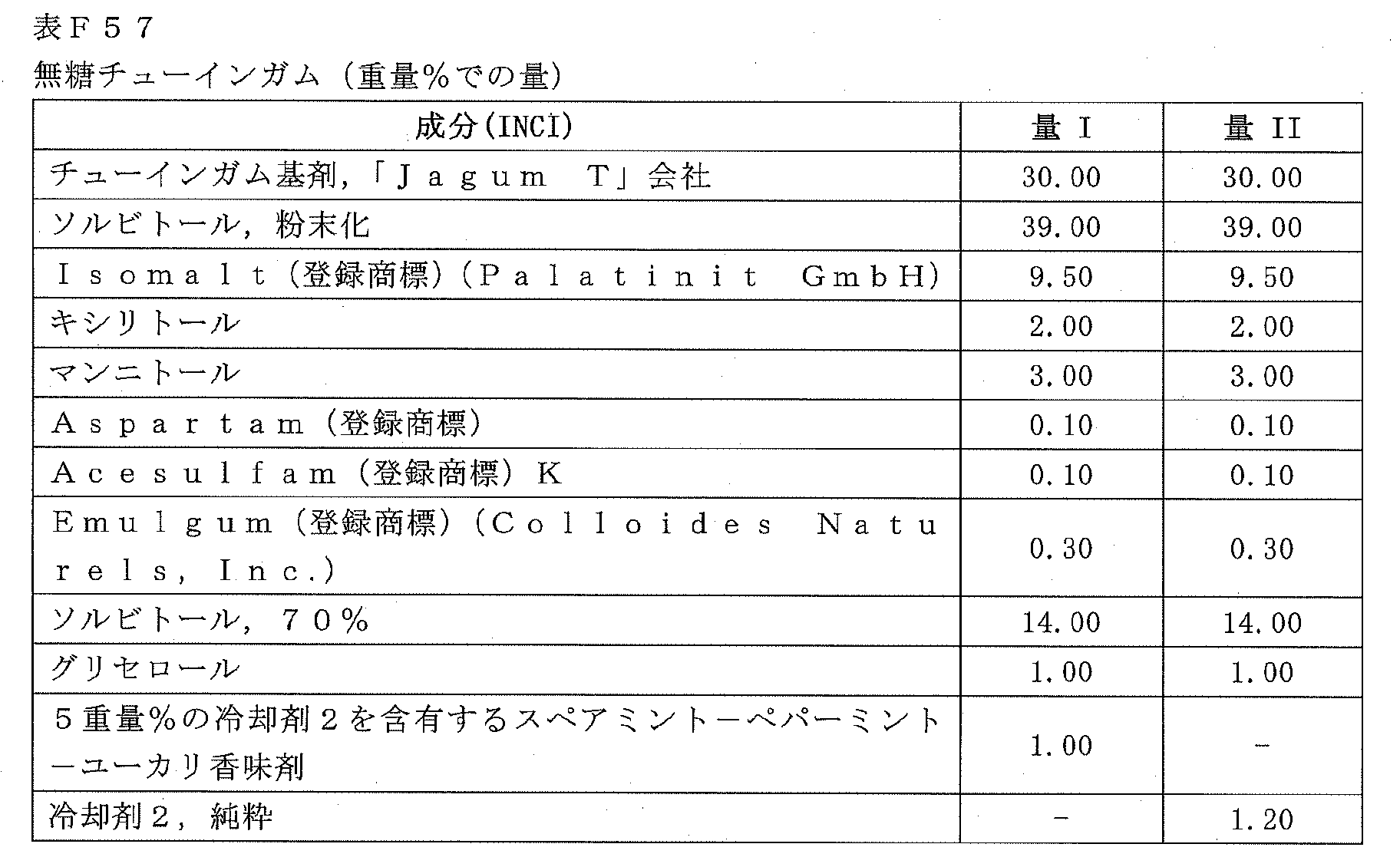
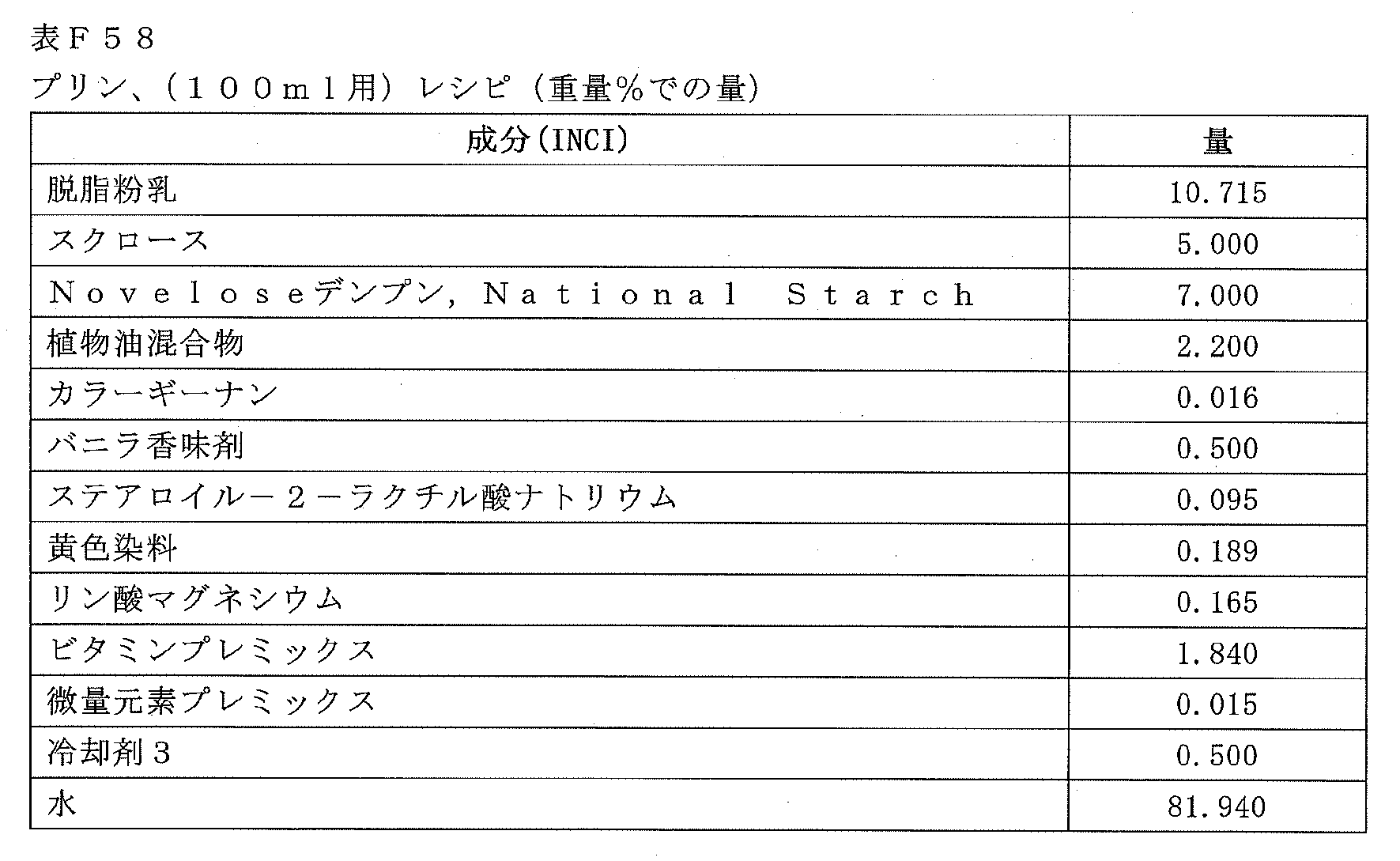
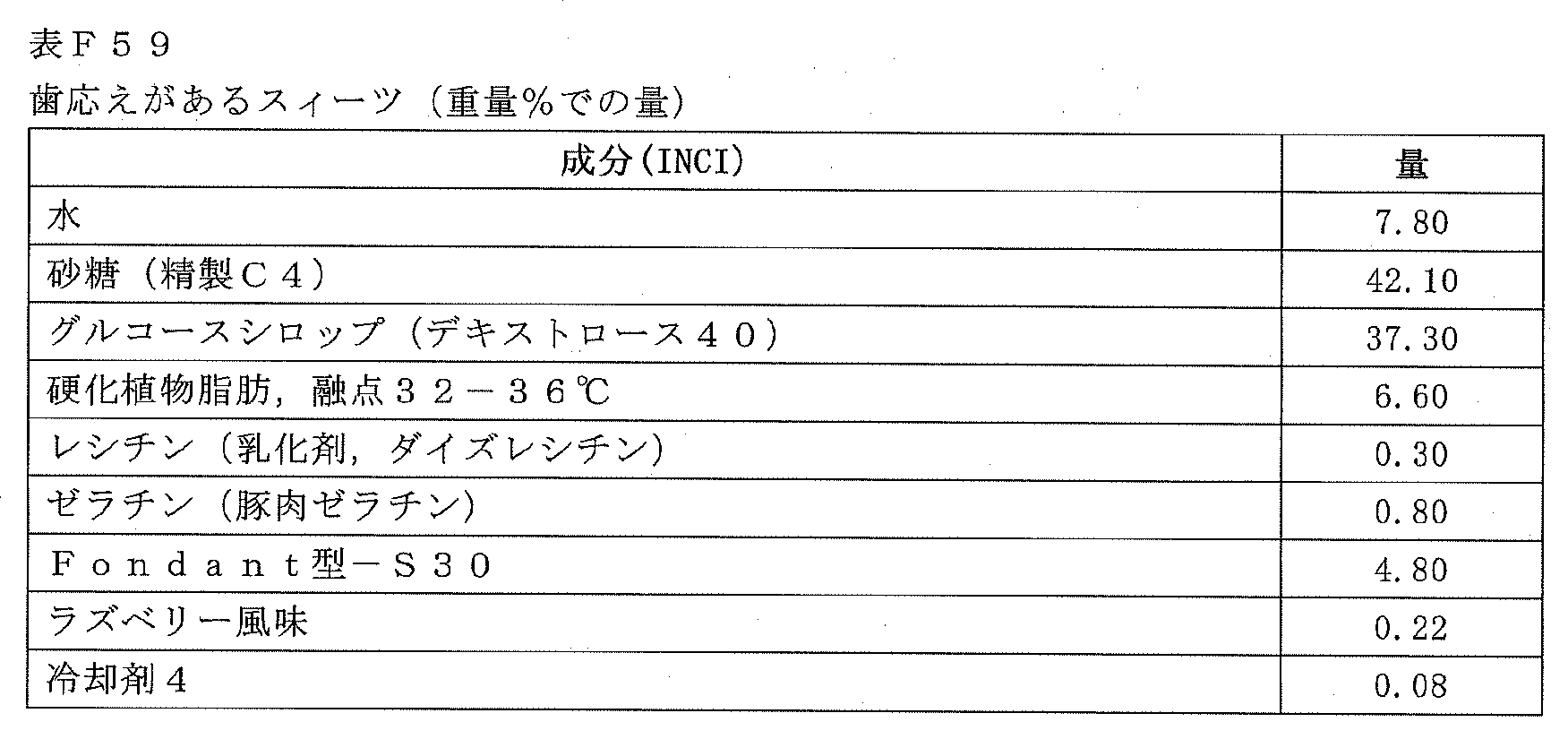
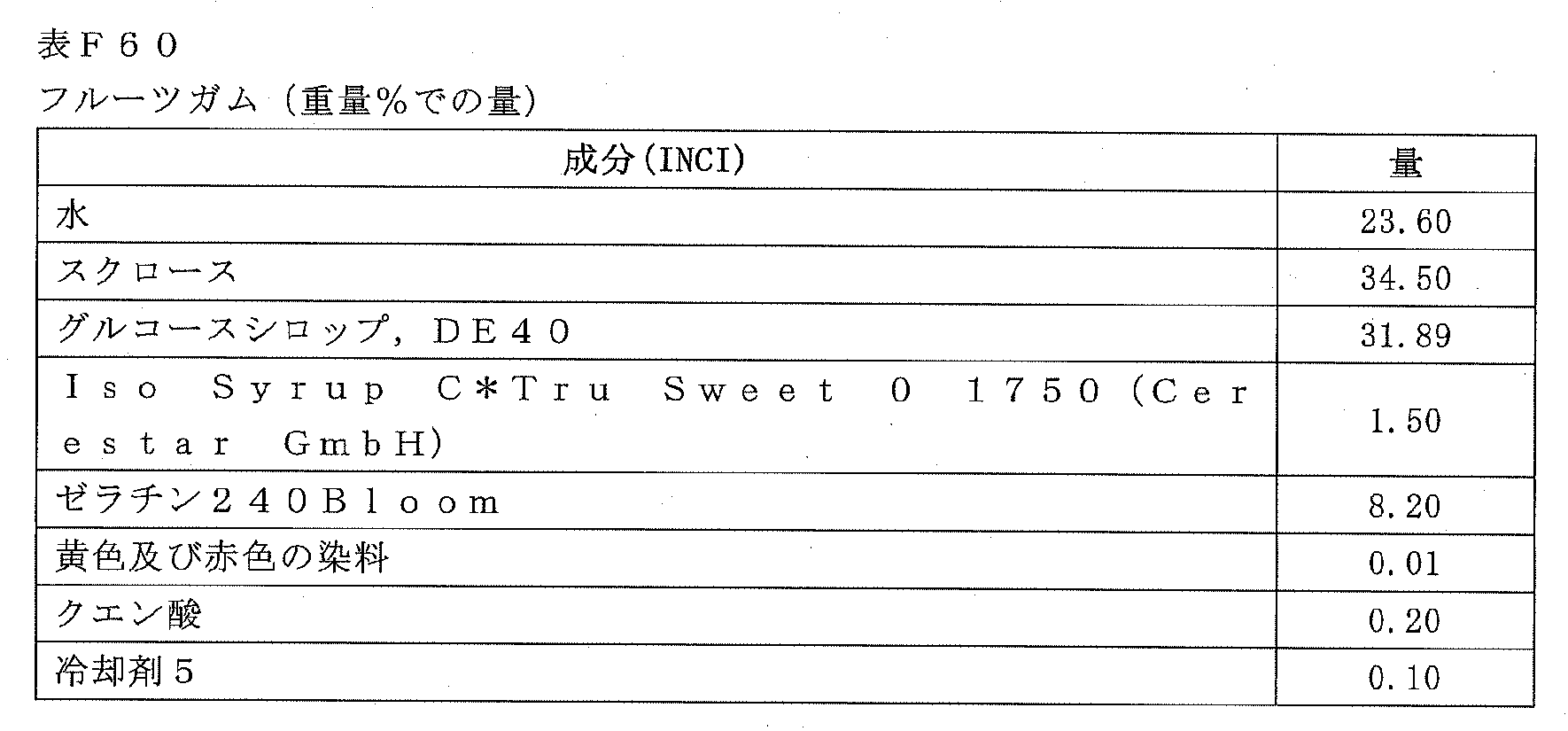
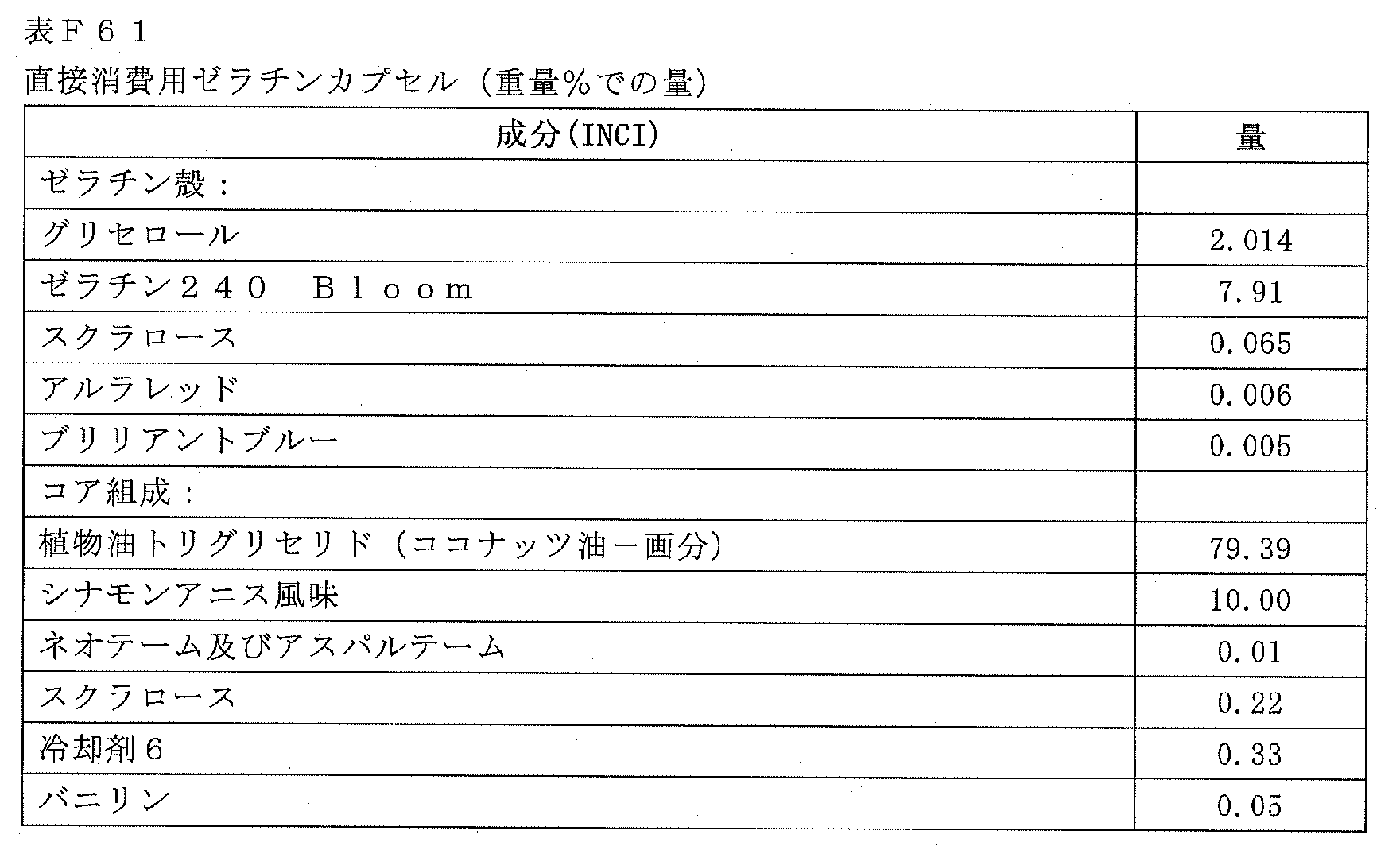
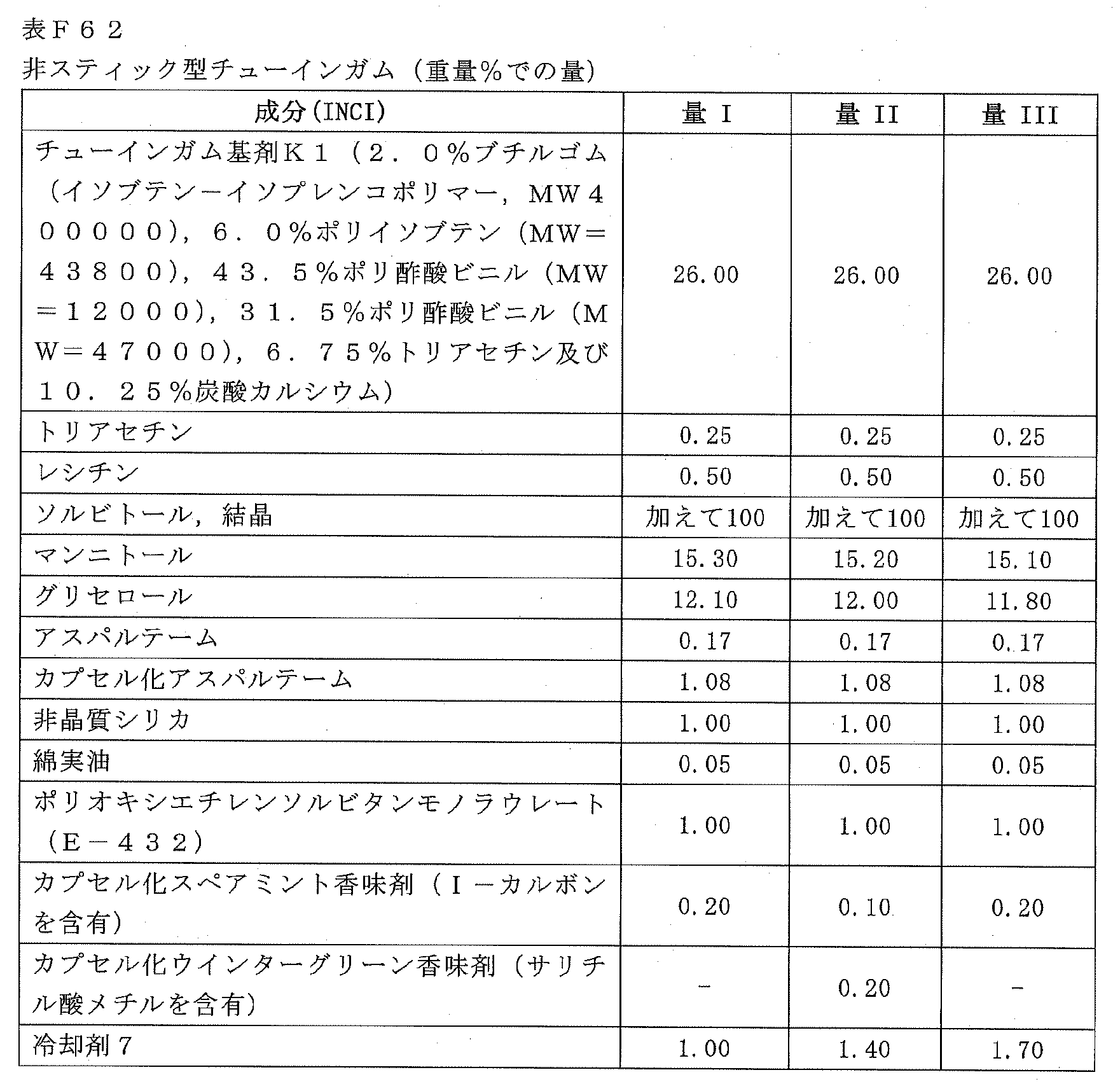
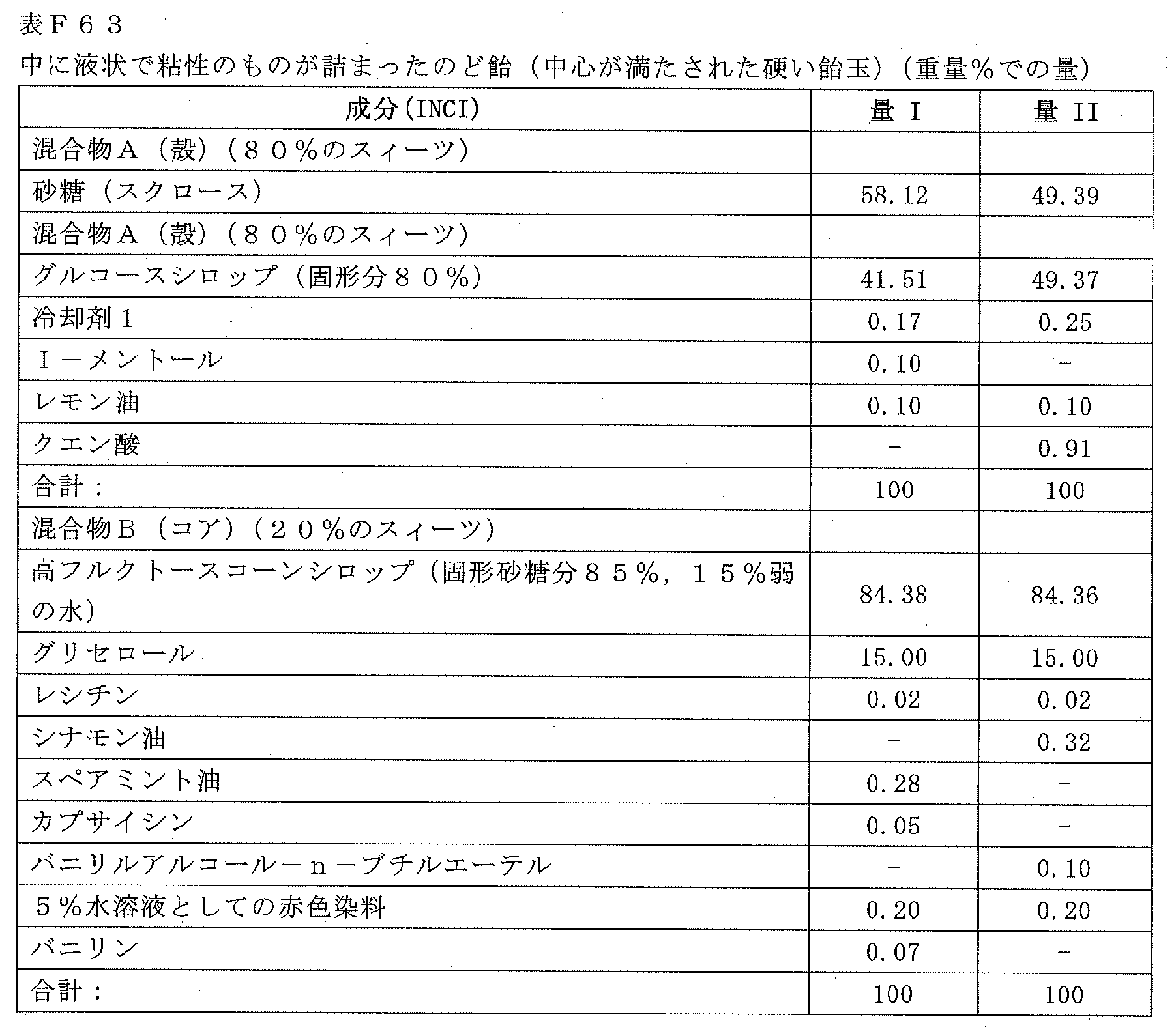
Claims (25)
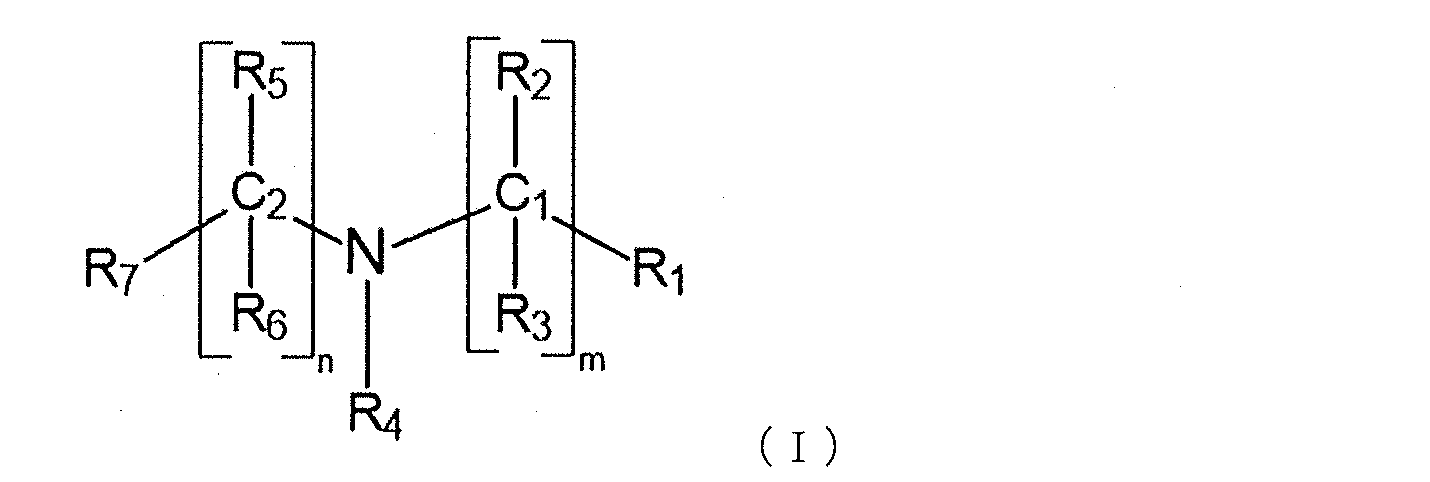
及びその塩、特に無機または有機の酸、特に一価または多価のカルボン酸との酸付加塩の生理的冷却剤であって、
式中、残基R1~R7はそれぞれ互いに独立して同一であるまたは異なることができ、以下の意味を有し:
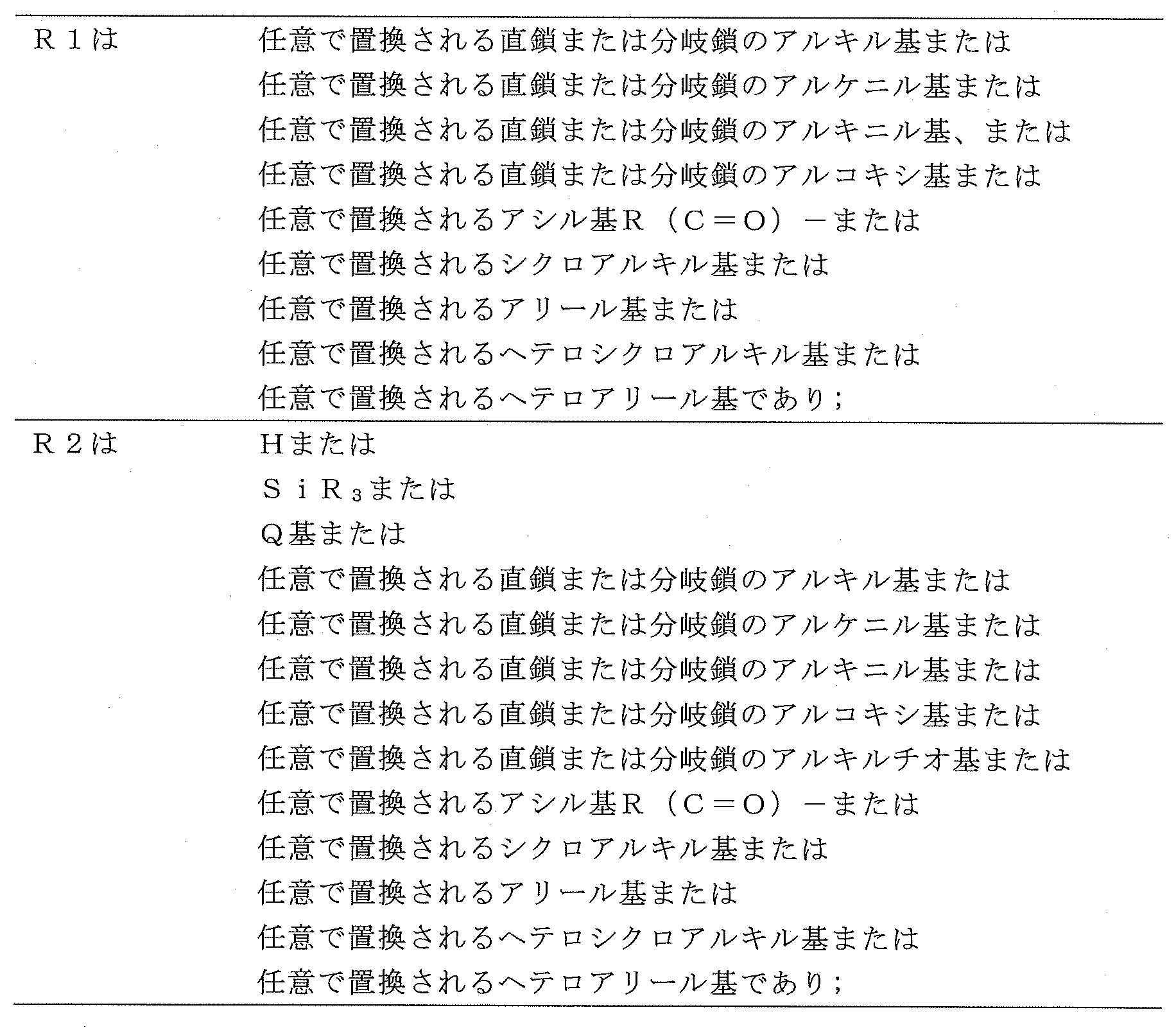
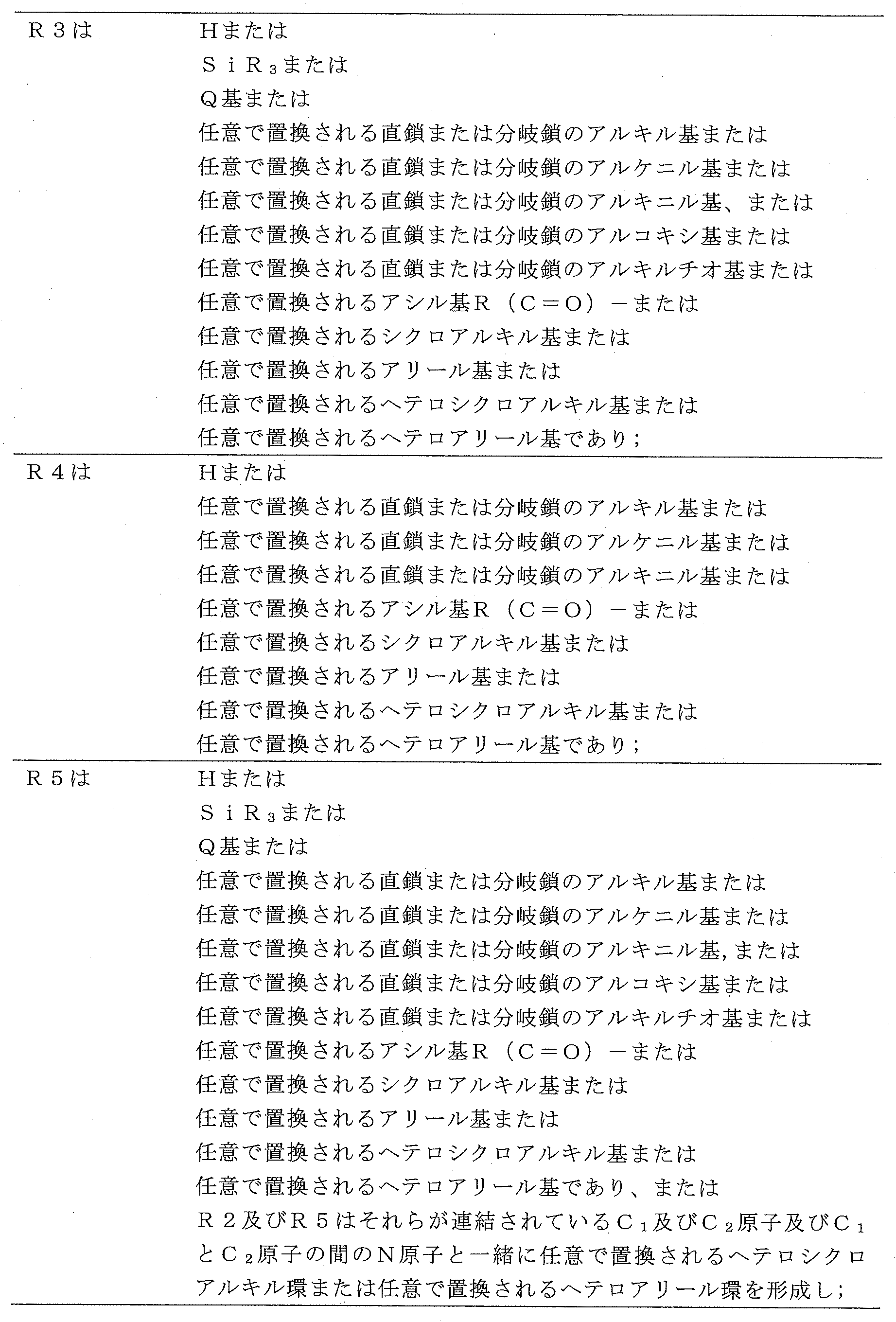
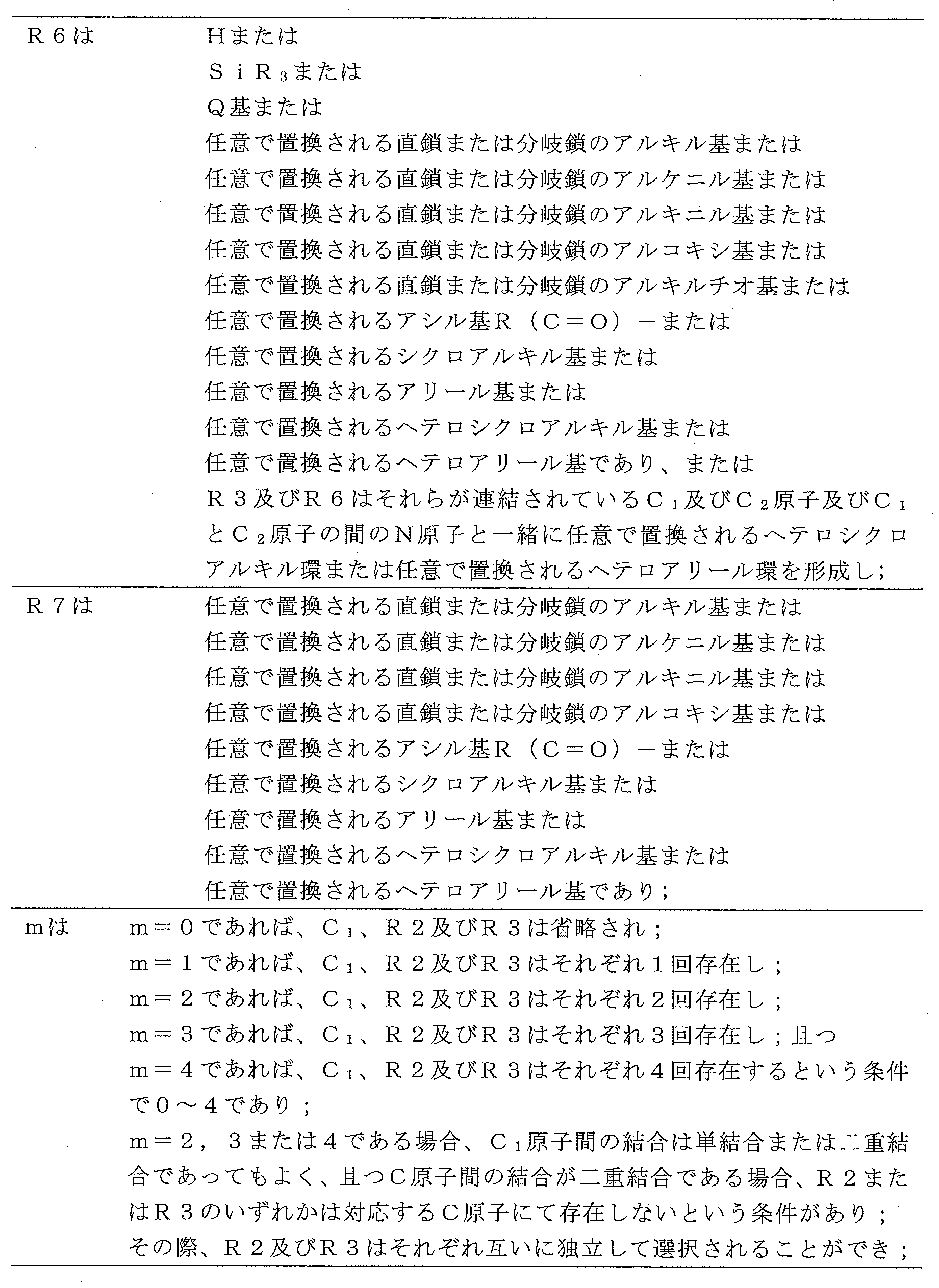
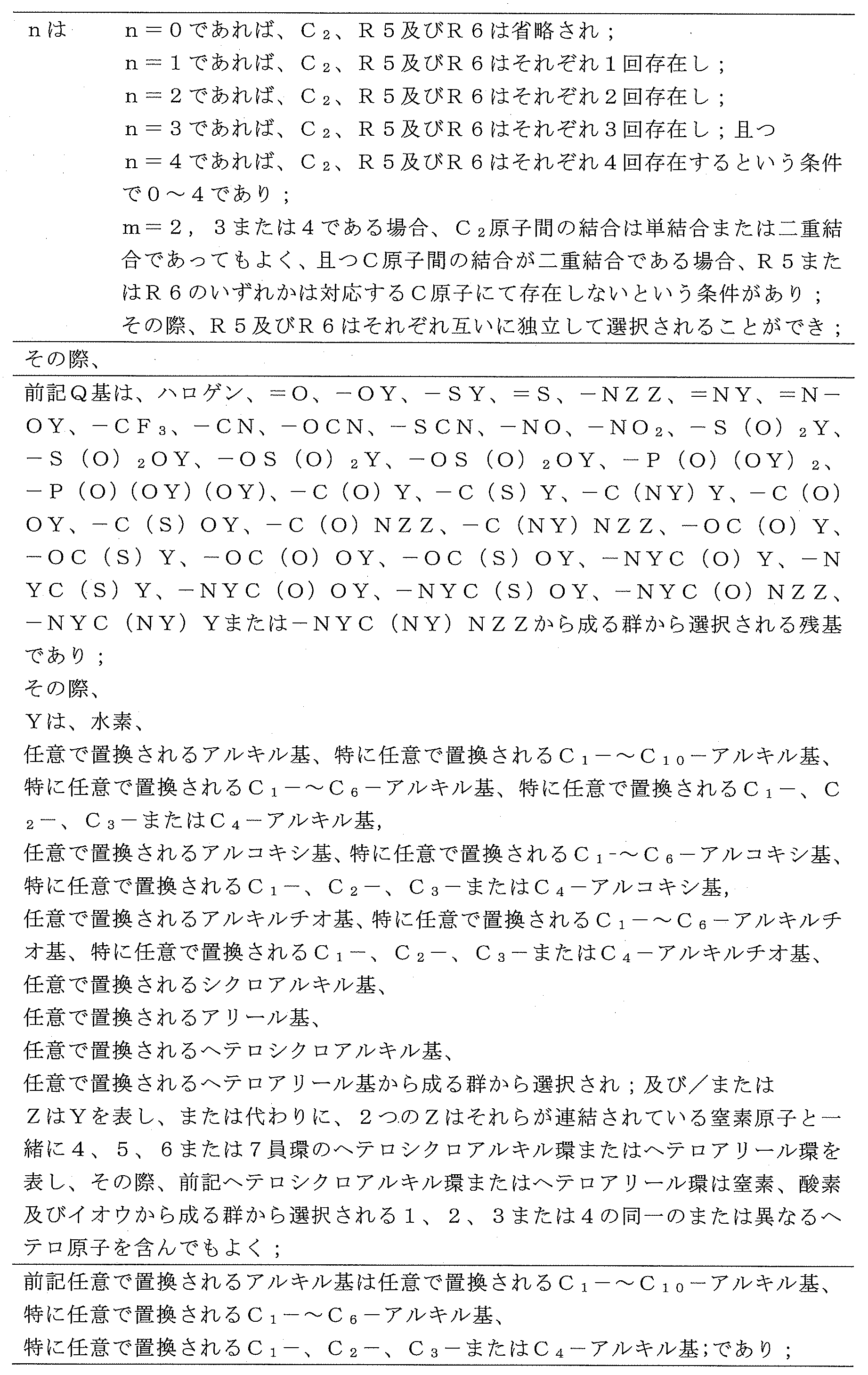

その際、前記冷却剤は、立体異性体として純粋な形態でまたは異なる立体異性体の混合物として存在してもよい、前記生理的冷却剤。 General formula (I):
and its salts, in particular acid addition salts with inorganic or organic acids, especially monovalent or polyvalent carboxylic acids, physiological cooling agents,
In the formula, the residues R1 to R7 can each independently be the same or different from each other and have the following meanings:
Said physiological cooling agent, wherein said cooling agent may be present in stereoisomerically pure form or as a mixture of different stereoisomers.
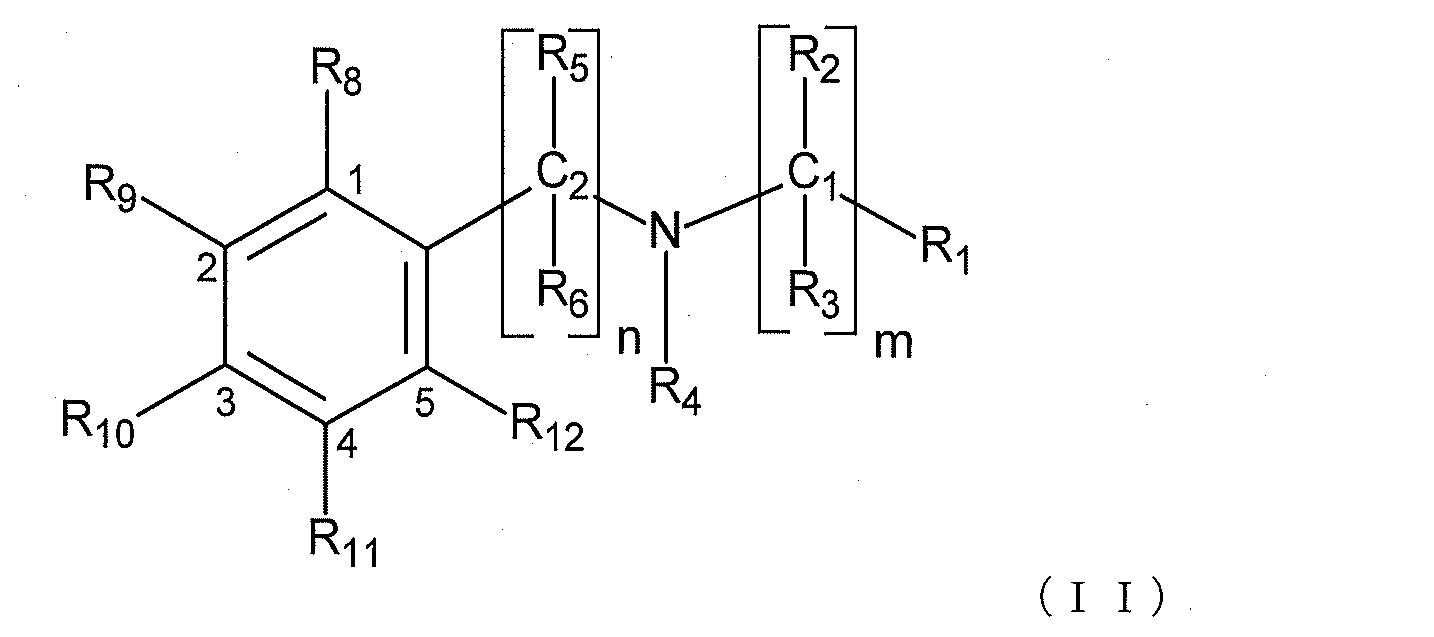
及びその塩、特に無機または有機の酸、特に一価または多価のカルボン酸との酸付加塩によって表され、
式中、前記残基R1~R6及びR8~R12は同一であるまたは異なることができ、互いに独立して以下の意味を有し:
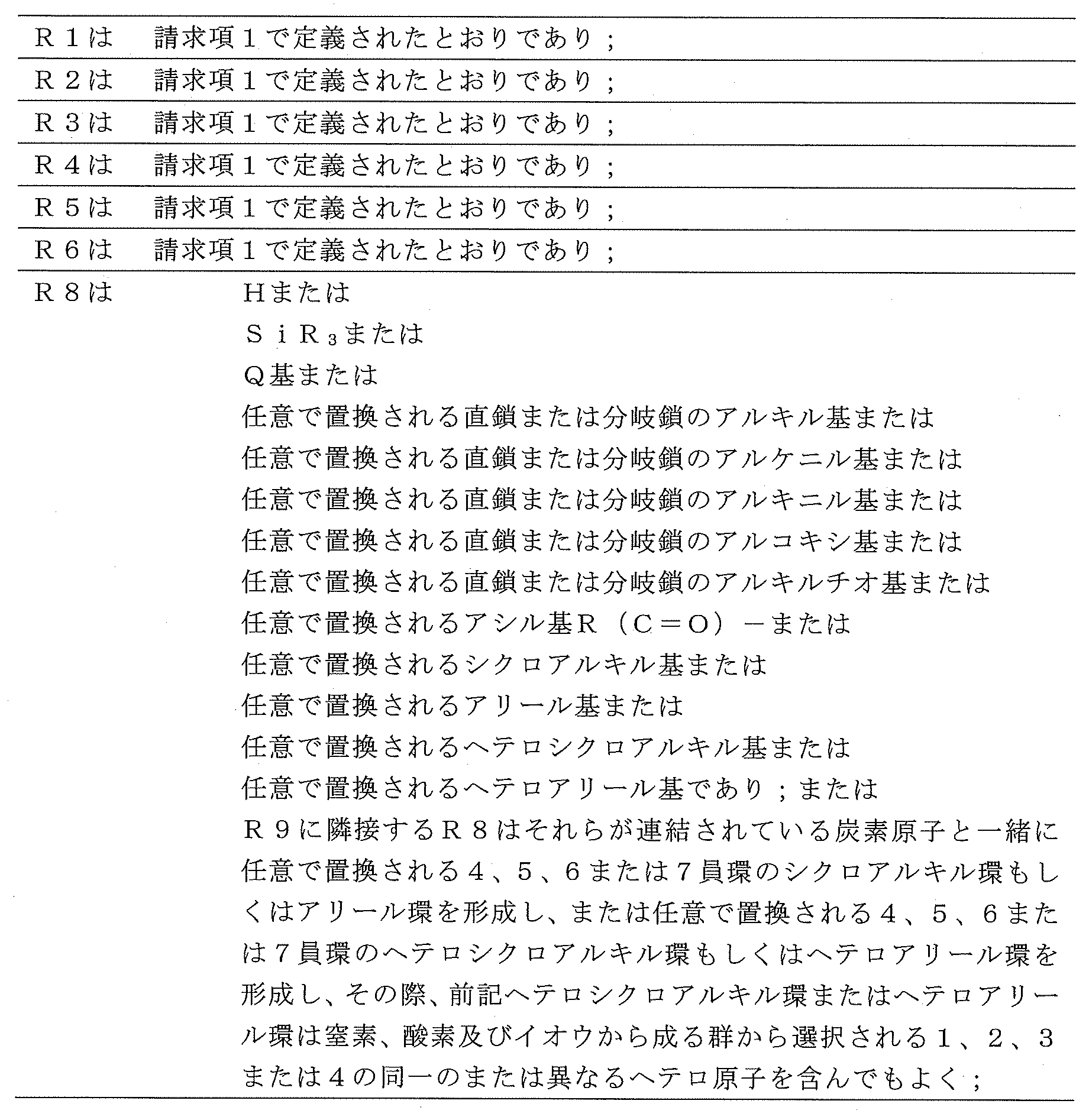
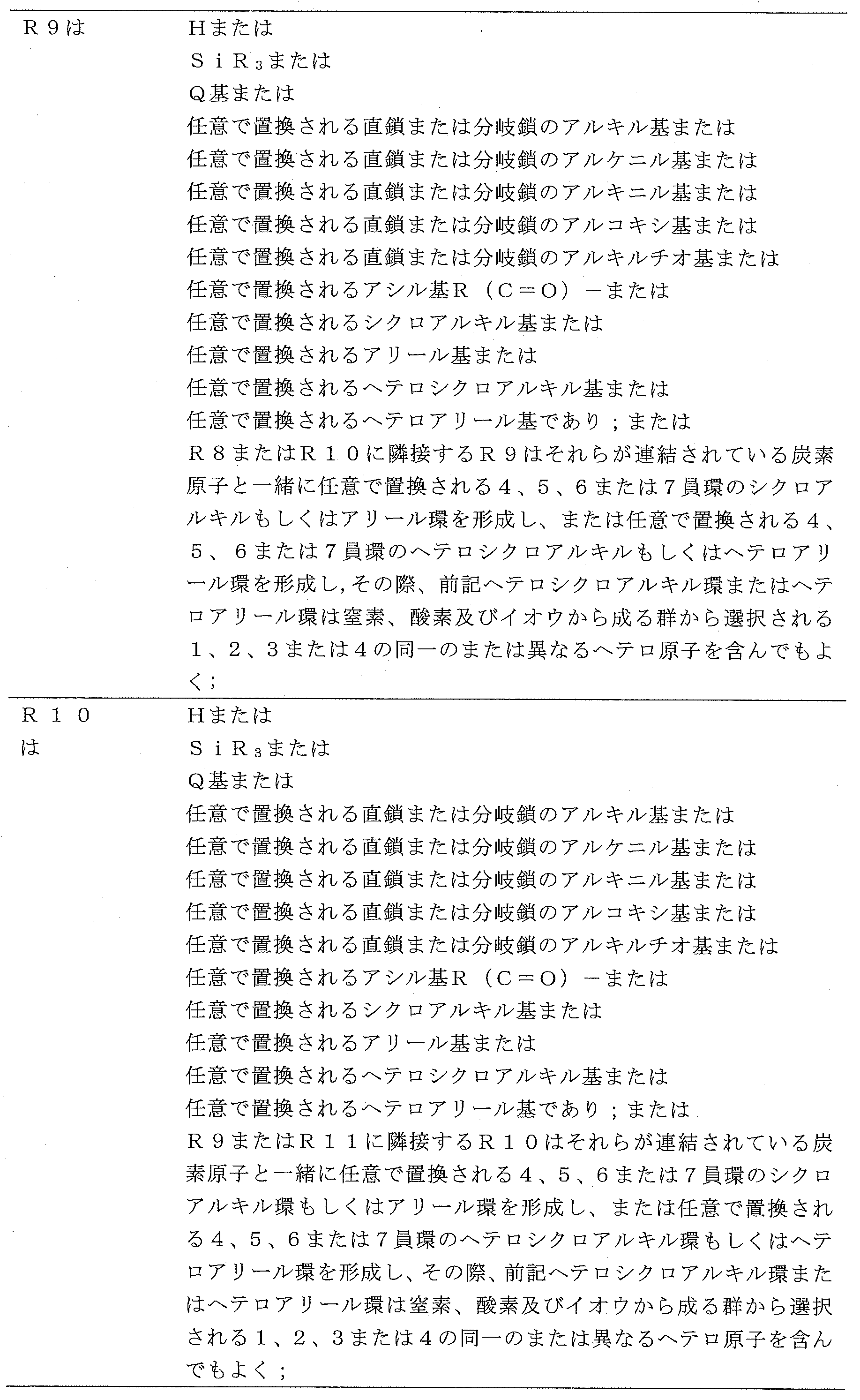
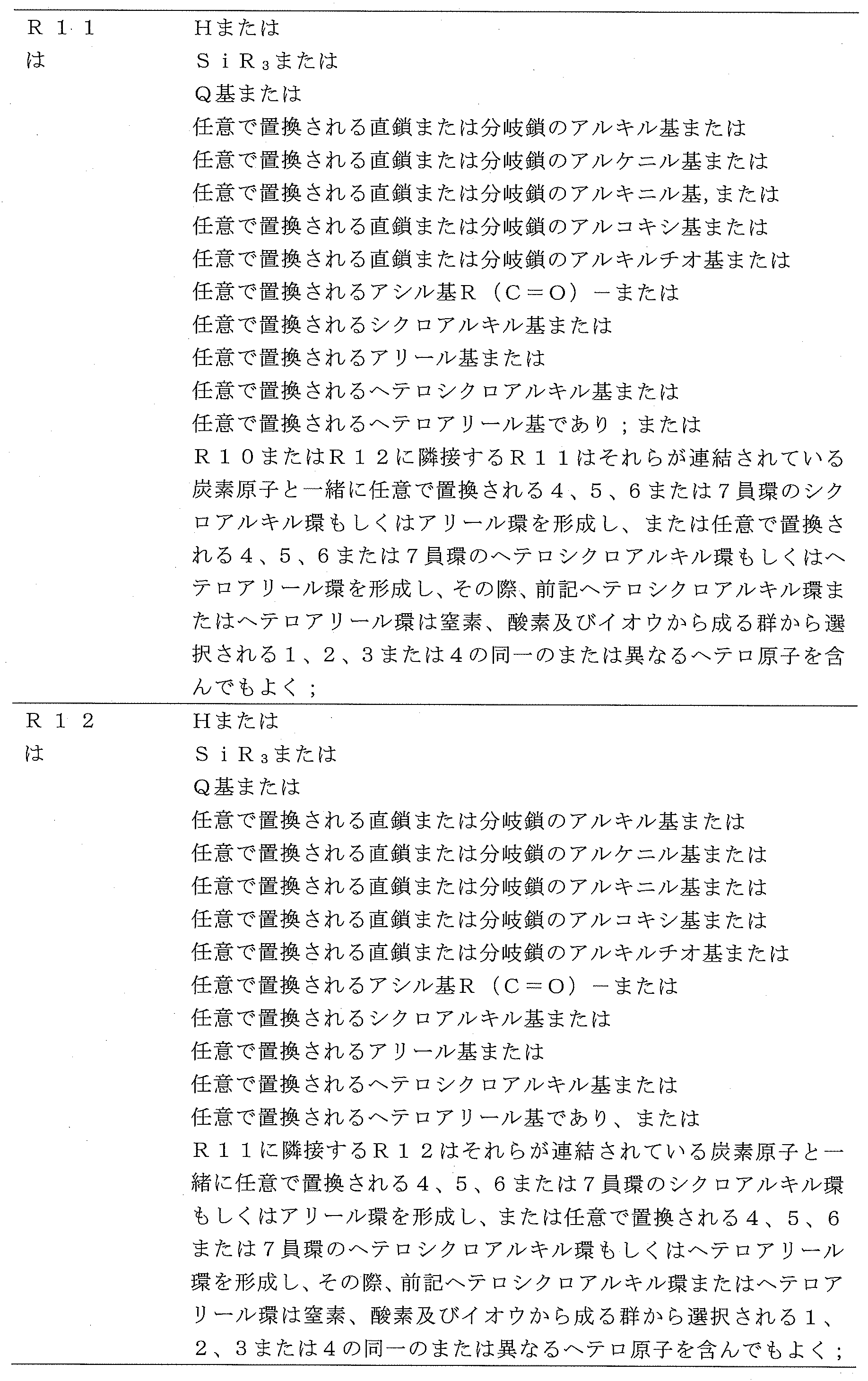
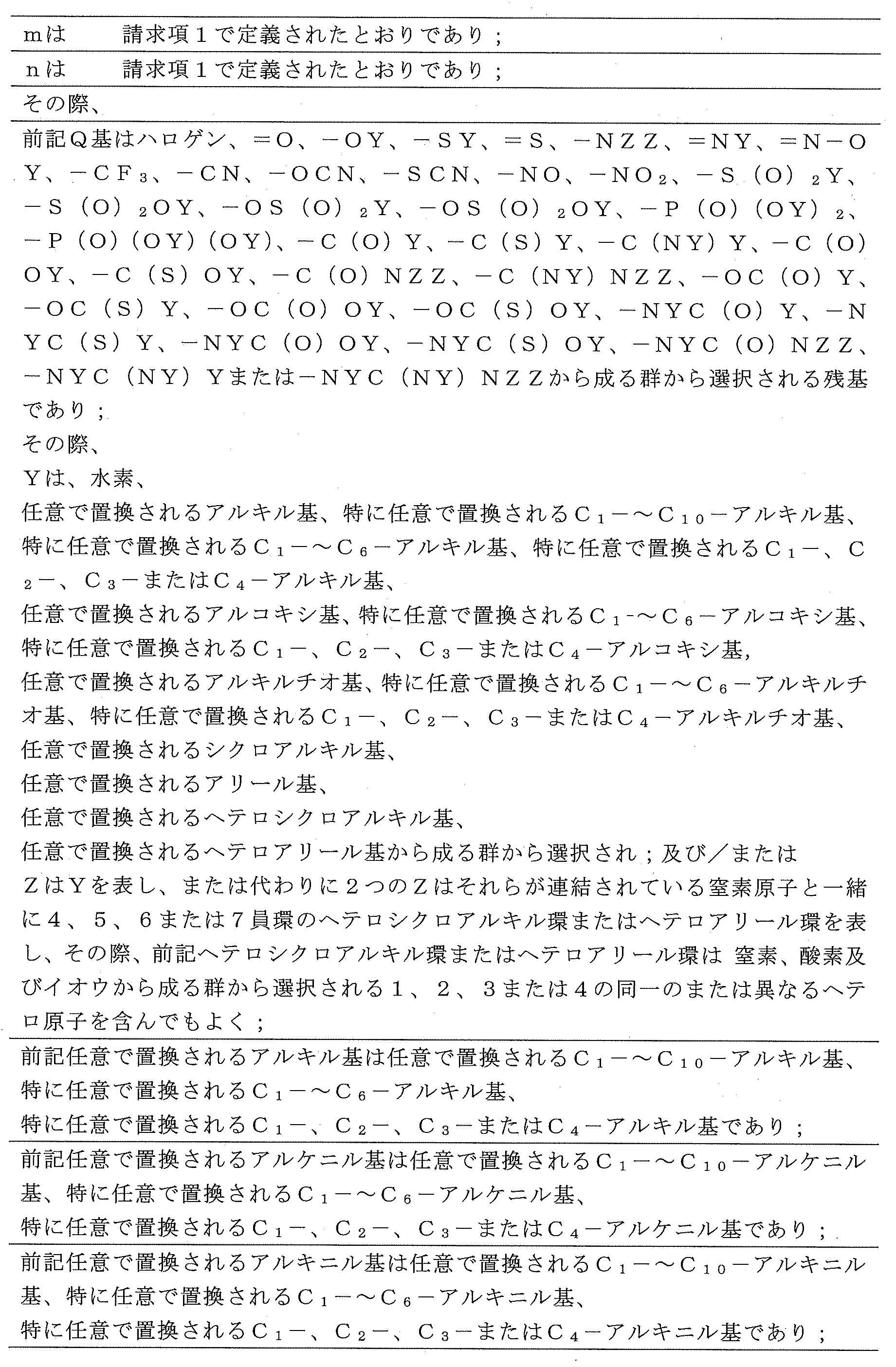
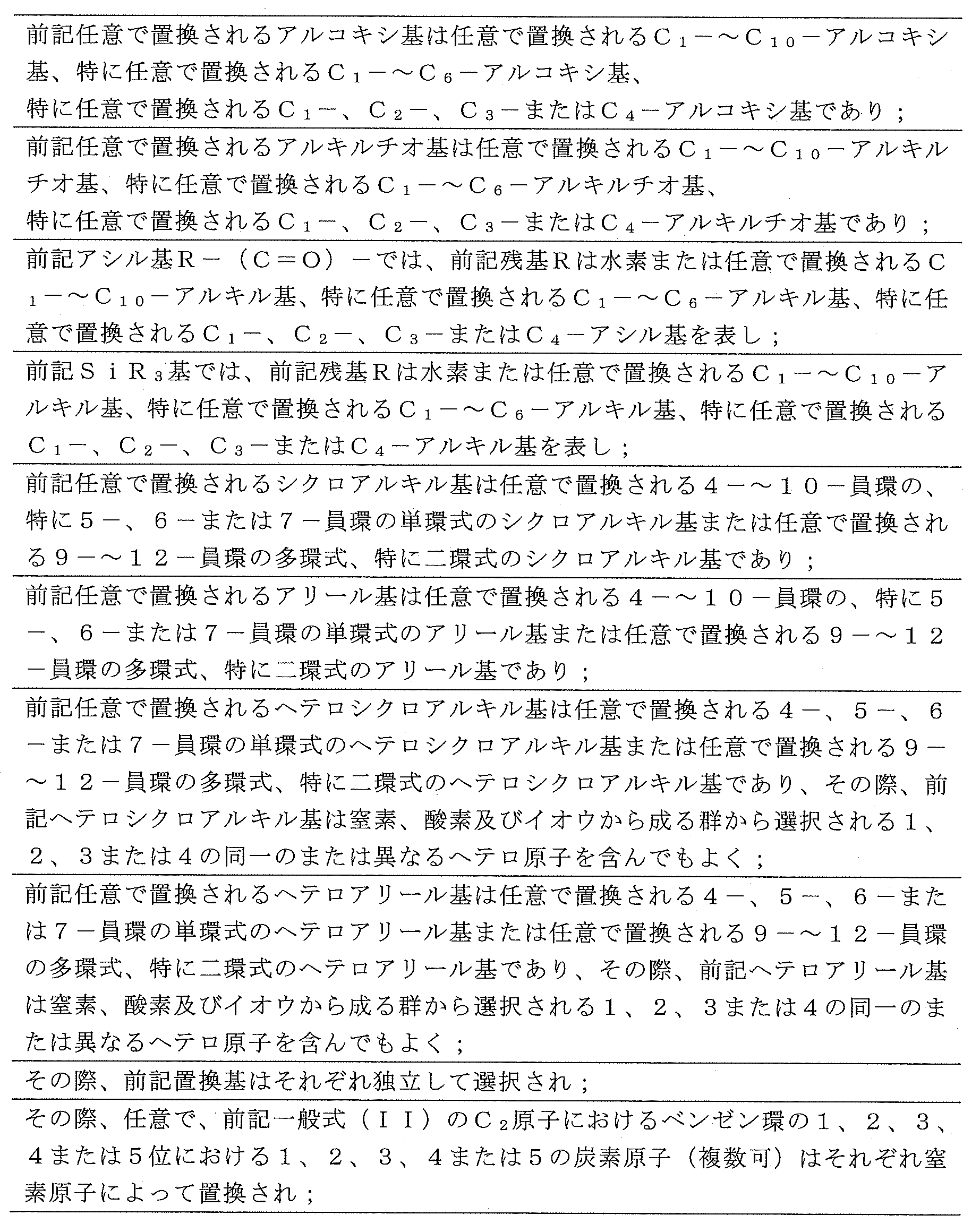
その際、前記冷却剤は、立体異性体として純粋な形態でまたは異なる立体異性体の混合物として存在してもよい、請求項1に記載の生理的冷却剤。 General formula (II):
and its salts, especially acid addition salts with inorganic or organic acids, especially monovalent or polyvalent carboxylic acids,
In the formula, said residues R1 to R6 and R8 to R12 can be the same or different and independently of each other have the following meanings:
2. Physiological cooling agent according to claim 1, wherein the cooling agent may be present in stereoisomerically pure form or as a mixture of different stereoisomers.
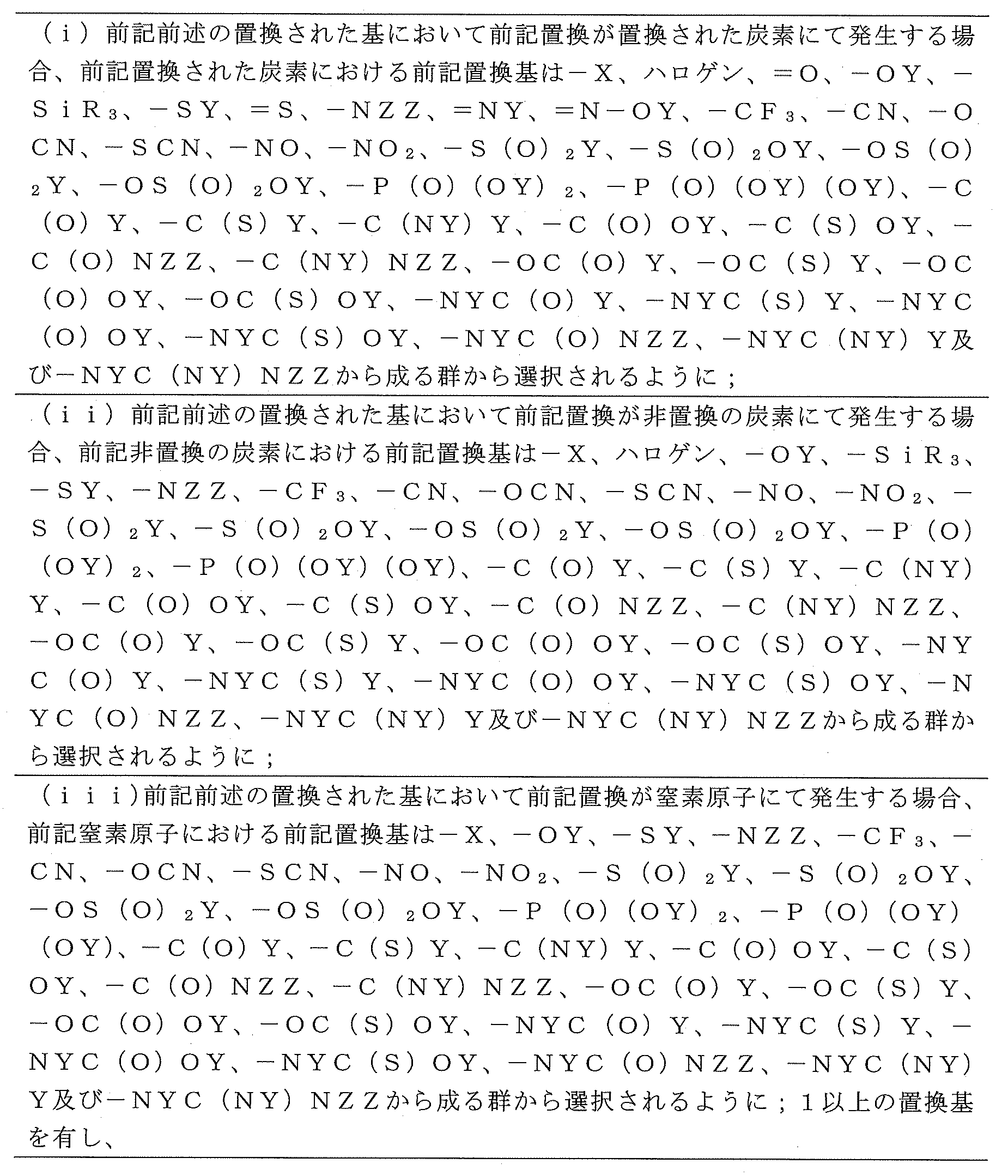
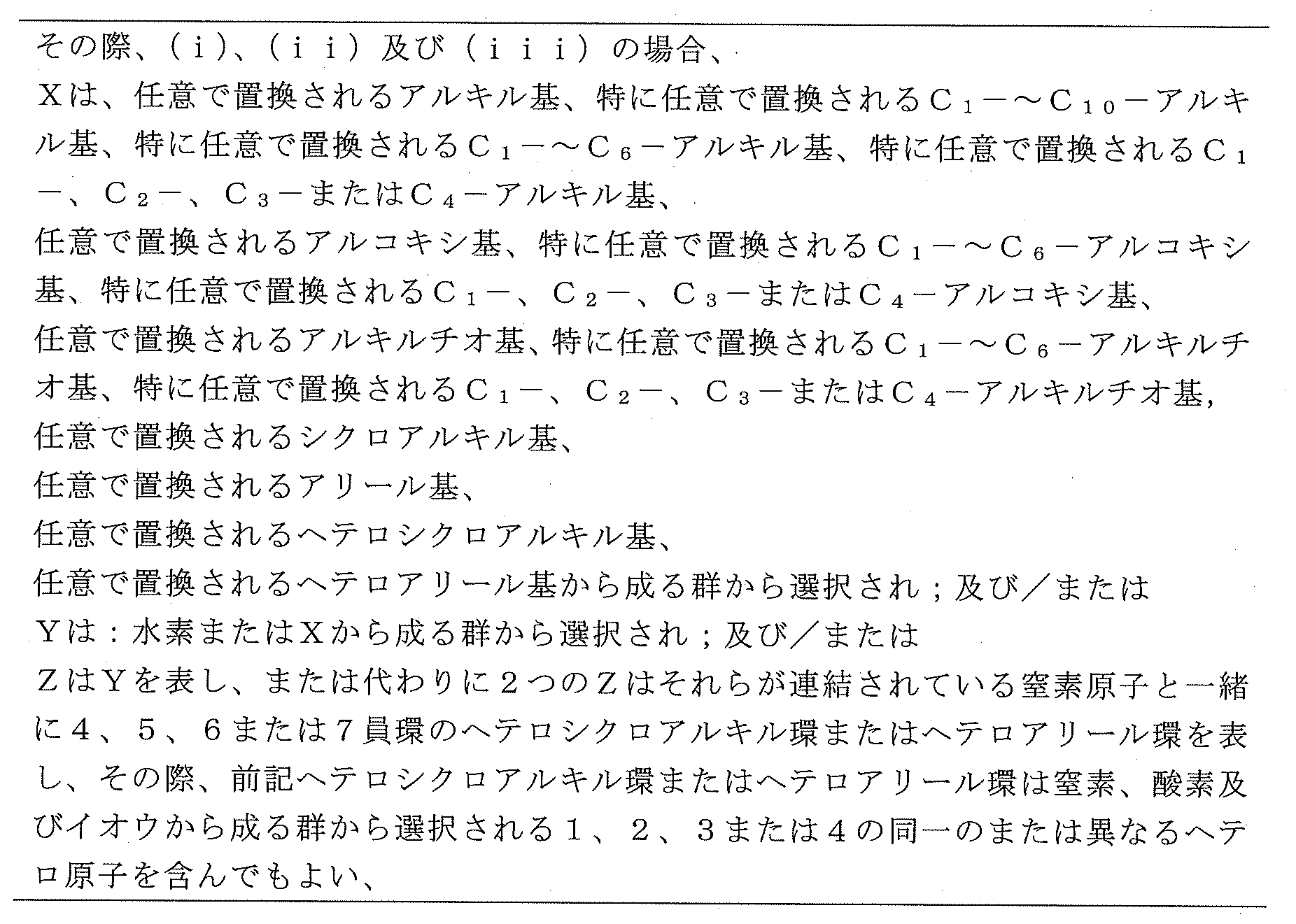
請求項1または2に記載の生理的冷却剤。 Furthermore, the aforementioned optionally substituted group is:
Physiological cooling agent according to claim 1 or 2.
任意で置換されるフェニル基、
任意で置換されるベンジル基、
任意で置換されるトリル基、
任意で置換されるキシロリル基、
任意で置換されるフェノール基、
任意で置換されるジヒドロキシベンゼン基、
任意で置換されるピリジニル基、
任意で置換されるピペリジニル基、
任意で置換されるテトラヒドロピラニル基、
任意で置換されるピロリル基、
任意で置換されるイミダゾリル基、
任意で置換されるピリミジニル基、
任意で置換されるオキサゾリル基、
任意で置換されるインドリル基、
任意で置換されるベンゾチオフェニル基、
任意で置換されるフラニル基、
任意で置換されるベンゾフラニル基、
任意で置換されるチオフェニル基、
任意で置換される1,3-ベンゾジオキソリル基、
任意で置換されるベンゾジオキサニル基、
任意で置換されるモルフォリニル基または
任意で置換されるキノリニル基を表し、及び/または
R7が、
任意で置換されるフェニル基、
任意で置換されるベンジル基,
任意で置換されるトリル基、
任意で置換されるキシロリル基、
任意で置換されるフェノール基、
任意で置換されるジヒドロキシベンゼン基、
任意で置換されるピリジニル基、
任意で置換されるピペリジニル基、
任意で置換されるテトラヒドロピラニル基、
任意で置換されるピロリル基、
任意で置換されるイミダゾリル基、
任意で置換されるピリミジニル基、
任意で置換されるオキサゾリル基、
任意で置換されるインドリル基、
任意で置換されるベンゾチオフェニル基、
任意で置換されるフラニル基、
任意で置換されるベンゾフラニル基、
任意で置換されるチオフェニル基、
任意で置換される1,3-ベンゾジオキソリル基、
任意で置換されるベンゾジオキサニル基、
任意で置換されるモルフォリニル基または任意で置換されるキノリニル基を表し;
好ましくはR1及びR7はそれぞれ、任意で置換されるフェニル基及び/または任意で置換されるピリジニル基を表す、請求項1~3のいずれか1項に記載の生理的冷却剤。 a phenyl group in which R1 is optionally substituted;
an optionally substituted benzyl group,
an optionally substituted tolyl group,
an optionally substituted xyloryl group,
an optionally substituted phenol group,
an optionally substituted dihydroxybenzene group,
an optionally substituted pyridinyl group,
an optionally substituted piperidinyl group,
an optionally substituted tetrahydropyranyl group,
an optionally substituted pyrrolyl group,
an optionally substituted imidazolyl group,
an optionally substituted pyrimidinyl group,
an optionally substituted oxazolyl group,
an optionally substituted indolyl group,
an optionally substituted benzothiophenyl group,
an optionally substituted furanyl group,
an optionally substituted benzofuranyl group,
an optionally substituted thiophenyl group,
an optionally substituted 1,3-benzodioxolyl group,
an optionally substituted benzodioxanyl group,
represents an optionally substituted morpholinyl group or an optionally substituted quinolinyl group, and/or R7 is
an optionally substituted phenyl group,
an optionally substituted benzyl group,
an optionally substituted tolyl group,
an optionally substituted xyloryl group,
an optionally substituted phenol group,
an optionally substituted dihydroxybenzene group,
an optionally substituted pyridinyl group,
an optionally substituted piperidinyl group,
an optionally substituted tetrahydropyranyl group,
an optionally substituted pyrrolyl group,
an optionally substituted imidazolyl group,
an optionally substituted pyrimidinyl group,
an optionally substituted oxazolyl group,
an optionally substituted indolyl group,
an optionally substituted benzothiophenyl group,
an optionally substituted furanyl group,
an optionally substituted benzofuranyl group,
an optionally substituted thiophenyl group,
an optionally substituted 1,3-benzodioxolyl group,
an optionally substituted benzodioxanyl group,
represents an optionally substituted morpholinyl group or an optionally substituted quinolinyl group;
Physiological cooling agent according to any one of claims 1 to 3, wherein preferably R1 and R7 each represent an optionally substituted phenyl group and/or an optionally substituted pyridinyl group.
任意で置換されるピリジニル基、
任意で置換される1,3-ベンゾジオキソリル基、
任意で置換されるインドリル基、
任意で置換されるフラニル基、
任意で置換されるキノリニル基、
任意で置換されるベンゾフラニル基、
任意で置換されるベンジル基、
任意で置換されるフェニル基、
任意で置換されるチオフェニル基、
任意で置換されるベンゾチオフェニル基から成る群から選択され;且つ
R7が
任意で置換されるピリジニル基、
任意で置換されるピペリジニル基、
任意で置換される1,3-ベンゾジオキソリル基、
任意で置換されるジヒドロキシベンゼン基、
任意で置換されるベンゾジオキサニル基、
任意で置換されるフェノール基、
任意で置換されるフェニル基、
任意で置換されるチオフェニル基及び
任意で置換されるトリル基から成る群から選択され;
R1及び/またはR7はそれぞれ、独立して好ましくは任意で置換されるピリジニル基、任意で置換される1,3-ベンゾジオキソリル基、任意で置換されるチオフェニル基及び任意で置換されるフェニル基から選択される、請求項4に記載の生理的冷却剤。 R1 is
an optionally substituted pyridinyl group,
an optionally substituted 1,3-benzodioxolyl group,
an optionally substituted indolyl group,
an optionally substituted furanyl group,
an optionally substituted quinolinyl group,
an optionally substituted benzofuranyl group,
an optionally substituted benzyl group,
an optionally substituted phenyl group,
an optionally substituted thiophenyl group,
selected from the group consisting of an optionally substituted benzothiophenyl group; and R7 is an optionally substituted pyridinyl group;
an optionally substituted piperidinyl group,
an optionally substituted 1,3-benzodioxolyl group,
an optionally substituted dihydroxybenzene group,
an optionally substituted benzodioxanyl group,
an optionally substituted phenol group,
an optionally substituted phenyl group,
selected from the group consisting of an optionally substituted thiophenyl group and an optionally substituted tolyl group;
R1 and/or R7 are each independently preferably an optionally substituted pyridinyl group, an optionally substituted 1,3-benzodioxolyl group, an optionally substituted thiophenyl group, and an optionally substituted phenyl group. 5. Physiological cooling agent according to claim 4, selected from the group:
任意で置換されるピペリジニル基、
任意で置換されるモルフォリニル基、
任意で置換されるヘキサメチレンイミニル基、
任意で置換されるピリジニル基、
任意で置換されるテトラヒドロピロリル基、
任意で置換されるアルキルピペリジニル基、
任意で置換されるチオモルフォリニル基、
任意で置換されるピロリル基、
任意で置換されるチオアルコキシ基、
任意で置換されるアルコキシ基、及び
任意で置換されるフェニル基から成る群から選択される1以上の置換基を有する、請求項4~6のいずれか1項に記載の生理的冷却剤。 Furthermore, the aforementioned optionally substituted group R1 and/or R7 itself is an optionally substituted piperidinyl group,
an optionally substituted morpholinyl group,
an optionally substituted hexamethyleneiminyl group,
an optionally substituted pyridinyl group,
an optionally substituted tetrahydropyrrolyl group,
an optionally substituted alkylpiperidinyl group,
an optionally substituted thiomorpholinyl group,
an optionally substituted pyrrolyl group,
an optionally substituted thioalkoxy group,
7. Physiological cooling agent according to any one of claims 4 to 6, having one or more substituents selected from the group consisting of an optionally substituted alkoxy group and an optionally substituted phenyl group.
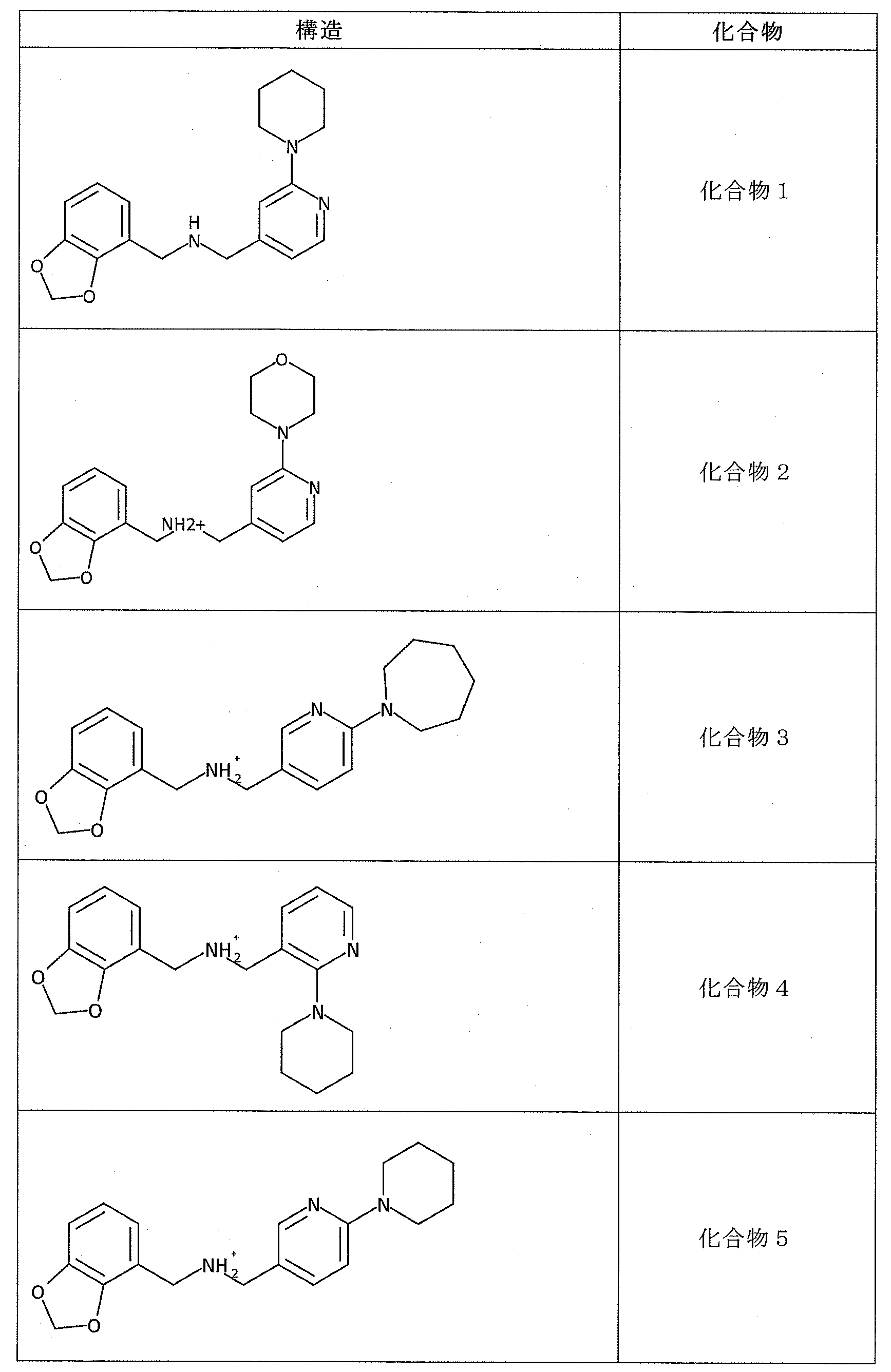
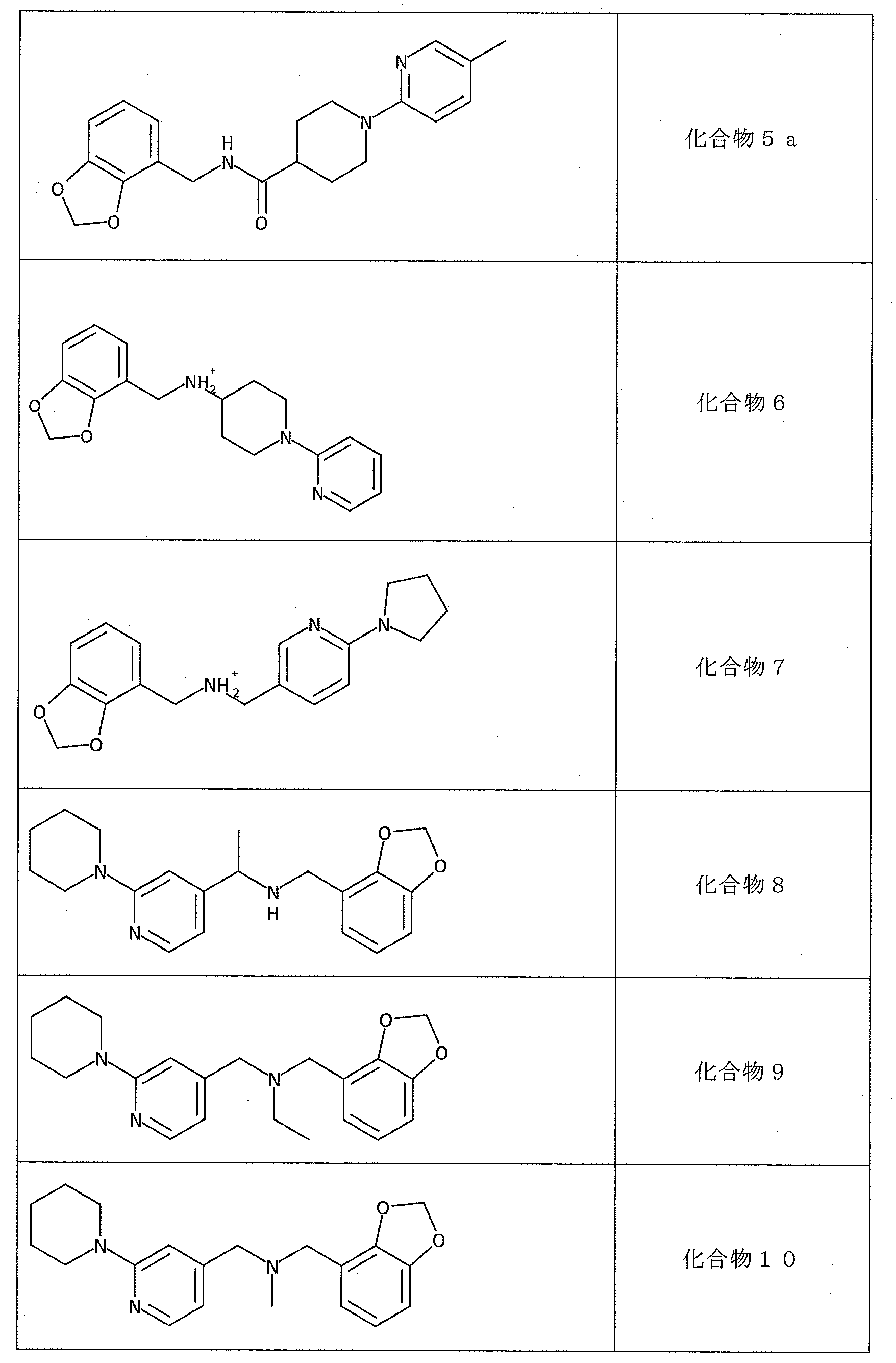

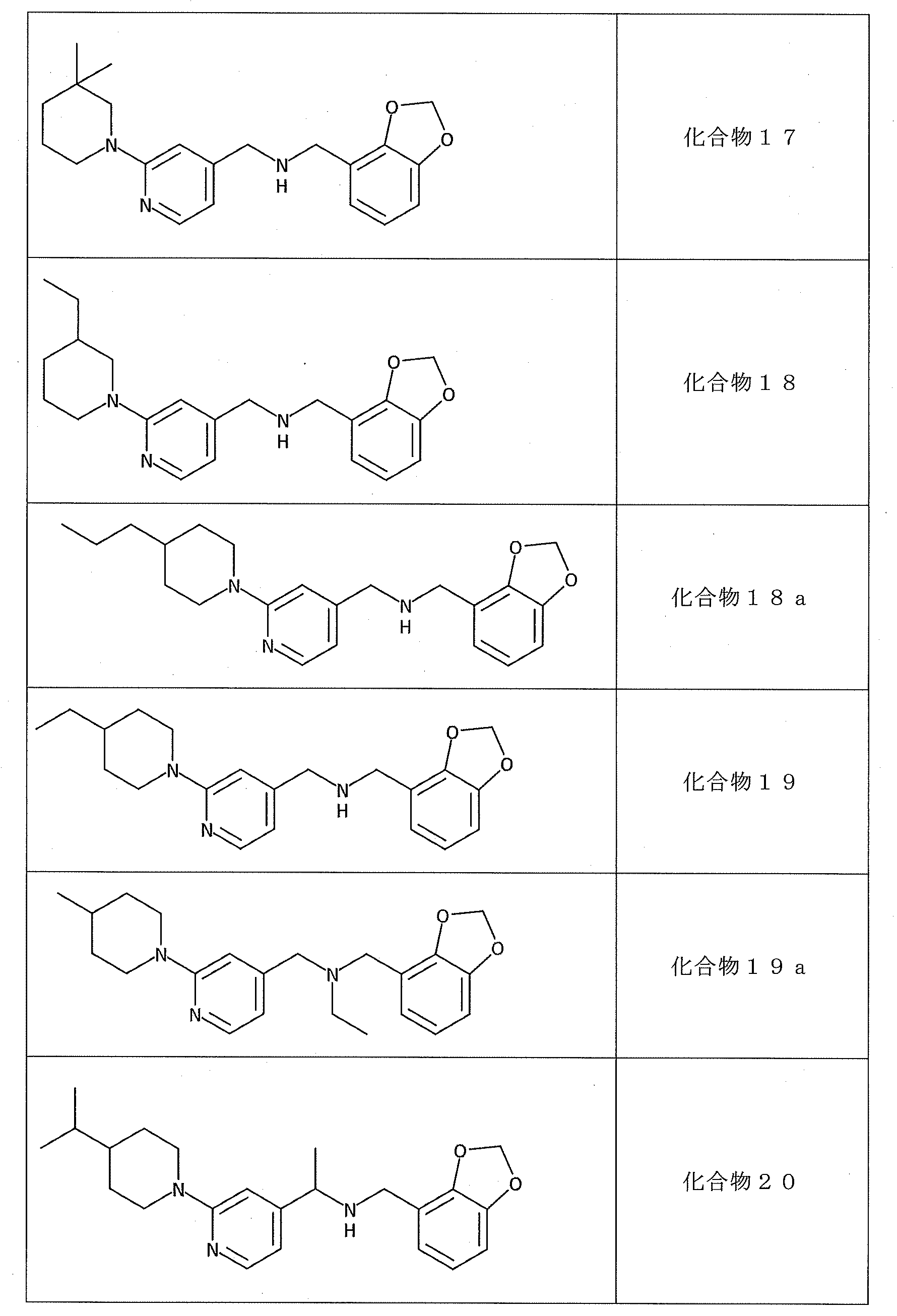
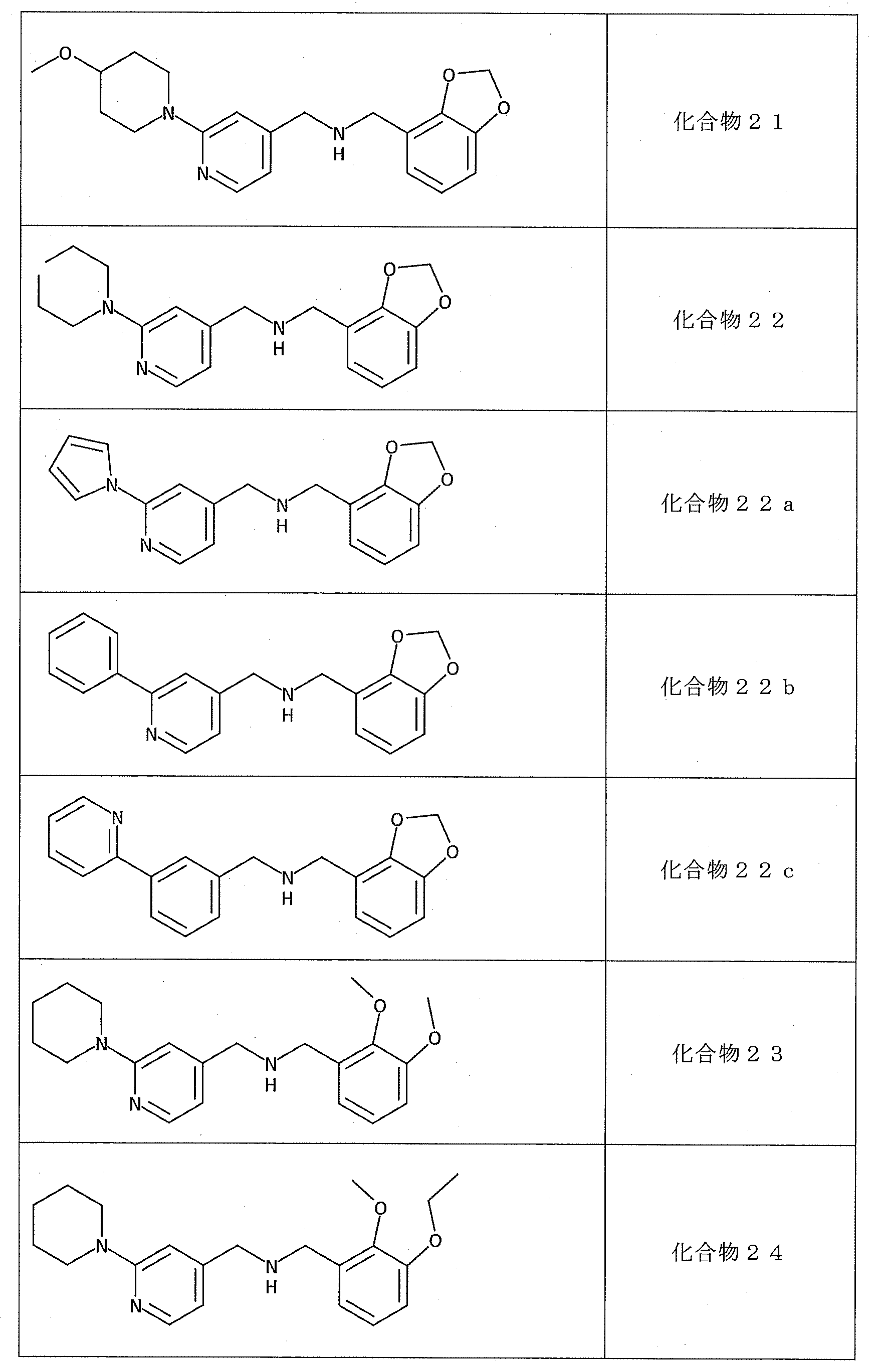
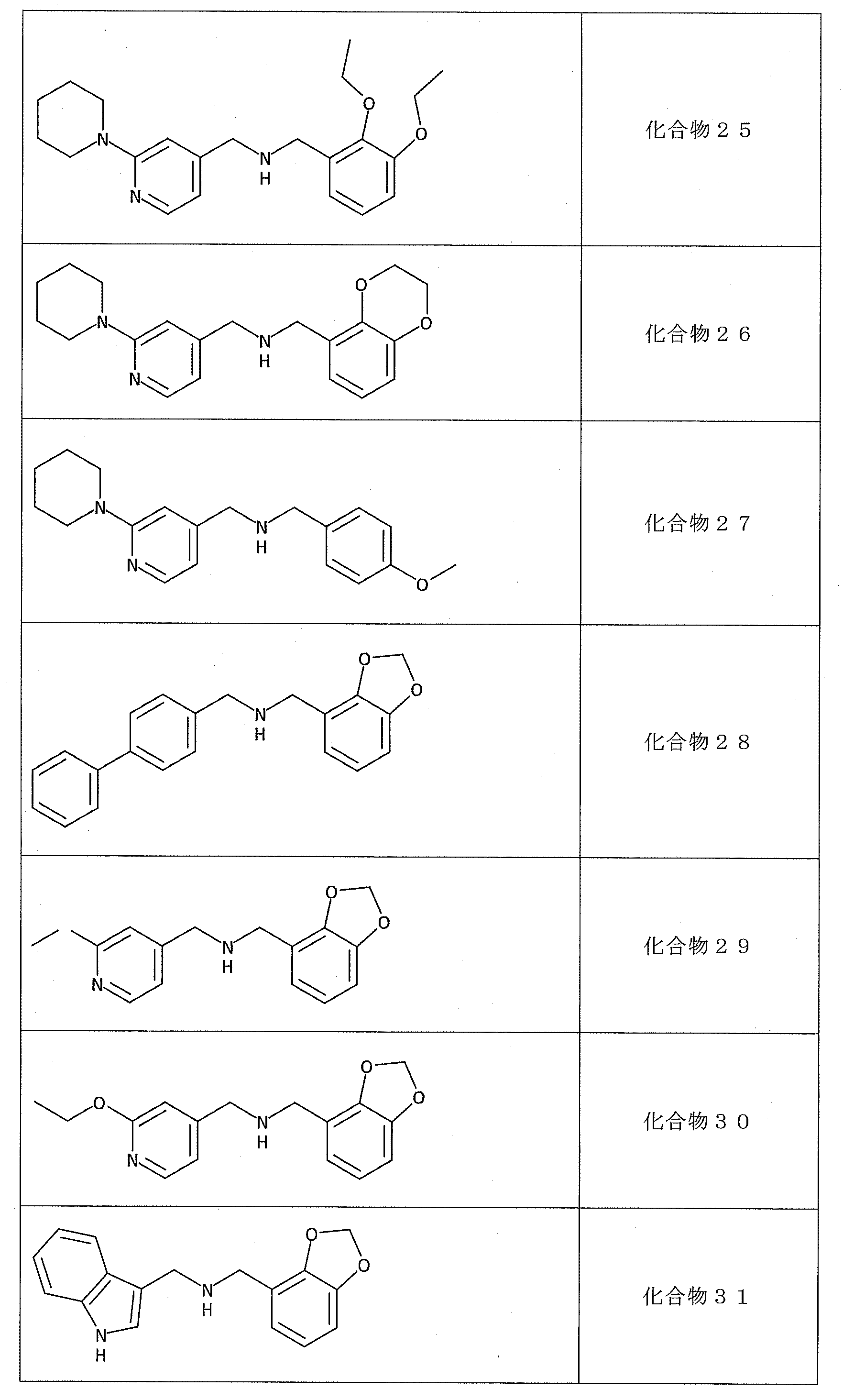
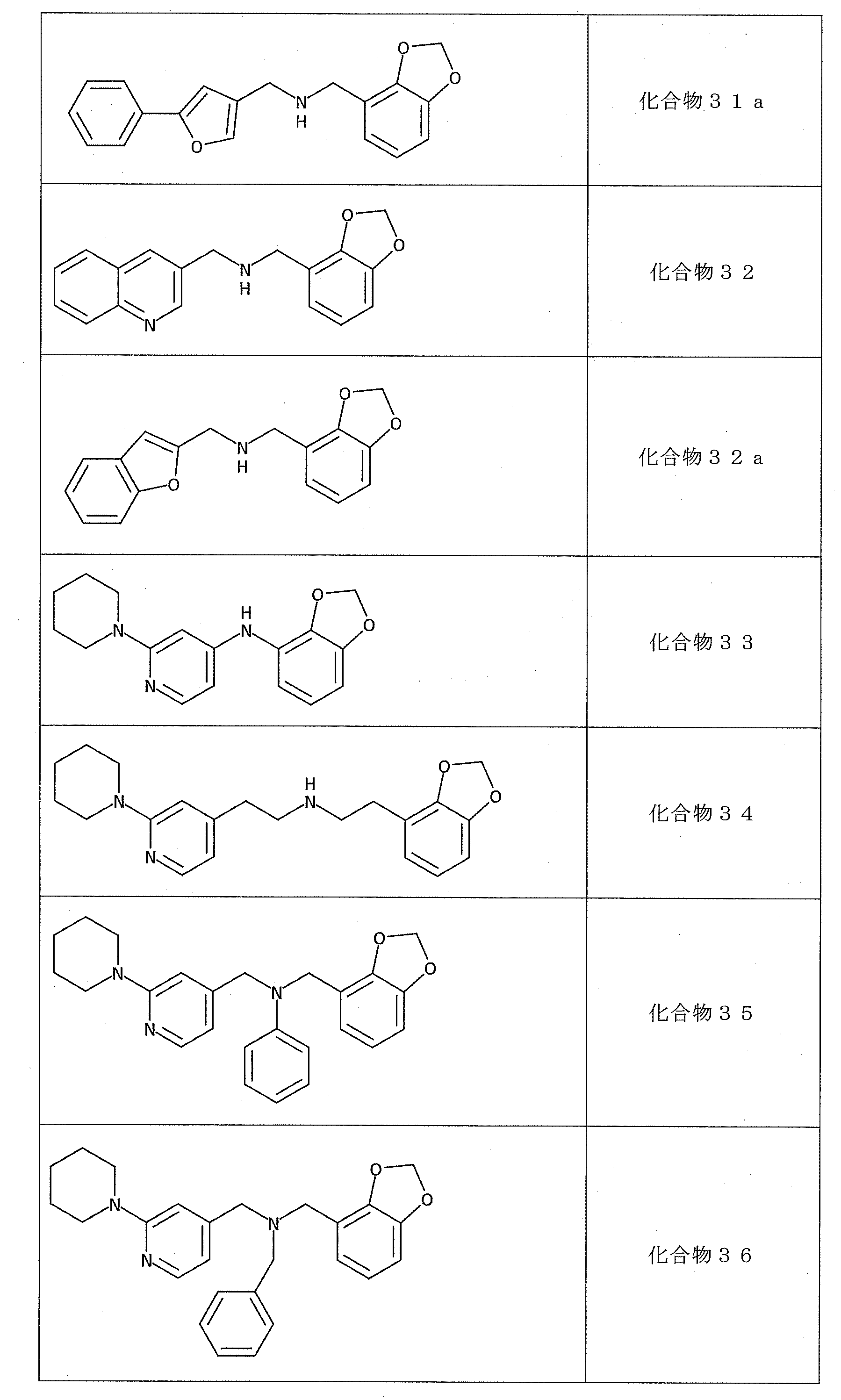
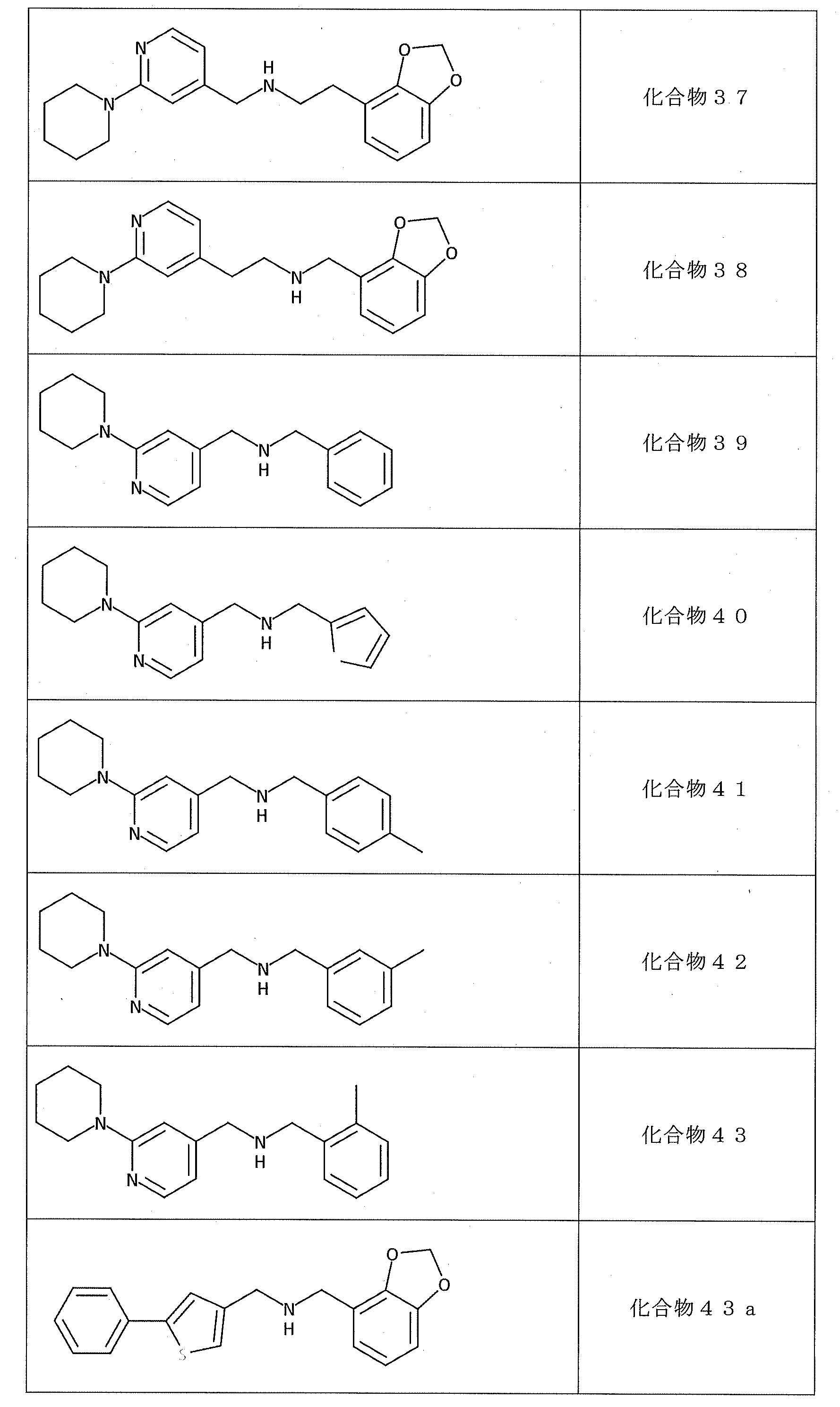
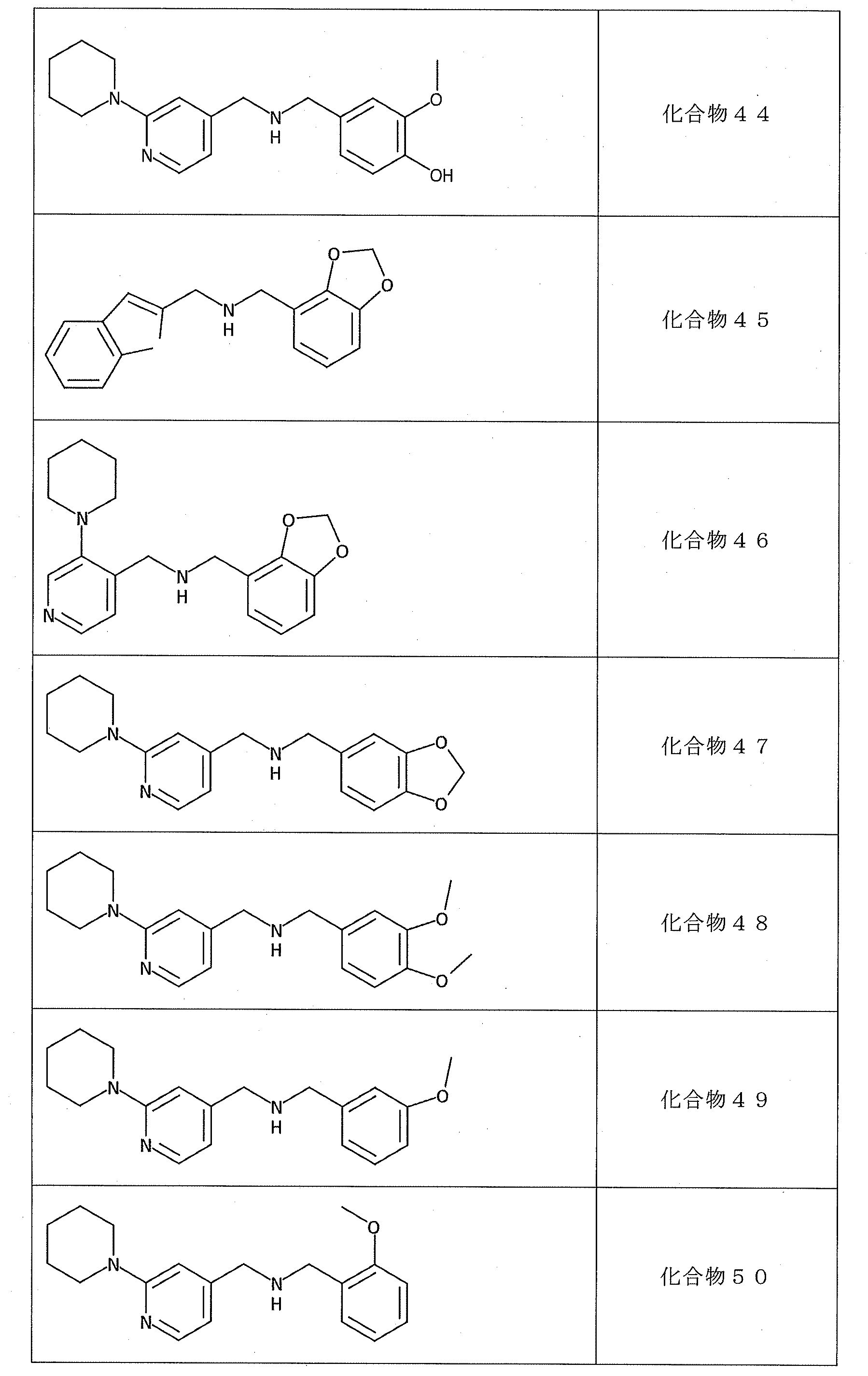
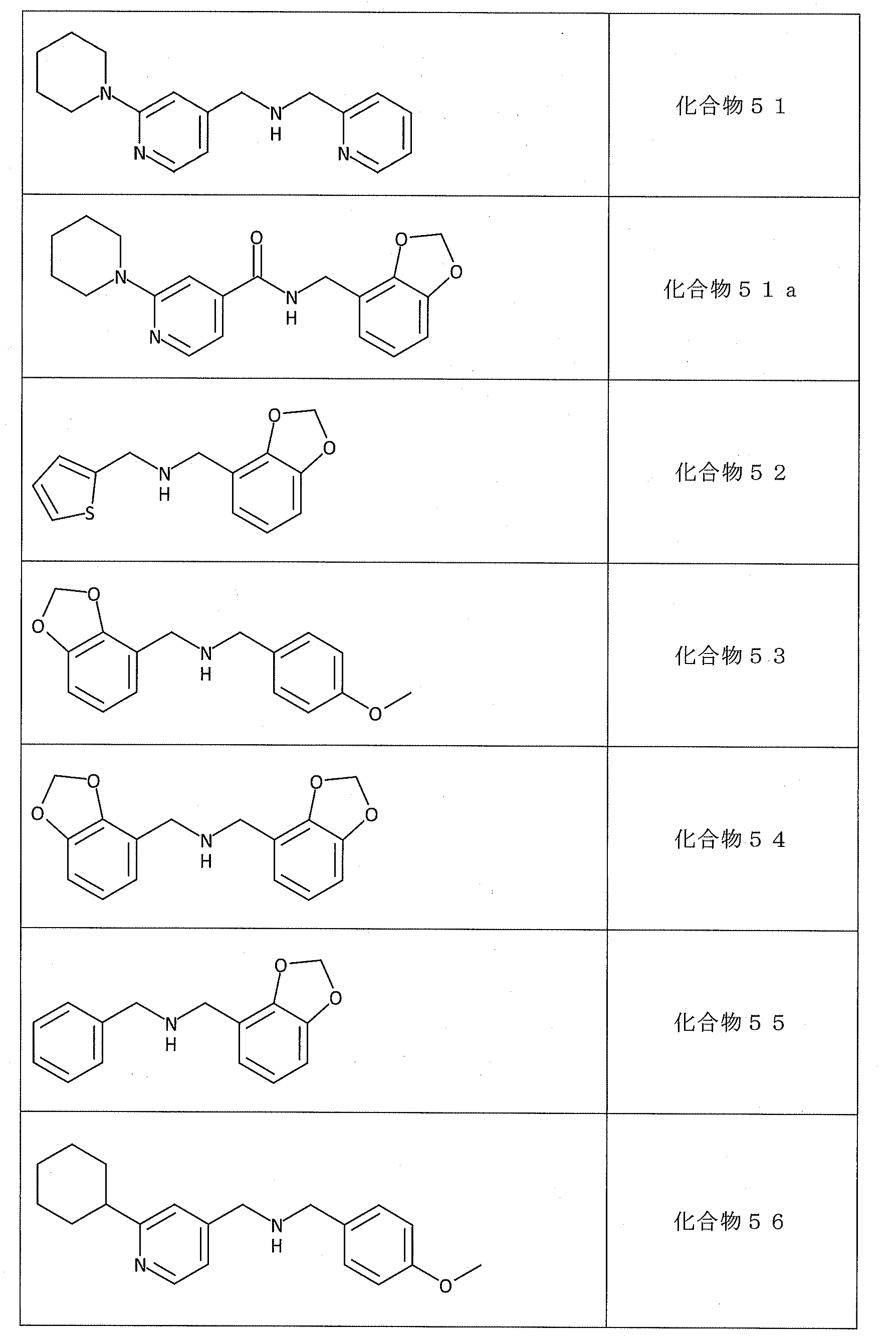
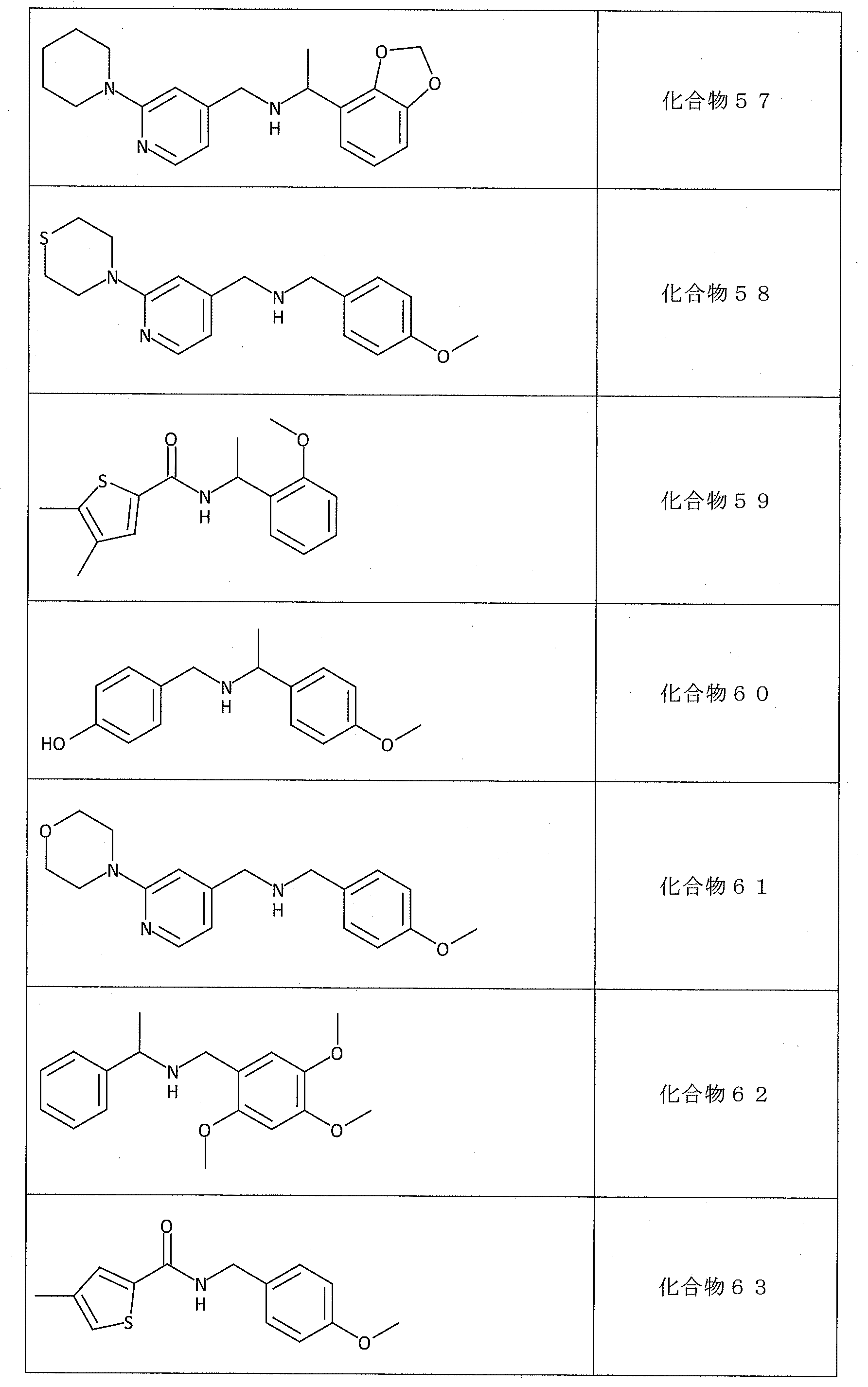
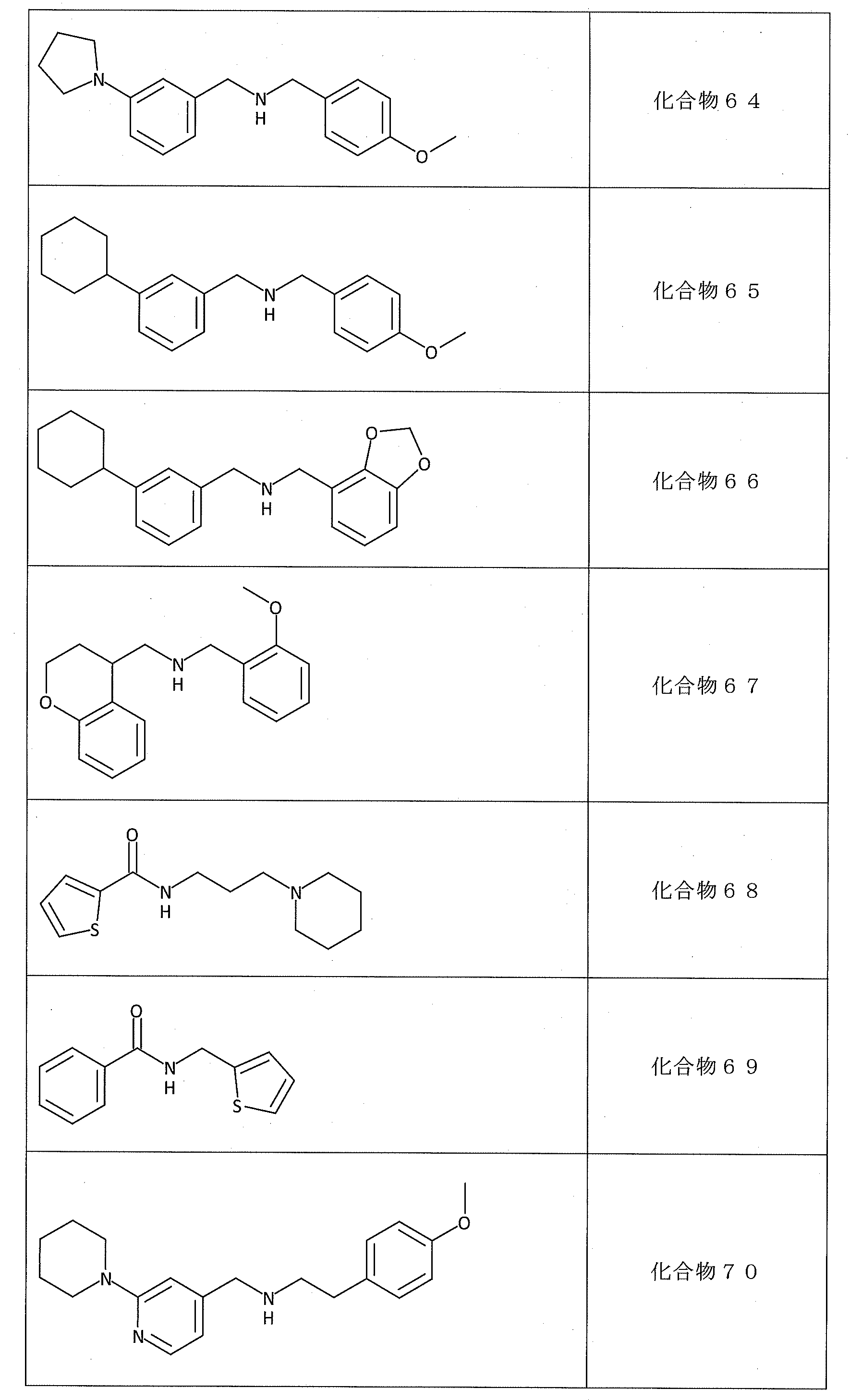
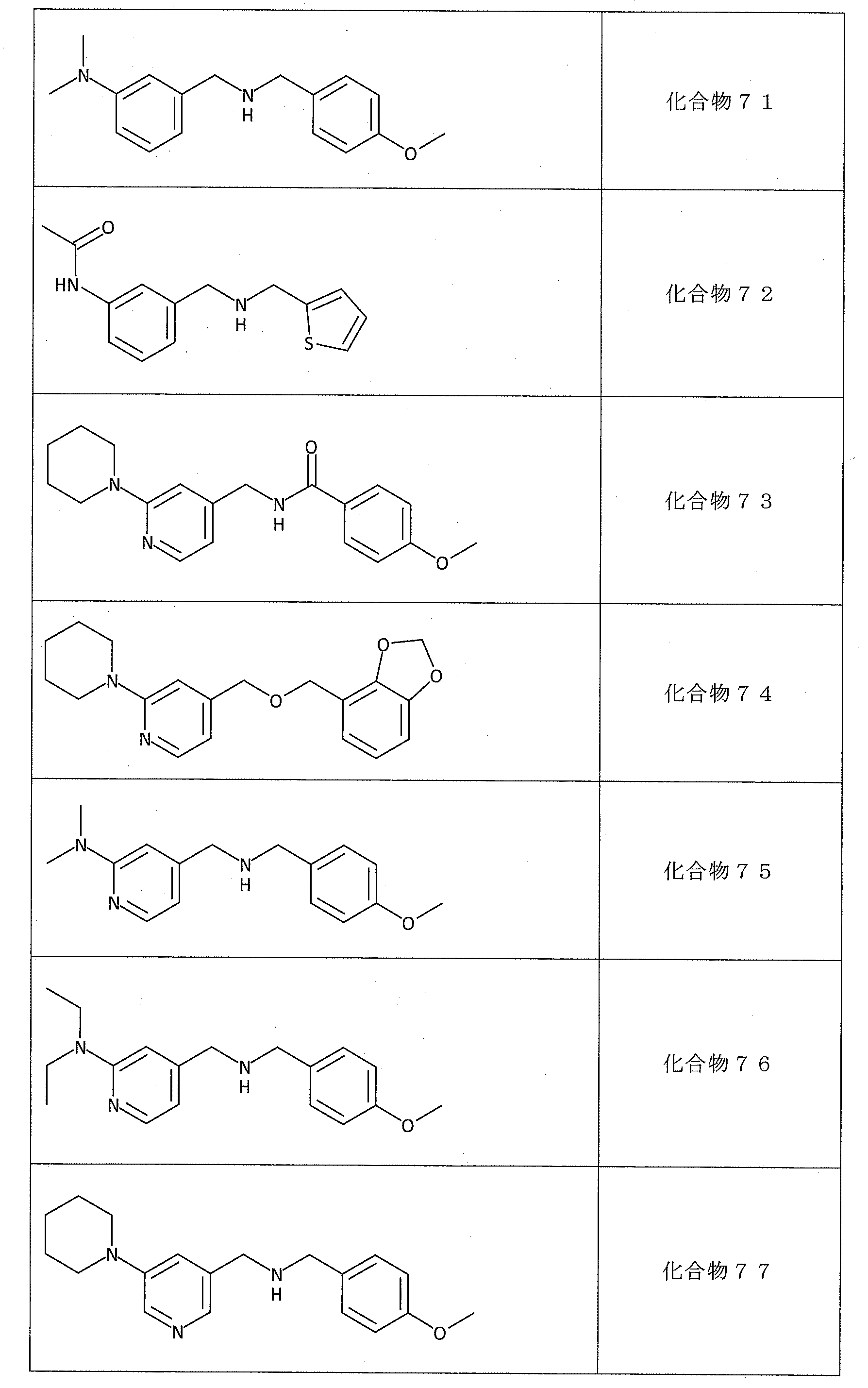

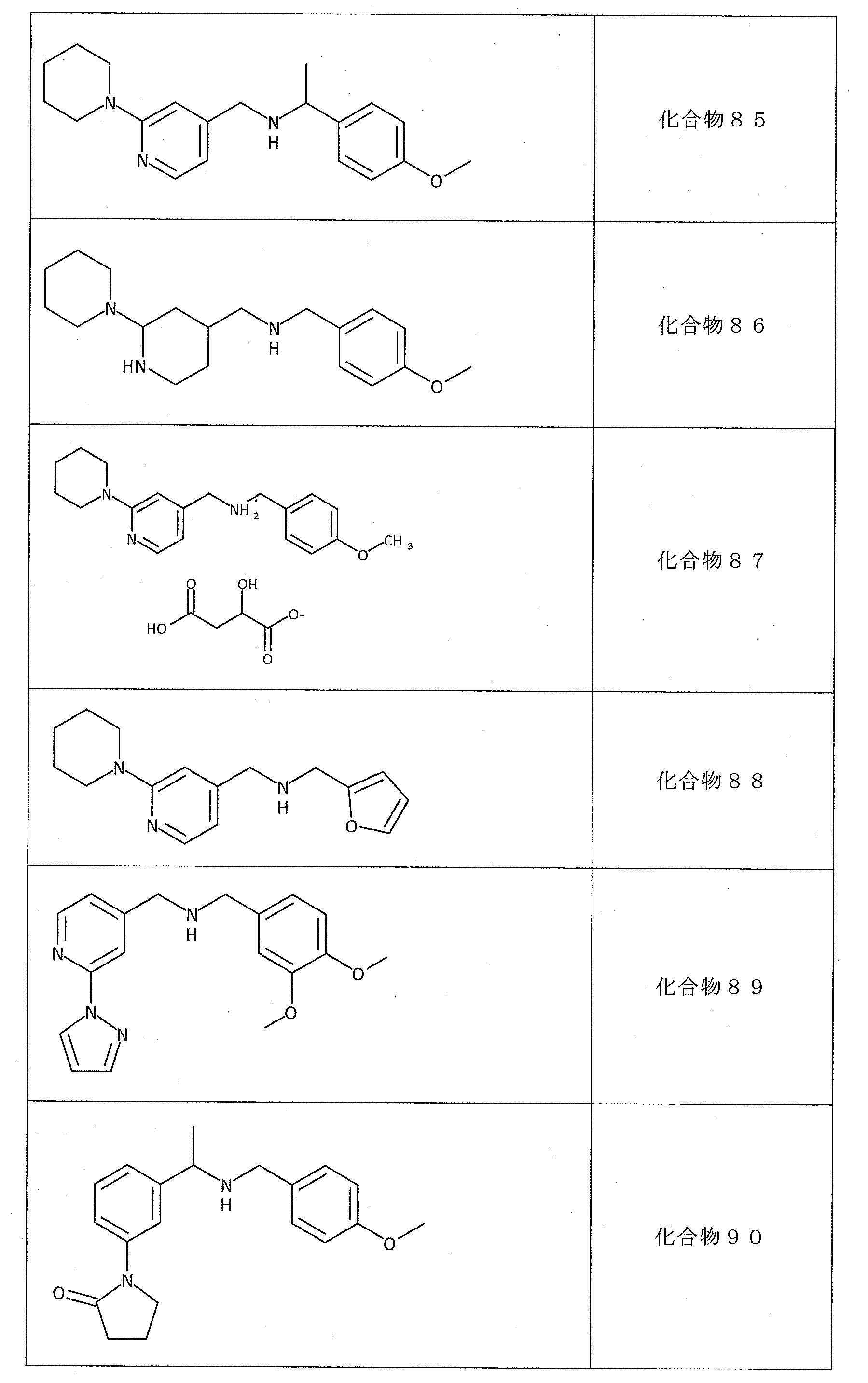
特に化合物1、2、4、8、11、12、13、14、15、16、17、18、22、23、24、25、26、27、29、39、40、41、42、43、47、48、49、50、51、56、58、61、64、65、71、75、76、80、83、84、85及び87、さらに好ましくは化合物1、8、11、12、13、14、15、16、17、18、22、23、24、27、39、40、41、42、43、47、49、51、56、58、61、64、75、76、80、85及び87、特に好ましくは化合物1、8、11、13、14、16、17、18、22、23、24、27、39、40、41、49、56、58、61、75、76、80、85及び87、及びそれらの塩、特に無機または有機の酸、特に一価または多価のカルボン酸との酸付加塩から成る群から選択され、前記冷却剤が立体異性体として純粋な形態でまたは異なる立体異性体の混合物として存在してもよい、請求項1~7のいずれか1項に記載の生理的冷却剤。
Especially compounds 1, 2, 4, 8, 11, 12, 13, 14, 15, 16, 17, 18, 22, 23, 24, 25, 26, 27, 29, 39, 40, 41, 42, 43, 47, 48, 49, 50, 51, 56, 58, 61, 64, 65, 71, 75, 76, 80, 83, 84, 85 and 87, more preferably compounds 1, 8, 11, 12, 13, 14, 15, 16, 17, 18, 22, 23, 24, 27, 39, 40, 41, 42, 43, 47, 49, 51, 56, 58, 61, 64, 75, 76, 80, 85 and 87, particularly preferably compounds 1, 8, 11, 13, 14, 16, 17, 18, 22, 23, 24, 27, 39, 40, 41, 49, 56, 58, 61, 75, 76, 80, 85 and 87, and their salts, in particular acid addition salts with inorganic or organic acids, in particular mono- or polyhydric carboxylic acids, wherein said refrigerant is in stereoisomerically pure form or Physiological cooling agent according to any one of claims 1 to 7, which may be present as a mixture of different stereoisomers.
(1)無機酸と形成される、または有機酸、好ましくは一価もしくは多価のカルボン酸と形成される酸付加塩;または
(2)親化合物に存在する酸性プロトンが金属イオン、特にアルカリ金属イオン、アルカリ土類イオンもしくはアルミニウムイオンで置換されるとき形成される、または有機塩基で配位されるとき形成される塩から成る群から選択される、請求項1~8のいずれか1項に記載の生理的冷却剤。 The salt of the coolant may include (1) an acid addition salt formed with an inorganic acid, or an organic acid, preferably a mono- or polyhydric carboxylic acid; or (2) an acidic proton present in the parent compound. is selected from the group consisting of salts formed when is substituted with a metal ion, in particular an alkali metal ion, an alkaline earth ion or an aluminum ion, or when coordinated with an organic base. 8. Physiological cooling agent according to any one of 8.
(b)少なくとも1つのさらなる生理的冷却剤と;及び/または任意で
(c)少なくとも1つの溶媒とを含む、またはそれらから成る、生理的冷却剤混合物。 (a) one, two, three or more coolant(s) according to any one of claims 1 to 9 and optionally (b) at least one further physiological coolant; and/or optionally (c) a physiological coolant mixture comprising or consisting of at least one solvent.
メントール、メントールメチルエーテル(FEMA GRAS 4054)、グルタミン酸モノメチル(FEMA GRAS 4006)、メントキシ-1,2-プロパンジオール(FEMA GRAS 3784)、グルタル酸ジメチル(FEMA GRAS 4604)、ヒドロキシメチルシクロヘキシルエタノン(FEMA GRAS 4742)、2-(4-エチルフェノキシ)-N-(1H-ピラゾール-3-イル)-N-(チオフェン-2-イルメチル)アセトアミド(FEMA GRAS 4880)、WS-23(2-イソプロピル-N,2,3-トリメチルブチルアミド、FEMA GRAS 3804)、N-(4-(シアノメチル)フェニル)-2-イソプロピル-5,5-ジメチルシクロヘキサンカルボキサミド(FEMA GRAS 4882)、N-(3-ヒドロキシ-4-メトキシフェニル)-2-イソプロピル-5,5-ジメチルシクロヘキサンカルボキサミド(FEMA GRAS 4881)、N-(2-ヒドロキシ-2-フェニルエチル)-2-イソプロピル-5,5-ジメチルシクロヘキサン-1-カルボキサミド(FEMA GRAS 4896)、3,4-メチレンジオキシ桂皮酸、(E)-3-ベンゾ[1,3]ジオキソール-5-イル-N,N-ジフェニル-2-プロペンアミド(FEMA GRAS 4788)、炭酸メントールプロピレングリコール(FEMA GRAS 3806)、N-エチルオキサミン酸メンチル、コハク酸モノメチル(FEMA GRAS 3810)、WS-3(N-エチル-p-メンタン-3-カルボキサミド、FEMA GRAS 3455)、炭酸メントールエチレングリコール(FEMA GRAS 3805)、WS-5(3-(p-メンタン-3-カルボキサミド)酢酸エチル、FEMA GRAS 4309)、WS-12(1R,2S,5R)-N-(4-メトキシフェニル)-p-メンタンカルボキサミド(FEMA GRAS 4681)、WS-27(N-エチル-2,2-ジイソプロピルブタンアミド、FEMA GRAS 4557)、N-シクロプロピル-5-メチル-2-イソプロピルシクロヘキサンカルボキサミド(FEMA GRAS 4693)、WS-116(N-(1,1-ジメチル-2-ヒドロキシエチル)-2,2-ジエチルブタンアミド、FEMA GRAS 4603)、メントキシエタノール(FEMA GRAS 4154)、N-(4-シアノメチルフェニル)-p-メンタンカルボキサミド(FEMA GRAS 4496)、N-(2-(ピリジン-2-イル)エチル)-3-p-メンタンカルボキサミド(FEMA GRAS 4549)、N-(2-ヒドロキシエチル)-2-イソプロピル-1-2,3-ジメチルブタンアミド(FEMA GRAS 4602)、(2S,5R)-N-[4-(2-アミノ-2-オキソエチル)フェニル]-p-メンタンカルボキサミド(FEMA GRAS 4684)、N-シクロプロピル-5-メチル-2-イソプロピルシクロヘキサンカルボキサミド(FEMA GRAS 4693)、
2-[(2-p-メントキシ)エトキシ]エタノール(FEMA GRAS 4718)、(2,6-ジエチル-5-イソプロピル-2-メチルテトラヒドロピラン(FEMA GRAS 4680)、trans-4-tert-ブチルシクロヘキサノール(FEMA GRAS 4724)、2-(p-トリルオキシ)-N-(1H-ピラゾール-5-イル)-N-((チオフェン-2-イル)メチル)アセトアミド(FEMA GRAS 4809)、メントングリセロールケタール(FEMA GRAS 3807及び3808)、(-)-メントキシプロパン-1,2-ジオール、3-(1-メントキシ)-2-メチルプロパン-1,2-ジオール(FEMA GRAS 3849)、イソプレゴール、(+)-cis及び(-)-trans-p-メンタン-3,8-ジオール(62:38、FEMA GRAS 4053)、2,3-ジヒドロキシ-p-メンタン、3,3,5-トリメチルシクロヘキサノングリセロールケタール、カルボン酸メンチルピロリドン、(1R,3R,4S)-3-メンチル-3,6-ジオキサヘプタノエート、(1R,2S,5R)-3-メンチル-メトキシアセテート、(1R,2S,5R)-3-メンチル-3,6,9-トリオキサデカノエート、(1R,2S,5R)-3-メンチル-3,6,9-トリオキサデカノエート、(1R,2S,5R)-3-メンチル-(2-ヒドロキシエトキシ)アセテート、(1R,2S,5R)-メンチル-11-ヒドロキシ-3,6,9-トリオキサウンデカノエート、クベボール(FEMA GRAS 4497)、2-イソプロピル-5-メチルシクロヘキシル-4-(ジメチルアミノ)-4-オキソブタノエート(FEMA GRAS 4230)、乳酸メンチル(FEMA GRAS 3748)、6-イソプロピル-3,9-ジメチル-1,4-ジオキサスピロ[4.5]デカン-2-オン(FEMA GRAS 4285)、N-ベンゾ[1,3]ジオキソール-5-イル-3-p-メンタンカルボキサミド、N-(1-イソプロピル-1,2-ジメチルプロピル)-1,3-ベンゾジオキソール-5-カルボキサミド、N-(R)-2-オキソテトラヒドロフラン-3-イル-(1R,2S,5R)-p-メンタン-3-カルボキサミド、2,2,5,6,6-ペンタメチル-2,3,6,6a-テトラヒドロペンタレン-3a(1H)-オールと5-(2-ヒドロキシ-2-メチルプロピル)-3,4,4-トリメチルシクロペント-2-エン-1-オンとの混合物;(2S,5R)-2-イソプロピル-5-メチル-N-(2-(ピリジン-4-イル)エチル)シクロヘキサンカルボキサミド;(1S,2S,5R)-N-(4-(シアノメチル)フェニル)-2-イソプロピル-5-メチルシクロヘキサンカルボキサミド、1,7-イソプロピル-4,5-メチル-ビシクロ[2.2.2]オクト-5-エン誘導体、4-メトキシ-N-フェニル-N-[2-(ピリジン-2-イル)エチル]ベンズアミド、4-メトキシ-N-フェニル-N-[2-(ピリジン-2-イル)エチル]ベンゼンスルホンアミド、4-クロロ-N-フェニル-N-[2-(ピリジン-2-イル)エチル]ベンゼンスルホンアミド、4-シアノ-N-フェニル-N-[2-(ピリジン-2-イル)エチル]ベンゼンスルホンアミド、
4-((ベンズヒドリルアミノ)メチル)-2-メトキシフェノール、4-((ビス(4-メトキシフェニル)メチルアミノ)メチル)-2-メトキシフェノール、4-((1,2-ジフェニルエチルアミノ)メチル)-2-メトキシフェノール、4-((ベンズヒドリルオキシ)メチル)-2-メトキシフェノール、4-((9H-フルオレン-9-イルアミノ)メチル)-2-メトキシフェノール、4-((ベンズヒドリルアミノ)メチル)-2-エトキシフェノール、1-(4-メトキシフェニル)-2-(1-メチル-1H-ベンゾ[d]イミダゾール-2-イル)ビニル-4-メトキシベンゾエート、2-(1-イソプロピル-6-メチル-1H-ベンゾ[d]イミダゾール-2-イル)-1-(4-メトキシフェニル)ビニル-4-メトキシベンゾエート、(Z)-2-(1-イソプロピル-5-メチル-1H-ベンゾ[d]イミダゾール-2-イル)-1-(4-メトキシフェニル)ビニル-4-メトキシベンゾエート、3-アルキル-p-メタン-3-オール誘導体、フェンキル、D-ボルニル、L-ボルニル、エクソ-ノルボルニル、2-メチルイソボルニル、2-エチルフェンキル、2-メチルボルニル、cis-ピナン-2-イル、ベルバニル及びイソボルニルの誘導体、メンチルオキサメート誘導体、メンチル3-オキソカルボン酸エステル、N-アルファ-(メンタンカルボニル)アミノ酸アミド、p-メンタンカルボキサミド及びWS-23類似体、(-)-(1R,2R,4S)-ジヒドロウンベルロール、p-メンタンアルキルオキシアミド、シクロヘキサン誘導体、ブタノン誘導体、3-メントキシ-1-プロパノールと1-メントキシ-2-プロパノールとの混合物、1-[2-ヒドロキシフェニル]-4-[2-ニトロフェニル]-1,2,3,6-テトラヒドロピリミジン-2-オン、4-メチル-3-(1-ピロリジニル)-2-[5H]-フラノン、及び以下の表:
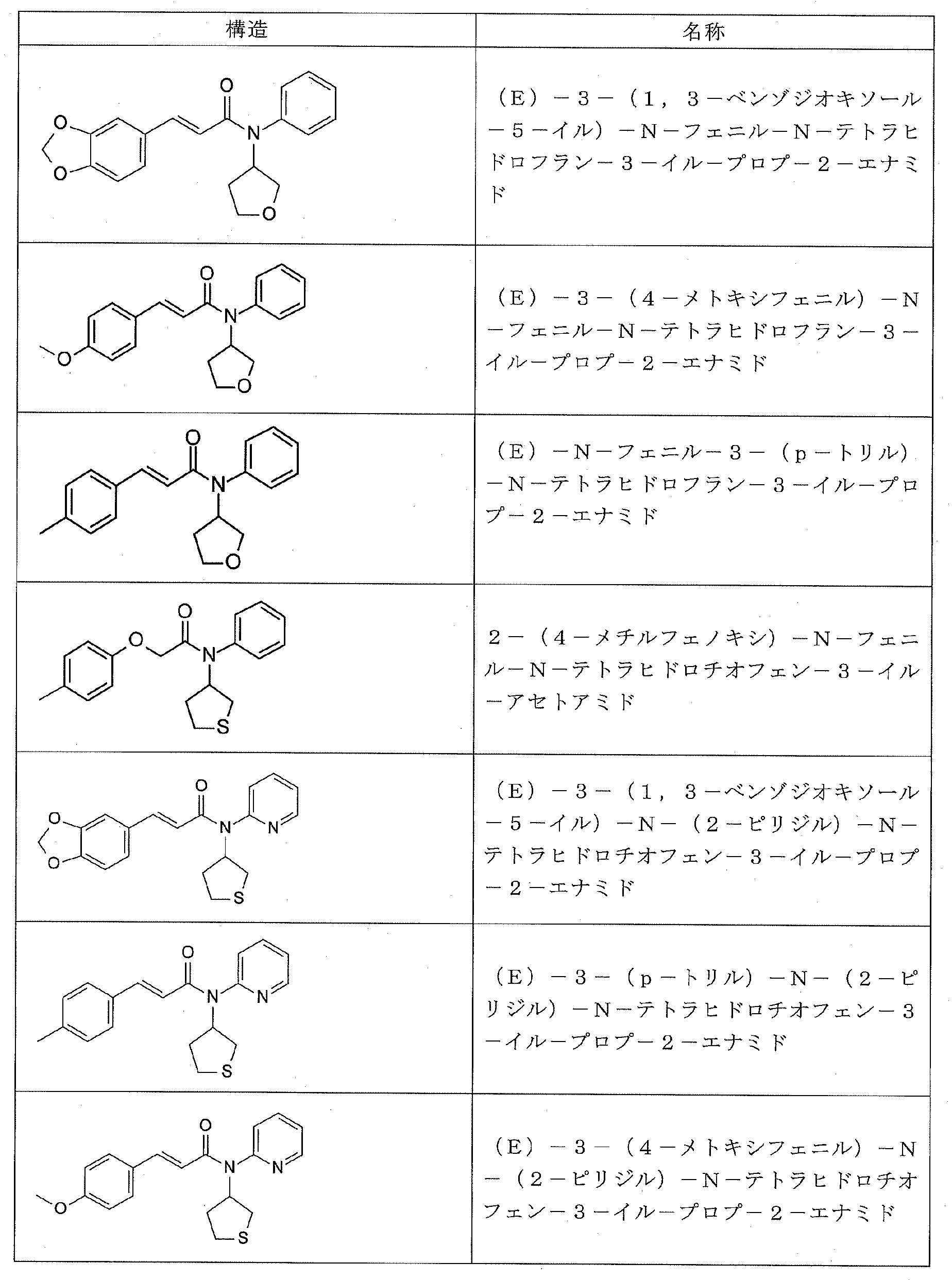
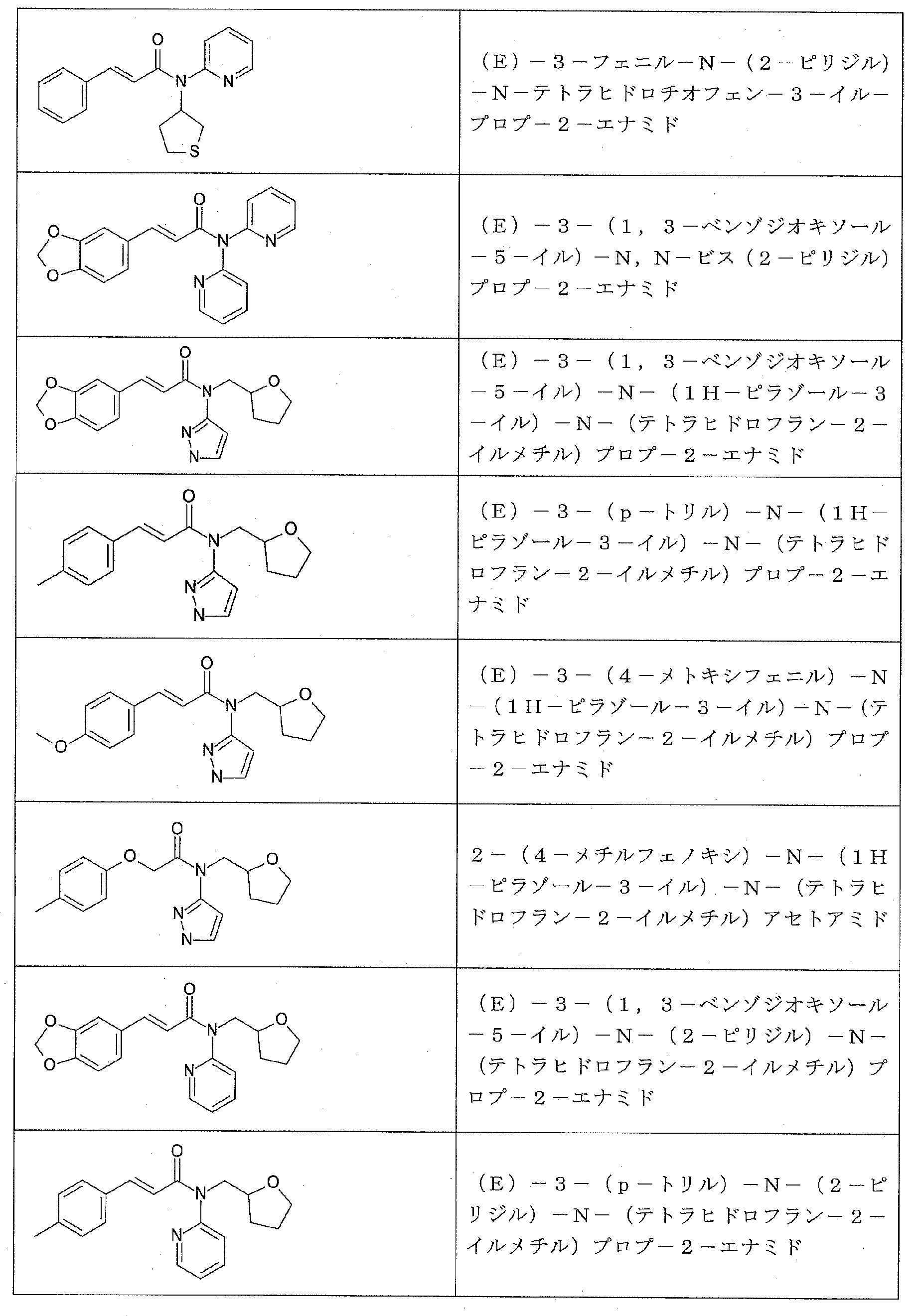
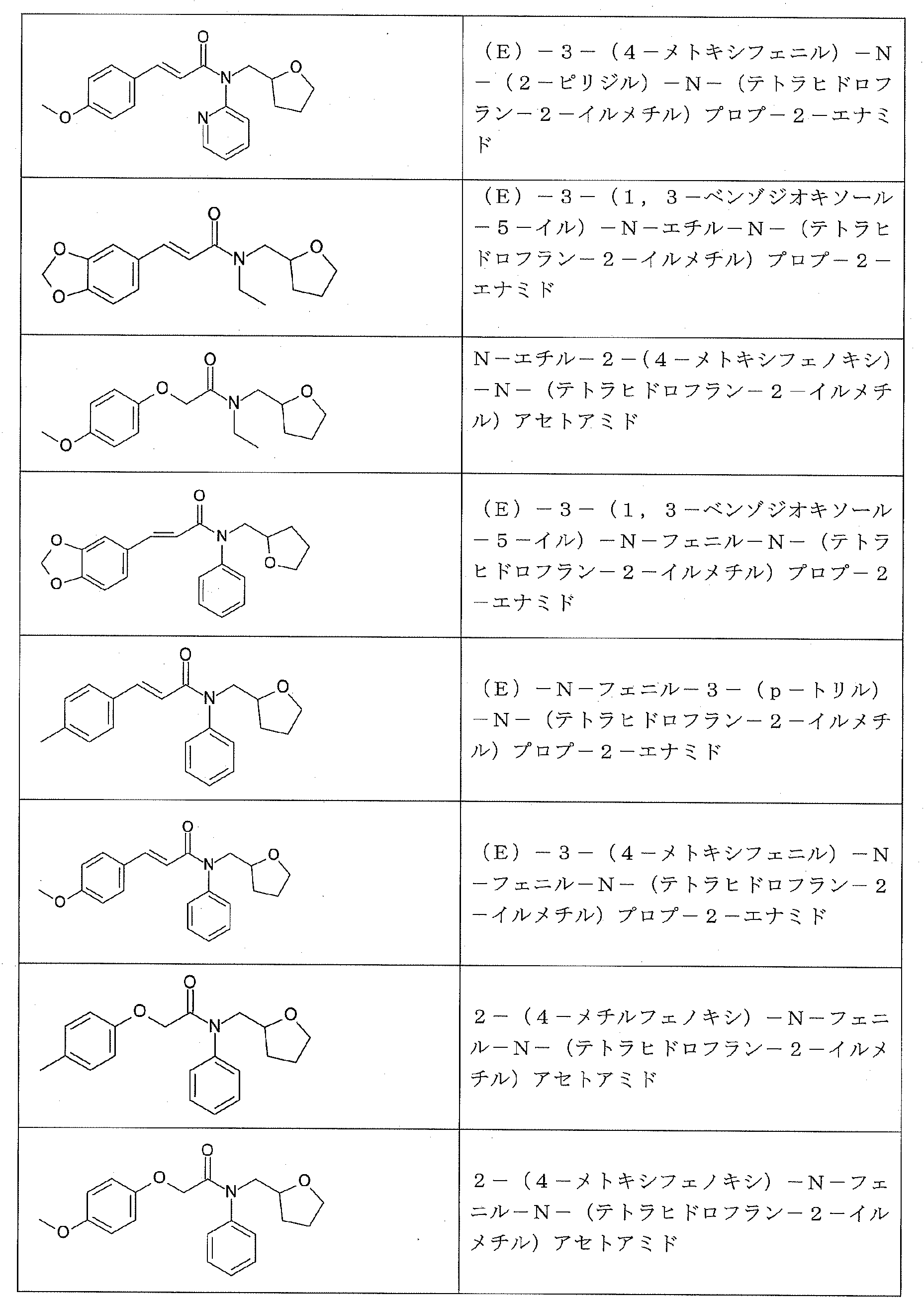
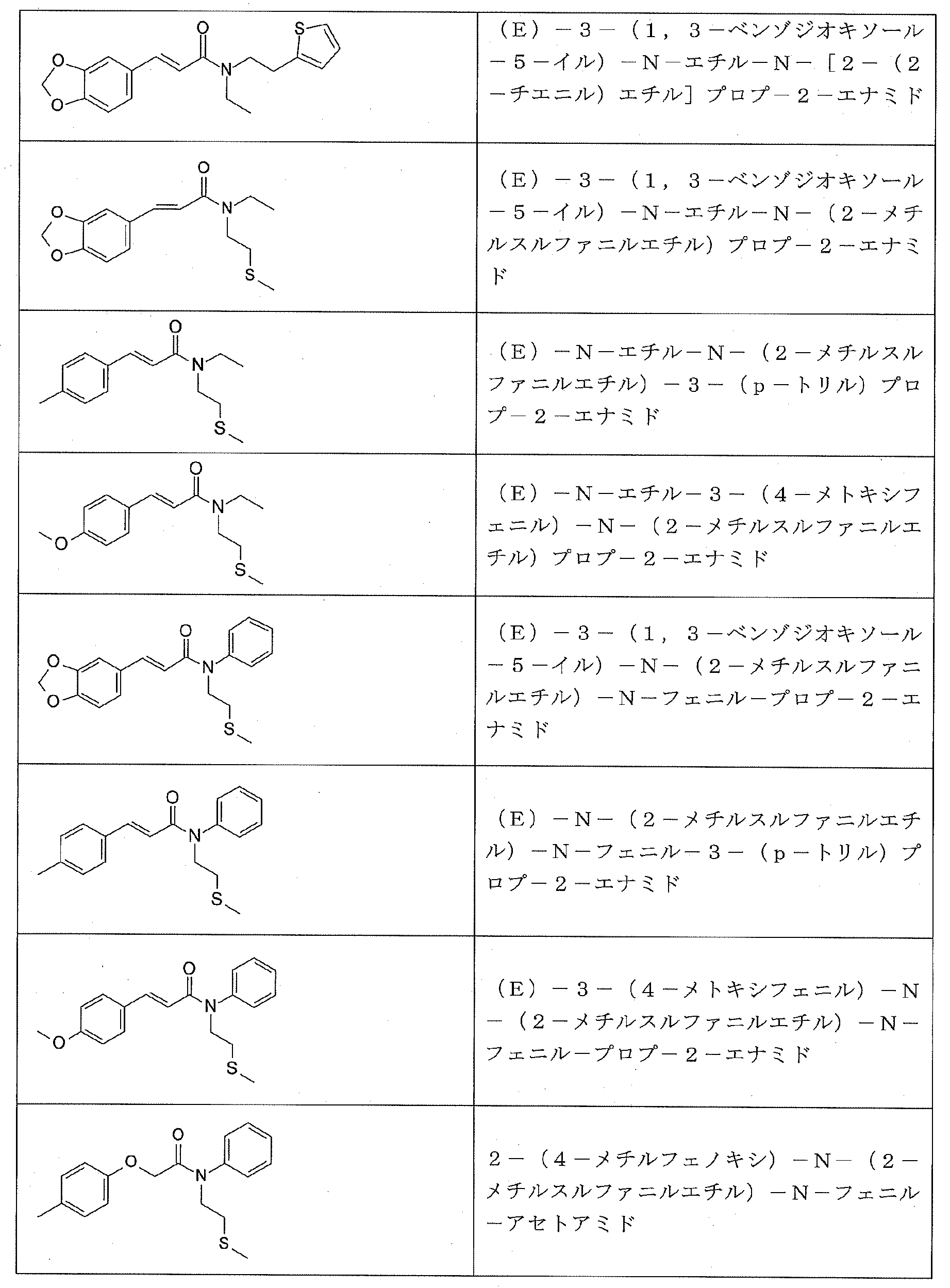
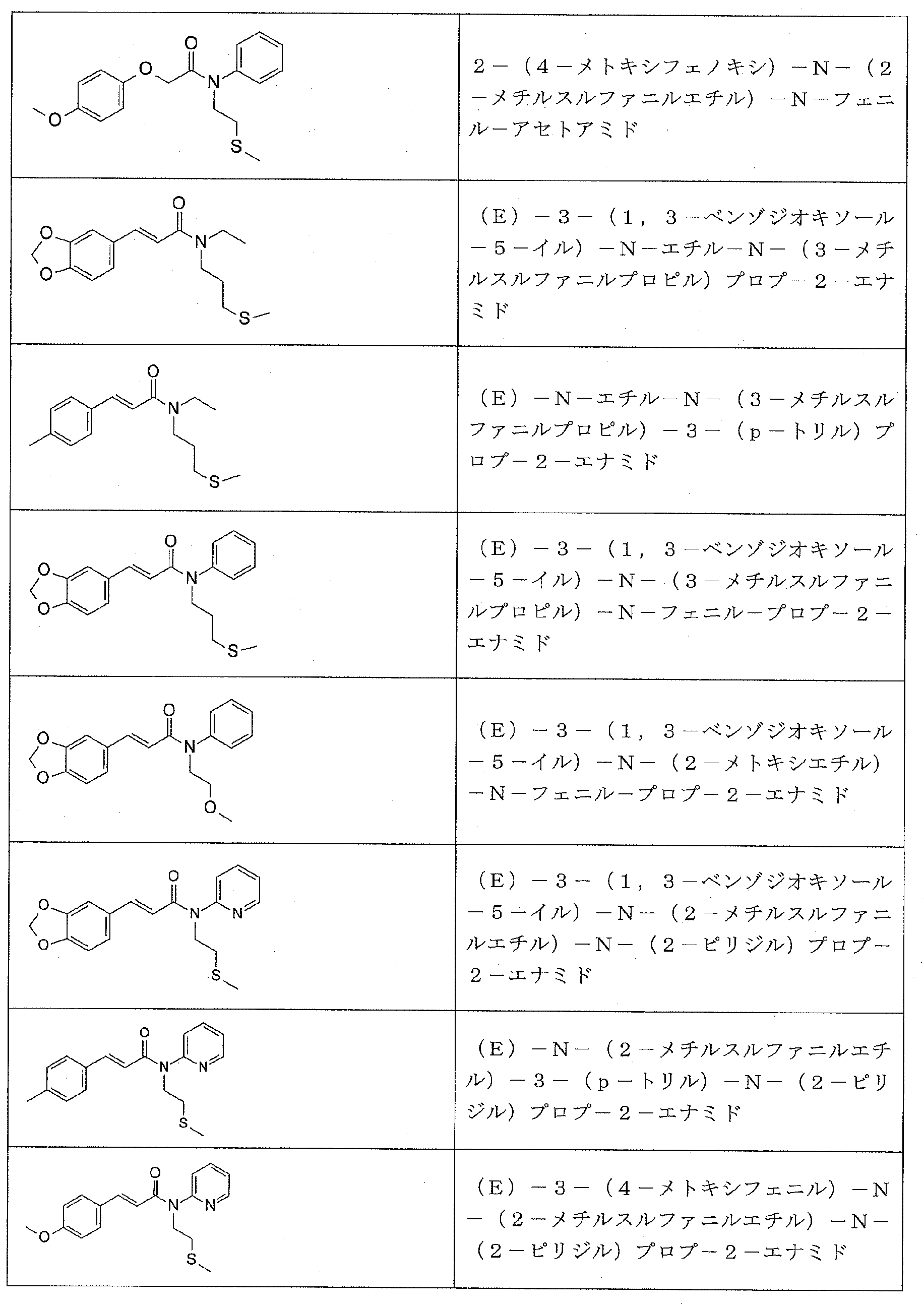
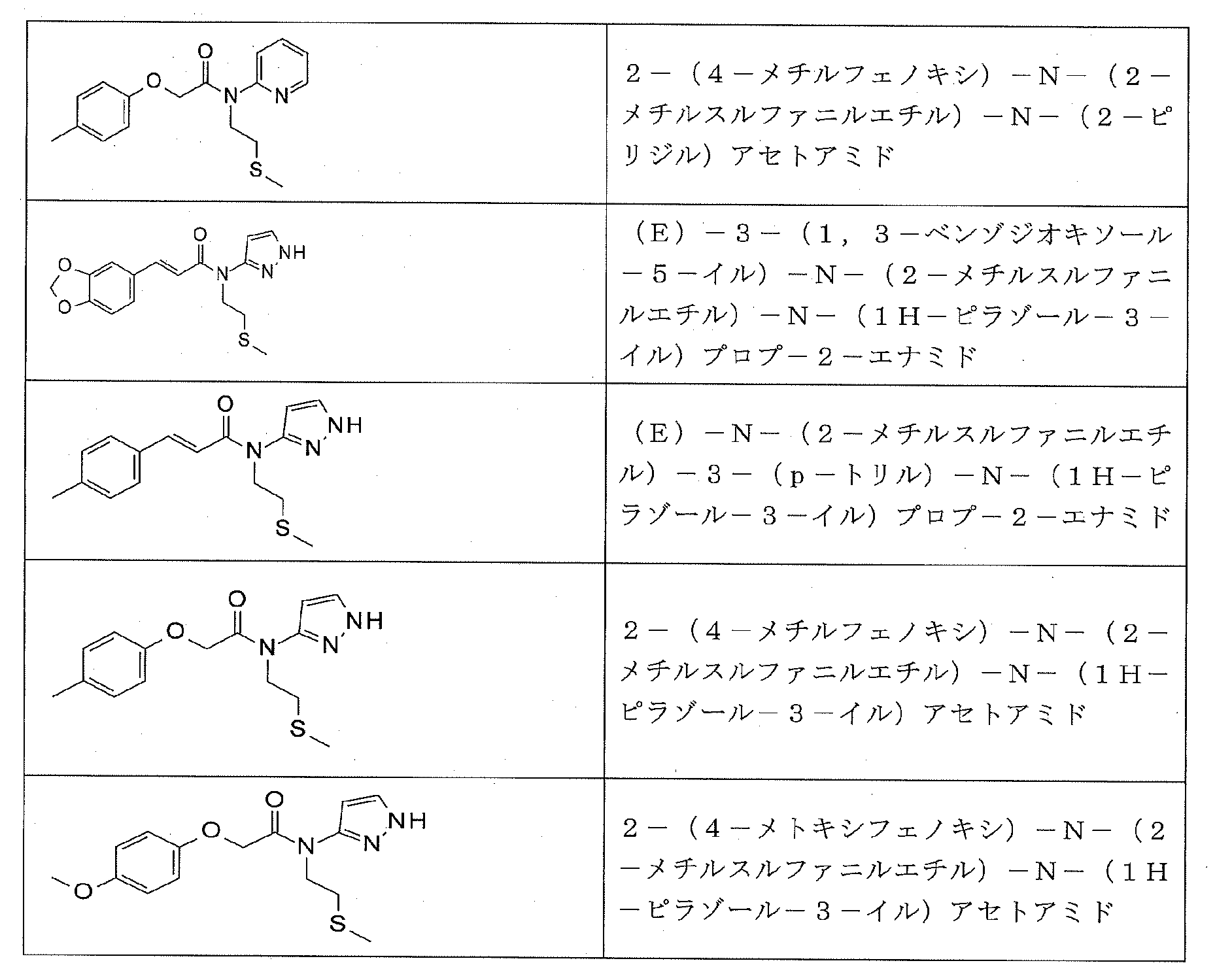
に係る成分、ならびにそれらの混合物から成る群から選択される、請求項10に記載の生理的冷却剤混合物。 The physiological cooling agent of component (b) comprises:
Menthol, menthol methyl ether (FEMA GRAS 4054), monomethyl glutamate (FEMA GRAS 4006), menthoxy-1,2-propanediol (FEMA GRAS 3784), dimethyl glutarate (FEMA GRAS 4604), hydroxymethylcyclohexylethanone (FEMA GRAS 4742), 2-(4-ethylphenoxy)-N-(1H-pyrazol-3-yl)-N-(thiophen-2-ylmethyl)acetamide (FEMA GRAS 4880), WS-23(2-isopropyl-N, 2,3-trimethylbutyramide, FEMA GRAS 3804), N-(4-(cyanomethyl)phenyl)-2-isopropyl-5,5-dimethylcyclohexanecarboxamide (FEMA GRAS 4882), N-(3-hydroxy-4- methoxyphenyl)-2-isopropyl-5,5-dimethylcyclohexanecarboxamide (FEMA GRAS 4881), N-(2-hydroxy-2-phenylethyl)-2-isopropyl-5,5-dimethylcyclohexane-1-carboxamide (FEMA GRAS 4896), 3,4-methylenedioxycinnamic acid, (E)-3-benzo[1,3]dioxol-5-yl-N,N-diphenyl-2-propenamide (FEMA GRAS 4788), menthol carbonate Propylene glycol (FEMA GRAS 3806), menthyl N-ethyloxamate, monomethyl succinate (FEMA GRAS 3810), WS-3 (N-ethyl-p-menthane-3-carboxamide, FEMA GRAS 3455), menthol ethylene glycol carbonate (FEMA GRAS 3805), WS-5 (3-(p-menthane-3-carboxamido)ethyl acetate, FEMA GRAS 4309), WS-12 (1R,2S,5R)-N-(4-methoxyphenyl)-p - Menthane carboxamide (FEMA GRAS 4681), WS-27 (N-ethyl-2,2-diisopropylbutanamide, FEMA GRAS 4557), N-cyclopropyl-5-methyl-2-isopropylcyclohexane carboxamide (FEMA GRAS 4693), WS-116 (N-(1,1-dimethyl-2-hydroxyethyl)-2,2-diethylbutanamide, FEMA GRAS 4603), menthoxyethanol (FEMA GRAS 4154), N-(4-cyanomethylphenyl) -p-menthanecarboxamide (FEMA GRAS 4496), N-(2-(pyridin-2-yl)ethyl)-3-p-menthanecarboxamide (FEMA GRAS 4549), N-(2-hydroxyethyl)-2-isopropyl -1-2,3-dimethylbutanamide (FEMA GRAS 4602), (2S,5R)-N-[4-(2-amino-2-oxoethyl)phenyl]-p-menthanecarboxamide (FEMA GRAS 4684), N - cyclopropyl-5-methyl-2-isopropylcyclohexanecarboxamide (FEMA GRAS 4693),
2-[(2-p-menthoxy)ethoxy]ethanol (FEMA GRAS 4718), (2,6-diethyl-5-isopropyl-2-methyltetrahydropyran (FEMA GRAS 4680), trans-4-tert-butylcyclohexanol (FEMA GRAS 4724), 2-(p-tolyloxy)-N-(1H-pyrazol-5-yl)-N-((thiophen-2-yl)methyl)acetamide (FEMA GRAS 4809), menthone glycerol ketal (FEMA GRAS 3807 and 3808), (-)-menthoxypropane-1,2-diol, 3-(1-menthoxy)-2-methylpropane-1,2-diol (FEMA GRAS 3849), isopulegol, (+)- cis and (-)-trans-p-menthane-3,8-diol (62:38, FEMA GRAS 4053), 2,3-dihydroxy-p-menthane, 3,3,5-trimethylcyclohexanone glycerol ketal, carboxylic acid Menthylpyrrolidone, (1R,3R,4S)-3-menthyl-3,6-dioxaheptanoate, (1R,2S,5R)-3-menthyl-methoxyacetate, (1R,2S,5R)-3- Menthyl-3,6,9-trioxadecanoate, (1R,2S,5R)-3-menthyl-3,6,9-trioxadecanoate, (1R,2S,5R)-3-menthyl- (2-hydroxyethoxy)acetate, (1R,2S,5R)-menthyl-11-hydroxy-3,6,9-trioxaundecanoate, cubebol (FEMA GRAS 4497), 2-isopropyl-5-methylcyclohexyl- 4-(dimethylamino)-4-oxobutanoate (FEMA GRAS 4230), Menthyl lactate (FEMA GRAS 3748), 6-isopropyl-3,9-dimethyl-1,4-dioxaspiro[4.5]decane-2 -one (FEMA GRAS 4285), N-benzo[1,3]dioxol-5-yl-3-p-menthanecarboxamide, N-(1-isopropyl-1,2-dimethylpropyl)-1,3-benzodio Xol-5-carboxamide, N-(R)-2-oxotetrahydrofuran-3-yl-(1R,2S,5R)-p-menthane-3-carboxamide, 2,2,5,6,6-pentamethyl- 2,3,6,6a-tetrahydropentalen-3a(1H)-ol and 5-(2-hydroxy-2-methylpropyl)-3,4,4-trimethylcyclopent-2-en-1-one mixture of; (2S,5R)-2-isopropyl-5-methyl-N-(2-(pyridin-4-yl)ethyl)cyclohexanecarboxamide; (1S,2S,5R)-N-(4-(cyanomethyl) phenyl)-2-isopropyl-5-methylcyclohexanecarboxamide, 1,7-isopropyl-4,5-methyl-bicyclo[2.2.2]oct-5-ene derivative, 4-methoxy-N-phenyl-N- [2-(pyridin-2-yl)ethyl]benzamide, 4-methoxy-N-phenyl-N-[2-(pyridin-2-yl)ethyl]benzenesulfonamide, 4-chloro-N-phenyl-N- [2-(pyridin-2-yl)ethyl]benzenesulfonamide, 4-cyano-N-phenyl-N-[2-(pyridin-2-yl)ethyl]benzenesulfonamide,
4-((benzhydrylamino)methyl)-2-methoxyphenol, 4-((bis(4-methoxyphenyl)methylamino)methyl)-2-methoxyphenol, 4-((1,2-diphenylethylamino) ) methyl)-2-methoxyphenol, 4-((benzhydryloxy)methyl)-2-methoxyphenol, 4-((9H-fluoren-9-ylamino)methyl)-2-methoxyphenol, 4-(( Benzhydrylamino)methyl)-2-ethoxyphenol, 1-(4-methoxyphenyl)-2-(1-methyl-1H-benzo[d]imidazol-2-yl)vinyl-4-methoxybenzoate, 2- (1-isopropyl-6-methyl-1H-benzo[d]imidazol-2-yl)-1-(4-methoxyphenyl)vinyl-4-methoxybenzoate, (Z)-2-(1-isopropyl-5- Methyl-1H-benzo[d]imidazol-2-yl)-1-(4-methoxyphenyl)vinyl-4-methoxybenzoate, 3-alkyl-p-methane-3-ol derivative, fhenkyl, D-bornyl, L -bornyl, exo-norbornyl, 2-methylisobornyl, 2-ethylfenkyl, 2-methylbornyl, cis-pinan-2-yl, verbanyl and isobornyl derivatives, menthyl oxamate derivatives, menthyl 3-oxocarboxylic acid esters , N-alpha-(menthanecarbonyl)amino acid amide, p-menthanecarboxamide and WS-23 analogs, (-)-(1R,2R,4S)-dihydrounberol, p-menthane alkyloxyamide, cyclohexane derivatives, Butanone derivatives, mixtures of 3-menthoxy-1-propanol and 1-menthoxy-2-propanol, 1-[2-hydroxyphenyl]-4-[2-nitrophenyl]-1,2,3,6-tetrahydropyrimidine -2-one, 4-methyl-3-(1-pyrrolidinyl)-2-[5H]-furanone, and the table below:
11. Physiological coolant mixture according to claim 10, selected from the group consisting of components according to the following: and mixtures thereof.
(d)請求項1~9のいずれか1項に記載の1、2、3以上の冷却剤(複数可)または請求項10~13のいずれか1項に記載の生理的冷却剤混合物と
(e)少なくとも1つの香味剤とを含む、またはそれらから成る、前記アロマ製剤。 An aroma preparation,
(d) one, two, three or more coolant(s) according to any one of claims 1 to 9 or a physiological coolant mixture according to any one of claims 10 to 13; e) at least one flavoring agent.
マルトール及びマルトール誘導体(好ましくは、エチルマルトール)、クマリン及びクマリン誘導体、ガンマ-ラクトン(好ましくは、ガンマ-ウンデカラクトン、ガンマ-ノナラクトン、ガンマ-デカラクトン)、デルタ-ラクトン(好ましくは、4-メチルデルタデカラクトン、マソイラクトン、デルタデカラクトン、ツベロラクトン)、ソルビン酸メチル、ジバニリン、4-ヒドロキシ-2(または5)-エチル-5(または2)-メチル-3(2H)-フラノン、2-ヒドロキシ-3-メチル-2-シクロペンテノン、3-ヒドロキシ-4,5-ジメチル-2(5H)-フラノン、酢酸イソアミルエステル、酪酸エチルエステル、酪酸n-ブチルエステル、酪酸イソアミルエステル、3-メチル酪酸エチルエステル、n-ヘキサン酸エチルエステル、n-ヘキサン酸アリルエステル、n-ヘキサン酸n-ブチルエステル、n-オクタン酸エチルエステル、3-メチル-3-フェニルグリシド酸エチル、2-trans-4-cis-デカジエン酸エチル、4-(p-ヒドロキシフェニル)-2-ブタノン、1,1-ジメトキシ-2,2,5-トリメチル-4-ヘキサン、2,6-ジメチル-5-ヘプタン-1-アル及びフェニルアセトアルデヒド、2-メチル-3-(メチルチオ)フラン、2-メチル-3-フランチオール、ビス(2-メチル-3-フリル)ジスルフィド、フルフリルメルカプタン、メチオナール、2-アセチル-2-チアゾリン、3-メルカプト-2-ペンタノン、2,5-ジメチル-3-フランチオール、2,4,5-トリメチルチアゾール、2-アセチルチアゾール、2,4-ジメチル-5-エチルチアゾール、2-アセチル-1-ピロリン、2-メチル-3-エチルピラジン、2-エチル-3,5-ジメチルピラジン、2-エチル-3,6-ジメチルピラジン、2,3-ジエチル-5-メチルピラジン、3-イソプロピル-2-メトキシピラジン、3-イソブチル-2-メトキシピラジン、2-アセチルピラジン、2-ペンチルピリジン、(E,E)-2,4-デカジエナール、(E,E)-2,4-ノナジエナール、(E)-2-オクテナール、(E)-2-ノネナール、2-ウンデセナール、12-メチルトリデカナール、1-ペンテン-3-オン、4-ヒドロキシ-2,5-ジメチル-3(2H)-フラノン、グアイアコール、3-ヒドロキシ-4,5-ジメチル-2(5H)-フラノン、3-ヒドロキシ-4-メチル-5-エチル-2(5H)-フラノン、シンナムアルデヒド、シンナムアルコール、サリチル酸メチル、イソプレゴール、およびこれら物質の立体異性体、エナンチオマー、位置異性体、ジアステレオマー、シス/トランス異性体またエピマー(ここでは明白に言及されていない)から成る群から選択され;及び/または
成分(e)を形成する前記香味剤がエリスリトール、スレイトール、アラビトール、リボトール、キシリトール、ソルビトール、マンニトール、ズルシトール、ラクチトール、ミラクリン、モネリン、タウマチン、クルクリン、ブラゼイン、マガップ、サイクラミン酸ナトリウム、アセスルファムK、ネオヘスペリジンジヒドロカルコン、サッカリンナトリウム塩、アスパルテーム、スーパーアスパルテーム、ネオテーム、アリテーム、スクラロース、ステビノシド、レバウジオシド、ラグドゥネーム、カレラーム、スクロノネート、スクロオクテート、モナチン、フェニルオドゥルシン、グリシン、D-ロイシン、D-スレオニン、D-アスパラギン、D-フェニルアラニン、D-トリプトファン、L-プロリン、ヘルナンドゥルシン、ジヒドロカルコングリコシド、グリシリジン、グリチルレチン酸、それらの誘導体及び塩、甘草(Glycyrrhizza glabra ssp.)の抽出物、Lippia dulcis抽出物、Momordica ssp.抽出物、モグロシド、Hydrangea dulcis及びステビノシド及びそれらの混合物から成る群から選される、請求項14に記載の香味調製品。 The flavoring substances forming component (e) include acetophenone, allyl caproate, alphaionone, betaionone, anisaldehyde, anisyl acetate, anisyl formate, anethole, benzaldehyde, benzothiazole, benzyl acetate, benzyl alcohol, benzyl benzoate, Beta ionone, butyl butyrate, butyl caproate, butylidenephthalide, carvone, camphene, caryophyllene, cineol, cinnamyl acetate, citral, citronellol, citronellal, citronellyl acetate, cyclohexyl acetate, cymene, damascone, decalactone, dihydrocoumarin, dimethyl anthranilate, anthranil Dimethyl acid, dodecalactone, ethoxyethyl acetate, ethyl butyrate, ethyl butyrate, ethyl caprate, ethyl caproate, ethyl crotonate, ethylfuraneol, ethylguaiacol, ethyl isobutyrate, ethyl isovalerate, ethyl lactate, ethyl methyl butyrate , ethyl propionate, eucalyptol, eugenol, ethyl heptylate, 4-(p-hydroxyphenyl)-2-butanone, gamma-decalactone, geraniol, geranyl acetate, geranyl acetate, grapefruit aldehyde, methyl dihydrojasmonate (e.g. Hedion (registered trademark)), heliotropin, 2-heptanone, 3-heptanone, 4-heptanone, trans-2-heptenal, cis-4-heptenal, trans-2-hexenal, cis-3-hexenol, trans-2- Hexenoic acid, trans-3-hexenoic acid, cis-2-hexenyl acetate, cis-3-hexenyl acetate, cis-3-hexenyl caproate, trans-2-hexenyl caproate, cis-3-hexenyl formate, cis-acetate 2-hexyl, cis-3-hexyl acetate, trans-2-hexyl acetate, cis-3-hexyl formate, para-hydroxybenzylacetone, isoamyl alcohol, isoamyl isovalerate, isobutyl butyrate, isobutyraldehyde, isoeugenol methyl ether , isopropylmethylthiazole, lauric acid, levulinic acid, linalool, linalool oxide, linalyl acetate, menthol, mentofuran, methyl anthranilate, methylbutanol, methylbutyric acid, 2-methylbutyl acetate, methyl caproate, methyl cinnamate, 5-methyl Furfural, 3,2,2-methylcyclopentenolone, 6,5,2-methylheptenone, methyl dihydrojasmonate, methyl jasmonate, 2-methyl methylbutyrate, 2-methyl 2-pentenoic acid, methyl thiobutyrate, 3 , 1-methylthiohexanol, 3-methylthiohexyl acetate, nerol, neryl acetate, trans, trans-2,4-nonadienal, 2,4-nonadienol, 2,6-nonadienol, 2,4-nonadienol, nautokatone, delta octalactone , gamma octalactone, 2-octanol, 3-octanol, 1,3-octenol, 1-octyl acetate, 3-octyl acetate, palmitic acid, paraldehyde, phellandrene, pentanedione, phenylethyl acetate, phenylethyl alcohol, phenyl Ethyl alcohol, phenylethyl isovalerate, piperonal, propionaldehyde, propyl butyrate, pulegone, pulegol, sinensal, sulfurol, terpinene, terpineol, terpinolene, 8,3-thiomenthanone, 4,4,2-thiomethylpentanone, thymol, Delta-undecalactone, gamma-undecalactone, valencene, valeric acid, vanillin, acetoin, ethyl vanillin, ethyl vanillin isobutyrate (=3-ethoxy-4-isobutyryloxybenzaldehyde), 2,5-dimethyl-4 -hydroxy-3(2H)-furanone and its derivatives (preferably homofuraneol (=2-ethyl-4-hydroxy-5-methyl-3(2H)-furanone), homofuranol (=2-ethyl-5- methyl-4-hydroxy-3(2H)-furanone and 5-ethyl-2-methyl-4-hydroxy-3(2H)-furanone),
Maltol and maltol derivatives (preferably ethyl maltol), coumarins and coumarin derivatives, gamma-lactones (preferably gamma-undecalactone, gamma-nonalactone, gamma-decalactone), delta-lactones (preferably 4-methyldelta) decalactone, masoylactone, delta decalactone, tuberolactone), methyl sorbate, divanillin, 4-hydroxy-2(or 5)-ethyl-5(or 2)-methyl-3(2H)-furanone, 2-hydroxy-3 -Methyl-2-cyclopentenone, 3-hydroxy-4,5-dimethyl-2(5H)-furanone, isoamyl acetate, ethyl butyrate, n-butyl butyrate, isoamyl butyrate, ethyl 3-methylbutyrate , n-hexanoic acid ethyl ester, n-hexanoic acid allyl ester, n-hexanoic acid n-butyl ester, n-octanoic acid ethyl ester, ethyl 3-methyl-3-phenylglycidate, 2-trans-4-cis -ethyl decadienoate, 4-(p-hydroxyphenyl)-2-butanone, 1,1-dimethoxy-2,2,5-trimethyl-4-hexane, 2,6-dimethyl-5-heptan-1-al and Phenylacetaldehyde, 2-methyl-3-(methylthio)furan, 2-methyl-3-furanthiol, bis(2-methyl-3-furyl) disulfide, furfuryl mercaptan, methional, 2-acetyl-2-thiazoline, 3 -Mercapto-2-pentanone, 2,5-dimethyl-3-furanthiol, 2,4,5-trimethylthiazole, 2-acetylthiazole, 2,4-dimethyl-5-ethylthiazole, 2-acetyl-1-pyrroline , 2-methyl-3-ethylpyrazine, 2-ethyl-3,5-dimethylpyrazine, 2-ethyl-3,6-dimethylpyrazine, 2,3-diethyl-5-methylpyrazine, 3-isopropyl-2-methoxy Pyrazine, 3-isobutyl-2-methoxypyrazine, 2-acetylpyrazine, 2-pentylpyridine, (E,E)-2,4-decadienal, (E,E)-2,4-nonadienal, (E)-2 -octenal, (E)-2-nonenal, 2-undecenal, 12-methyltridecanal, 1-penten-3-one, 4-hydroxy-2,5-dimethyl-3(2H)-furanone, guaiacol, 3- Hydroxy-4,5-dimethyl-2(5H)-furanone, 3-hydroxy-4-methyl-5-ethyl-2(5H)-furanone, cinnamaldehyde, cinnamic alcohol, methyl salicylate, isopulegol, and these substances. selected from the group consisting of stereoisomers, enantiomers, positional isomers, diastereomers, cis/trans isomers or epimers (not explicitly mentioned here); and/or forming component (e). Agents include erythritol, threitol, arabitol, ribotol, xylitol, sorbitol, mannitol, dulcitol, lactitol, miraculin, monellin, thaumatin, curculin, brazein, magup, sodium cyclamate, acesulfame K, neohesperidin dihydrochalcone, saccharin sodium salt, aspartame, super Aspartame, neotame, alitame, sucralose, stevinoside, rebaudioside, ragduname, carerame, sucrononate, sucrooctate, monatin, phenylodursine, glycine, D-leucine, D-threonine, D-asparagine, D-phenylalanine, D-tryptophan, L- Proline, hernandursin, dihydrochalcone glycoside, glycyridine, glycyrrhetinic acid, derivatives and salts thereof, licorice (Glycyrrhizza glabra ssp. ), Lippia dulcis extract, Momordica ssp. 15. A flavor preparation according to claim 14, selected from the group consisting of extracts, mogrosides, Hydrongea dulcis and stevinosides and mixtures thereof.
(ia)請求項1~9及び17のいずれか1項に記載の生理的冷却剤もしくは請求項10~13及び17のいずれか1項に記載の生理的冷却剤混合物の少なくとも1つを提供する、または請求項22~24のいずれか1項に記載の化粧品もしくは医薬品を提供する工程と、
(iia)工程(ia)の前記冷却剤または前記冷却剤の混合物または前記品を前記受容体と接触させる工程とを含む、前記方法、あるいは
皮膚または粘膜に対して生理的冷却効果を生み出す方法であって、以下の工程:
(ib)請求項1~9及び17のいずれか1項に記載の生理的冷却剤もしくは請求項10~13及び17のいずれか1項に記載の生理的冷却剤混合物の少なくとも1つを提供する、または請求項22~24のいずれか1項に記載の化粧品もしくは医薬品を提供する工程と、
(iib)工程(ib)の前記冷却剤または前記冷却剤混合物または前記品を前記ヒトの皮膚または粘膜と接触させる工程とを含む、前記方法、あるいは
香味物質の風味特性を改善する方法であって、以下の工程:
(ic)請求項1~9及び17のいずれか1項に記載の生理的冷却剤もしくは請求項10~13及び17のいずれか1項に記載の生理的冷却剤混合物の少なくとも1つと少なくとも1つの香味剤とを提供する工程と、
(iic)前記2つの成分を混合する工程と、必要に応じて
(iiic)前記混合物を口腔調製品に組み込む工程とを含む、前記方法。 A method of modulating the cold menthol receptor TRPM8, in particular in vitro and/or in vivo, comprising the steps of:
(ia) providing at least one physiological coolant according to any one of claims 1 to 9 and 17 or a physiological coolant mixture according to any one of claims 10 to 13 and 17; , or providing the cosmetic or pharmaceutical product according to any one of claims 22 to 24;
(iia) contacting the coolant or mixture of coolants or article of step (ia) with the receptor; The following steps:
(ib) providing at least one physiological coolant according to any one of claims 1 to 9 and 17 or a physiological coolant mixture according to any one of claims 10 to 13 and 17. , or providing the cosmetic or pharmaceutical product according to any one of claims 22 to 24;
(iib) contacting the coolant or the coolant mixture or the article of step (ib) with the skin or mucous membranes of the human. , the following steps:
(ic) at least one physiological coolant according to any one of claims 1 to 9 and 17 or a physiological coolant mixture according to any one of claims 10 to 13 and 17 and at least one a flavoring agent;
(iic) mixing said two components and optionally (iiiic) incorporating said mixture into an oral preparation.
Applications Claiming Priority (3)
| Application Number | Priority Date | Filing Date | Title |
|---|---|---|---|
| EPPCT/EP2020/082410 | 2020-11-17 | ||
| PCT/EP2020/082410 WO2022105986A1 (en) | 2020-11-17 | 2020-11-17 | Novel cooling agents and preparations containing same |
| PCT/EP2021/081954 WO2022106452A2 (en) | 2020-11-17 | 2021-11-17 | New coolants, and preparations containing same |
Publications (2)
| Publication Number | Publication Date |
|---|---|
| JP2023550737A true JP2023550737A (en) | 2023-12-05 |
| JP7813787B2 JP7813787B2 (en) | 2026-02-13 |
Family
ID=73455738
Family Applications (1)
| Application Number | Title | Priority Date | Filing Date |
|---|---|---|---|
| JP2023529901A Active JP7813787B2 (en) | 2020-11-17 | 2021-11-17 | New cooling agent and preparations containing it |
Country Status (6)
| Country | Link |
|---|---|
| US (1) | US20240000746A1 (en) |
| EP (1) | EP4247791A2 (en) |
| JP (1) | JP7813787B2 (en) |
| KR (1) | KR20230107838A (en) |
| CN (1) | CN116685575A (en) |
| WO (2) | WO2022105986A1 (en) |
Families Citing this family (5)
| Publication number | Priority date | Publication date | Assignee | Title |
|---|---|---|---|---|
| WO2022207944A2 (en) | 2022-07-11 | 2022-10-06 | Symrise Ag | Novel mixtures and uses of (2e)-3-(1,3-benzodioxol-5-yl)-n-phenyl-n-(tetrahydro-3-furanyl)-2-propenamide |
| AU2023319145A1 (en) * | 2022-08-05 | 2025-02-13 | Macquarie University | Inhibitors and uses therefor |
| AU2023366929A1 (en) | 2022-10-25 | 2025-05-08 | Veradermics, Incorporated | Compositions and methods of use for modified release minoxidil |
| GB202315636D0 (en) * | 2023-10-12 | 2023-11-29 | Givaudan Sa | Composition |
| WO2025202256A1 (en) * | 2024-03-28 | 2025-10-02 | Firmenich Sa | Cooling composition |
Citations (4)
| Publication number | Priority date | Publication date | Assignee | Title |
|---|---|---|---|---|
| JP2004059474A (en) * | 2002-07-26 | 2004-02-26 | T Hasegawa Co Ltd | p-menthane derivative and cooling sensation agent containing the same |
| JP2009507778A (en) * | 2005-08-15 | 2009-02-26 | ジボダン エス エー | Refreshing compound |
| JP2013136532A (en) * | 2011-12-28 | 2013-07-11 | Kao Corp | Reinforcement agent for cool feeling |
| JP2014503486A (en) * | 2010-11-05 | 2014-02-13 | セノミックス インコーポレイテッド | Compounds useful as TRPM8 activity regulators |
Family Cites Families (52)
| Publication number | Priority date | Publication date | Assignee | Title |
|---|---|---|---|---|
| NL149701C (en) | 1965-12-08 | 1981-05-15 | Procter & Gamble | METHOD FOR PREPARING AN AGENT TOOTHIC CARE, WHICH INCLUDES A PHOSPHONIC ACID DERIVATIVE AS AN ACTIVE INGREDIENT, AND FORMED TOOTHIC CARE. |
| DE2224430C3 (en) | 1972-05-19 | 1980-10-09 | Henkel Kgaa, 4000 Duesseldorf | Oral and dental care products that prevent tartar formation |
| DE2343196C3 (en) | 1973-08-27 | 1980-01-10 | Henkel Kgaa, 4000 Duesseldorf | Aiacycloalkan-2 ^ -diphosphonic acids or their water-soluble salts |
| NL180807C (en) | 1975-12-26 | 1987-05-04 | Morishita Jintan Co | DEVICE FOR MANUFACTURING SEAMLESS MATERIAL FILLED CAPSULES. |
| DE2608226A1 (en) | 1976-02-28 | 1977-09-08 | Haarmann & Reimer Gmbh | AGENTS WITH PHYSIOLOGICAL COOLING EFFECT |
| DE2837851A1 (en) | 1978-08-30 | 1980-03-20 | Iws Nominee Co Ltd | Shrink-proofing wool etc. - by treating fabric with water soluble hardenable polymer in aq. medium, then adding deposition agent |
| JPH01193216A (en) | 1988-01-29 | 1989-08-03 | Fuji Kapuseru Kk | Soft capsule and globular article |
| DE4035378C2 (en) | 1990-11-07 | 2000-11-02 | Oeffentliche Pruefstelle Und T | Textile material and method for producing such a textile material |
| DE4110973A1 (en) | 1991-04-05 | 1992-10-08 | Haarmann & Reimer Gmbh | MEDIUM WITH A PHYSIOLOGICAL COOLING EFFECT AND EFFECTIVE COMPOUNDS SUITABLE FOR THIS MEDIUM |
| US5286500A (en) | 1992-03-03 | 1994-02-15 | Wm. Wrigley Jr. Company | Wax-free chewing gum base |
| DE4226043A1 (en) | 1992-08-06 | 1994-02-10 | Haarmann & Reimer Gmbh | Agents with a physiological cooling effect and active compounds suitable for these agents |
| US5330740A (en) * | 1993-03-01 | 1994-07-19 | Sterling Winthrop Inc. | Compositions of iodoaniline derivatives in film-forming materials for visualization of the gastrointestinal tract |
| US5725865A (en) | 1995-08-29 | 1998-03-10 | V. Mane Fils S.A. | Coolant compositions |
| US5843466A (en) | 1995-08-29 | 1998-12-01 | V. Mane Fils S.A. | Coolant compositions |
| US7025999B2 (en) | 2001-05-11 | 2006-04-11 | Wm. Wrigley Jr. Company | Chewing gum having prolonged sensory benefits |
| DE69904307T2 (en) | 1998-03-19 | 2003-09-04 | Max-Planck-Gesellschaft Zur Foerderung Der Wissenschaften E.V. | MANUFACTURE OF MULTILAYER-COATED PARTICLES AND HOLLOW SHELLS BY ELECTROSTATIC SELF-ORGANIZATION OF NANOCOMPOSITE MULTIPLE LAYERS ON DEGRADABLE STENCILS |
| US6214376B1 (en) | 1998-08-25 | 2001-04-10 | Banner Pharmacaps, Inc. | Non-gelatin substitutes for oral delivery capsules, their composition and process of manufacture |
| DE19919816A1 (en) | 1999-04-30 | 2000-11-02 | Rotta Gmbh | Aqueous composition for non-felt finishing of wool |
| DE59912558D1 (en) | 1999-07-02 | 2005-10-20 | Cognis Ip Man Gmbh | Microcapsules - IV |
| DE59908424D1 (en) | 1999-07-02 | 2004-03-04 | Cognis Iberia Sl | Microcapsules - I |
| ATE304344T1 (en) | 1999-07-02 | 2005-09-15 | Cognis Ip Man Gmbh | MICRO CAPSULES - III |
| ES2213948T3 (en) | 1999-07-02 | 2004-09-01 | Cognis Iberia, S.L. | MICROCAPSULES II. |
| US6911214B2 (en) * | 2000-09-05 | 2005-06-28 | Abbott Laboratories | Flavoring systems for pharmaceutical compositions and methods of making such compositions |
| DE10122898A1 (en) | 2001-05-11 | 2002-11-14 | Haarmann & Reimer Gmbh | Use of hydroxyflavanones to mask the bitter taste |
| DE10164110A1 (en) | 2001-12-24 | 2003-07-10 | Dragoco Gerberding Co Ag | Mononuclear filled microcapsules |
| EP1426045B1 (en) | 2002-12-05 | 2006-09-27 | Symrise GmbH & Co. KG | Seamless filled capsules |
| DE10310204A1 (en) | 2003-03-08 | 2004-09-16 | Symrise Gmbh & Co. Kg | Use of divanillin as a flavoring |
| US7189760B2 (en) | 2004-04-02 | 2007-03-13 | Millennium Specialty Chemicals | Physiological cooling compositions containing highly purified ethyl ester of N-[[5-methyl-2-(1-methylethyl) cyclohexyl] carbonyl]glycine |
| DE102004017076A1 (en) | 2004-04-07 | 2005-10-27 | Symrise Gmbh & Co. Kg | Use of gamma-aminobutyric acid for masking or reducing an unpleasant taste impression and preparations containing gamma-aminobutyric acid |
| JP2005343795A (en) | 2004-05-31 | 2005-12-15 | Takasago Internatl Corp | Glyoxylic acid menthyl esters and cooling agent compositions containing the same |
| DE102004031588A1 (en) | 2004-06-30 | 2006-02-09 | Symrise Gmbh & Co. Kg | Use of malic acid glucosides as flavorings |
| DE102004041496A1 (en) | 2004-08-27 | 2006-03-02 | Symrise Gmbh & Co. Kg | Hydroxybenzoic acid amides and their use for masking bitter taste |
| WO2006058893A2 (en) | 2004-12-03 | 2006-06-08 | Symrise Gmbh & Co. Kg | Use of diacetyl trimer as an aromatic and flavouring substance |
| US20080113073A1 (en) | 2005-04-04 | 2008-05-15 | Symrise Gmbh & Co. Kg | Hydroxydeoxybenzoins And The Use Thereof to Mask A Bitter Taste |
| WO2007003527A1 (en) | 2005-07-05 | 2007-01-11 | Symrise Gmbh & Co. Kg | Hydroxyphenylalkadiones and their use for masking bitter taste and/or for intensifying sweet taste |
| BRPI0613854B1 (en) | 2005-07-27 | 2015-08-11 | Symrise Ag | Use of hesperetin to enhance sweet taste, preparation and process to enhance sweet taste |
| EP2368442B1 (en) | 2005-07-27 | 2014-12-17 | Symrise AG | Use of hesperetin for enhancing the sweet taste |
| WO2007045566A1 (en) | 2005-10-21 | 2007-04-26 | Symrise Gmbh & Co. Kg | Mixtures having a salty taste |
| EP2079322A1 (en) | 2006-10-18 | 2009-07-22 | Symrise GmbH & Co. KG | Substituted bicycloý4.1.0¨heptane-7-carboxylic acid amides and derivatives thereof as food flavor substances |
| EP1955601A1 (en) | 2007-01-25 | 2008-08-13 | Symrise GmbH & Co. KG | Use of propenylphenylglycosides for intensifying sweet sensory impressions |
| US8778987B2 (en) | 2007-03-13 | 2014-07-15 | Symrise Ag | Use of 4-hydroxychalcone derivatives for masking an unpleasant taste |
| DE502008000732D1 (en) | 2007-05-08 | 2010-07-15 | Symrise Gmbh & Co Kg | Substituted cyclopropanecarboxylic acid (3-methylcyclohexyl) amides as flavoring agents |
| DE502008002360D1 (en) | 2007-06-19 | 2011-03-03 | Symrise Ag | Aroma composition for reducing or suppressing undesirable bitter and astringent impression |
| EP2064959B1 (en) | 2007-10-31 | 2012-07-25 | Symrise AG | Aromatic Neomenthylamides as flavouring agents |
| EP2135516B1 (en) | 2008-06-13 | 2012-08-15 | Symrise AG | Neo-menthyl derivatives as flavourings |
| CN107375284B (en) | 2008-08-26 | 2020-08-07 | 巴斯夫欧洲公司 | Detection and use of low molecular weight modulators of the cold menthol receptor TRPM8 |
| ATE528997T1 (en) | 2009-08-28 | 2011-11-15 | Symrise Ag | SWEETENER-REDUCED PRODUCTS, FLAVOR MIXTURES THEREOF AND METHOD FOR PRODUCING SUCH PRODUCTS |
| DE102010002558A1 (en) | 2009-11-20 | 2011-06-01 | Symrise Ag | Use of physiological cooling agents and agents containing such agents |
| ES2377785B2 (en) * | 2010-09-08 | 2012-09-26 | Universidad Miguel Hernández De Elche | PHARMACEUTICAL COMPOSITION FOR DRY EYE TREATMENT. |
| WO2012120398A1 (en) * | 2011-03-04 | 2012-09-13 | Pfizer Limited | Aryl substituted carboxamide derivatives as trpm8 modulators |
| NZ714111A (en) * | 2013-05-08 | 2019-03-29 | Kissei Pharmaceutical | Alpha-substituted glycinamide derivative |
| ES2967435T3 (en) * | 2017-08-31 | 2024-04-30 | Basf Se | Use of physiological refreshing active ingredients and products containing said active ingredients |
-
2020
- 2020-11-17 WO PCT/EP2020/082410 patent/WO2022105986A1/en not_active Ceased
-
2021
- 2021-11-17 WO PCT/EP2021/081954 patent/WO2022106452A2/en not_active Ceased
- 2021-11-17 JP JP2023529901A patent/JP7813787B2/en active Active
- 2021-11-17 EP EP21807136.3A patent/EP4247791A2/en active Pending
- 2021-11-17 US US18/253,022 patent/US20240000746A1/en active Pending
- 2021-11-17 KR KR1020237019895A patent/KR20230107838A/en not_active Ceased
- 2021-11-17 CN CN202180089660.XA patent/CN116685575A/en active Pending
Patent Citations (4)
| Publication number | Priority date | Publication date | Assignee | Title |
|---|---|---|---|---|
| JP2004059474A (en) * | 2002-07-26 | 2004-02-26 | T Hasegawa Co Ltd | p-menthane derivative and cooling sensation agent containing the same |
| JP2009507778A (en) * | 2005-08-15 | 2009-02-26 | ジボダン エス エー | Refreshing compound |
| JP2014503486A (en) * | 2010-11-05 | 2014-02-13 | セノミックス インコーポレイテッド | Compounds useful as TRPM8 activity regulators |
| JP2013136532A (en) * | 2011-12-28 | 2013-07-11 | Kao Corp | Reinforcement agent for cool feeling |
Non-Patent Citations (1)
| Title |
|---|
| 周知・慣用技術集(香料)第一部香料一般, JPN6024034779, 1999, pages 211 - 215, ISSN: 0005619714 * |
Also Published As
| Publication number | Publication date |
|---|---|
| KR20230107838A (en) | 2023-07-18 |
| JP7813787B2 (en) | 2026-02-13 |
| WO2022106452A3 (en) | 2022-07-14 |
| WO2022105986A1 (en) | 2022-05-27 |
| WO2022106452A2 (en) | 2022-05-27 |
| CN116685575A (en) | 2023-09-01 |
| EP4247791A2 (en) | 2023-09-27 |
| US20240000746A1 (en) | 2024-01-04 |
Similar Documents
| Publication | Publication Date | Title |
|---|---|---|
| JP7813787B2 (en) | New cooling agent and preparations containing it | |
| US10584134B2 (en) | Use of physiological cooling active ingredients, and agents containing such active ingredients | |
| US10492511B2 (en) | Preparations | |
| US11044931B2 (en) | Low molecular weight modulators of the cold menthol receptor TRPM8 and use thereof | |
| JP7231617B2 (en) | Use of physiological cooling active ingredients and compositions containing such active ingredients | |
| US20250163006A1 (en) | New Coolants, and Preparations Containing Same | |
| WO2013041621A1 (en) | Low molecular weight modulators of the cold-menthol receptor trpm8 and use thereof | |
| CN121568927A (en) | Heterocyclic compounds as physiological cooling agents | |
| US20250066320A1 (en) | Active Ingredients with Sialagogue and Tingling/Fizzy Effect, and Preparations Containing Same | |
| BR112020003942B1 (en) | NON-THERAPEUTIC MODULATION METHOD, COMPOUND, COMPOSITION, AND, USE OF A MODULATOR AND COMPOSITION |
Legal Events
| Date | Code | Title | Description |
|---|---|---|---|
| A621 | Written request for application examination |
Free format text: JAPANESE INTERMEDIATE CODE: A621 Effective date: 20230703 |
|
| A131 | Notification of reasons for refusal |
Free format text: JAPANESE INTERMEDIATE CODE: A131 Effective date: 20240903 |
|
| A601 | Written request for extension of time |
Free format text: JAPANESE INTERMEDIATE CODE: A601 Effective date: 20241202 |
|
| A601 | Written request for extension of time |
Free format text: JAPANESE INTERMEDIATE CODE: A601 Effective date: 20250203 |
|
| A521 | Request for written amendment filed |
Free format text: JAPANESE INTERMEDIATE CODE: A523 Effective date: 20250303 |
|
| A02 | Decision of refusal |
Free format text: JAPANESE INTERMEDIATE CODE: A02 Effective date: 20250617 |
|
| A521 | Request for written amendment filed |
Free format text: JAPANESE INTERMEDIATE CODE: A523 Effective date: 20251017 |
|
| TRDD | Decision of grant or rejection written | ||
| A01 | Written decision to grant a patent or to grant a registration (utility model) |
Free format text: JAPANESE INTERMEDIATE CODE: A01 Effective date: 20260113 |
|
| A61 | First payment of annual fees (during grant procedure) |
Free format text: JAPANESE INTERMEDIATE CODE: A61 Effective date: 20260202 |
|
| R150 | Certificate of patent or registration of utility model |
Ref document number: 7813787 Country of ref document: JP Free format text: JAPANESE INTERMEDIATE CODE: R150 |