JP2022012298A - Information providing device and information providing method - Google Patents
Information providing device and information providing method Download PDFInfo
- Publication number
- JP2022012298A JP2022012298A JP2020114054A JP2020114054A JP2022012298A JP 2022012298 A JP2022012298 A JP 2022012298A JP 2020114054 A JP2020114054 A JP 2020114054A JP 2020114054 A JP2020114054 A JP 2020114054A JP 2022012298 A JP2022012298 A JP 2022012298A
- Authority
- JP
- Japan
- Prior art keywords
- information
- occupant
- necessity
- output device
- robot
- Prior art date
- Legal status (The legal status is an assumption and is not a legal conclusion. Google has not performed a legal analysis and makes no representation as to the accuracy of the status listed.)
- Granted
Links
Images



Landscapes
- Navigation (AREA)
- Manipulator (AREA)
Abstract
【課題】車両の乗員に対して、情報の必要度が分かりやすい態様で情報を提供することができる情報提供装置及び情報提供方法を提供する。【解決手段】情報提供装置100は、出力装置としてのロボット20に情報を出力させることにより、車両の乗員30に対して情報を提供するものであって、乗員30が情報を認識する必要の度合いとしての情報の必要度を算出する必要度算出部11と、算出された情報の必要度が予め設定された基準よりも高い場合に、ロボット20が乗員の注意を惹くための注意喚起動作を実行するように、ロボット20を制御する動作制御部12と、ロボット20に情報を出力させる出力制御部13とを備える。【選択図】 図2[Problem] To provide an information providing device and information providing method capable of providing information to a vehicle occupant in a manner that makes it easy to understand the degree of necessity of the information. [Solution] An information providing device 100 provides information to a vehicle occupant 30 by having a robot 20 as an output device output information, and includes a necessity calculation unit 11 that calculates the degree of information necessity as the degree of necessity for the occupant 30 to recognize information, an operation control unit 12 that controls the robot 20 so that the robot 20 executes an attention-calling action to attract the occupant's attention when the calculated degree of information necessity is higher than a preset standard, and an output control unit 13 that causes the robot 20 to output information. [Selected Figure] Figure 2
Description
本発明は、車両の乗員に情報を提供する情報提供装置及び情報提供方法に関するものである。 The present invention relates to an information providing device and an information providing method for providing information to a vehicle occupant.
特許文献1には、情報の出力装置として、対面者に向かって言葉を発するロボットが記載されている。特許文献1のロボットは、快適な内的状態を発話する場合は視線を対面者に向ける動作を実行し、不快な内的状態を発話する場合は視線を対面者から外す動作を実行する。 Patent Document 1 describes a robot that speaks a word toward a face-to-face person as an information output device. The robot of Patent Document 1 executes an operation of directing the line of sight to the facing person when uttering a comfortable internal state, and performs an operation of removing the line of sight from the facing person when speaking an unpleasant internal state.
しかしながら、特許文献1に記載されているロボットの動作を対面者が確認しても、ロボットが出力する情報が、対面者にとって認識すべき必要の度合いが高い情報なのか否かが分かりにくいという問題があった。 However, even if the face-to-face person confirms the operation of the robot described in Patent Document 1, it is difficult to understand whether or not the information output by the robot is information that the face-to-face person needs to recognize. was there.
本発明が解決しようとする課題は、車両の乗員に対して、情報の必要度が分かりやすい態様で情報を提供することができる情報提供装置及び情報提供方法を提供することである。 An object to be solved by the present invention is to provide an information providing device and an information providing method capable of providing information to a vehicle occupant in an manner in which the necessity of information is easy to understand.
本発明は、車両の乗員に対して提供する情報の必要度が予め設定された基準よりも高い場合に、出力装置が乗員の注意を惹くための注意喚起動作を実行するように、出力装置を制御することによって上記課題を解決する。 The present invention provides an output device such that when the need for information provided to a vehicle occupant is higher than a preset criterion, the output device performs a warning activation operation to attract the occupant's attention. The above problem is solved by controlling.
本発明によれば、情報の必要度に応じて出力装置の動作を制御するため、車両の乗員に対して、情報の必要度が分かりやすい態様で情報を提供することができるという効果を奏する。 According to the present invention, since the operation of the output device is controlled according to the necessity of information, it is possible to provide the occupants of the vehicle with information in a manner in which the necessity of information is easy to understand.
以下、本発明の実施形態を図面に基づいて説明する。
《第1実施形態》
本実施形態に係る情報提供装置100は、ロボット20に情報を出力することにより、車両の乗員に情報を提供する。図3~5に示すように、ロボット20は、車両のダッシュボード7に設置されているキャラクターである。すなわち、ロボット20は、キャラクターの頭部を模した出力装置であり、乗員に向かって、音声によって情報を出力したり、乗員と会話をしたりすることができる。また、ロボット20はダッシュボード7の上で、顔の向きを変えるように回転することができる。図1に示すように、ロボット20は、黒目(瞳)の位置を動かしたり頭部を傾けたりすることで視線の方向を変えることができる眼部21と、情報を音声として出力するスピーカ23とを有している。また、眼部21には、カメラ22が内蔵されている。
カメラ22は検出装置を構成する。さらに、スピーカ23は、音声出力装置を構成する。
Hereinafter, embodiments of the present invention will be described with reference to the drawings.
<< First Embodiment >>
The information providing device 100 according to the present embodiment provides information to the occupants of the vehicle by outputting the information to the
The
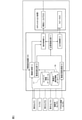
図1に示すように、情報提供装置100は、必要度算出部11、動作制御部12、出力制御部13、視線計測部14、重要度算出部15、乗員状態取得部16、コンテンツ情報データベース17及び乗員の嗜好情報データベース18を備える。なお、情報提供装置100は、CPU、ROM及びRAMを備えるコンピュータである。また、必要度算出部11、動作制御部12、出力制御部13、視線計測部14、重要度算出部15、及び、乗員状態取得部16は、情報提供装置100の機能を実行するためのプログラムである。また、コンテンツ情報データベース17及び乗員の嗜好情報データベース18は、情報提供装置100に格納されているデータベースである。
As shown in FIG. 1, the information providing device 100 includes a necessity calculation unit 11, an operation control unit 12, an output control unit 13, a line-of-sight measurement unit 14, an importance calculation unit 15, an occupant state acquisition unit 16, and a
必要度算出部11は、出力の対象である情報について、車両の乗員にとっての必要度を算出する。情報の必要度は、現在の状況において車両の乗員がその情報を認識する必要があるか否かの判断の目安となる値である。すなわち、必要度は、車両の乗員が情報を認識する必要の度合いを示している。必要度算出部11は、重要度算出部15が算出した情報の内容の重要度、及び、乗員状態取得部16が取得した乗員の状態に基づいて、情報の必要度を算出する。すなわち、情報の内容の重要度が高い程、当該情報の必要度は高い。また、乗員の状態が、情報を受け取りやすい状態にある場合は、必要度算出部11が算出する情報の必要度はより高くなり、情報を受け取り難い状態にある場合は、必要度算出部11が算出する情報の必要度はより低くなる。なお、必要度算出部11は、情報の内容の重要度、又は、乗員の状態の少なくともいずれか一方に基づいて、情報の必要度を算出する。情報の必要度は、ドライバを含む乗員のうち、全員について算出されてもよく、いずれか1人について算出されてもよい。 The necessity calculation unit 11 calculates the necessity for the occupants of the vehicle for the information to be output. The degree of need for information is a value that can be used as a guide for determining whether or not the occupant of the vehicle needs to recognize the information in the current situation. That is, the degree of necessity indicates the degree to which the occupant of the vehicle needs to recognize the information. The necessity calculation unit 11 calculates the necessity of information based on the importance of the content of the information calculated by the importance calculation unit 15 and the state of the occupant acquired by the occupant state acquisition unit 16. That is, the higher the importance of the content of the information, the higher the necessity of the information. Further, when the occupant's state is in a state where it is easy to receive information, the necessity of the information calculated by the necessity calculation unit 11 is higher, and when it is difficult to receive the information, the necessity calculation unit 11 is in a state where it is difficult to receive the information. The need for information to calculate is lower. The necessity calculation unit 11 calculates the necessity of information based on the importance of the content of the information or at least one of the states of the occupants. The need for information may be calculated for all occupants, including the driver, or for any one.
重要度算出部15は、コンテンツ情報データベース17の情報、及び、乗員の嗜好情報データベース18の情報に基づいて、情報の内容の重要度を算出する。コンテンツ情報データベース17には、乗員に提供される可能性がある各種の情報が記憶されている。例えば、コンテンツ情報データベース17には、交通情報、天候情報、飲食店情報、ガソリン残量等の車両の状態に関する情報等が記憶されている。コンテンツ情報データベース17に記憶されている交通情報、天候情報、飲食店情報等には、地図情報が関連づけられている。また、乗員の嗜好情報データベース18には、乗員の嗜好に関する情報が記憶されている。重要度算出部15は、乗員の嗜好情報データベース18の情報に基づいて、コンテンツ情報データベース17の情報の各々について重要度の重み付けを行う。例えば、乗員がイタリア料理を好むことが乗員の嗜好情報データベース18に記憶されている場合、重要度算出部15は、イタリア料理を提供する飲食店の位置情報の重要度を、他の飲食店の位置情報の重要度よりも高く算出する。なお、乗員の嗜好情報データベース18の情報は、乗員によって入力された情報でもよく、乗員とロボット20との会話や情報提供時の乗員の反応に基づいて重要度算出部15が学習したものであってもよい。
The importance calculation unit 15 calculates the importance of the content of the information based on the information of the
乗員状態取得部16は、車内カメラ1、マイク2、車外カメラ3、車外センサ4、操舵角センサ5、アクセル開度センサ6、及び、ロボット20に搭載されたカメラ22のうち少なくともいずれか1つの検出手段の検出情報に基づいて、乗員の状態を取得する。乗員状態取得部16は、例えば、乗員がドライバである場合に、乗員の運転負荷の高さを算出し、乗員の状態として取得する。すなわち、乗員状態取得部16は、乗員の運転負荷の高さが高い程、乗員の状態が情報を受け取り難い状態にあると判断する。一方、乗員状態取得部16は、乗員の運転負荷の高さが低い程、乗員の状態が情報を受け取りやすい状態にあると判断する。具体的には、車内カメラ1、又は、ロボット20のカメラ22が、乗員がハンドルを切る動作をしている様子を撮影している場合は、乗員状態取得部16は、乗員の運転負荷が高いと判断する。また、乗員状態取得部16は、車外カメラ3及び車外センサ4が検出した他車両や障害物の情報に基づいて、乗員の運転負荷を算出してもよい。さらに、乗員状態取得部16は、操舵角センサ5が検出したハンドルの操舵角の変化量(操舵角速度)、及び、アクセル開度センサ6が検出したアクセル開度に基づいて、乗員の運転負荷を算出してもよい。
The occupant state acquisition unit 16 is at least one of an in-vehicle camera 1, a microphone 2, an outside camera 3, an outside sensor 4, a steering angle sensor 5, an accelerator opening sensor 6, and a
また、乗員状態取得部16は、情報提供装置100に記憶された地図情報に基づいて、車両が分岐路やカーブの多い道を通過している間は、運転負荷をより高く算出してもよい。また、乗員状態取得部16は、車両が自動運転モードで運転されている場合は、車両が手動運転モードで運転されている場合に比べて、運転負荷を低く算出してもよい。また、運転負荷は、乗員の運転スキルに関するデータに基づいて、適宜、重み付けされてもよい。 Further, the occupant state acquisition unit 16 may calculate the driving load higher based on the map information stored in the information providing device 100 while the vehicle is passing through a branch road or a road having many curves. .. Further, the occupant state acquisition unit 16 may calculate the driving load lower when the vehicle is being driven in the automatic driving mode than when the vehicle is being driven in the manual driving mode. Further, the driving load may be appropriately weighted based on the data regarding the driving skill of the occupant.
また、乗員状態取得部16が取得する乗員の状態は、乗員の運転負荷の高さに限定されない。例えば、情報を提供する対象である乗員が他の乗員と会話している音声や、電話によって通話している音声をマイク2が検出した場合は、乗員状態取得部16は、乗員の状態が情報を受け取り難い状態にあると判断する。また、情報を提供する対象である乗員がドライバ以外の乗員である場合は、車内カメラ1、又は、ロボット20のカメラ22が、乗員が携帯端末を操作している状態、又は、乗員が眠っている状態を検出することにより、乗員状態取得部16は、乗員の状態が情報を受け取り難い状態にあると判断する。
Further, the occupant state acquired by the occupant state acquisition unit 16 is not limited to the height of the occupant's driving load. For example, when the microphone 2 detects the voice of the occupant who is the target of providing information talking with another occupant or the voice of talking by telephone, the occupant state acquisition unit 16 informs the occupant's state. It is judged that it is difficult to receive. When the occupant to whom the information is provided is an occupant other than the driver, the in-vehicle camera 1 or the
動作制御部12は、必要度算出部11が算出した情報の必要度に応じて、ロボット20の動作を制御する。より詳細には、動作制御部12は、情報の必要度に応じて、ロボット20の顔の向きを制御することにより、ロボット20の眼部21の向きを制御する。すなわち、ロボット20の顔の正面が乗員に向いていれば、ロボット20の眼部21も乗員に向いている。一方、乗員から見てロボット20の顔が横向きになっている場合は、ロボット20の眼部21の向きは乗員から逸れている。また、動作制御部12は、重要度算出部15が算出した情報の重要度に応じて、眼部21の白目に対する黒目(瞳)の位置を制御したり、ロボット20の顔の傾きを制御したりすることにより、ロボット20の眼部21の視線の向きを制御する。また、動作制御部12は、ロボット20の眼部21の向きを制御することにより、眼部21に内蔵されたカメラ22の向きを制御することができる。さらにまた、動作制御部12は、ロボット20の動作を制御することにより、情報の必要度に応じて、スピーカ23の向きを変えることもできる。
The motion control unit 12 controls the motion of the
出力制御部13は、必要度算出部11が算出した情報の必要度に応じて、スピーカ23に当該情報を含む出力信号を送信する。スピーカ23は、情報を音声として出力し、乗員に情報を提供する。 The output control unit 13 transmits an output signal including the information to the speaker 23 according to the necessity of the information calculated by the necessity calculation unit 11. The speaker 23 outputs the information as voice and provides the information to the occupant.
視線計測部14は、車内カメラ1、又は、ロボット20のカメラ22が撮像した画像データに基づいて、乗員の視線の向きを計測する。また、視線計測部14は、乗員の視線の向きにより、乗員の感知可能範囲を検出する。「感知可能範囲」は、乗員の視線の向きに基づいて、乗員が感知できる有効視野である。
The line-of-sight measurement unit 14 measures the direction of the line-of-sight of the occupant based on the image data captured by the in-vehicle camera 1 or the
次に、図2~5を参照して、情報提供装置100による情報提供方法の手順を説明する。なお、図2~5の例では、情報提供装置100は、出力装置としてのロボット20を介して、ドライバである乗員に情報を提供する。
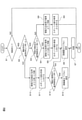
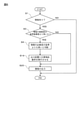
図2に示すように、ステップS1において、情報提供装置100は、コンテンツ情報データベース17を参照し、車両の乗員に提供可能な情報があるか否かを判定する。具体的には、コンテンツ情報データベース17の情報が更新されたときに、情報提供装置100は、車両の乗員に提供可能な情報がある、と判定する。また、予め設定されたタイミングで、又は、一定時間おきに、情報提供装置100は、車両の乗員に提供可能な情報(天候情報、交通情報など)がある、と判定するようにしてもよい。また、乗員が設定した目的地までの距離が所定の距離以内になった場合に、情報提供装置100は、車両の乗員に提供可能な情報(「目的地が近づいた」という情報)がある、と判定するようにしてもよい。
ステップS1において、乗員に提供可能な情報がないと判定された場合は、制御は終了する。
Next, the procedure of the information providing method by the information providing apparatus 100 will be described with reference to FIGS. 2 to 5. In the examples of FIGS. 2 to 5, the information providing device 100 provides information to the occupant who is the driver via the
As shown in FIG. 2, in step S1, the information providing device 100 refers to the
If it is determined in step S1 that there is no information that can be provided to the occupant, the control ends.
一方、ステップS1において、乗員に提供可能な情報があると判定された場合は、制御は、ステップS2に移る。
ステップS2において、情報提供装置100の乗員状態取得部16は、乗員の運転負荷は、予め設定された基準負荷よりも高いか否かを判定する。例えば、車内カメラ1、又は、ロボット20のカメラ22が、乗員がハンドルを切る動作をしている様子を撮影している場合は、乗員状態取得部16は、乗員の運転負荷が基準負荷よりも高いと判定する。一方、乗員がハンドル操作を行っていない場合は、乗員状態取得部16は、乗員の運転負荷が基準負荷以下であると判定する。なお、ステップS2の判定における「基準負荷」は、乗員が運転に特に集中すべき状況か否かを判断するために予め設定される運転負荷の閾値である。また、乗員状態取得部16は、運転負荷以外の乗員の状態を取得して、乗員が情報を受け取りやすい状態にあるか否かを総合的に判断することもできる。
On the other hand, if it is determined in step S1 that there is information that can be provided to the occupant, the control shifts to step S2.
In step S2, the occupant state acquisition unit 16 of the information providing device 100 determines whether or not the occupant's operating load is higher than the preset reference load. For example, when the in-vehicle camera 1 or the
ステップS2において、乗員状態取得部16が乗員の運転負荷が基準負荷よりも高いと判定した場合は、制御は、ステップS3に移る。
ステップS3において、重要度算出部15は、情報の重要度を算出し、情報の重要度が基準重要度よりも高いか否かを判定する。例えば、重要度算出部15は、「ガソリンの残量が少ない」という情報Aの重要度を、基準重要度よりも高いと判定する。一方、重要度算出部15は、「現在の天候は晴れである」という情報Bの重要度を、基準重要度以下であると判定する。なお、ステップS3の判定における「基準重要度」は、情報の緊急性、情報が車両の走行に影響を及ぼすものか否か等に基づいて設定される重要度の閾値であり、当該情報を早急に乗員に伝える必要があるか否かの判断の目安となる基準値である。
If the occupant state acquisition unit 16 determines in step S2 that the occupant's operating load is higher than the reference load, the control shifts to step S3.
In step S3, the importance calculation unit 15 calculates the importance of the information and determines whether or not the importance of the information is higher than the reference importance. For example, the importance calculation unit 15 determines that the importance of the information A that "the remaining amount of gasoline is low" is higher than the reference importance. On the other hand, the importance calculation unit 15 determines that the importance of the information B that "the current weather is sunny" is equal to or less than the standard importance. The "reference importance" in the determination in step S3 is a threshold value of importance set based on the urgency of the information, whether or not the information affects the running of the vehicle, and the like, and the information is urgently used. This is a standard value that can be used as a guide for determining whether or not it is necessary to inform the occupants.
ステップS3において、重要度算出部15が、情報の重要度が基準重要度よりも高いと判定した場合に、制御は、ステップS4に移る。
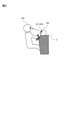
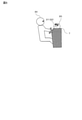
ステップS4において、必要度算出部11は、情報の必要度が基準よりも高いと判断する。すなわち、必要度算出部11は、運転負荷が基準負荷よりも高く、情報の重要度が基準重要度よりも高い場合に、情報の必要度が基準よりも高いと判断する。そして次に、ステップS5において、図3に示すように、動作制御部12は、ロボット20の顔を乗員30に向けることにより、眼部21を乗員30に向ける。このように、ロボット20が眼部21を乗員30に向ける動作は、乗員の注意を惹くための注意喚起動作である。注意喚起動作には、図4に示すようにロボット20が乗員30から顔を背けていた場合に、ロボット20の頭部を回転させることによって、ロボット20の顔の眼部21を乗員30に向けさせる動作が含まれる。またさらに、注意喚起動作には、図3に示すようにロボット20の顔がもともと乗員30に向いていた場合に、ロボット20の顔の眼部21が乗員30に向いている状態をそのまま維持させることも含まれる。
When the importance calculation unit 15 determines in step S3 that the importance of the information is higher than the reference importance, the control shifts to step S4.
In step S4, the necessity calculation unit 11 determines that the necessity of information is higher than the standard. That is, the necessity calculation unit 11 determines that the necessity of information is higher than the reference when the operating load is higher than the reference load and the importance of the information is higher than the reference importance. Next, in step S5, as shown in FIG. 3, the motion control unit 12 turns the
また、ロボット20の眼部21には、検出装置としてのカメラ22が内蔵されているため、注意喚起動作には、ロボット20に設けられた検出装置を乗員30に向ける動作も含まれる。また、動作制御部12は、音声出力装置としてのスピーカ23の動作を制御し、スピーカ23が音声を出力する音声出力方向を乗員30に向けるようにしてもよい。すなわち、注意喚起動作には、スピーカ23の向きを調整して音声出力方向を乗員30に向ける動作も含まれる。
Further, since the
また、動作制御部12は、ロボット20に注意喚起動作を実行させるとともに、眼部21の黒目を大きくする、眼部21の色を変える、眼部21を発光させる、スピーカ23の音量を大きくする等、乗員の注意をさらに惹くための制御を行ってもよい。
Further, the motion control unit 12 causes the
そして、ステップS6において、動作制御部12は、ロボット20の視線量を50%に設定する。ロボット20の視線量とは、ロボット20が眼部21の視線を乗員30に向けている時間の割合である。ここで、図5に示すように、ロボット20が発話を行っている最中は、動作制御部12は、ロボット20に、眼部21の視線を乗員30に向ける動作と眼部21の視線を乗員30から外す(逸らす)動作とを交互に行わせる。なお、図5の左側は、ロボット20が眼部21の視線を乗員30に向ける動作を示しており、図5の右側は、ロボット20が眼部21の視線を乗員30から外す動作を示している。具体的には、動作制御部12は、ロボット20の眼部21を乗員30に向ける状態を維持したまま、眼部21の黒目(瞳)の位置を動かしたり、ロボット20の顔を傾けさせたりすることにより、ロボット20に、視線を乗員30に向ける動作と乗員30から外す動作とを交互に行わせる。図2のステップS6で、動作制御部12がロボット20の視線量を50%に設定した場合は、一定の時間の間で、ロボット20が眼部21の視線を乗員30に向けている時間の割合は50%となり、ロボット20が眼部21の視線を乗員30から逸らしている時間の割合は50%となる。動作制御部12は、ロボット20が眼部21の視線を乗員30に継続的に向けている時間の長さ、又は、ロボット20が眼部21の視線を乗員30に向ける頻度を調整することにより、ロボット20の視線量を調整する。
Then, in step S6, the motion control unit 12 sets the visual dose of the
次に、ステップS7において、出力制御部13は、ロボット20のスピーカ23に情報Aを出力して、図5に示すように、ロボット20に情報Aを示す「ガソリン残量が残り少ないよ!」という発話をさせる。このとき、ロボット20の視線量は50%に設定されているため、図5に示すように、ロボット20は、眼部21の視線を乗員30に向ける動作と眼部21の視線を乗員30から外す動作とを、1:1の時間割合で交互に実行しながら、情報Aを乗員30に提供するための発話を行う。なお、ステップS7において、出力制御部13は、ロボット20に注意喚起動作を実行させた後に、情報を音声で出力させているが、これに限定されず、出力制御部13は、ロボット20が注意喚起動作を実行中に、情報を出力させてもよい。すなわち、出力制御部13は、ロボット20の頭を回転させて、ロボット20の眼部21を乗員30に向けながら、ロボット20に発話を行わせてもよい。
Next, in step S7, the output control unit 13 outputs the information A to the speaker 23 of the
一方、ステップS3において、重要度算出部15が、情報の重要度が基準重要度以下であると判定した場合に、制御は、ステップS8に移る。
ステップS8において、必要度算出部11は、情報の必要度が基準以下であると判断する。すなわち、必要度算出部11は、運転負荷が基準負荷よりも高く、情報の重要度が基準重要度以下である場合に、情報の必要度が基準以下であると判断する。そして次に、ステップS9において、図4に示すように、動作制御部12は、ロボット20の顔を乗員30から背けることにより、眼部21を乗員30から逸らす方向に向ける。すなわち、動作制御部12は、情報の必要度が予め設定された基準以下である場合は、ロボット20が注意喚起動作を実行しないように、ロボット20の動作を制御する。そして、情報提供装置100は、図4に示すように、ロボット20が発話しない状態を維持しながら、制御を終了する。この場合、重要度が基準重要度以下の情報B(「現在の天候は晴れである」という情報)は、乗員30に提供されずに破棄される。なお、出力されなかった情報Bは、乗員30の運転負荷が下がったタイミングで改めて出力されてもよい。
On the other hand, when the importance calculation unit 15 determines in step S3 that the importance of the information is equal to or less than the reference importance, the control shifts to step S8.
In step S8, the necessity calculation unit 11 determines that the necessity of information is equal to or less than the standard. That is, the necessity calculation unit 11 determines that the necessity of information is less than or equal to the reference when the operating load is higher than the reference load and the importance of information is less than or equal to the reference importance. Next, in step S9, as shown in FIG. 4, the motion control unit 12 turns the
また、ステップS2において、乗員状態取得部16が、乗員の運転負荷が基準負荷以下であると判定した場合は、制御はステップS10に移る。ステップS10において、必要度算出部11は、情報の必要度が基準よりも高いと判断する。すなわち、必要度算出部11は、運転負荷が基準負荷以下である場合に、情報の必要度が基準より高いと判断する。そして次に、ステップS11において、図3に示すように、動作制御部12は、ロボット20に、顔を乗員30に向ける動作、すなわち、眼部21を乗員30に向ける注意喚起動作を実行させる。
Further, in step S2, when the occupant state acquisition unit 16 determines that the occupant's operating load is equal to or less than the reference load, the control shifts to step S10. In step S10, the necessity calculation unit 11 determines that the necessity of information is higher than the standard. That is, the necessity calculation unit 11 determines that the necessity of information is higher than the reference when the operating load is equal to or less than the reference load. Next, in step S11, as shown in FIG. 3, the motion control unit 12 causes the
次に、制御は、ステップS12に移り、重要度算出部15は、情報の重要度を算出し、情報の重要度が基準重要度よりも高いか否かを判定する。例えば、重要度算出部15は、「ガソリンの残量が少ない」という情報Aの重要度を、基準重要度よりも高いと判定する。一方、重要度算出部15は、「現在の天候は晴れである」という情報Bの重要度を、基準重要度以下であると判定する。なお、ステップS12の判定における「基準重要度」は、ステップS3の判定における「基準重要度」と同一の閾値であってもよく、異なる閾値であってもよい。 Next, the control proceeds to step S12, and the importance calculation unit 15 calculates the importance of the information and determines whether or not the importance of the information is higher than the reference importance. For example, the importance calculation unit 15 determines that the importance of the information A that "the remaining amount of gasoline is low" is higher than the reference importance. On the other hand, the importance calculation unit 15 determines that the importance of the information B that "the current weather is sunny" is equal to or less than the standard importance. The "reference importance" in the determination in step S12 may have the same threshold value as the "reference importance" in the determination in step S3, or may have a different threshold value.
ステップS12において、重要度算出部15が、情報の重要度を基準重要度よりも高いと判定した場合は、制御は、ステップS13に移り、動作制御部12は、上述のようにロボット20の視線量を70%に設定し、ステップS7において、ロボット20に情報Aを出力させる。このとき、ロボット20の視線量は70%に設定されているため、図5に示すように、ロボット20は、眼部21の視線を乗員30に向ける動作と眼部21の視線を乗員30から外す動作とを、7:3の時間割合で交互に実行しながら、情報Aを乗員30に提供するための発話を行う。
If the importance calculation unit 15 determines in step S12 that the importance of the information is higher than the reference importance, the control shifts to step S13, and the motion control unit 12 sees the
一方、ステップS12において、重要度算出部15が、情報の重要度を基準重要度以下であると判定した場合は、制御は、ステップS6に移り、動作制御部12は、ロボット20の視線量を50%に設定する。そして、ステップS7において、出力制御部13は、ロボット20のスピーカ23に情報Bを出力して、図5に示すように、ロボット20に、情報Bを示す「今日はいい天気だね」という発話をさせる。このとき、ロボット20の視線量は50%に設定されているため、図5に示すように、ロボット20は、眼部21の視線を乗員30に向ける動作と眼部21の視線を乗員30から外す動作とを、1:1の時間割合で交互に実行しながら、情報Bを乗員30に提供するための発話を行う。
On the other hand, if the importance calculation unit 15 determines in step S12 that the importance of the information is equal to or less than the reference importance, the control shifts to step S6, and the motion control unit 12 determines the visual dose of the
すなわち、動作制御部12は、情報の内容の重要度が高い程、すなわち、情報の必要度が高い程、ロボット20の眼部21の視線を乗員に向ける時間を長く設定する。動作制御部12によるロボット20の視線量の設定は、50%及び70%に限定されず、情報の必要度に応じて、多段階的に設定されてもよい。また、情報の必要度が特に高い場合は、動作制御部12は、ロボット20の視線量を100%に設定し、ロボット20が発話している間、ロボット20の眼部21の視線を継続して乗員に向けさせ続けてもよい。
That is, the motion control unit 12 sets the time for directing the line of sight of the
なお、ステップS7の発話が終了した場合は、動作制御部12は、図4に示すように、ロボット20の顔を乗員30から背けさせ、情報の出力が終了したことを乗員30に示す。また、情報提供装置100は、複数の情報の各々について、図2に示す制御を連続して繰り返し実行してもよい。
When the utterance in step S7 is completed, the motion control unit 12 turns the face of the
以上より、本実施形態の情報提供装置100は、情報の必要度が予め設定された基準よりも高い場合に、車両に設けられた出力装置が乗員30の注意を惹くための注意喚起動作を実行するように、出力装置を制御する。これにより、車両の乗員30は、出力装置の動作によって、出力装置が出力する情報を認識する必要がどの程度あるかを感覚的に把握しやすい。すなわち、情報提供装置100は、情報の必要度に応じて出力装置の動作を制御するため、車両の乗員30に対して、情報の必要度が分かりやすい態様で情報を提供することができる。
From the above, the information providing device 100 of the present embodiment executes a warning activation operation for the output device provided in the vehicle to attract the attention of the
また、出力装置が、眼部21を有するロボット20である場合、情報提供装置100の動作制御部12は、情報の必要度が予め設定された基準よりも高い場合に、ロボット20が眼部21を乗員30に向ける注意喚起動作を実行するように、ロボット20の動作を制御する。これにより、乗員30は、ロボット20の眼部21が自分に向けられることにより、ロボット20が話す情報が自分に対して出力されることを感覚的に認識することができる。
Further, when the output device is the
情報提供装置100の動作制御部12は、図5に示すように、ロボット20が情報を出力している間、ロボット20に、眼部21の視線を乗員30に向ける動作と眼部21の視線を乗員30から外す動作とを交互に行わせる。これにより、ロボット20の眼部21の視線が乗員30に常時向いたままの状態よりも、より人間に近い自然な動作でロボット20に発話をさせることができる。また、情報提供装置100の動作制御部12は、ロボット20が出力する情報の必要度が高い程、ロボット20の眼部21の視線を乗員30に向ける時間を長くする。これにより、乗員30は、ロボット20が発話している内容に含まれる情報の必要度を直感的に把握することができる。
As shown in FIG. 5, the motion control unit 12 of the information providing device 100 directs the line of sight of the
また、出力装置が、乗員30の状態を検出するカメラ22等の検出装置を有している場合は、情報提供装置100の動作制御部12は、情報の必要度が予め設定された基準よりも高い場合に、検出装置を乗員に向けるように、出力装置の動作を制御する。これにより、情報提供装置100は、情報の必要度に応じて出力装置の検出装置の動作を制御するため、車両の乗員30に対して、情報の必要度が分かりやすい態様で情報を提供することができる。
なお、本実施形態では、検出装置は、ロボット20の眼部21に内蔵されたカメラ22だが、これに限定されず、出力装置の外部に取り付けられたカメラであってもよい。また、検出装置は、カメラに限定されず、乗員30が発した音声を検出するためのマイクであってよい。
Further, when the output device has a detection device such as a
In the present embodiment, the detection device is the
情報提供装置100の動作制御部12は、情報の必要度が予め設定された基準よりも高い場合に、ロボット20に設けられた音声出力装置であるスピーカ23が音声を出力する音声出力方向を乗員に向けるように、スピーカ23の動作を制御する。これにより、乗員30は、音声の指向方向によって、必要度が高い情報が自分に向けて出力されていることを感覚的に認識することができる。
The operation control unit 12 of the information providing device 100 sets the voice output direction in which the speaker 23, which is a voice output device provided in the
また、情報提供装置100の動作制御部12は、情報の必要度が予め設定された基準以下である場合は、ロボット20の顔を乗員30から背ける等、注意喚起動作を実行しないように出力装置の動作を制御する。これにより、乗員30は、出力装置から必要度が高い情報が出力されないことを直感的に把握することができる。
Further, the operation control unit 12 of the information providing device 100 is an output device so as not to execute a warning activation operation such as turning the face of the
また、情報提供装置100は、情報の内容に基づいて、情報の重要度を算出する重要度算出部15をさらに備え、必要度算出部11は、少なくとも、重要度算出部15が算出した情報の重要度に基づいて、情報の必要度を算出する。これにより、情報提供装置100は、情報の内容の重要度に応じて出力装置の動作を制御するため、車両の乗員30に対して、内容の重要度がより高い情報が伝わりやすい態様で情報を提供することができる。
Further, the information providing device 100 further includes an importance calculation unit 15 for calculating the importance of the information based on the content of the information, and the necessity calculation unit 11 is at least the information calculated by the importance calculation unit 15. Calculate the need for information based on importance. As a result, the information providing device 100 controls the operation of the output device according to the importance of the content of the information, so that the information is easily transmitted to the
また、情報提供装置100は、乗員の状態を取得する乗員状態取得部16をさらに備え、必要度算出部11は、少なくとも、乗員状態取得部16が取得した乗員30の状態に基づいて、情報の必要度を算出する。これにより、情報提供装置100の動作制御部12は、乗員30が情報を受け取りやすい状態にあるか否かに応じて、出力装置の動作を制御することができる。すなわち、乗員30が情報を受け取りやすい状態にあれば、出力装置は、注意喚起動作を実行して乗員30の注意を惹くことができるため、乗員30は心理的に情報をより受け取りやすくなる。
Further, the information providing device 100 further includes an occupant state acquisition unit 16 for acquiring the occupant state, and the necessity calculation unit 11 is at least based on the state of the
また、情報提供装置100の乗員状態取得部16は、乗員30の状態として、少なくとも乗員30の運転負荷を取得する。乗員状態取得部16は、乗員30の運転負荷が高い場合は、乗員30が情報を受け取り難い状態にあると判断する。従って、必要度算出部11は、乗員30の運転負荷が高い程、情報の必要度を低く算出する。これにより、乗員30の運転負荷が高い場合は、出力装置は注意喚起動作を実行しないため、乗員30は、運転に集中した状態で出力装置からの情報を受け取ることができる。
Further, the occupant state acquisition unit 16 of the information providing device 100 acquires at least the driving load of the
なお、本発明の情報提供装置100による情報提供方法は、図1に示すものに限定されない。
例えば、図6に示すように、必要度算出部11は、重要度算出部15が算出した情報の内容の重要度のみに基づいて、情報の必要度を算出してもよい。具体的には、図6に示すように、ステップS1において、情報提供装置100は、車両の乗員に対して提供可能な情報の有無を判定し、提供可能な情報がない場合は、制御を終了させる。また、提供可能な情報が有る場合は、制御はステップS3に移り、重要度算出部15が、情報の内容の重要度を算出し、情報の重要度が基準重要度よりも高いか否かを判定する。
The information providing method by the information providing device 100 of the present invention is not limited to that shown in FIG.
For example, as shown in FIG. 6, the necessity calculation unit 11 may calculate the necessity of information based only on the importance of the content of the information calculated by the importance calculation unit 15. Specifically, as shown in FIG. 6, in step S1, the information providing device 100 determines whether or not there is information that can be provided to the occupants of the vehicle, and if there is no information that can be provided, the control is terminated. Let me. If there is information that can be provided, the control moves to step S3, the importance calculation unit 15 calculates the importance of the content of the information, and determines whether the importance of the information is higher than the standard importance. judge.
そして、ステップS3において、重要度算出部15が、情報の重要度を基準重要度よりも高いと判定した場合は、ステップS4において、必要度算出部11は、情報の必要度を基準よりも高いと判定する。すなわち、図6の例では、情報の必要度は、情報の内容の重要度と同義である。さらに、ステップS14において、動作制御部12は、出力装置に注意喚起動作を実行させる。そして次に、ステップS20において、出力制御部13は、出力装置に情報を出力させる。 Then, in step S3, when the importance calculation unit 15 determines that the importance of the information is higher than the reference importance, in step S4, the necessity calculation unit 11 sets the necessity of the information higher than the reference. Is determined. That is, in the example of FIG. 6, the necessity of information is synonymous with the importance of the content of information. Further, in step S14, the motion control unit 12 causes the output device to execute the alert activation operation. Next, in step S20, the output control unit 13 causes the output device to output information.
また、図7に示すように、ステップS4において、必要度算出部11が、情報の必要度を基準よりも高いと判定した後、ステップS18において、視線計測部14が、視線計測部14が計測した乗員の視線の向きによりロボットが乗員の感知可能範囲内にあるか否かを判定してもよい。ステップS18において、乗員の視線の向きに基づいて、ロボットが乗員の感知可能範囲内にあると判定された場合は、制御はステップS14に移り、動作制御部12は、出力装置(ロボット)に注意喚起動作を実行させる。一方、ステップS18において、ロボットが乗員の感知可能範囲外にあると判定された場合は、制御は、ステップS20に移り、出力制御部13は、注意喚起動作を実行していない状態の出力装置(ロボット)に情報を出力させる。 Further, as shown in FIG. 7, in step S4, after the necessity calculation unit 11 determines that the necessity of information is higher than the reference, in step S18, the line-of-sight measurement unit 14 measures the information. It may be determined whether or not the robot is within the perceptible range of the occupant based on the direction of the occupant's line of sight. If it is determined in step S18 that the robot is within the recognizable range of the occupant based on the direction of the occupant's line of sight, control shifts to step S14, and the motion control unit 12 pays attention to the output device (robot). Execute the summoning activation work. On the other hand, if it is determined in step S18 that the robot is out of the recognizable range of the occupant, the control shifts to step S20, and the output control unit 13 is in a state where the alert activation operation is not executed. Let the robot output information.
このように、動作制御部12は、情報の必要度が予め設定された基準よりも高く、かつ、ロボットが乗員の感知可能範囲内にある場合に、出力装置(ロボット)に注意喚起動作を実行させる。これにより、情報提供装置100は、乗員が出力装置に意識を向けている間に、出力装置(ロボット)に注意喚起動作を実行させ、出力する情報の必要度が高いことをより確実に乗員に認識させることができる。 In this way, the motion control unit 12 executes a warning activation operation for the output device (robot) when the necessity of information is higher than the preset standard and the robot is within the perceptible range of the occupant. Let me. As a result, the information providing device 100 causes the output device (robot) to execute the alert activation operation while the occupant is paying attention to the output device, and more surely informs the occupant that the necessity of the information to be output is high. Can be recognized.
また、図8に示すように、必要度算出部11は、乗員状態取得部16が取得した乗員の状態のみに基づいて、情報の必要度を算出してもよい。具体的には、図8に示すように、ステップS1において、提供可能な情報が有ると判定された場合は、制御はステップS2に移り、乗員状態取得部16は、乗員の運転負荷が基準負荷よりも高いか否かを判定する。 Further, as shown in FIG. 8, the necessity calculation unit 11 may calculate the necessity of information based only on the occupant state acquired by the occupant state acquisition unit 16. Specifically, as shown in FIG. 8, when it is determined in step S1 that there is information that can be provided, the control shifts to step S2, and in the occupant state acquisition unit 16, the occupant's operating load is the reference load. Determine if it is higher than.
そして、ステップS2において、乗員状態取得部16が、乗員の運転負荷が基準負荷以下であると判定した場合は、ステップS4において、必要度算出部11は、情報の必要度を基準よりも高いと判定する。さらに、ステップS14において、動作制御部12は、出力装置に注意喚起動作を実行させる。そして次に、ステップS20において、出力制御部13は、出力装置に情報を出力させる。 Then, in step S2, when the occupant state acquisition unit 16 determines that the occupant's operating load is equal to or less than the reference load, in step S4, the necessity calculation unit 11 determines that the necessity of information is higher than the reference. judge. Further, in step S14, the motion control unit 12 causes the output device to execute the alert activation operation. Next, in step S20, the output control unit 13 causes the output device to output information.
一方、ステップS2において、乗員状態取得部16が、乗員の運転負荷が基準負荷よりも高いと判定した場合は、情報は出力されず、制御は終了する。なお、ステップS2において、乗員の運転負荷が基準負荷よりも高いと判定された場合であっても、図8の破線に示すように、制御はステップS20に移り、出力制御部13が、注意喚起動作を実行していない状態の出力装置に情報を出力させてもよい。 On the other hand, if the occupant state acquisition unit 16 determines in step S2 that the occupant's operating load is higher than the reference load, no information is output and the control ends. Even if it is determined in step S2 that the occupant's operating load is higher than the reference load, the control shifts to step S20 as shown by the broken line in FIG. 8, and the output control unit 13 calls attention. The information may be output to the output device in the state where the operation is not executed.
なお、図6~8に示す例において、出力装置はロボット20に限定されない。出力装置は、音声により情報を出力するスピーカ等の音声出力装置であってもよく、画面に情報を含む画像を表示するディスプレイ等の画像出力装置であってもよい。なお、出力装置が音声出力装置である場合の注意喚起動作は、音声を出力する音声出力方向を乗員に向けることである。また、出力装置が画像出力装置である場合の注意喚起動作は、画像出力装置の画面の方向を乗員に向けることである。このように、動作制御部12が、情報の必要度が予め設定された基準よりも高い場合に、情報の出力方向を乗員に向ける注意喚起動作を出力装置に実行させることにより、乗員は、必要度が高い情報が自分に向けて出力されていることを感覚的に認識することができる。
また、キャラクターは、ロボットに限定されず、VRにより表示された仮想のキャラクターであってもよい。
In the examples shown in FIGS. 6 to 8, the output device is not limited to the
Further, the character is not limited to the robot, and may be a virtual character displayed by VR.
上記のロボット20は、出力装置及びキャラクターを構成する。カメラ22は、検出装置を構成する。スピーカ23は、音声出力装置を構成する。
The
100…情報提供装置
11…必要度算出部
12…動作制御部
13…出力制御部
14…視線計測部
15…重要度算出部
16…乗員状態取得部
20…ロボット(出力装置,キャラクター)
21…眼部
22…カメラ(検出装置)
23…スピーカ(音声出力装置)
100 ... Information providing device 11 ... Necessity calculation unit 12 ... Motion control unit 13 ... Output control unit 14 ... Line-of-sight measurement unit 15 ... Importance calculation unit 16 ... Crew
21 ...
23 ... Speaker (audio output device)
Claims (12)
前記乗員が前記情報を認識する必要の度合いを示す必要度を算出する必要度算出部と、
前記情報の前記必要度が予め設定された基準よりも高い場合に、前記出力装置が前記乗員の注意を惹くための注意喚起動作を実行するように、前記出力装置を制御する動作制御部と、
前記出力装置に前記情報を出力させる出力制御部とを備える、情報提供装置。 An information providing device that provides the information to the occupants of the vehicle by outputting the information to an output device provided in the vehicle.
The necessity calculation unit for calculating the necessity indicating the degree of necessity for the occupant to recognize the information, and the necessity calculation unit.
An operation control unit that controls the output device so that the output device executes an alert activation operation to attract the attention of the occupant when the necessity of the information is higher than a preset reference.
An information providing device including an output control unit for outputting the information to the output device.
前記動作制御部は、前記情報の必要度が予め設定された基準よりも高い場合に、前記キャラクターが前記眼部を前記乗員に向ける前記注意喚起動作を実行するように、前記キャラクターの動作を制御する、請求項1に記載の情報提供装置。 The output device is a character having an eye portion, and is a character.
The motion control unit controls the motion of the character so that the character performs the alert activation operation in which the eye portion is directed toward the occupant when the necessity of the information is higher than a preset reference. The information providing device according to claim 1.
前記キャラクターに前記情報を出力させている間、前記キャラクターに、前記眼部の視線を前記乗員に向ける動作と前記眼部の視線を前記乗員から外す動作とを交互に行わせ、
前記情報の必要度が高い程、前記キャラクターの前記眼部の視線を前記乗員に向ける時間を長くする、請求項2に記載の情報提供装置。 The motion control unit
While the character is outputting the information, the character is made to alternately perform an operation of directing the line of sight of the eye to the occupant and an operation of removing the line of sight of the eye from the occupant.
The information providing device according to claim 2, wherein the higher the need for the information, the longer the time for directing the line of sight of the eye of the character to the occupant.
前記動作制御部は、前記情報の必要度が予め設定された基準よりも高い場合に、前記検出装置を前記乗員に向ける前記注意喚起動作を実行するように、前記出力装置の動作を制御する、請求項1~3のいずれか一項に記載の情報提供装置。 The output device has a detection device that detects the state of the occupant.
The motion control unit controls the motion of the output device so as to execute the alert activation operation that directs the detection device to the occupant when the necessity of the information is higher than a preset reference. The information providing device according to any one of claims 1 to 3.
前記動作制御部は、前記情報の必要度が予め設定された基準よりも高い場合に、前記音声出力装置が音声を出力する音声出力方向を前記乗員に向ける前記注意喚起動作を実行するように、前記音声出力装置の動作を制御する、請求項5に記載の情報提供装置。 The output device has a voice output device that outputs the information by voice.
The motion control unit executes the alert activation operation in which the voice output device directs the voice output direction to the occupant when the necessity of the information is higher than a preset reference. The information providing device according to claim 5, which controls the operation of the voice output device.
前記動作制御部は、前記情報の必要度が予め設定された基準よりも高く、かつ、前記視線計測部が計測した前記乗員の視線の向きに基づいて前記出力装置が前記乗員の感知可能範囲内にあると判定された場合に、前記出力装置が前記注意喚起動作を実行するように、前記出力装置の動作を制御する、請求項1~6のいずれか一項に記載の情報提供装置。 Further equipped with a line-of-sight measurement unit that measures the direction of the line-of-sight of the occupant,
In the motion control unit, the necessity of the information is higher than a preset reference, and the output device is within the detectable range of the occupant based on the direction of the occupant's line of sight measured by the line-of-sight measurement unit. The information providing device according to any one of claims 1 to 6, which controls the operation of the output device so that the output device executes the alert activation operation when it is determined to be.
前記必要度算出部は、少なくとも、前記重要度算出部が算出した前記情報の重要度に基づいて、前記情報の必要度を算出する、請求項1~8のいずれか一項に記載の情報提供装置。 Further provided with an importance calculation unit for calculating the importance of the information based on the content of the information.
The information provision according to any one of claims 1 to 8, wherein the necessity calculation unit calculates the necessity of the information at least based on the importance of the information calculated by the importance calculation unit. Device.
前記必要度算出部は、少なくとも、前記乗員状態取得部が取得した前記乗員の状態に基づいて、前記情報の必要度を算出する、請求項1~9のいずれか一項に記載の情報提供装置。 Further provided with an occupant status acquisition unit for acquiring the occupant status,
The information providing device according to any one of claims 1 to 9, wherein the necessity calculation unit calculates the necessity of the information at least based on the state of the occupant acquired by the occupant state acquisition unit. ..
前記必要度算出部は、前記乗員の運転負荷が高い程、前記情報の必要度を低く算出する、請求項10に記載の情報提供装置。 The occupant state acquisition unit acquires at least the occupant's driving load as the occupant's state.
The information providing device according to claim 10, wherein the necessity calculation unit calculates the necessity of the information lower as the driving load of the occupant is higher.
前記乗員が前記情報を認識する必要の度合いを示す必要度を算出し、
前記情報の前記必要度が予め設定された基準よりも高い場合に、前記出力装置が前記乗員の注意を惹くための注意喚起動作を実行するように、前記出力装置を制御し、
前記出力装置に前記情報を出力させる、情報提供方法。 It is an information providing method for providing the information to the occupants of the vehicle by outputting the information to an output device provided in the vehicle.
Calculate the need to indicate the degree to which the occupant needs to recognize the information.
Control the output device so that the output device performs an alert activation operation to attract the attention of the occupant when the need for the information is higher than a preset reference.
An information providing method for causing the output device to output the information.
Priority Applications (1)
| Application Number | Priority Date | Filing Date | Title |
|---|---|---|---|
| JP2020114054A JP7508290B2 (en) | 2020-07-01 | 2020-07-01 | Information providing device and information providing method |
Applications Claiming Priority (1)
| Application Number | Priority Date | Filing Date | Title |
|---|---|---|---|
| JP2020114054A JP7508290B2 (en) | 2020-07-01 | 2020-07-01 | Information providing device and information providing method |
Publications (2)
| Publication Number | Publication Date |
|---|---|
| JP2022012298A true JP2022012298A (en) | 2022-01-17 |
| JP7508290B2 JP7508290B2 (en) | 2024-07-01 |
Family
ID=80148685
Family Applications (1)
| Application Number | Title | Priority Date | Filing Date |
|---|---|---|---|
| JP2020114054A Active JP7508290B2 (en) | 2020-07-01 | 2020-07-01 | Information providing device and information providing method |
Country Status (1)
| Country | Link |
|---|---|
| JP (1) | JP7508290B2 (en) |
Cited By (1)
| Publication number | Priority date | Publication date | Assignee | Title |
|---|---|---|---|---|
| JP2023167327A (en) * | 2022-05-11 | 2023-11-24 | 日産自動車株式会社 | Control method and device for agent device |
Citations (2)
| Publication number | Priority date | Publication date | Assignee | Title |
|---|---|---|---|---|
| JP2009120181A (en) * | 2007-10-04 | 2009-06-04 | Nissan Motor Co Ltd | Information presentation system |
| JP2010127779A (en) * | 2008-11-27 | 2010-06-10 | Denso It Laboratory Inc | Information serving apparatus, information serving method and program |
-
2020
- 2020-07-01 JP JP2020114054A patent/JP7508290B2/en active Active
Patent Citations (2)
| Publication number | Priority date | Publication date | Assignee | Title |
|---|---|---|---|---|
| JP2009120181A (en) * | 2007-10-04 | 2009-06-04 | Nissan Motor Co Ltd | Information presentation system |
| JP2010127779A (en) * | 2008-11-27 | 2010-06-10 | Denso It Laboratory Inc | Information serving apparatus, information serving method and program |
Cited By (1)
| Publication number | Priority date | Publication date | Assignee | Title |
|---|---|---|---|---|
| JP2023167327A (en) * | 2022-05-11 | 2023-11-24 | 日産自動車株式会社 | Control method and device for agent device |
Also Published As
| Publication number | Publication date |
|---|---|
| JP7508290B2 (en) | 2024-07-01 |
Similar Documents
| Publication | Publication Date | Title |
|---|---|---|
| CN106163858B (en) | Device is presented in Vehicular information | |
| JP6555647B2 (en) | Vehicle driving support system and vehicle driving support method | |
| JP6593712B2 (en) | Vehicle driving support system | |
| CN109844842B (en) | Driving mode switching control device, system, method and storage medium | |
| JP6555646B2 (en) | Vehicle driving support system | |
| CN113939858B (en) | Automatic driving assistance device, automatic driving assistance system, and automatic driving assistance method | |
| JP2020091790A (en) | Automatic operation system | |
| JP6811743B2 (en) | Safe driving support device | |
| US11794768B2 (en) | Safety confirmation support device, safety confirmation support method, and safety confirmation support program | |
| JP2020050204A (en) | Vehicular travel control method and travel control apparatus | |
| JP7107157B2 (en) | Operation support method and operation support device | |
| JP2015102891A (en) | Driving support device and driving support method | |
| WO2018168049A1 (en) | Concentration degree determination device, concentration degree determination method, and program for determining concentration degree | |
| JP6949288B2 (en) | Driving support device, driving support system and driving support method | |
| WO2020065892A1 (en) | Travel control method and travel control device for vehicle | |
| JP4894300B2 (en) | In-vehicle device adjustment device | |
| WO2020250645A1 (en) | In-vehicle communication device, vehicle remote control system, communication method, and program | |
| JP2022012298A (en) | Information providing device and information providing method | |
| WO2018168050A1 (en) | Concentration level determination device, concentration level determination method, and program for determining concentration level | |
| JP3890598B2 (en) | Vehicle information providing apparatus, vehicle information providing method, and vehicle information providing program | |
| WO2019235346A1 (en) | Movement-assistance-information presentation control device, method, and program | |
| WO2018168048A1 (en) | Degree of concentration determination device, degree of concentration determination method, and program for determining degree of concentration | |
| JP2023149105A (en) | Control device | |
| CN110167781A (en) | Display device and display methods | |
| JP3890600B2 (en) | Vehicle information providing device |
Legal Events
| Date | Code | Title | Description |
|---|---|---|---|
| A621 | Written request for application examination |
Free format text: JAPANESE INTERMEDIATE CODE: A621 Effective date: 20230509 |
|
| A977 | Report on retrieval |
Free format text: JAPANESE INTERMEDIATE CODE: A971007 Effective date: 20231218 |
|
| A131 | Notification of reasons for refusal |
Free format text: JAPANESE INTERMEDIATE CODE: A131 Effective date: 20231226 |
|
| A521 | Request for written amendment filed |
Free format text: JAPANESE INTERMEDIATE CODE: A523 Effective date: 20240202 |
|
| A131 | Notification of reasons for refusal |
Free format text: JAPANESE INTERMEDIATE CODE: A131 Effective date: 20240416 |
|
| A521 | Request for written amendment filed |
Free format text: JAPANESE INTERMEDIATE CODE: A523 Effective date: 20240509 |
|
| TRDD | Decision of grant or rejection written | ||
| A01 | Written decision to grant a patent or to grant a registration (utility model) |
Free format text: JAPANESE INTERMEDIATE CODE: A01 Effective date: 20240521 |
|
| A61 | First payment of annual fees (during grant procedure) |
Free format text: JAPANESE INTERMEDIATE CODE: A61 Effective date: 20240619 |
|
| R150 | Certificate of patent or registration of utility model |
Ref document number: 7508290 Country of ref document: JP Free format text: JAPANESE INTERMEDIATE CODE: R150 |